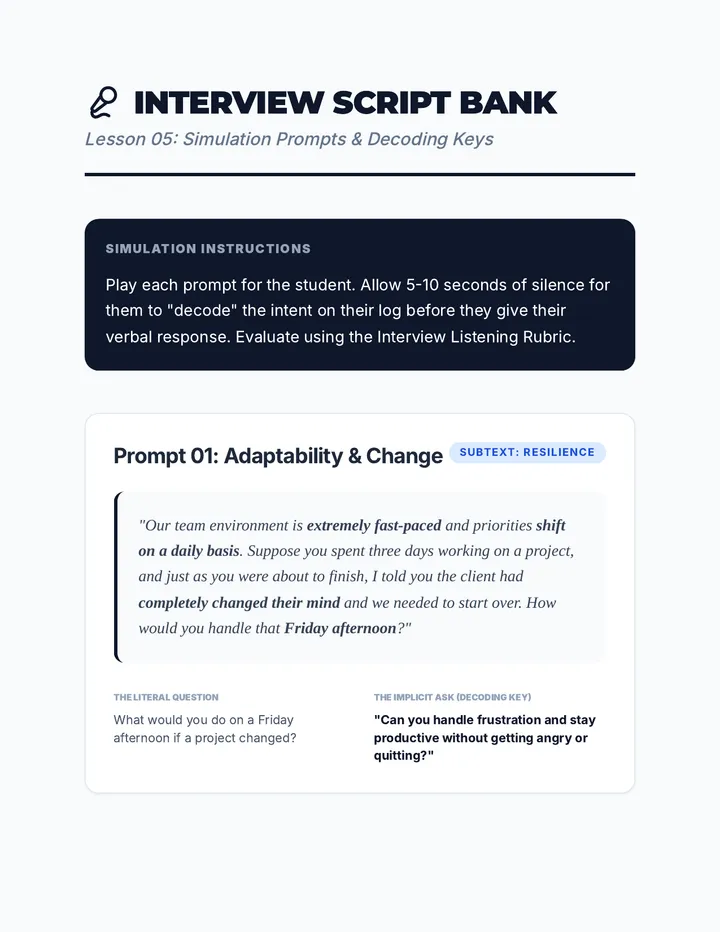
Focuses on reading natural dialogue and mastering common contractions through partner reading and script practice.

Students engage in a 'shadowing' technique, repeating audio immediately after hearing it to internalize the rhythm and flow of connected speech. This active processing reinforces their ability to predict and process sound streams.
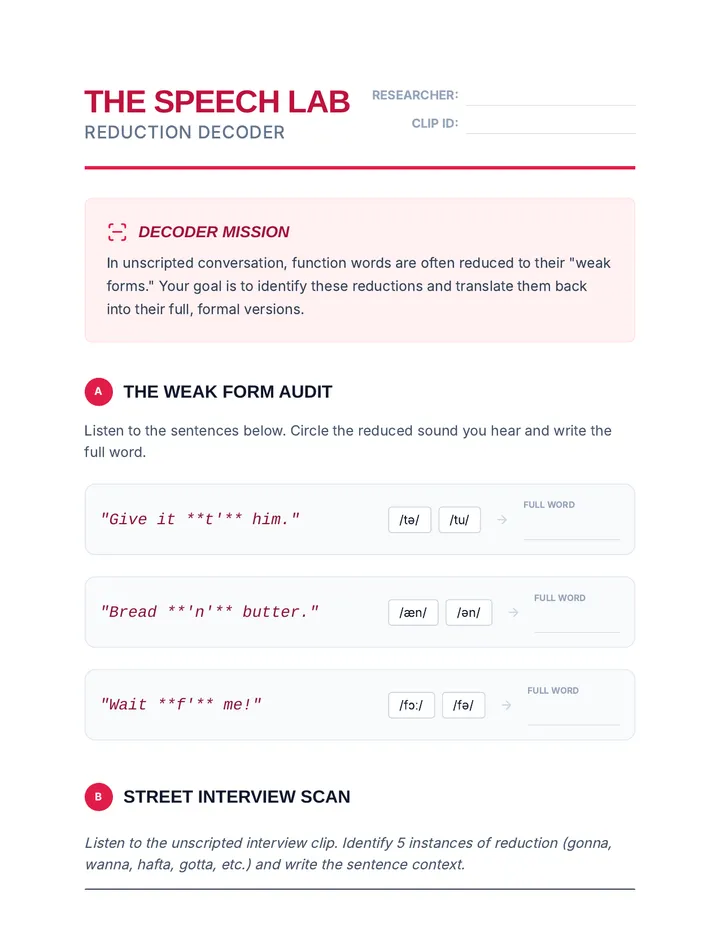
Focusing on function words, this lesson tackles common reductions like 'gonna,' 'wanna,' and weak forms of auxiliary verbs. Students analyze unscripted interviews to catch these reductions in context.
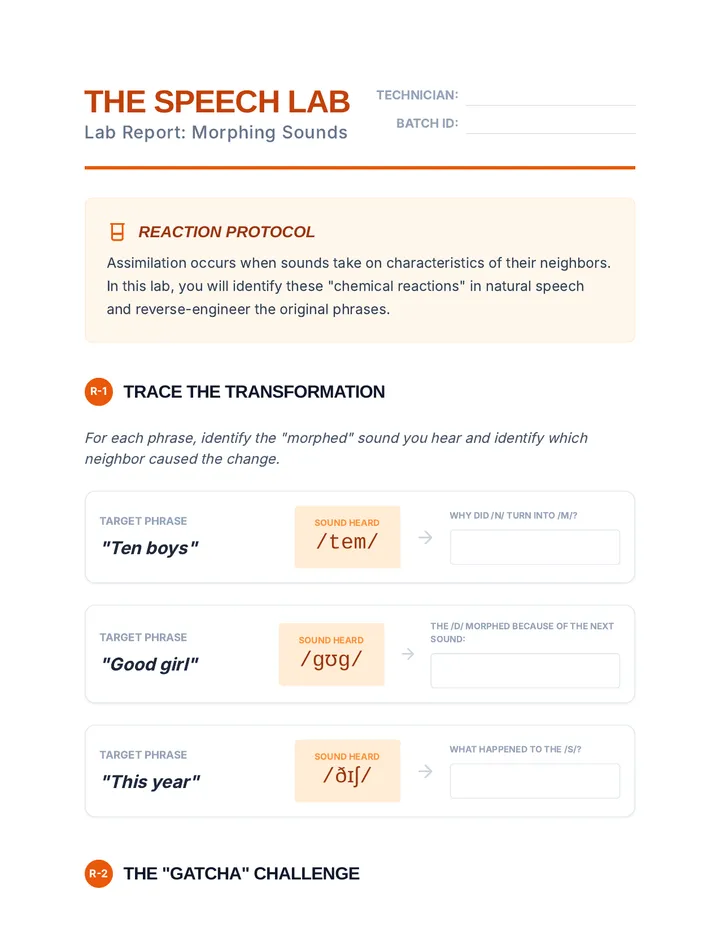
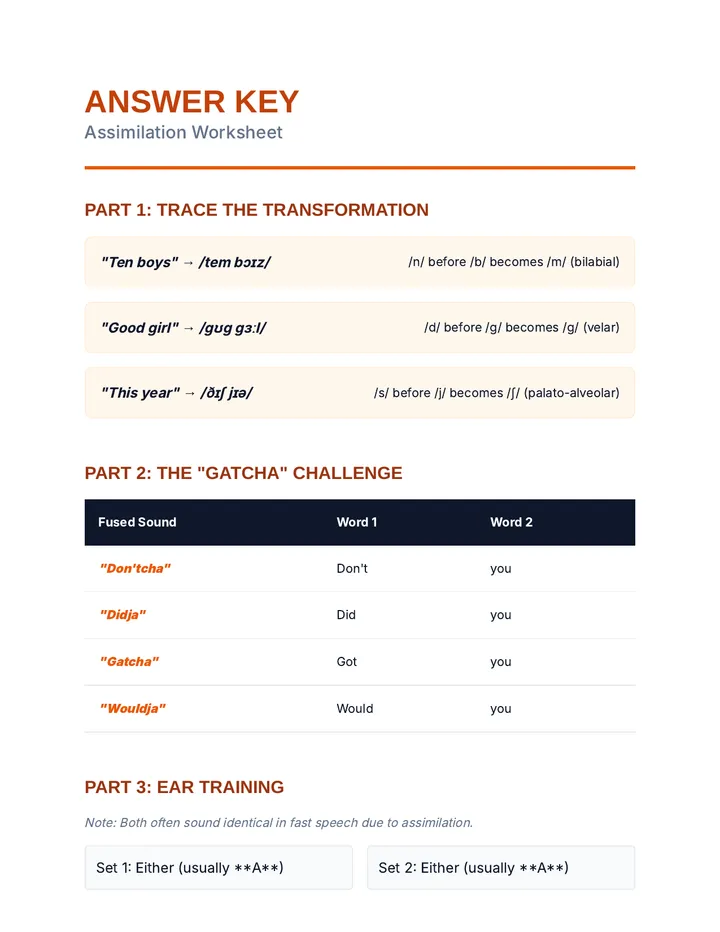
Students learn how sounds influence their neighbors (e.g., 'hand bag' becoming 'hambag'). The lesson uses minimal pair discrimination and dictation exercises to train ears to recognize words despite phonological changes.
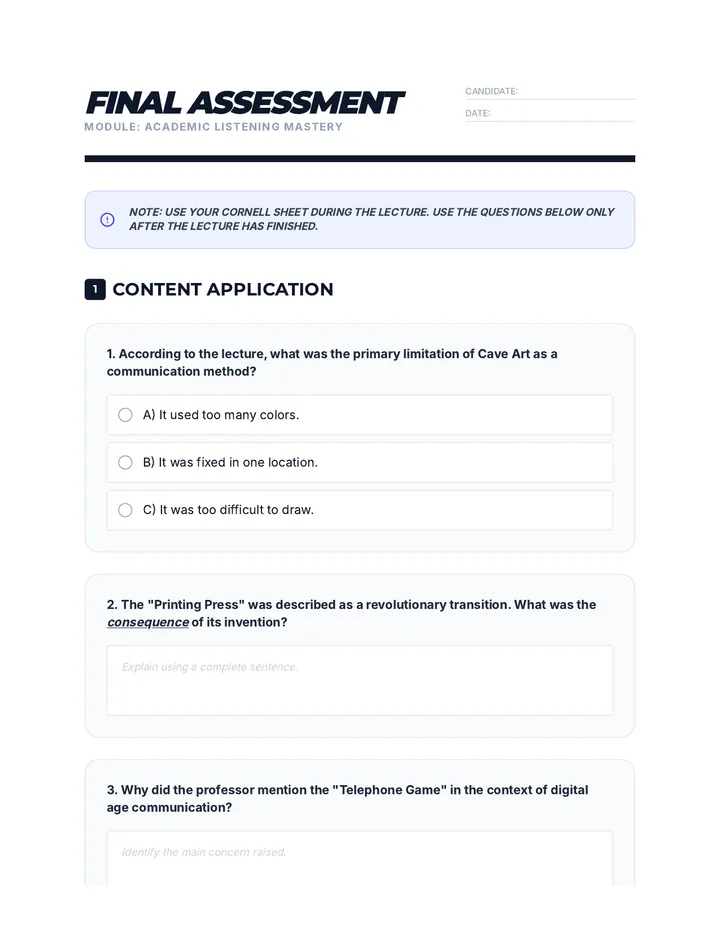
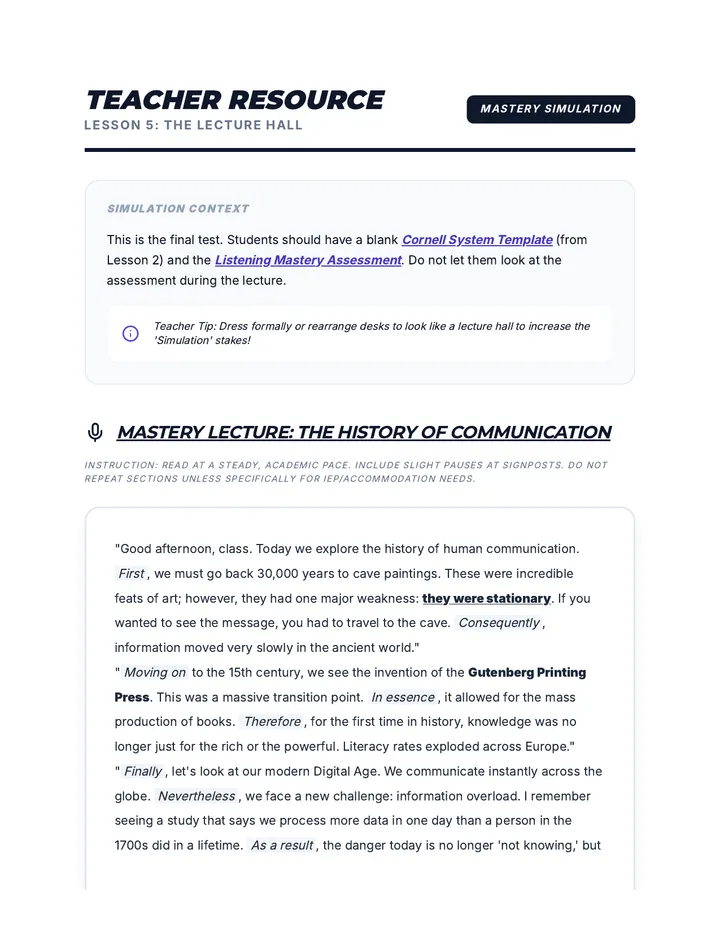
Students participate in a university-style mini-lecture simulation. They apply all learned strategies—signpost identification, Cornell note-taking, and synthesis—to capture information and complete a formal assessment.
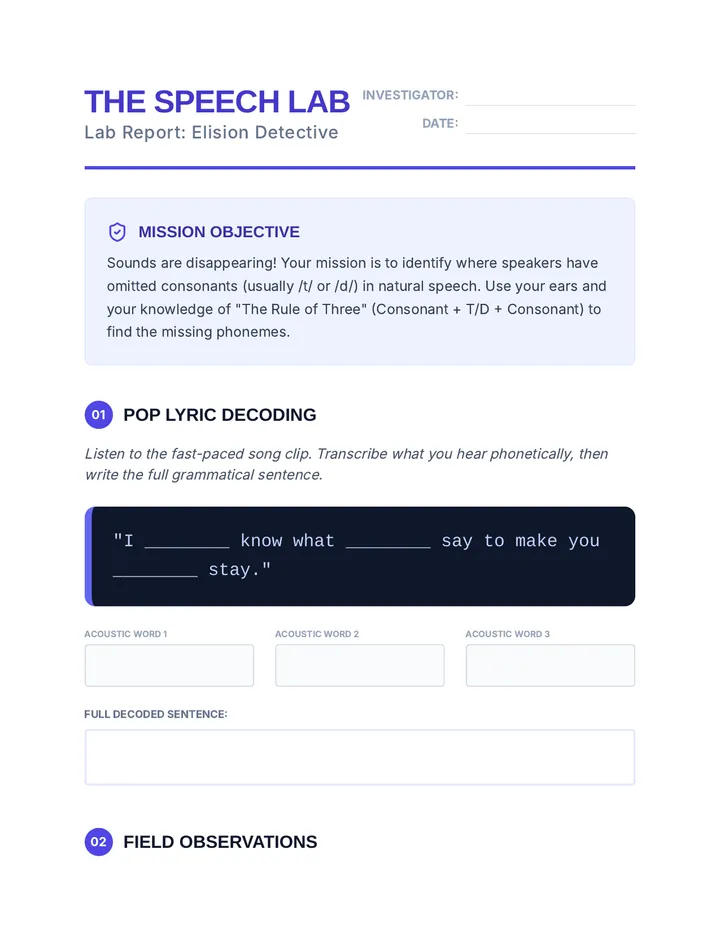
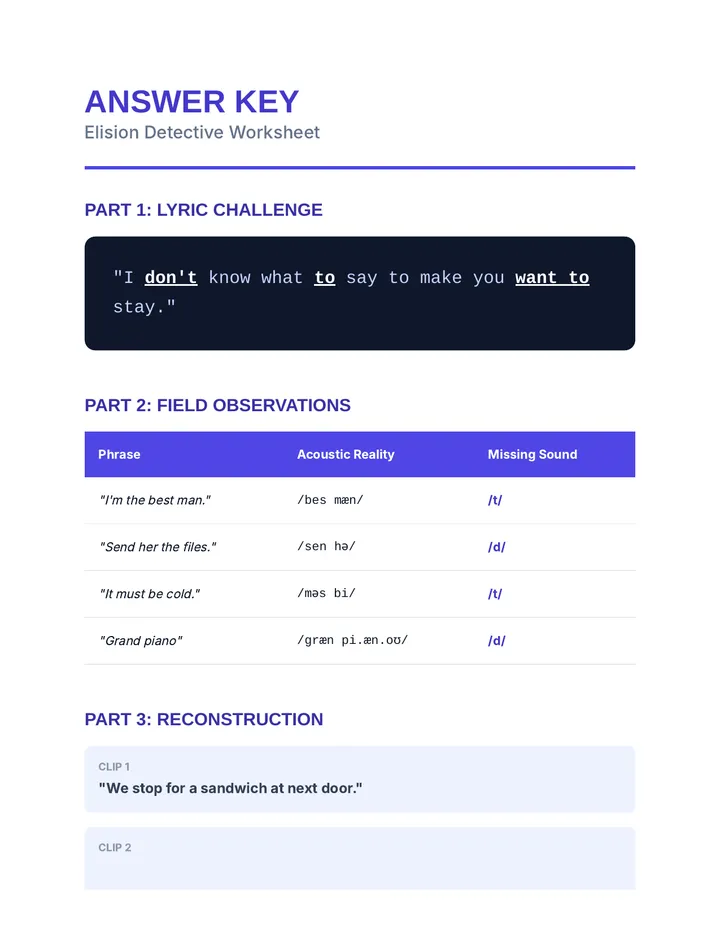
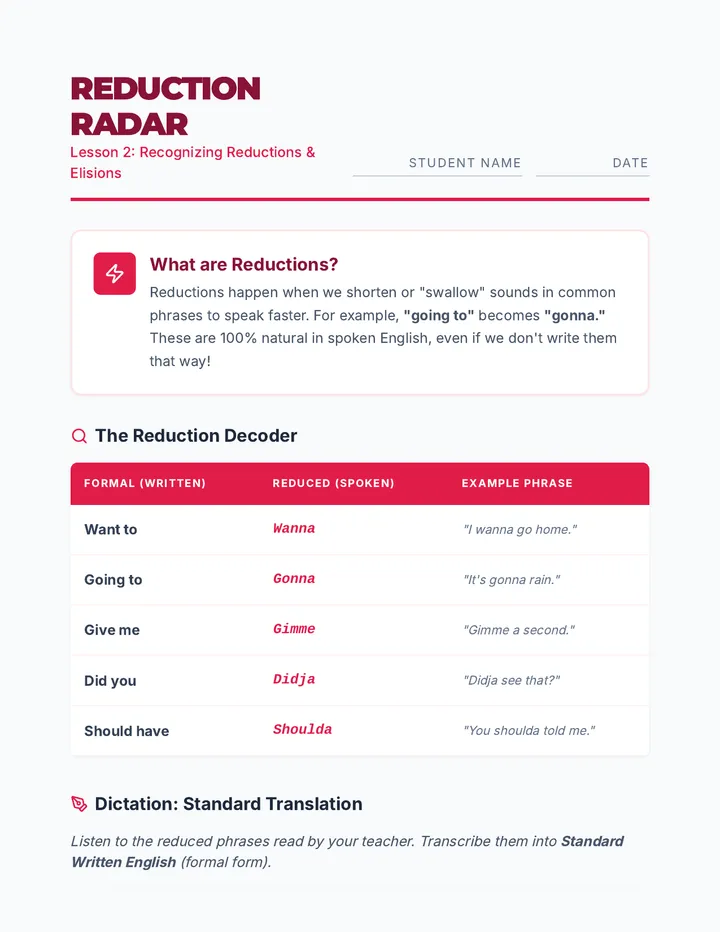
This lesson covers the phenomenon of elision, where sounds (particularly /t/ and /d/) disappear in rapid speech. Students practice listening to high-speed dialogues to identify words that have been 'swallowed' by the speaker.
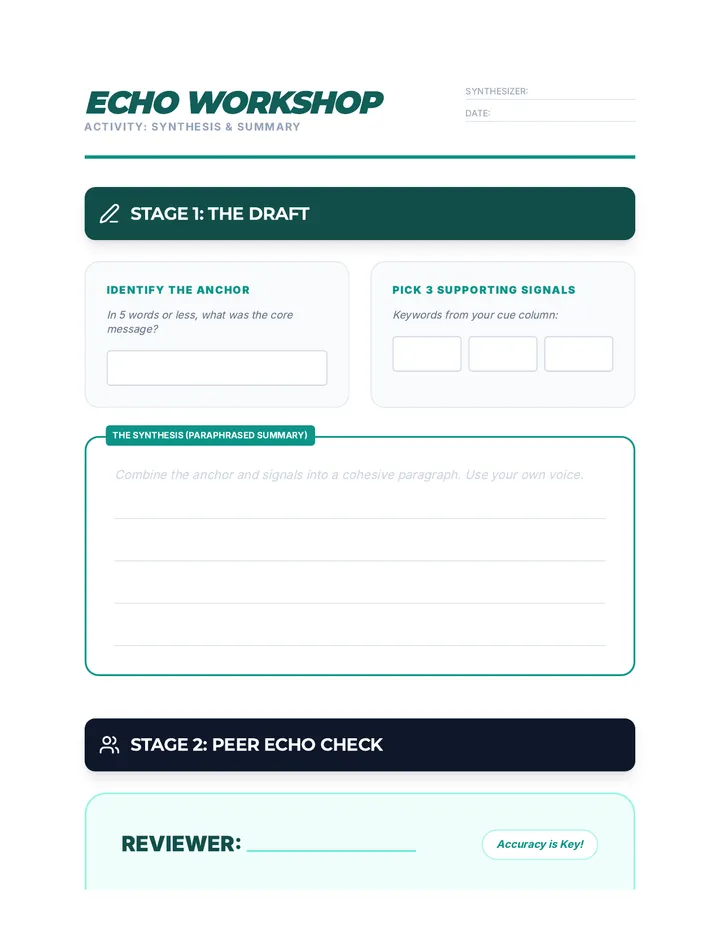
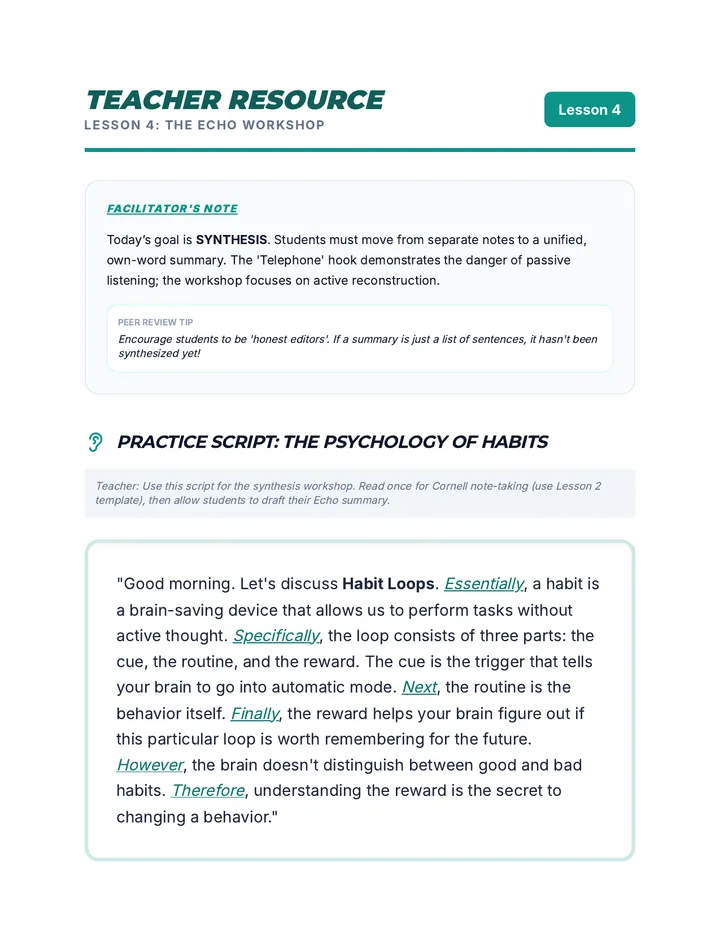
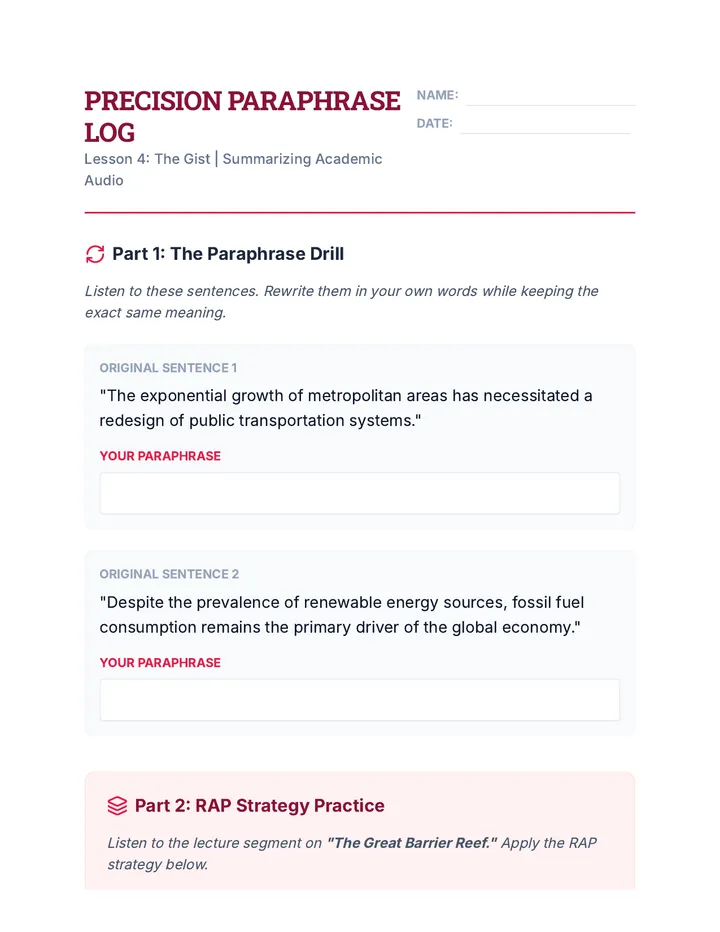
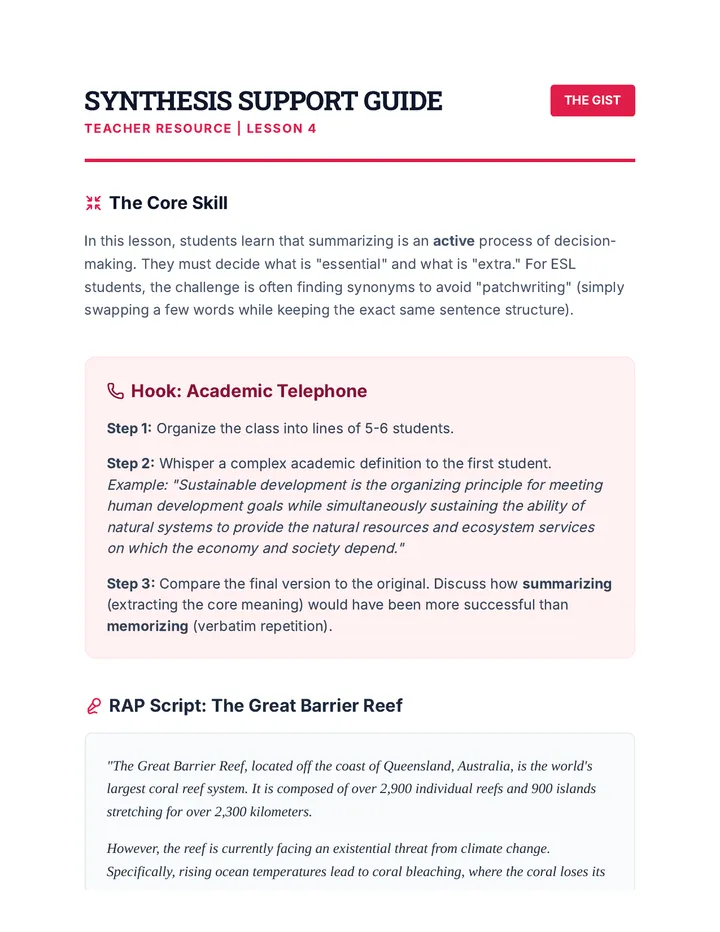
Learners practice reconstructing audio messages in their own words, focusing on paraphrasing rather than direct quotation. Peer evaluation ensures accuracy and comprehension through a synthesis-based workshop.
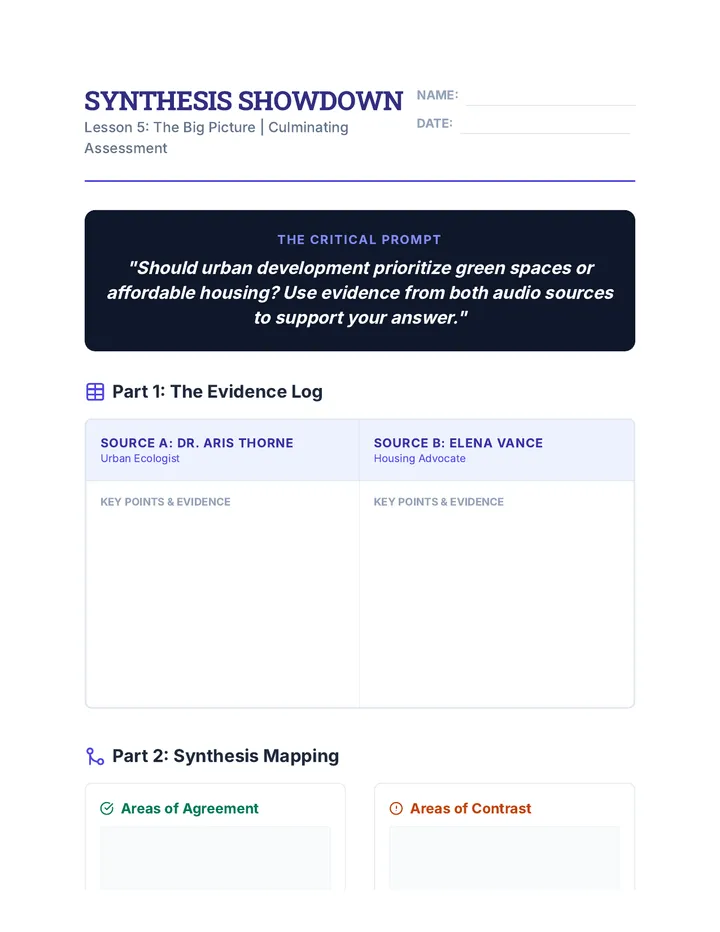
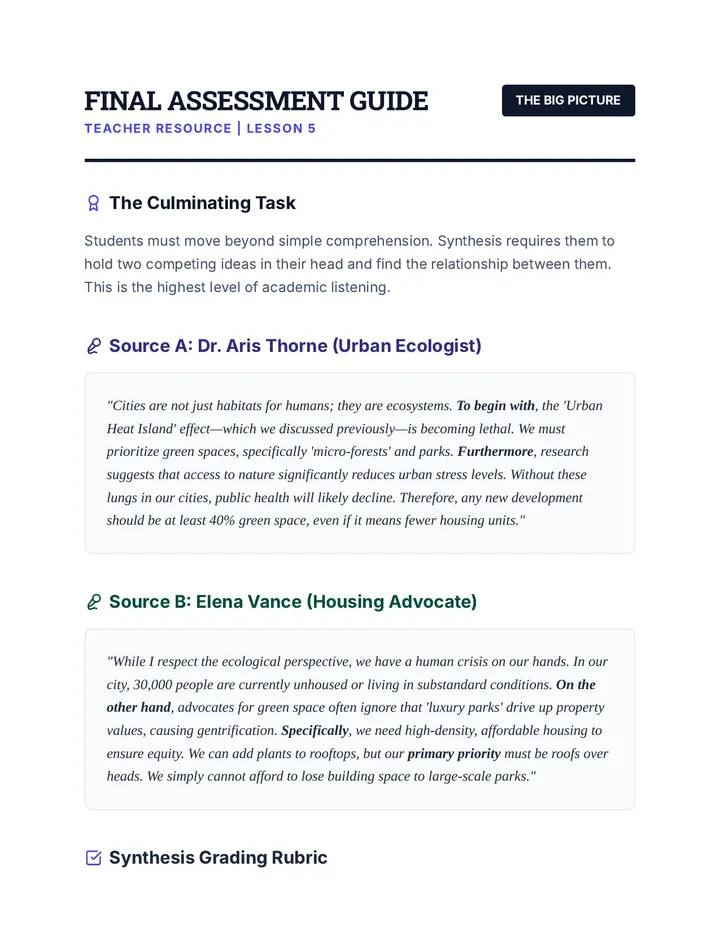
In this culminating lesson, students listen to two contrasting viewpoints on a single global issue. They must synthesize the information to answer a prompt, citing specific details from both audio sources to support their conclusion.
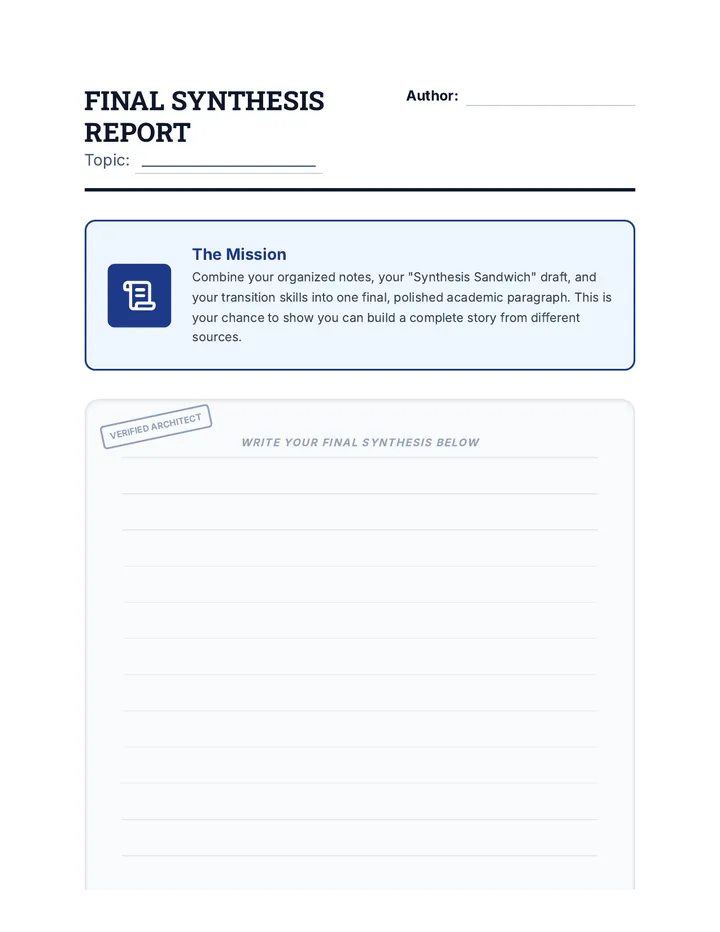
Students finalize their research synthesis into a report or presentation and participate in a peer-review gallery walk.
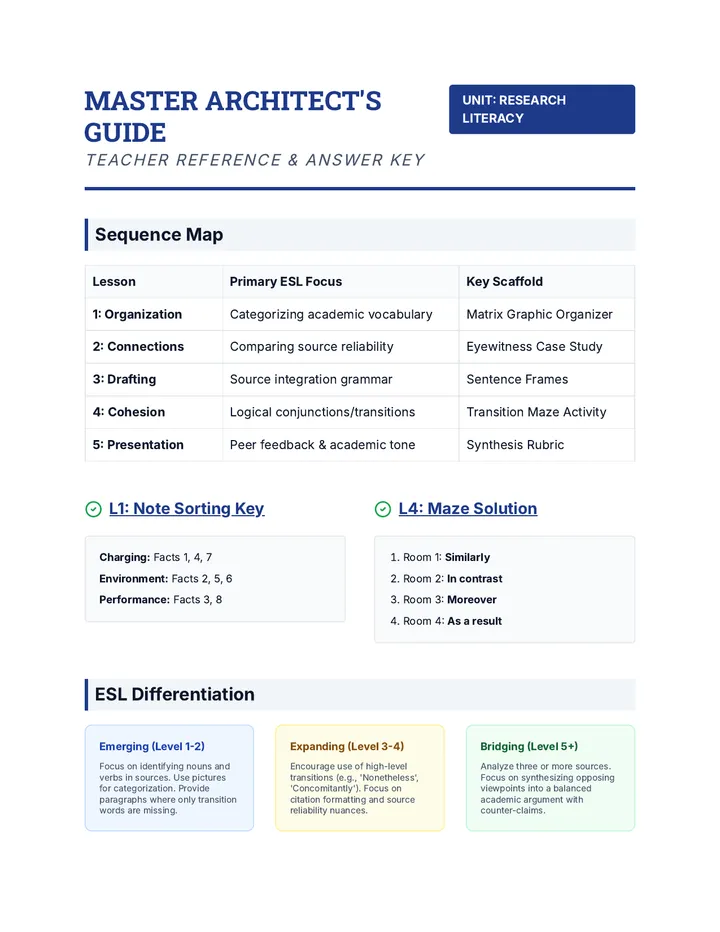
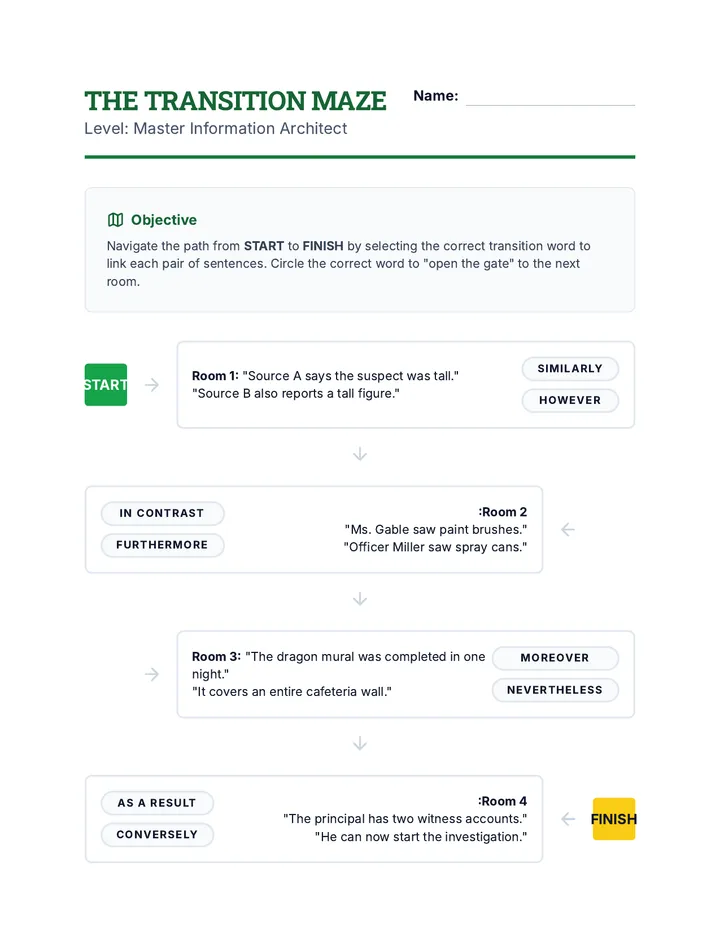
This lesson focuses on academic transitions like 'however' and 'furthermore' to link ideas smoothly, featuring a 'Transition Maze' game.
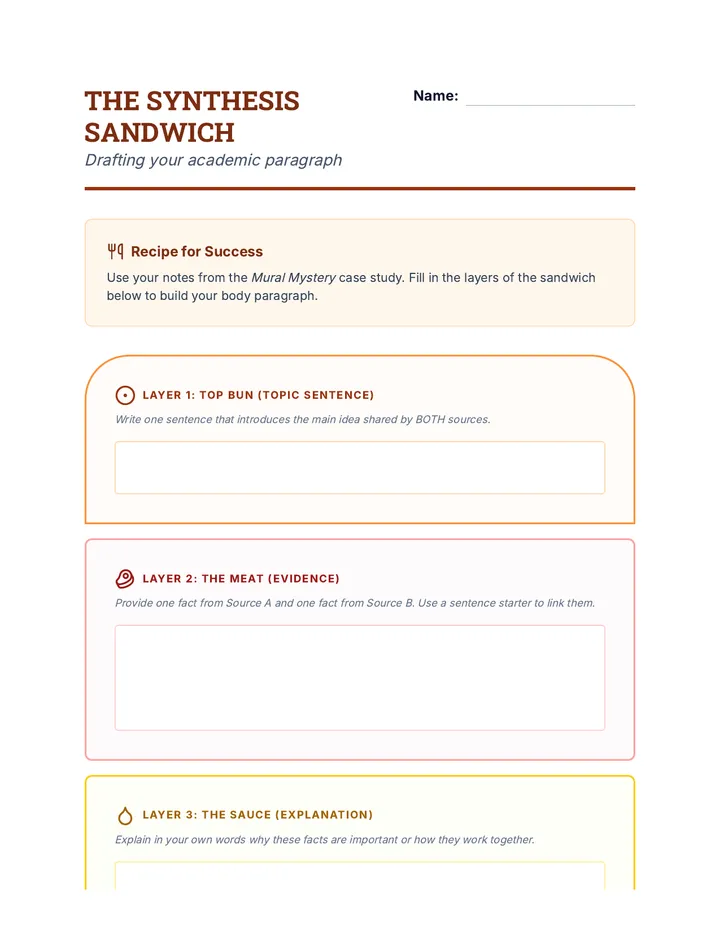
Students draft a body paragraph that combines information from multiple sources using the 'Topic Sentence - Evidence - Explanation' structure and sentence frames.
Learners compare two short articles on the same topic to find areas of agreement and disagreement, using Venn diagrams to visualize source overlap.
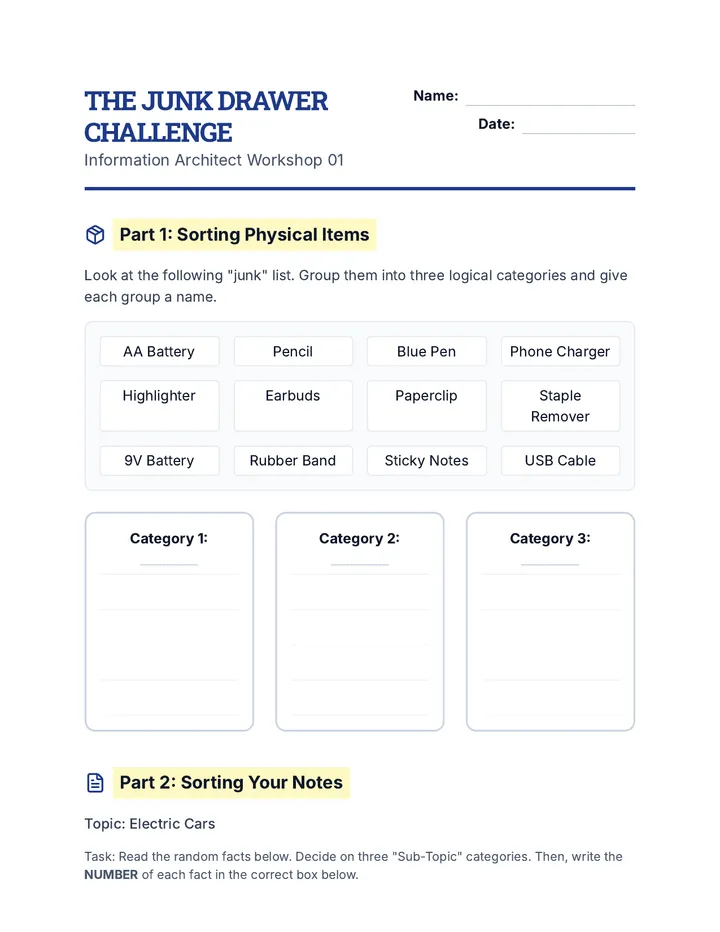
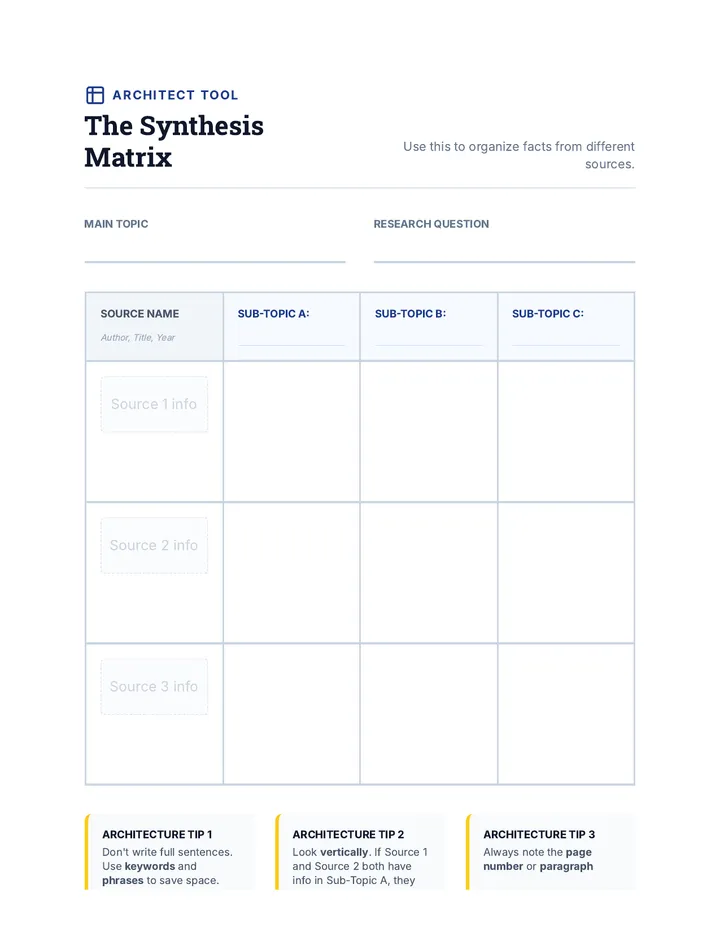
Students learn to categorize scattered facts using graphic organizers like matrix charts. They practice sorting a 'junk drawer' of information into logical sub-topics to prepare for academic writing.
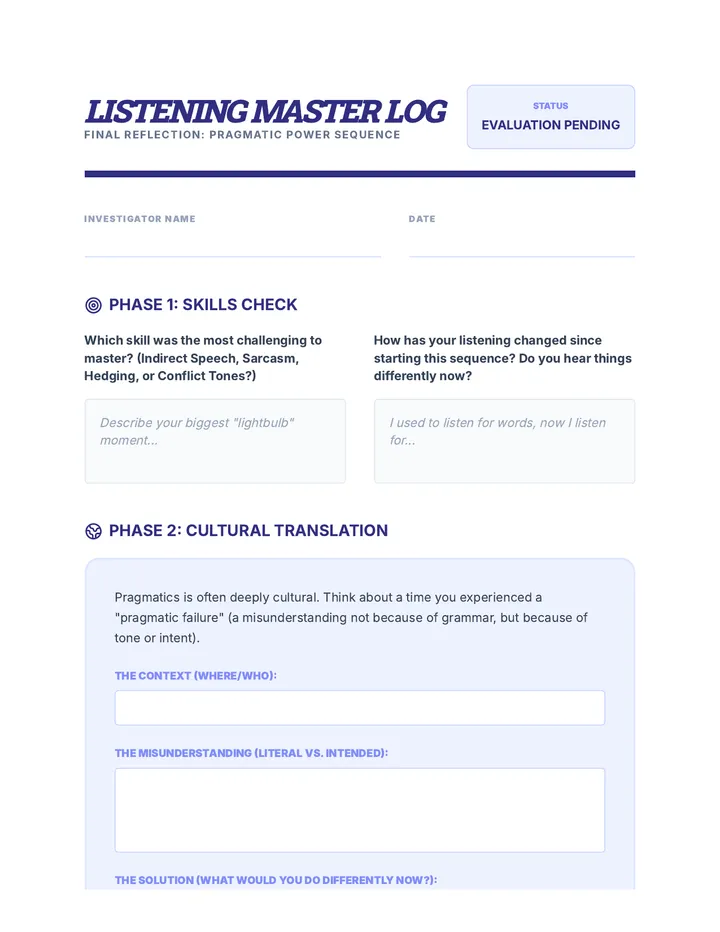
An exploration of how cultural backgrounds influence communication styles, focusing on silence, interruption, and pragmatic markers.
Students analyze tone in high-stakes social interactions, identifying markers of escalation, de-escalation, and negotiation in conflict scenarios.
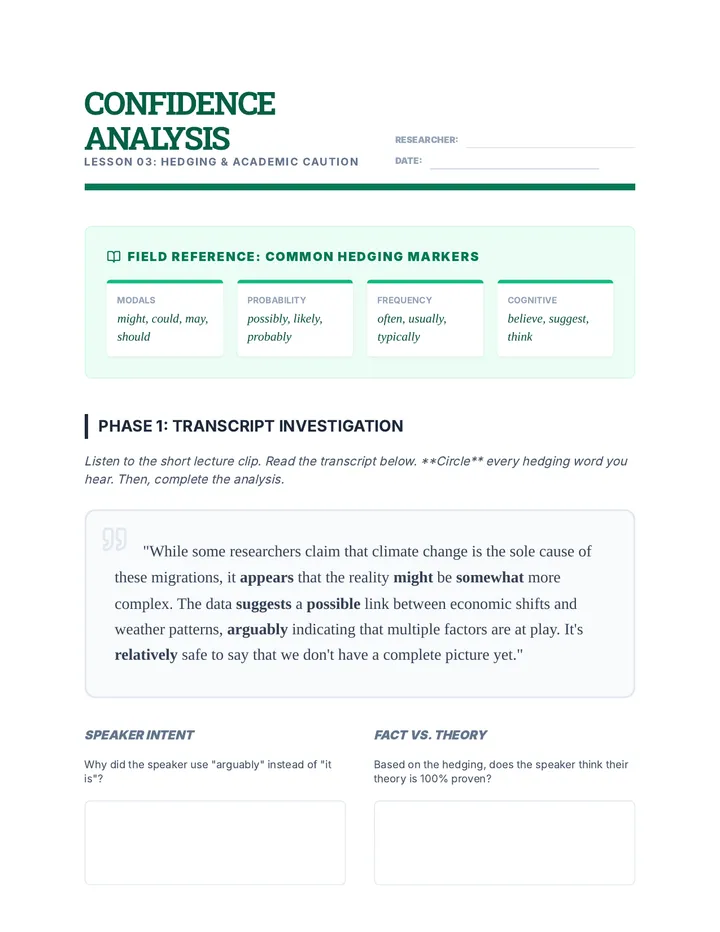
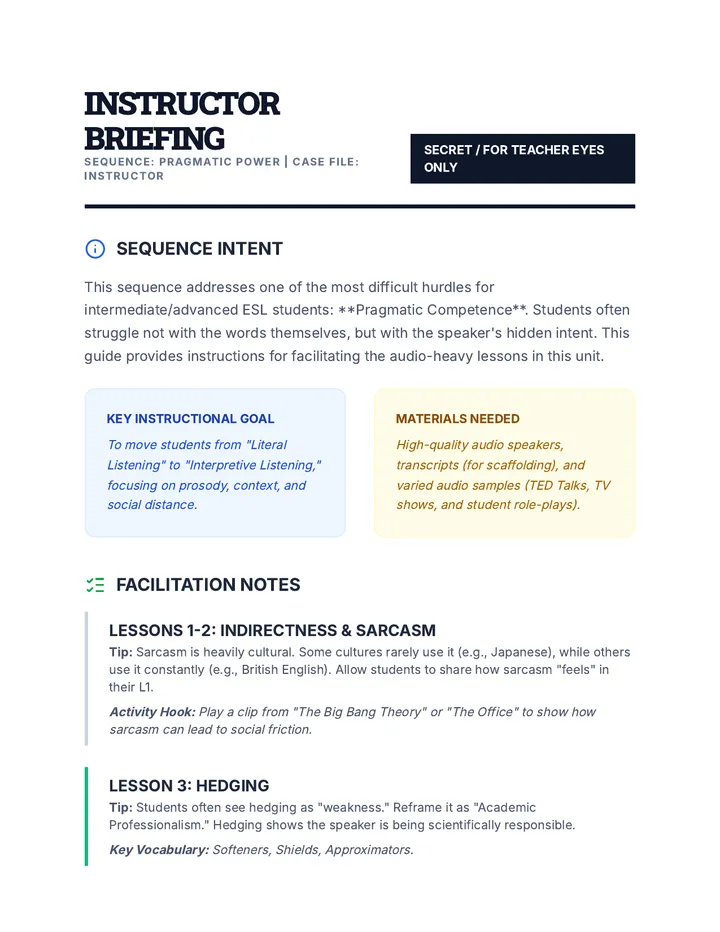
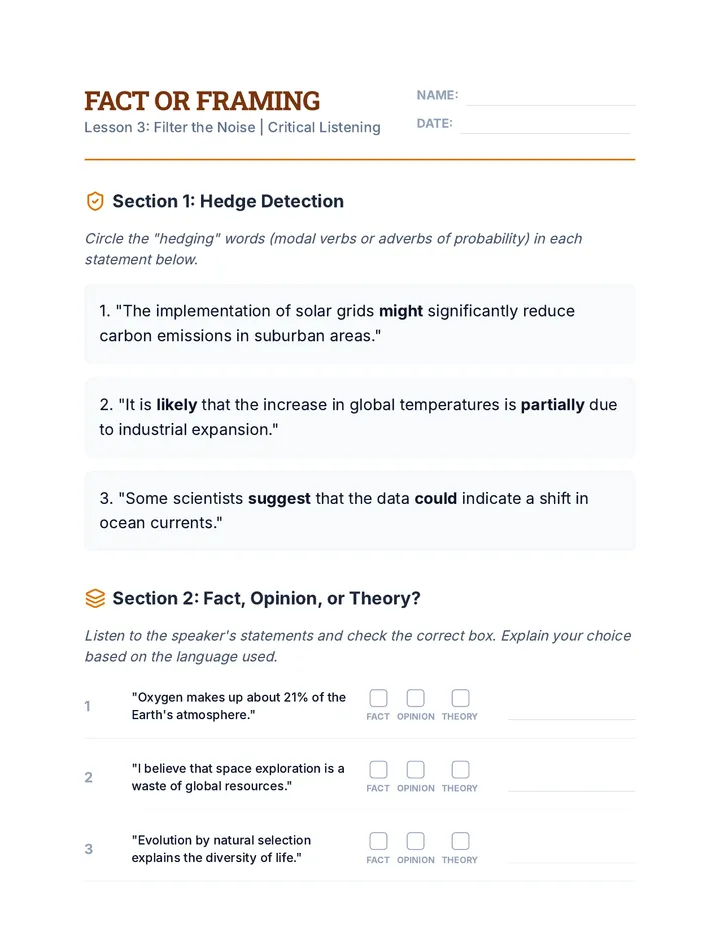
Students learn to identify hedging language (e.g., 'somewhat', 'it appears') to gauge a speaker's confidence and distinguish between facts and cautious opinions.
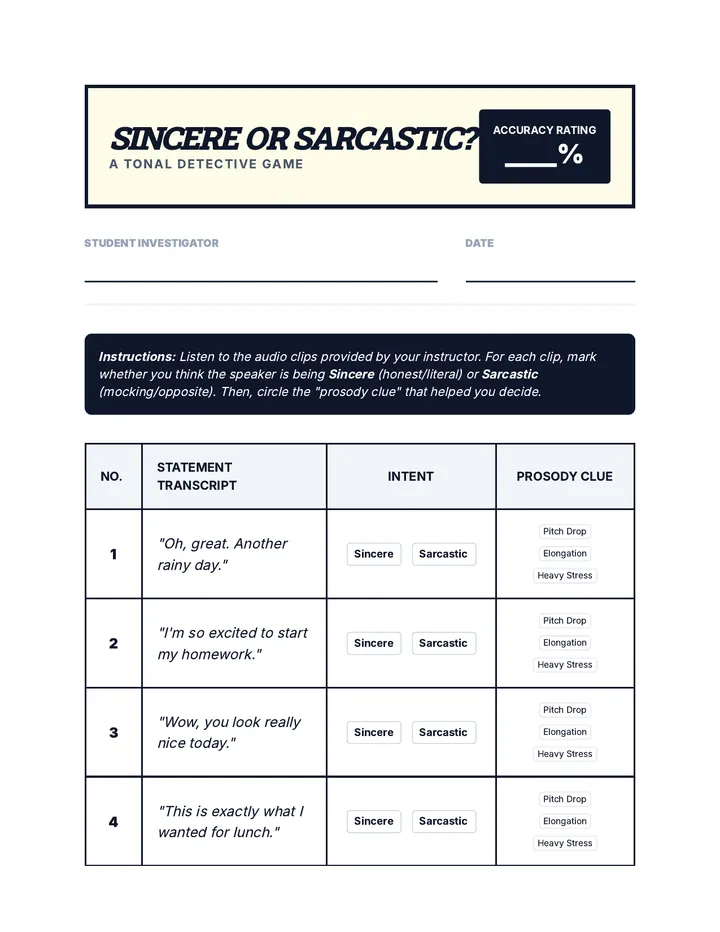
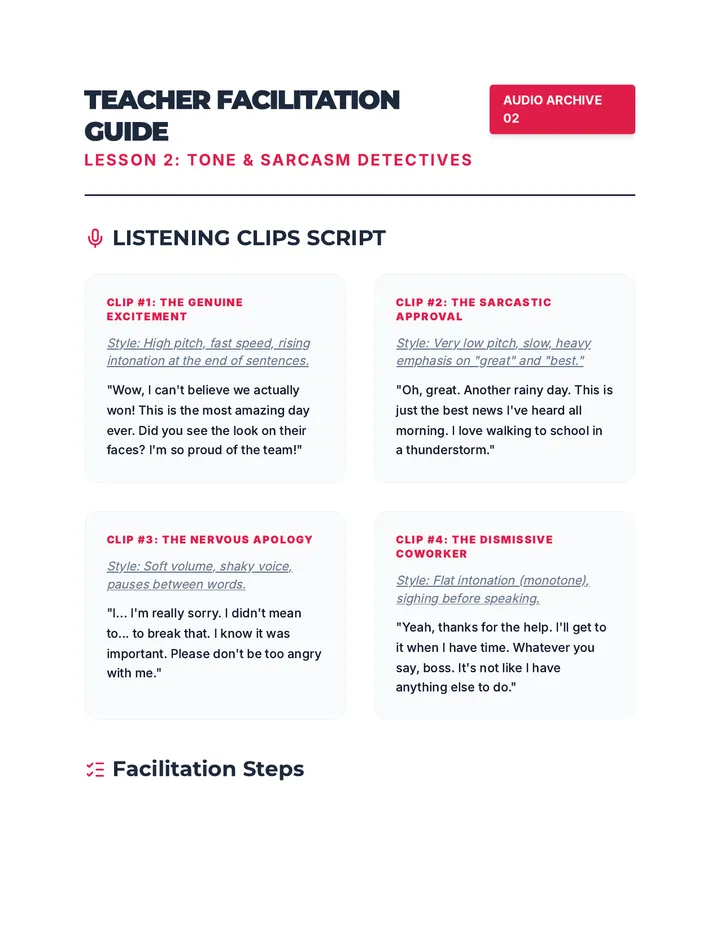
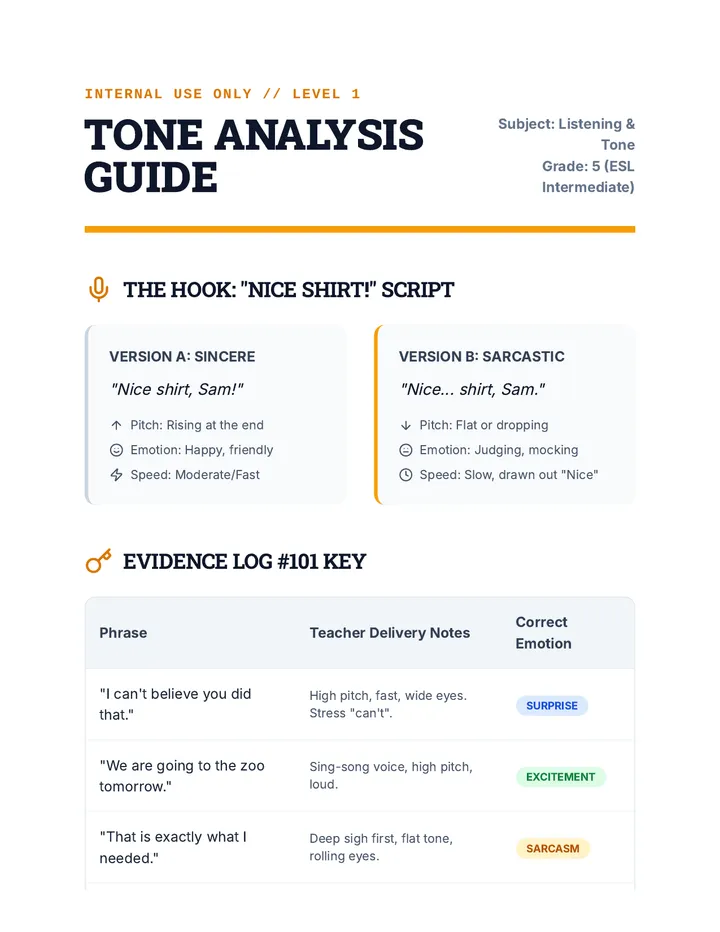
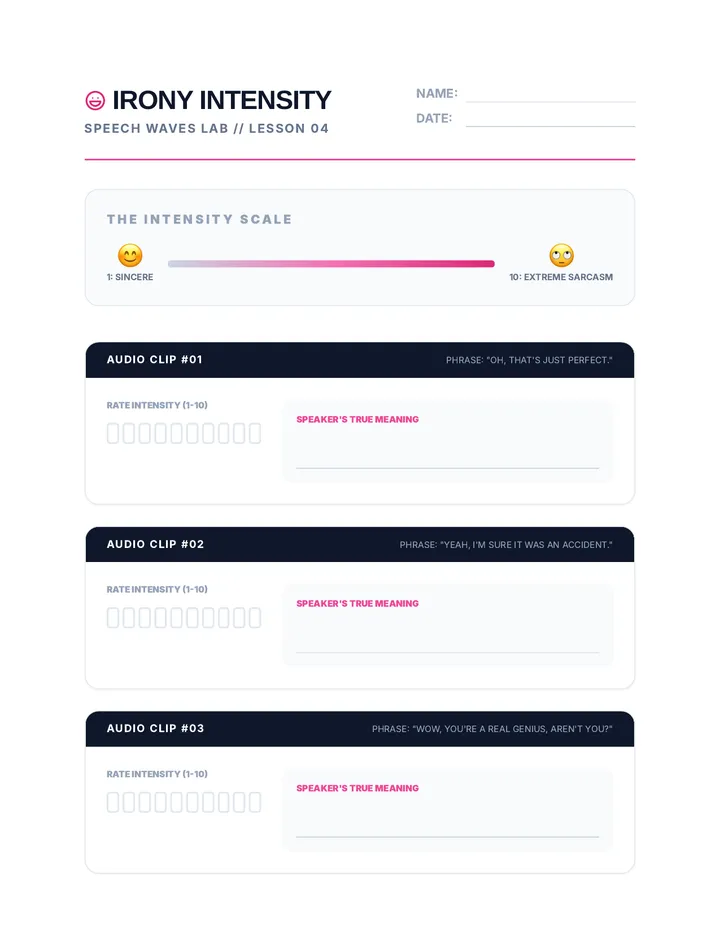
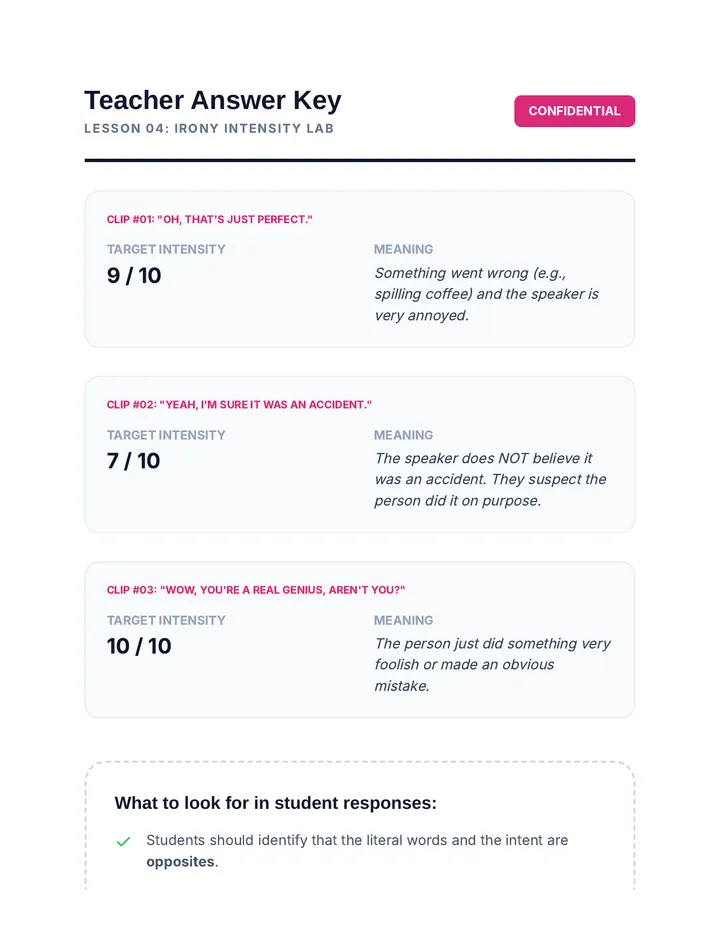
This lesson focuses on identifying sarcasm and irony through prosody, pitch, and context clues, helping students avoid literal misinterpretations.
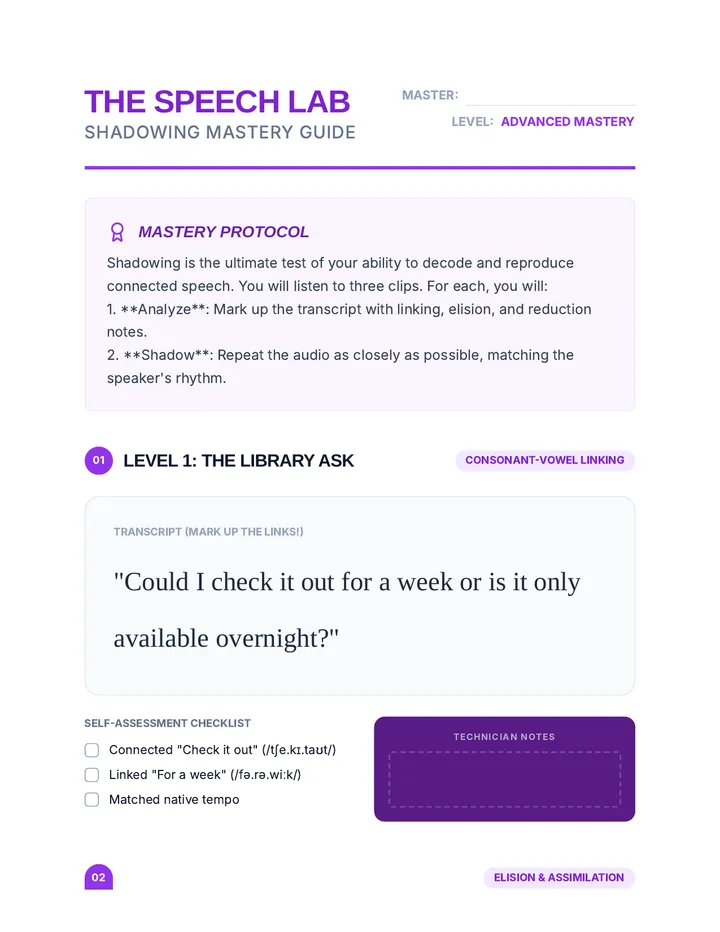
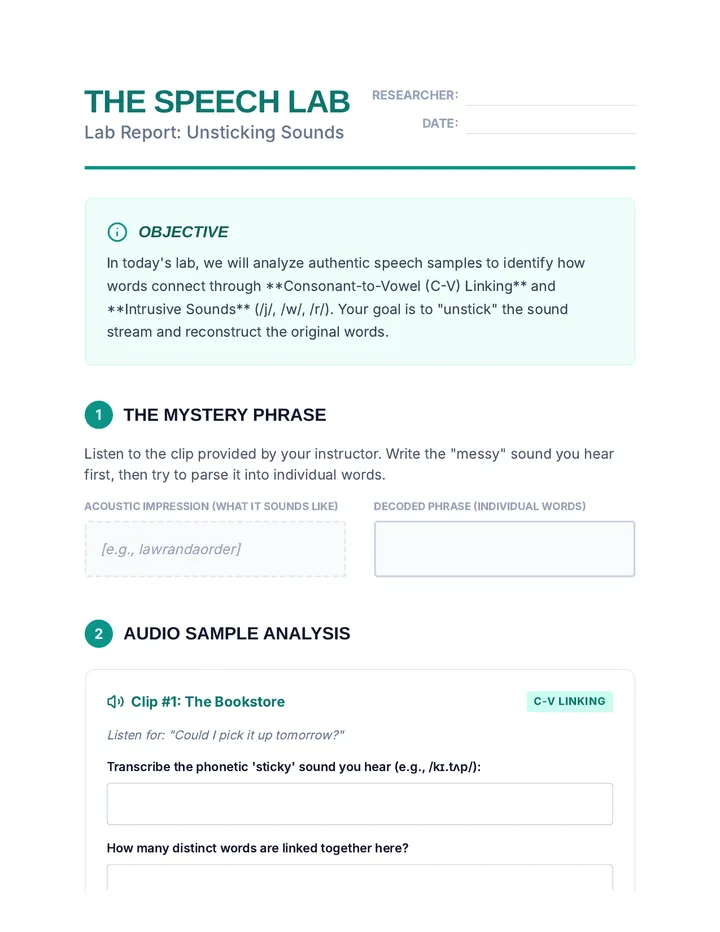
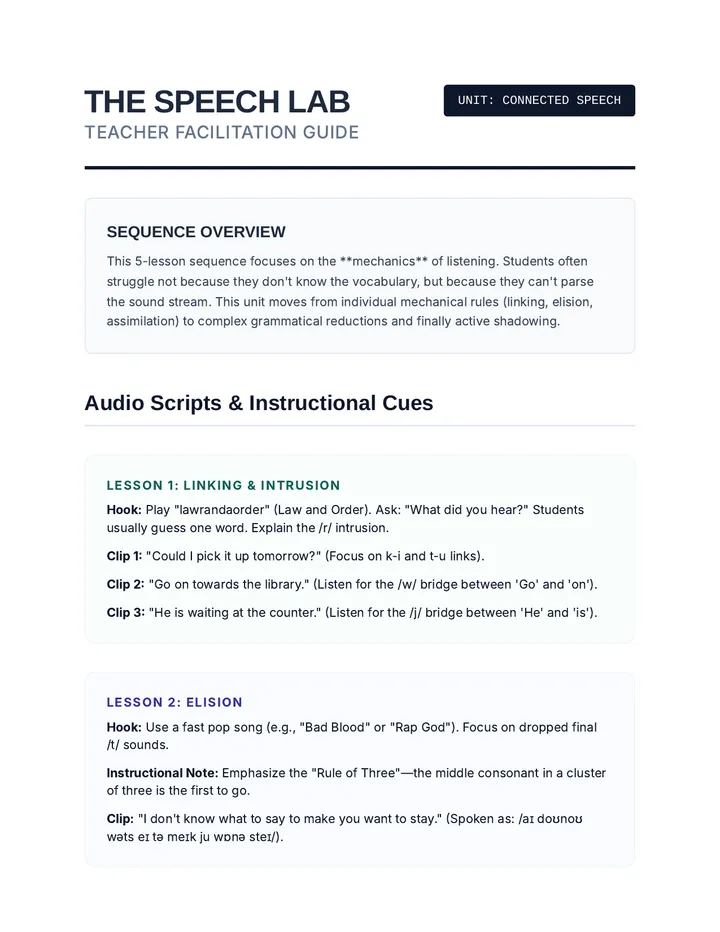
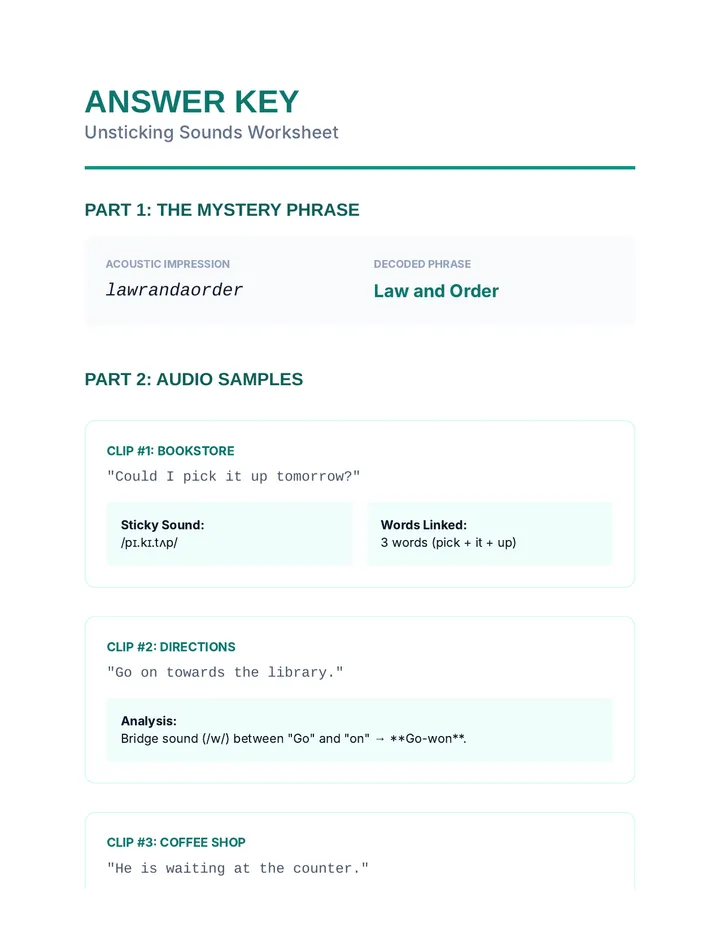
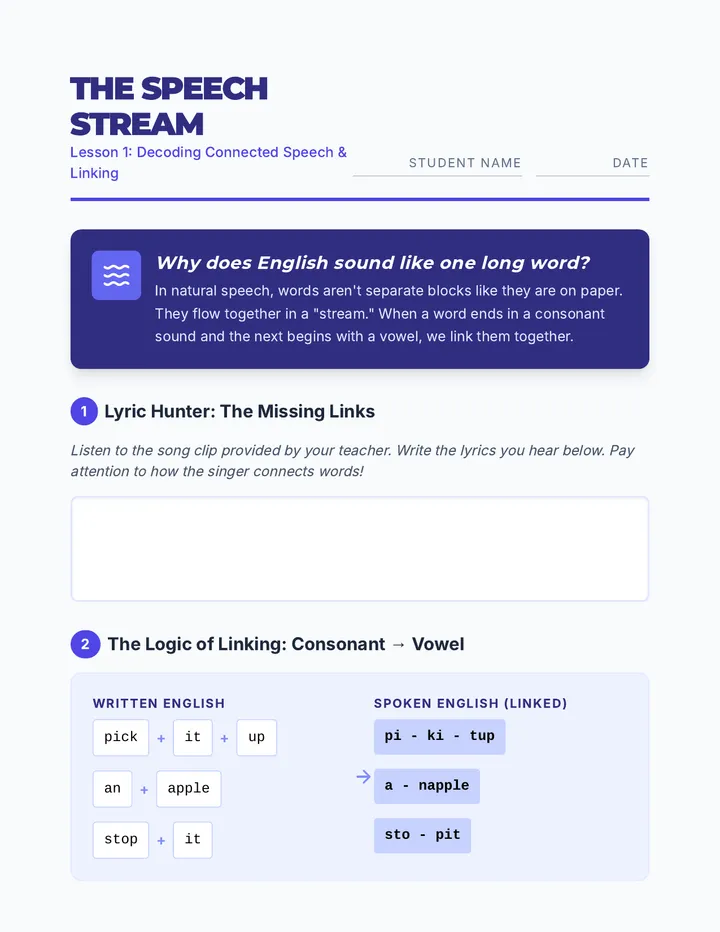
Students investigate how words flow together in natural speech, specifically focusing on consonant-vowel linking and intrusive sounds (/r/, /w/, /j/). They analyze audio samples to 'unstick' connected words.
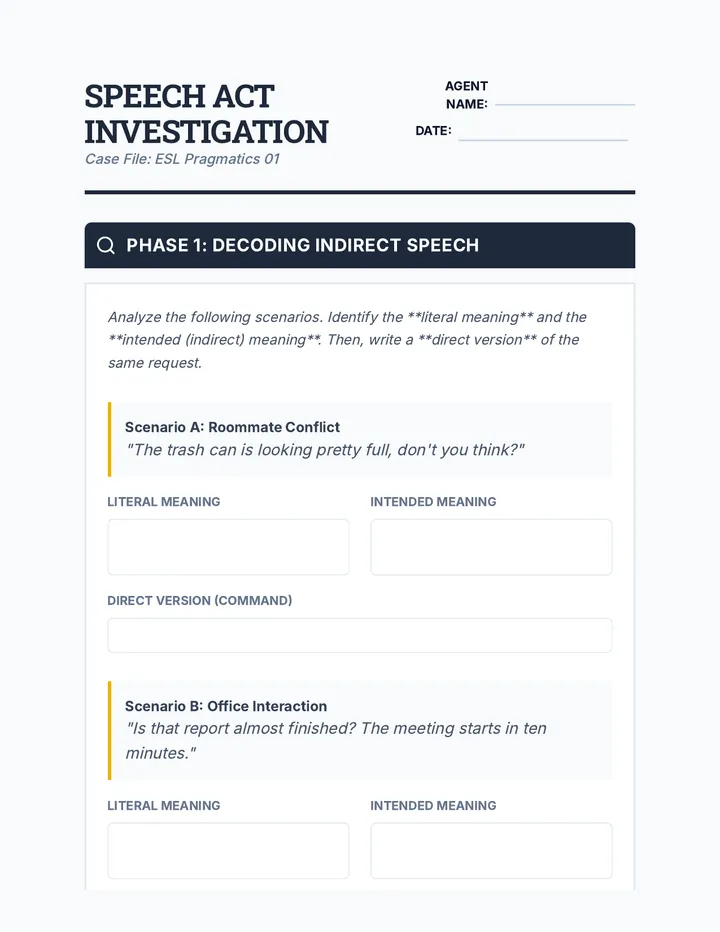
Students explore the difference between what is said and what is meant by analyzing indirect speech acts and politeness strategies in everyday scenarios.
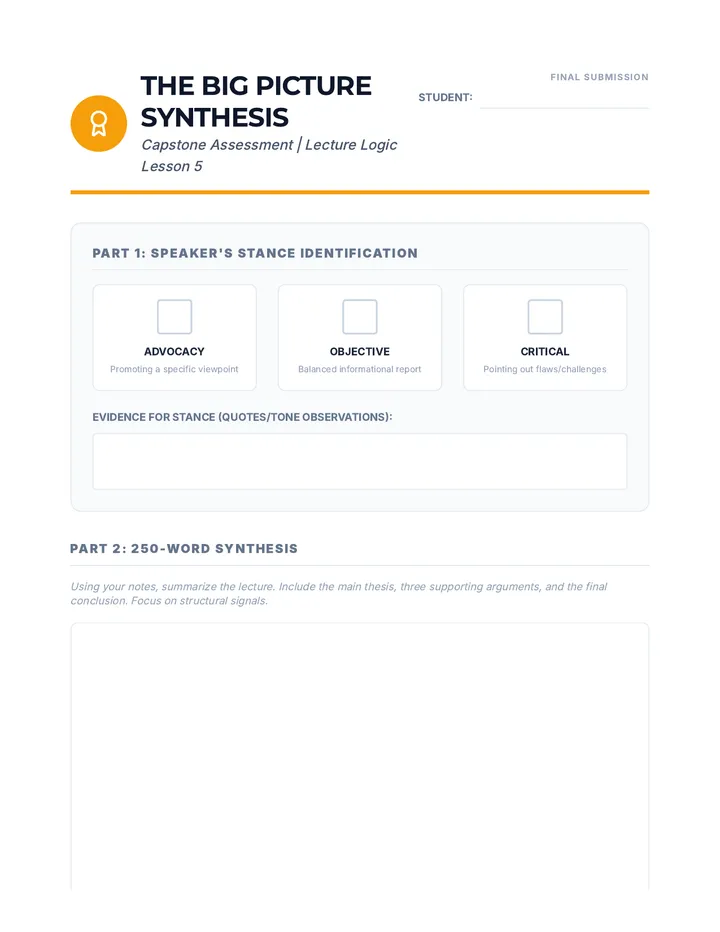
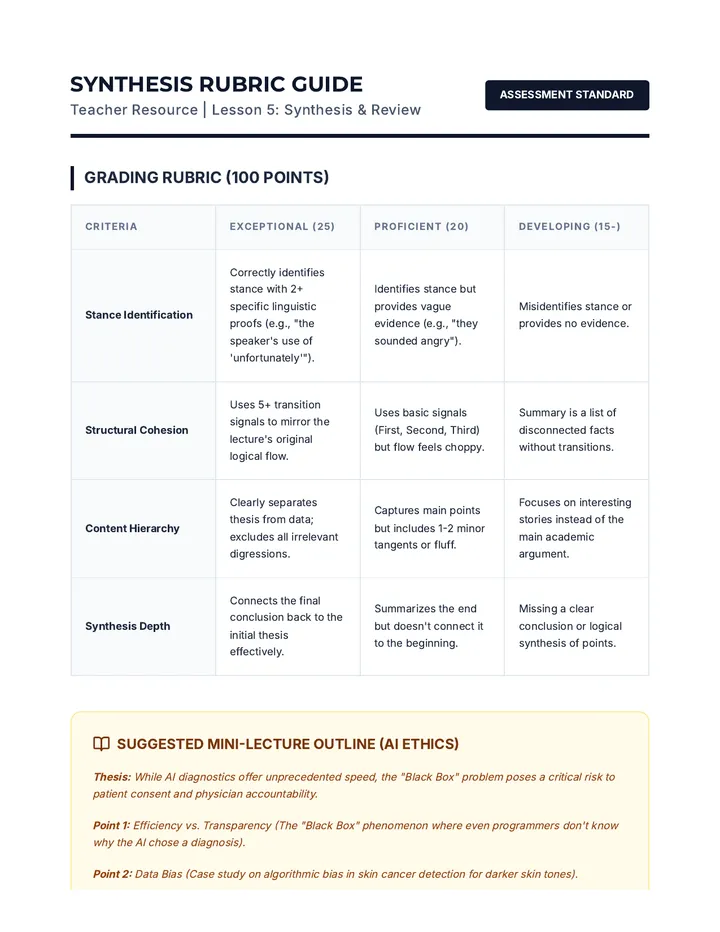
Students synthesize a full mini-lecture into a coherent summary, identifying stance and major takeaways.
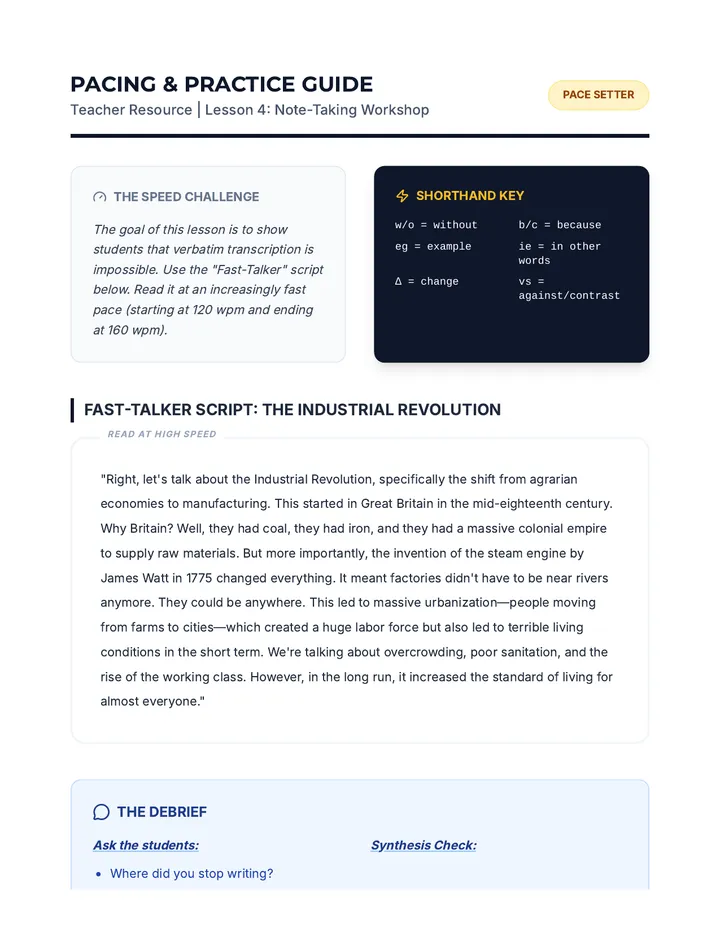
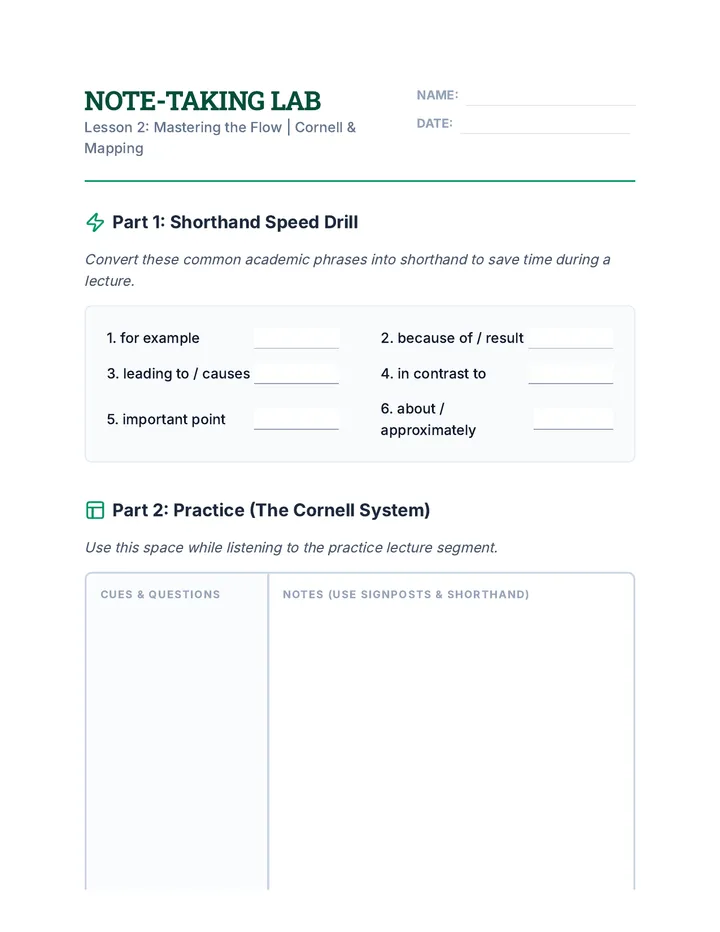
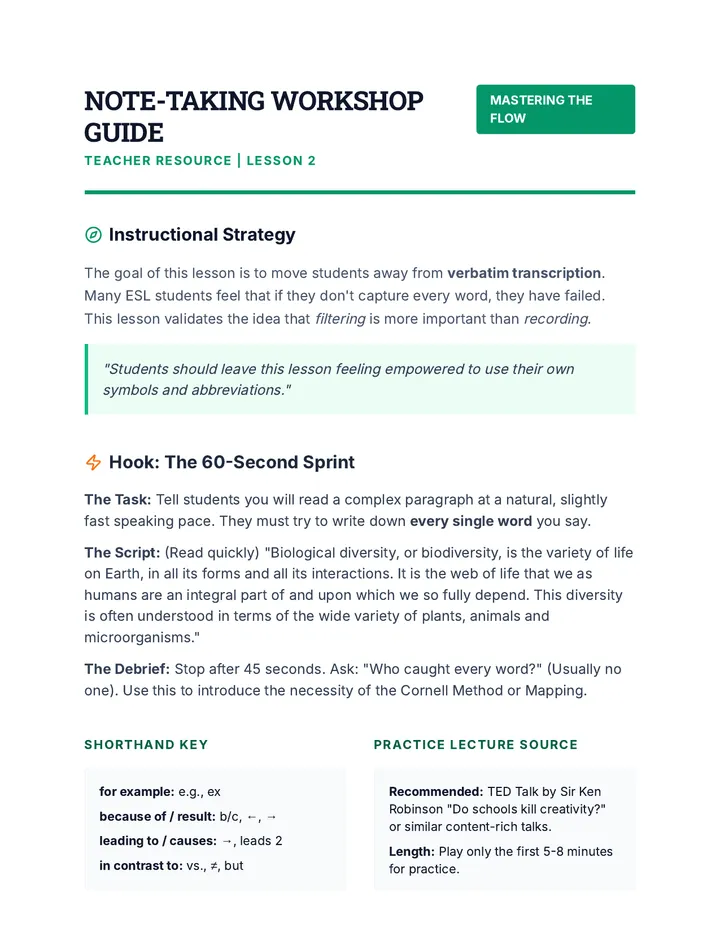
A workshop on the Cornell, Outline, and Mapping methods, emphasizing shorthand and relationship visualization.
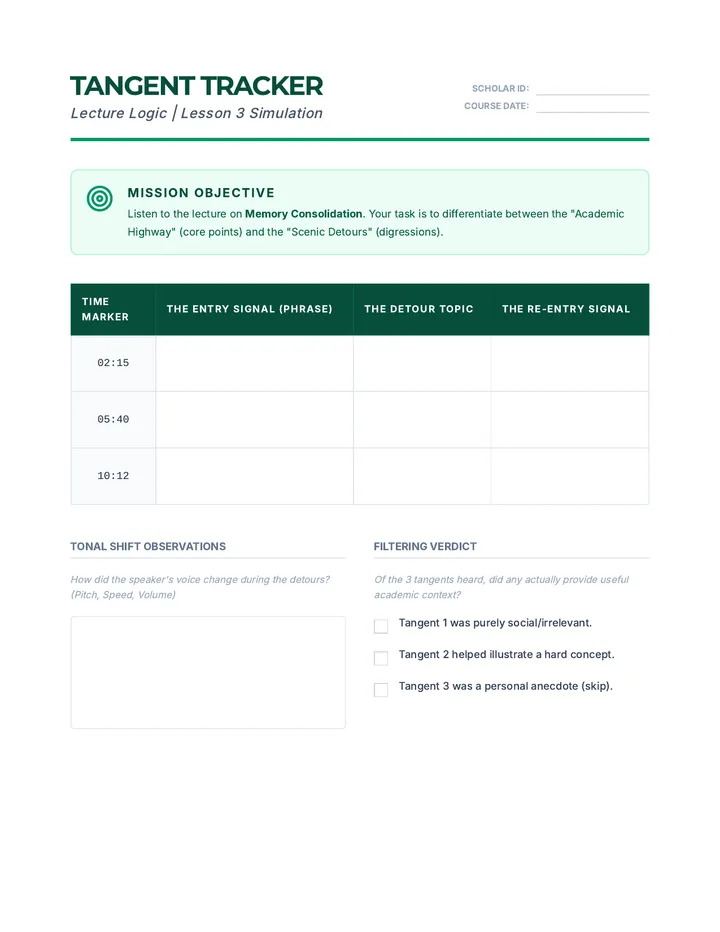
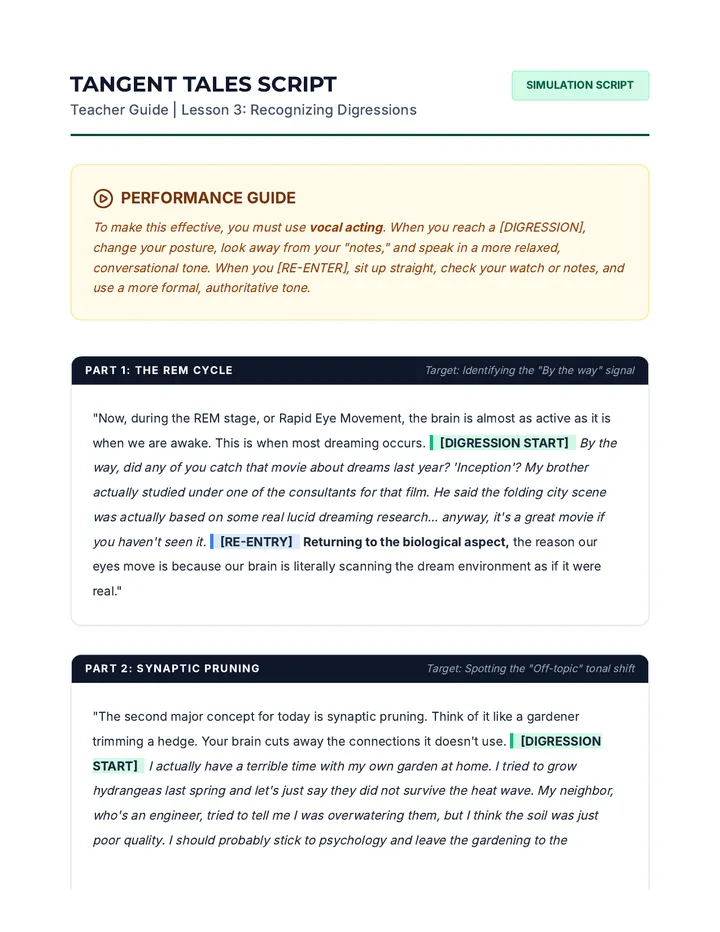
This lesson trains students to identify tonal shifts and linguistic markers that signal tangents or personal asides.
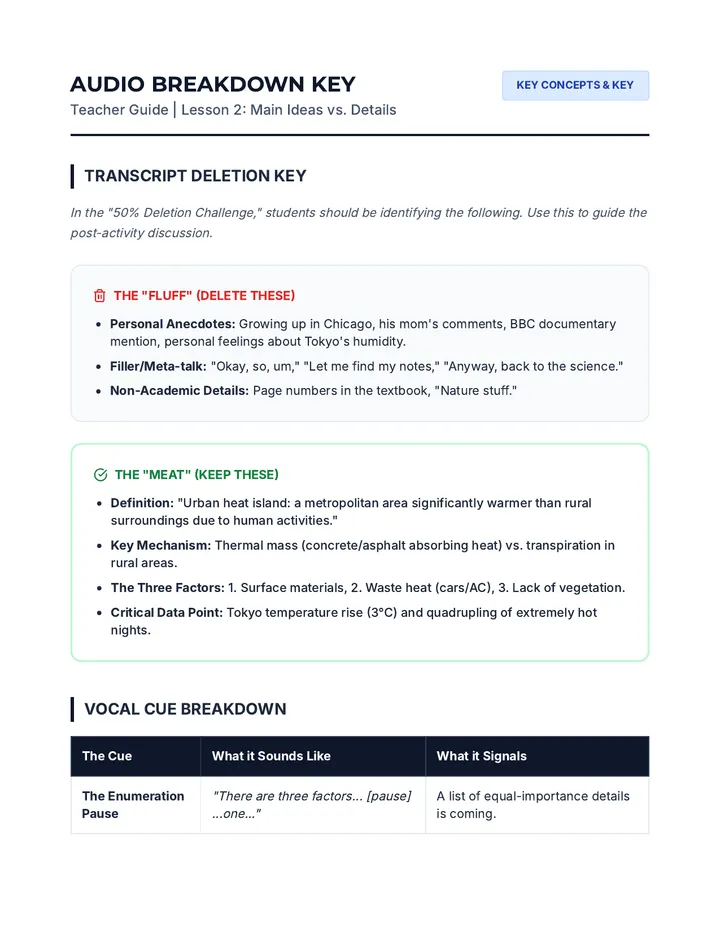
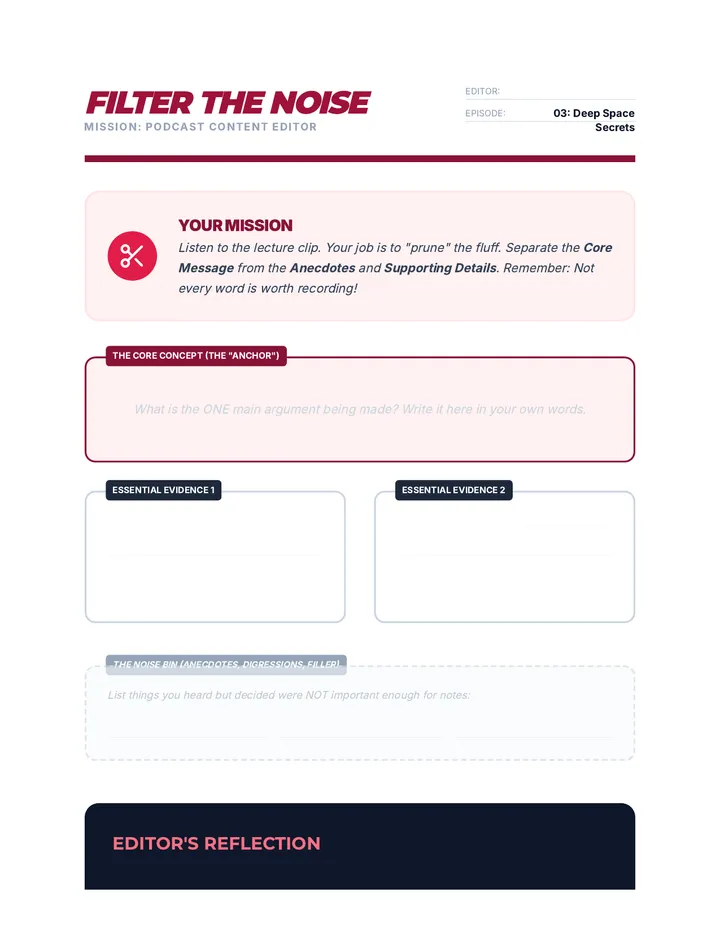
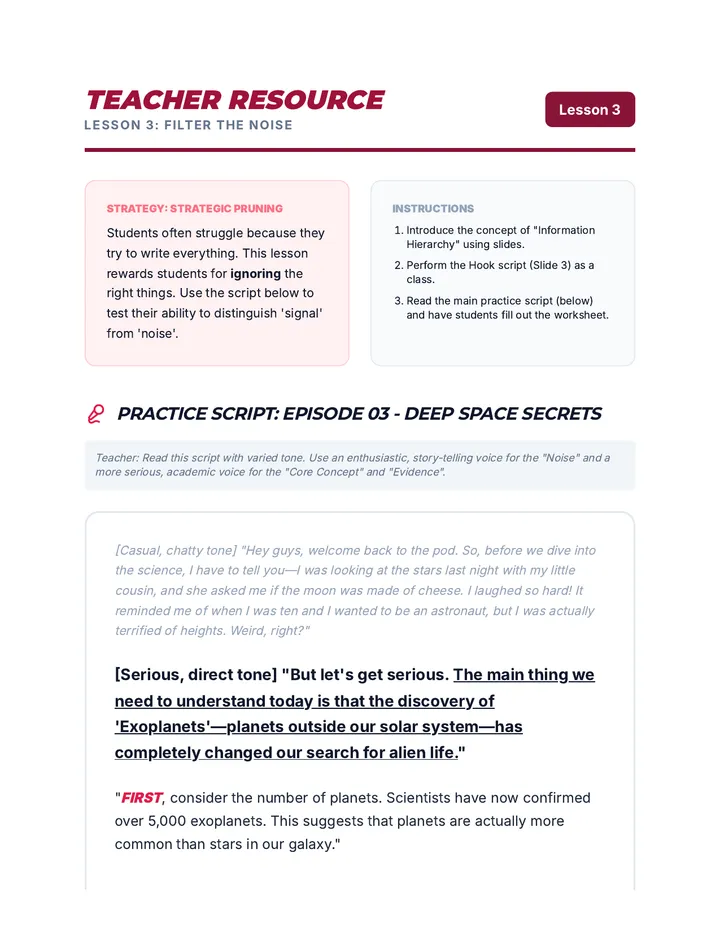
Learners differentiate between core arguments and supporting examples using vocal cues and structural patterns.
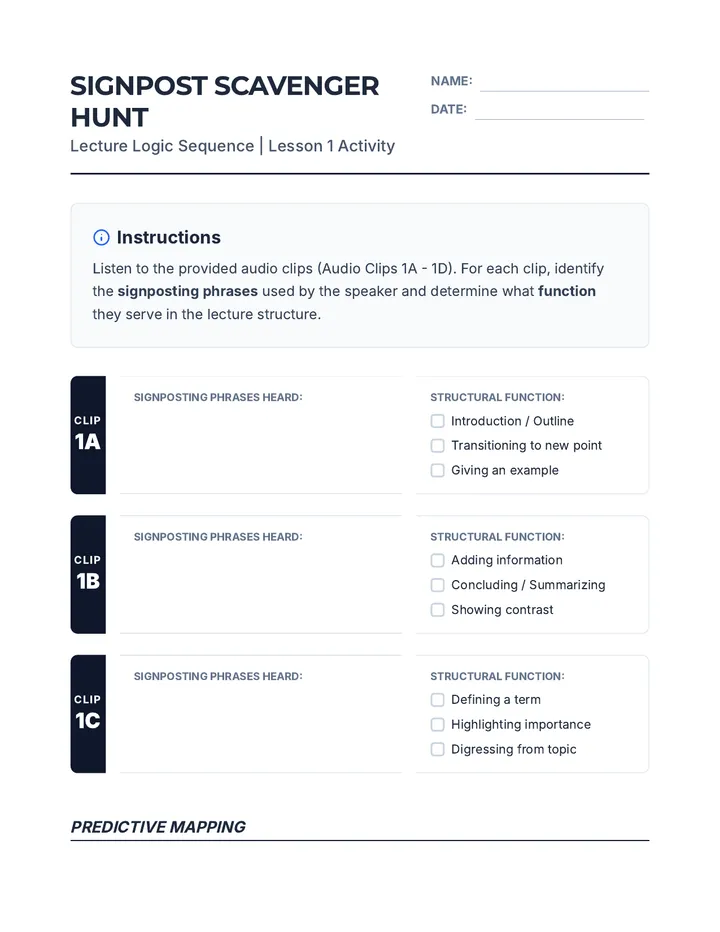
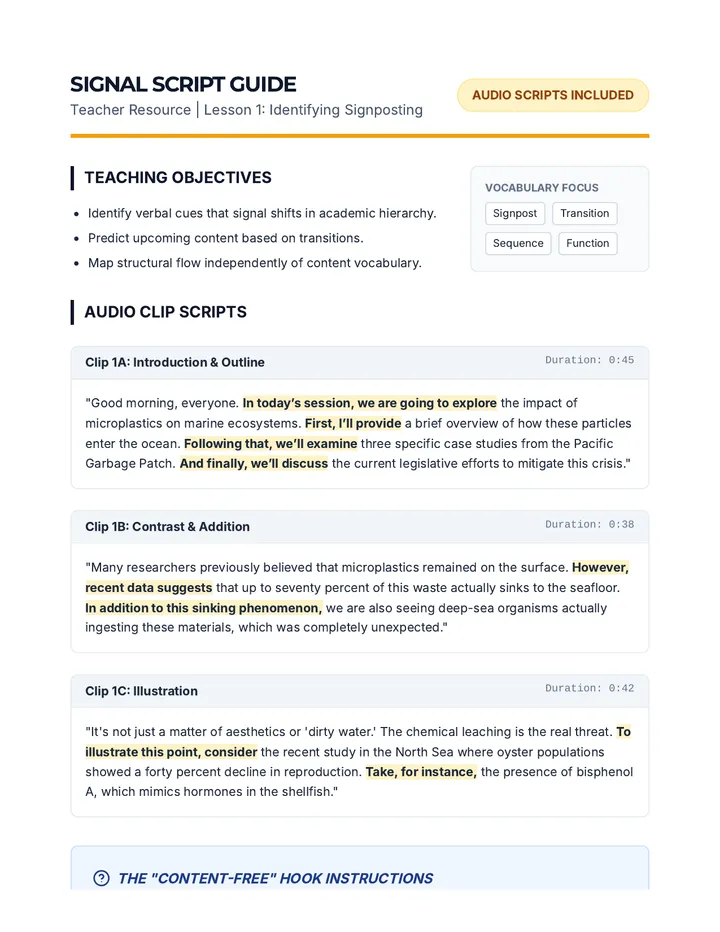
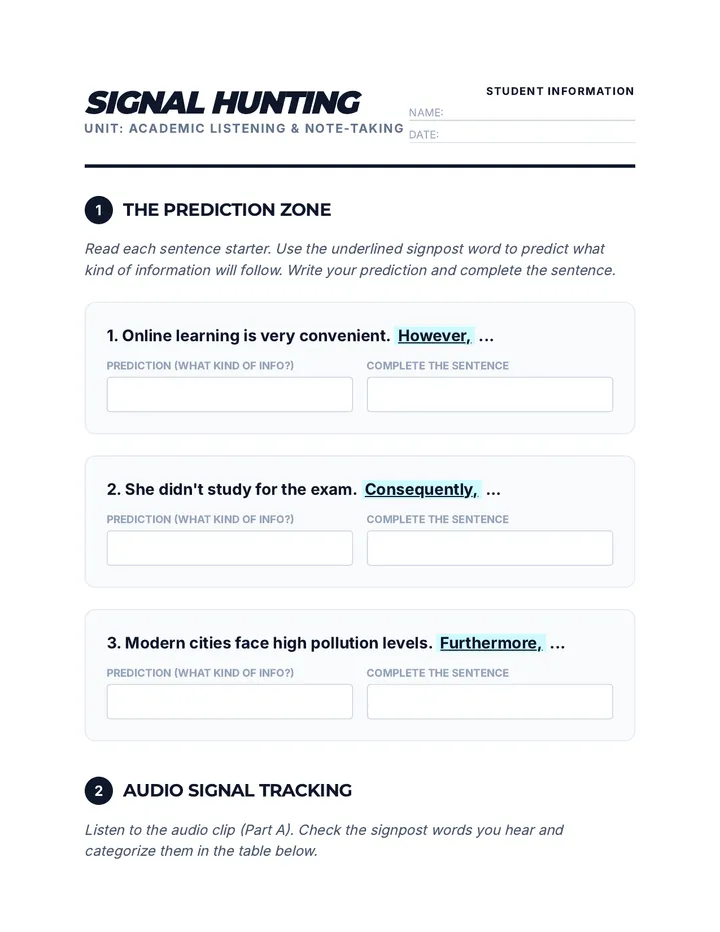
Students analyze signposting language to predict content and map the structural flow of academic talks.
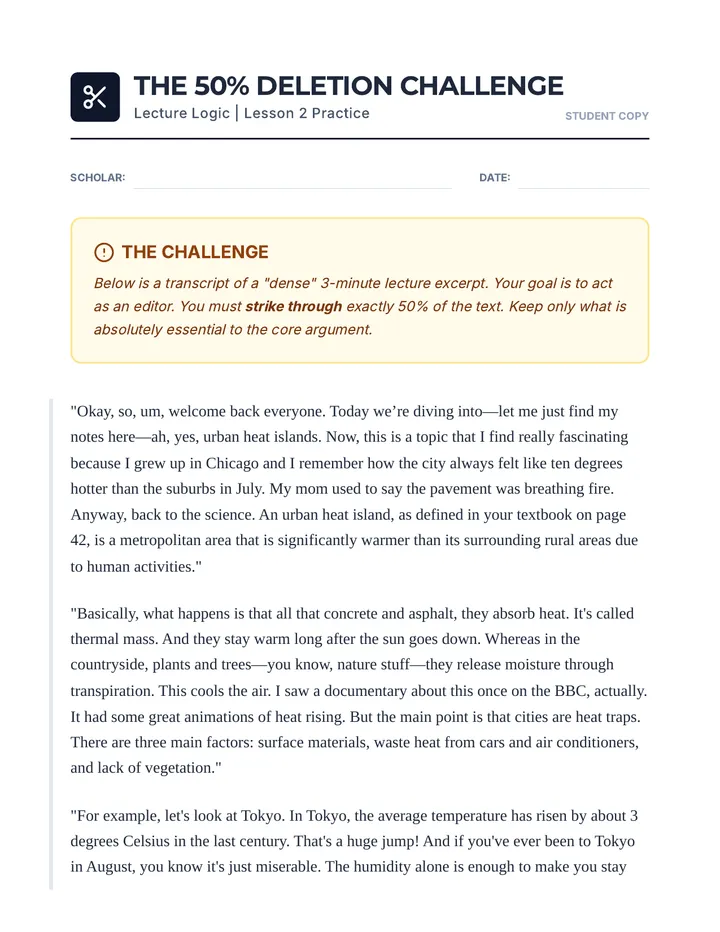
Students analyze academic discourse to distinguish core arguments from supporting details. They practice 'pruning' irrelevant information and identifying essential evidence using a 'Podcast Editor' scenario.
Using their notes from previous lessons, students practice reconstructing the main argument of an auditory text. They work in pairs to verbally summarize a lecture segment to a partner who has not heard it, checking for accuracy and completeness.
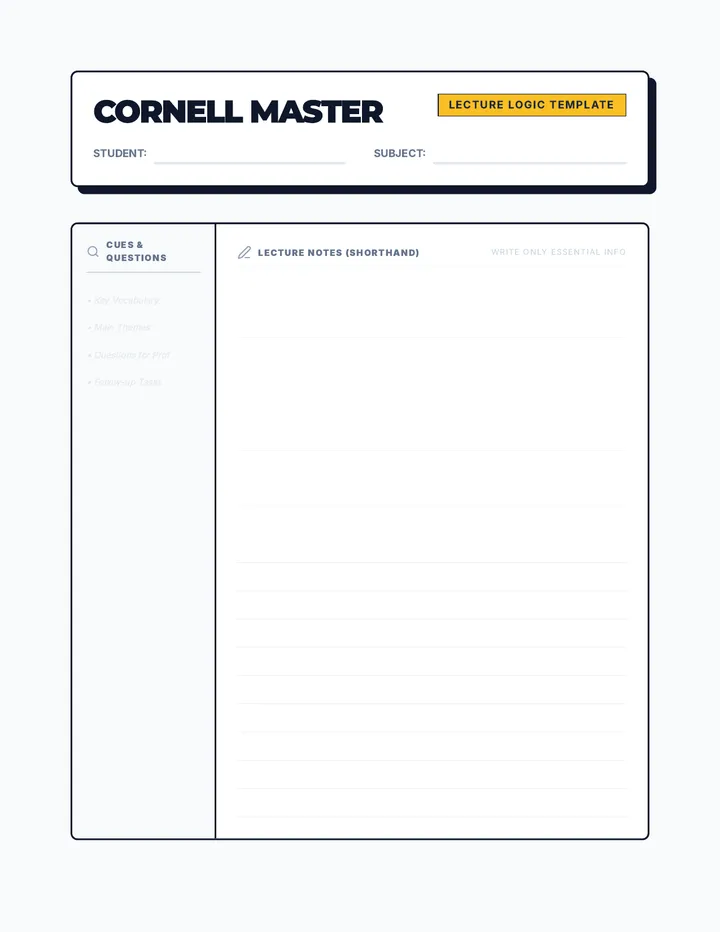
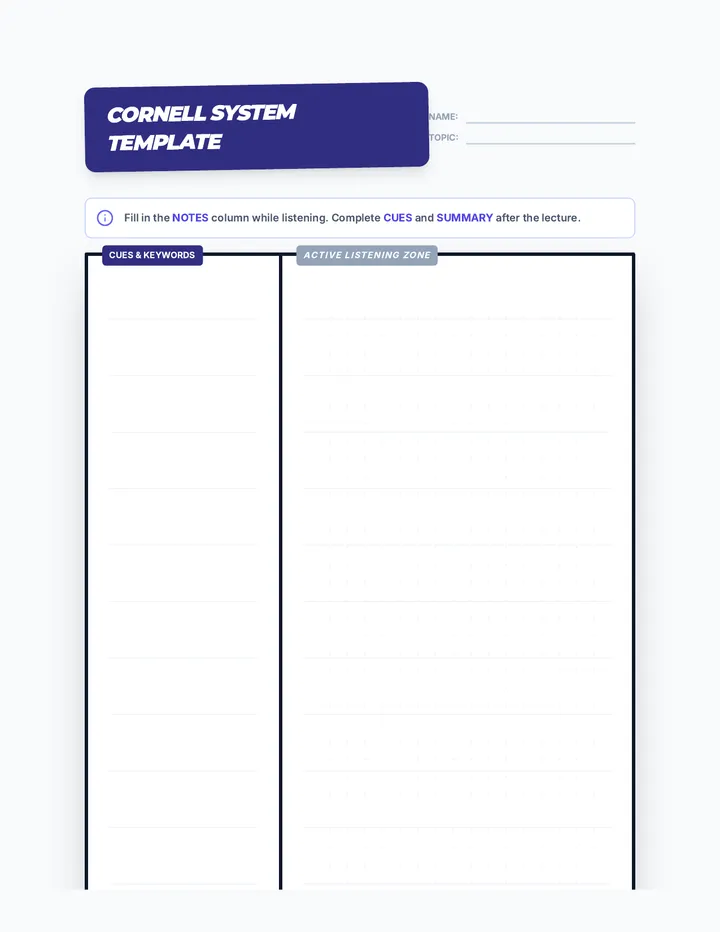
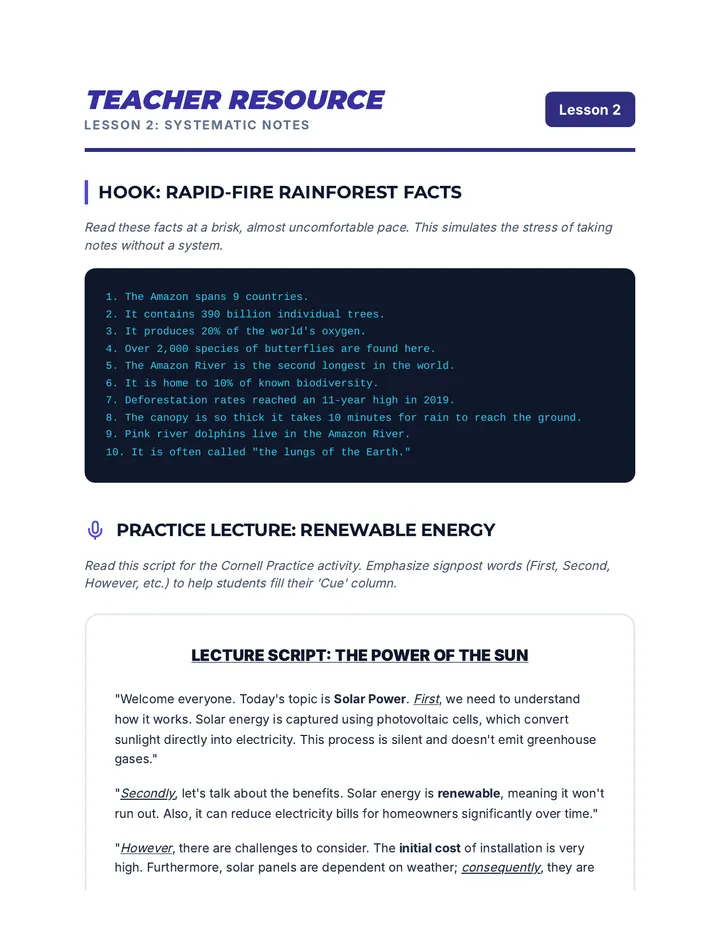
Students learn and practice the Cornell Note-Taking system. The lesson focuses on organizing notes spatially, separating keywords from details, and creating summaries to improve real-time lecture comprehension.
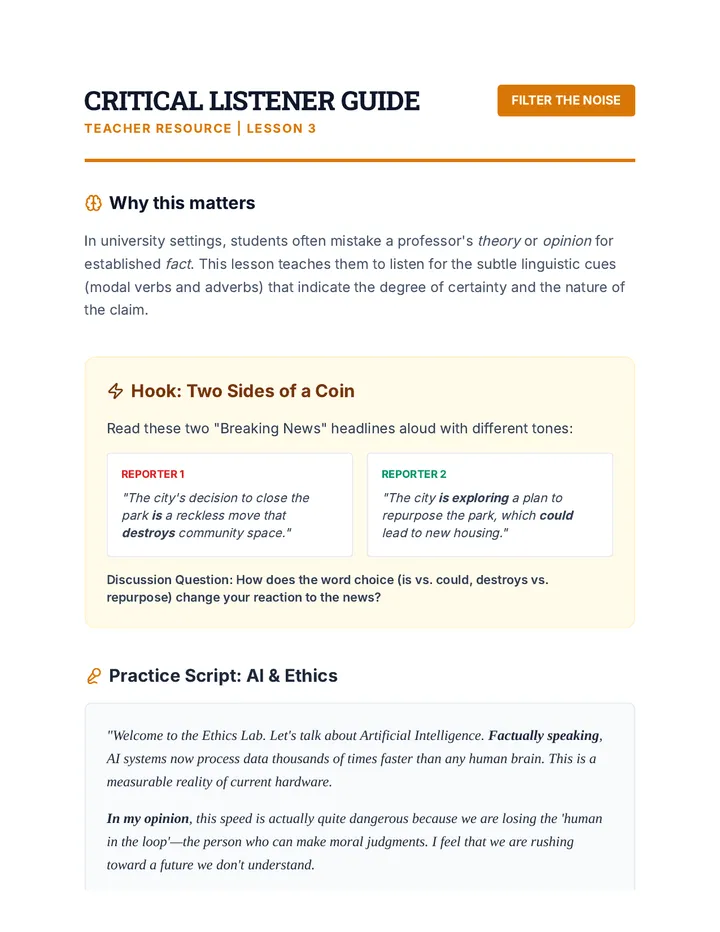
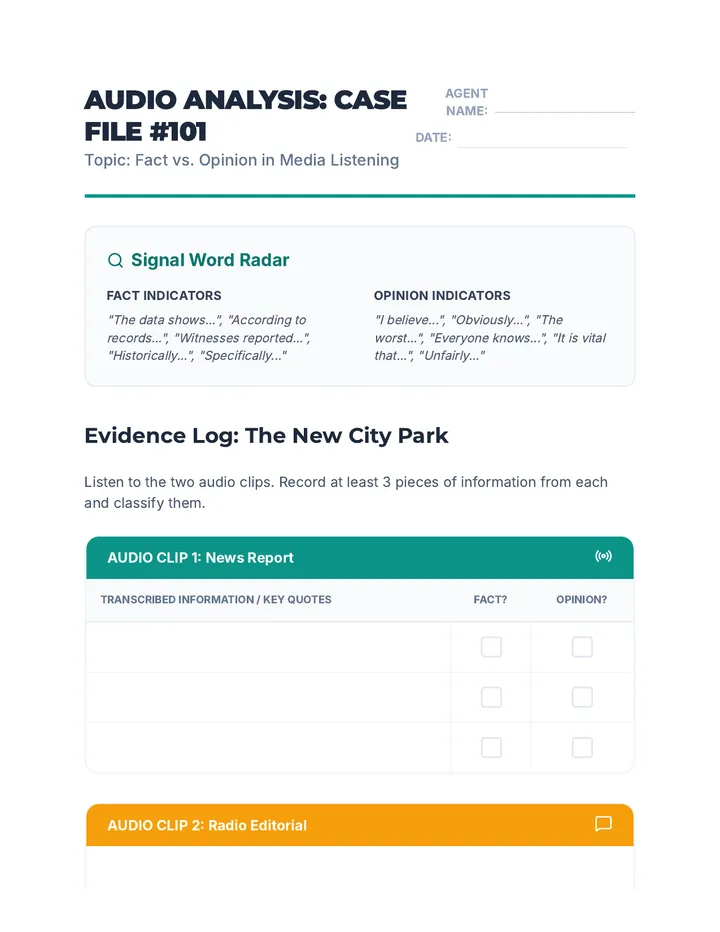
Students analyze an audio segment on a controversial scientific or social topic to categorize statements as verifiable facts, speaker opinions, or theoretical propositions. The lesson emphasizes listening for modal verbs and qualifying language.
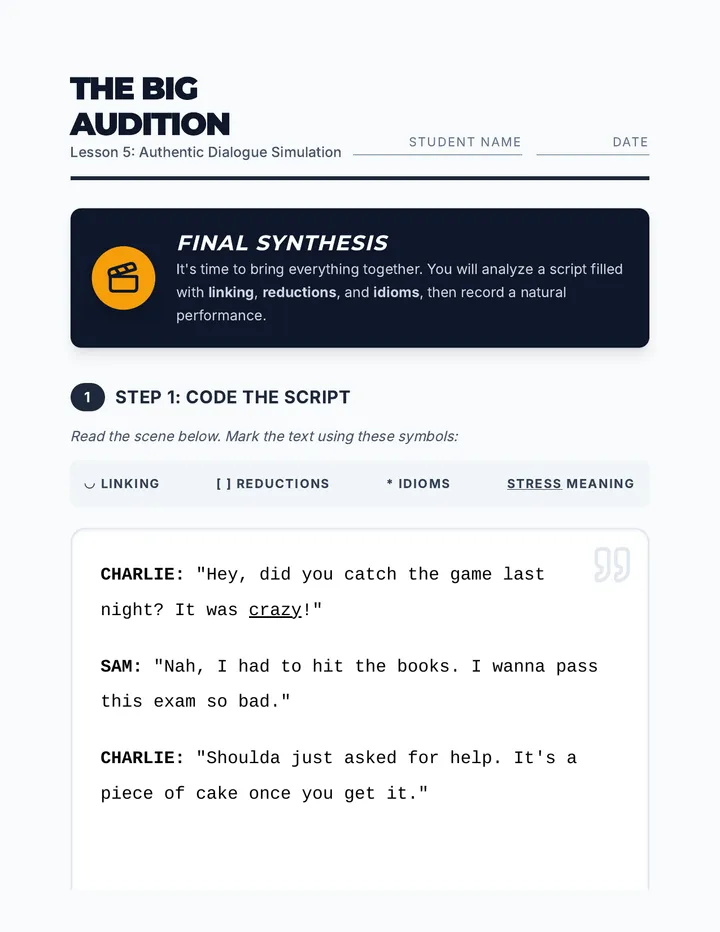
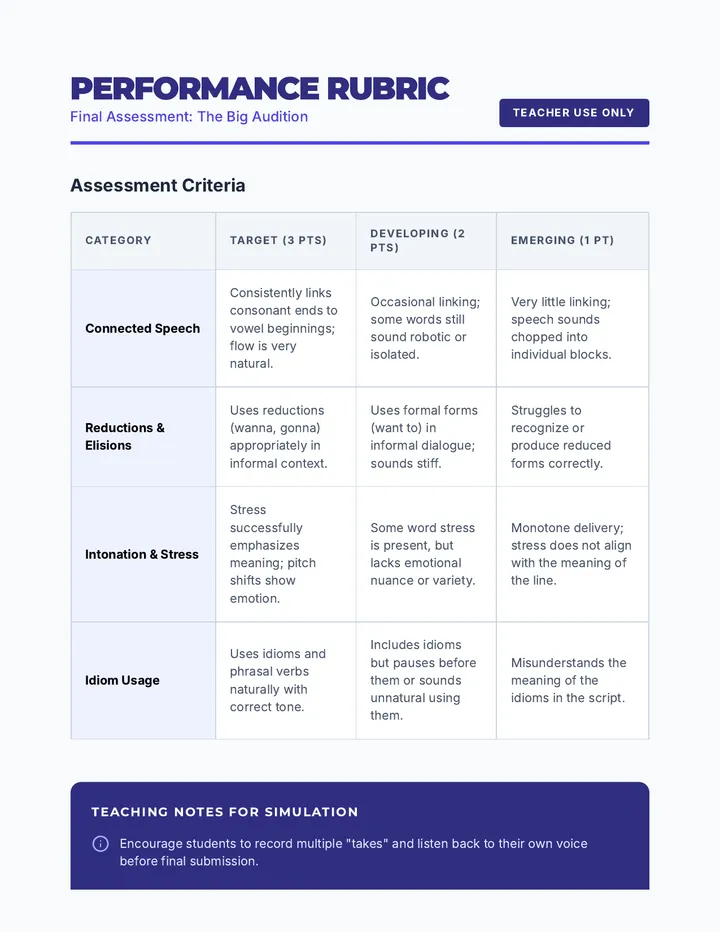
Students synthesize their skills by analyzing and performing an authentic dialogue. They record and critique their own performance, focusing on natural flow, reductions, and idioms.
Focusing on the 'music' of English, students learn how shifting sentence stress and intonation changes meaning and conveys emotion. They practice detecting nuances in vocal delivery.
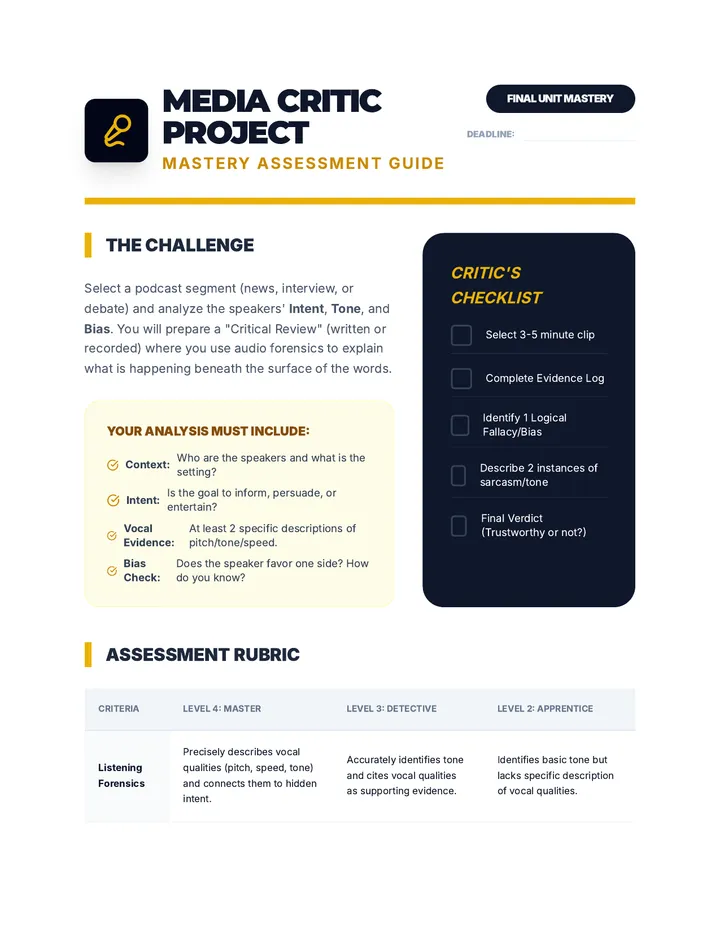
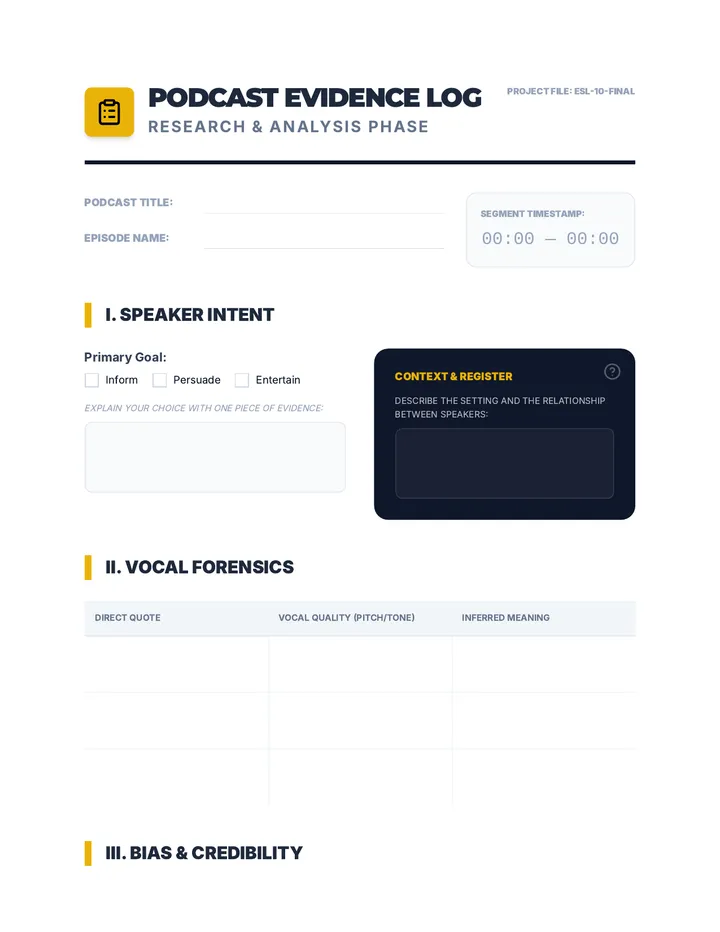
A final project where students select a podcast episode, analyze its intent and bias, and present their findings with specific audio evidence.
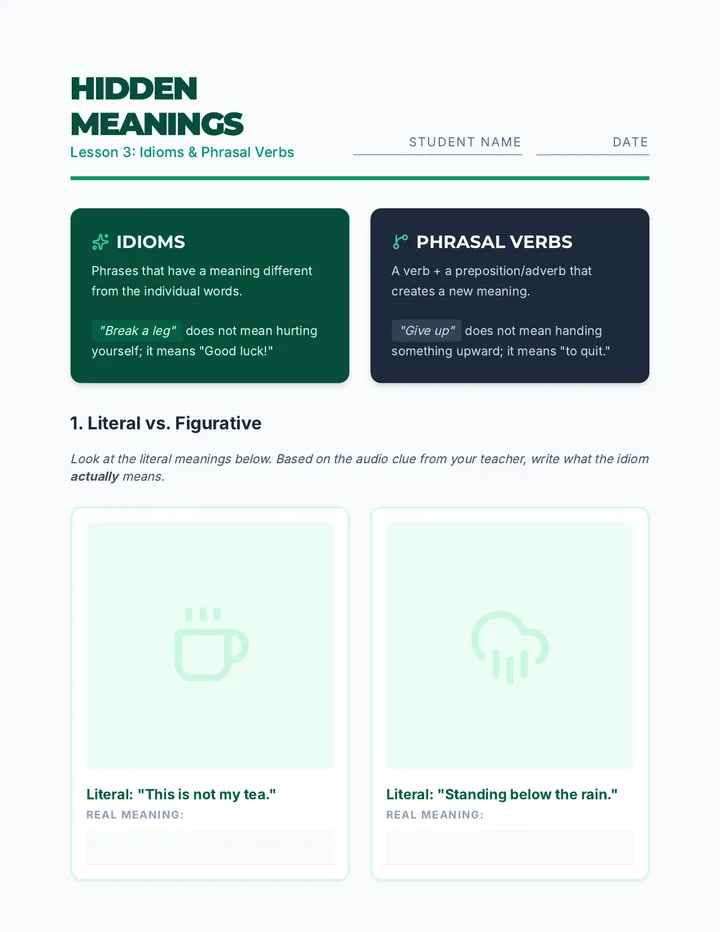
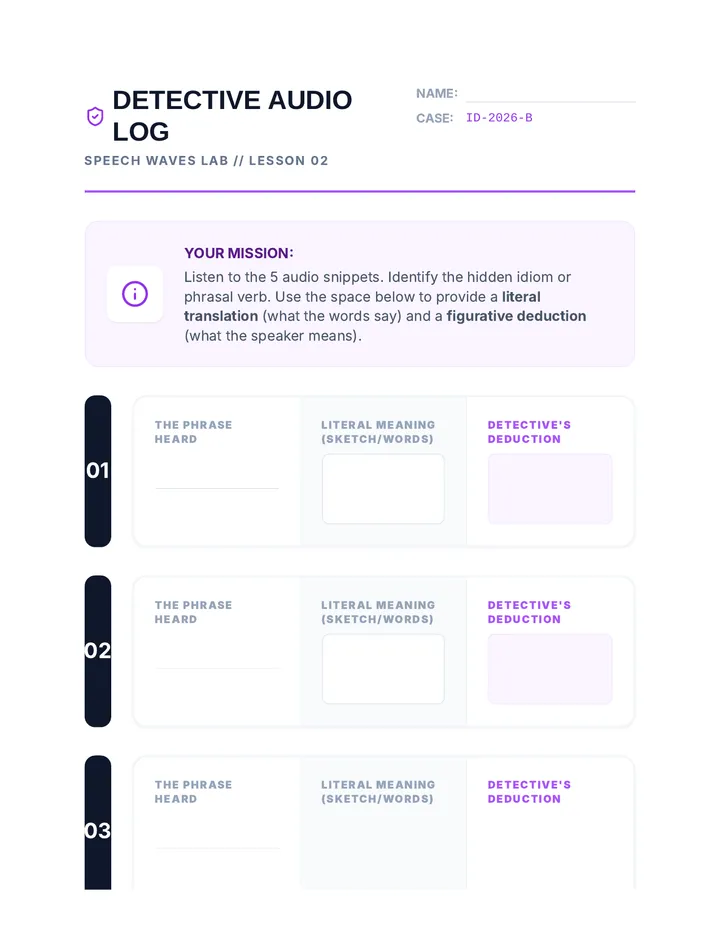
Students move beyond literal translation to explore high-frequency idioms and phrasal verbs. They learn to use context clues to decode figurative meaning in social dialogues.
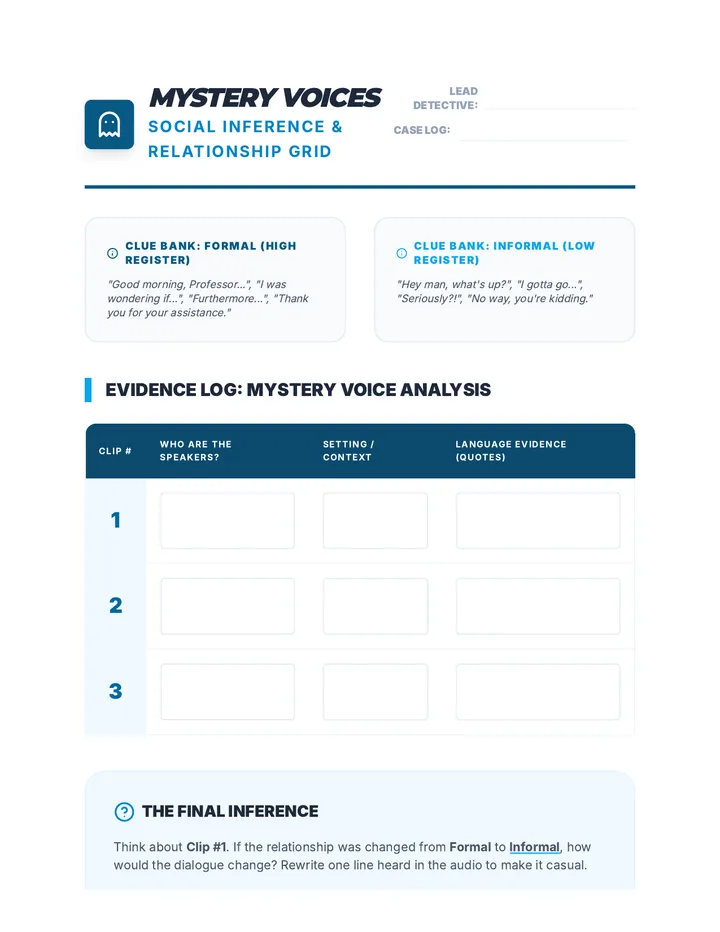
Without visual cues, students analyze dialogue to infer relationships and social context based on formality levels and conversational register.
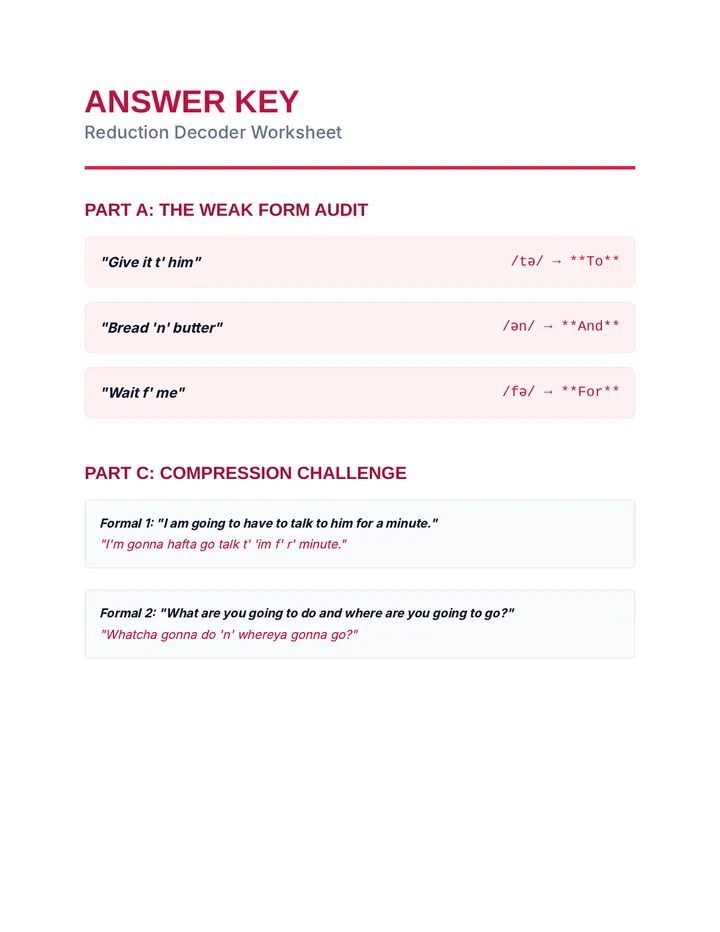
This lesson targets common reductions (wanna, gonna) and elisions in American English through dictation and game-based recognition. Students bridge the gap between written formal forms and spoken informal patterns.
Students investigate consonant-vowel linking and word boundaries to understand why words 'run together' in natural English. They learn to visualize the 'speech stream' and identify individual words within it.
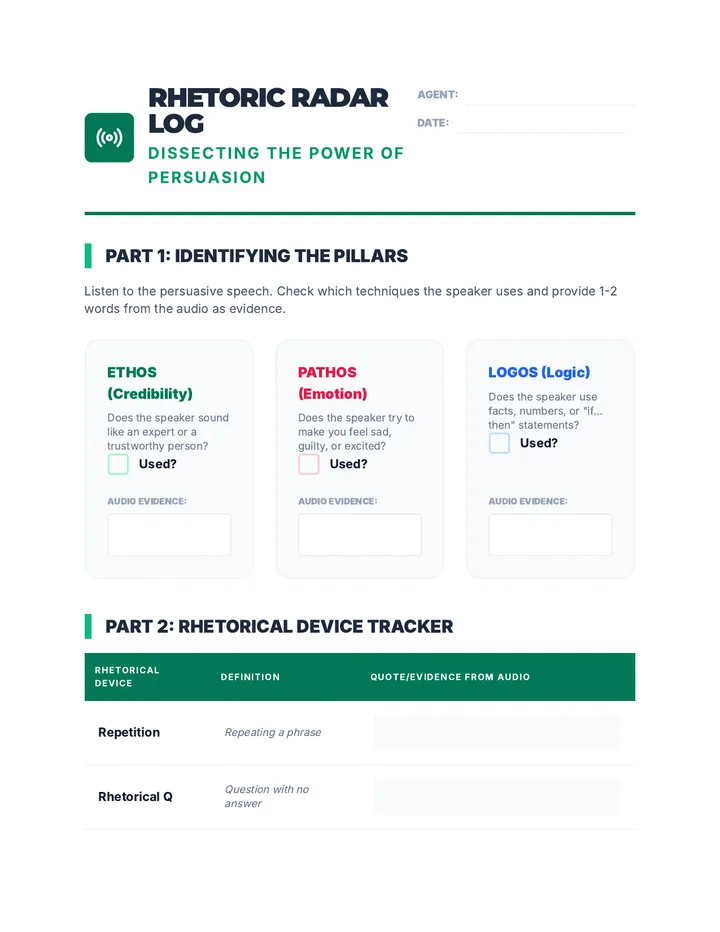
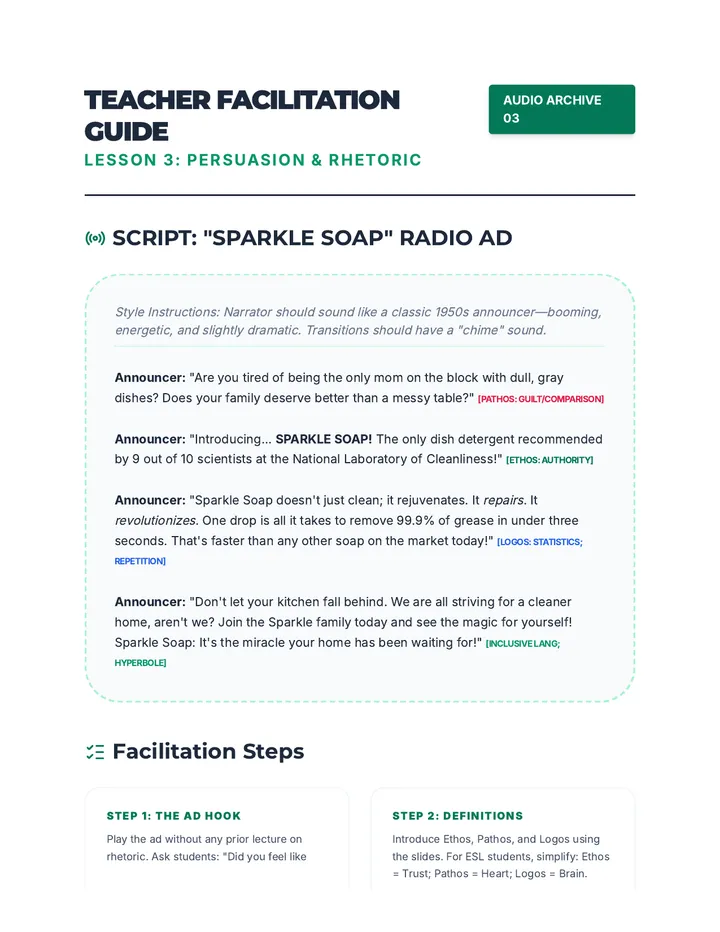
Students dissect persuasive speeches and advertisements to identify rhetorical devices and emotional appeals used to sway a listener's perspective.
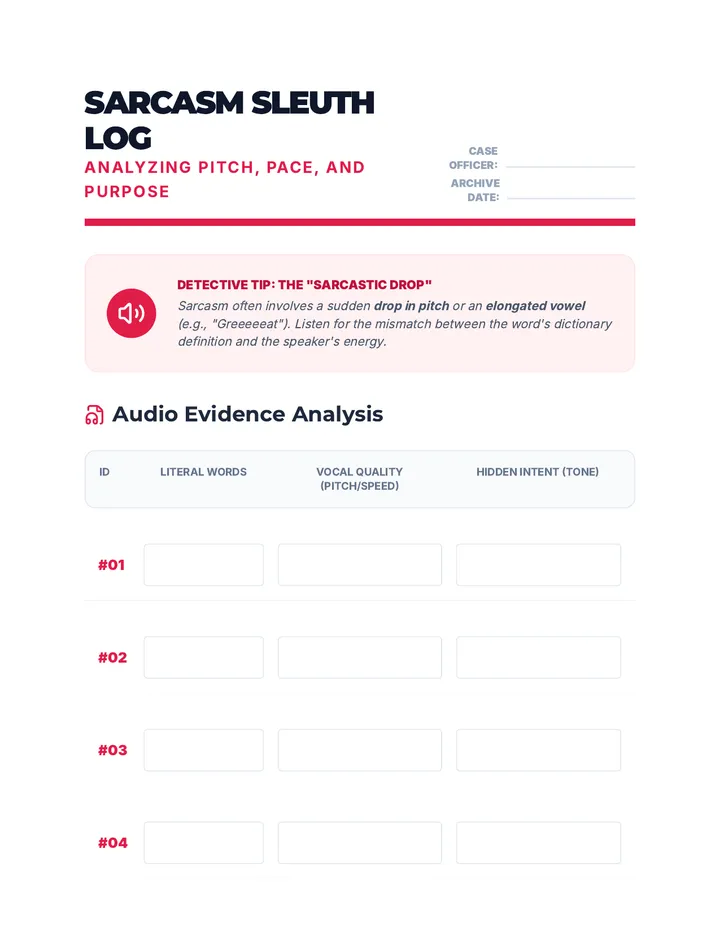
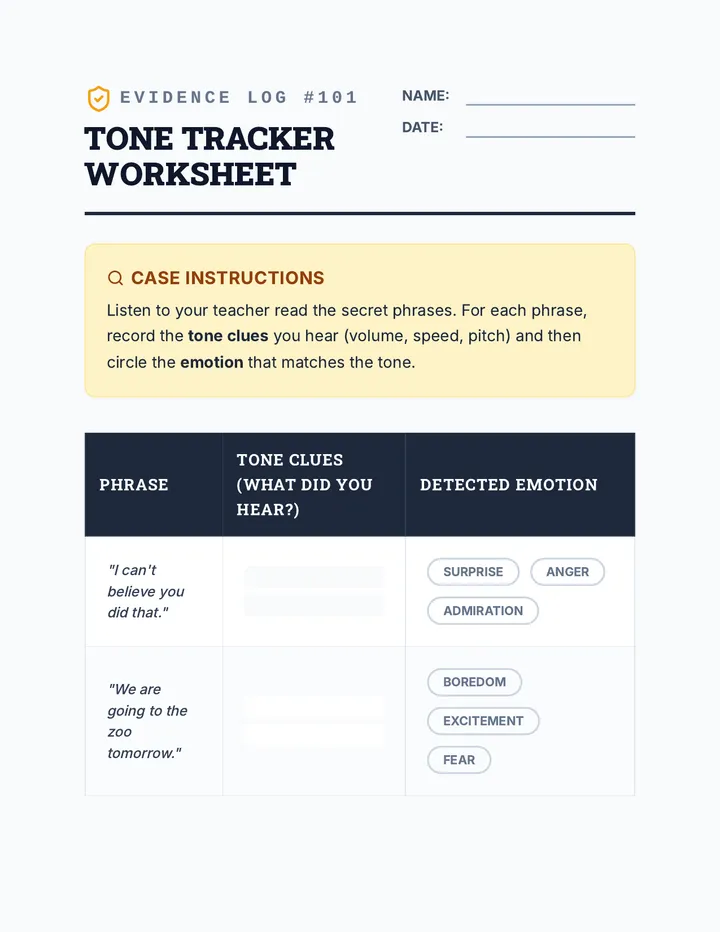
Learners explore how vocal qualities like pitch, speed, and volume convey emotion and sarcasm, moving beyond the literal meaning of words.
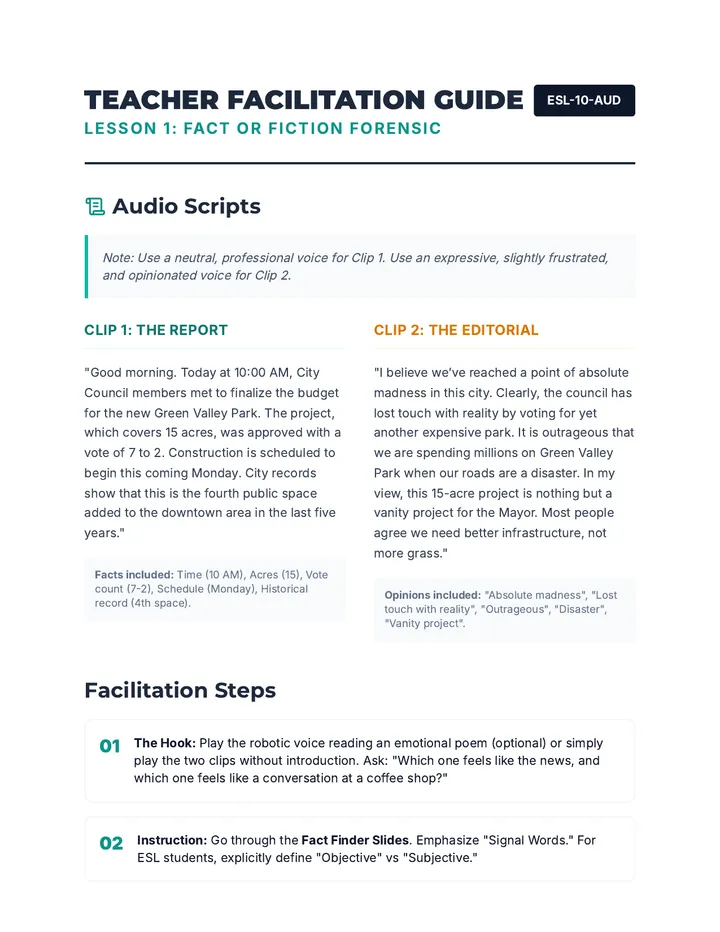
Students listen to news segments and editorials to distinguish objective facts from subjective opinions, focusing on signal words and evidence-based reporting.
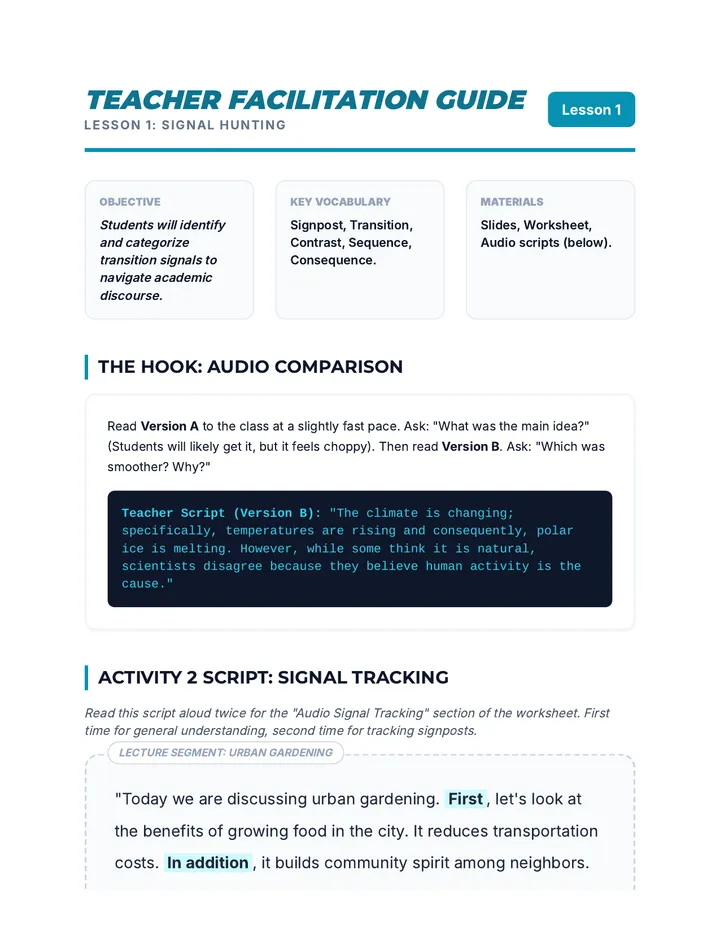
Students identify and categorize 'signpost' language (e.g., transitions) that signal shifts in topics within academic discourse. This foundational skill helps students predict content and navigate lecture structures.
Learners are introduced to the Cornell Note-Taking System and concept mapping, practicing these methods while listening to extended discourse.
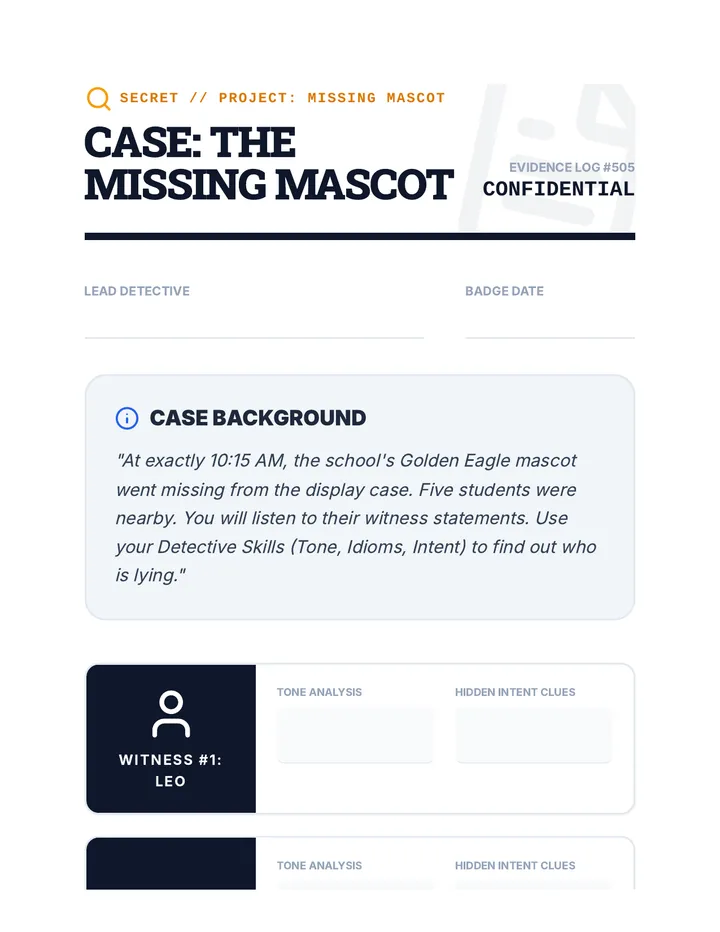
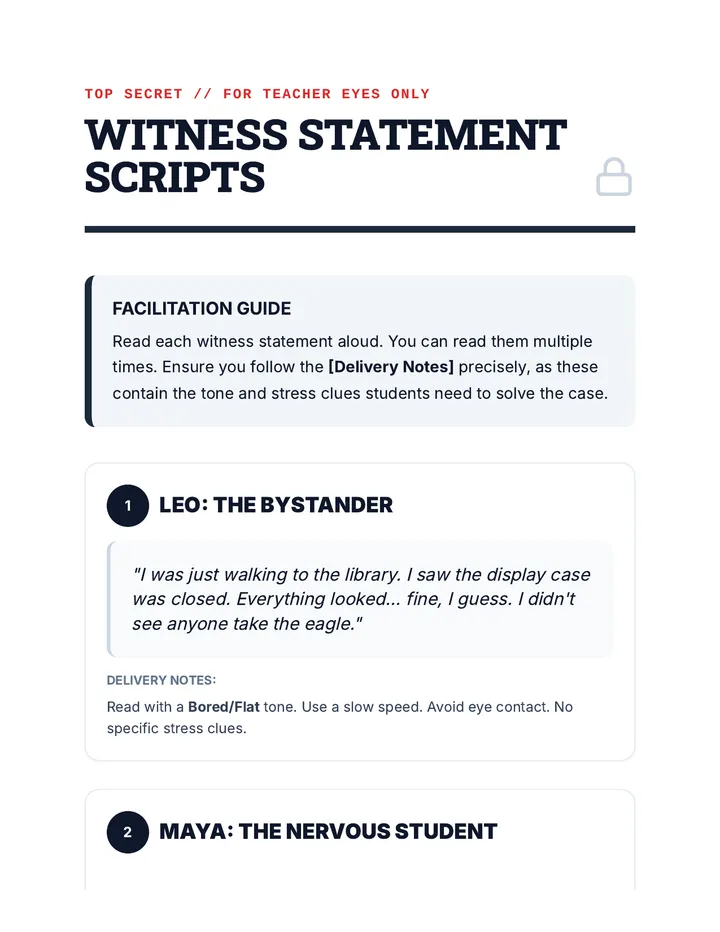
In this final simulation, students listen to witness statements regarding a missing mascot. They must apply all previously learned skills—tone, idioms, and fact-checking—to identify the culprit.
Learners analyze speaker motivation and intent by focusing on word stress and hidden messages. They practice identifying if a speaker is complaining, persuading, or apologizing without using those specific words.
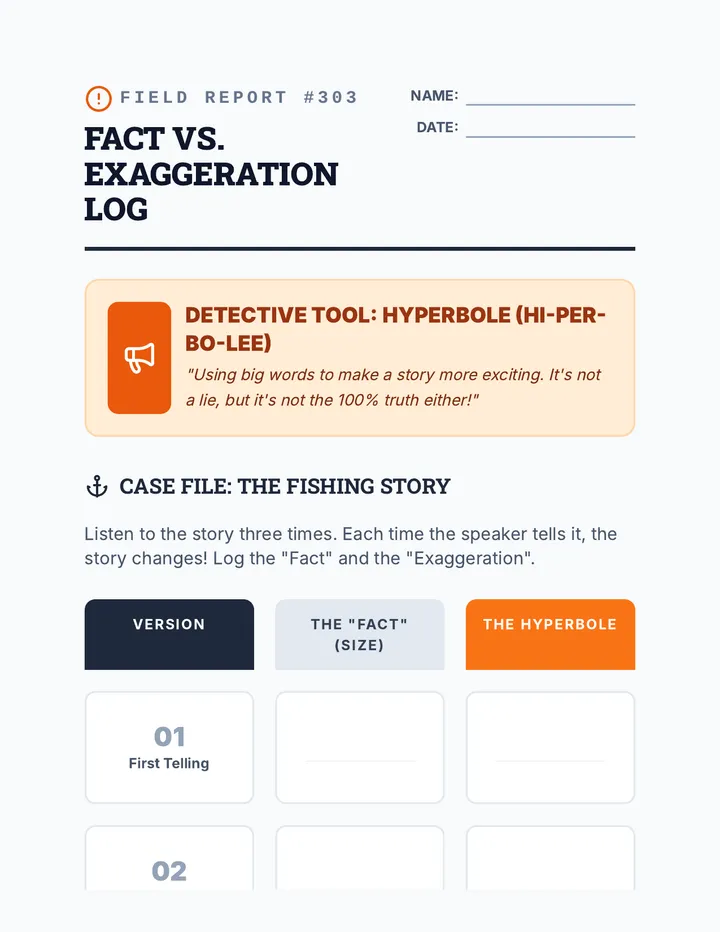
Students practice identifying hyperbole and distinguishing factual information from emotional exaggeration in storytelling. They learn to recognize the 'fishing story' effect in casual conversation.
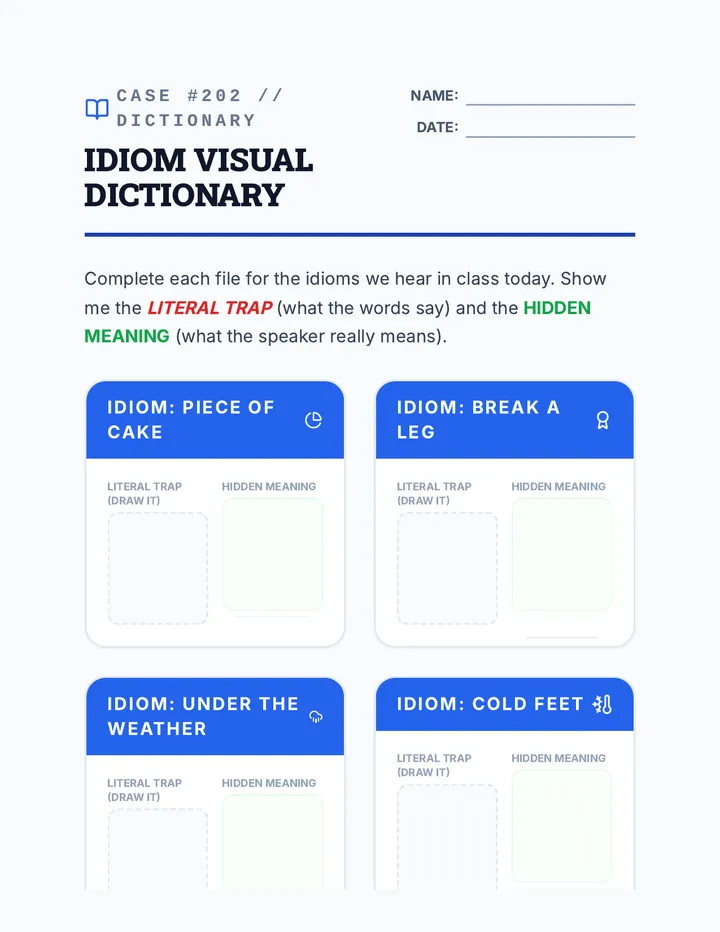
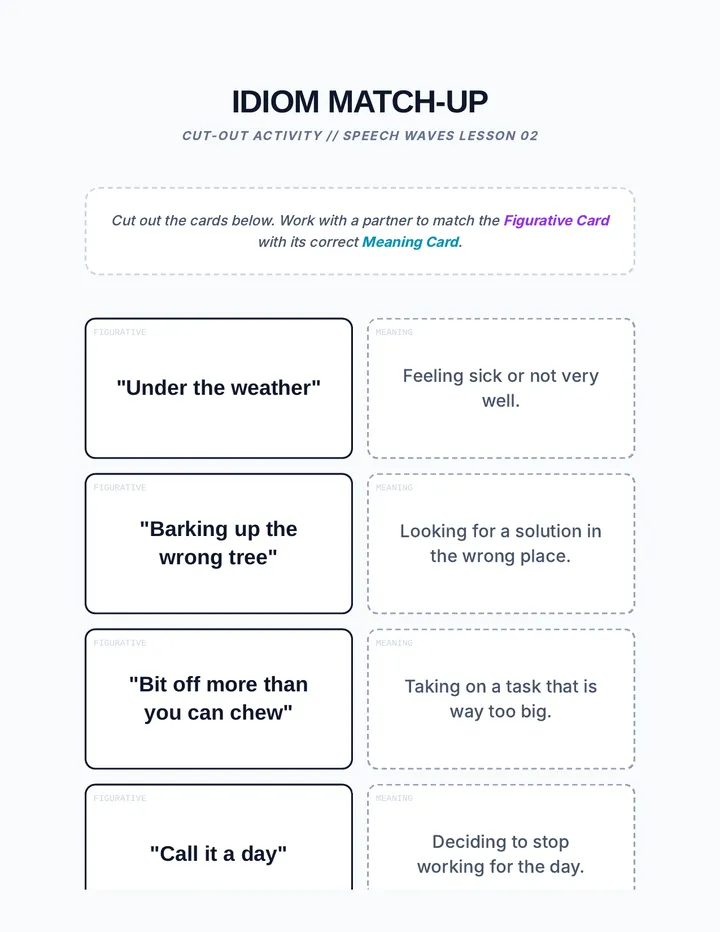
Students decode common American idioms by listening to them in context. They distinguish between literal and figurative meanings and create a visual dictionary of non-literal language.
Students explore how pitch, volume, and intonation change the meaning of a sentence. They learn to identify emotional cues in spoken English, such as sarcasm, surprise, and anger.
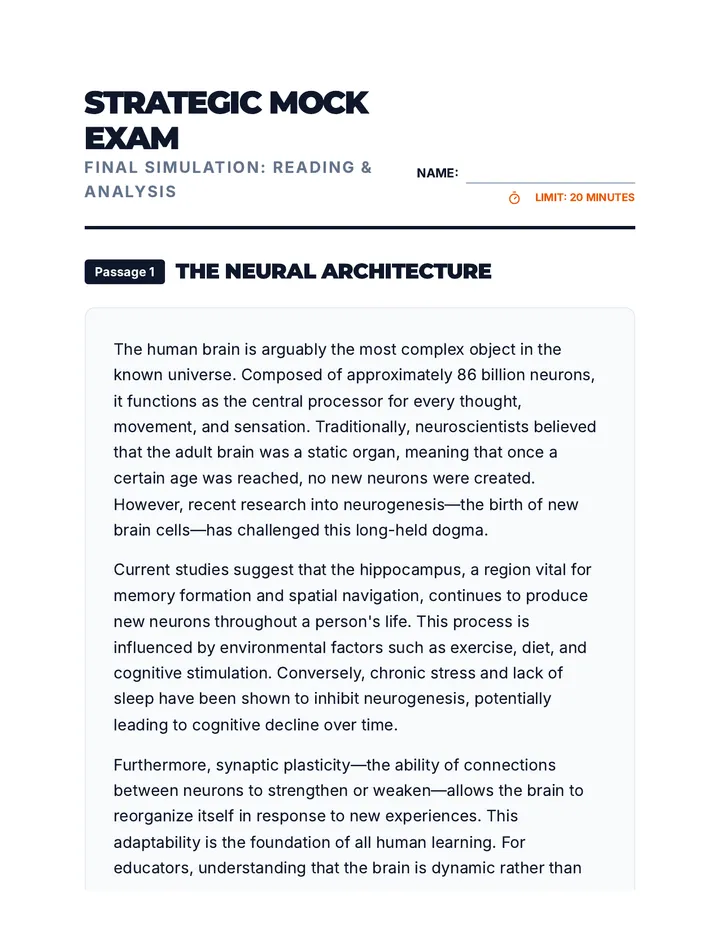
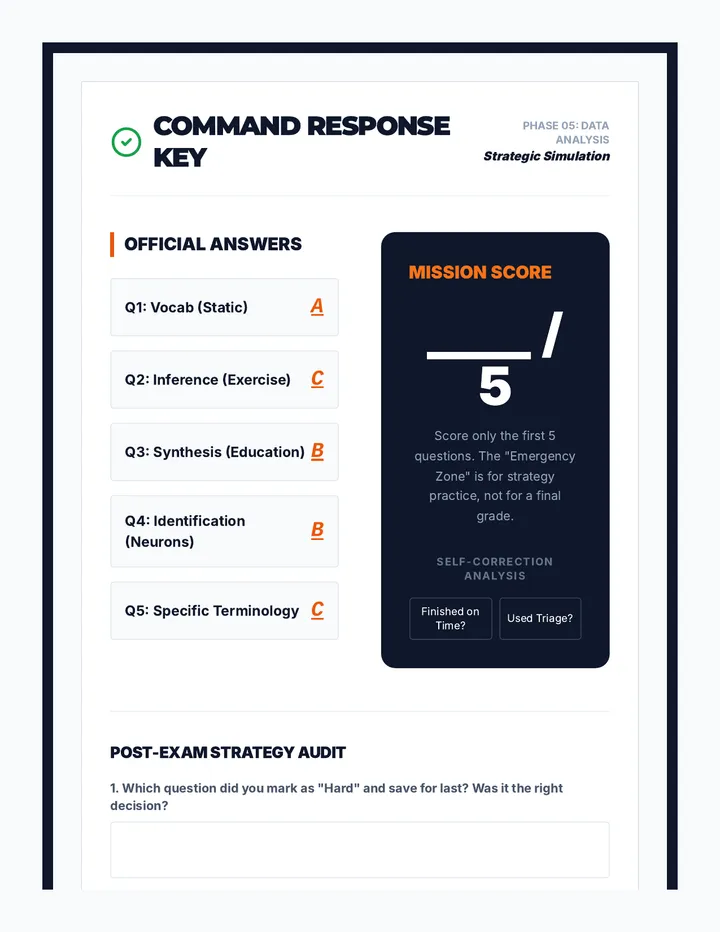
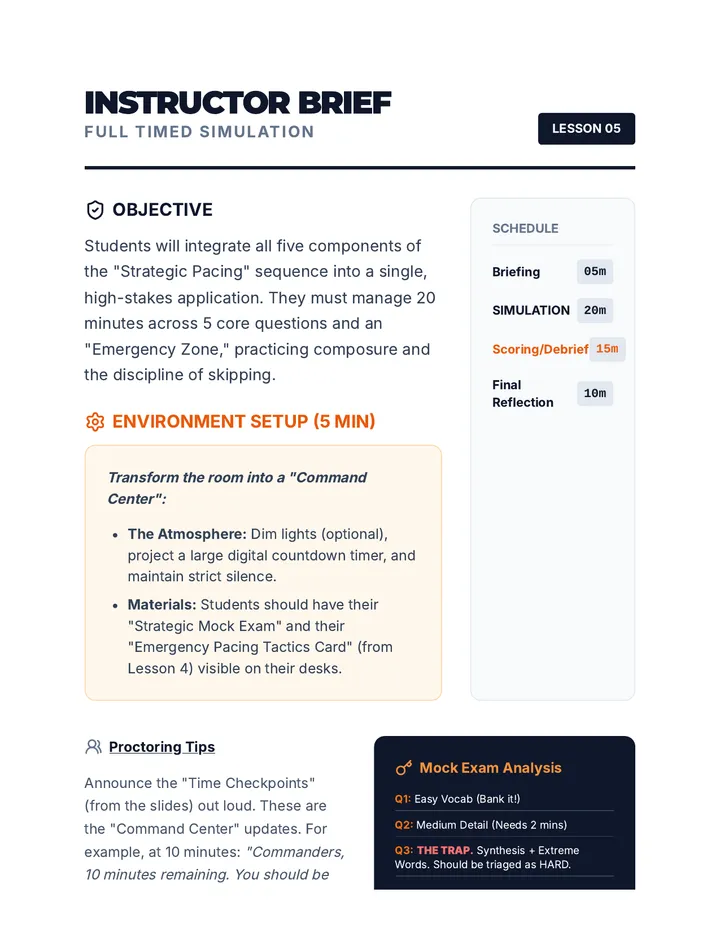
Students apply all learned pacing, triage, and guessing strategies in a high-stakes, full-length timed simulation that mimics the official testing environment.
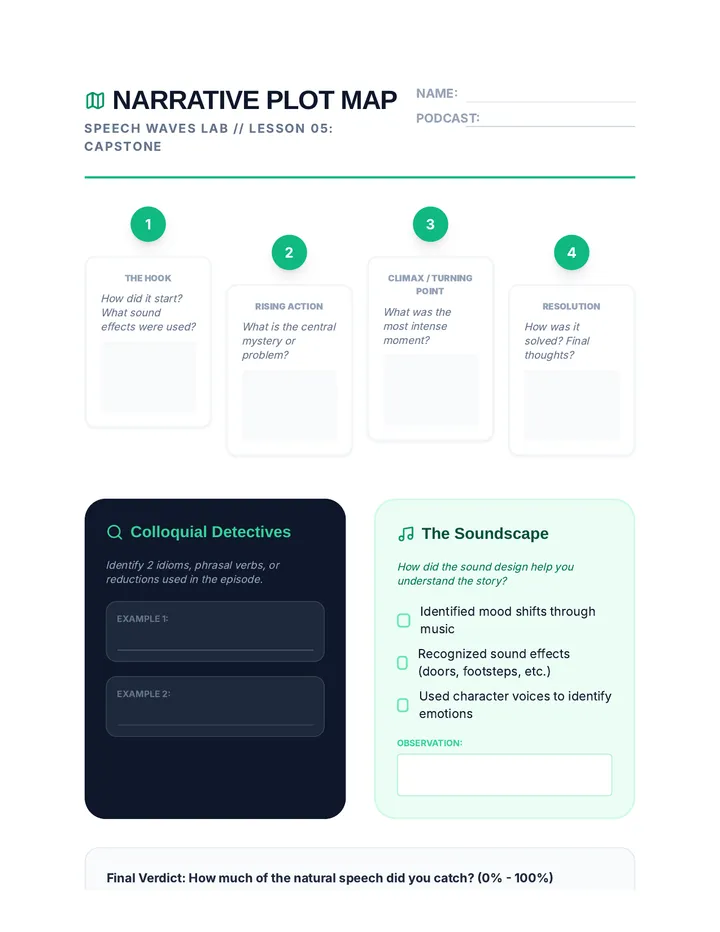
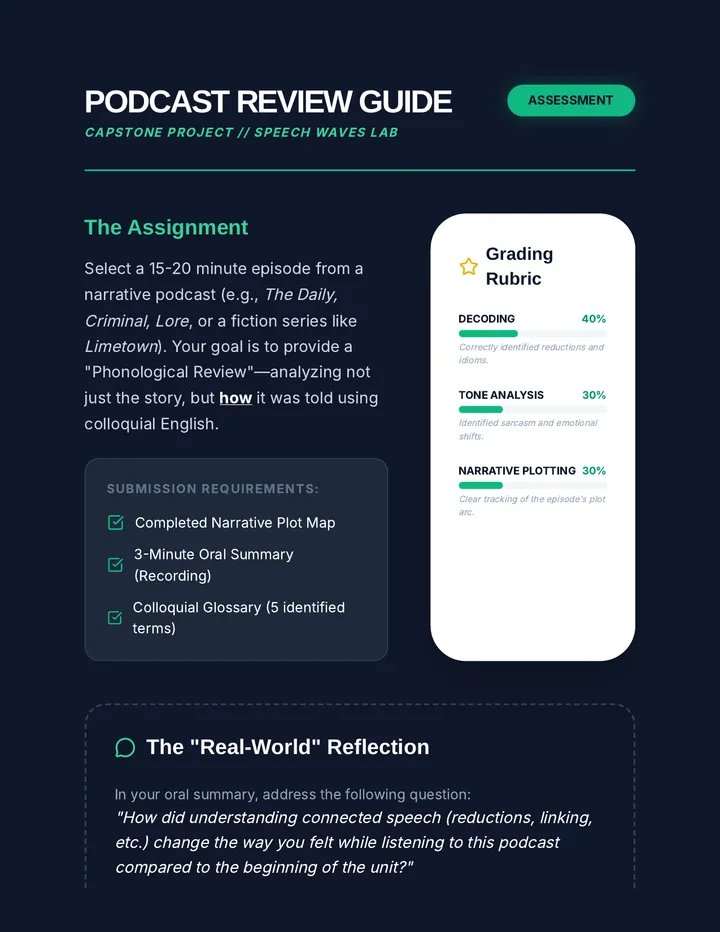
The final lesson applies all previous skills to a sustained narrative format. Students listen to a podcast episode, mapping the plot and identifying colloquial nuances to demonstrate comprehensive understanding.
Students learn to identify sarcasm, irony, and humor by focusing on intonation and stress patterns rather than just literal word choice. They analyze how the same phrase can convey multiple meanings.
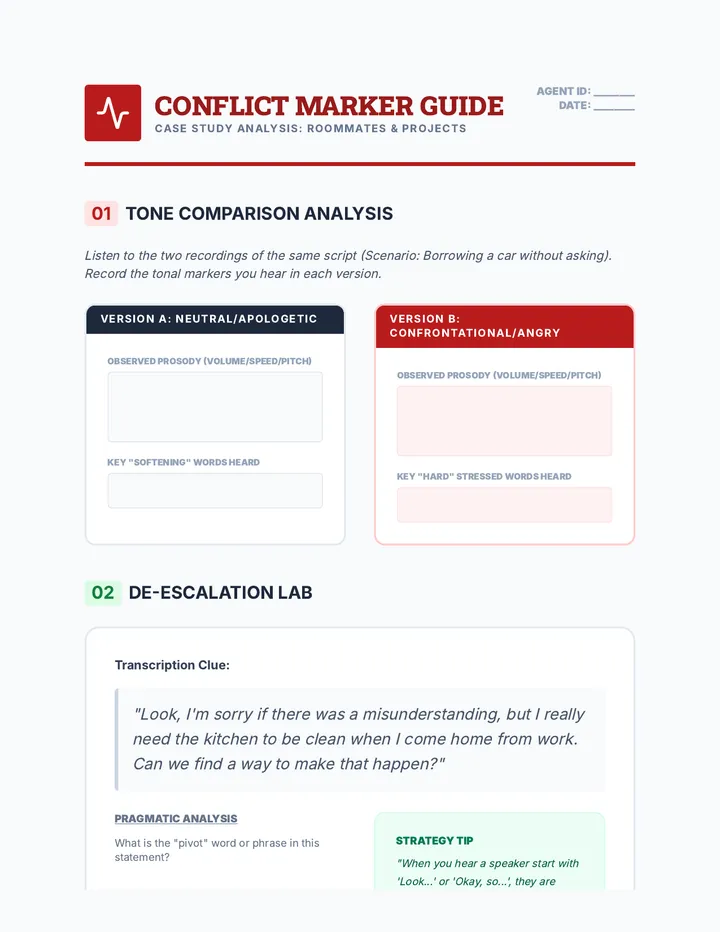
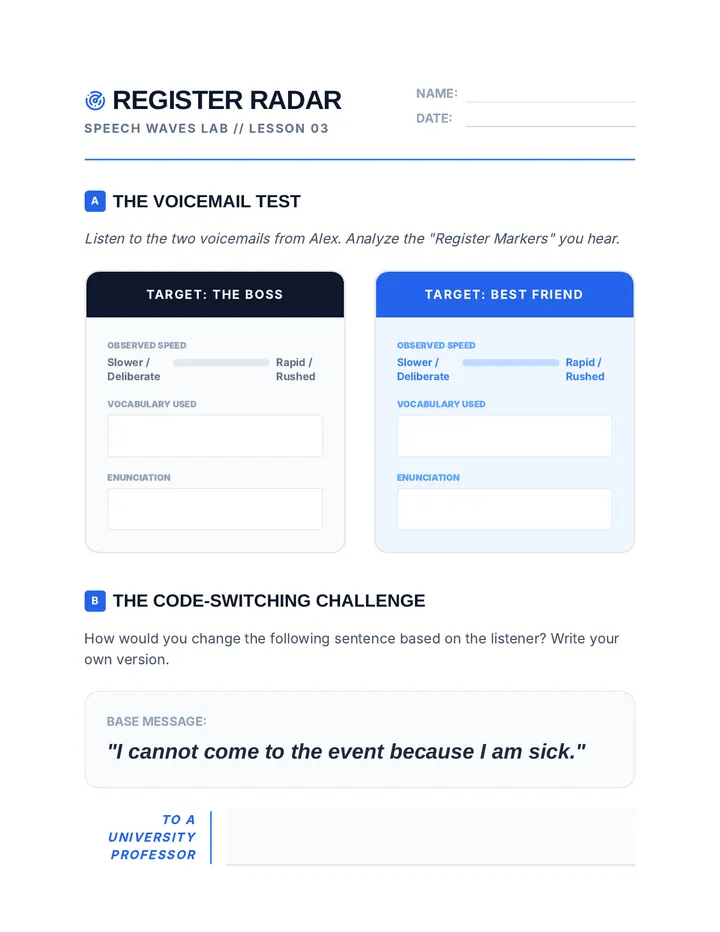
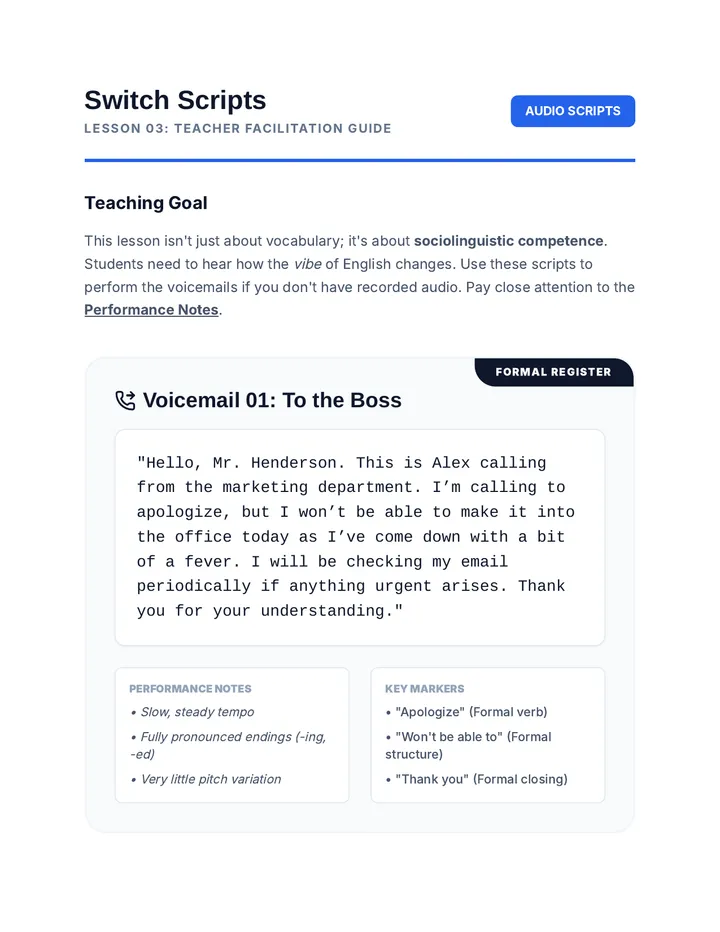
This lesson focuses on sociolinguistic awareness, teaching students how speakers adjust their speed, vocabulary, and tone based on their audience. Students compare formal and informal registers in various contexts.
Learners explore the difference between literal and figurative language through idiomatic expressions and phrasal verbs. Using context clues and tone, they decode meaning in authentic audio snippets.
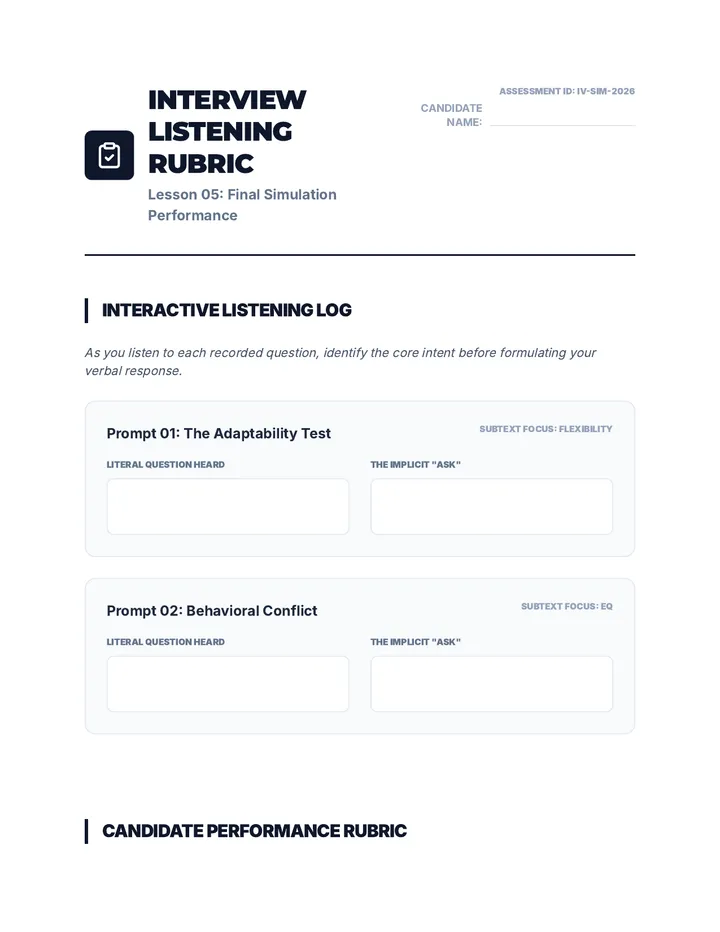
Students apply listening skills to interpret complex interview questions and behavioral prompts.