A high-energy Kindergarten lesson focused on identifying the sight word 'did' through music, movement, and a detective-themed reading hunt. Students use 'binoculars' to spot the word and a bar graph to track their findings.
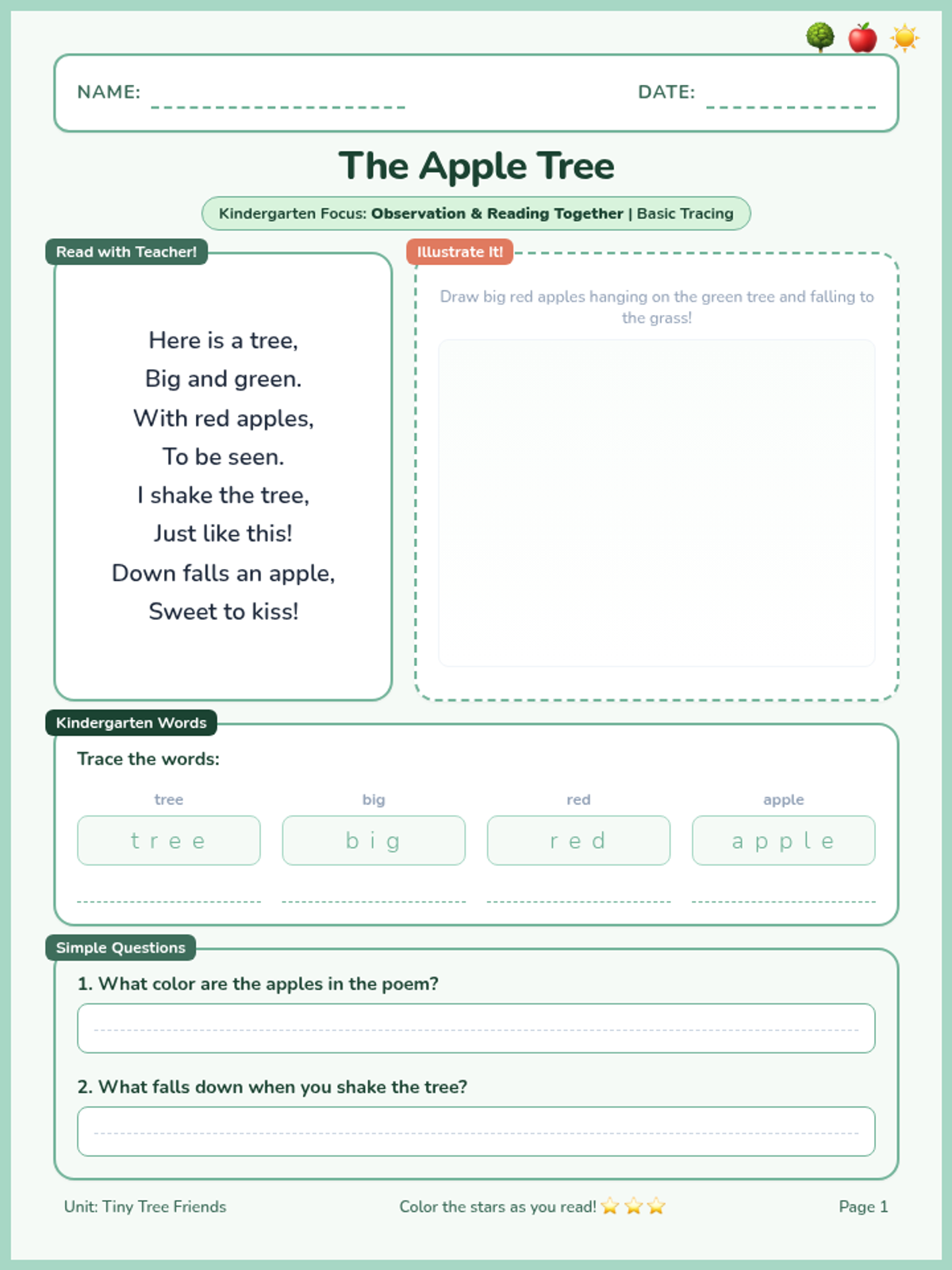
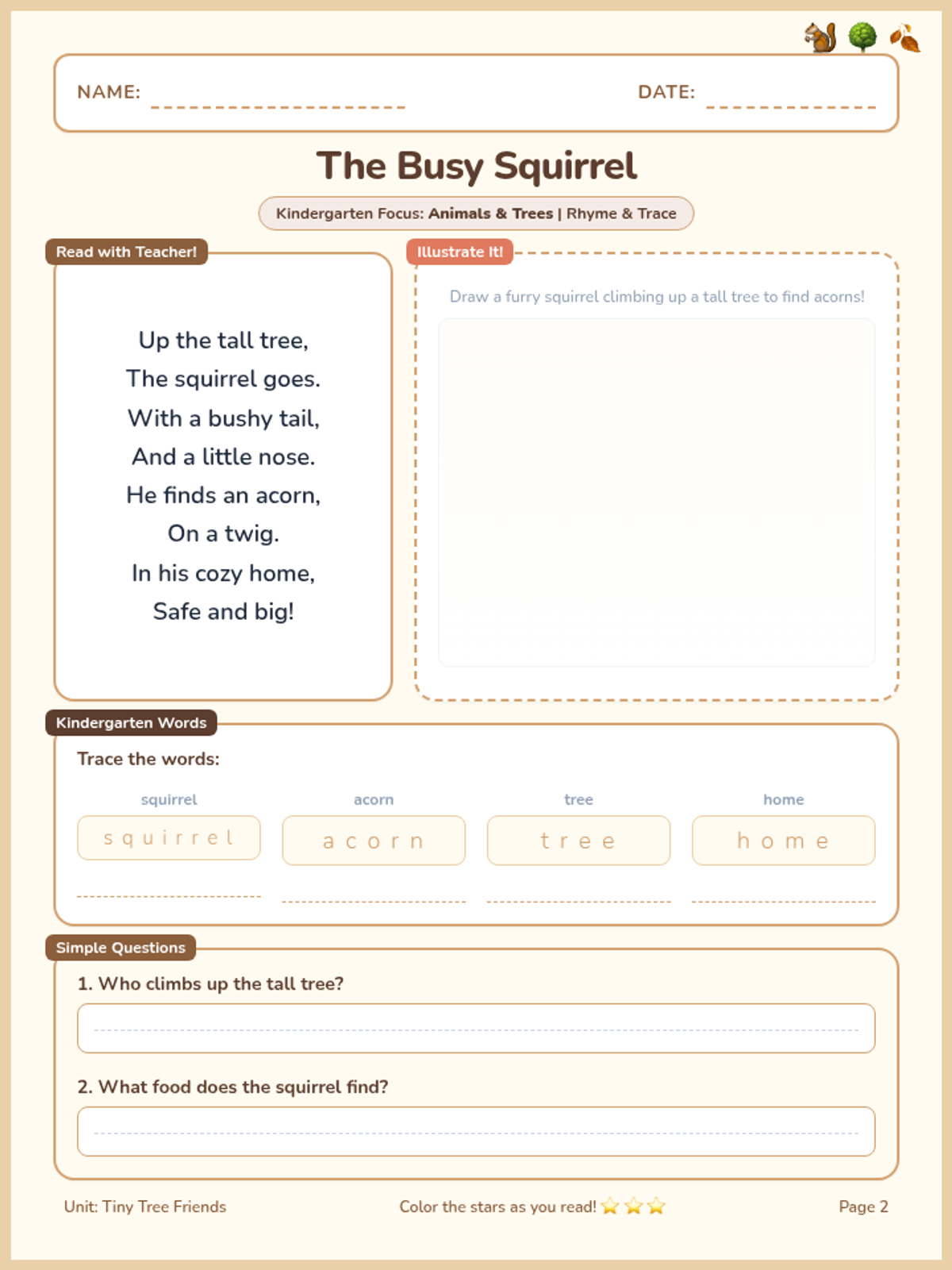
A sweet kindergarten unit focusing on trees and seasonal changes. Students read simple, rhythmic poems about apple trees and falling leaves, practice coloring, trace basic seasonal terms, and answer introductory comprehension questions.
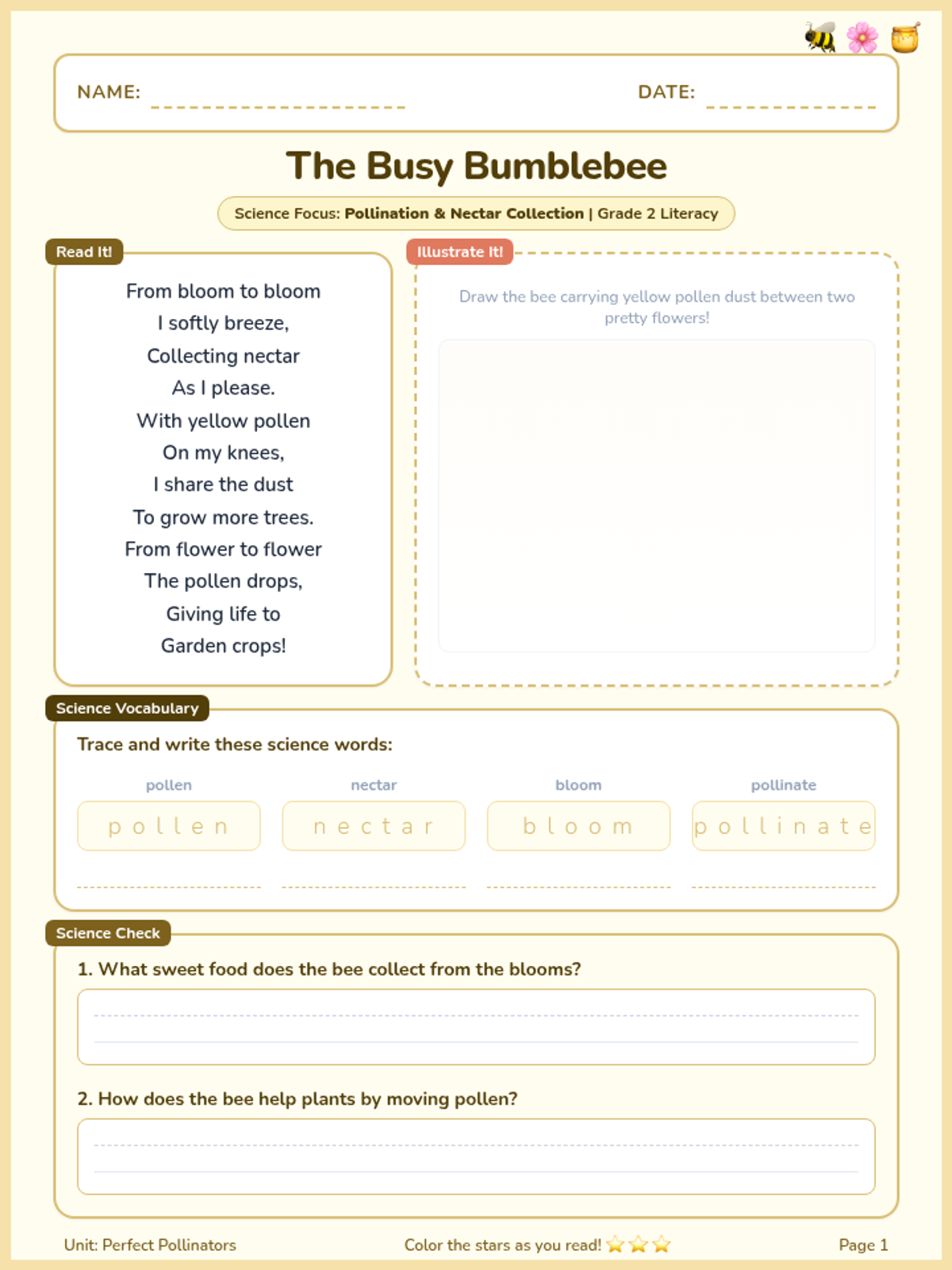
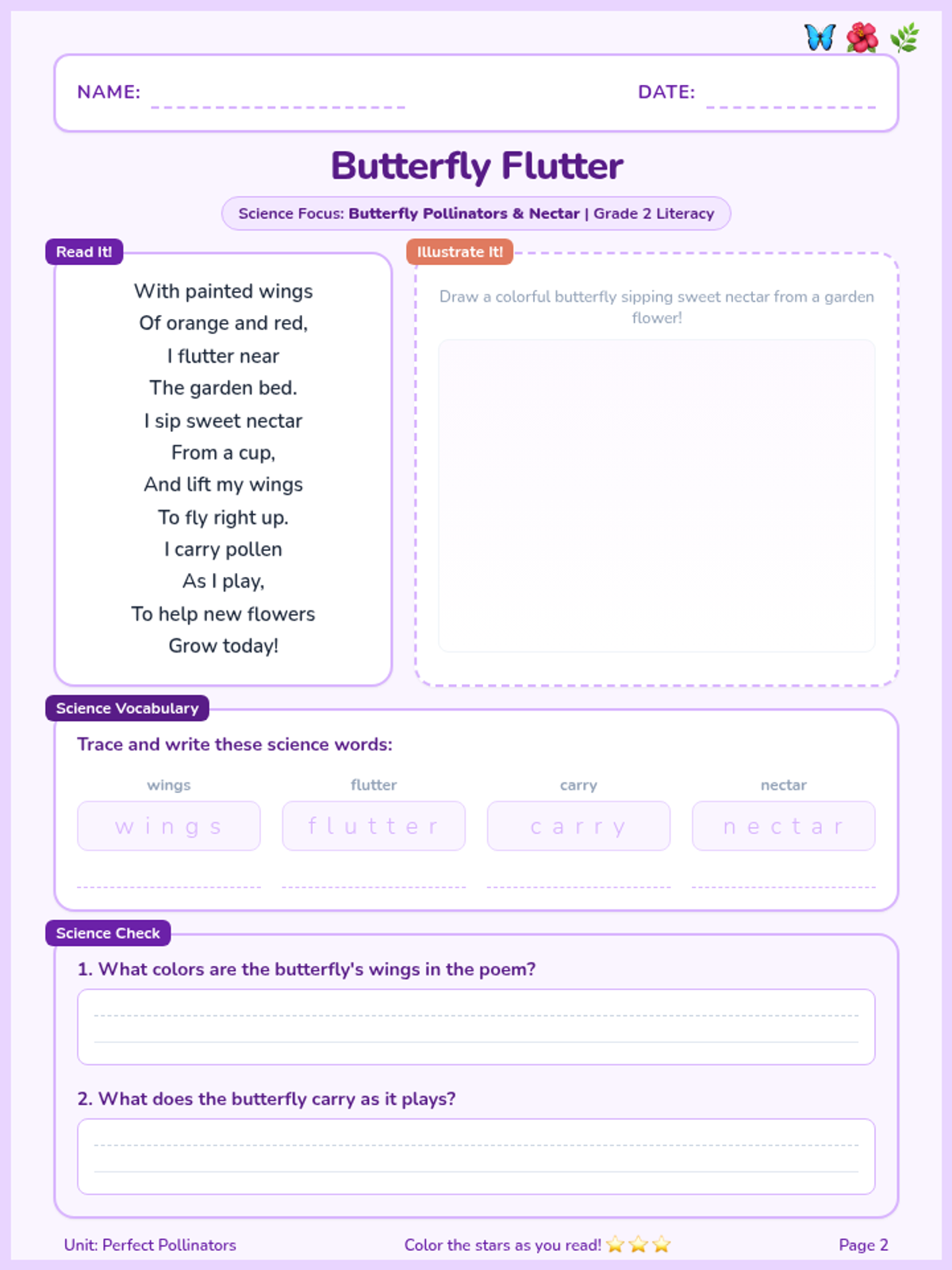
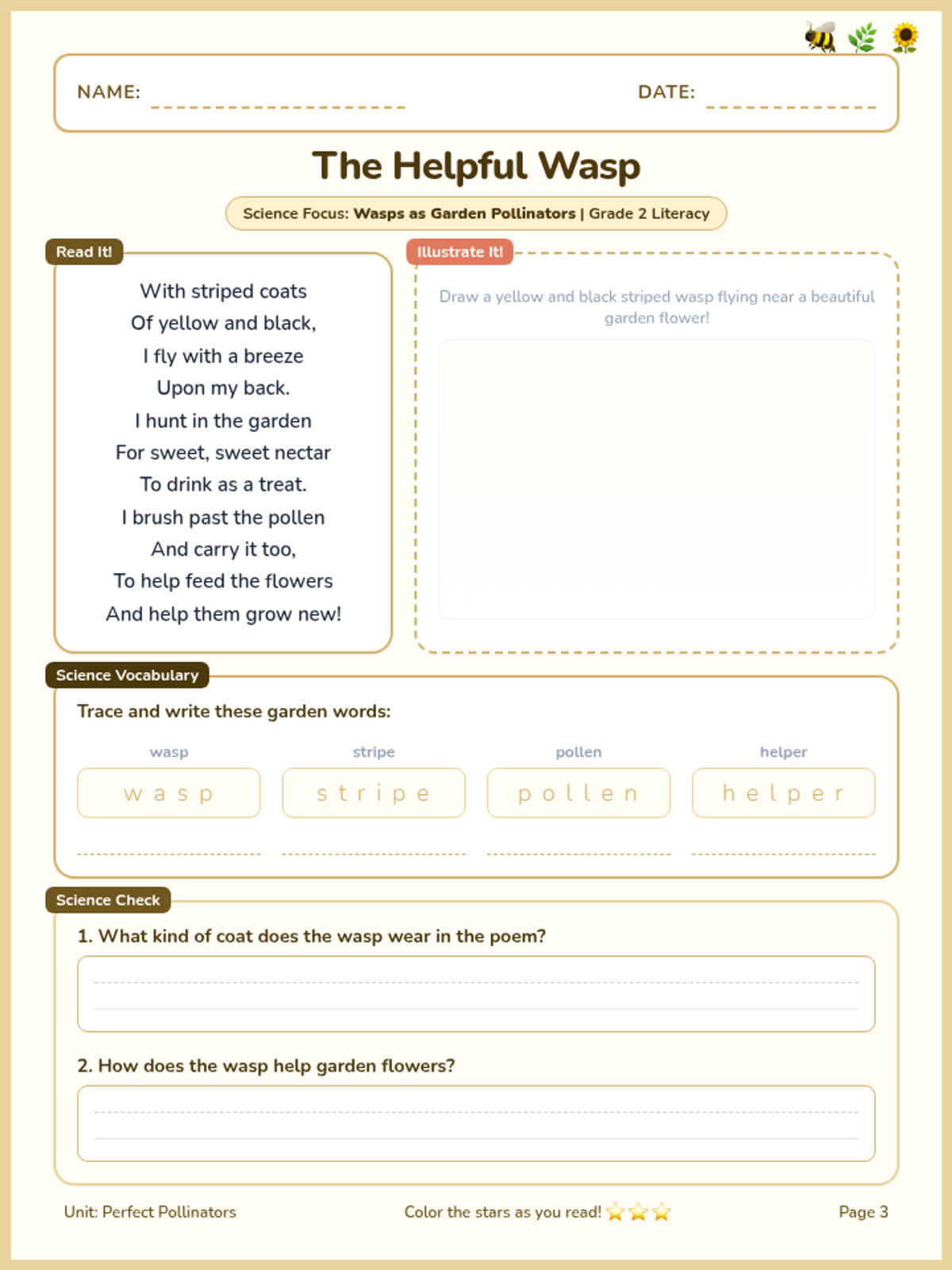
An engaging science-integrated poetry unit for Grade 2. Students read sweet, rhythmic poems about bumblebees and butterflies, illustrating their important roles in pollination, identifying vocabulary, and demonstrating reading comprehension.
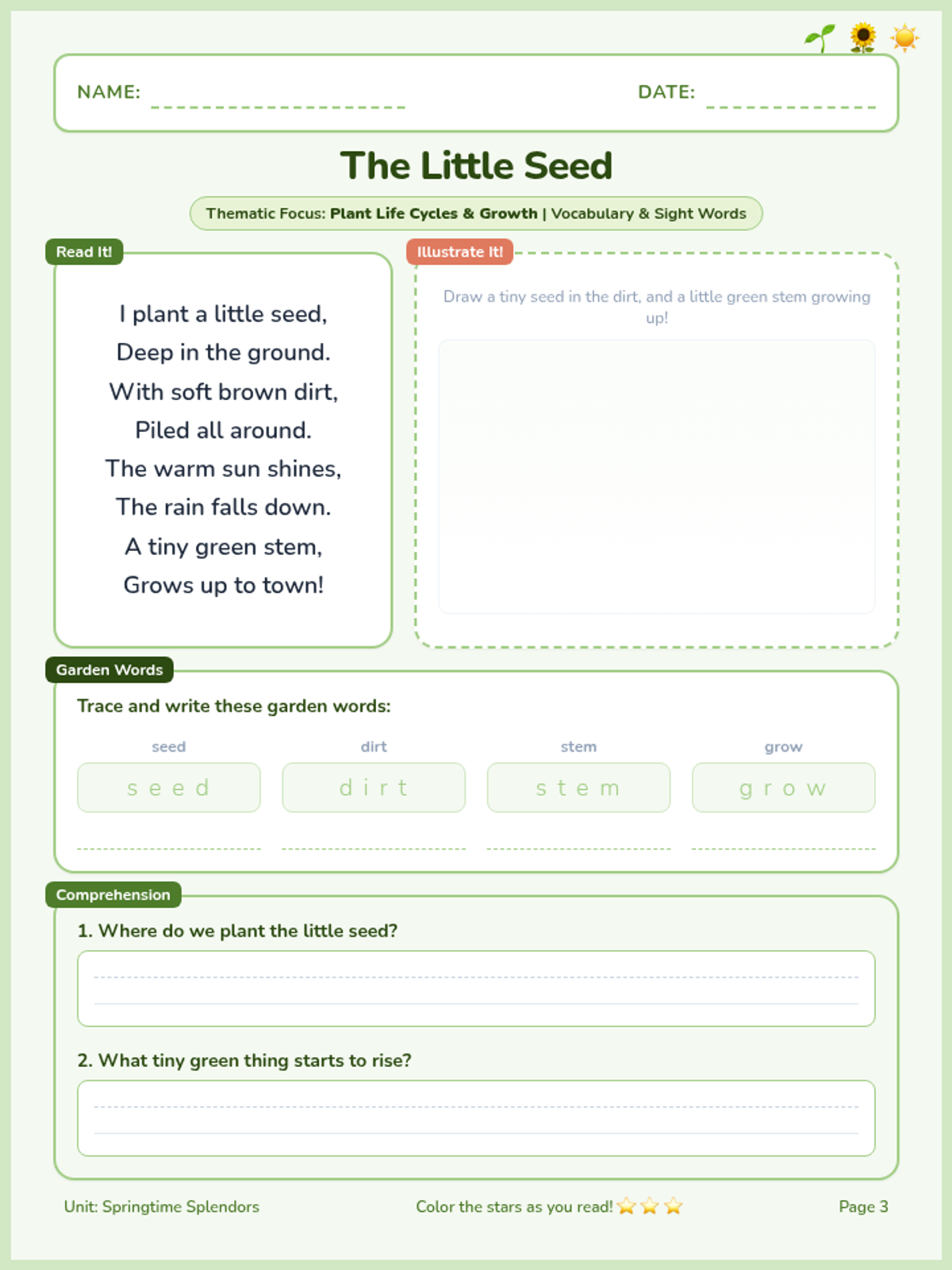
A beautiful thematic unit featuring sweet, engaging Spring poems. Students explore imagery, vocabulary, and seasonal shifts while practicing reading comprehension and creative expression.
A continuation of phonics exploration focusing on the '-ug' word family and the 'st-' consonant blend. Students practice decoding, visualizing, and writing through hands-on worksheets.
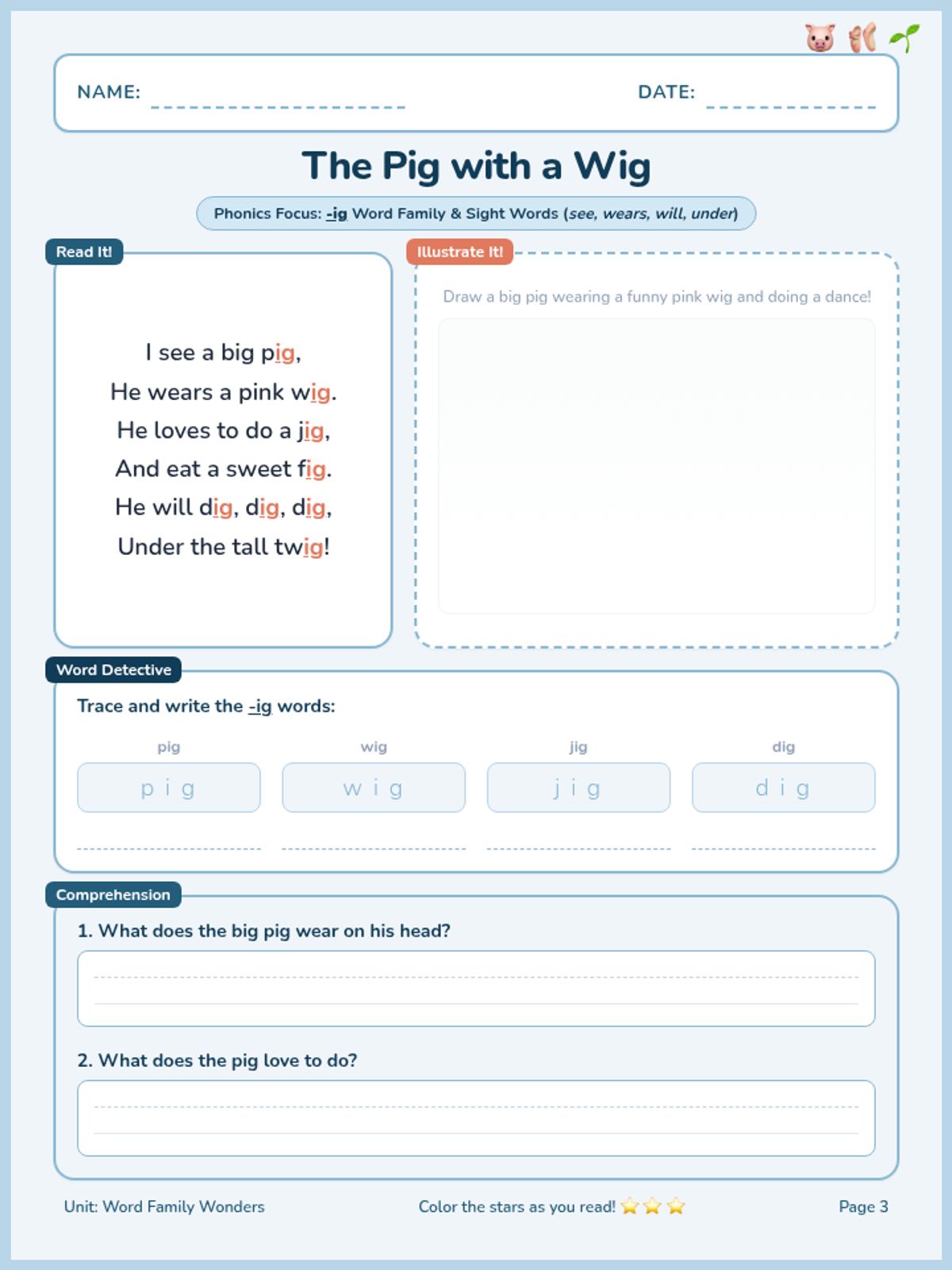
A classroom lesson focused on the '-at' and '-og' word families. Students read simple, rhythmic poems, highlight word family members, illustrate the scenes to show comprehension, and answer simple text-based questions.
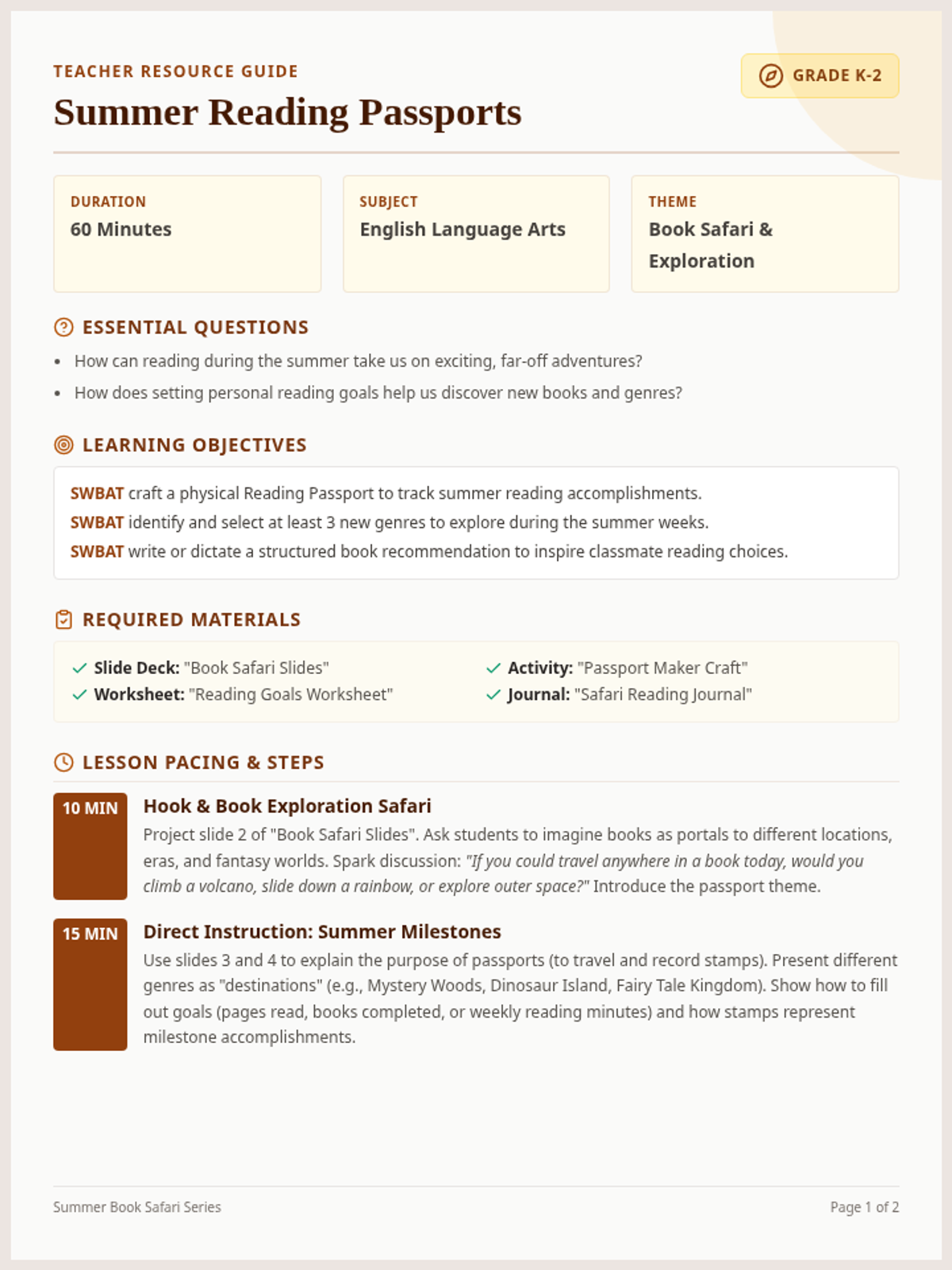
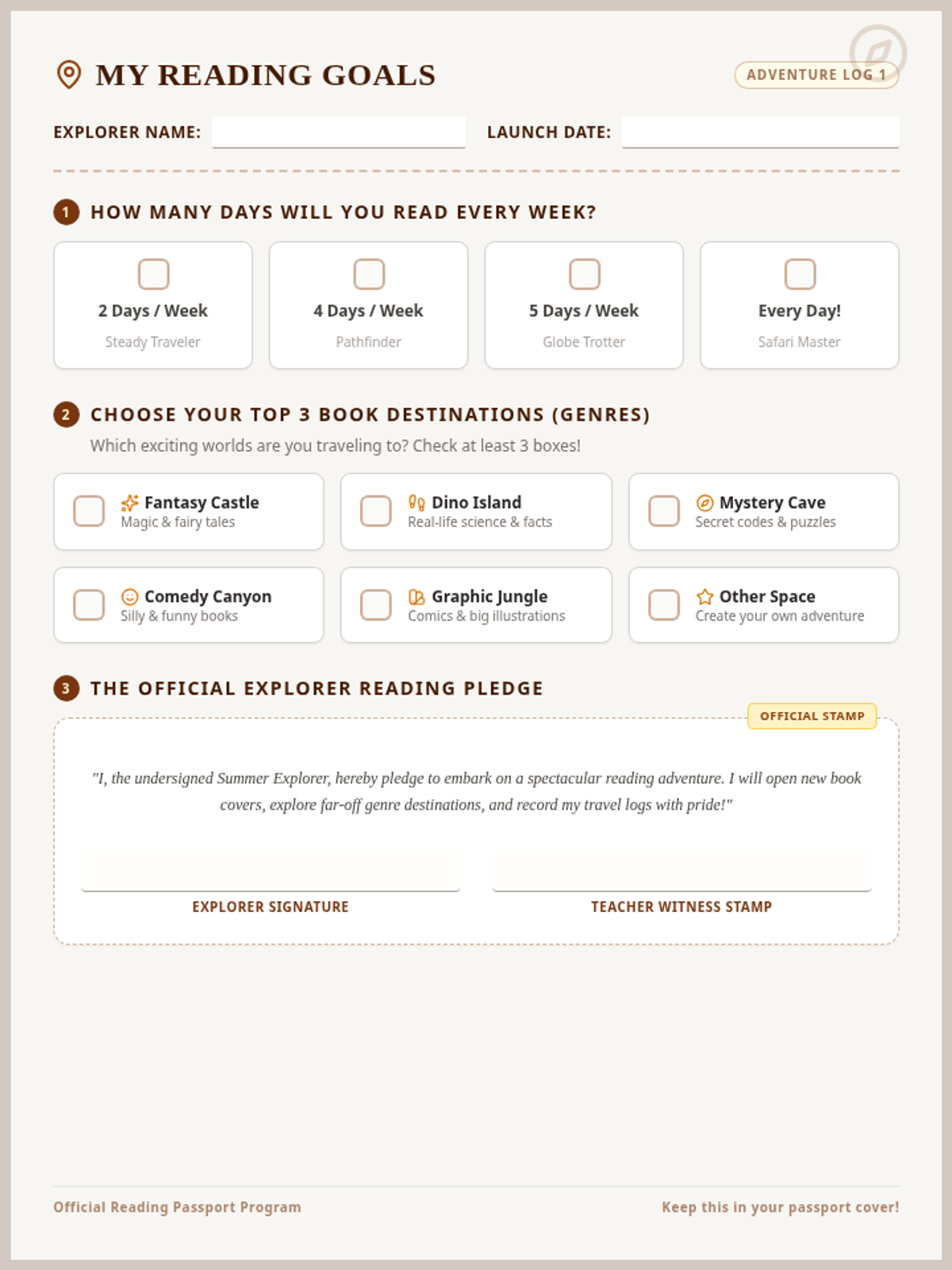
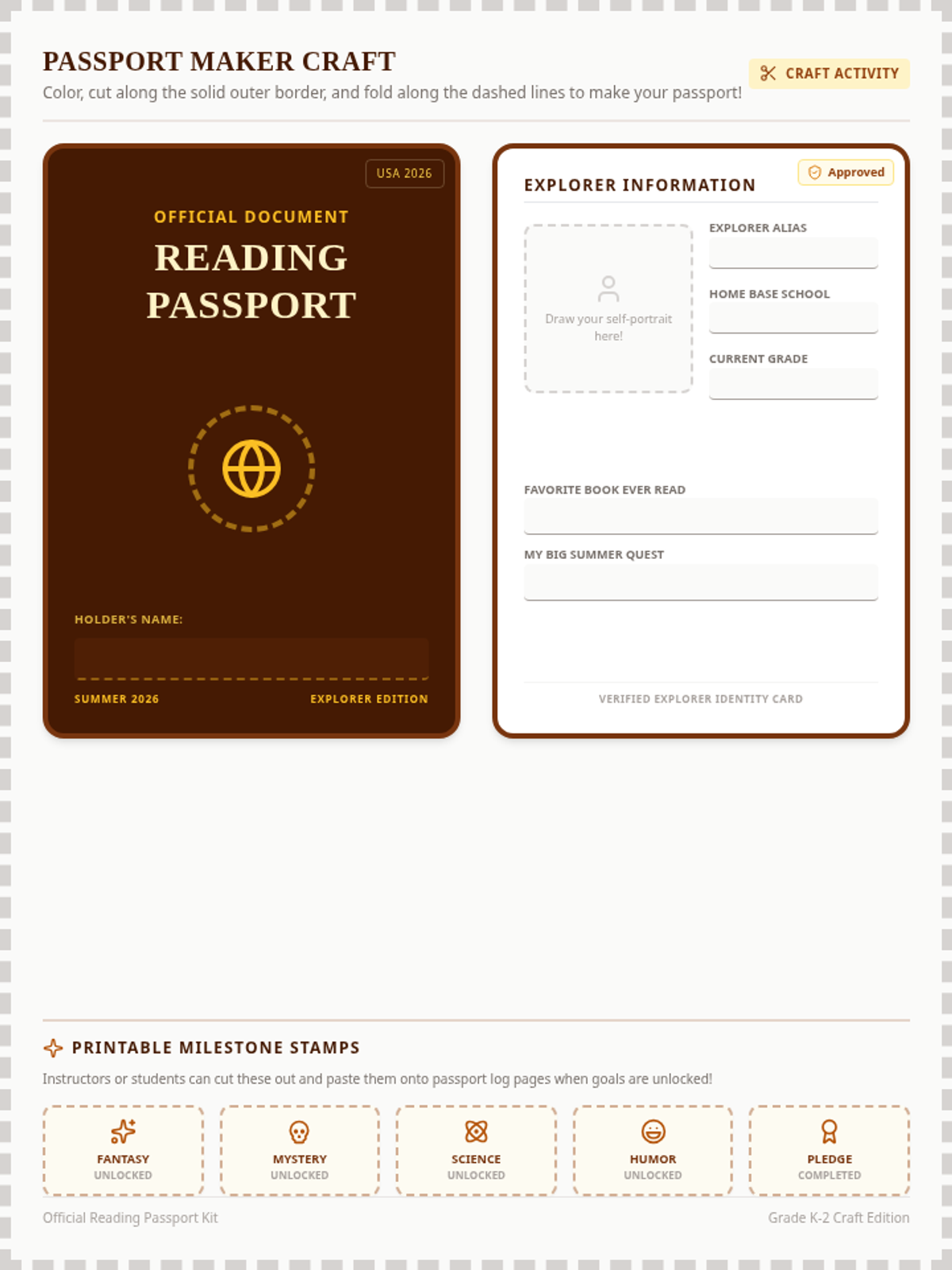
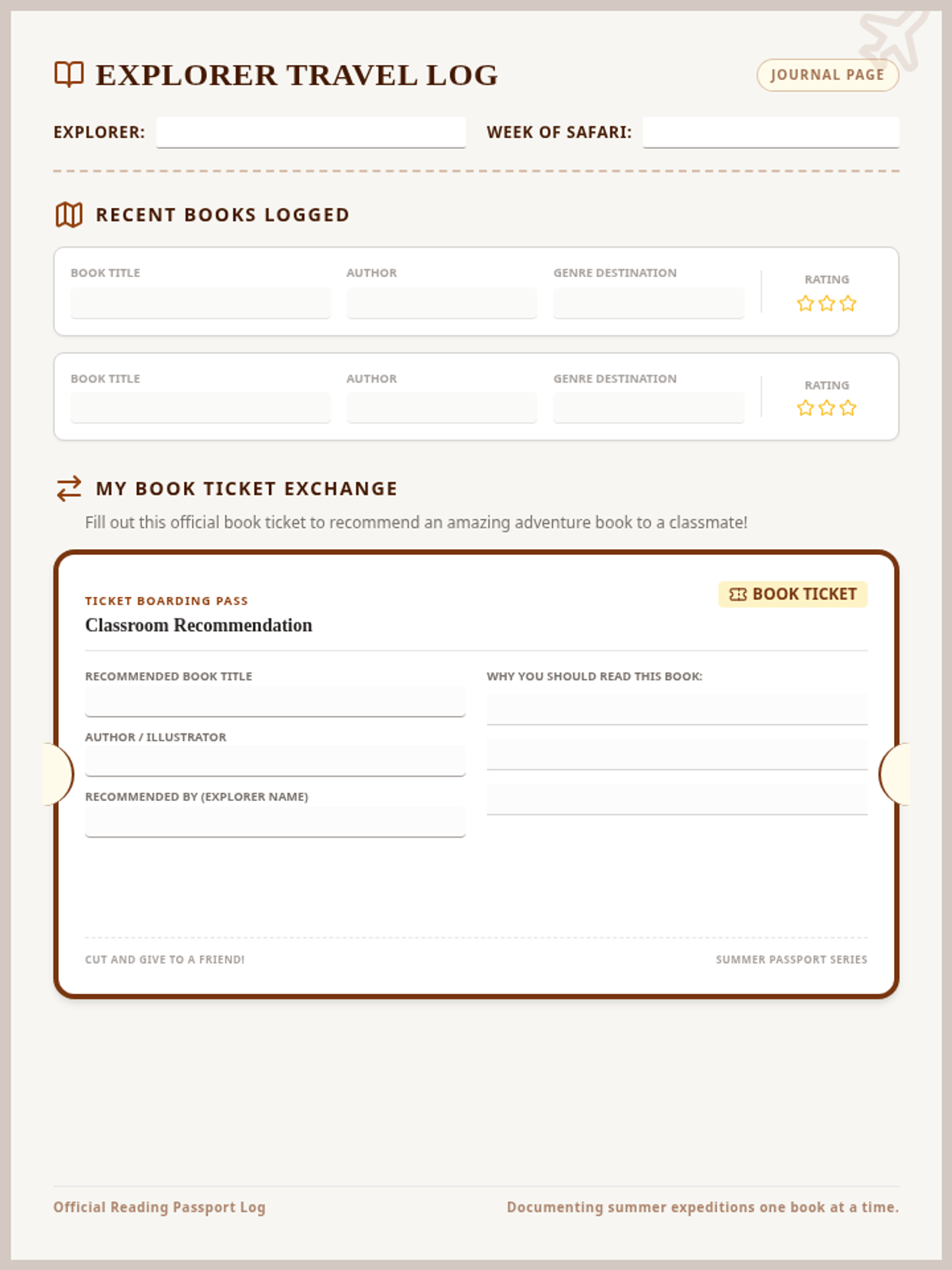
A fun, adventure-themed lesson where early elementary students design custom reading passports, set interactive summer reading goals, explore new genres, and practice recommending books to their peers to build a summer reading community.
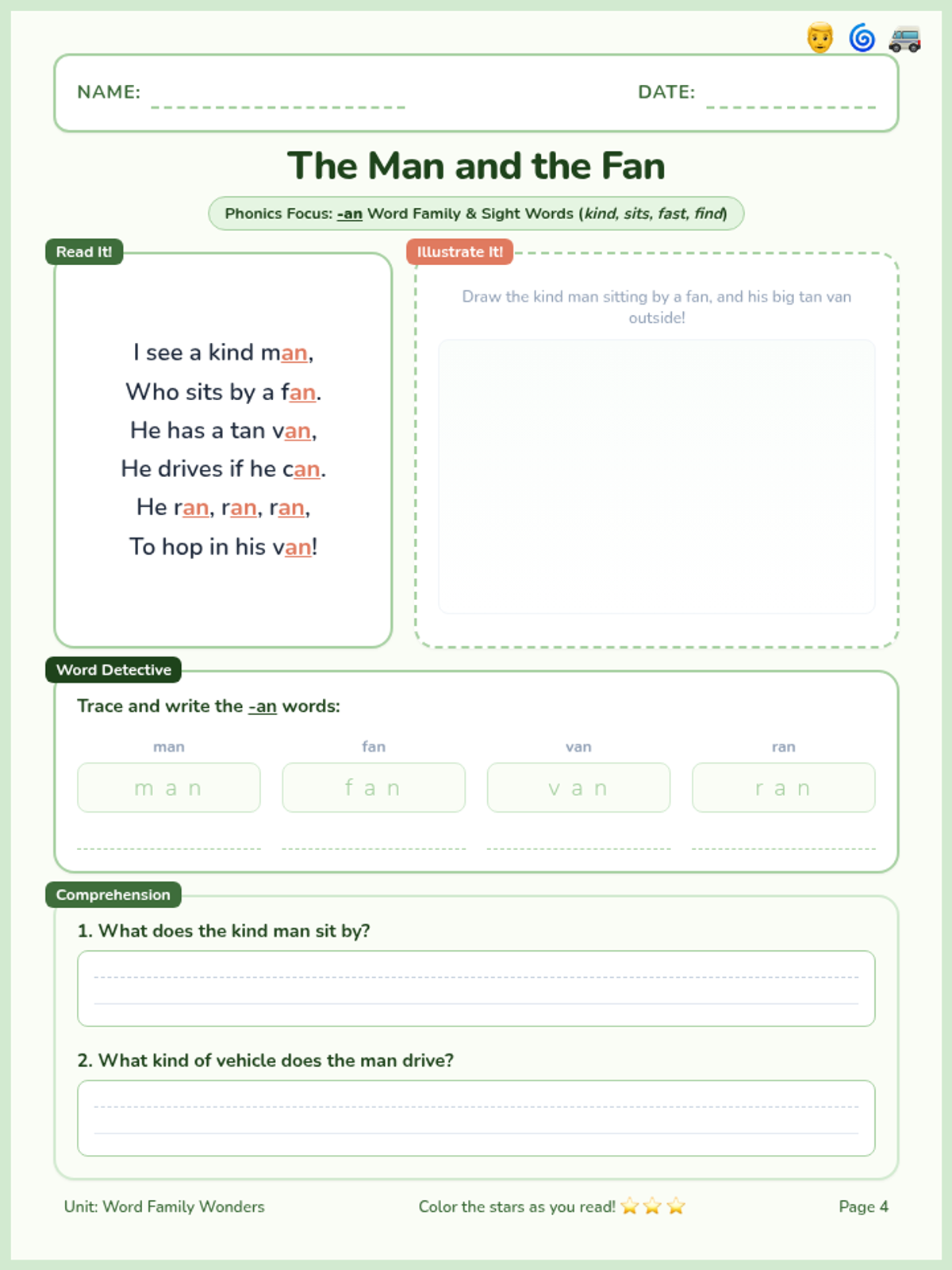
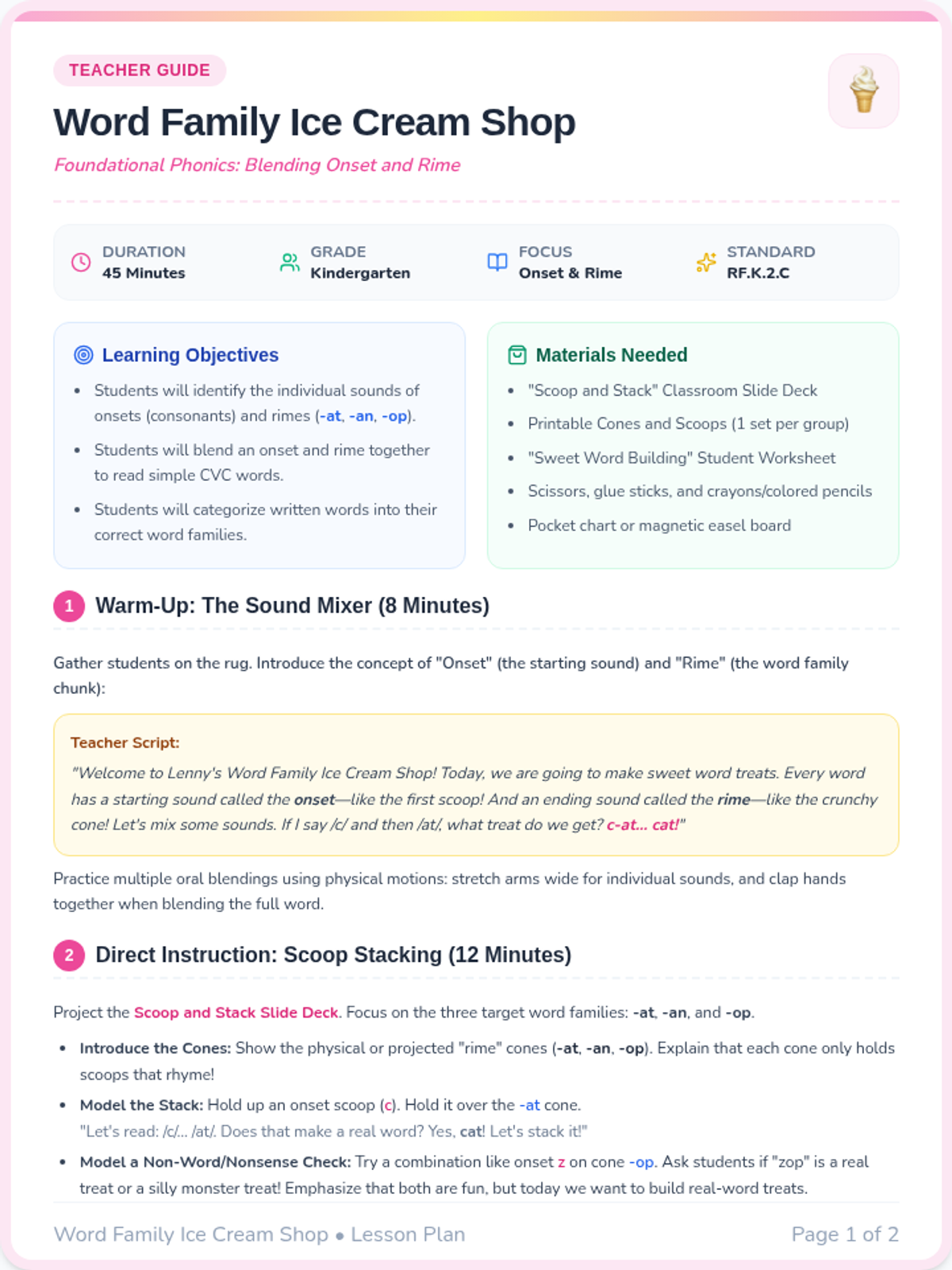
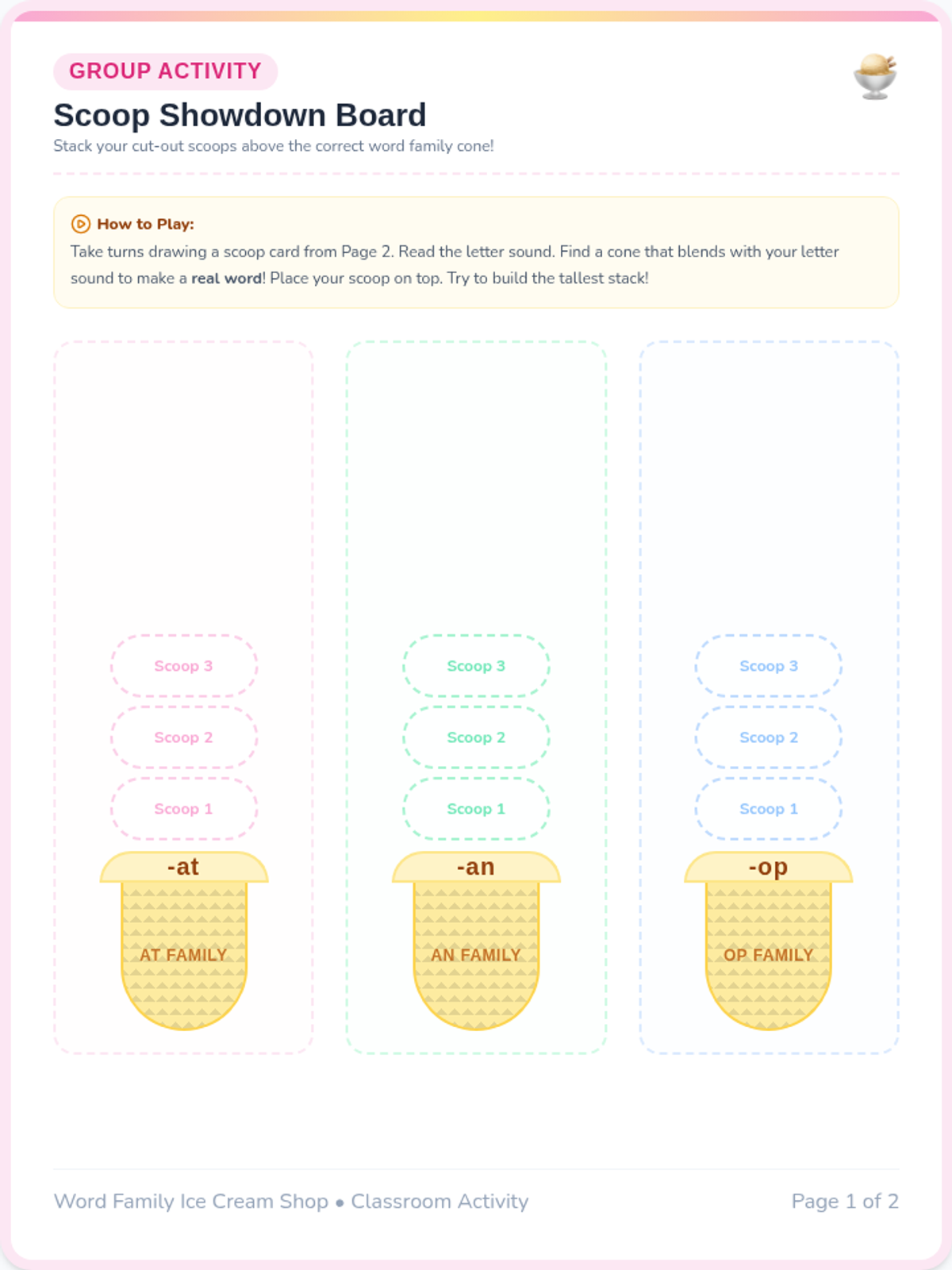
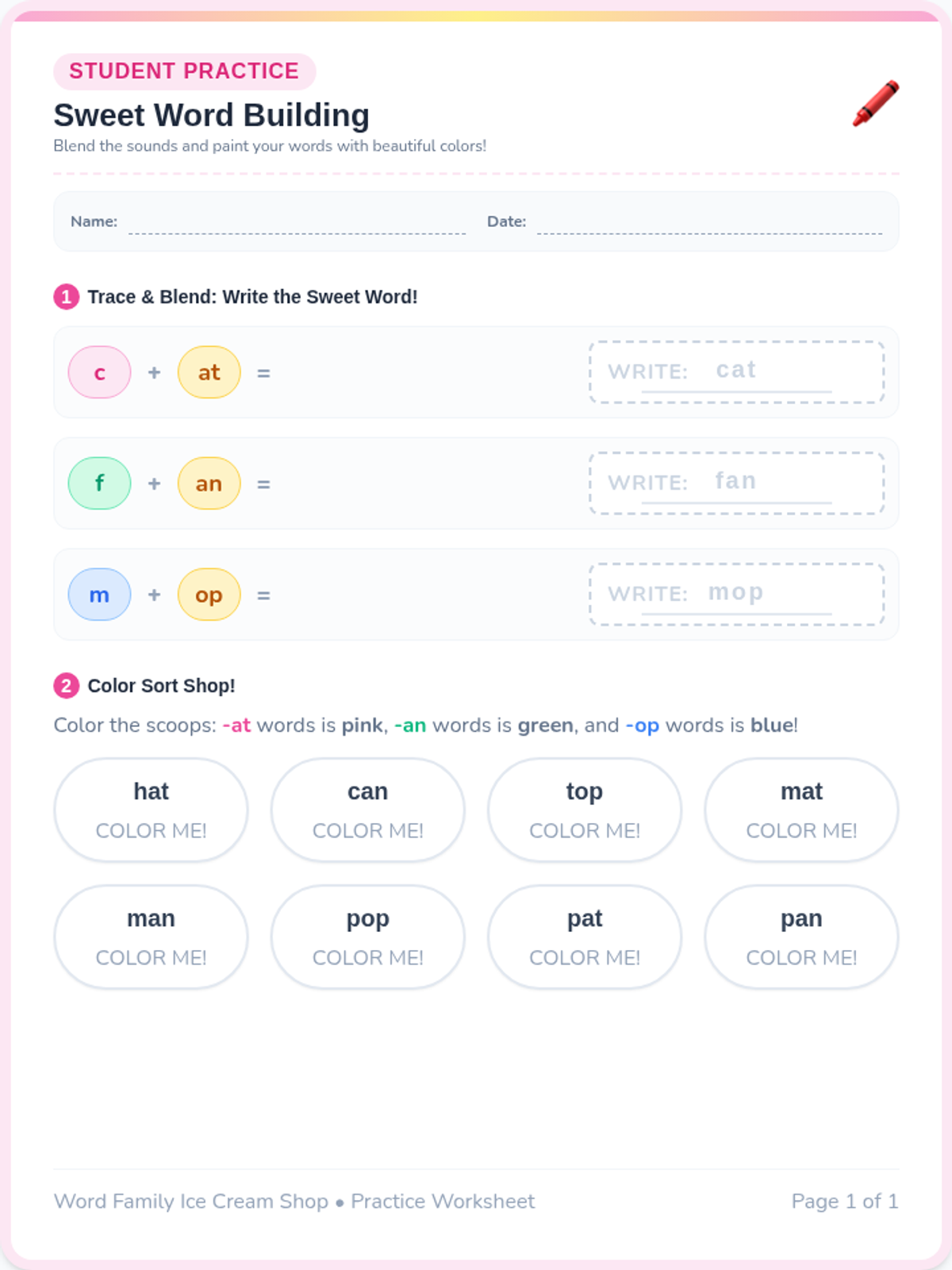
A playful kindergarten lesson where students blend onset and rime by building and stacking ice cream scoops to form words within common word families like -at, -an, and -op.
Students combine their cumulative learning of sensing verbs, prepositional phrases, and comparisons to co-construct and independently draft a descriptive paragraph about an outback landscape, utilizing a multi-tiered writing frame.
Students learn how prepositional phrases give information about 'where' and 'when' events occur, practicing adding them to simple sentences containing sensing verbs to build descriptive detail.
Students investigate sensing verbs related to the five senses, identifying how the author uses them to share how natural elements feel during drought, and brainstorming sensory details about the outback.
Students explore how authors use figurative language to paint 'word pictures' by identifying comparisons using 'like' and 'as' in the text, and co-constructing similes about the natural world.
Students sequence the key events in 'Mallee Sky' (drought changing to welcome rainfall) using a simplified storyboard planner, identifying how environmental patterns affect the landscape.
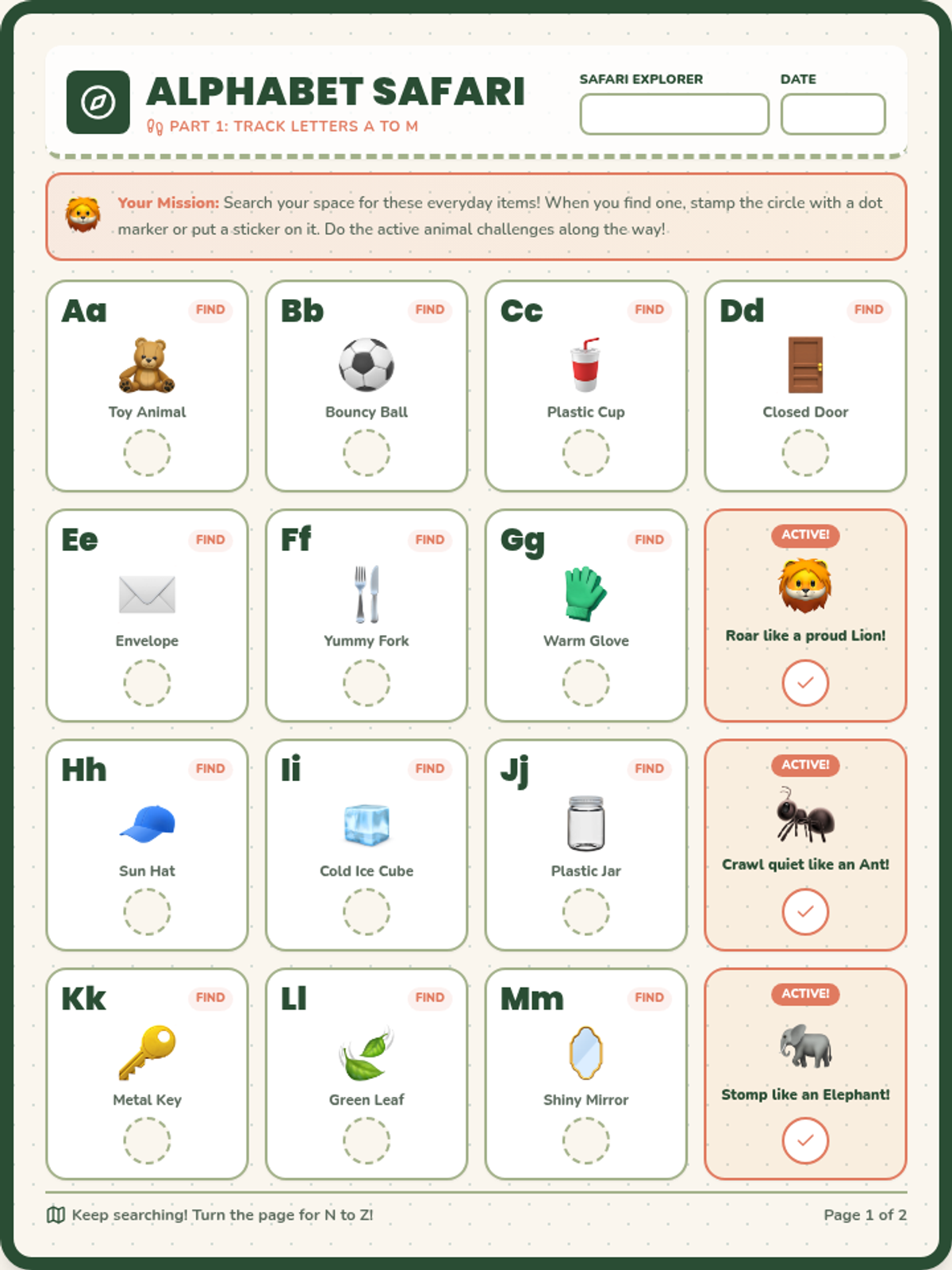
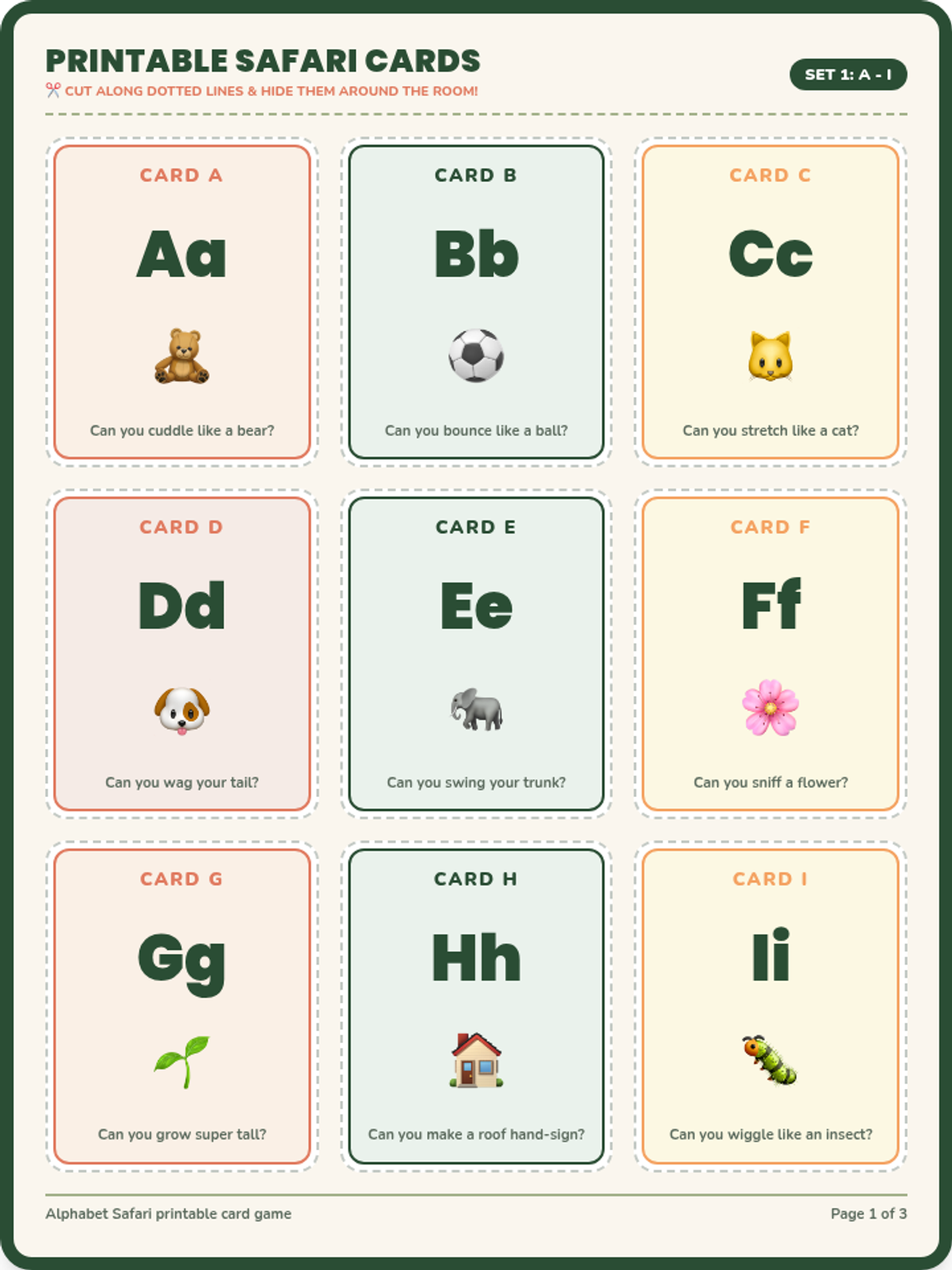
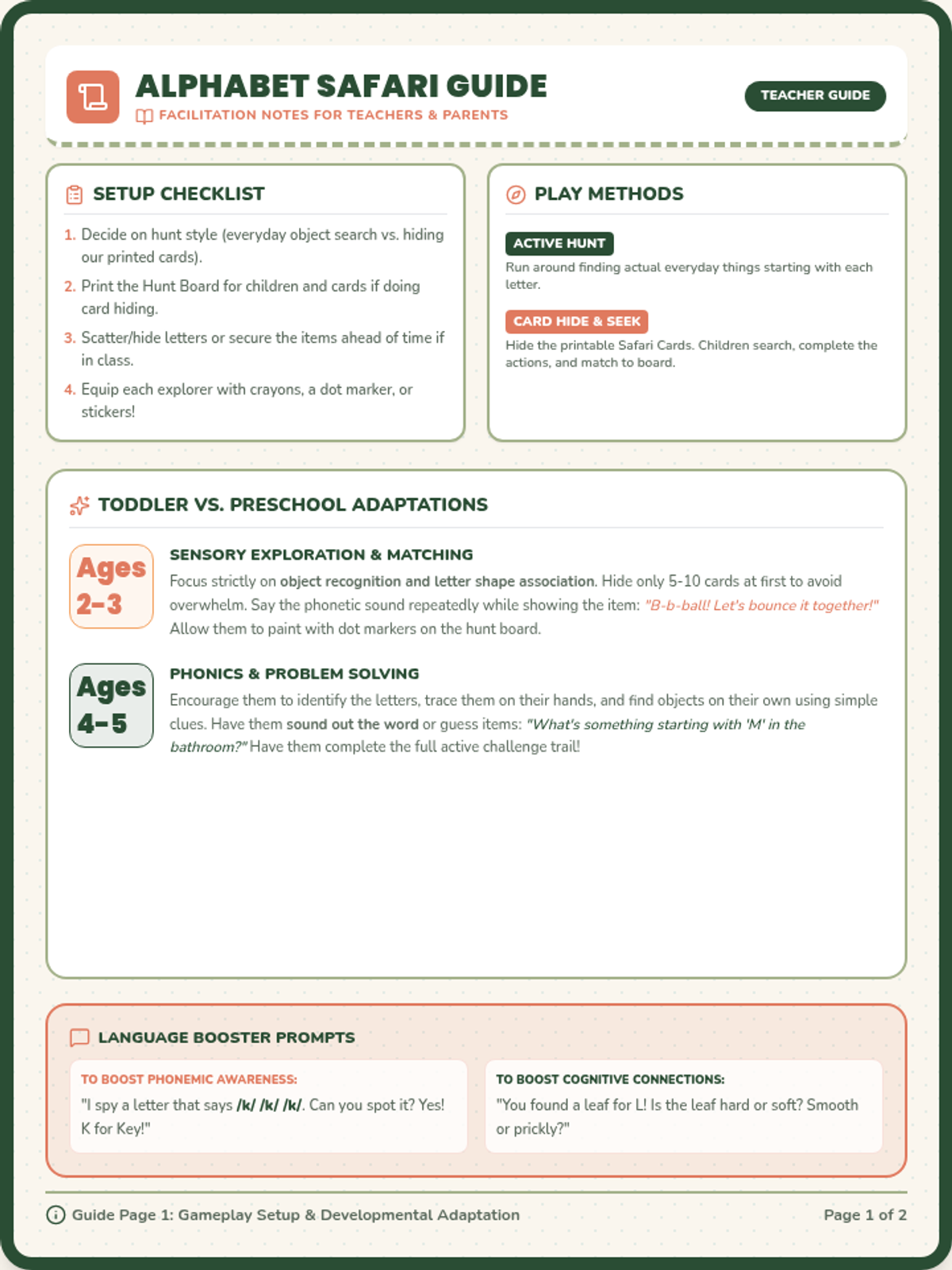
An active, hands-on letter recognition game designed for toddlers and preschoolers to search for letters and corresponding everyday objects. Includes a visual scavenger hunt checklist, printable hidden letter cards, and a comprehensive parent-teacher facilitation guide.
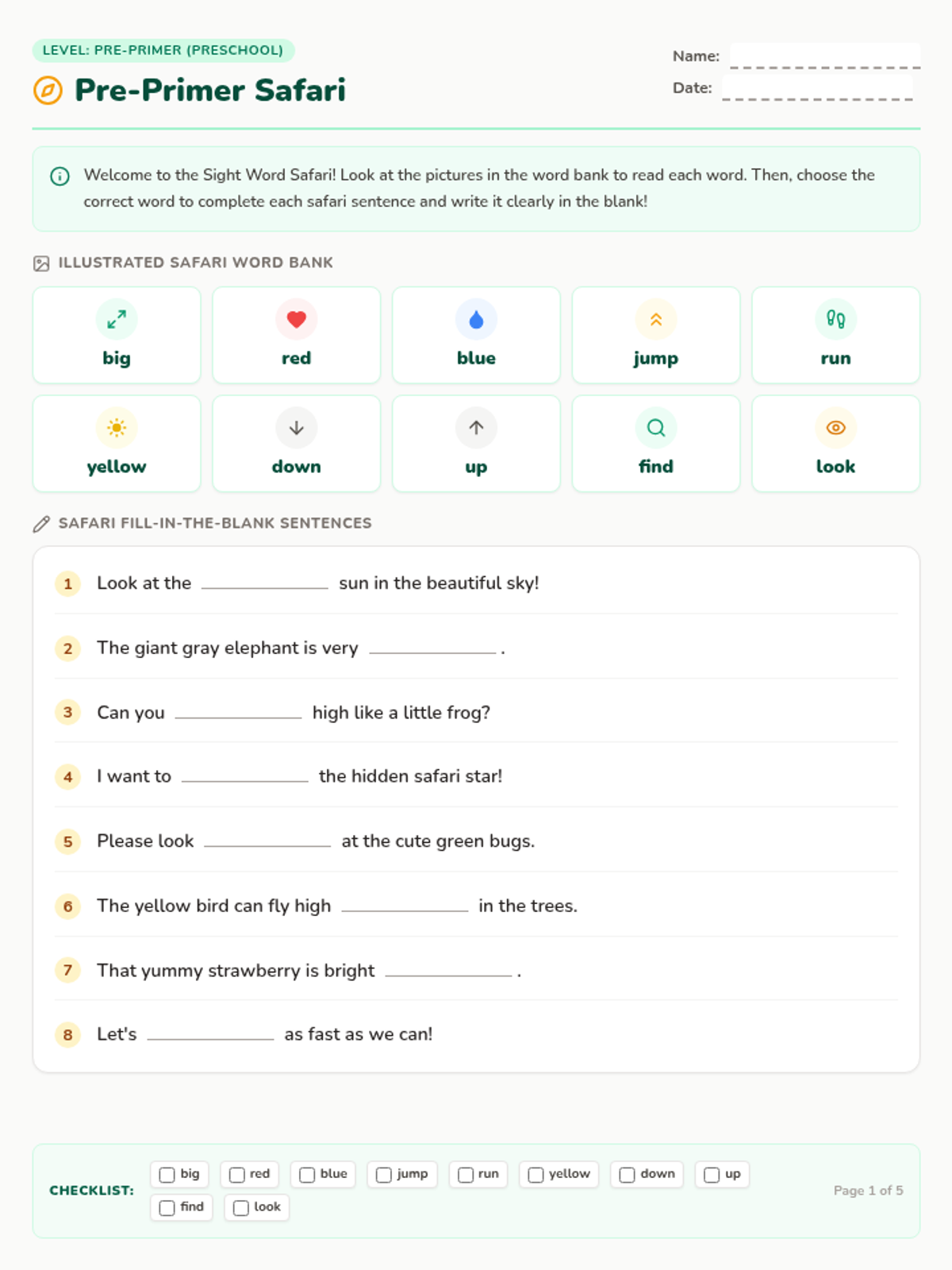
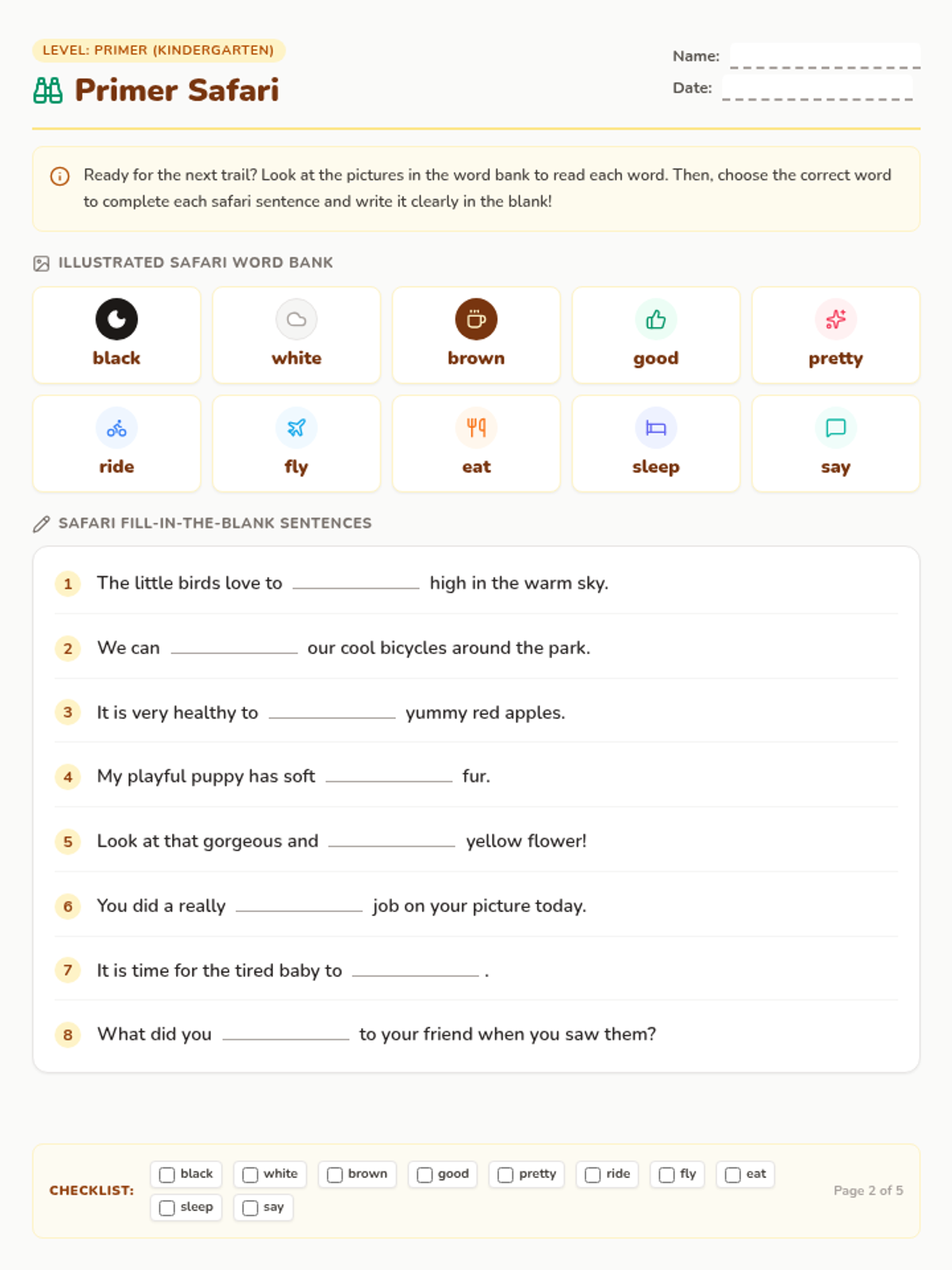
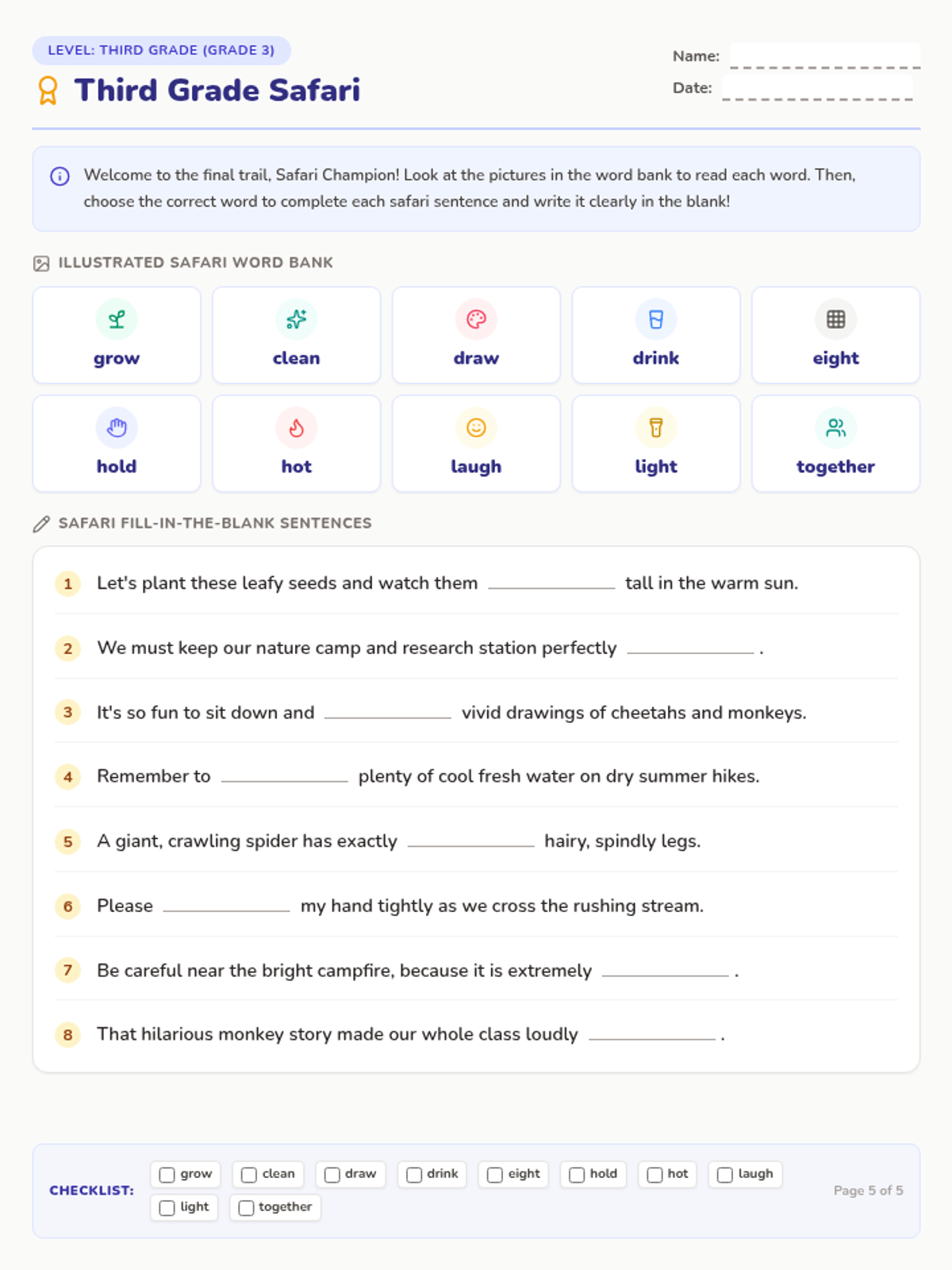
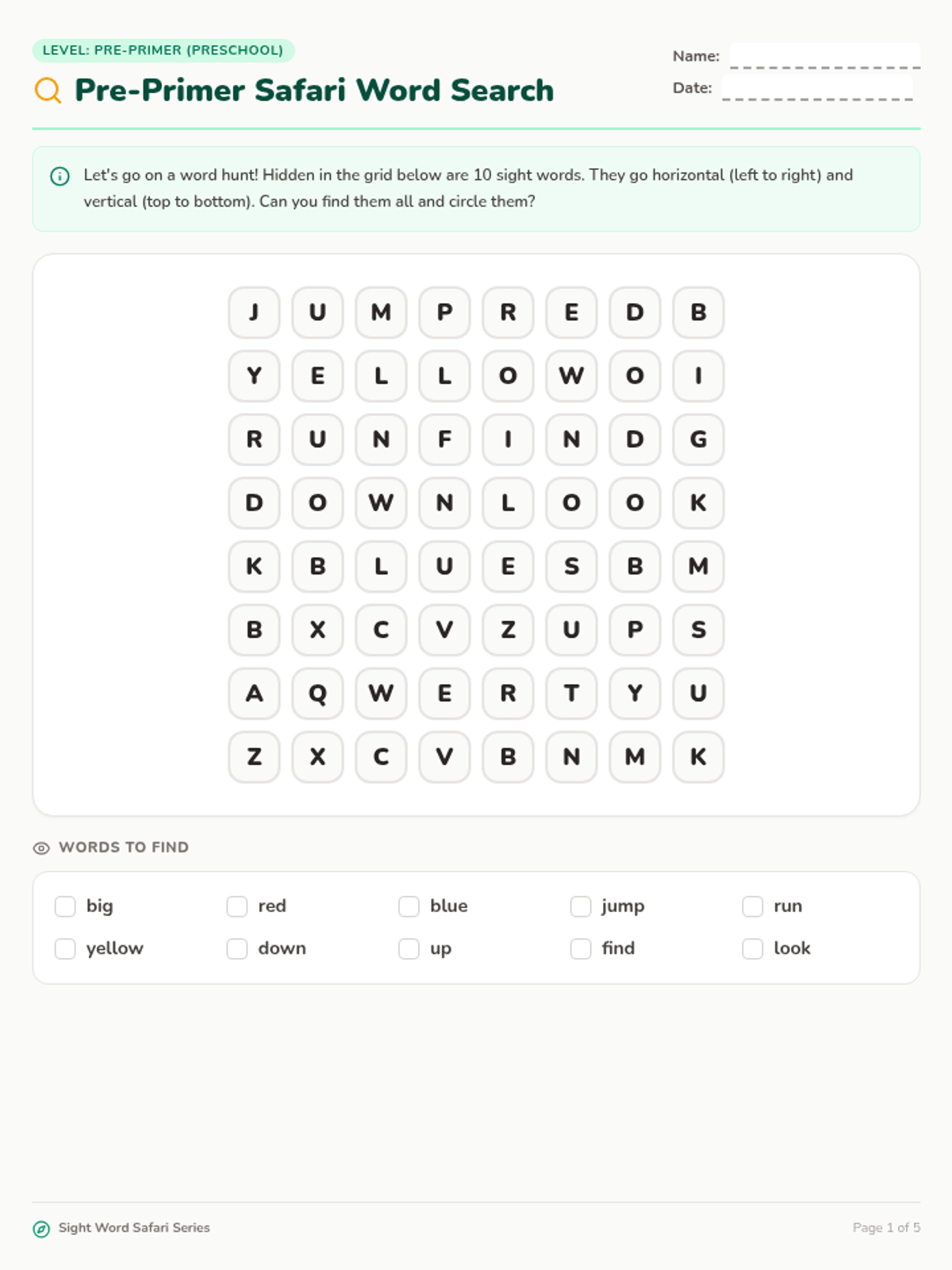
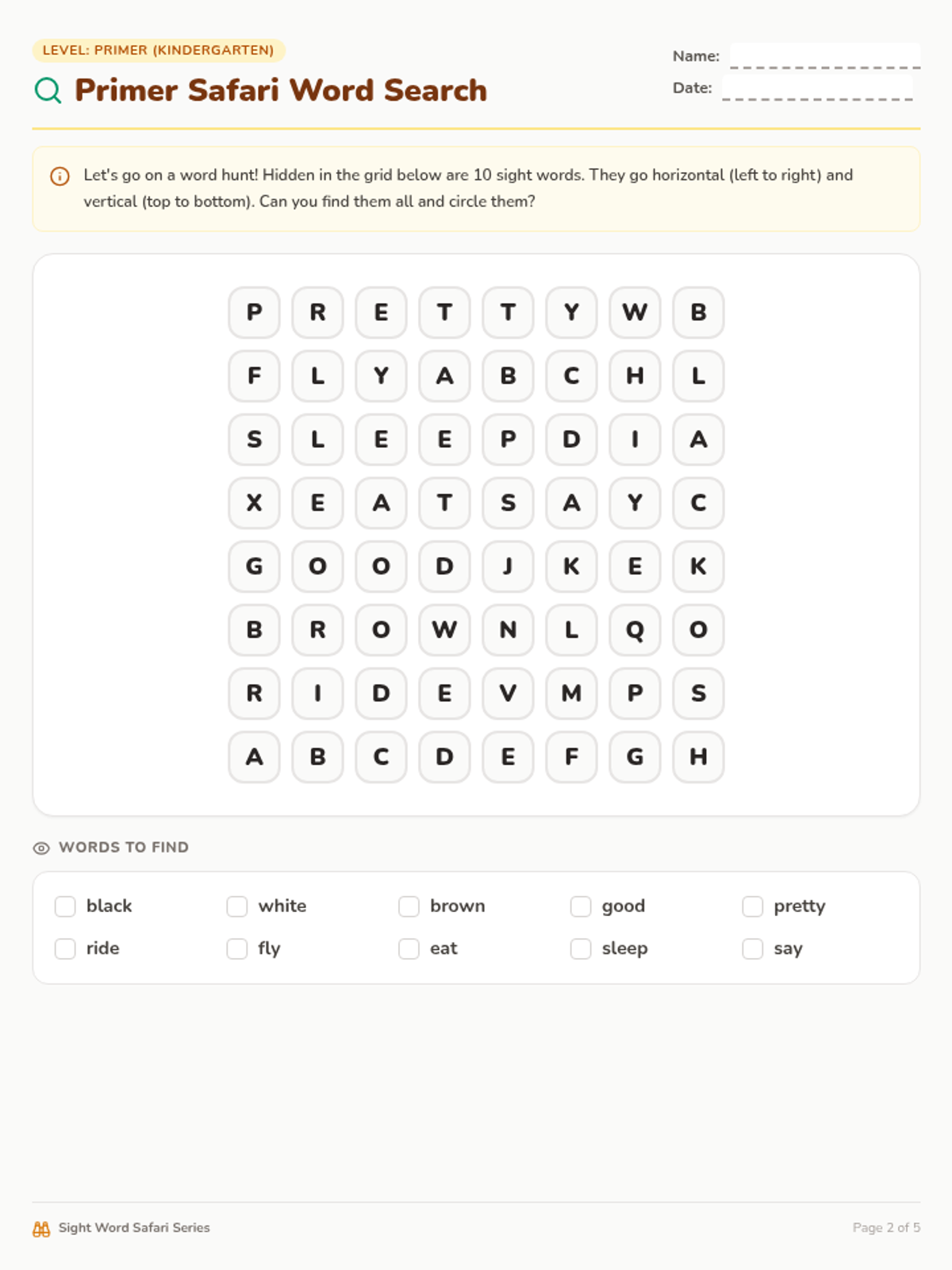
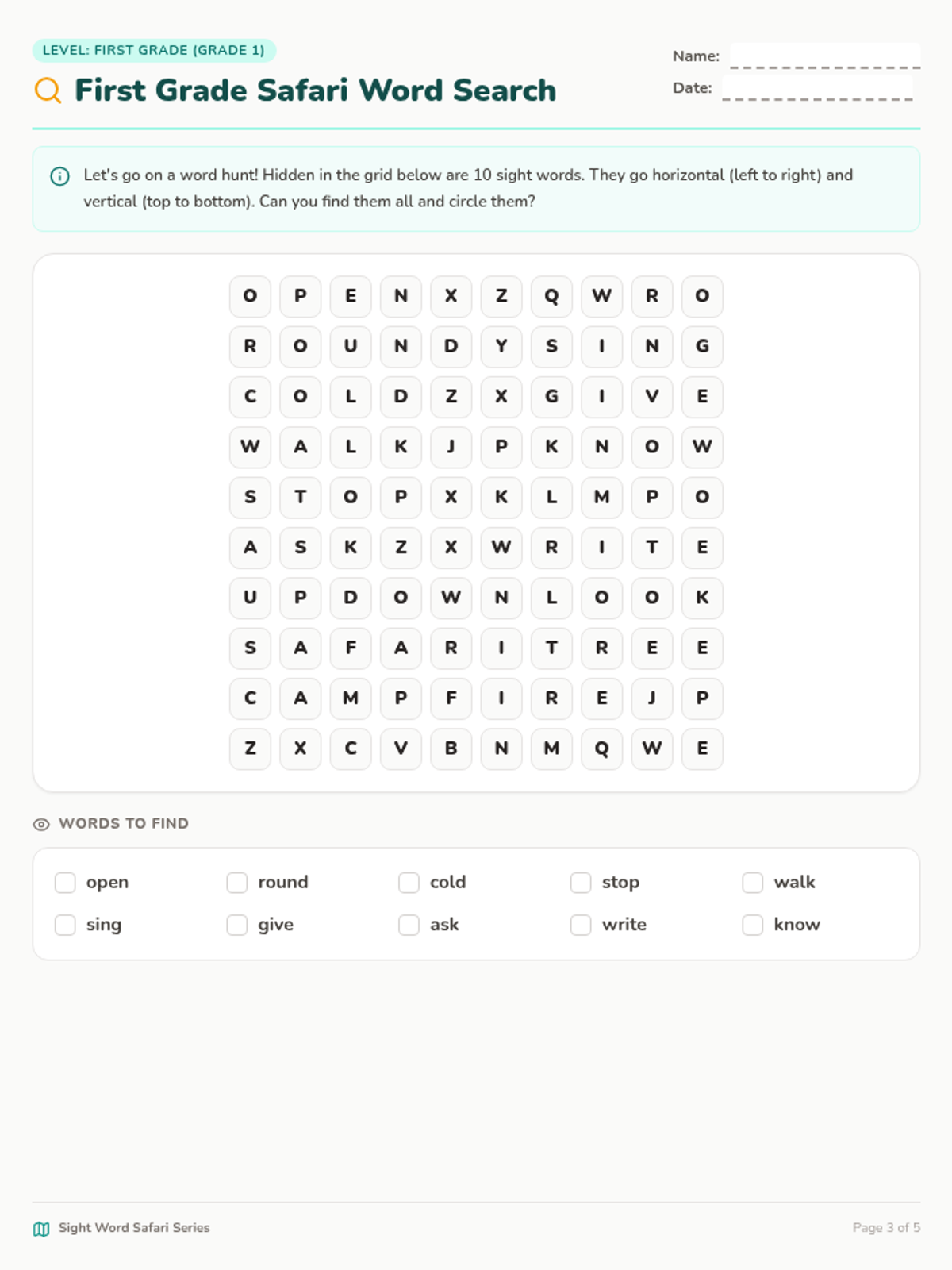
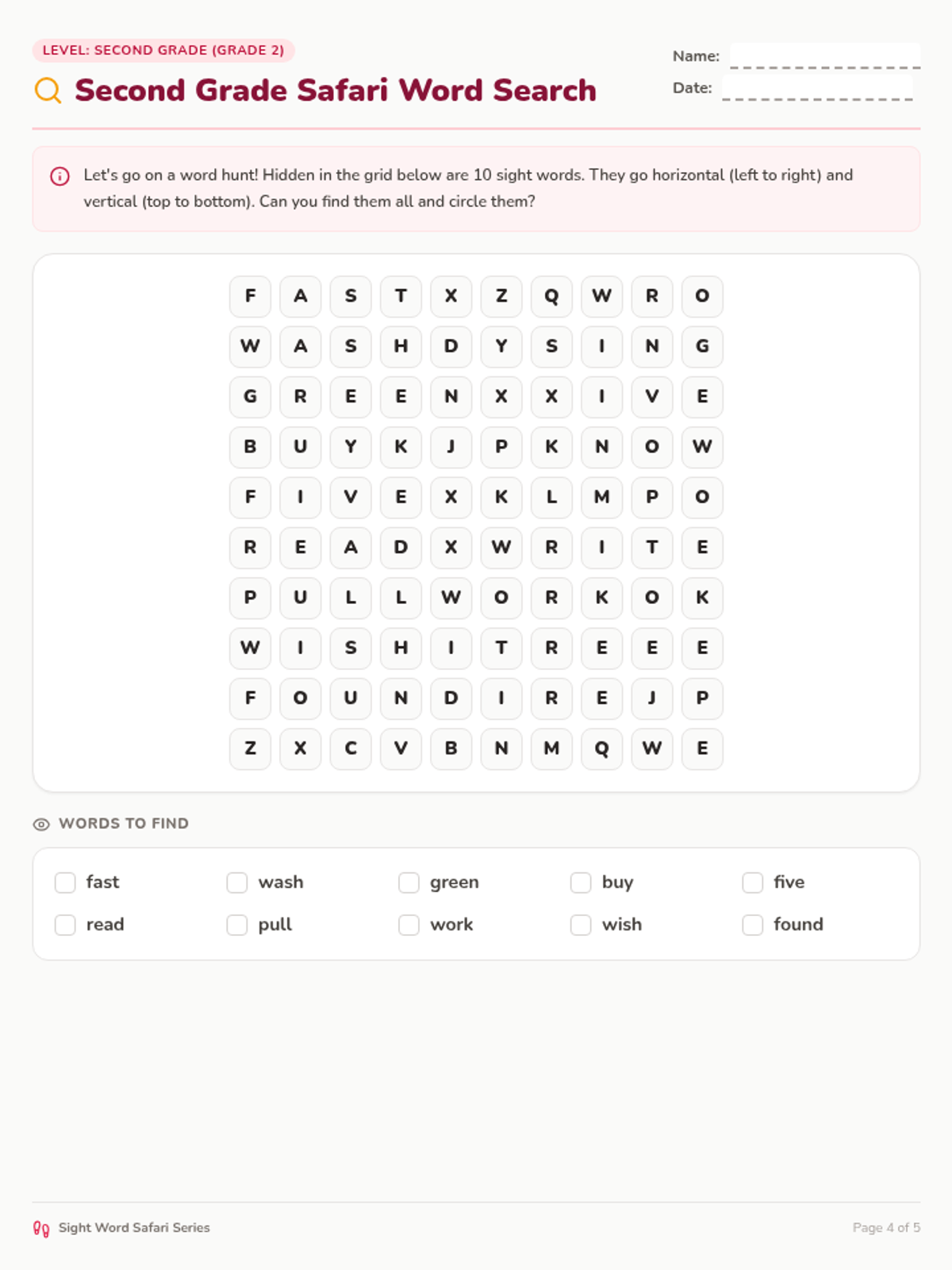
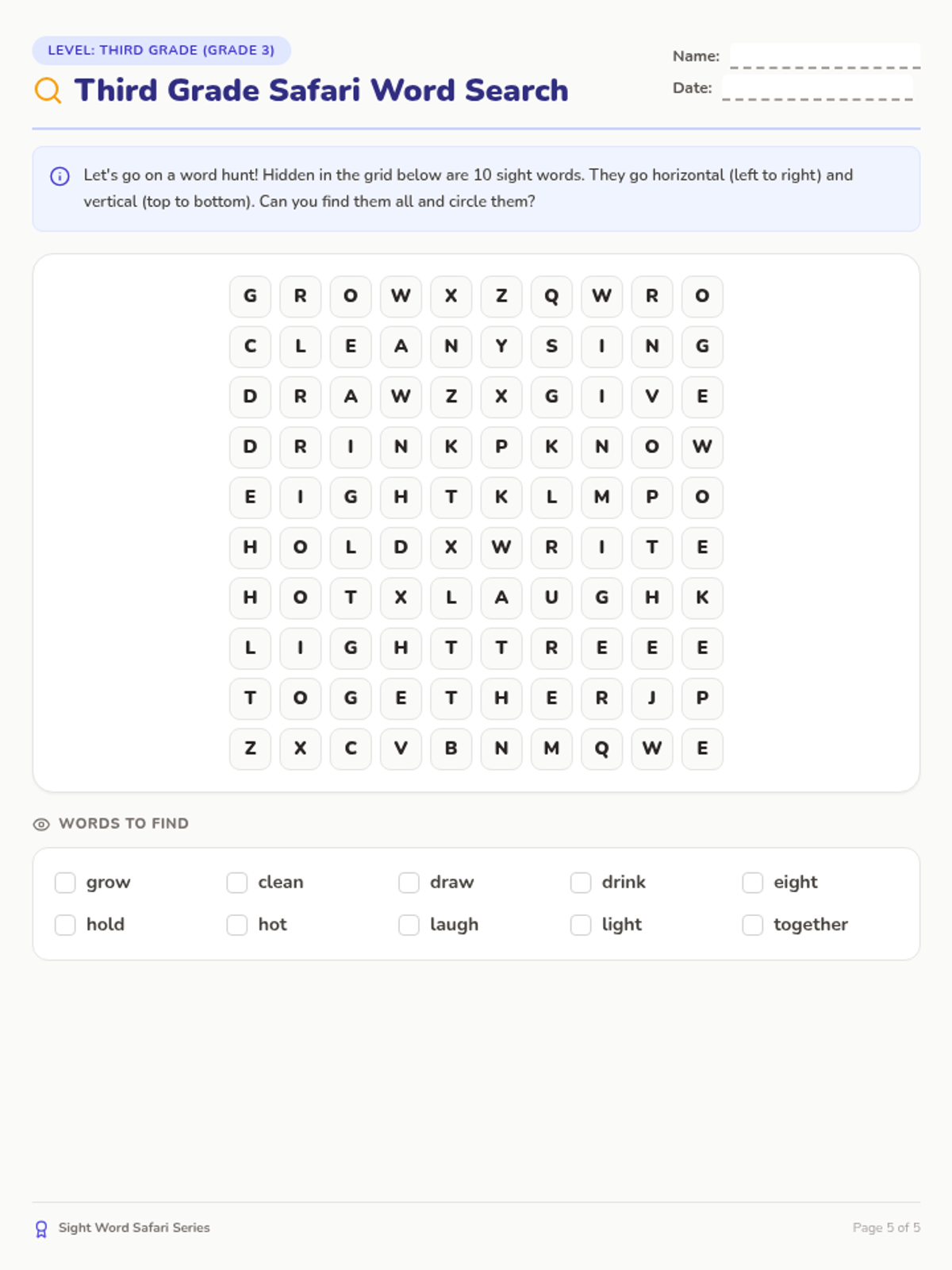
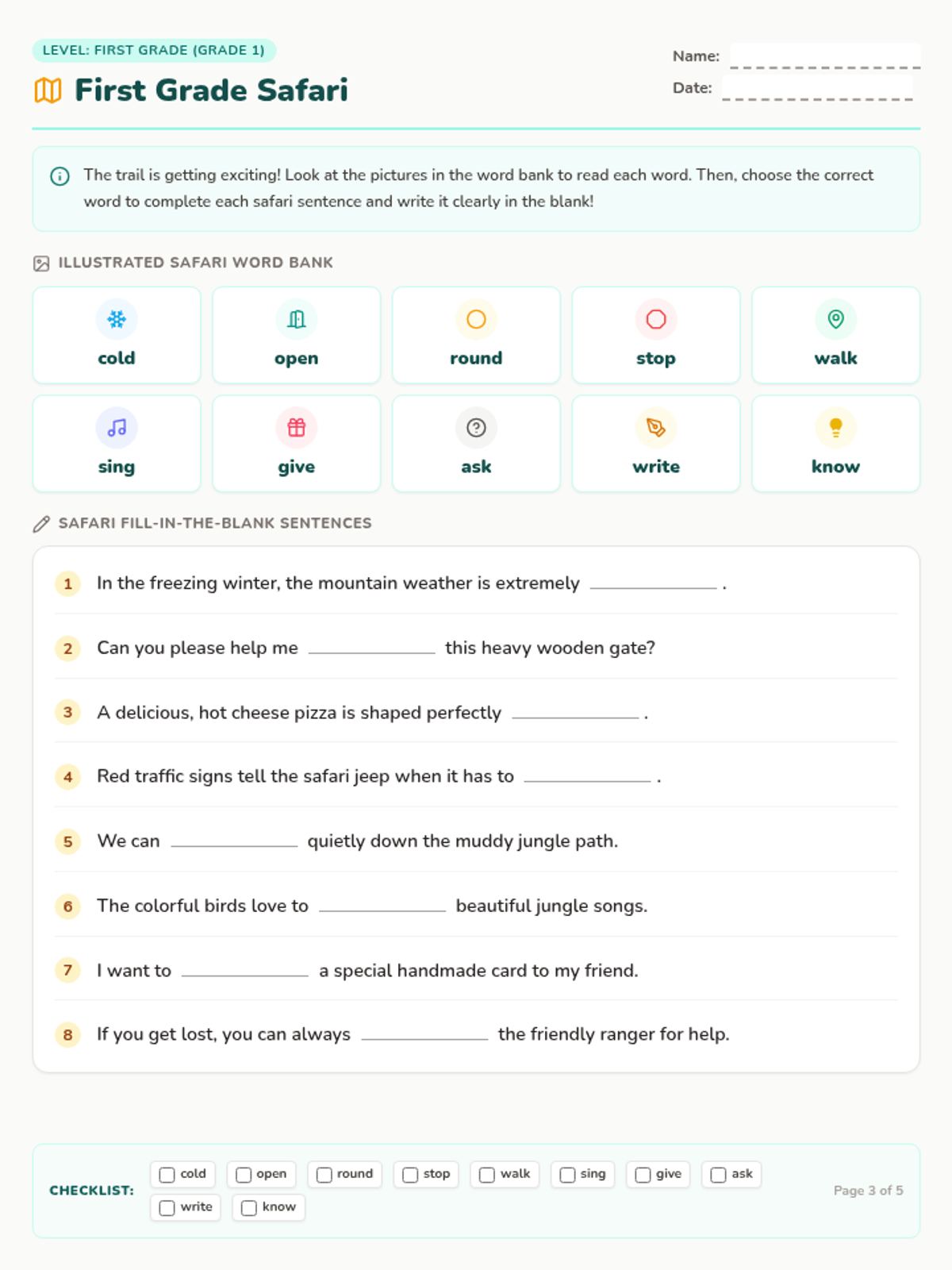
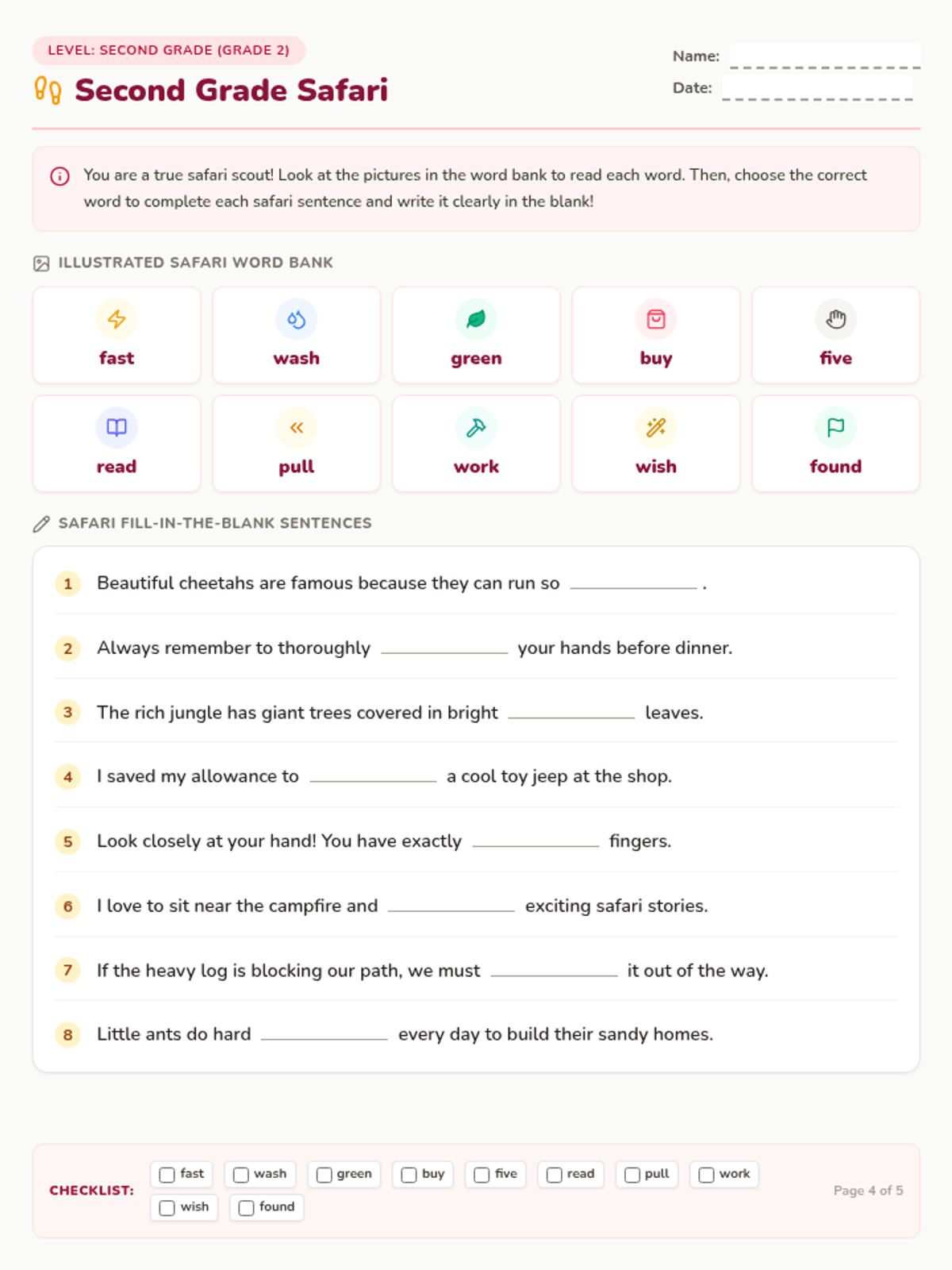
A comprehensive sight word practice lesson covering Dolch lists from Pre-Primer through Grade 3. Students complete contextual fill-in-the-blank sentences supported by illustrated word banks to build reading fluency and word recognition.