A high-challenge lesson focused on converting complex terminating and repeating decimals into fractions using algebraic methods. Designed for advanced 7th and 8th-grade mathematicians.
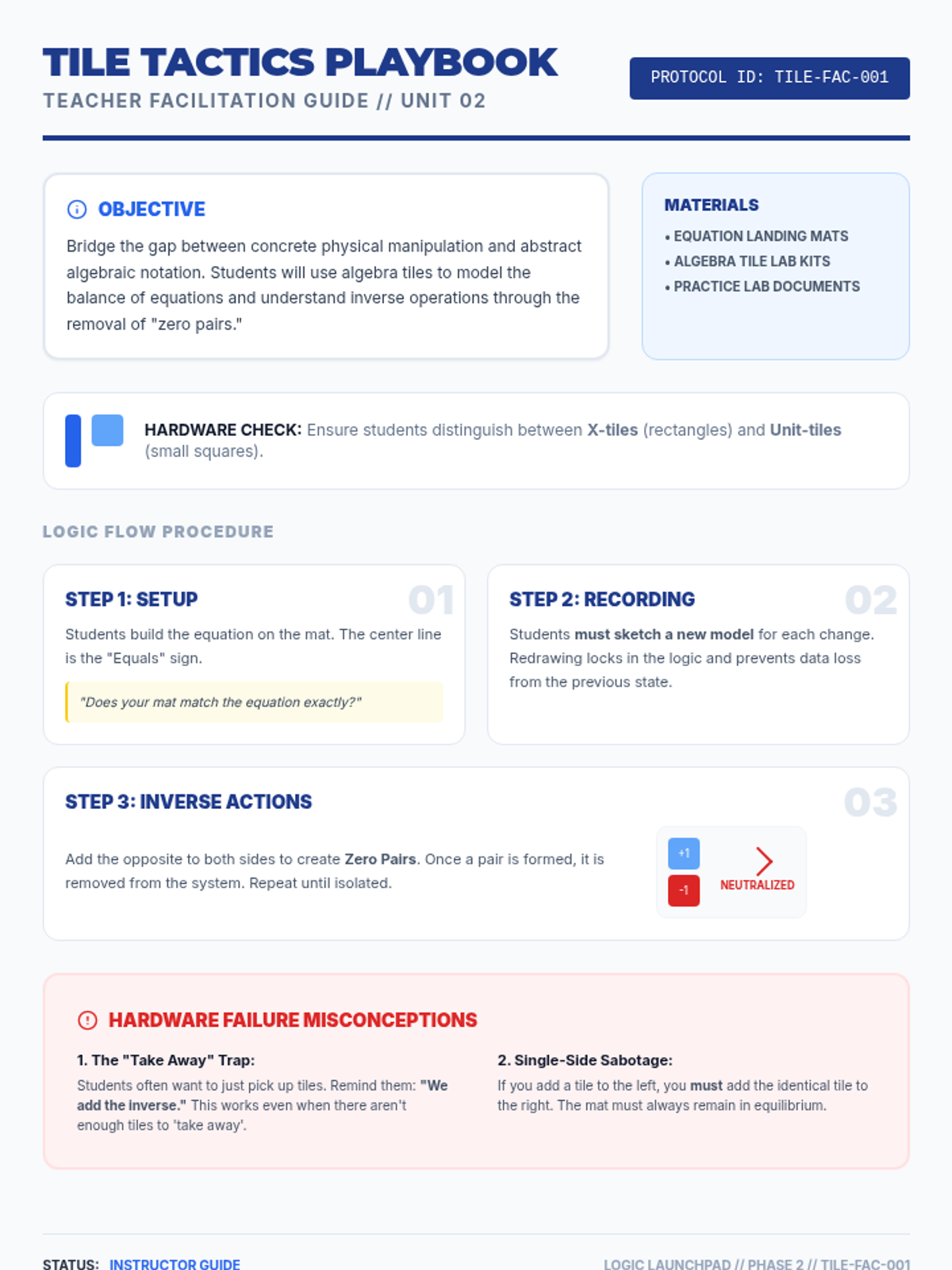
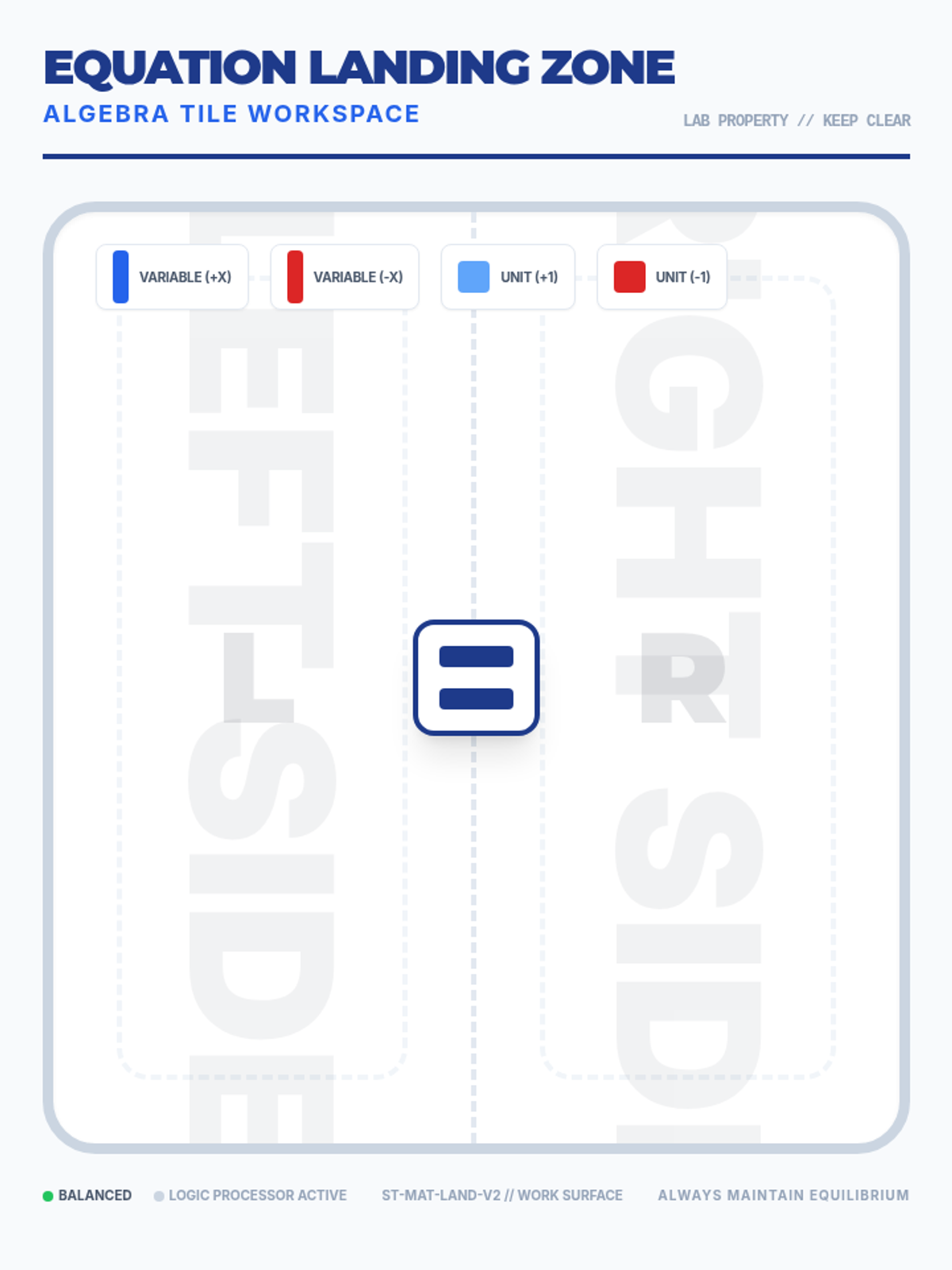
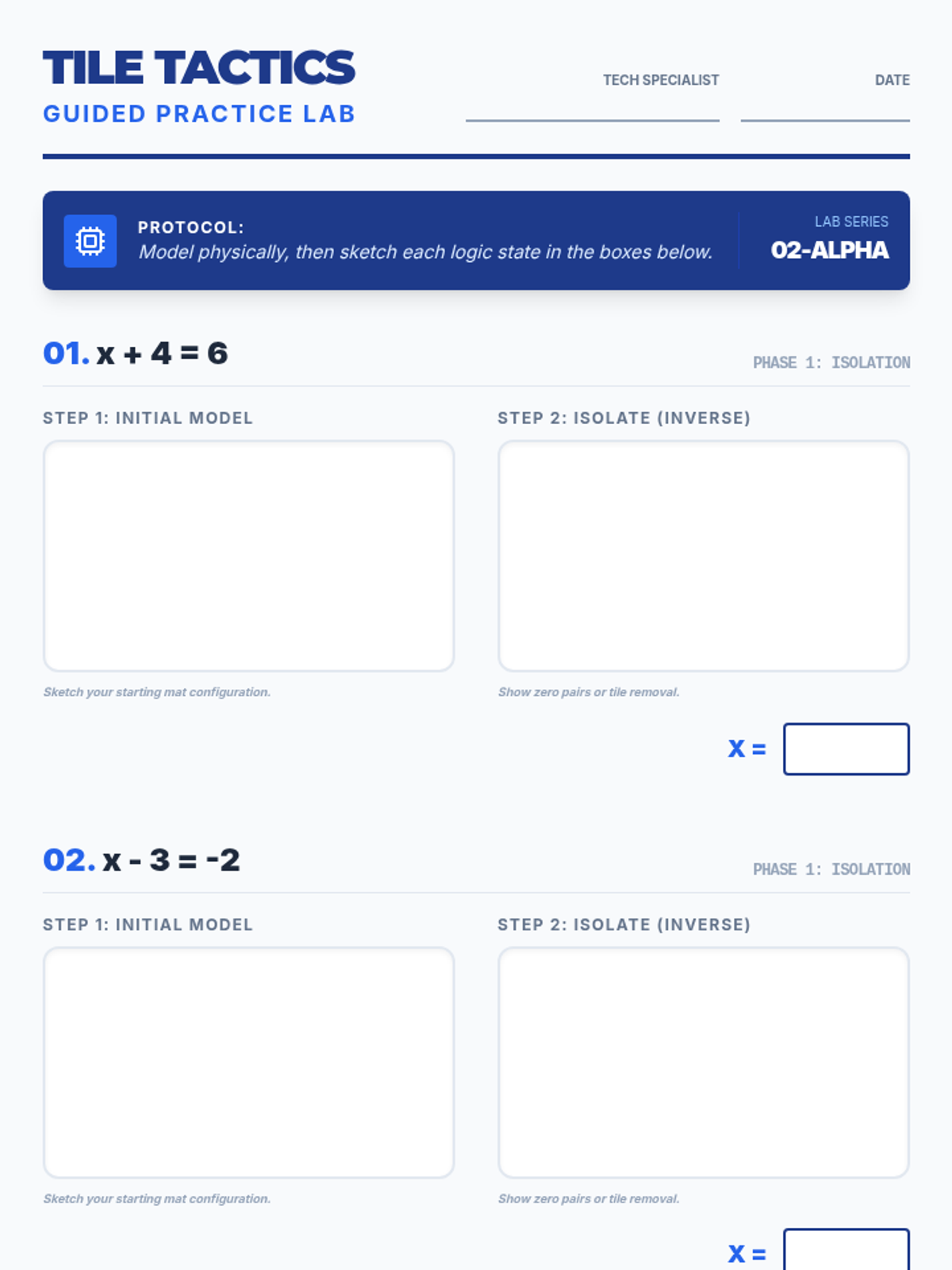
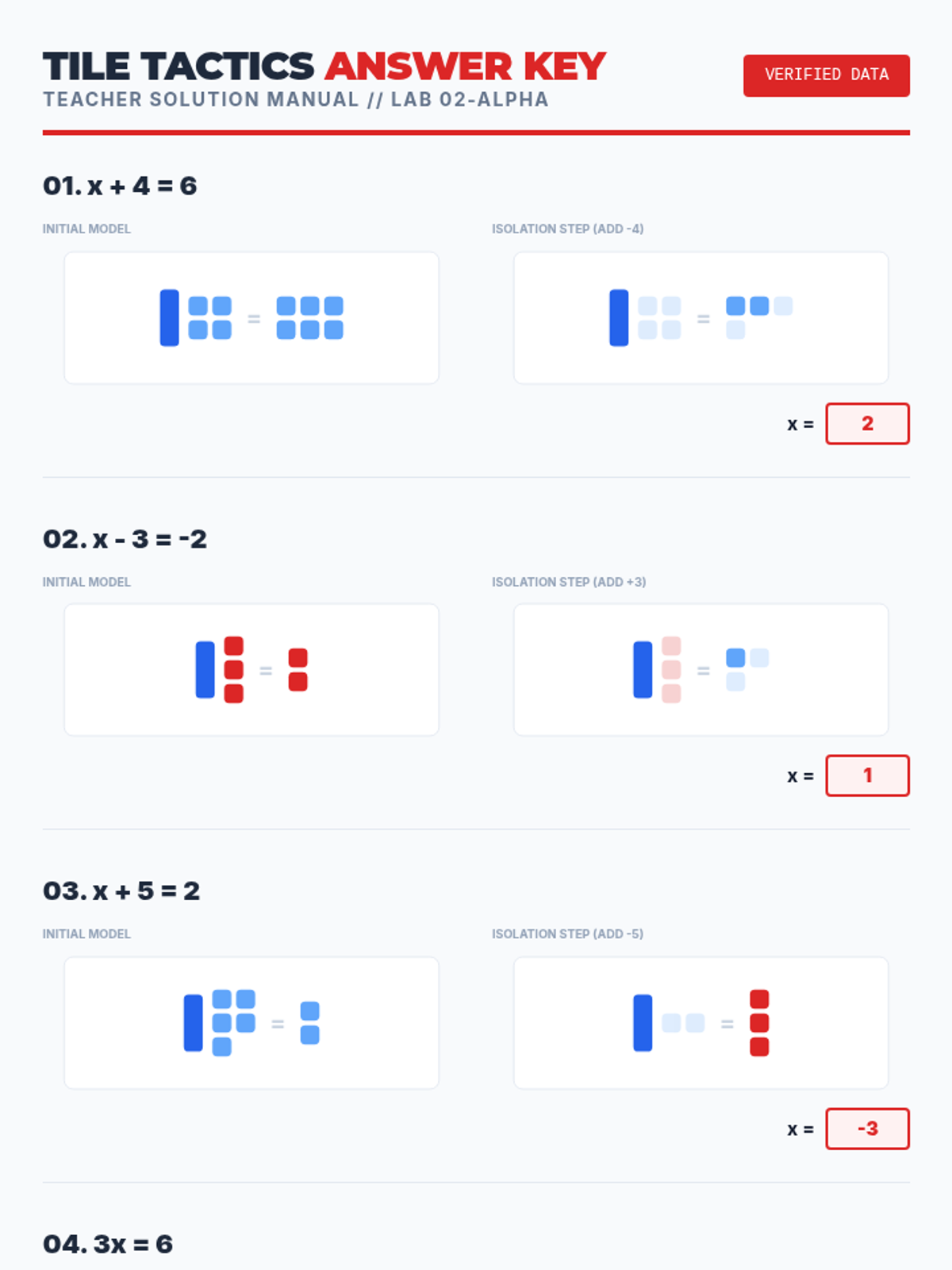
Introduction to algebra tiles as a visual tool for modeling and solving one- and two-step linear equations. Focuses on the concept of zero pairs and inverse operations.
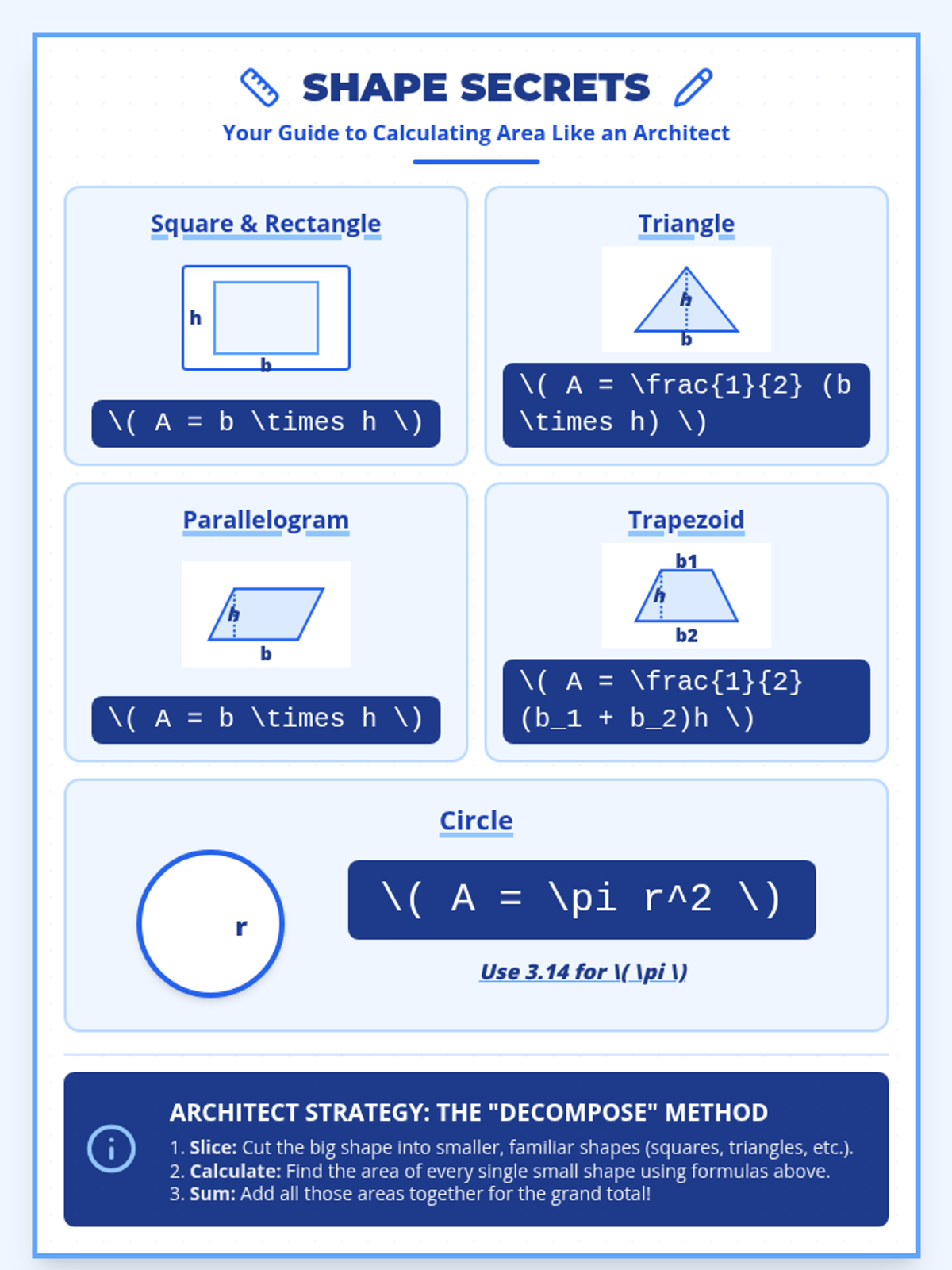
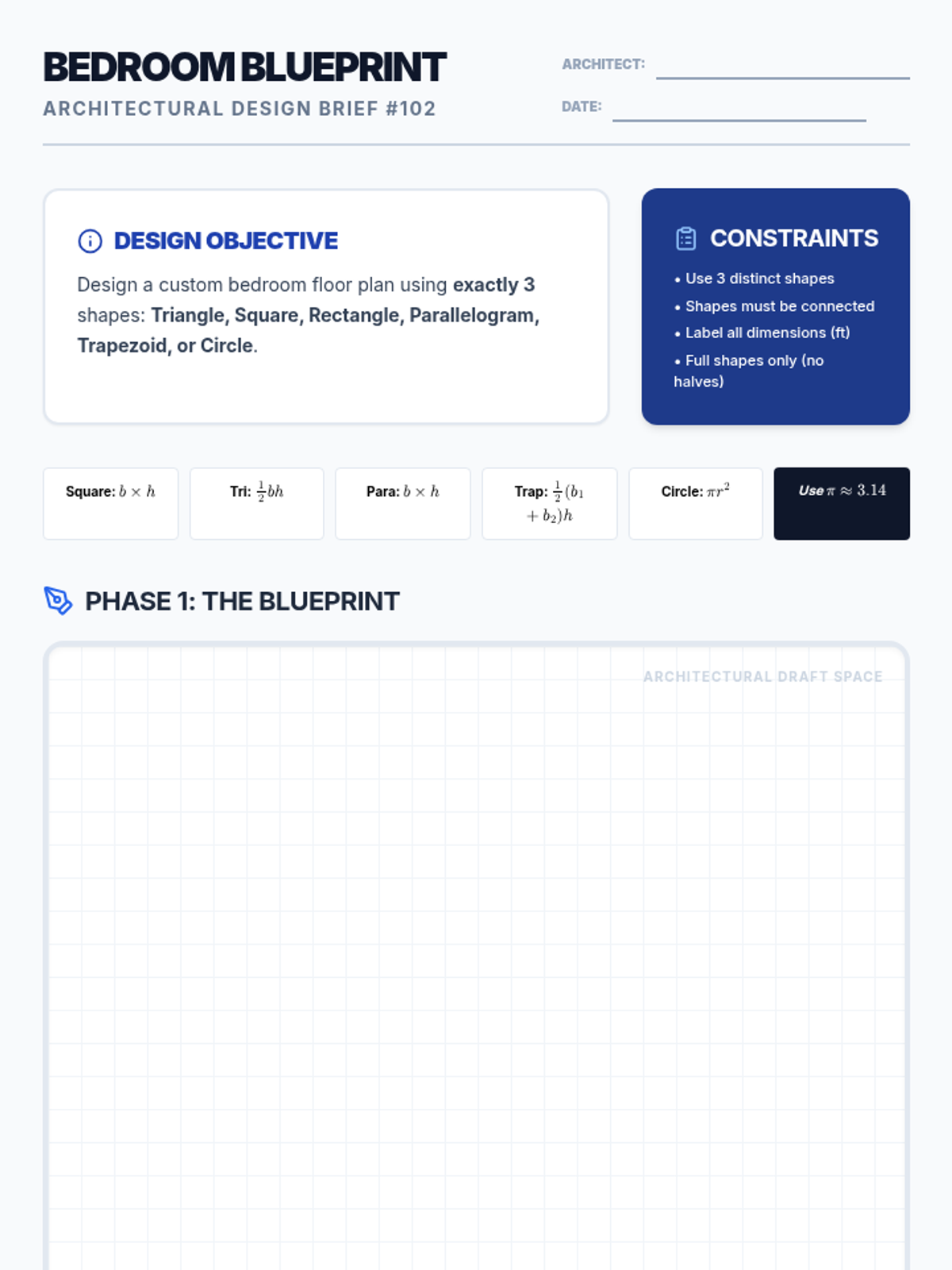
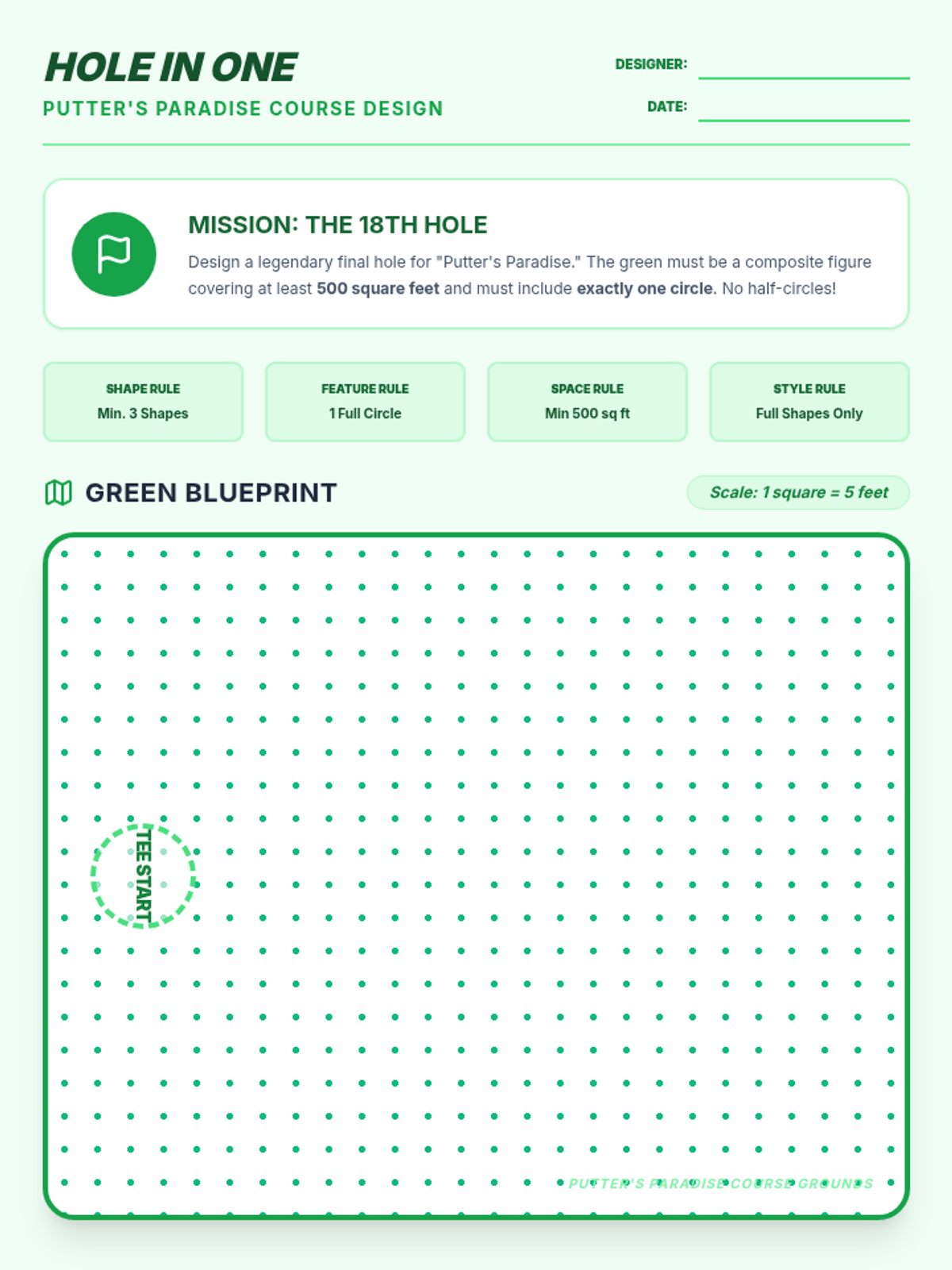
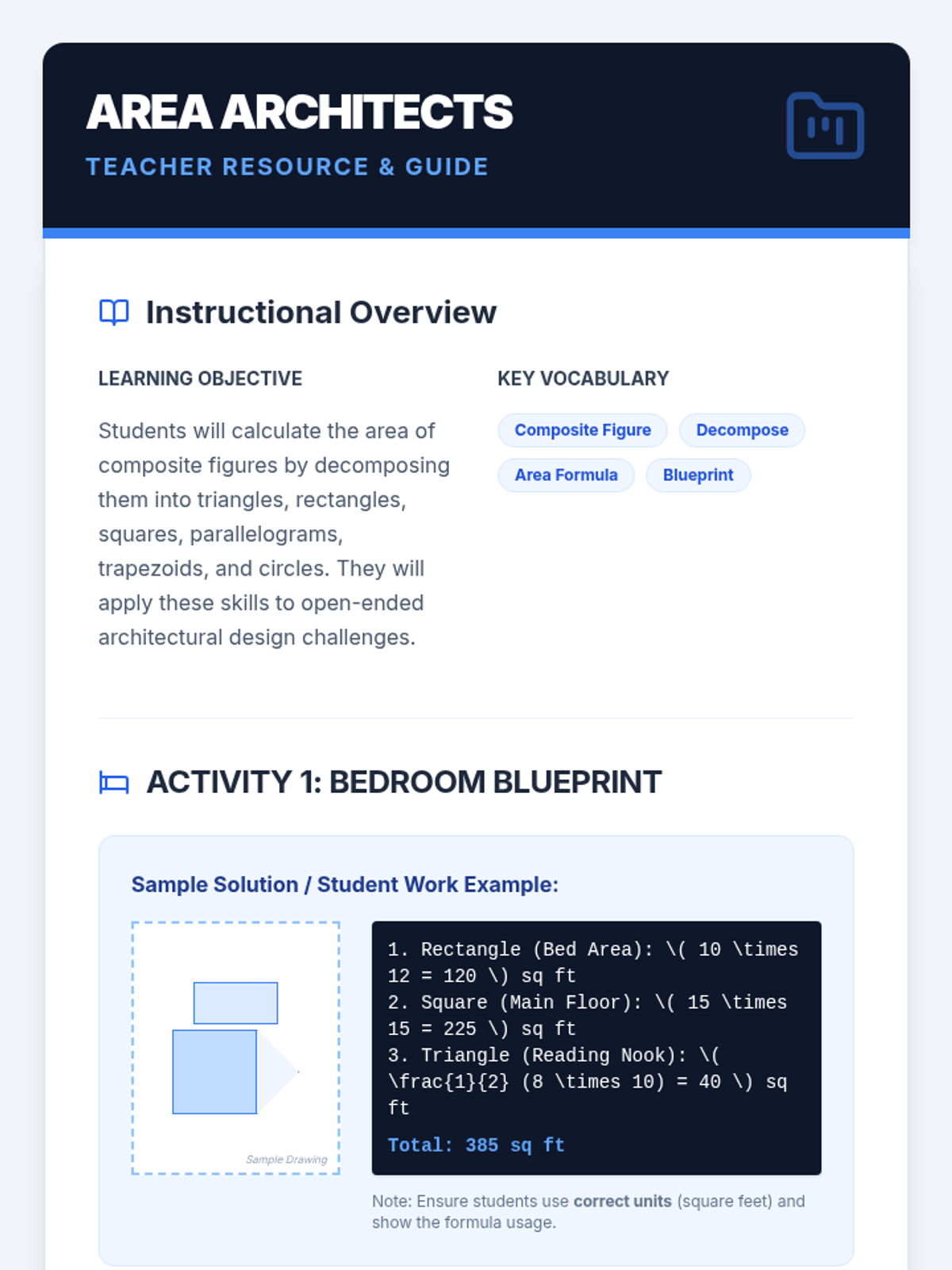
Students learn to decompose complex figures into familiar shapes (triangles, circles, quadrilaterals) to calculate total area in practical design scenarios.
Students analyze their financial data using scatter plots and trend lines to create a 12-month forecast and final reflection.
Students explore exponential growth through compound interest, calculating the long-term impact of debt and credit card balances.
Students use systems of equations to compare vehicle costs, finding the break-even point between different transportation options.
Students select careers, calculate net monthly income, and write linear equations to model their cumulative earnings and fixed housing costs.
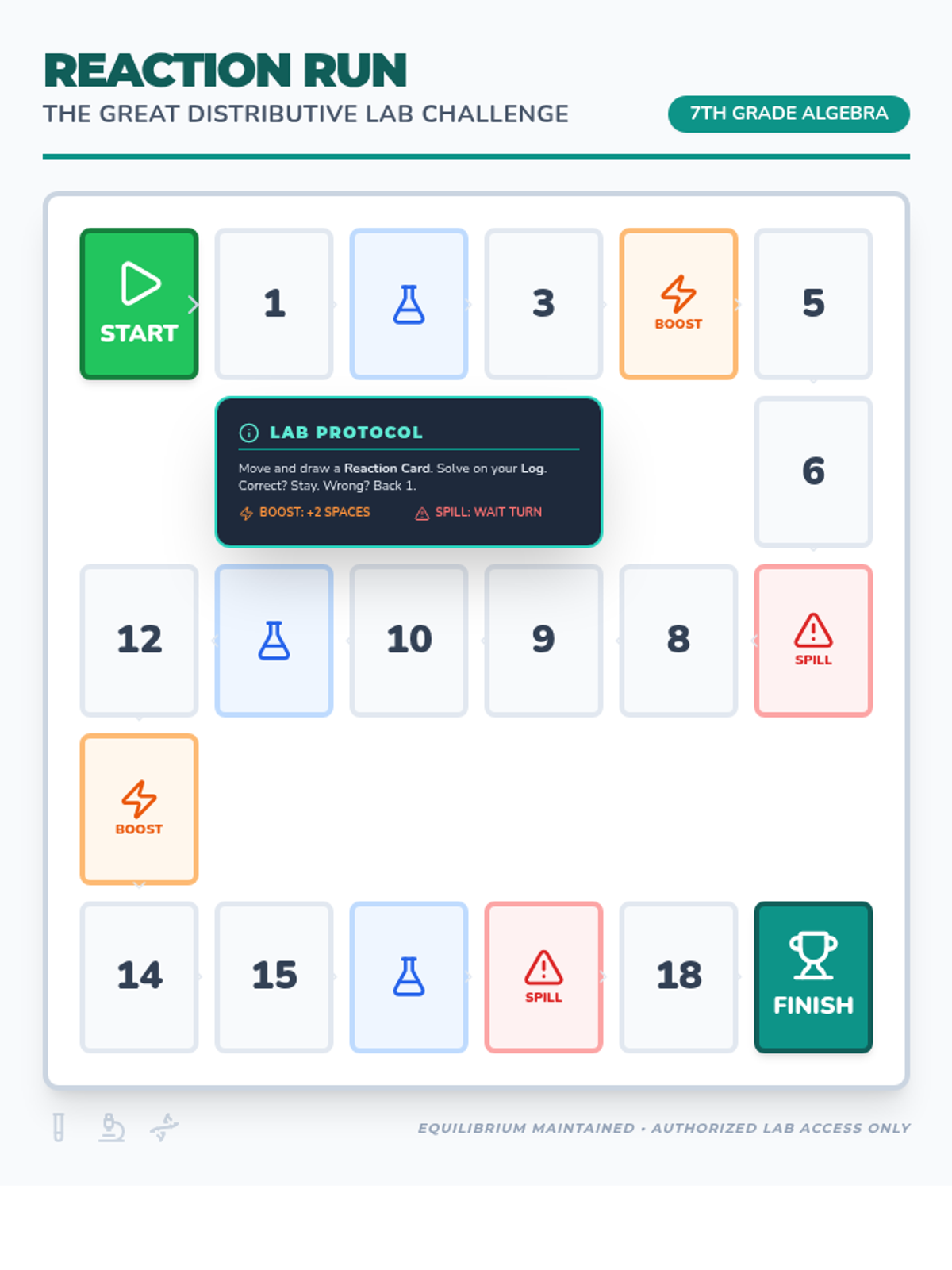
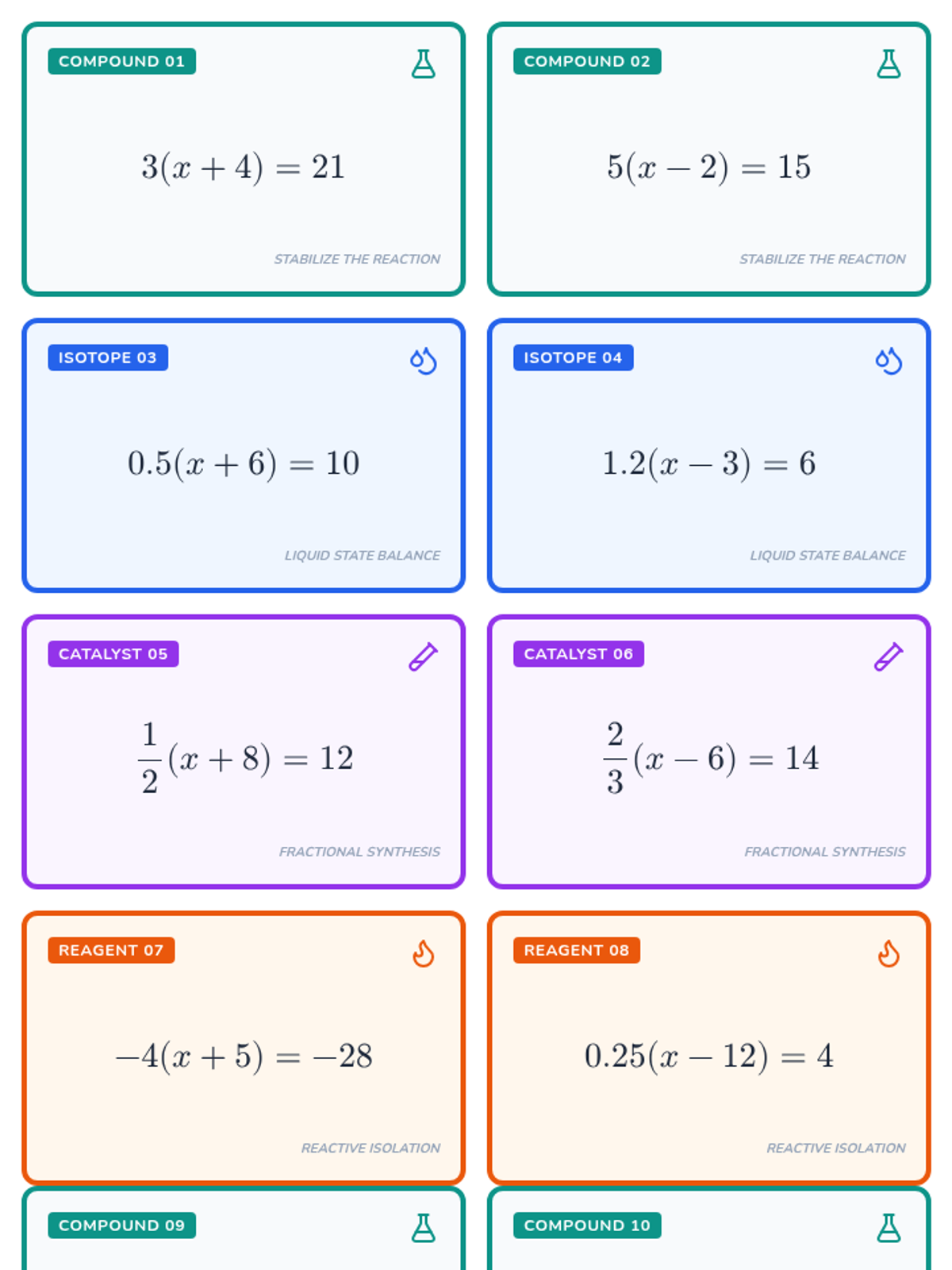
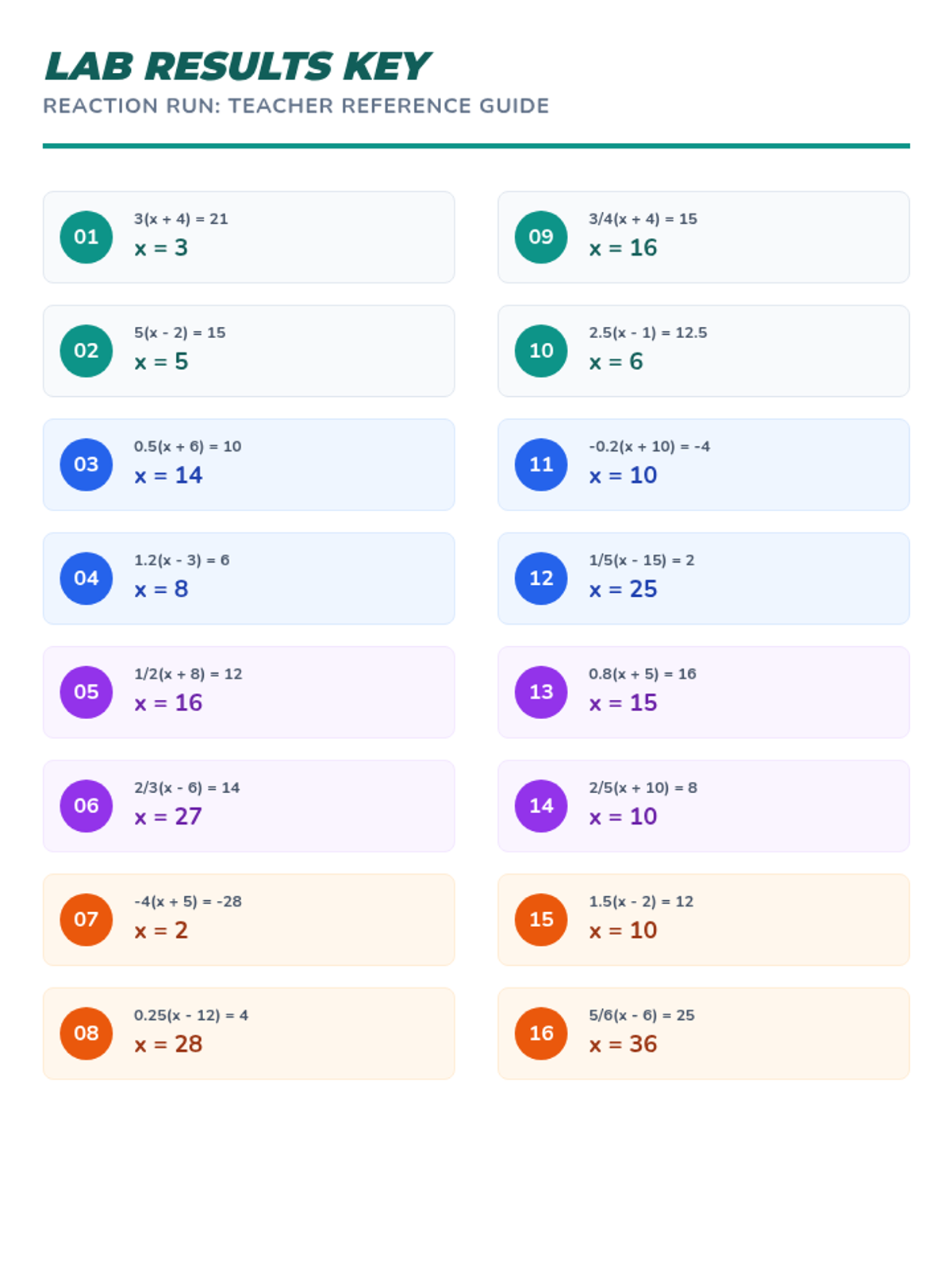
A high-energy board game where students solve binomial equations involving decimals and fractions using the distributive property to move through a laboratory path.
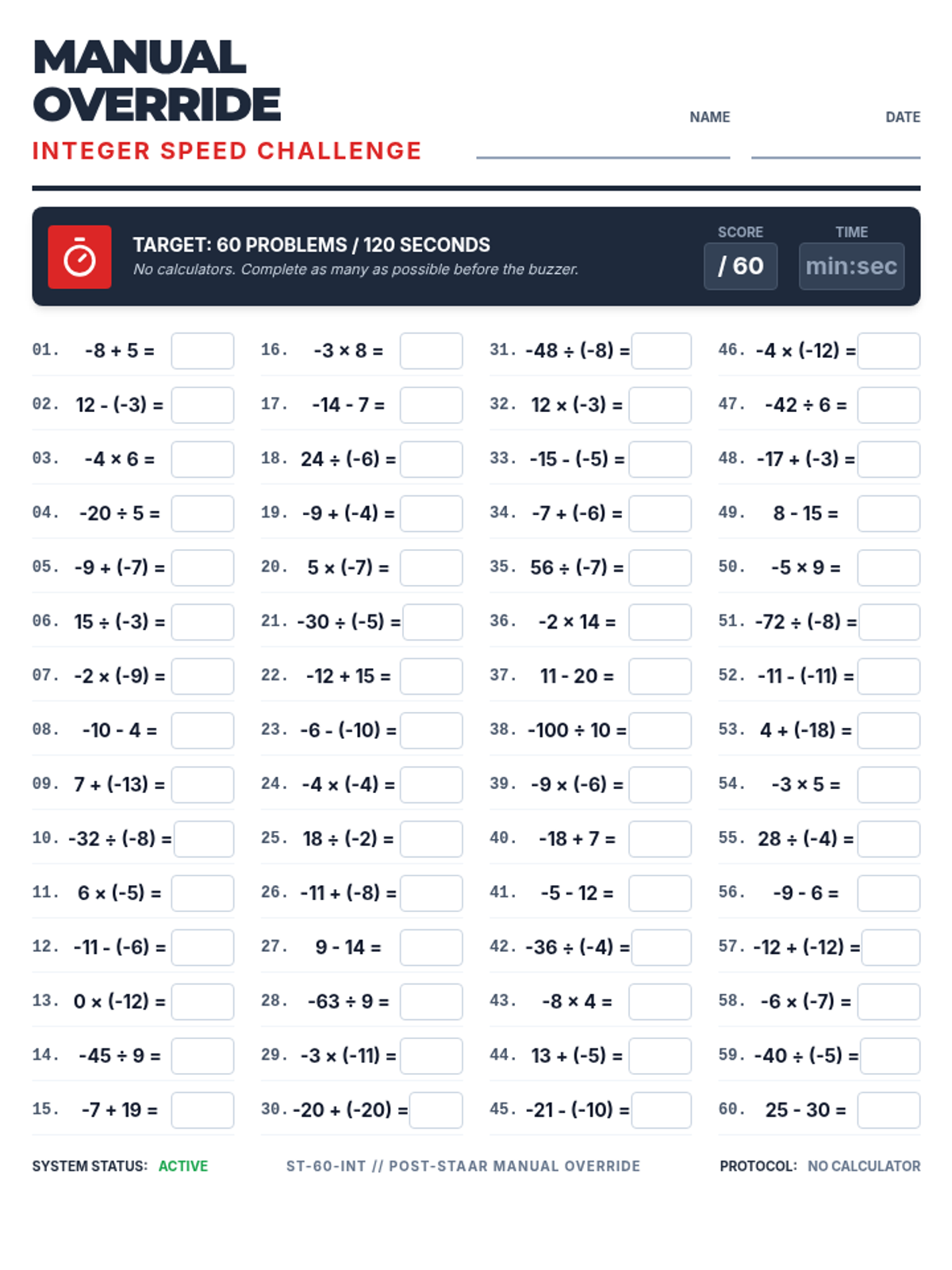
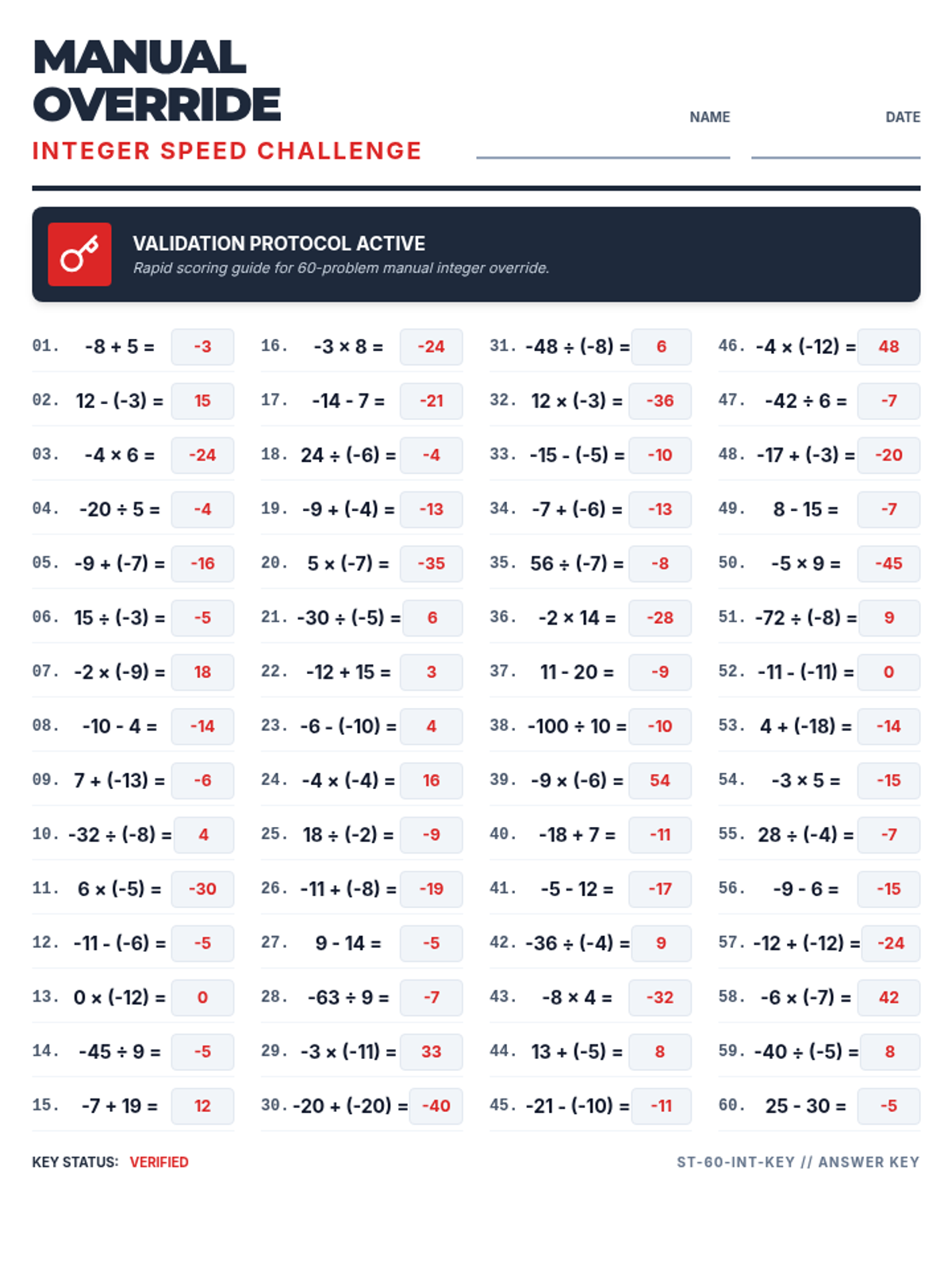
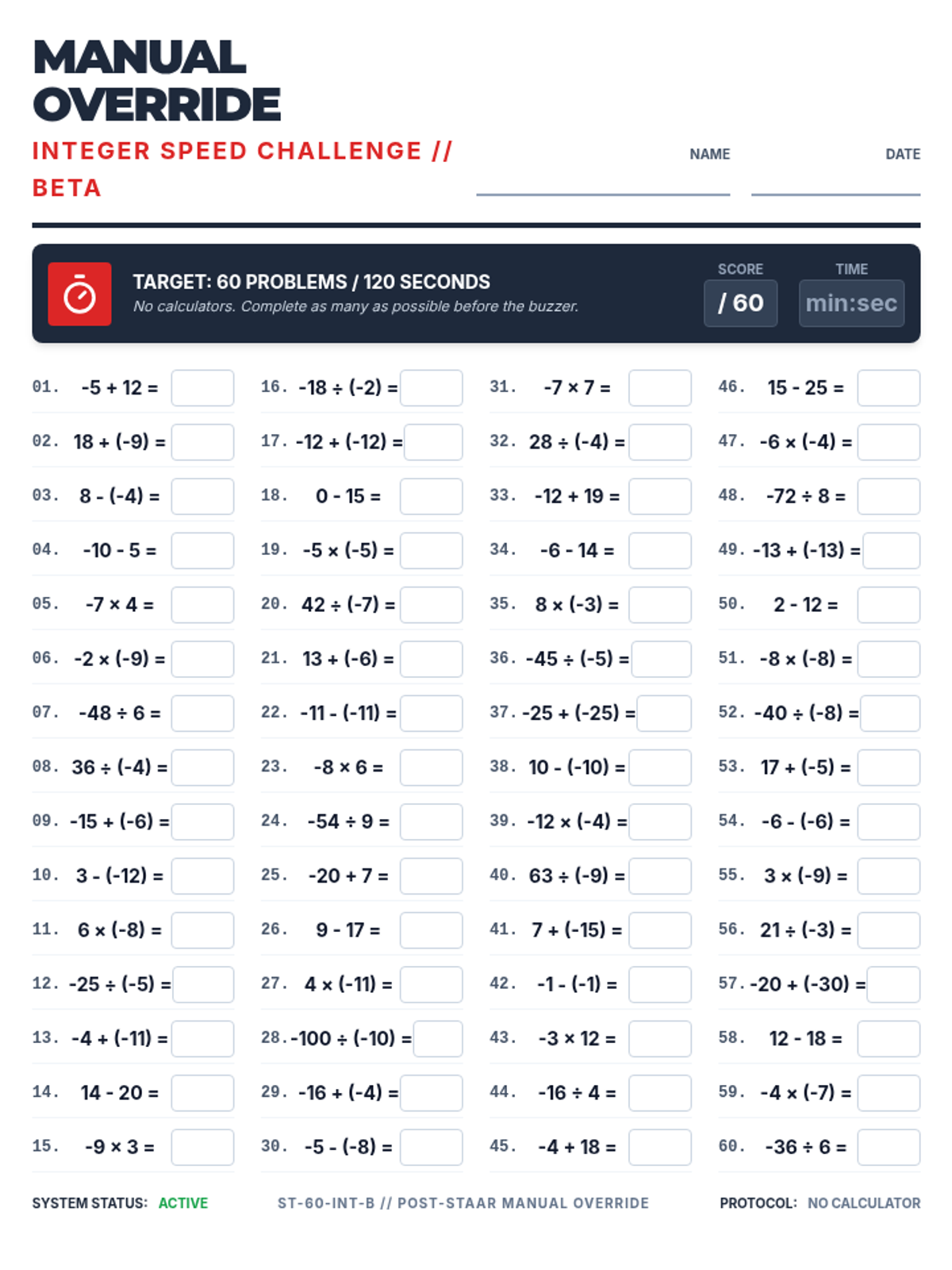
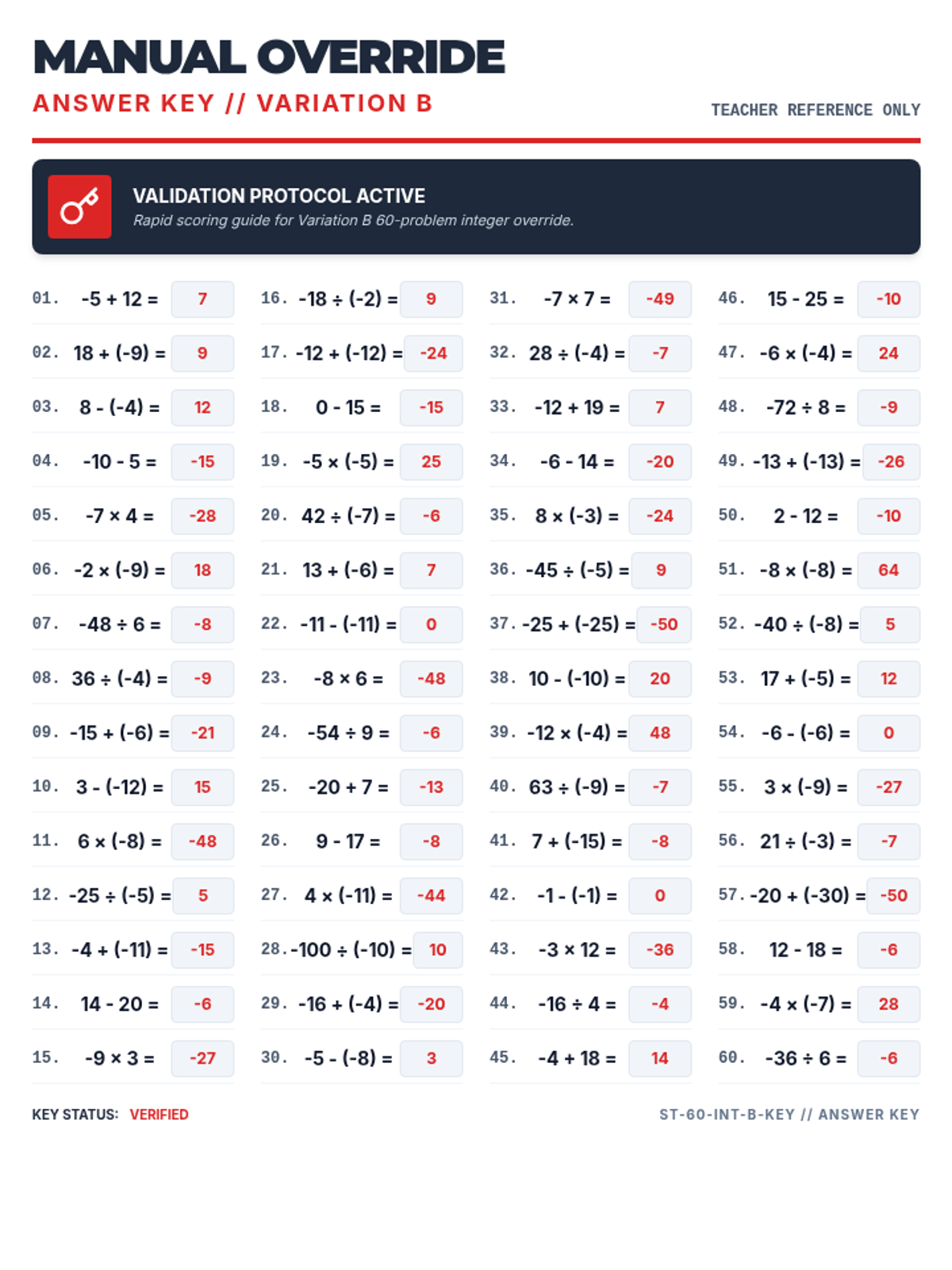
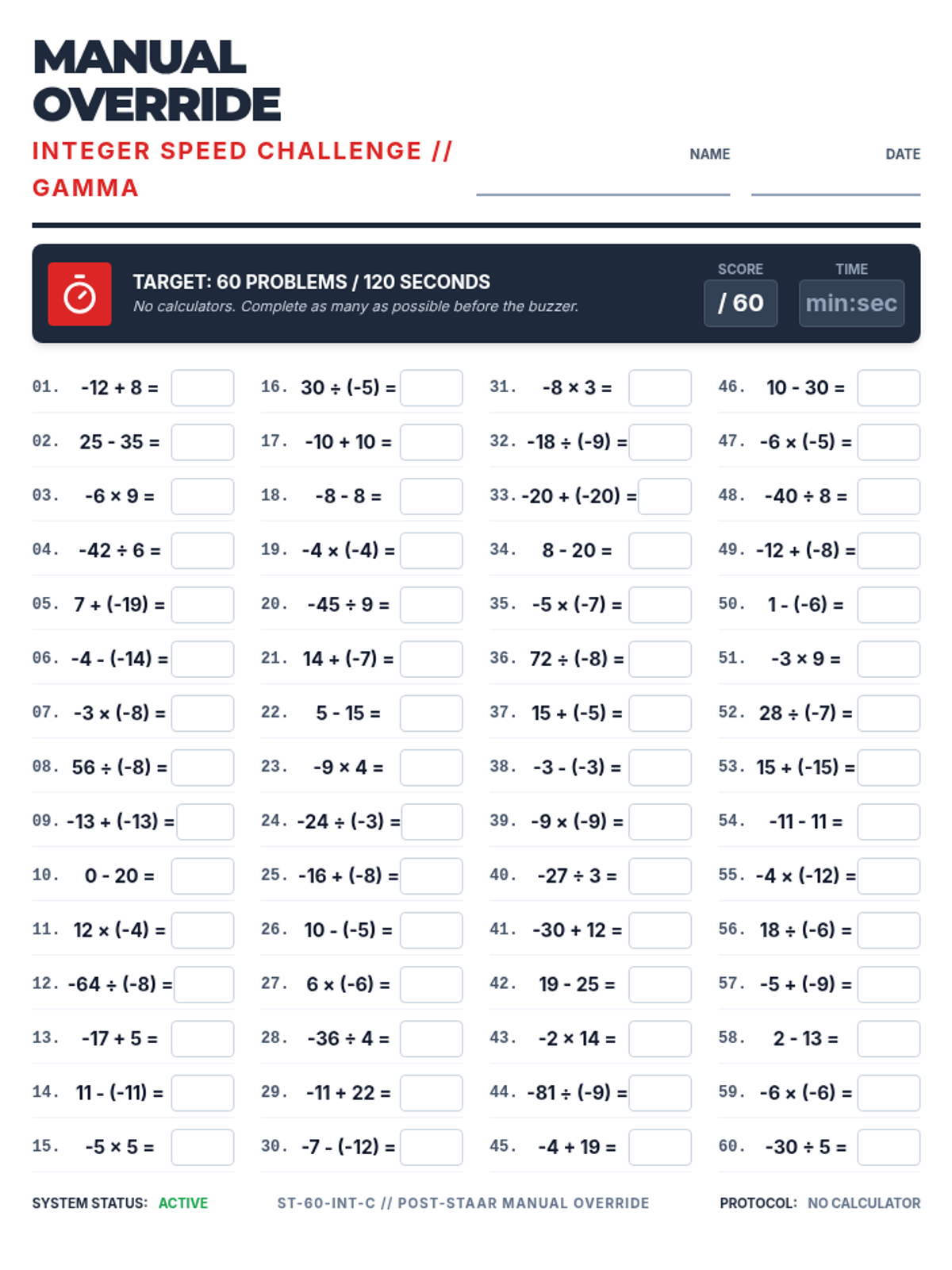
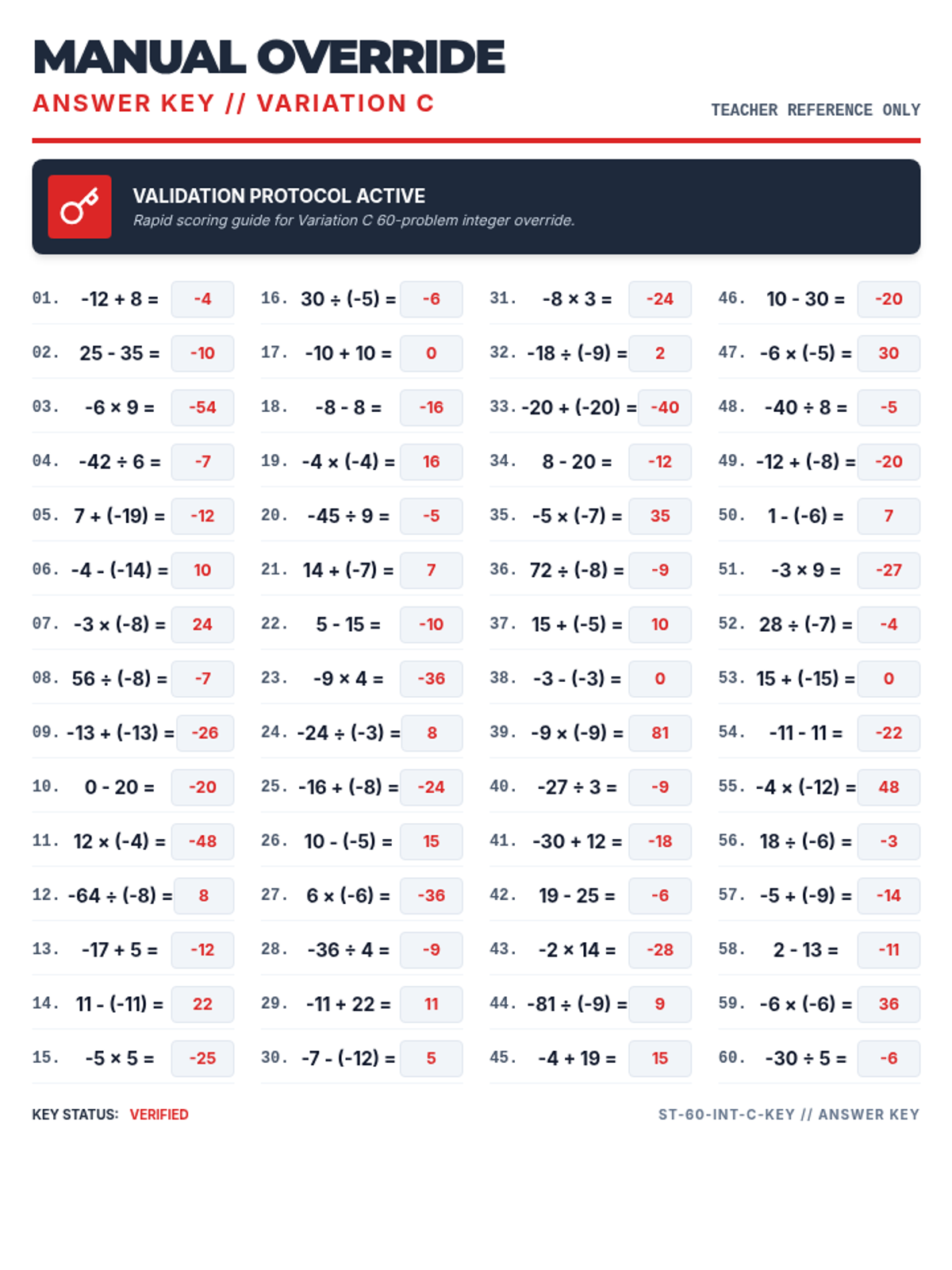
A high-speed mental math challenge focused on integer operations (addition, subtraction, multiplication, and division) to sharpen arithmetic skills after testing season.
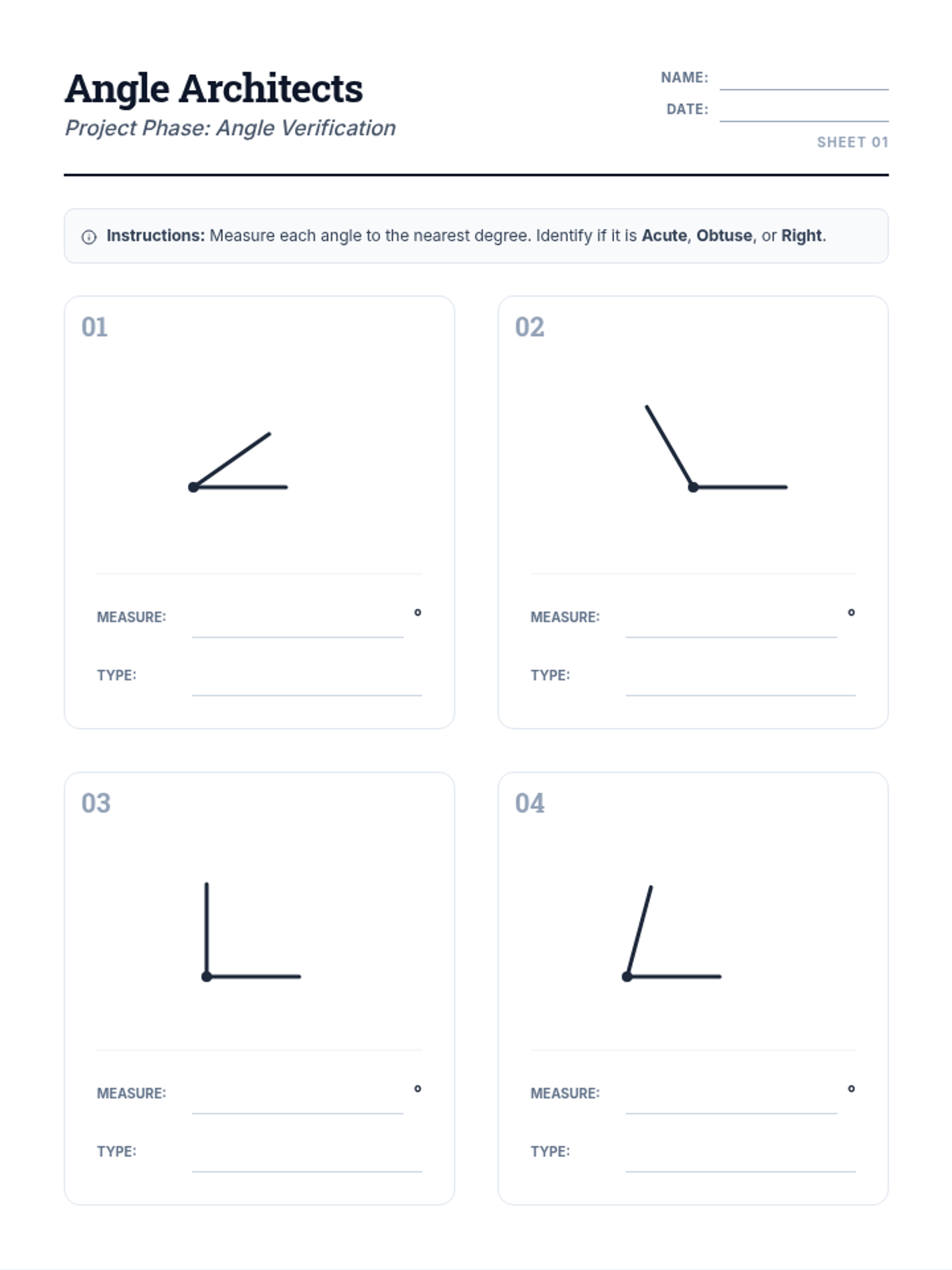
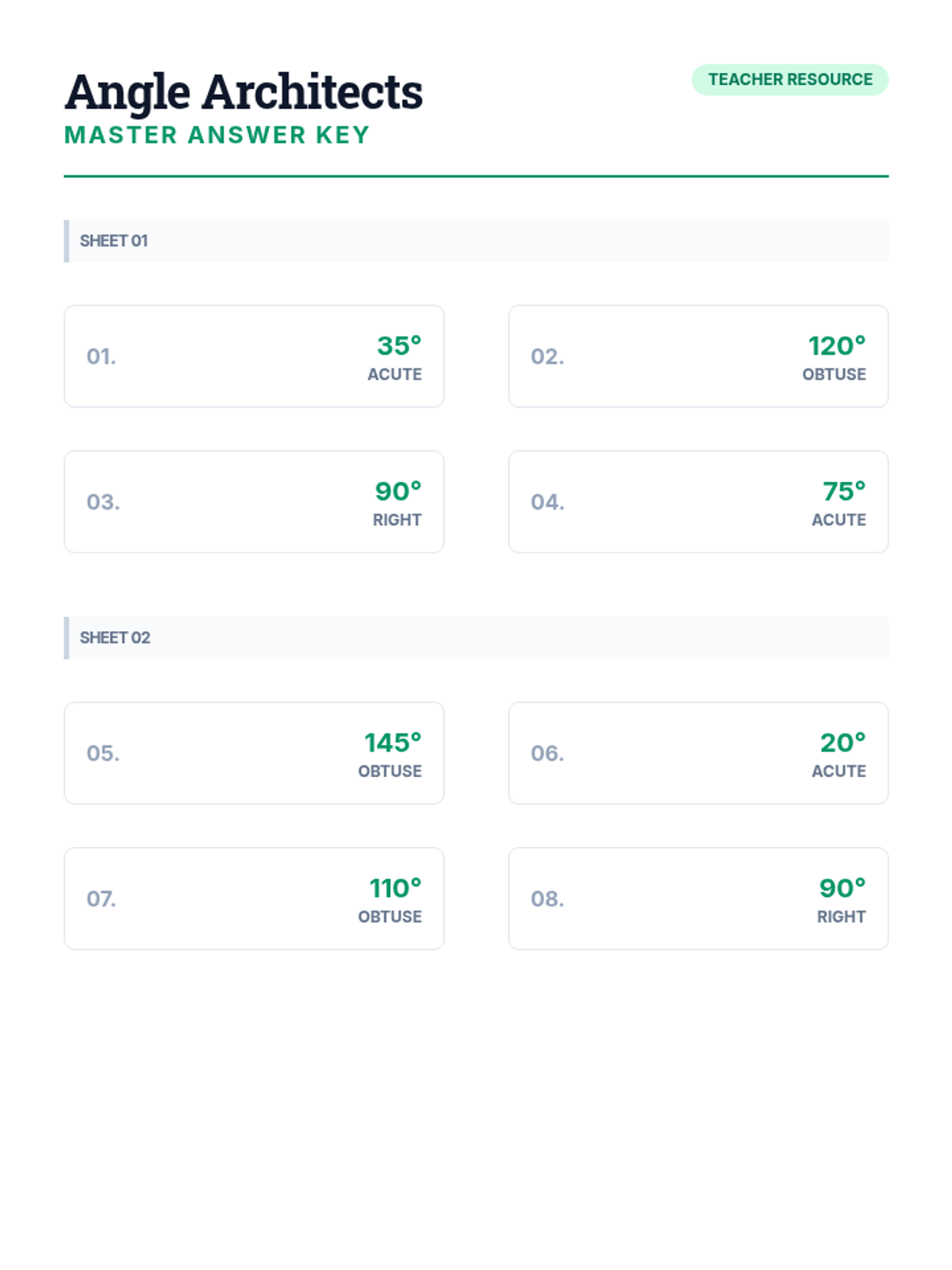
A hands-on geometry lesson focused on accurately measuring acute, obtuse, and right angles using a protractor. Students take on the role of 'Angle Architects' to verify design specifications.
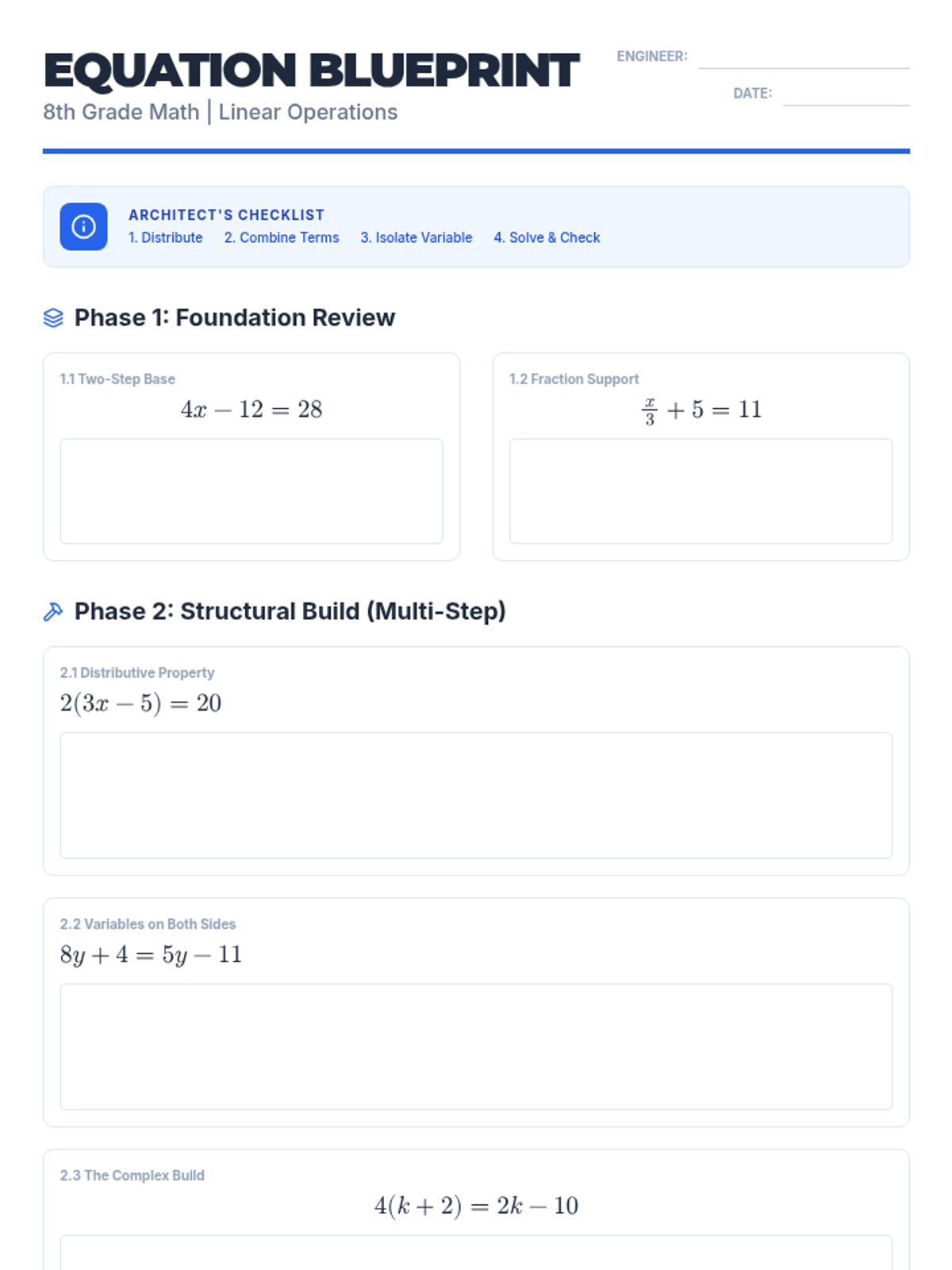
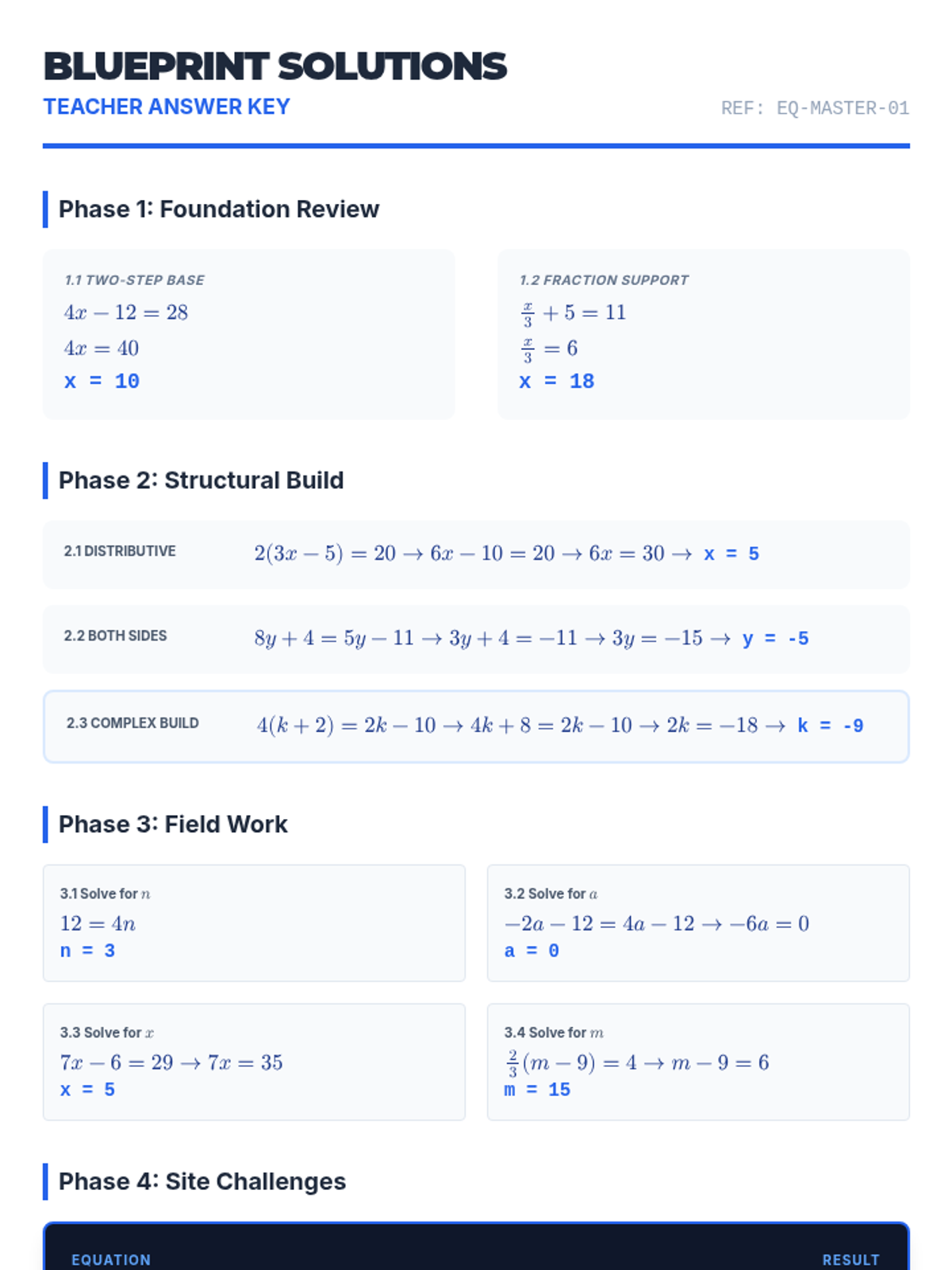
A comprehensive guide to mastering multi-step linear equations using a structured, step-by-step drafting approach. Students will learn to distribute, combine like terms, and isolate variables in complex equations.
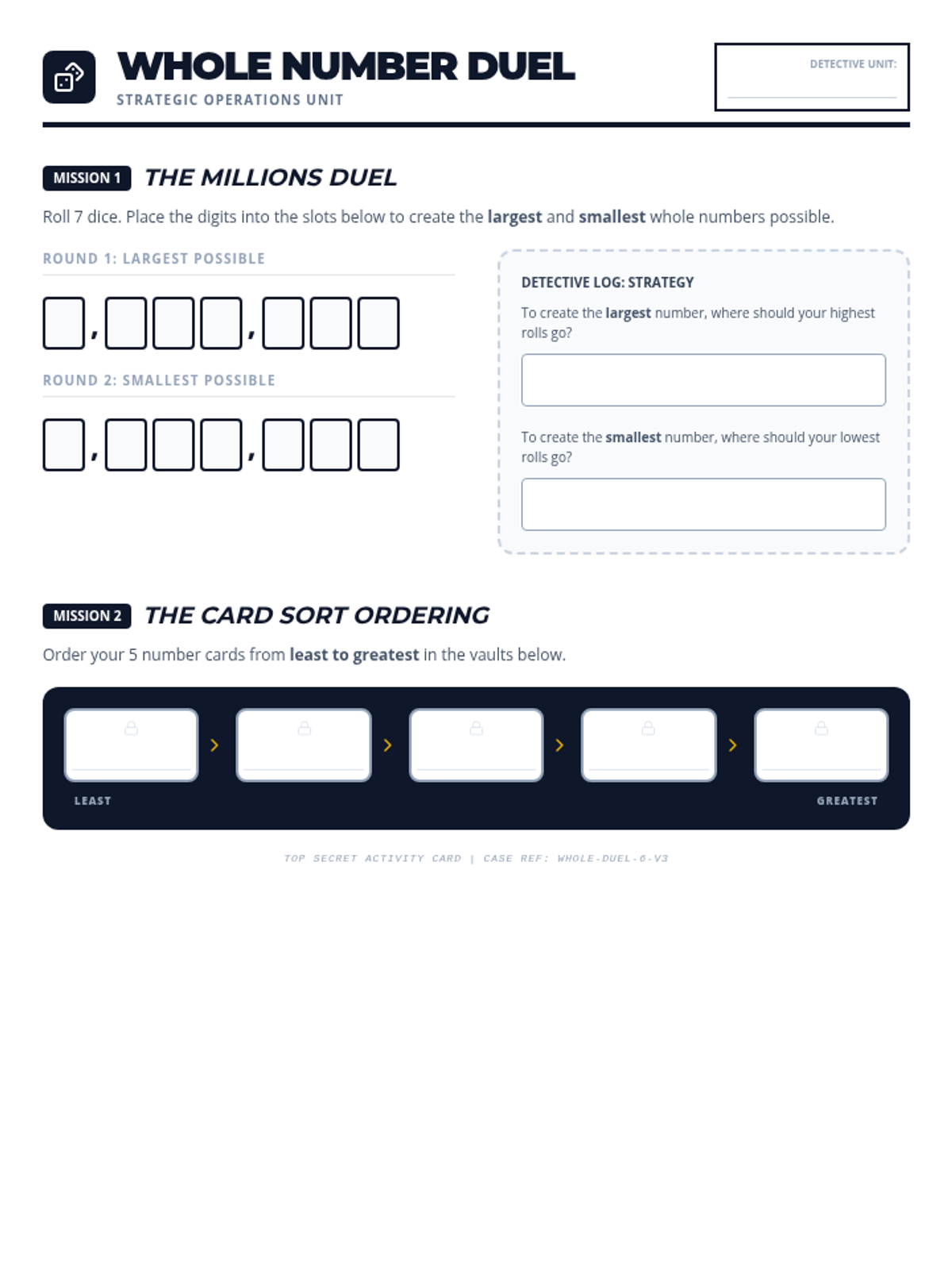
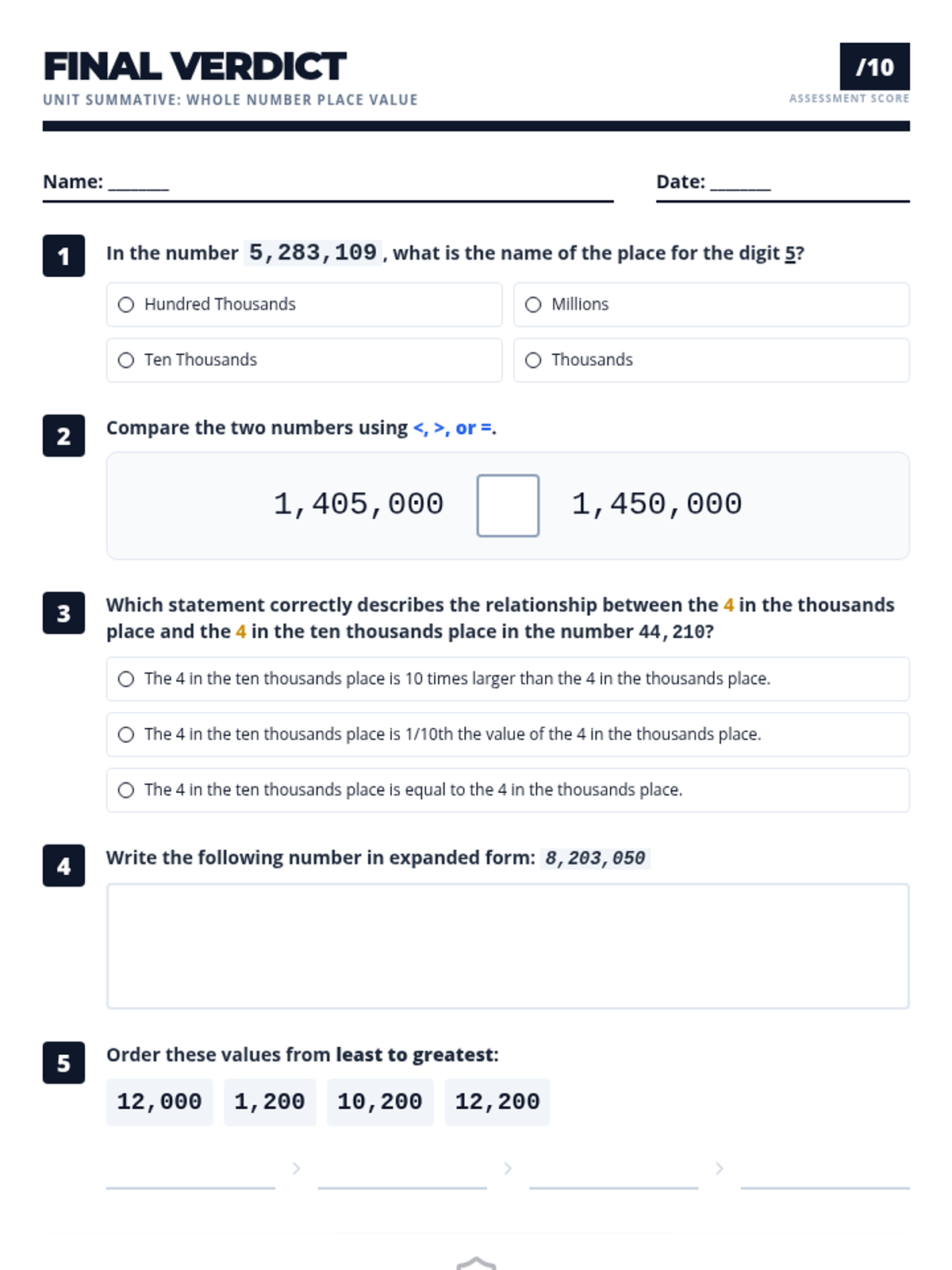
Students apply their knowledge of whole number place value to compare and order large numbers using dice and strategic thinking, culminating in a summative assessment.
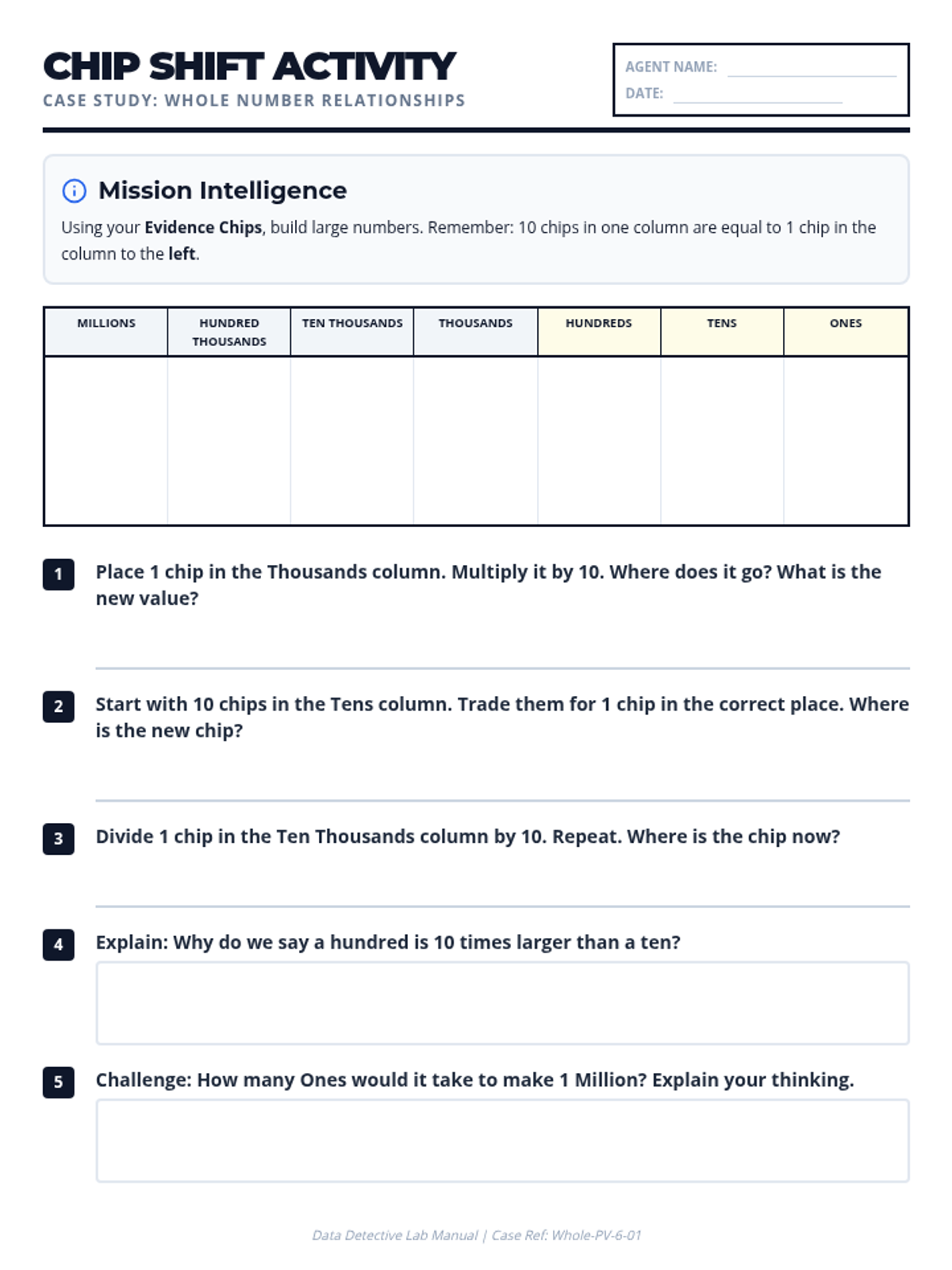
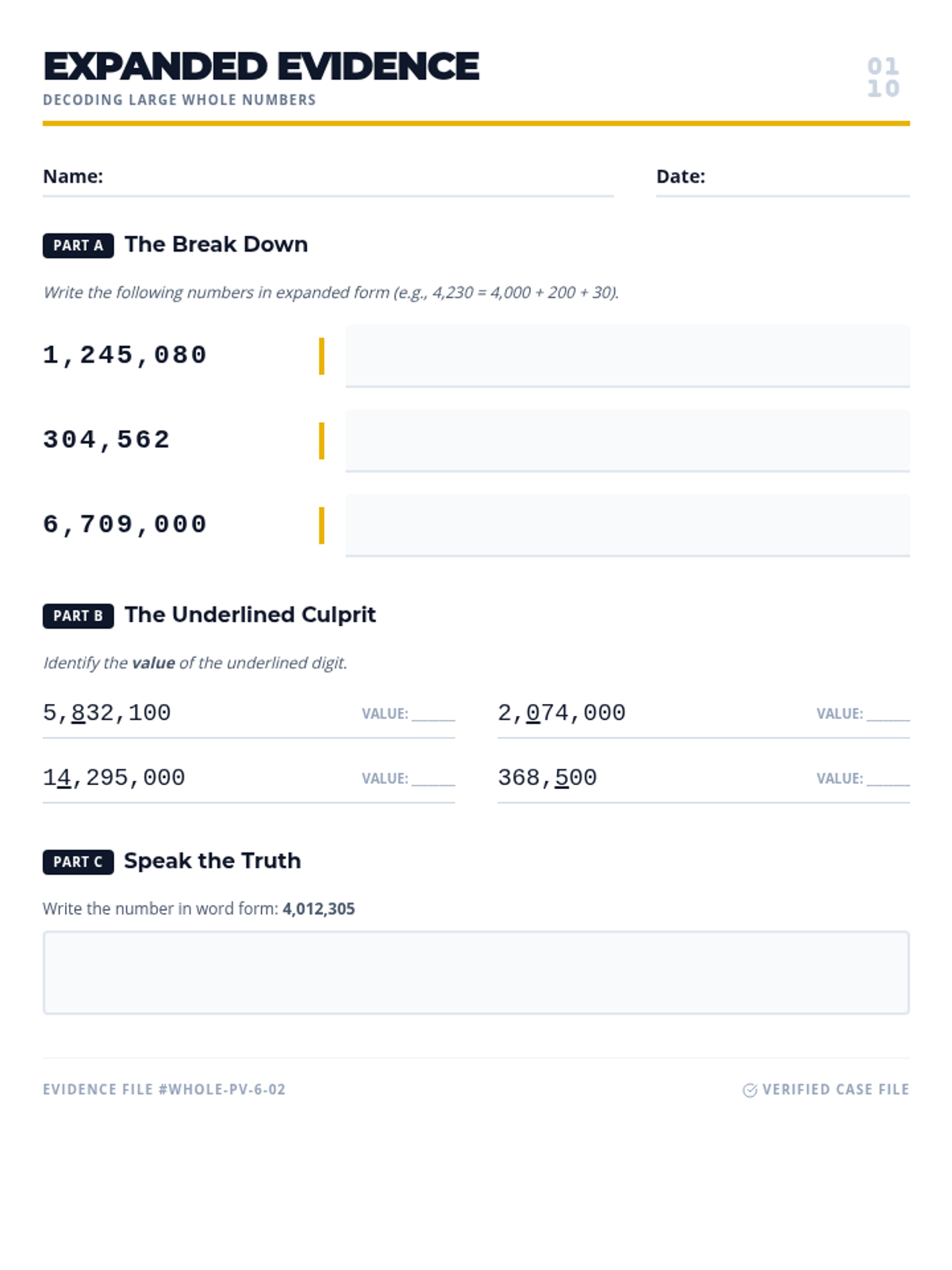
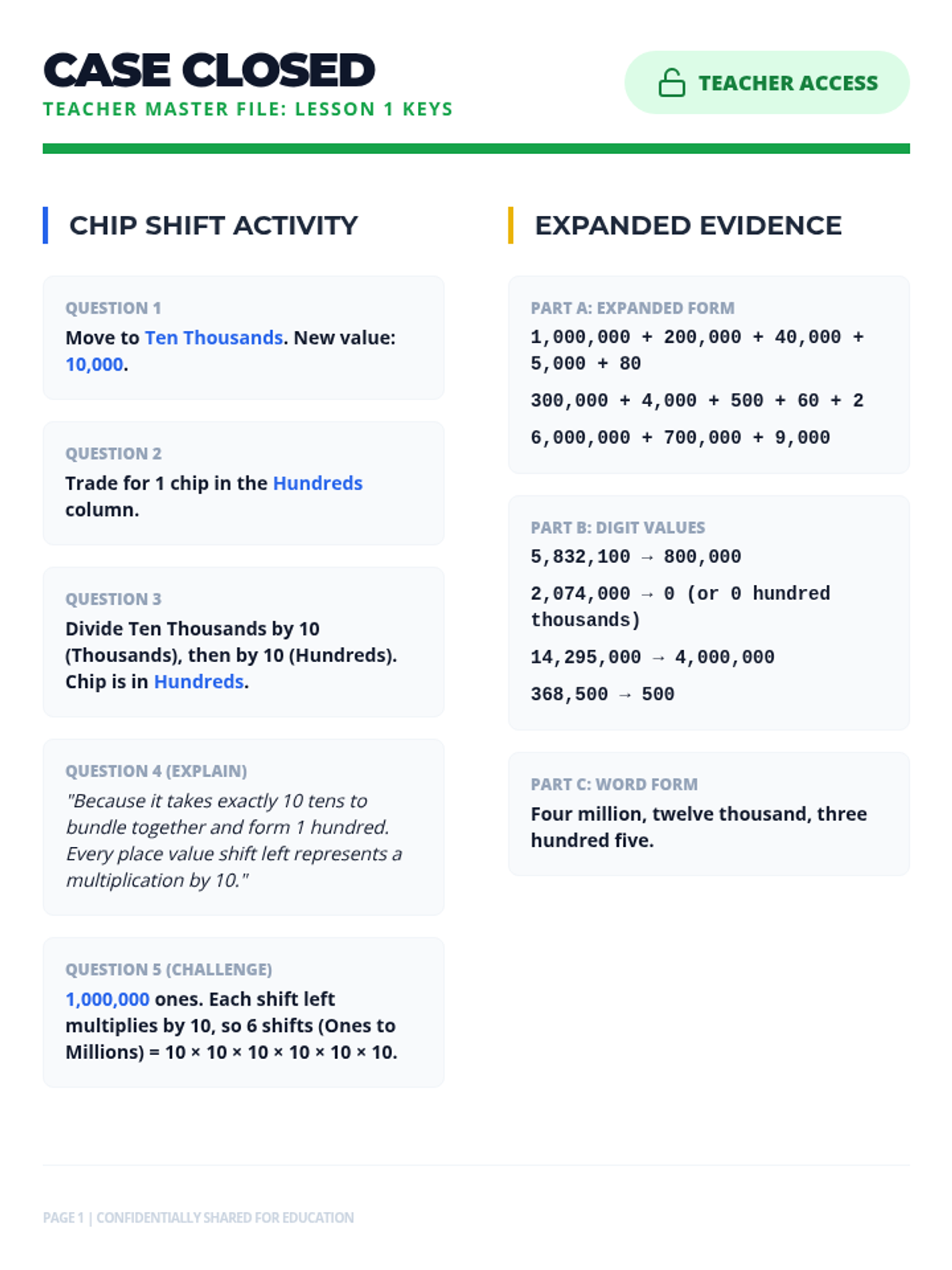
Students explore the base-ten place value system from ones to millions, investigating how values change by factors of ten using physical chips and place value charts.