Students read a story about a student overcoming stage fright to determine the theme of courage.
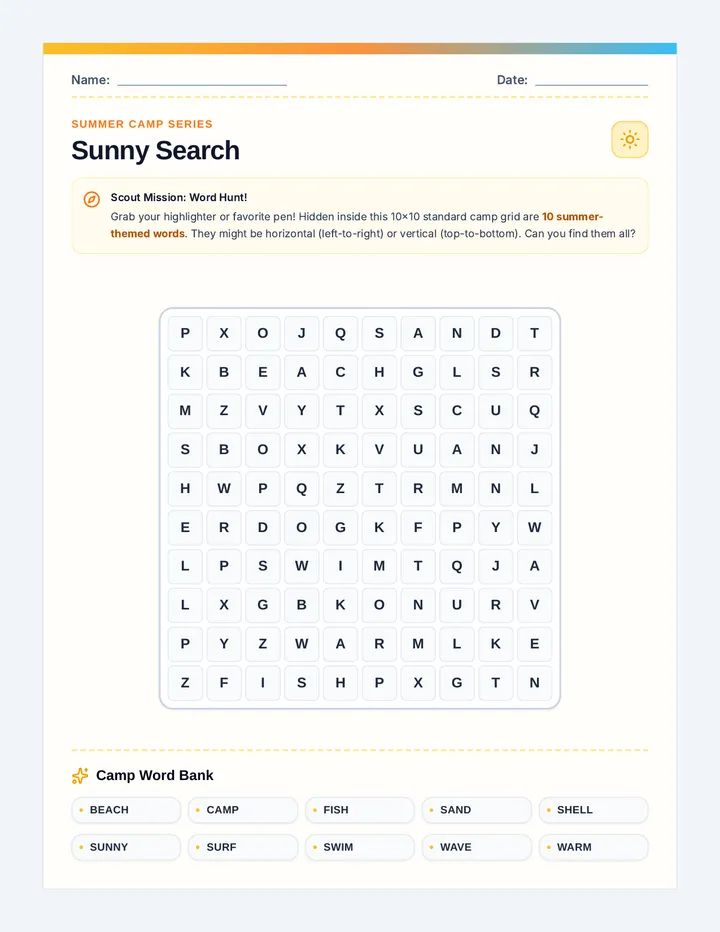
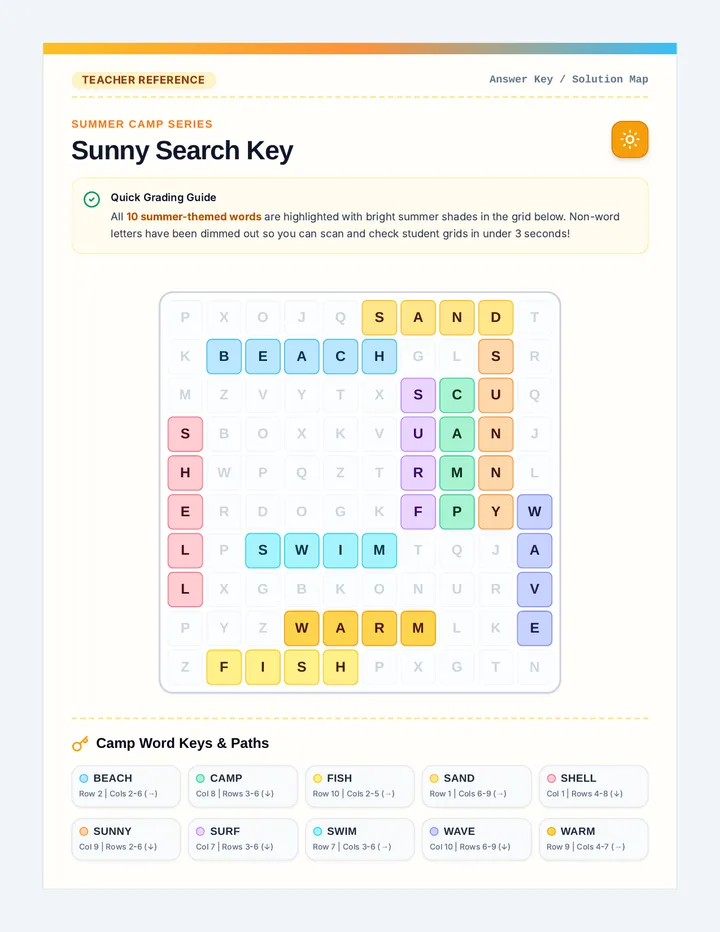
A fun, summer-themed word search lesson designed for standard grid gameplay with high-contrast elements suitable for highlight strips. Includes a clean 10x10 word search and a corresponding teacher answer key.
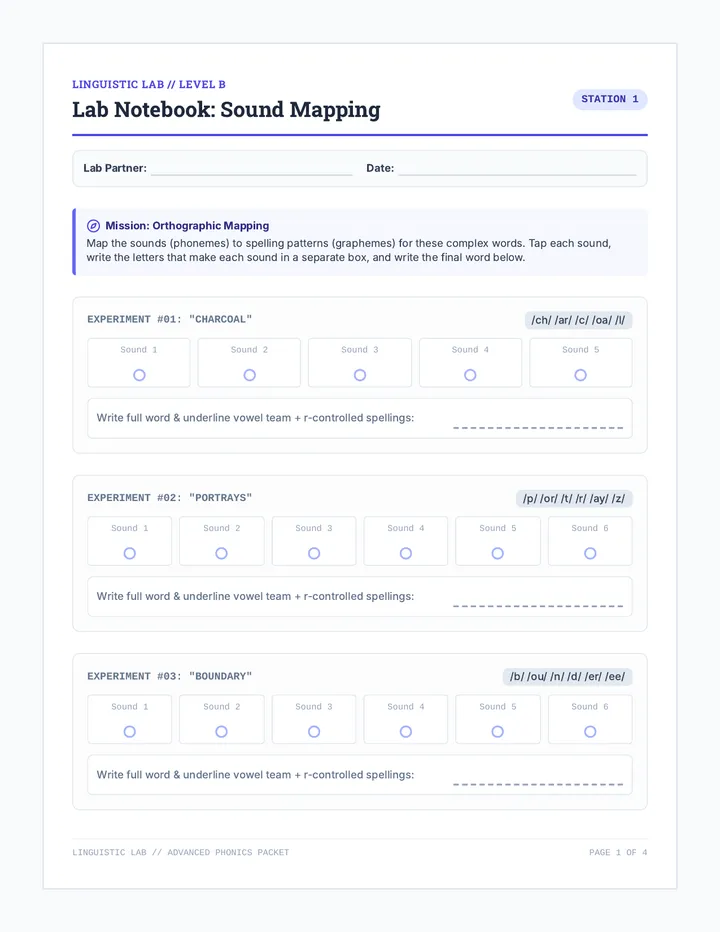
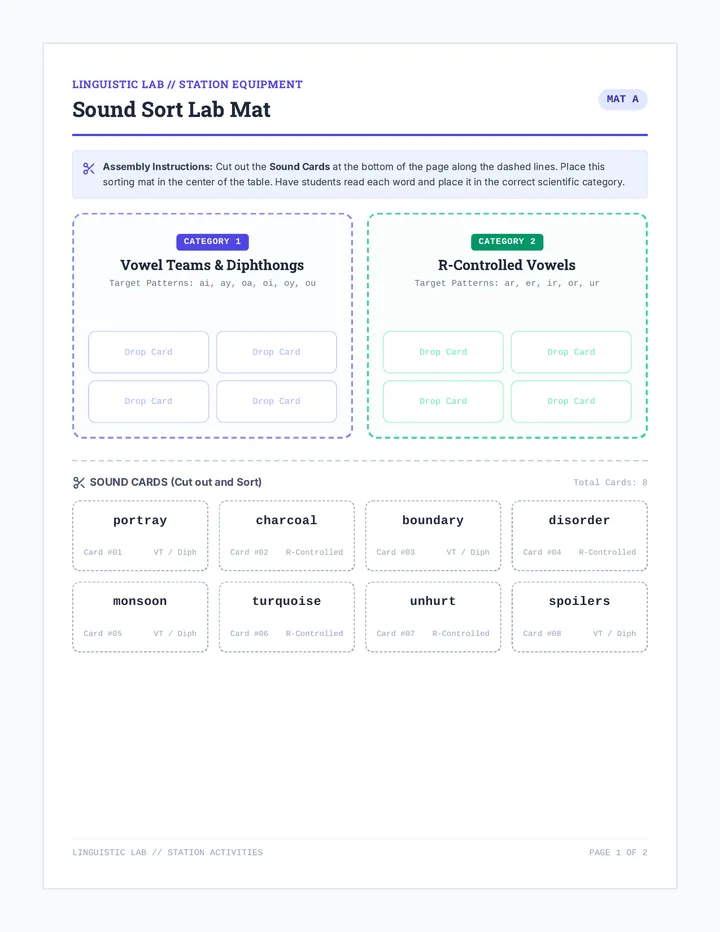
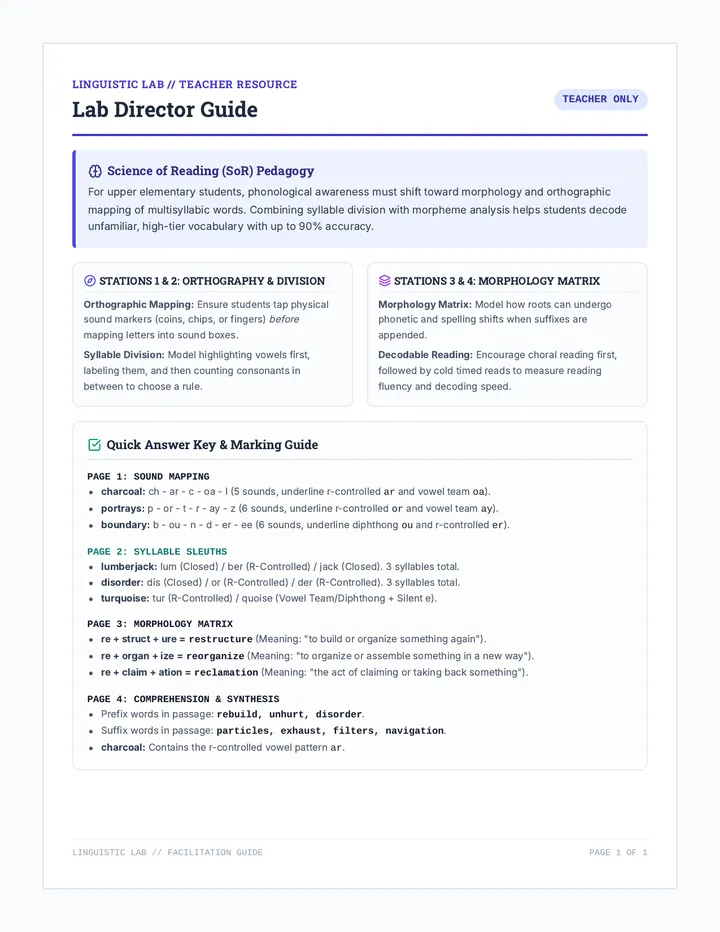
An interactive, Science of Reading-aligned phonics and morphology program for upper elementary students. It features multi-sensory station activities, orthographic mapping, syllable division practice, and morphological decoding tools.
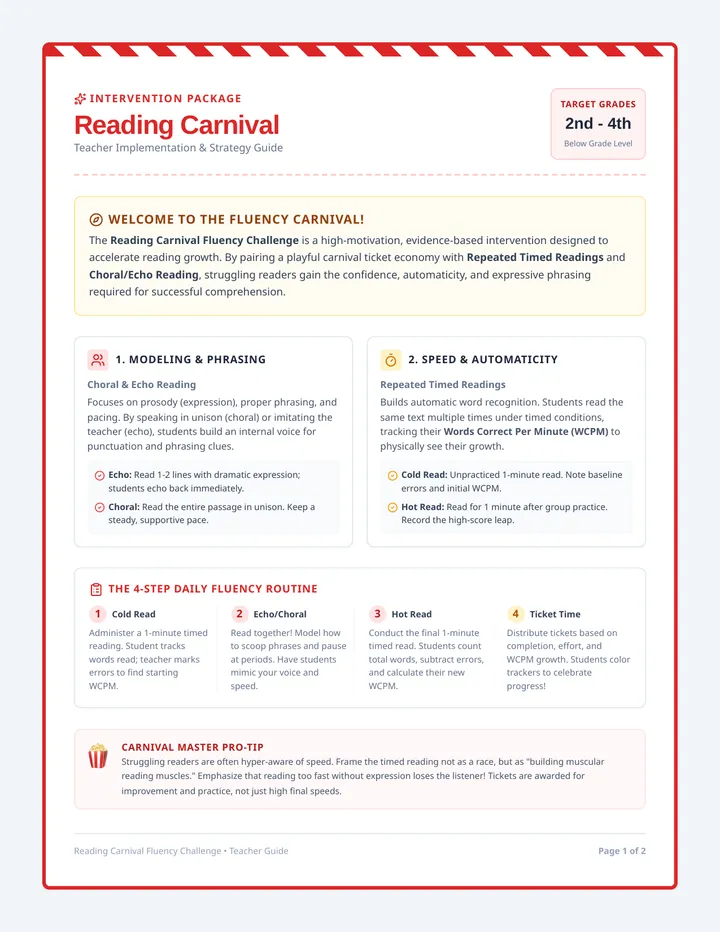
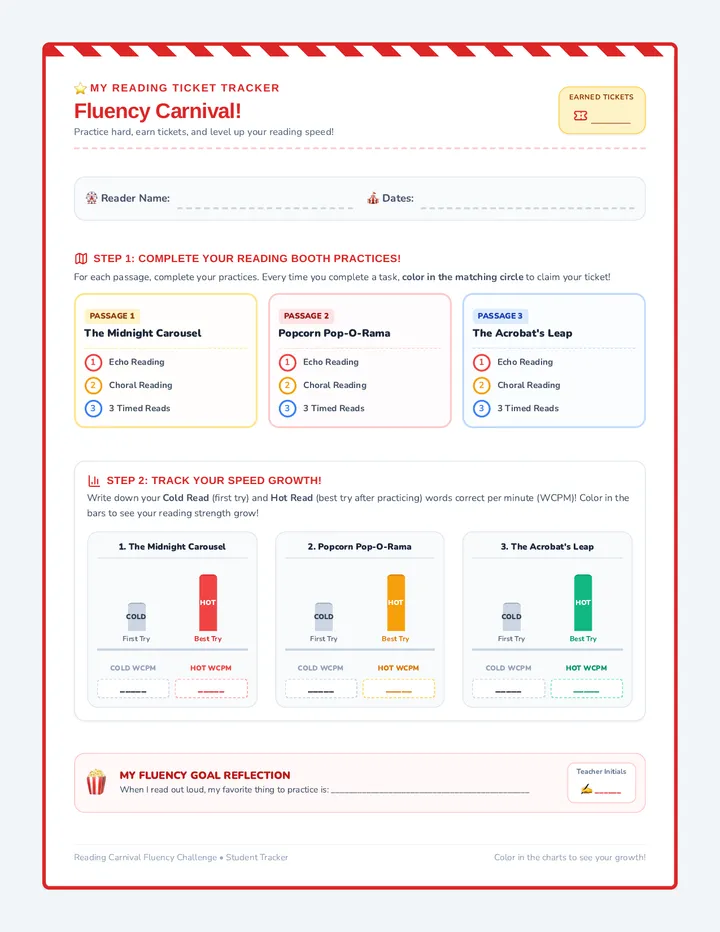
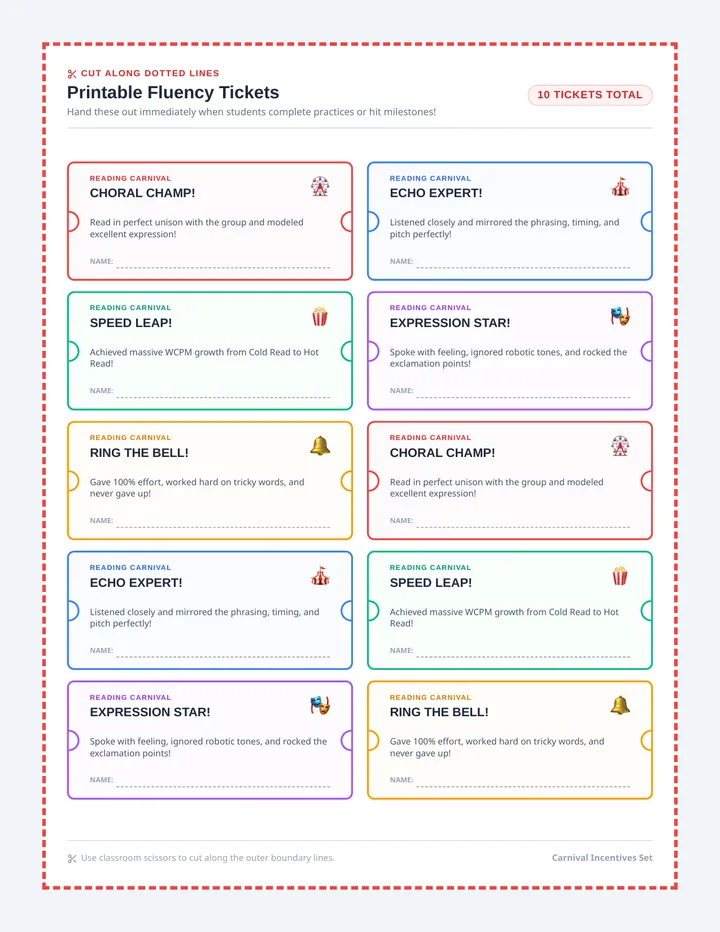
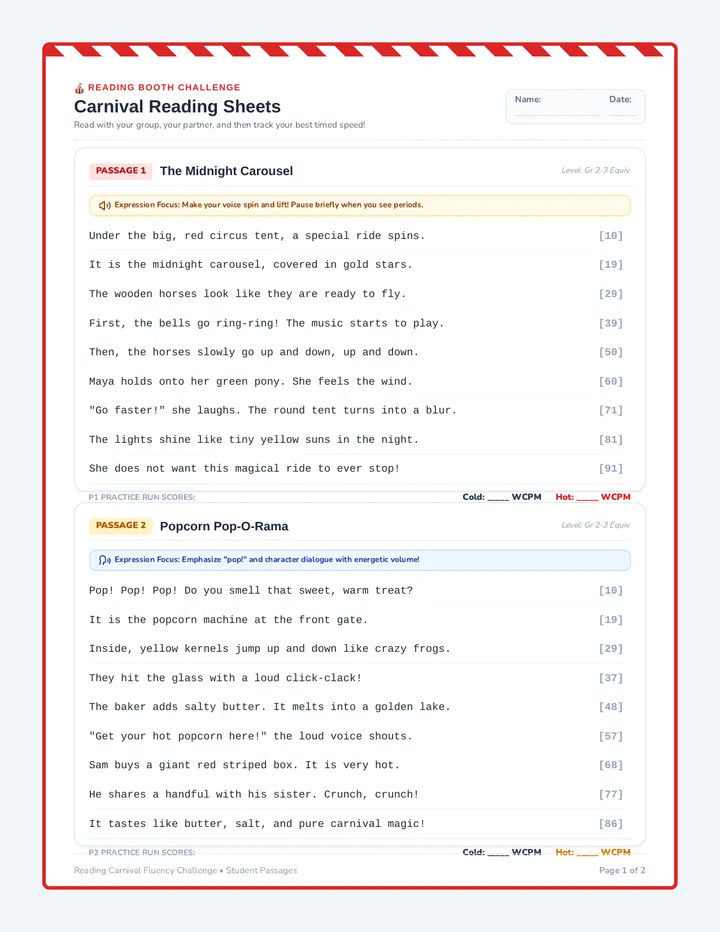
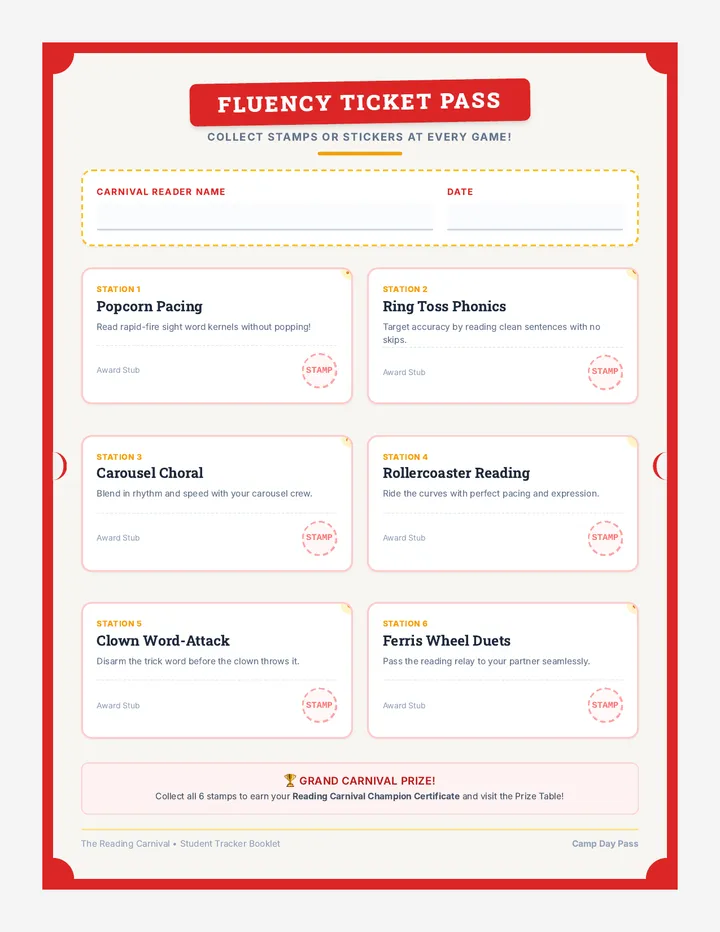
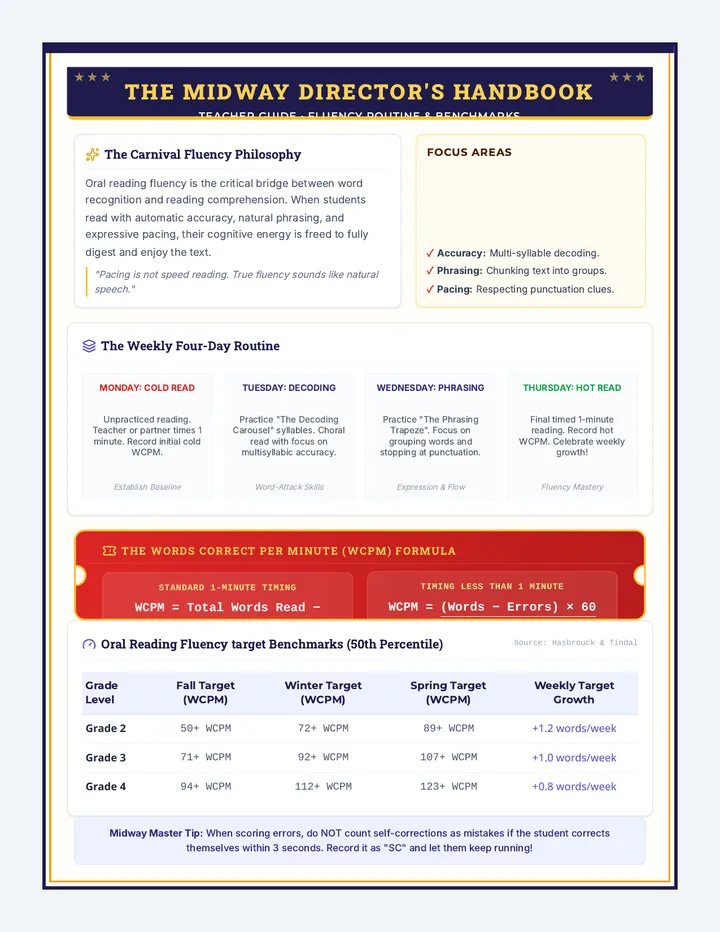
A complete intervention pack designed to boost reading fluency for 2nd-4th grade students reading below grade level. The pack contains teacher instructions, student tracking charts, printable carnival tickets, and themed passages optimized for repeated timed readings and choral/echo practice.
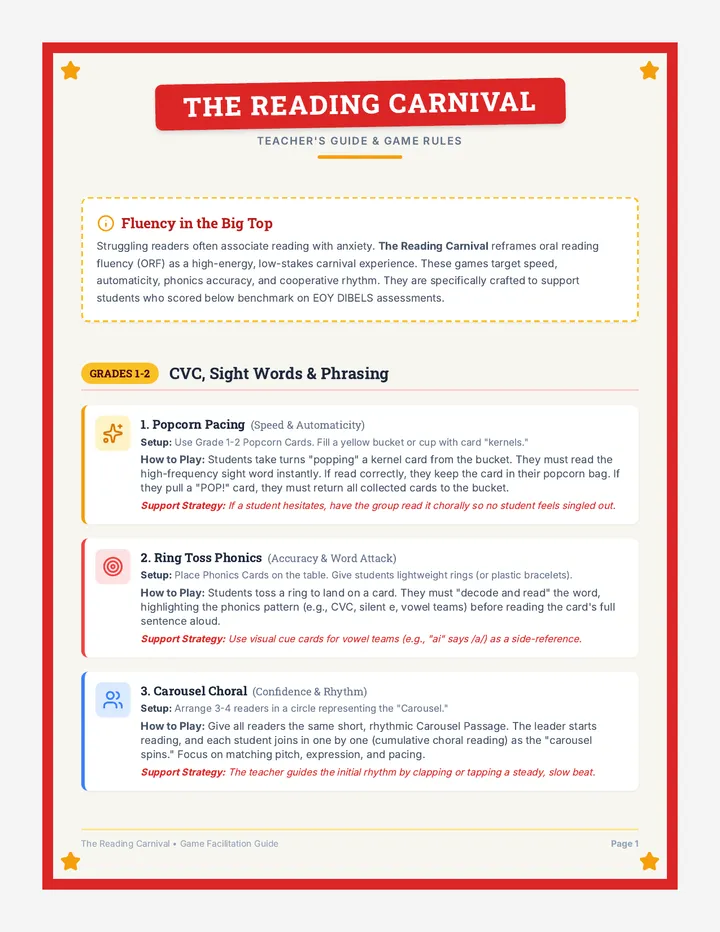
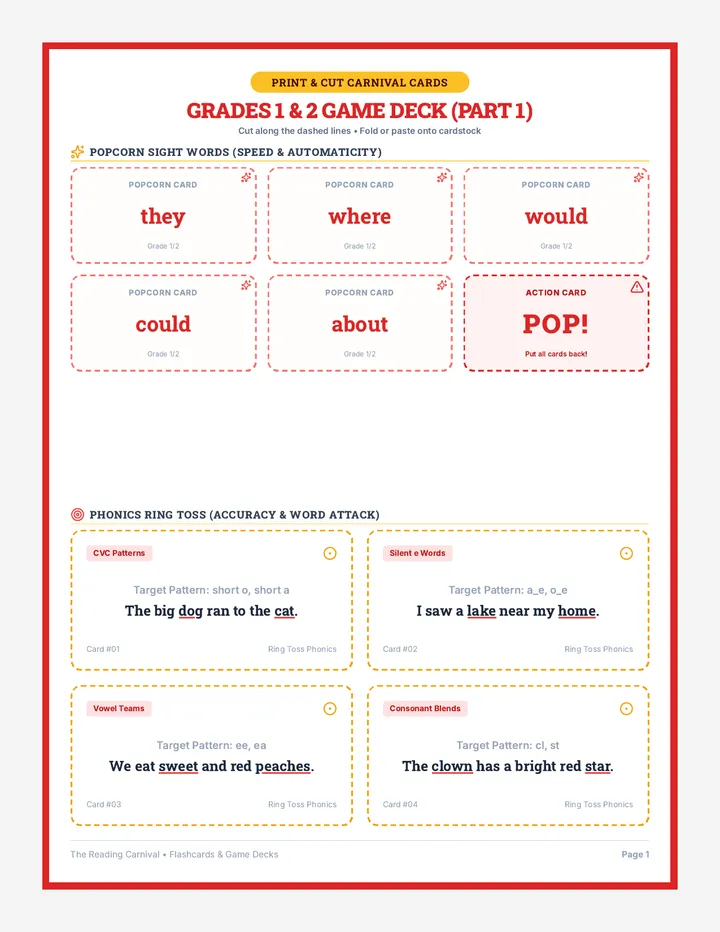
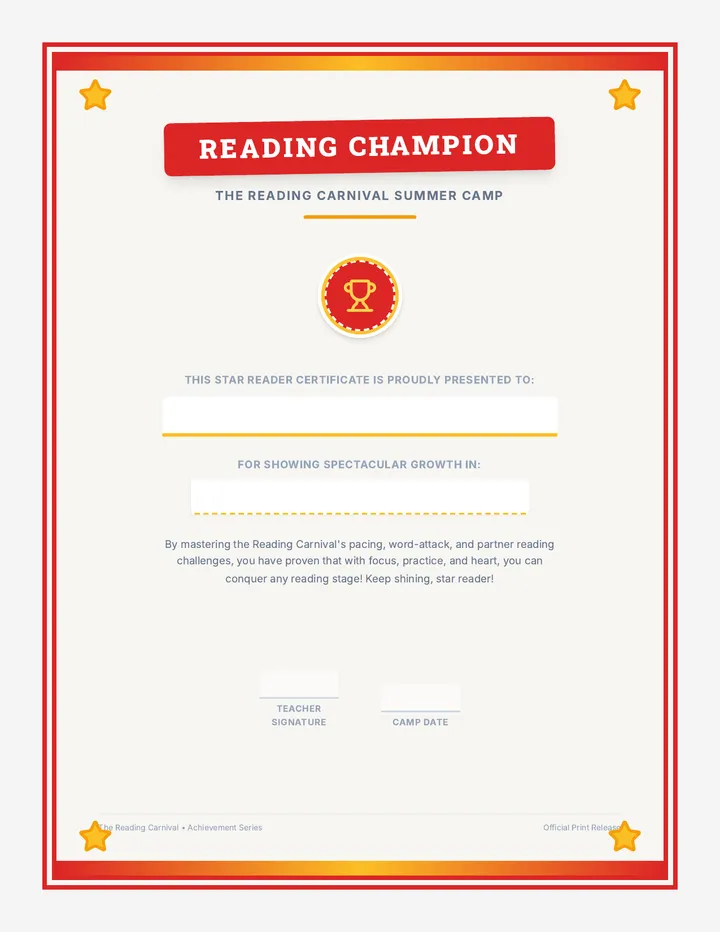
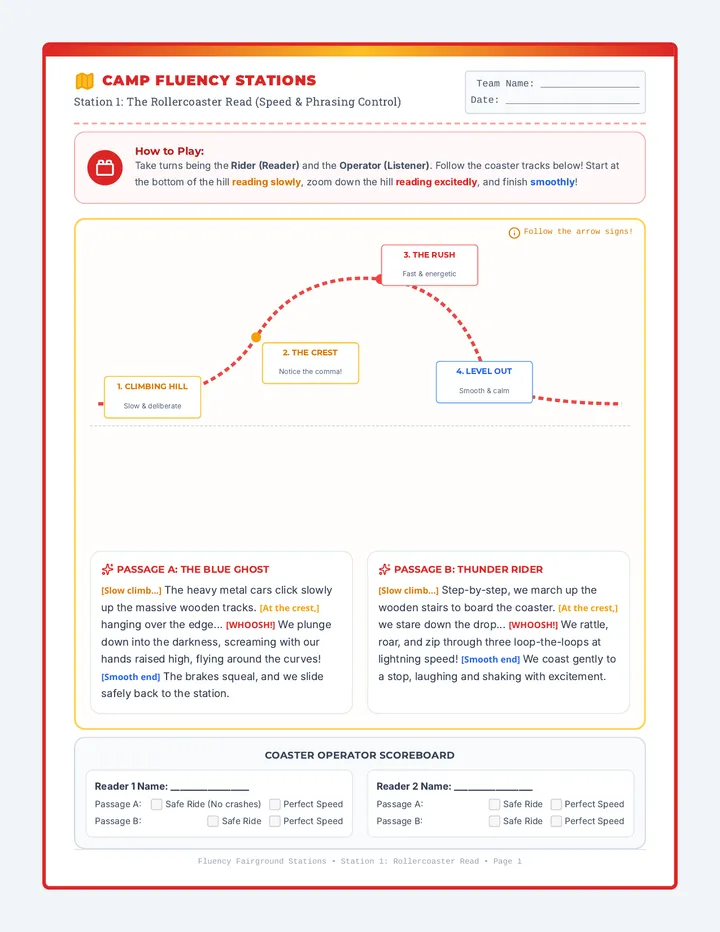
A comprehensive oral reading fluency bundle themed around 'The Reading Carnival'. It includes game guides, differentiated reading cards, progress trackers, and achievement awards designed specifically for struggling 1st-4th grade readers to build speed, accuracy, and confidence in a high-energy summer camp environment.
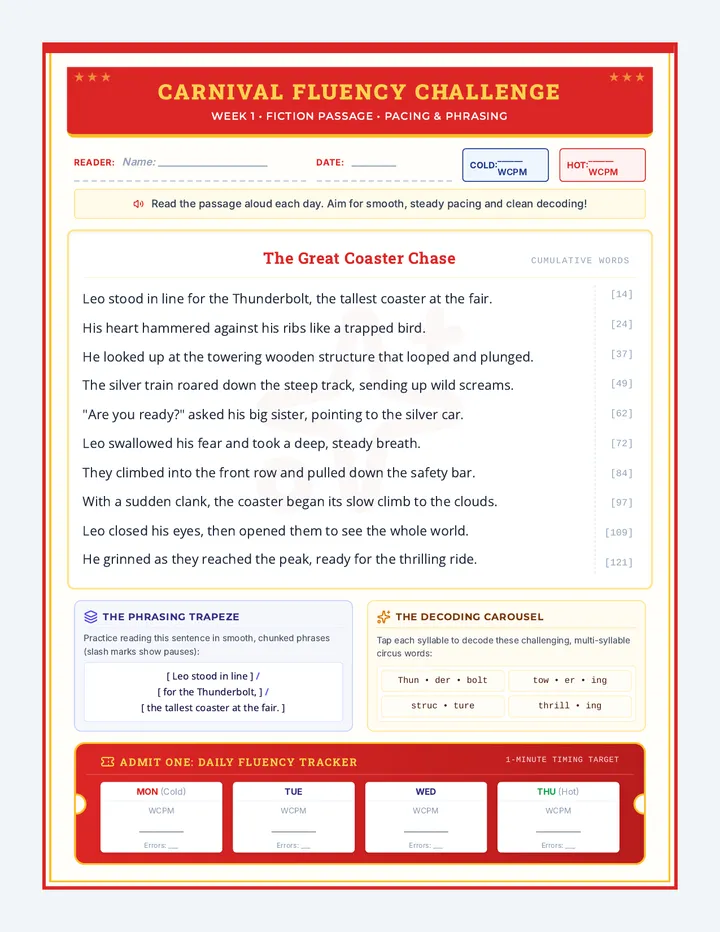
A weekly oral reading fluency program themed around a vintage carnival. It focuses on pacing, phrasing, and decoding multi-syllable words through engaging fiction and non-fiction passages with built-in trackers.
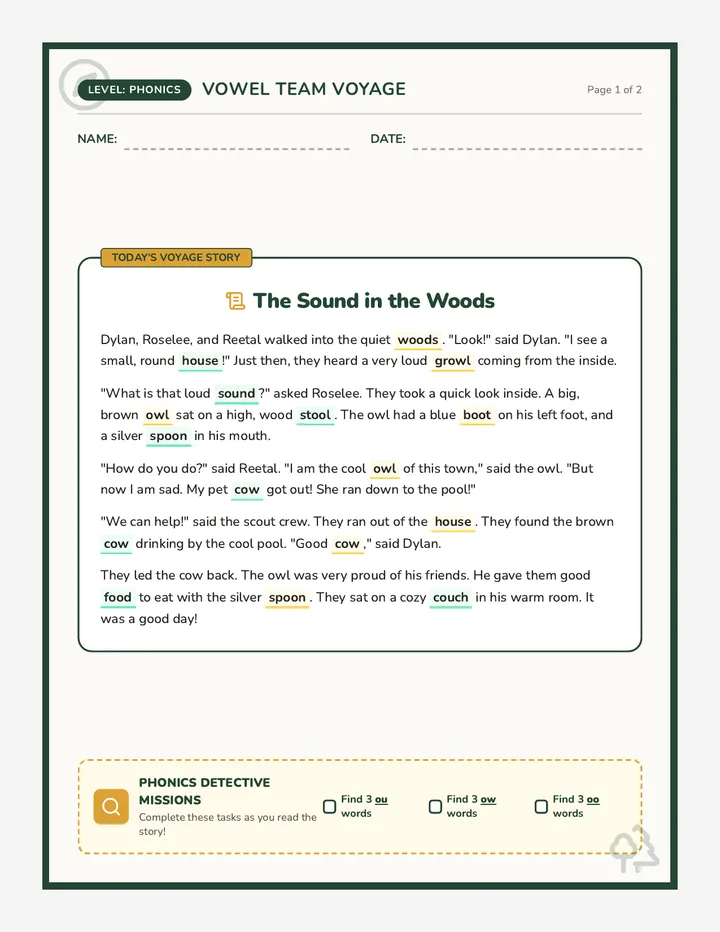
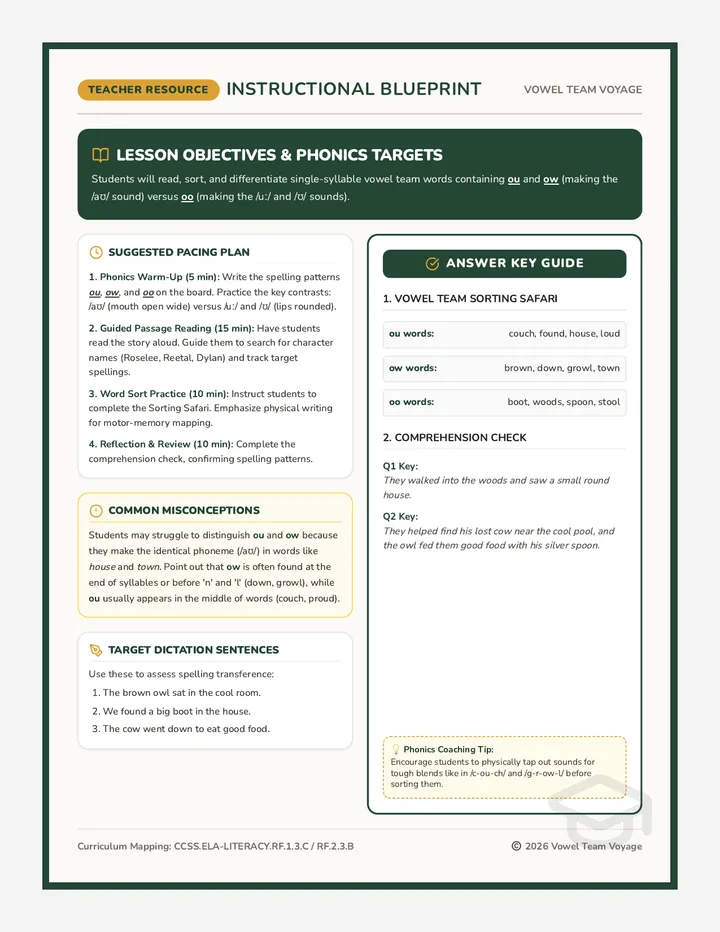
A targeted phonics lesson focused on contrasting single-syllable words containing 'ou', 'ow', and 'oo' vowel teams. Students read an engaging phonics story featuring Roselee, Reetal, and Dylan, and complete structured word-sorting and reading comprehension exercises.
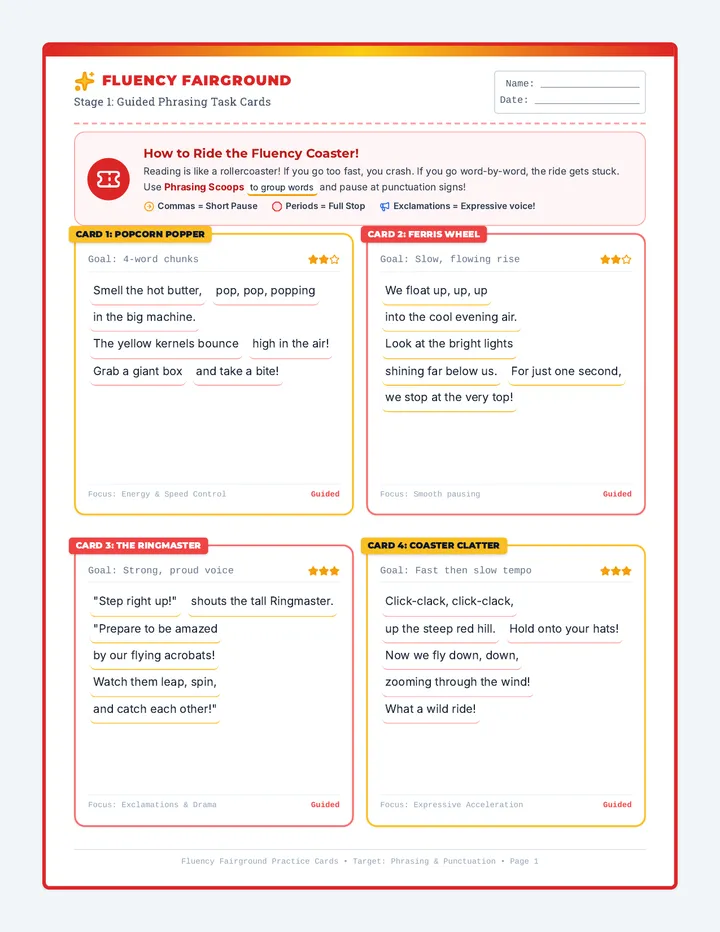
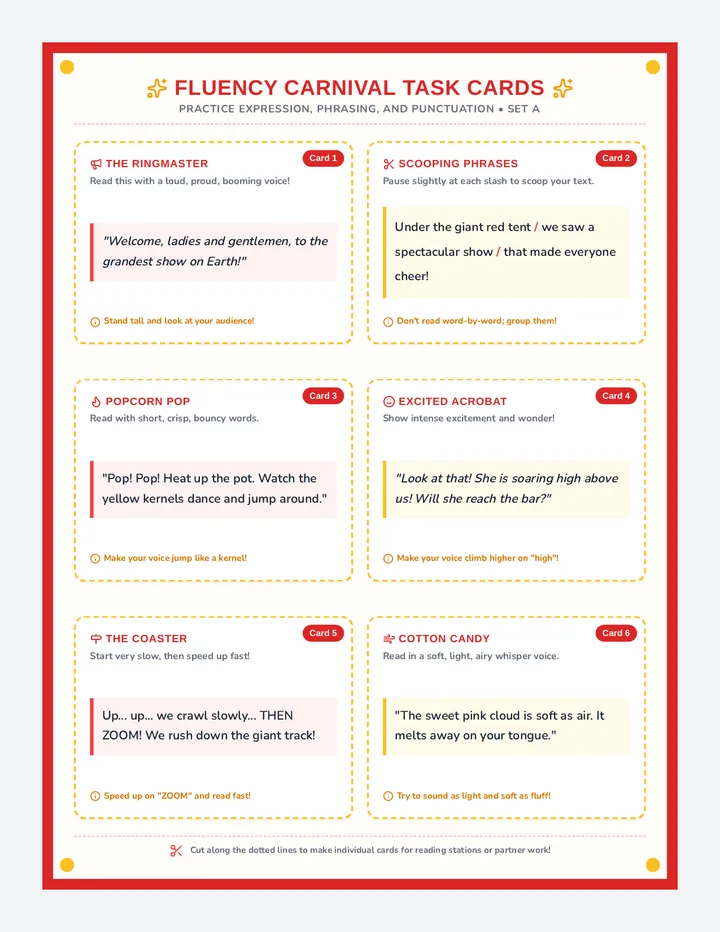
A high-energy, carnival-themed literacy package designed to boost oral reading fluency with a focus on phrasing and punctuation. Features print-and-cut phrasing task cards, partner-based carnival games, and a dramatic Reader's Theater script set under the Big Top.
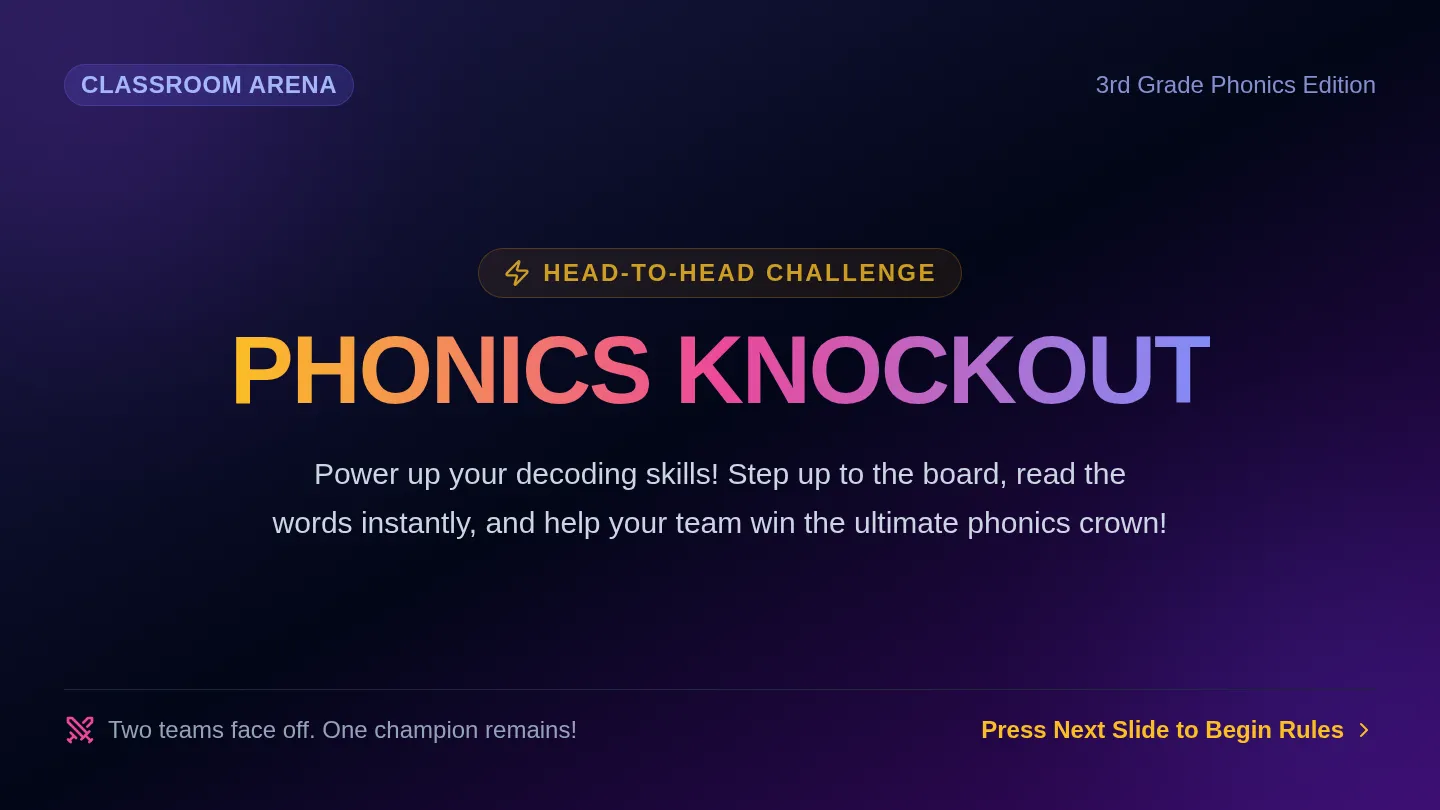
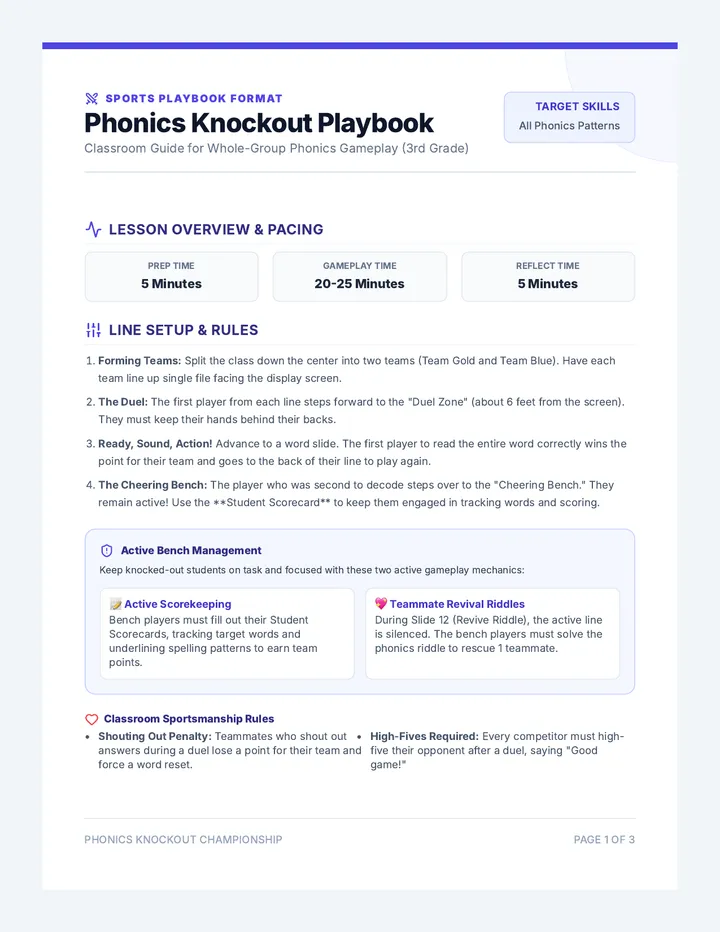
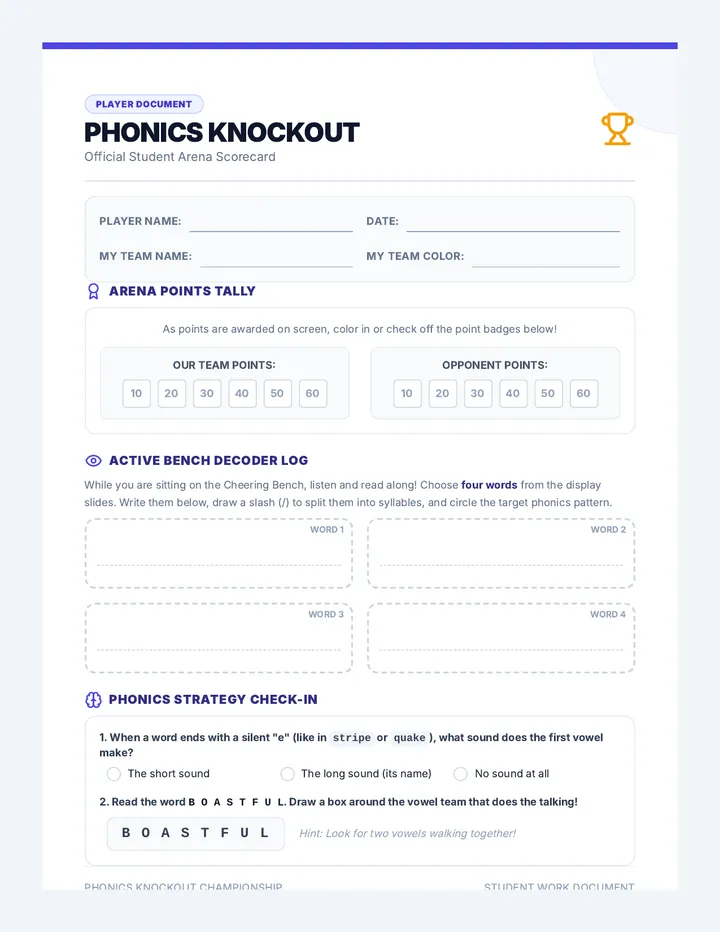
A high-energy, competitive phonics game designed for 3rd-grade classrooms. Students face off head-to-head to quickly decode complex phonics patterns including r-controlled vowels, vowel teams, digraphs, and silent e.
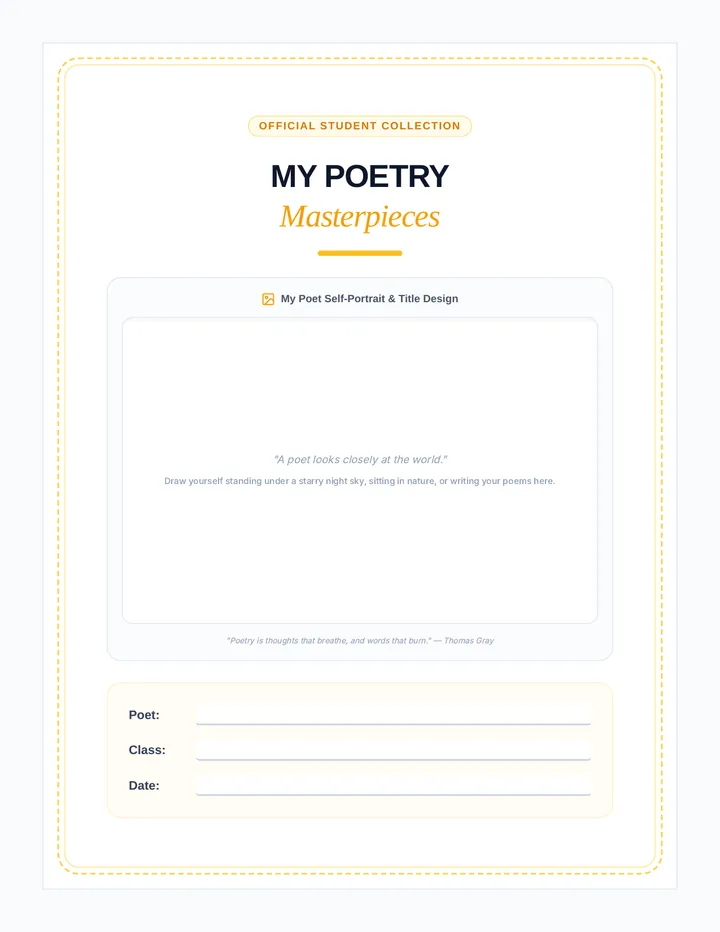
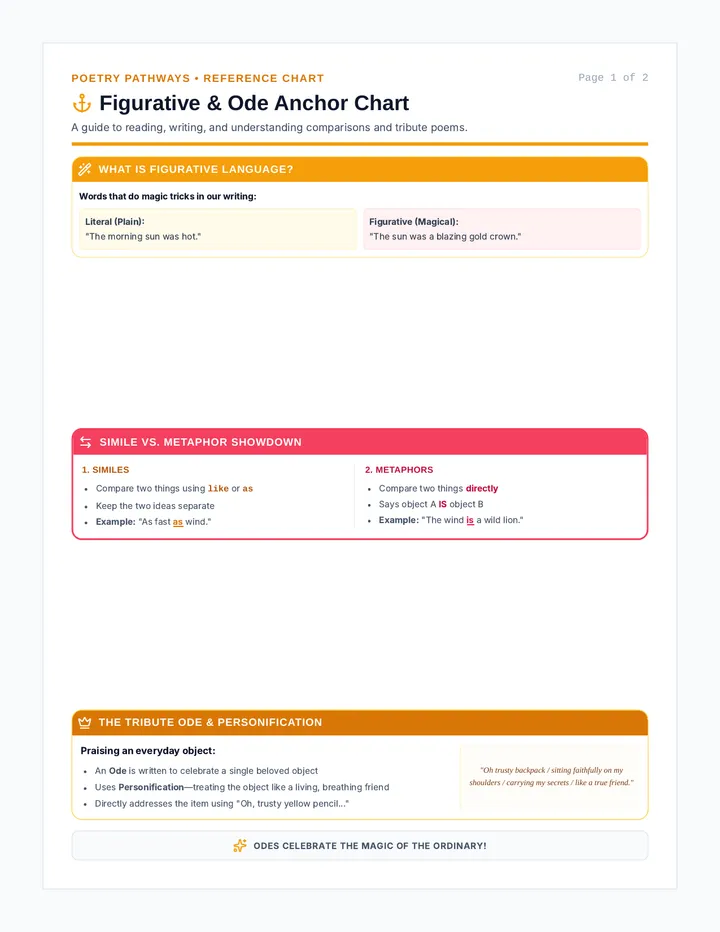
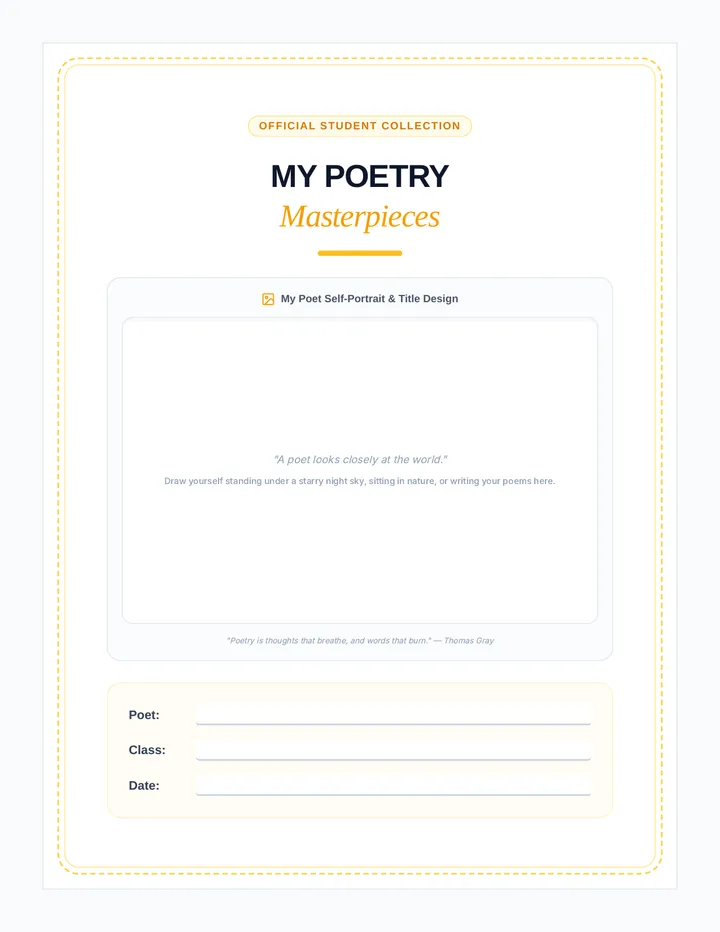
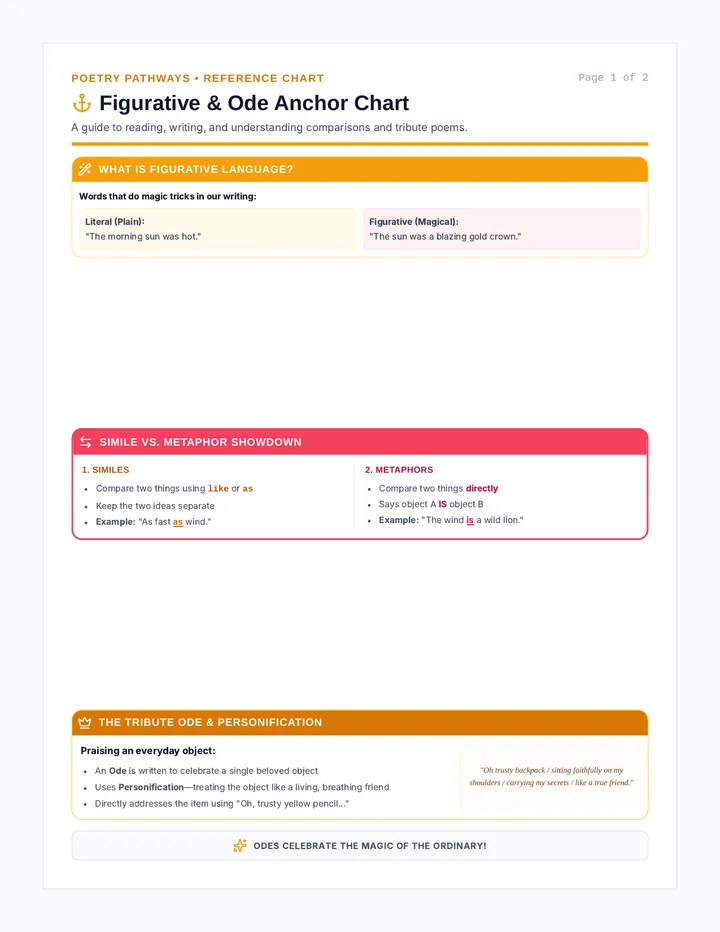
Focuses on using Metaphors and Similes to create powerful figurative imagery. Includes a final "My Poetry Masterpieces" portfolio cover and peer celebration review pages.
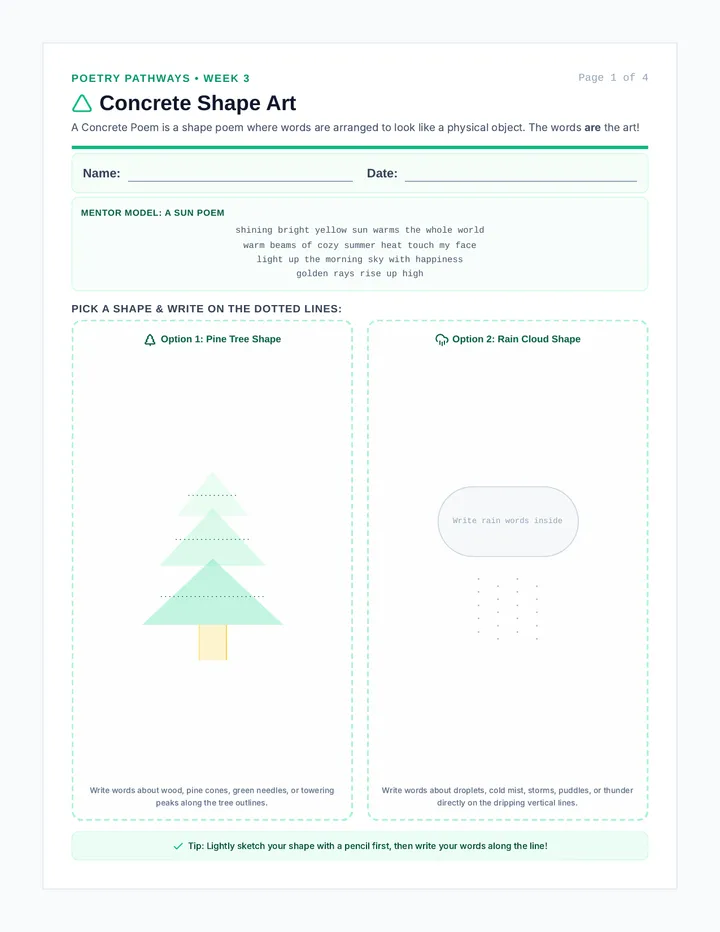
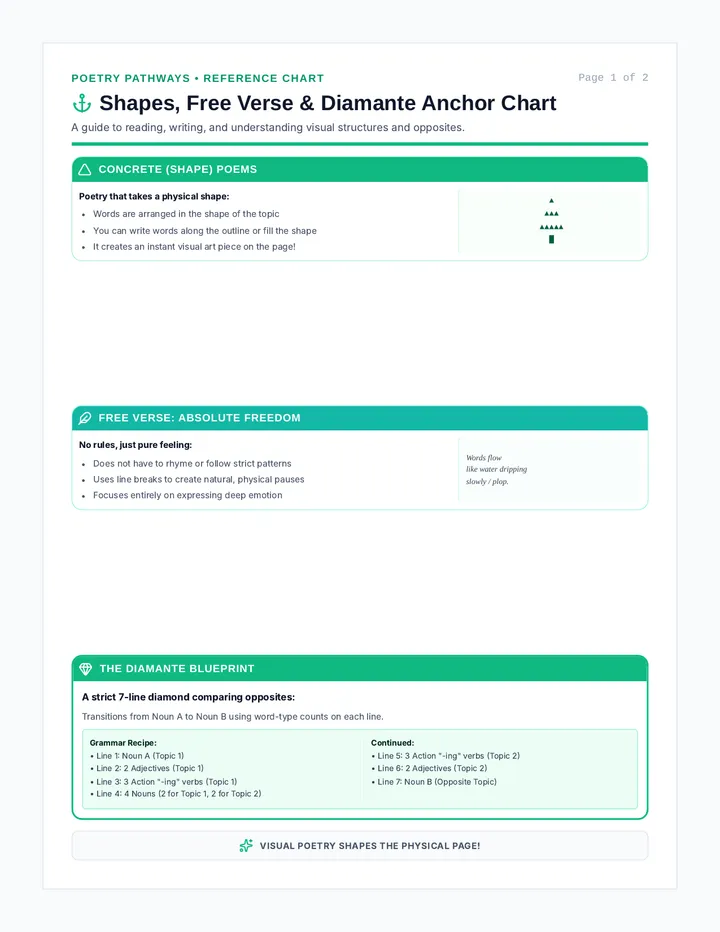
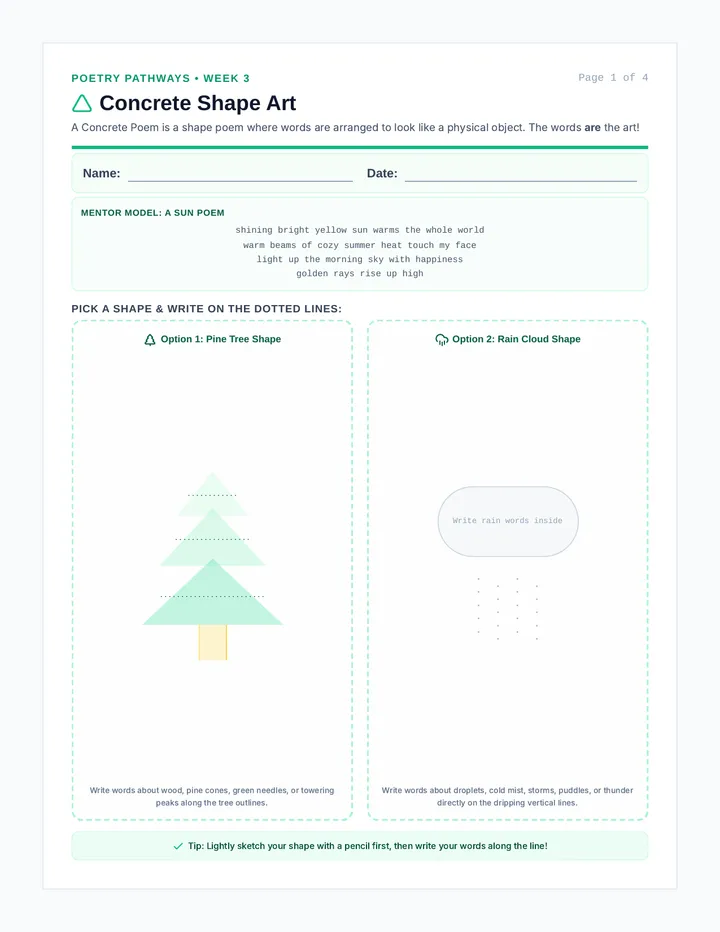
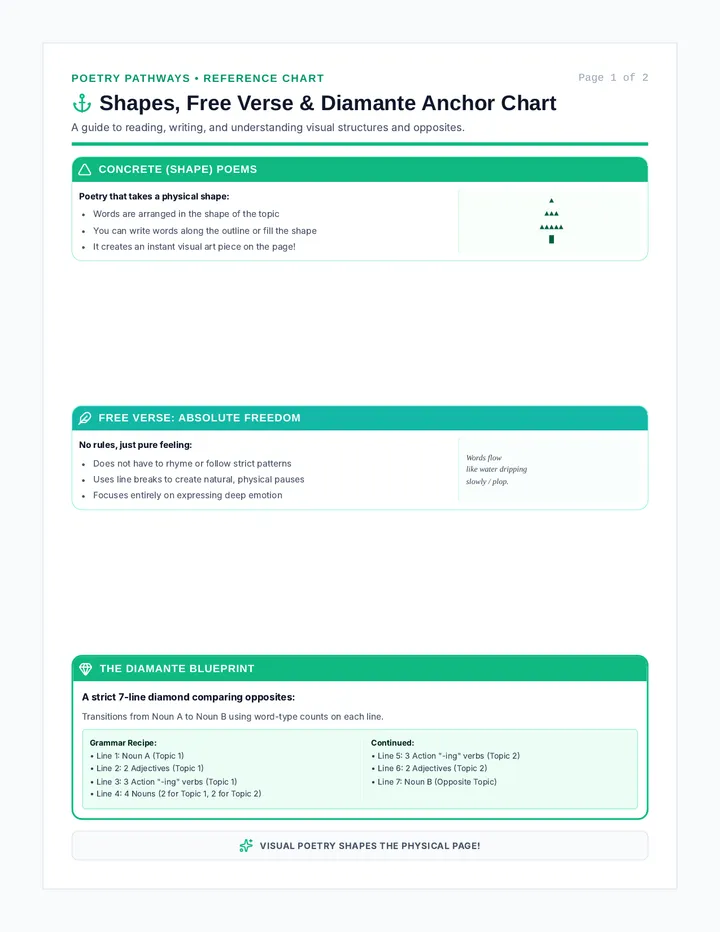
Focuses on shape, movement, and visual arrangement with Concrete (Shape) Poems and Free Verse. Provides scaffolded outline guides, word maps, and sensory feeling prompts.
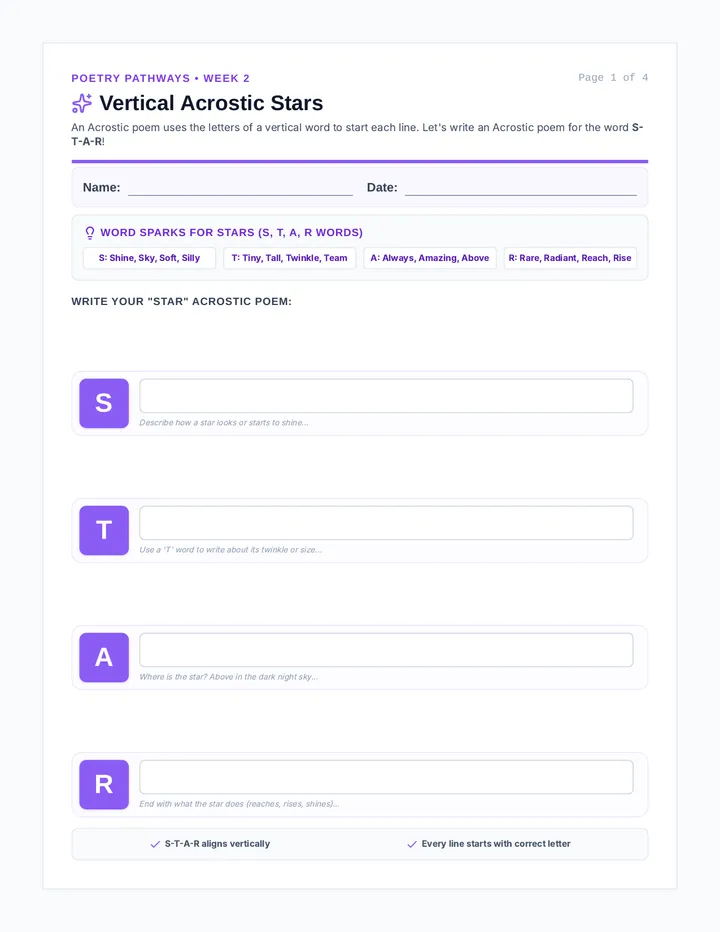
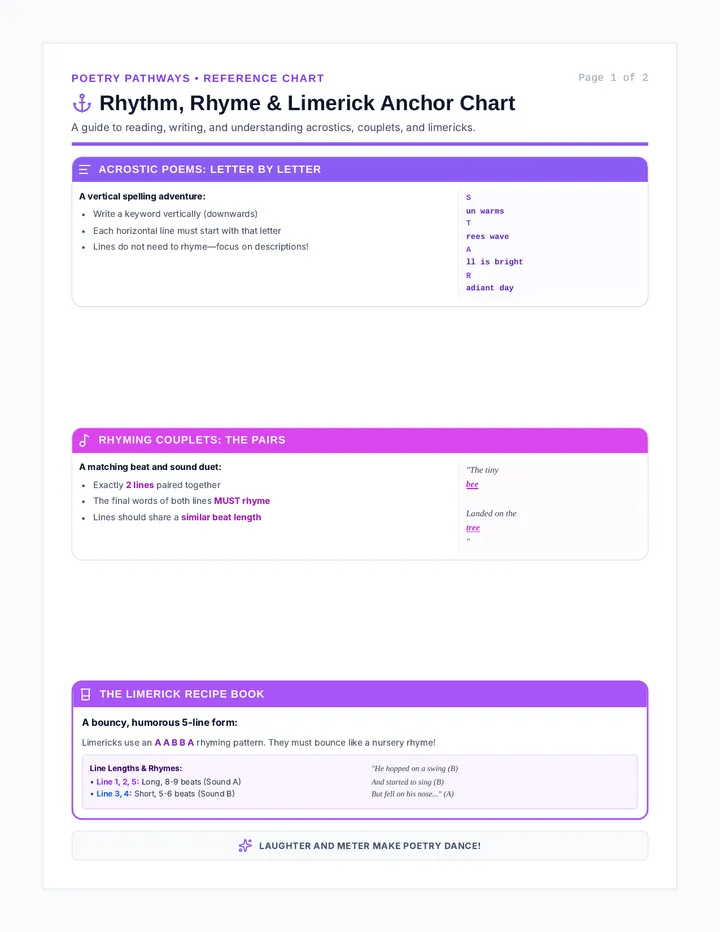
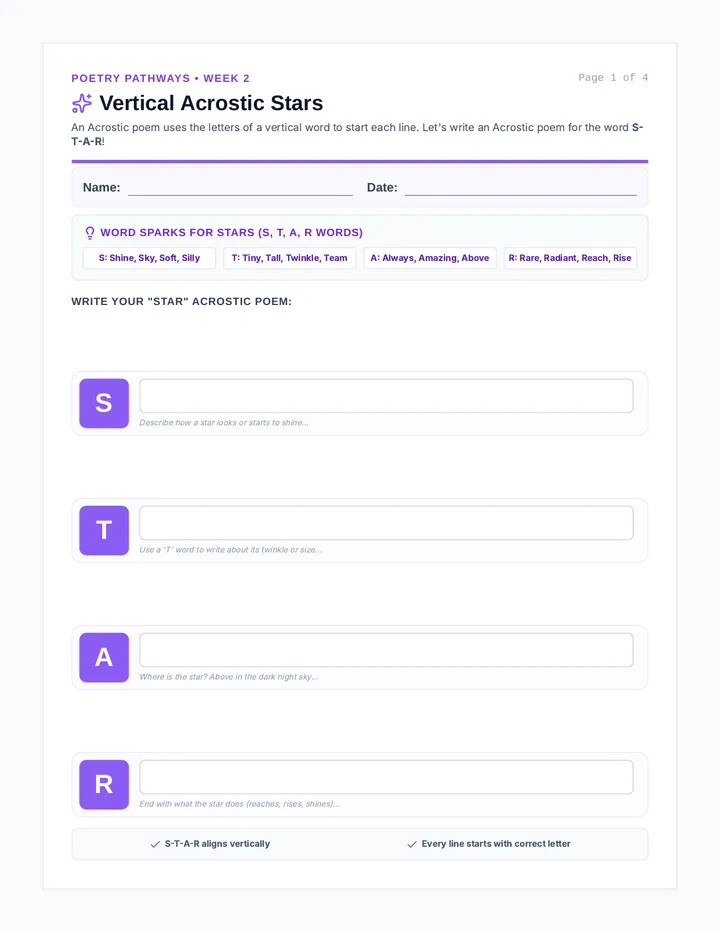
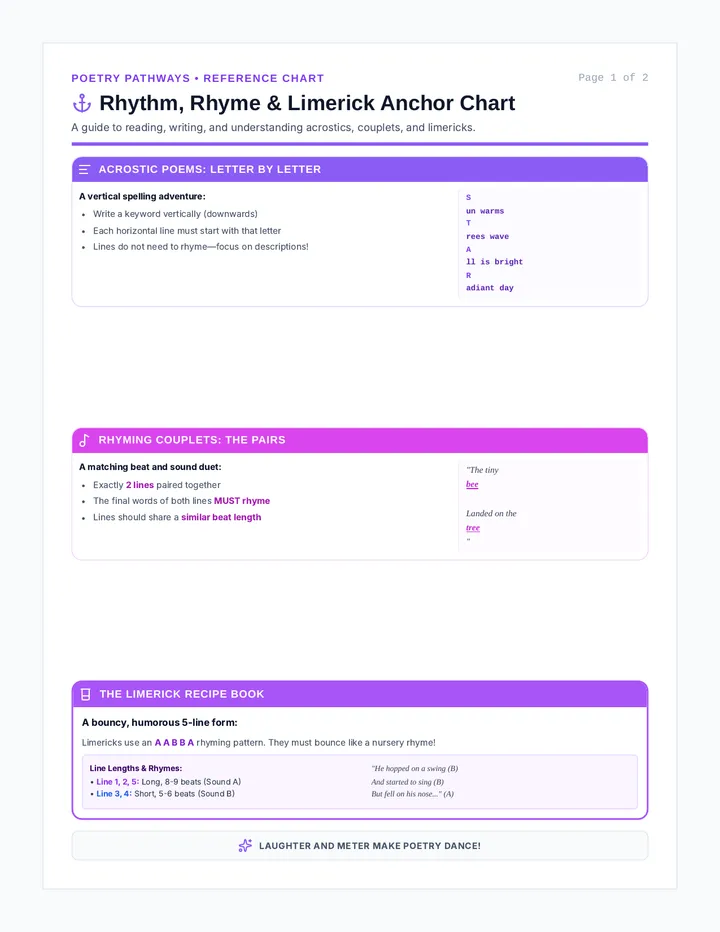
Focuses on structure, rhythm, and sound through Acrostic Poems and Rhyming Couplets. Offers step-by-step graphic templates, letter grids, rhyming dictionaries, and syllable beat counters.
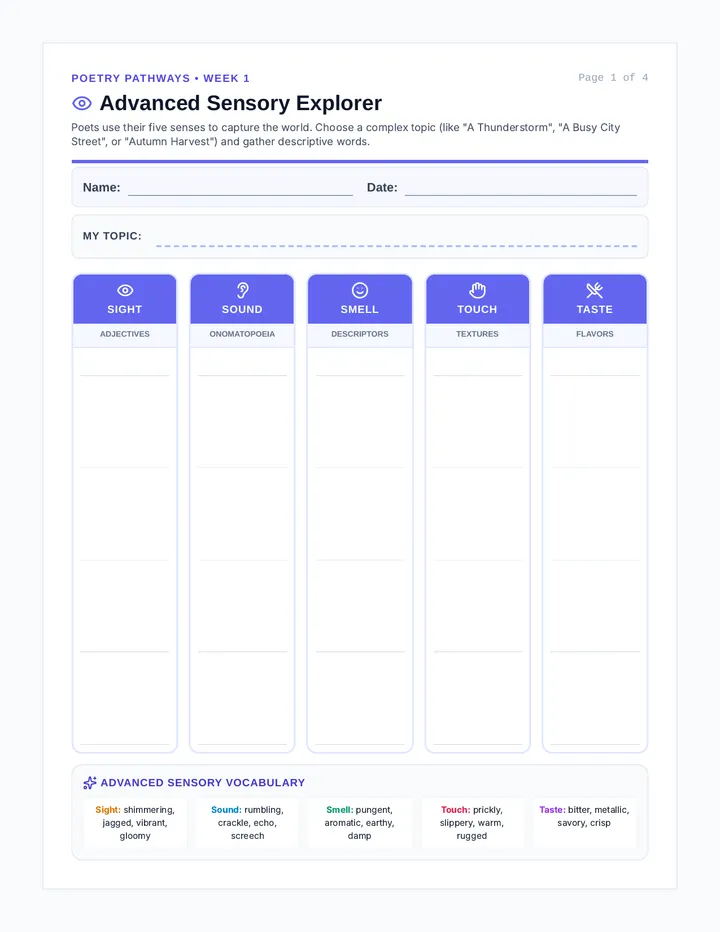
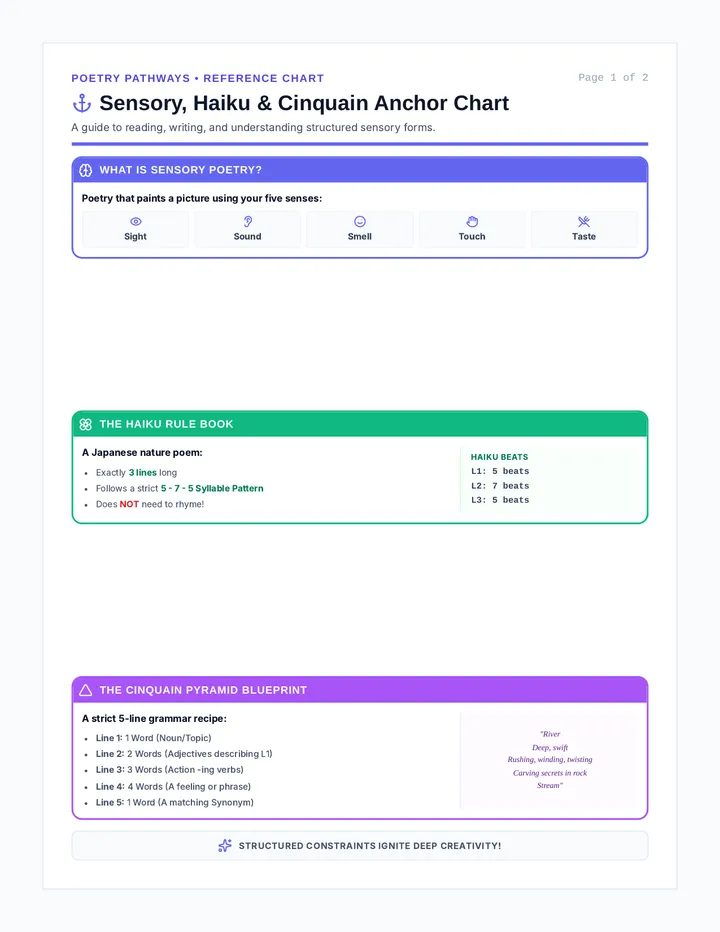
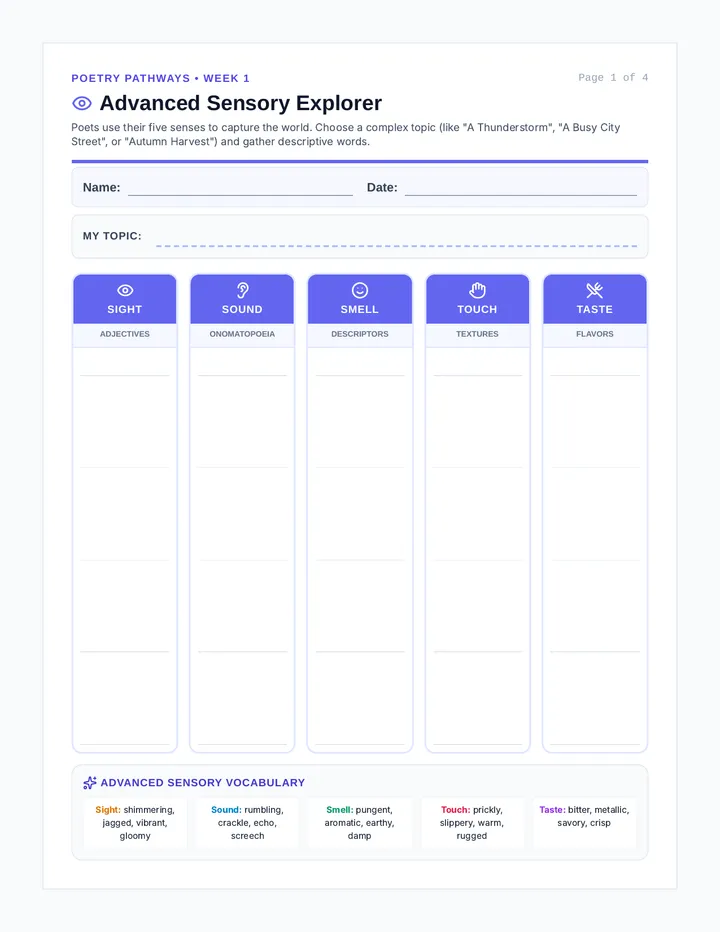
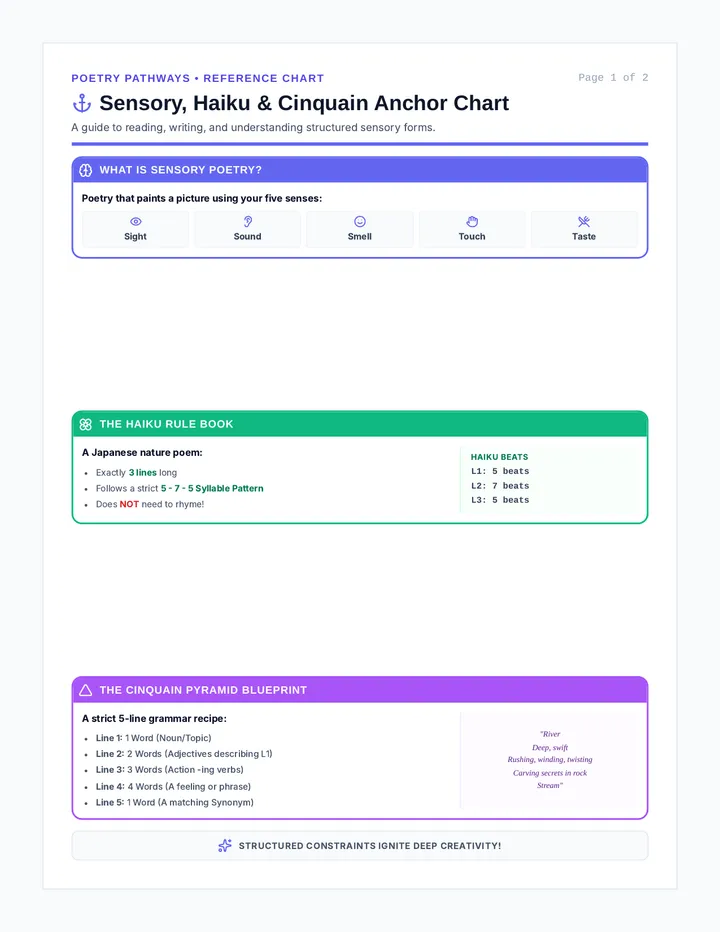
Focuses on Sensory and Color Poetry (Haiku and Color Poems). Students explore imagery using their five senses, utilizing highly visual sensory organizers, word banks, and syllable counters.
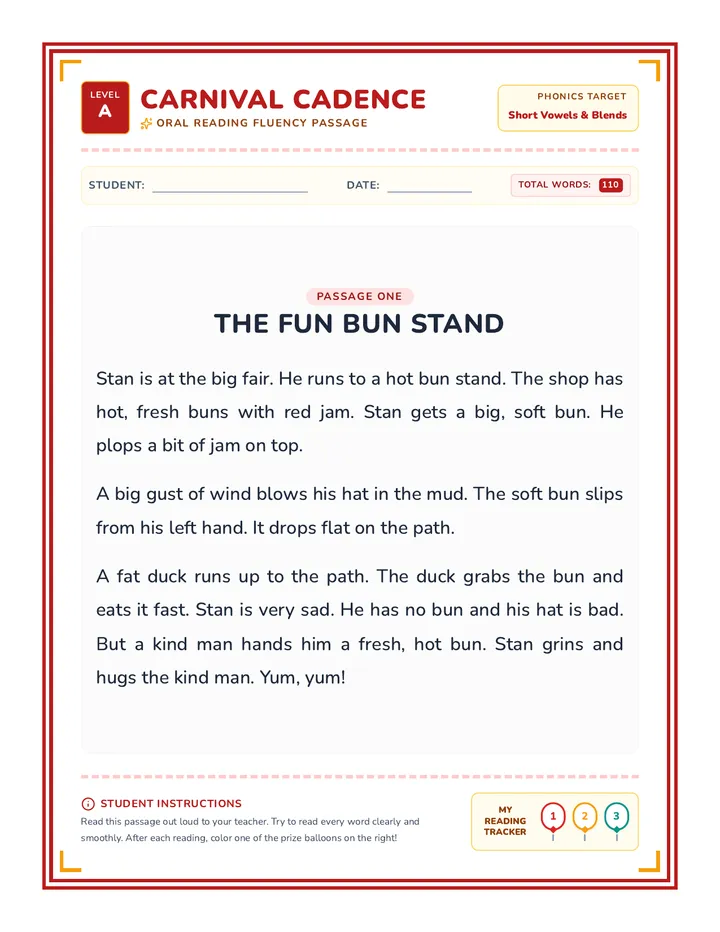
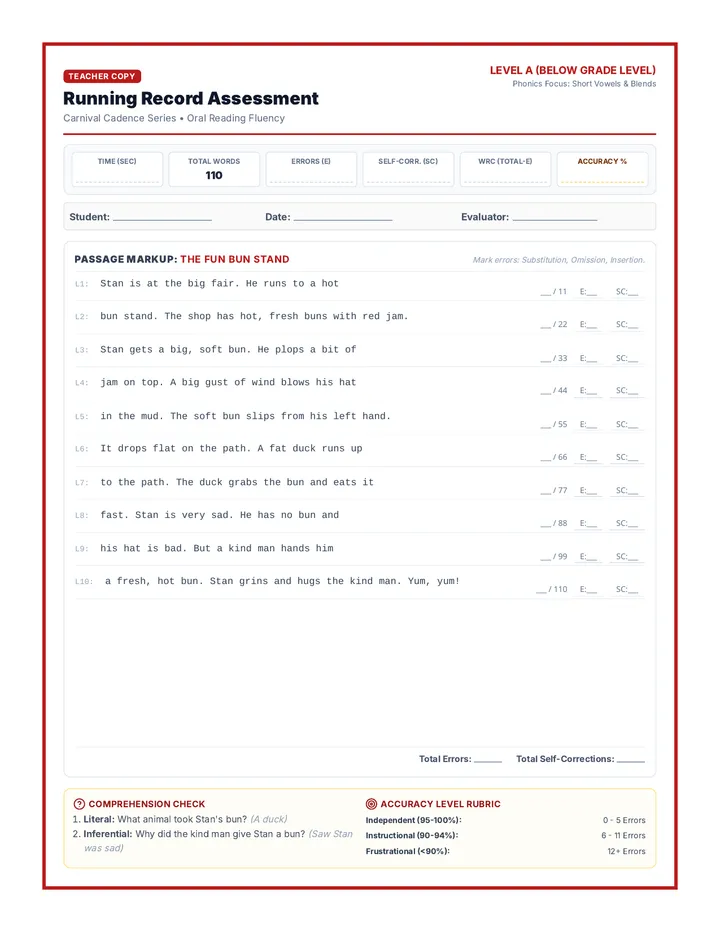
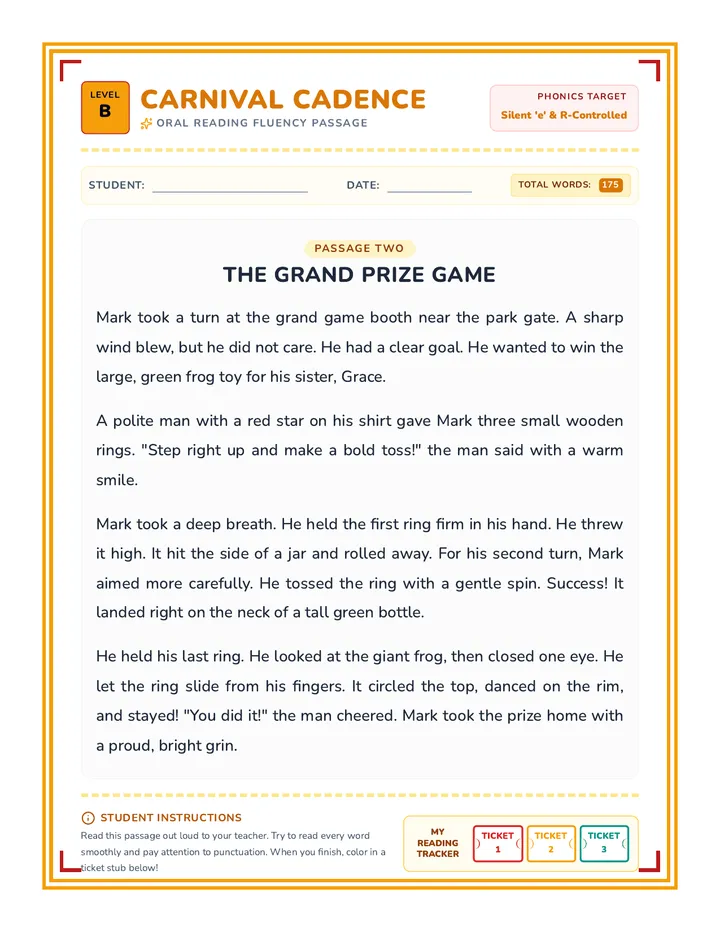
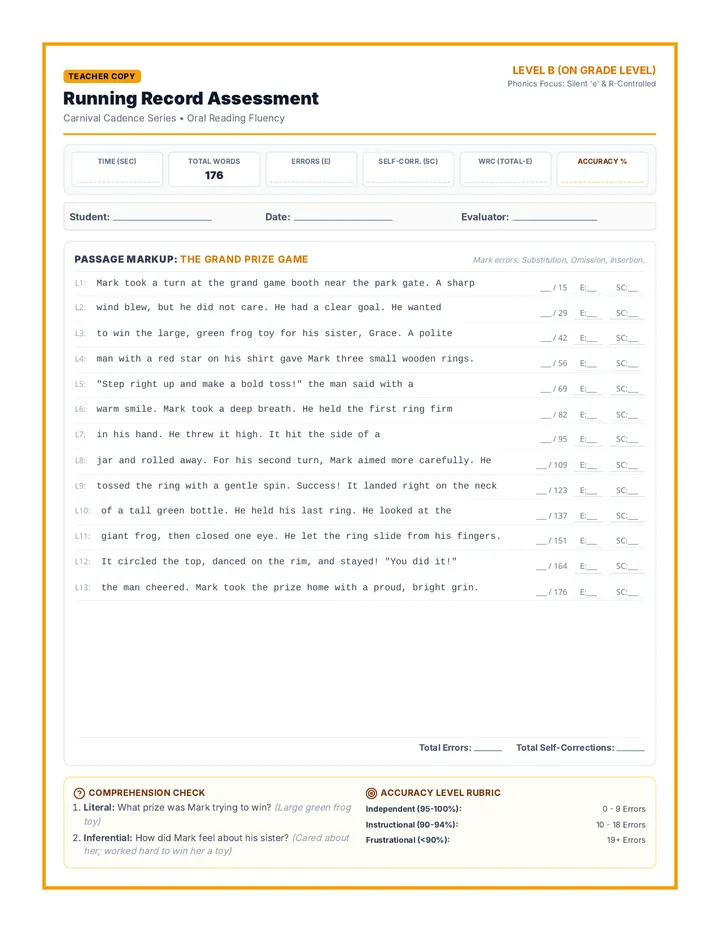
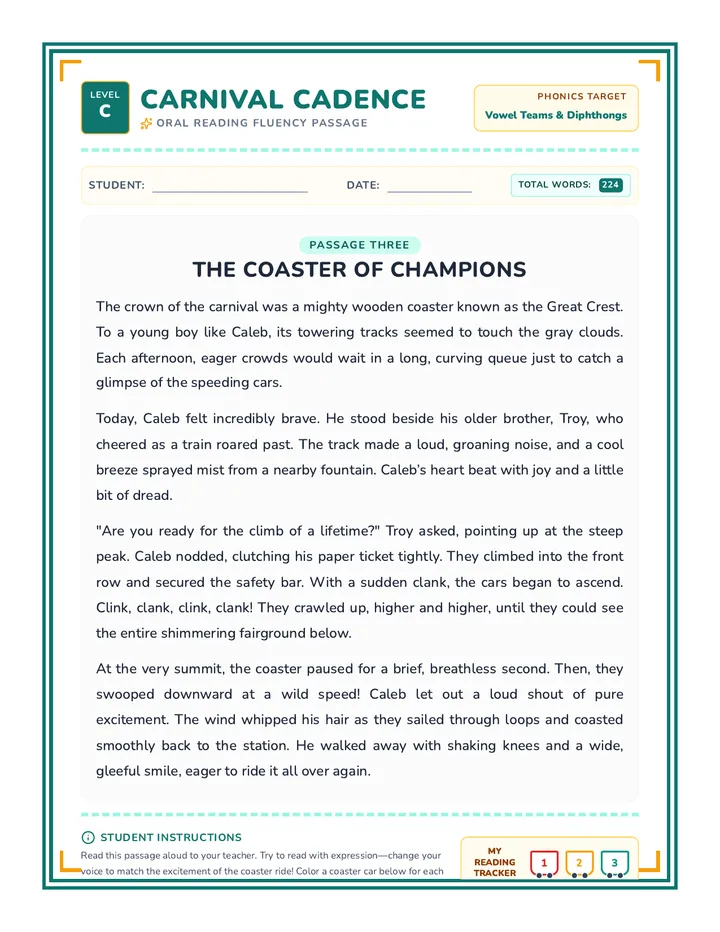
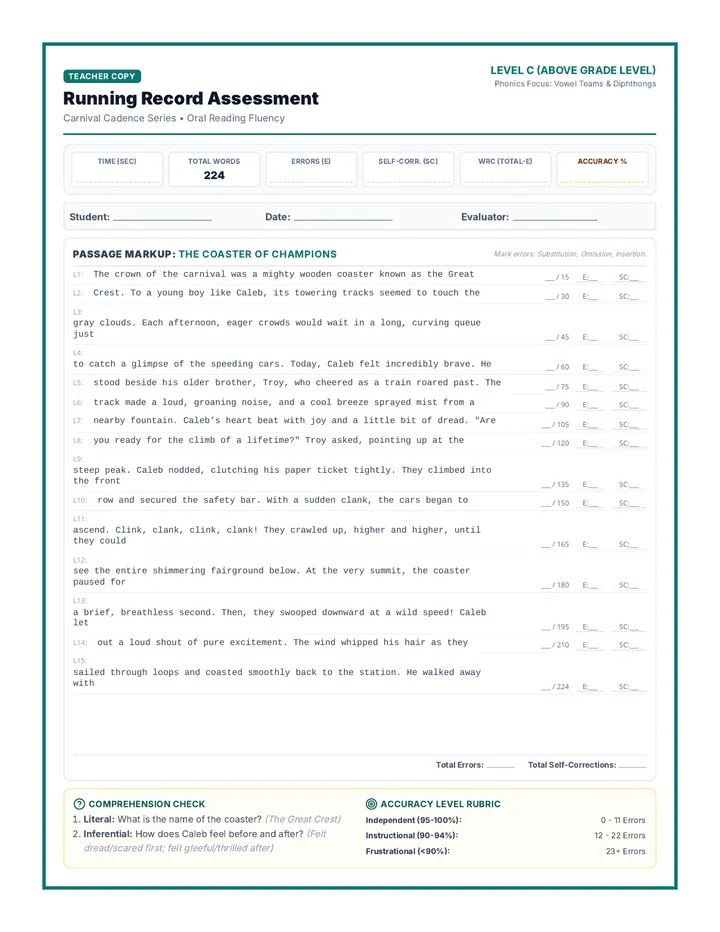
Differentiated carnival-themed reading passages and matching teacher running record forms designed to boost oral reading fluency and target specific phonics patterns.
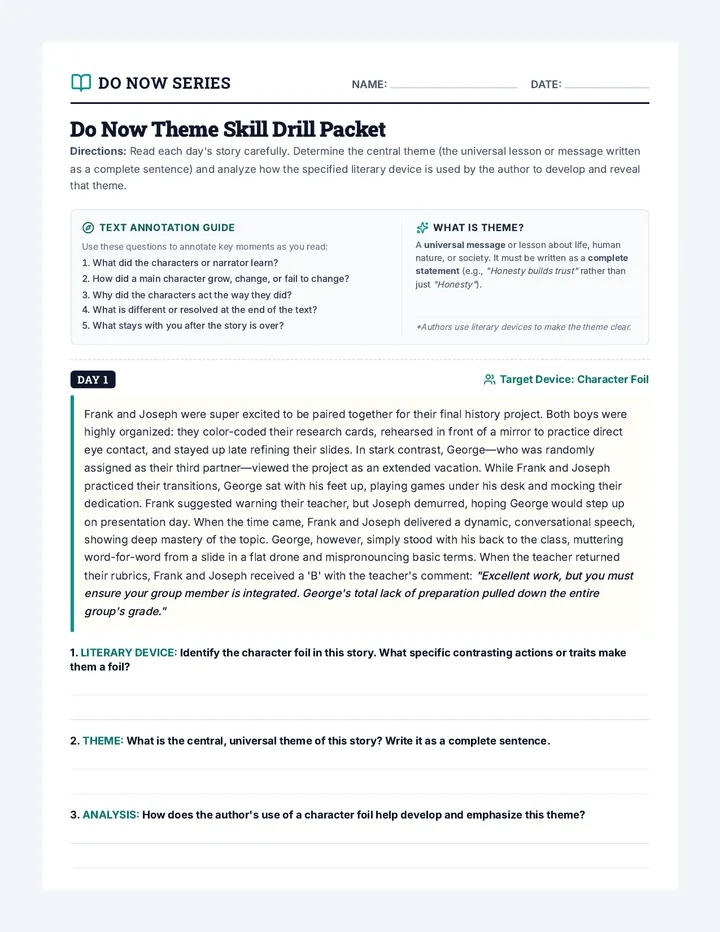
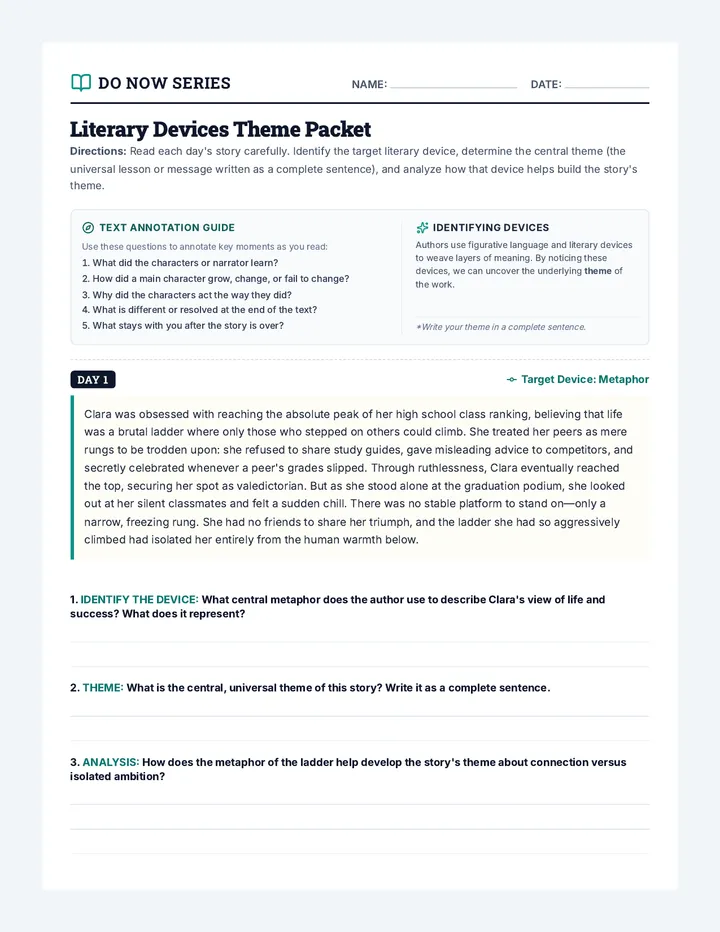
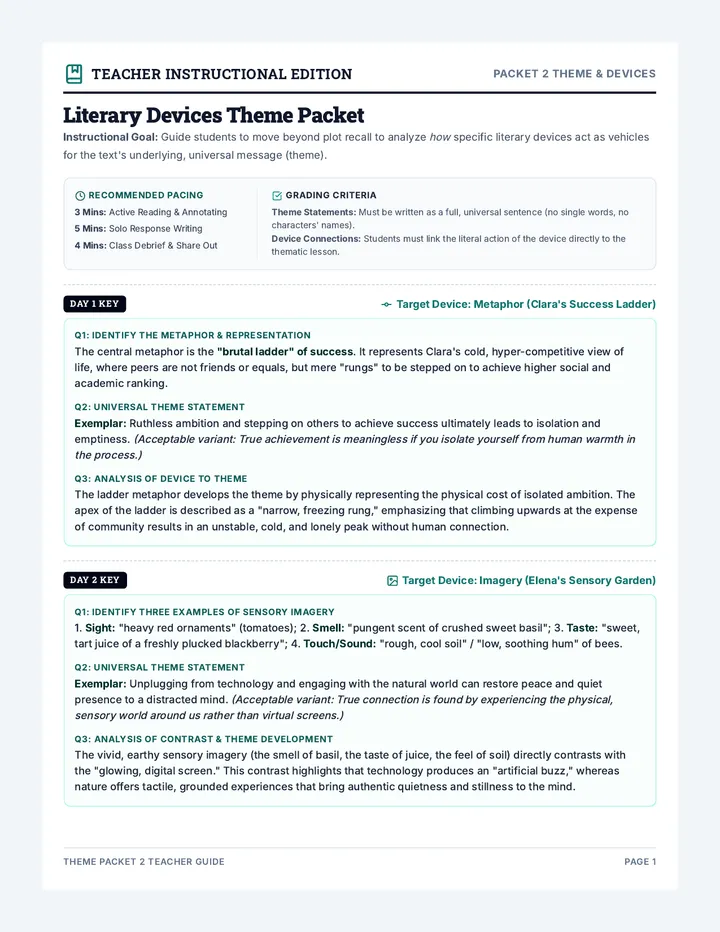
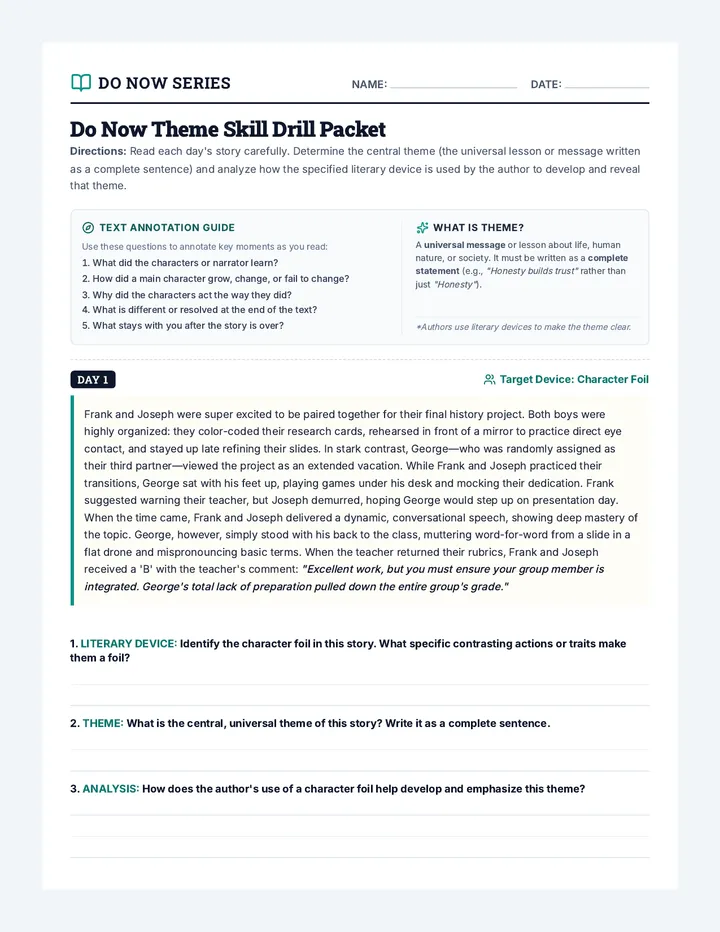
A cohesive lesson and drill series designed to help students master the connection between explicit literary devices and the central themes of literary texts.
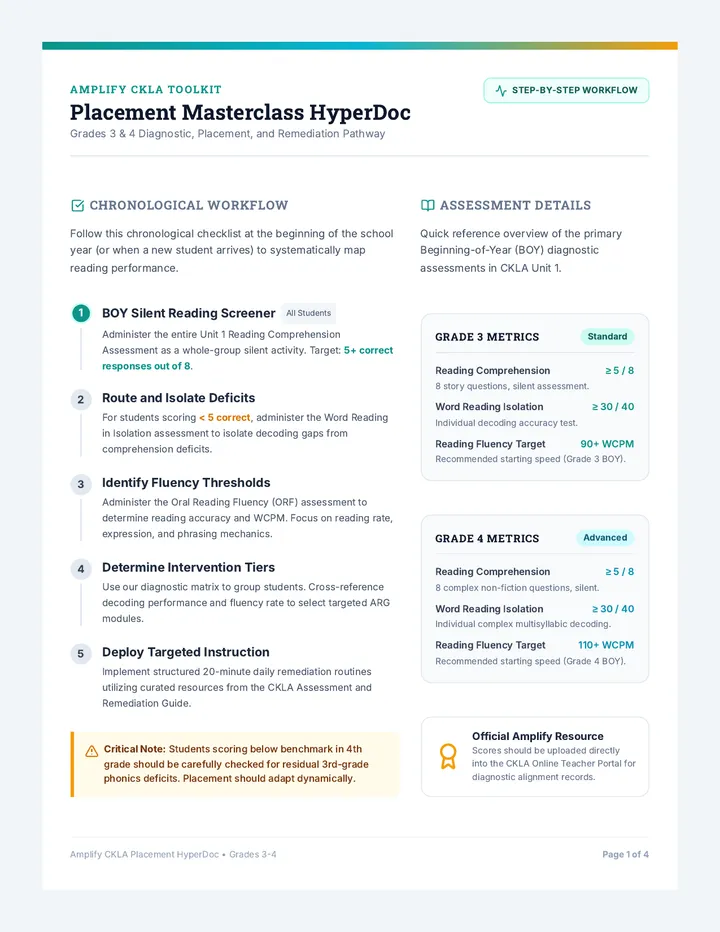
A specialized lesson designed for third and fourth-grade educators to master the CKLA placement, diagnostic, and remediation pathways. This lesson contains professional guides, visual flowcharts, and student grouping trackers to streamline the intervention process.
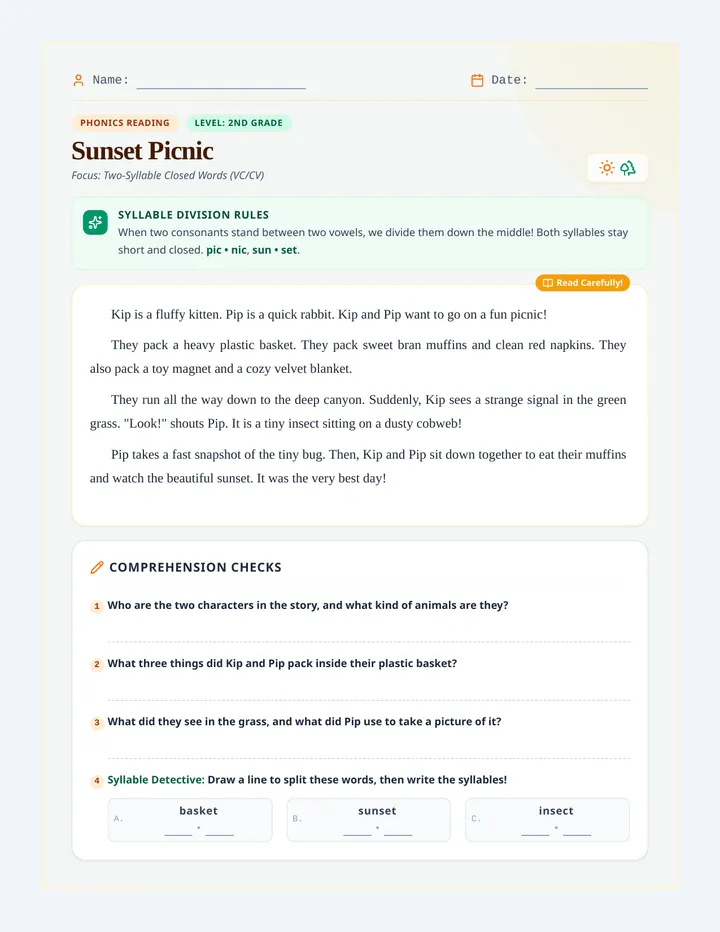
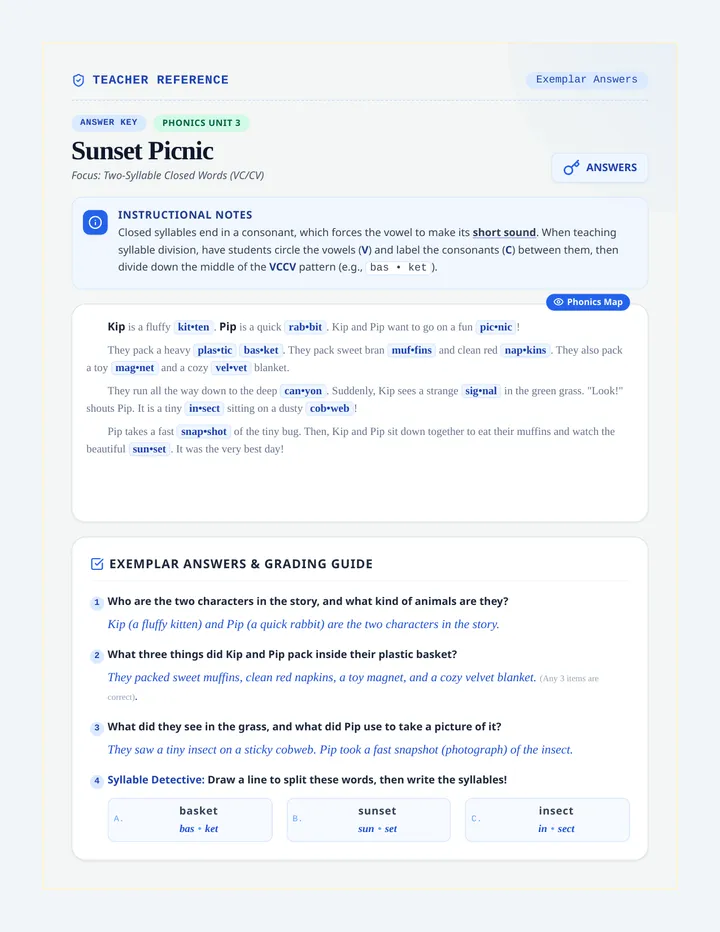
A primary phonics lesson focusing on decoding and understanding two-syllable words with closed syllables. Students practice syllable division, read a decodable story, and answer reading comprehension questions.
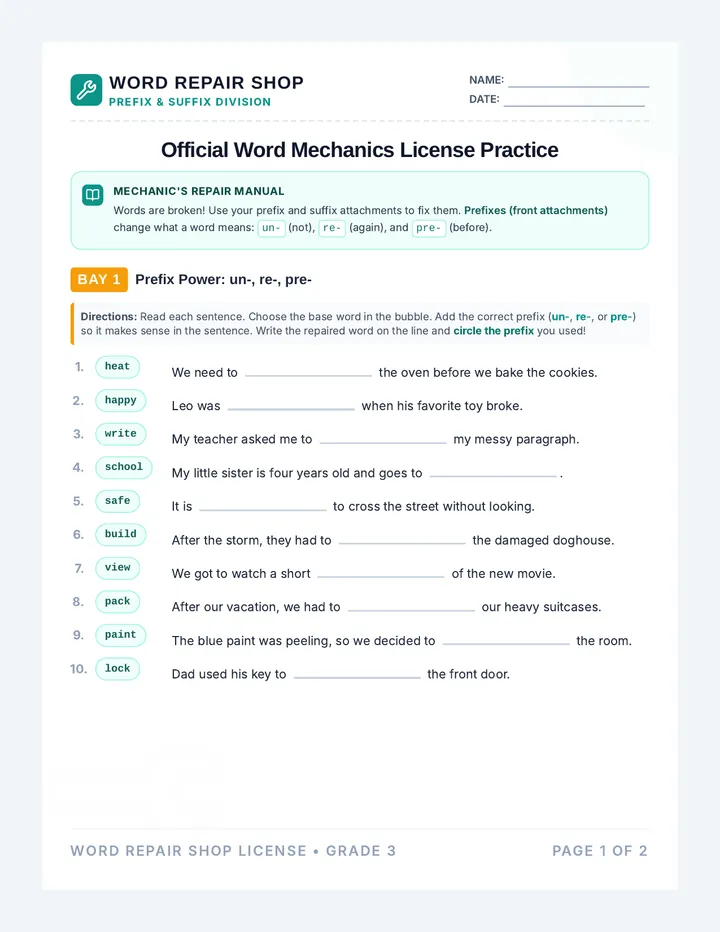
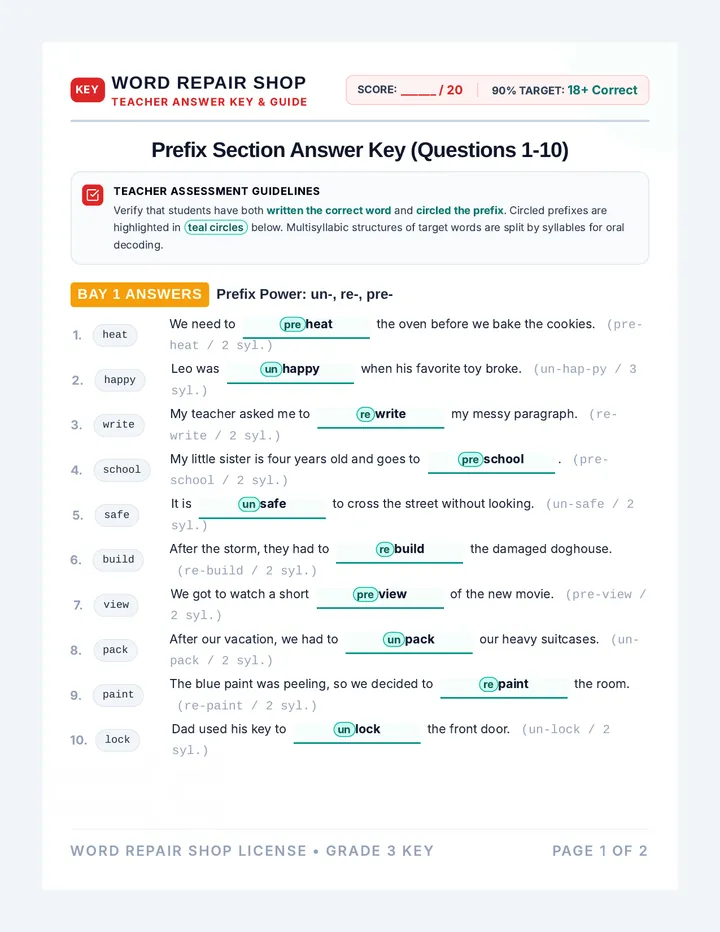
An engaging third-grade lesson where students become 'Word Mechanics' in a Fix-It Shop to learn, identify, and apply common prefixes (un-, re-, pre-) and suffixes (-s, -ed, -ing) in multisyllabic words. Includes a comprehensive student worksheet and a corresponding teacher answer key.
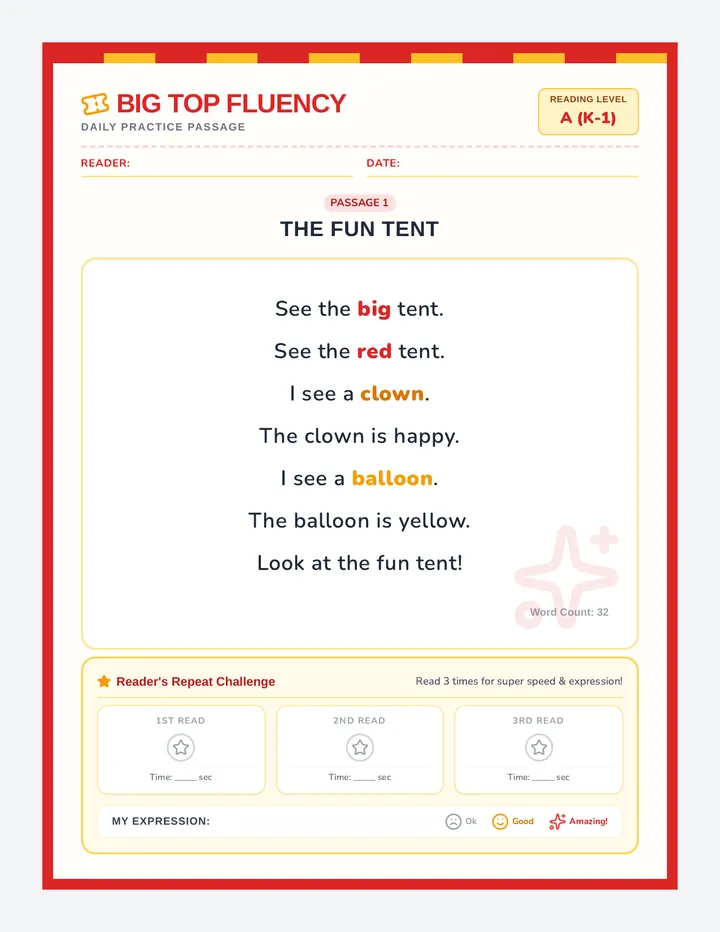
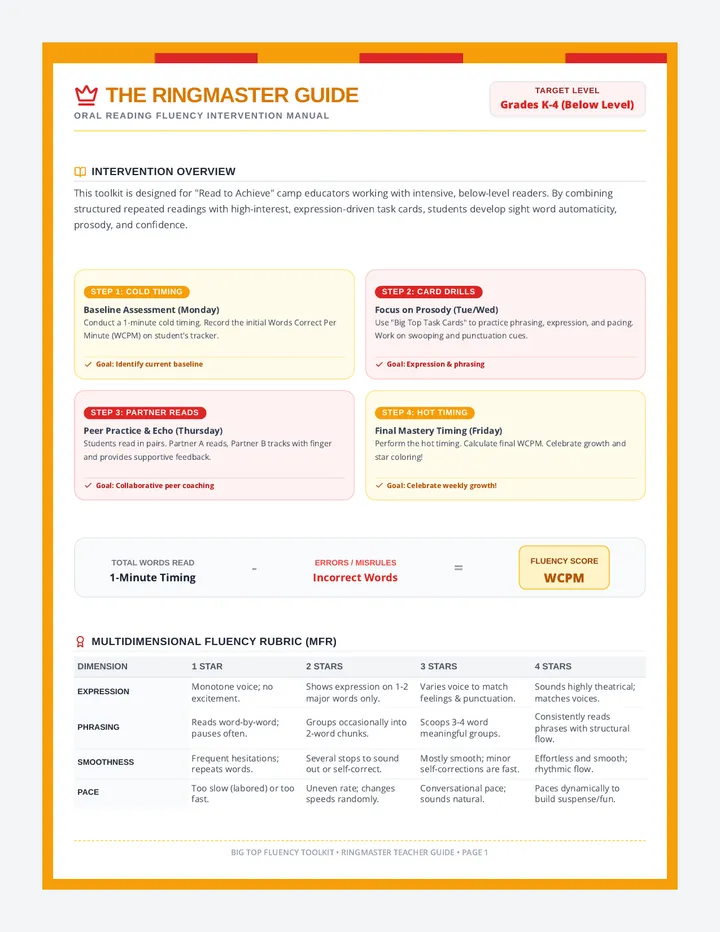
A carnival-themed oral reading fluency toolkit designed for Read to Achieve summer camps. Features differentiated reading passages (levels K-3) with repeated reading trackers, expression-focused task cards, and a teacher scoring and implementation guide.
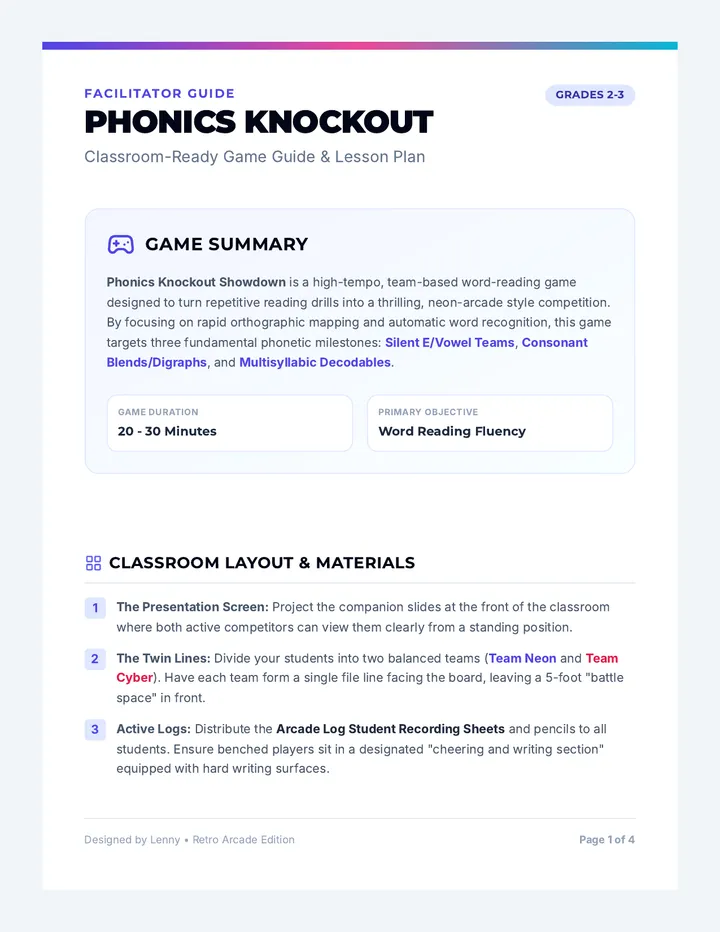
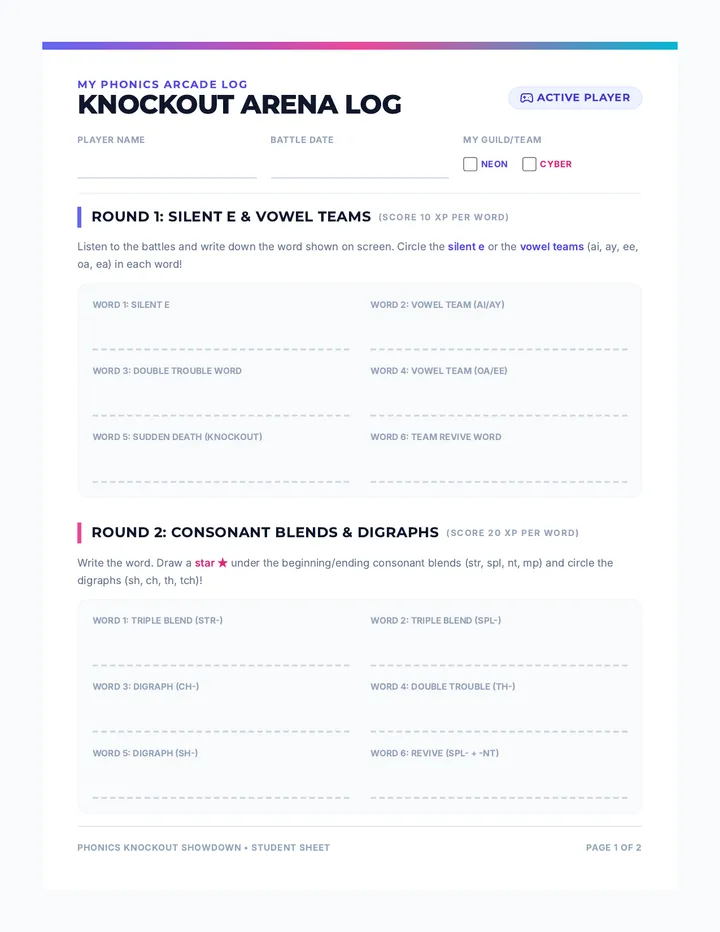
A high-energy, neon-themed classroom game targeting 2nd and 3rd-grade phonics standards including Silent E, Vowel Teams, Blends, Digraphs, and Multisyllabic Decodables. Includes visual projection slides, a comprehensive facilitator guide, and a high-engagement student recording sheet.
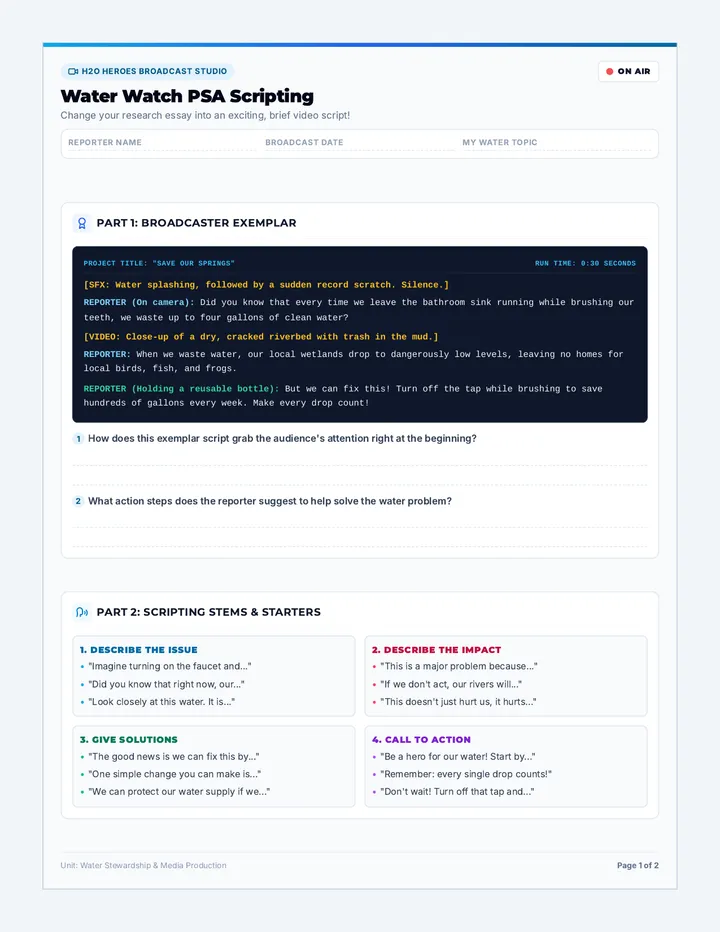
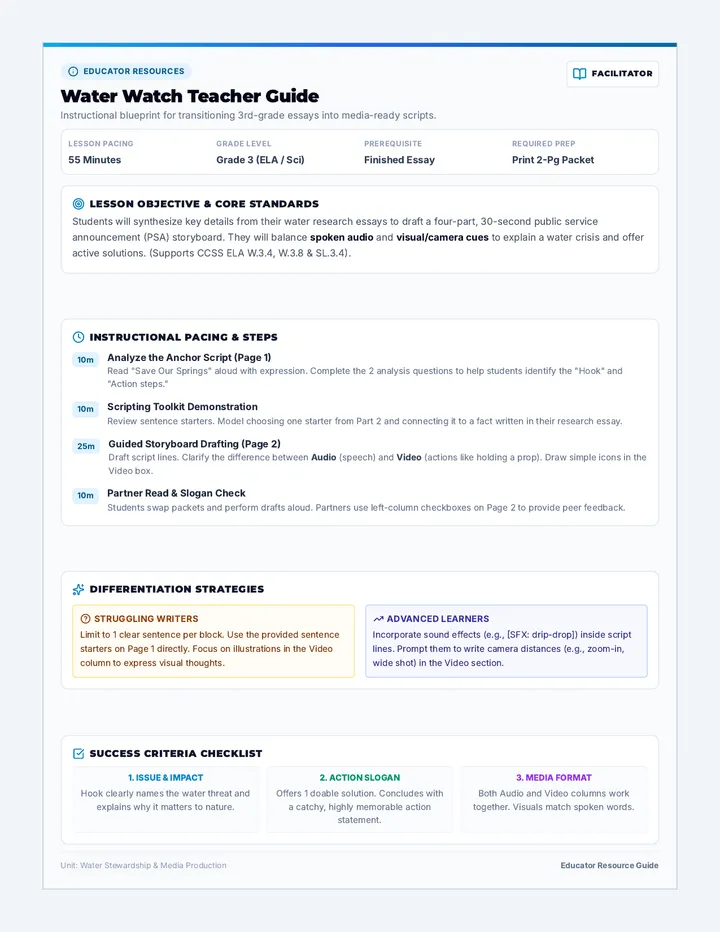
A lesson designed to guide 3rd-grade students through transitioning their research essays on water issues into engaging, structured PSA video scripts. Students analyze an exemplar script, explore transition phrase templates, and draft their scripts using a side-by-side storyboard graphic organizer.
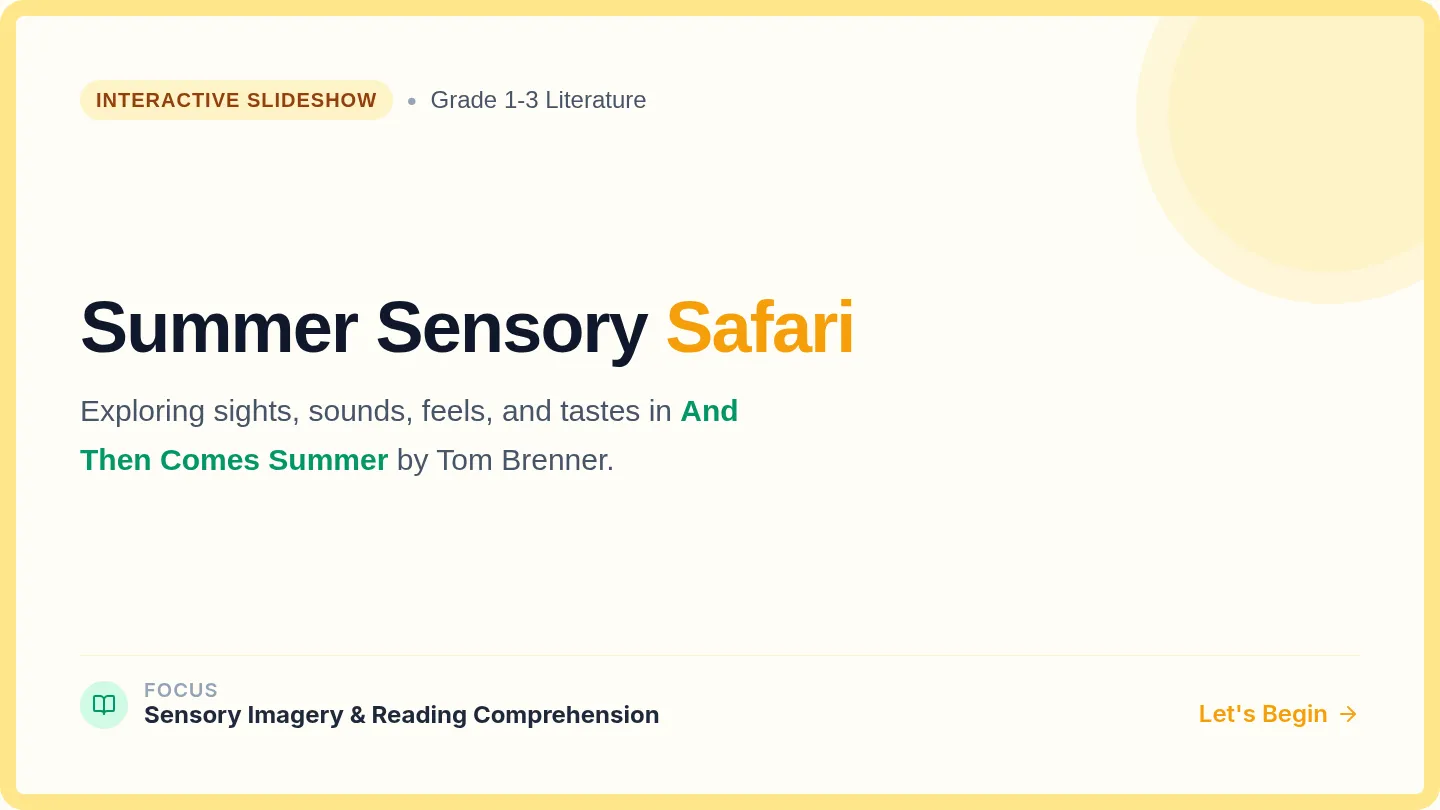
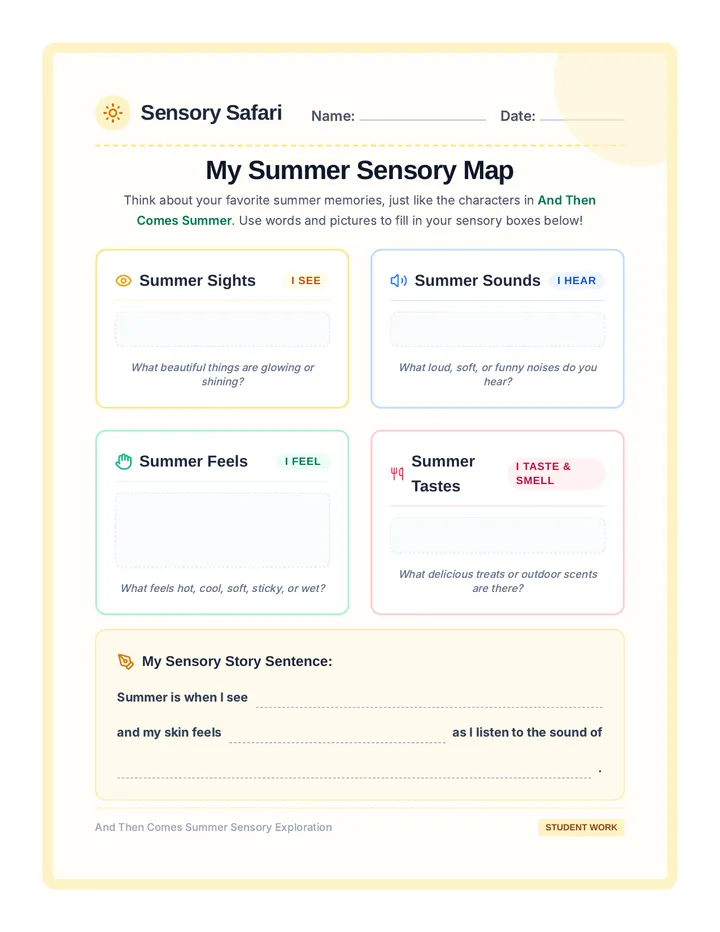
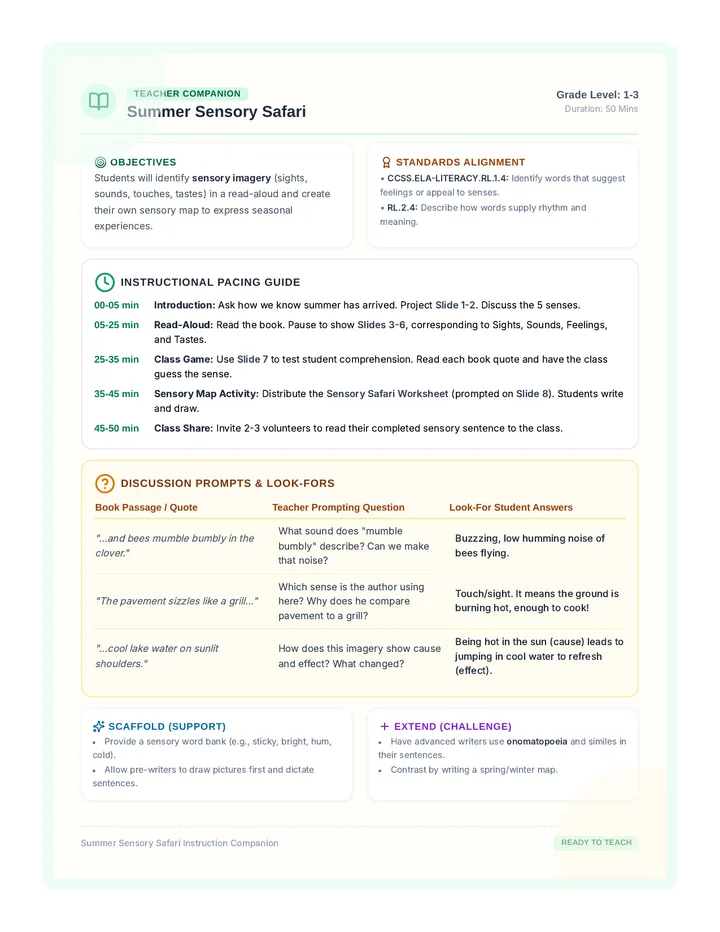
An interactive literature lesson exploring the rich sensory details and imagery in Tom Brenner's 'And Then Comes Summer'. Students identify and discuss sights, sounds, feels, and tastes to build comprehension and descriptive writing skills.
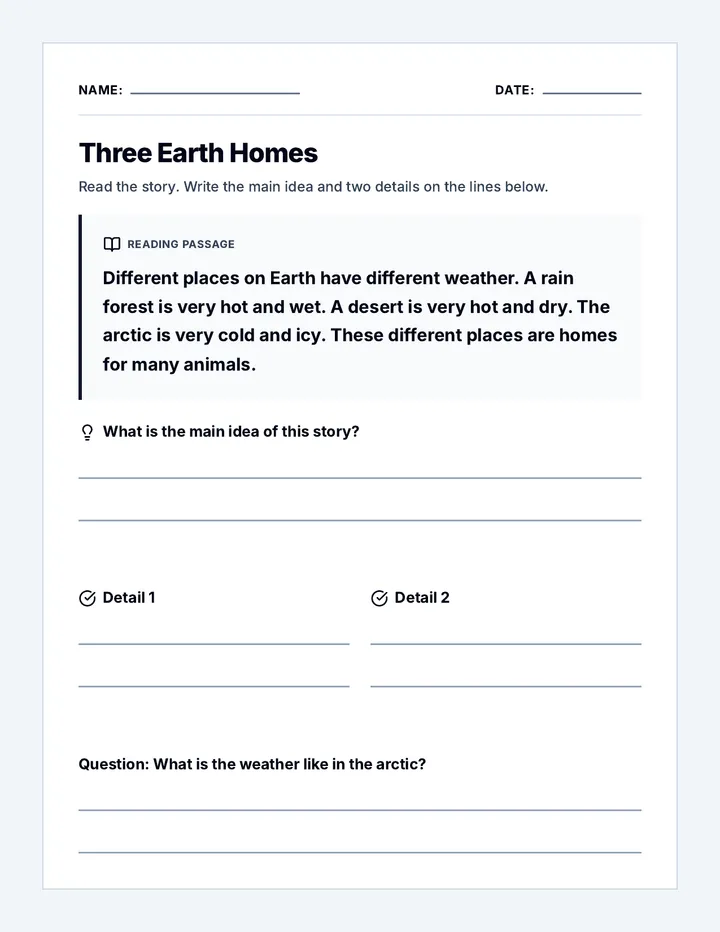
A lesson focused on identifying the main idea and supporting details in short texts, designed with structured supports for students.
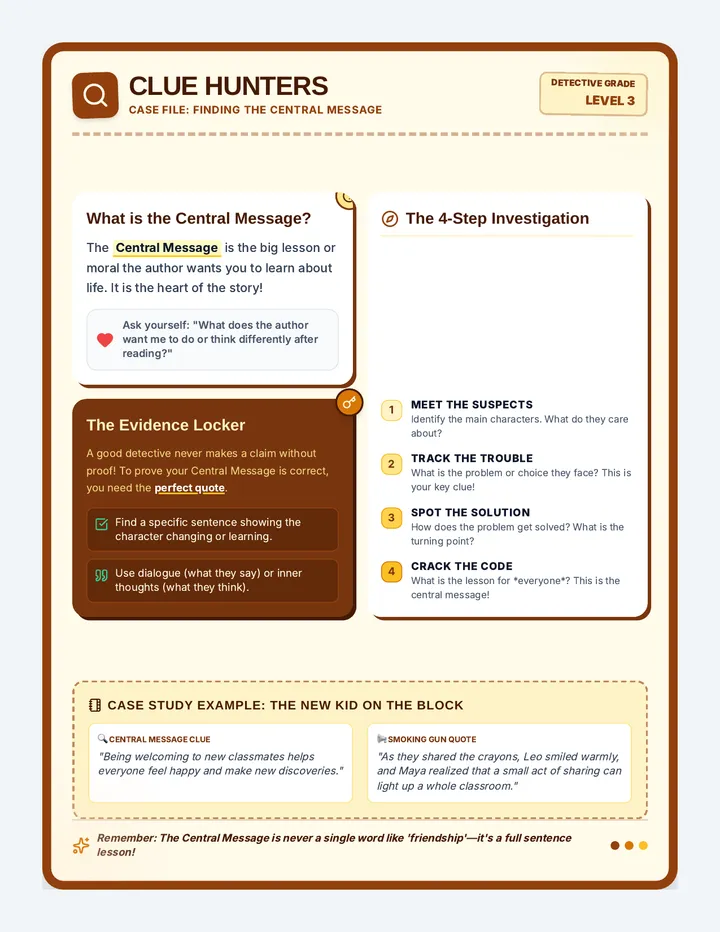
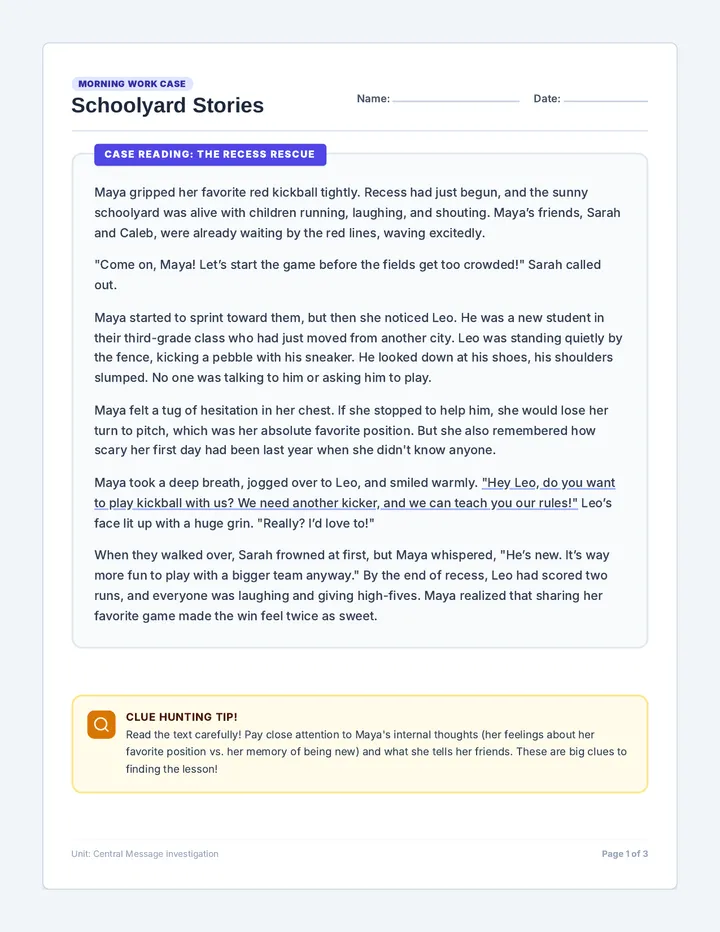
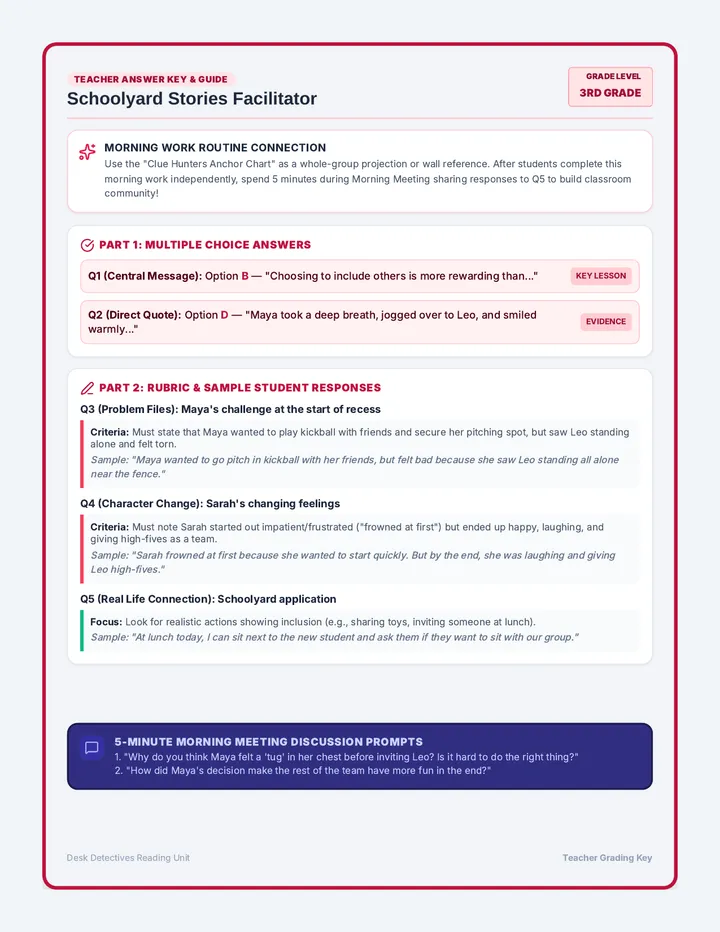
A third-grade reading lesson focused on identifying the central message and supporting evidence in realistic schoolyard fiction. Students learn to spot clues like a detective to discover the heart of the story.
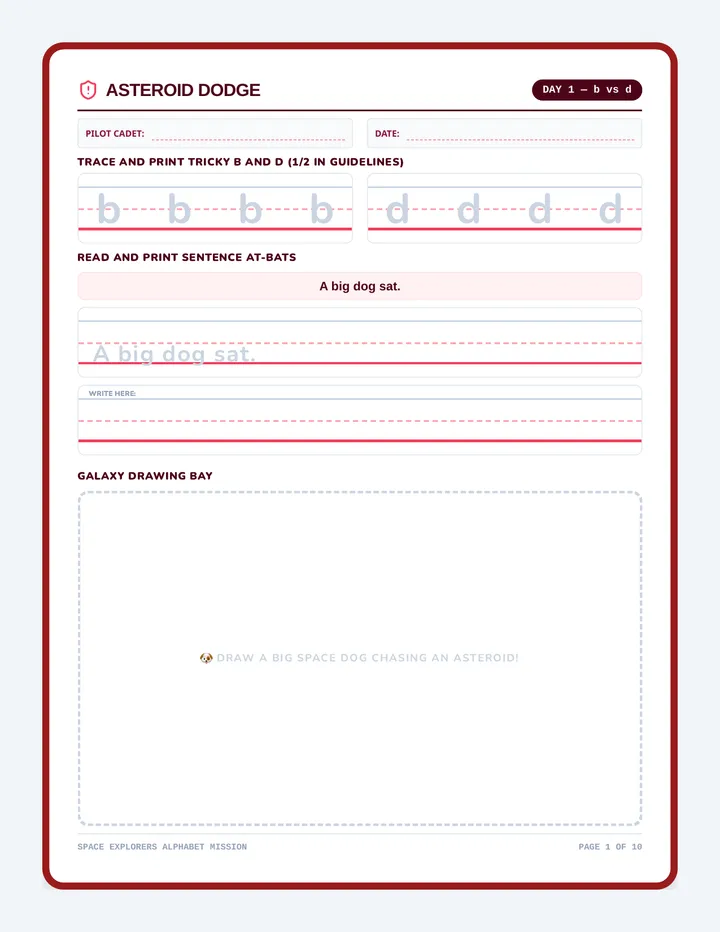
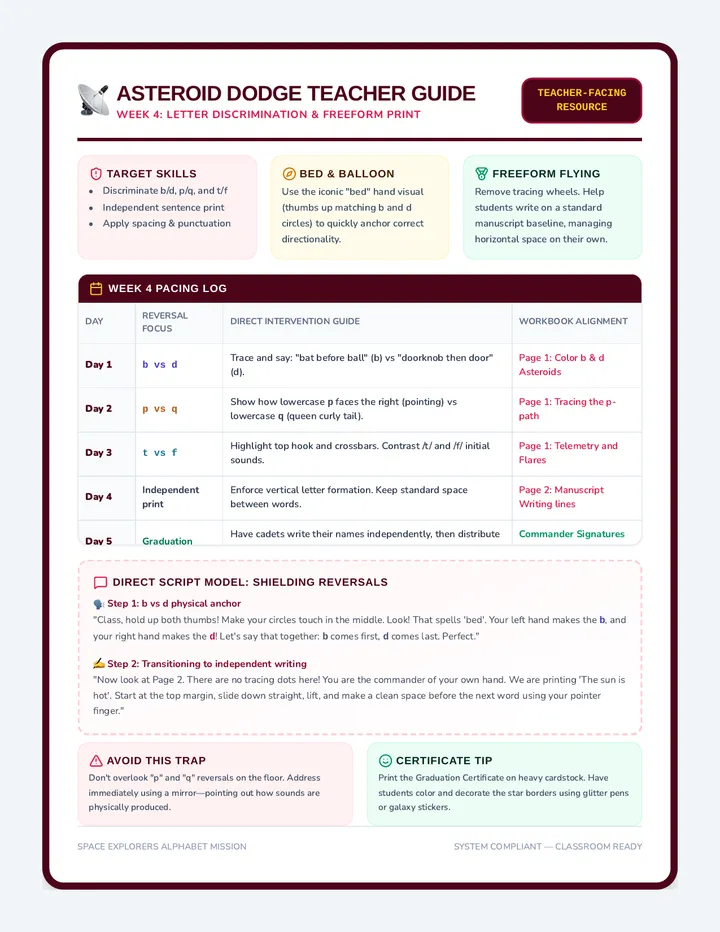
Week 4 targets commonly confused letters (b/d, p/q, t/f) through space-themed discrimination games, and transitions students to freeform independent handwriting.
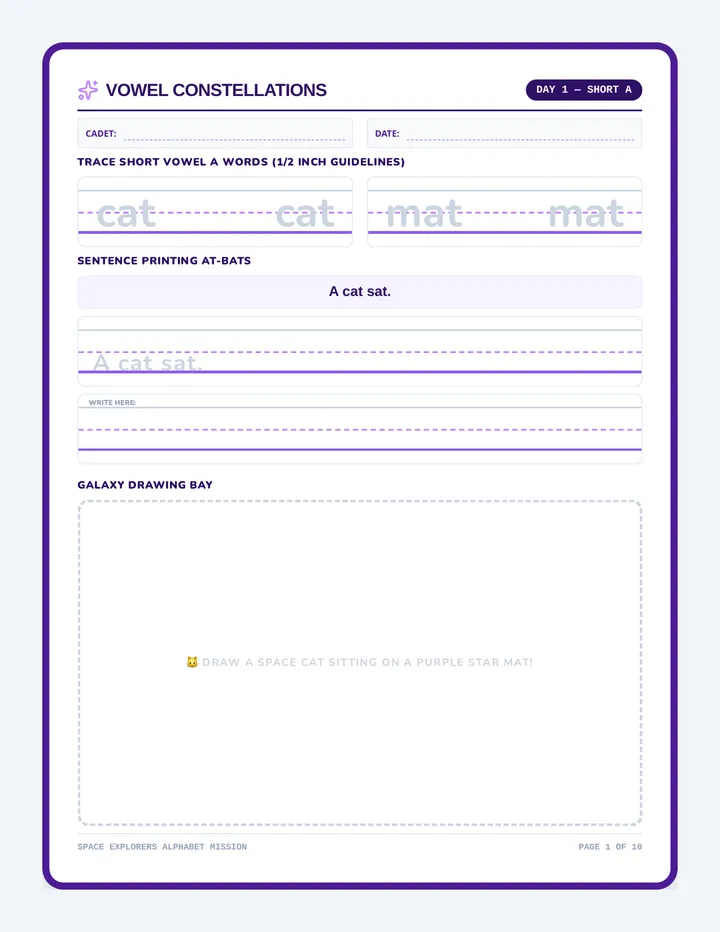
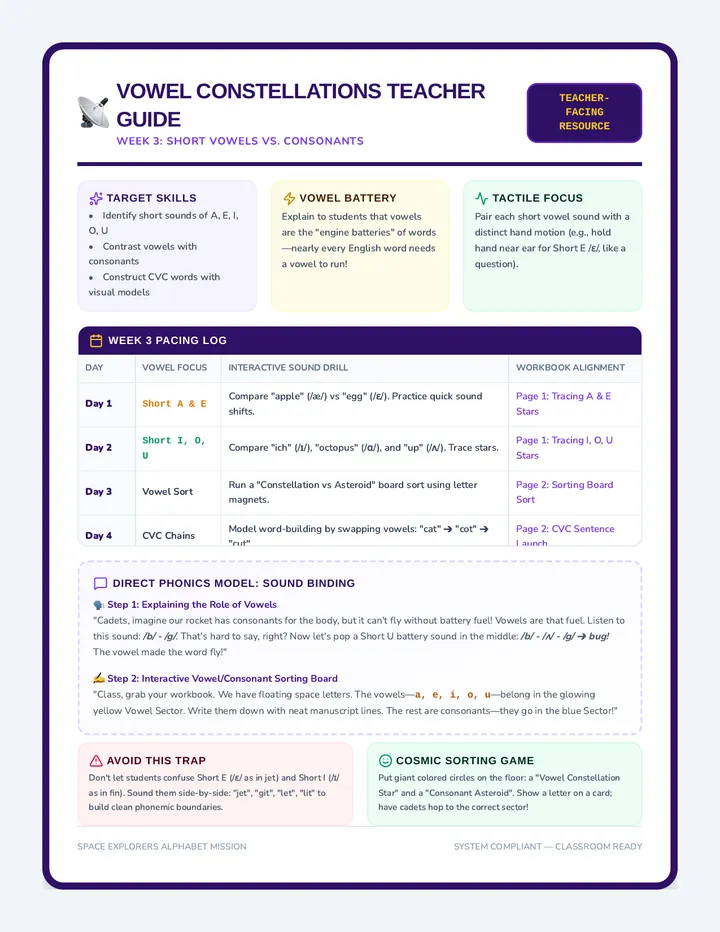
Week 3 explores the distinct roles of vowels and consonants, teaching short vowel sounds, star-themed sorting, and simple consonant-vowel-consonant (CVC) blending.