A lesson designed for 4th-grade students with autism to master simple division word problems using familiar school and errand scenarios. Focuses on breaking down problems into total amounts and groups with structured visual supports.
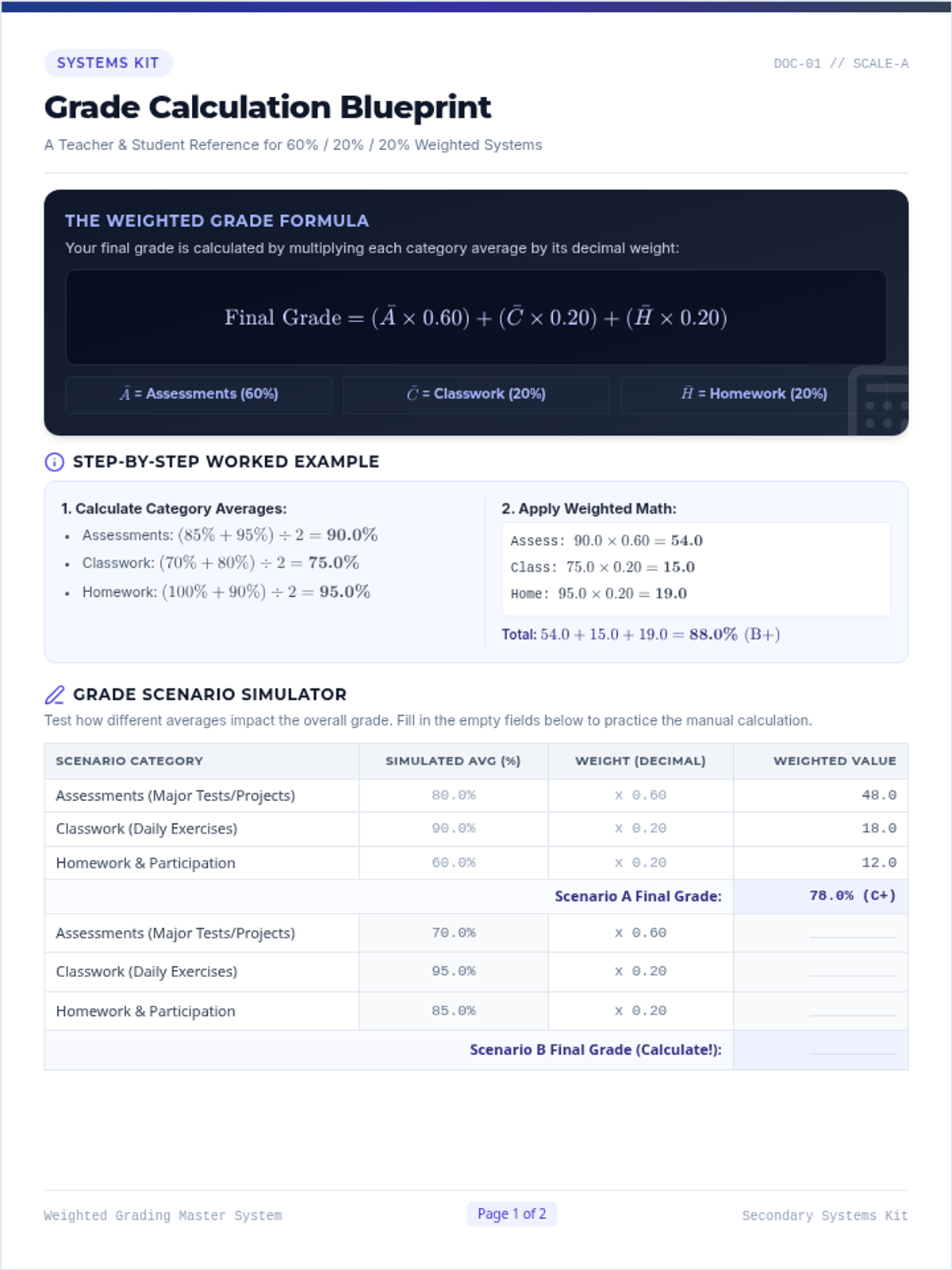
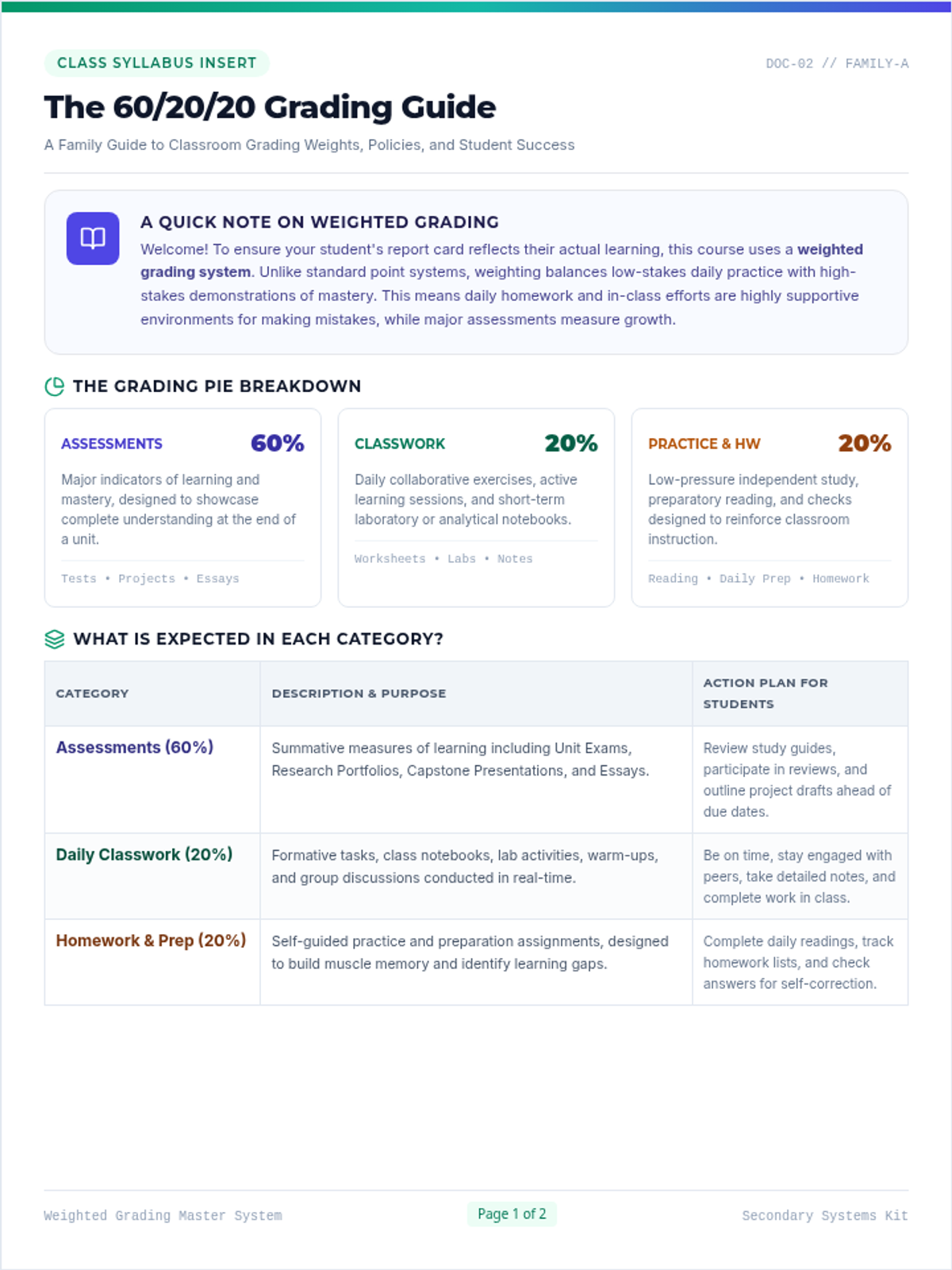
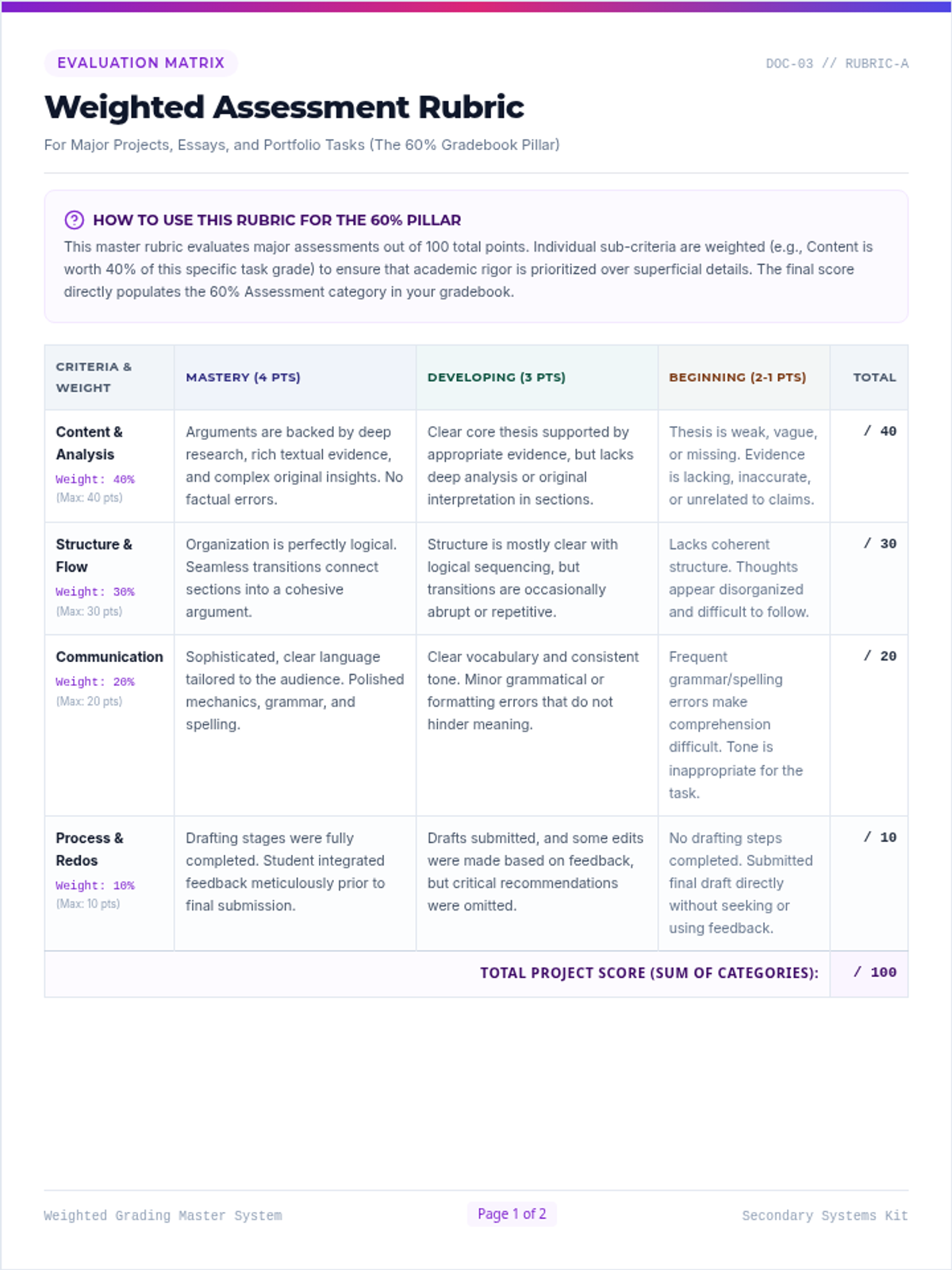
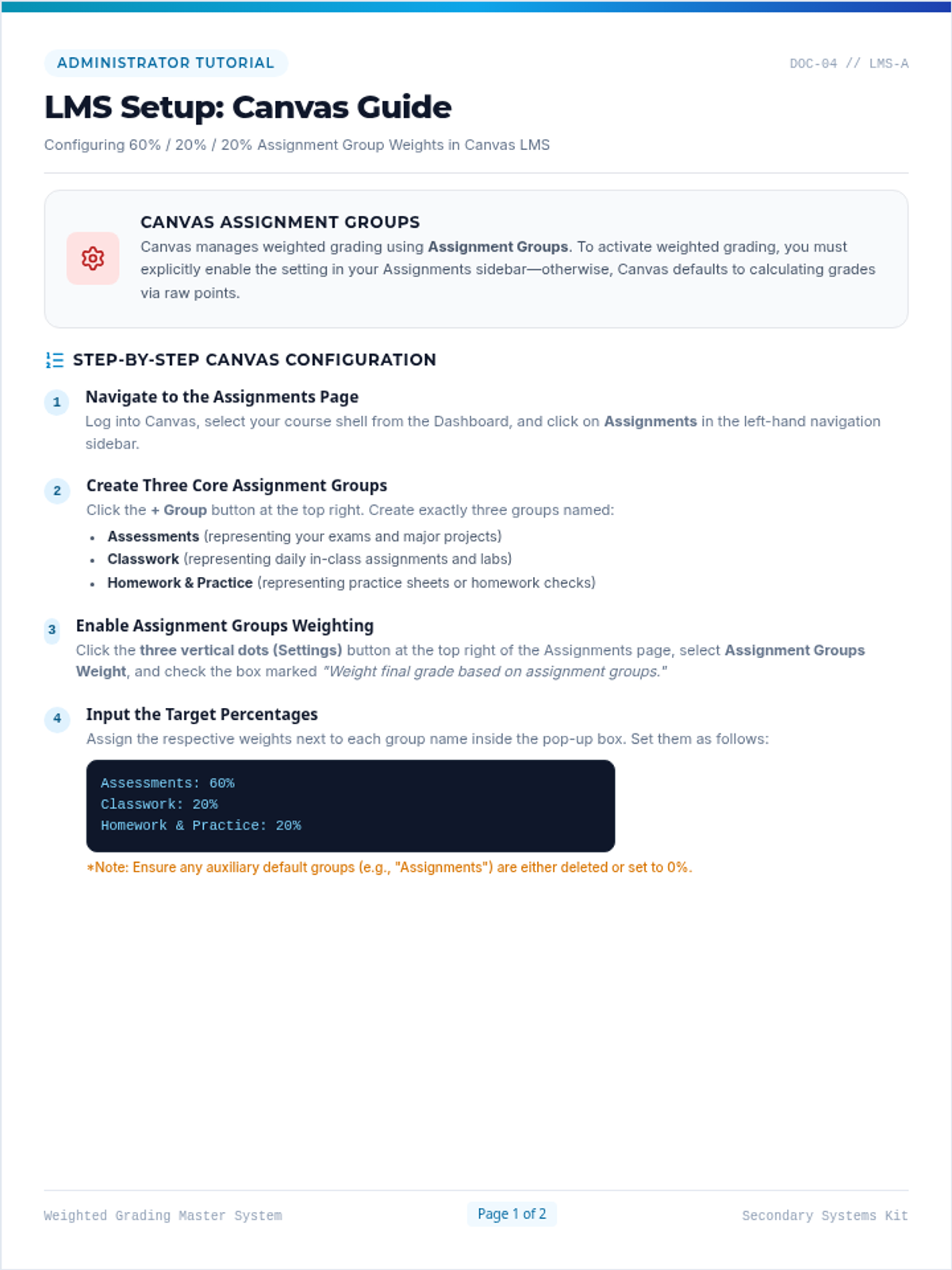
A complete set of administrative and instructional resources to master a 60/20/20 grading system (60% Assessments, 20% Classwork, 20% Homework/Participation) in secondary classrooms. This lesson equips teachers, students, and parents with clear calculation tools, syllabus inserts, weighted rubrics, and step-by-step LMS guides.
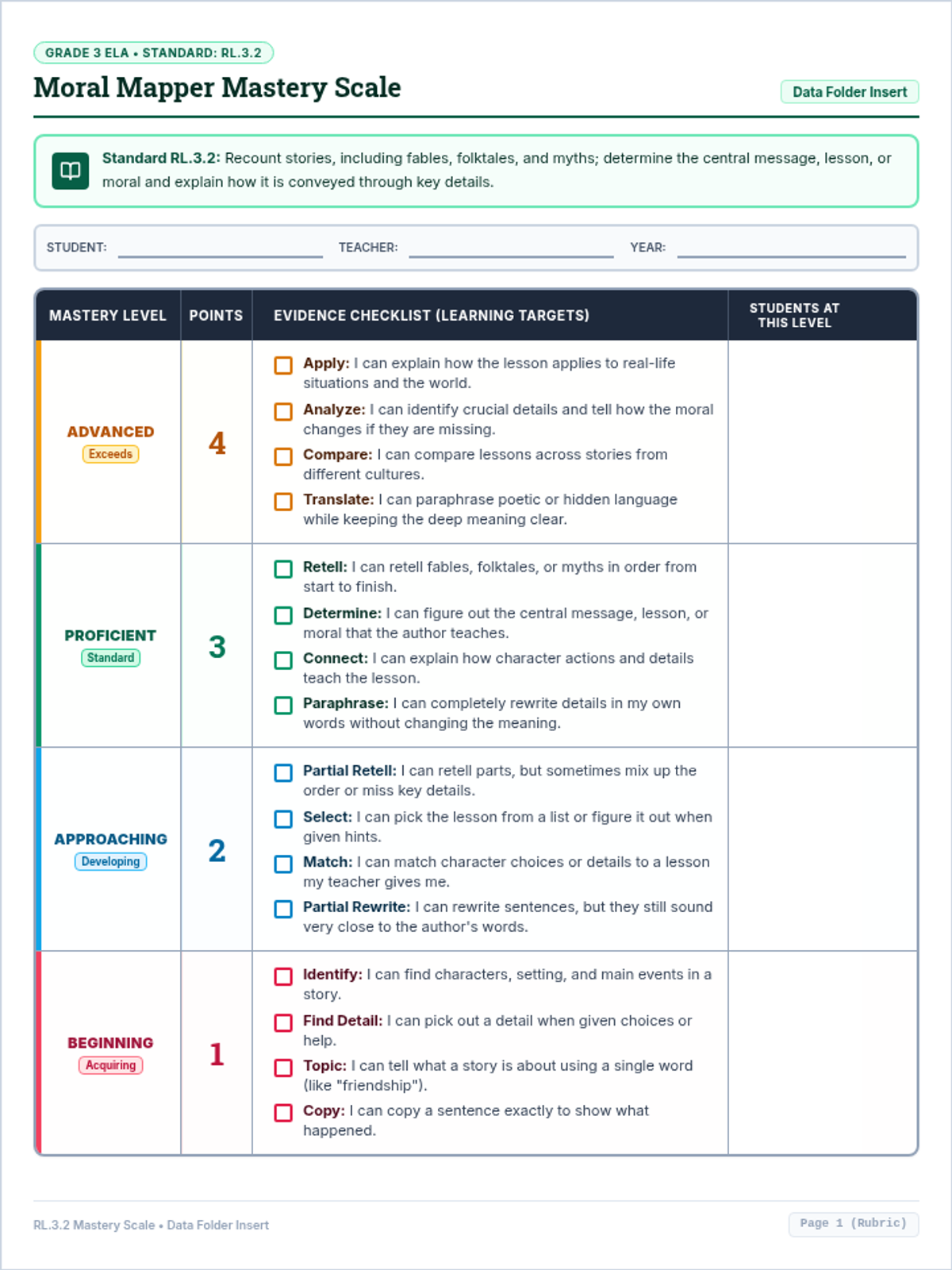
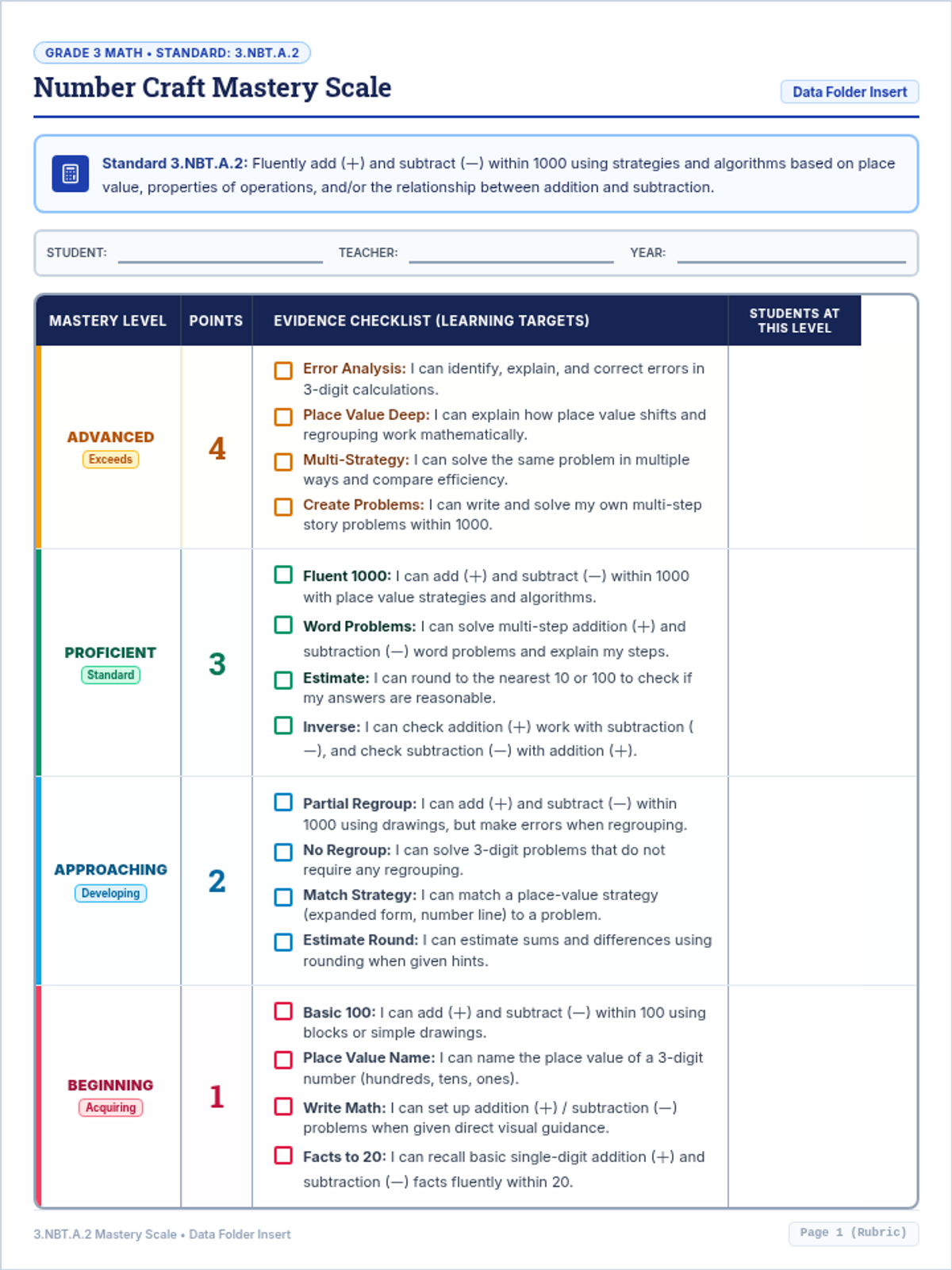
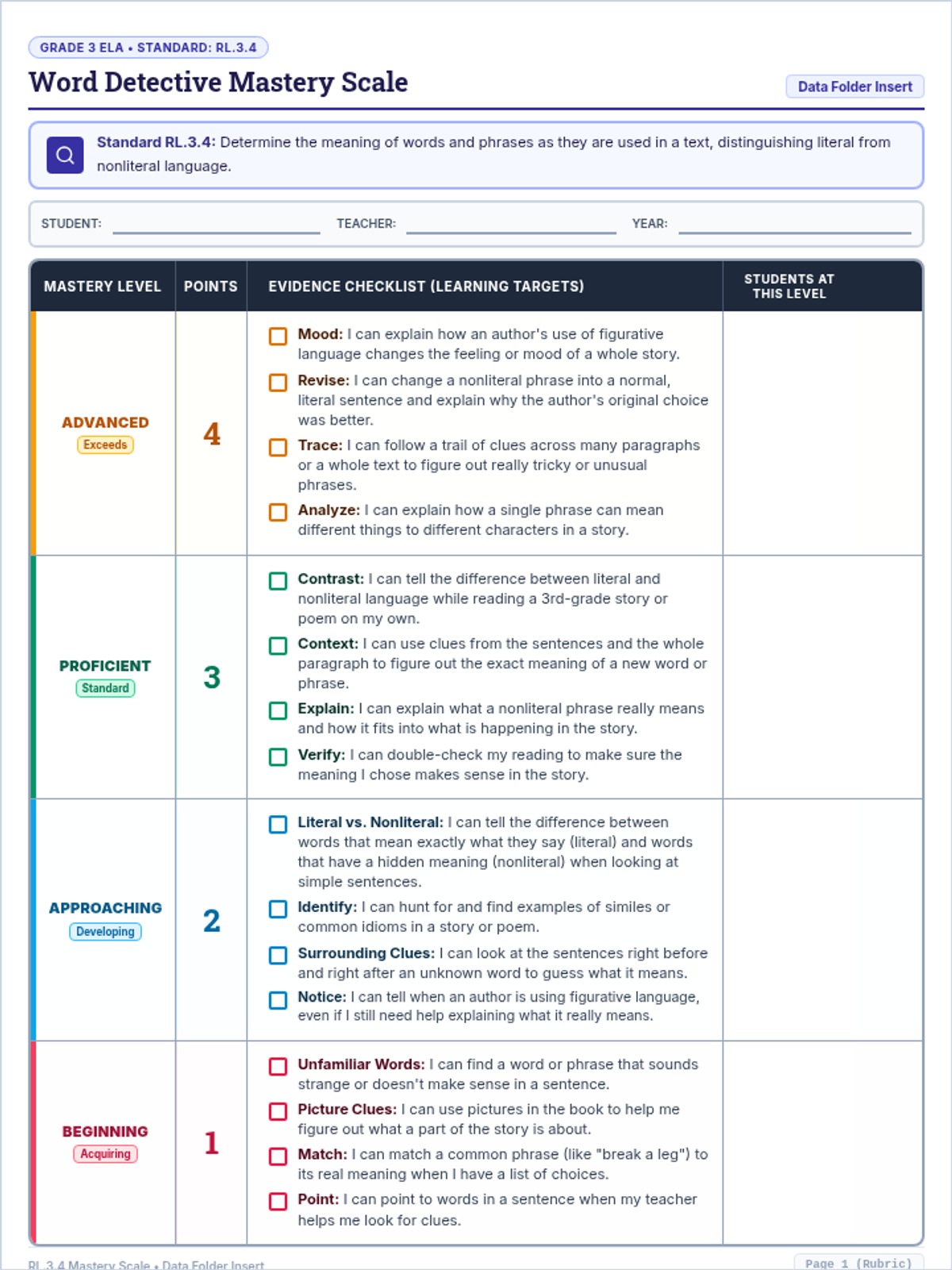
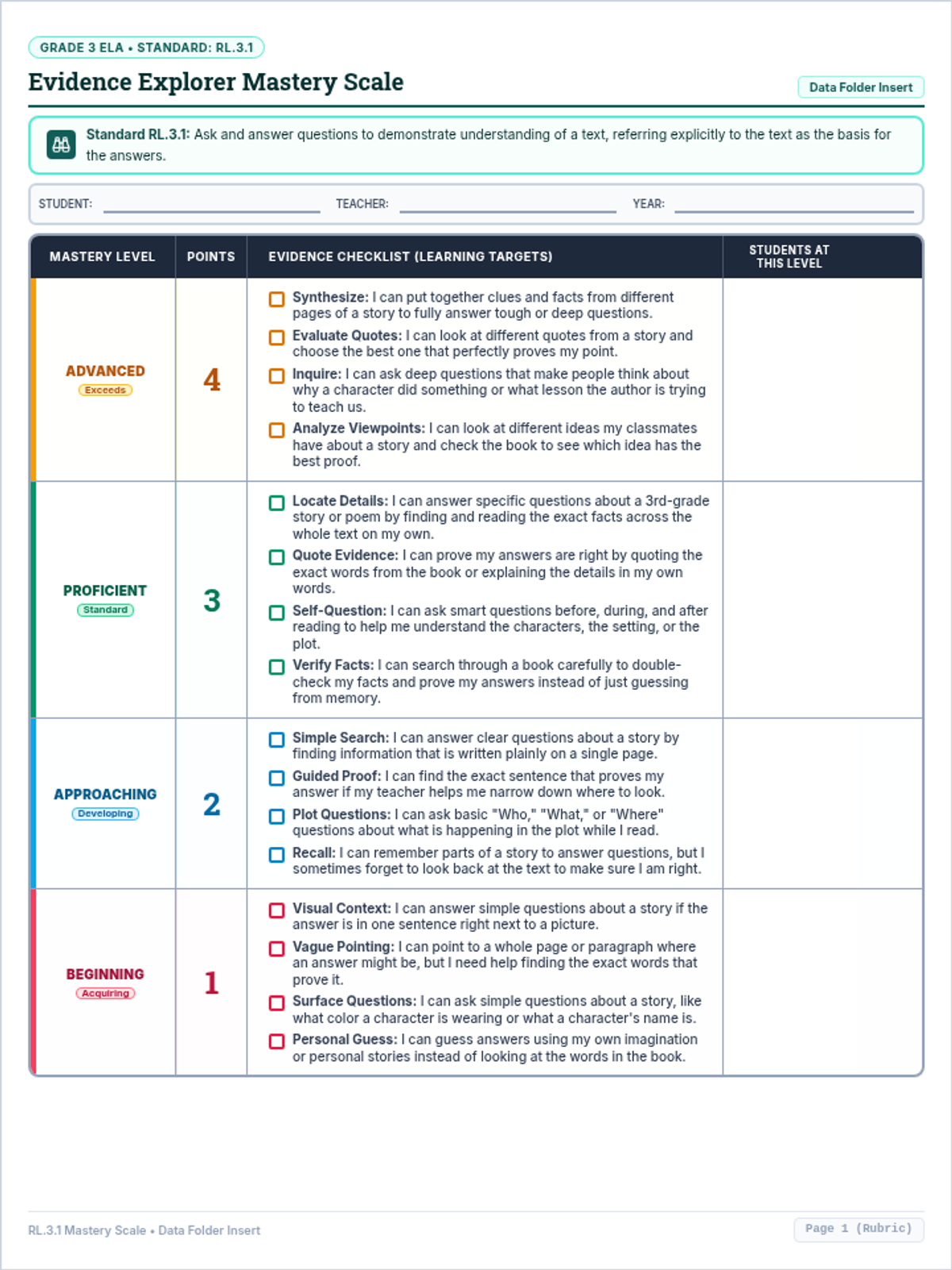
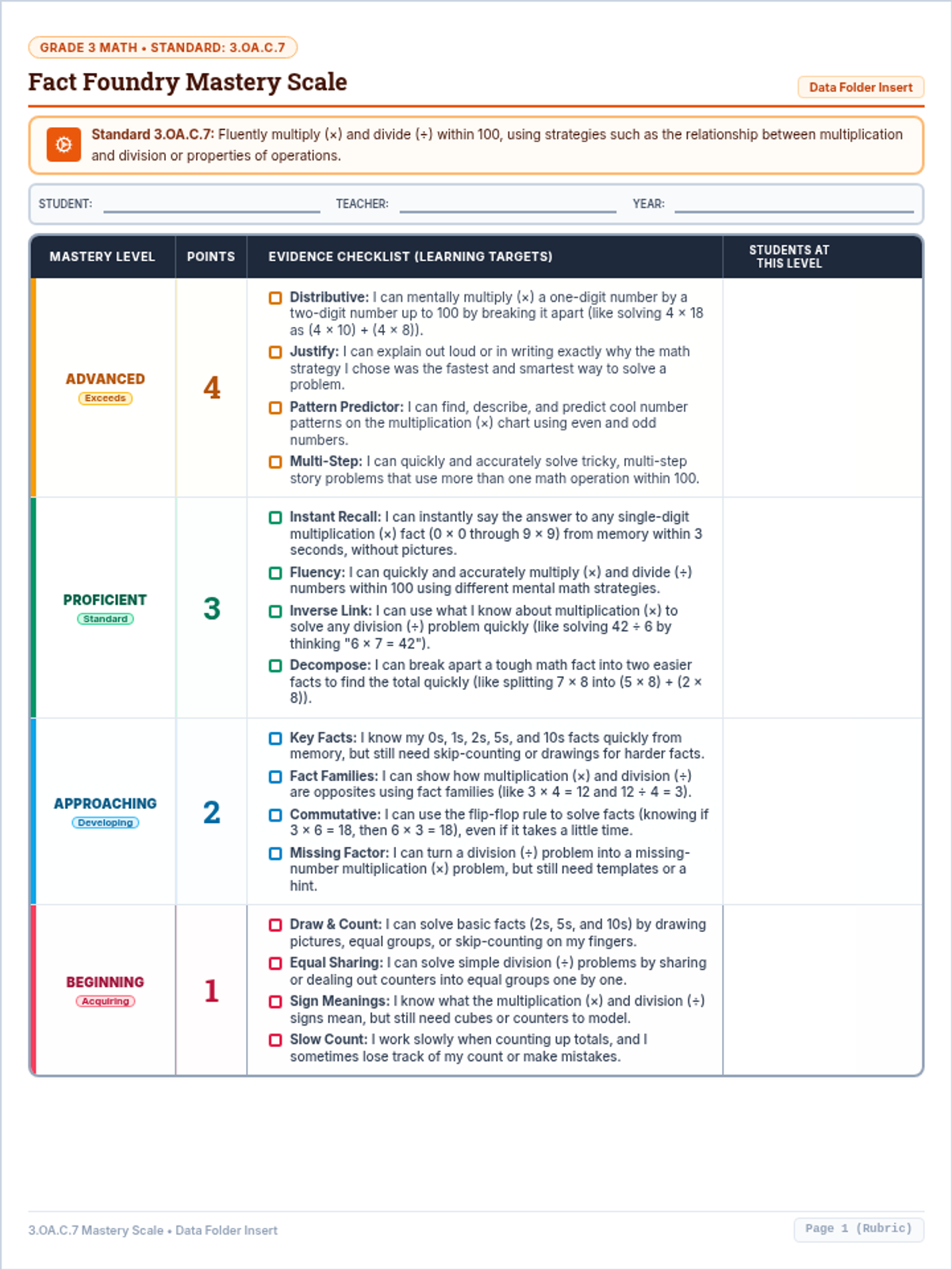
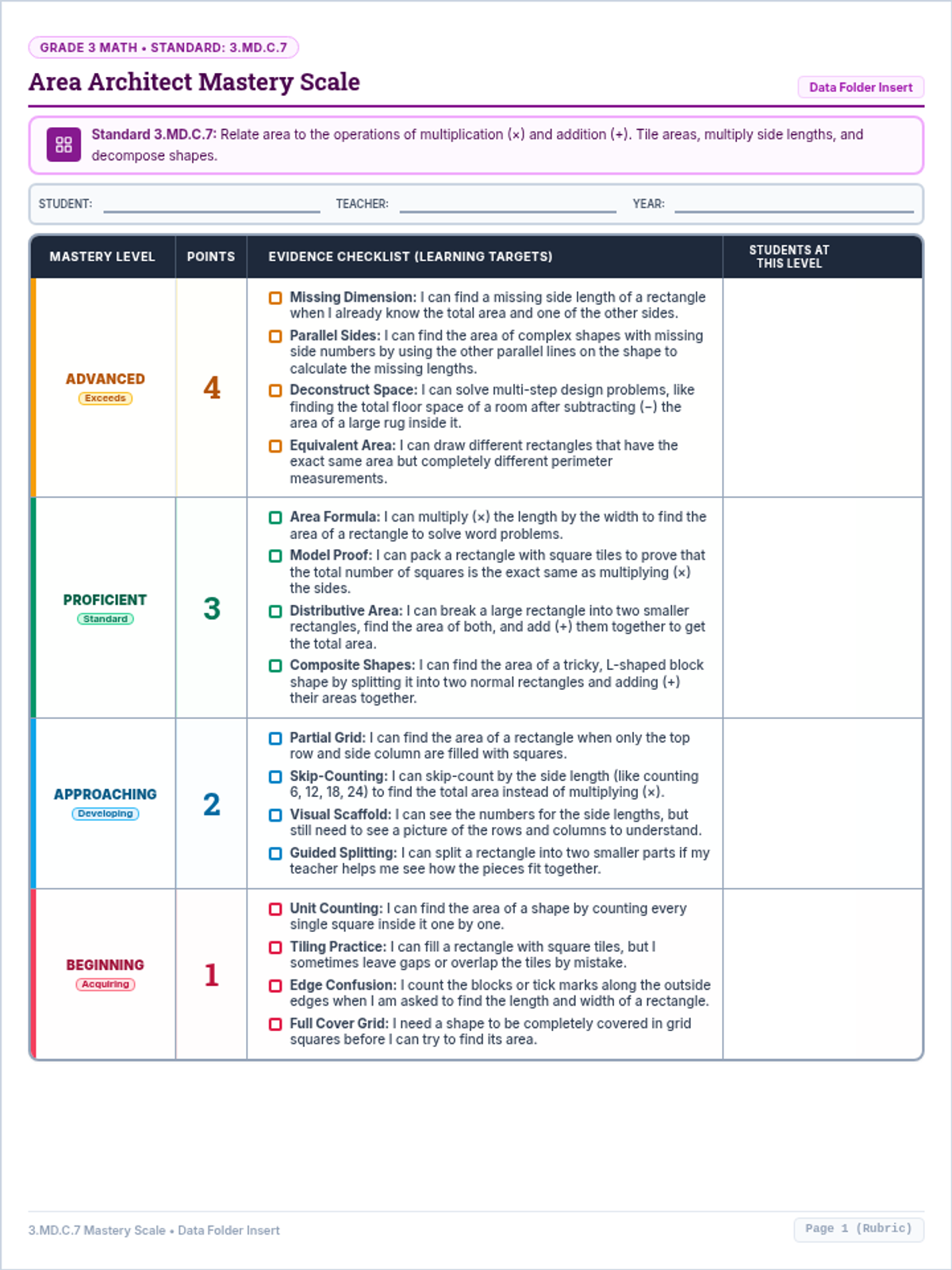
A collection of beautifully designed, compact data folder inserts featuring proficiency scale charts and progress tracking logs for Grade 3 standards.
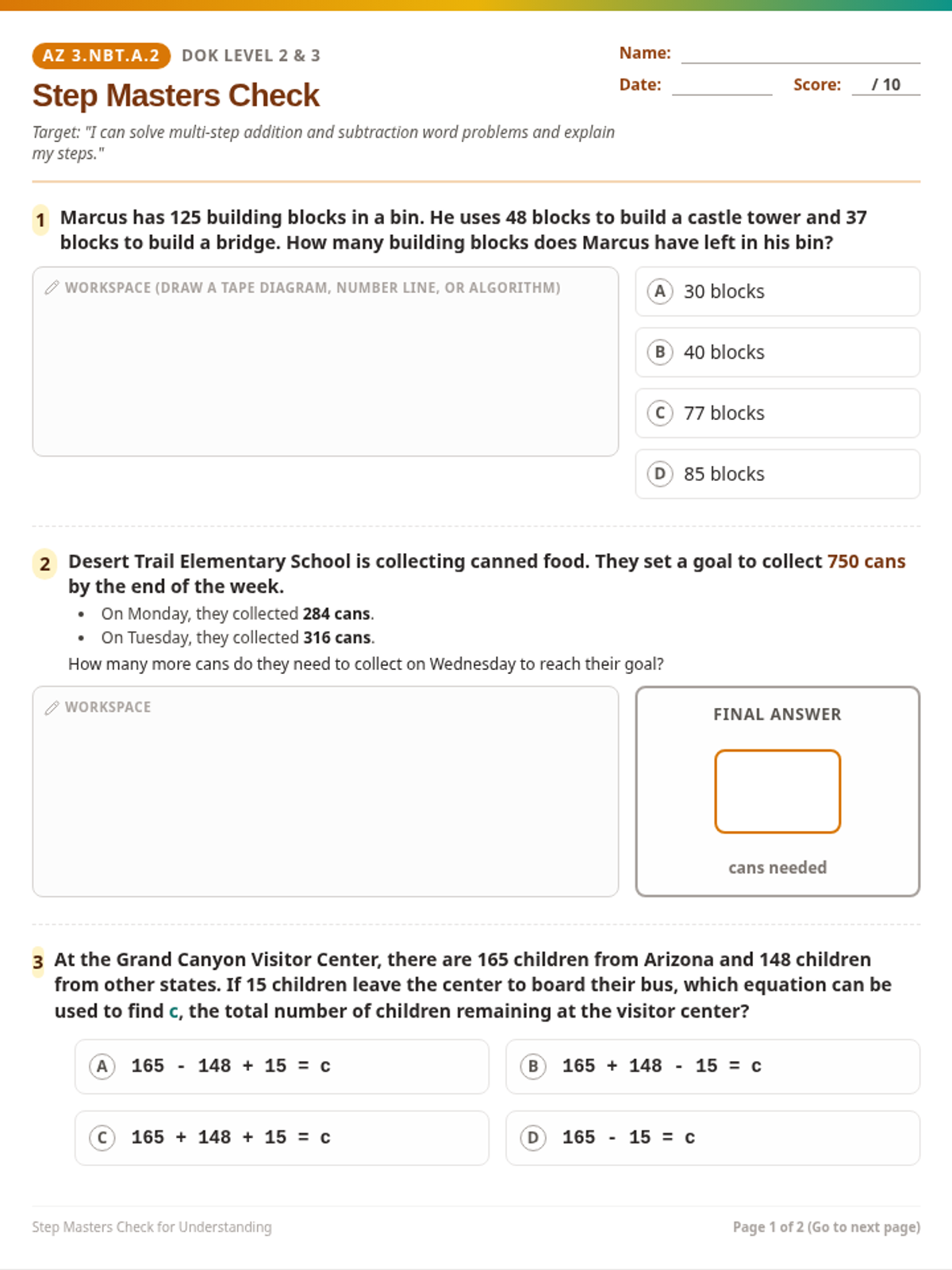
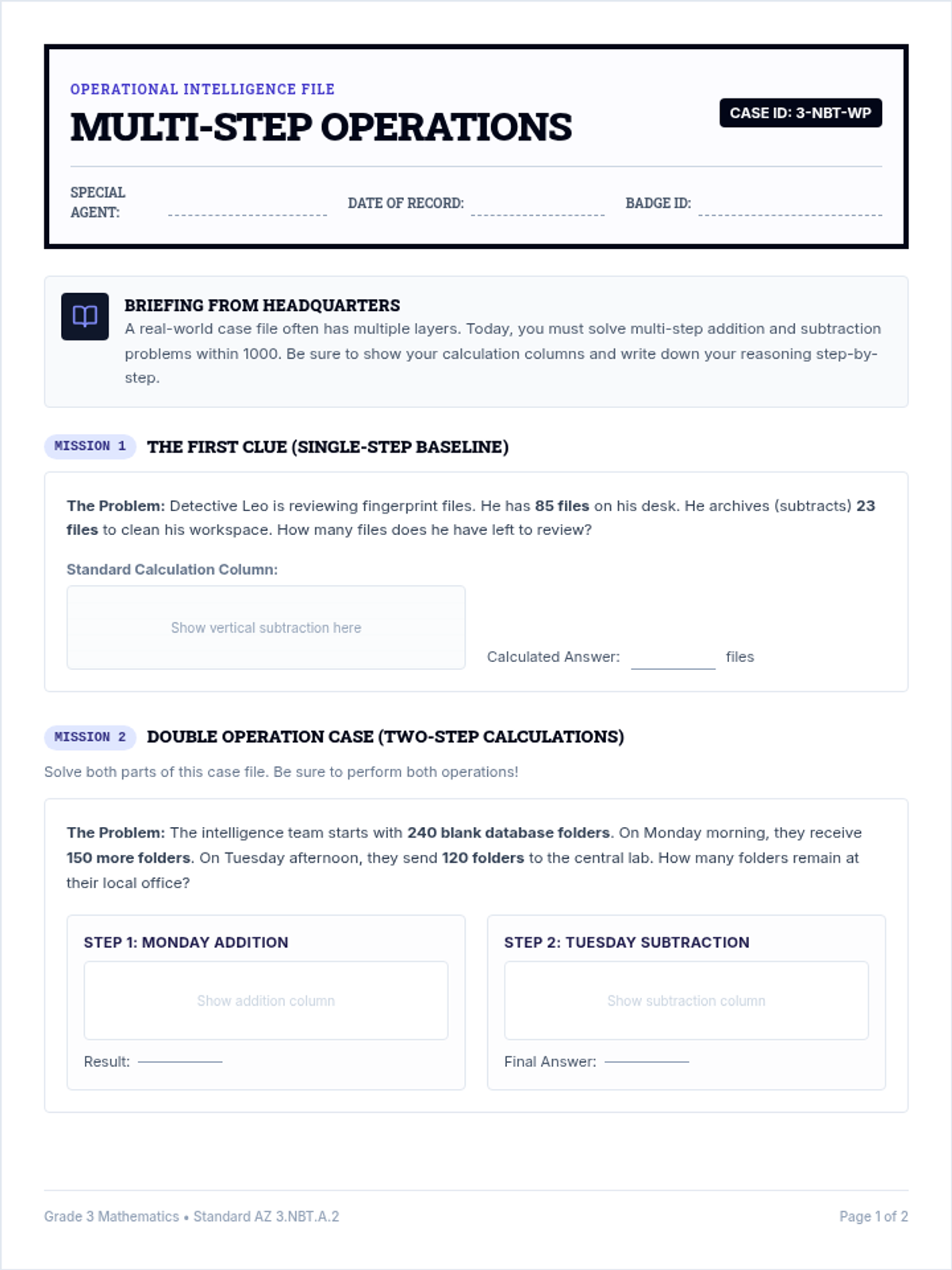
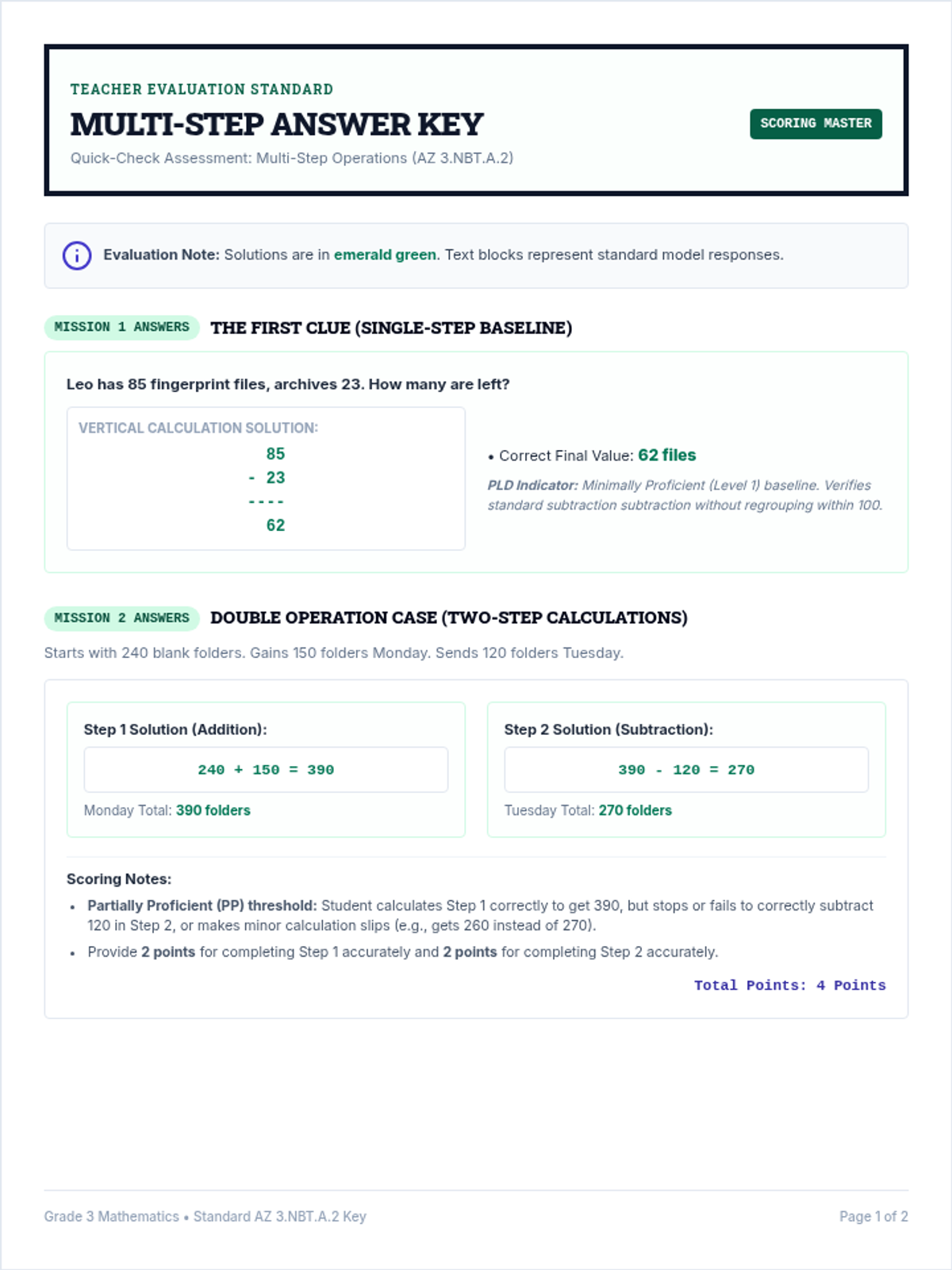
A targeted lesson focused on unpacking, solving, and explaining multi-step addition and subtraction word problems within 1,000 using tape diagrams, number lines, and standard algorithms.
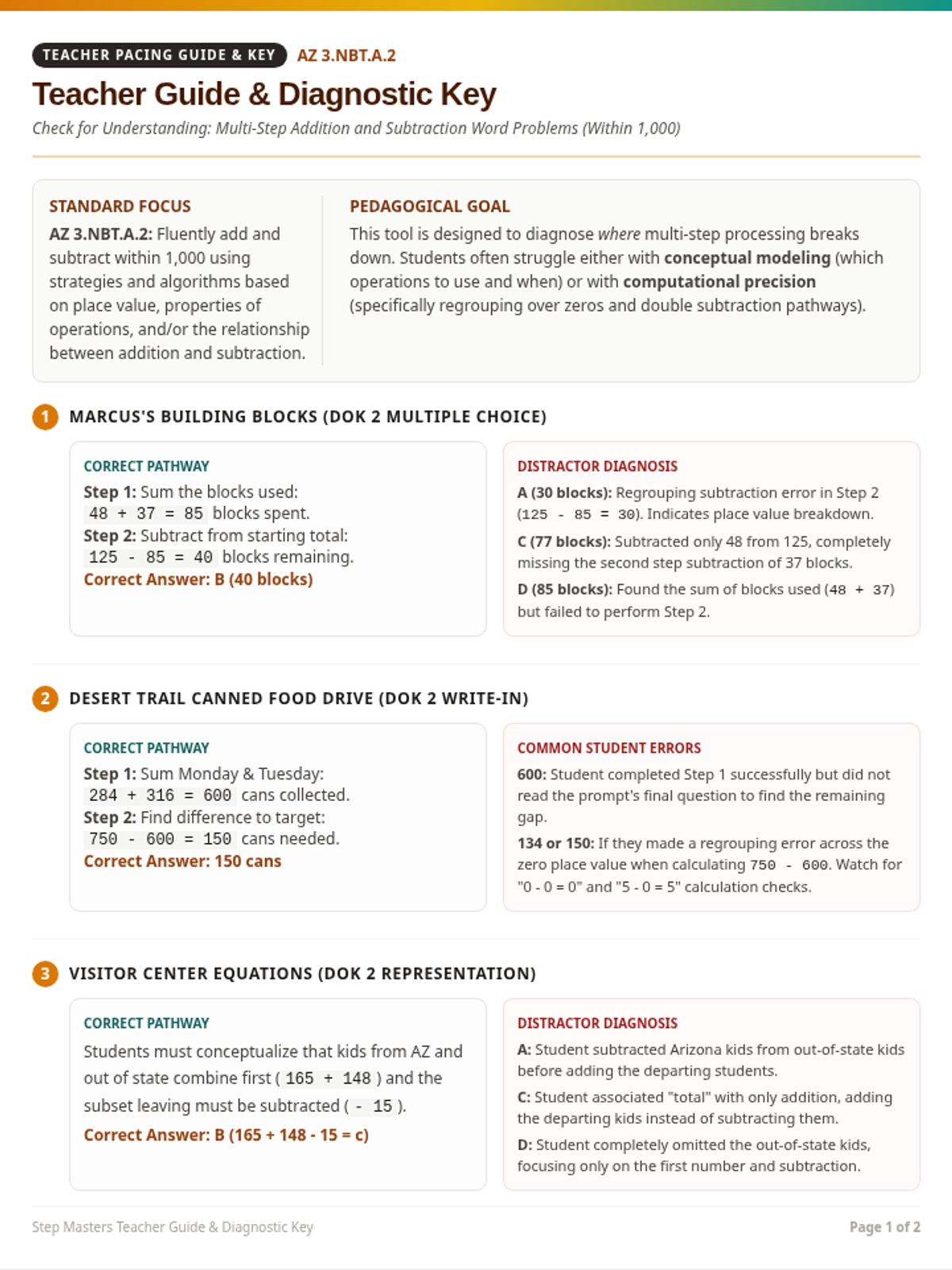
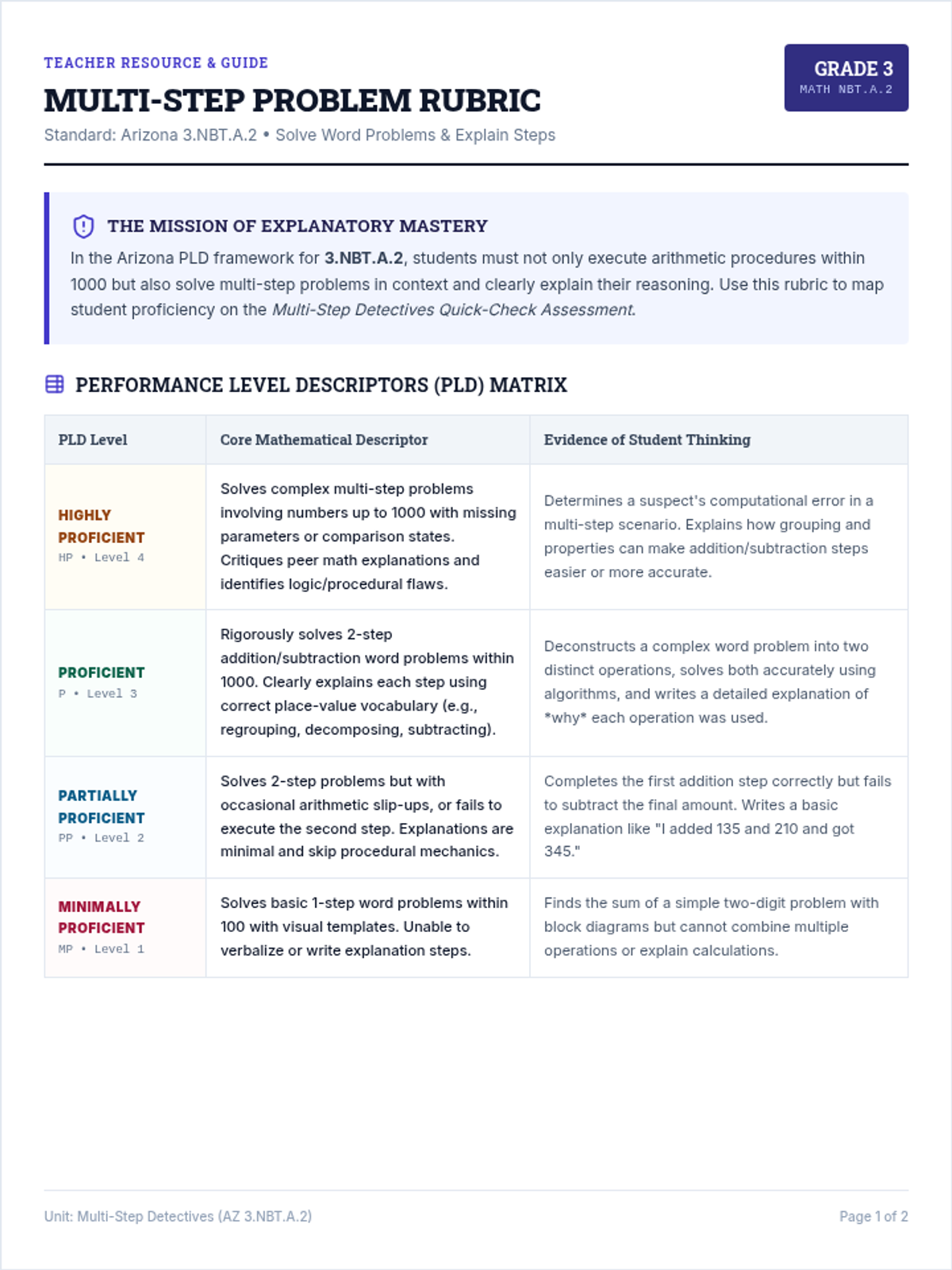
A focused diagnostic and instructional lesson designed to teach and assess solving multi-step addition and subtraction word problems within 1000 and writing clear explanatory steps, aligned to the Arizona PLD framework for 3.NBT.A.2.
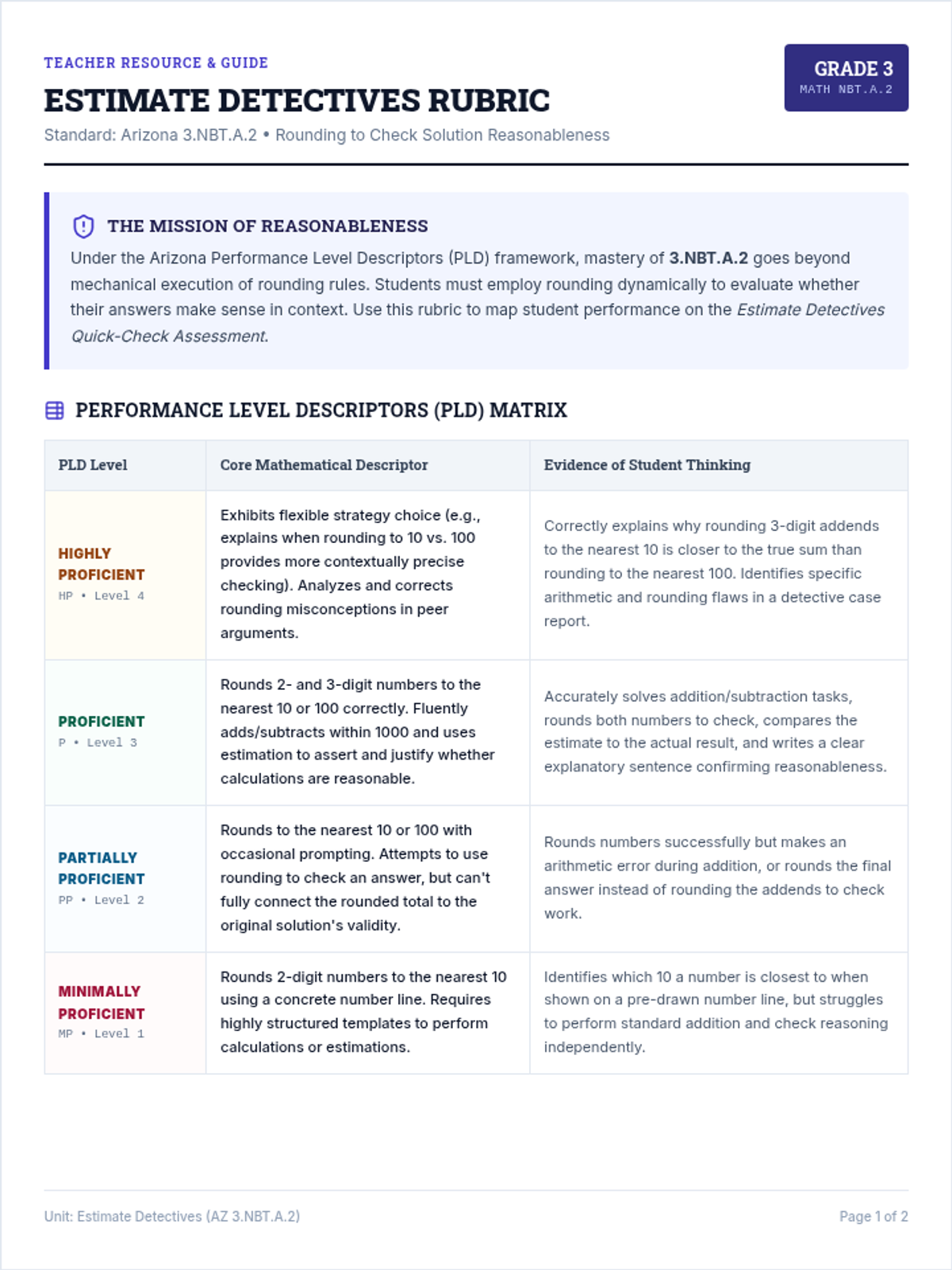
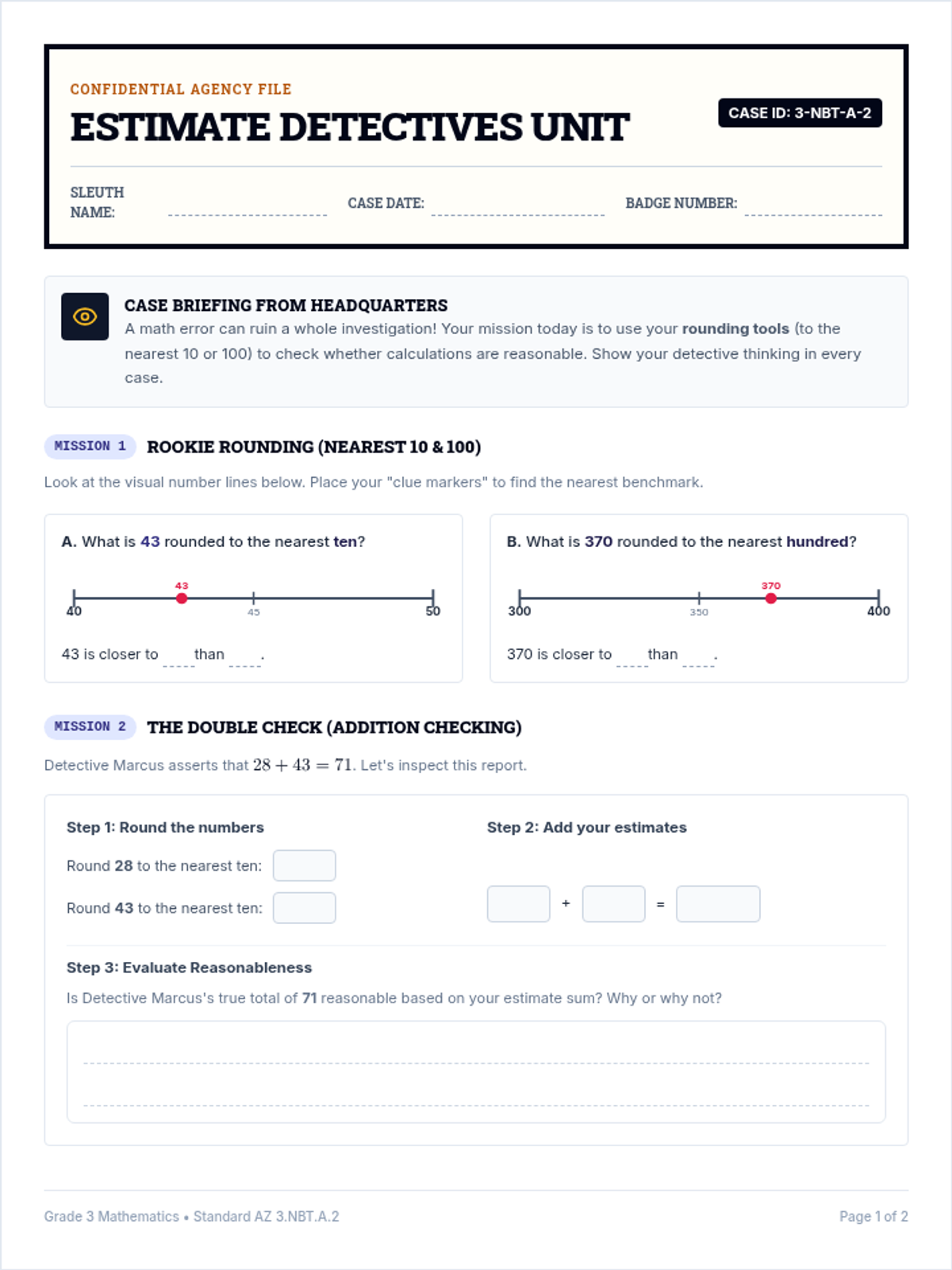
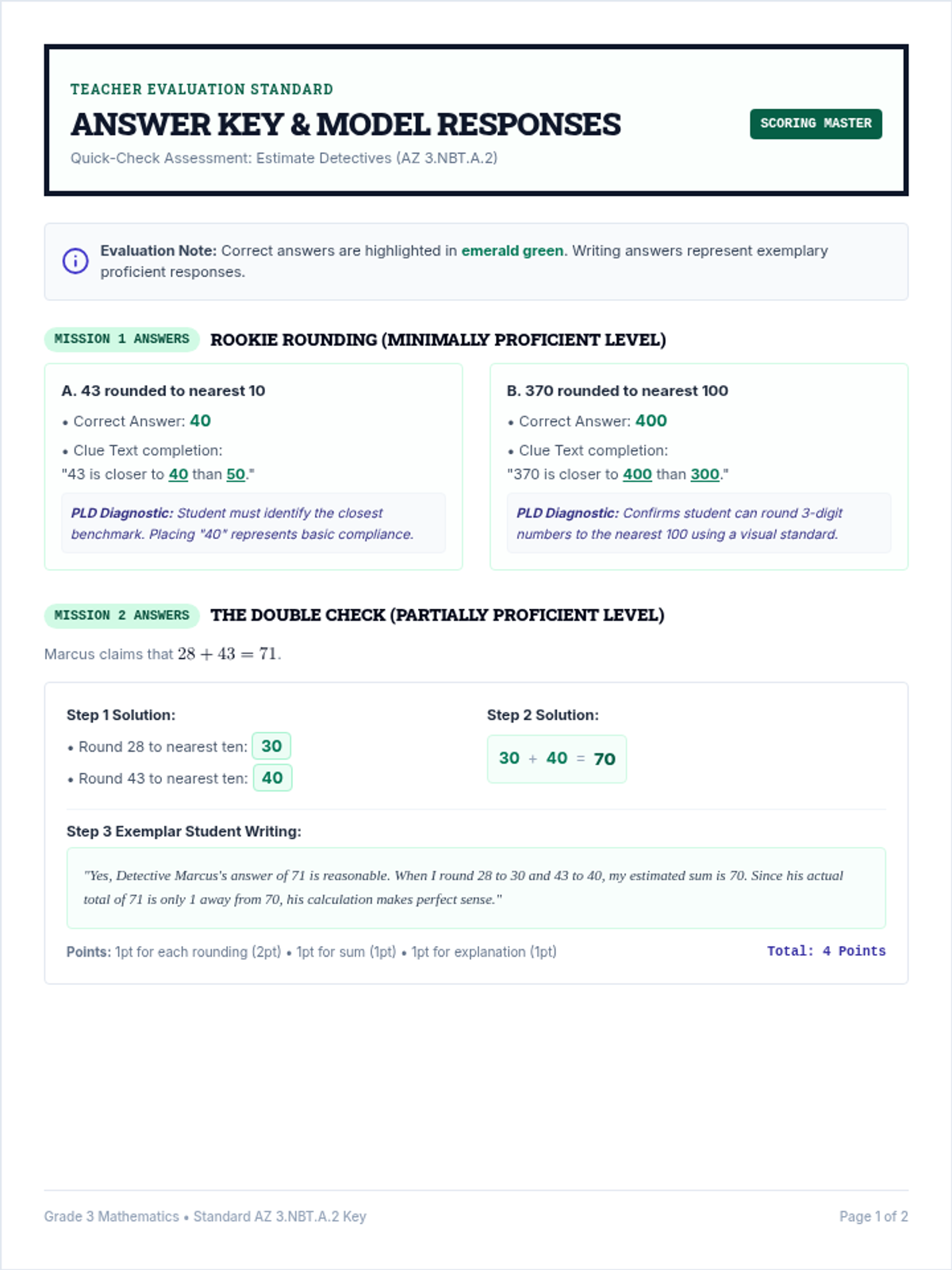
A comprehensive diagnostic and assessment unit focused on rounding to the nearest 10 or 100 to check solution reasonableness, aligned to the Arizona PLD framework for 3.NBT.A.2.
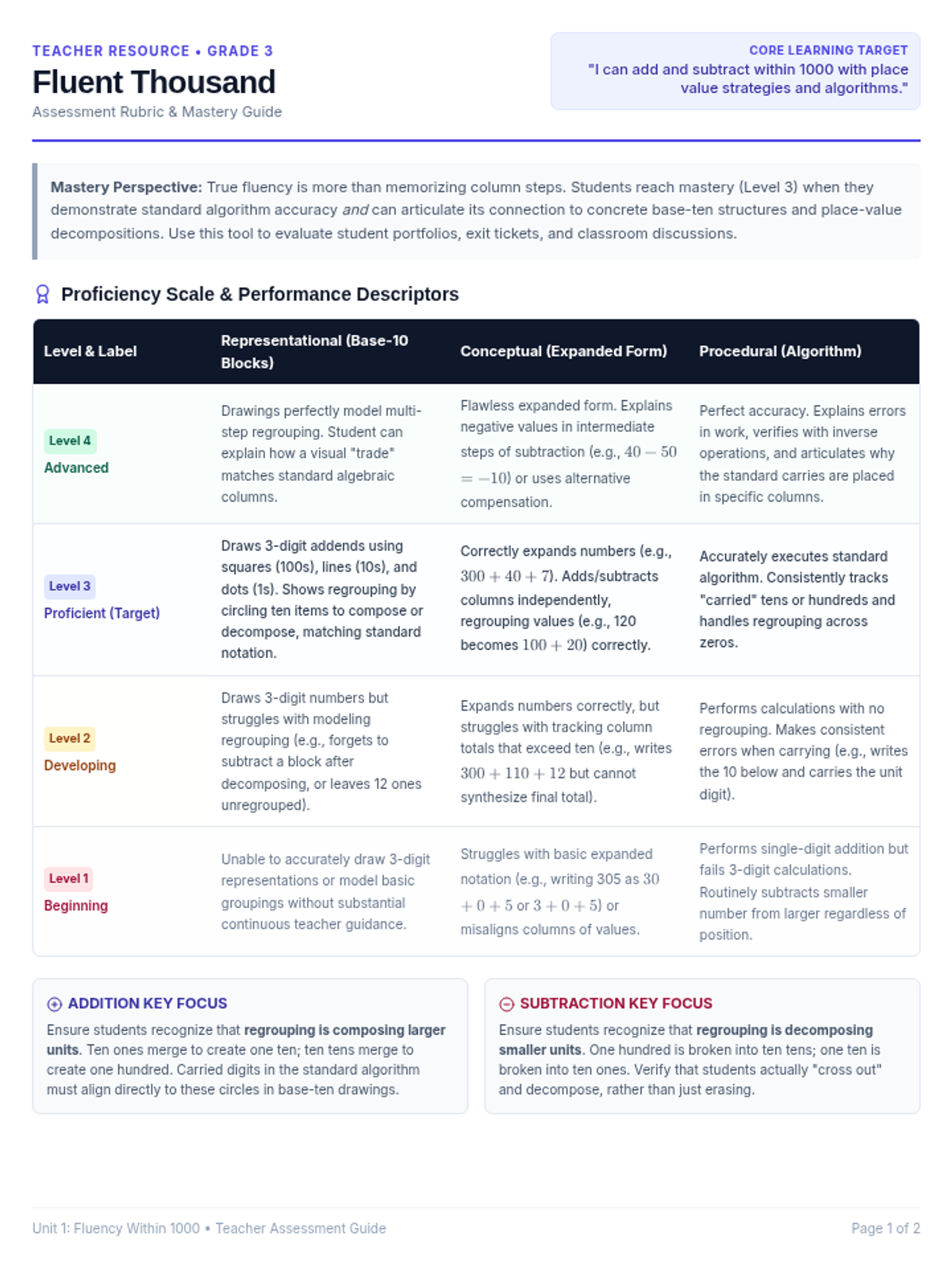
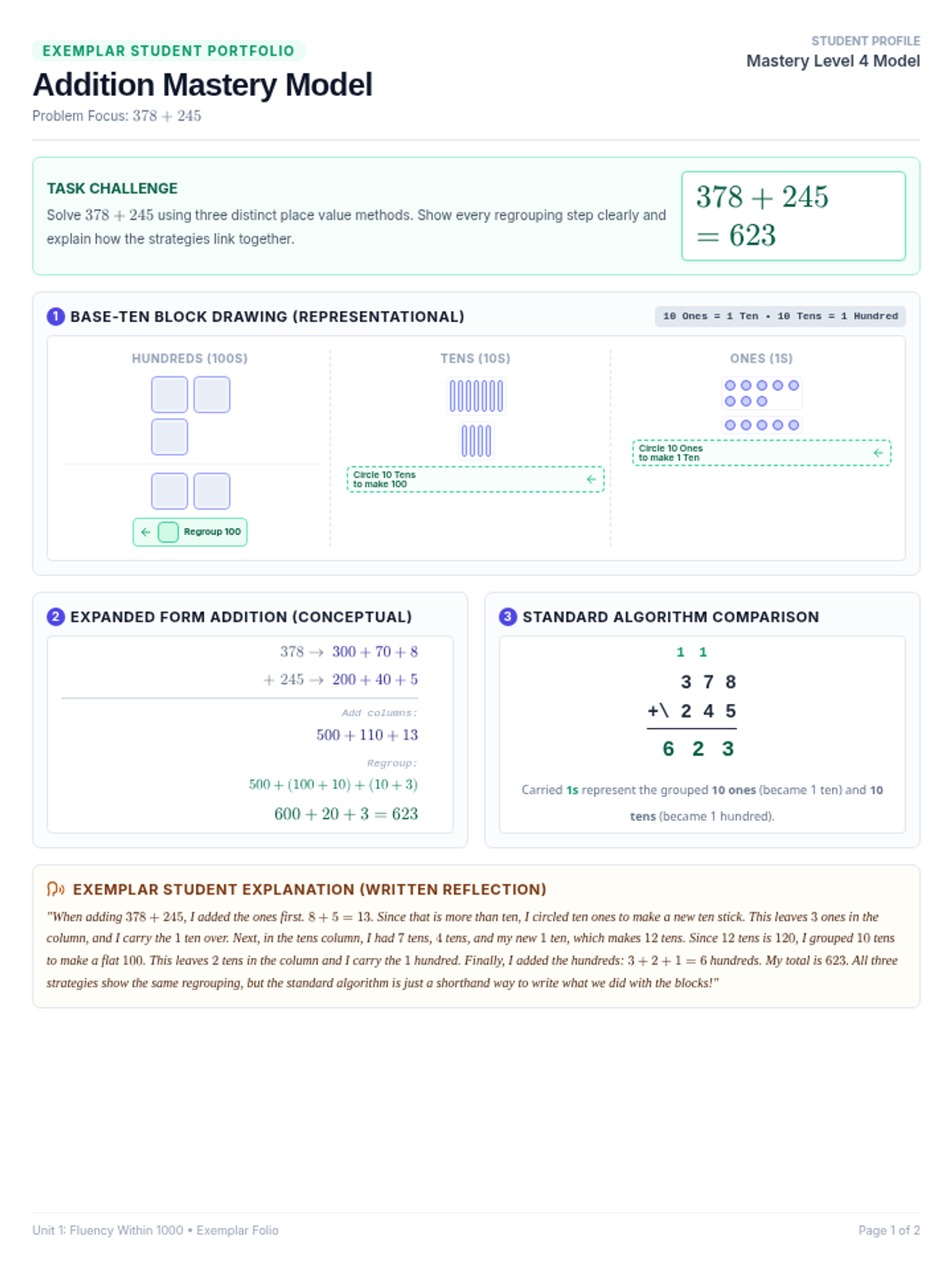
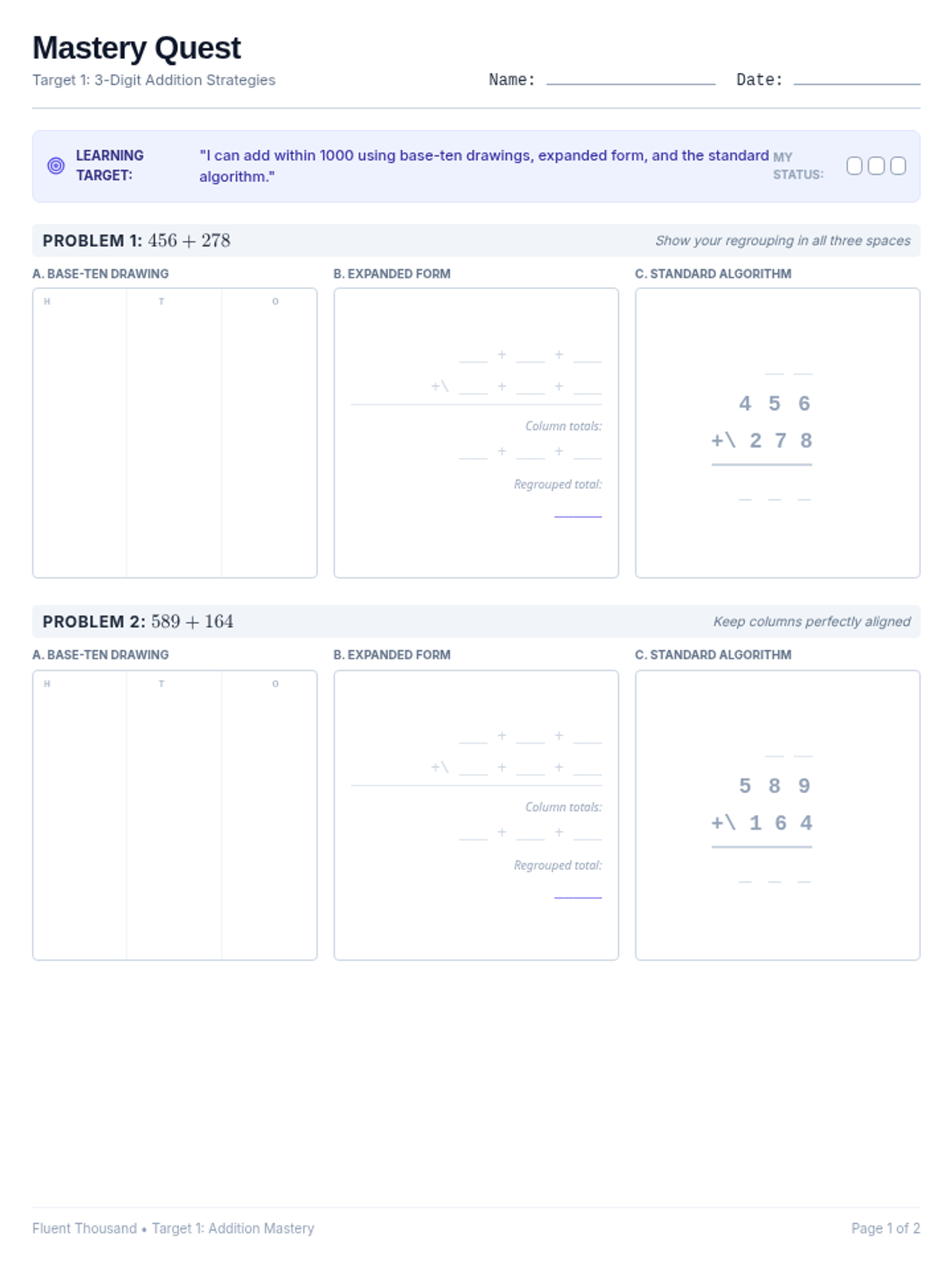
A mastery-focused lesson pack designed to teach, assess, and practice 3-digit addition and subtraction using base-ten drawings, expanded form, and the standard algorithm. Includes a comprehensive rubric, student exemplar exemplars, and a multi-strategy practice worksheet.
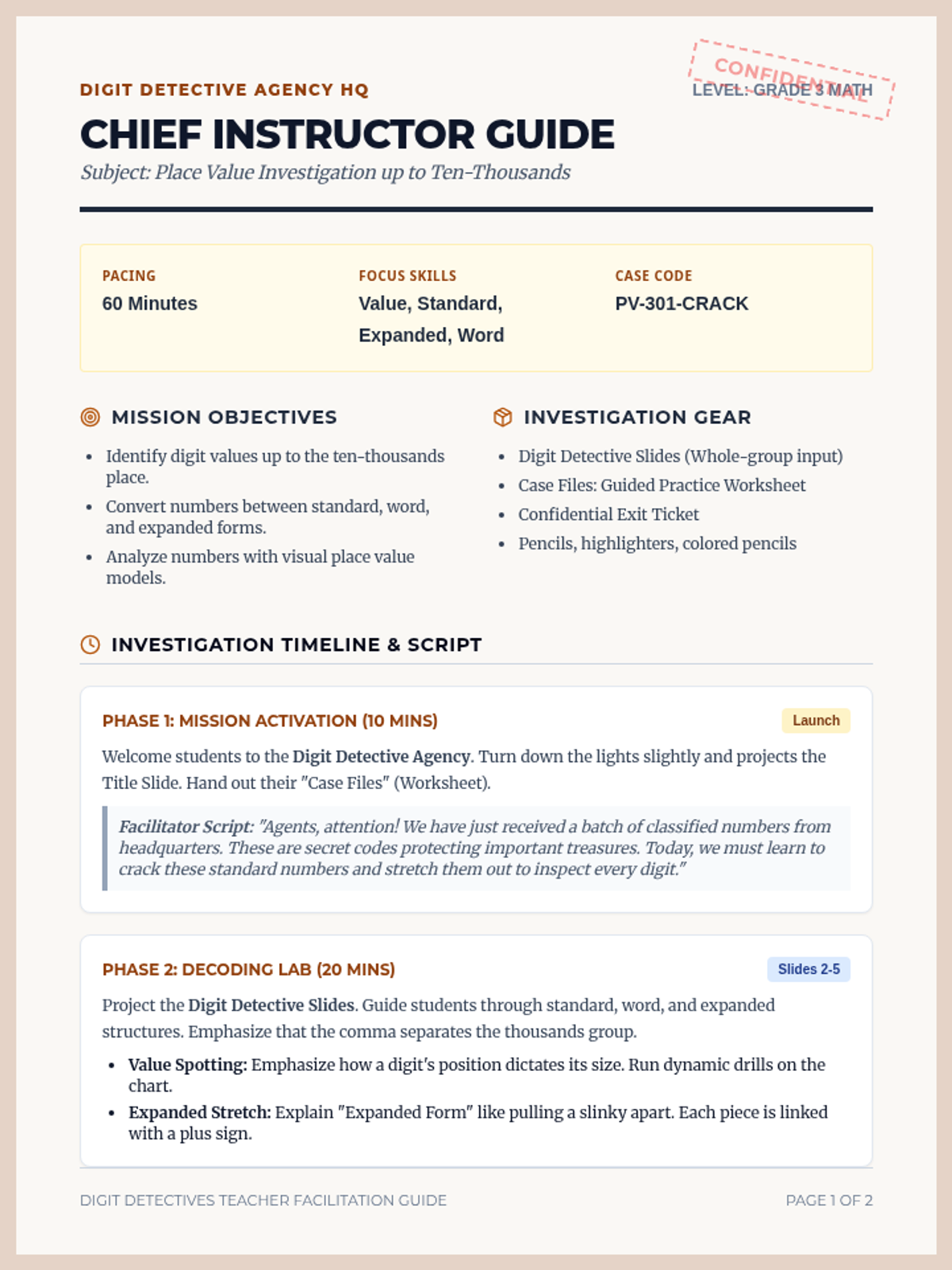
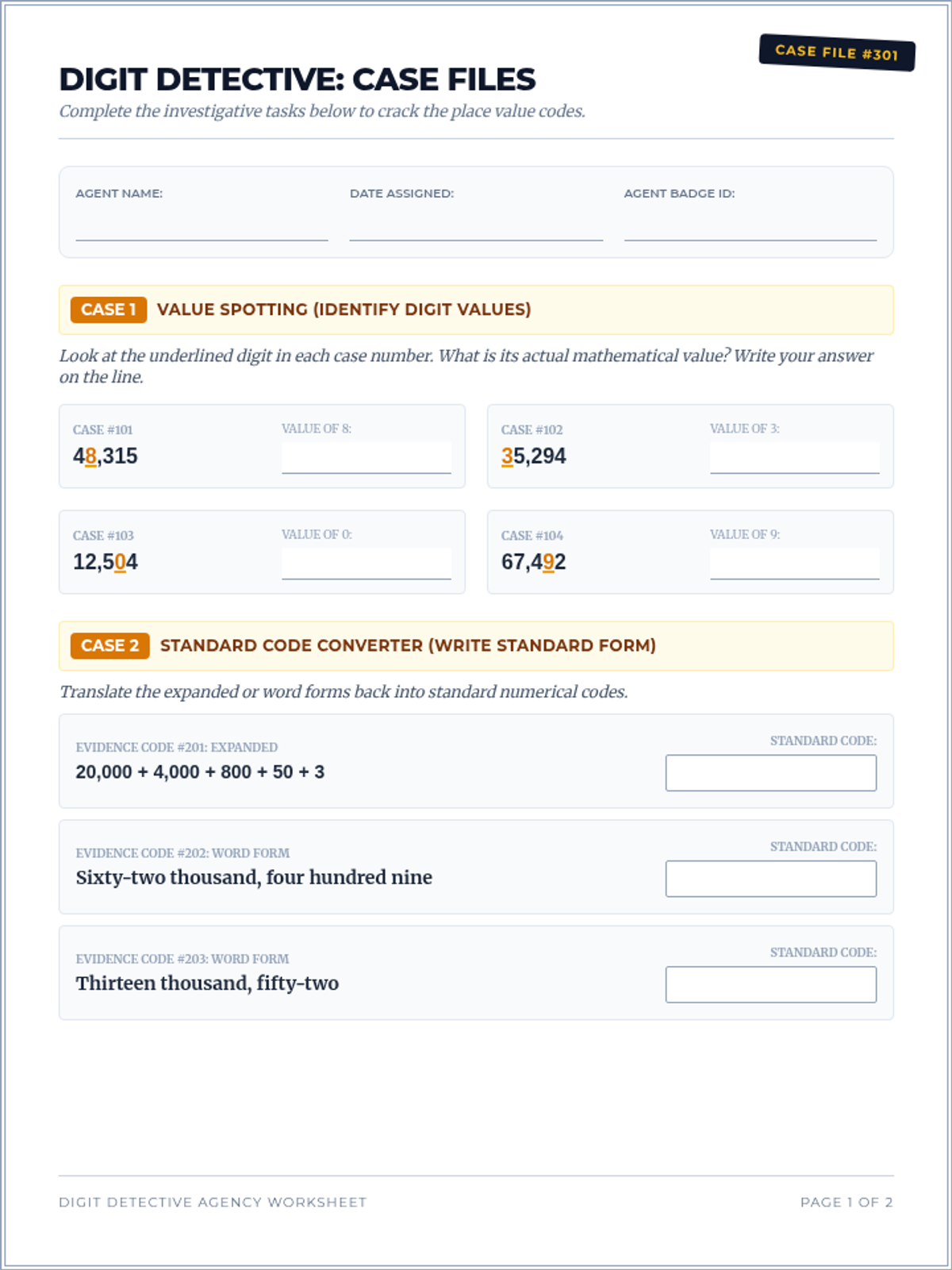
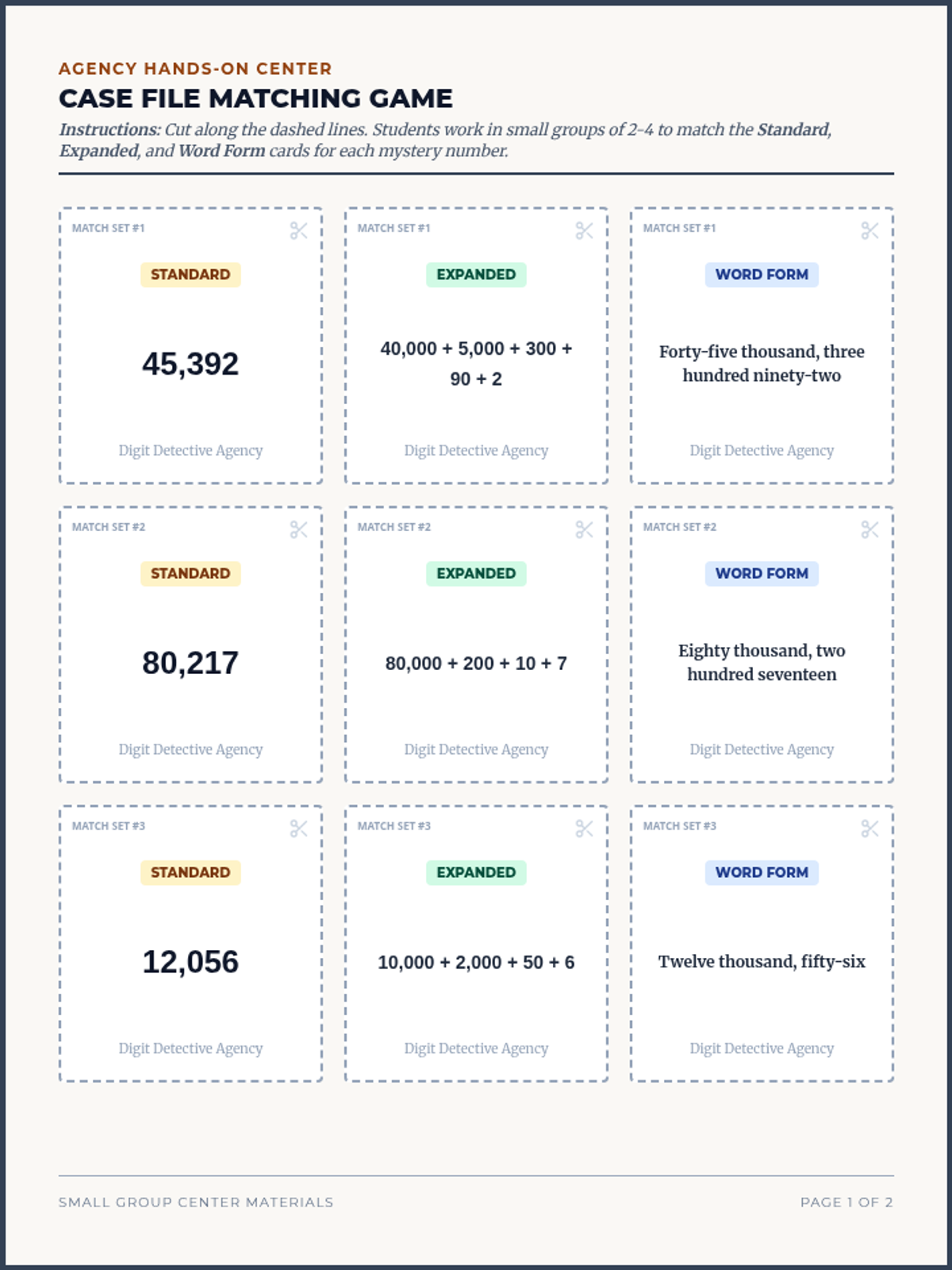
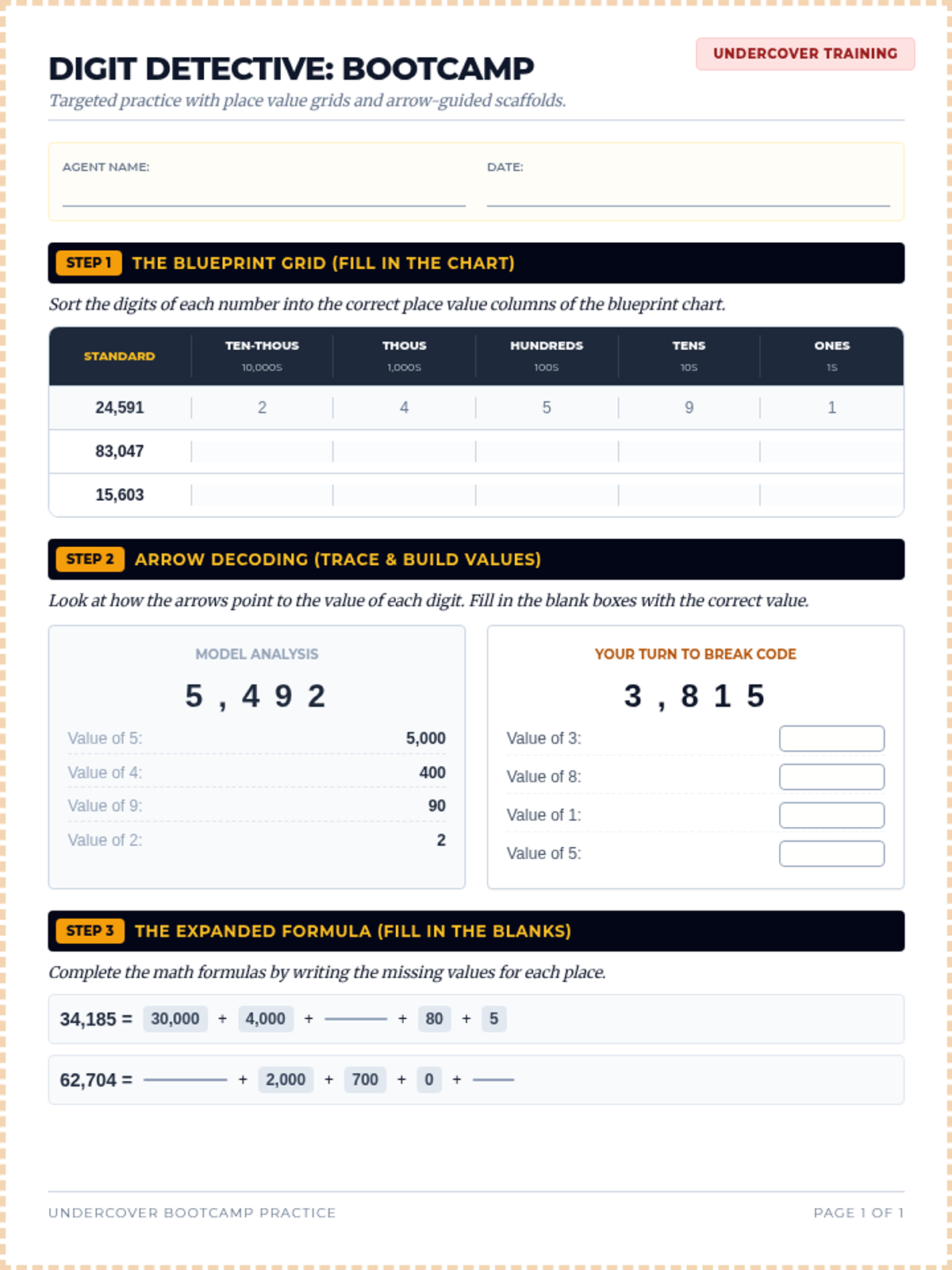
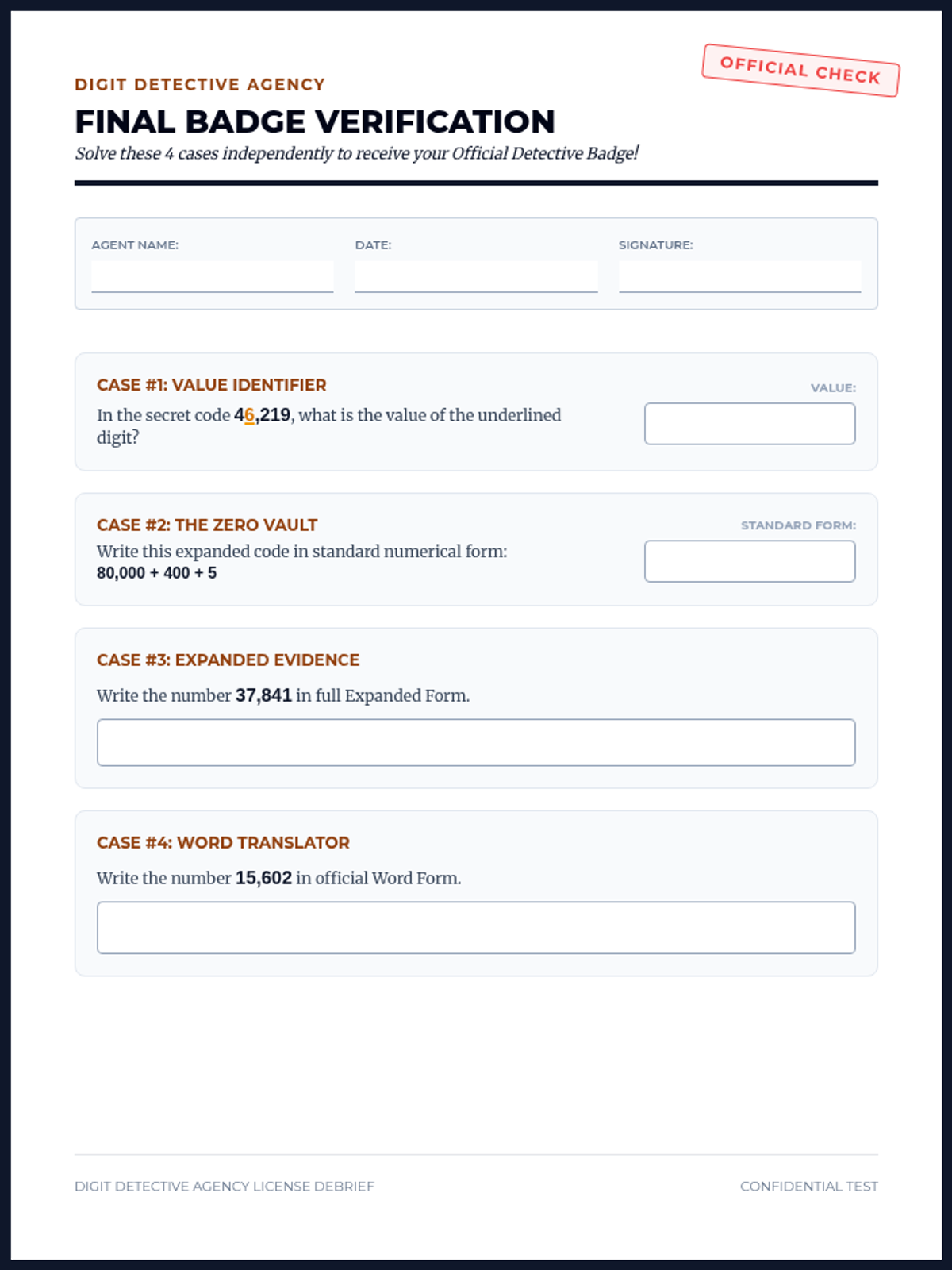
A comprehensive 3rd grade math lesson themed around a detective agency where students solve place value cases. The lesson covers identifying digit values up to ten-thousands, and converting numbers between standard, word, and expanded forms.
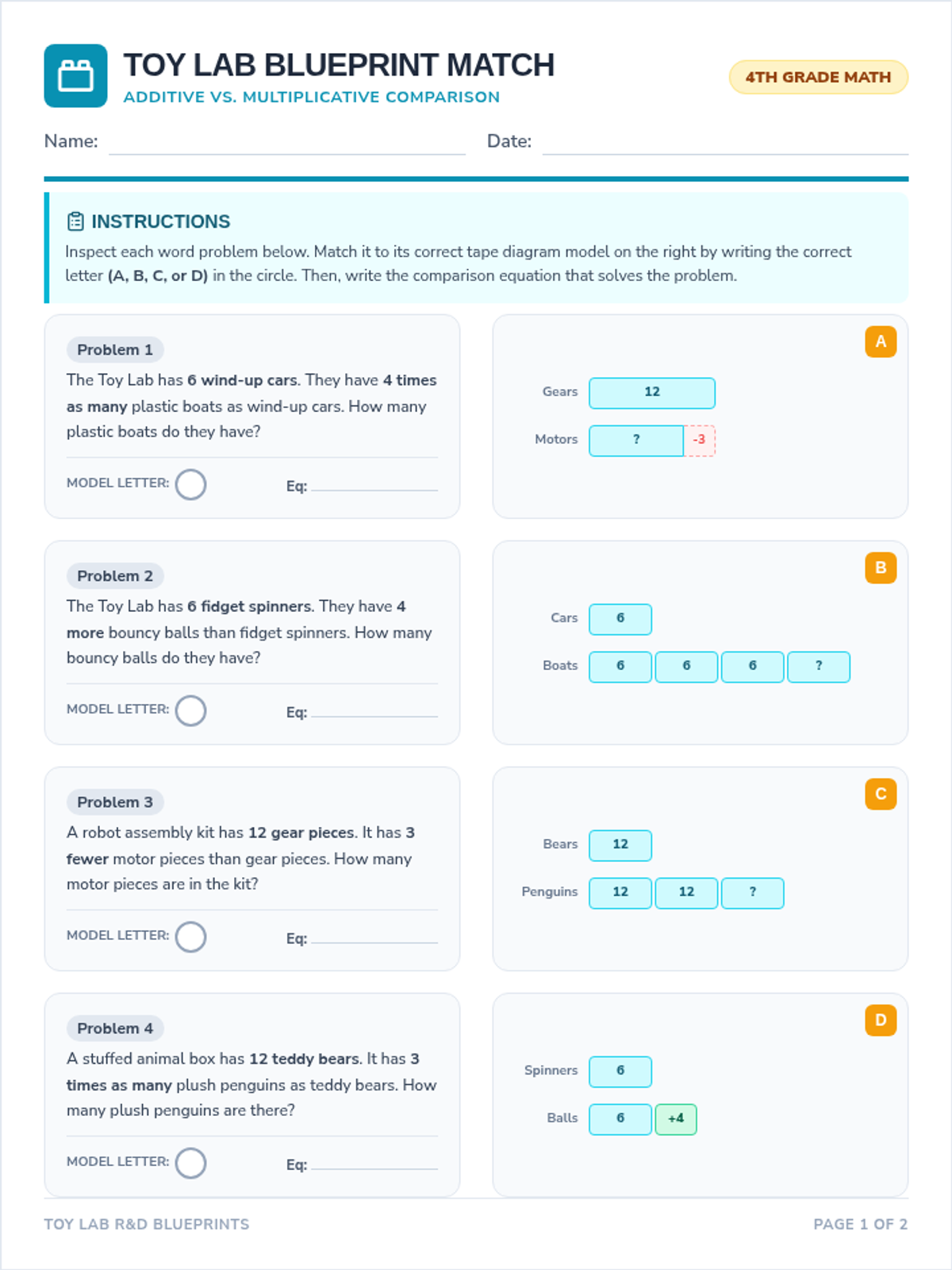
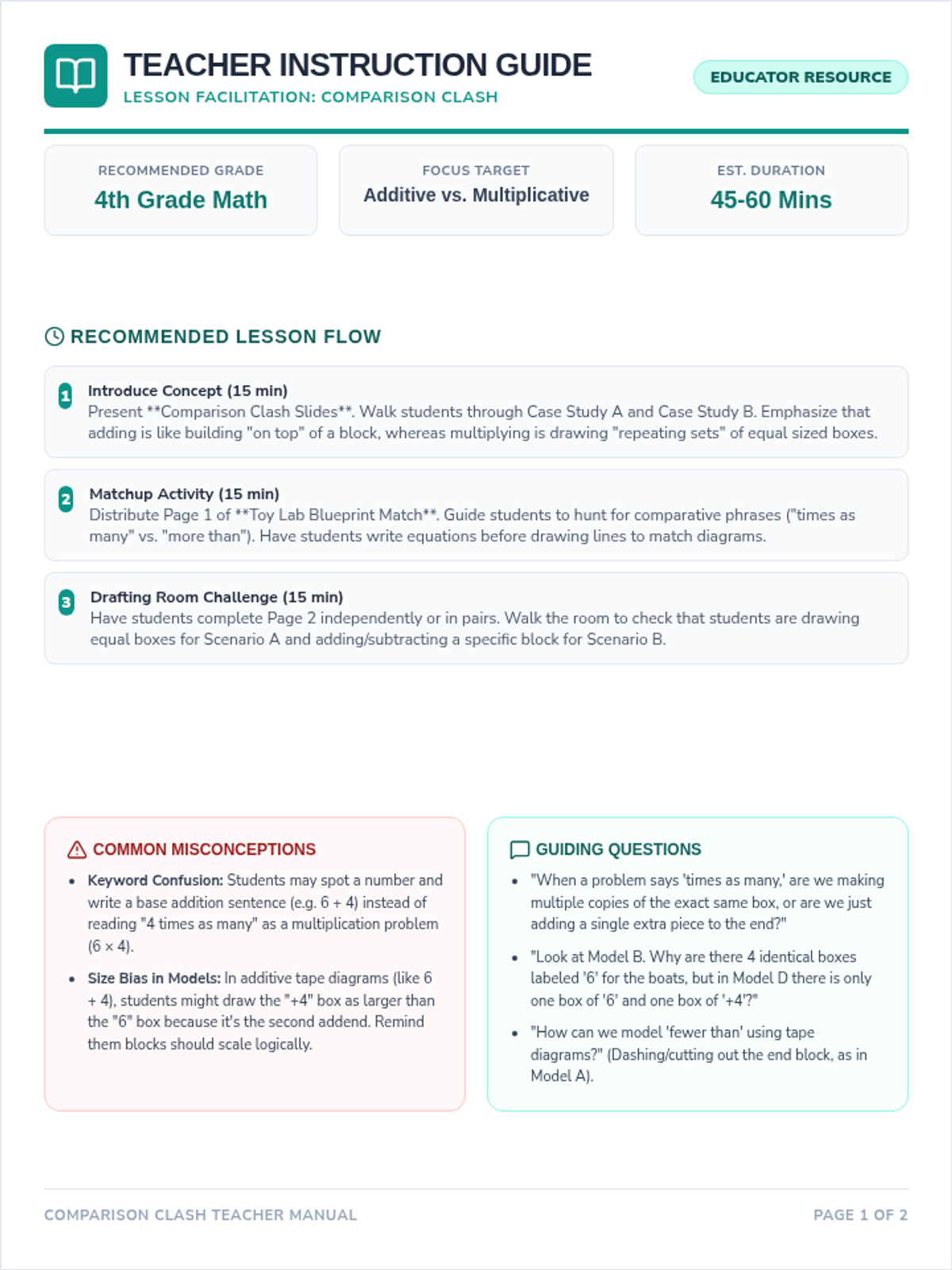
A hands-on, high-engagement lesson where 4th-grade students distinguish between additive and multiplicative comparison using visual models, tape diagrams, and real-world toy factory scenarios. This lesson includes interactive presentation slides, a student matching activity, and a comprehensive teacher guide.
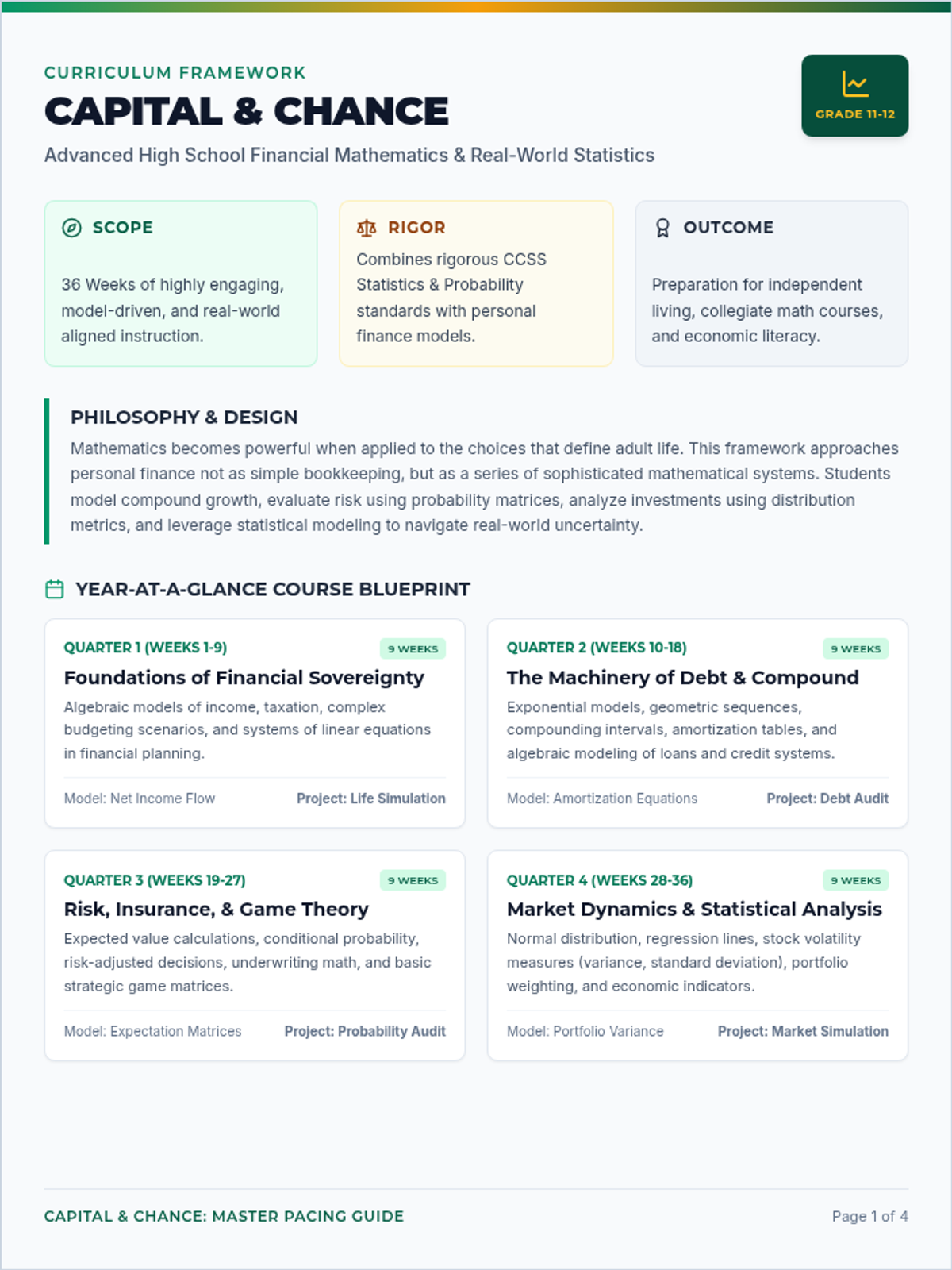
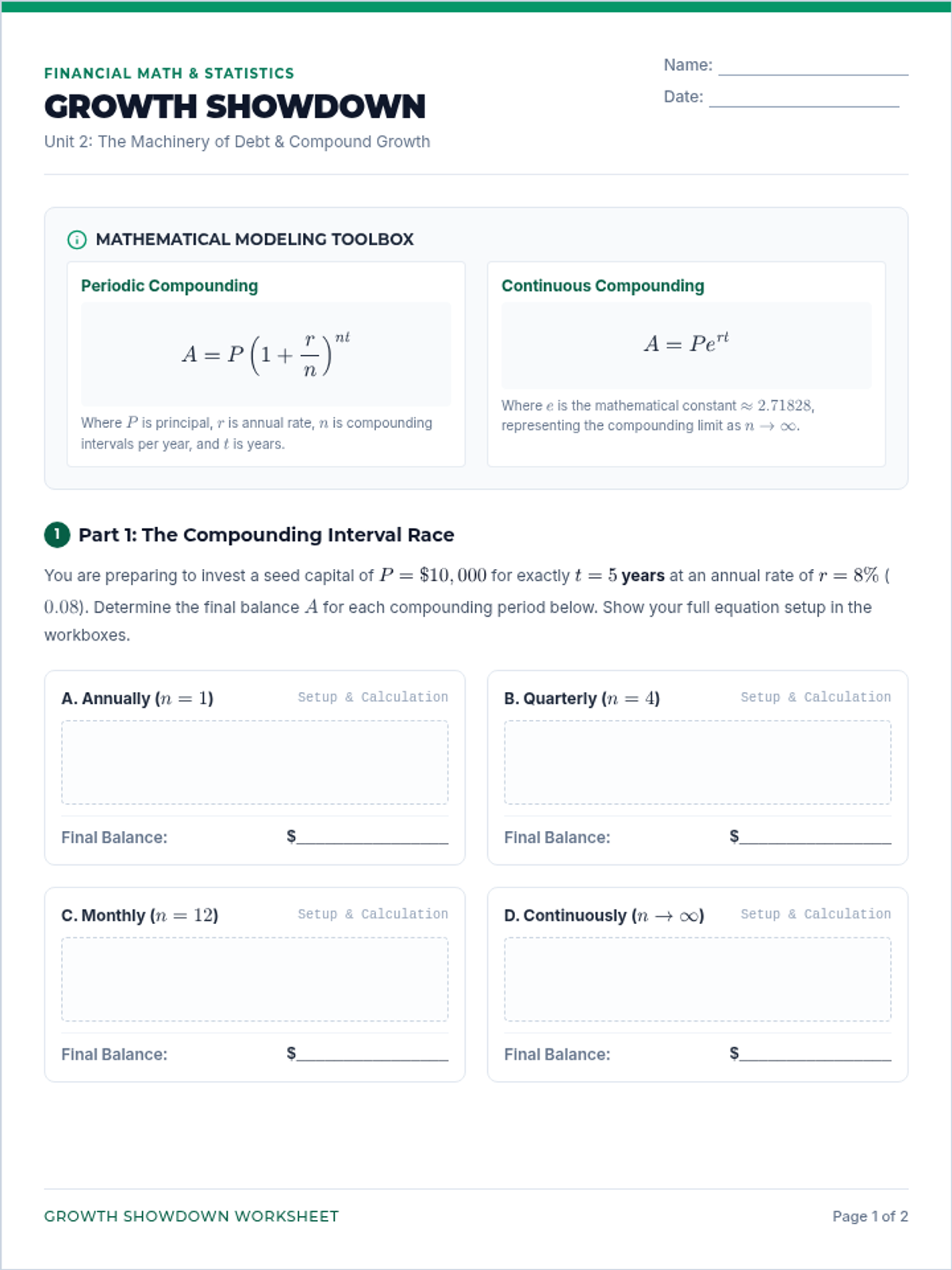
Master planning resources, pacing guides, and curriculum frameworks for advanced high school mathematics courses.
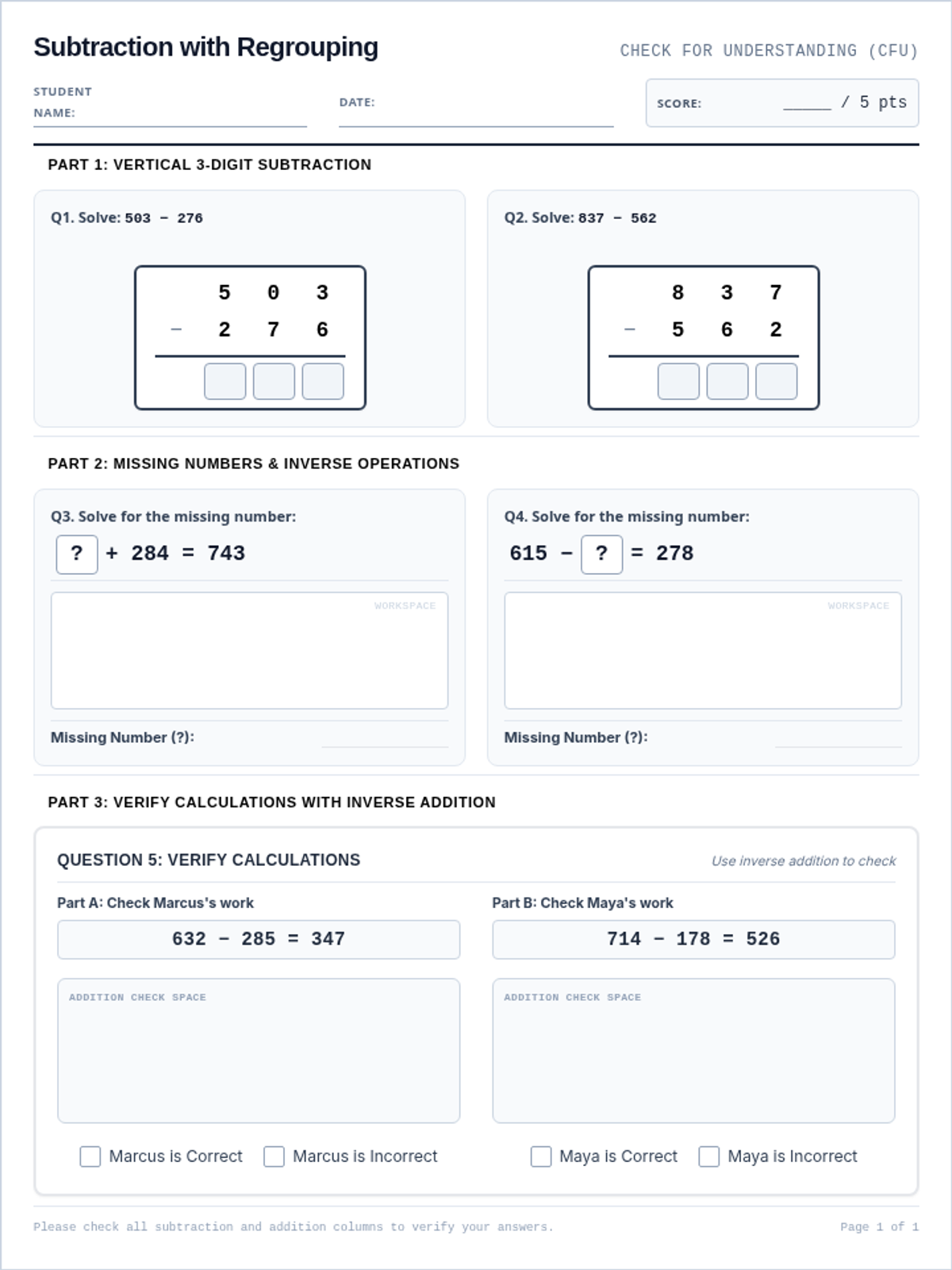
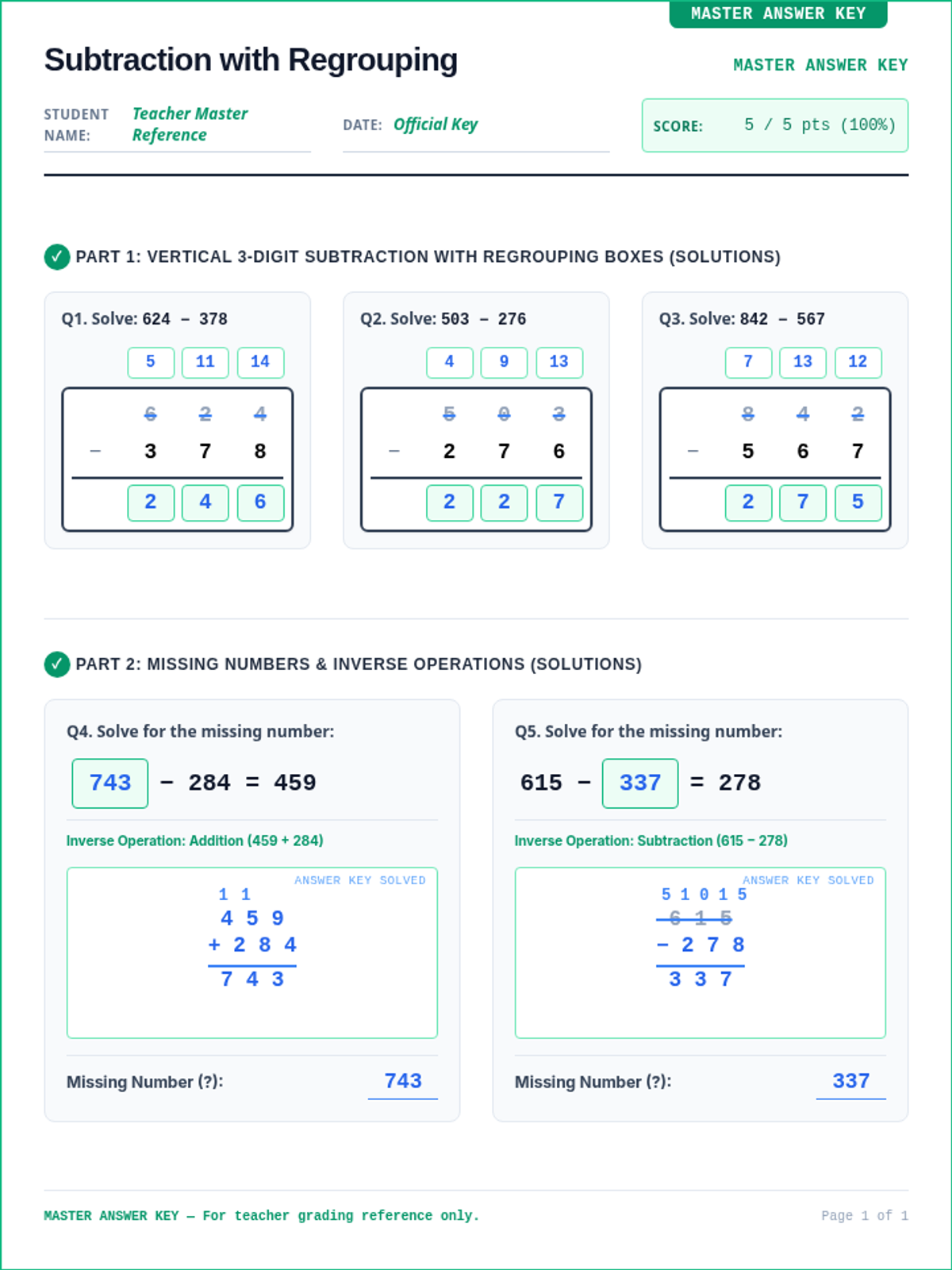
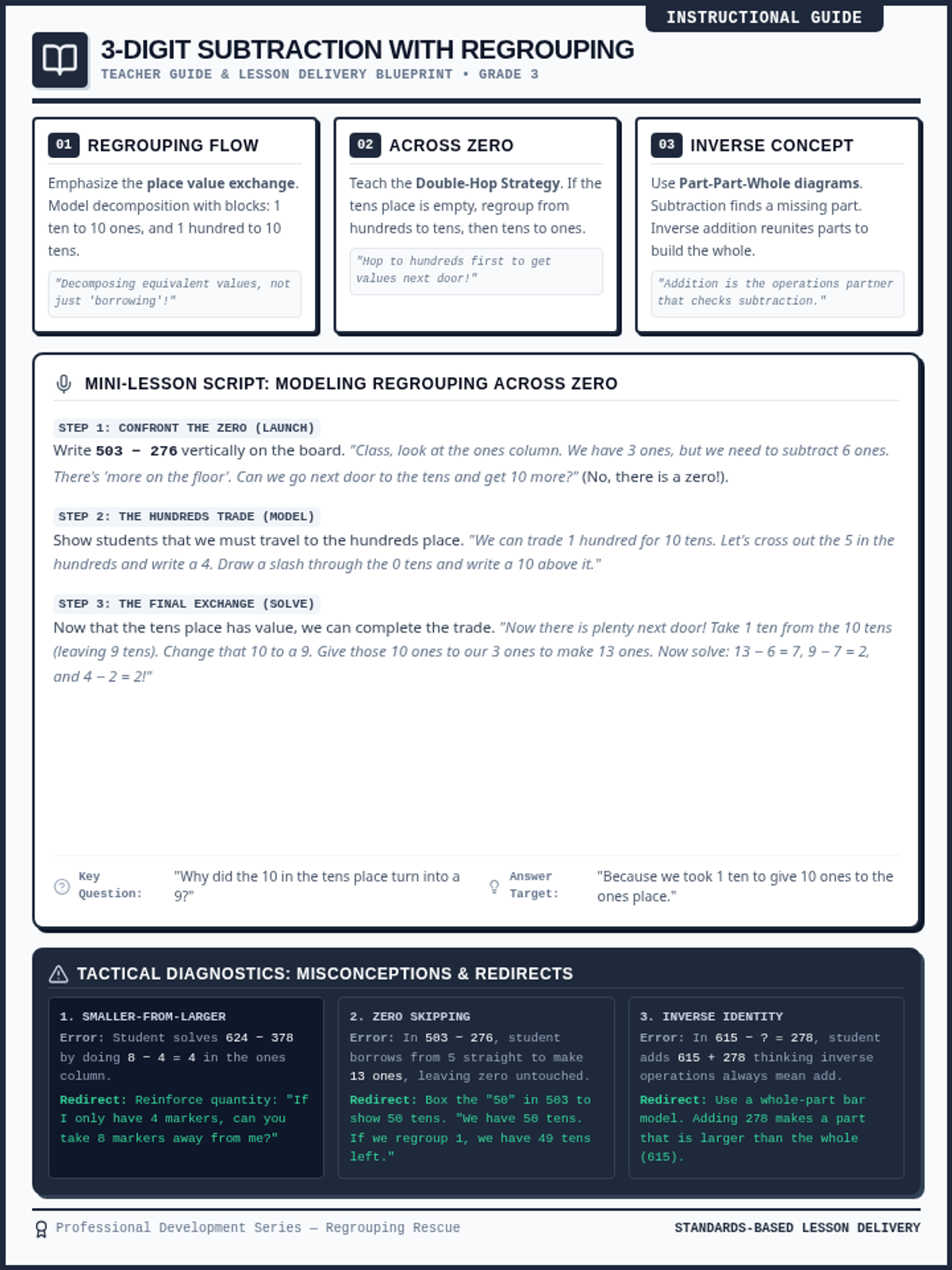
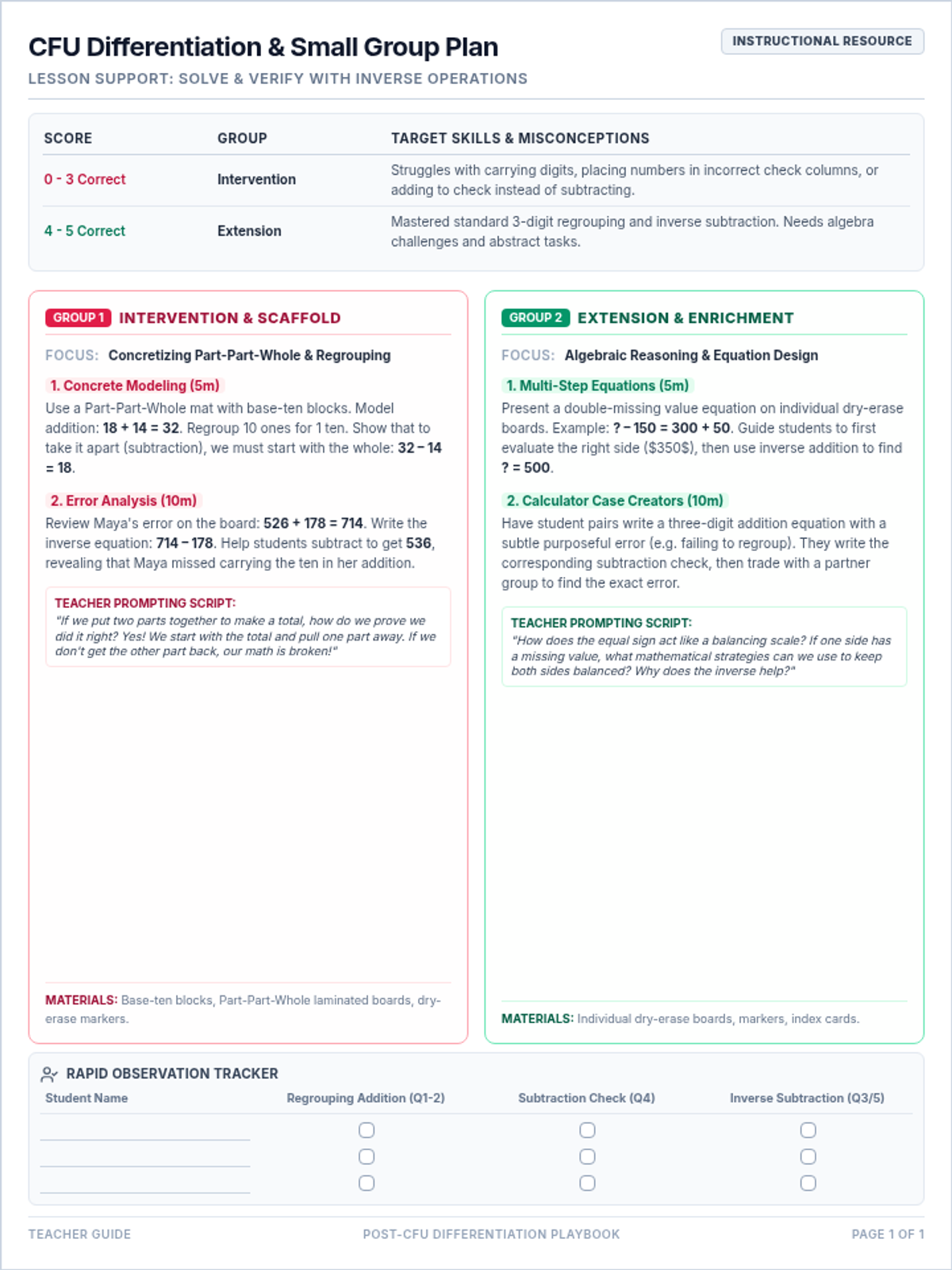
A focused check-for-understanding assessment on 3-digit subtraction with regrouping, including subtracting across zeros and solving for missing numbers using inverse operations.
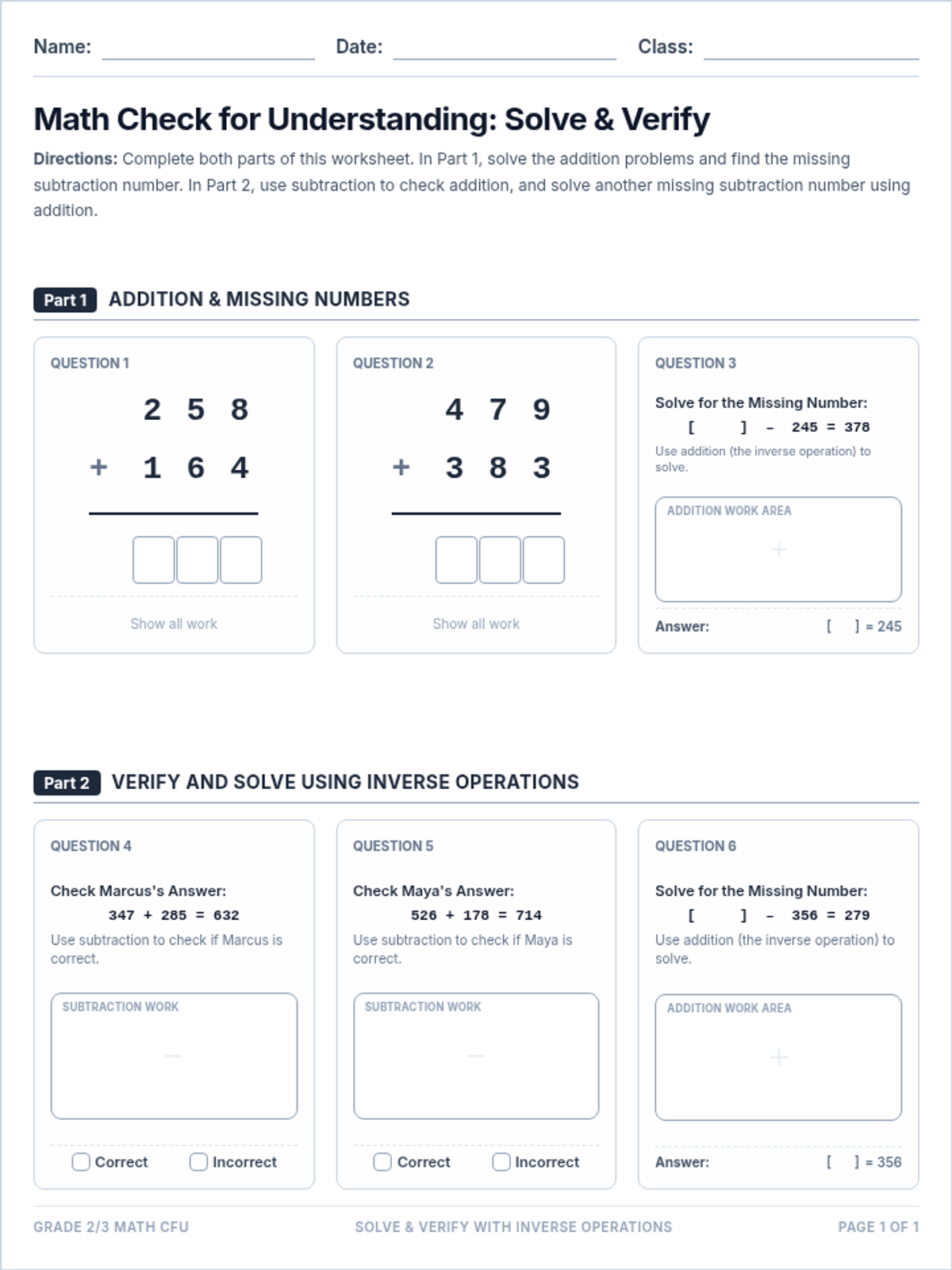
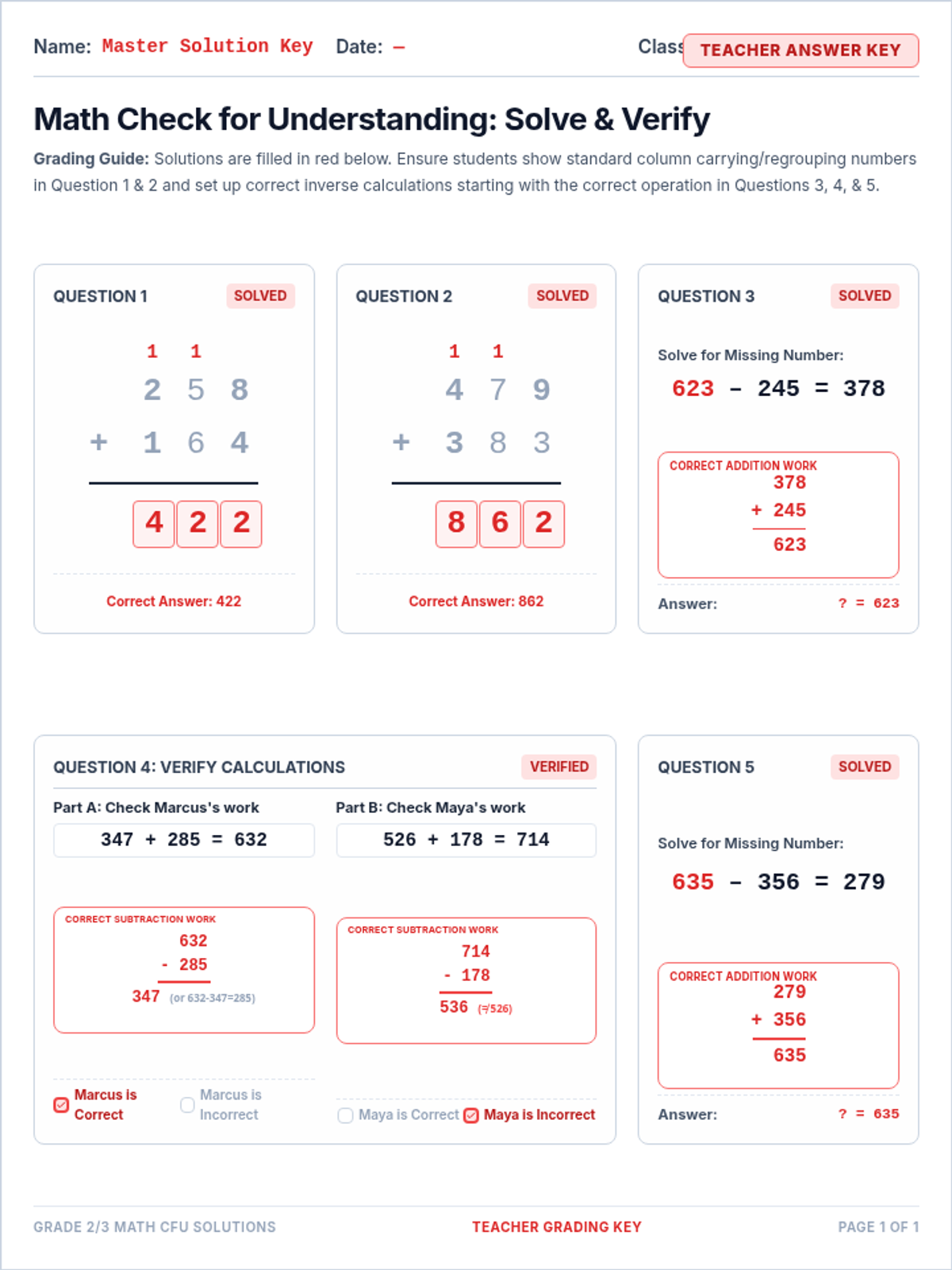
An engaging math lesson where students act as detectives to solve addition problems with regrouping and verify calculations using inverse operations.
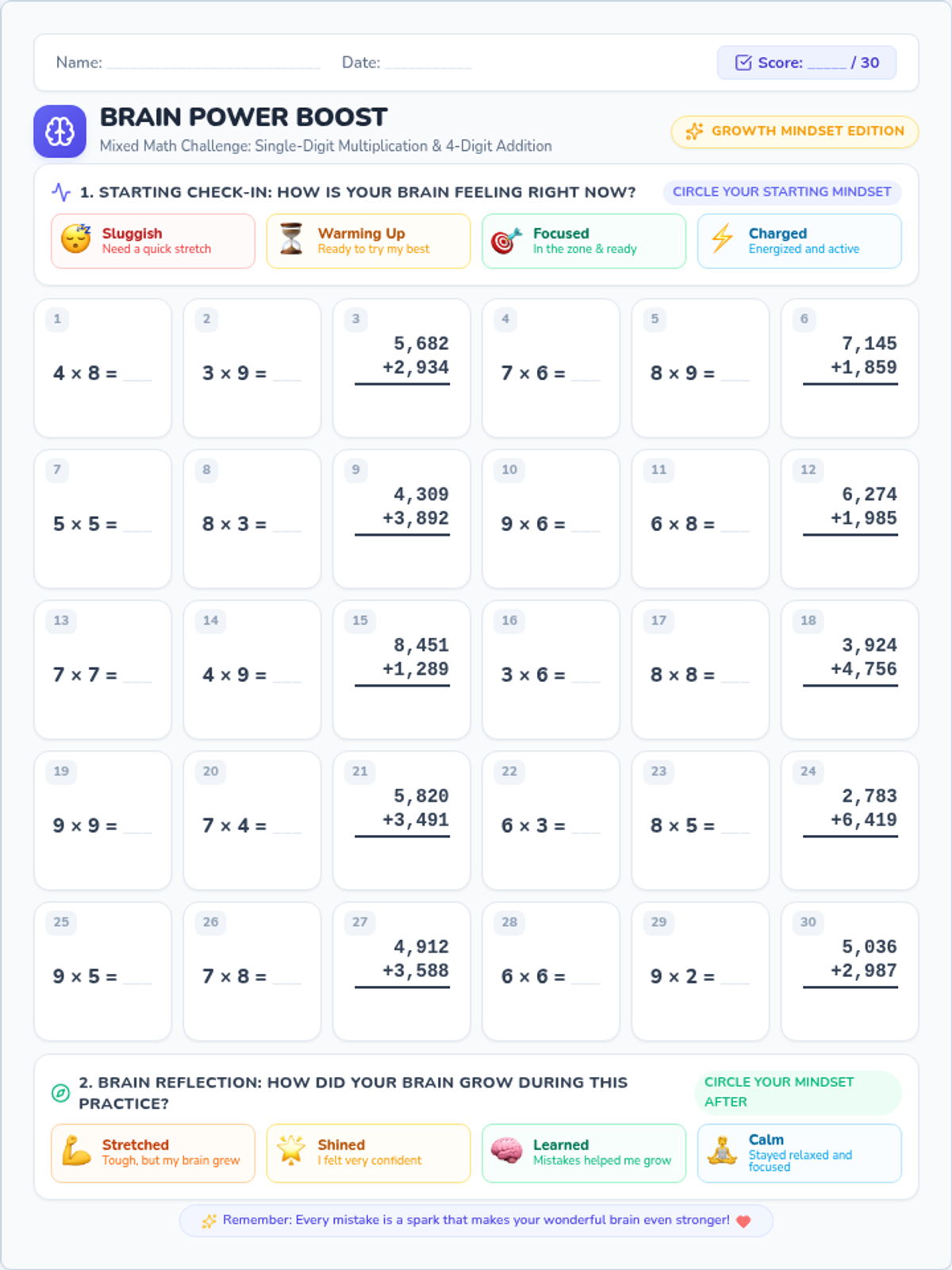
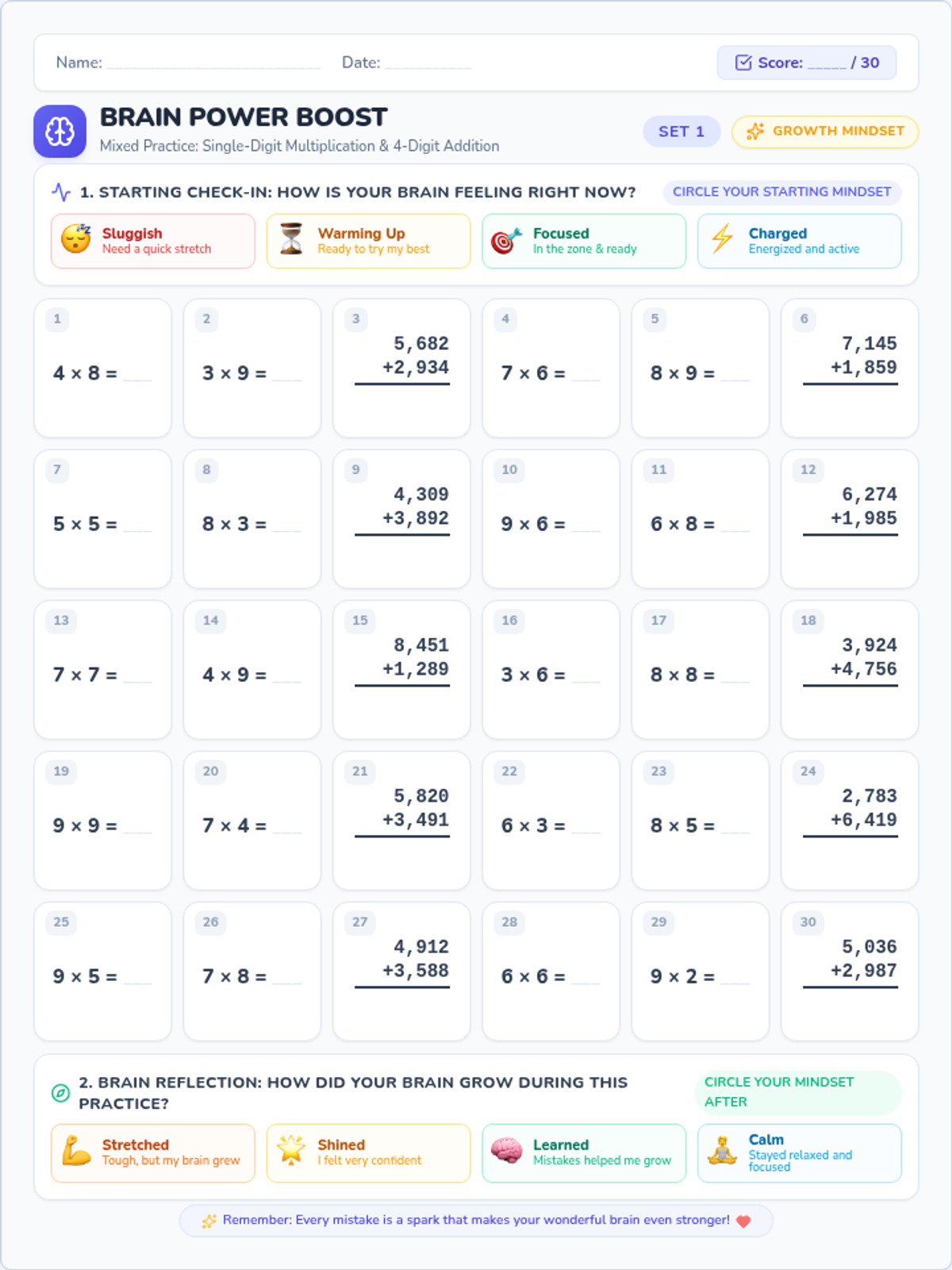
A math lesson focused on building single-digit multiplication and four-digit addition fluency while integrating self-regulation check-ins to foster a growth mindset.
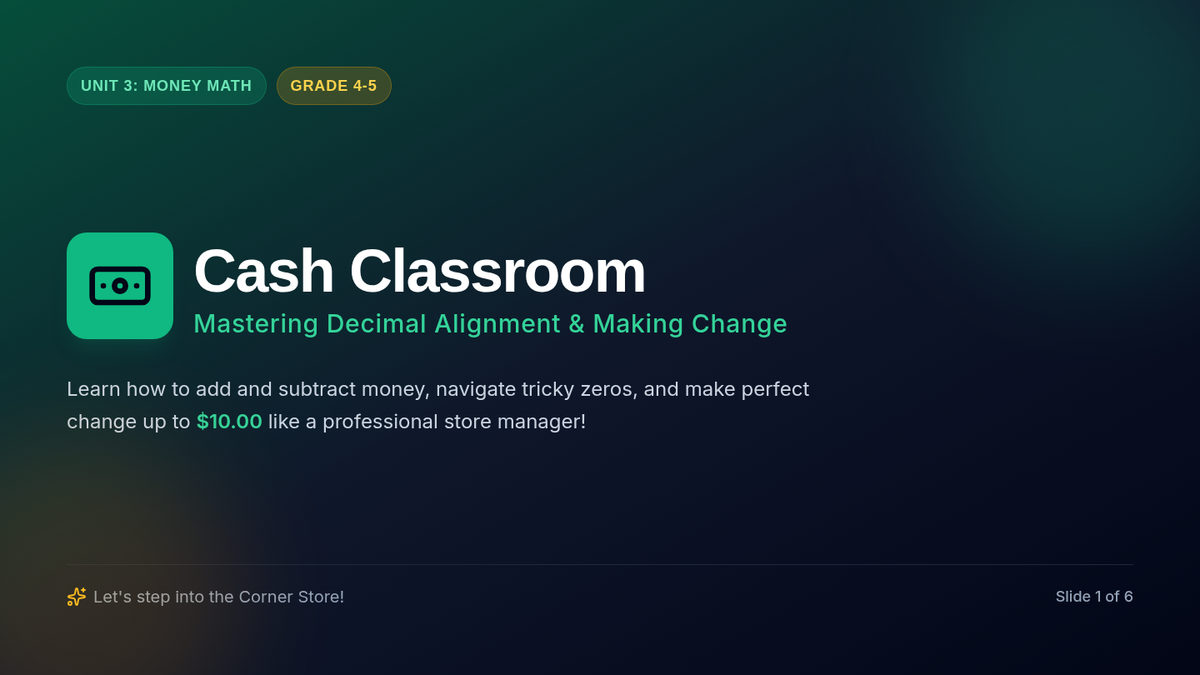
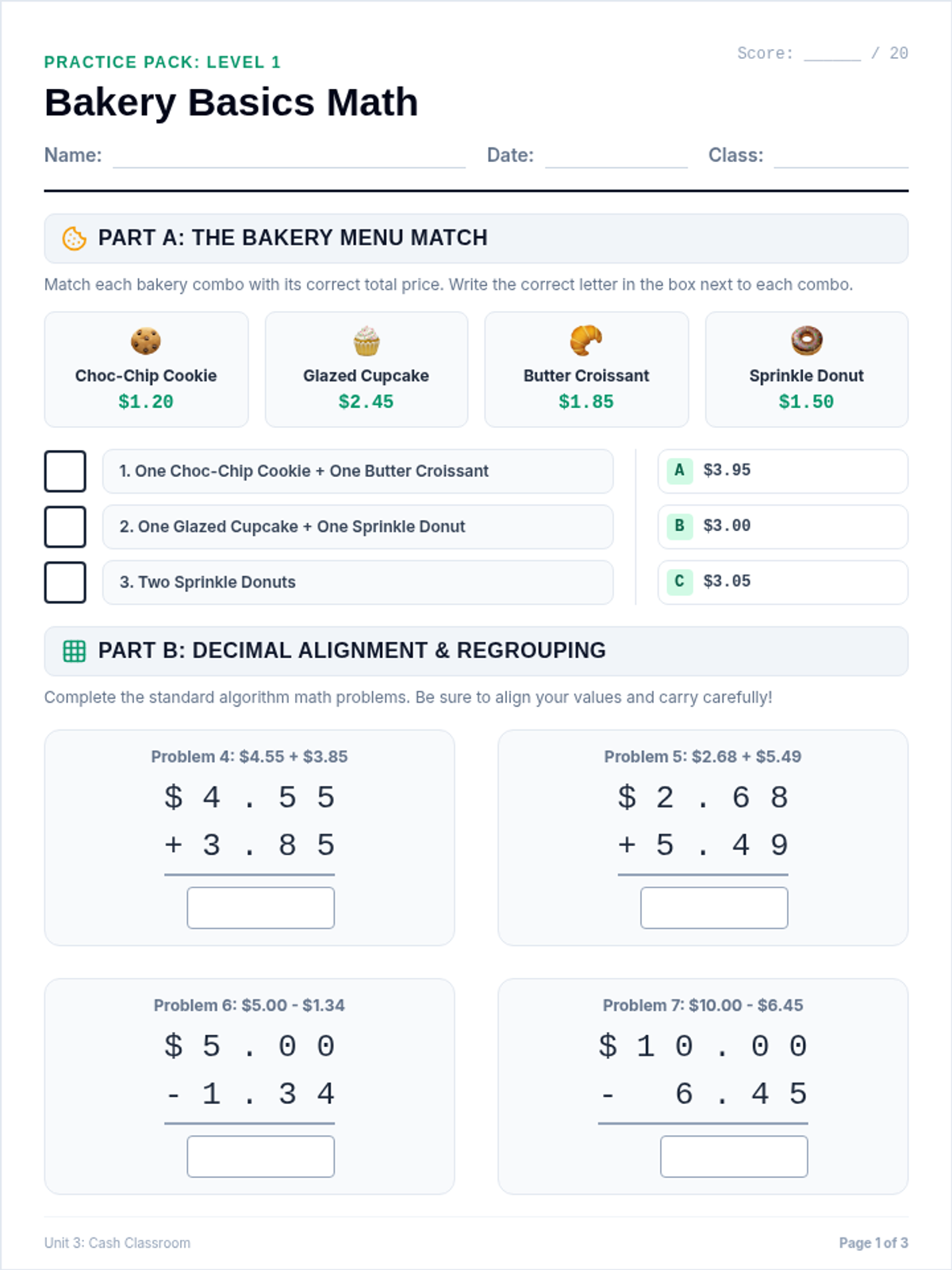
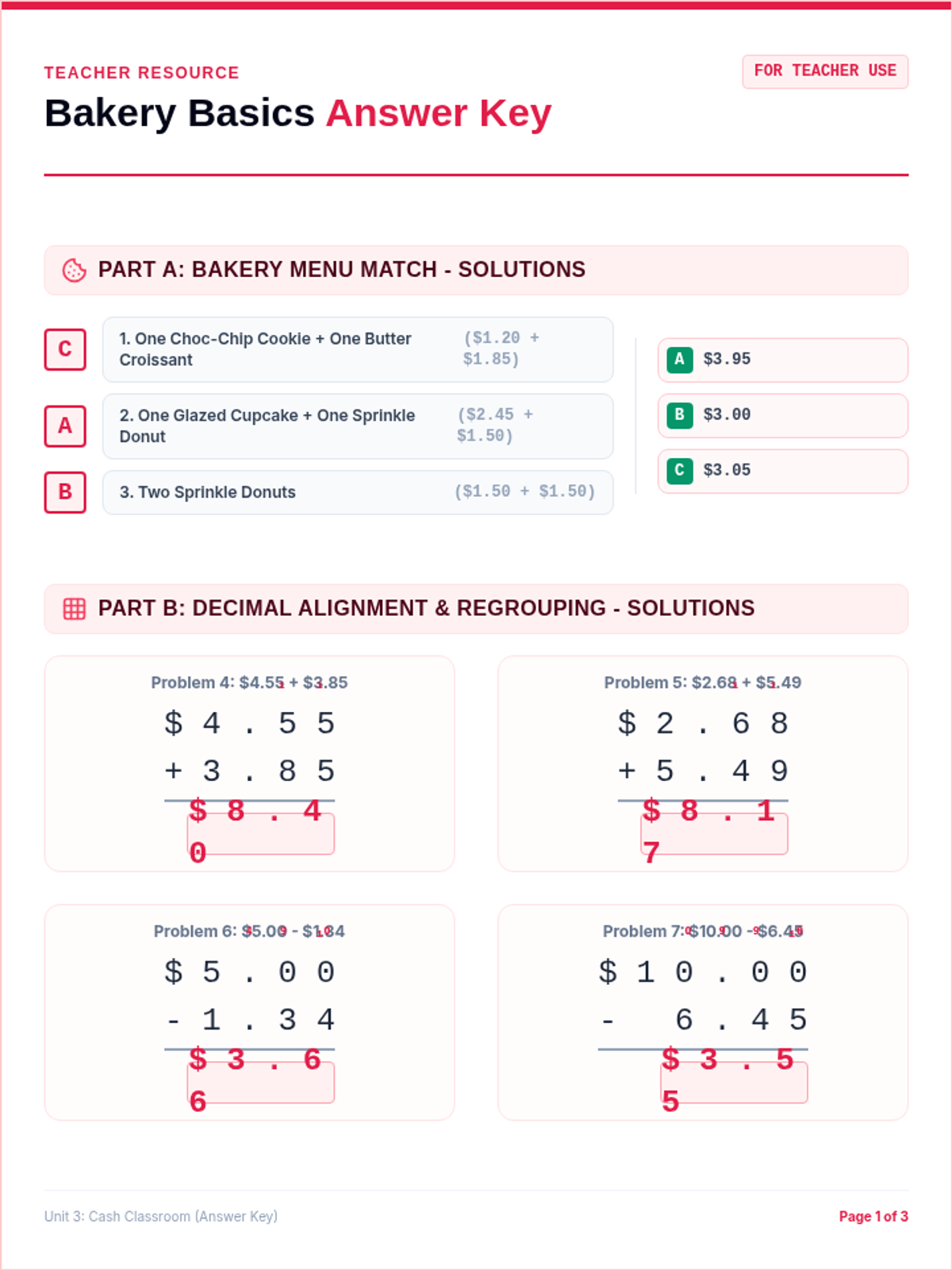
An engaging elementary math lesson focused on adding and subtracting money, lining up decimals, regrouping across zeros, and solving real-world shopping word problems up to $10.00.
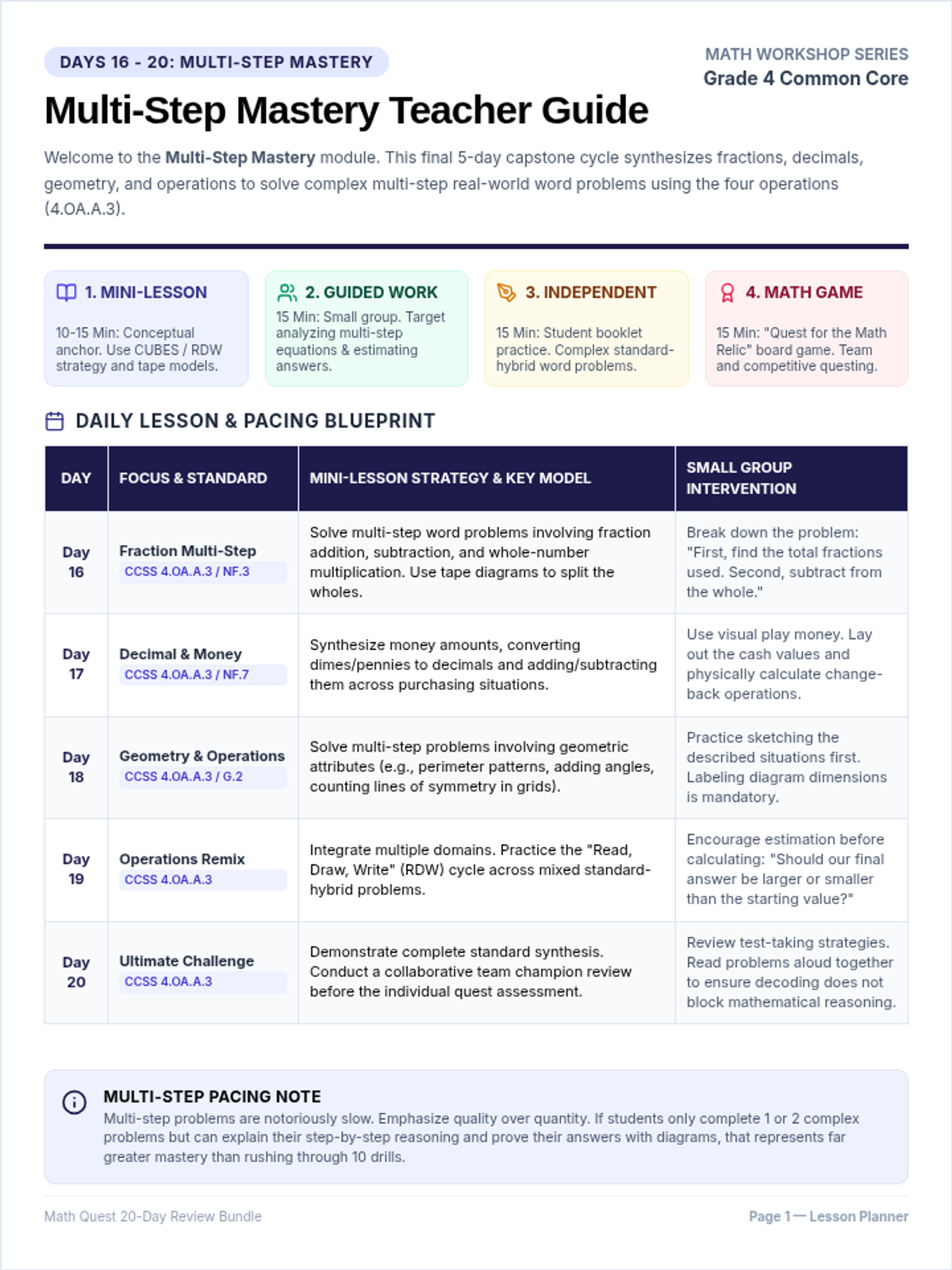
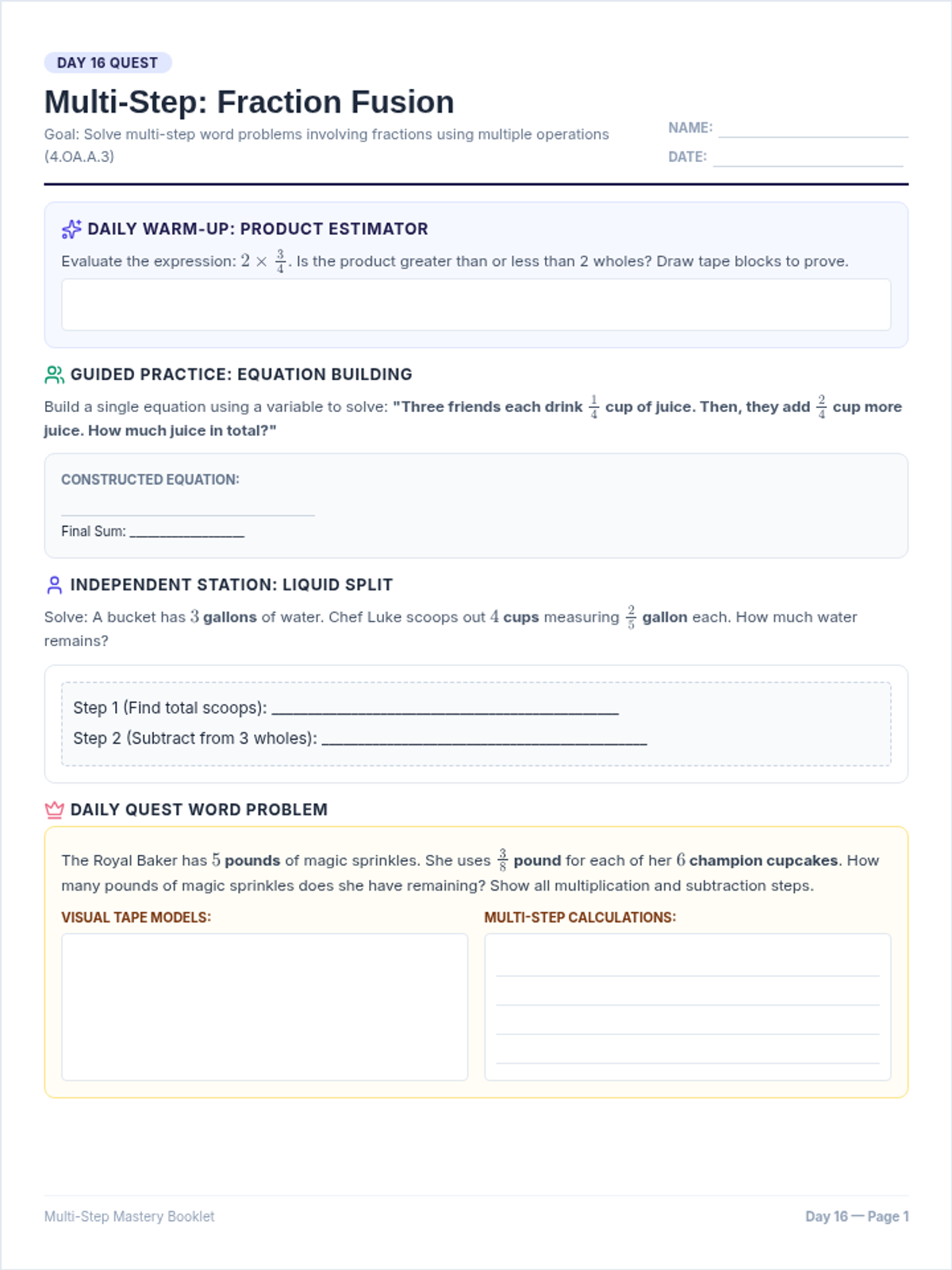
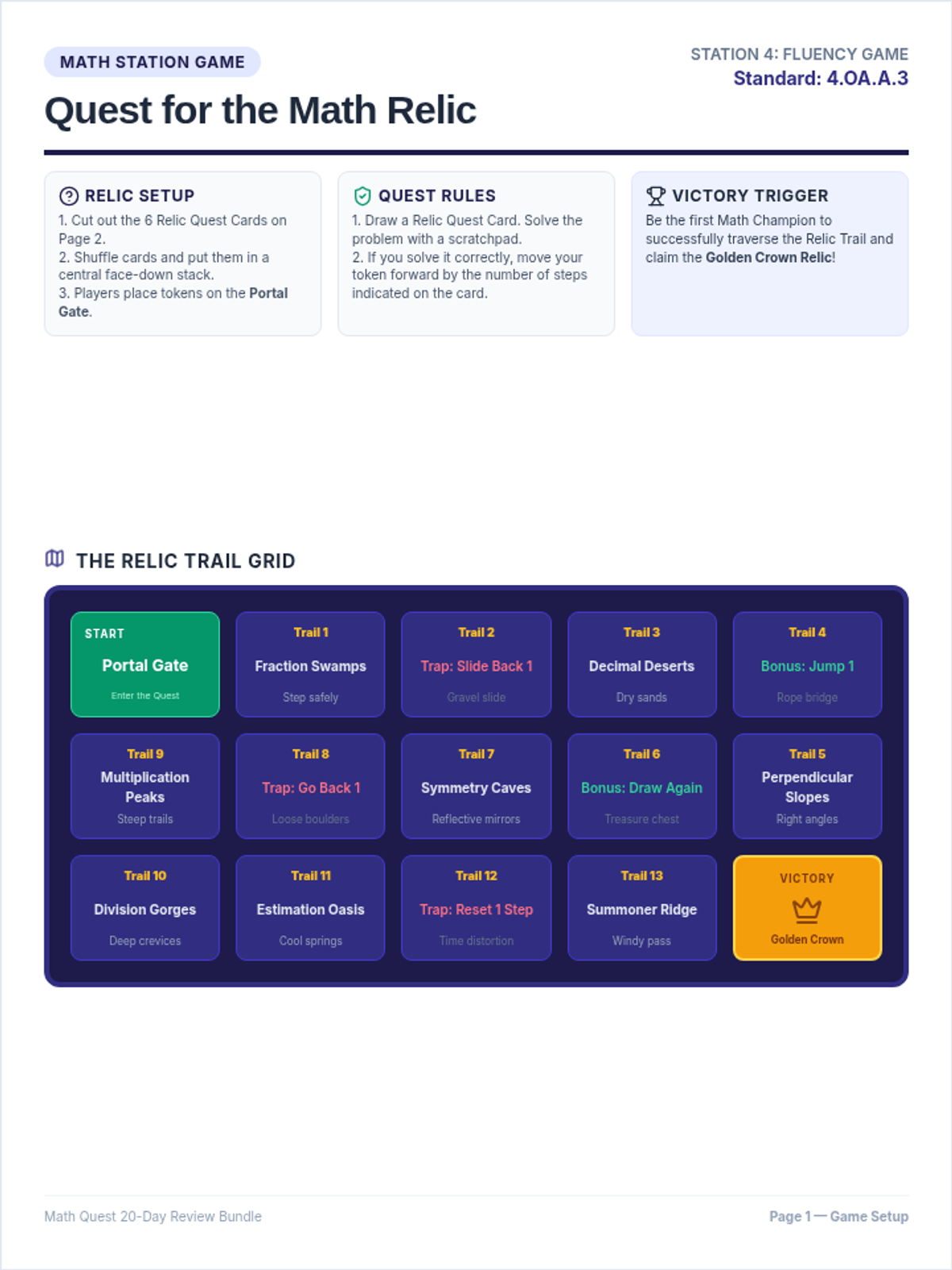
Days 16-20 of the review, focusing on integrating operations, fractions, decimals, and geometry to solve complex multi-step real-world word problems (OA.3).
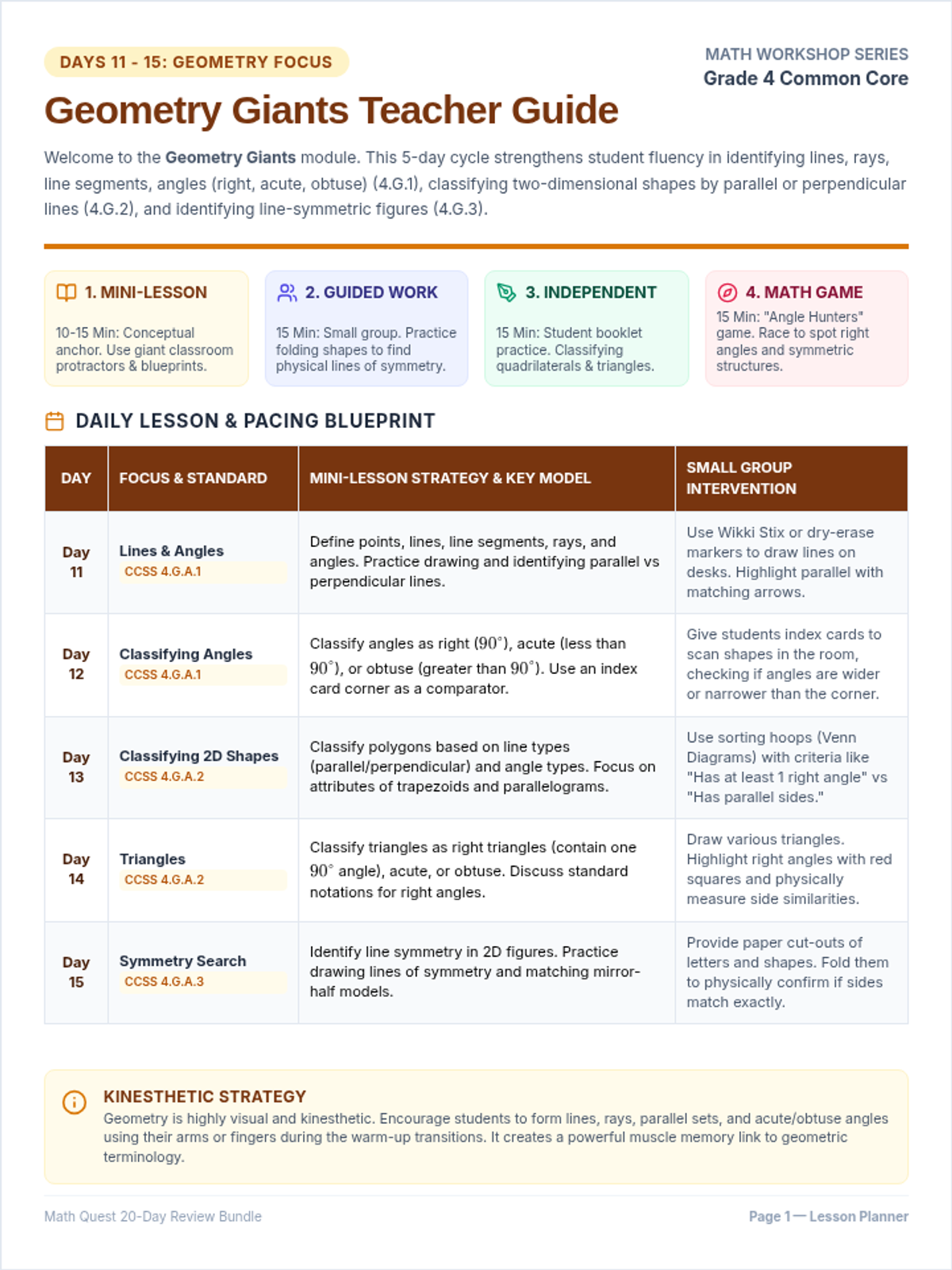
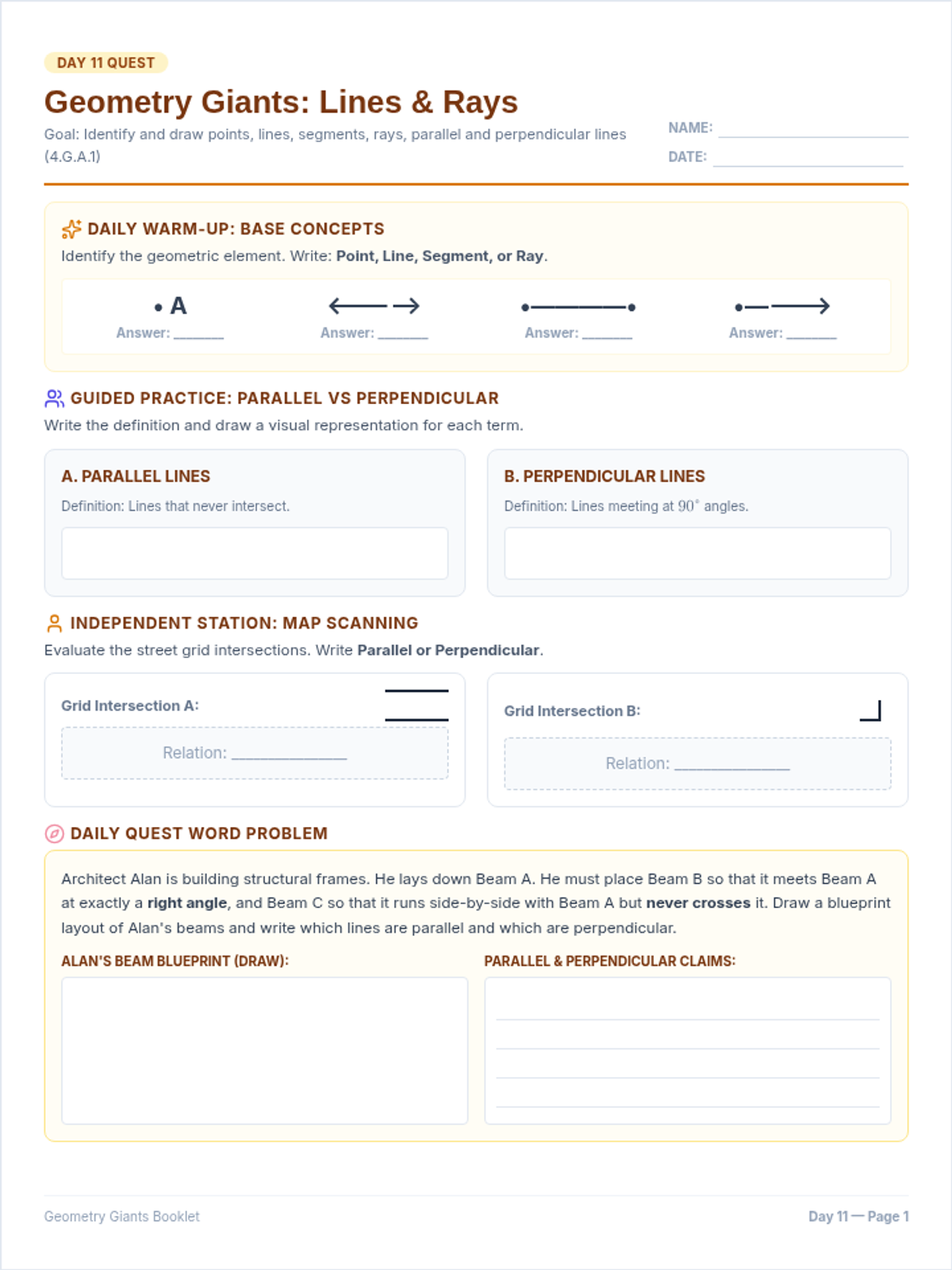
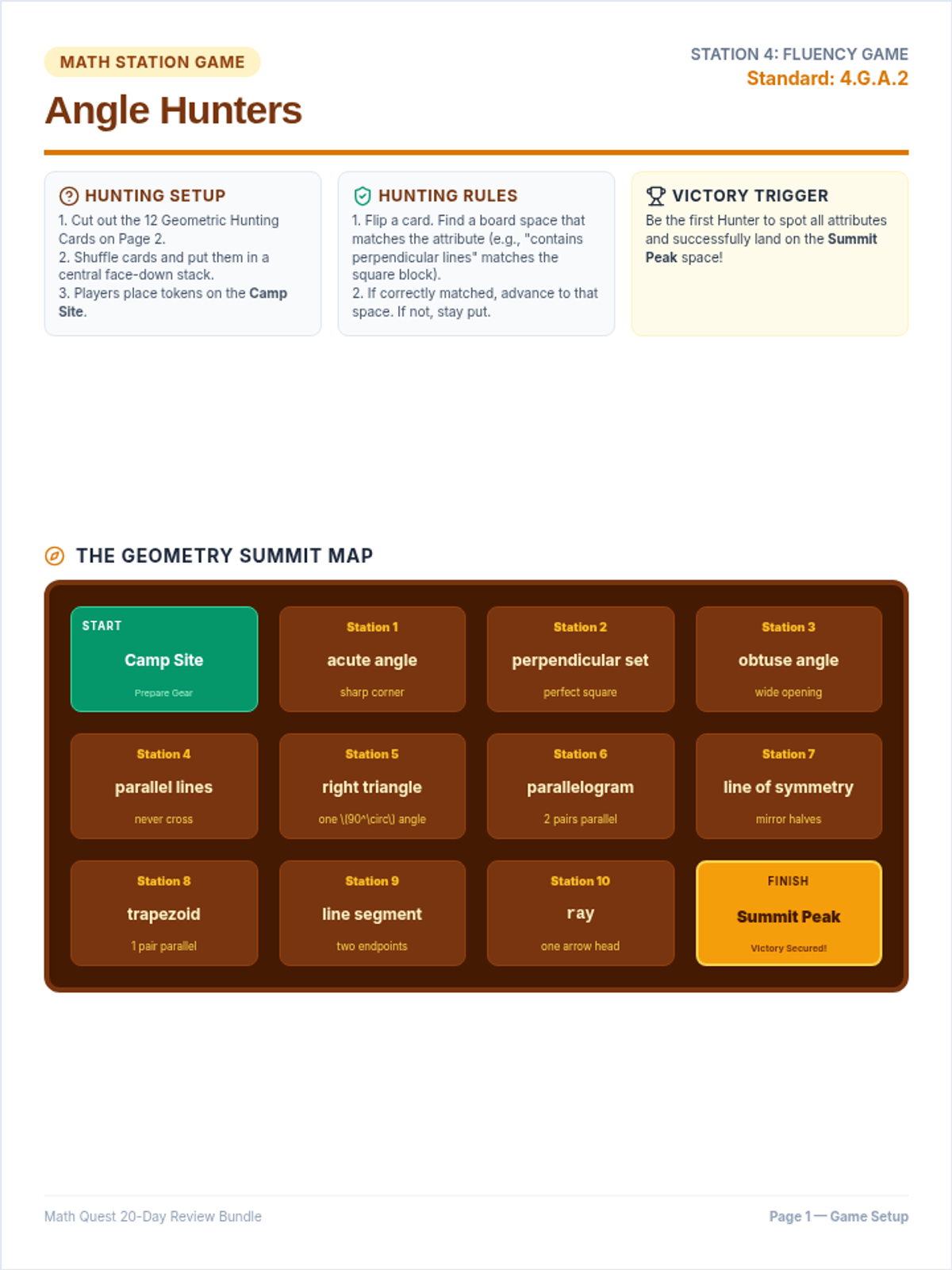
Days 11-15 of the review, focusing on identifying geometric attributes, lines, angles, 2D shapes, and line symmetry (G.1 through G.3).
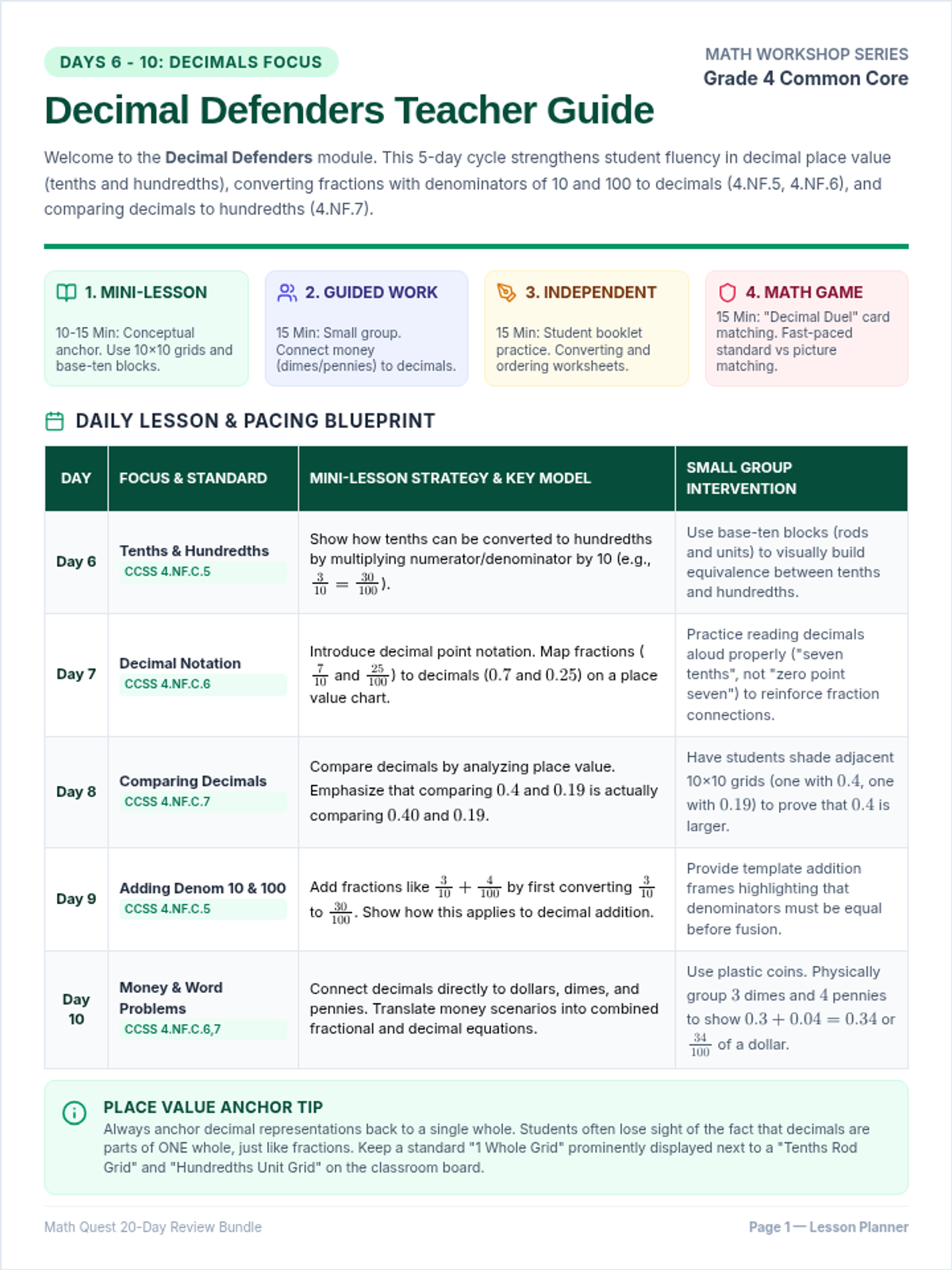
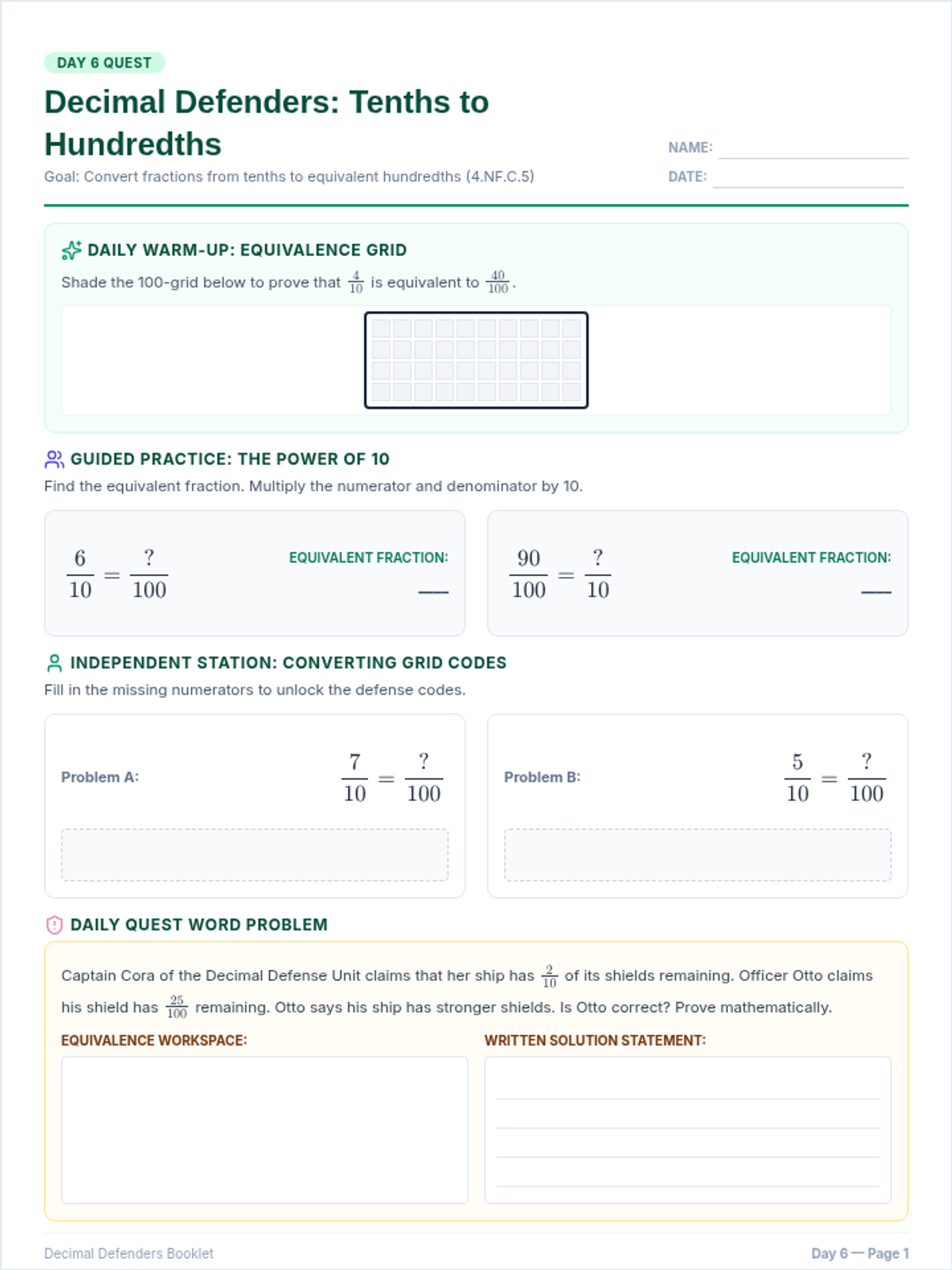
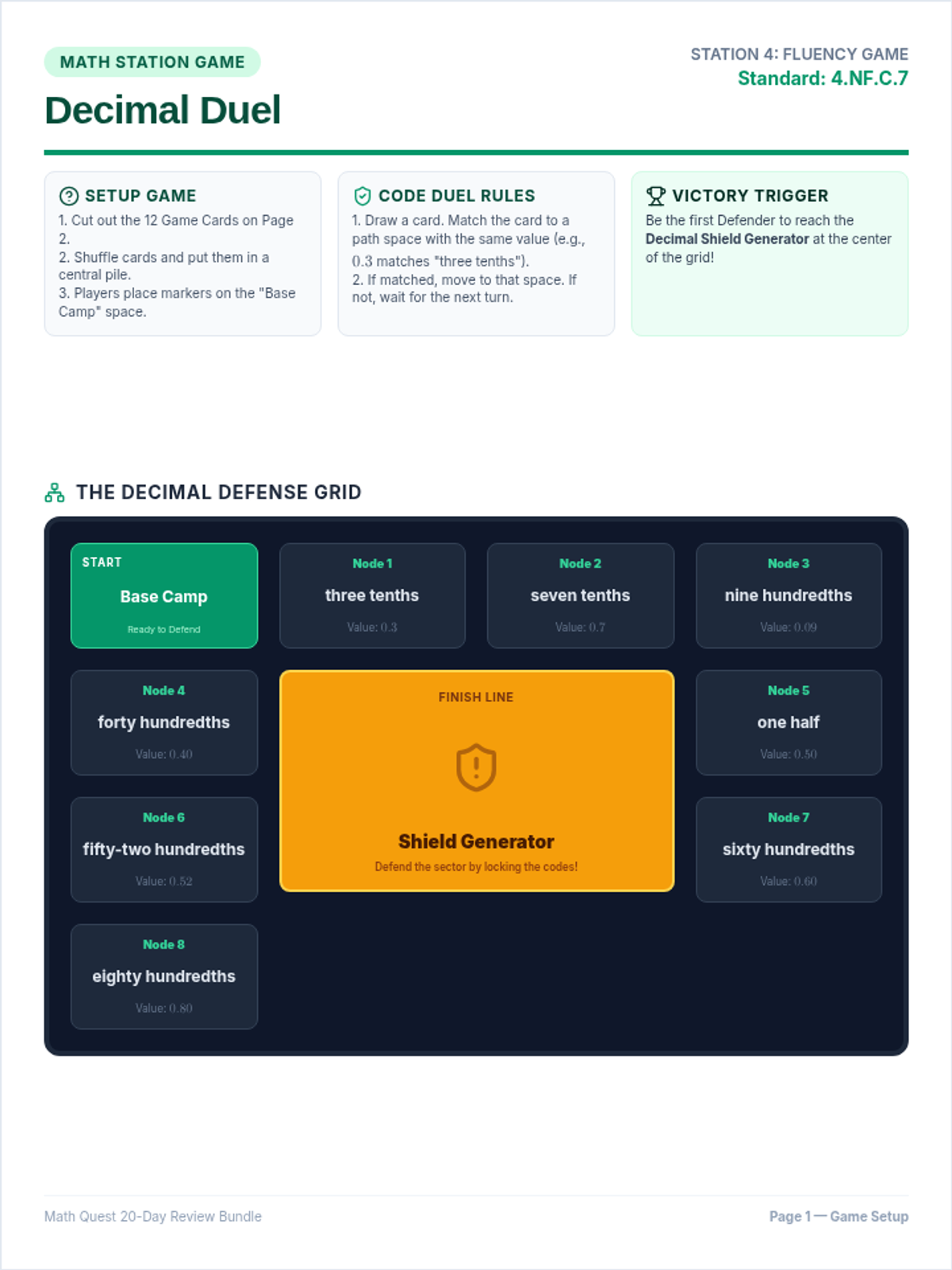
Days 6-10 of the review, focusing on Decimal notation, fraction equivalence with tenths and hundredths, and comparing decimals (NF.5 through NF.7).
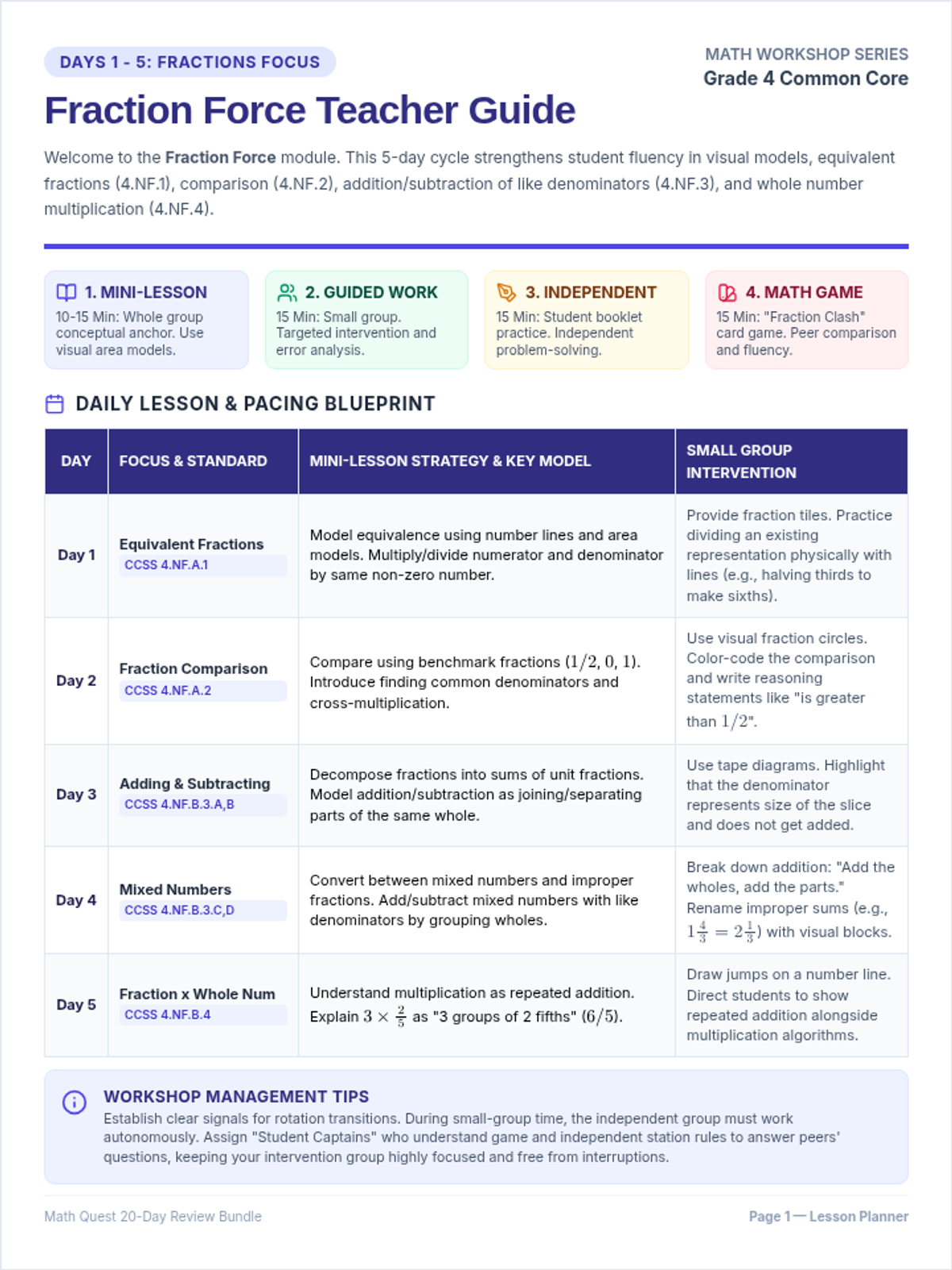
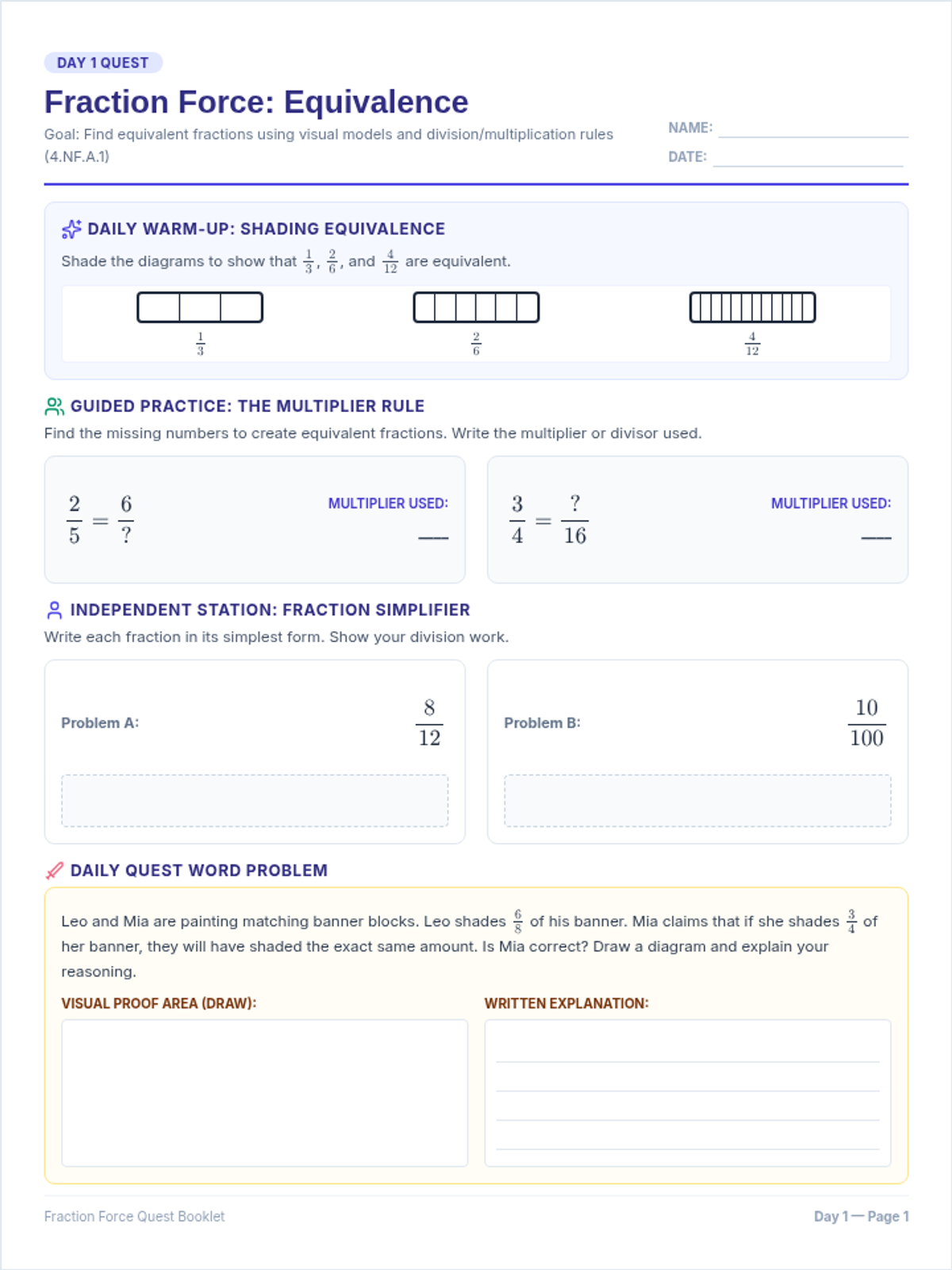
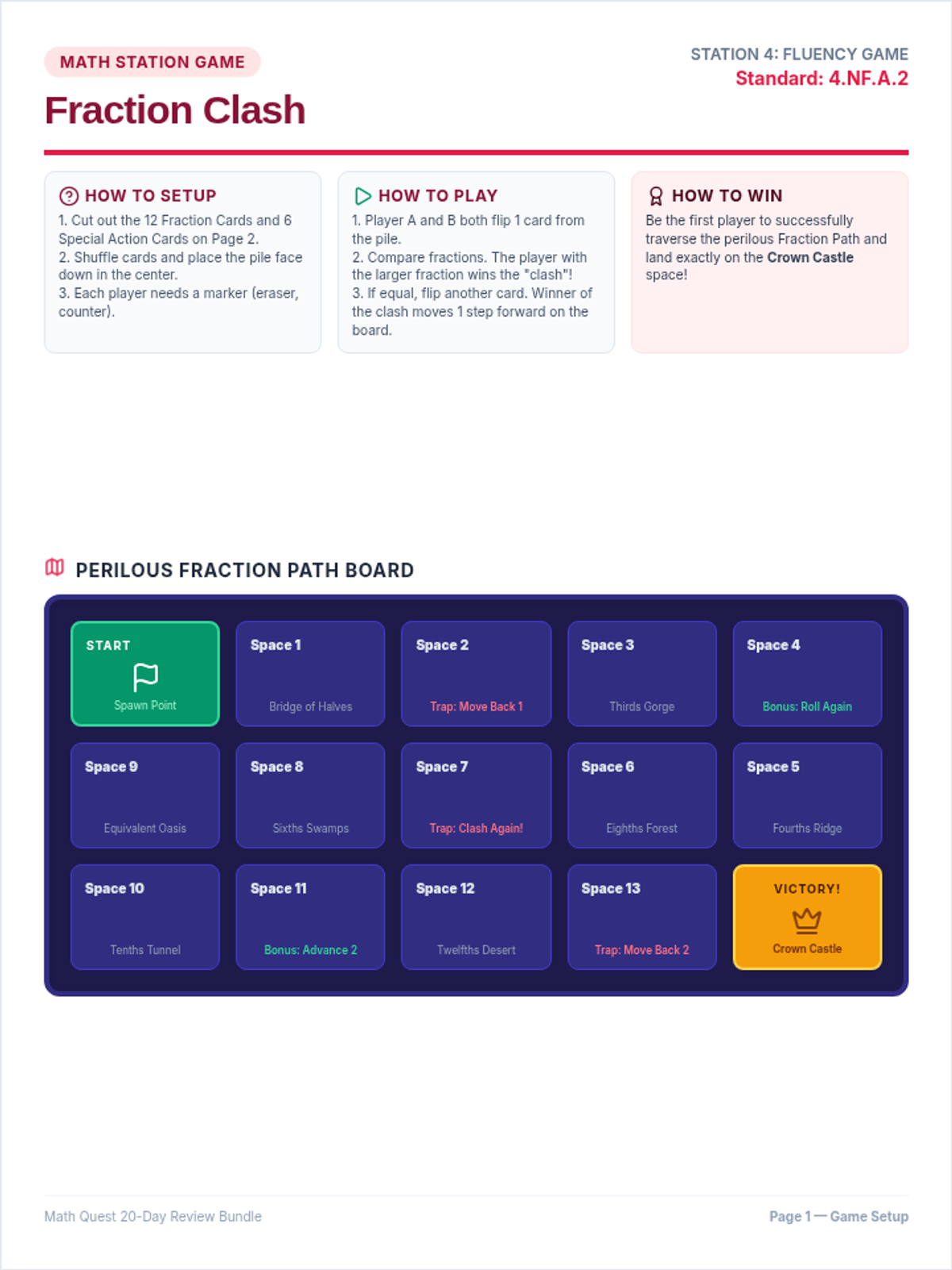
Days 1-5 of the review, focusing on Fraction equivalence, comparing, addition, subtraction, and multiplication of fractions (NF.1 through NF.4) through workshop rotations.
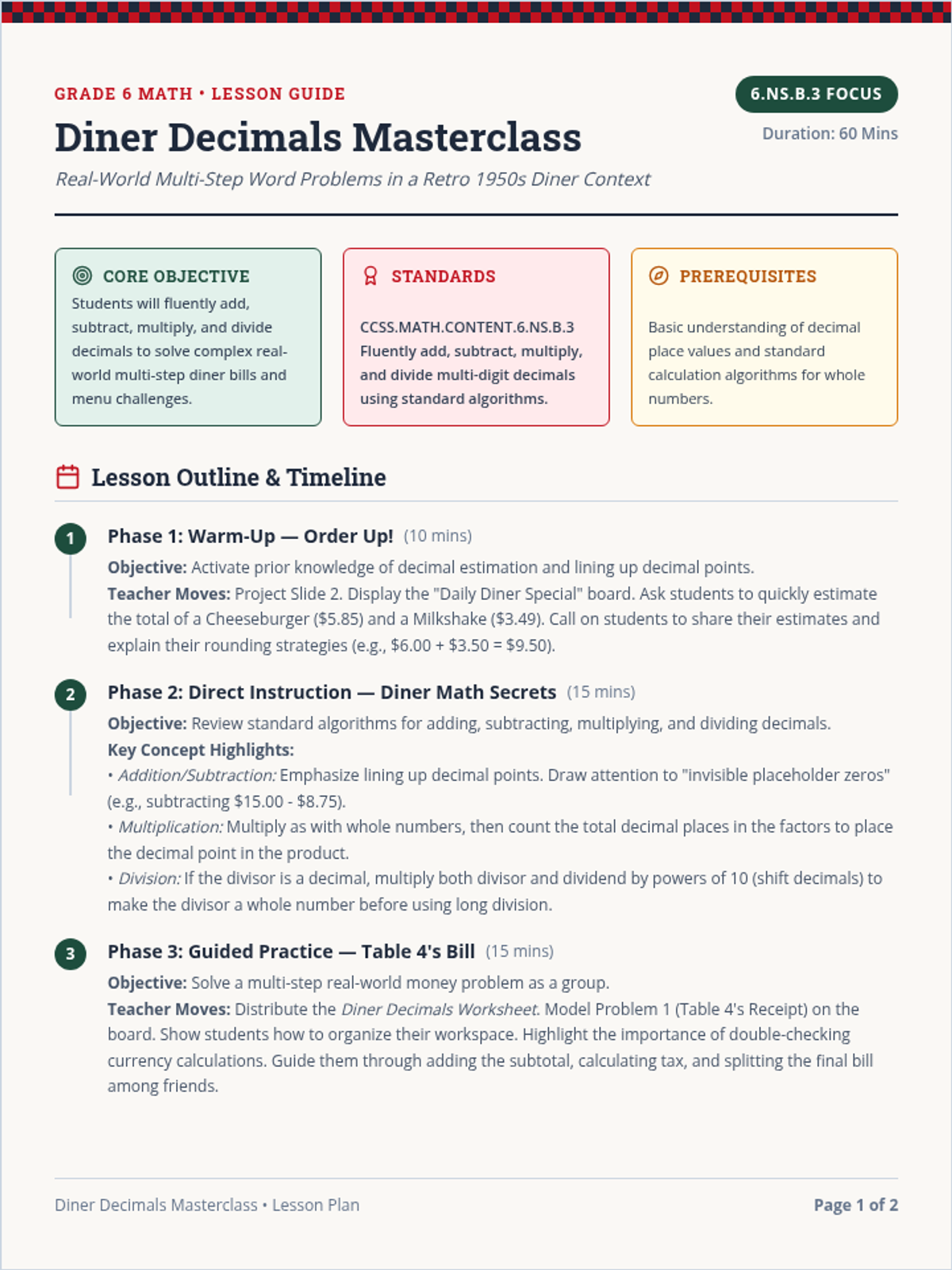
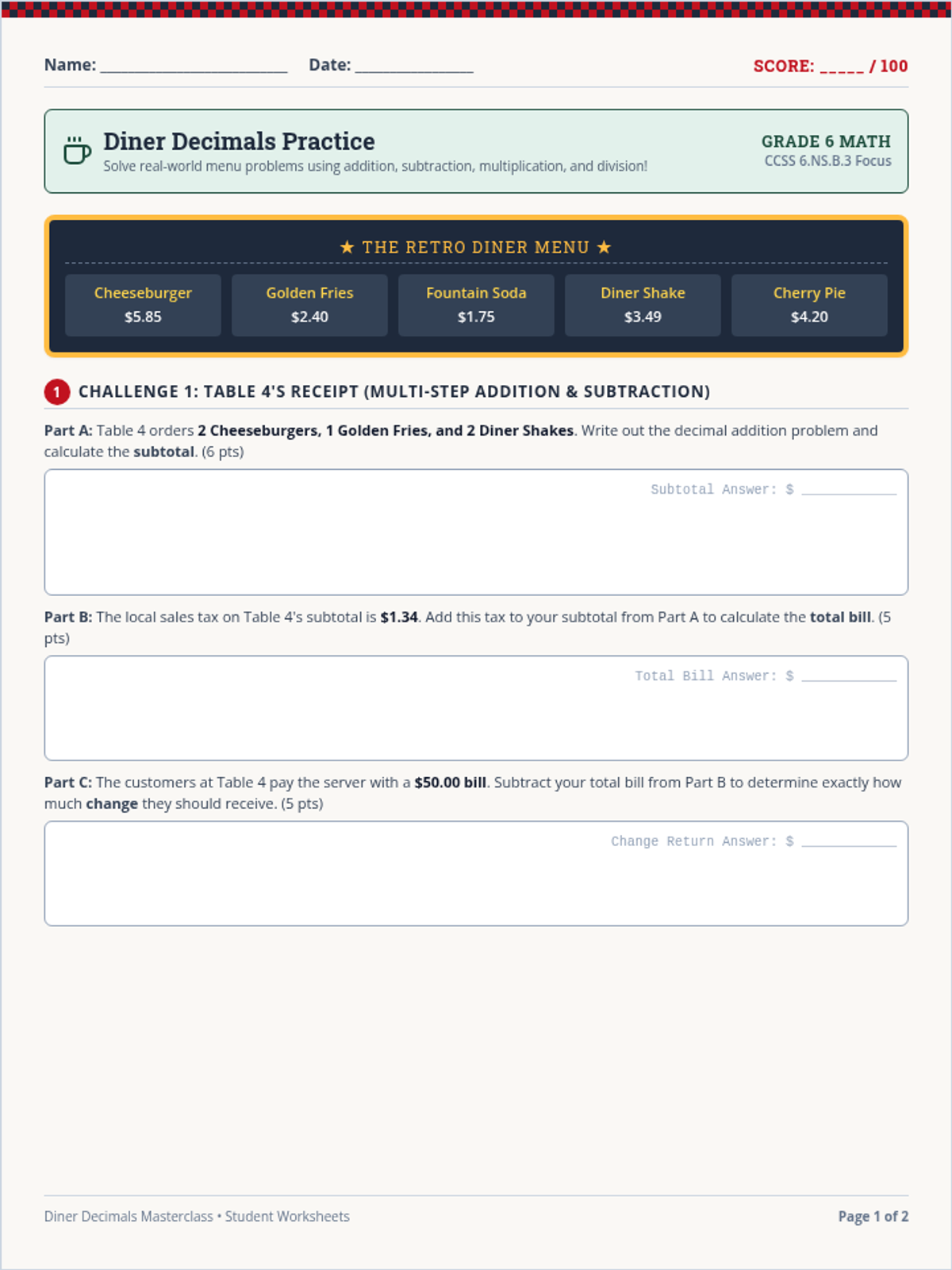
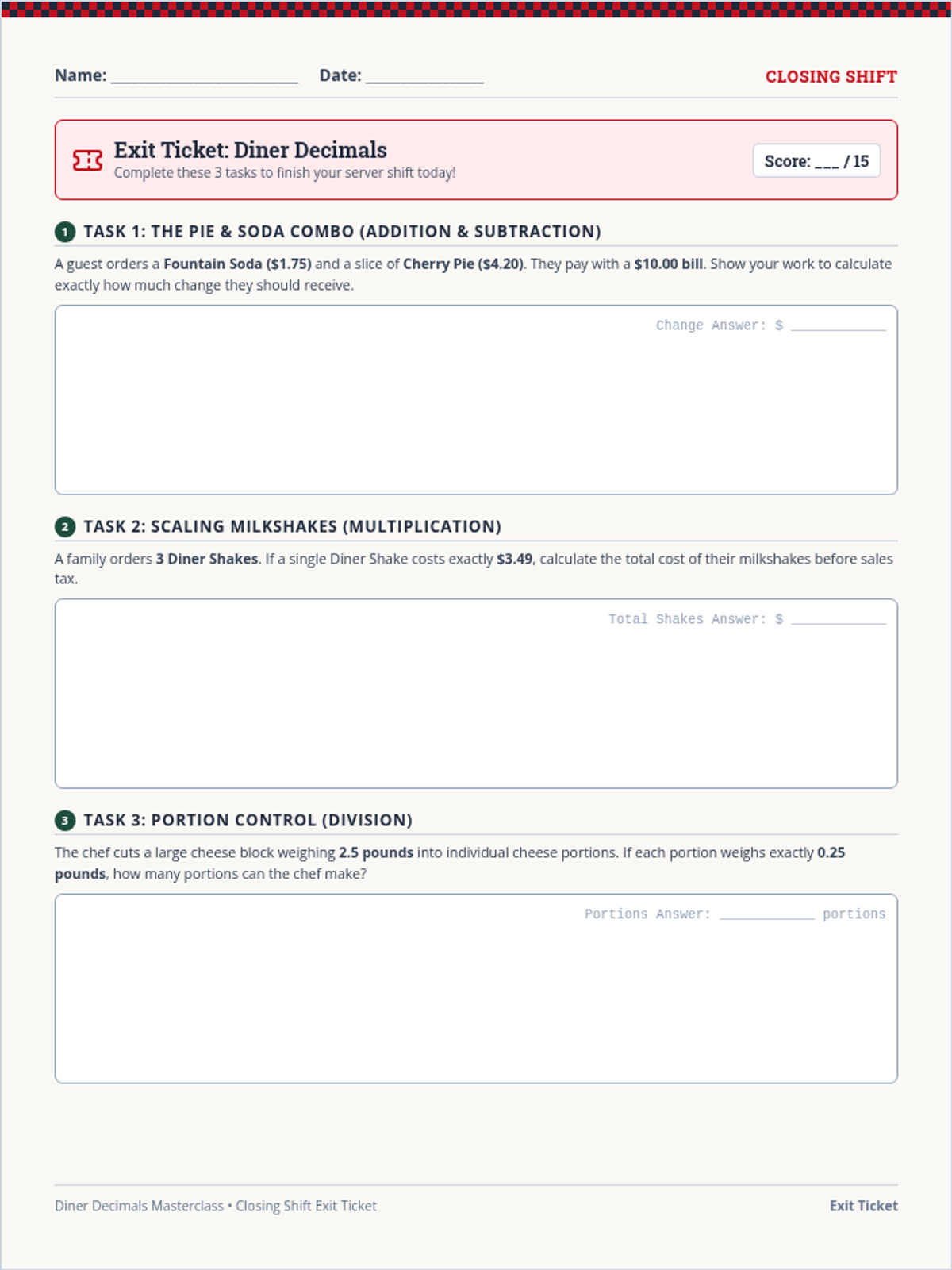
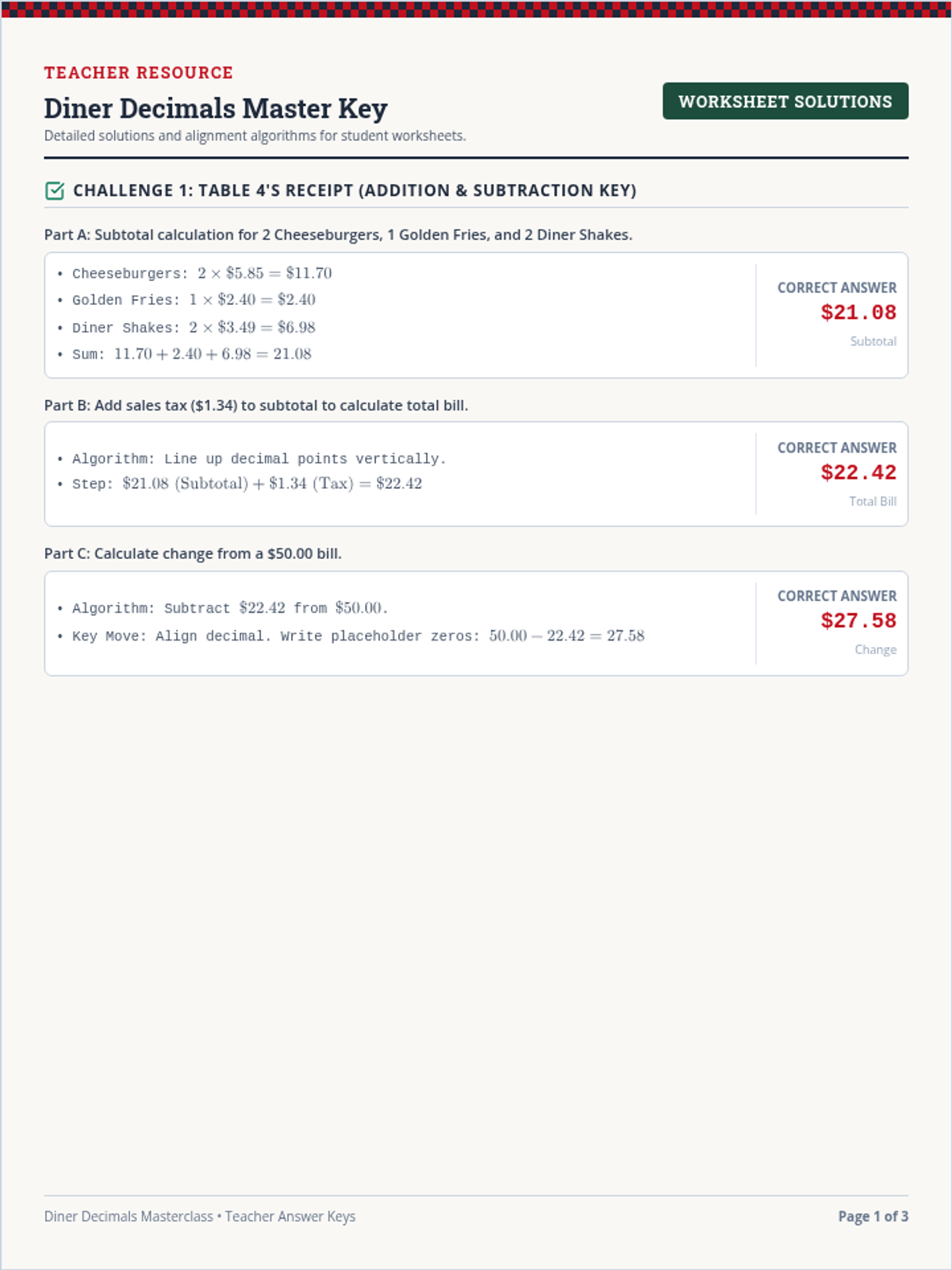
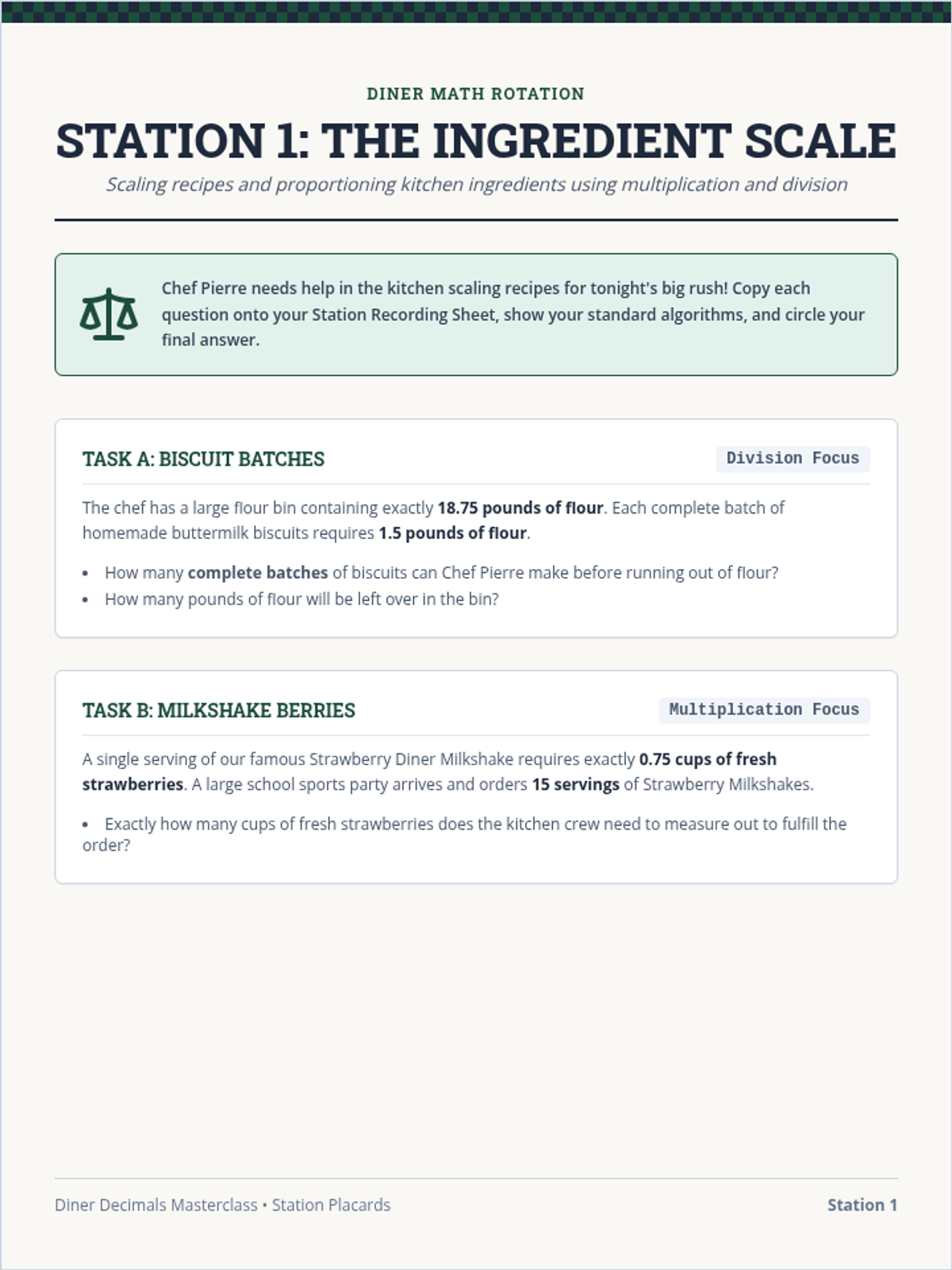
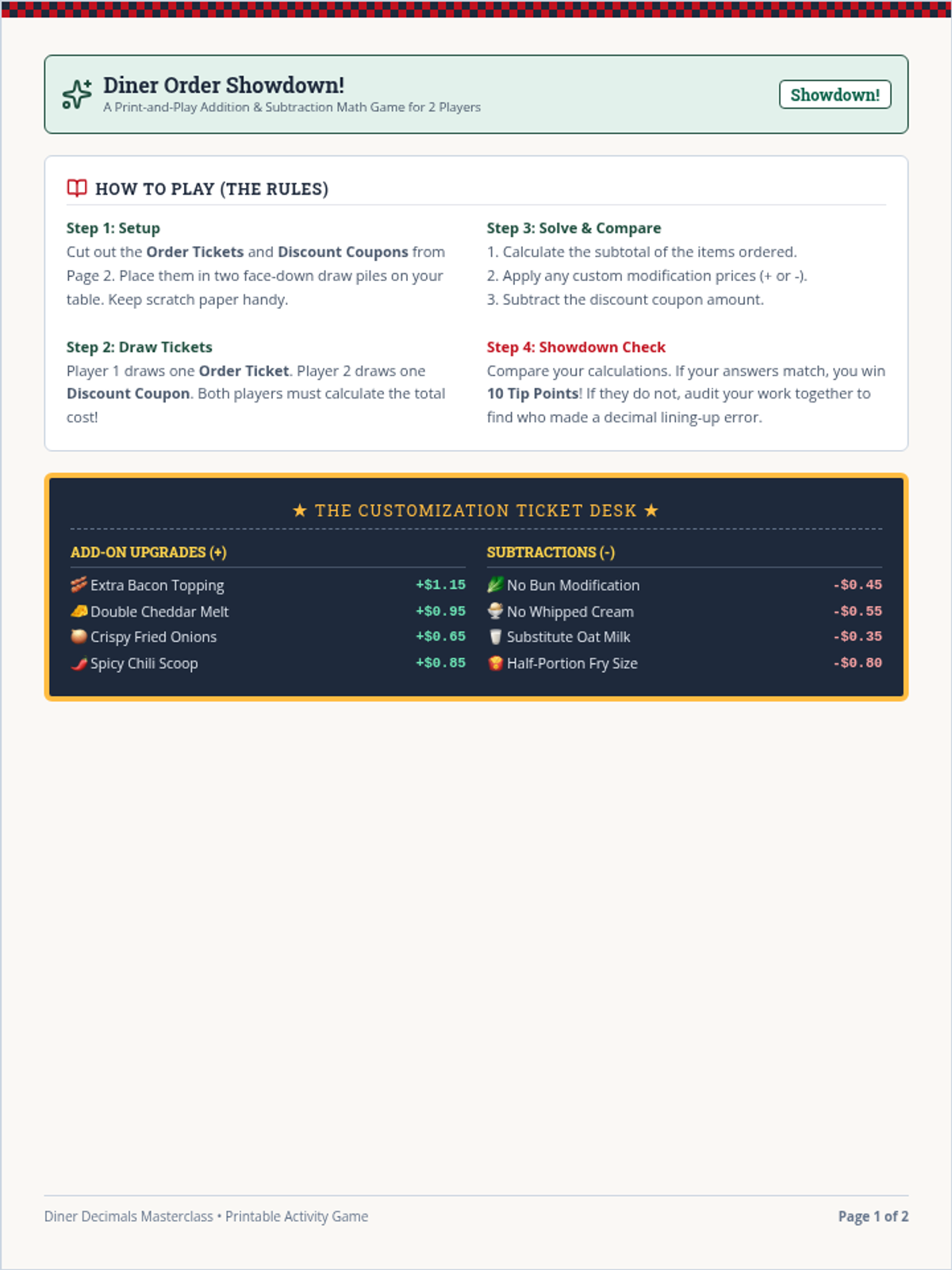
A comprehensive lesson bundle on 6th-grade decimal operations (addition, subtraction, multiplication, and division) featuring real-world multi-step word problems in a retro 1950s diner context. Includes a teacher guide, presentation slides, a student worksheet, an exit ticket, and answer keys.
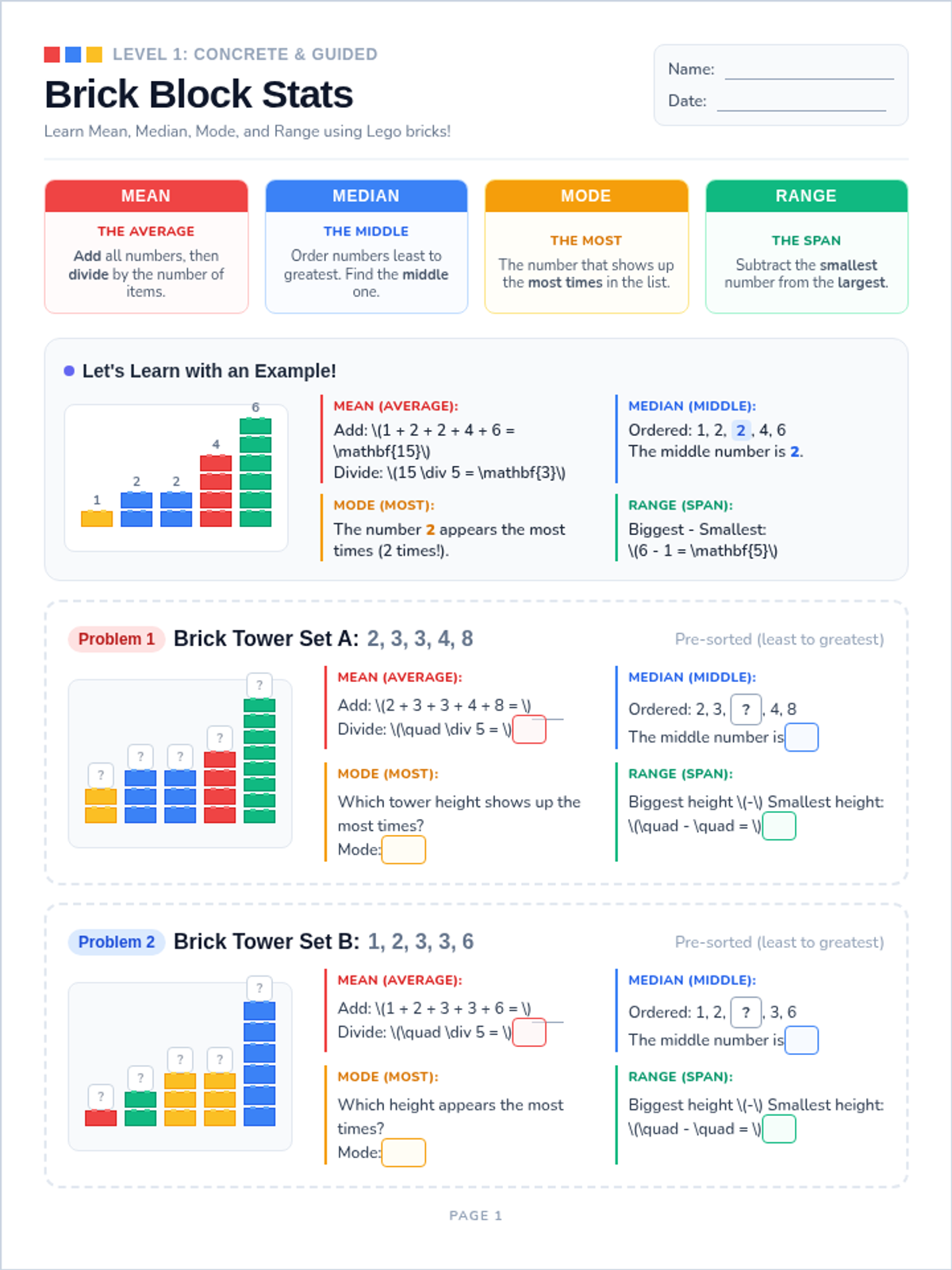
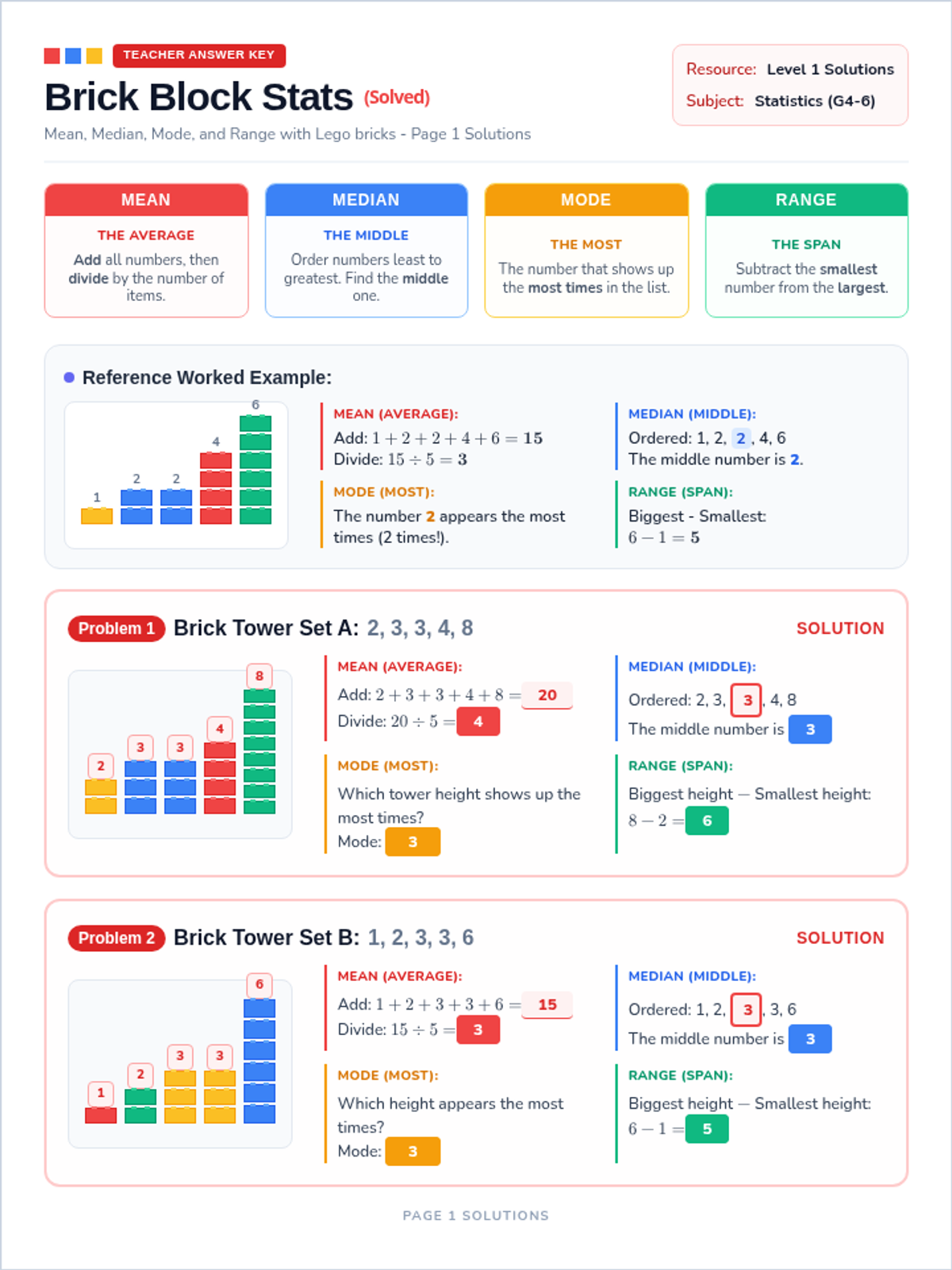
A scaffolded statistics lesson using Lego bricks to teach mean, median, mode, and range. Designed with concrete visual aids, color-coded formulas, and pre-sorted datasets to support diverse learners.
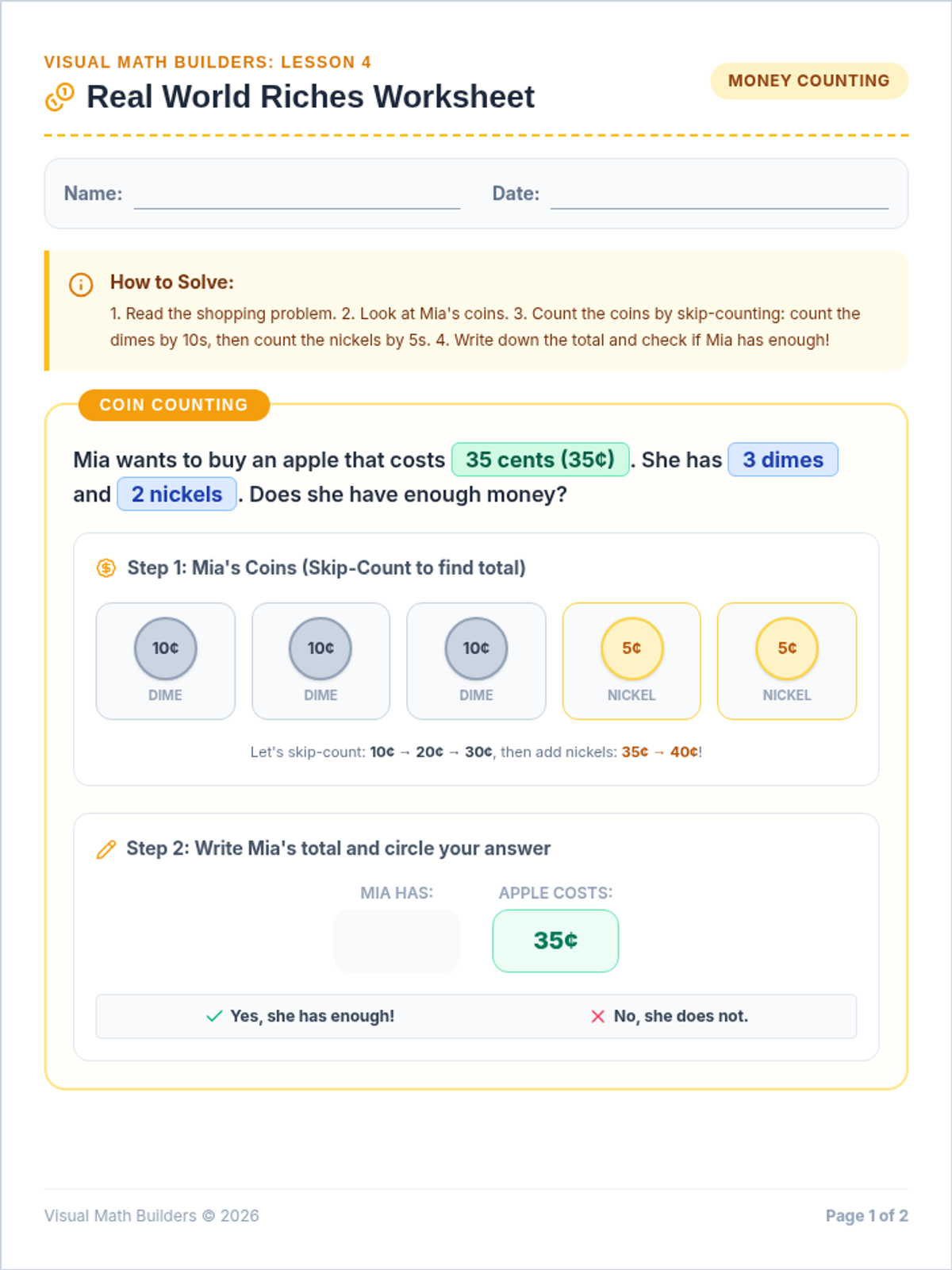
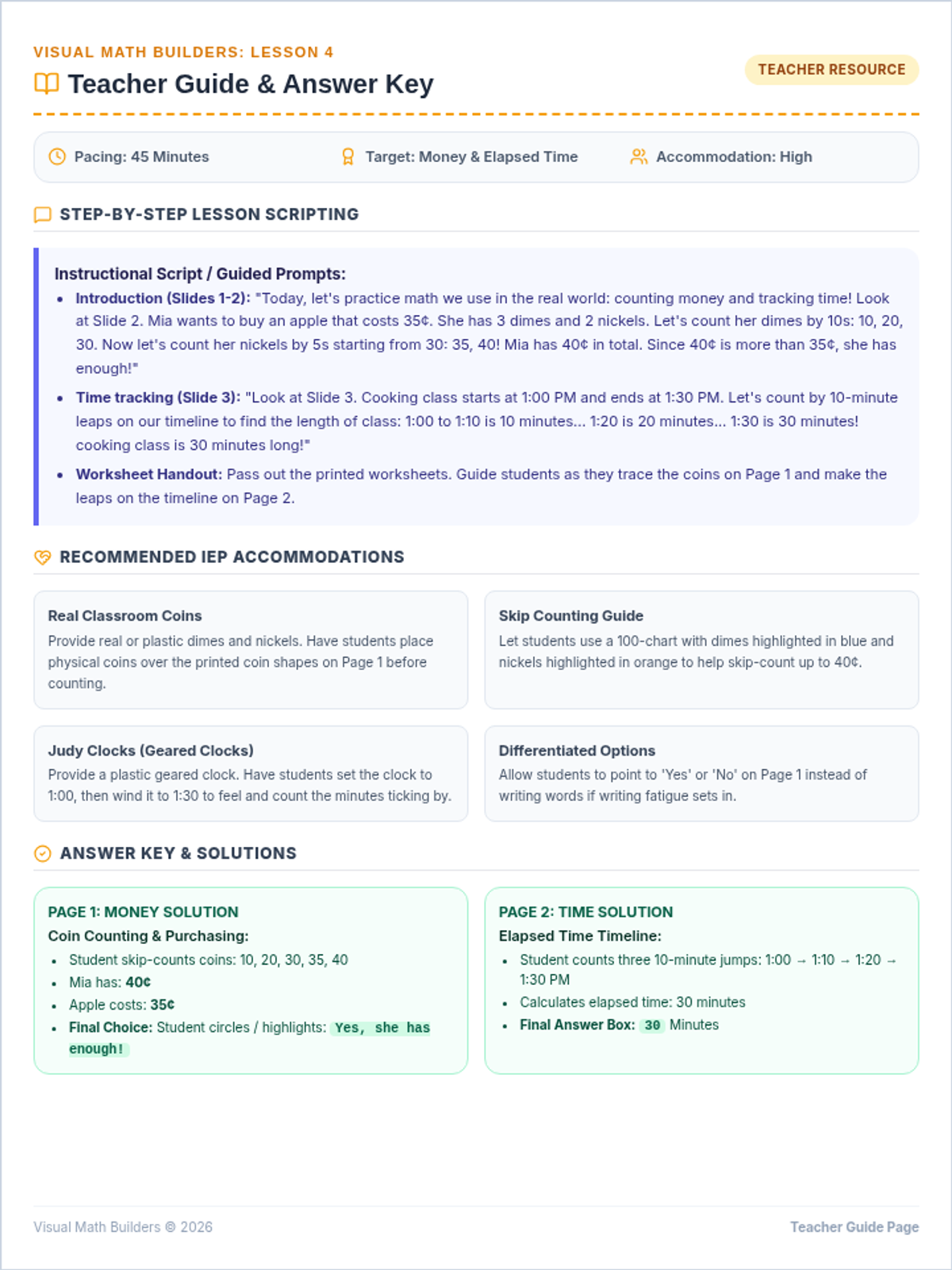
Targets practical, real-world application of math with highly visual scaffolding for coin counting, purchasing decisions, and elapsed time scenarios.