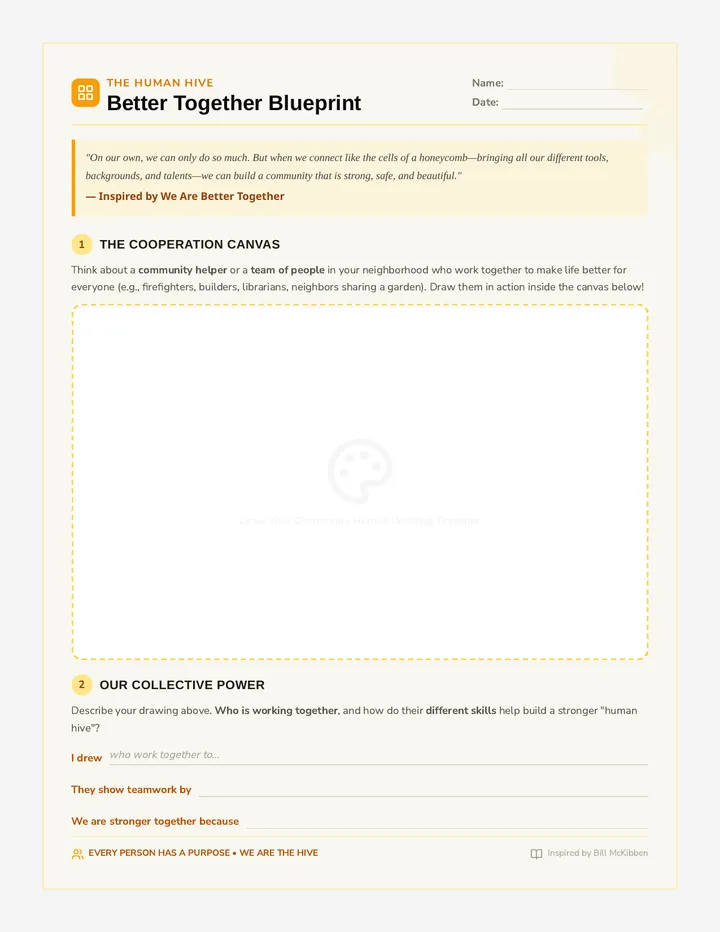
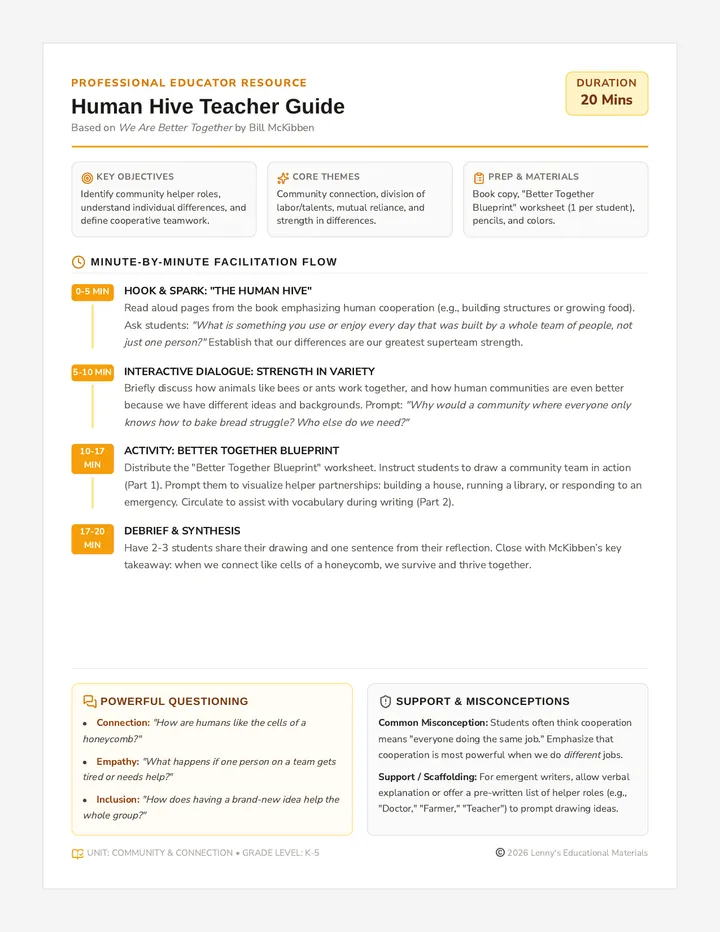
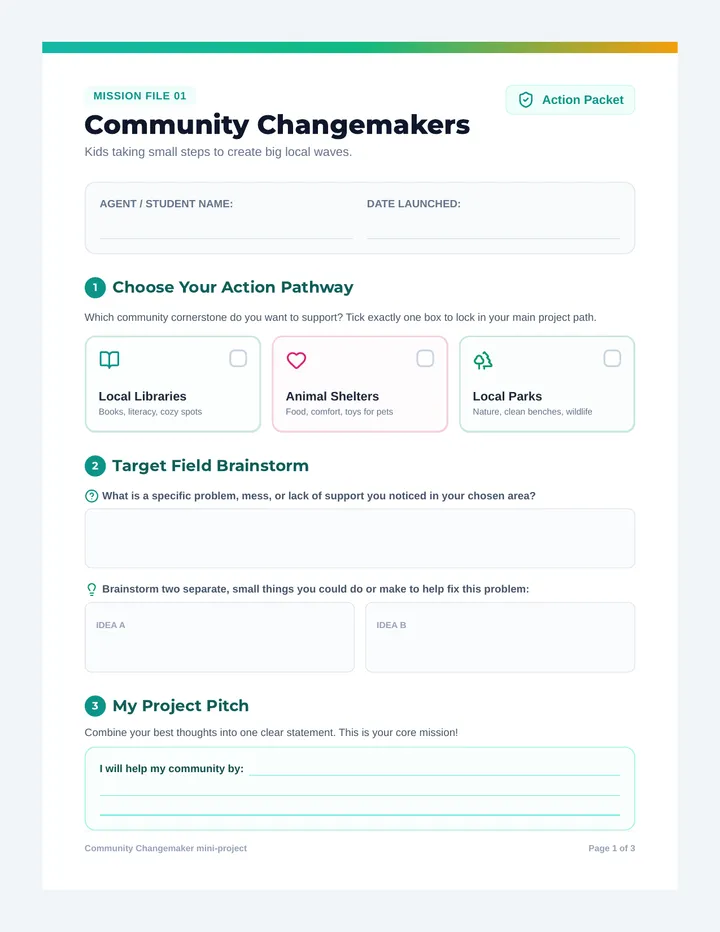
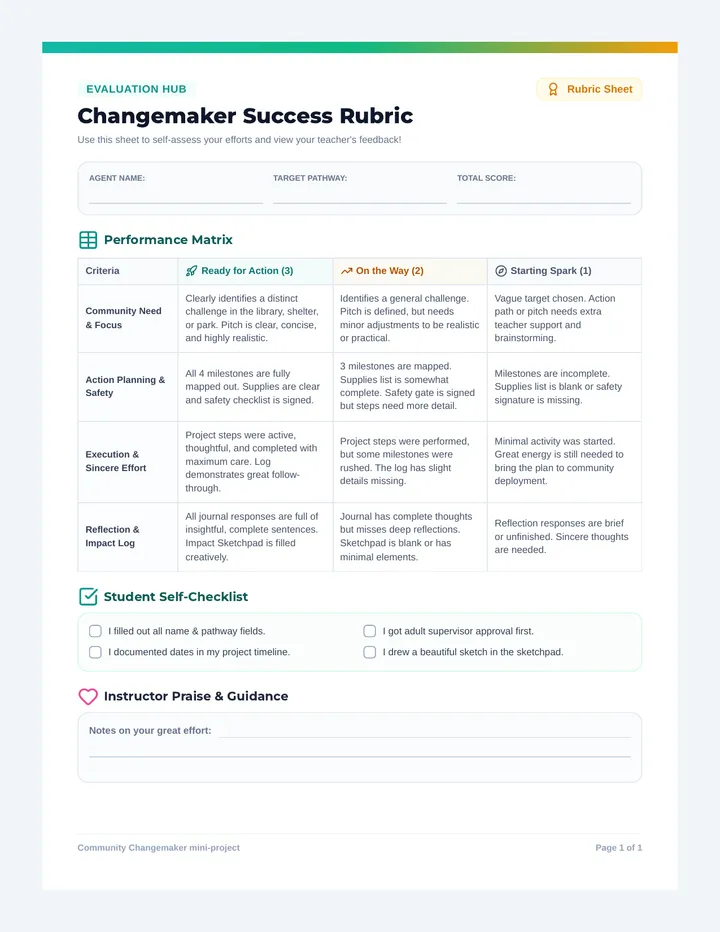
Students will explore what it means to belong to a community, identifying the diverse groups they are part of and the reciprocal relationship between personal benefits and communal responsibilities.

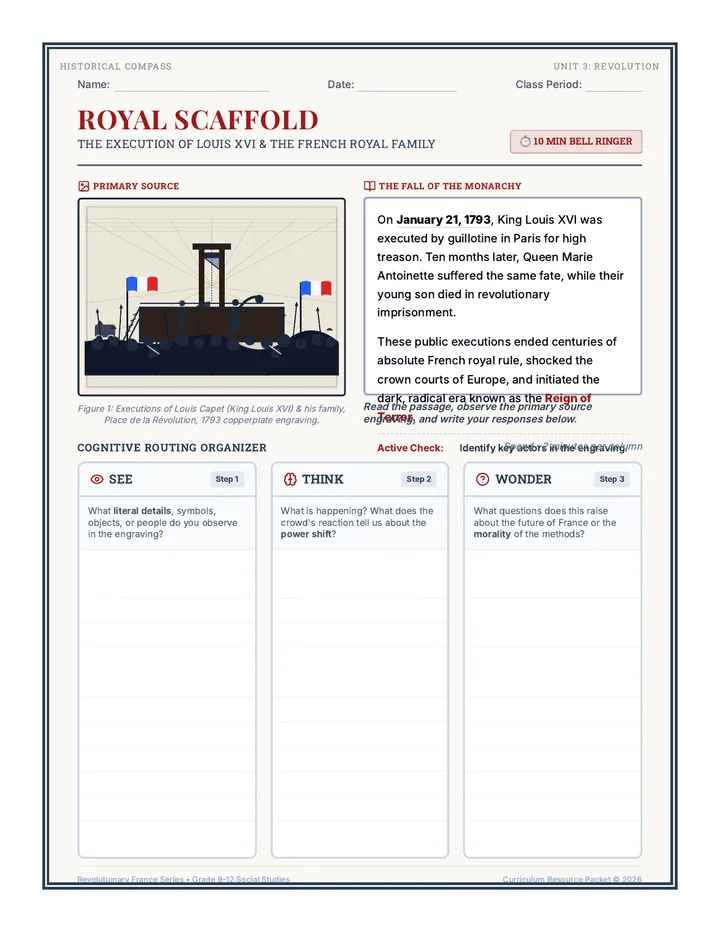
A fast-paced exploration of the controversies surrounding FDR's New Deal, focusing on charges of socialism and the infamous court-packing attempt. Students analyze primary source cartoons and engage in a structured debate over executive power.
A 50-minute deep dive into FDR's New Deal programs through primary source analysis, categorizing the 'alphabet soup' of agencies into Relief, Recovery, and Reform. Students will examine original posters, photographs, and legislation snippets to understand the massive scale of government intervention during the Great Depression.
A concise 20-minute lesson covering President Herbert Hoover's response to the Great Depression, focusing on his philosophy of Rugged Individualism, the Hoover Dam, the RFC, and the Bonus Army incident.
In this lesson, students research unsung heroes of social justice movements and create a 'Justice Journey Map' to visualize the spatial impact of historical change. They explore how geography and movement shape activism while developing research and empathy skills.
An application-based assessment focusing on Maslow's Hierarchy of Needs, featuring a labeling section, scenario analysis, and character evaluation from literature.
A unit assessment covering prominent African American leaders, their roles as agents of change, and the systemic barriers they worked to dismantle within their communities.
A collection of resources for an educational information booth about Peru at a cultural fair, including a fact sheet and interactive trivia cards.
A collection of reflective and creative activities for Memorial Day, including a poppy craft writing activity, a gratitude letter template, and acrostic poems to honor fallen heroes.

This lesson explores the Homestead Act of 1862 and the logistical realities of settling the American West, focusing on the grid system and survival challenges.
An introductory overview of all 50 states, focusing on visual identification, nomenclature, and basic facts.
A structured research phase where students choose a focus area—either an ethical teaching or a significant practice—and map its connection to core Jewish tenets and contemporary life.
A lesson introducing students to famous figures from Ohio and their contributions to history, science, and sports.
A comprehensive guide to structuring an informative essay on the social, economic, and religious consequences of the Black Death in medieval Europe.
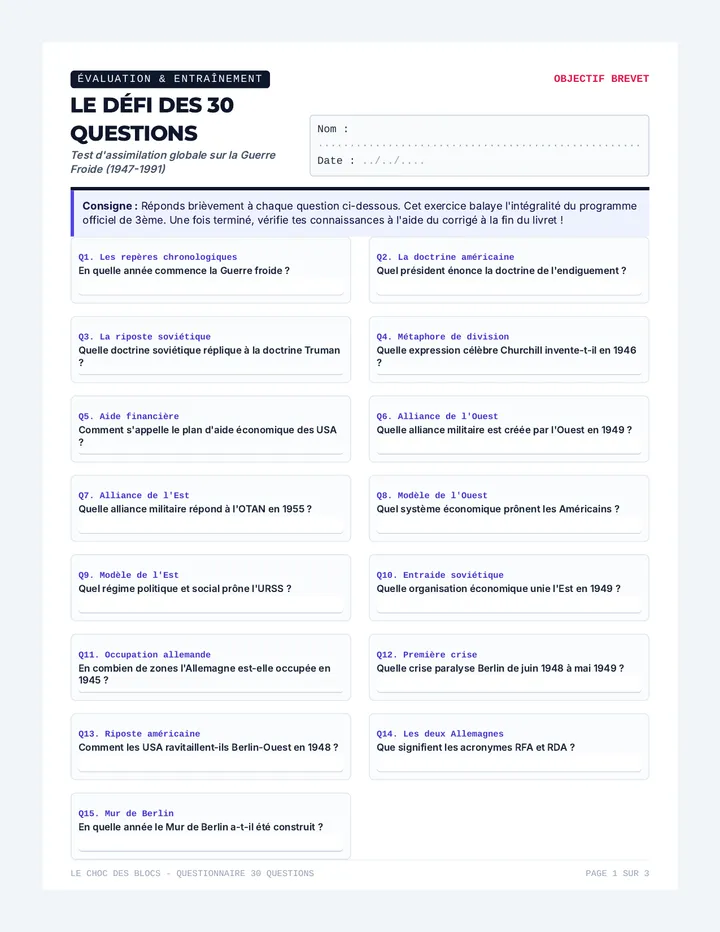
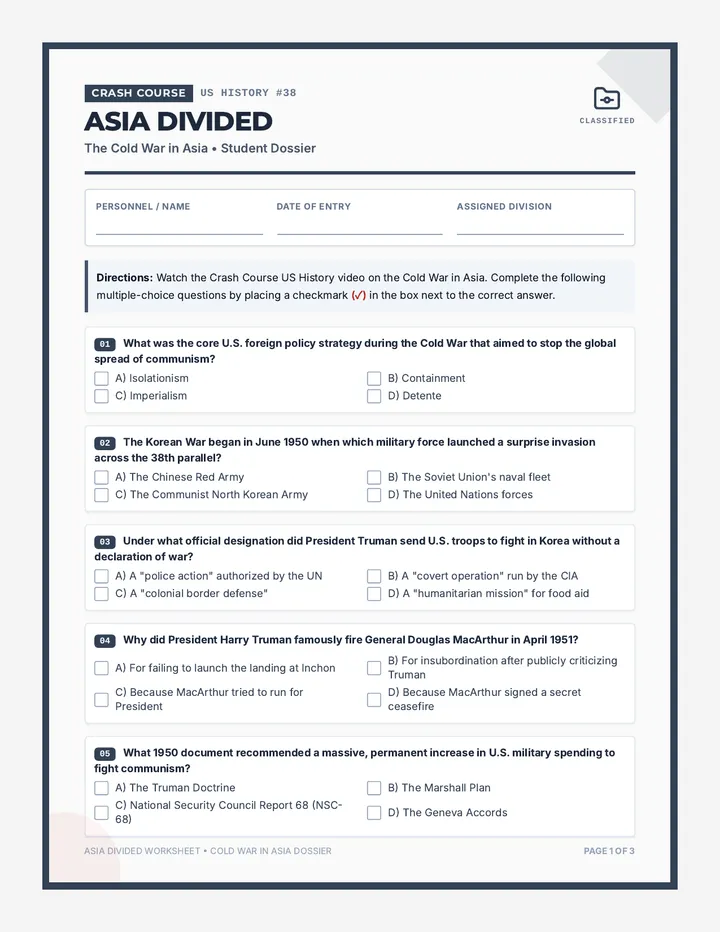
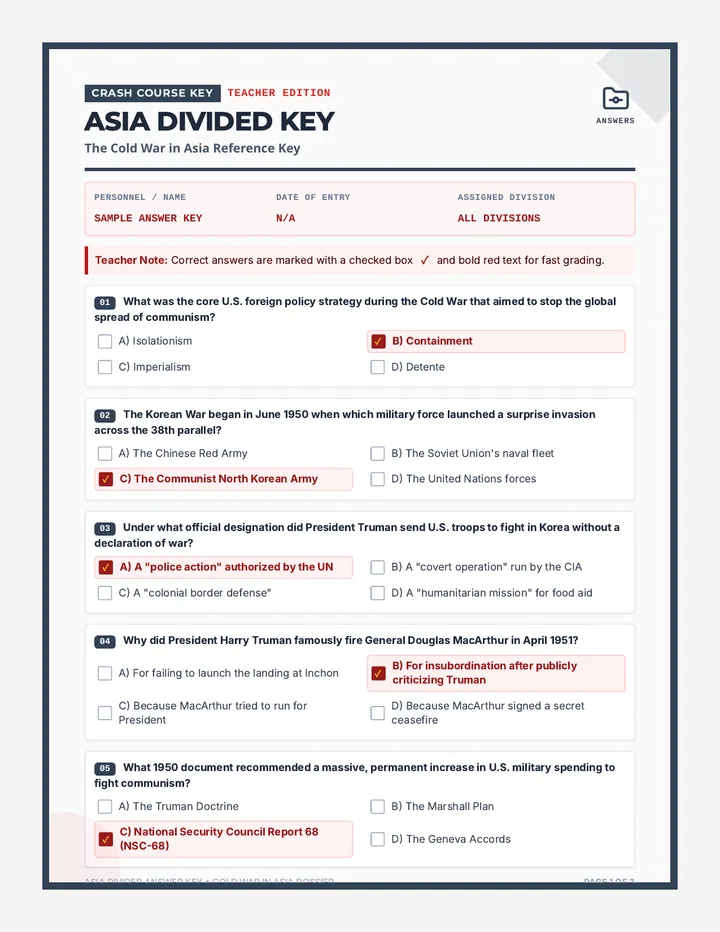
A comprehensive review of the Cold War era (1945–1991), focusing on key leaders, proxy wars, nuclear tension, and the eventual collapse of the Soviet Union. Includes a detailed student dossier assignment and teacher answer key.
A collection of reference materials, background readings, and primary source excerpts that support all the independent assignments in the unit.
An AP World History lesson exploring the technological innovations and environmental consequences of the Green Revolution in the mid-20th century.
An investigation into the technological and ideological competition between the US and USSR in space, exploring the launch of Sputnik, the Apollo missions, and the connection between space exploration and ICBM technology.