Students calculate the area of each distinct section of their design (e.g., area of the red section, area of the blue section). They document these subtotals.
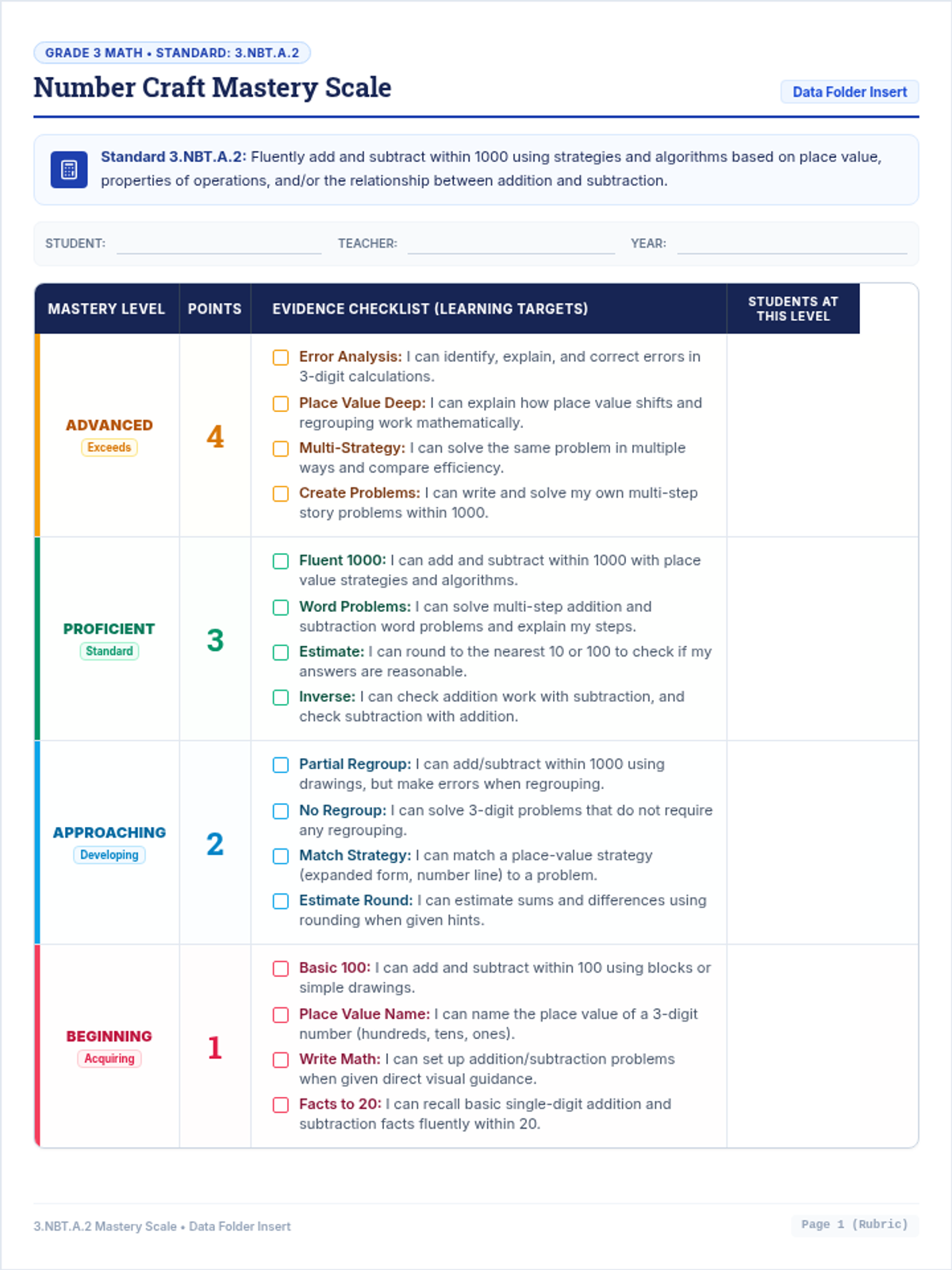
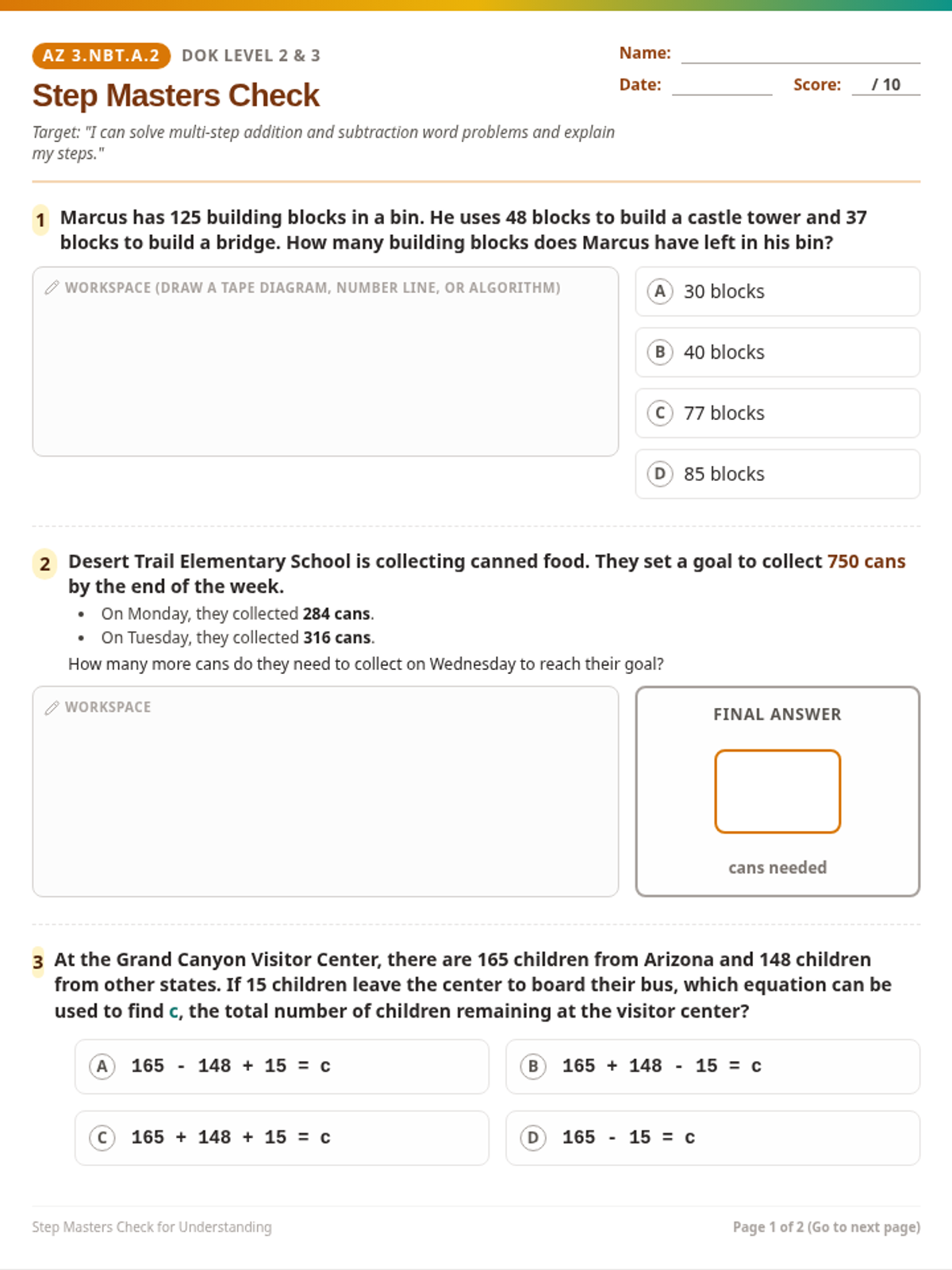
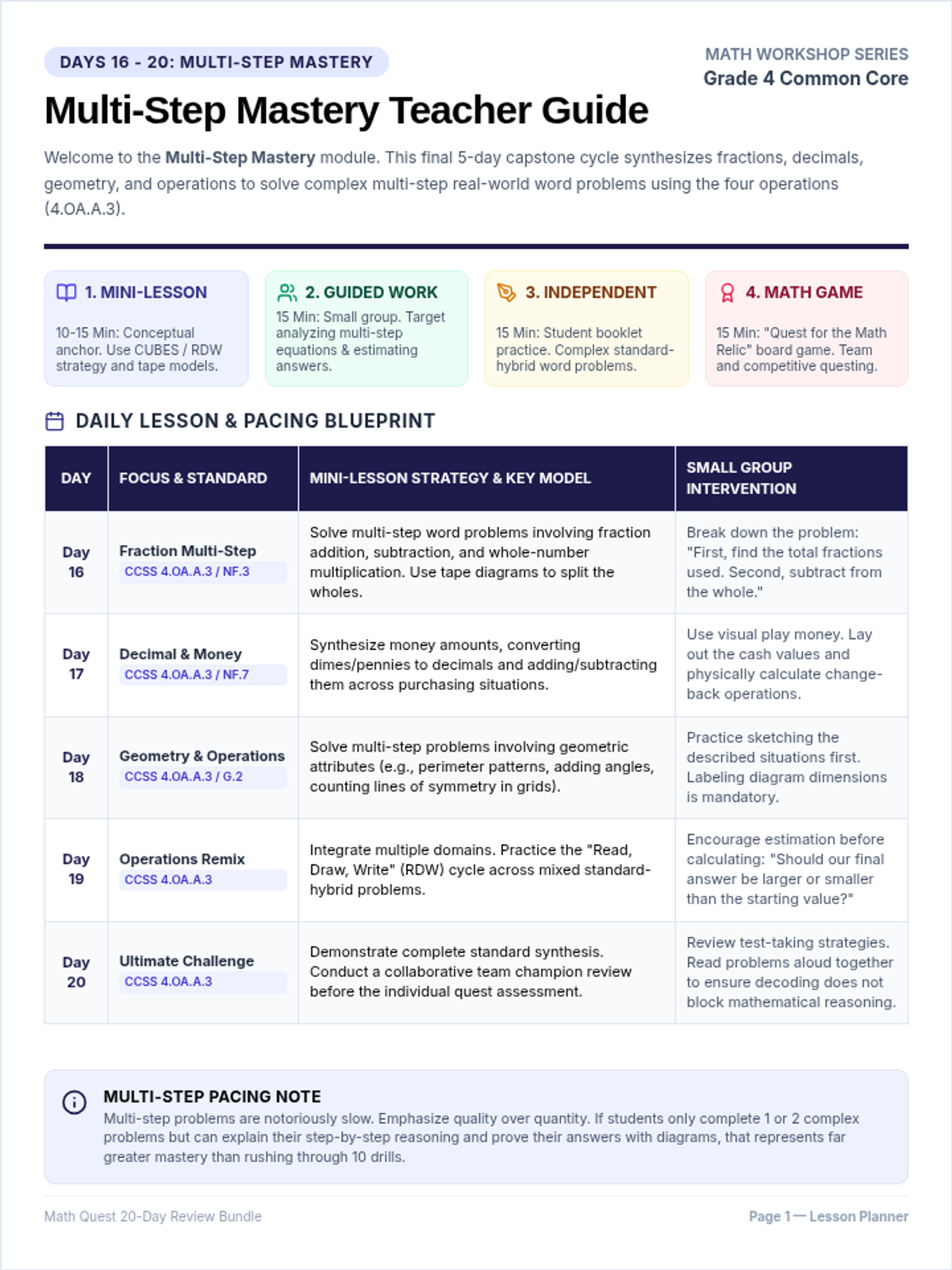
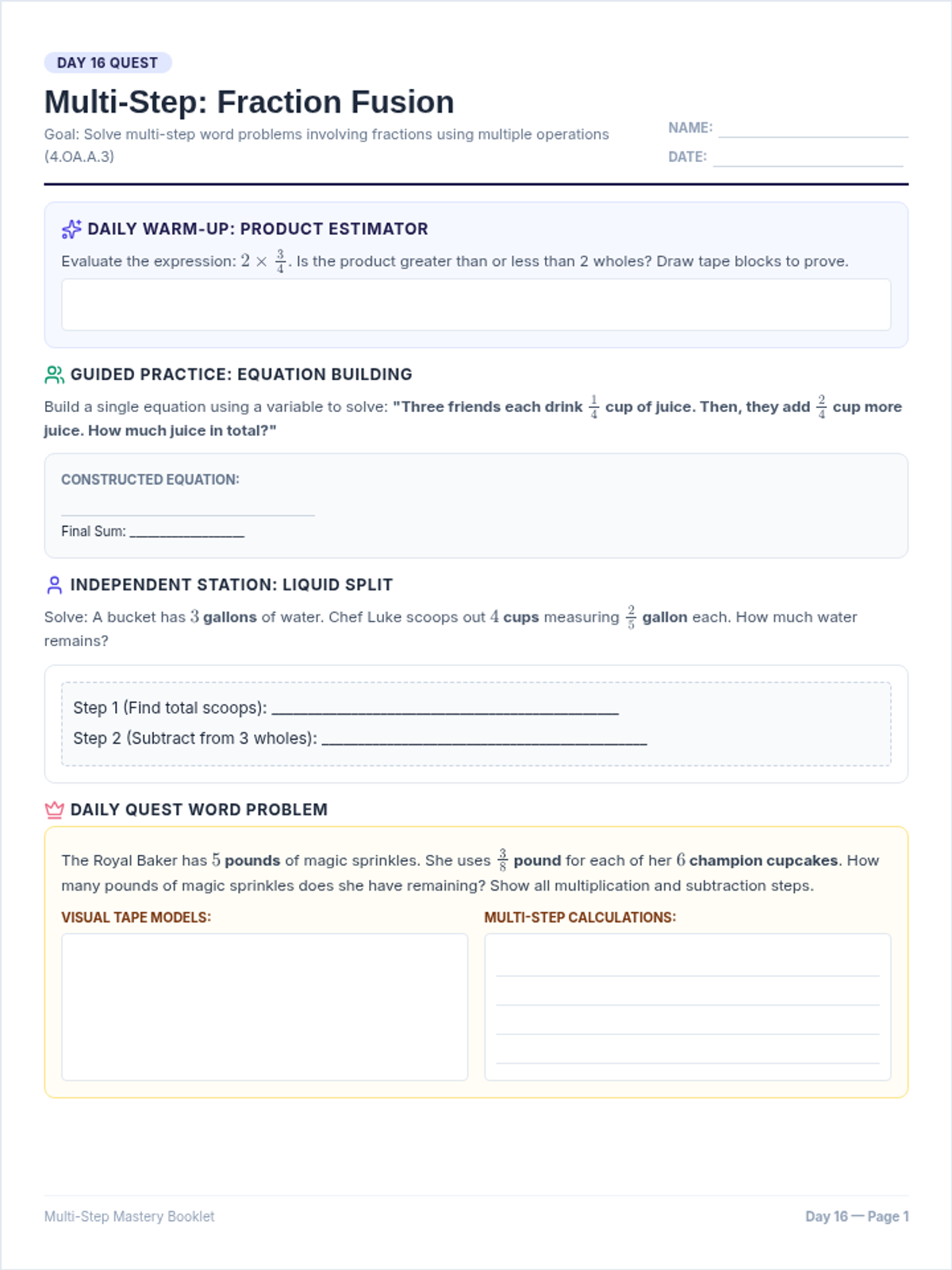
A lesson focused on solving two-step word problems using the four operations, representing unknowns with letters, and checking for reasonableness.
Students transition from scouts to architects, applying their research to design a complex structure blueprint. They will calculate additive angles, classify polygons within their design, and present their final architectural plan.
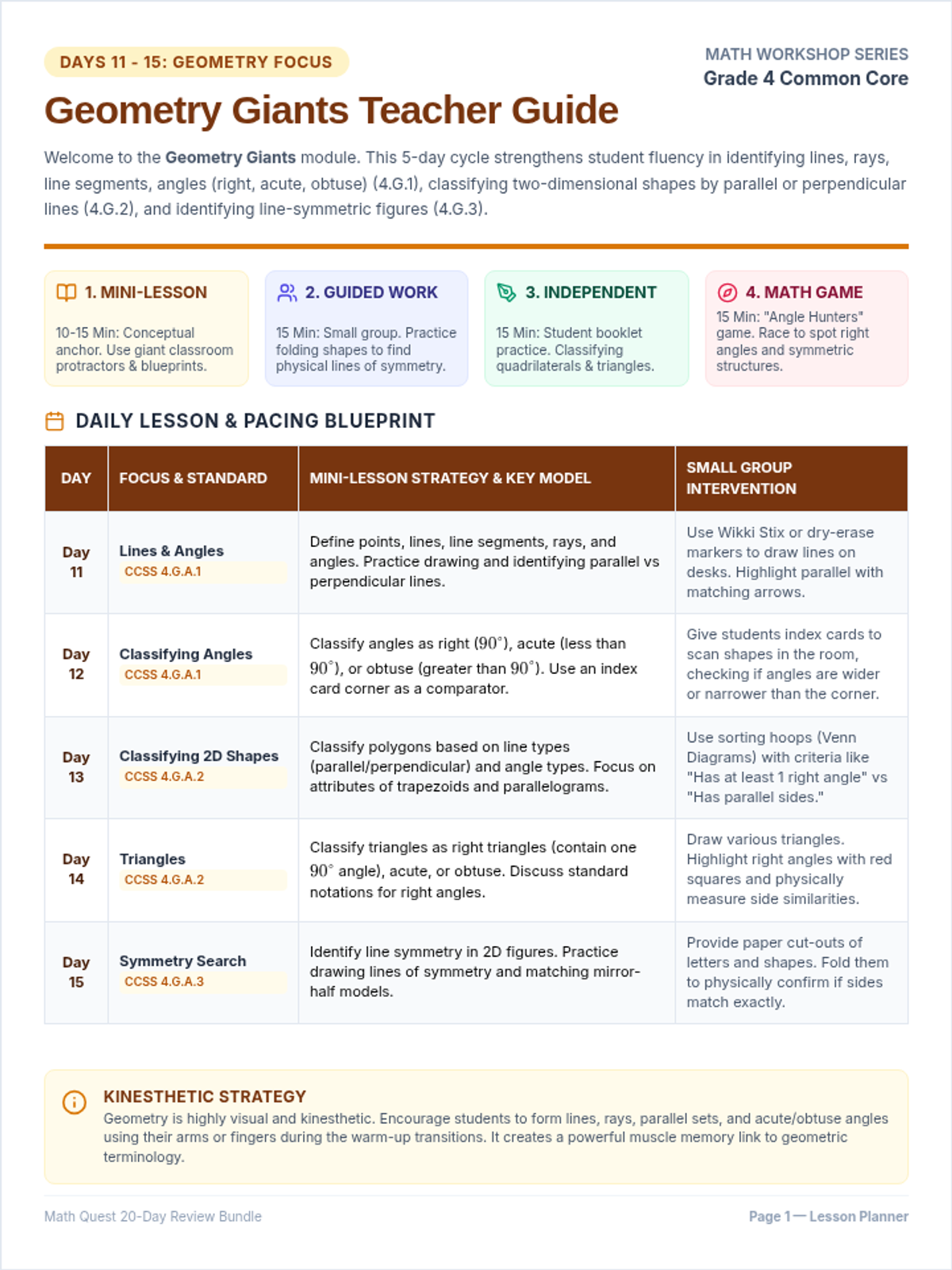
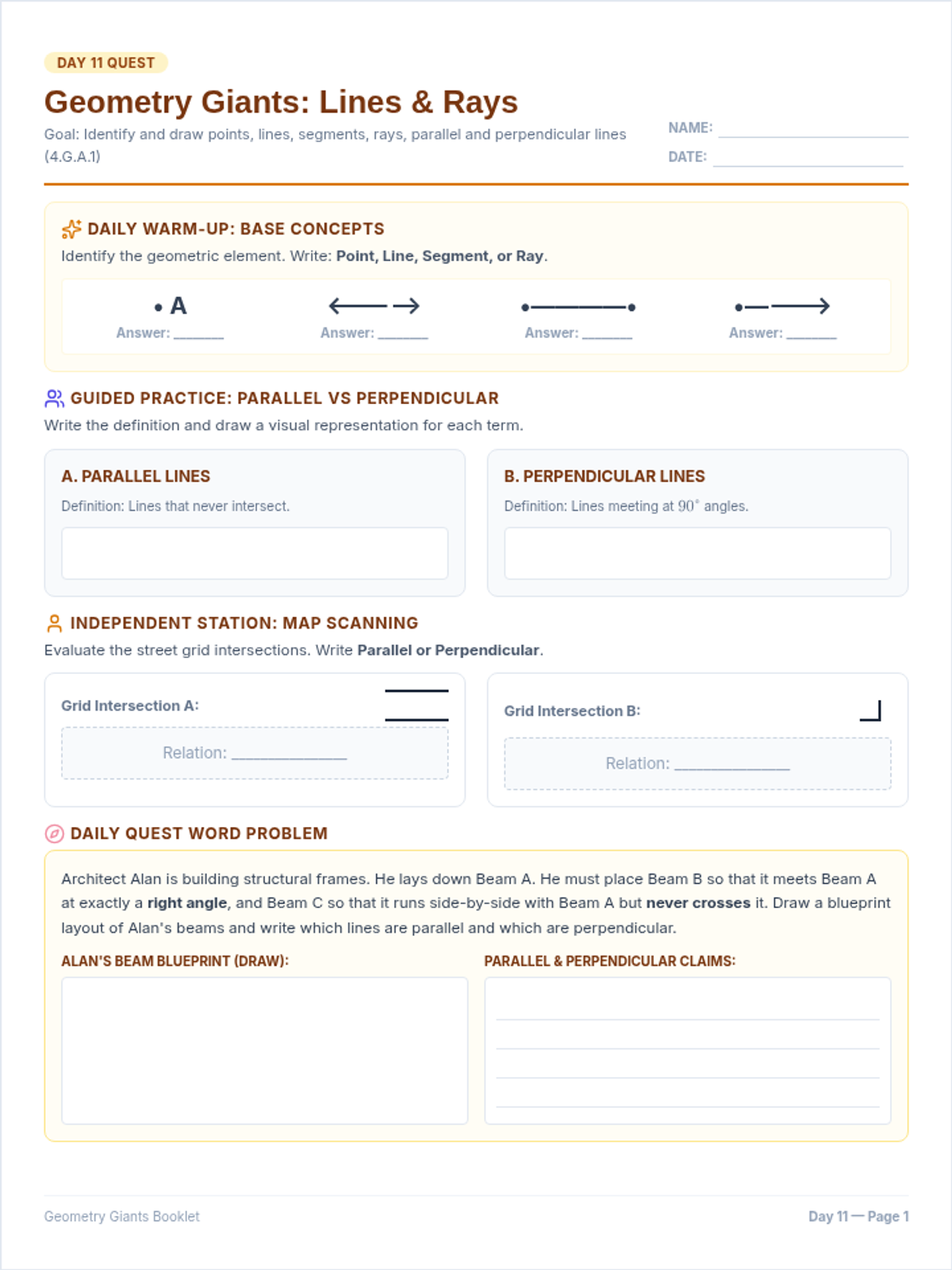
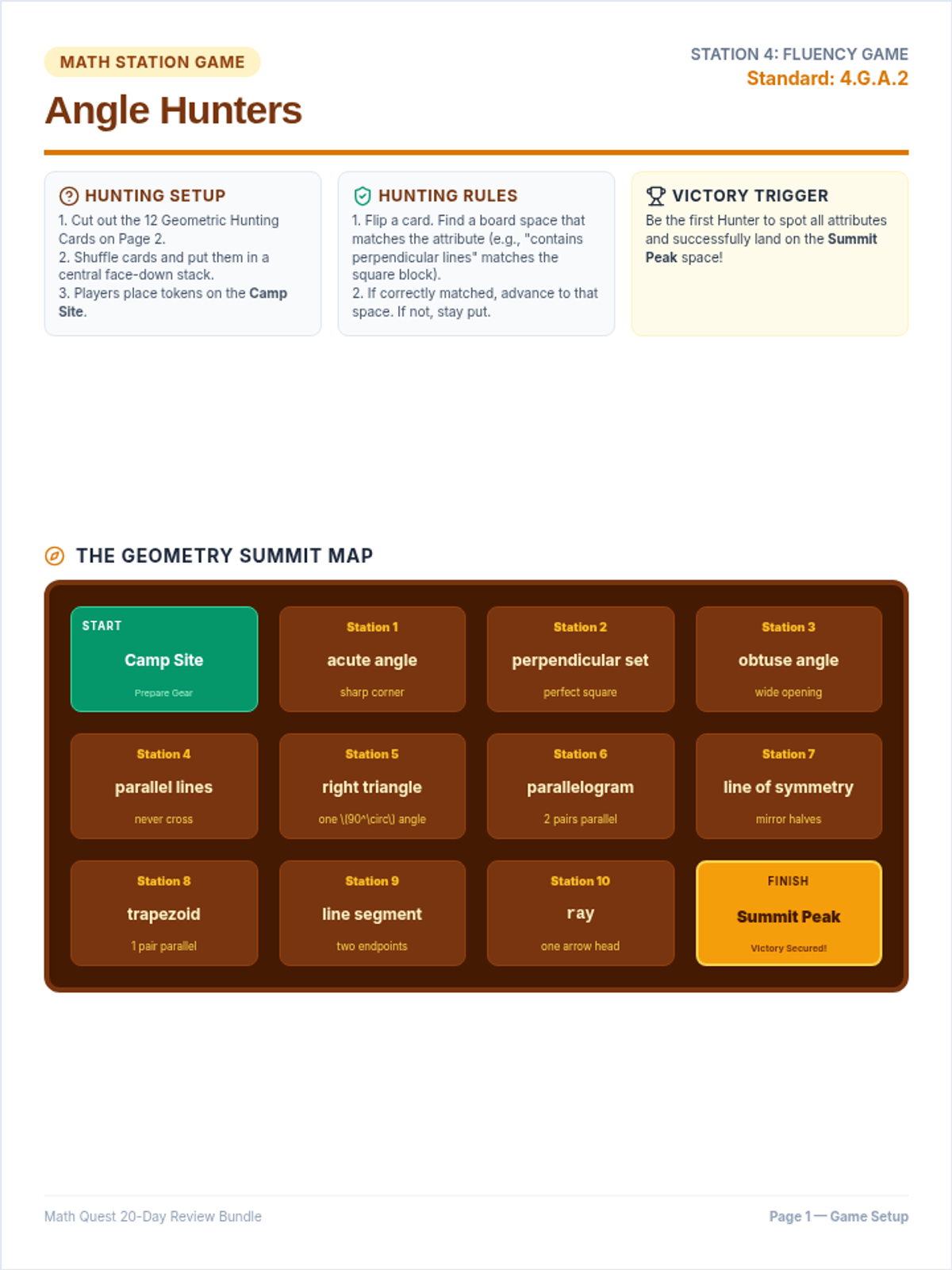
Students become Geometry Scouts, researching and documenting real-world examples of lines, angles, and two-dimensional figures. They will use protractors to measure angles in their environment and identify geometric properties in architecture and nature.
A high-energy, 45-minute comprehensive math review covering place value, fractions, and multi-step word problems for grades 3-5, designed as a 'Math Marathon'.
A comprehensive set of bulletin board resources and student activities focused on understanding fractions and decimals through the hundredths place, aligned with 4th Grade Texas TEKS.
A conceptual introduction to fractions using a bakery theme. Students explore area, set, and linear models through a collaborative 'Great Bakery Mix-up' task designed with UDL principles to ensure all learners can access deep mathematical concepts.
A hands-on, kitchen-themed lesson where students explore fractions through area models, number lines, and real-world cooking scenarios. Includes tiered tasks for grades 3-5 to master fractional representation and comparison.
A 35-minute introductory lesson on solving area word problems using context clues and keywords. Students take on the role of 'Area Detectives' to identify when a problem is asking for area and how to calculate it using the length times width formula.
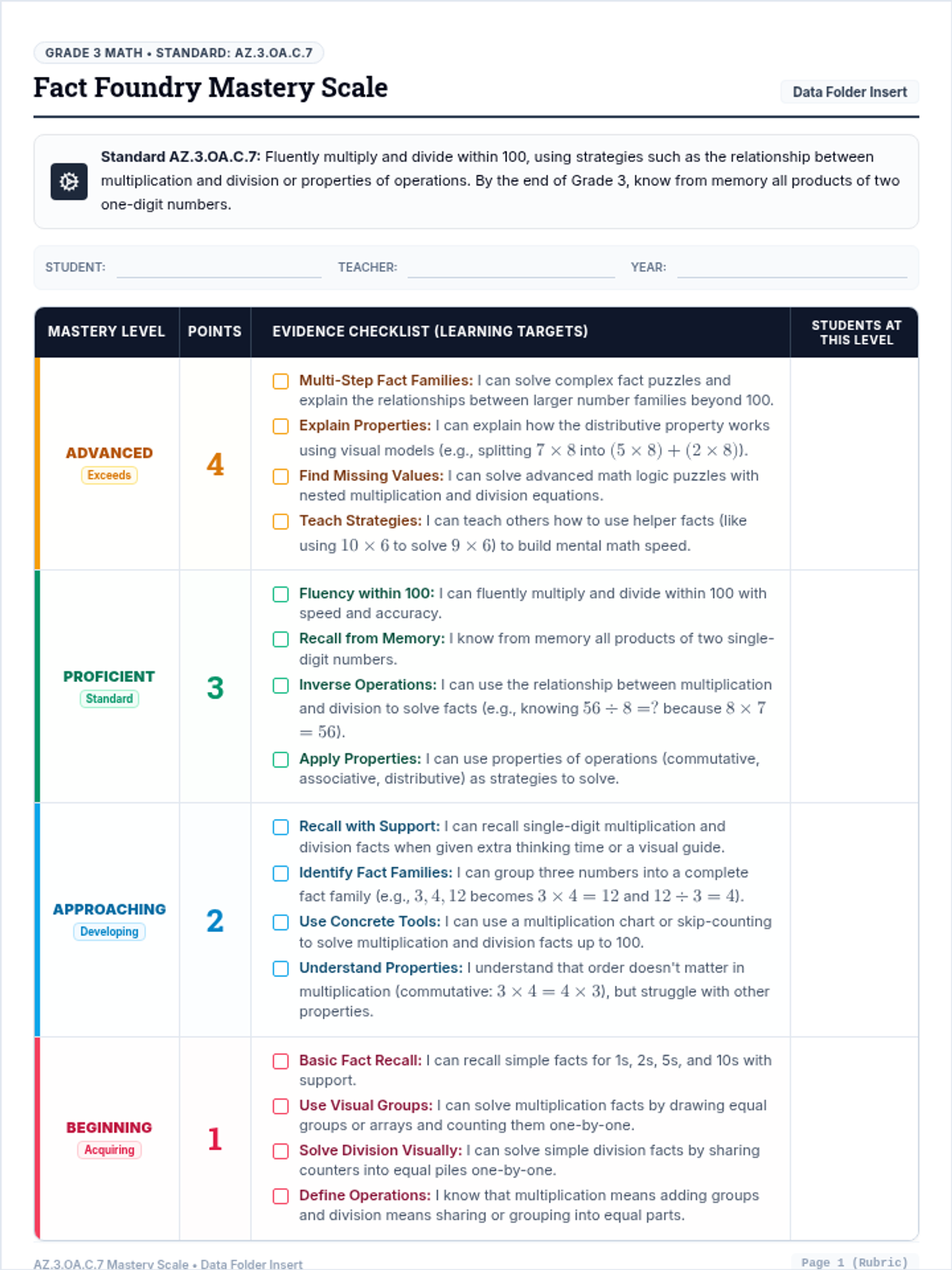
A high-energy lesson focused on mastering multiplication facts up to 12x12 through interactive arcade-themed games and collaborative challenges.
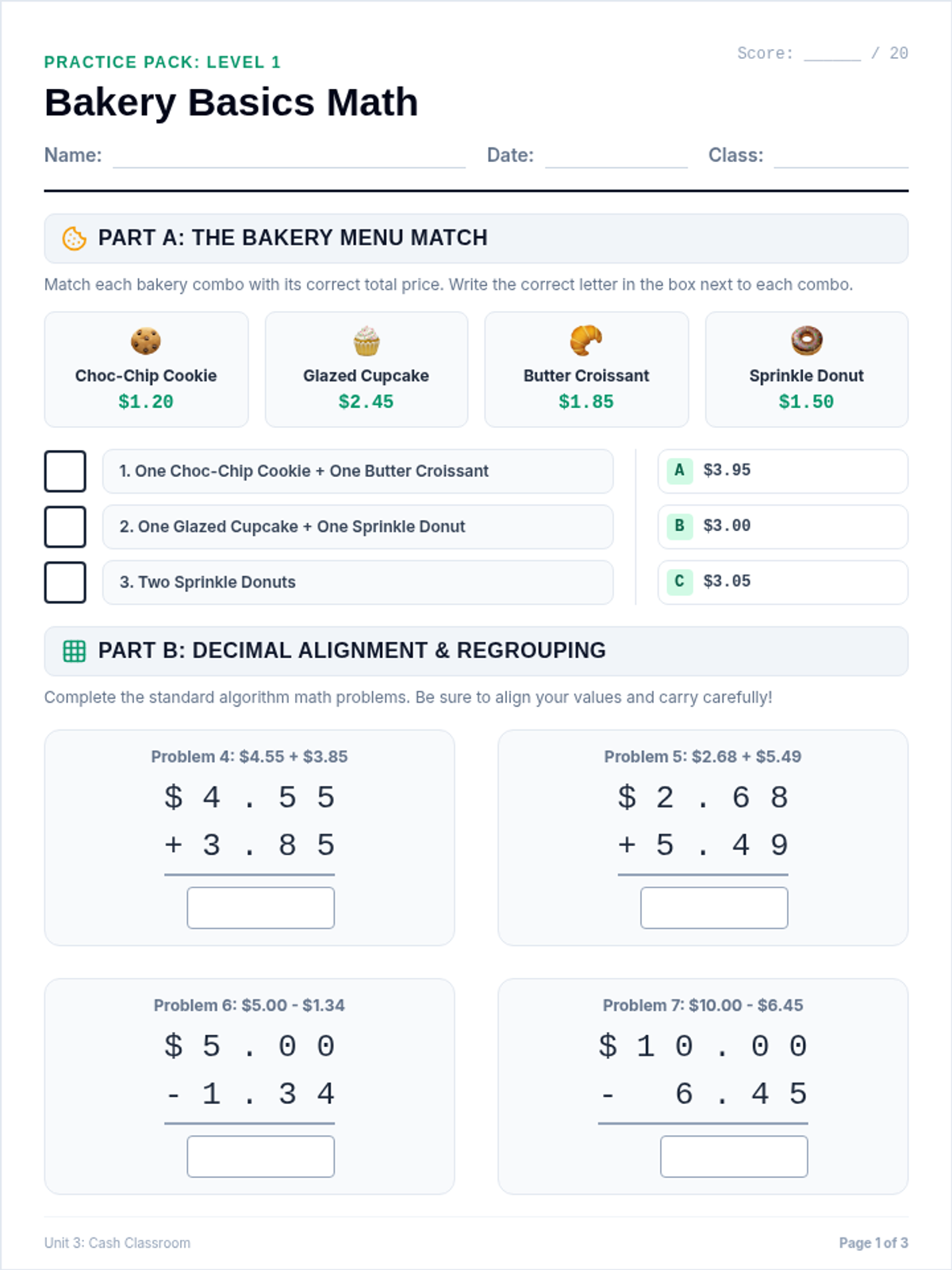
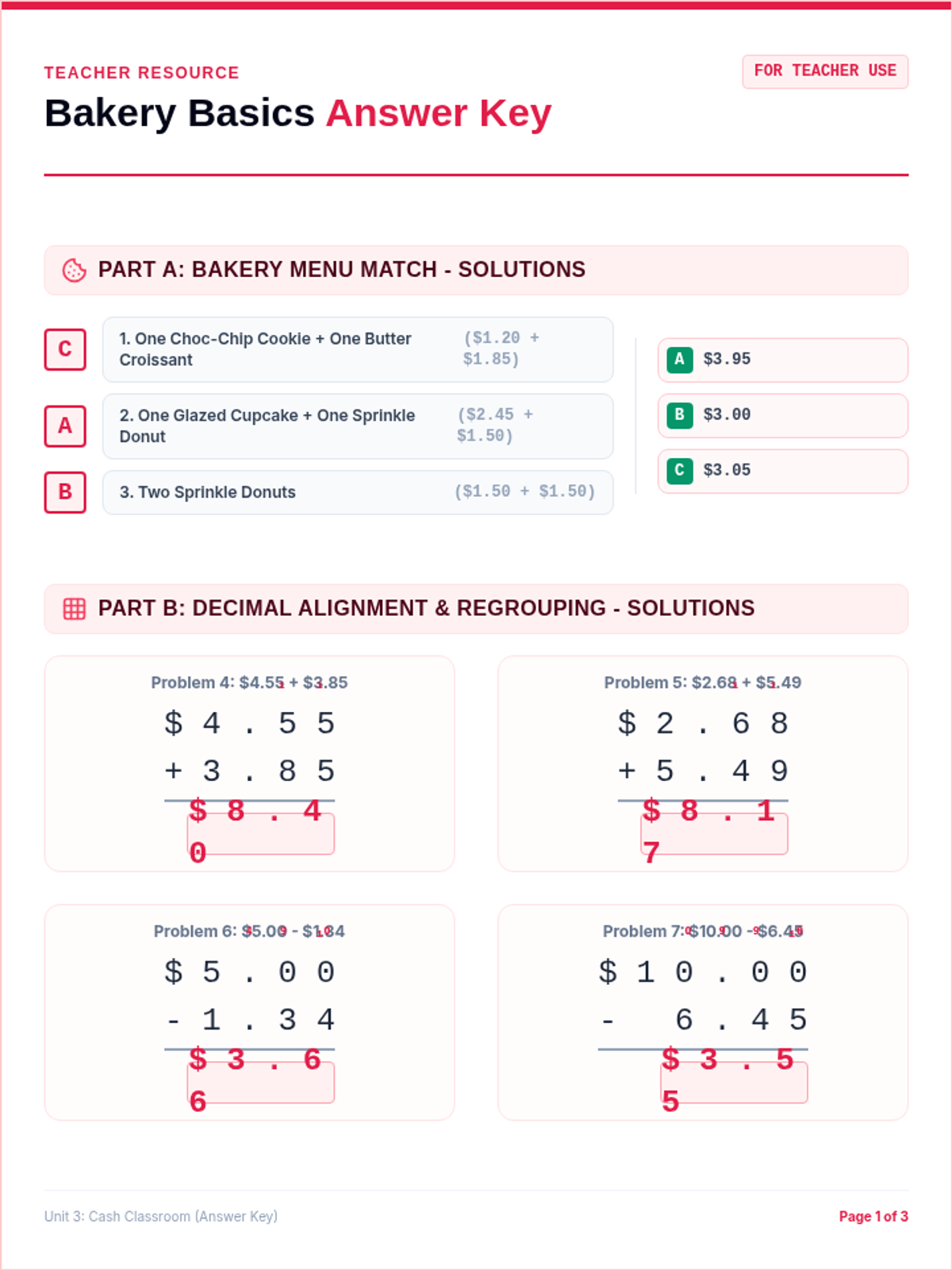
A collection of super simple, visually clear math worksheets designed for elementary learners, featuring addition and subtraction with visual counting supports.
A beginner math lesson focused on identifying whether to use addition or subtraction to solve word problems within 20, utilizing ten frames and number lines.
This lesson introduces two-digit addition using the conserving and incrementing strategies, showing students how to bridge visual base-ten models to mental step-by-step counting.
A collection of 4th-grade Illustrative Mathematics center planning resources, including a visual reference and a CSV data export.
Students represent and compare fractions on a number line, understanding distance from zero.
Students explore equivalent fractions using visual models and multiplication/division strategies.
Students learn to decompose fractions into unit fractions and non-unit fractions using tape diagrams and addition sentences.
Students identify and label fractions using area models and set models, focusing on the meaning of the numerator and denominator.
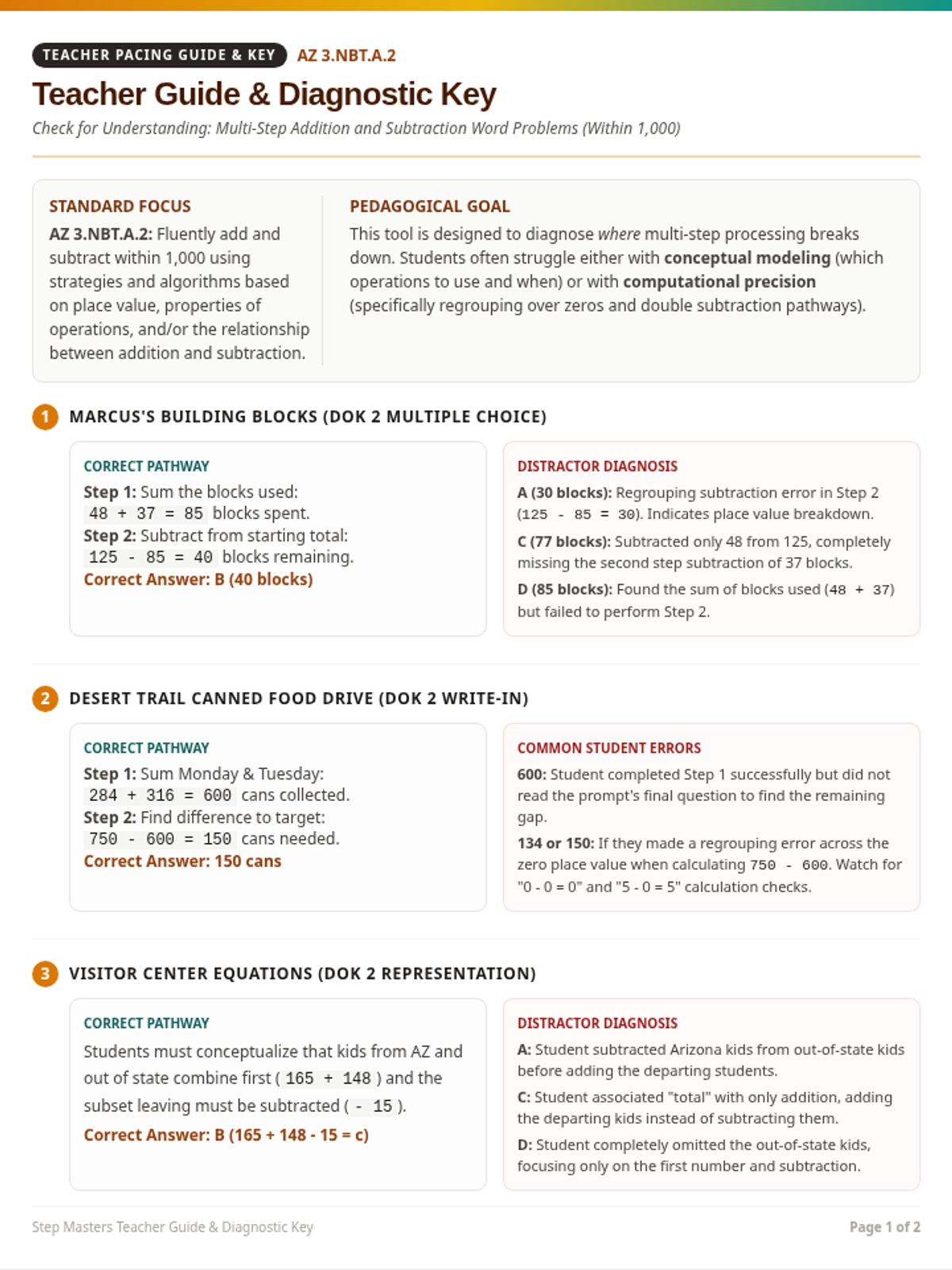
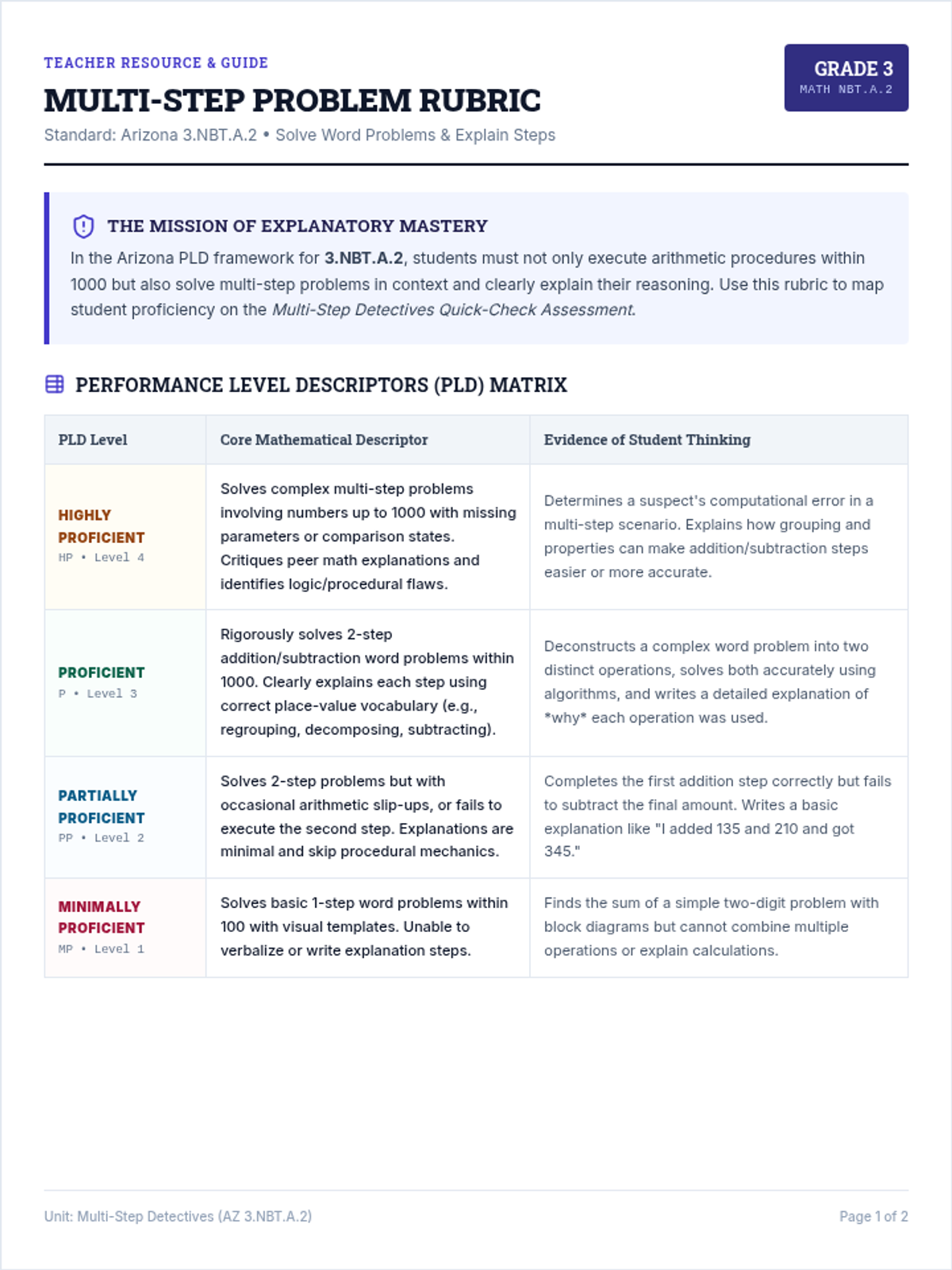
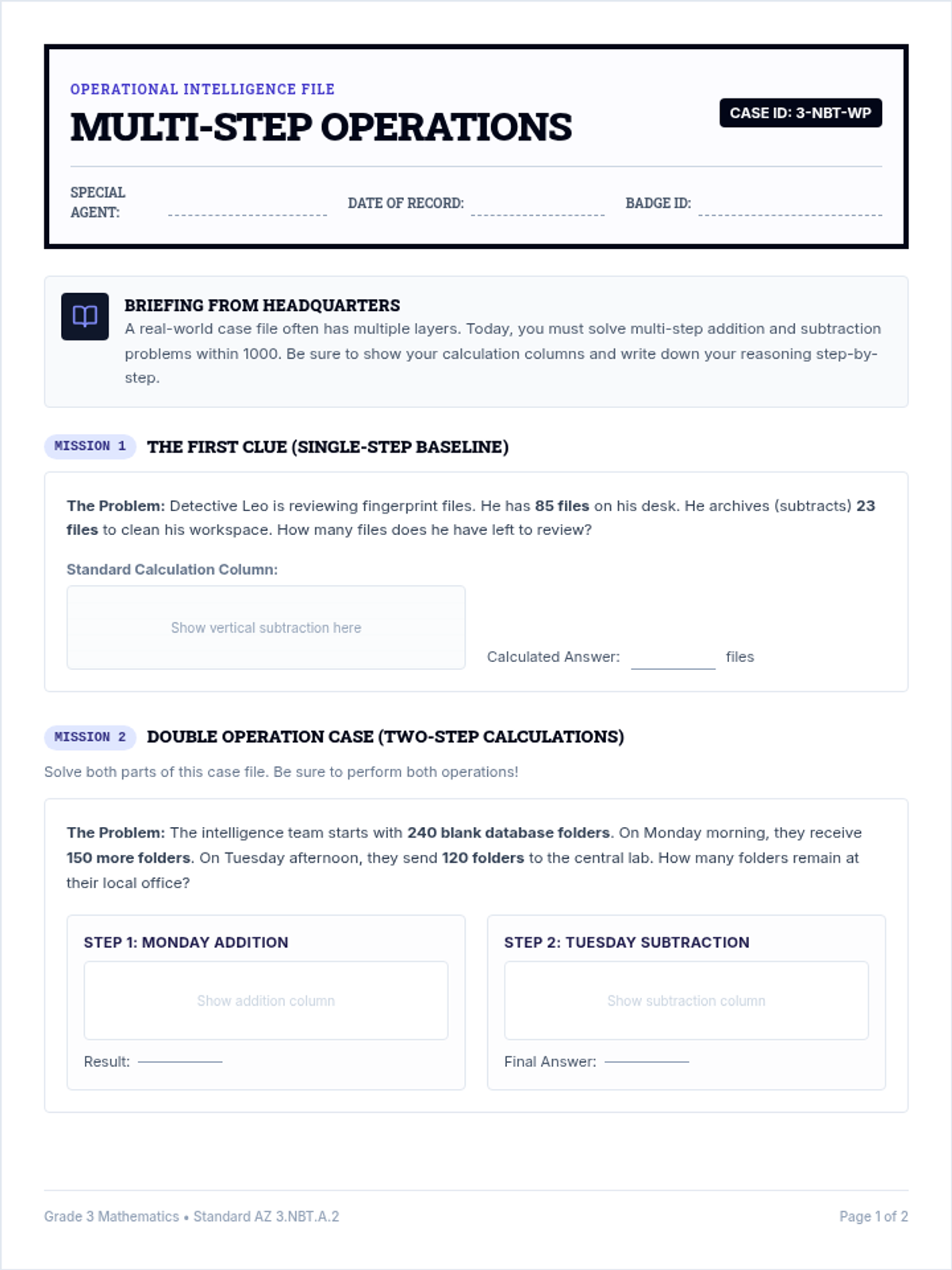
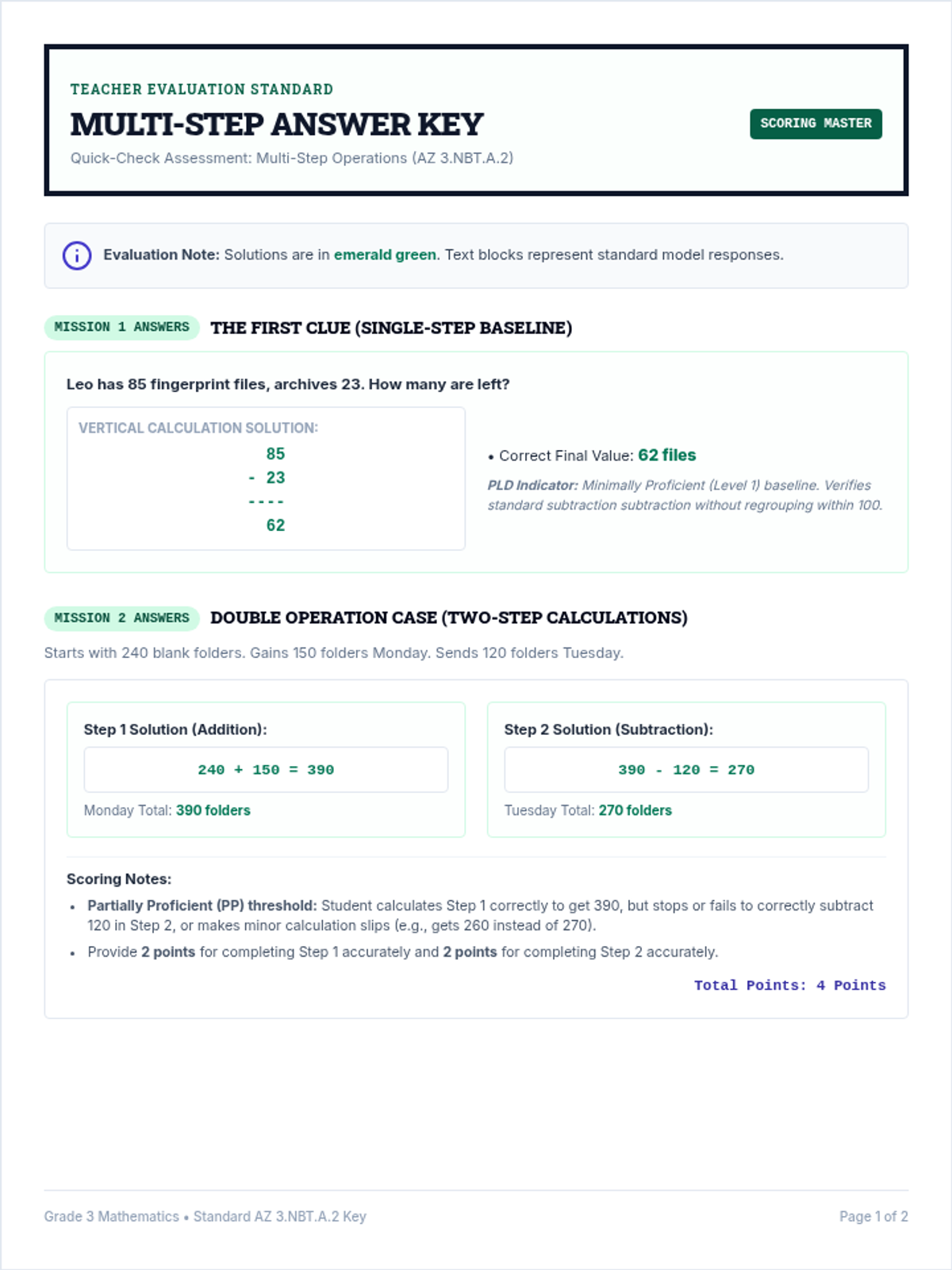
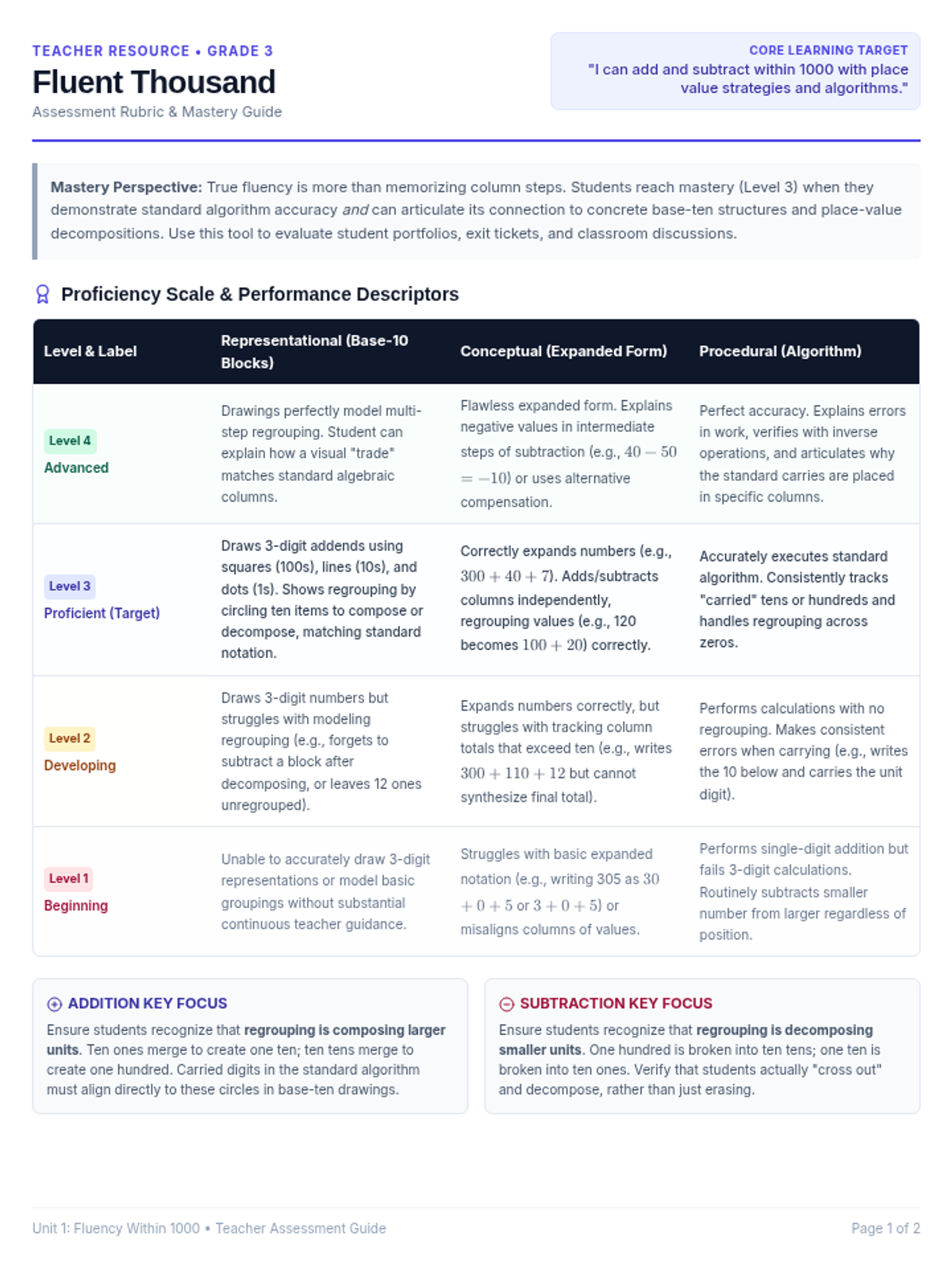
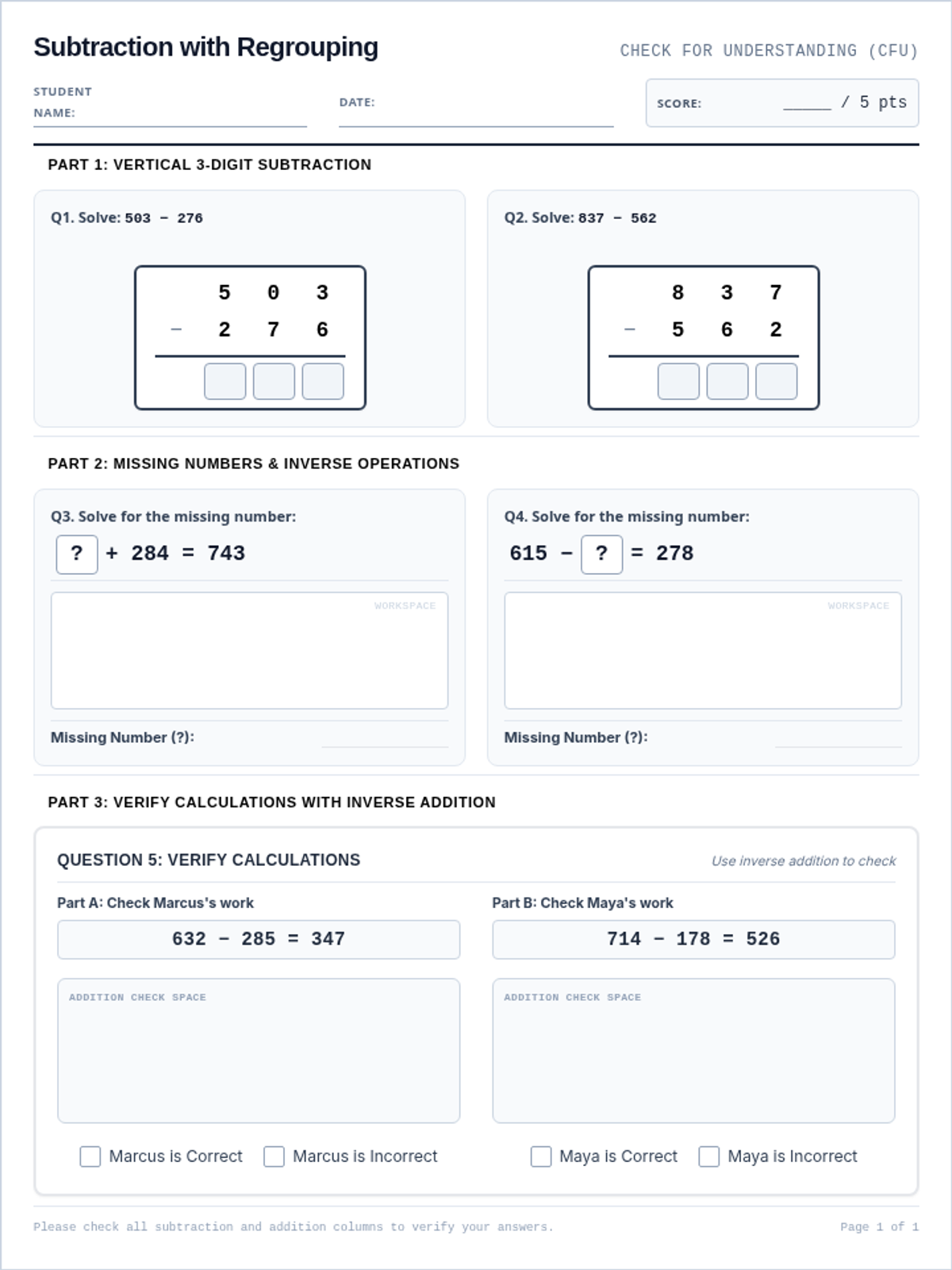
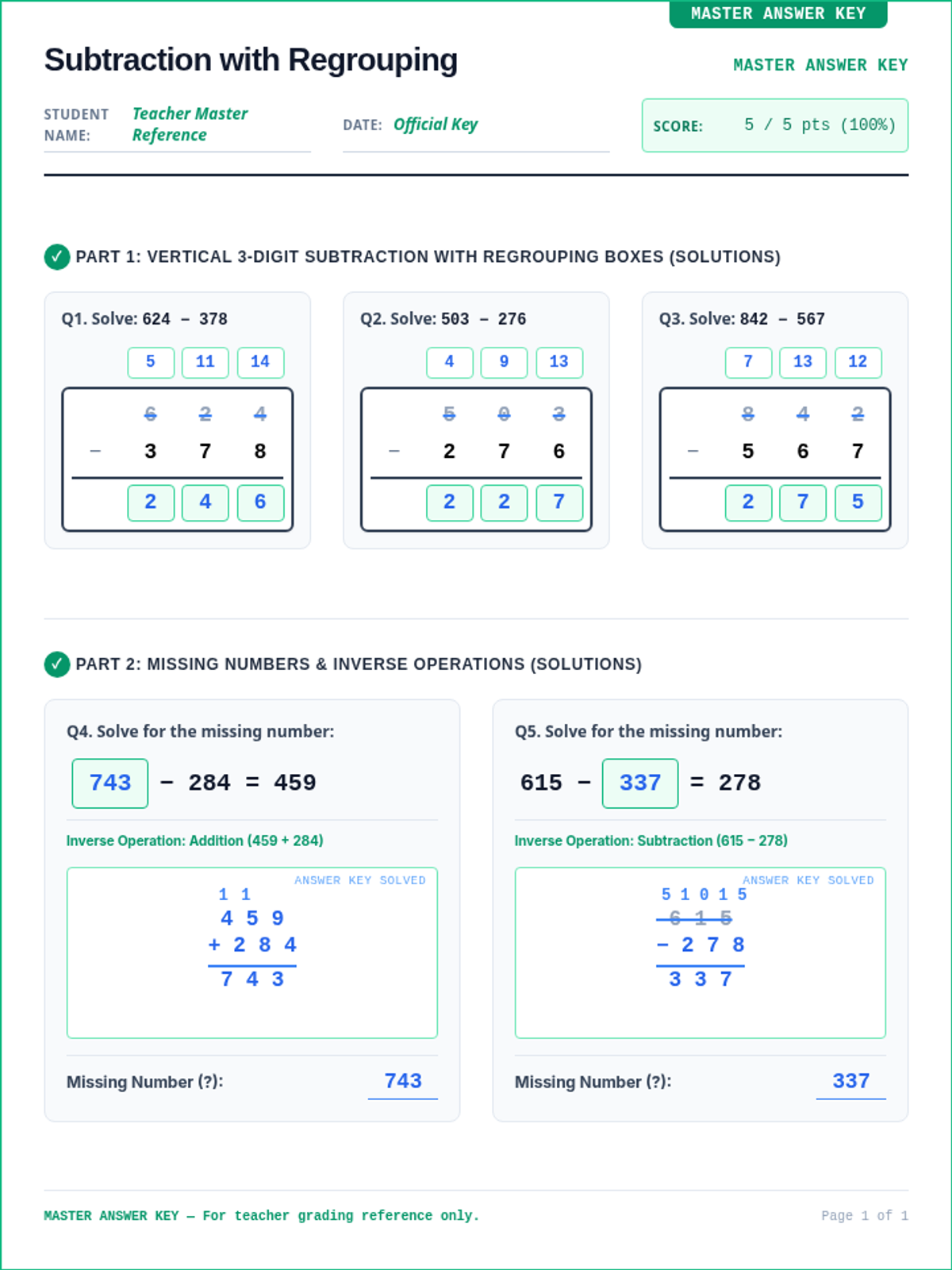
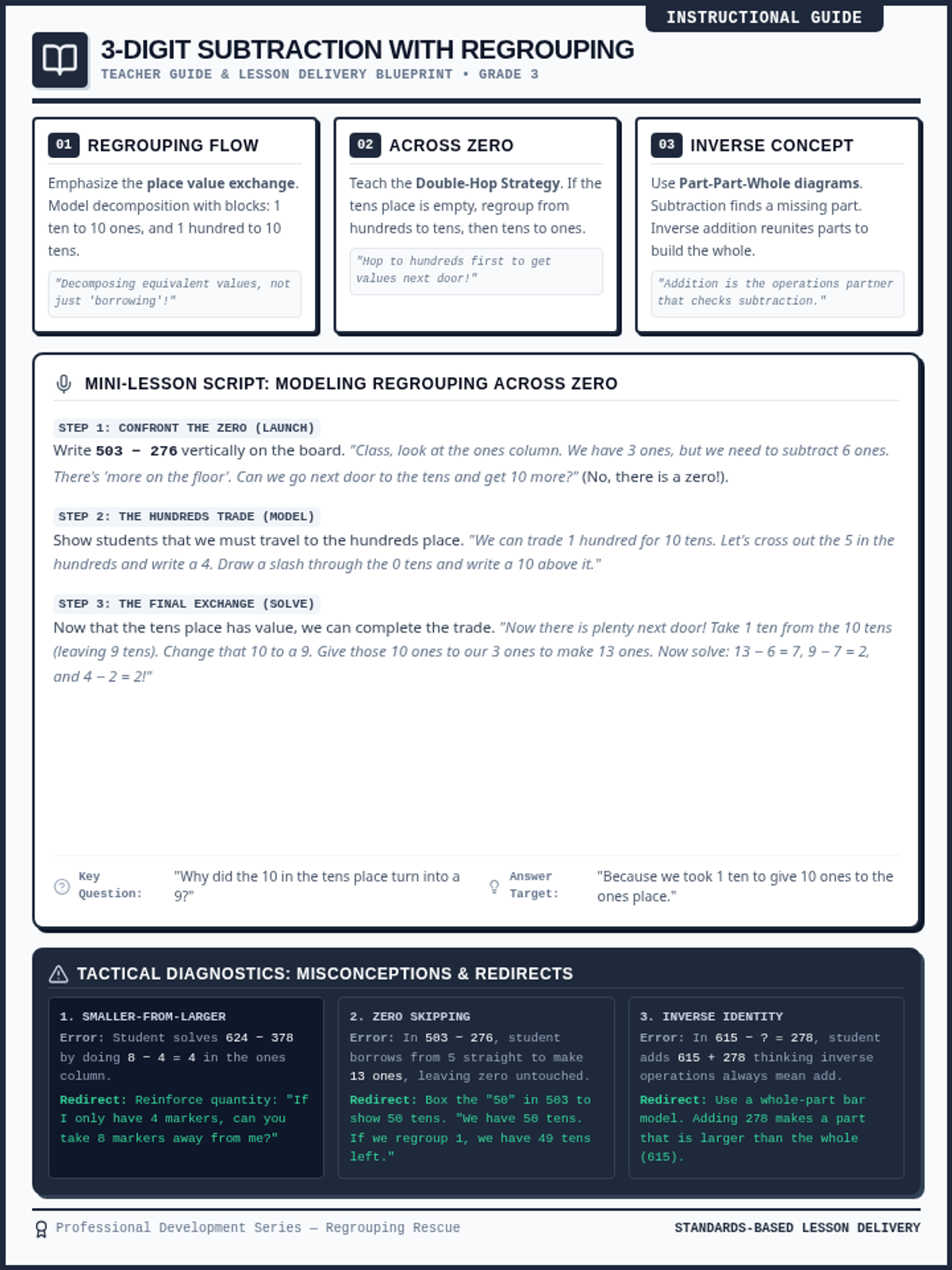
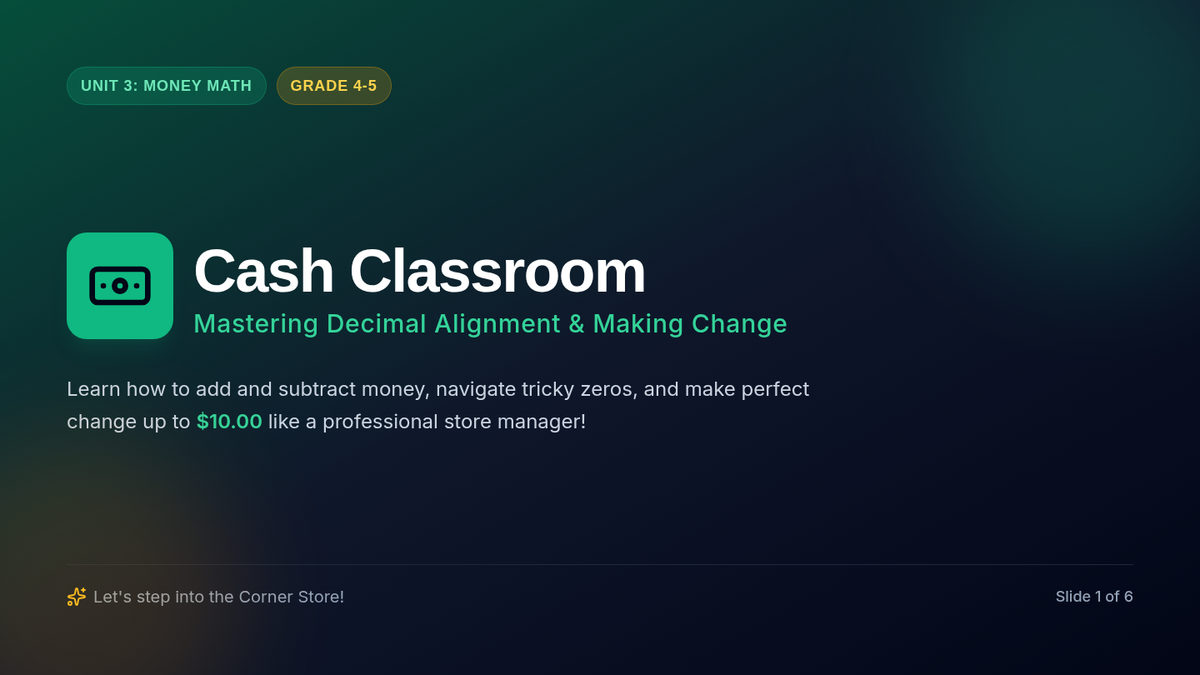
A lesson focused on mastering three-digit subtraction with regrouping, specifically targeting the challenge of subtracting across zeros and applying these skills to real-world word problems.