A high school US History lesson examining the intentional destruction of buffalo herds as a calculated military strategy to force Native American tribes onto reservations and break their food sovereignty.
This lesson explores the Homestead Act of 1862 and the logistical realities of settling the American West, focusing on the grid system and survival challenges.
A structured research phase where students choose a focus area—either an ethical teaching or a significant practice—and map its connection to core Jewish tenets and contemporary life.
A comprehensive guide to structuring an informative essay on the social, economic, and religious consequences of the Black Death in medieval Europe.
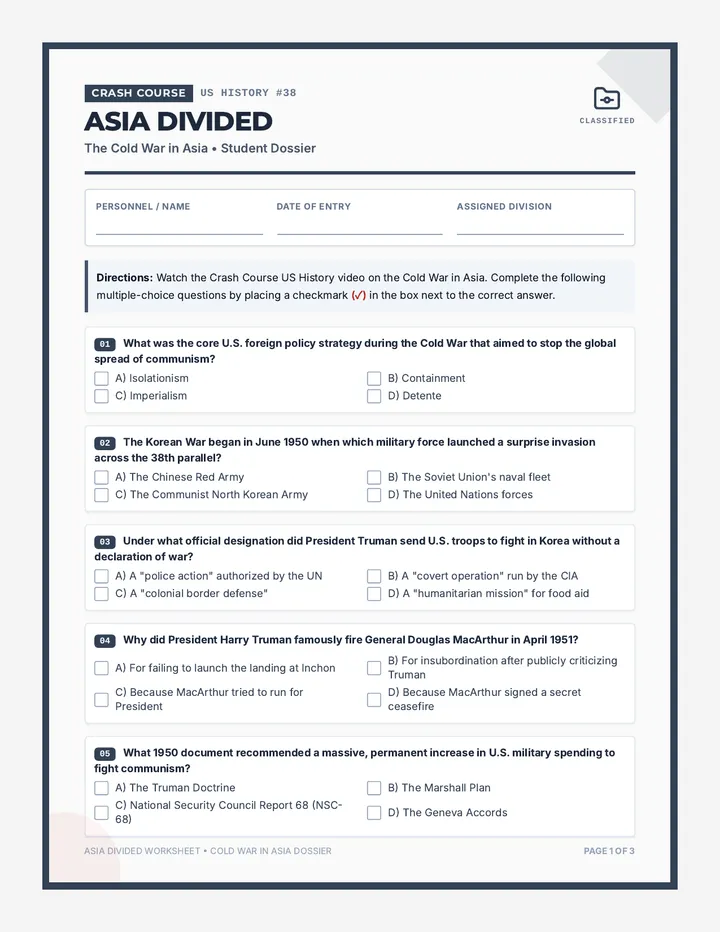
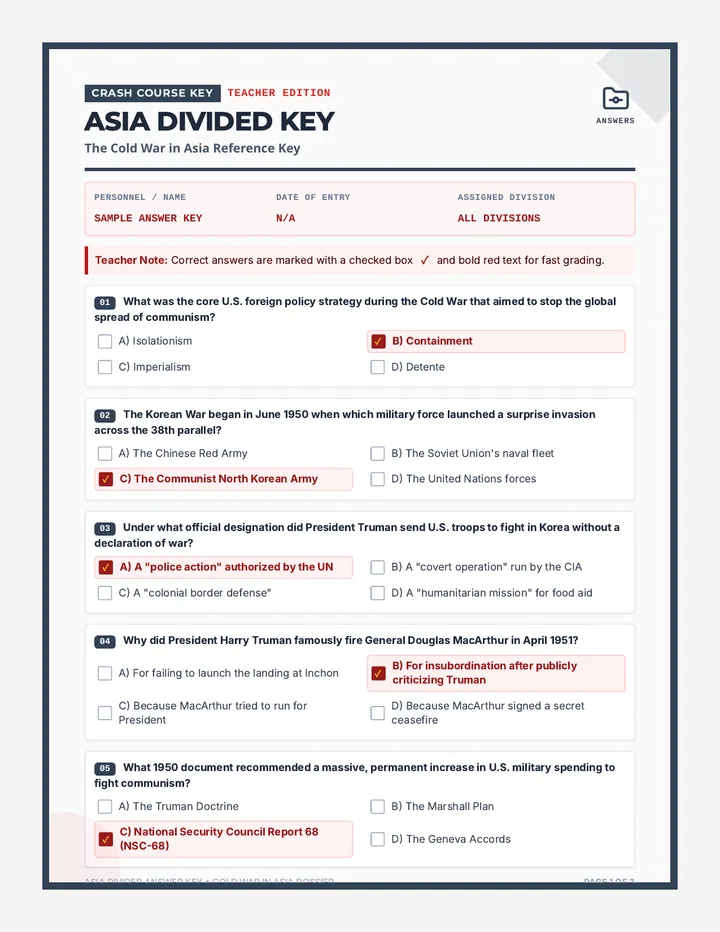
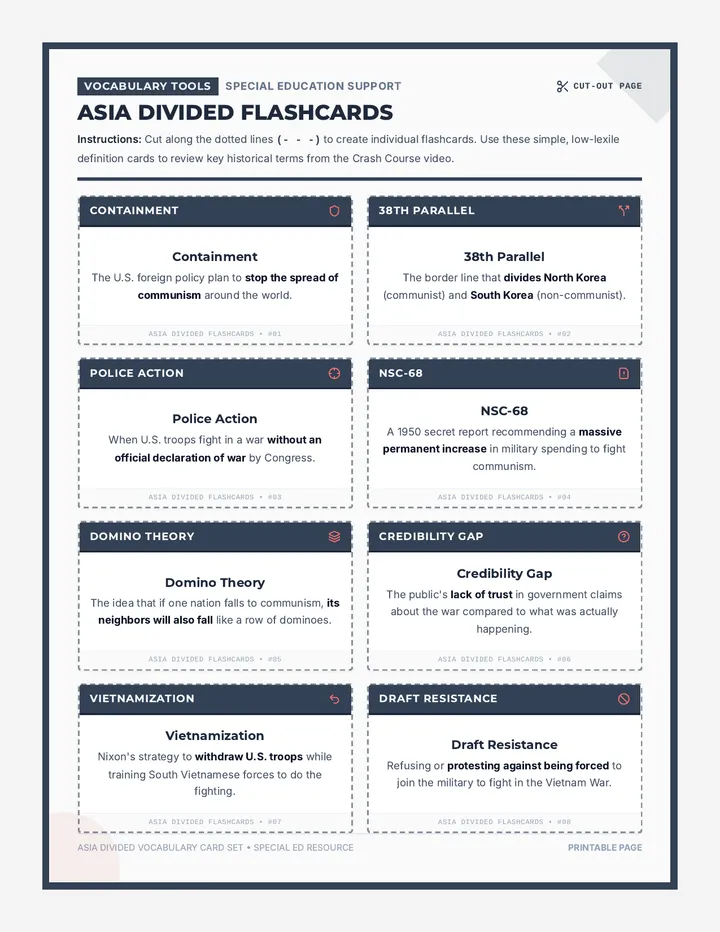
A comprehensive review of the Cold War era (1945–1991), focusing on key leaders, proxy wars, nuclear tension, and the eventual collapse of the Soviet Union. Includes a detailed student dossier assignment and teacher answer key.

A collection of reference materials, background readings, and primary source excerpts that support all the independent assignments in the unit.
An AP World History lesson exploring the technological innovations and environmental consequences of the Green Revolution in the mid-20th century.
An investigation into the technological and ideological competition between the US and USSR in space, exploring the launch of Sputnik, the Apollo missions, and the connection between space exploration and ICBM technology.
A primary source analysis packet focusing on the Bulletin of the Atomic Scientists and the Doomsday Clock, examining the psychological and political impact of nuclear brinkmanship.
An investigation into Cold War proxy wars in Africa and Asia, featuring case studies on Angola and Afghanistan to understand how global superpowers influenced regional conflicts.