Students explore the world of biomimicry by analyzing the aerodynamics of the Shinkansen train and birds, culminating in a design challenge where they create a slow-falling seed carrier inspired by nature's dispersal methods.
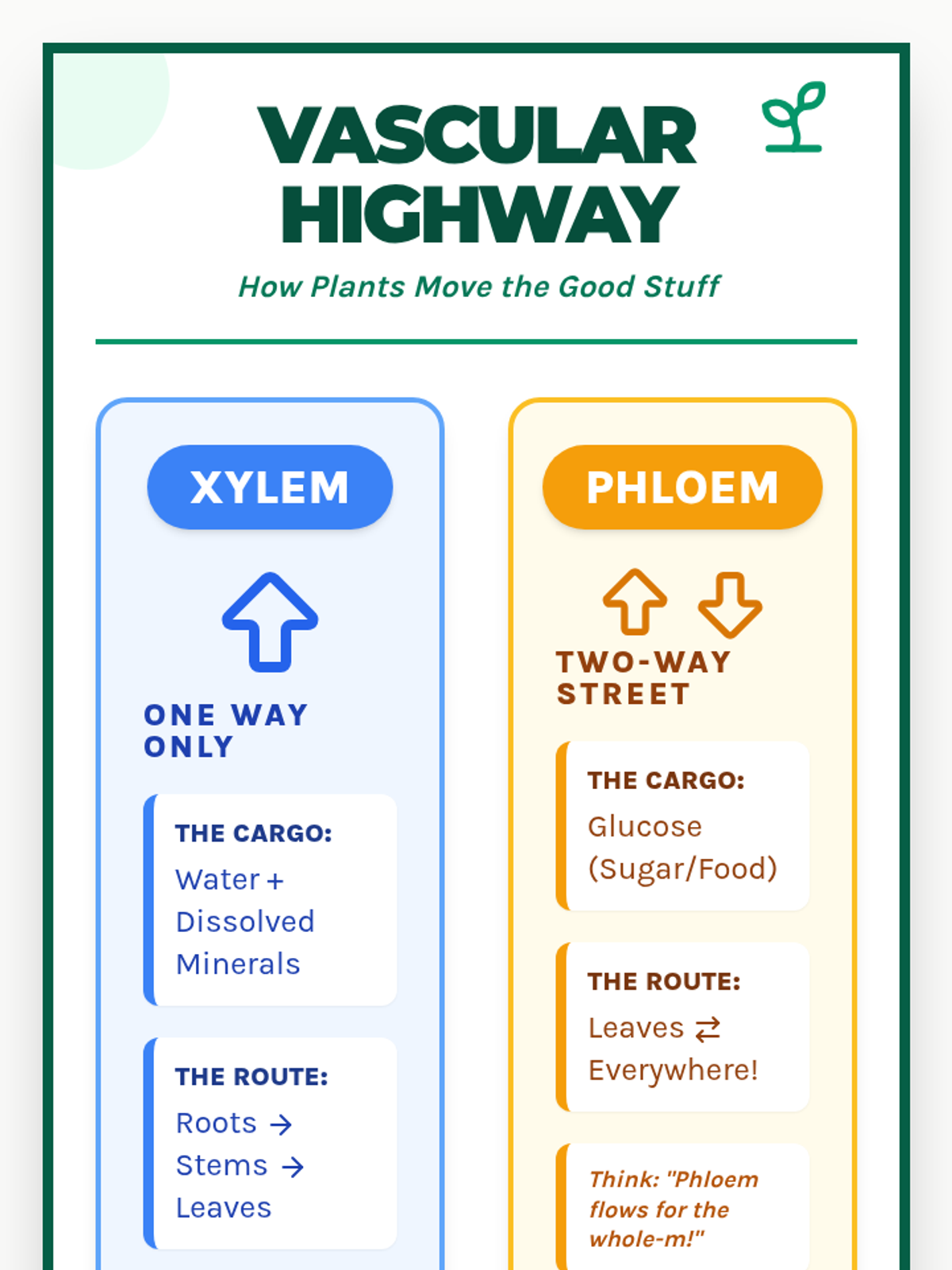
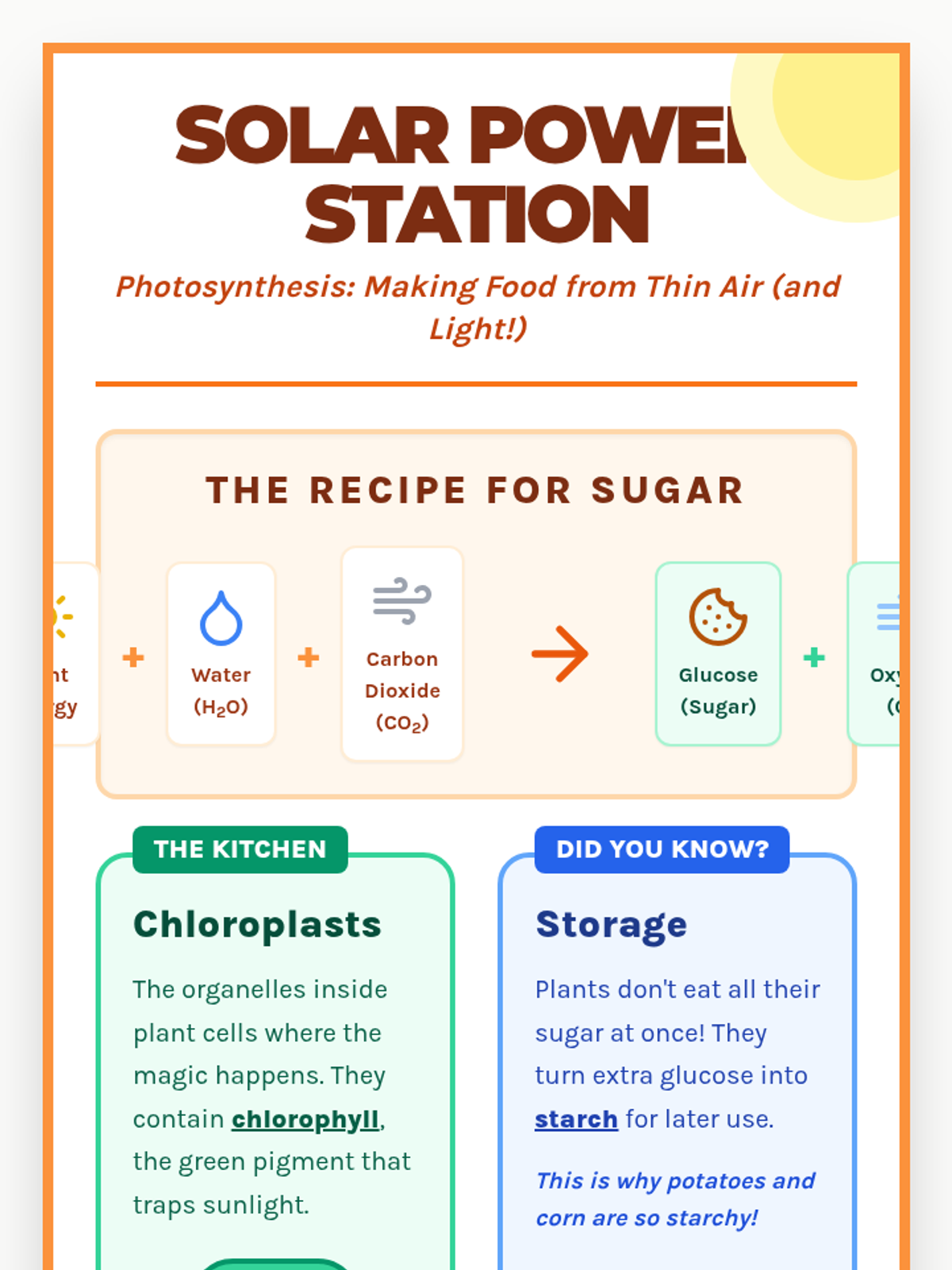
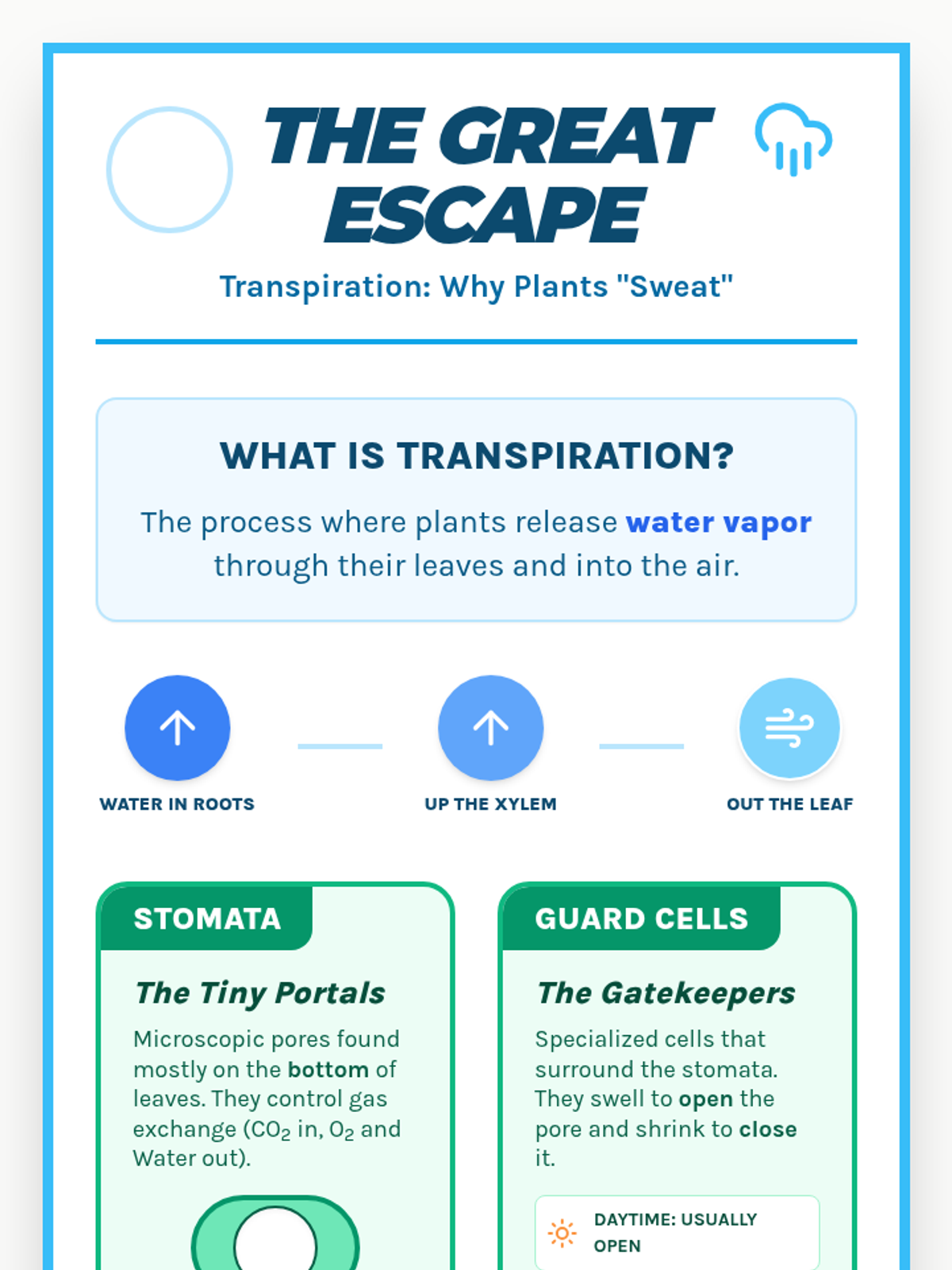
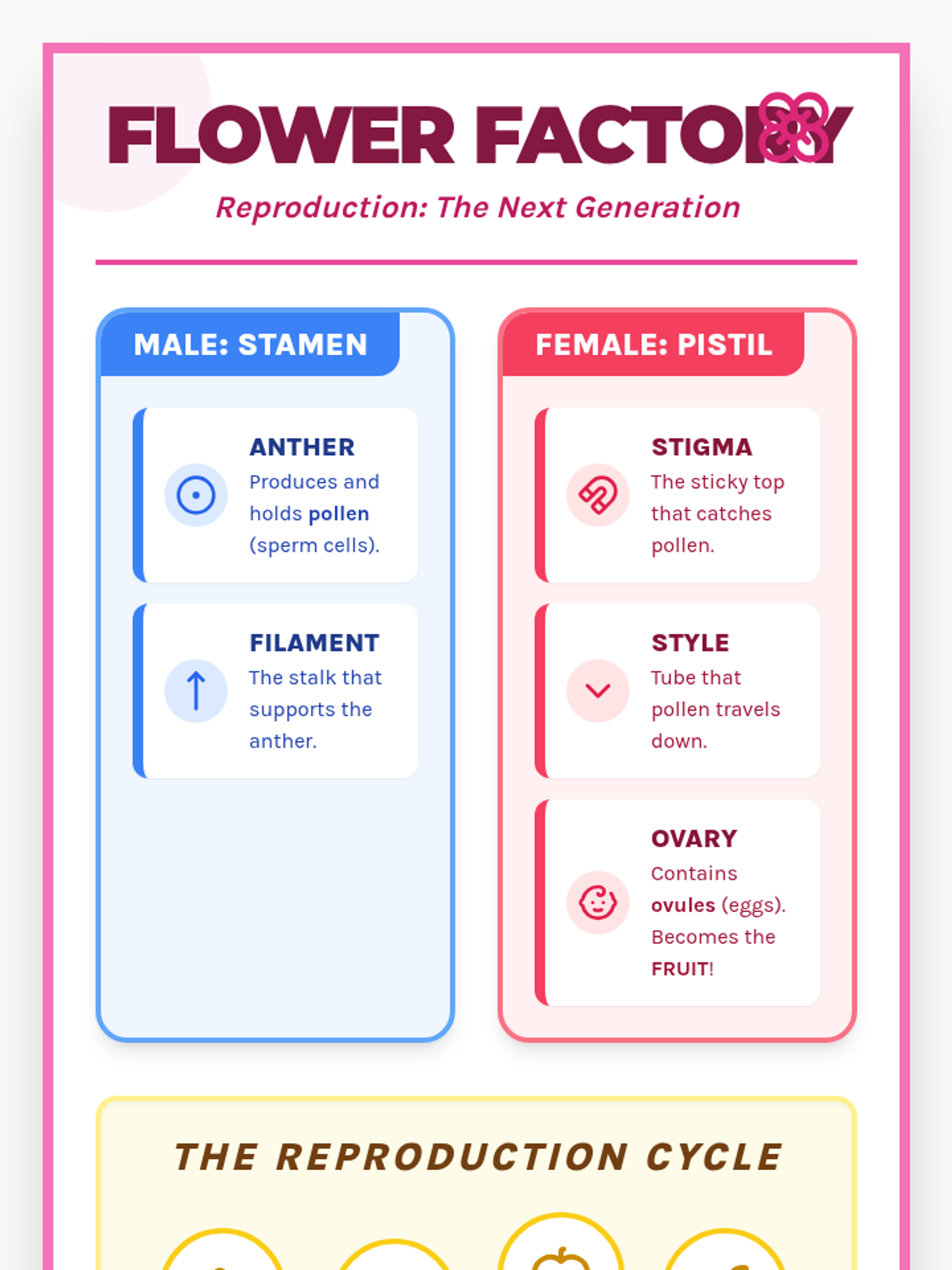
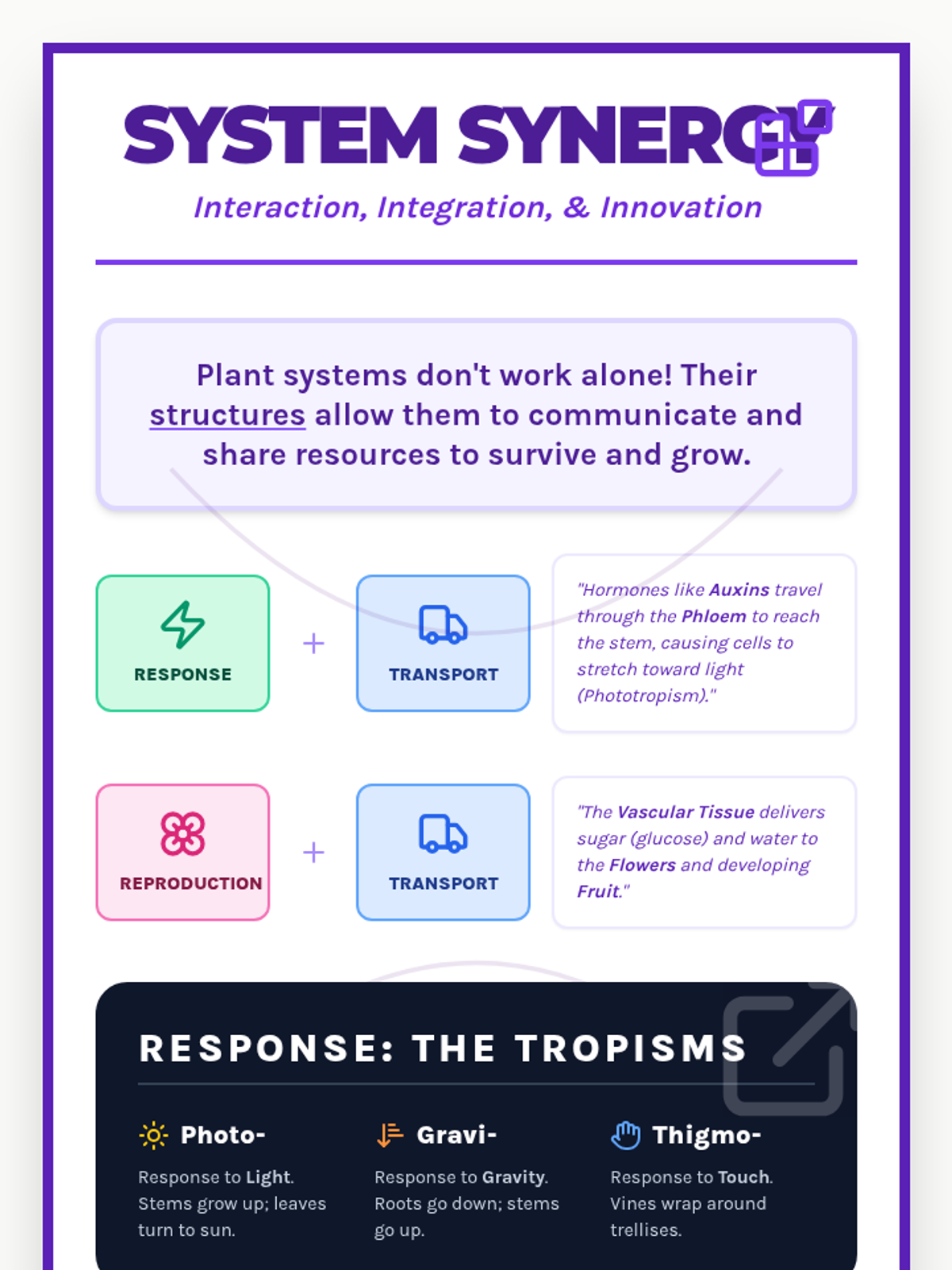
A series of visual anchor charts designed for reference during laboratory investigations into plant vascular systems, photosynthesis, and transpiration.
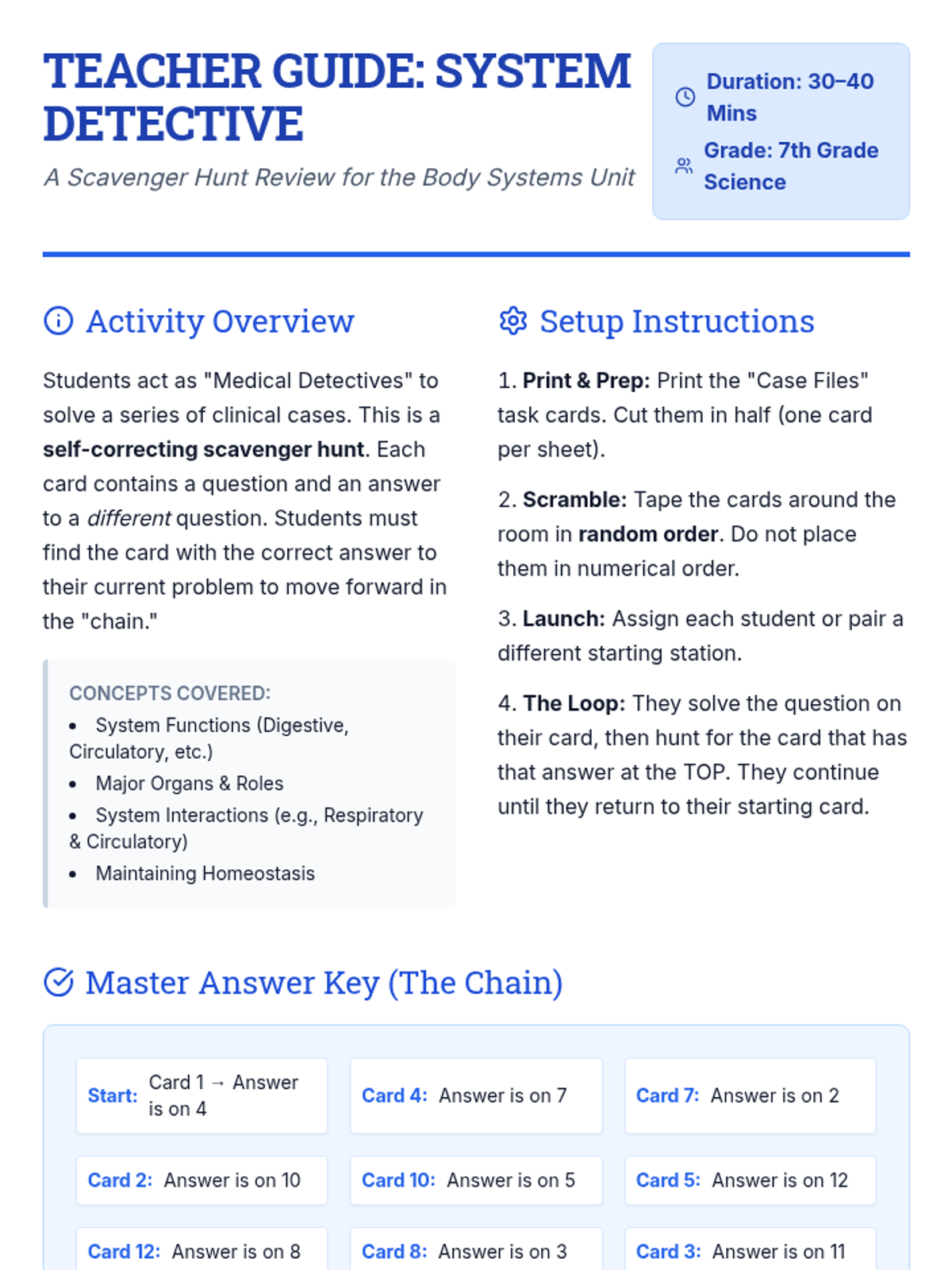
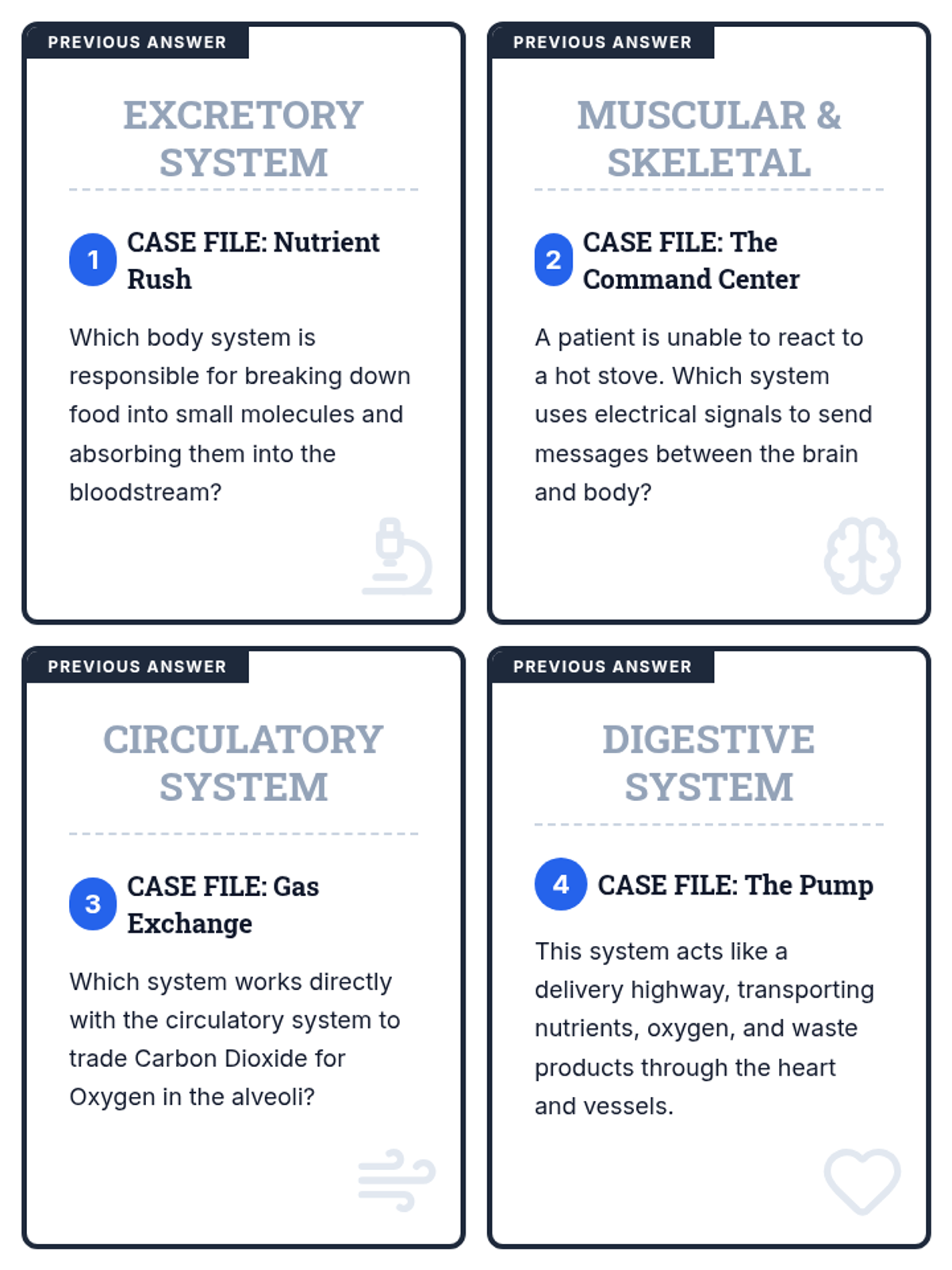
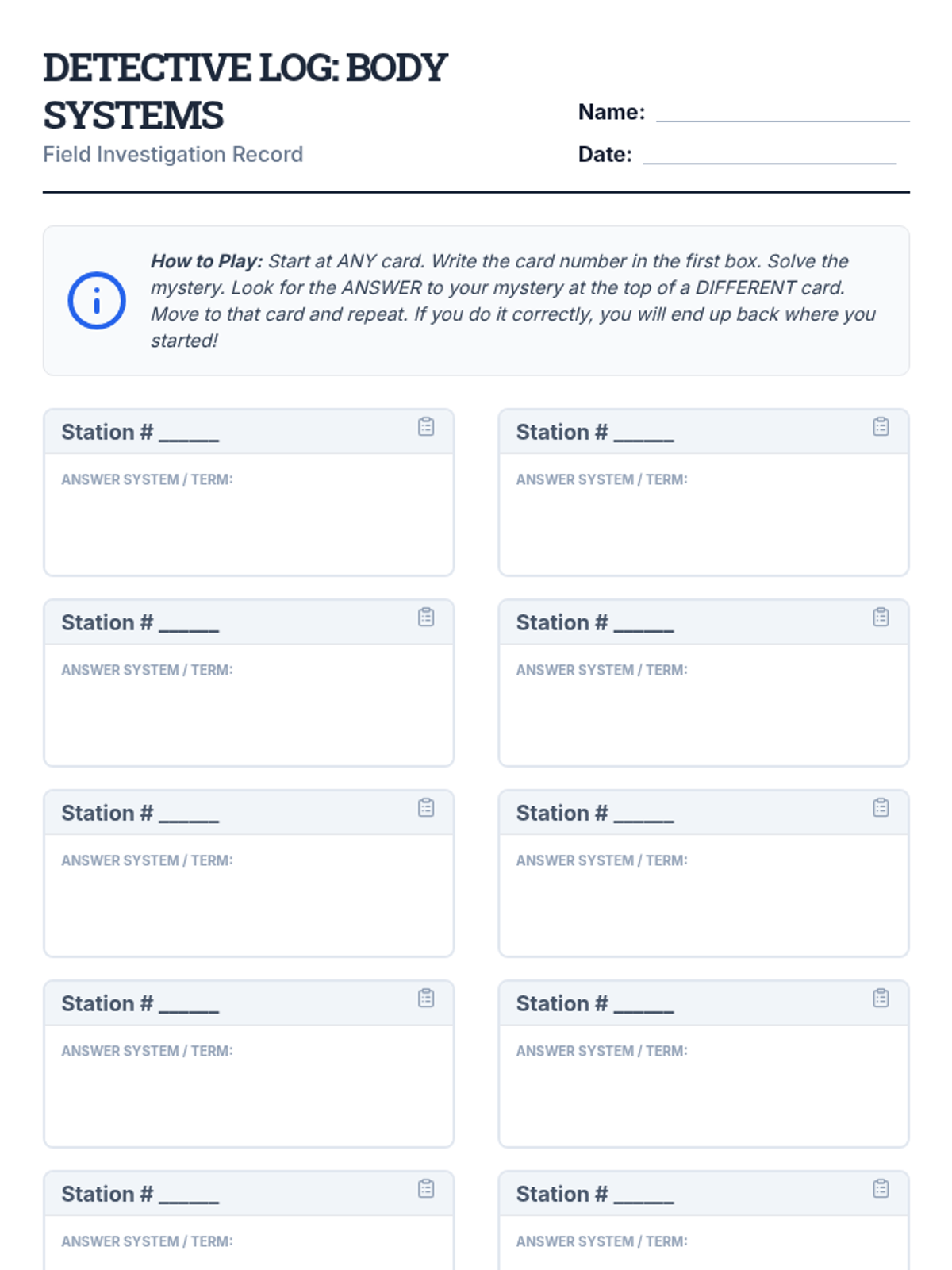
A high-energy, movement-based review activity where students solve 'medical cases' by identifying body systems and their functions. This lesson includes task cards for a classroom scavenger hunt and a structured recording sheet for students.
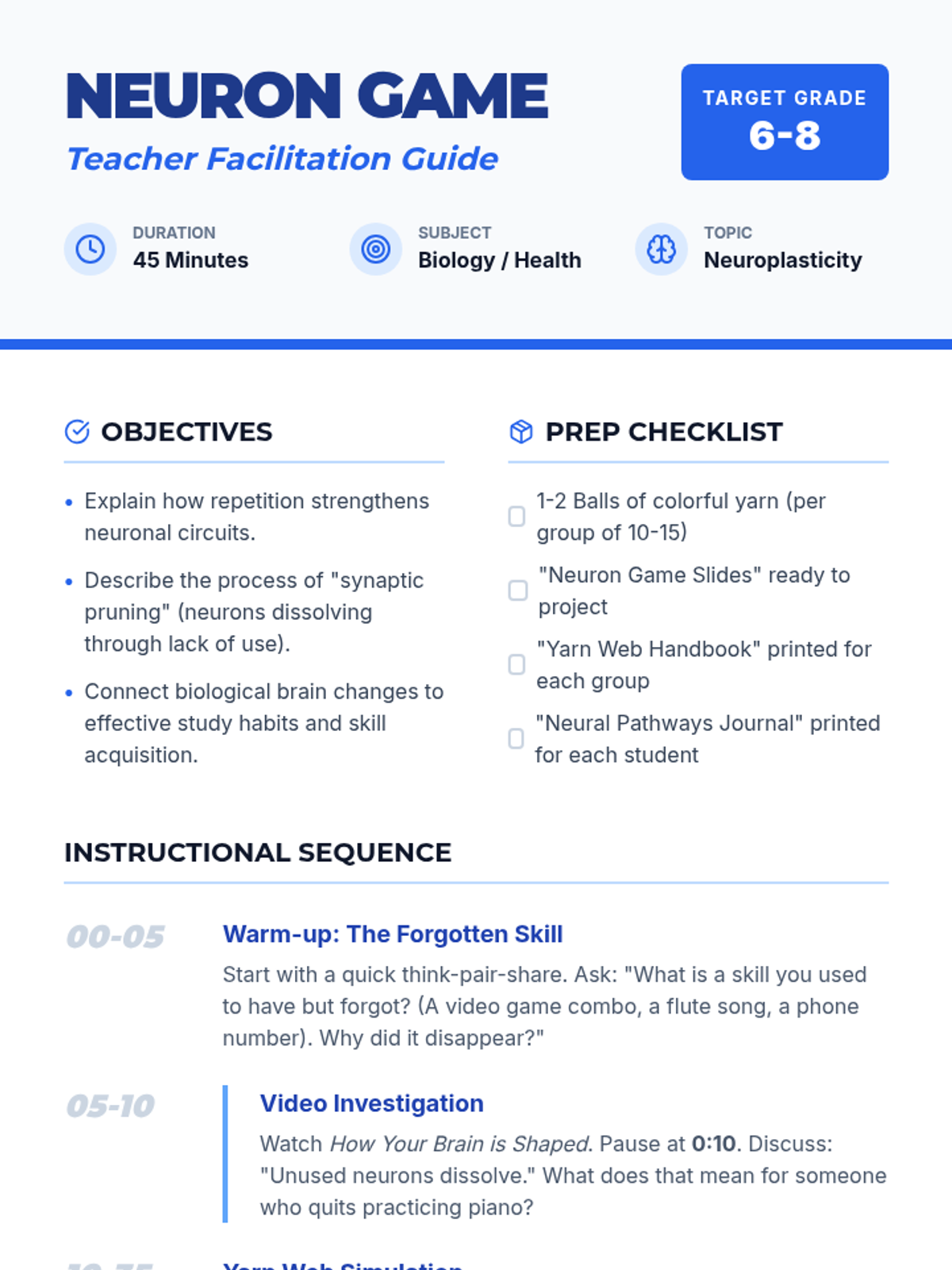
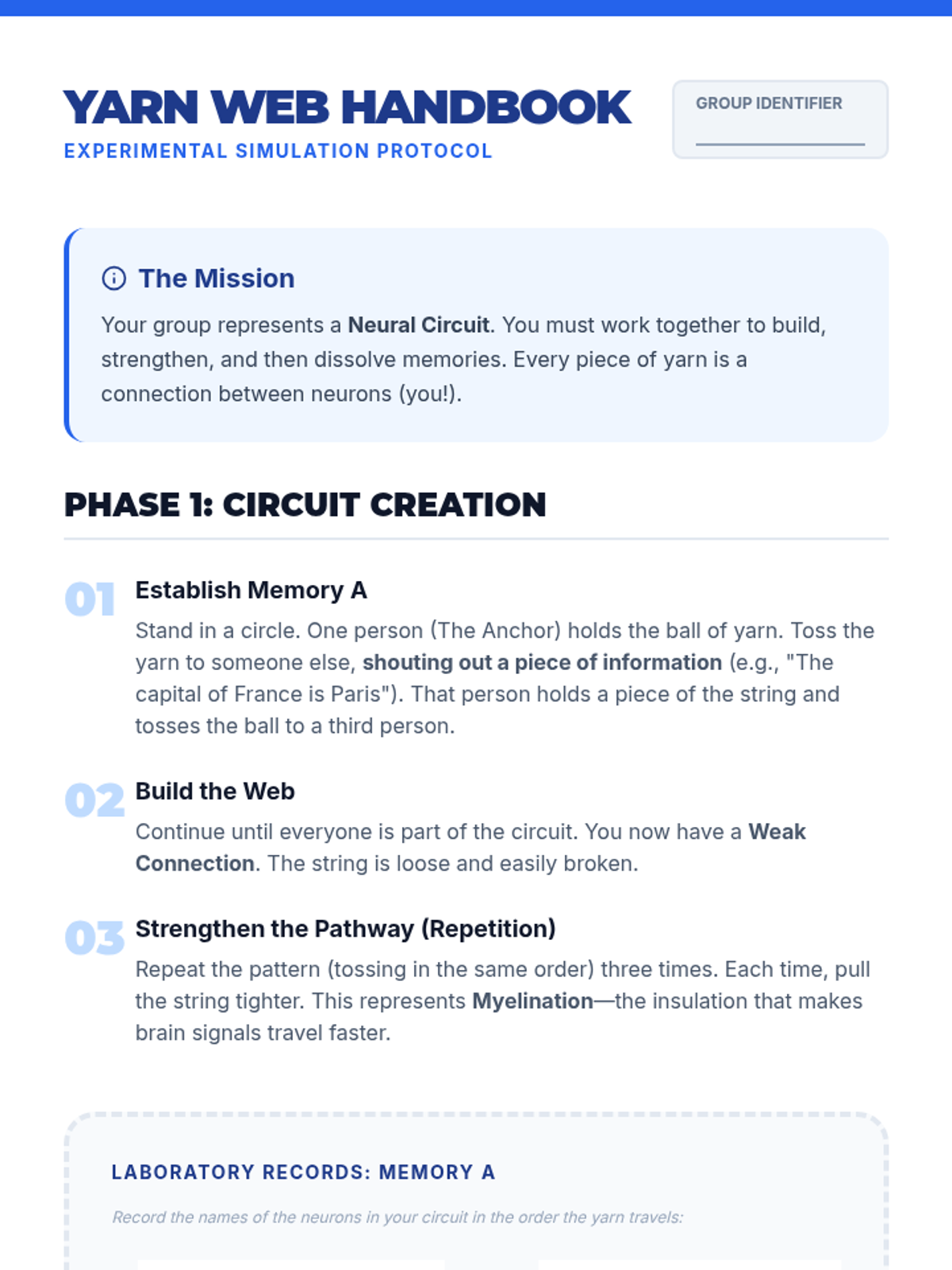
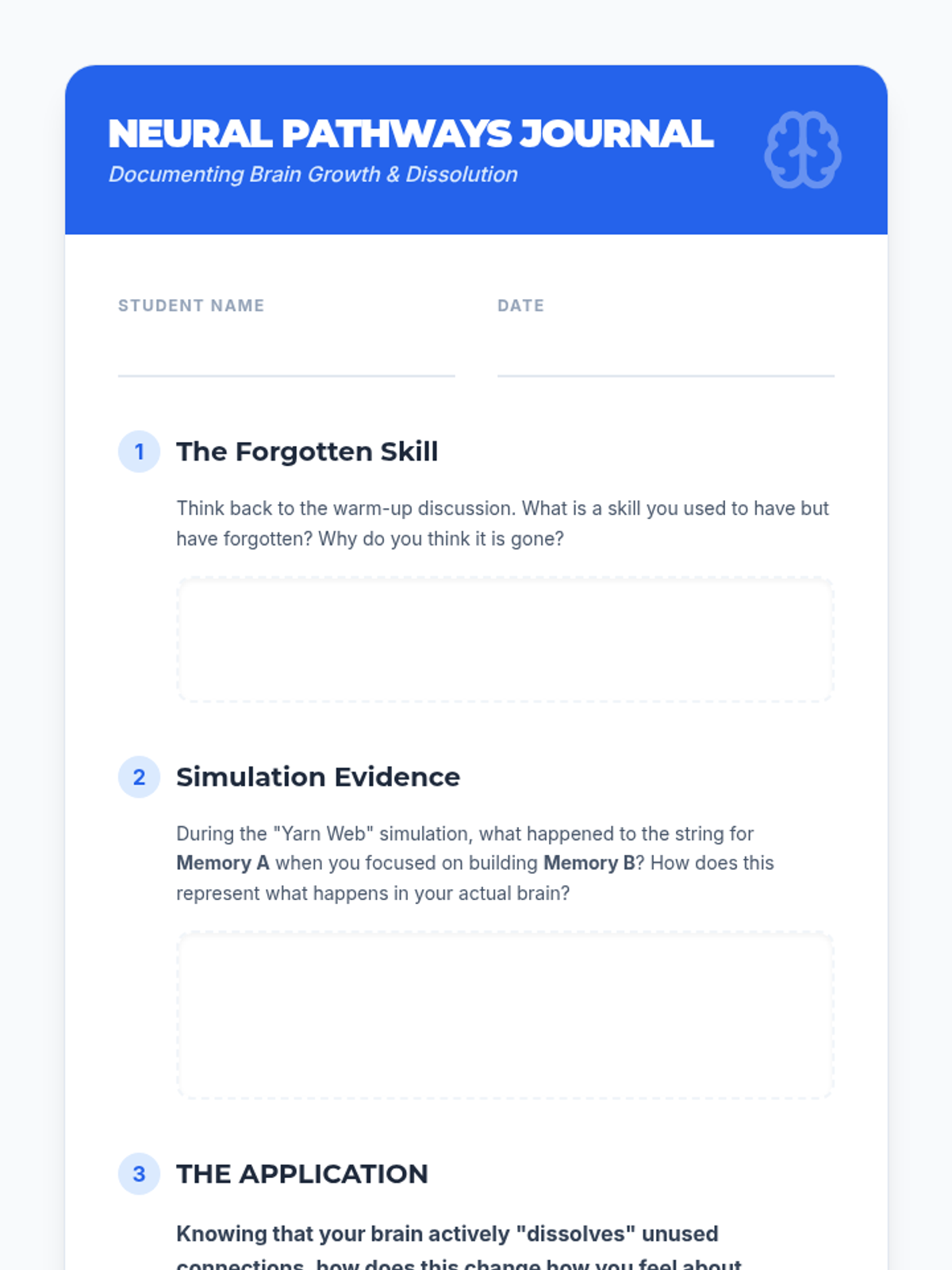
A 6th-8th grade science and health lesson exploring neuroplasticity through a hands-on yarn simulation and a video-based discussion. Students learn how neural pathways strengthen through use and dissolve through neglect.
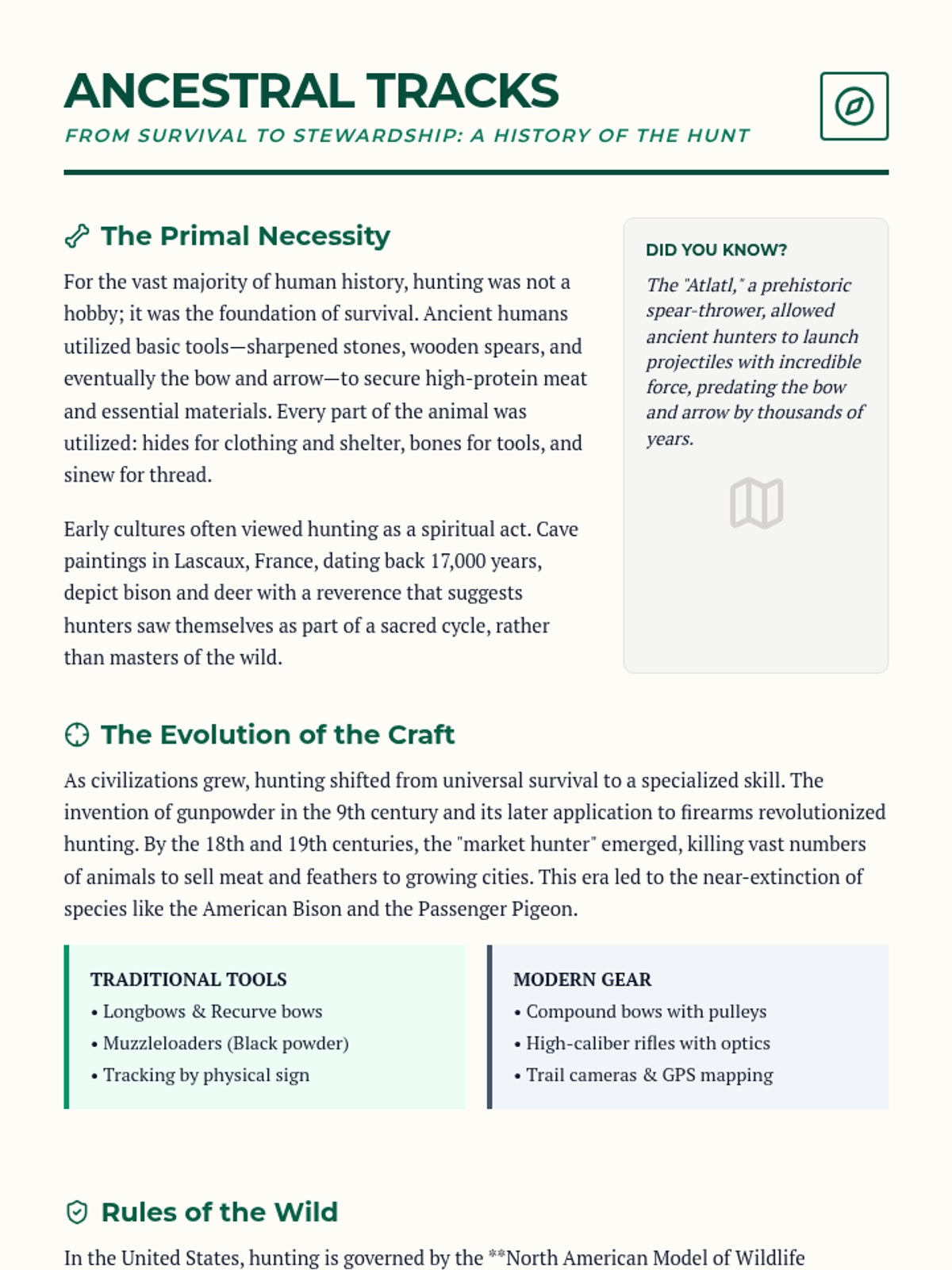
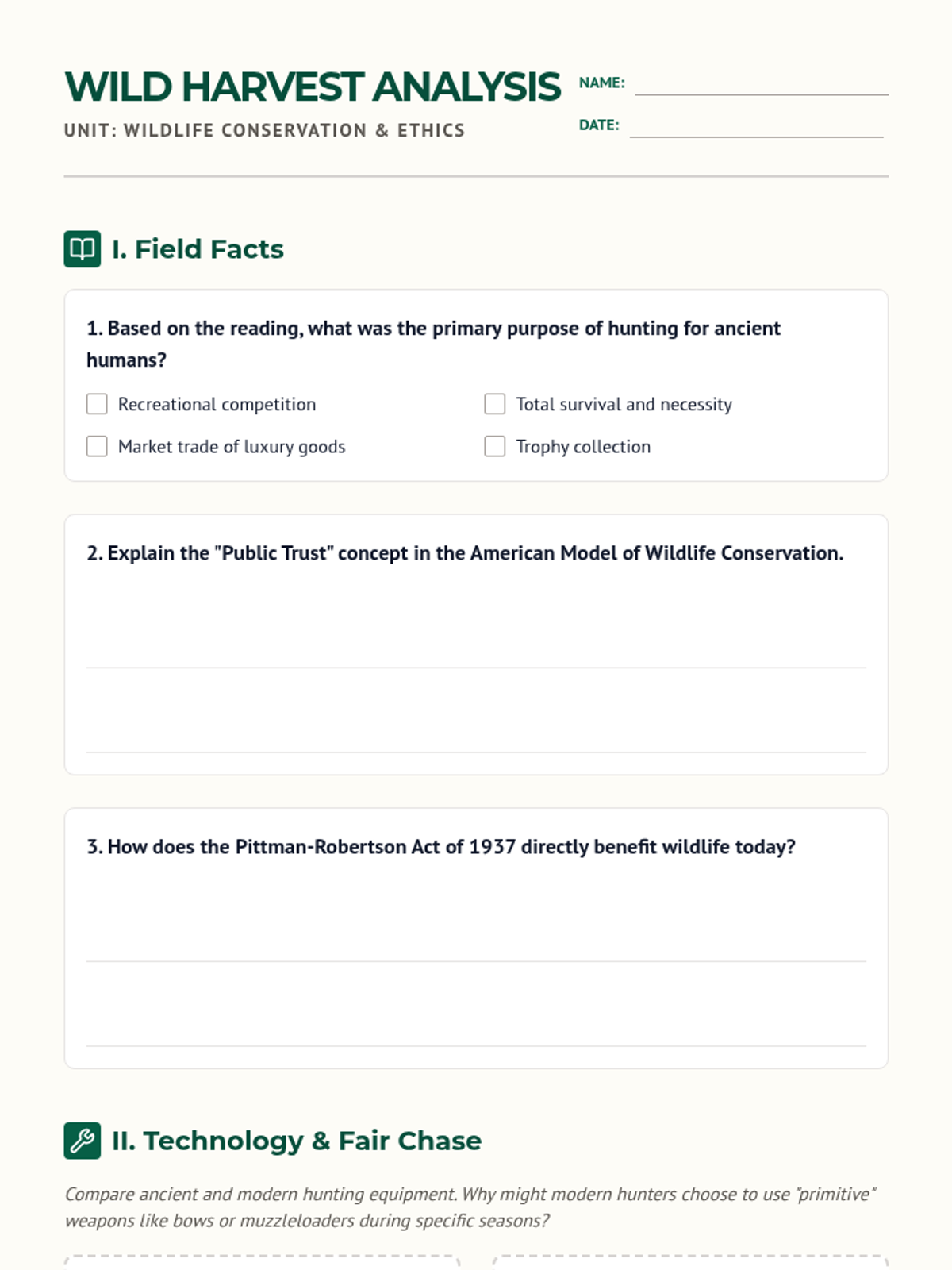
A comprehensive lesson exploring the evolution of hunting from ancient survival to modern conservation, including economic impacts and ethical debates surrounding biodiversity.
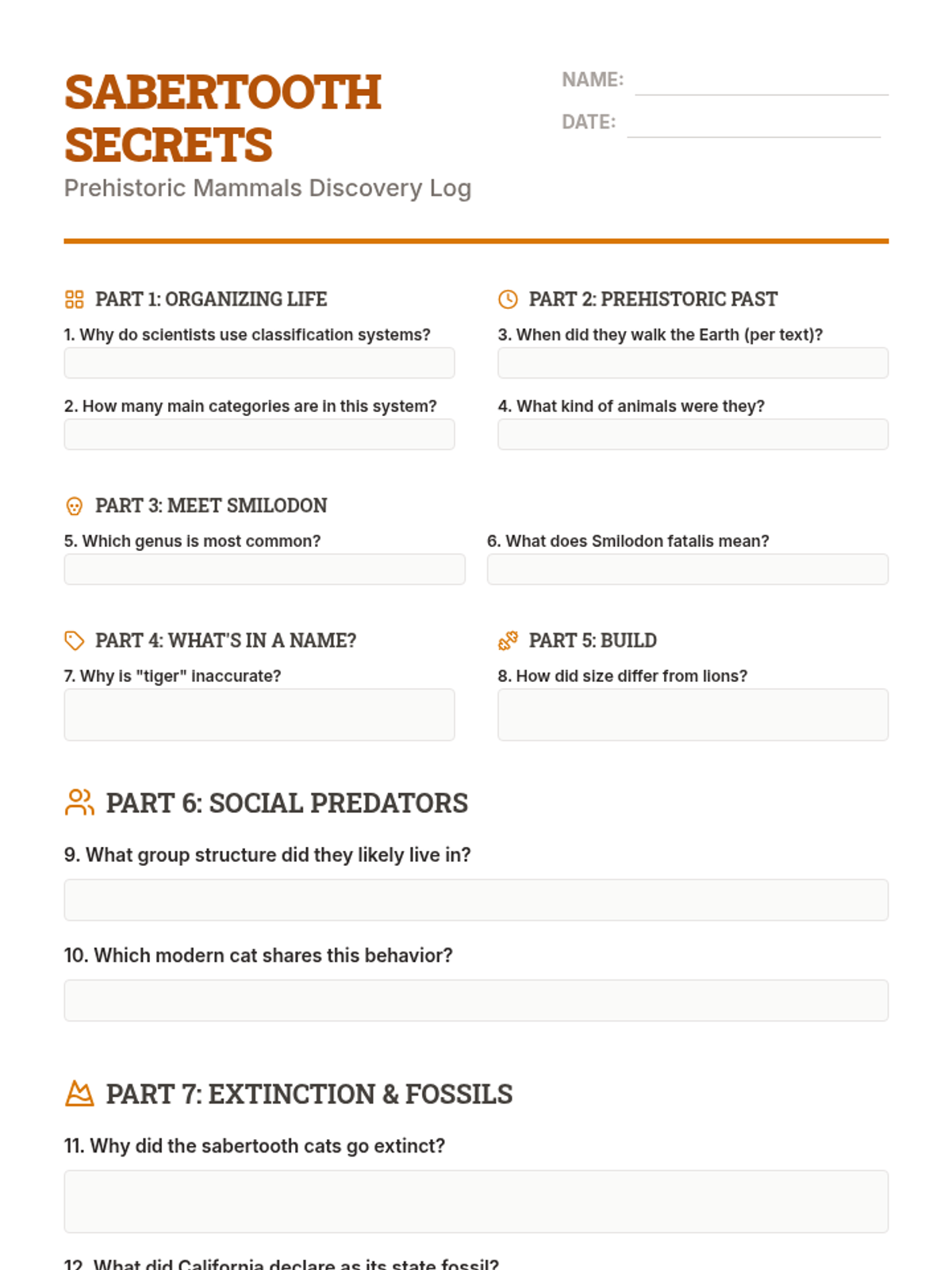
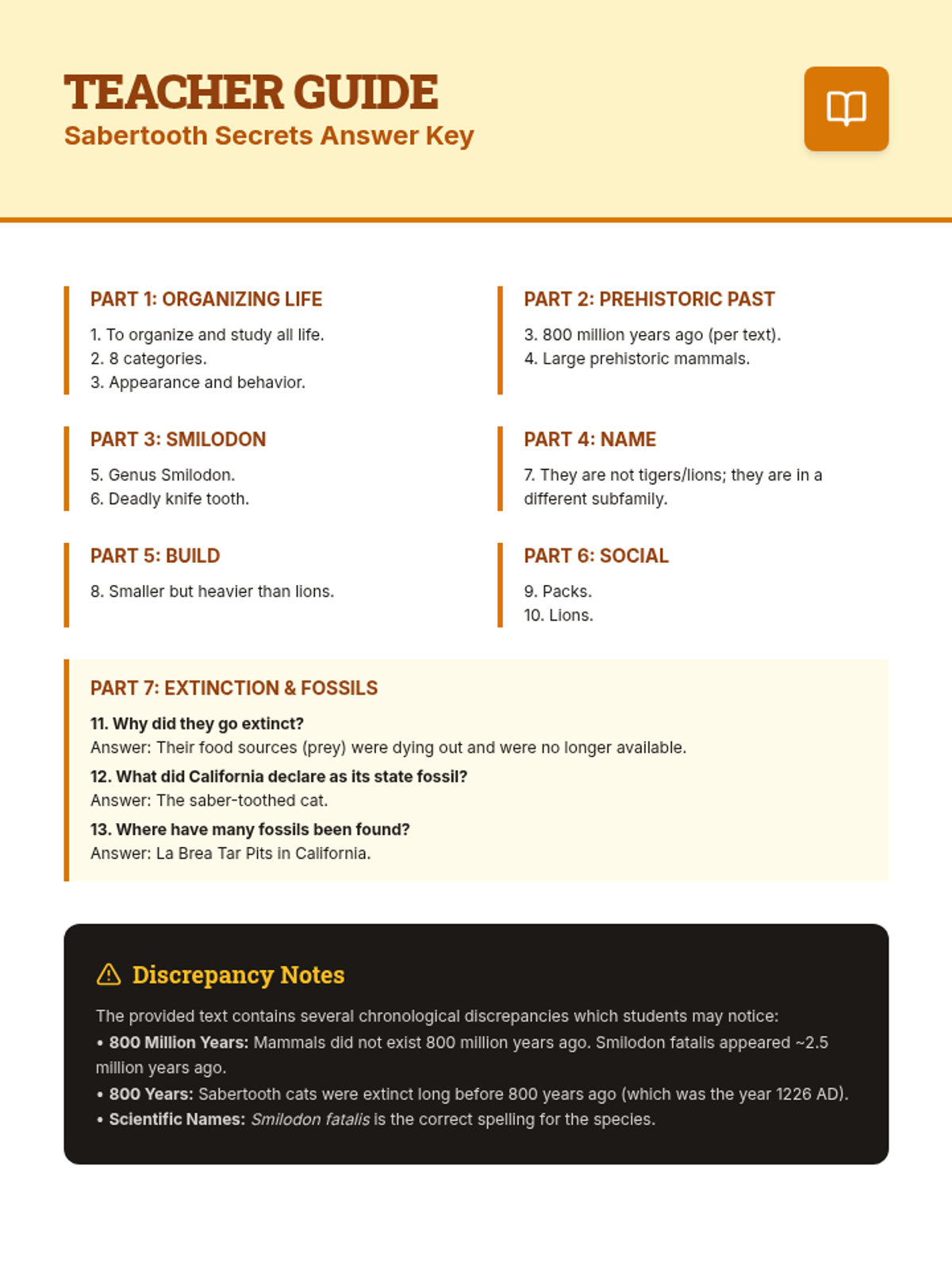
A lesson exploring the characteristics, classification, and social behavior of prehistoric Sabertooth cats.
A lesson exploring the unique life cycle of periodical cicadas and how their emergence patterns help them survive and reproduce.
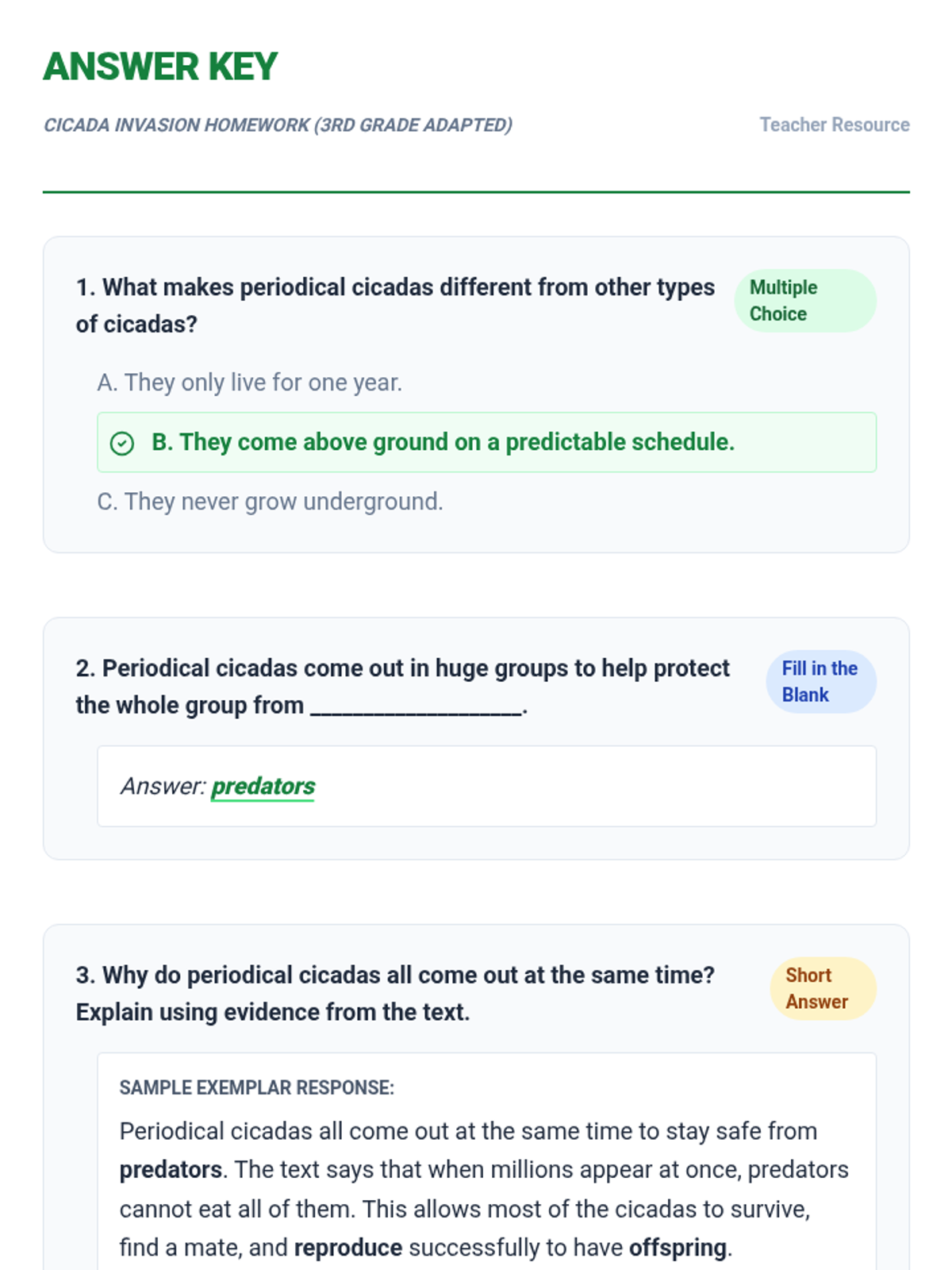
Students explore the fascinating life cycle of periodical cicadas, focusing on their unique 13 and 17-year schedules and how this behavior helps them survive against predators.
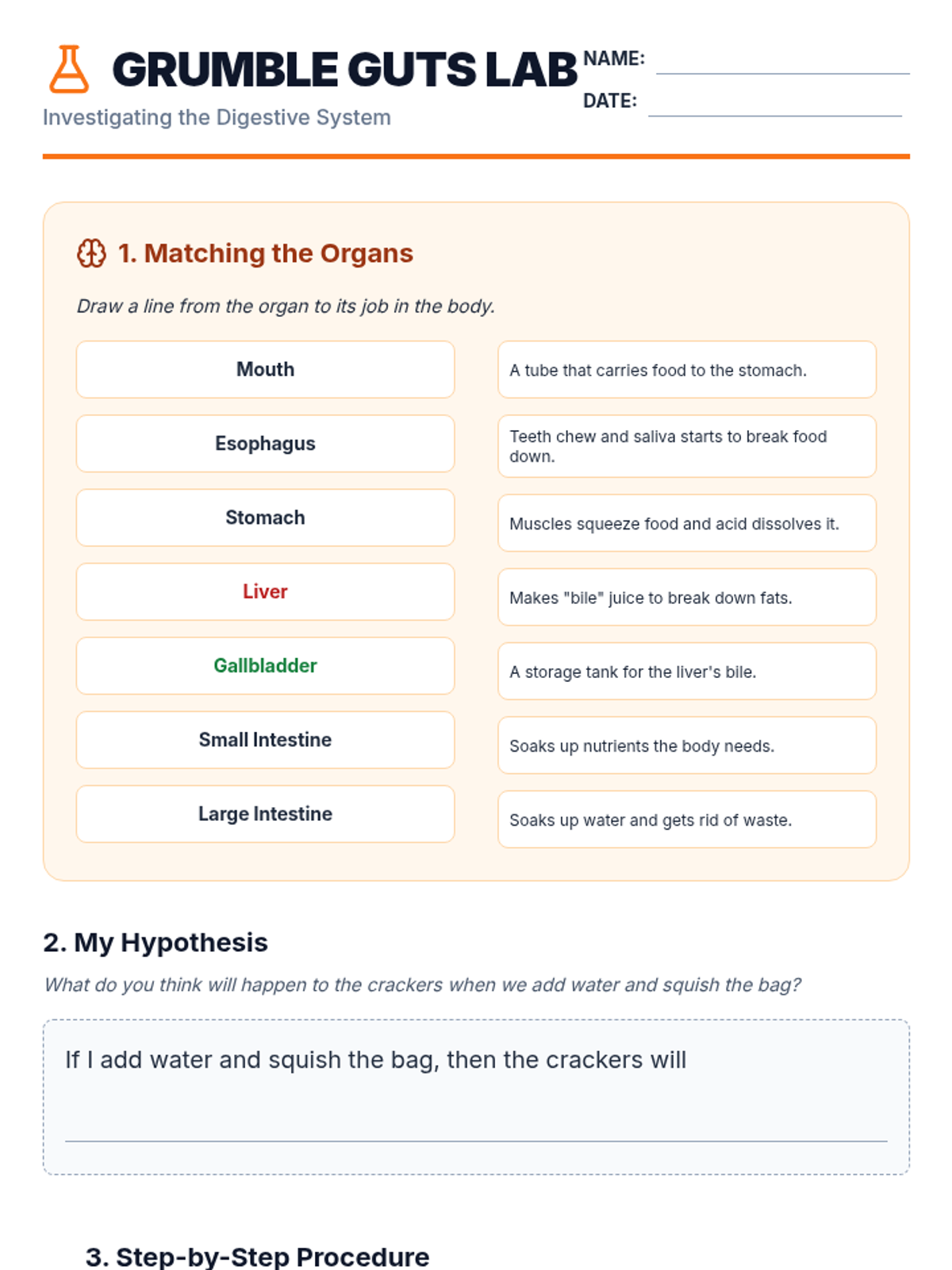
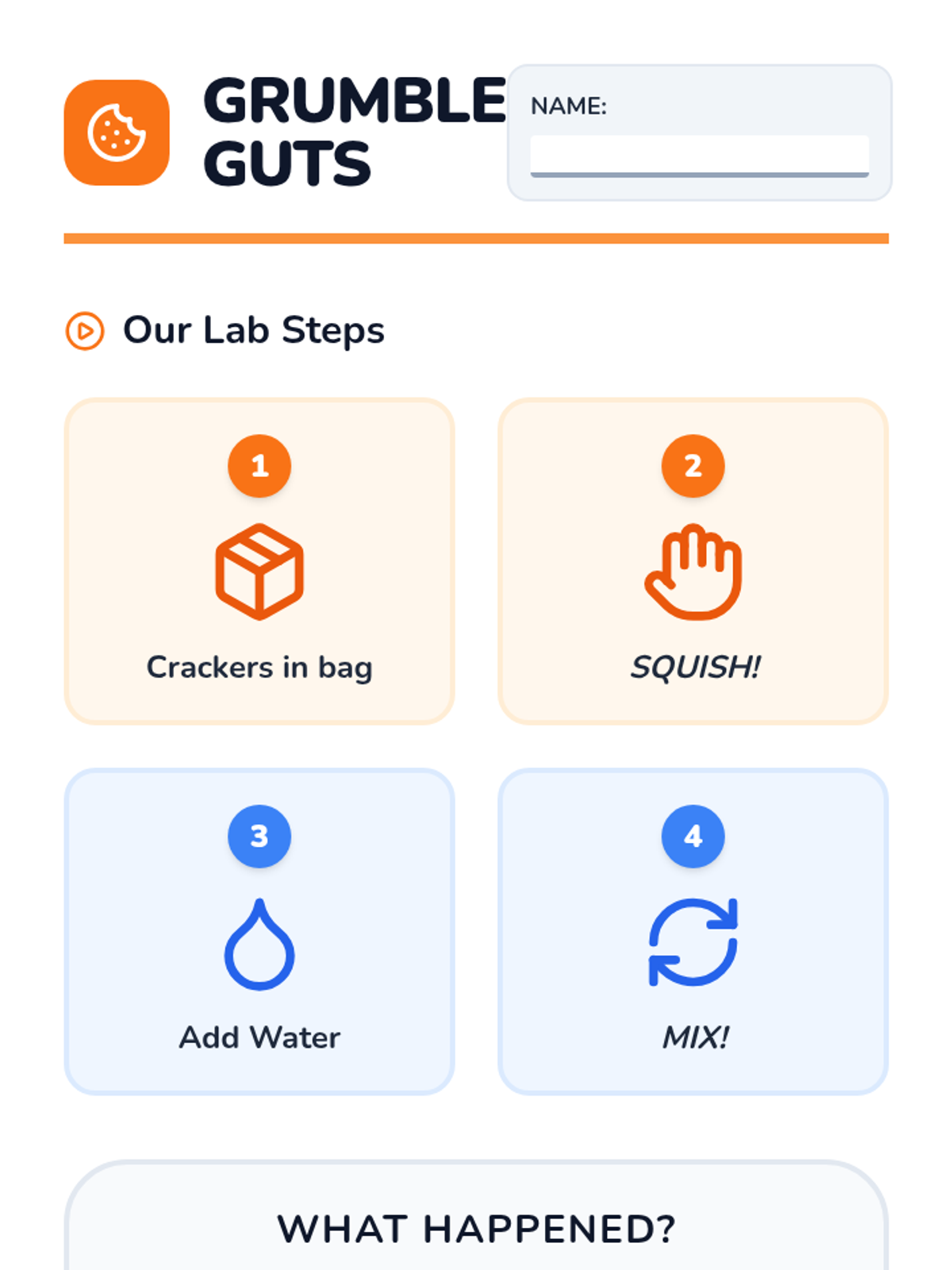
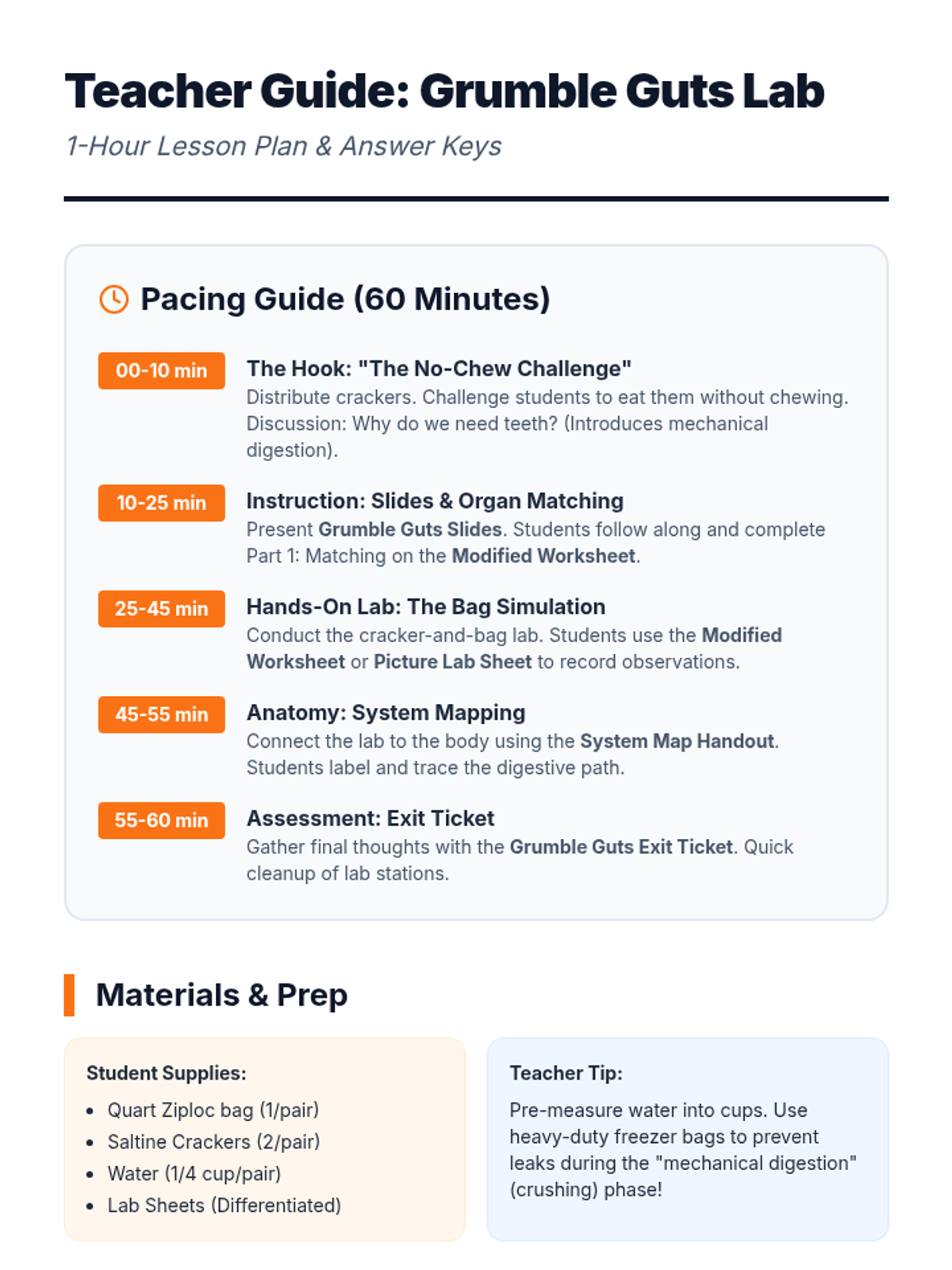
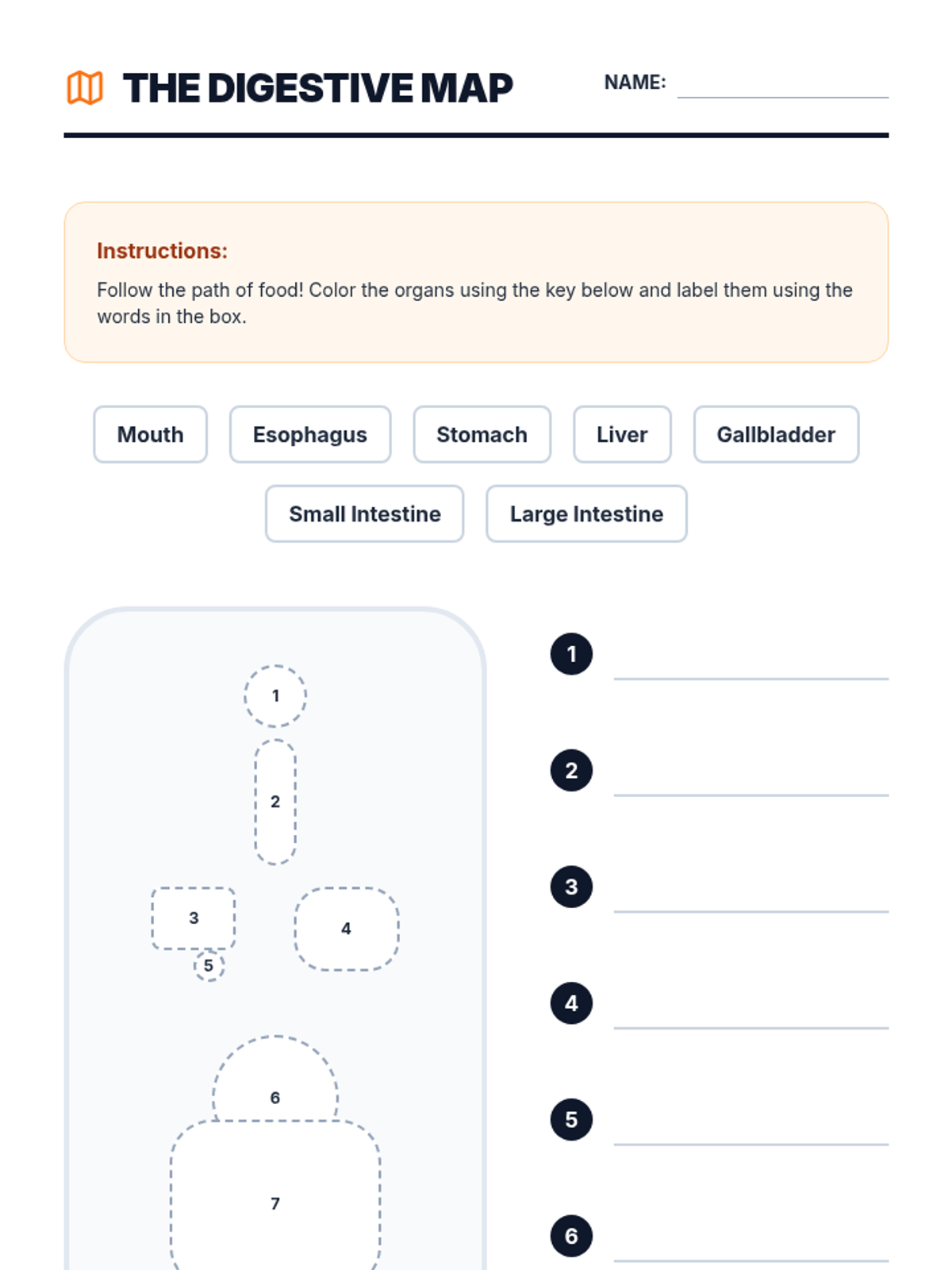
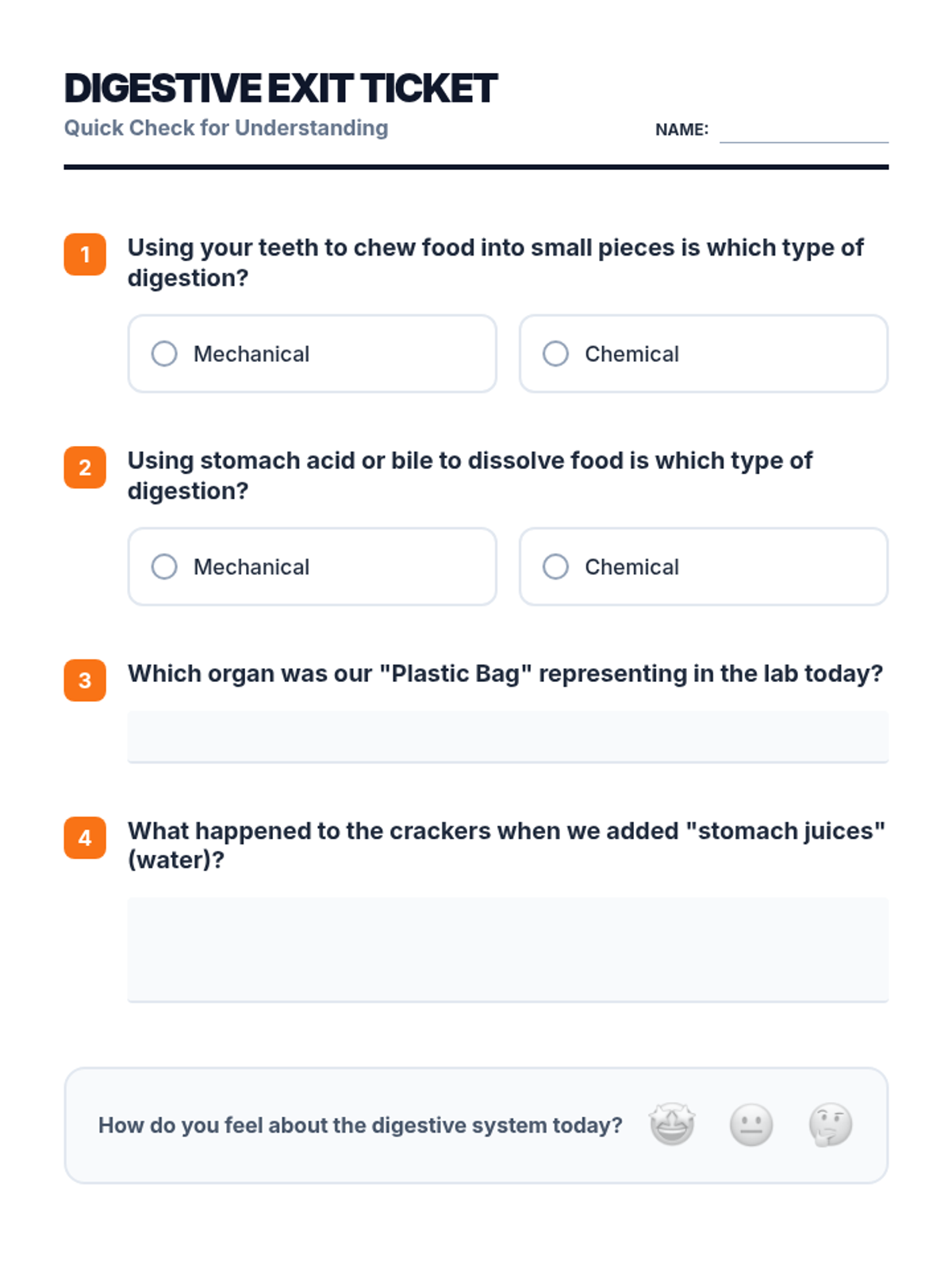
A hands-on science lab using crackers, water, and plastic bags to simulate the digestive process, with differentiated materials for various learner needs.
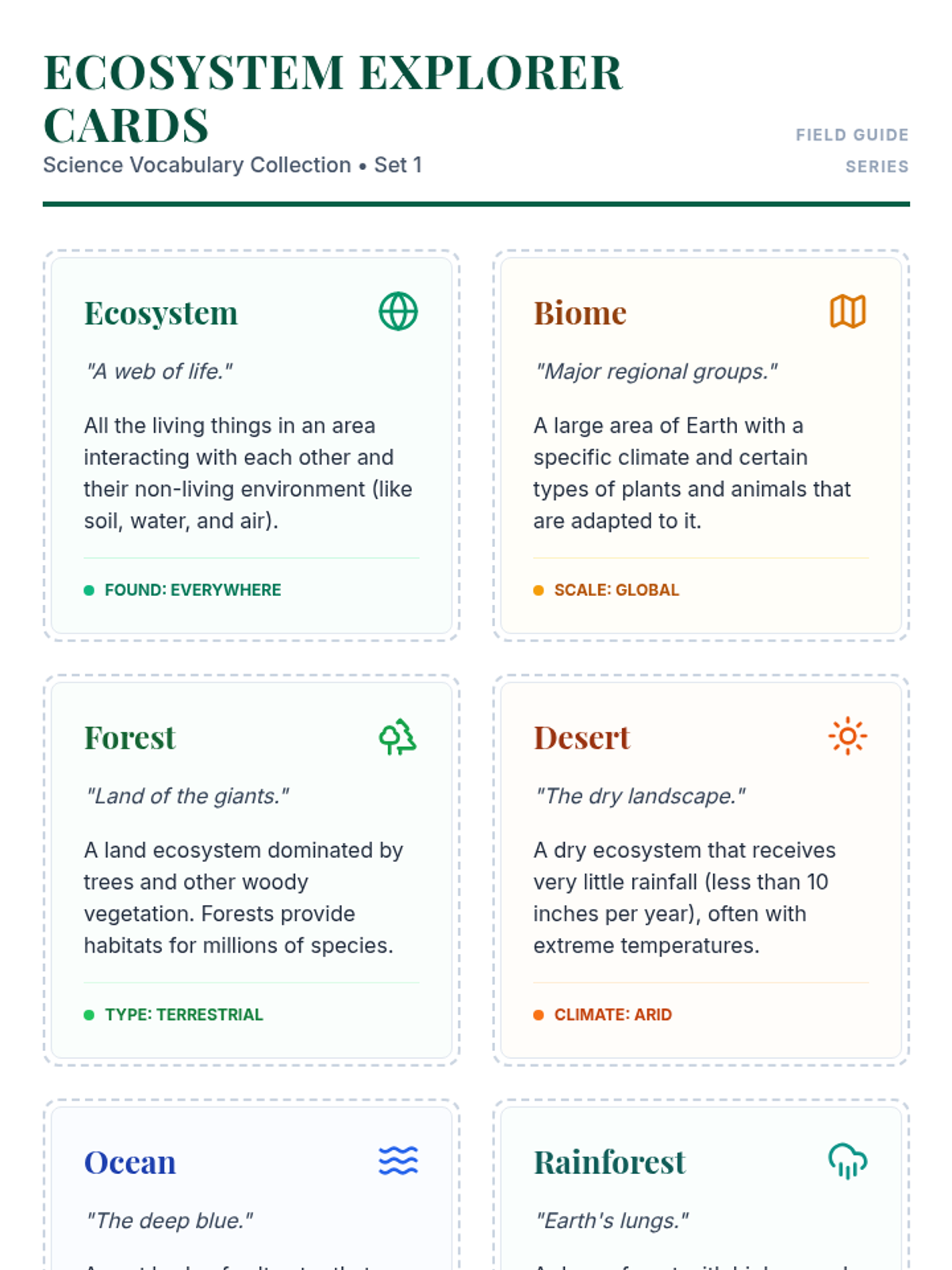
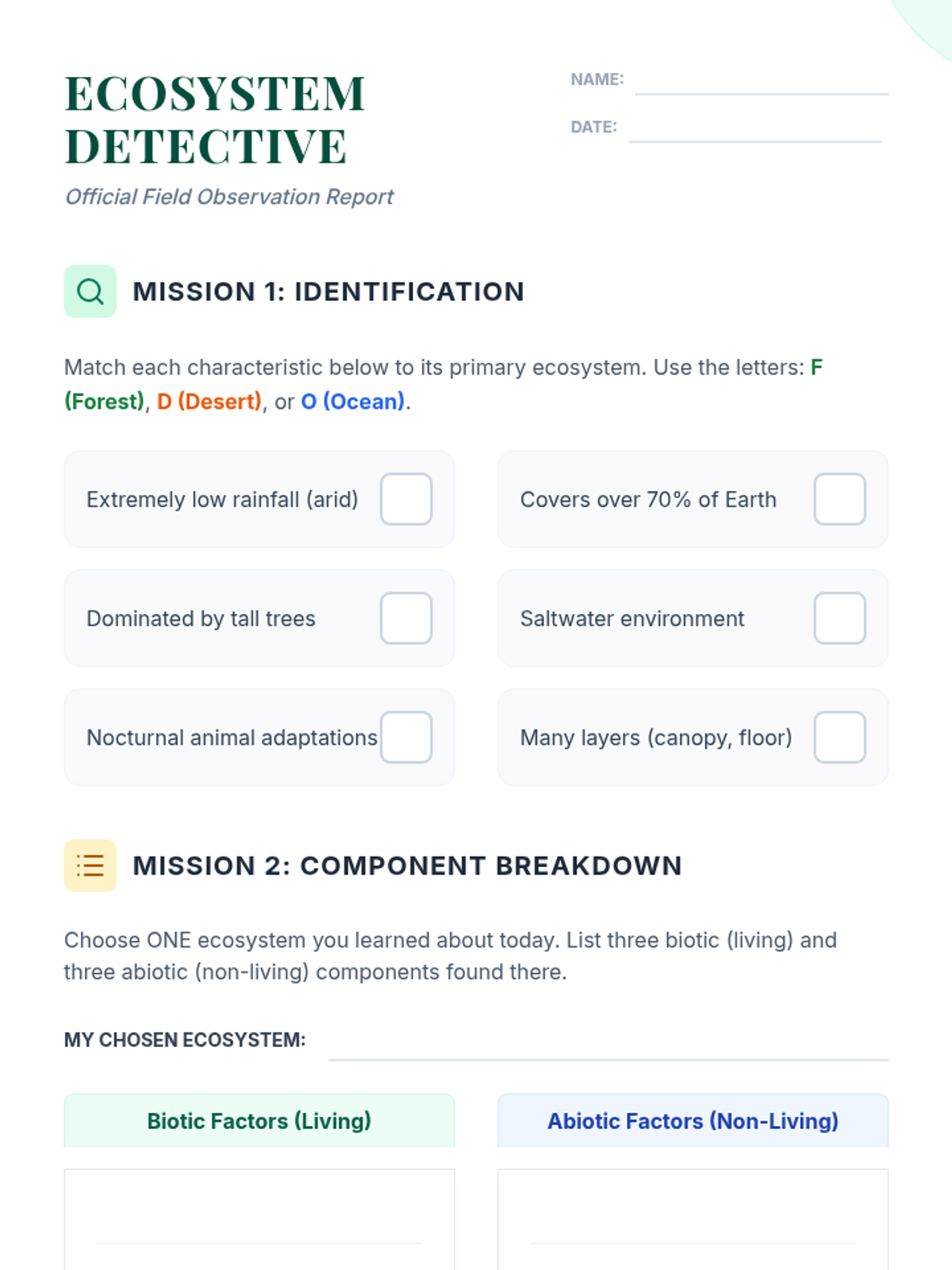
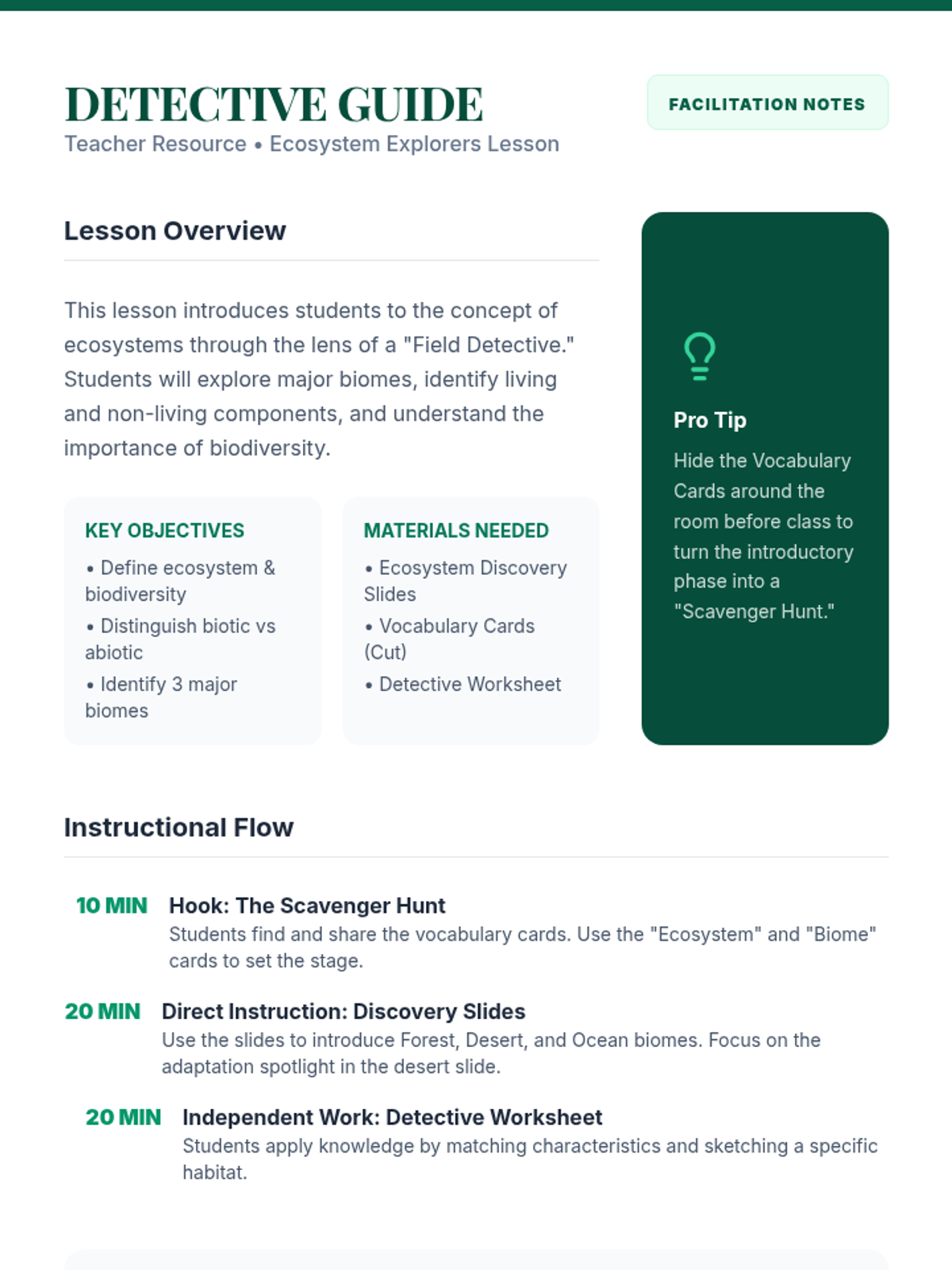
A lesson introducing students to various ecosystems through vocabulary and visual identification. Students will learn the key characteristics of different biomes including forests, deserts, and oceans.
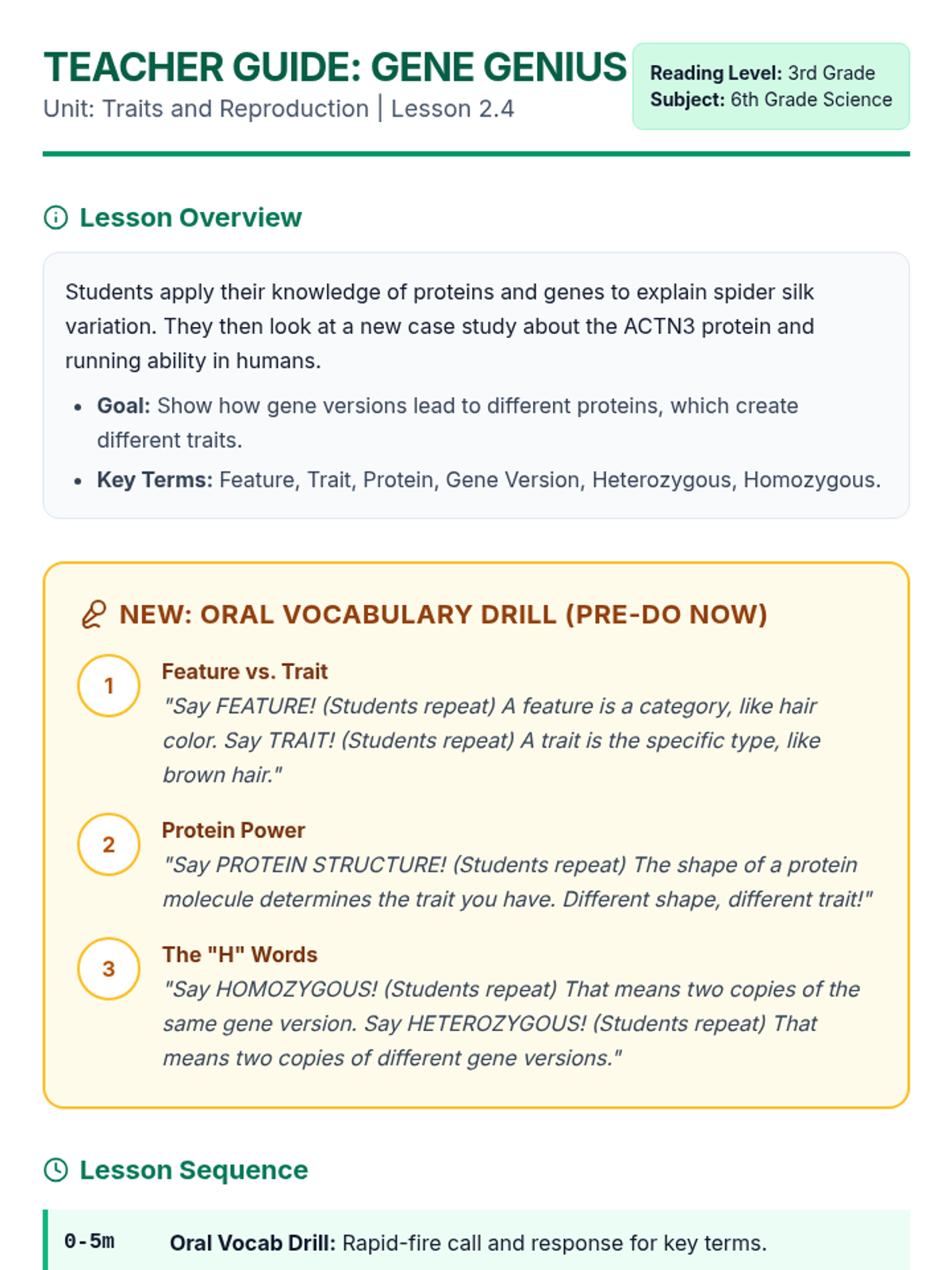
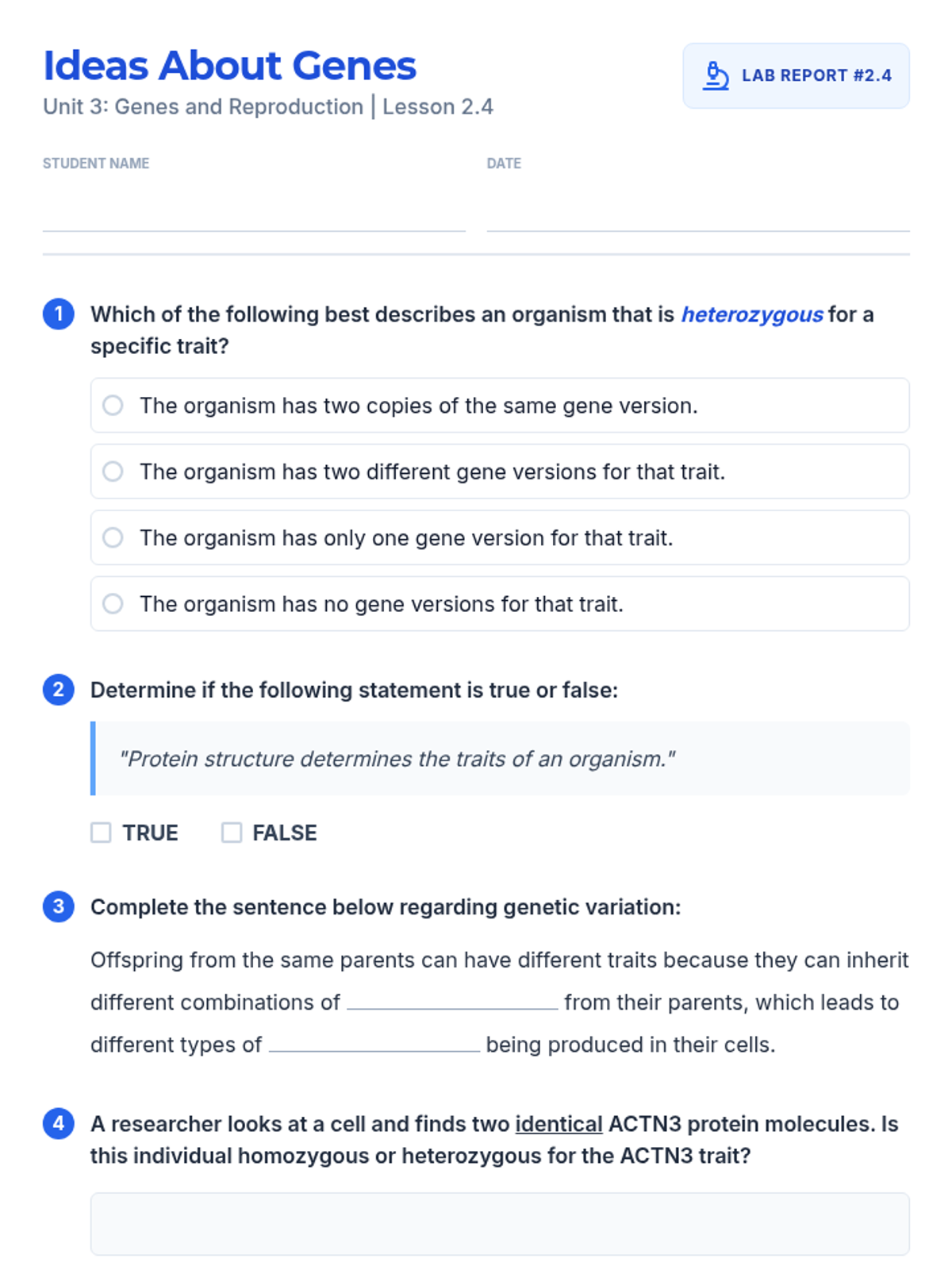
Students explore the relationship between gene versions, proteins, and physical traits, focusing on heterozygous and homozygous genotypes using the context of muscle proteins in runners.
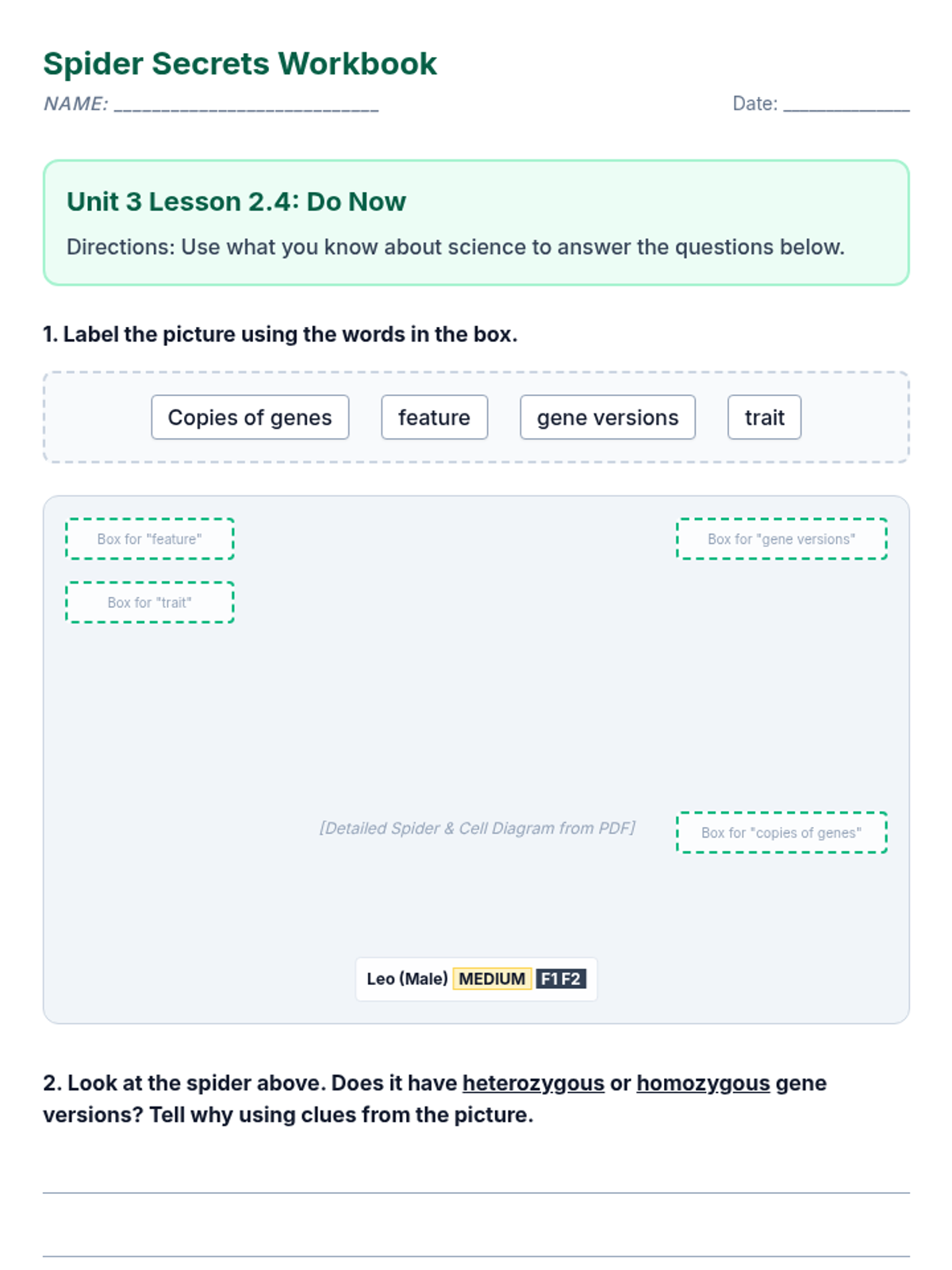
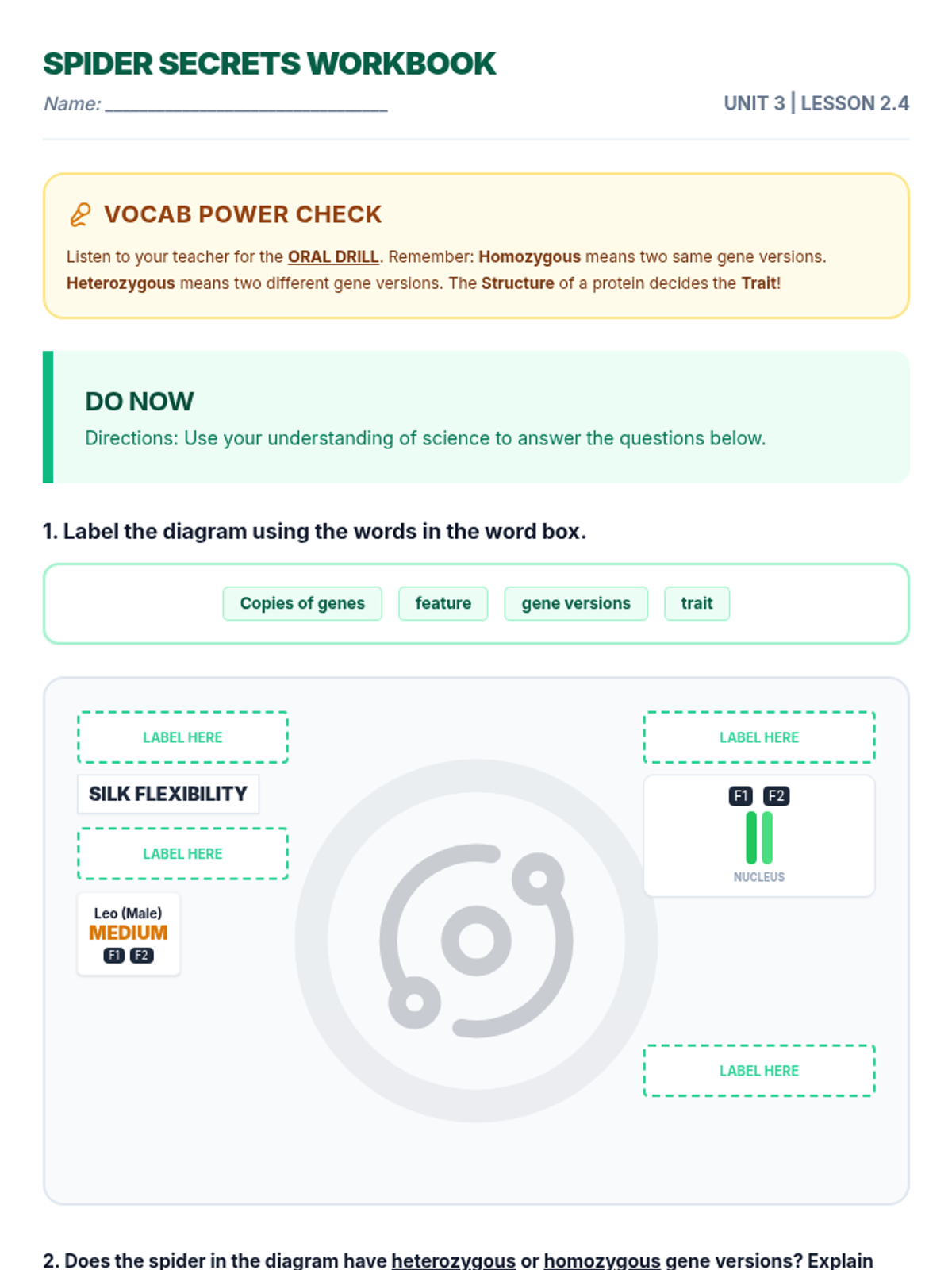
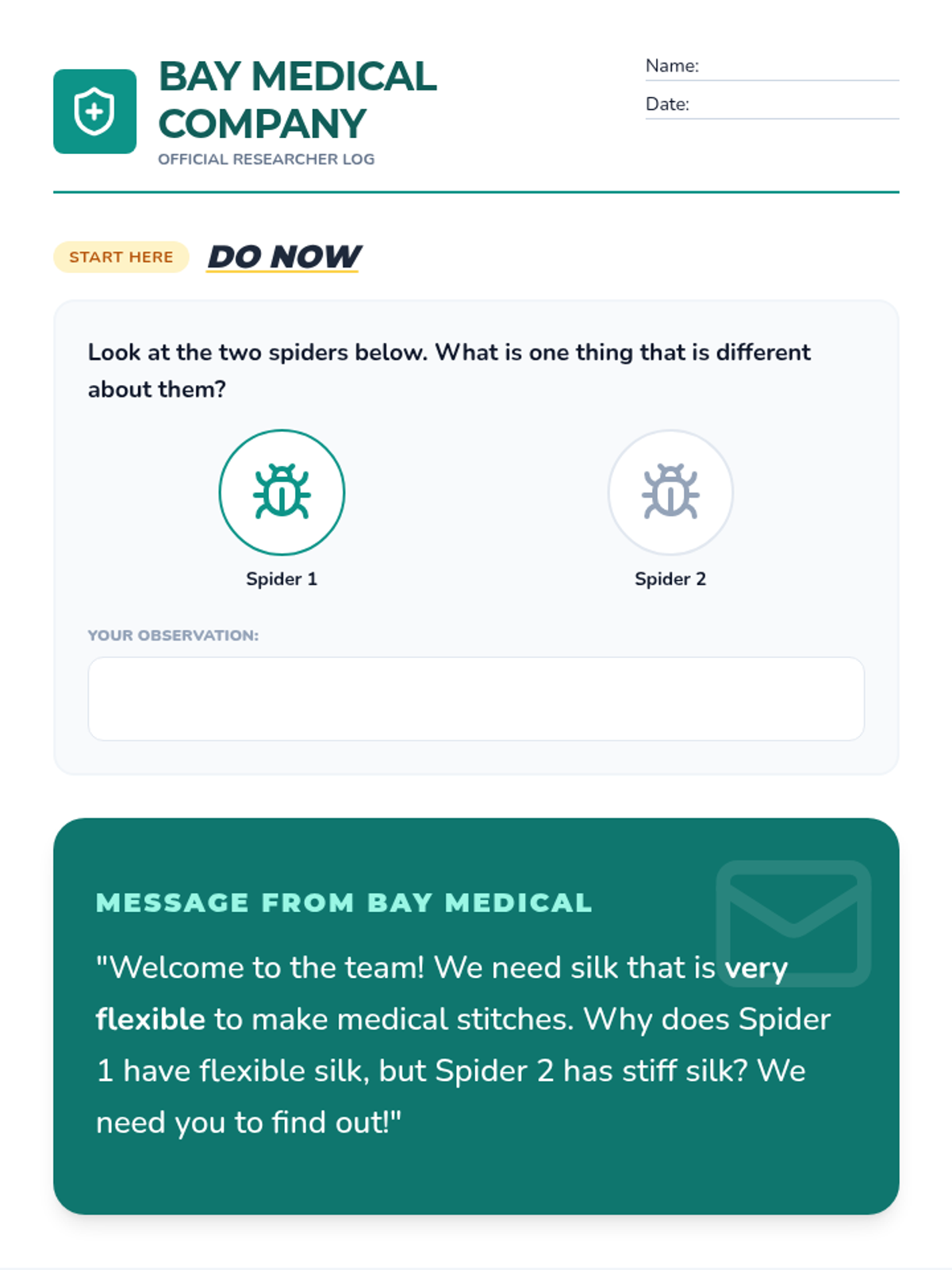
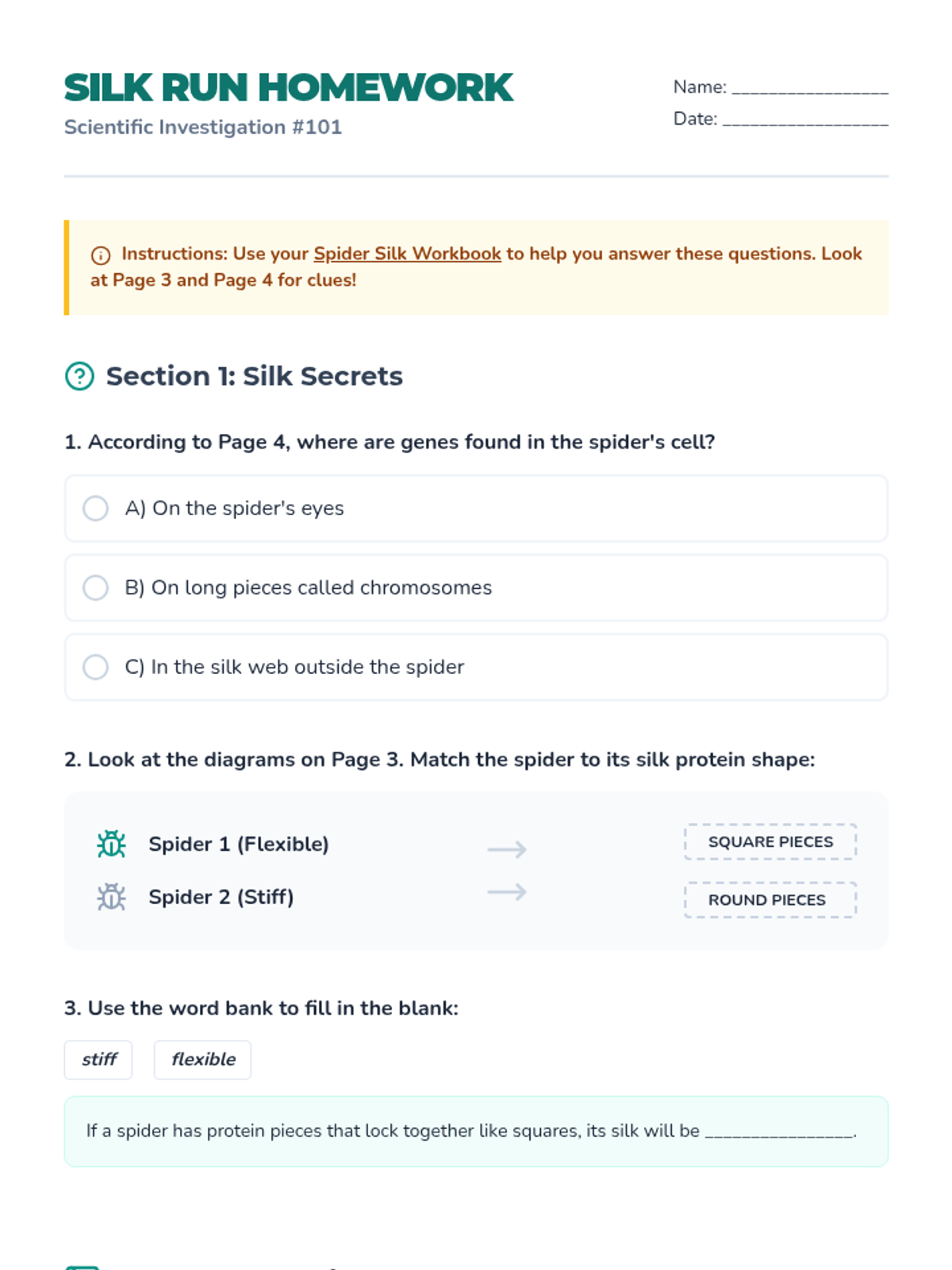
A lesson where students learn how gene versions provide instructions for proteins that determine traits, specifically exploring spider silk flexibility and human running ability. Adjusted for a 3rd-grade reading level while maintaining 6th-grade vocabulary.
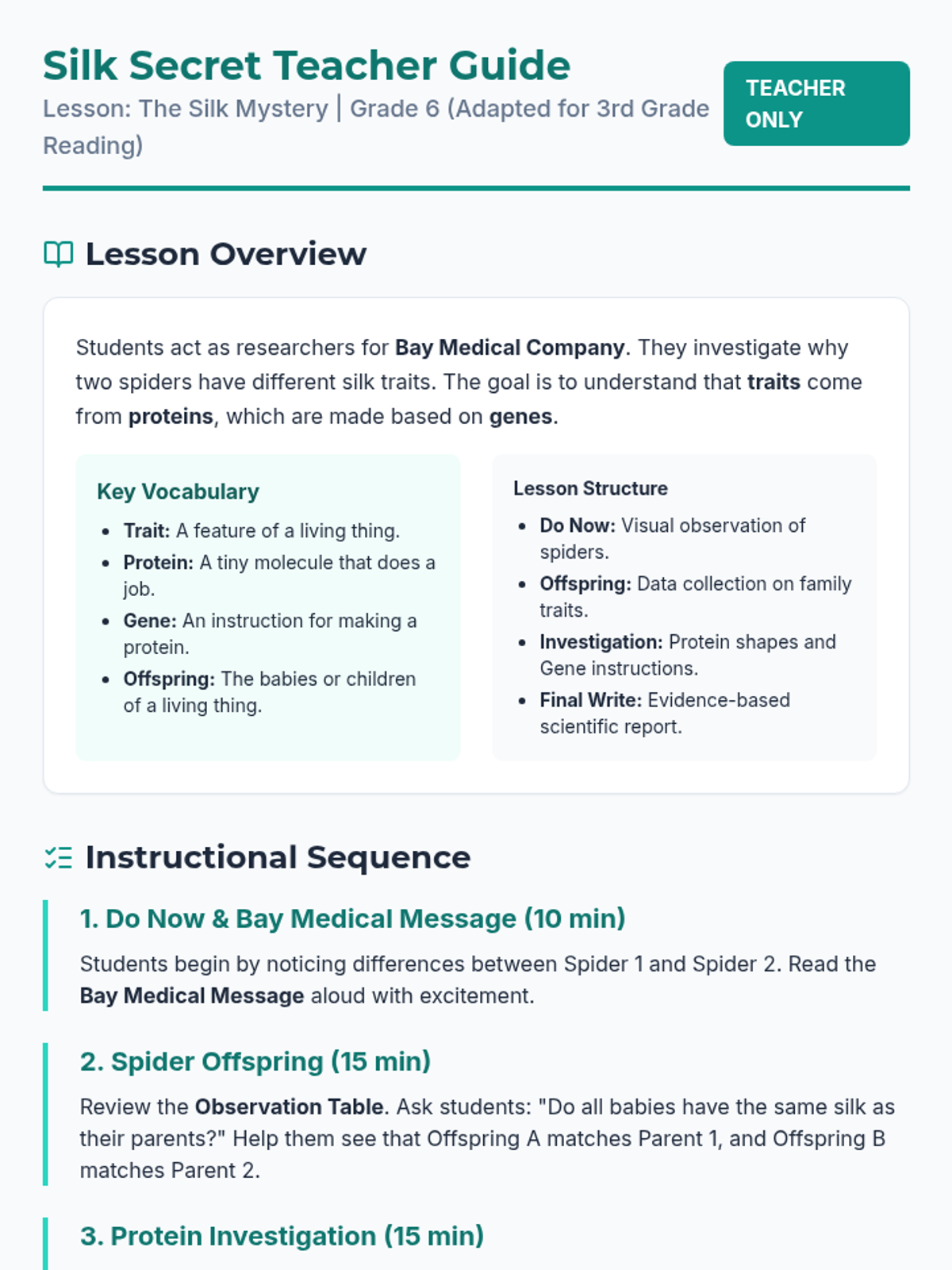
Students investigate why different spiders produce different types of silk by looking at traits, proteins, and genes. This lesson adapts complex genetic concepts for a 3rd-grade reading level.
A 6th-grade science lesson adjusted for a SpEd classroom with a 3rd-grade reading level, focusing on how genes and proteins determine traits like spider silk flexibility and human running ability.
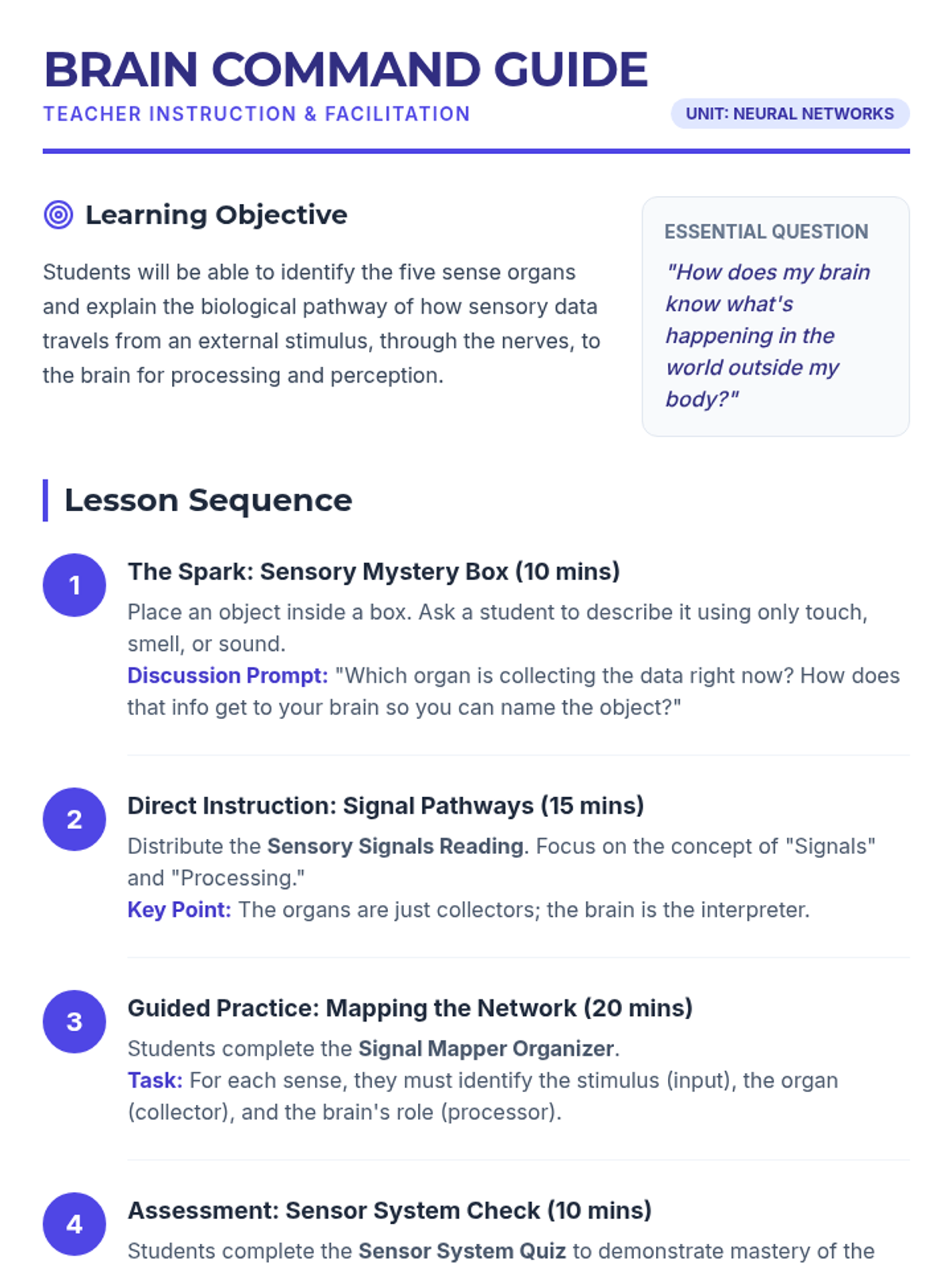
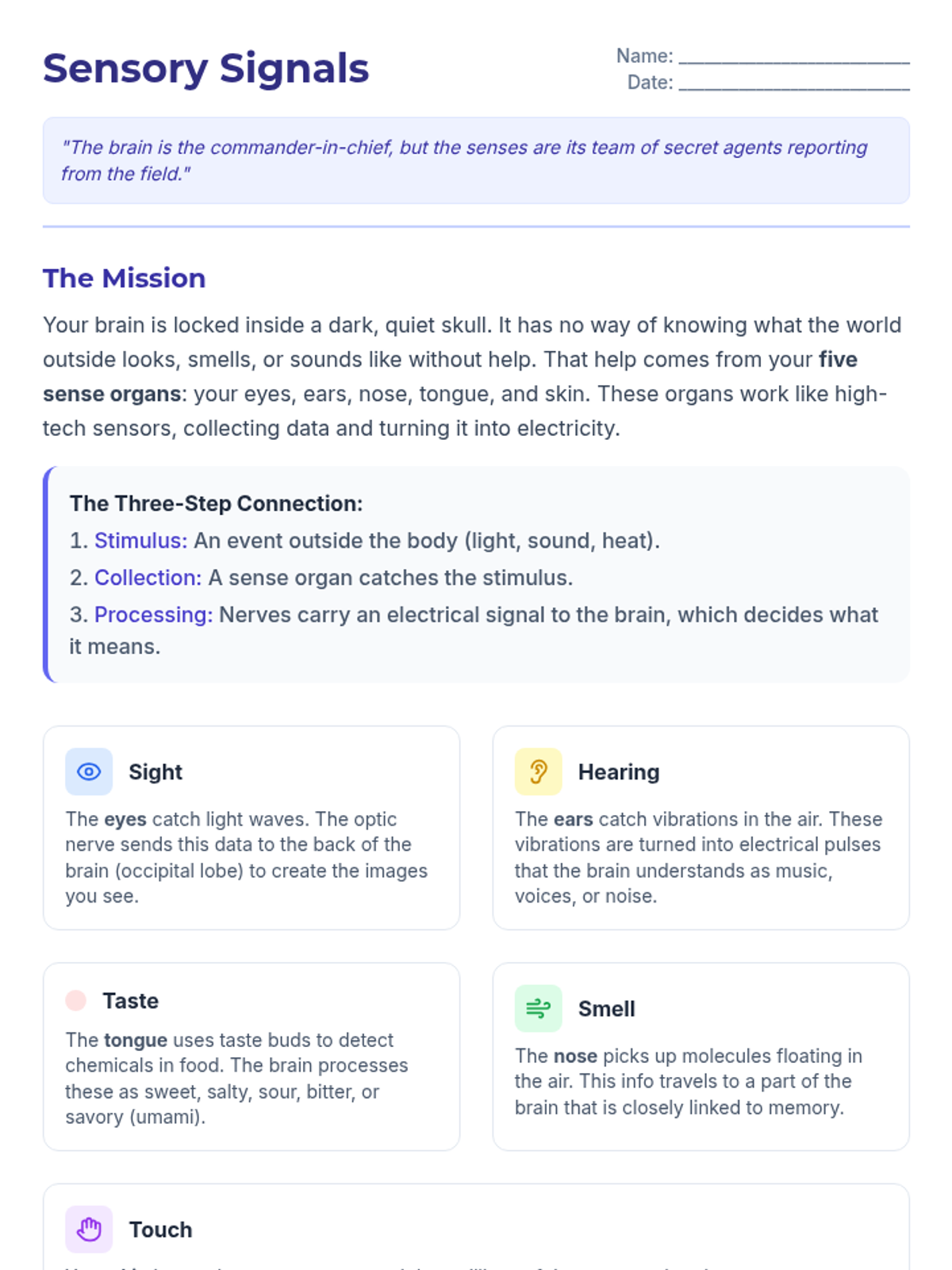
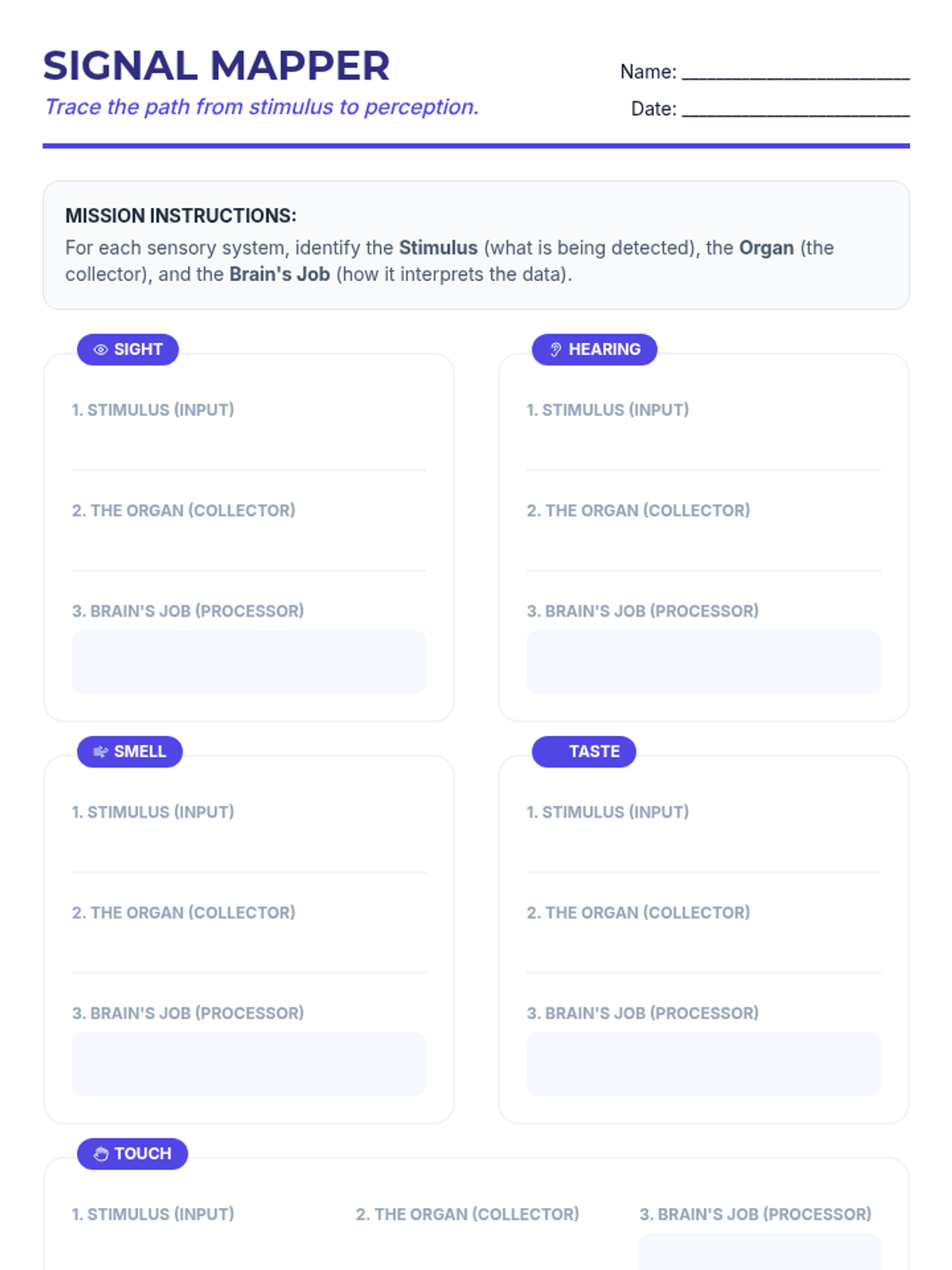
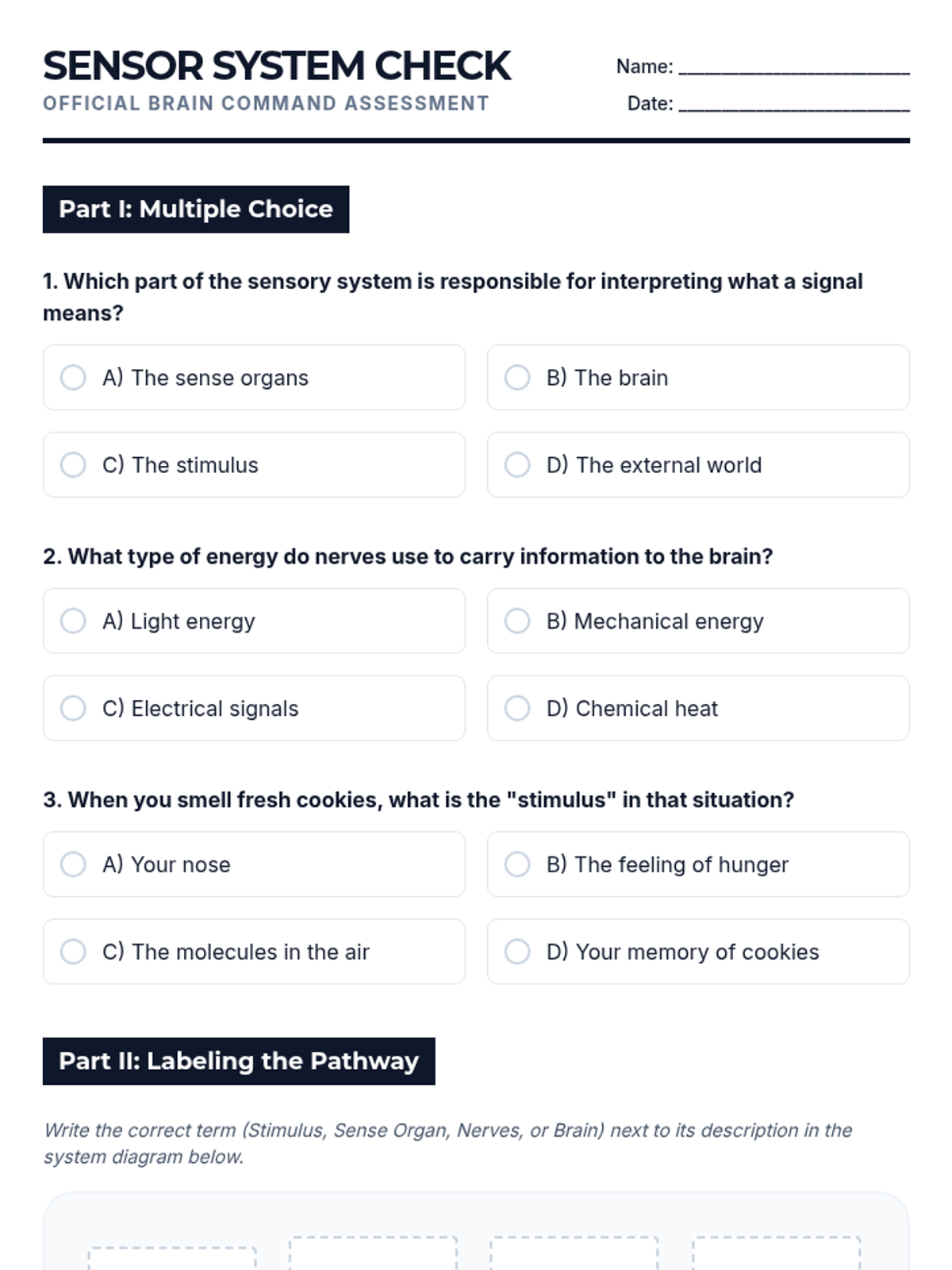
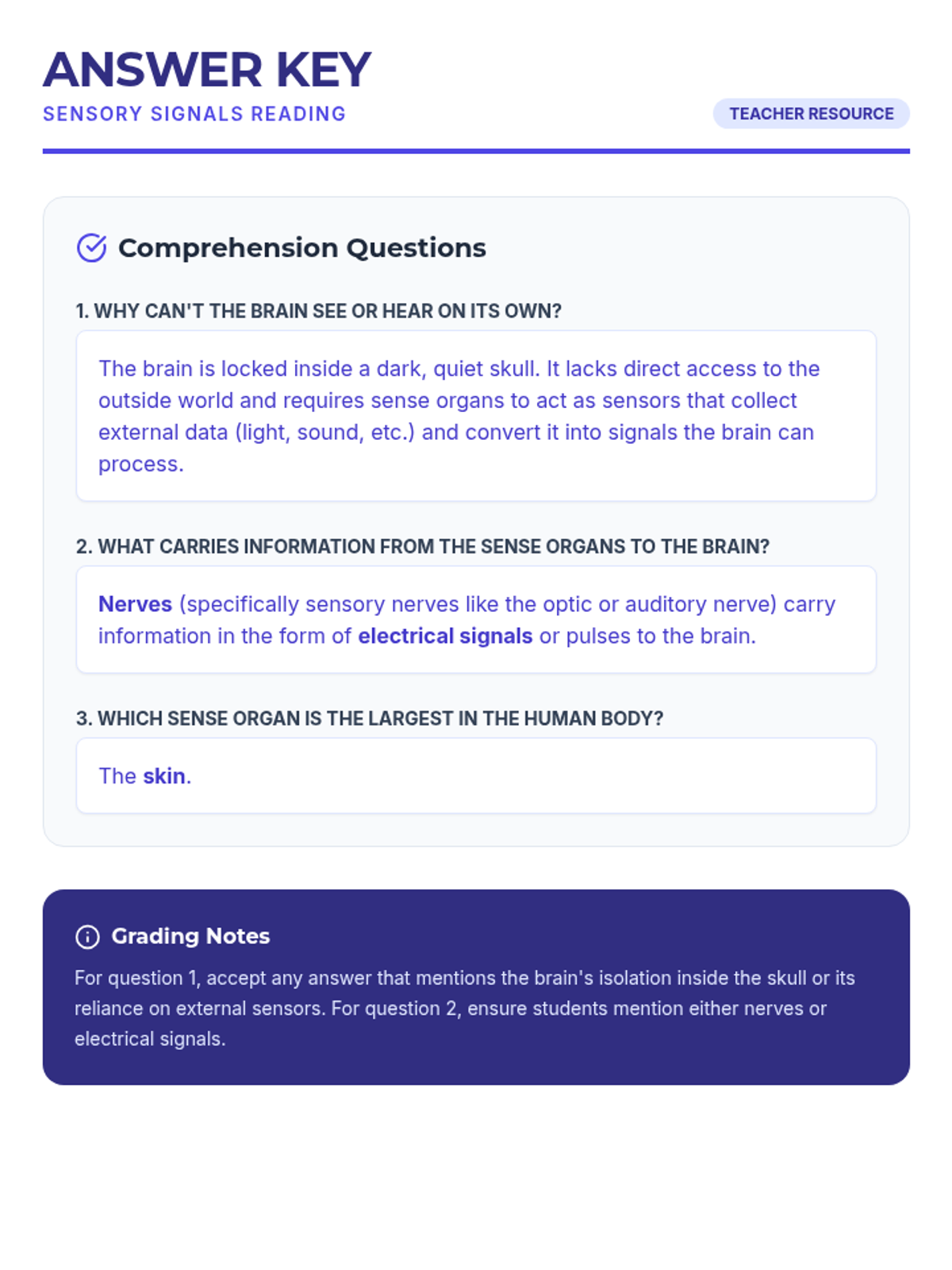
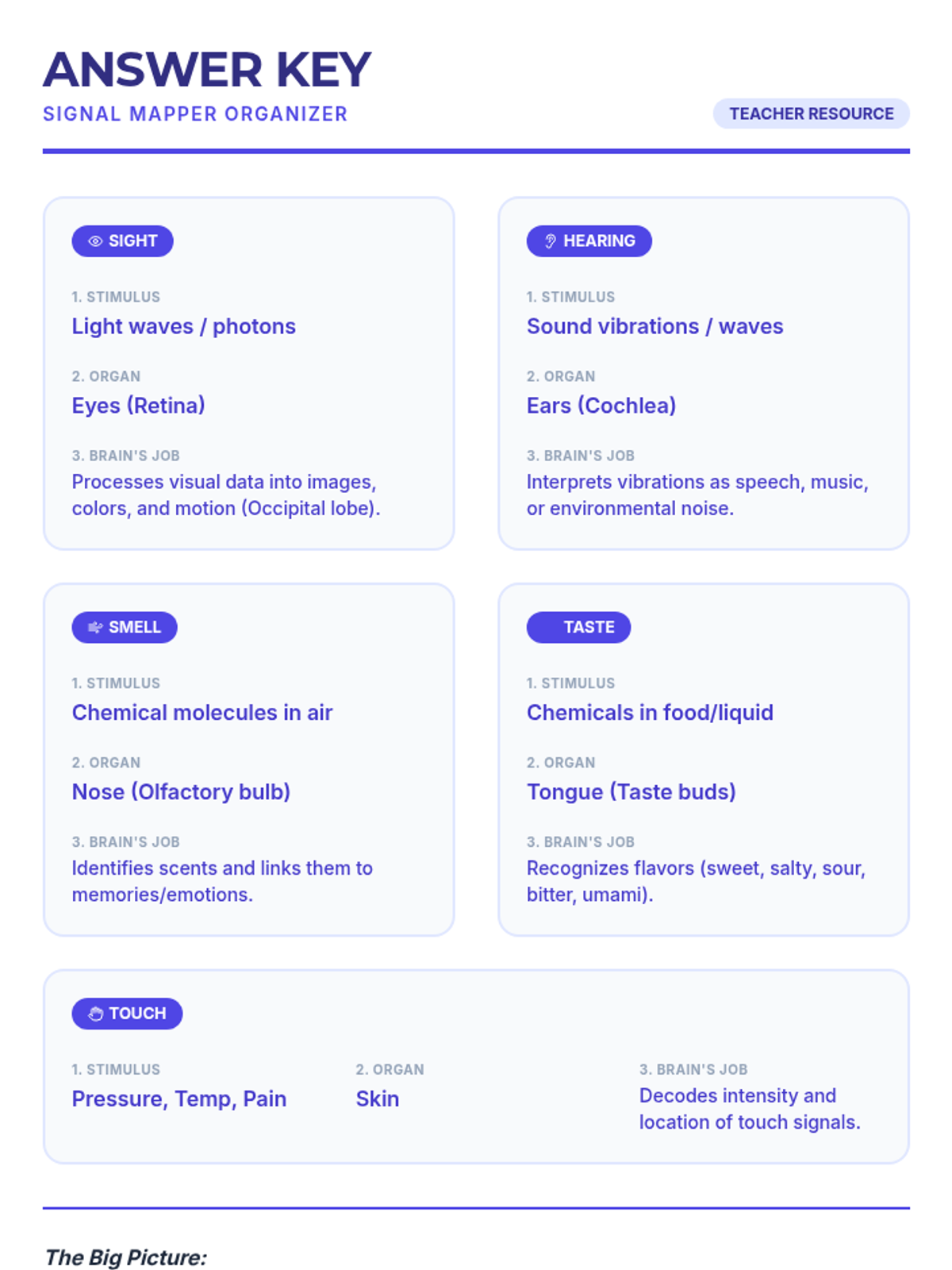
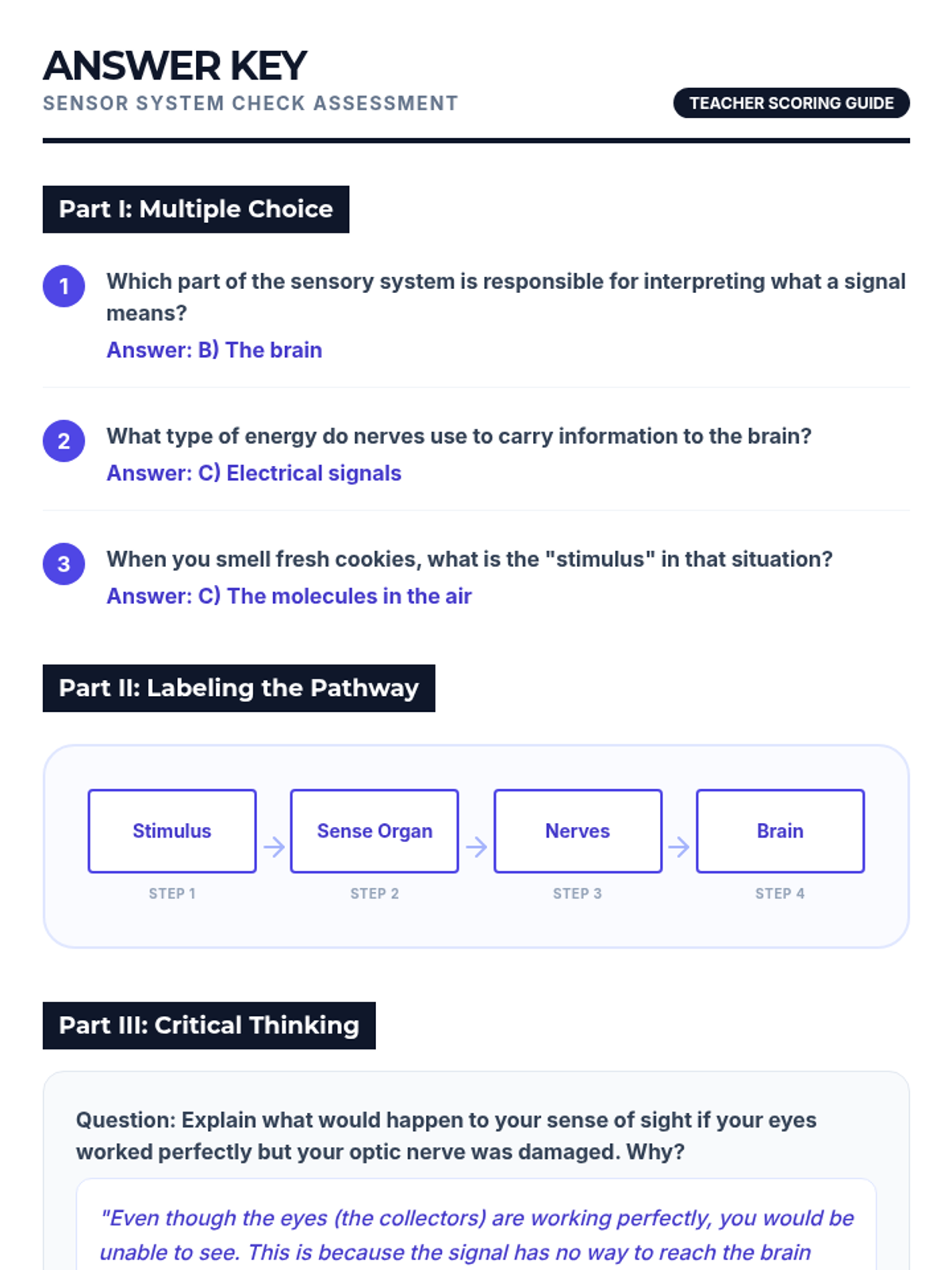
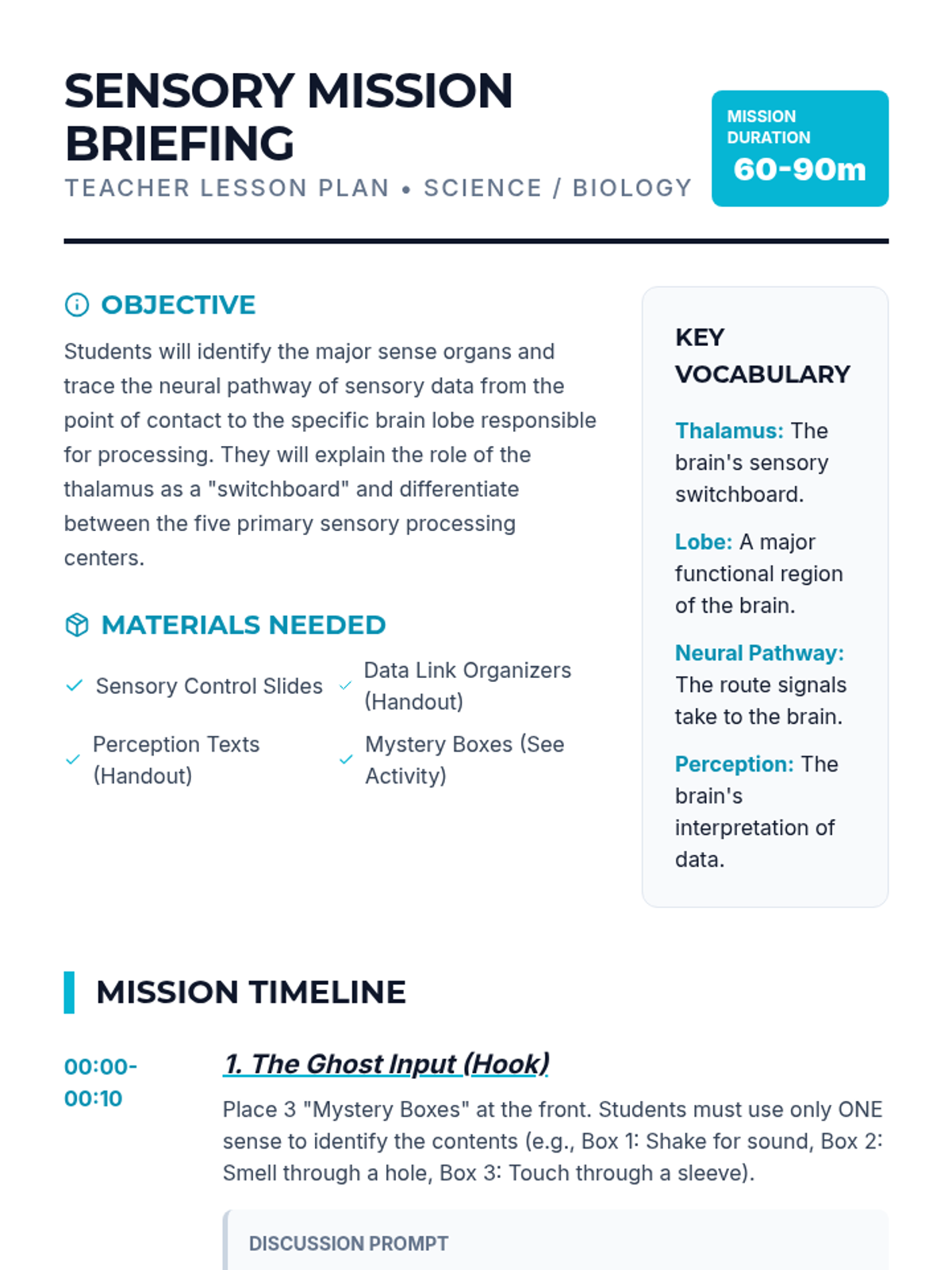
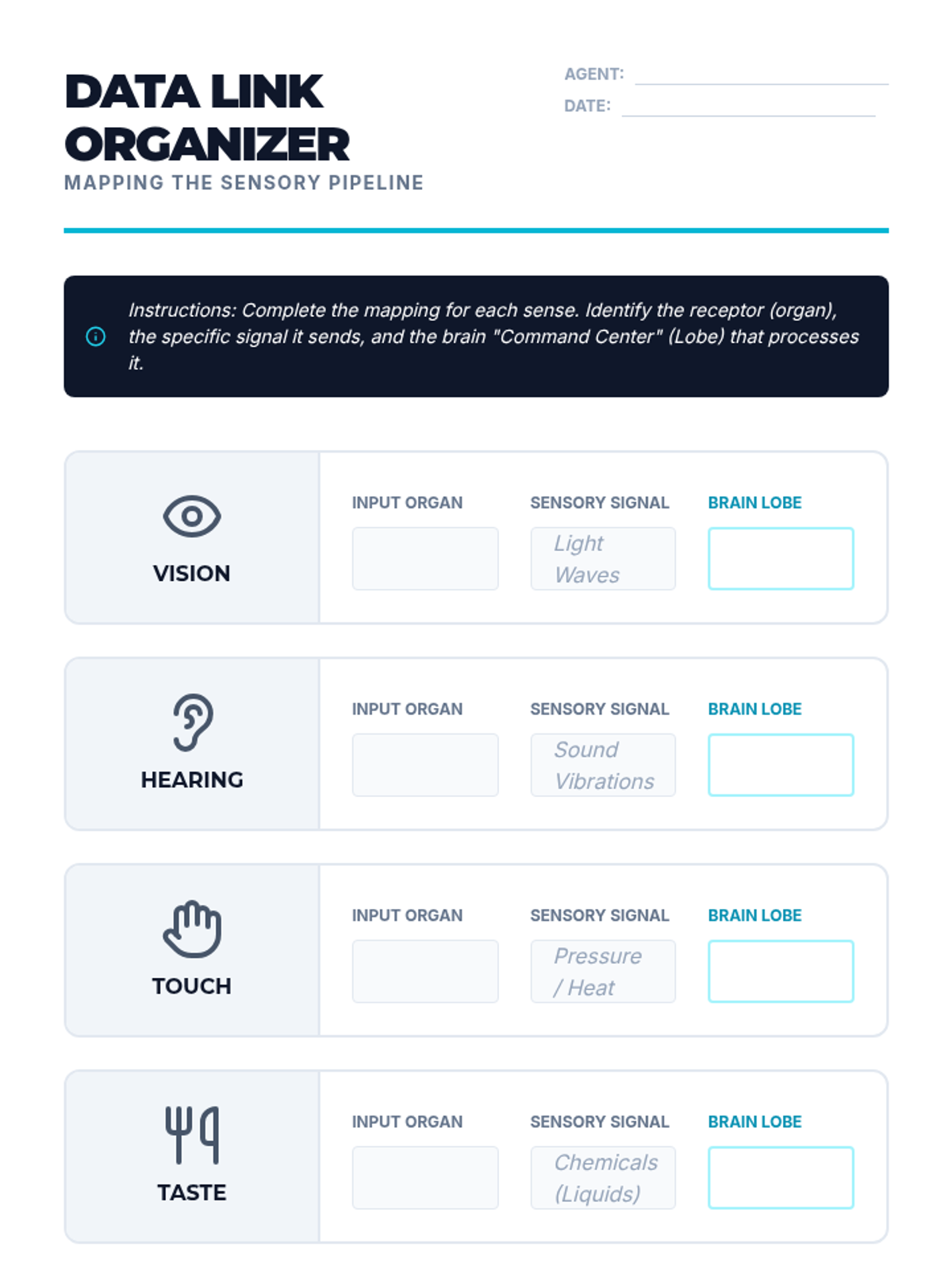
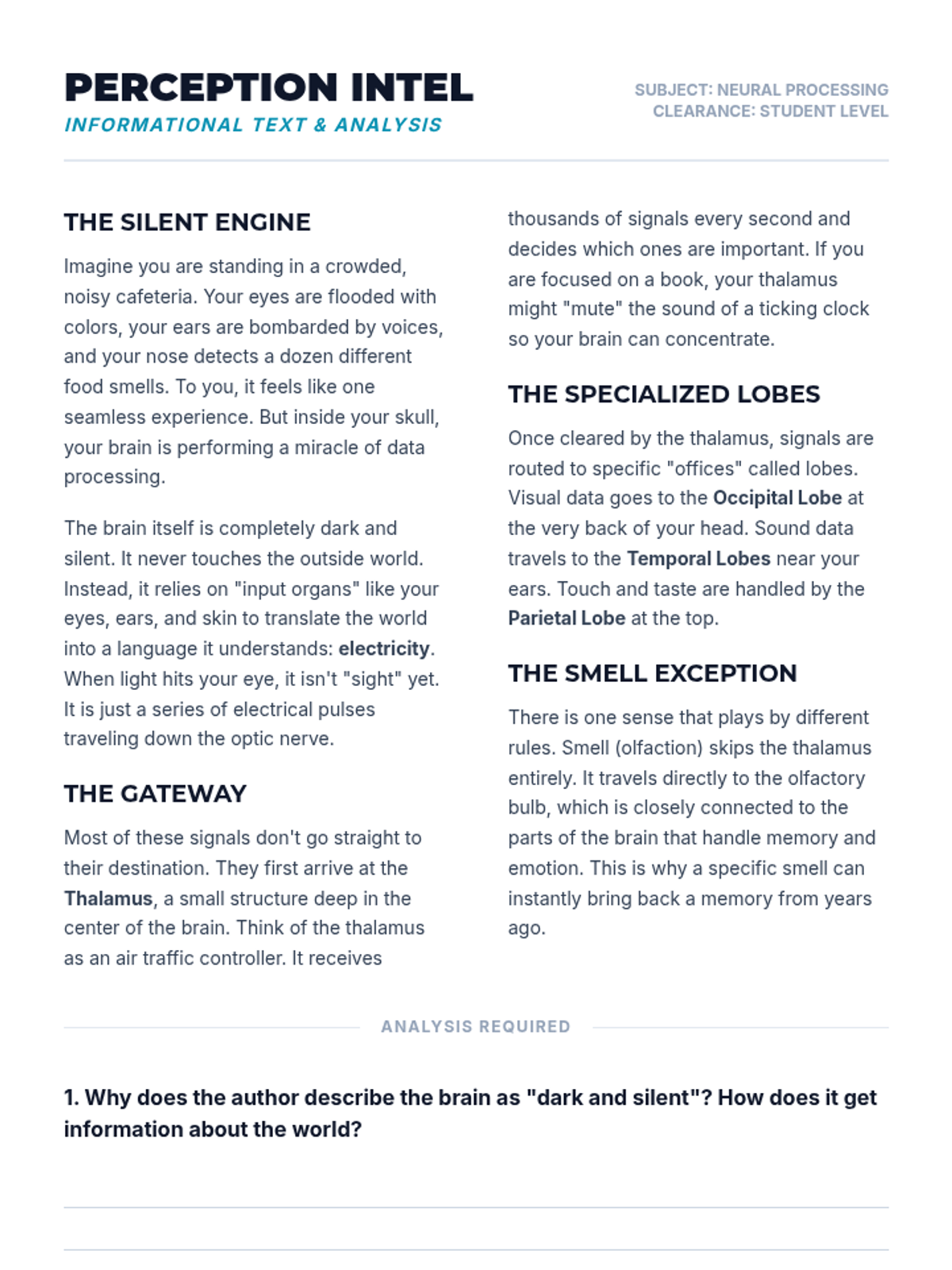
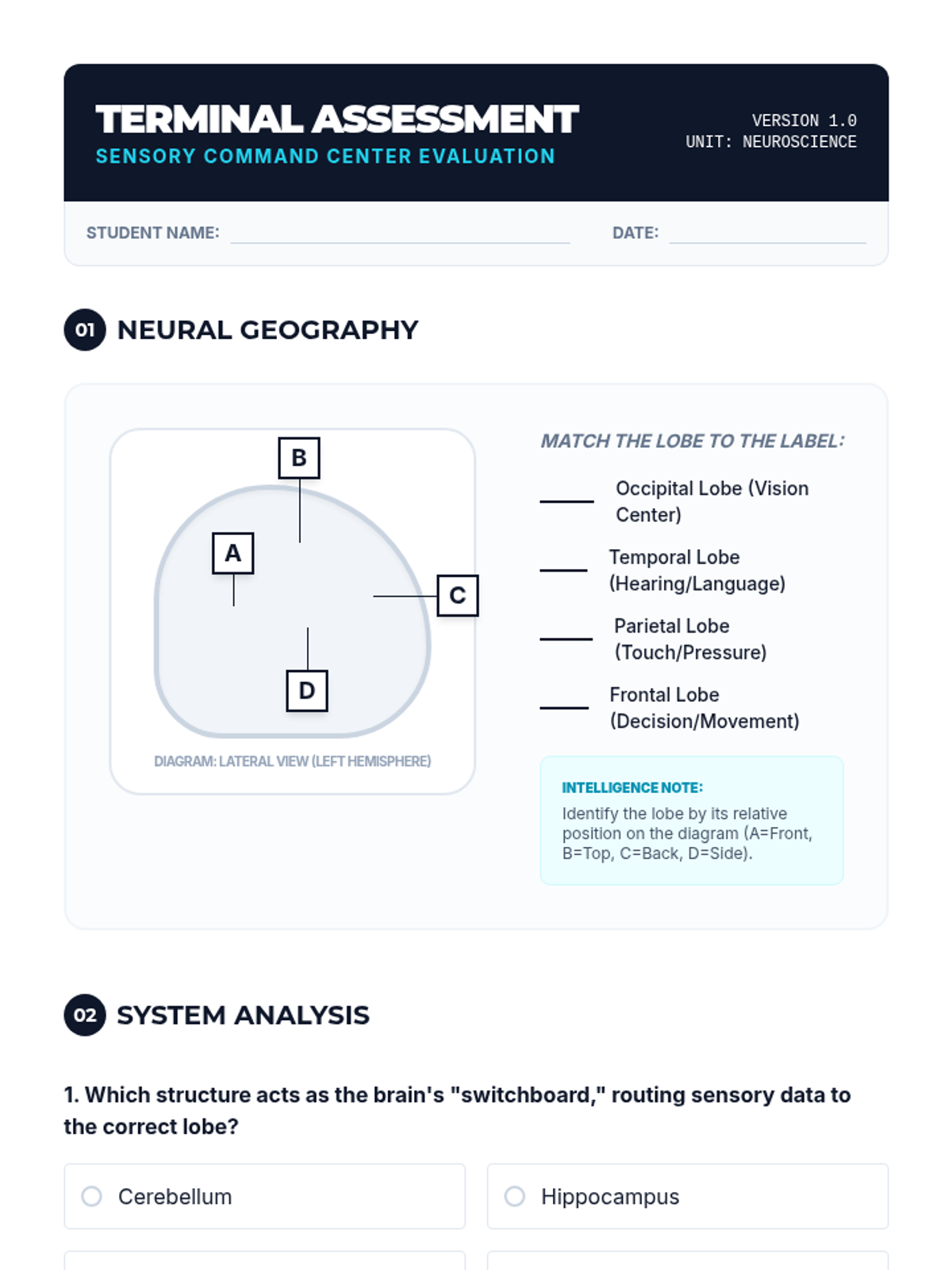
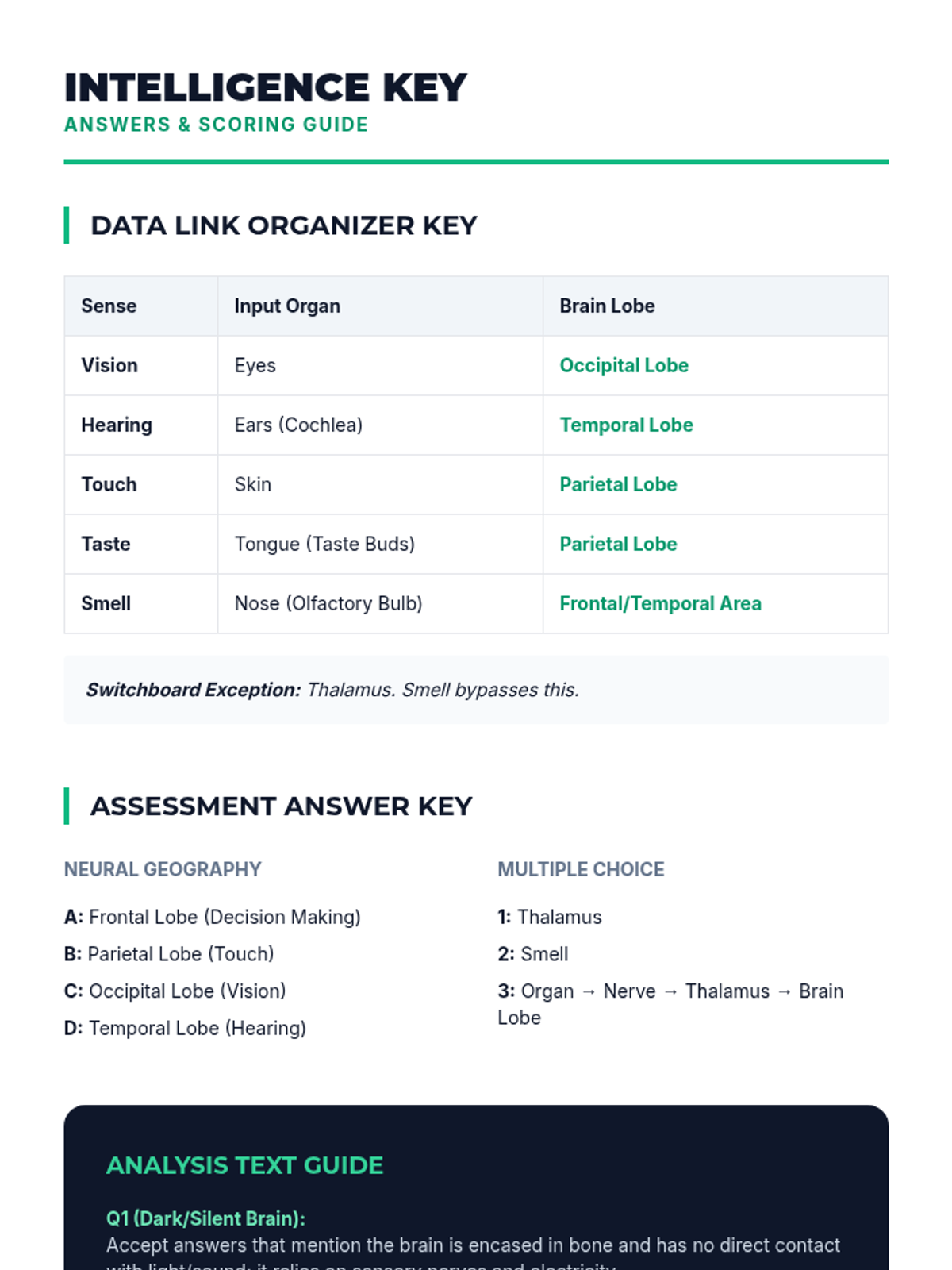
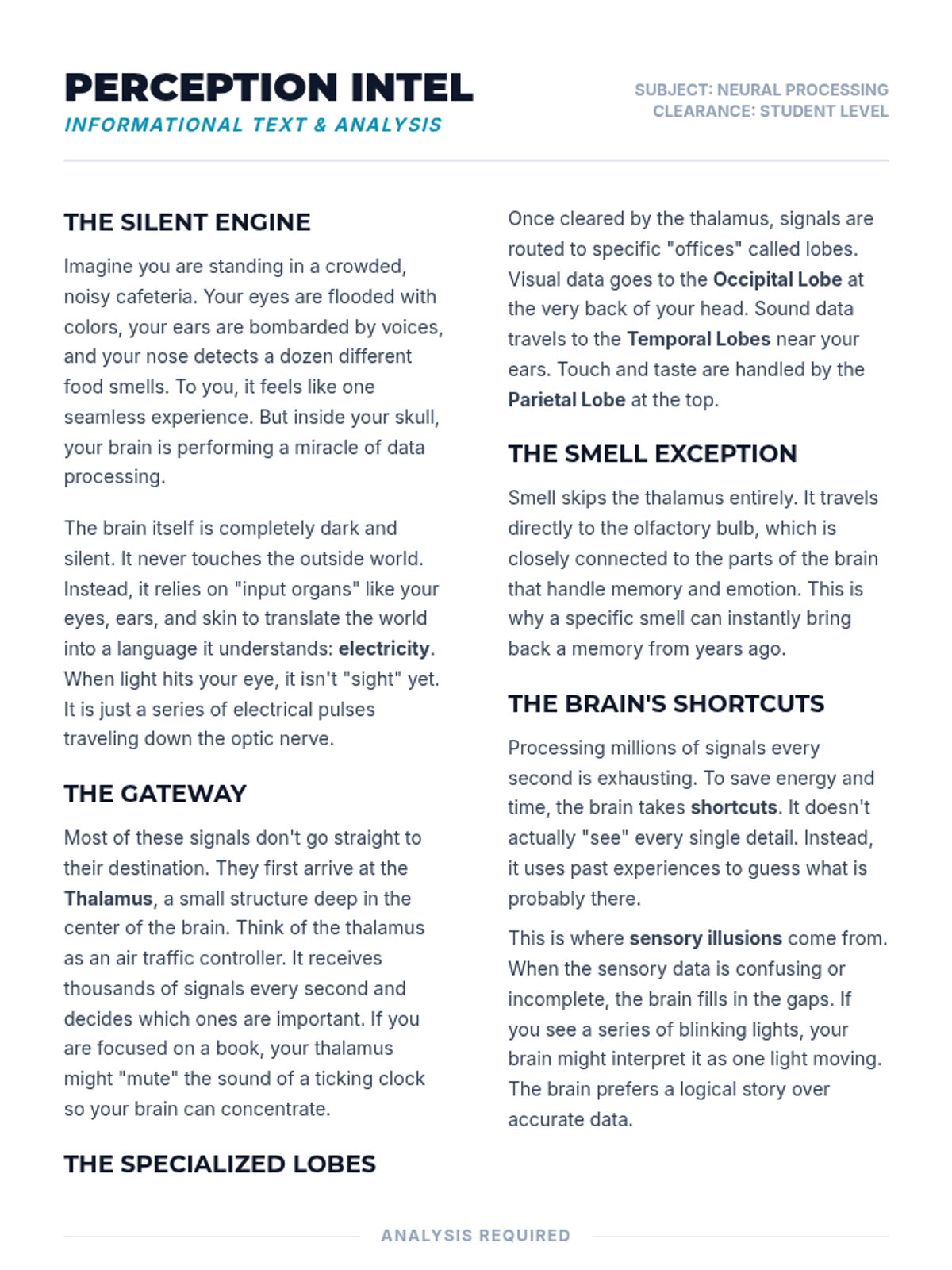
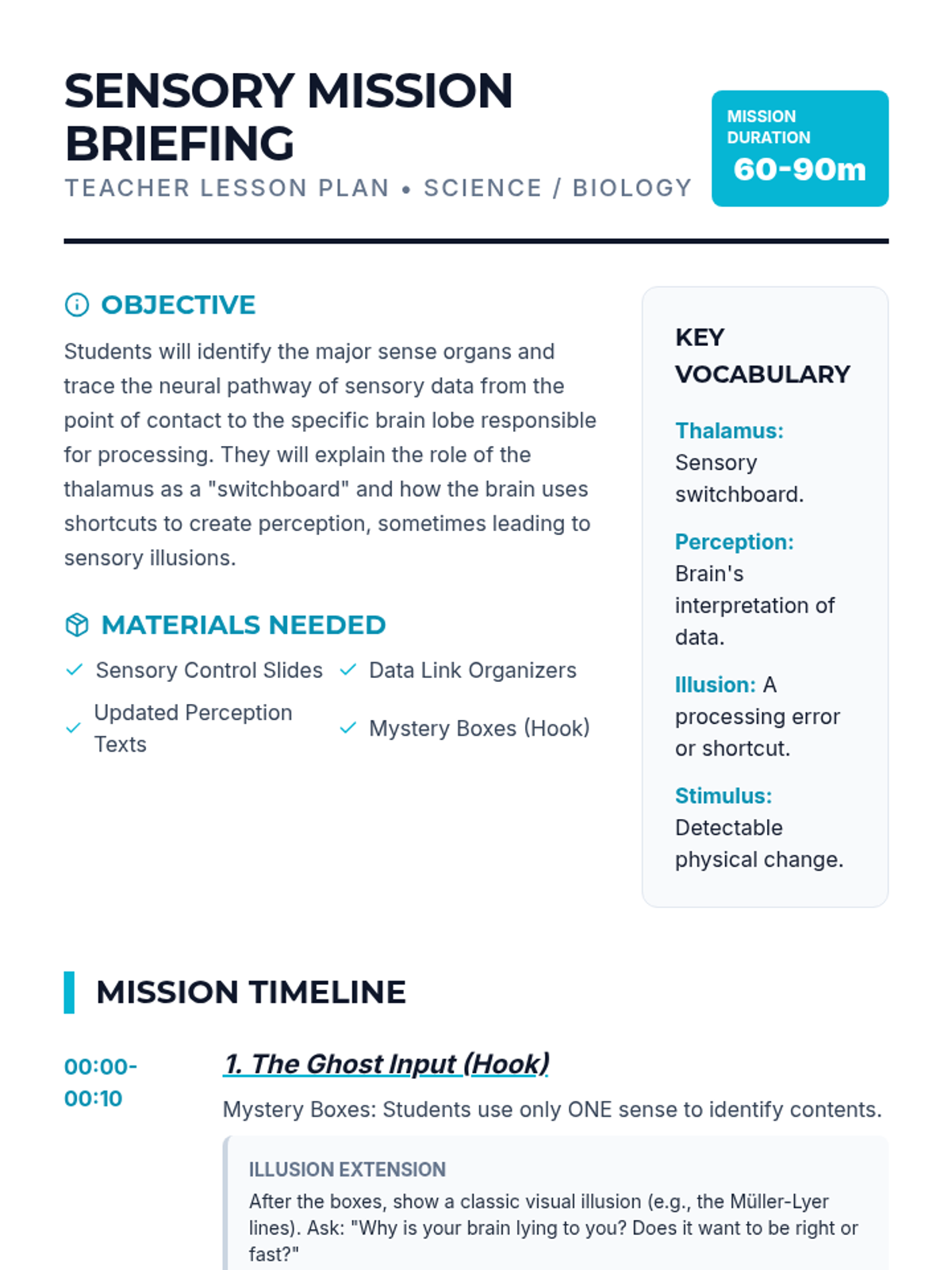
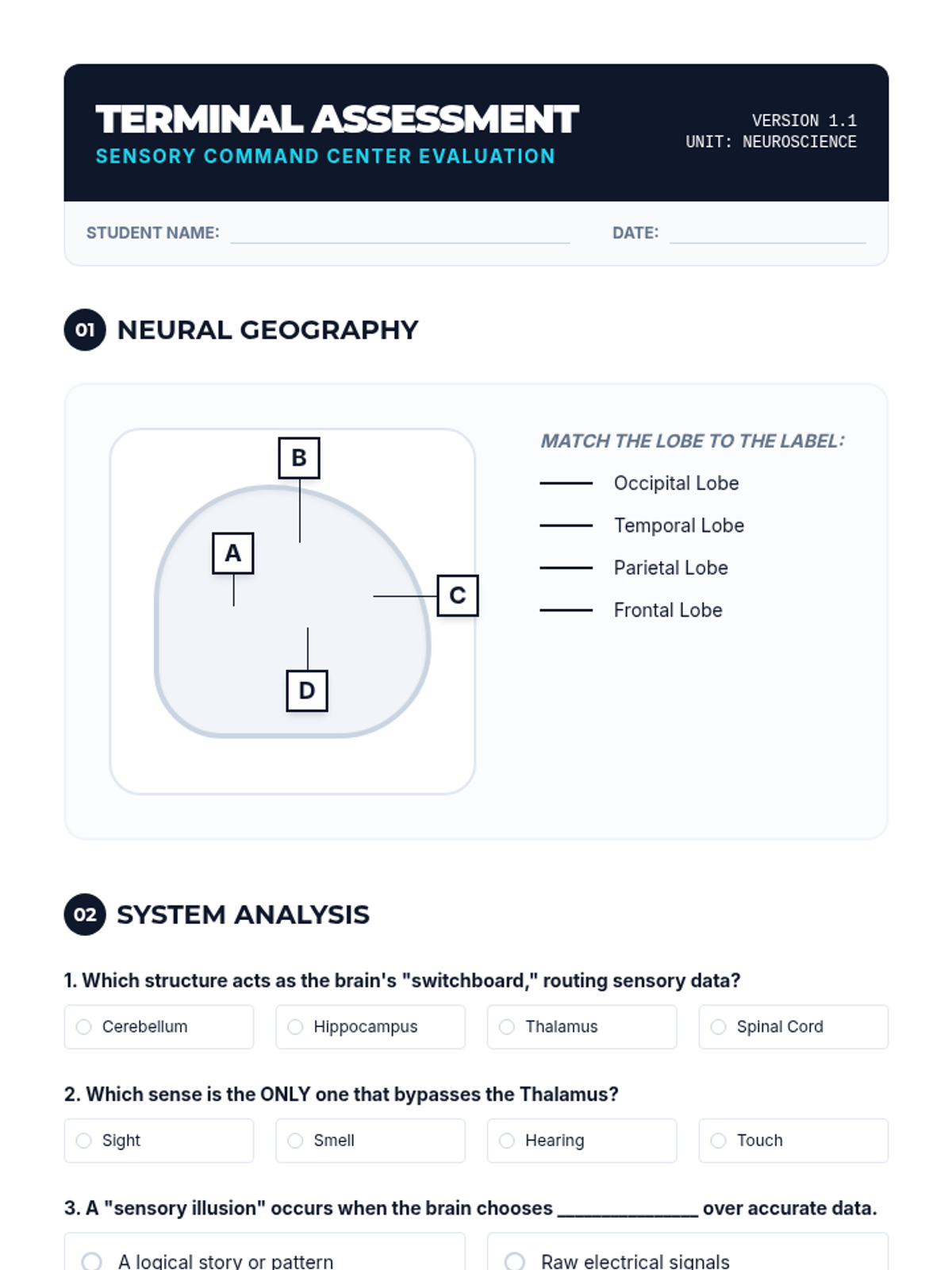
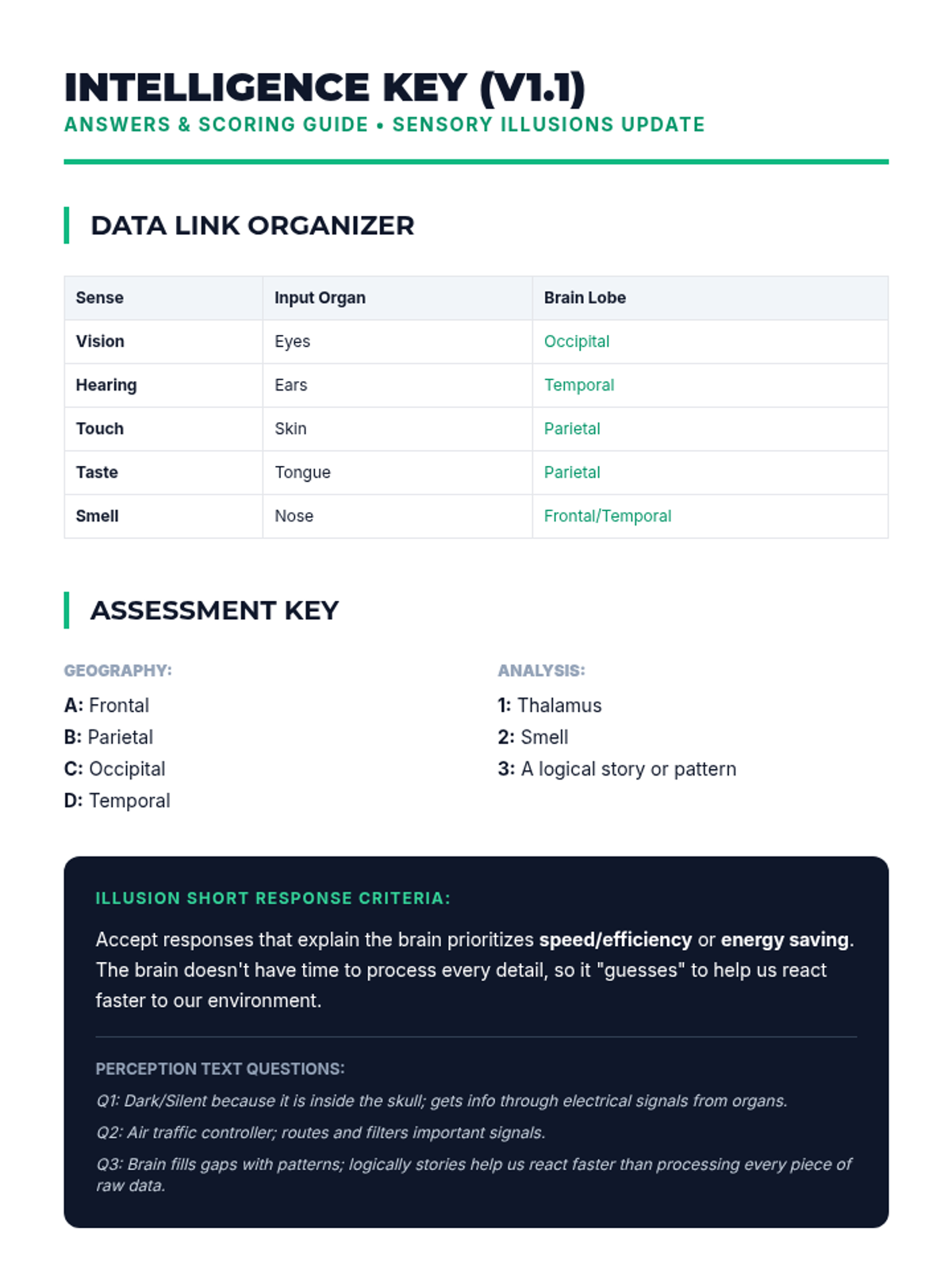
A comprehensive lesson exploring how the five sense organs collect data and send signals to the brain for processing. Students will learn the pathway from stimulus to perception through reading, mapping, and assessment.
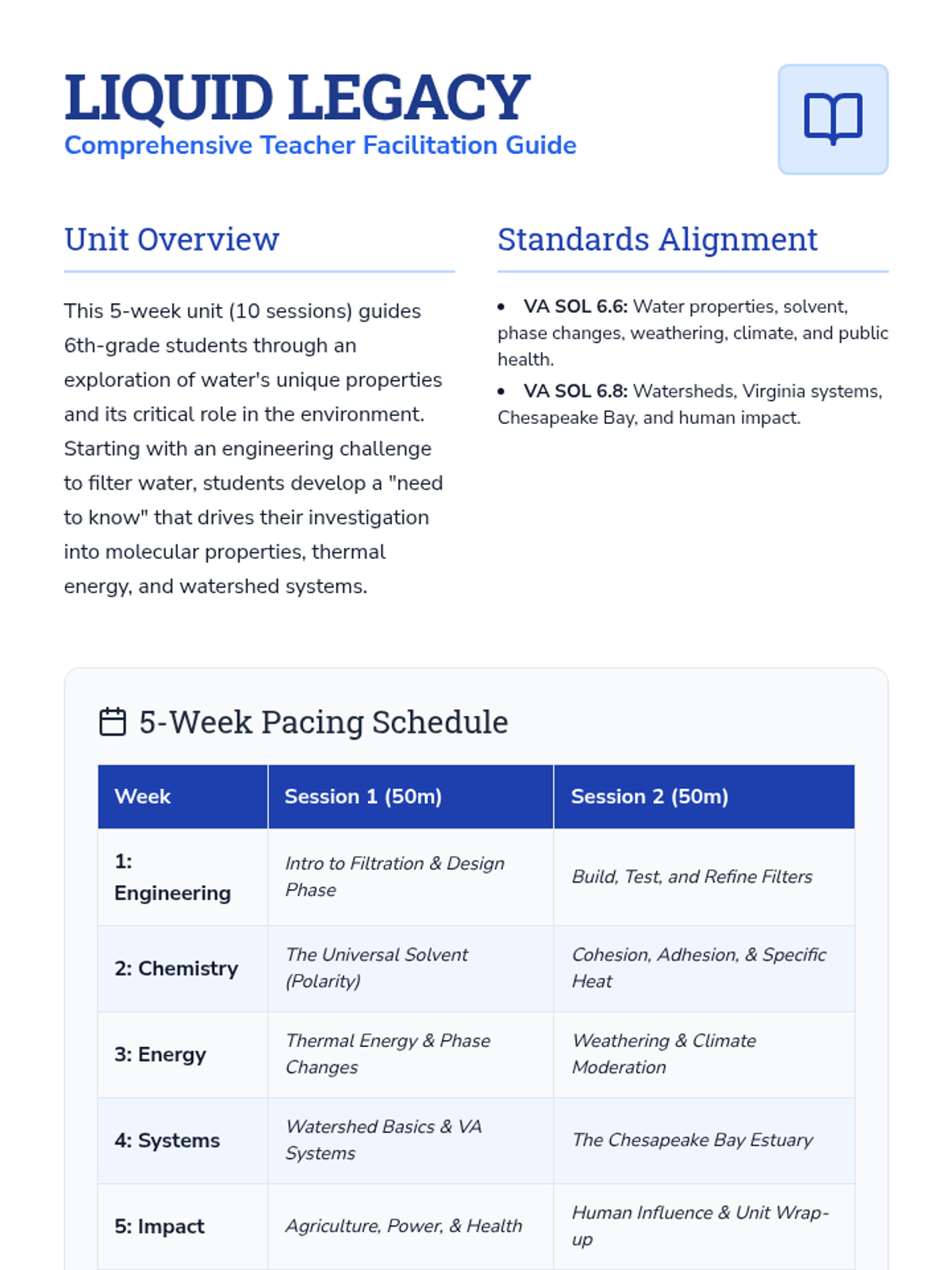
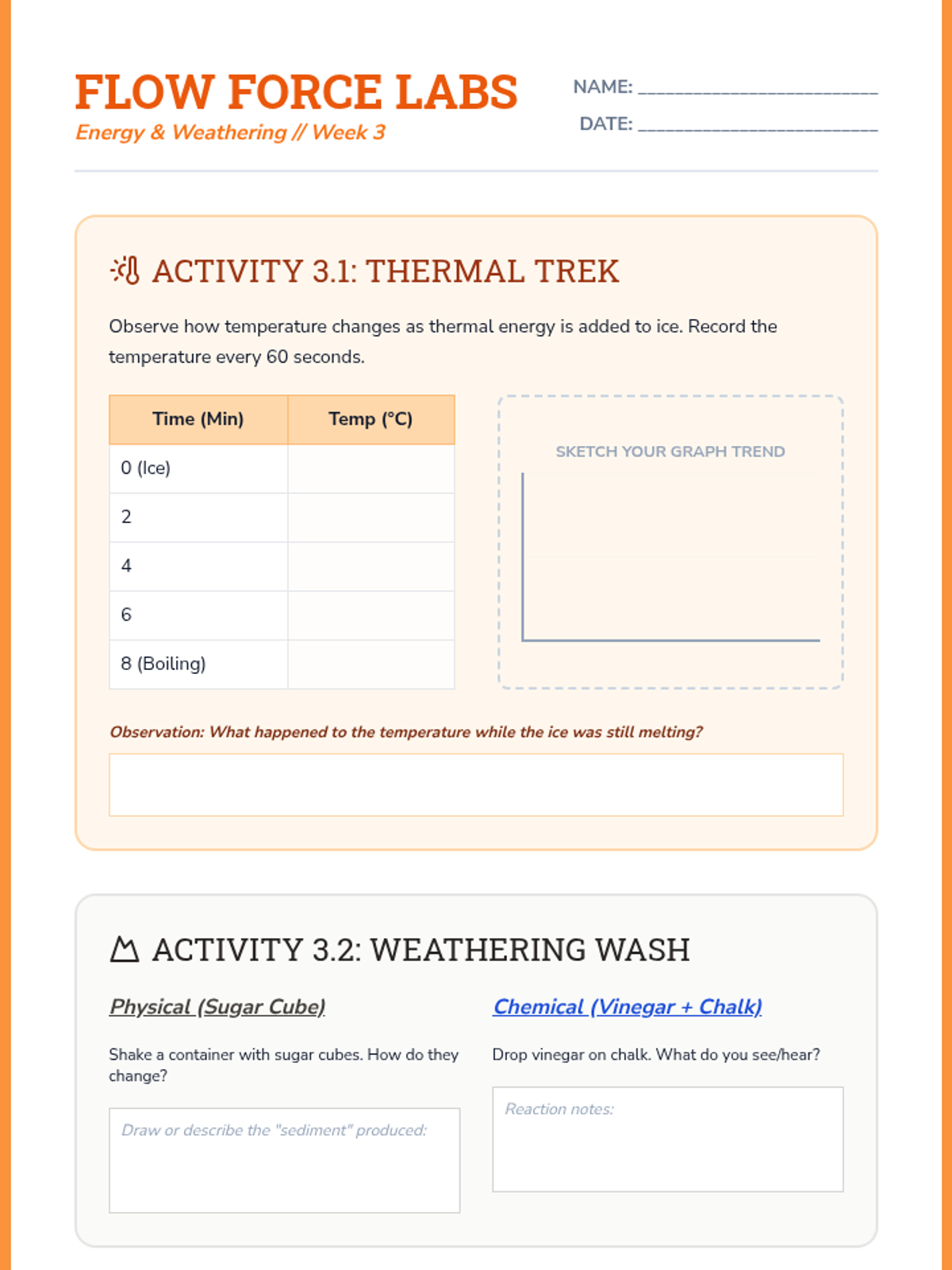
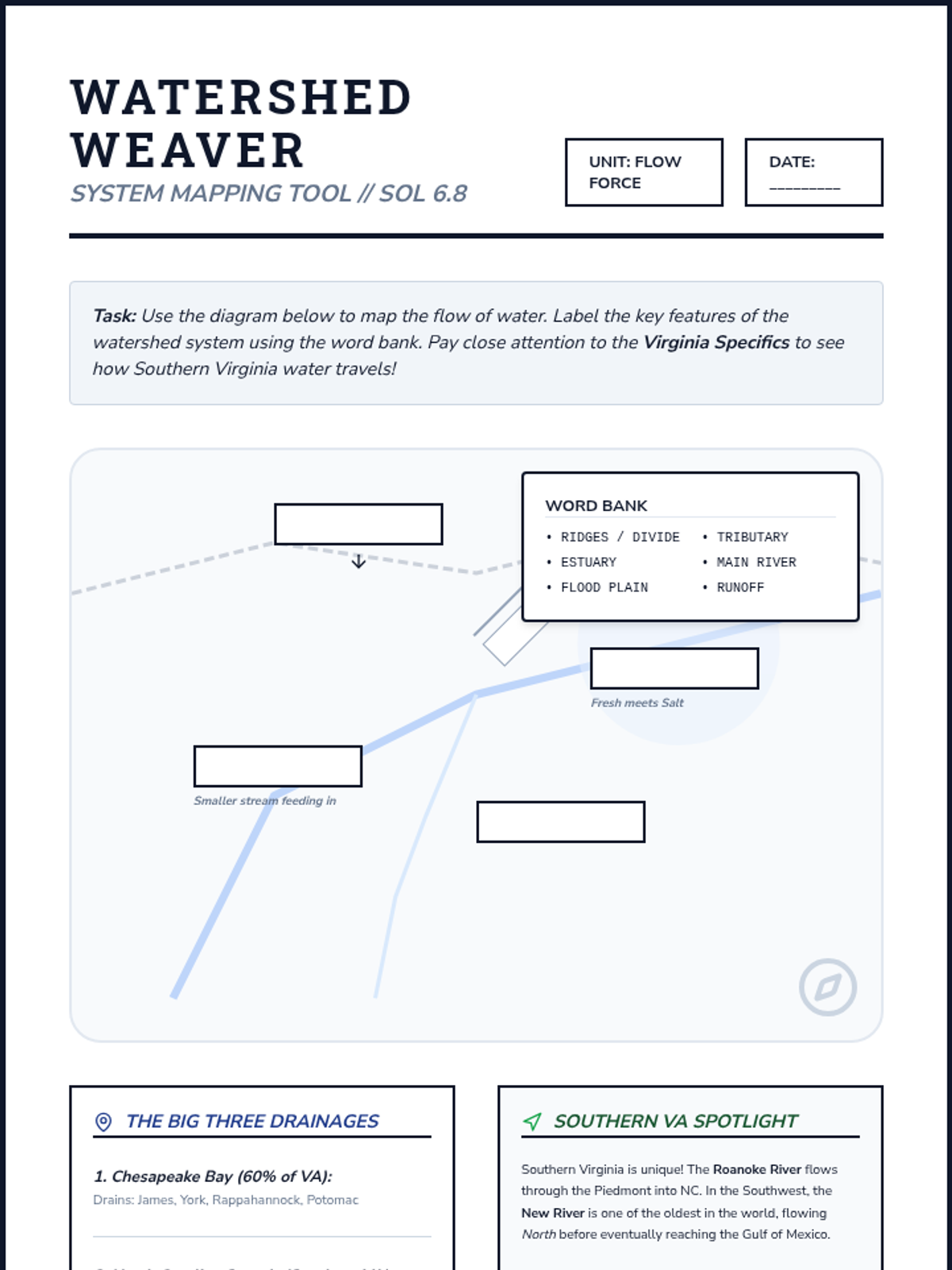
A 10-session unit covering Virginia Standards 6.6 and 6.8, beginning with a water filter engineering challenge and progressing through water chemistry and watershed systems.
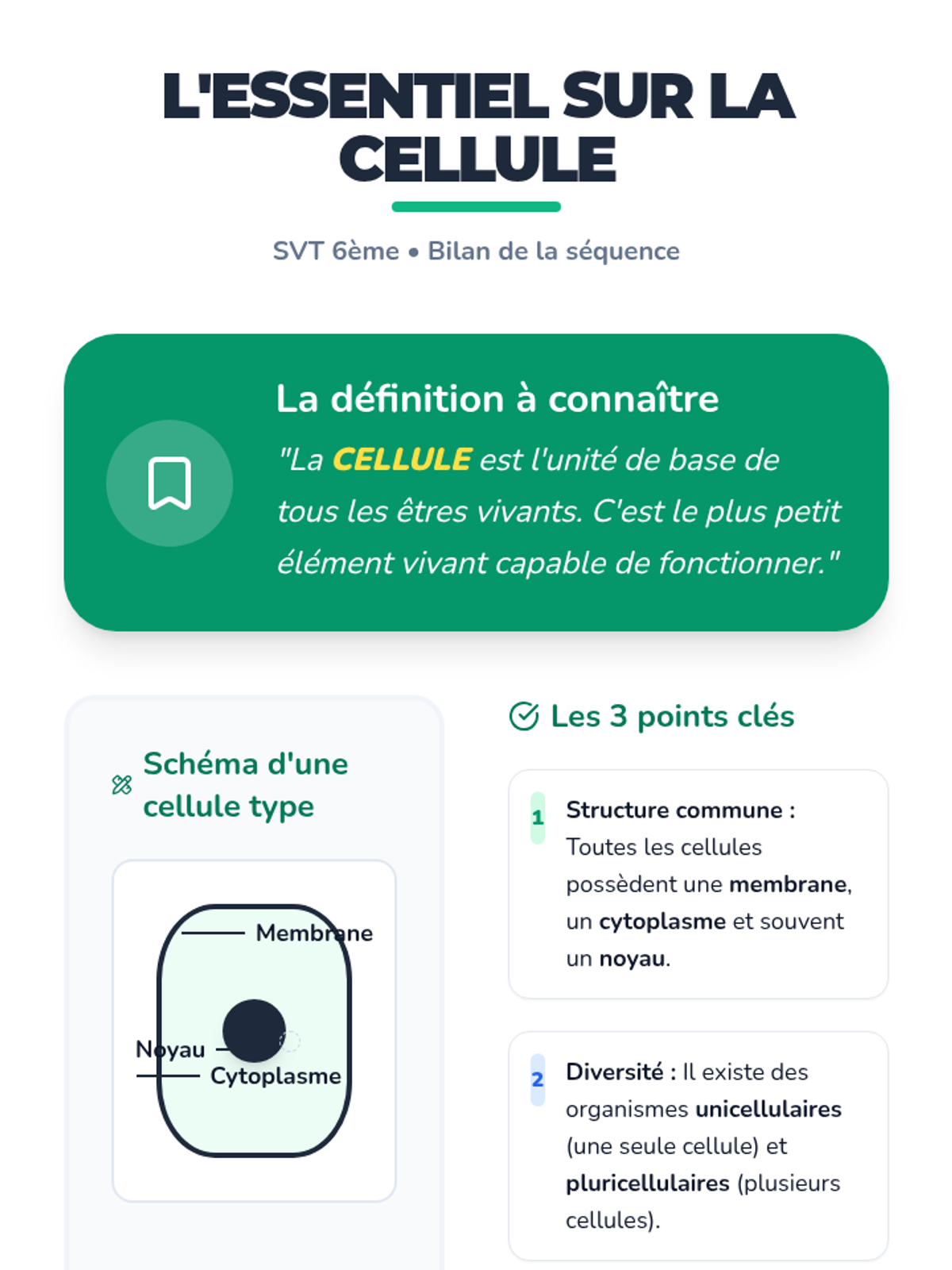
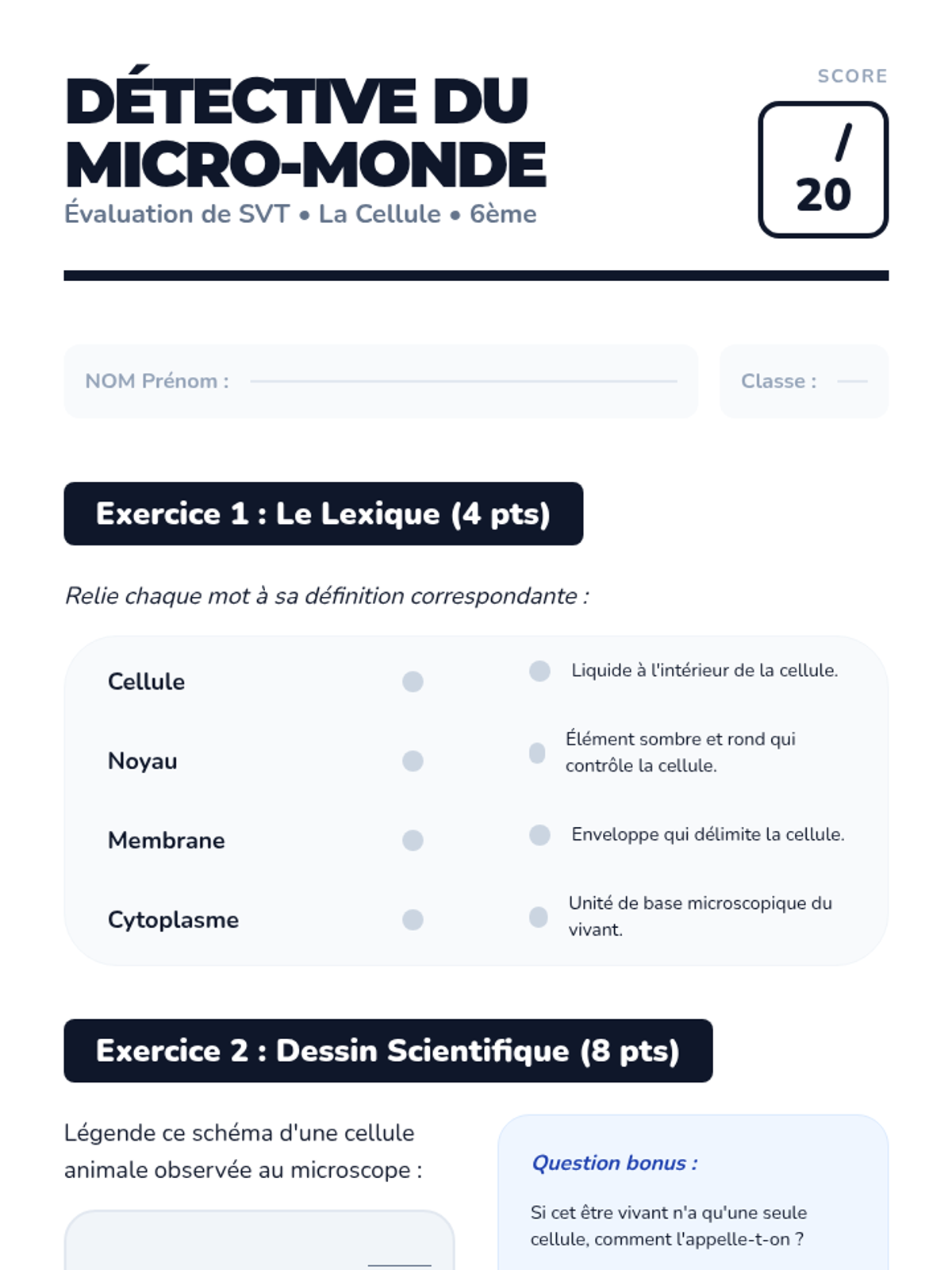
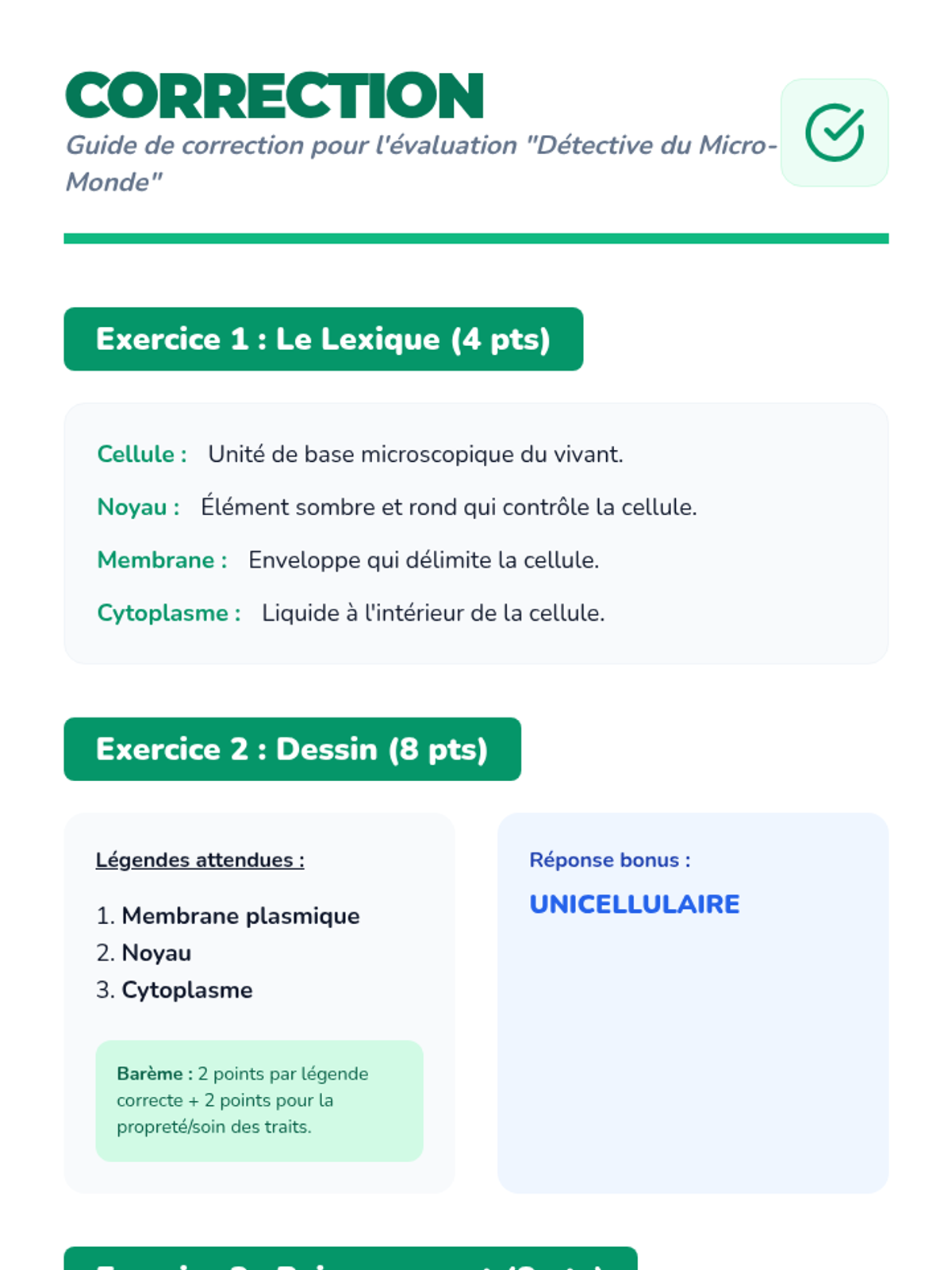
Synthèse de la notion de cellule et évaluation des acquis.
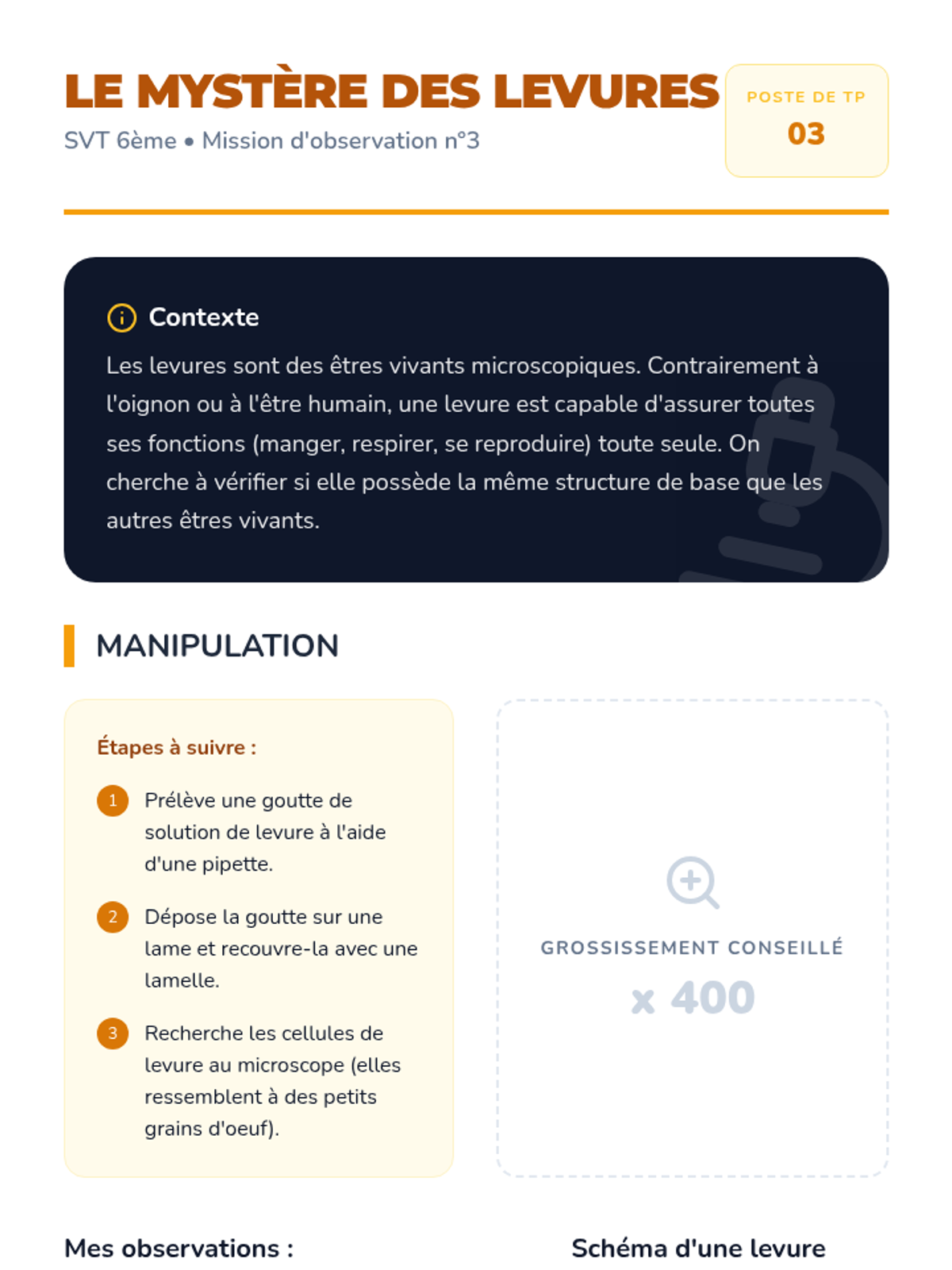
Observation d'organismes composés d'une seule cellule comme les levures ou les paramécies.
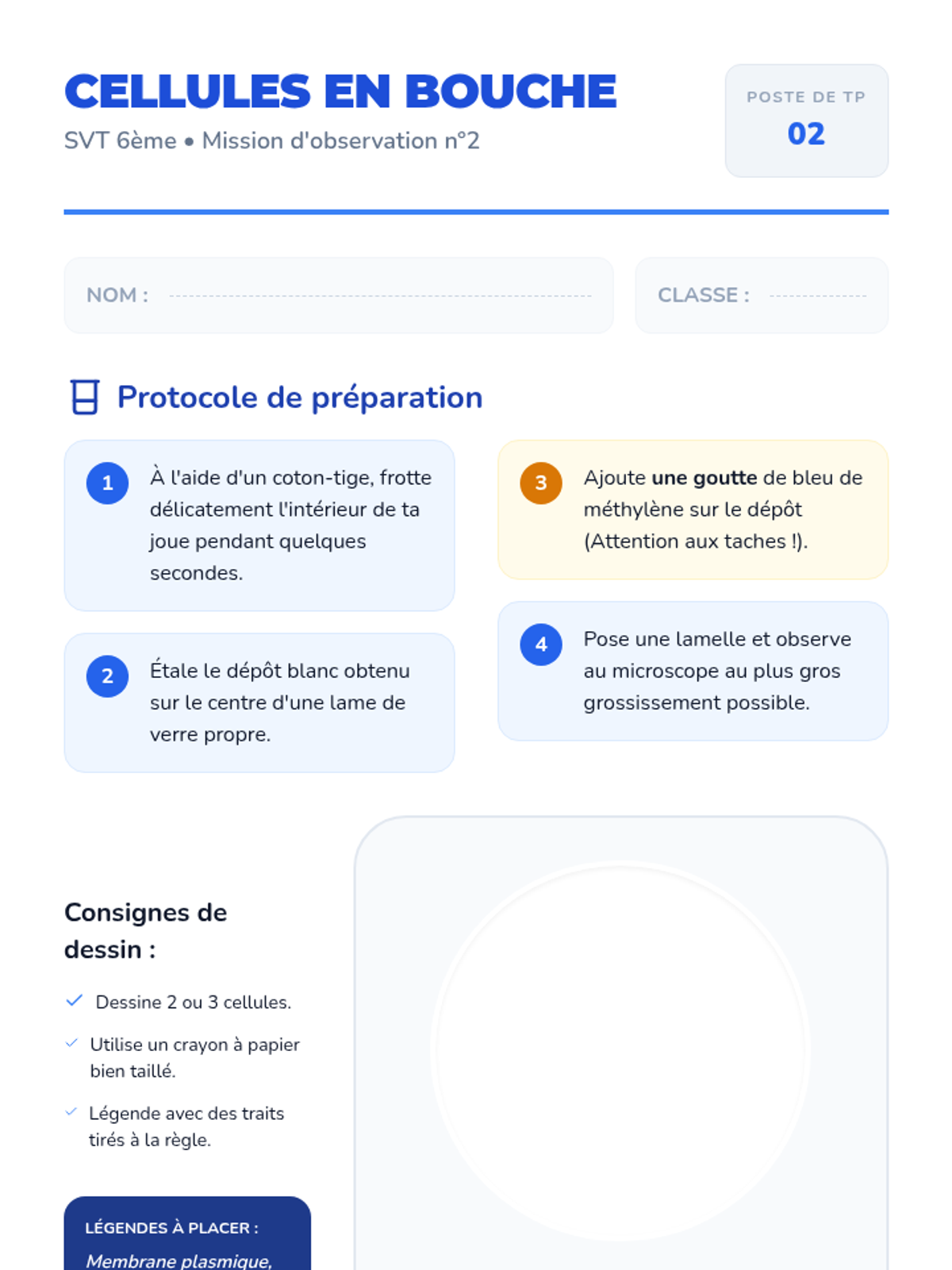
Observation des cellules animales à travers l'épithélium buccal humain.
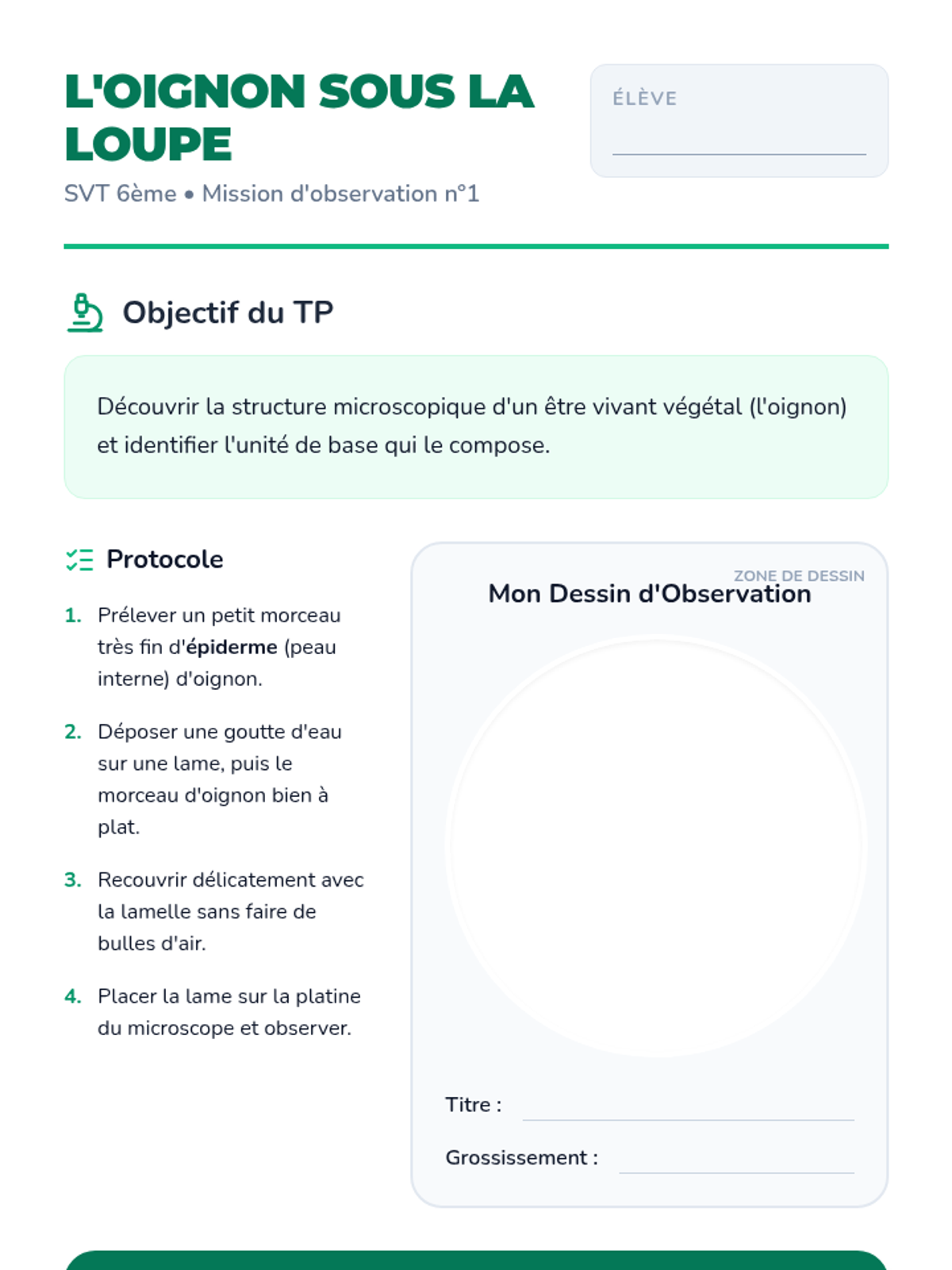
Découverte du microscope et observation des cellules végétales d'oignon.
A comprehensive lesson exploring how the five senses collect data and how the brain processes that information to create our perception of the world. Students will map the neural pathways from organ to brain and identify specific brain regions responsible for each sense.