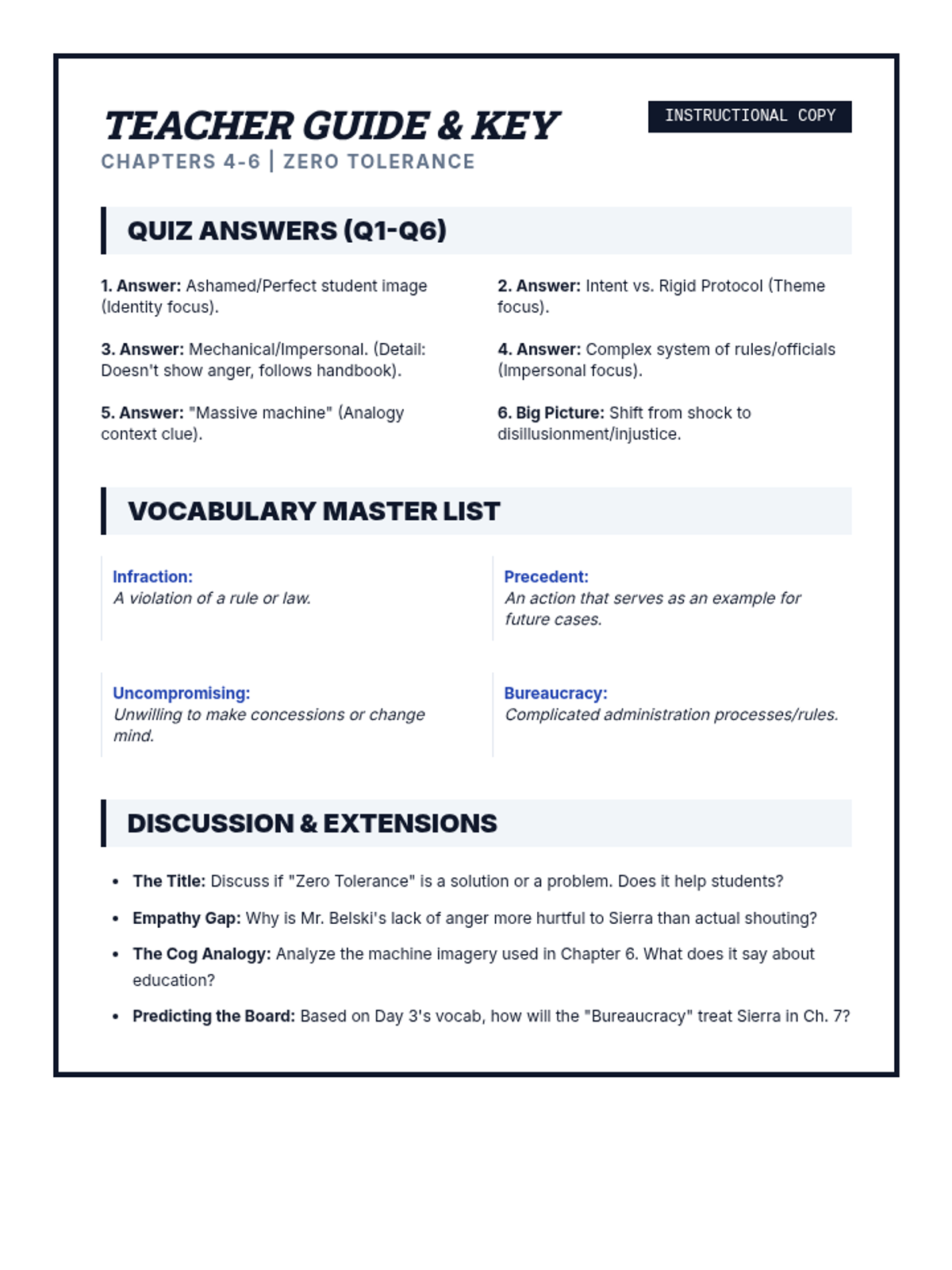
A summative assessment and answer key covering the final chapters of 'All American Boys', focusing on Quinn's development, the community's reaction, and the culminating protest.
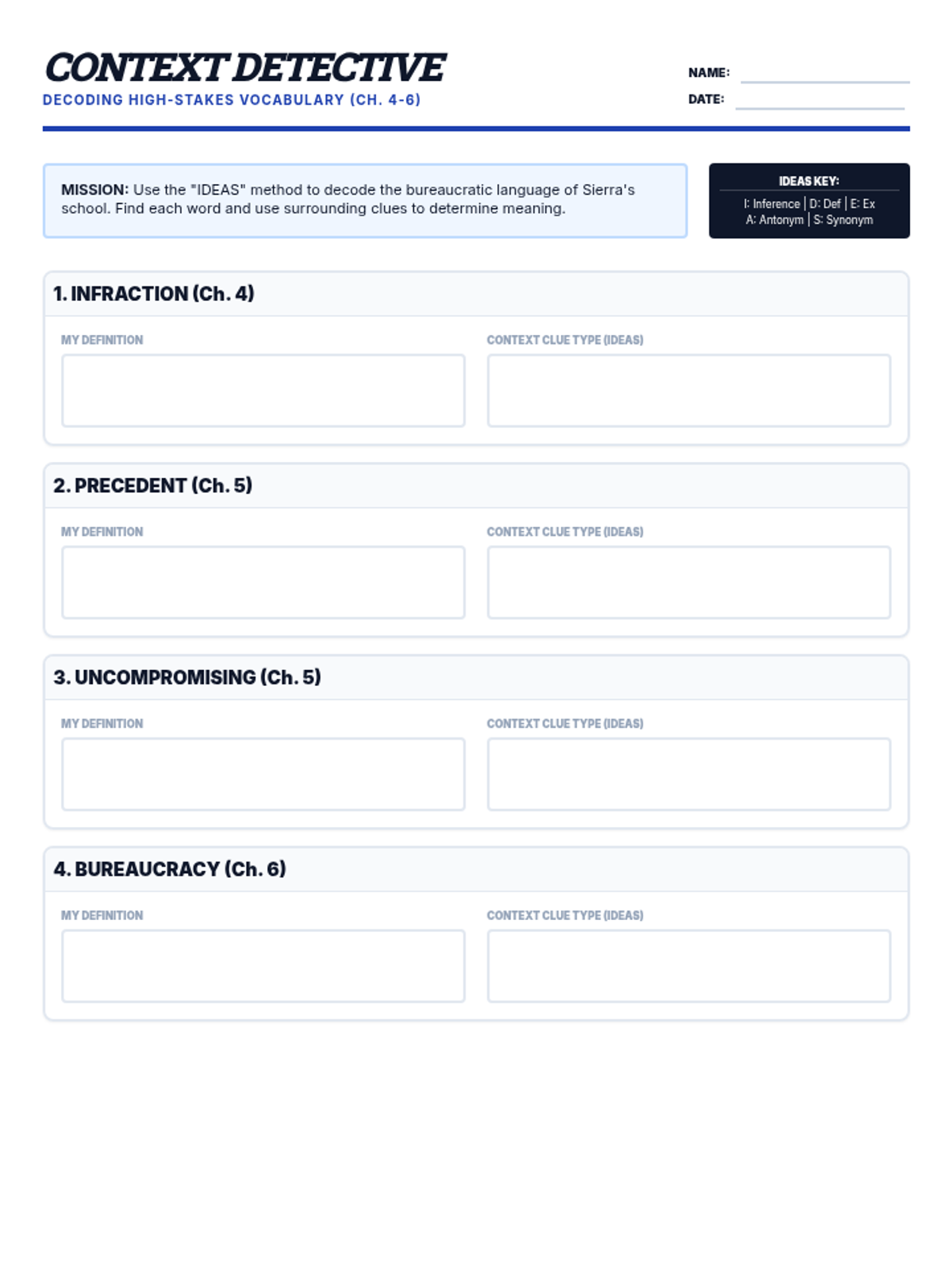
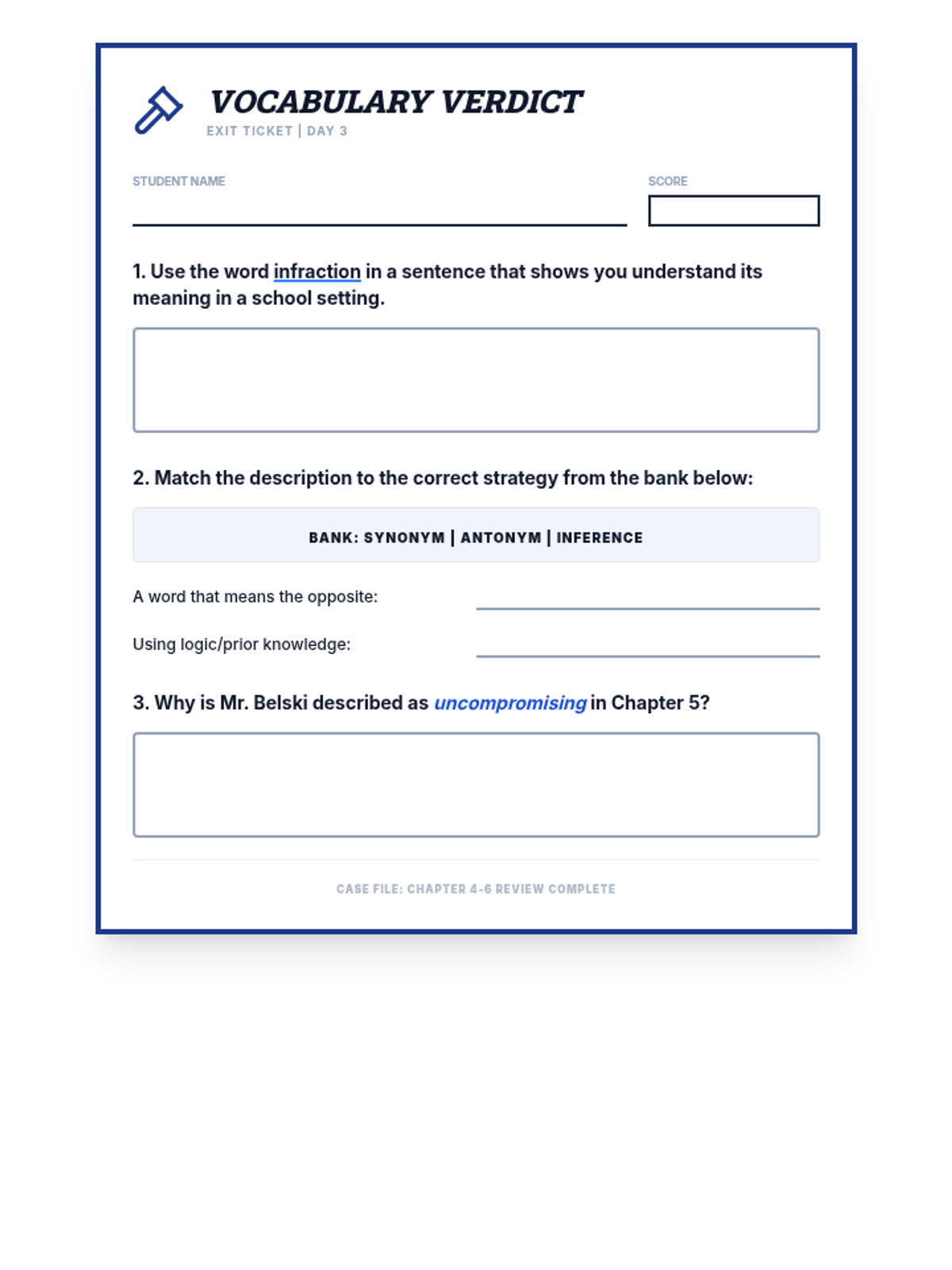
Develops context clue strategies using the specific academic and legalistic vocabulary found in Sierra's disciplinary hearing and school policy.
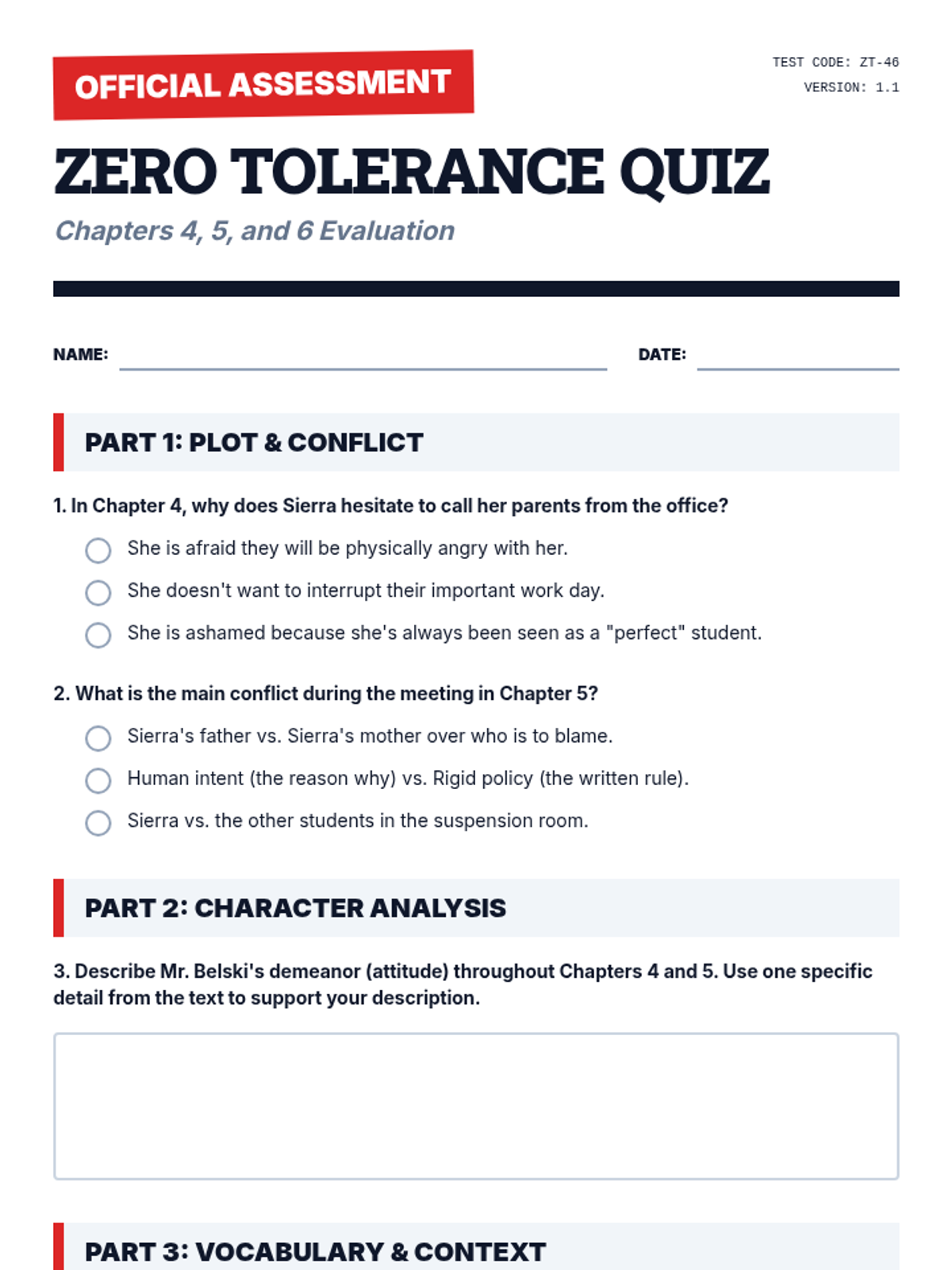
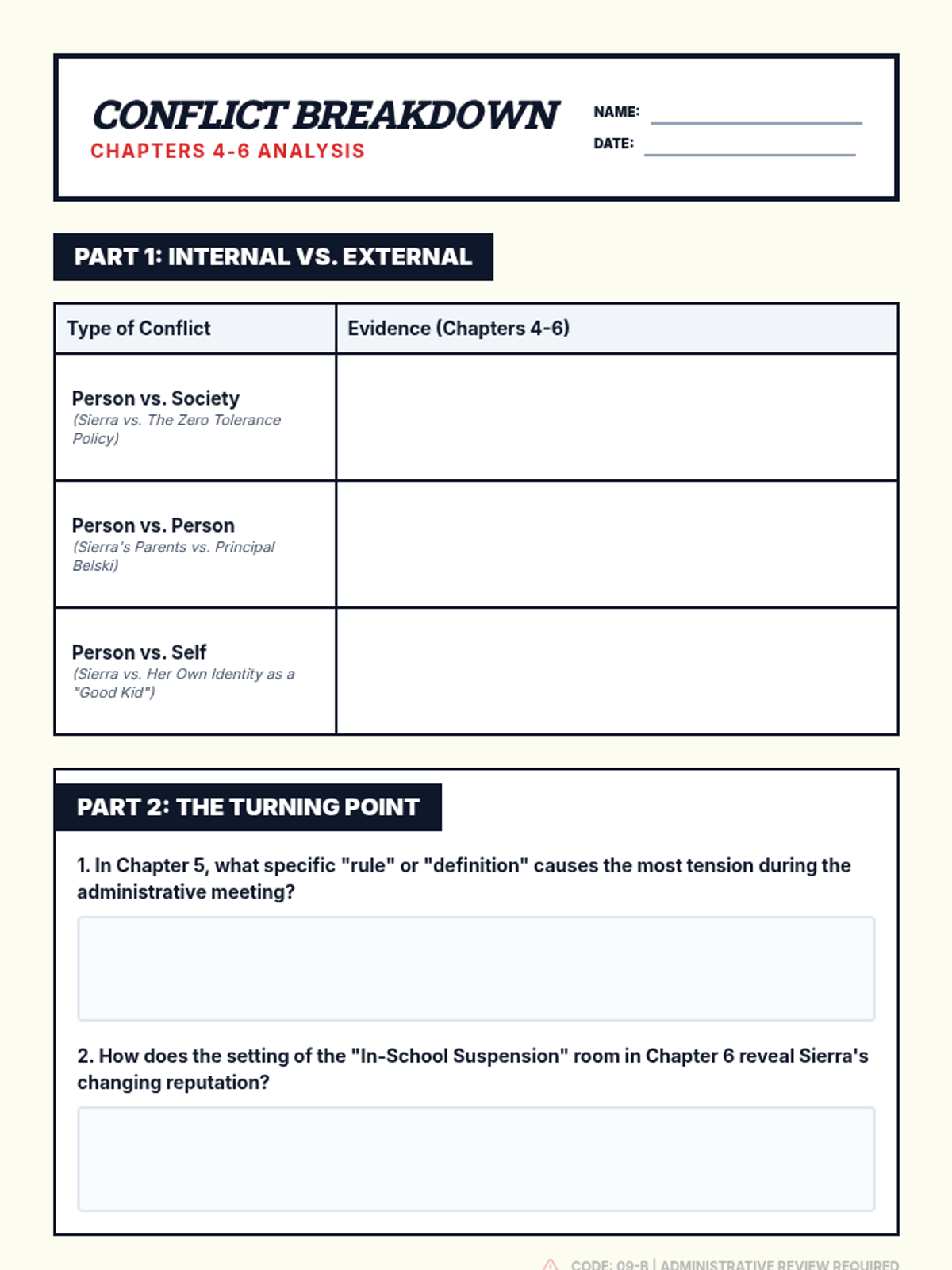
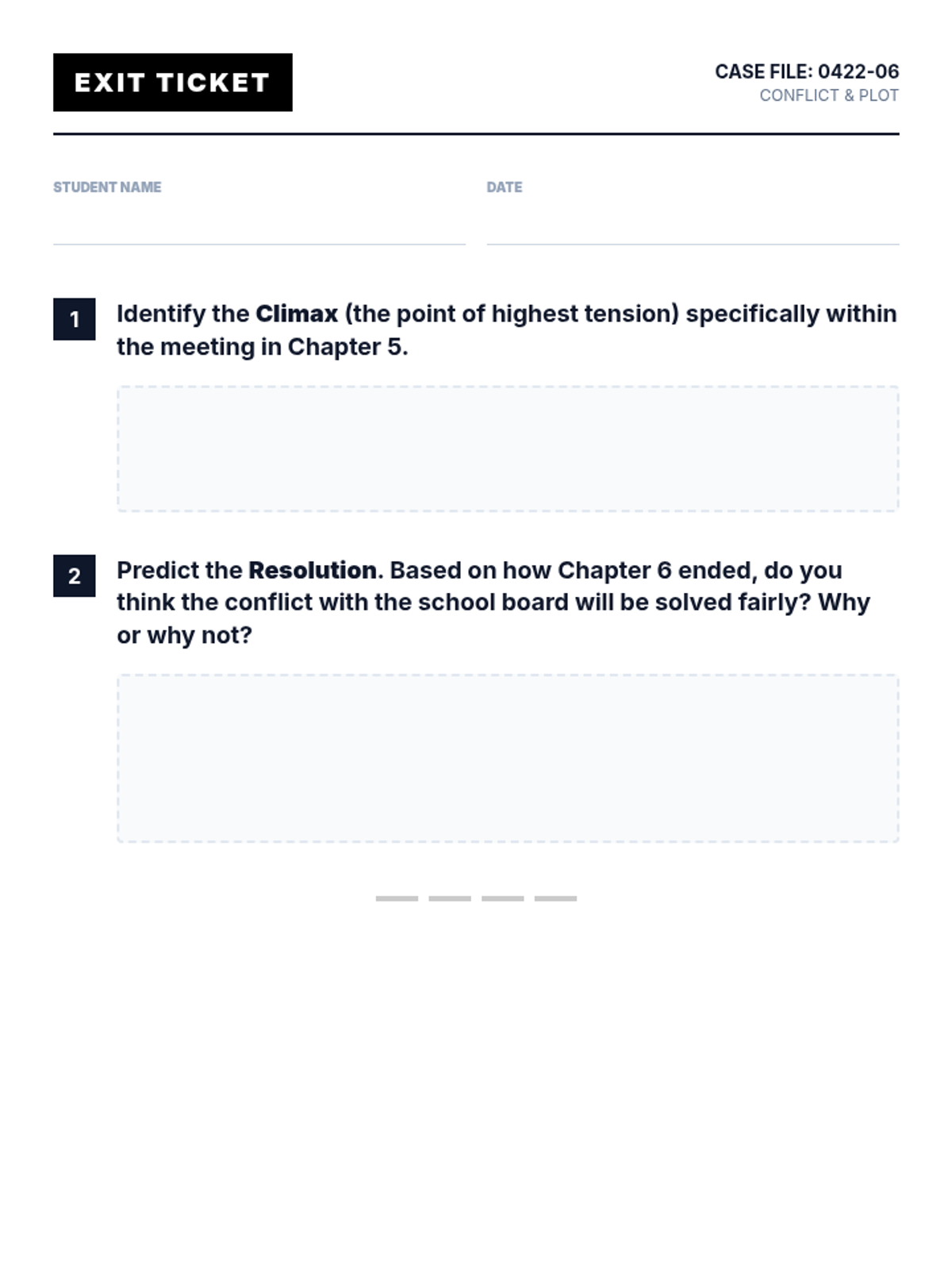
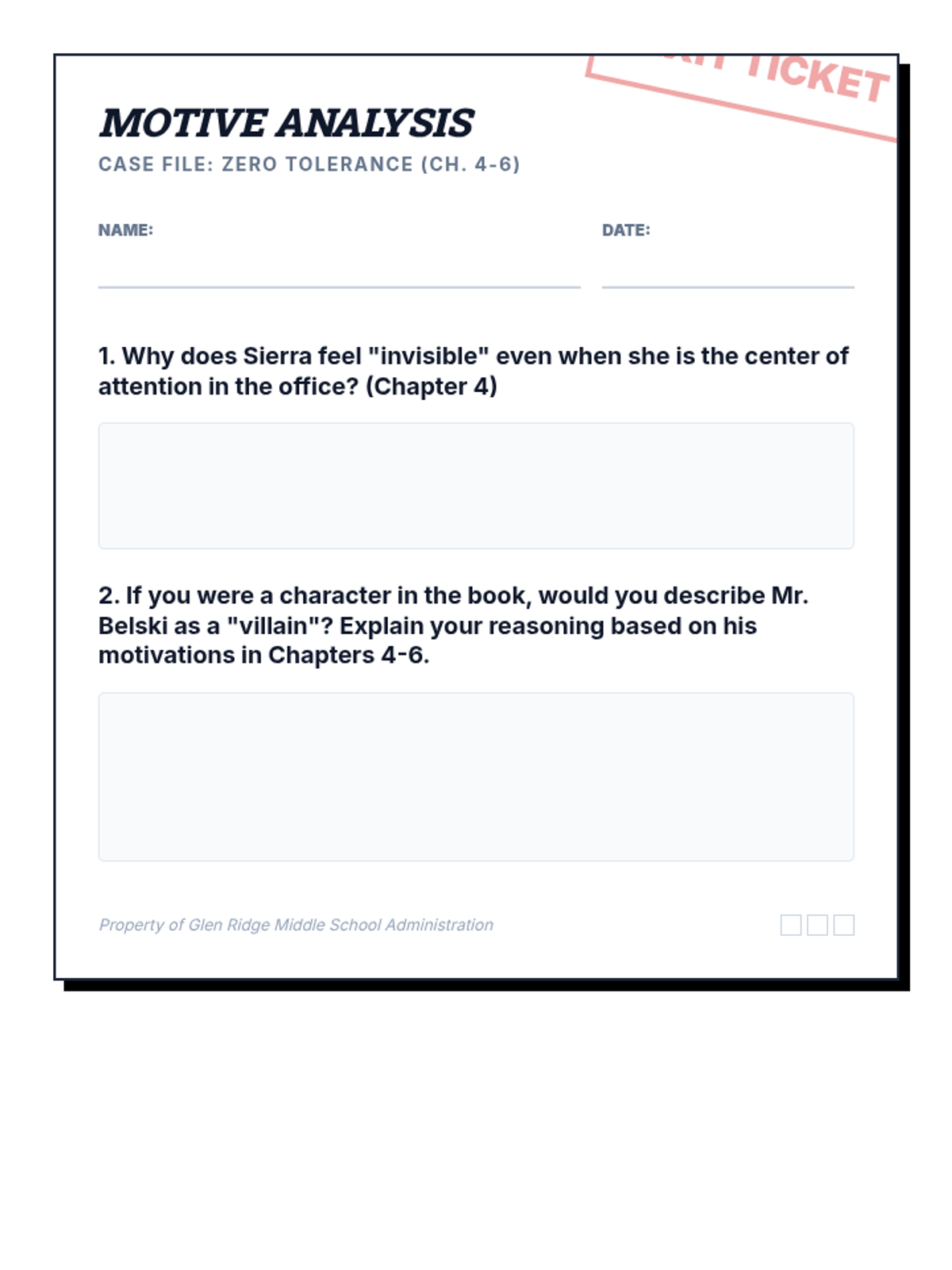
Analyzes the types of conflict (Person vs. Society) and the plot progression as Sierra's mistake turns into a full-scale disciplinary crisis.
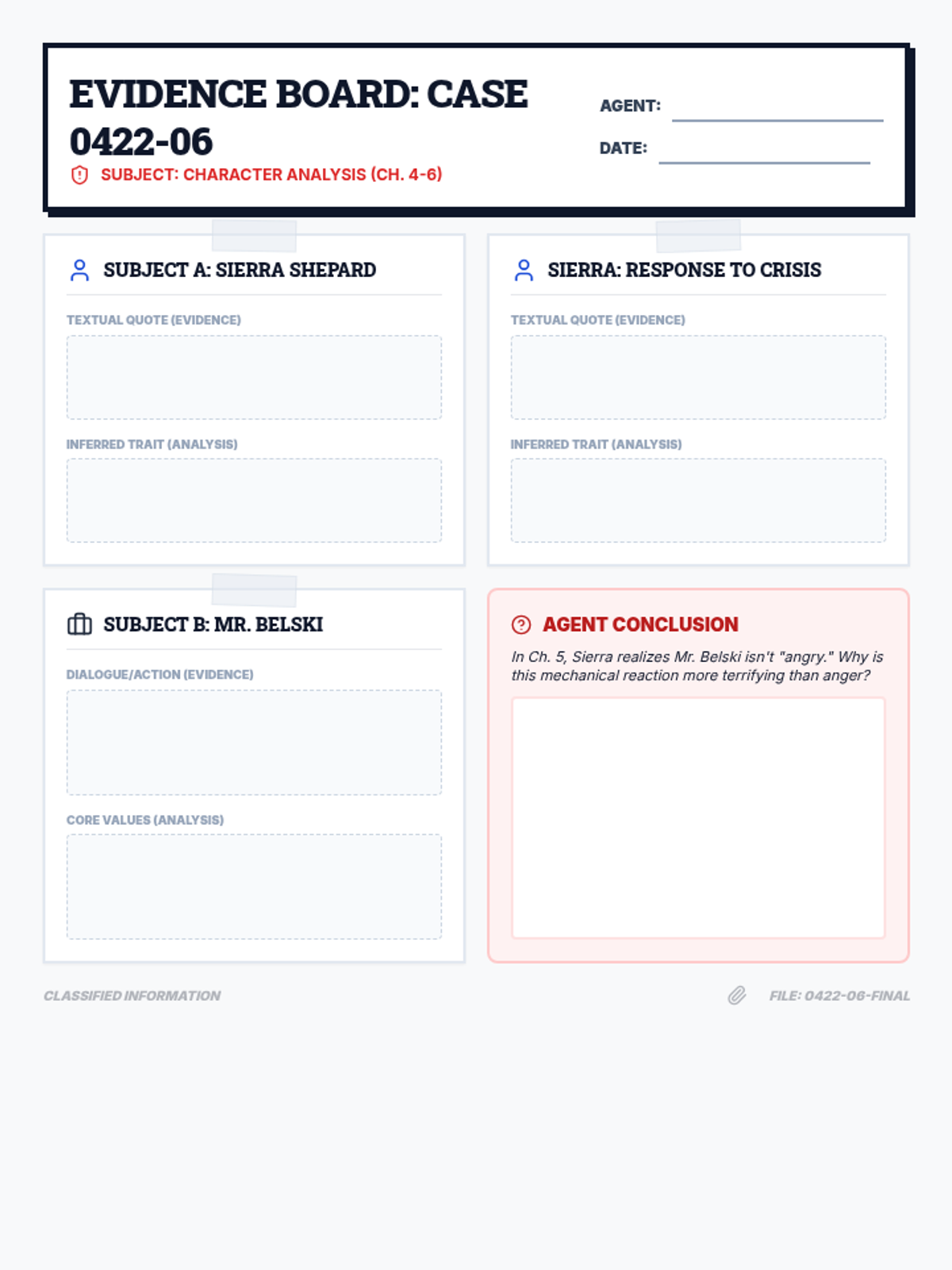
Focuses on character analysis of Sierra and the school administration, using an 'Evidence Board' approach to track traits and motivations.
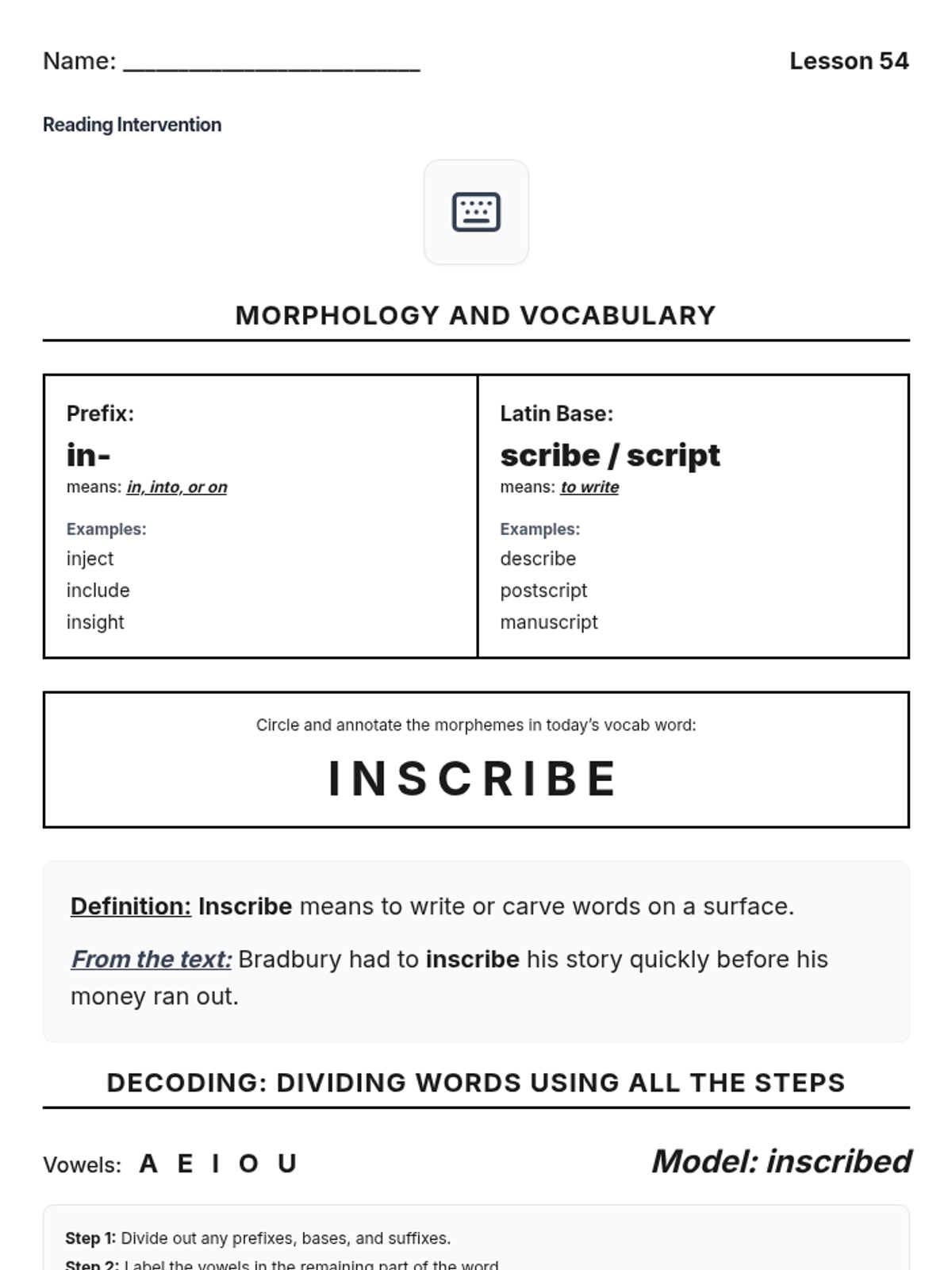
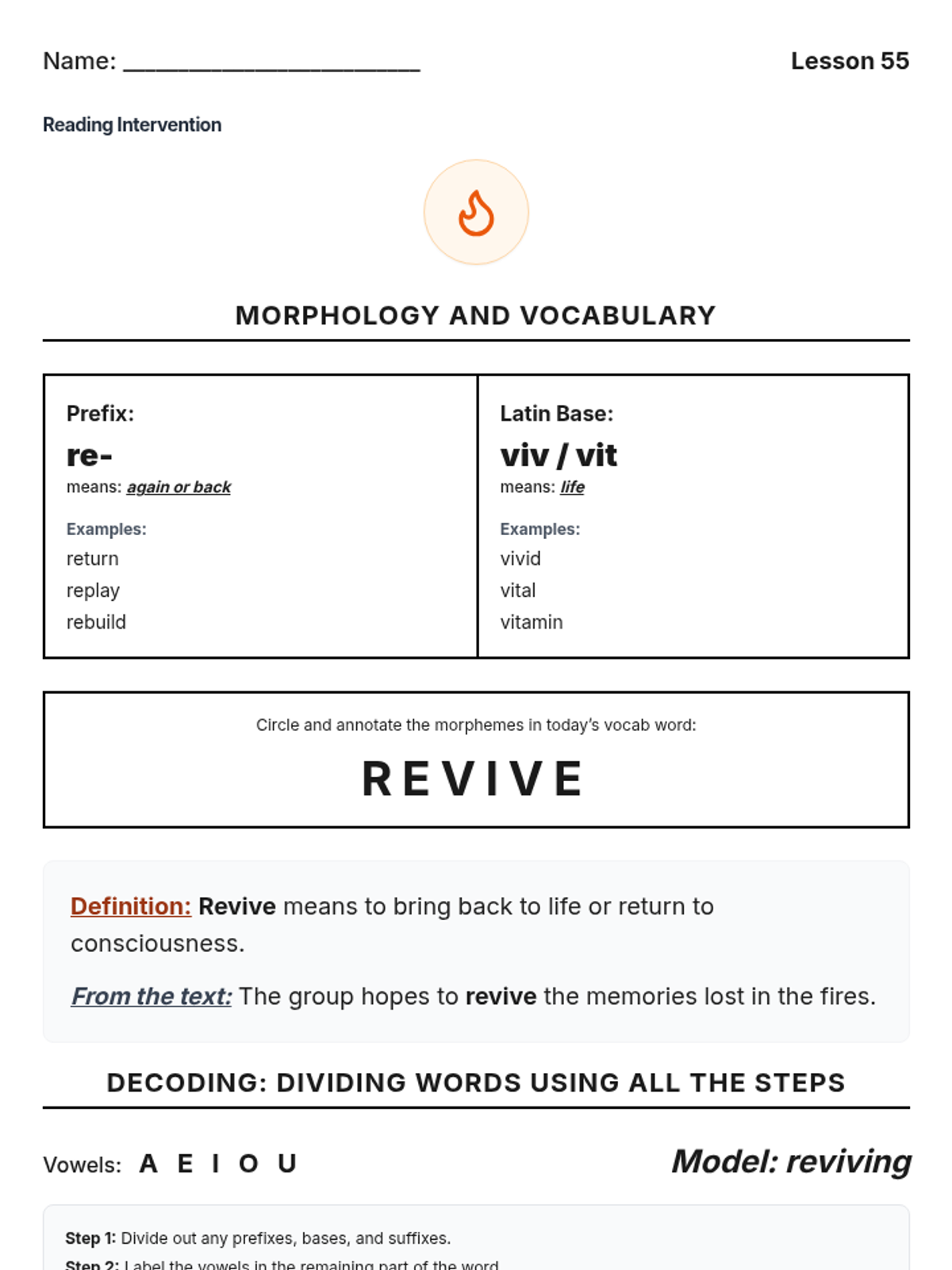
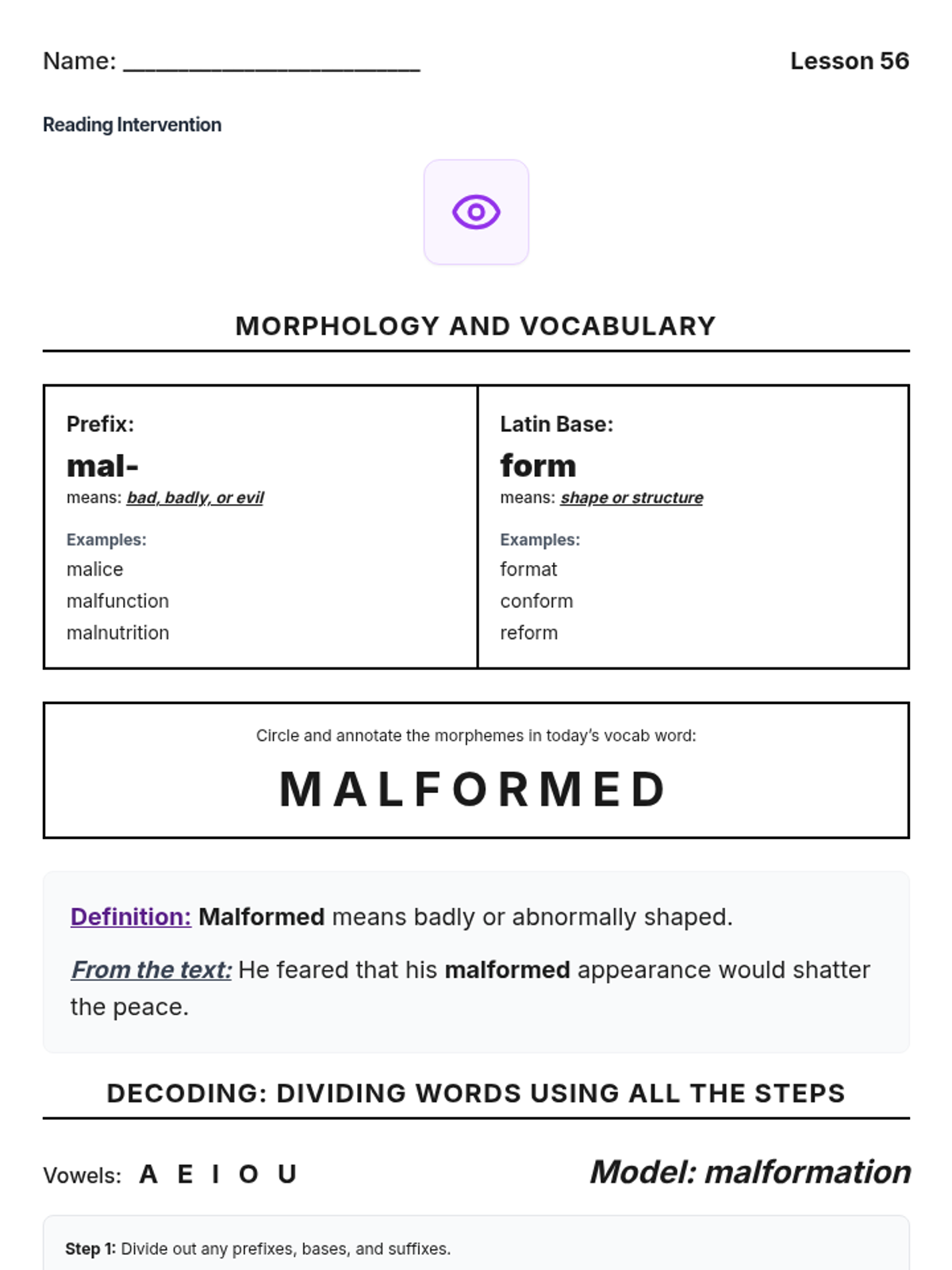
A series of three reading intervention lessons focusing on Ray Bradbury's writing process, the conclusion of Fahrenheit 451, and the origin of Frankenstein, teaching advanced morphology and decoding strategies.
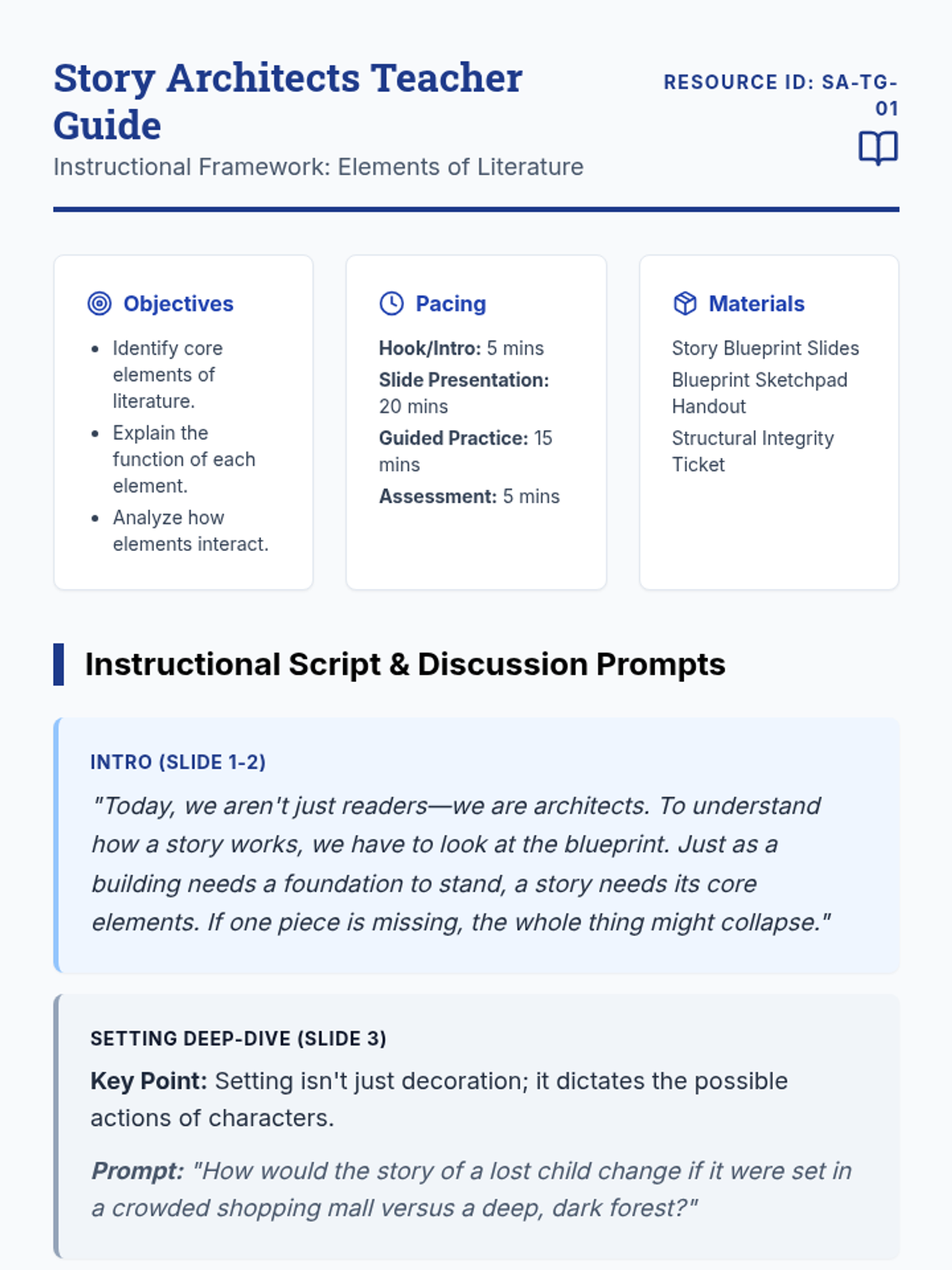
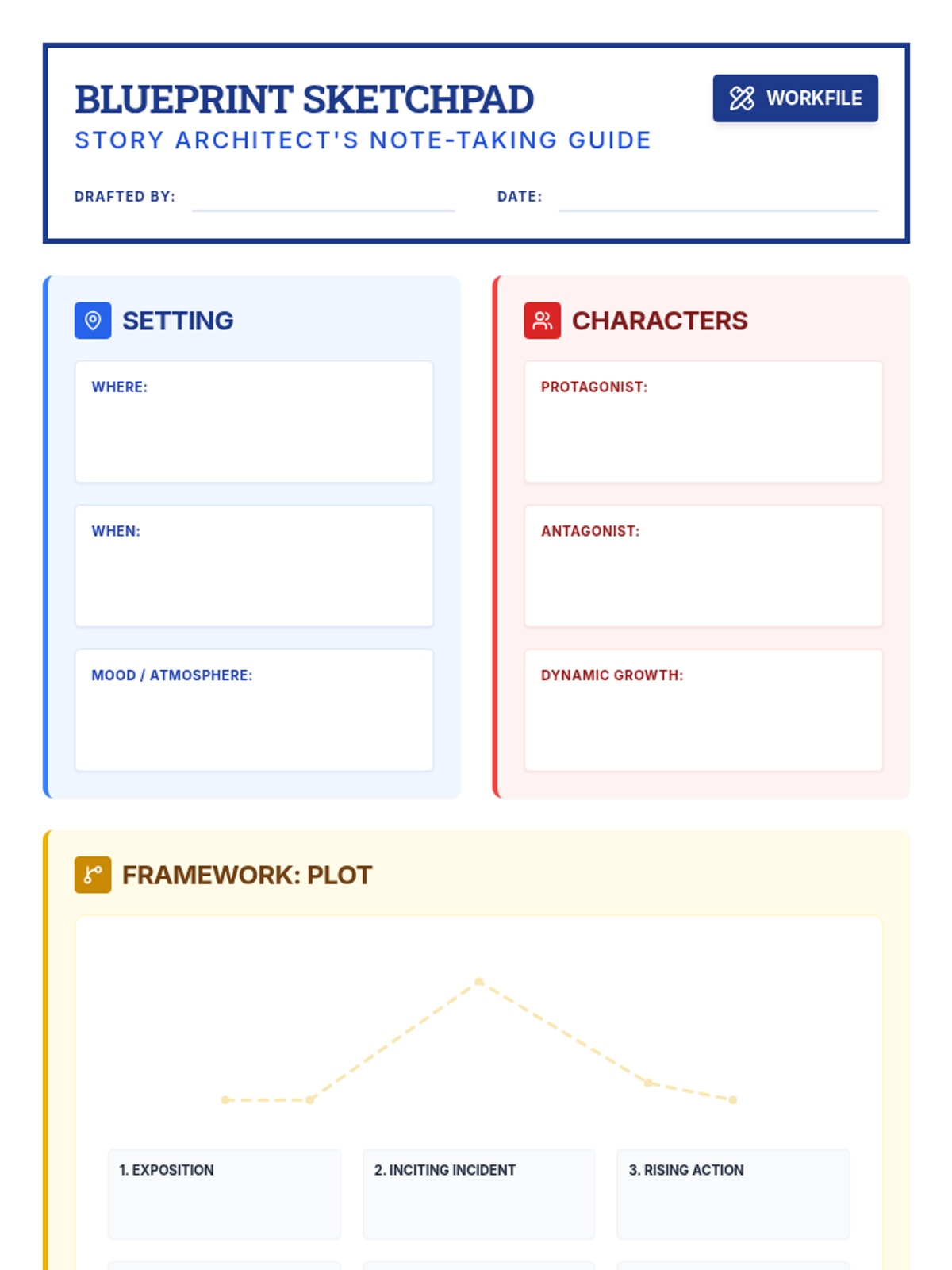
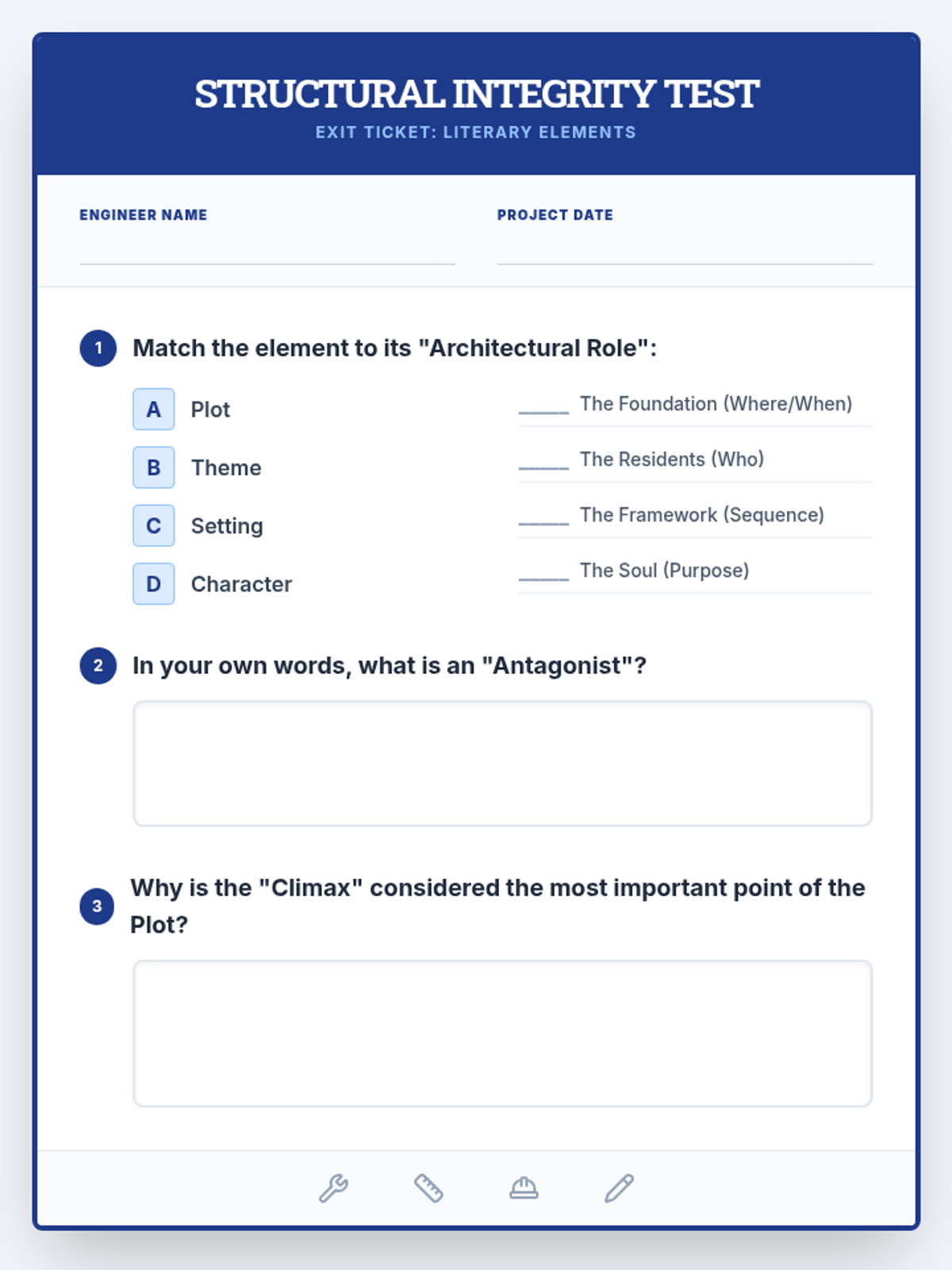
A comprehensive introduction to the core elements of literature—plot, character, setting, and theme—using an architectural blueprint metaphor to help students visualize story structure.
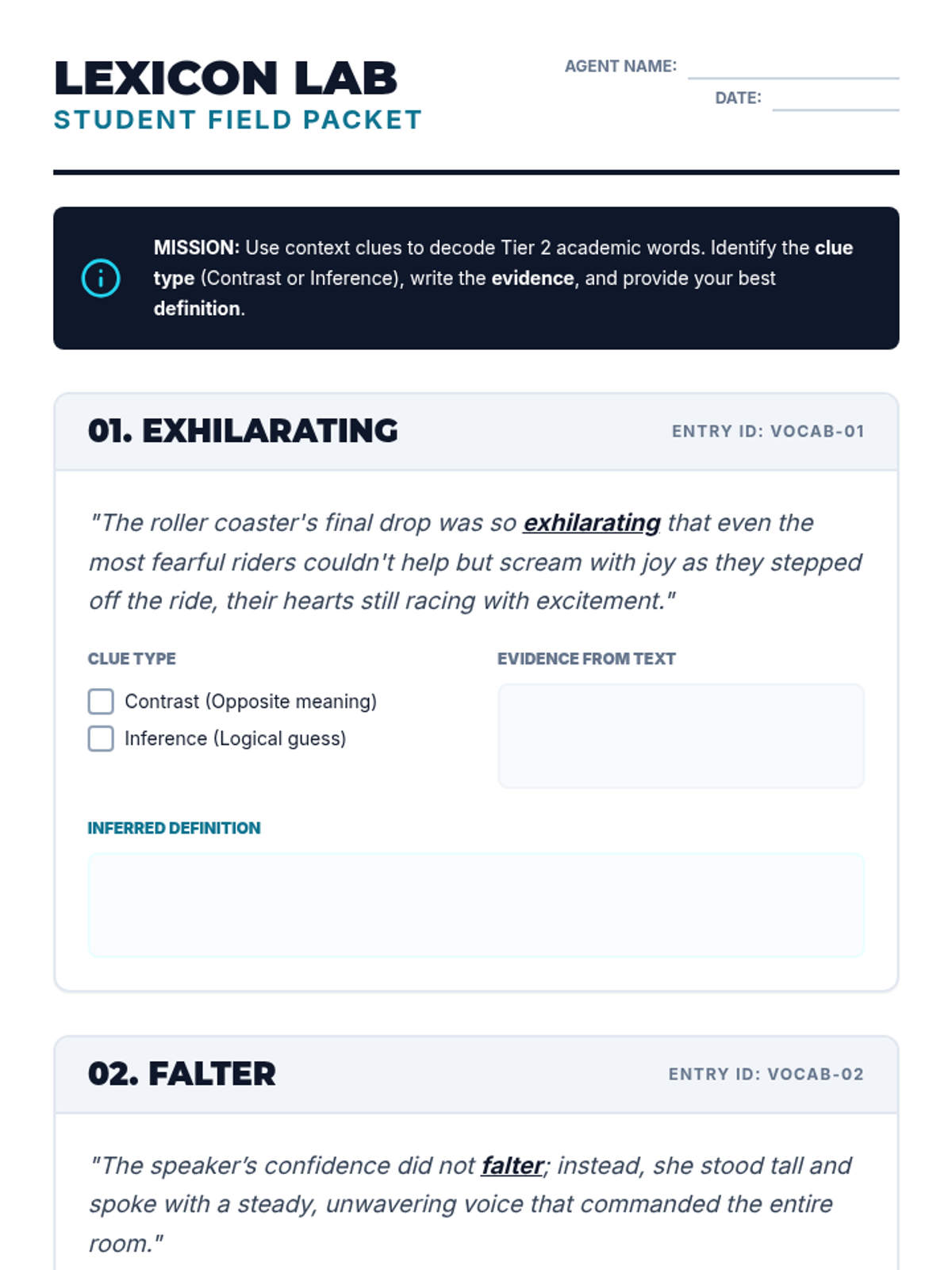
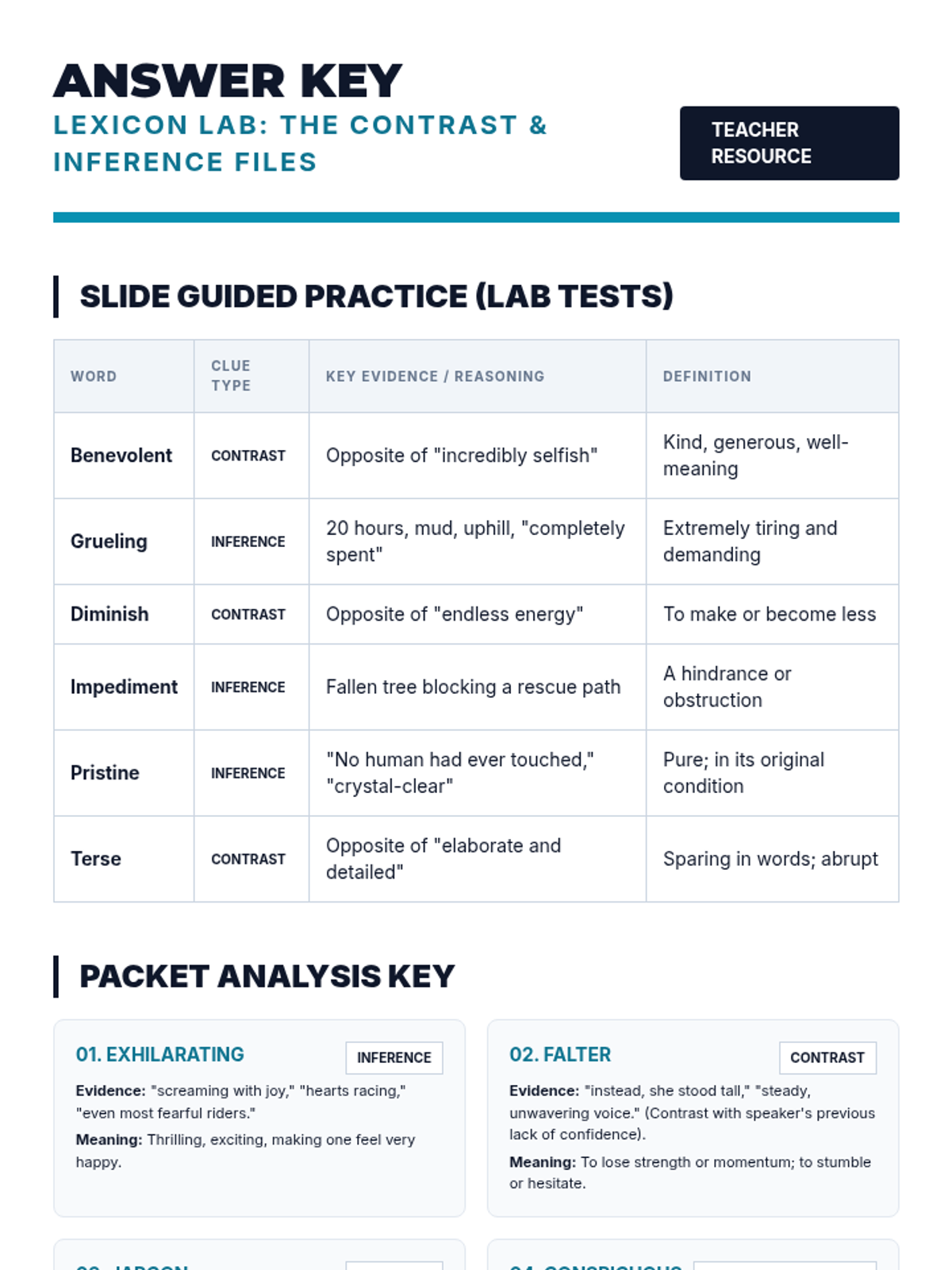
A high-challenge lesson for 7th graders focusing on using contrast and inference context clues to decode Tier 2 academic vocabulary. Students act as 'Lexicon Analysts' to solve linguistic puzzles.
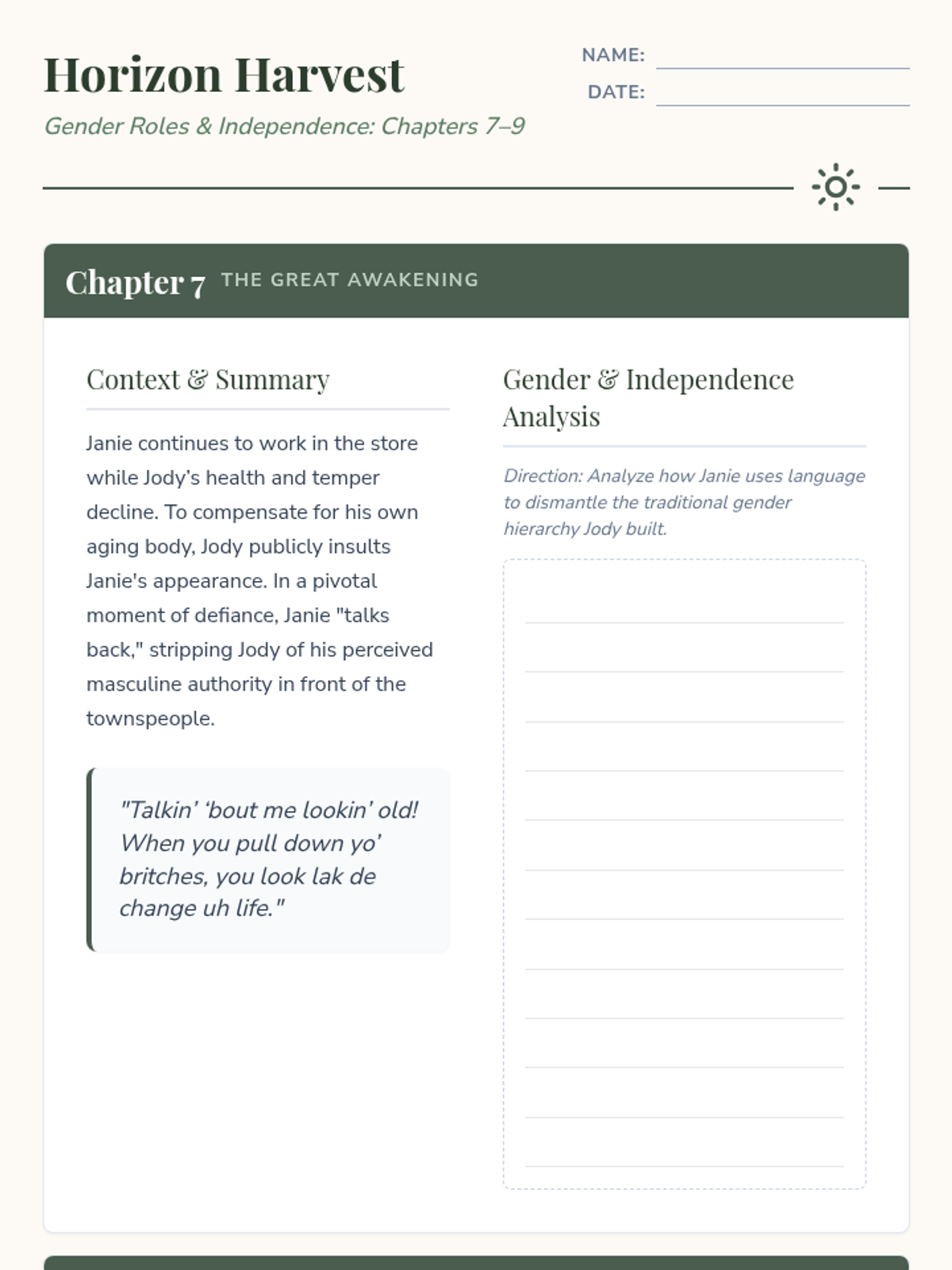
A deep dive into Janie's transformation in Chapters 7-9 of Zora Neale Hurston's 'Their Eyes Were Watching God', focusing on the shift from submission to independence.
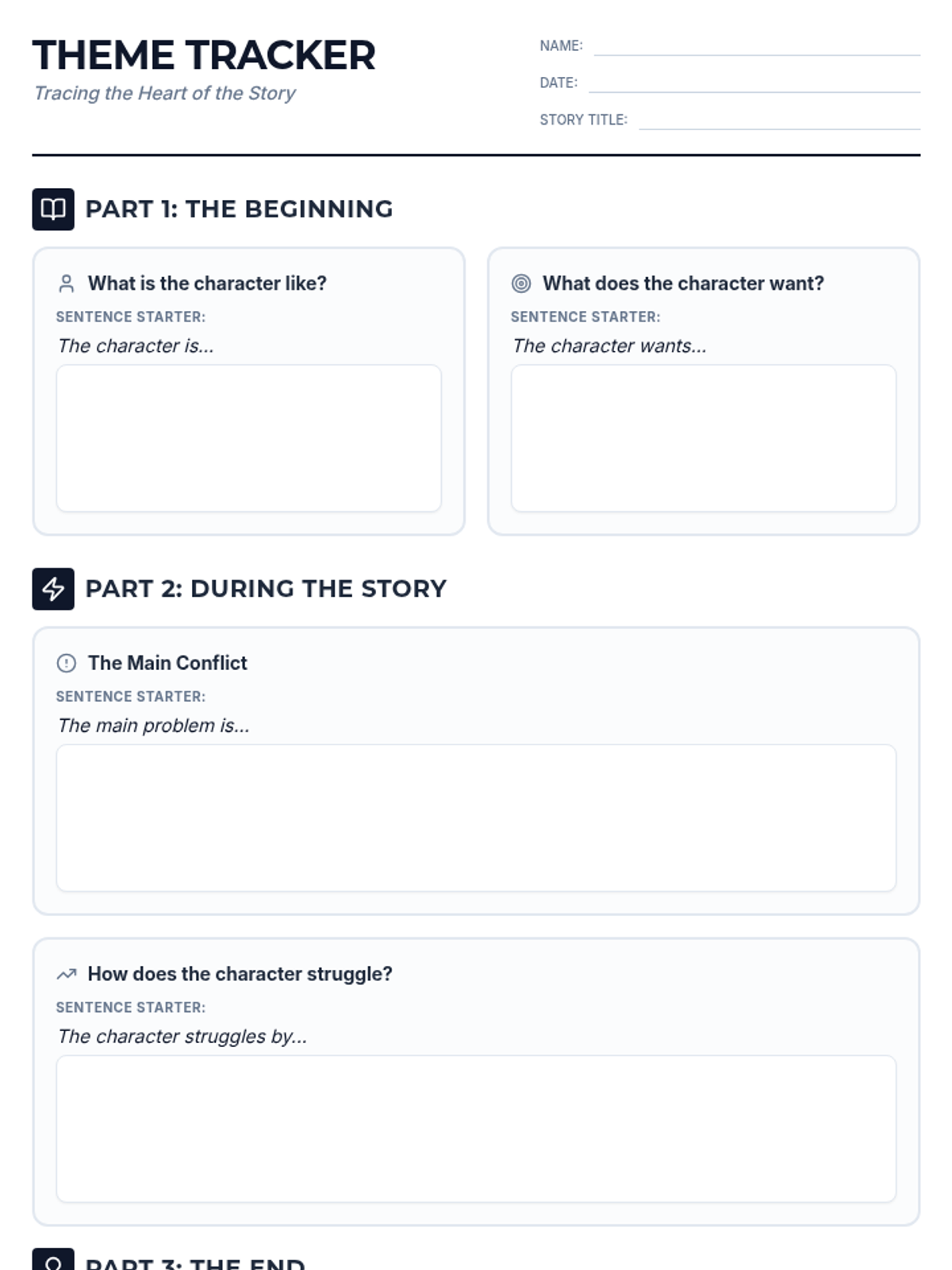
Students will identify the development of a story's theme by tracking character traits, motivations, conflicts, and resolutions. This lesson provides a structured framework for analyzing how a message emerges from narrative elements.
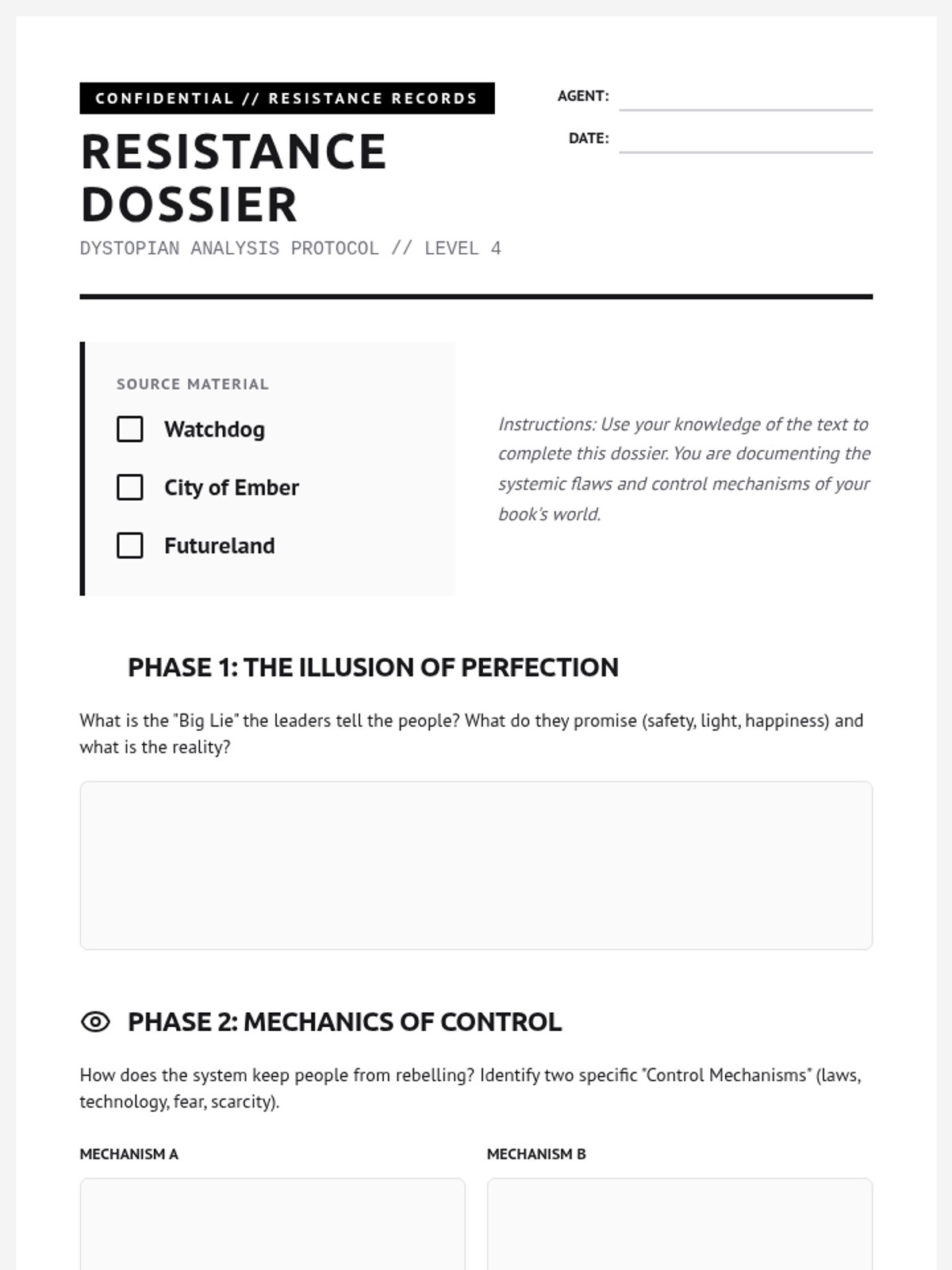
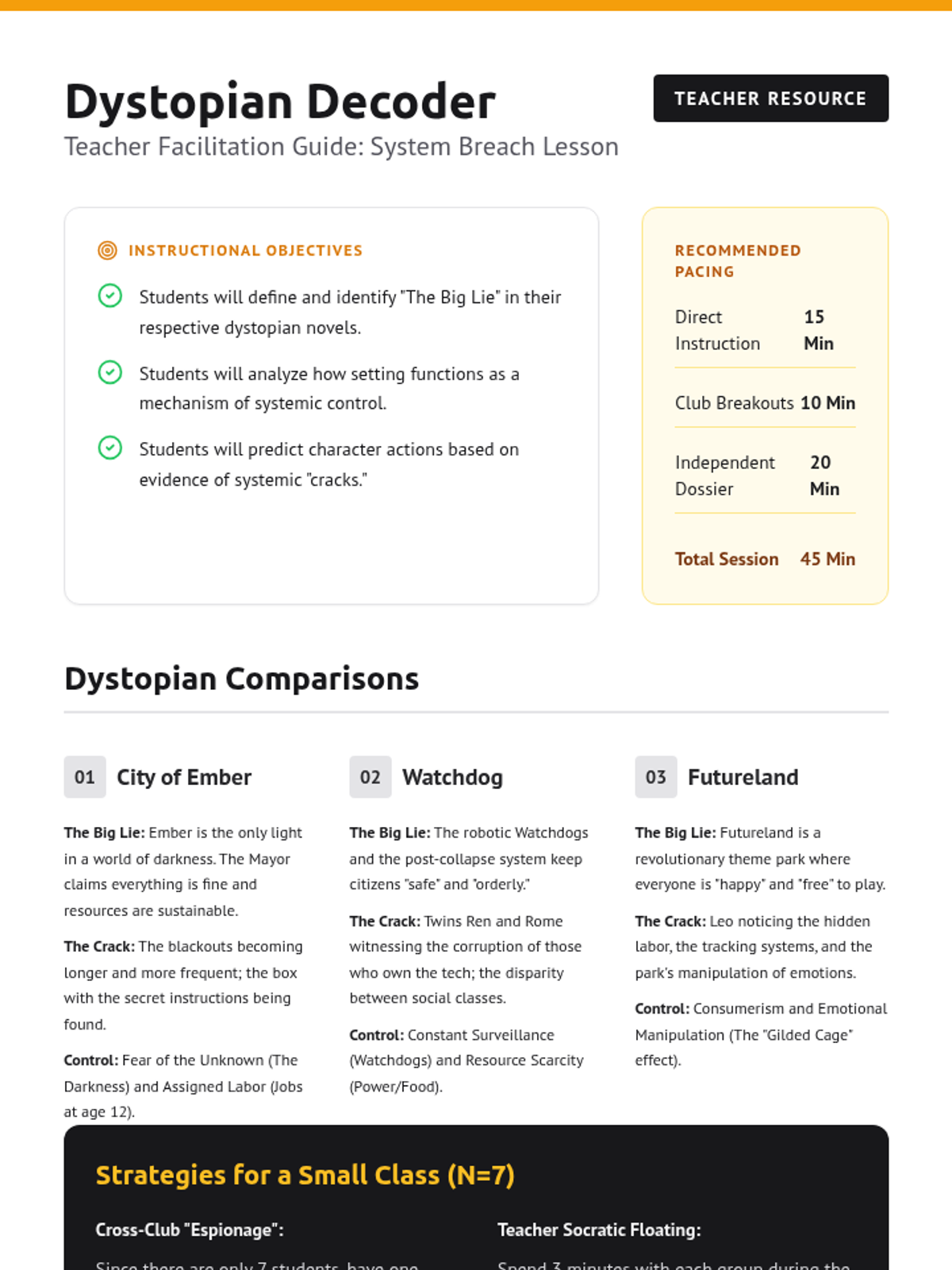
A lesson focused on analyzing systemic control and the 'big lie' in dystopian literature, specifically tailored for students reading Watchdog, City of Ember, and Futureland. Students explore how settings function as characters and how protagonists begin to challenge the status quo.
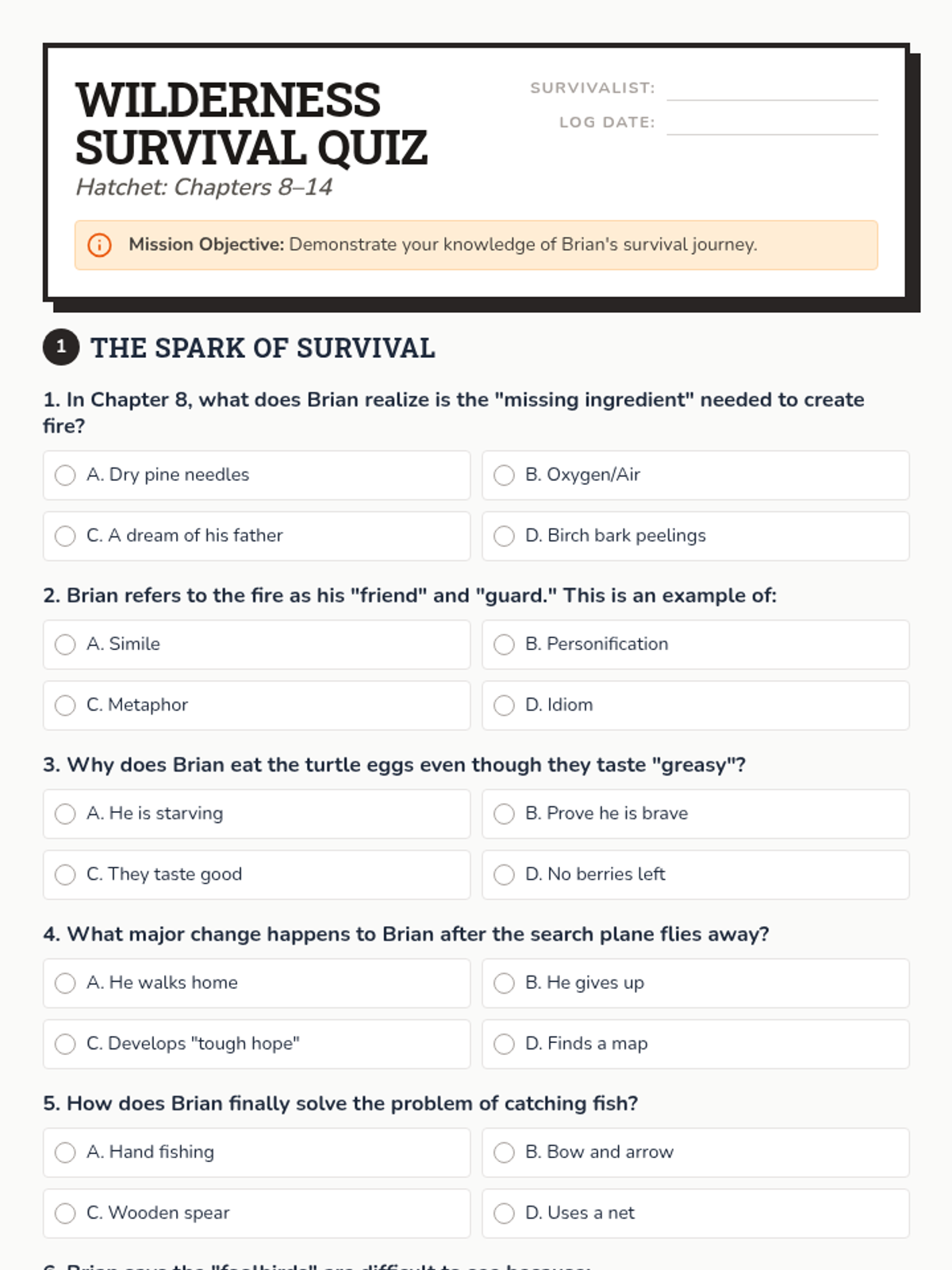
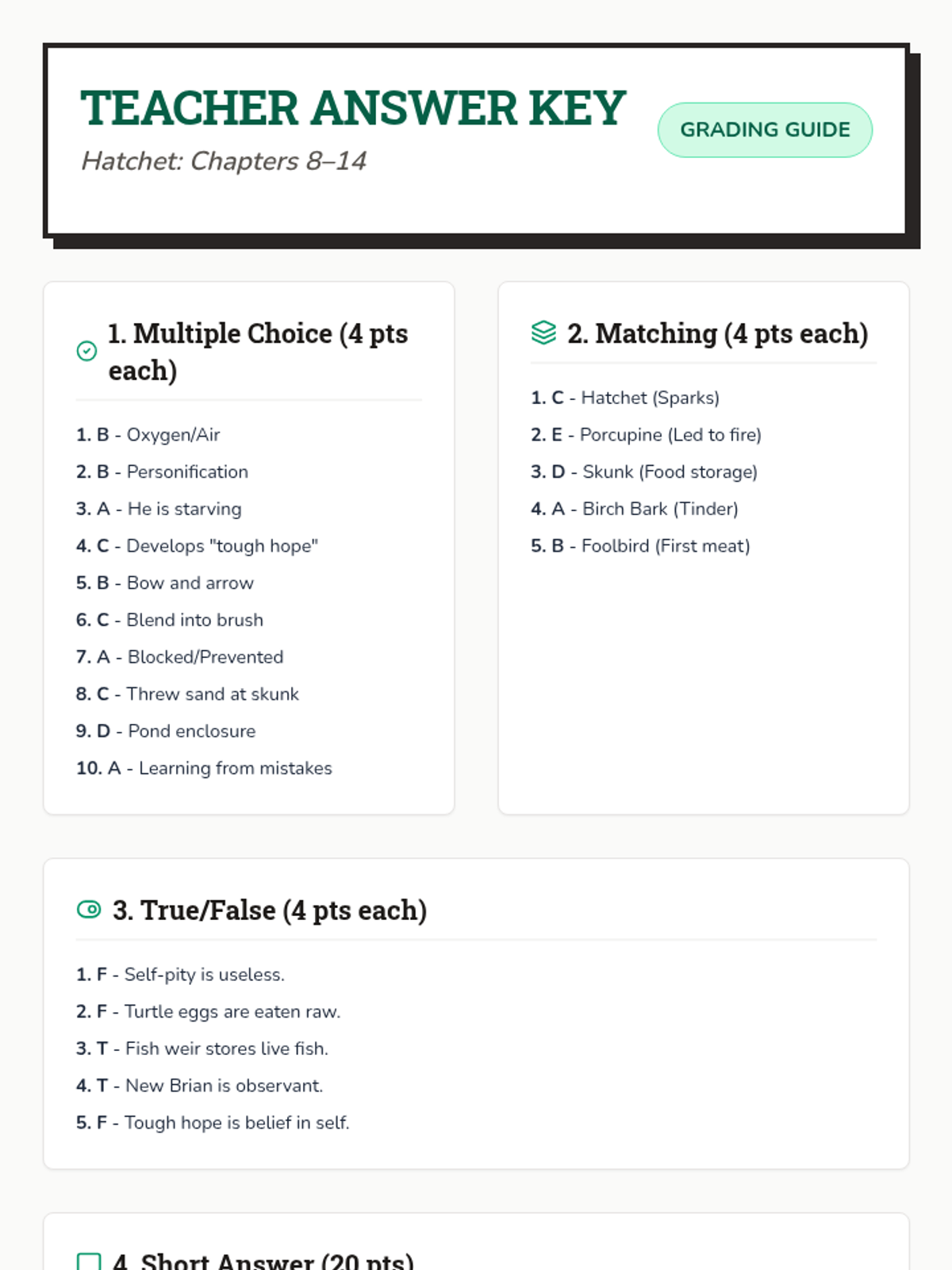
A lesson covering chapters 8-14 of Hatchet, focusing on survival strategies, character growth, and figurative language.