Fundamental hardware proficiency, secure online behavior, and ethical social media engagement. Equips learners with productivity tool mastery, web publishing skills, and critical evaluation of emerging technologies.
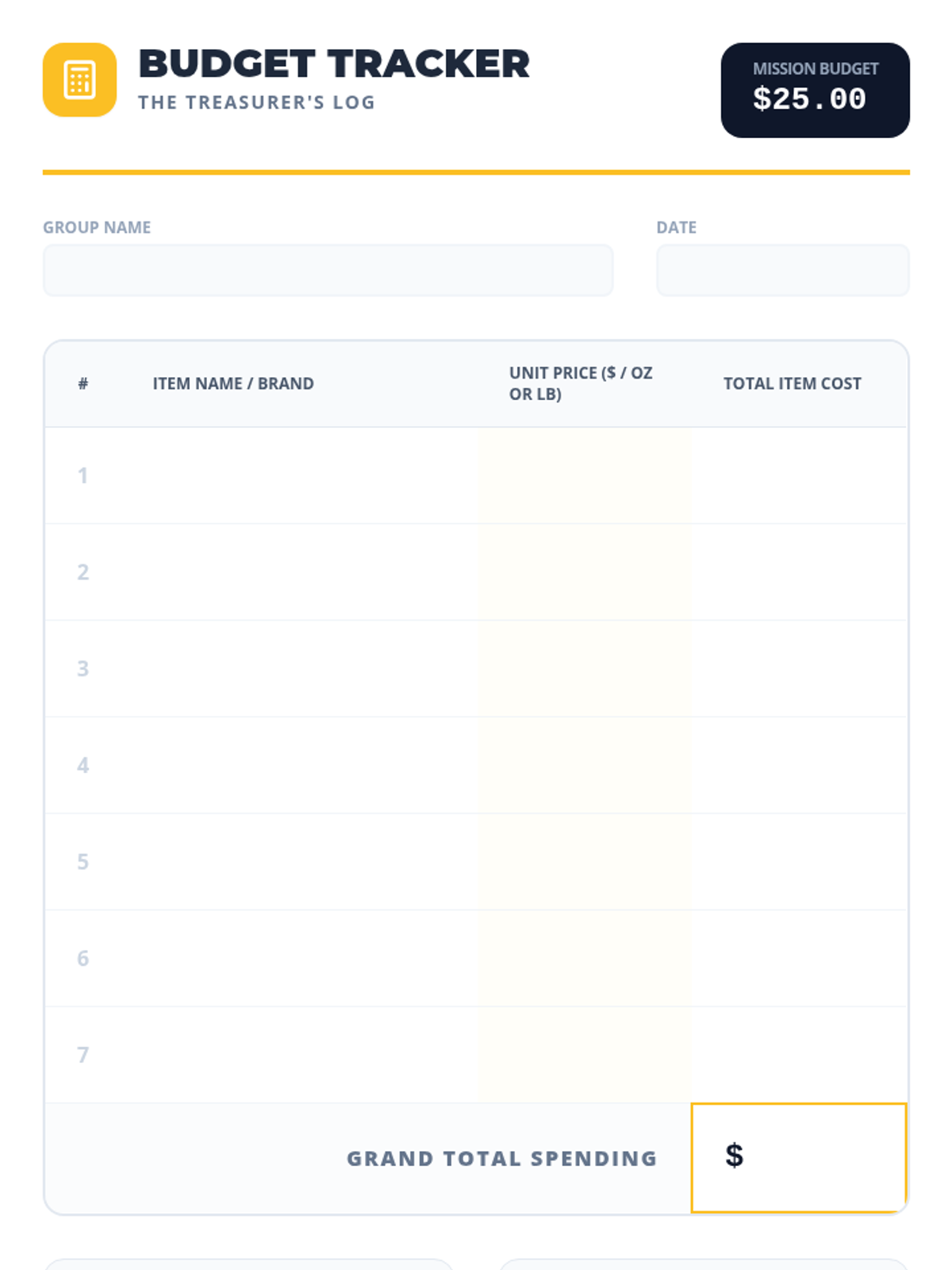
A specialized tracking sheet for the team 'Treasurer' to log grocery items, record unit prices, and calculate total spending within a $25 budget.
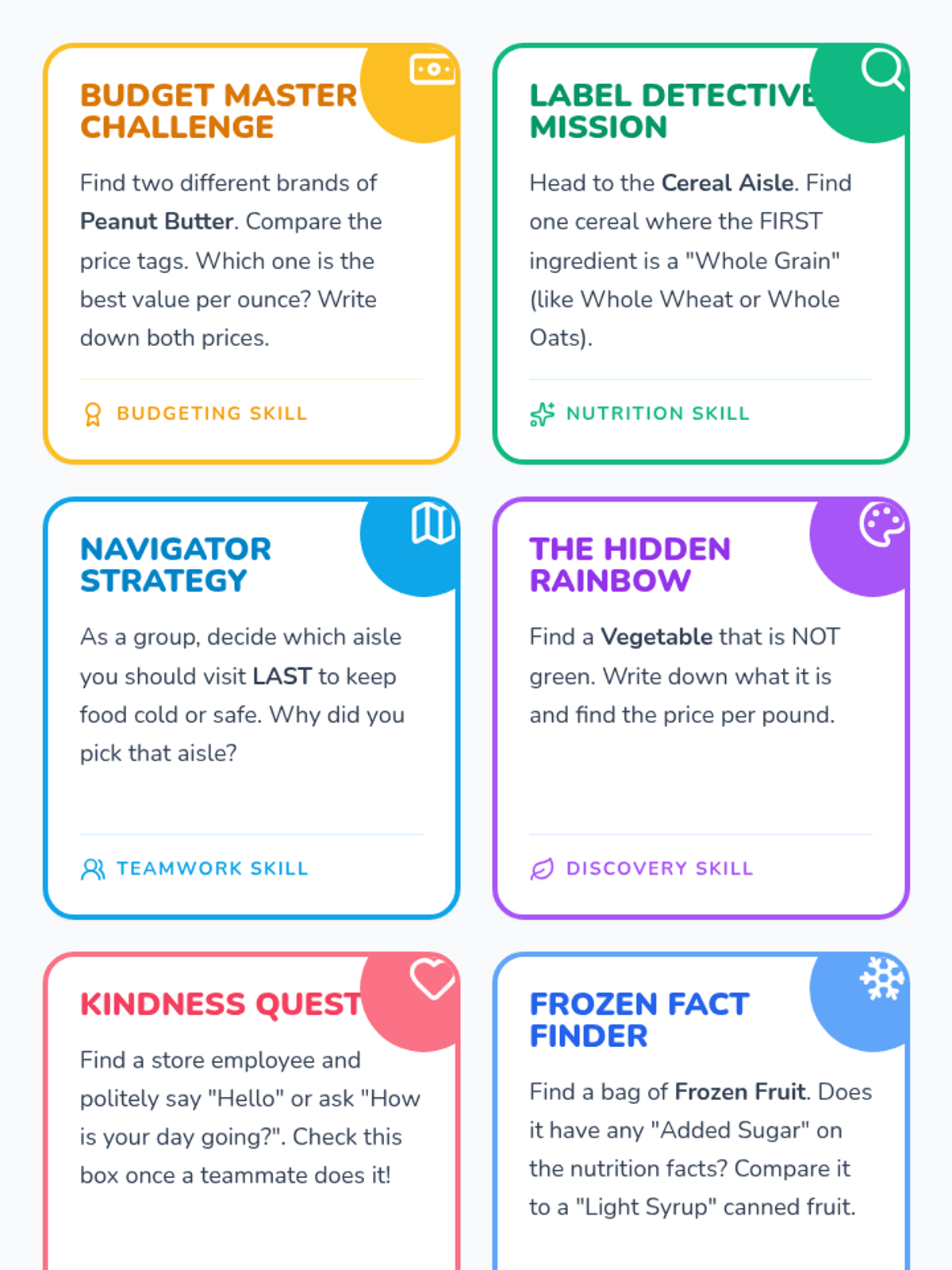
A set of 6 printable task cards that challenge student teams to perform specific missions involving nutrition, budgeting, and social skills in an online setting.
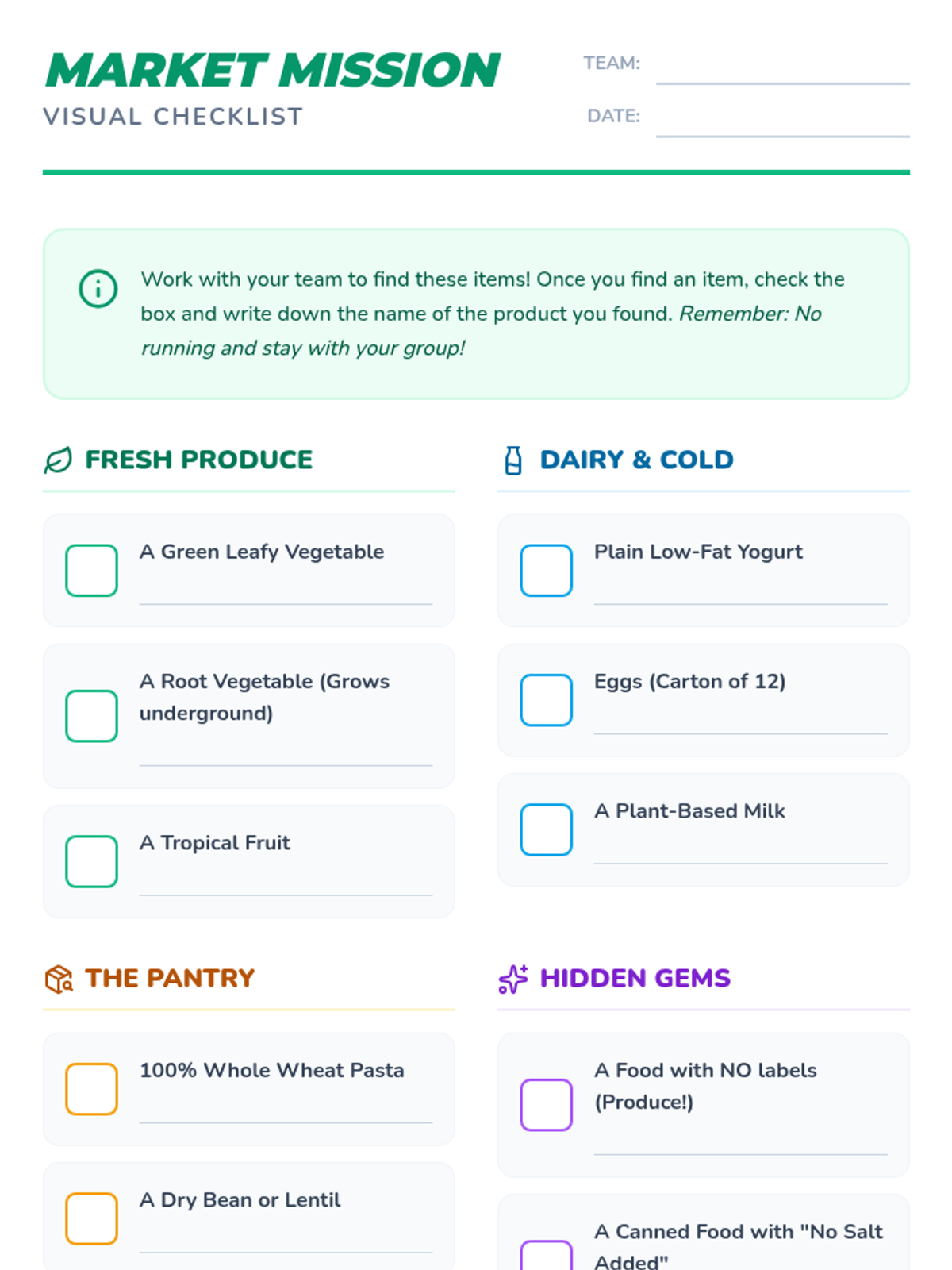
A visual checklist with icons and checkboxes for students to identify healthy grocery items across various departments.
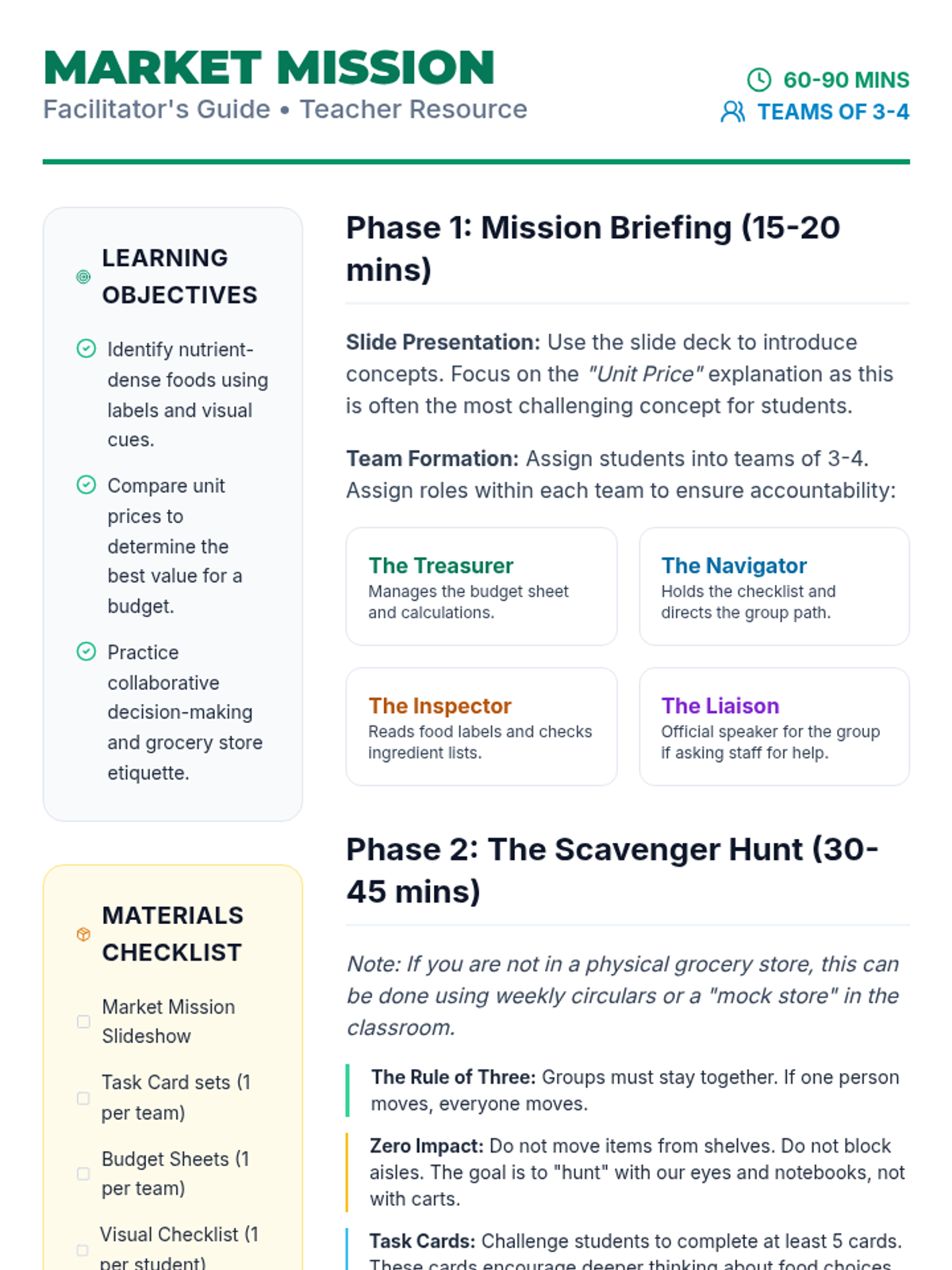
A comprehensive guide for teachers and facilitators to lead the Market Mission online scavenger hunt, including learning objectives, team roles, and debrief questions.
A vibrant, visual slide deck that introduces the Market Mission online scavenger hunt, covering digital searching tips, budgeting basics, and online teamwork expectations.
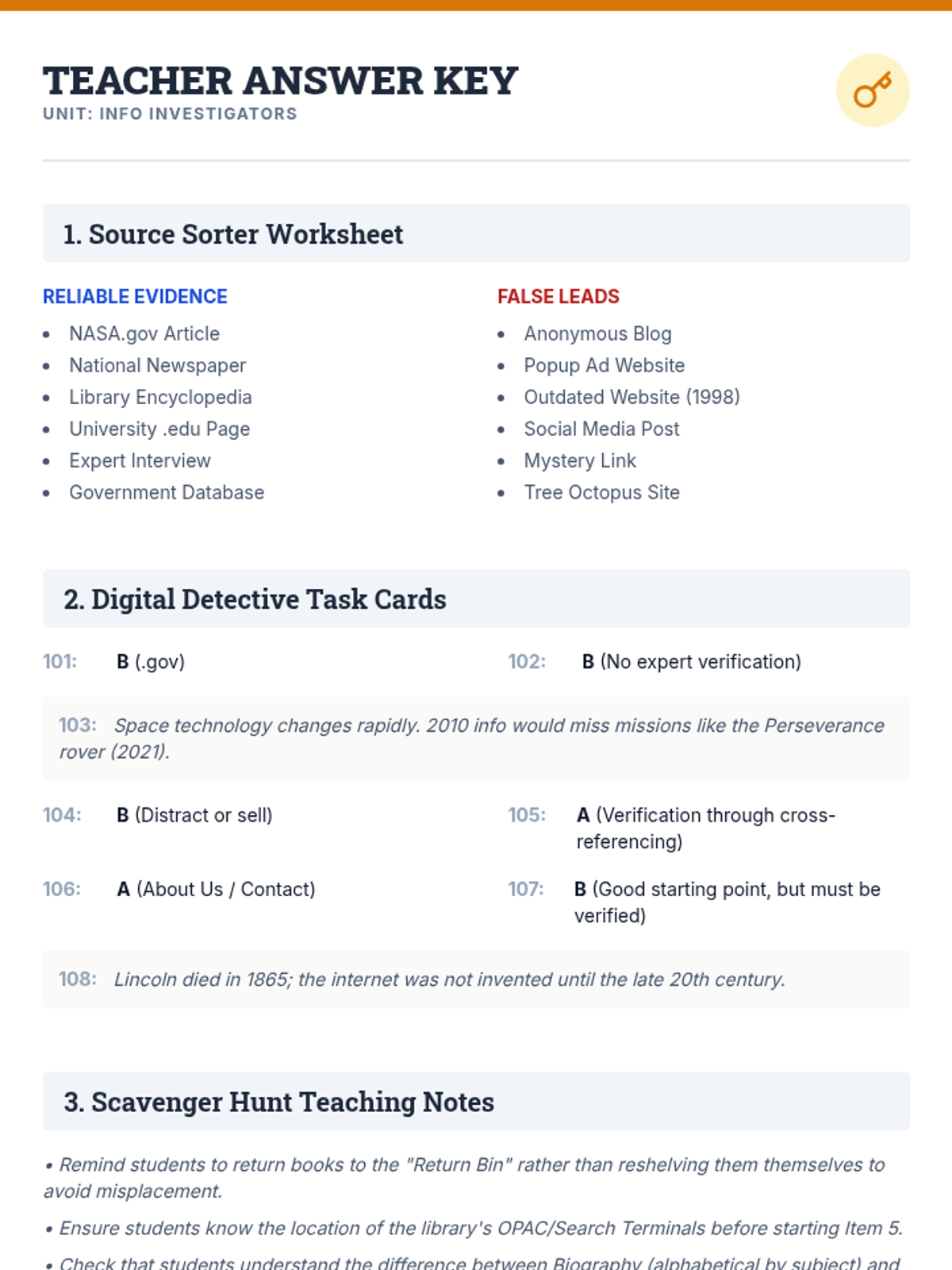
A comprehensive teacher answer key and instructional guide for the Info Investigators library skills lesson.
A detective-themed presentation introducing students to library navigation, the Dewey Decimal System, and online source evaluation techniques.
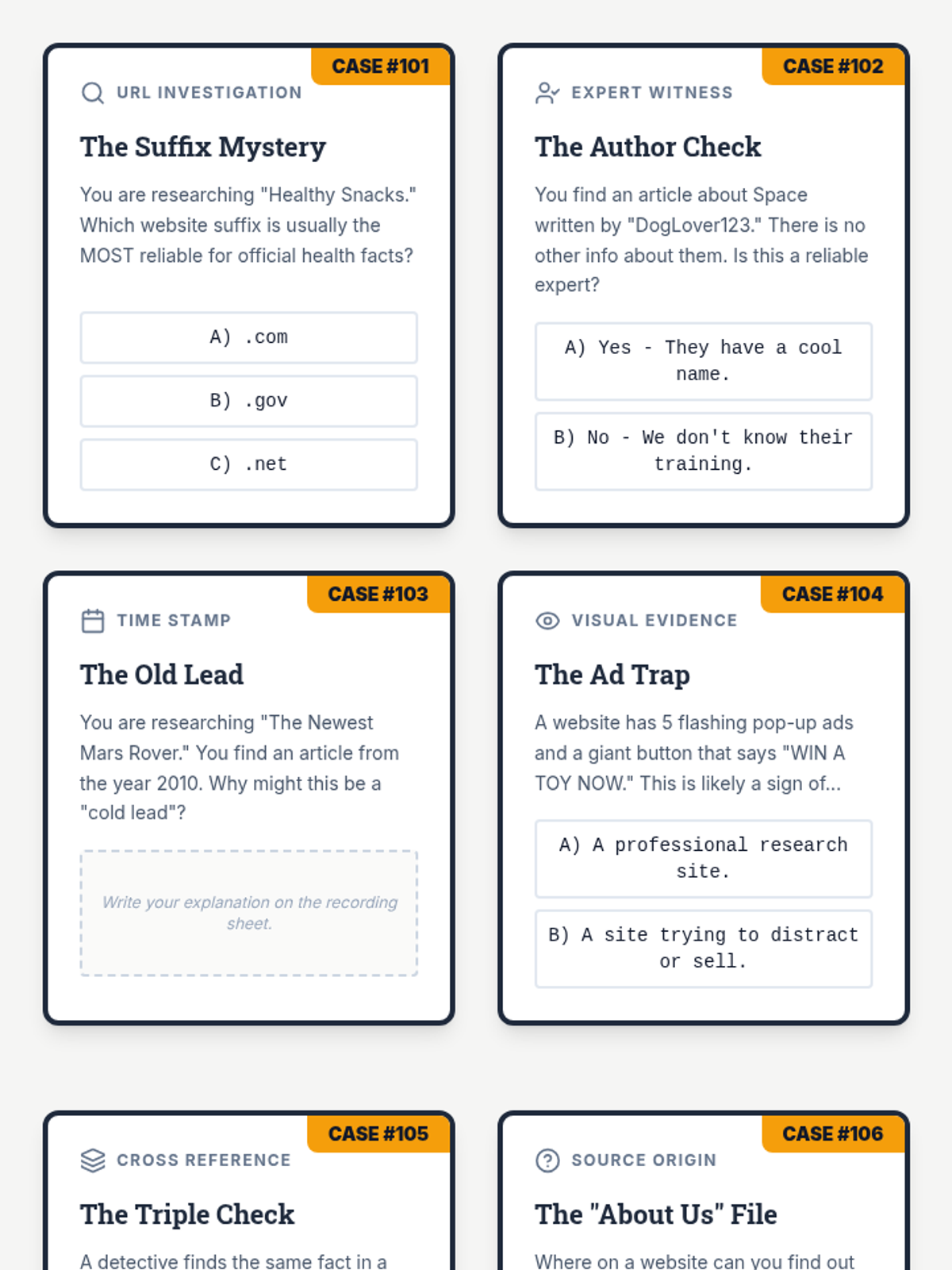
A set of 8 detective-themed task cards for evaluating digital information reliability, including a student recording sheet.
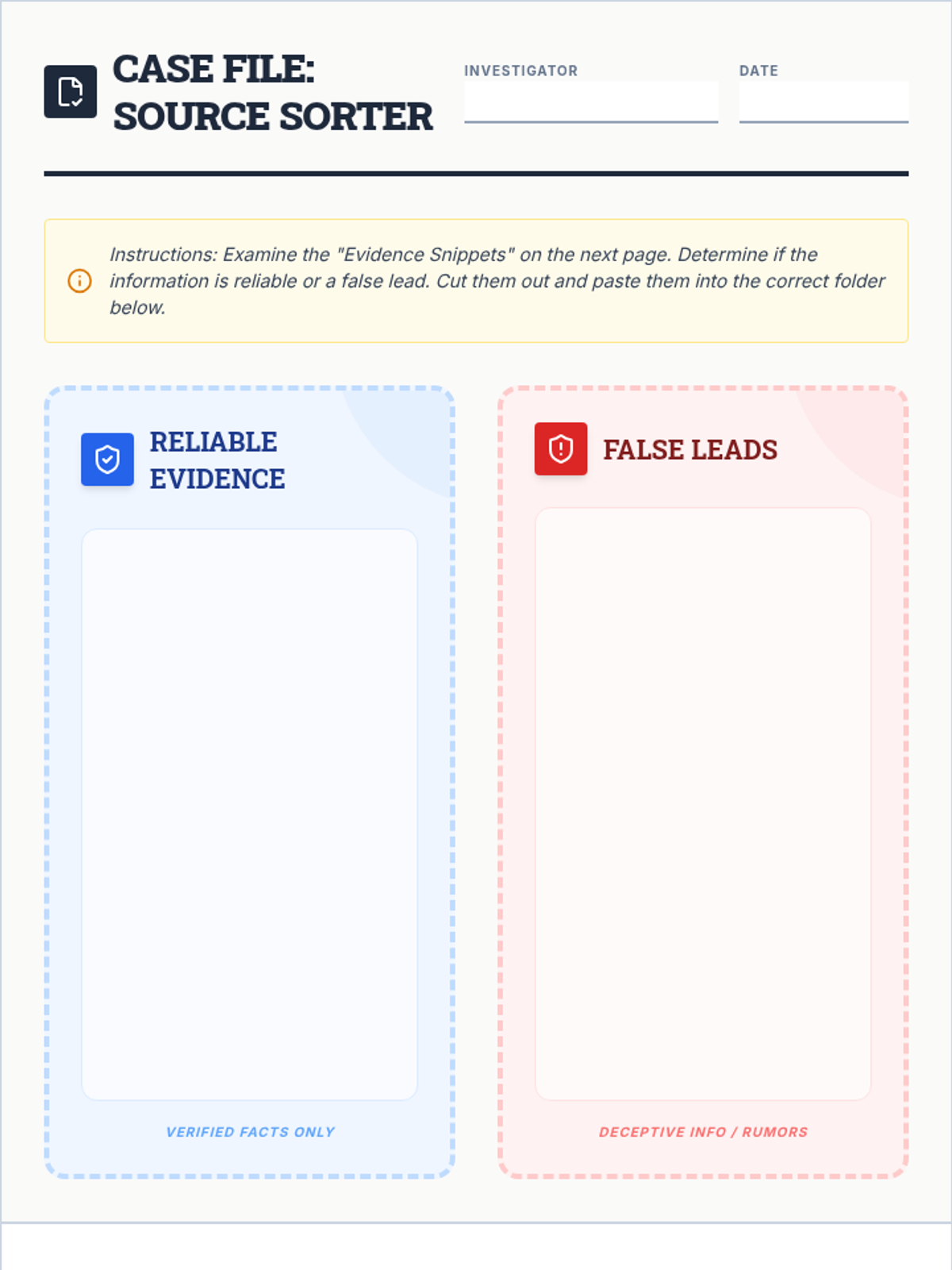
A cut-and-paste sorting worksheet where students evaluate various information sources and categorize them as reliable evidence or false leads.
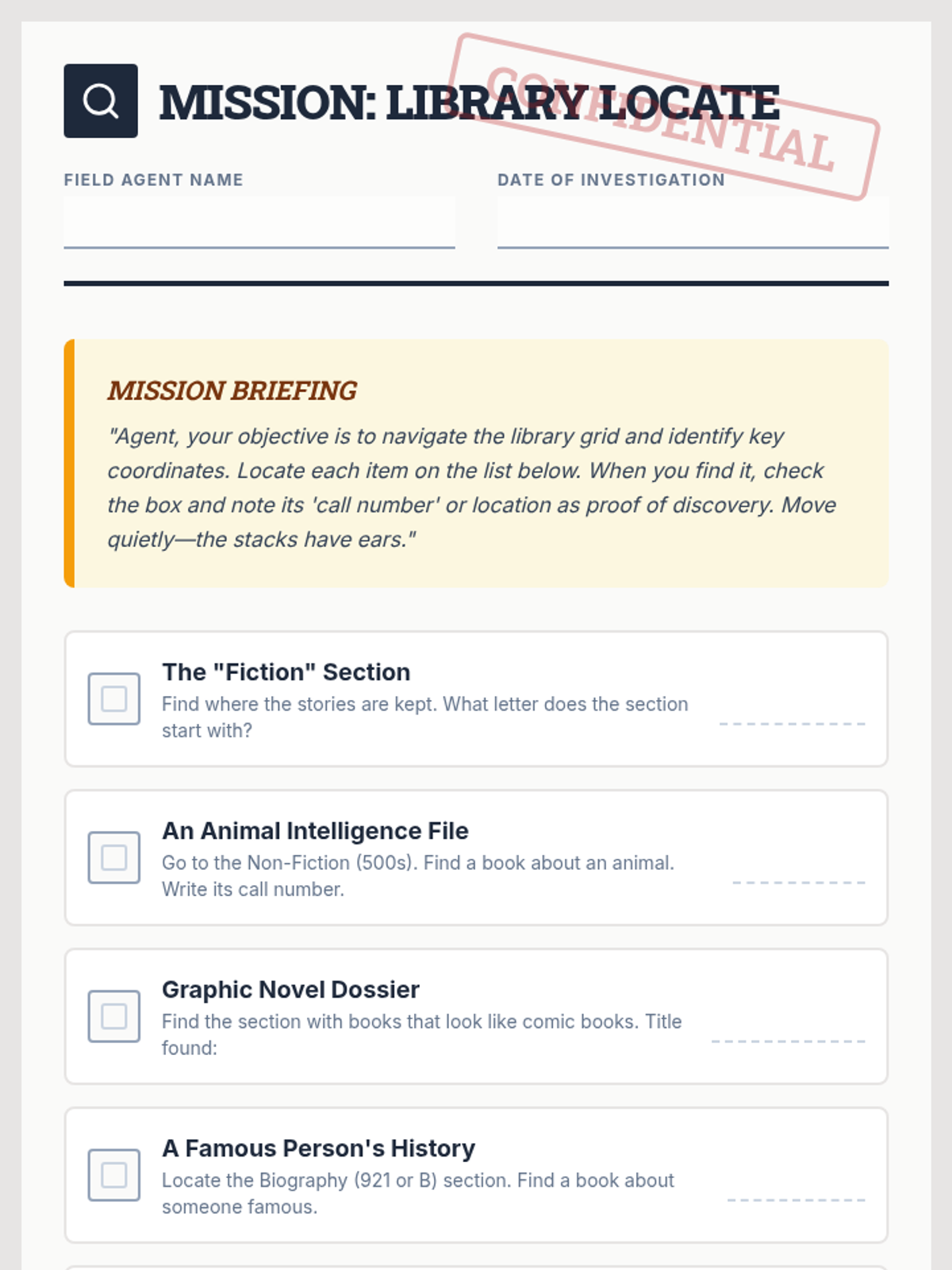
A library scavenger hunt document designed as a confidential mission briefing for students to find key library locations and items, updated to remove shelf markers.
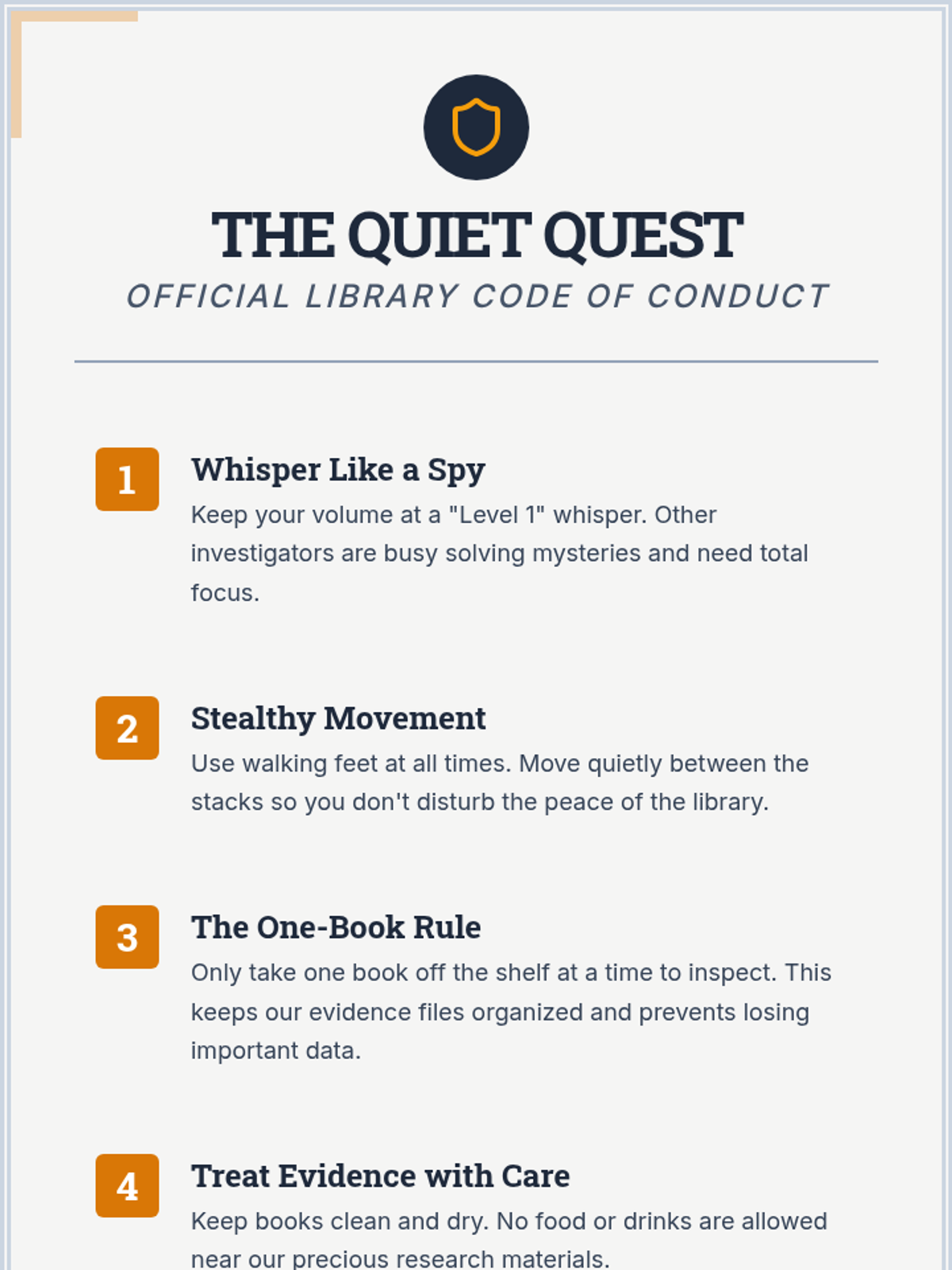
A detective-themed anchor chart outlining five key library rules for student behavior and book care, updated to exclude shelf markers.
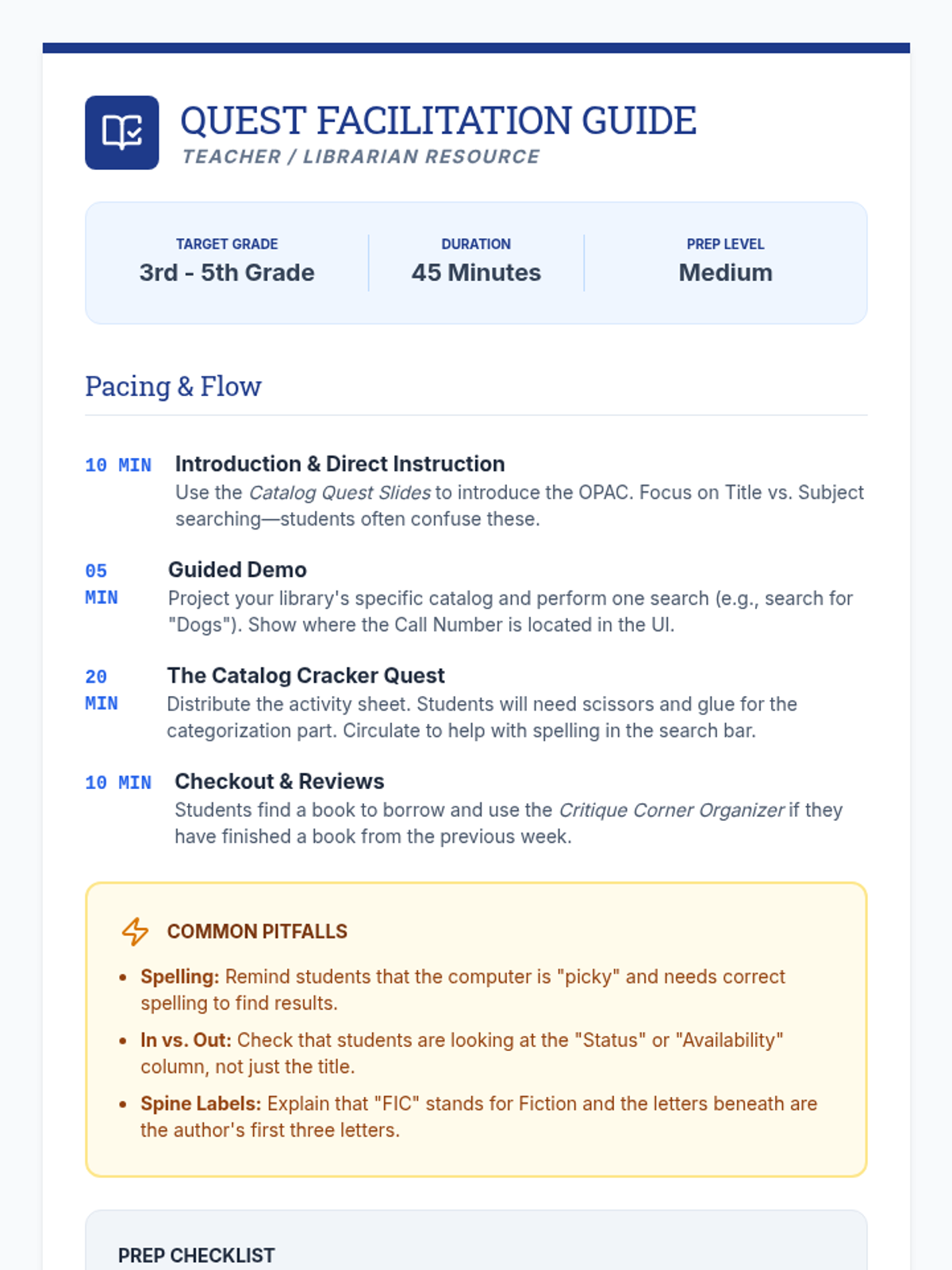
A facilitator guide for librarians and teachers, featuring a 45-minute pacing guide, common student misconceptions, and a preparation checklist.
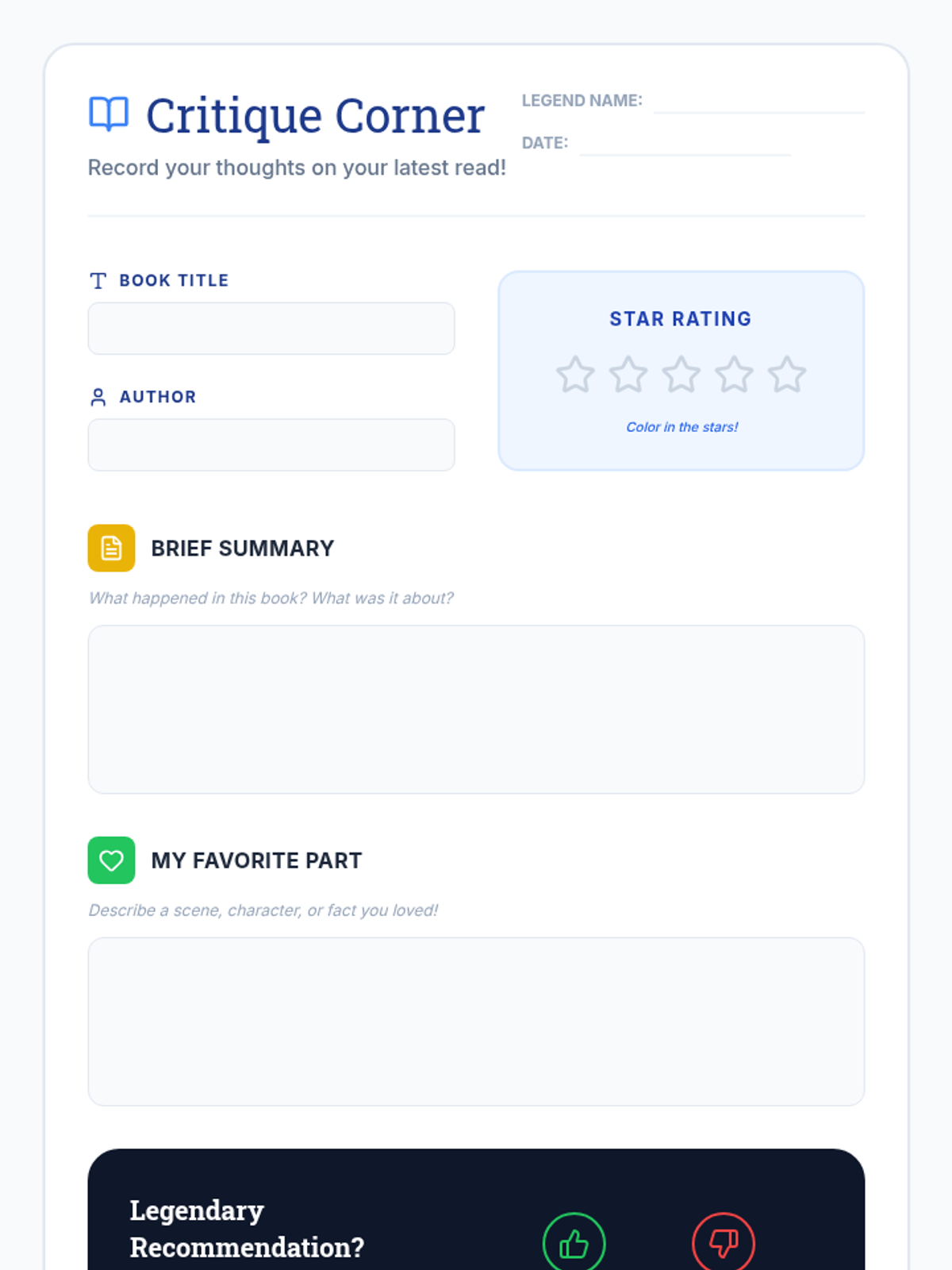
A clean, visually appealing book review worksheet for students to record summaries, star ratings, and recommendations.
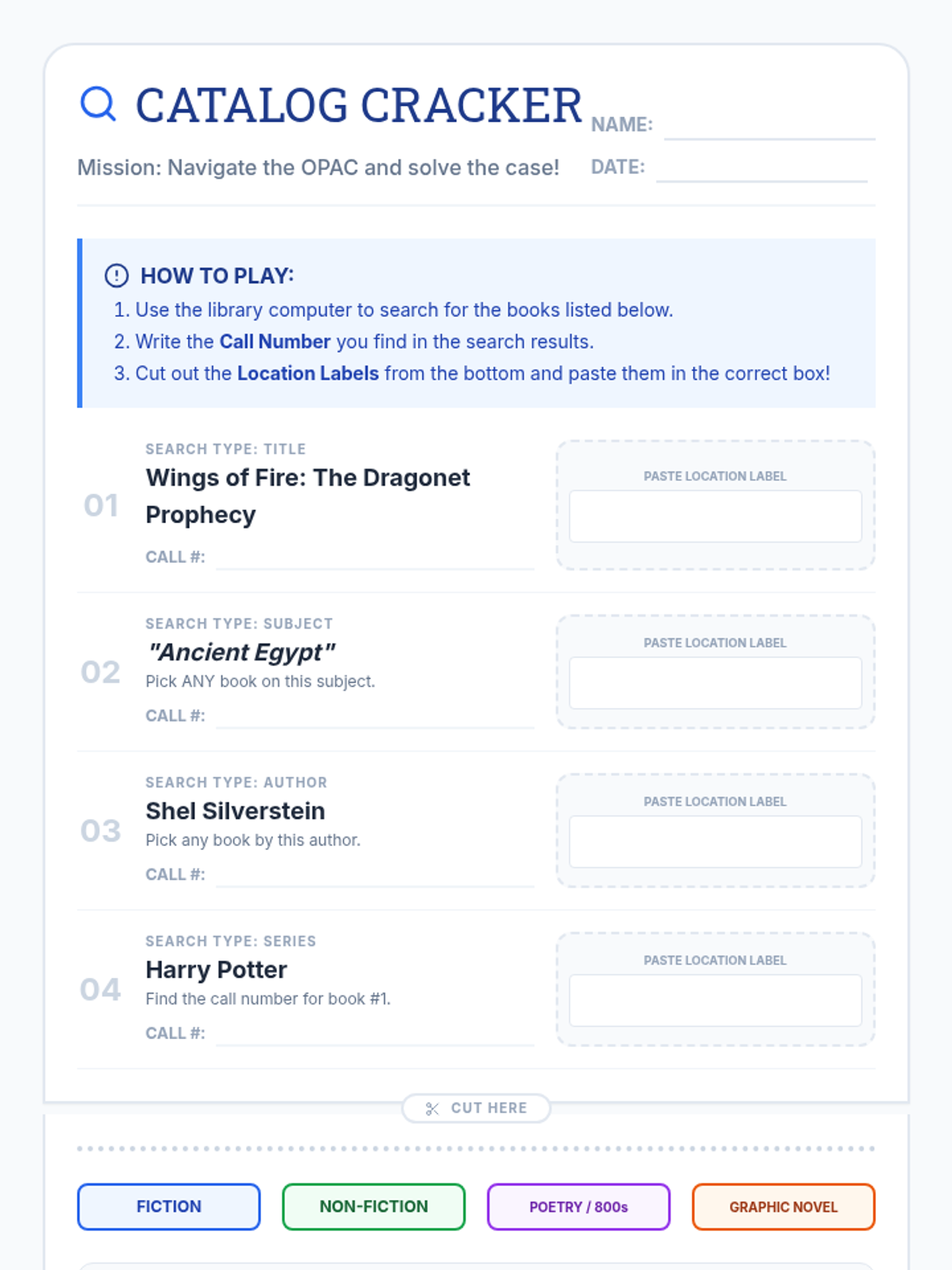
A "Detective Case File" themed scavenger hunt where students search for specific titles, subjects, or authors in the catalog, record call numbers, and paste category labels. Expanded to 4 search types.
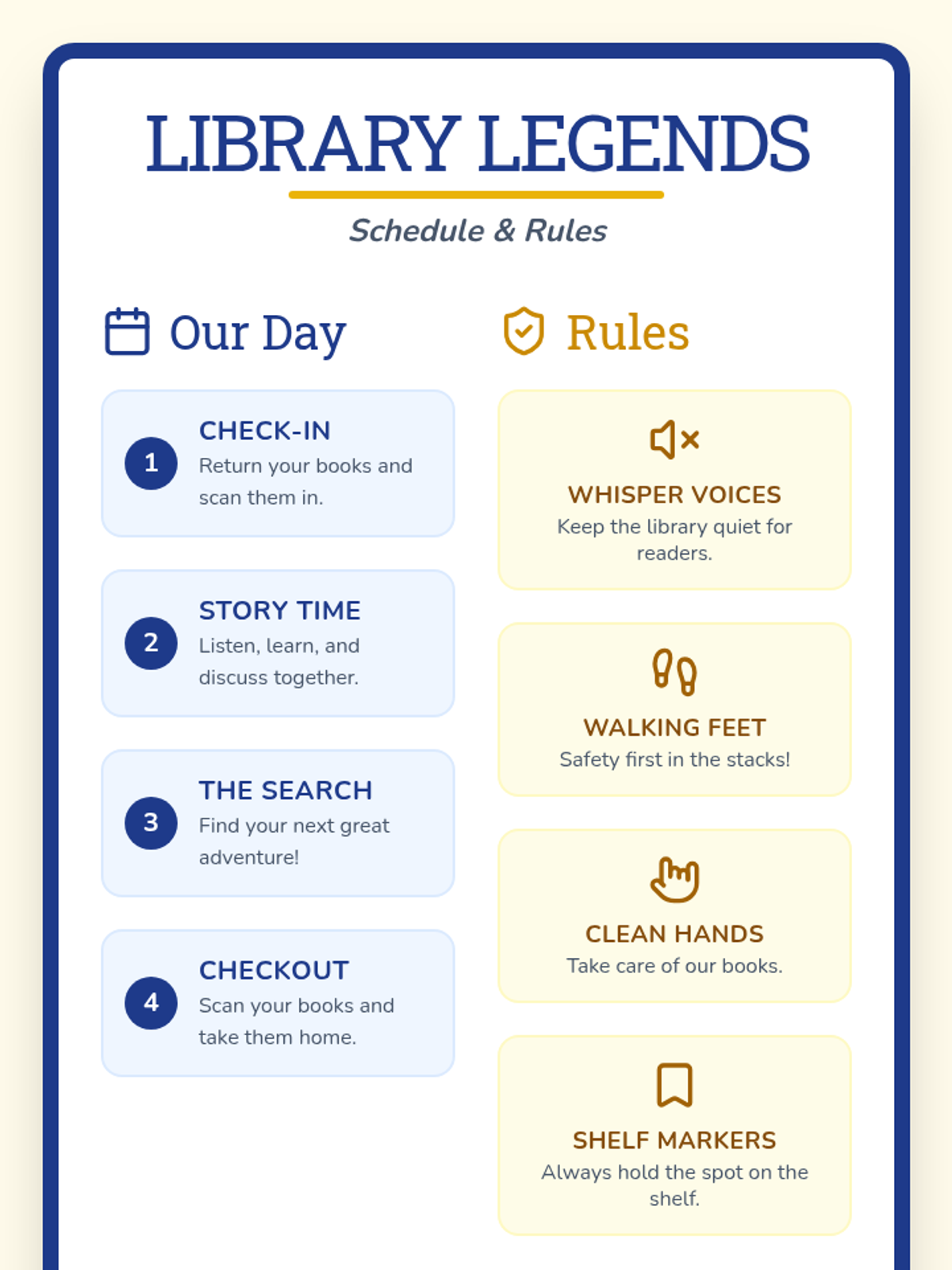
A visual schedule and library rules chart for classroom or library display, featuring a four-step daily routine and four essential library behaviors.
An interactive slide presentation introducing the library catalog (OPAC), searching methods (Author, Title, Subject), and call numbers.
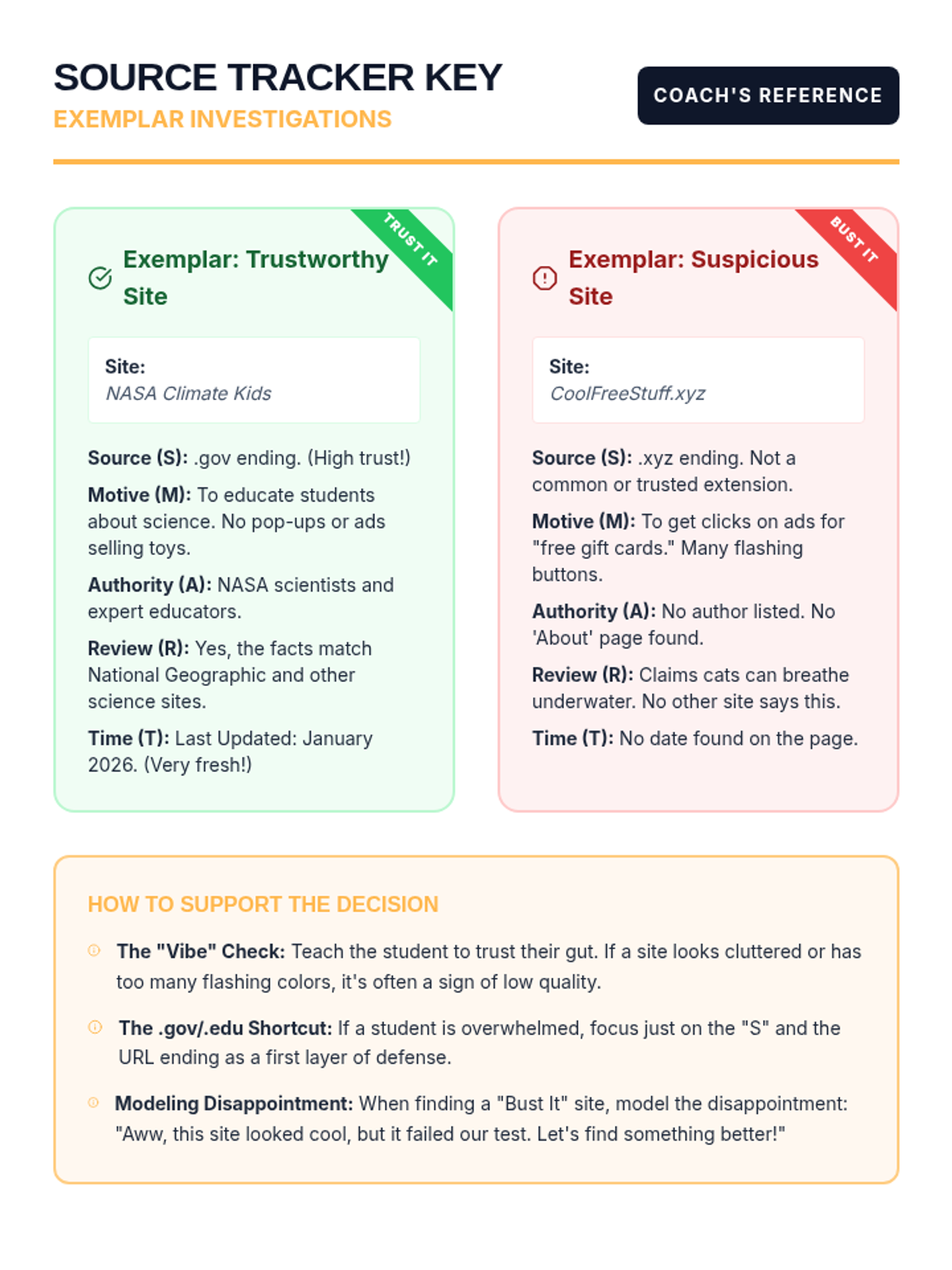
A teacher reference sheet providing exemplar evaluations of trustworthy and suspicious websites to guide students through the S.M.A.R.T. checklist process.
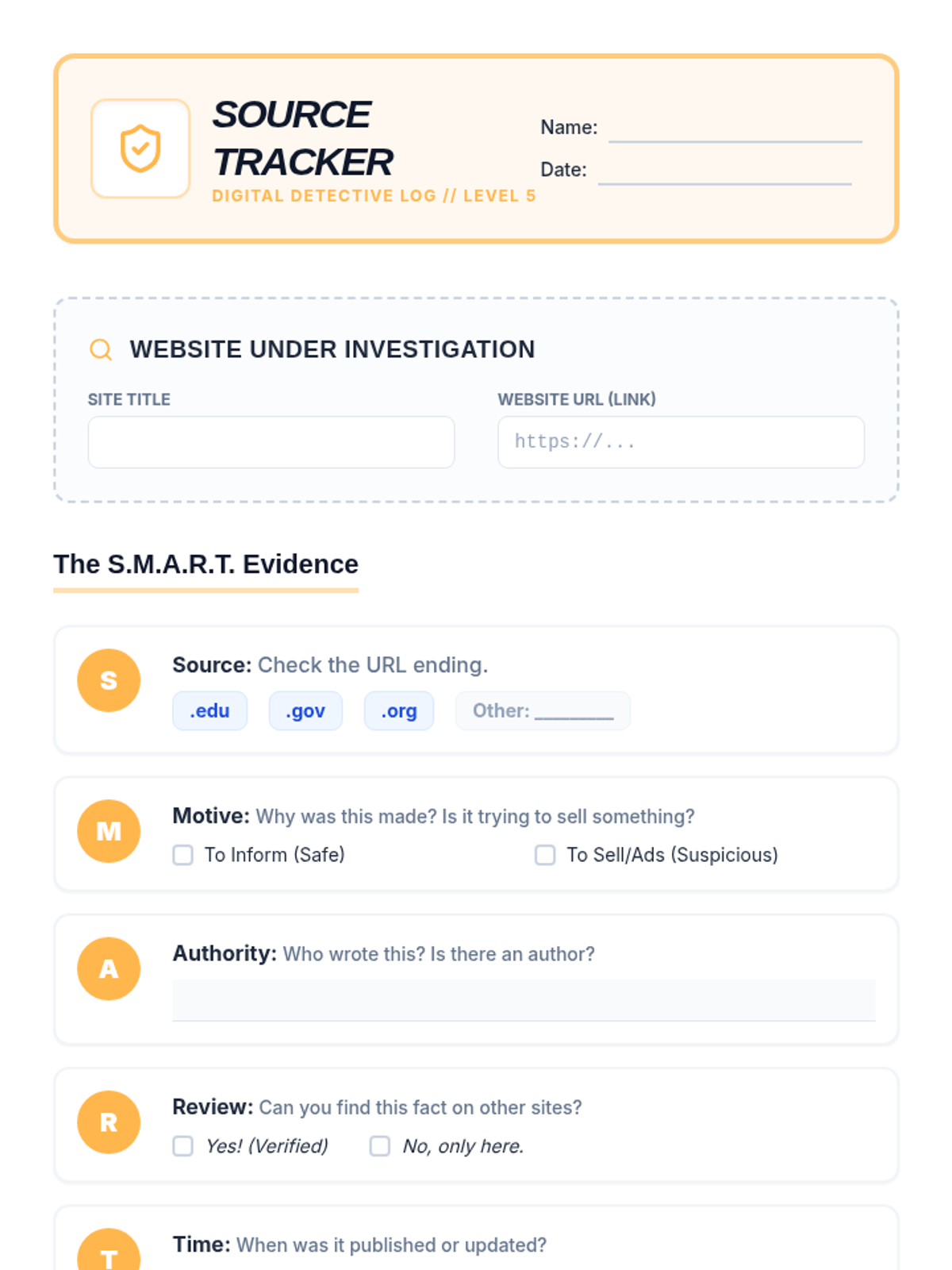
A student-facing evaluation worksheet designed as a 'Detective Log' for recording website details and applying the S.M.A.R.T. criteria to determine site reliability.
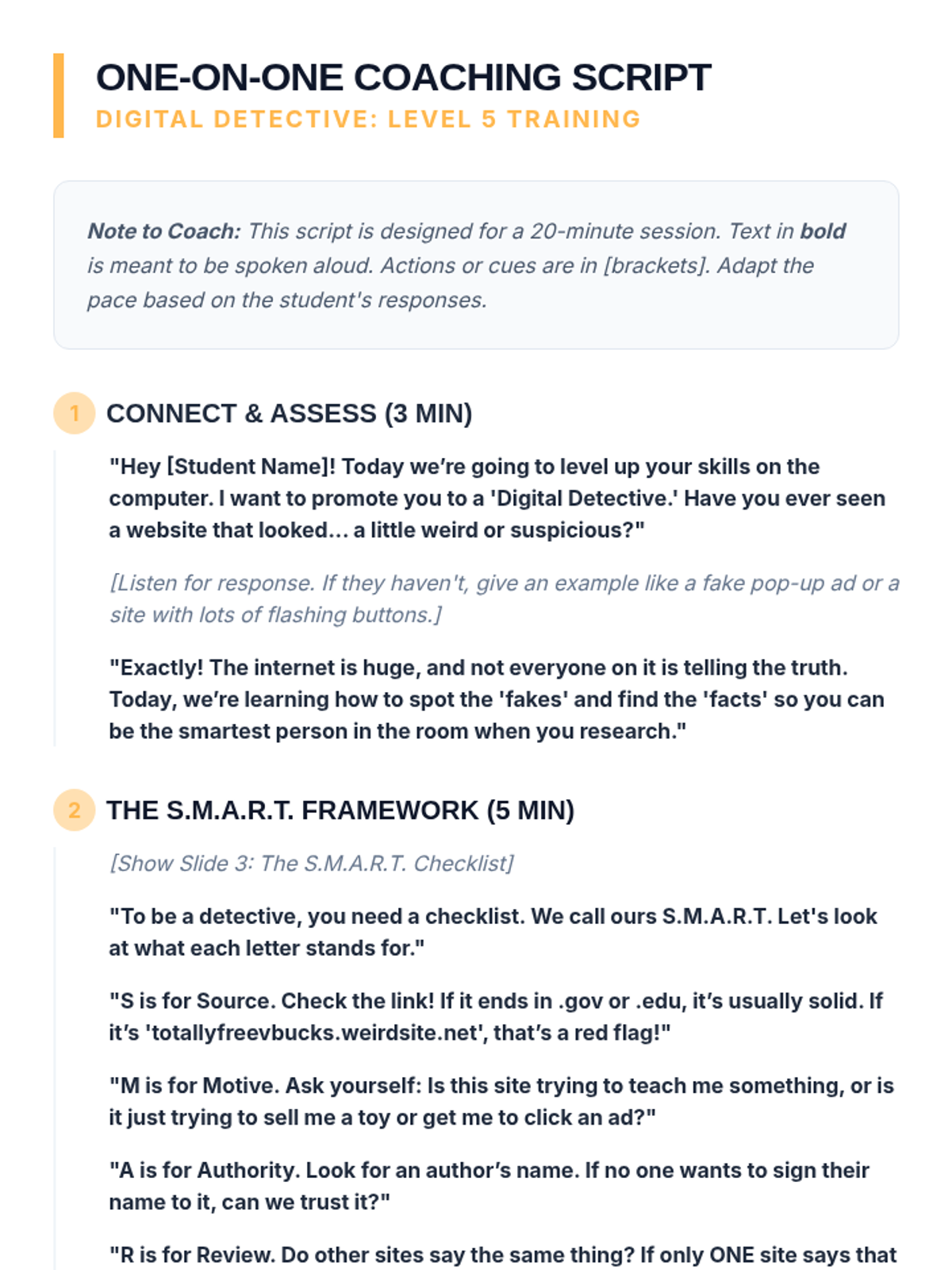
A detailed facilitation script for teachers providing Tier 3 individual coaching, including conversational prompts, pacing cues, and specific instructional moves for the S.M.A.R.T. framework.
An engaging slide deck for 5th graders that breaks down the S.M.A.R.T. website evaluation framework with clear visual cues, red flag indicators, and a 'Detective Mode' transition.
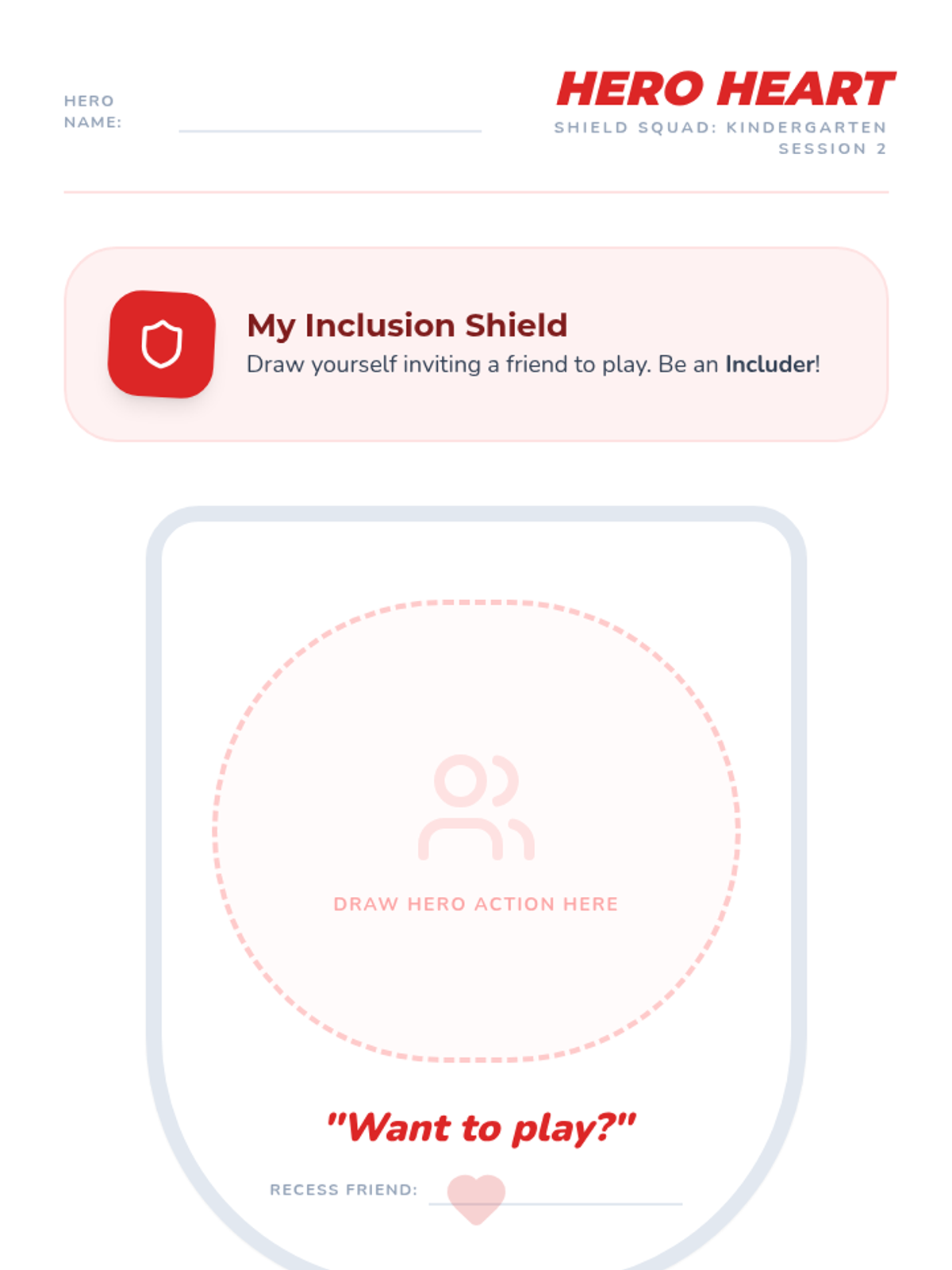
A creative drawing and strategy reinforcement worksheet for Kindergarten. Features a large shield area for students to draw inclusive actions and reminders for the Stop-Walk-Talk strategy.
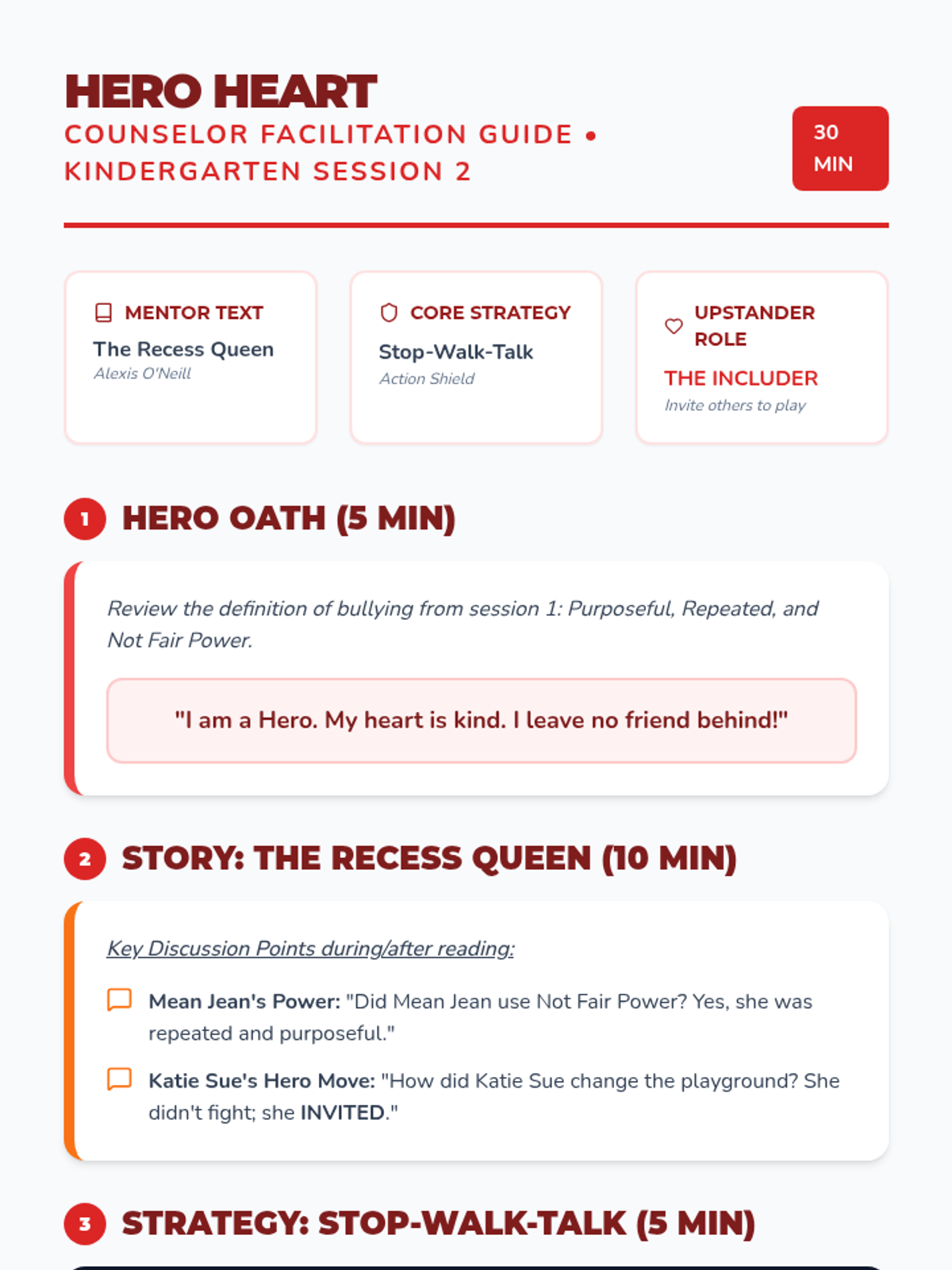
Counselor guide for Kindergarten using 'The Recess Queen' by Alexis O'Neill. Includes lesson script, Stop-Walk-Talk strategy review, and instructions for the Hero Heart Shield activity.
Slide deck for Kindergarten Hero Heart, featuring 'The Recess Queen' by Alexis O'Neill. Focuses on the role of the 'Includer', the Stop-Walk-Talk strategy, and identifying bullying vs. conflict.
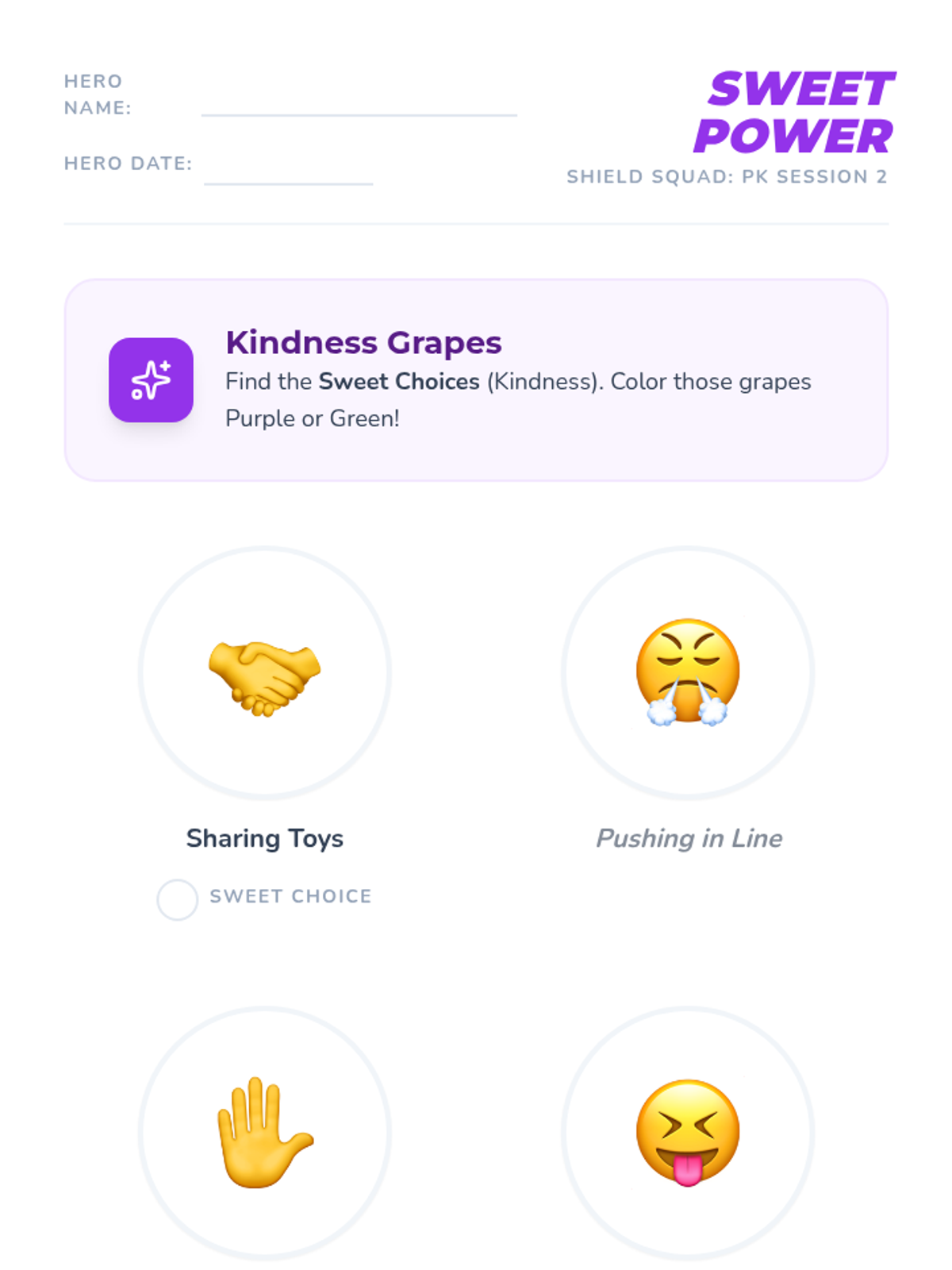
A visual sorting and drawing worksheet for PK students to distinguish between kind and mean choices. Features large icons for non-readers and a creative drawing area for personal kindness moves.
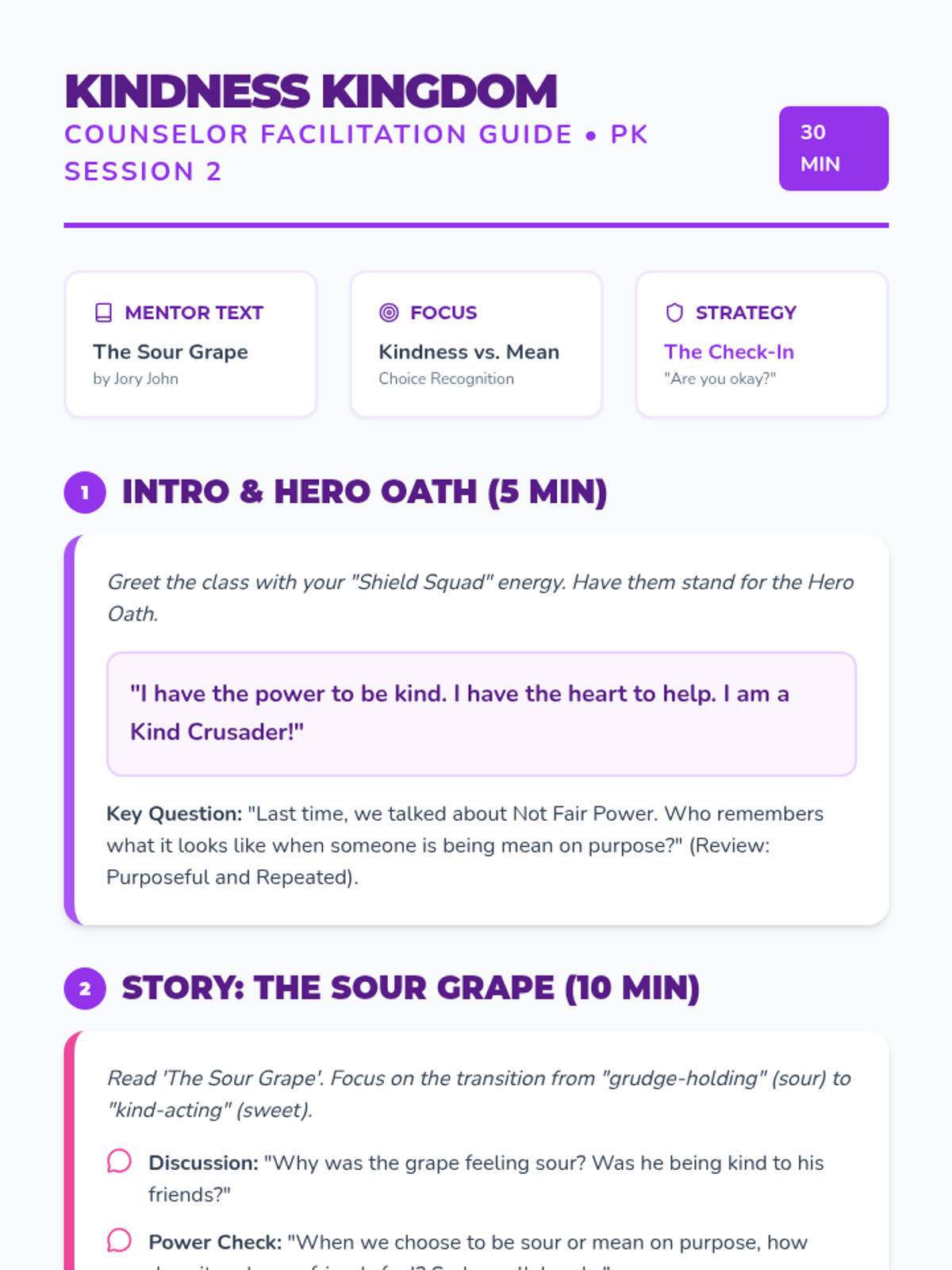
Counselor guide for PK using 'The Sour Grape' by Jory John. Includes lesson script, Hero Oath, and instructions for the Kindness Grapes sorting/coloring activity.
Slide deck for PK Kindness Kingdom, featuring 'The Sour Grape' by Jory John. Focuses on identifying purposeful mean behavior vs. kind choices and introduces the 'Check-In' upstander strategy.
Slide deck for 4th grade Upstander Elite, featuring 'Confessions of a Former Bully' by Trudy Ludwig, the bullying circle, and power shift strategies. Optimized for high contrast and fixed rendering.
Slide deck for 3rd grade Power Protectors, featuring 'Tease Monster' by Julia Cook, bullying definitions, and the 4 upstander power moves. Optimized for classroom delivery.
Legacy reflection handout for 5th-6th grade. Features status auditing, a leadership move brainstorm, and a school legacy pledge with high-contrast work areas.
Slide deck for 6th grade Social Leadership, exploring school culture audits, 'Restart' themes, and building a legacy of advocacy. Optimized for high contrast and fixed rendering. Includes conflict vs bullying comparison.
Slide deck for 5th grade Impact Influencers, exploring 'Zero' by Kathryn Otoshi, social capital as power, and single significant events in cyberbullying. Optimized for high contrast and fixed rendering. Includes conflict vs bullying comparison.
Slide deck for 2nd grade Inclusion Squad, featuring 'The Invisible Boy' by Trudy Ludwig, bullying definitions, and specific includer strategies. Optimized for visual engagement.
Slide deck for 1st grade Friendship Force, featuring 'Trouble Talk' by Trudy Ludwig, bullying definitions, and the seesaw model of power. Optimized for high contrast and fixed icon rendering.
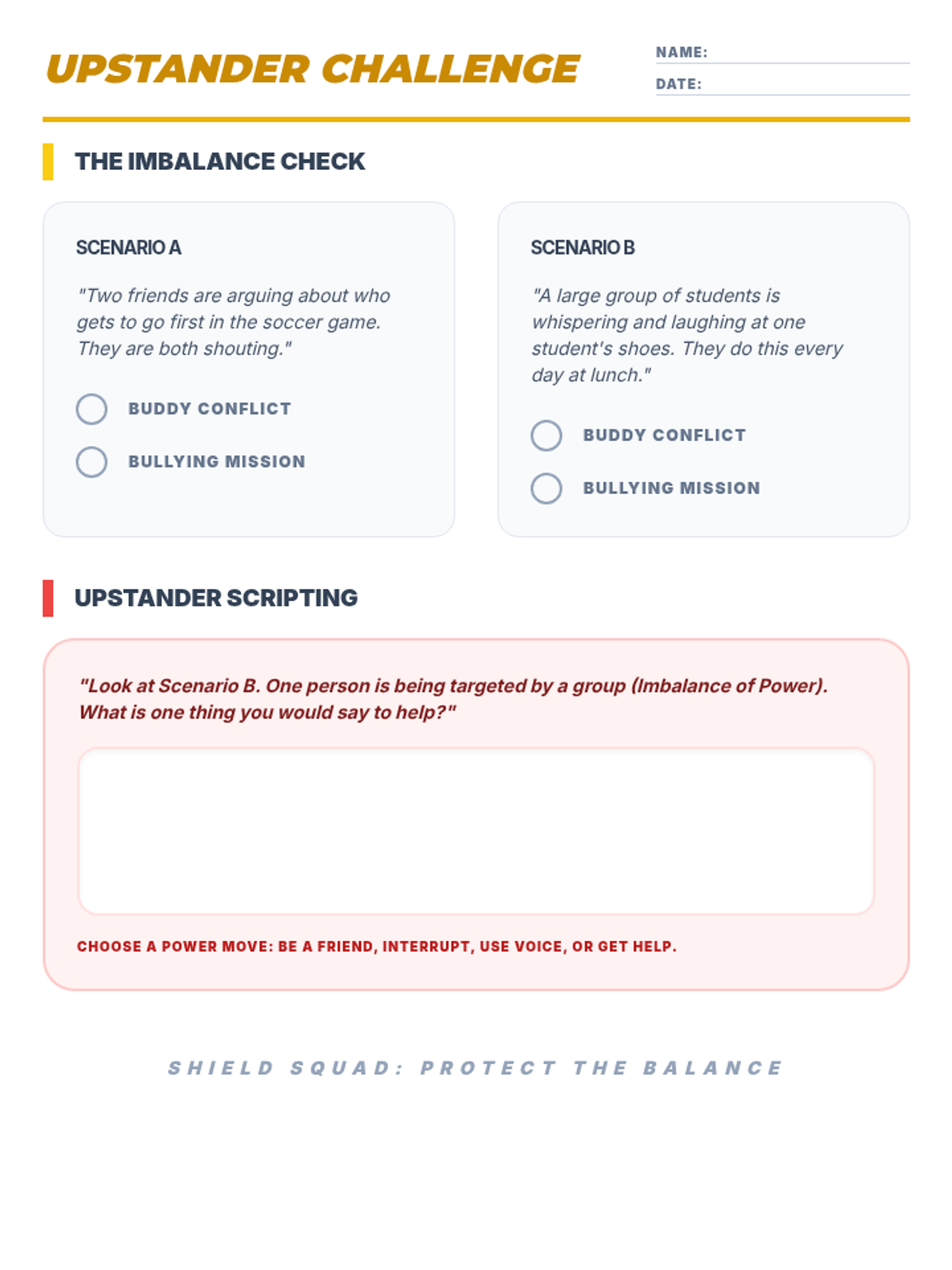
Upstander challenge handout for 3rd-4th grade. Features scenario sorting between conflict and bullying based on imbalance of power, plus a writing area for upstander scripting.
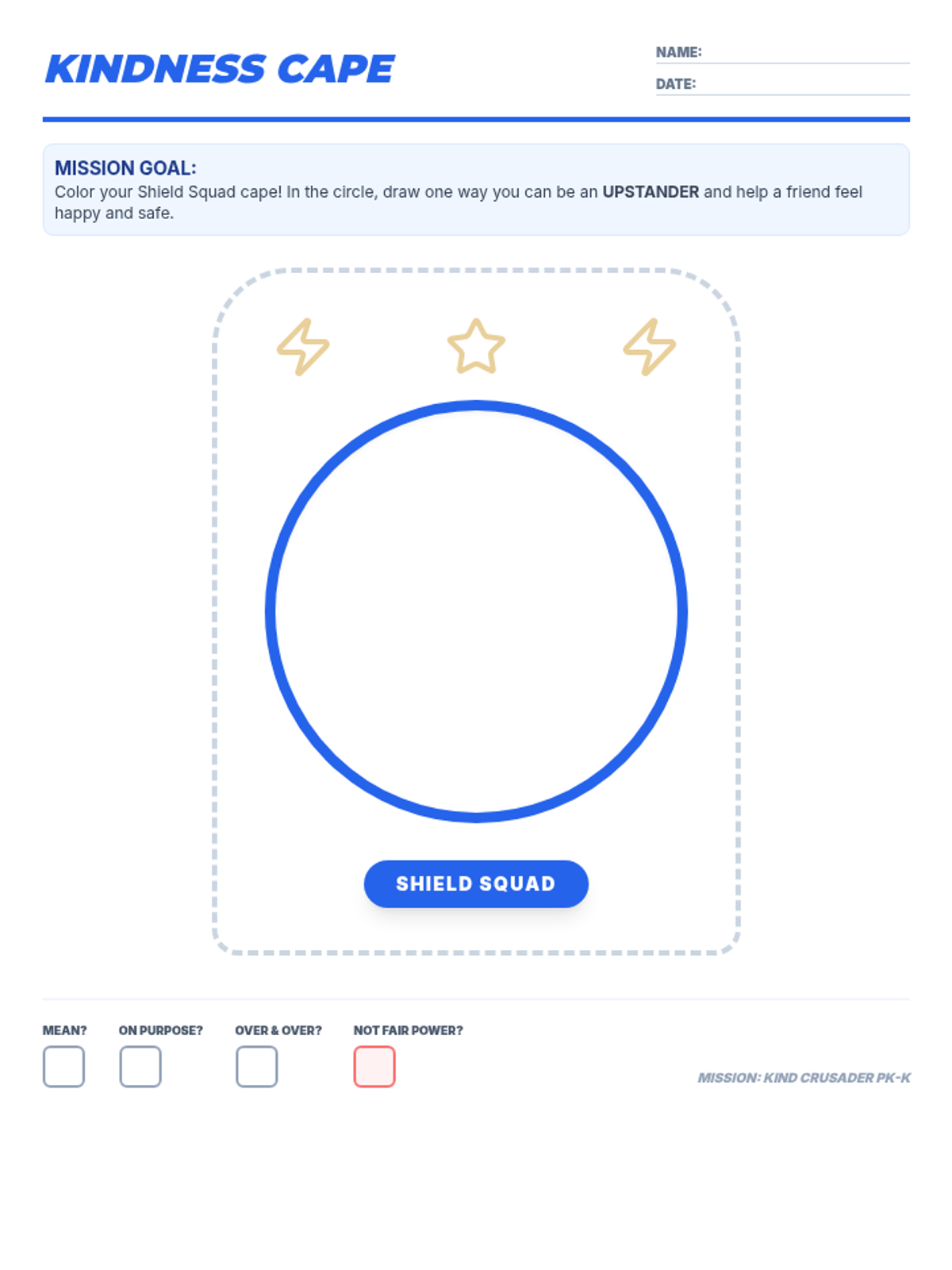
Creative drawing and coloring worksheet for PK-K students. High-contrast printable with a focus on upstander actions and the core bullying definition checkboxes.
Slide deck for Kinder Kindness Knights, featuring 'Bully B.E.A.N.S.' by Julia Cook, bullying definitions, and hero roles. Optimized for high contrast and fixed rendering.
Slide deck for PK Kind Crusaders, featuring 'One' by Kathryn Otoshi, bullying definitions, and the Stop-Walk-Talk strategy. Optimized for high contrast, clear lesson transitions, and verbatim definitions.
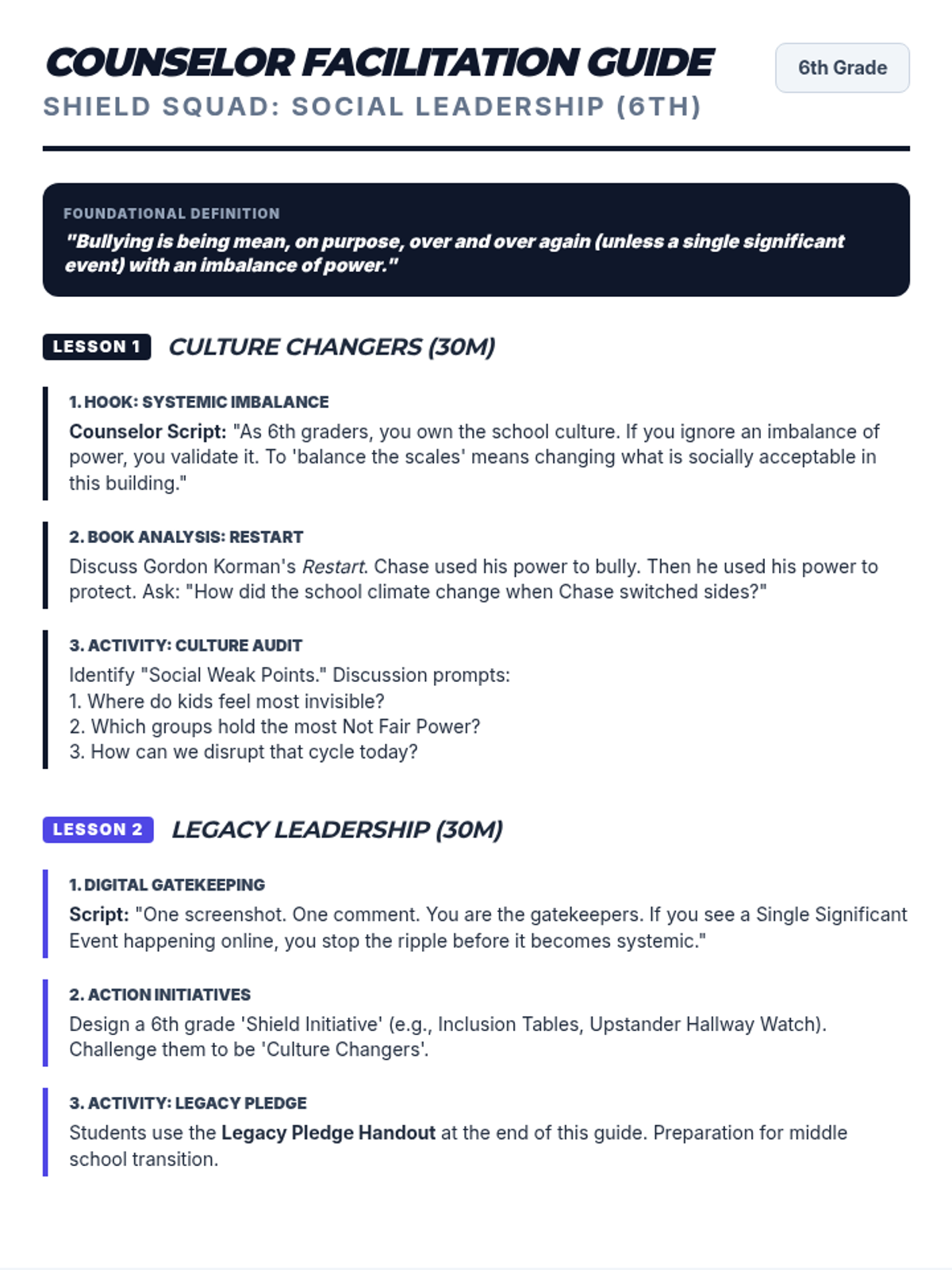
Counselor guide for 6th grade using 'Restart' by Gordon Korman to explore school culture and legacy. Includes the printable Legacy Pledge handout page. Fixes header spacing and box height.
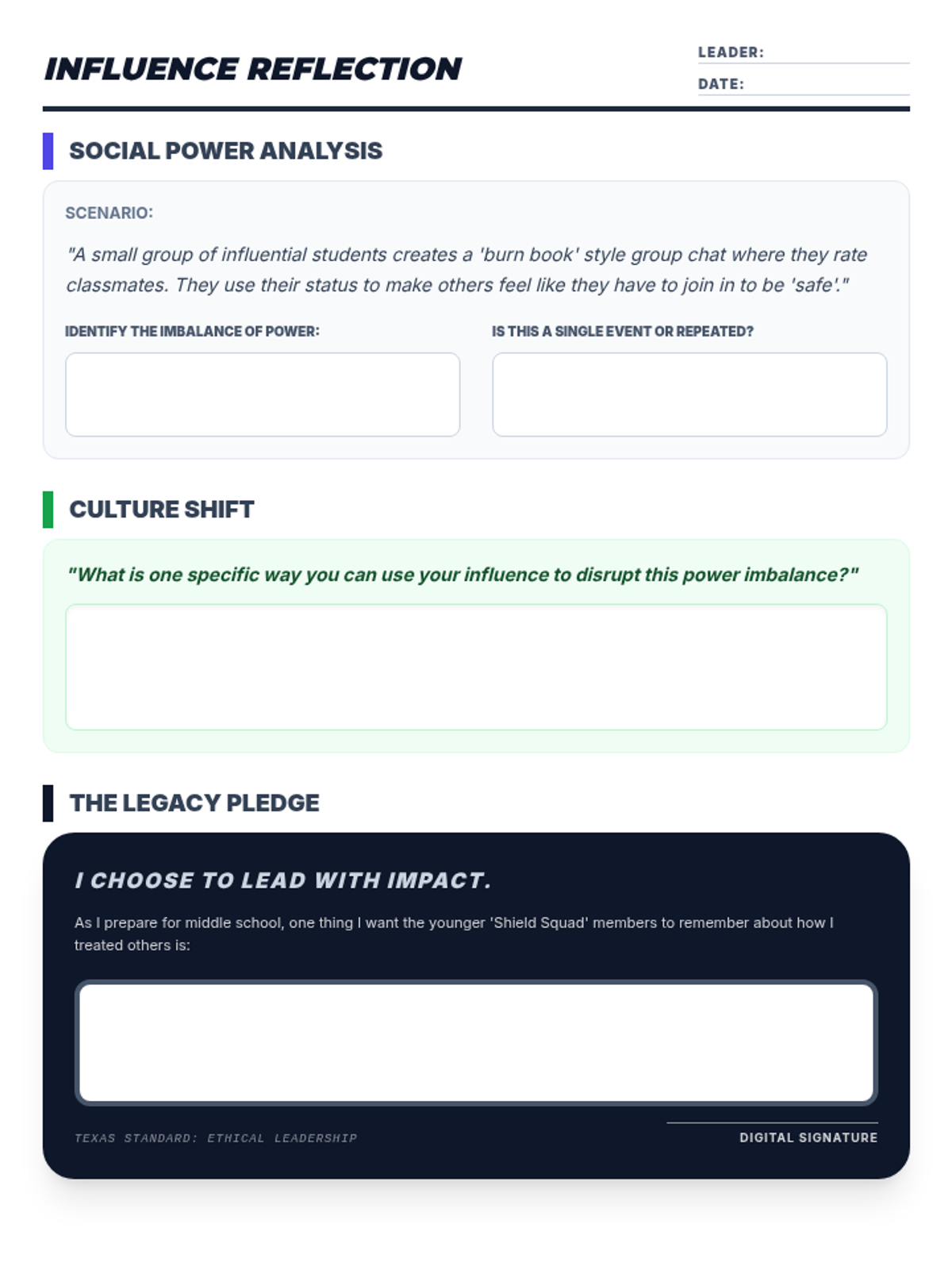
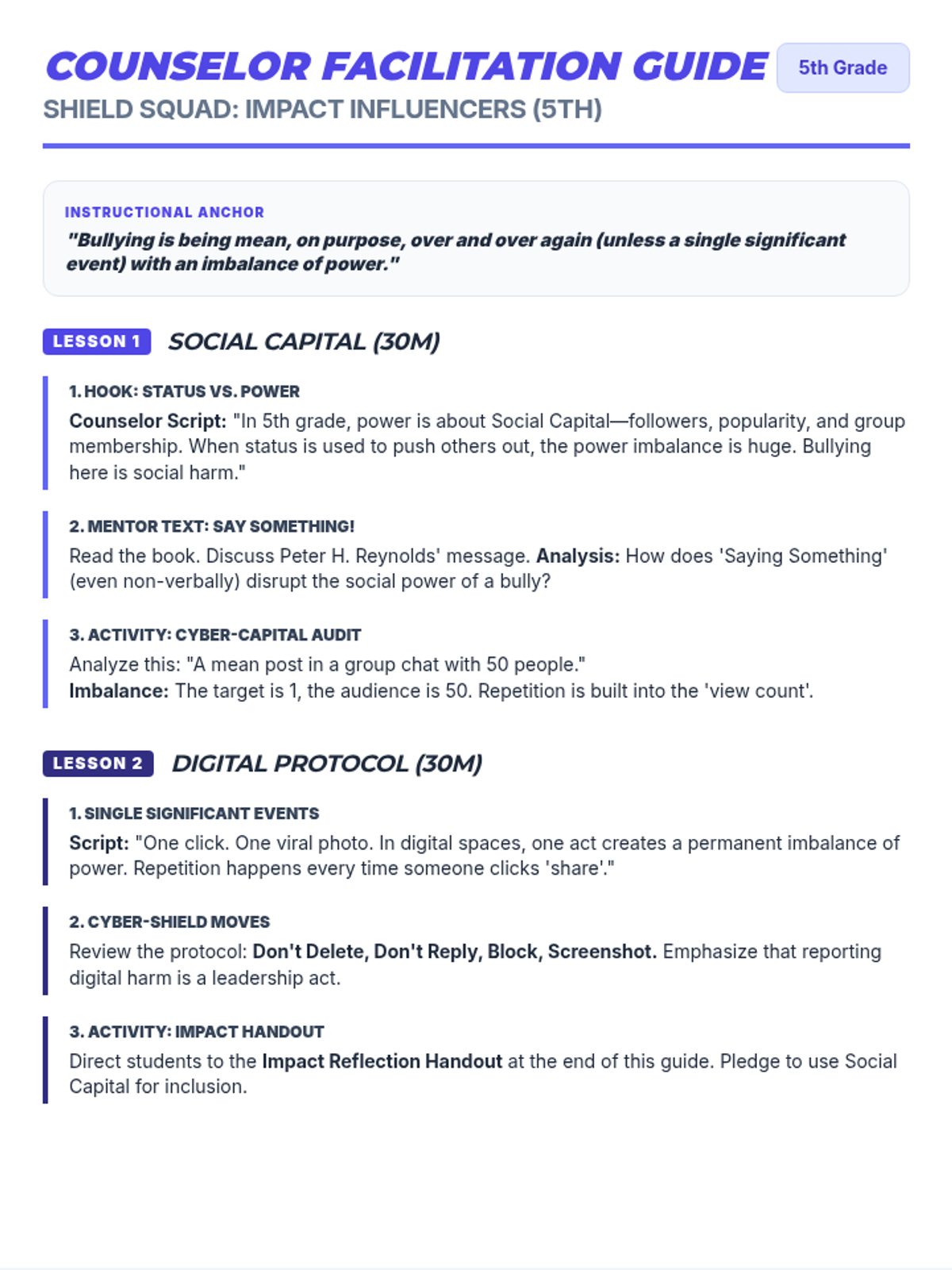
Counselor guide for 5th grade using 'Zero' by Kathryn Otoshi to explore social capital, cyberbullying, and influencer responsibility. Includes the printable Impact Reflection case study and pledge handout page.
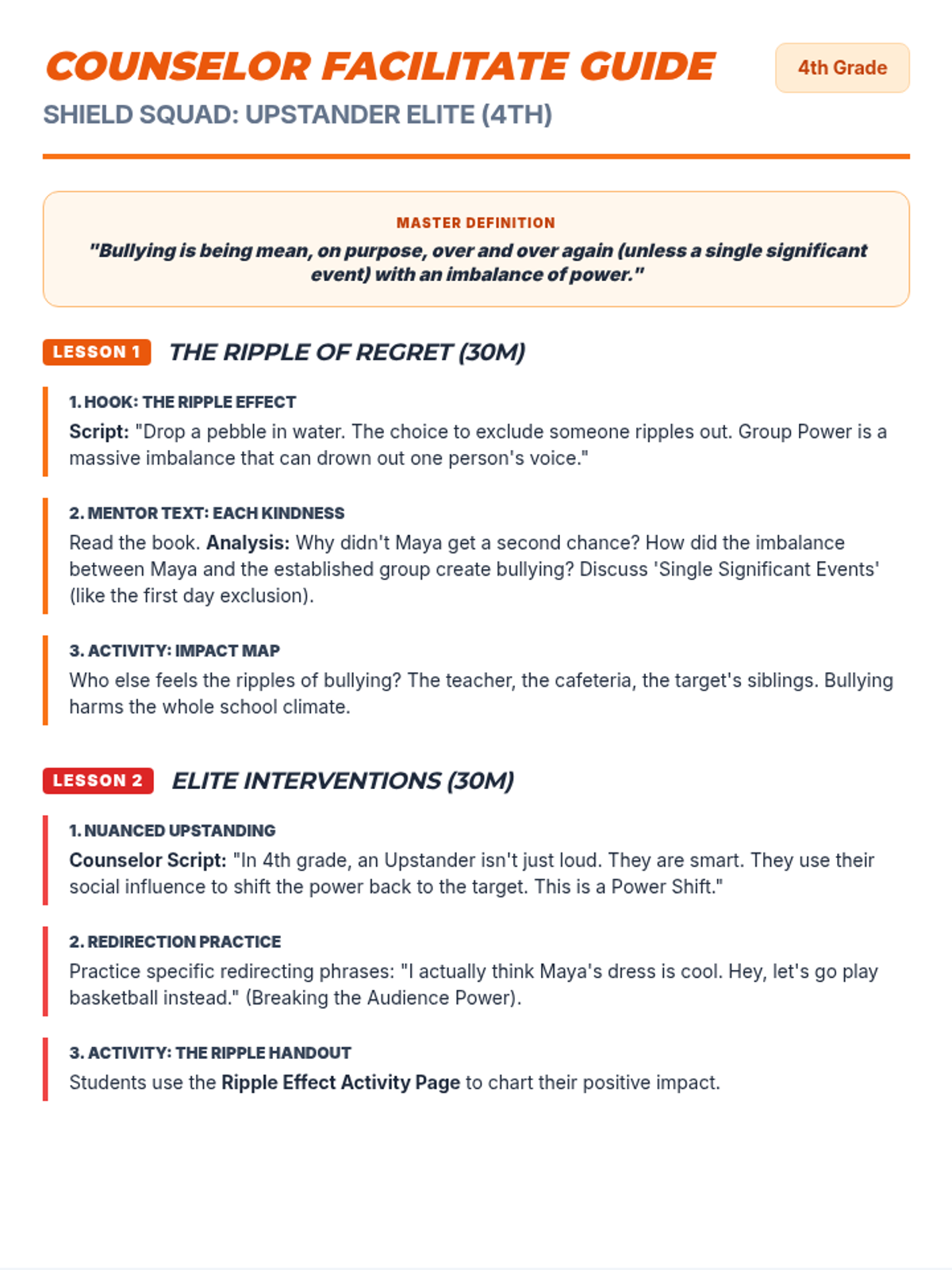
Counselor guide for 4th grade using 'Confessions of a Former Bully' by Trudy Ludwig to explore roles and power shifts. Includes the printable Ripple Effect activity page with expanded writing areas. Fixes grammar and layout issues.
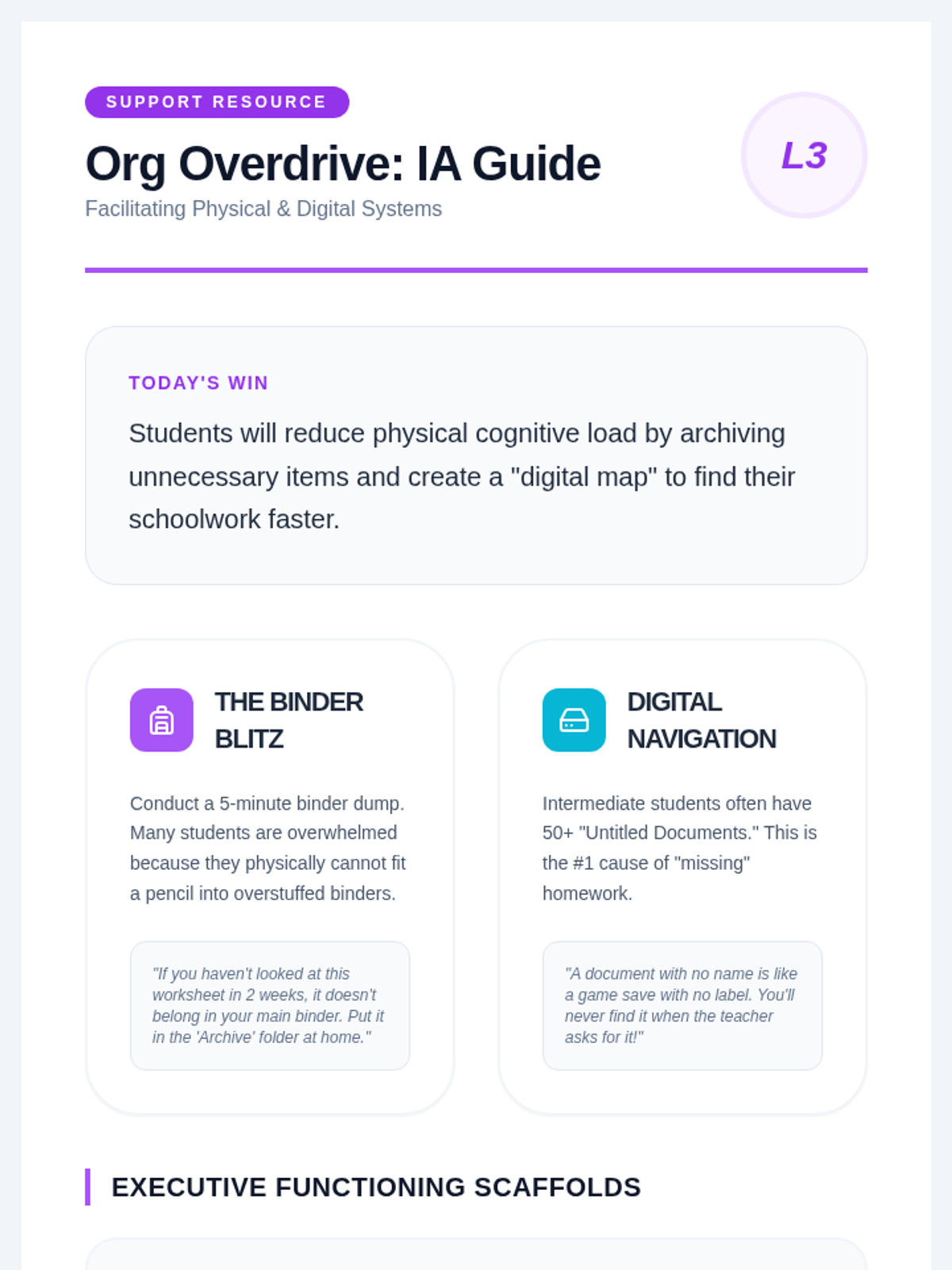
A guide for IAs on facilitating physical and digital organization lessons. Provides actionable strategies for 'The Binder Blitz' and digital file management, including specific scripting and weekly maintenance routines.
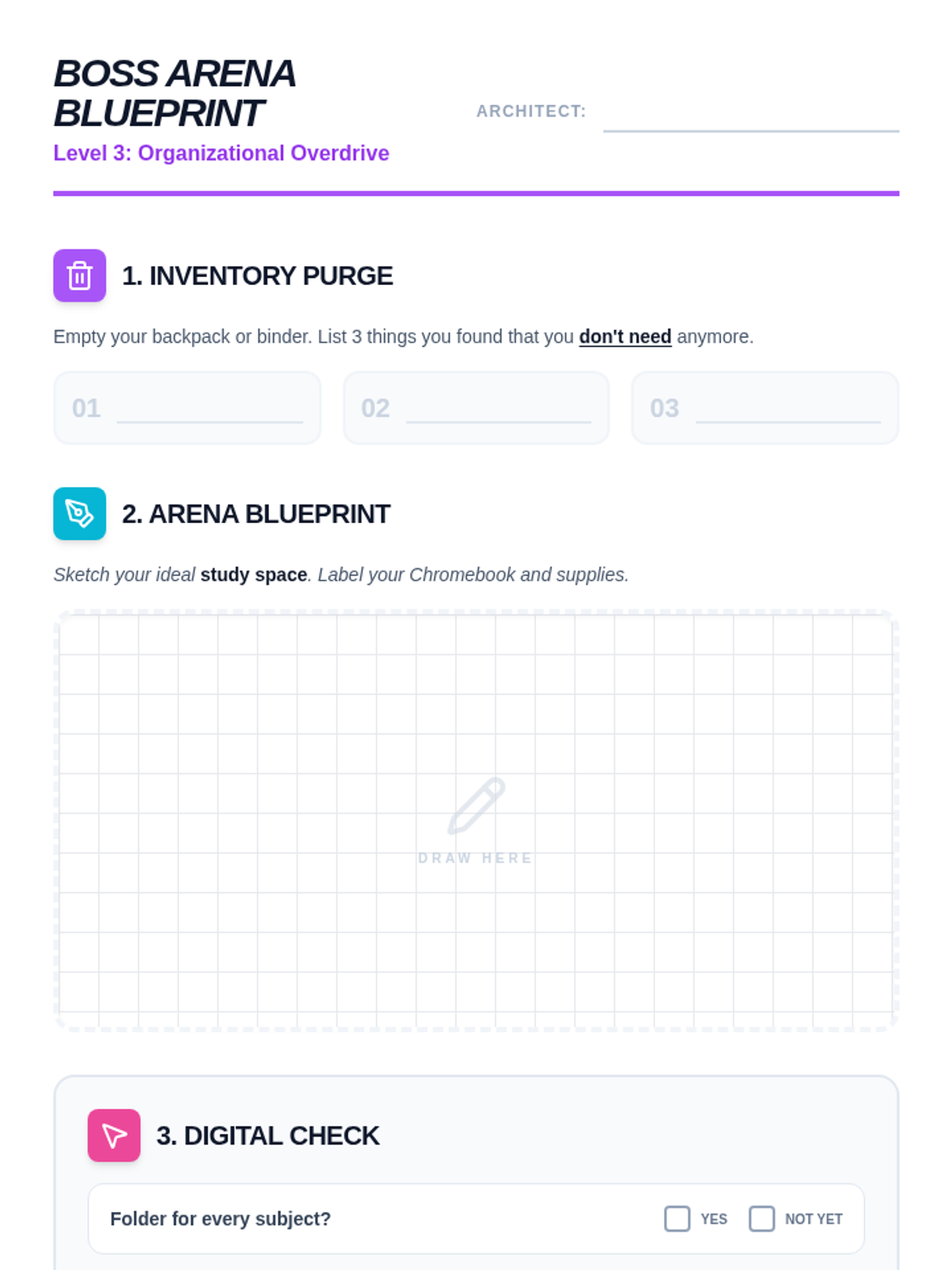
A visual worksheet for organizing physical and digital spaces. Includes a 'Purge' list for cleaning backpacks, a blueprint drawing area for designing a study space, and a digital checklist for organizing computer files. High-engagement design for intermediate students.
Slides for Lesson 3 focused on physical and digital organization. Introduces the concepts of 'Inventory Management' for binders/backpacks and 'Arena Optimization' for the study environment. Uses modern gaming aesthetics to keep students engaged in organizational habits.
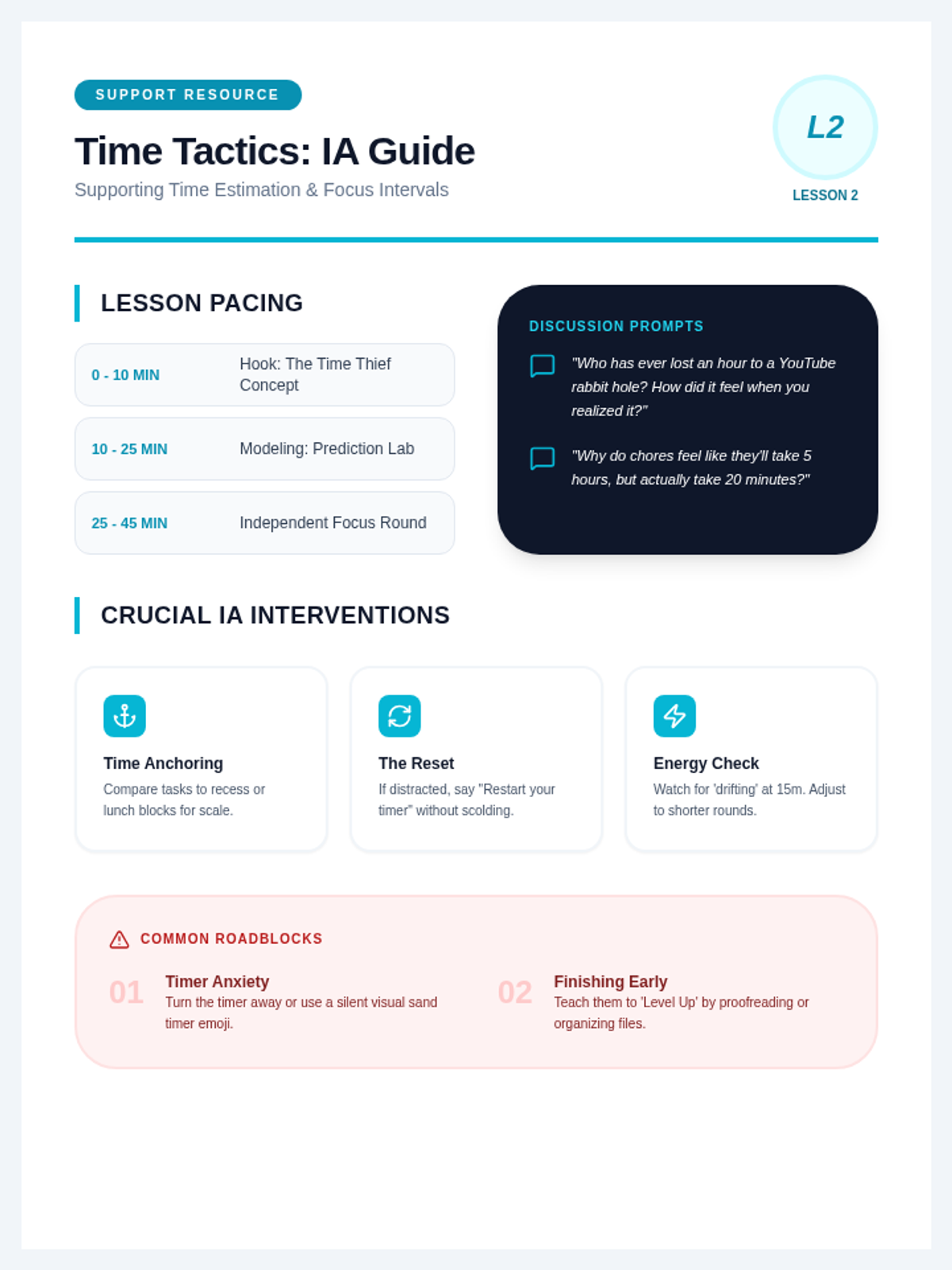
A facilitation resource for IAs providing specific strategies for supporting students with time management. Includes discussion prompts, pacing advice, and troubleshooting tips for addressing 'time blindness' and timer anxiety.
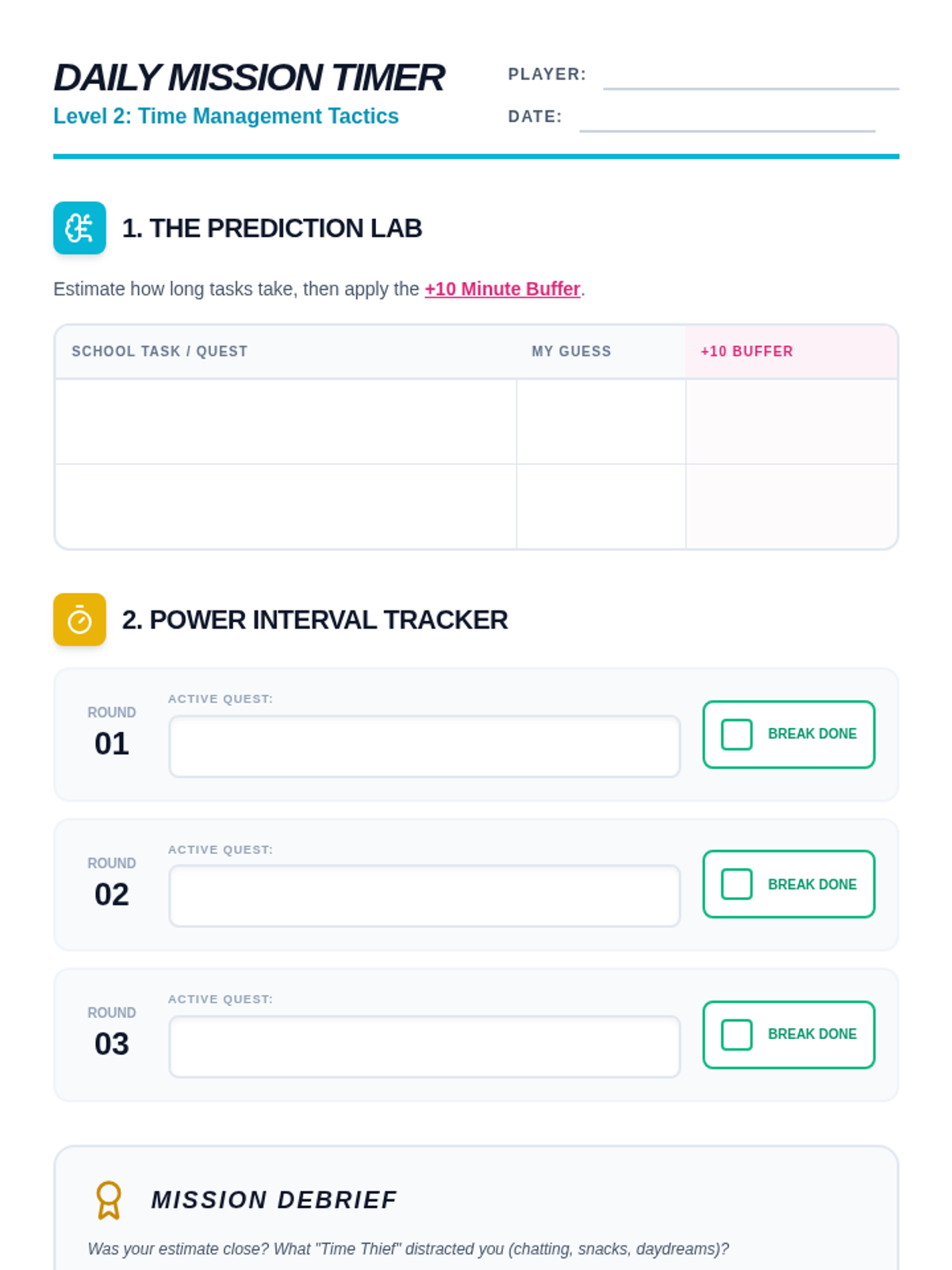
A time-tracking and scheduling worksheet for intermediate students. Features a 'Prediction Lab' for estimating task duration and a 'Power Interval Tracker' to implement the Pomodoro technique. Designed with clear work areas for students to record their progress.
Presentation slides for Lesson 2, focusing on time estimation and the Pomodoro (Power Interval) technique. Uses high-energy, gaming-inspired visuals to teach intermediate students about 'time blindness' and scheduling buffers.
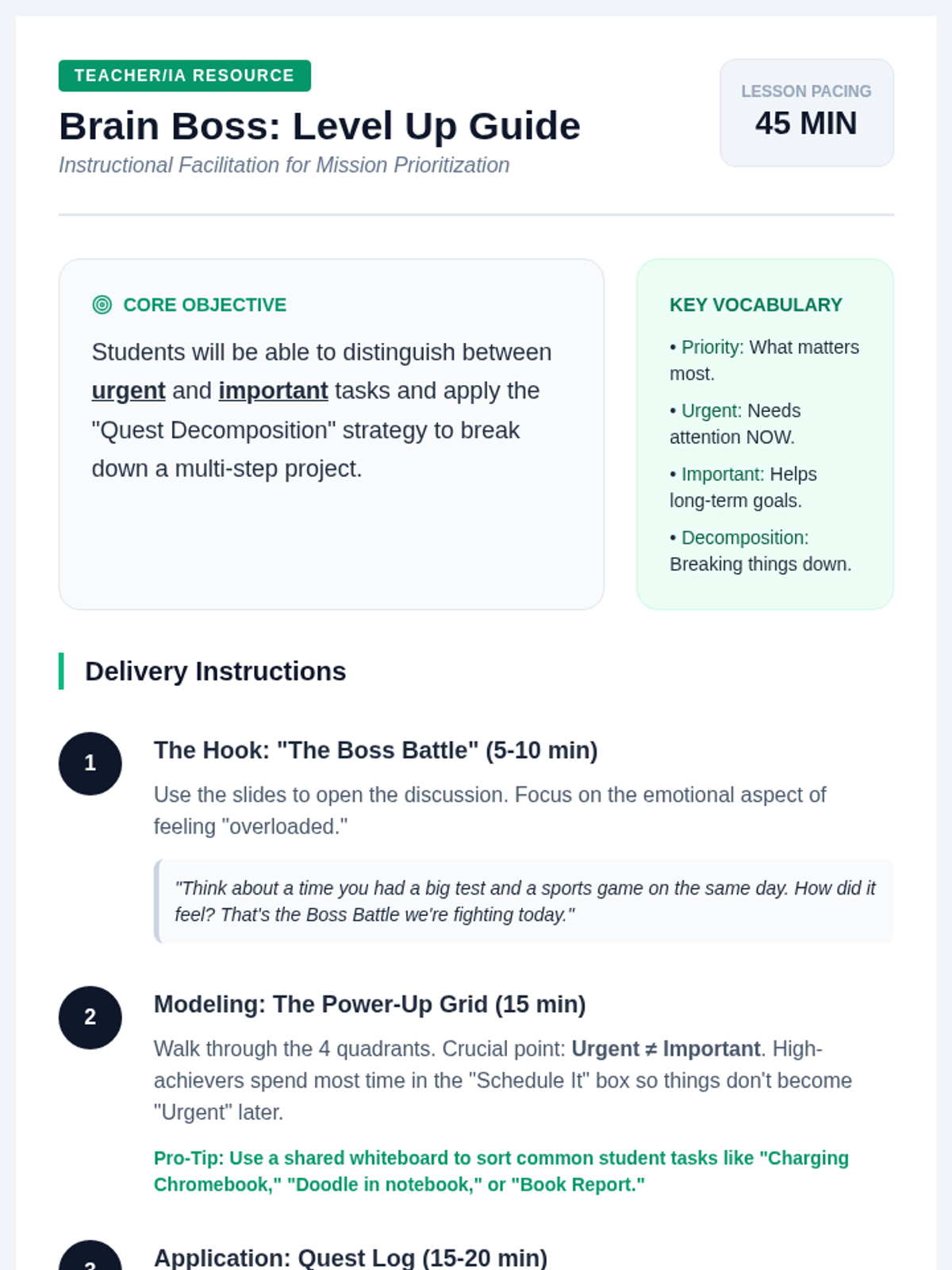
A facilitation guide for teachers and IAs, providing pacing, discussion prompts, delivery instructions, and differentiation strategies for the Mission Prioritization lesson. Includes specific tips for supporting intermediate students with executive functioning challenges.
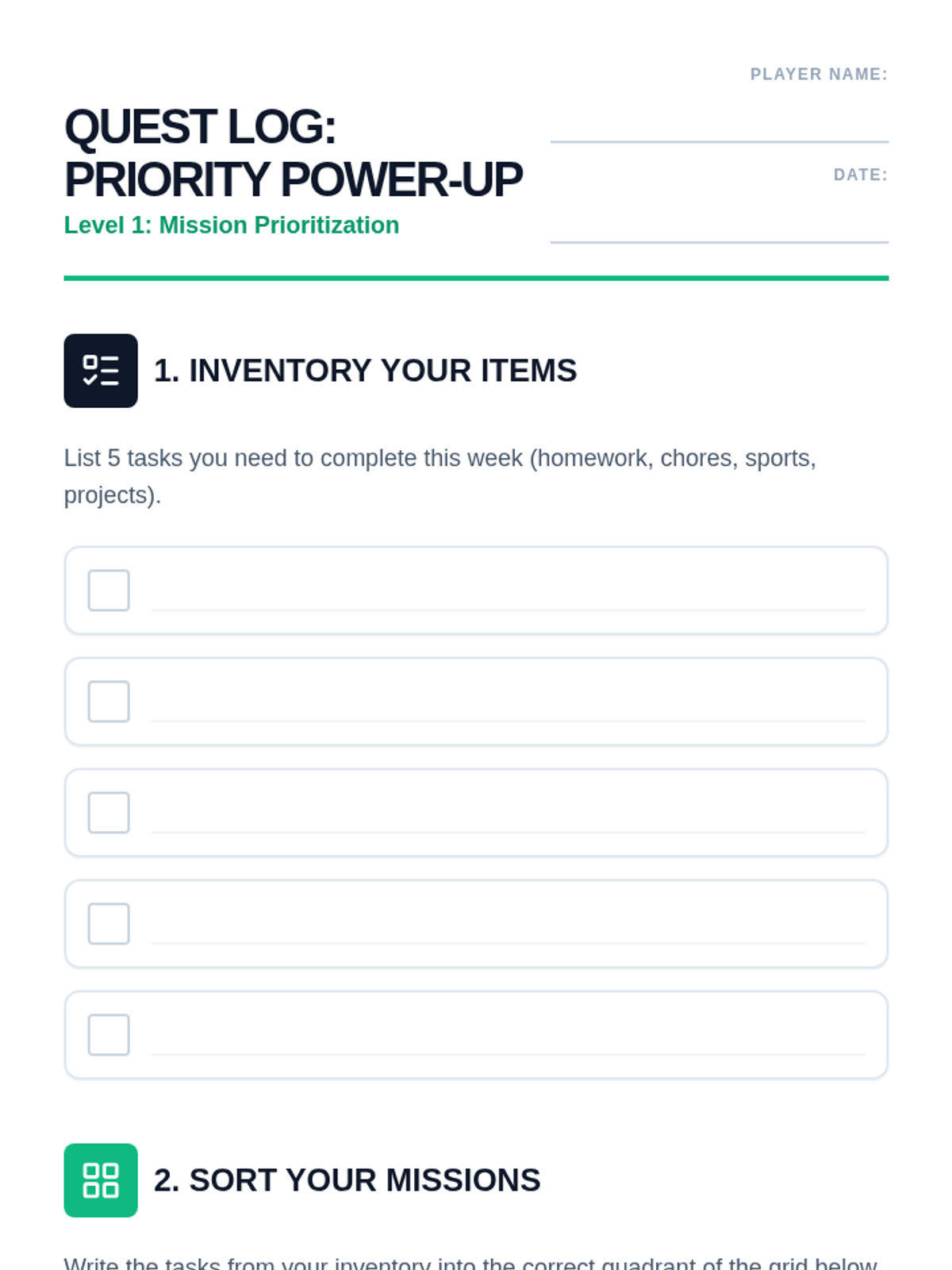
A task management worksheet for intermediate students. Includes an 'Inventory' section for brainstorming tasks, a 2x2 priority grid for sorting, and a 'Quest Decomposition' area for breaking down complex assignments. Designed for handwriting with clear student work areas.
Interactive slides for Lesson 1 of Brain Boss, introducing students to the Priority Power-Up grid and the concept of 'Quest Decomposition' for large assignments. High-contrast, retro-game aesthetic designed for engagement.
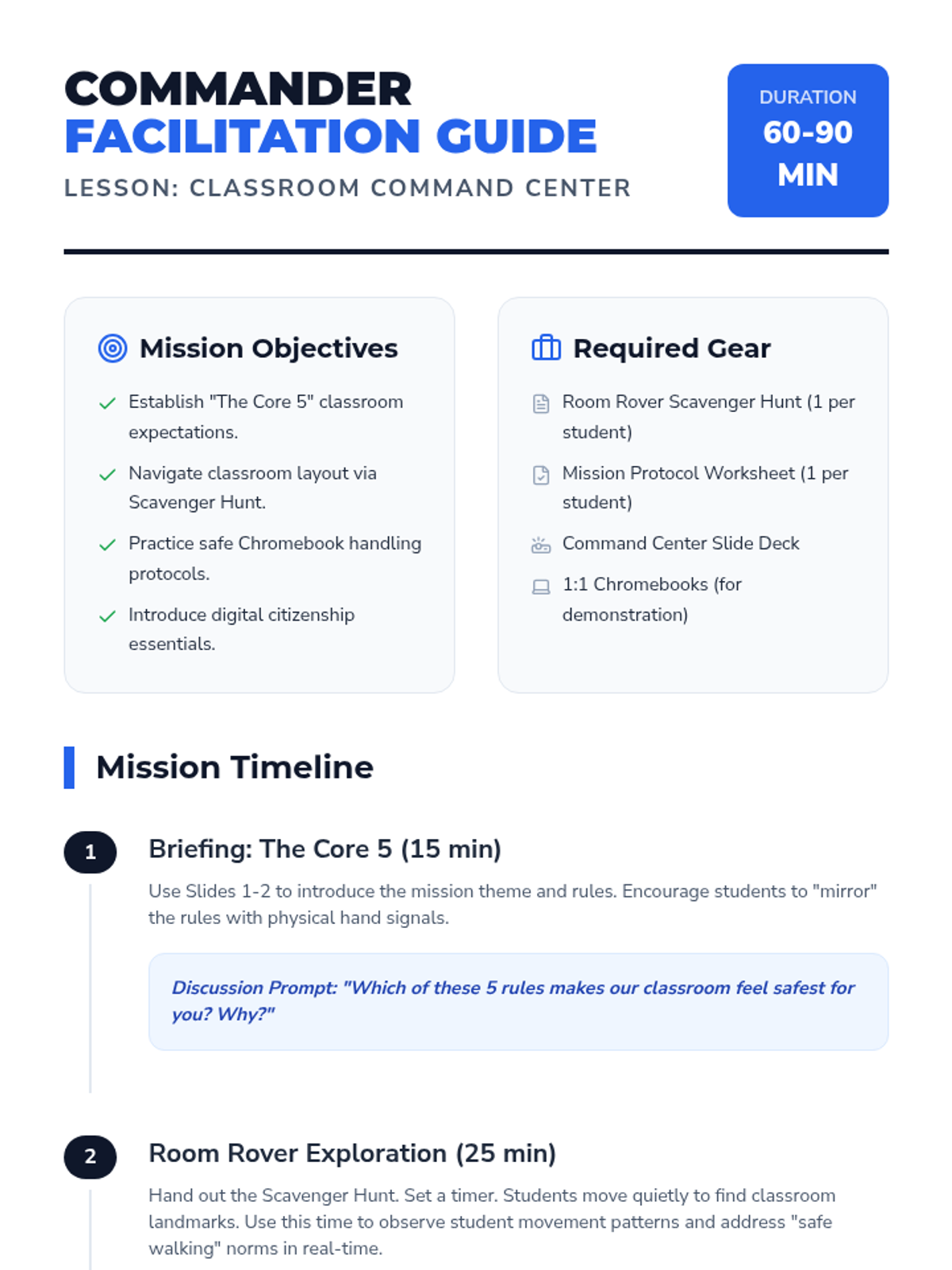
A comprehensive facilitation guide for teachers to deliver the Classroom Command Center lesson, including pacing, discussion prompts, and differentiation strategies.
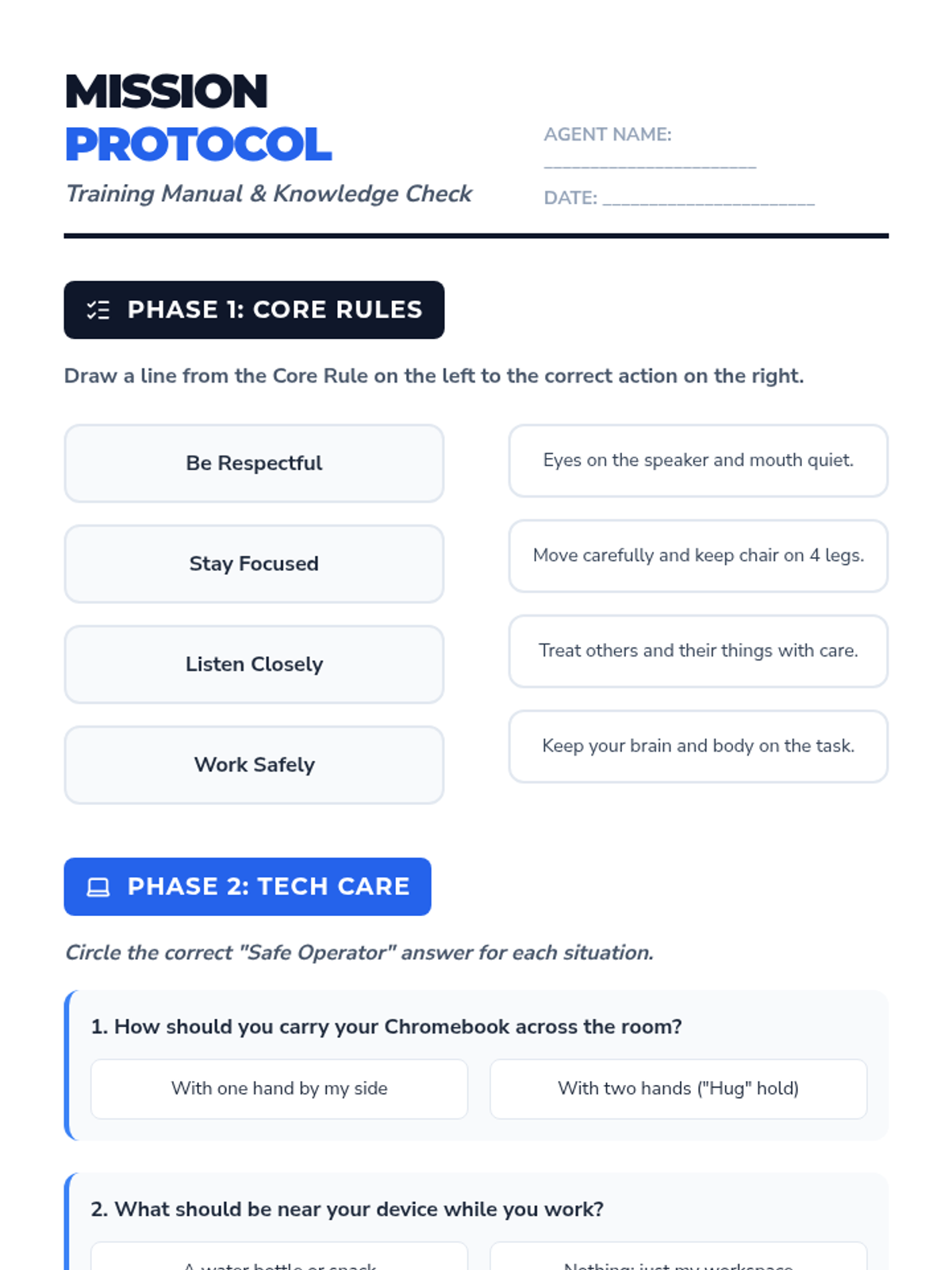
A worksheet reinforcing classroom rules, tech care protocols, and digital citizenship basics.
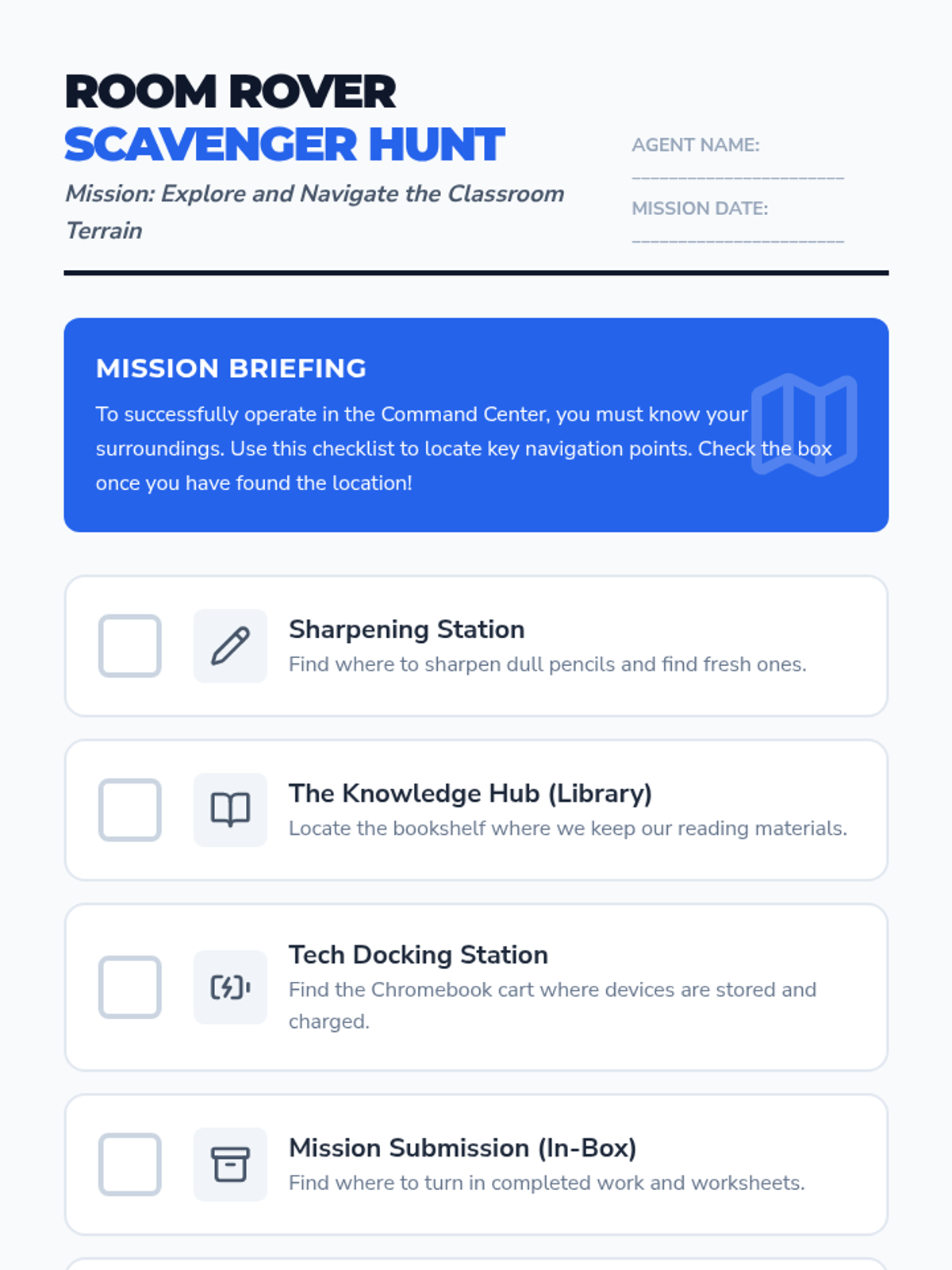
A printable checklist for students to explore and identify key locations in their new classroom.
An interactive slide deck introducing classroom rules, tech care protocols, and digital citizenship basics with a "Mission Control" visual theme.
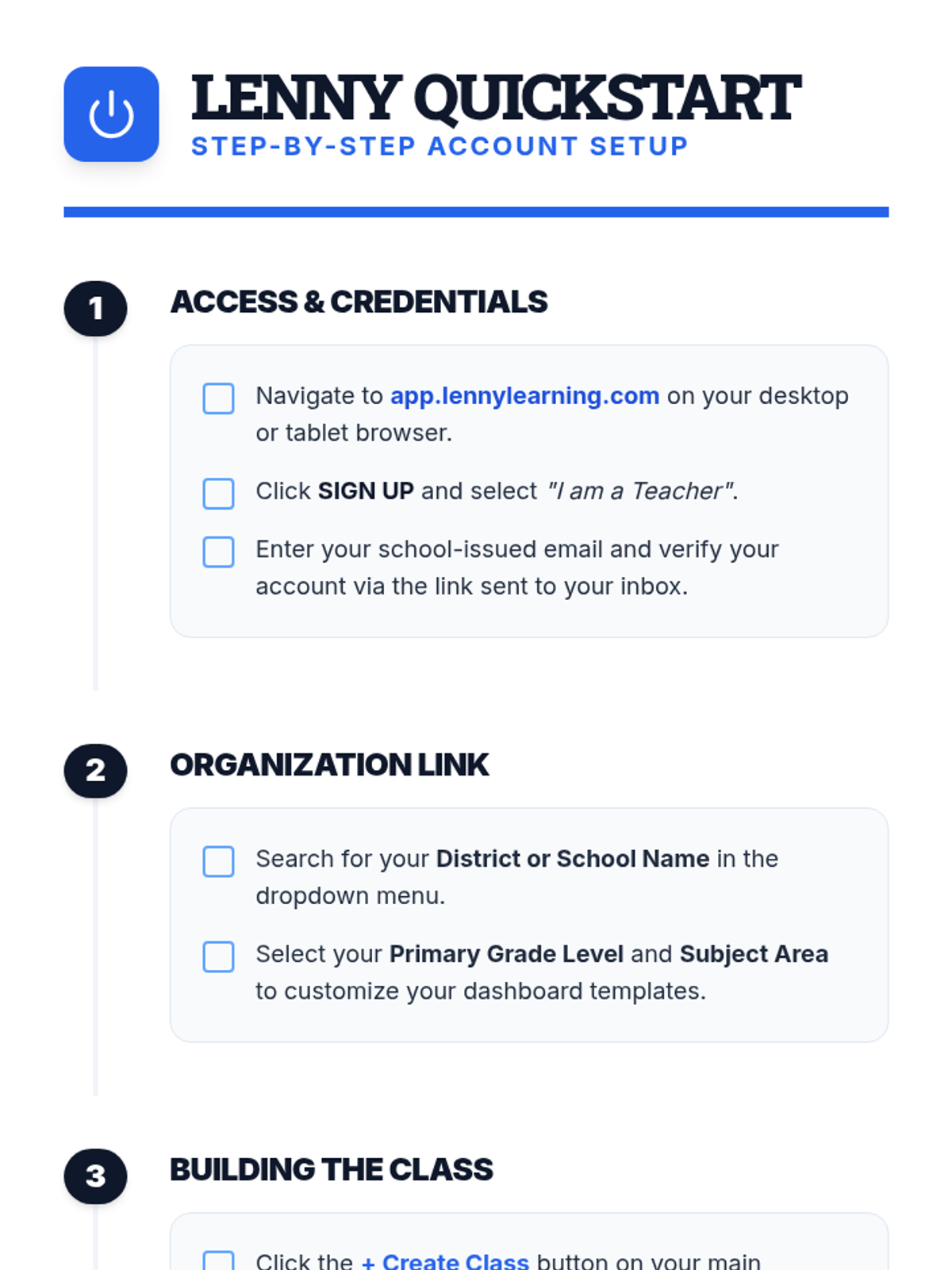
A clear, step-by-step document for teachers on setting up their Lenny Learning account, creating their first class, and onboarding students.
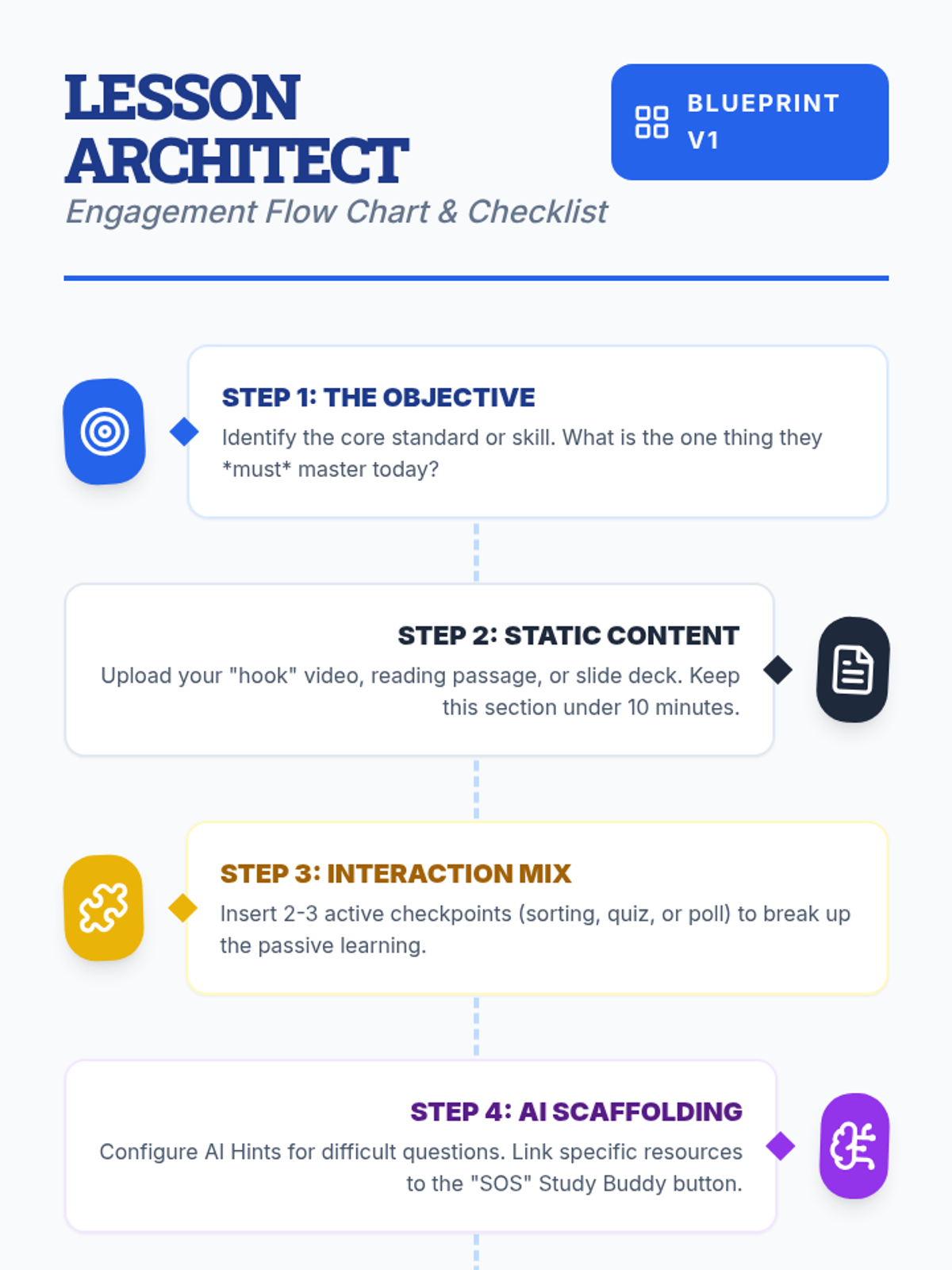
A visual flow chart and checklist for teachers detailing the step-by-step process of designing an engaging lesson on Lenny Learning.
A 10-slide presentation for teachers on designing engaging, interactive lessons using Lenny Learning's advanced features, gamification, and AI support.
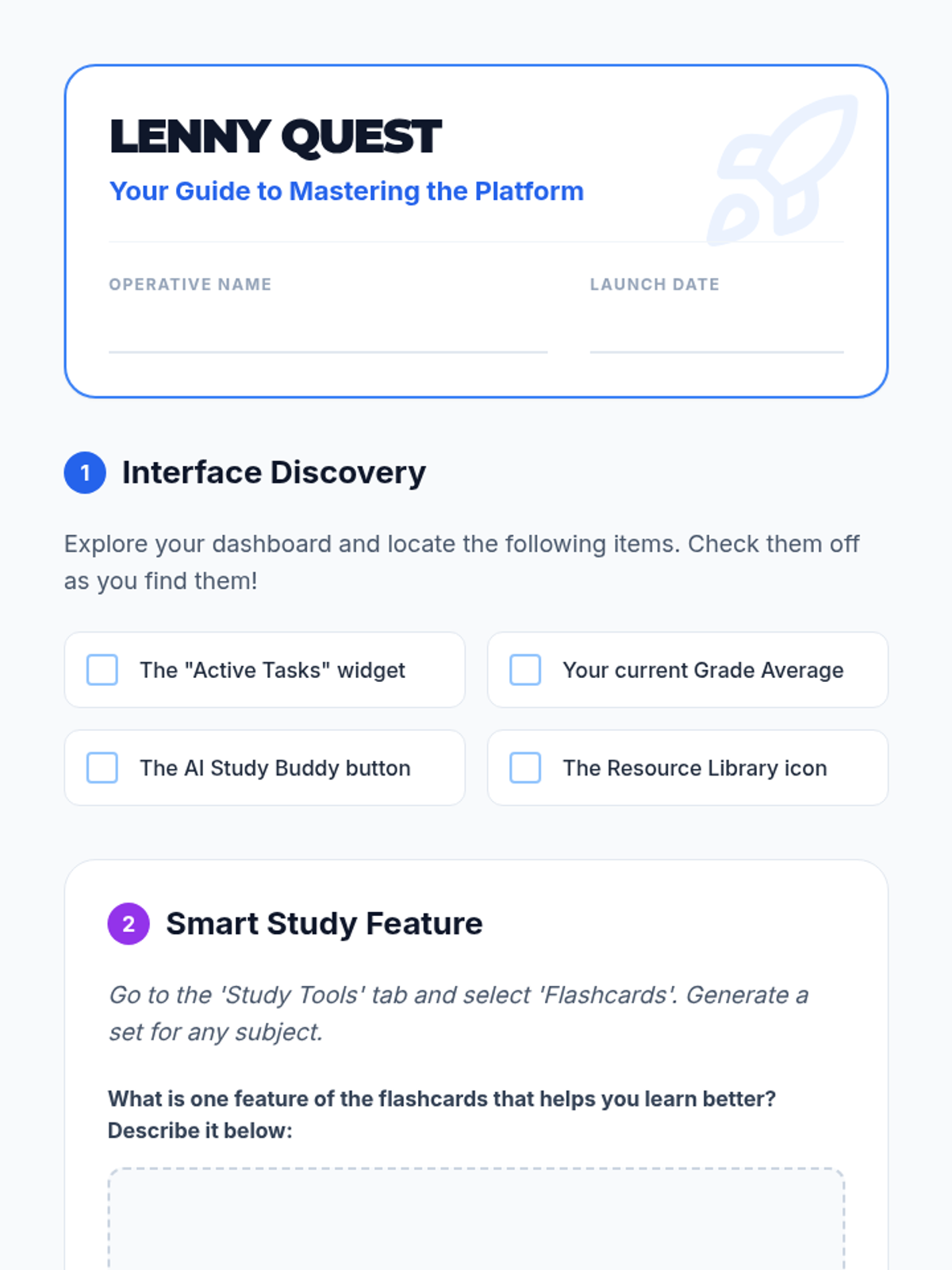
A student-facing scavenger hunt worksheet to help students explore the Lenny Learning interface and features.
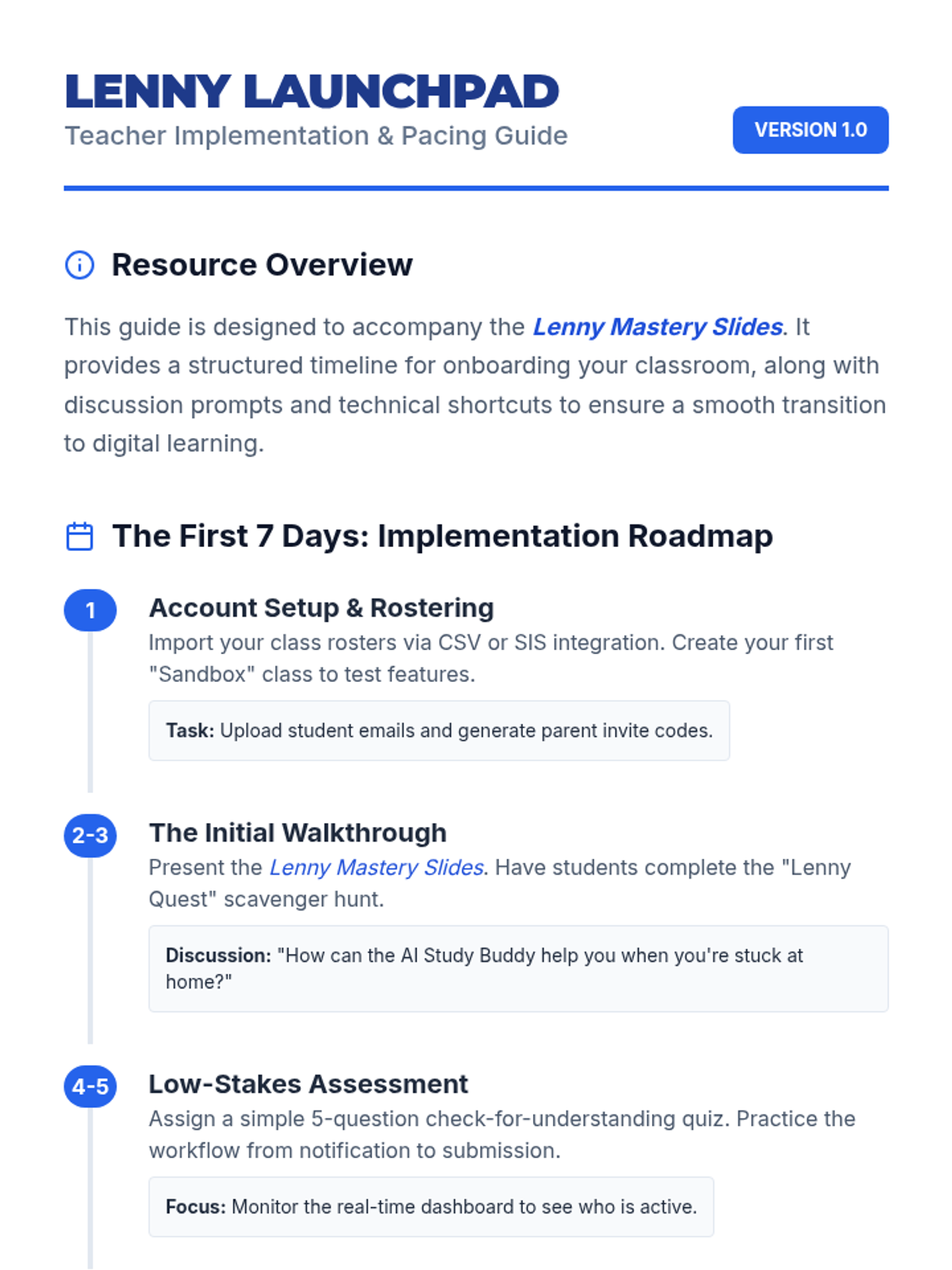
A teacher-facing guide with an onboarding timeline, troubleshooting tips, and classroom management strategies for implementing Lenny Learning.
A 10-slide presentation designed for teachers, providing a beginner-friendly overview of Lenny Learning's assignment workflows, study tools, and dashboard features.
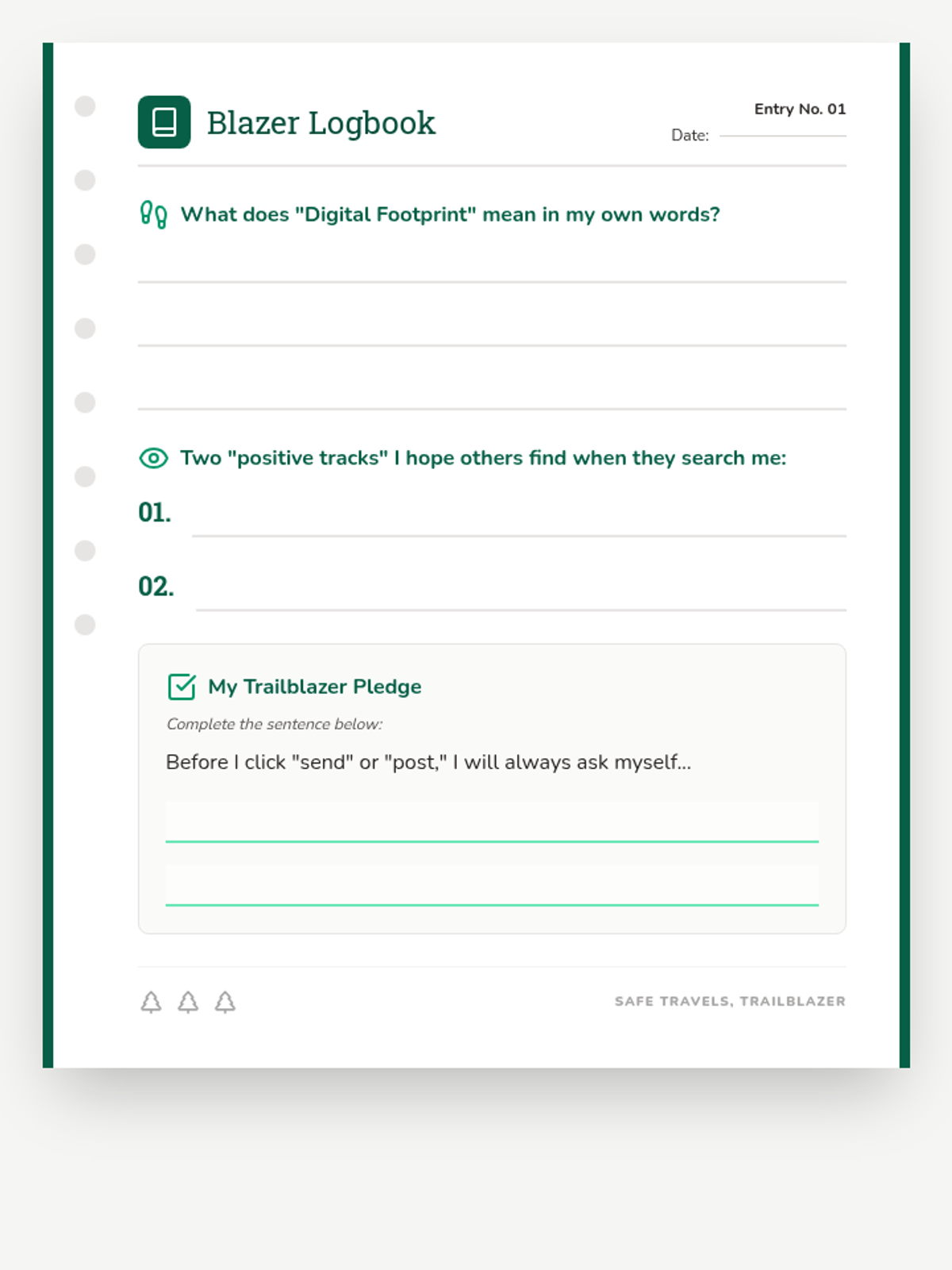
A reflection journal sheet for students to define their digital footprint and make a personal pledge to maintain a positive online trail.
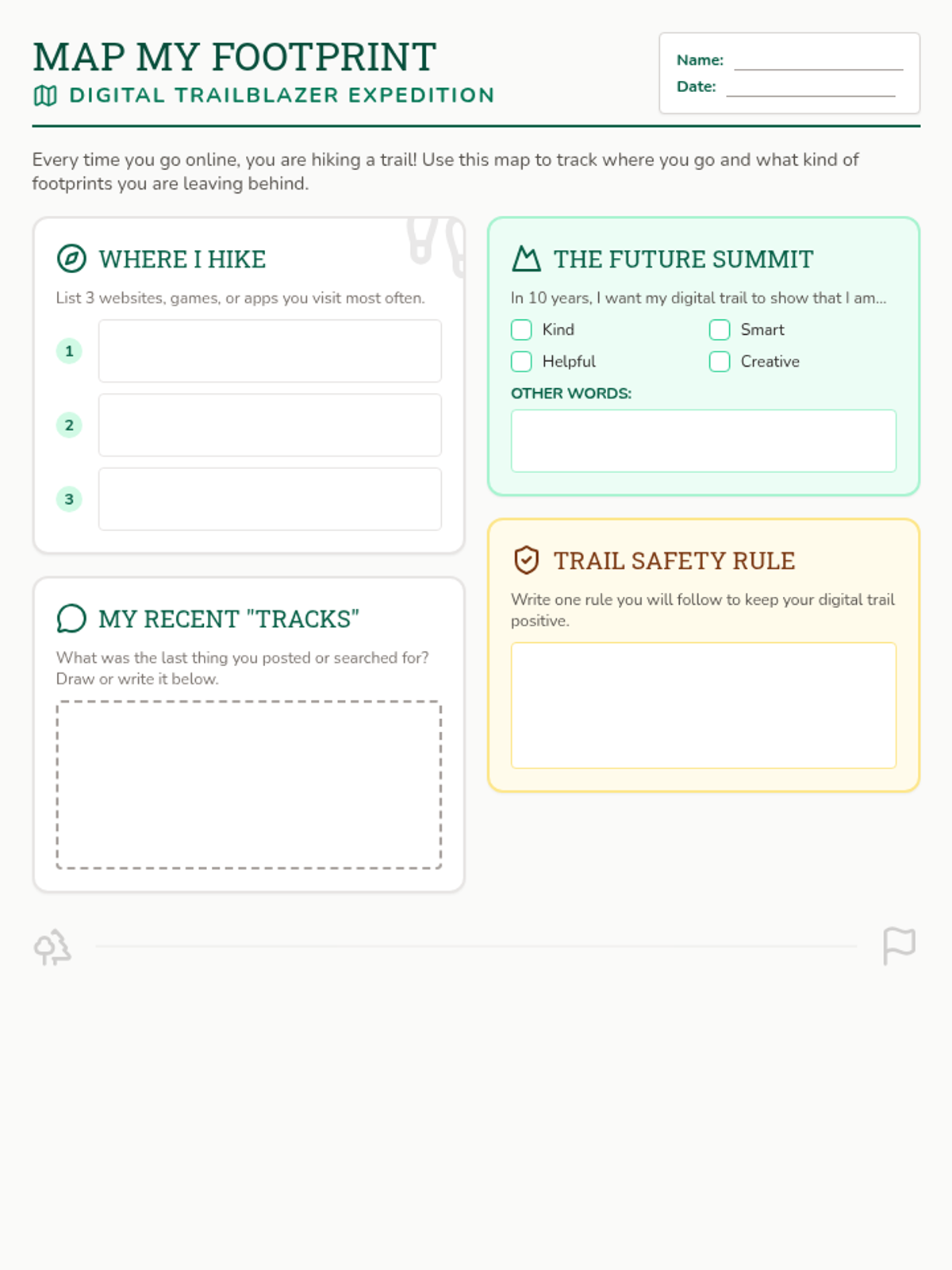
A student project sheet where children map their online activities, identify their "digital tracks," and set goals for a positive future online presence.
A dynamic 6-slide presentation for grades 3-5 that uses wilderness motifs to teach digital footprint concepts, permanence, and future impact.
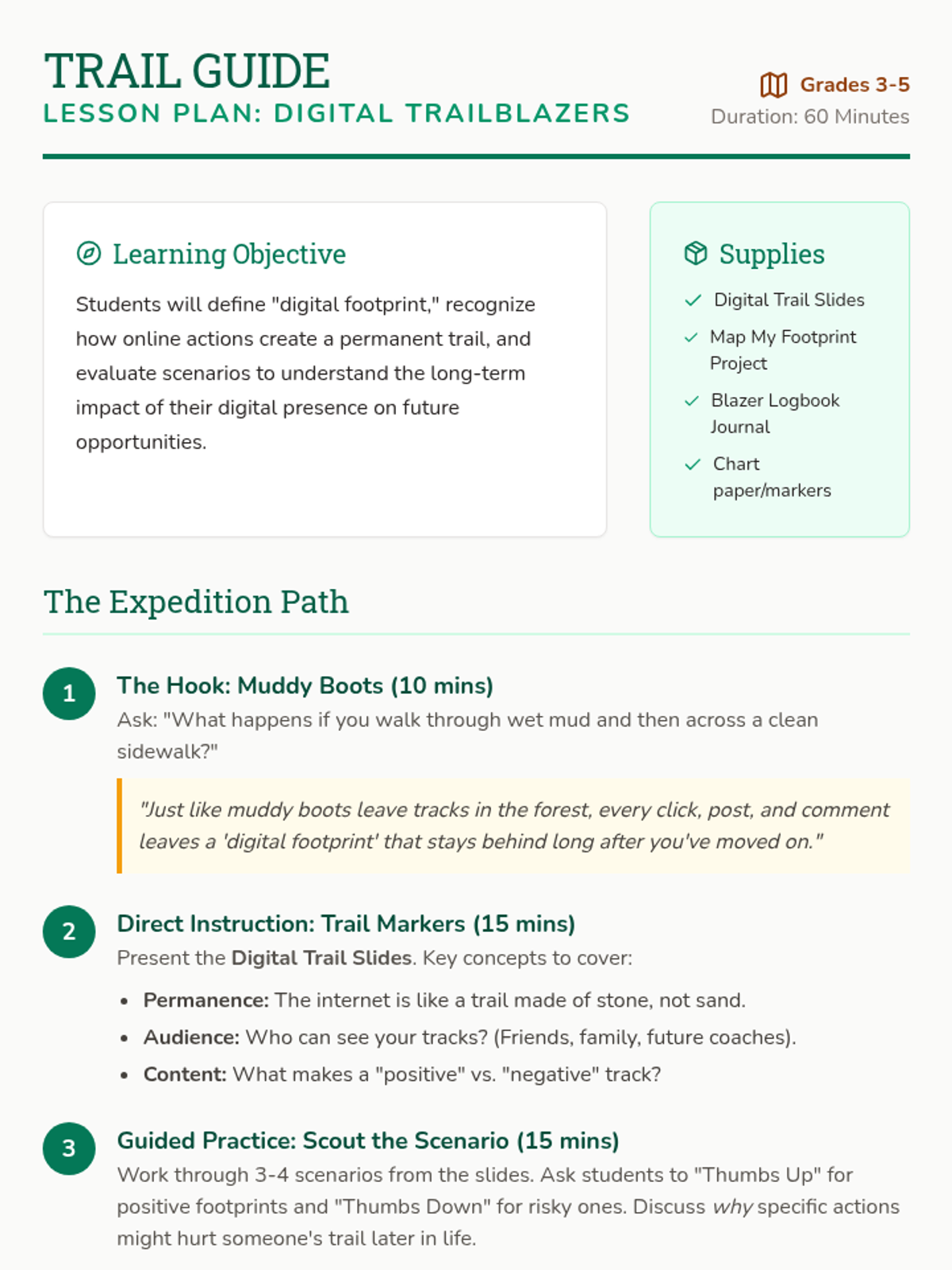
A comprehensive teacher's guide for the Digital Trailblazers lesson, featuring a wilderness-themed instructional path, learning objectives, and delivery tips for grades 3-5.
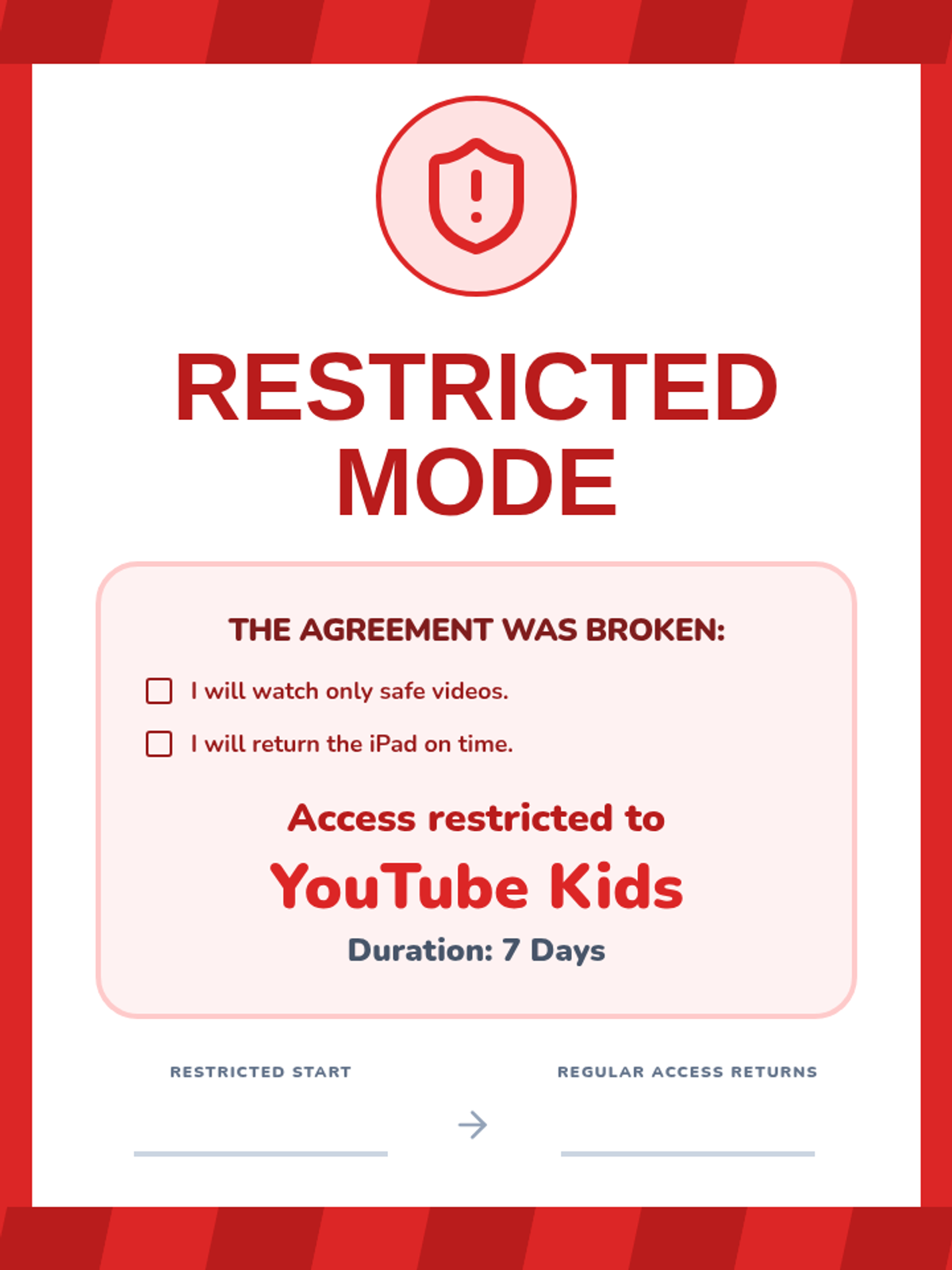
A visual notice for restricted iPad use, now including the broken 'I will' statements as a reminder and optimized for full-page impact.
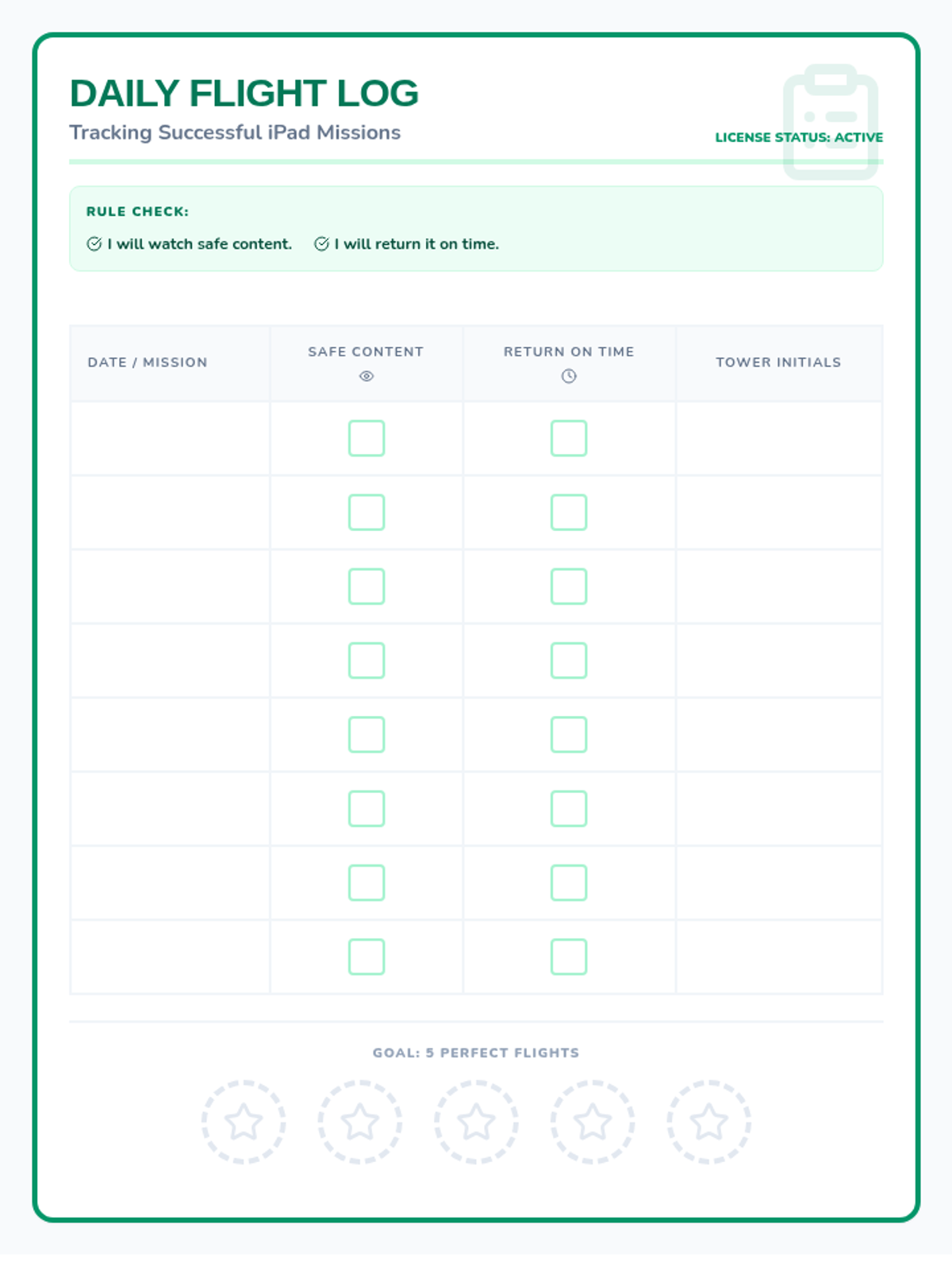
A tracking log for student iPad use, updated with 'I will' rule reminders and optimized for single-page layout.
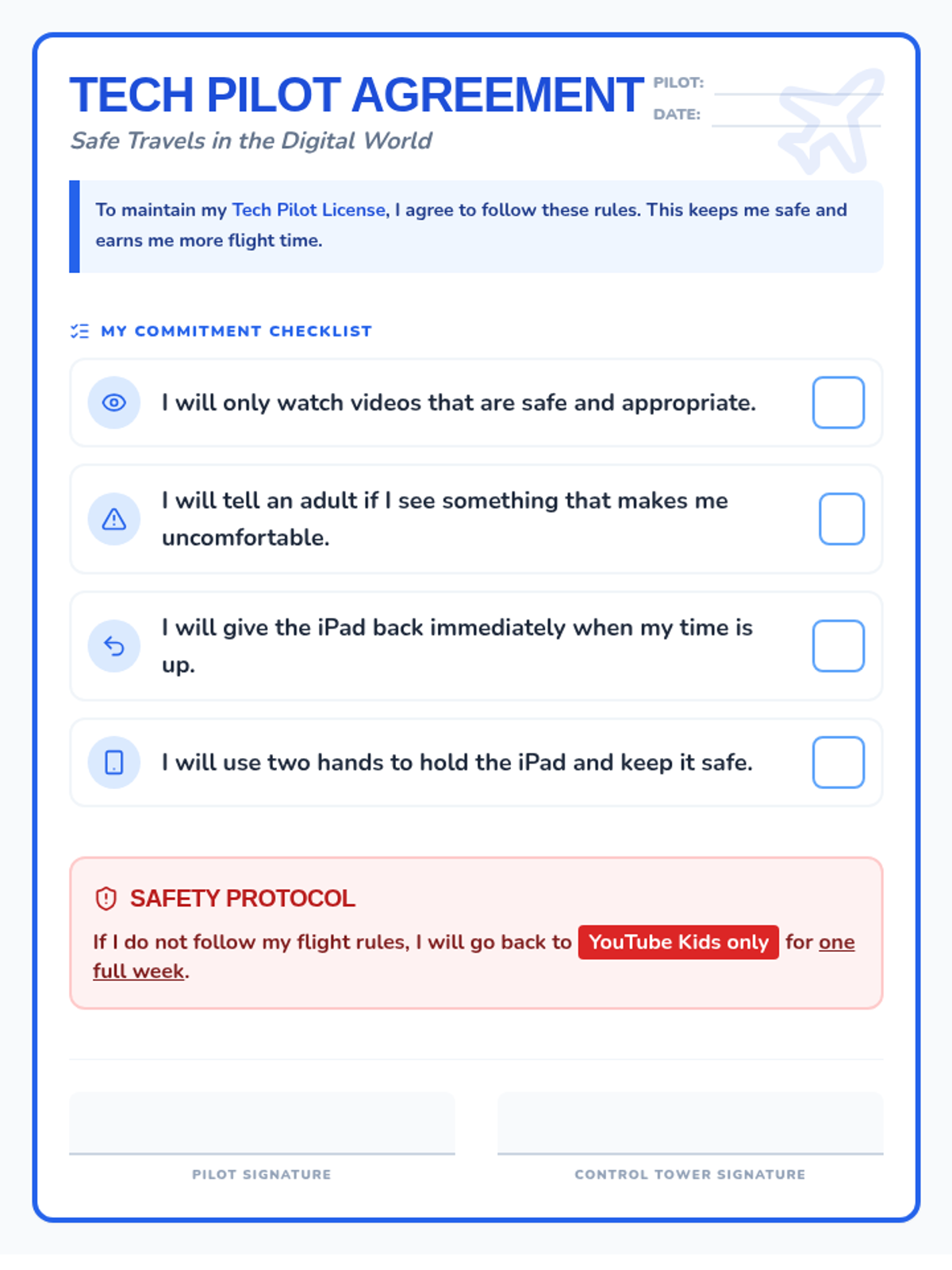
A revised student iPad and YouTube use contract featuring 'I will' statements, visual icons, and clear consequences, optimized for single-page printing.
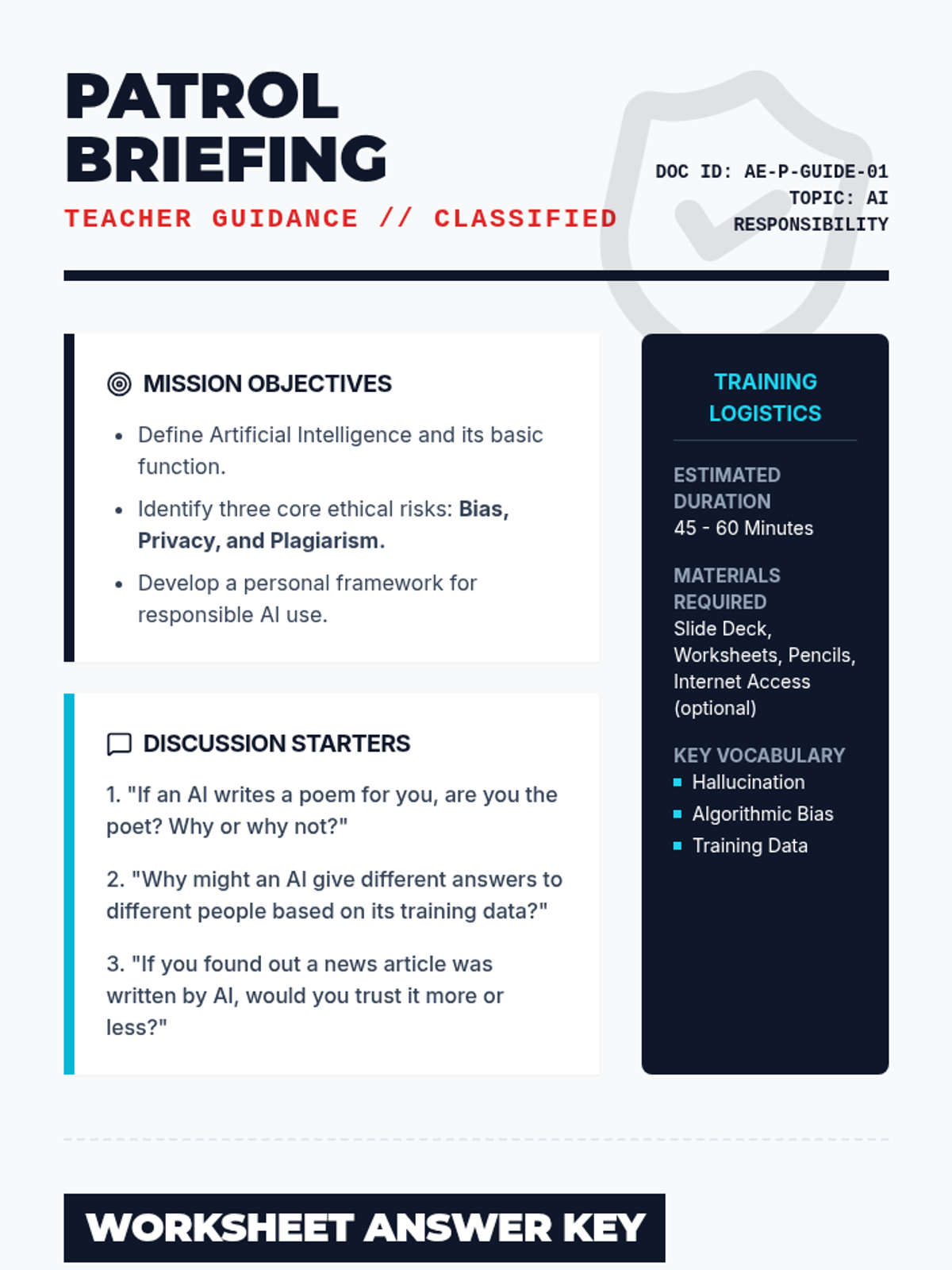
A detailed teacher-facing guide for the "Ethics Patrol" lesson. Includes lesson objectives, discussion prompts, a worksheet answer key, and strategic teaching tips for addressing AI responsibility.
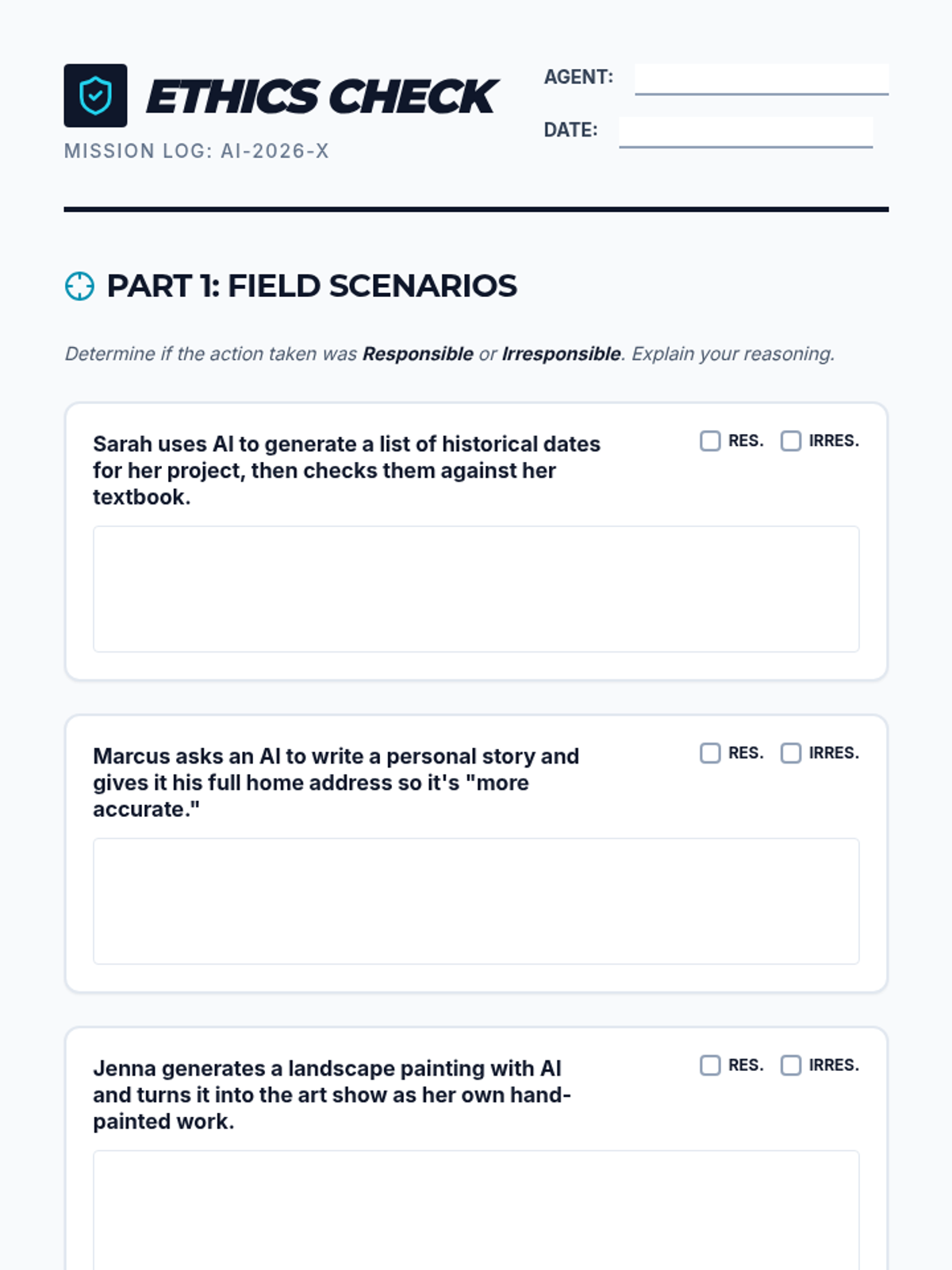
A student-facing worksheet where they analyze real-world AI use cases, identify privacy risks, and design their own ethical AI solution. Includes a signature section for the "Ethics Patrol Pledge".
A visually engaging slide deck designed for the "Ethics Patrol" lesson. It covers the basics of AI, ethical pitfalls like bias and privacy, and a real-world scenario to prompt classroom discussion.
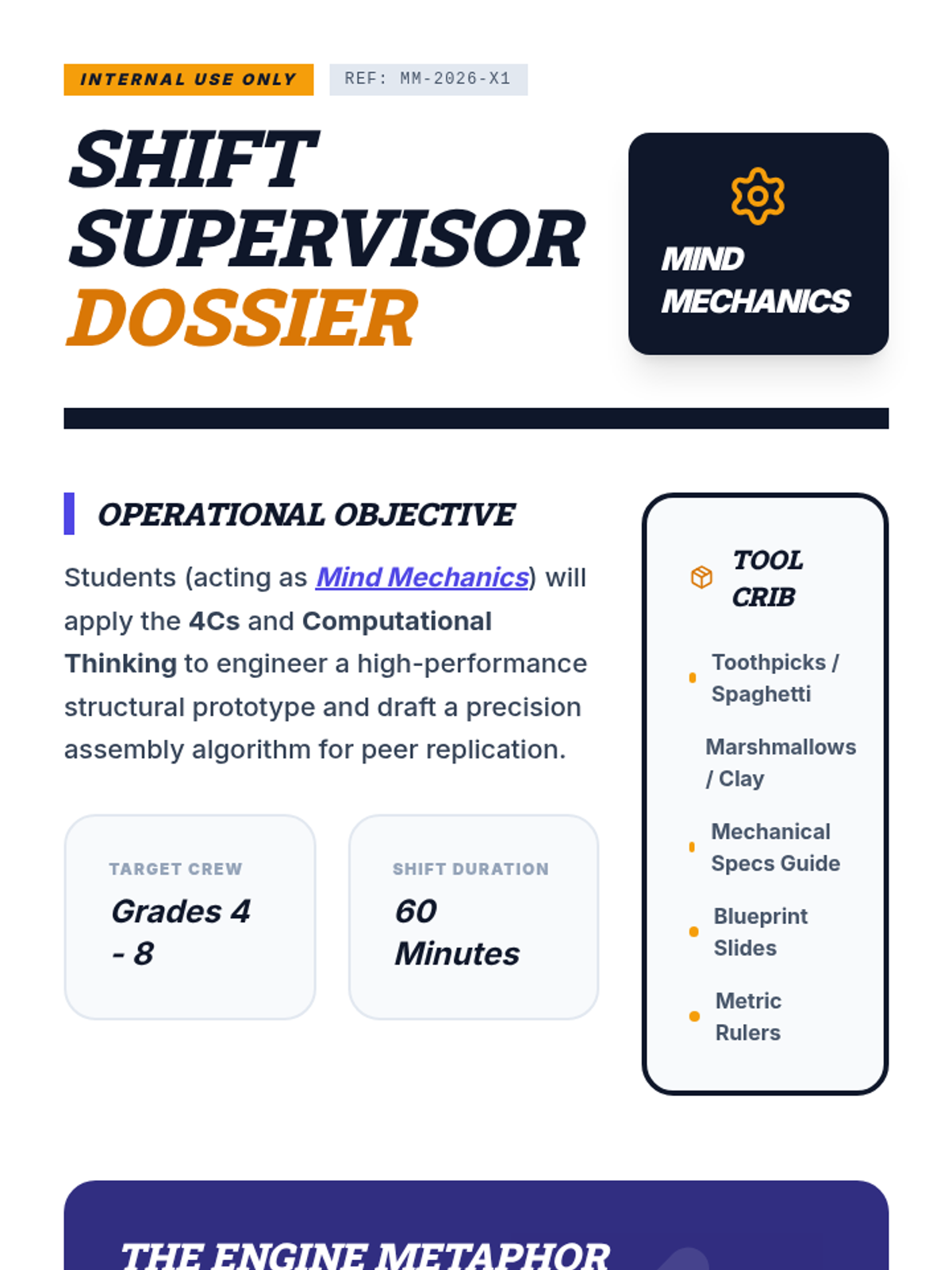
A detailed mission dossier for teachers, including lesson flow, materials list, and instructional strategies for teaching the 4Cs and Computational Thinking.
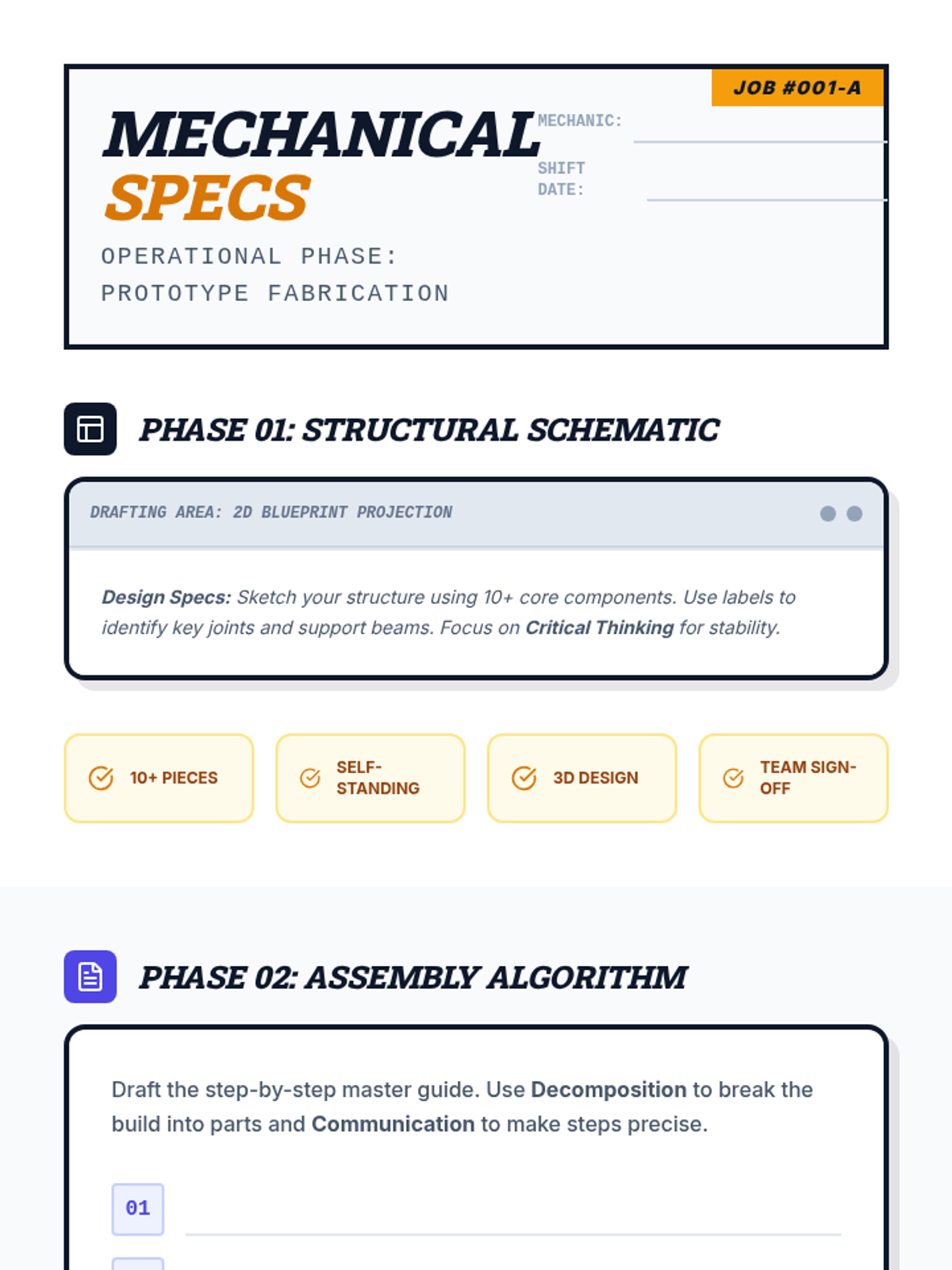
An industrial-themed field guide for students to design their structural prototype, write their assembly algorithm, and reflect on their use of the 4Cs and Computational Thinking.
A high-energy, industrial-themed slide deck that introduces the 4Cs and Computational Thinking with large, high-contrast text and a modern workshop aesthetic.
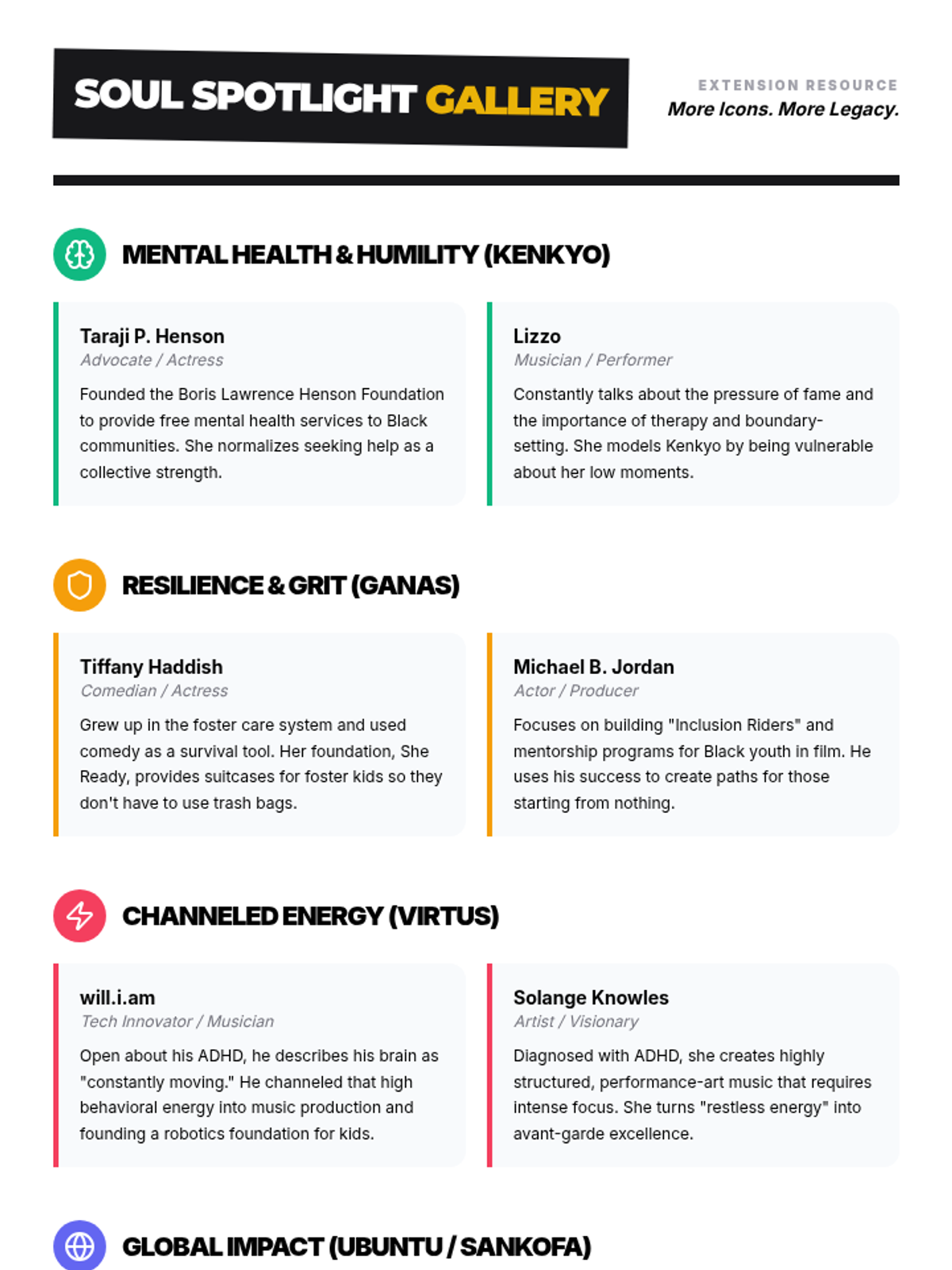
A teacher resource providing additional celebrity profiles categorized by school values and themes like mental health, resilience, and behavioral challenges.
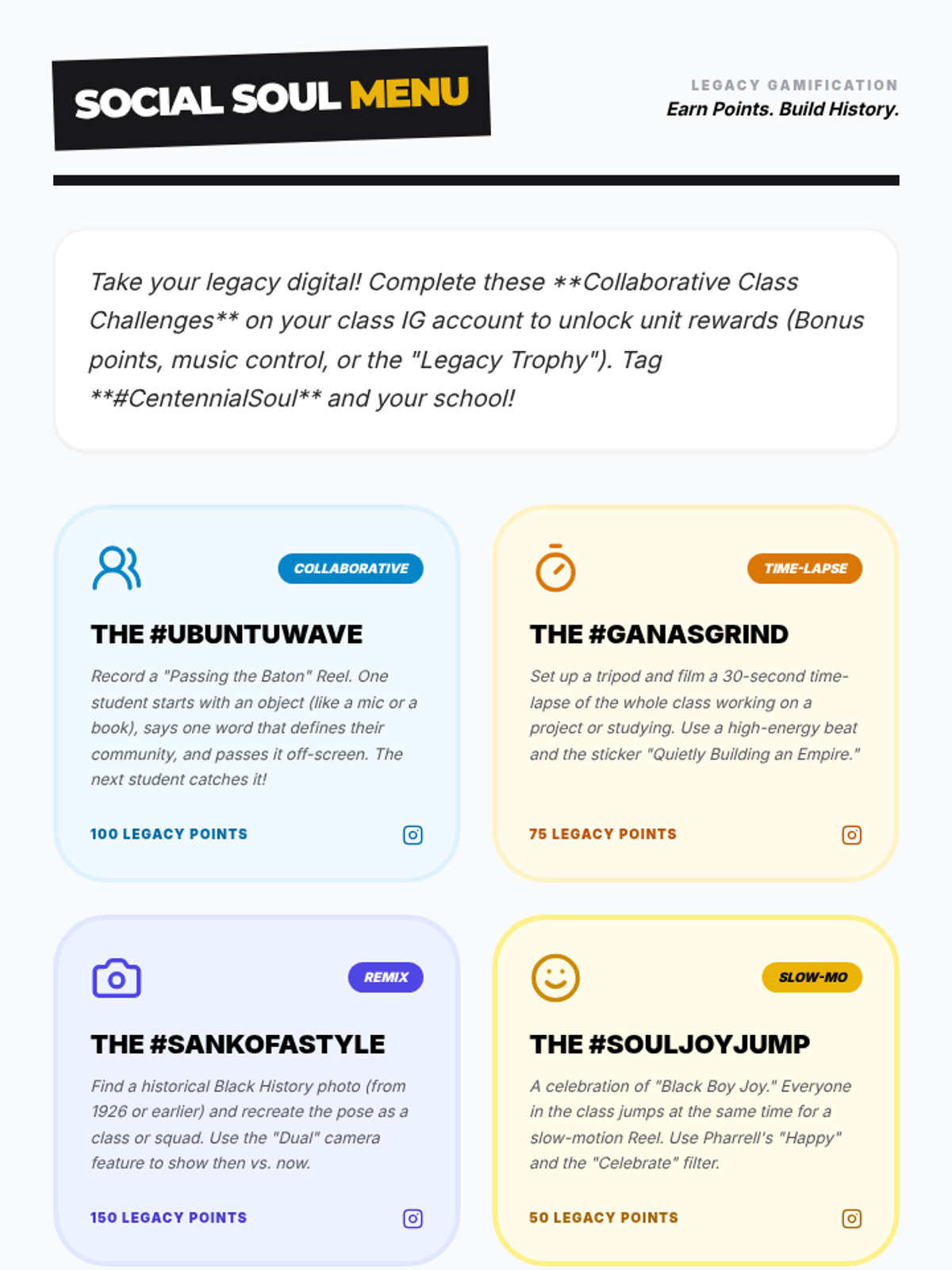
A gamified challenge menu for IG activities that students can complete as a class to earn 'Legacy Points' throughout the unit.
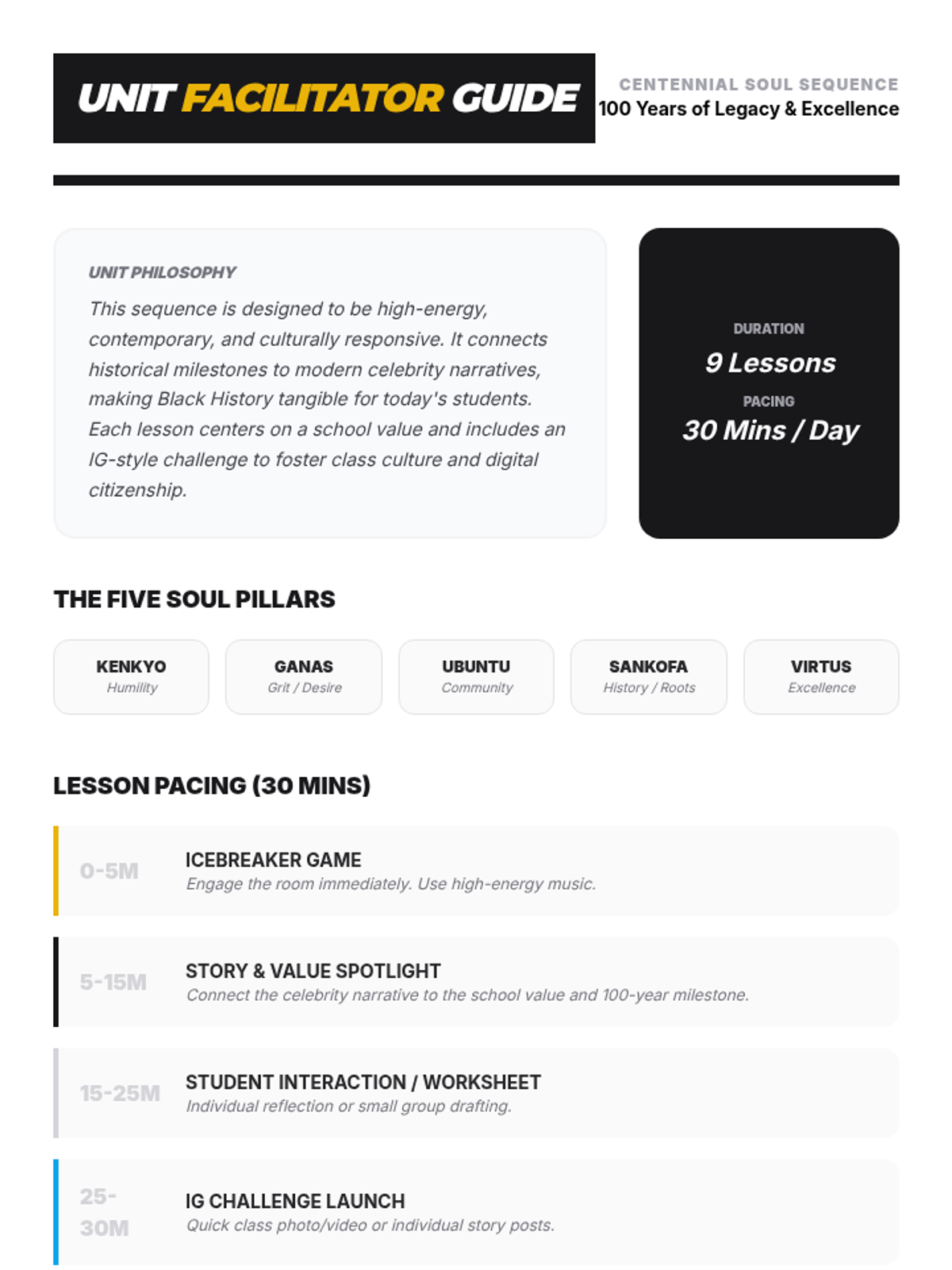
Comprehensive facilitation guide for the 9-lesson unit, including pacing, philosophies, and tips for high-energy delivery.
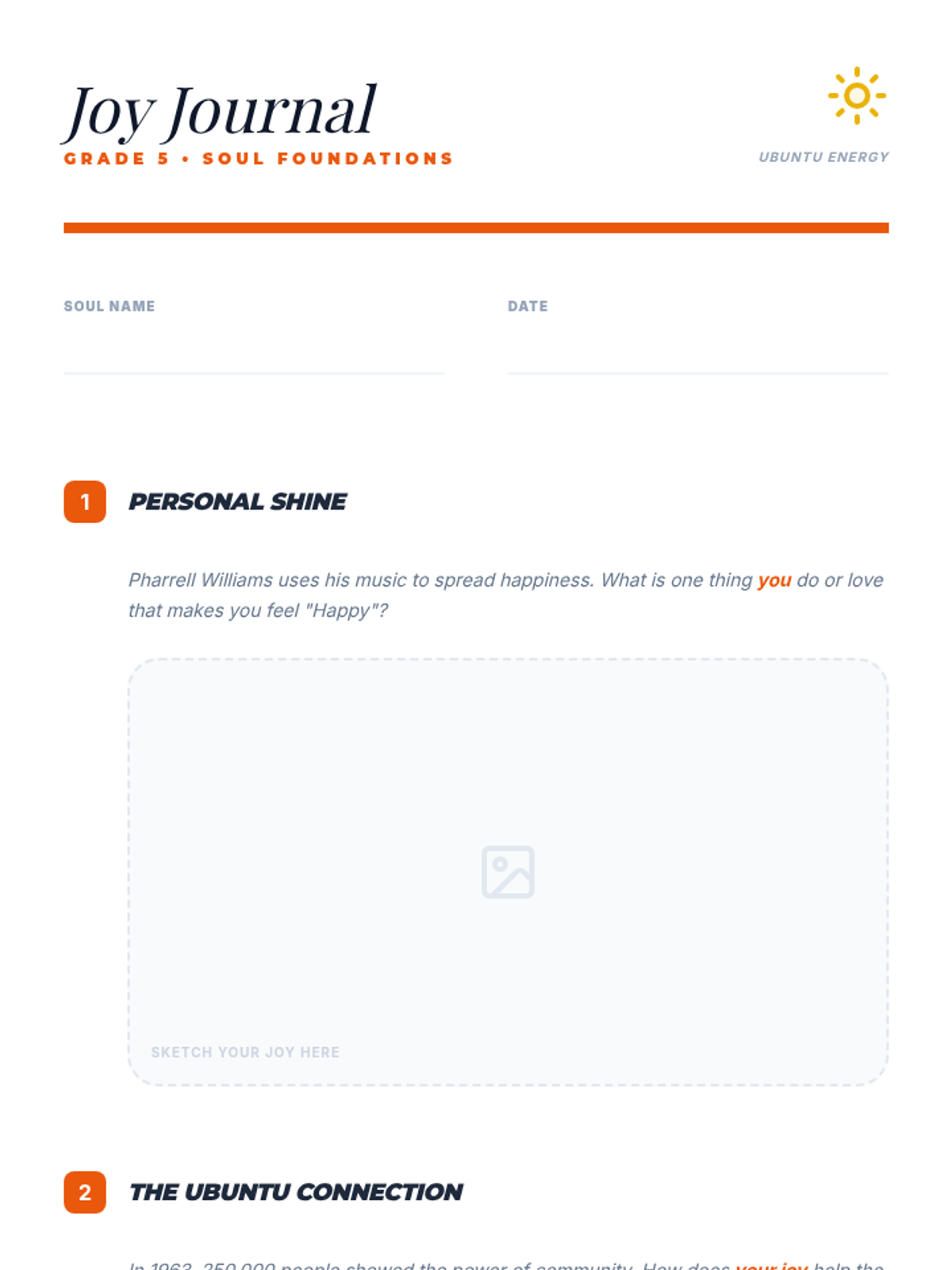
Reflection journal for Grade 5 Lesson 1, focusing on individual joy, community connection (Ubuntu), and the 1963 March on Washington.
Instructional slides for Grade 5 Lesson 1, celebrating 'Black Boy Joy', the value of Ubuntu, Pharrell Williams, and the 1963 March on Washington.
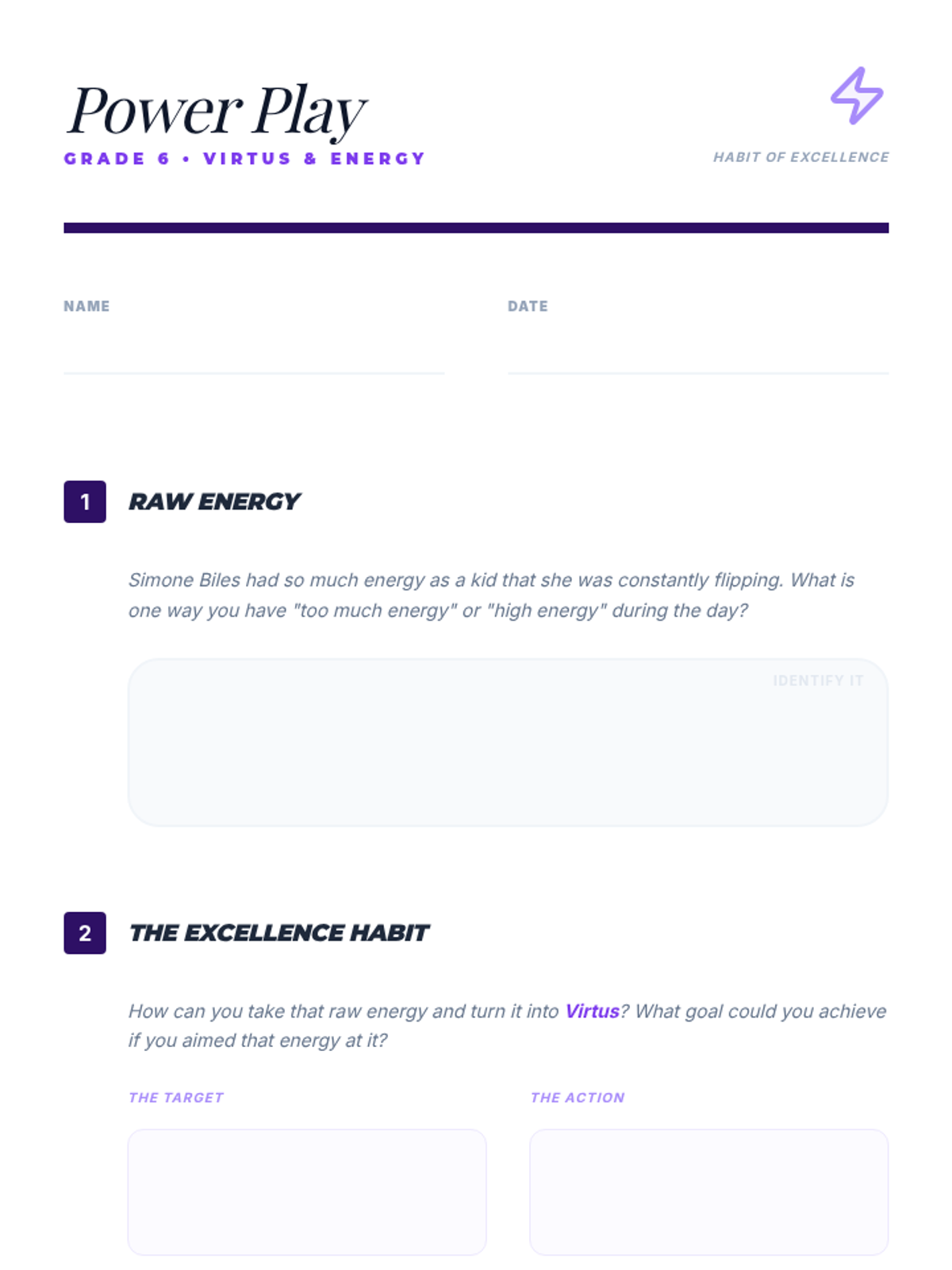
Activity sheet for Grade 6 Lesson 1 where students map their energy to excellence and reflect on advocacy.
Instructional slides for Grade 6 Lesson 1, celebrating Simone Biles, the value of Virtus, and the 1968 Olympic milestone.
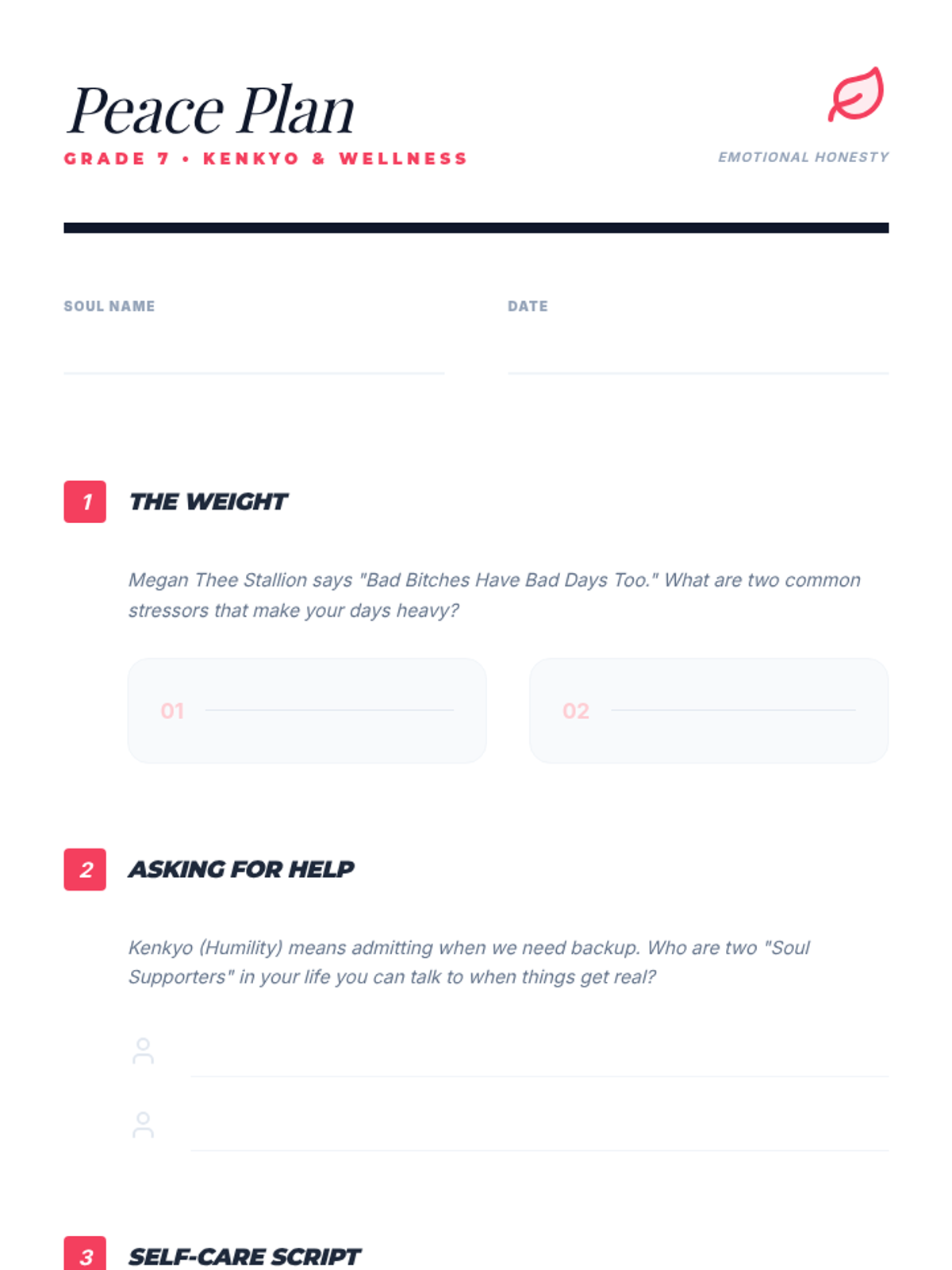
Reflection journal for Grade 7 Lesson 1, helping students identify stressors and self-care strategies while connecting to the value of Kenkyo.
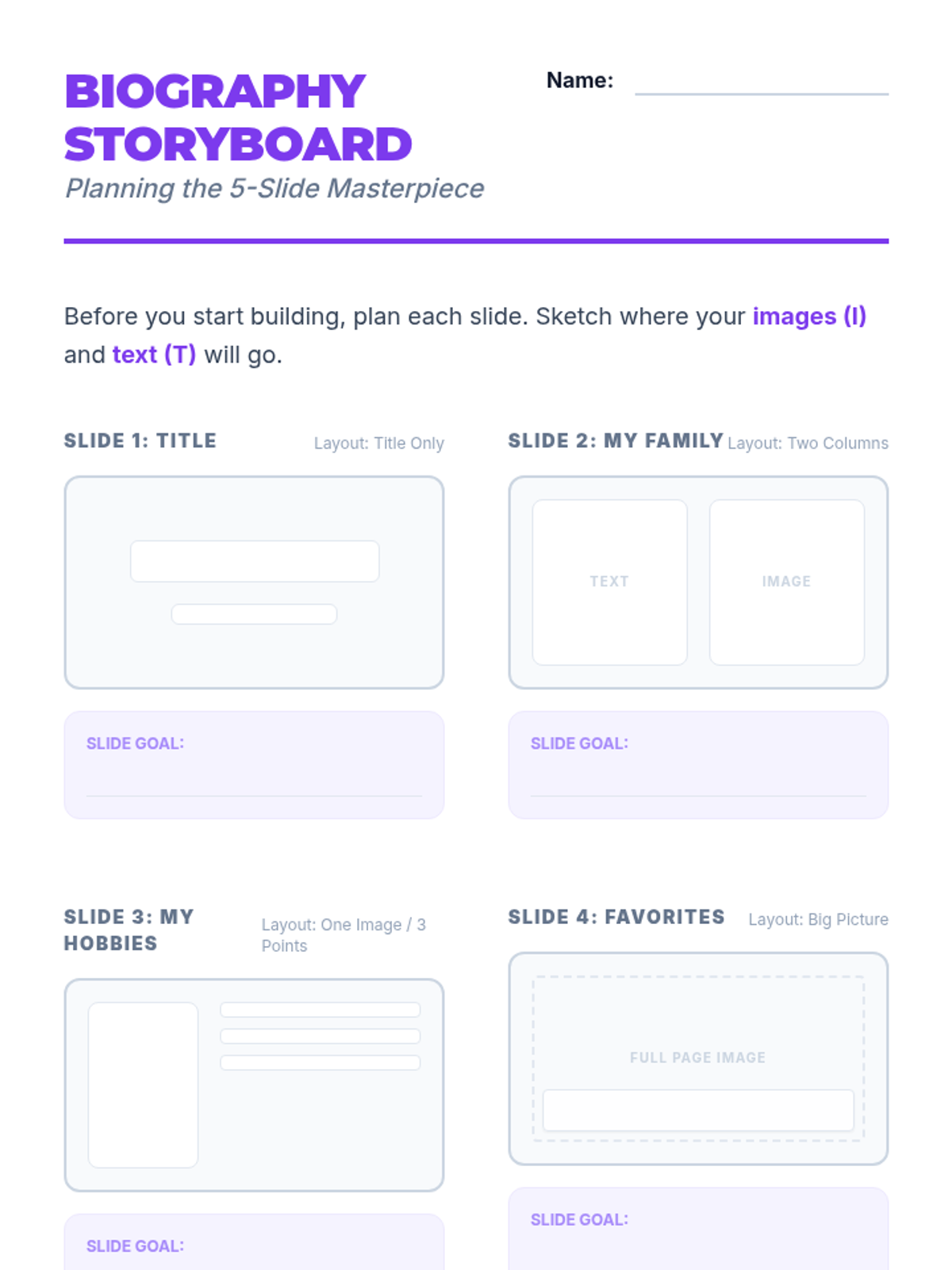
A comprehensive storyboard planner for the 5-slide digital biography, including layout sketches and feedback cards for the gallery walk.
Project instruction slides for the Final Digital Biography, outlining the 5-slide challenge, mastery goals, and the concluding gallery walk activity.
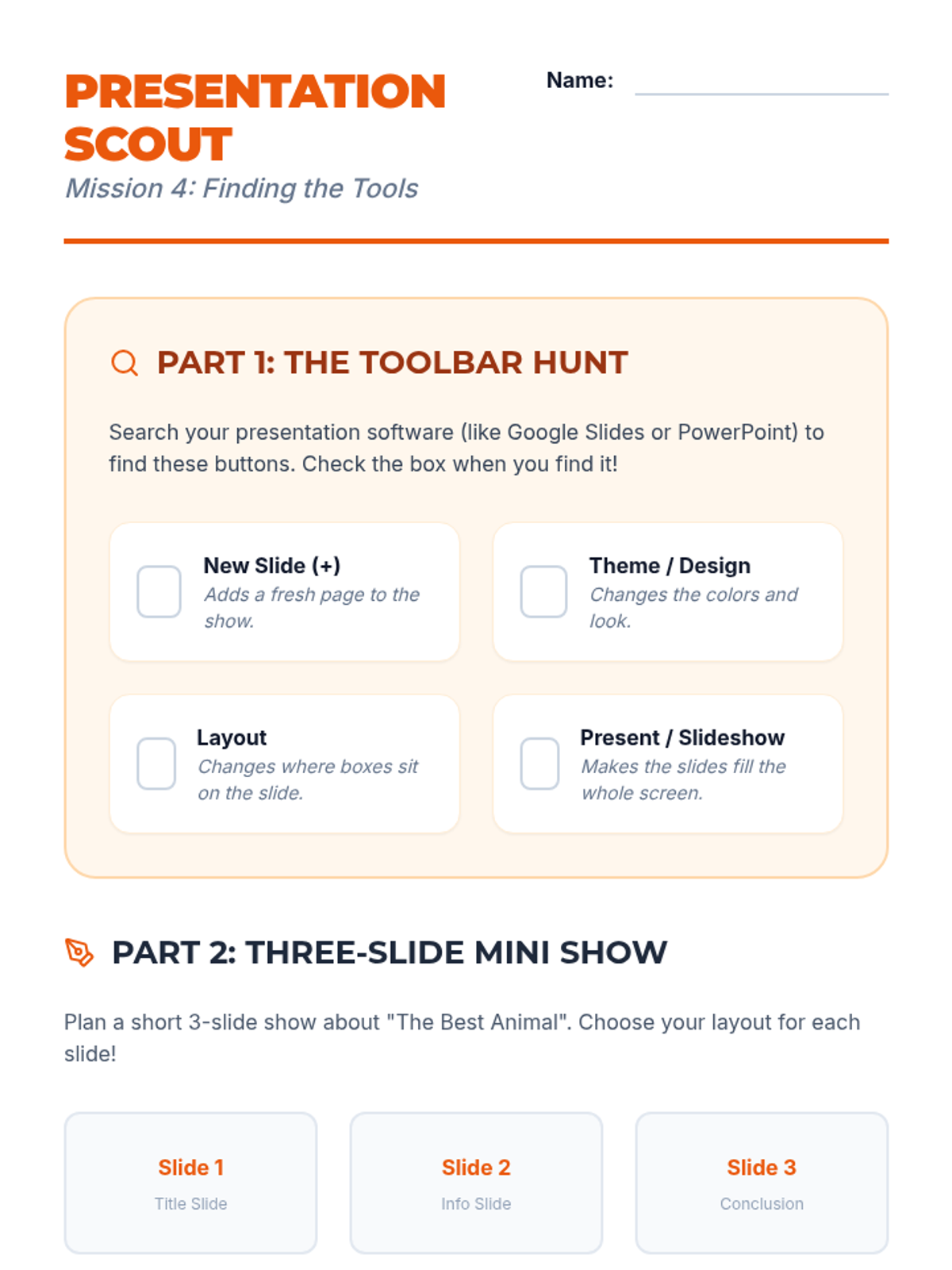
A combined activity sheet including a toolbar scavenger hunt for presentation software and a planning guide for a student's first three-slide presentation.
Slides introducing presentation software, contrasting documents with slides, and exploring themes, layouts, and toolbar navigation.
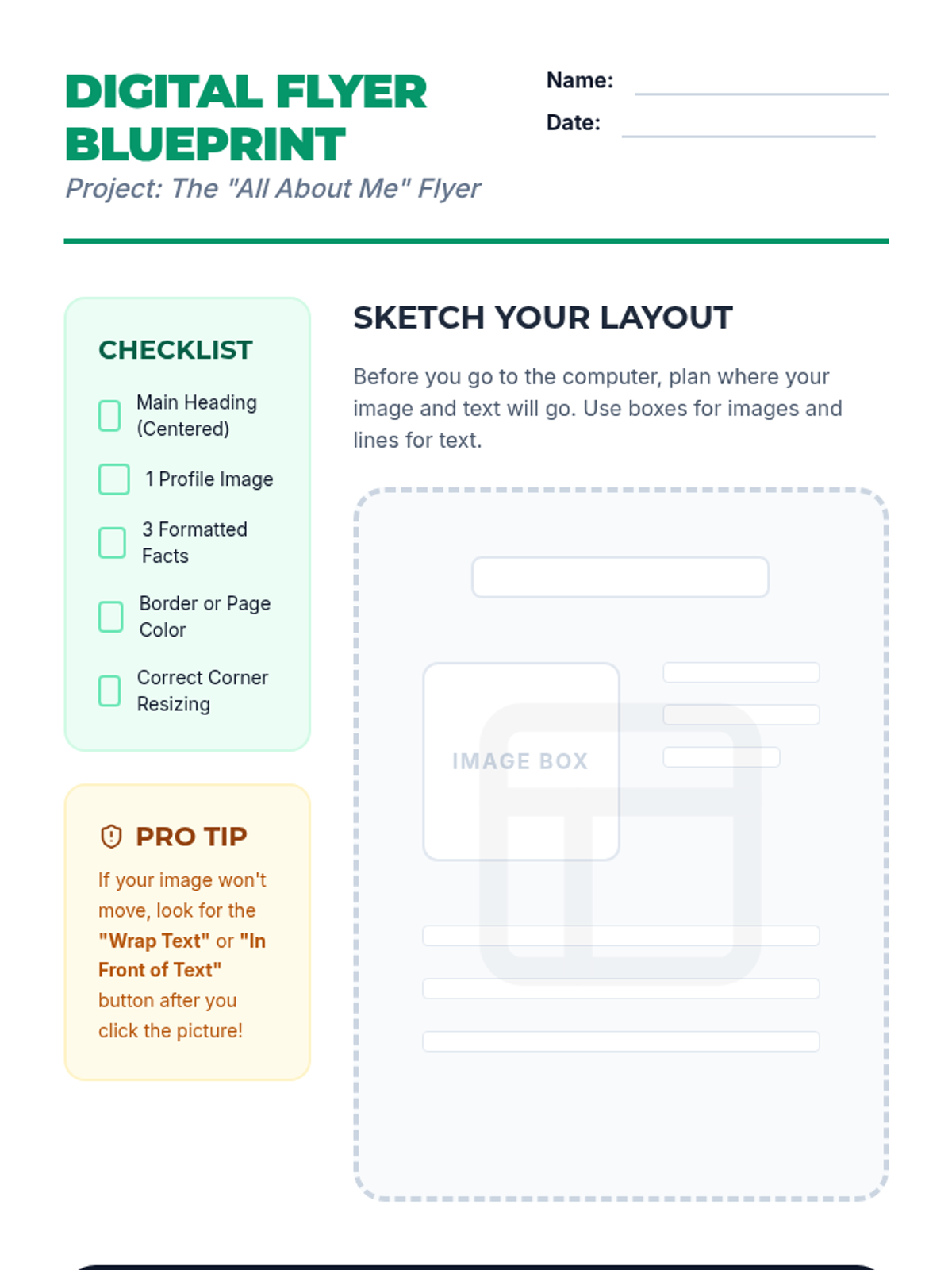
A planning document for the 'All About Me' flyer project, featuring a requirements checklist, a sketch area for layout design, and tips for digital citizenship.
Instructional slides for inserting, resizing (via corners), and positioning images within a document, leading into an 'About Me' flyer project.
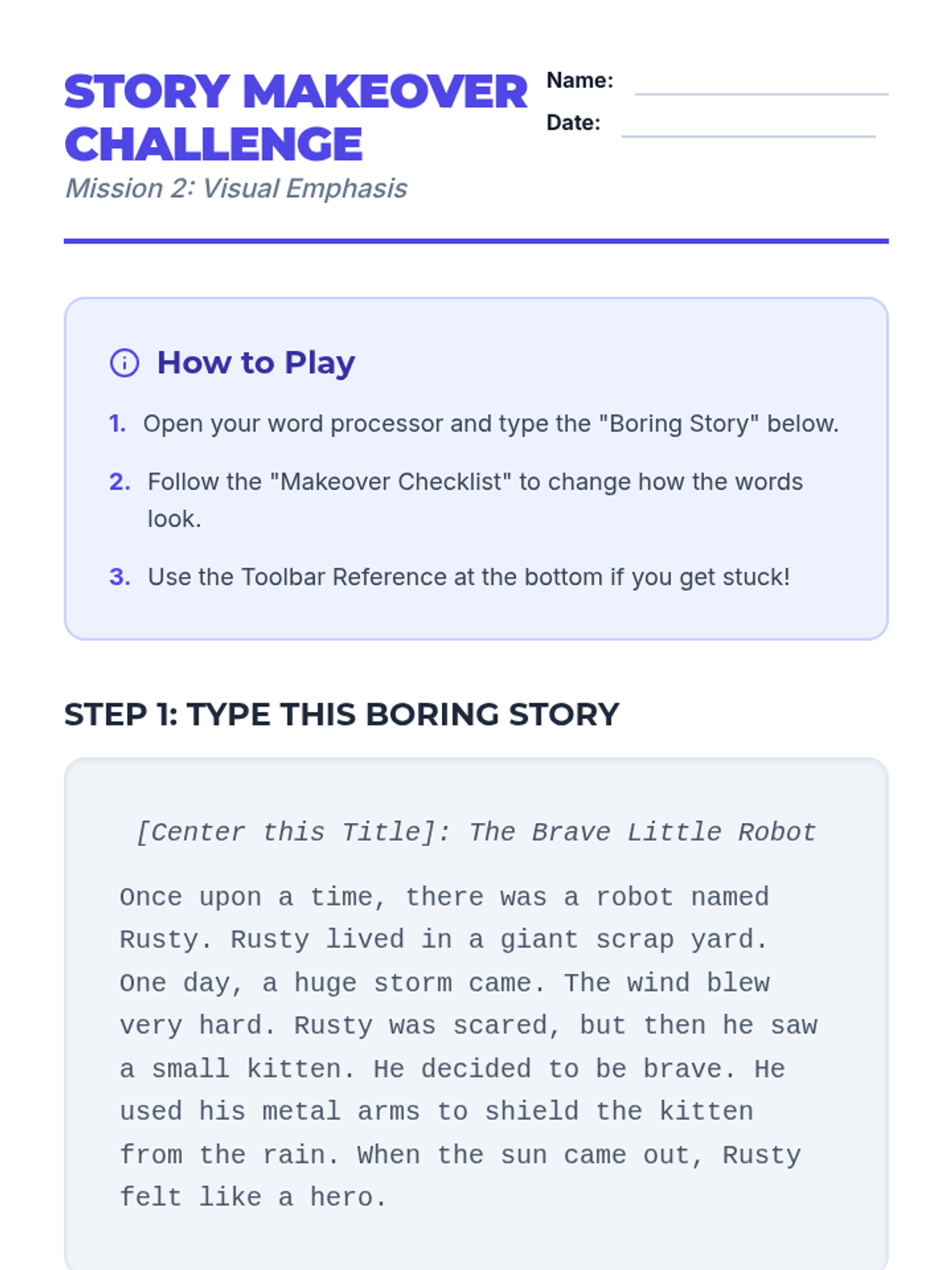
A step-by-step activity sheet where students type a plain story and apply specific formatting changes to transform its visual impact.
Visual slides for teaching text formatting basics (fonts, styles, color) with a focus on visual hierarchy and selection techniques.
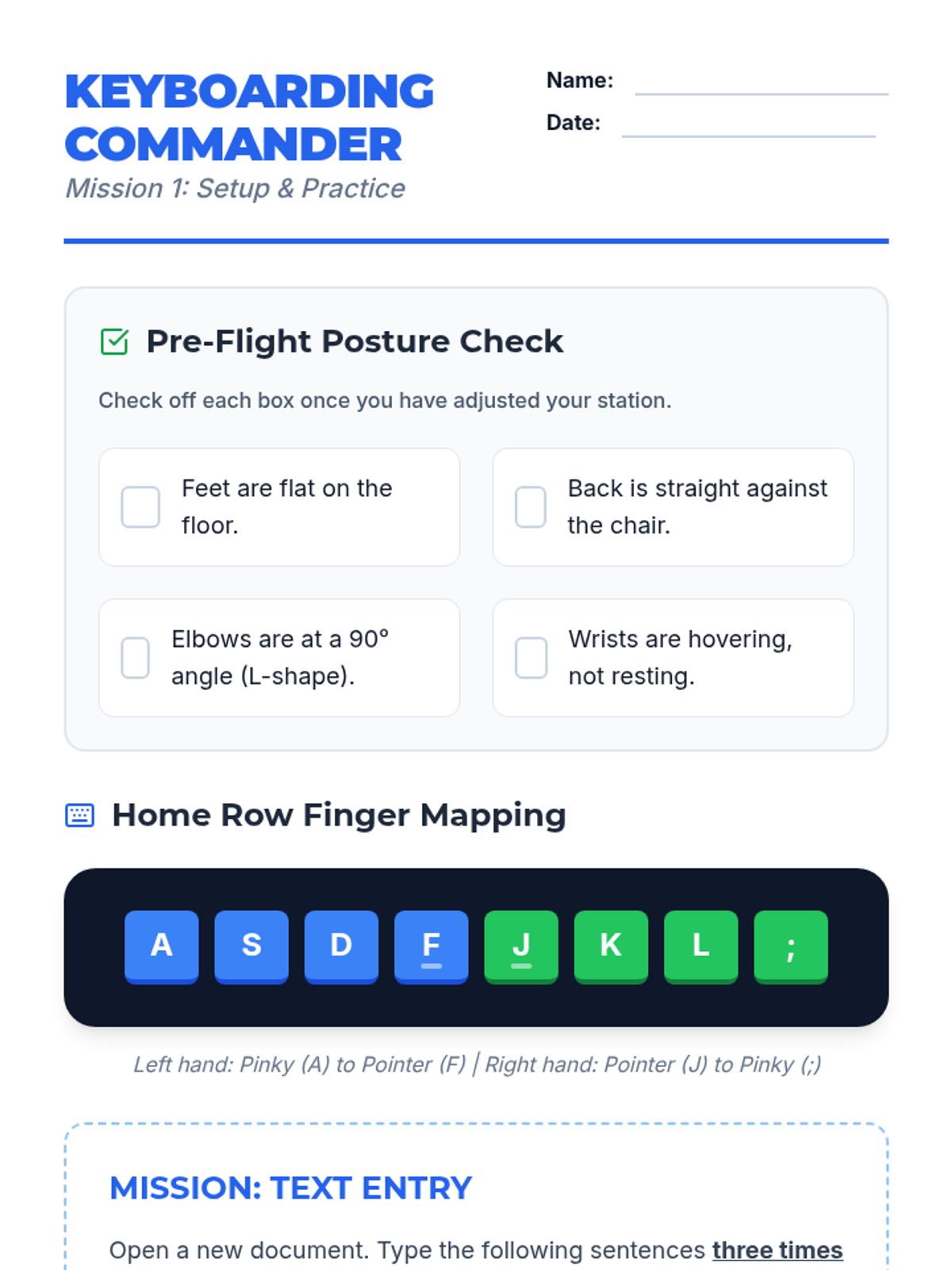
A student worksheet providing a posture checklist, home row finger mapping, and a typing practice mission for initial text entry skills.
Introductory slides for keyboarding basics, covering posture, home row positioning, and the 'Accuracy Over Speed' mindset for 3rd graders.
Visual rules and goal targets for the Formatting Relay activity, emphasizing the "No Mouse" constraint and team hand-off protocol.
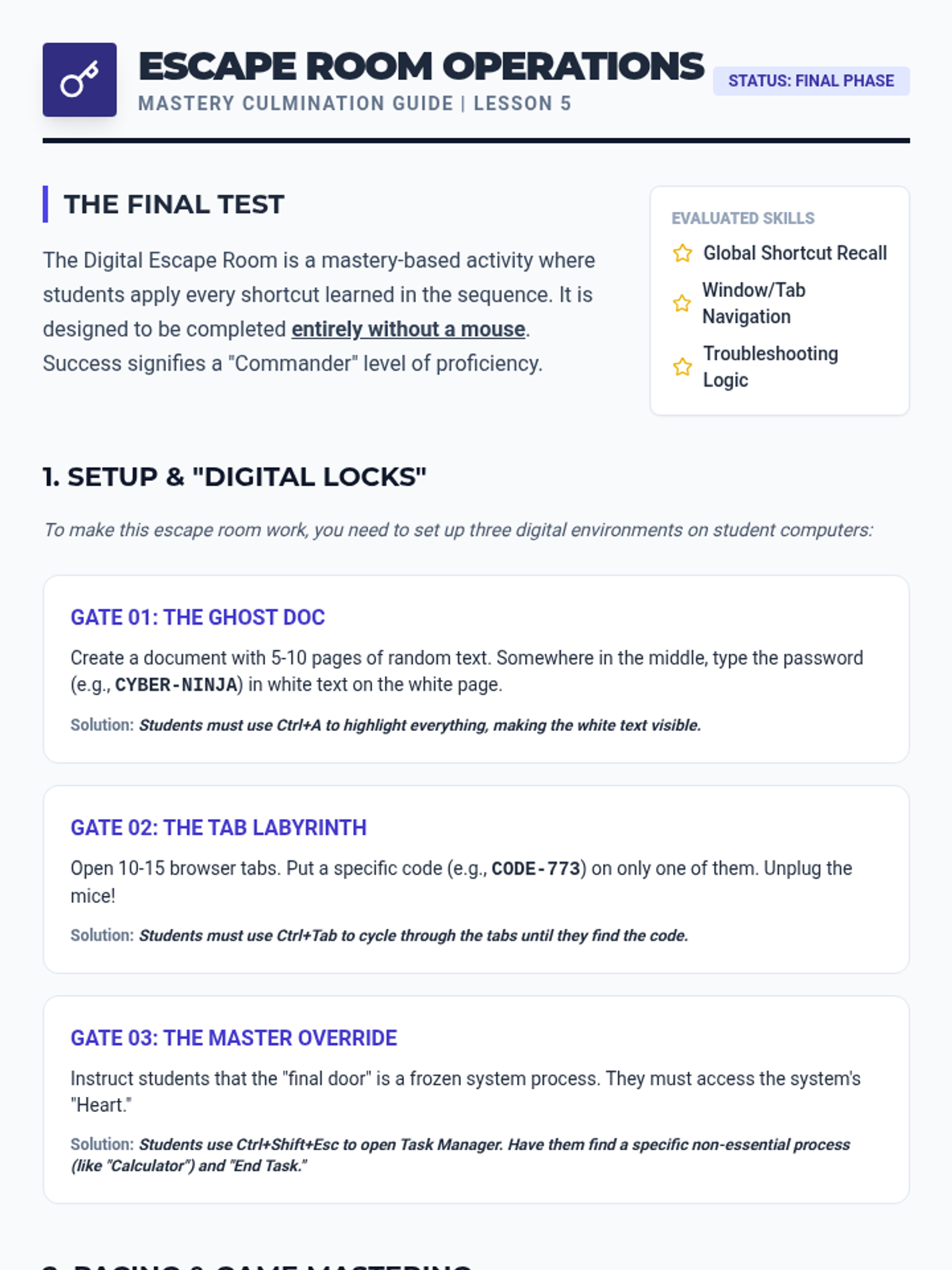
Teacher guide for the culminating Escape Room activity, providing setup instructions for digital locks, pacing tips, and debrief questions.
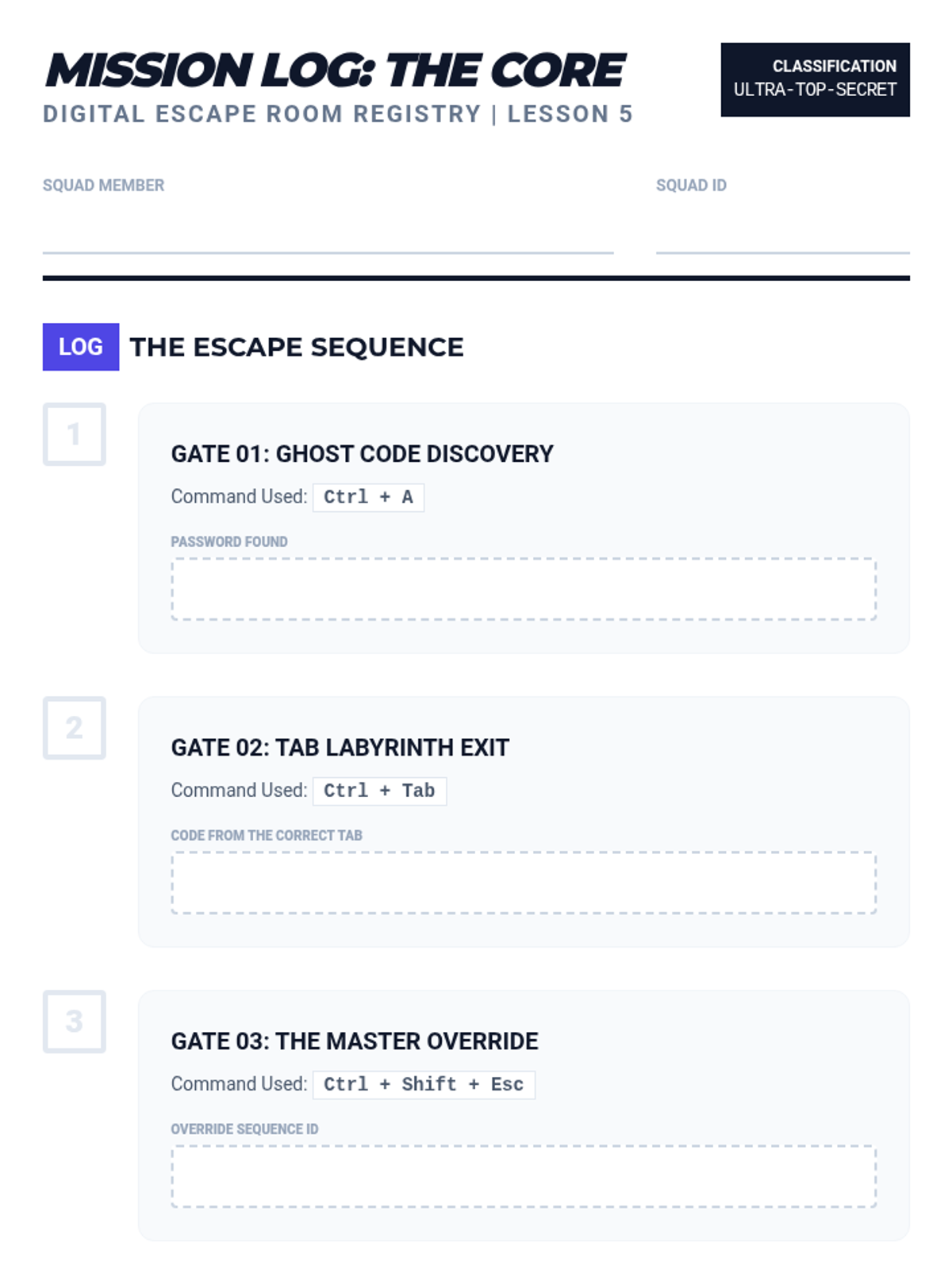
Student mission log for the culminating Escape Room activity, used to track codes and progress as they "solve" digital locks using keyboard shortcuts.
Visual puzzles and story elements for the culminating Escape Room activity, requiring students to use various keyboard shortcuts to "solve" digital locks.
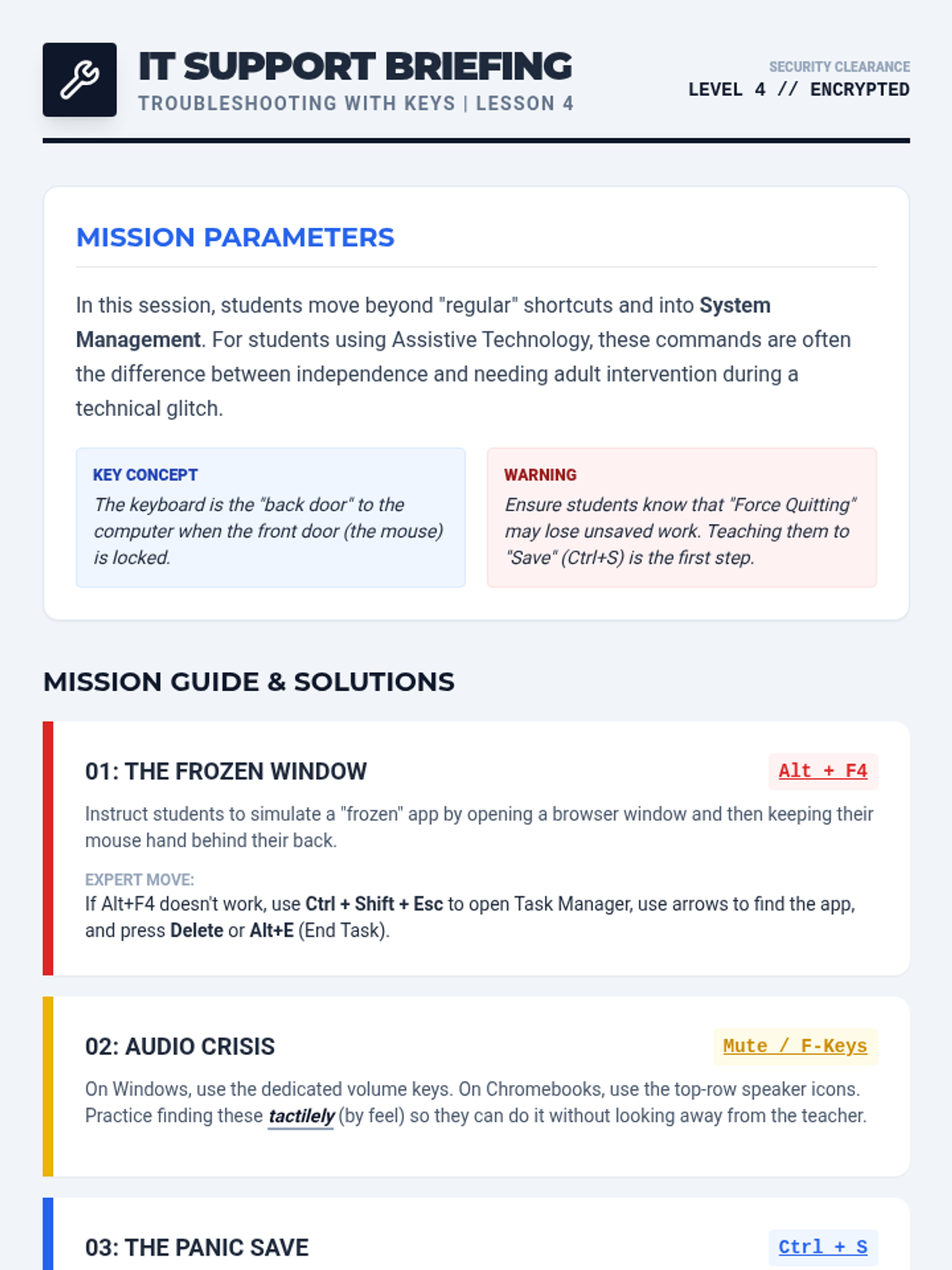
Teacher guide for Lesson 4, covering scenario walkthroughs, technical solutions, and simulation facilitation tips for keyboard troubleshooting.
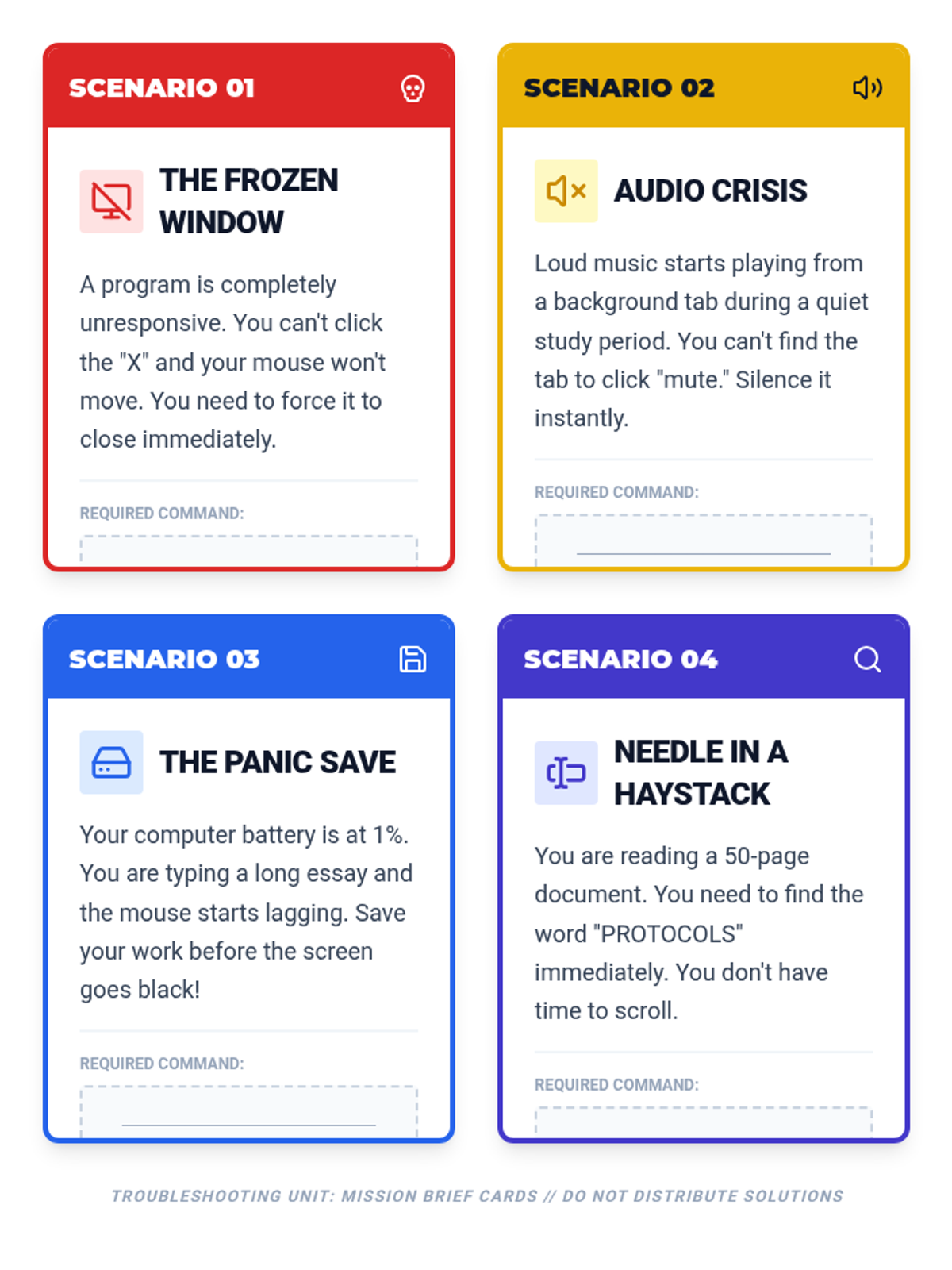
Troubleshooting mission cards for students to solve real-world computer issues using keyboard shortcuts in a 'frozen mouse' simulation.
Visualizing troubleshooting scenarios for Lesson 4, including frozen apps and volume crises, to be solved using only keyboard shortcuts.
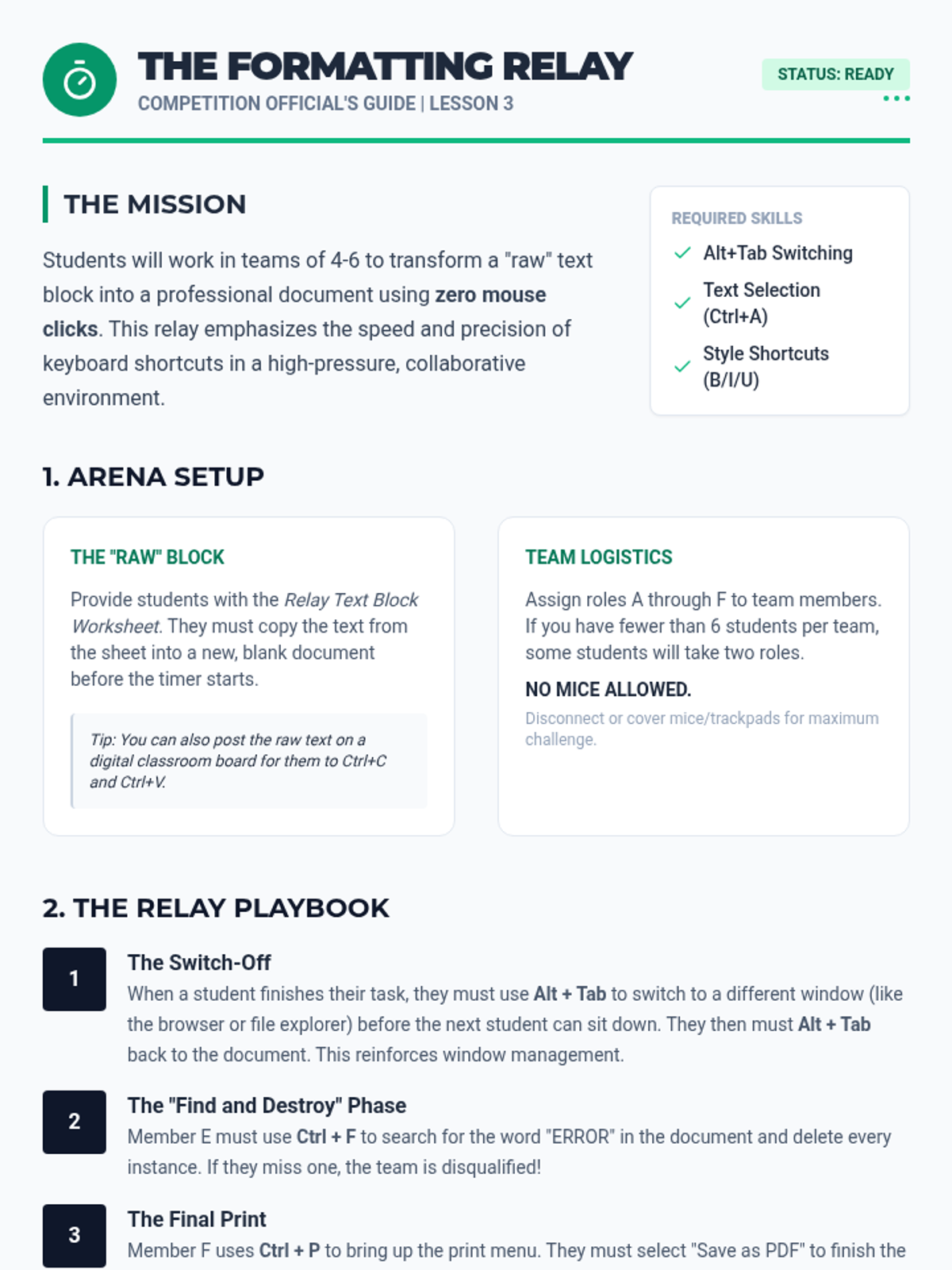
Teacher guide for the Formatting Relay, covering team setup, logistics, scoring rules, and differentiation strategies.
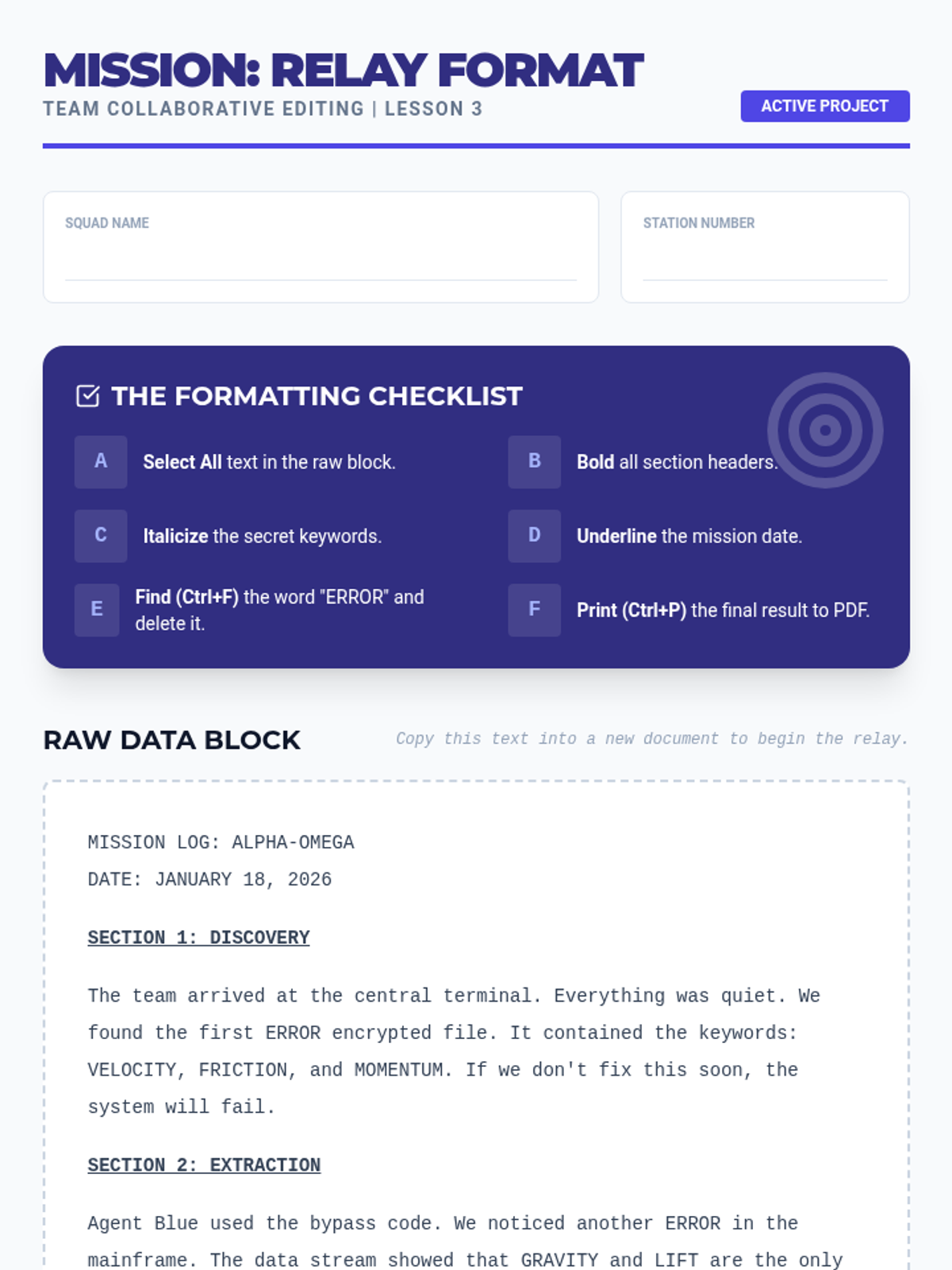
Student activity sheet for the Formatting Relay, featuring raw text to be edited and a formatting checklist to be completed by team members using keyboard shortcuts.
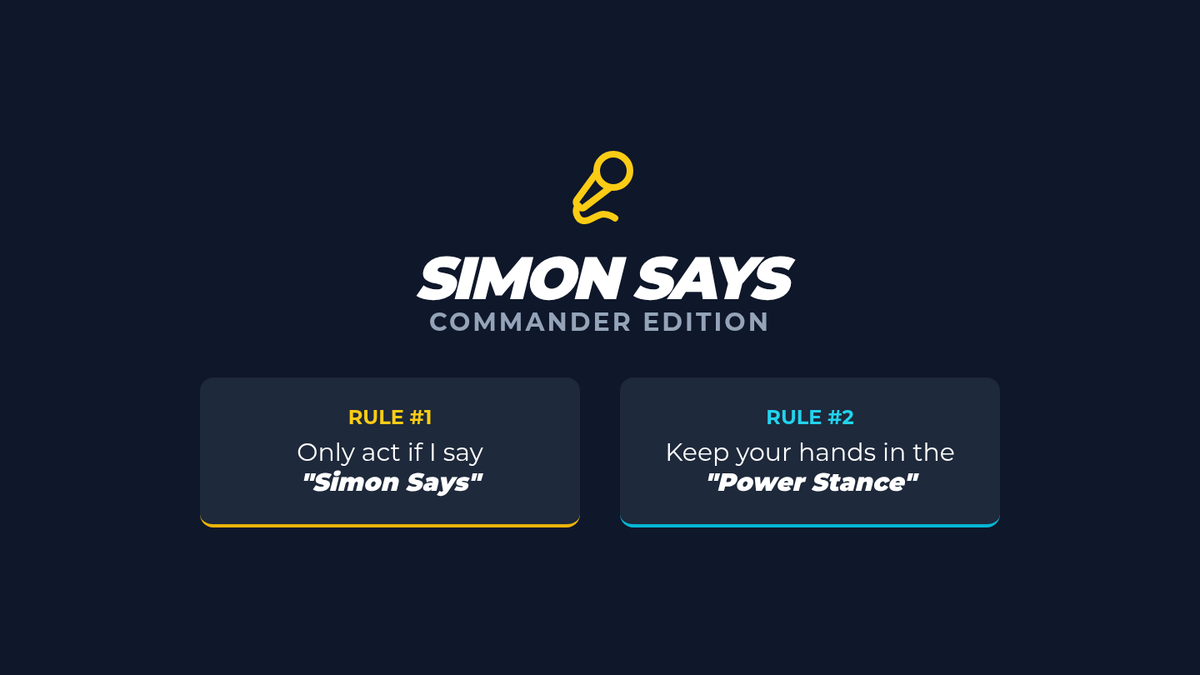
Visual prompt slides for the Simon Says game, providing high-contrast cues for common shortcuts to build rapid recall.
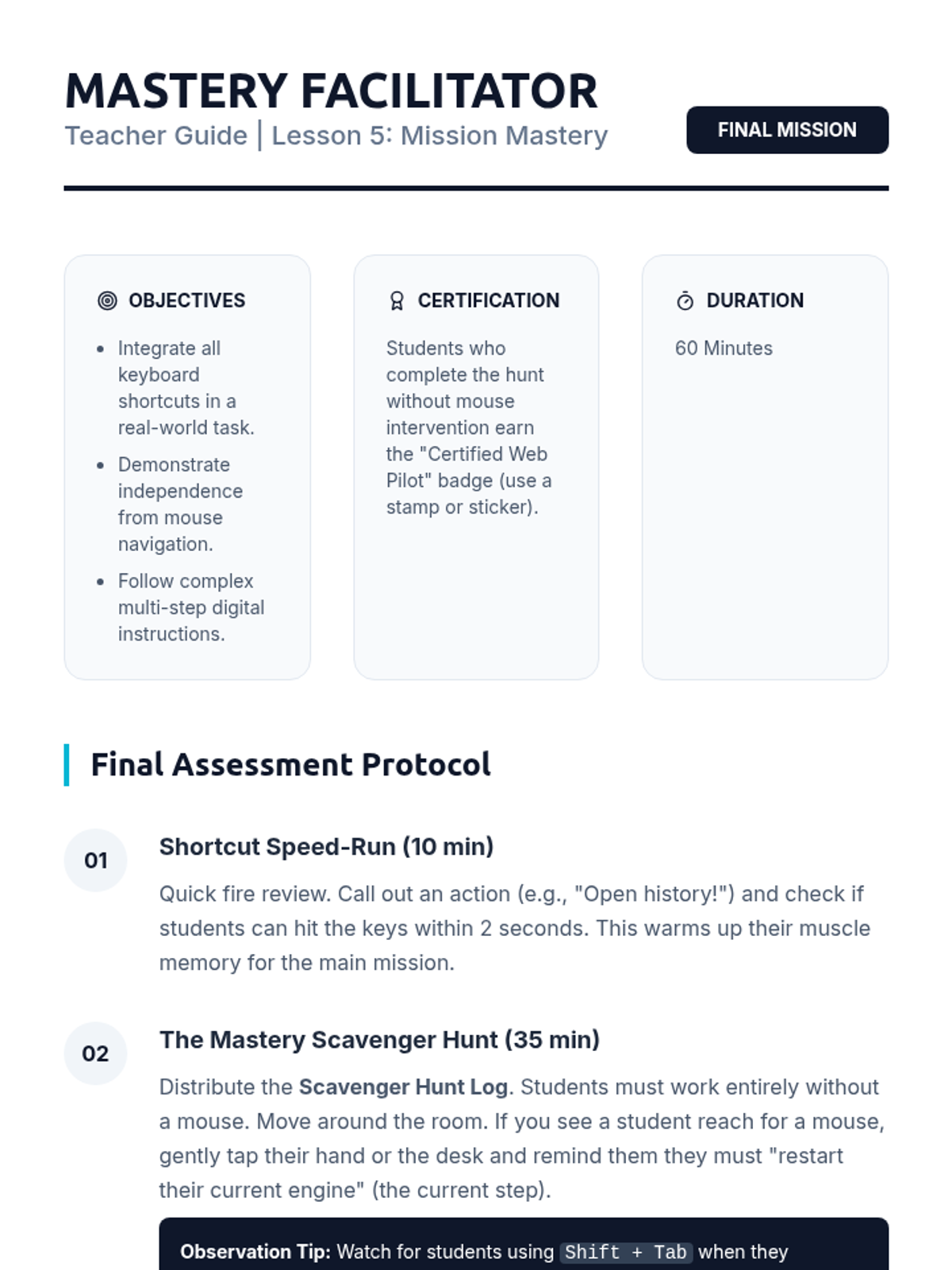
A teacher's guide for the final Mission Mastery lesson, providing a facilitation plan, mastery checklist, and celebration ideas.
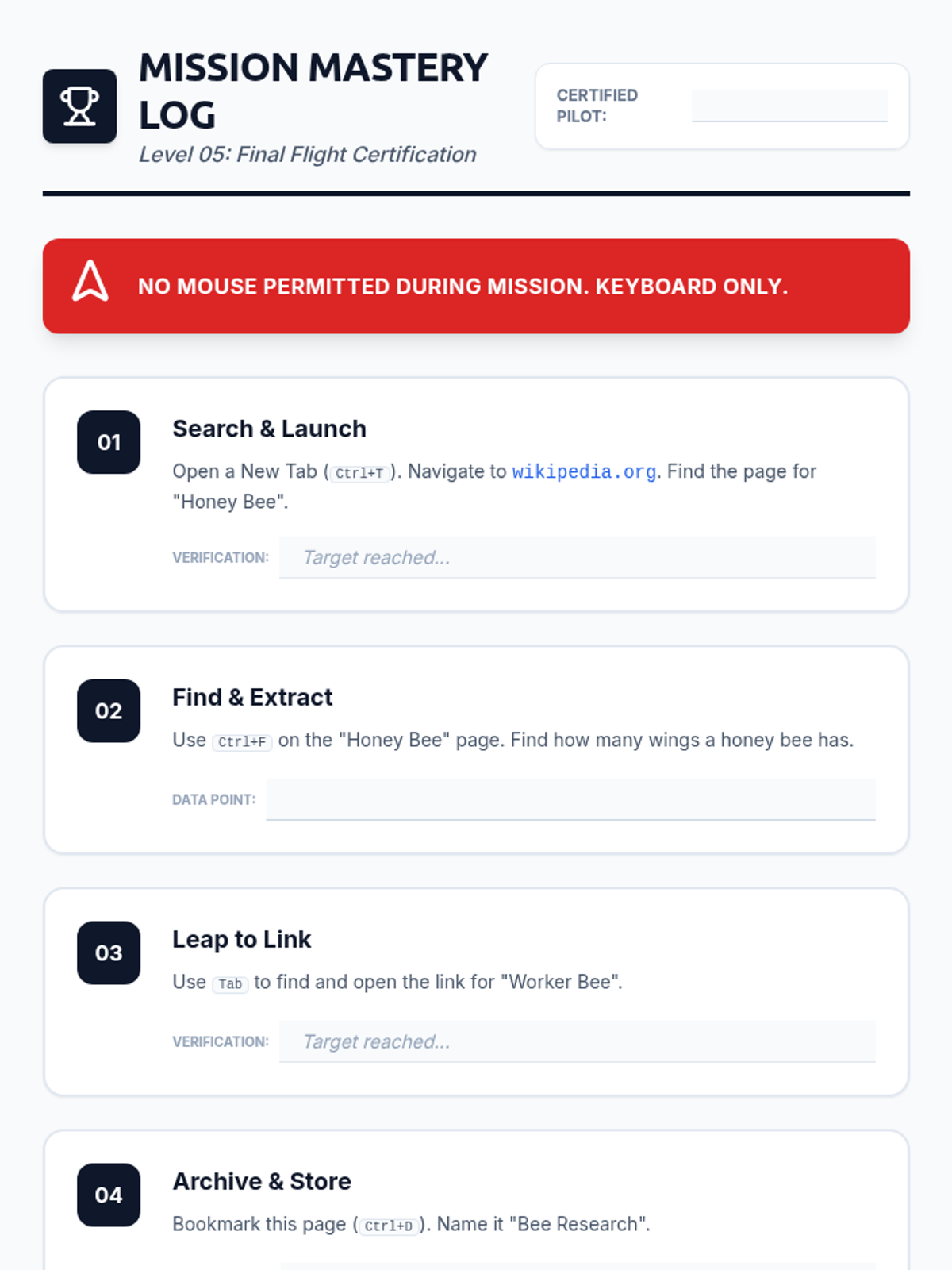
A multi-step scavenger hunt log for the final mastery lesson, requiring students to use all learned shortcuts to find information about honey bees and manage their browser.
A culminating slide deck for the 'Mission Mastery' lesson, reviewing all keyboard shortcuts and setting the stage for the final scavenger hunt challenge.
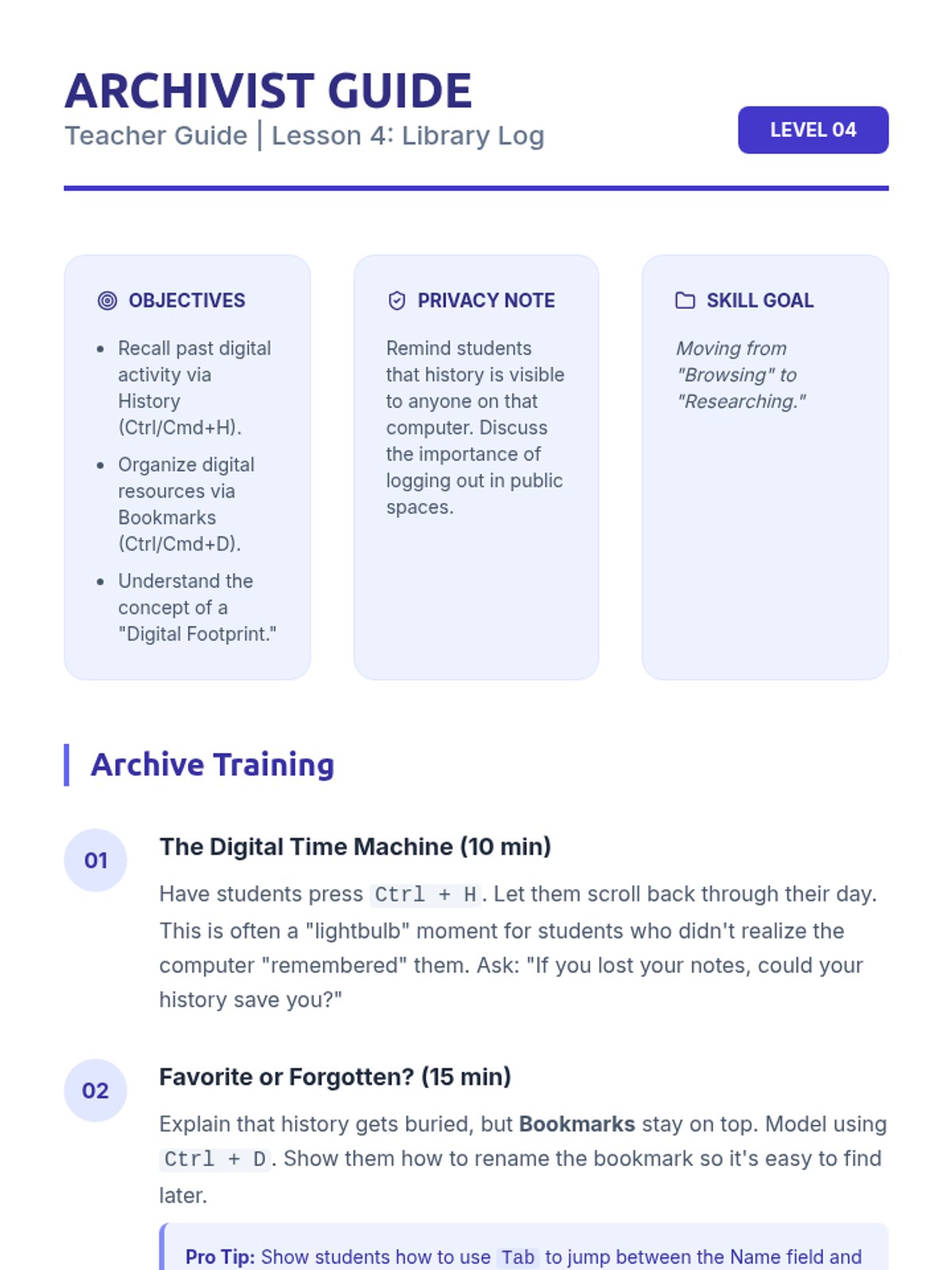
A teacher's guide for Lesson 4, focusing on managing browser history, bookmarking resources, and understanding digital footprints.
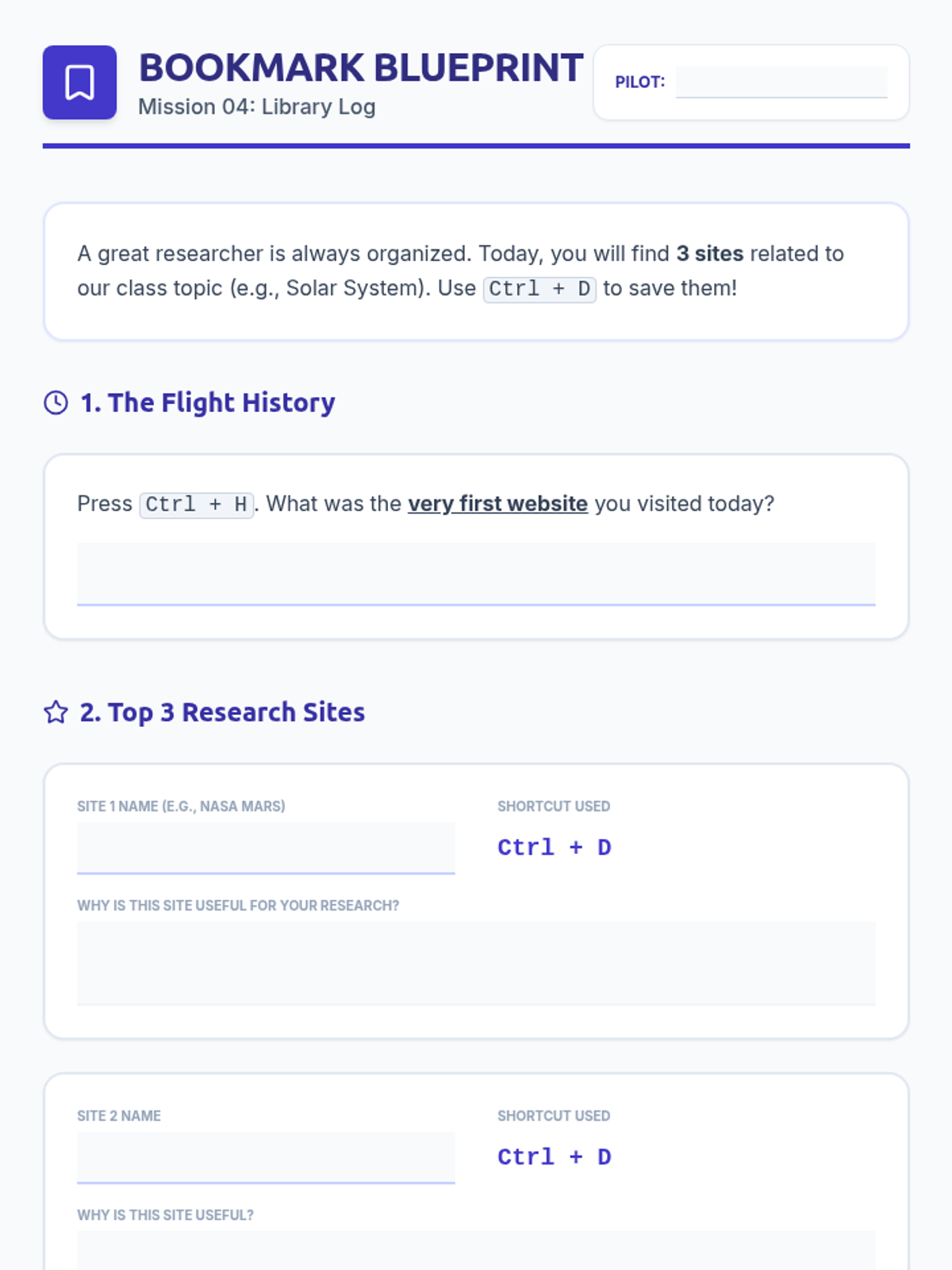
A student activity worksheet where they record and justify three bookmarked websites for their research topic using keyboard shortcuts.
A slide deck teaching students how to access browser history (Ctrl/Cmd+H) to find previously visited sites and how to create bookmarks (Ctrl/Cmd+D) for organization.
A teacher's guide for Lesson 3 focusing on keyword search strategy and the 'Goldilocks Rule' for efficient information retrieval.
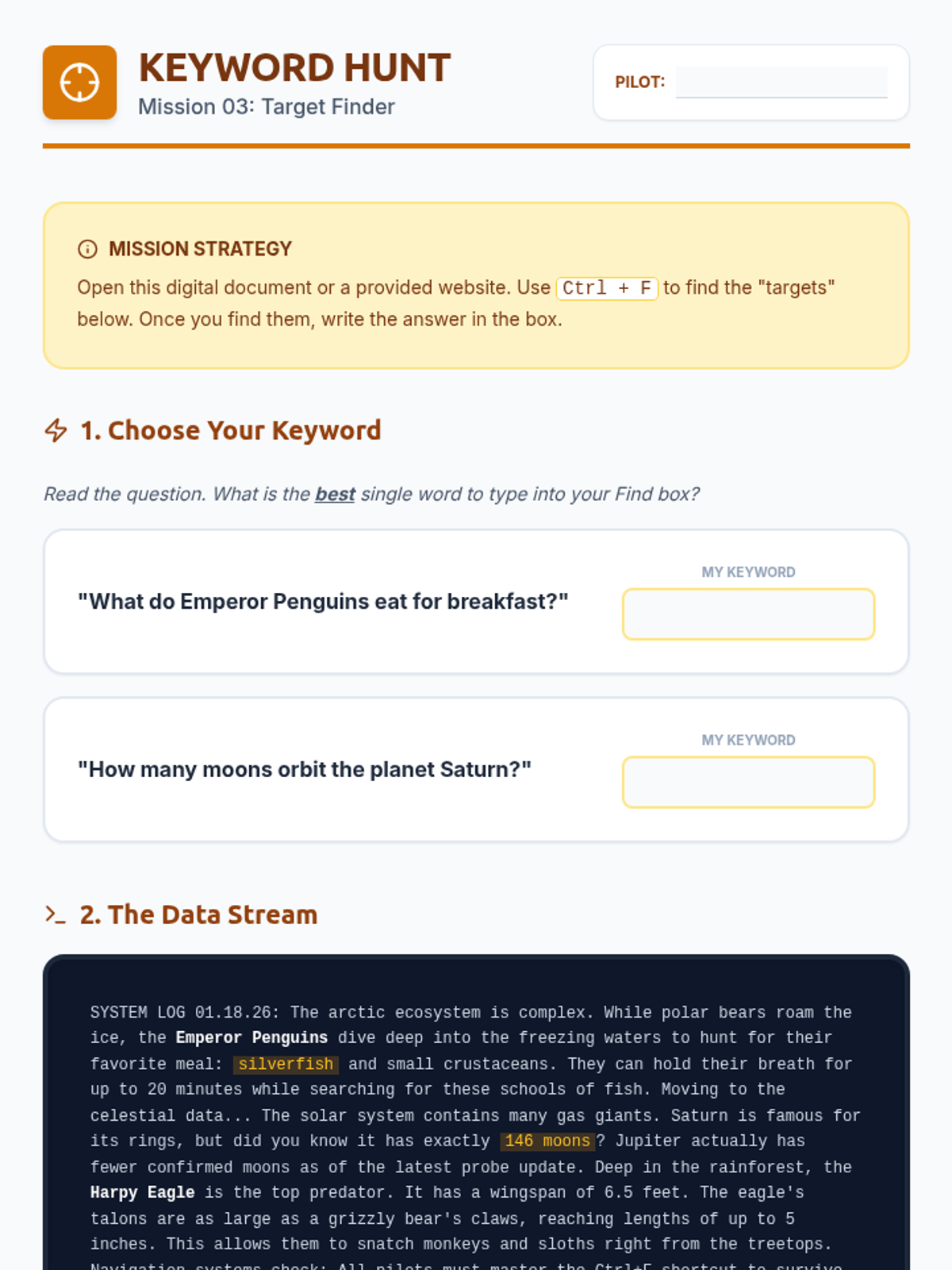
A student worksheet for Lesson 3, featuring a keyword selection exercise and a 'Data Stream' text block where students practice using the Find function to extract specific facts.
A slide deck teaching students how to use the 'Find' function (Ctrl/Cmd+F) to navigate long texts quickly and how to select effective keywords.
A teacher's facilitation guide for Lesson 2, including the 'Focus Box' concept, common pitfalls, and physical support strategies.
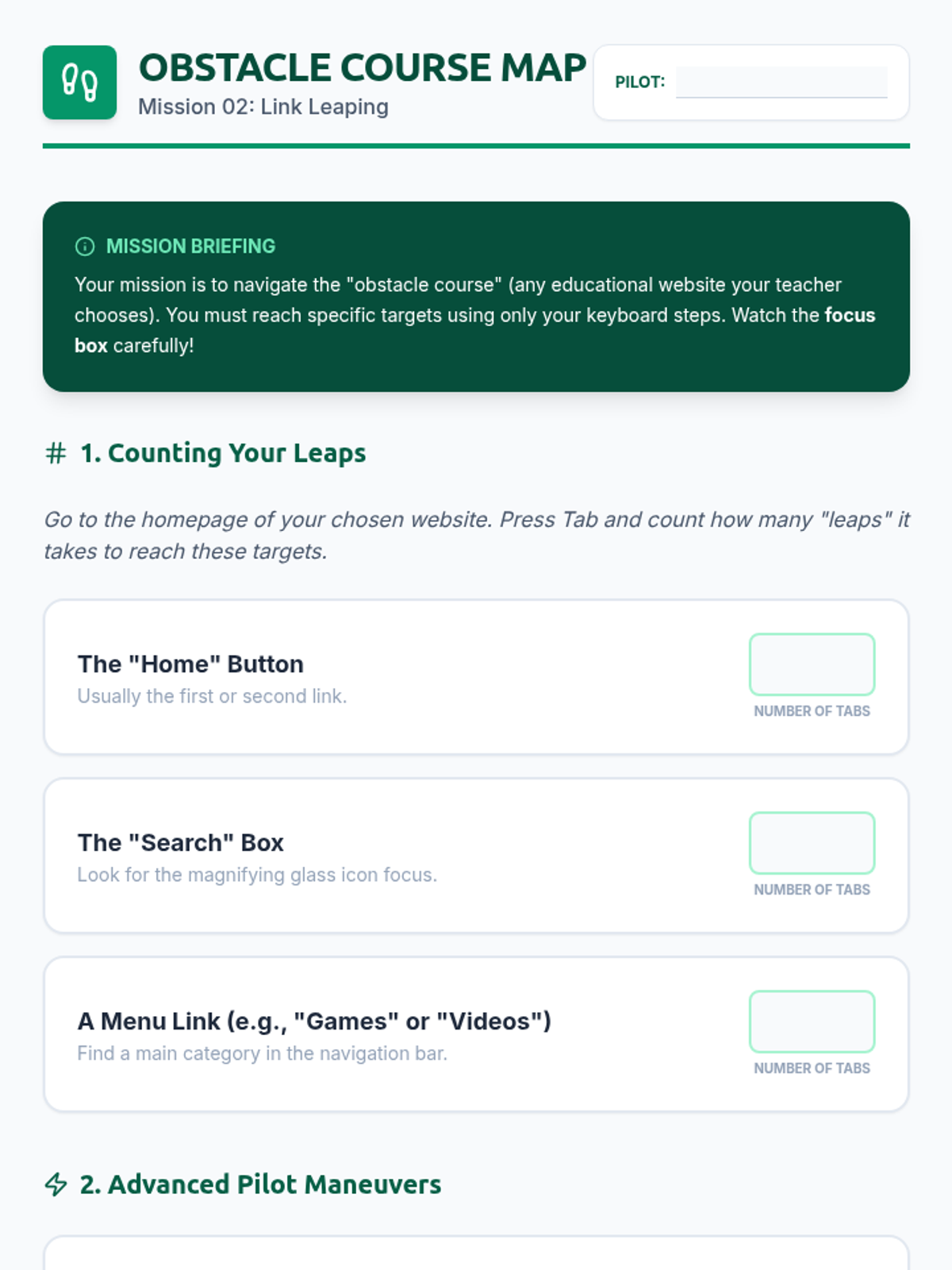
A student worksheet for the 'Link Leap' lesson, focusing on counting Tab key presses and practicing advanced keyboard navigation maneuvers.
A slide deck teaching students how to navigate through links using the Tab key, go backward with Shift+Tab, select with Enter, and scroll with Spacebar and arrow keys.
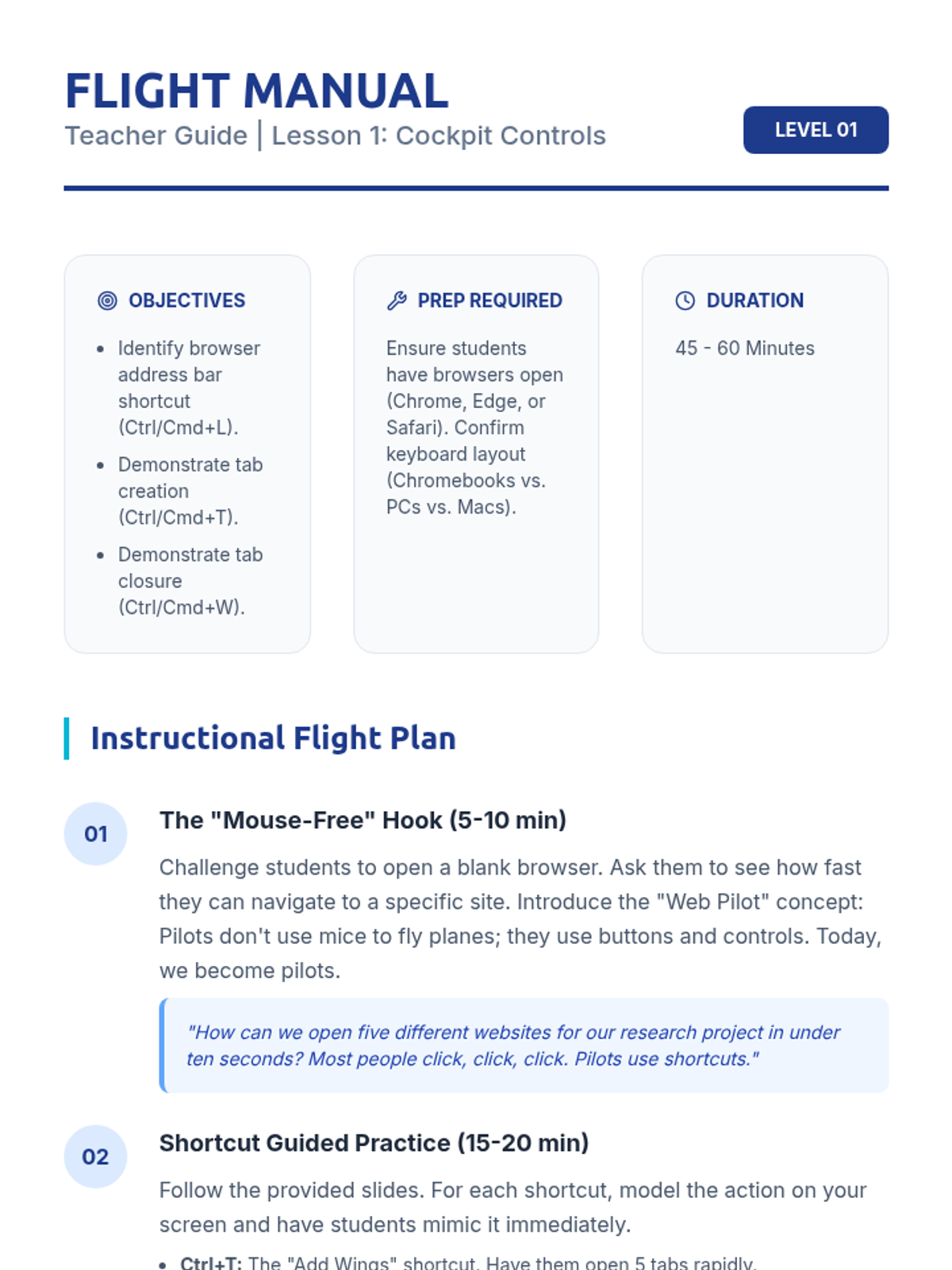
A teacher's instructional guide for Lesson 1, including objectives, prep requirements, a step-by-step script, and differentiation tips.
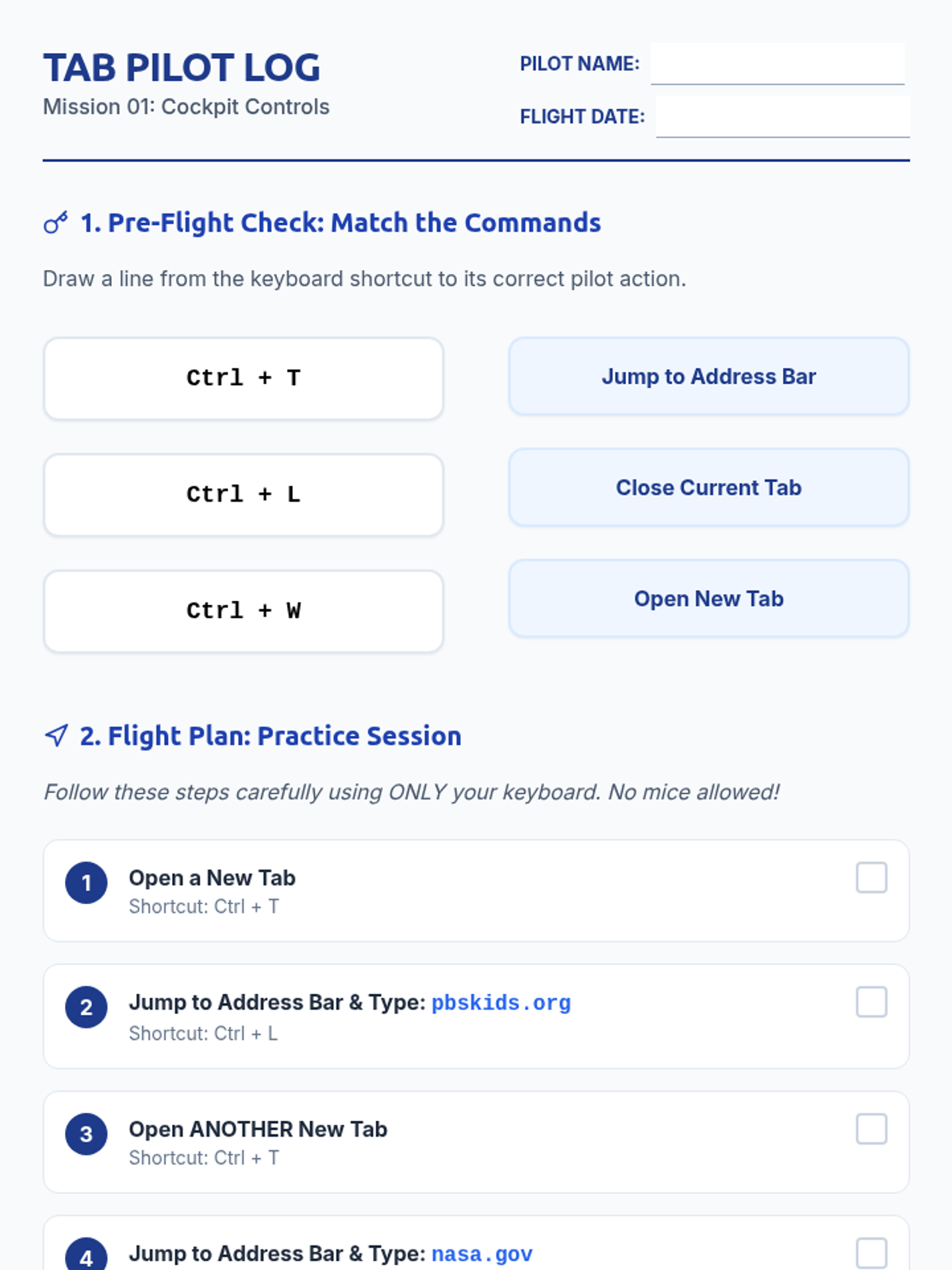
A student practice worksheet for Lesson 1, featuring shortcut matching and a step-by-step 'flight plan' for practicing tab management.
An engaging slide deck introducing 5th-grade students to the primary browser keyboard shortcuts for navigation: address bar focus, opening tabs, and closing tabs.
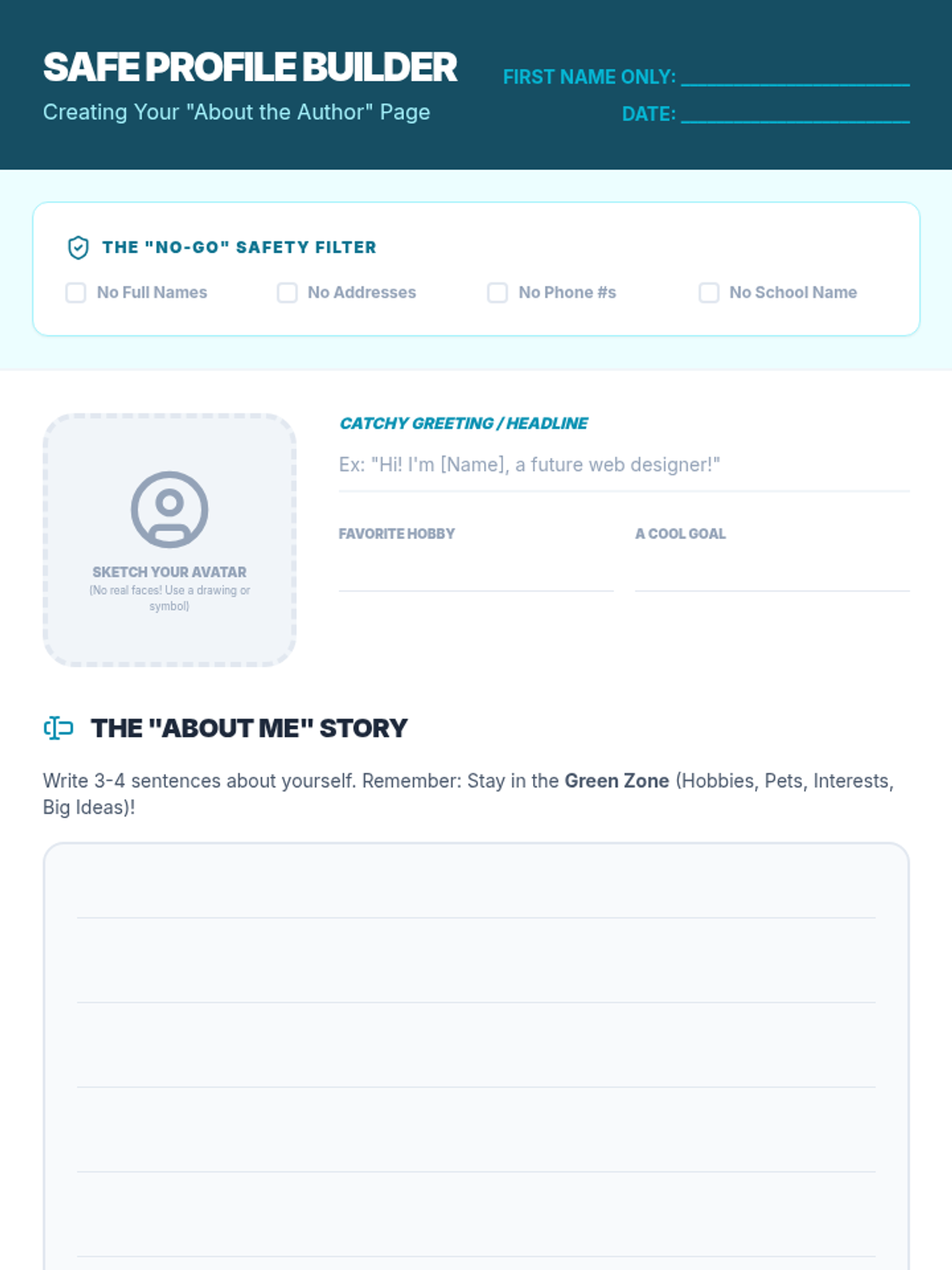
A student worksheet for drafting a safe 'About Me' page for a website, including a safety checklist to prevent sharing personally identifiable information.
A slide deck explaining digital footprints, shadows, and the safety rules for sharing personal information online as a student publisher.
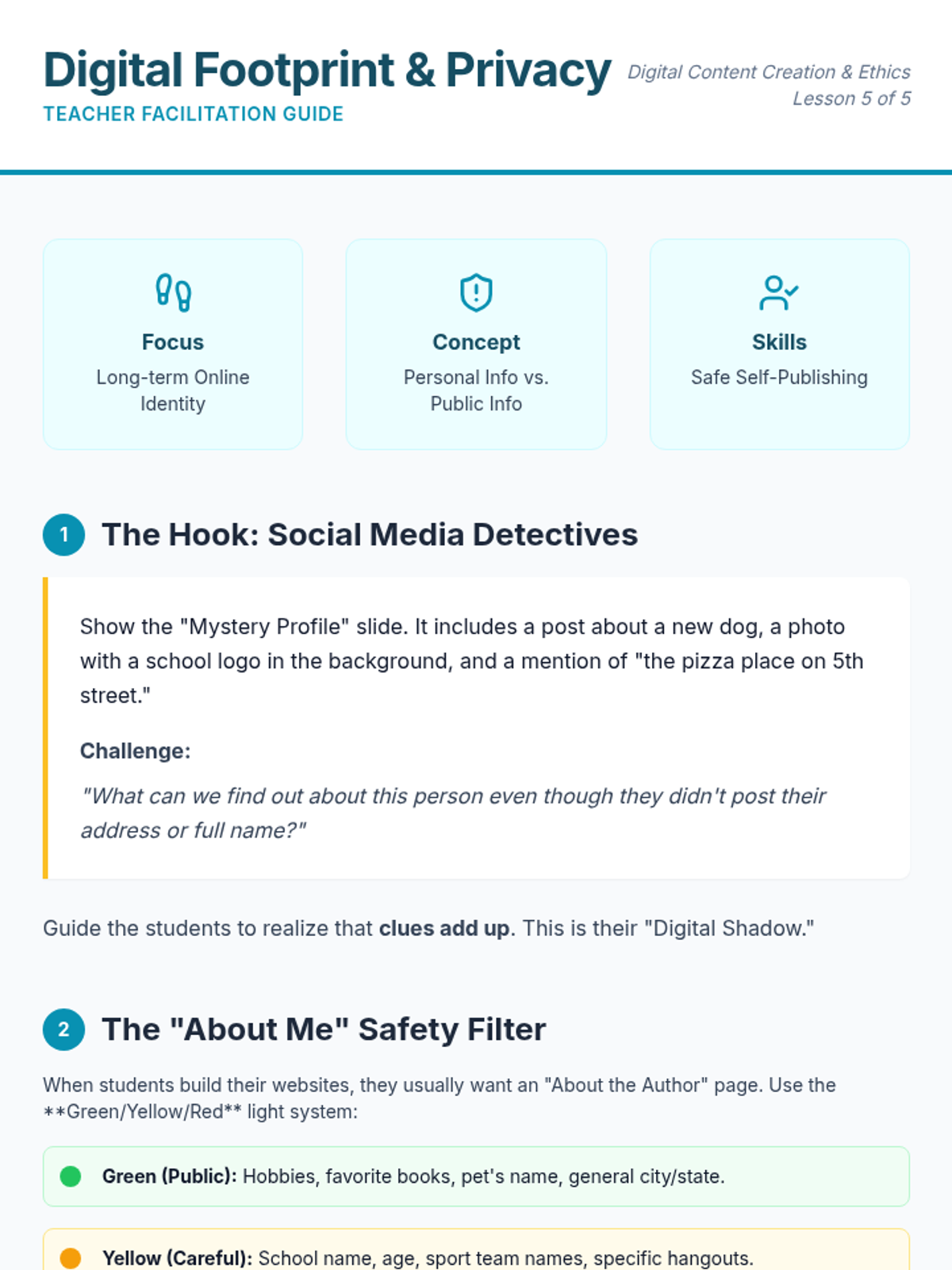
A teacher guide for the fifth lesson on digital footprint and privacy, helping students draft safe 'About Me' content.
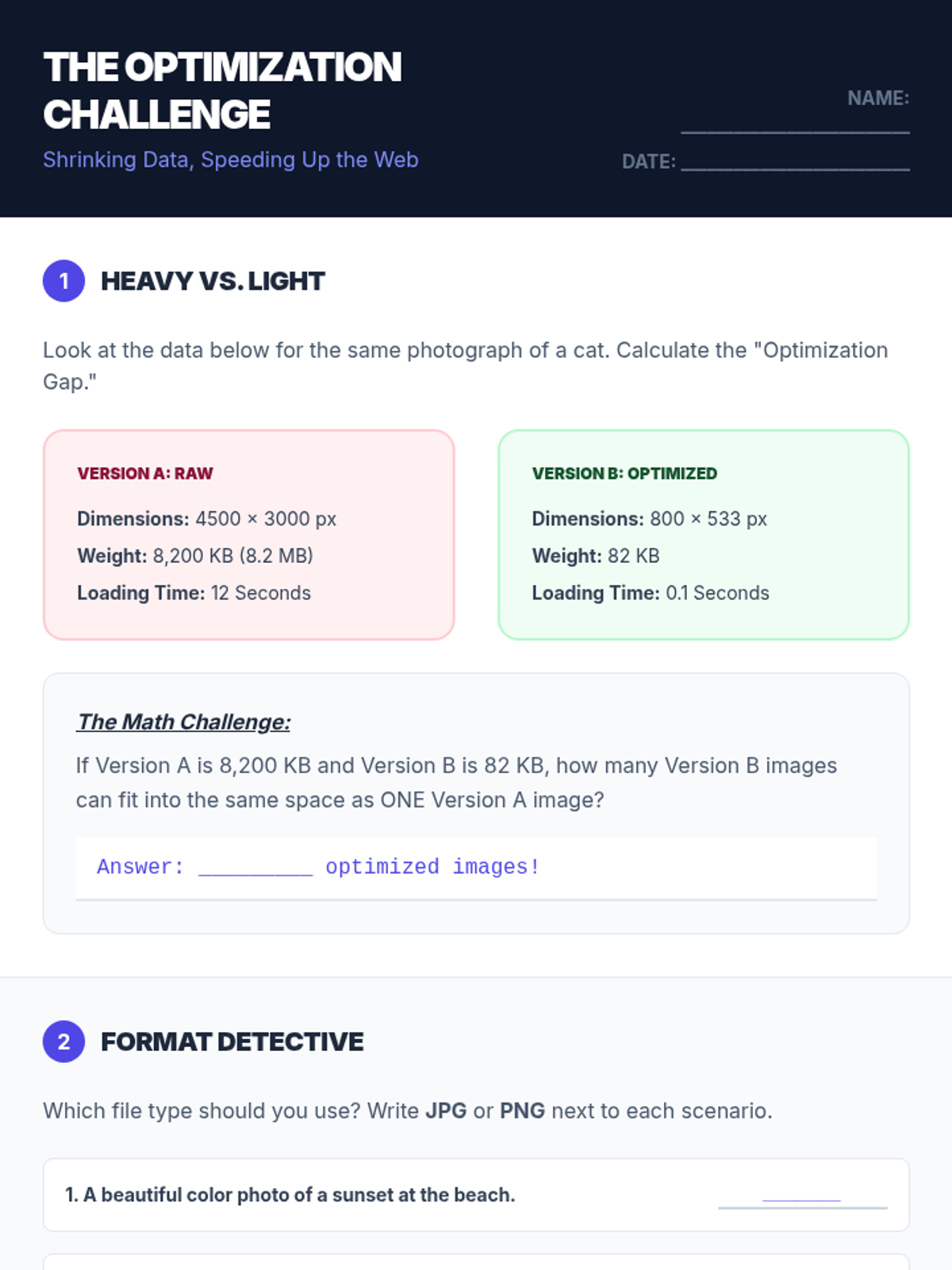
A student worksheet for practicing the math of image optimization and identifying the correct file formats (JPG vs. PNG) for different scenarios.
A slide deck explaining the technical side of image optimization, including resolution, weight, and the difference between JPG and PNG files.
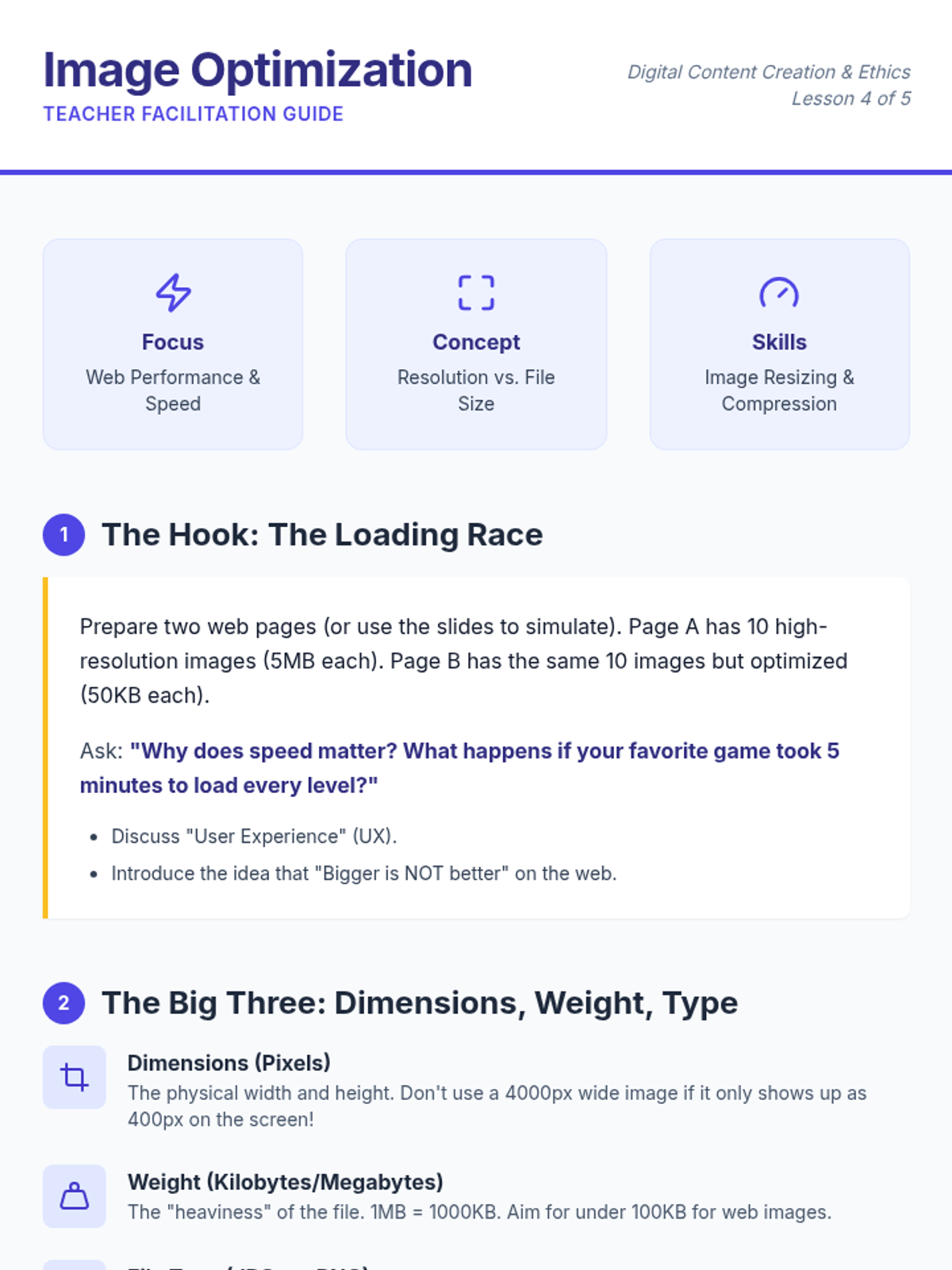
A teacher guide for the fourth lesson on image optimization, explaining the 'loading race' hook and the core concepts of web performance.
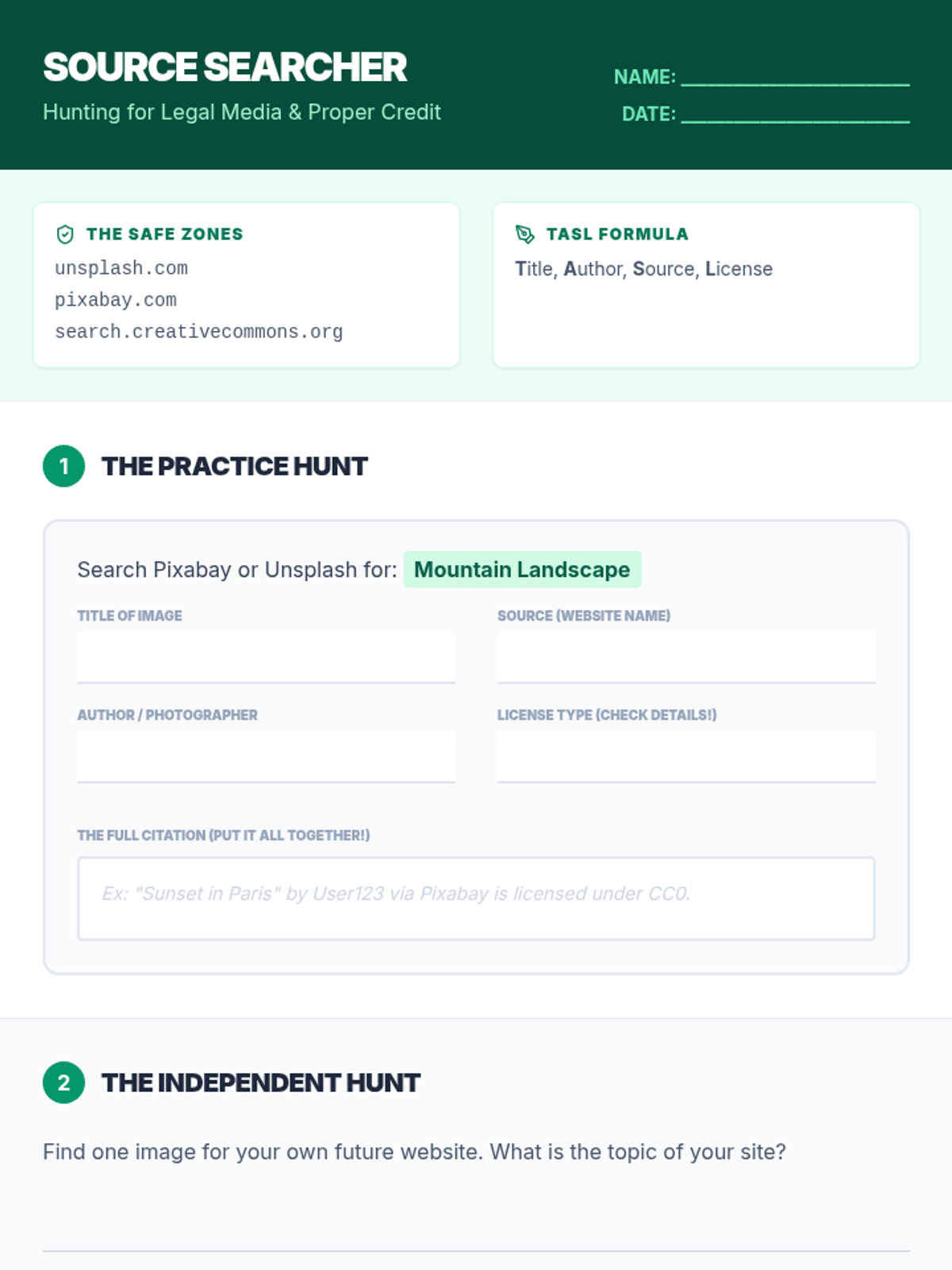
A student worksheet for practicing finding images in safe repositories and writing full TASL (Title, Author, Source, License) citations.
A slide deck introducing digital safe zones for finding images and the TASL method for proper media attribution.
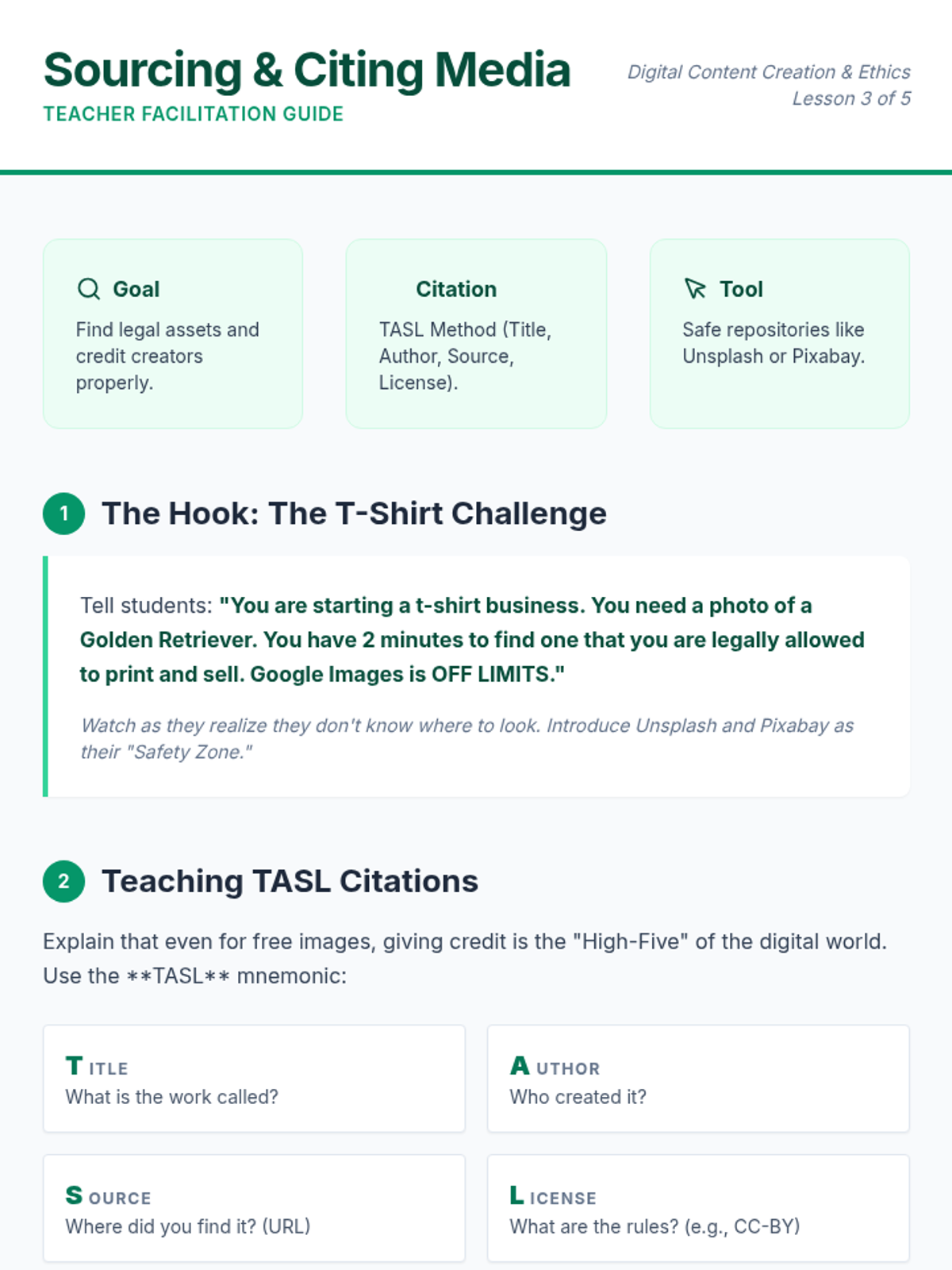
A teacher guide for the third lesson on sourcing and citing media, providing a T-shirt challenge hook and explaining the TASL citation method.
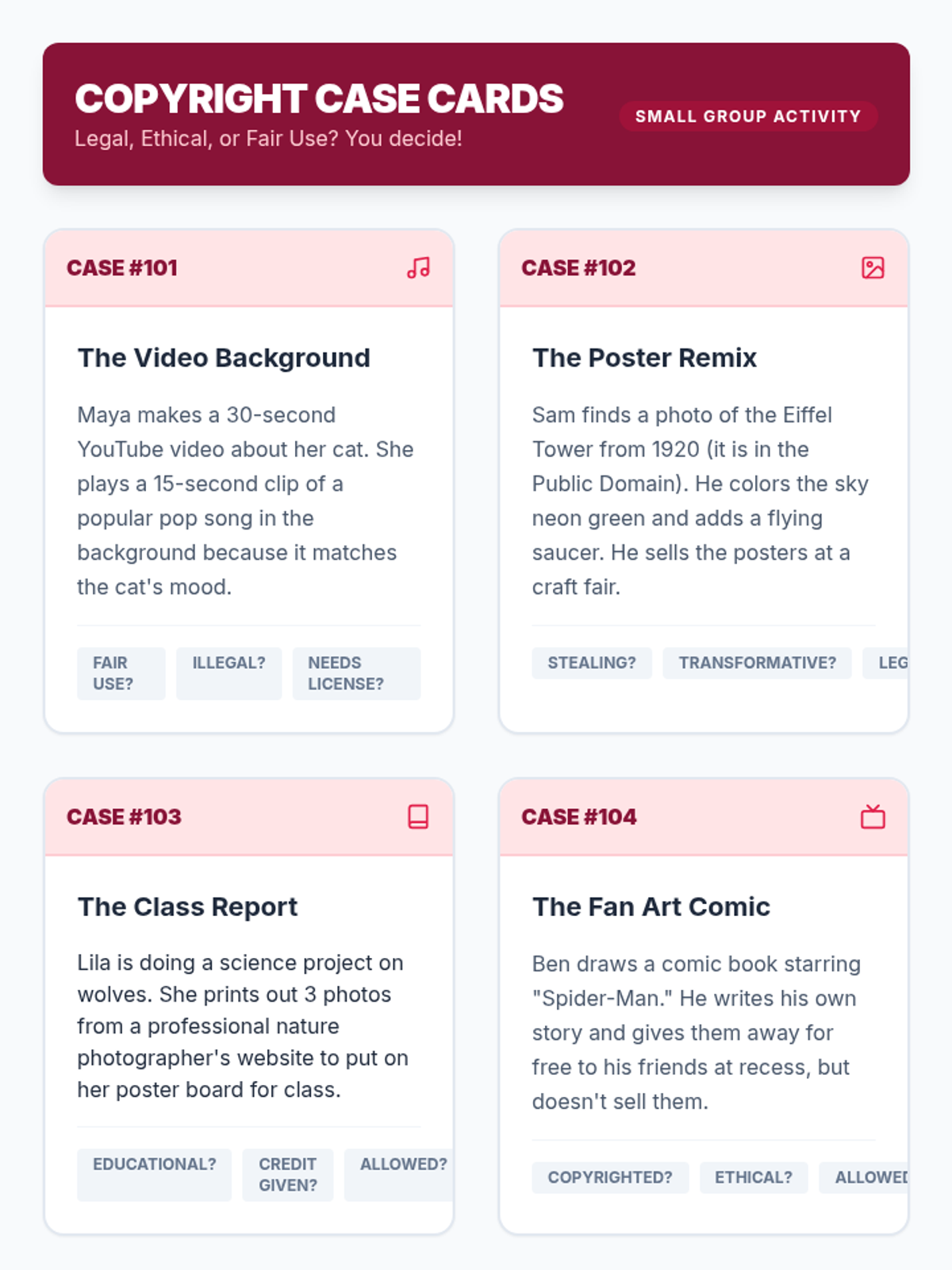
Case study cards for students to analyze copyright scenarios, determining if actions are legal, ethical, or fall under fair use.
A slide deck introducing copyright, fair use exceptions, and the concepts of public domain and Creative Commons for elementary students.
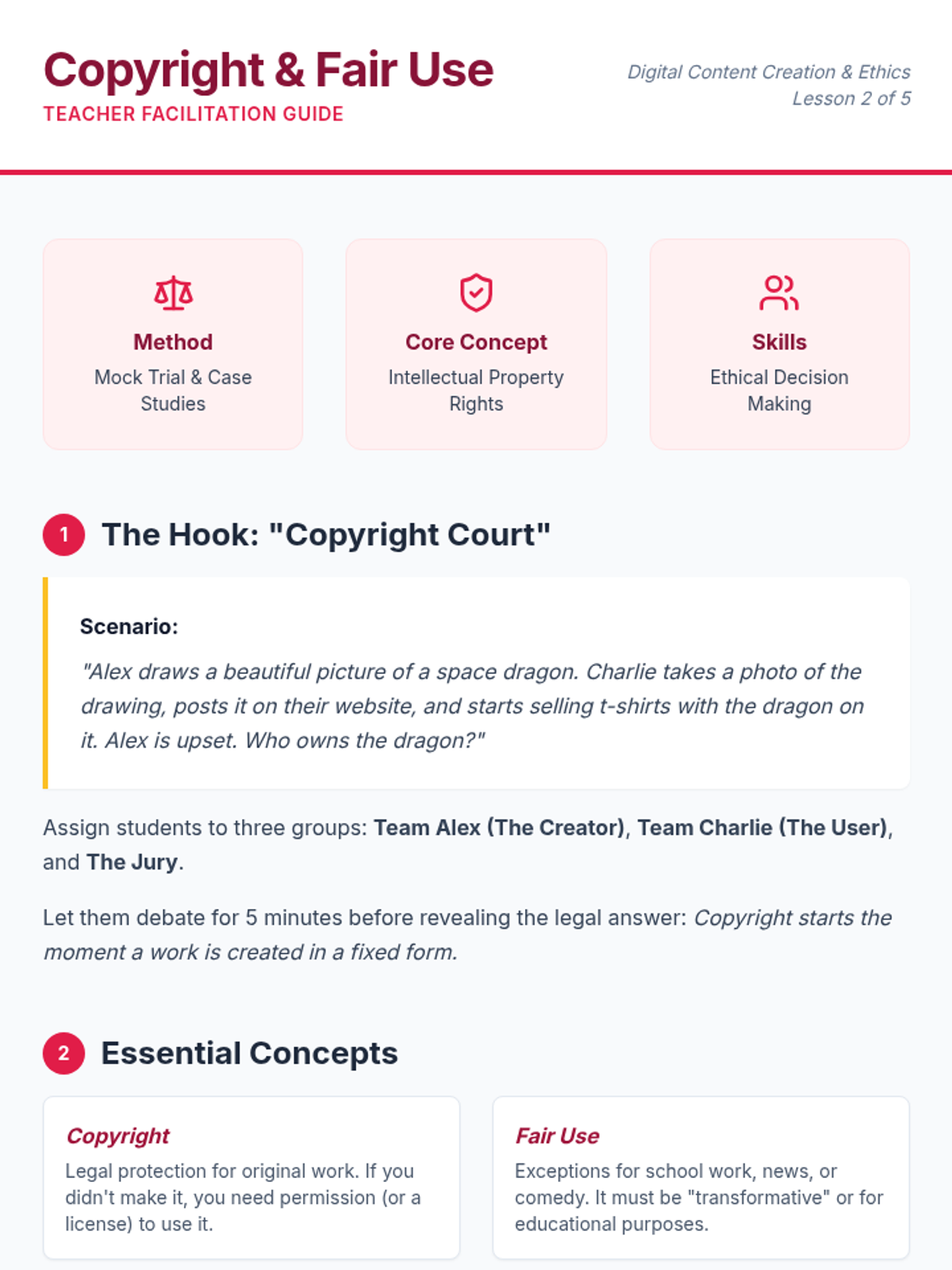
A teacher guide for the second lesson on copyright and fair use, including the mock trial setup and key definitions.
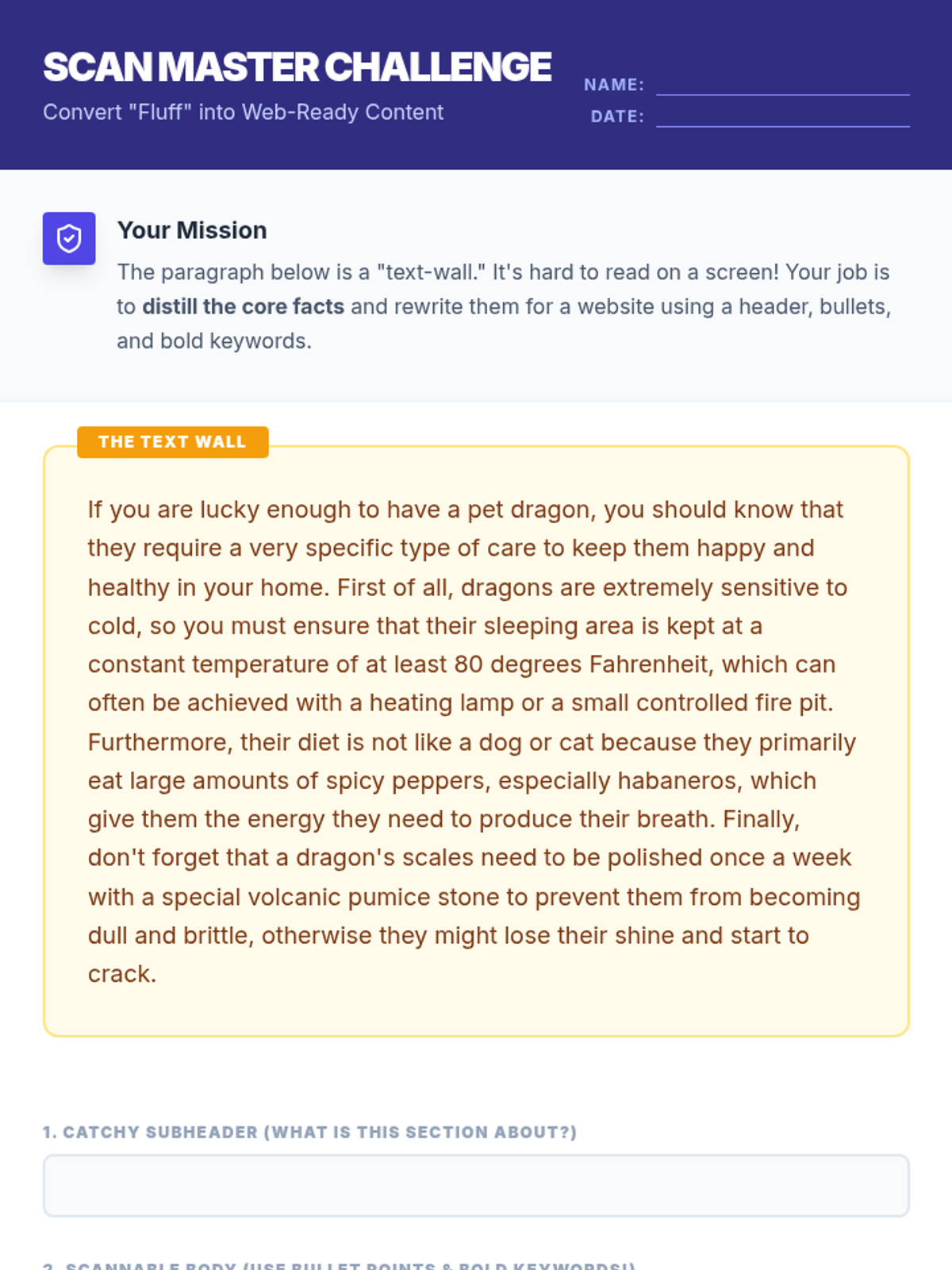
A student worksheet for practicing the transformation of dense paragraph text into scannable web content with headers, bullet points, and bold keywords.
A visual slide deck explaining the 'F-pattern' of web reading and strategies for making digital content scannable for web users.
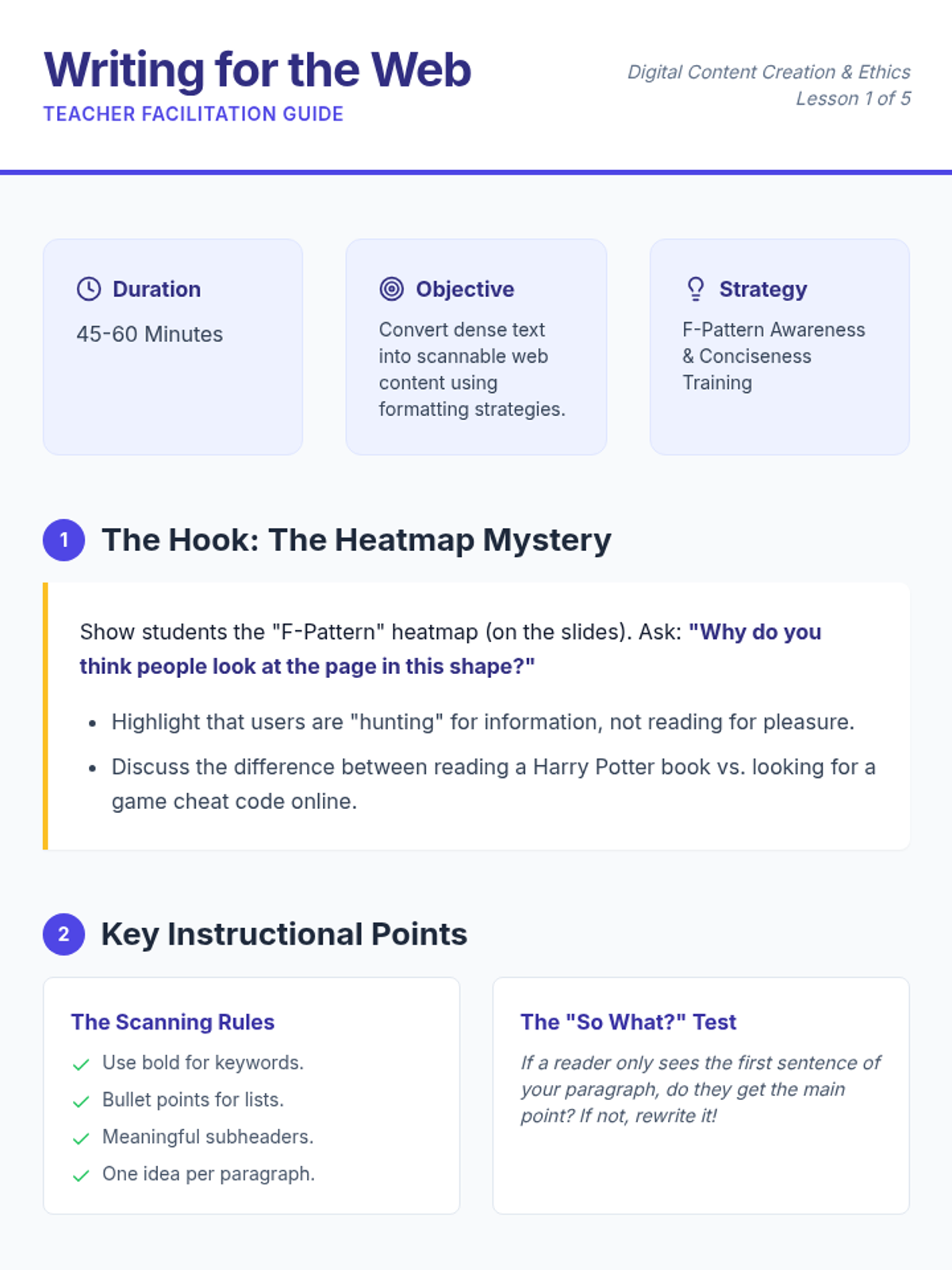
A teacher guide for the first lesson on writing for the web, covering instructional goals, the 'F-pattern' hook, and activity facilitation tips.