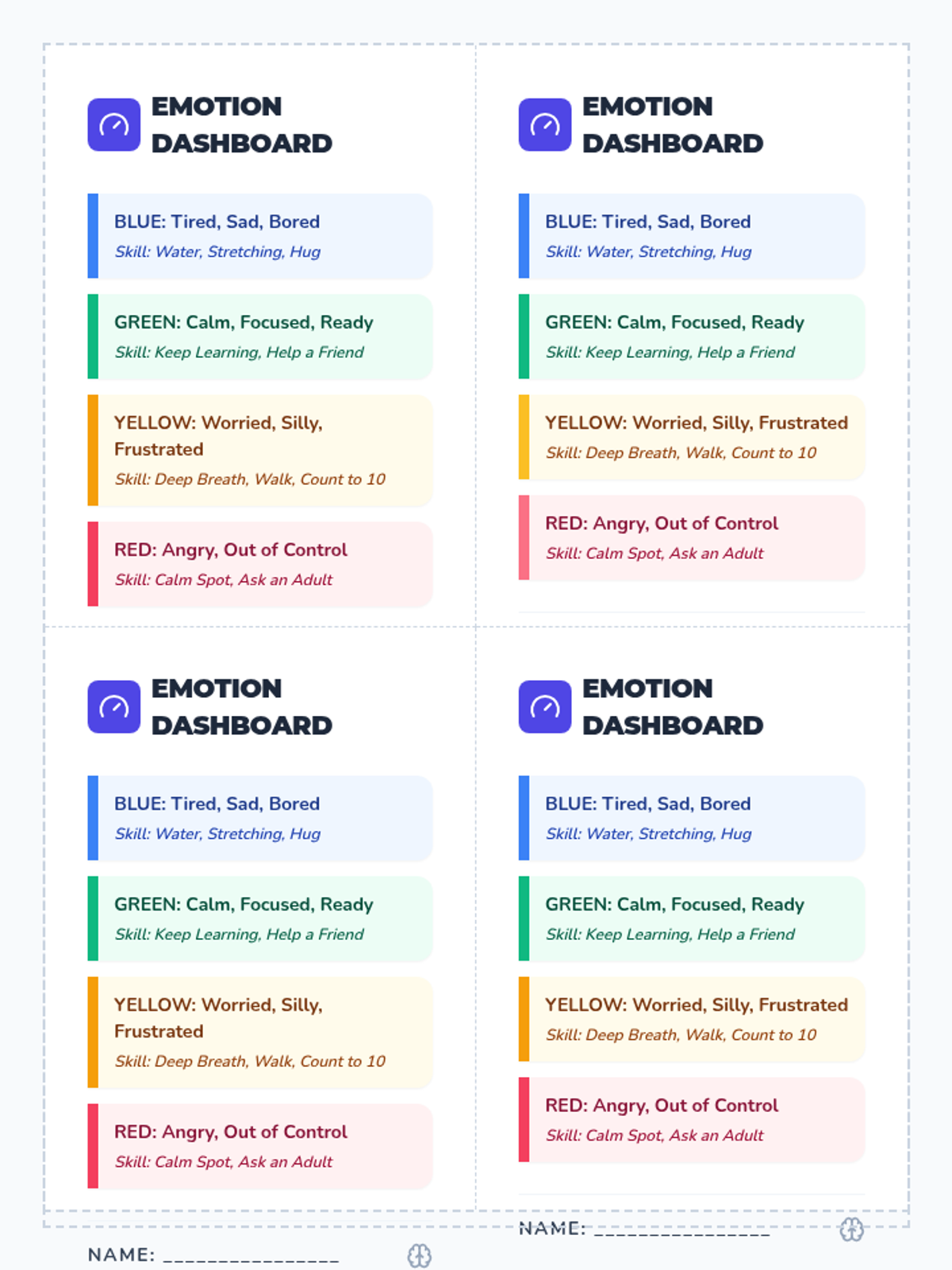
Functional behavior assessment, data tracking, and de-escalation strategies for managing classroom conduct. Addresses positive reinforcement, token economies, and individualized behavior contracts to support student self-regulation.
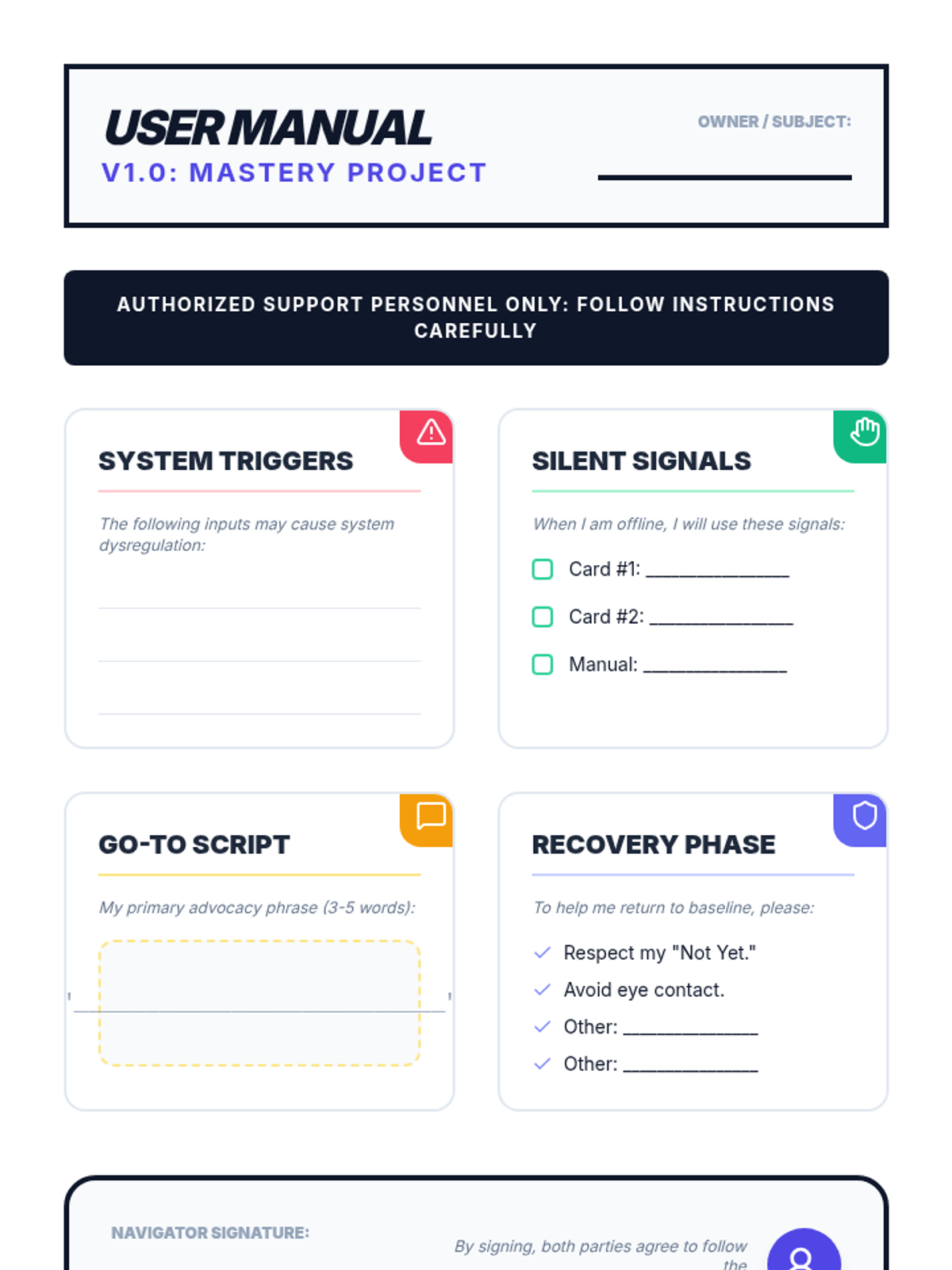
A student mastery project document for Lesson 5, serving as a personalized "User Manual" that outlines triggers, signals, scripts, and recovery needs for adults to follow.
A slide deck for Lesson 5 that guides students through the final project of creating their own personalized "User Manual" for adults.
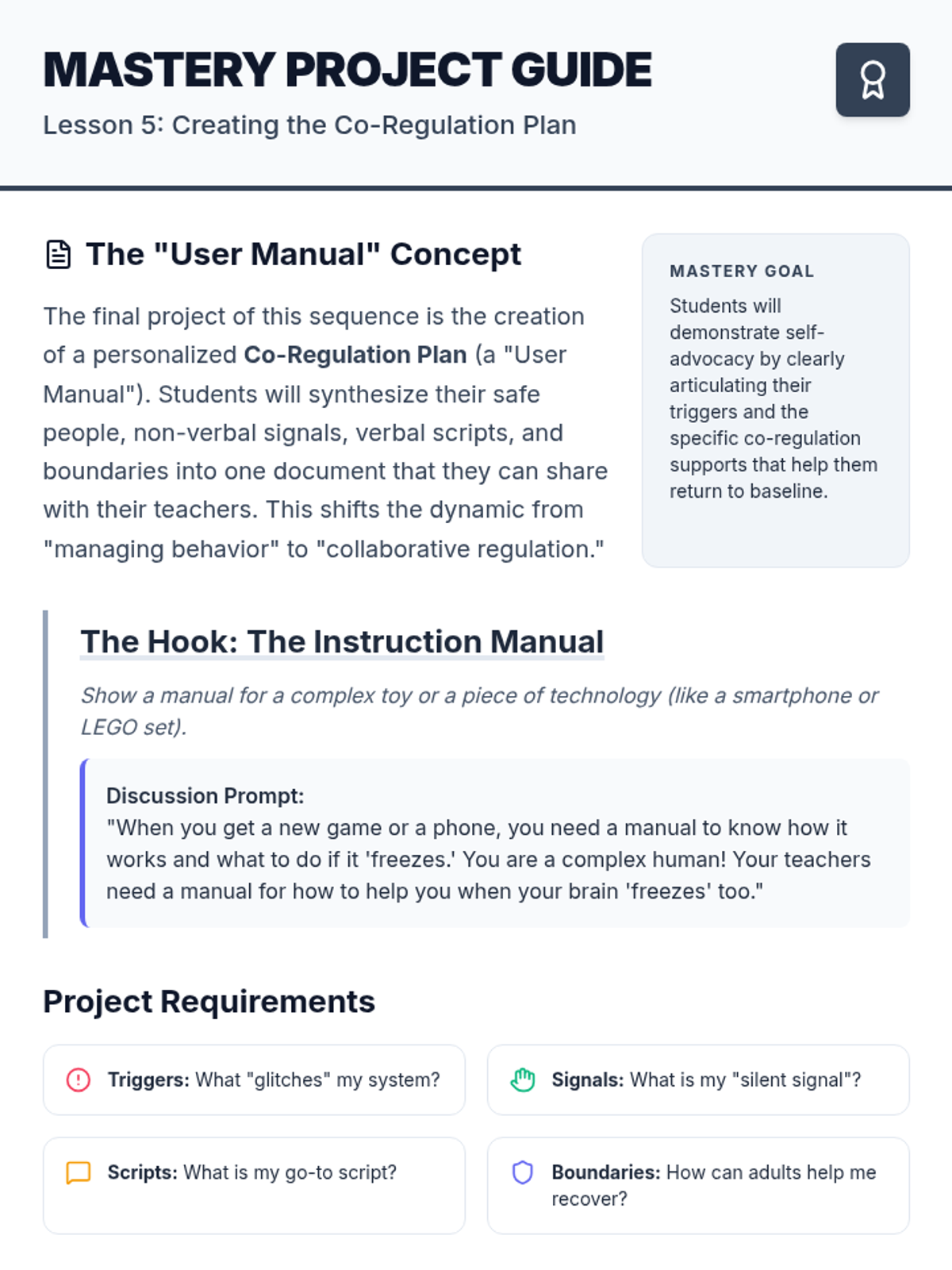
A teacher guide for Lesson 5, focusing on the synthesis of co-regulation skills into a personalized mastery project—the "User Manual" for adults.
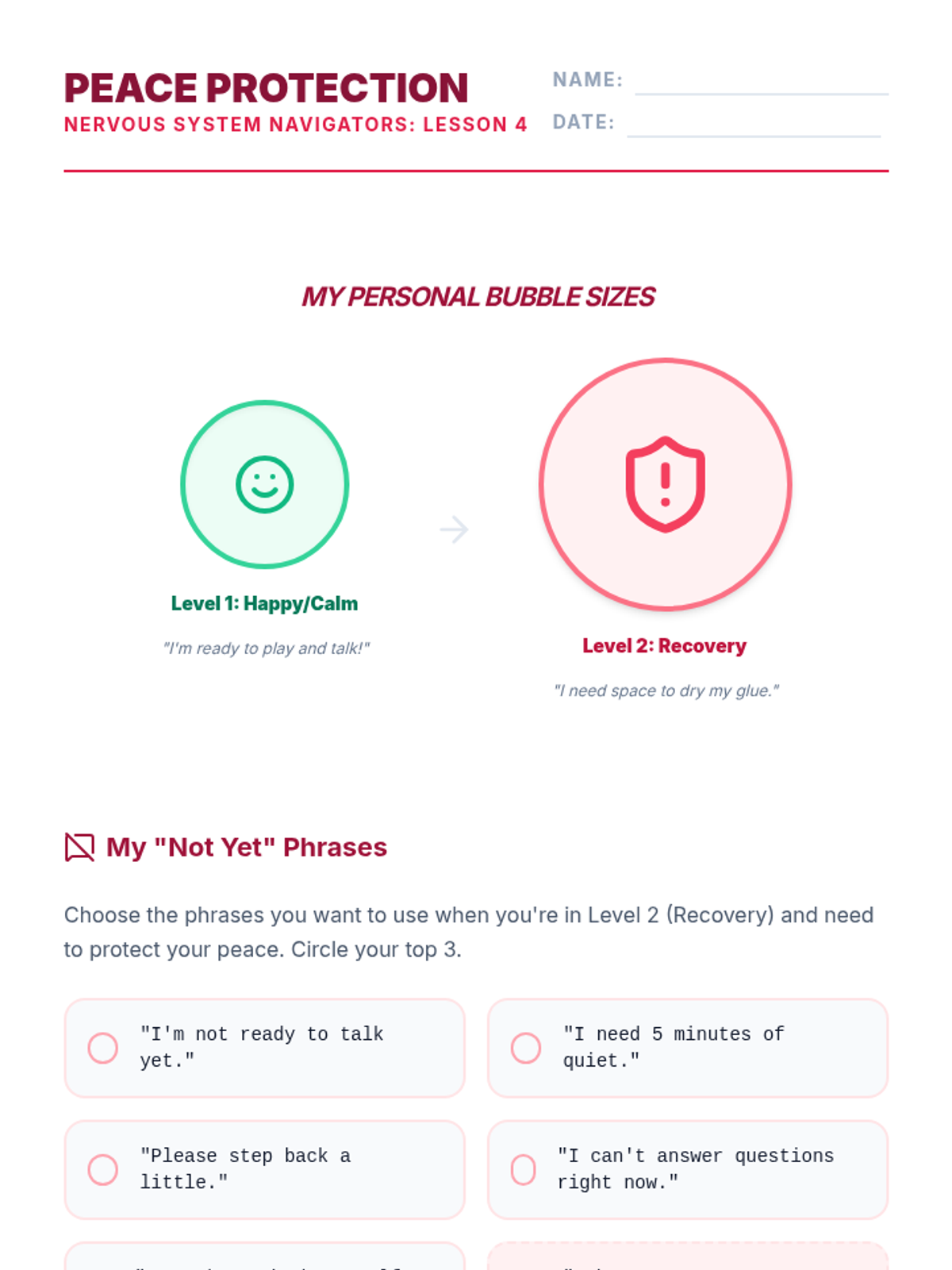
A student activity sheet for Lesson 4 that helps students define their personal space boundaries and choose "Not yet" phrases for recovery.
A slide deck for Lesson 4 that teaches students how to set healthy boundaries and protect their personal space during the recovery phase following dysregulation.
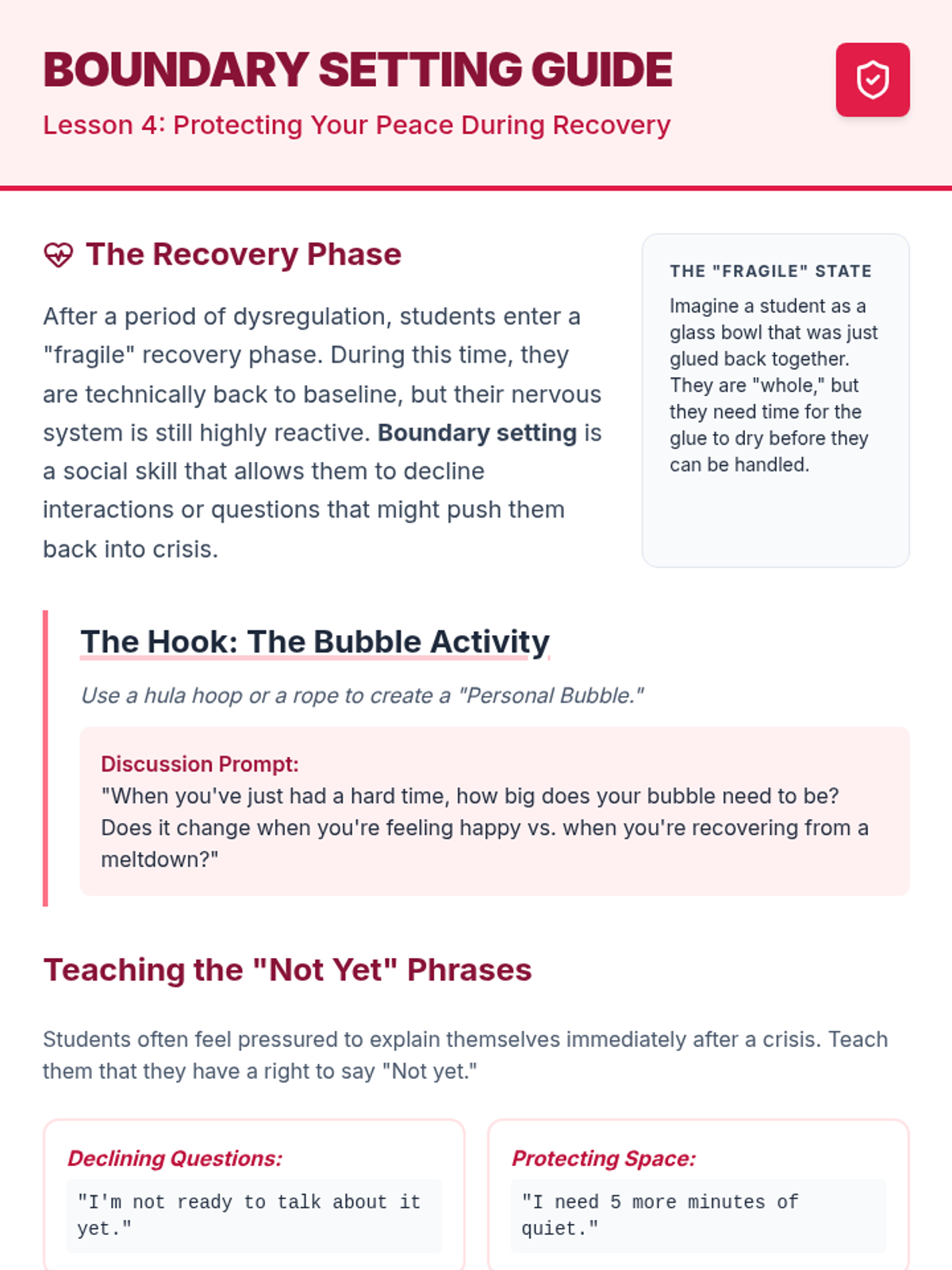
A teacher guide for Lesson 4, focusing on teaching students how to set healthy boundaries and protect their personal space during the fragile recovery phase following dysregulation.
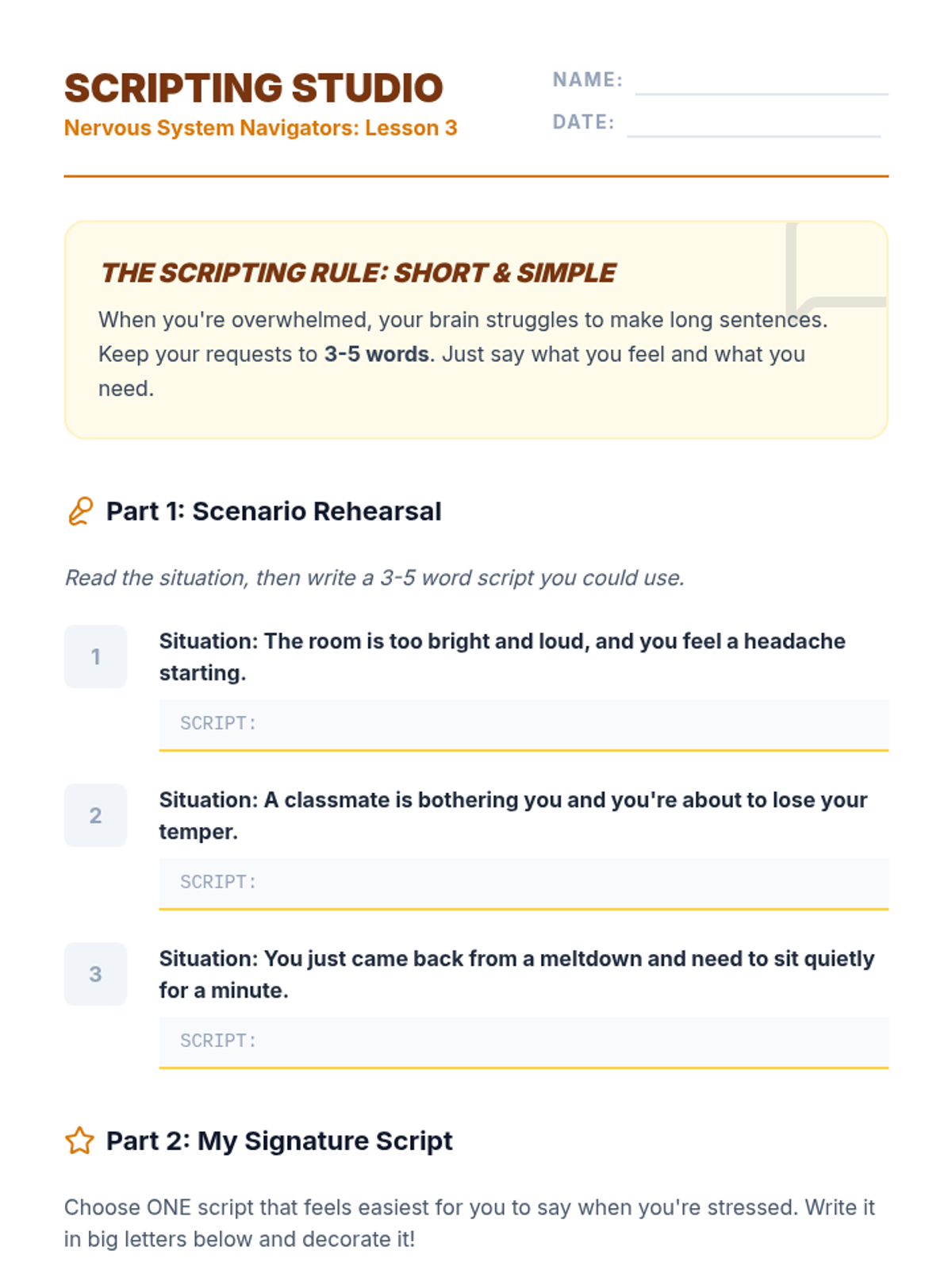
A student worksheet for Lesson 3 where students practice writing and rehearsing short scripts for advocating for their needs.
A slide deck for Lesson 3 that introduces the concept of "Catching the Wave" and teaches students short, effective verbal scripts for asking for support.
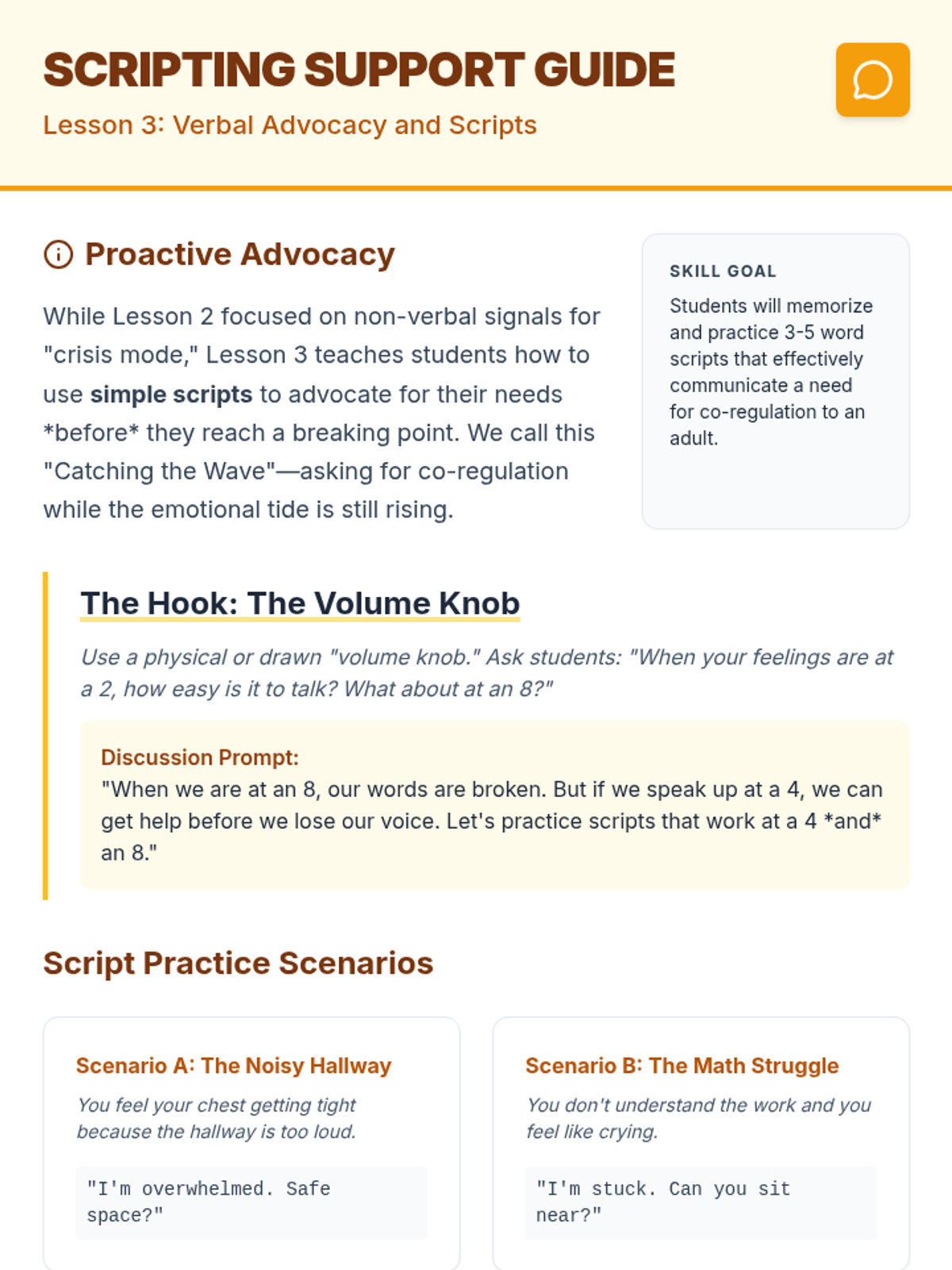
A teacher guide for Lesson 3, focusing on proactive advocacy and teaching students simple verbal scripts to ask for help before reaching a breaking point.
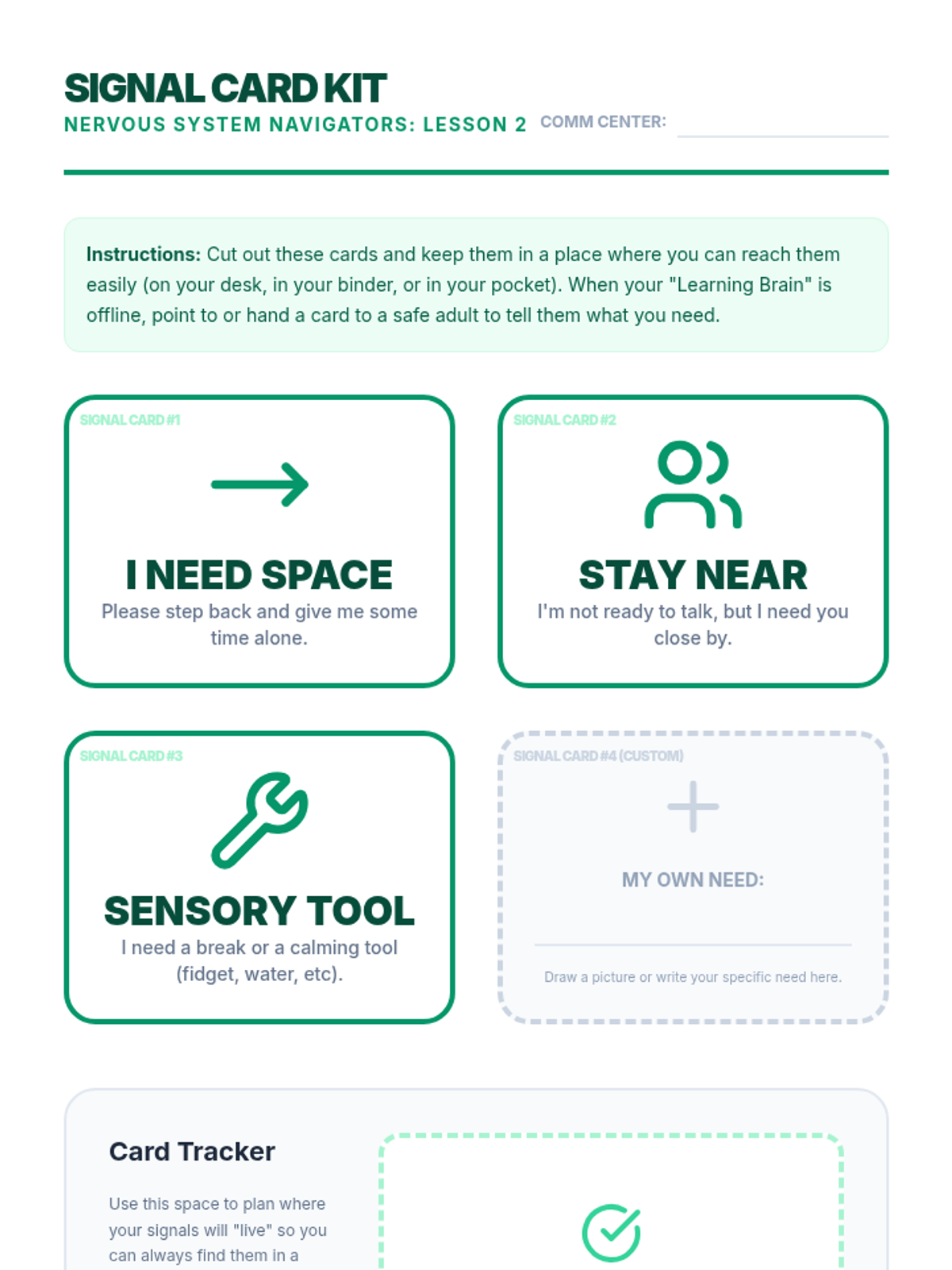
A student resource for Lesson 2 containing printable and customizable non-verbal signal cards to help communicate needs during dysregulation.
A slide deck for Lesson 2 that explains why speech is difficult during dysregulation and introduces the concept of using non-verbal signals to communicate needs.
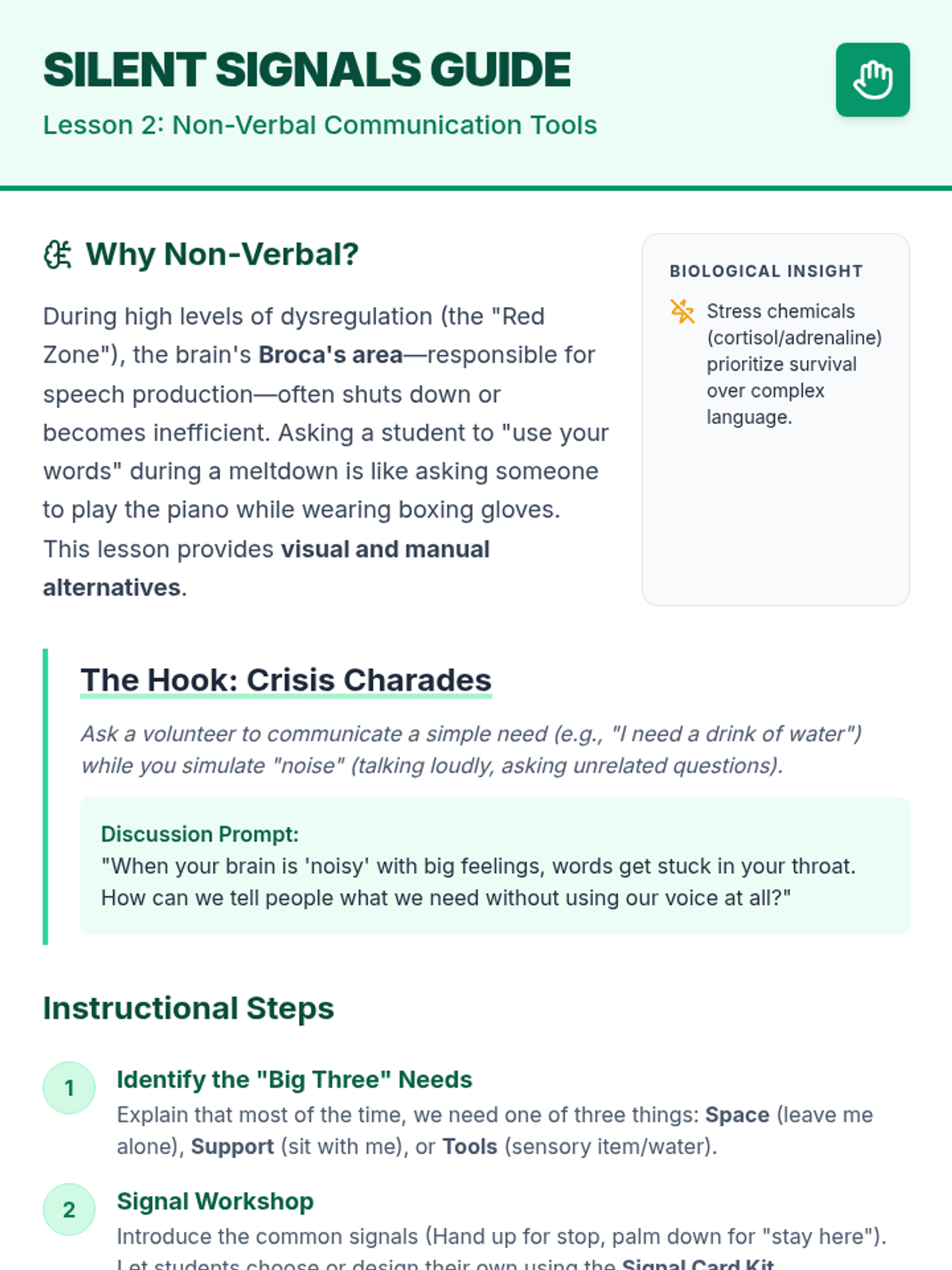
A teacher guide for Lesson 2, focusing on the neurological reasons why speech is difficult during dysregulation and how to implement non-verbal communication tools.
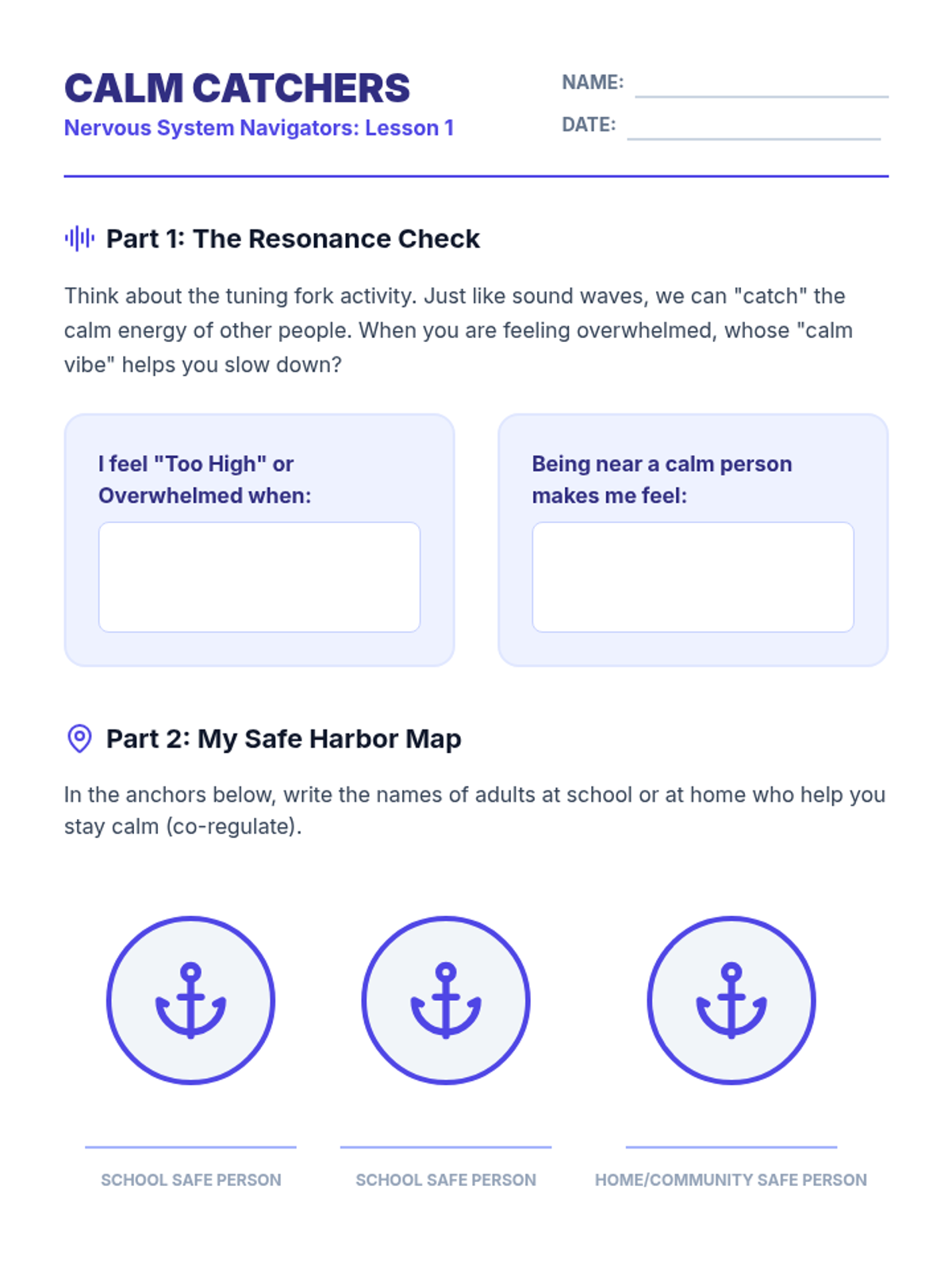
A student worksheet for Lesson 1 that helps students identify their "safe people" and reflect on the qualities of an adult who provides a calm presence.
A slide deck for Lesson 1 that introduces the concept of co-regulation using the tuning fork analogy and defines what a "Safe Person" looks like.
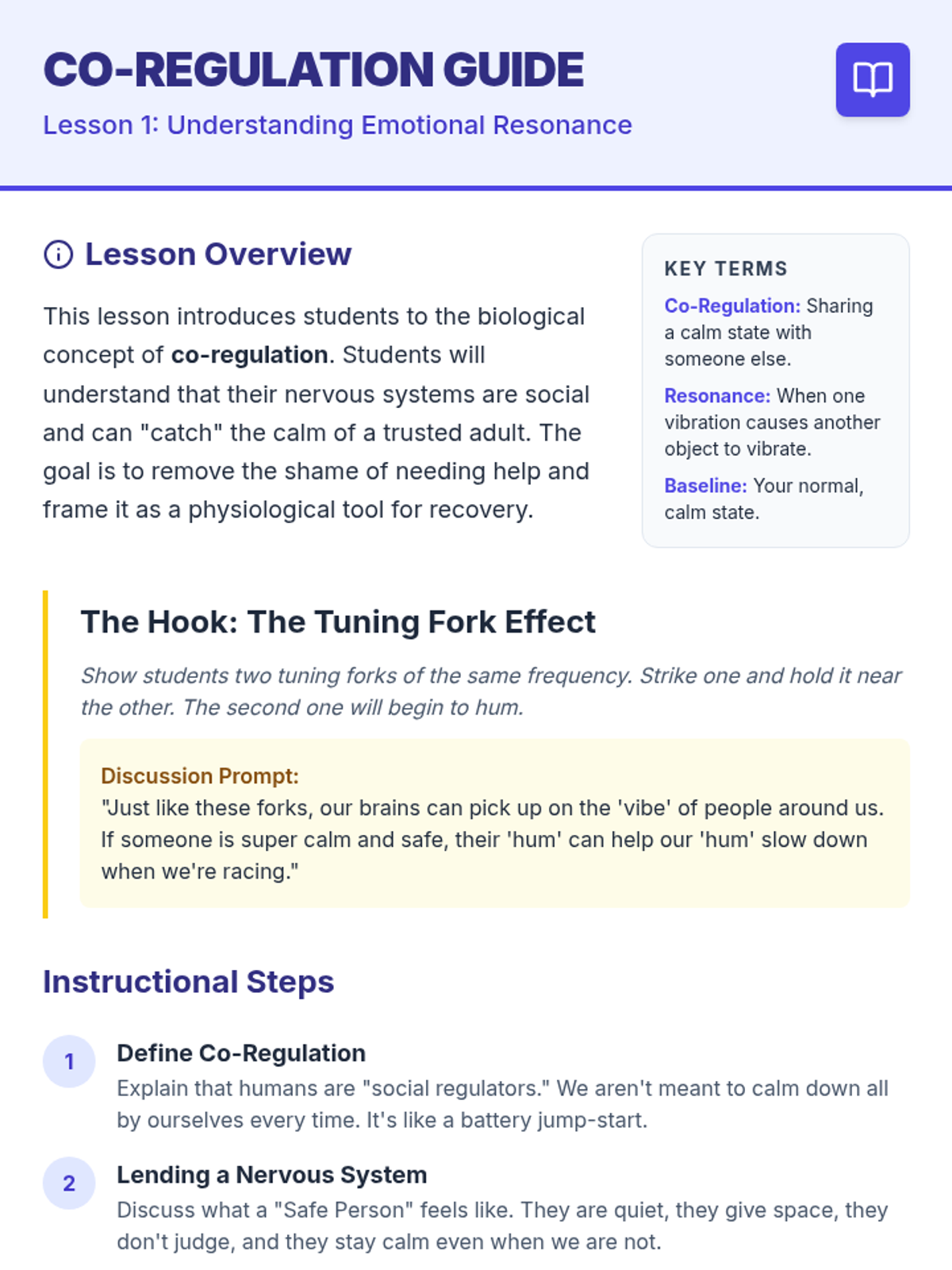
A teacher guide for Lesson 1, explaining the concept of co-regulation, providing a "tuning fork" hook, and outlining instructional steps for 5th-grade students.
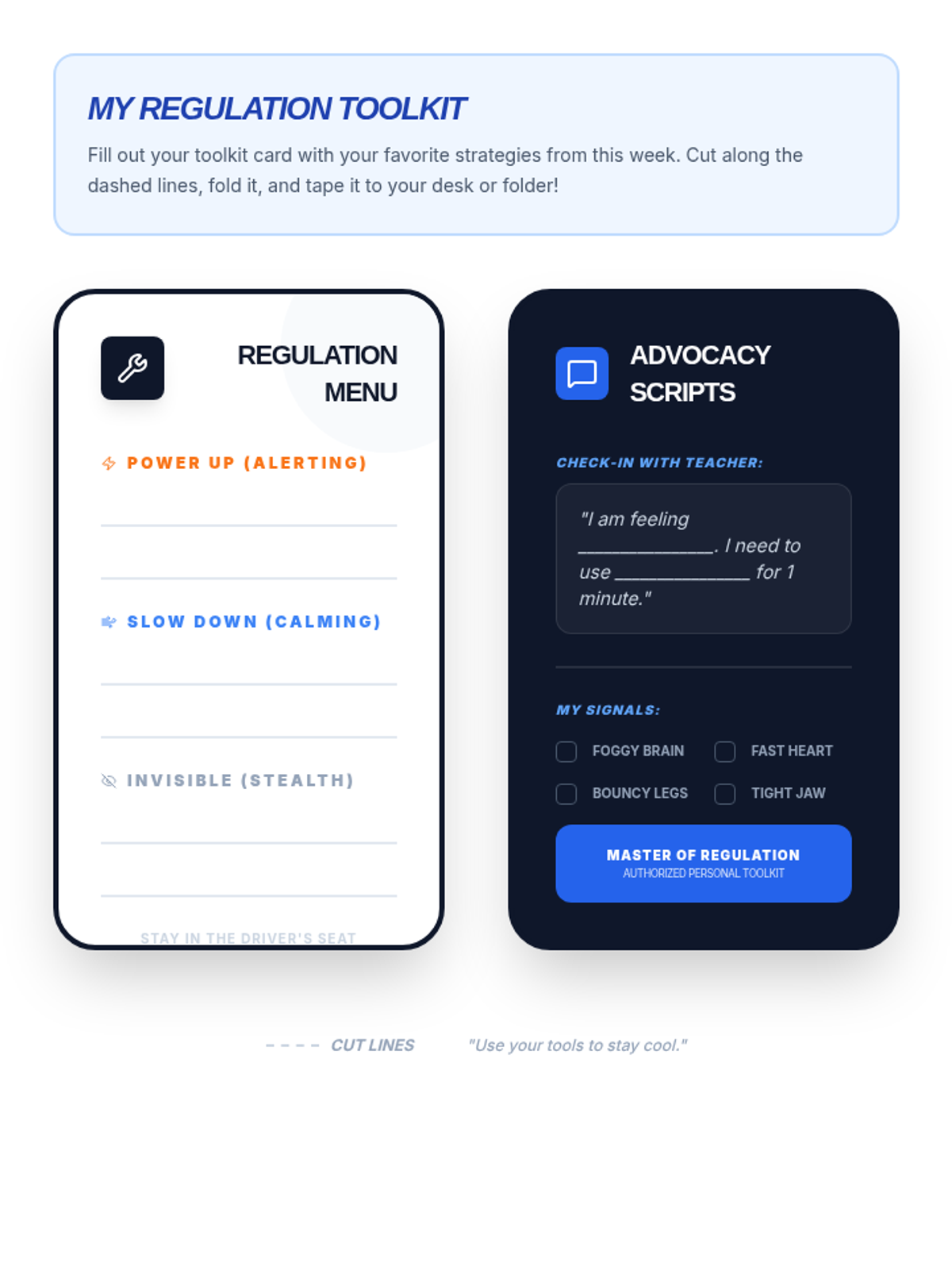
Final personalized regulation card for students to select and record their favorite strategies for alerted, calm, and stealth states, including self-advocacy scripts.
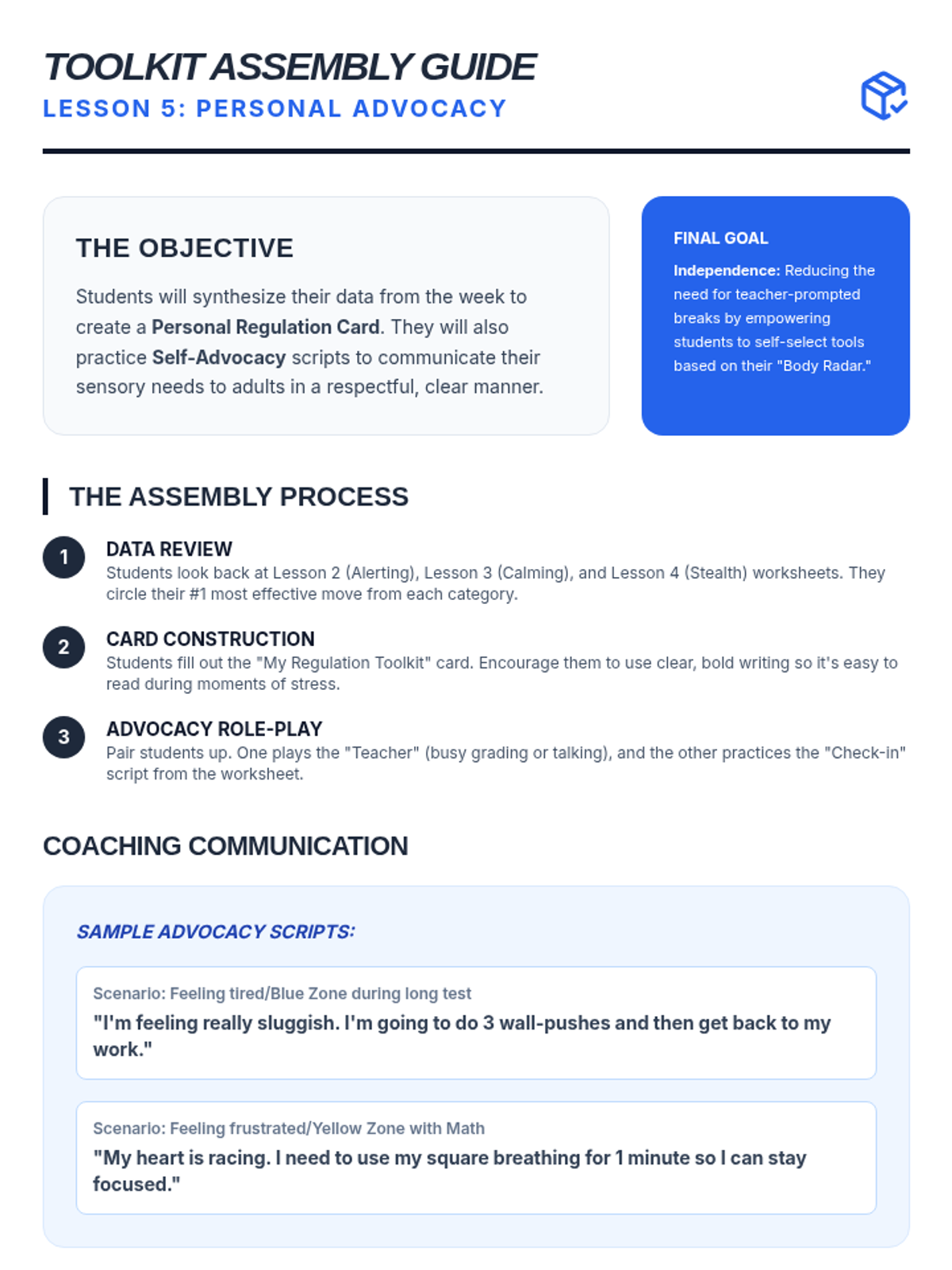
Teacher facilitation guide for Lesson 5 focusing on summarizing the week's learning and guiding students through self-advocacy and toolkit assembly.
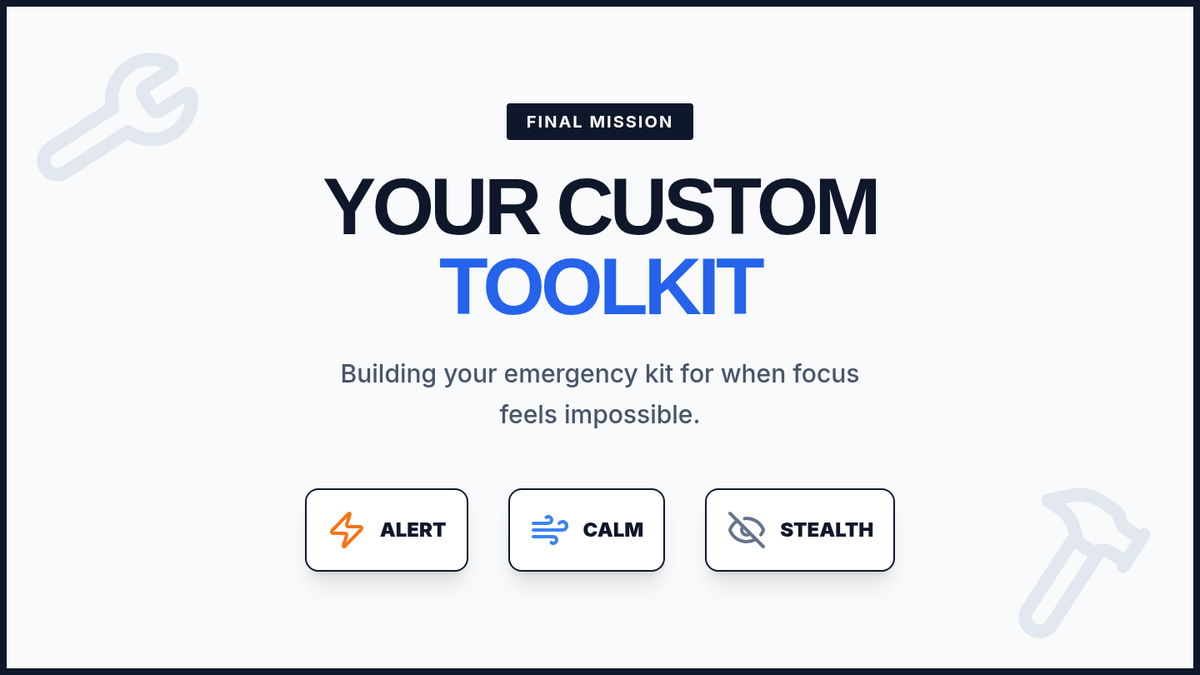
Educational slide deck for Lesson 5 summarizing the week's learning and introducing the final personal toolkit assembly activity.
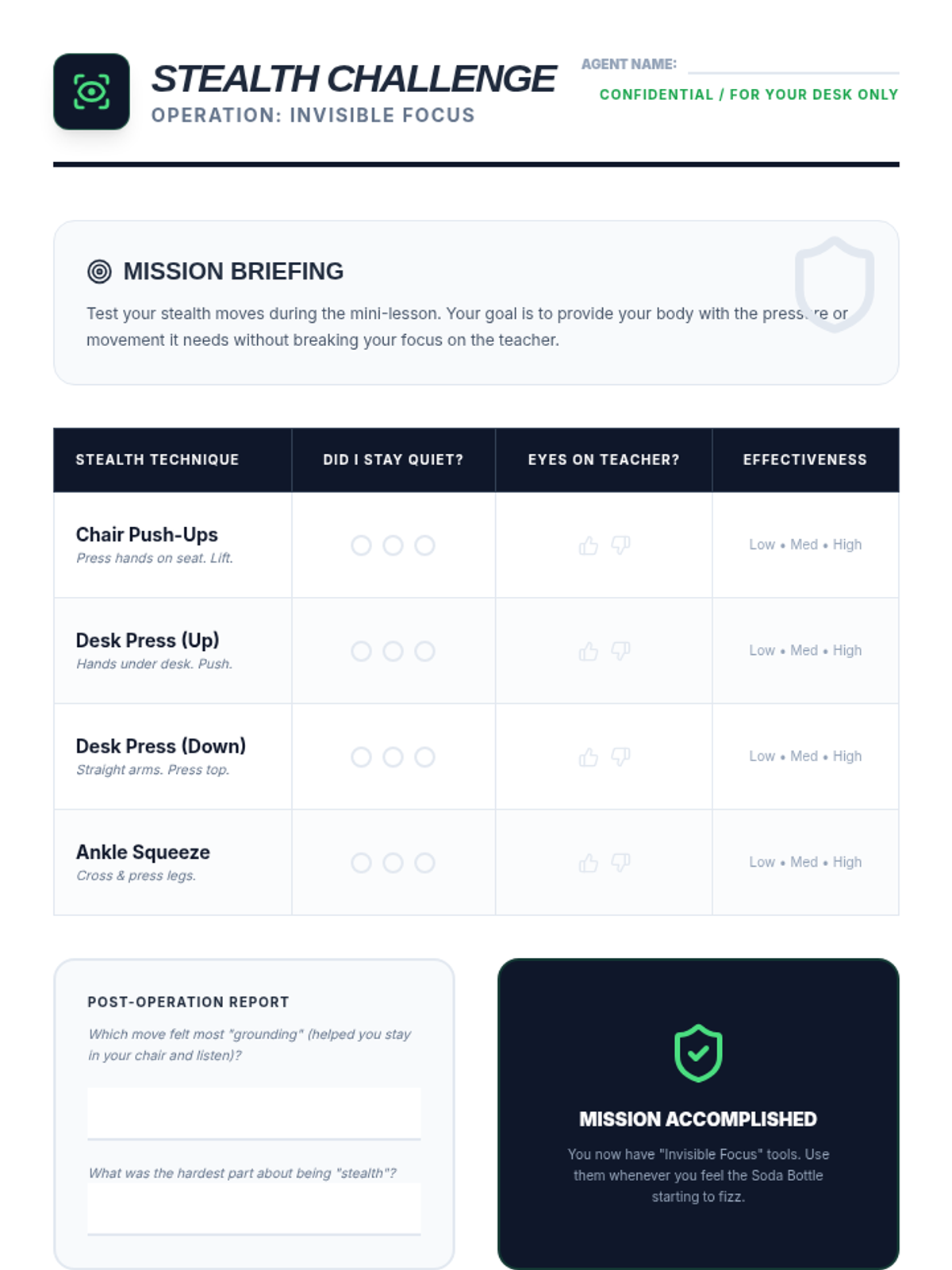
Student worksheet for Lesson 4 for students to self-assess their ability to perform discreet regulation techniques during a lesson.
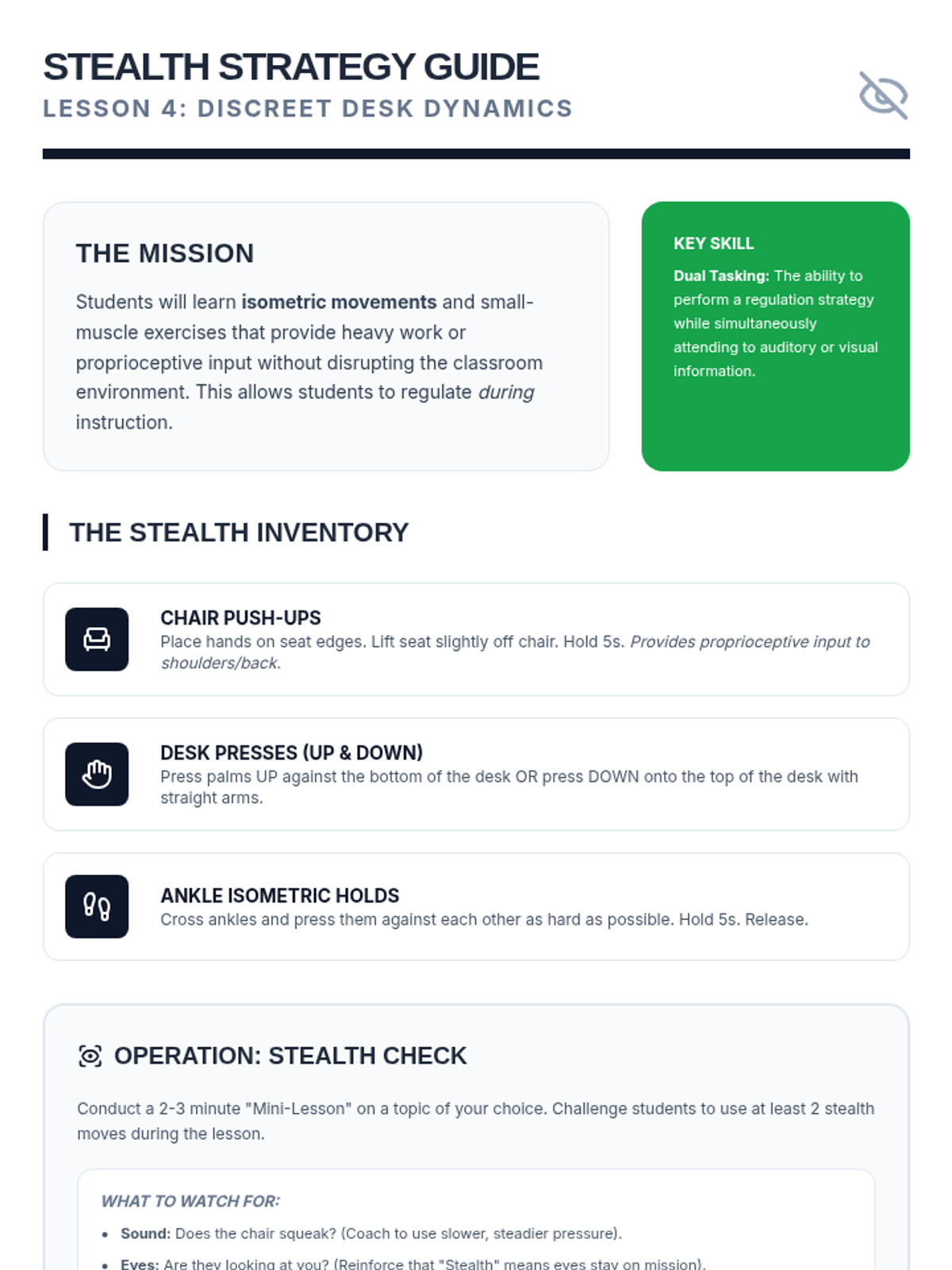
Teacher facilitation guide for Lesson 4 focusing on managing classroom behavior while encouraging discreet regulation techniques.
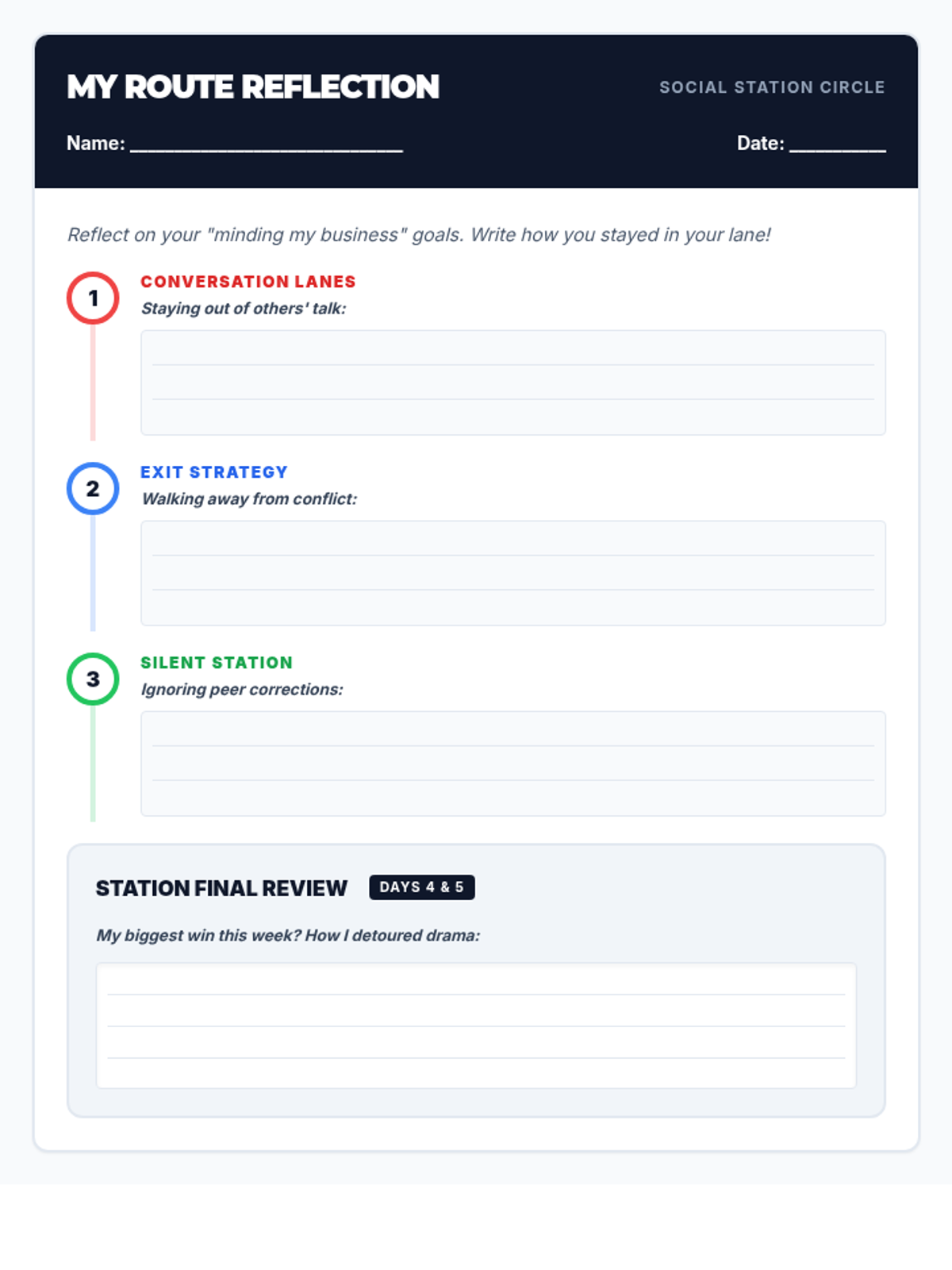
A student-facing reflection log for tracking daily progress on 'minding your business' social skills goals. Features large, readable text and guided writing lines. Fits on a single page.
Slide deck for Day 5 of community circles focusing on 'Focus Force' and avoiding distractions. Includes greeting, shout-outs, scenario practice, and Scattergories.
Slide deck for Day 4 of community circles focusing on 'Drama Detours' and avoiding rumors. Includes greeting, shout-outs, scenario practice, and Scattergories.
Slide deck for Day 3 of community circles focusing on 'The Silent Station' and ignoring peer corrections. Includes greeting, shout-outs, scenario practice, and Scattergories.
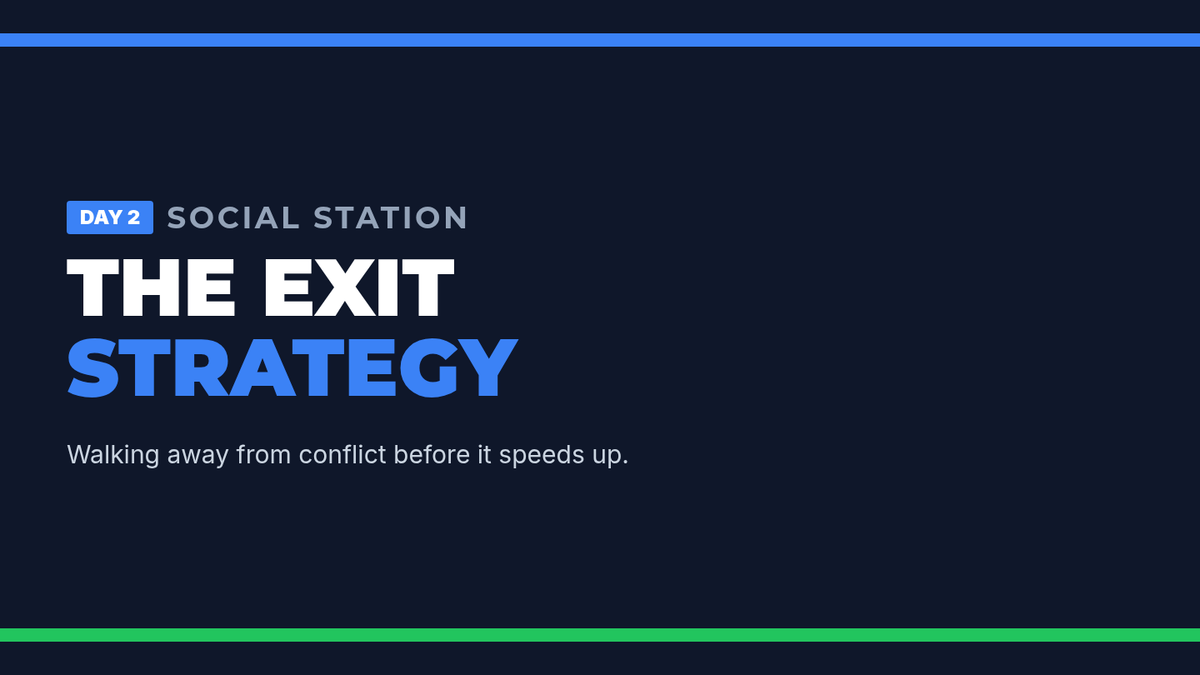
Slide deck for Day 2 of community circles focusing on 'The Exit Strategy' and walking away from conflict. Includes greeting, shout-outs, scenario practice, and Scattergories.
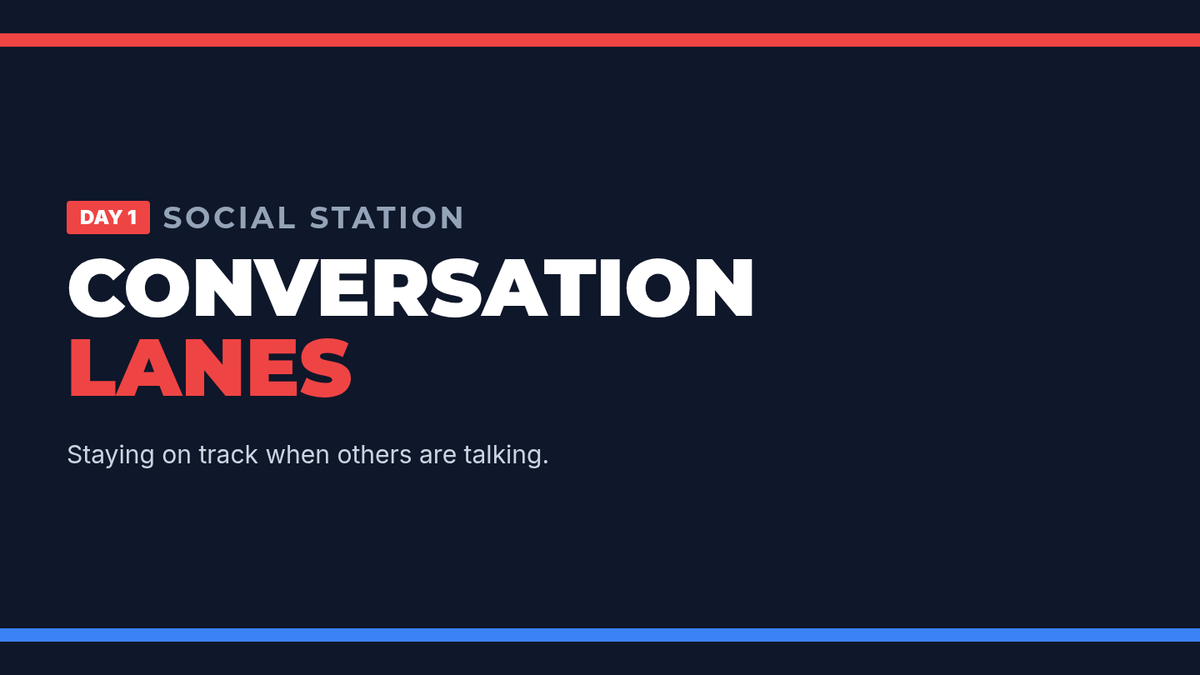
Slide deck for Day 1 of community circles focusing on 'Conversation Lanes' and staying out of others' talk. Includes greeting, shout-outs, scenario practice, and Scattergories.
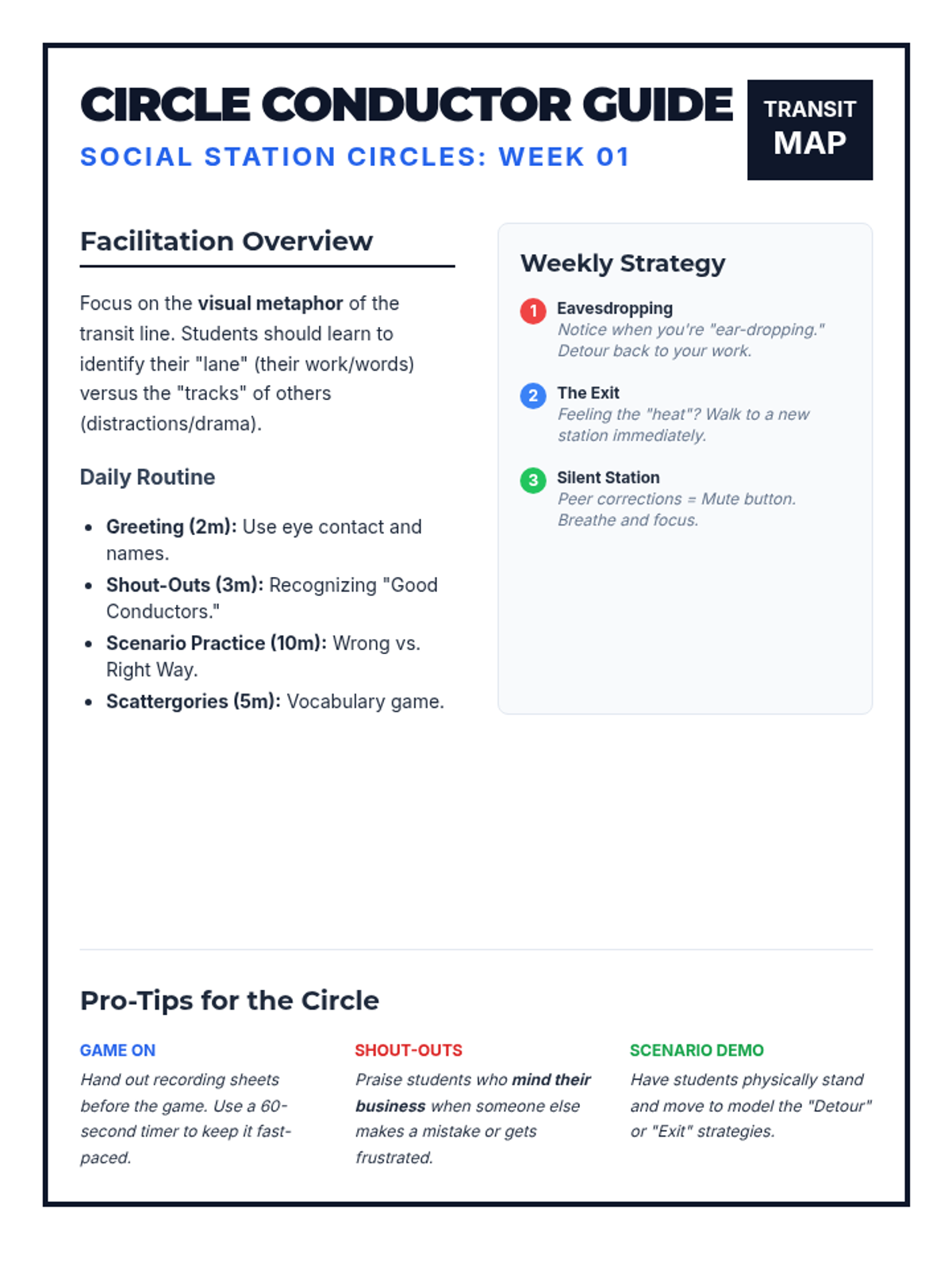
A comprehensive facilitation guide for the week of community circles, featuring instructional notes, scenario scripts for each day, and Scattergories master lists. Includes a student recording sheet.
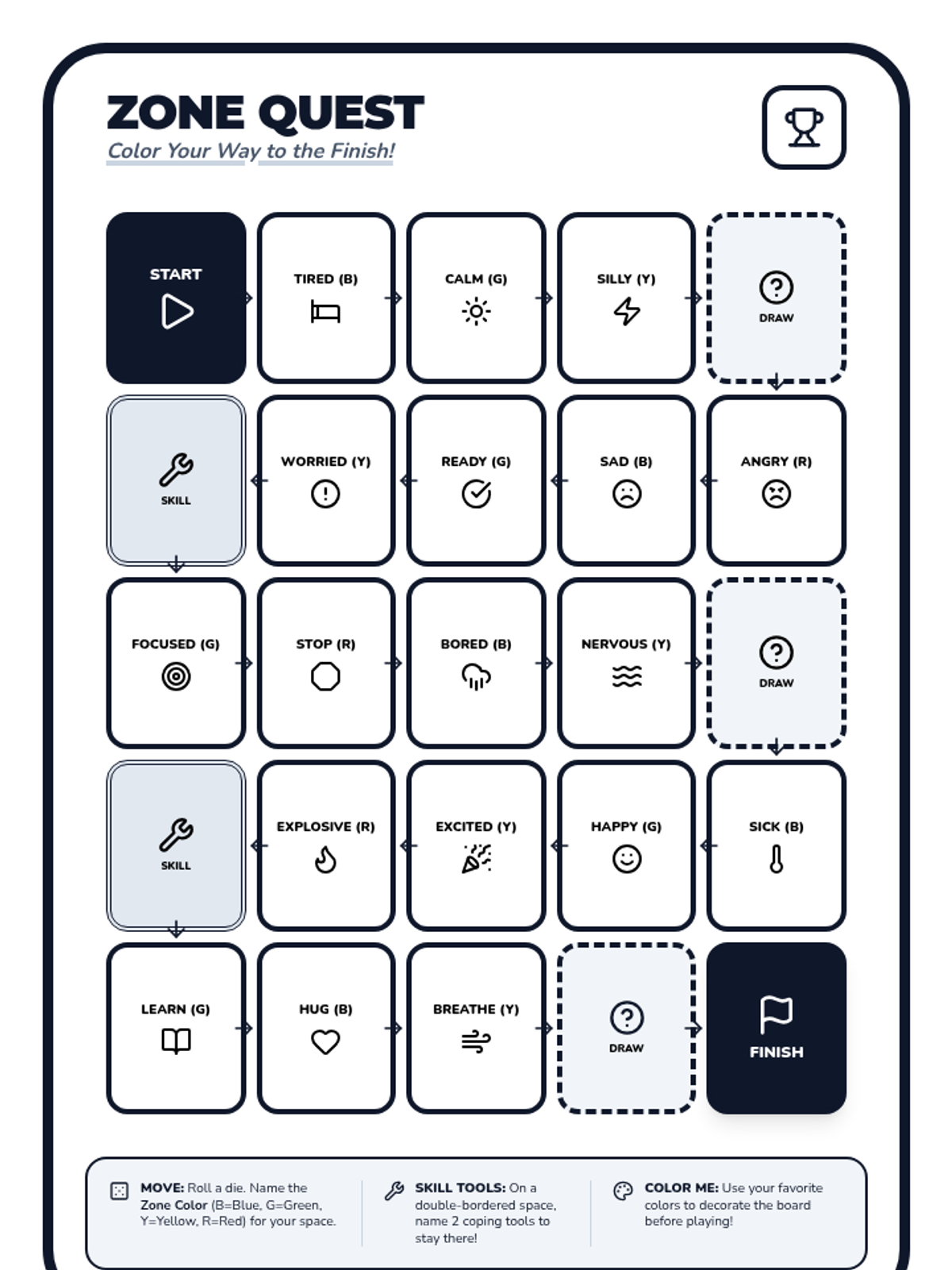
A printable board game where students navigate through various scenarios, identifying emotions and selecting appropriate coping skills to reach the finish line. Now in black and white for easy coloring and featuring 15 unique scenario cards. Now fixed for pathing and font size.
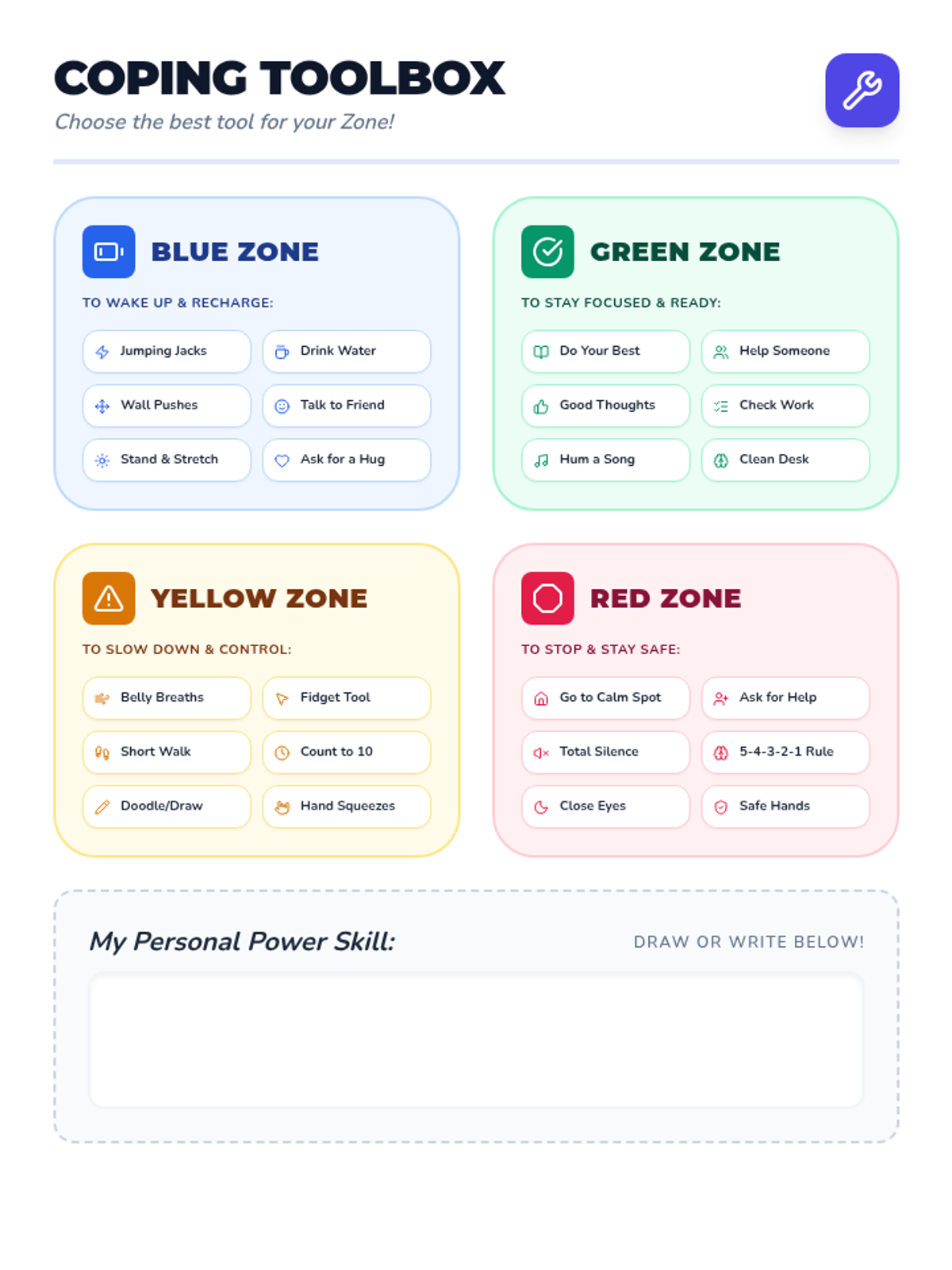
A comprehensive choice board featuring 24 different coping skills categorized by Zone, providing students with a wide range of strategies to manage their emotions. Now fixed for page fit and contrast.
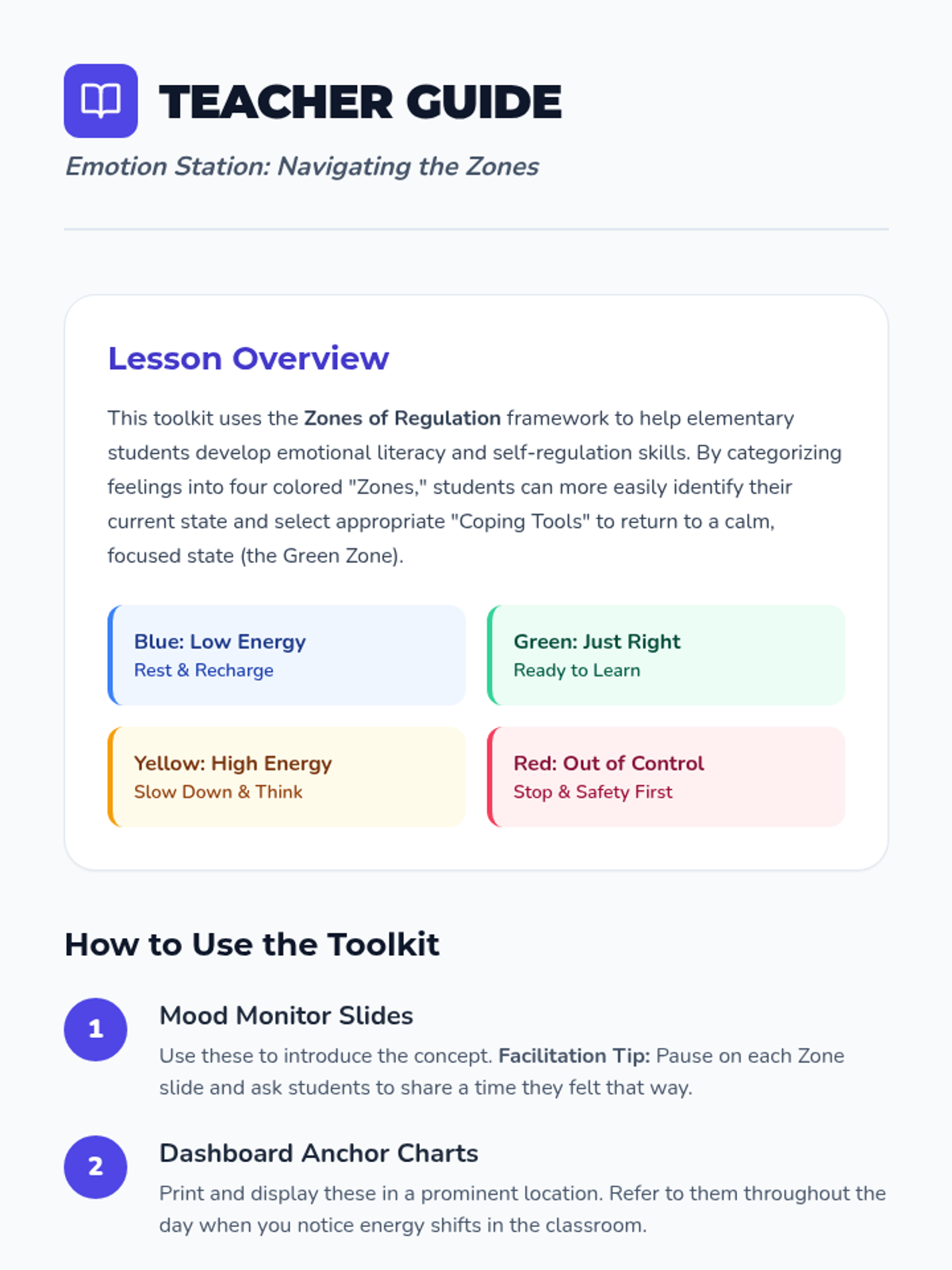
A facilitation guide for teachers with implementation tips, discussion prompts, and an overview of the Zones of Regulation framework. Fixed for page breaks and contrast.
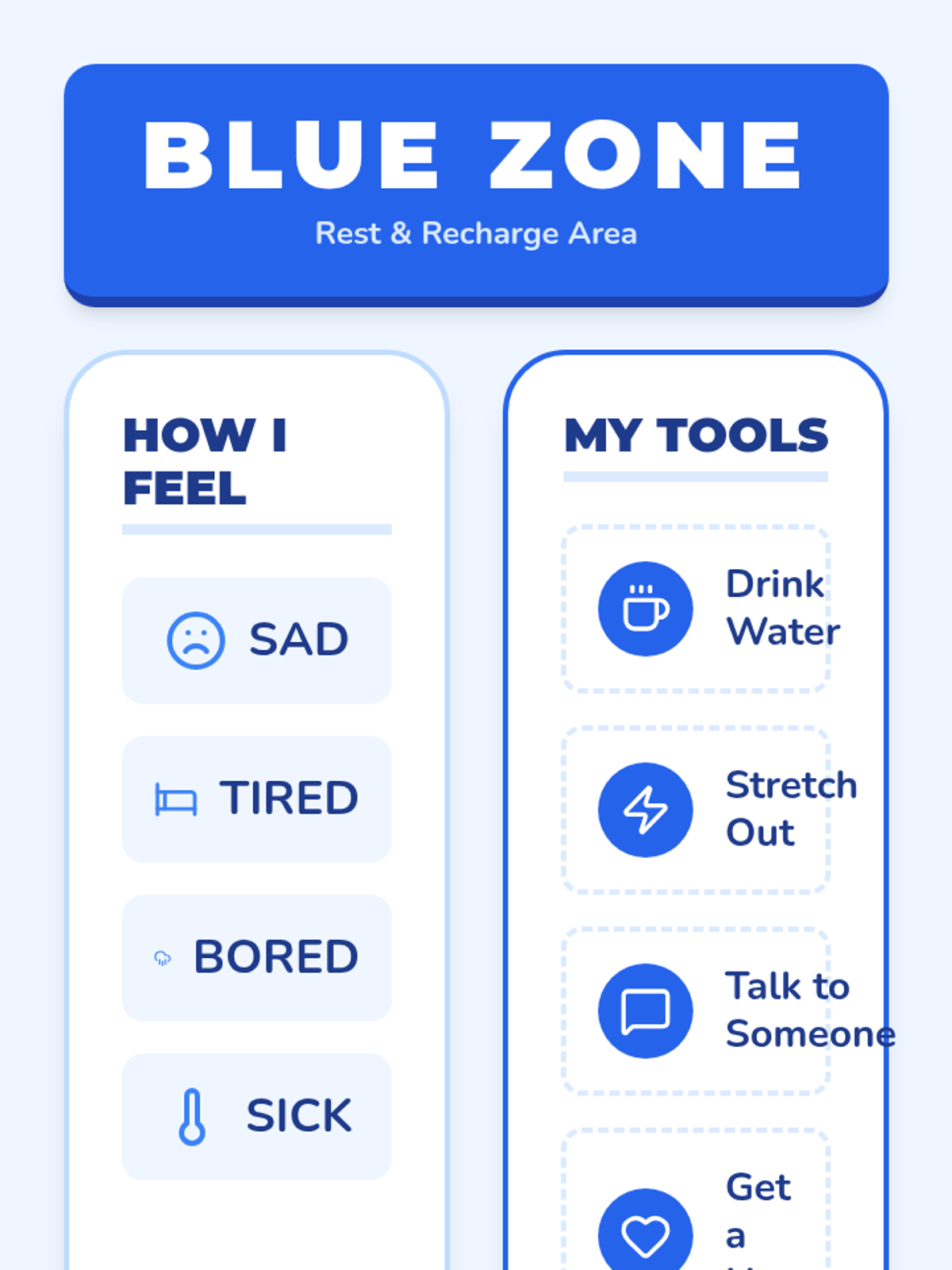
A set of 4 high-contrast classroom anchor charts, one for each Zone of Regulation, detailing common feelings and matching coping tools. Fixed for page bleed and contrast.
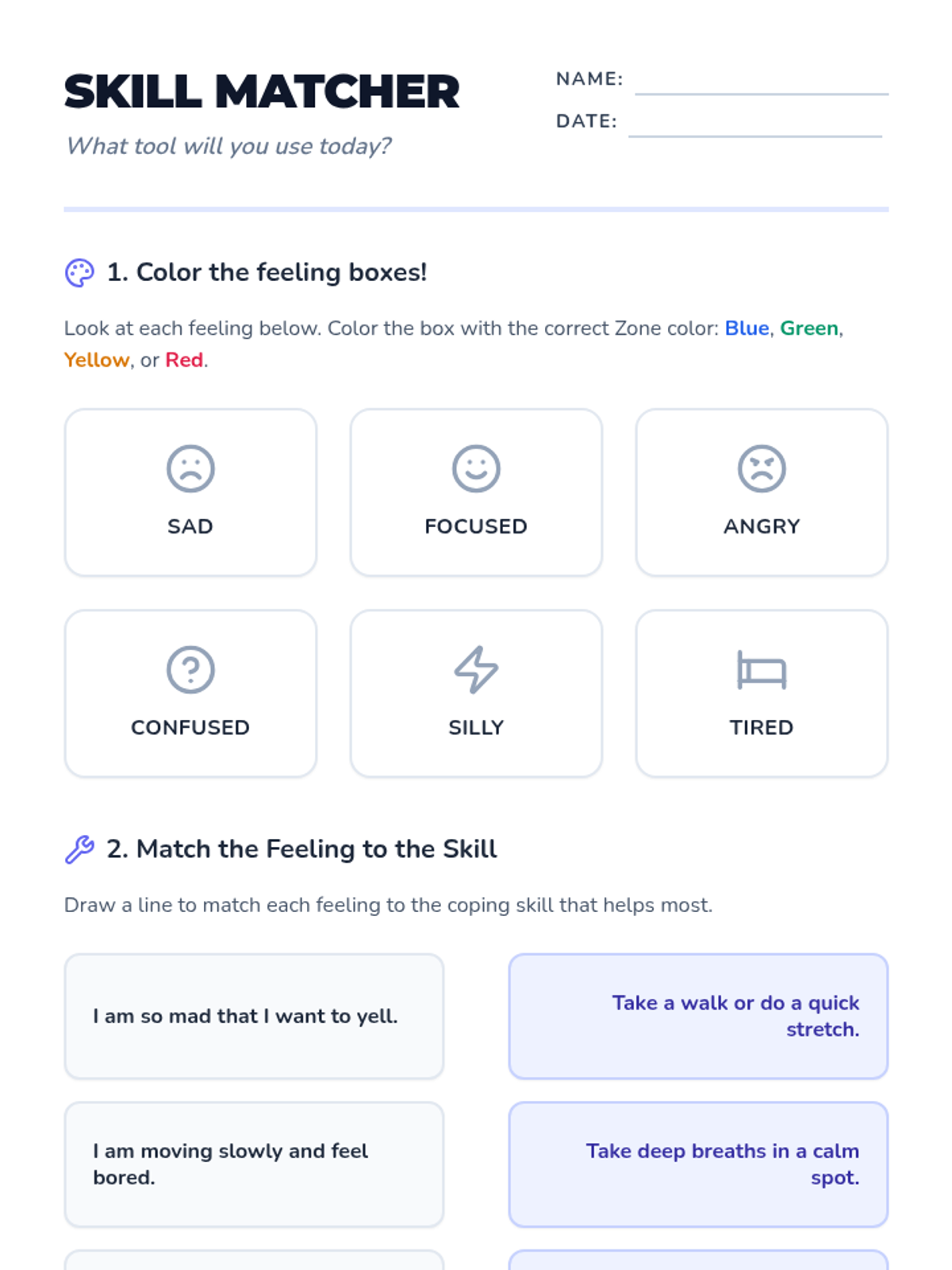
A hands-on worksheet where students identify zone-appropriate feelings and match situations to helpful coping strategies. Now fixed for page breaks and visual consistency.
Portable desk-sized reference cards featuring the four Zones of Regulation with specific feelings and coping skills for quick student access. Now with cutting guides and improved contrast.
A vibrant 9-slide presentation introducing the four Zones of Regulation and providing concrete examples of feelings and coping skills for each color.
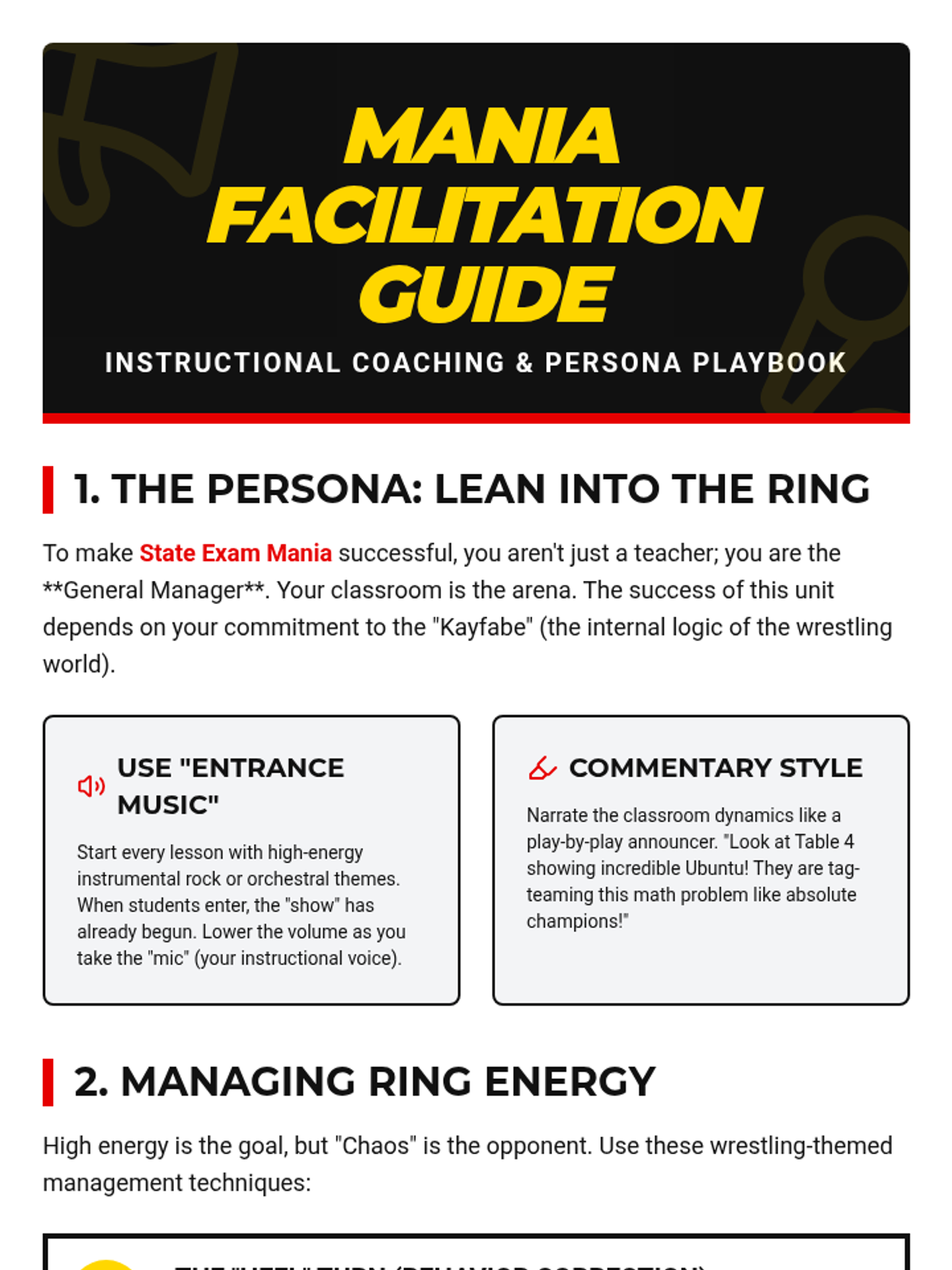
A comprehensive teacher facilitation guide for the 'Road to State Exam Mania' sequence, featuring persona coaching, behavior management strategies (using wrestling metaphors), lesson-specific tips, and a bank of discussion questions.
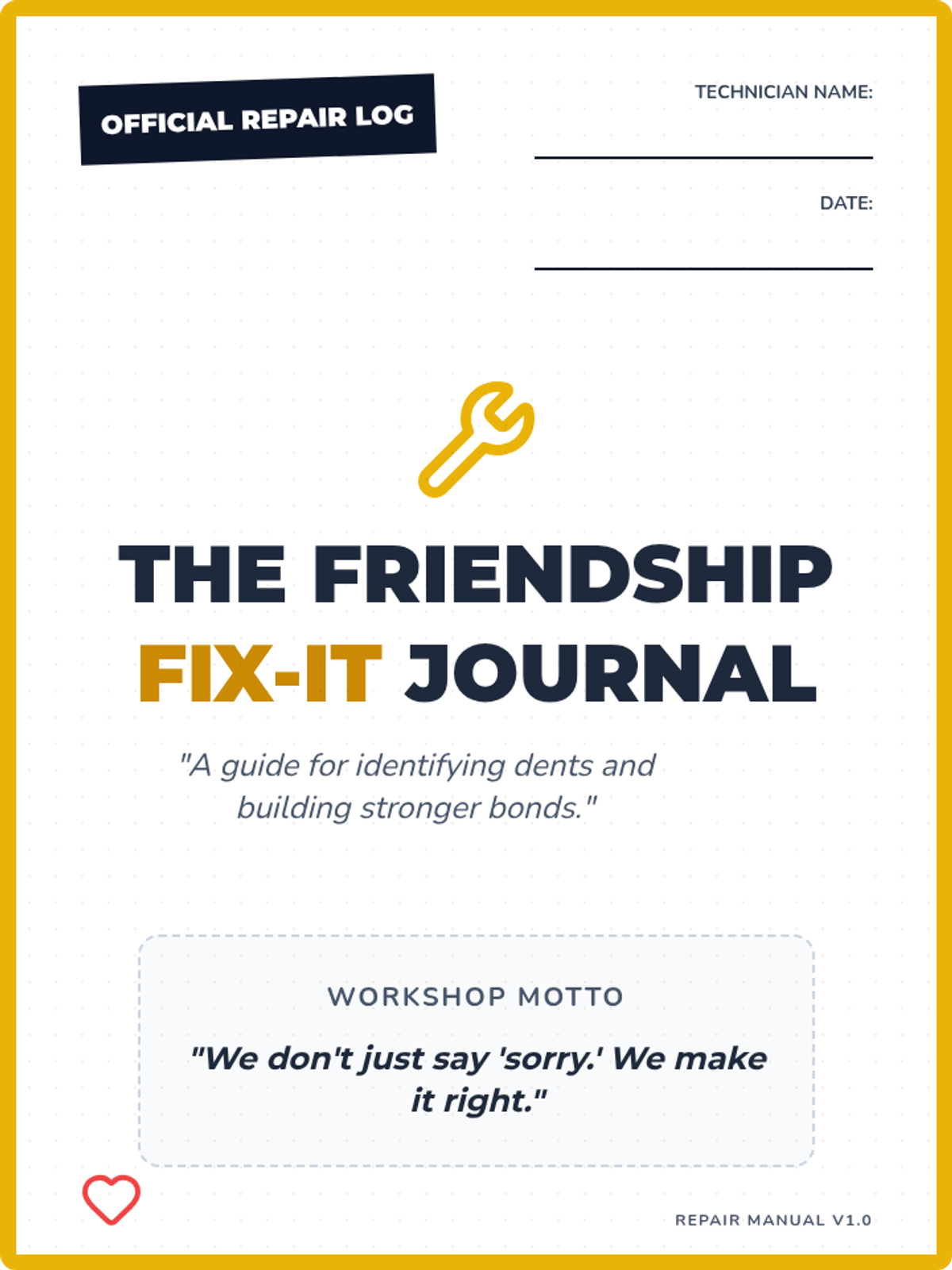
A 3-page student journal for the Friendship Fix-It Workshop. Revised with light-colored work areas for high handwriting legibility, improved text contrast for labels, increased writing space for students, and fixed layout issues on the third page.
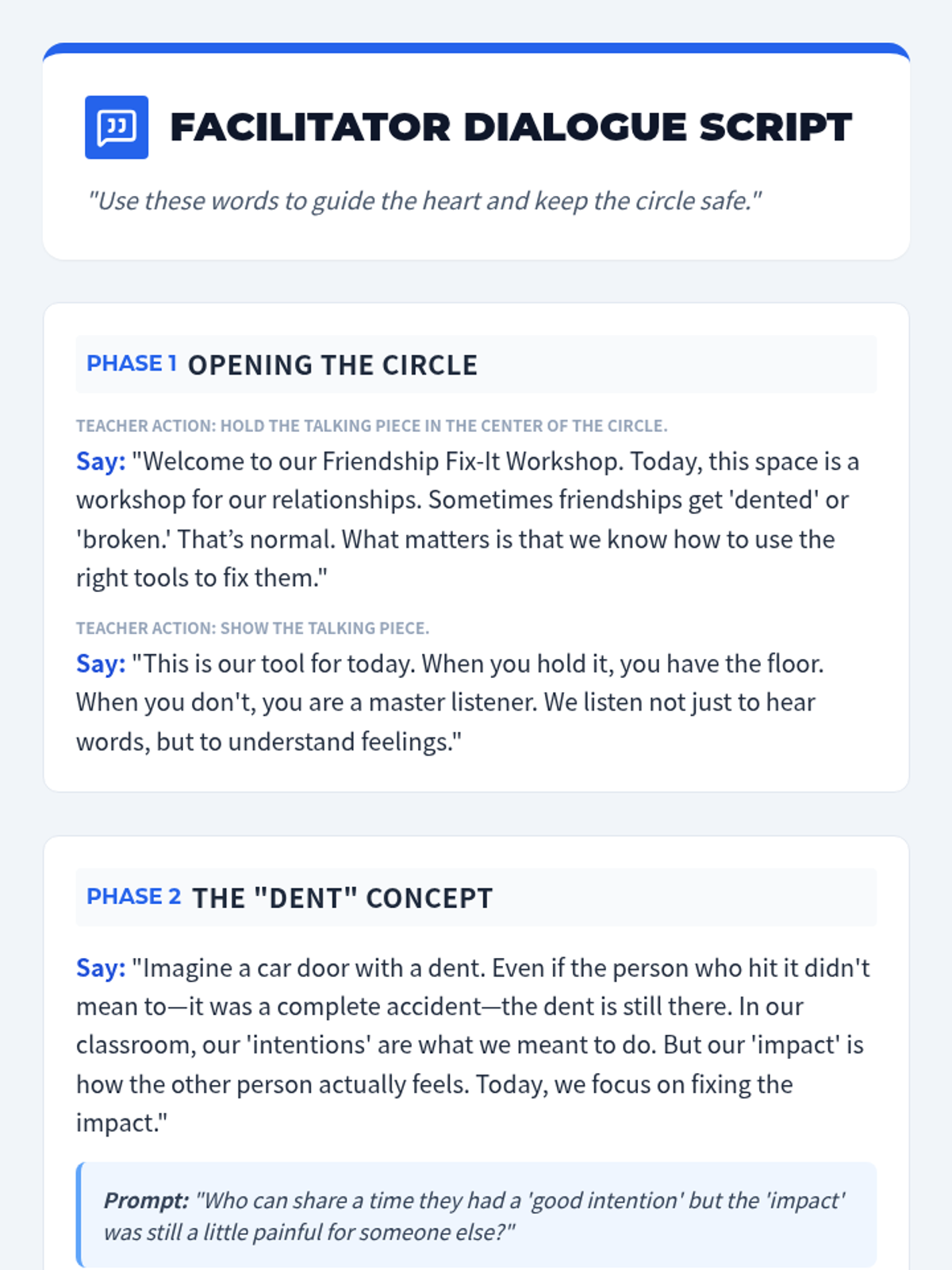
A facilitator script for the Friendship Fix-It Workshop. Revised with improved page breaks and layout to ensure phase content and troubleshooting dialogue remain intact for smooth classroom delivery.
A visually engaging 7-slide presentation for the Friendship Fix-It Workshop. Revised with improved text contrast on the closing slide, clearer placeholders for the apology blueprint, and refined heading sizes for better visual hierarchy.
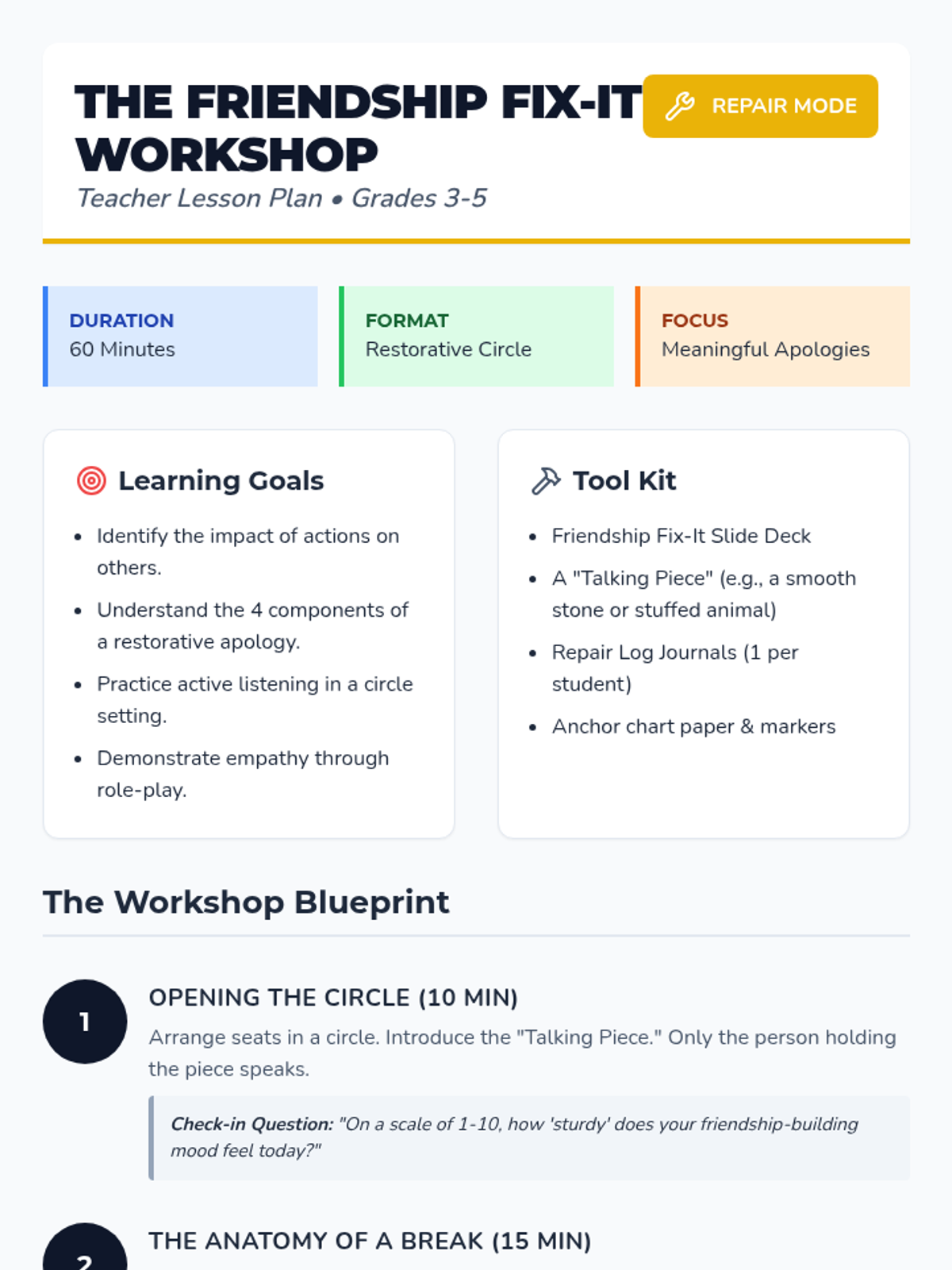
A comprehensive lesson plan for teachers to facilitate a 60-minute restorative workshop. Includes learning objectives, a step-by-step 'Blueprint' for the session, and practical facilitation tips for classroom management during circles. Revised with concrete modeling examples and improved page breaks.
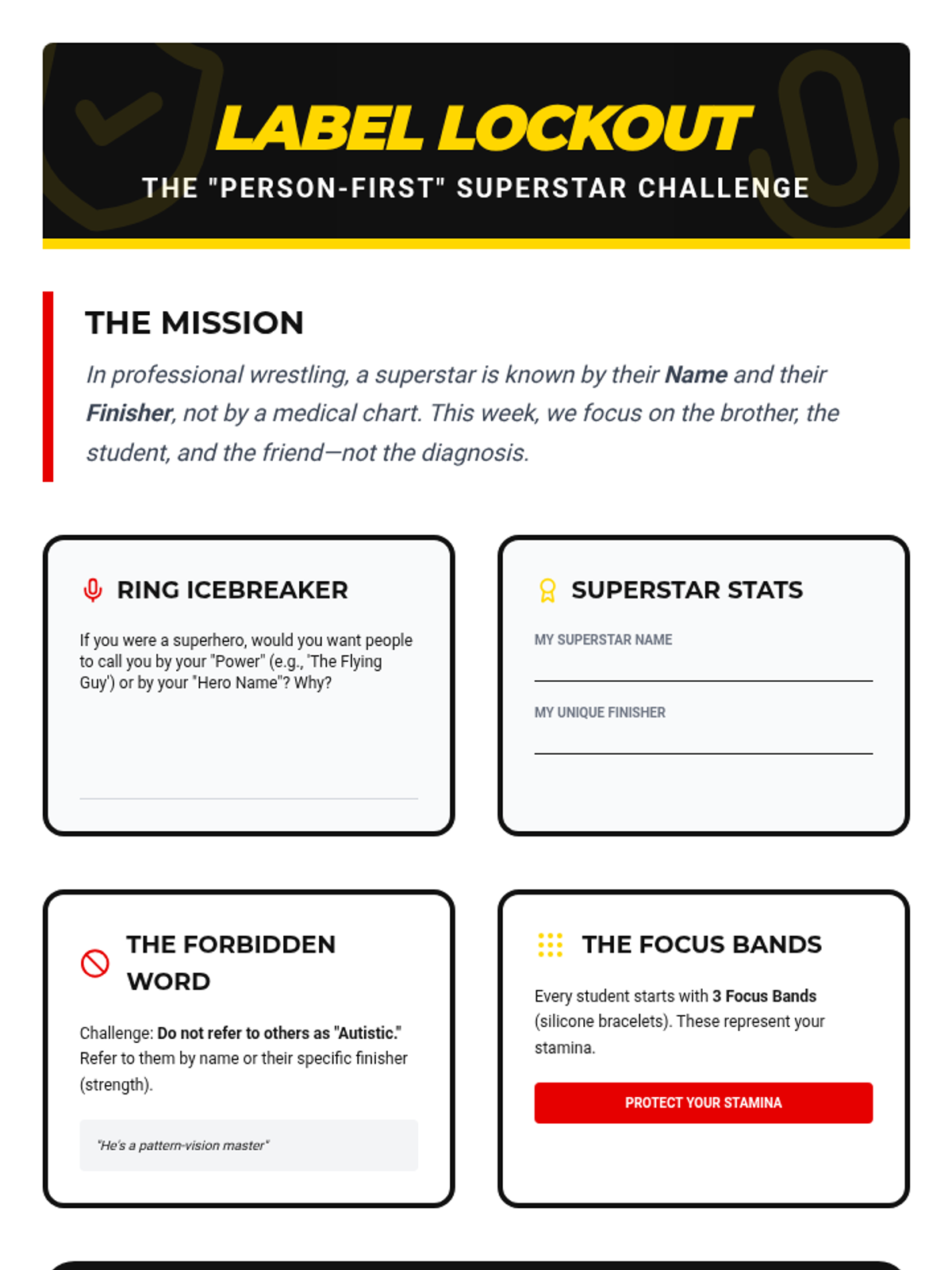
A week-long challenge guide where students avoid labels like 'autistic' to focus on individual strengths, using silicone bracelets as tokens in a 'Referee' style game.
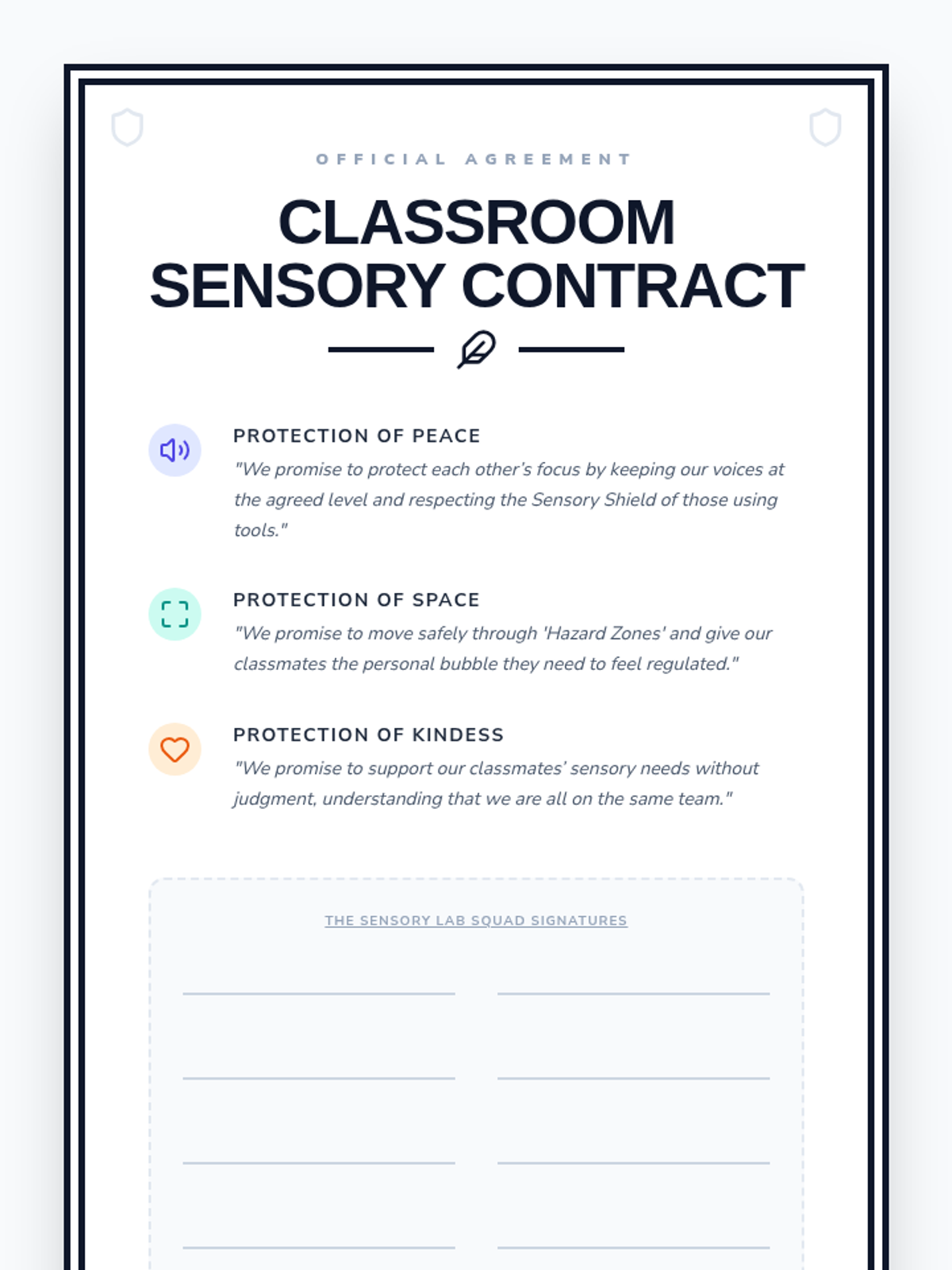
A formal classroom agreement document that establishes shared norms for noise, space, and sensory support, intended for all students to sign.
Slides for Lesson 5 consolidating learning into a classroom agreement on noise, space, and sensory support.
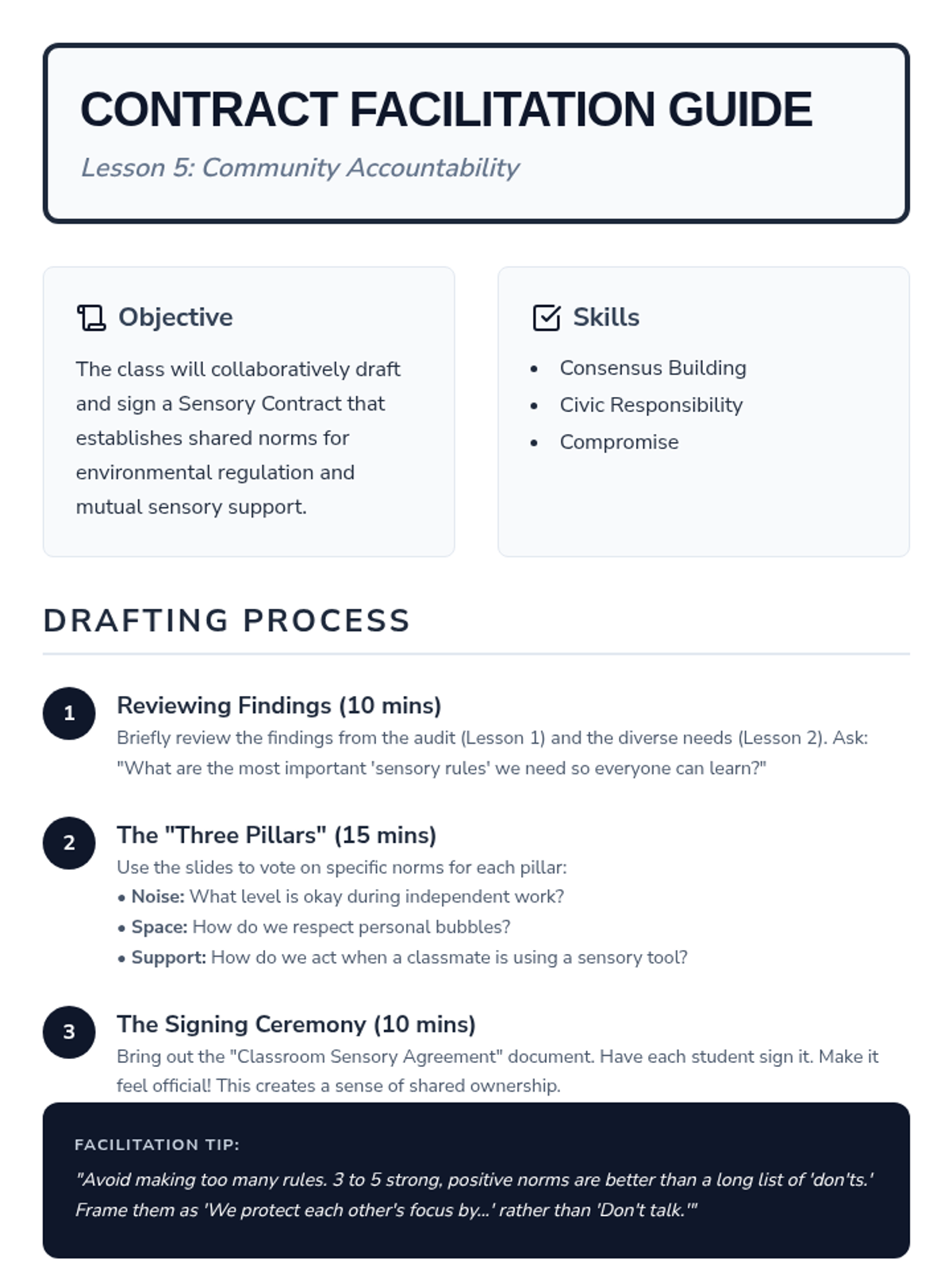
A teacher guide for the Classroom Sensory Contract lesson, featuring strategies for consensus building, signing ceremonies, and ongoing contract maintenance.
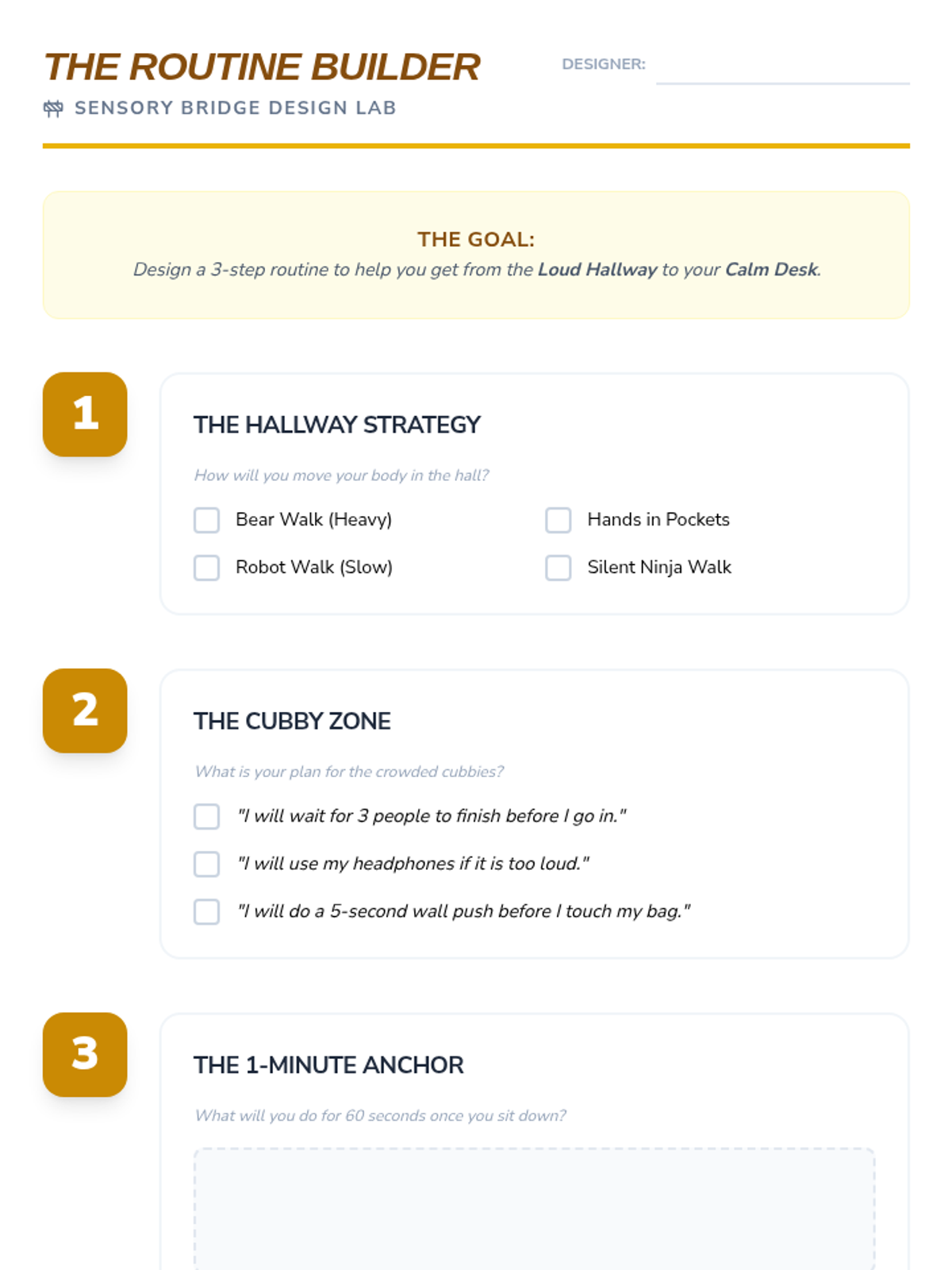
A student worksheet for building a personalized 3-step transition routine using sensory strategies.
Slides for Lesson 4 exploring the "Transition Bridge" concept and identifying sensory hazards during class changes.
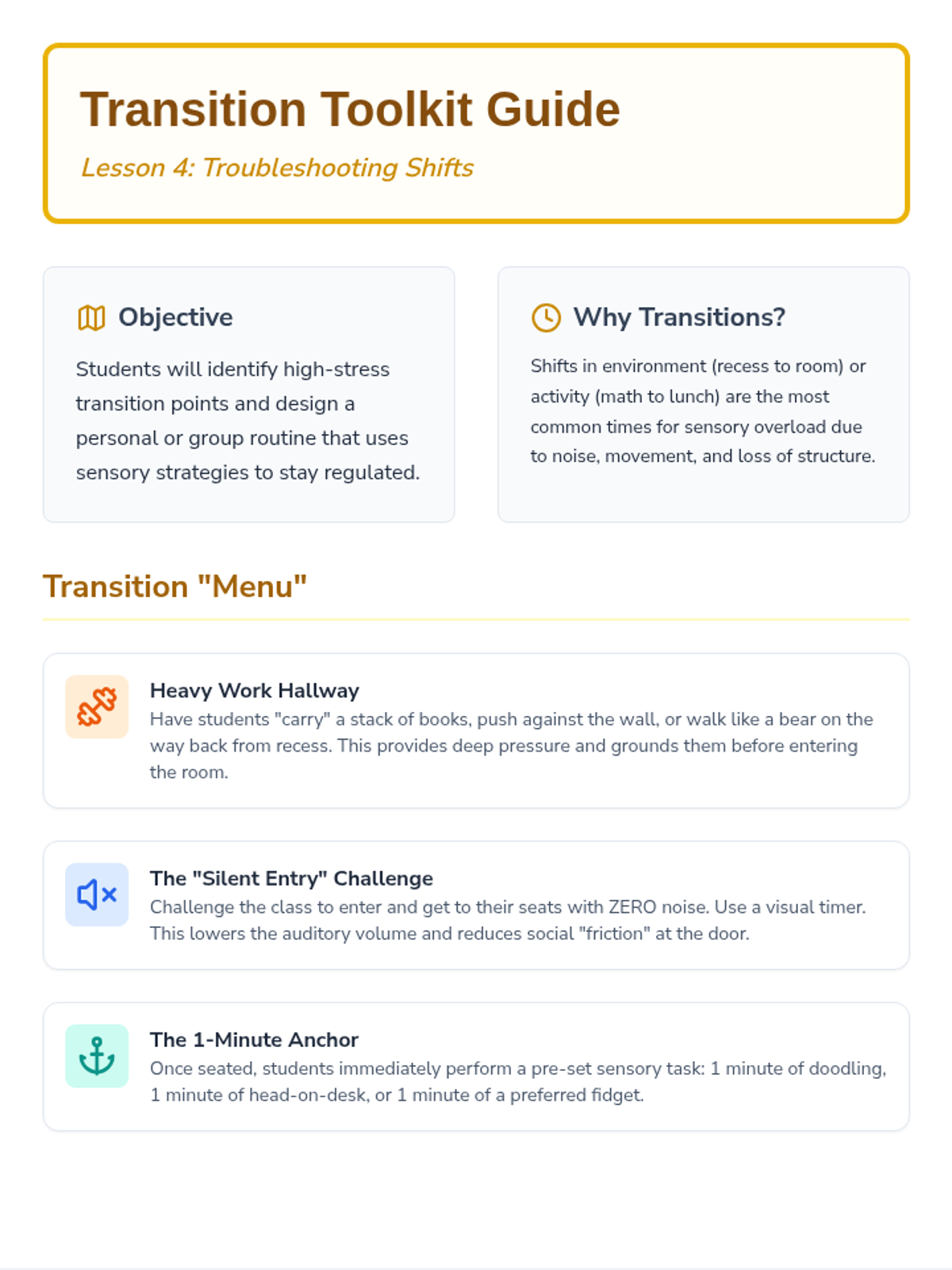
A teacher guide for the Transition Troubleshooting lesson, featuring specific strategies like "Heavy Work Hallway" and "The Buffer Zone".
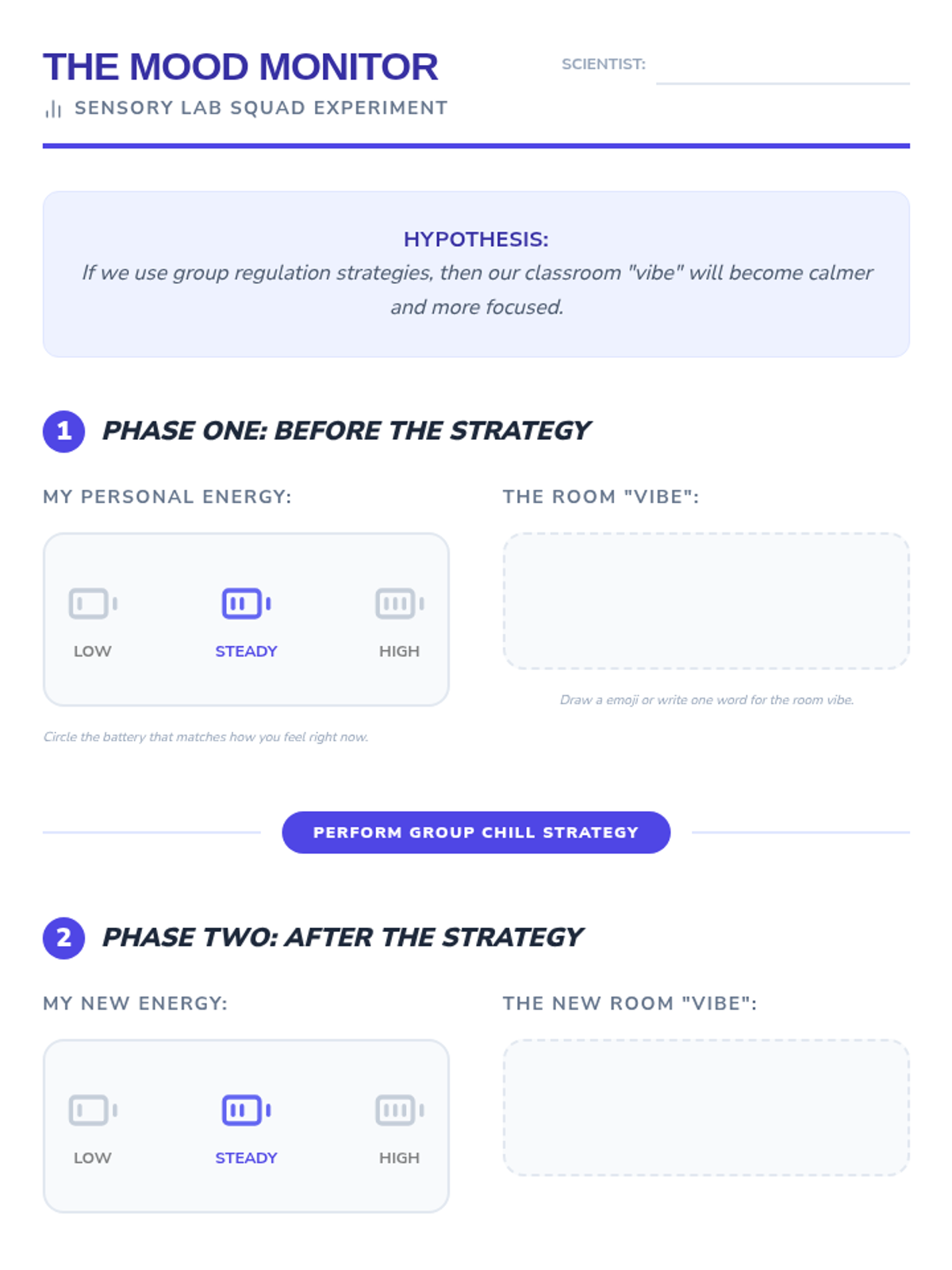
A student data sheet for tracking personal energy and classroom "vibe" before and after group regulation exercises.
Slides for Lesson 3 introducing collective regulation, "The Group Chill," and explaining the science of co-regulation and heavy work.
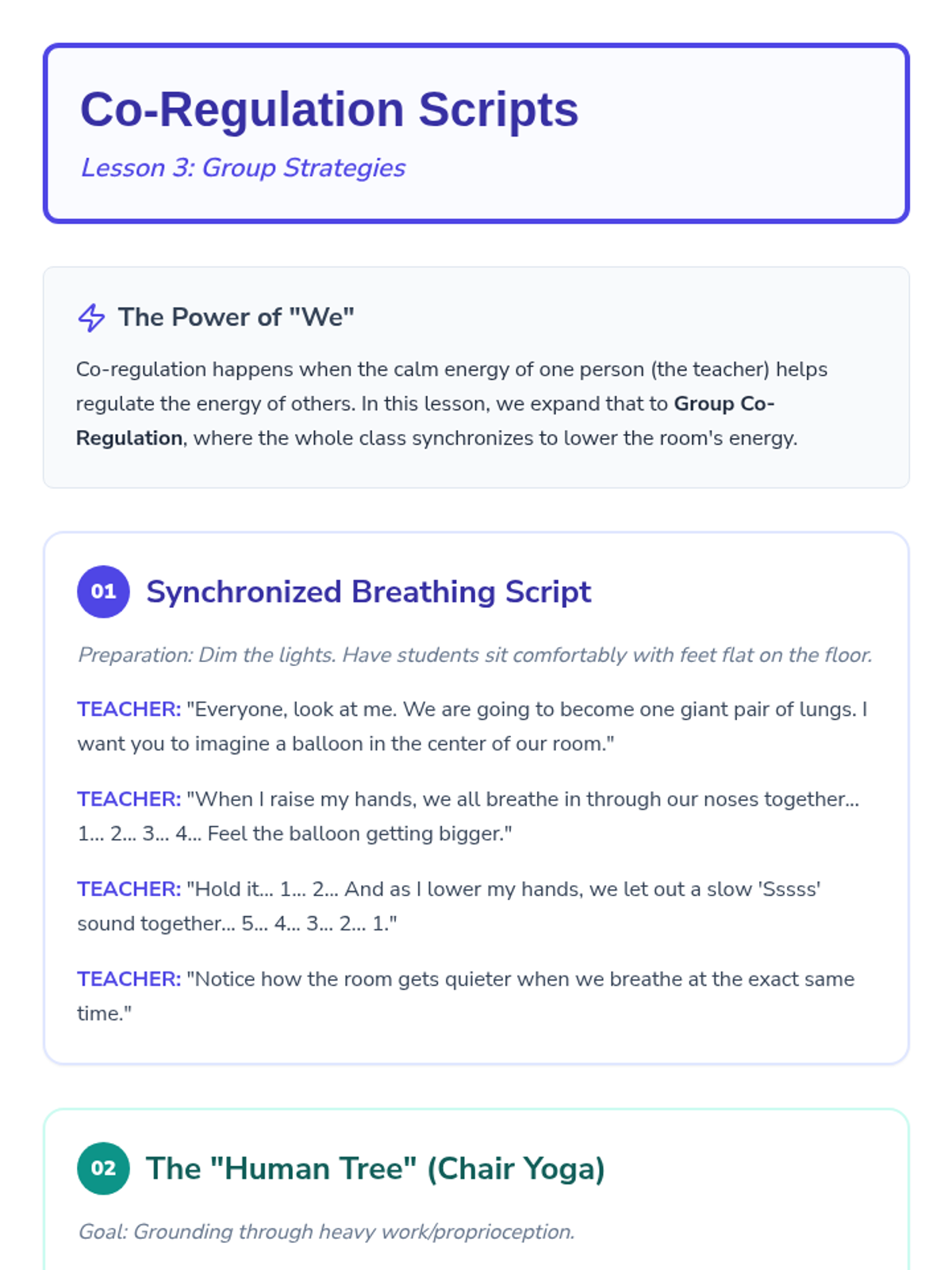
Teacher-facing co-regulation scripts and facilitation tips for synchronized breathing and chair yoga exercises.
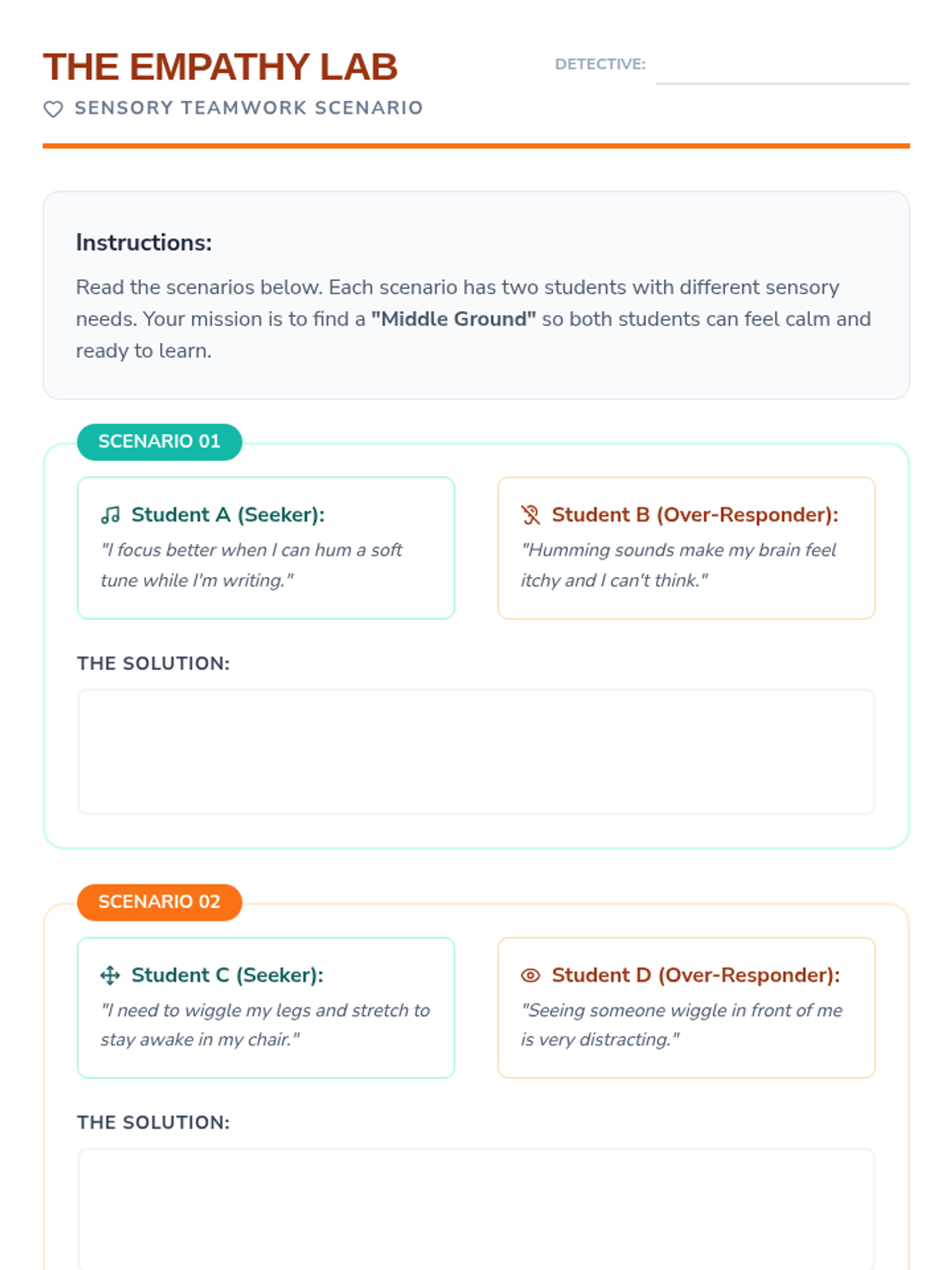
A student worksheet with scenarios featuring conflicting sensory needs, challenging students to find empathetic "Middle Ground" solutions.
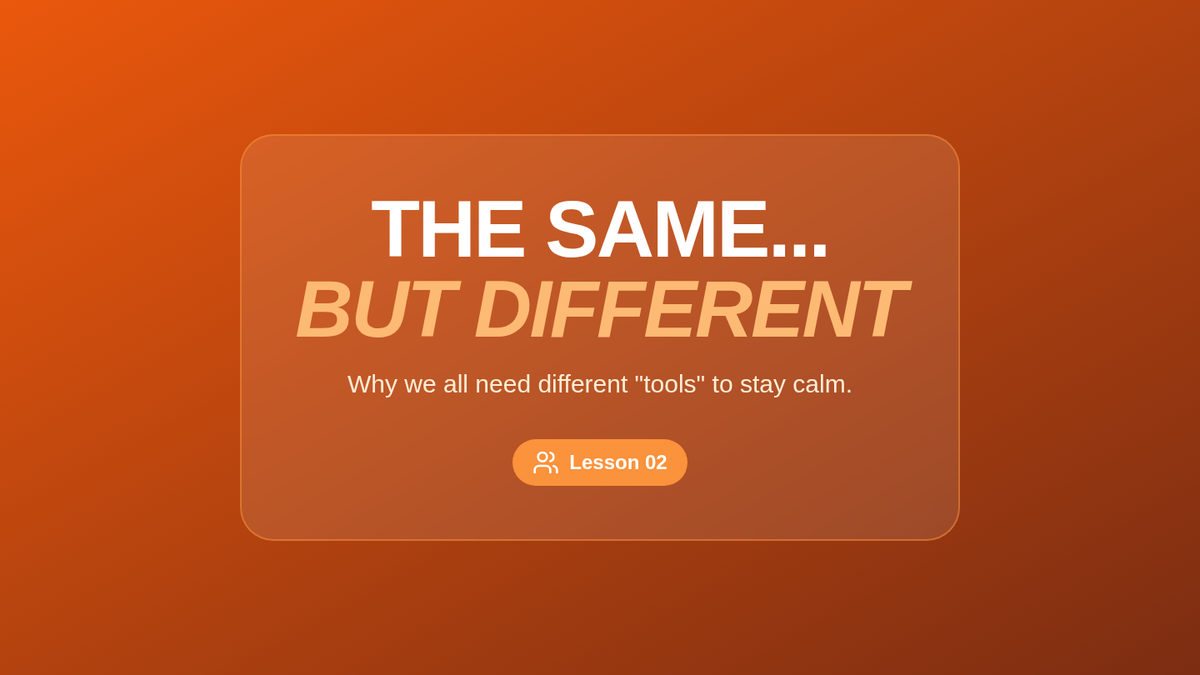
Slides for Lesson 2 introducing "Sam the Seeker" and "Olivia the Over-Responder" to explain diverse sensory needs and the concept of a sensory "Middle Ground."
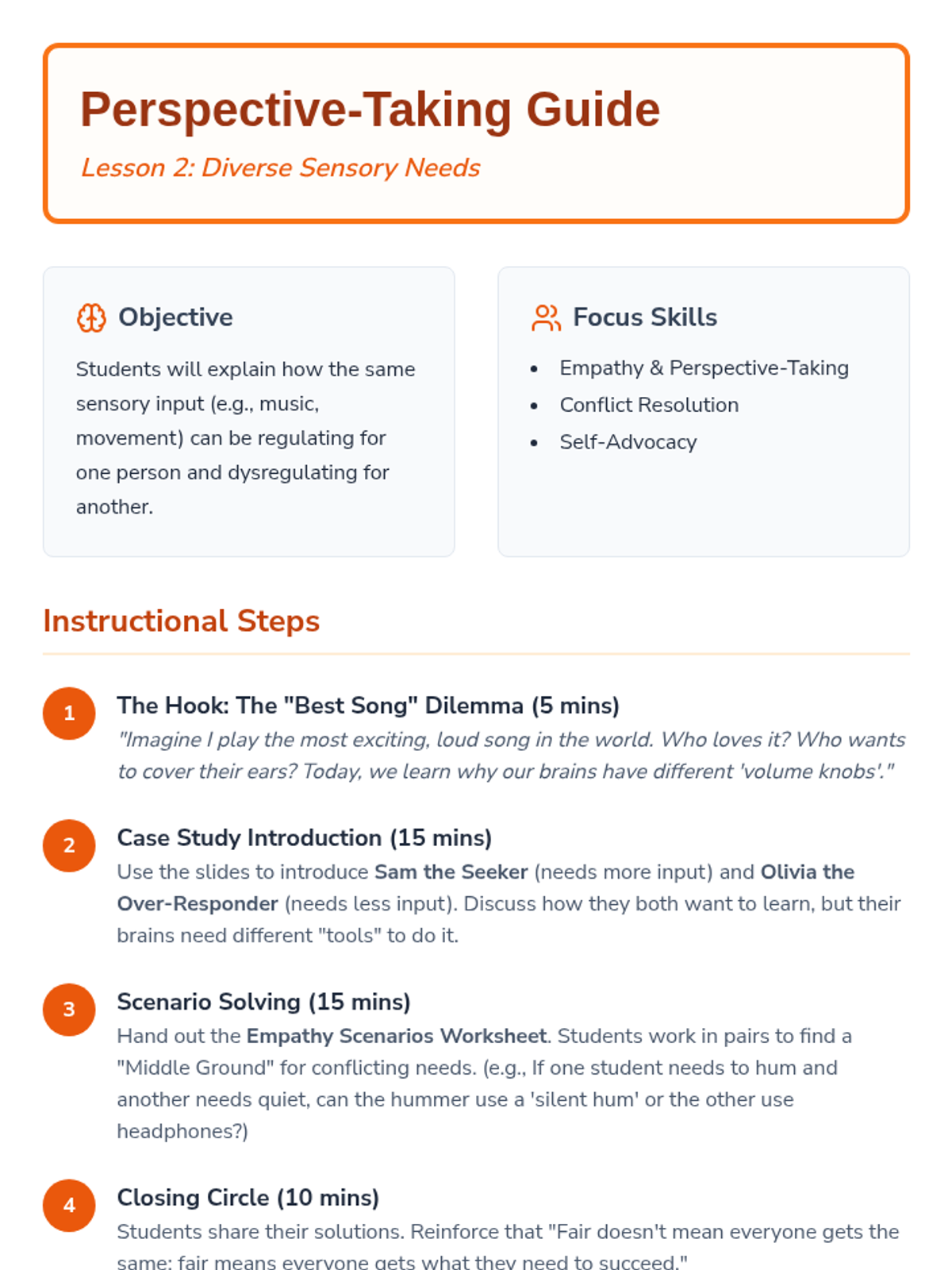
A teacher guide for the Respecting Diverse Sensory Needs lesson, focusing on perspective-taking, empathy, and the "Glasses Analogy" for sensory tools.
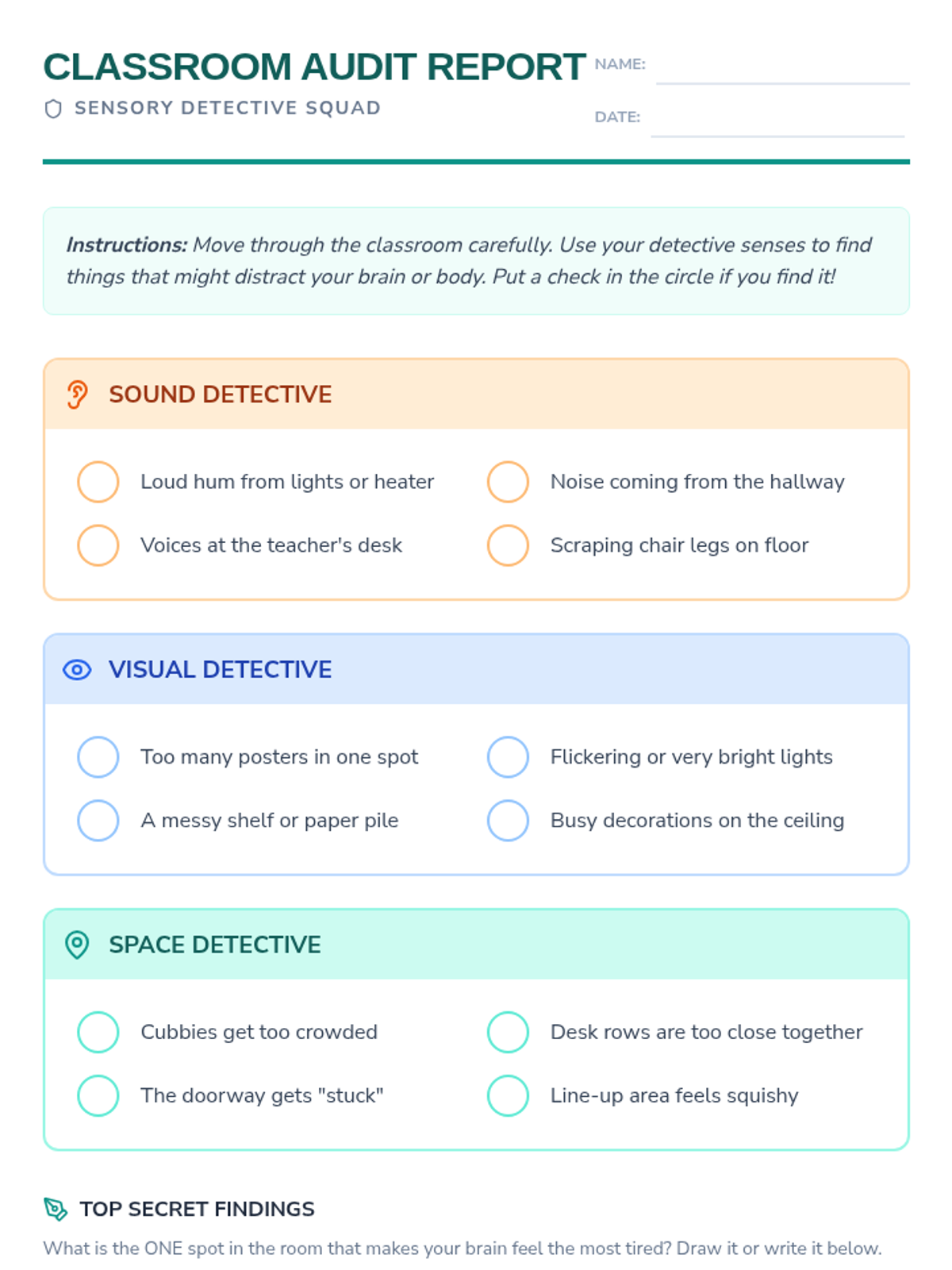
A student worksheet for the Sensory Detective Audit, featuring checklists for sound, visual, and spatial sensory triggers in the classroom.
Slides for Lesson 1: The Sensory Detective Audit. Introduces the concept of a sensory audit and identifies key areas like Noisy Zones, Clutter Corners, and Traffic Jams.
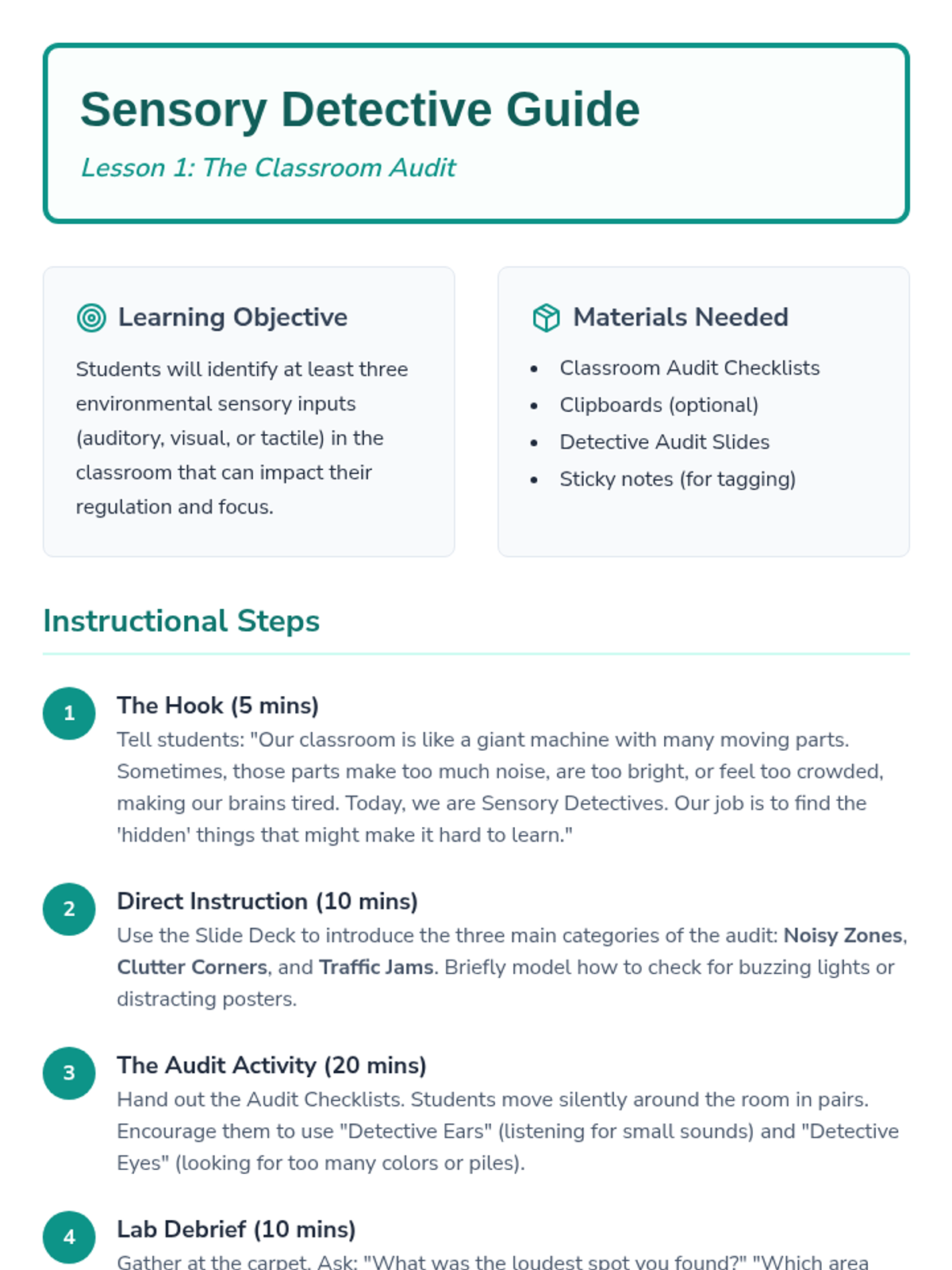
A teacher guide for the Sensory Detective Audit lesson, including objectives, step-by-step instructions, discussion prompts, and differentiation strategies.
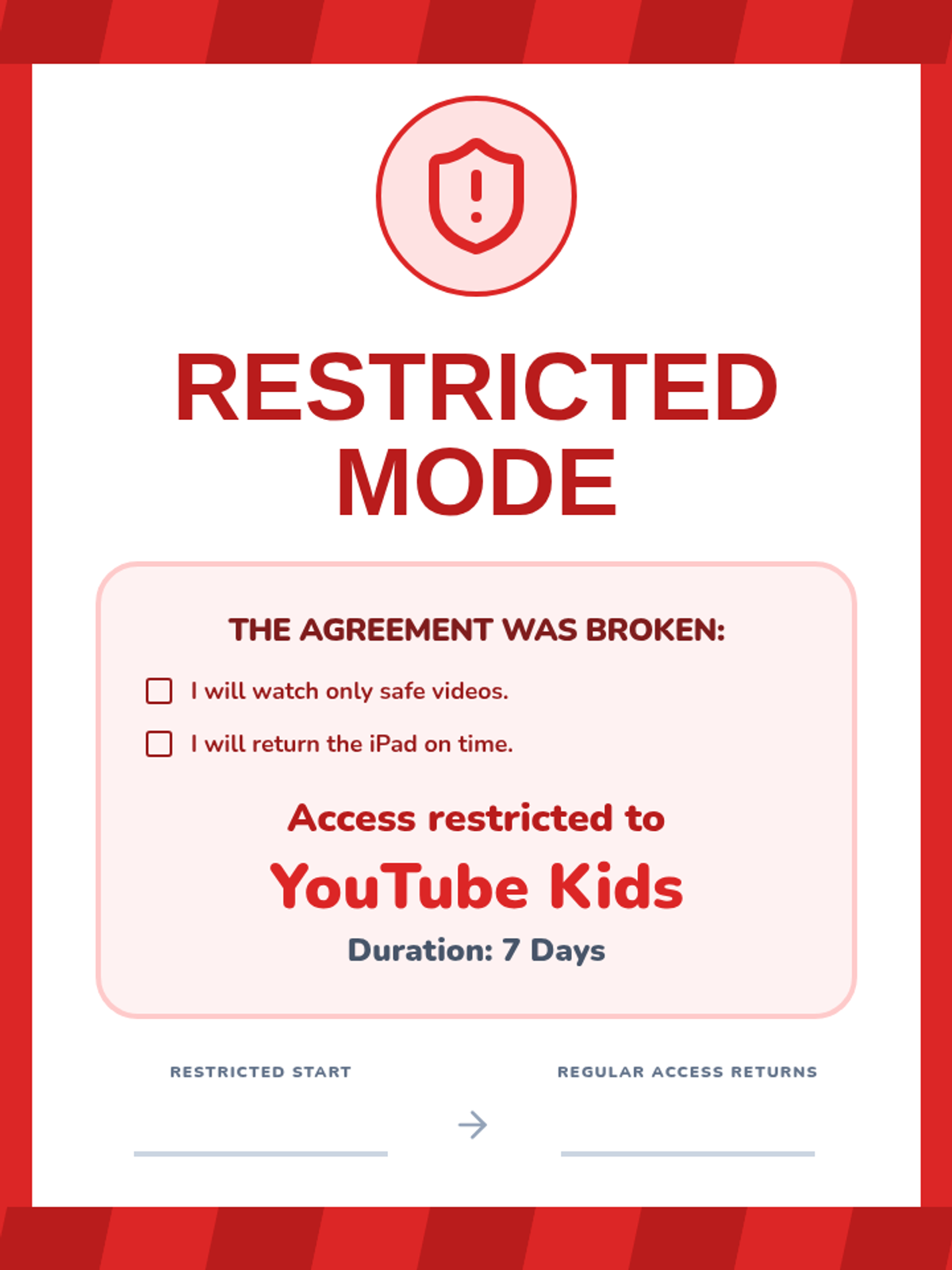
A visual notice for restricted iPad use, now including the broken 'I will' statements as a reminder and optimized for full-page impact.
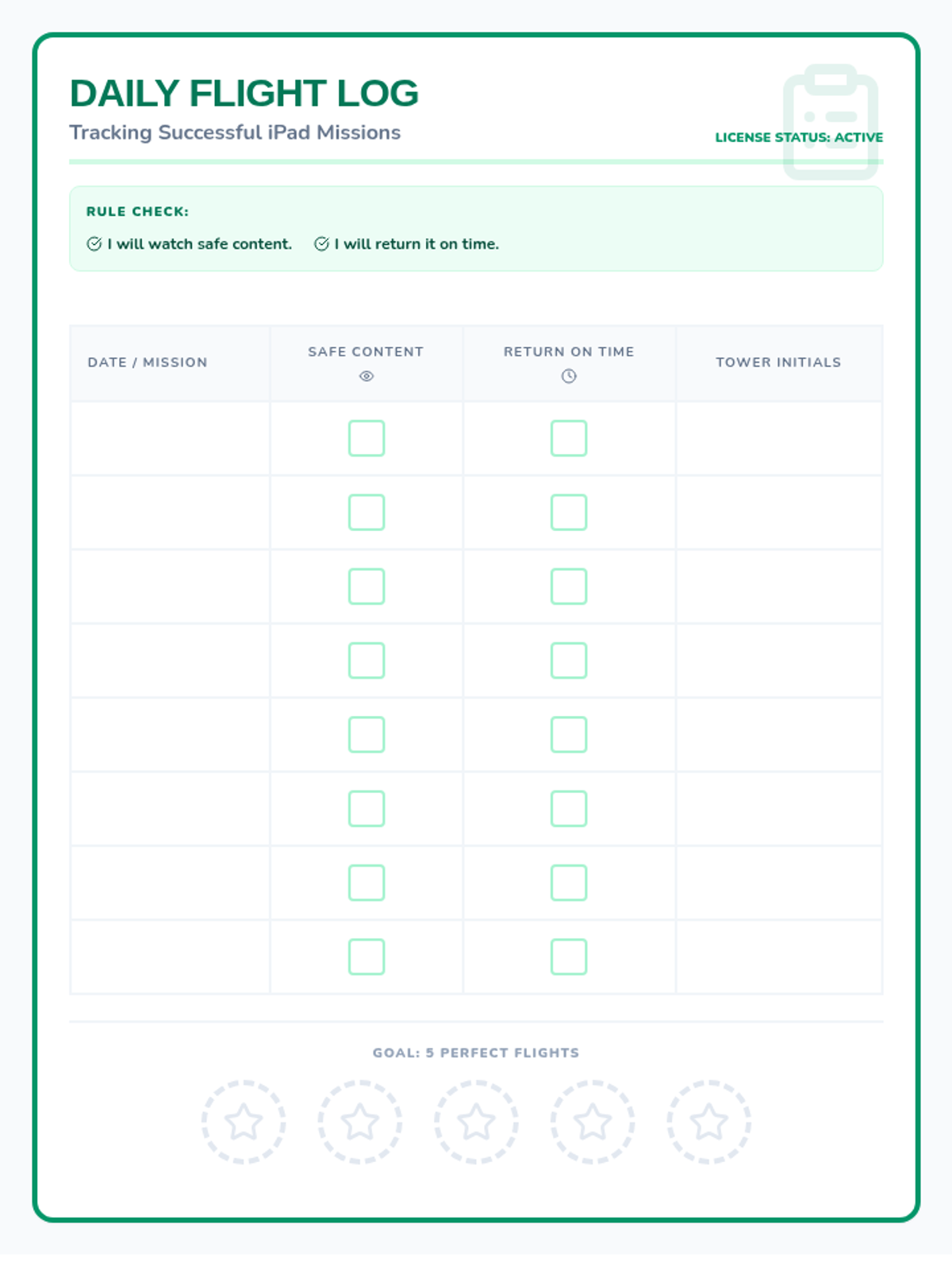
A tracking log for student iPad use, updated with 'I will' rule reminders and optimized for single-page layout.
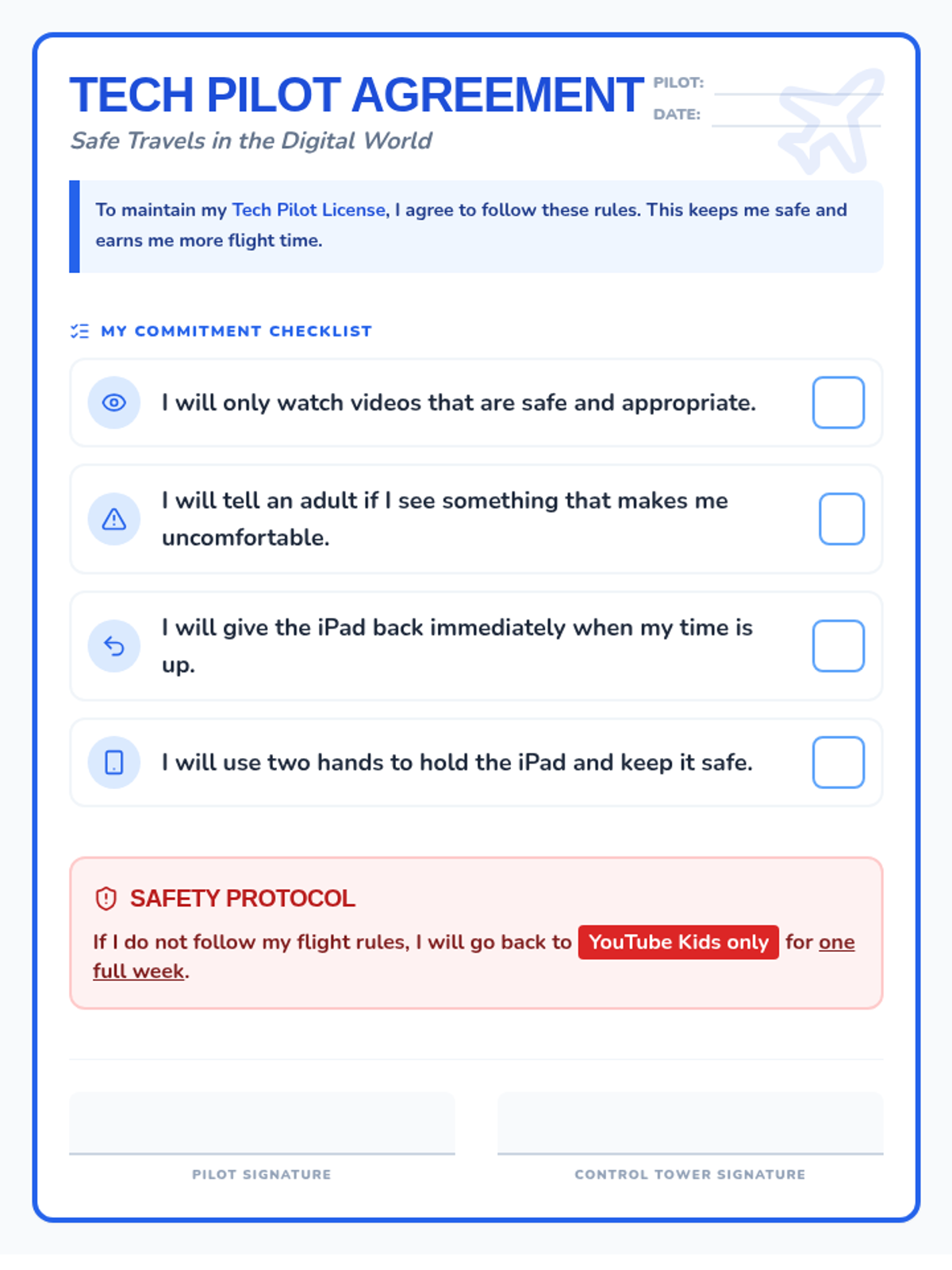
A revised student iPad and YouTube use contract featuring 'I will' statements, visual icons, and clear consequences, optimized for single-page printing.
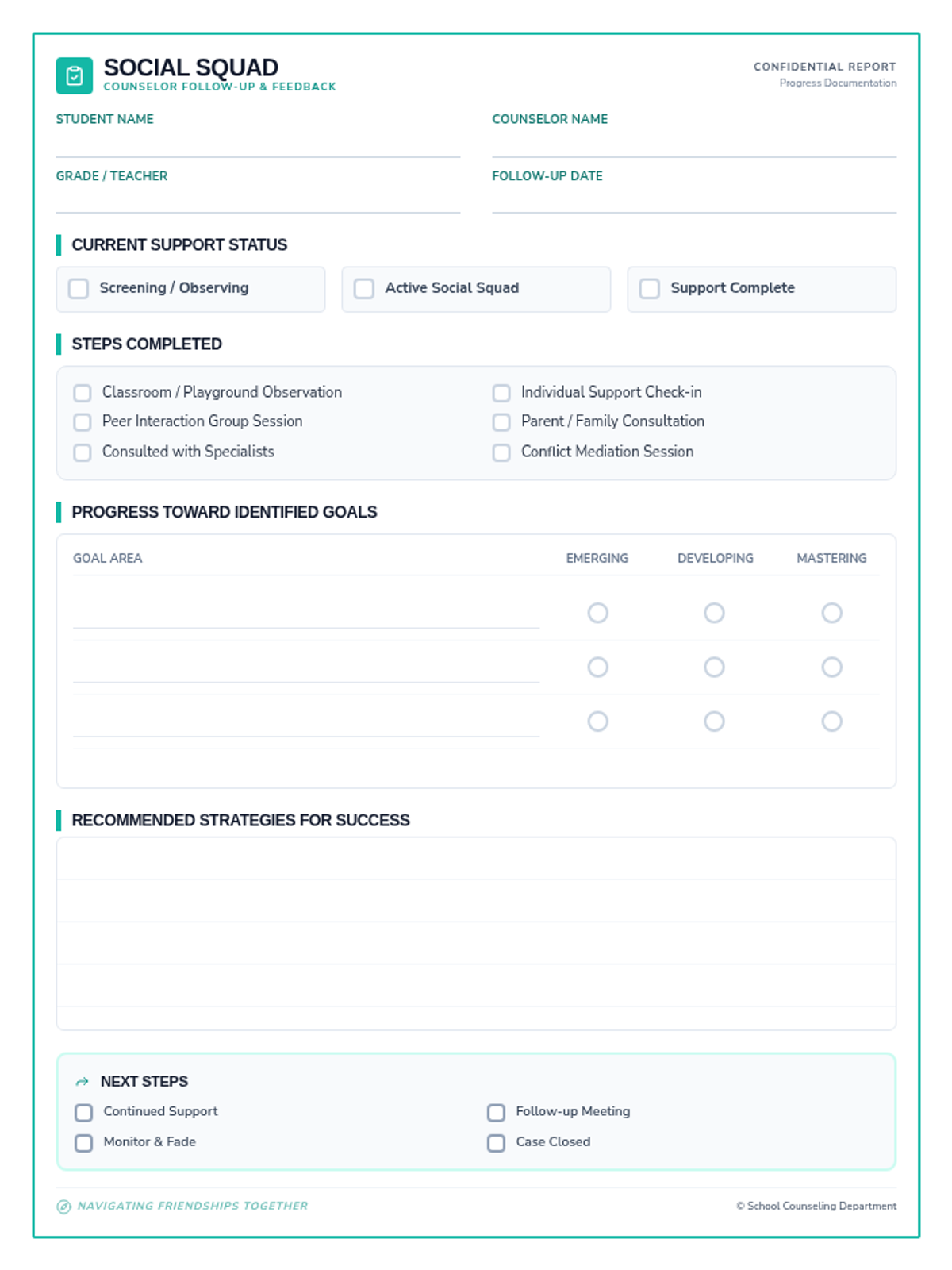
A revised school counselor follow-up and feedback form. It features a new introductory referral sentence, detailed intervention logs with dates and goals, a dedicated 'At this time' status section, and a professional closing message inviting continued collaboration. Now includes 'Outside Referral' in next steps.
English presentation slides for Lesson 2, explaining how to set up and maintain a sticker chart reward system to motivate school attendance and positive routines.
English presentation slides for Lesson 1, focusing on validating school anxiety while maintaining firm attendance boundaries. Includes practical scripts and morning routine tips.
Spanish presentation slides for Lesson 2, explaining how to set up and maintain a sticker chart reward system to motivate school attendance and positive routines.
Spanish presentation slides for Lesson 1, focusing on validating school anxiety while maintaining firm attendance boundaries. Includes practical scripts and morning routine tips.
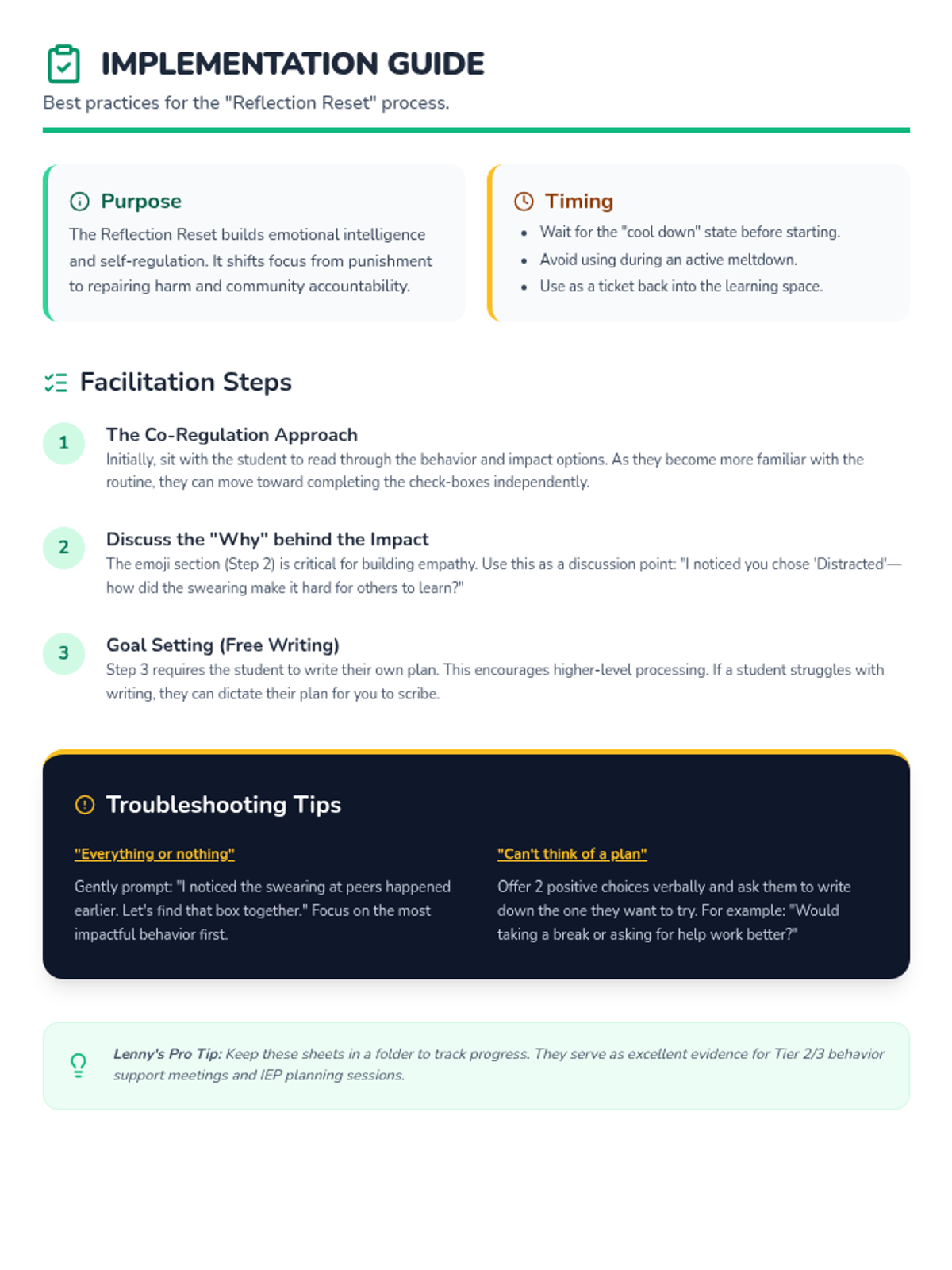
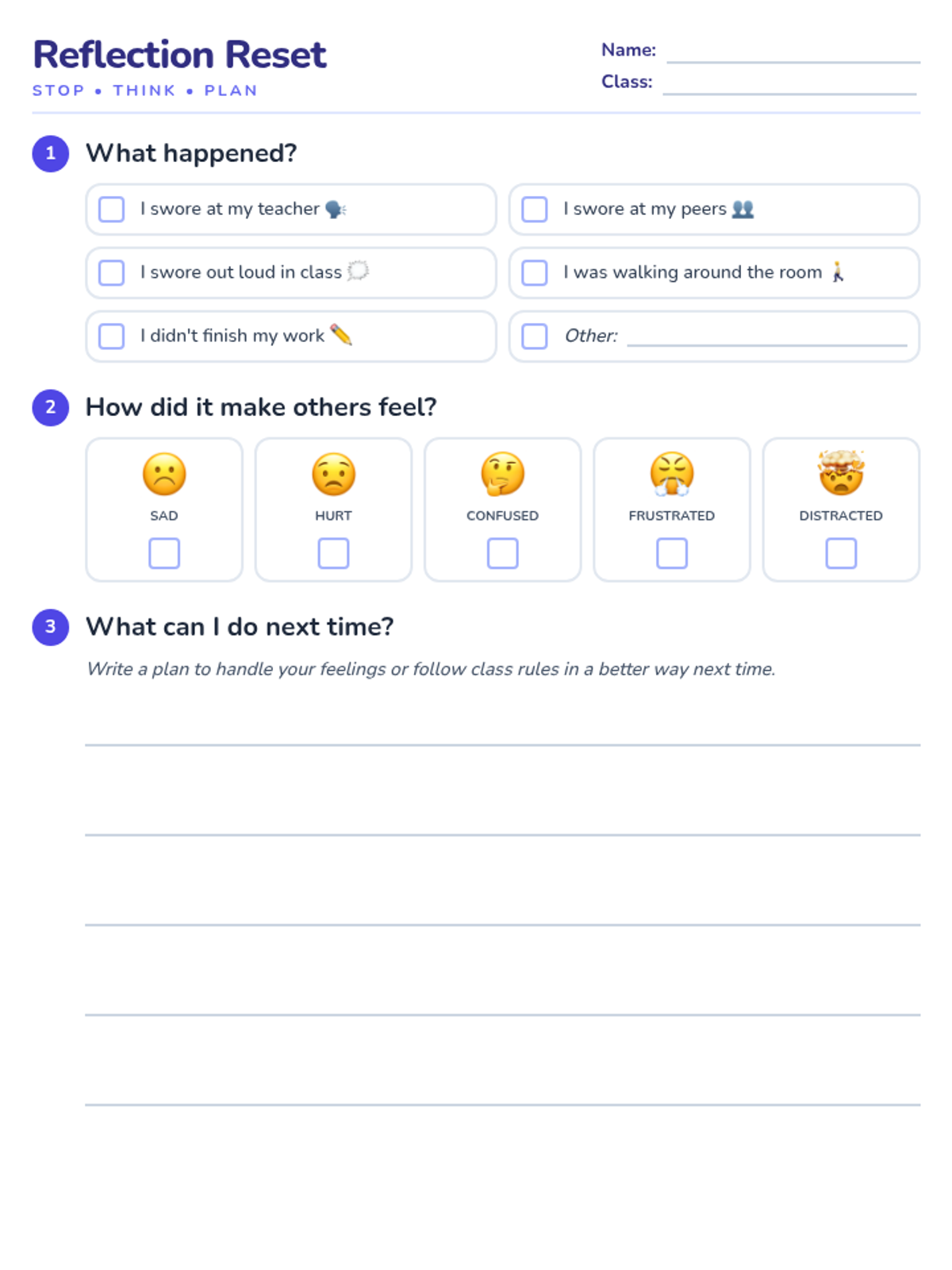
A teacher implementation guide for using the Reflection Reset sheet, revised to focus on the free-writing goal section and removing references to student signatures. Strictly 1-page design.
A graphic-organizer style behavior reflection sheet for students. Featuring sections for identifying behavior and impact with visuals, and a large writing area for the student to plan future choices. Removal of multiple choice for goals and student signature as requested. Strictly 1-page design.
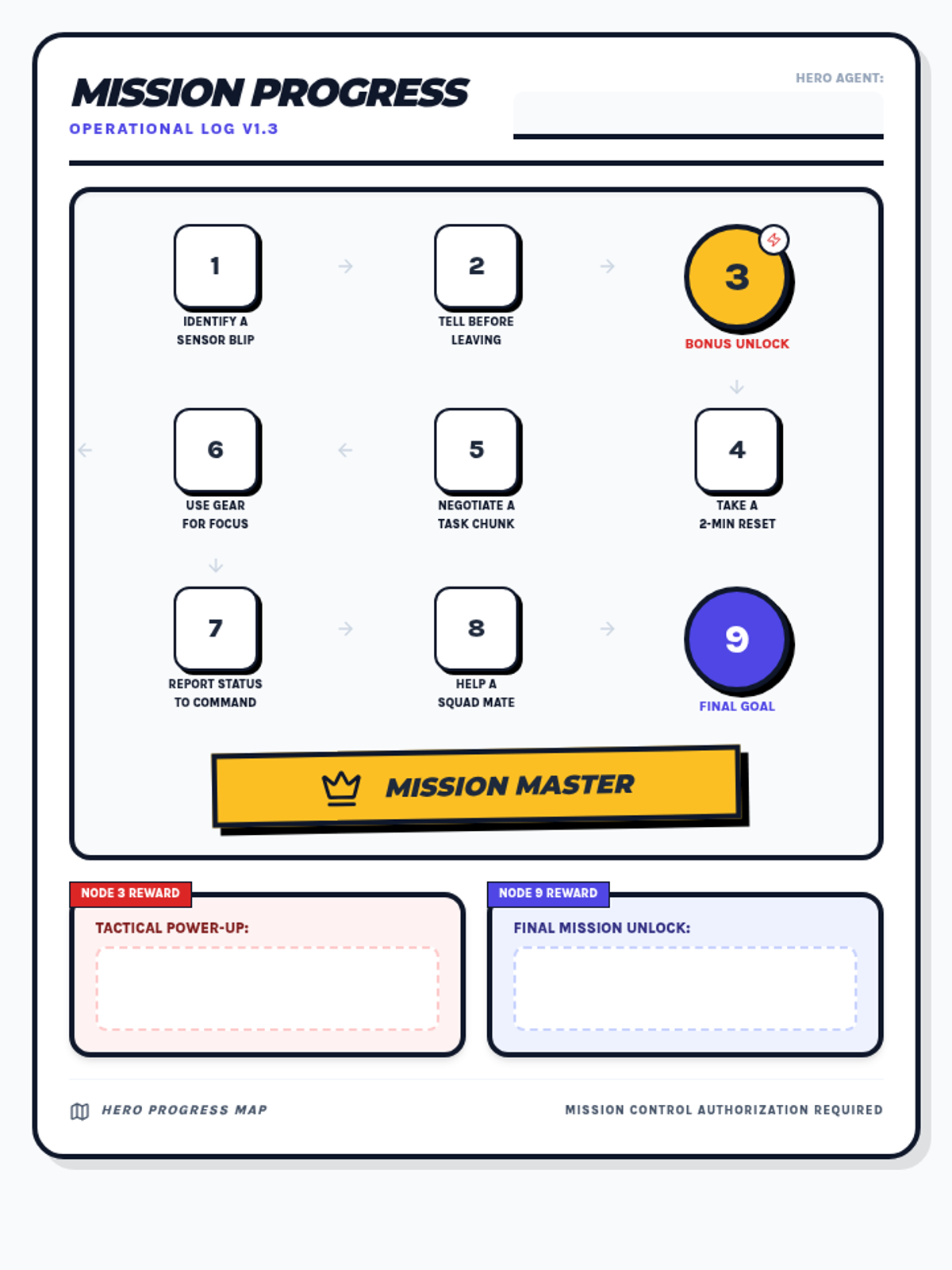
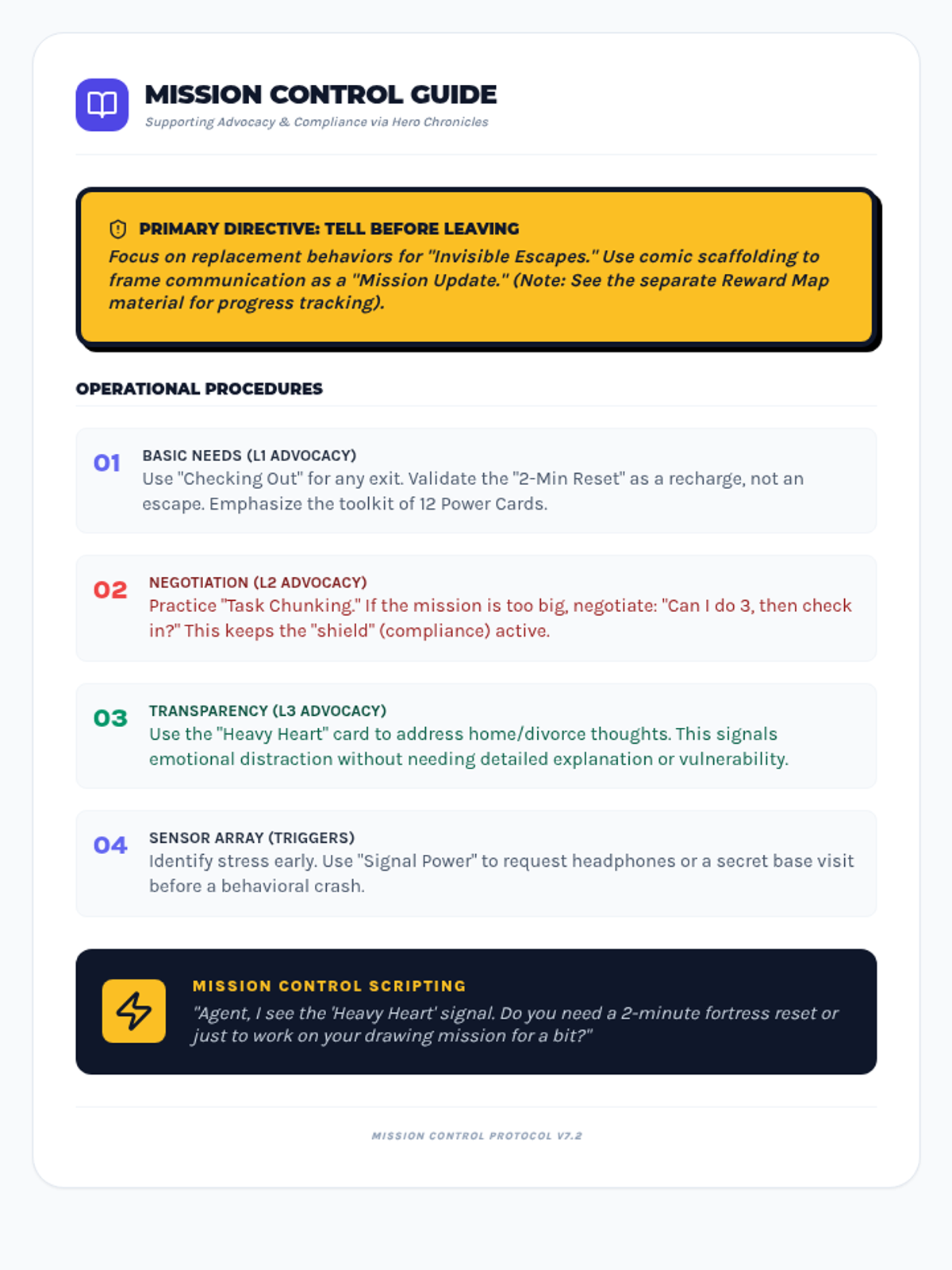
A progress-tracking reward map for students to visualize their task completion and advocacy usage. Features a game-board style path with specific advocacy milestones and milestone unlock slots. Updated for single-page print optimization and improved path logic.
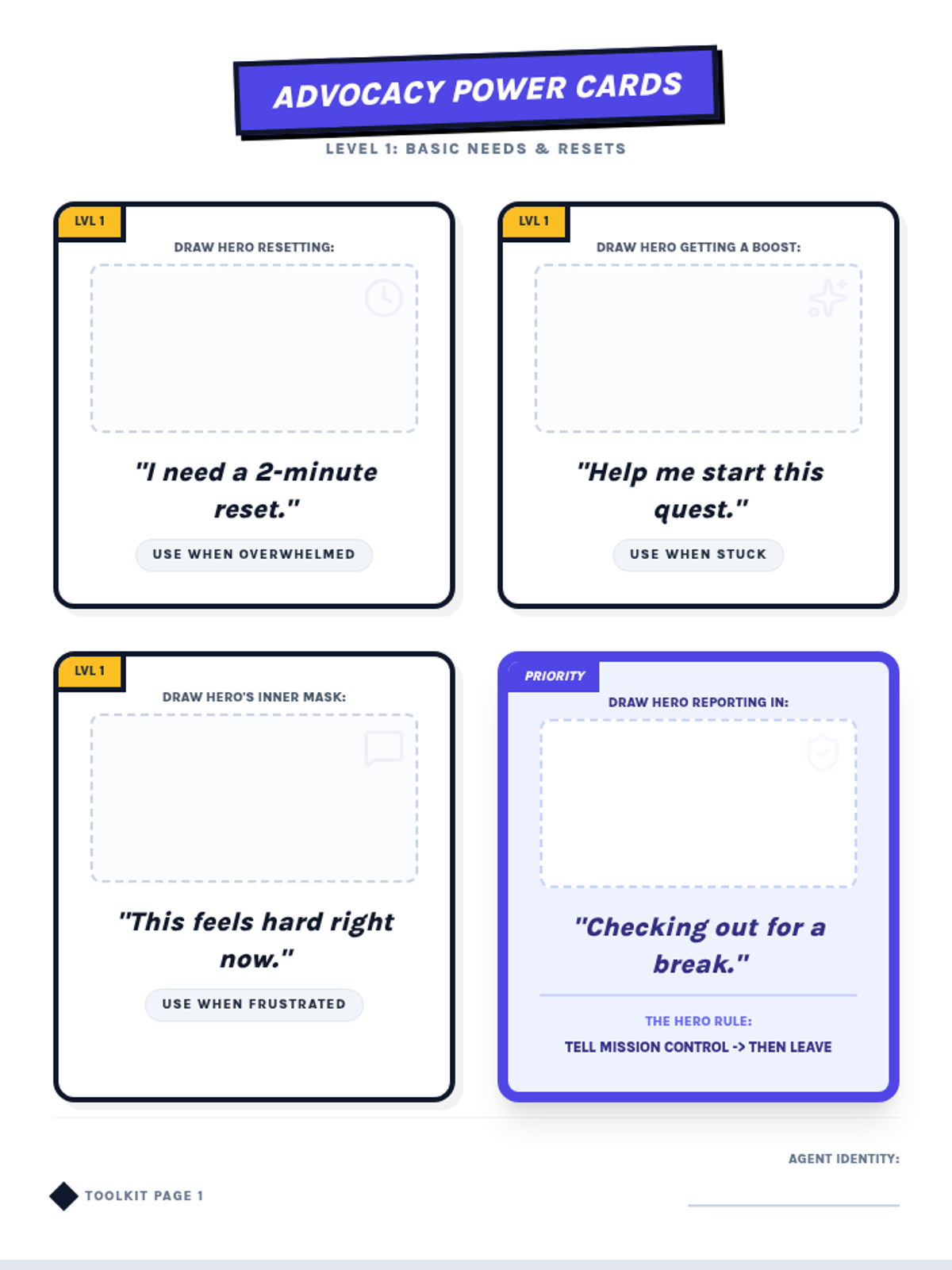
An expanded set of visual advocacy cards (12 total) including level 1 needs/resets, level 2 environmental adjustments, and level 3 complex communications like clarification and emotional transparency. Now features a comic-scaffolded design for higher engagement.
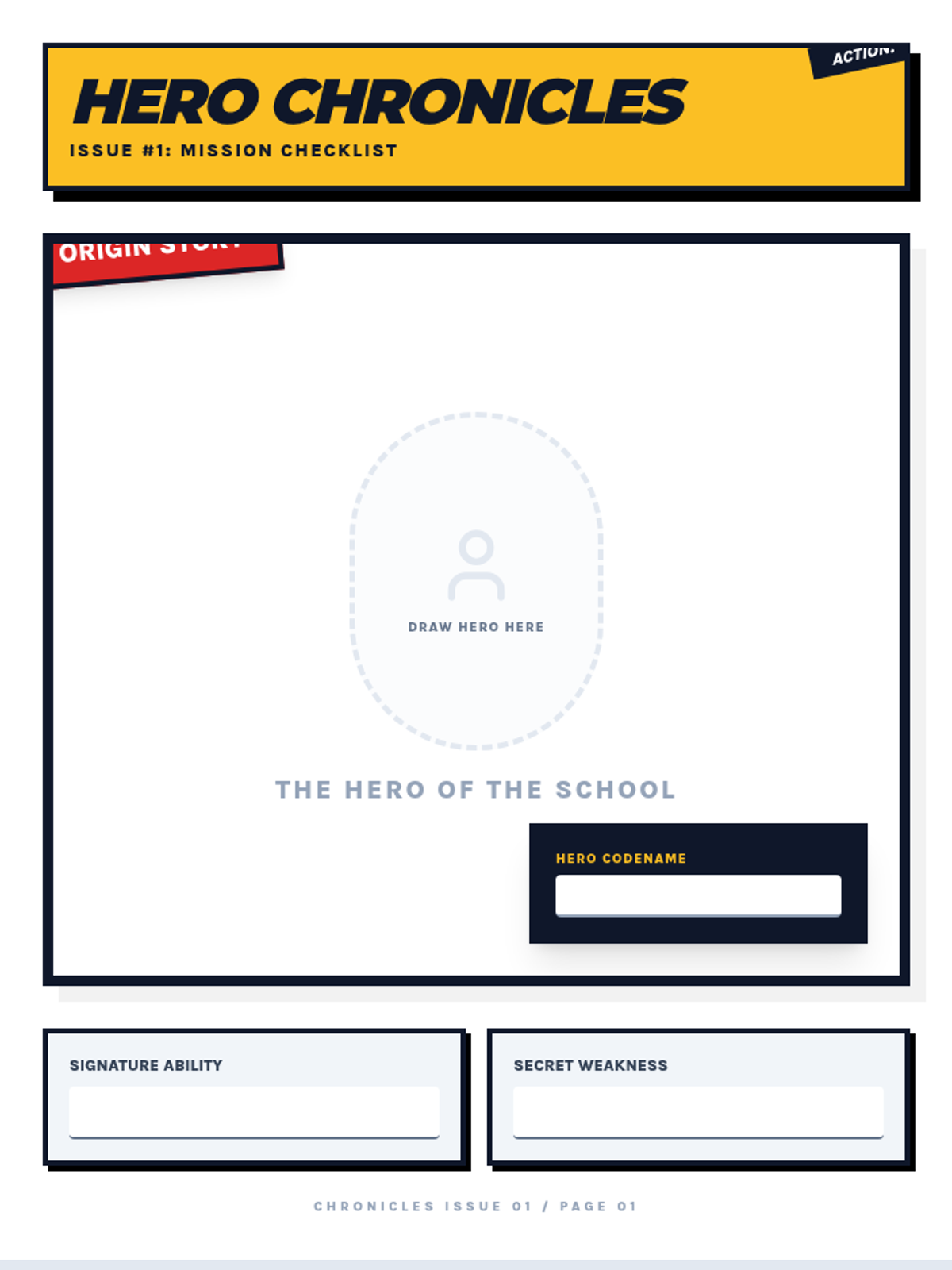
A comic-strip based activity workbook for a student to practice self-advocacy, task completion, and emotional expression through narrative missions. Includes pre-drawn scaffolding elements like silhouettes and speech bubbles to lower engagement barriers. Now includes expanded missions for identifying triggers and group advocacy.
A teacher facilitation guide for using the Hero Chronicles comic-based workbook, specifically focusing on the "Tell Before Leaving" advocacy skill and utilizing partial comic scaffolding. Now includes facilitation for Level 3 complex advocacy and emotional transparency.
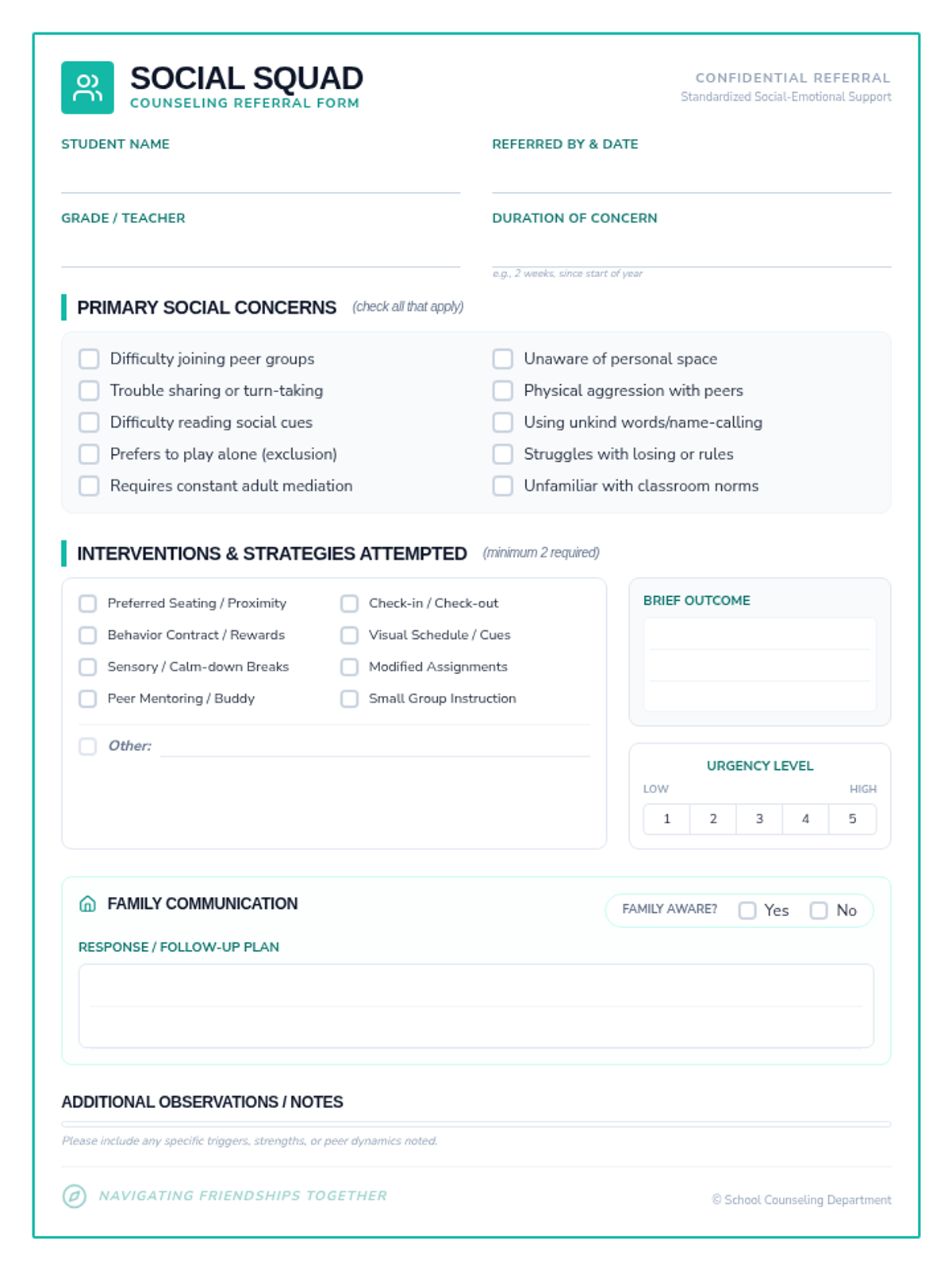
A comprehensive school counseling referral form updated with a dedicated 'Student Goals' section and restored full checklists for primary concerns and interventions. The layout ensures 'Additional Observations' and 'Family Communication' are equally sized, optimizing space for a one-page printable format.
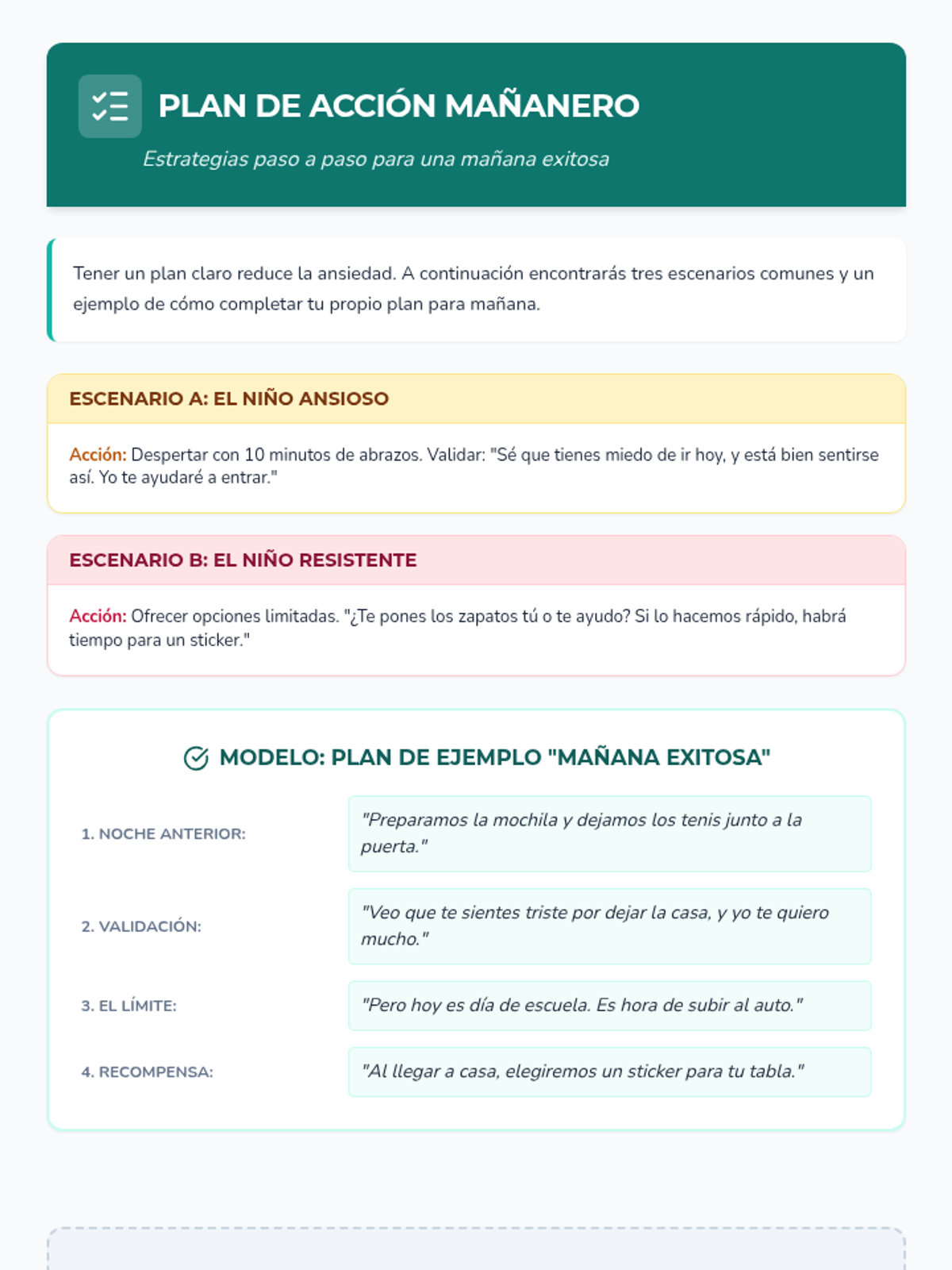
A Spanish action plan guide for parents providing specific scenarios and steps for handling morning routines and school refusal, including a customizable template with plenty of space for notes.
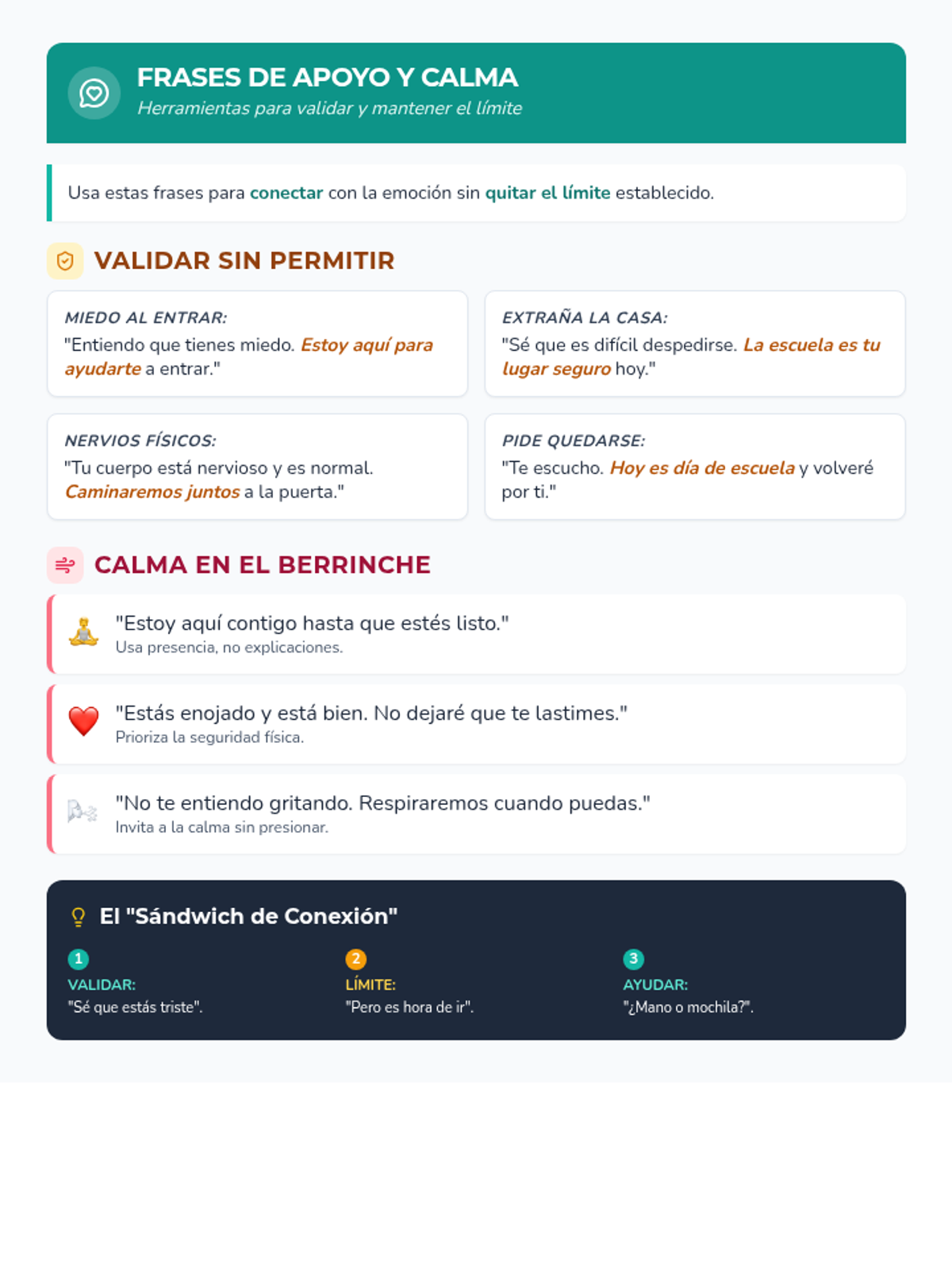
A Spanish reference sheet for parents featuring validating phrases that maintain boundaries for school attendance, along with soothing scripts for managing childhood tantrums.
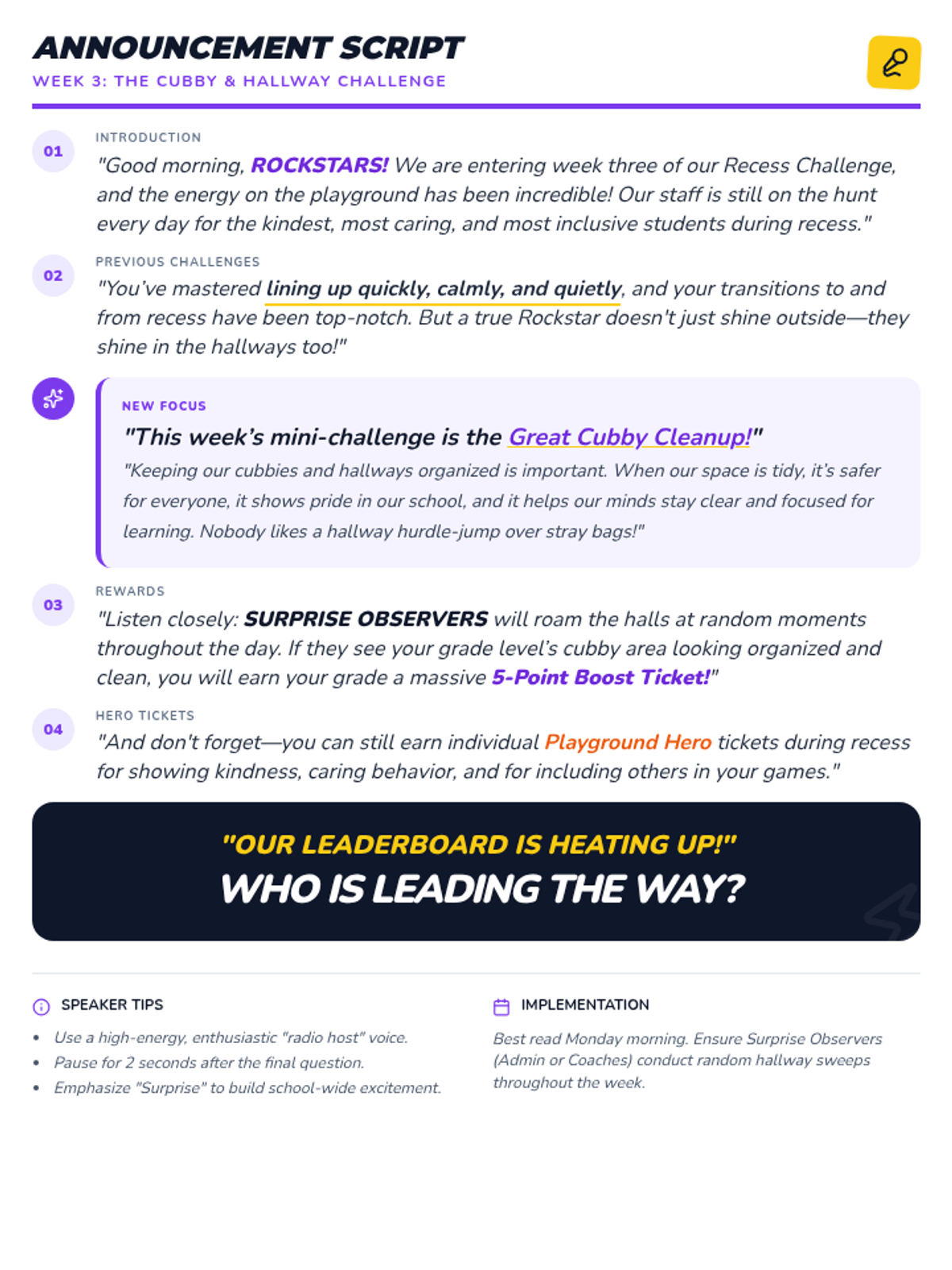
An announcement script for the third week of the Recess Rockstar Challenge, introducing the "Great Cubby Cleanup" mini-challenge and explaining the importance of tidiness for school pride and safety.
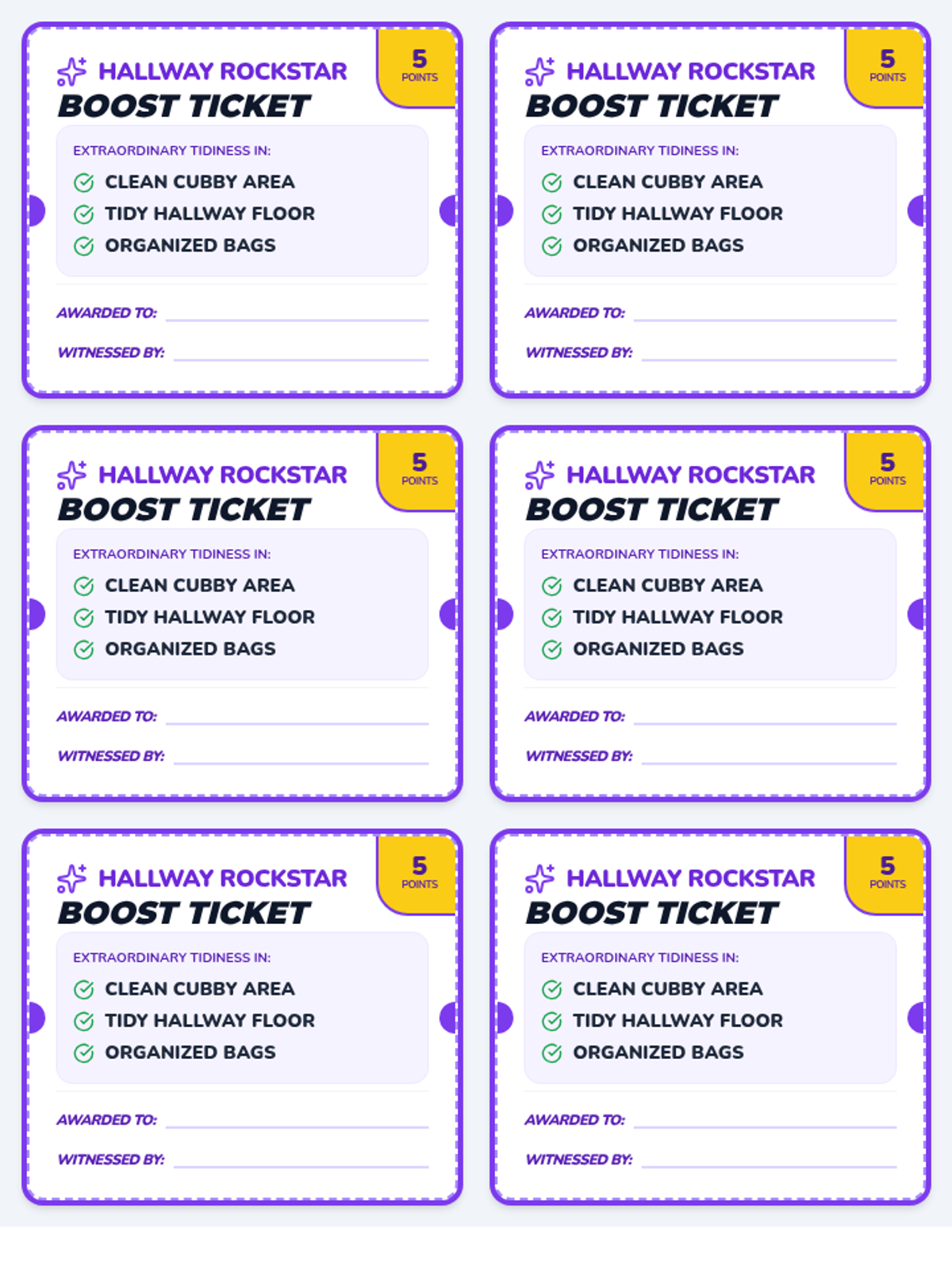
A printable sheet featuring six high-value "Cubby Hallway Boost" tickets worth five points each, intended for whole-class recognition of maintaining clean and organized common spaces.
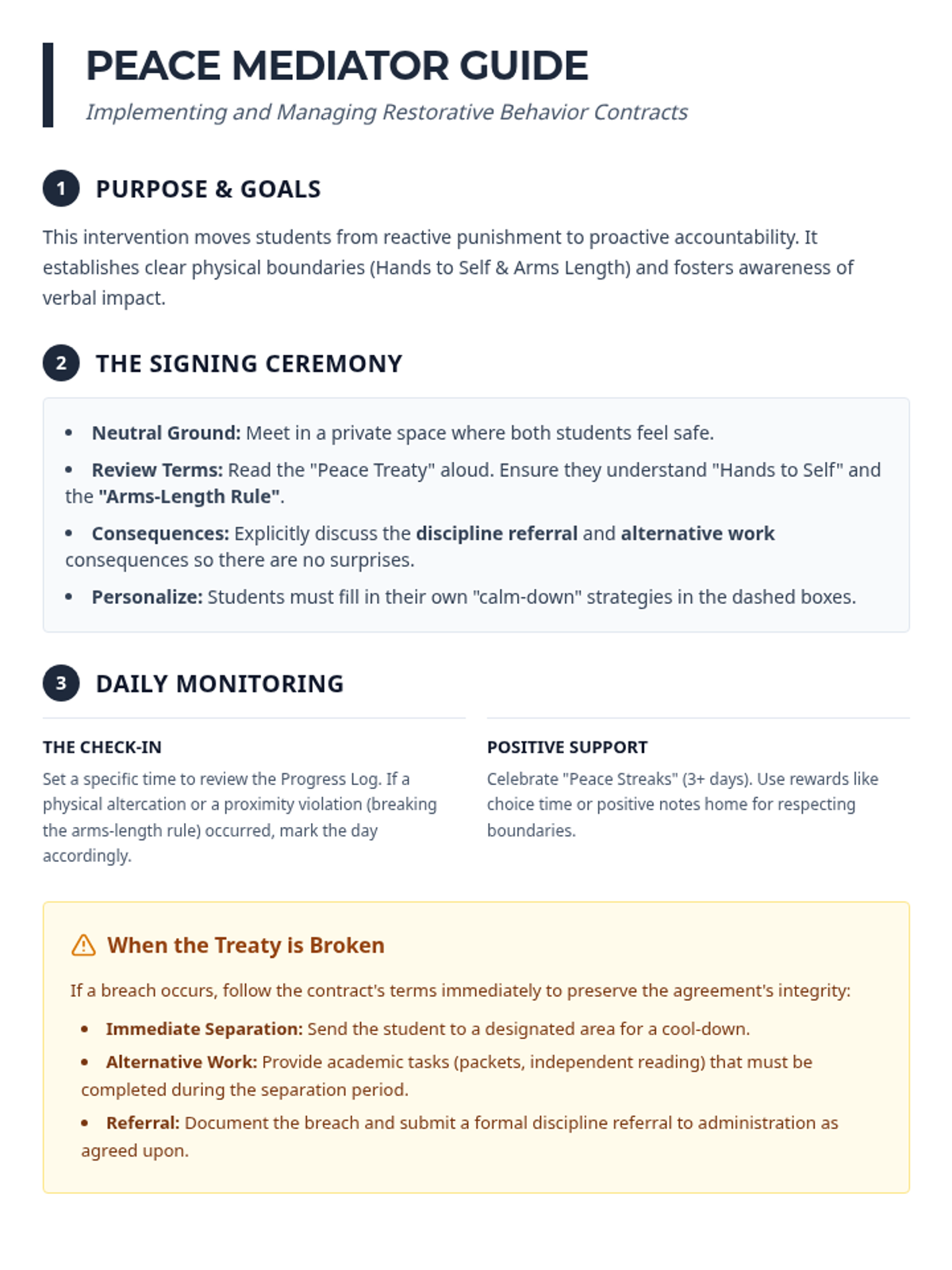
A teacher resource guide providing instructions on how to facilitate the 'Student Behavior Contract' meeting, managing consequences, and coordinating with Specials teachers.
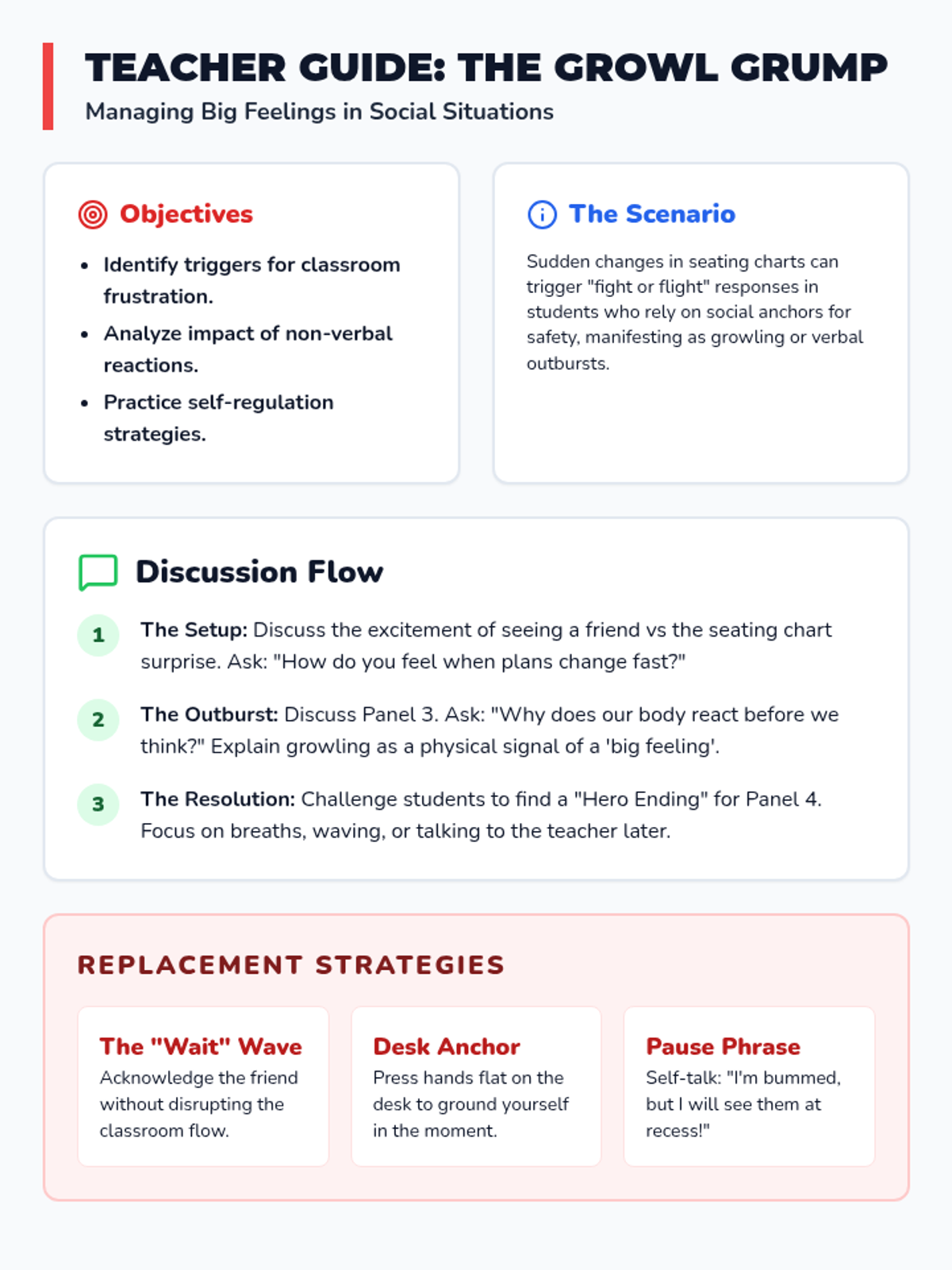
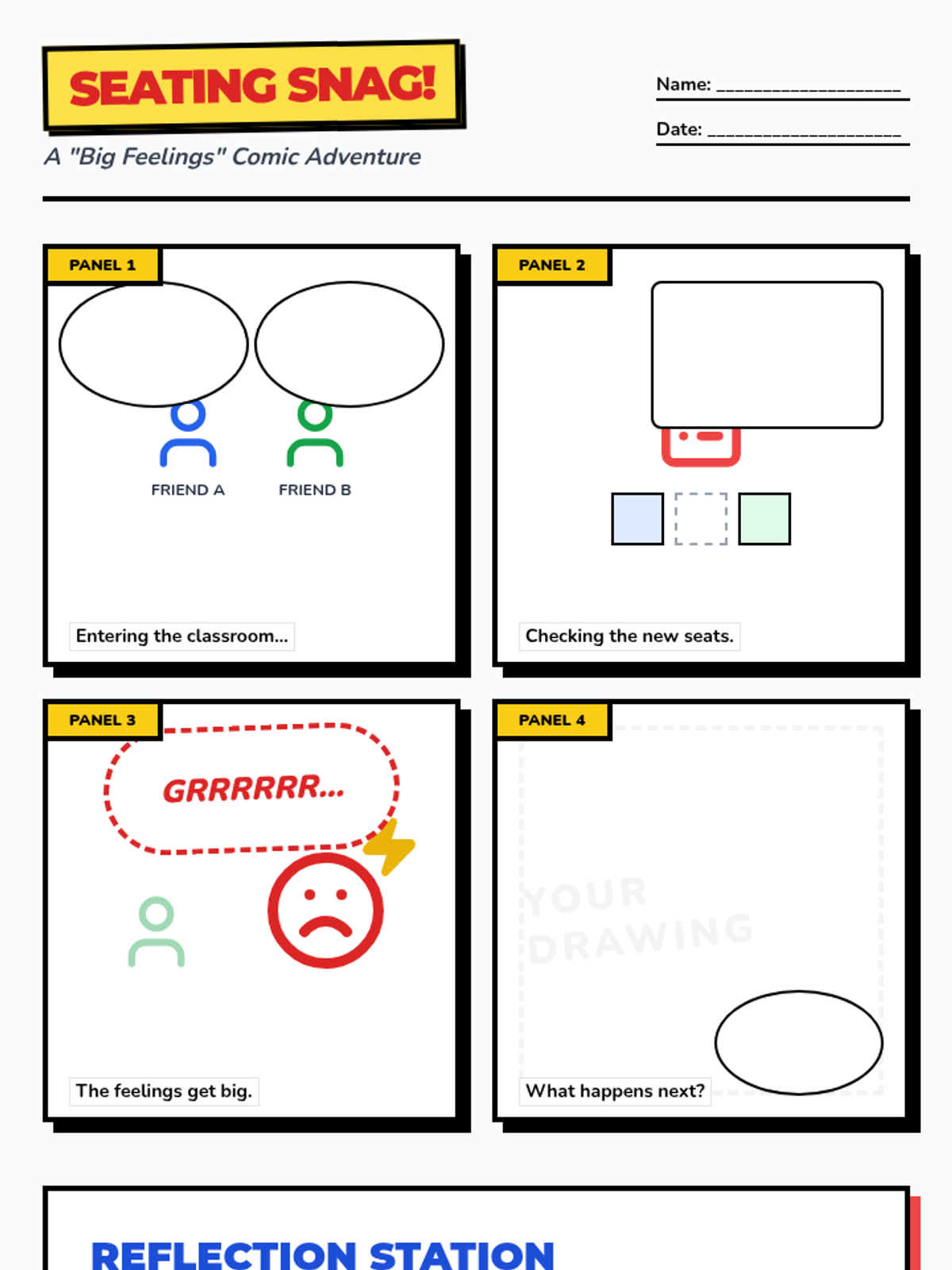
A facilitator's guide for the Seating Snag Comic Strip, providing instructional goals, discussion prompts, and replacement strategies for student emotional regulation.
A 4-panel comic strip template for students to explore a scenario where friends are separated in class. Includes blank speech bubbles and a reflection section for social-emotional learning.
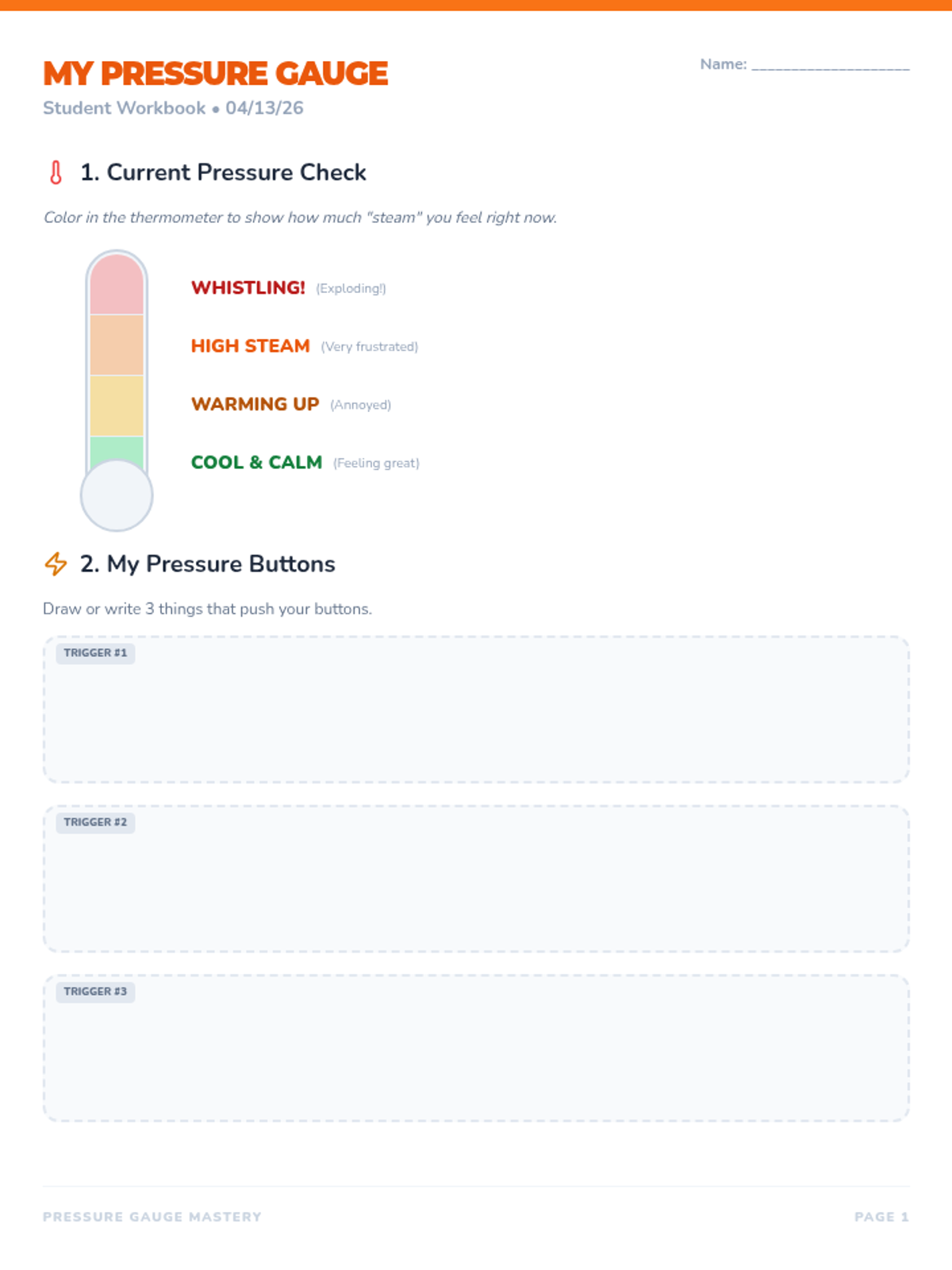
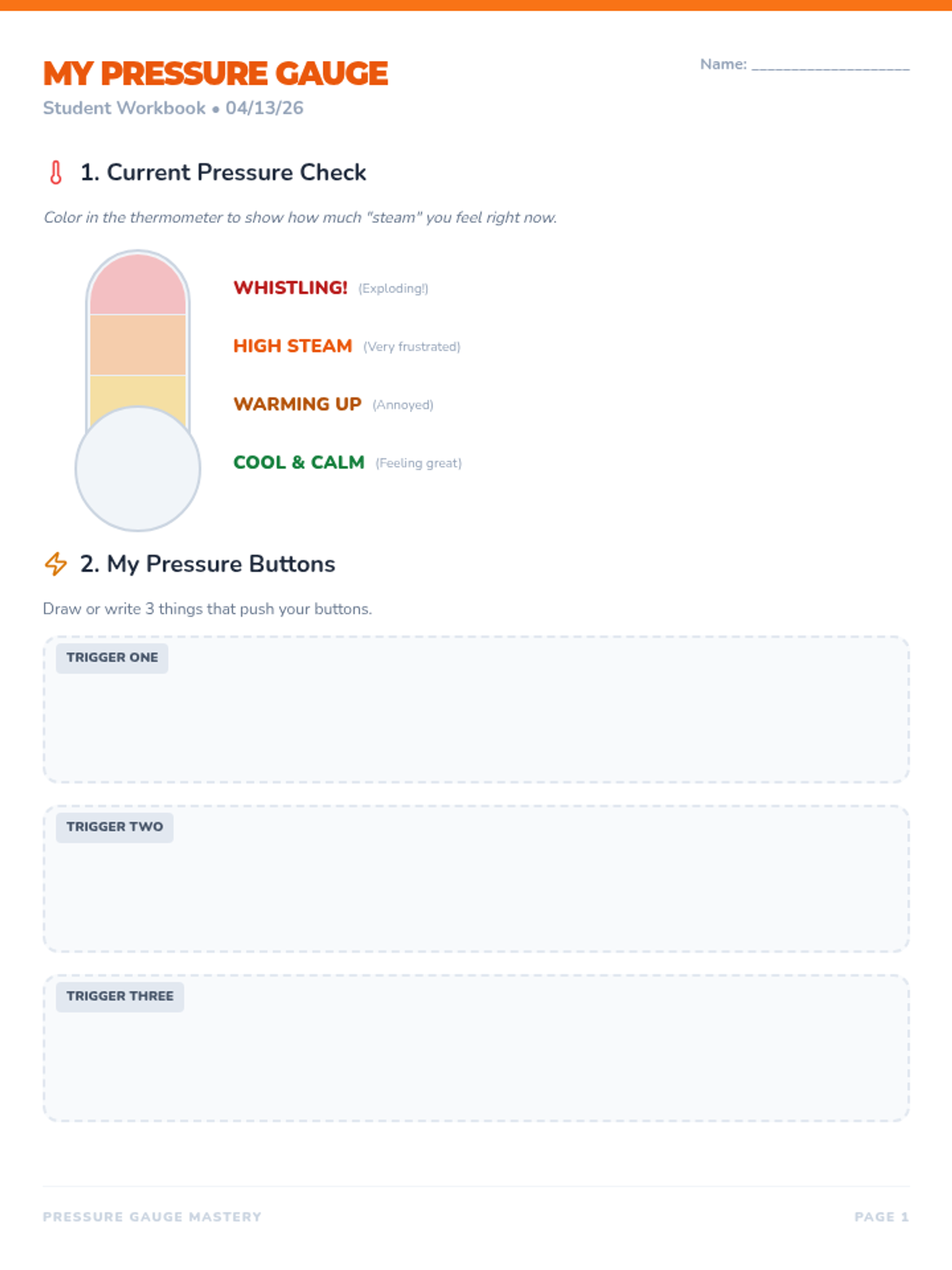
A two-page student workbook featuring a frustration thermometer, a trigger mapping section, a sorting mat for the cut-and-paste activity, and a coping strategy selection area. Designed with clear visual hierarchy and ample space for student work.
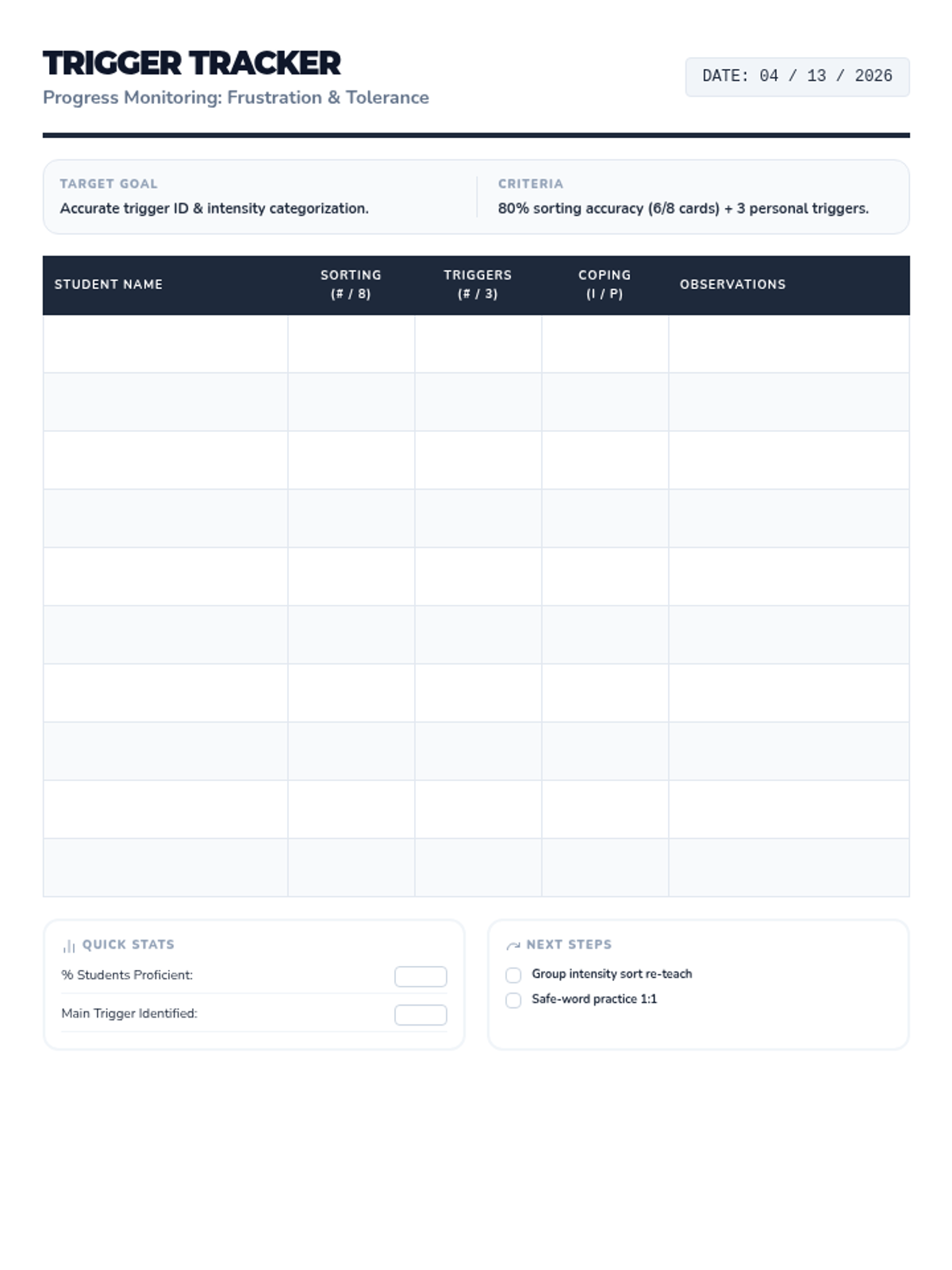
A detailed teacher data tracking sheet for monitoring student progress during the frustration lesson. It includes columns for sorting accuracy, trigger identification, and coping strategy implementation, along with a quick analysis section for instructional planning.
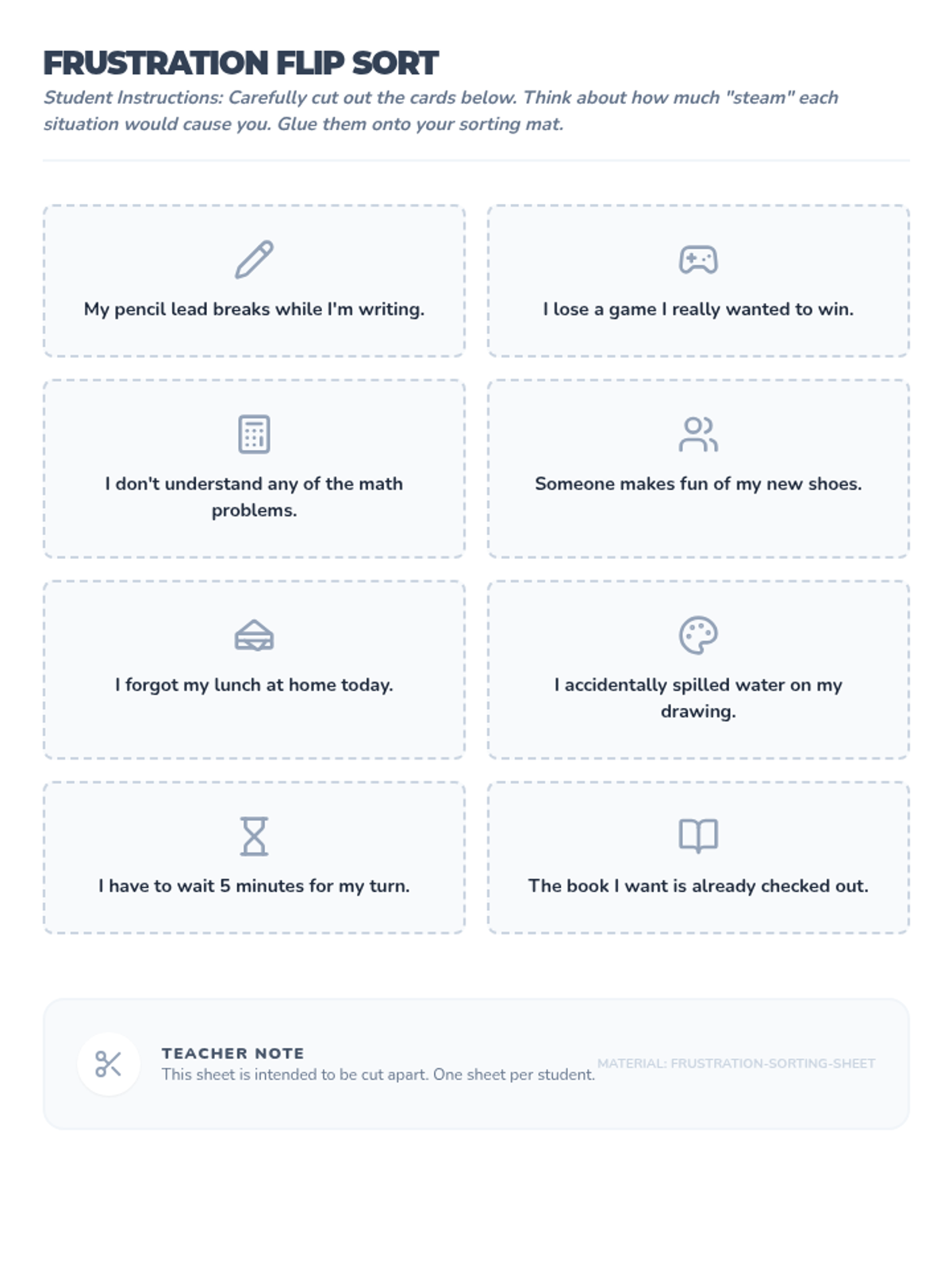
A cut-and-paste sorting sheet containing eight different scenarios of varying frustration levels. Students cut out these cards and glue them onto the sorting mat in their workbook to demonstrate their ability to distinguish between minor and major stressors.
A three-page student workbook featuring a frustration thermometer, a trigger mapping section, a sorting mat for the cut-and-paste activity, and a coping strategy selection area. Includes the sorting cards on a dedicated third page for a complete, self-contained student resource.
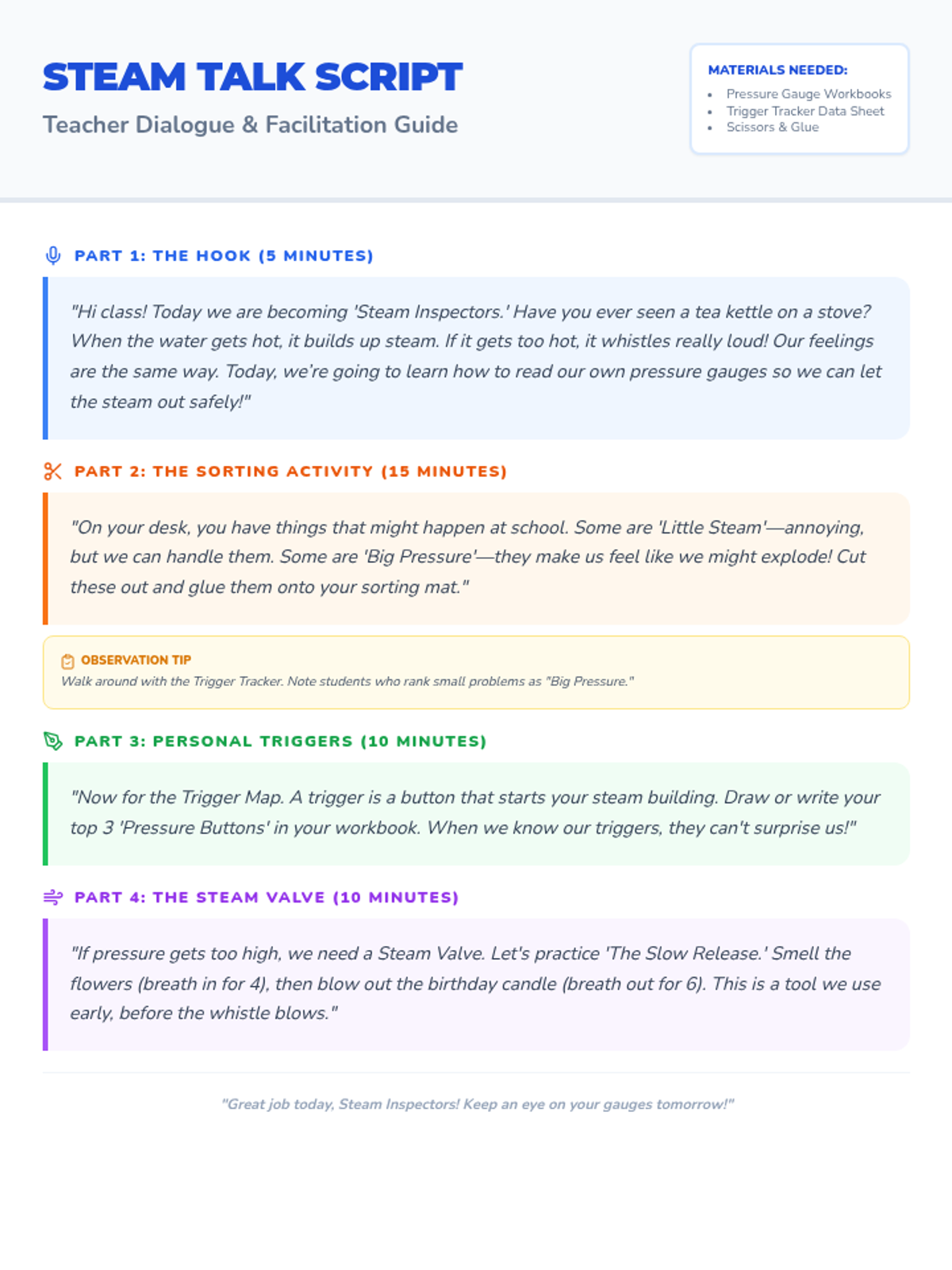
A detailed teacher script and facilitation guide for the frustration lesson. It provides verbatim dialogue for introducing concepts, guiding activities, and modeling coping strategies, plus tips for classroom management and observation. Now includes a materials list and improved layout.
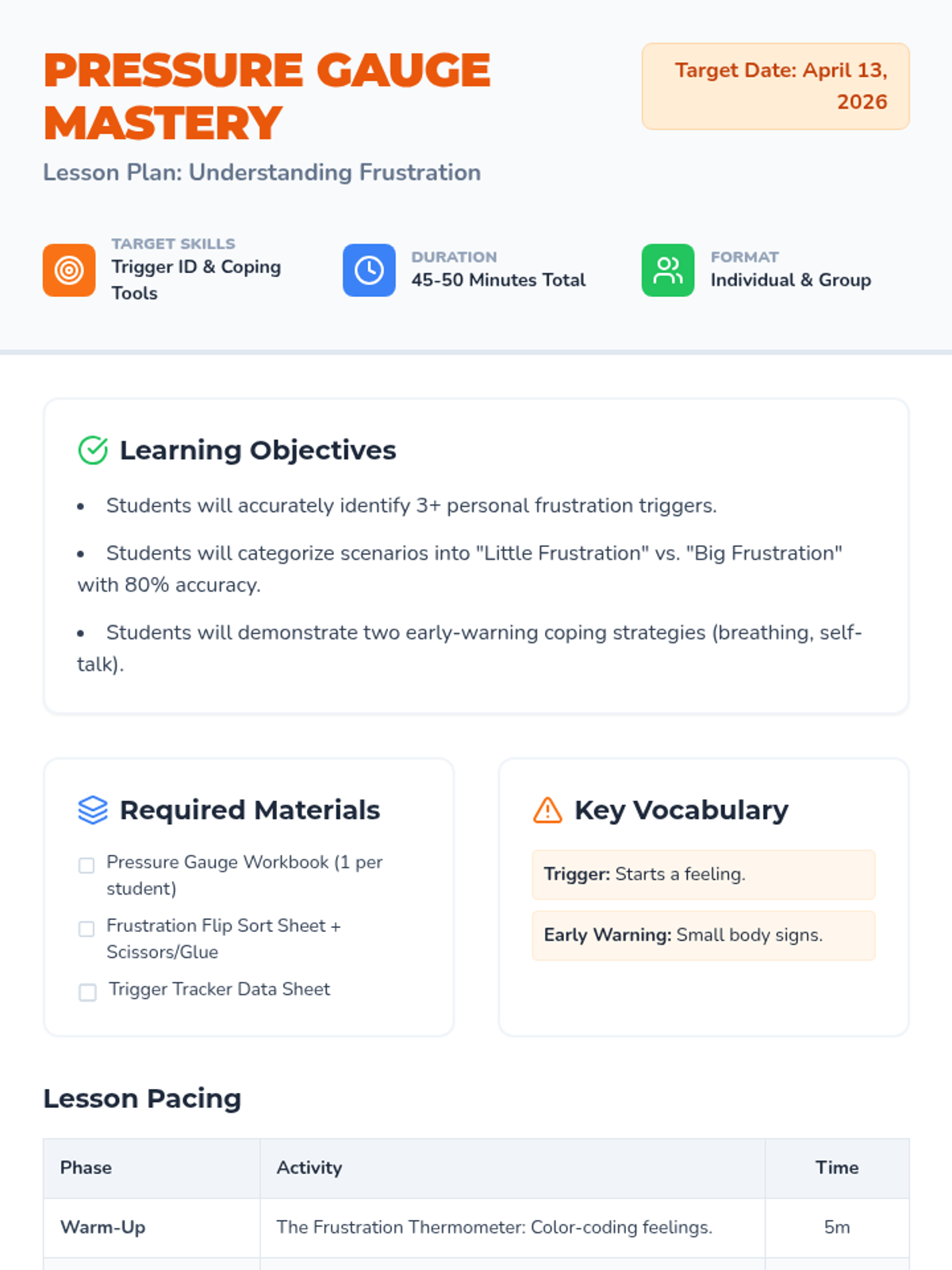
A comprehensive lesson plan for April 13, 2026, focusing on frustration triggers and tolerance. It includes learning objectives, materials, a detailed pacing guide, and differentiation strategies for varied learners.
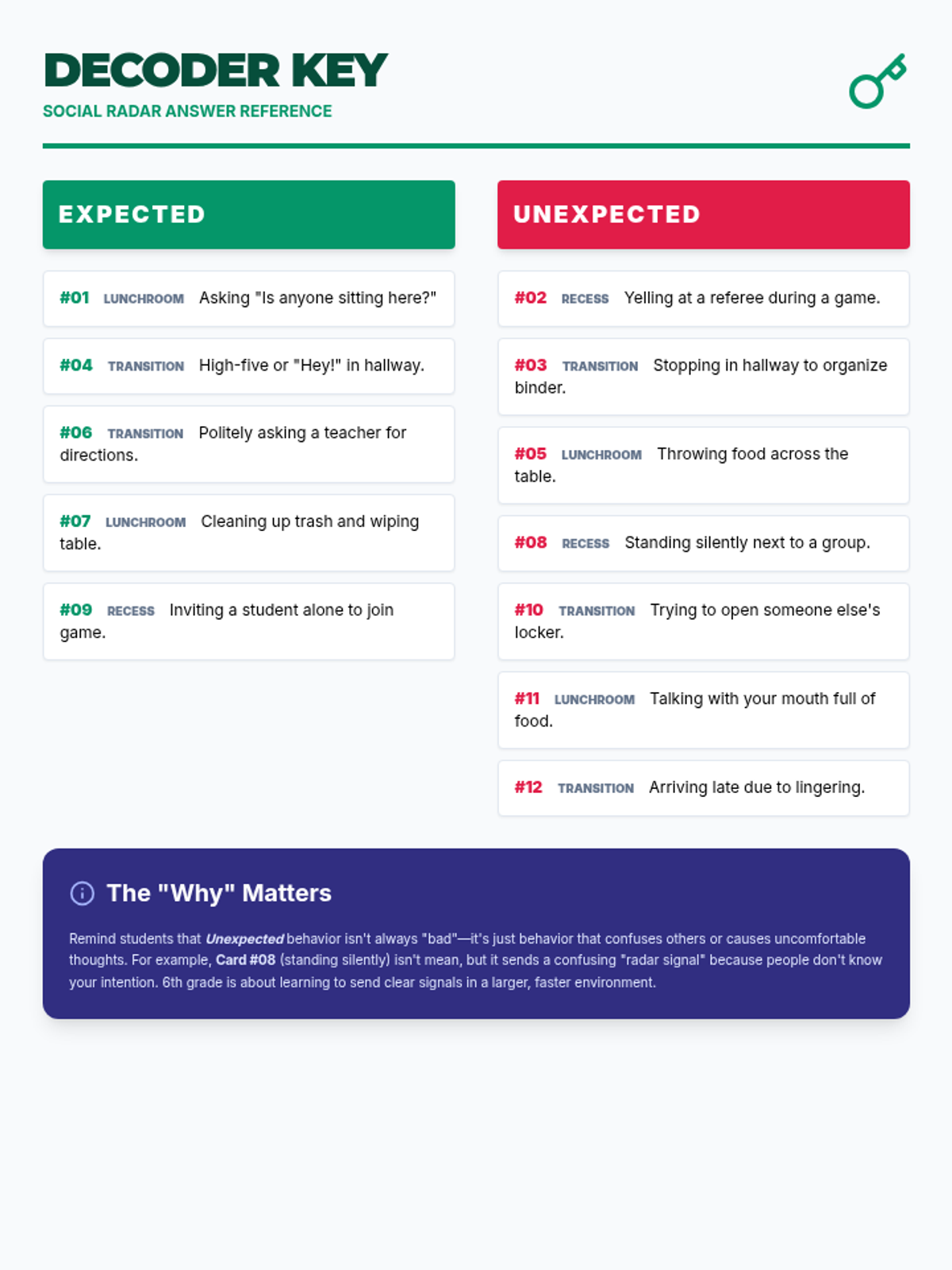
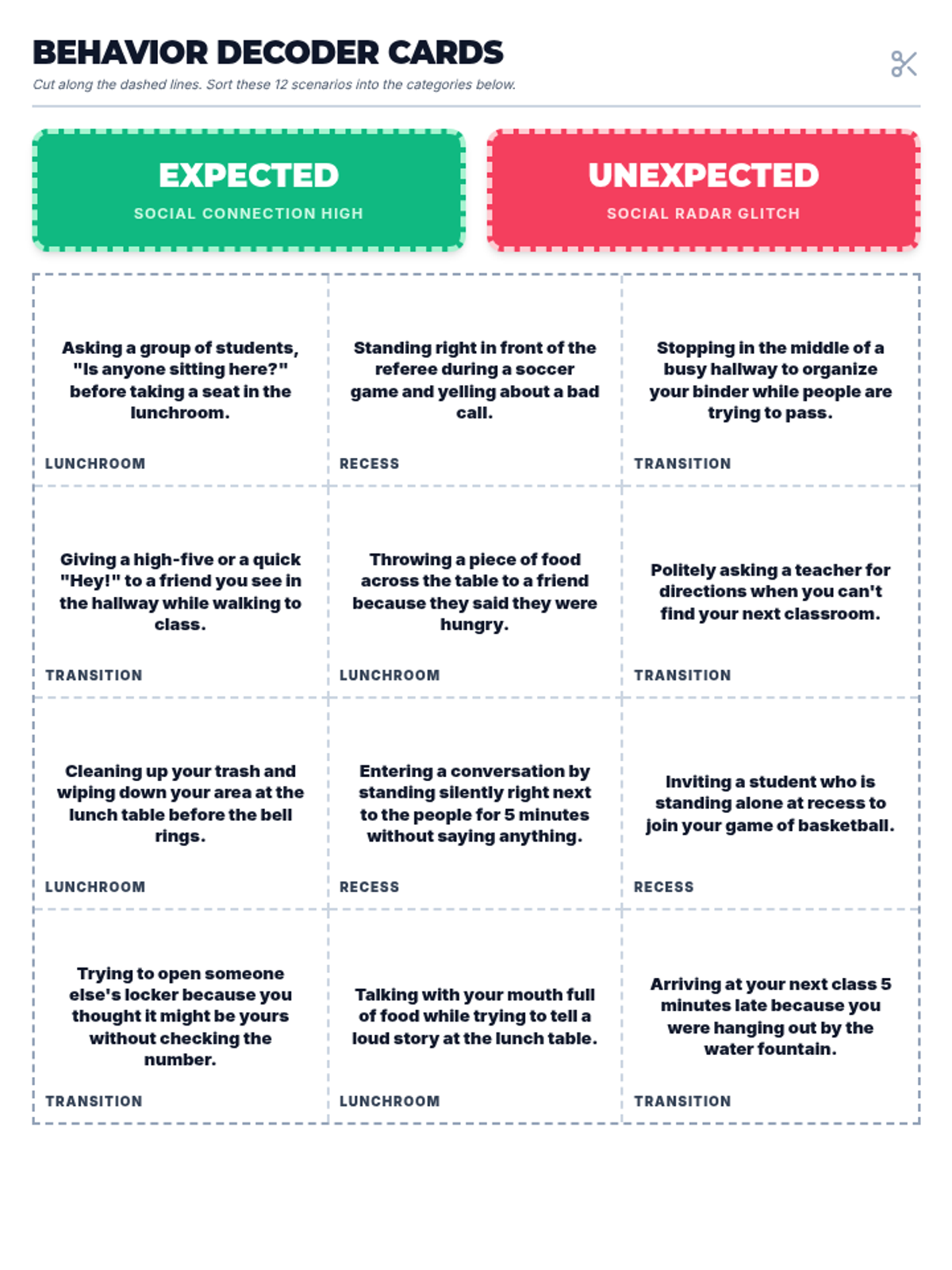
A teacher-facing answer key and discussion guide for the "Behavior Decoder" sorting activity, categorized by environment (lunchroom, recess, transition) with rationale for each classification.
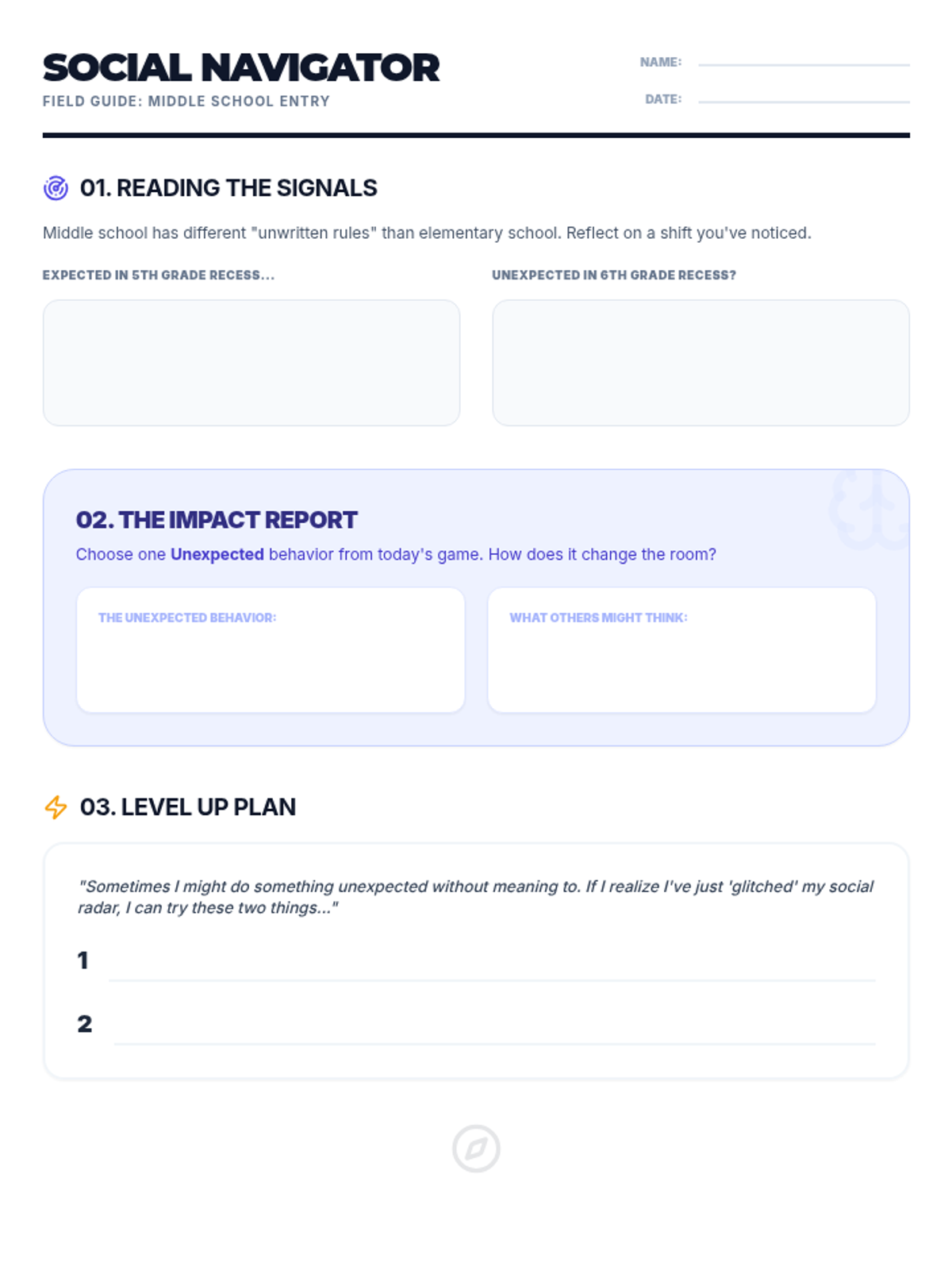
A reflection worksheet for rising 6th graders to apply "Social Radar" concepts. It includes sections for comparing elementary vs. middle school expectations, analyzing the impact of behaviors on others, and personal goal-setting for social transitions.
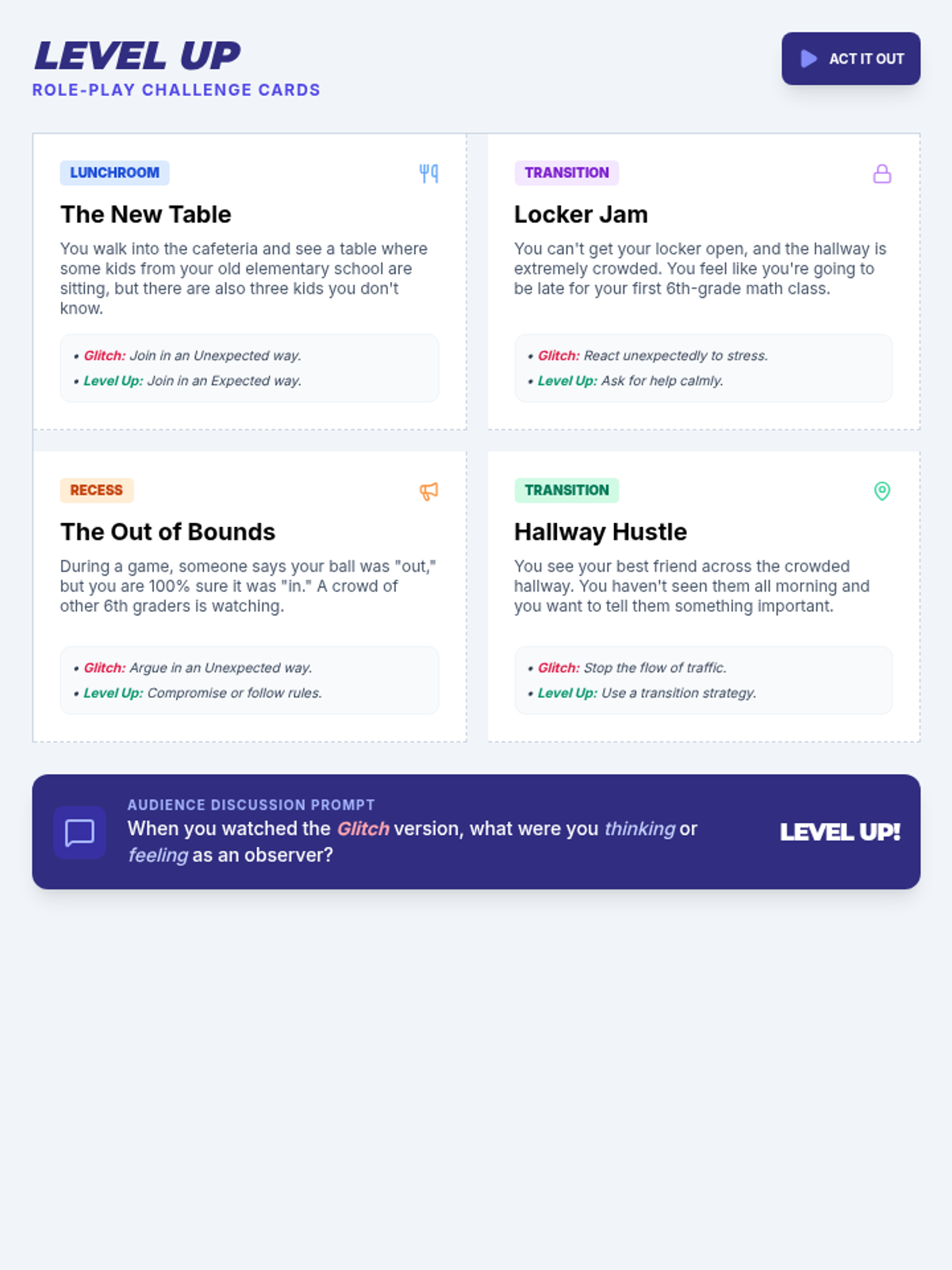
A set of four high-interest role-play prompt cards for rising 6th graders. Each card presents a middle school scenario (lunchroom, lockers, recess, hallway) and challenges students to perform both "Unexpected" and "Expected" behavioral responses.
A printable sorting activity for 6th graders featuring 12 scenario cards and category headers. Scenarios cover lunchroom, recess, and middle school transition behaviors to be categorized as "Expected" or "Unexpected."
A visually engaging slide deck designed for rising 6th graders to introduce the concepts of "Social Radar," defining expected and unexpected behaviors with a focus on middle school transition environments like the lunchroom and recess.
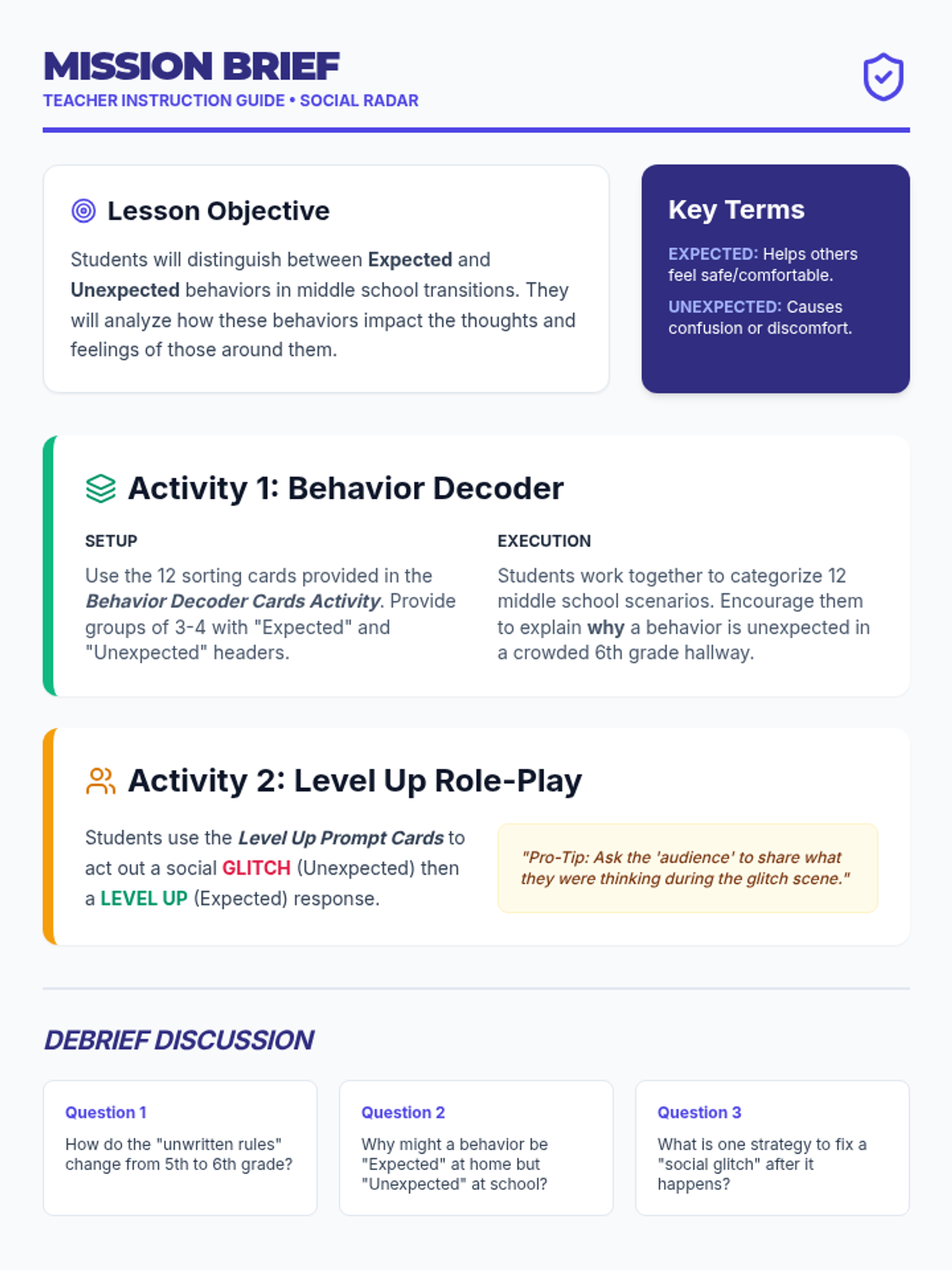
A comprehensive teacher guide for the "Social Radar" lesson, featuring objectives, key terms, activity instructions for sorting and role-play, and debriefing questions tailored for the middle school transition.
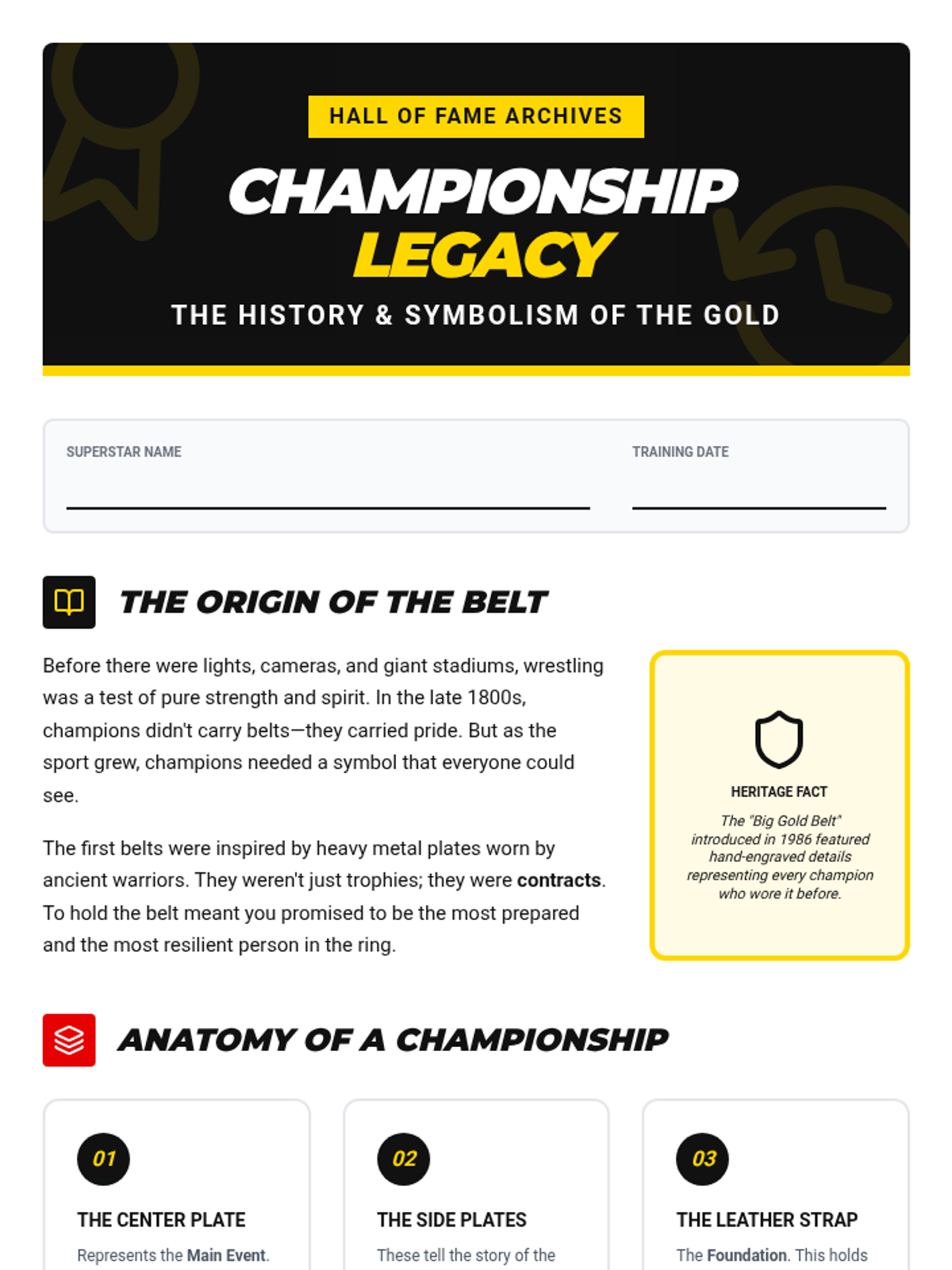
A student-facing reading and activity sheet exploring the history of wrestling championship belts, their symbolism, and how students can build their own academic legacy.
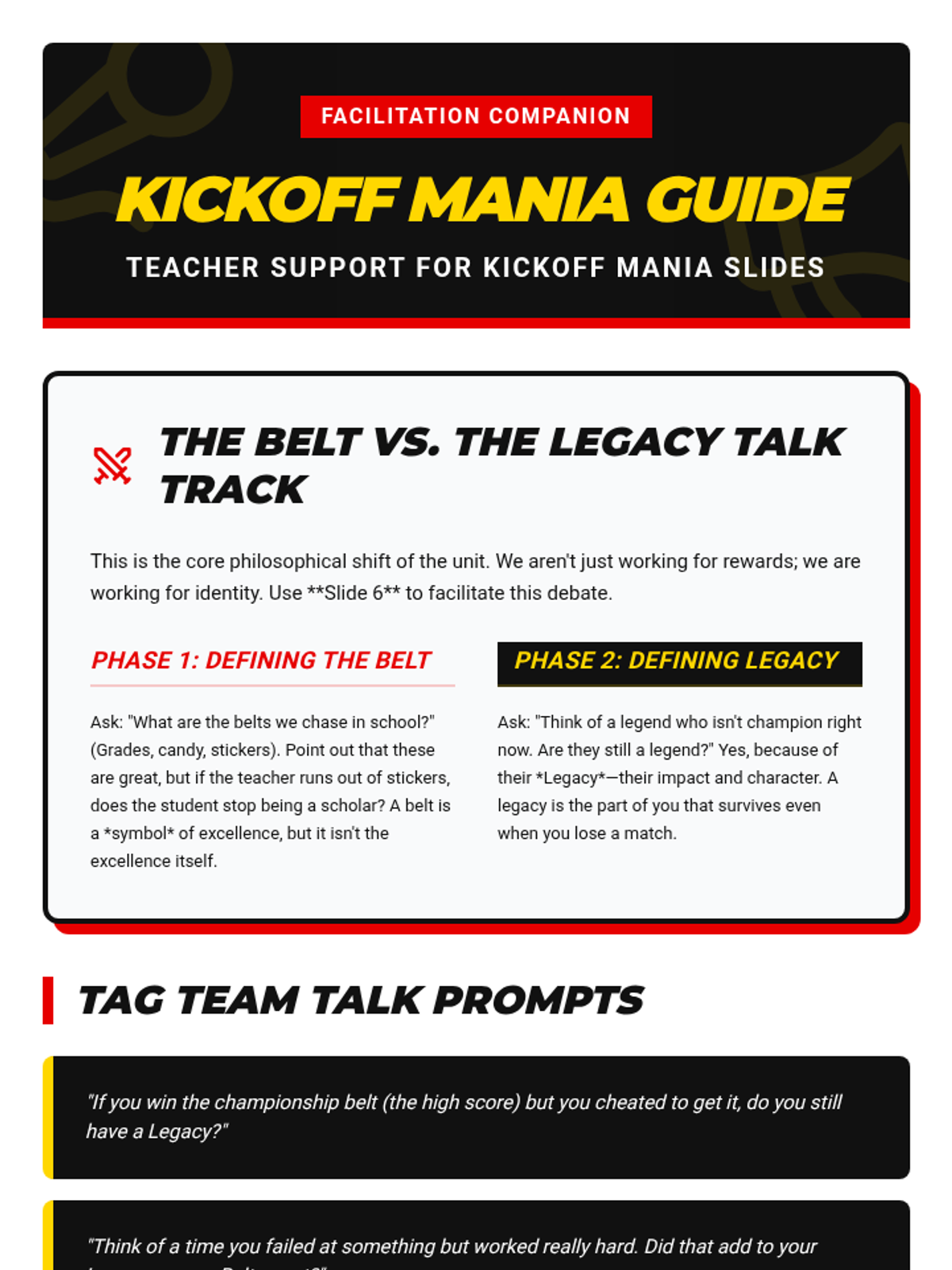
A detailed teacher facilitation companion for the Kickoff Mania slides, providing talk tracks for the 'Belt vs. Legacy' discussion, discussion prompts, and implementation steps for the Ubuntu mission.
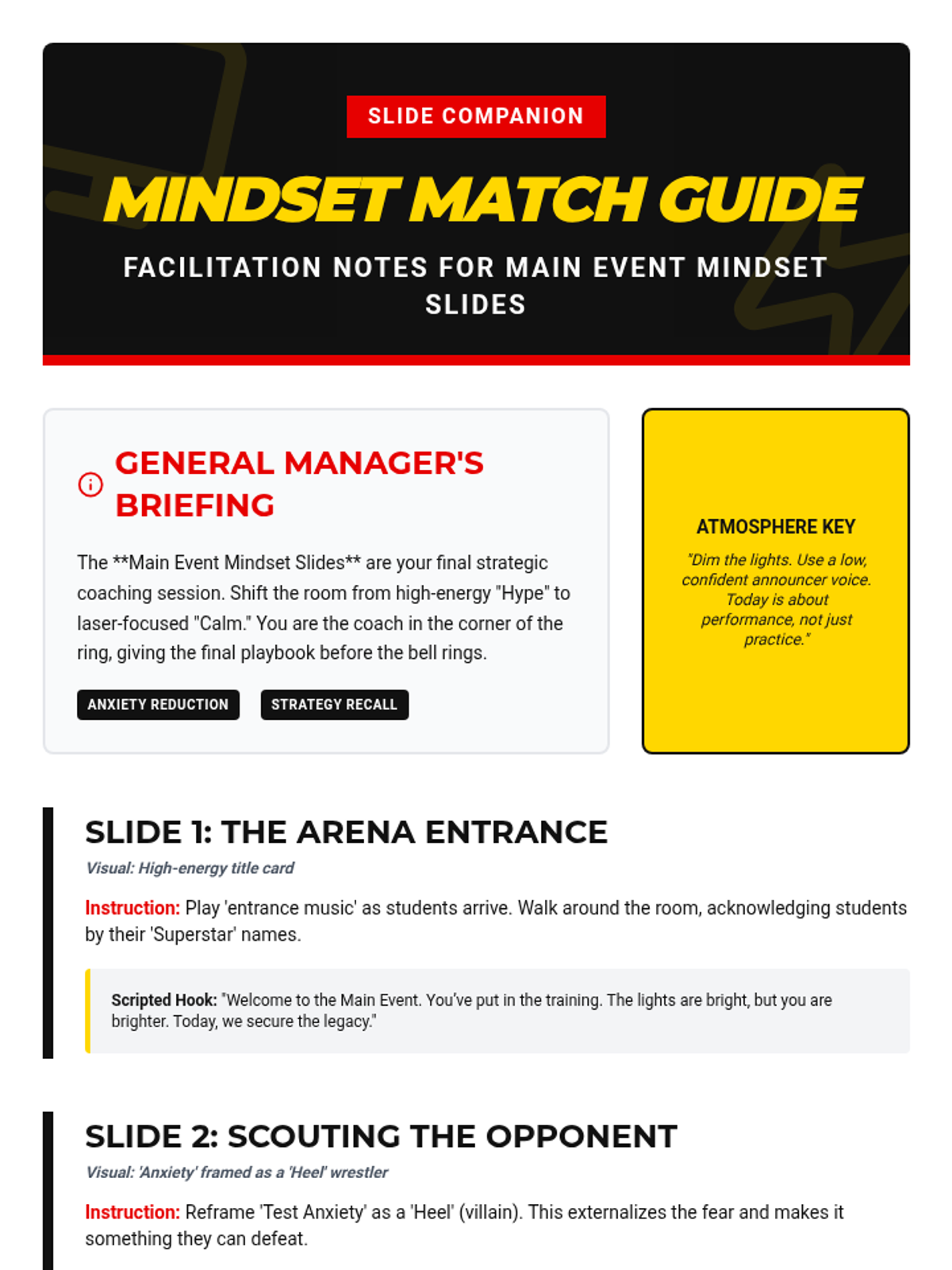
A teacher-facing companion guide for the 'Main Event Mindset' slides, providing slide-by-slide scripts, instructional instructions for managing test anxiety, and post-test decompression strategies.
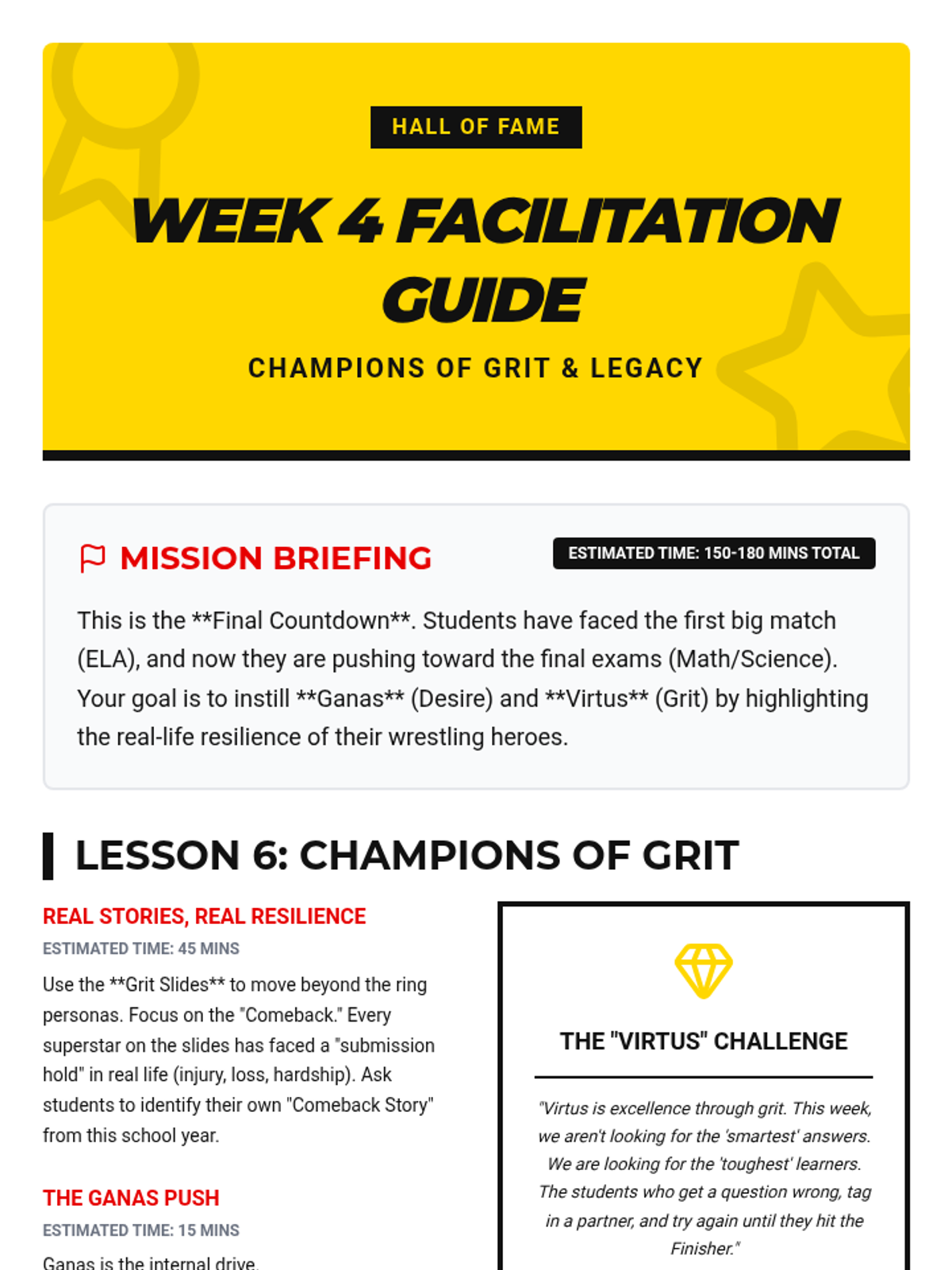
A detailed teacher facilitation guide for Week 4 of the 'Road to State Exam Mania' sequence, focusing on Ganas (drive) and Virtus (grit) for the final exam push and the 'Mania Gala' unit wrap-up.
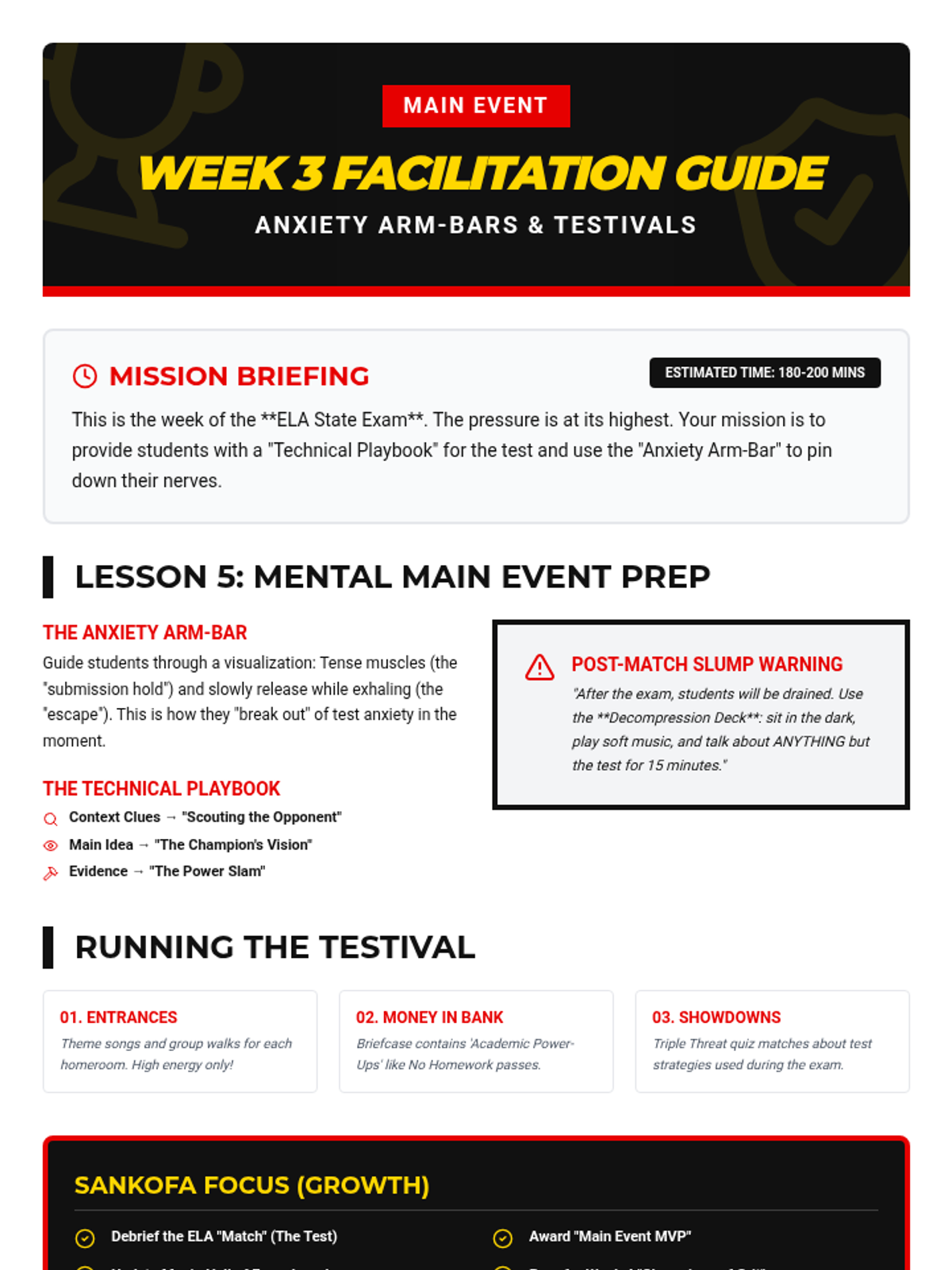
A detailed teacher facilitation guide for Week 3 of the 'Road to State Exam Mania' sequence, focusing on ELA state exam preparation and the 'Testival' pep rally.
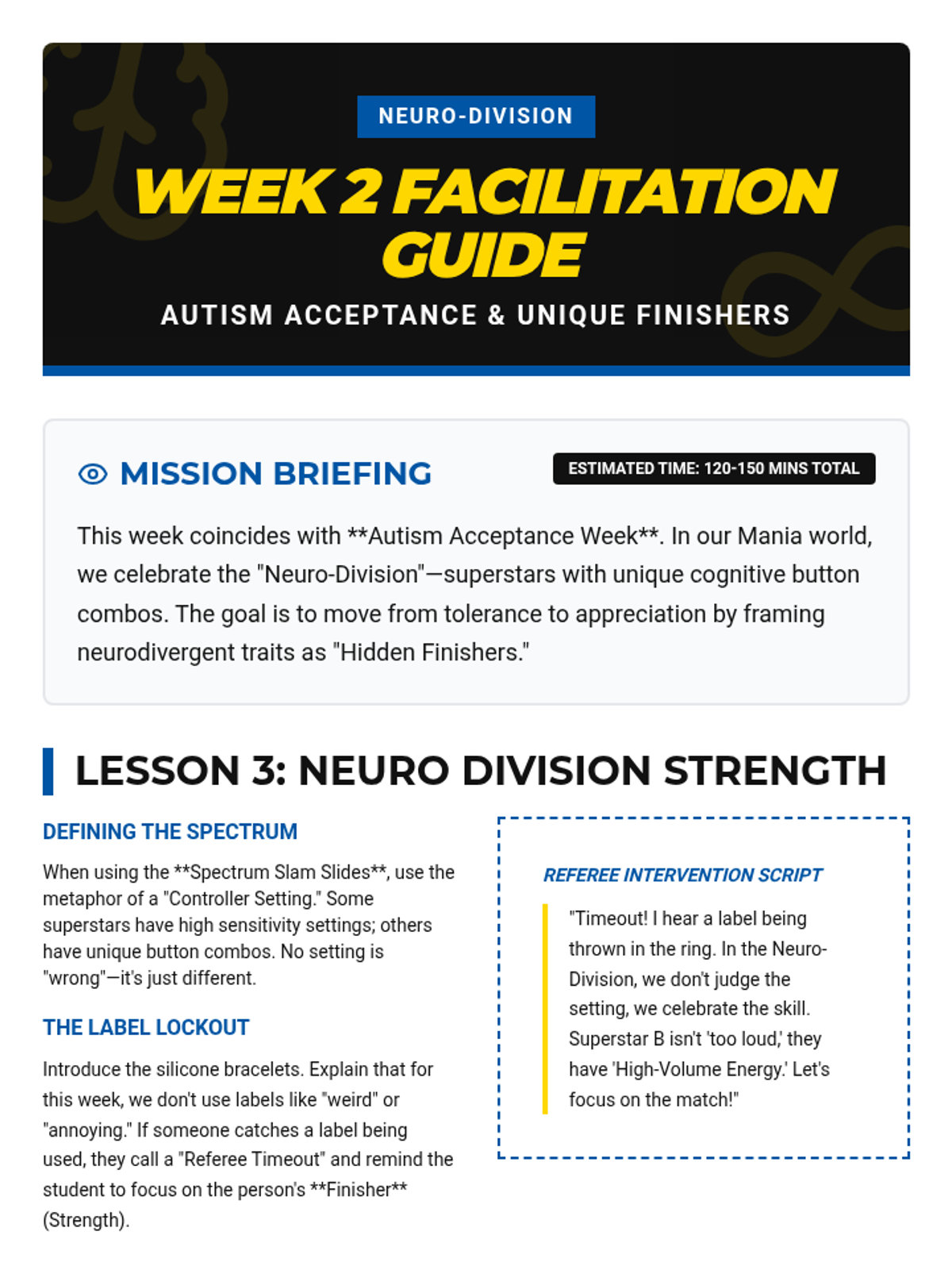
A detailed teacher facilitation guide for Week 2 of the 'Road to State Exam Mania' sequence, focusing on Autism Acceptance Week and celebrating neurodiversity.
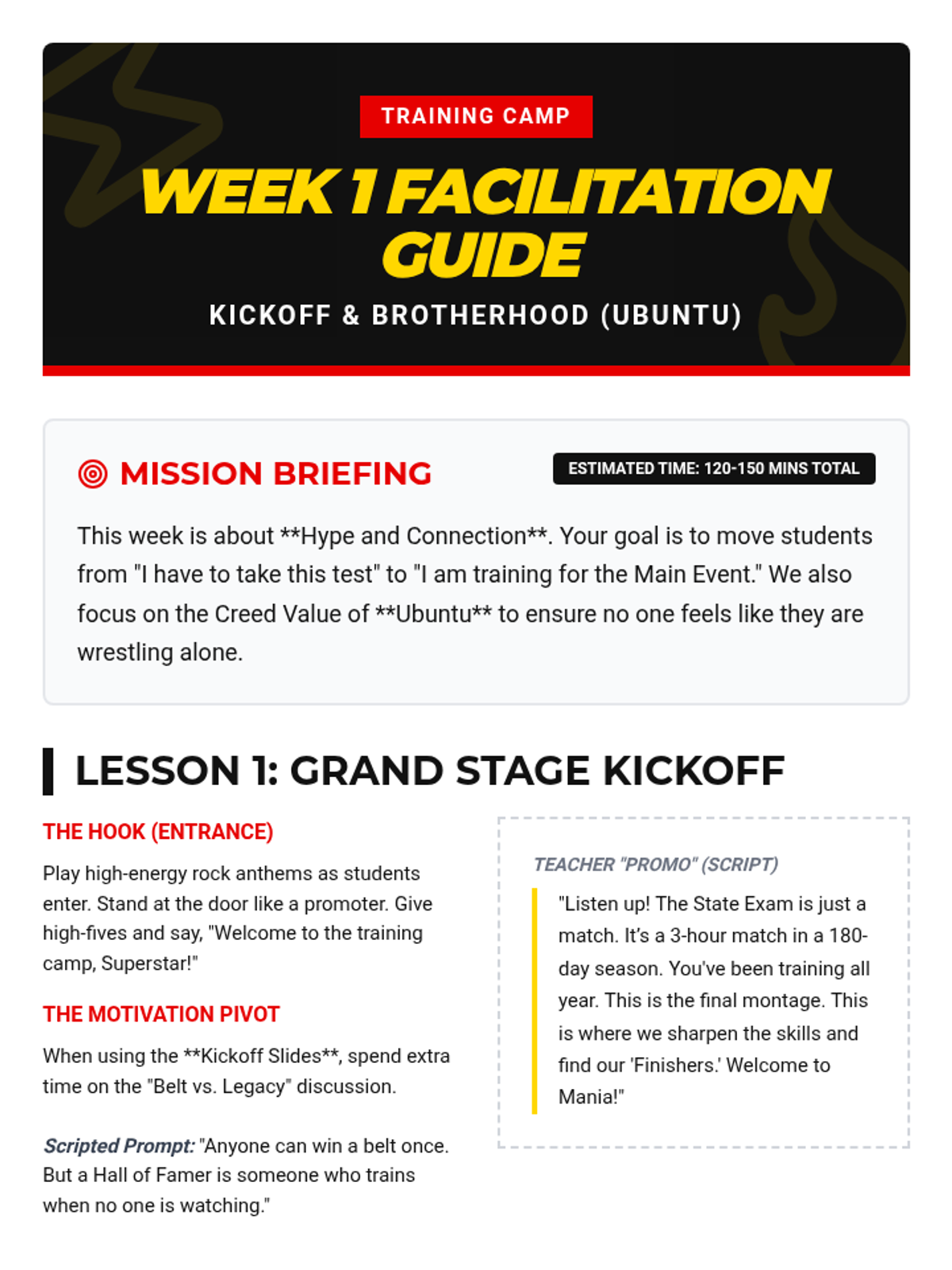
A detailed teacher facilitation guide for Week 1 of the 'Road to State Exam Mania' sequence, focusing on kickoff motivation and the Creed Value of Ubuntu.
An introductory presentation deck to launch the Mission Control self-management unit. It frames the assessment process as a "flight check" to engage students and reduce anxiety around self-evaluation.
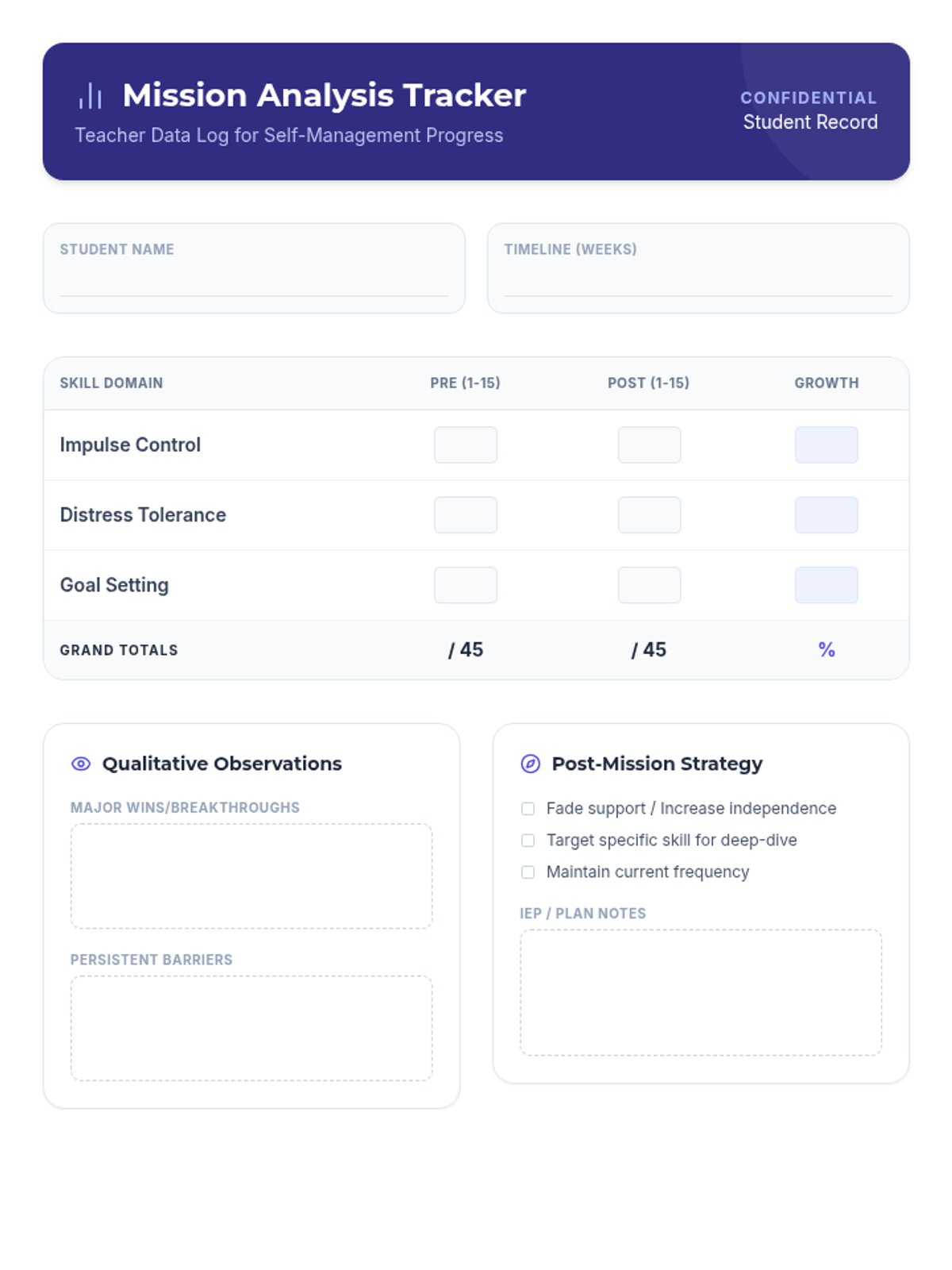
A teacher-facing data tracker to record and compare pre- and post-test results for self-management skills. Includes sections for quantitative scoring, qualitative observations, and strategy planning.
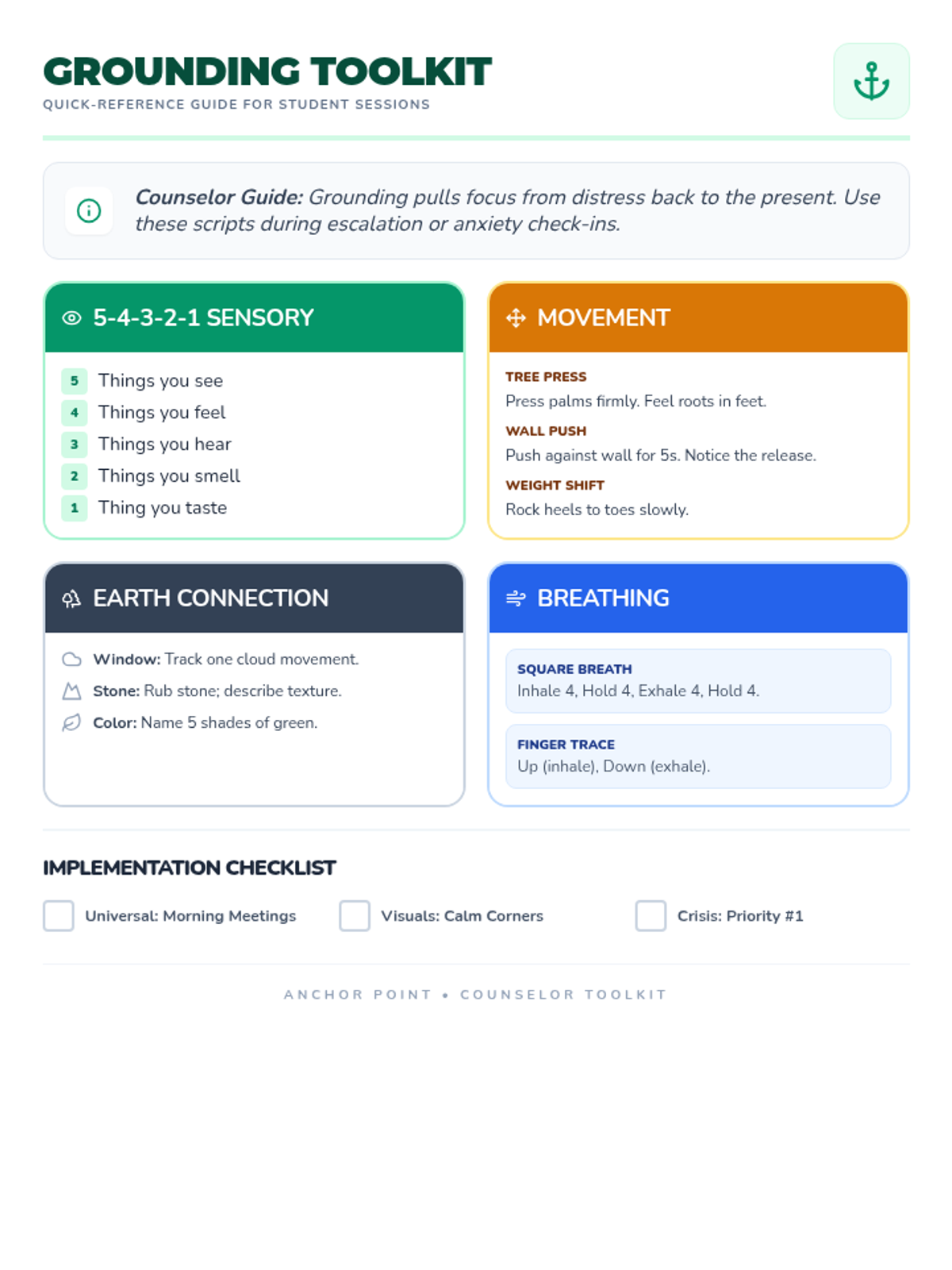
A quick-reference toolkit for school counselors containing specific grounding scripts, movement techniques, nature-based prompts, and breathing exercises. Designed as a desk reference or session handout.
A comprehensive slide deck for school counselors focusing on four primary grounding techniques: the 5-4-3-2-1 sensory method, movement-based grounding, nature connection, and rhythmic breathing. Includes implementation strategies for different tiers of student support.