Stop-and-think strategies, impulse management, and SMART goal setting for personal growth. Develops internal motivation, stress reduction techniques, and resilience through proactive planning and monitoring.
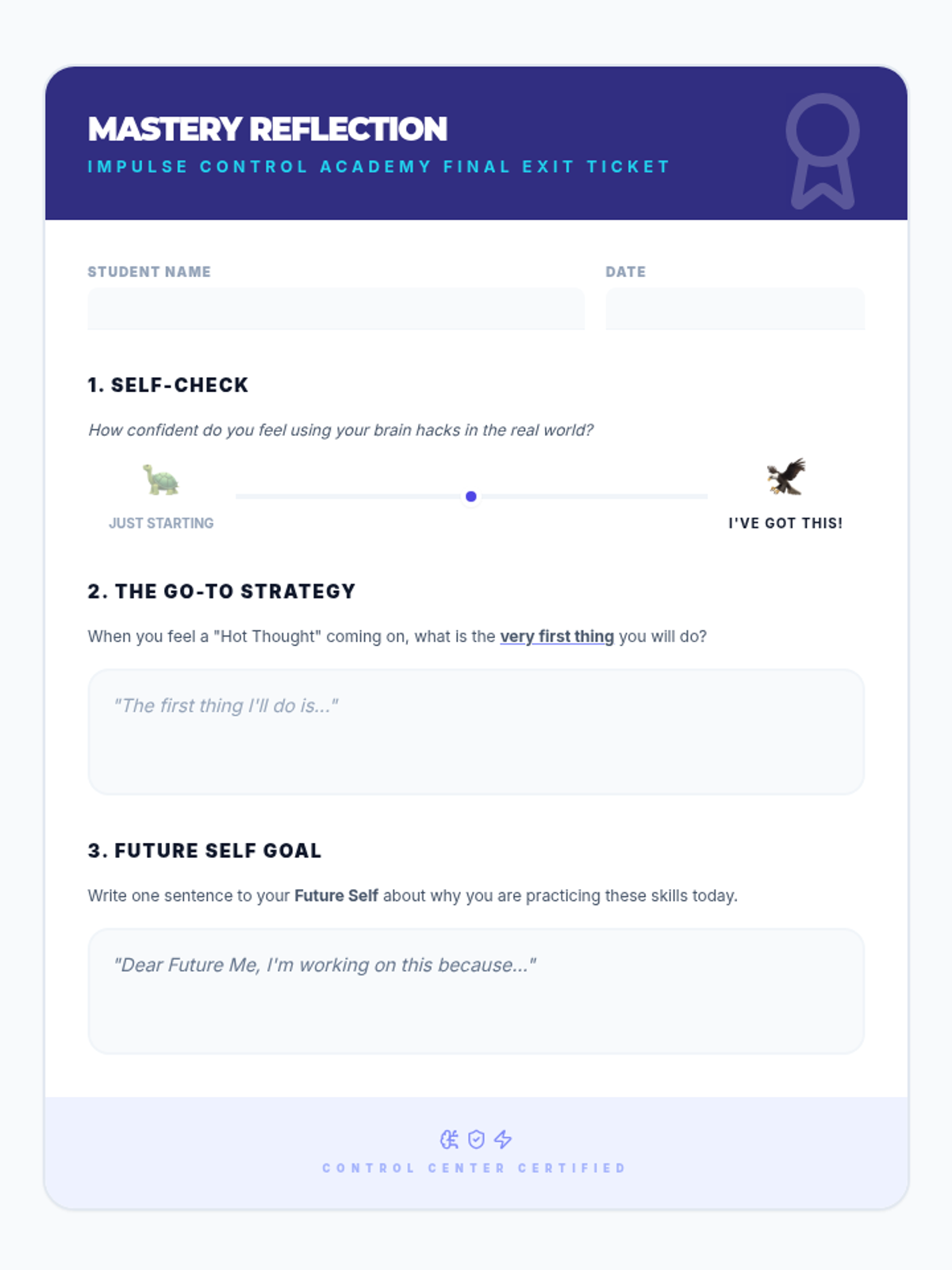
Summative reflection and exit ticket for the "Impulse Control Academy" sequence, where students self-assess their progress and set a goal for their future self.
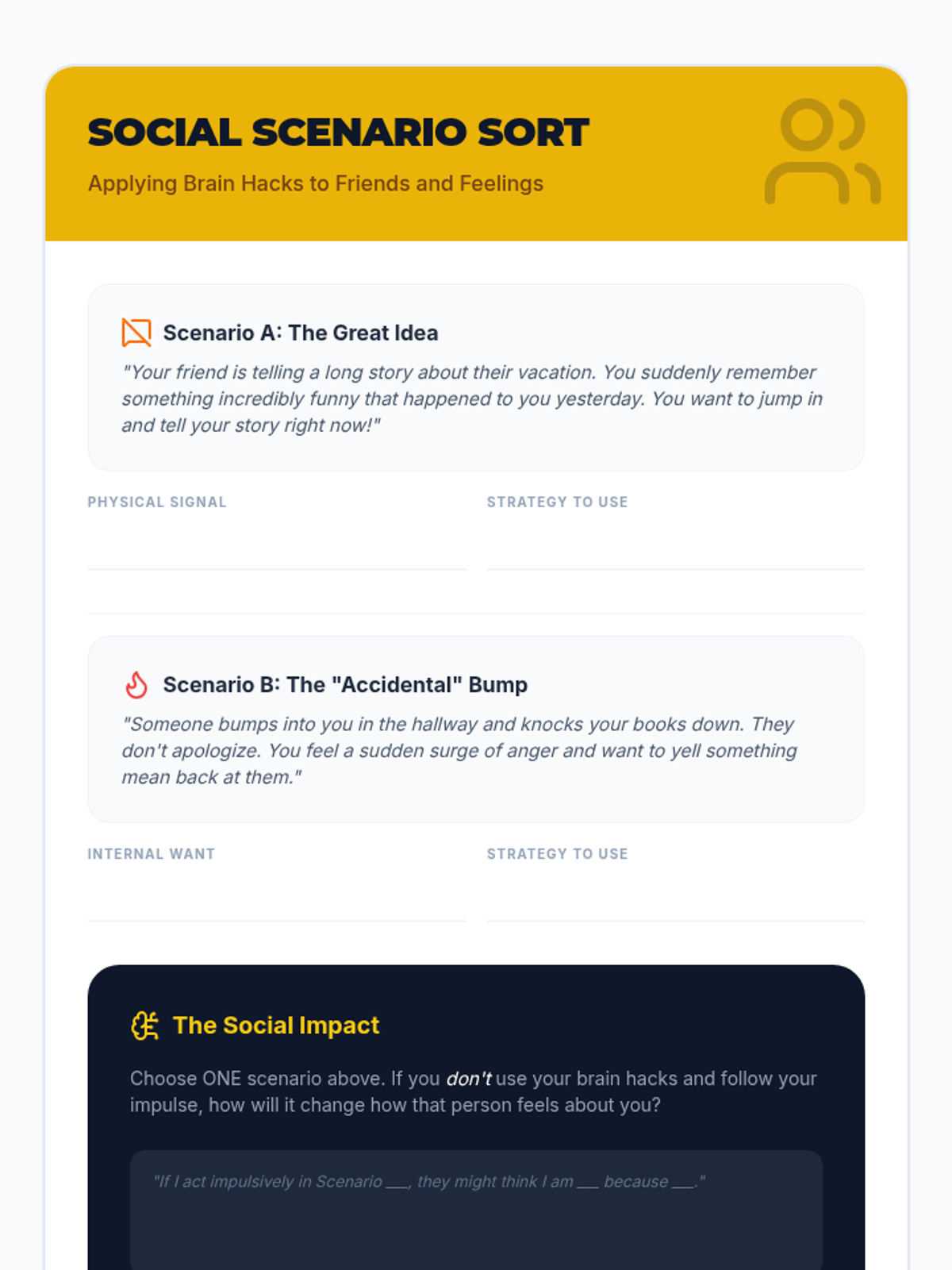
Student activity sheet for Lesson 5 focusing on social scenario analysis and the interpersonal consequences of impulsive versus regulated behavior.
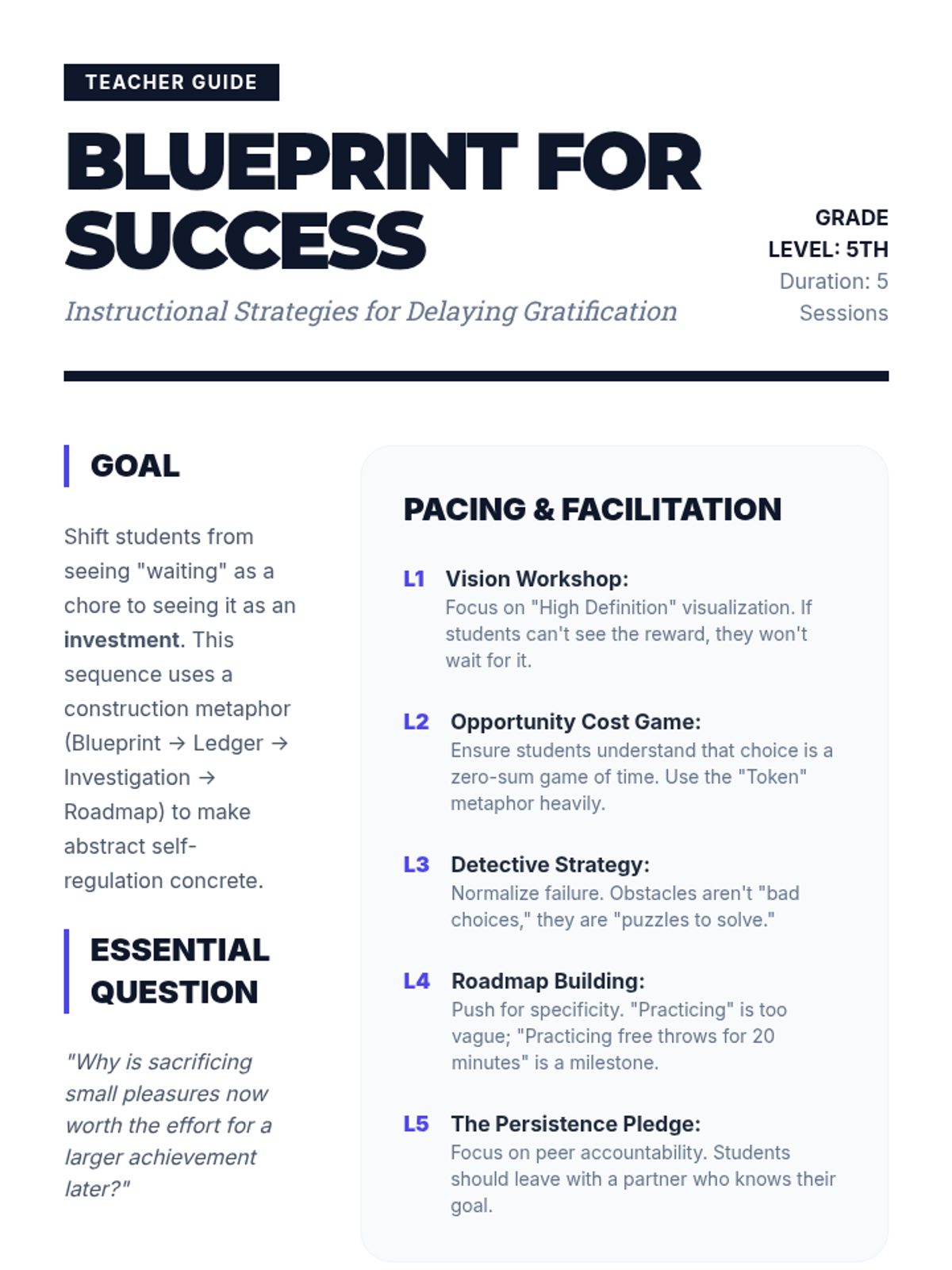
A comprehensive teacher guide for the "Blueprint for Success" sequence, providing instructional strategies, pacing notes, vocabulary, and differentiation tips.
Final slide deck for Lesson 5, focusing on applying impulse control strategies to social interactions and peer pressure.
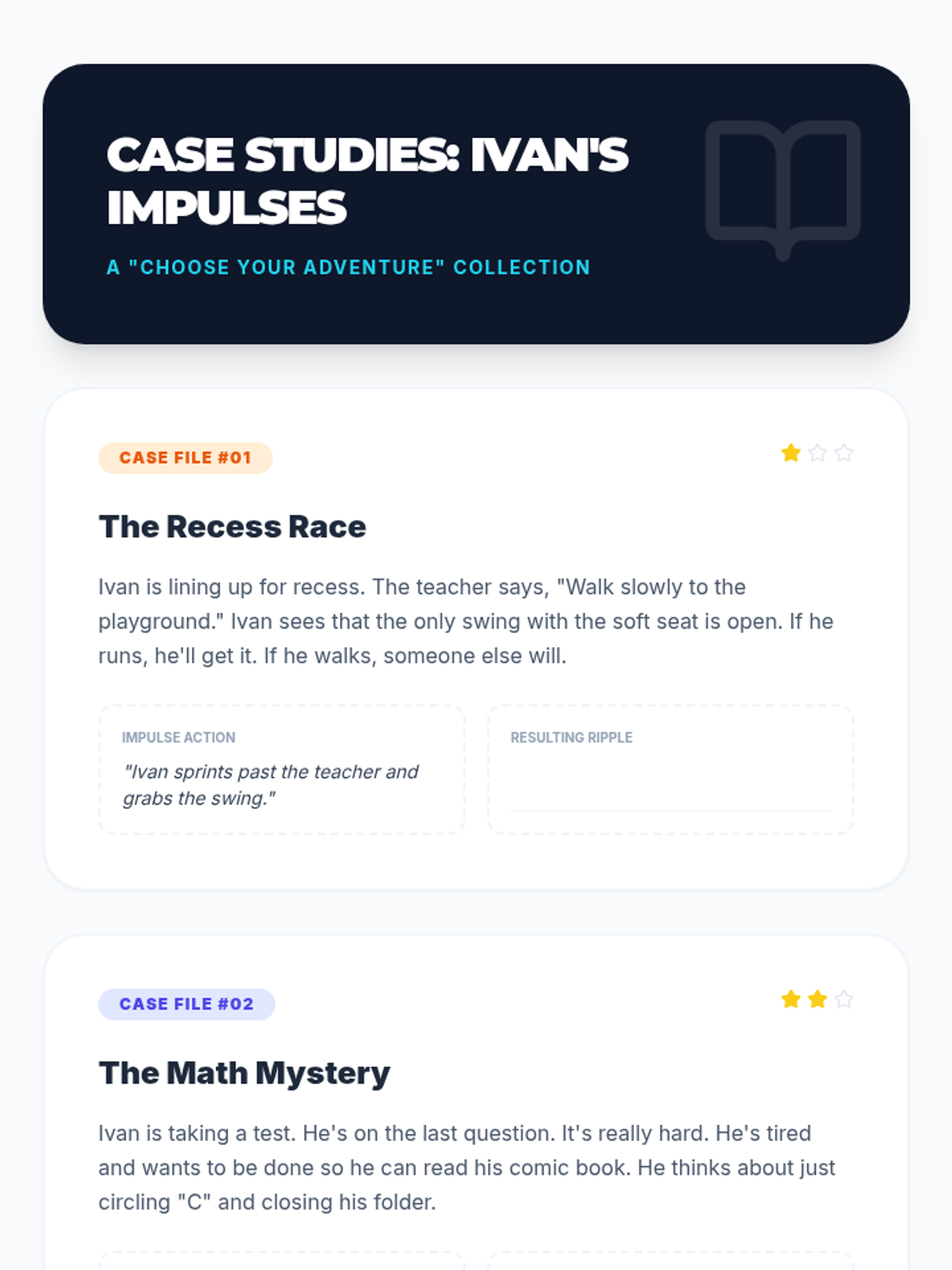
Case study packet for Lesson 4 featuring "Impulsive Ivan" scenarios for students to analyze the long-term ripples of impulsive decisions.
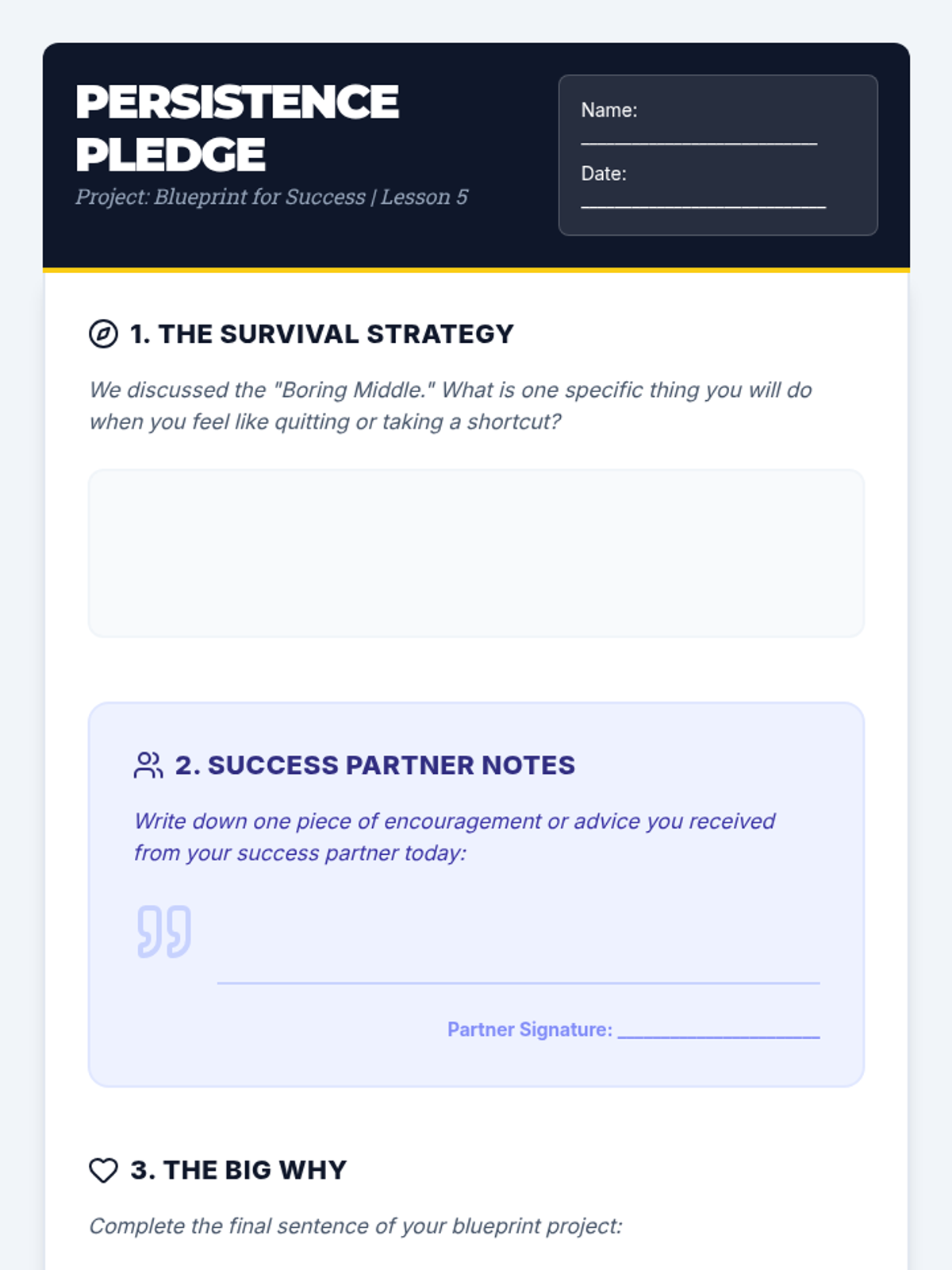
A final reflection sheet for Lesson 5 where students articulate their persistence strategy and the ultimate reason why their long-term goal is worth the wait.
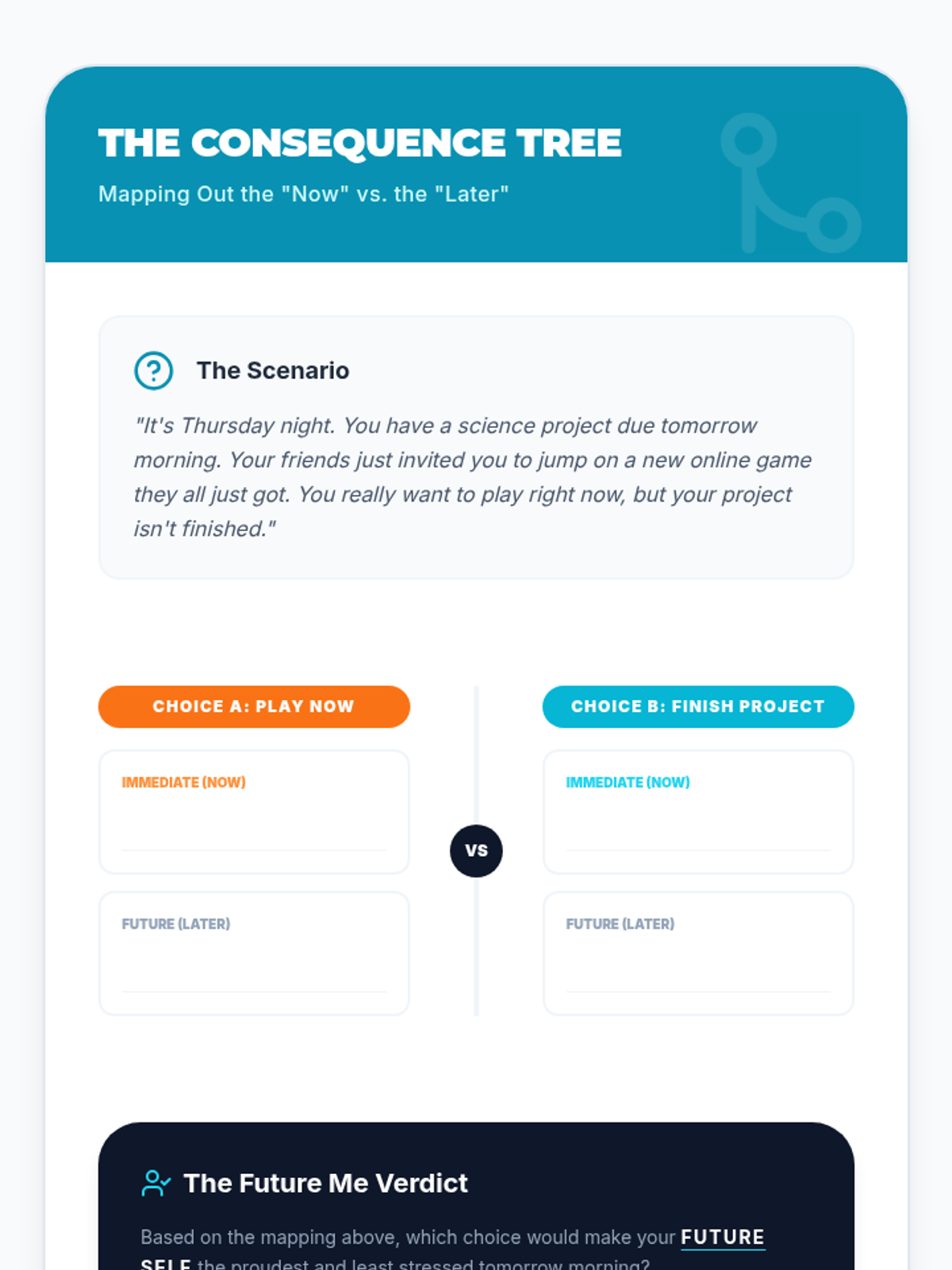
Student worksheet for Lesson 4 where students map out the "now" and "later" consequences of a specific academic/social dilemma using a tree diagram.
Final slides for the sequence, focusing on the "boring middle" of goal pursuit and peer accountability.
Slide deck for Lesson 4 exploring the "Ripple Effect" of choices and the concept of thinking about one's "Future Self" to weigh consequences.
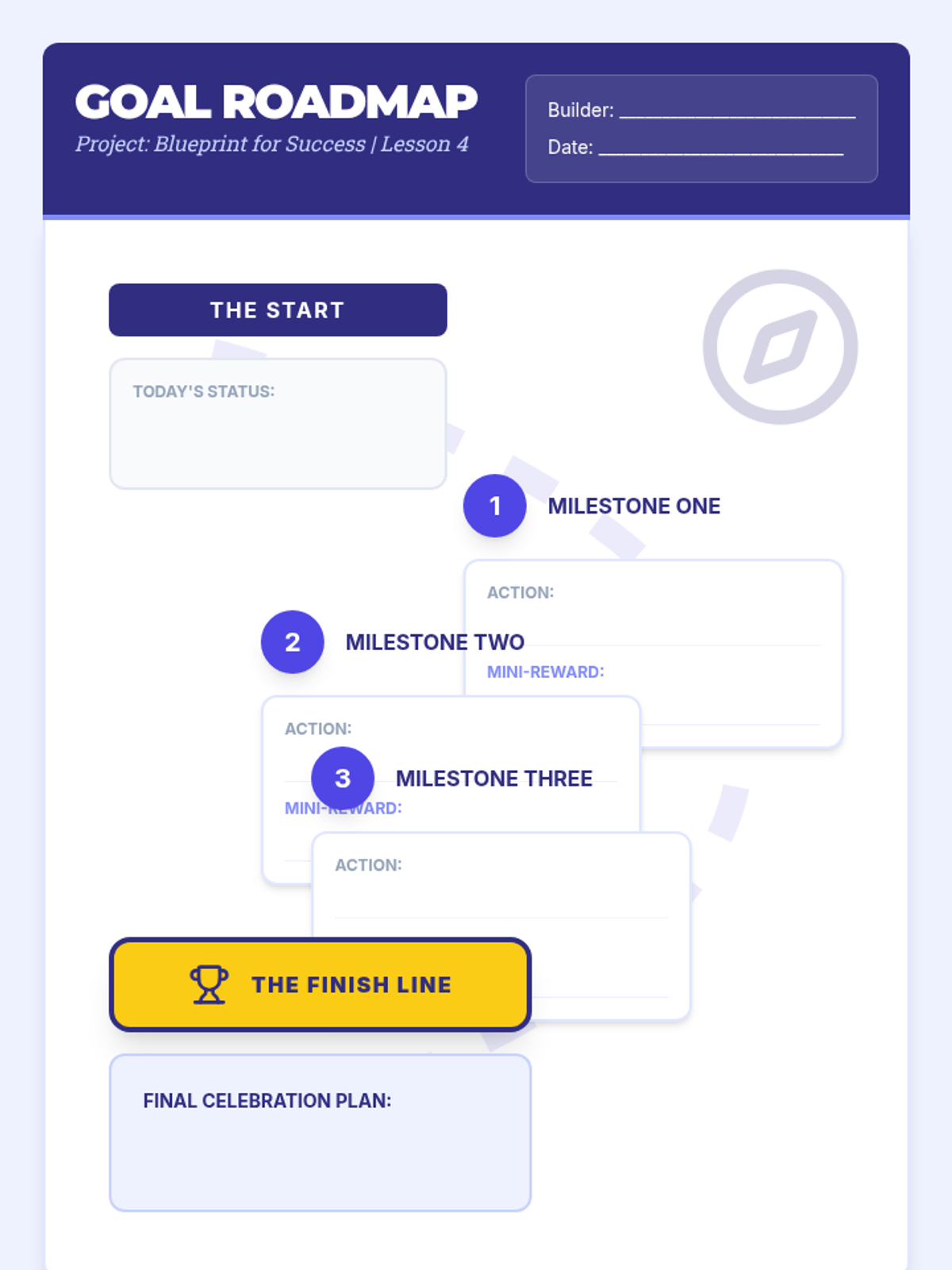
A student roadmap worksheet for Lesson 4 where they plot their starting point, three milestones with mini-rewards, and a final celebration plan.
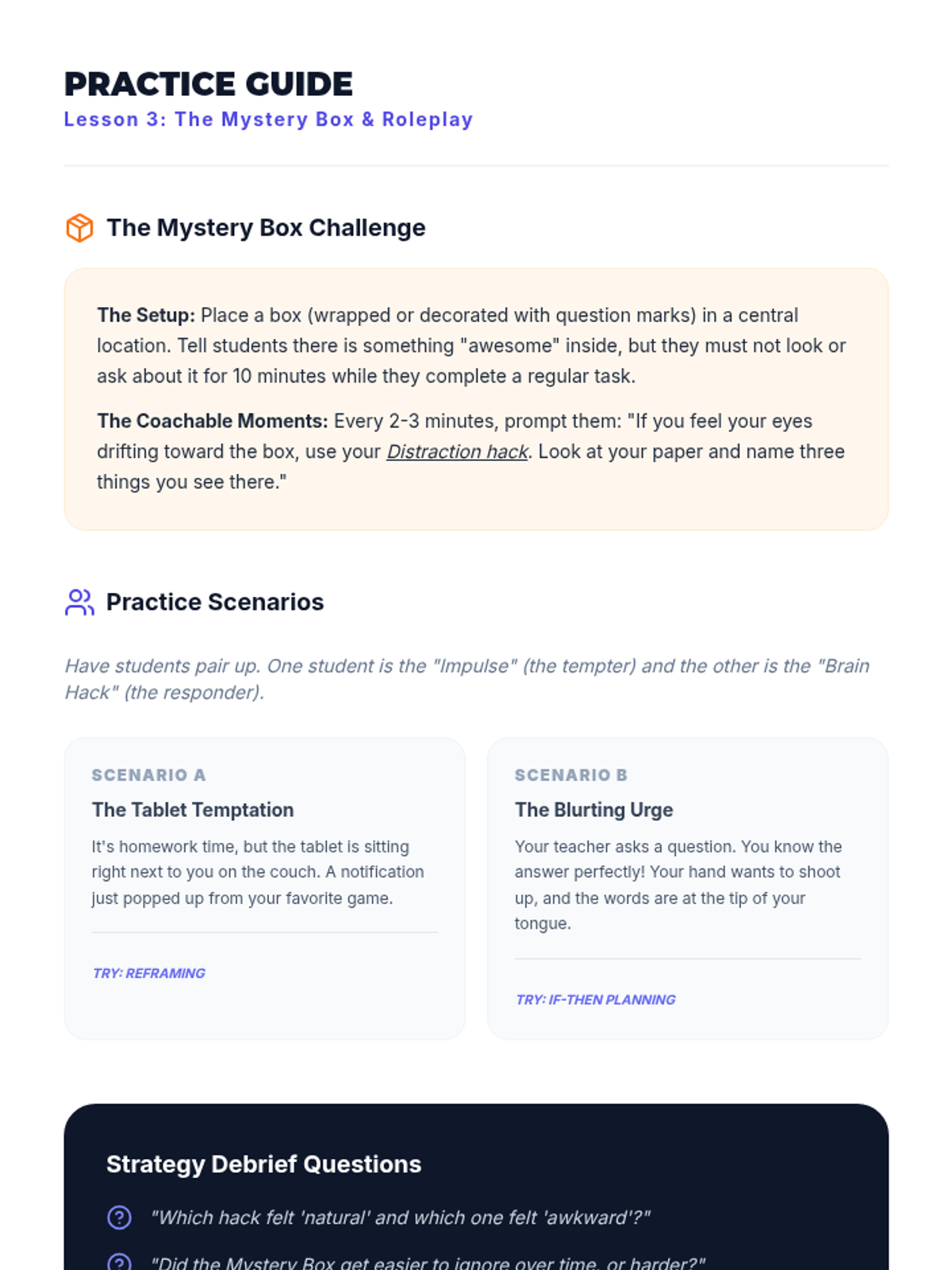
Teacher facilitation guide for Lesson 3 roleplay scenarios and the "Mystery Box" practical application activity.
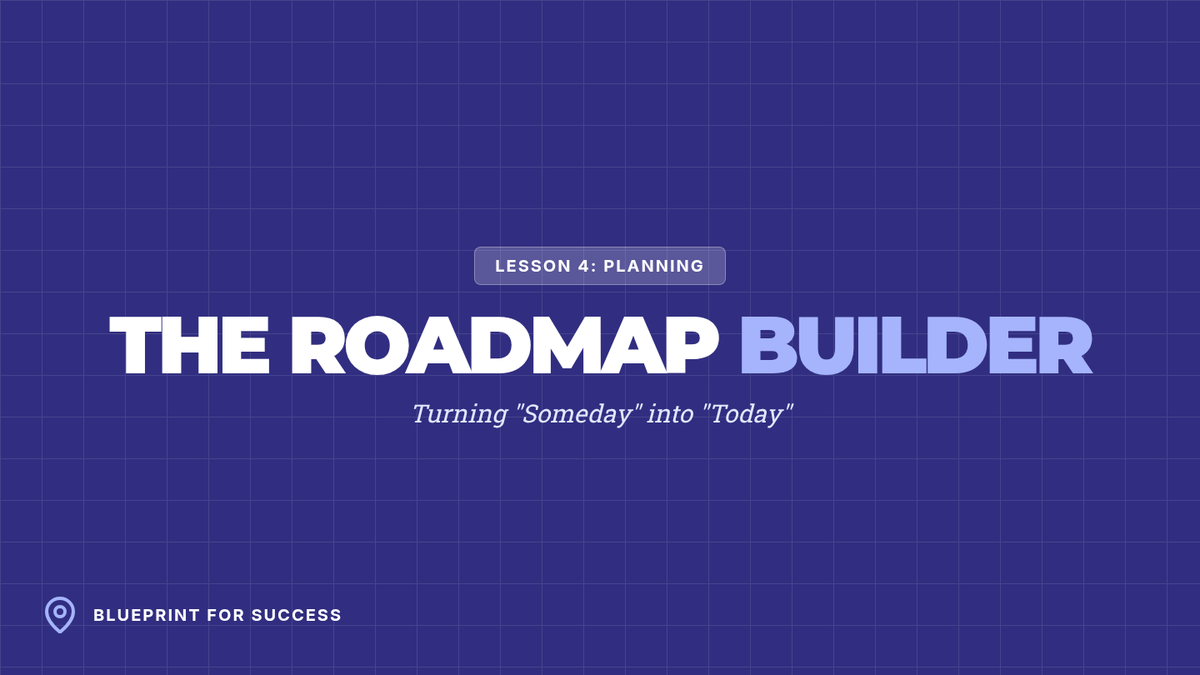
Slides for Lesson 4 focusing on breaking down long-term goals into smaller milestones and mini-rewards.
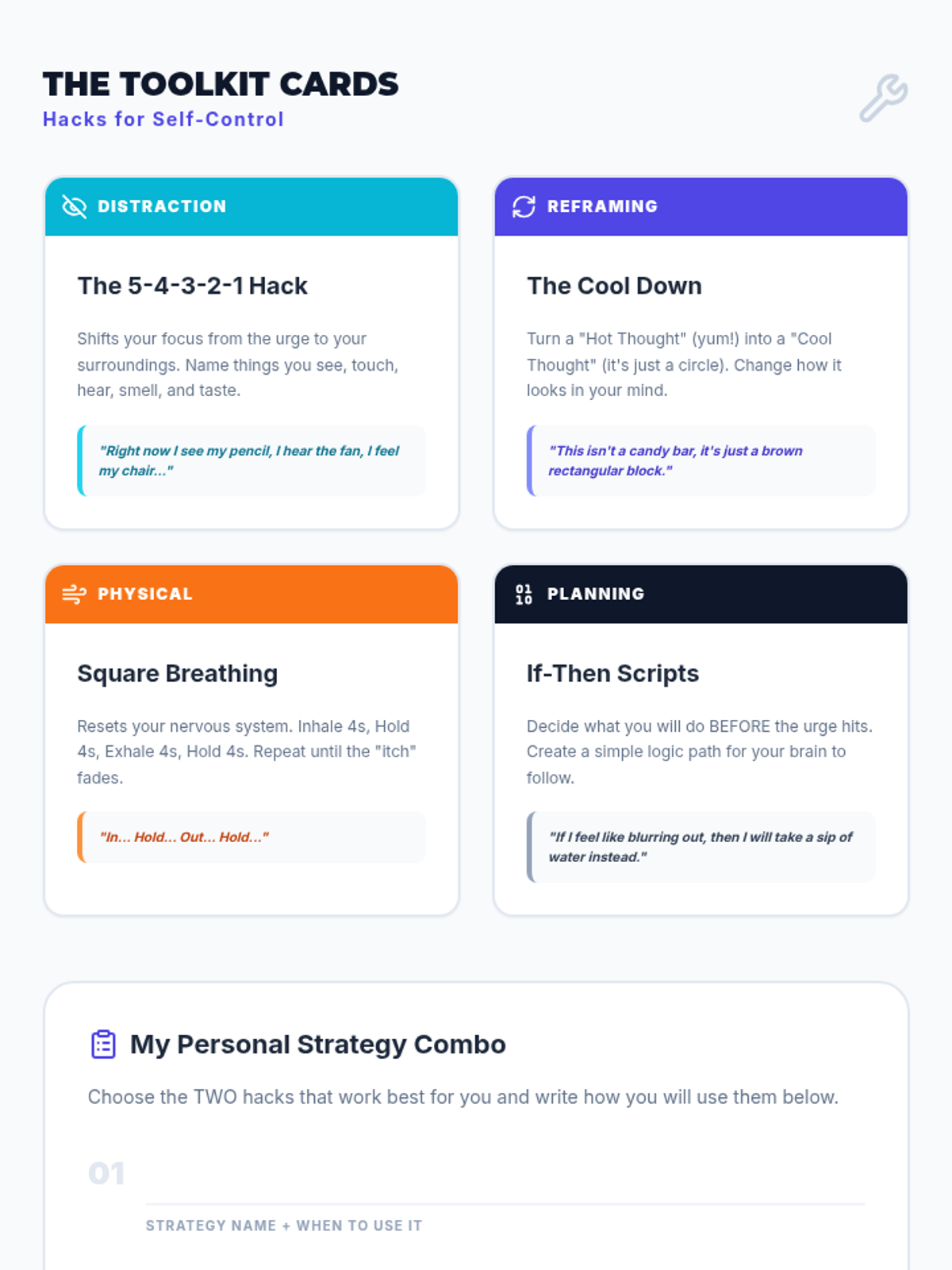
Reference cards for students featuring the four primary "Brain Hacks" (Distraction, Reframing, Physical, If-Then) and a space to select their preferred combination.
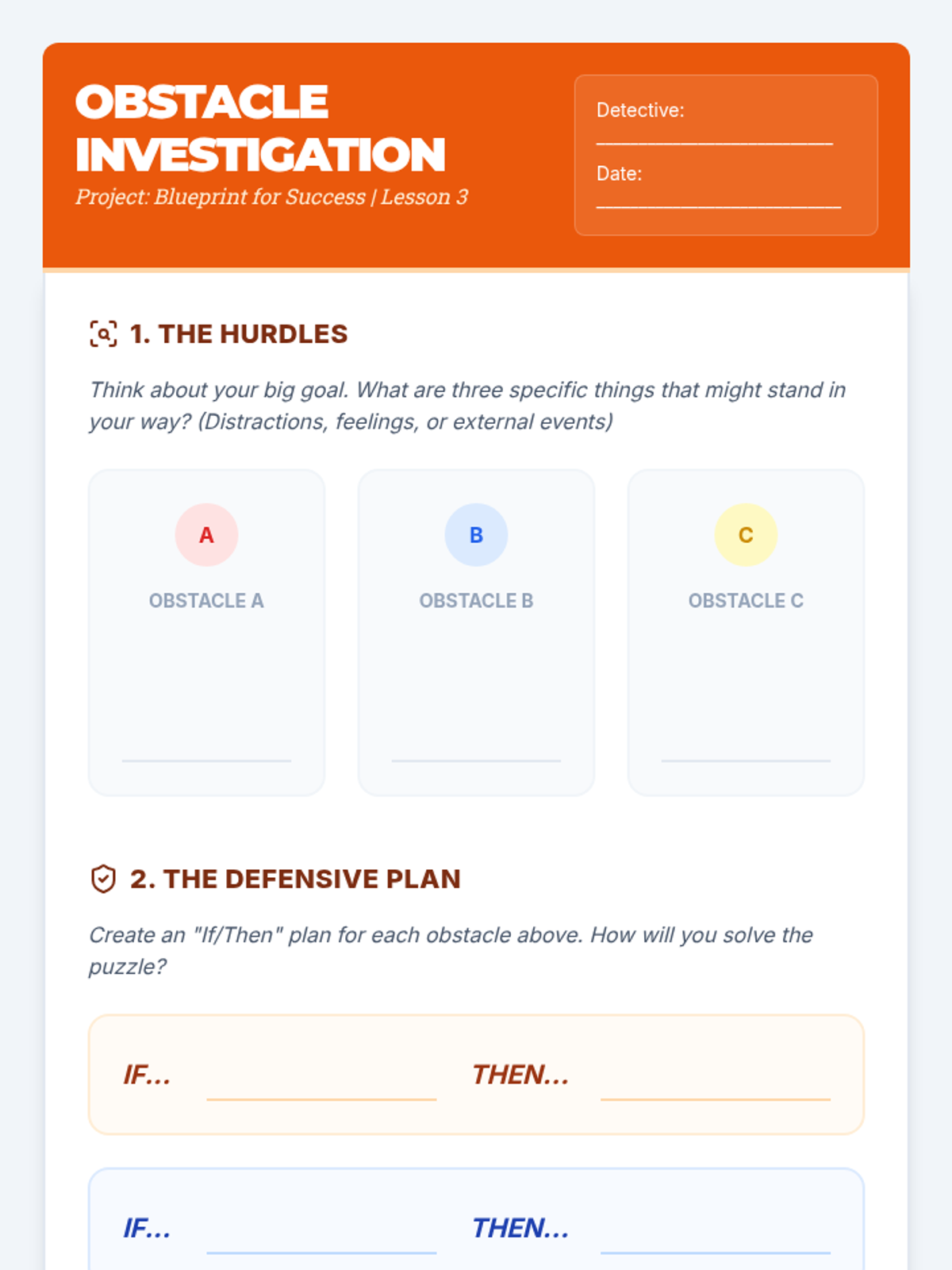
A student worksheet for Lesson 3 where they identify specific obstacles to their goal and create "If/Then" plans to overcome them.
Slide deck for Lesson 3 introducing distraction and reframing strategies, including the "Mystery Box" challenge.
Slides for Lesson 3 focusing on identifying and solving potential obstacles to long-term goals using the "If/Then" strategy.
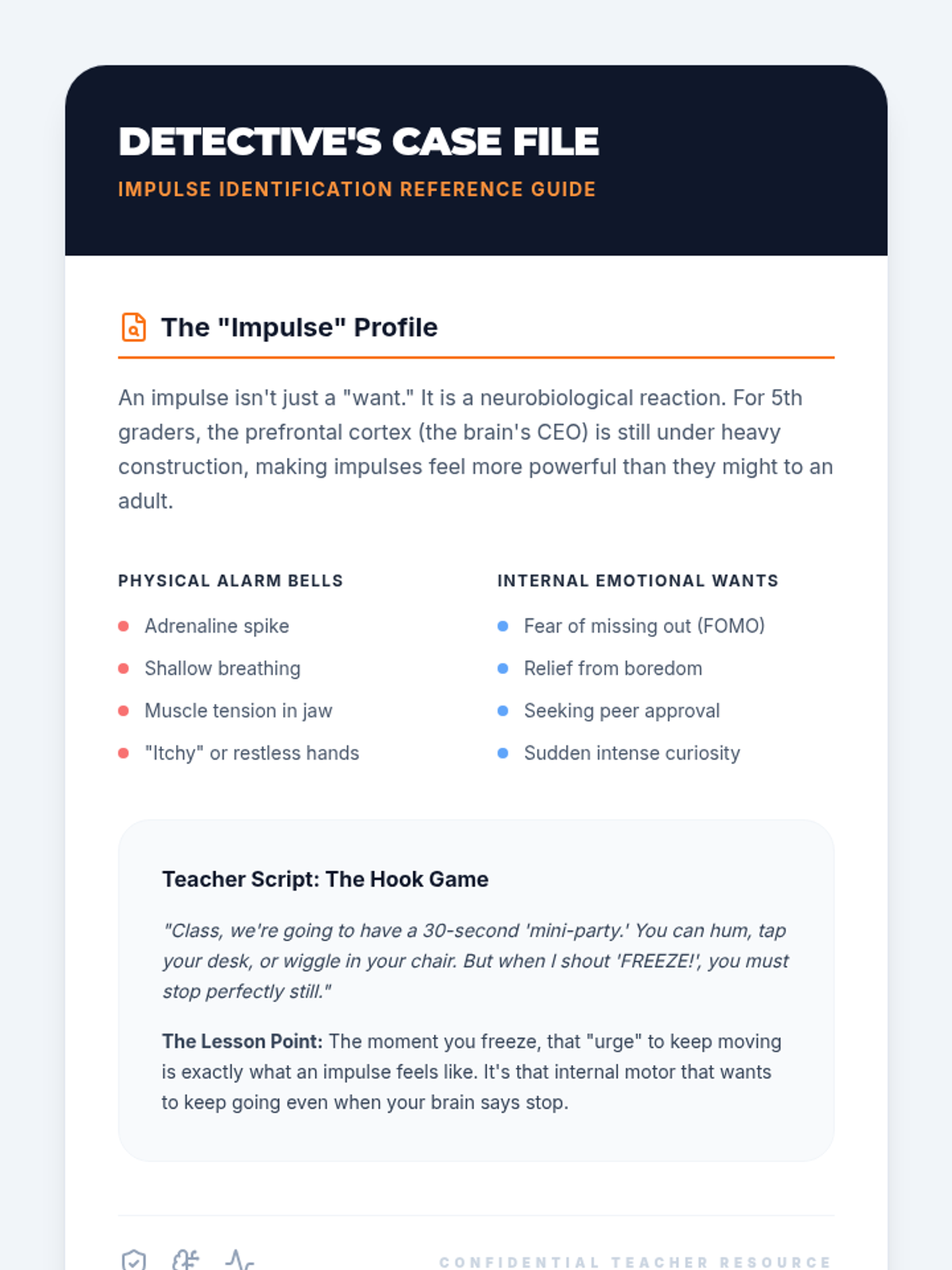
Teacher resource for Lesson 2 providing deeper context on the "impulse profile" and a script for the "Freeze Frame" hook activity.
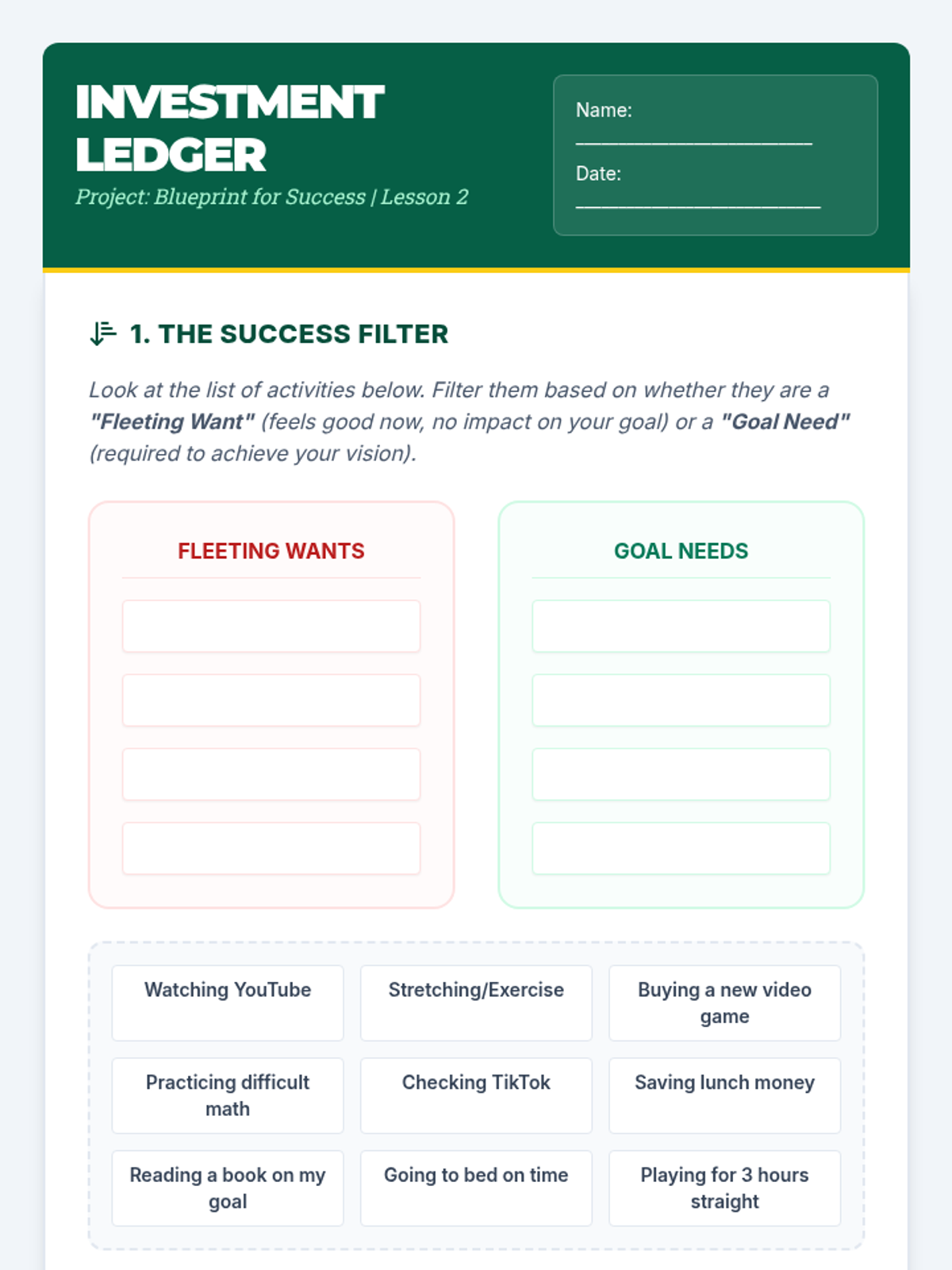
A student worksheet for Lesson 2 that helps students differentiate between fleeting wants and goal needs, and practice calculating opportunity costs.
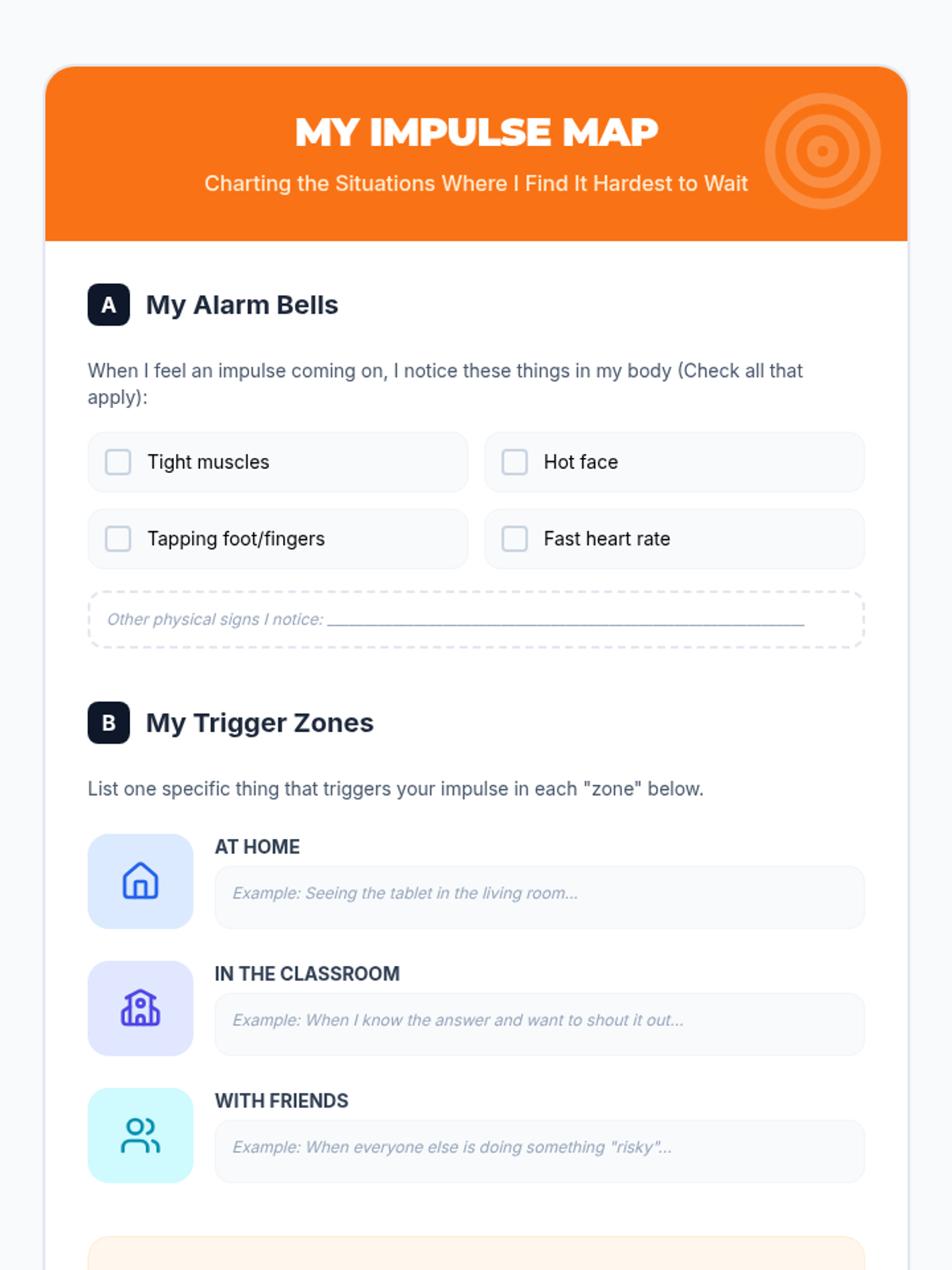
Student activity sheet for Lesson 2 to map out personal physical impulse signs and environmental triggers across different settings (home, school, social).
Slide deck for Lesson 2 focused on identifying physical and environmental triggers that lead to impulsive behavior.
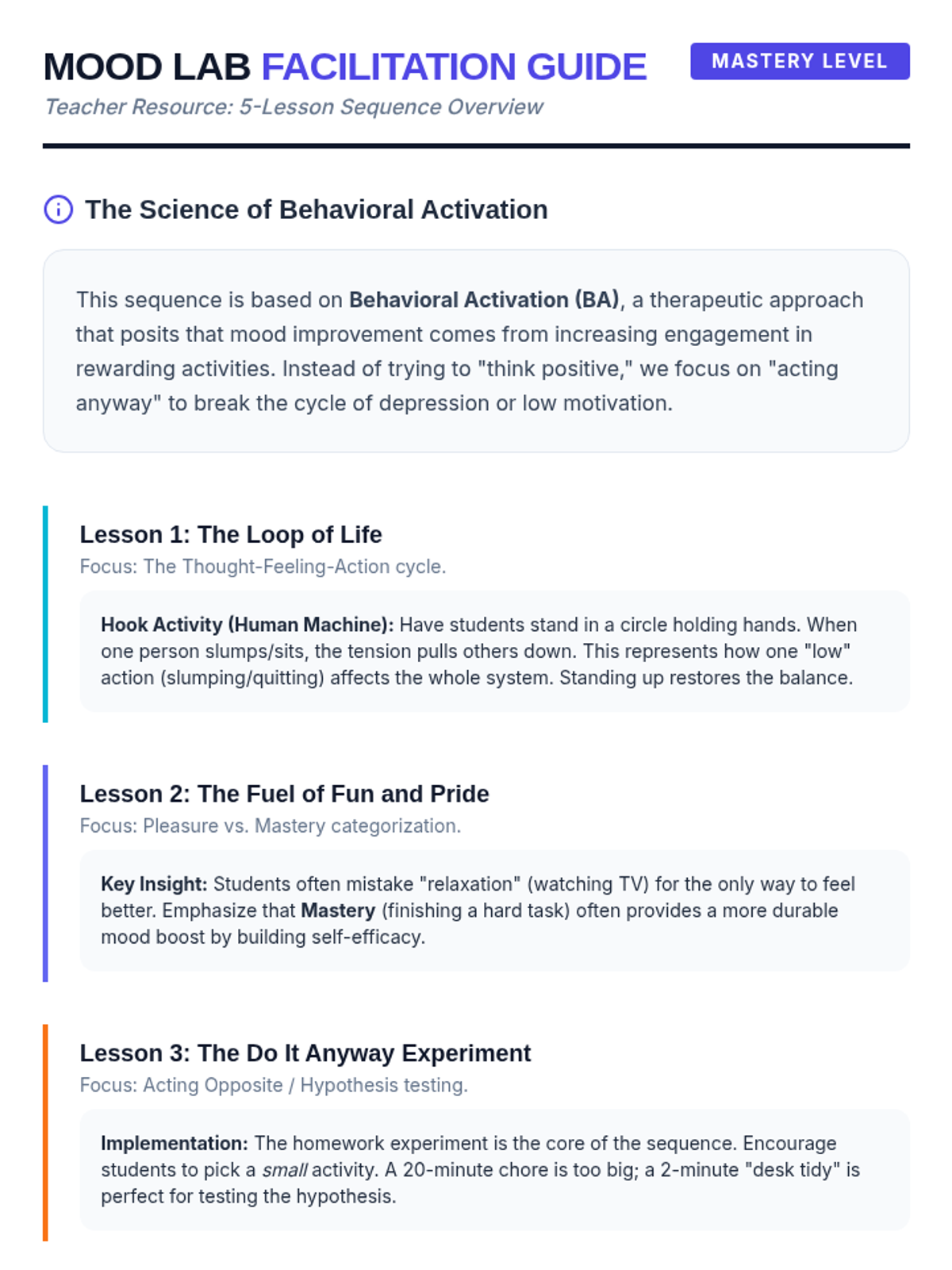
A teacher facilitation guide for the 'Mood Lab Experiment' sequence, providing therapeutic context, hook instructions, and tips for each lesson.
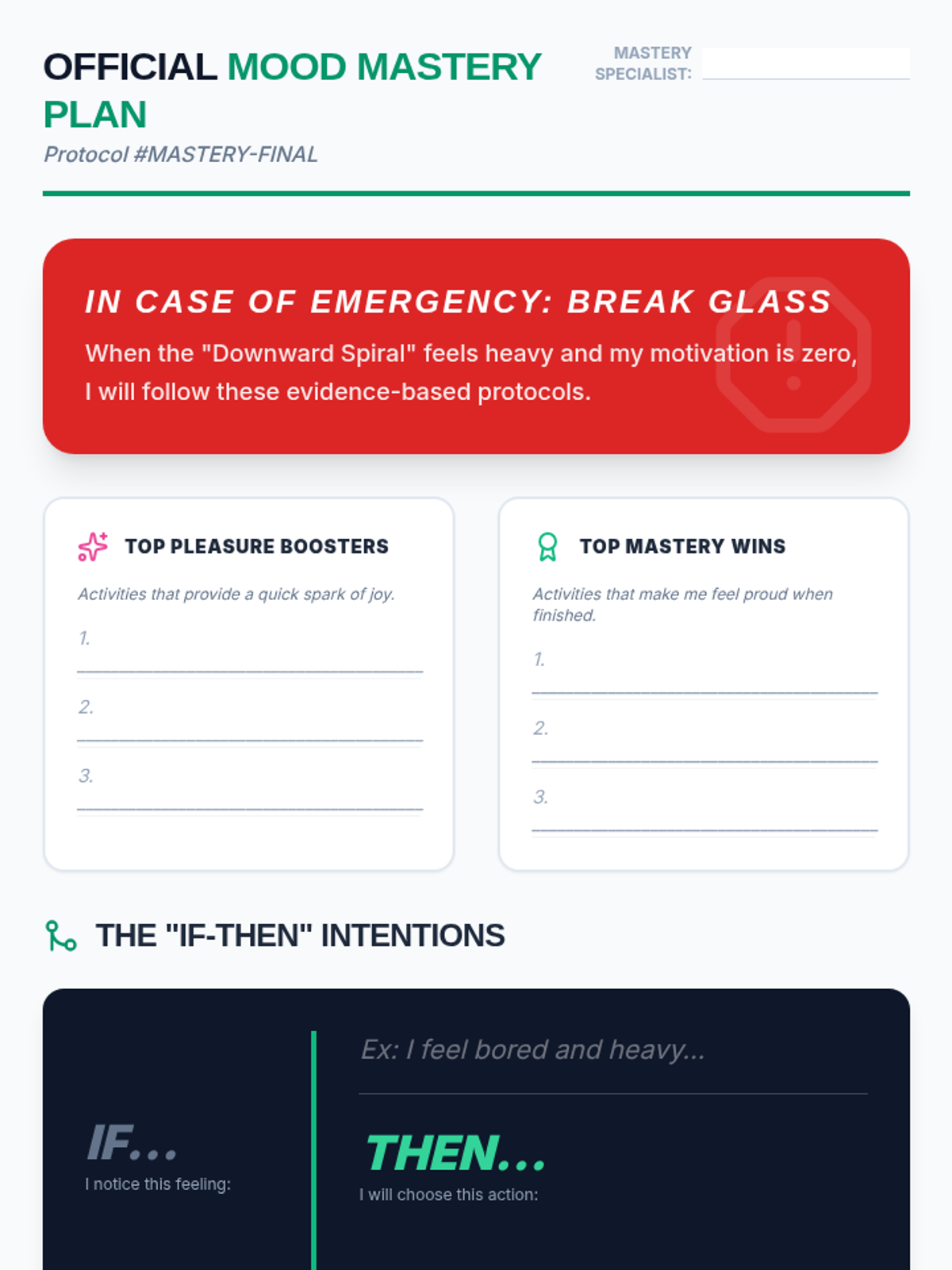
A comprehensive 'Break the Glass' emergency plan worksheet where students synthesize their findings into specific 'If-Then' implementation intentions for mood regulation.
Final slide deck for the 'Mood Mastery Lab' lesson, teaching students how to create implementation intentions and synthesize their learning into an emergency activation plan.
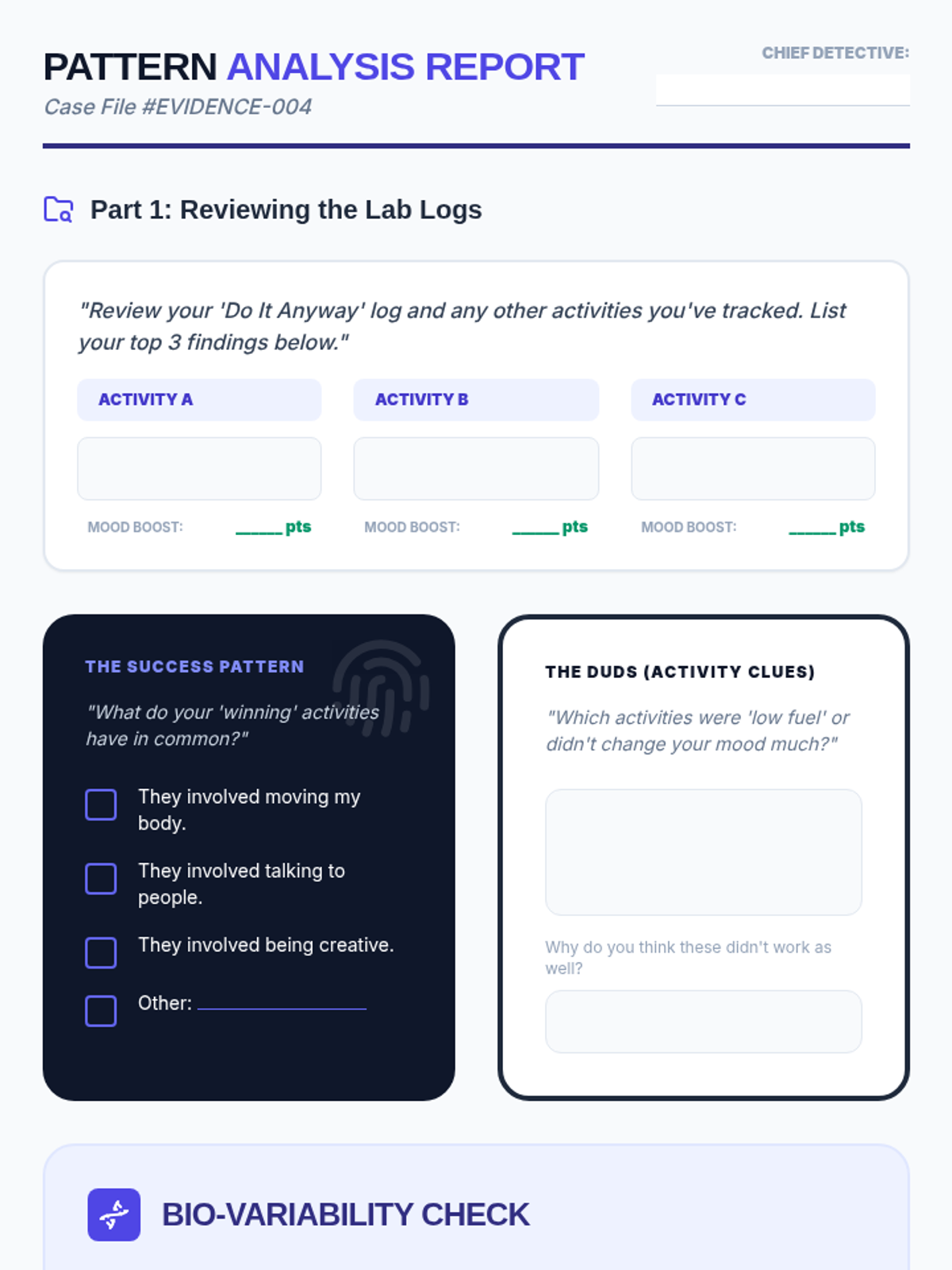
A lab report worksheet for students to analyze their experiment data, identify patterns in effective activities, and reflect on individual differences.
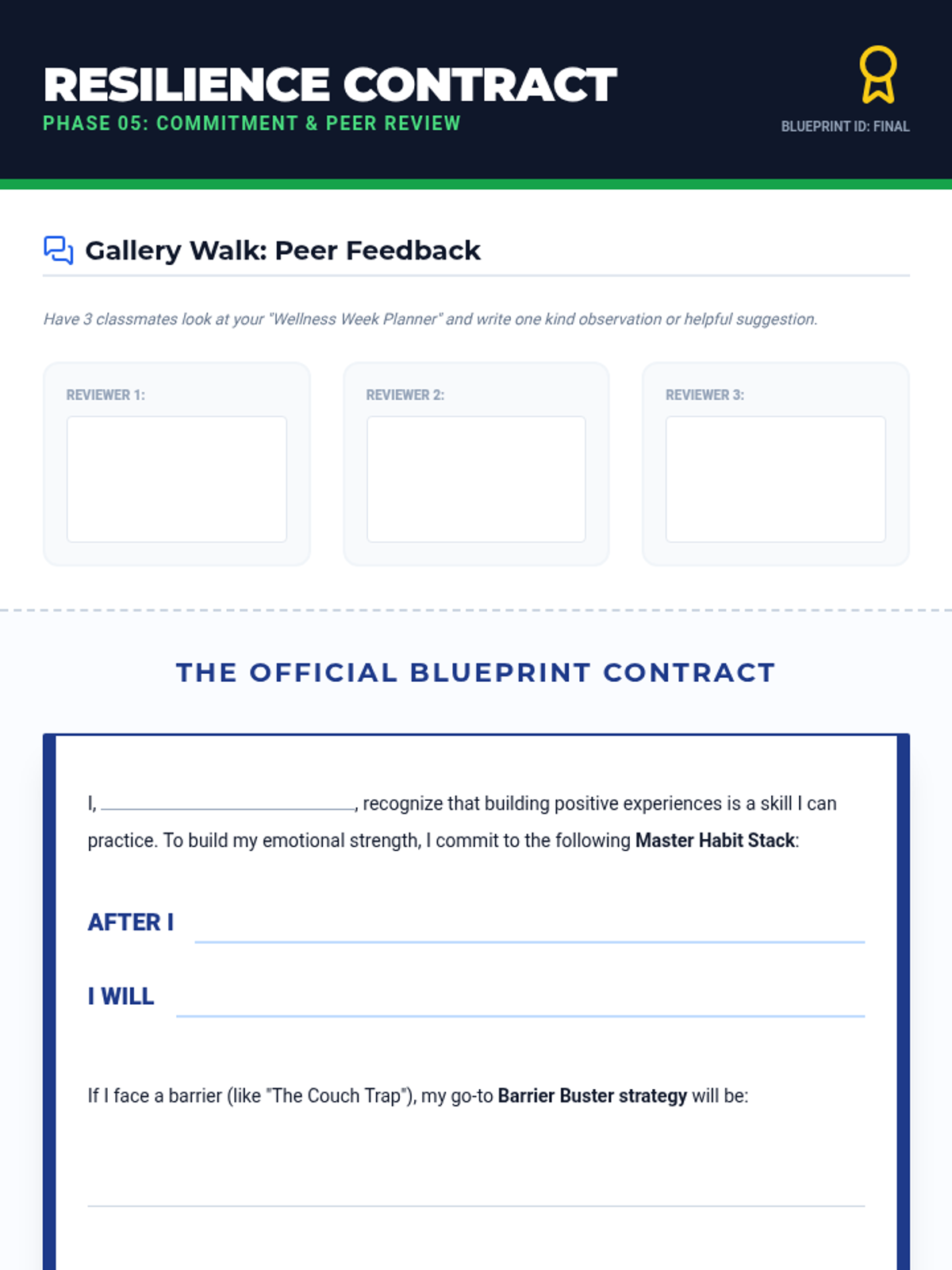
A culminating peer-review and goal-setting contract where students finalize their habit stacks and commit to their wellness routine.
Introductory slides for the final lesson, guiding students through the Gallery Walk and the peer feedback process for their wellness roadmaps.
Introductory slides for the 'Mood Pattern Detectives' lesson, helping students analyze their data and understand the concept of individual variability in activity effectiveness.
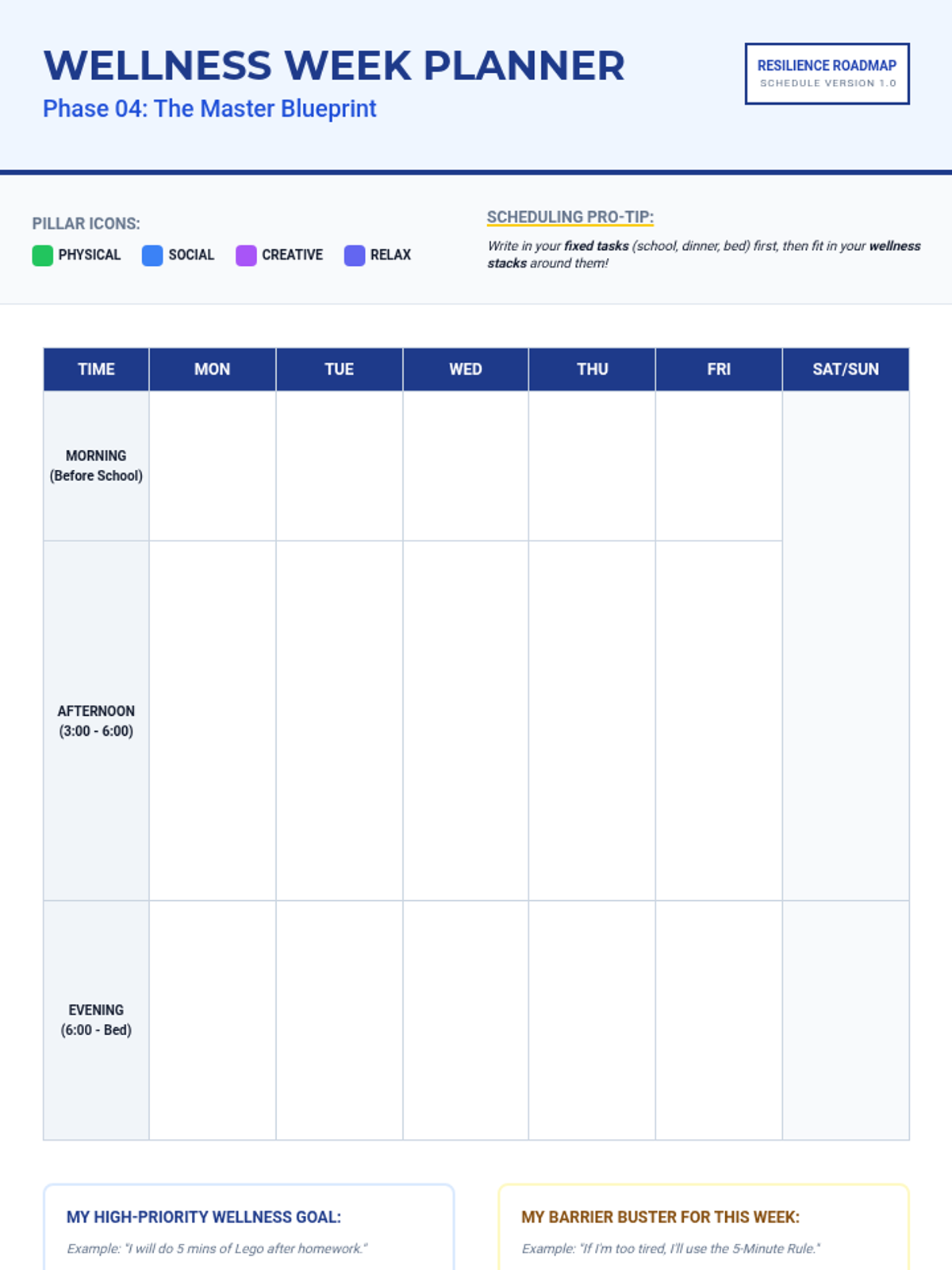
A student worksheet for designing a realistic weekly wellness schedule, including fixed obligations and "scheduled joy" using pillar categories and habit stacks.
Introductory slides for Lesson 4, explaining the concept of budgeting time for joy and how to solve the "Time Puzzle".
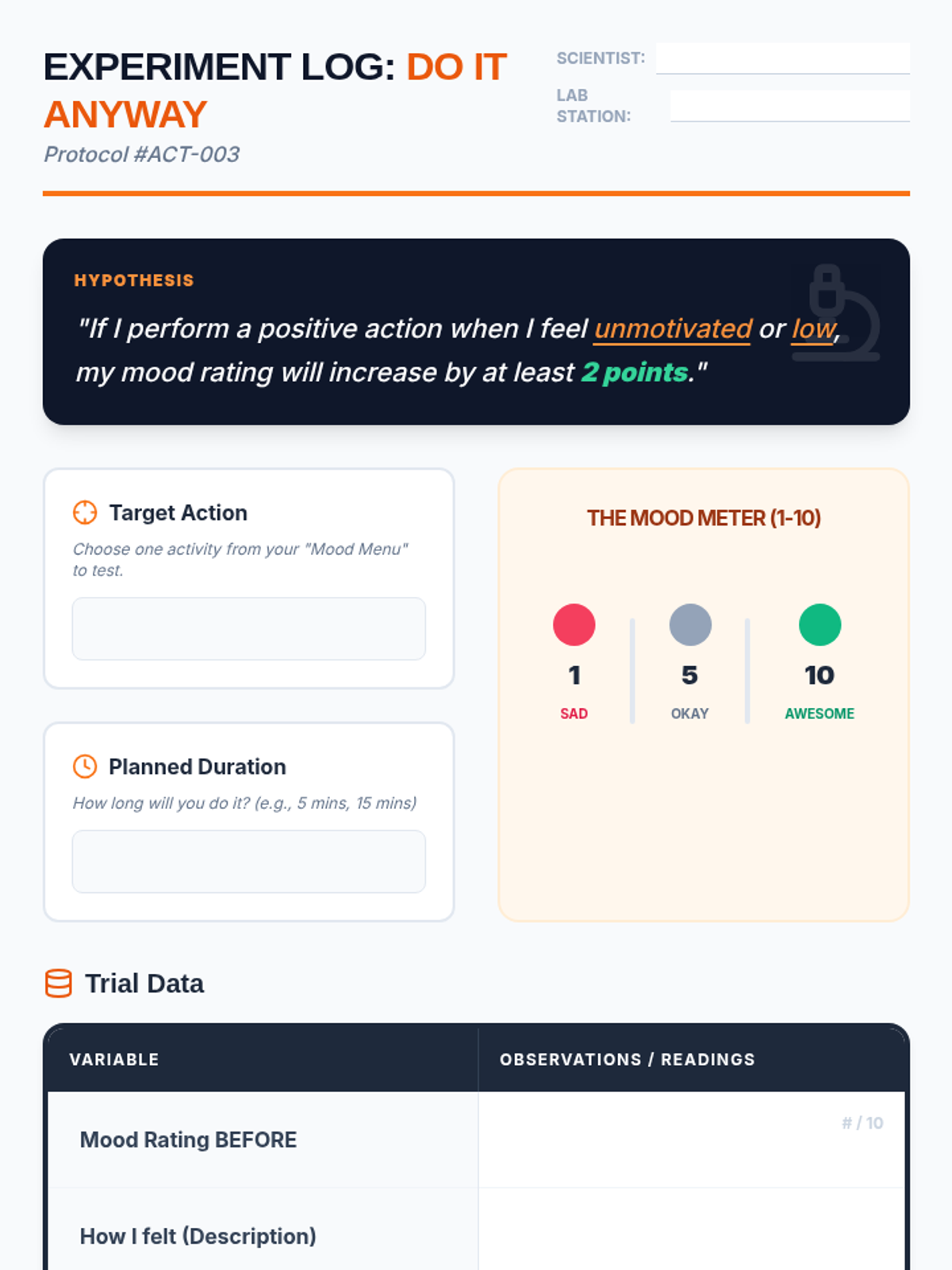
A data collection log for the 'Do It Anyway' experiment, allowing students to track their mood ratings before and after engaging in a positive action.
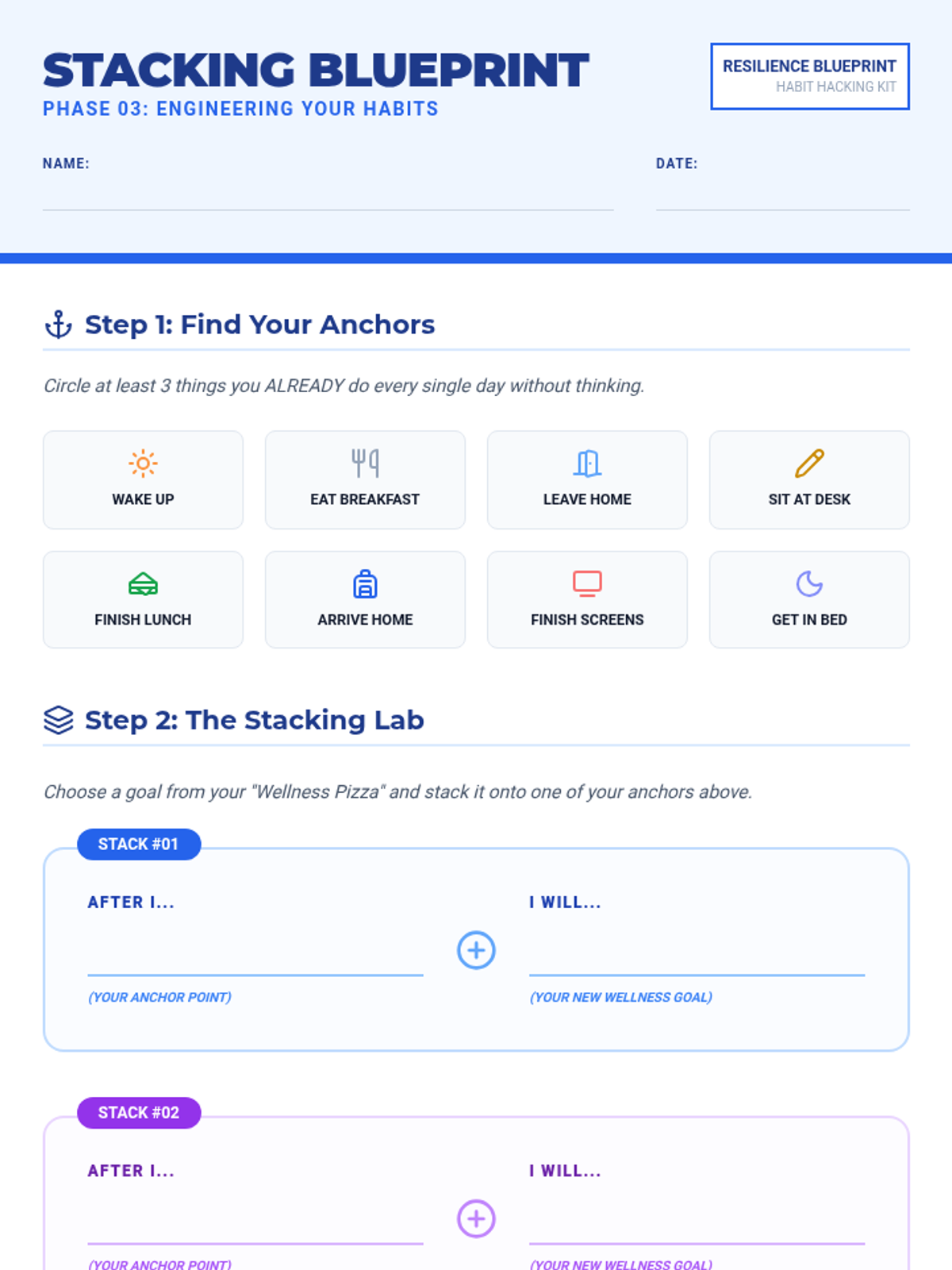
A student worksheet to help identify daily anchor points and create custom "After I... I will..." habit stacks for wellness goals.
Introductory slides for the 'Do It Anyway' experiment, explaining the concept of 'acting opposite' and how to track mood data for a personal science experiment.
Introductory slides for Lesson 3, explaining the concept of habit stacking, anchor points, and the stacking formula.
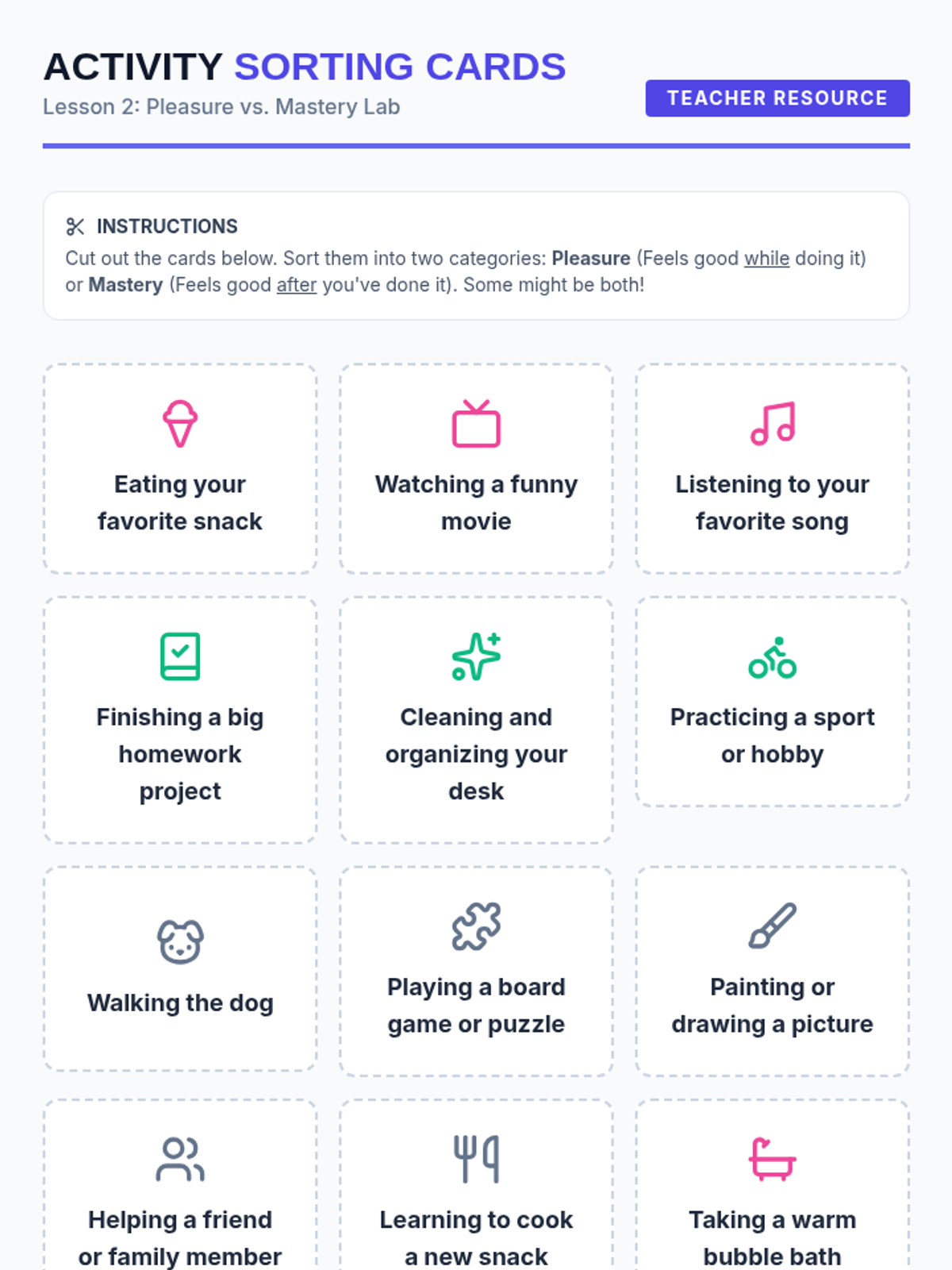
Sorting cards and a categorization t-chart for Lesson 2, helping students distinguish between pleasure-based and mastery-based activities.
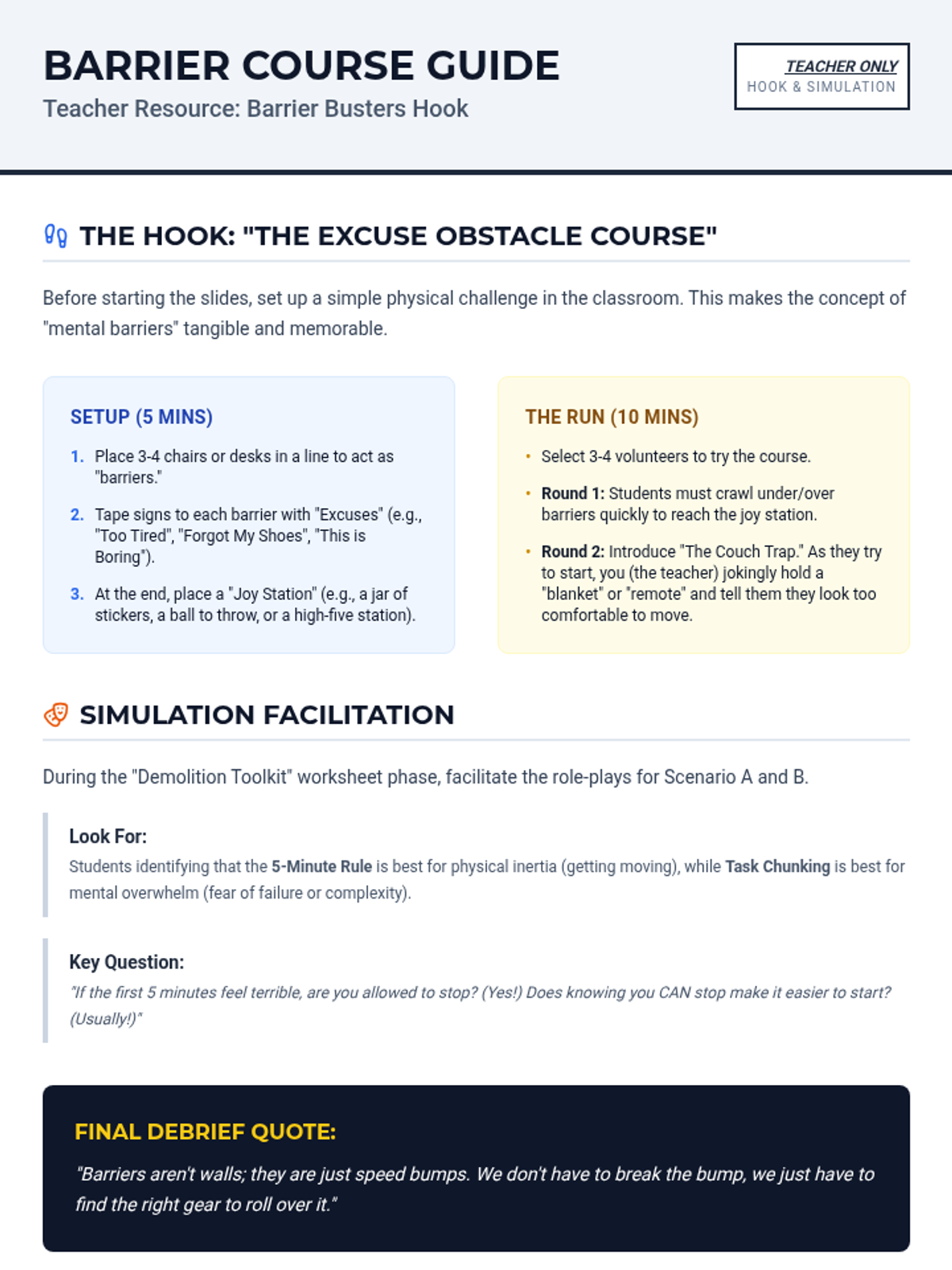
A teacher guide for Lesson 2's obstacle course hook and role-play facilitation, providing setup instructions and debriefing strategies for 'Barrier Busters'.
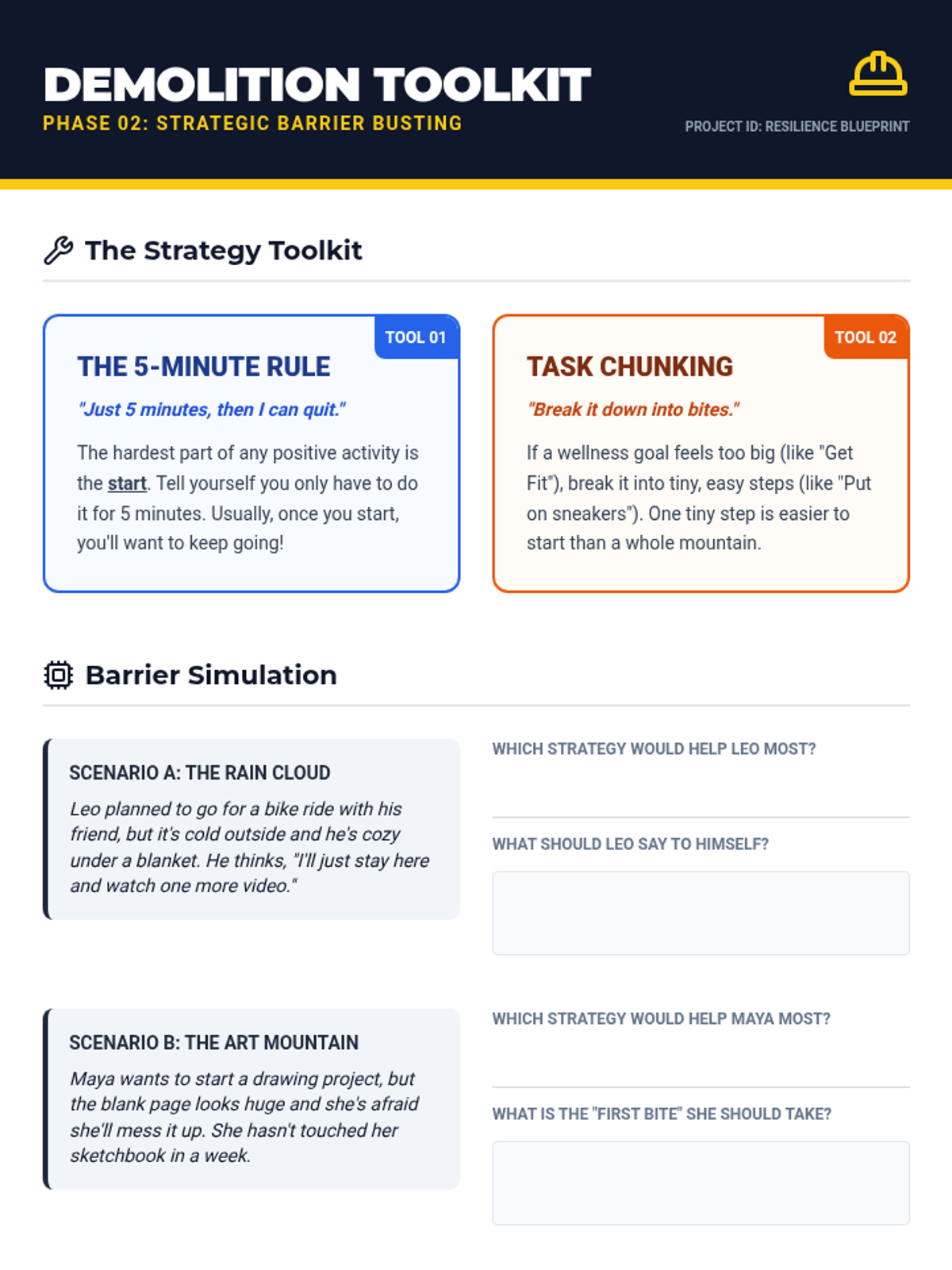
A strategy reference and scenario-based worksheet where students practice applying the 5-Minute Rule and Task Chunking to overcome common barriers to wellness.
Introductory slides for the 'Pleasure and Mastery' lesson, explaining the difference between 'Fun fuel' and 'Proud fuel' and the importance of a balanced activity diet.
Slides for Lesson 2, identifying 'The Couch Trap' and teaching the 5-Minute Rule and Task Chunking as strategic 'barrier busters'.
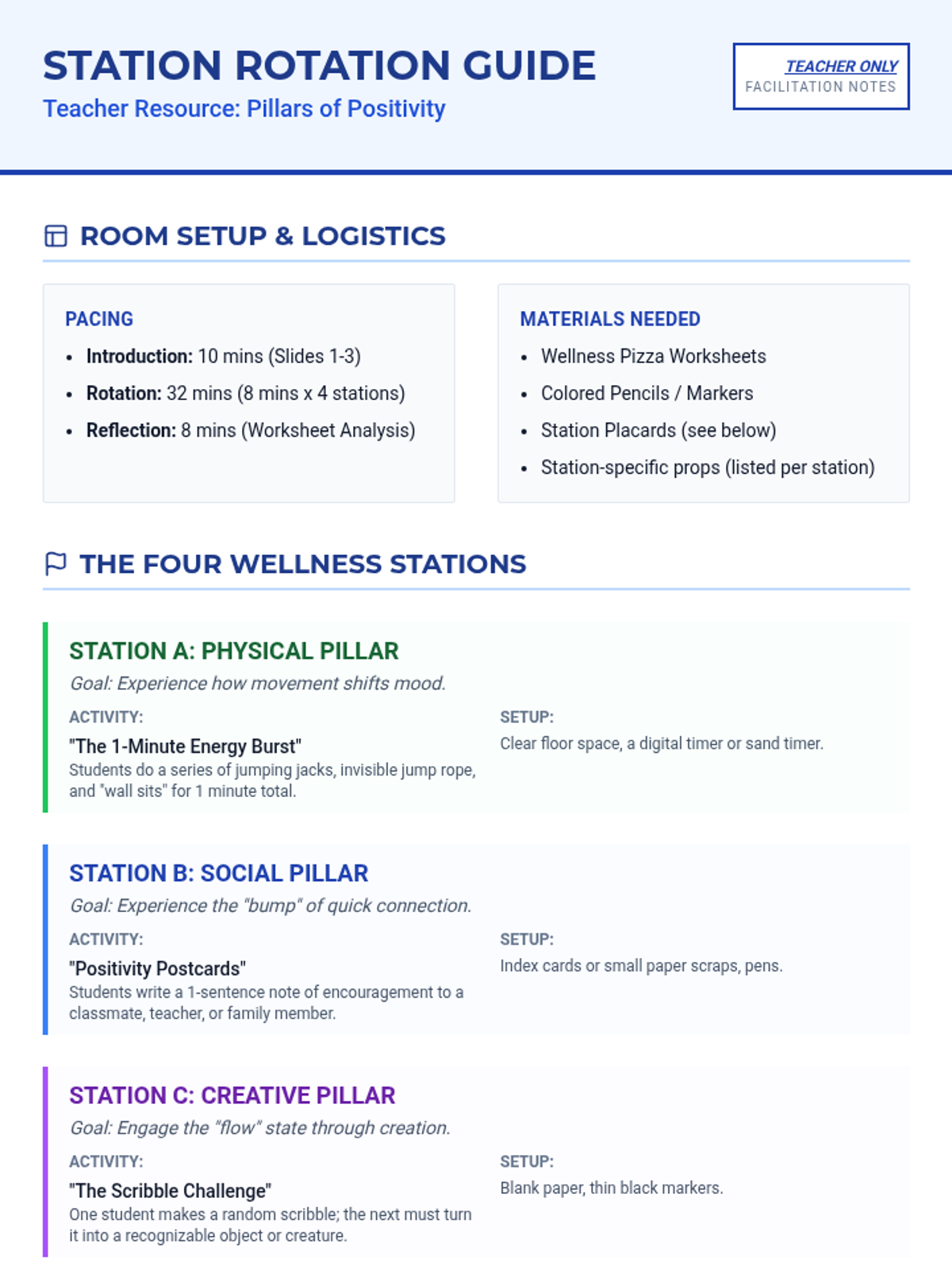
A facilitation guide for teachers to set up and run the four wellness pillar stations, including activities, setup needs, and debrief questions.
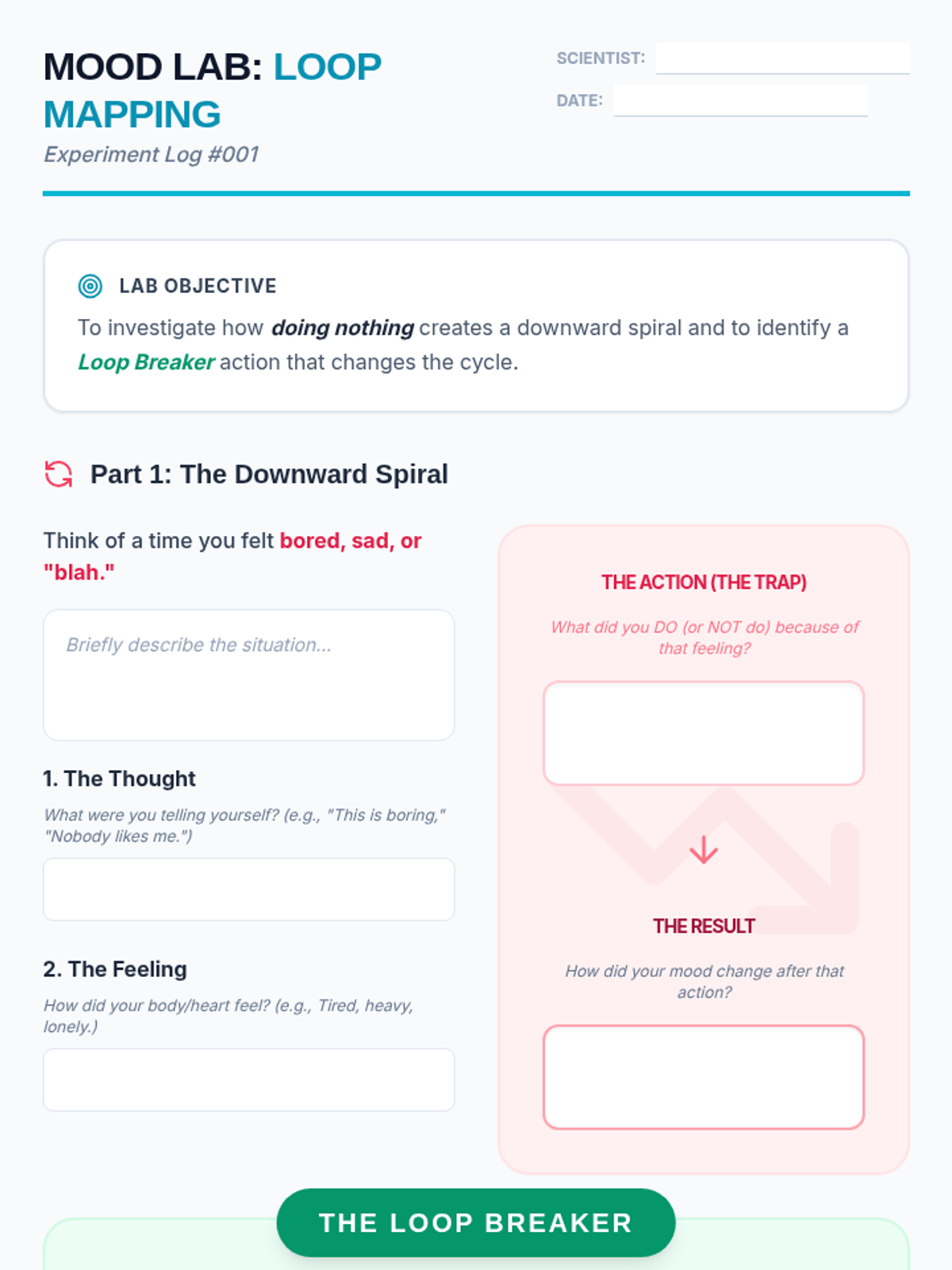
A lab notebook style worksheet for students to map out their own action-emotion loop, identifying a 'downward spiral' moment and a 'loop breaker' action.
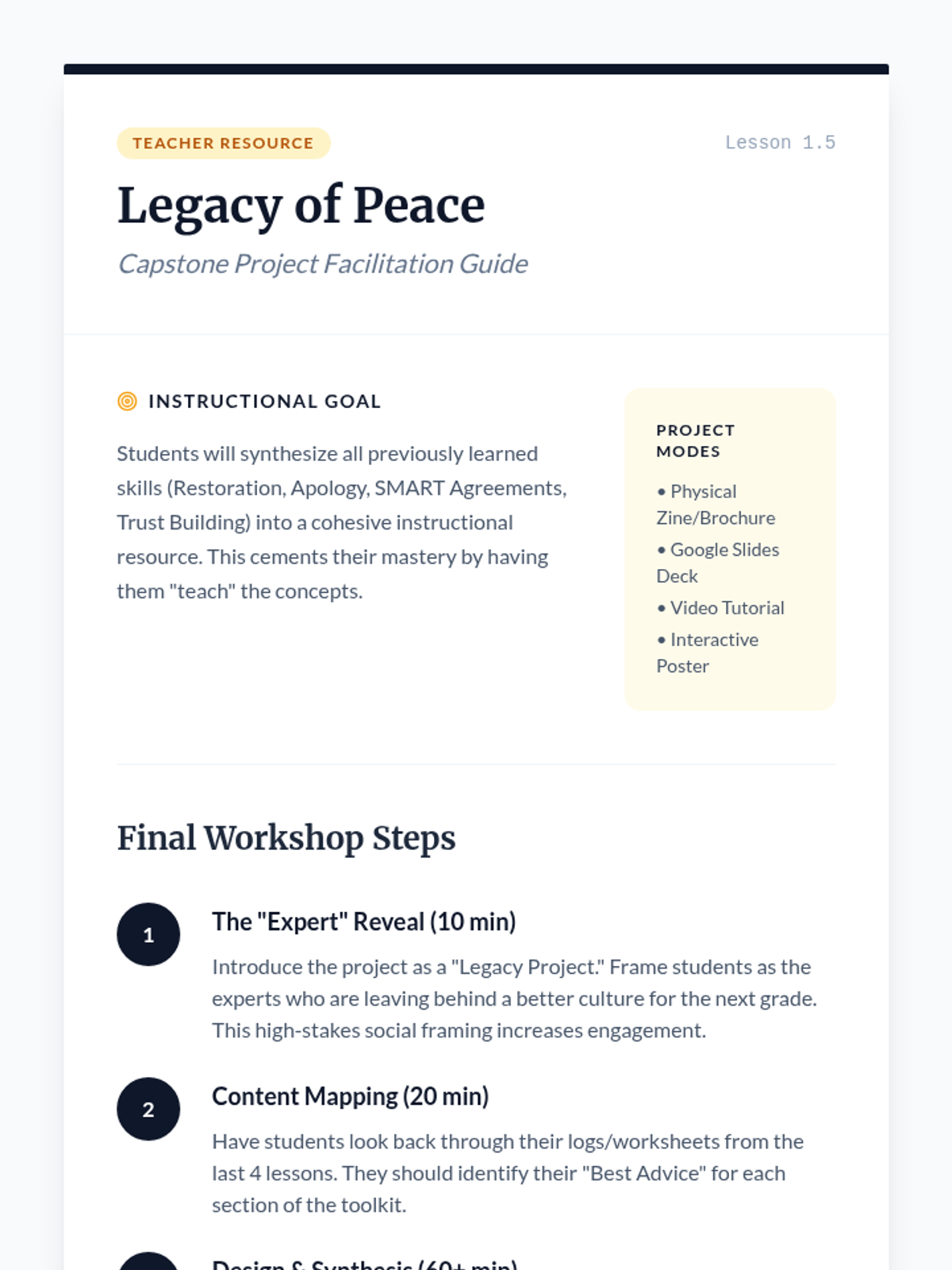
A teacher guide for the Lesson 5 capstone project, providing instructional strategies for the 'Legacy Project' and ways to share student work with a wider audience.
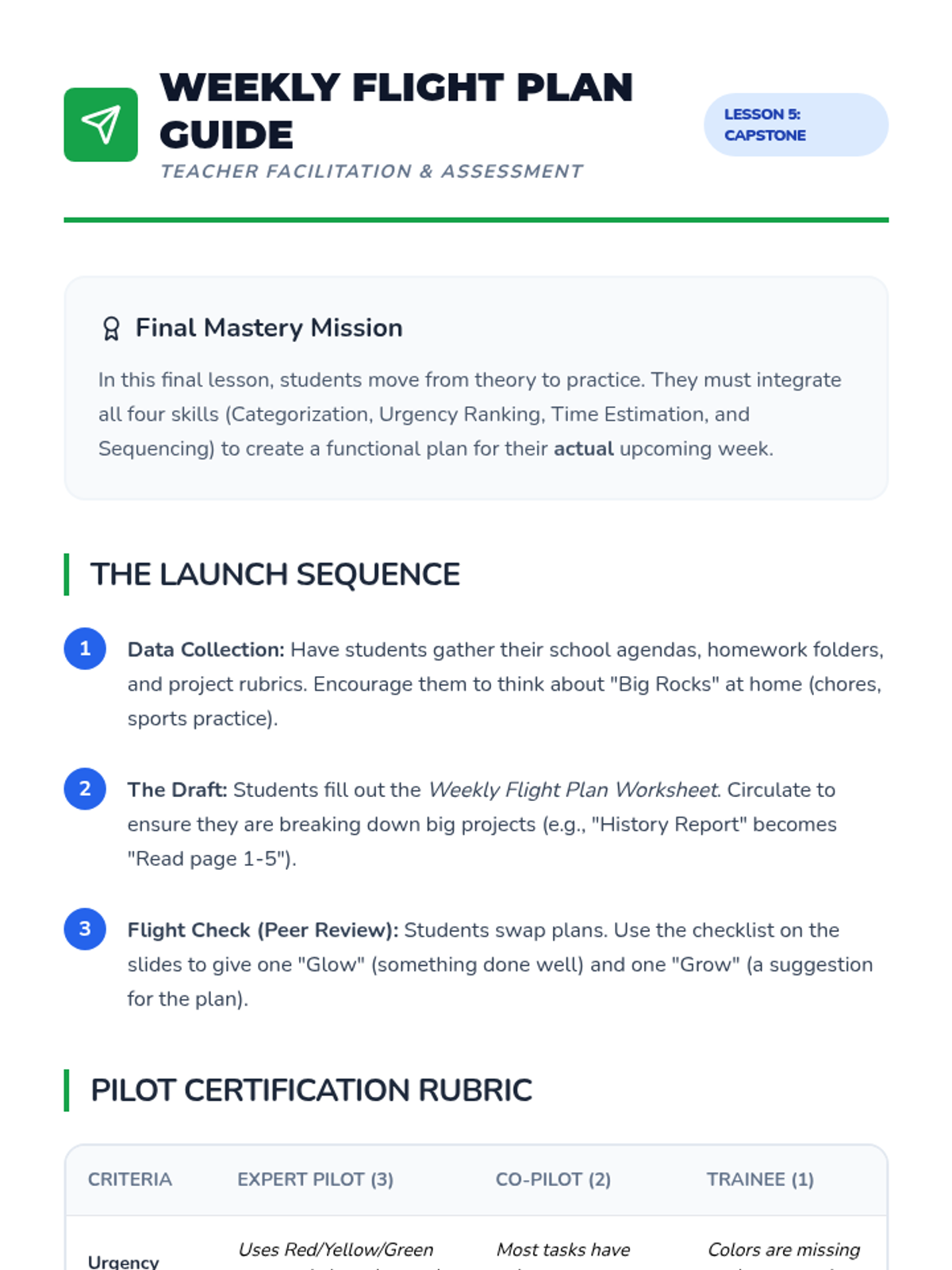
Teacher guide for the final application of all prioritization strategies, including a certification rubric and peer review facilitation steps.
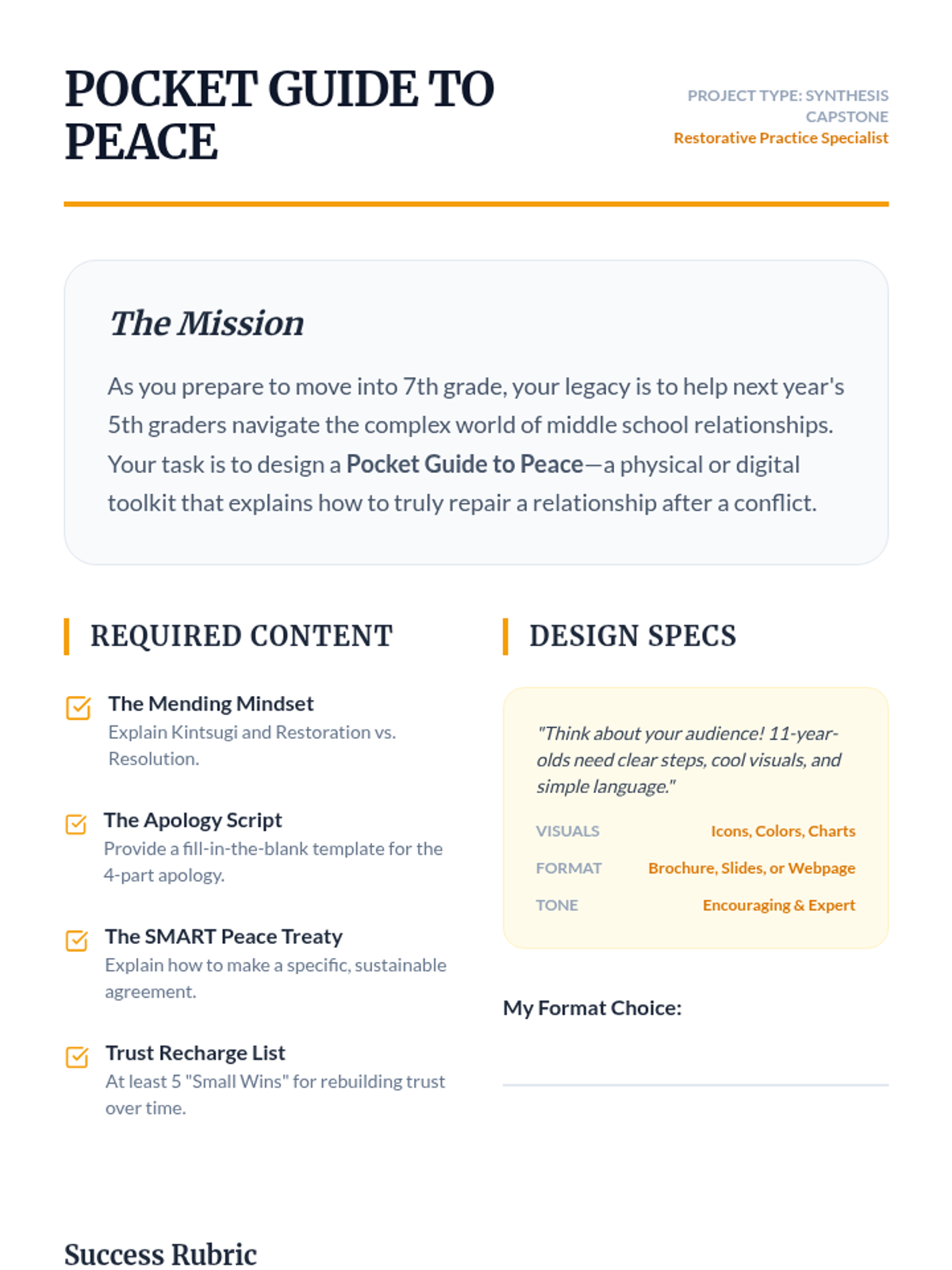
A student-facing project guide and rubric for the 'Pocket Guide to Peace' capstone project, where students synthesize their conflict resolution skills.
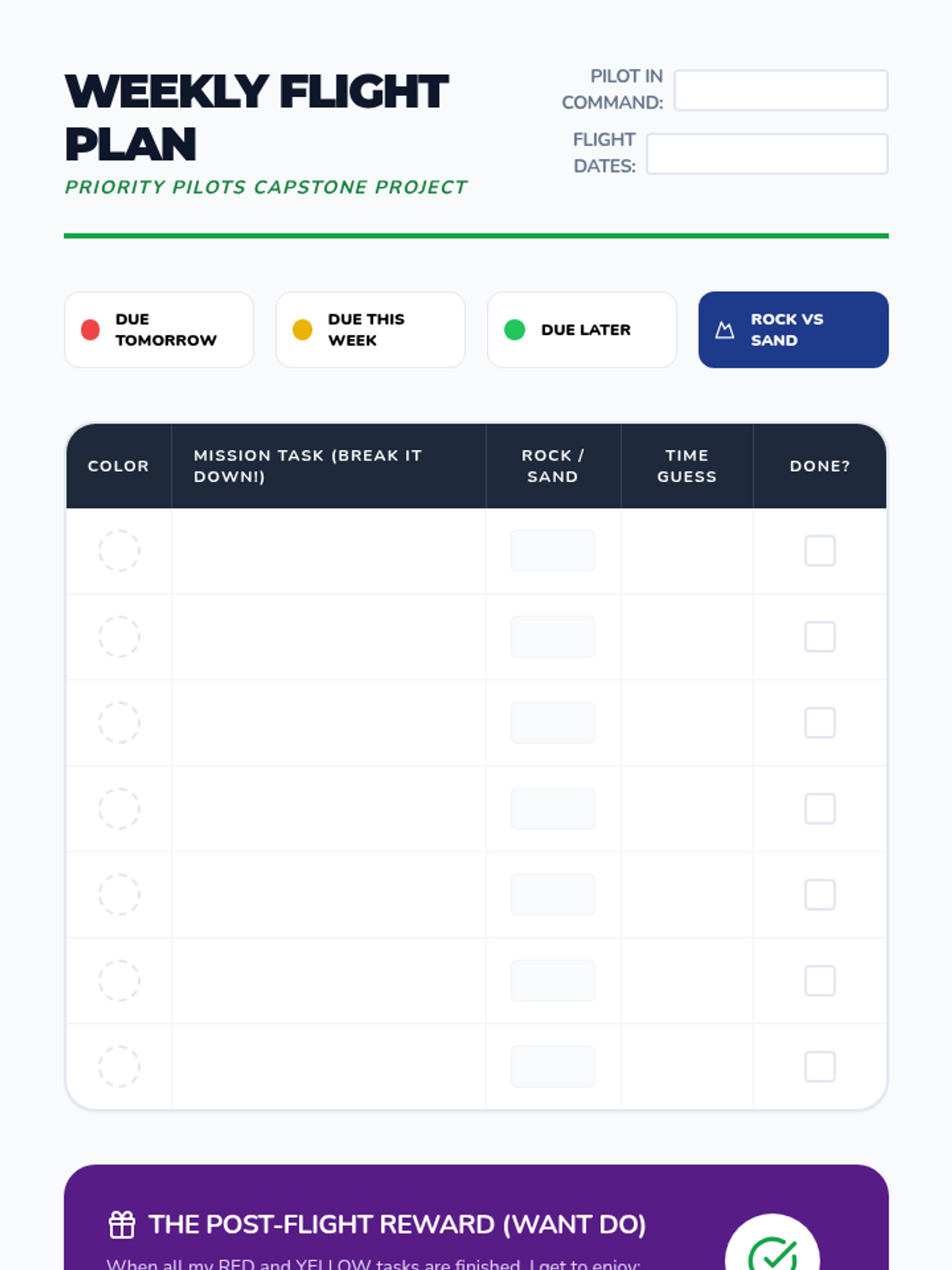
A personalized planning template where students apply all learned strategies (Must/Want, Traffic Light, Rocks/Sand) to their own real-world weekly schedule.
Capstone project slides for Lesson 5, introducing the 'Pocket Guide to Peace' project where students synthesize their learning to create a guide for younger students.
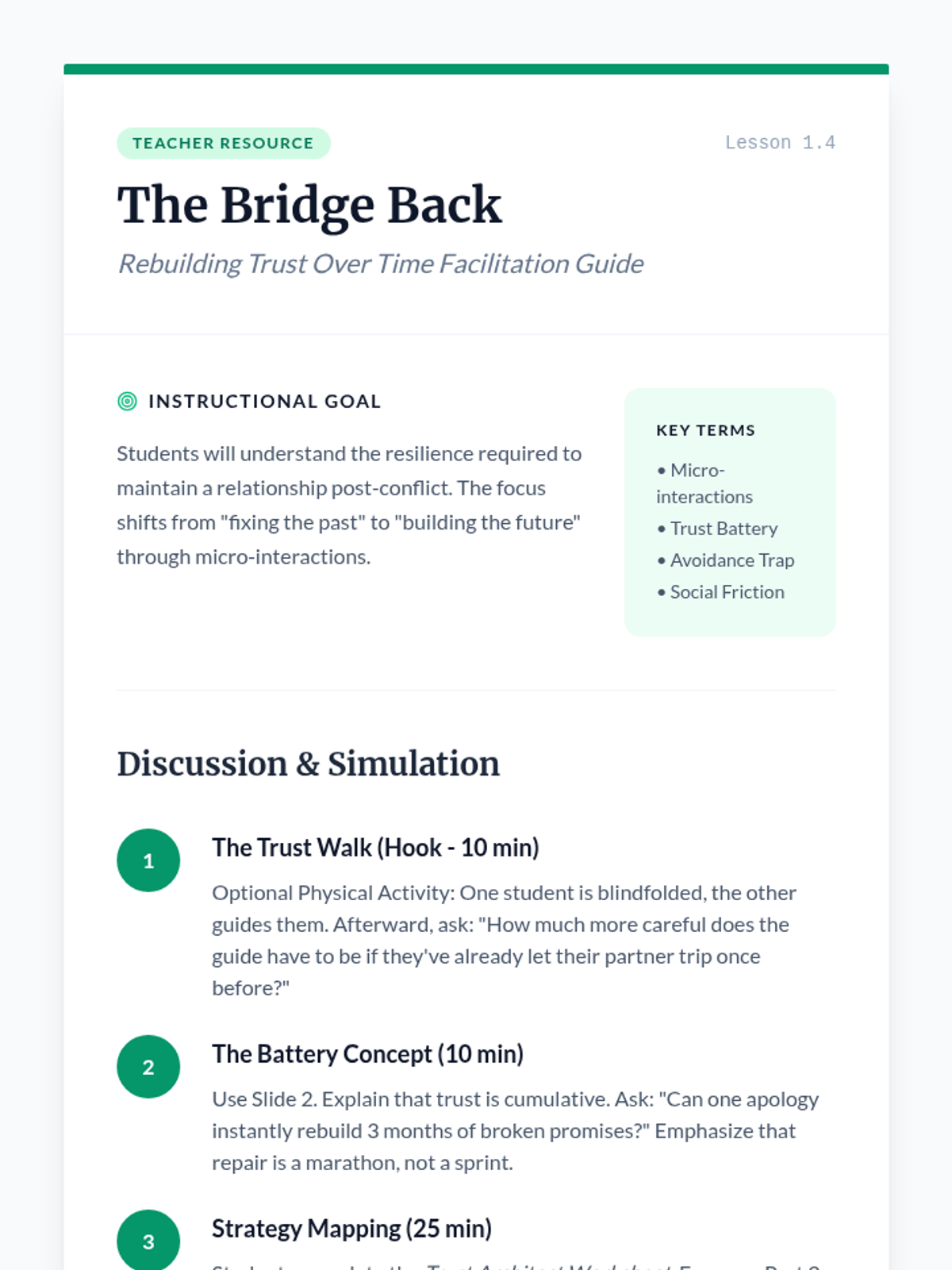
A teacher guide for Lesson 4 on facilitating trust-building activities and helping students navigate the social complexities of post-conflict resolution.
This slide deck guides students through the final application of all prioritization strategies to their own real-world weekly workload.
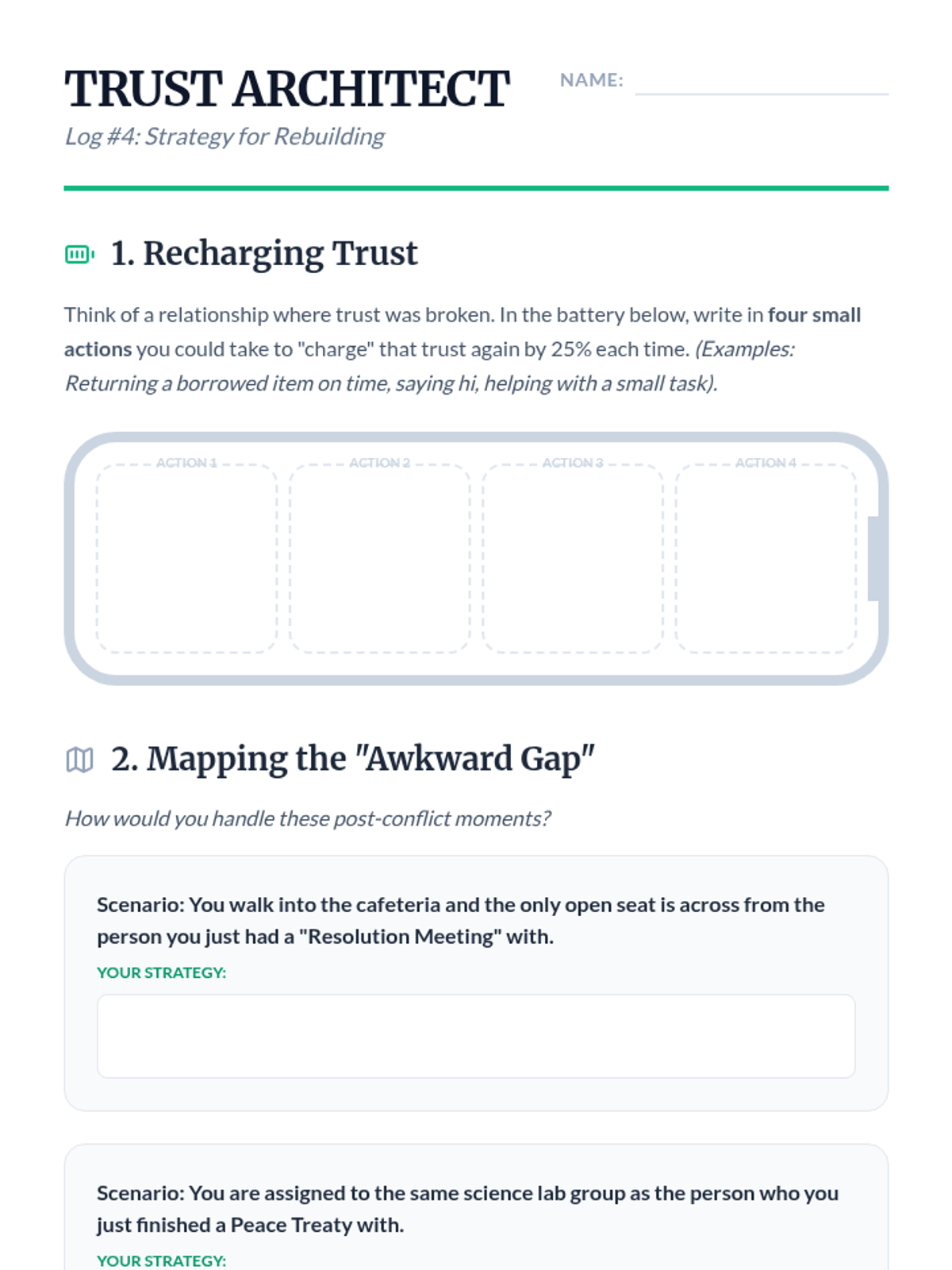
A student worksheet for Lesson 4 that uses a 'Battery' metaphor to help students plan small, consistent actions for rebuilding trust and strategizing for awkward post-conflict social situations.
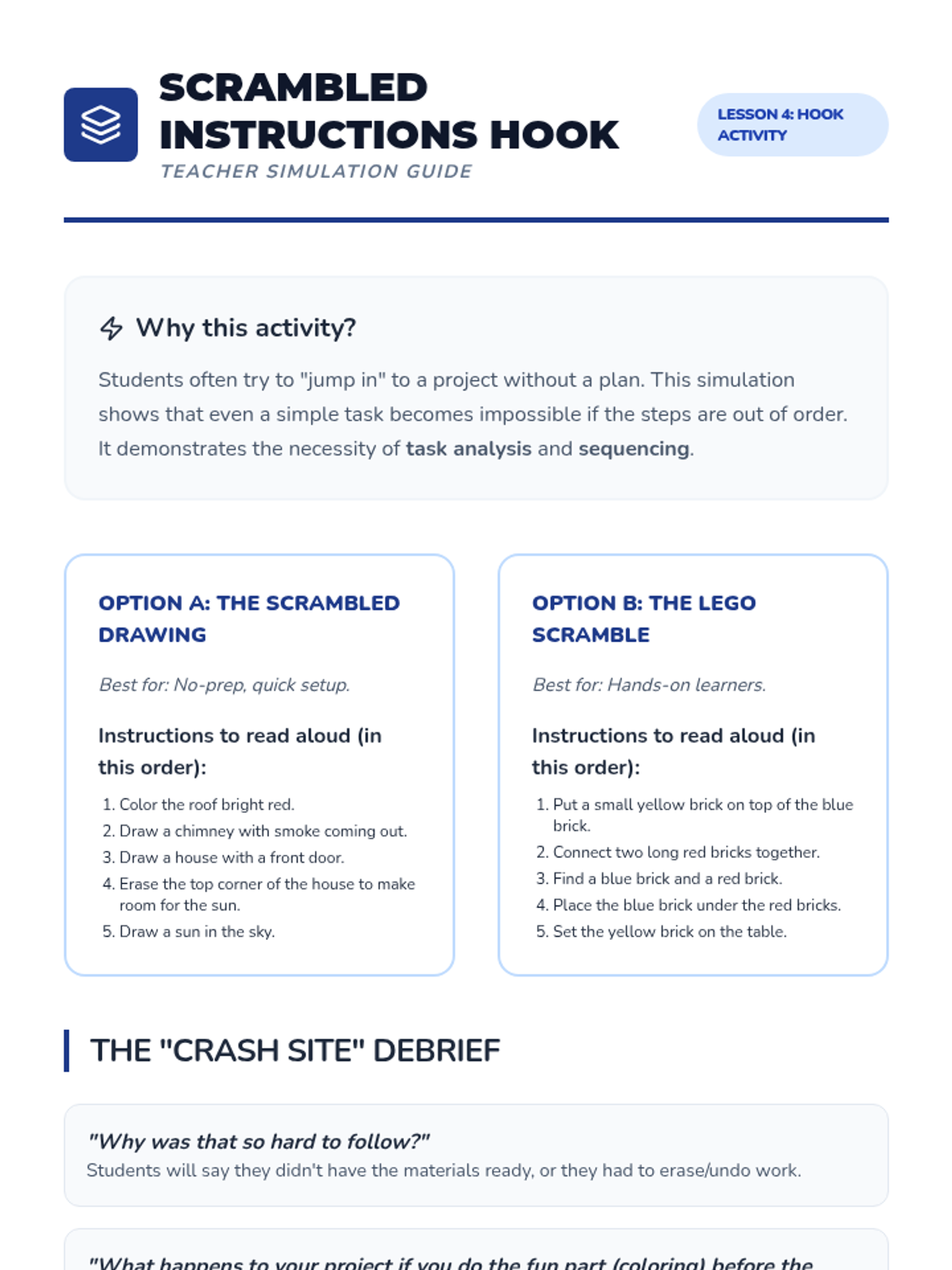
Teacher guide for Lesson 4 hook activity, featuring scrambled LEGO or drawing instructions to demonstrate the importance of logical sequencing.
A slide presentation for Lesson 4 exploring the slow process of rebuilding trust through small, consistent interactions and navigating post-conflict awkwardness.
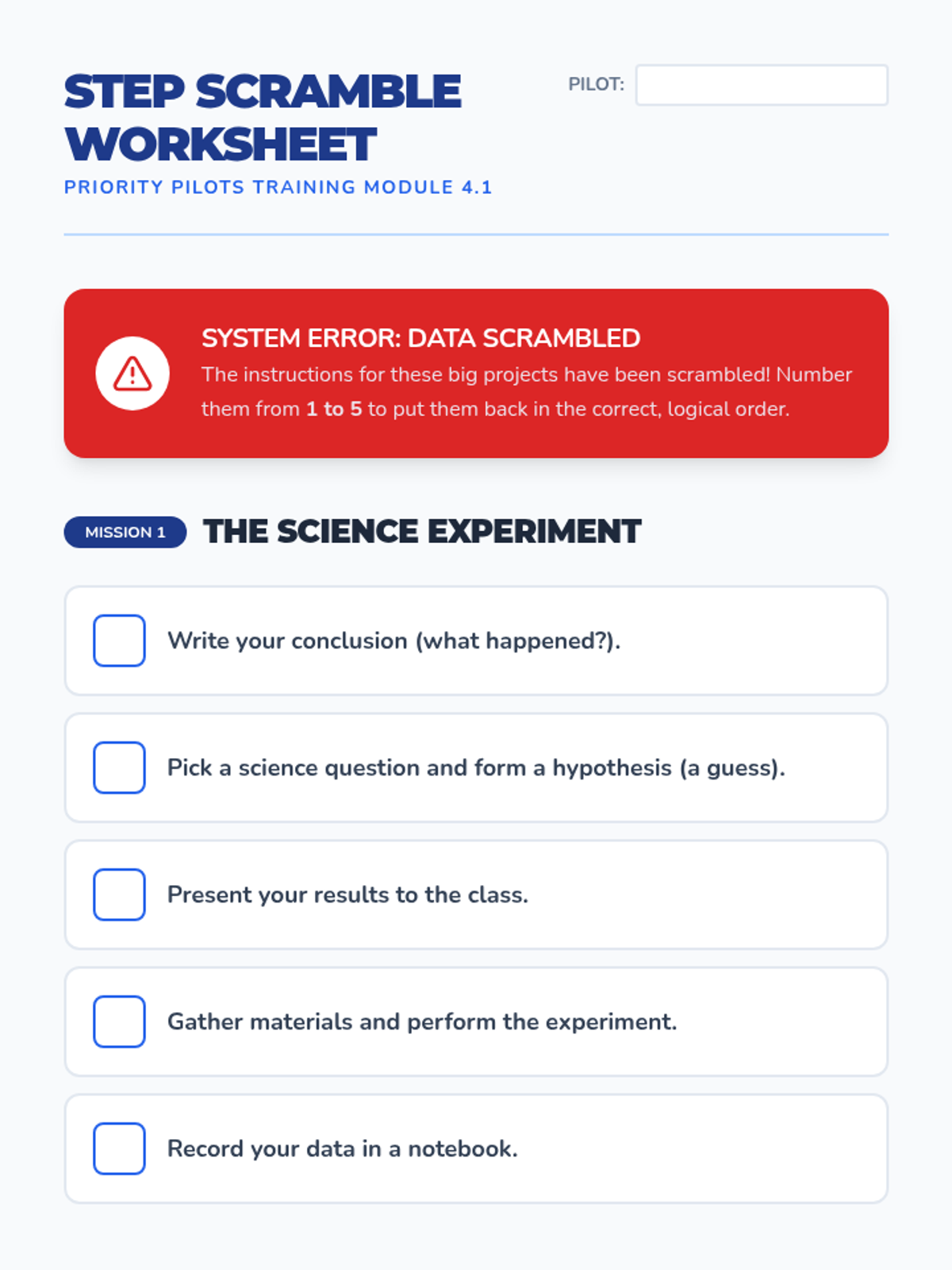
A case study activity where students must arrange scrambled project tasks into a logical, sequential order to learn task analysis.
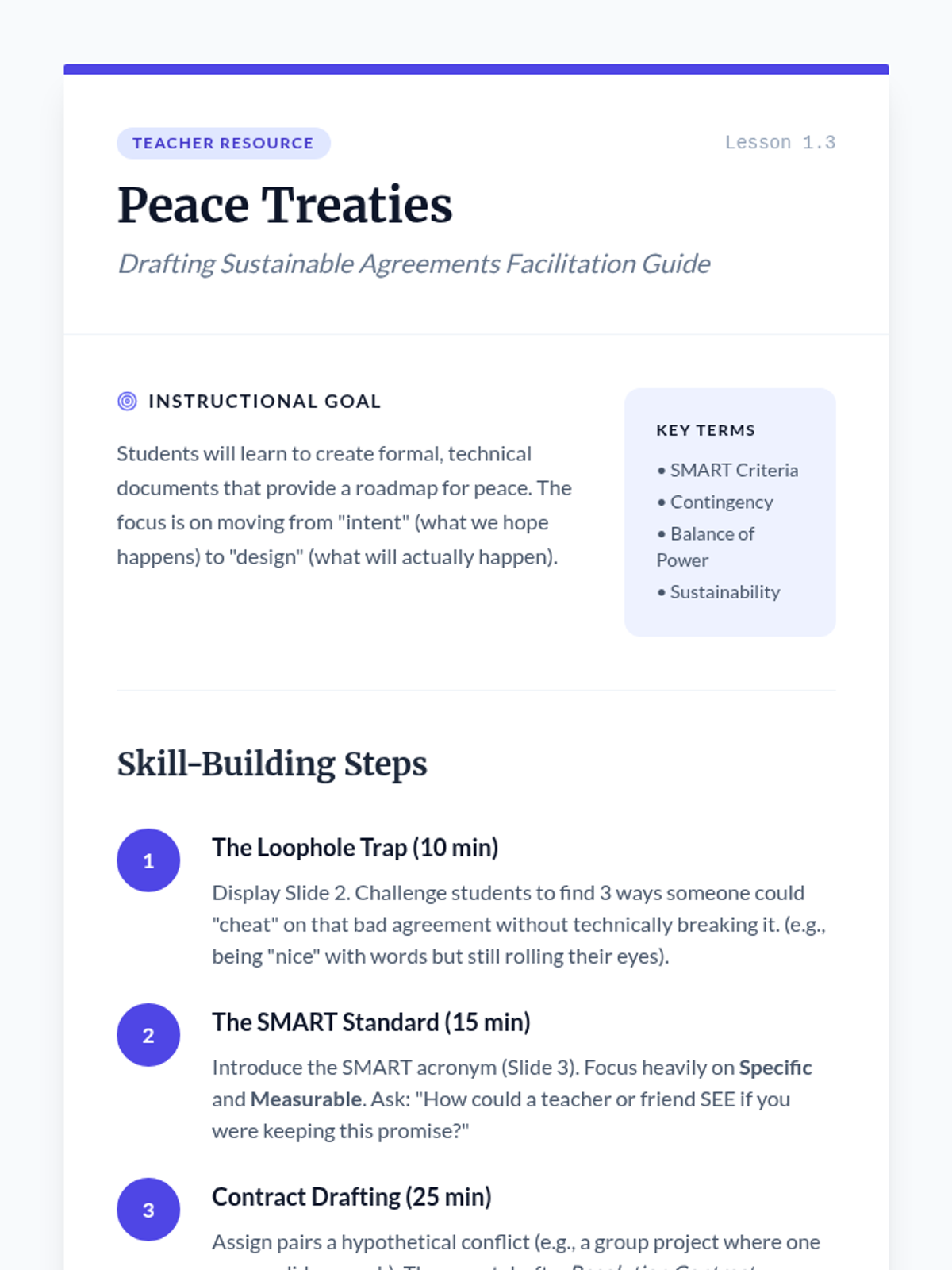
A teacher guide for Lesson 3 on facilitating the creation of sustainable peace agreements and using SMART criteria for conflict resolution.
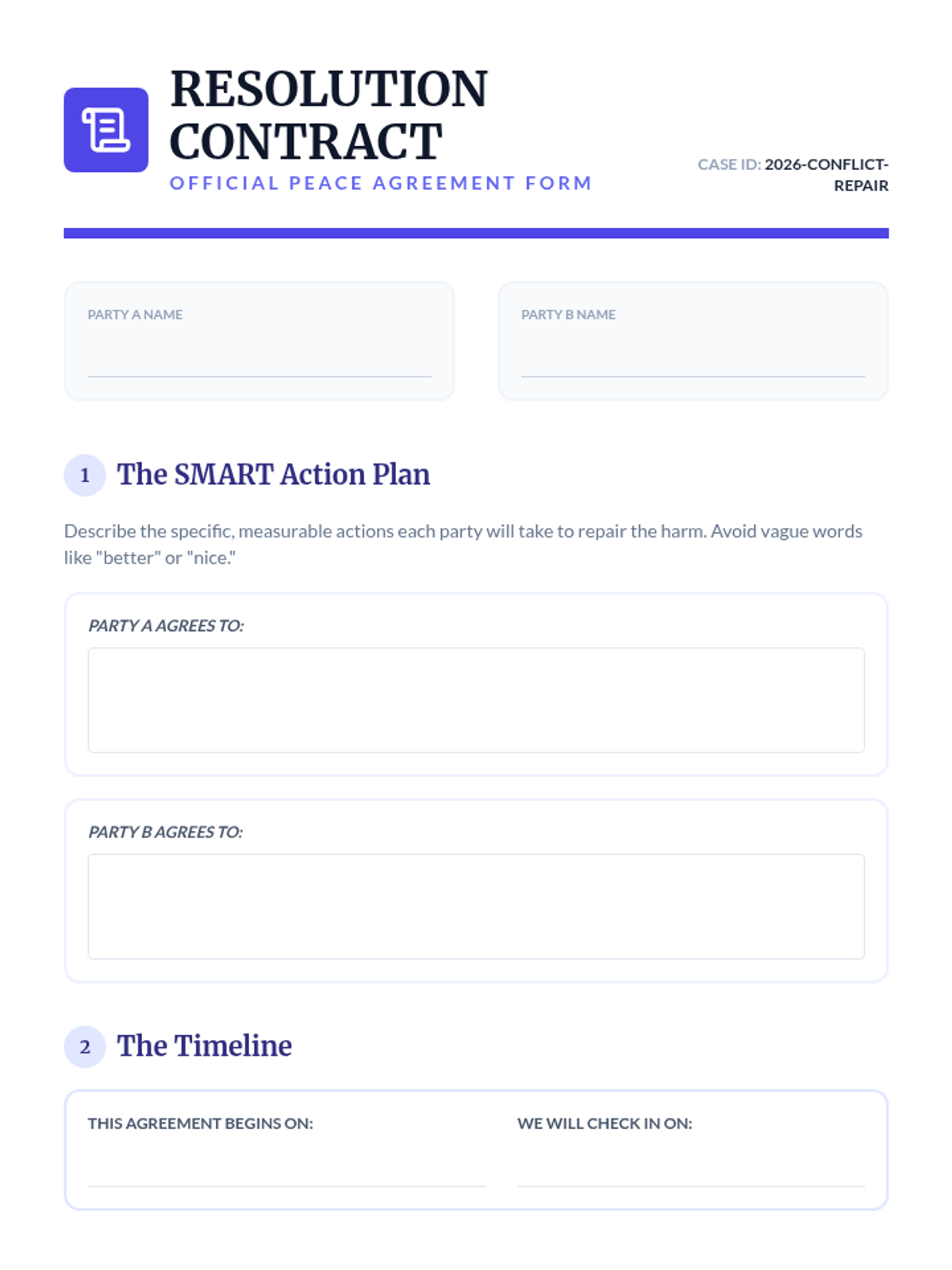
A formal 'Resolution Contract' template for students to use in drafting specific and sustainable agreements during conflict mediation.
This slide deck teaches students how to break down large projects into logical, sequential sub-tasks to avoid overwhelm.
A slide presentation for Lesson 3 on drafting SMART agreements that are specific, measurable, achievable, relevant, and time-bound to ensure sustainable conflict resolution.
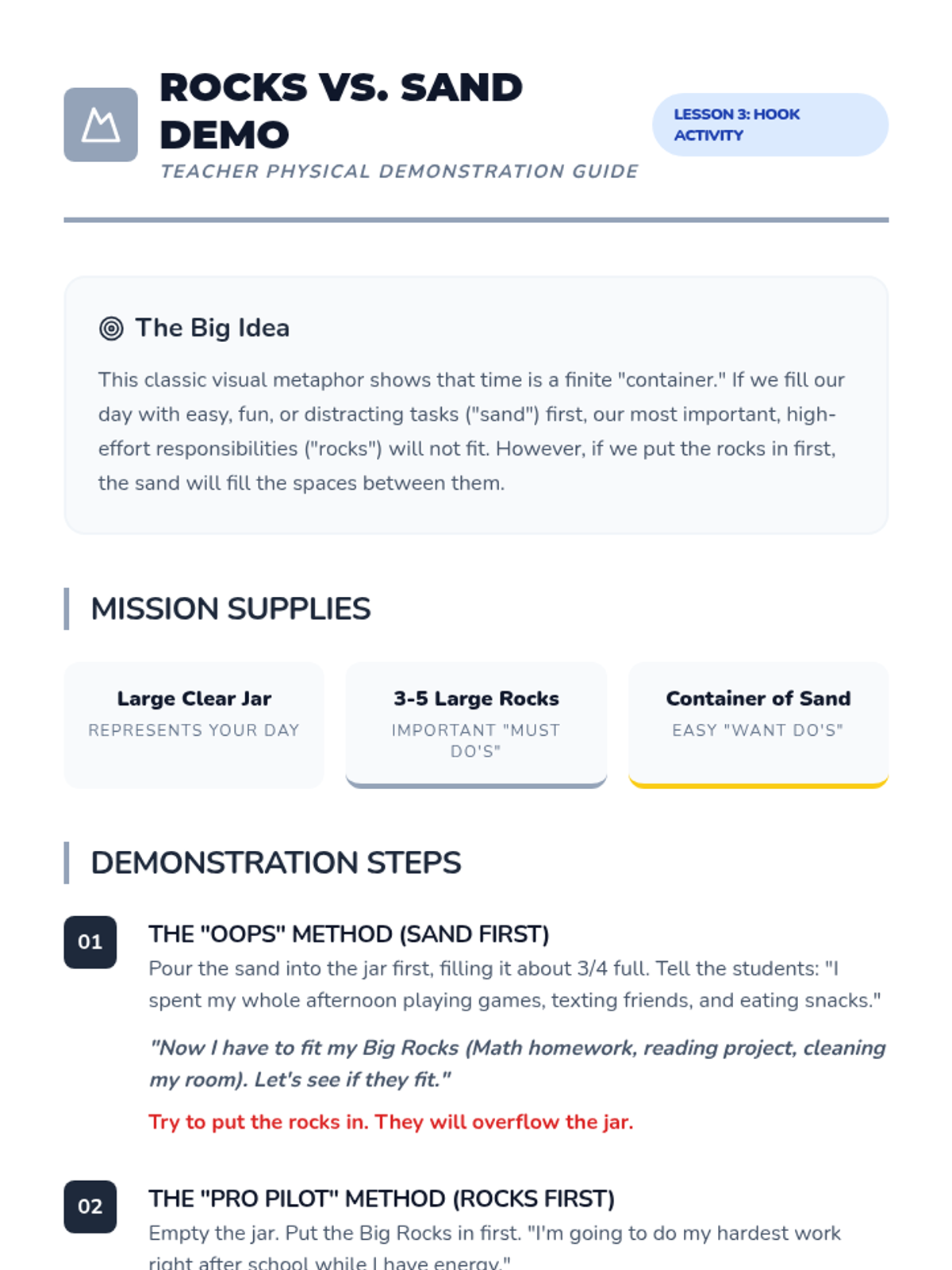
Teacher guide for the physical 'Rocks vs. Sand' jar demonstration, showing how prioritizing large tasks allows everything to fit into a schedule.
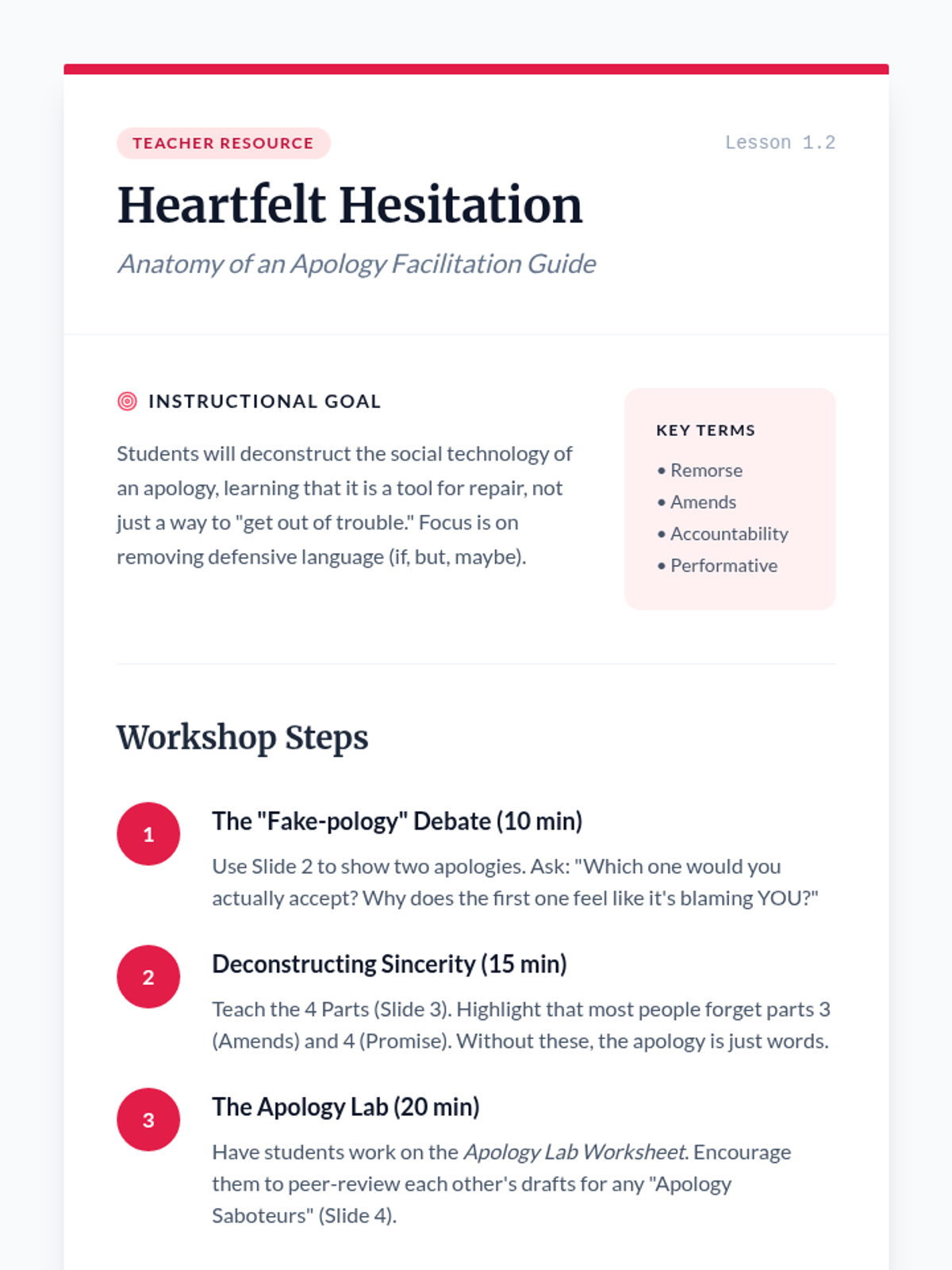
A teacher guide for Lesson 2 focusing on the deconstruction of apologies and facilitating active accountability in the classroom.
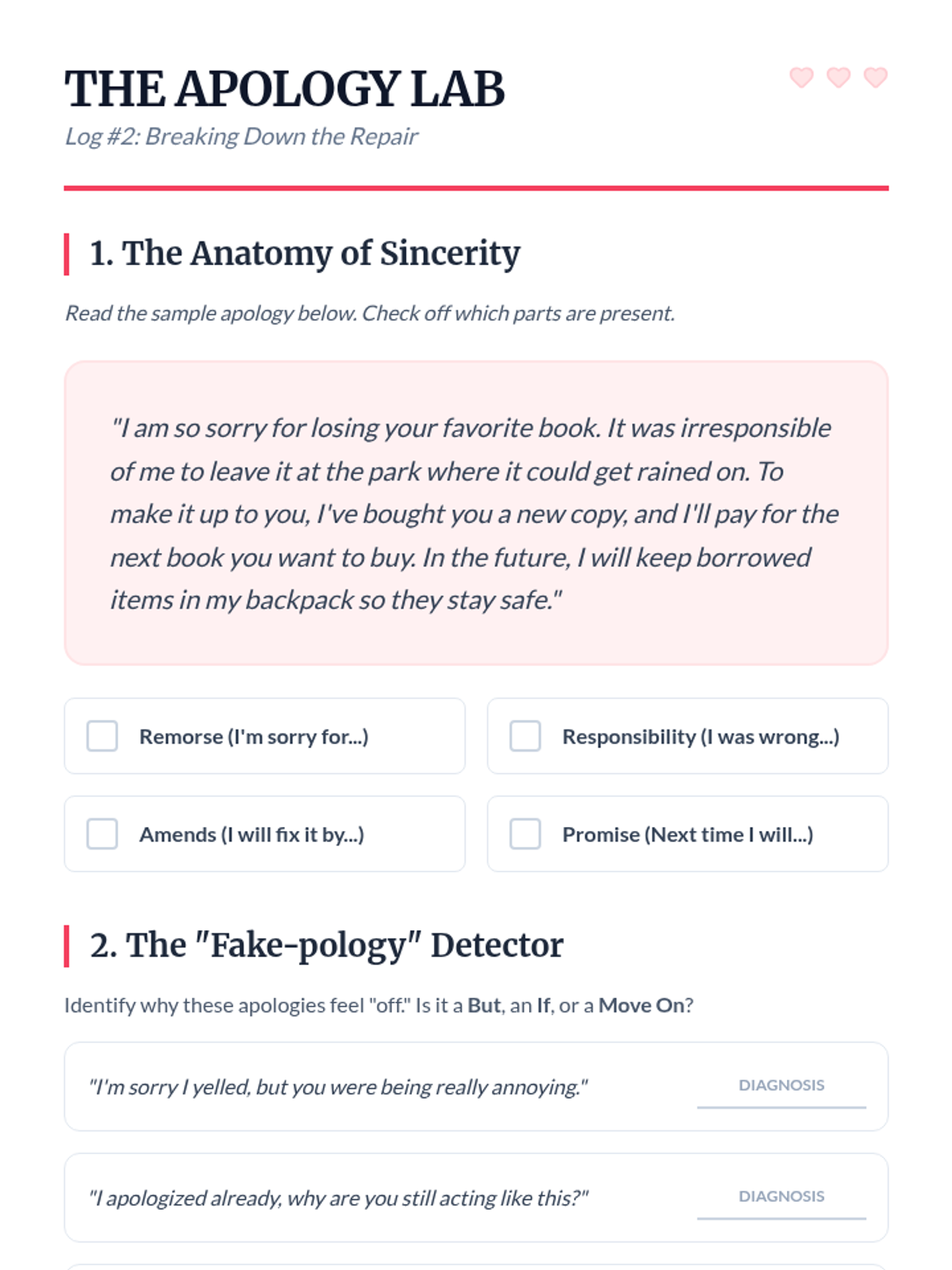
A student worksheet for Lesson 2 that helps students analyze the components of an apology and practice writing their own sincere versions using a 4-part framework.
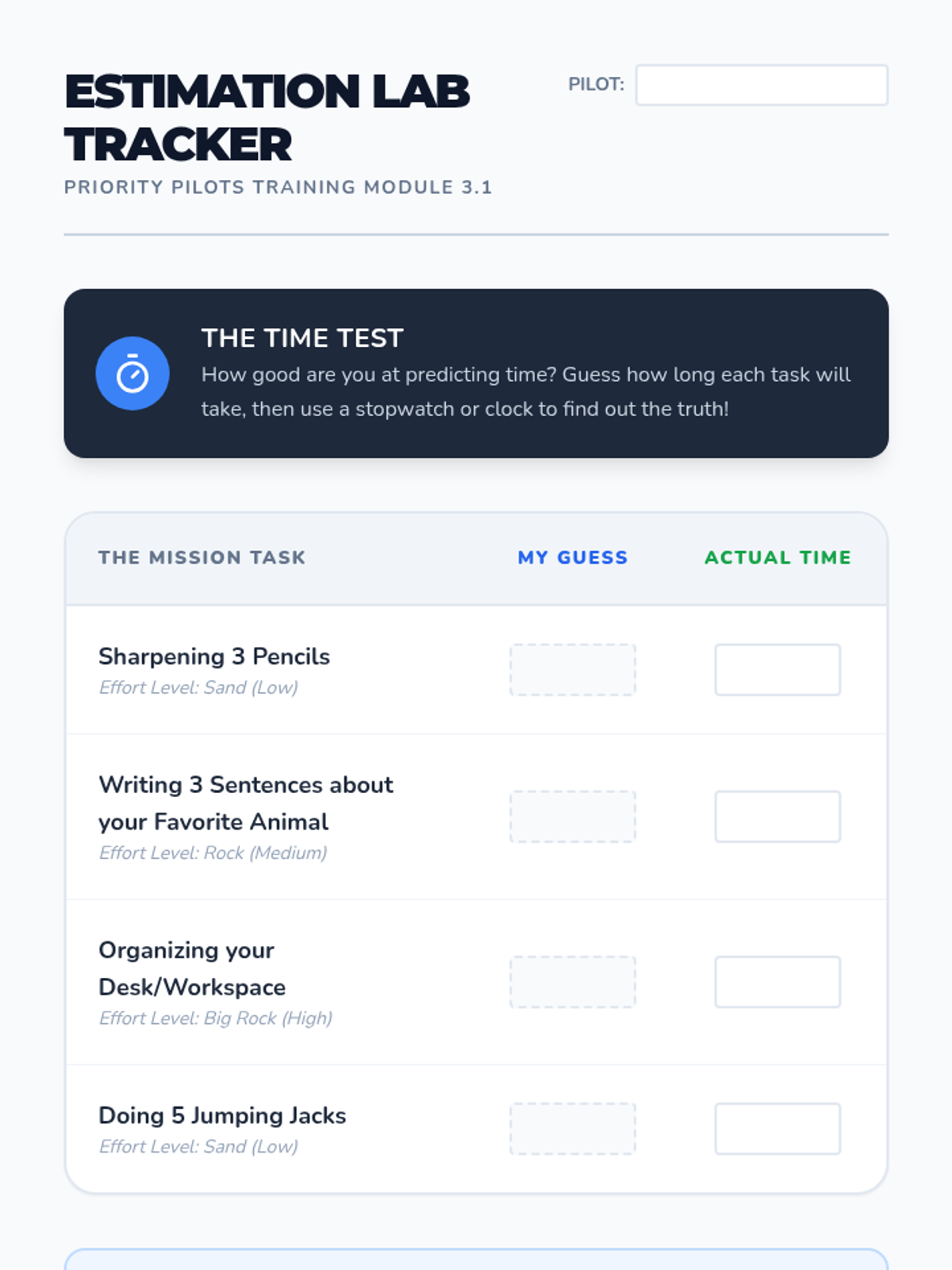
A time-tracking activity where students compare their time estimations for common tasks against the actual time measured.
A slide presentation for Lesson 2 breaking down the components of a sincere apology and identifying common mistakes that invalidate apologies.
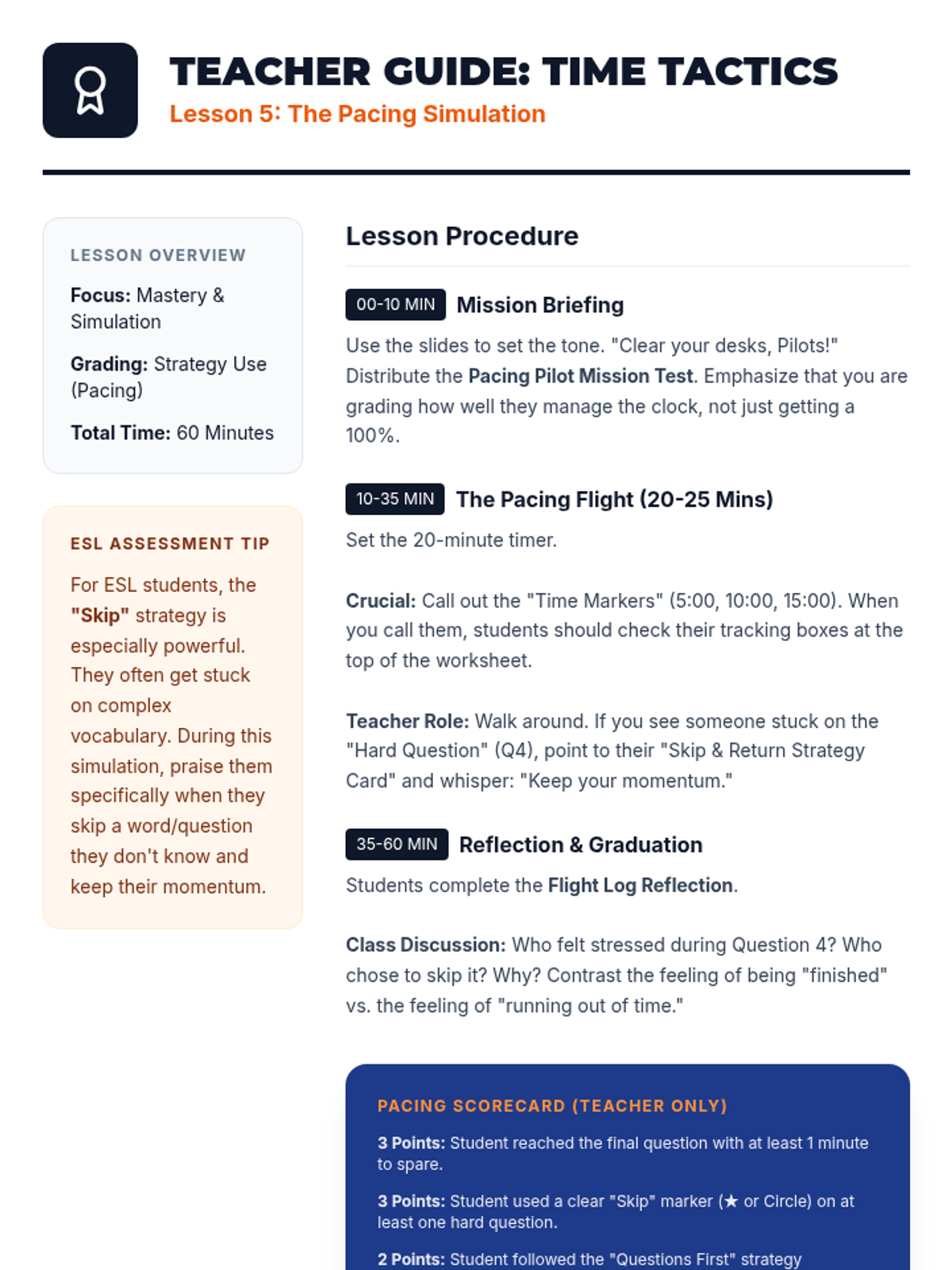
Teacher guidance for the Lesson 5 simulation, including timing calls, teacher observation tips, and a scoring rubric for student pacing behavior.
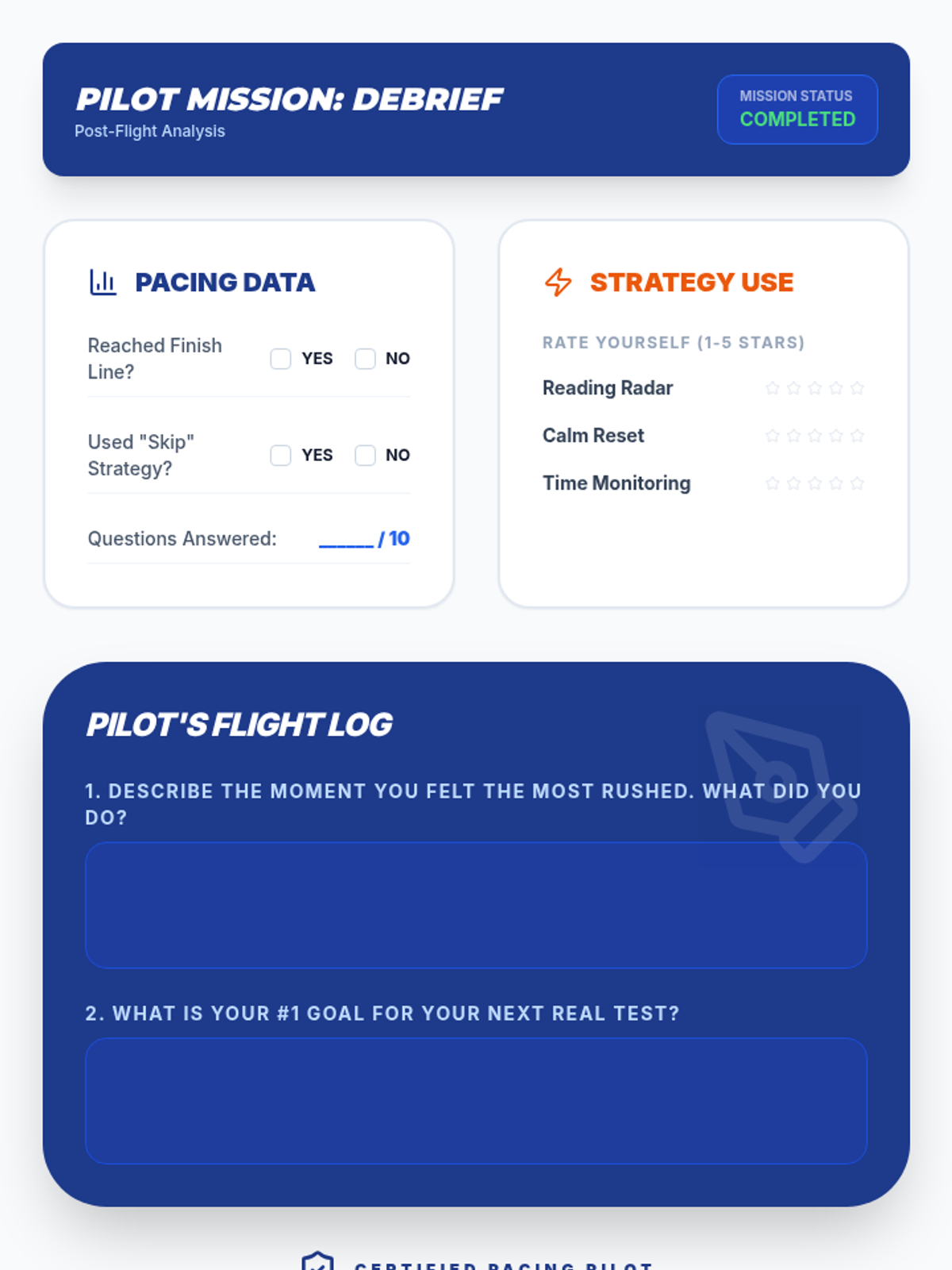
The Lesson 5 reflection and debrief worksheet where students analyze their performance during the simulation and rate their strategy use.
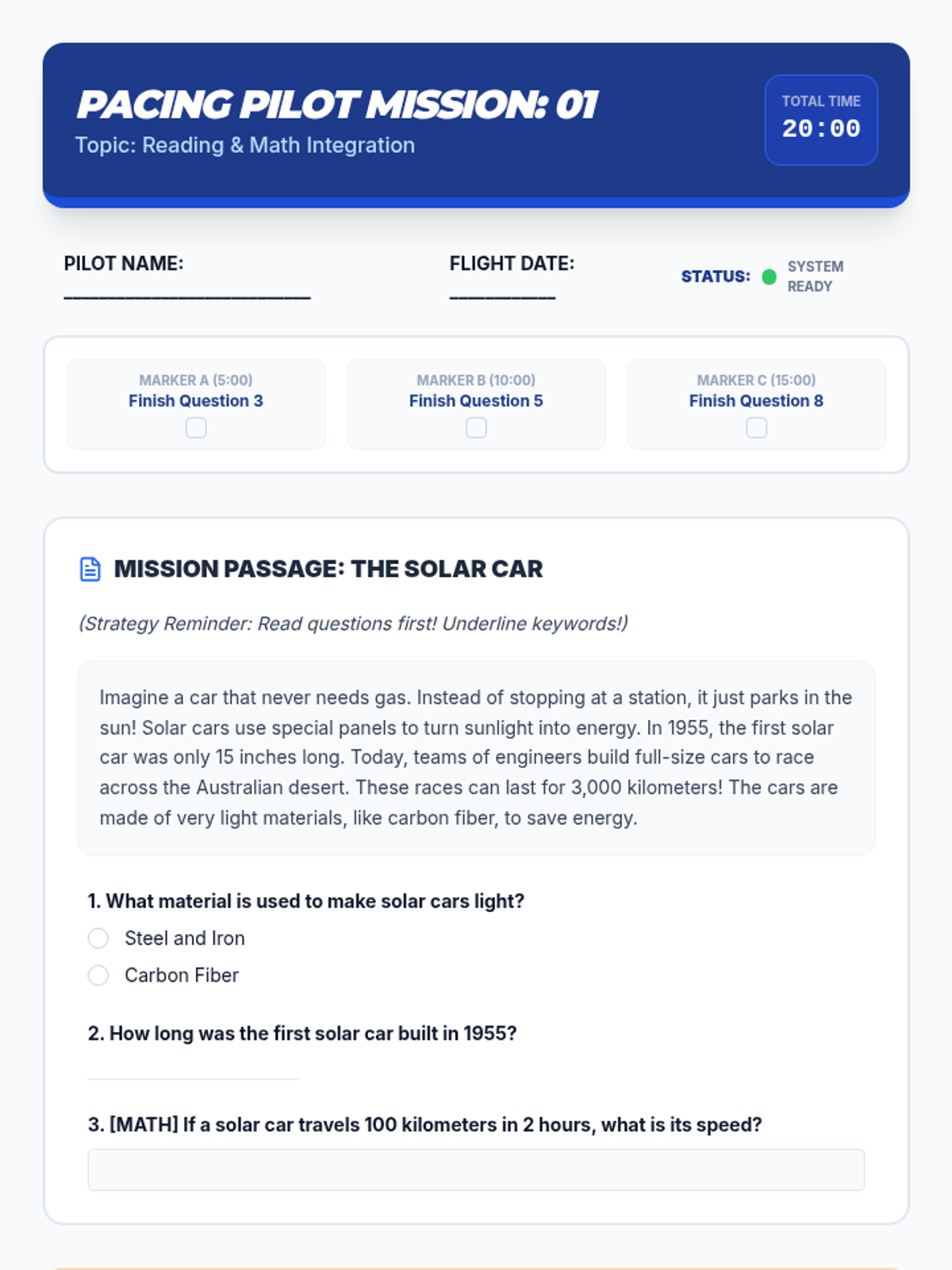
The first page of the Lesson 5 simulation test, designed to test pacing with a passage, integrated math, and a strategically 'hard' question to prompt skipping.
Final slide deck for Lesson 5, featuring the pacing simulation briefing, mission rules, and time markers for the practice test.
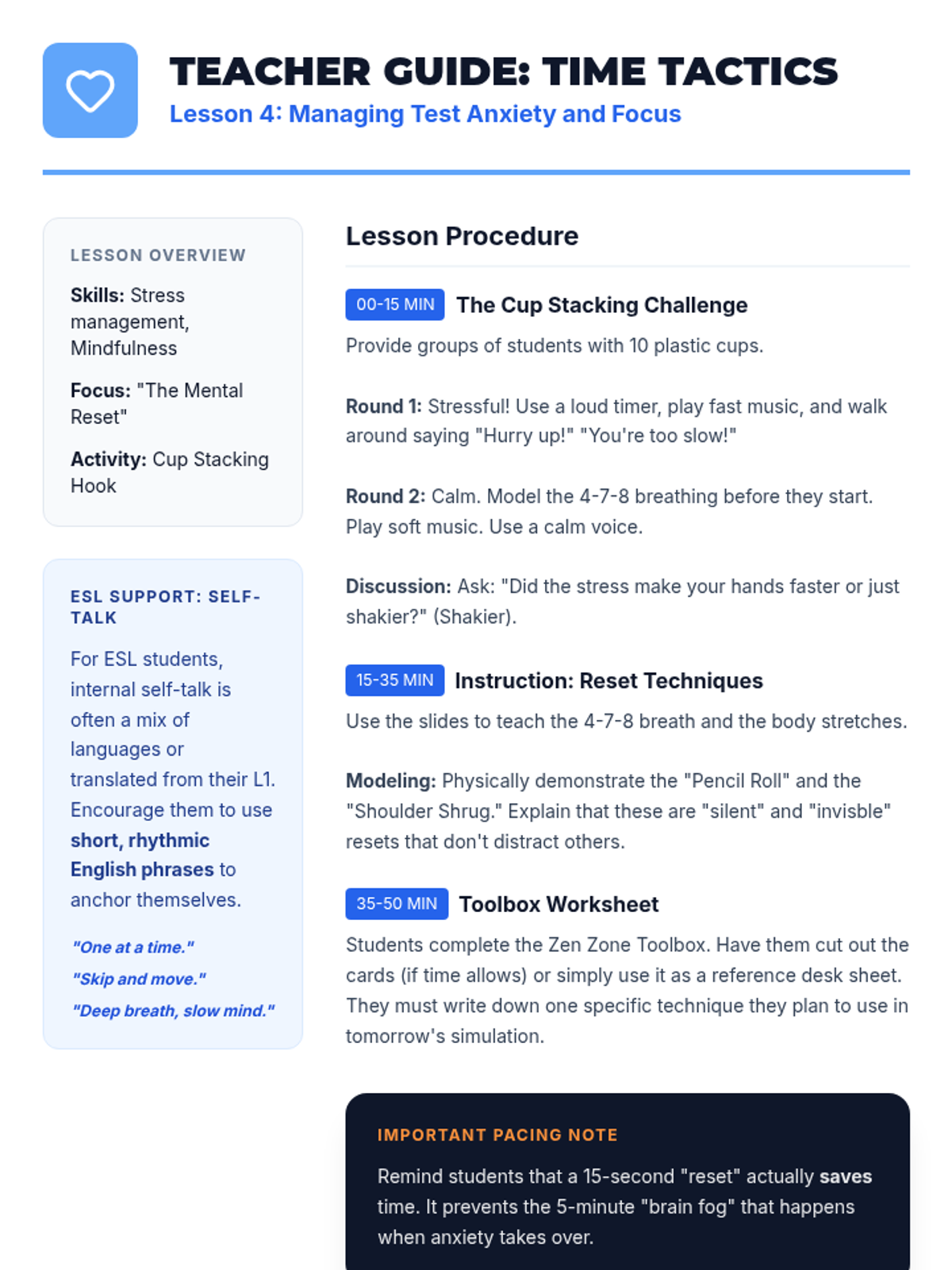
Teacher guidance for Lesson 4, including managing the cup-stacking challenge and modeling reset techniques for ESL students.
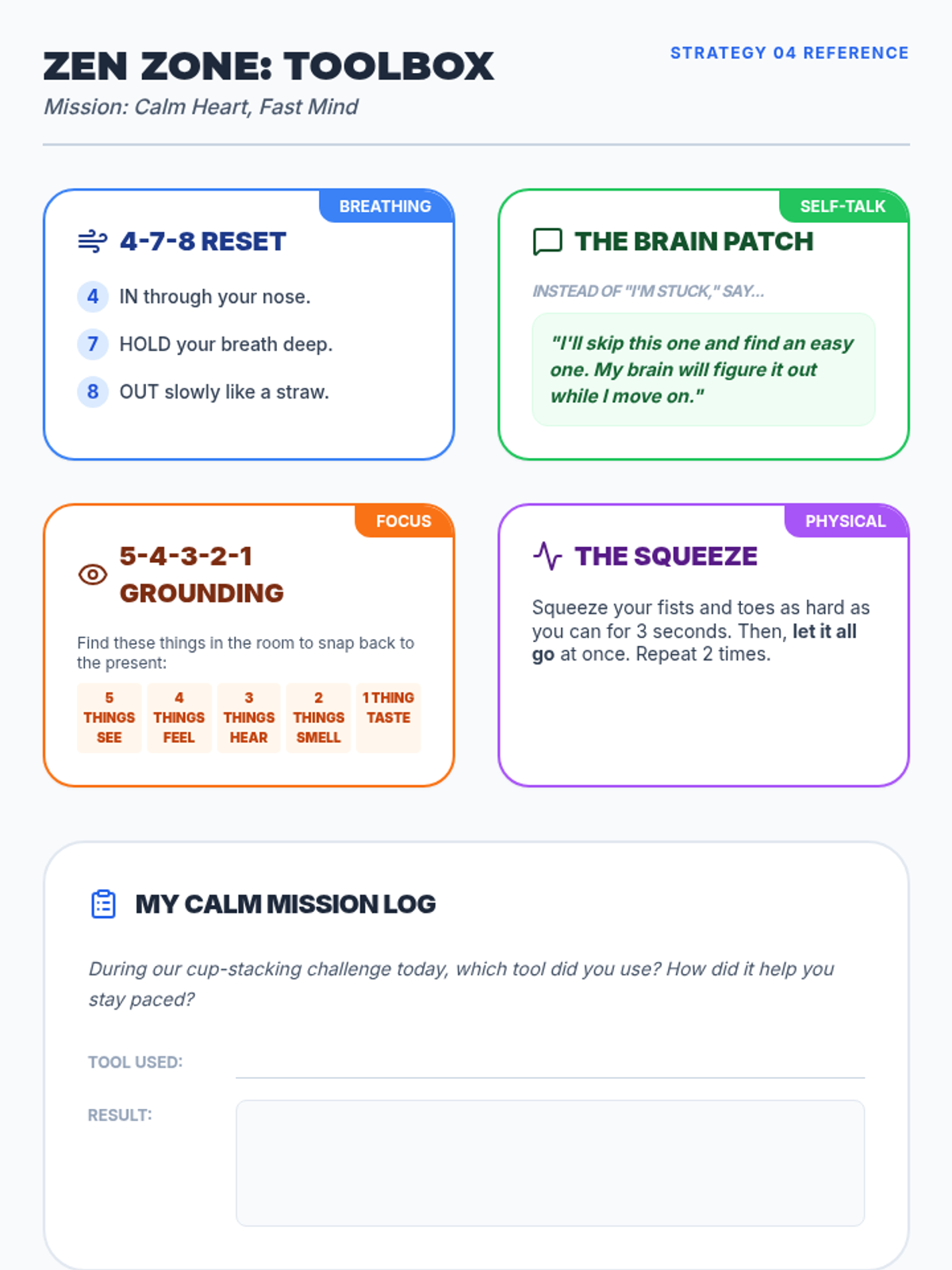
A resource sheet for Lesson 4 with 'Zen Zone' strategy cards (breathing, self-talk, grounding, physical reset) and a practice log for the cup-stacking activity.
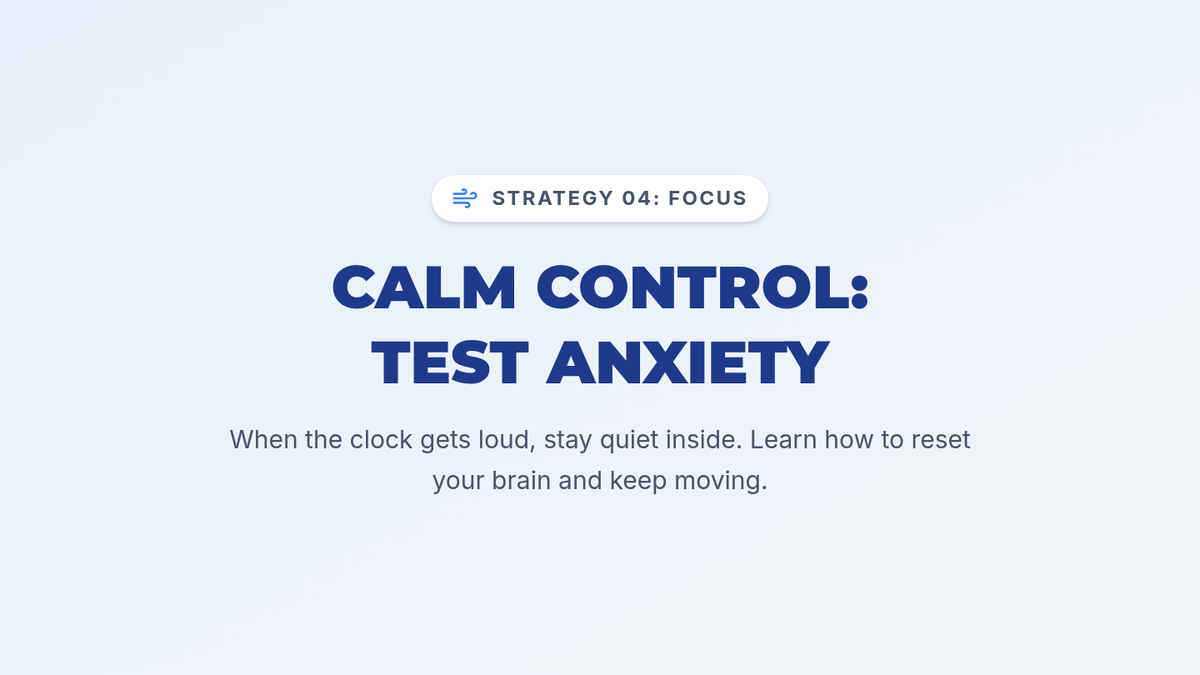
Slide deck for Lesson 4 on managing test anxiety, featuring breathing techniques, positive self-talk, and in-seat physical resets.
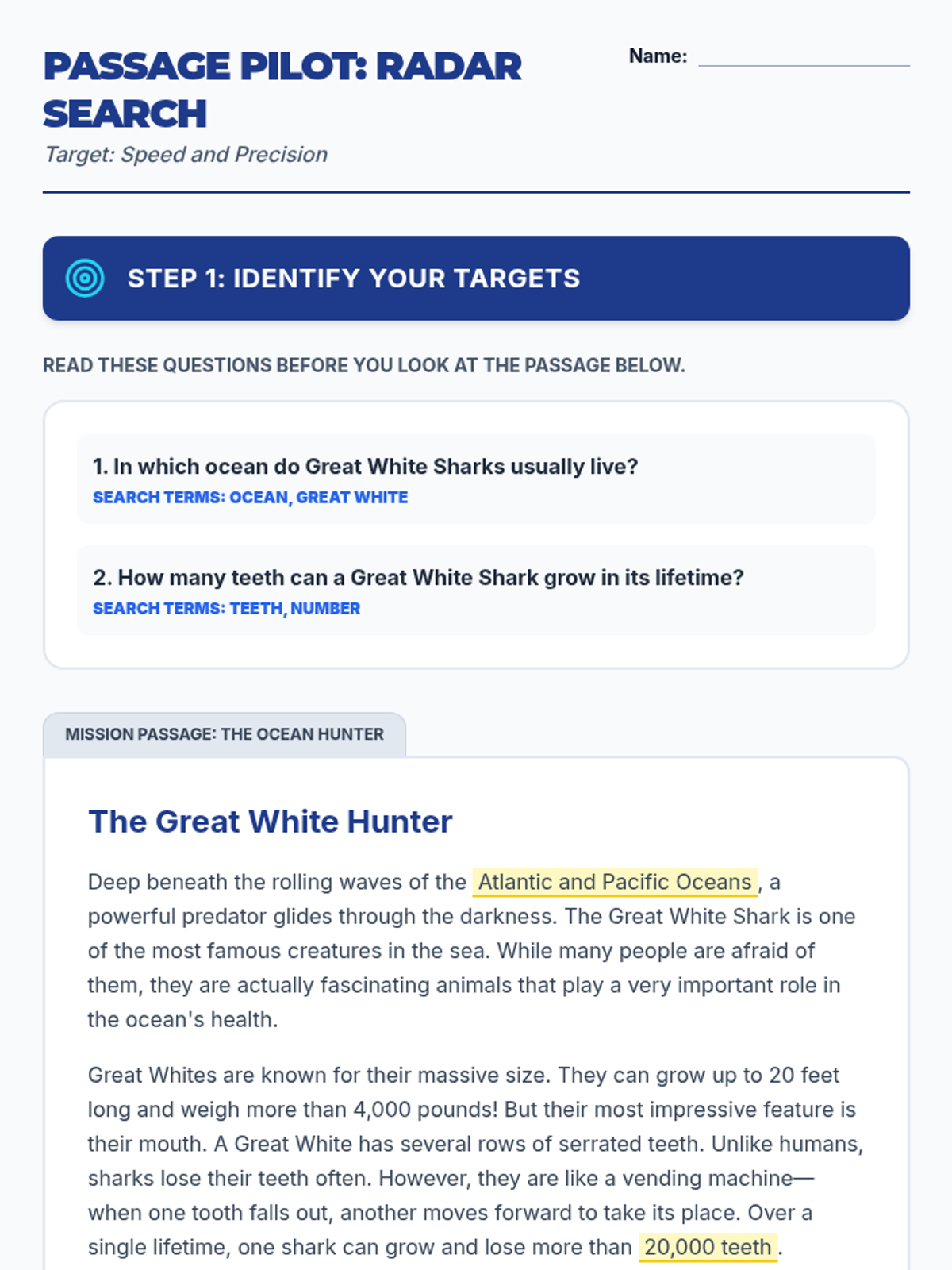
A practice worksheet for Lesson 3 that uses a short passage about sharks to help students practice the 'Questions First' and 'Keyword Search' strategies.
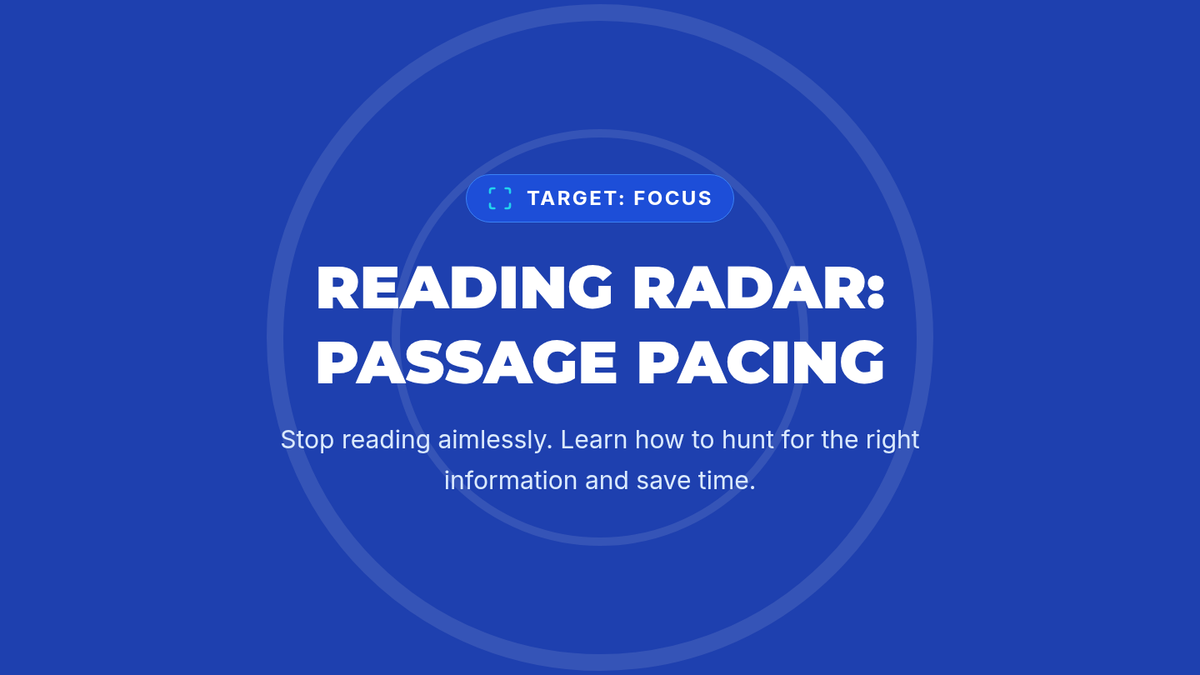
Slide deck for Lesson 3 on handling long passages, teaching the 'Questions First' strategy and skimming techniques to save time.
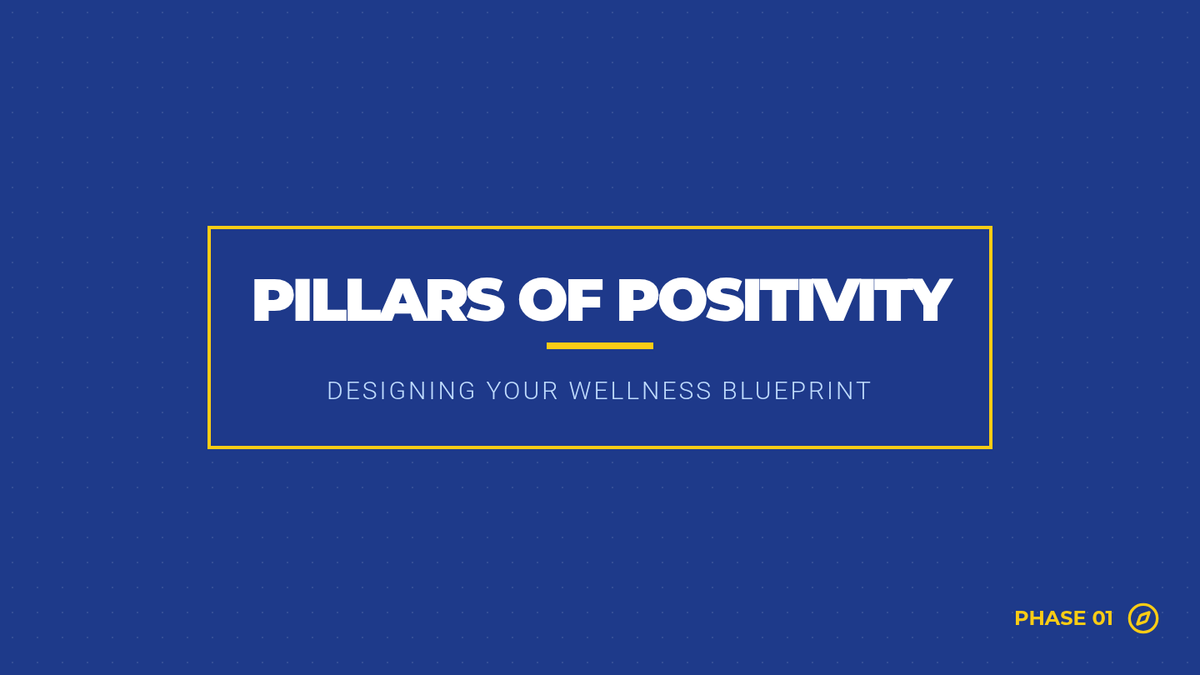
Introductory slides for the Pillars of Positivity lesson, explaining the four categories of wellness and the station rotation activity.
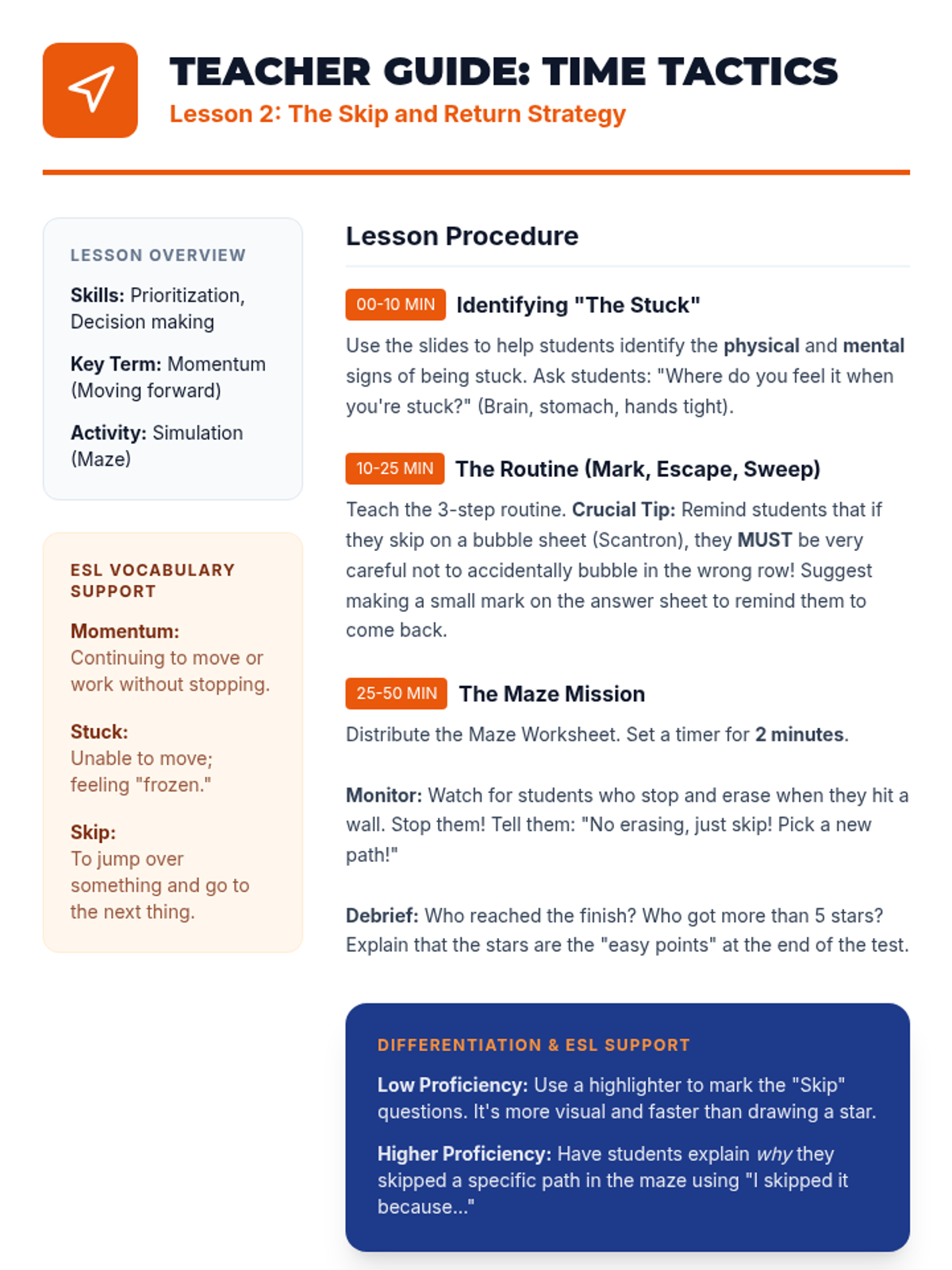
Teacher guidance for Lesson 2, including momentum concepts, ESL vocabulary support, and maze simulation management.
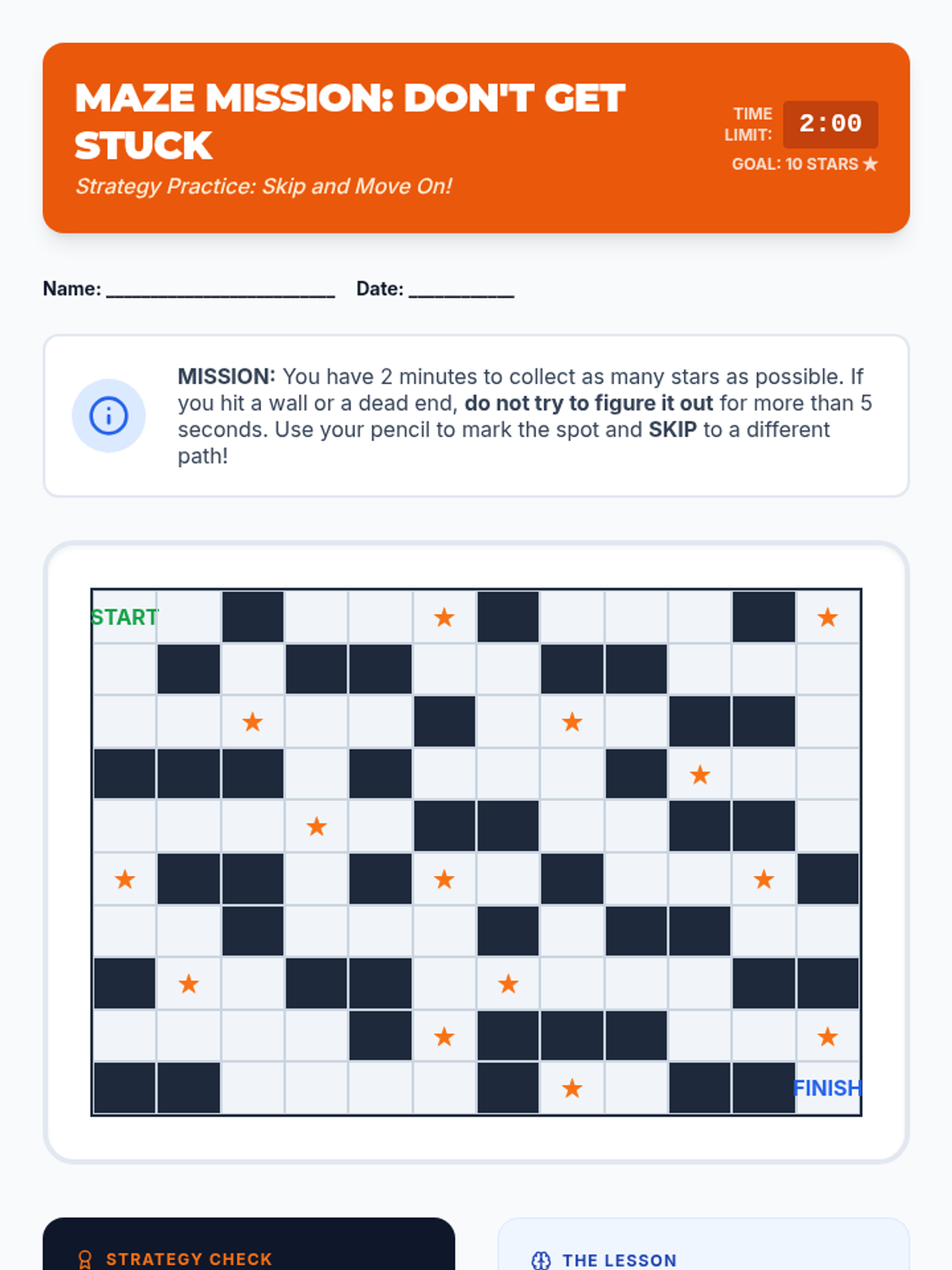
A timed maze activity for Lesson 2 that simulates the 'Skip and Return' strategy by forcing students to avoid dead ends to reach the goal.
Slide deck for Lesson 2 teaching the 'Skip and Return' strategy, focusing on recognizing when you're stuck and the benefits of skipping.
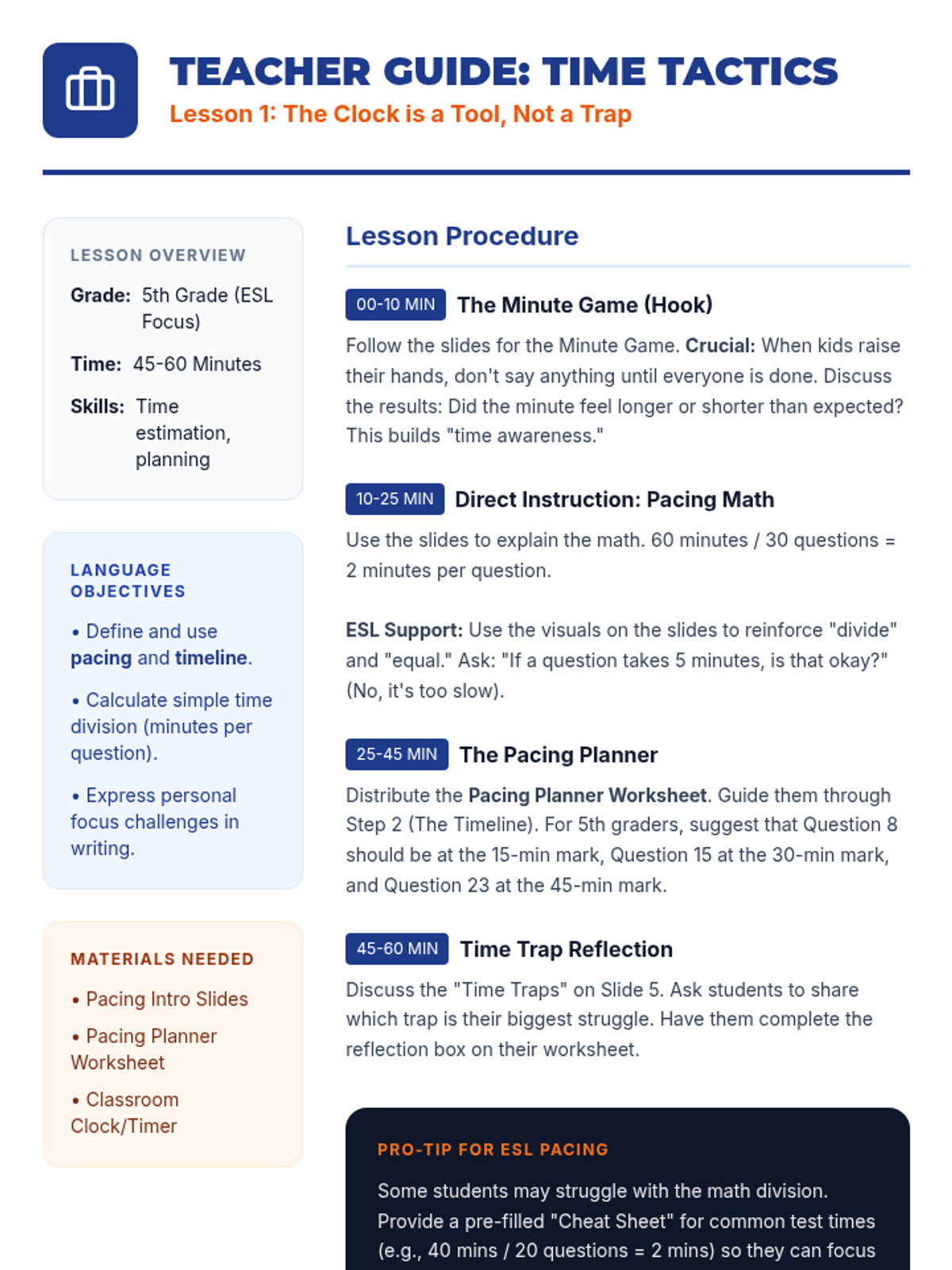
Teacher guidance for Lesson 1, including language objectives, step-by-step procedures, and ESL-specific instructional tips.
Introductory slide deck for Lesson 1 on pacing, featuring the 'Minute Game' hook, the math of pacing, and common time traps.
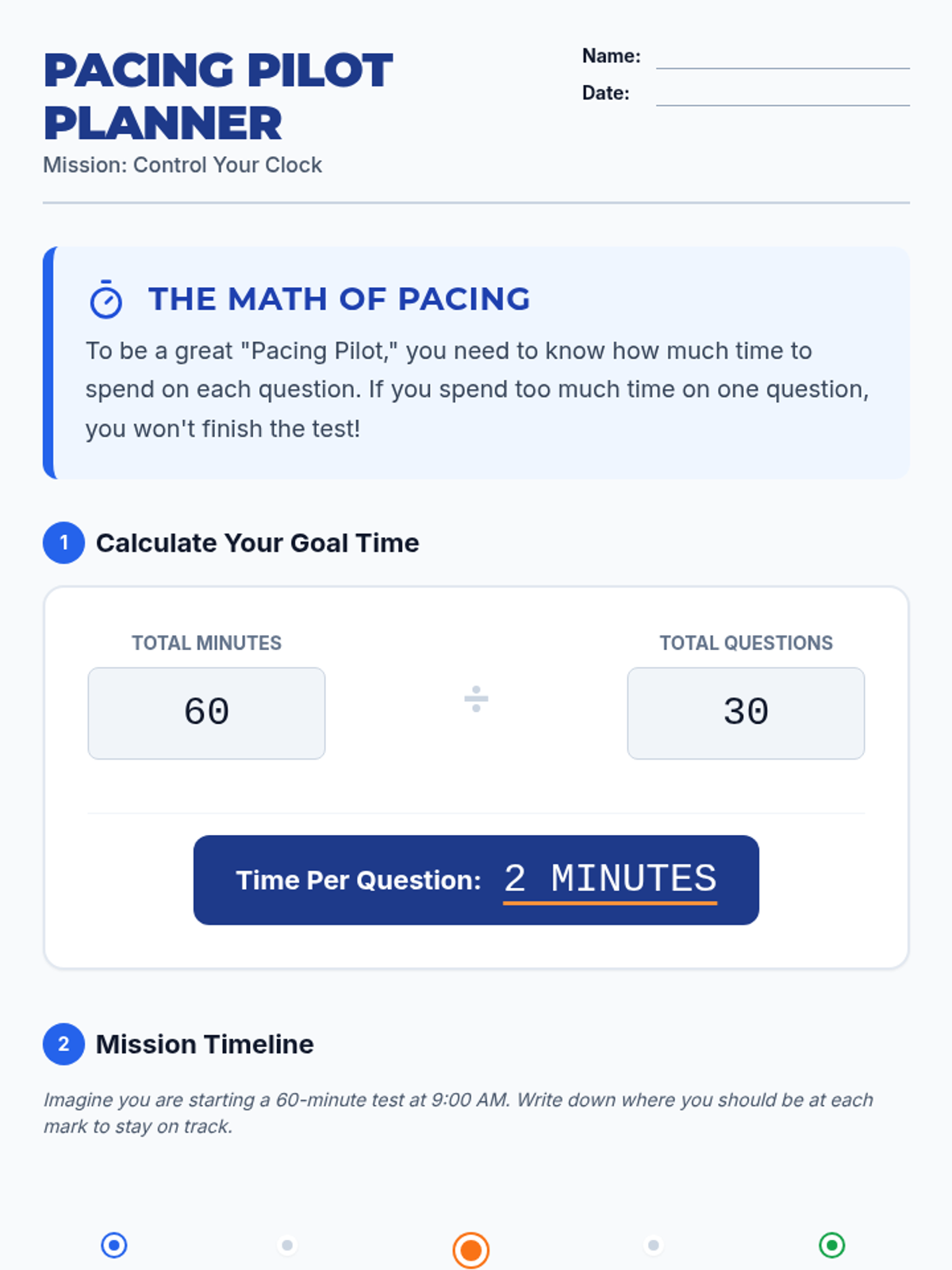
A visual pacing planner worksheet for Lesson 1, helping students calculate time per question and map out a test timeline.
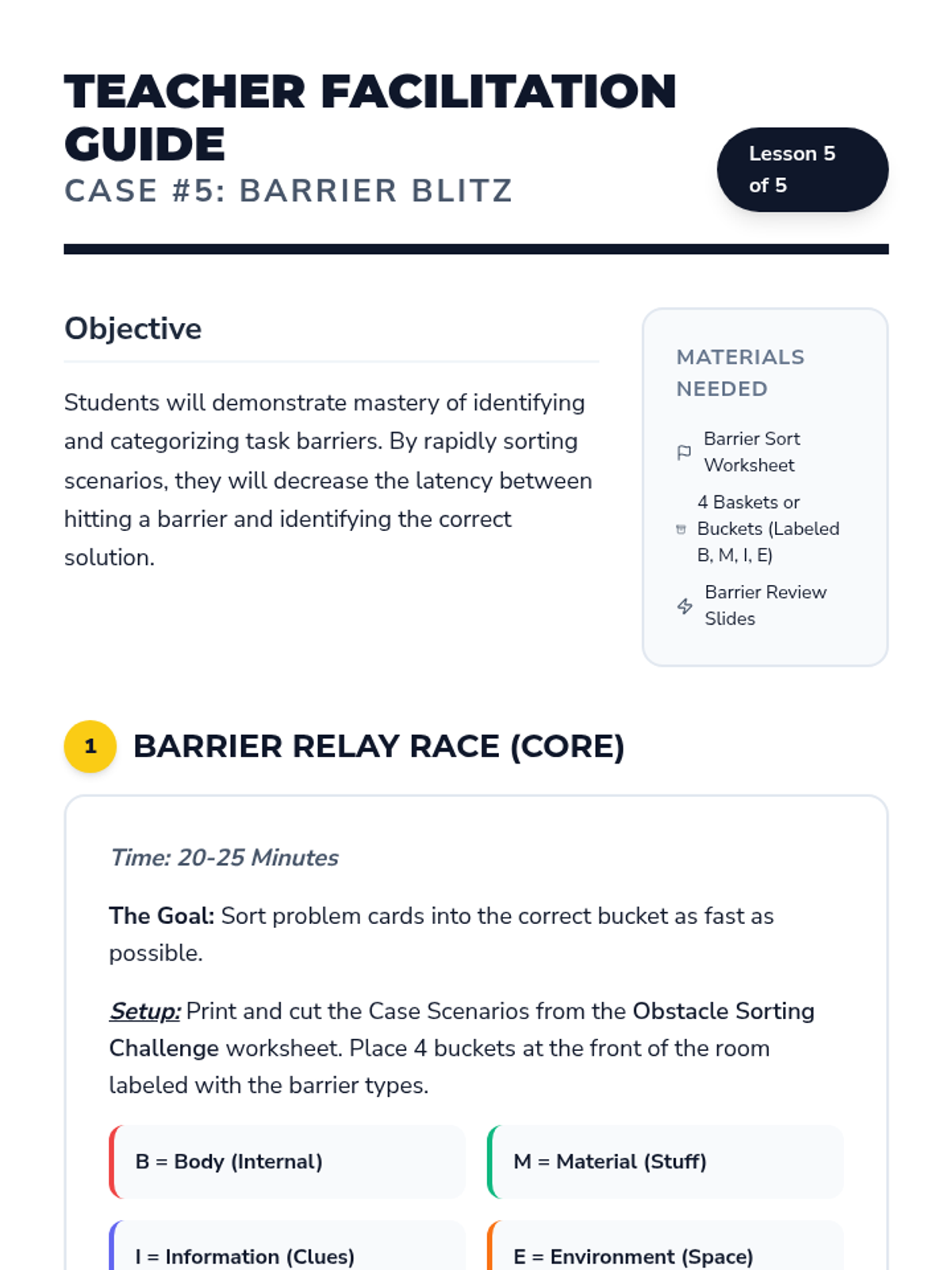
A teacher facilitation guide for Lesson 5, including instructions for the 'Barrier Relay Race' and a unit conclusion.
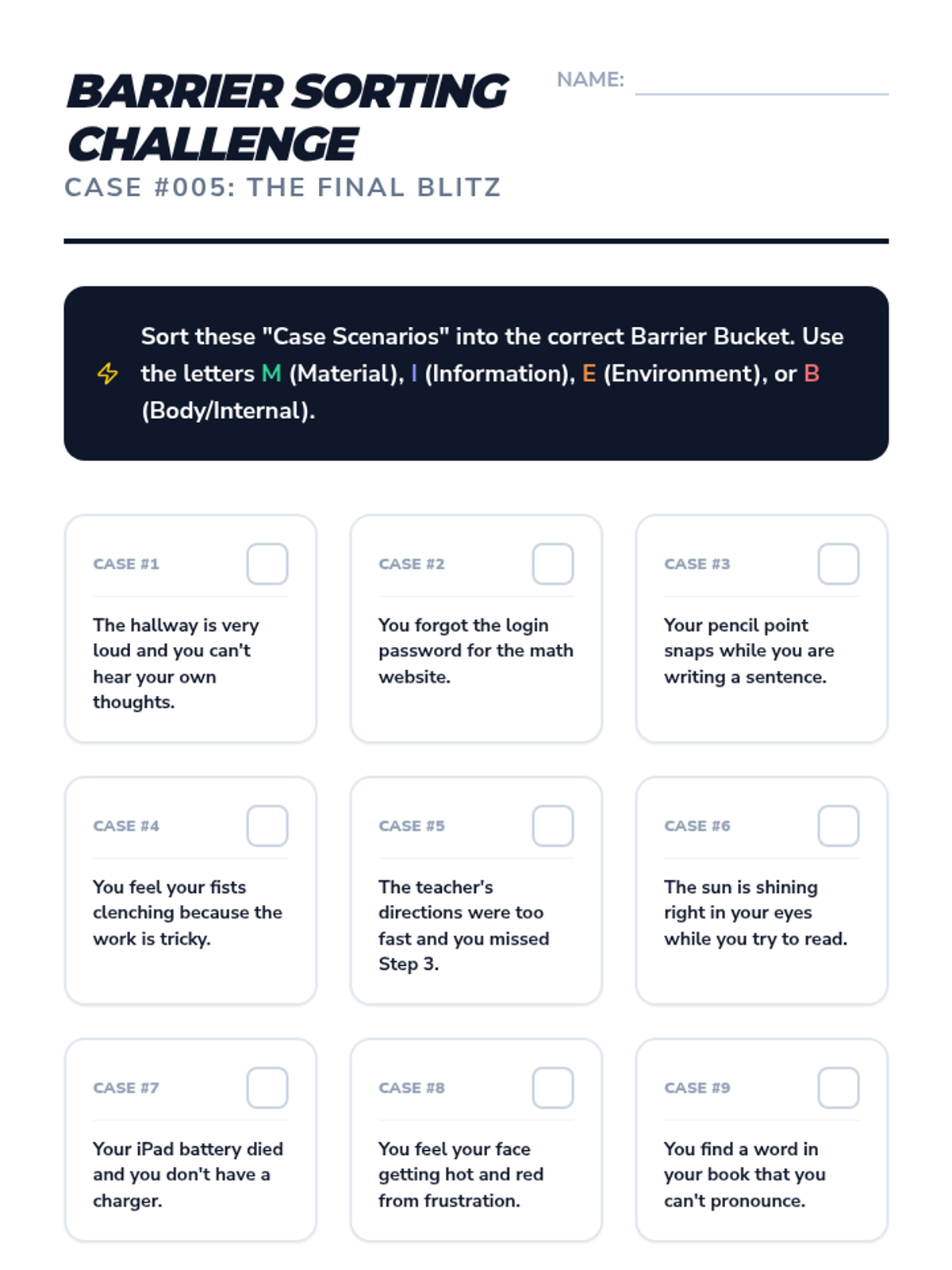
A culminating sorting activity where students categorize various problem scenarios into the four task barrier types.
A culminating slide deck for the 'Barrier Blitz' lesson, reviewing all 4 types of task barriers and preparing students for the final sorting activity.
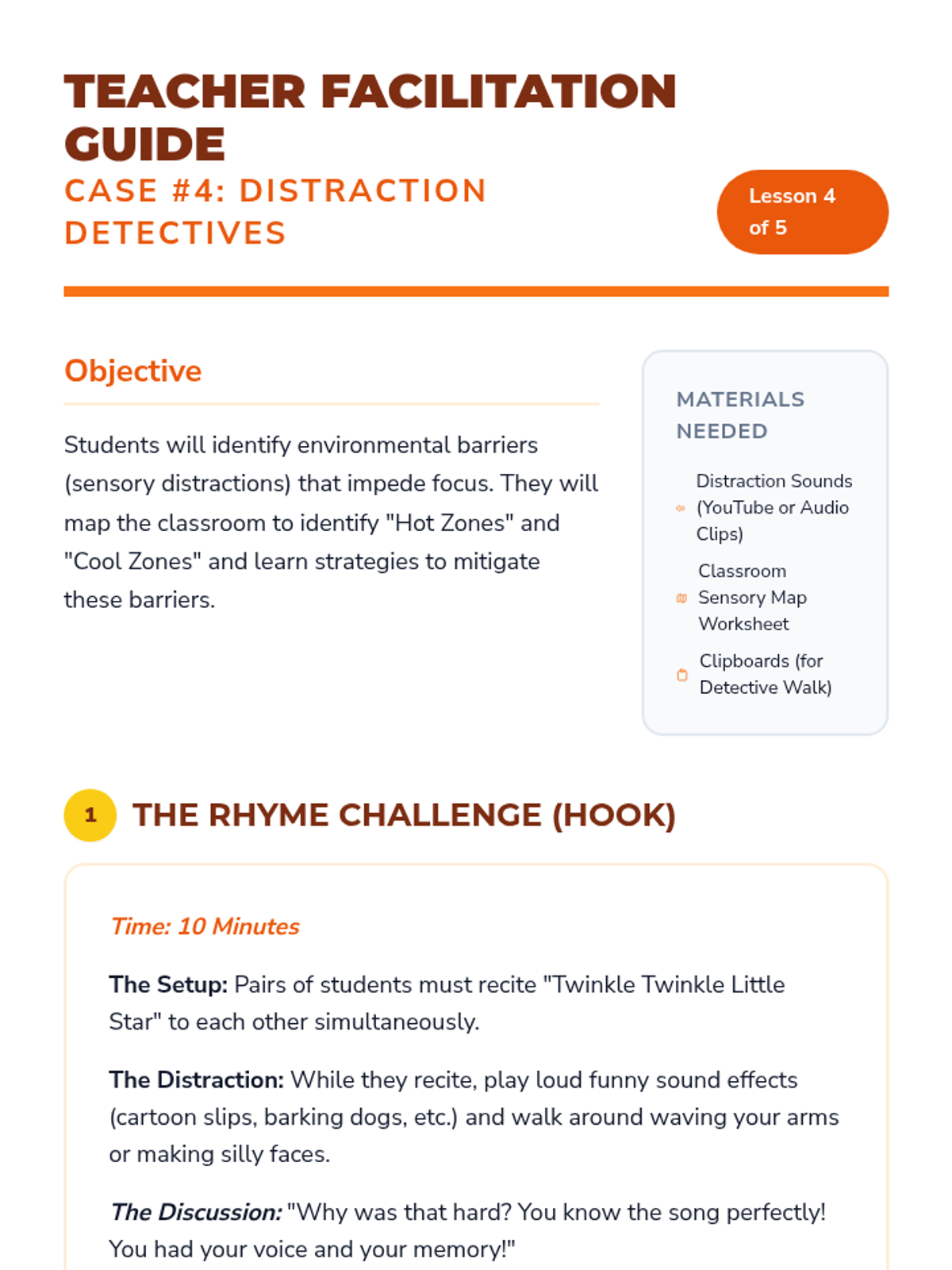
A teacher facilitation guide for Lesson 4, including instructions for the 'Stakeout Walk' and sensory mapping activity.
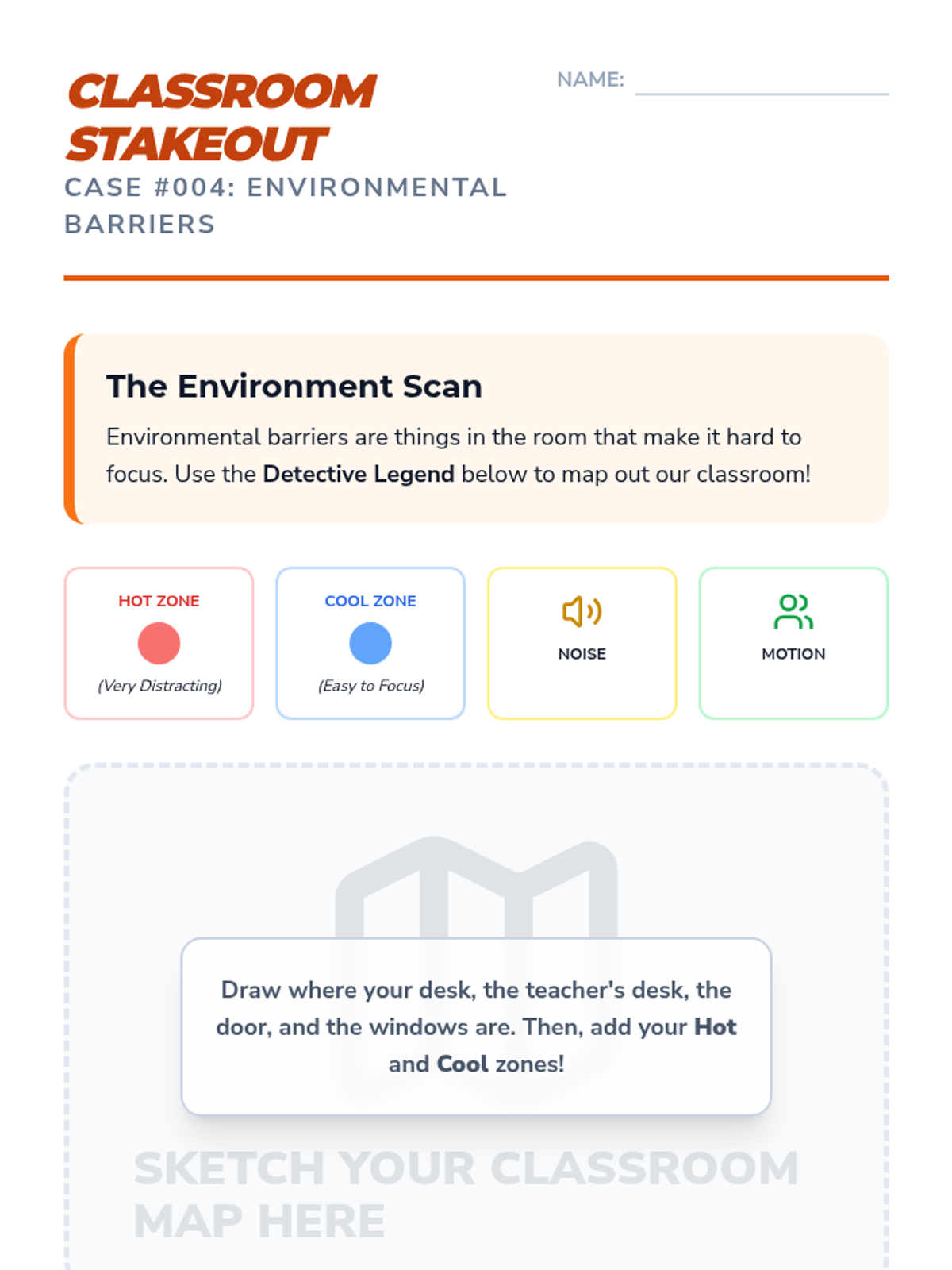
A mapping activity for students to identify 'Hot' and 'Cool' sensory zones in their classroom to manage environmental distractions.
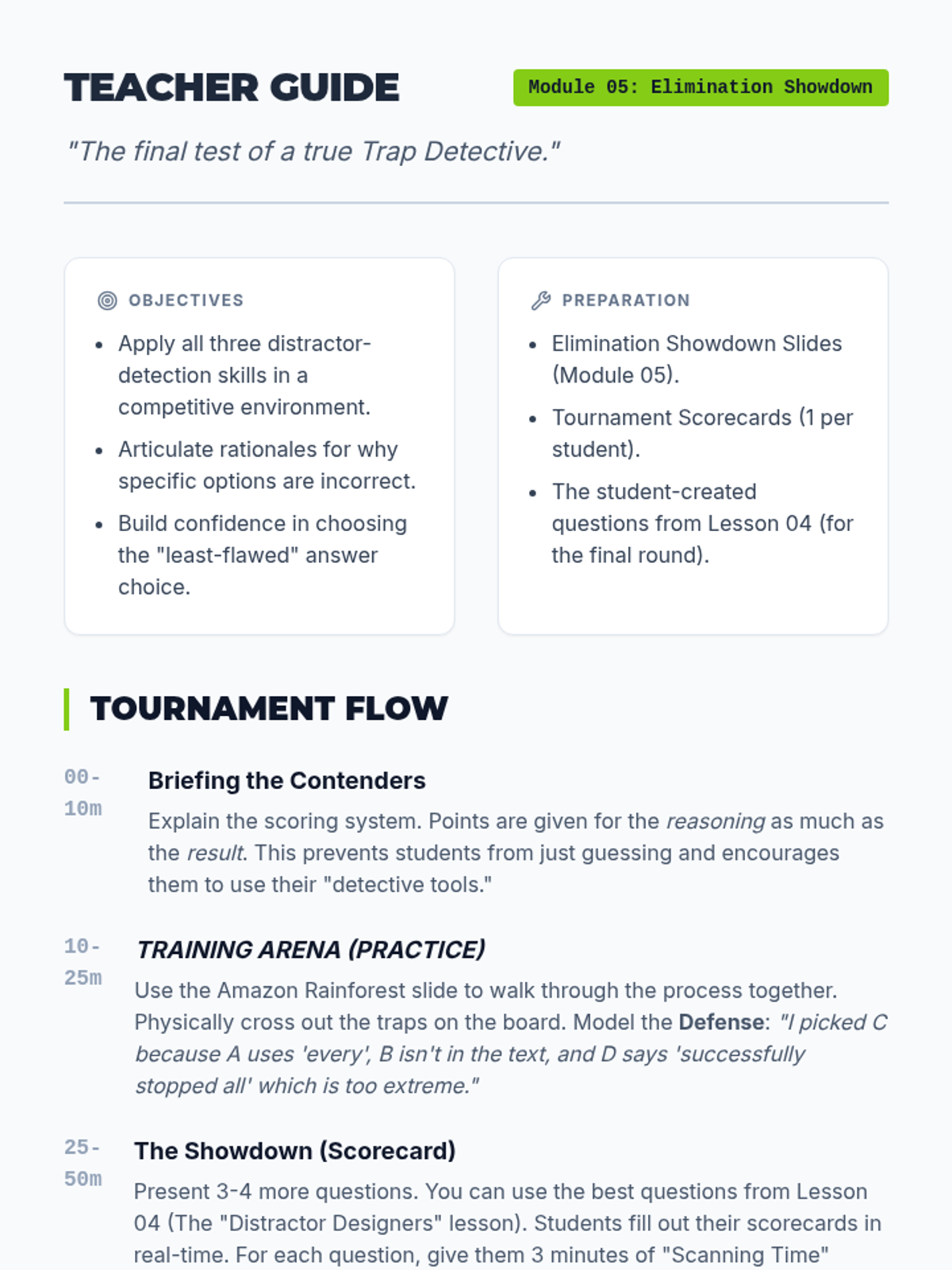
Teacher guide for 'Elimination Showdown'. Includes lesson flow, tournament scoring mechanics, and a detailed analysis of the practice question.
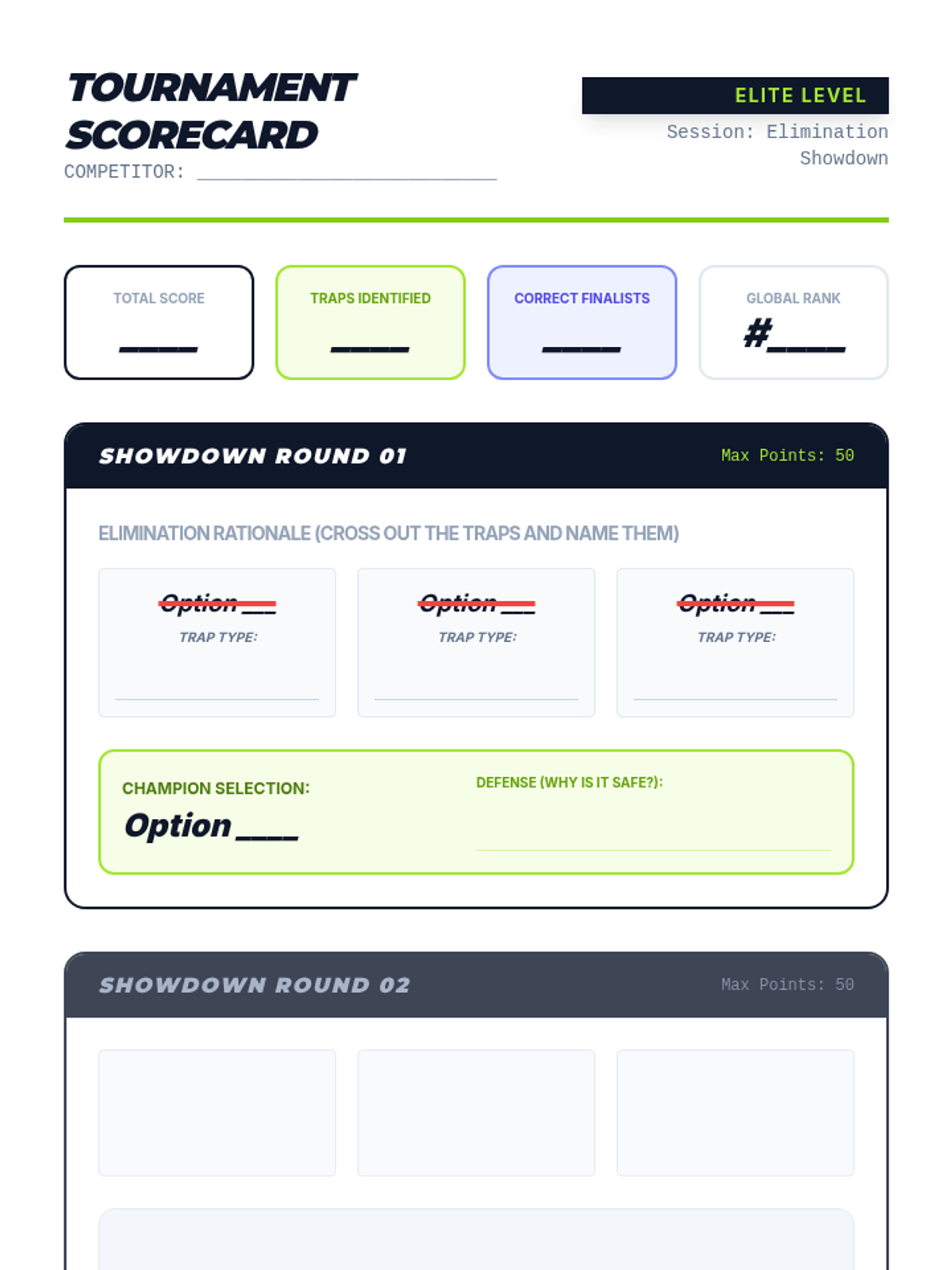
A student tournament scorecard for the final showdown. Features sections for tracking points, identifying trap types for each distractor, and selecting the 'Champion' (correct) answer with a defense.
Introductory slides for 'Elimination Showdown'. Features tournament rules and a walk-through of the 'Elimination Showdown' process with a practice question.
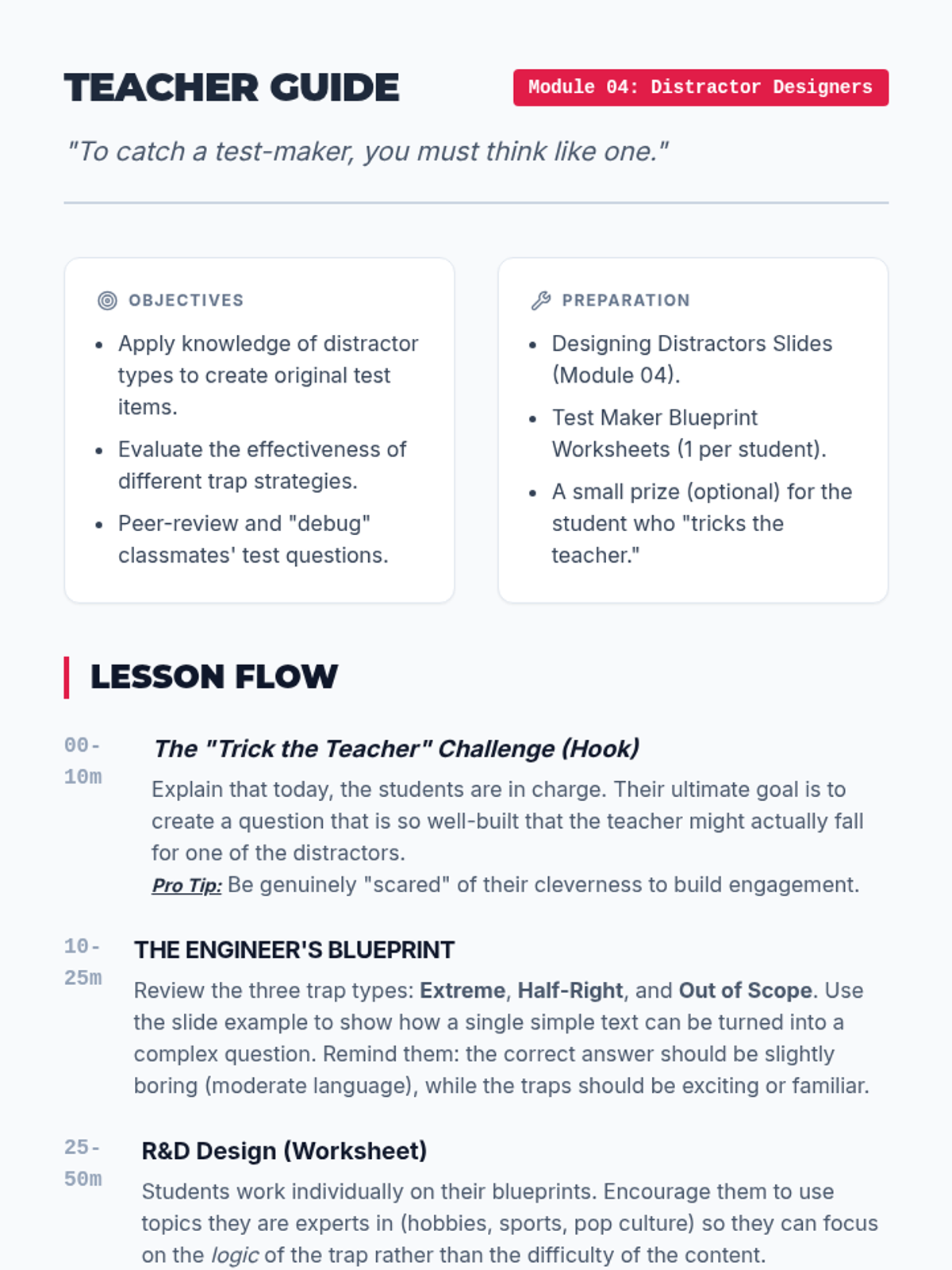
Teacher guide for 'Distractor Designers'. Includes pacing, rubric for the student worksheet, and instructions for the peer-testing phase of the lesson.
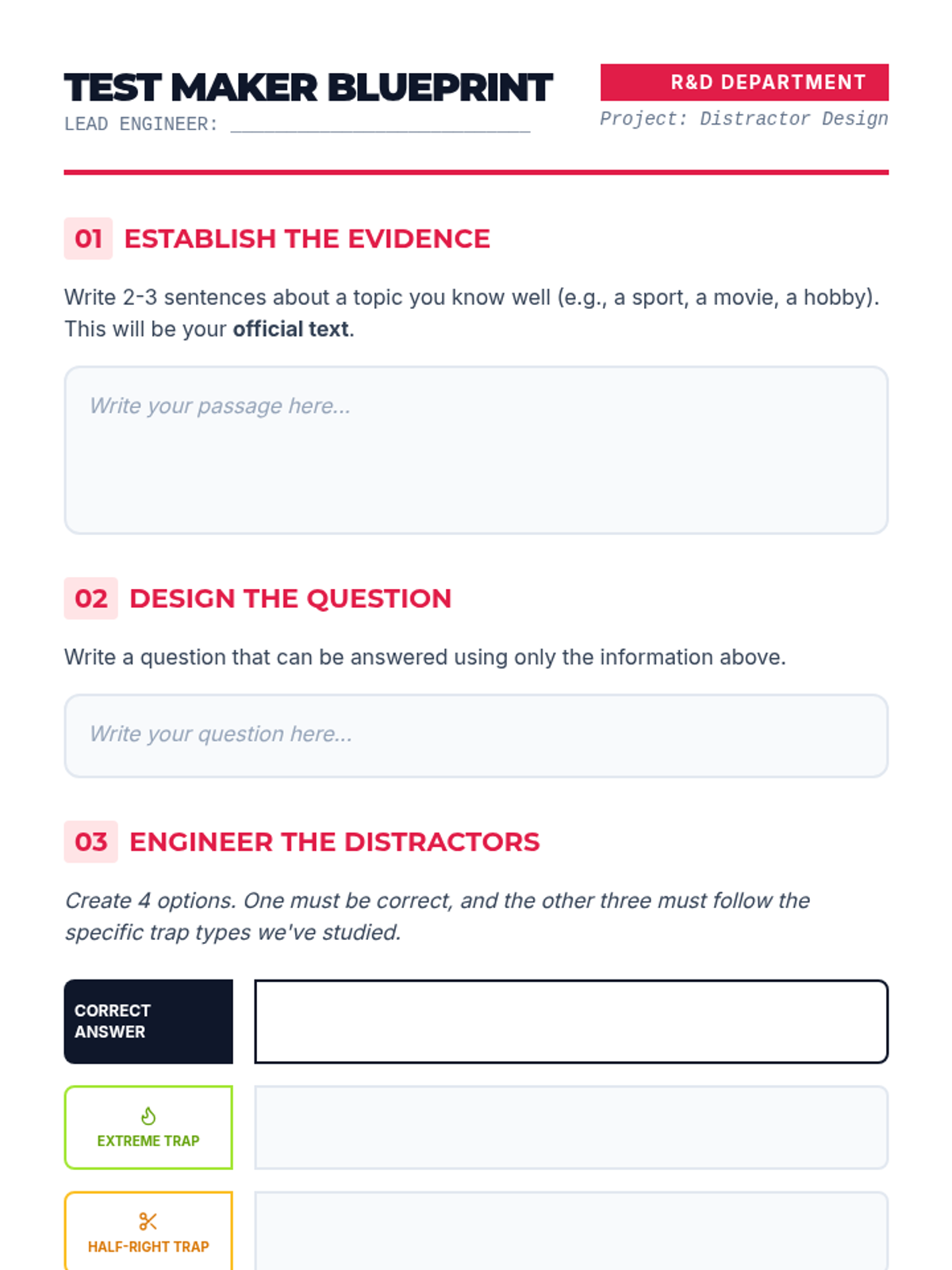
A student design sheet where they create their own multiple-choice question. Students must provide a short text and then engineer four options: one correct answer and three specific distractor types (Extreme, Half-Right, and Out of Scope).