Stop-and-think strategies, impulse management, and SMART goal setting for personal growth. Develops internal motivation, stress reduction techniques, and resilience through proactive planning and monitoring.
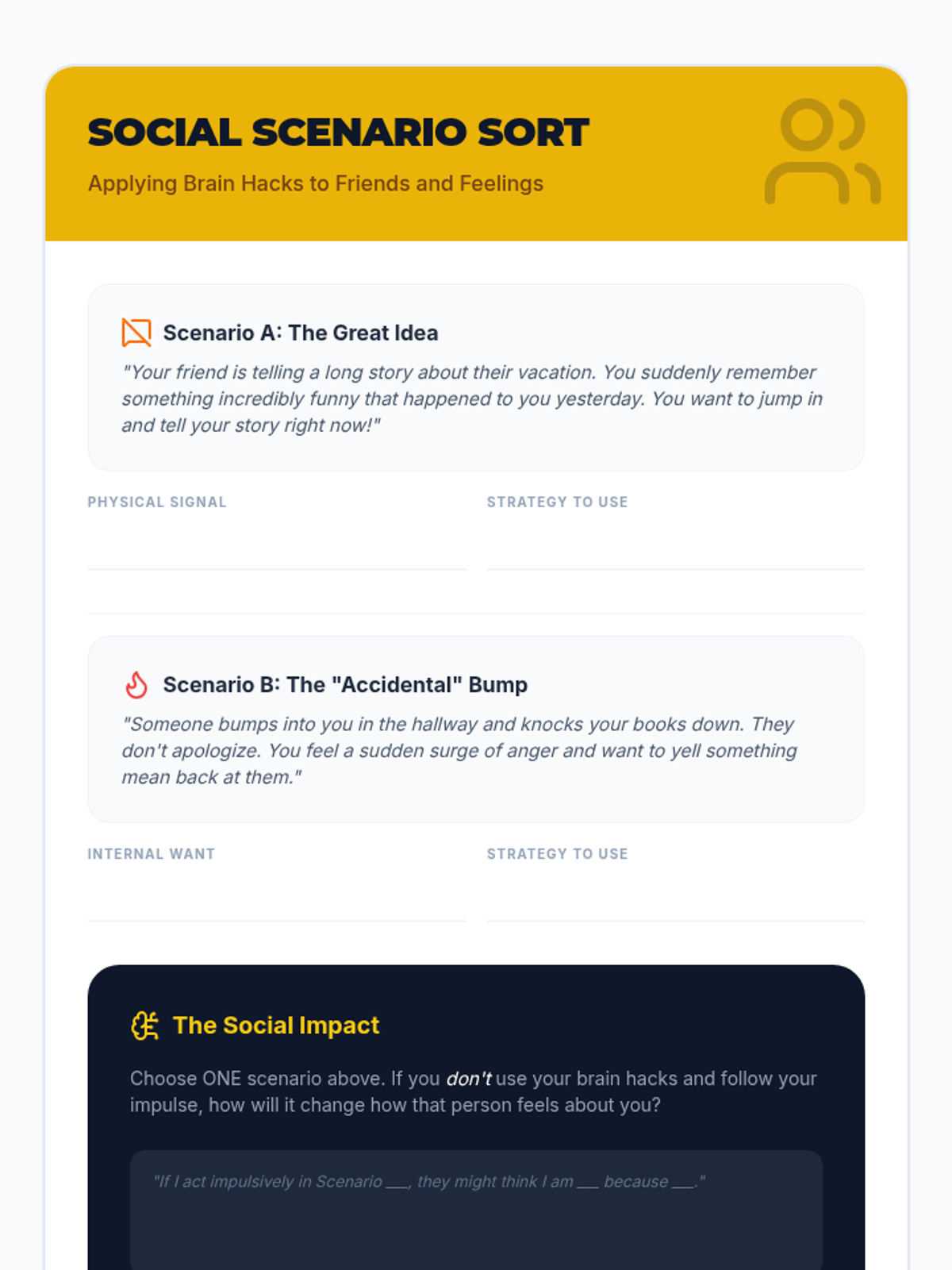
Culminating lesson where students apply their self-regulation strategies to social scenarios, such as peer pressure and interpersonal conflict, to build better relationships.
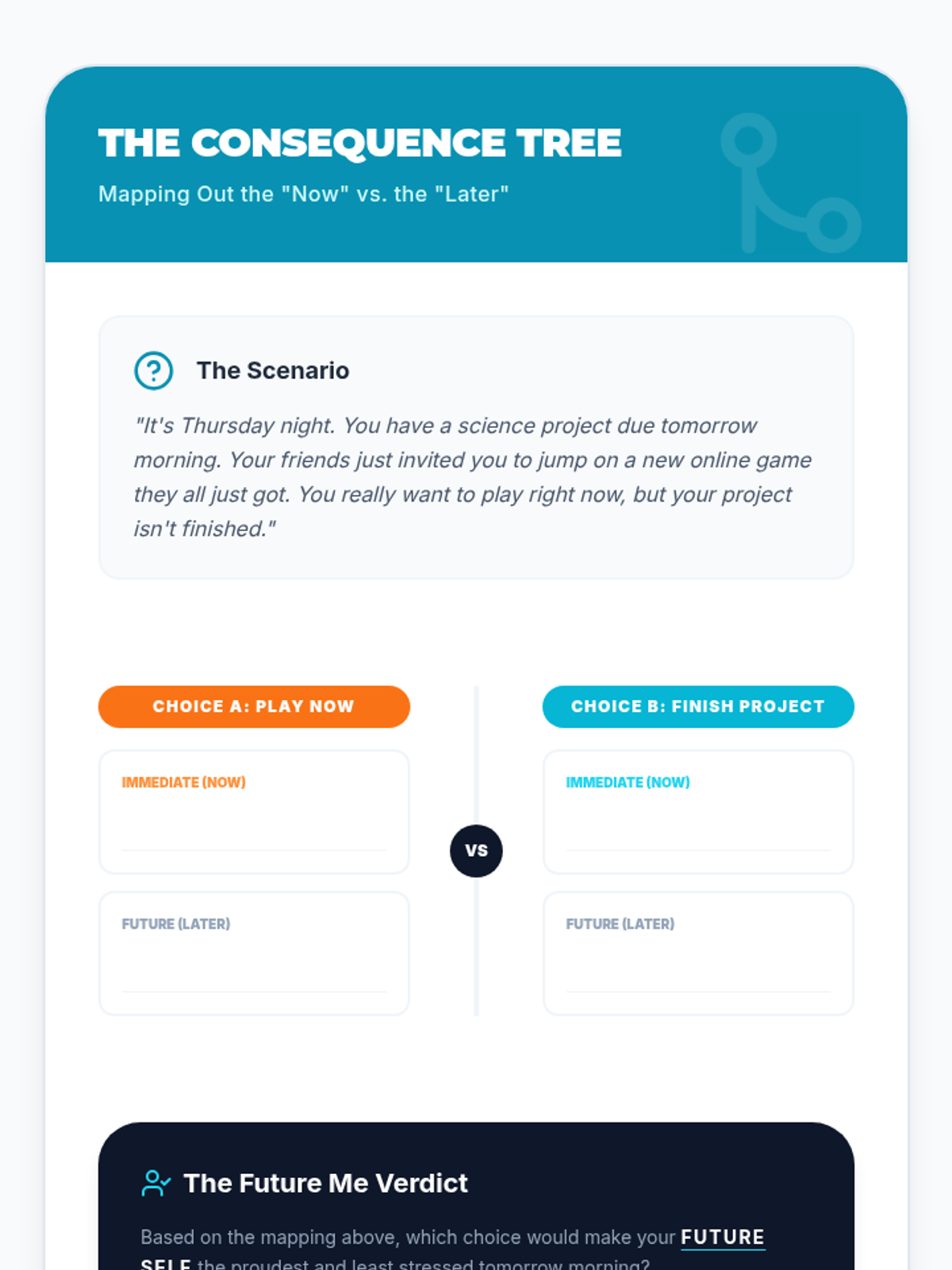
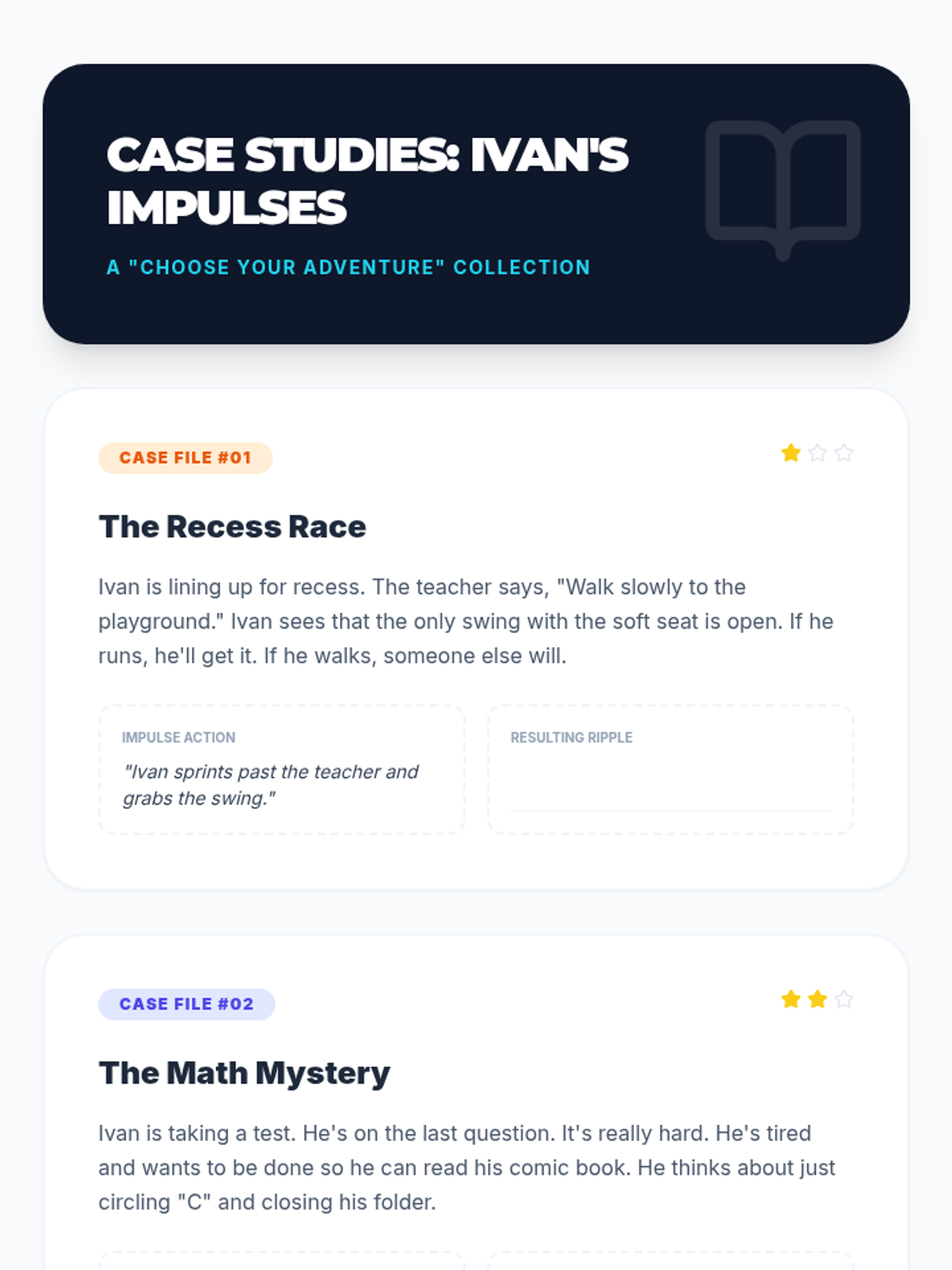
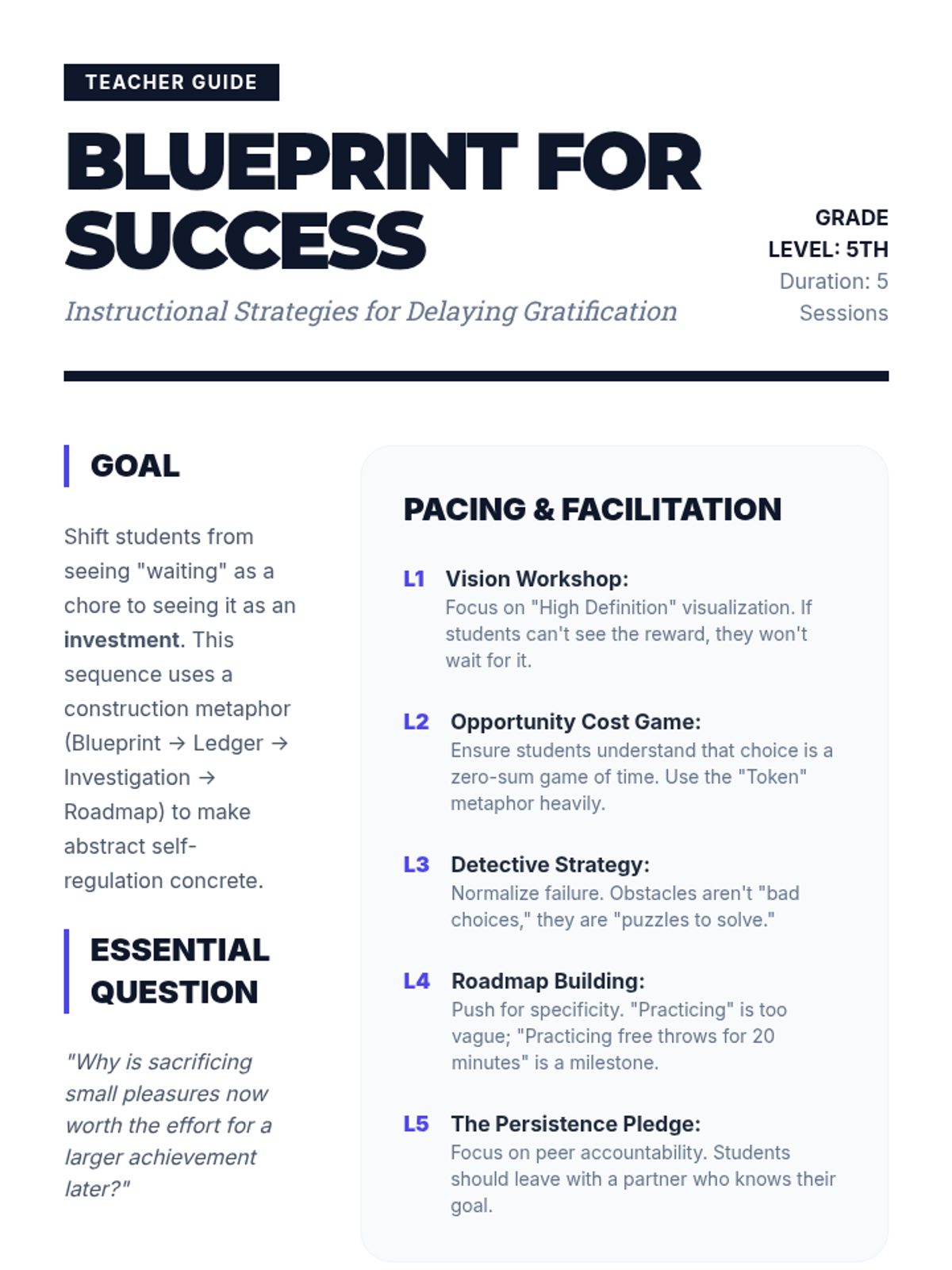
Students use decision trees and case studies to analyze the long-term consequences of impulsive choices versus patient ones, reinforcing the logical benefits of waiting.
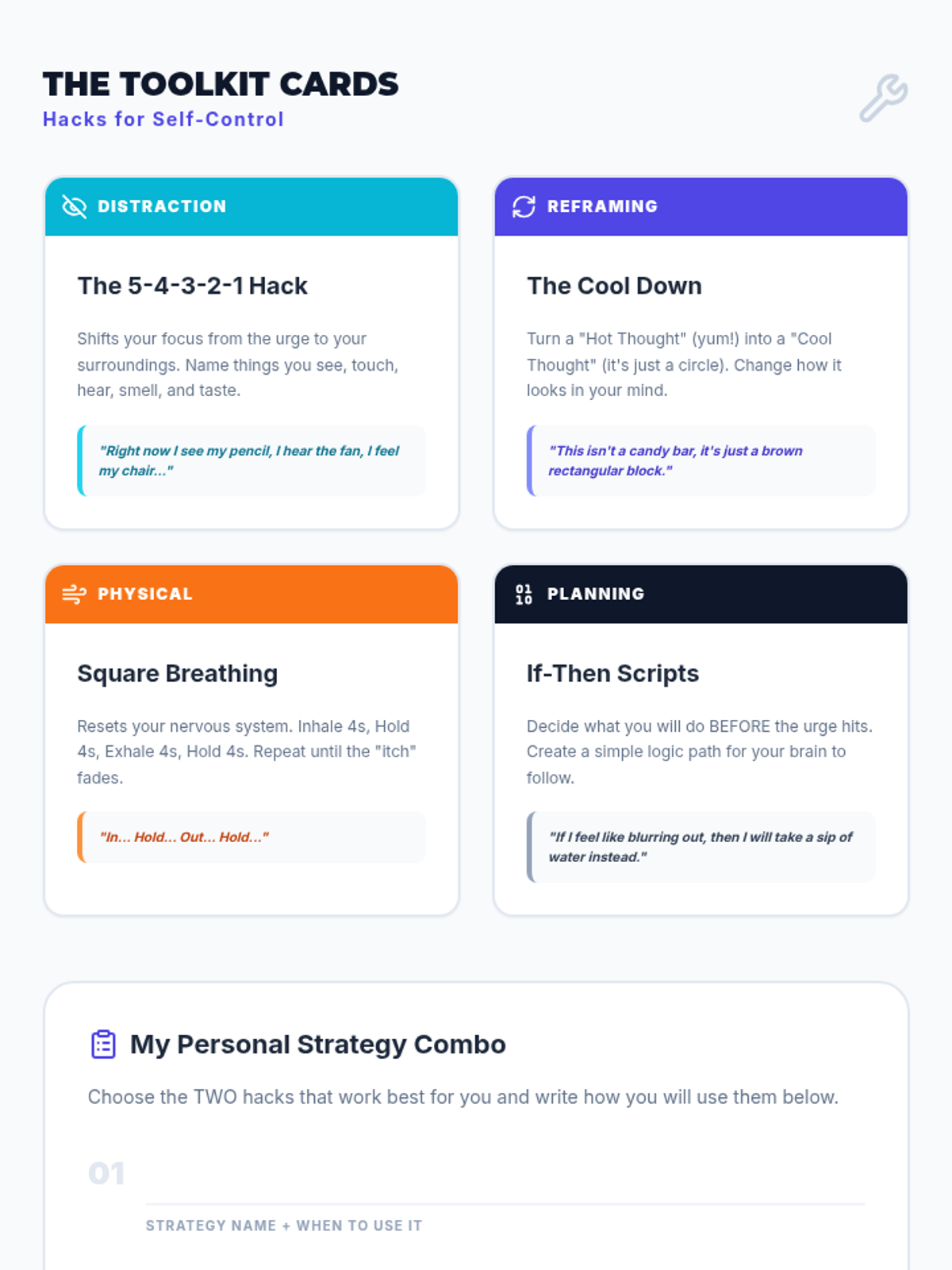
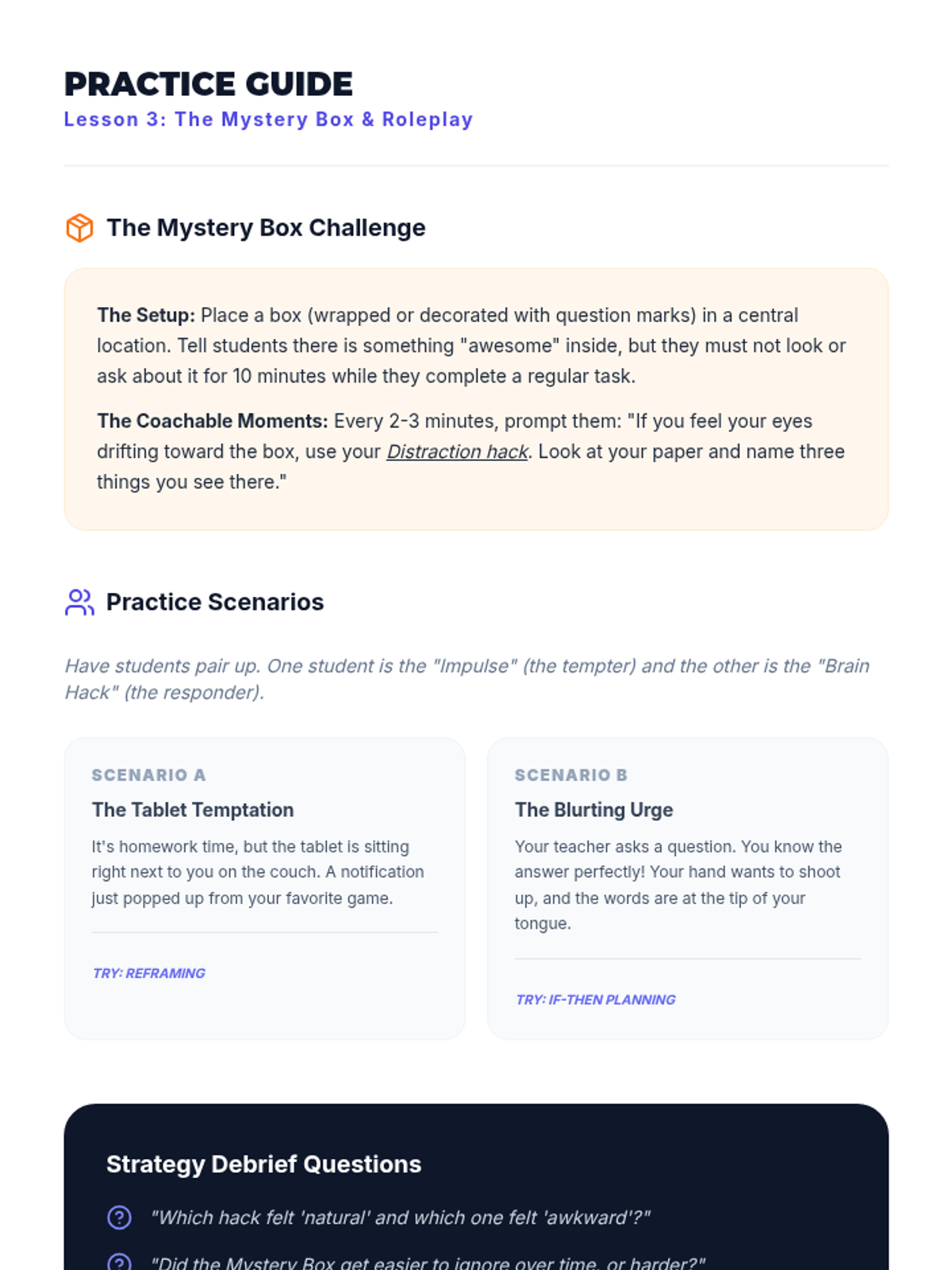
Focuses on practical strategies for bridging the gap between impulse and action. Students learn and practice distraction, cognitive reframing, and 'cool thoughts' vs. 'hot thoughts.'
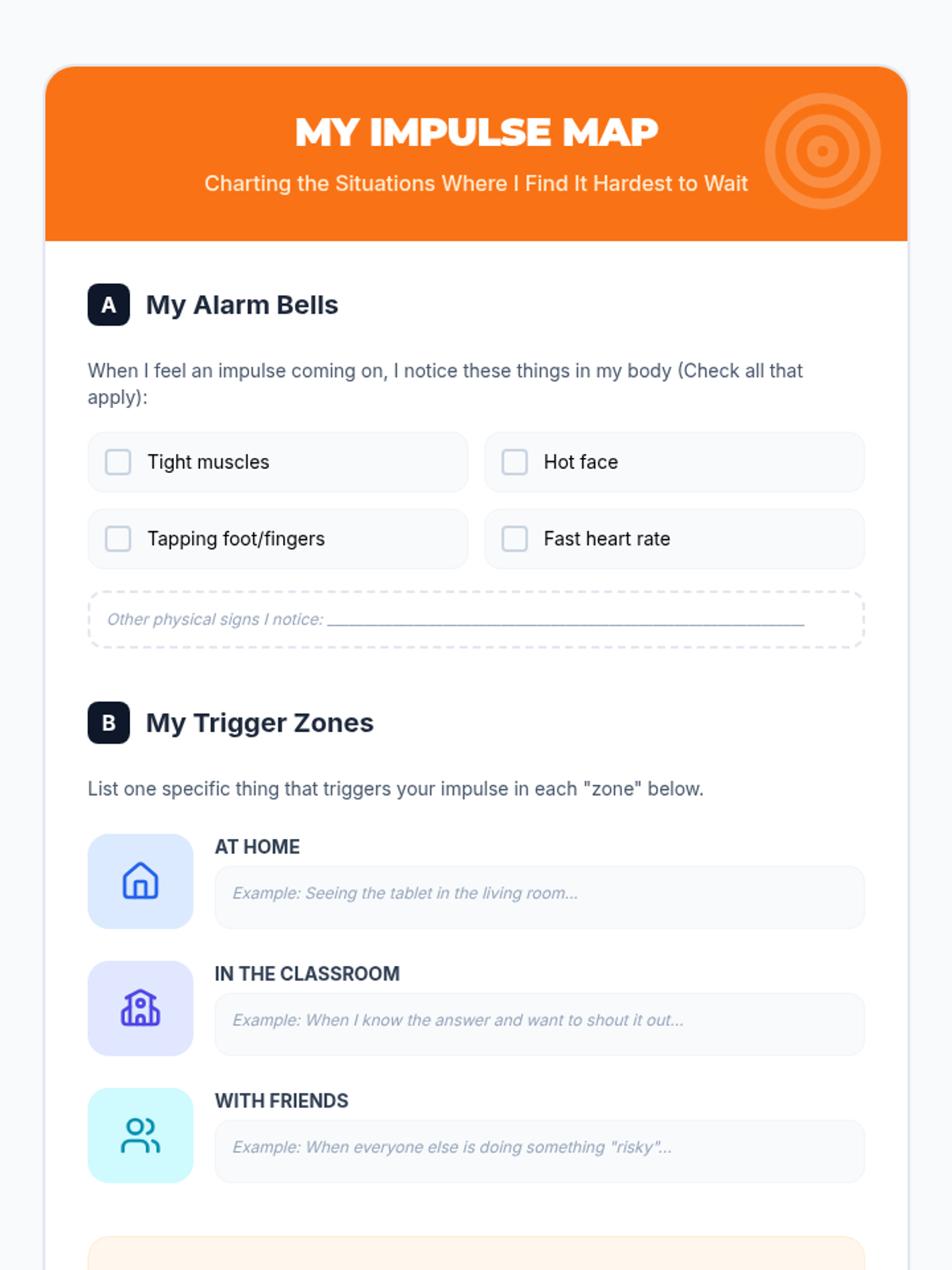
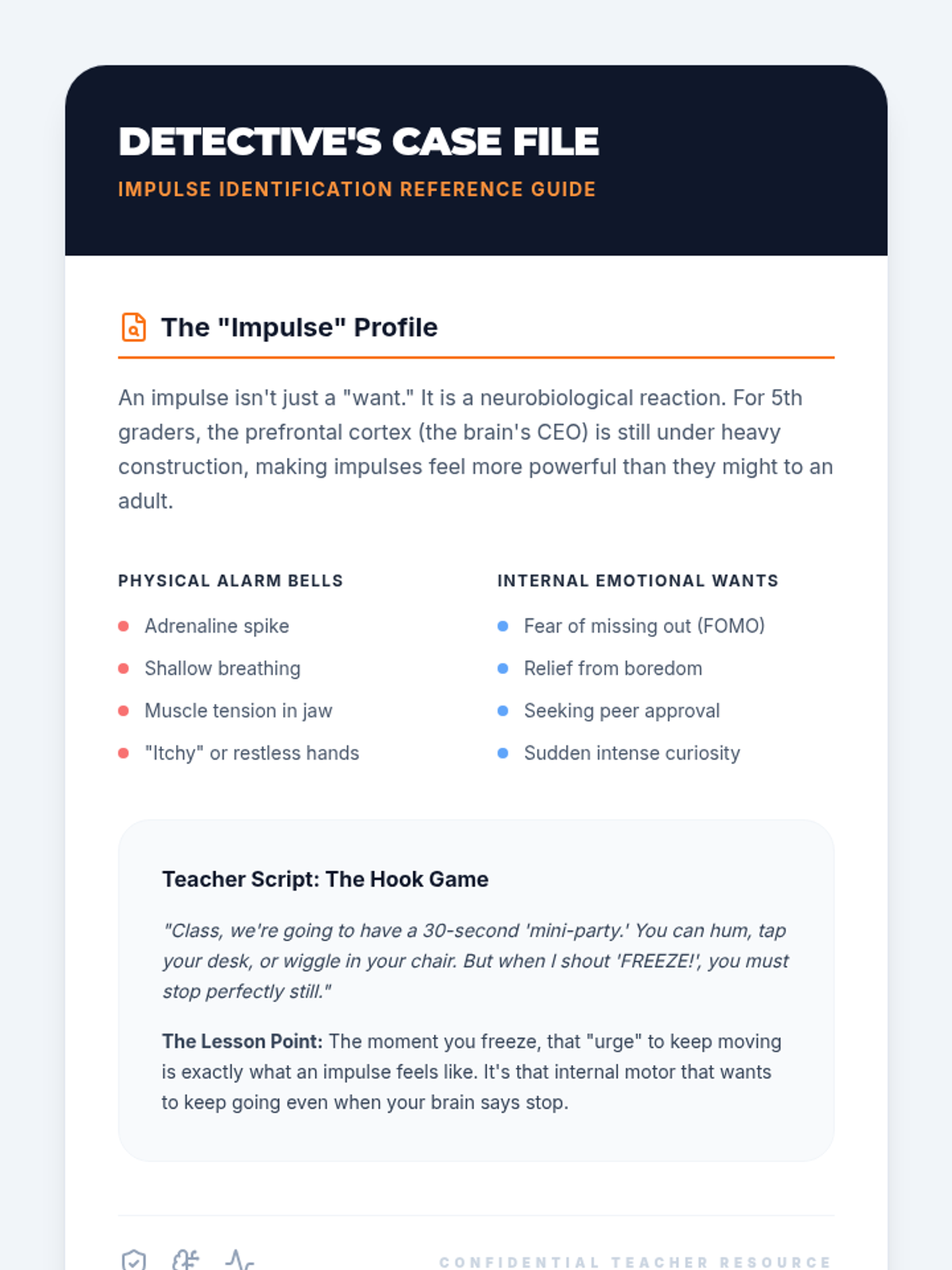
Students explore the physical and emotional cues of impulses. They identify their personal triggers and create 'Trigger Maps' to recognize high-risk situations for impulsive behavior.
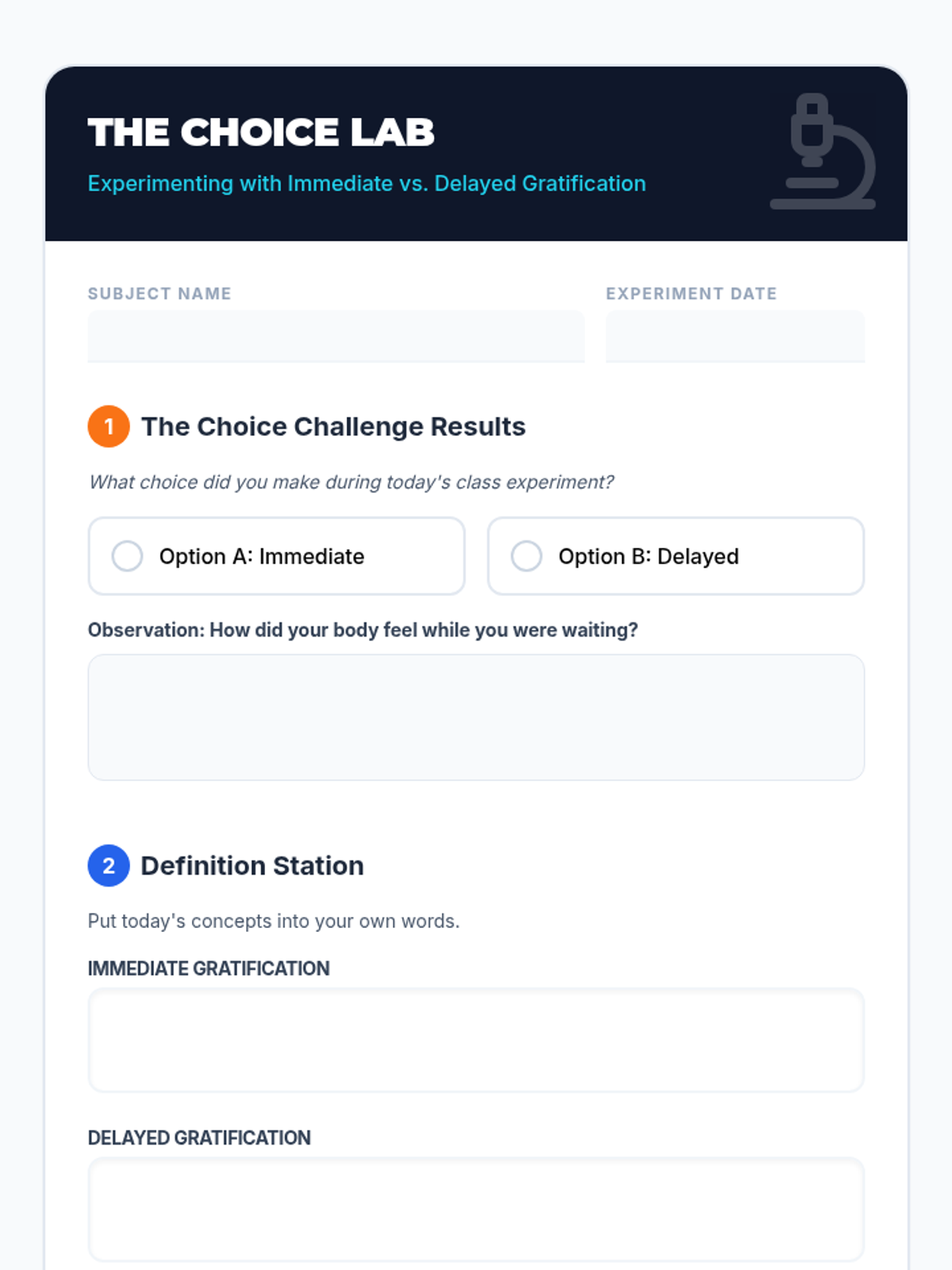
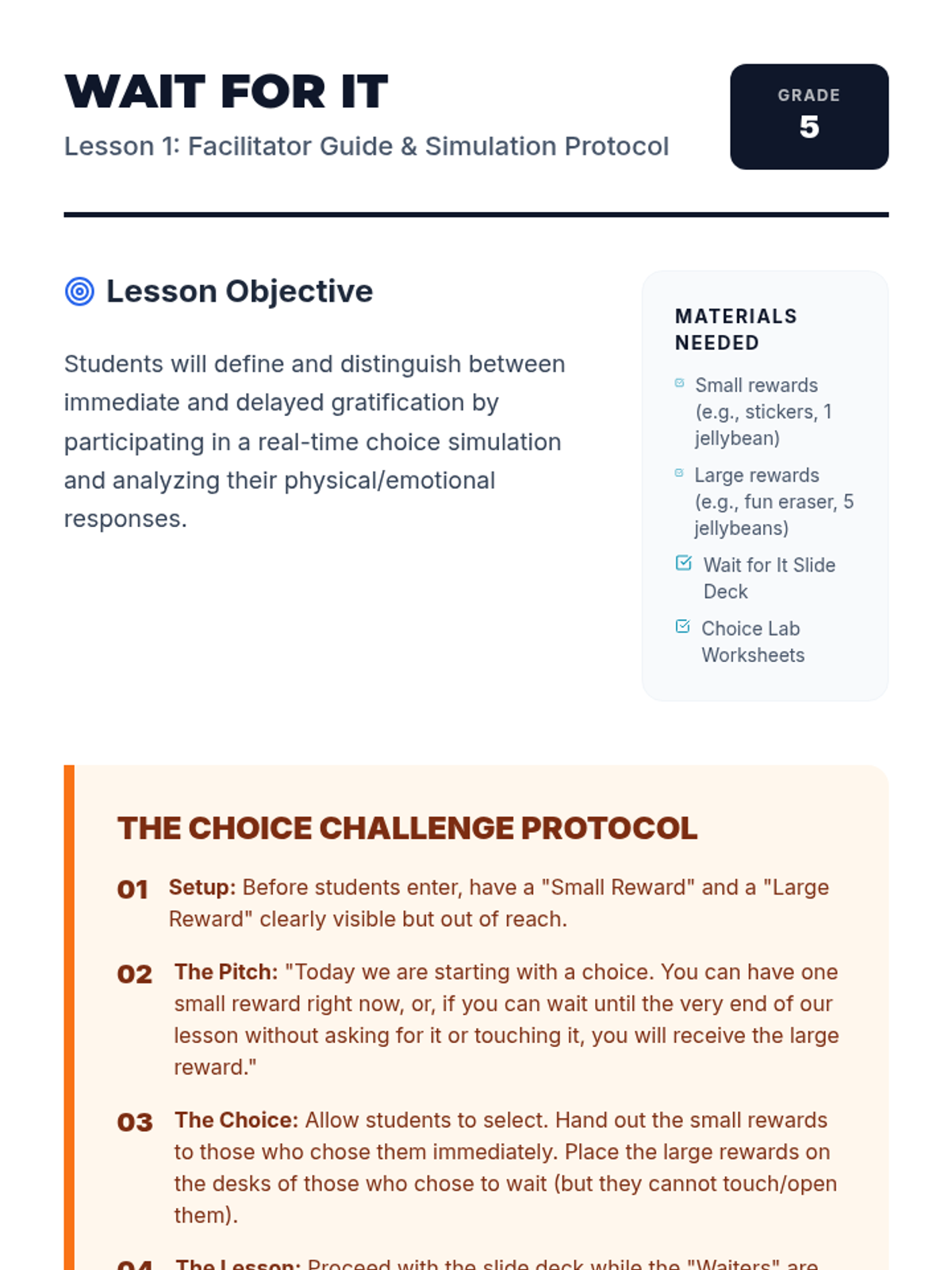
Introduces the concept of immediate versus delayed gratification through a hands-on reward simulation. Students define key vocabulary and reflect on the emotional experience of waiting.
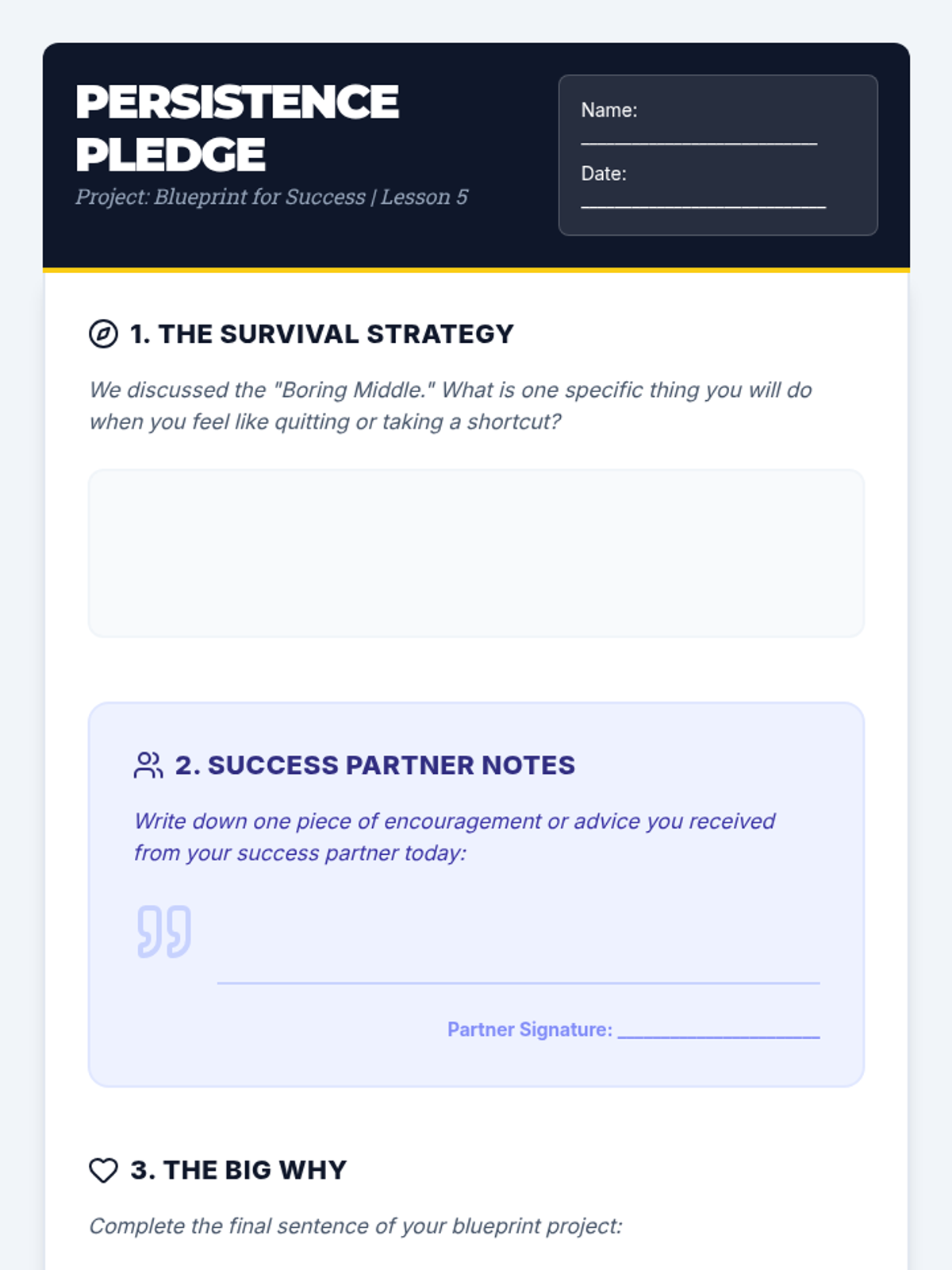
Students present their Goal Roadmaps, share strategies for the 'boring middle', and practice peer feedback and encouragement.
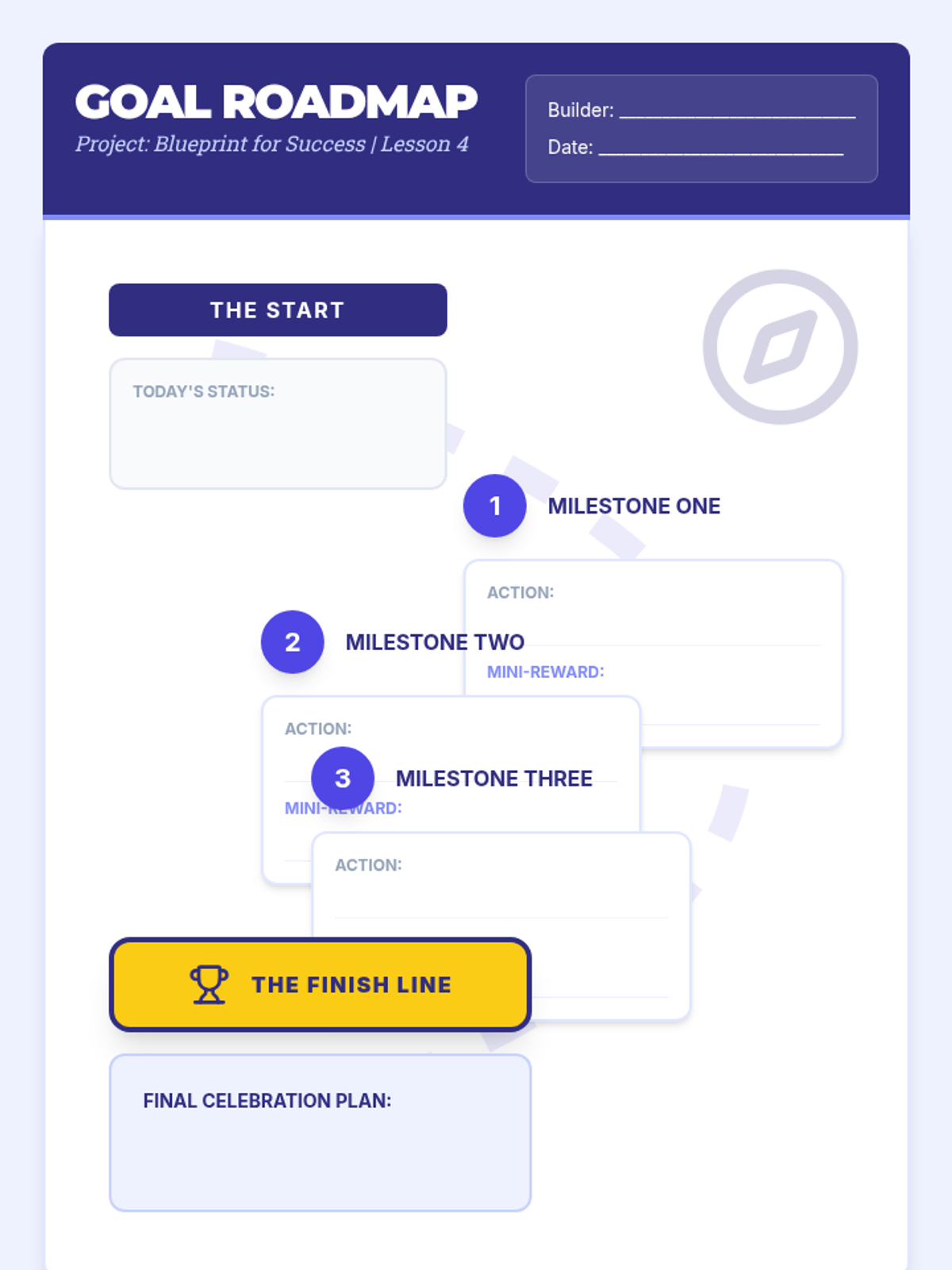
Students draft a detailed timeline for their goal, breaking the long wait into smaller, manageable milestones with mini-rewards.
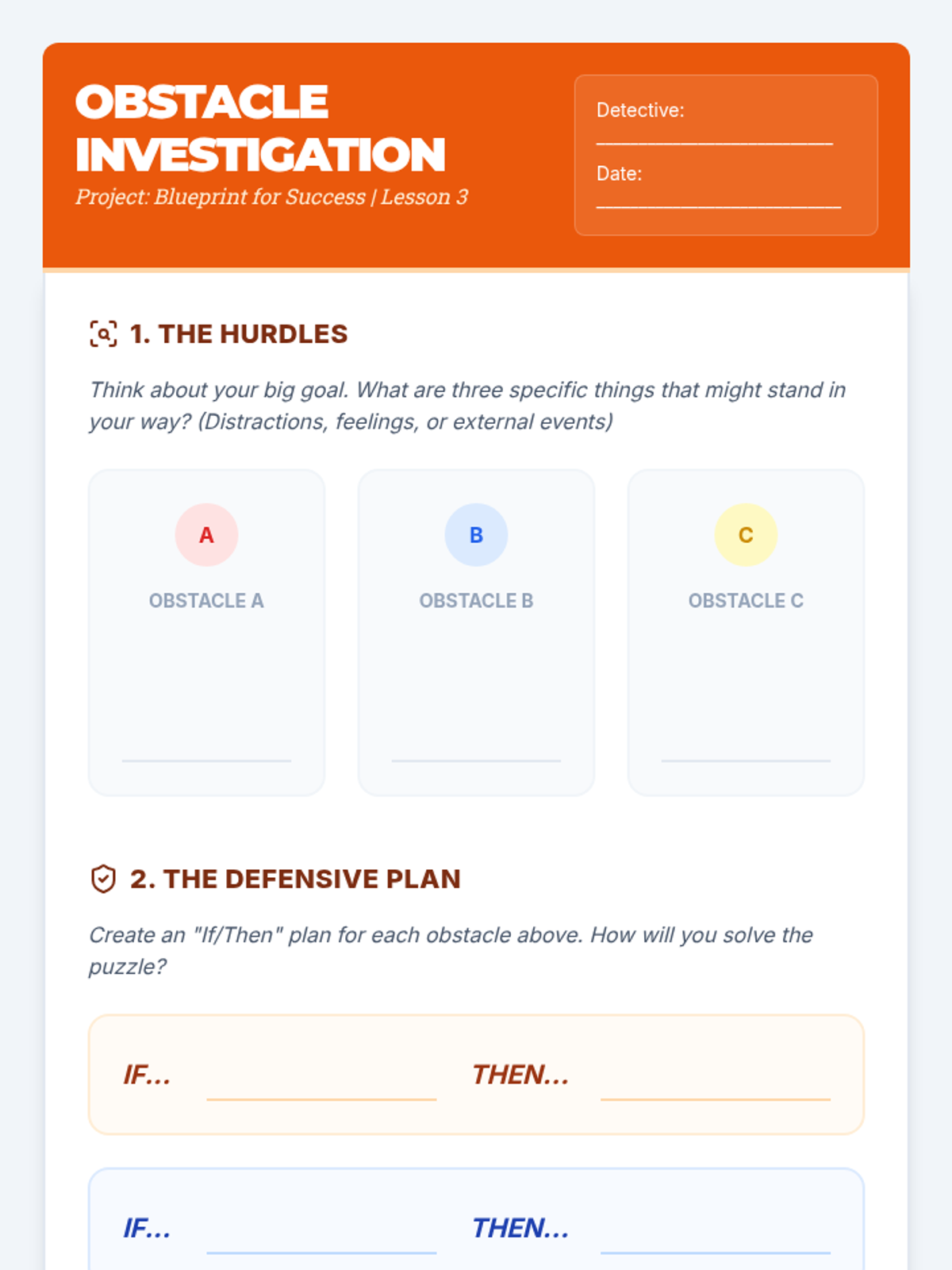
Students brainstorm distractions and temptations likely to derail their goals, treating these obstacles as puzzles to be solved.
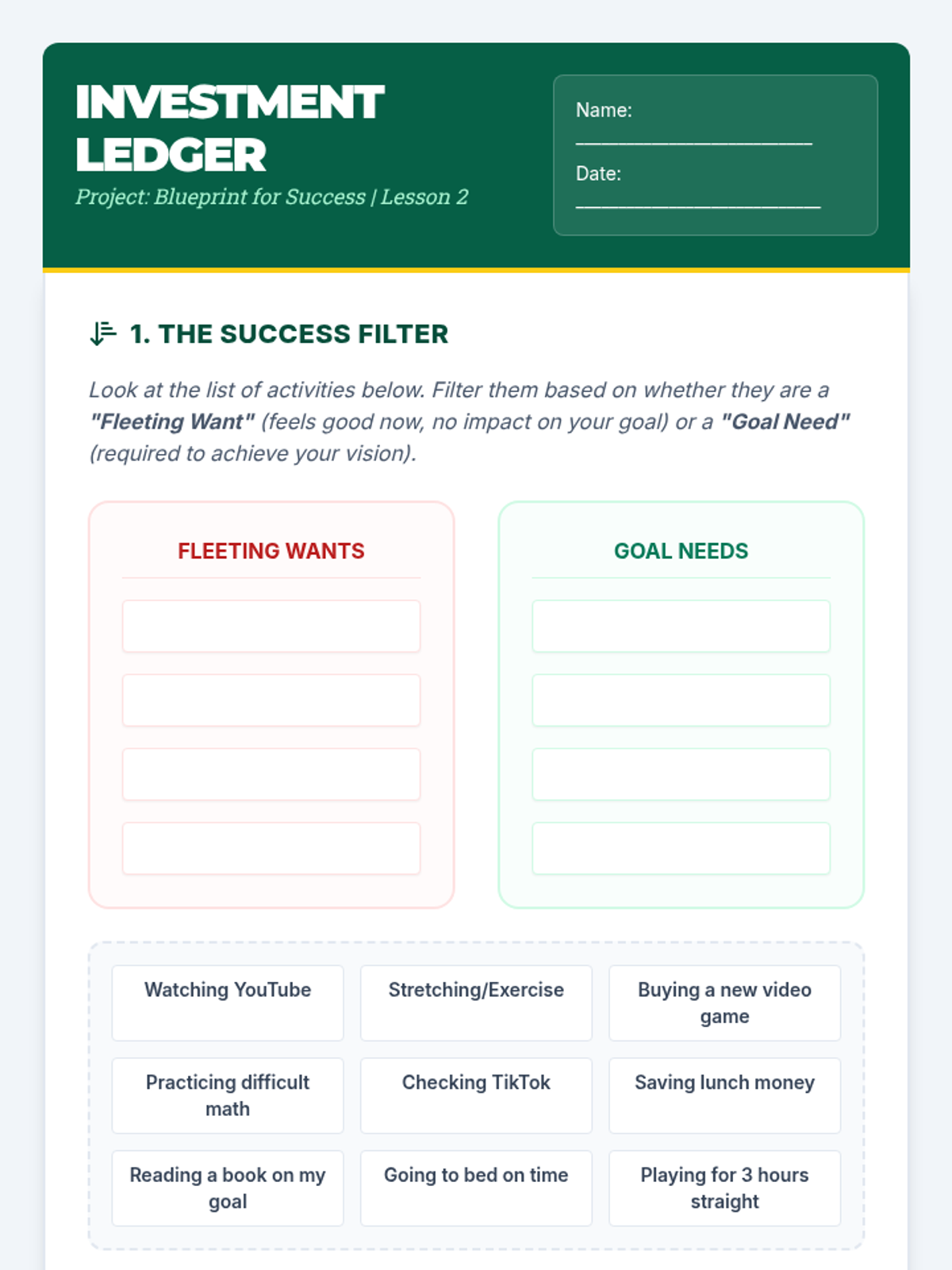
Students categorize desires as fleeting wants or meaningful needs and discuss the 'Opportunity Cost' of choosing short-term fun over long-term progress.
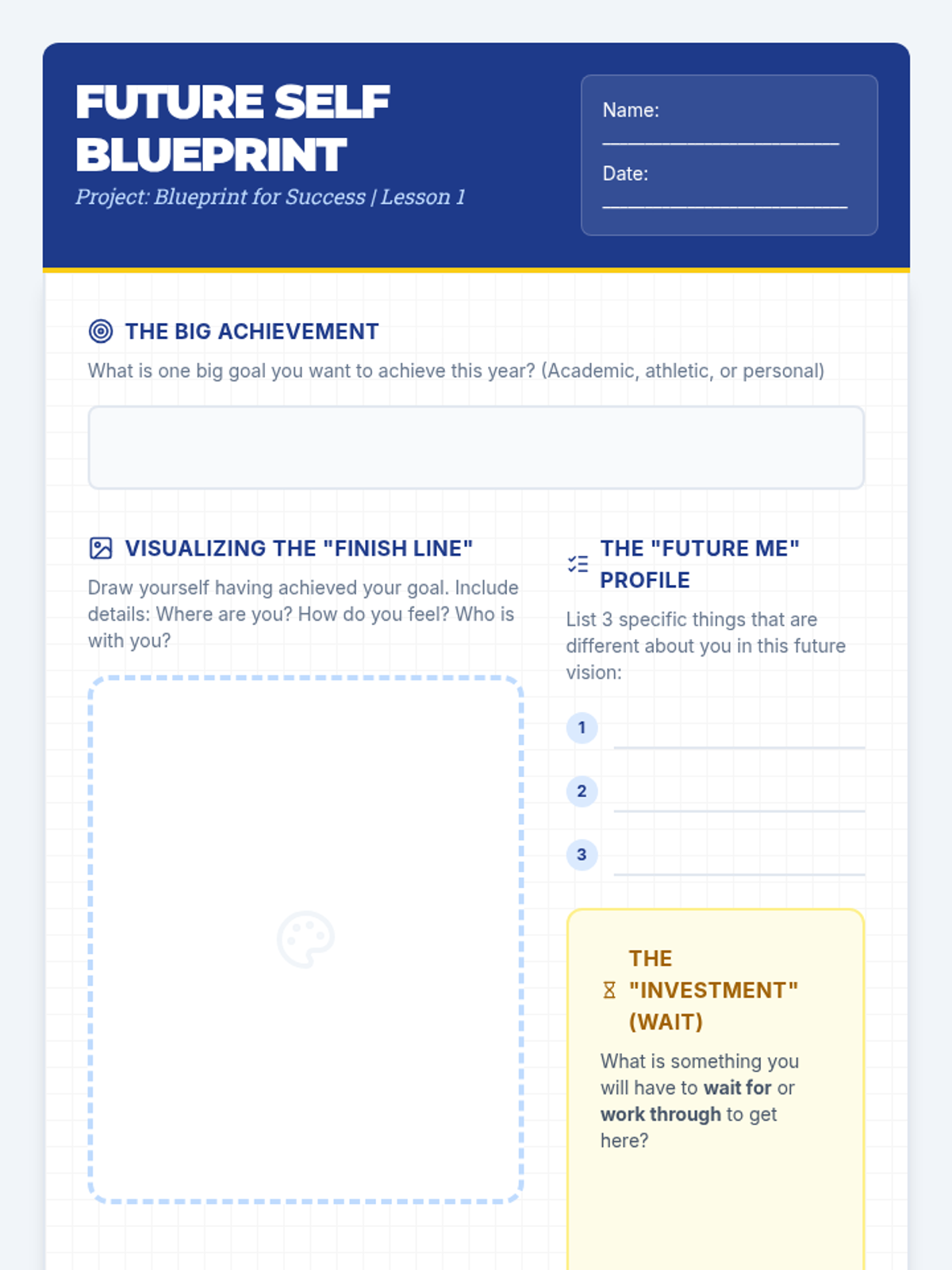
Students engage in a vision-setting workshop to identify a meaningful personal goal and create a visual representation of their 'Future Self' who has achieved it.
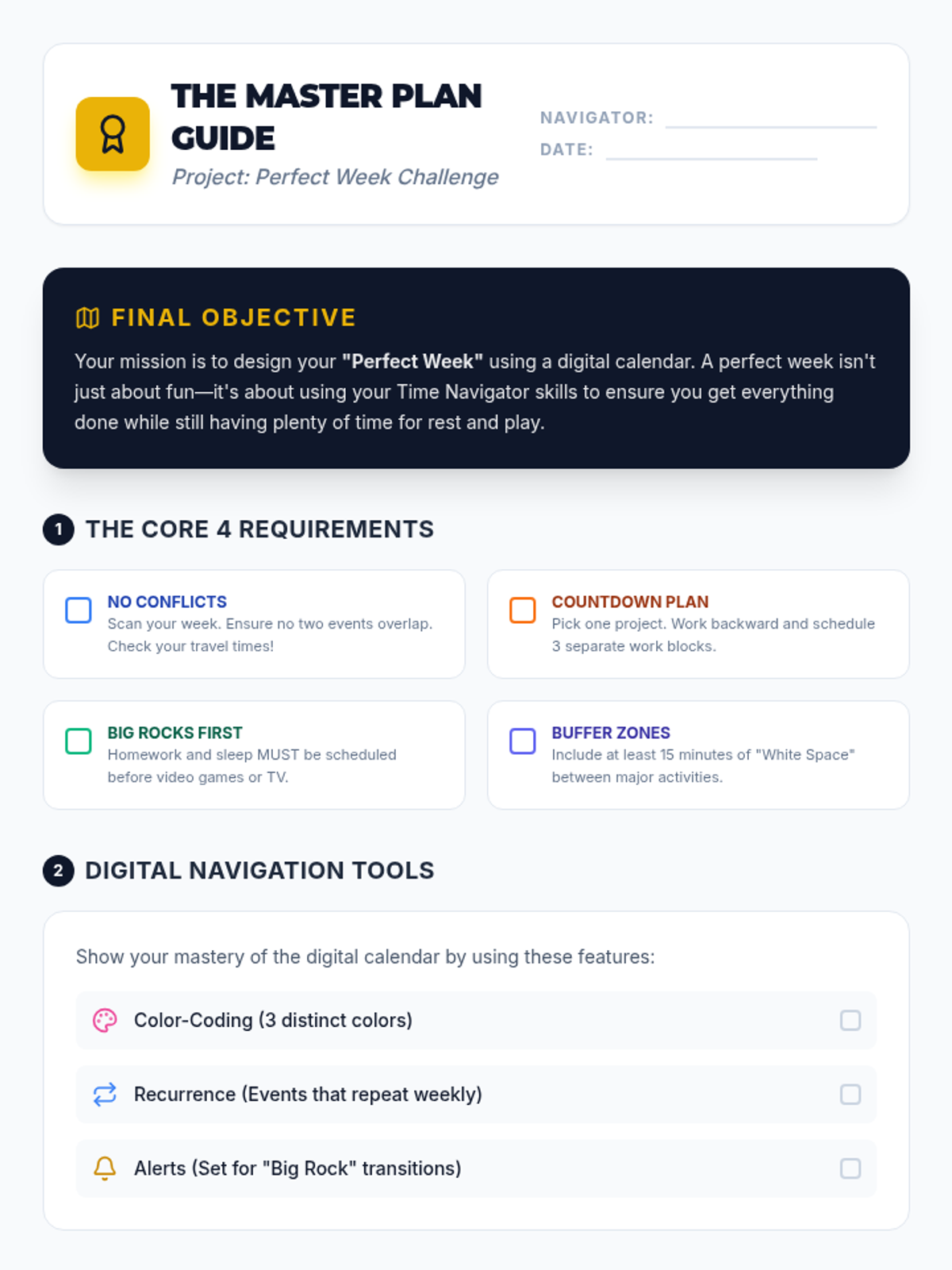
A culminating project where students design and present their 'Perfect Week' digital calendar, integrating all skills learned in the sequence.
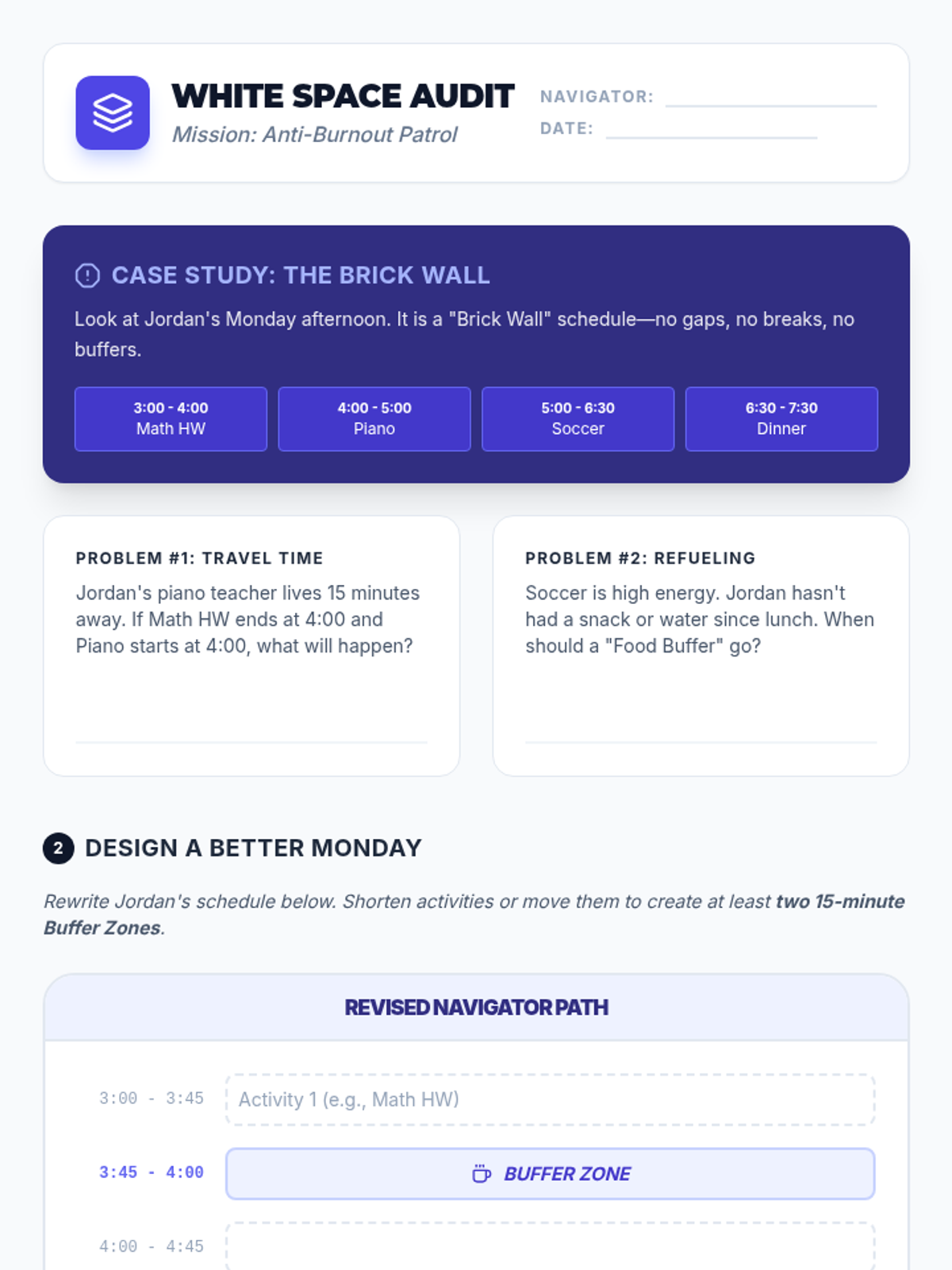
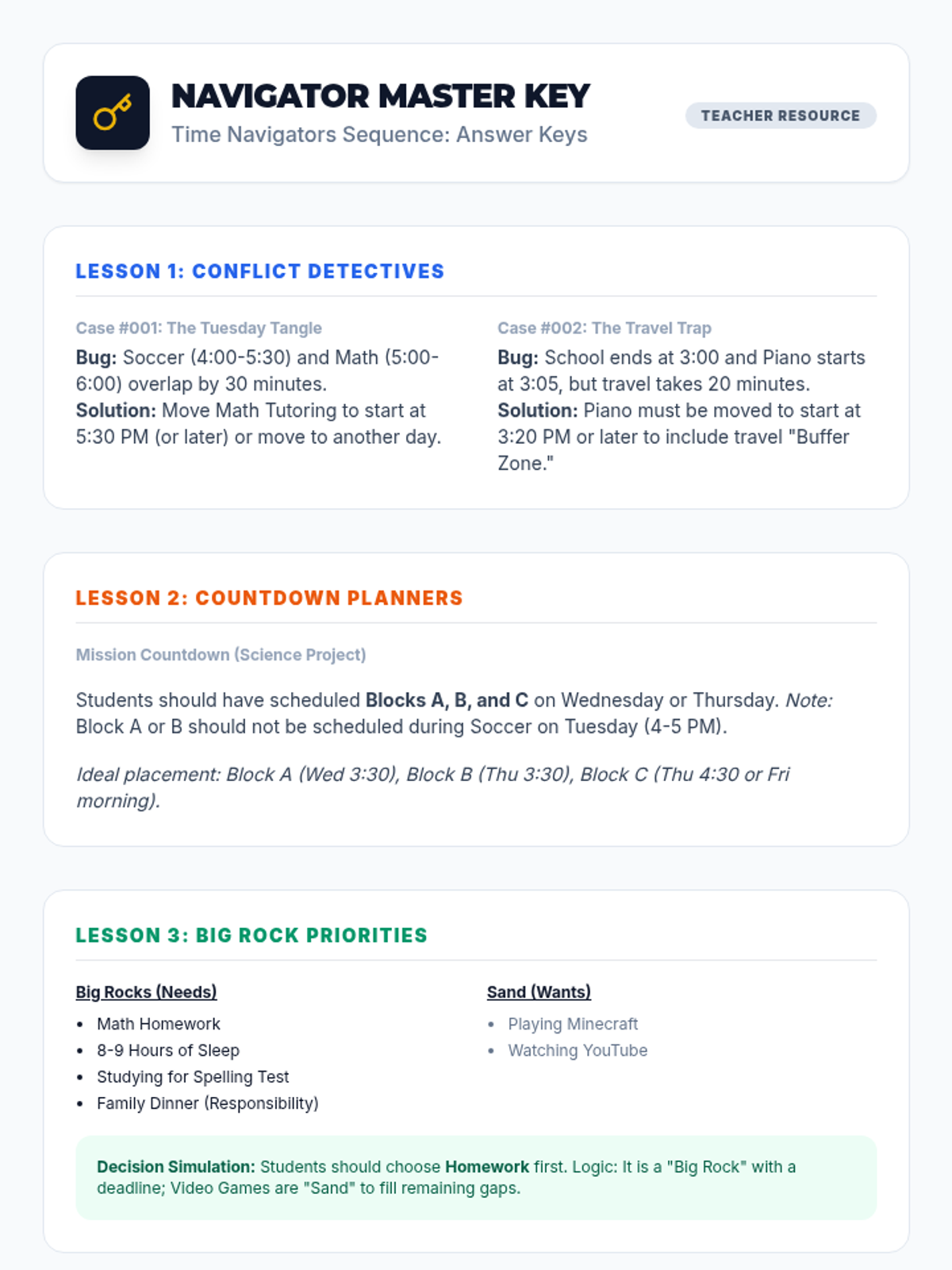
Students focus on the importance of buffer time and self-care, learning that a successful calendar must include white space to prevent burnout.
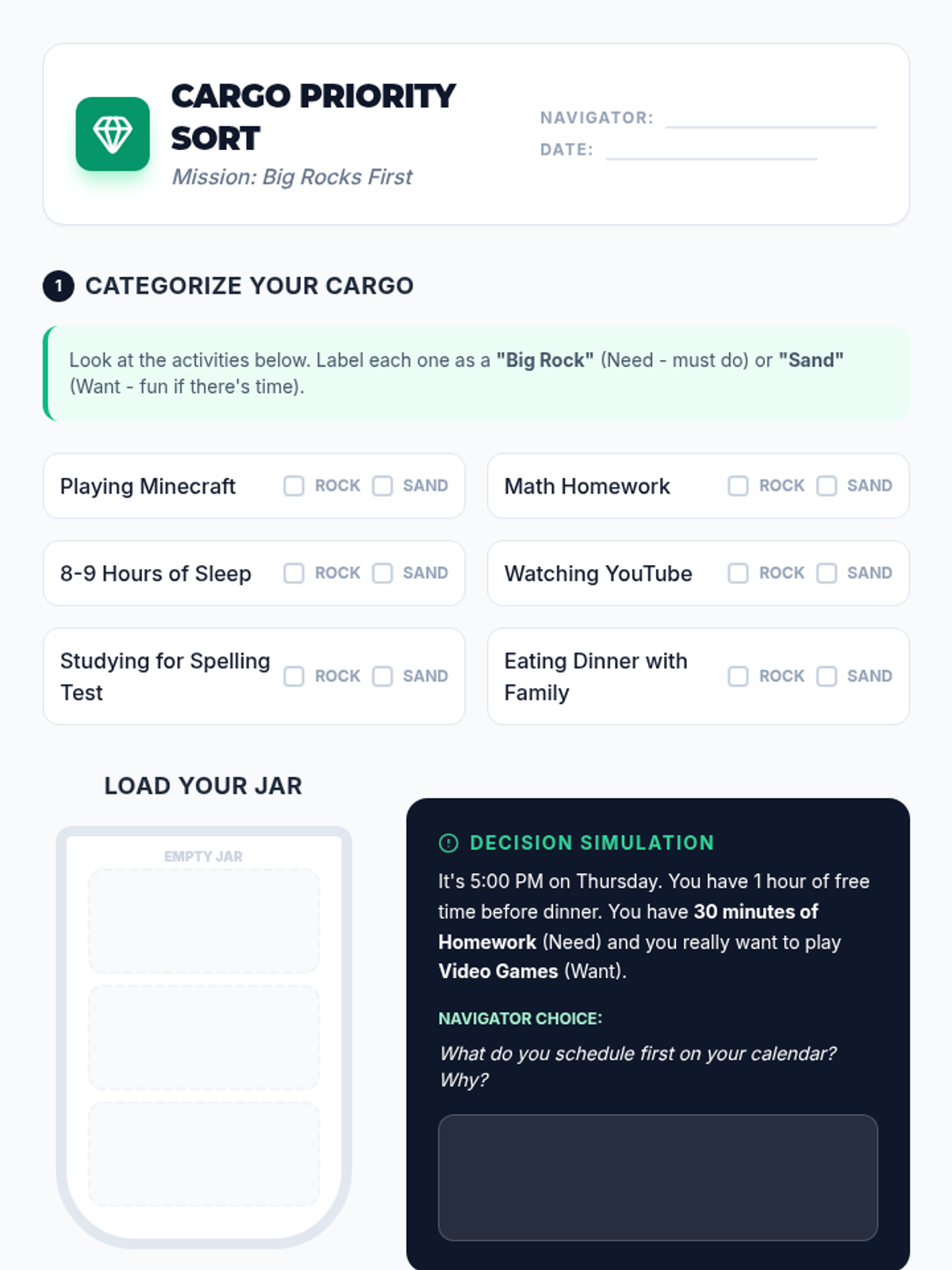
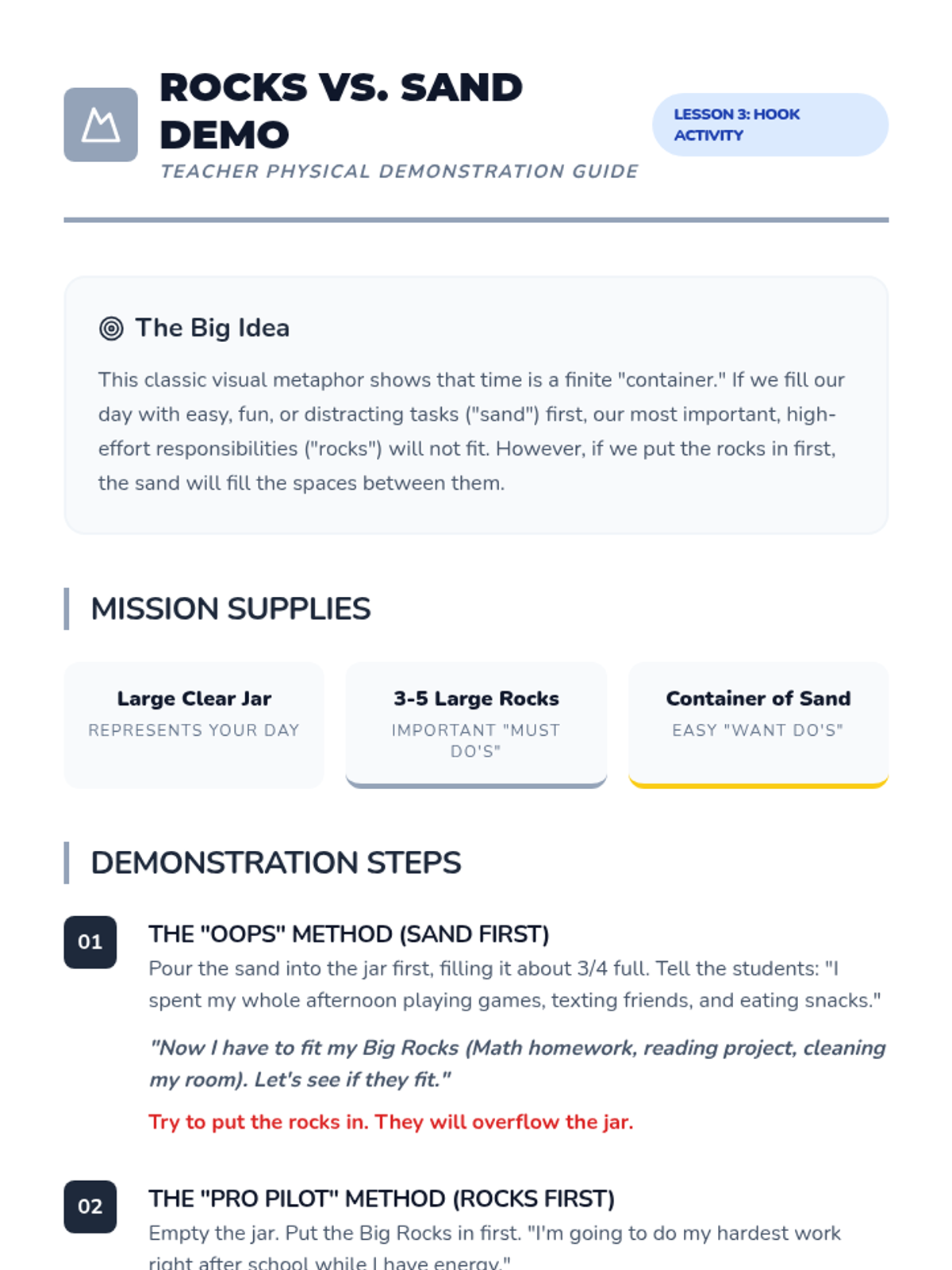
Using the 'Big Rocks' analogy, students learn to prioritize essential 'need' tasks over 'want' activities using visual calendar manipulation.
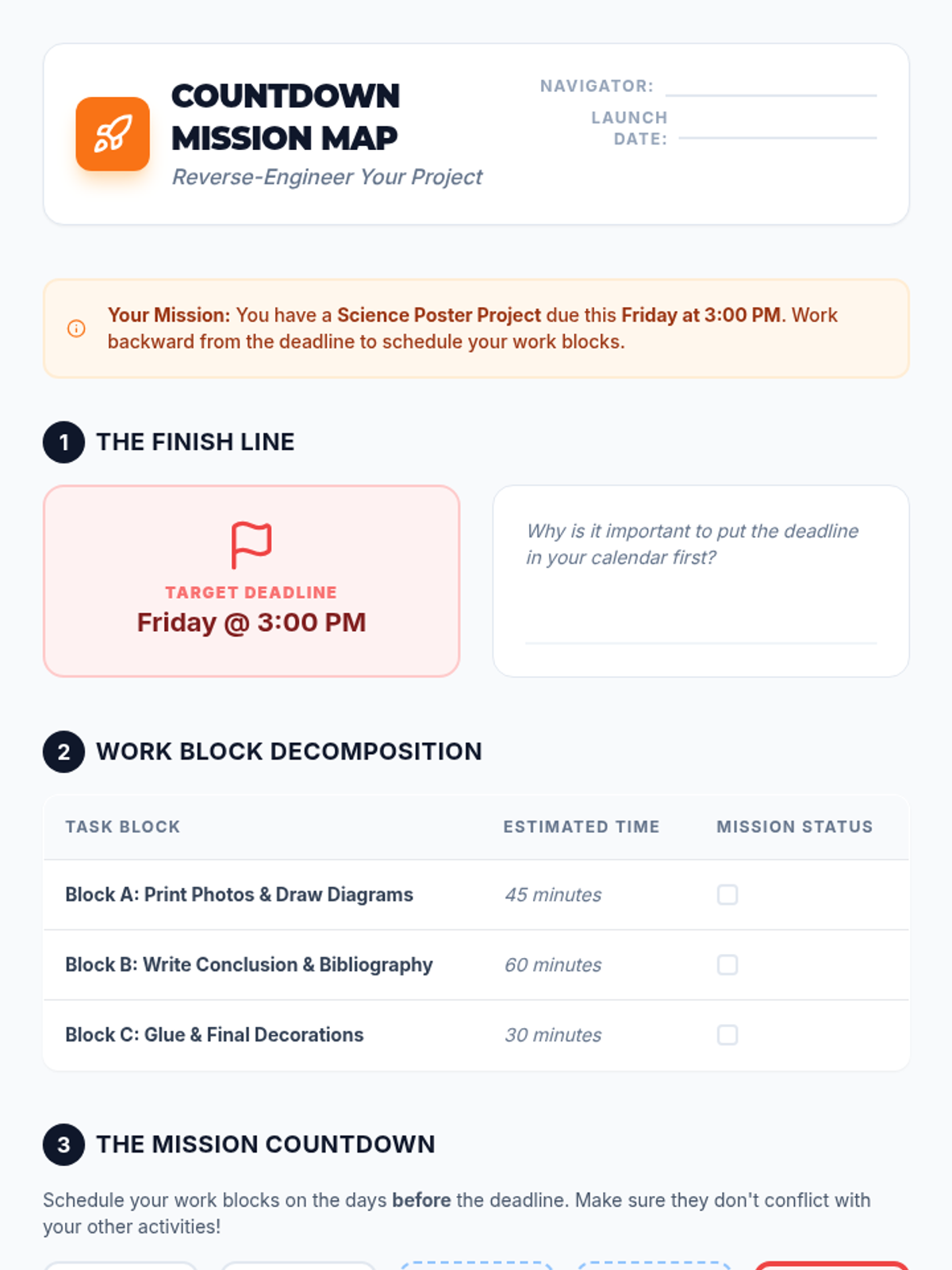
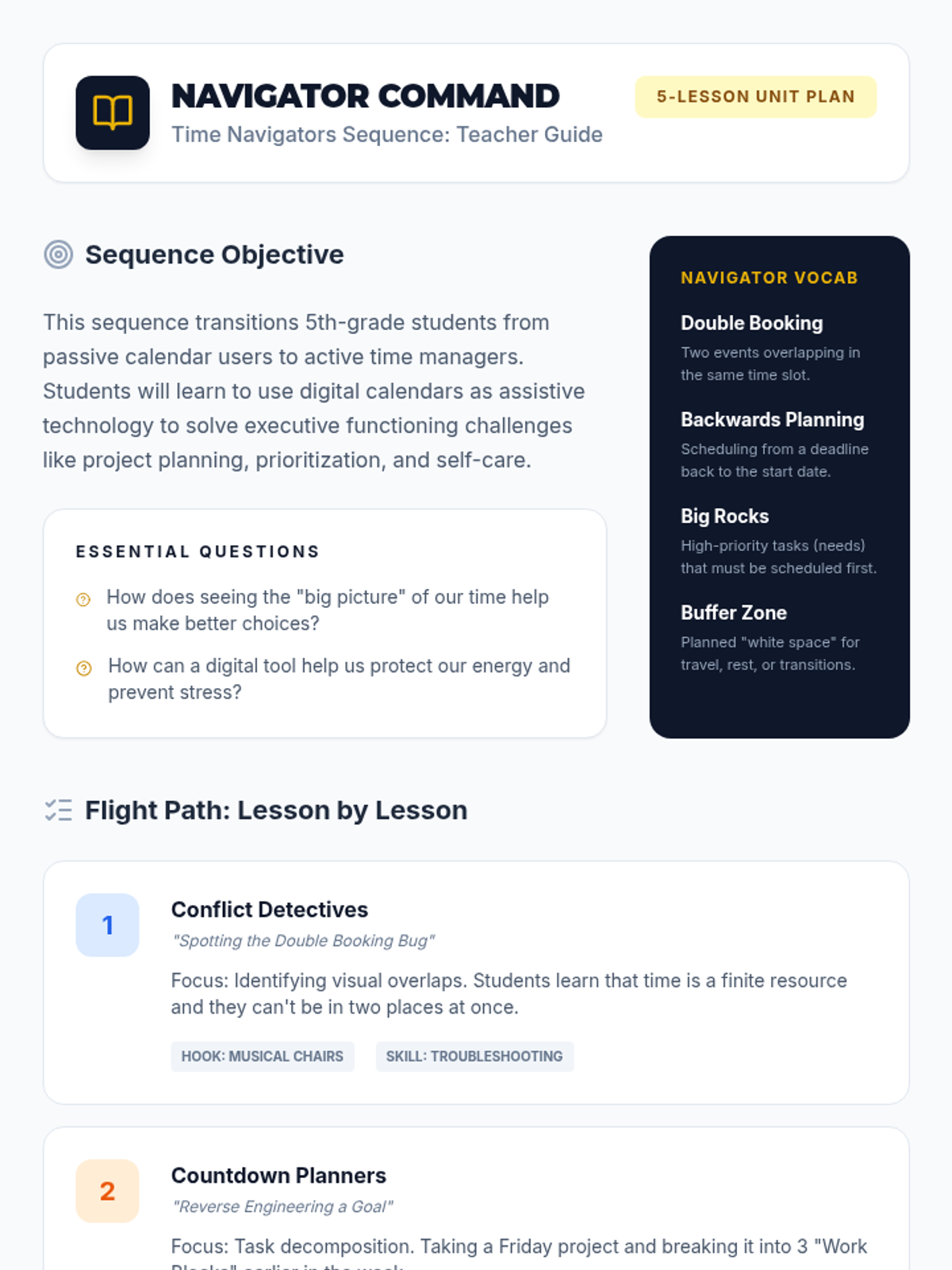
Students learn the 'Pizza Party' method of backward planning, breaking down large projects into smaller chunks and scheduling them from the deadline to the start date.
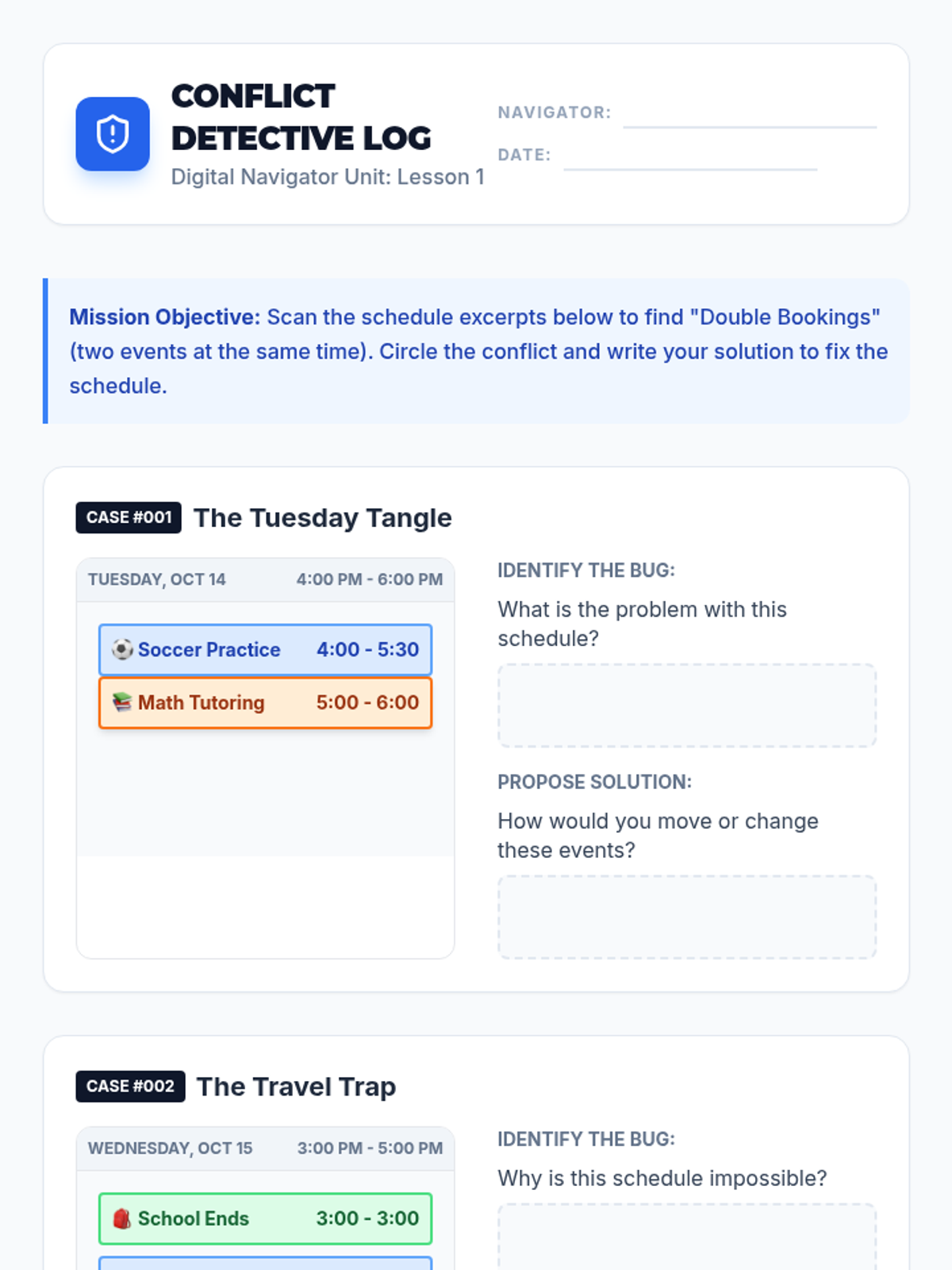
Students learn to identify and resolve 'double-bookings' in a digital calendar through case studies and a physical musical chairs analogy.
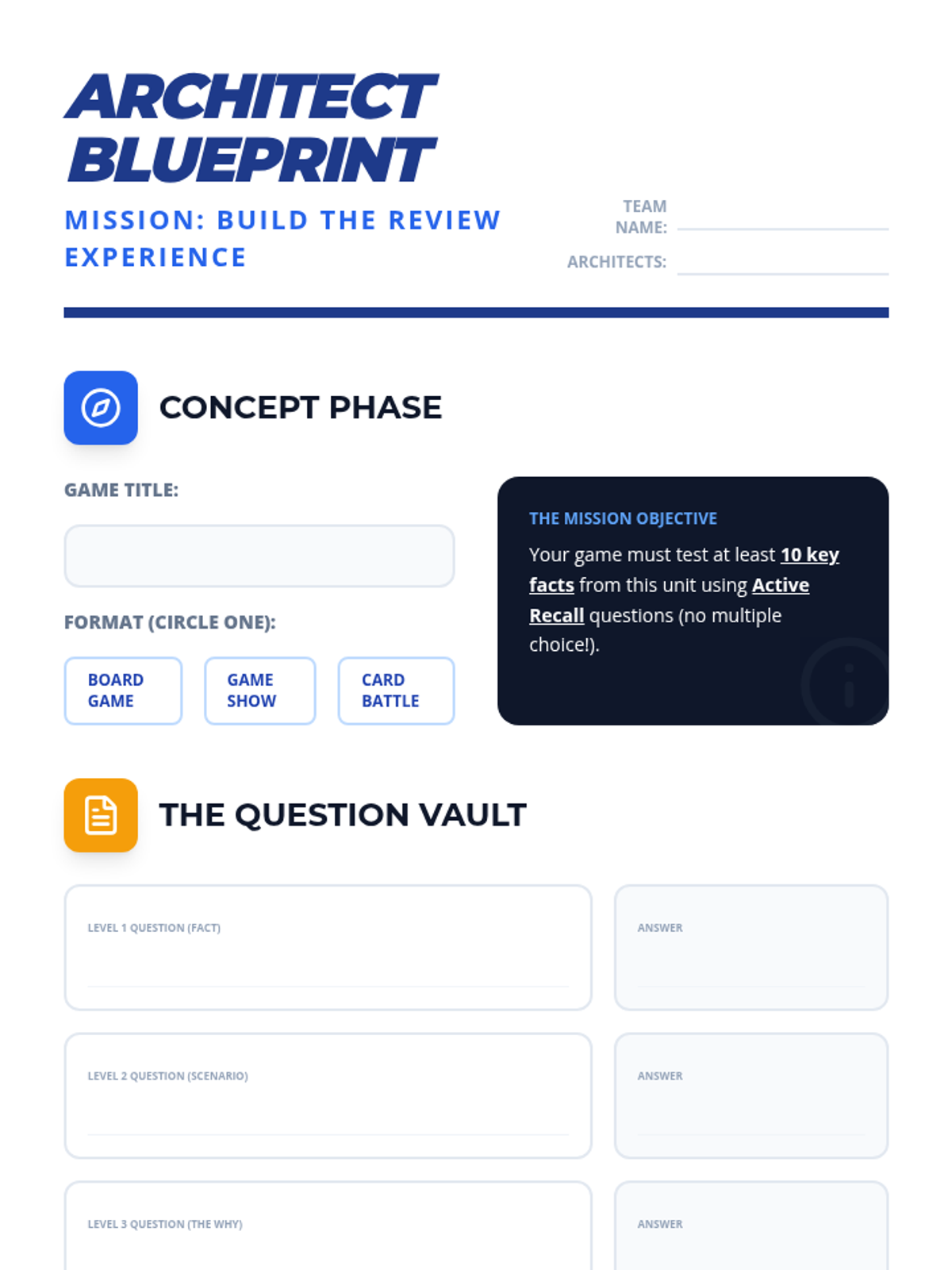
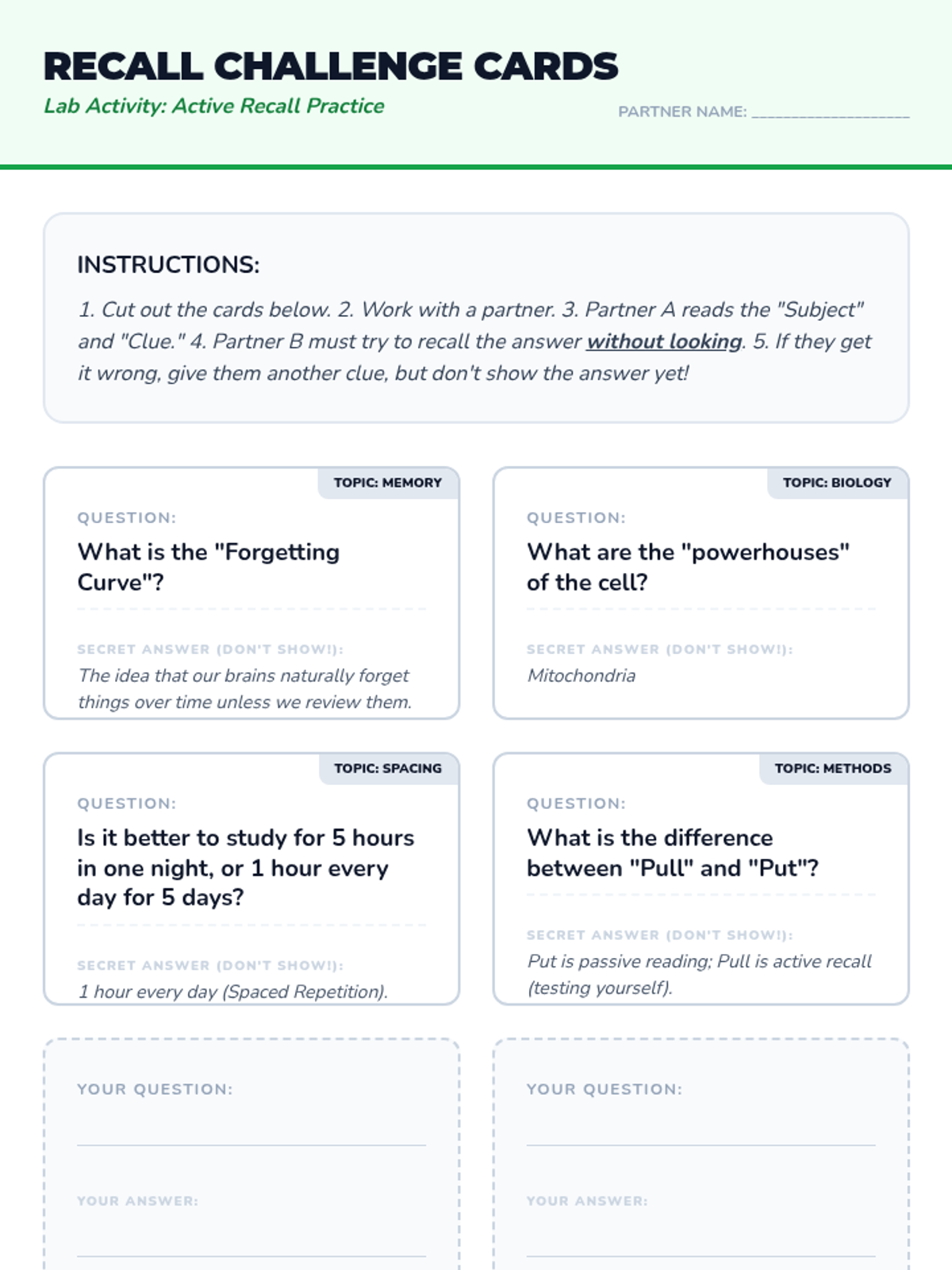
Students apply their knowledge by designing review games for their peers, synthesizing information into engaging questions and challenges.
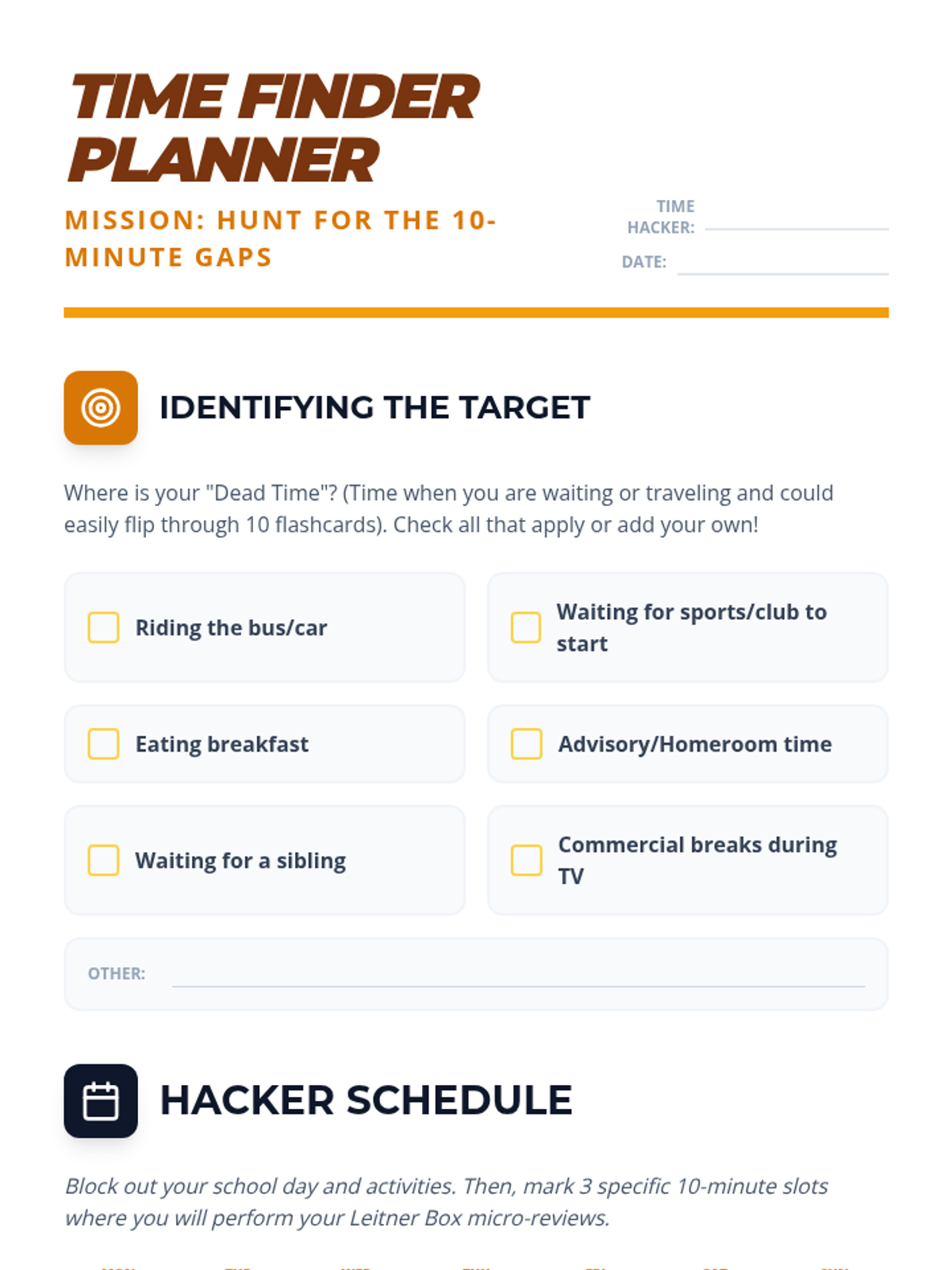
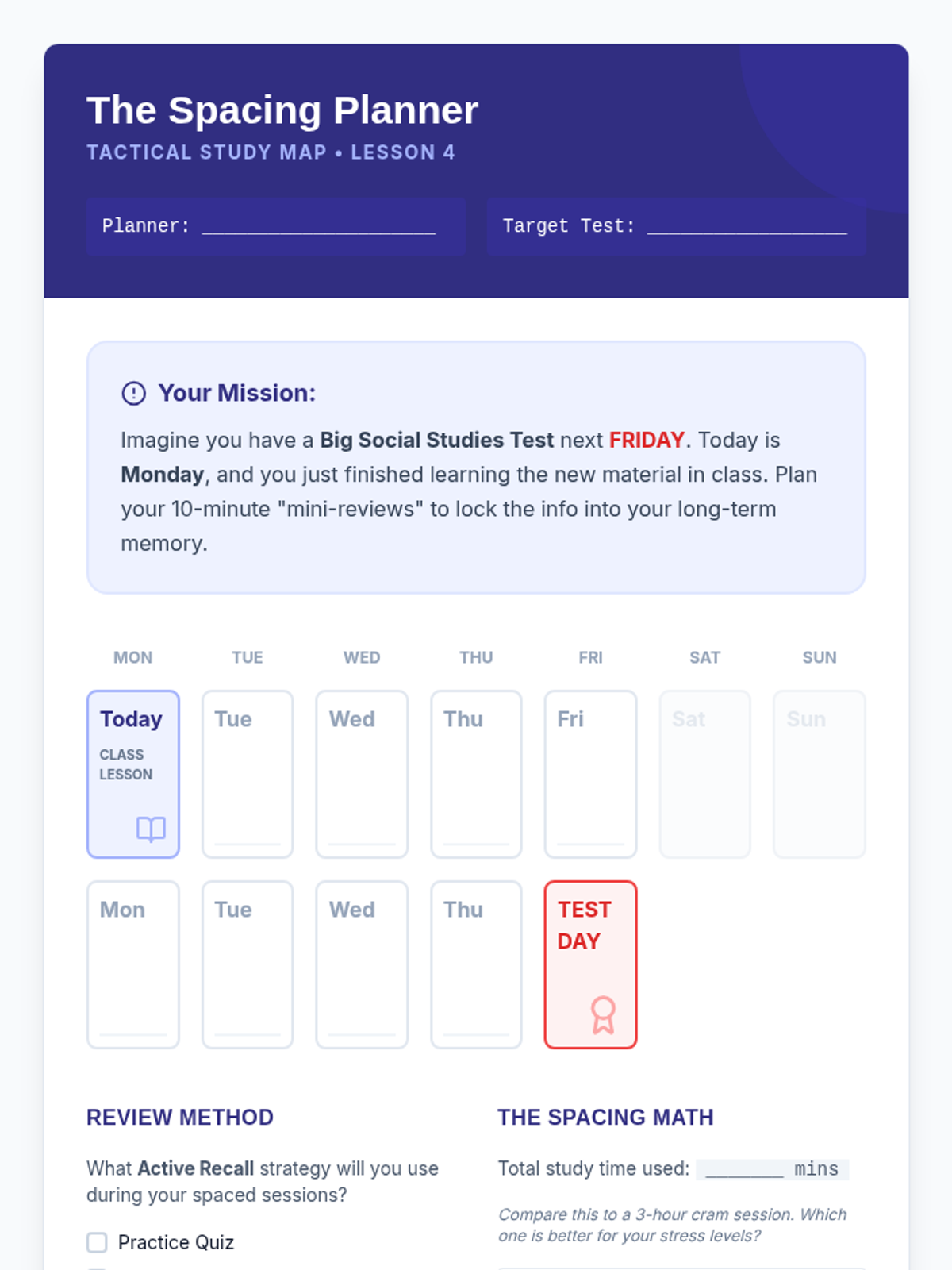
Students learn to find 'hidden time' in their schedules and plan 10-minute micro-reviews to replace exhausting cramming sessions.
A hands-on lesson where students build a physical Leitner Box system to prioritize difficult information and space out their review sessions.
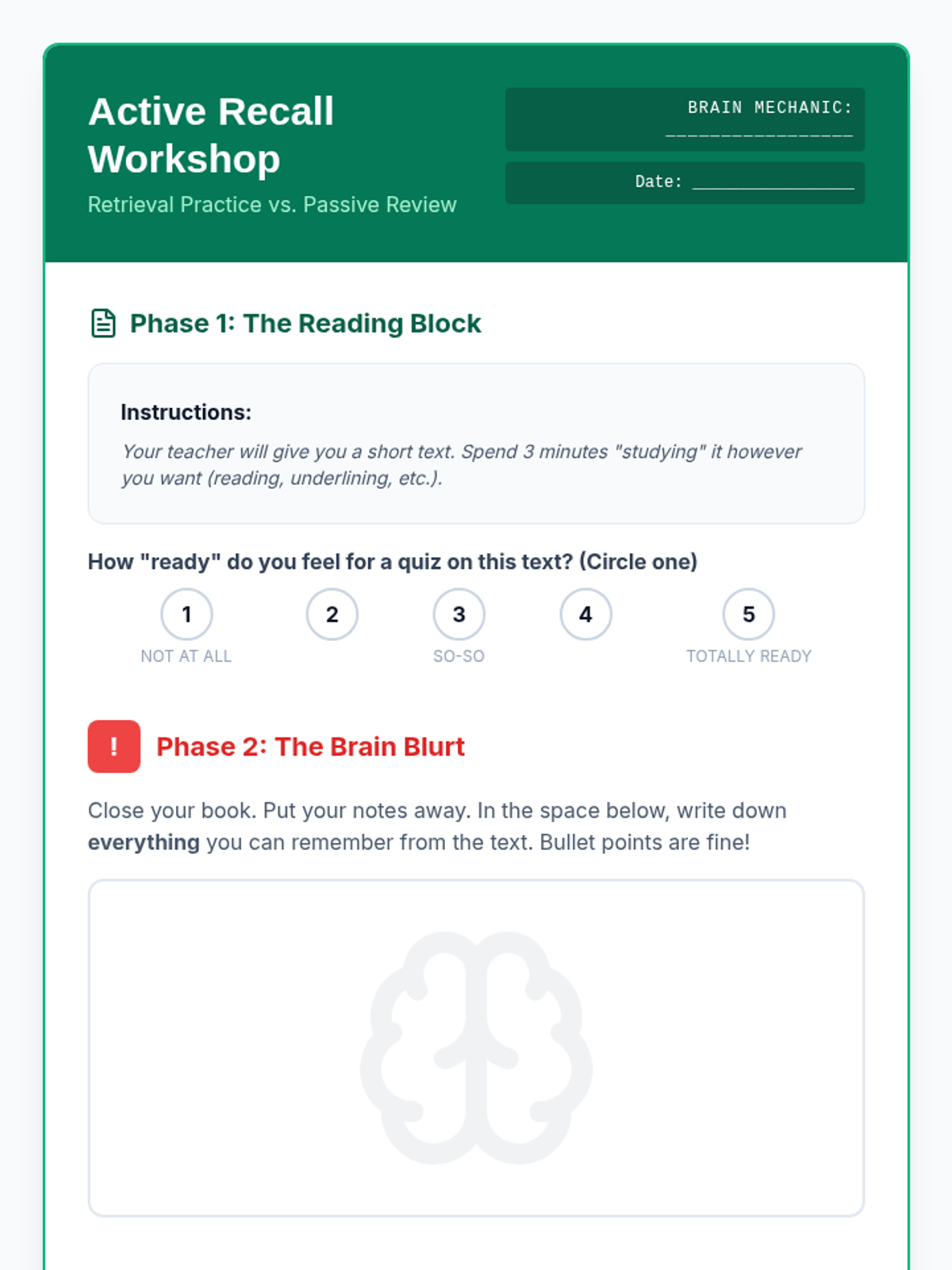
Focuses on the difference between passive re-reading and active recall, teaching students how to create tools that force the brain to work for information.
Students explore the science of forgetting through a live memory simulation and learn how timely reviews can 'interrupt' the curve to build lasting knowledge.
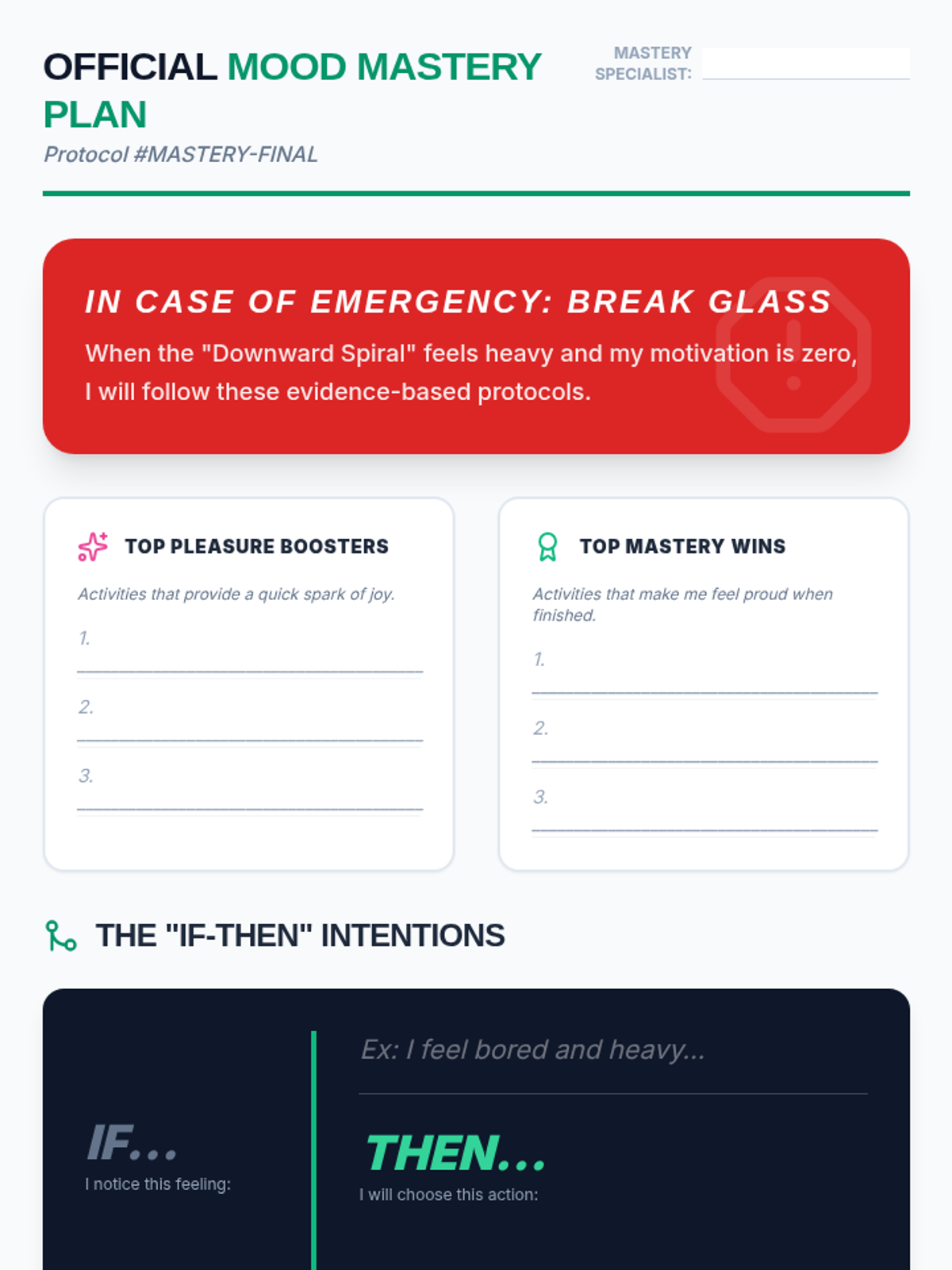
Synthesizing their learning, students create a 'Break the Glass' emergency plan for days when they feel low or anxious. They select their most effective pleasure and mastery activities and write specific implementation intentions (If I feel X, then I will do Y).
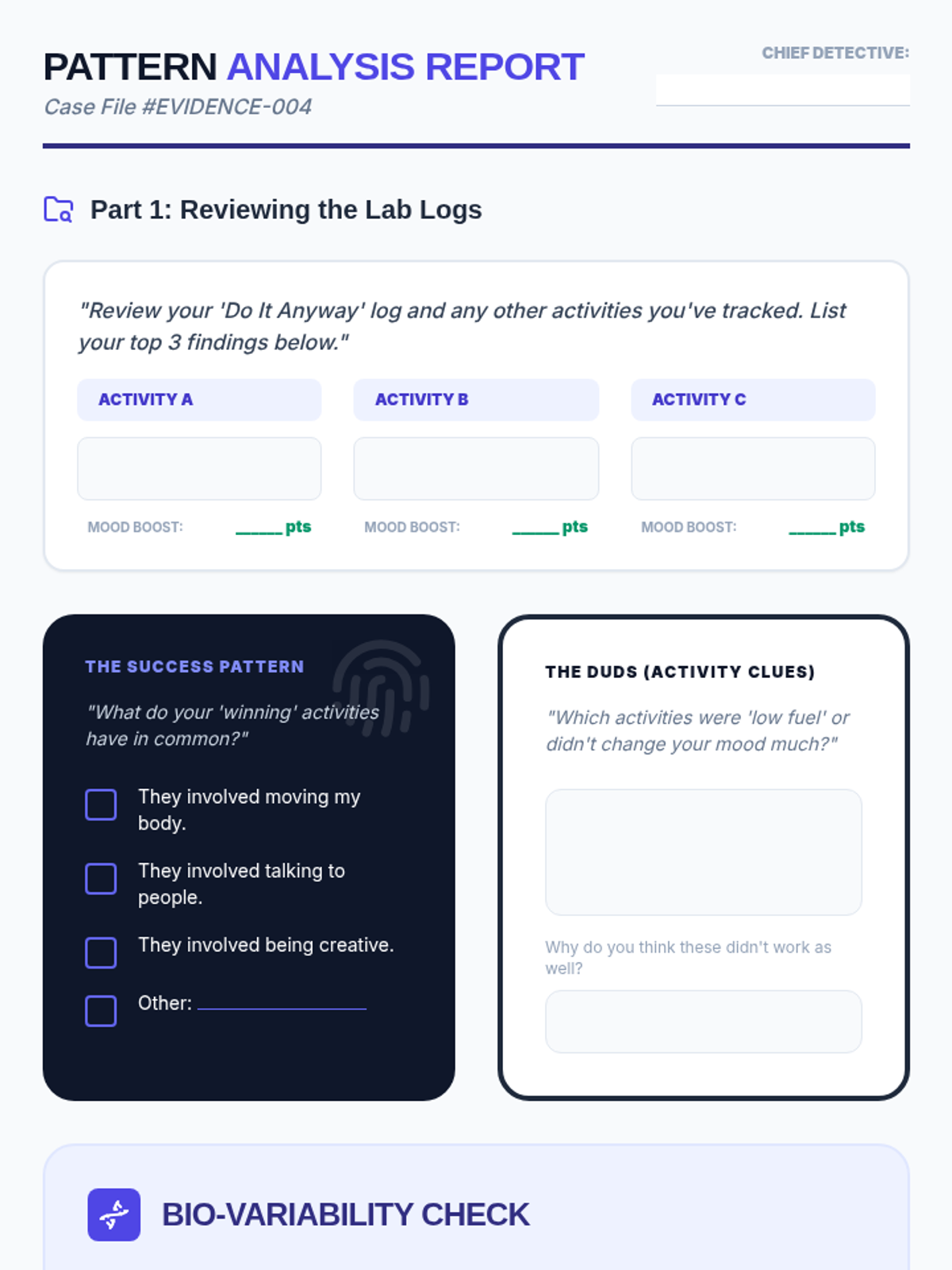
Students review the results of their personal experiments or case study data to identify patterns in how specific activities impact mood. They discuss the variability of results (what works for one person may not work for another) and begin curating their personal 'top hits' for mood improvement.
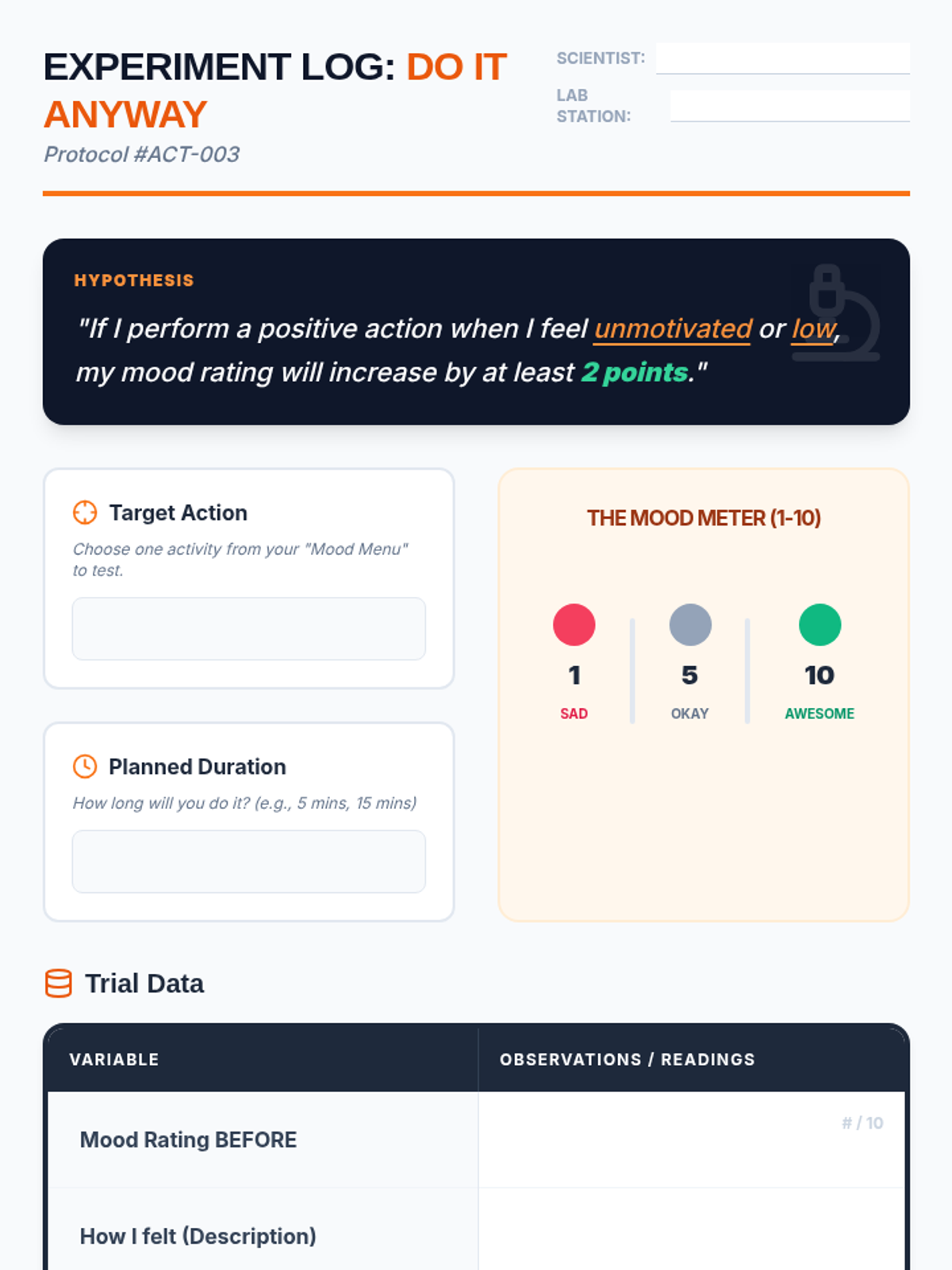
This lesson introduces the concept of 'acting opposite' to an emotion. Students design a short experiment to test the hypothesis that engaging in a positive activity—even when they don't feel like it—can improve their mood rating on a 1-10 scale. They prepare a data collection sheet for a homework experiment.
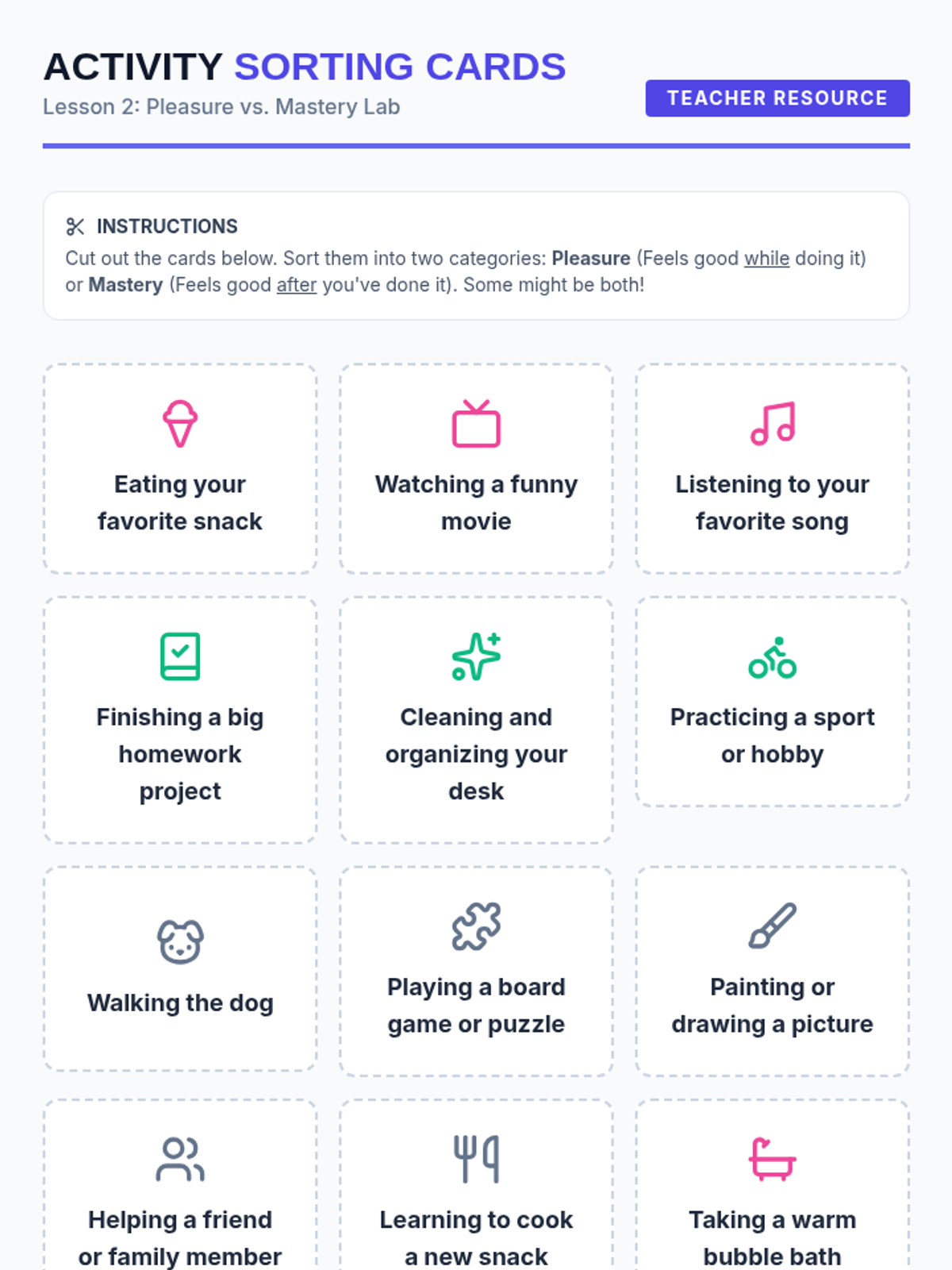
Students distinguish between activities that feel good in the moment (Pleasure) and those that make us feel accomplished (Mastery). Through a sorting workshop, they brainstorm examples for both categories, understanding that a balanced diet of experiences includes both fun and achievement.
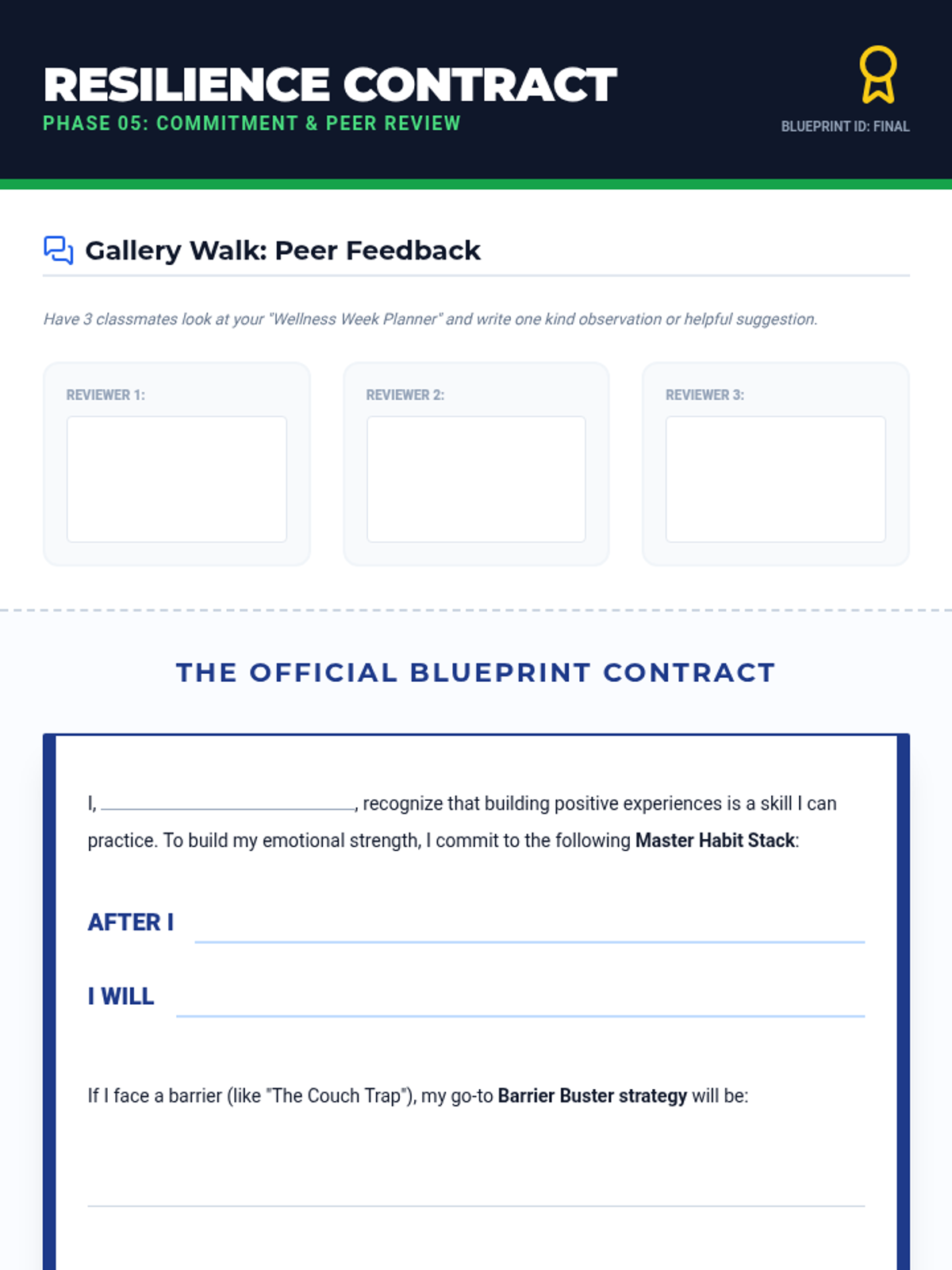
The culminating lesson where students present their wellness plans, engage in peer reviews, and set long-term goals for maintaining emotional strength.
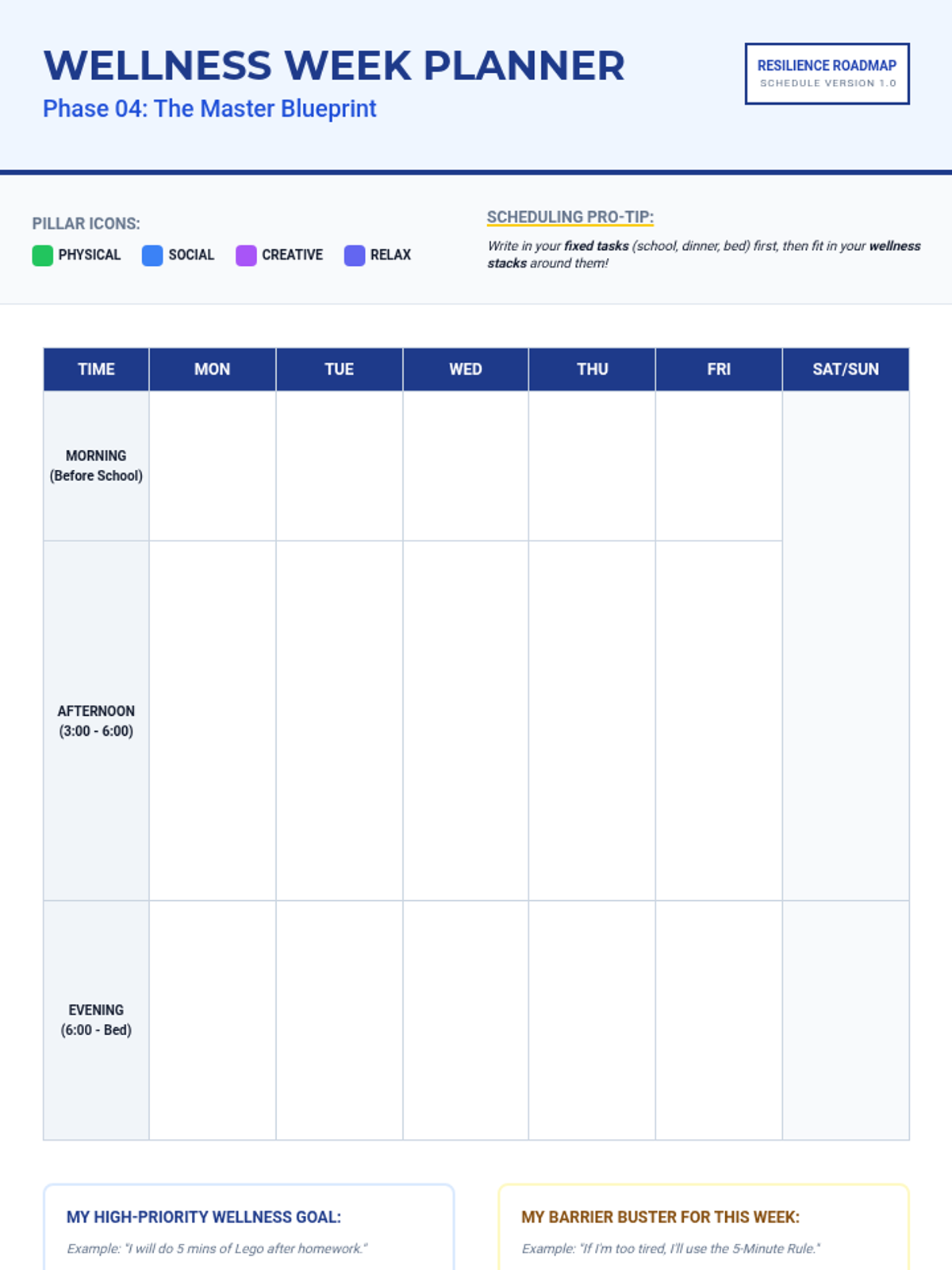
Students design a realistic weekly schedule that budgets time for school, chores, and 'scheduled joy' using a puzzle-like approach to time management.
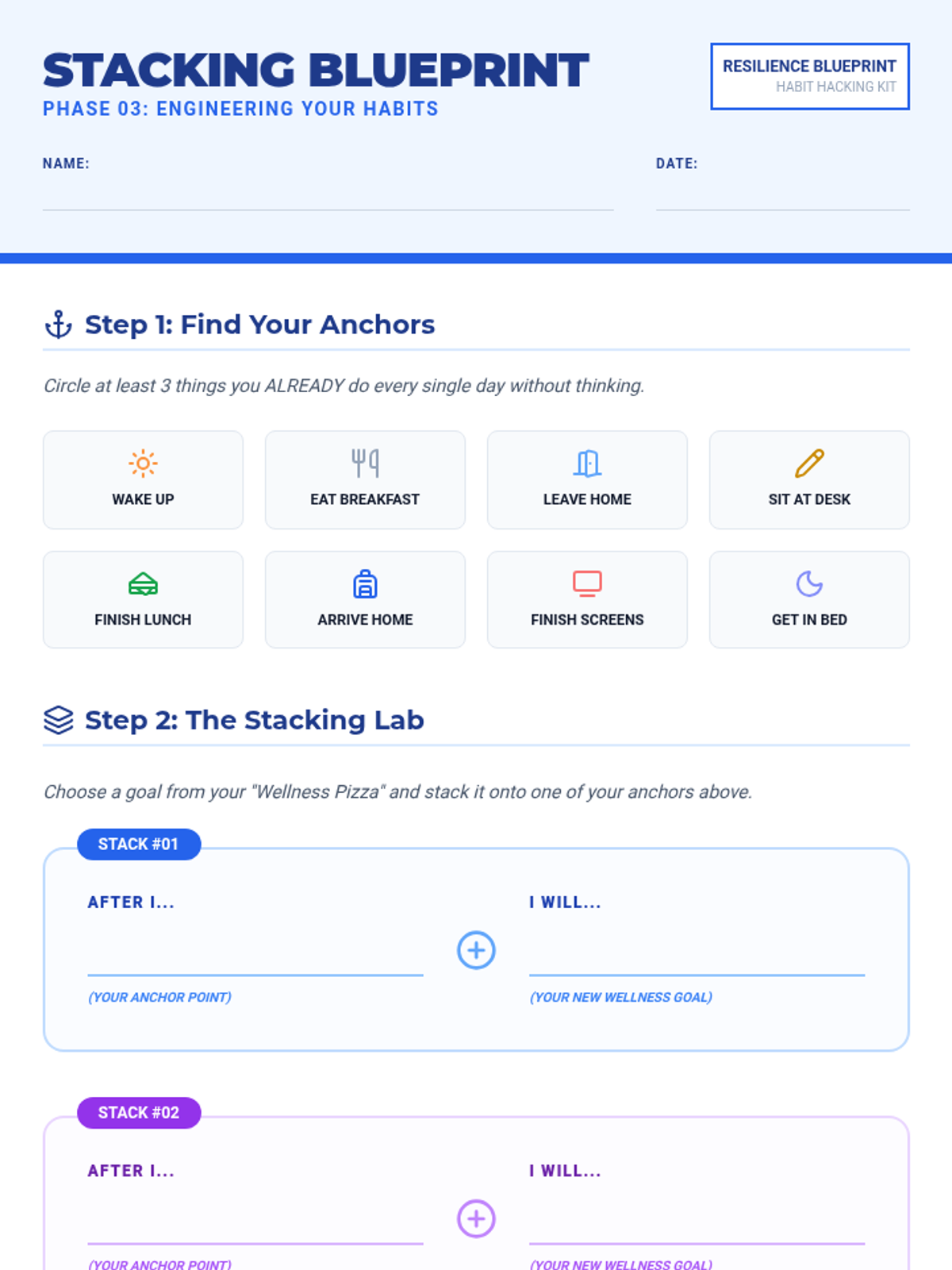
This lesson teaches the mechanics of habit formation, specifically how to 'stack' new positive behaviors onto existing daily 'anchor points' for lasting change.
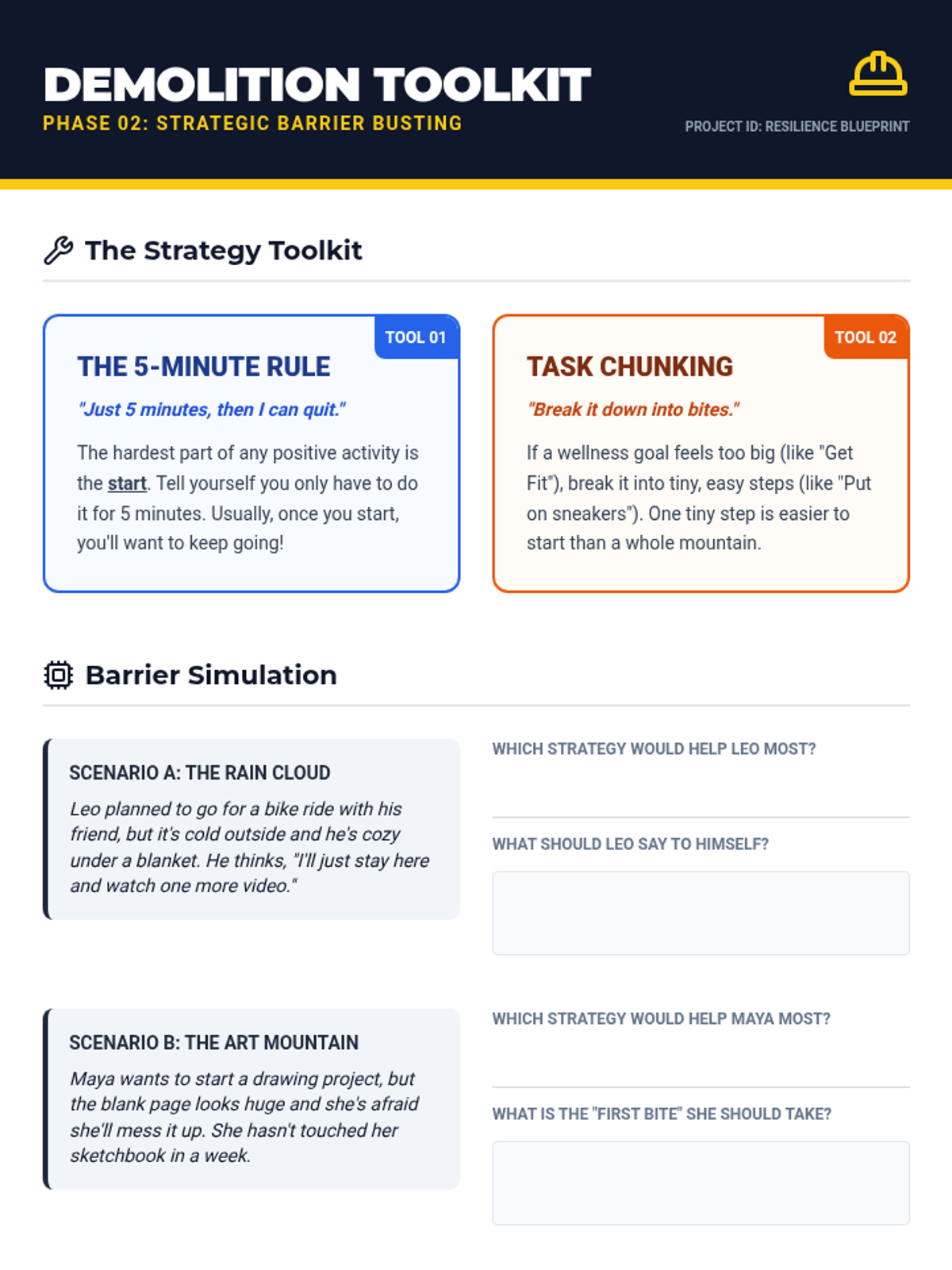
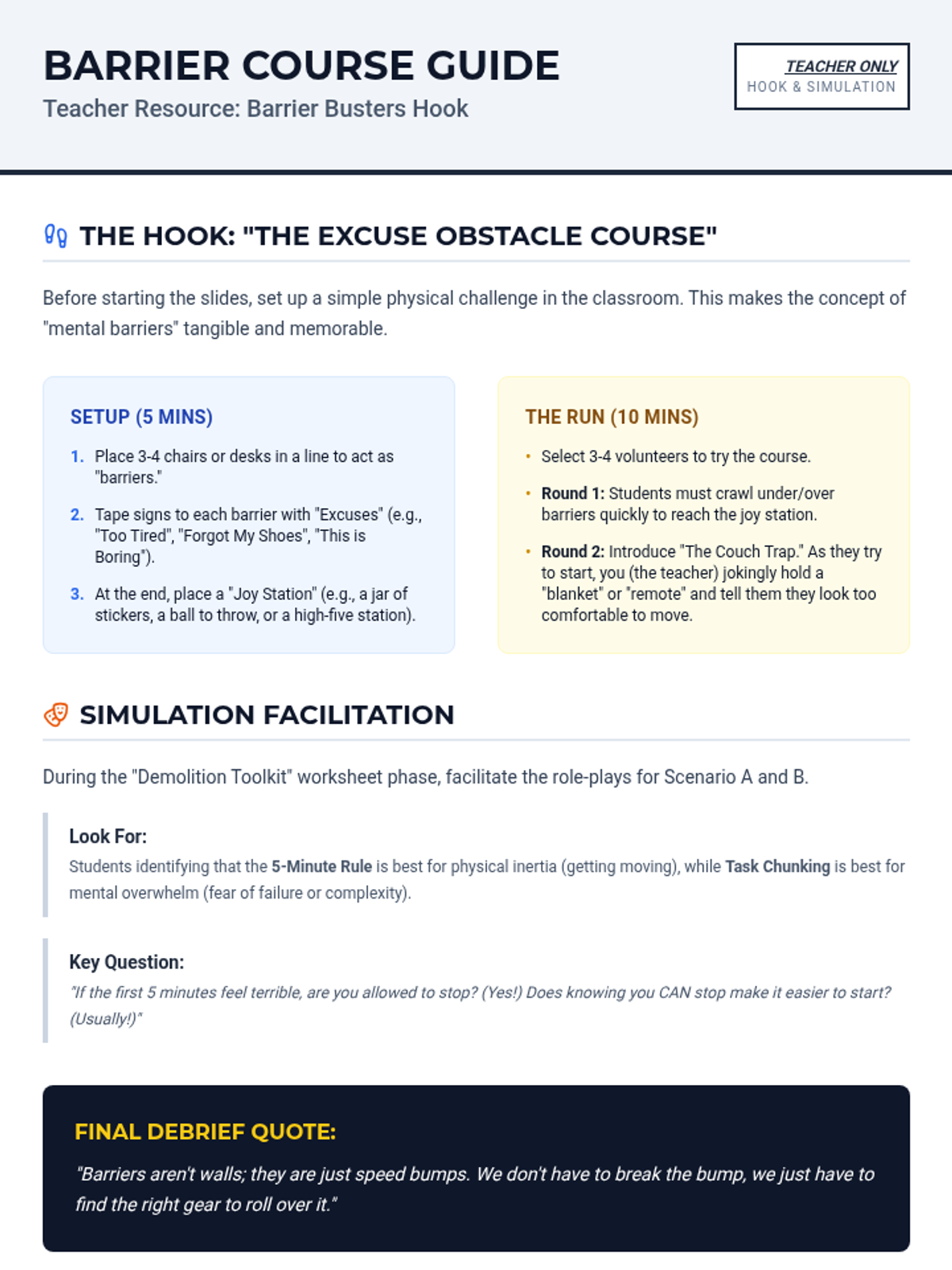
Students identify obstacles like 'The Couch Trap' and learn strategic 'barrier buster' techniques like the 5-Minute Rule to overcome inertia and engage in positive activities.
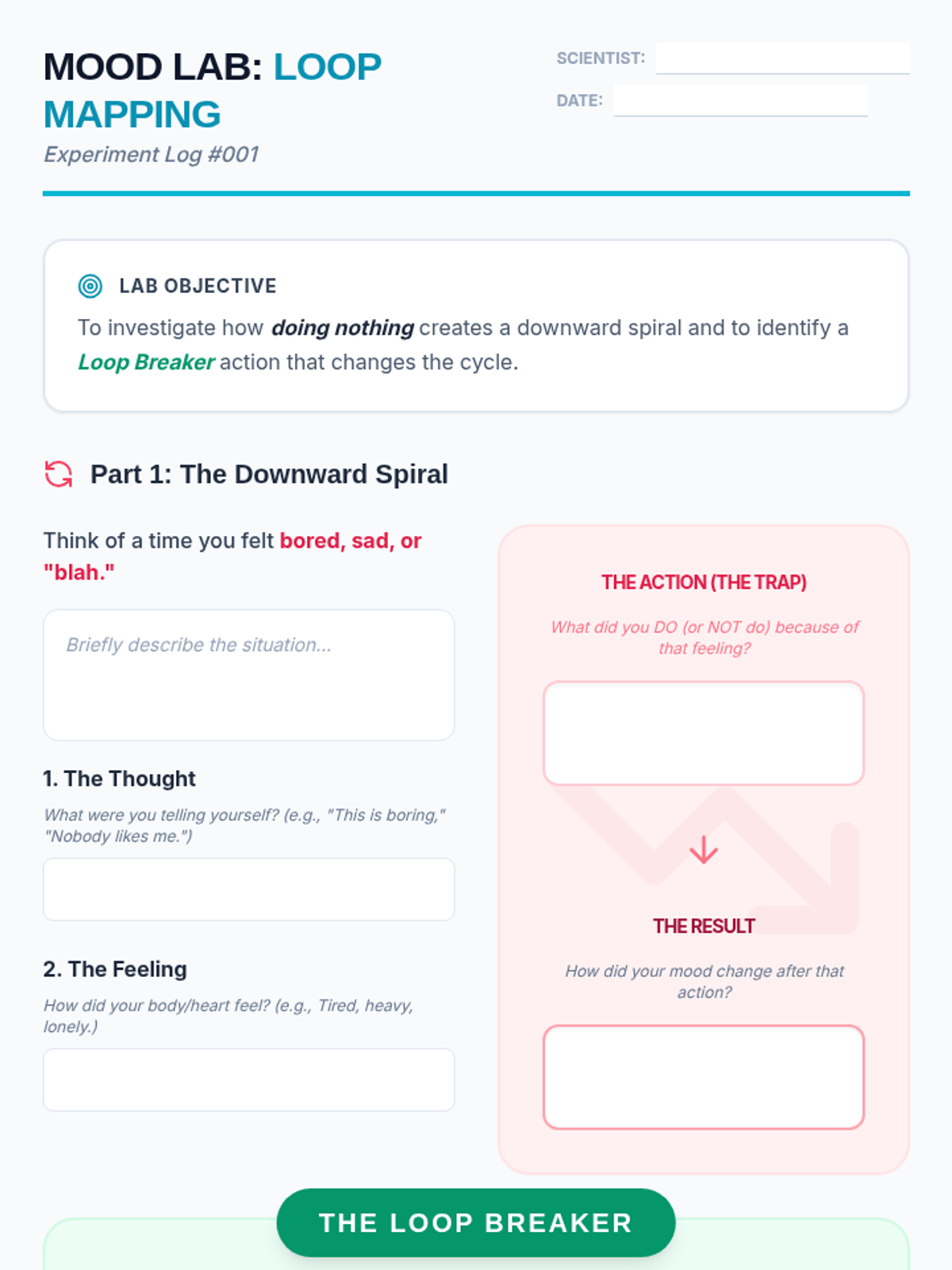
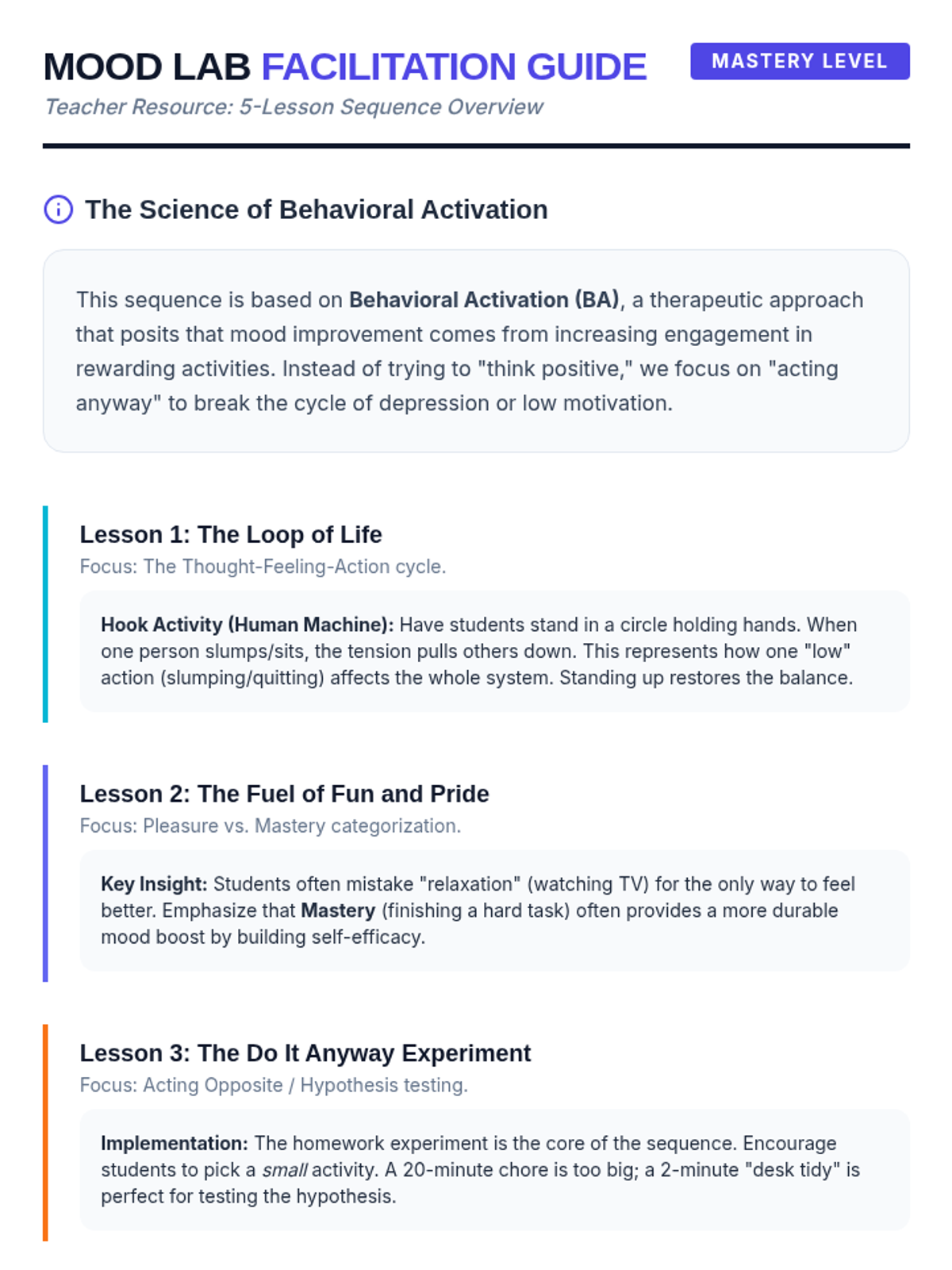
Students participate in a discussion and mapping activity to visualize the cycle between thoughts, feelings, and behaviors. They identify how doing nothing often leads to feeling worse (the downward spiral) and how small actions can reverse this.
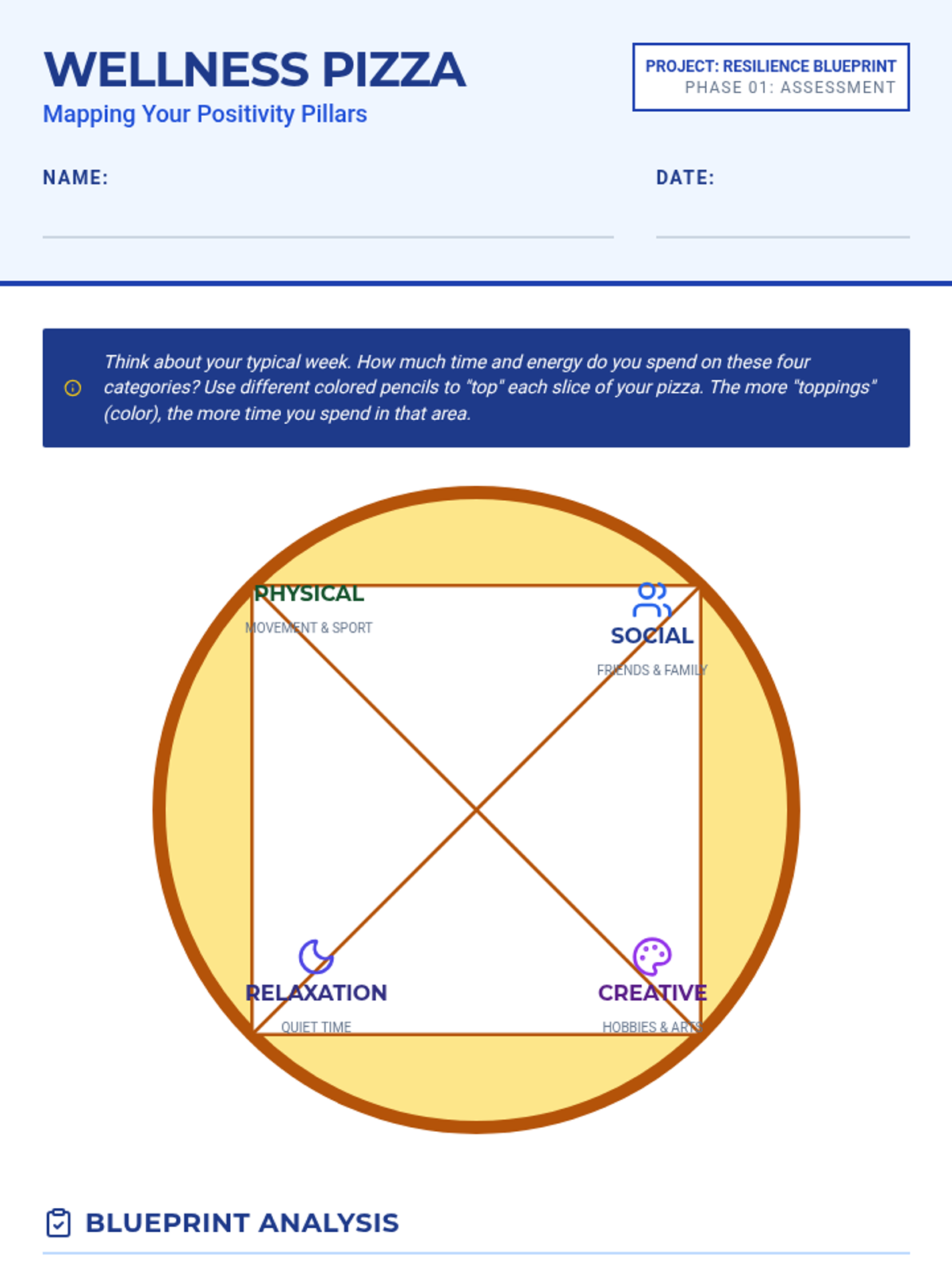
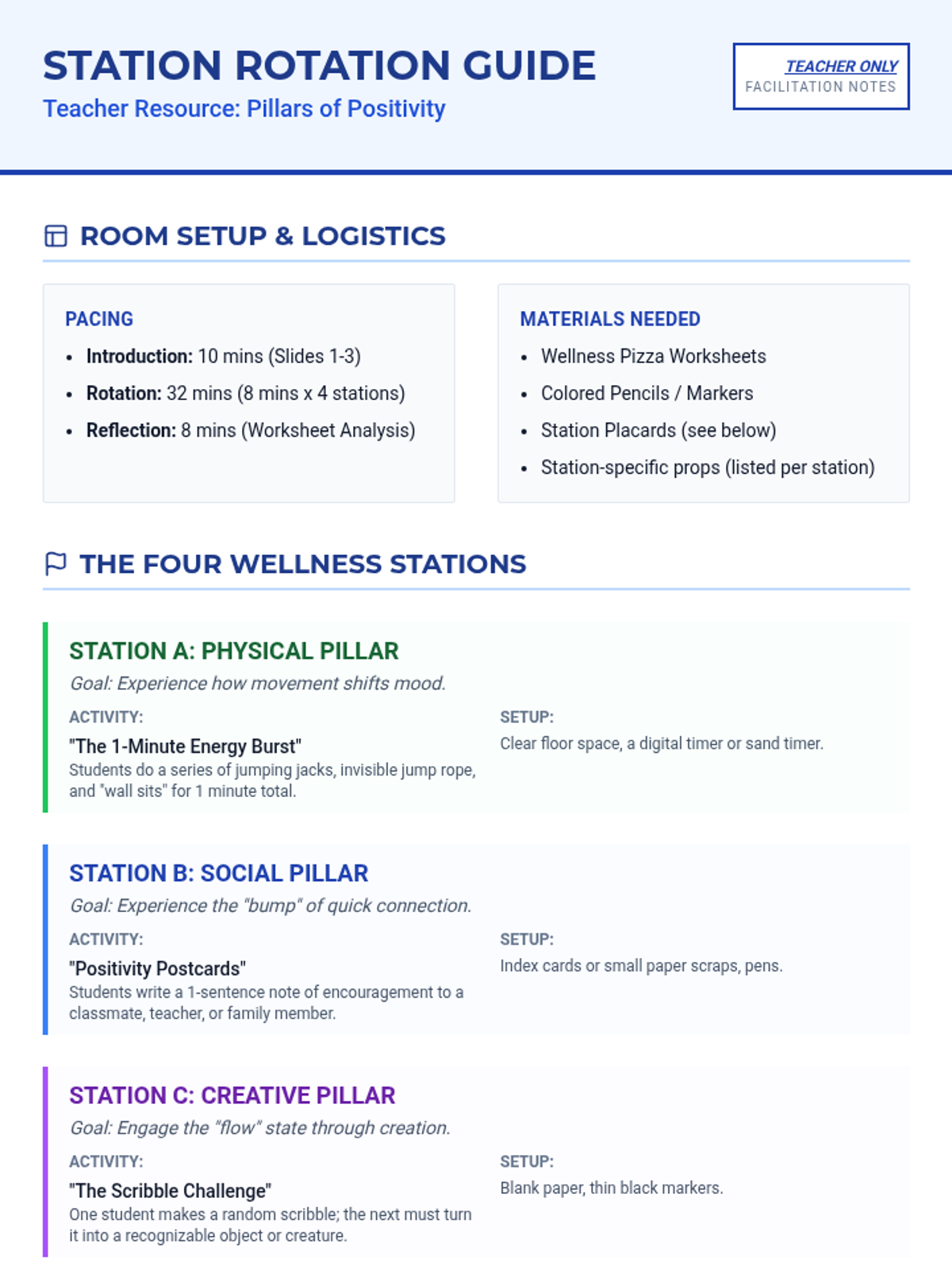
Students explore the four pillars of positive experience (Physical, Social, Creative, and Relaxation) and assess their current wellness balance using a 'Wellness Pizza' activity.
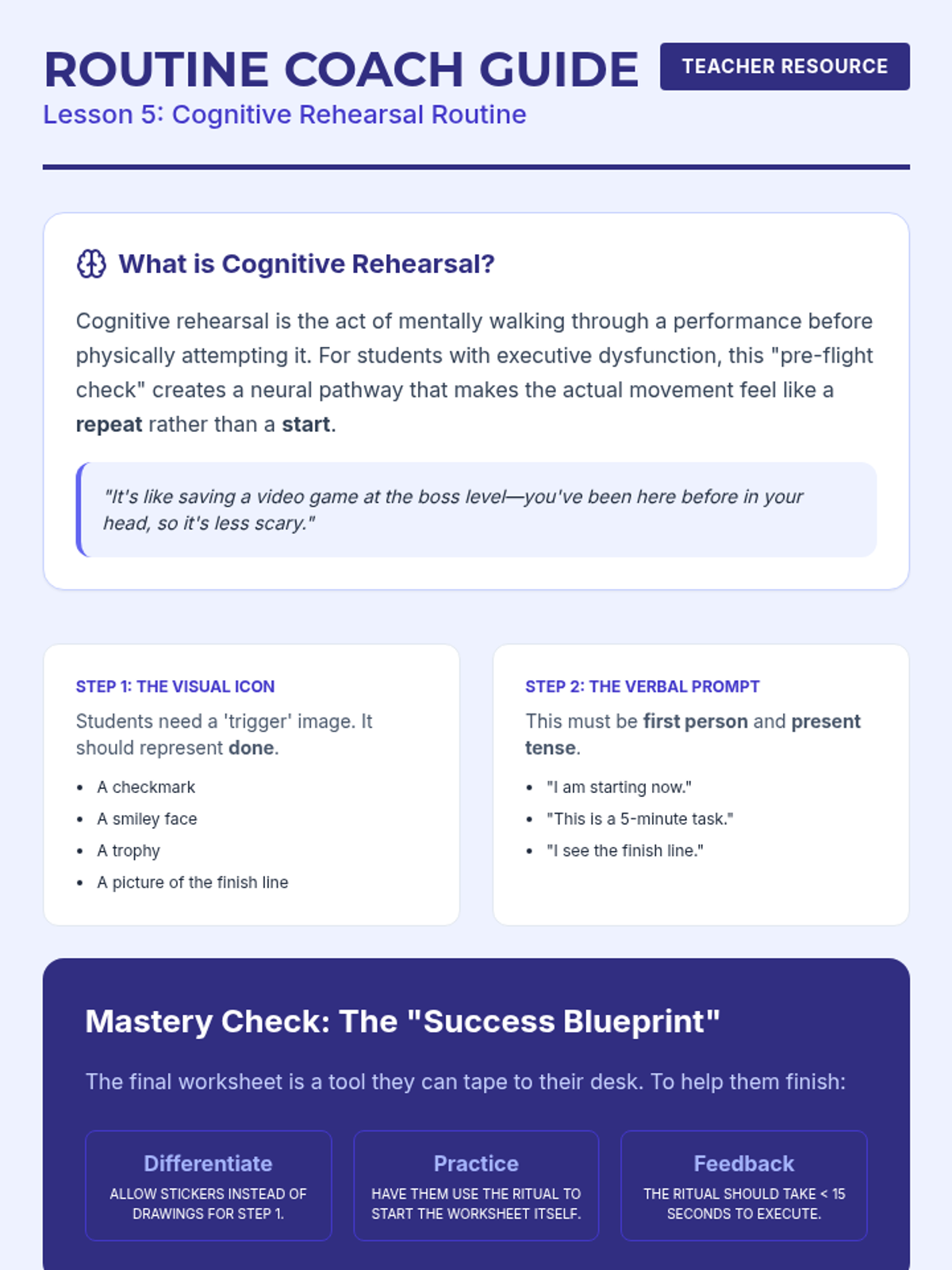
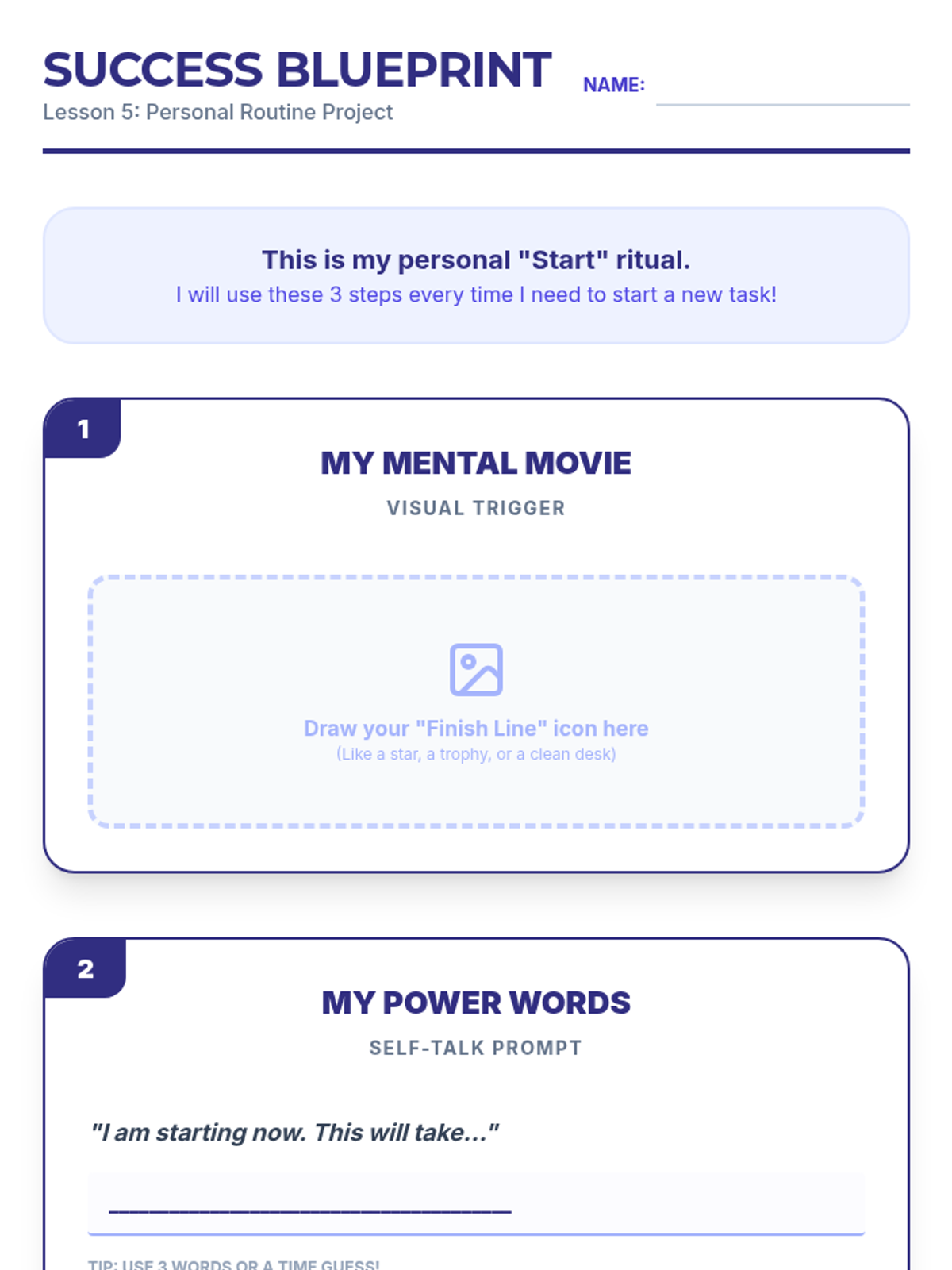
Students create a personal storyboard or checklist that combines a visual icon with a verbal prompt for task initiation.
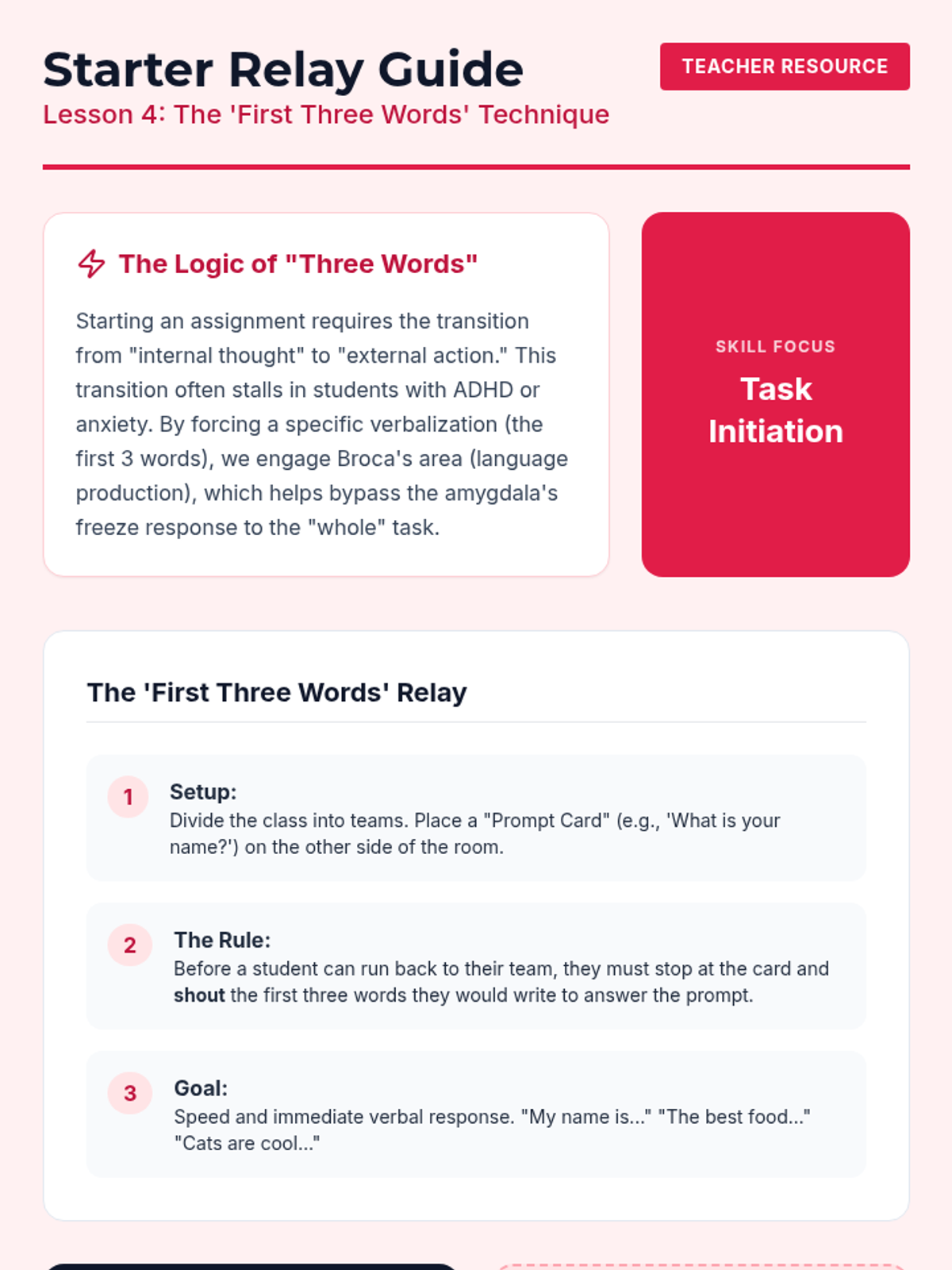
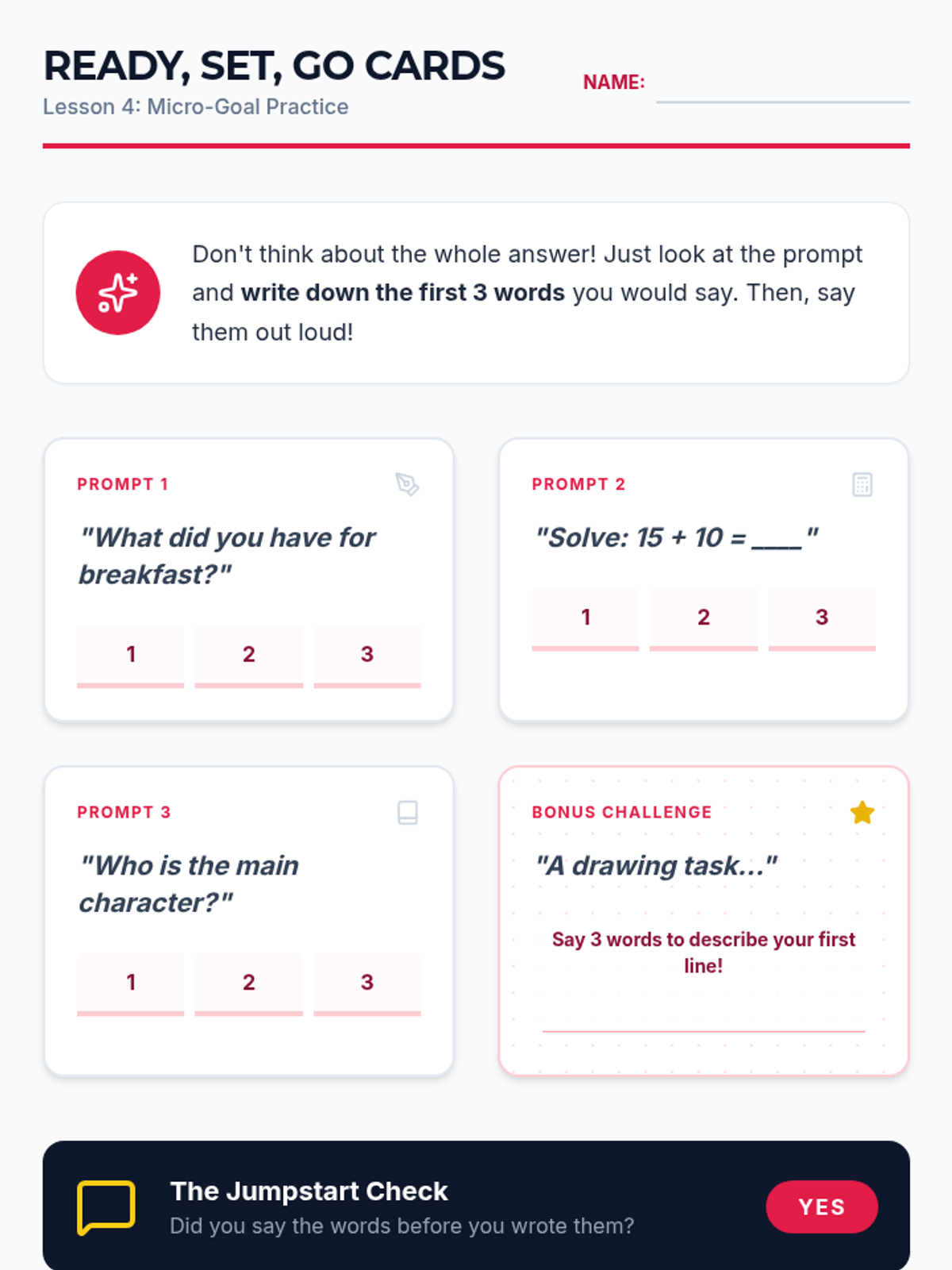
Students learn to identify the first three words of a task to lower the barrier to entry and engage the brain's language center.
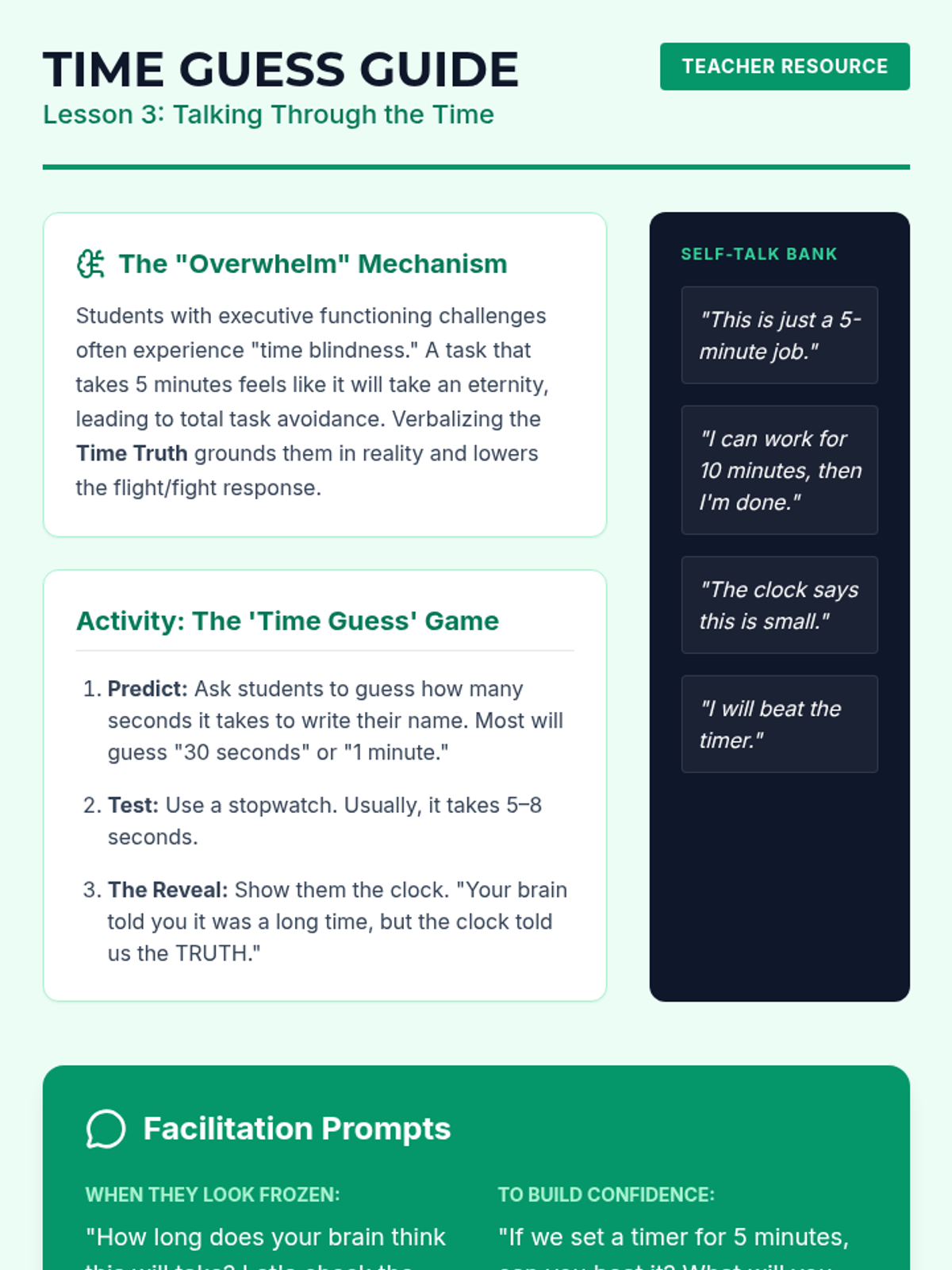
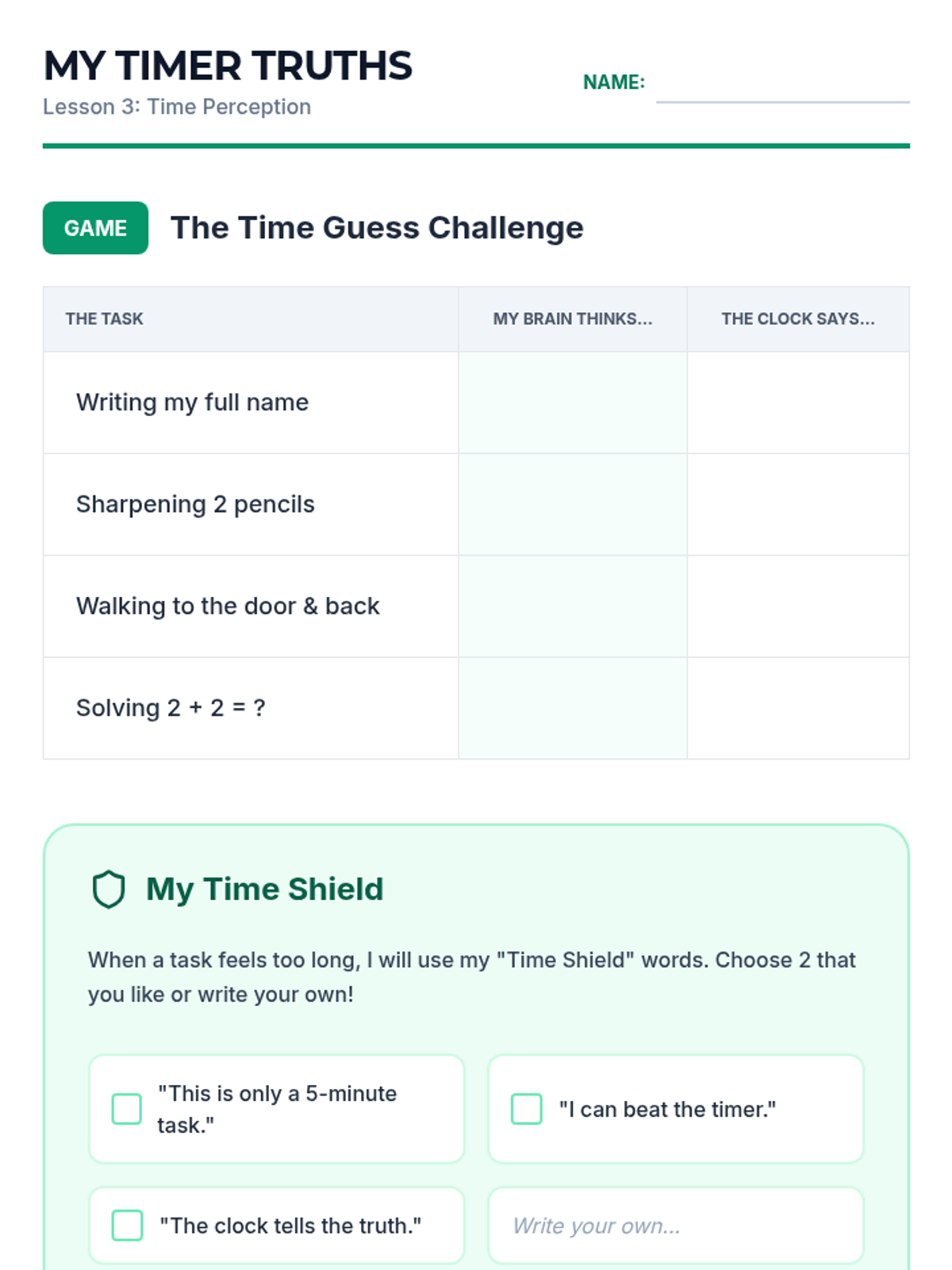
Students learn to estimate time and use verbal reassurance to reduce overwhelm.
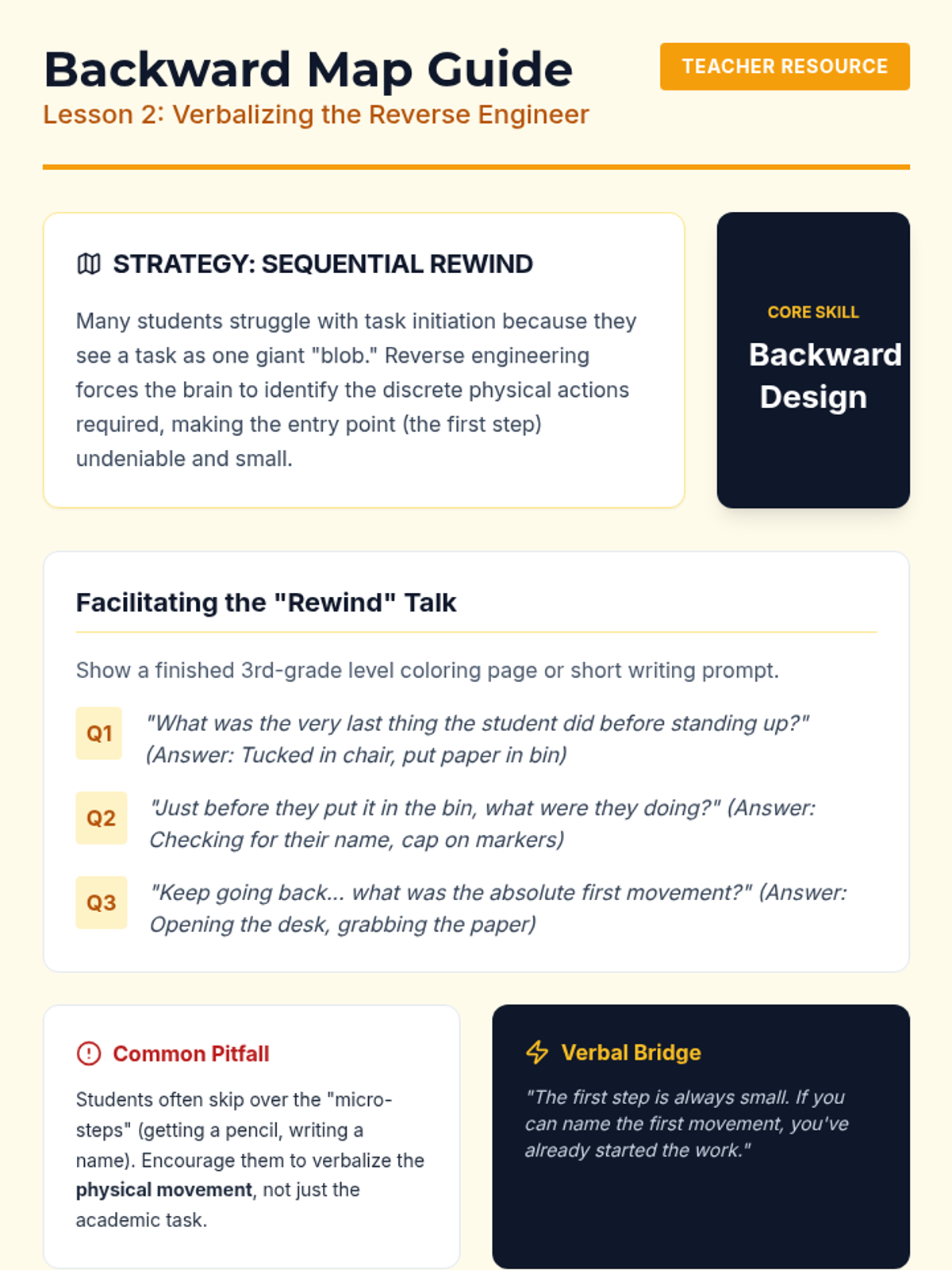
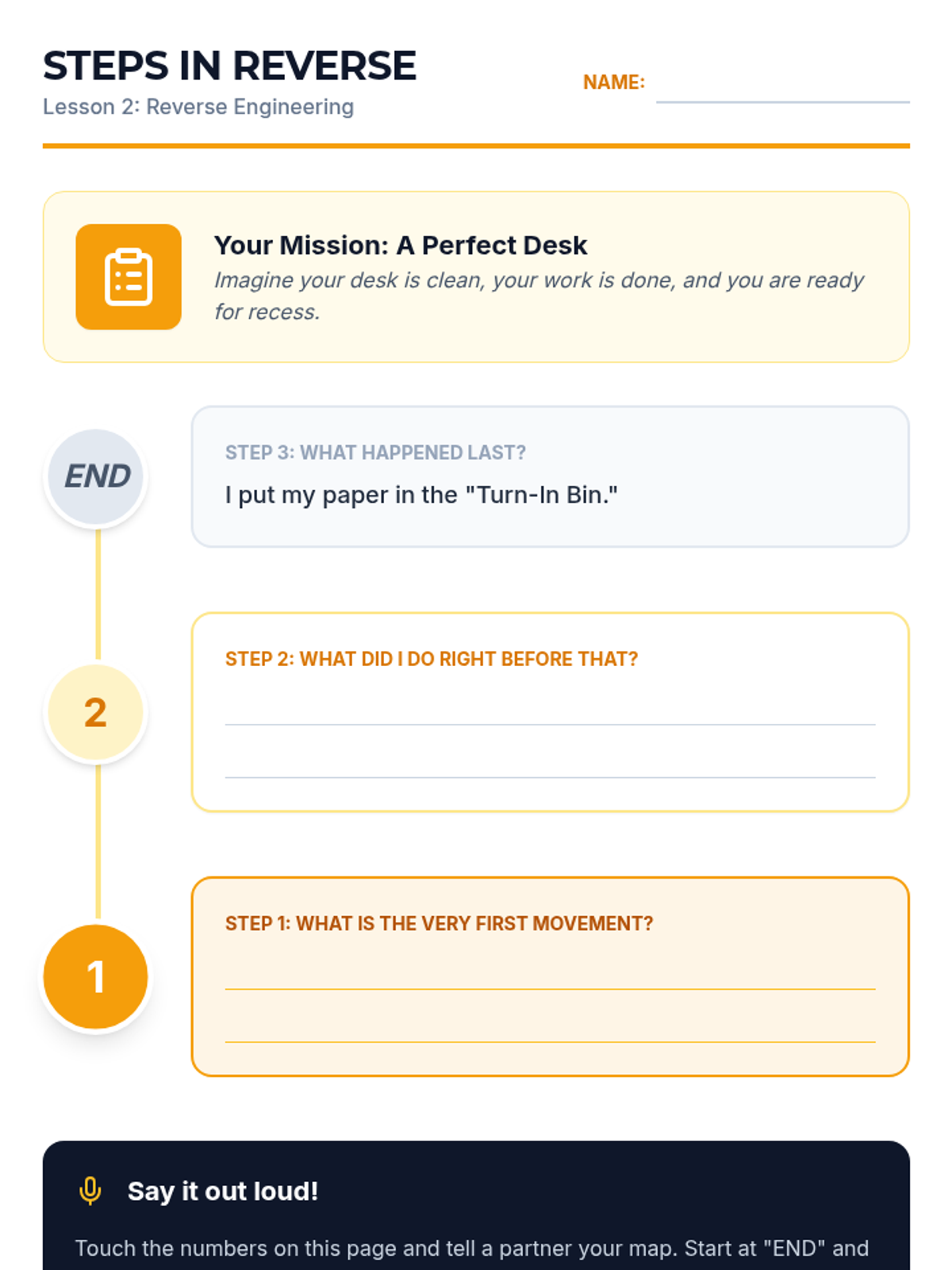
Students talk backward through the steps of a completed sample to make the first step obvious and approachable.
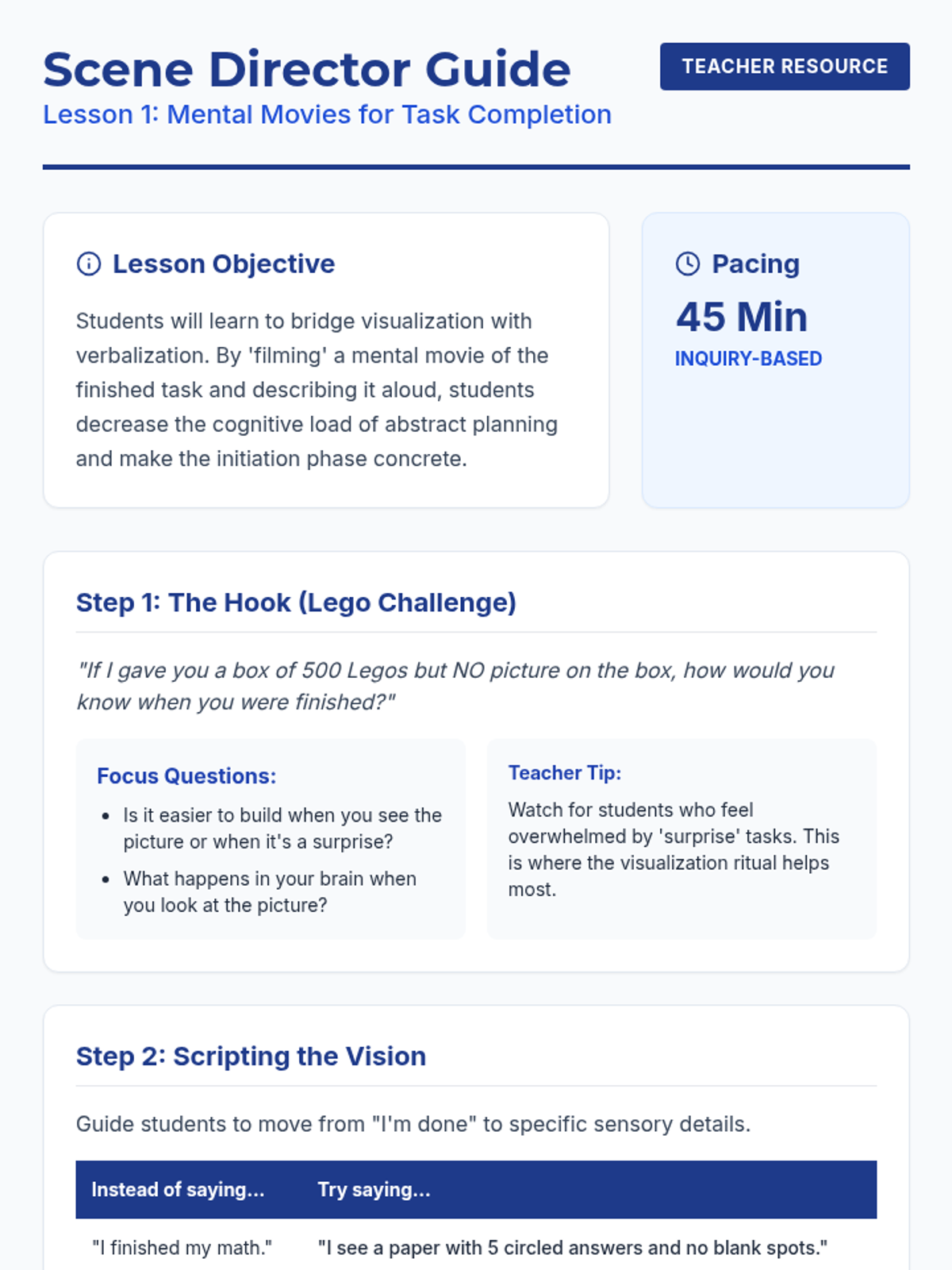
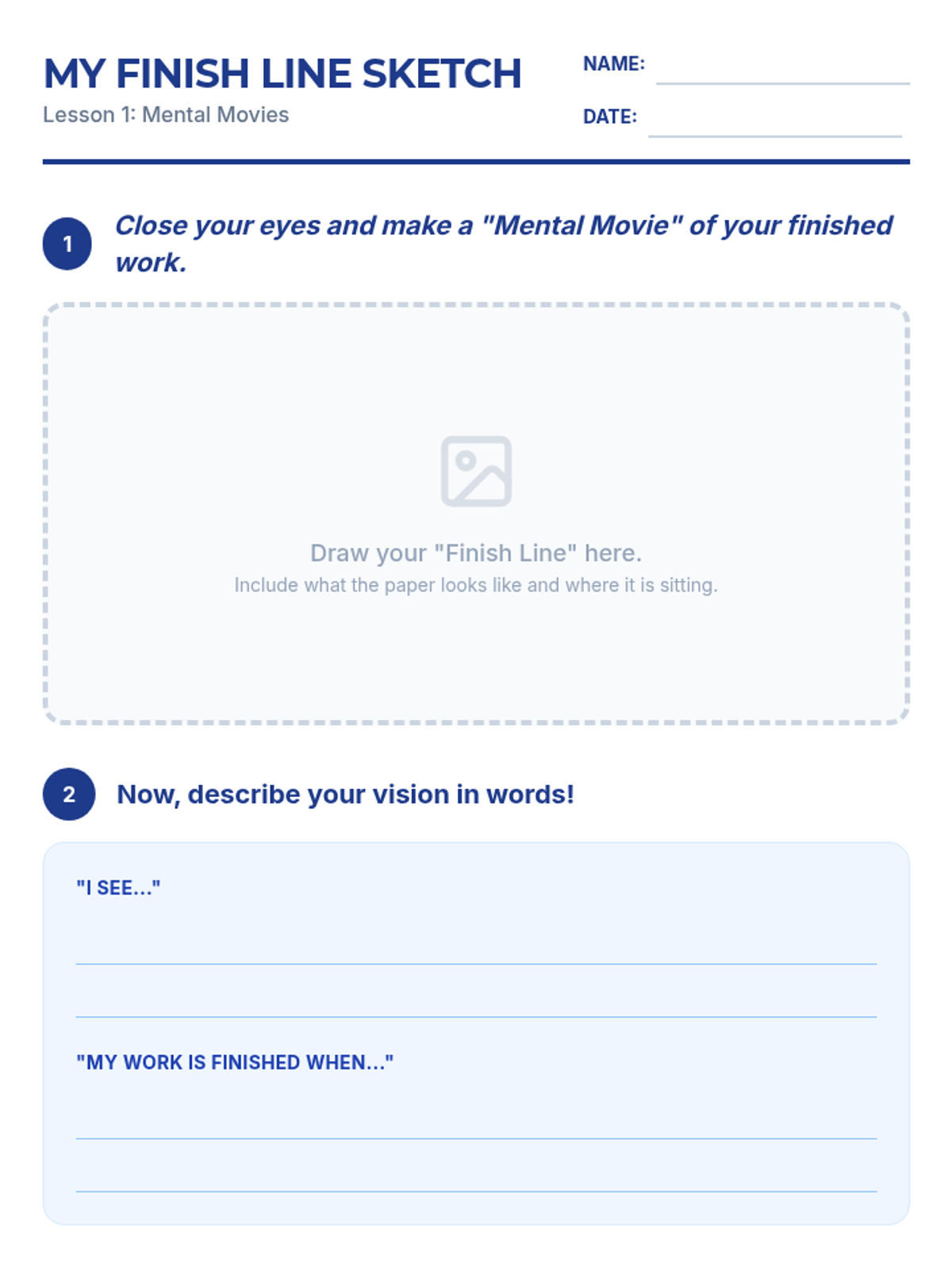
Students practice closing their eyes and creating a detailed mental image of what 'finished' looks like before describing it aloud.
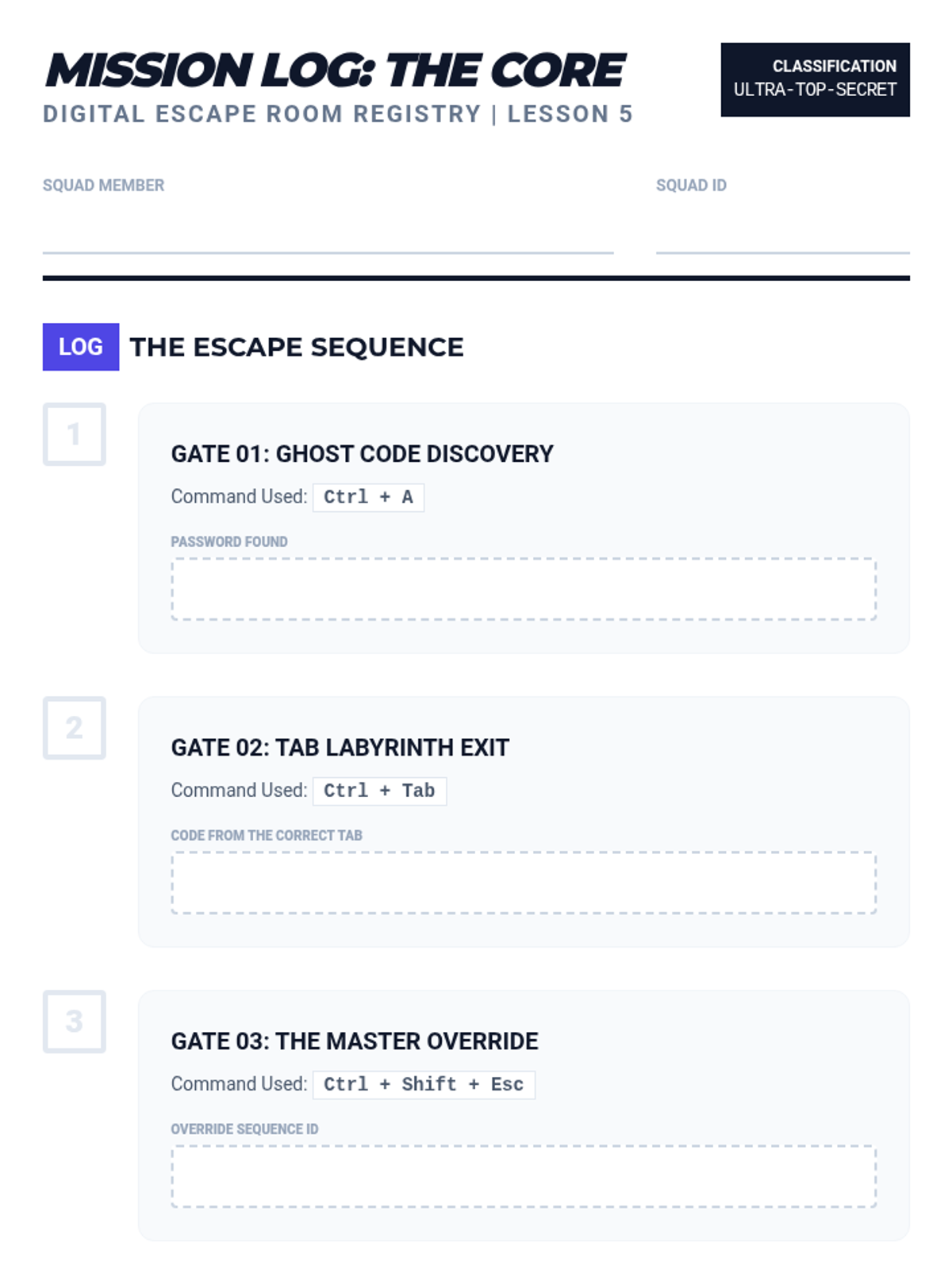
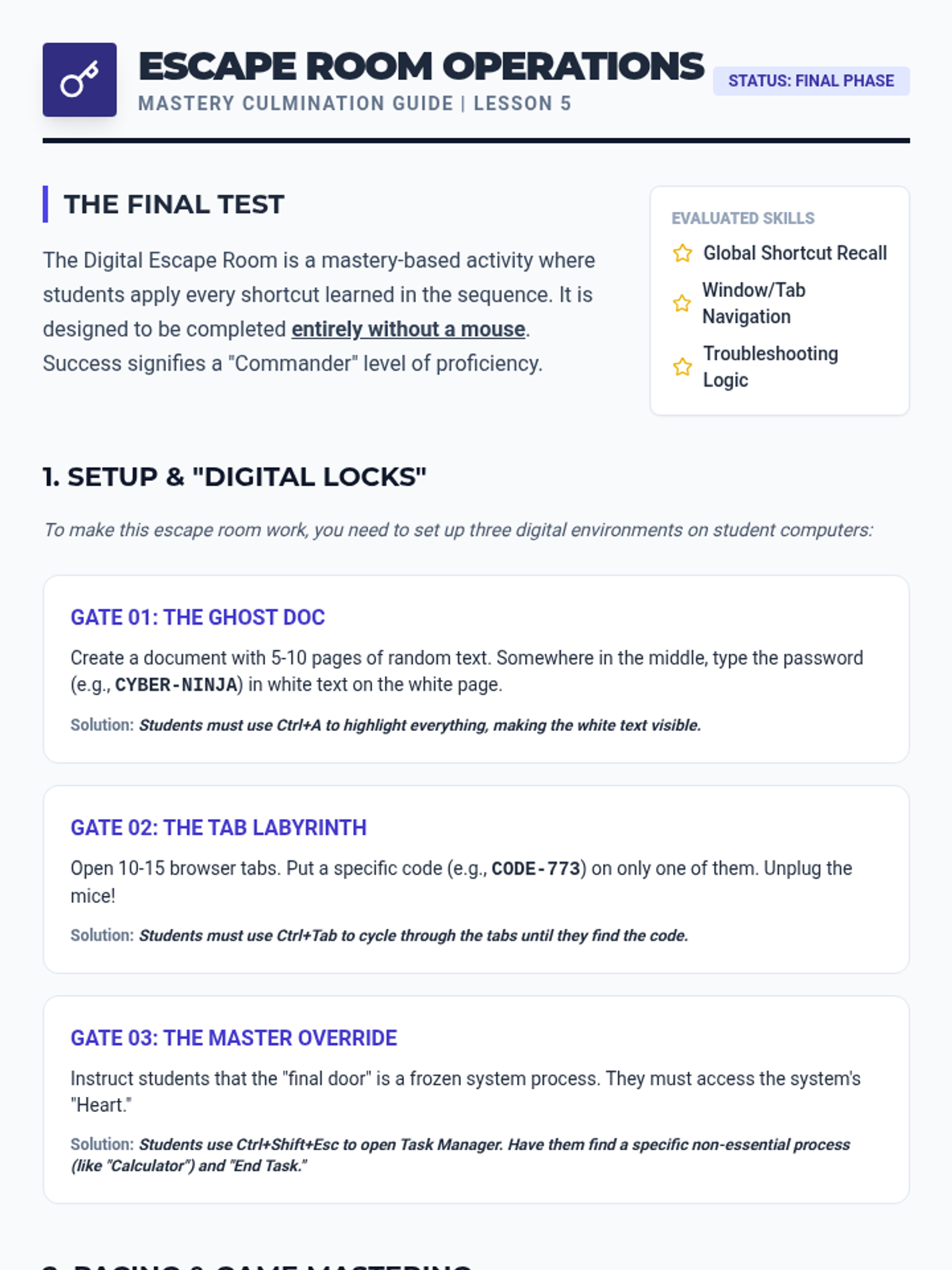
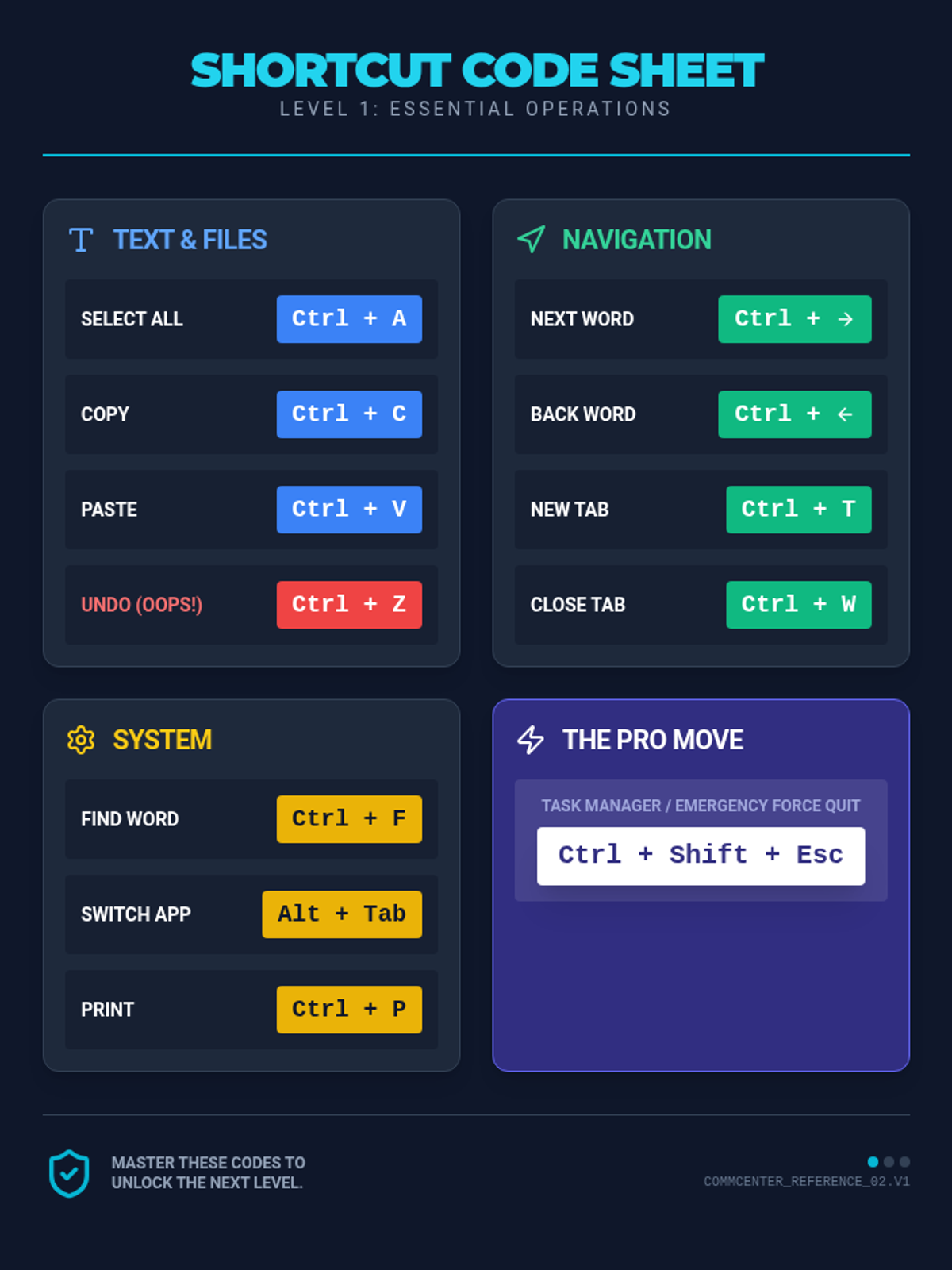
A culminating activity where students apply all learned shortcuts to solve puzzles and escape a digital room.
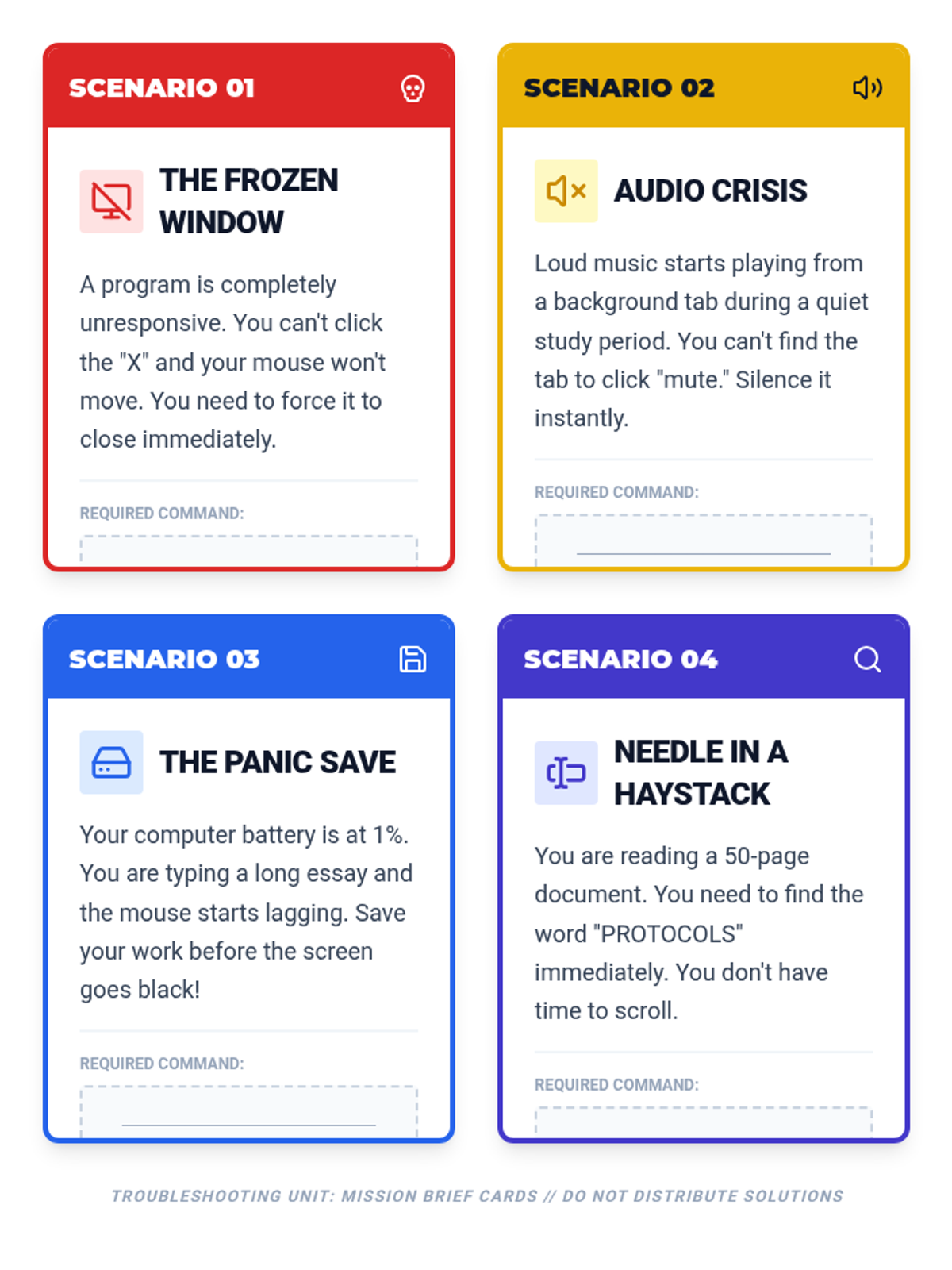
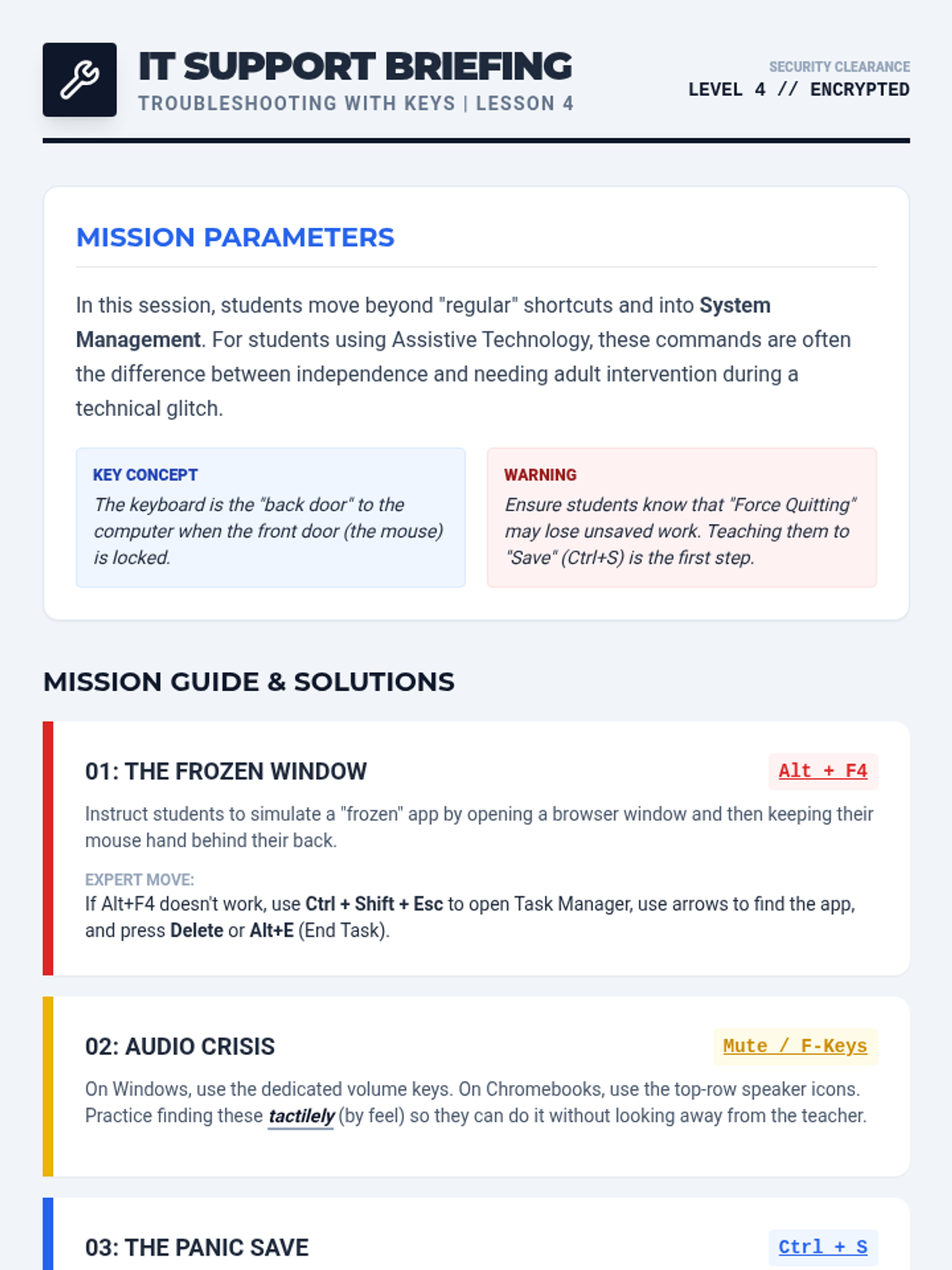
Students learn to troubleshoot computer issues using only keyboard commands in a 'frozen mouse' simulation.
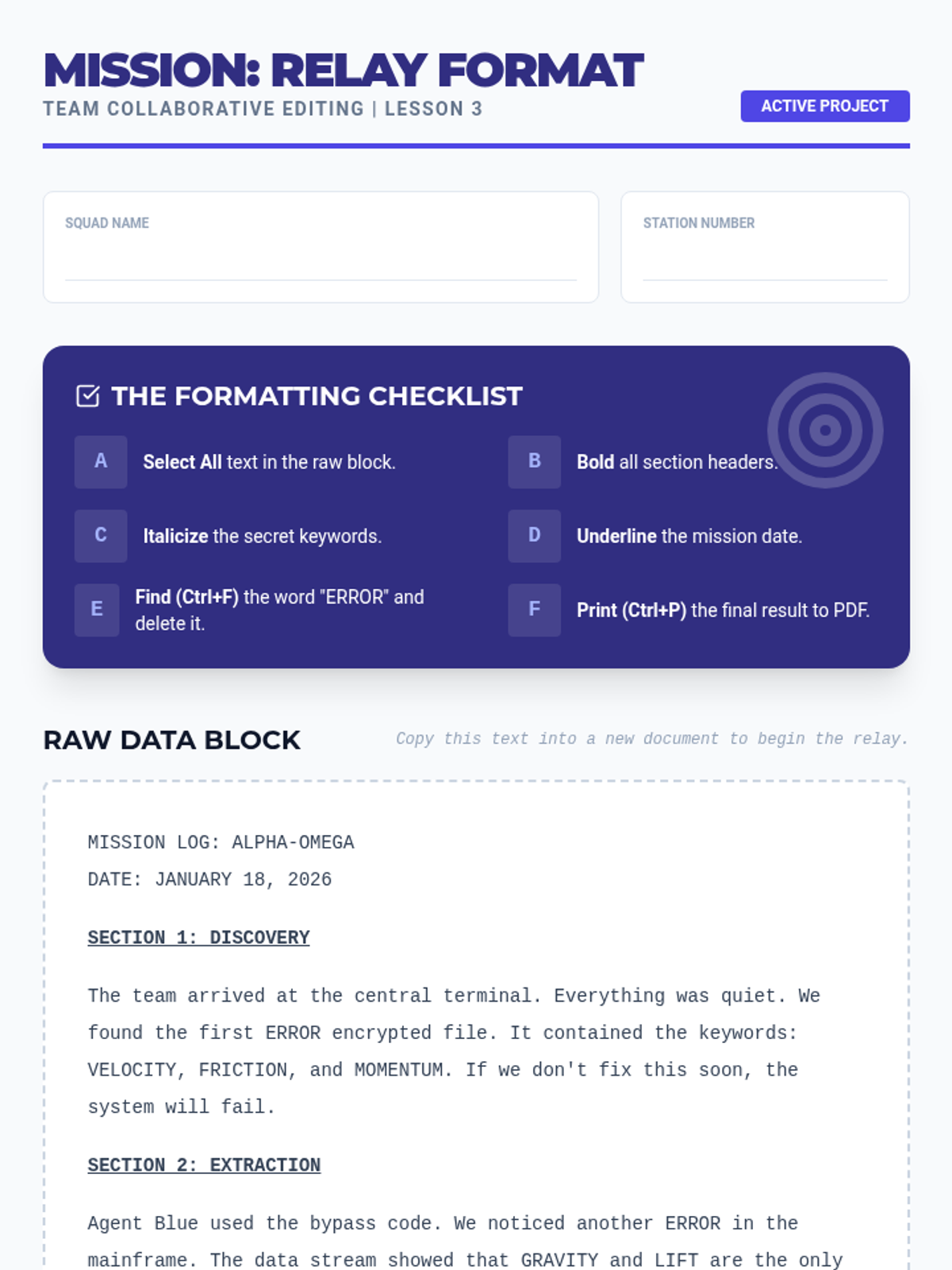
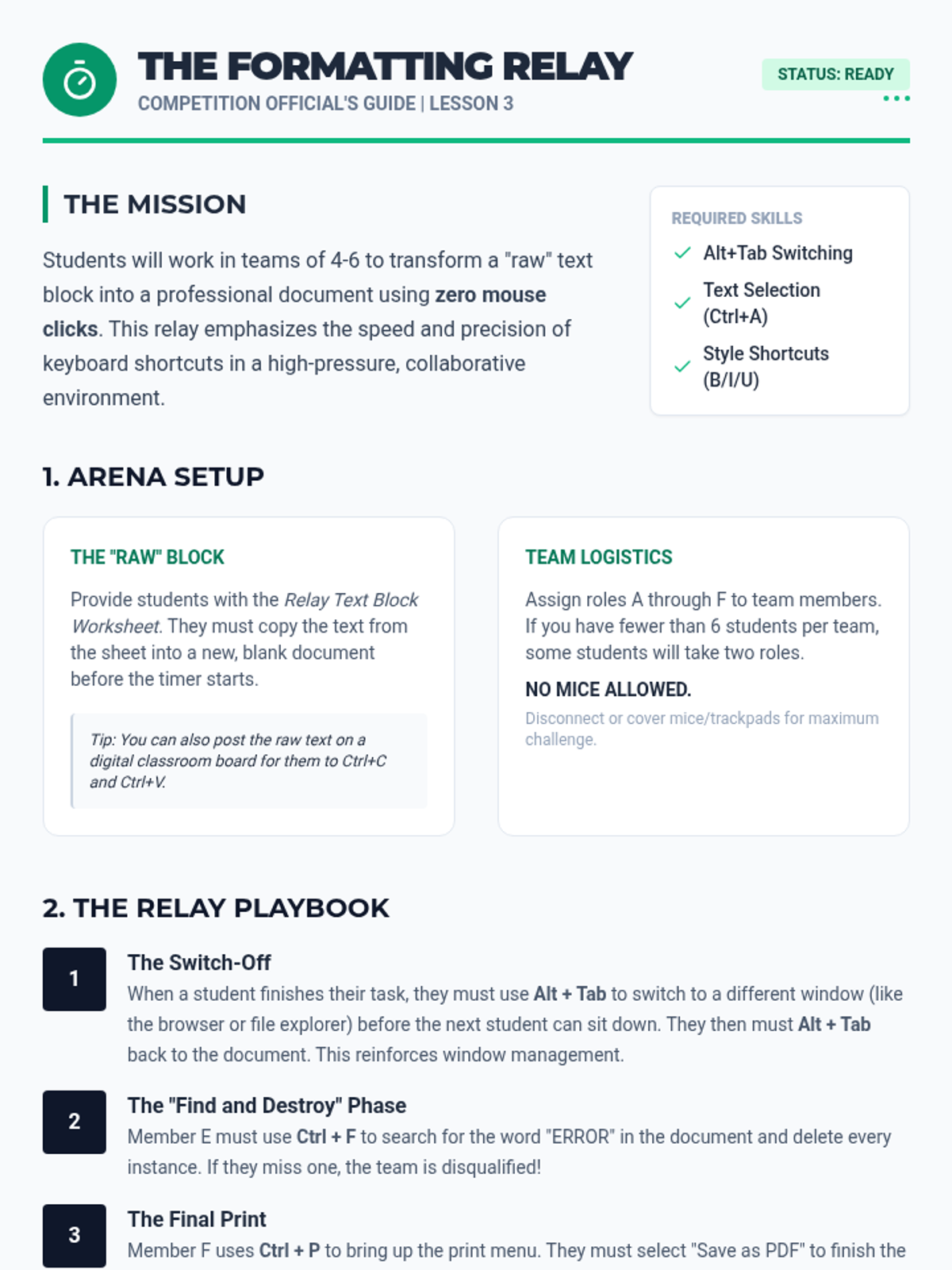
A collaborative activity where students use shortcuts to format documents in a relay-style competition.
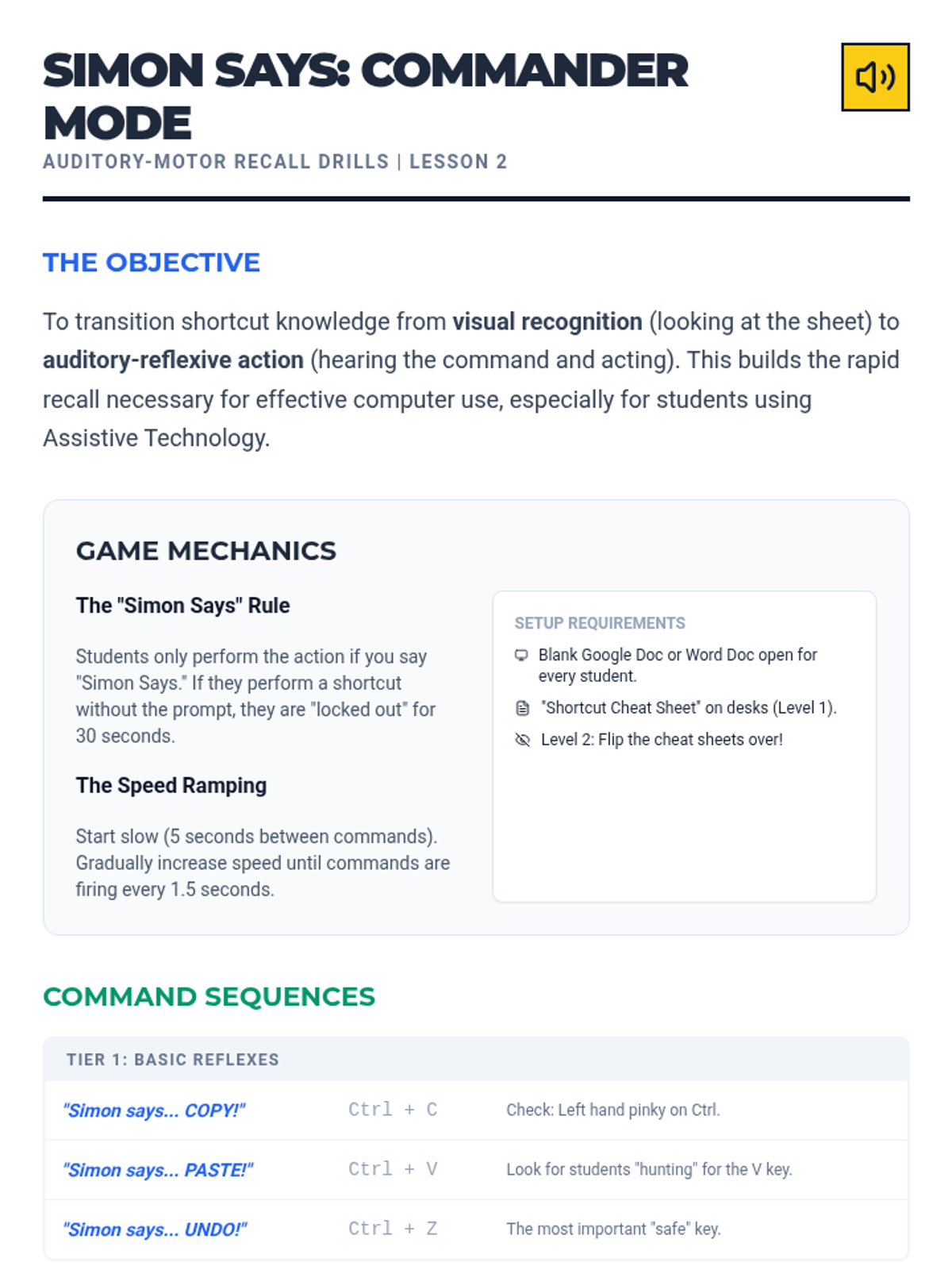
A fast-paced auditory game to build rapid recall of common keyboard shortcuts.
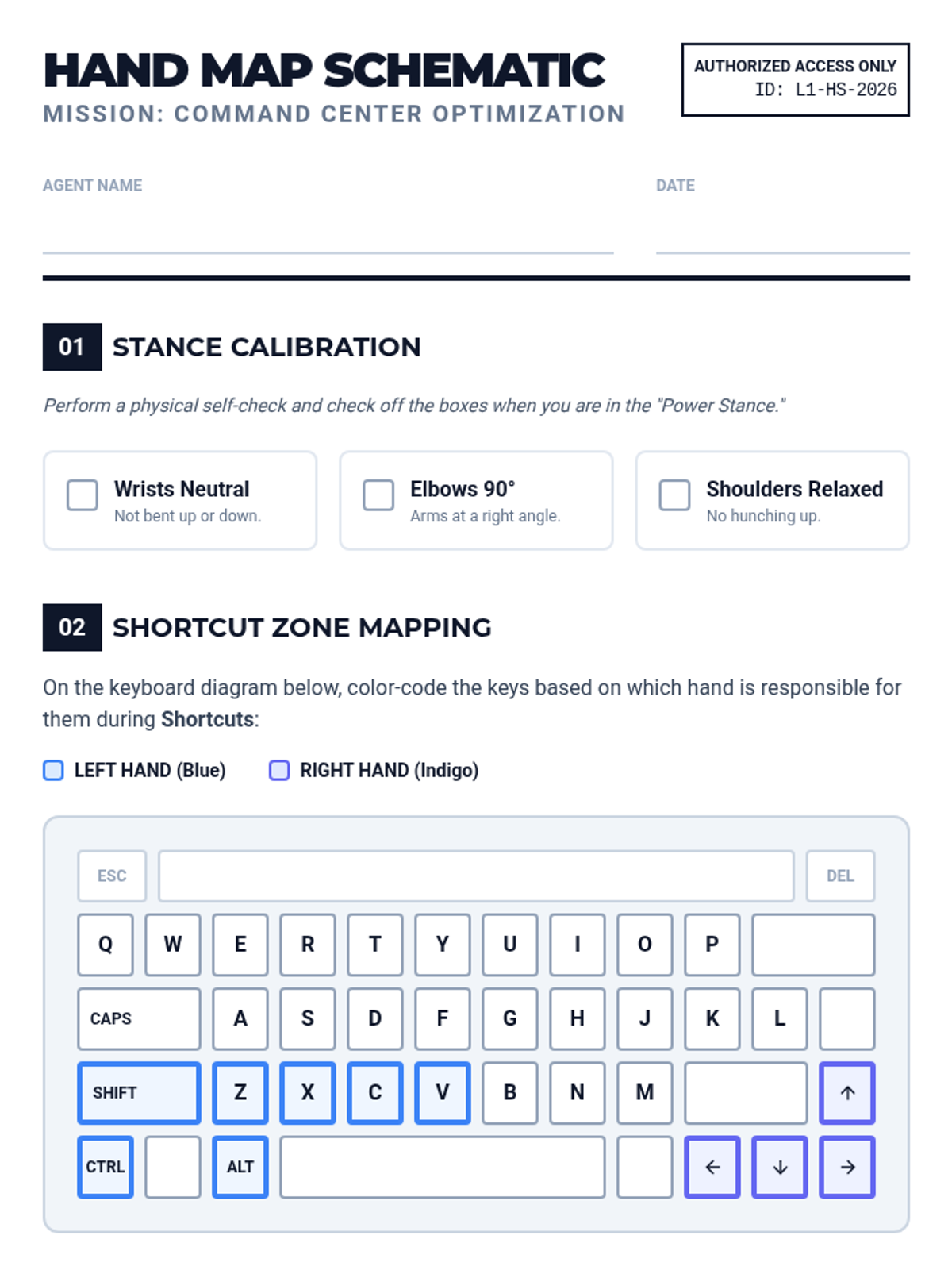
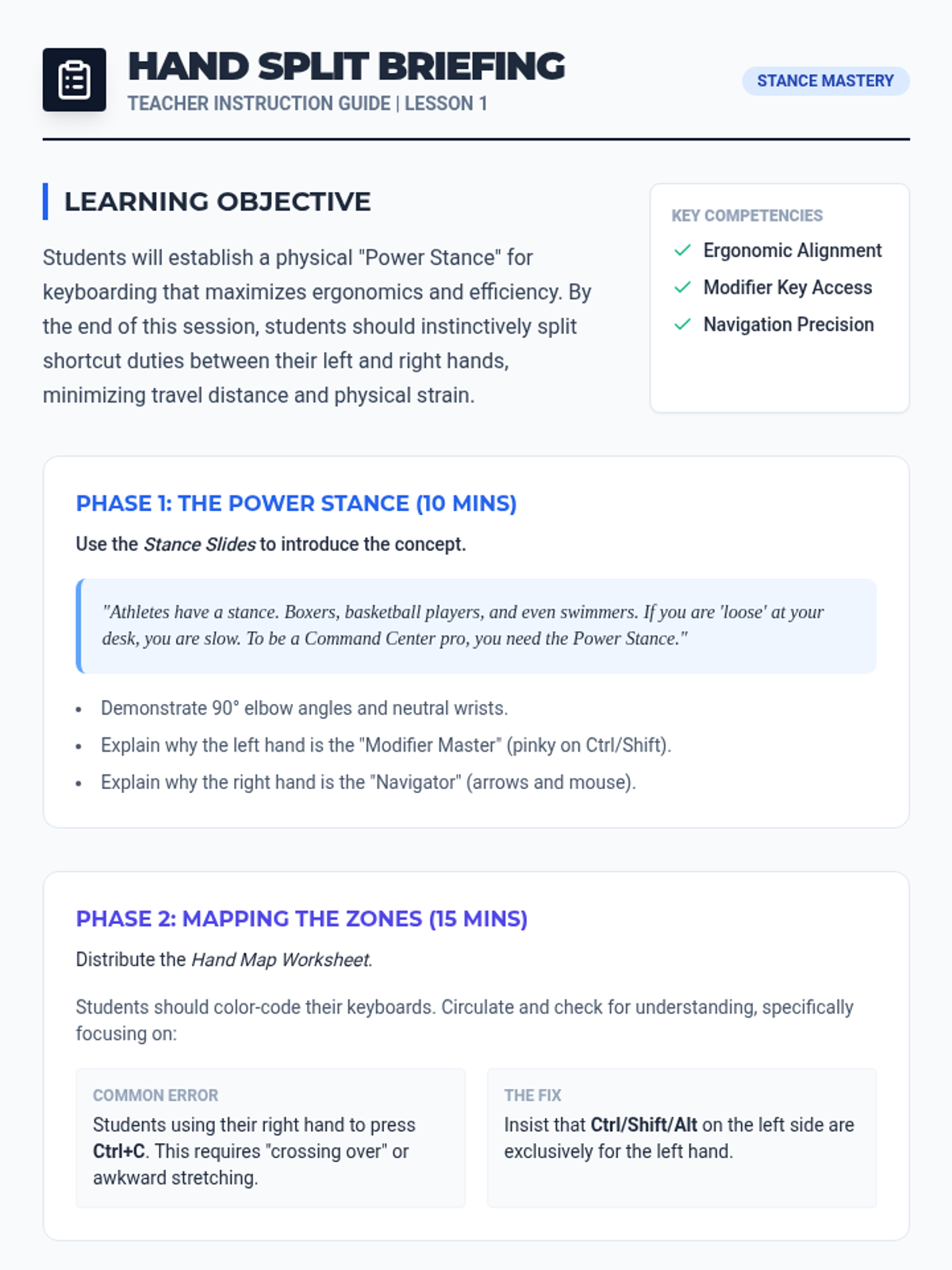
Focuses on ergonomic hand placement and efficient shortcut execution. Students learn the 'Power Stance' for keyboarding.
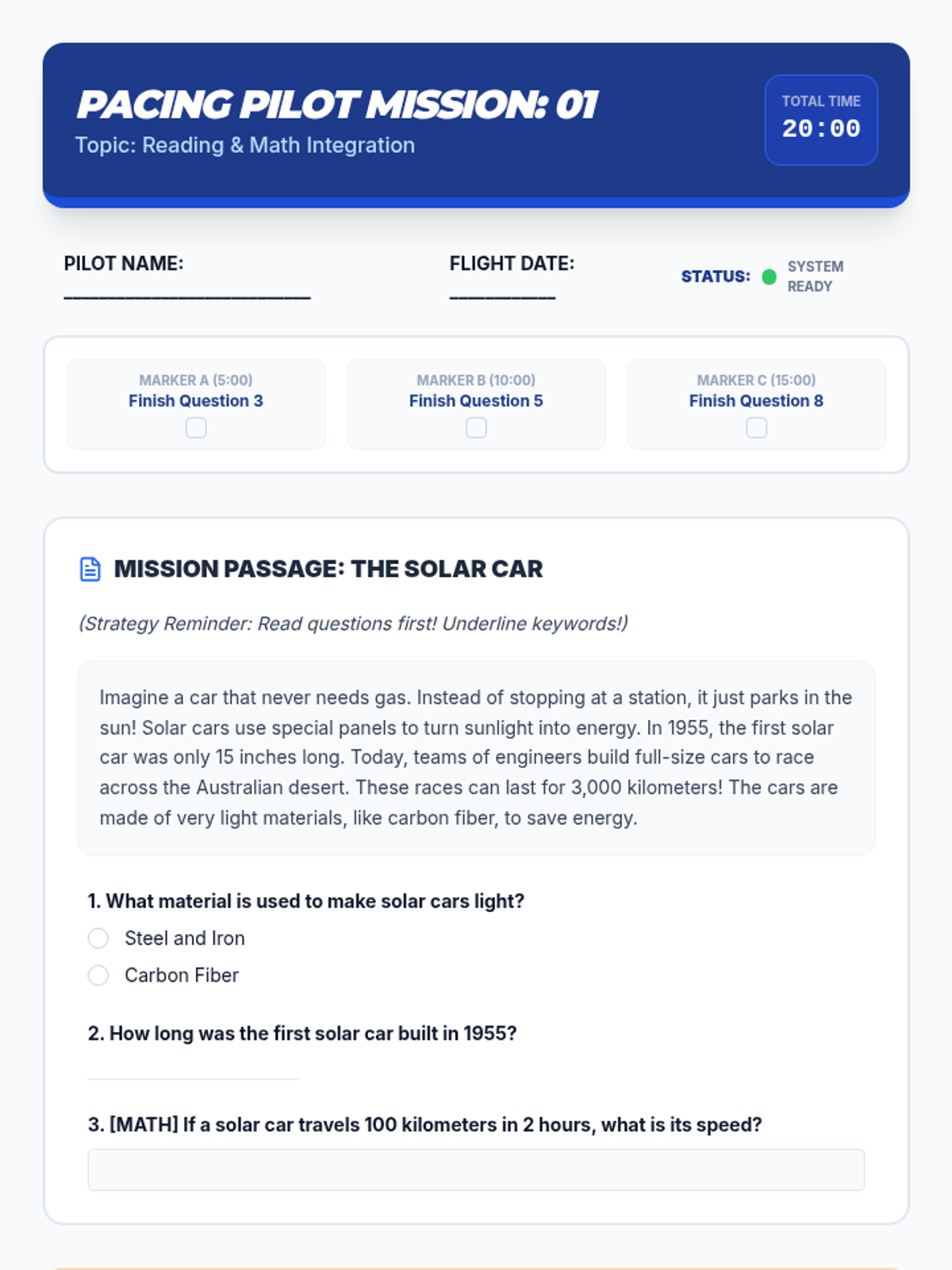
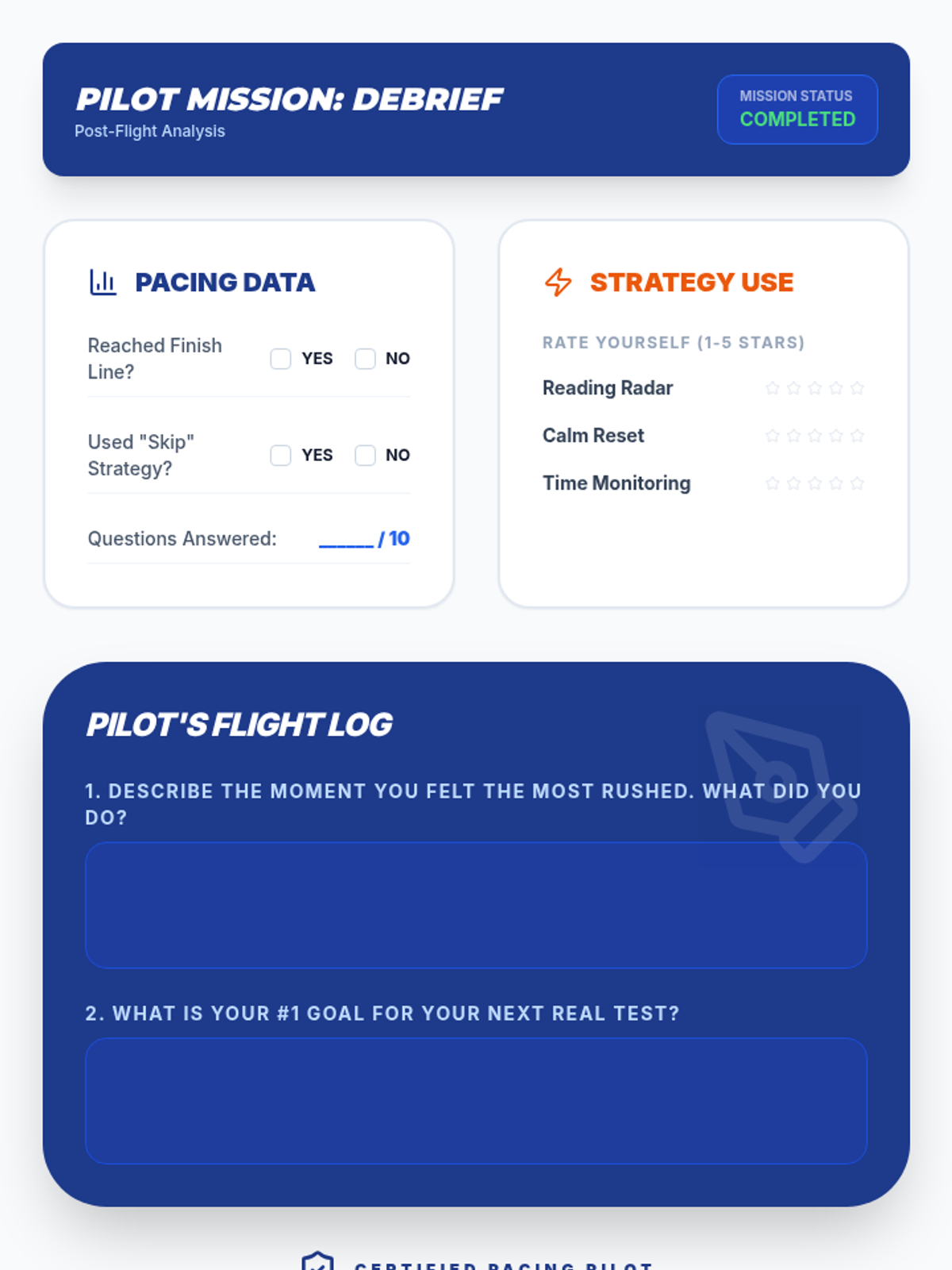
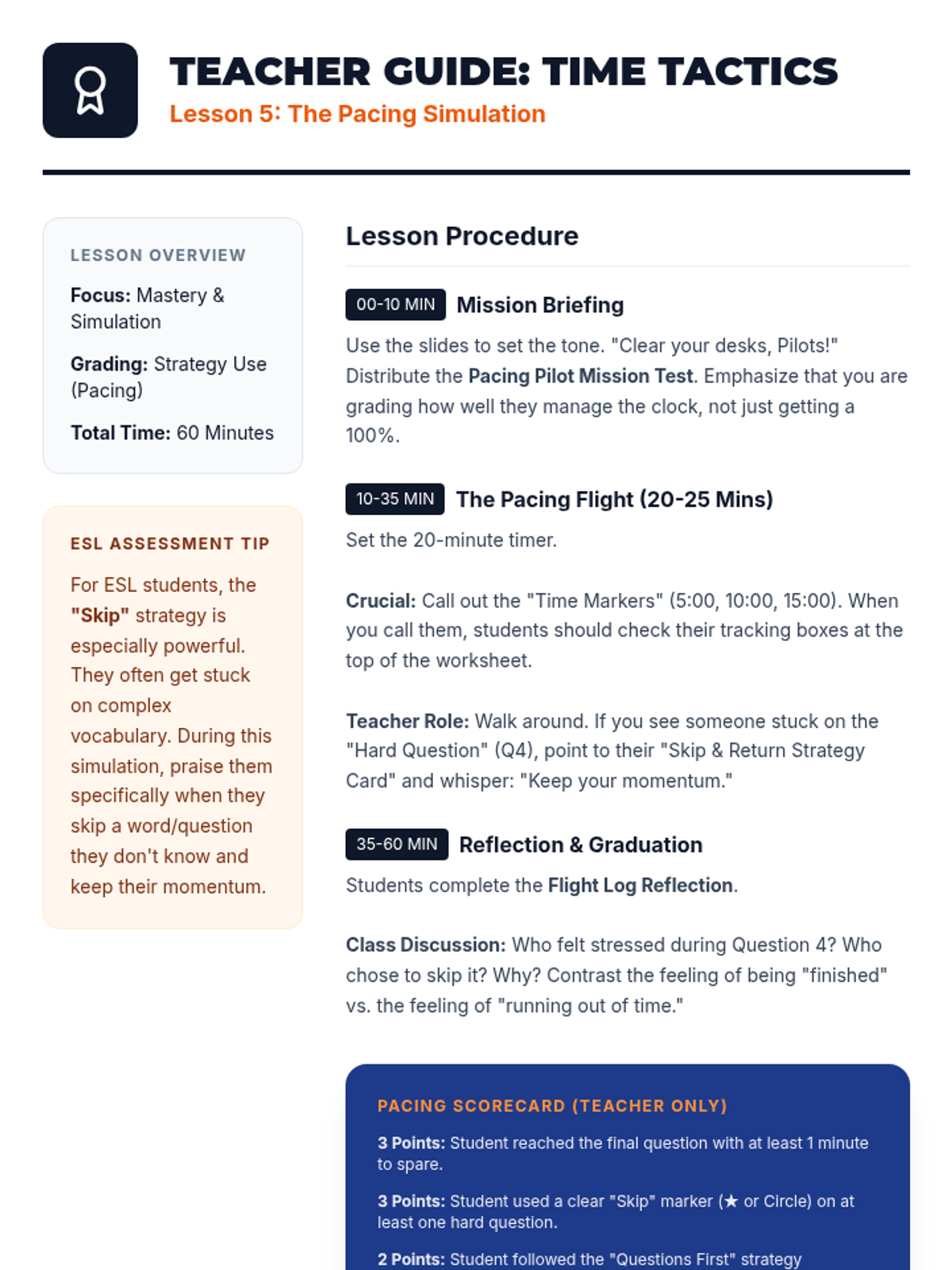
A simulated test session where students are graded on their ability to hit specific pacing markers and reflect on their performance.
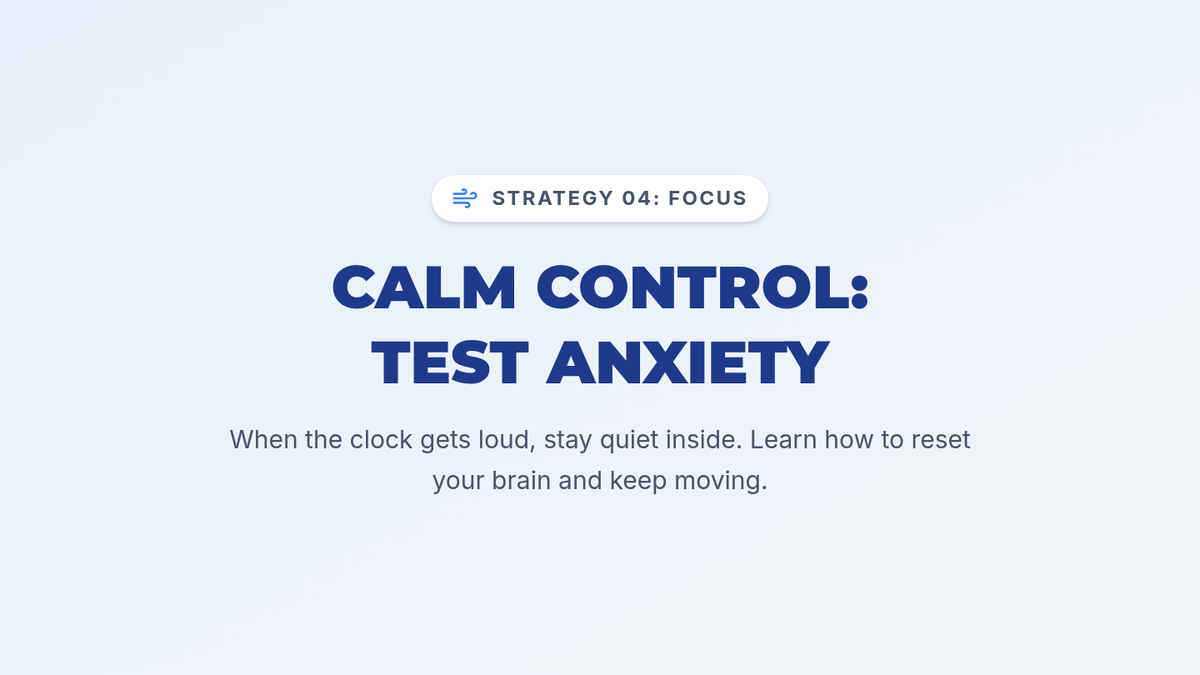
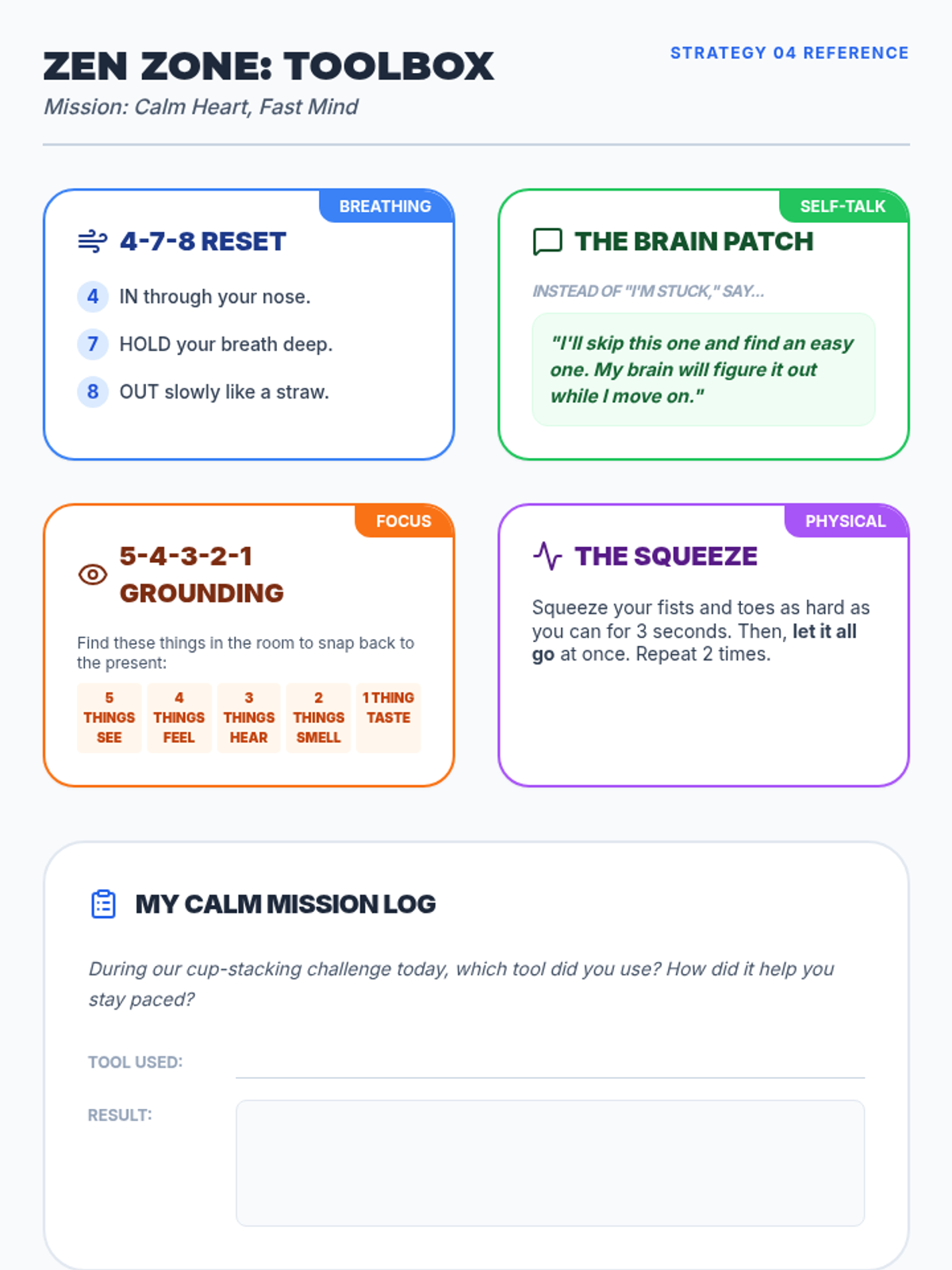
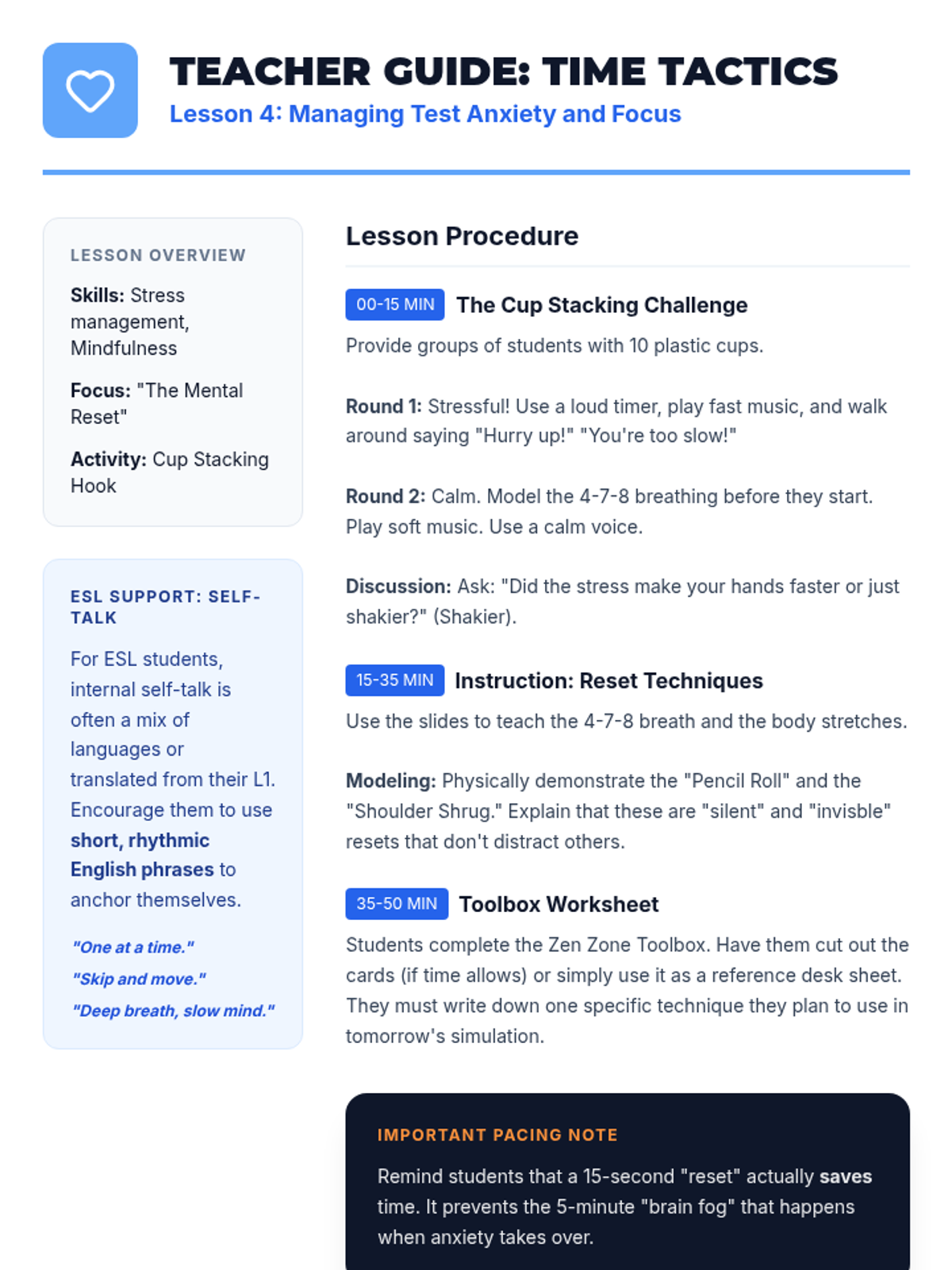
Teaches students physiological and mental reset techniques to stay calm and focused when the clock is ticking.
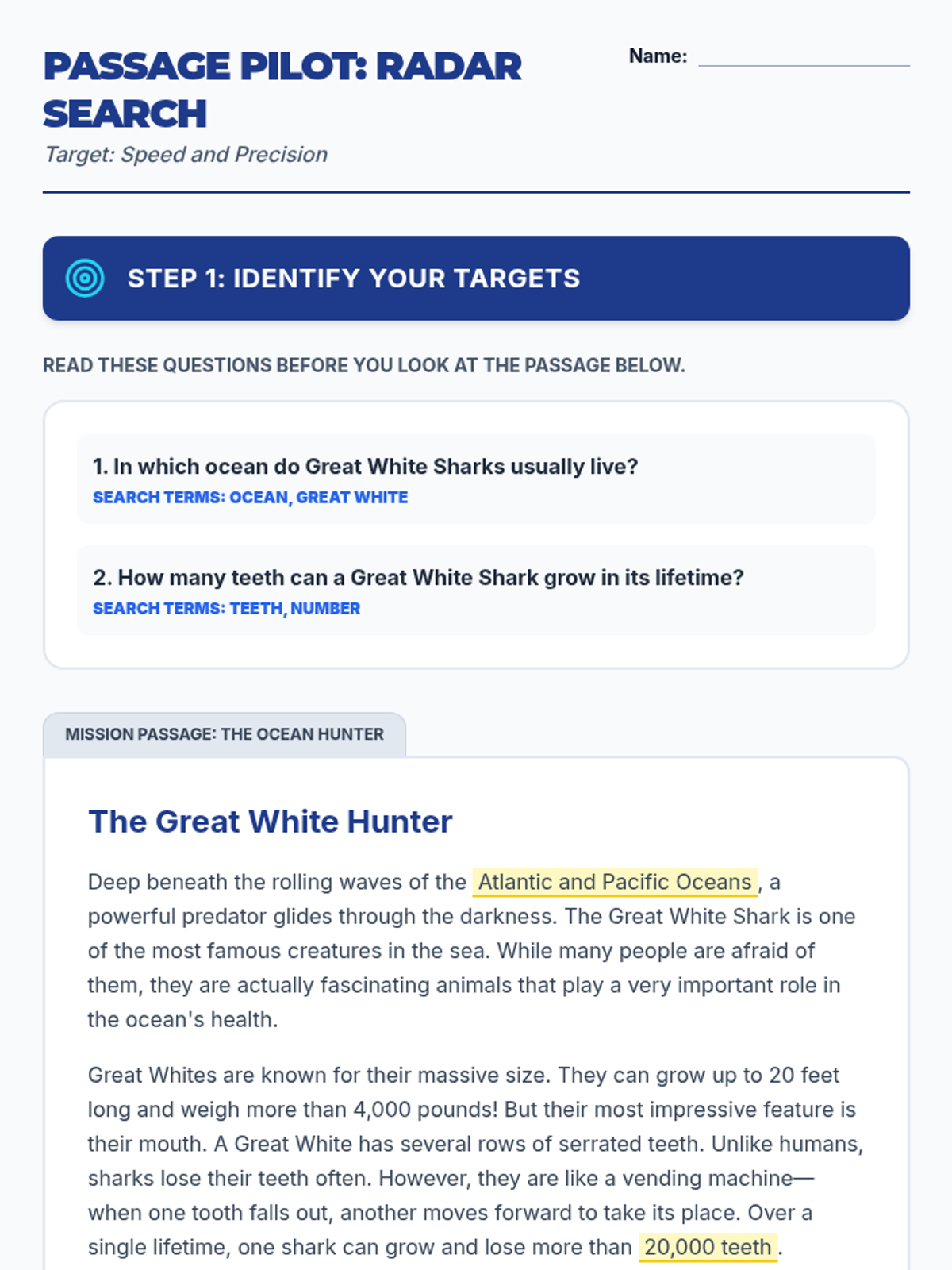
Focuses on reading strategies like 'questions first' to save time and improve focus during long reading comprehension sections.
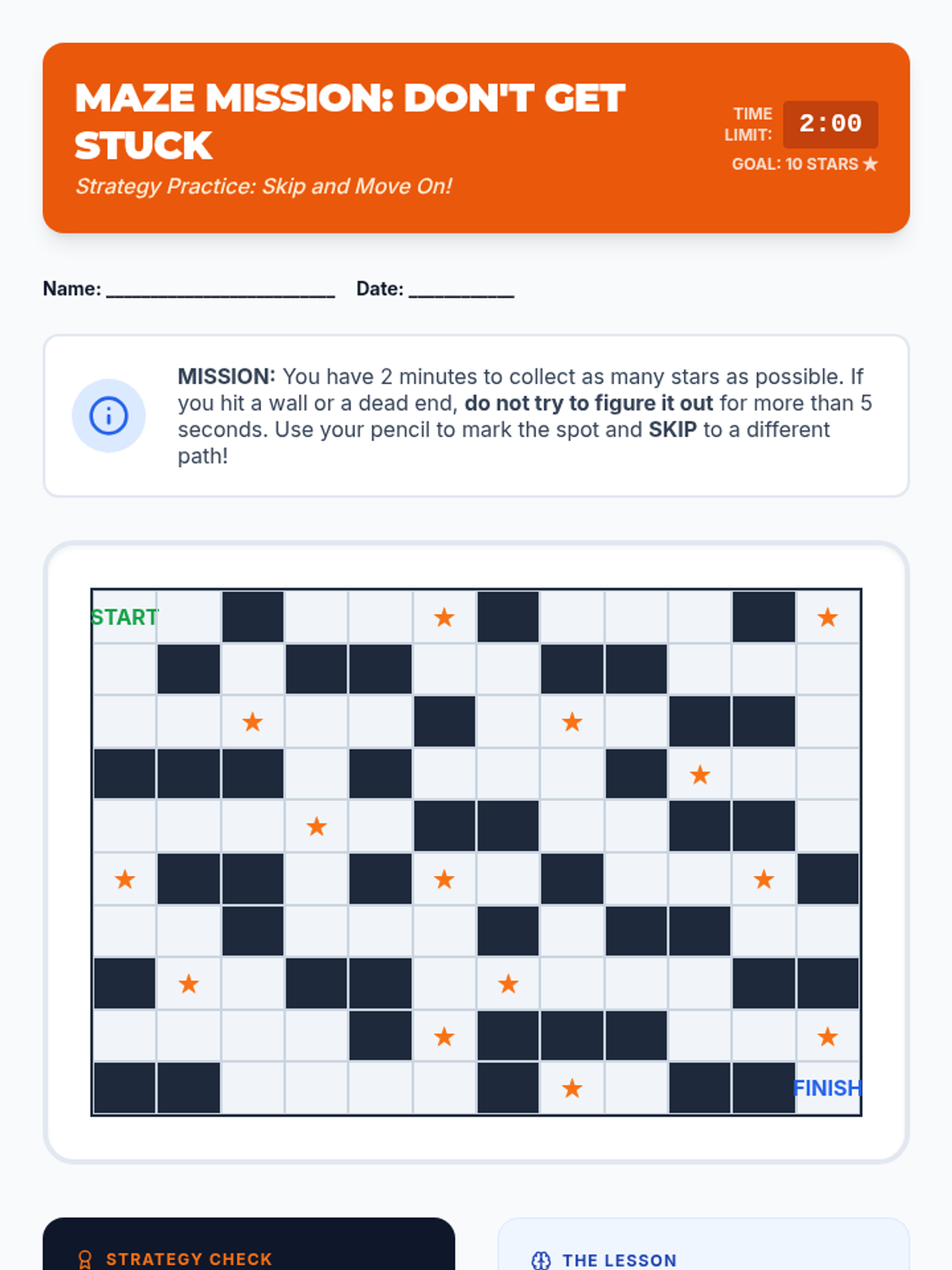
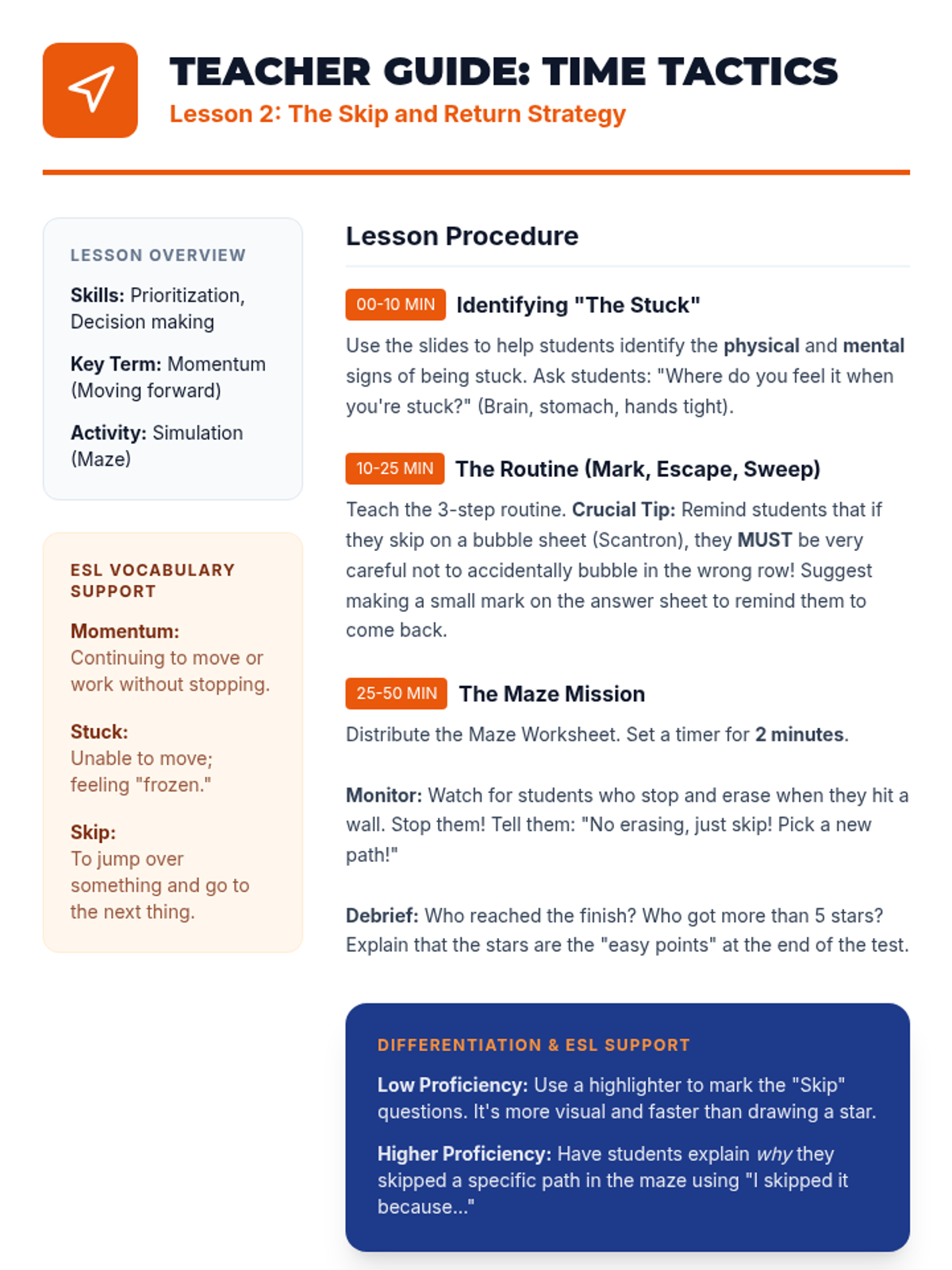
Students practice identifying when they are stuck and learn the 'skip and return' method to maximize their points by answering easy questions first.
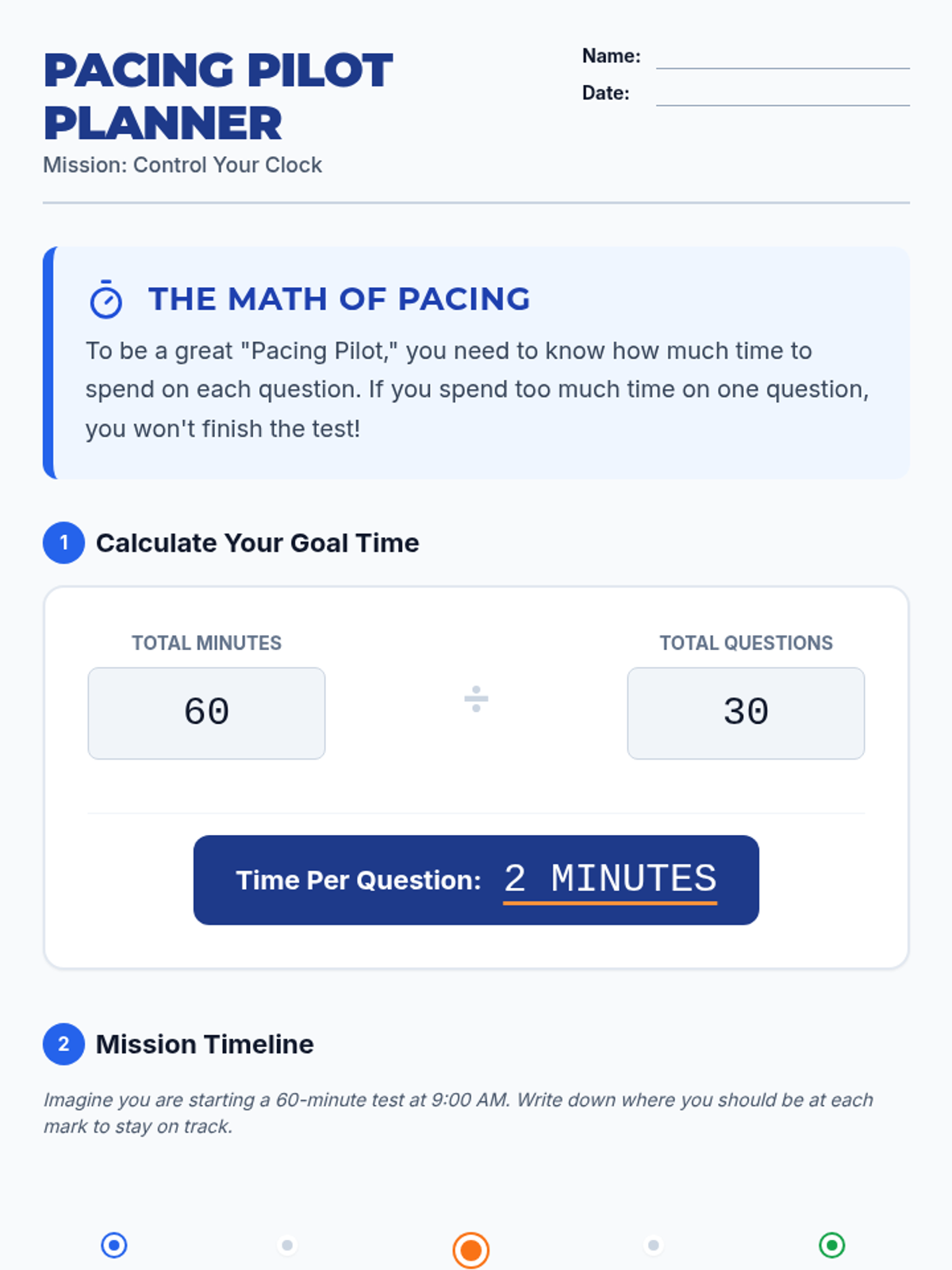
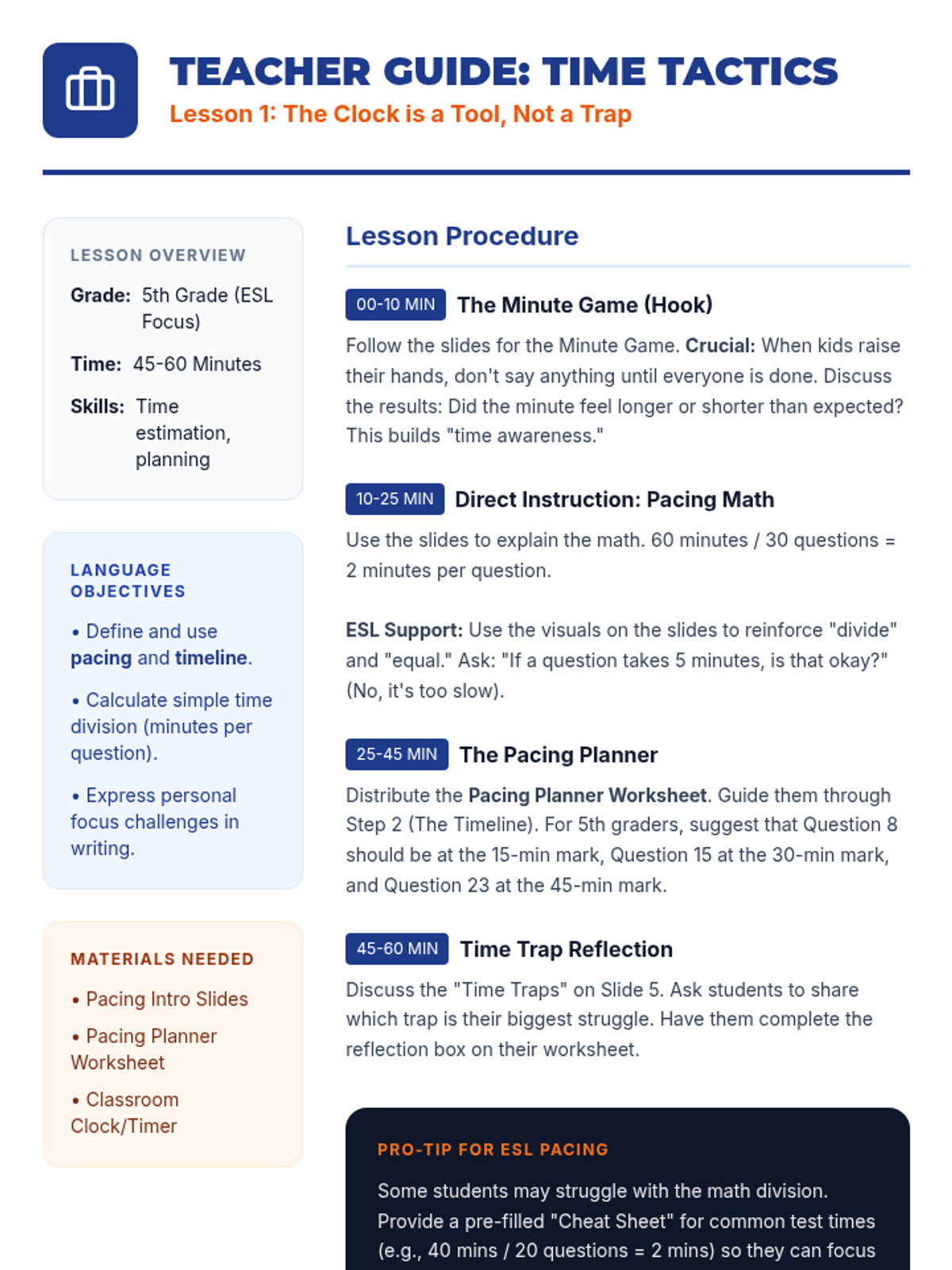
Students learn the basics of pacing by breaking down total test time and creating visual pacing guides to avoid the 'time trap.'
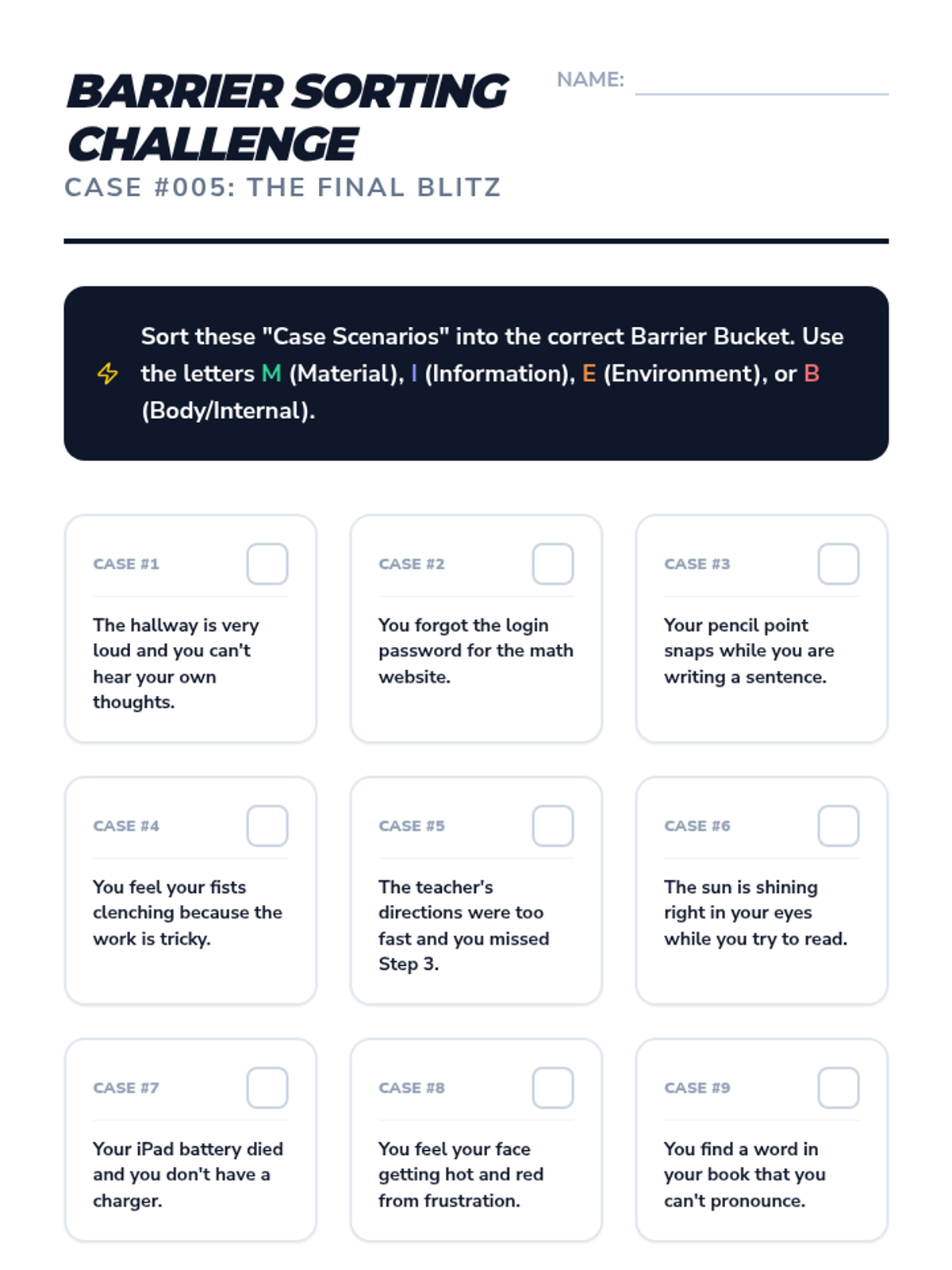
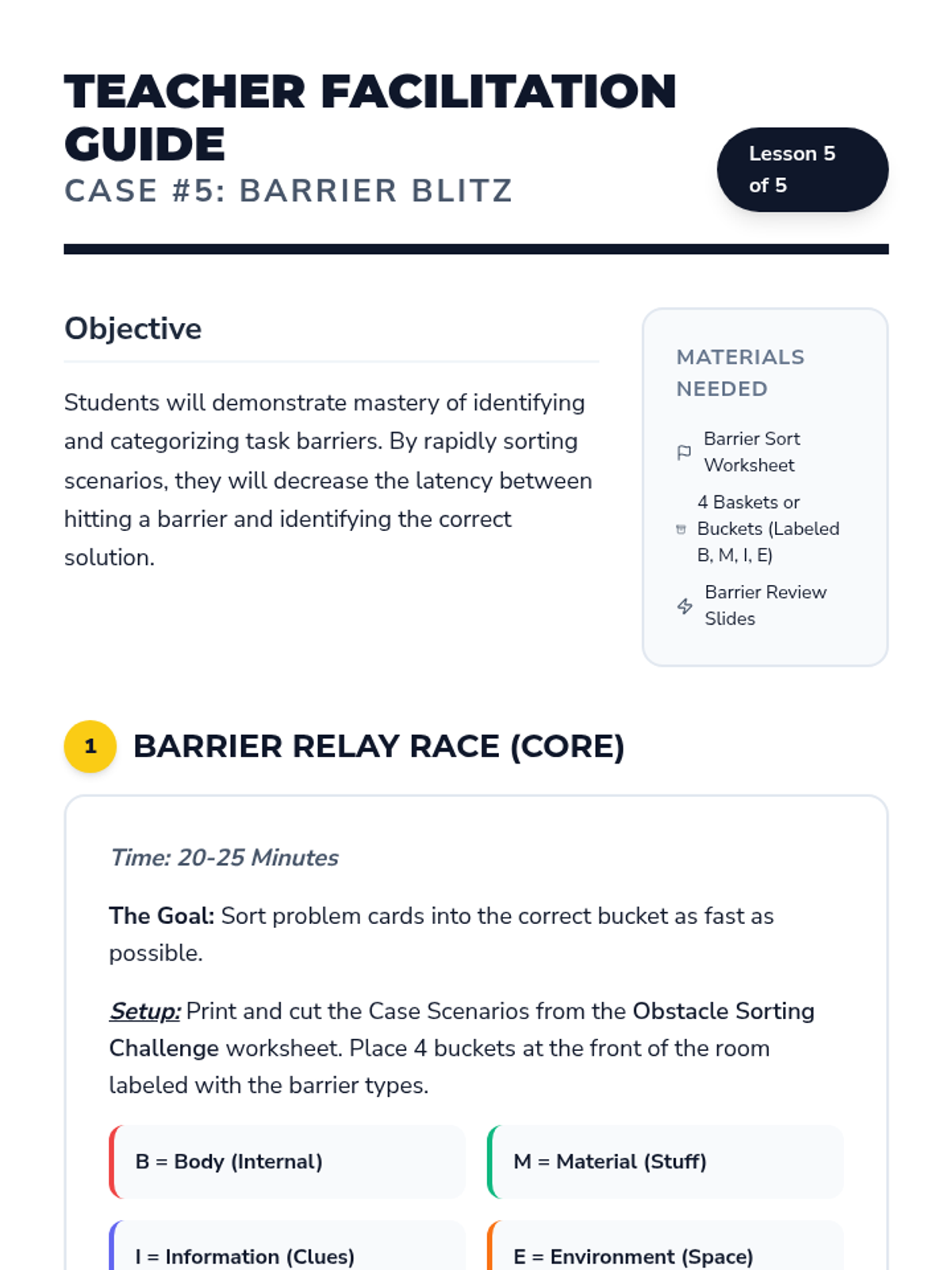
A culminating lesson where students rapidly sort various scenarios into barrier categories to reduce the time between hitting a wall and identifying the solution.
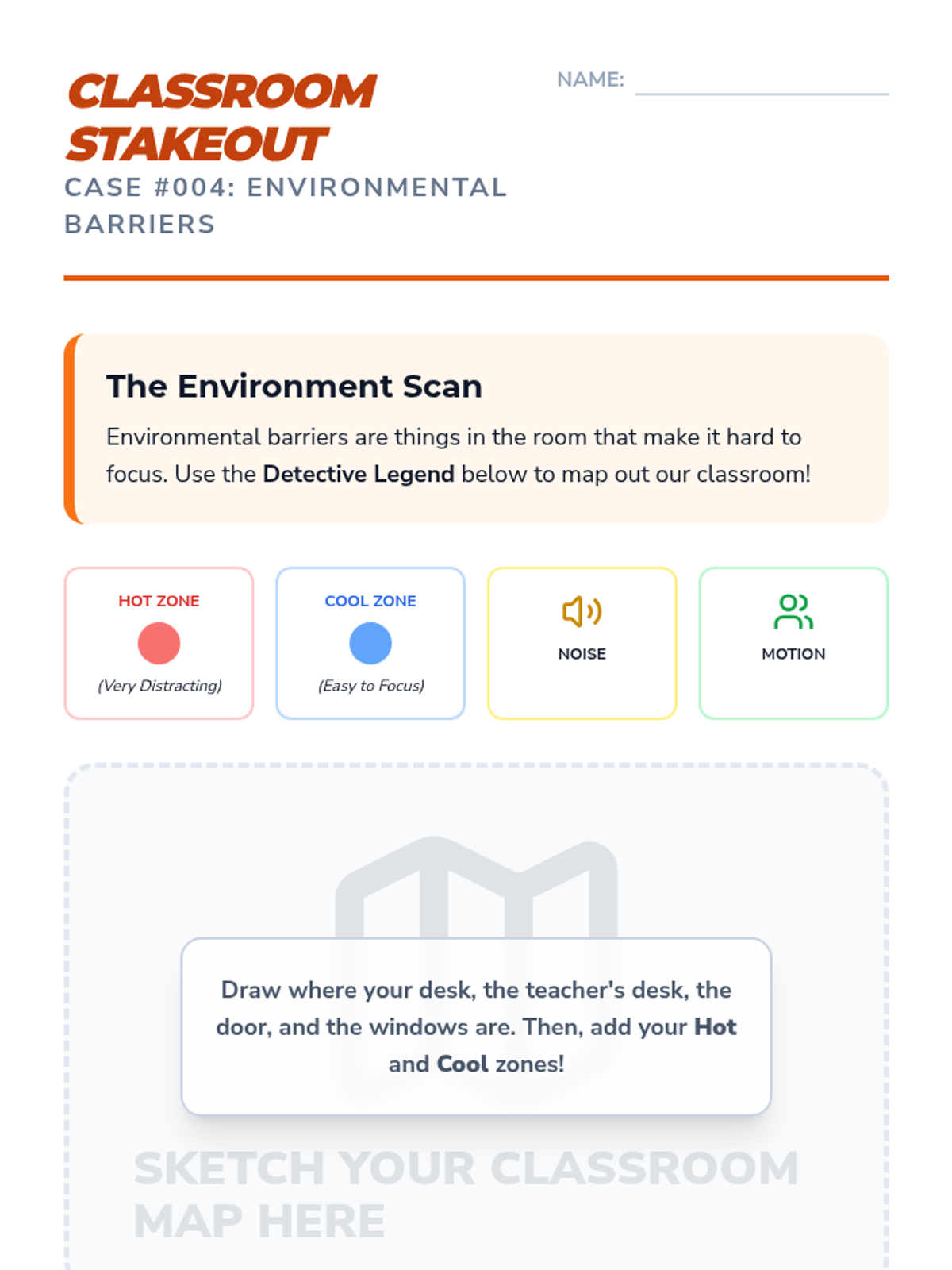
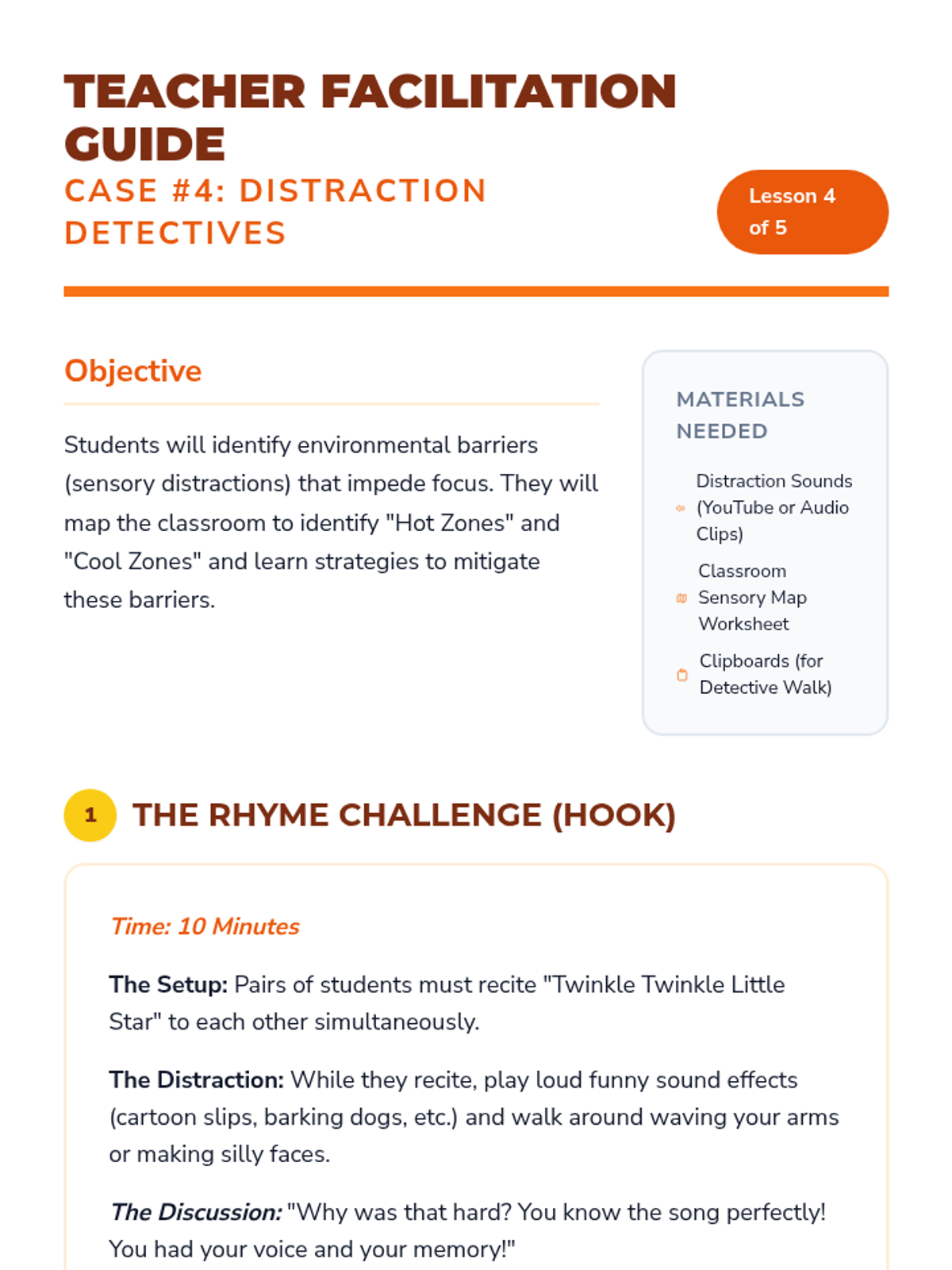
Investigates sensory and environmental barriers like noise or clutter, conducting a 'detective walk' to identify classroom distractions.
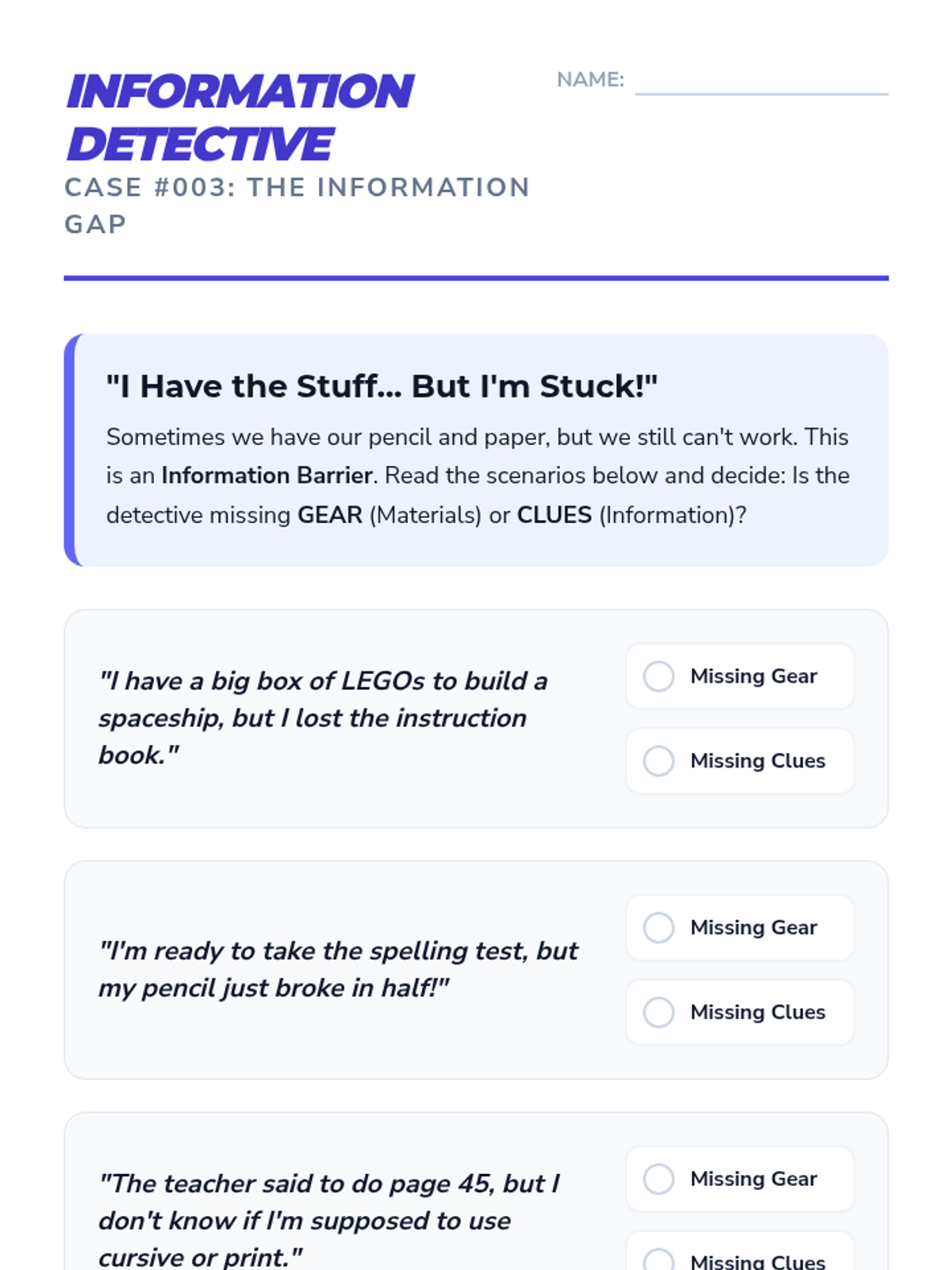
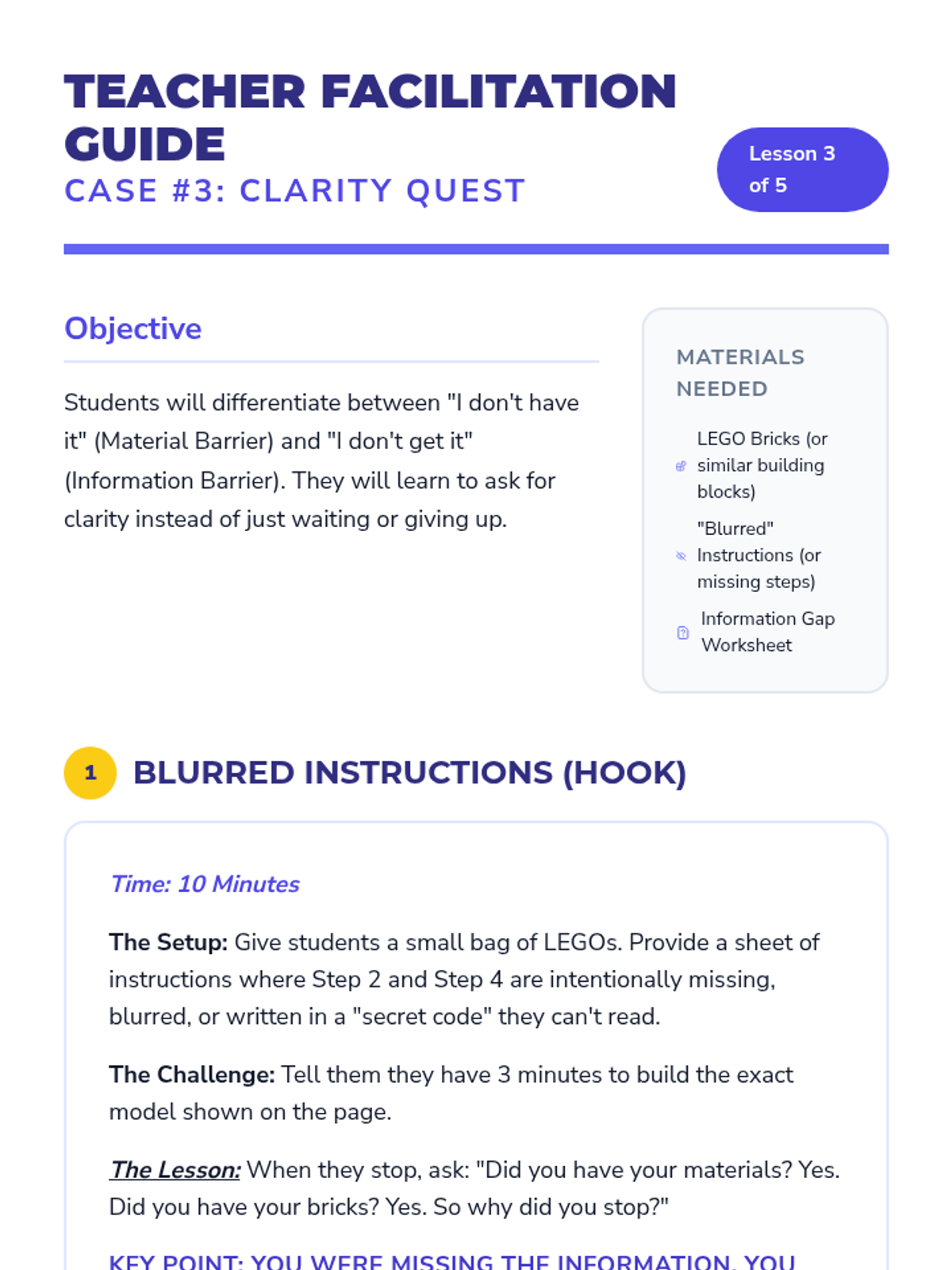
Teaches students to recognize when they are stuck due to a lack of clarity or understanding, differentiating between 'I don't have it' and 'I don't get it.'
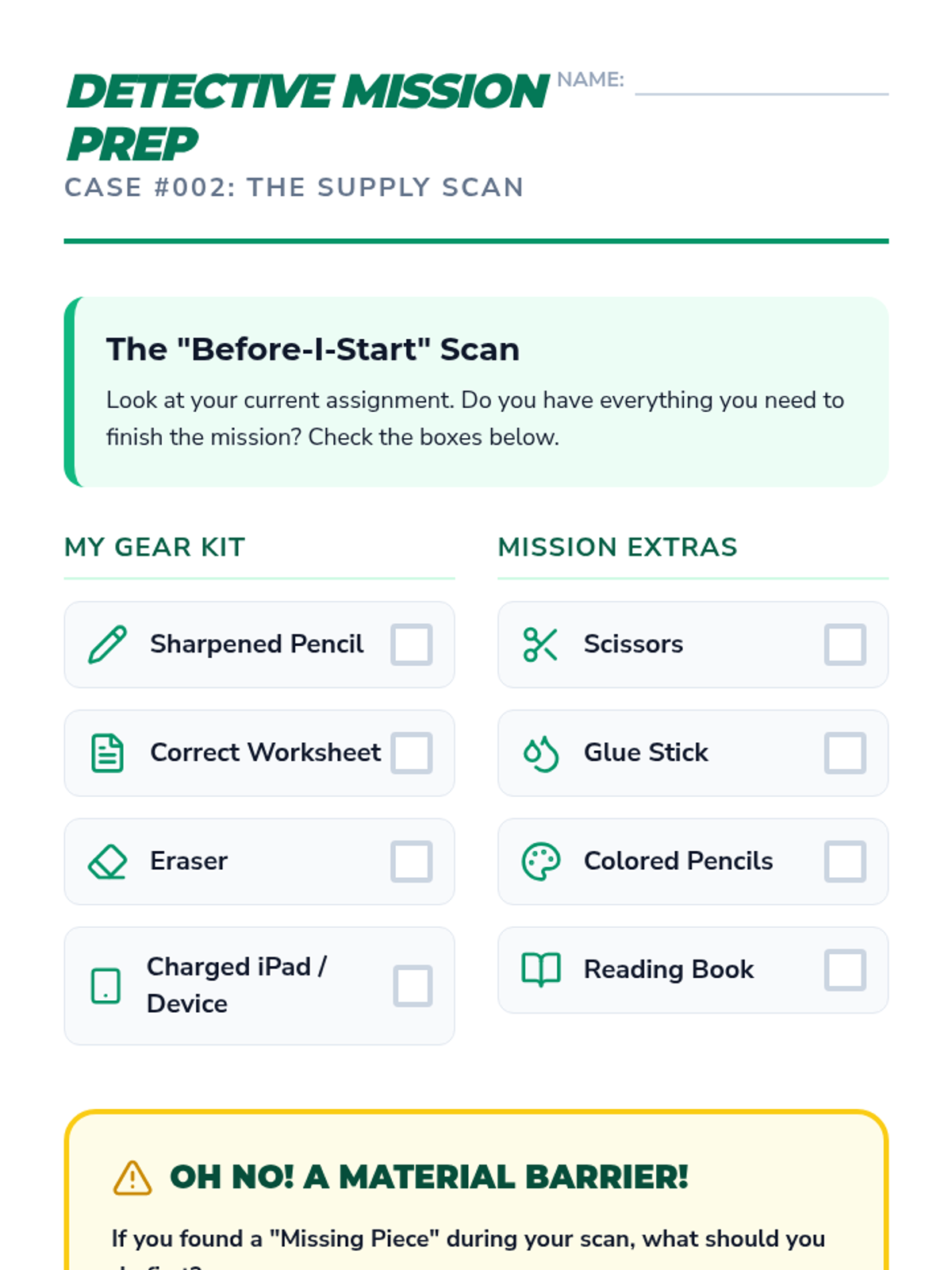
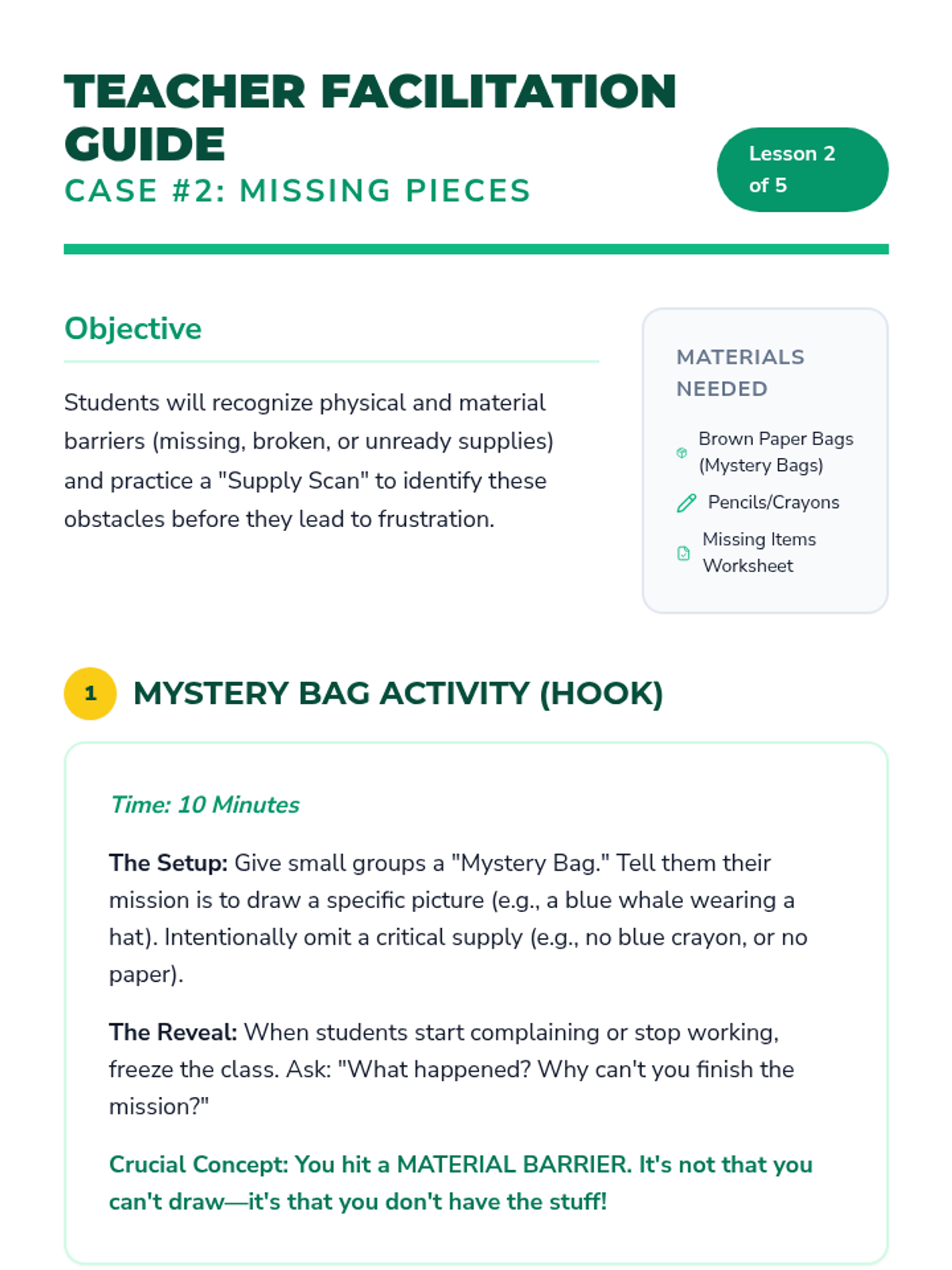
Focuses on tangible obstacles like broken tools or missing materials, teaching students to perform a 'supply scan' to identify what is physically missing.
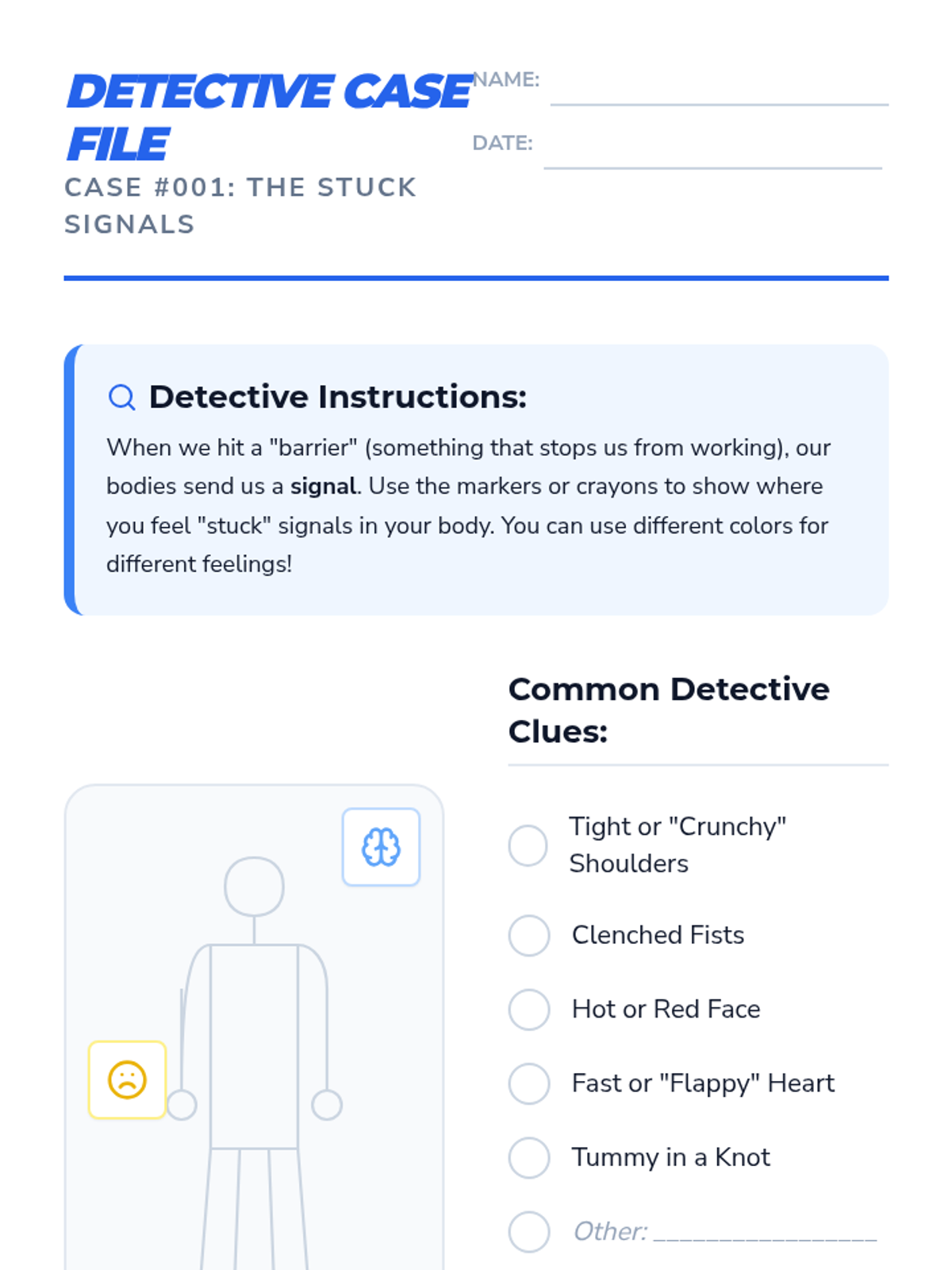
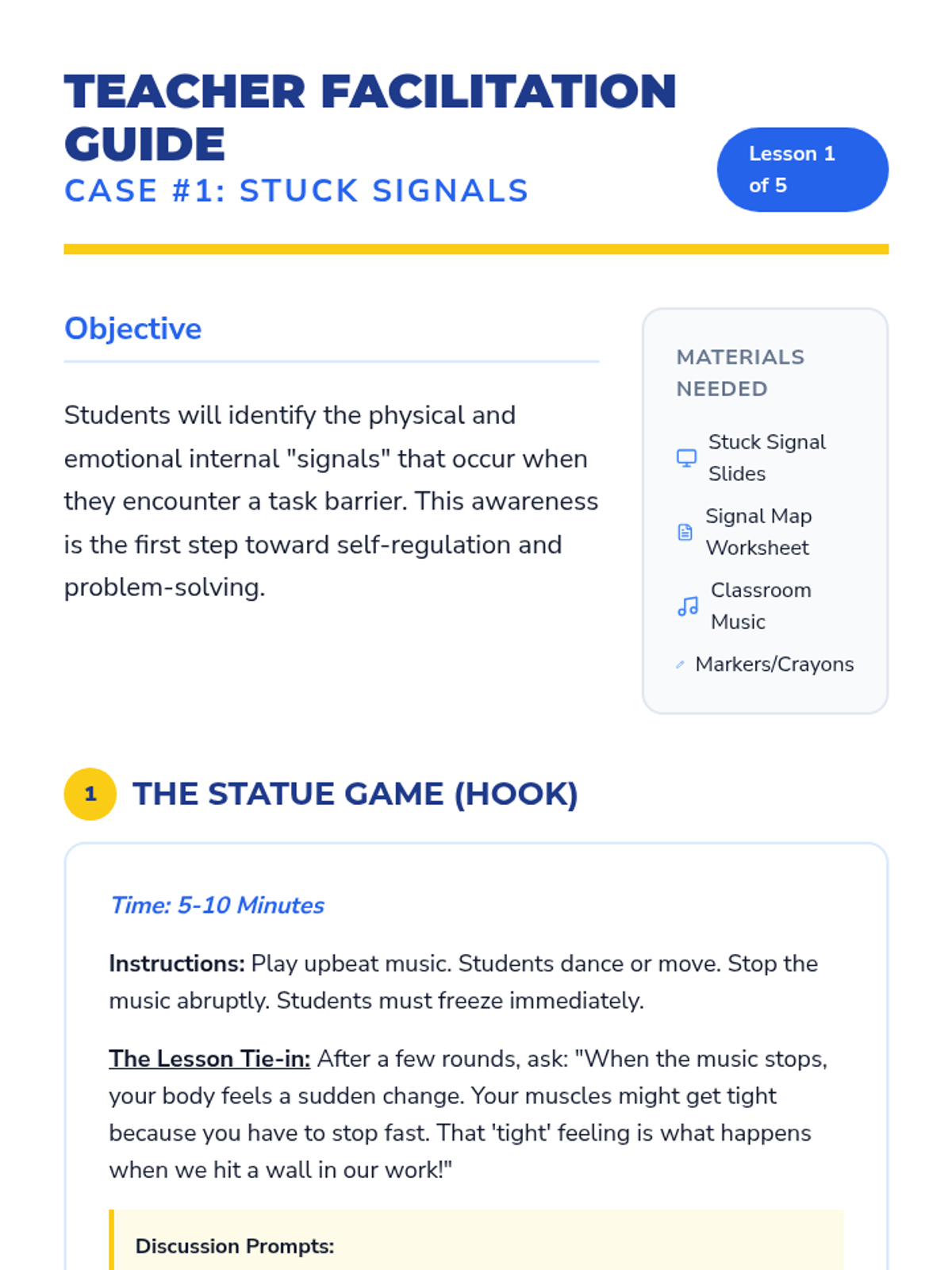
Students explore the physical and emotional sensations associated with hitting a task barrier, identifying what frustration feels like to recognize the moment they need to stop.
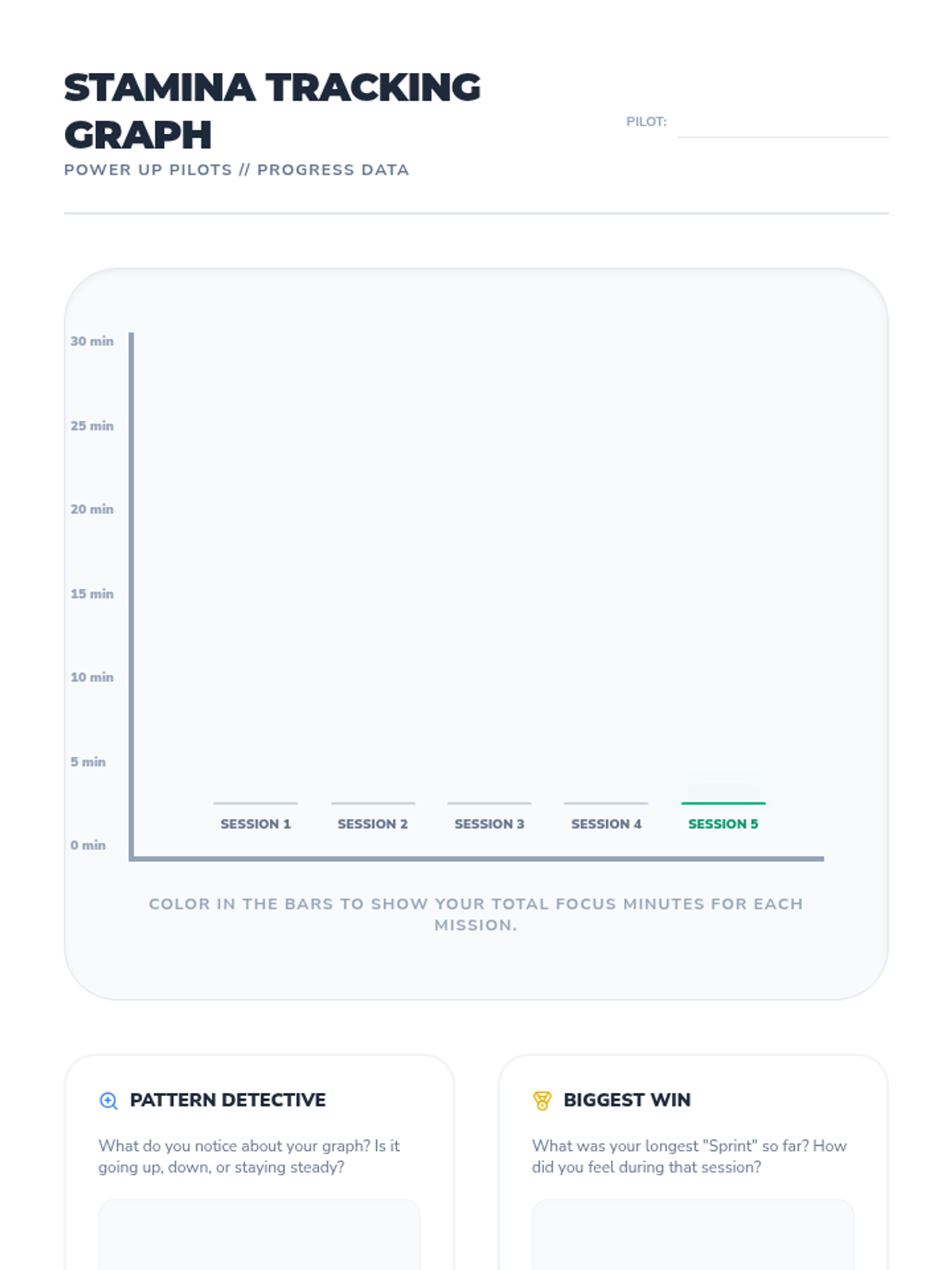
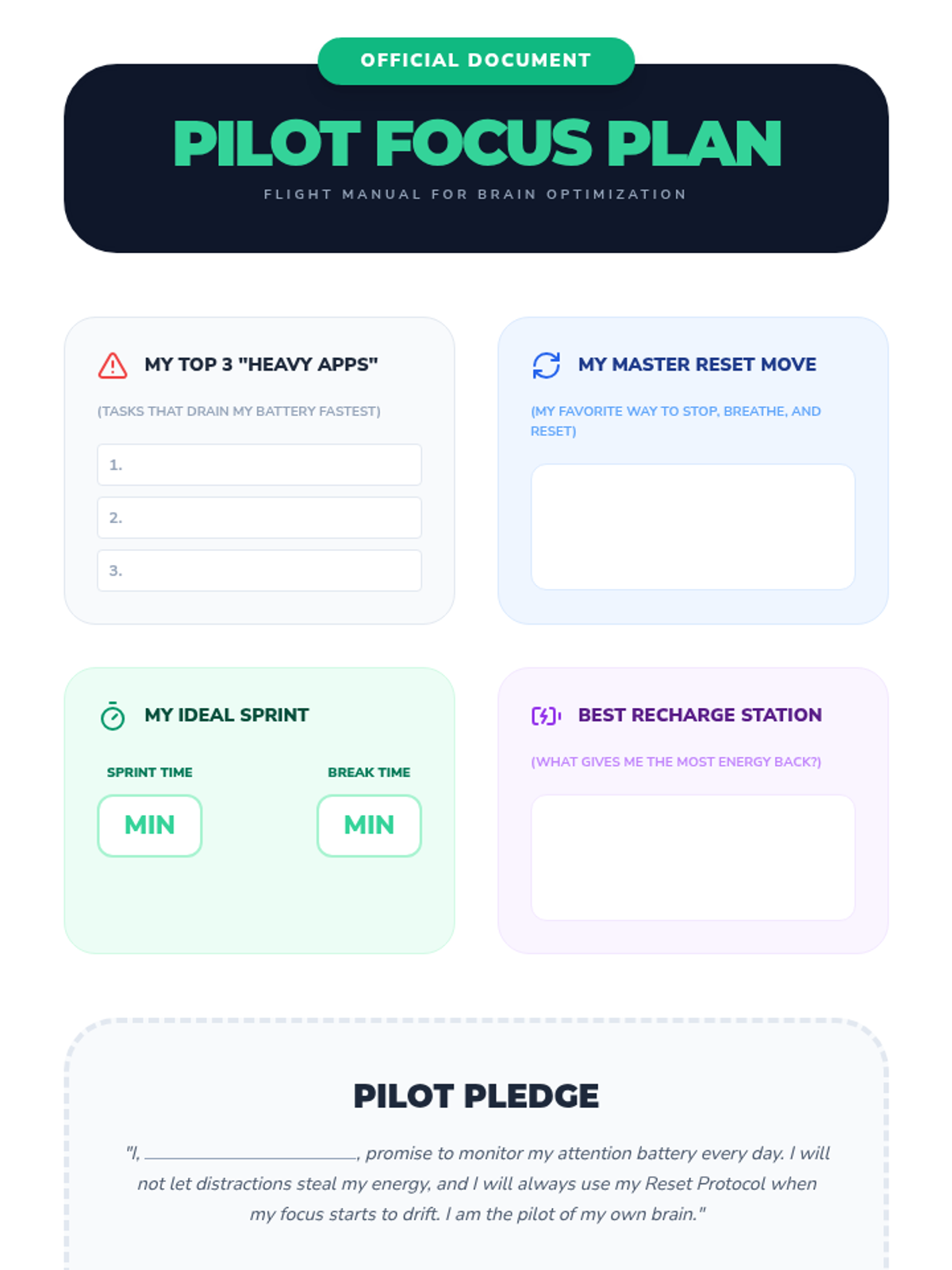
Students track their focus duration over time, graphing their stamina and creating a personalized 'Focus Plan' for future academic success.
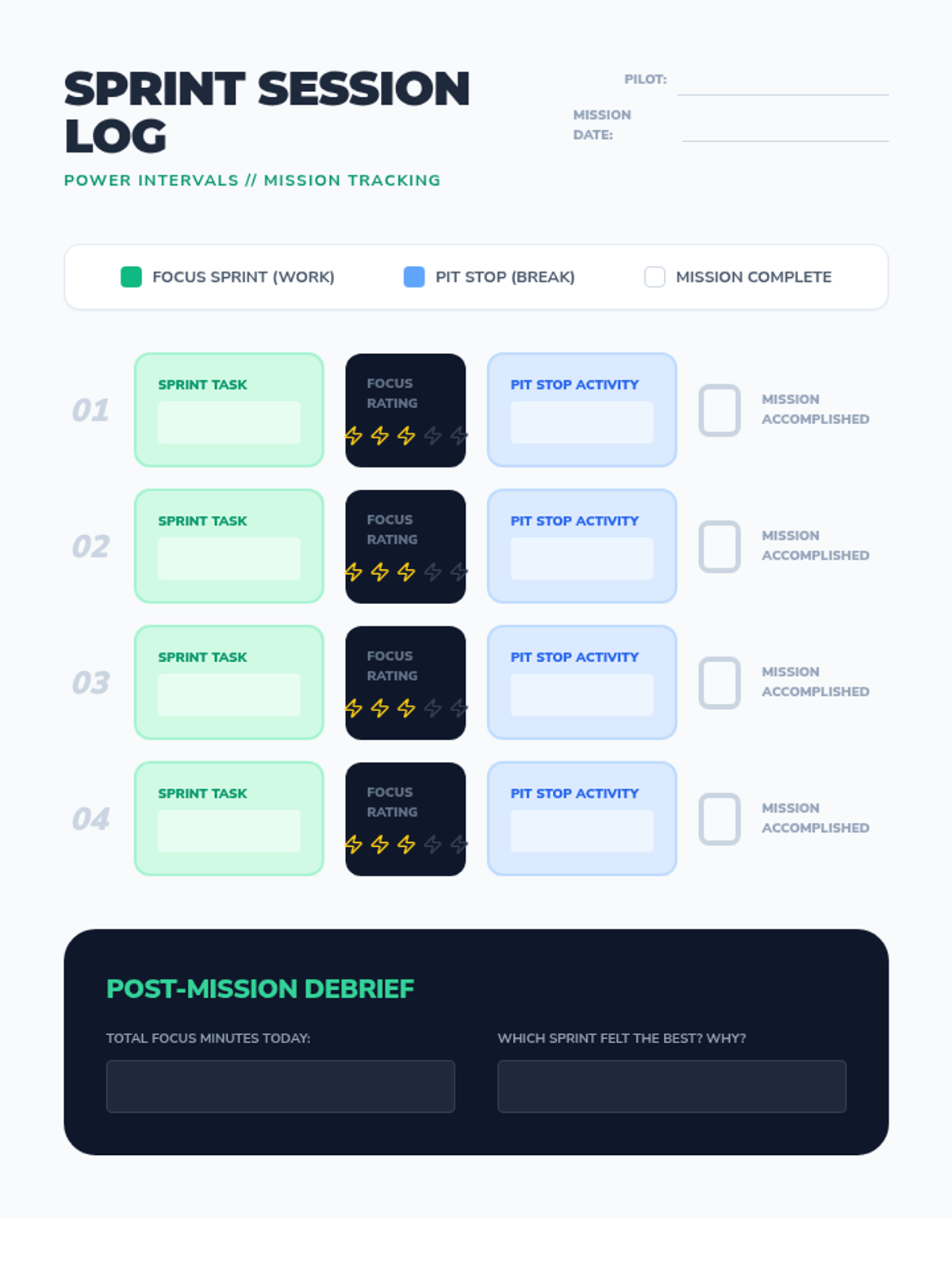
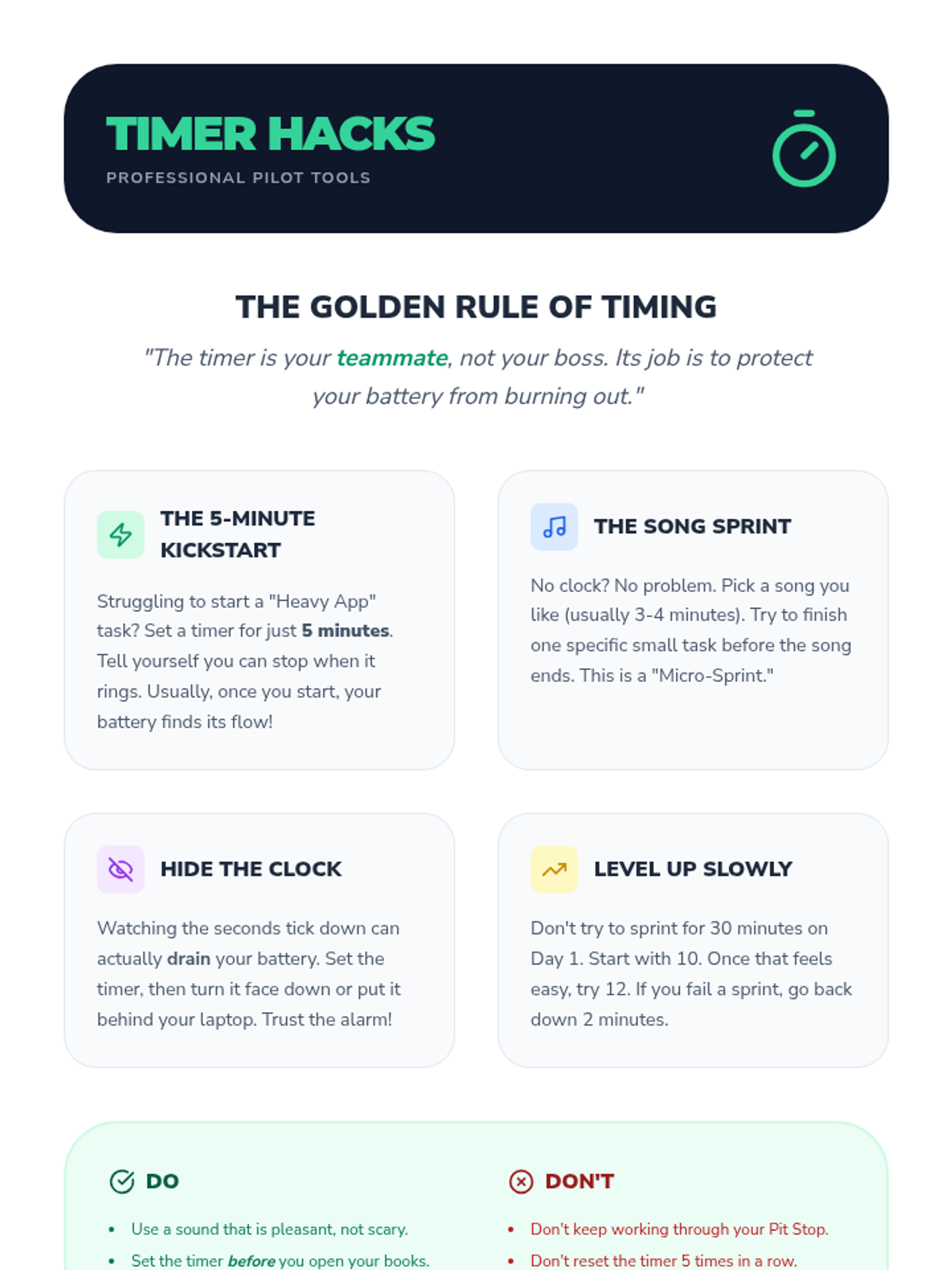
Students experiment with interval-based focus periods (Focus Sprints) and structured brain breaks to optimize their working memory.
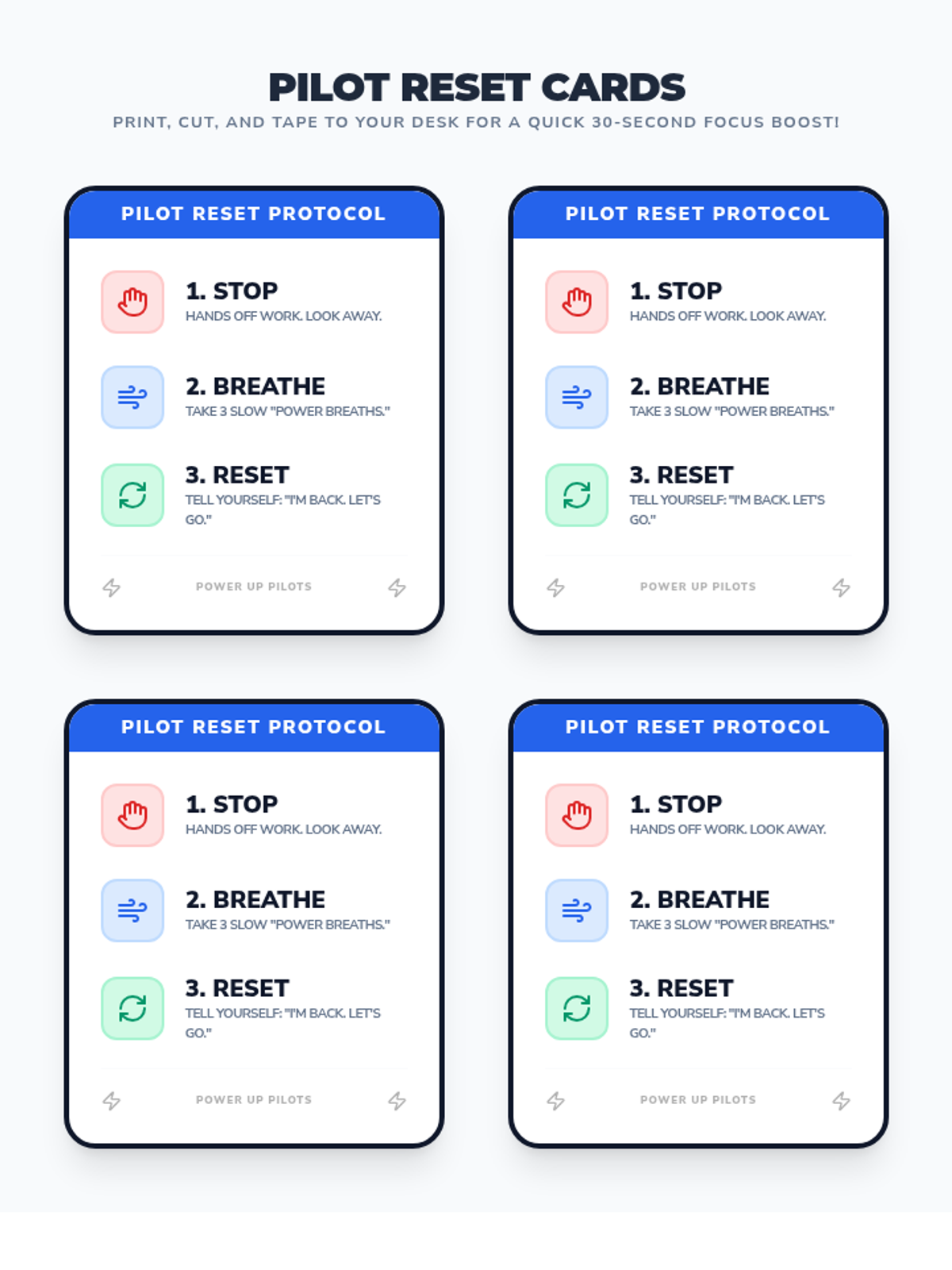
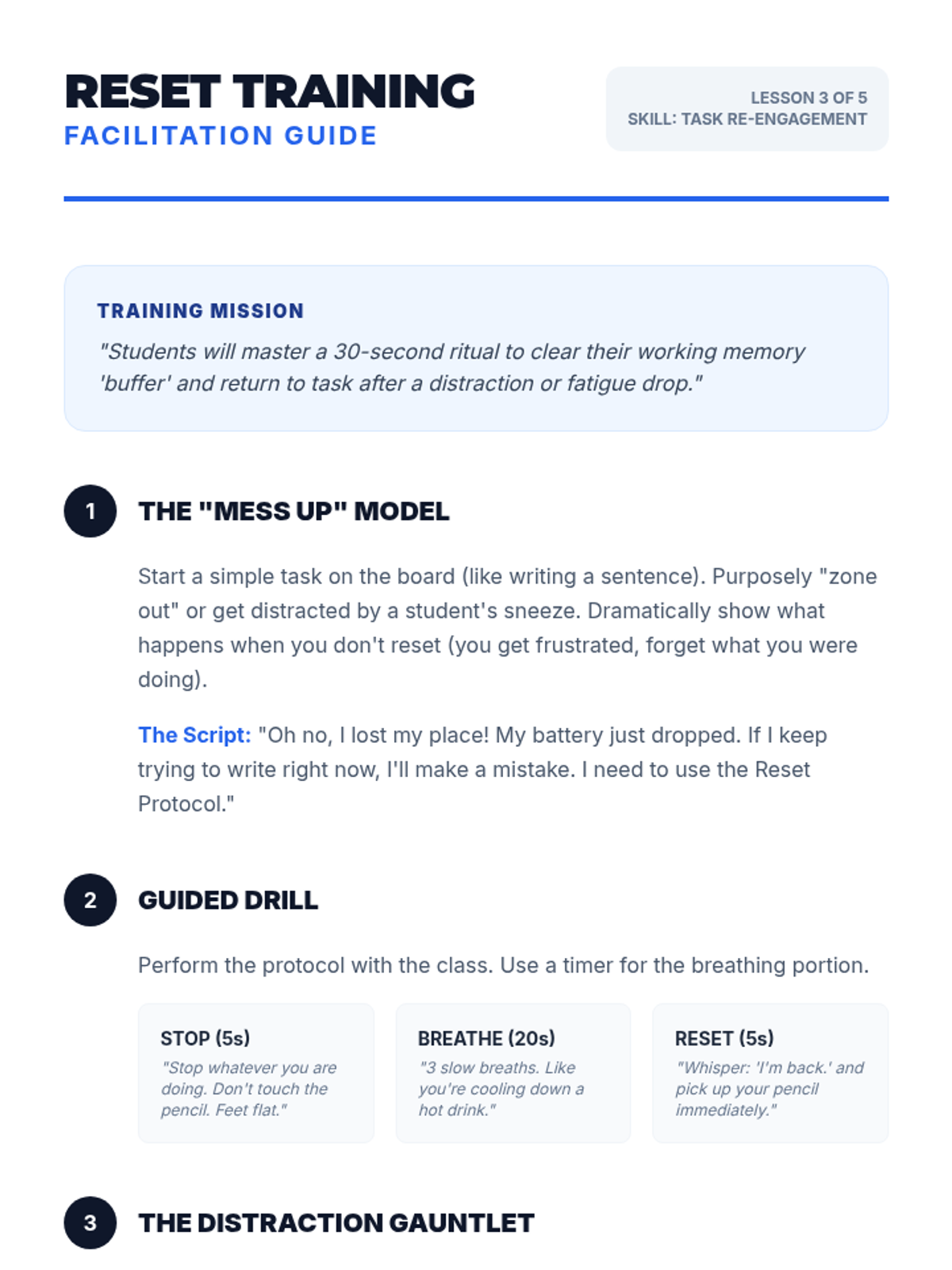
Students learn and practice a 30-second 'Stop, Breathe, Reset' protocol to re-engage with tasks when they notice their attention drifting.
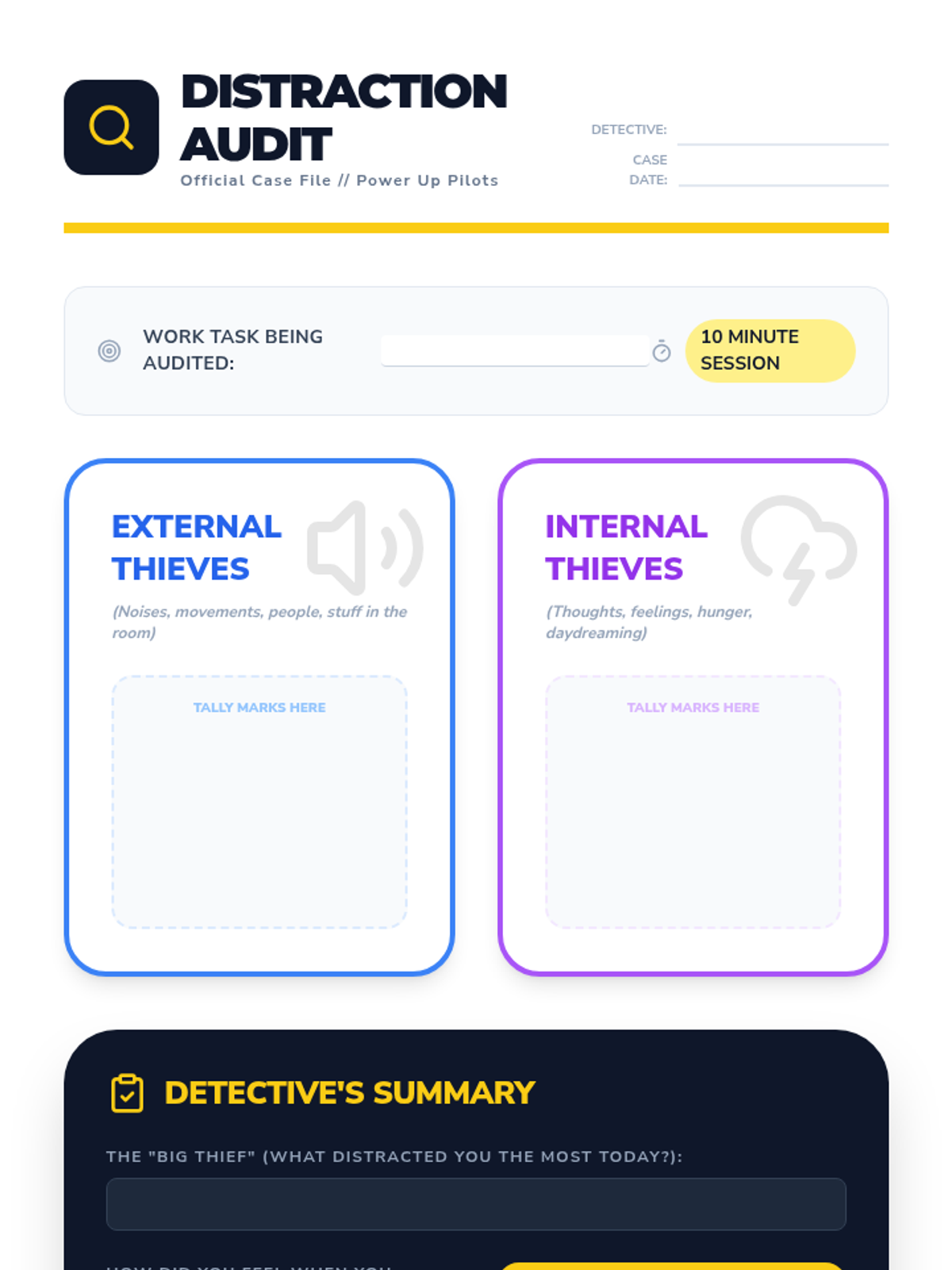
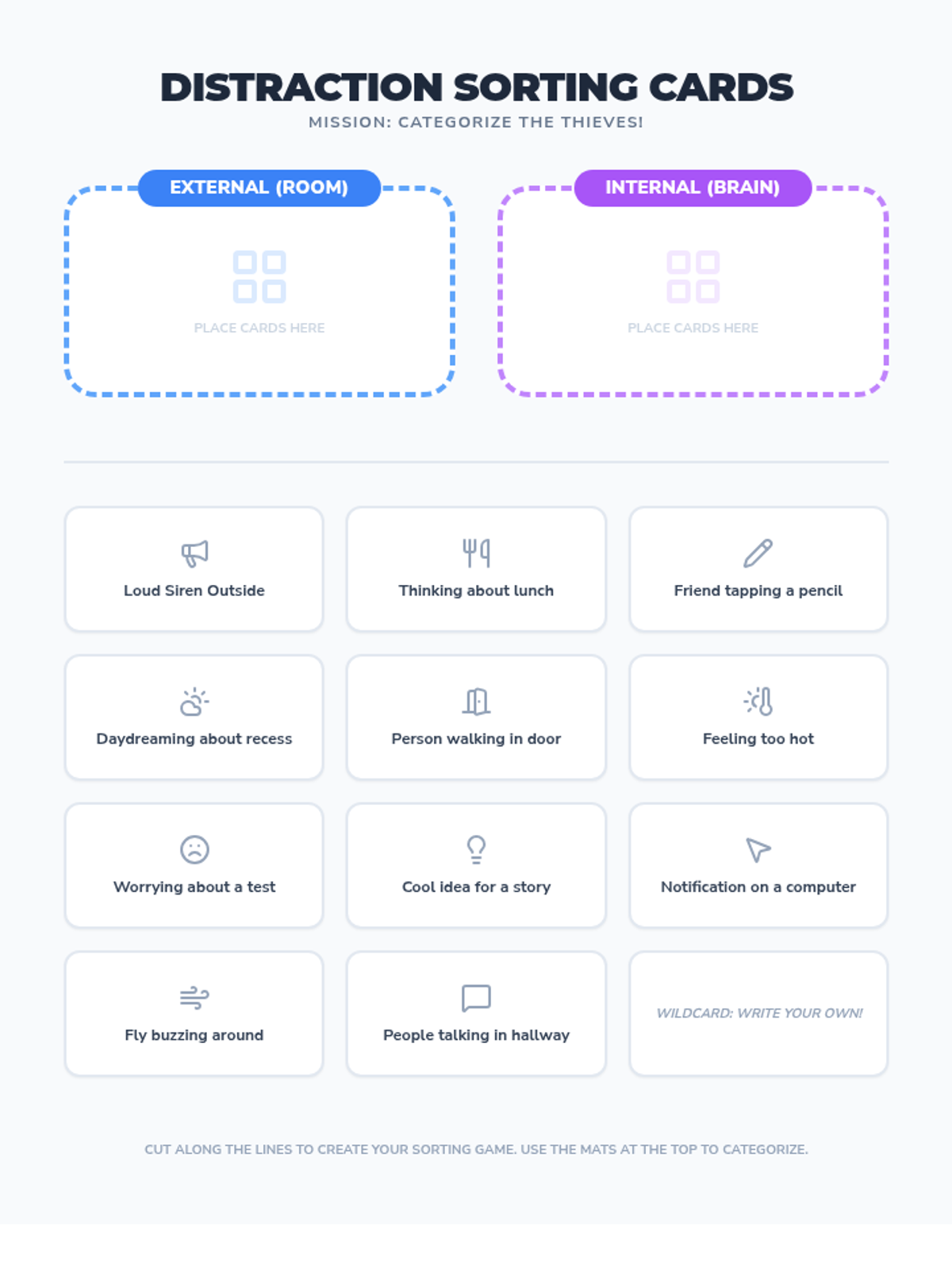
Students categorize distractions into external and internal factors and conduct a 'distraction audit' to baseline their current attention span.
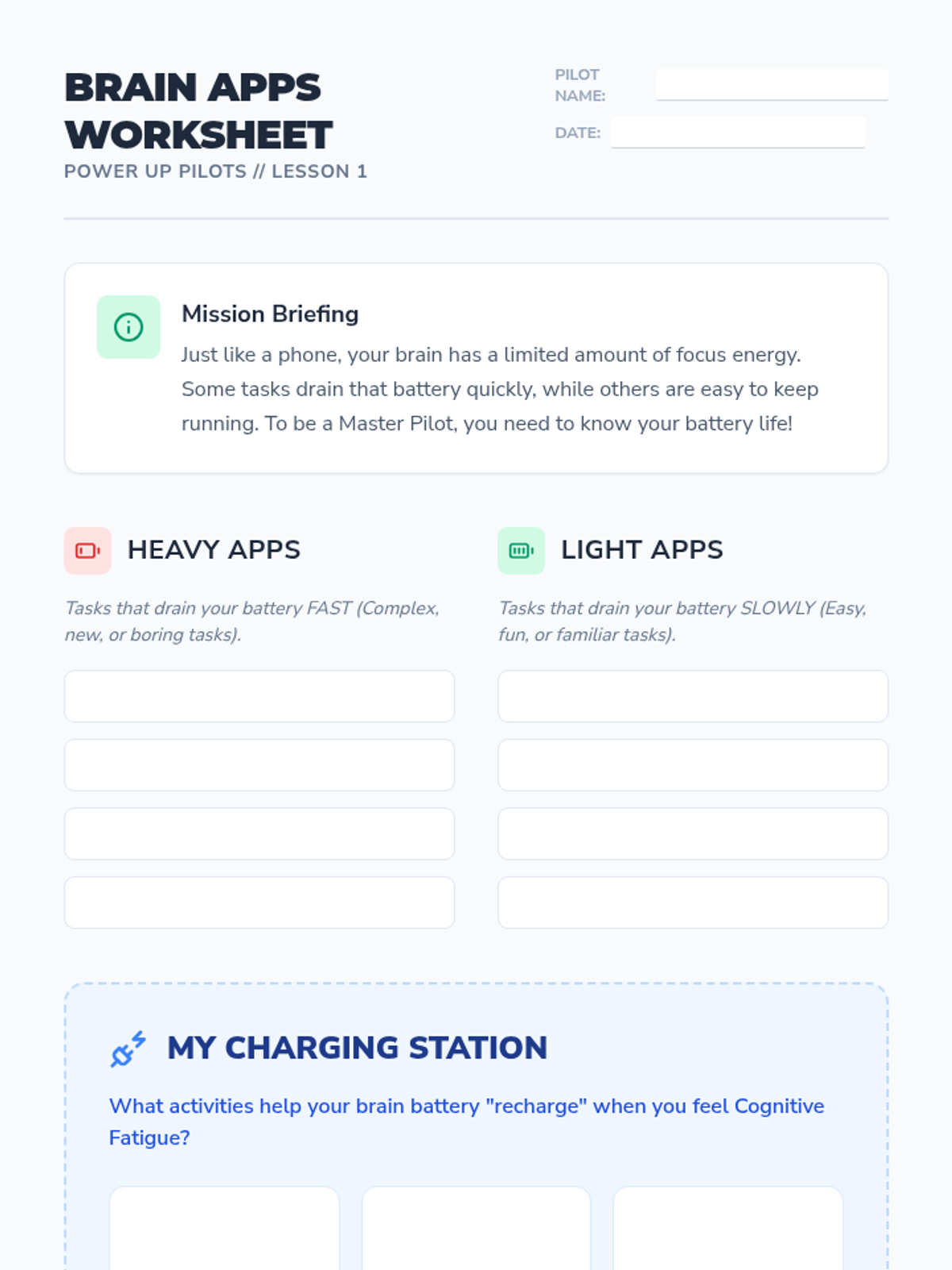
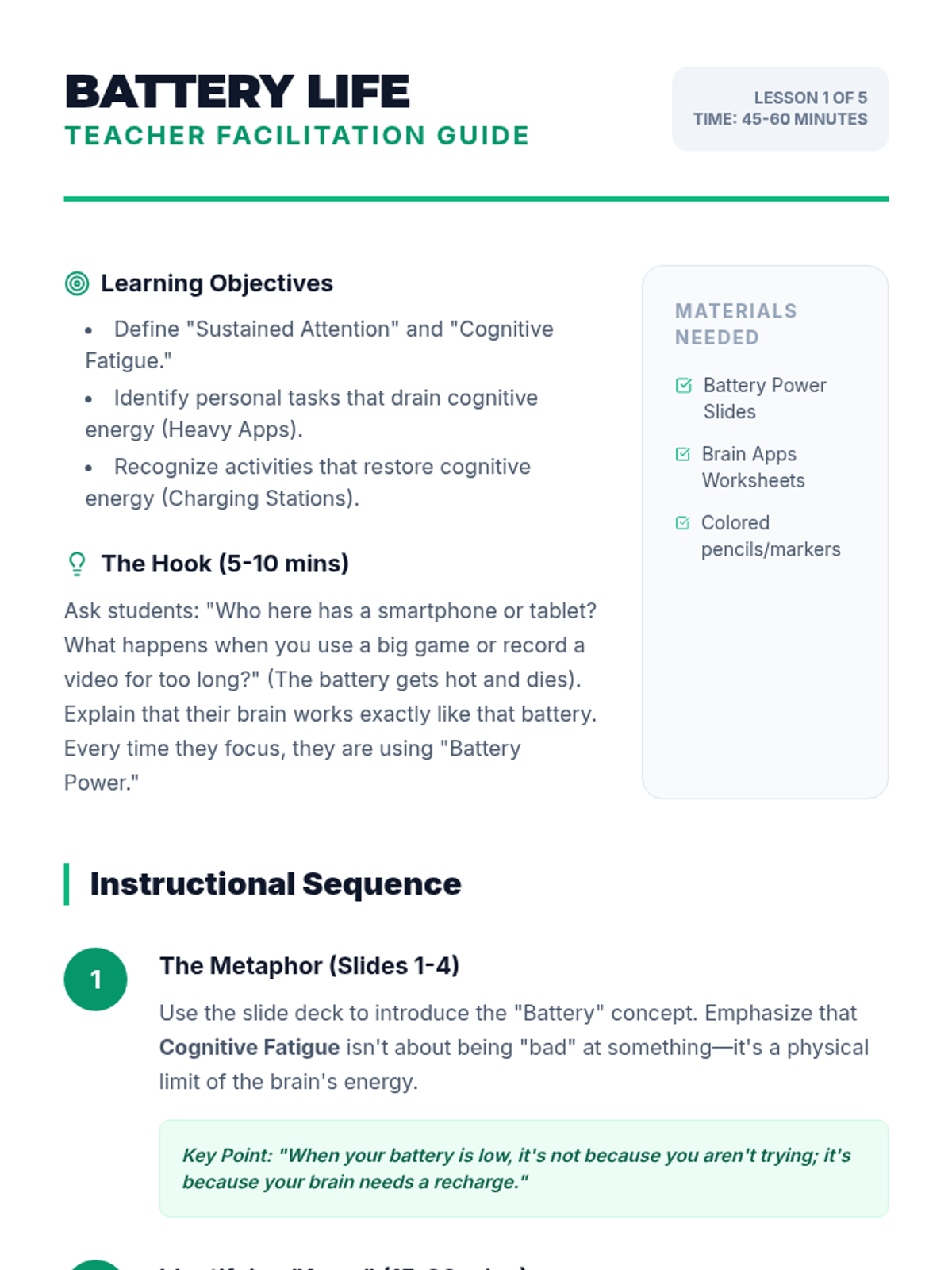
Students are introduced to the concept of attention as a battery that drains and needs recharging. They identify which tasks drain their battery and learn the vocabulary of 'sustained attention' and 'cognitive fatigue.'
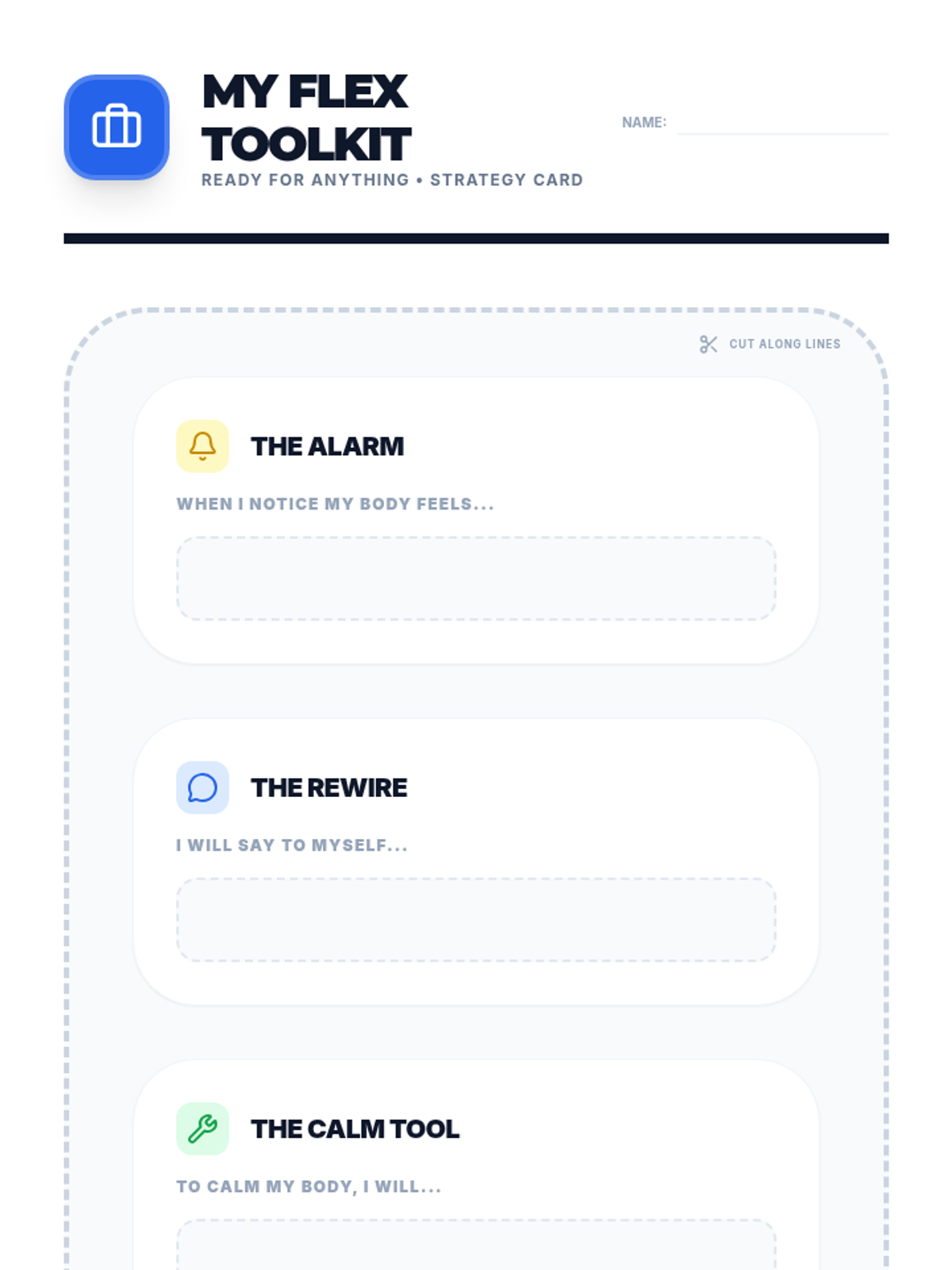
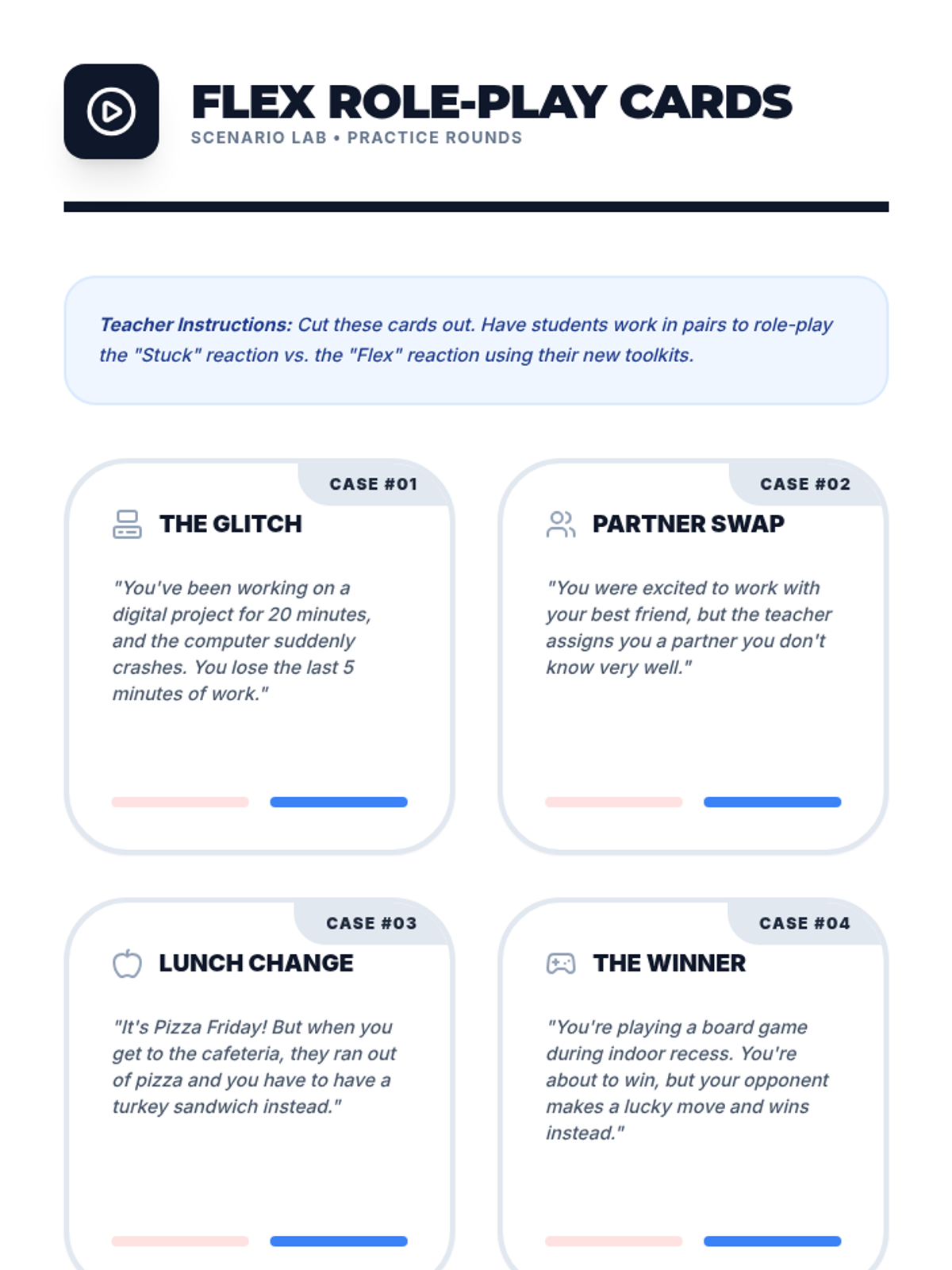
Students synthesize their learning by creating a personal flexibility toolkit card. They practice using their toolkit during role-played scenarios of common disruptions.
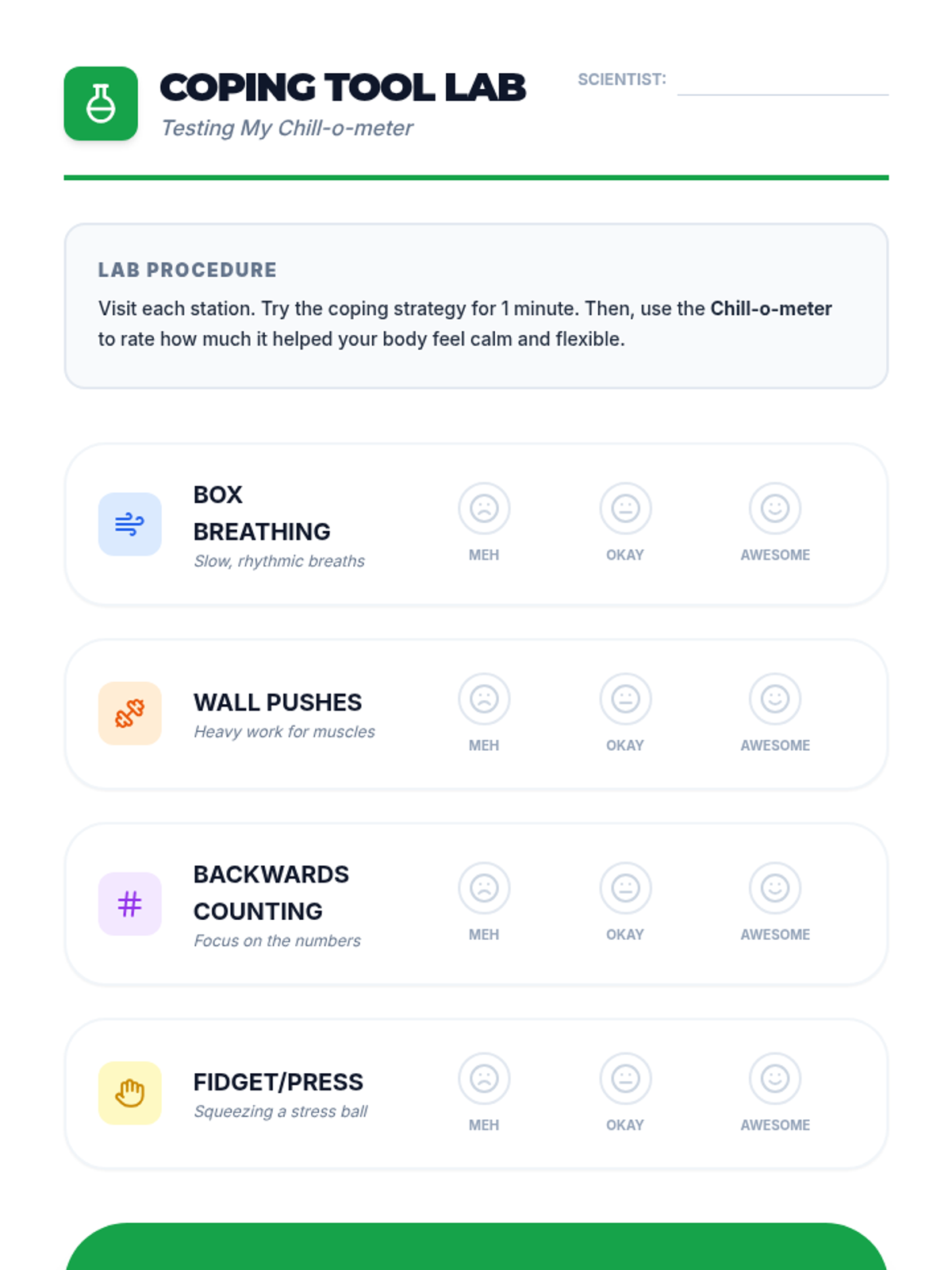
Students experiment with classroom-appropriate de-escalation strategies like deep breathing and heavy work. They rate the effectiveness of each strategy on a 'Chill-o-meter'.
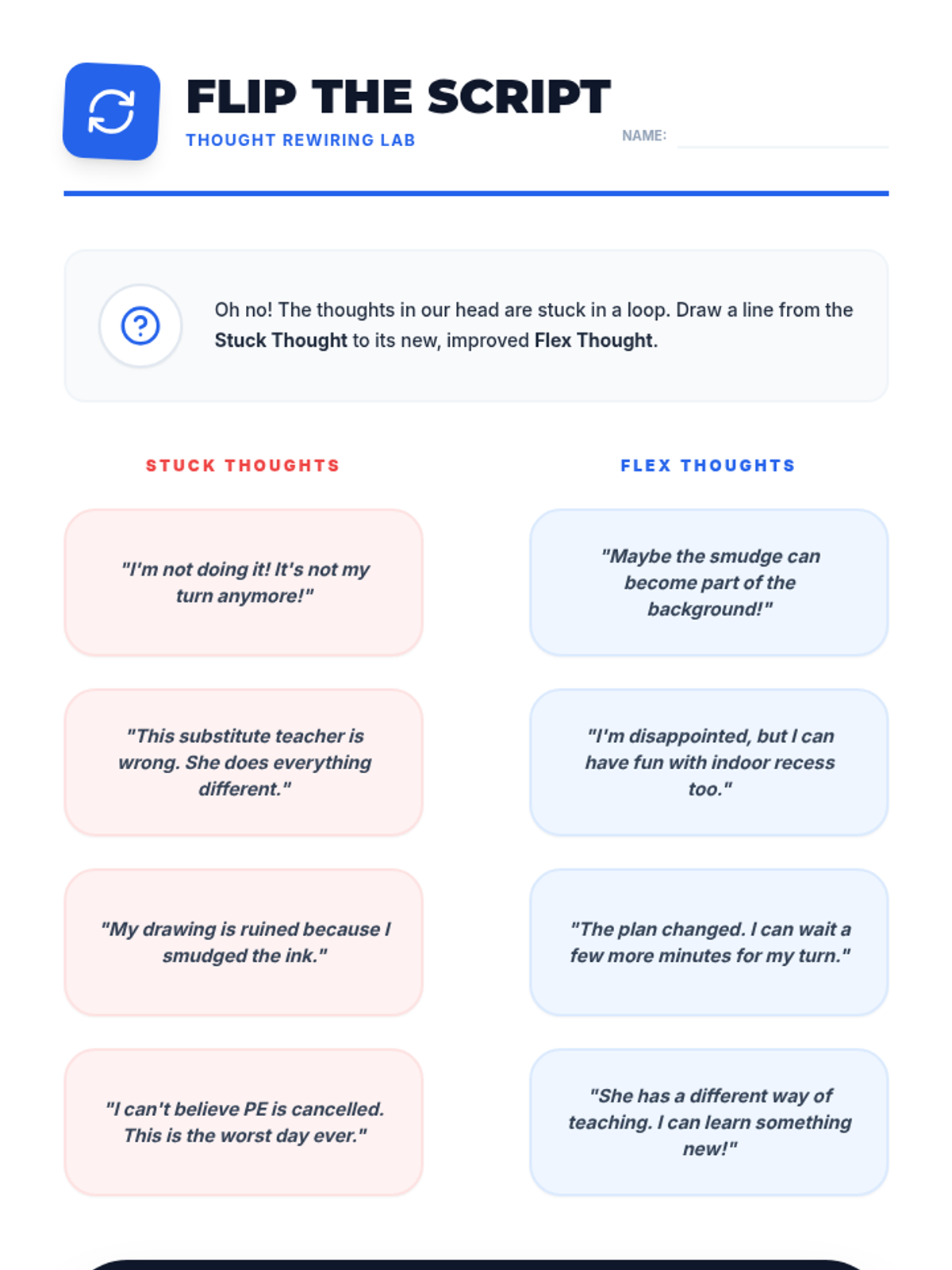
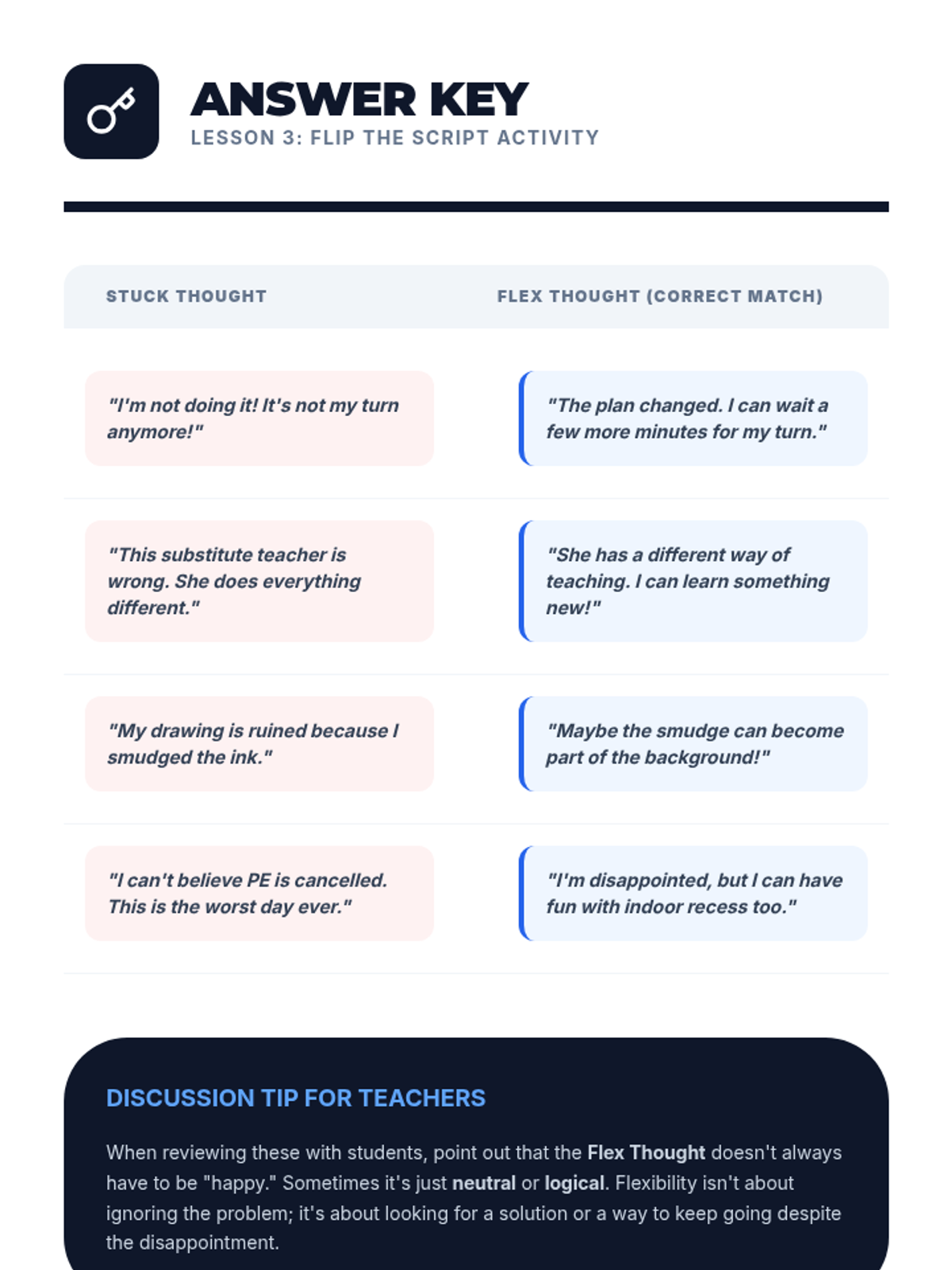
Students practice replacing negative internal scripts with neutral or positive coping statements. They engage in matching activities to pair common problems with appropriate self-talk solutions.
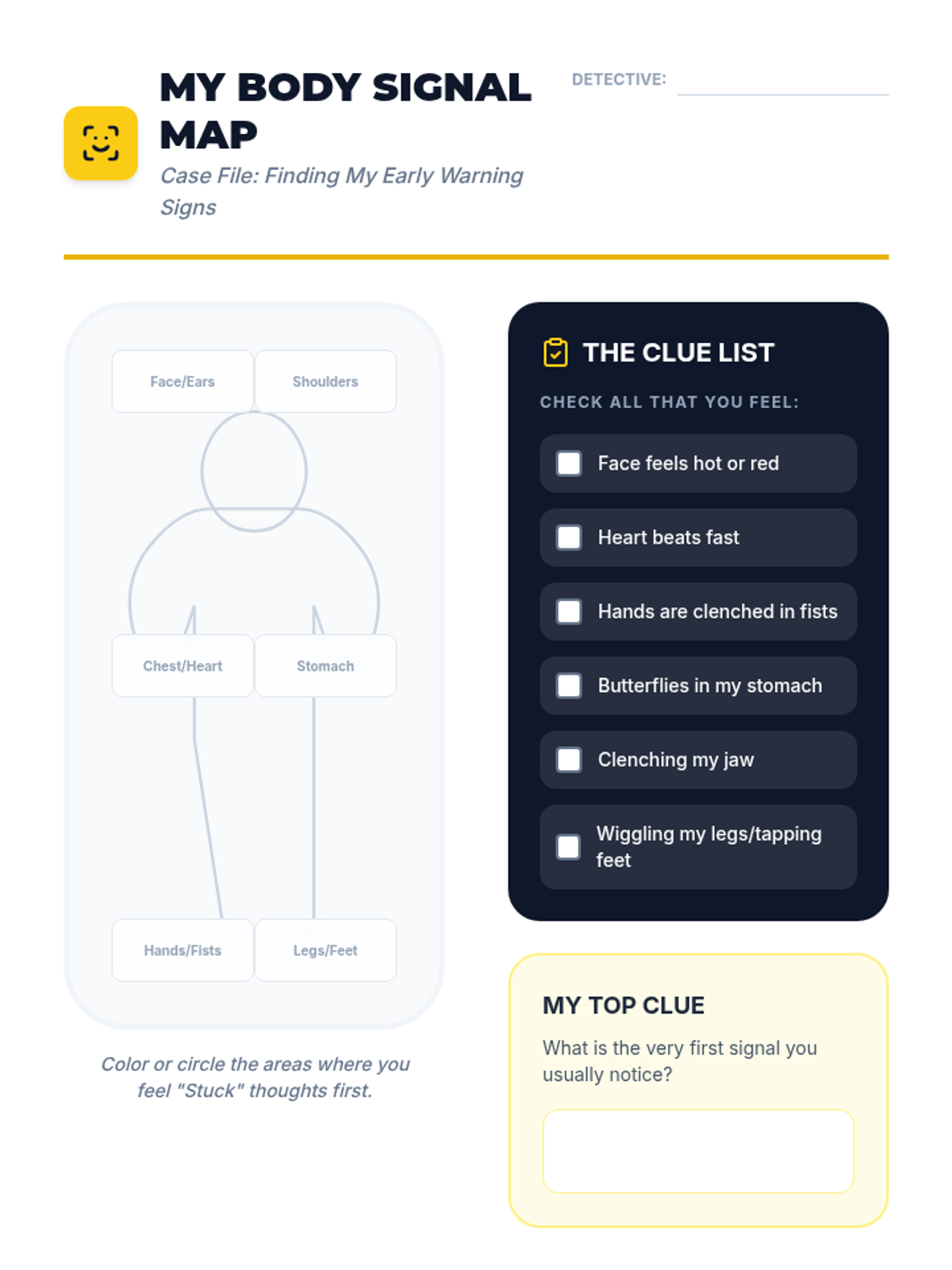
Students identify physical and emotional warning signs that occur when plans change. They create body maps to locate where they feel frustration, helping them interrupt potential meltdowns early.
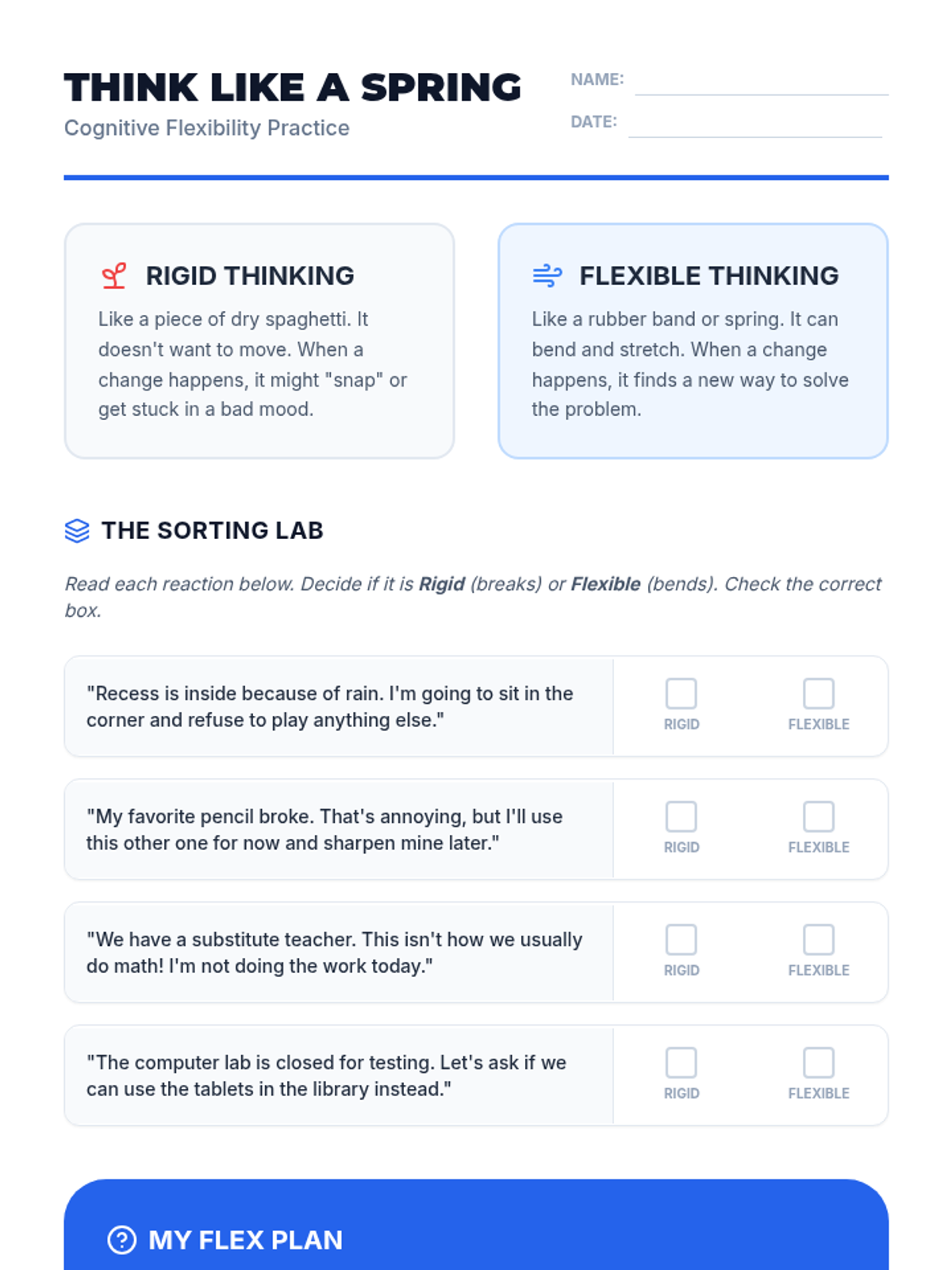
Students explore the difference between rigid (glass) and flexible (rubber) thinking through object lessons and analogies. They categorize reactions to problems as either 'stuck' or 'flexible' to build a shared vocabulary.
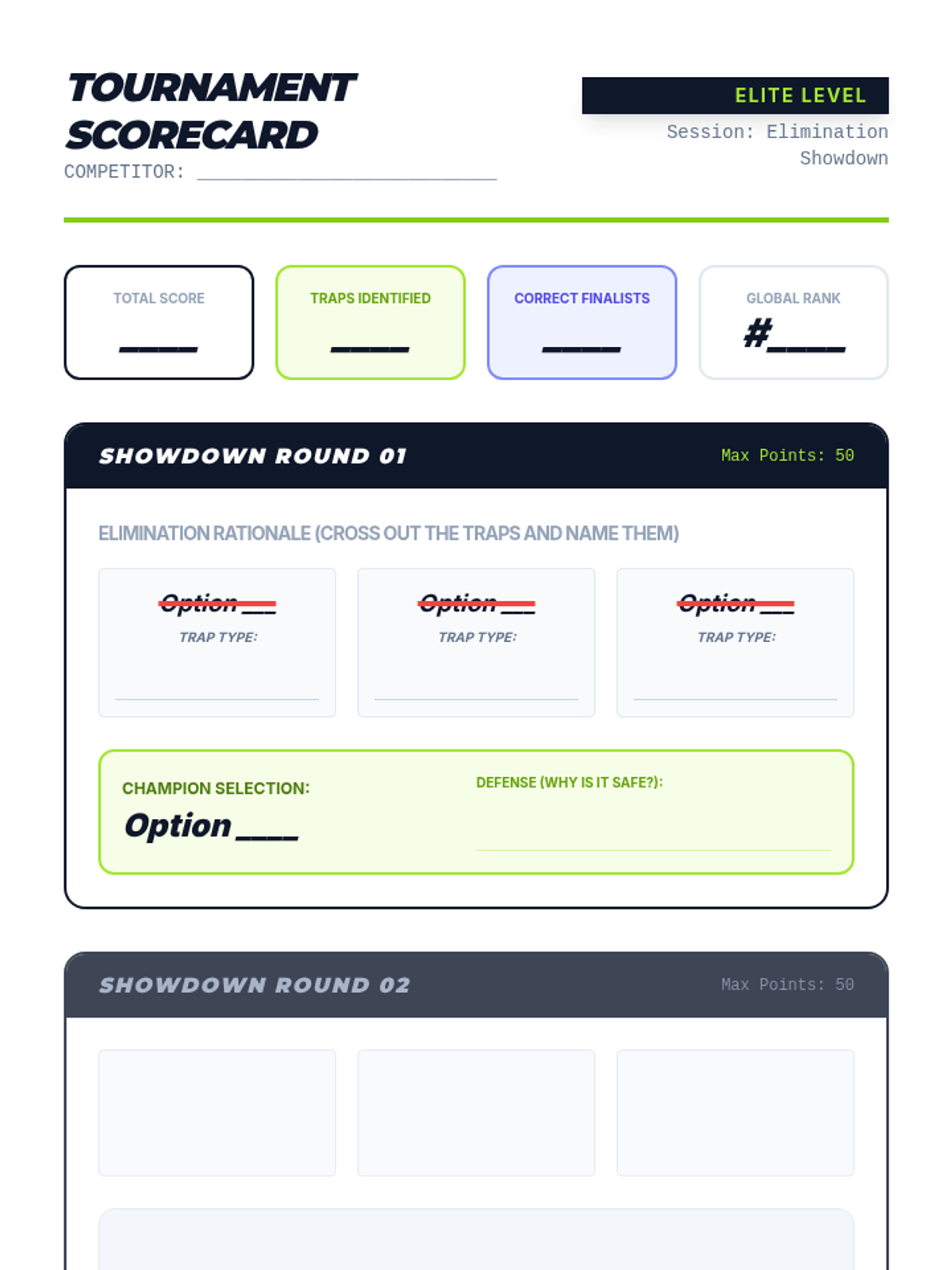
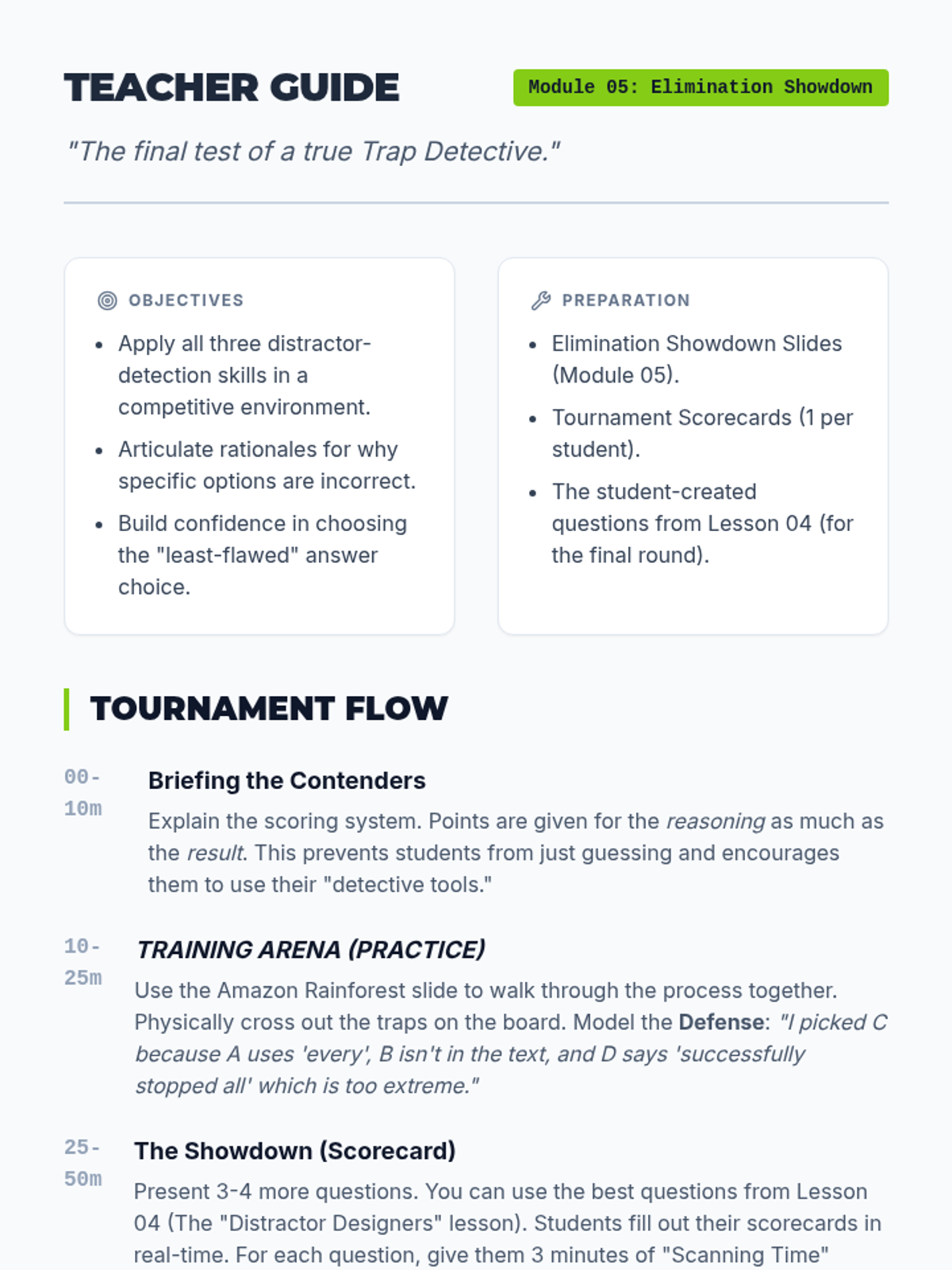
A competitive review tournament where students physically eliminate distractors with a rationale. Points are awarded for identifying specific trap types before selecting the correct answer.
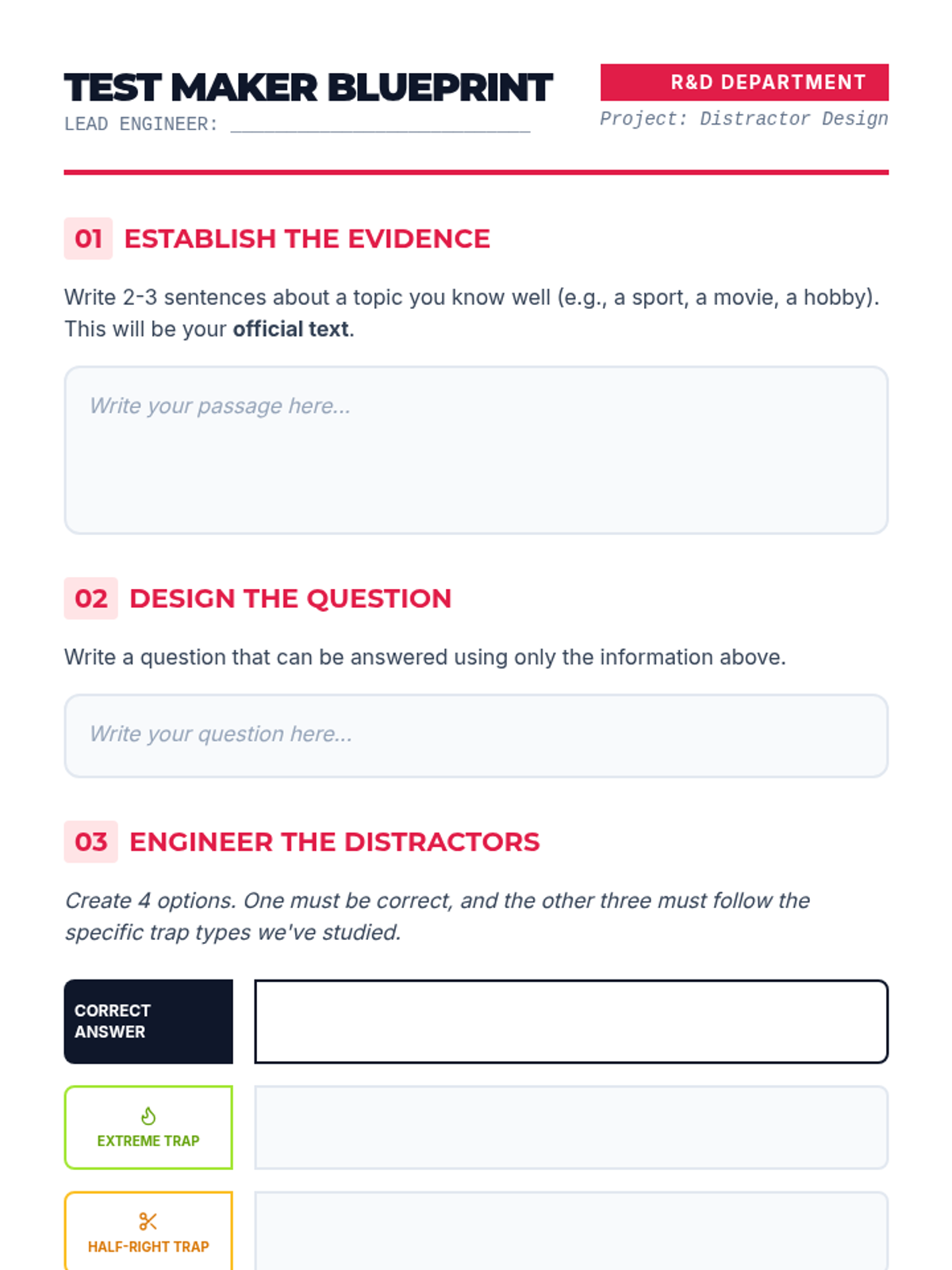
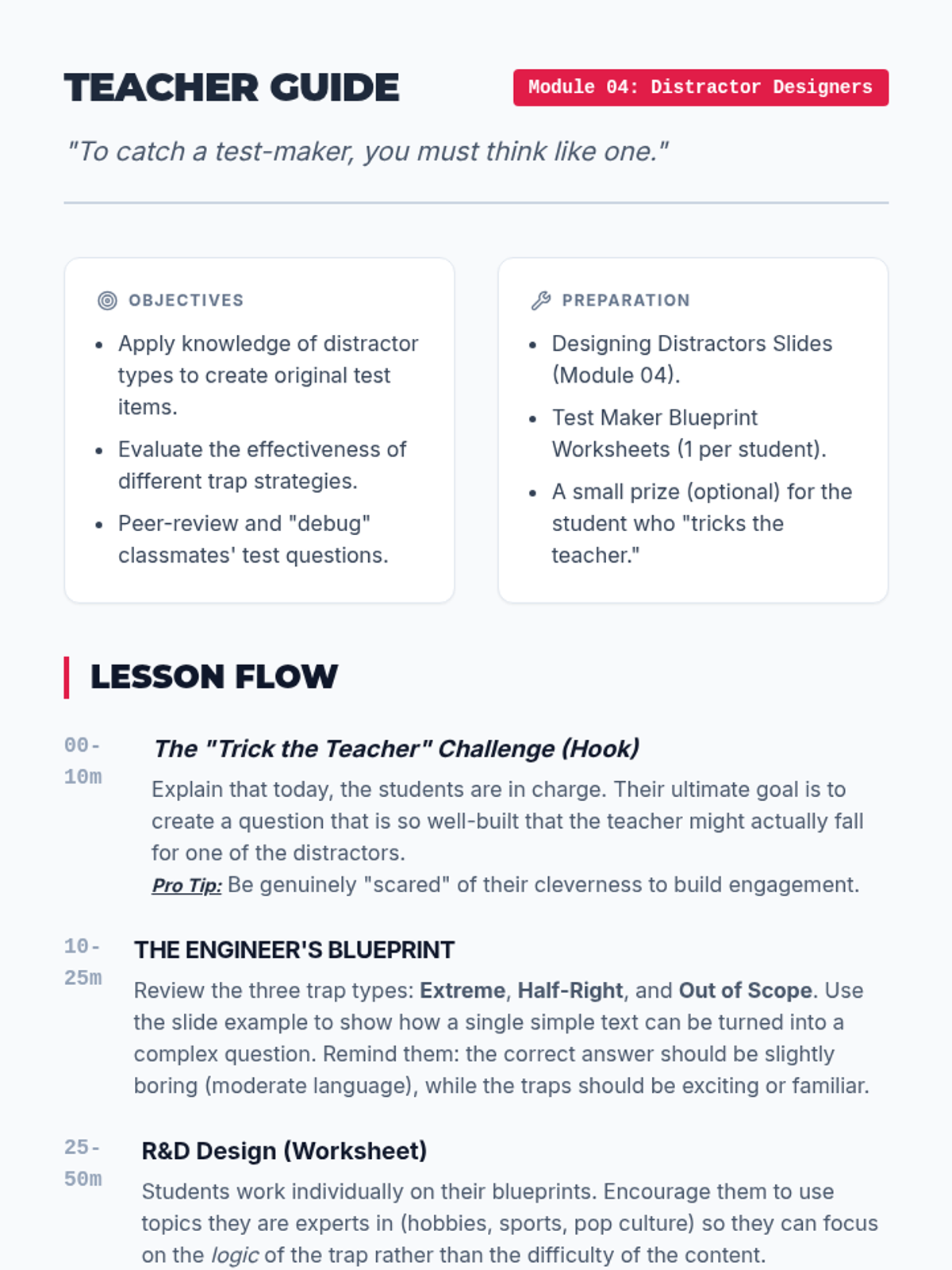
Students become test-makers by writing their own multiple-choice questions with deliberate traps. This role-reversal helps them internalize the logic behind distractor construction.
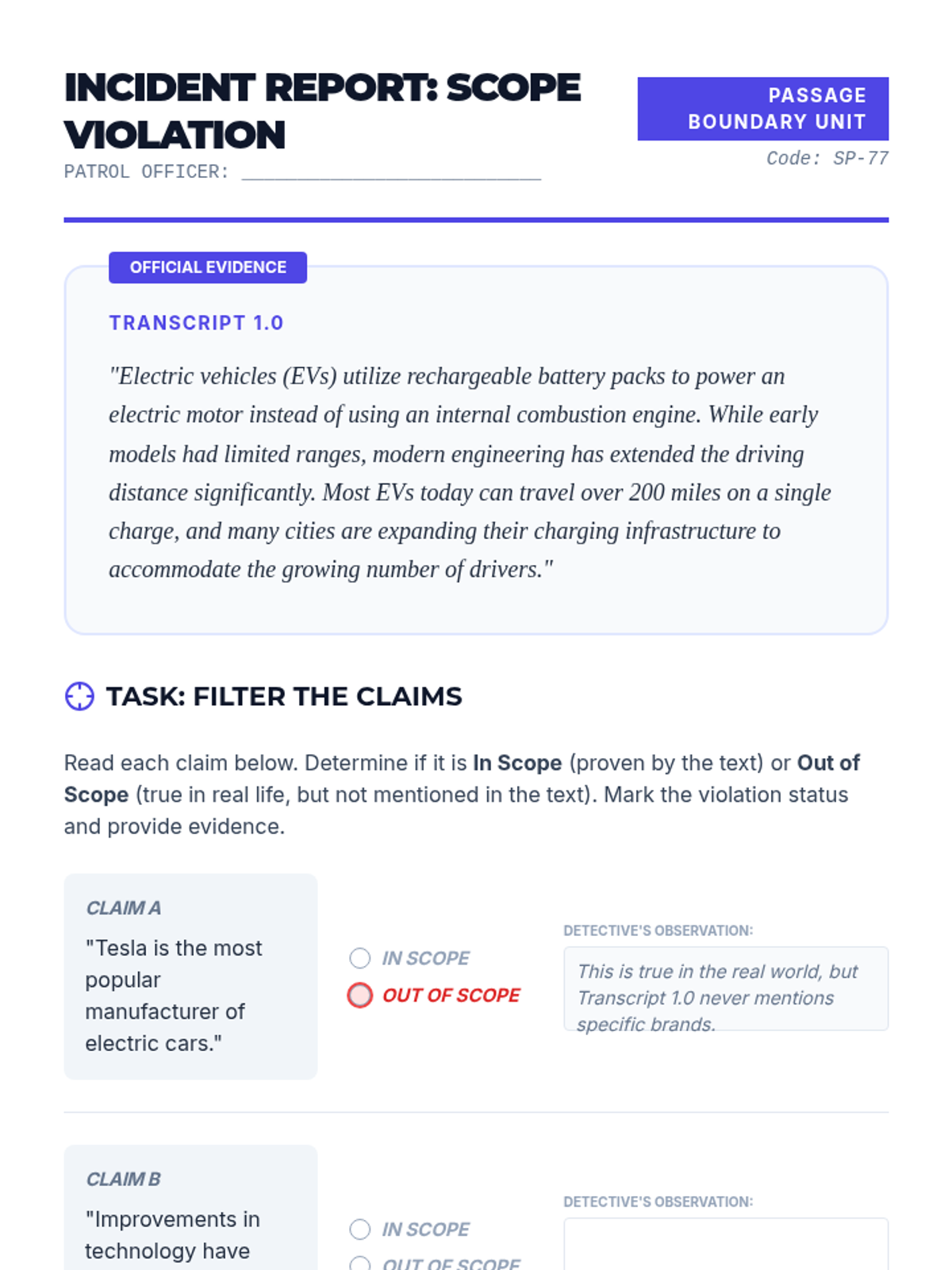
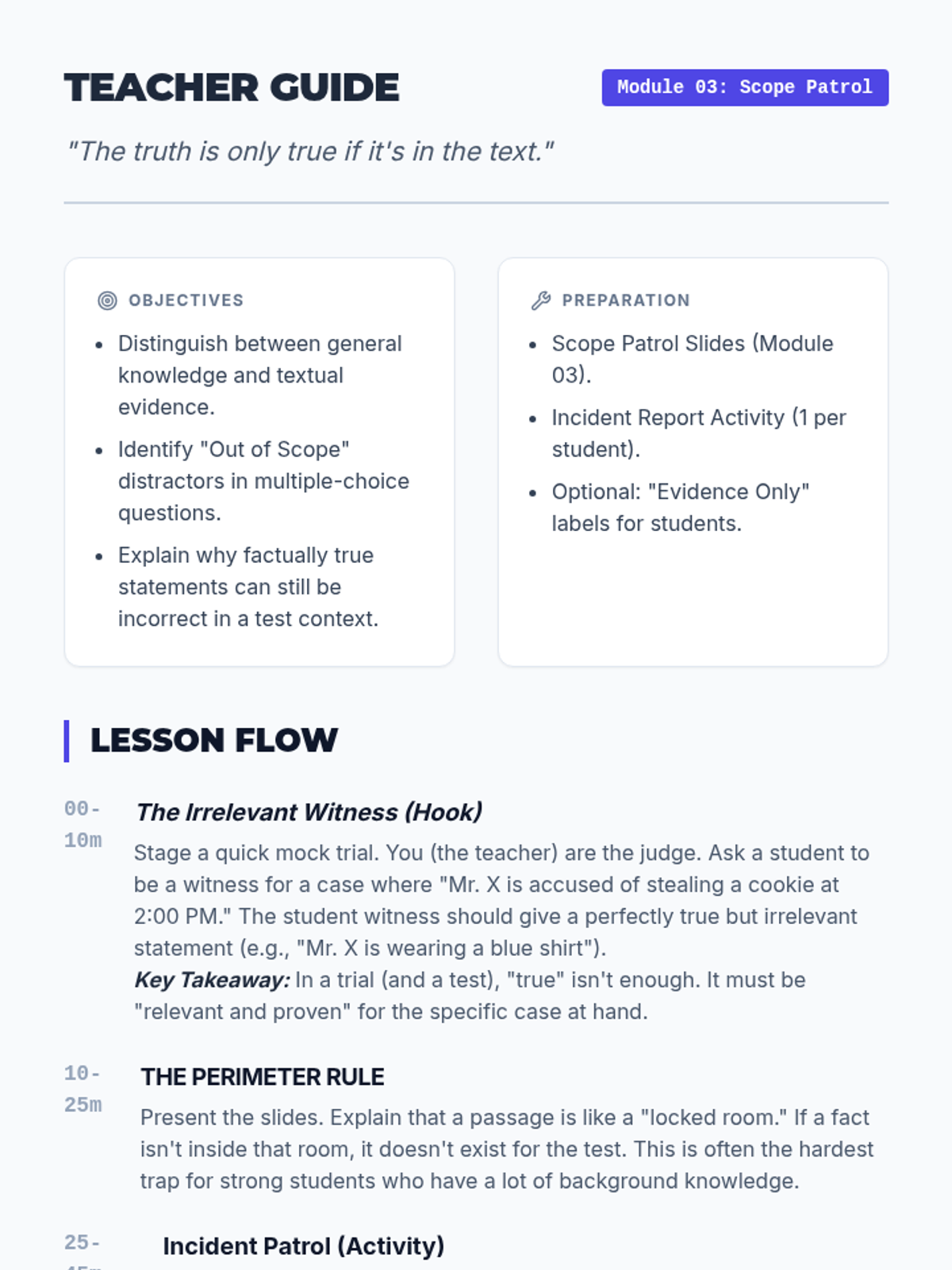
Students identify statements that are factually true in the real world but are not supported by the specific text provided. The focus is on maintaining evidence-based focus within the scope of the passage.
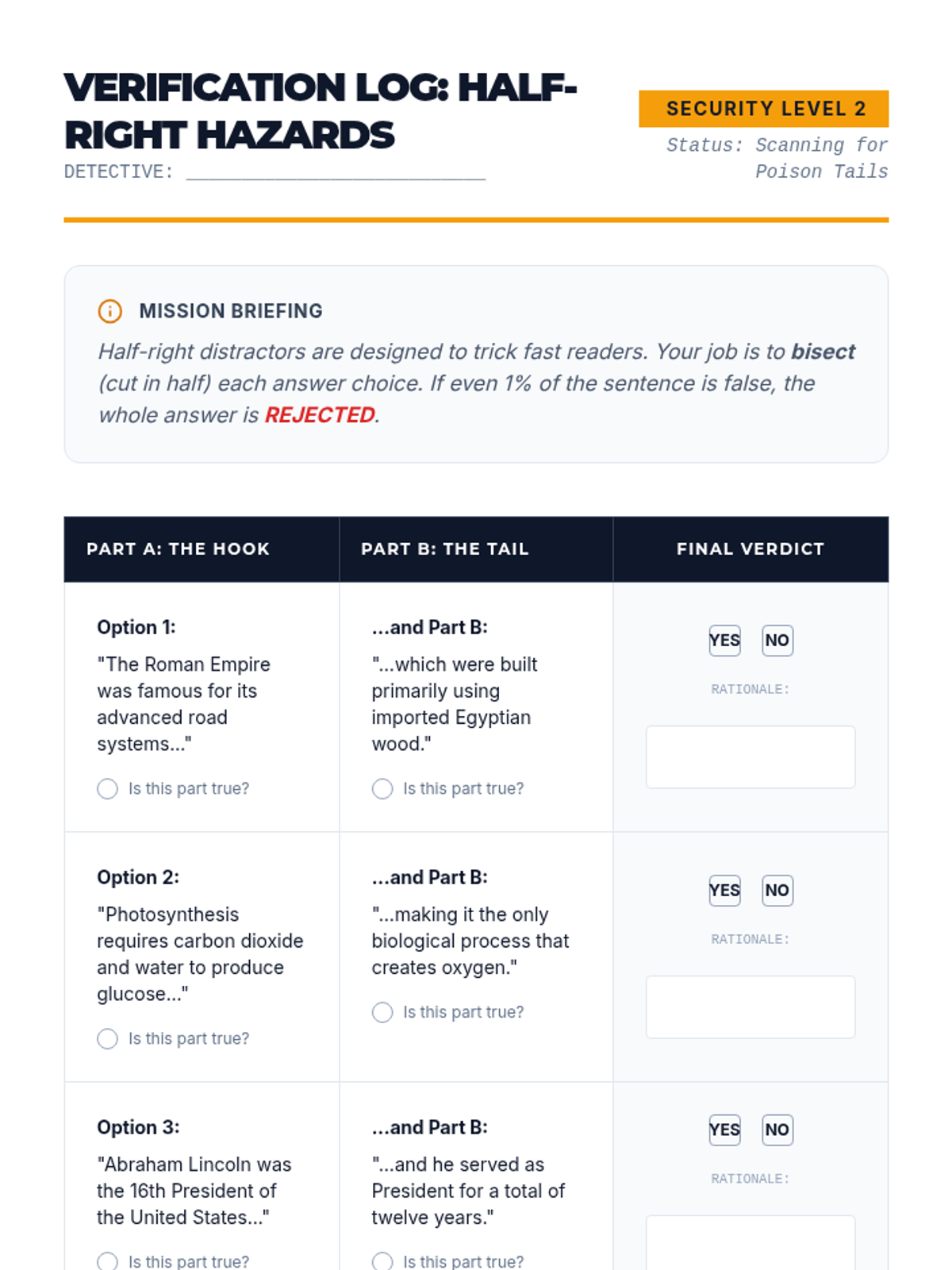
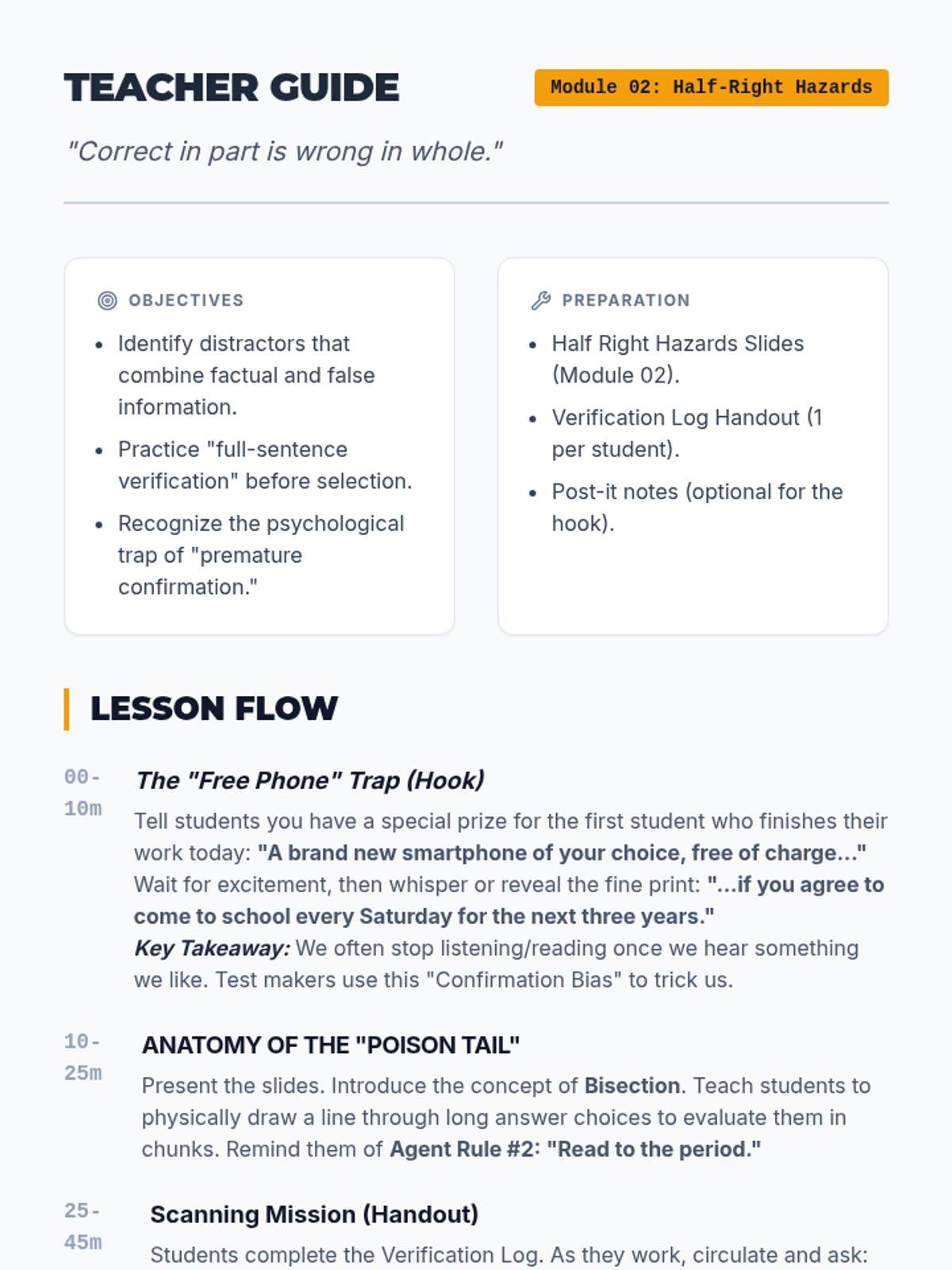
Learners analyze options that are partially correct but ultimately false. This lesson emphasizes the importance of reading every word of an answer choice to catch subtle inaccuracies.
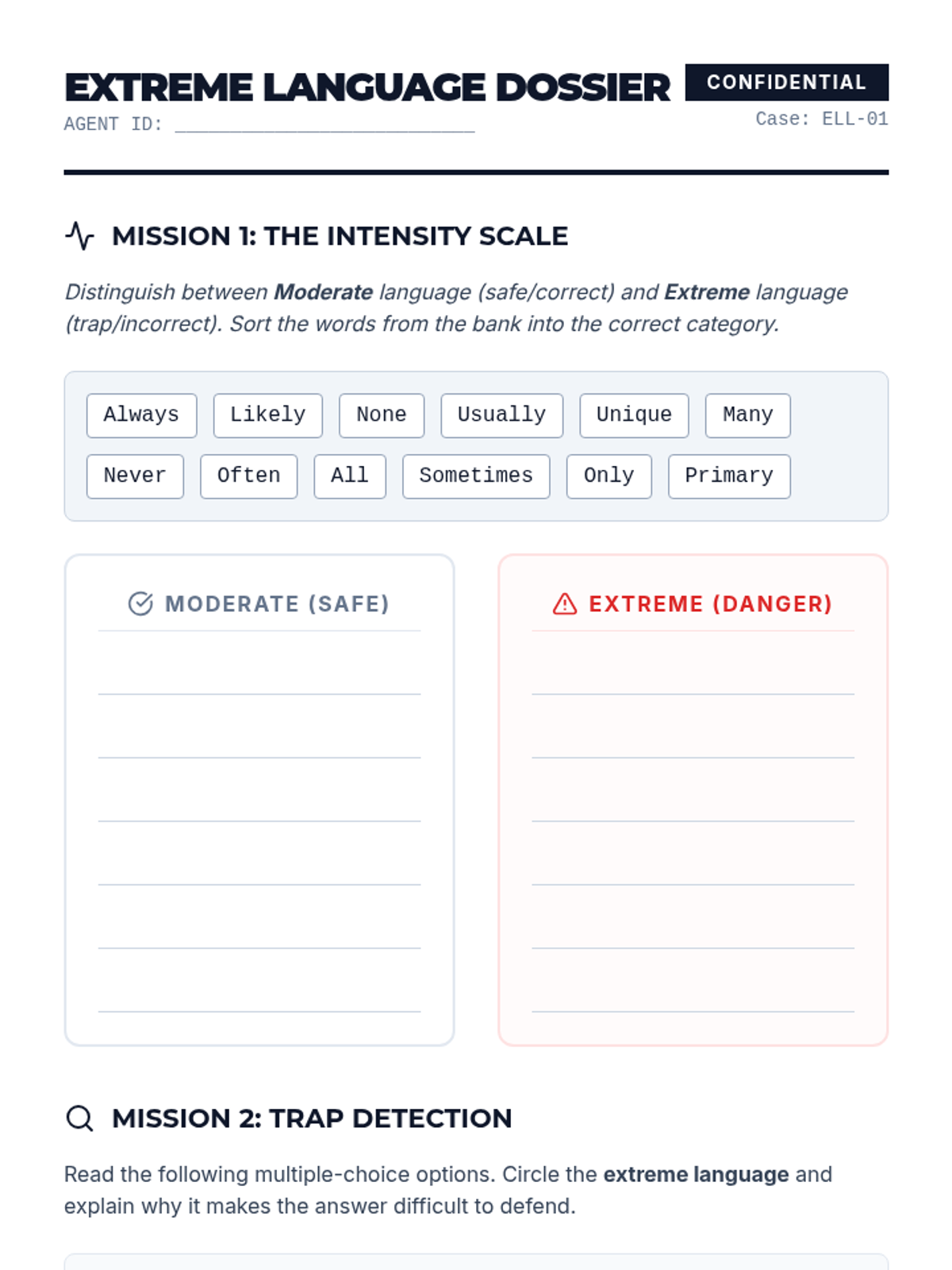
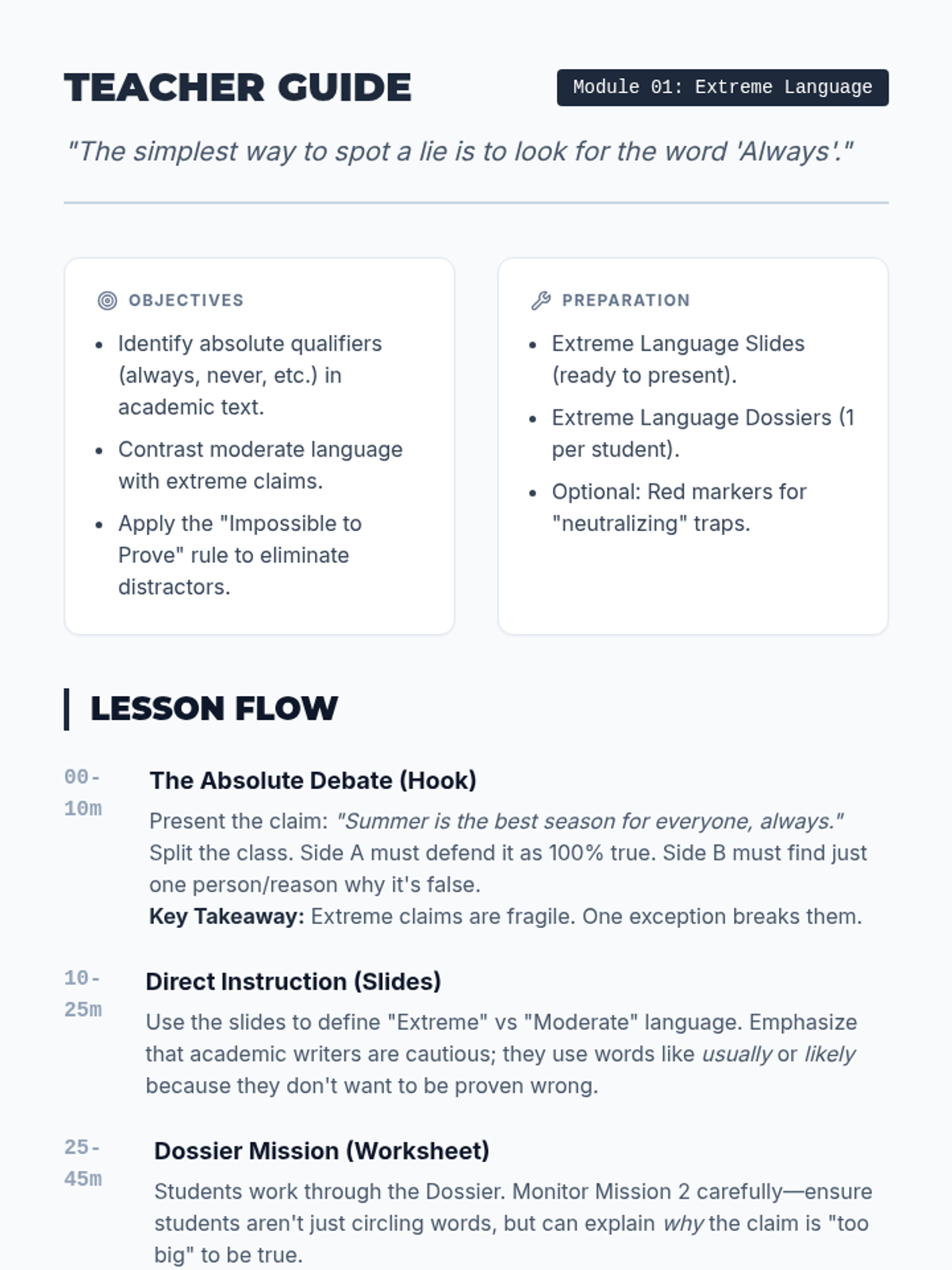
Students learn to identify absolute qualifiers like 'always' and 'never' that signal incorrect answers. They practice categorizing statements by their degree of intensity to evaluate their validity in a test context.
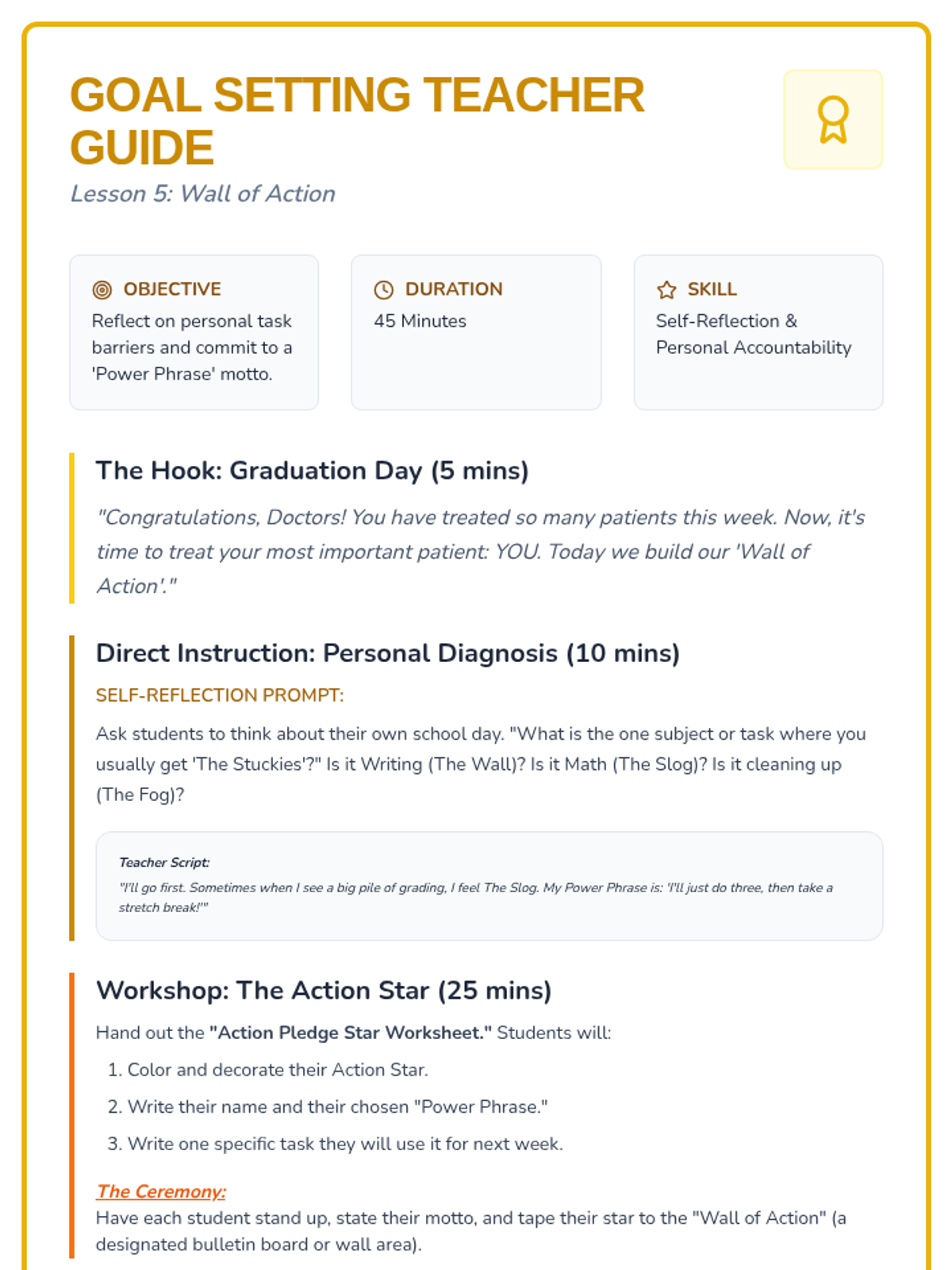
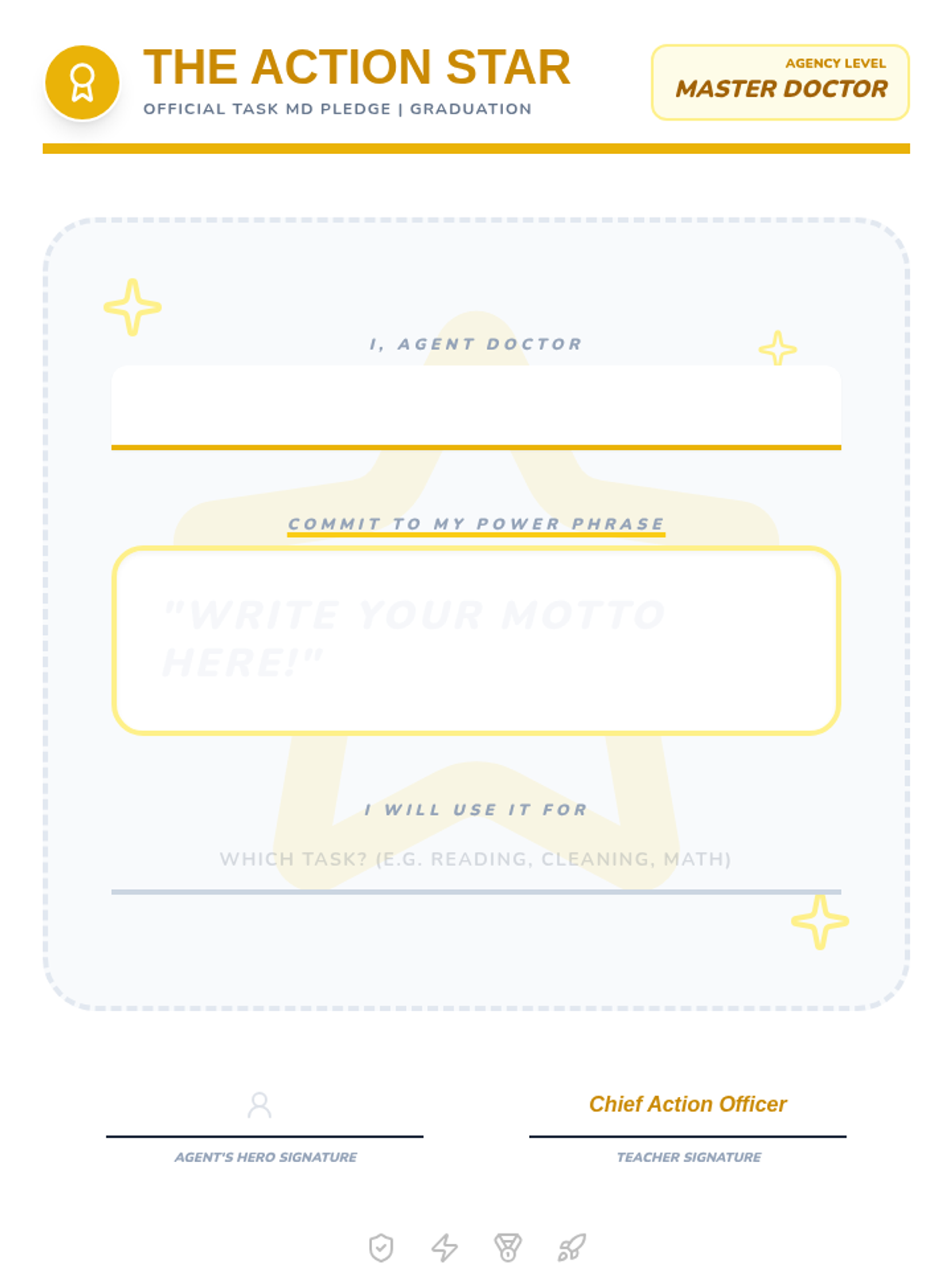
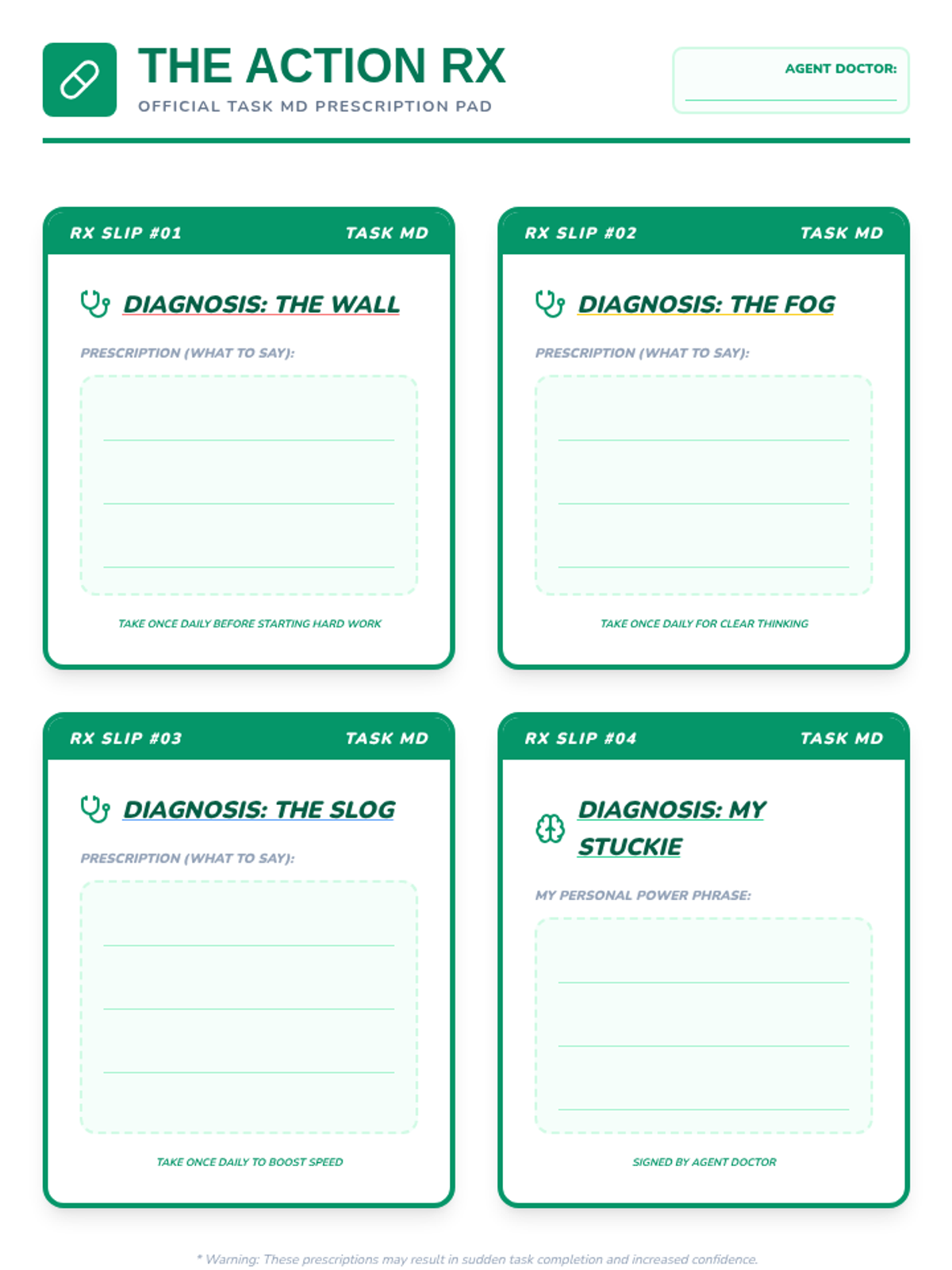
Students identify their own barriers to starting work and select a personal 'Power Phrase' motto for future tasks.
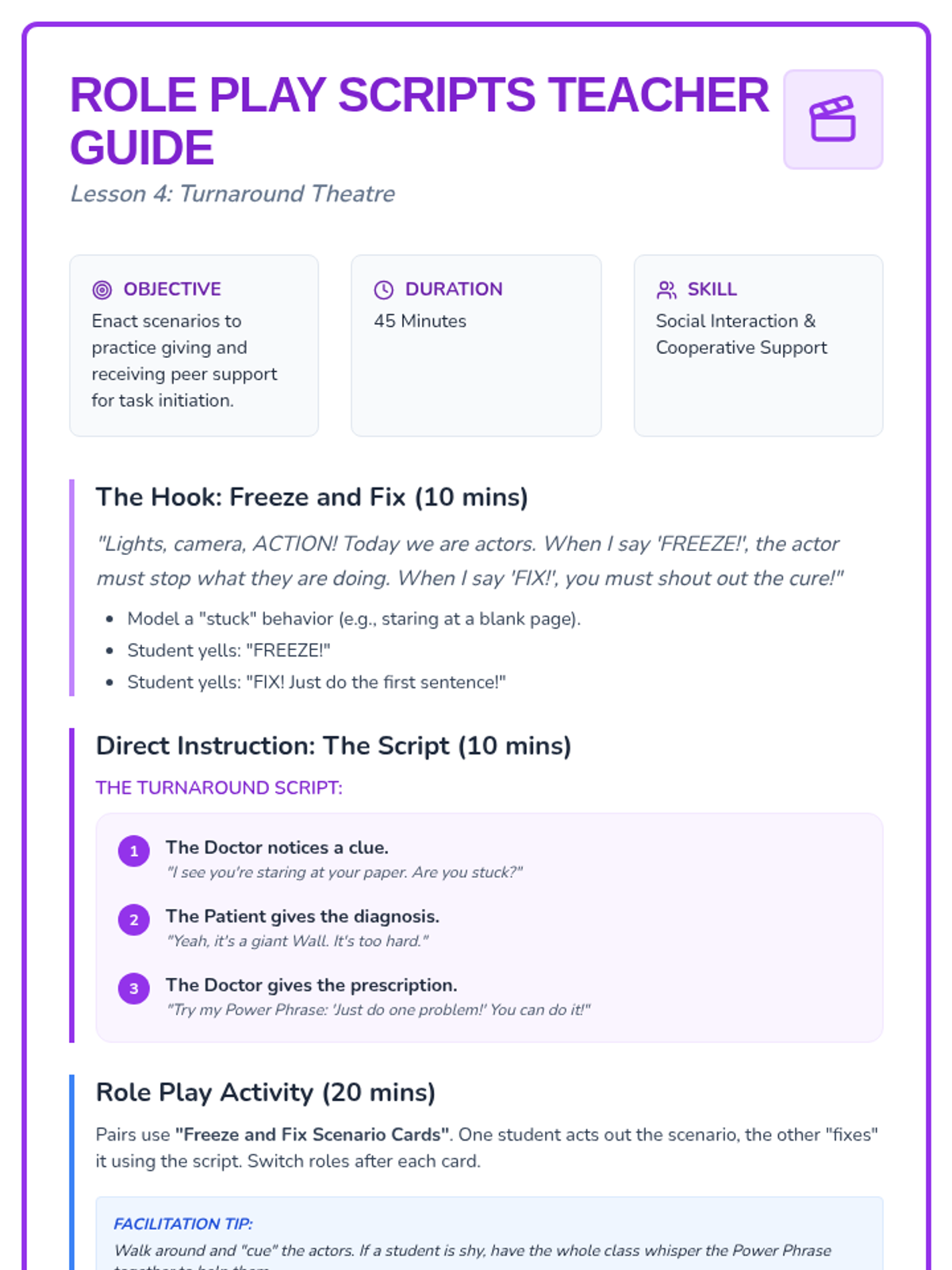
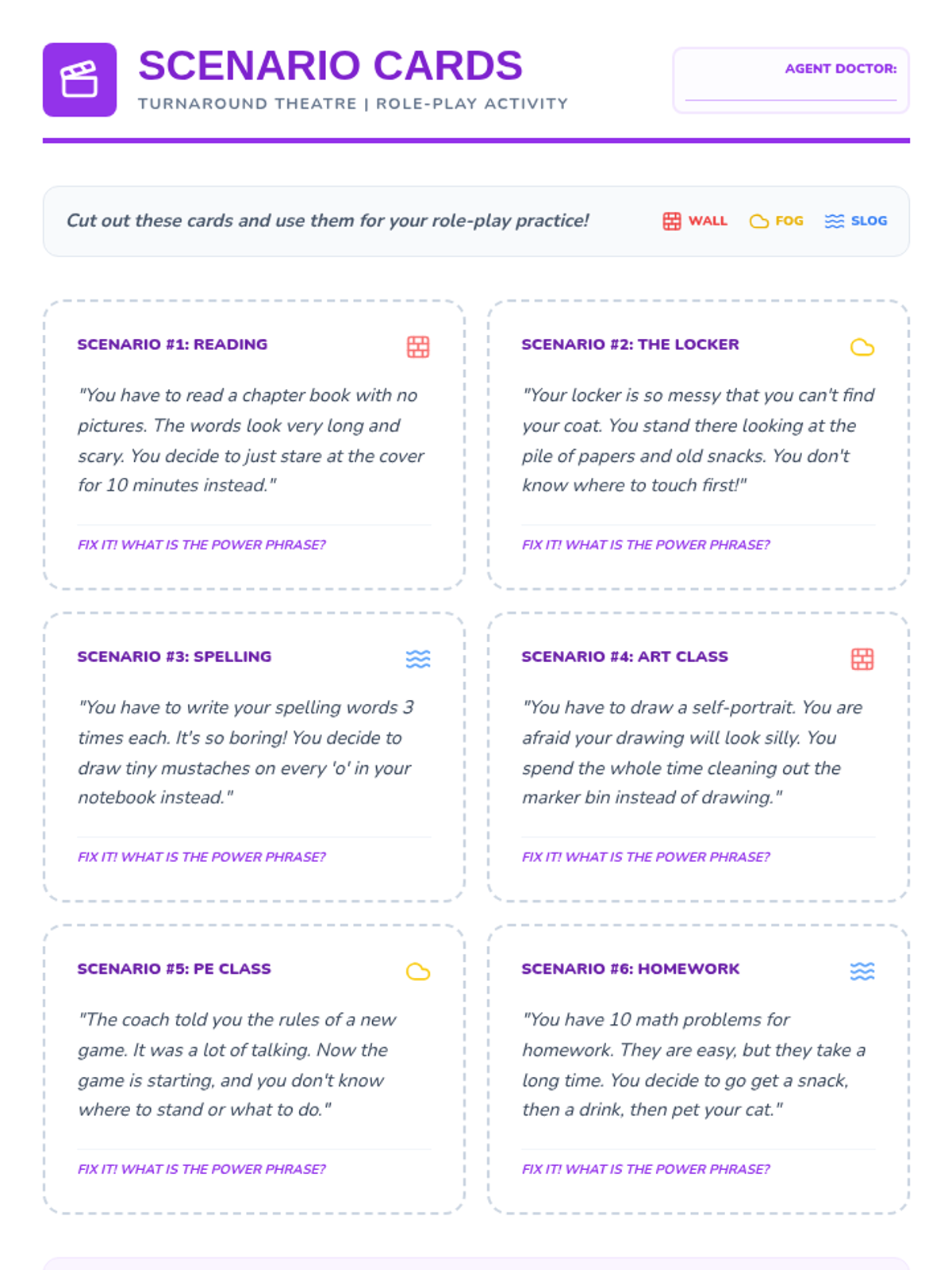
Students role-play scenarios where they help a peer get 'unstuck' using their self-talk prescriptions.
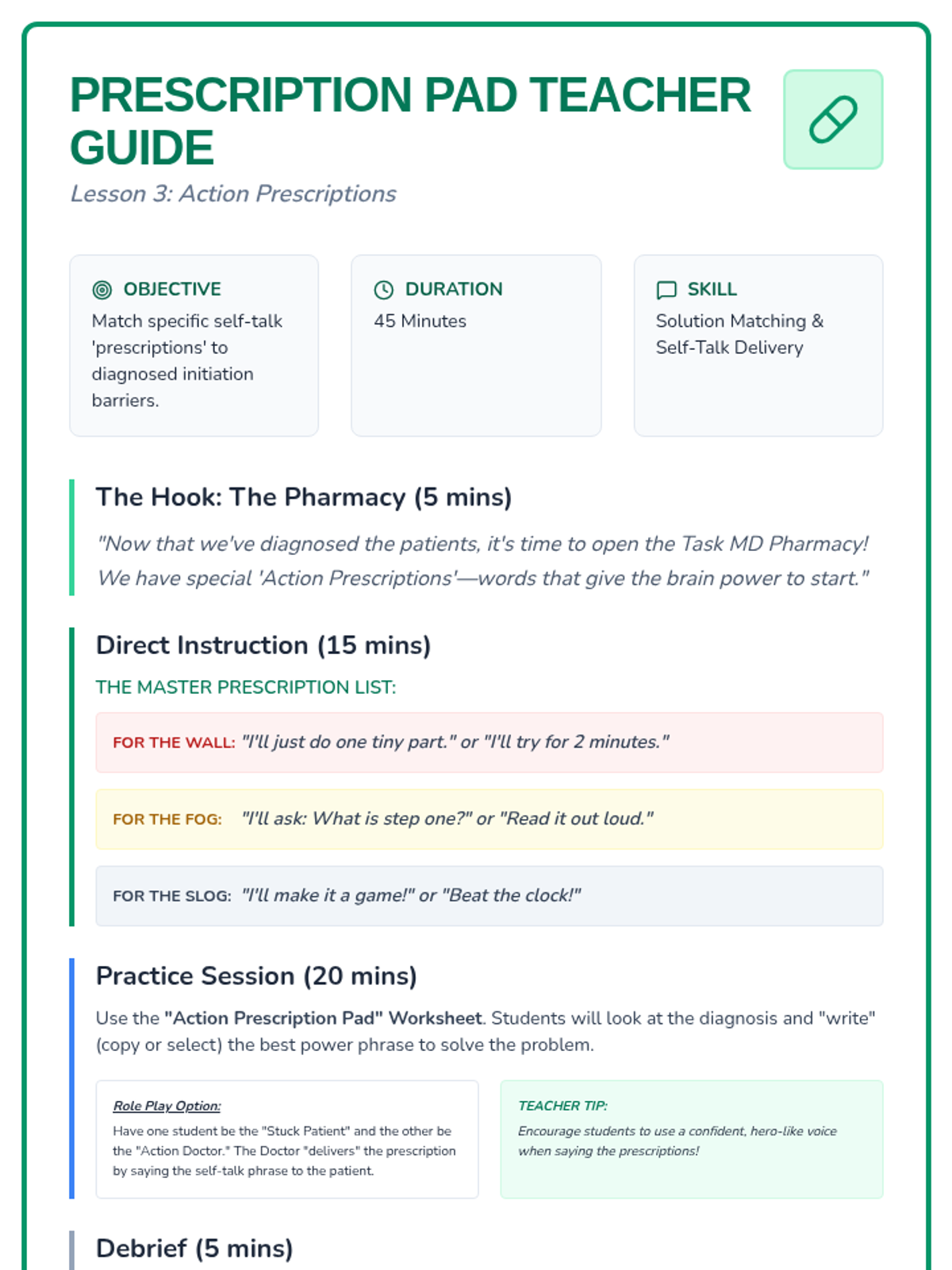
Students match specific self-talk 'prescriptions' to diagnosed problems and practice delivering these lines to characters.
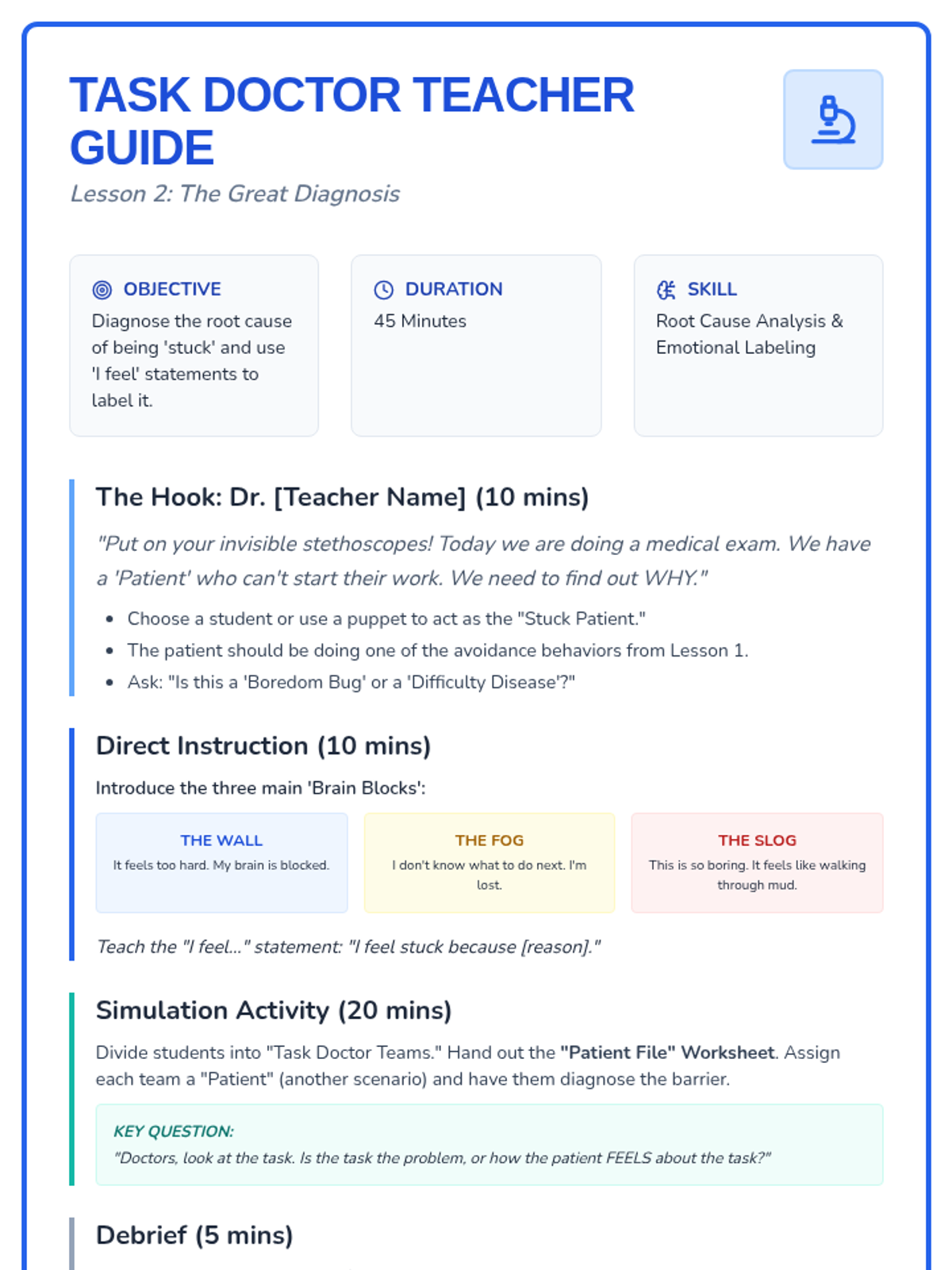
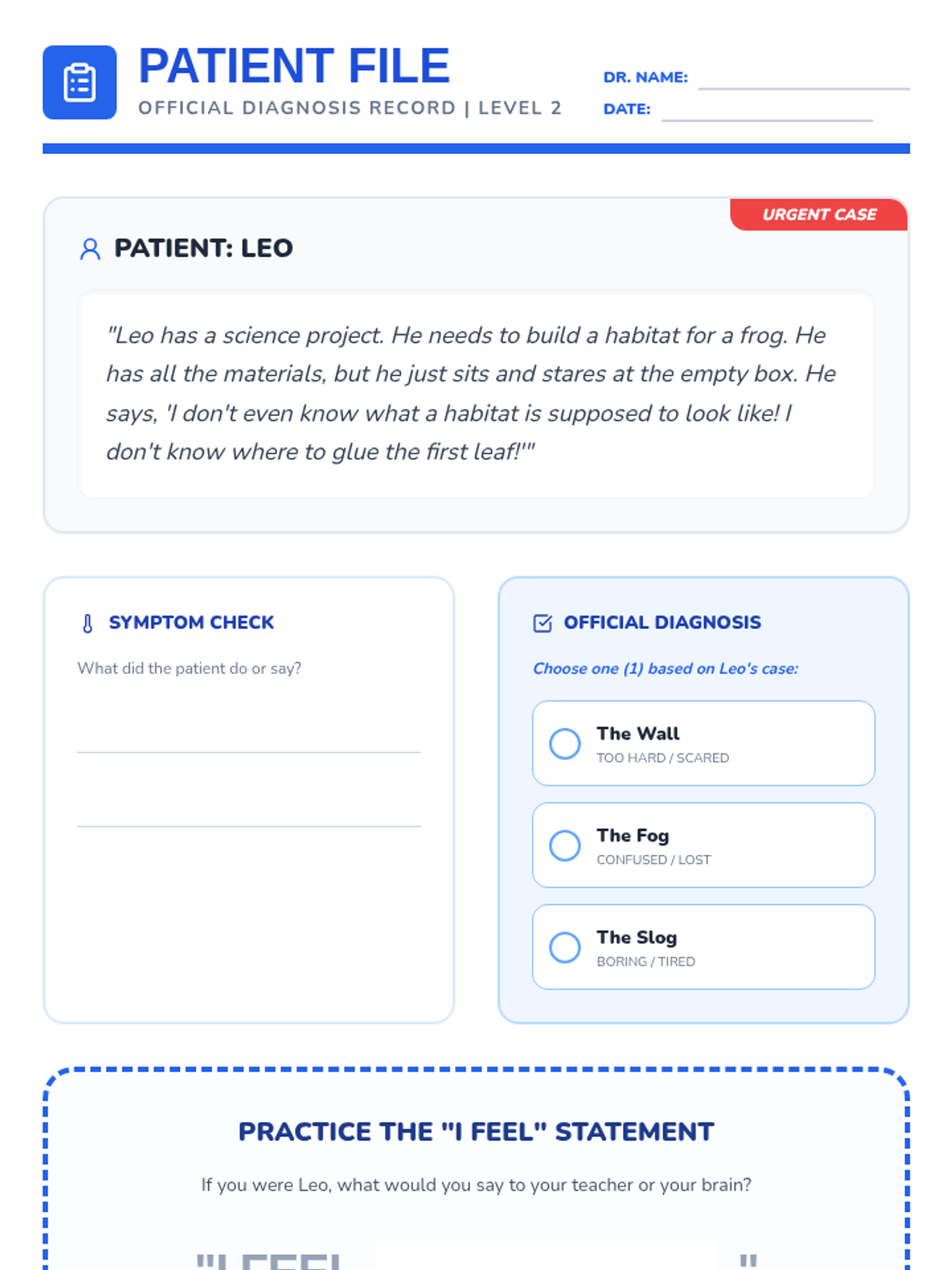
Students act as 'Task Doctors' to determine why a character is stuck (boredom, difficulty, fatigue) and practice labeling these emotions.
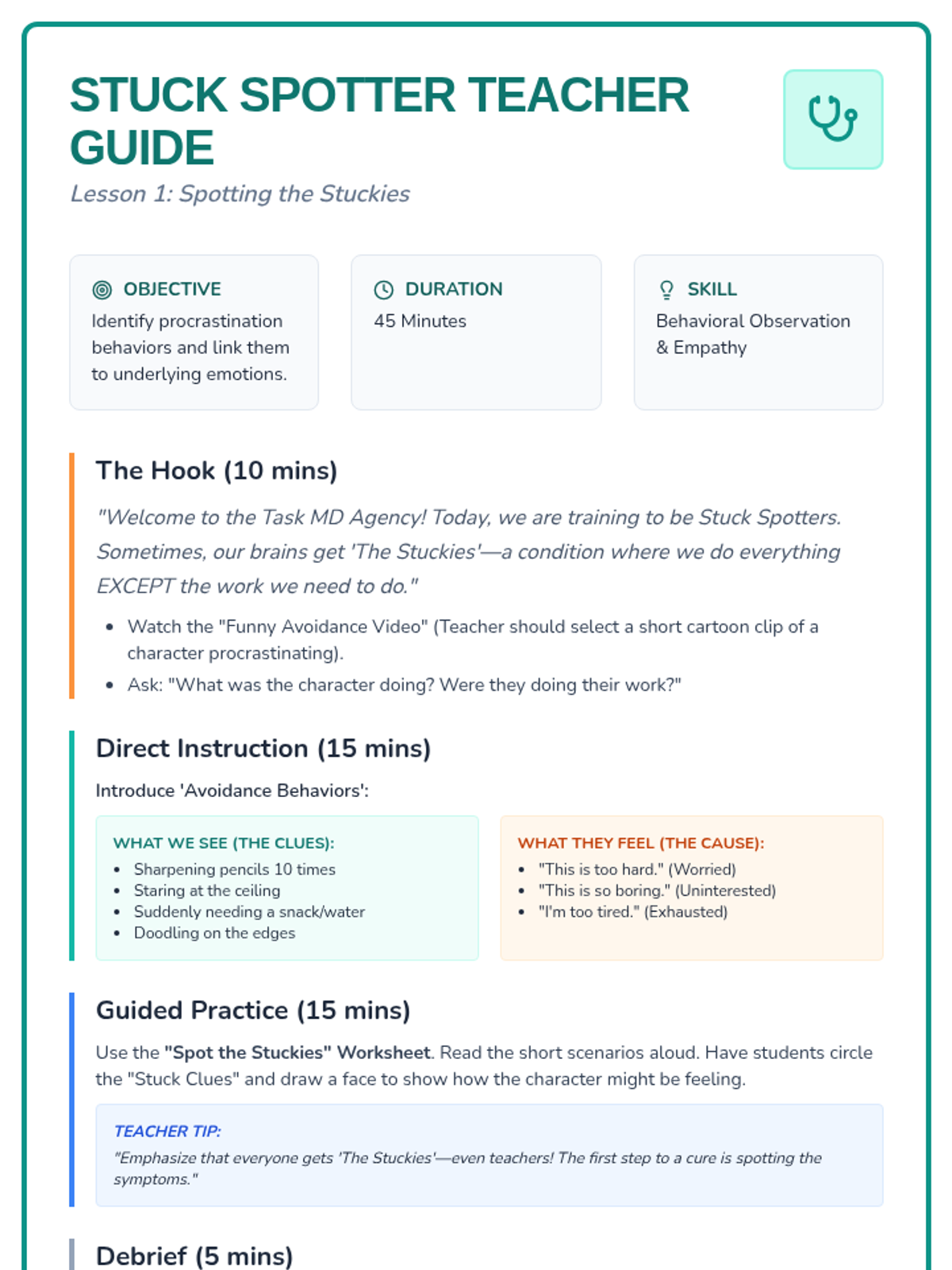
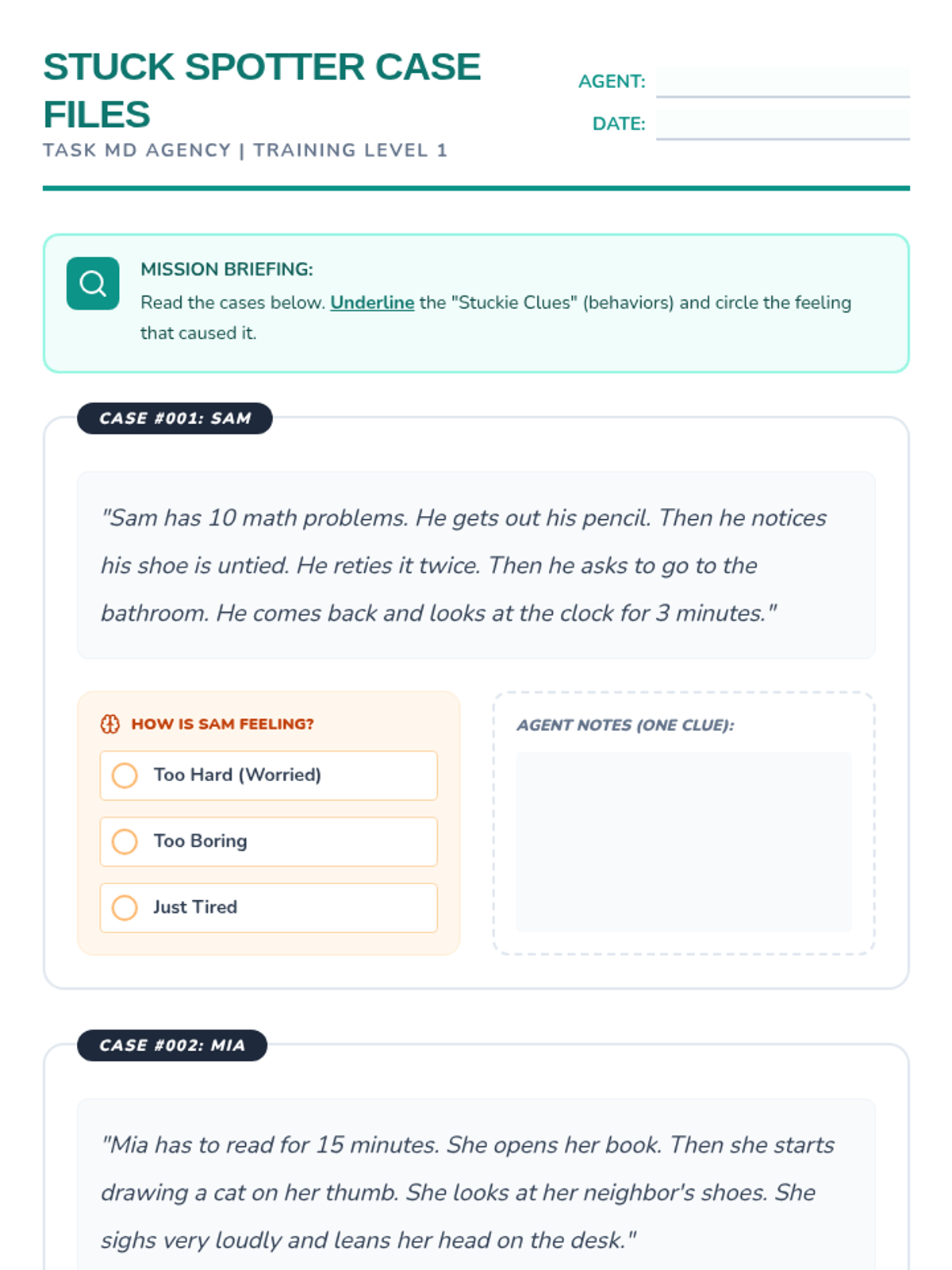
Students identify behaviors that show someone is avoiding work and brainstorm what emotions might be driving those behaviors through case studies.
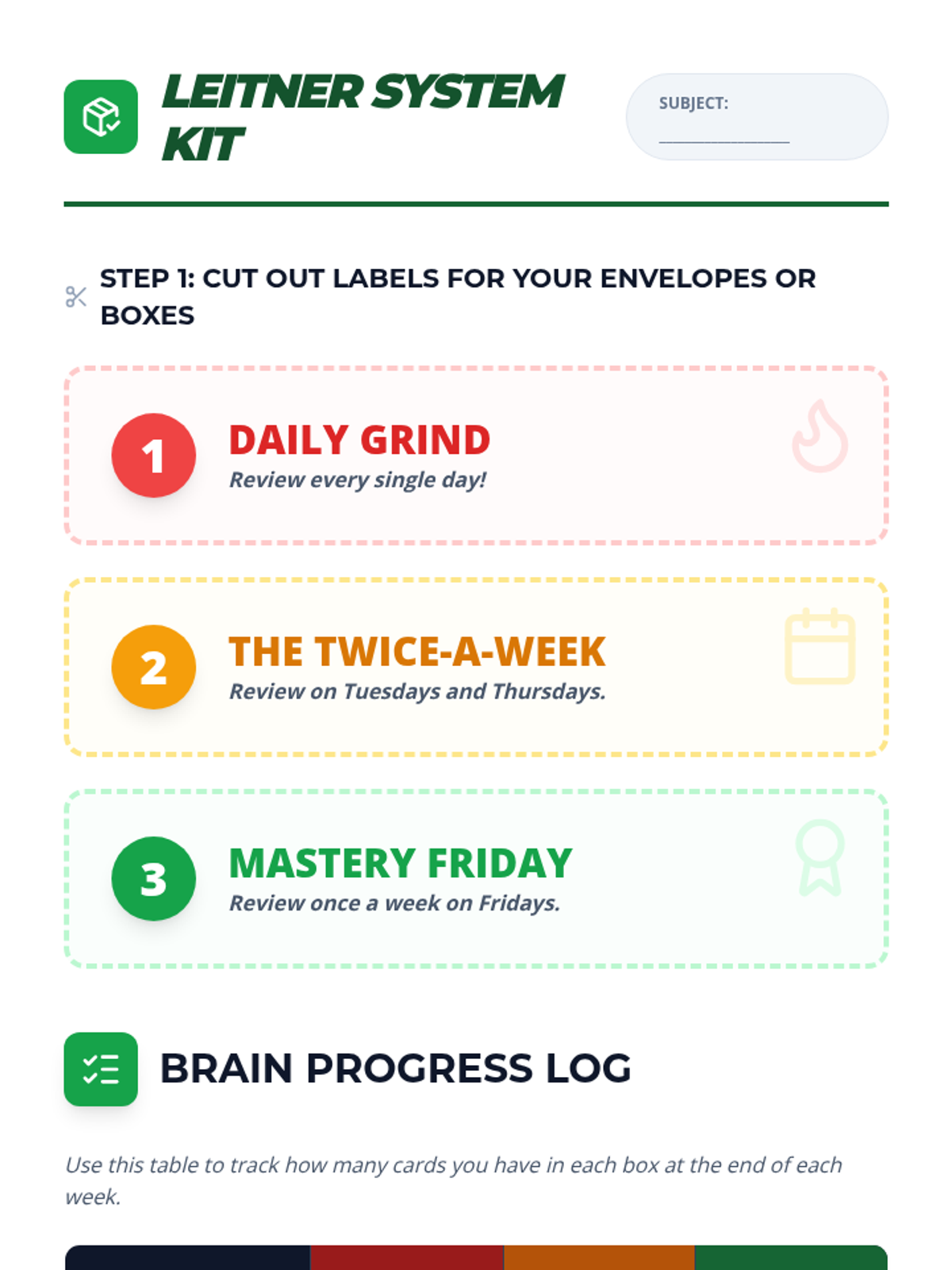
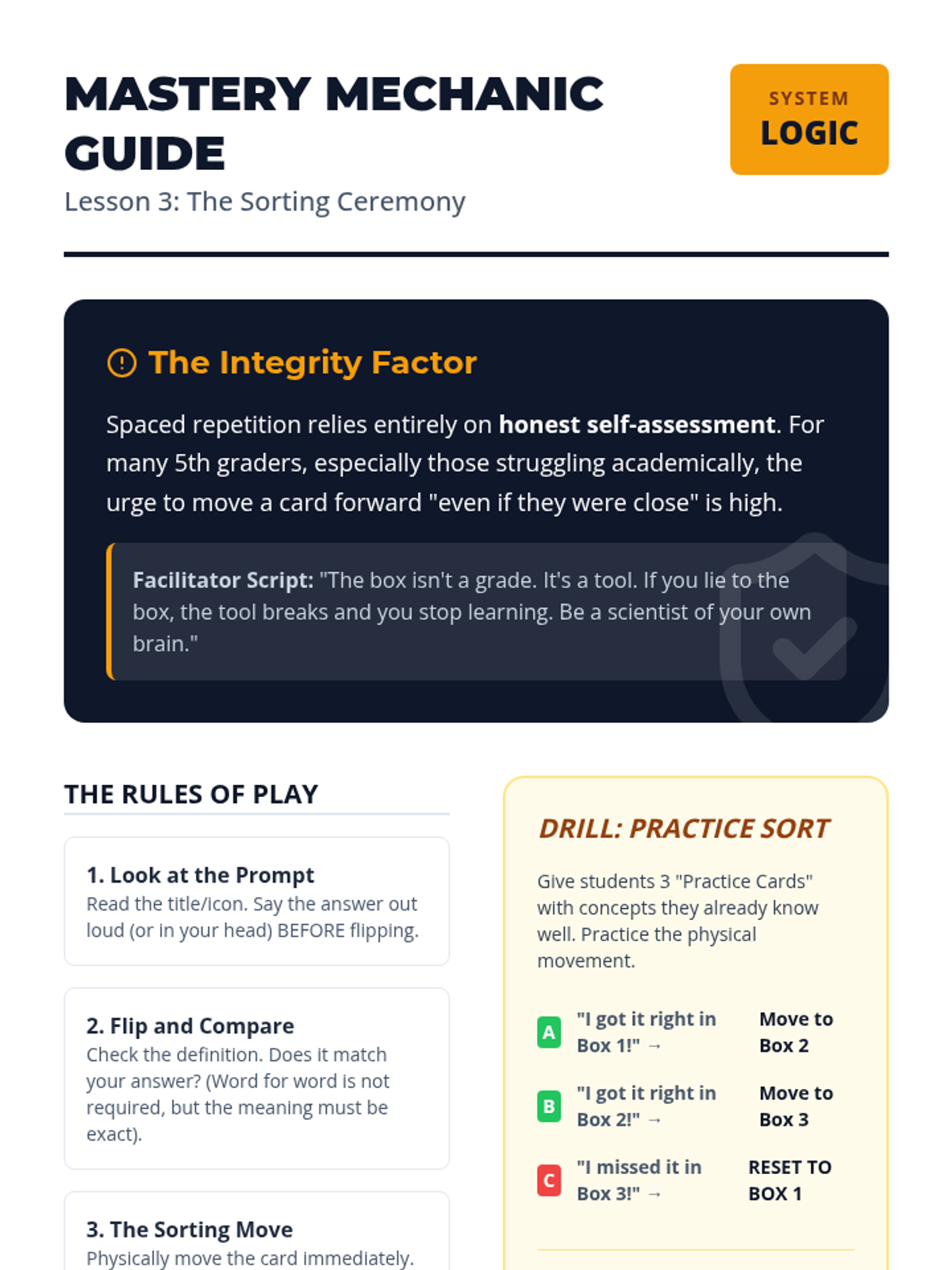
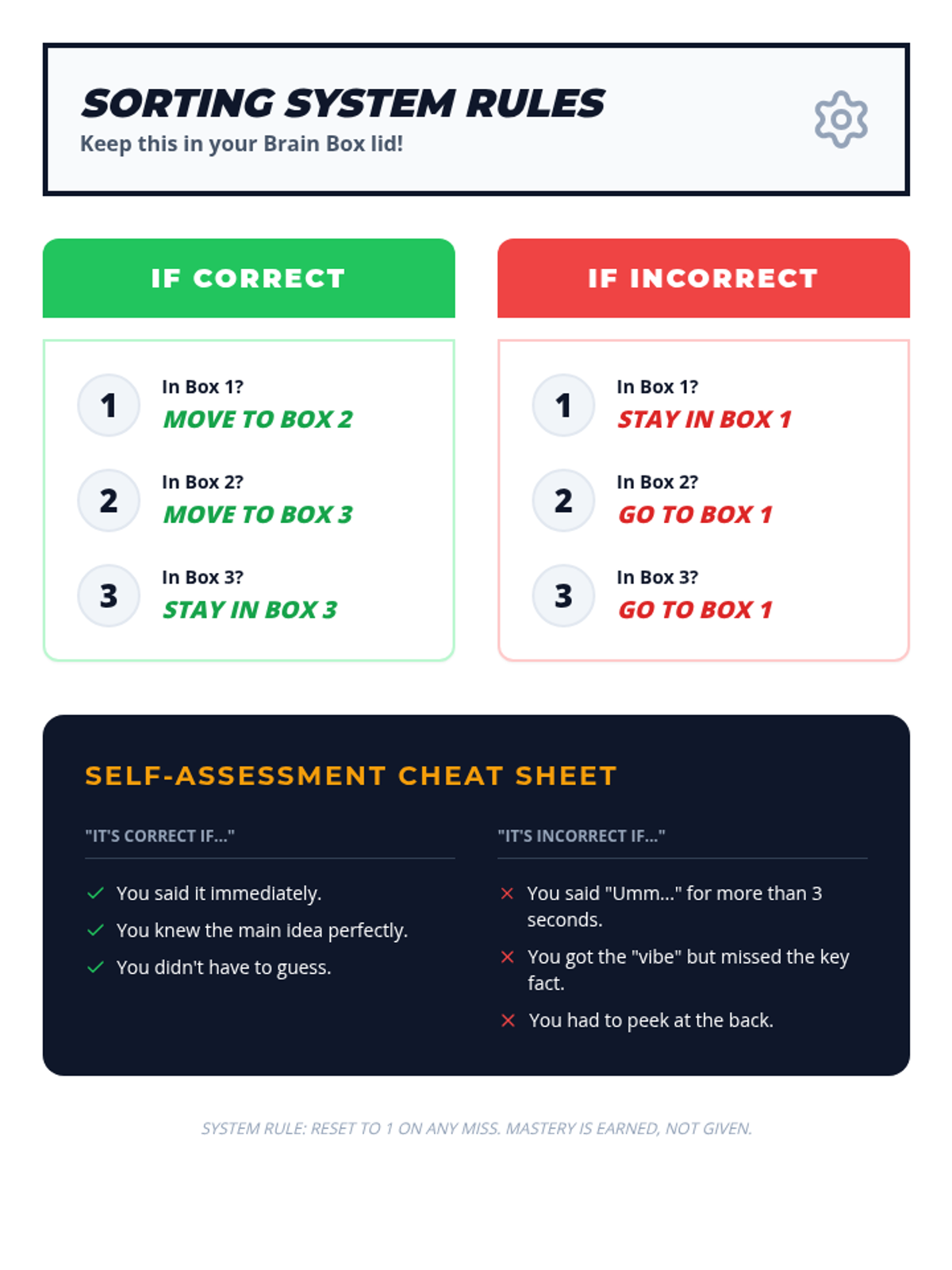
Students learn the mechanics of the Leitner system, practicing the physical movement of cards between compartments based on mastery.
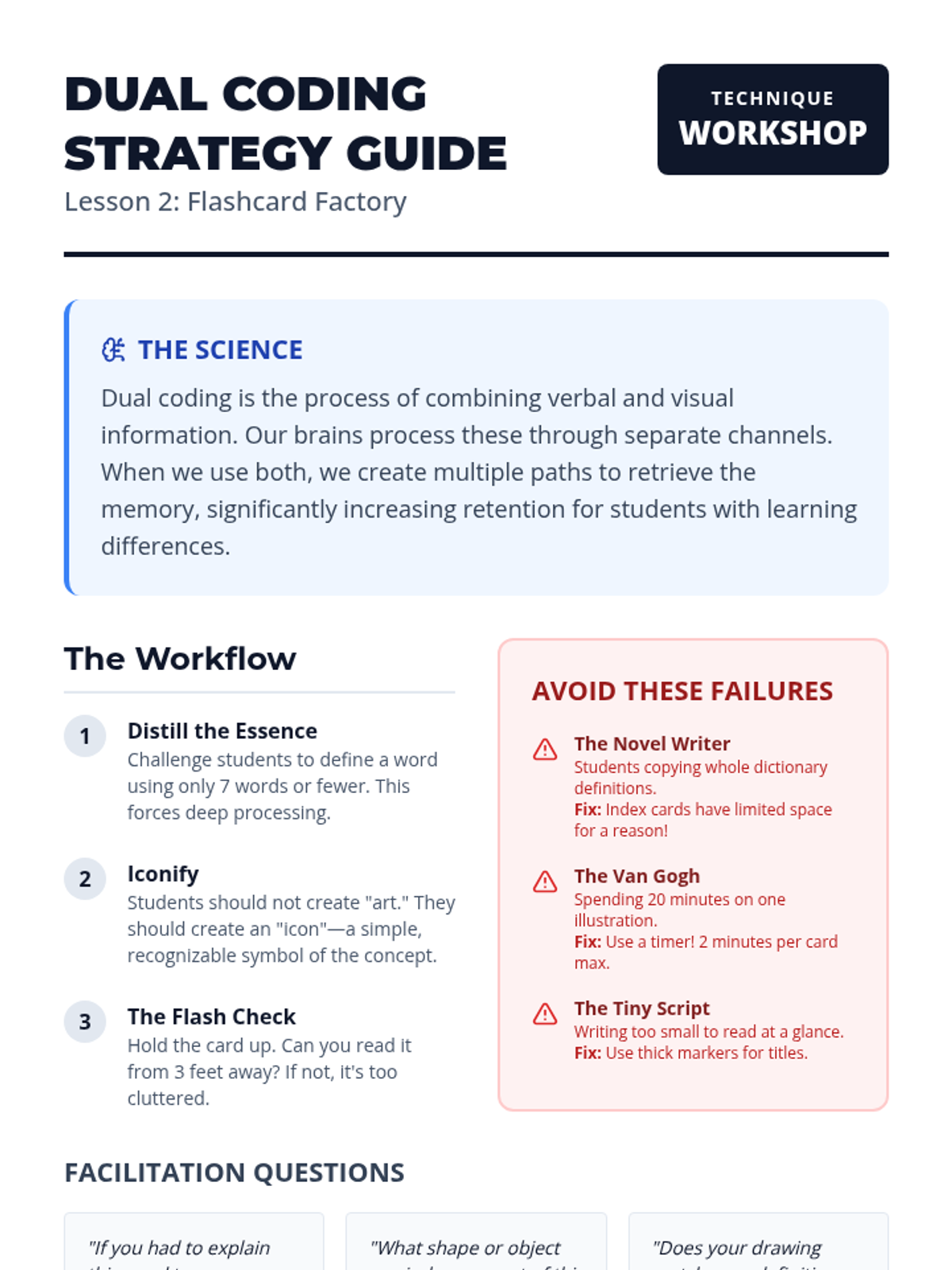
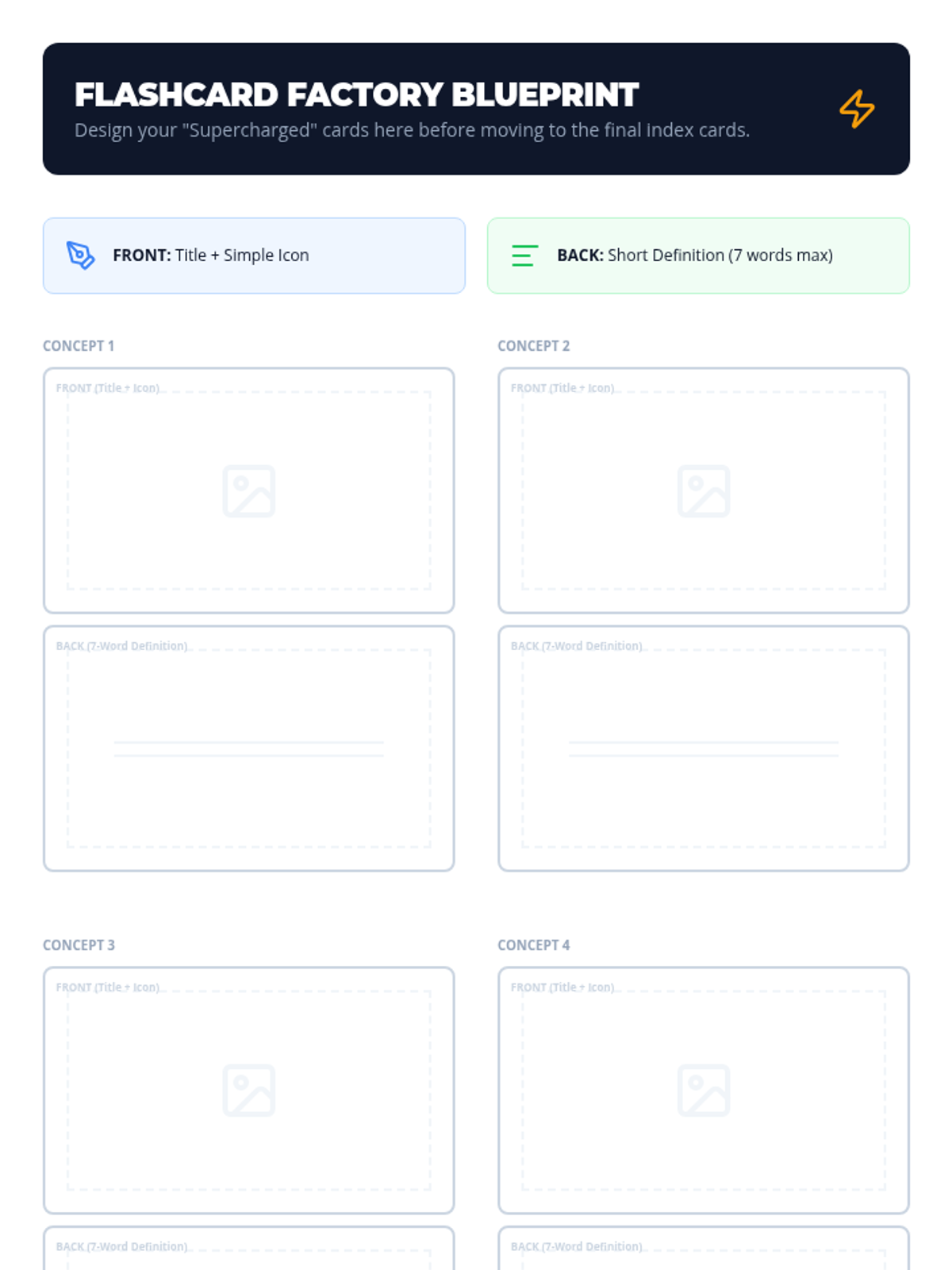
Students learn the science of dual-coding and summarization to create high-quality flashcards that are optimized for long-term memory.
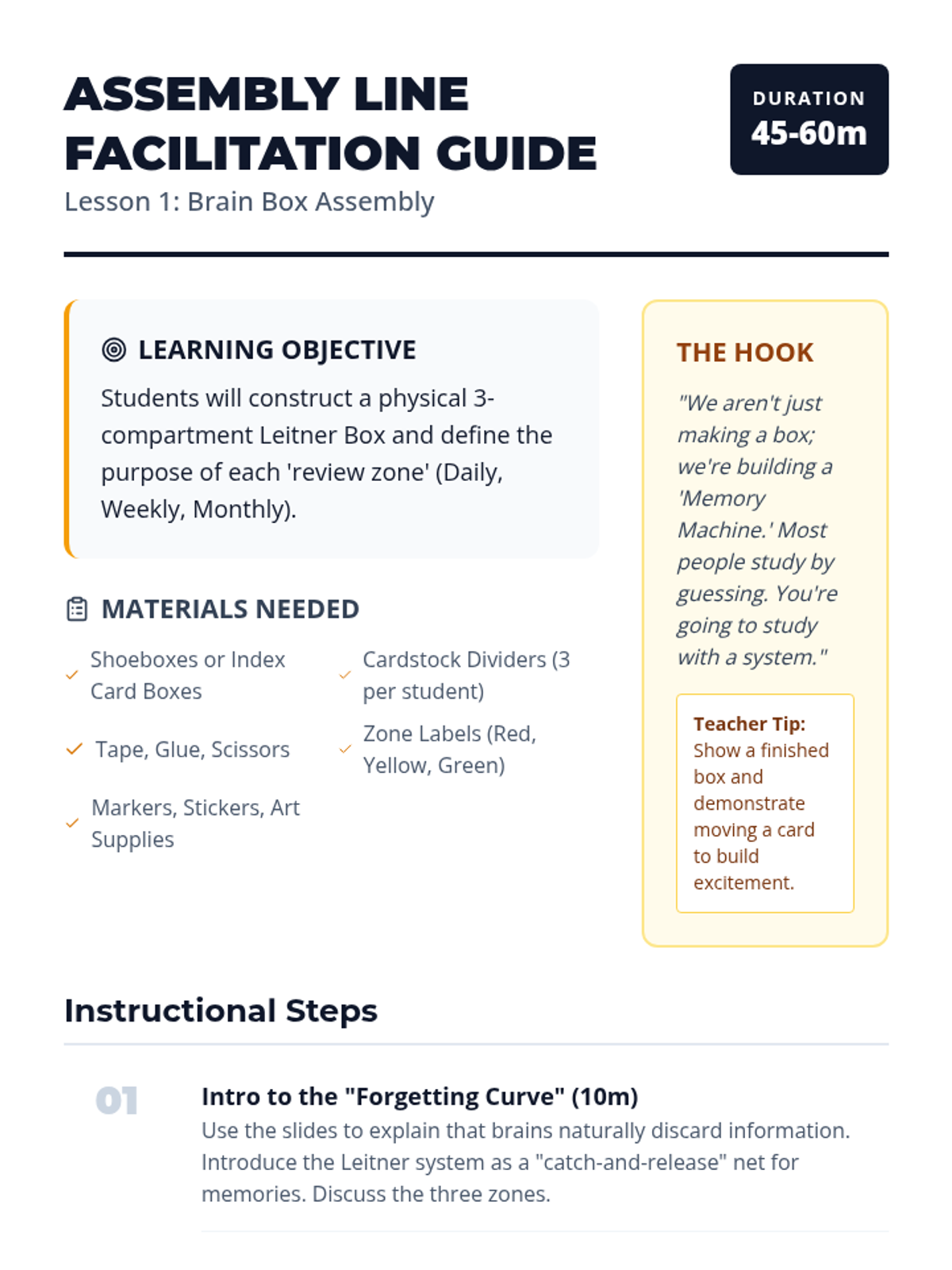
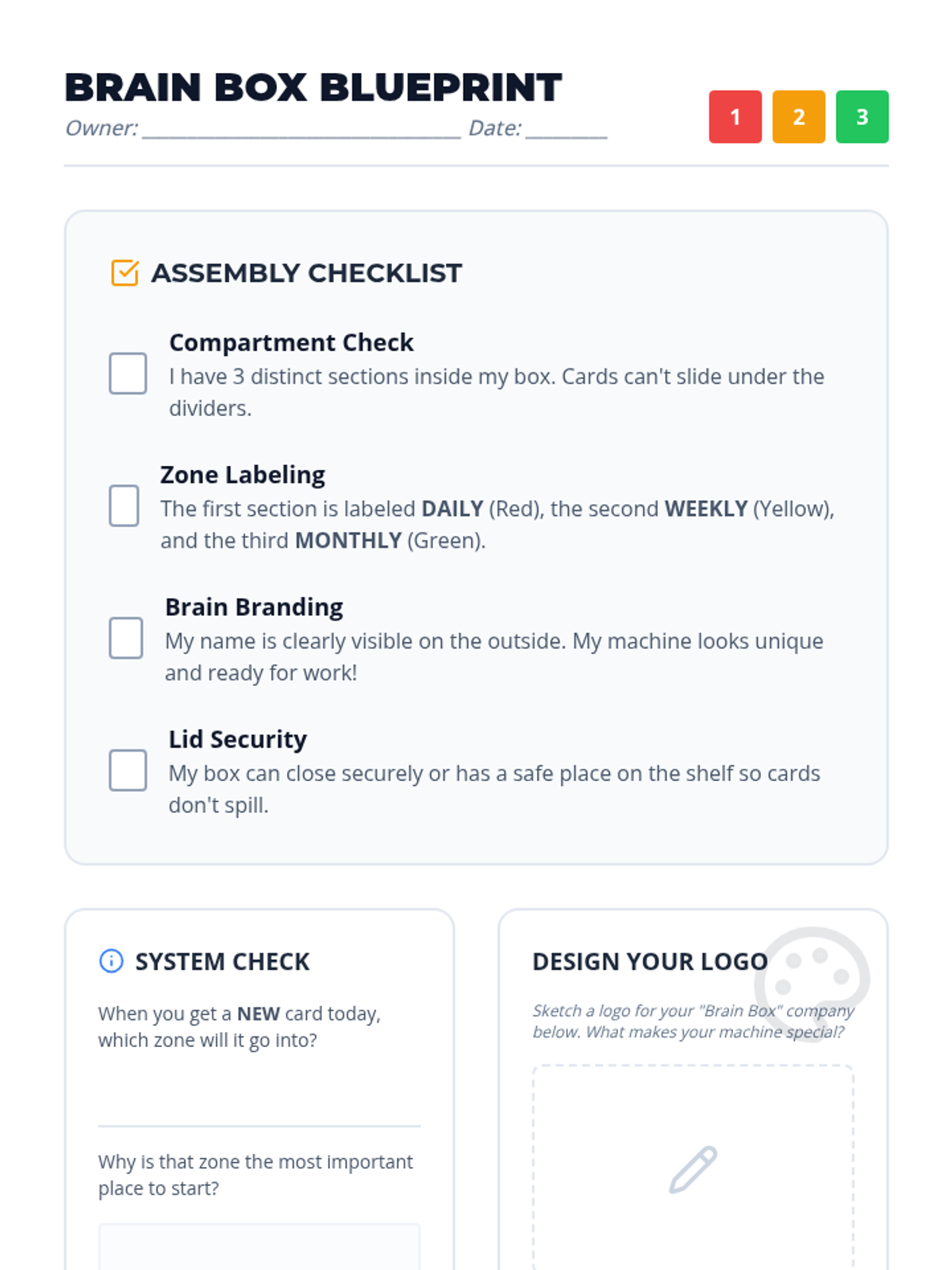
Students construct and personalize their physical Leitner Box with three compartments (Daily, Weekly, Monthly) to serve as their primary organizational tool for spaced repetition.
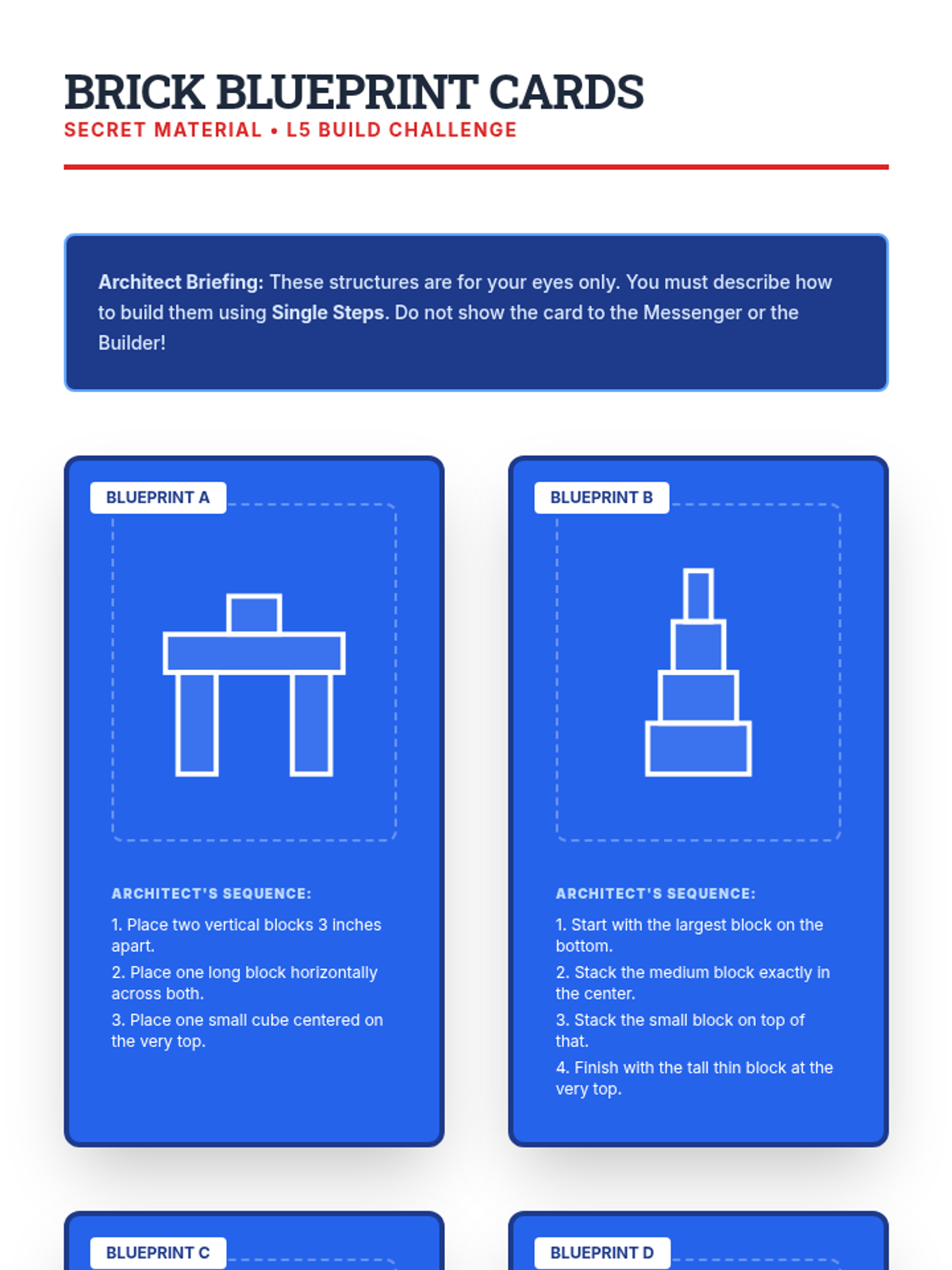
A final project-based challenge where groups of three must collaborate to build a structure, strictly adhering to single-step communication roles.
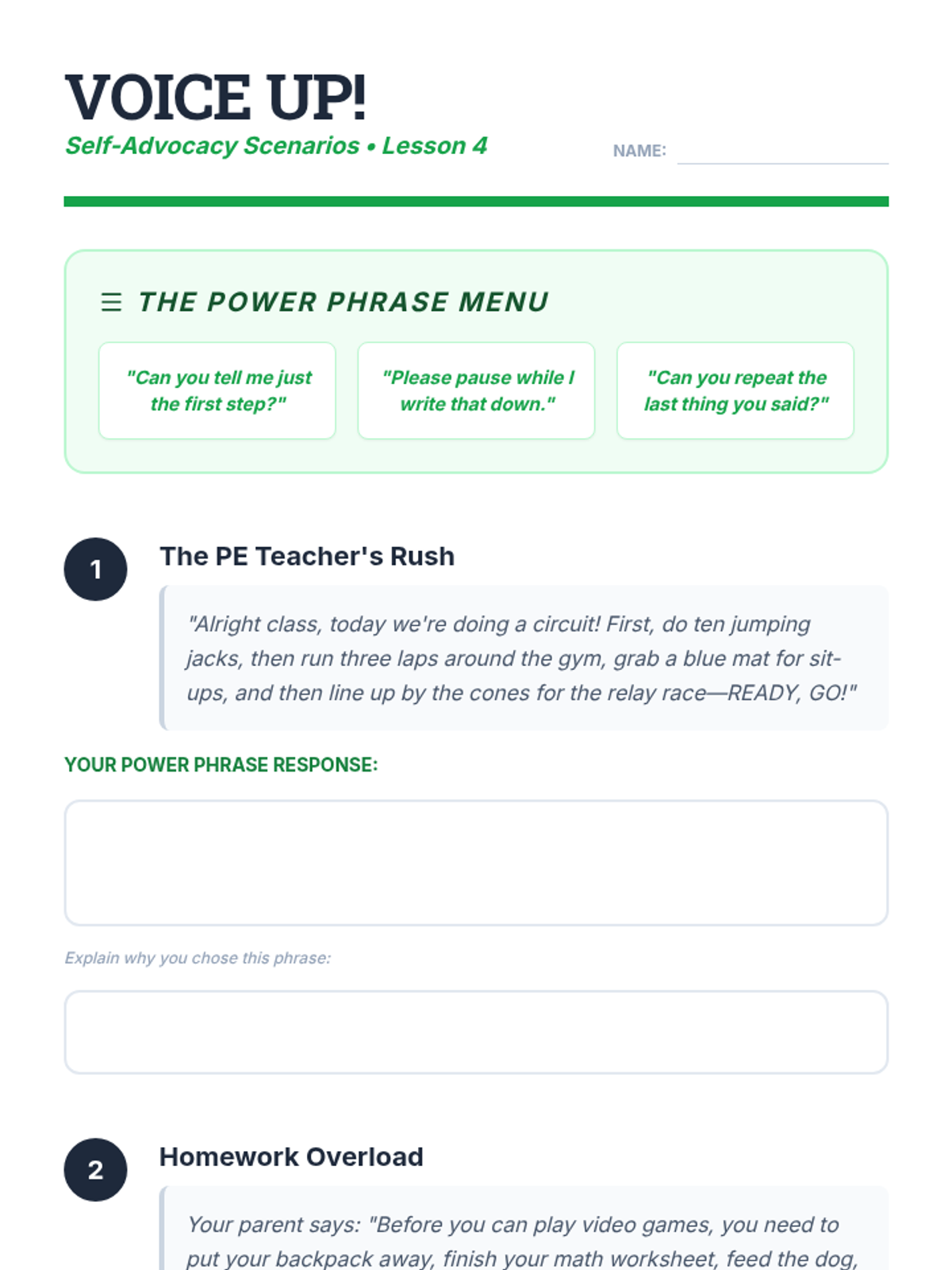
Students learn and practice self-advocacy phrases to use when instructions are too fast or complex, building social-emotional resilience and self-awareness.
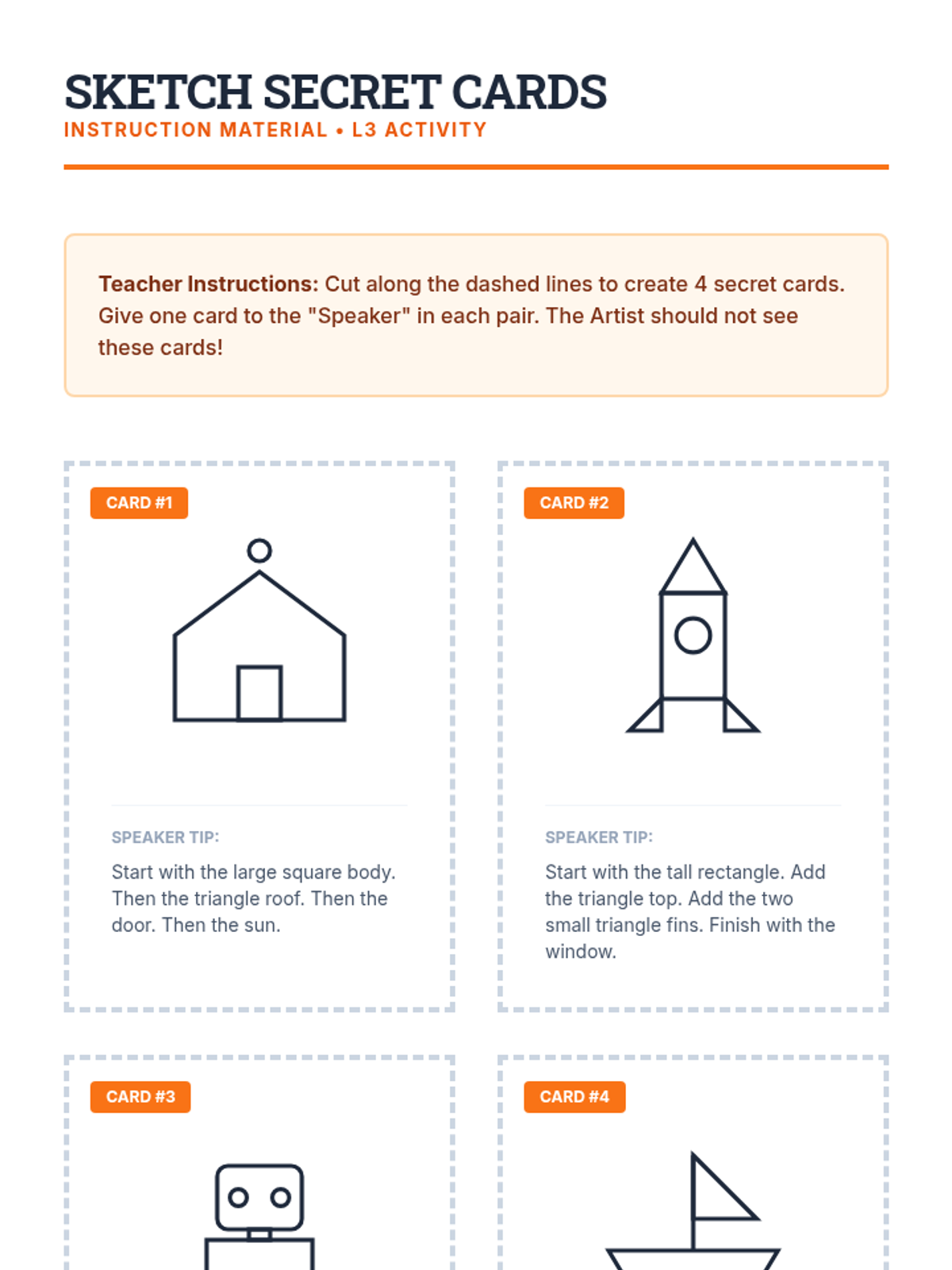
Pairs participate in a back-to-back drawing activity to experience how pacing and single-step instructions impact accuracy and success.
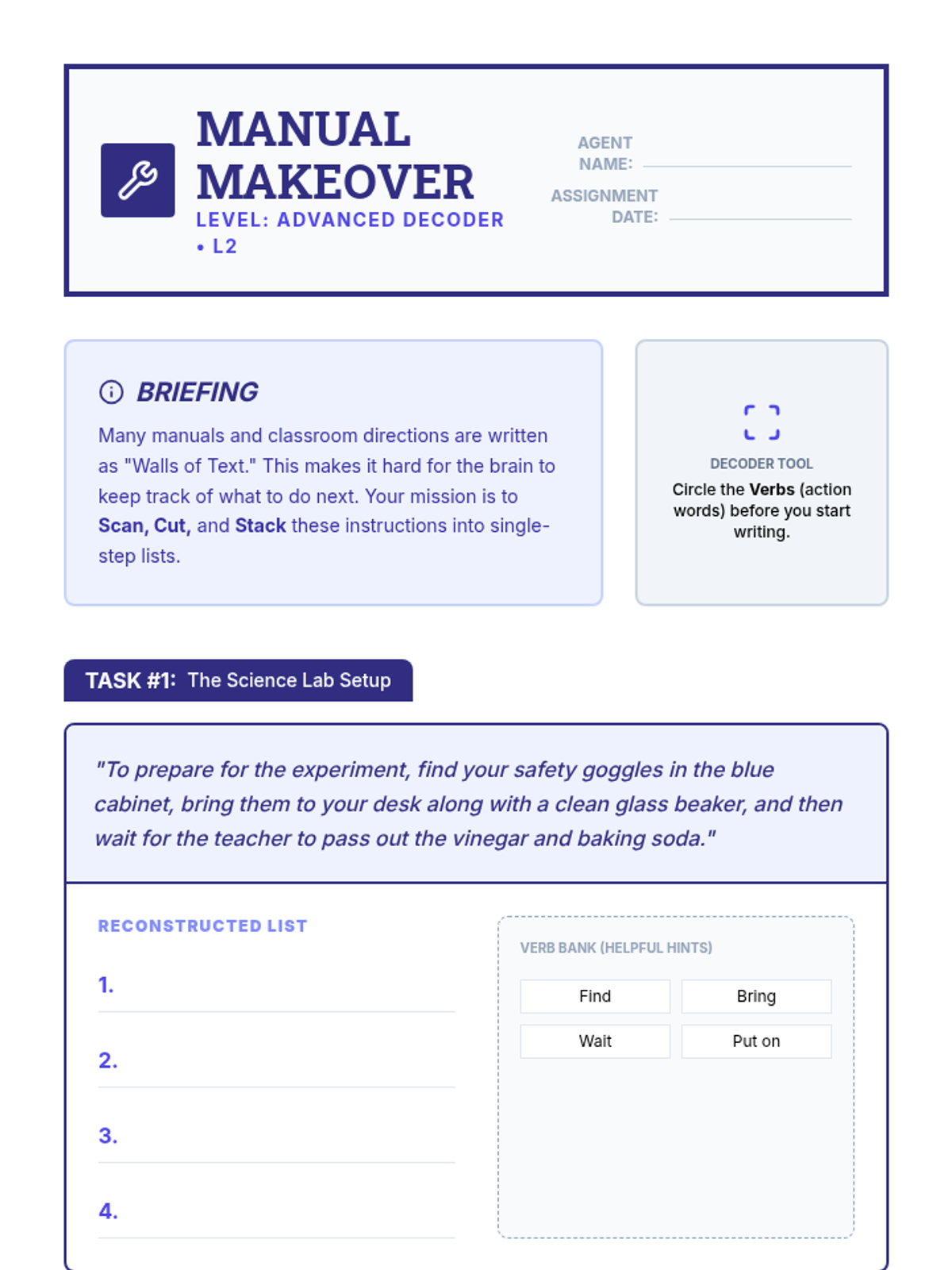
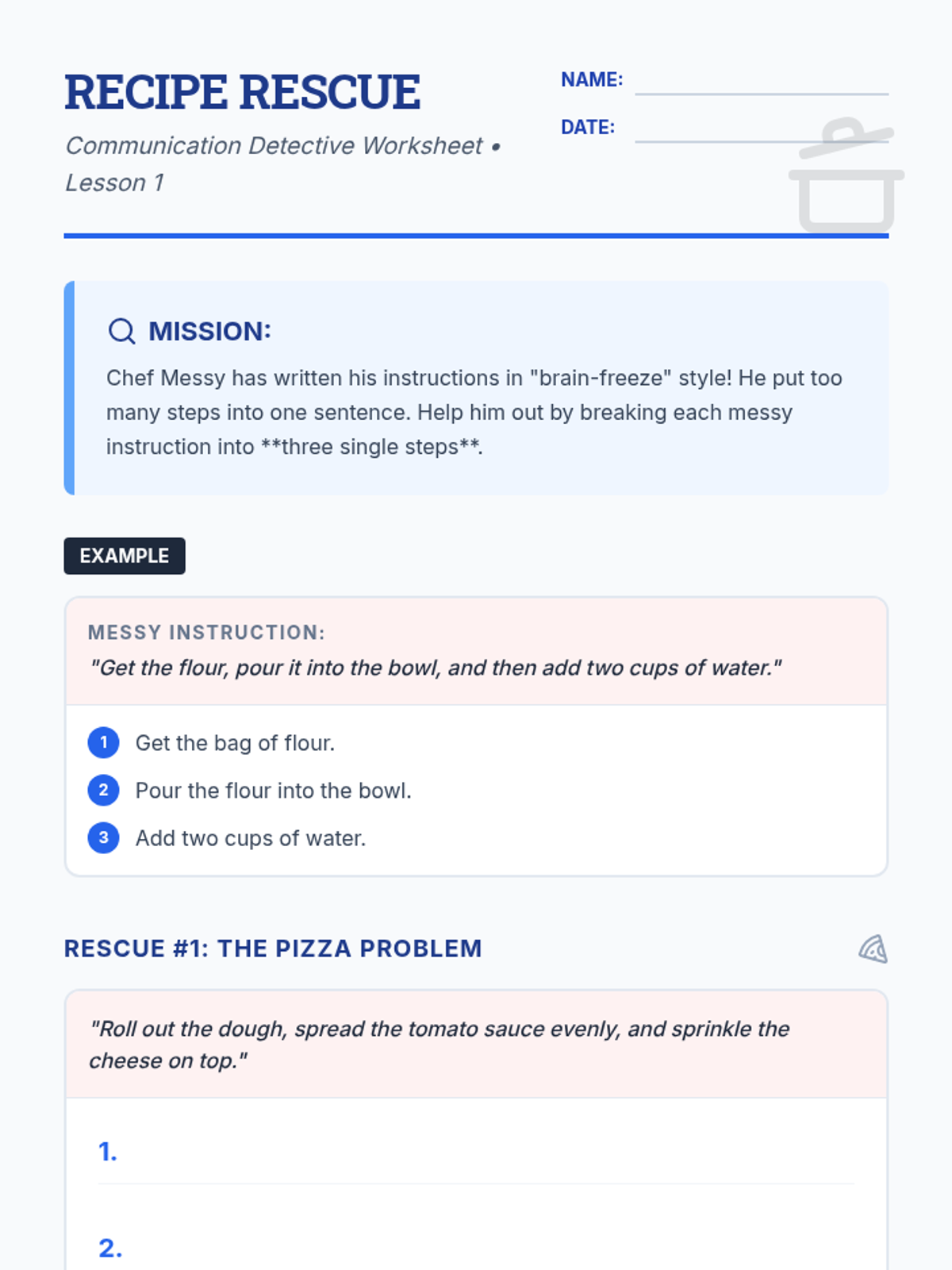
Students practice the skill of information synthesis by 'translating' complex, multi-step paragraphs into clear, numbered lists of single actions.
Students analyze a scenario where a cook fails due to overwhelming instructions, learning to identify 'cognitive overload' and rewrite multi-step directions into single, manageable steps.
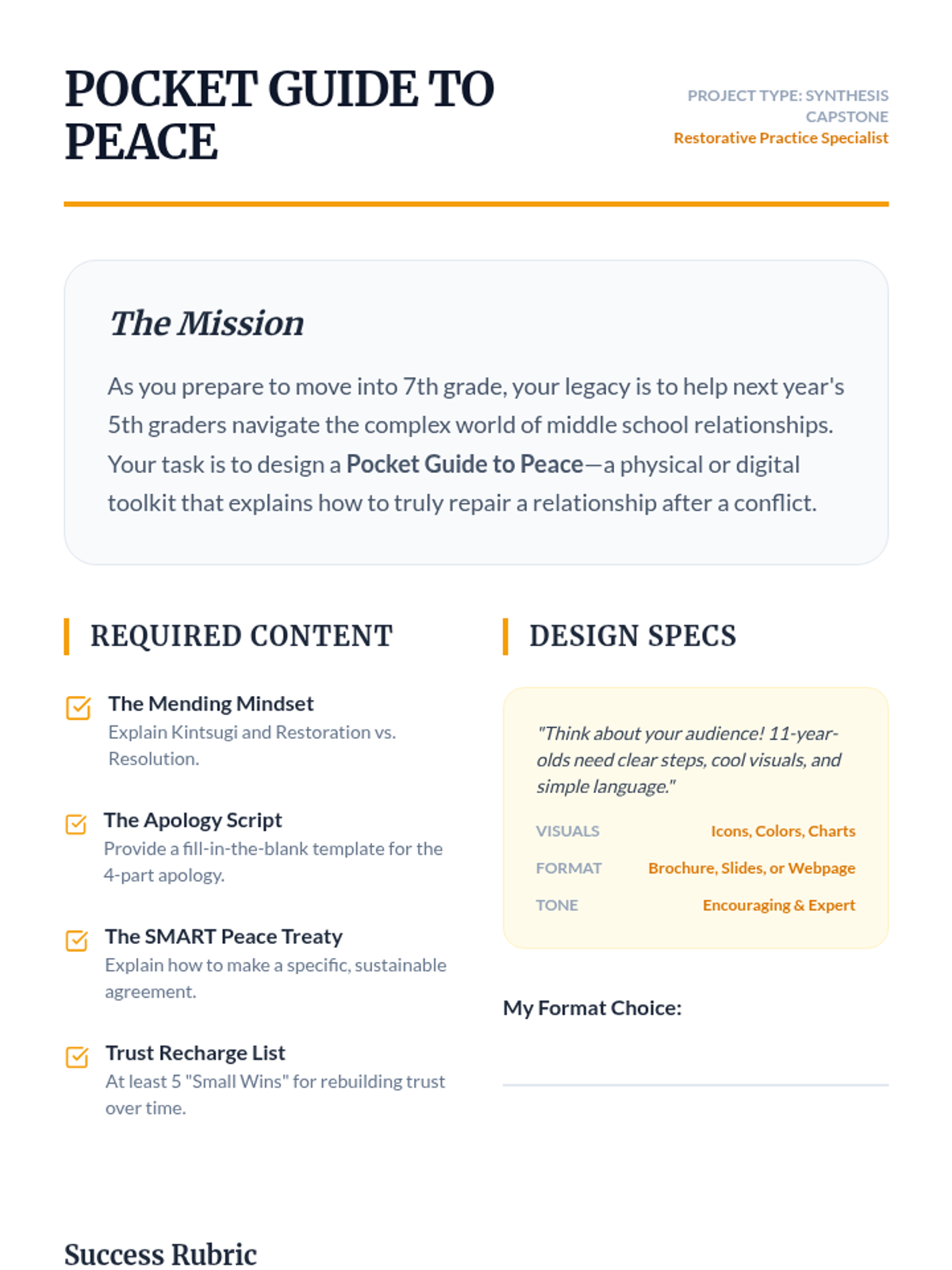
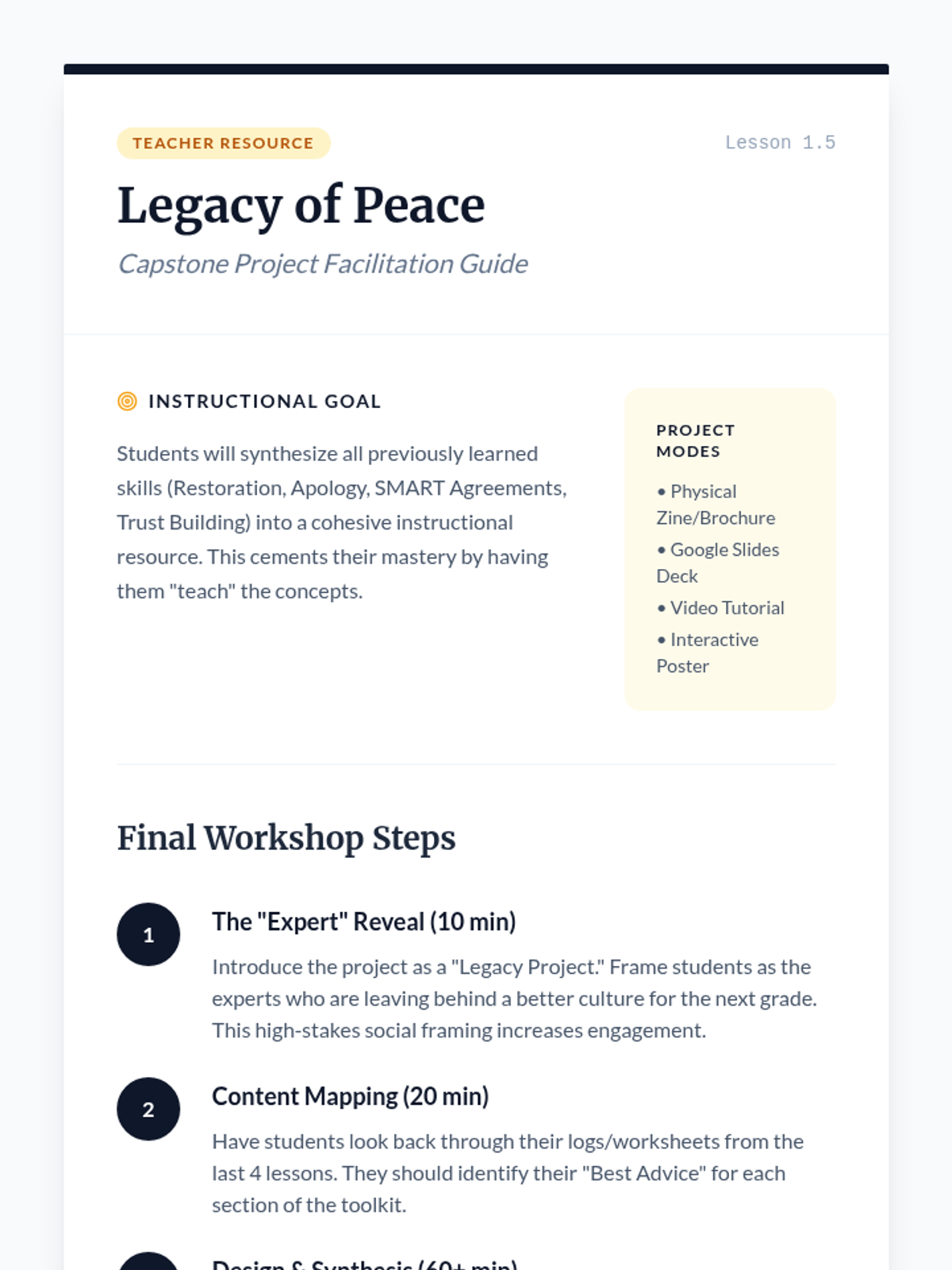
A capstone project where students synthesize their learning to create a 'Pocket Guide to Peace' for younger students.
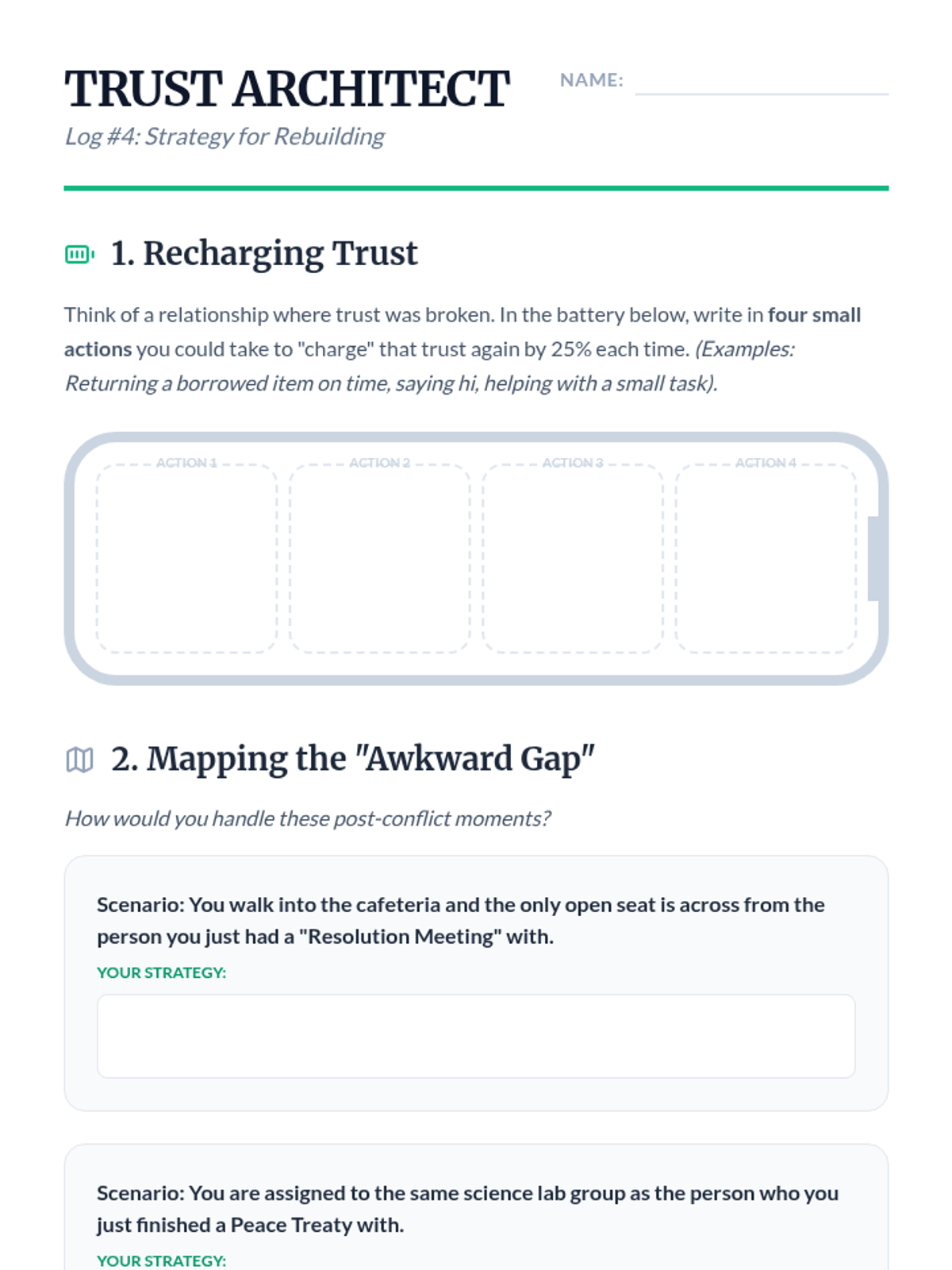
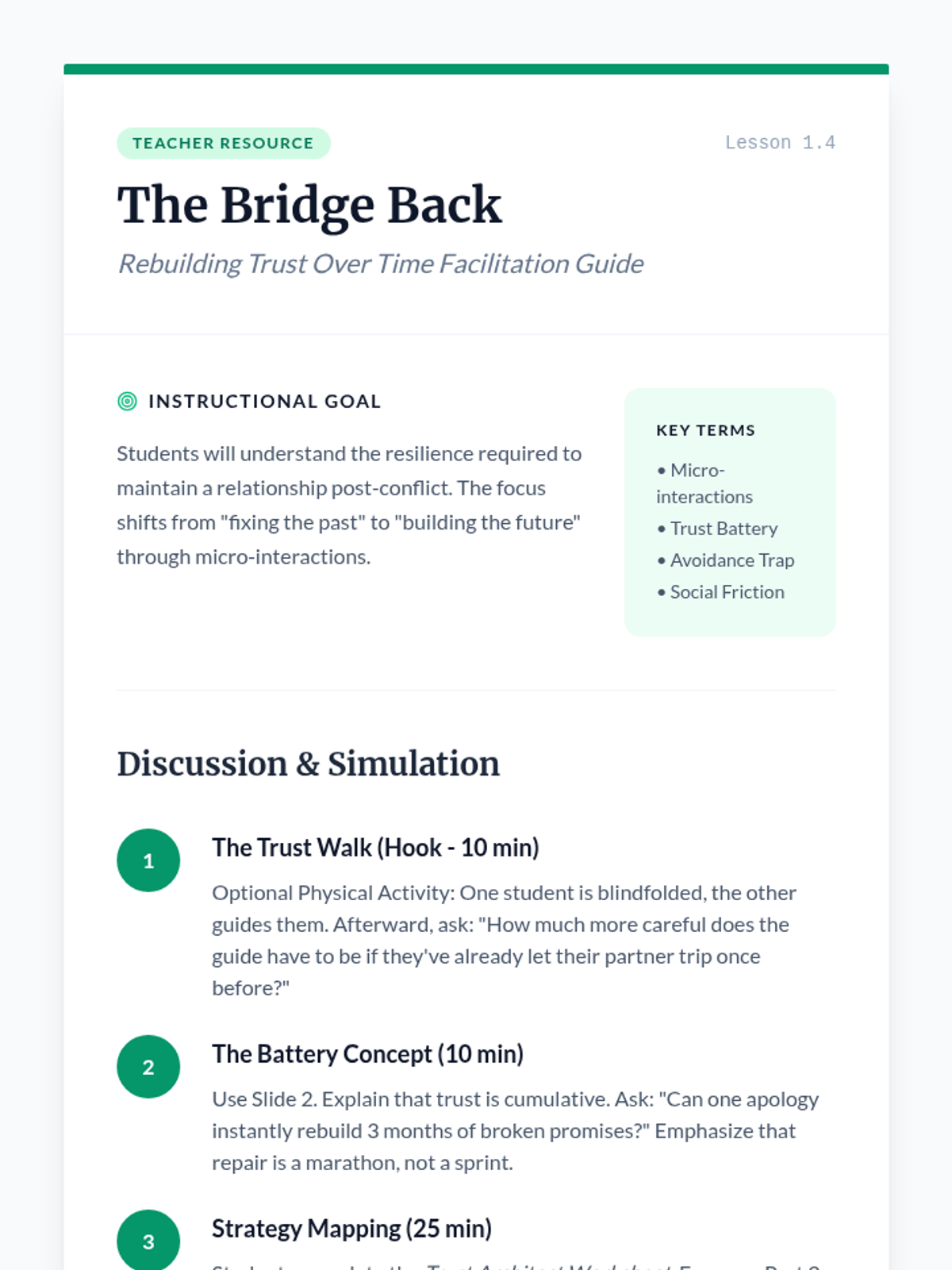
Explores the slow process of rebuilding trust after a conflict, focusing on small, consistent actions and the courage required to be vulnerable again.
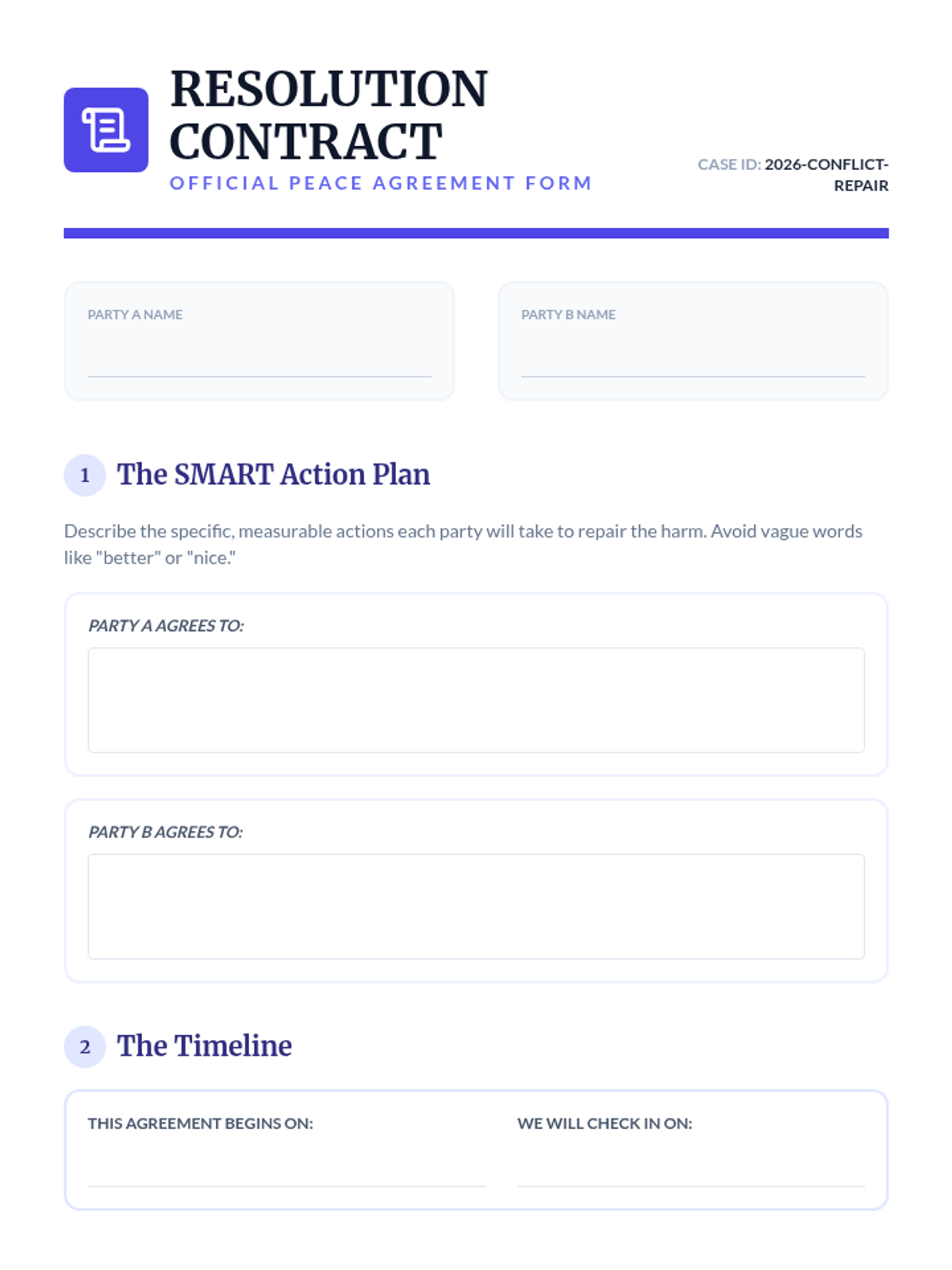
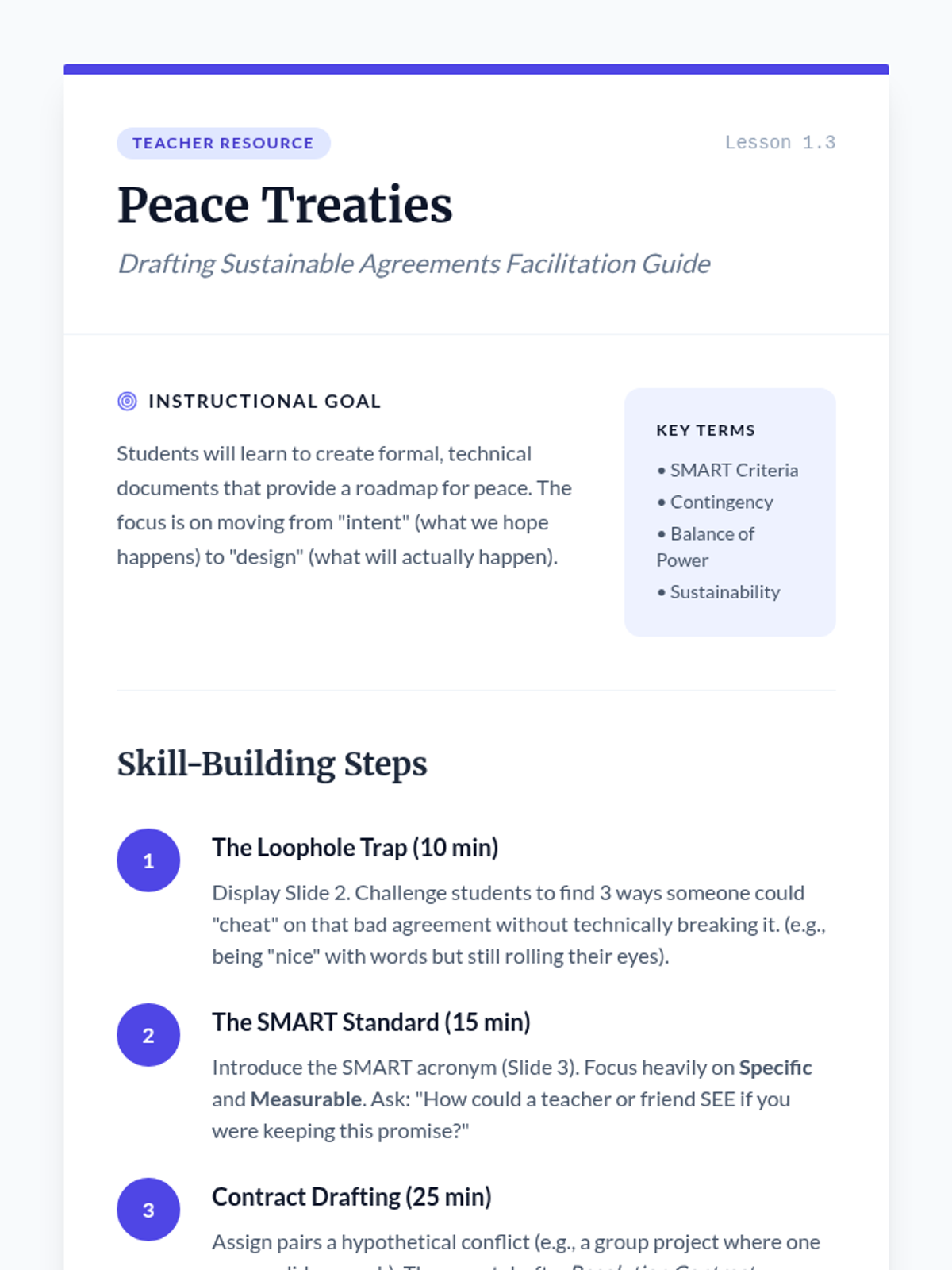
Focuses on technical skills for creating 'fight-proof' agreements that are specific, measurable, and include contingency plans for future friction.
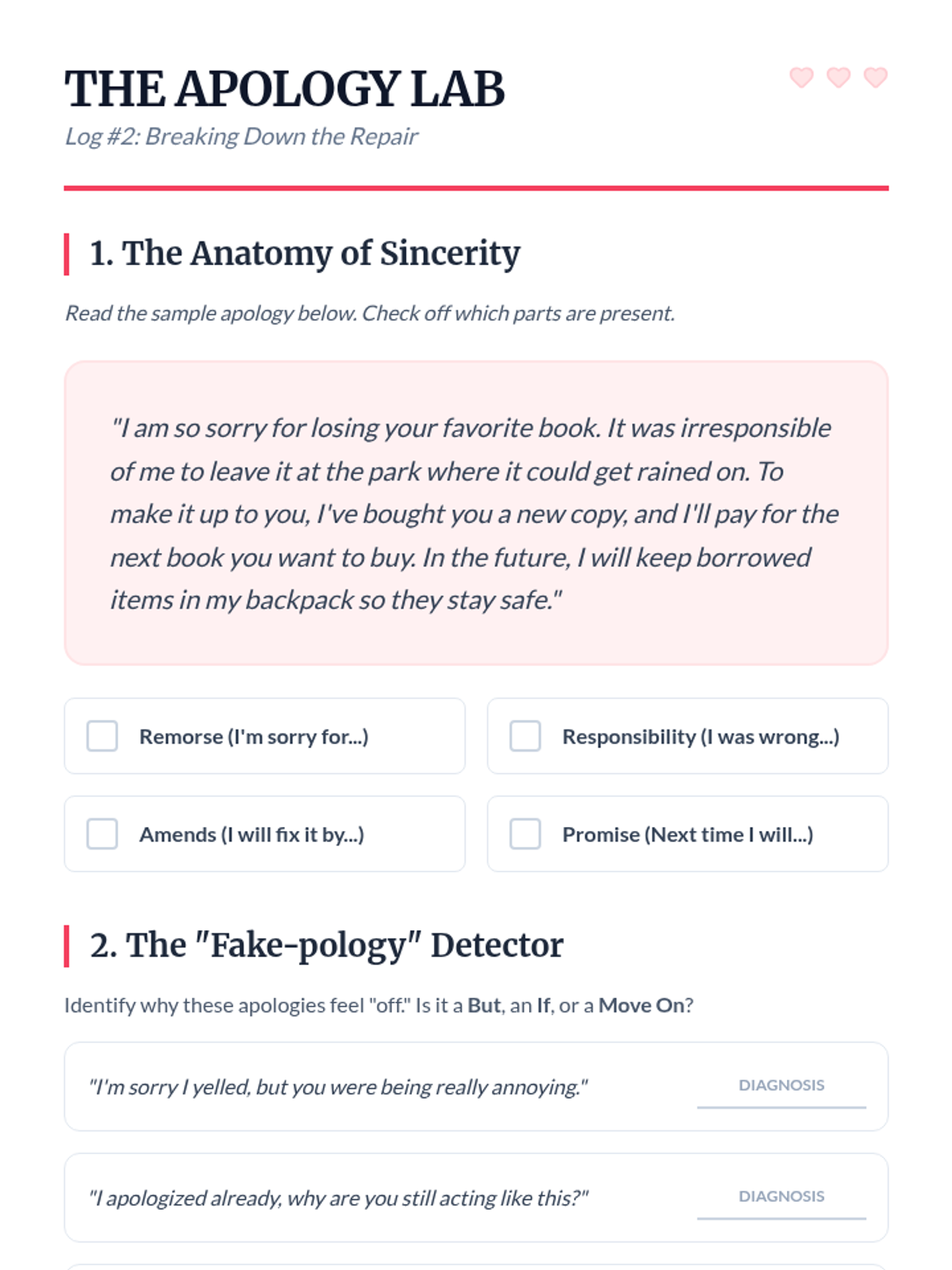
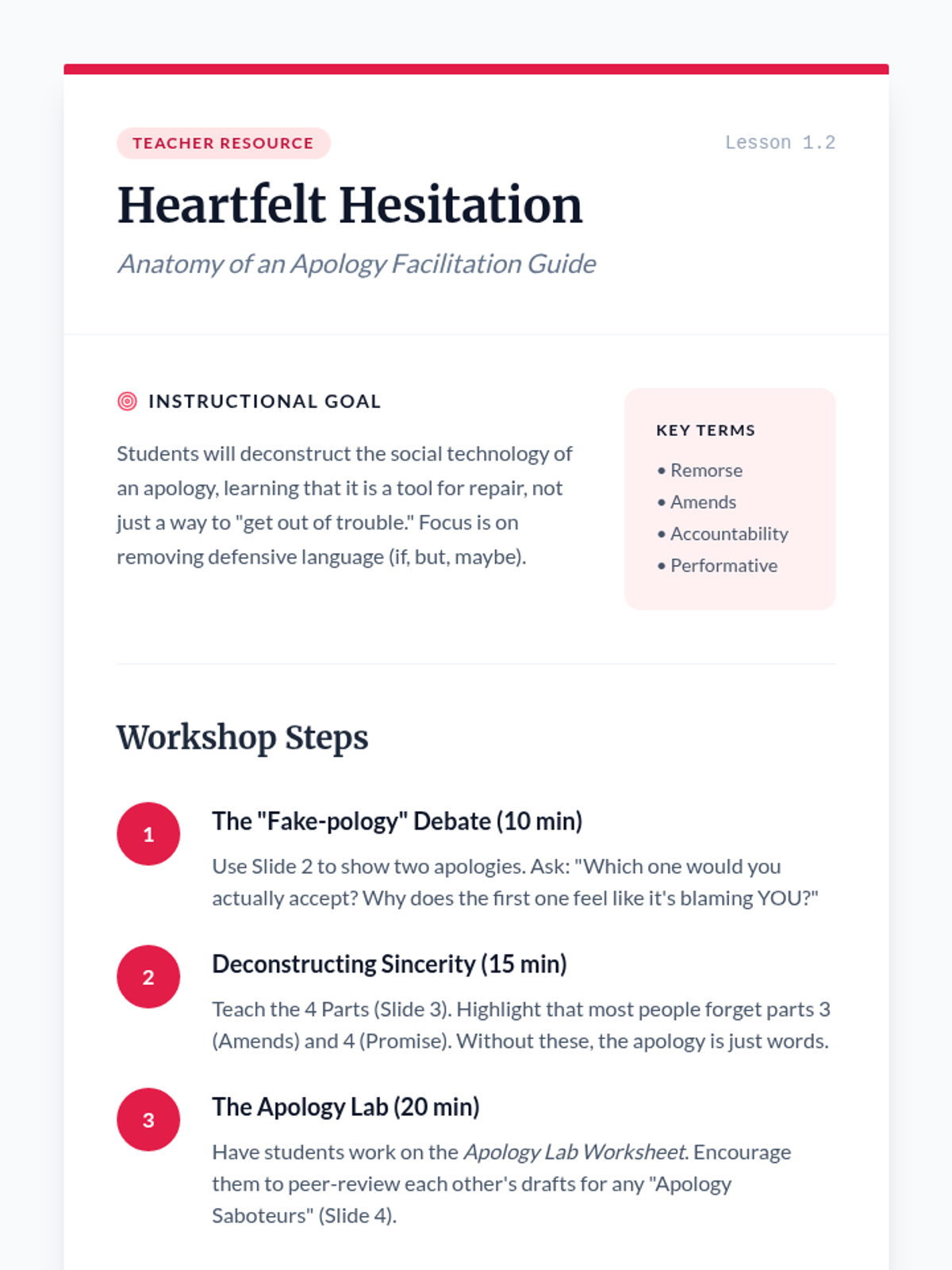
Learners break down the four essential components of a meaningful apology and practice distinguishing between performative and sincere expressions of remorse.
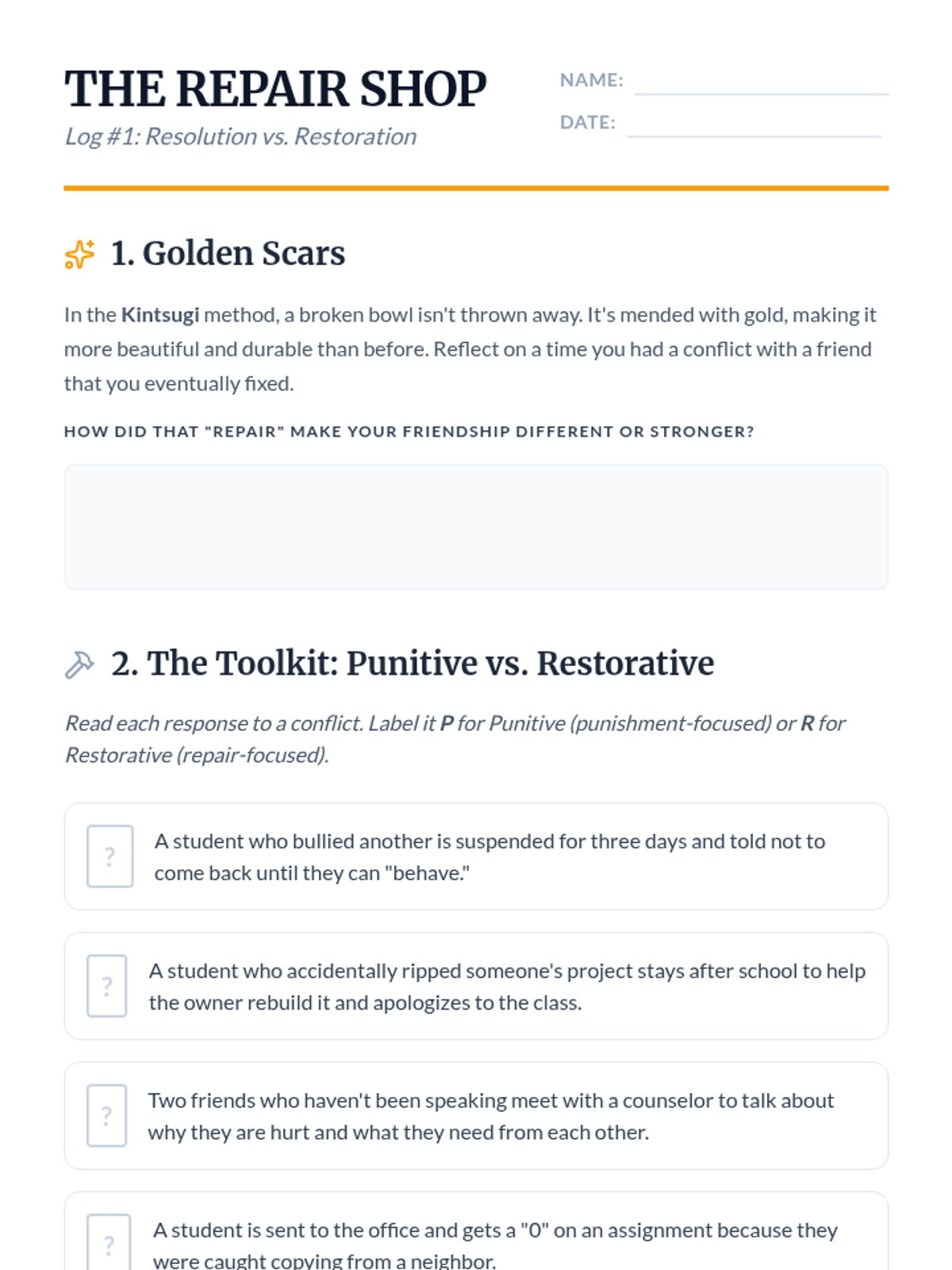
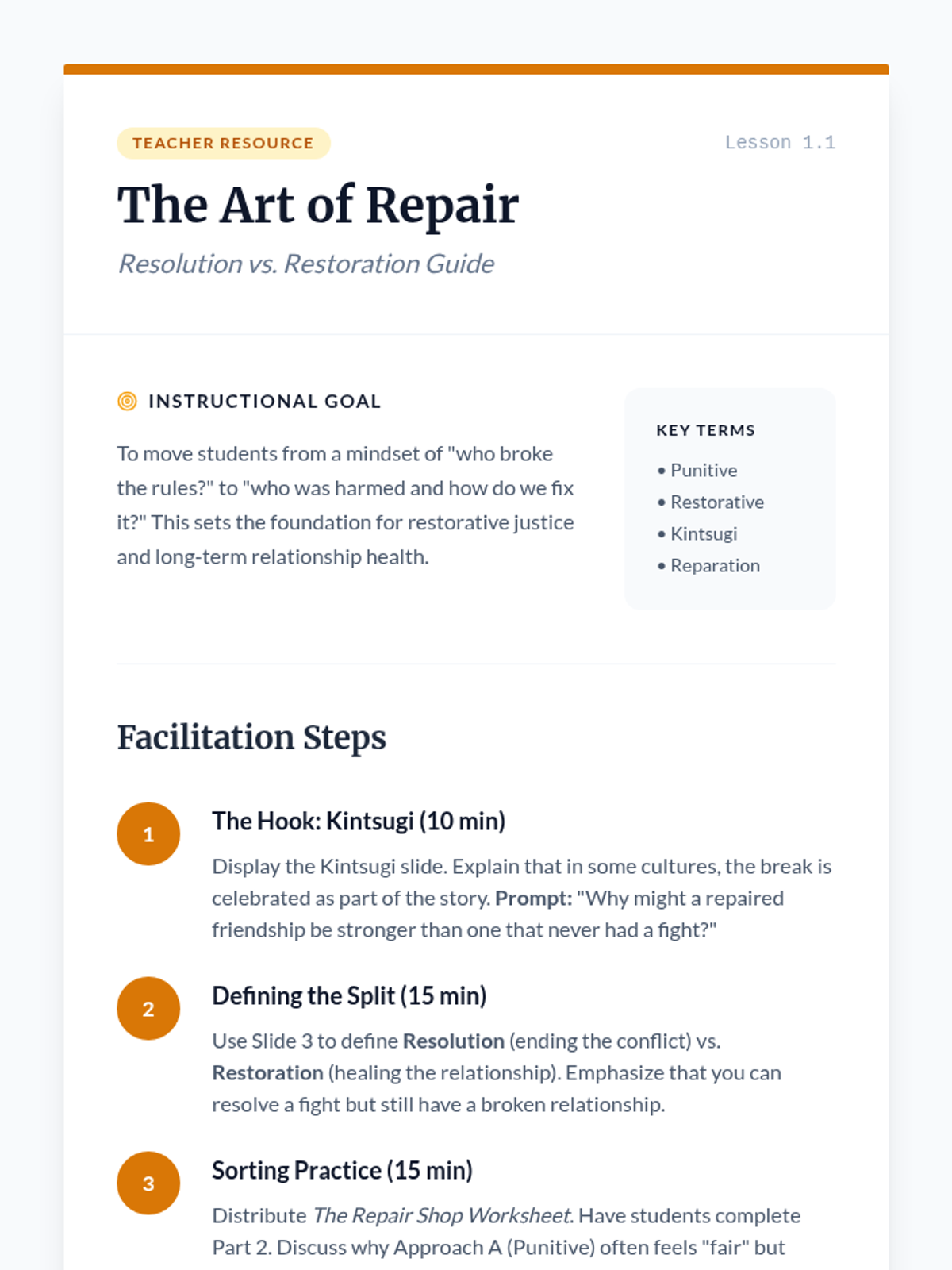
Students contrast punitive and restorative approaches to conflict, using the concept of Kintsugi to understand how repair can make a relationship stronger.
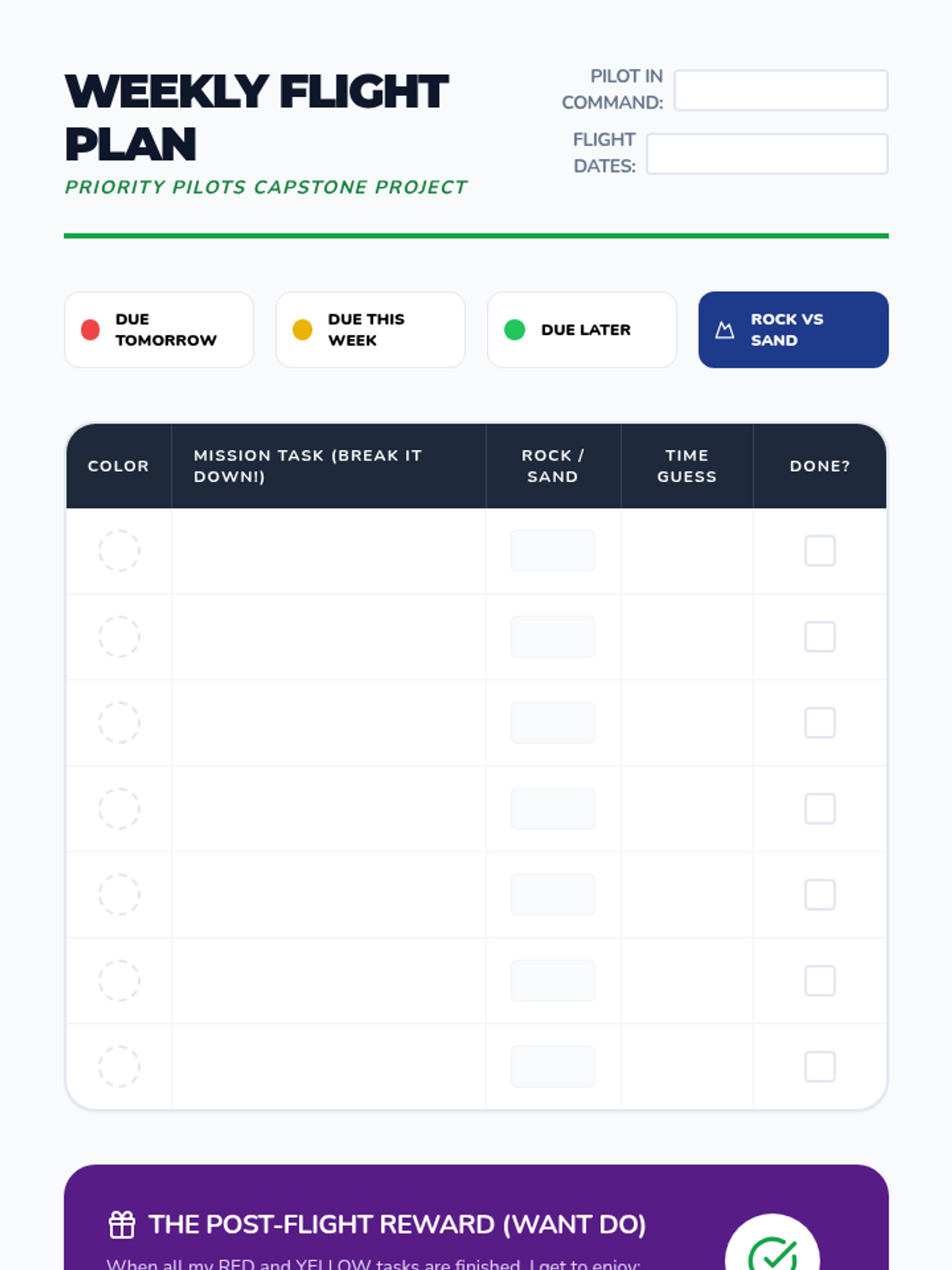
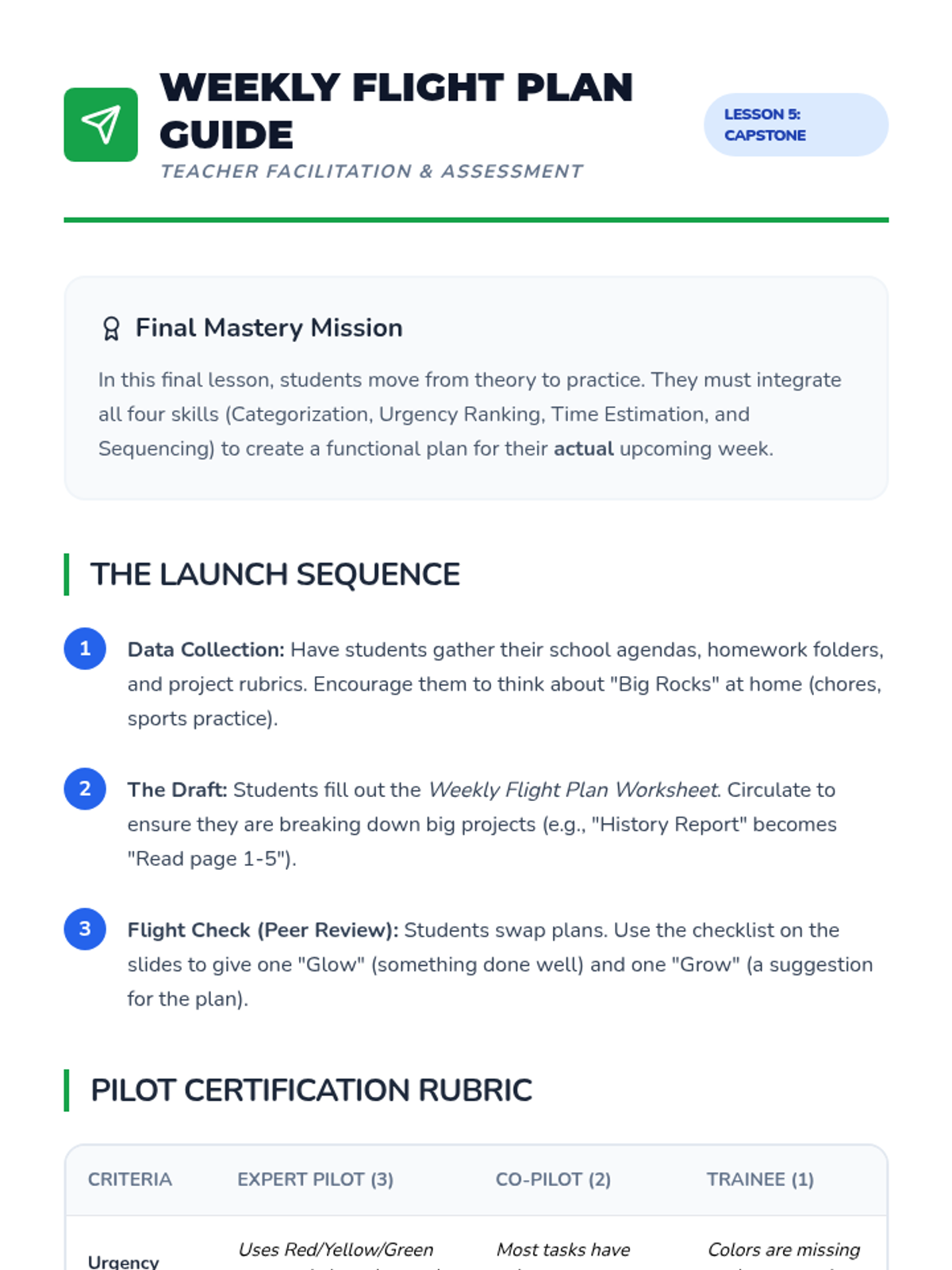
Students apply all learned strategies to create a personalized weekly prioritization plan for their own workload.
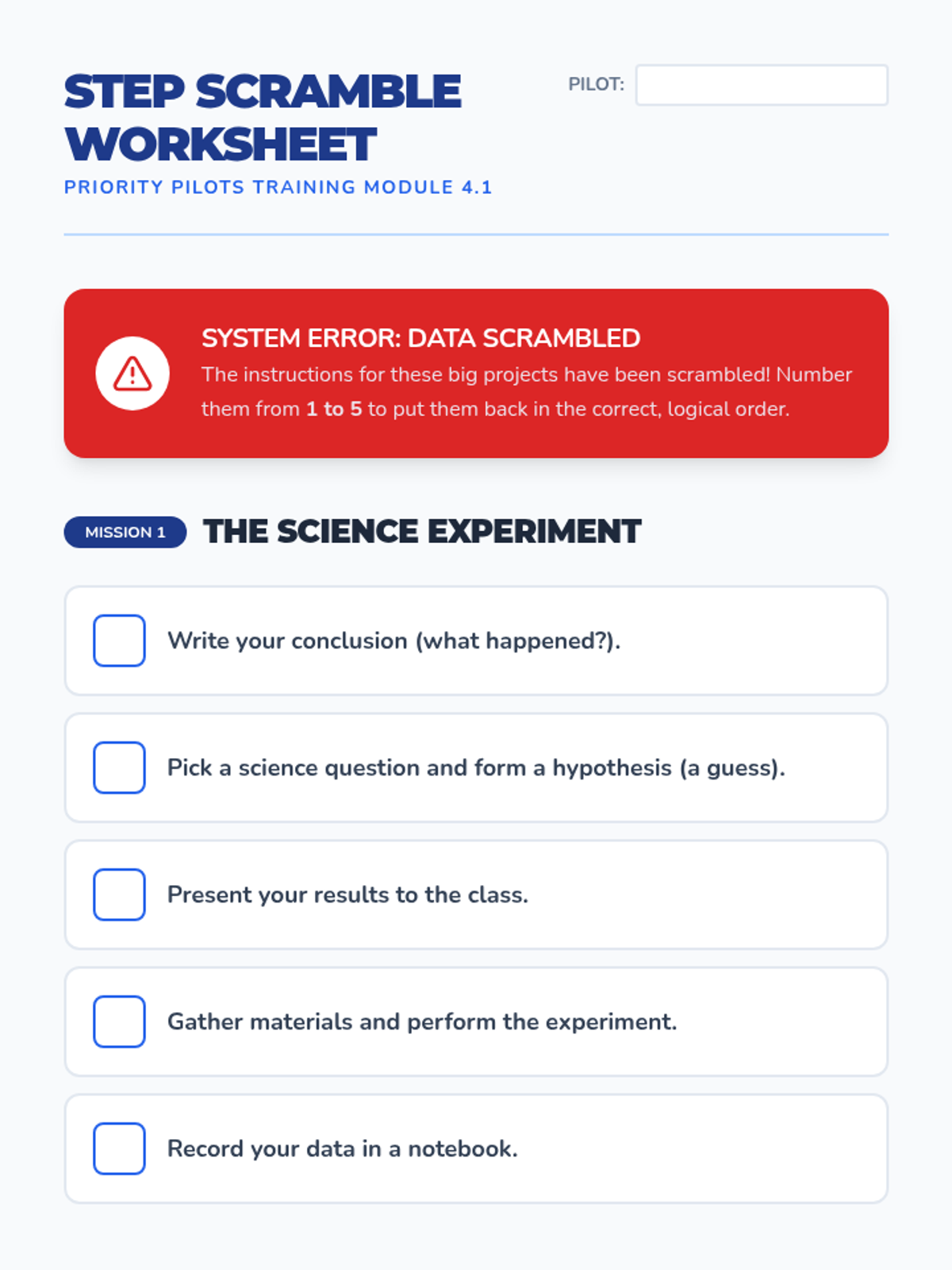
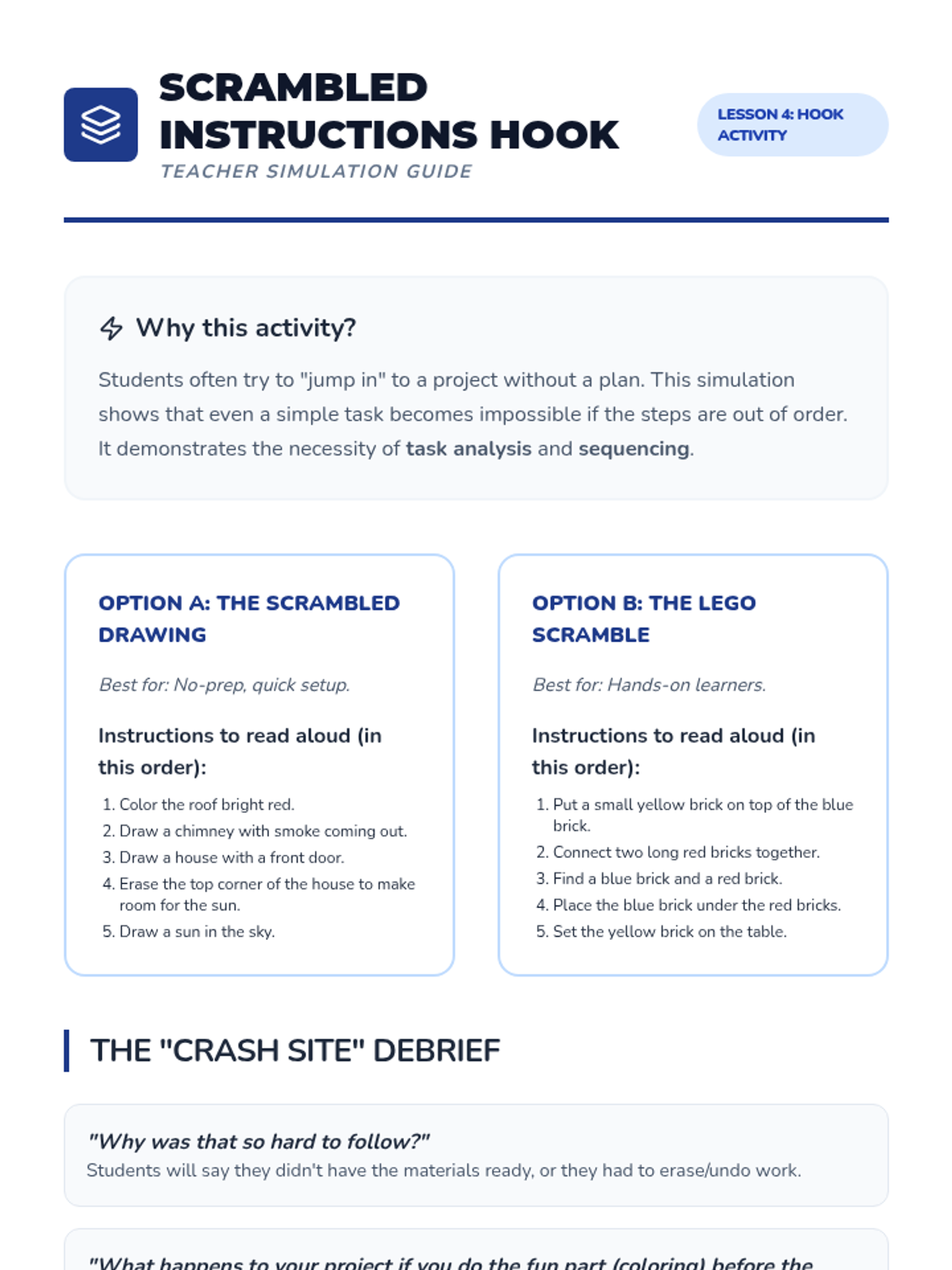
Students learn how to break down large projects into logical, sequential steps to avoid overwhelm.
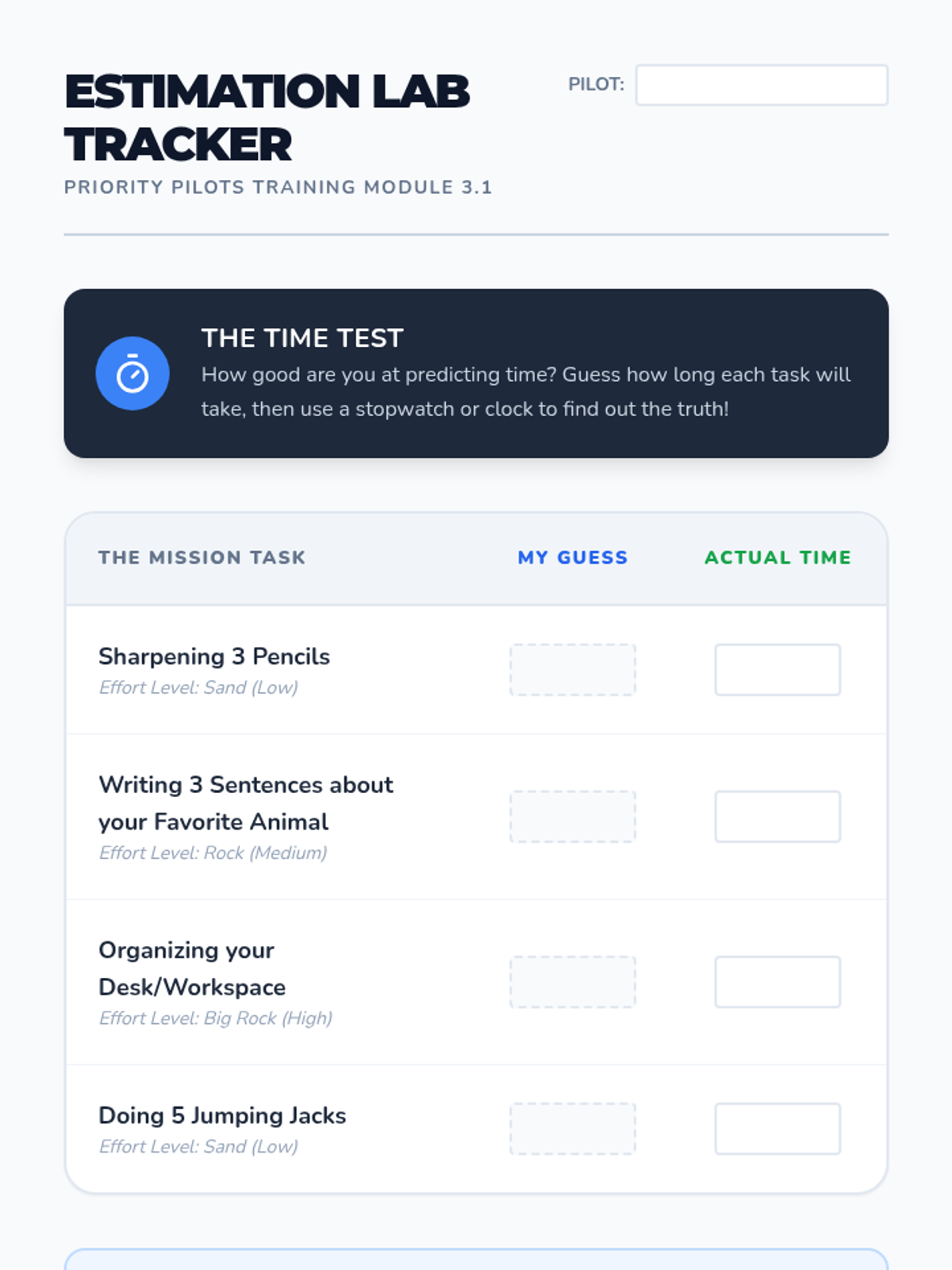
Students practice estimating the time and effort required for tasks using the 'Rocks vs. Sand' analogy.
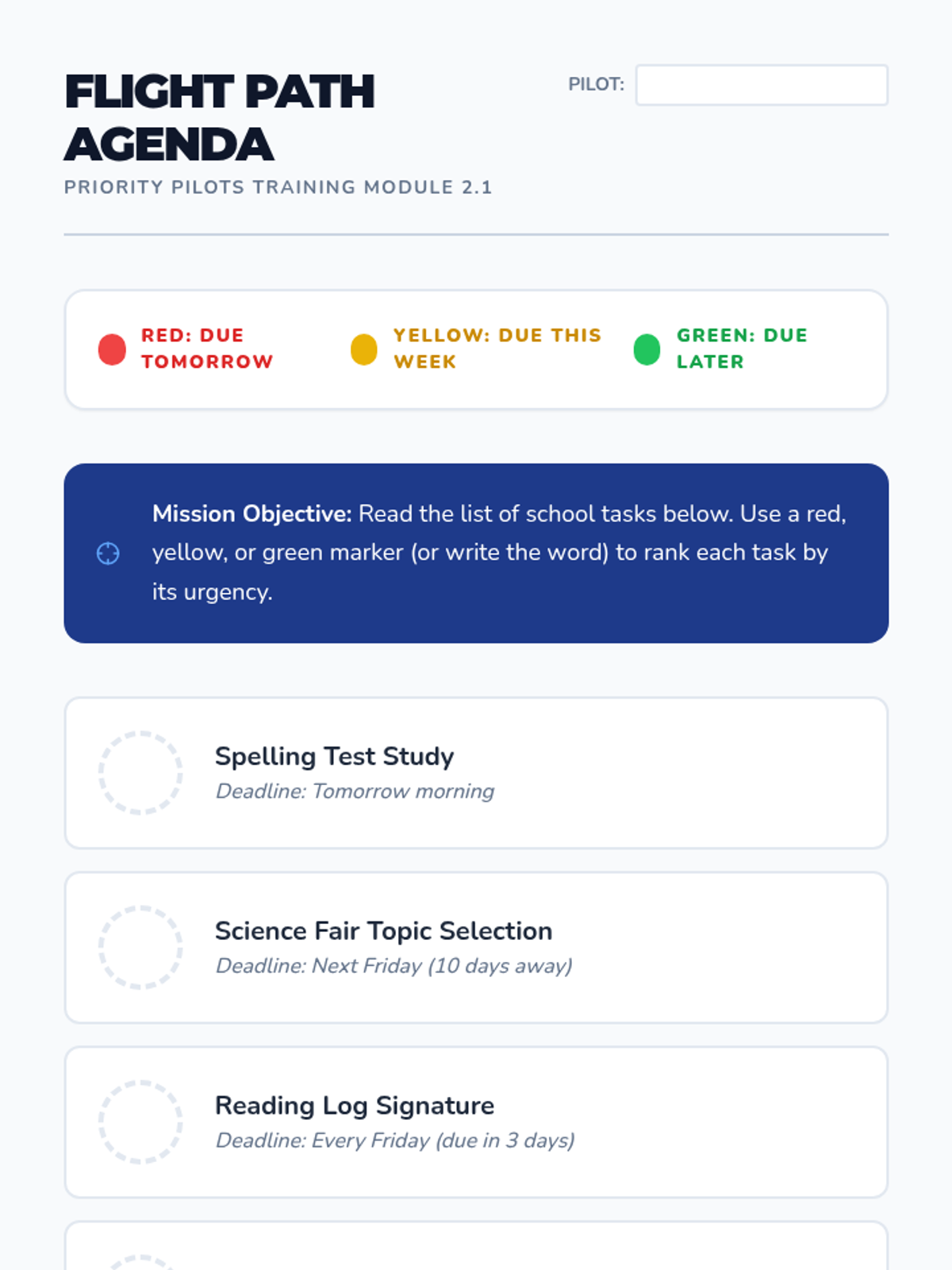
Introduction to the Traffic Light Urgency System (Red, Yellow, Green) for ranking tasks by deadline.
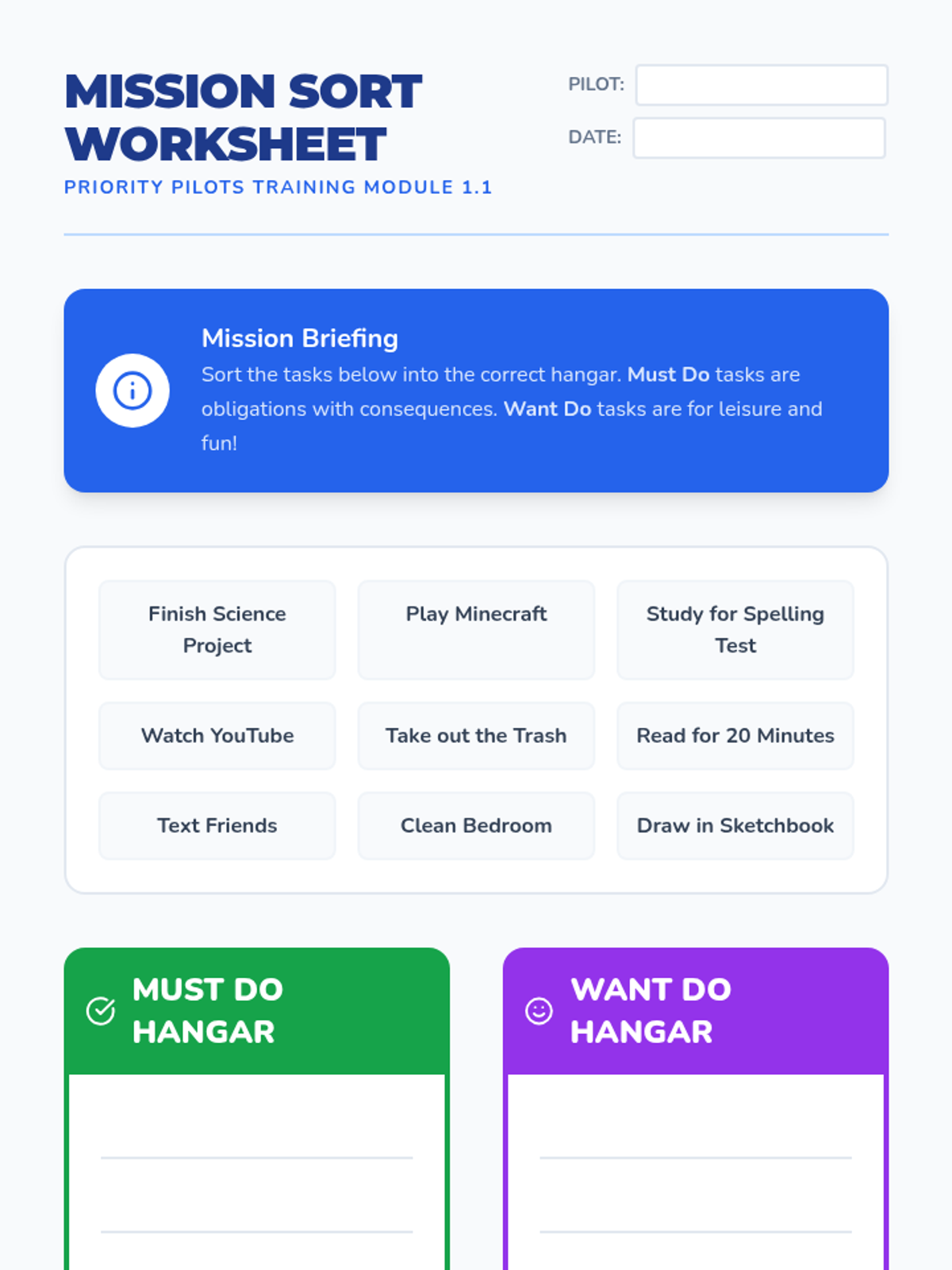
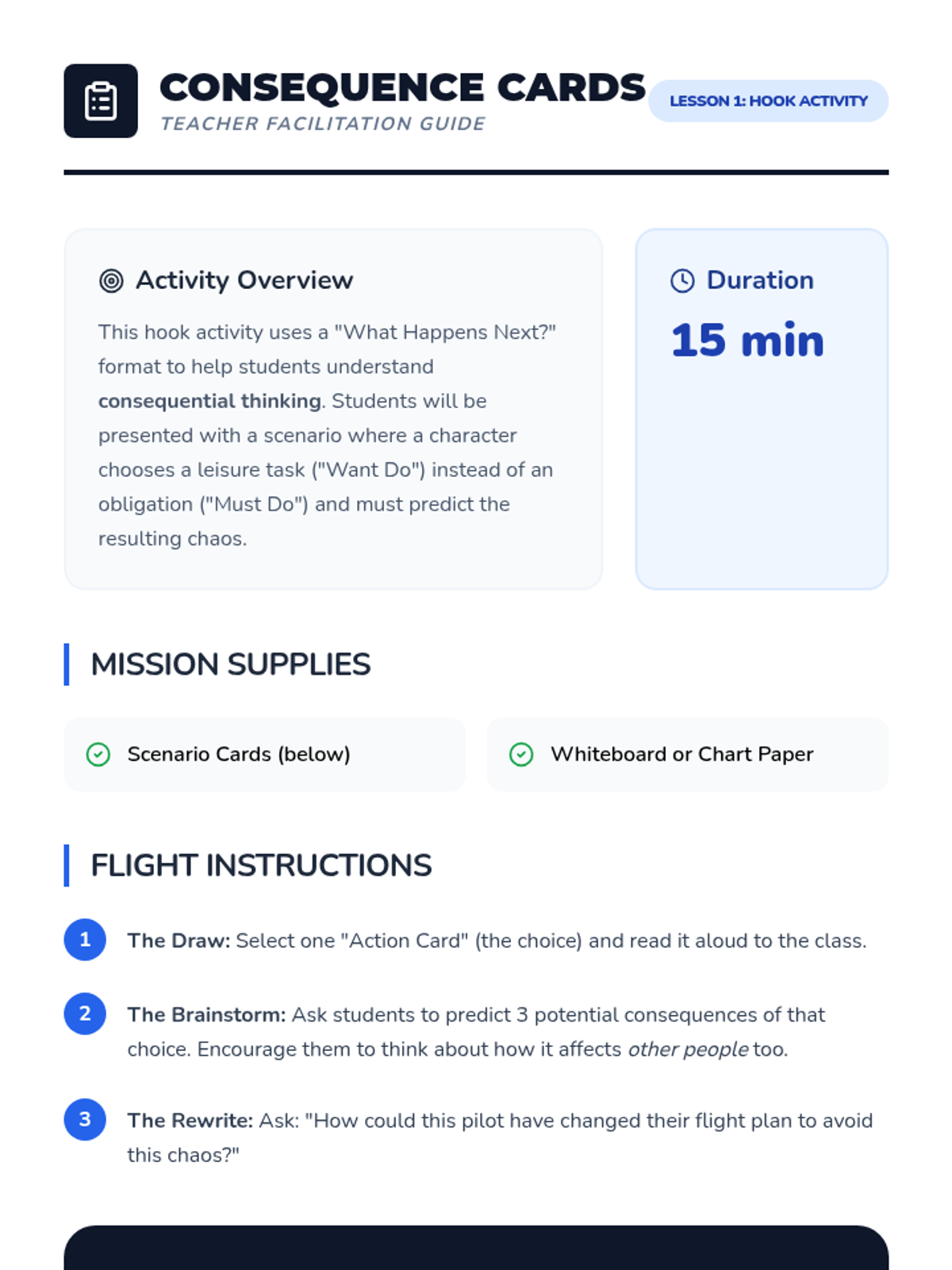
Students learn to categorize daily tasks into 'Must Do' (Obligations) and 'Want Do' (Leisure) and discuss the consequences of their choices.
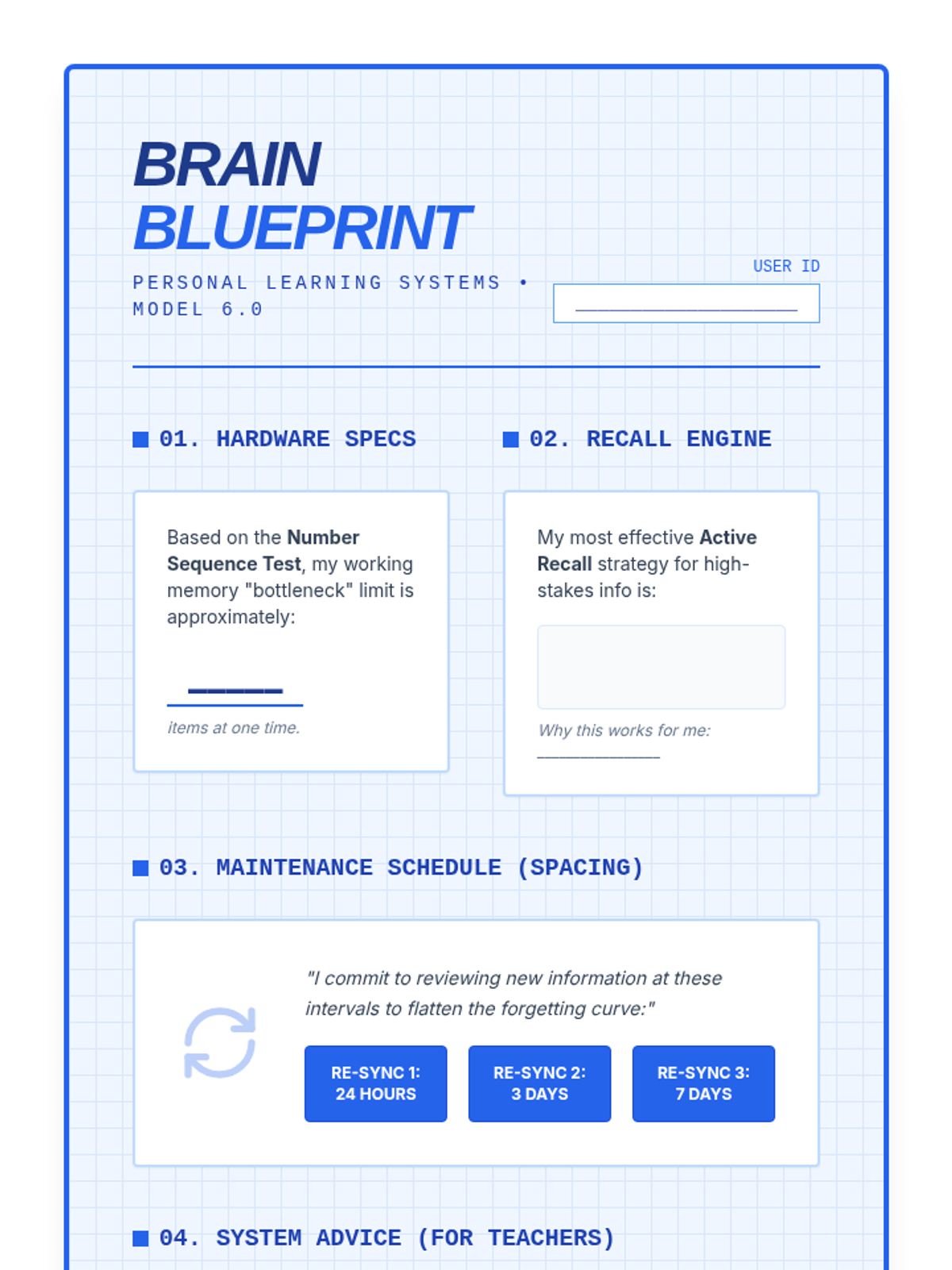
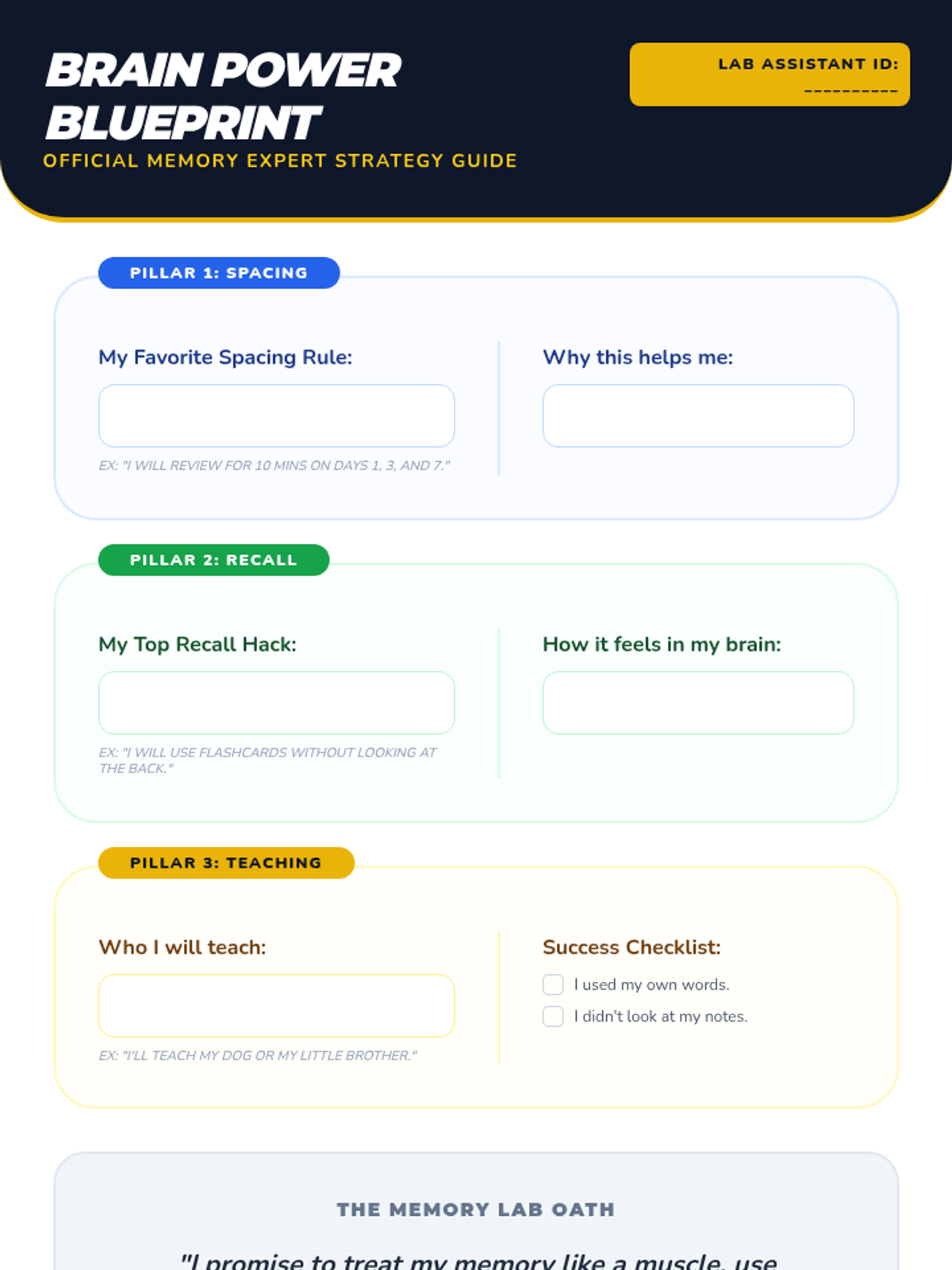
Students synthesize their learning to create a 'User Manual' for their own brain, documenting personal study goals and strategies.
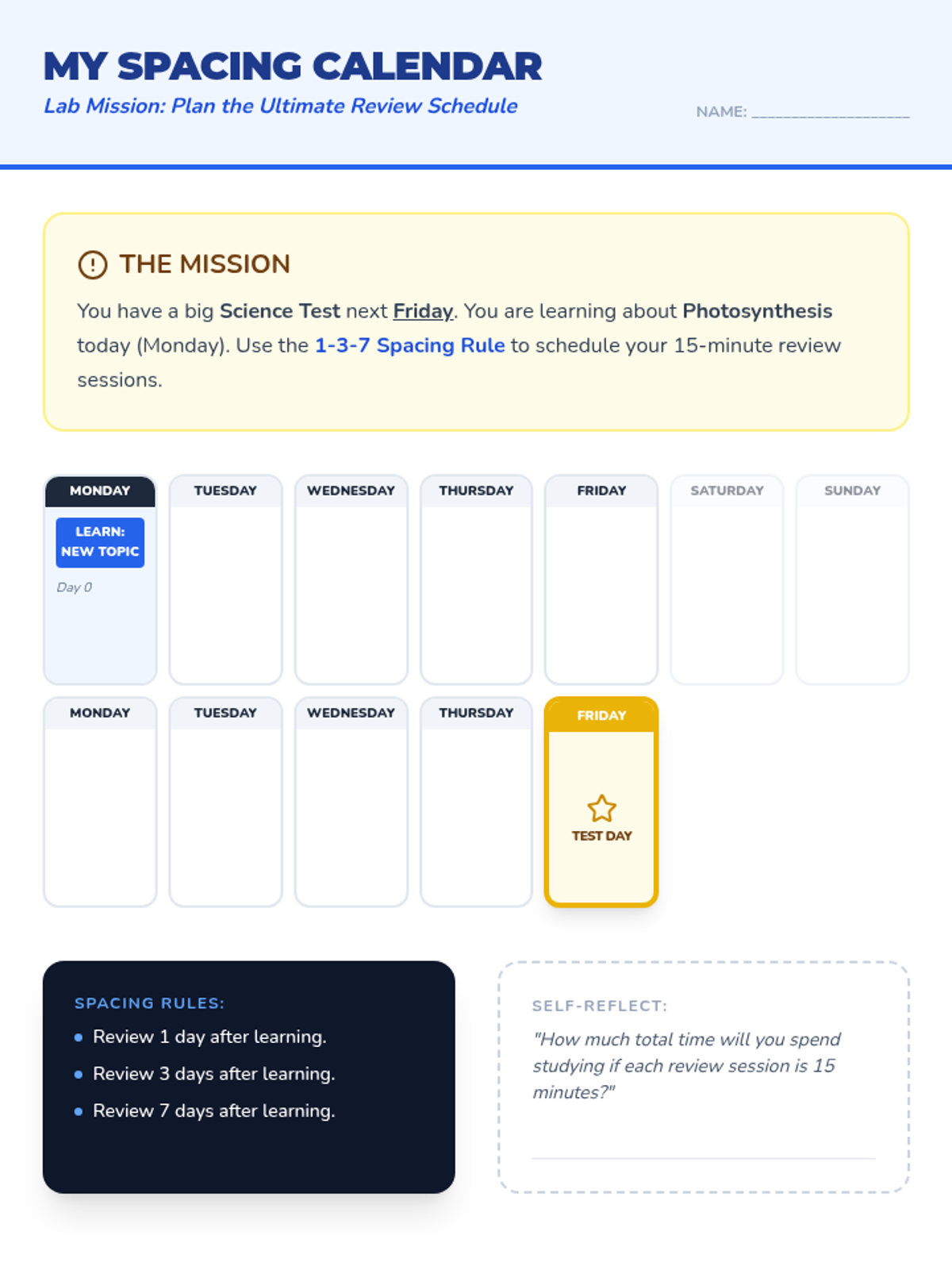
Students learn how to interrupt the forgetting curve by mapping out optimal review intervals on a study calendar.
Students compare re-reading to testing themselves, discovering why 'active recall' builds stronger neural pathways than passive review.
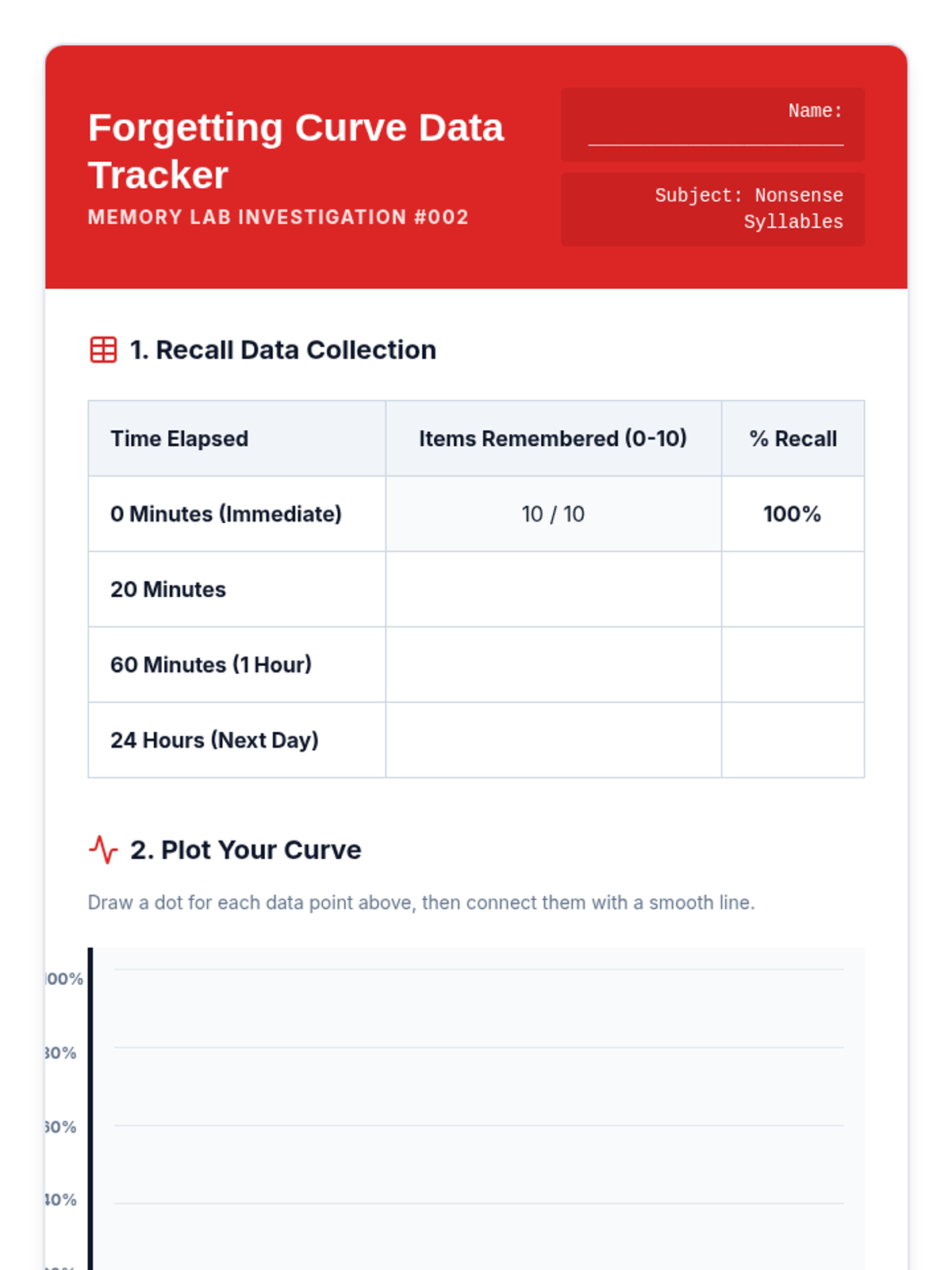
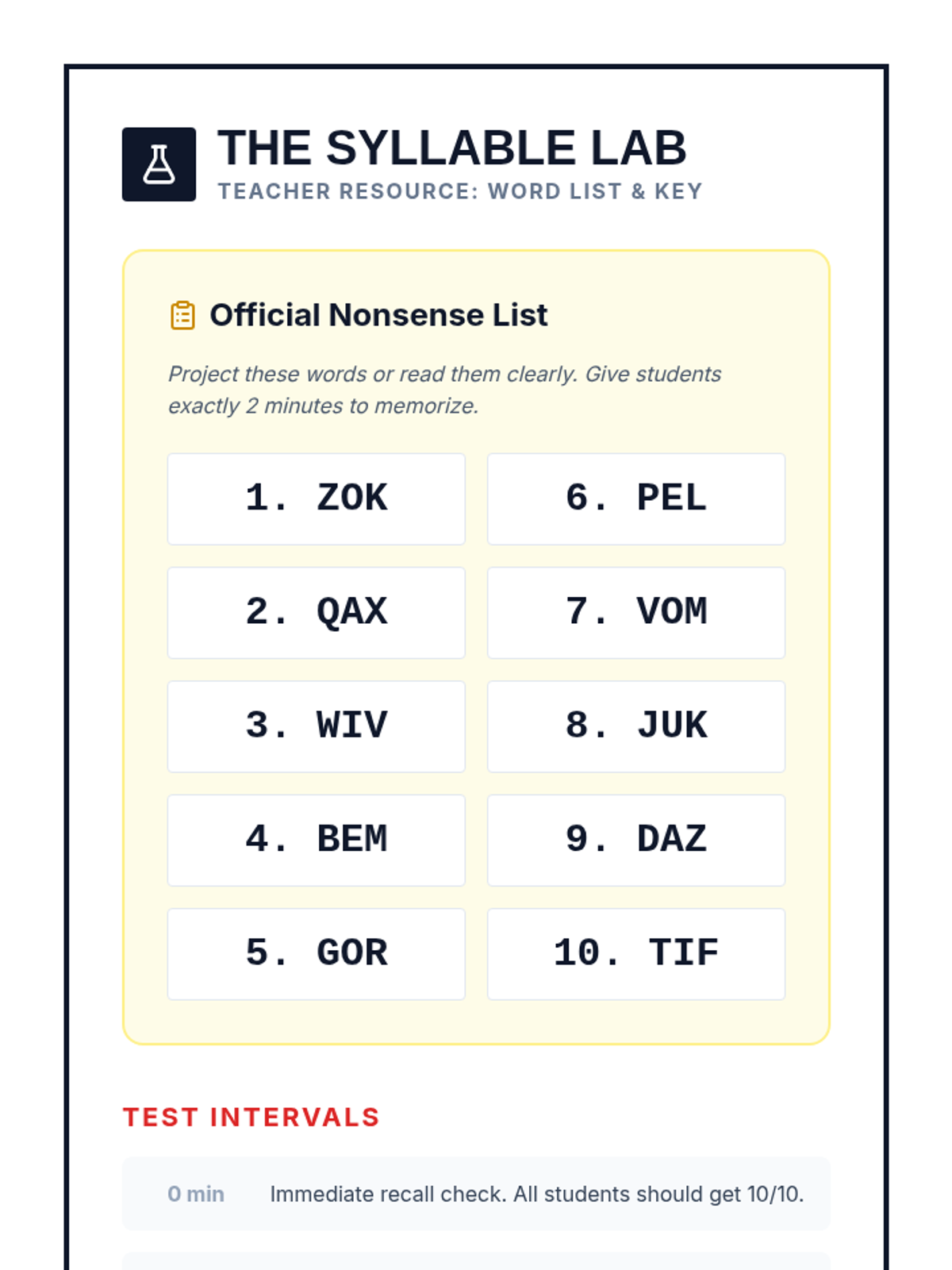
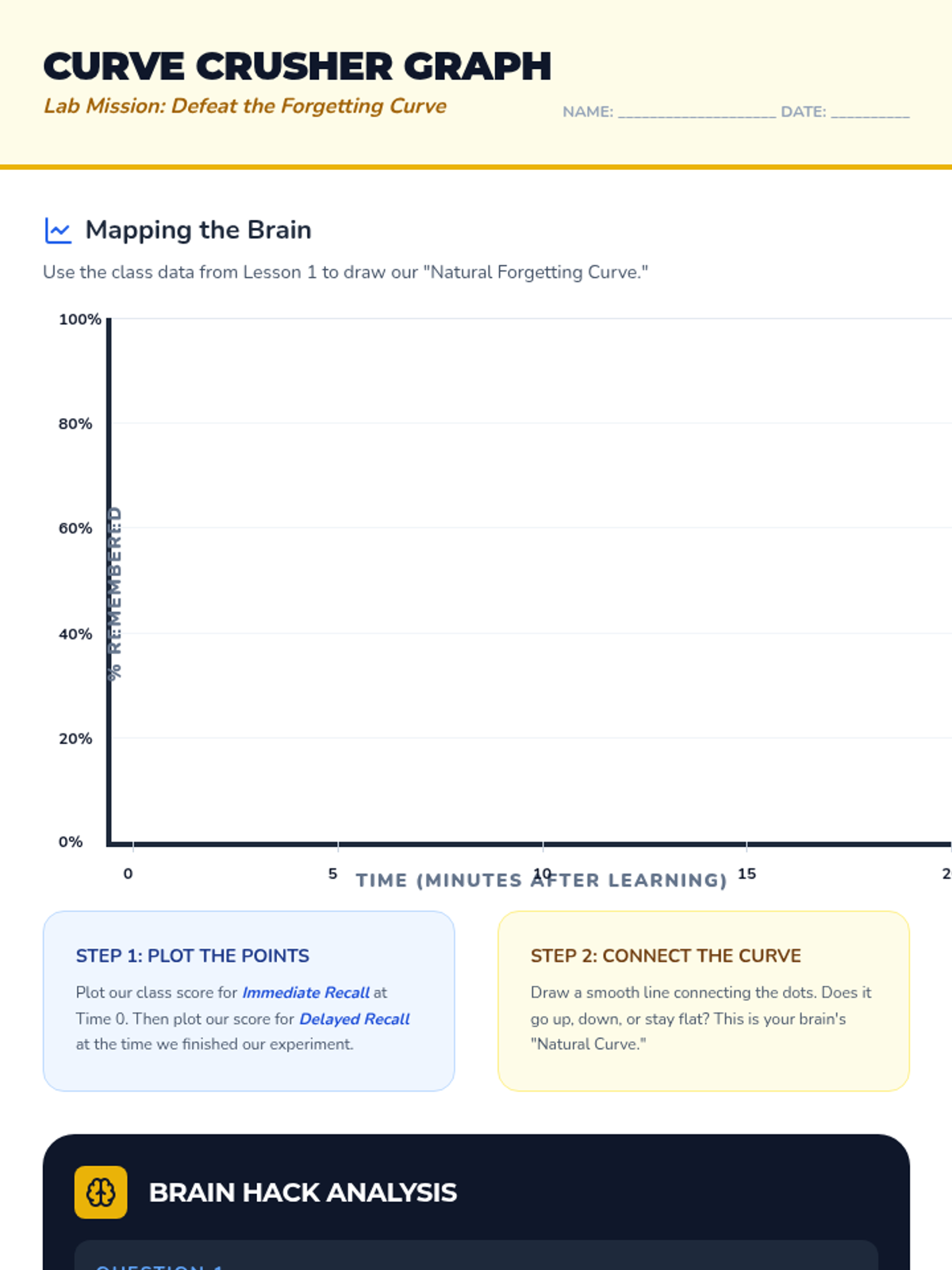
Students track their recall of nonsense syllables over time to visualize information decay and plot their own forgetting curves.
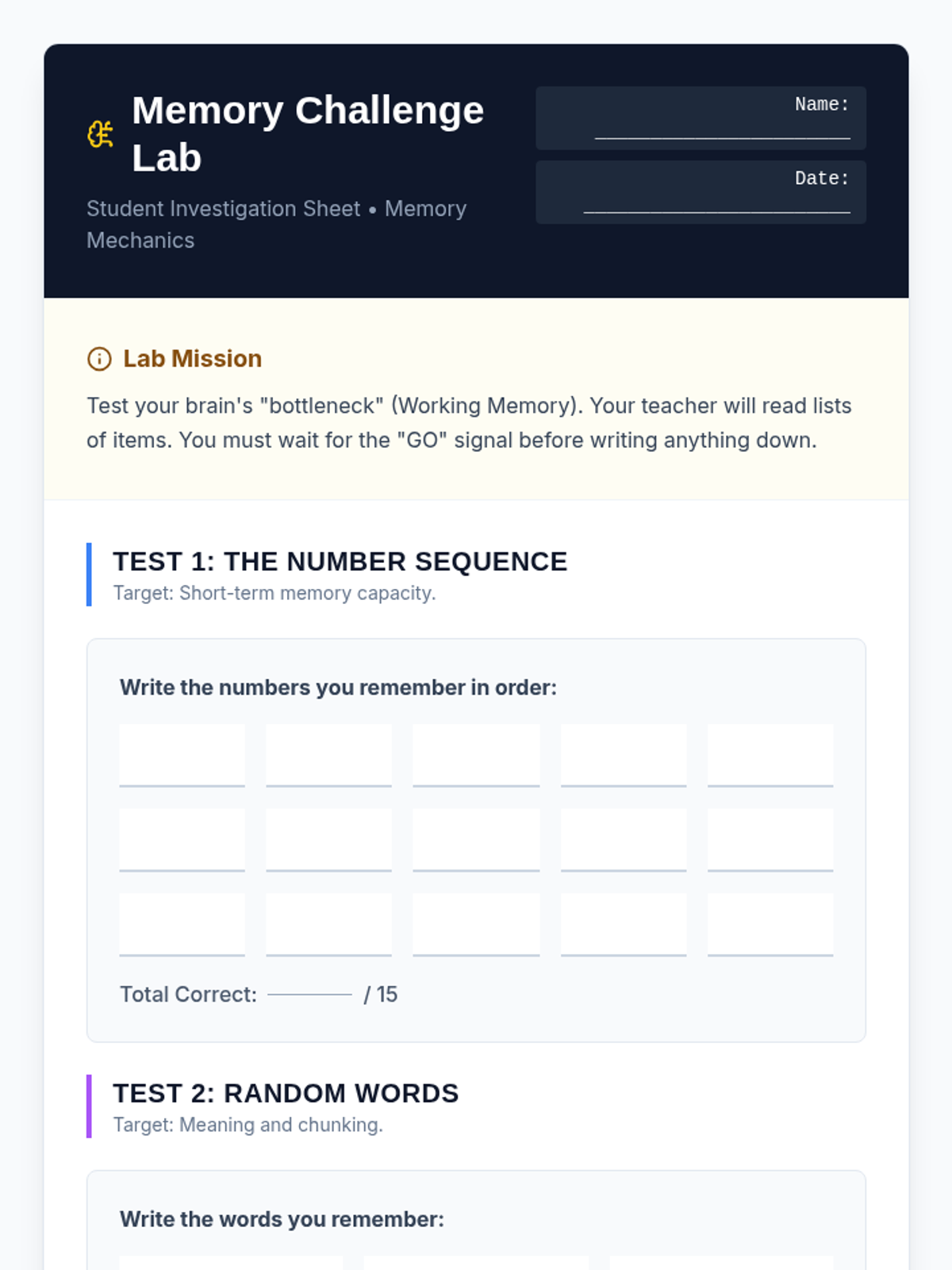
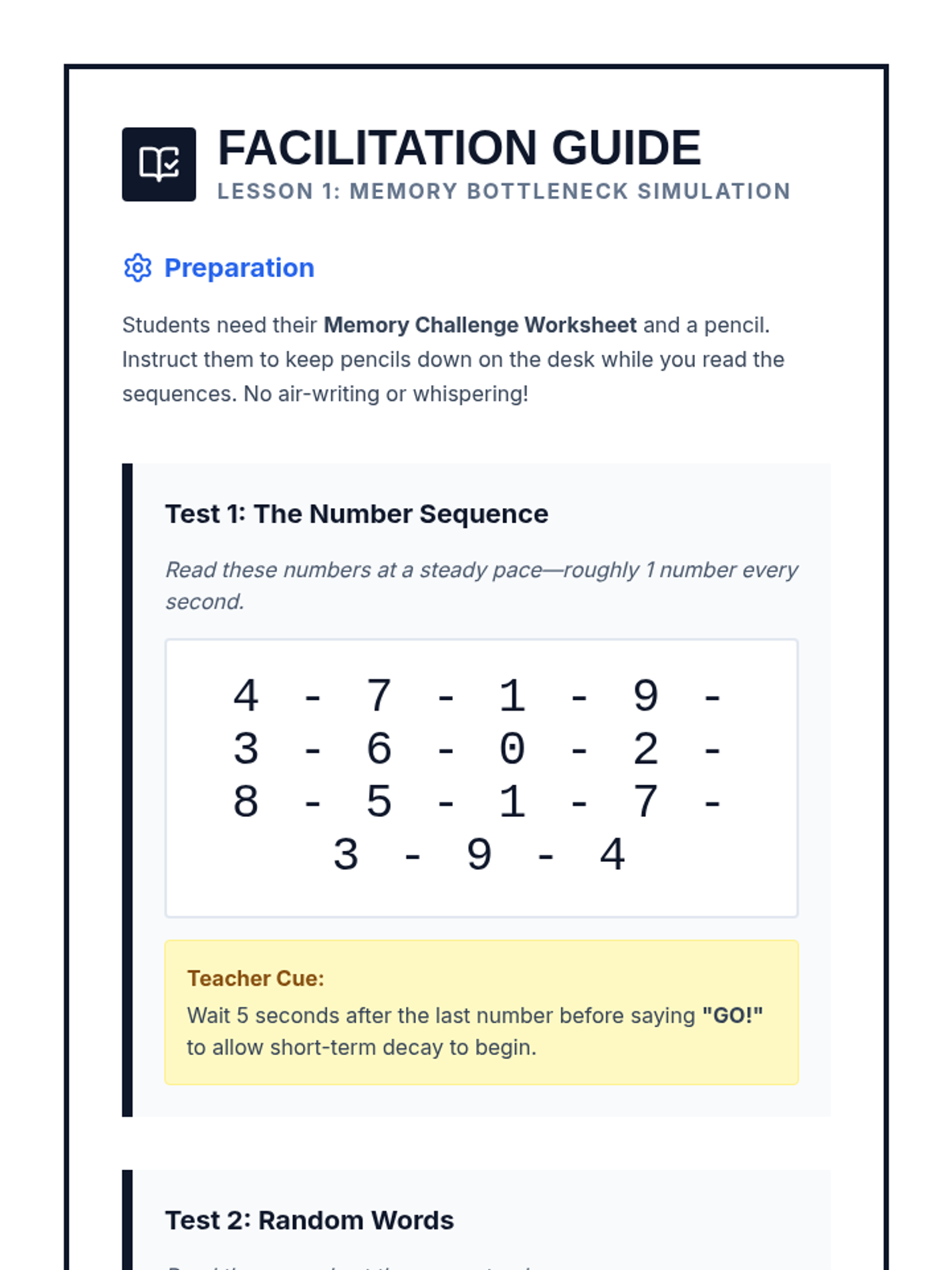
Students participate in memory challenges to distinguish between working memory limits and long-term storage, analyzing the 'bottleneck' of information processing.
Students synthesize their learning into a personal strategy toolkit to help them advocate for their own learning needs.
Students learn the standard intervals for spaced repetition and practice mapping out an efficient review schedule.
Students compare passive re-reading to active recall, discovering that the effort of retrieving information strengthens neural pathways.
Students visualize the Forgetting Curve and simulate how reviewing at specific intervals 'resets' memory.
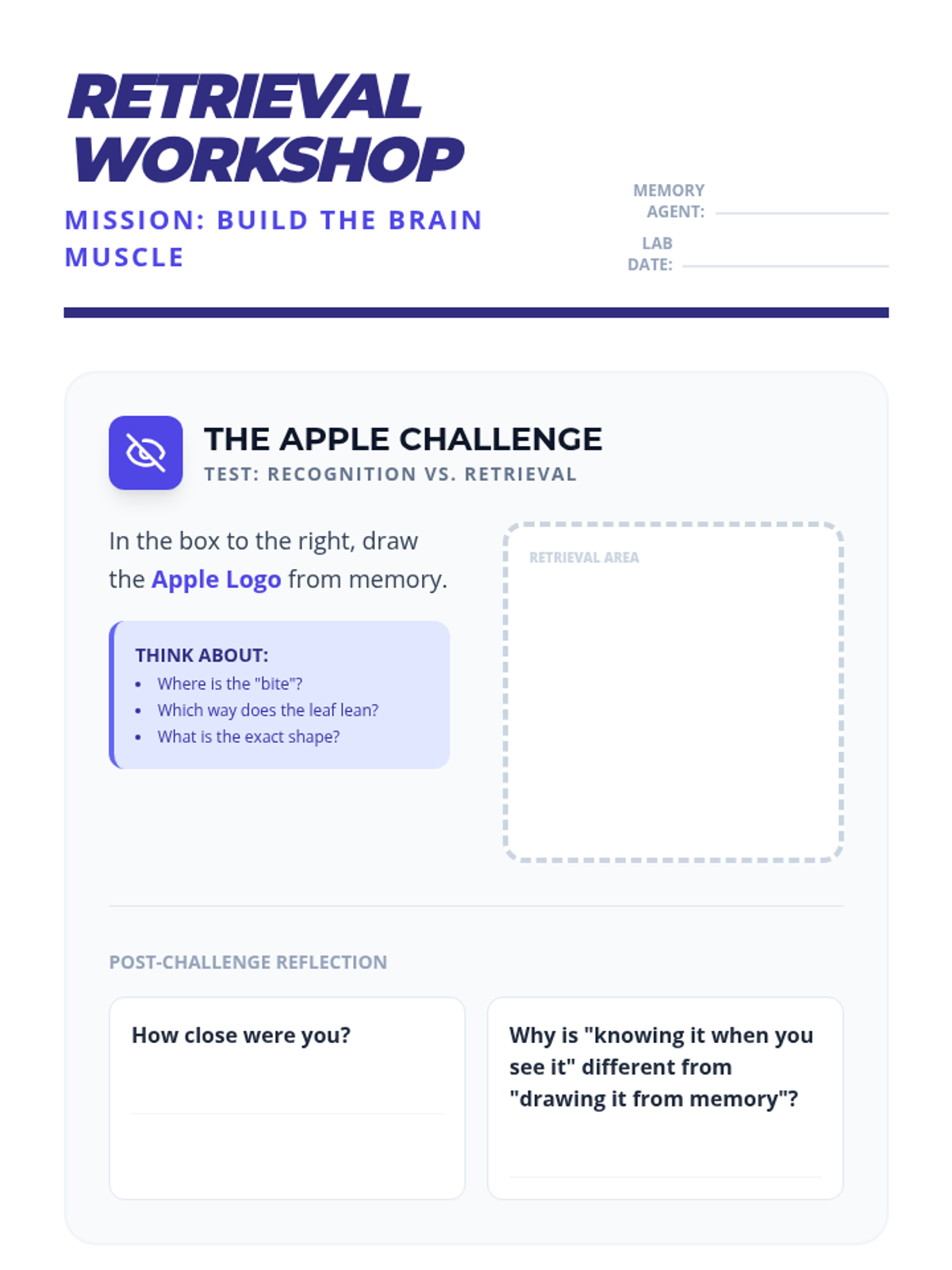
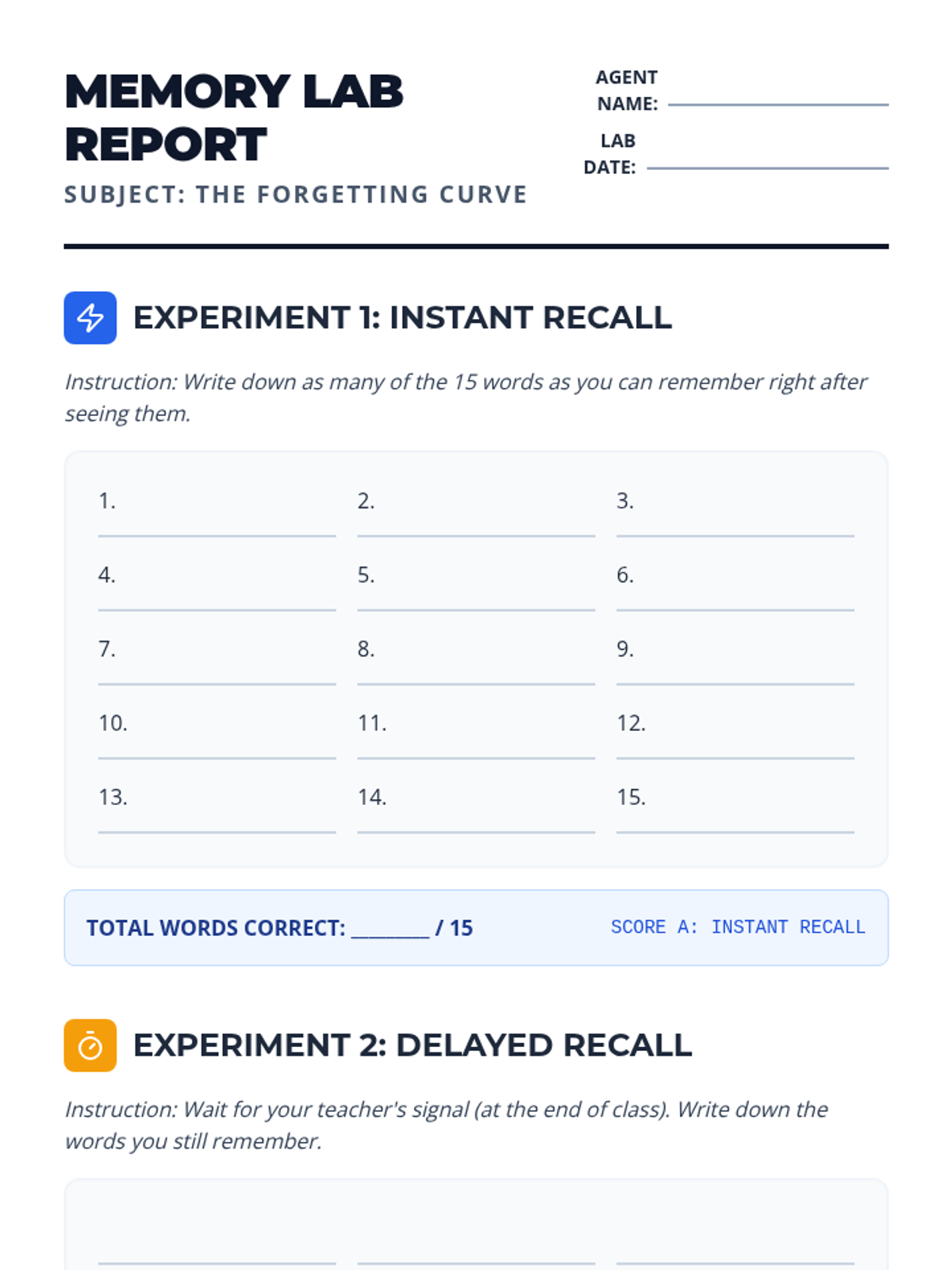
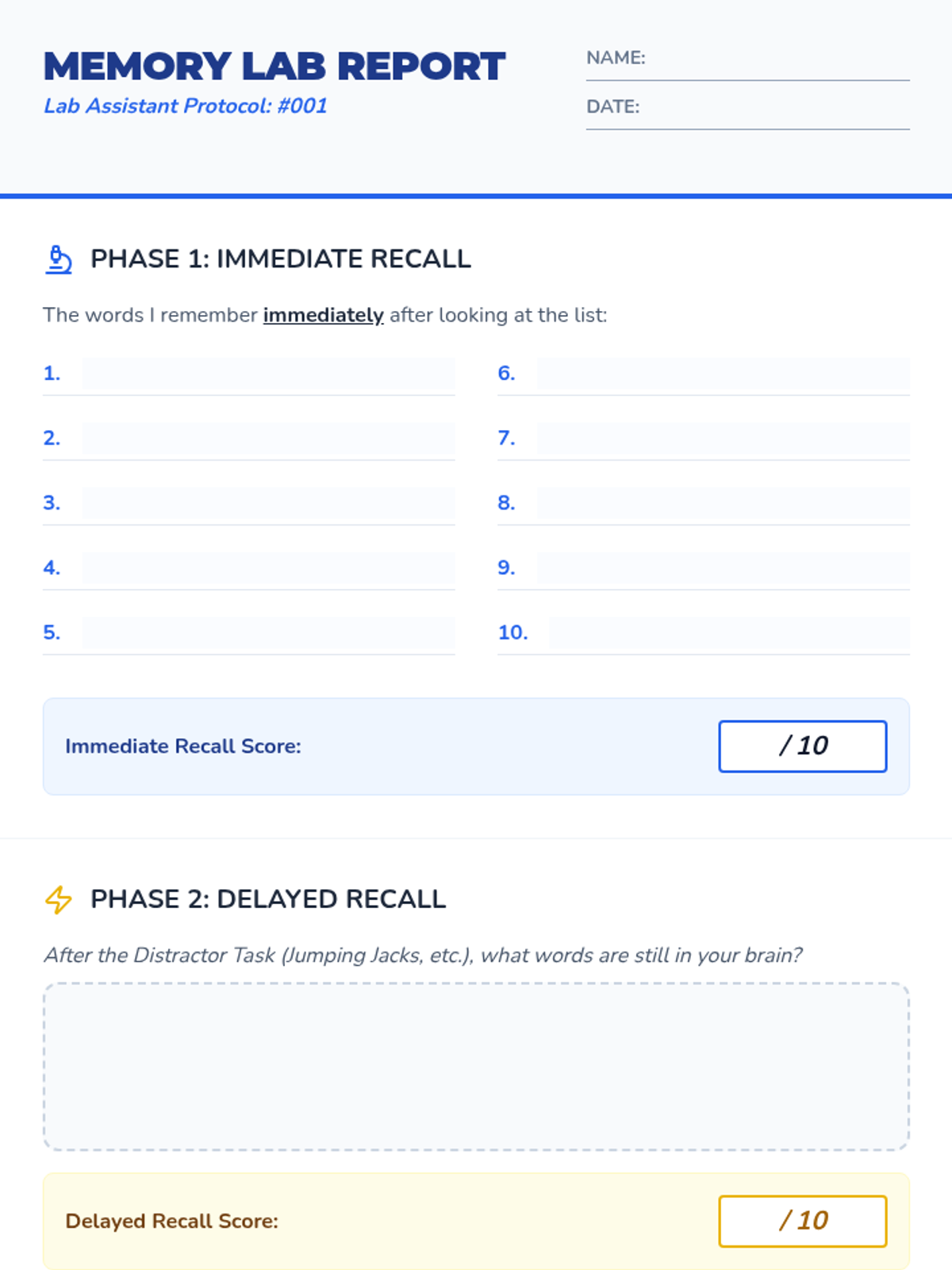
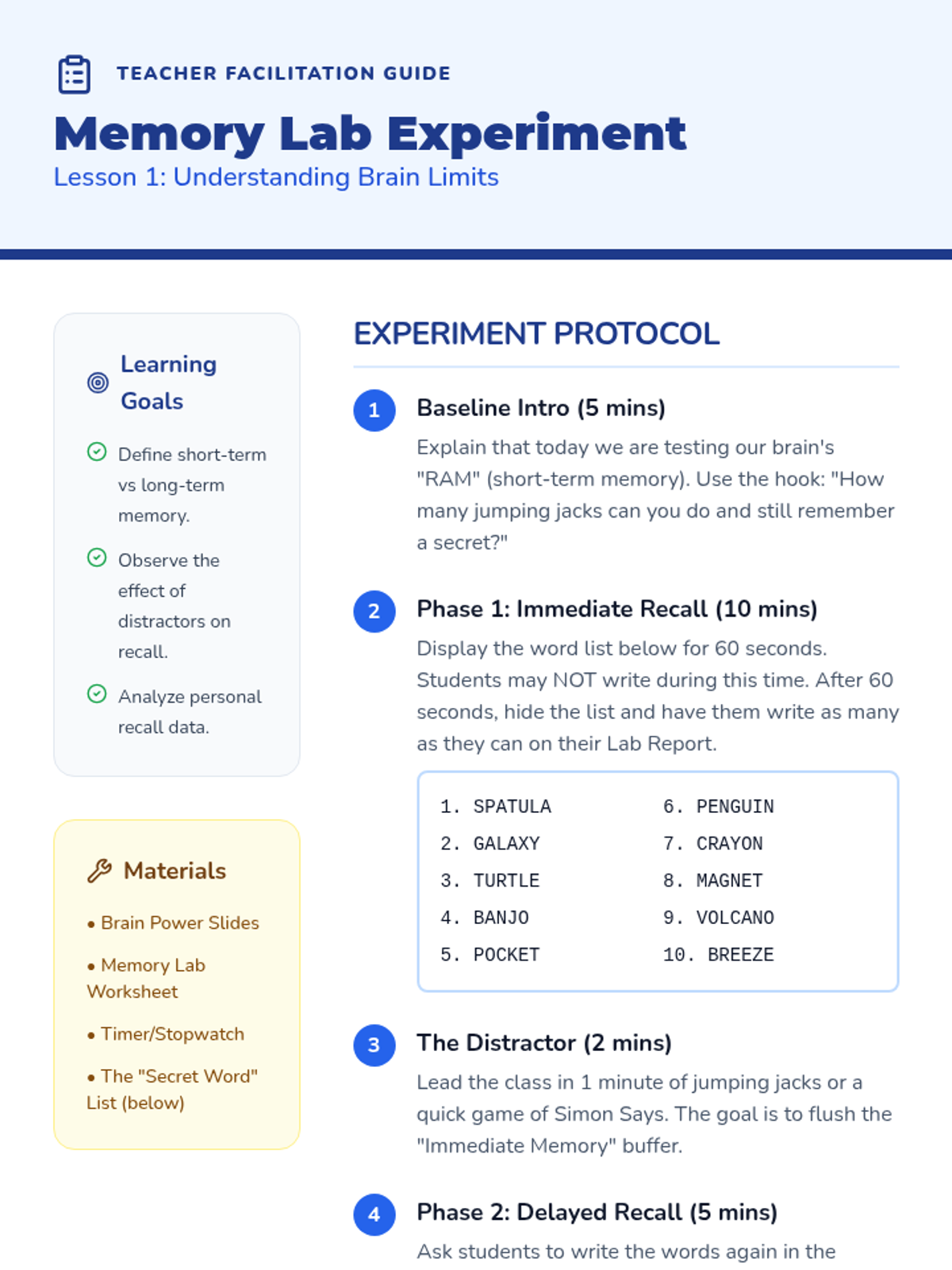
Students participate in a memory baseline activity to test immediate versus delayed recall, analyzing how information is lost without reinforcement.
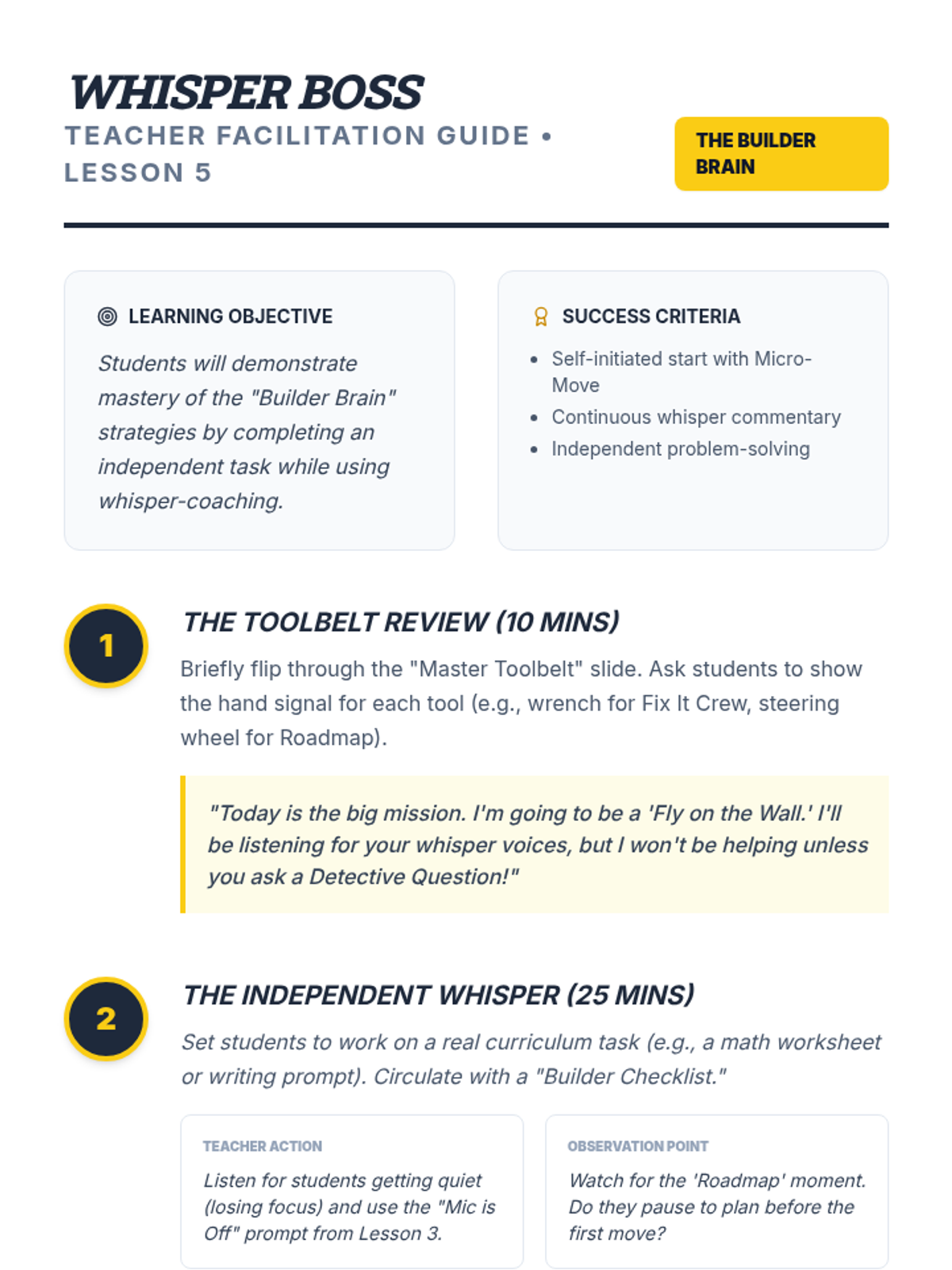
Students apply the breakdown and narration techniques to a real independent work session. The teacher circulates to listen for 'whisper coaching' as students initiate and sustain their work.
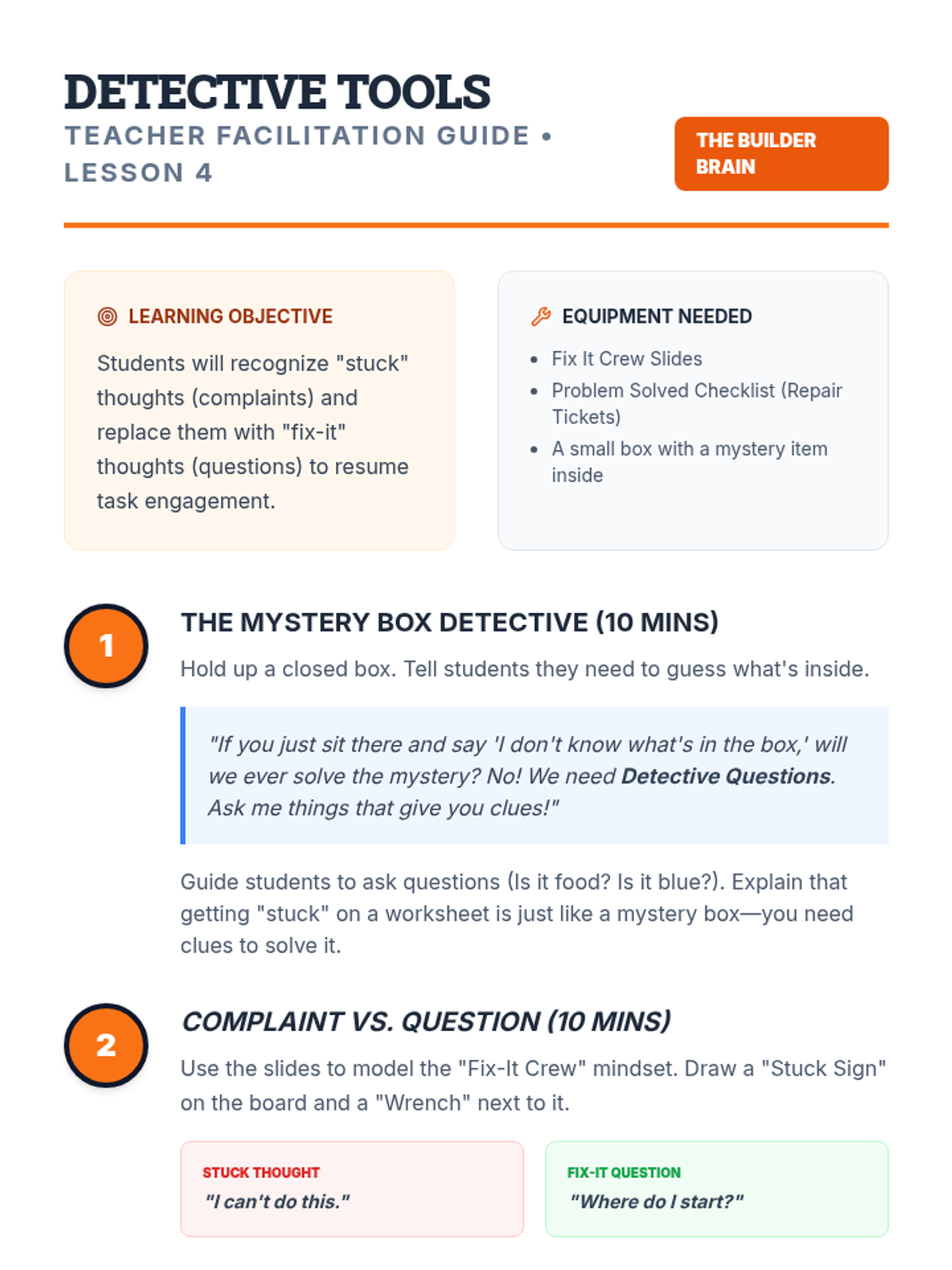
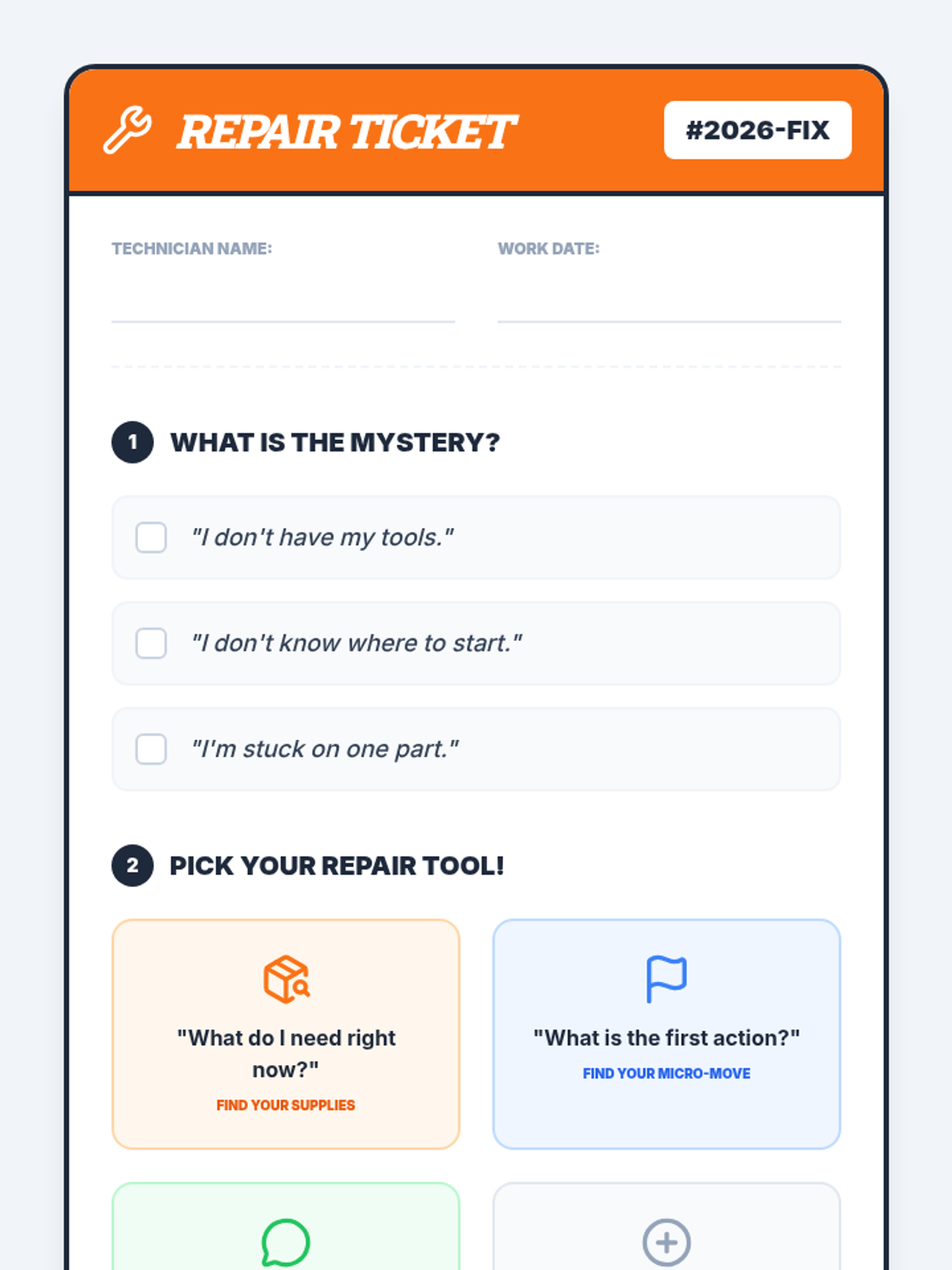
Students learn to ask themselves specific questions when they get stuck. This shifts the internal monologue from complaint to inquiry and problem-solving.
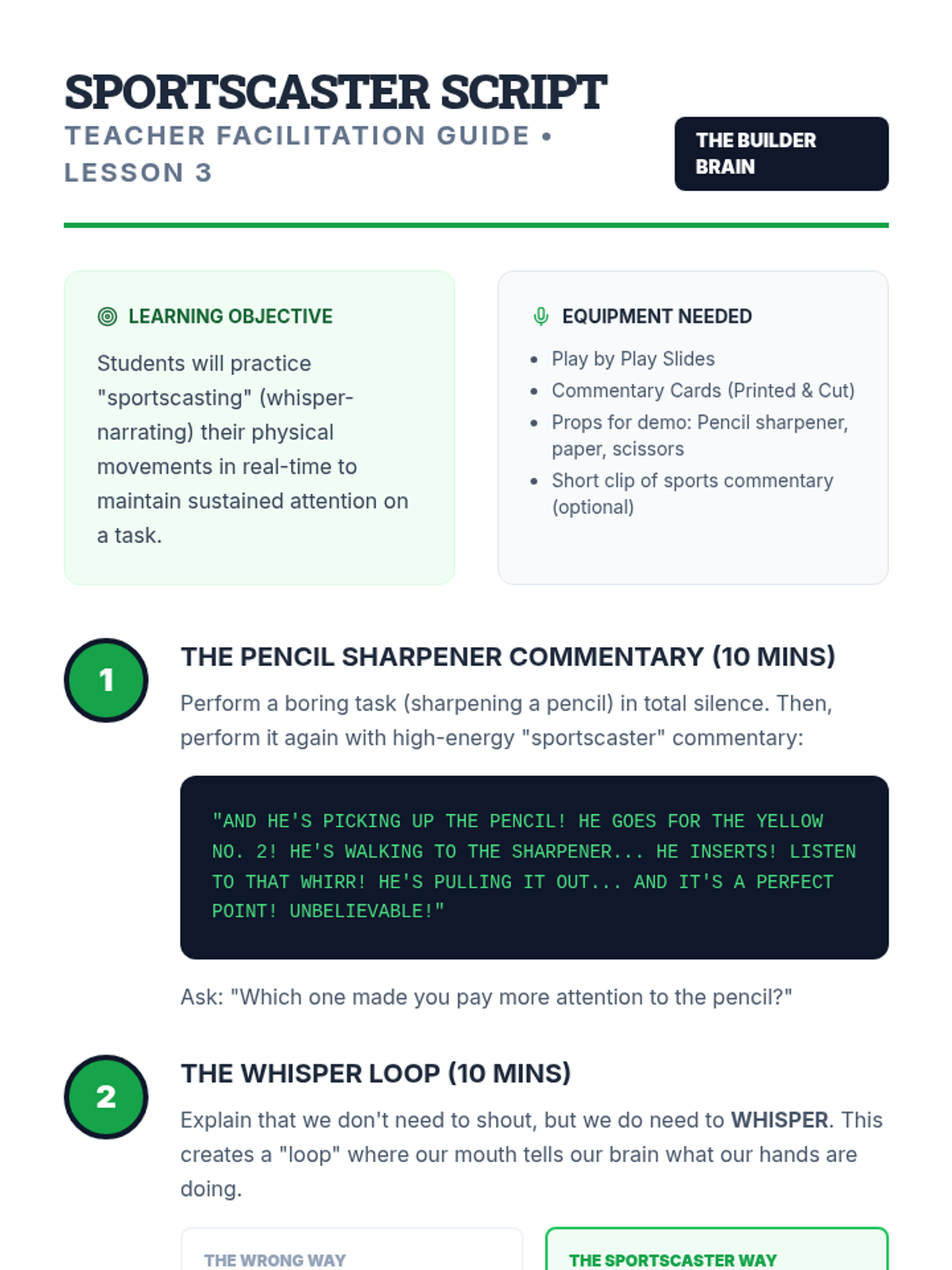
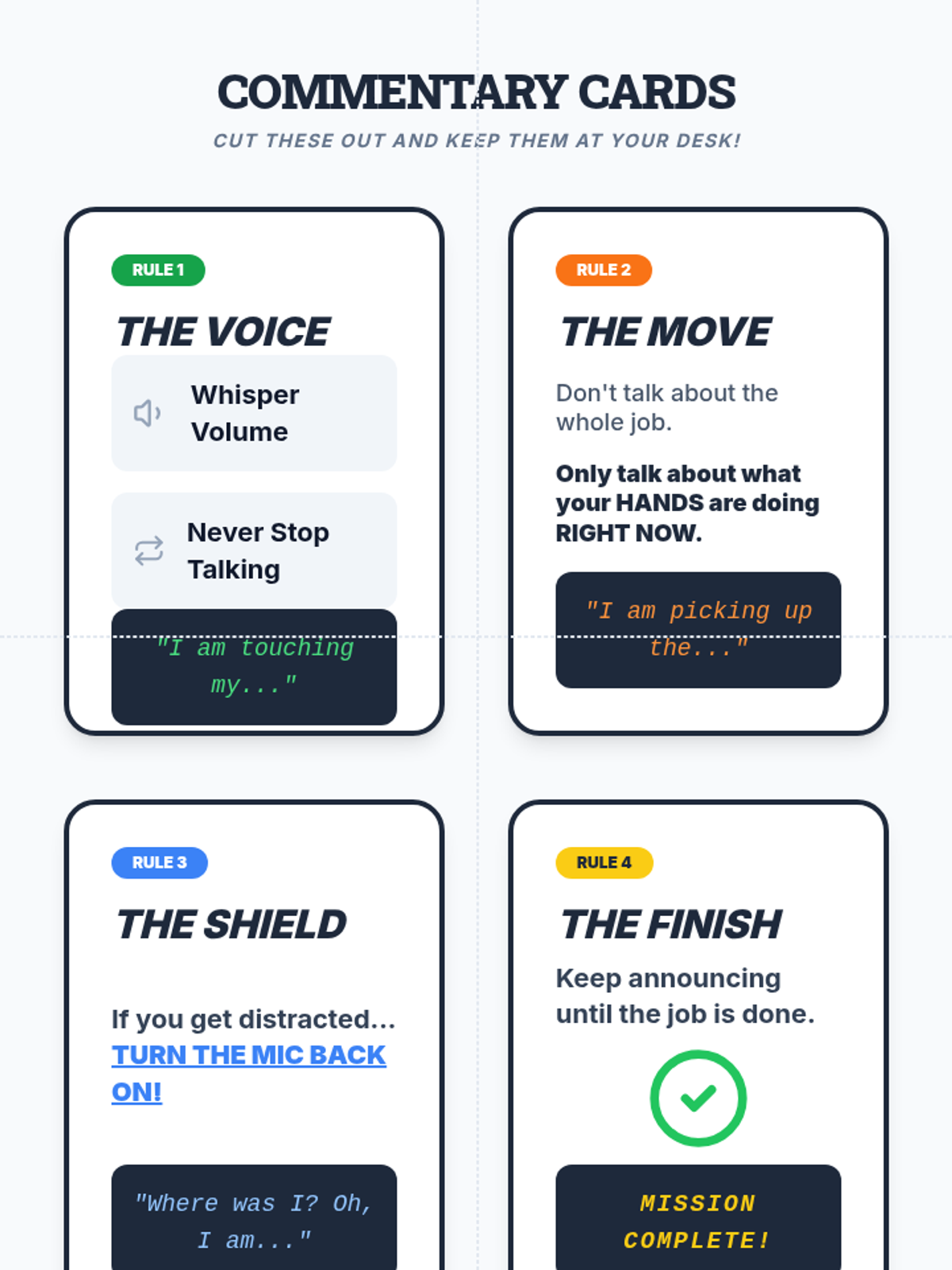
Students practice whispering their actions as they do them, similar to a sportscaster announcing a game. This continuous verbal loop helps prevent distraction and keeps the student engaged.
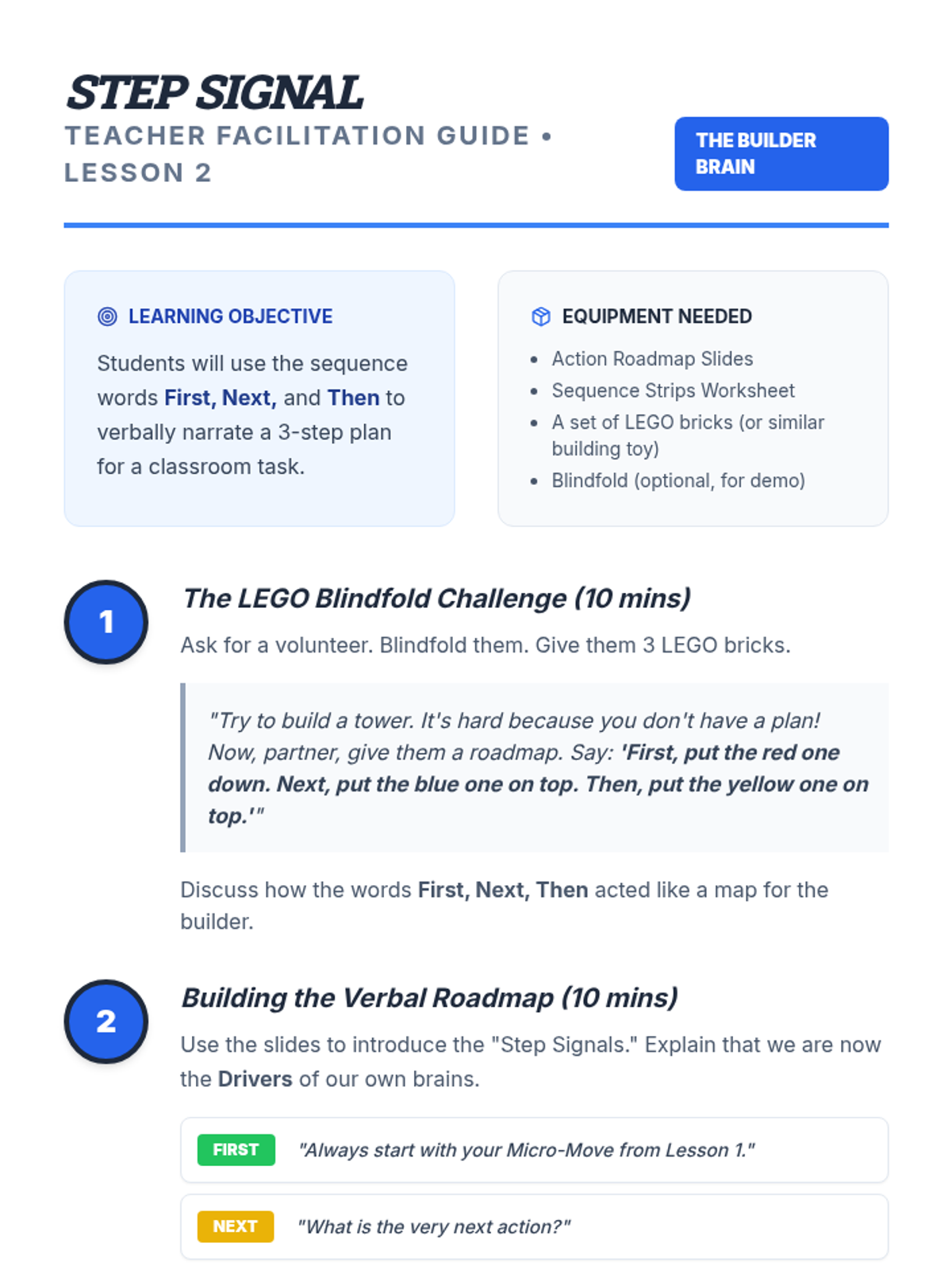
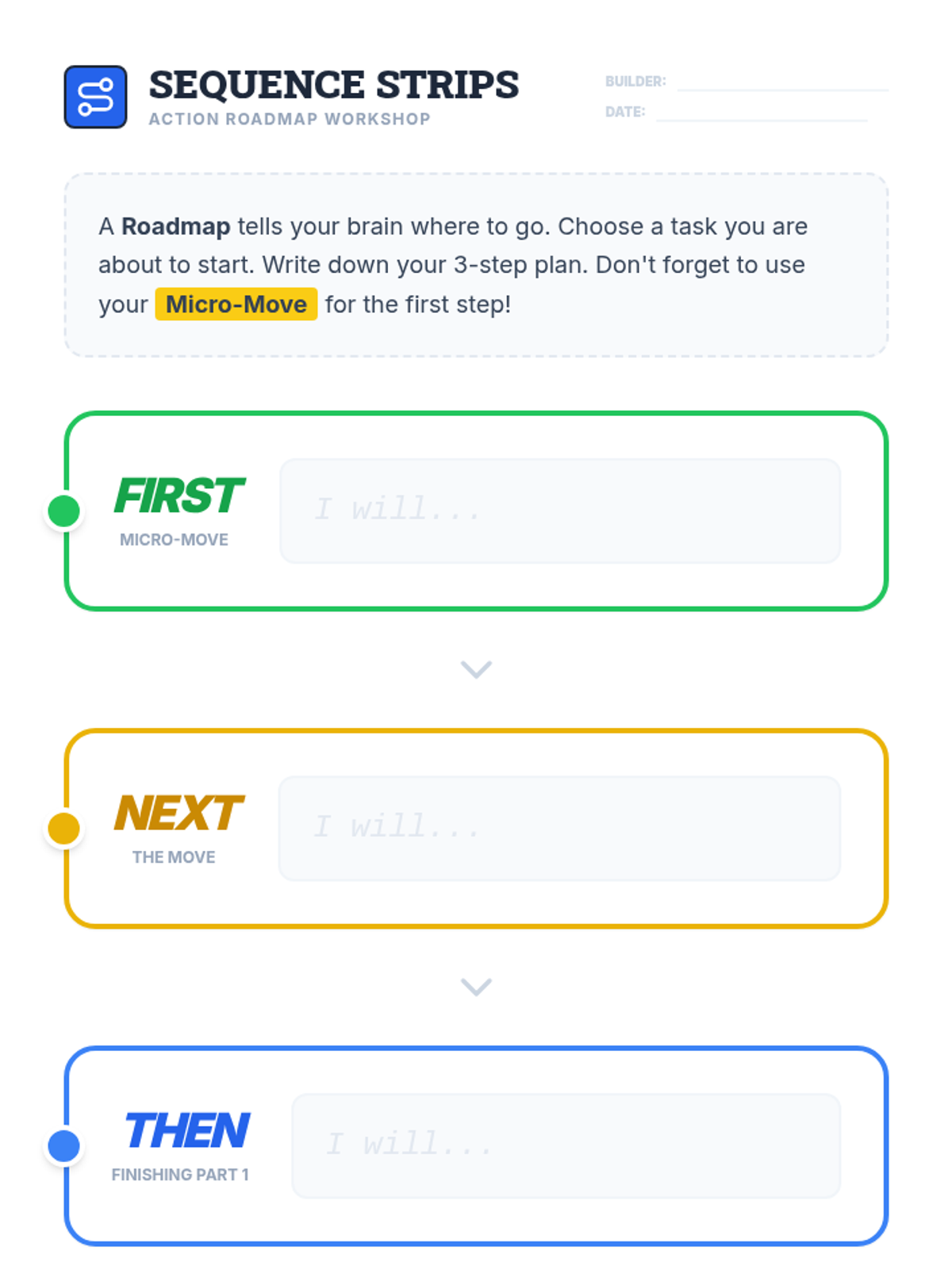
Students practice using the words 'First,' 'Next,' and 'Then' to create a verbal roadmap. They verbally plan a simple classroom routine, ensuring they can narrate the order of operations before beginning.
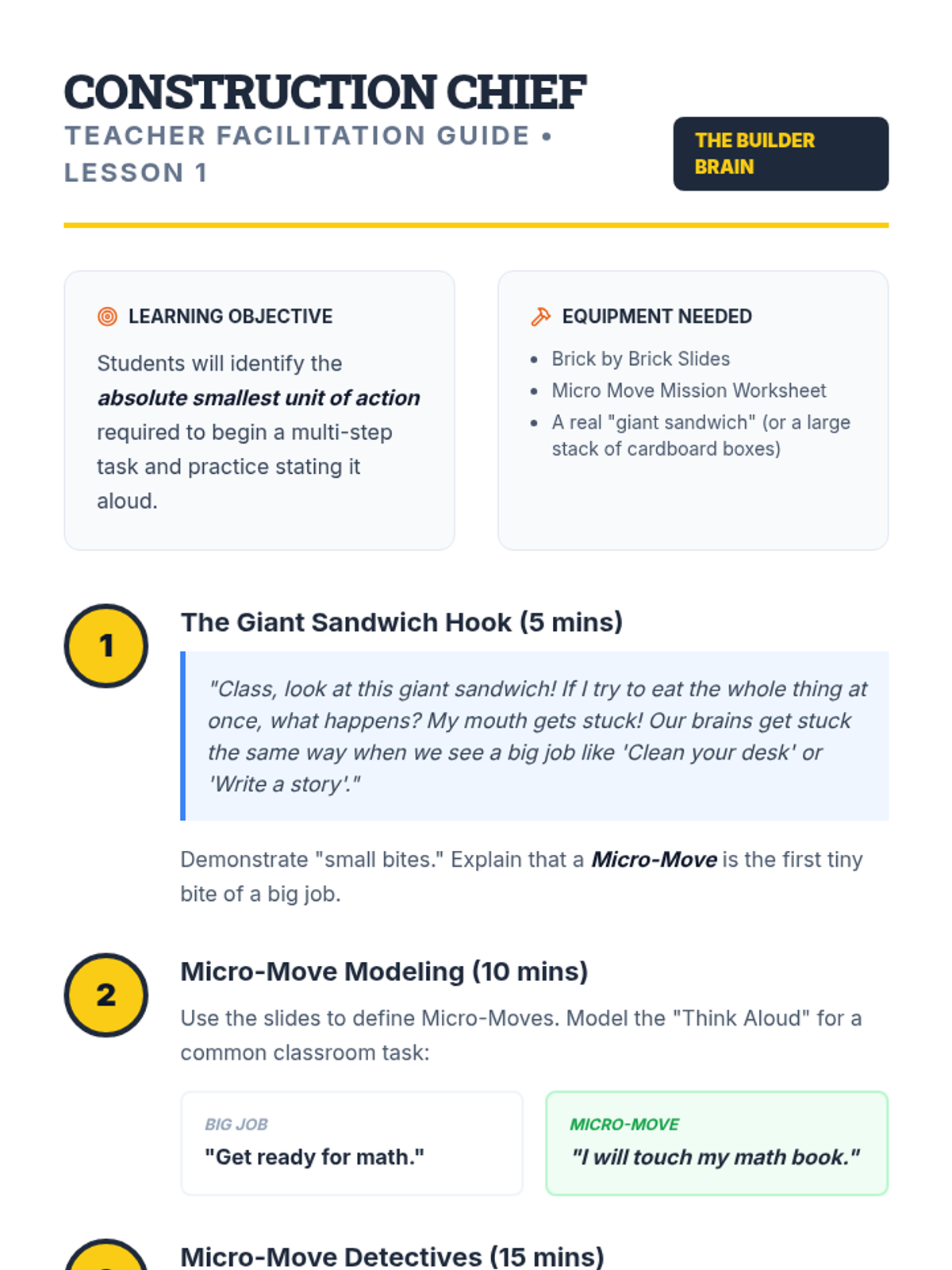
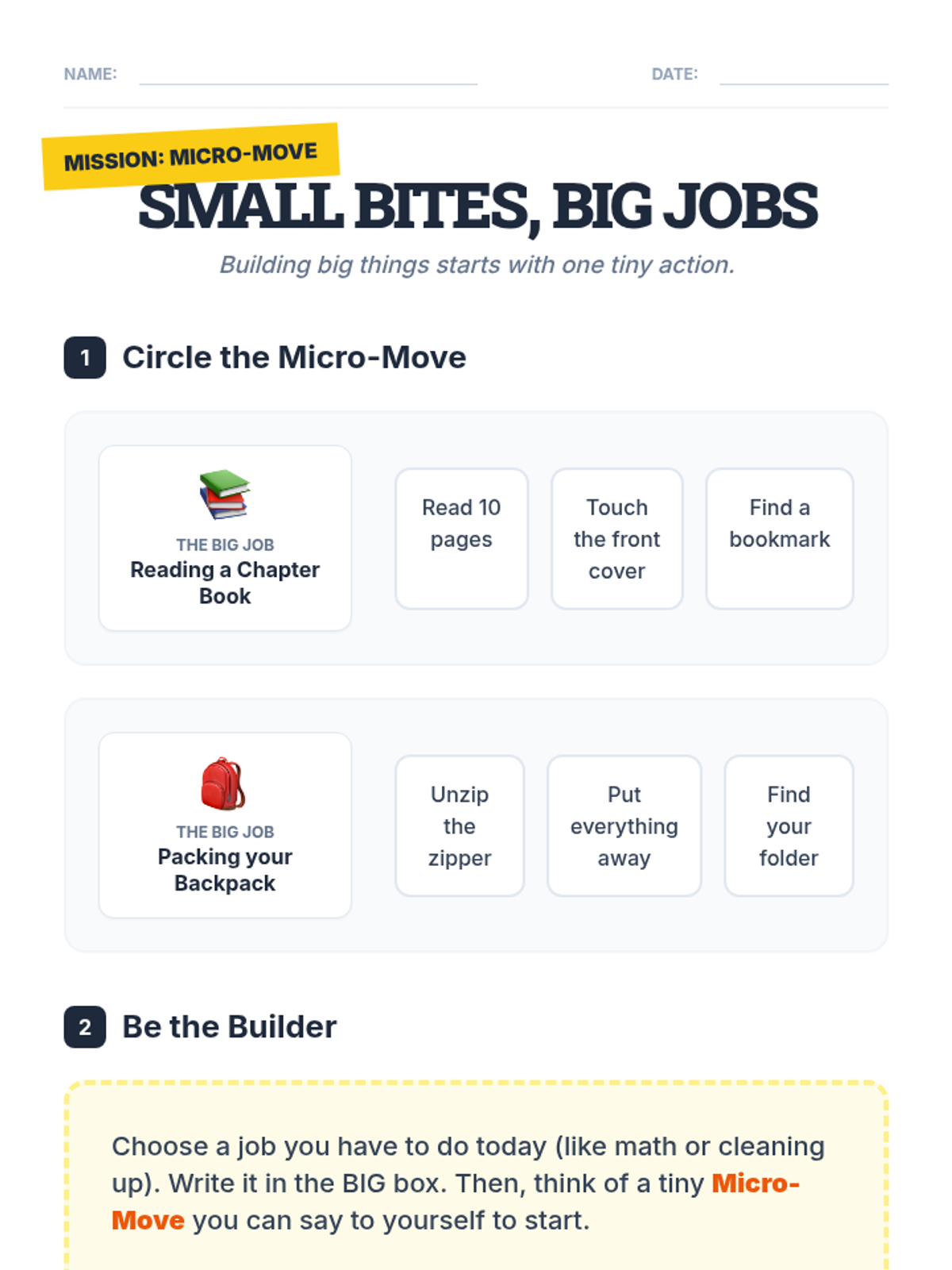
Students learn to identify the absolute smallest unit of action required to begin a task. They practice ignoring the whole assignment to focus solely on the physical action needed to start.