Identifies mental health crises and suicide warning signs while developing personal safety plans and grounding techniques. Equips users with peer gatekeeper skills and direct pathways to professional crisis resources and hotlines.
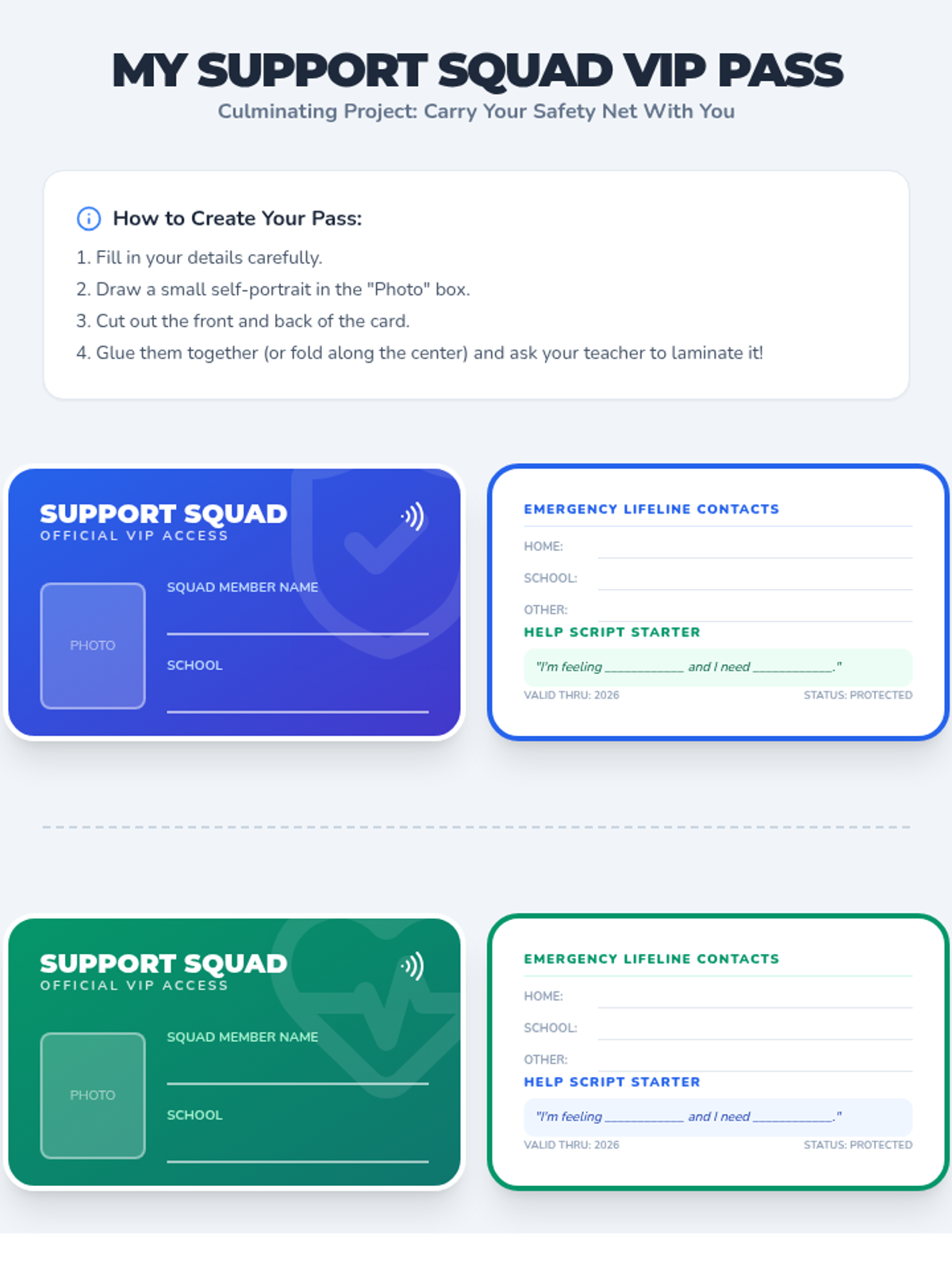
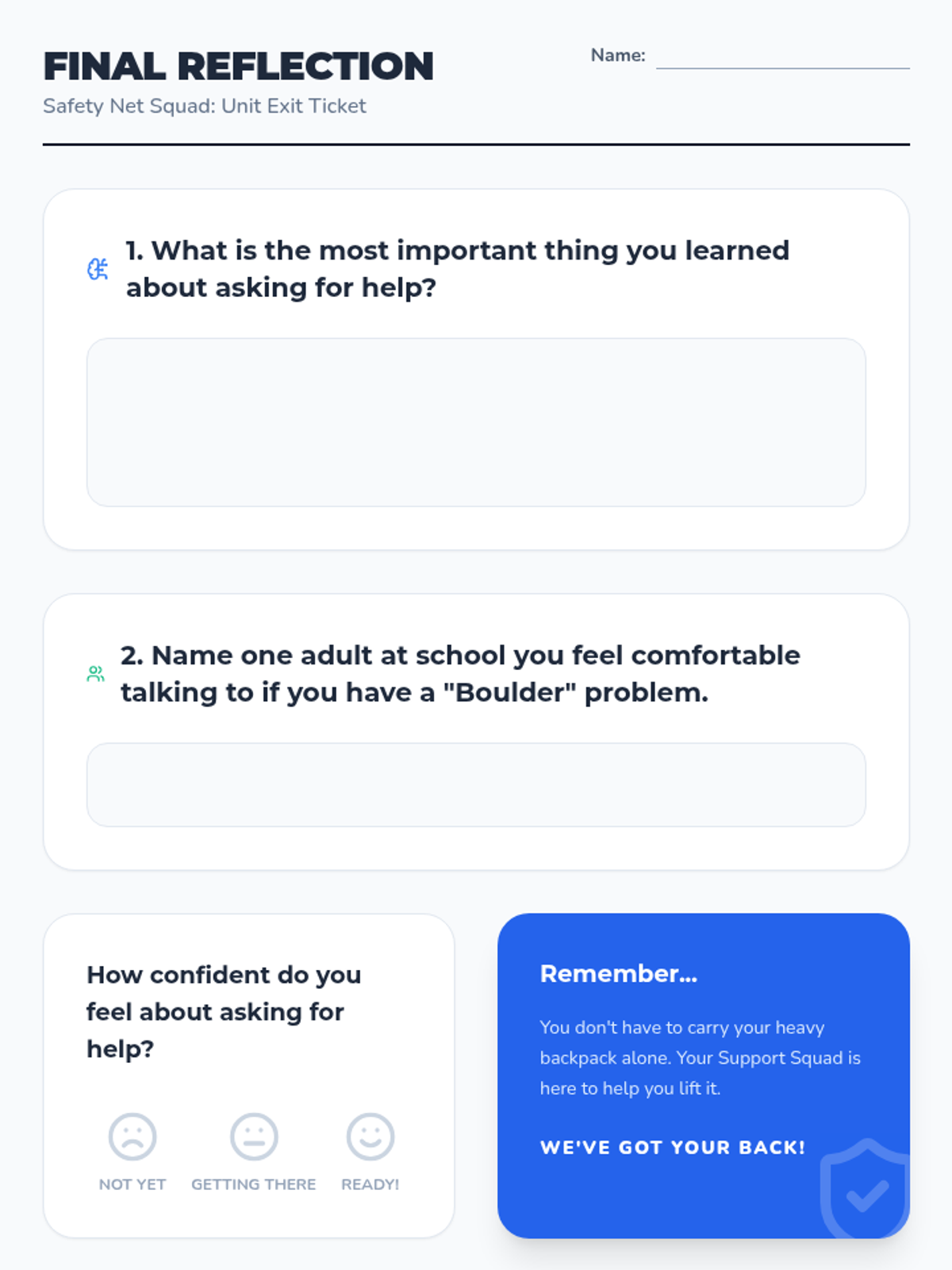
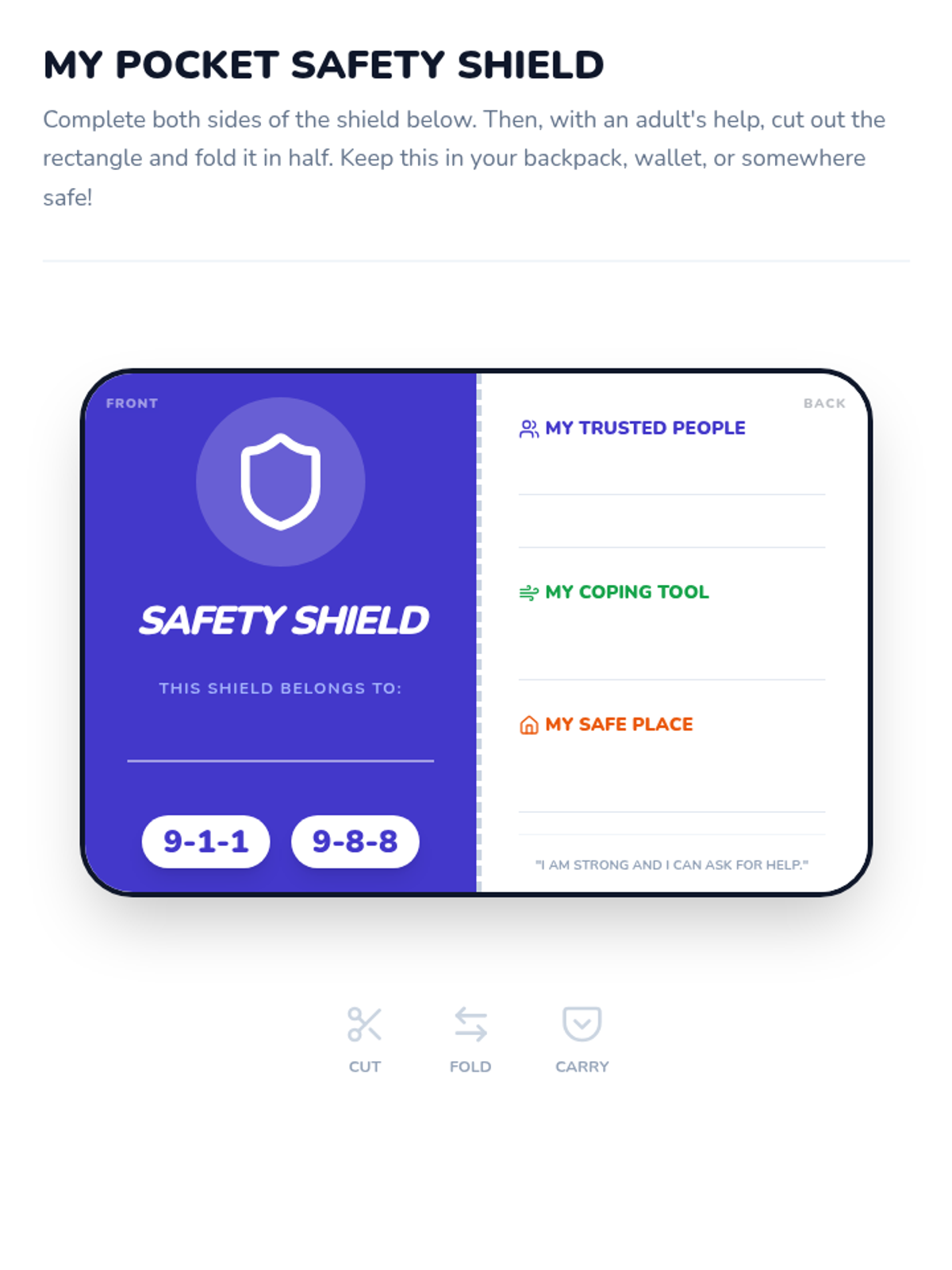
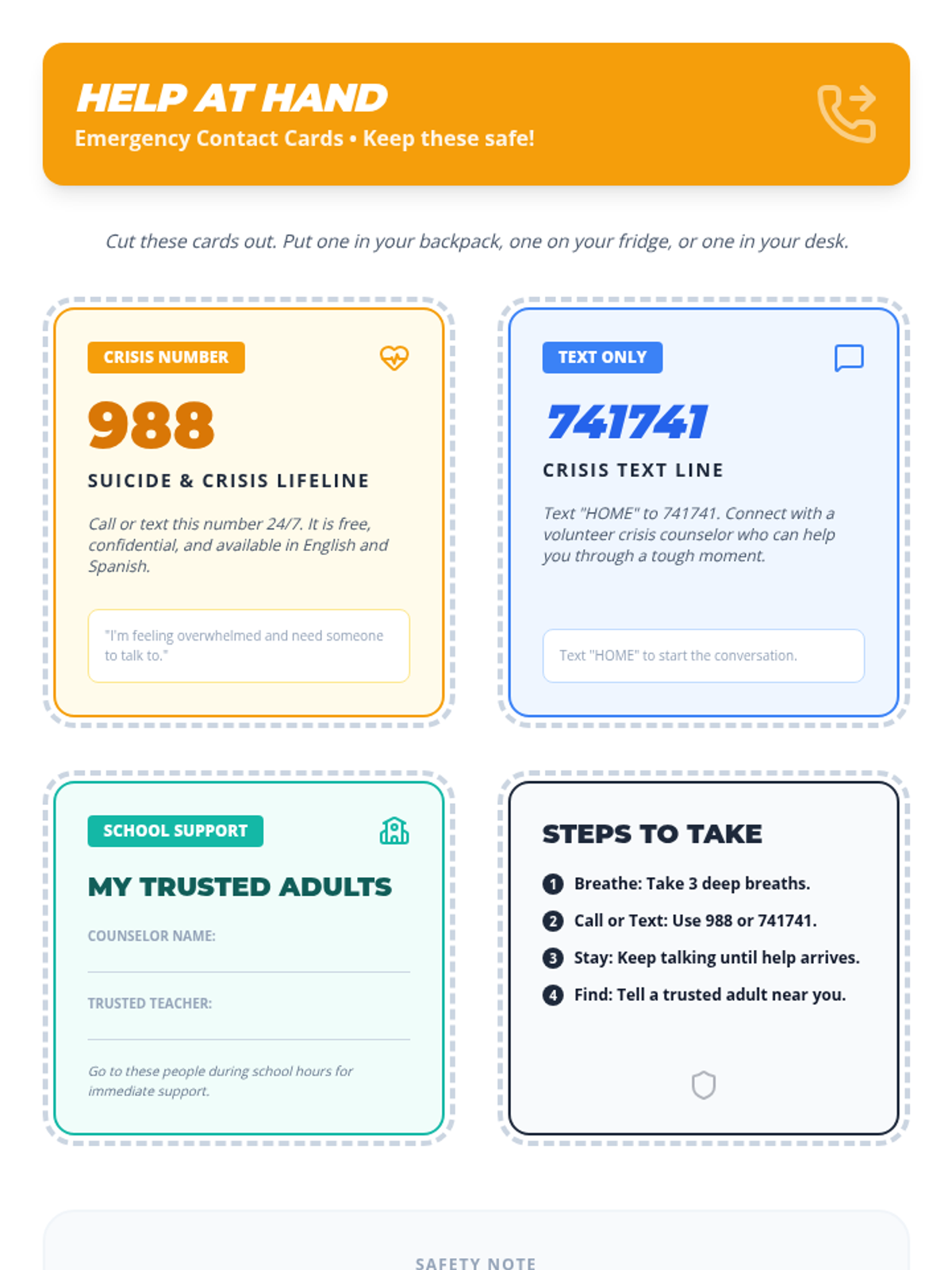
In this culminating activity, students synthesize their learning by creating a portable reference card. The card includes the names of their trusted adults, the location of the counselor's office, and a personal script for asking for assistance.
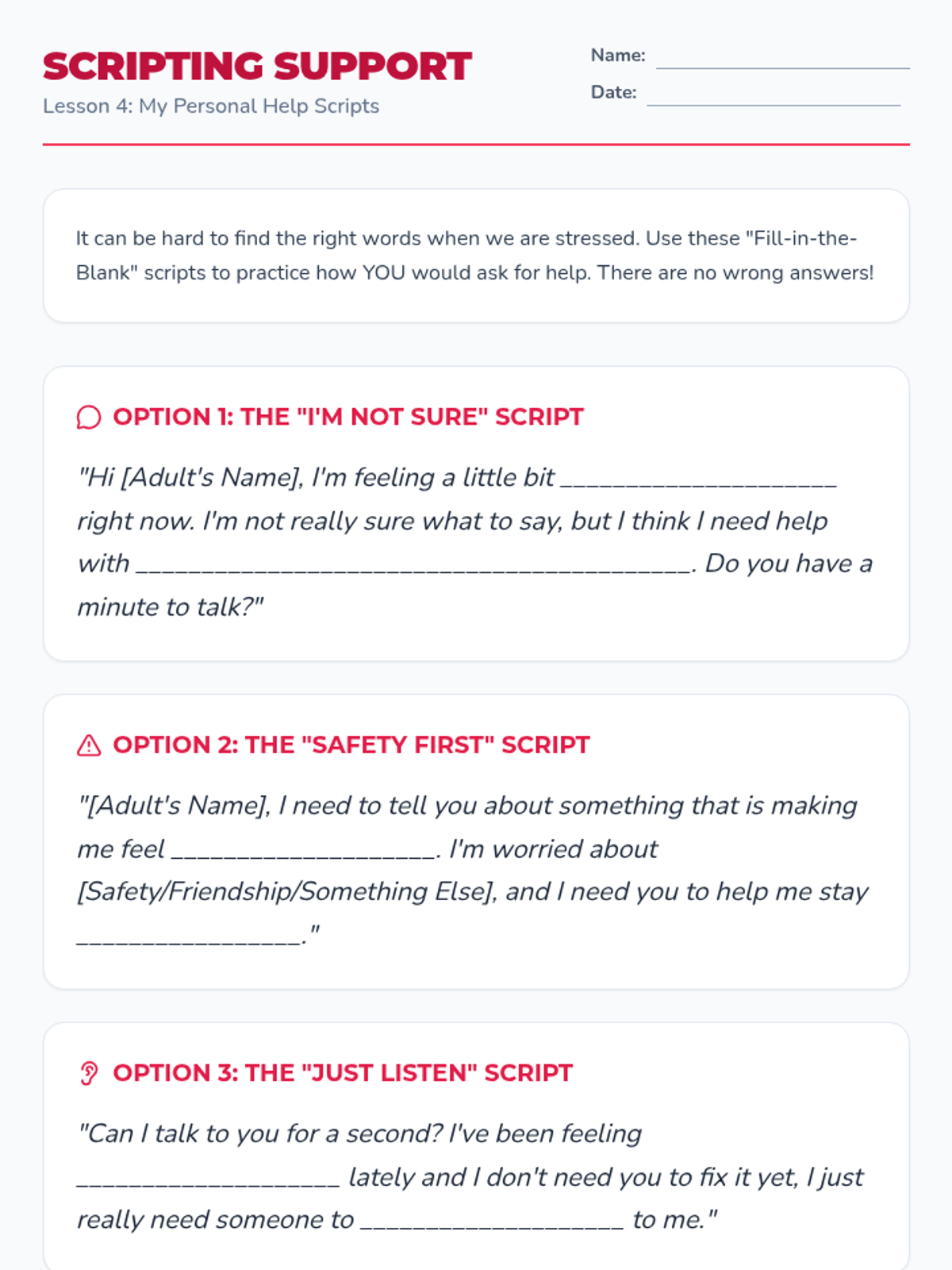
Students practice sentence starters and communication scripts for approaching an adult to ask for help. They role-play overcoming the fear or embarrassment that often prevents students from speaking up about emotional distress.
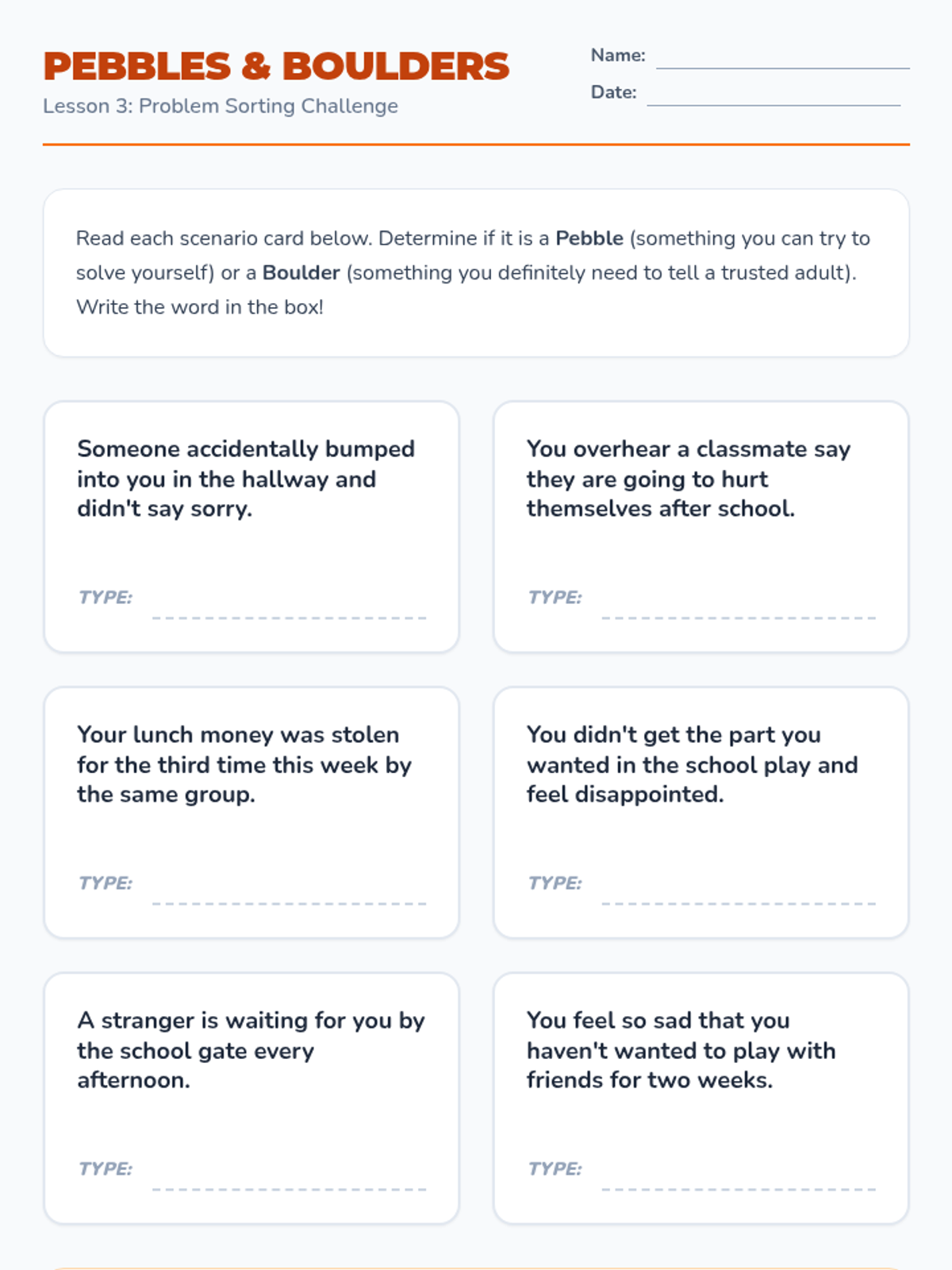
Students categorize scenarios into 'problems to solve independently' and 'problems requiring adult help.' The lesson emphasizes that mental health struggles, safety concerns, and bullying always require seeking external resources.
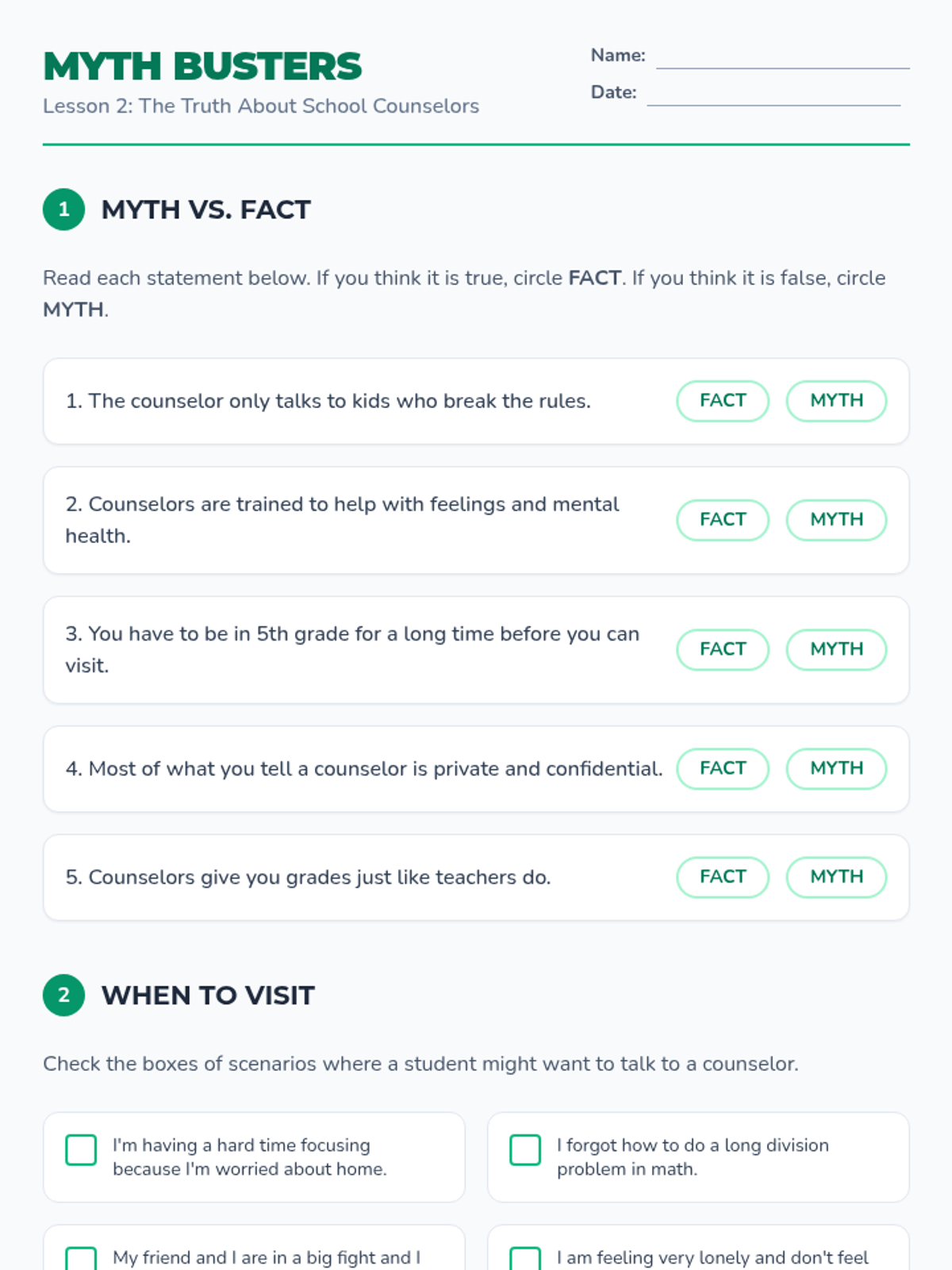
This lesson clarifies the specific role of a school counselor compared to a teacher or principal. Students learn the logistics of how to make an appointment, where the office is located, and the types of confidential discussions that can happen there.
Students create a portable 'Safety Shield' card containing their trusted adults, emergency numbers, and a coping strategy.
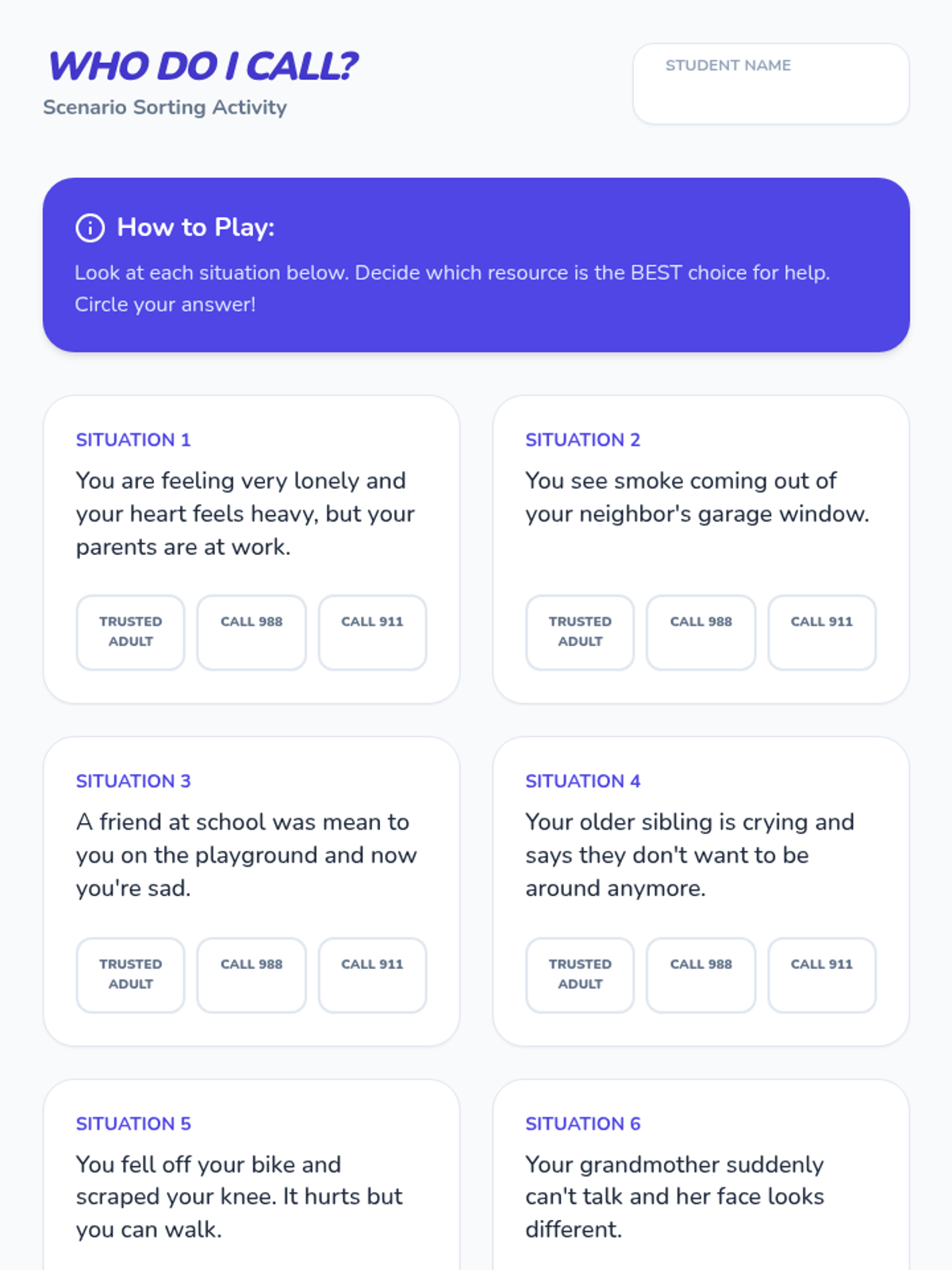
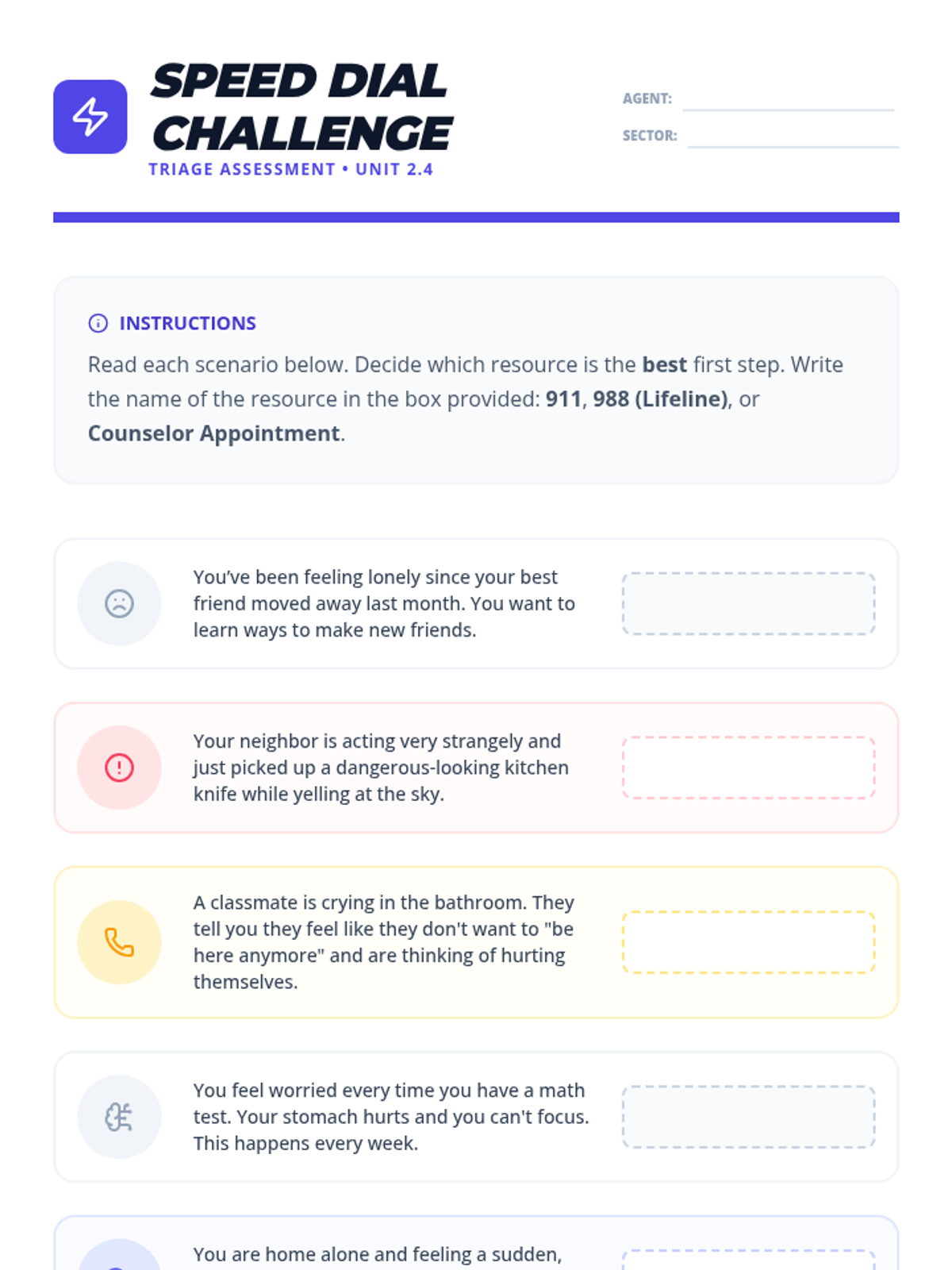
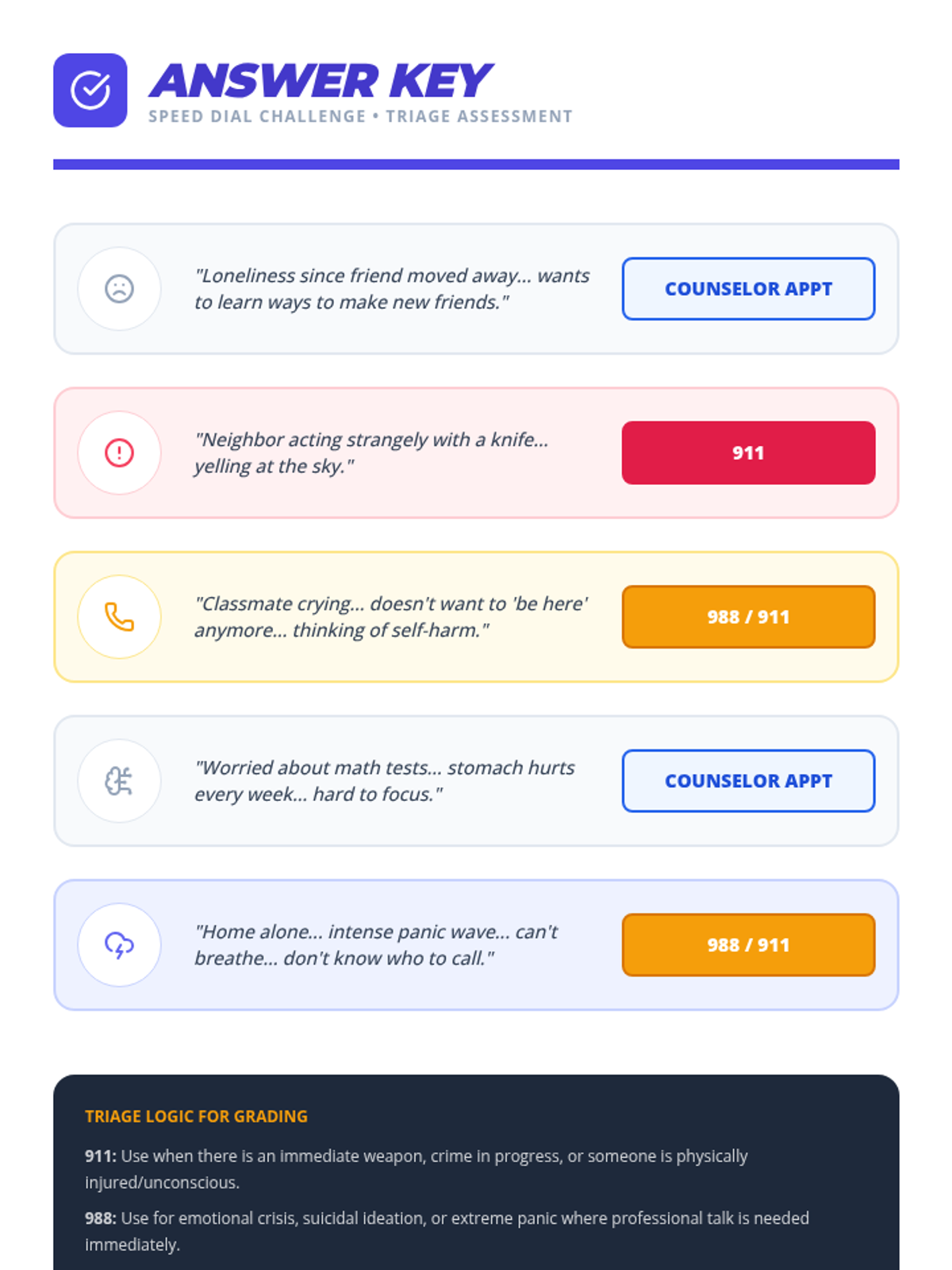
Analyzing scenarios to determine the appropriate resource (911, 988, or a trusted adult) based on the severity and type of situation.
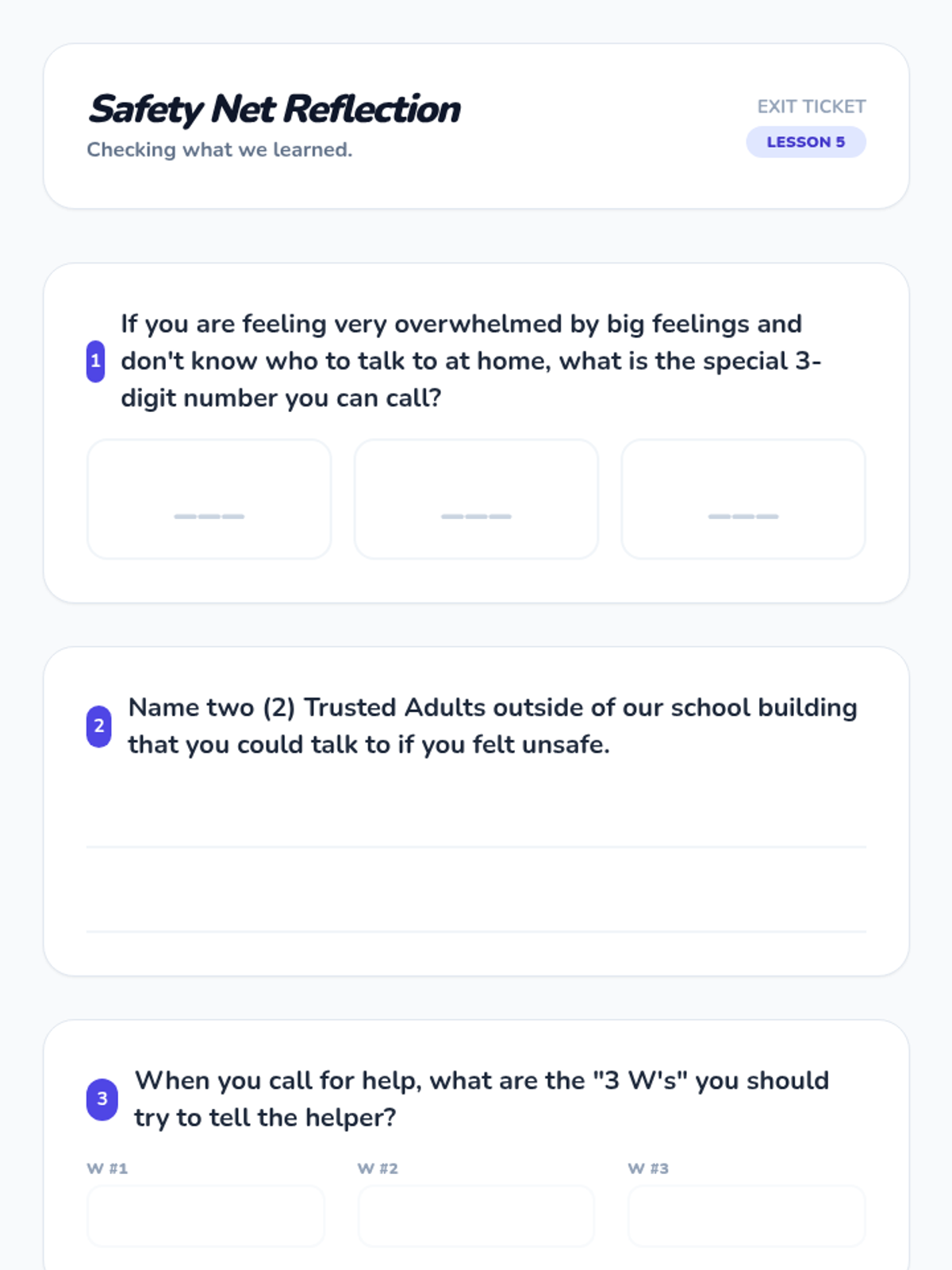
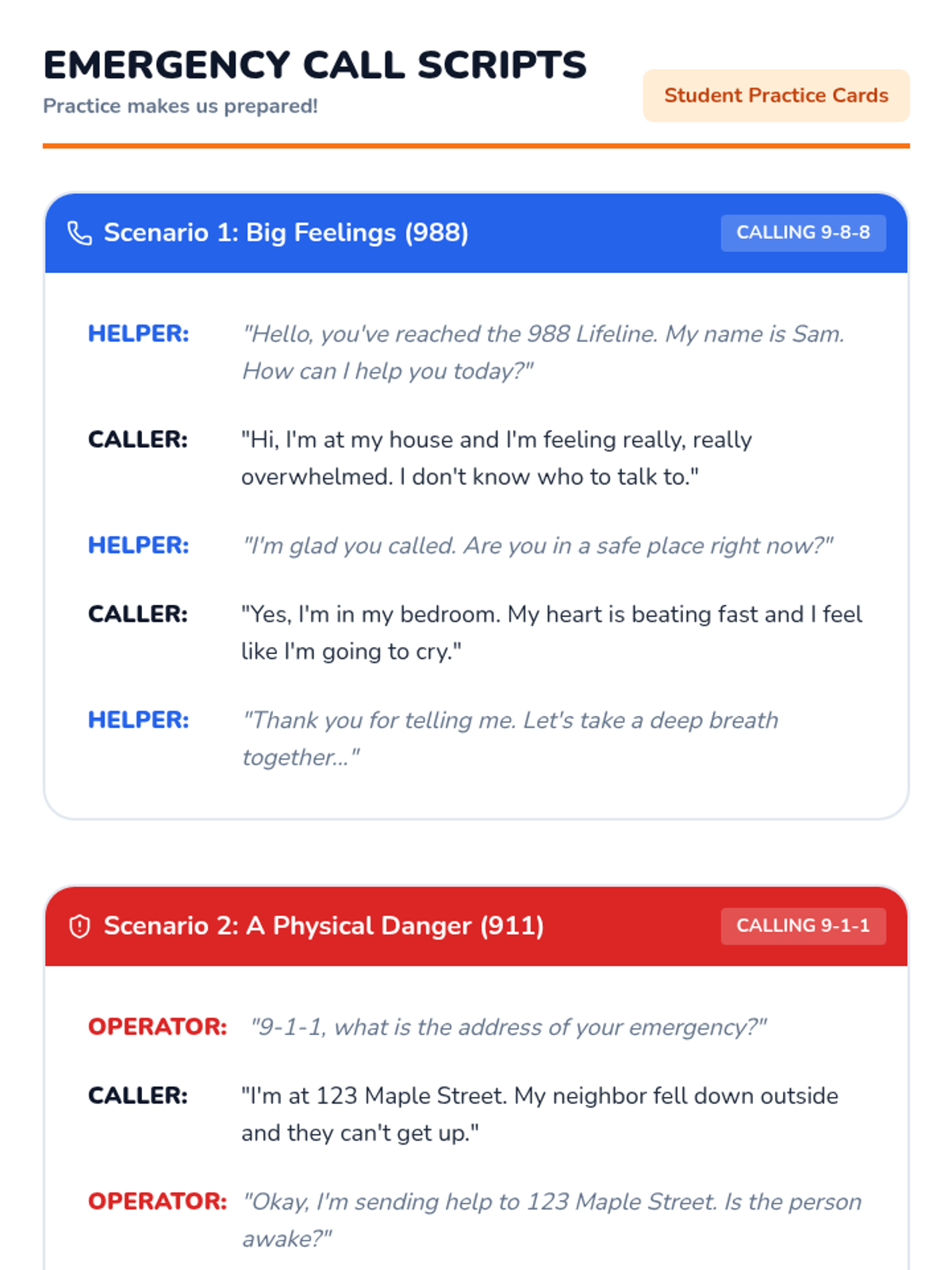
Role-playing exercises to practice speaking clearly and providing necessary information when calling a helpline or emergency number.
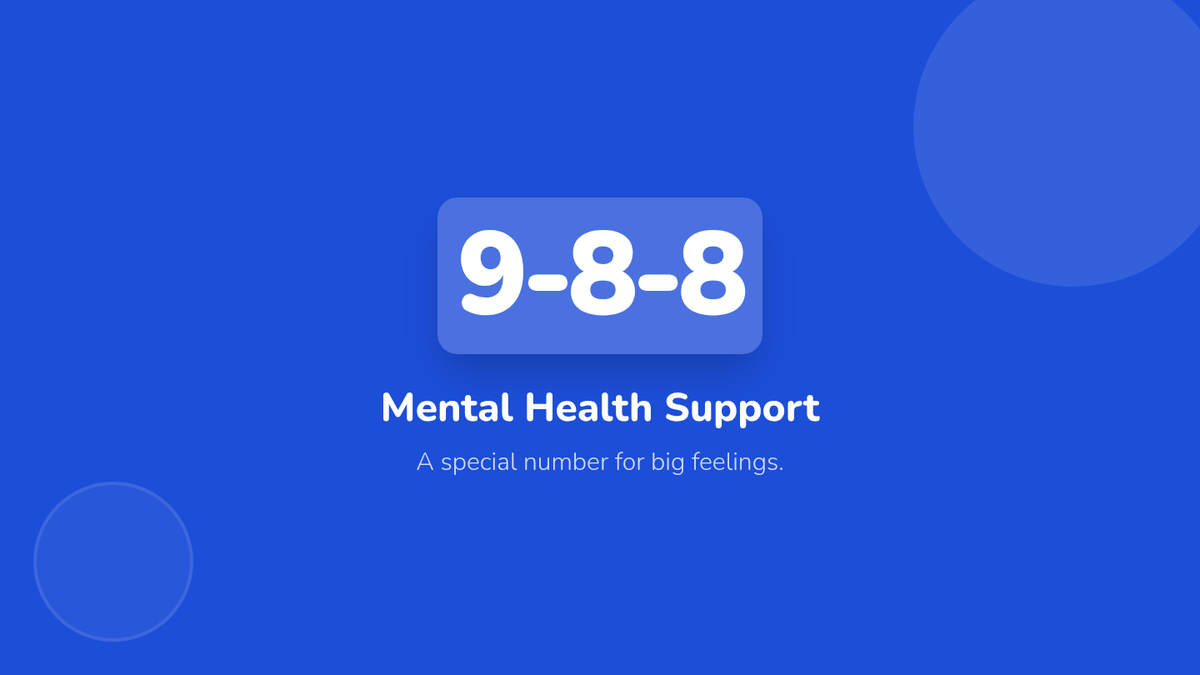
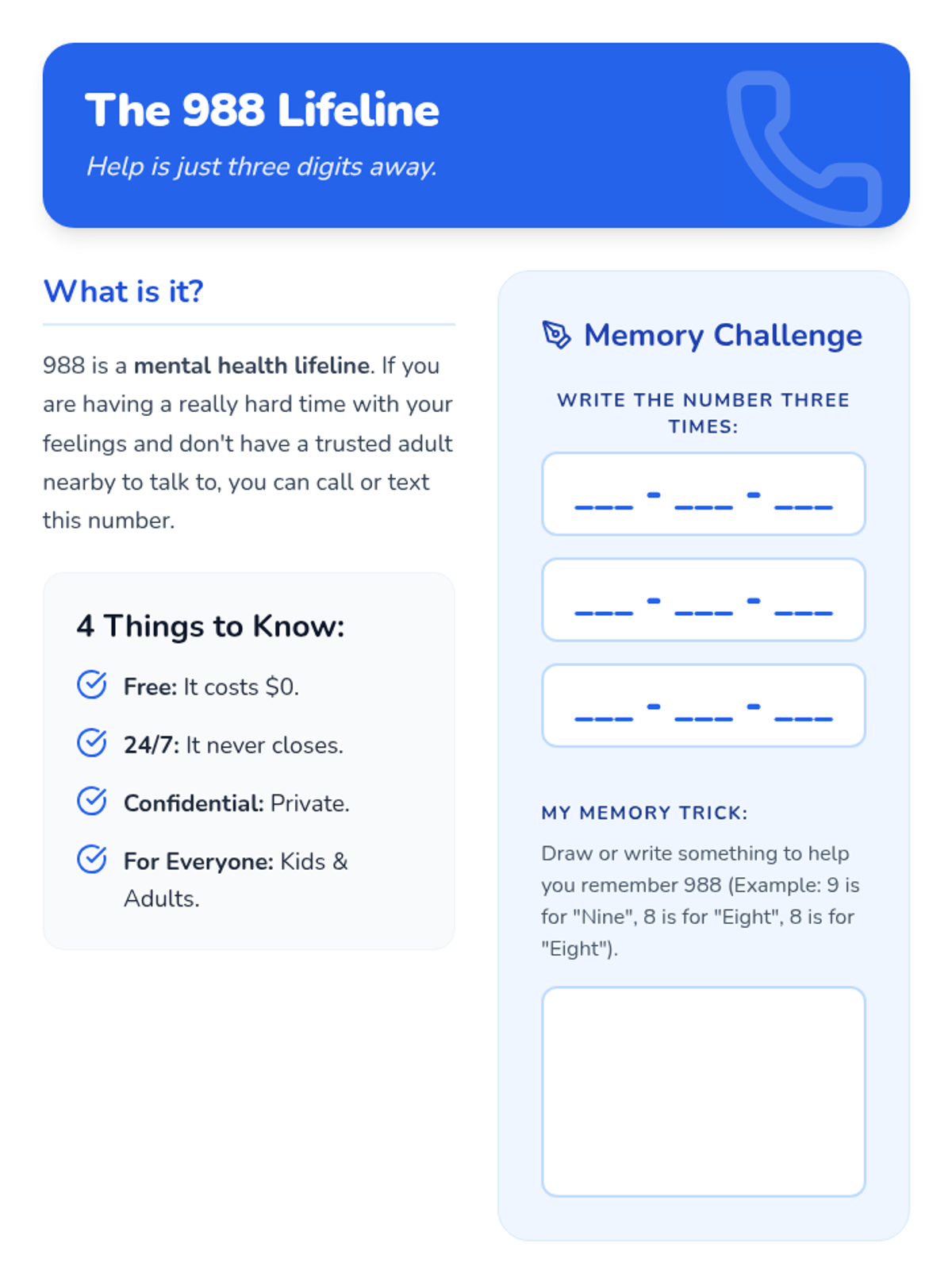
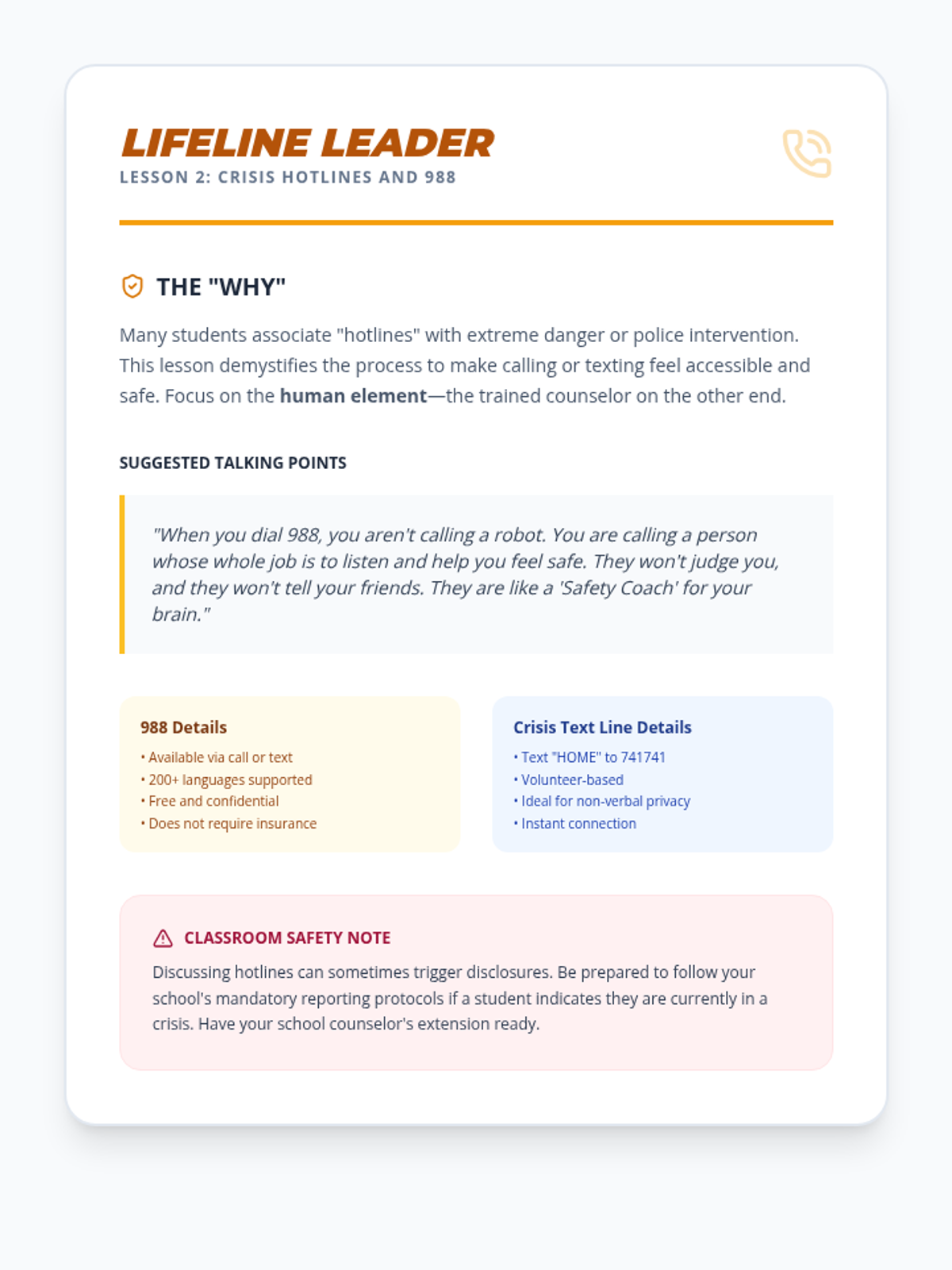
Introduction to the 988 Suicide & Crisis Lifeline, explaining its purpose as a resource for mental health similar to 911 for physical emergencies.
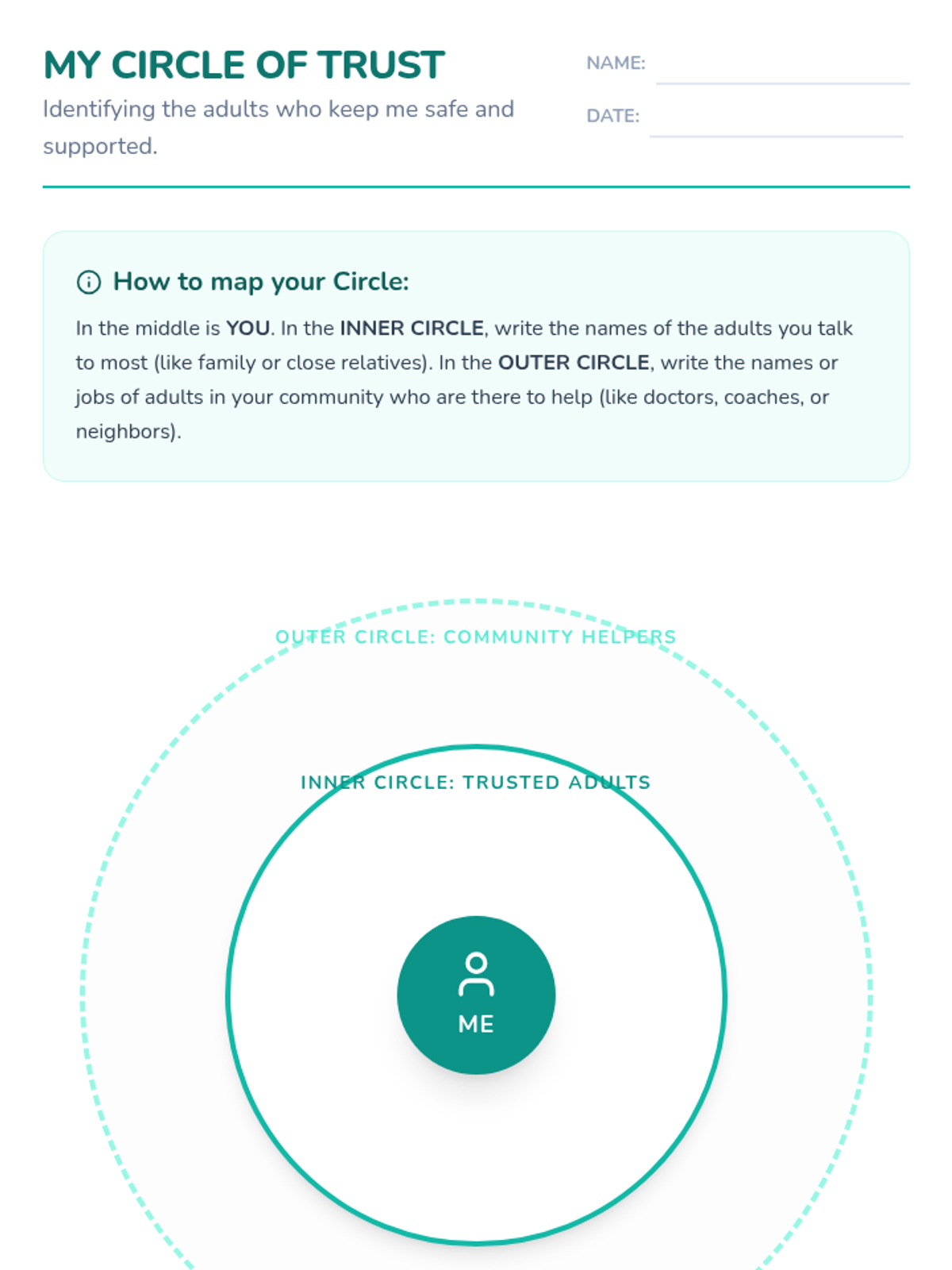
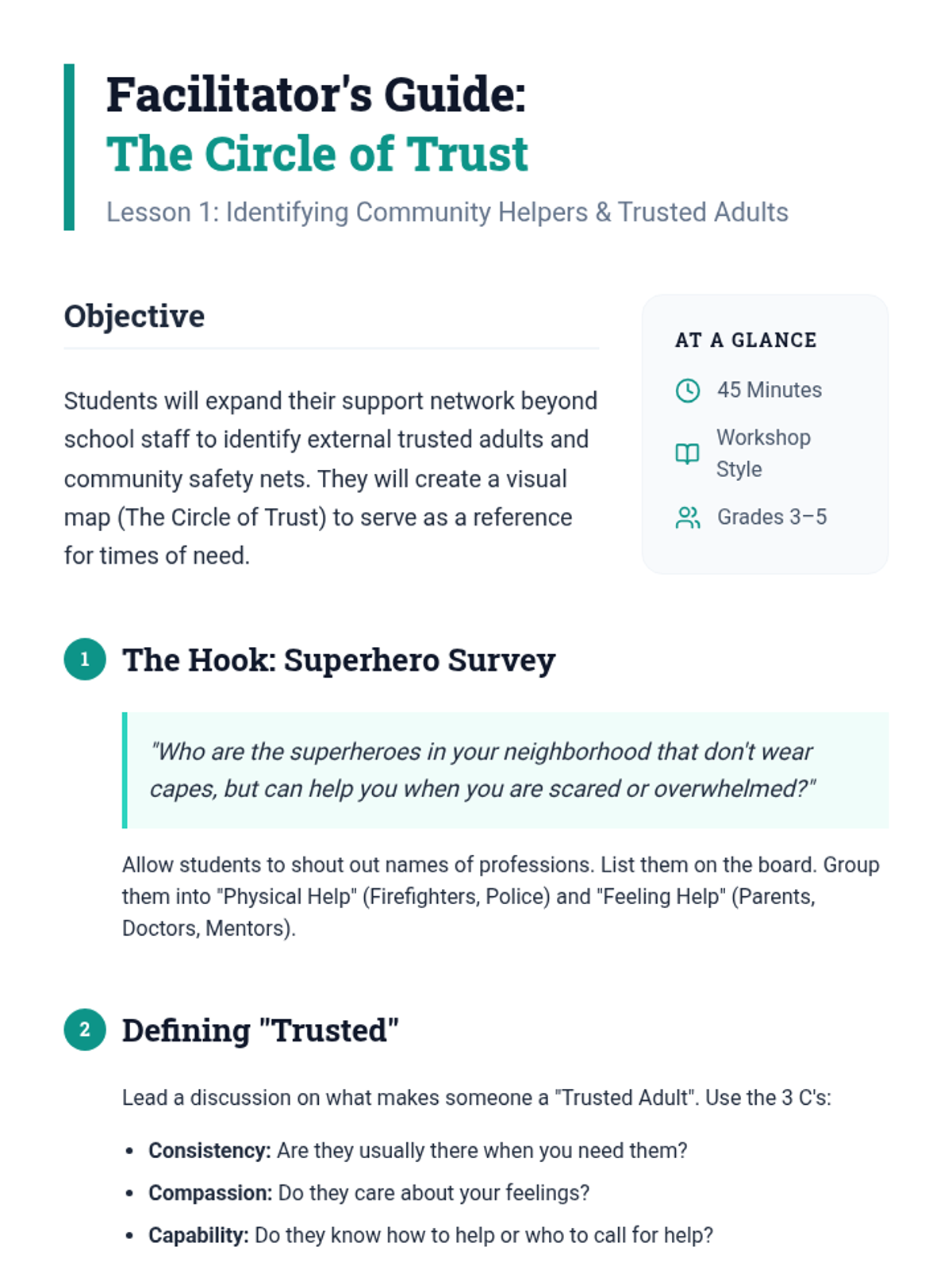
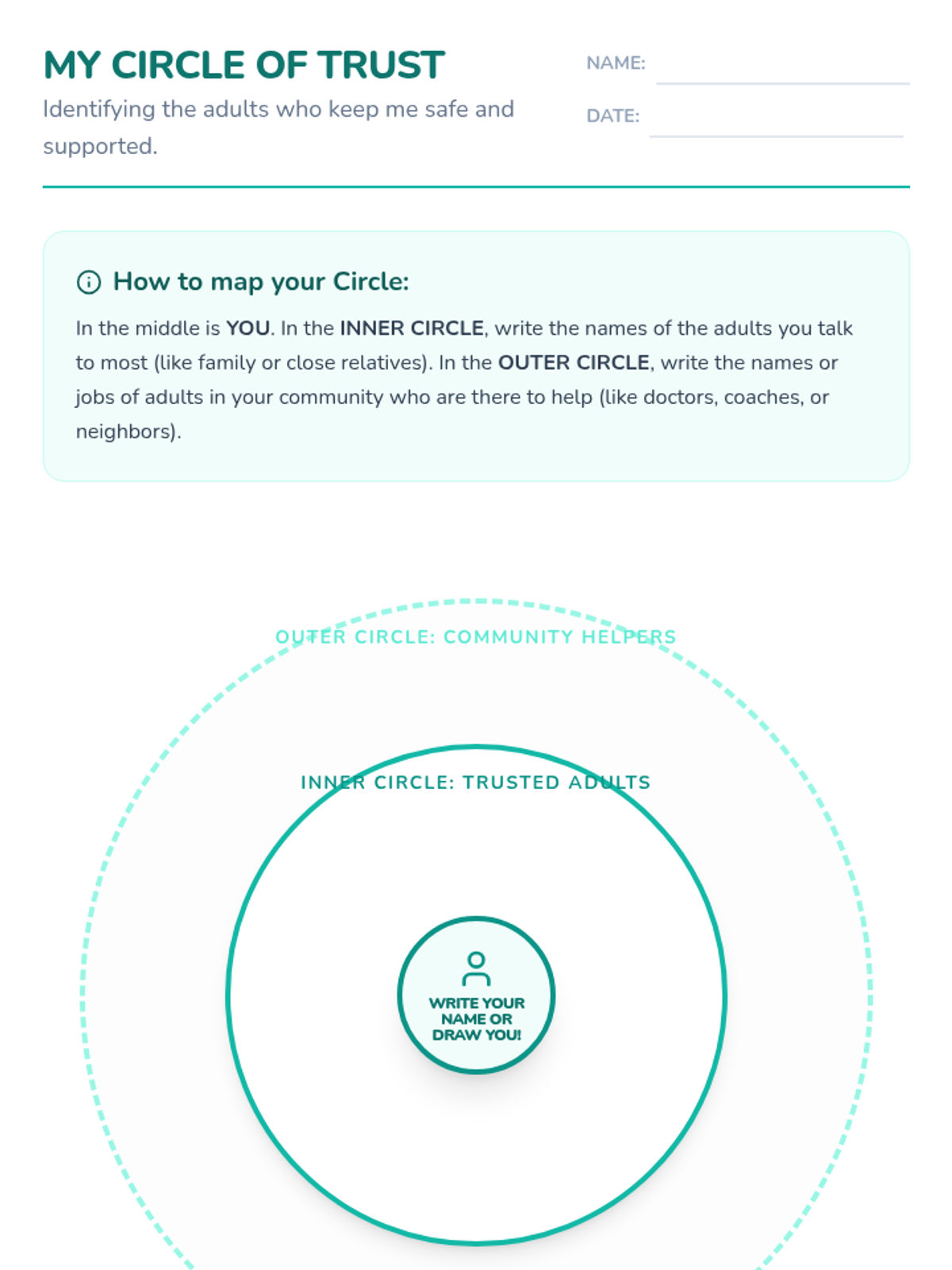
Students expand their support circle beyond the school to include parents, relatives, doctors, and community emergency workers, identifying their 'Circle of Trust'.
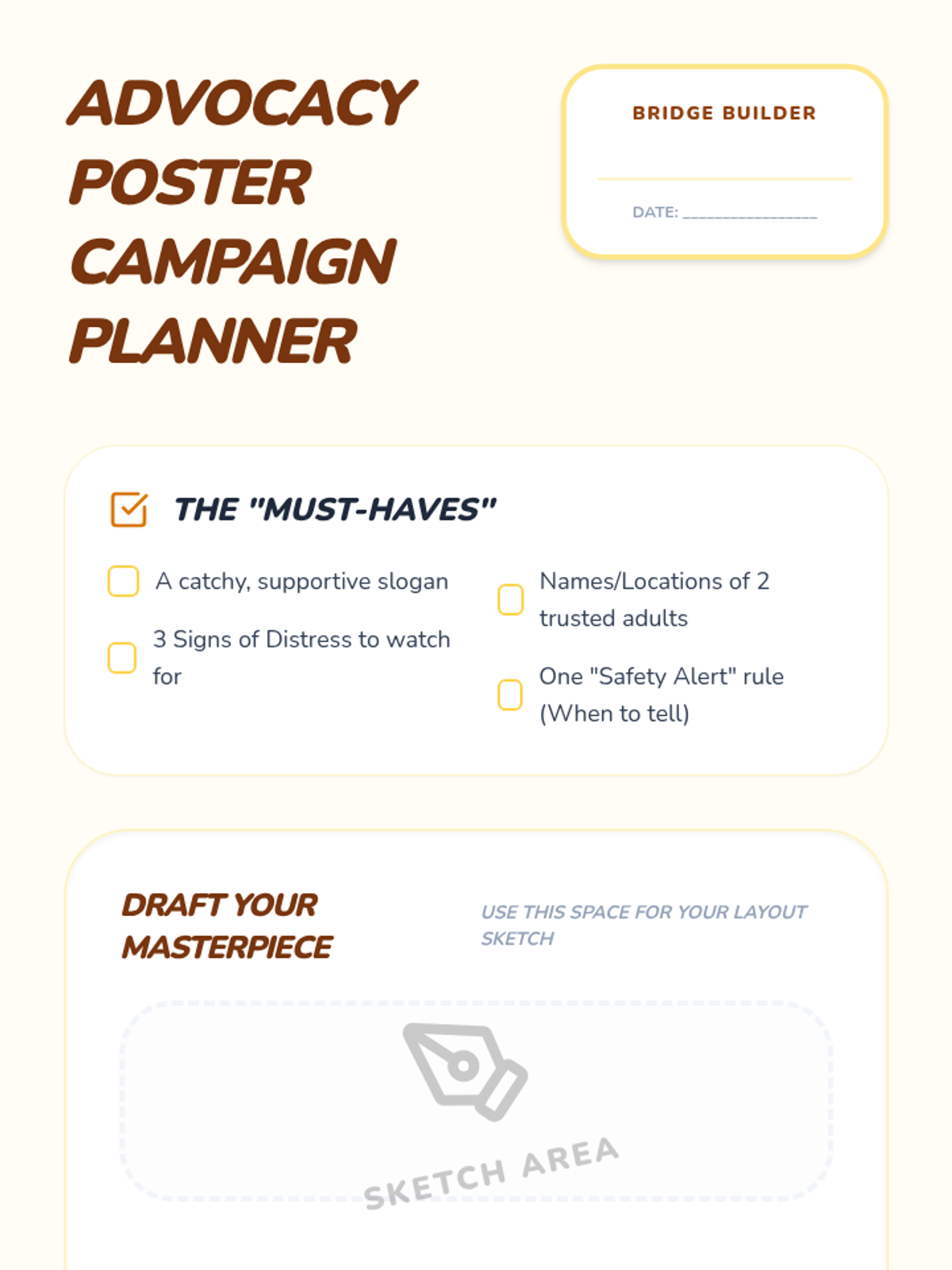
Students create informational posters or digital flyers for the school hallways that highlight how to access mental health resources. They synthesize what they've learned to make the information accessible to other students.
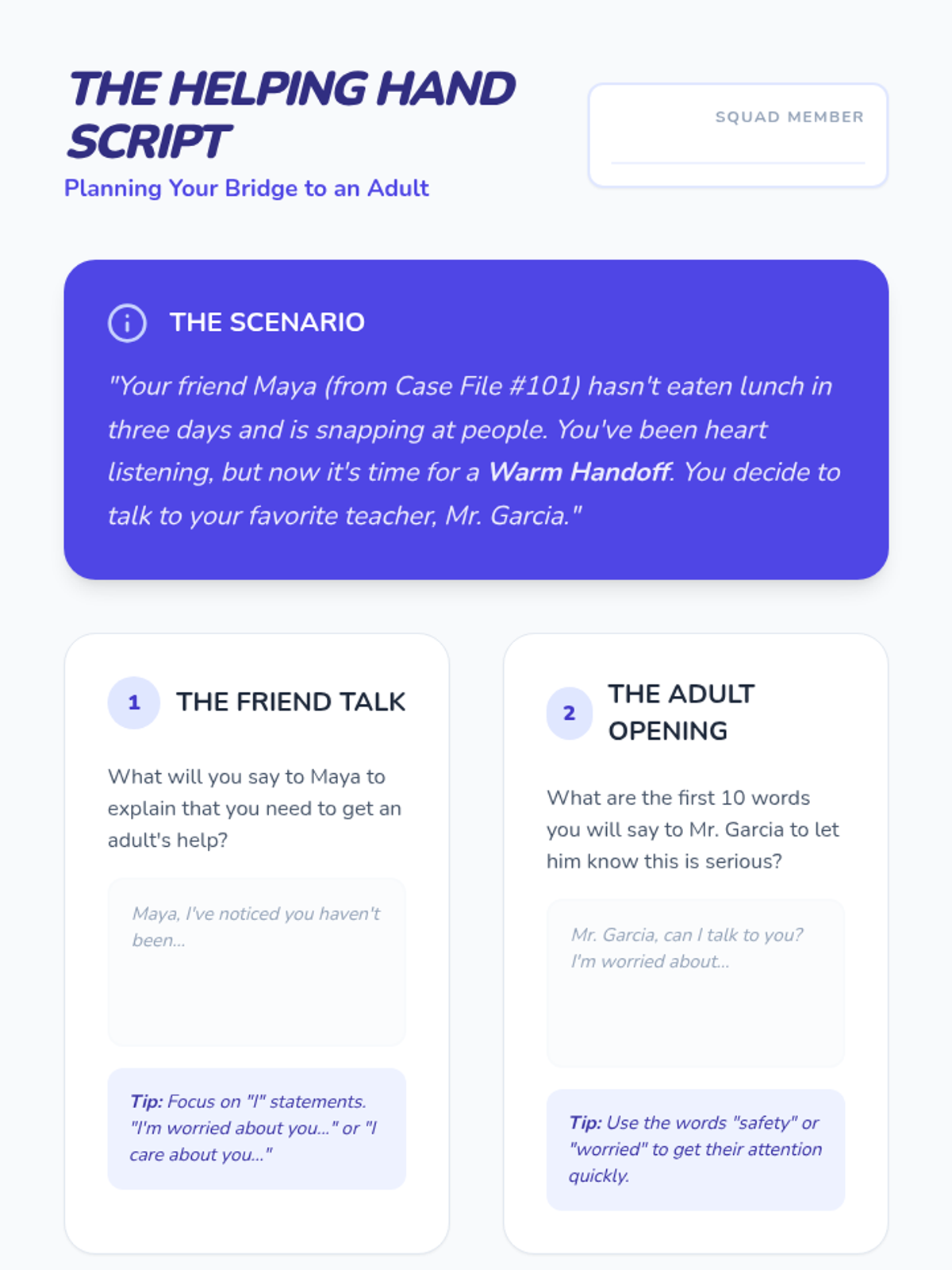
Students role-play the specific skill of walking a friend to a counselor or telling an adult on a friend's behalf. They practice phrases like 'I'm worried about my friend and I need your help.'
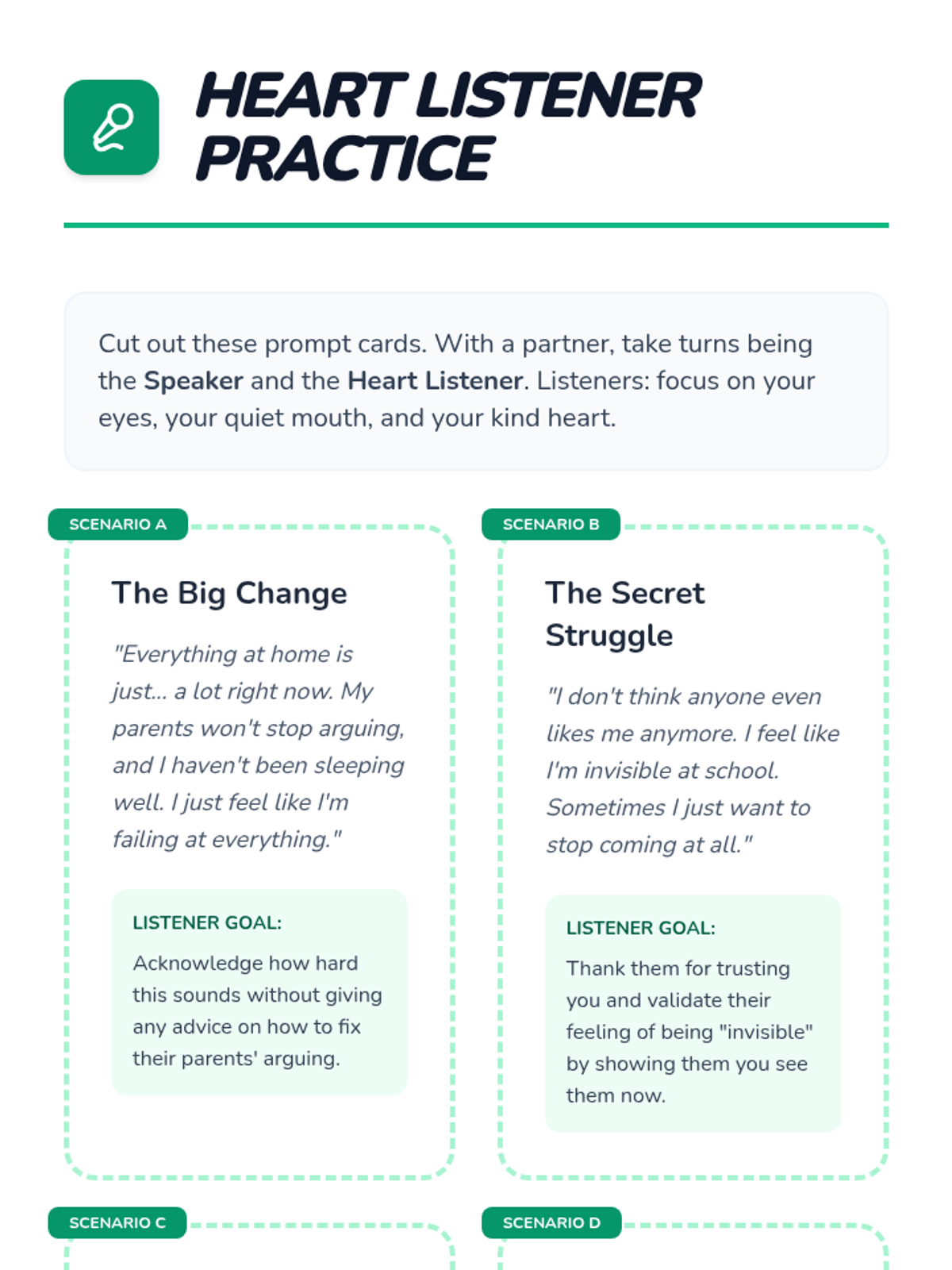
Students practice active listening skills to support a friend who is sharing their feelings. The lesson emphasizes that their job is to listen and care, not to be the therapist or fix the problem.
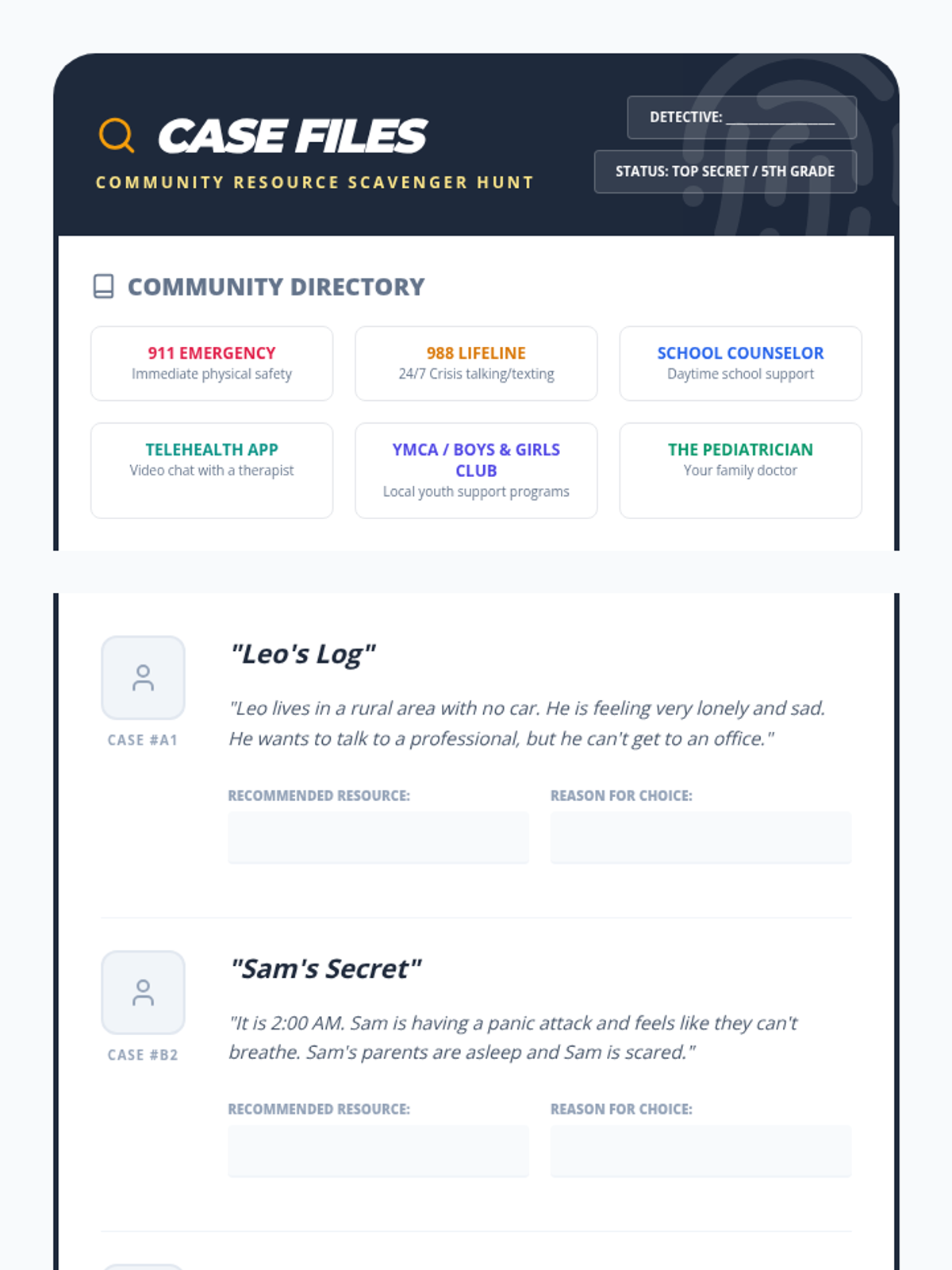
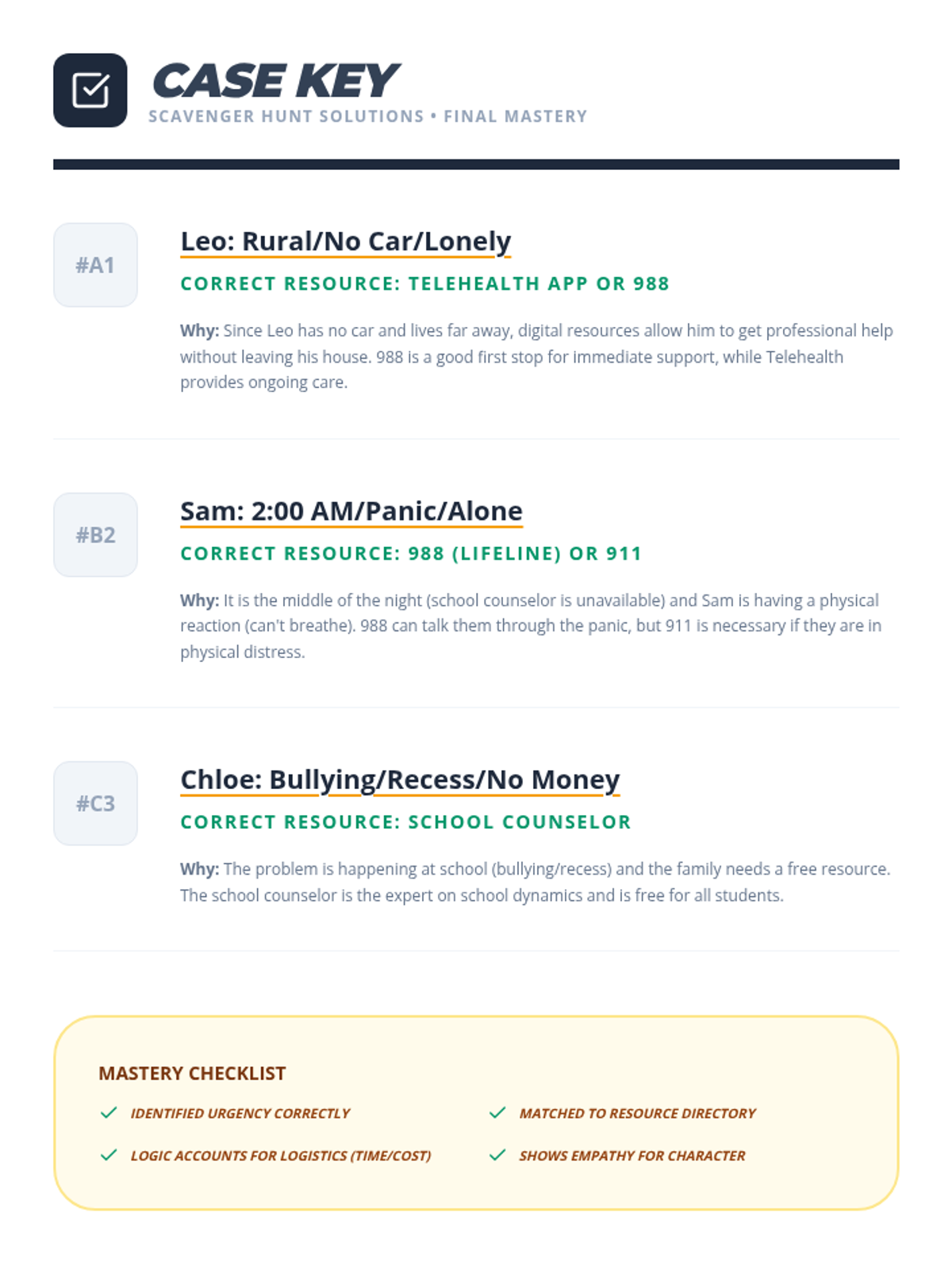
A culminating activity where students match fictional character needs to specific local and national resources, demonstrating their ability to find and utilize mental health support.
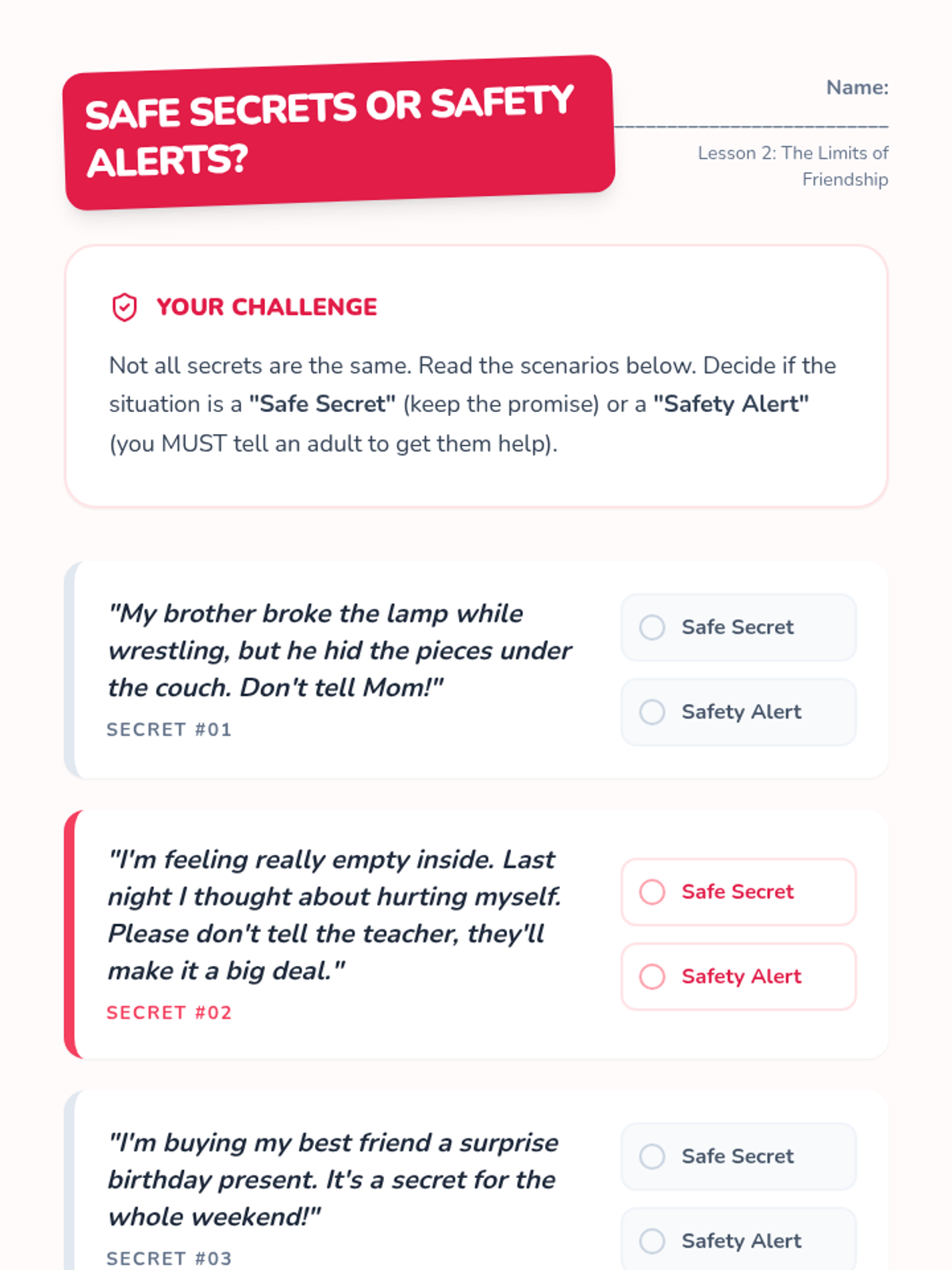
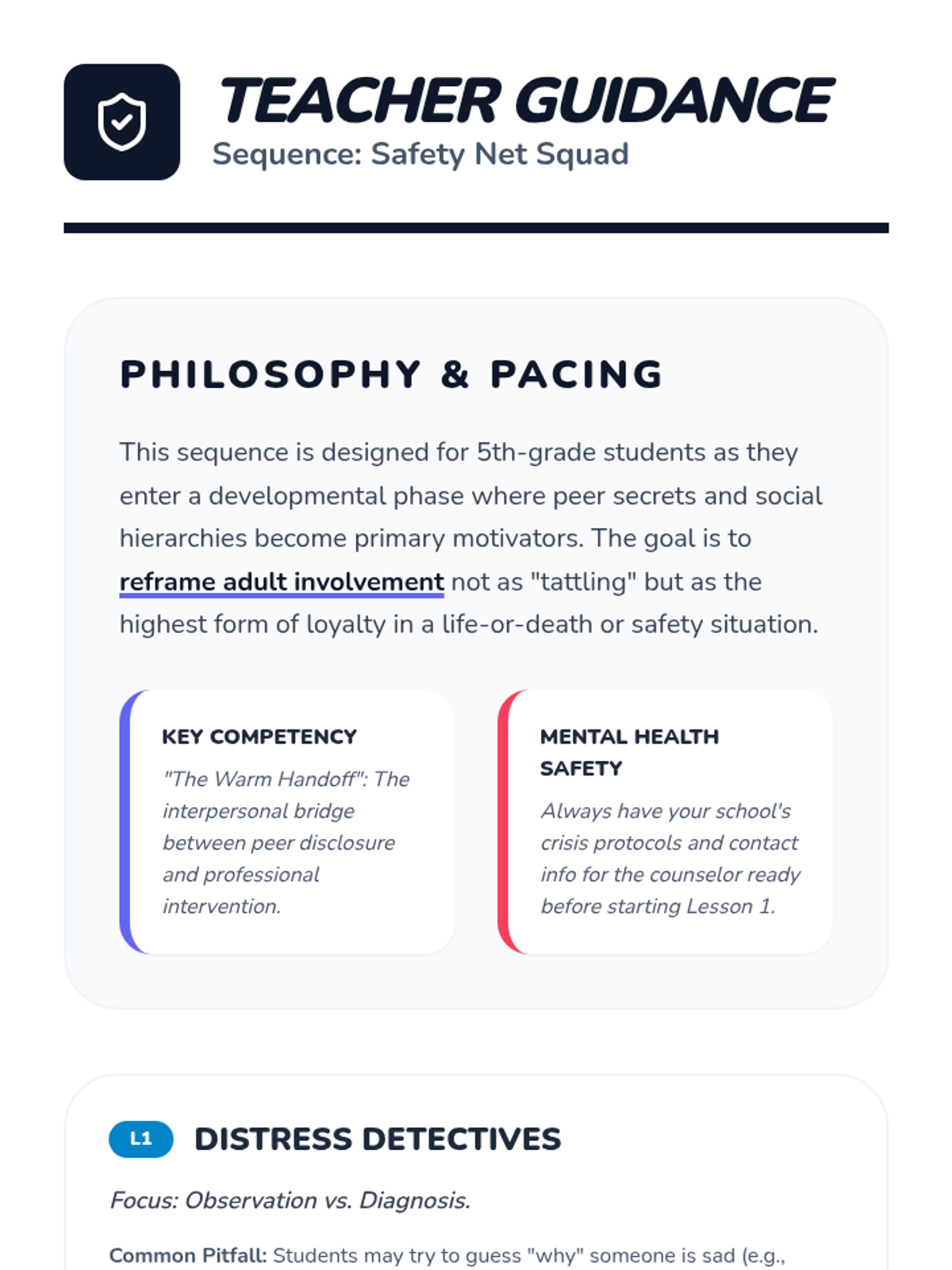
This critical lesson teaches the difference between 'tattling' to get someone in trouble and 'telling' to get someone help. Students learn the 'Safety Exception' to keeping secrets.
Students practice triage skills to distinguish between immediate emergencies (requiring 911 or 988) and non-emergency situations suitable for scheduled appointments.
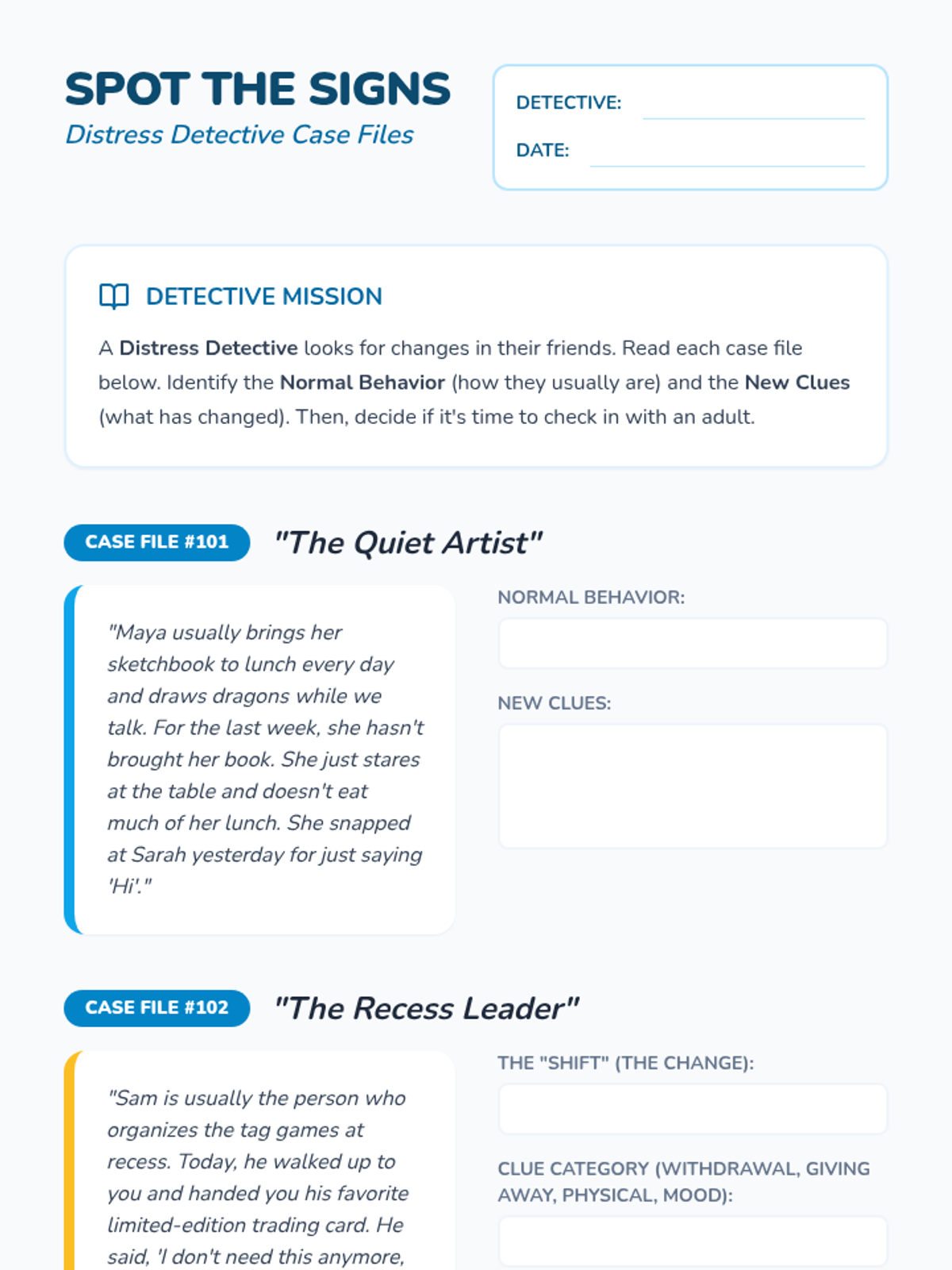
Students explore behavioral changes that might indicate a friend is struggling, such as withdrawal, changes in mood, or giving away possessions. The focus is on observation without diagnosis.
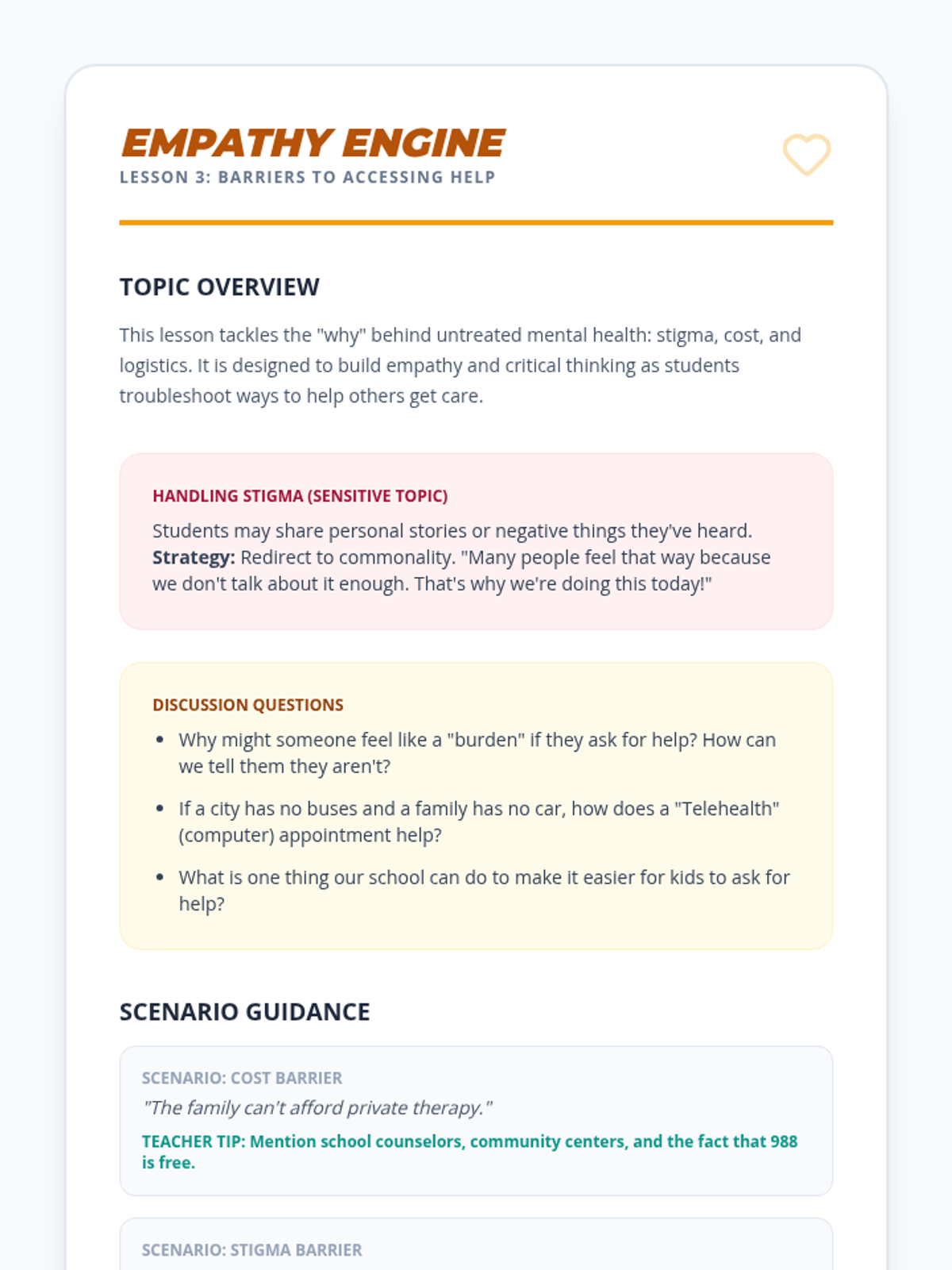
Students discuss barriers to accessing mental health care, such as stigma and logistics, and brainstorm ways to overcome these obstacles for themselves and others.
This lesson introduces the 988 Suicide & Crisis Lifeline and the Crisis Text Line, explaining the process of what happens during a call or text to reduce fear and uncertainty.
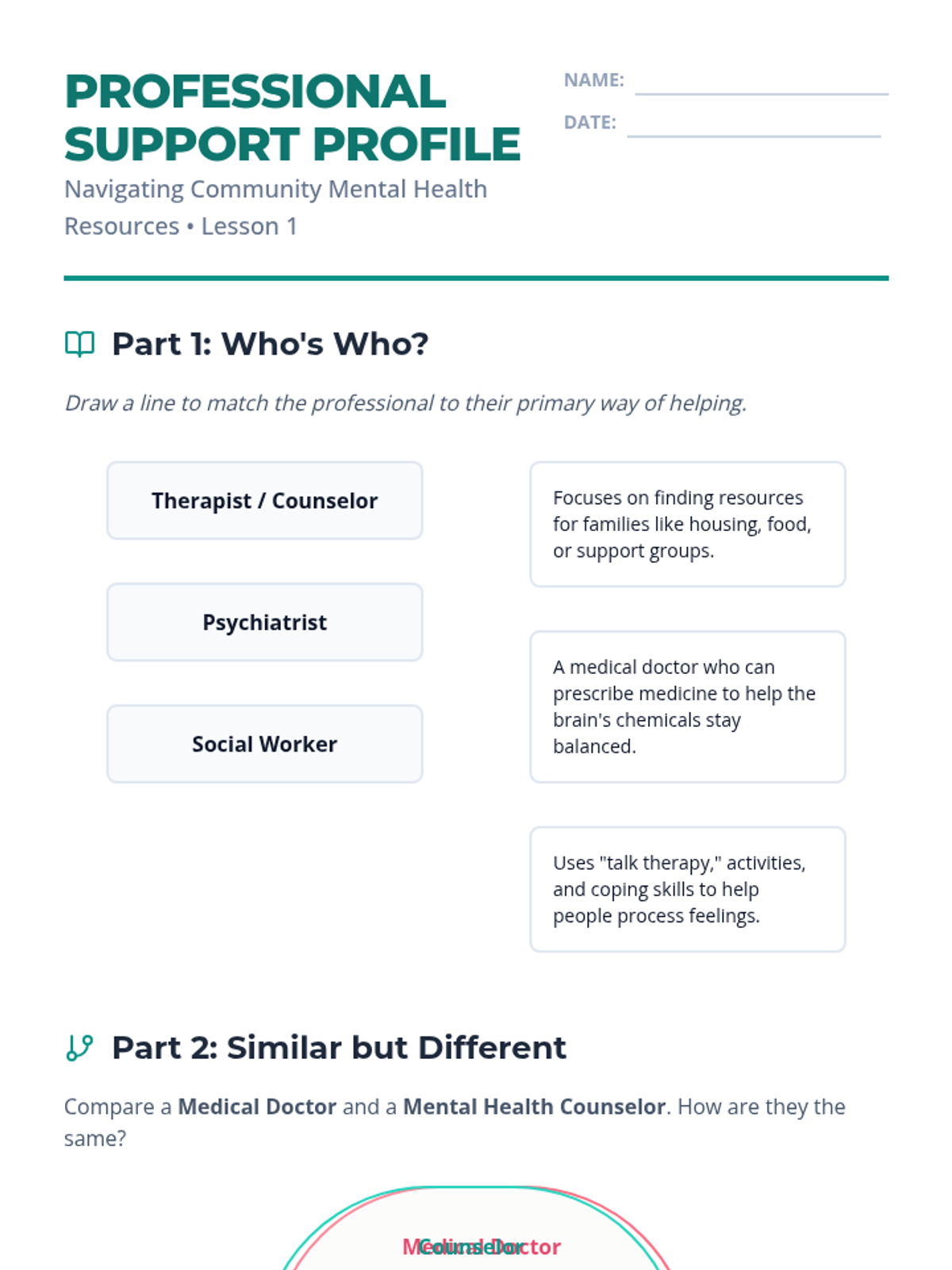
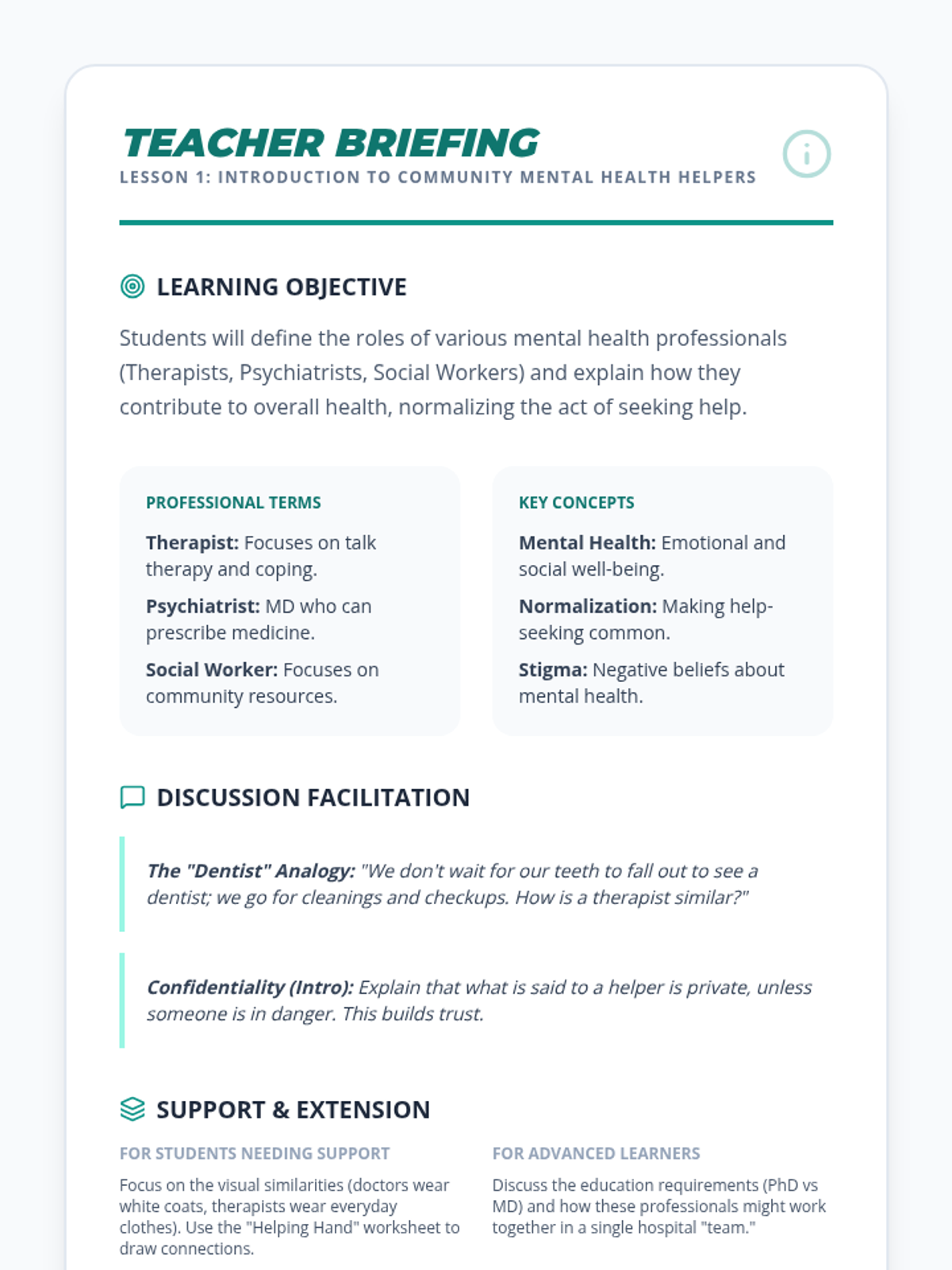
Students learn about different types of mental health professionals (therapists, social workers, psychiatrists) and how they differ from medical doctors, normalizing the act of seeking help for mental wellness.
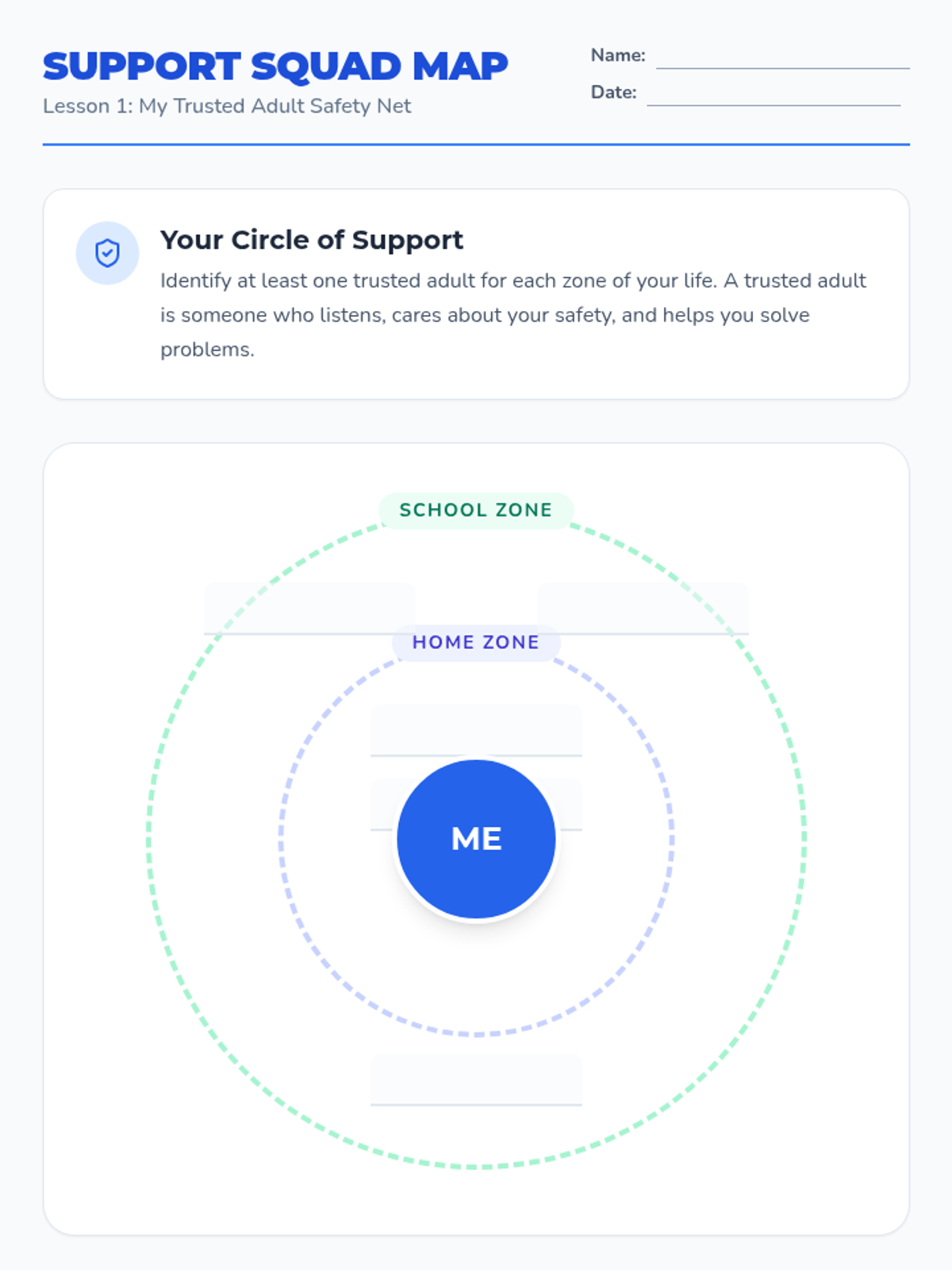
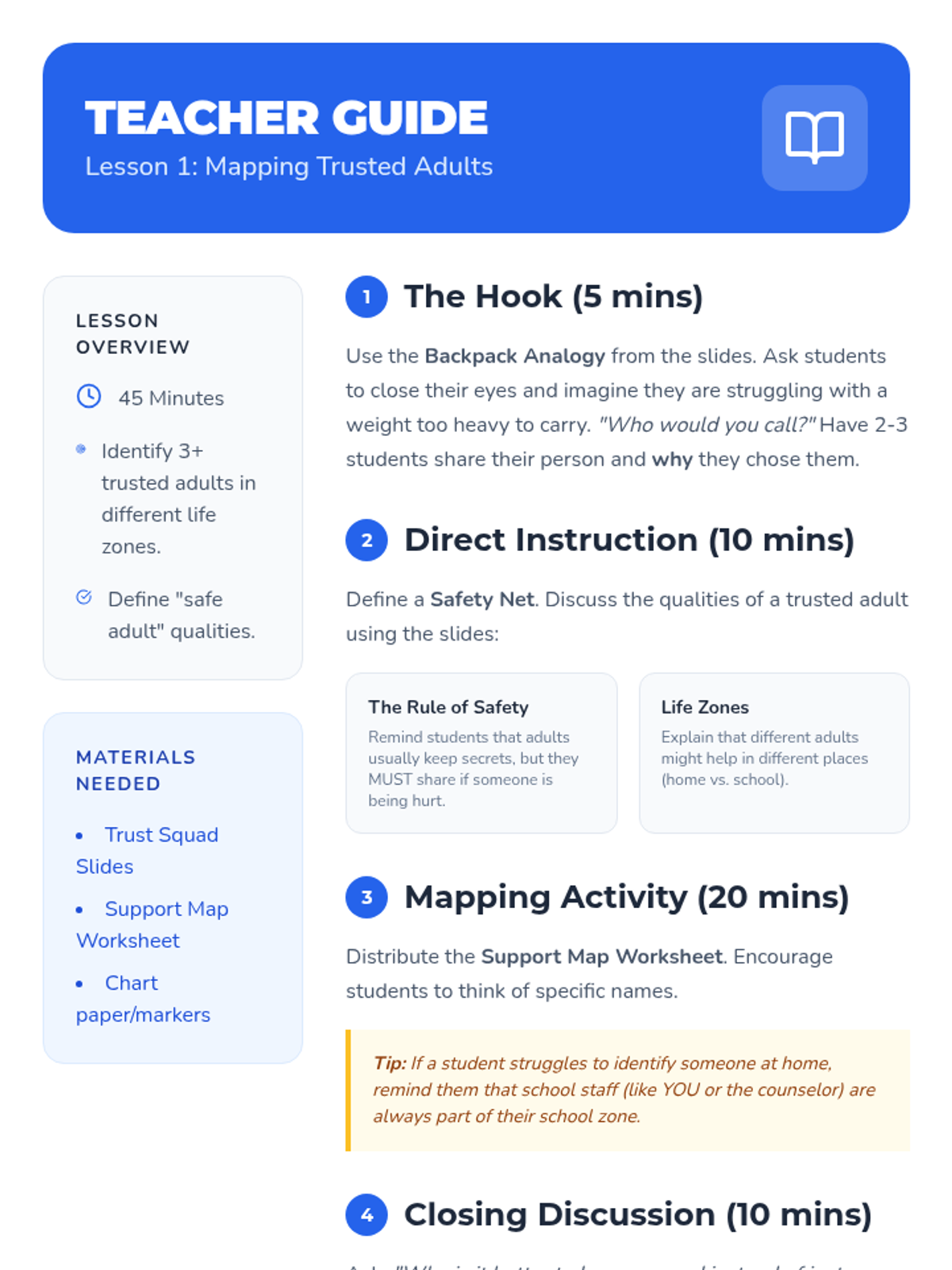
Students identify trustworthy adults in various areas of their lives to create a visual 'Circle of Support' while discussing the specific qualities that define a 'safe' adult.
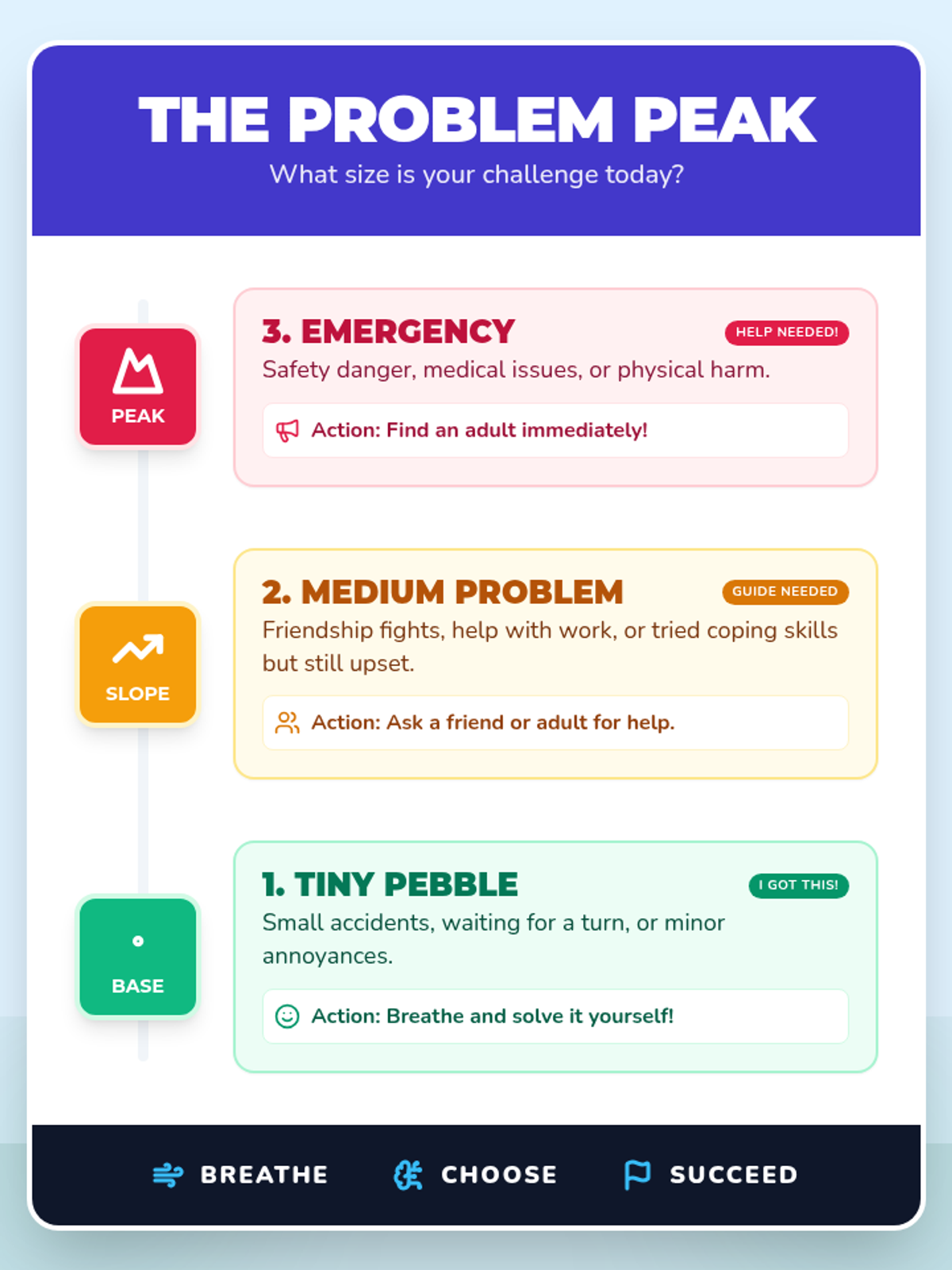
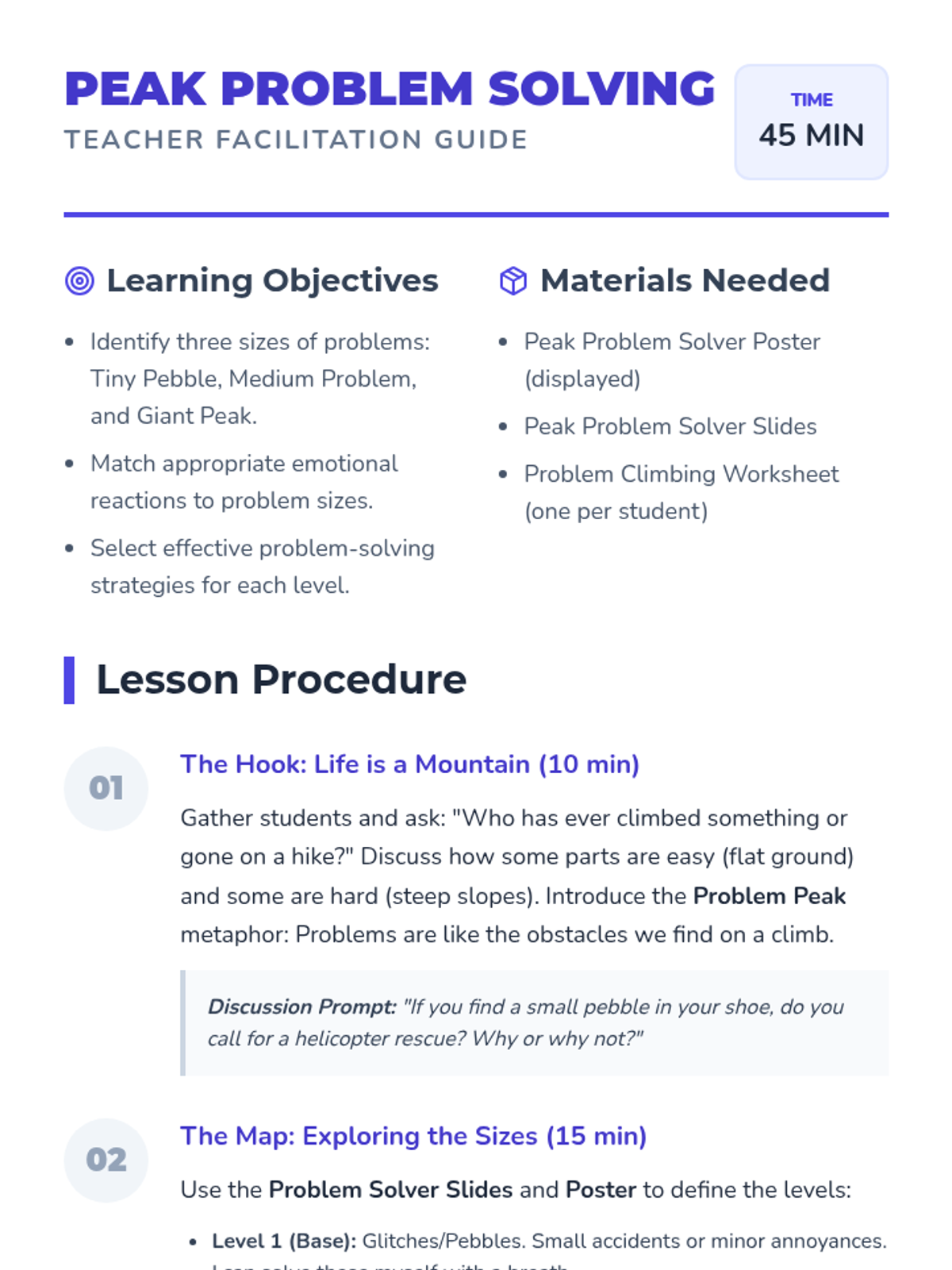
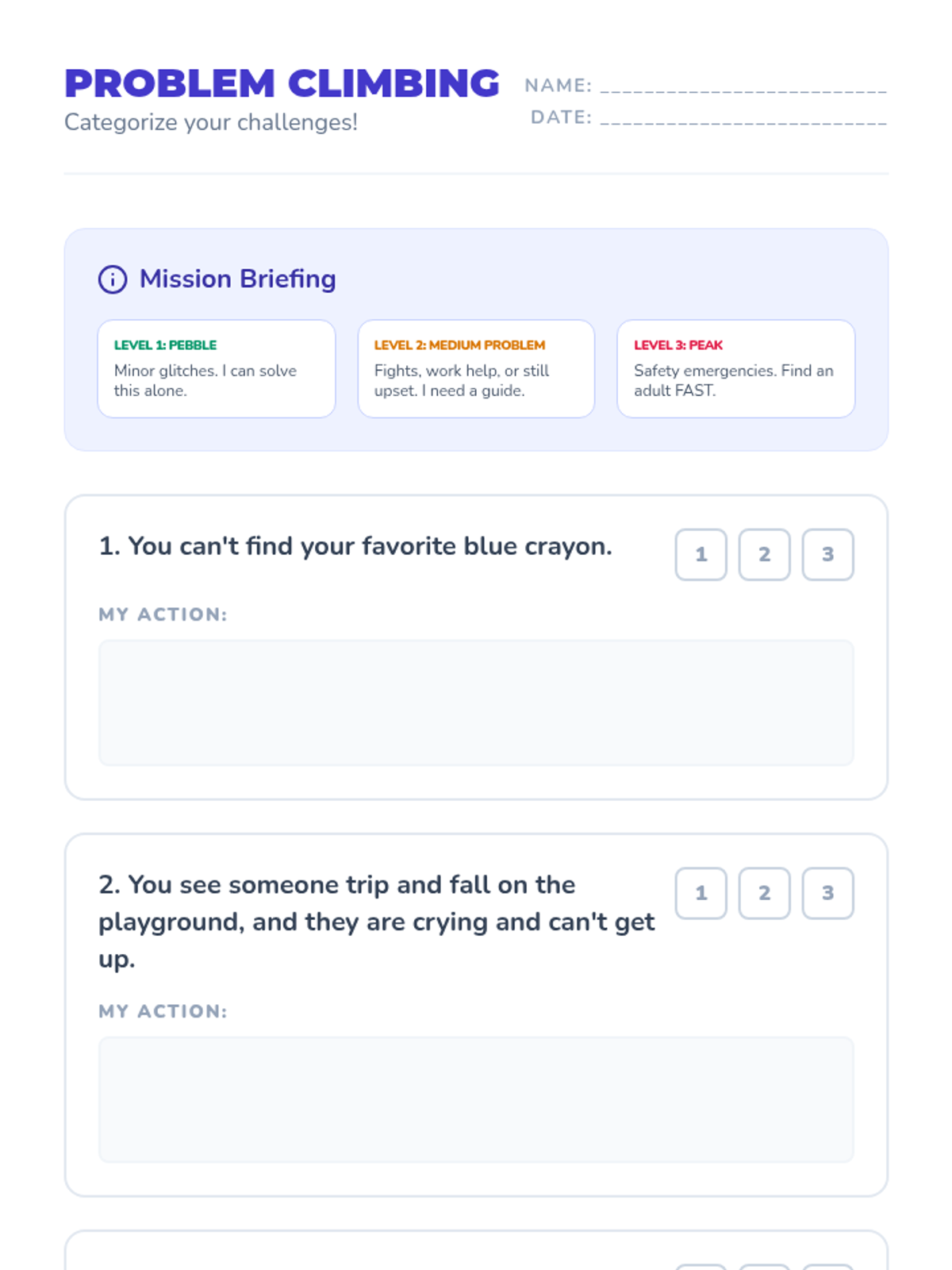
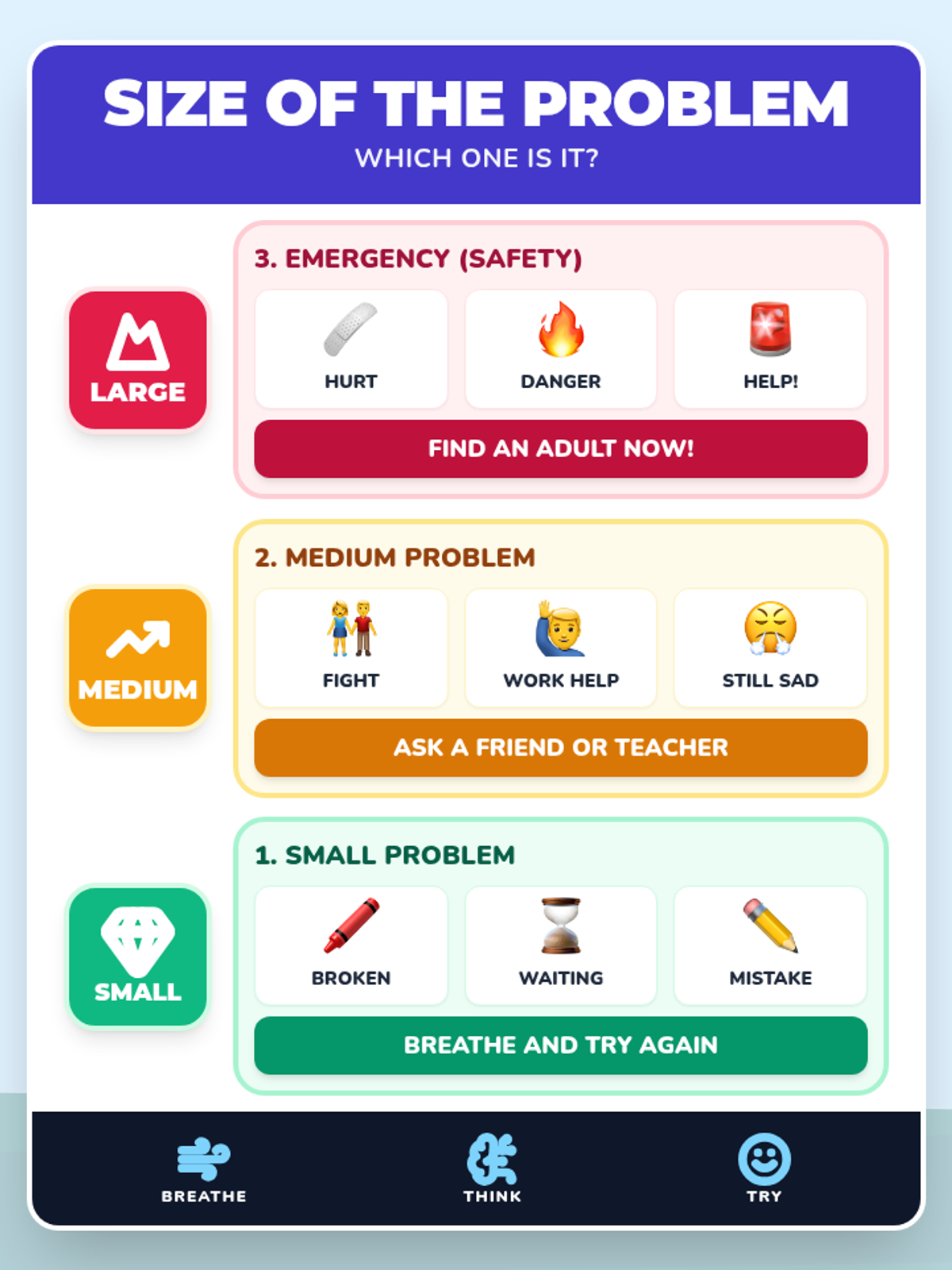
A comprehensive lesson that teaches students how to identify and categorize the size of problems using a mountain climbing metaphor. Students will learn appropriate strategies for Small, Medium, and Large problems.
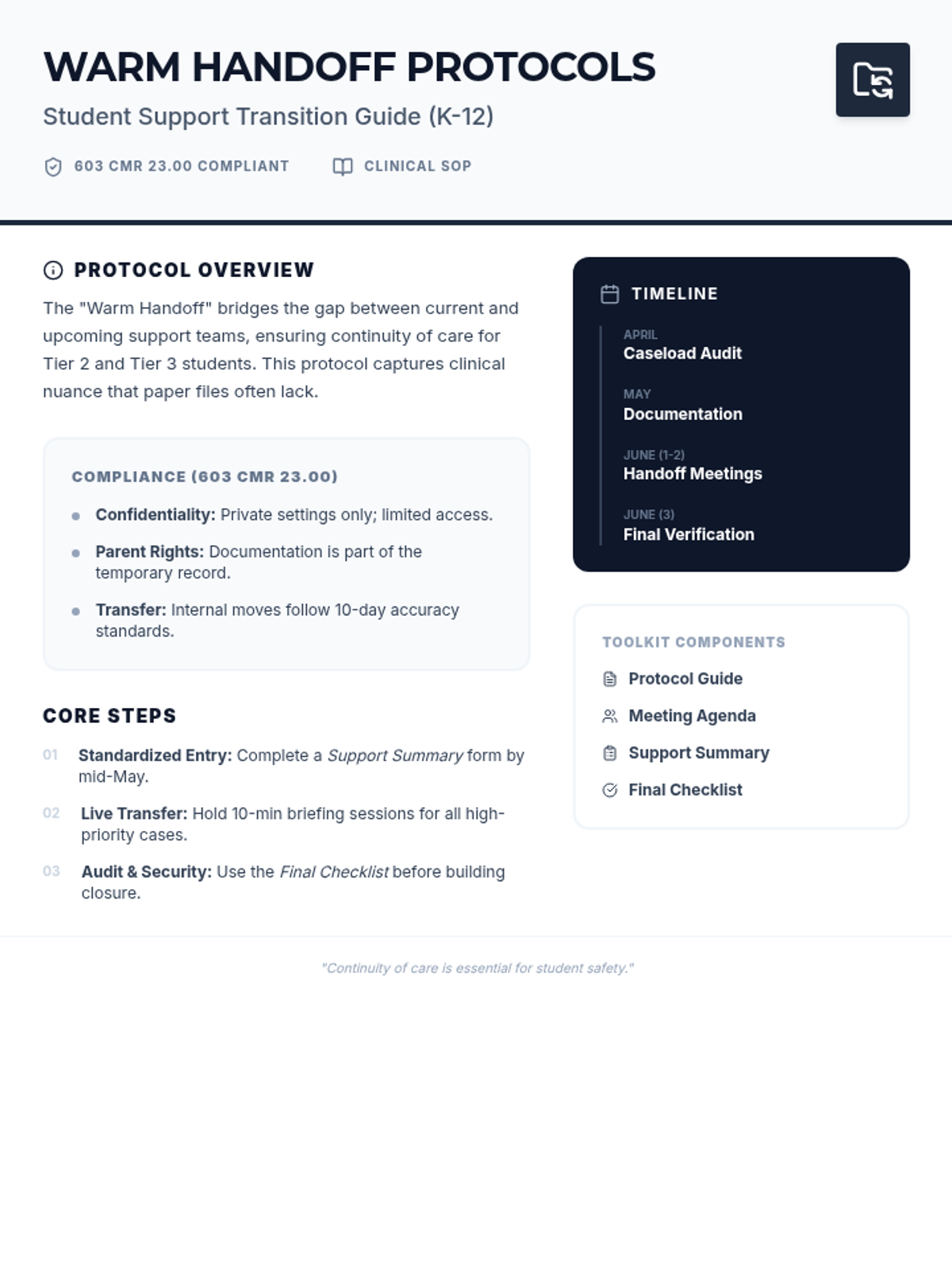
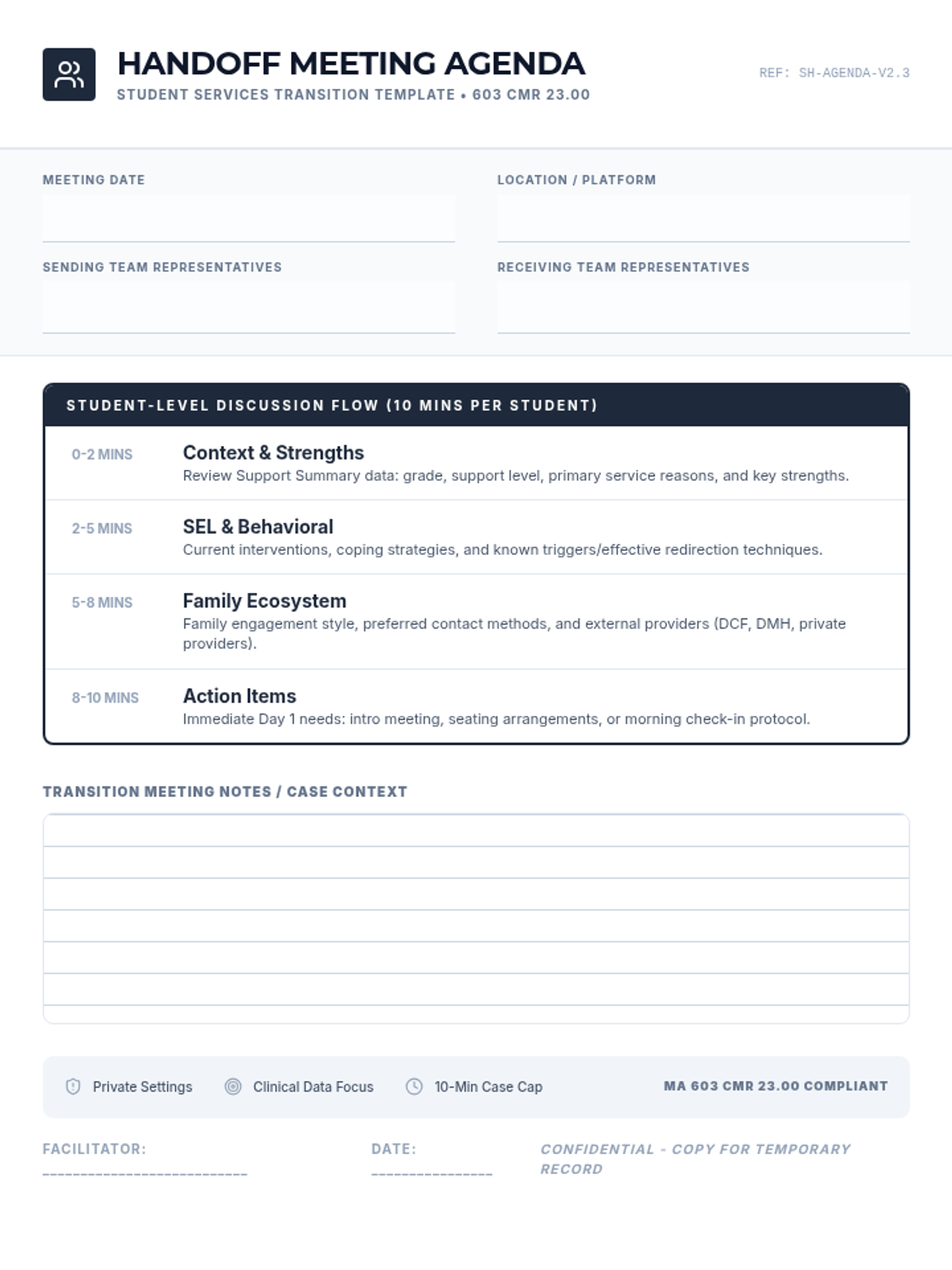
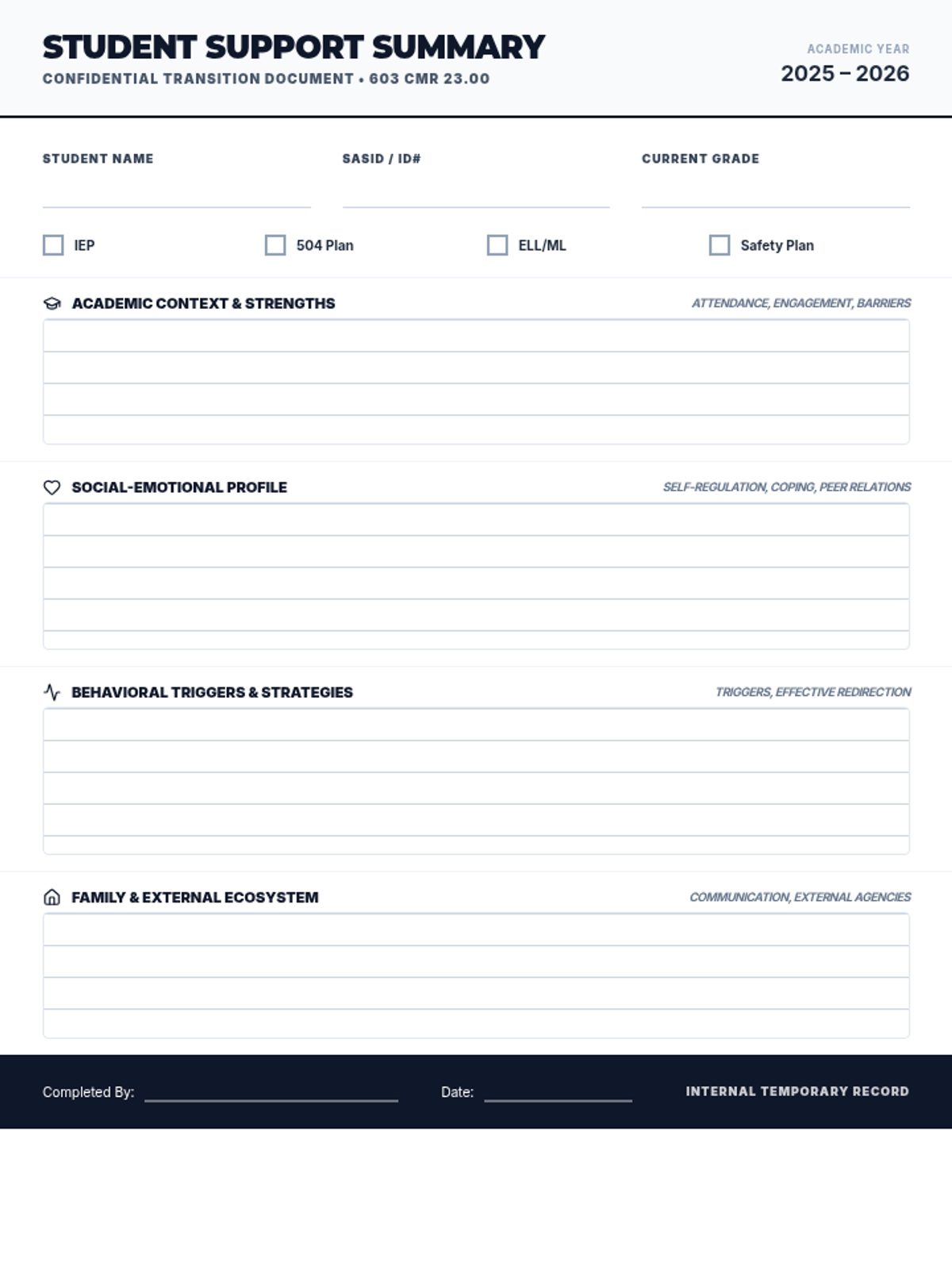
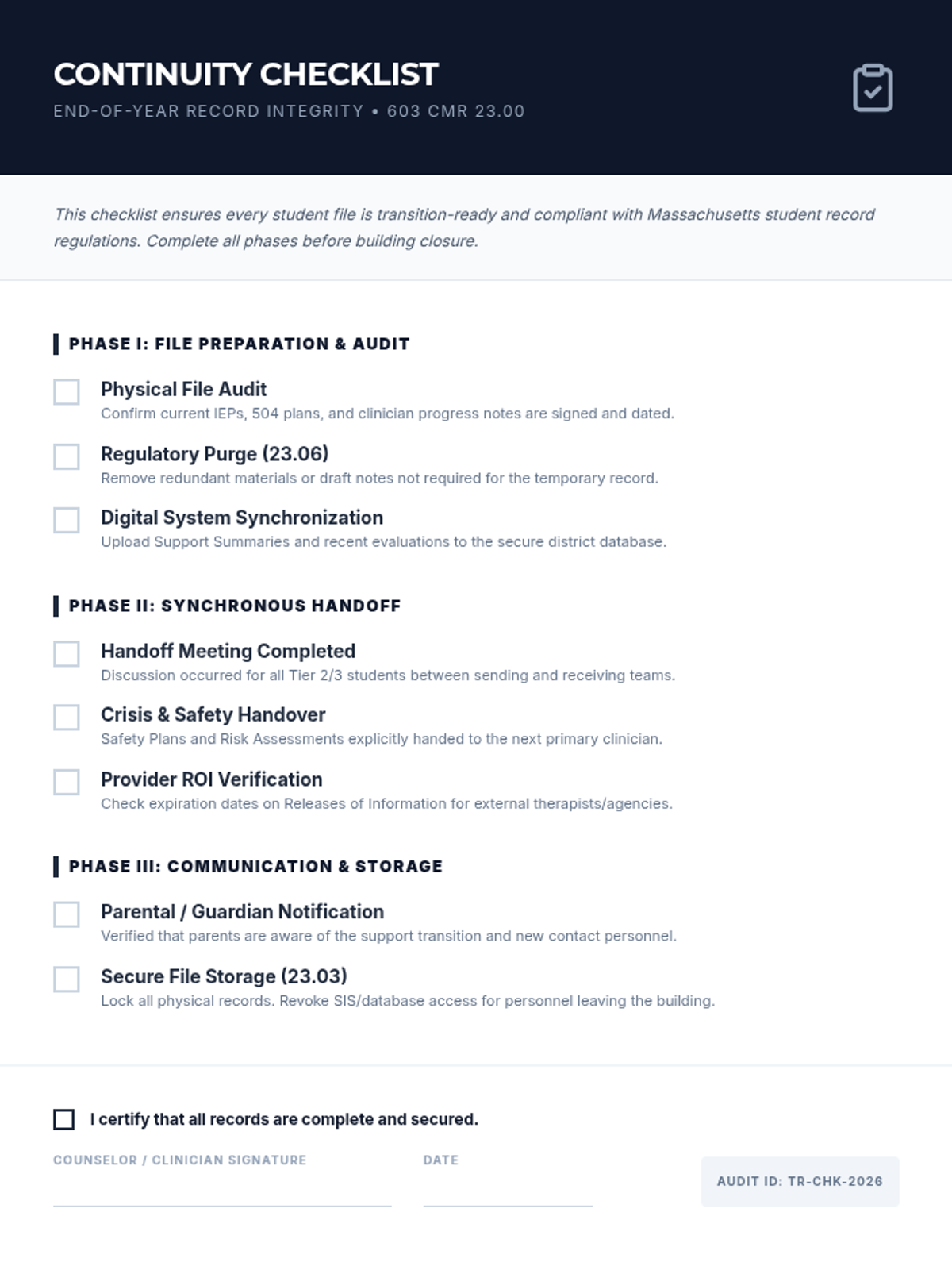
A comprehensive toolkit for K-12 school counselors and student services teams to ensure continuity of care during end-of-year transitions. It includes protocol guides, meeting structures, and documentation templates aligned with Massachusetts student records regulations.
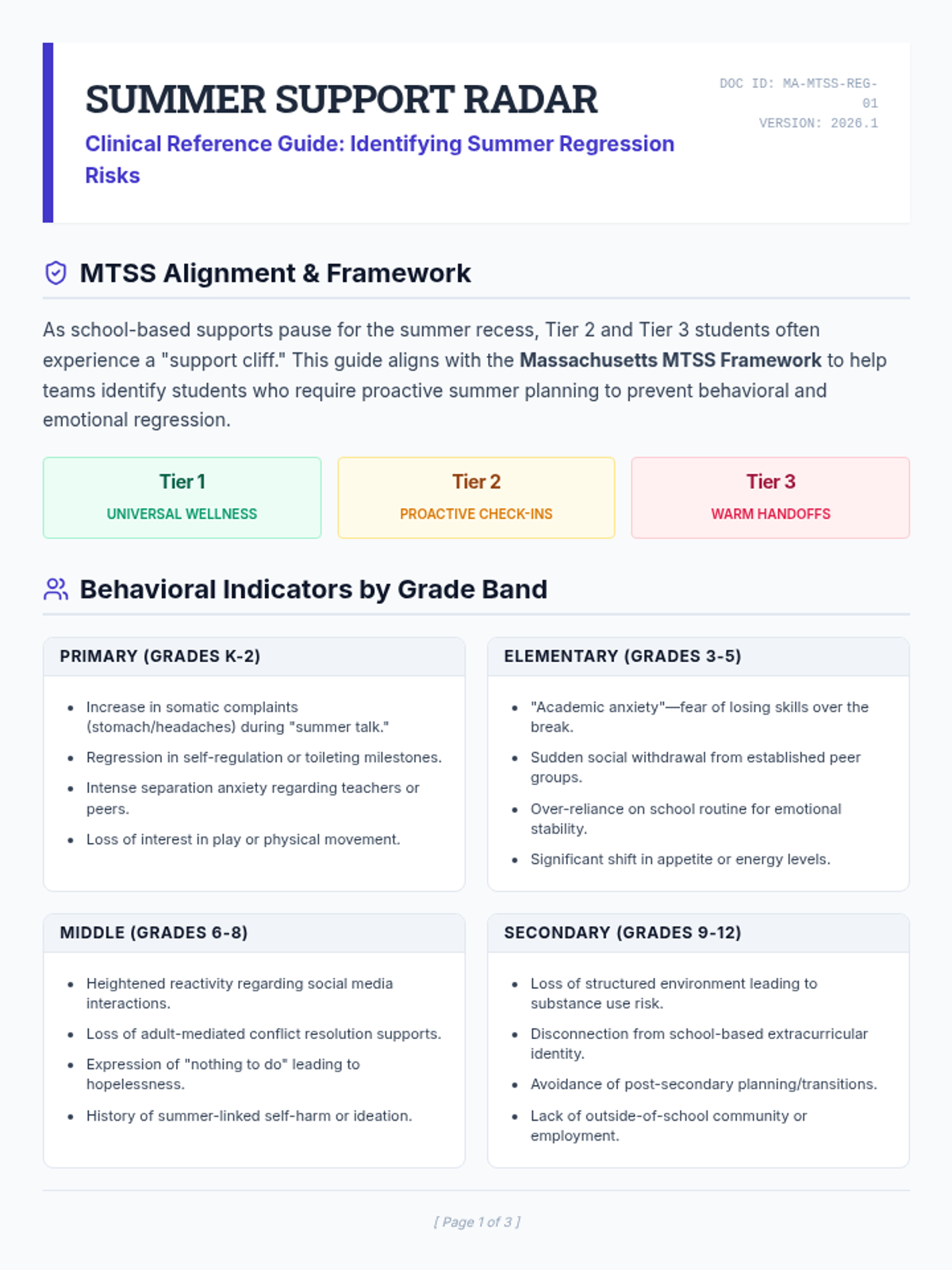
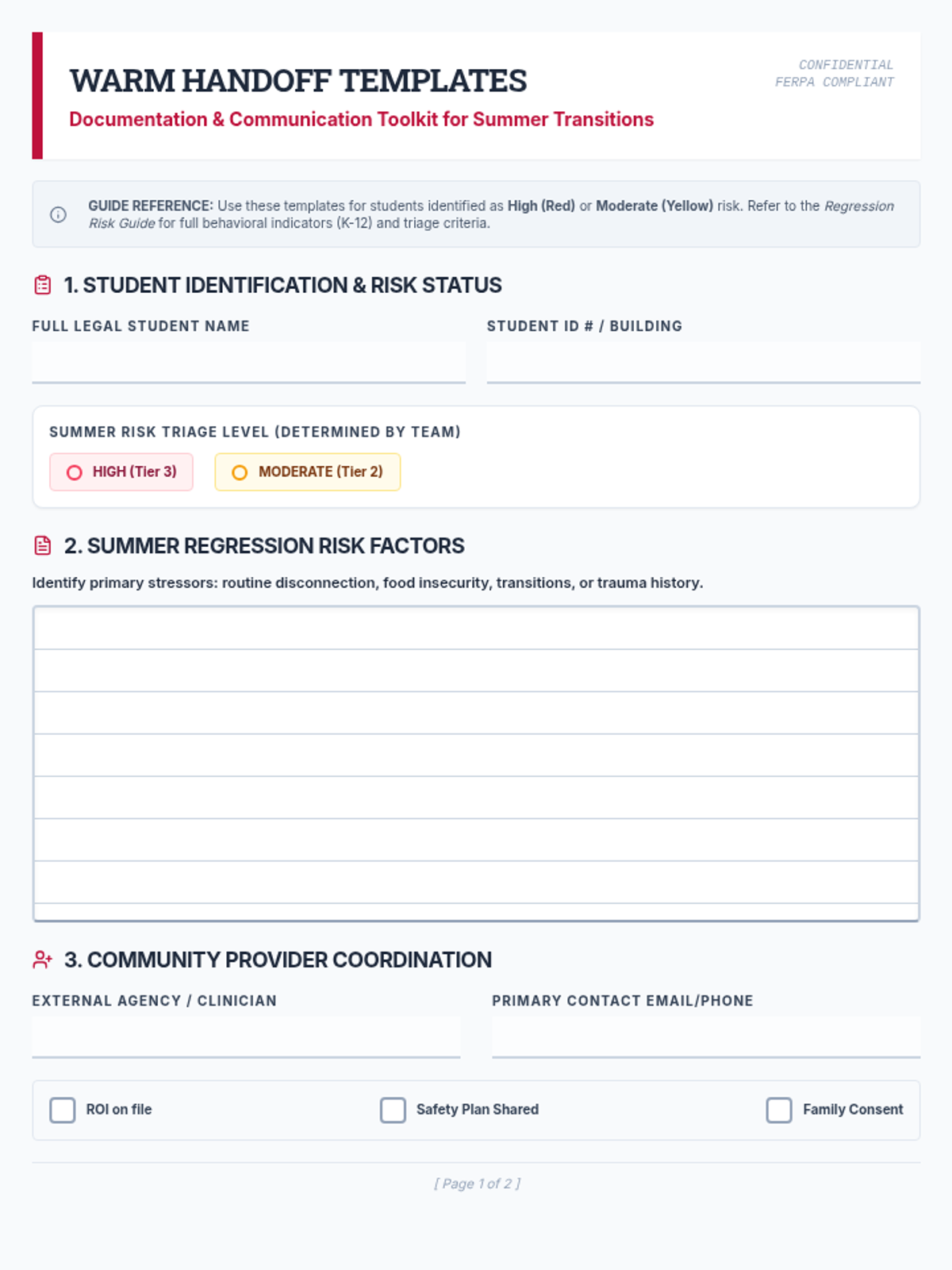
A professional toolkit for school counselors and educators to identify K-12 students at risk of mental health regression during summer break, including triage frameworks and handoff documentation.
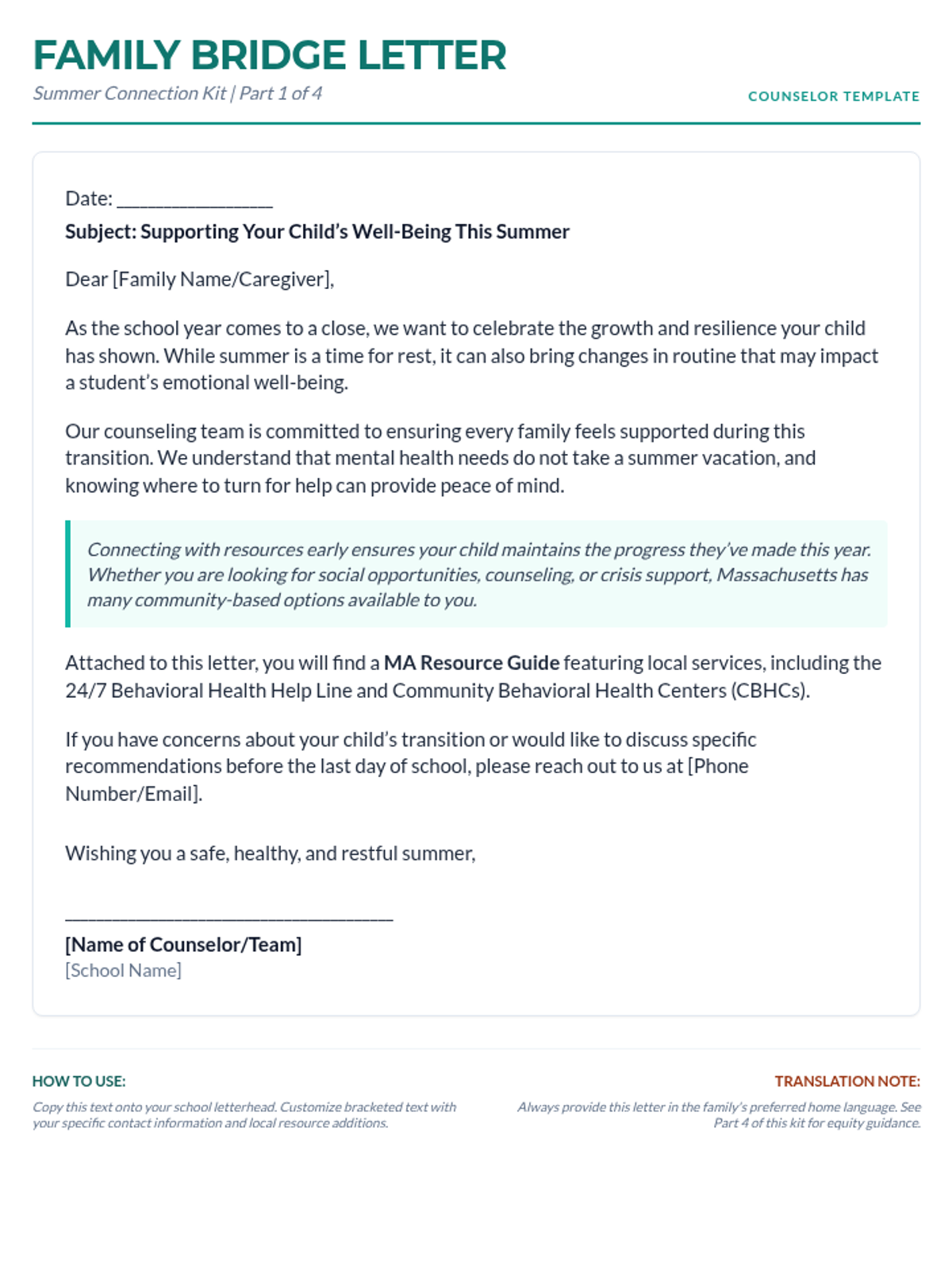
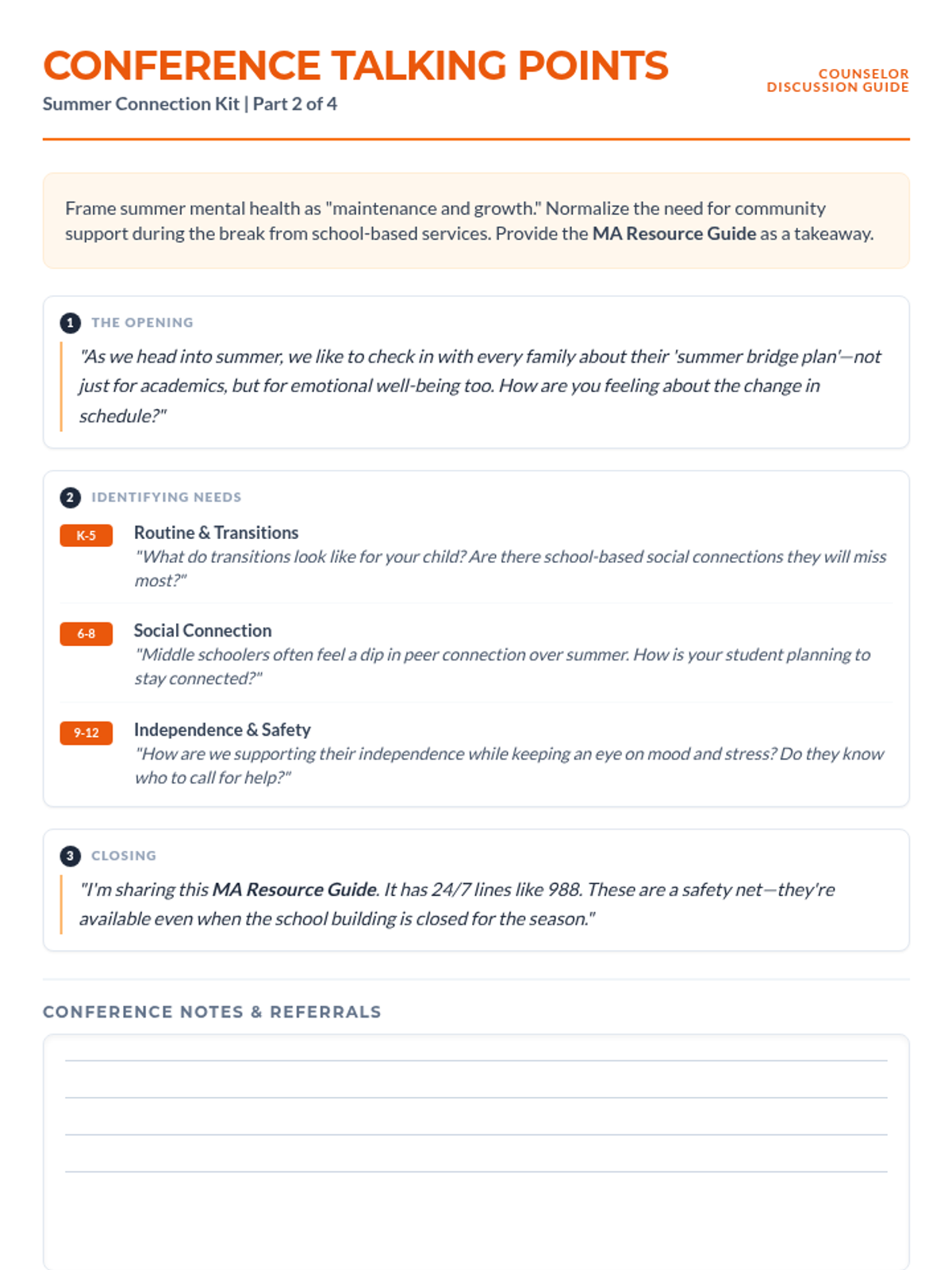
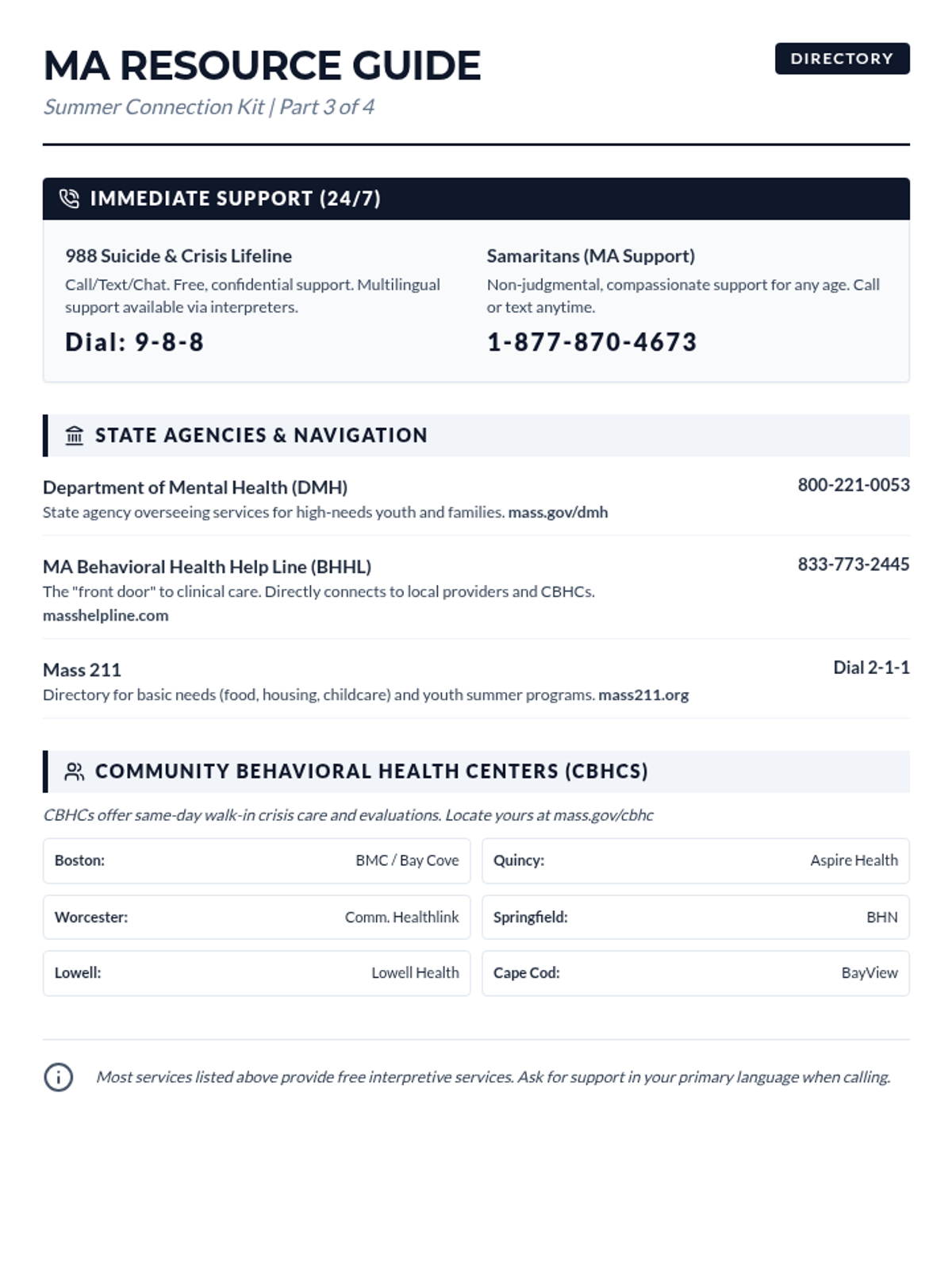
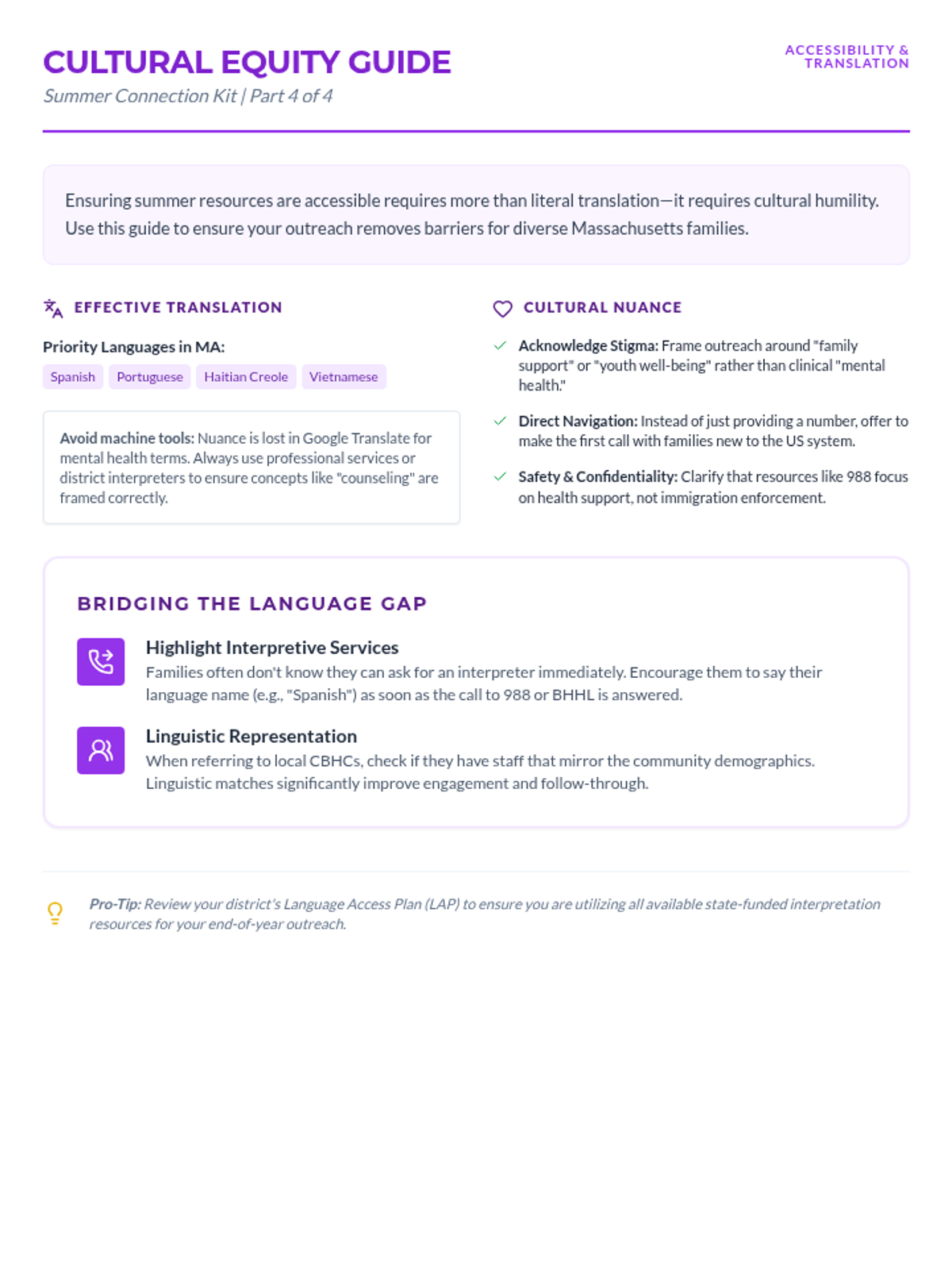
A comprehensive toolkit for school counselors to bridge the gap between school-year support and summer mental health resources for families in Massachusetts.
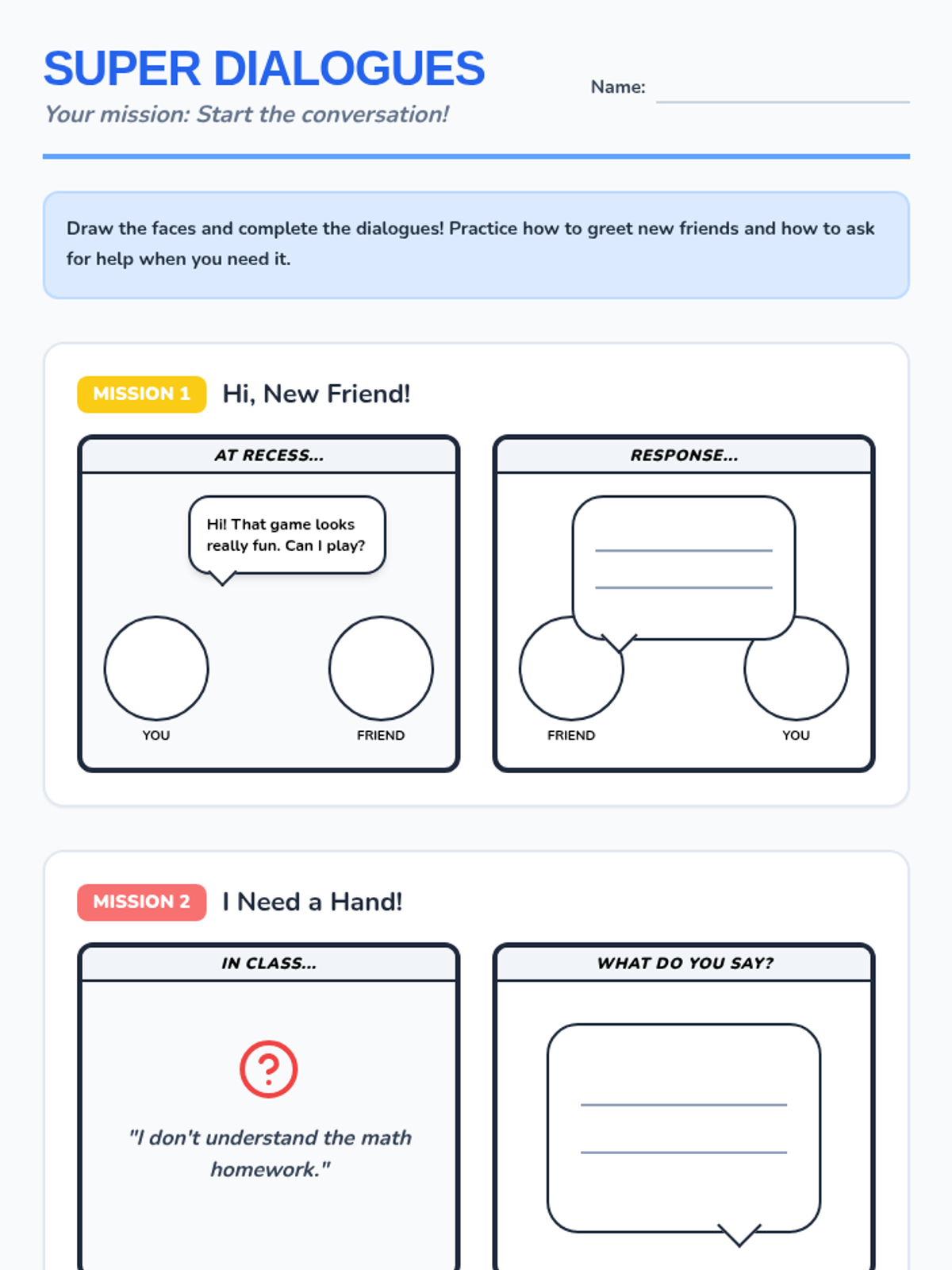
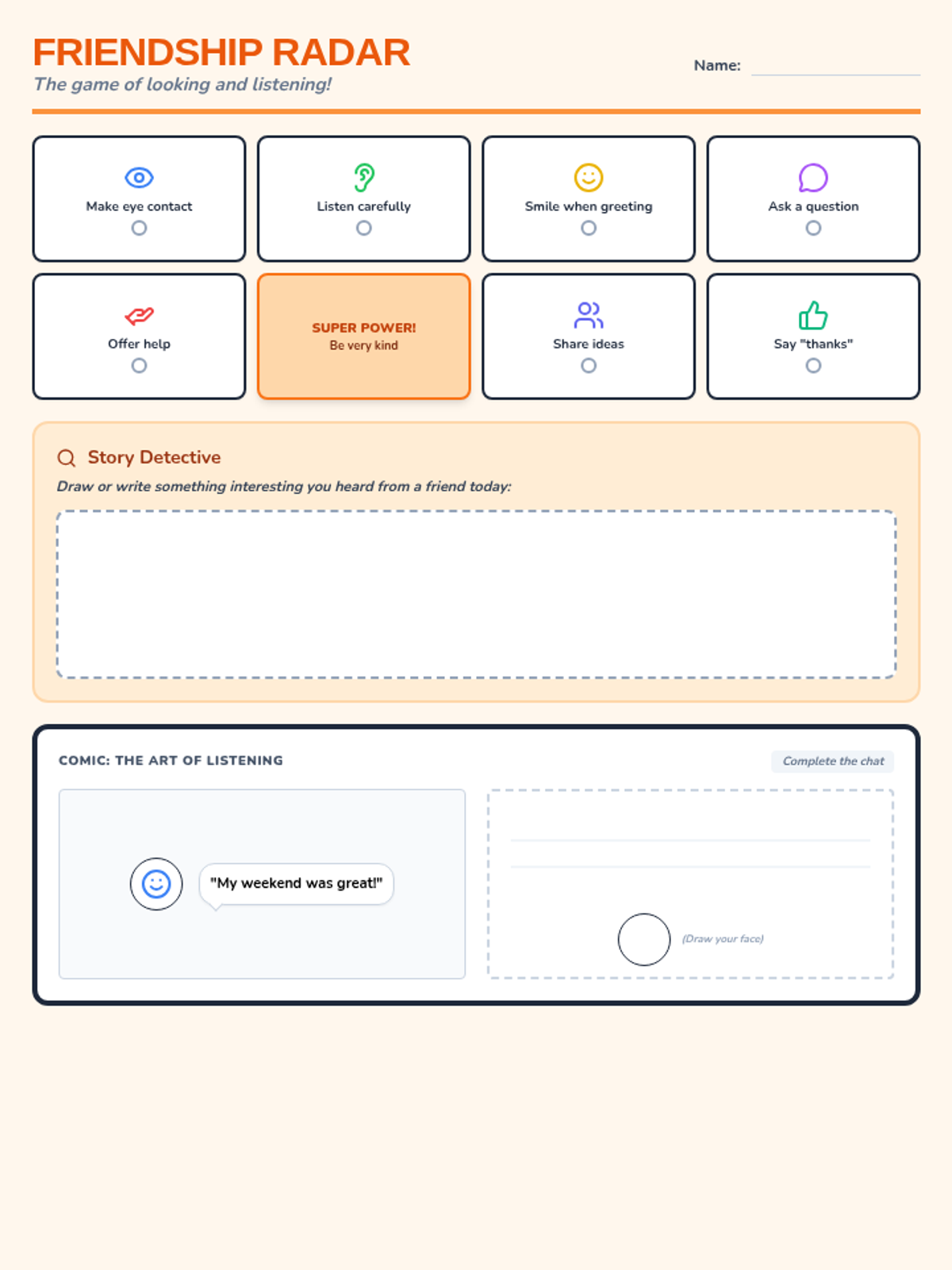
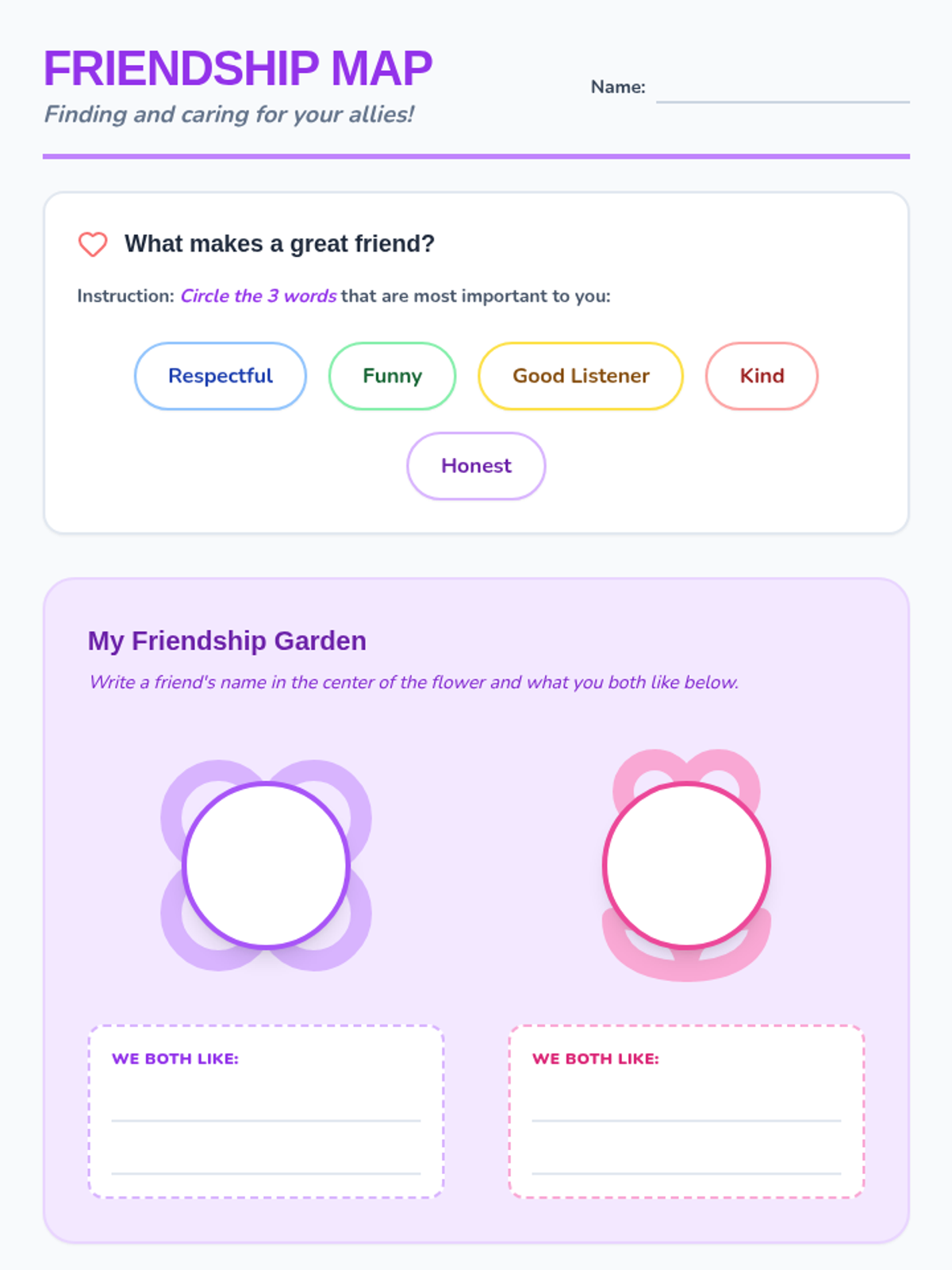
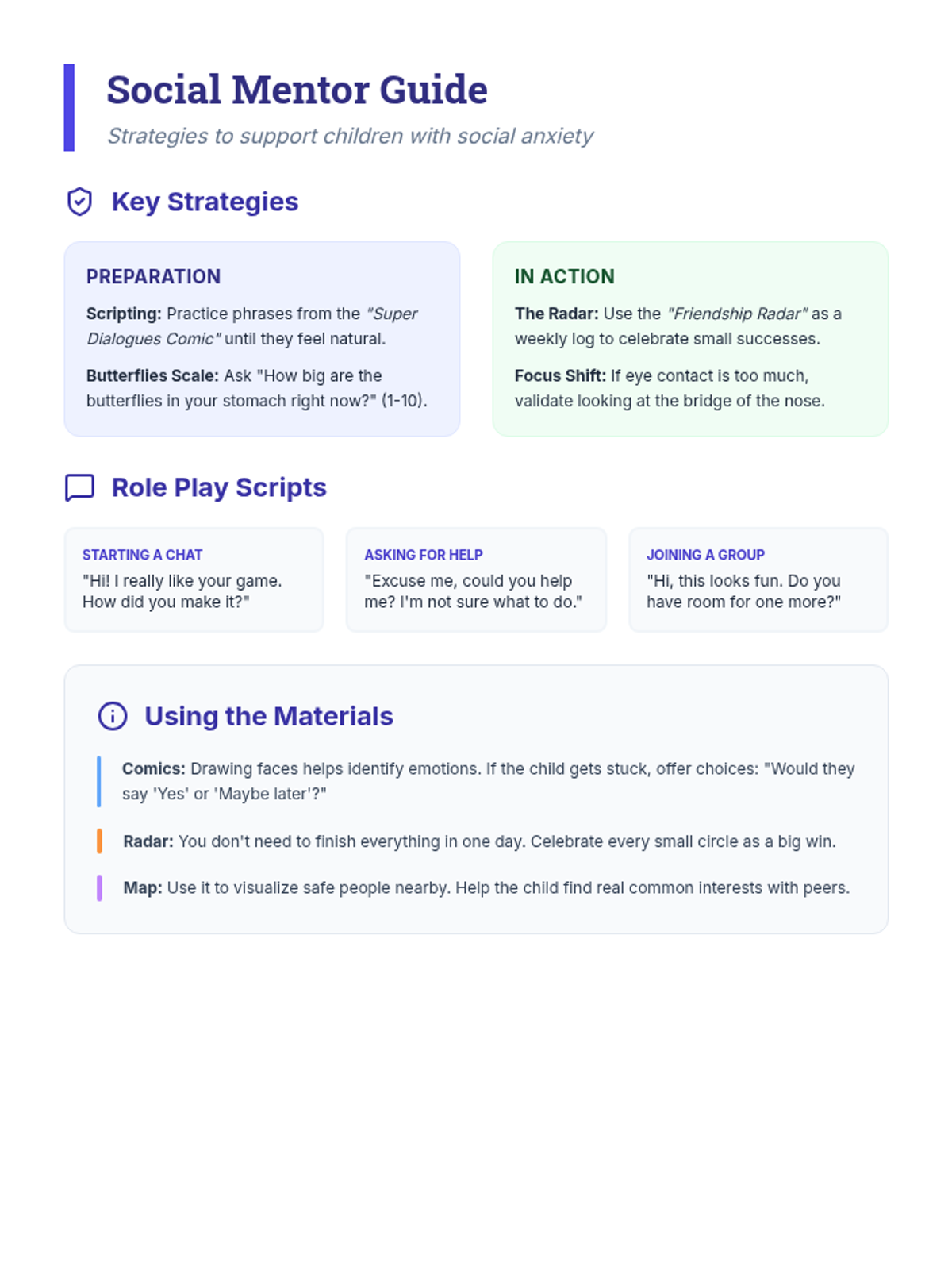
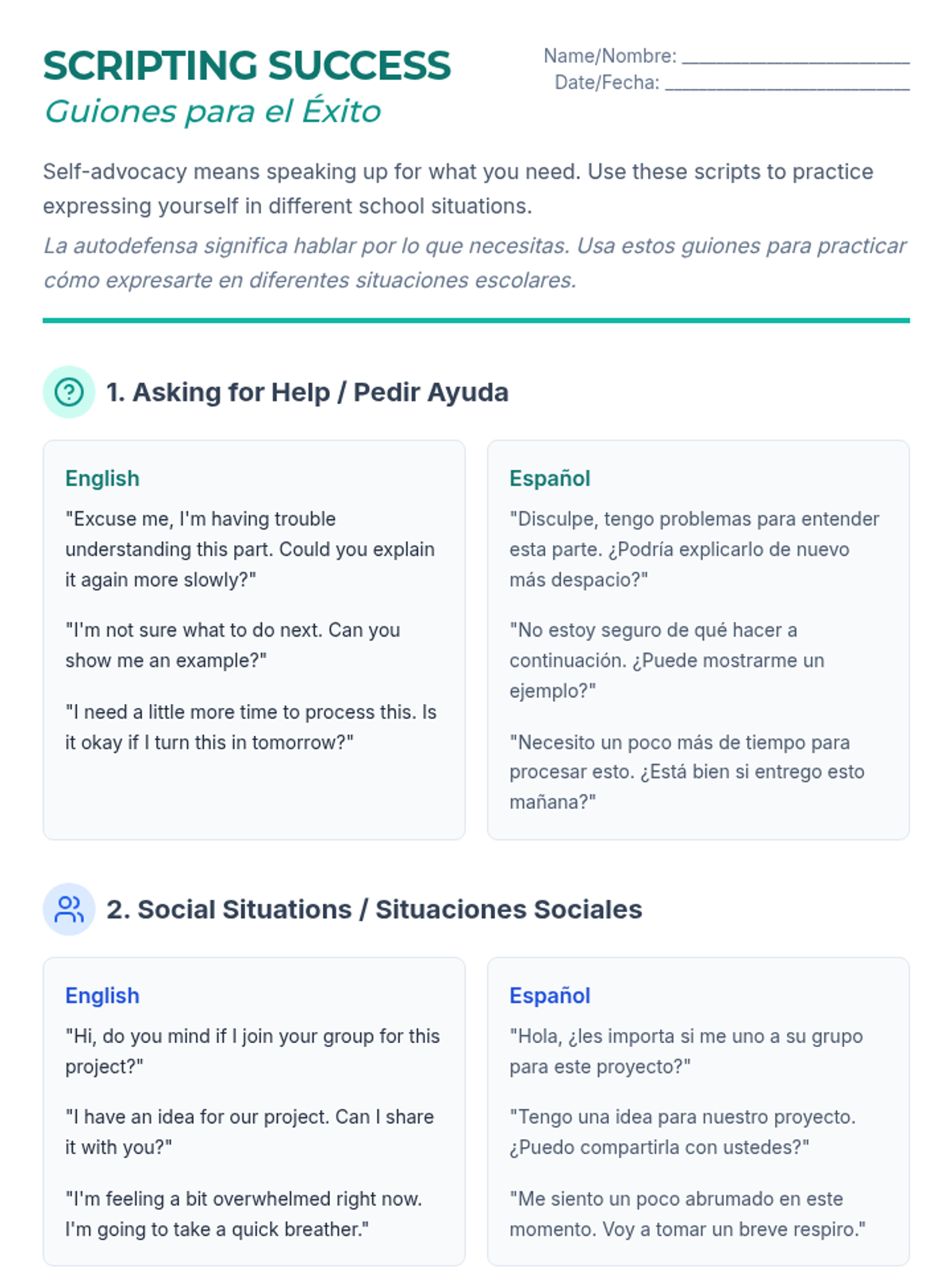
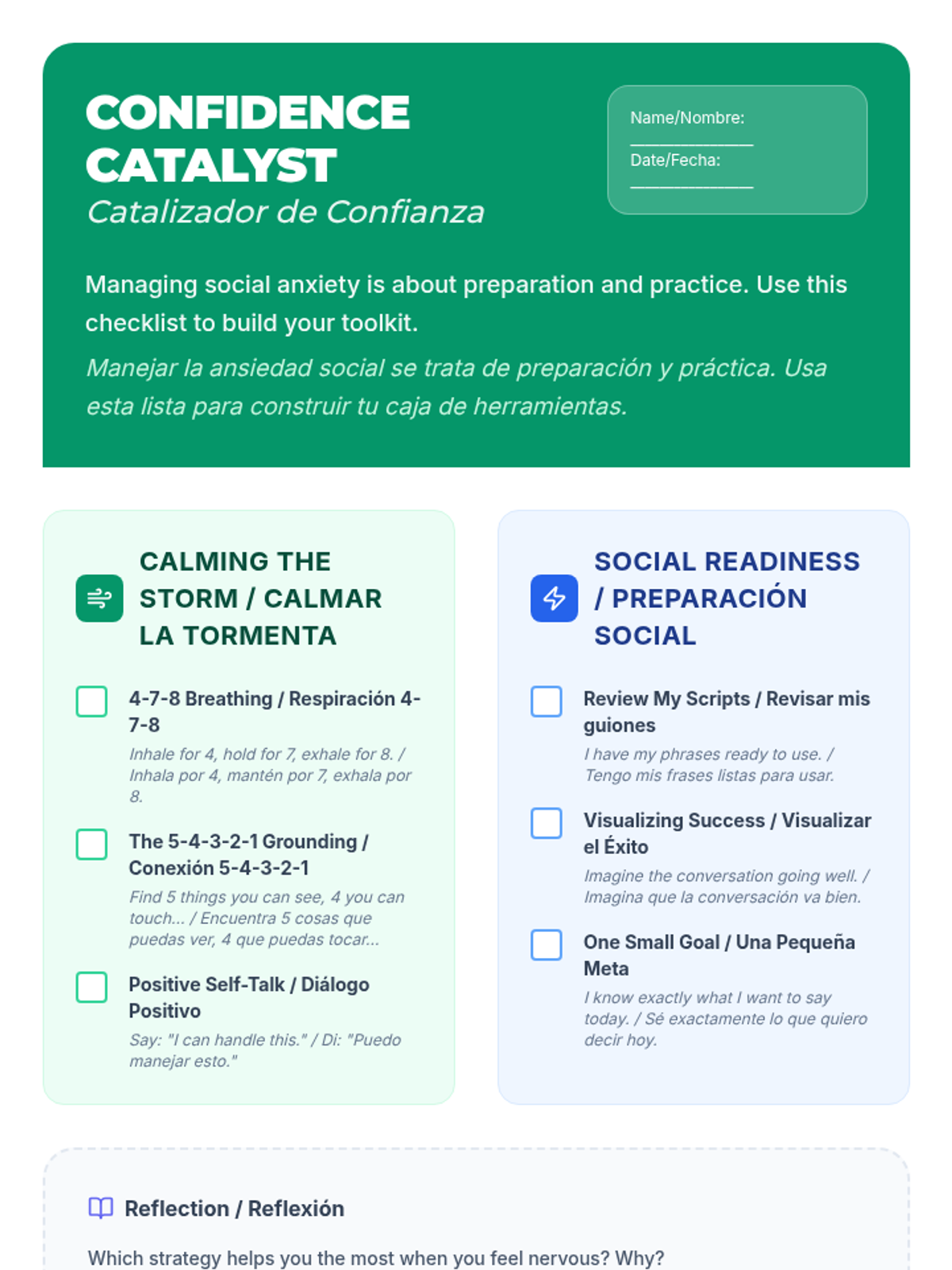
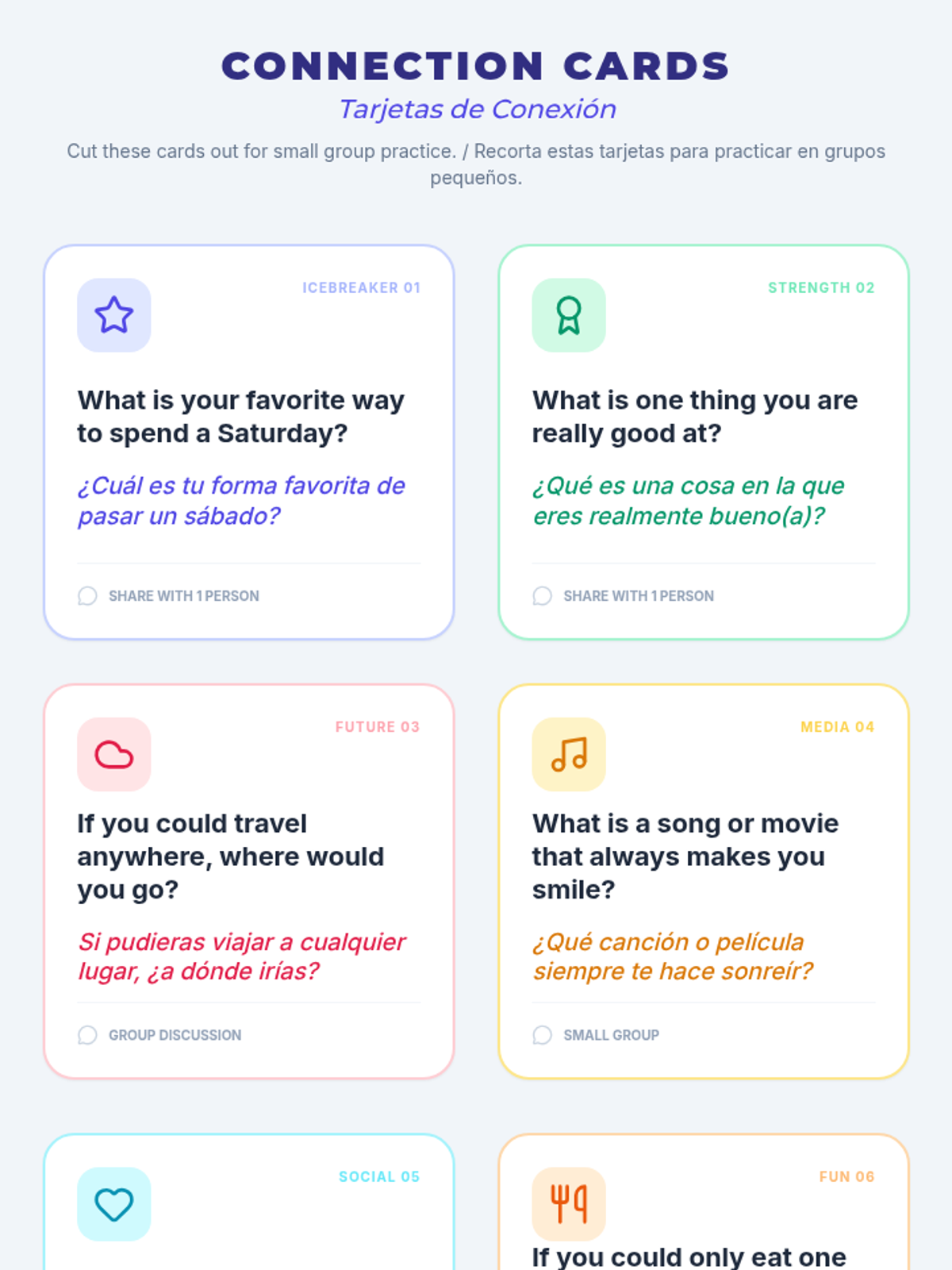
A series of interactive activities designed to help children navigate social interactions, manage anxiety, and strengthen their communication confidence in English.
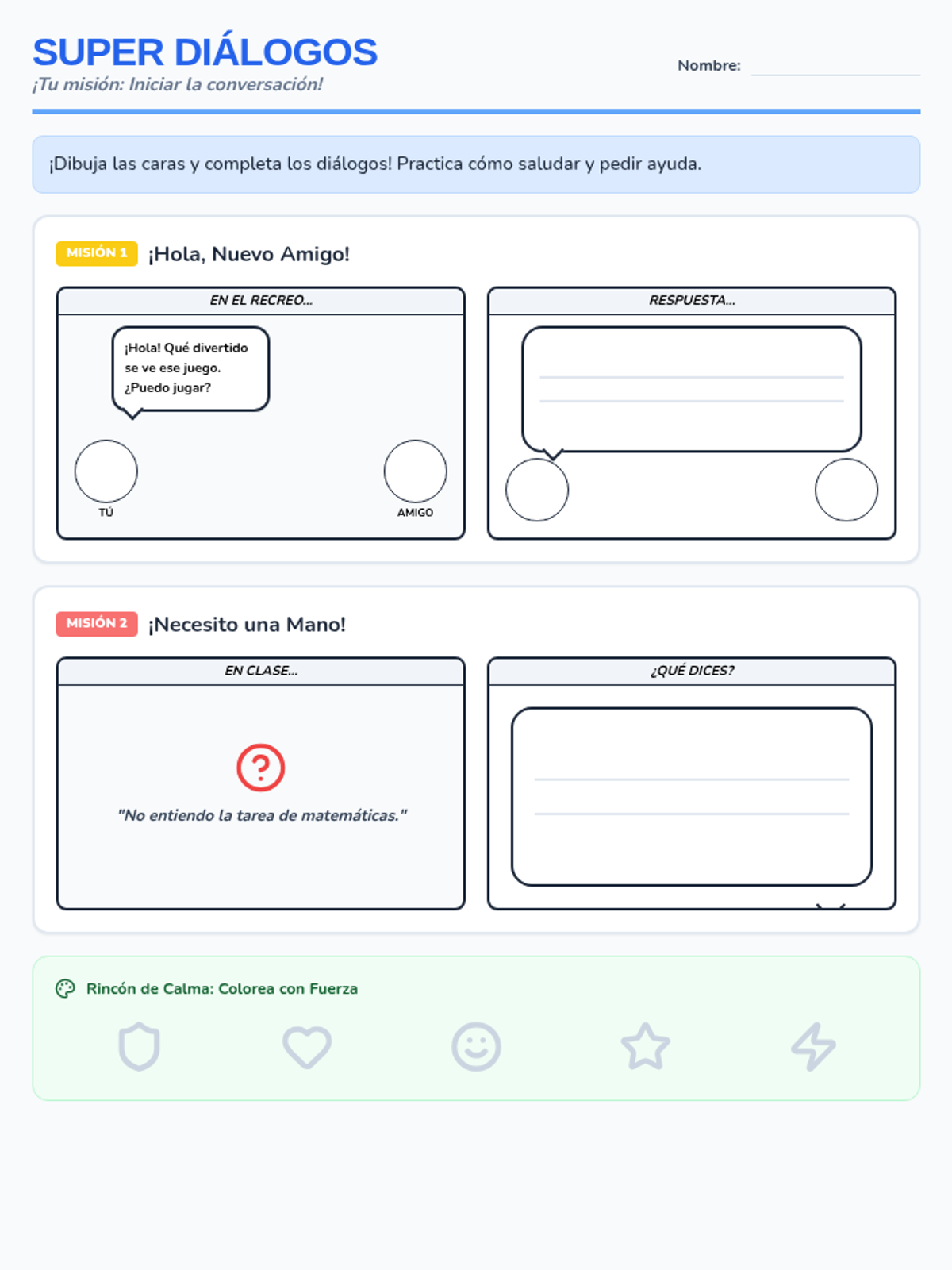
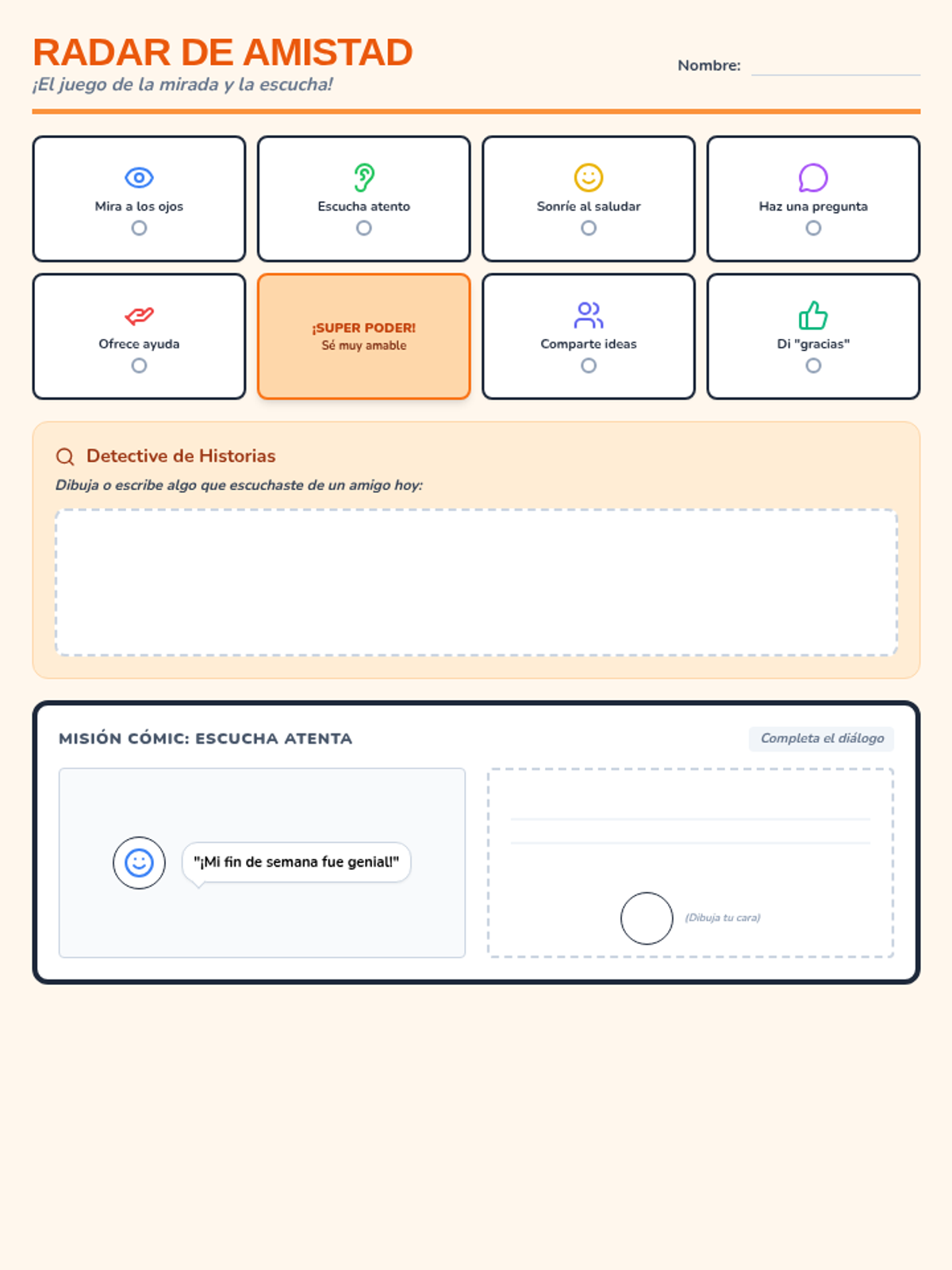
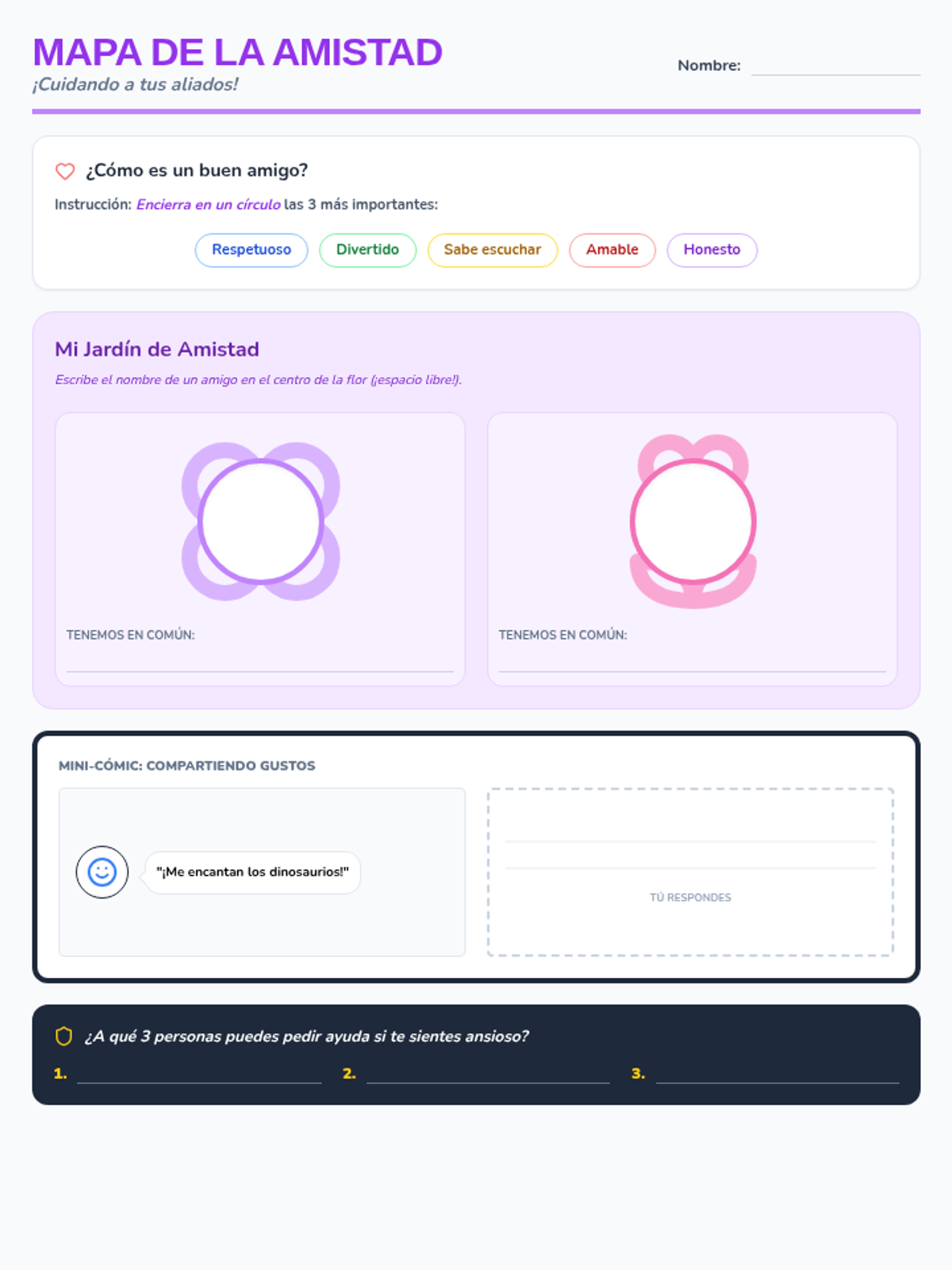
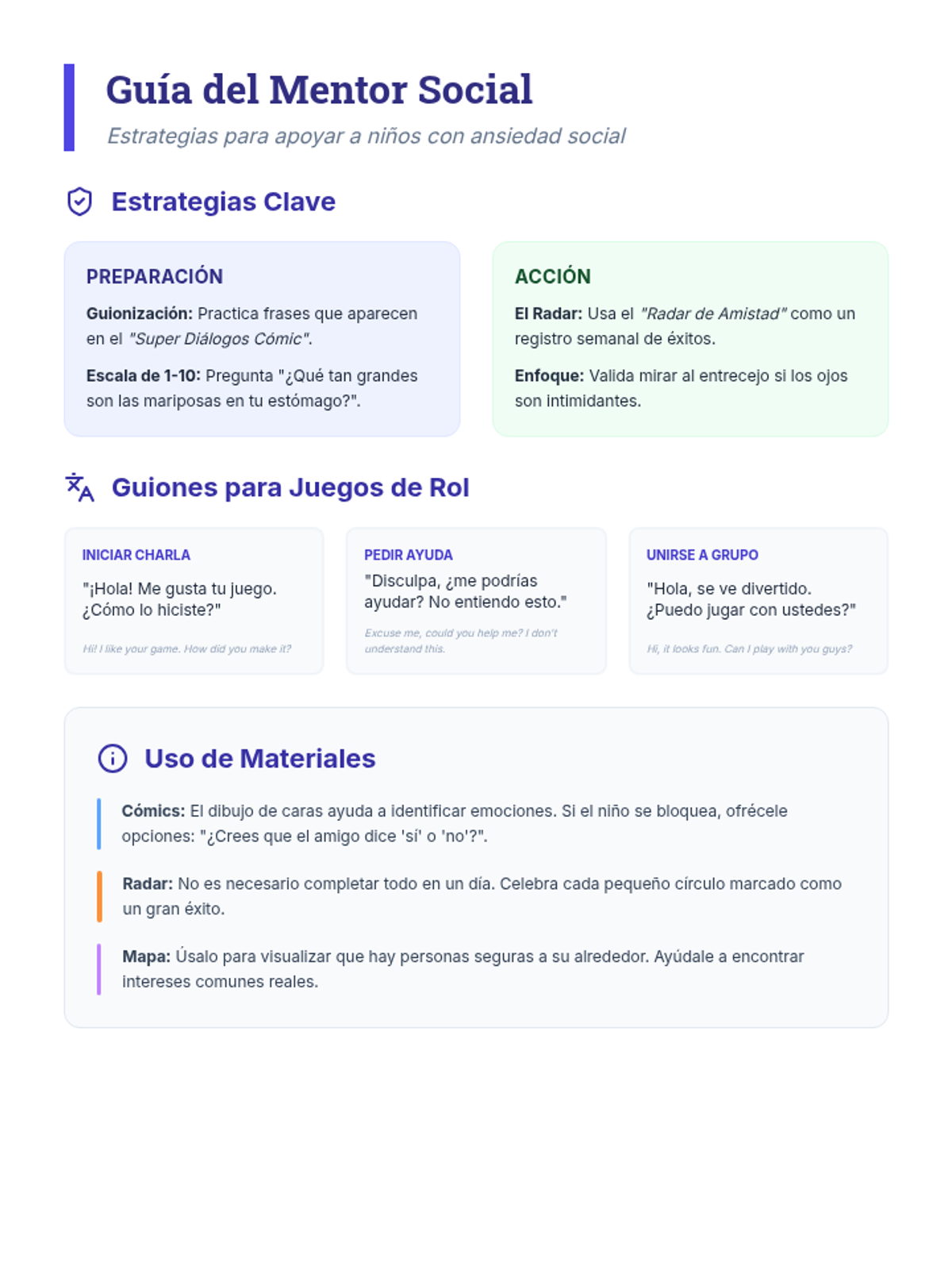
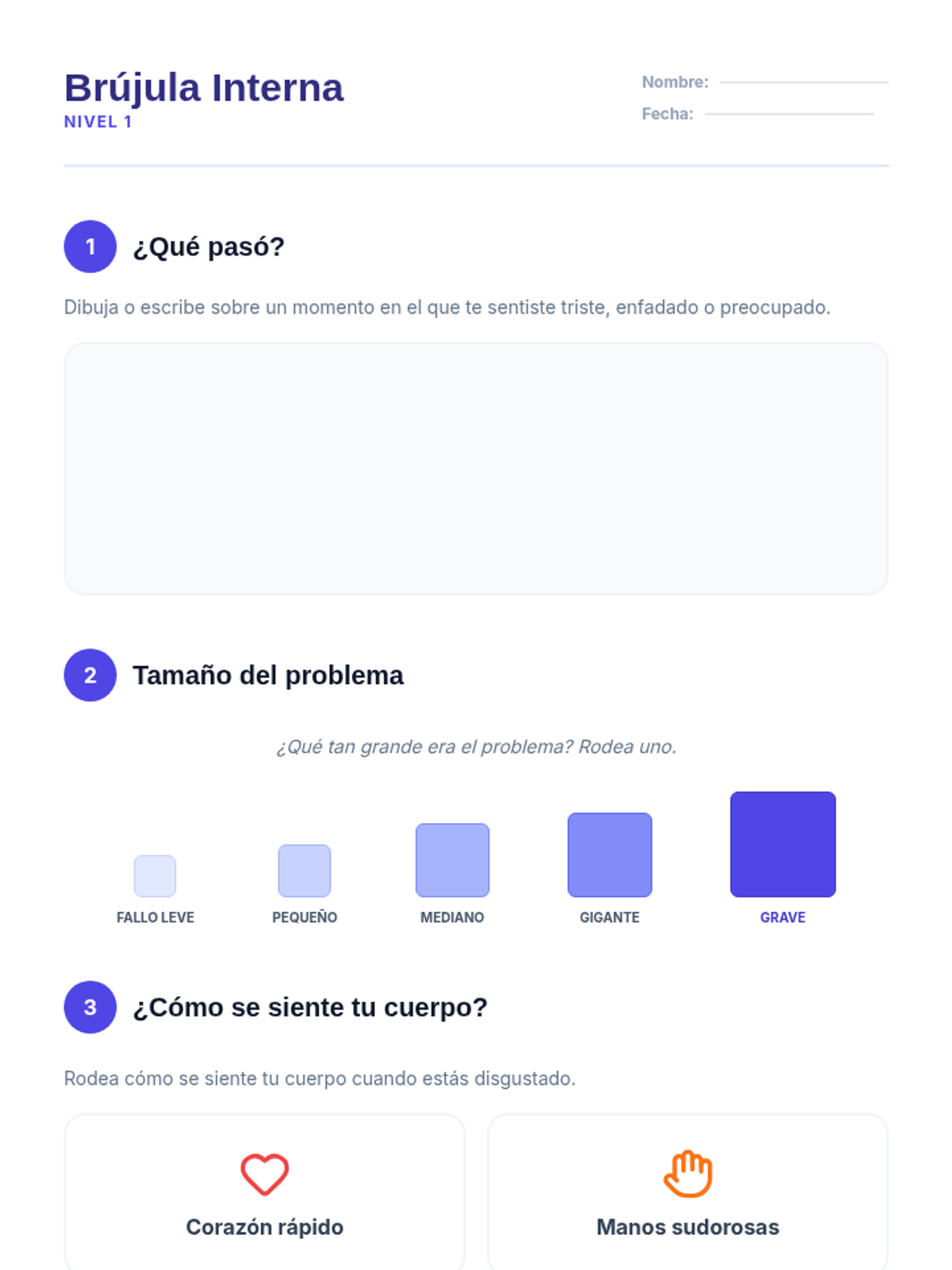
Una serie de actividades interactivas diseñadas para ayudar a los niños a navegar las interacciones sociales, manejar la ansiedad y fortalecer su confianza al comunicarse en español.
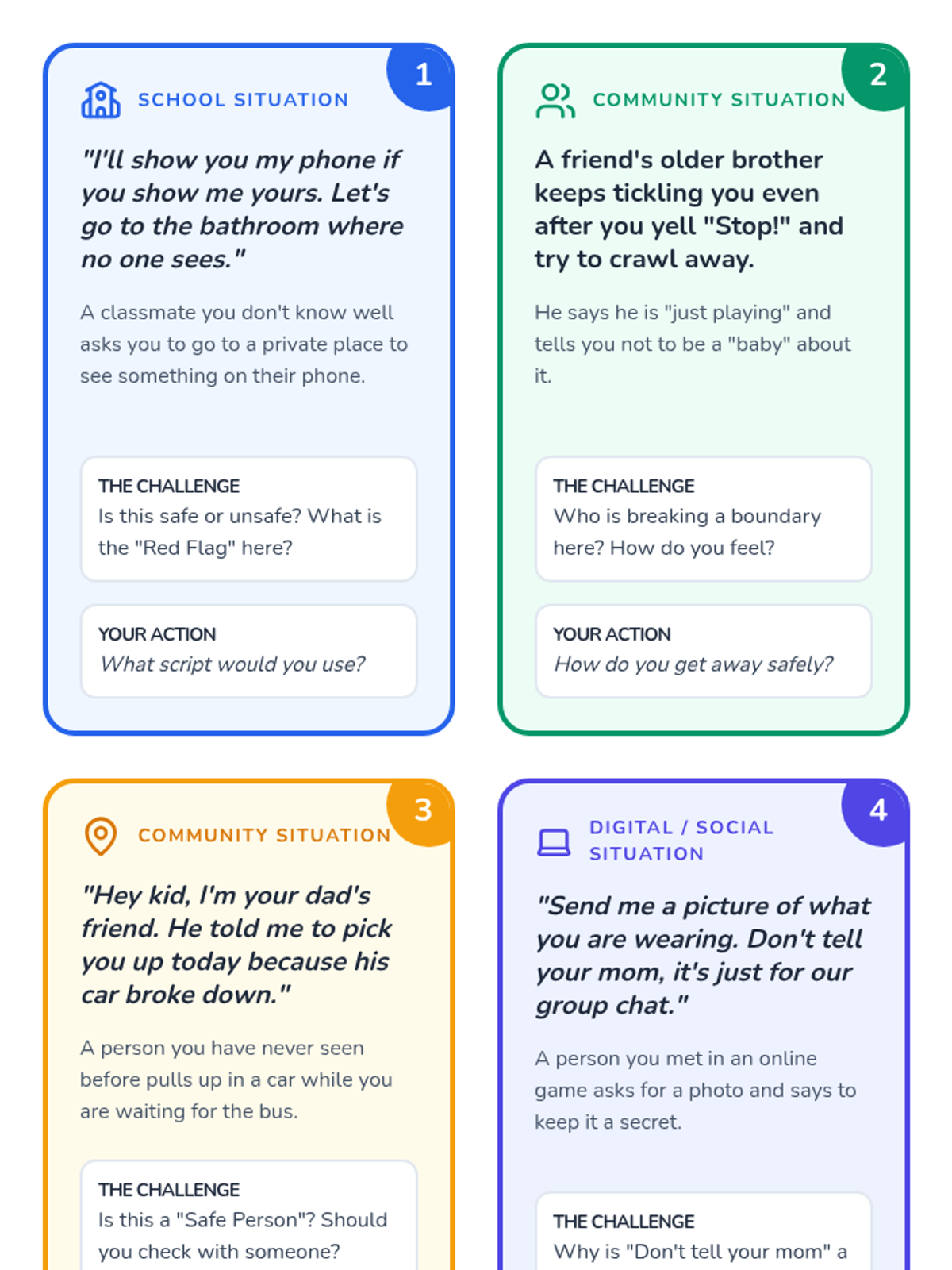
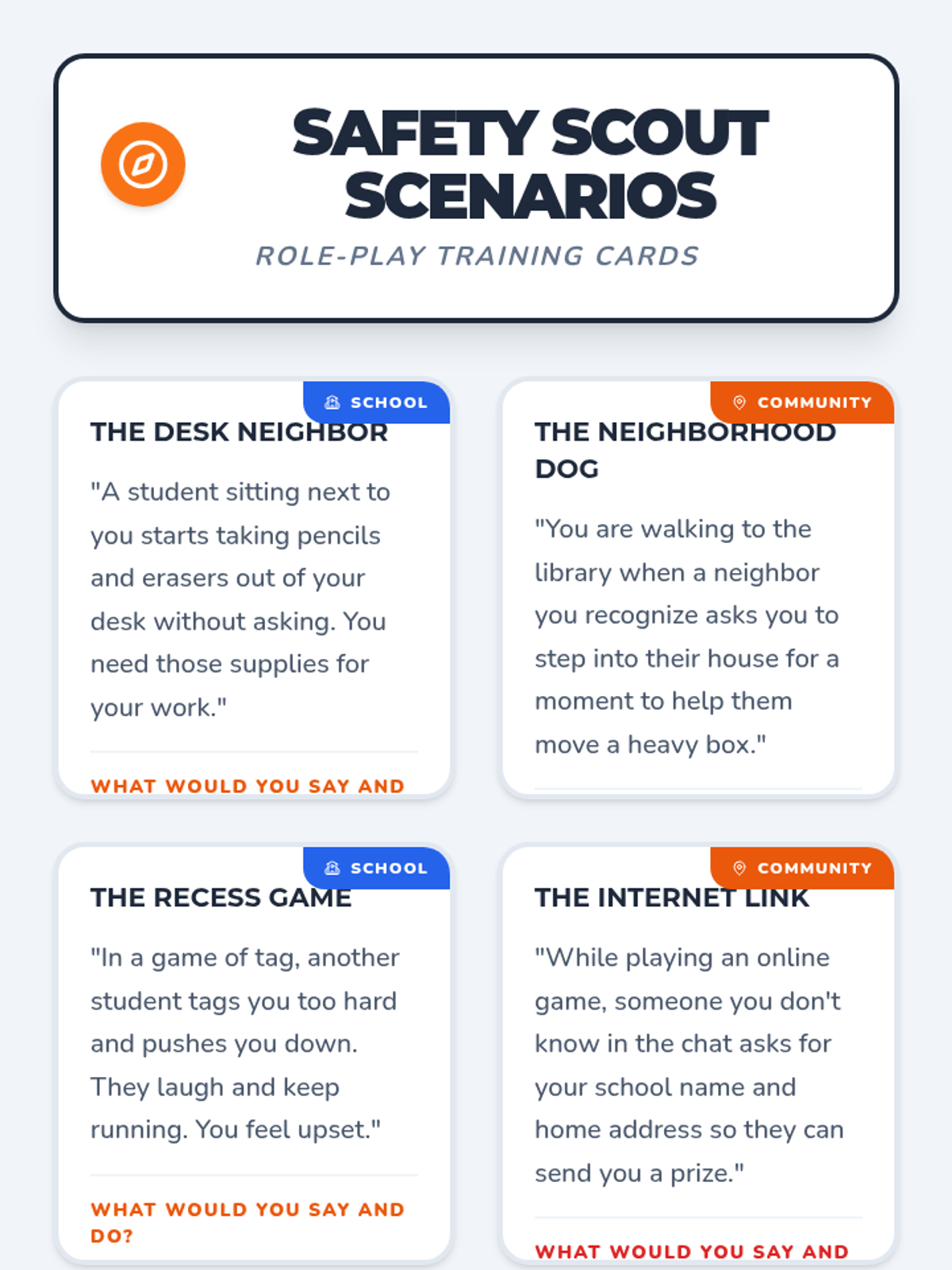
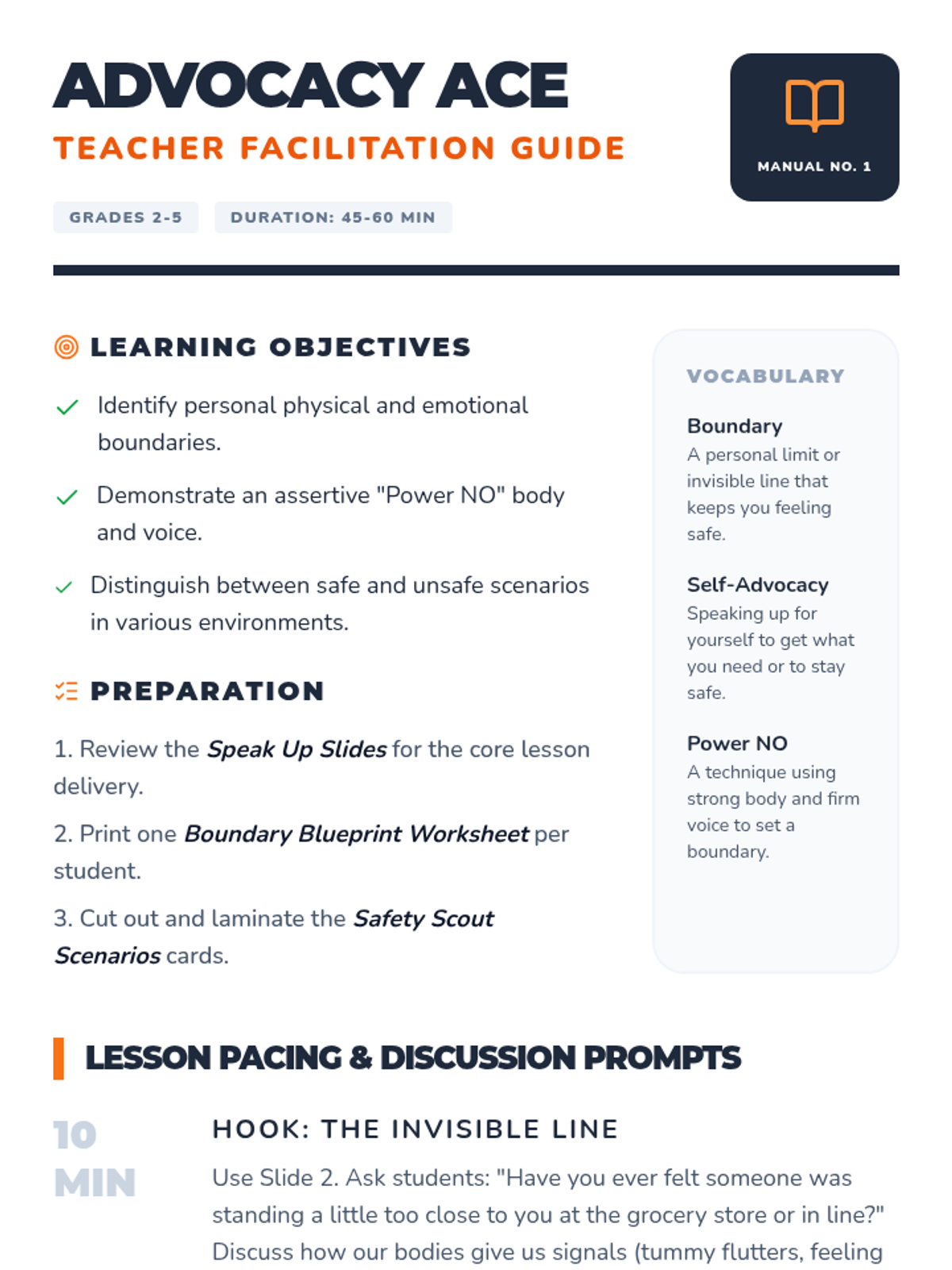
A comprehensive lesson on identifying unsafe social situations, setting physical and emotional boundaries with peers, and practicing assertive communication across school and community settings.
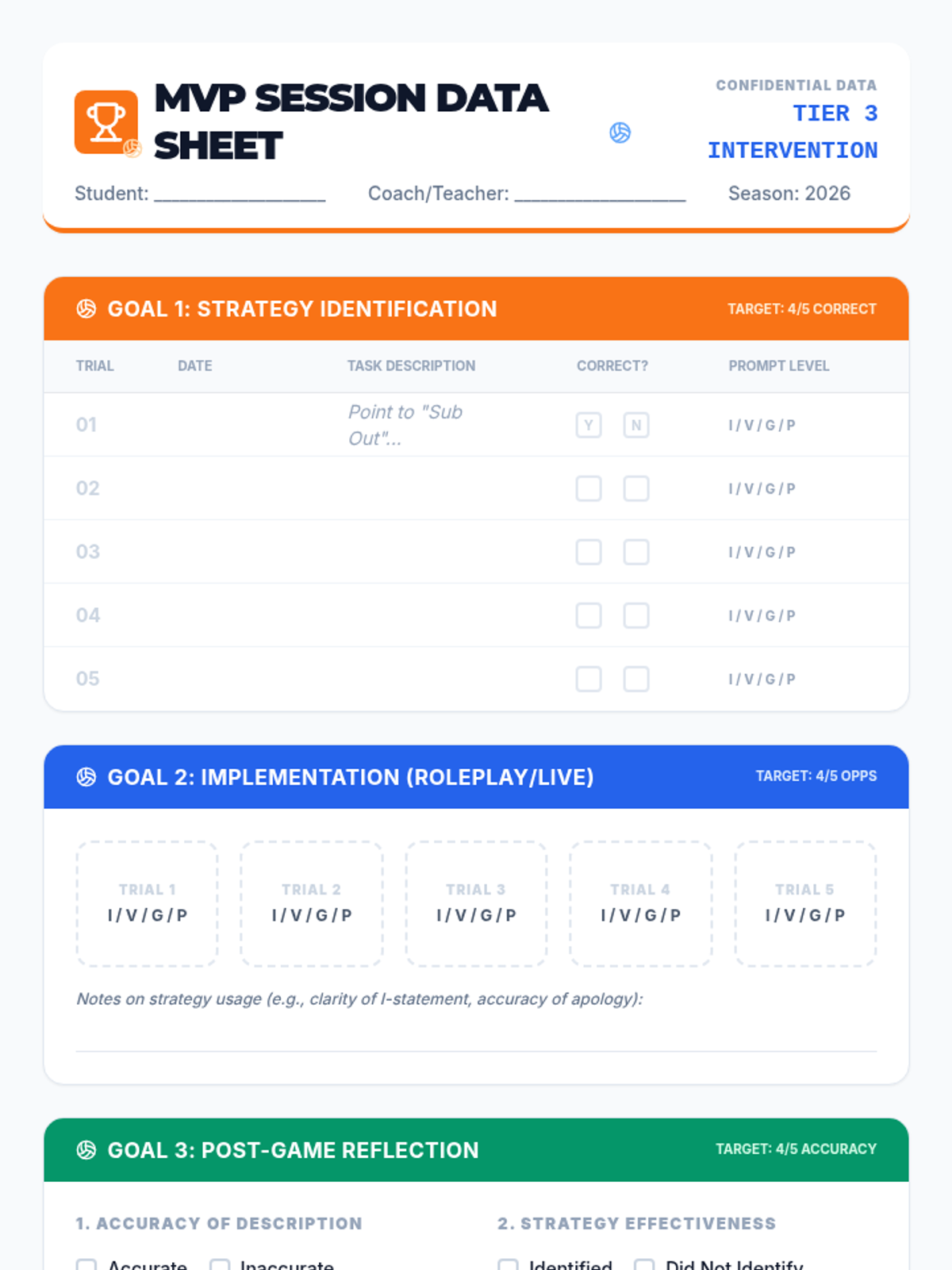
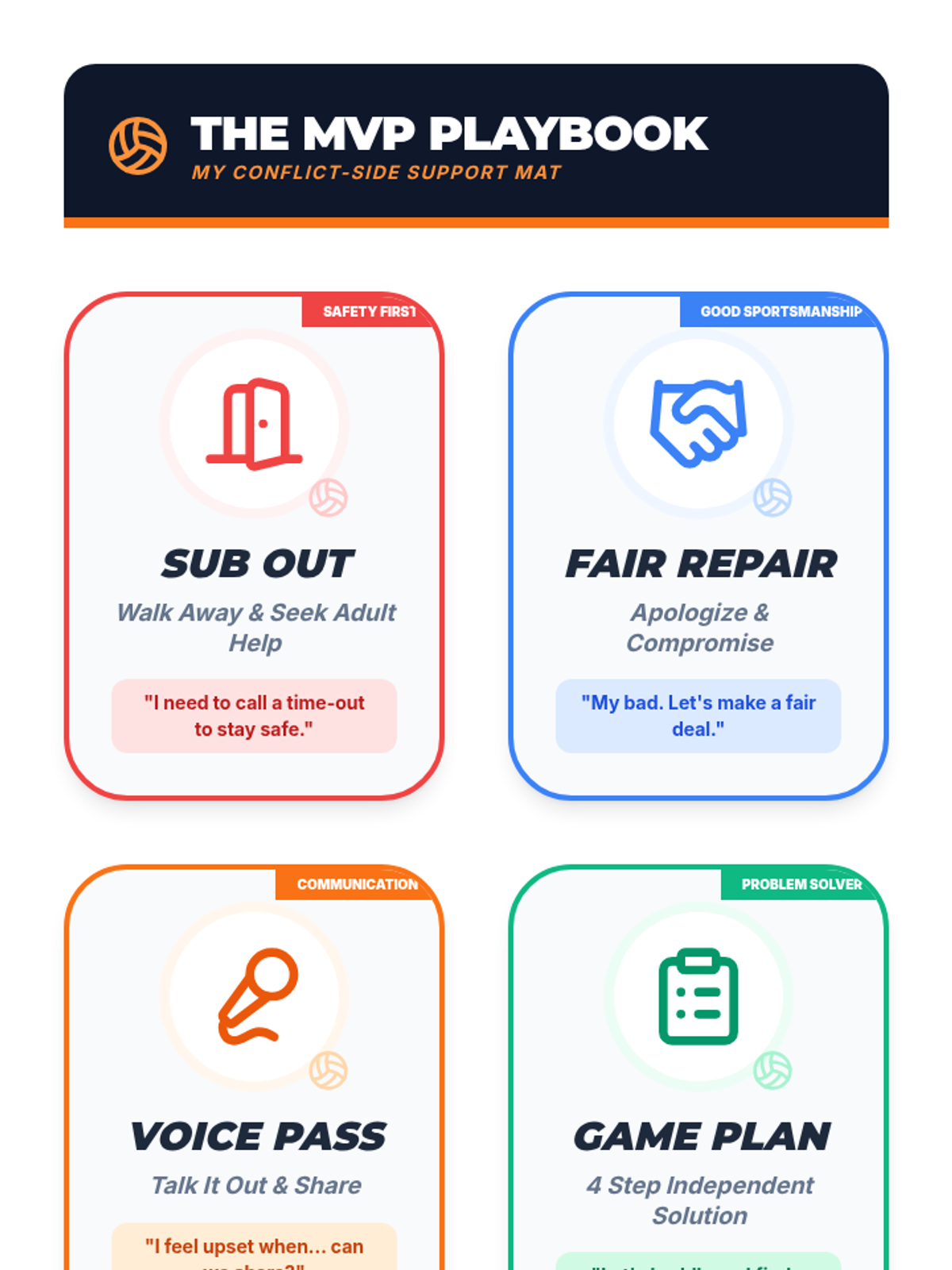
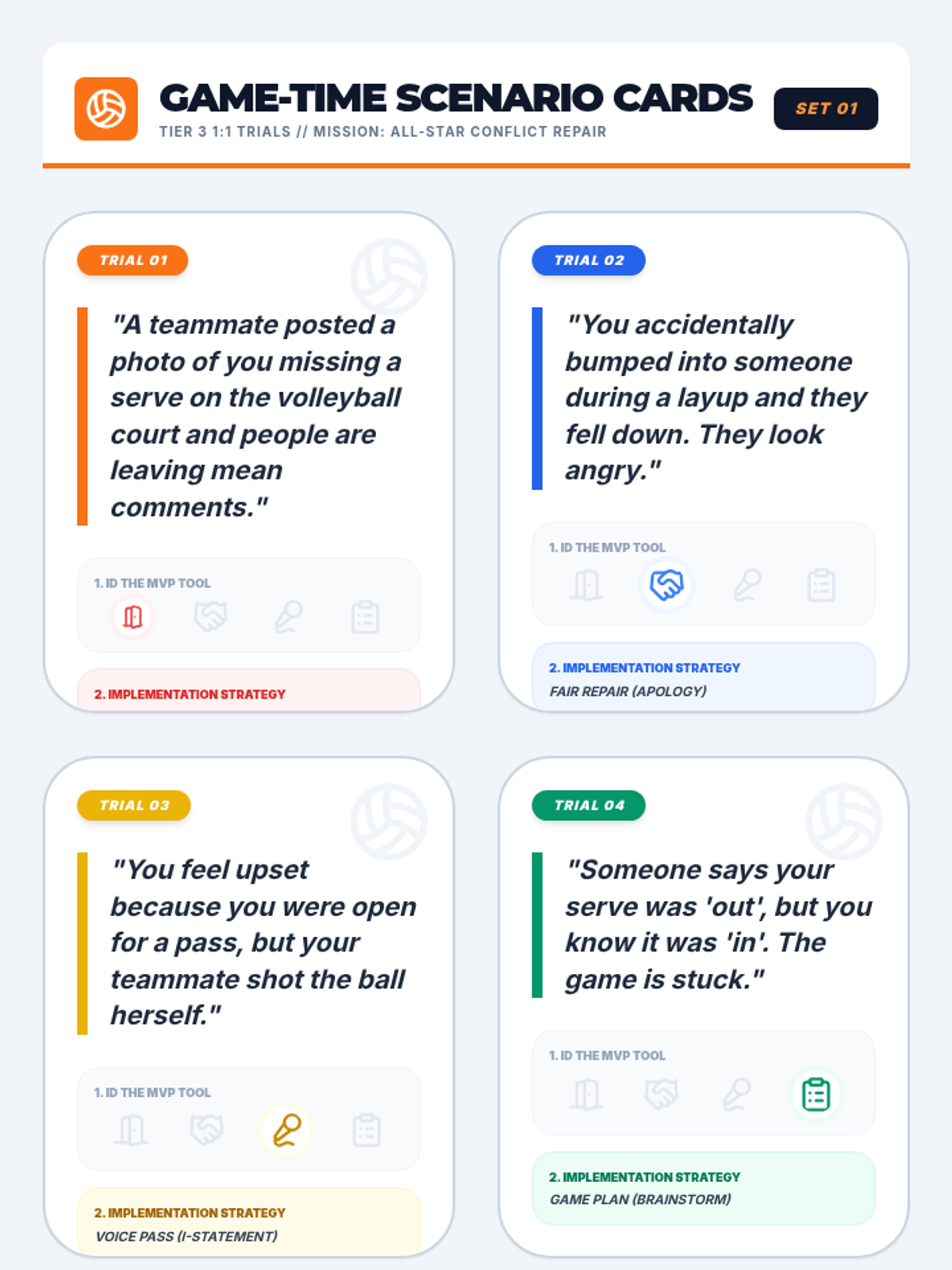
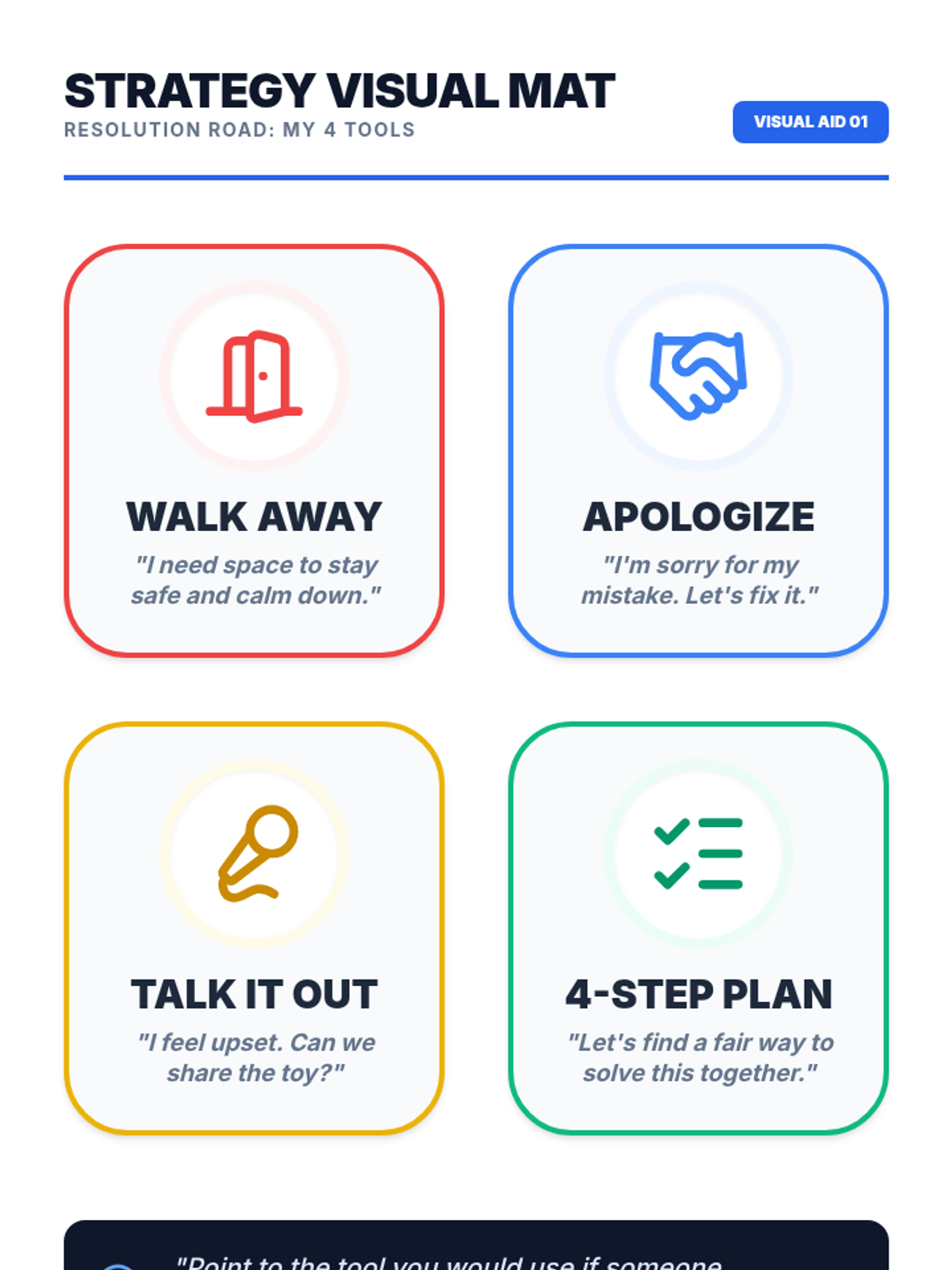
Introduction to the 'Starting Lineup' of conflict tools. Focuses on naming the 4 strategies in isolation using sports metaphors (Sub Out, Fair Repair, Voice Pass, Game Plan).
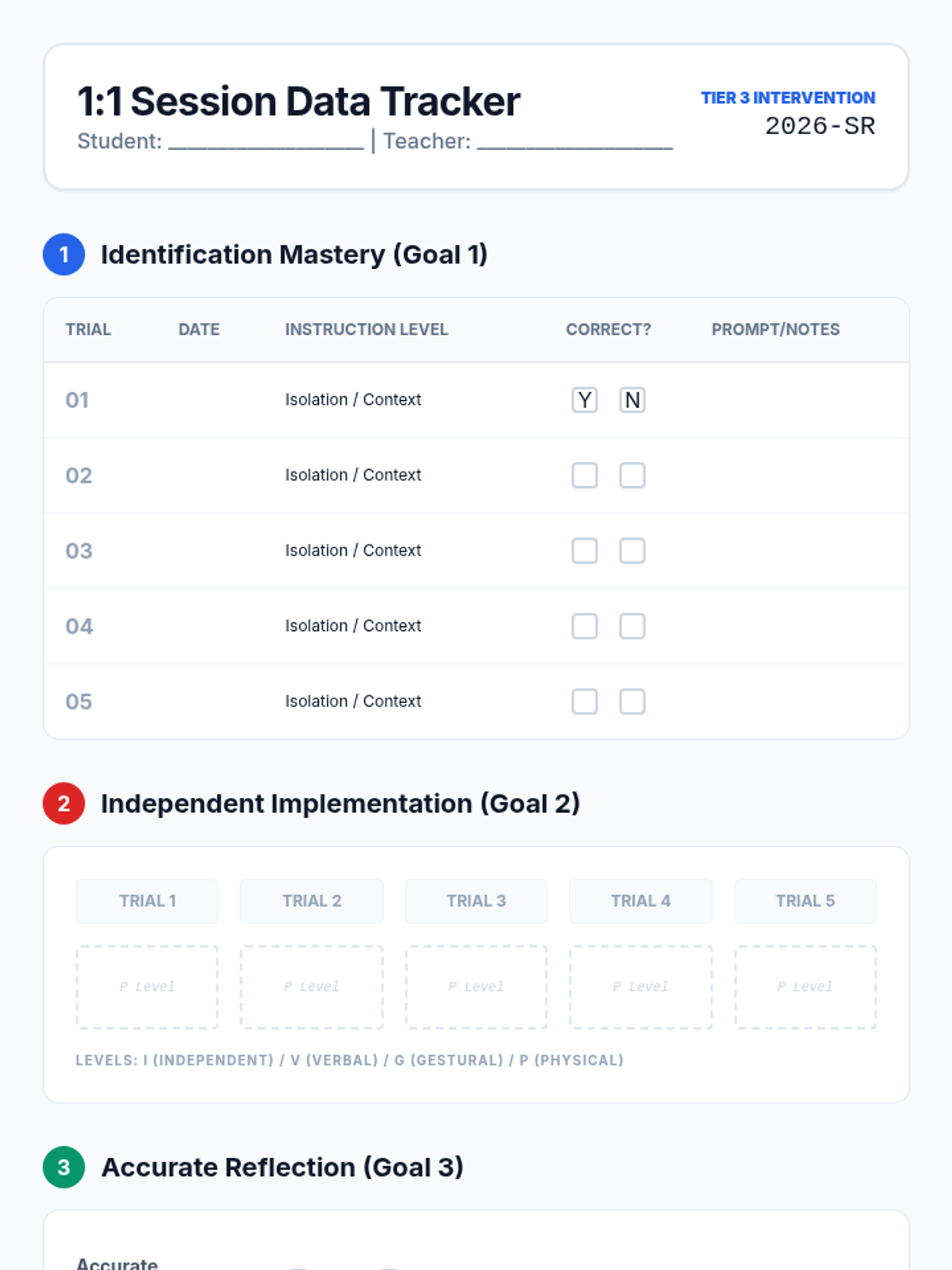
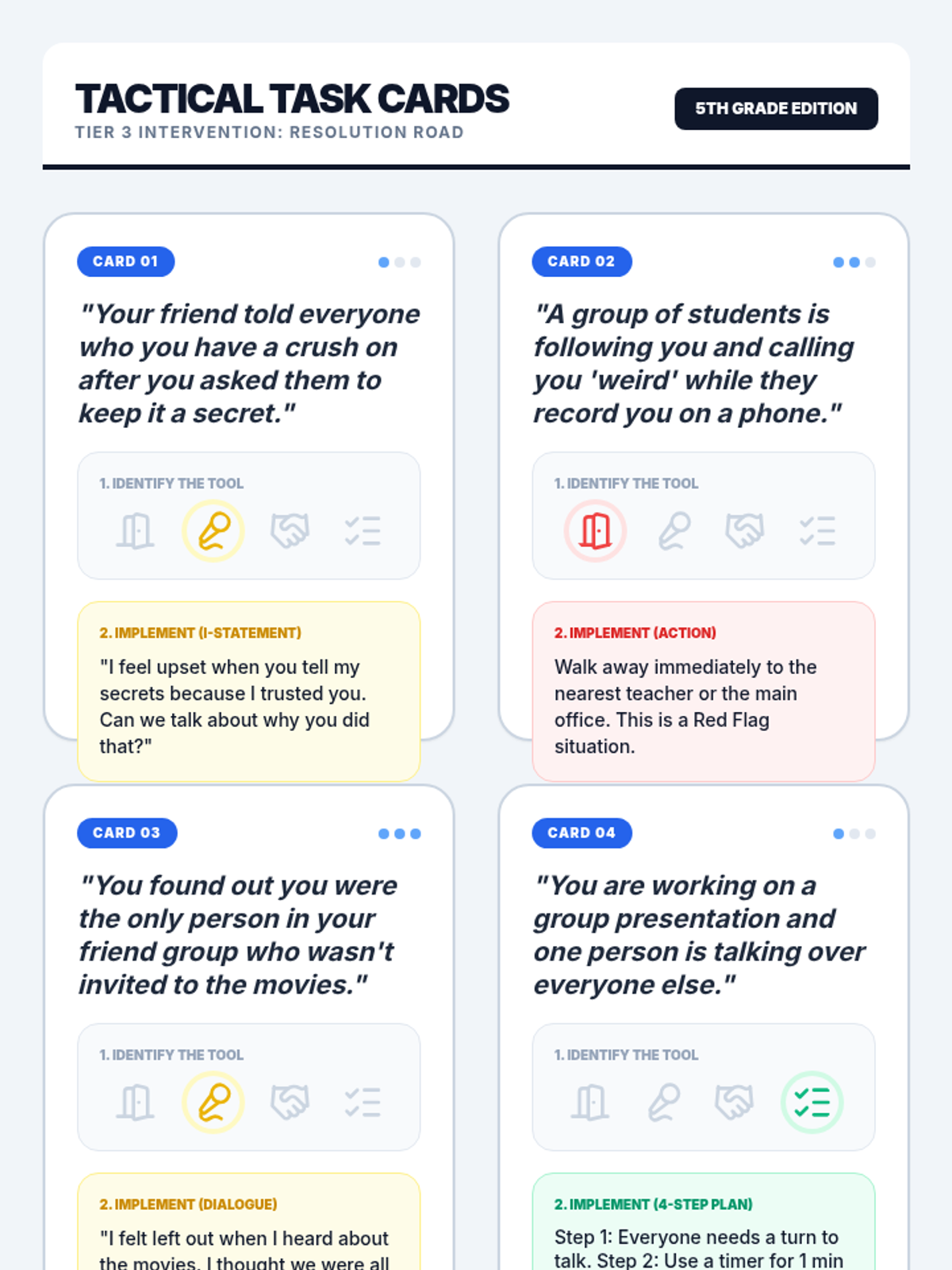
Explicit introduction to the 4 conflict resolution tools with high-repetition identification trials (Goal 1).
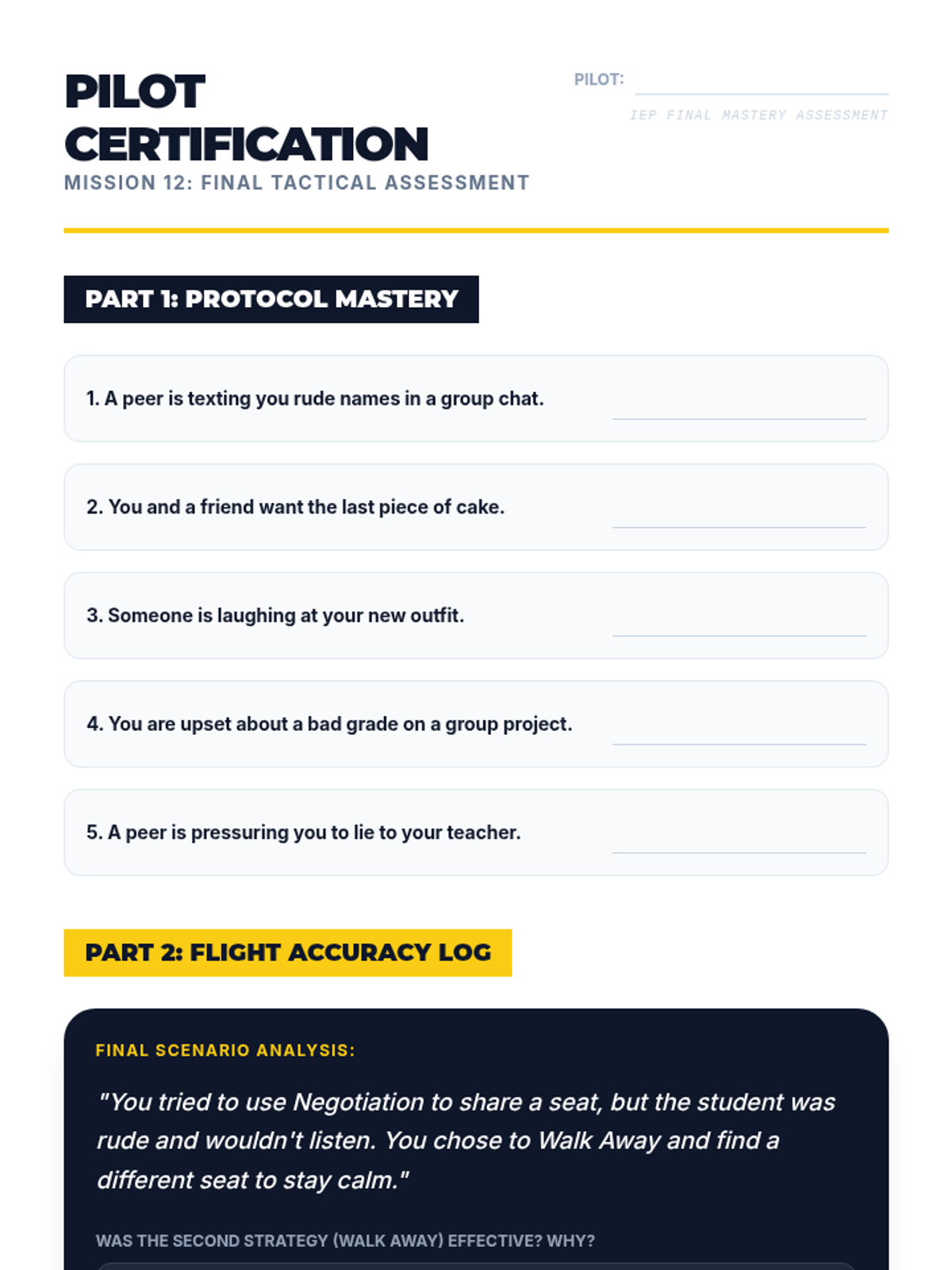
A final review of all strategies with a focus on independent mastery and final data collection for the reporting period.
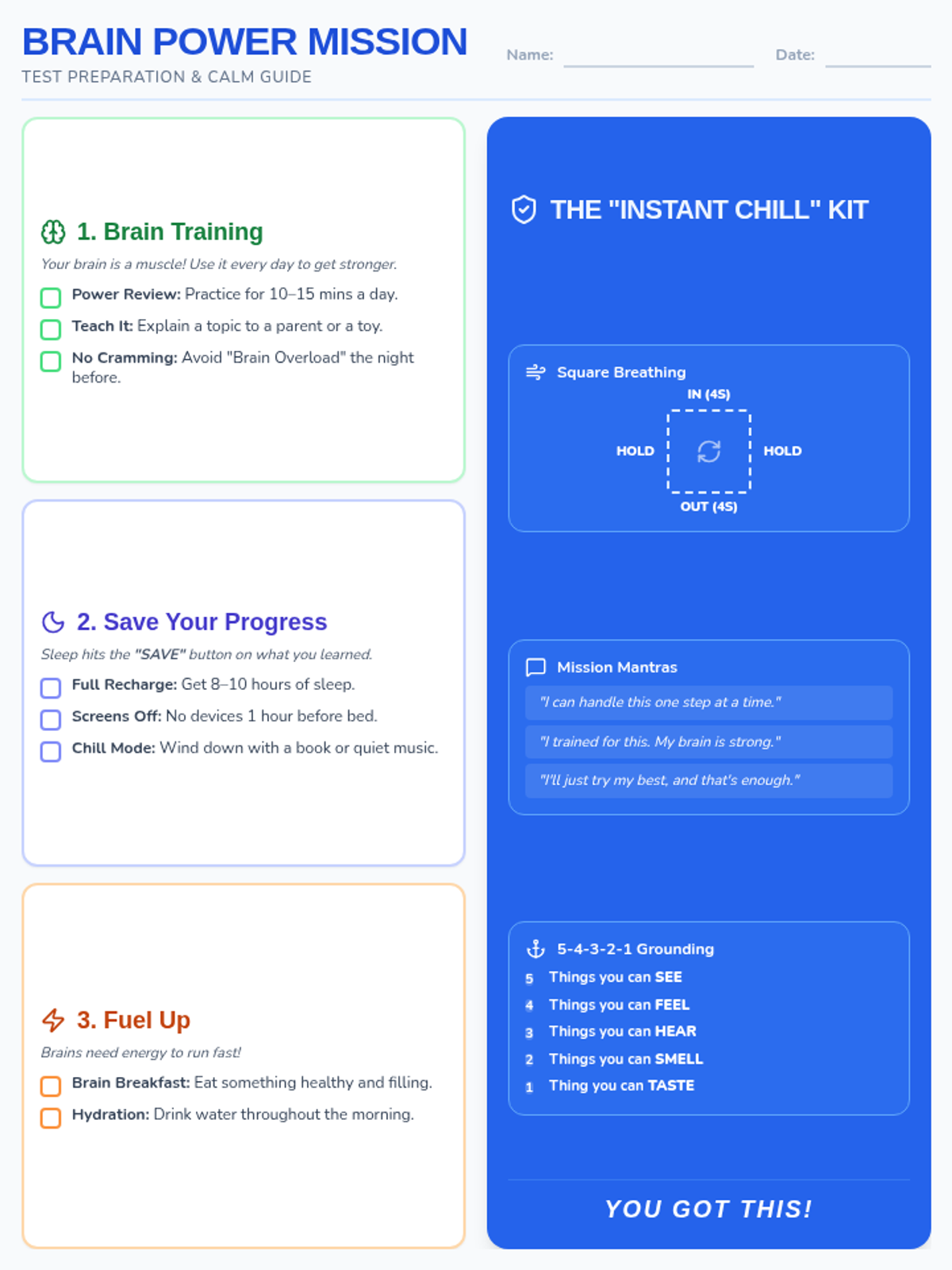
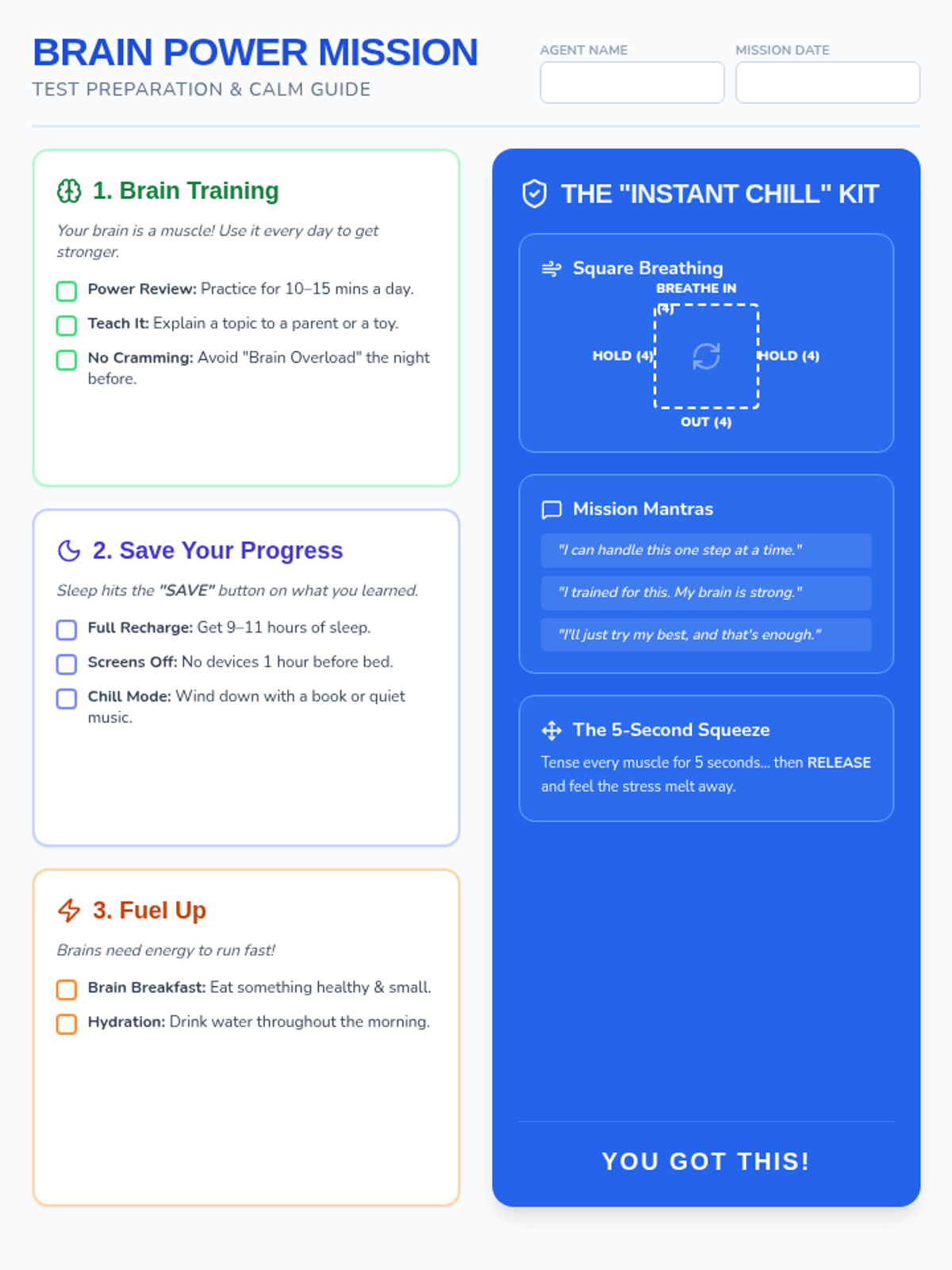
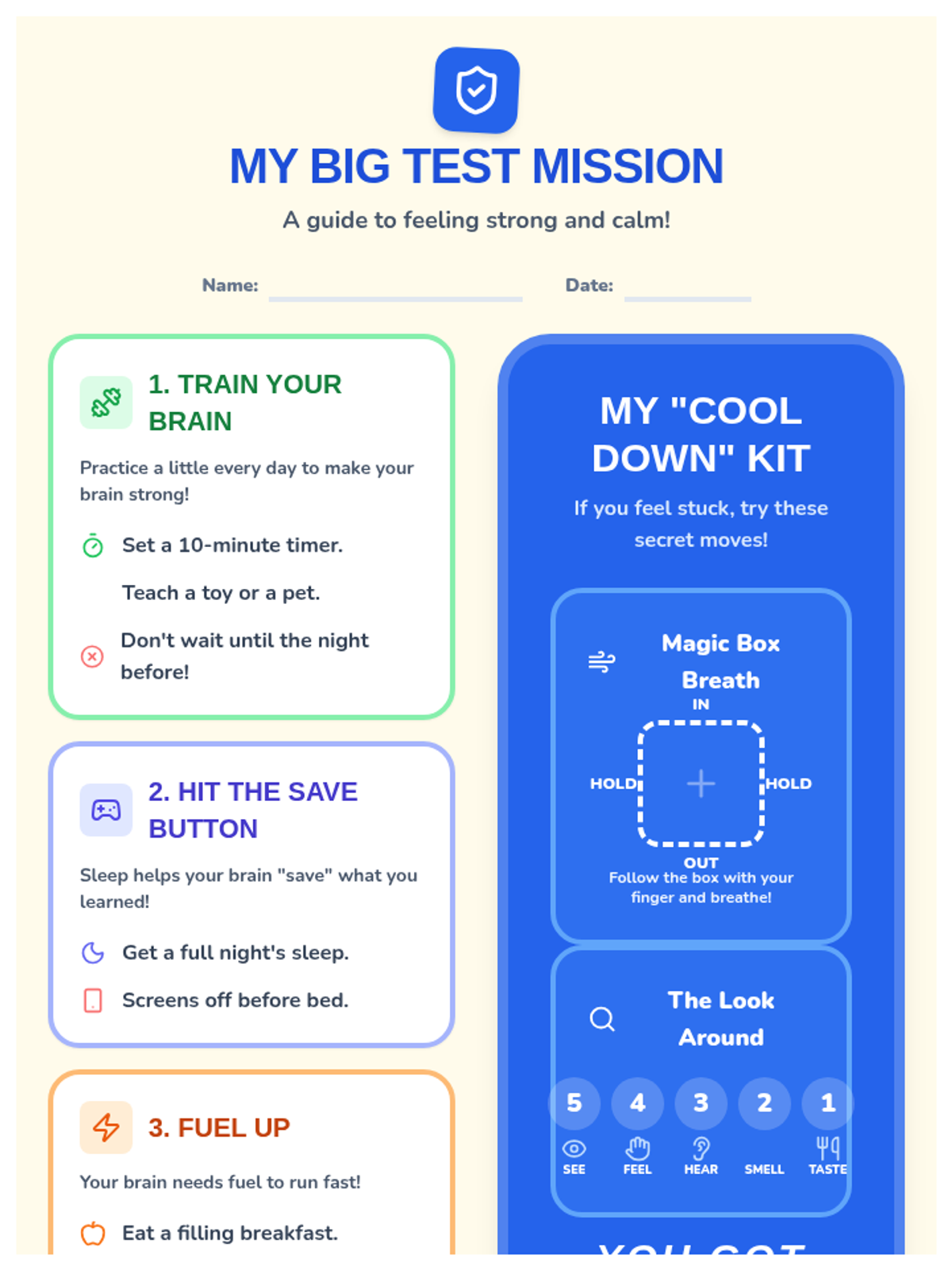
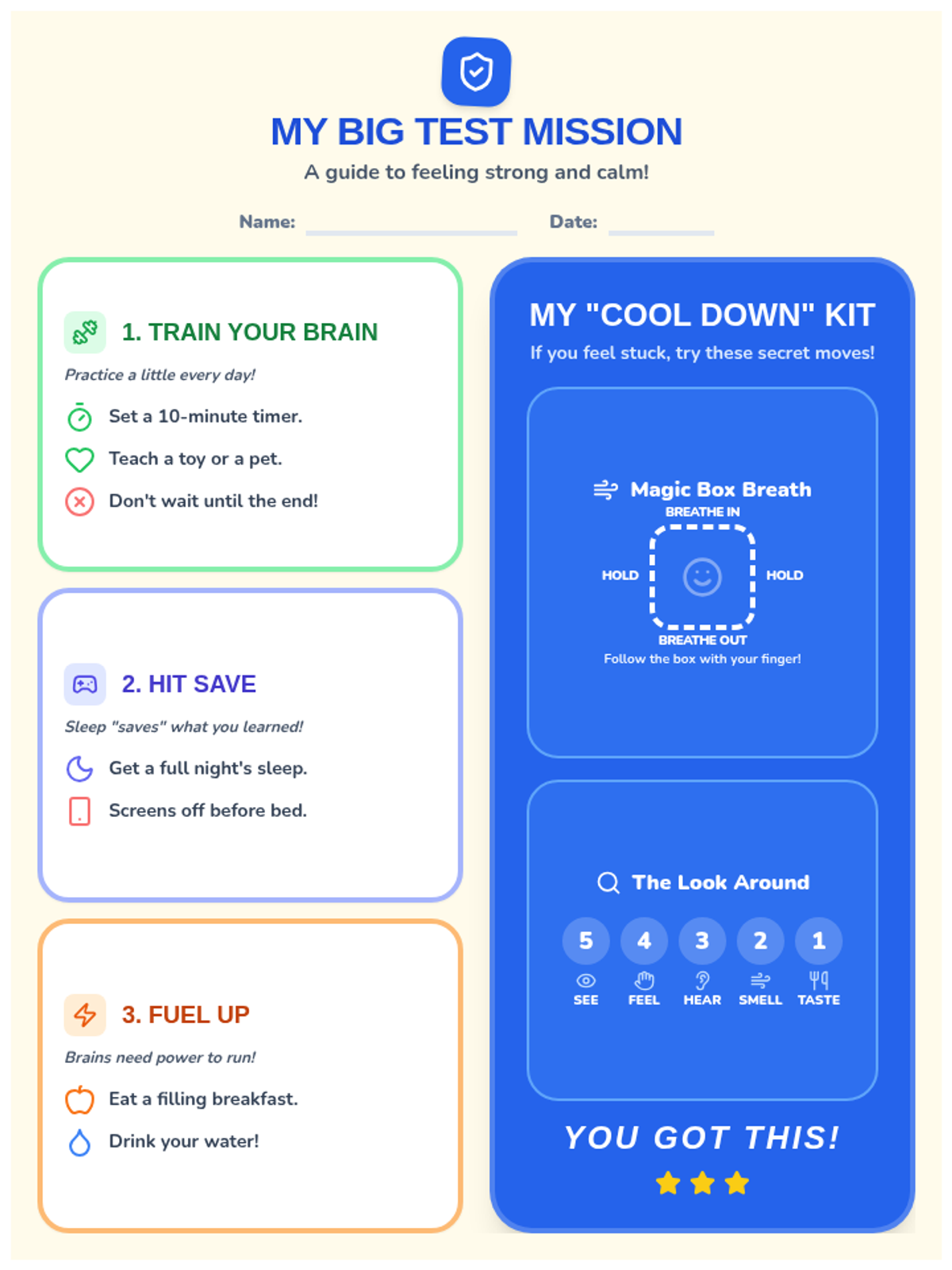
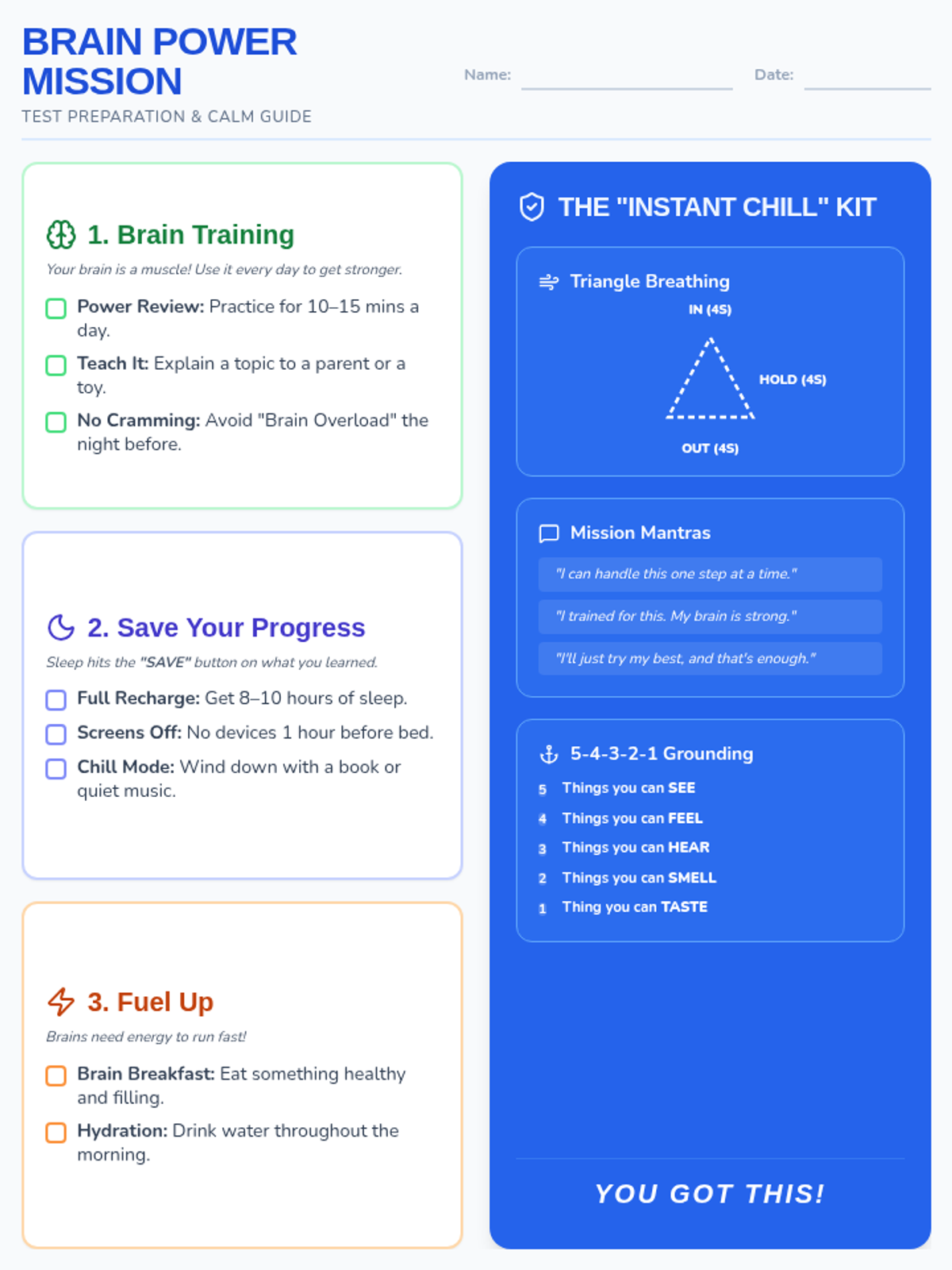
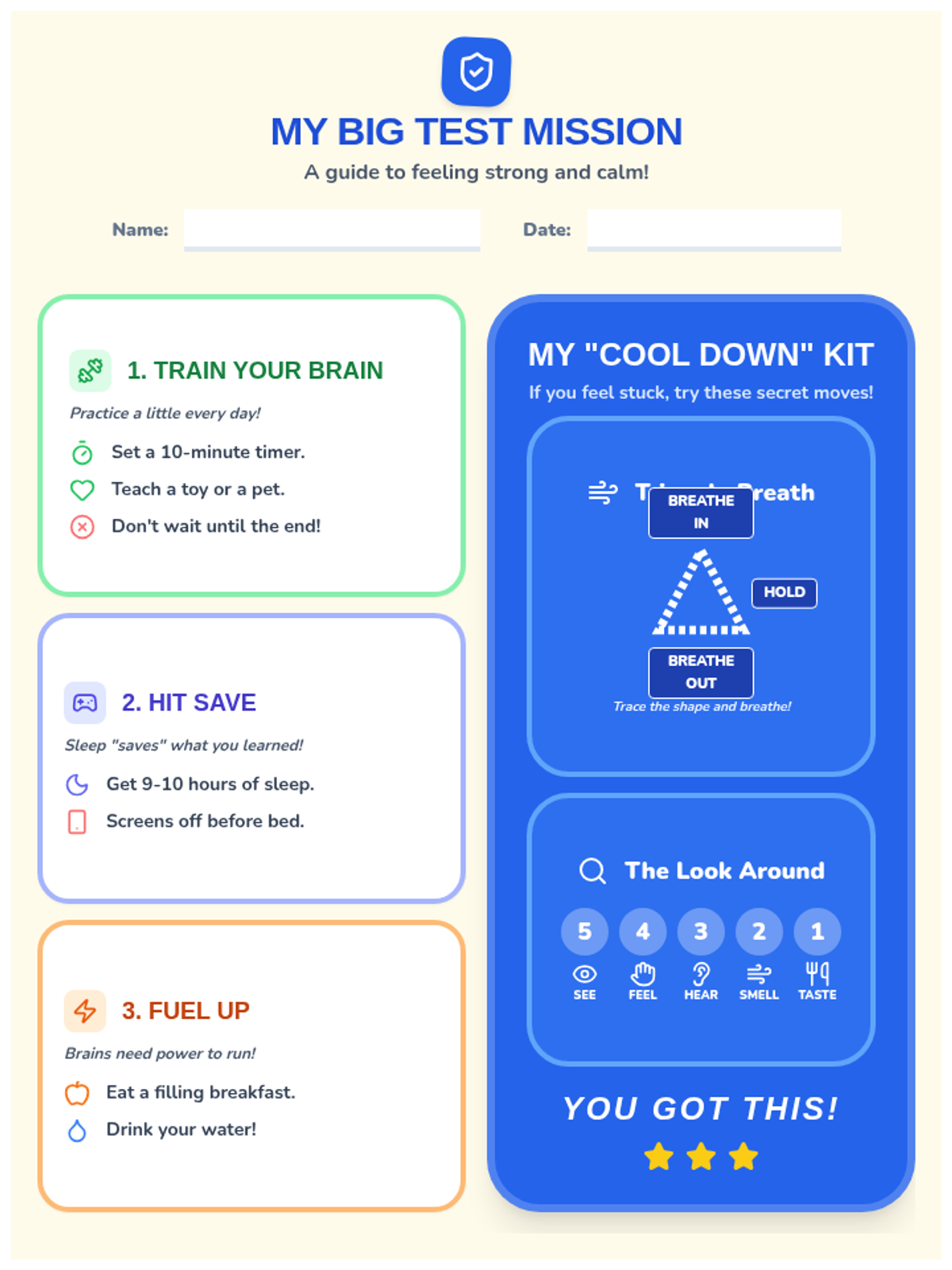
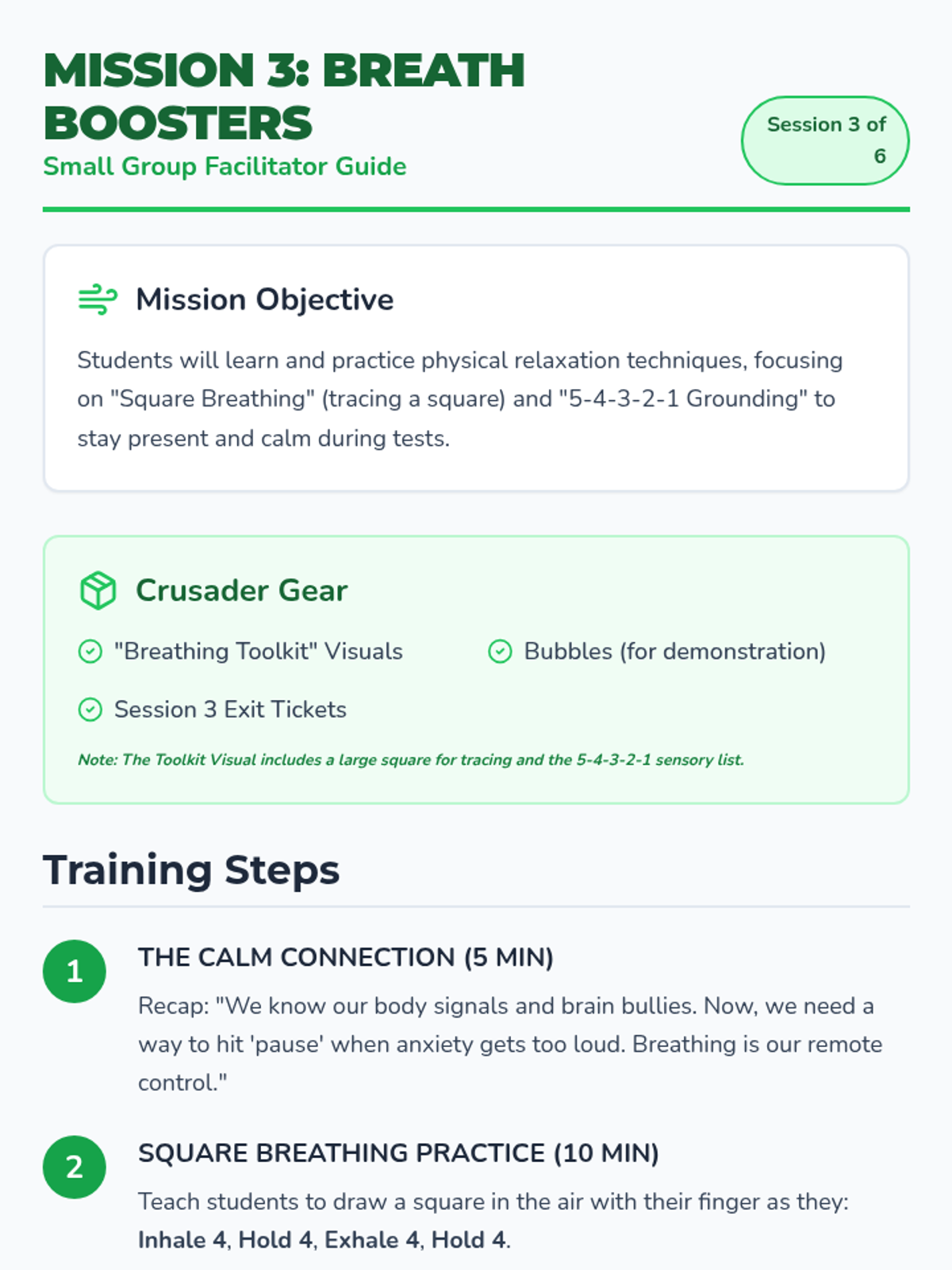
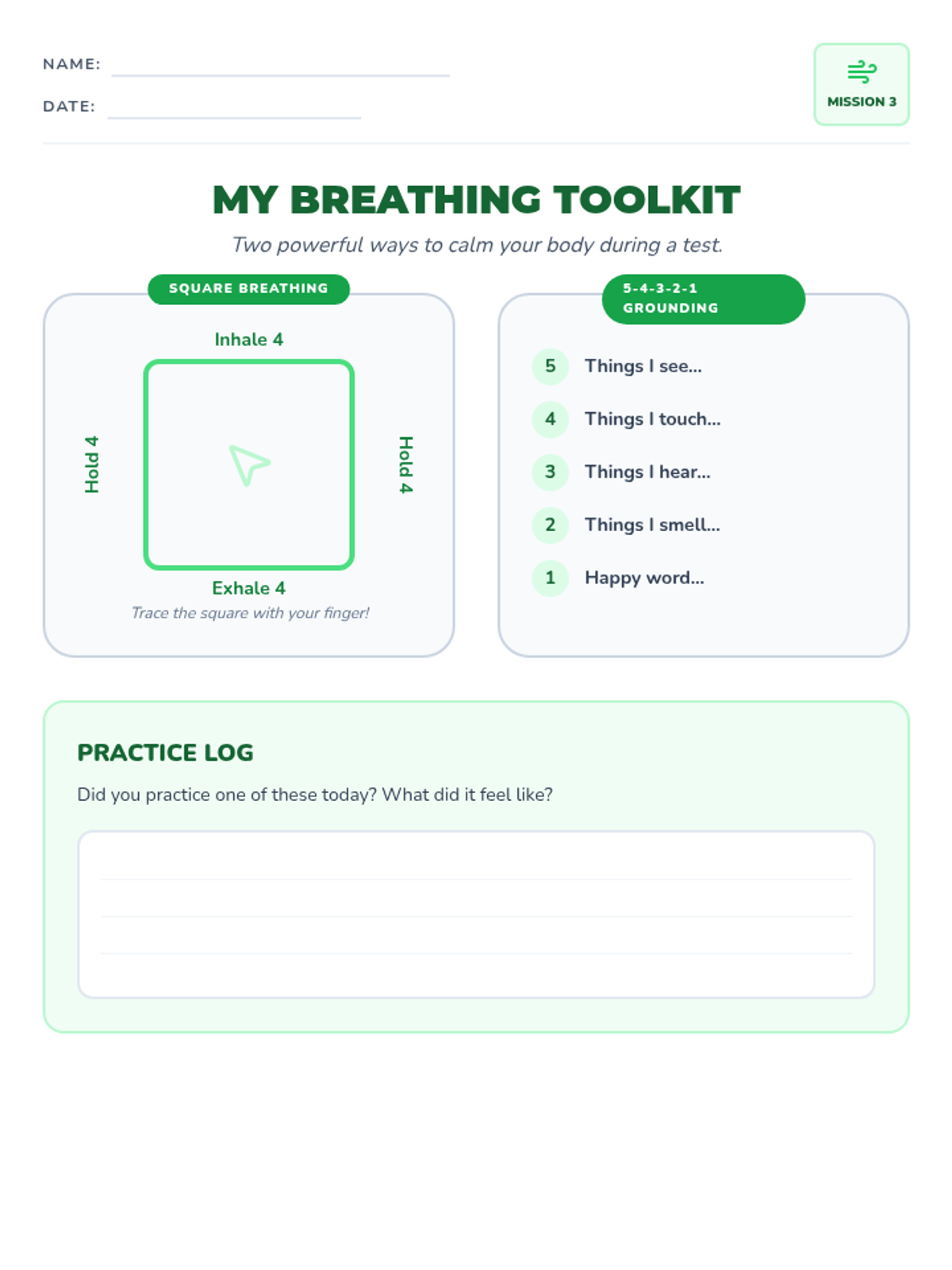
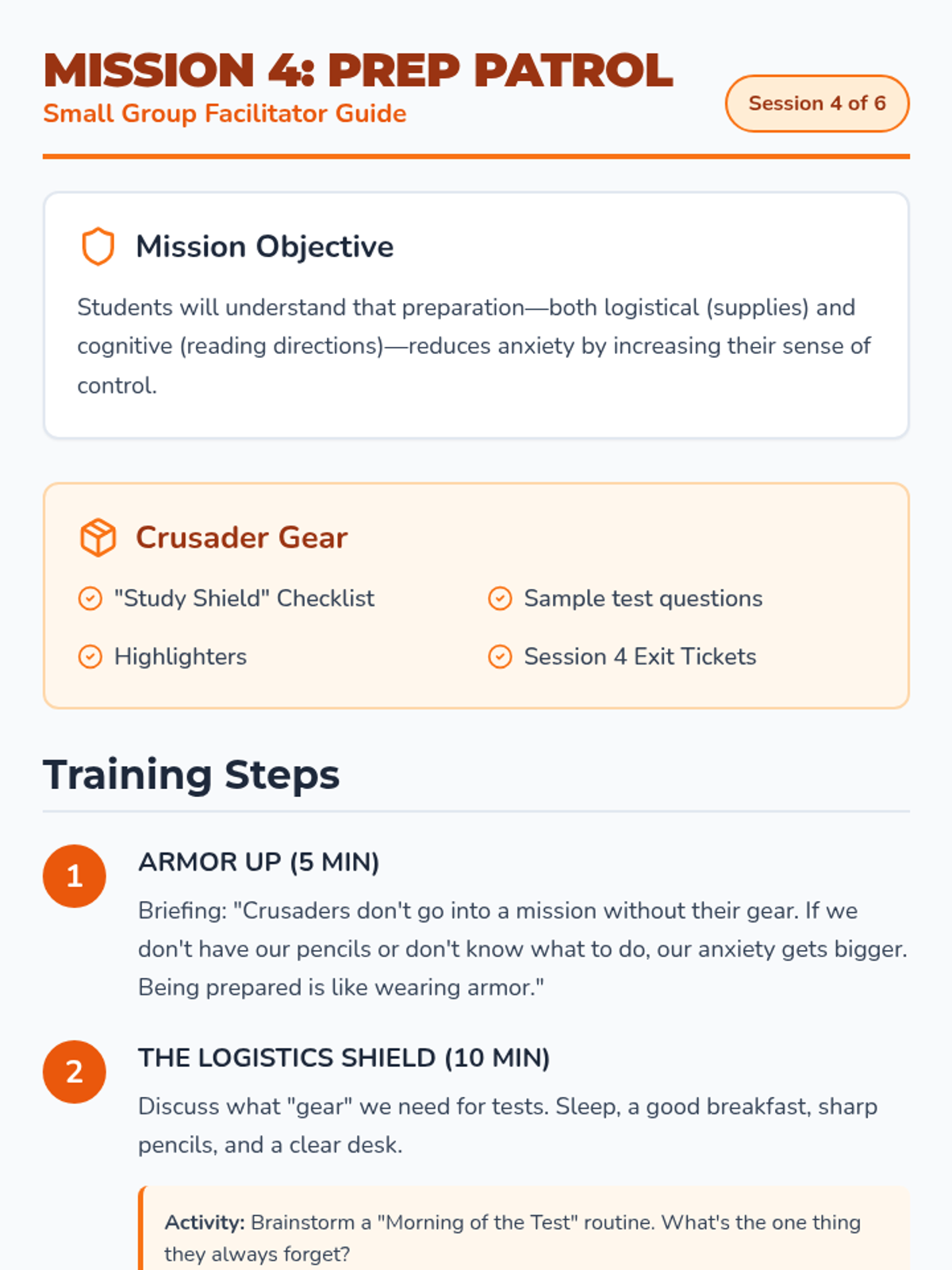
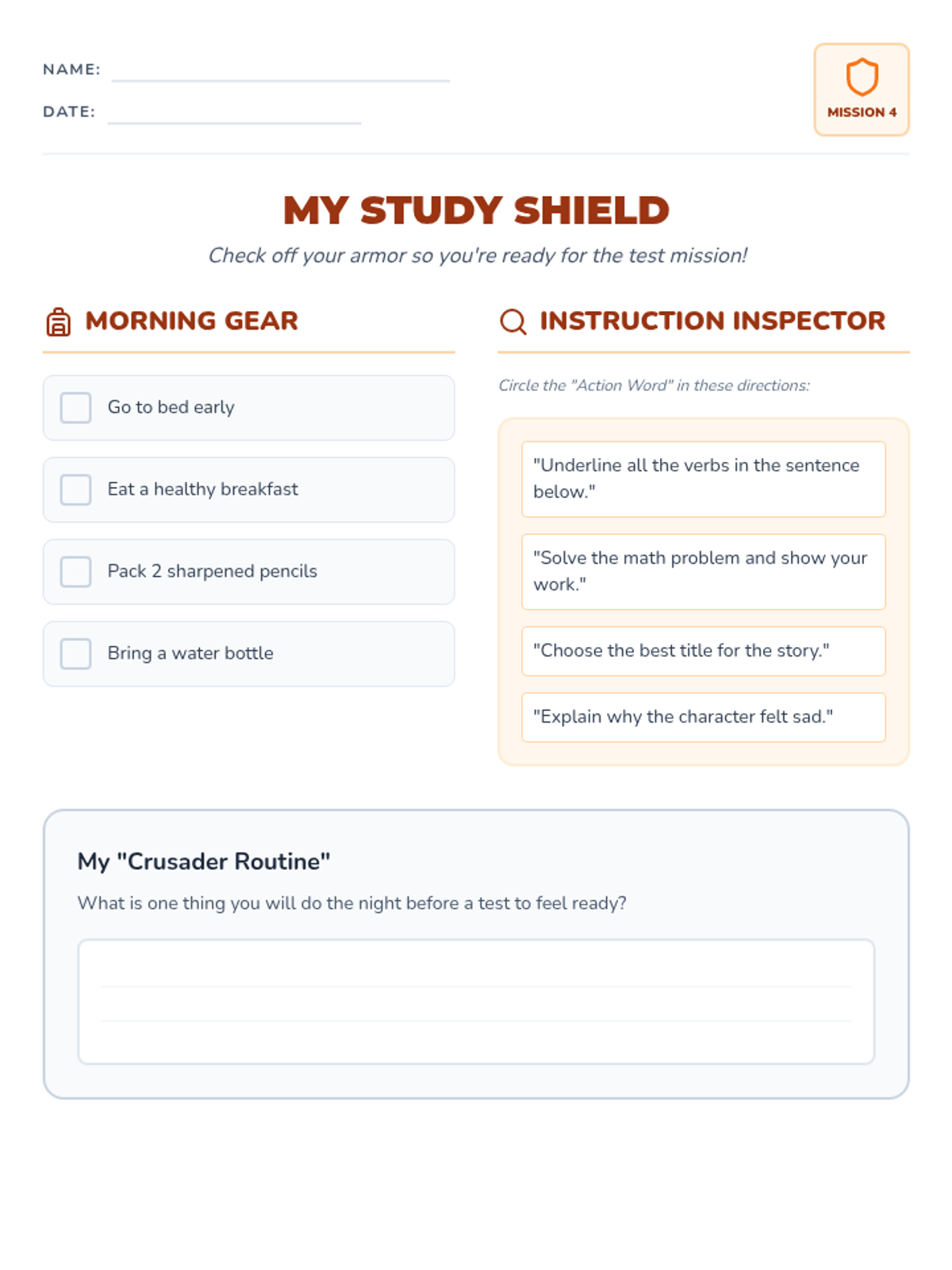
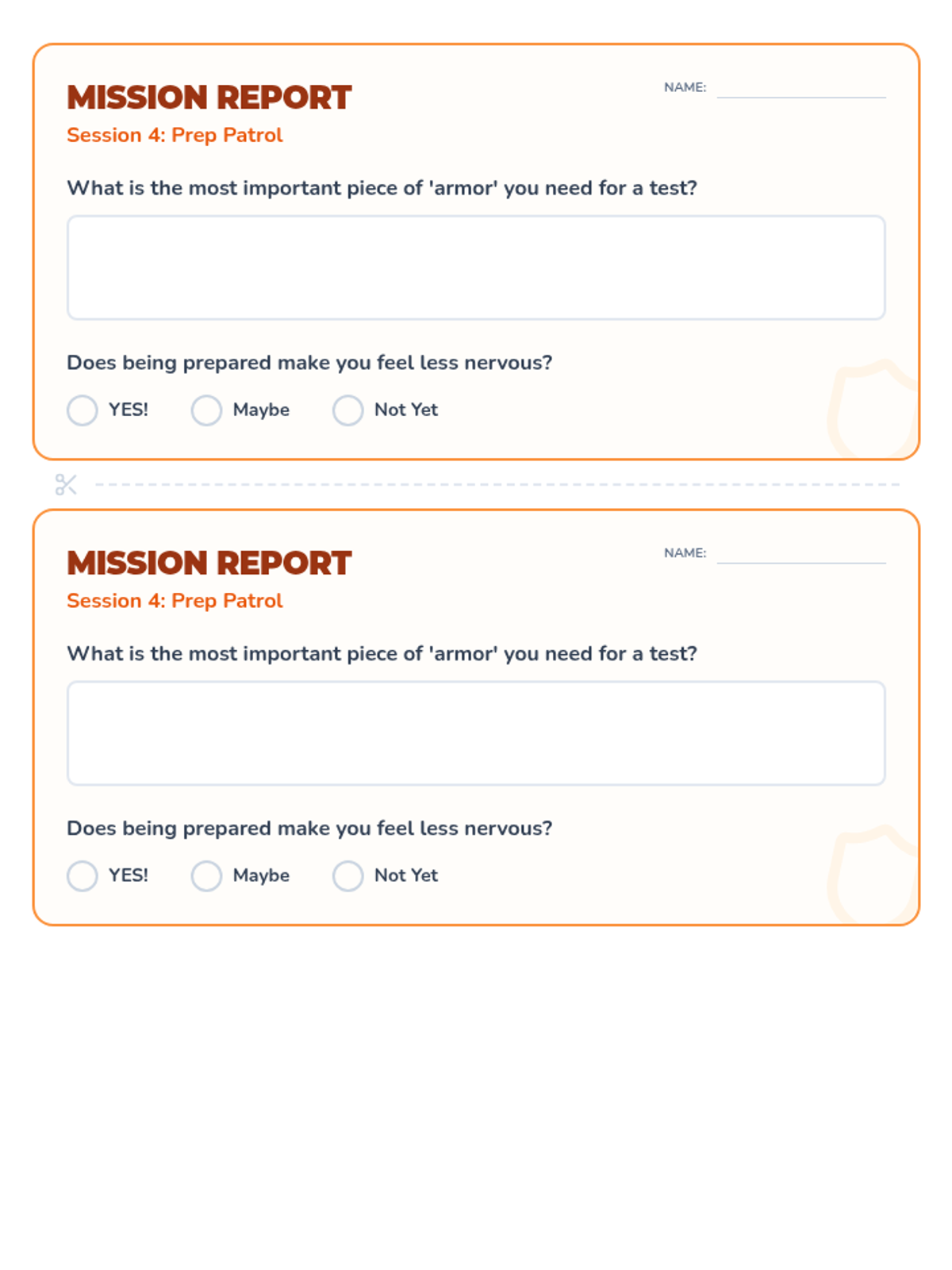
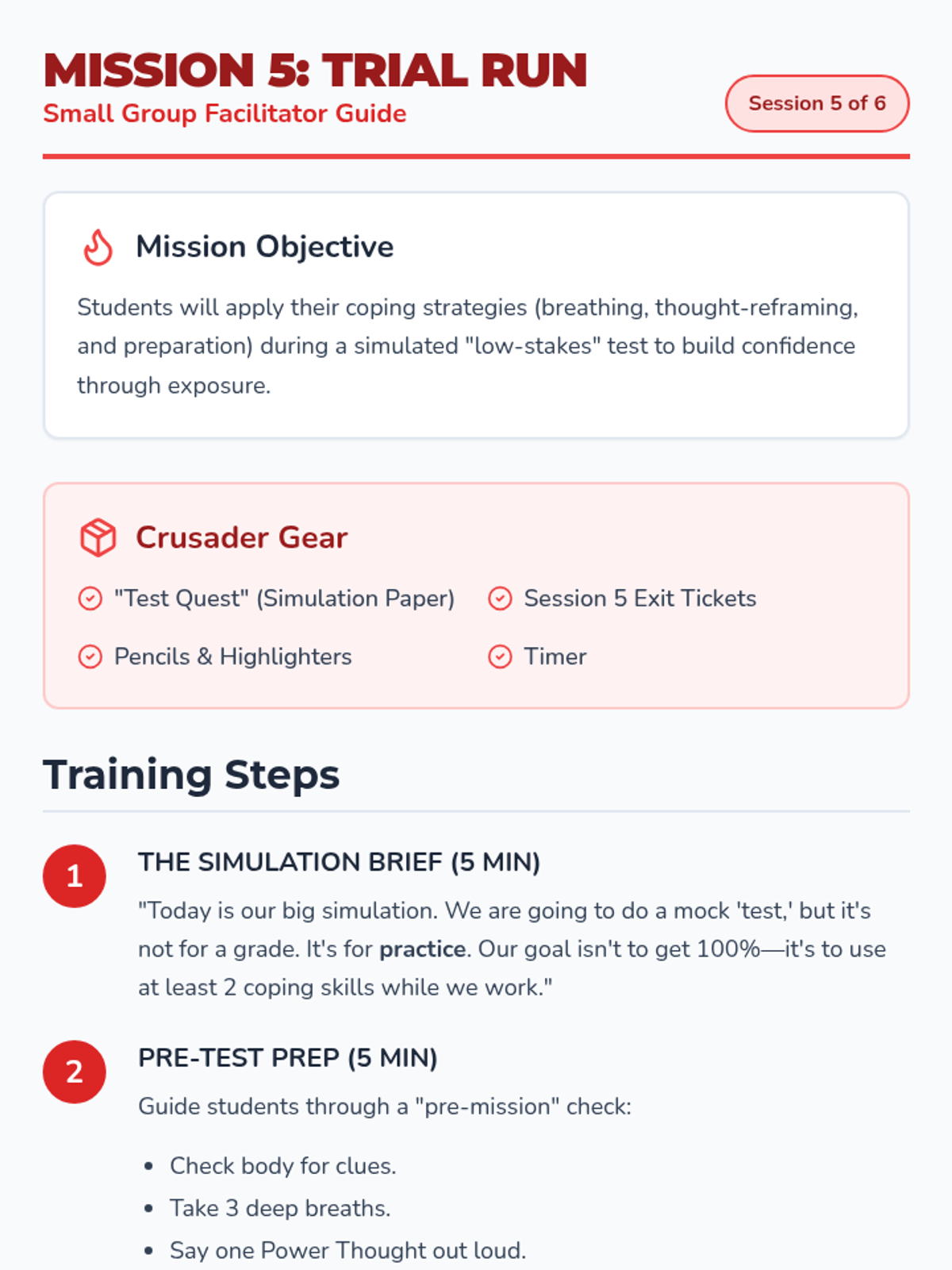
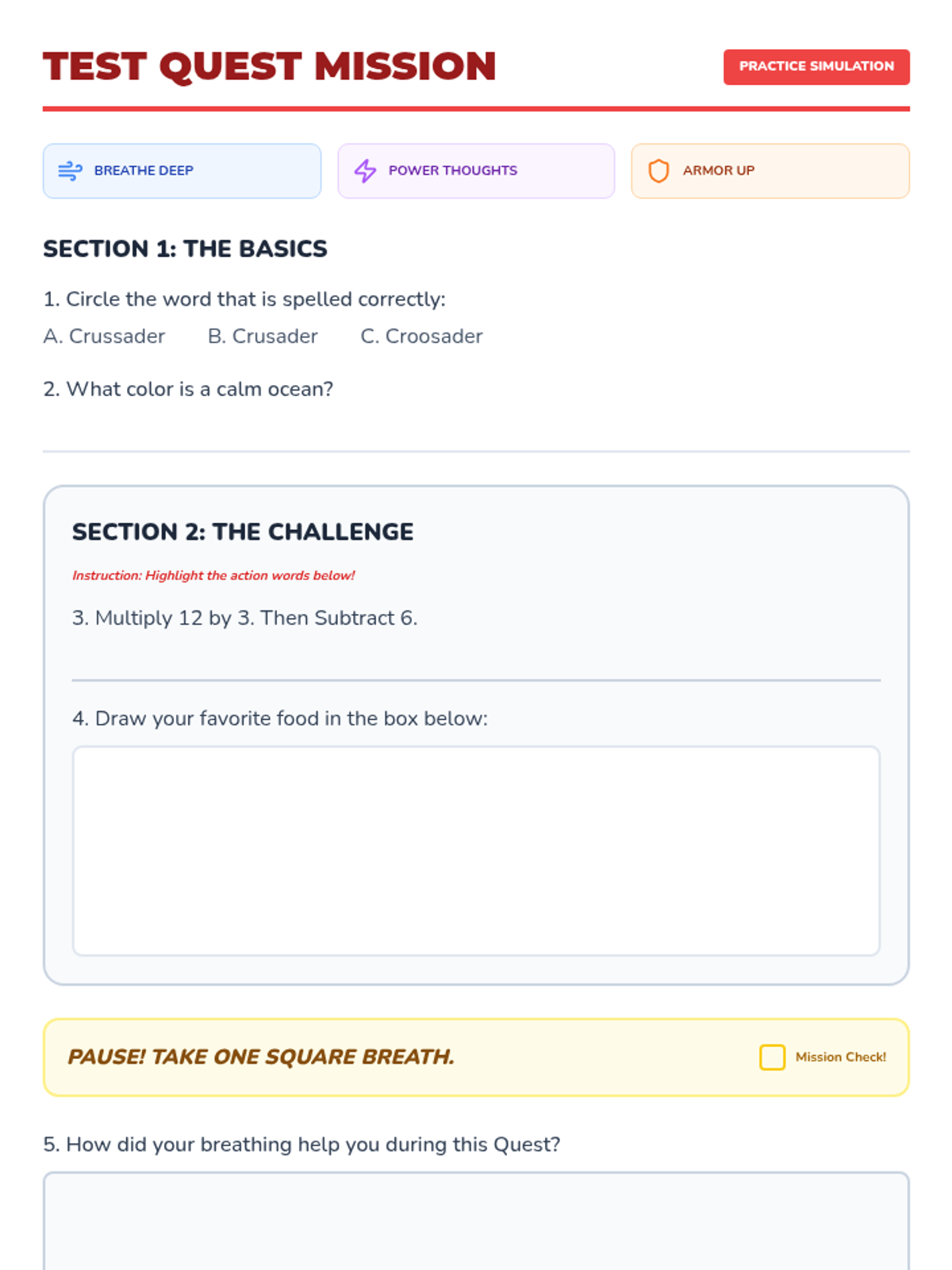
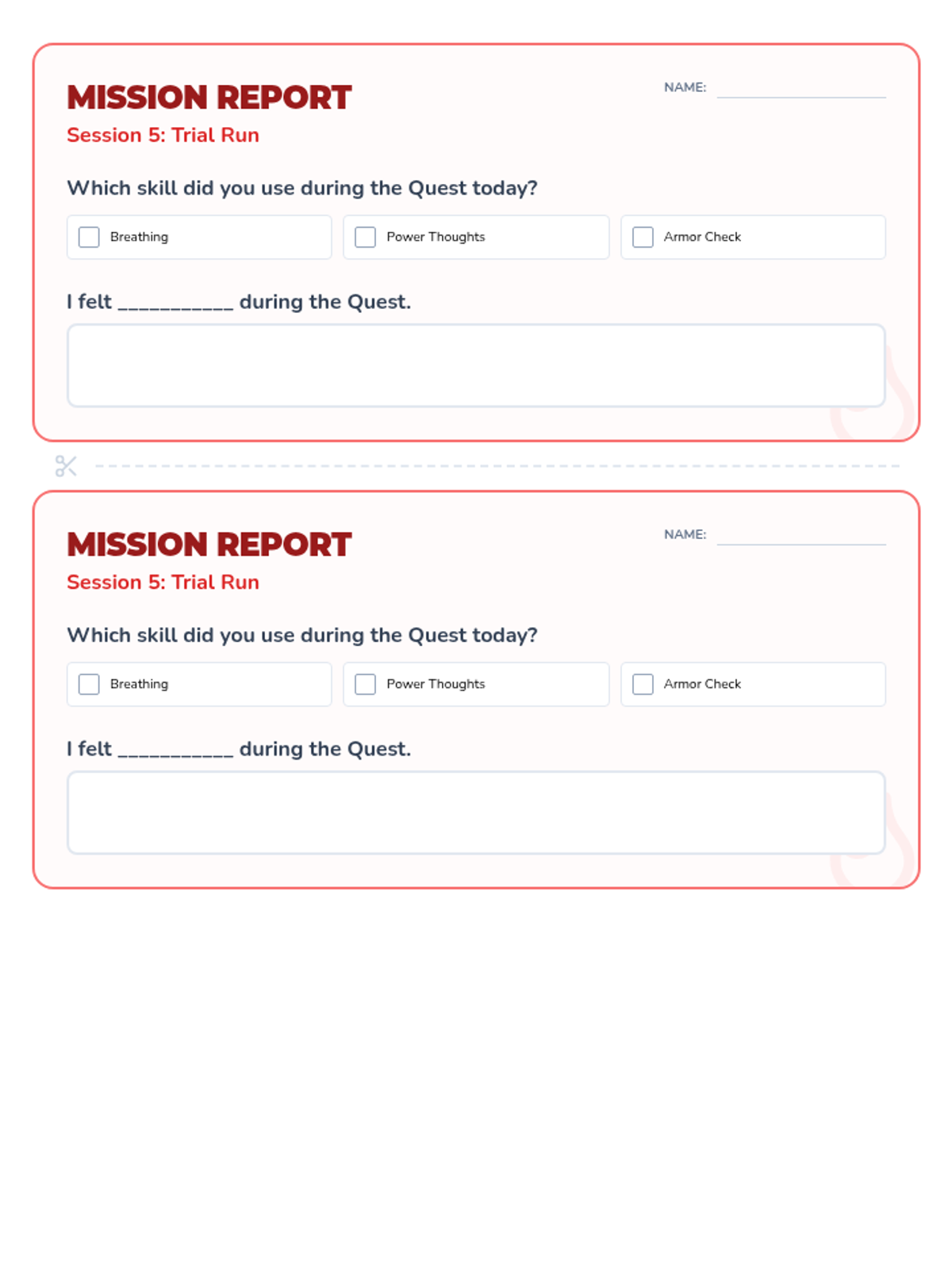
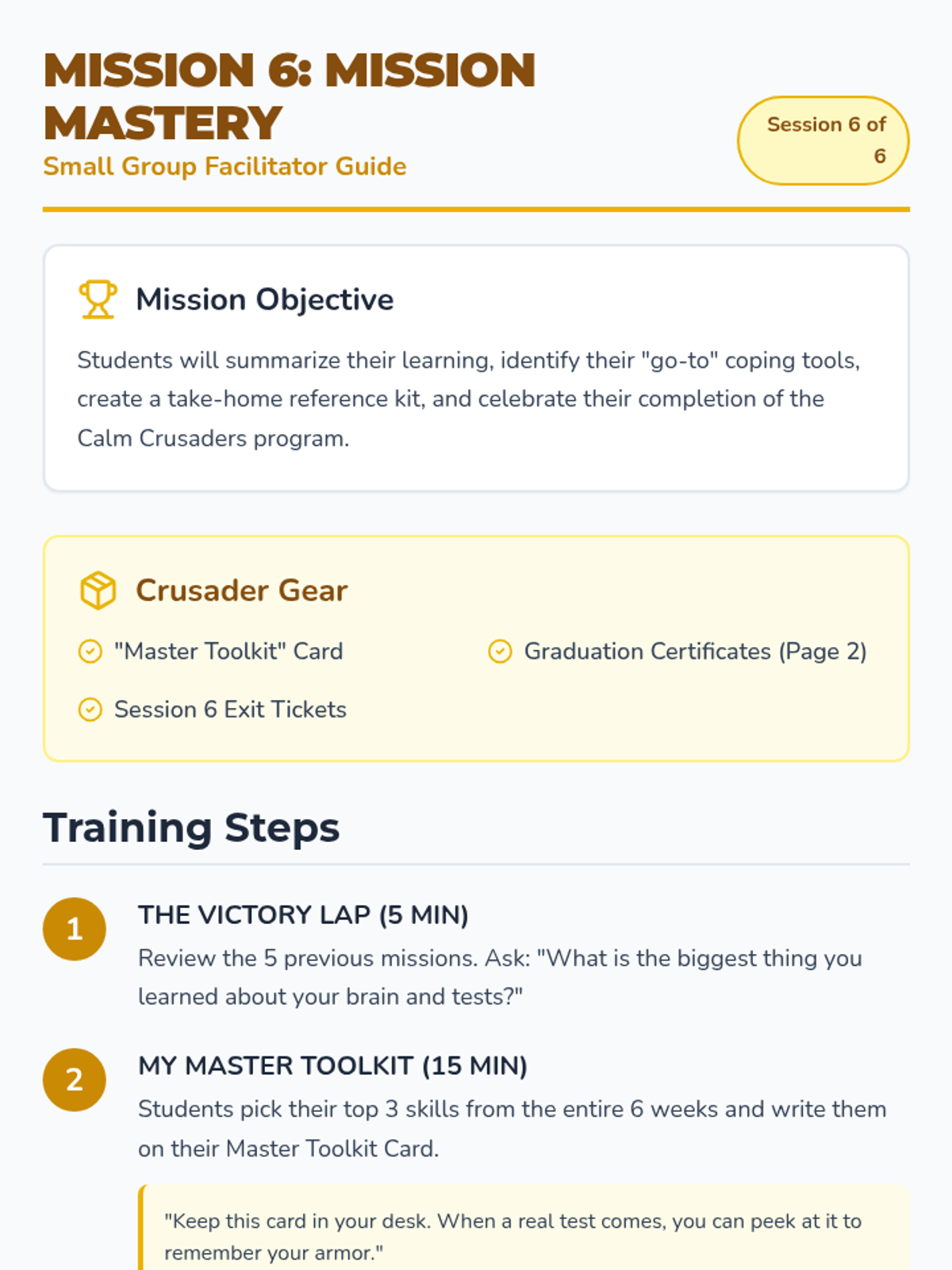
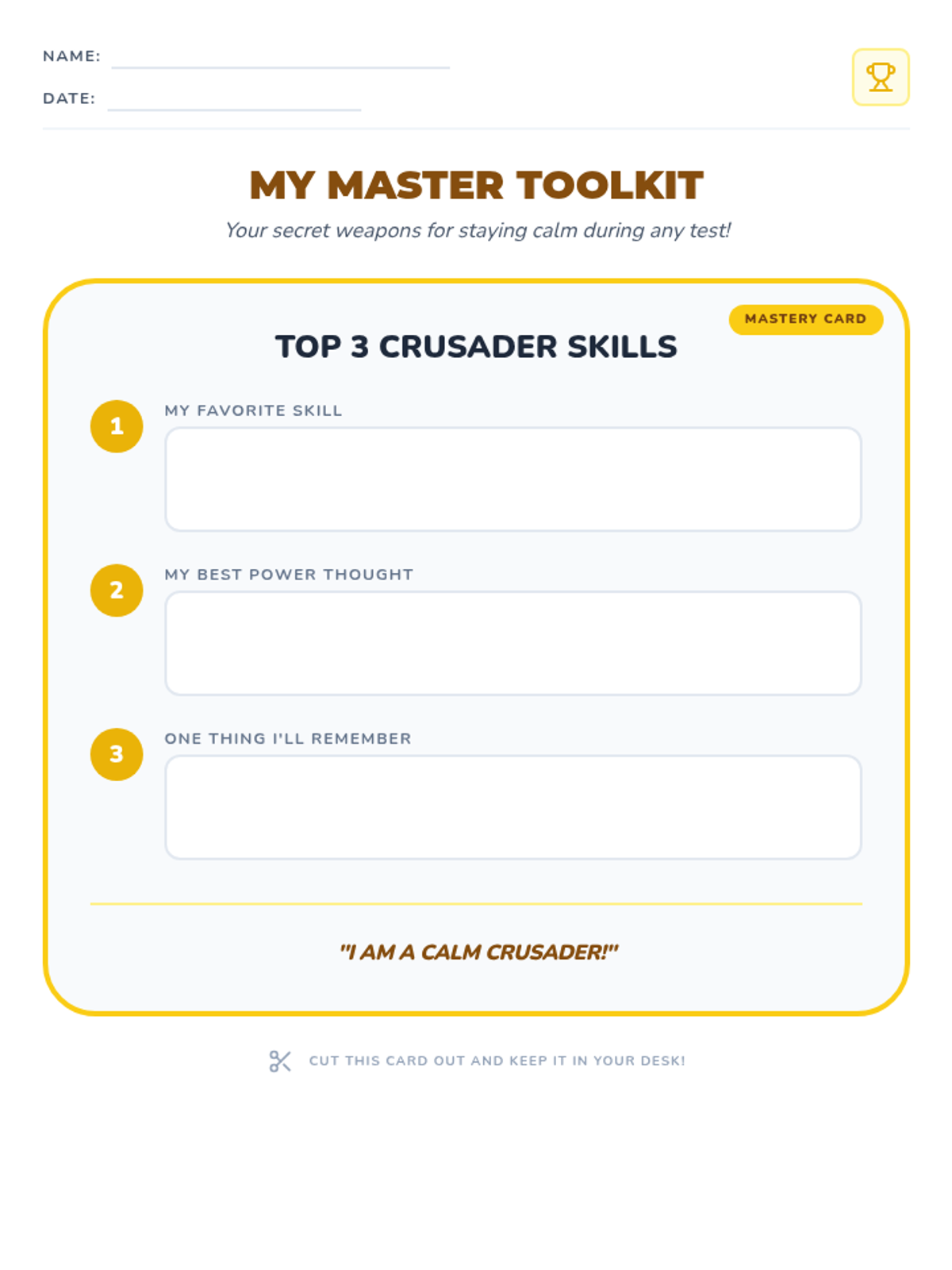
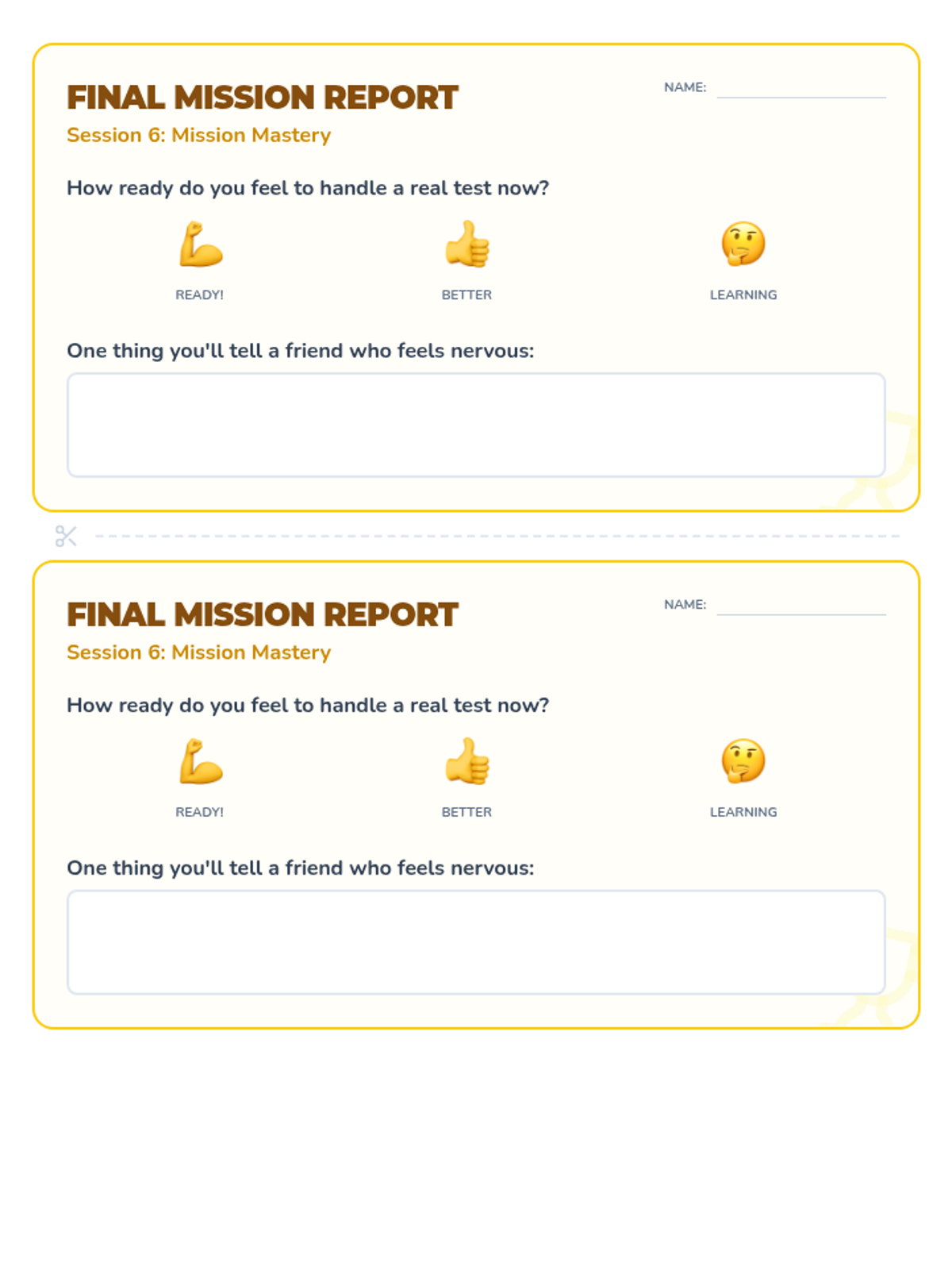
A social-emotional learning lesson for students in grades 3-6 to manage test anxiety through preparation strategies and in-the-moment coping skills.
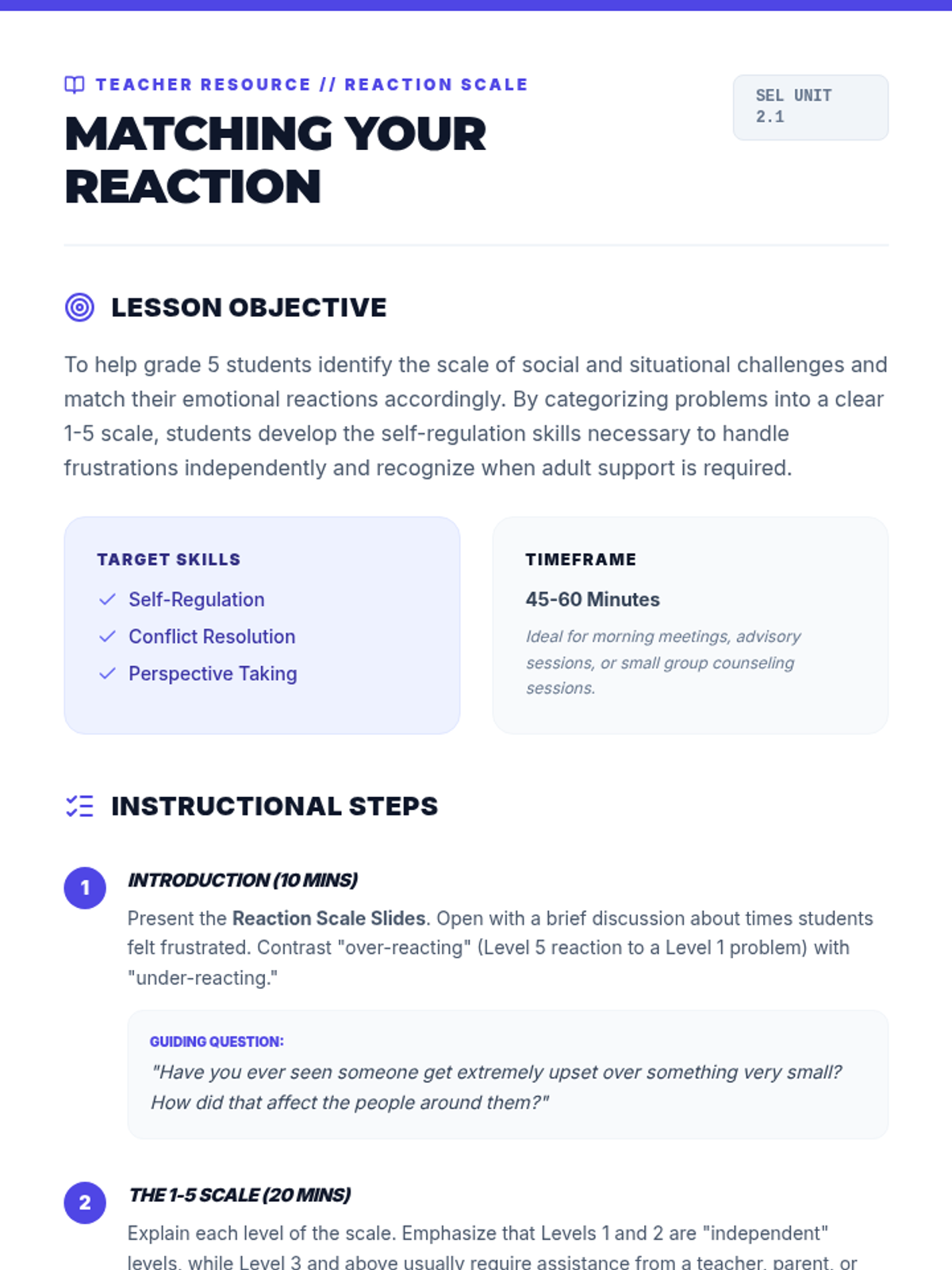
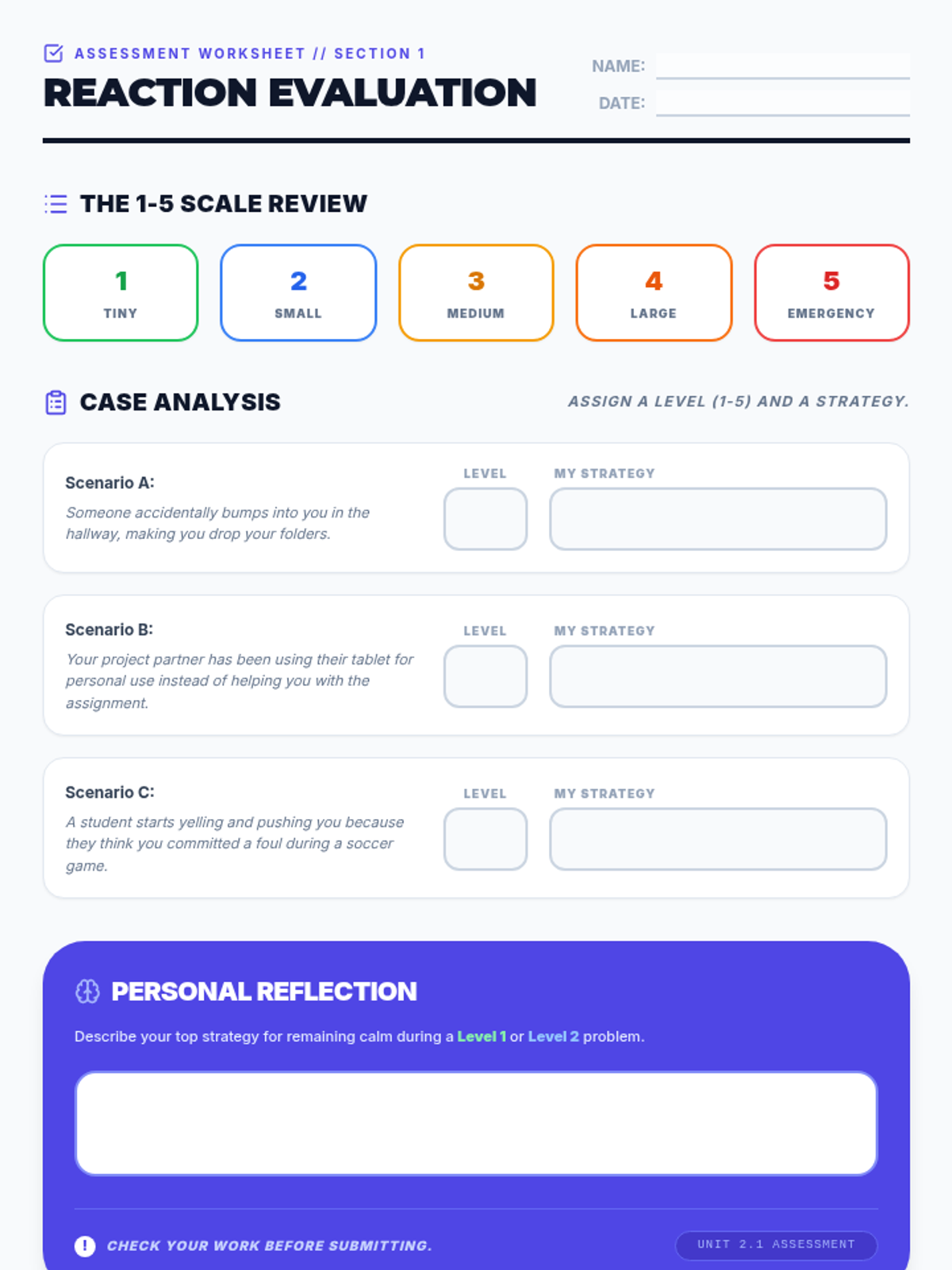
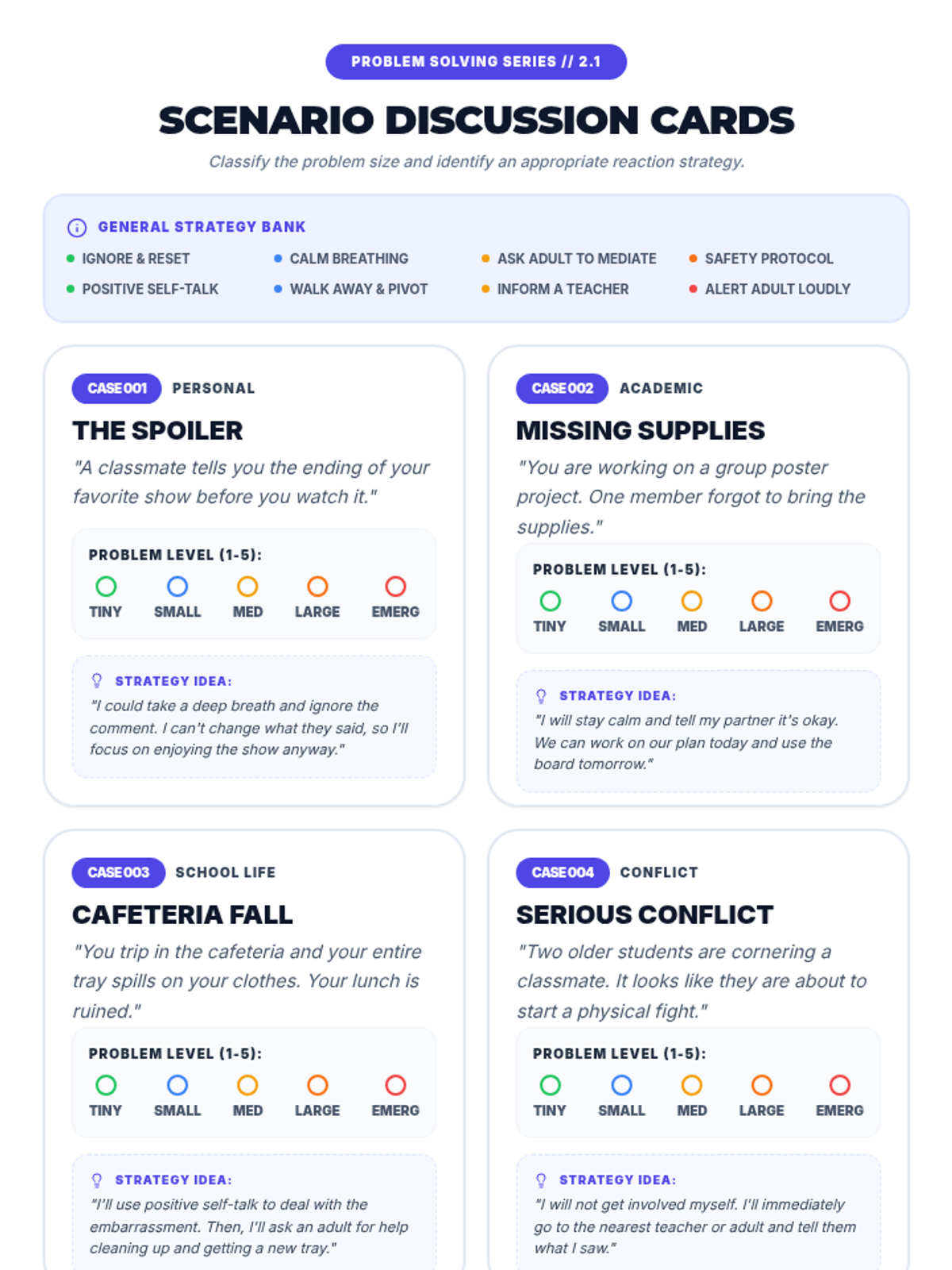
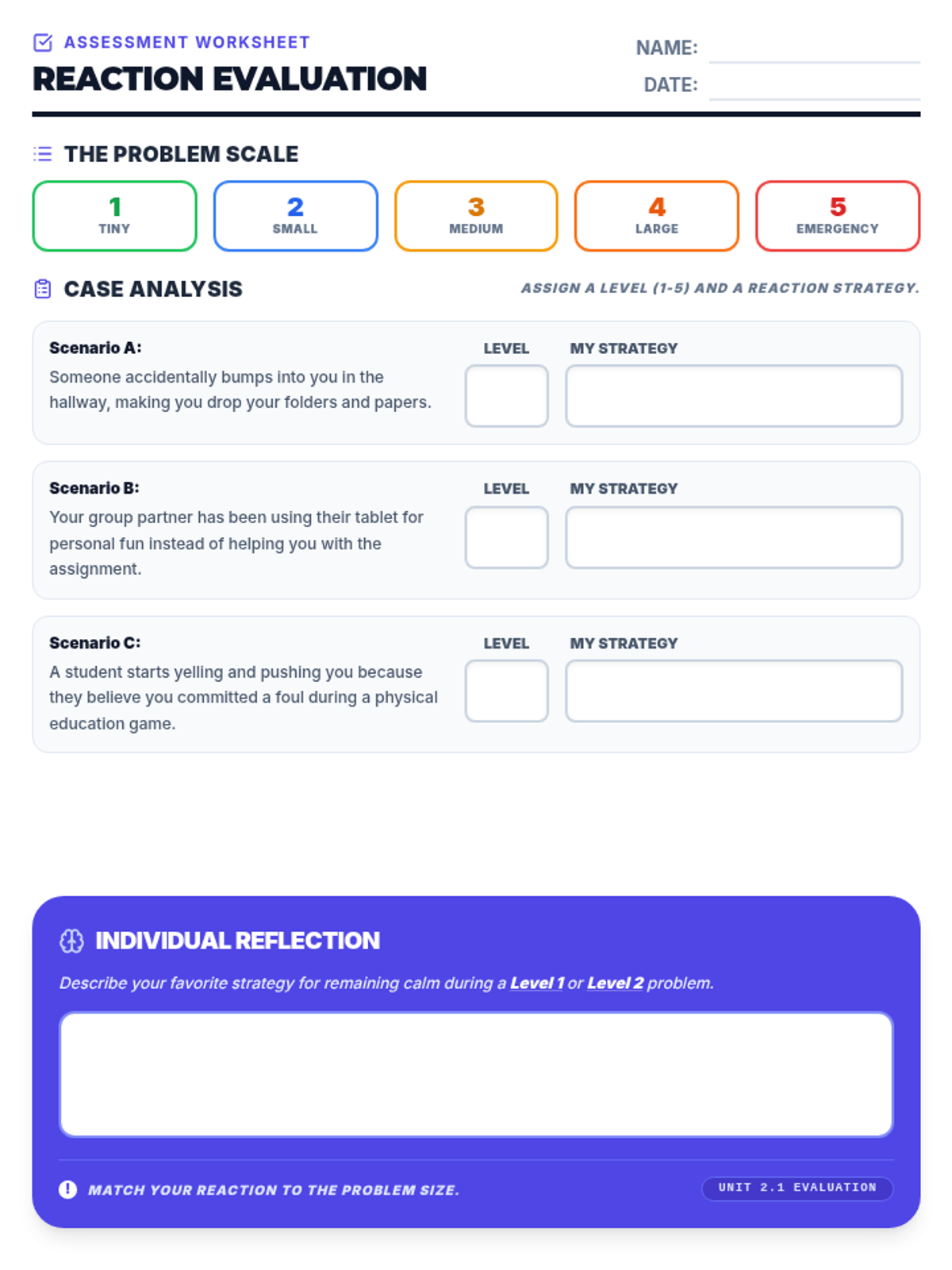
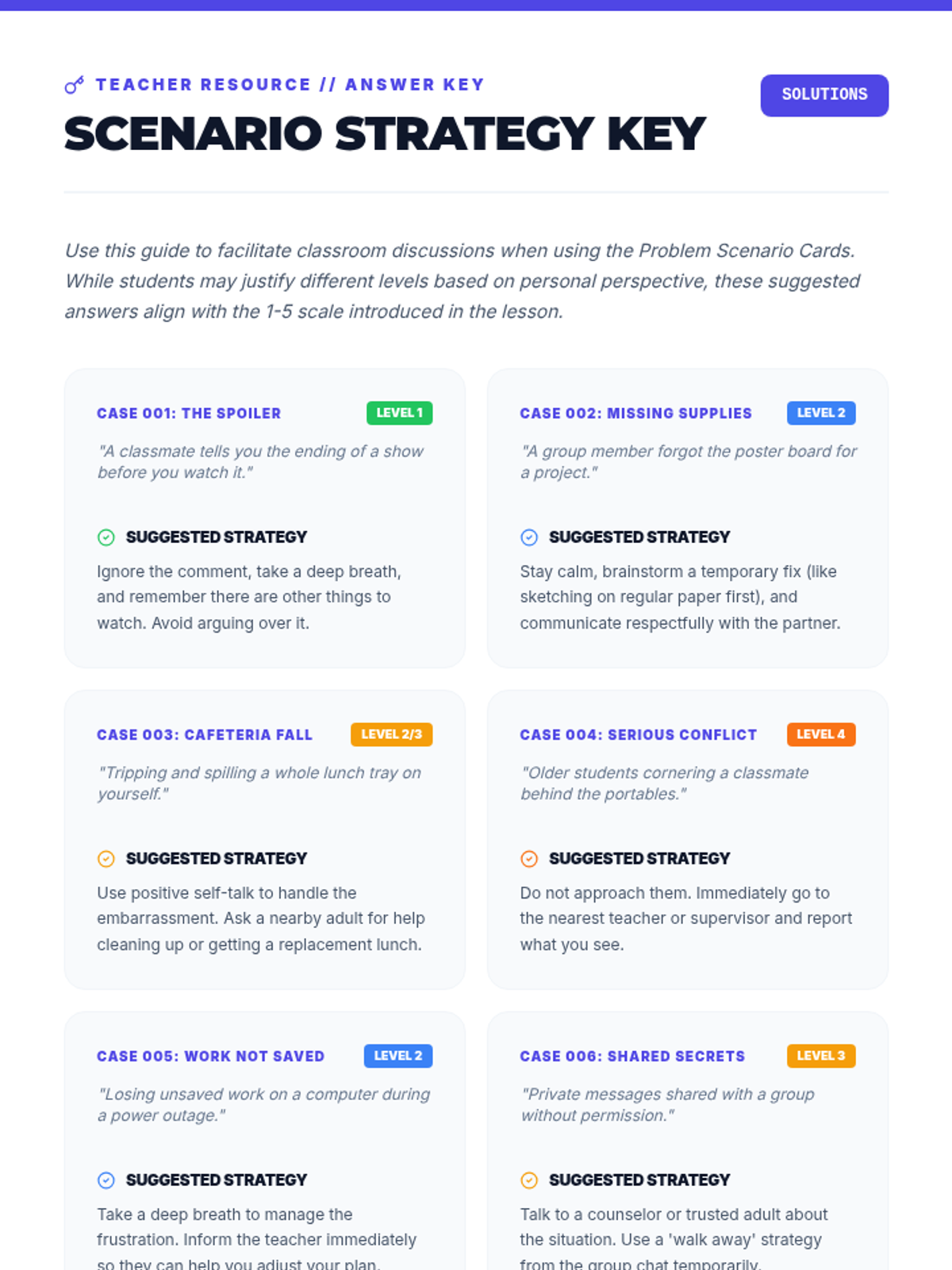
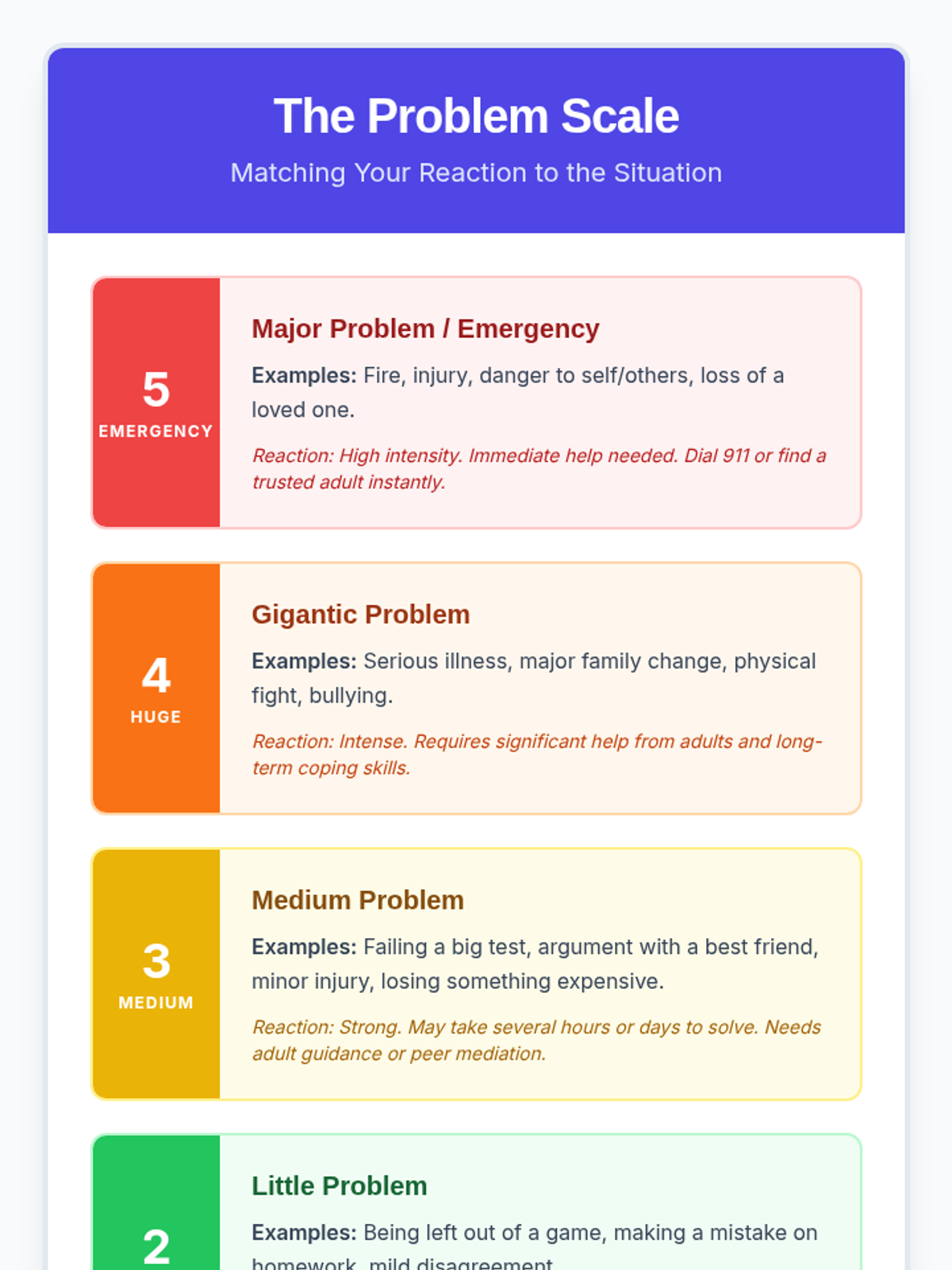
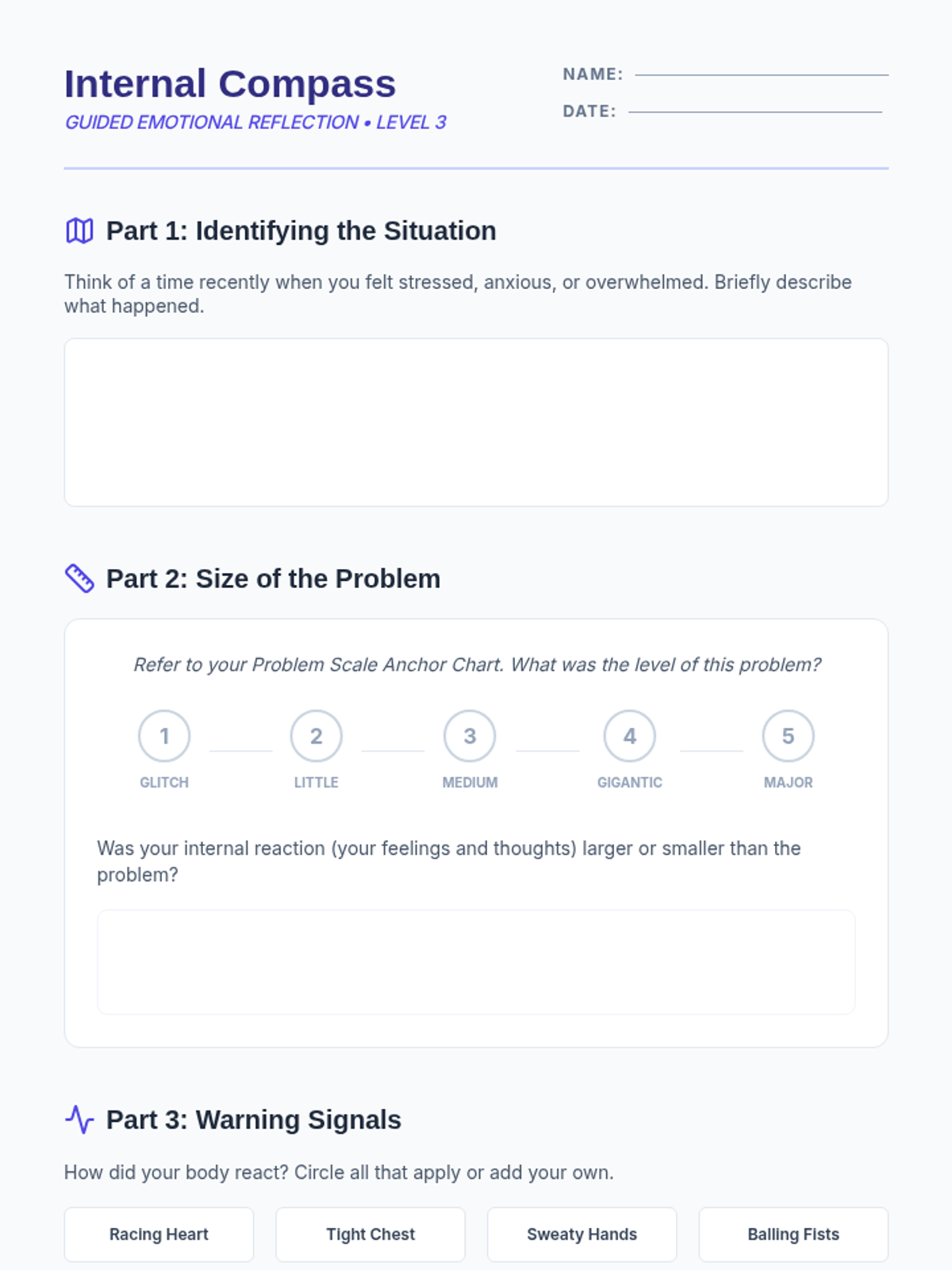
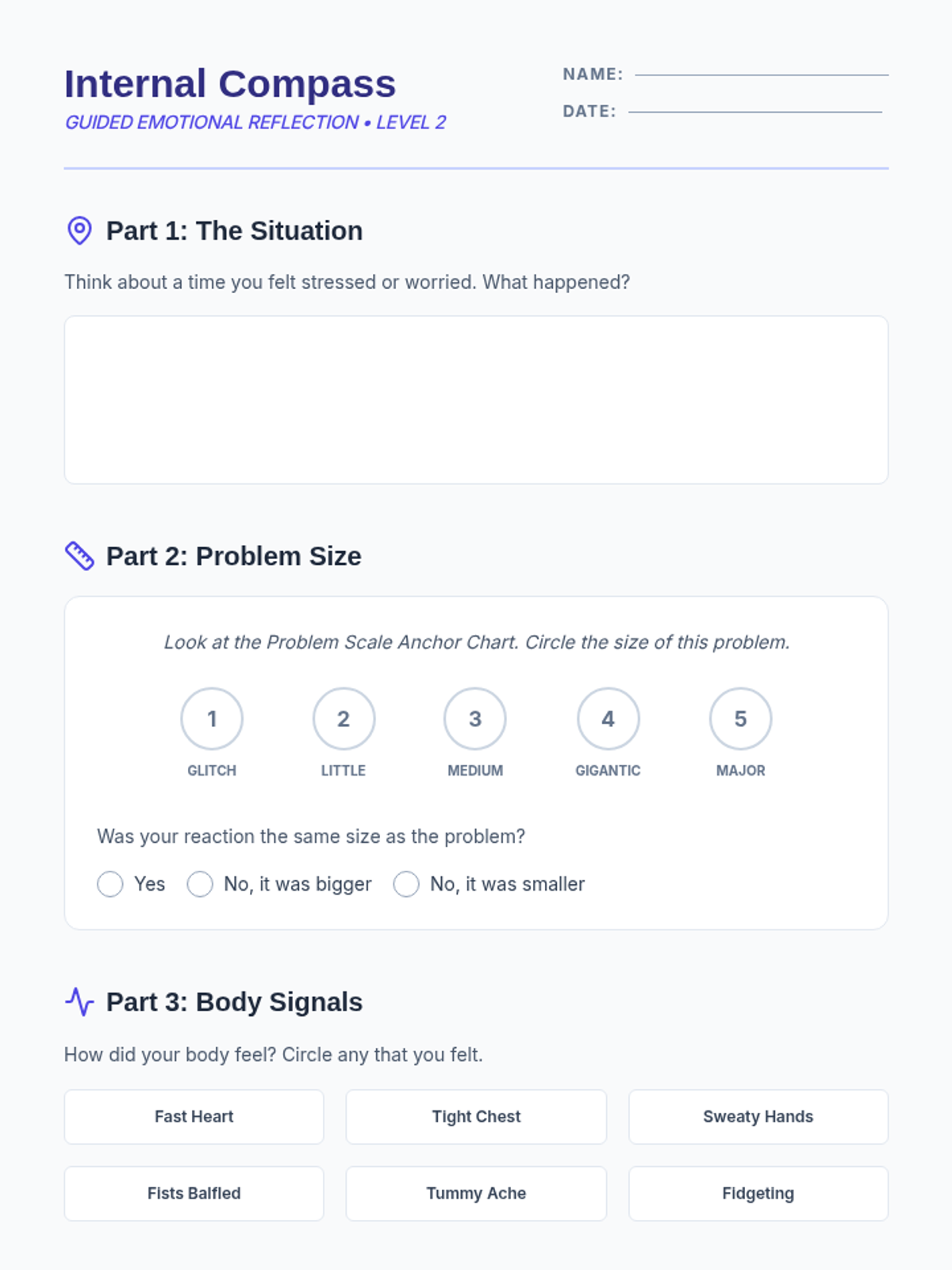
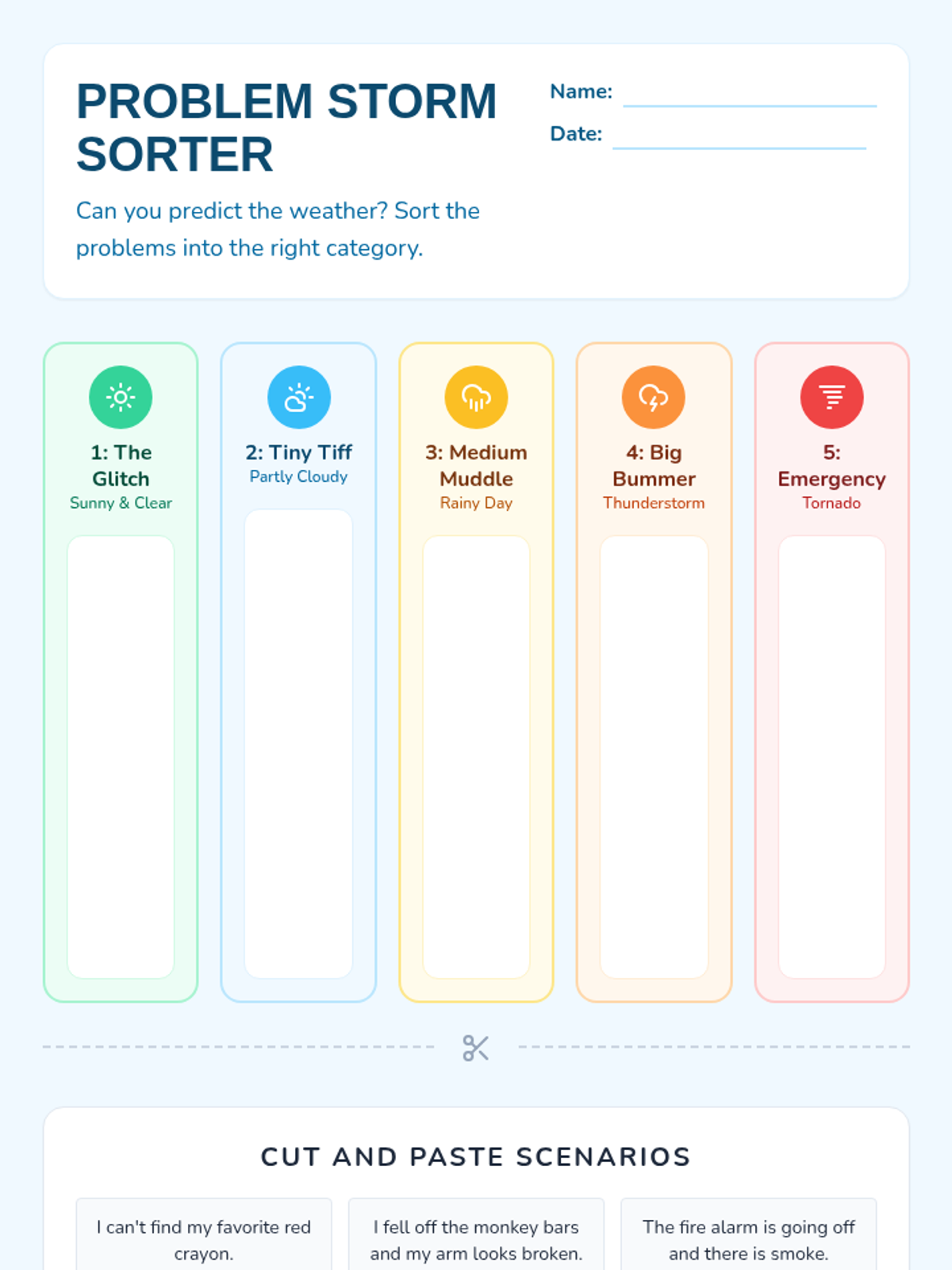
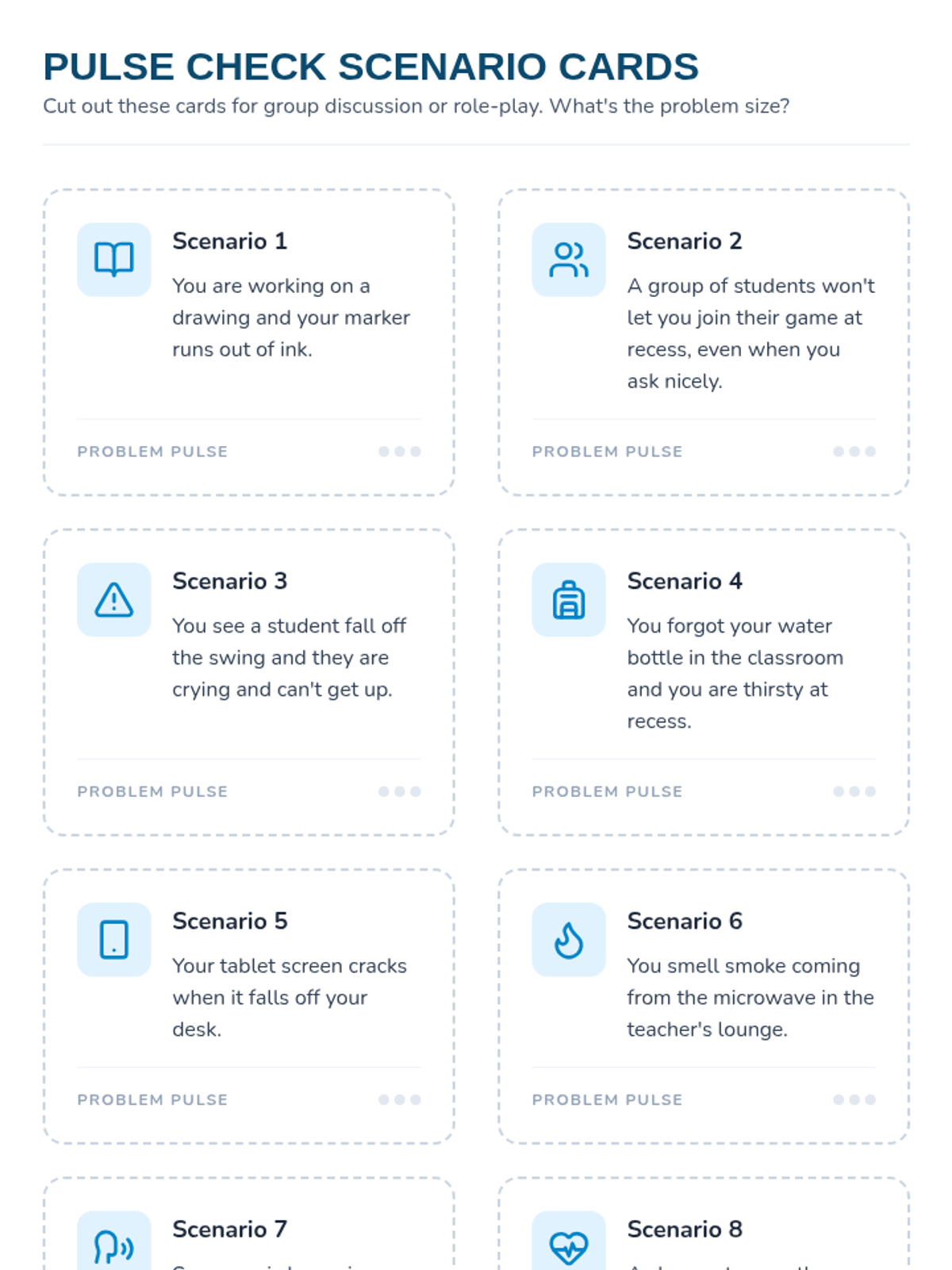
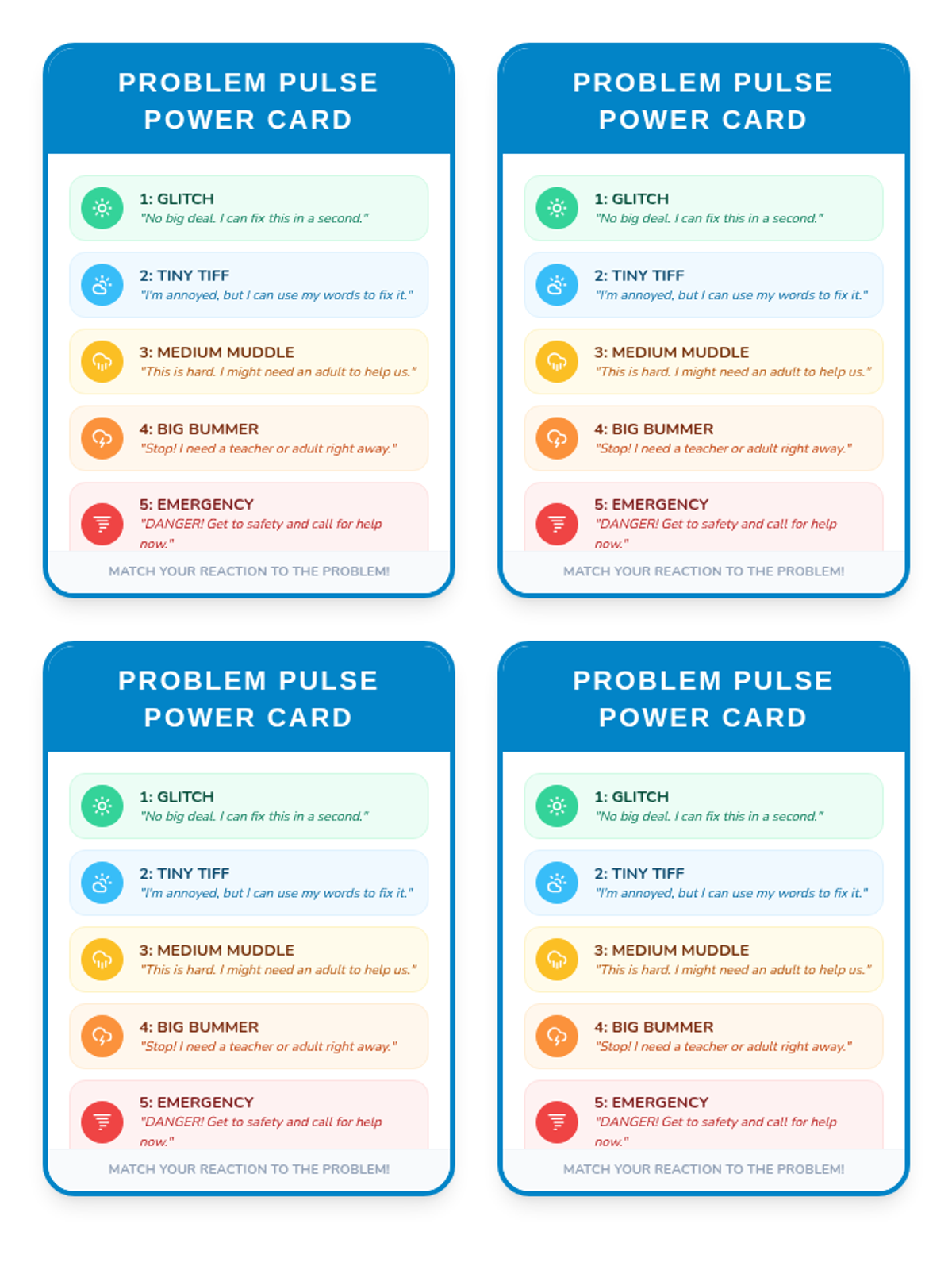
A social-emotional learning lesson for upper elementary students focused on identifying the scale of problems and matching them with appropriate reactions. Students will learn to categorize challenges into five levels to build self-regulation skills.
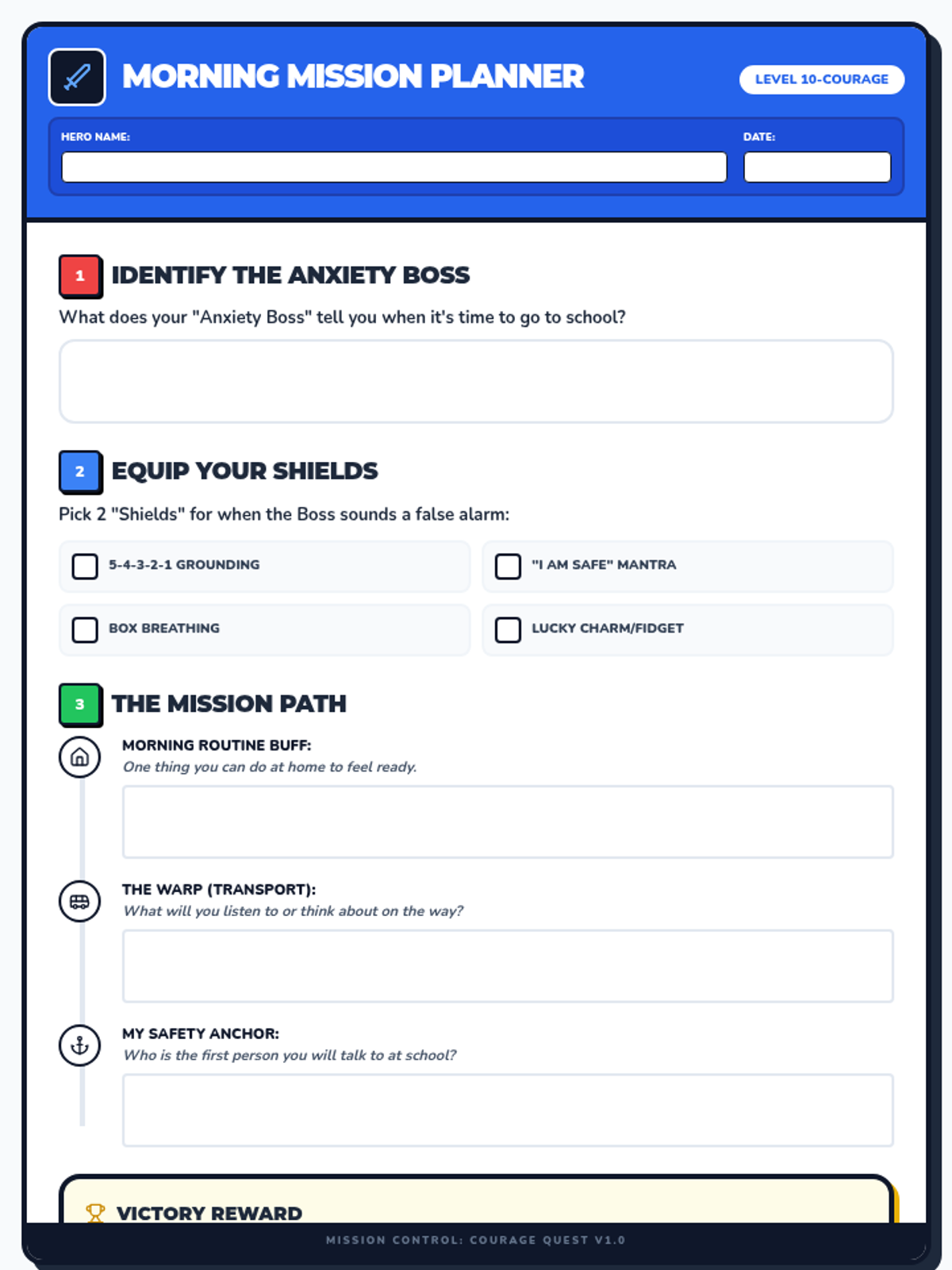
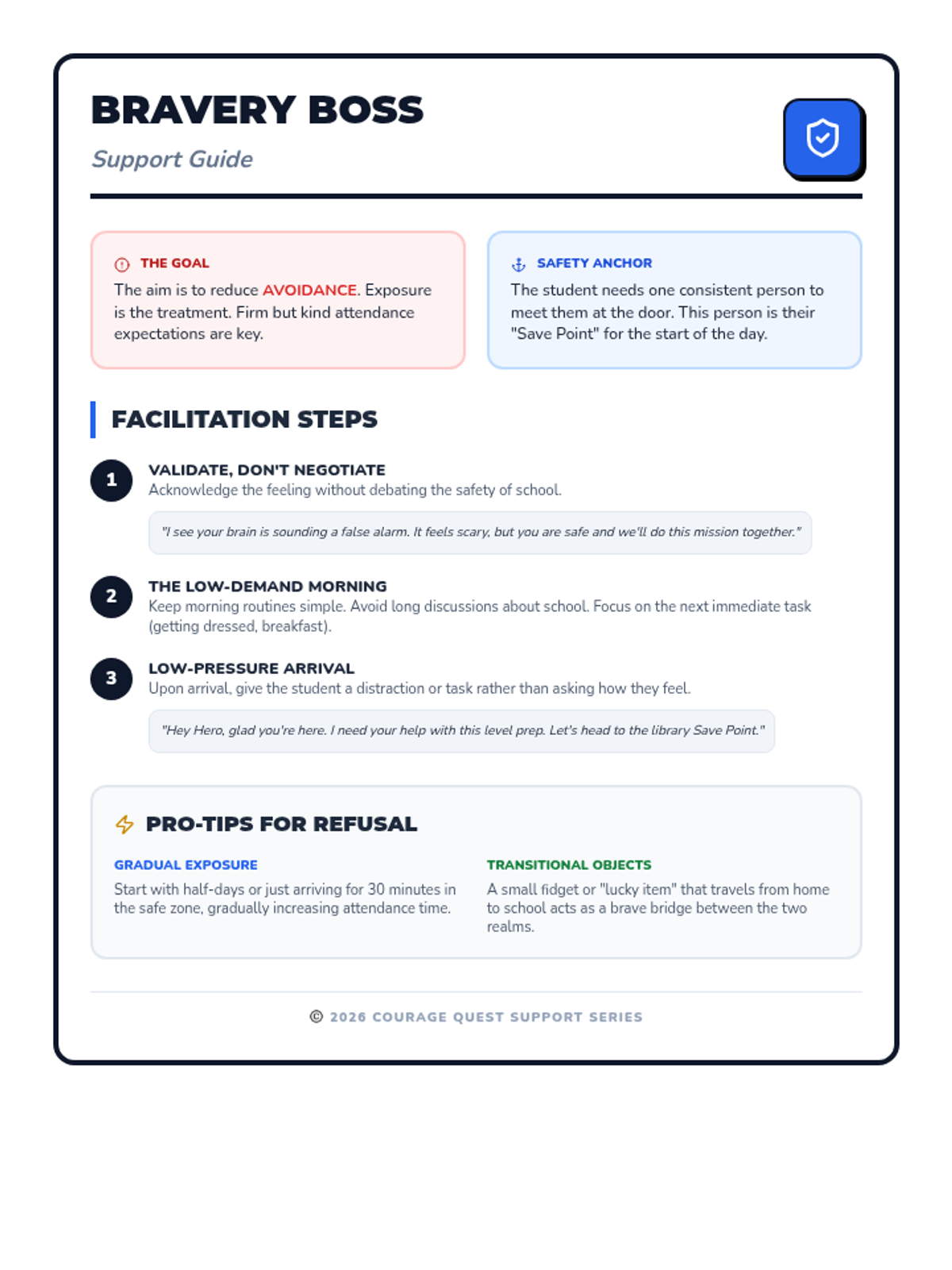
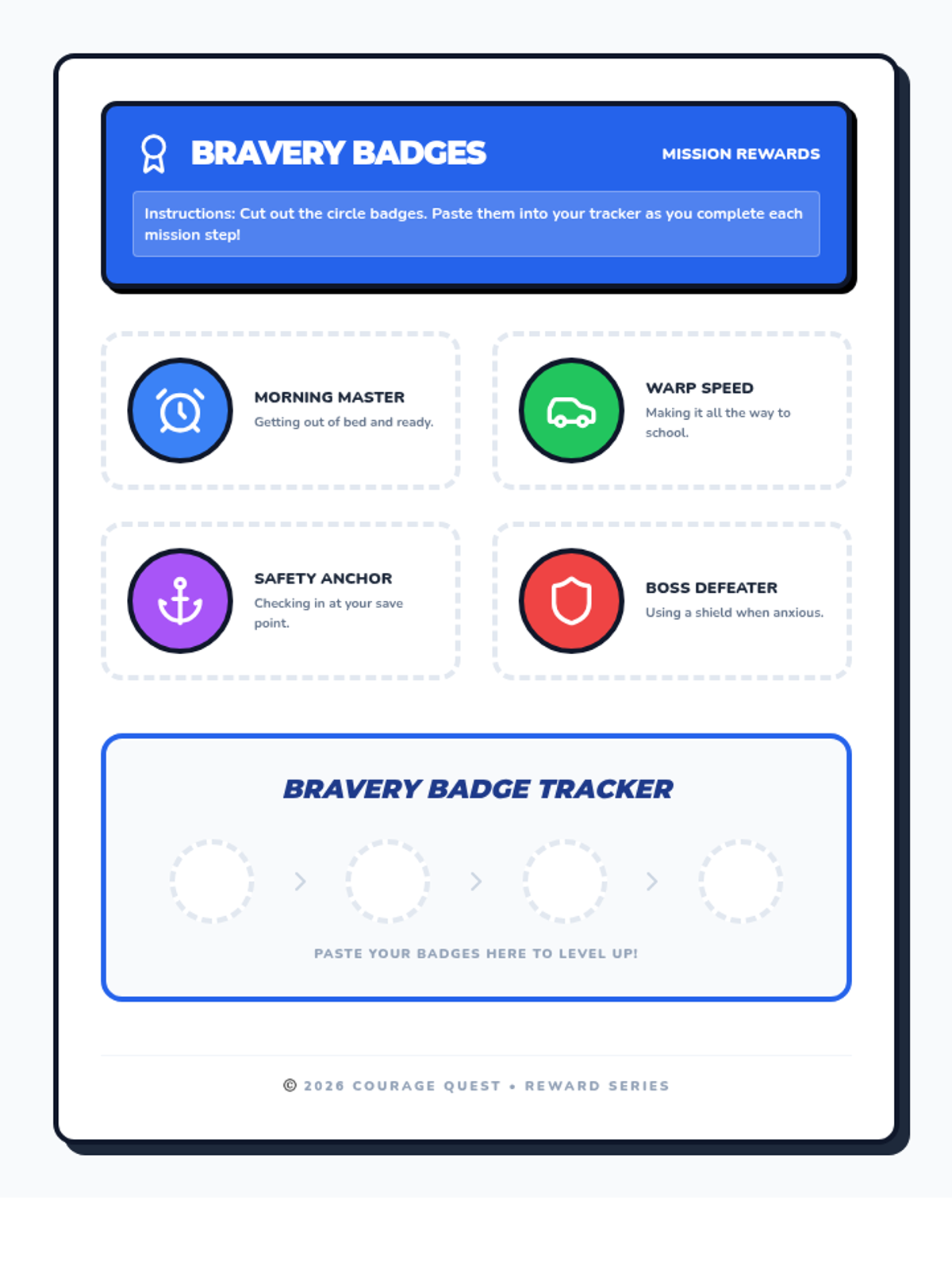
A lesson designed for 10-year-olds facing school anxiety and refusal. Using a gaming/RPG theme, it frames anxiety as a 'Boss' to be outsmarted using specific 'Shields' (coping strategies) and 'Morning Mission' planning to make the transition to school feel more manageable.
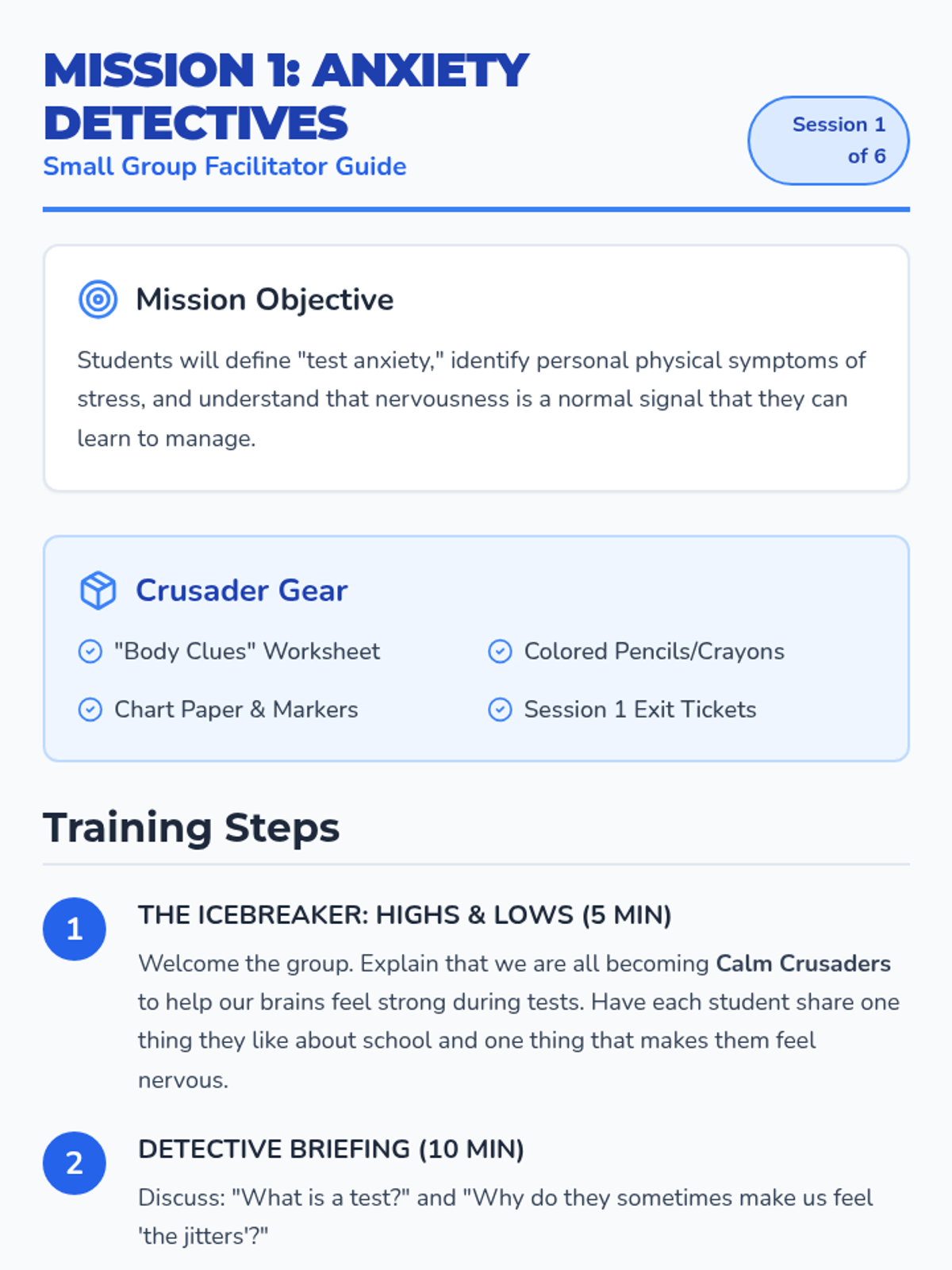
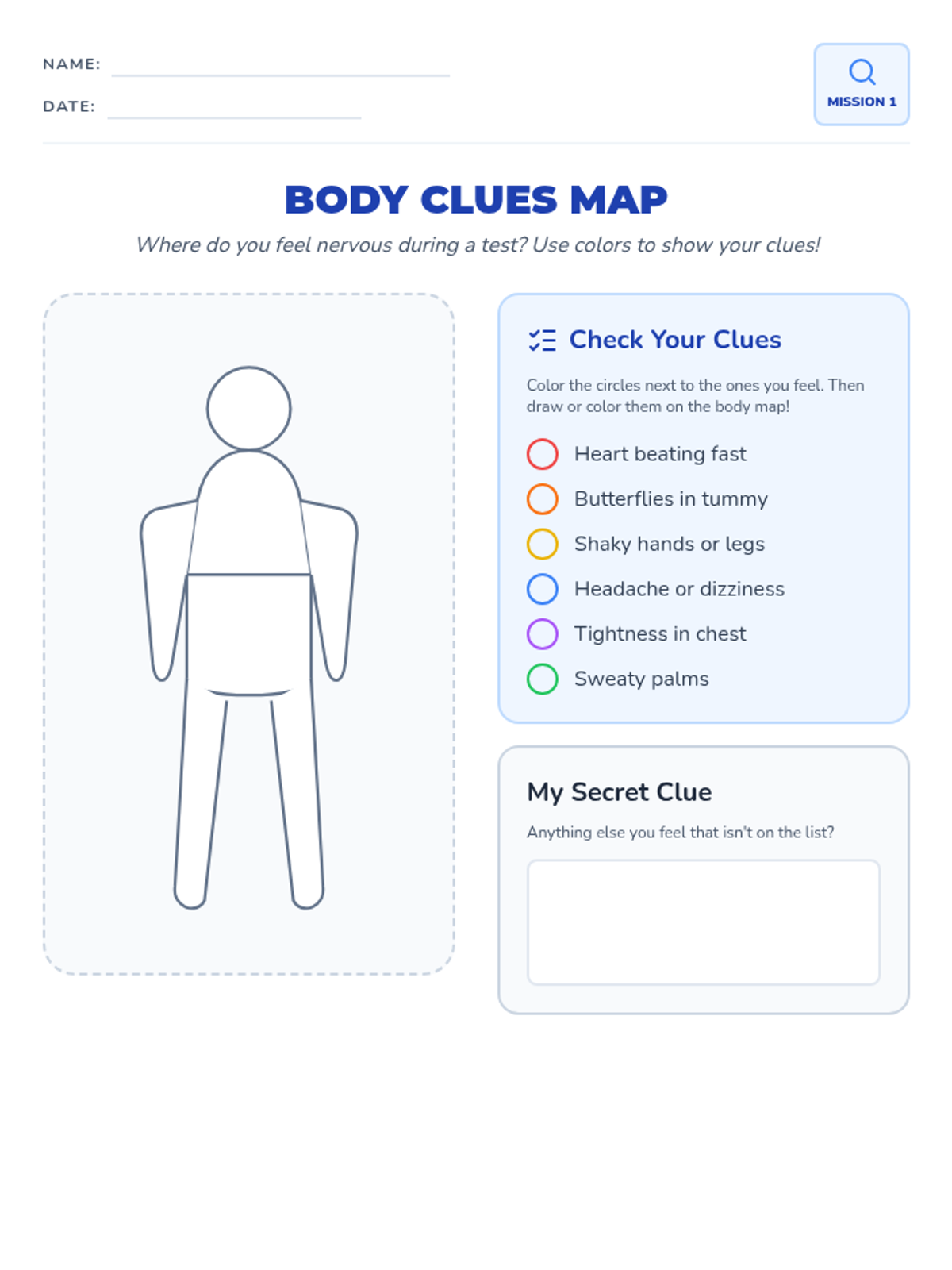
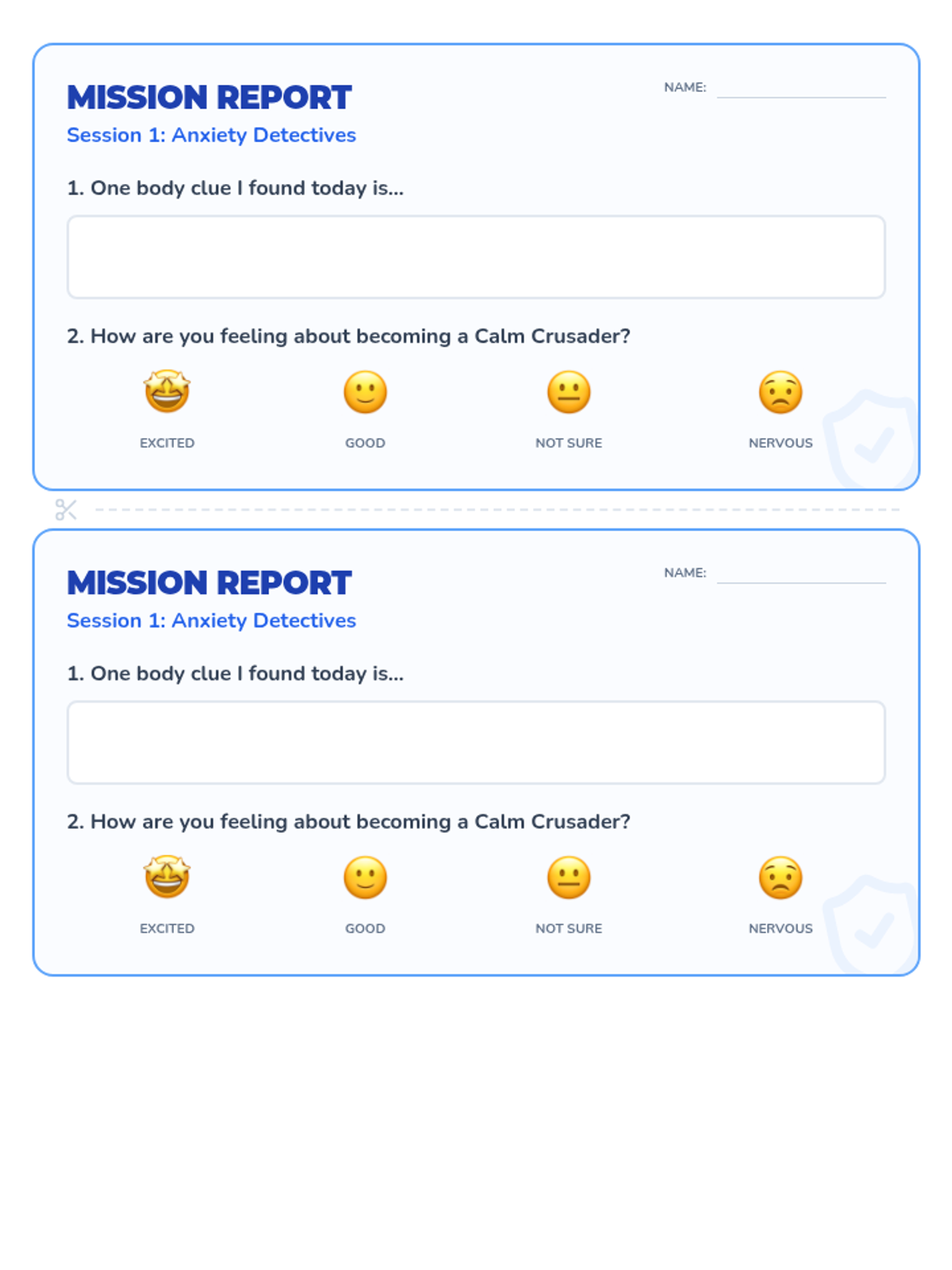
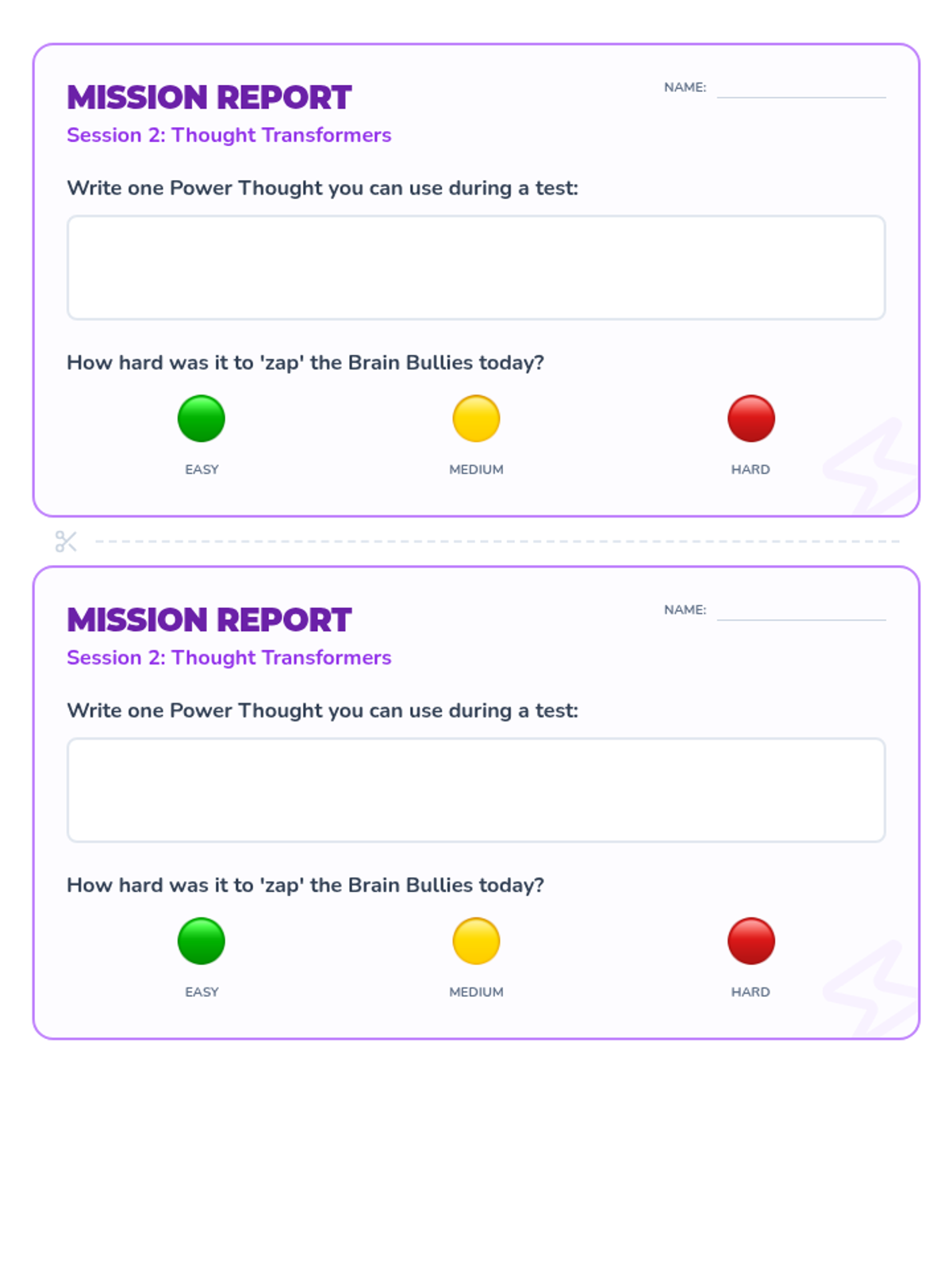
In this opening session, students identify where they feel anxiety in their bodies and learn that 'nervousness' is a normal signal they can manage.
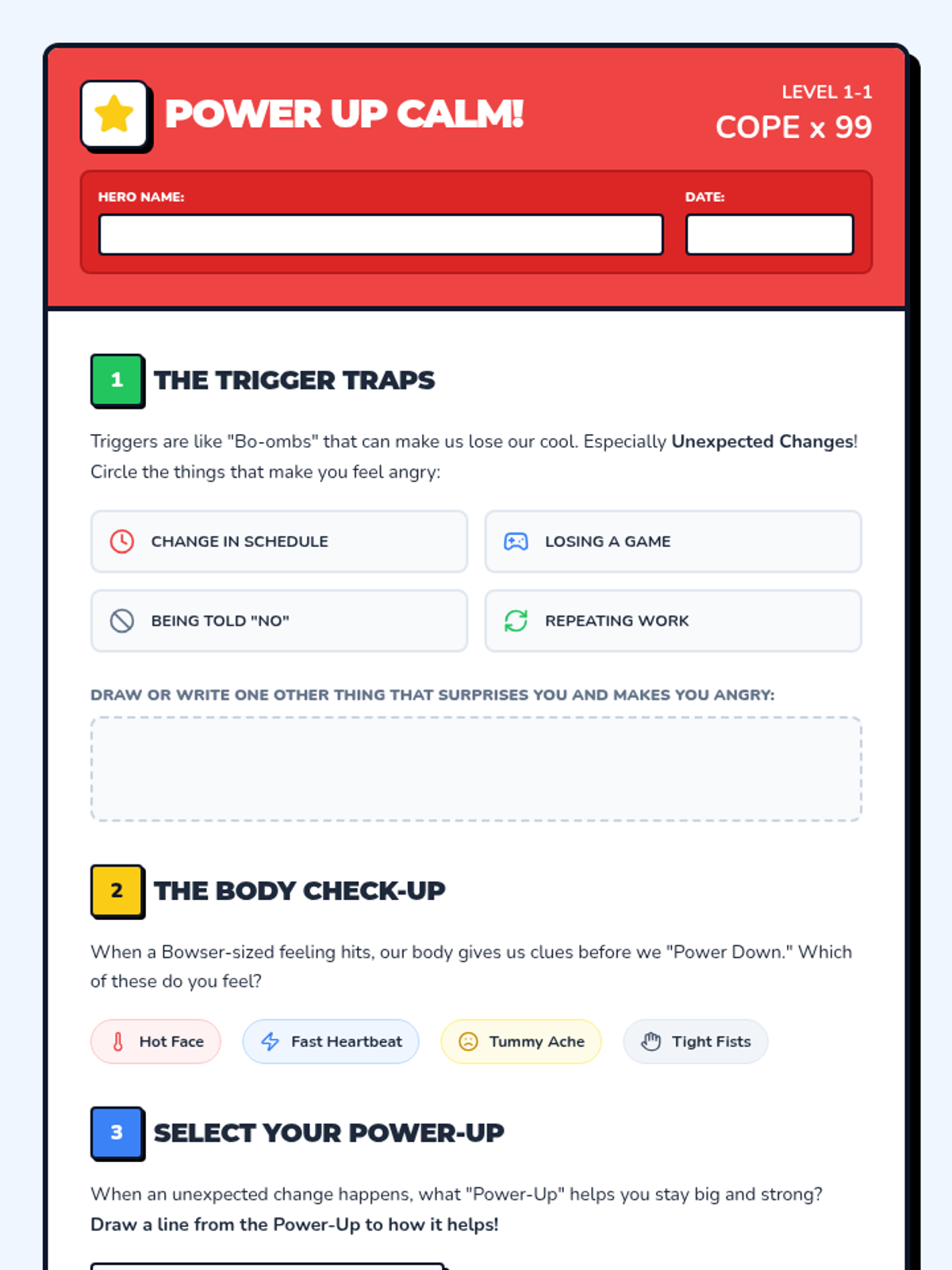
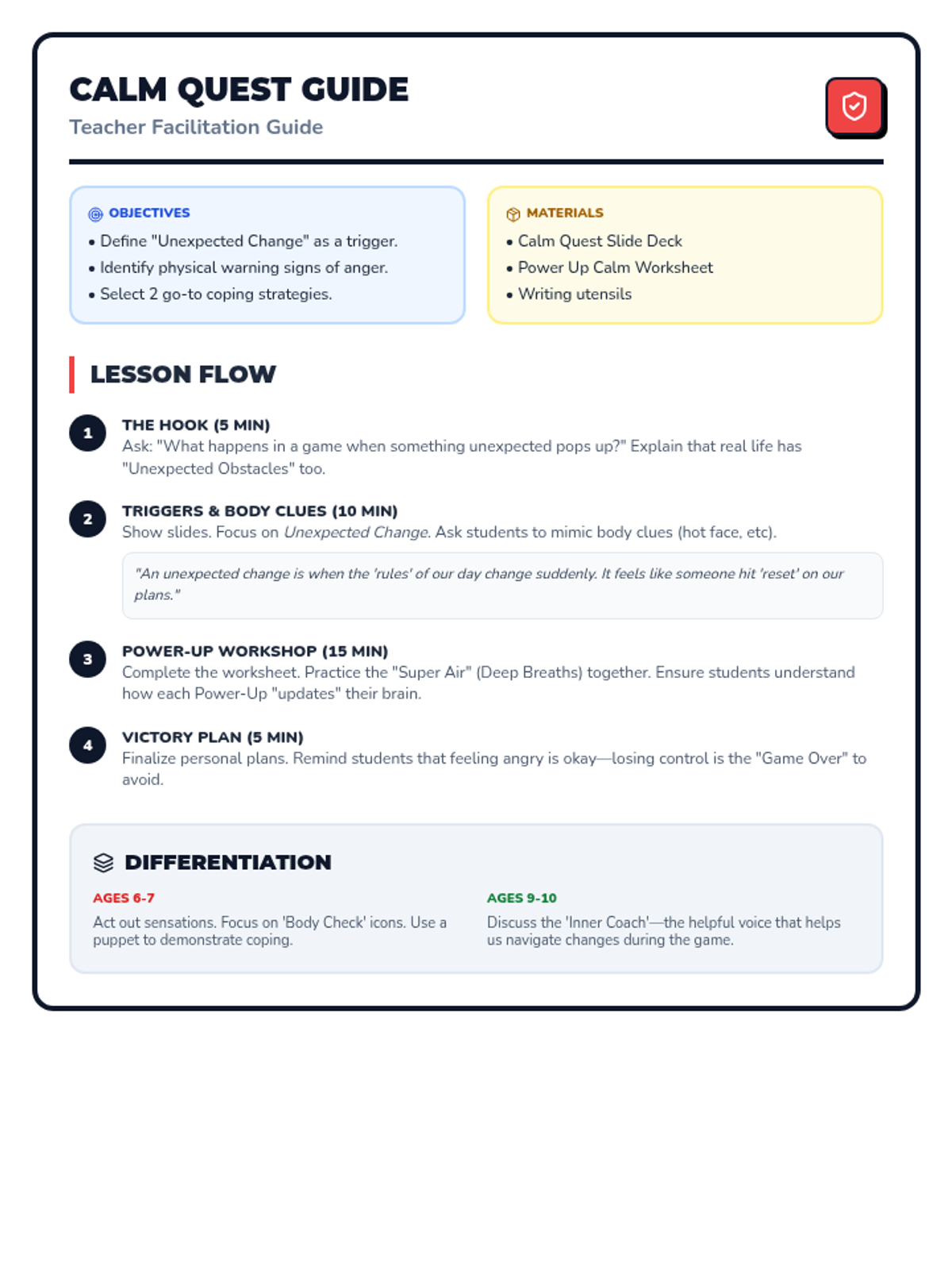
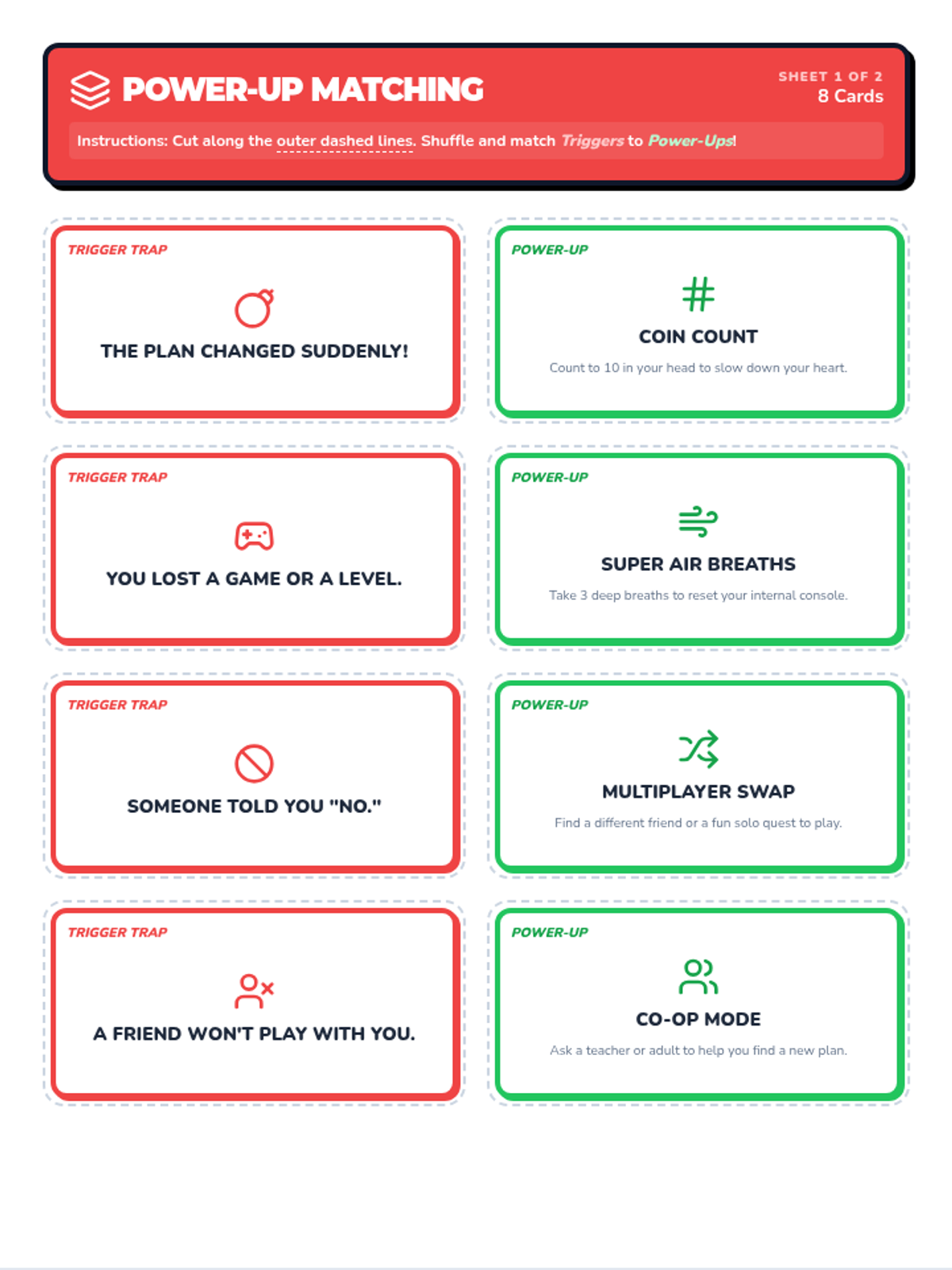
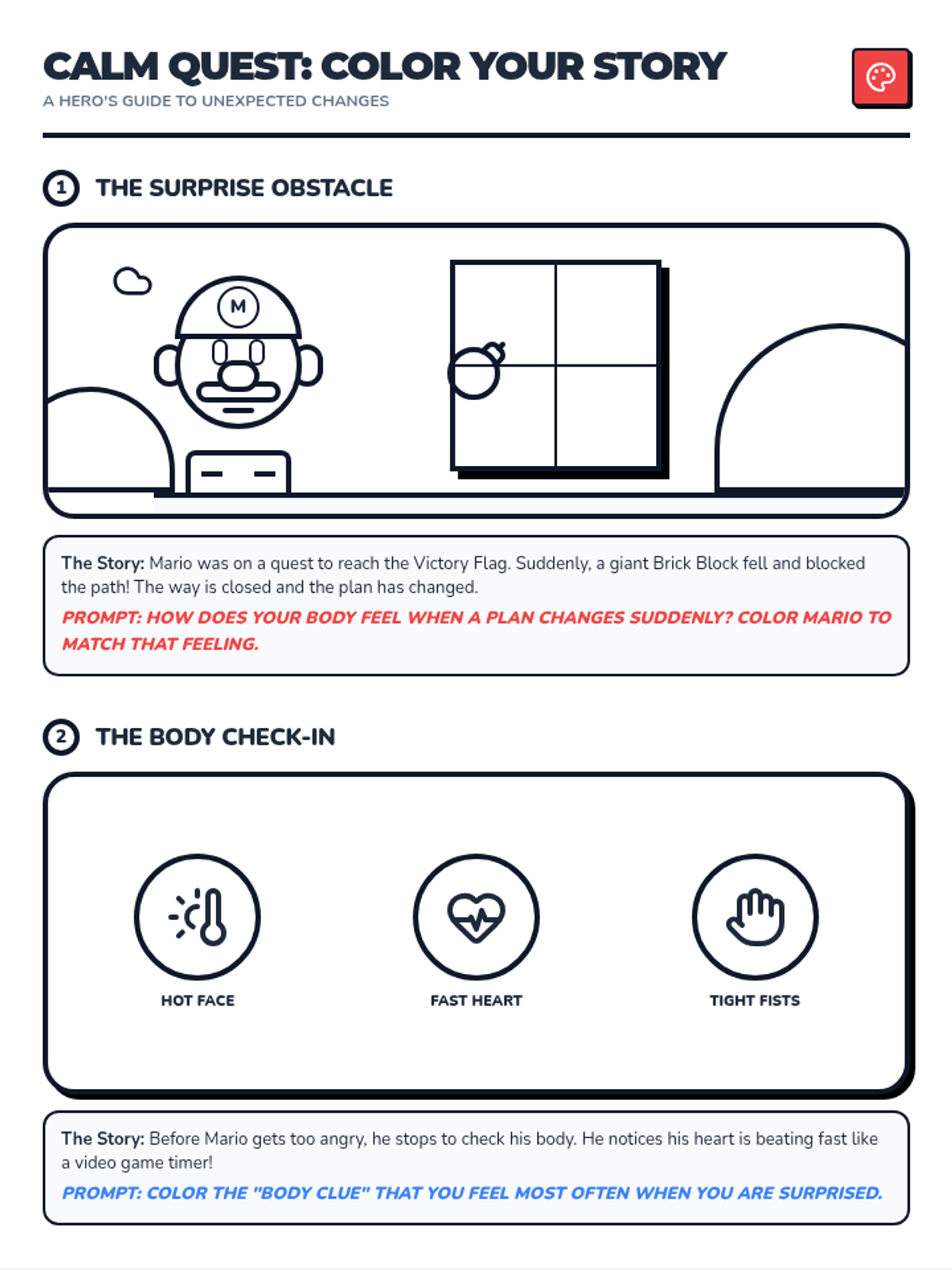
A Mario-themed lesson designed to help students aged 6-10 identify anger triggers, especially unexpected changes, and develop effective coping strategies. Students will learn to recognize physical warning signs and build a personal 'power-up' toolkit for emotional regulation.
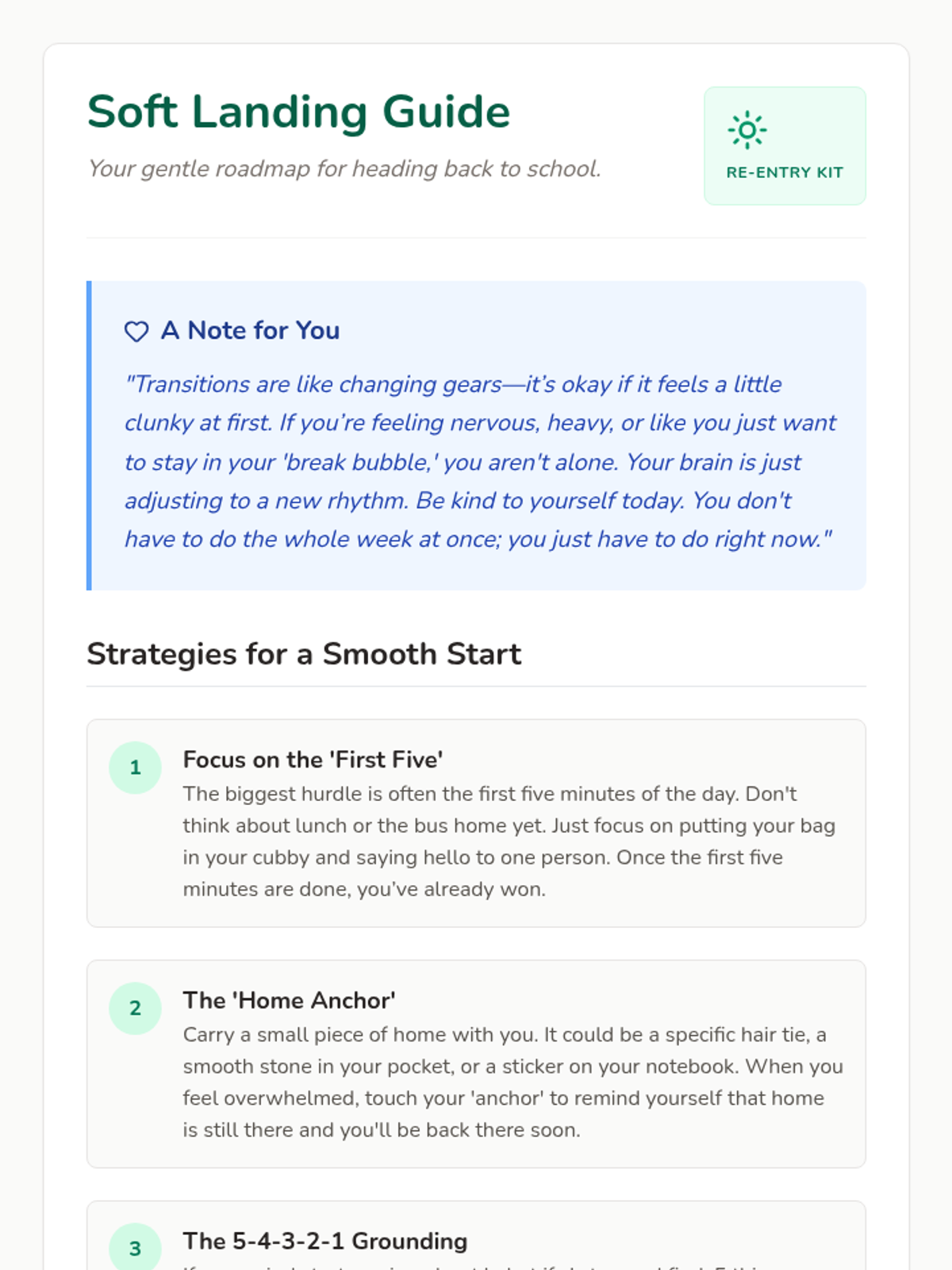
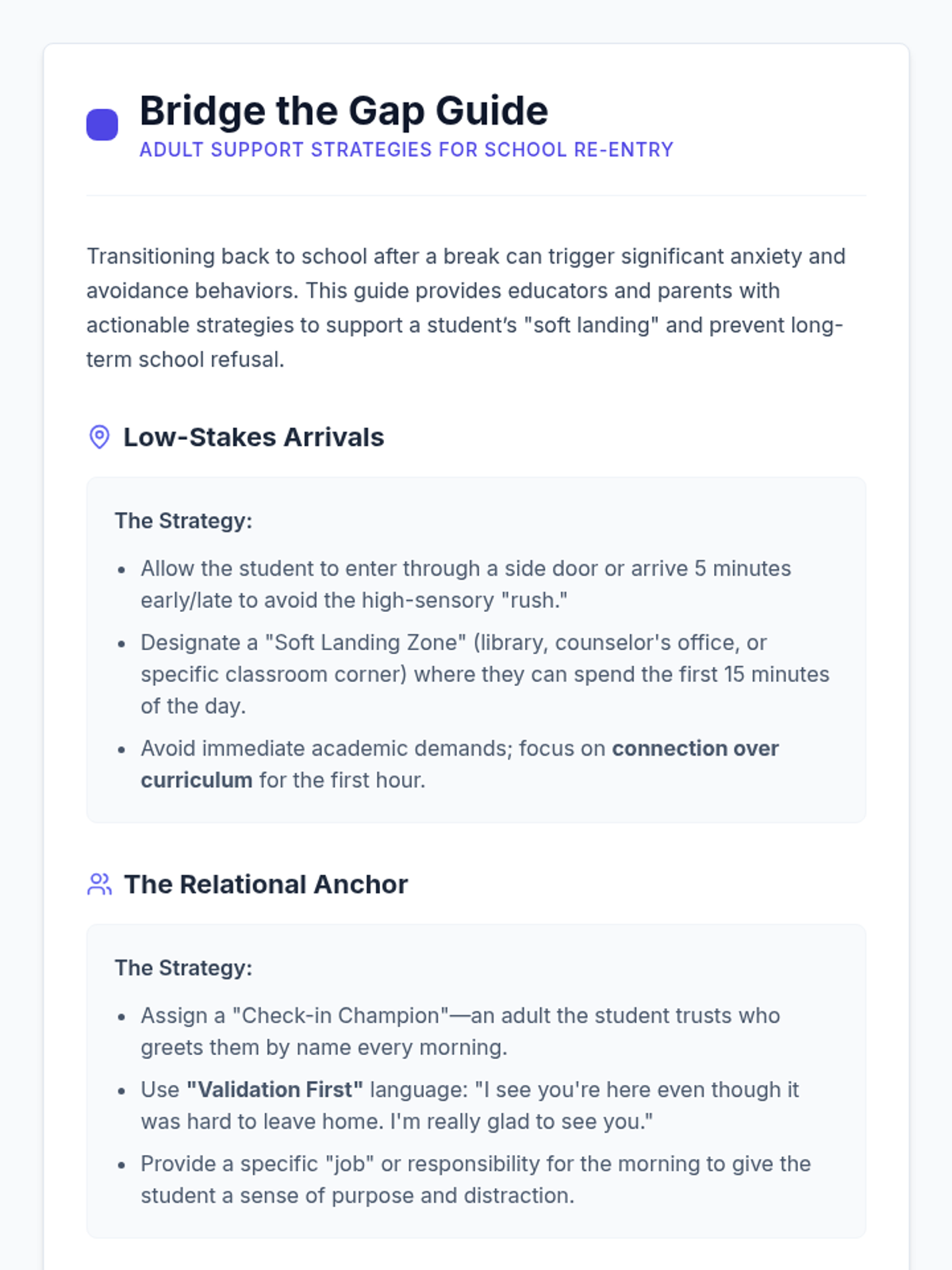
A supportive lesson focused on easing school-re-entry anxiety and providing concrete strategies for students transitioning back after a break.
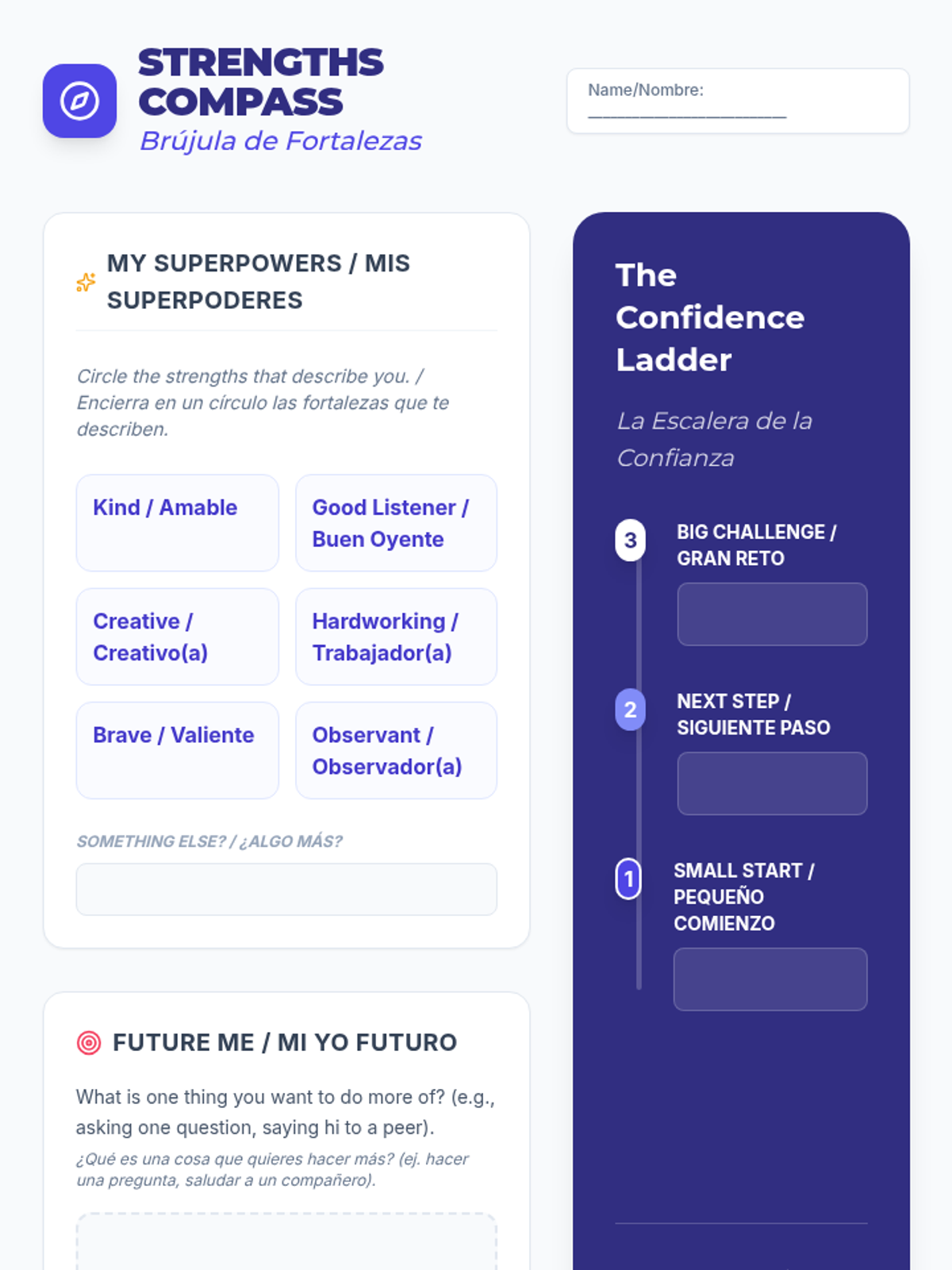
A collection of bilingual resources designed to help a shy Spanish-speaking student identify personal strengths, manage social anxiety, and practice self-advocacy through structured scripts and visual goals.
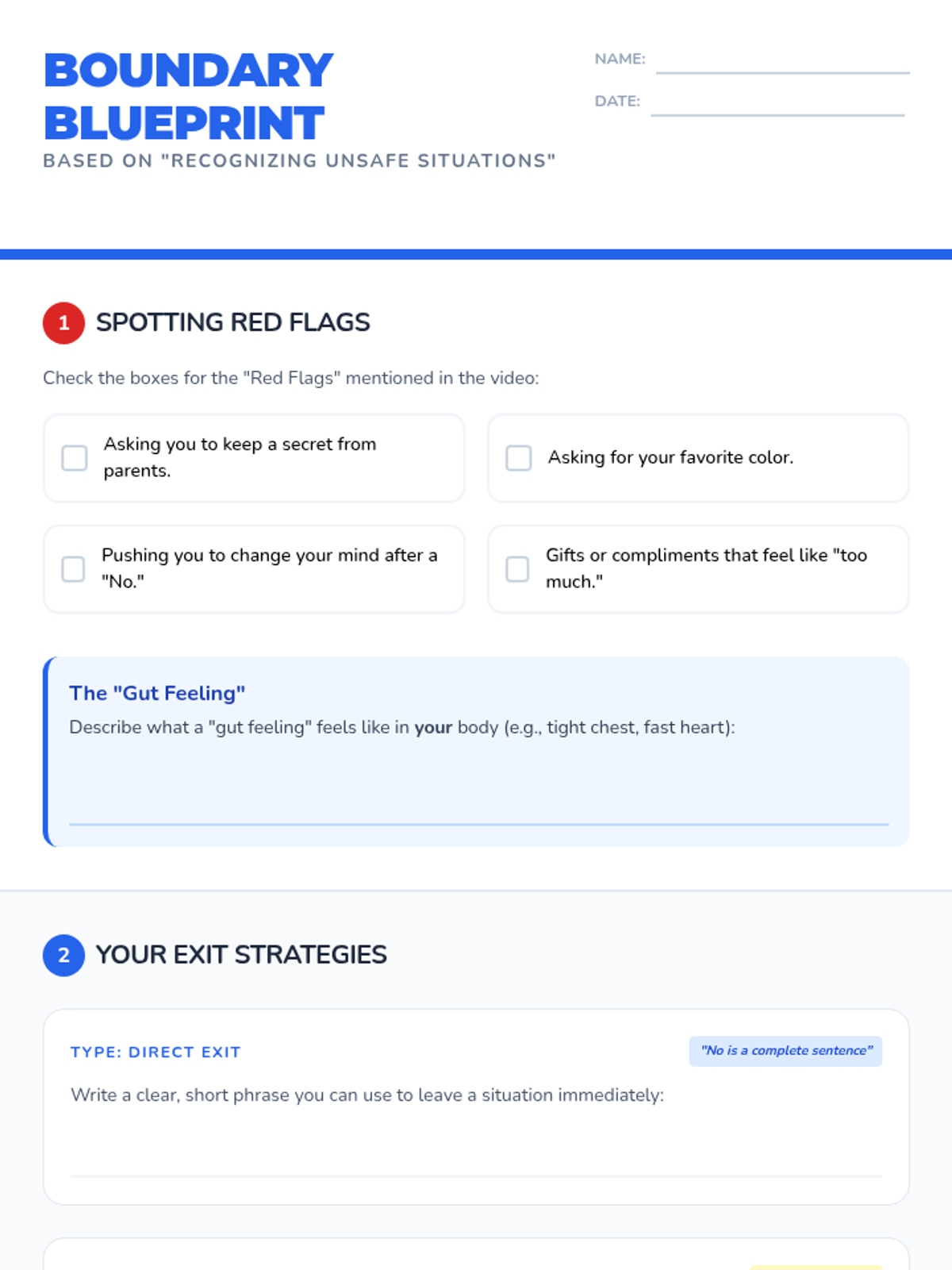
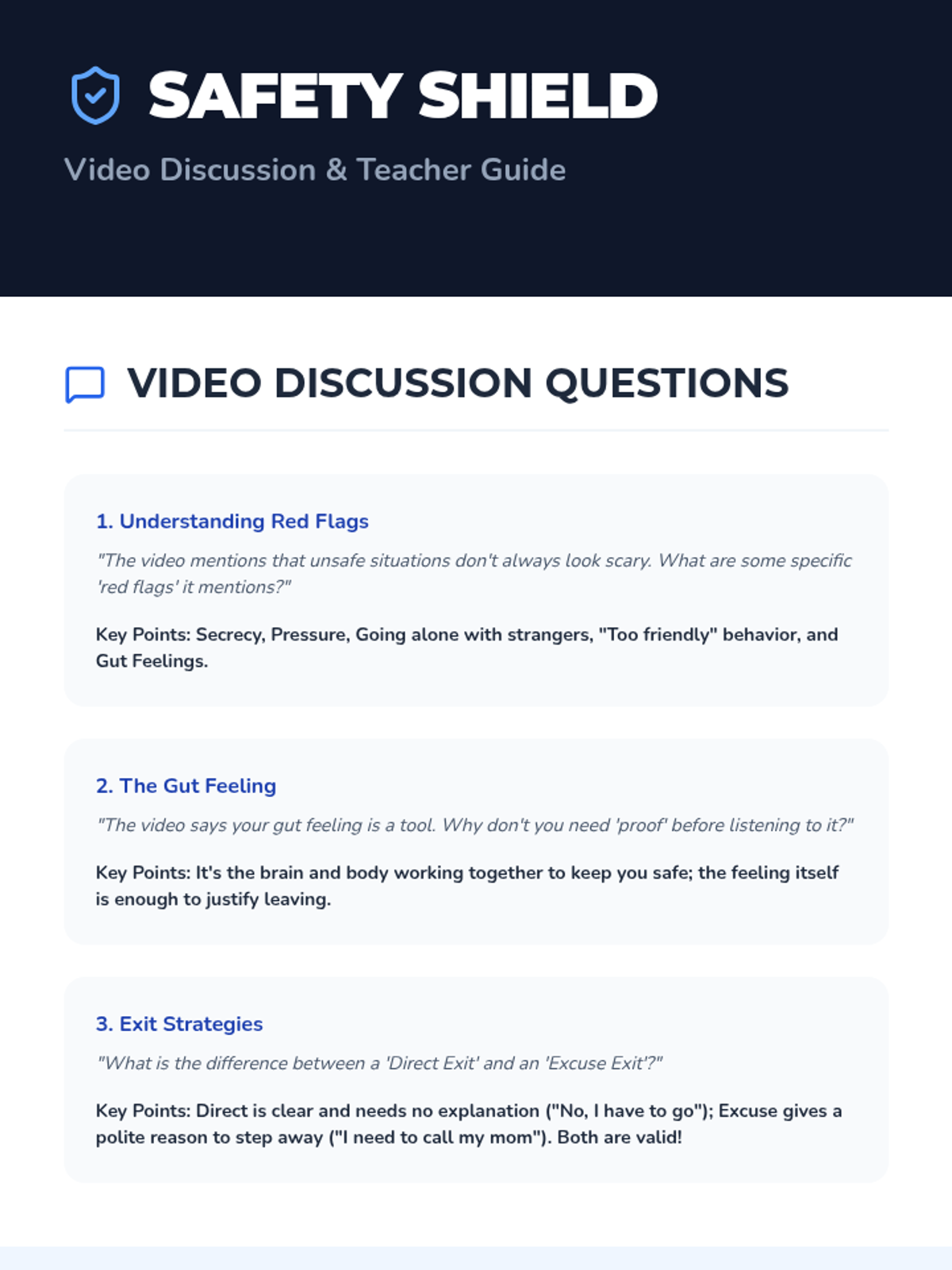
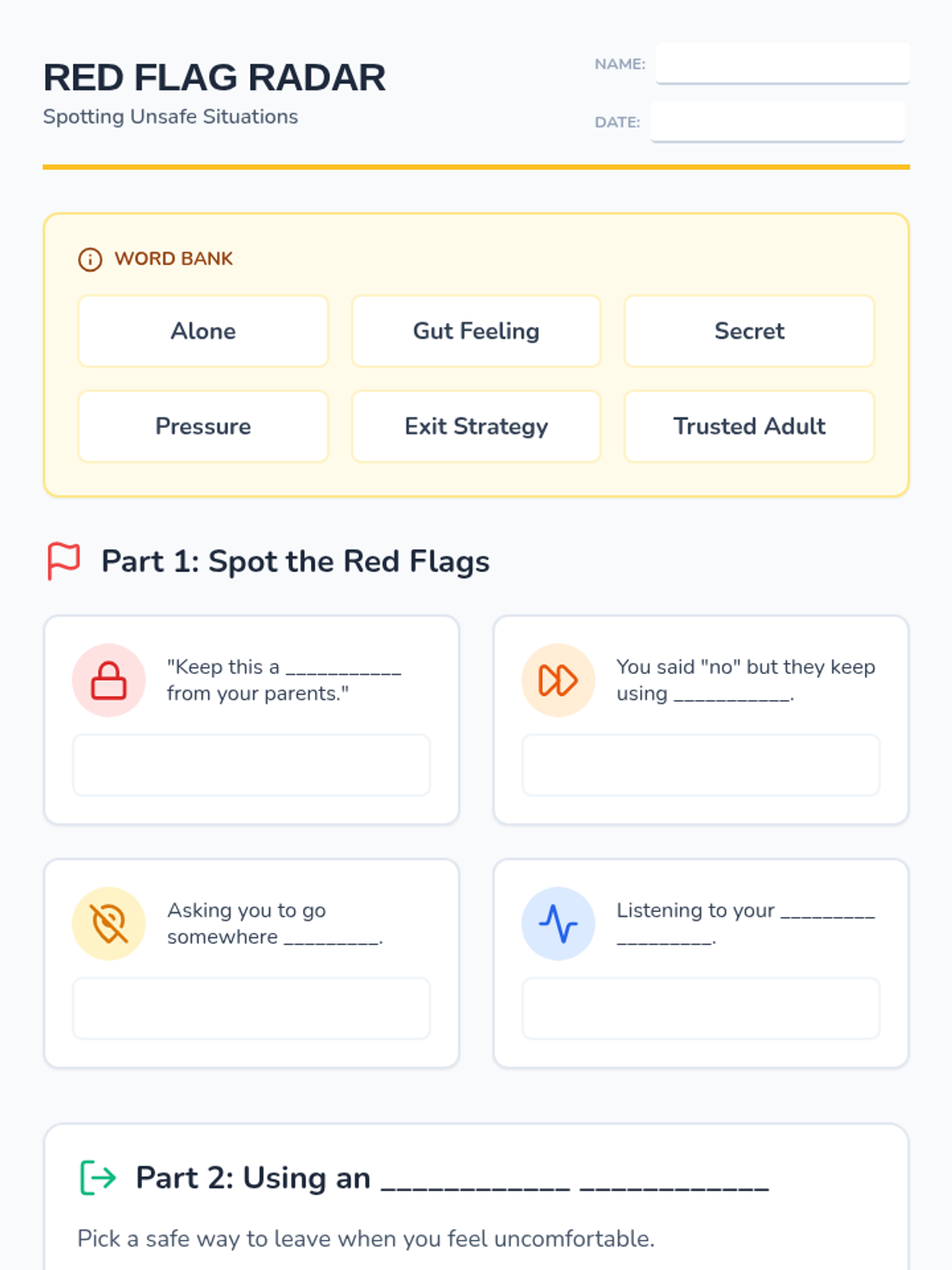
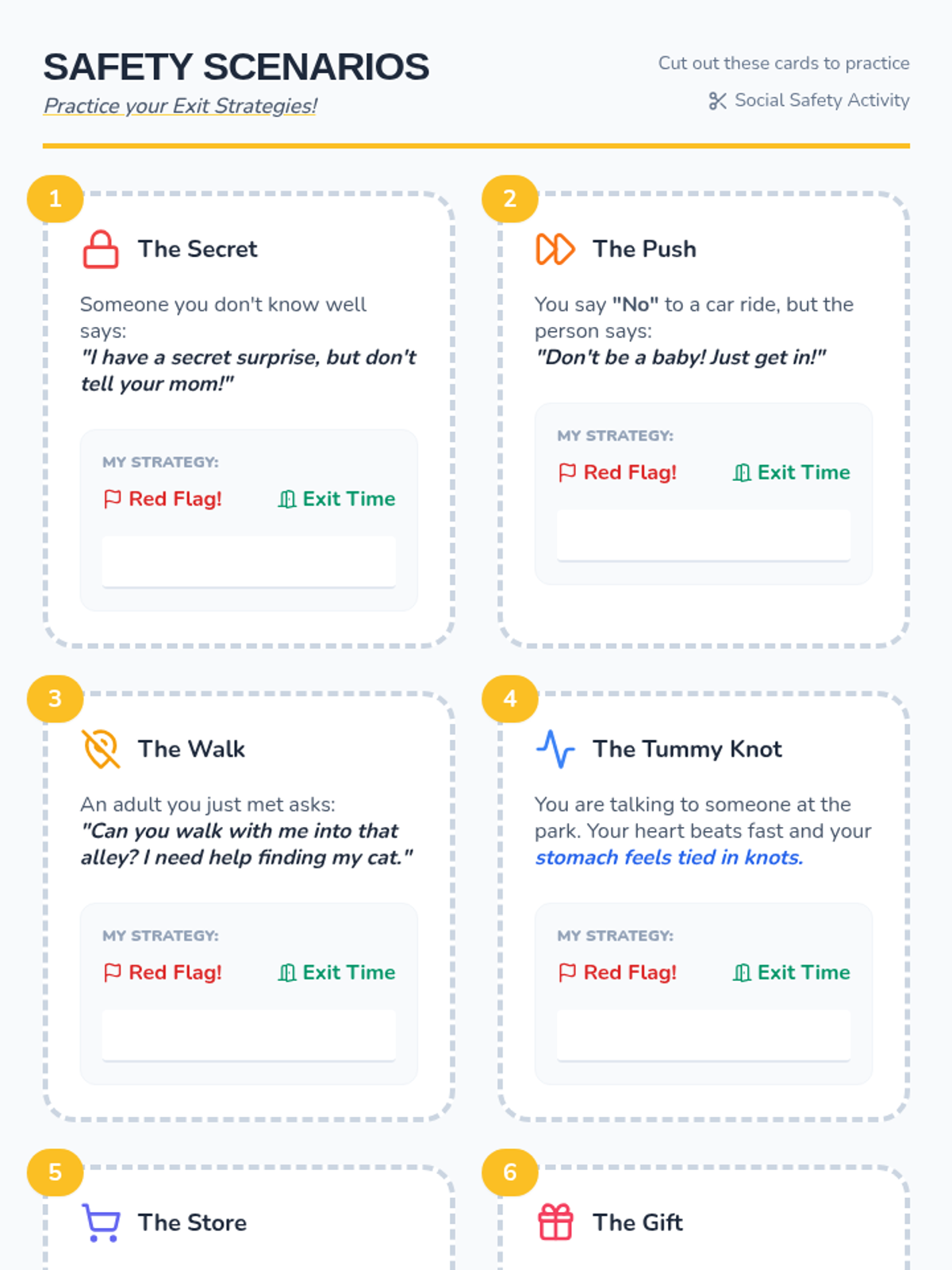
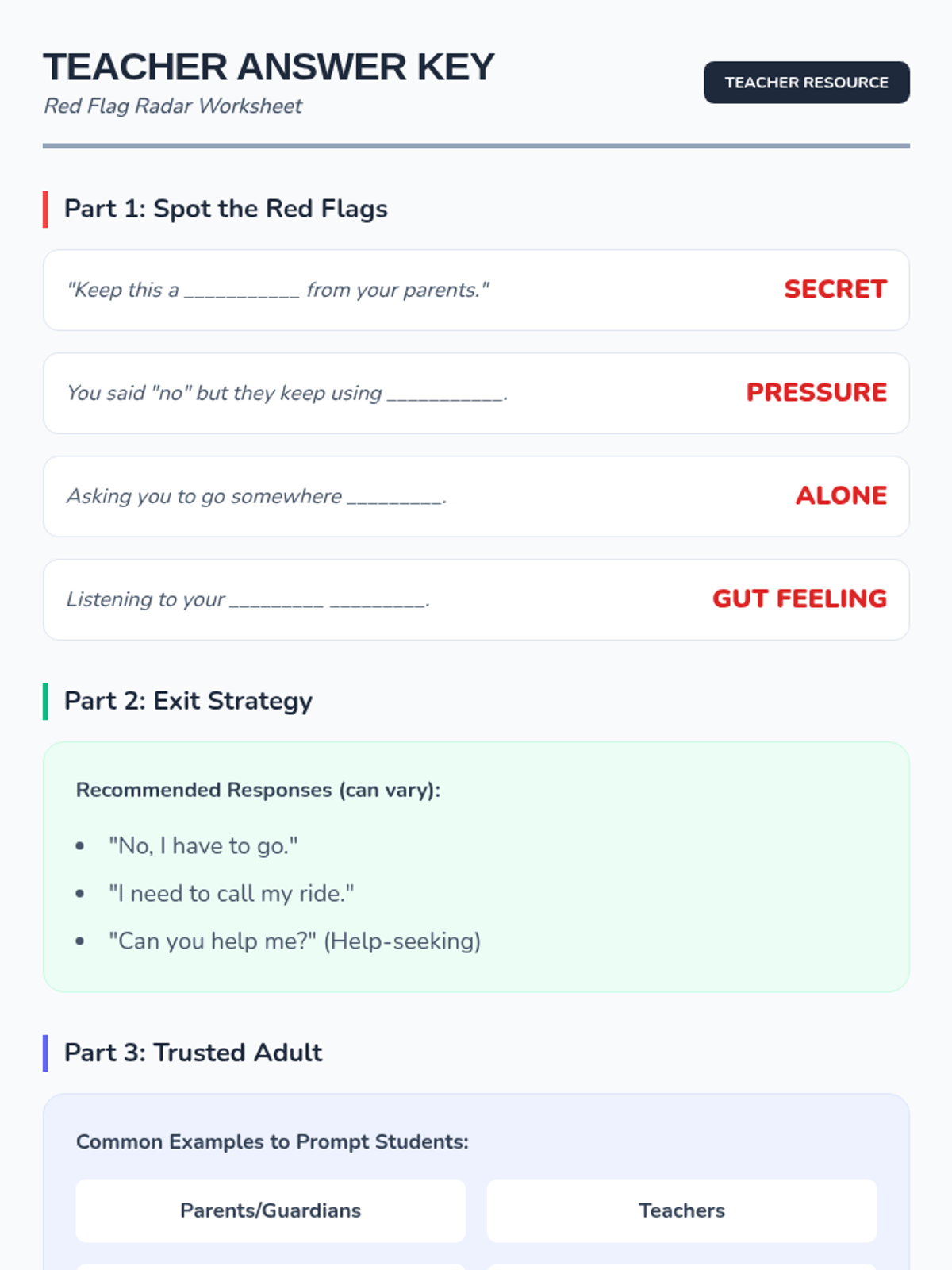
This lesson focuses on identifying 'red flags' in social situations, understanding the importance of 'gut feelings', and practicing exit strategies to move to safety. Students will learn to recognize subtle warning signs and identify trusted adults they can turn to for help.
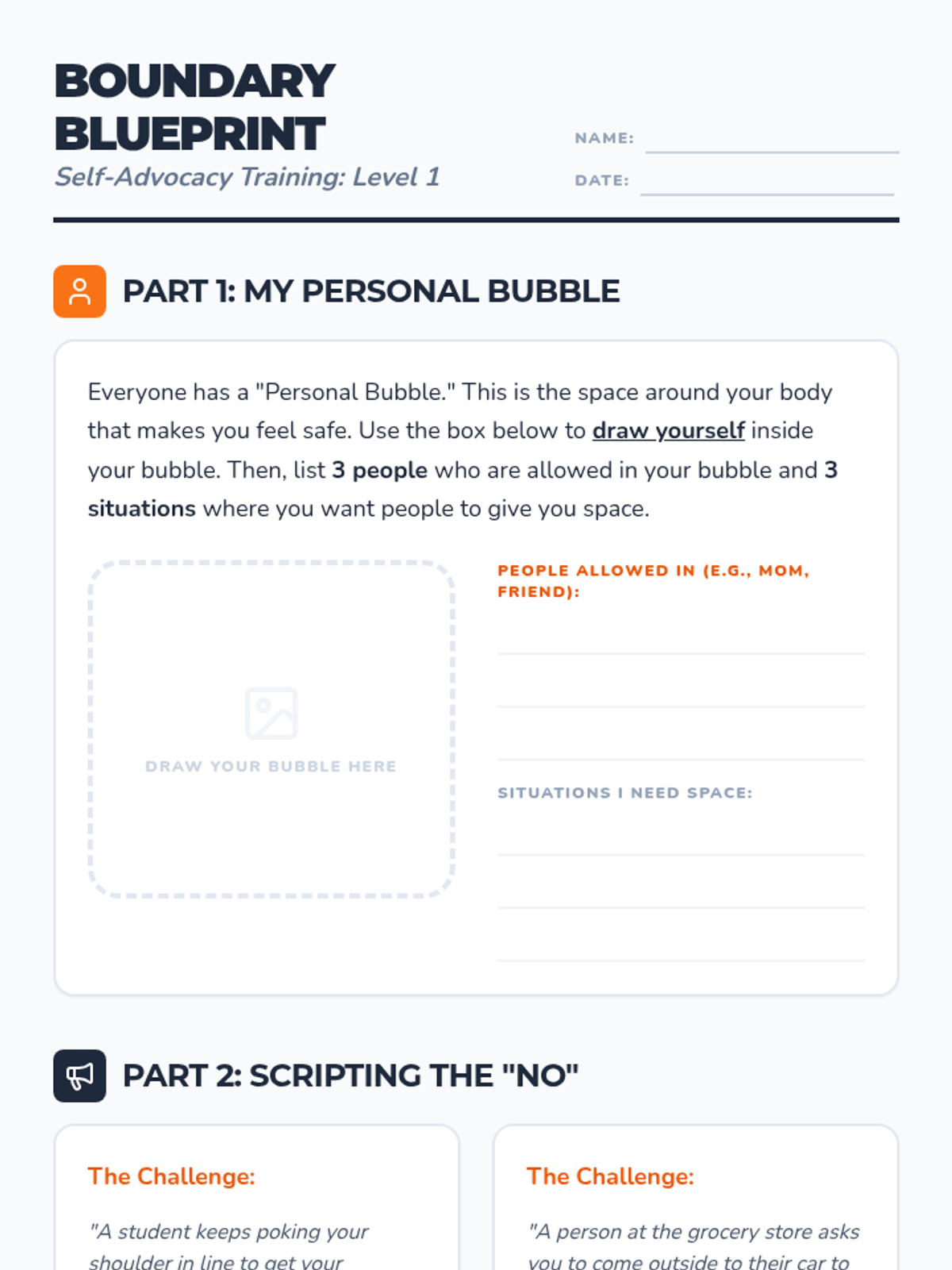
This lesson empowers students to identify their personal boundaries, practice assertive "No" statements, and recognize safe versus unsafe situations in their school and community environments.
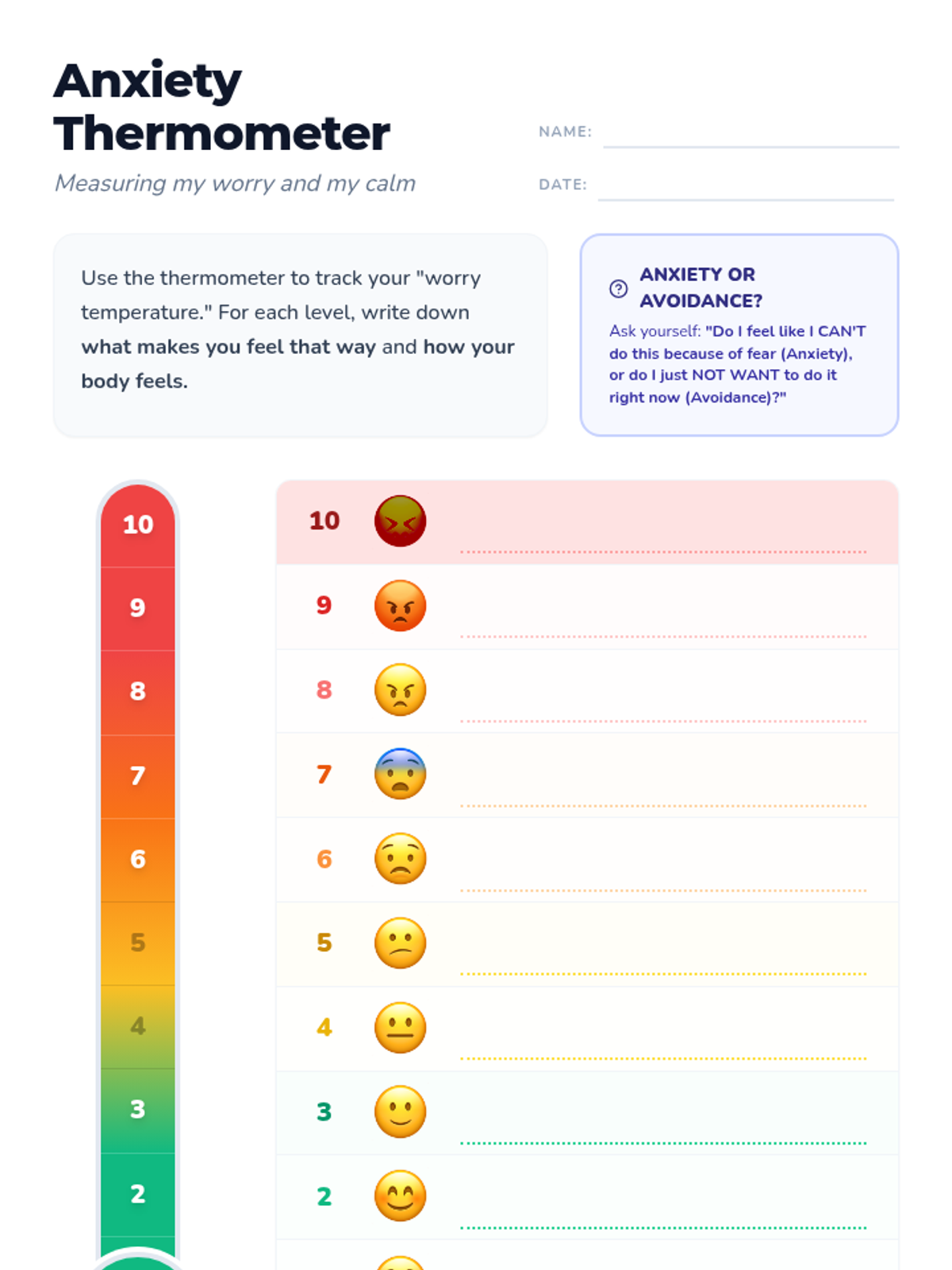
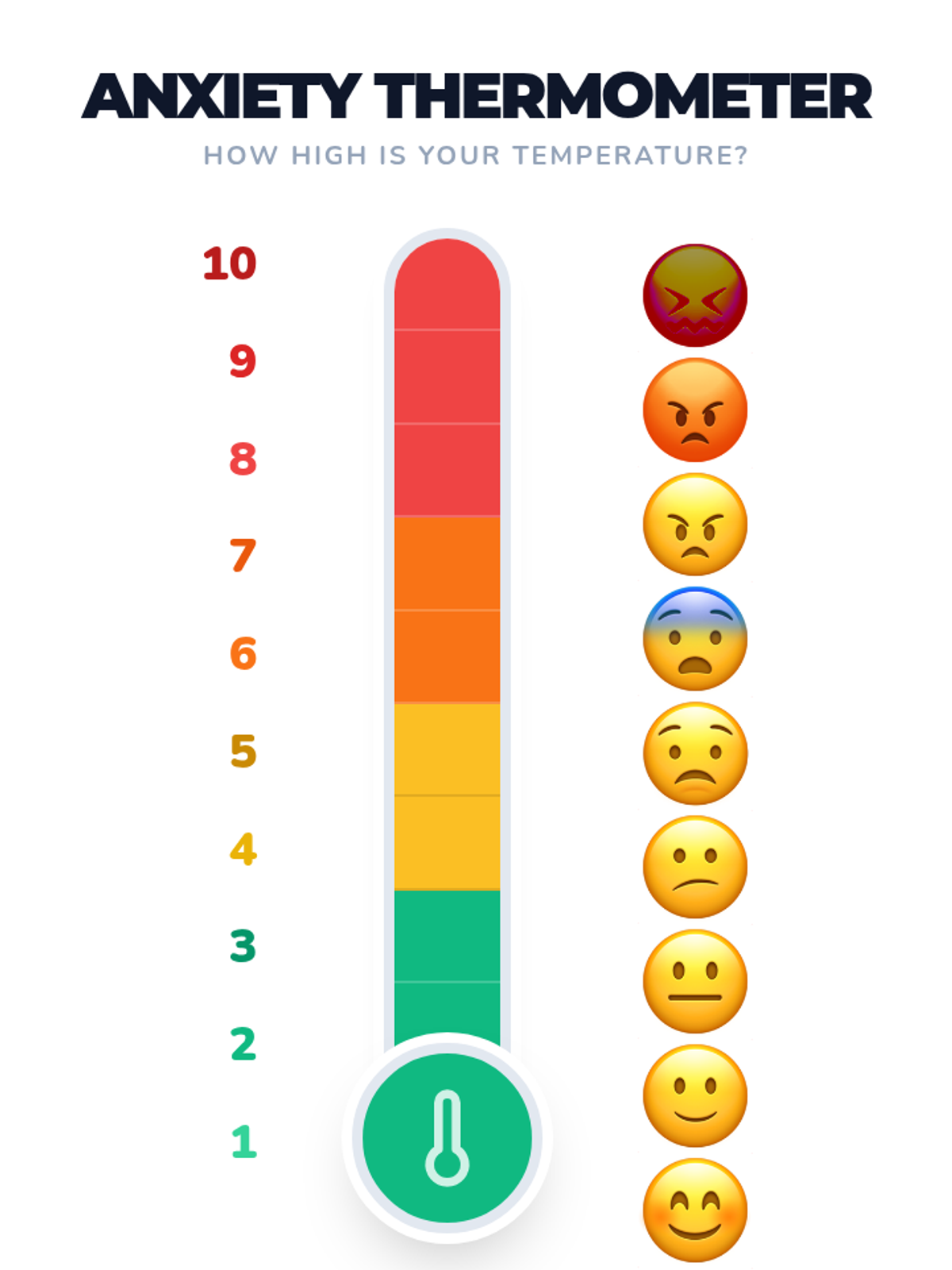
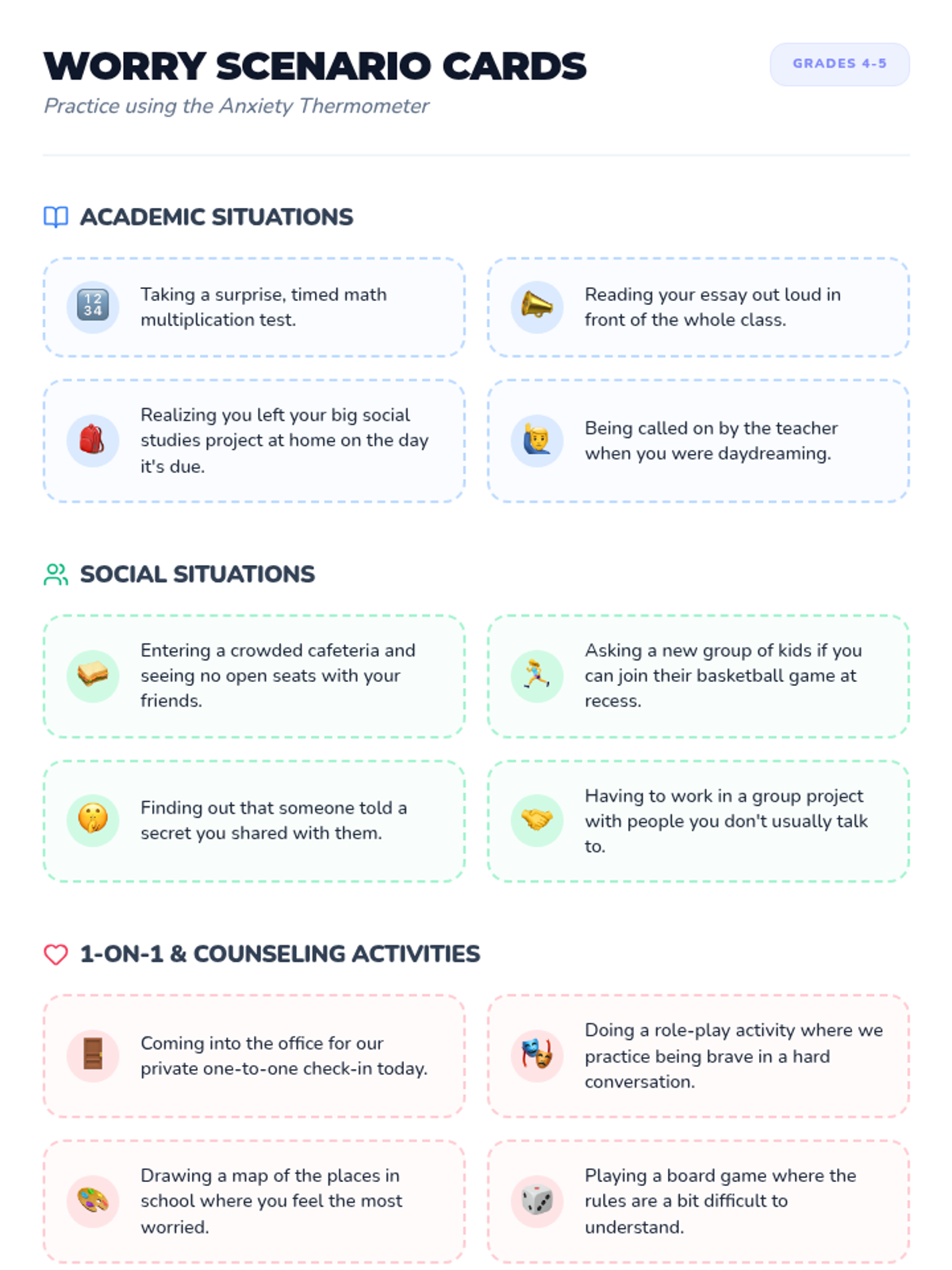
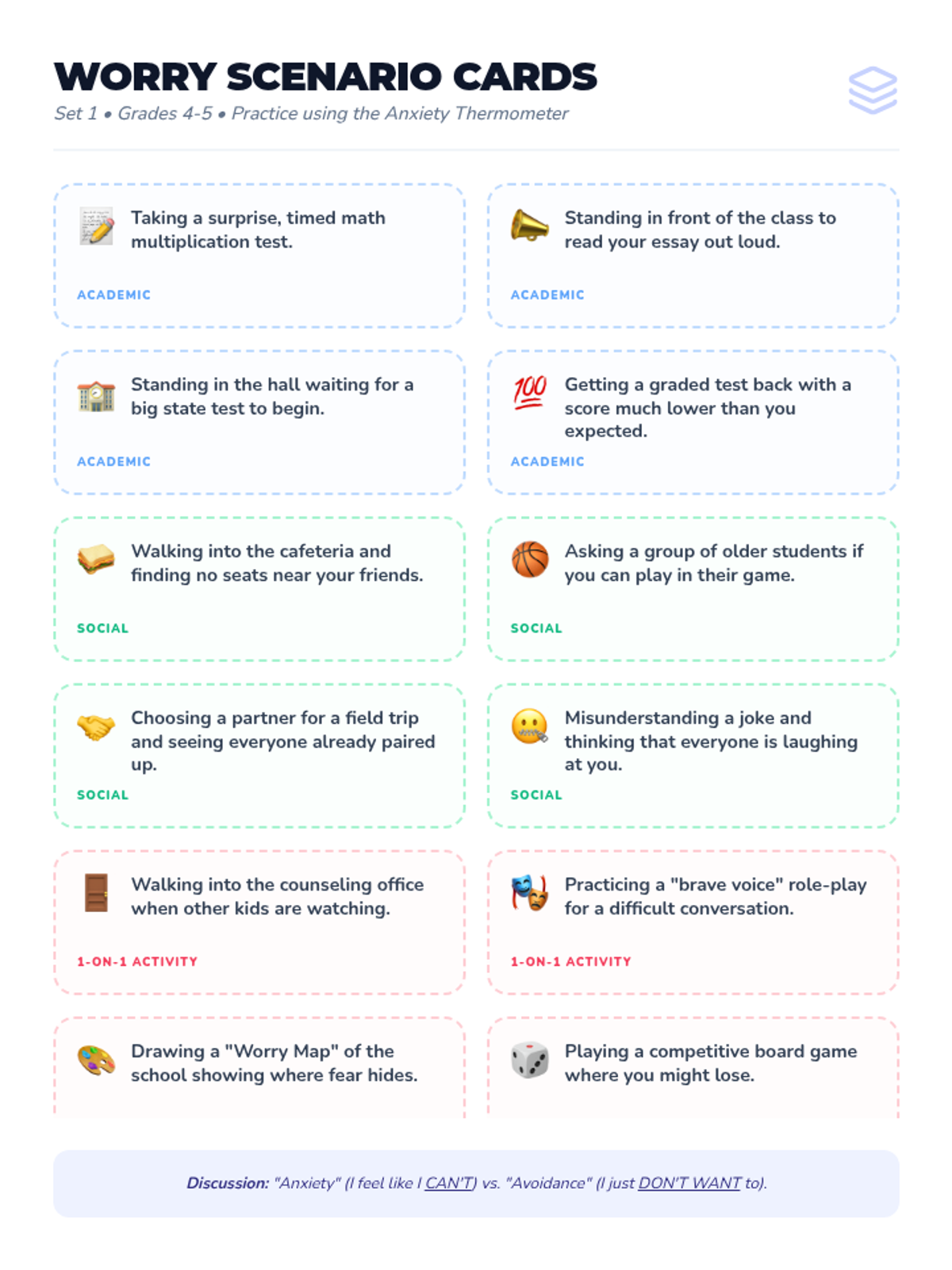
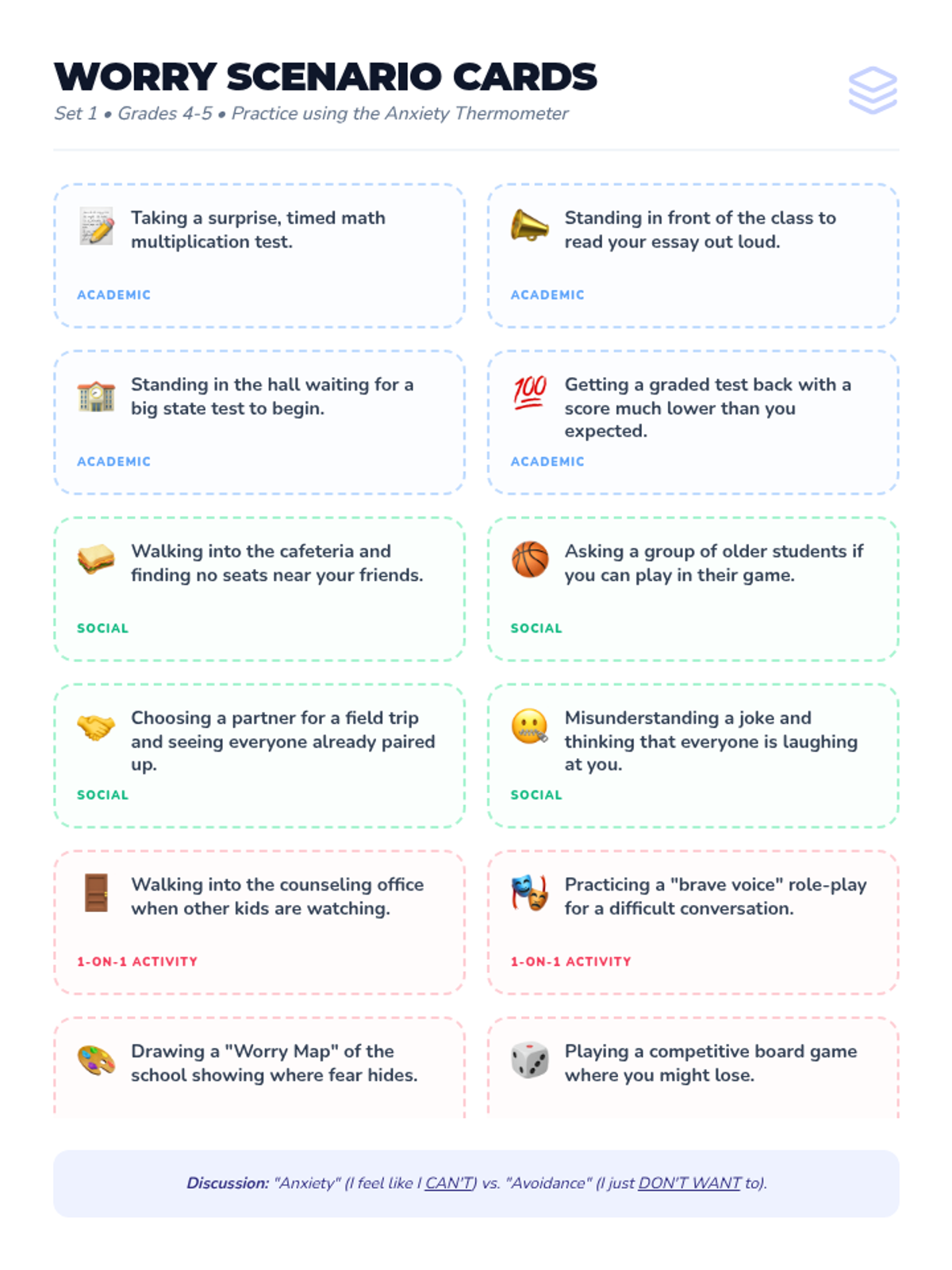
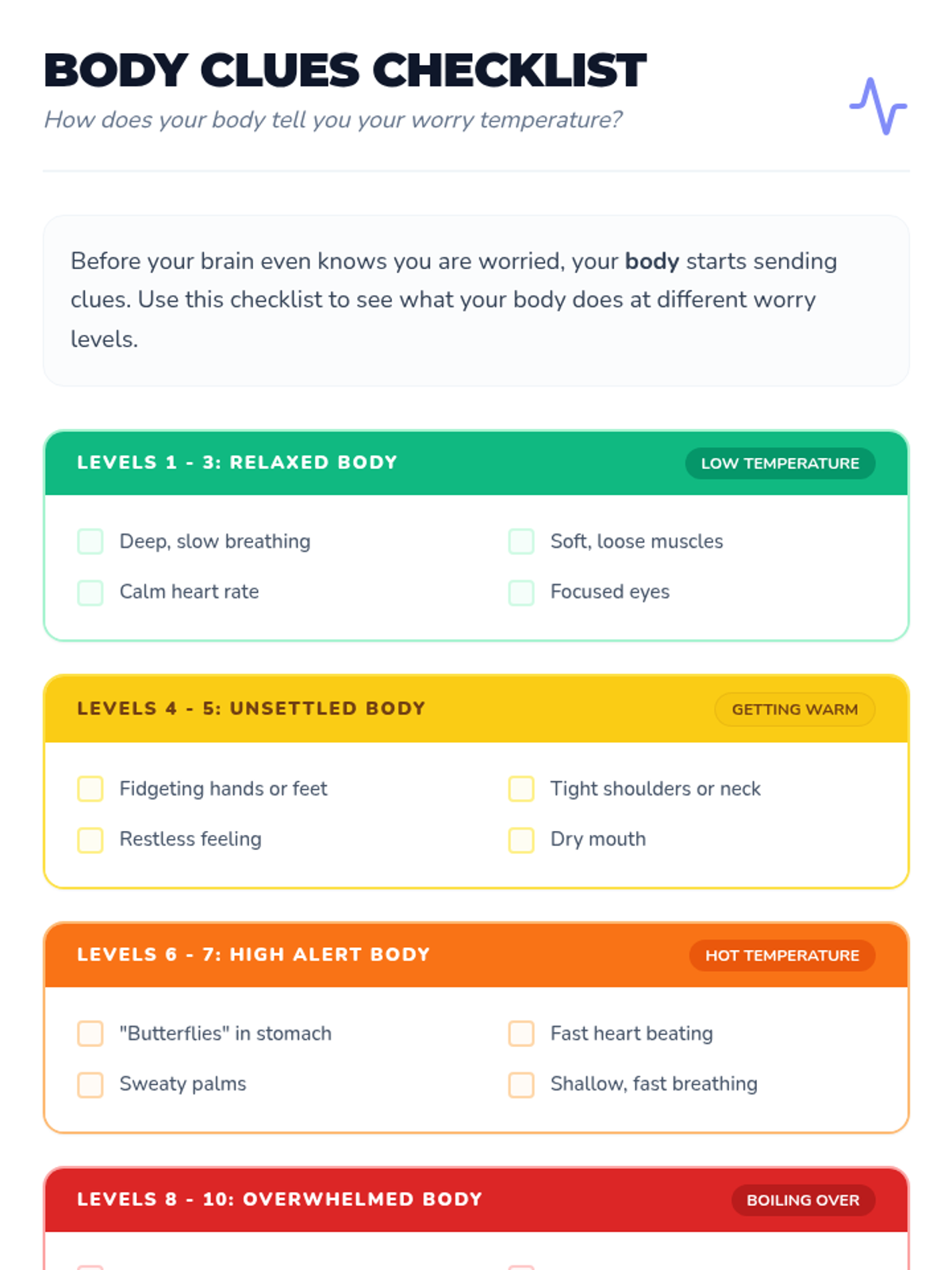
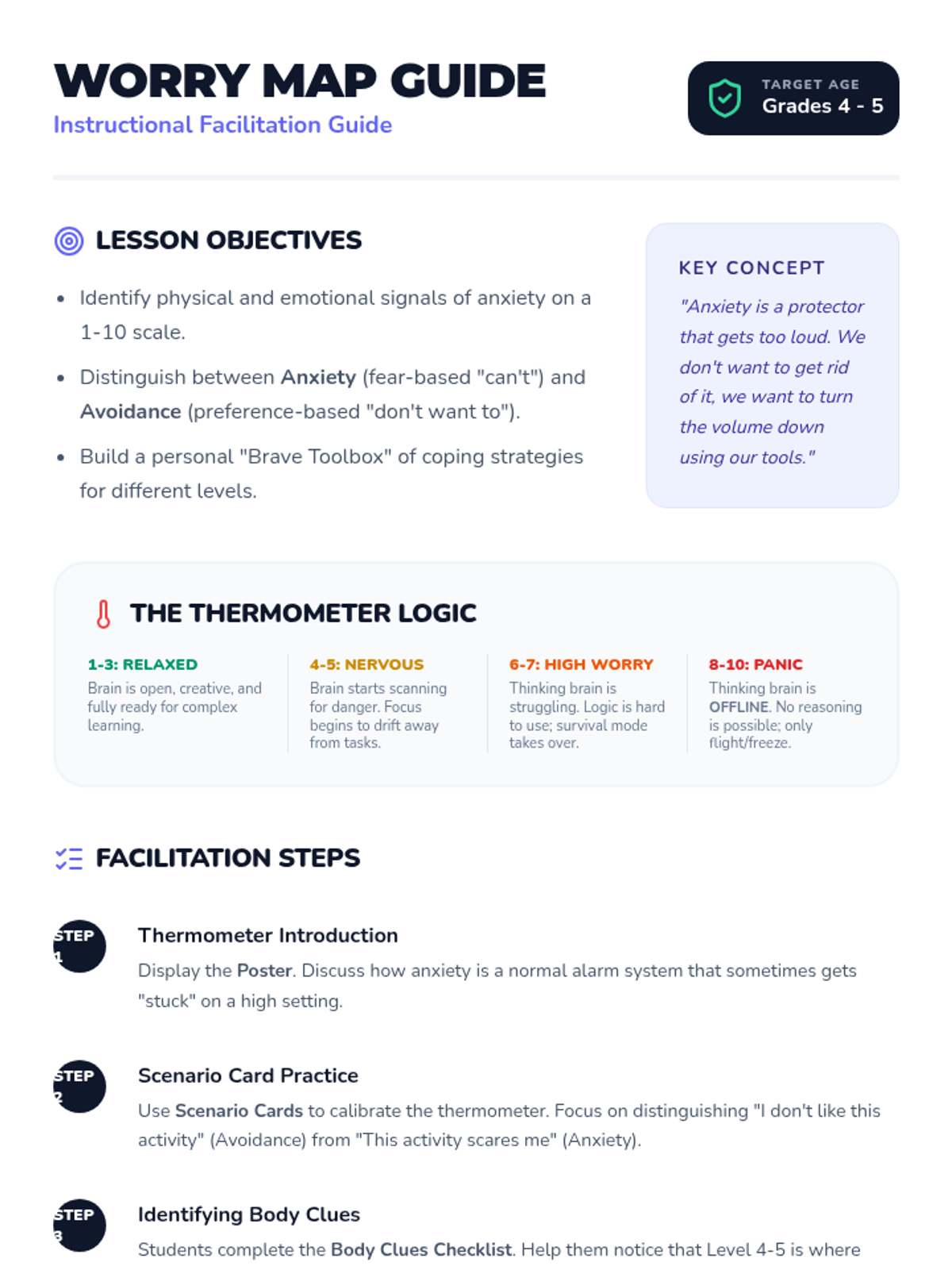
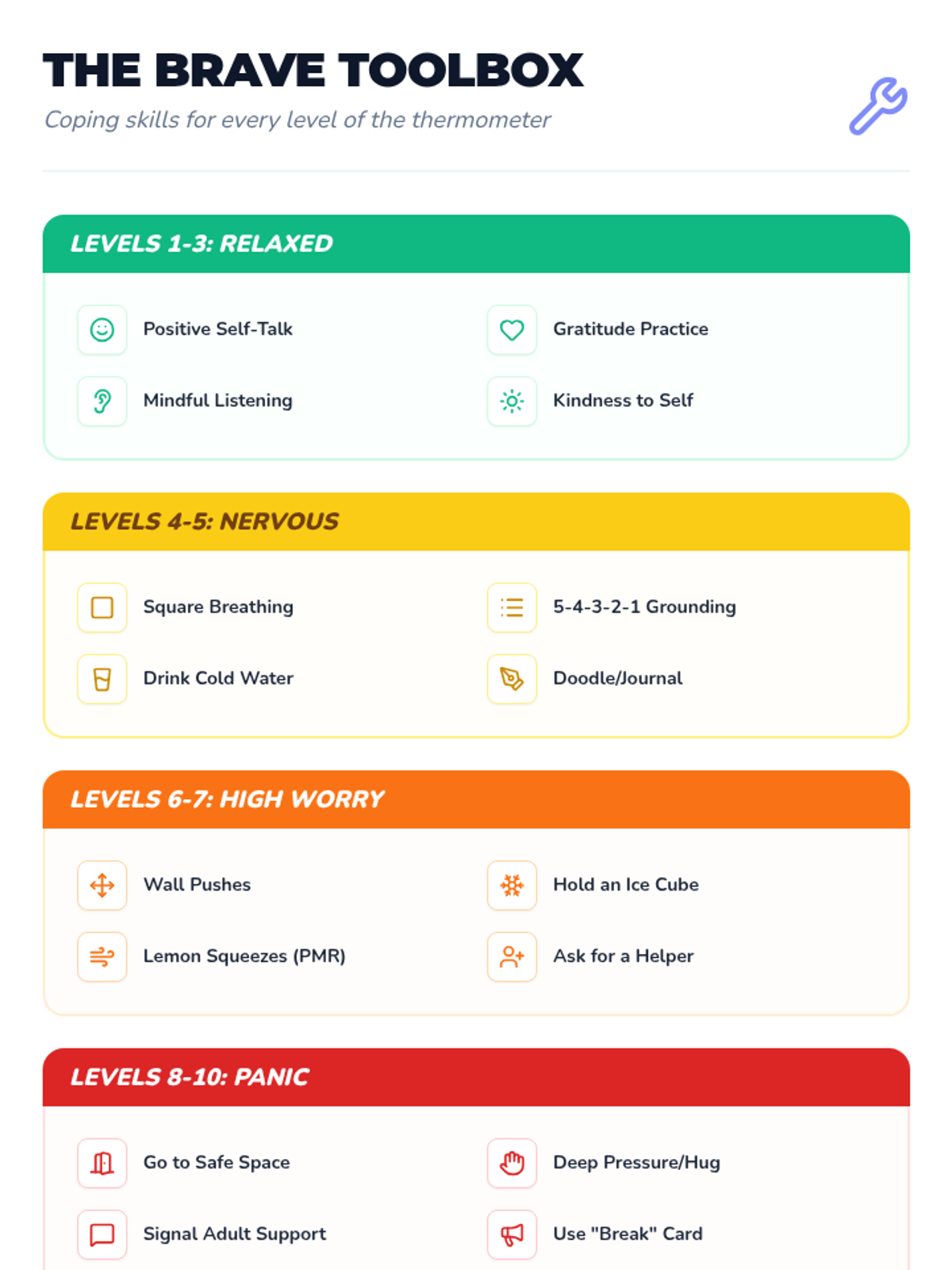
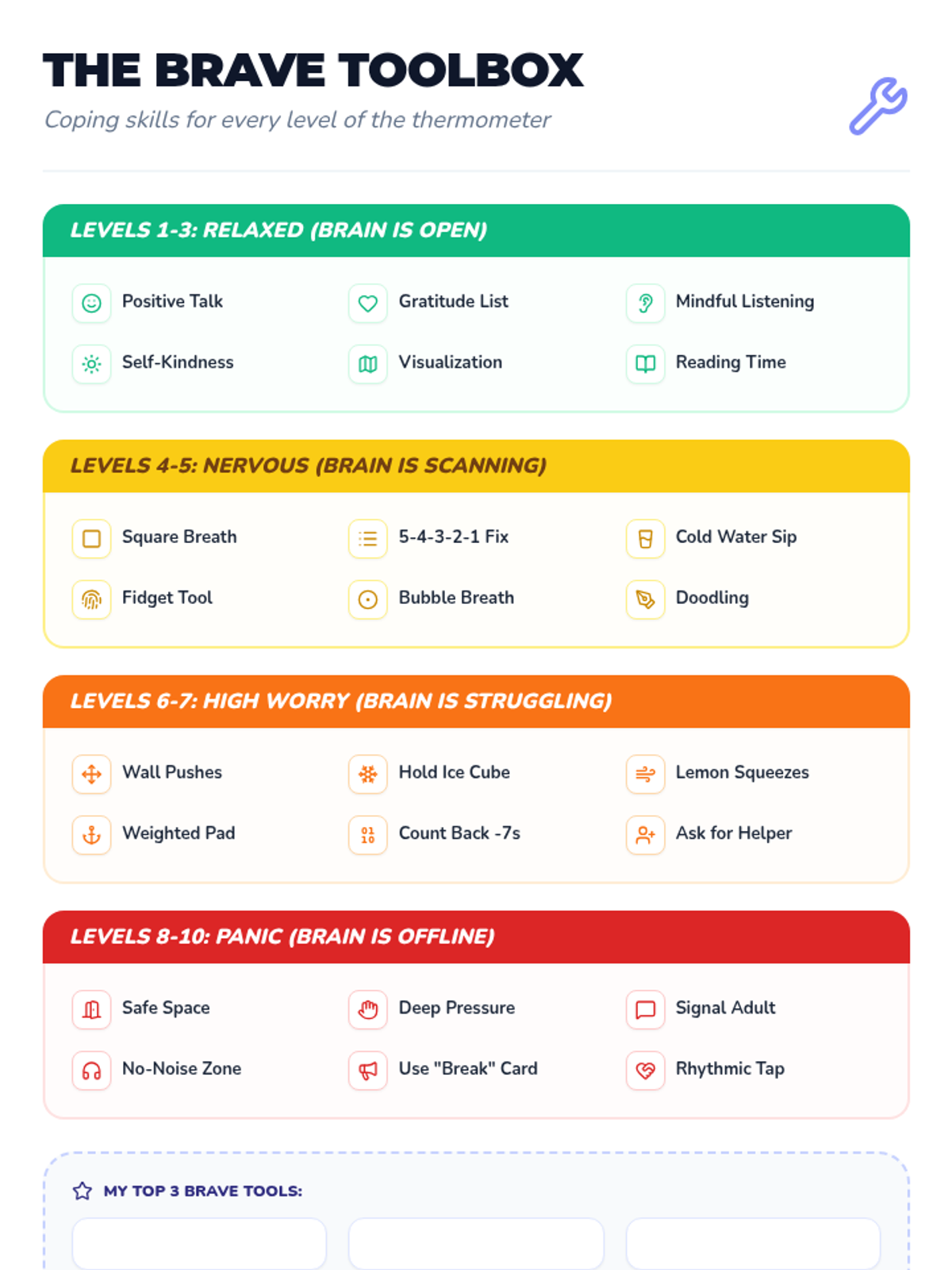
A lesson designed to help students identify and track their anxiety levels using a 10-level thermometer. It includes reflective tools to distinguish between anxiety-driven fear and simple avoidance.
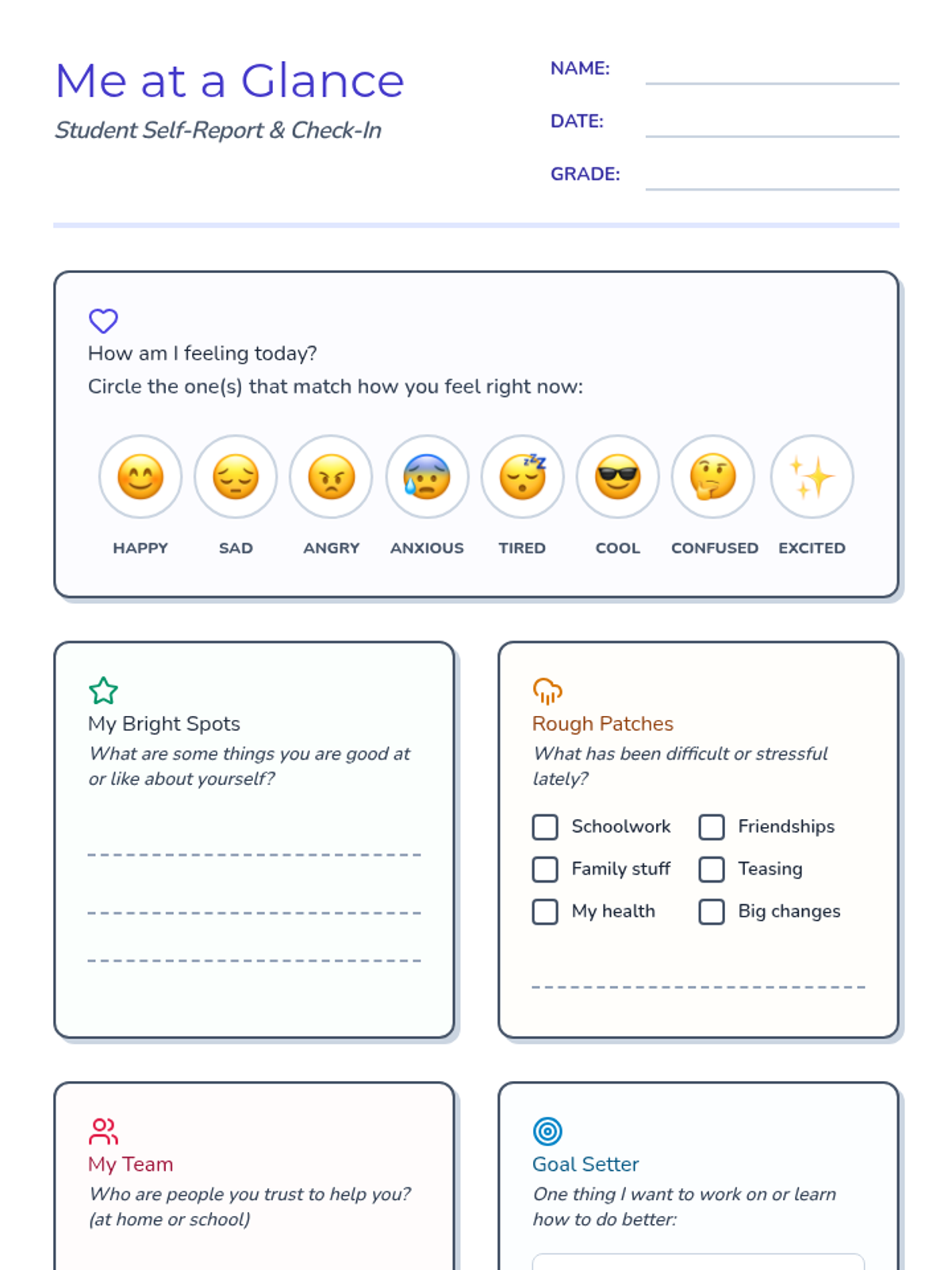
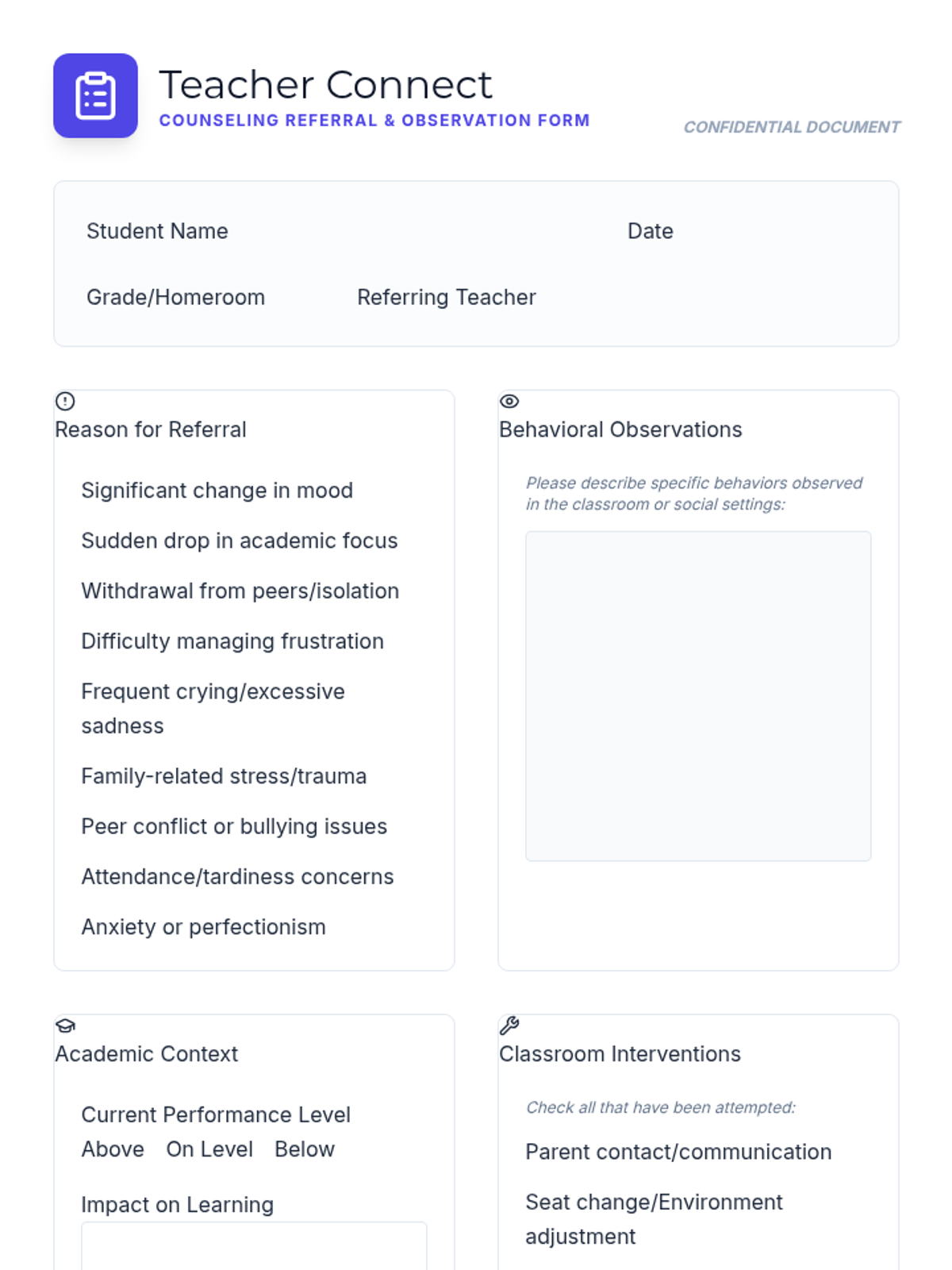
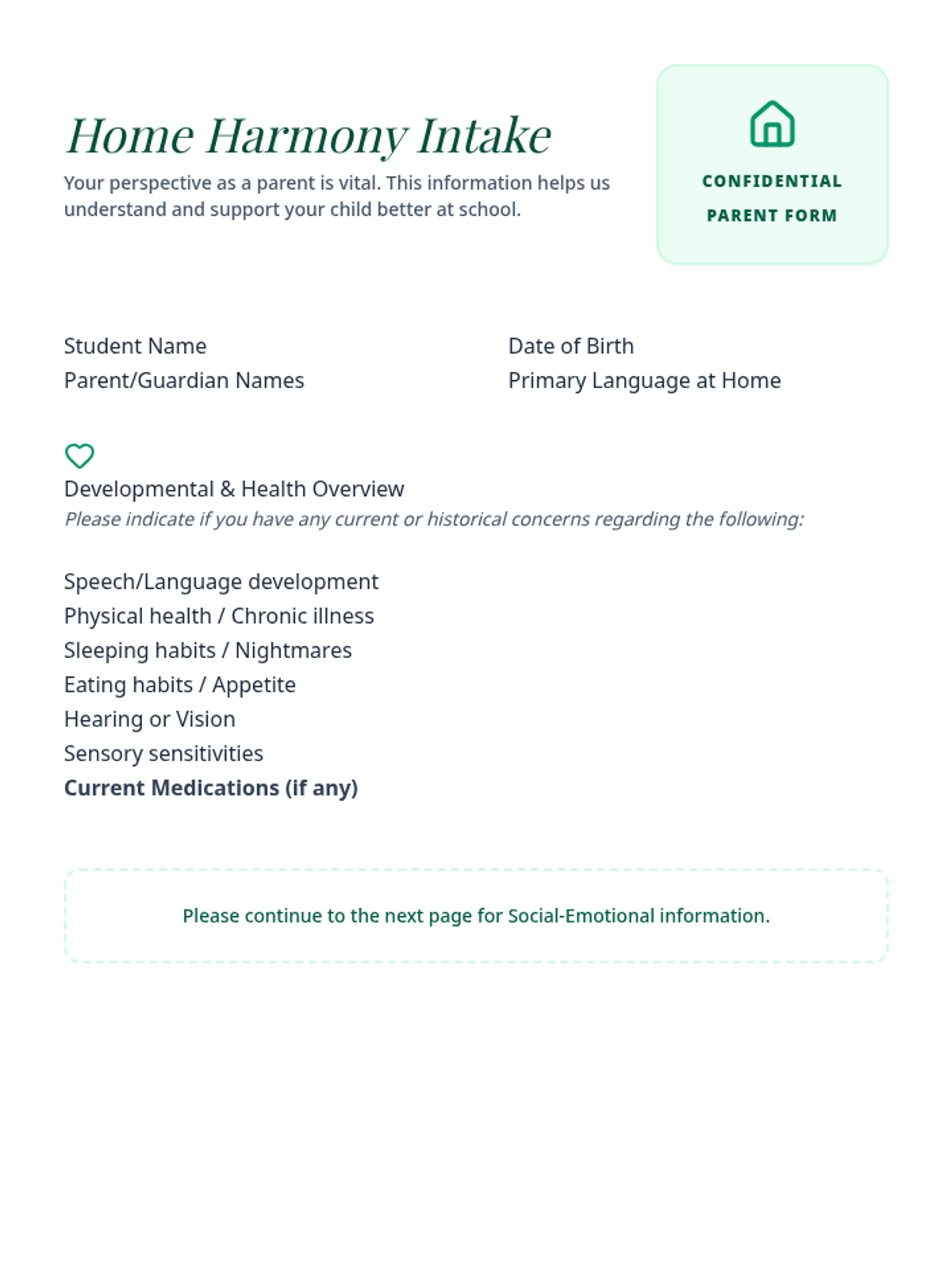
A collection of intake and referral forms for school counseling programs, focused on building a holistic understanding of a student's social-emotional needs through student, teacher, and parent perspectives.
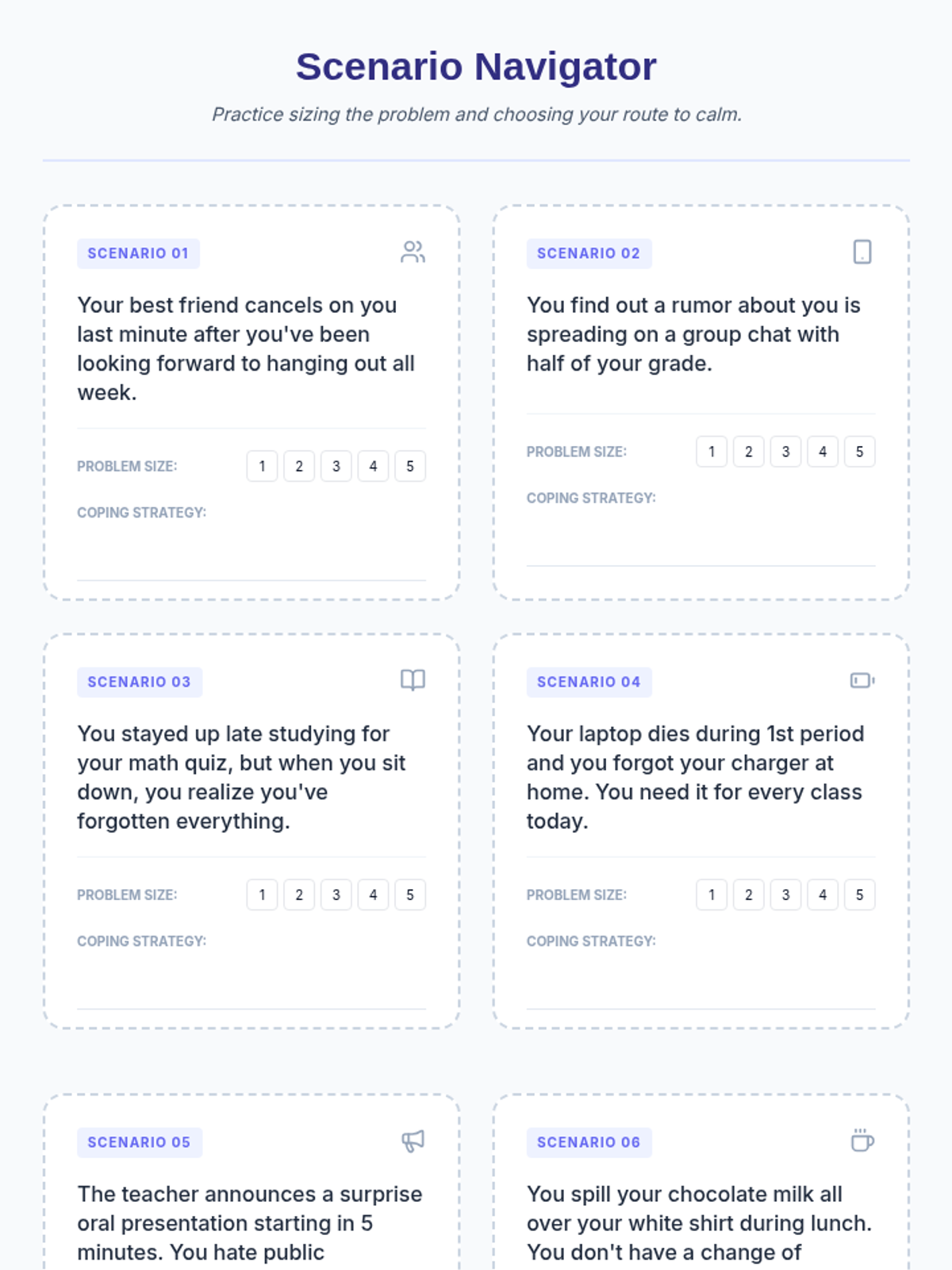
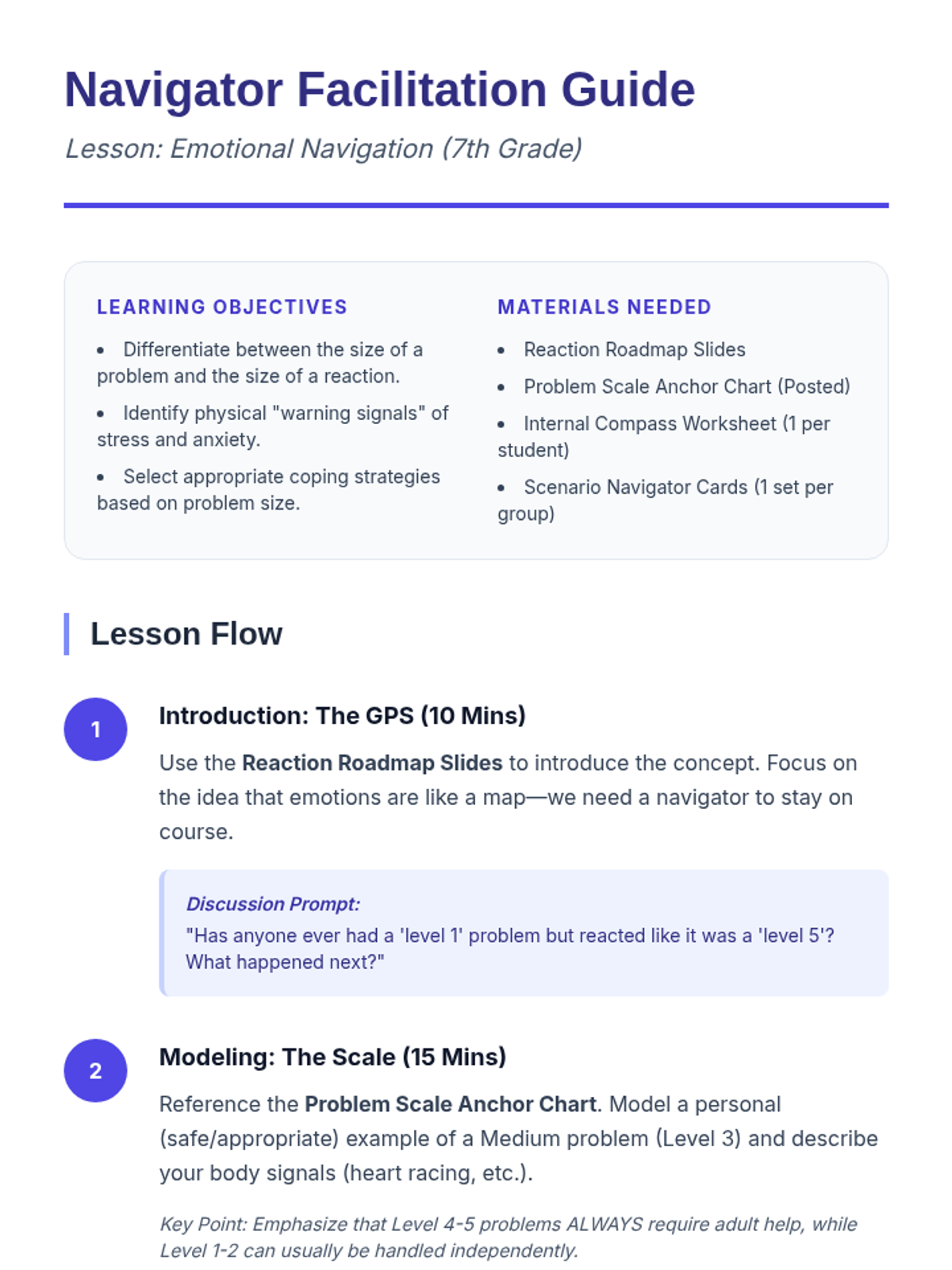
A lesson designed for 7th graders to identify the 'size' of their problems, match their emotional reactions accordingly, and build a toolkit of coping strategies for anxiety and stress.
A comprehensive lesson for mixed-age elementary students to identify the 'size' of different problems using a weather-themed 5-point scale and learn to match their reactions accordingly.
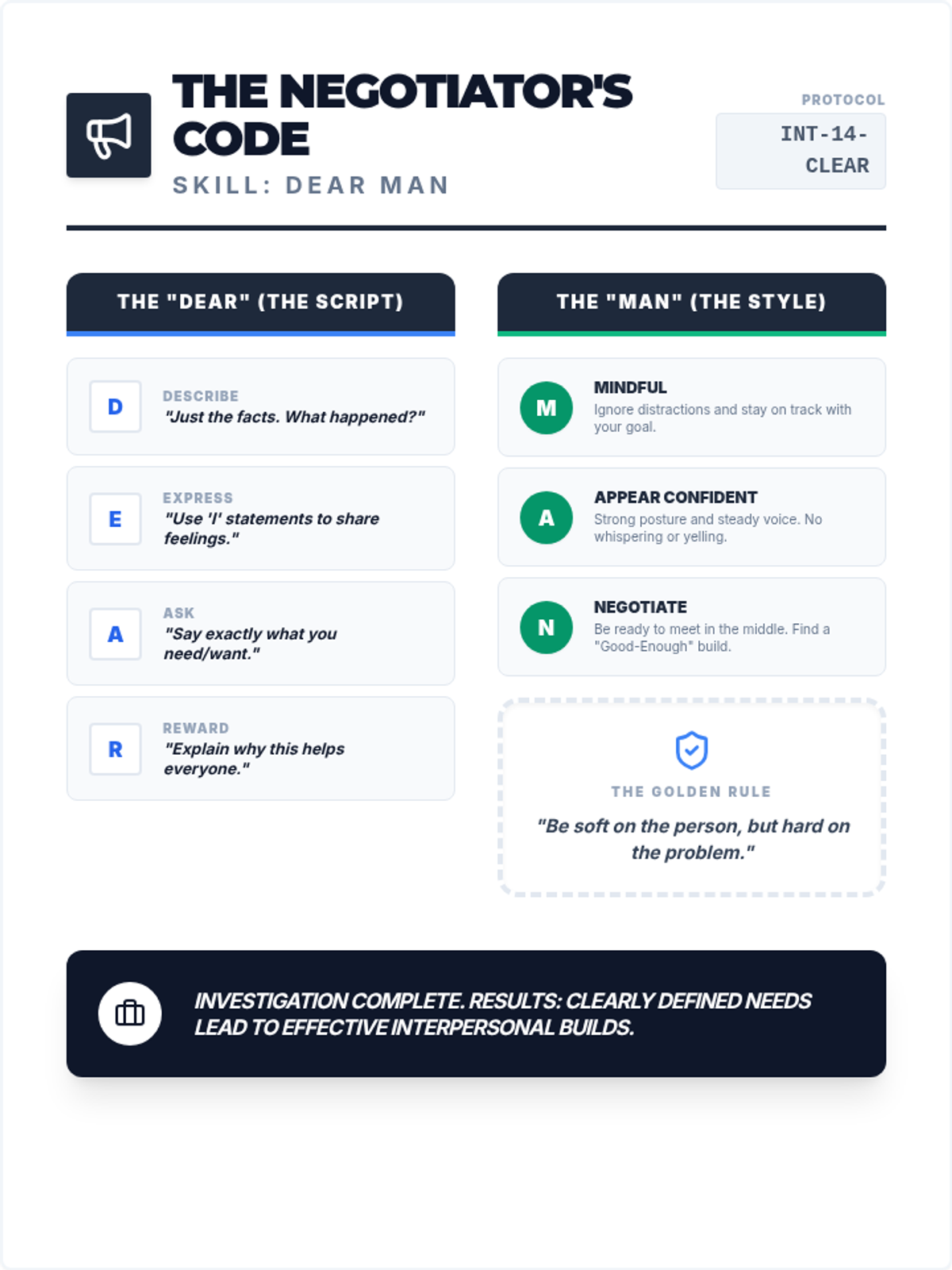
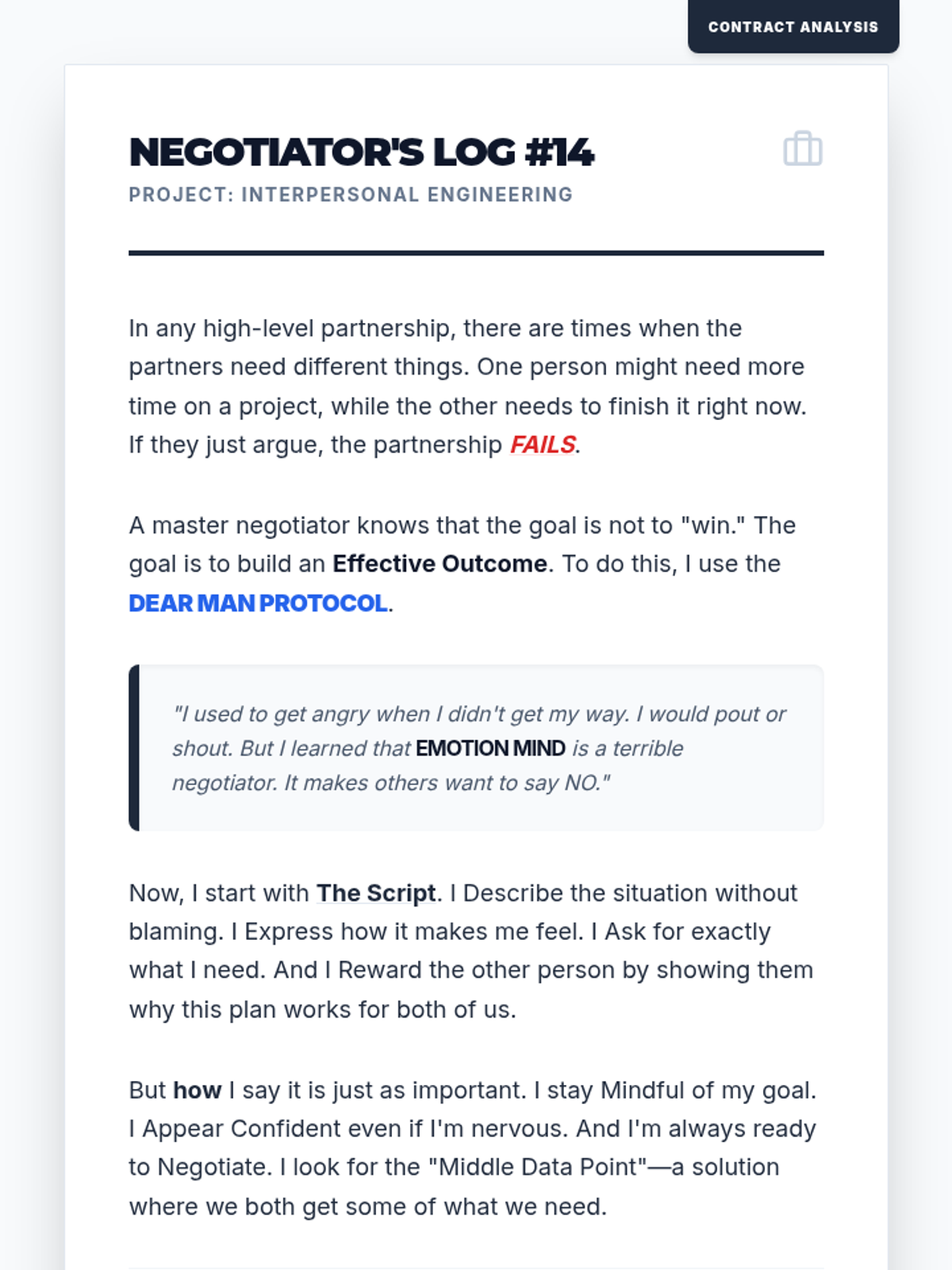
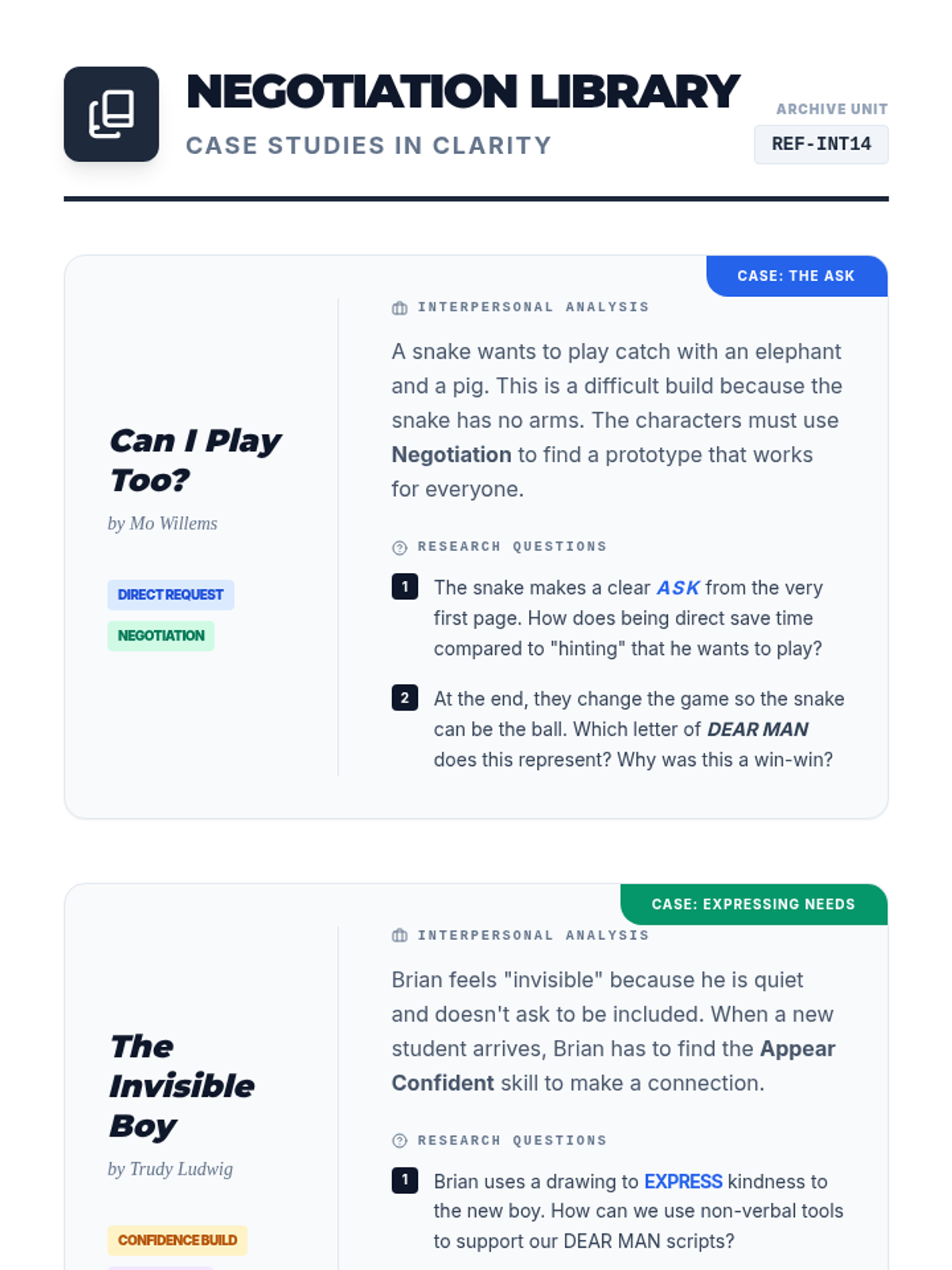
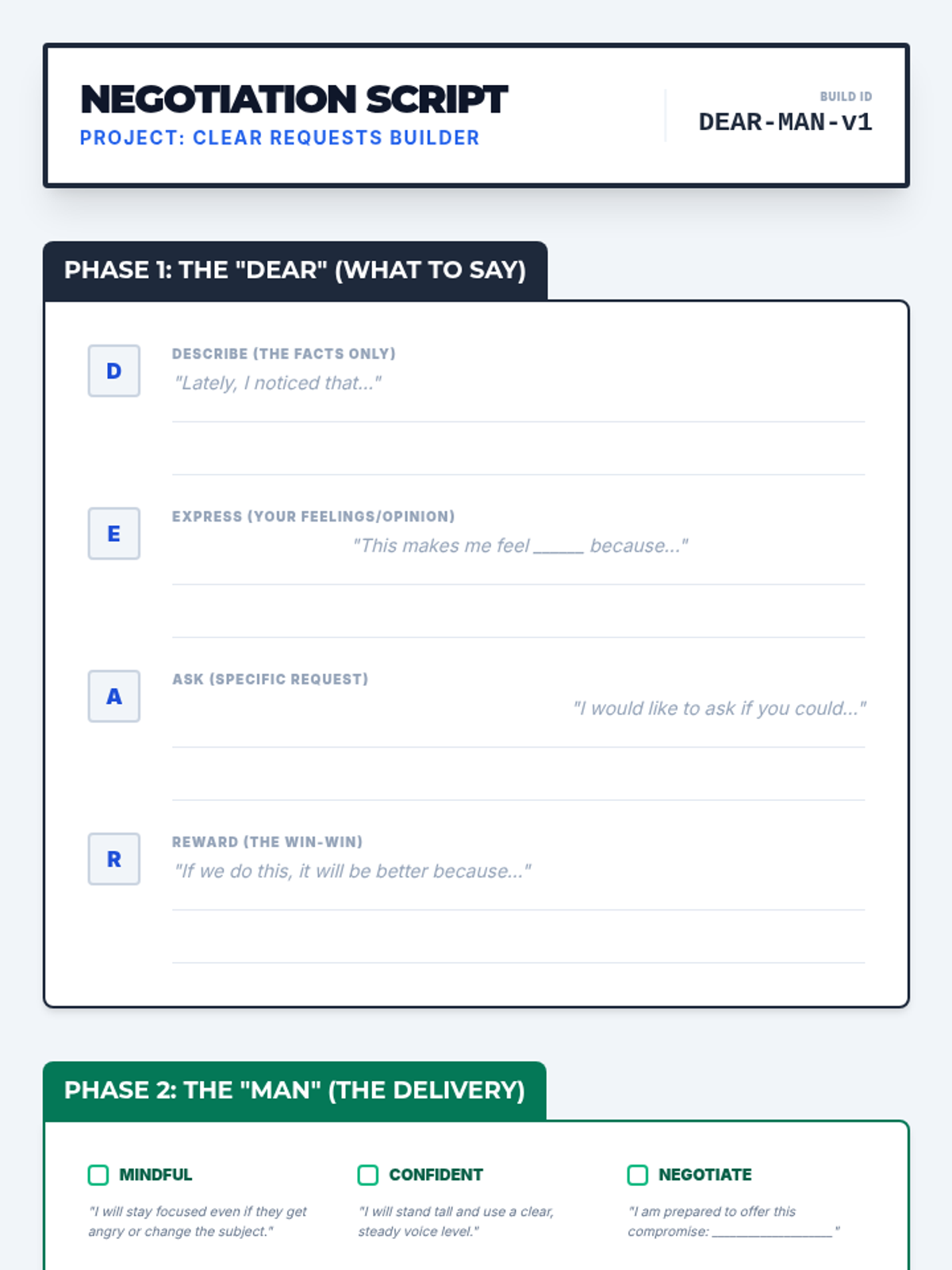
A lesson for grades 3-5 to teach the DEAR MAN skill for effective communication, called 'Clear Requests,' helping students learn how to ask for things or say no while maintaining relationships.
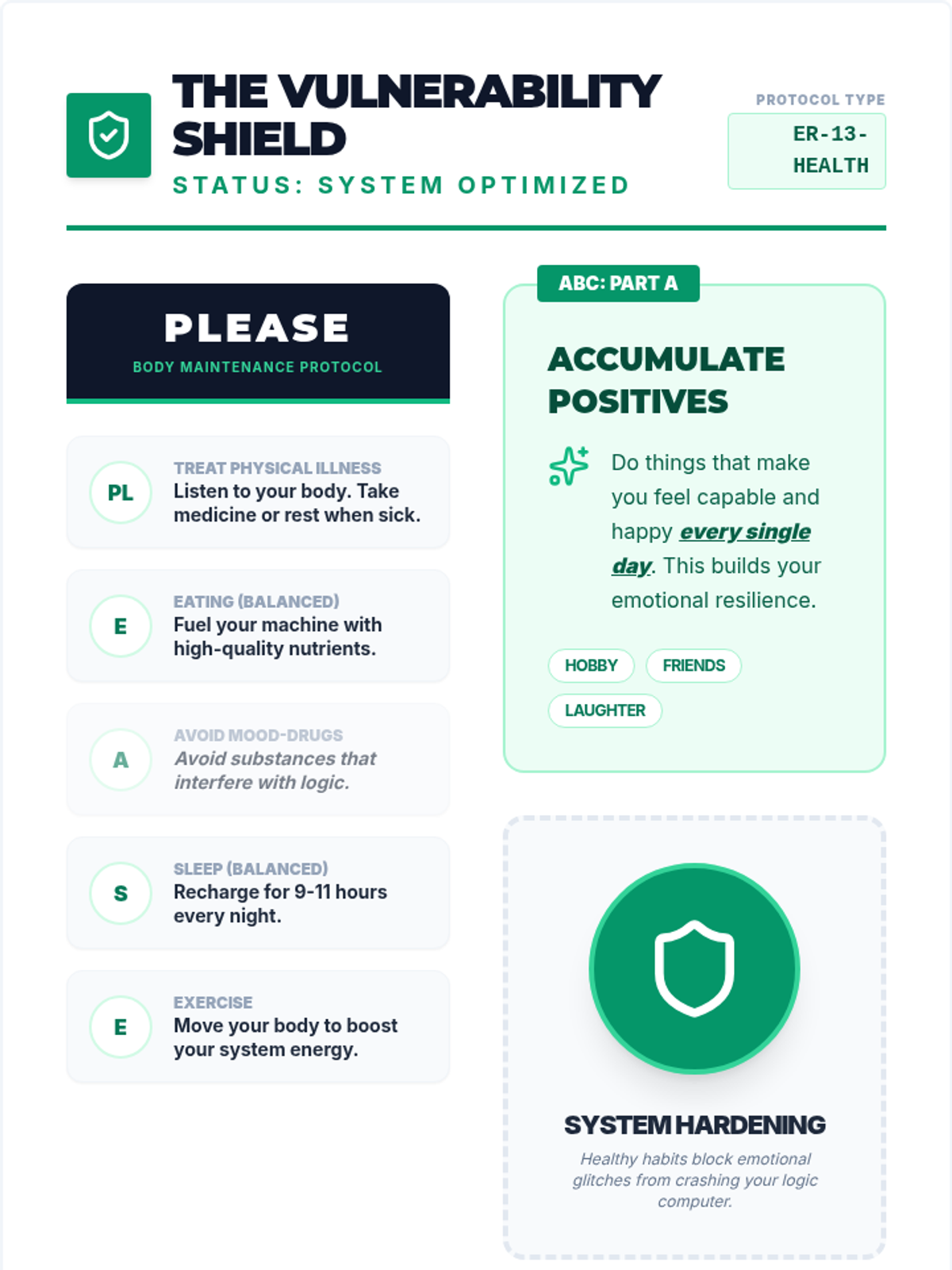
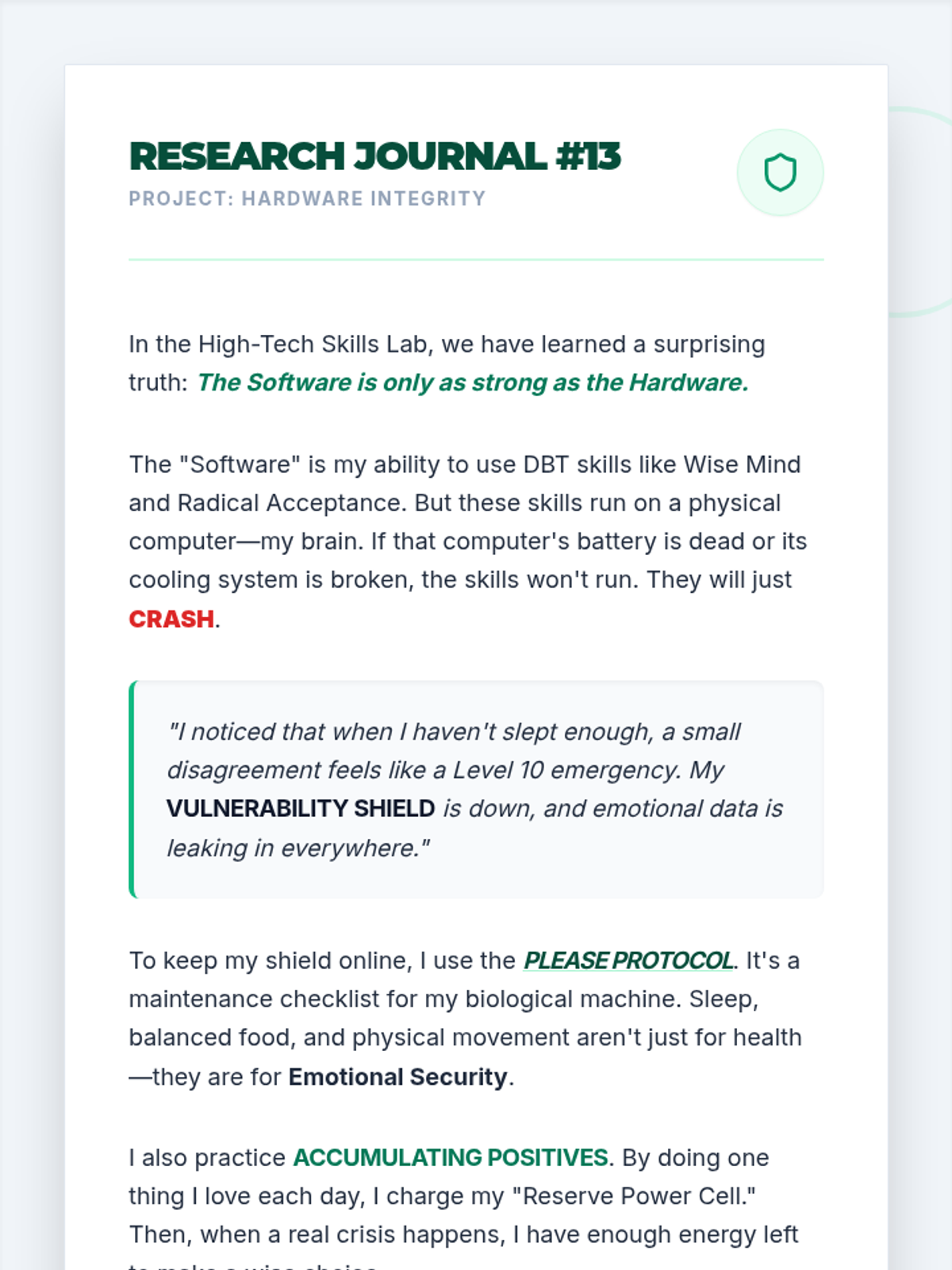
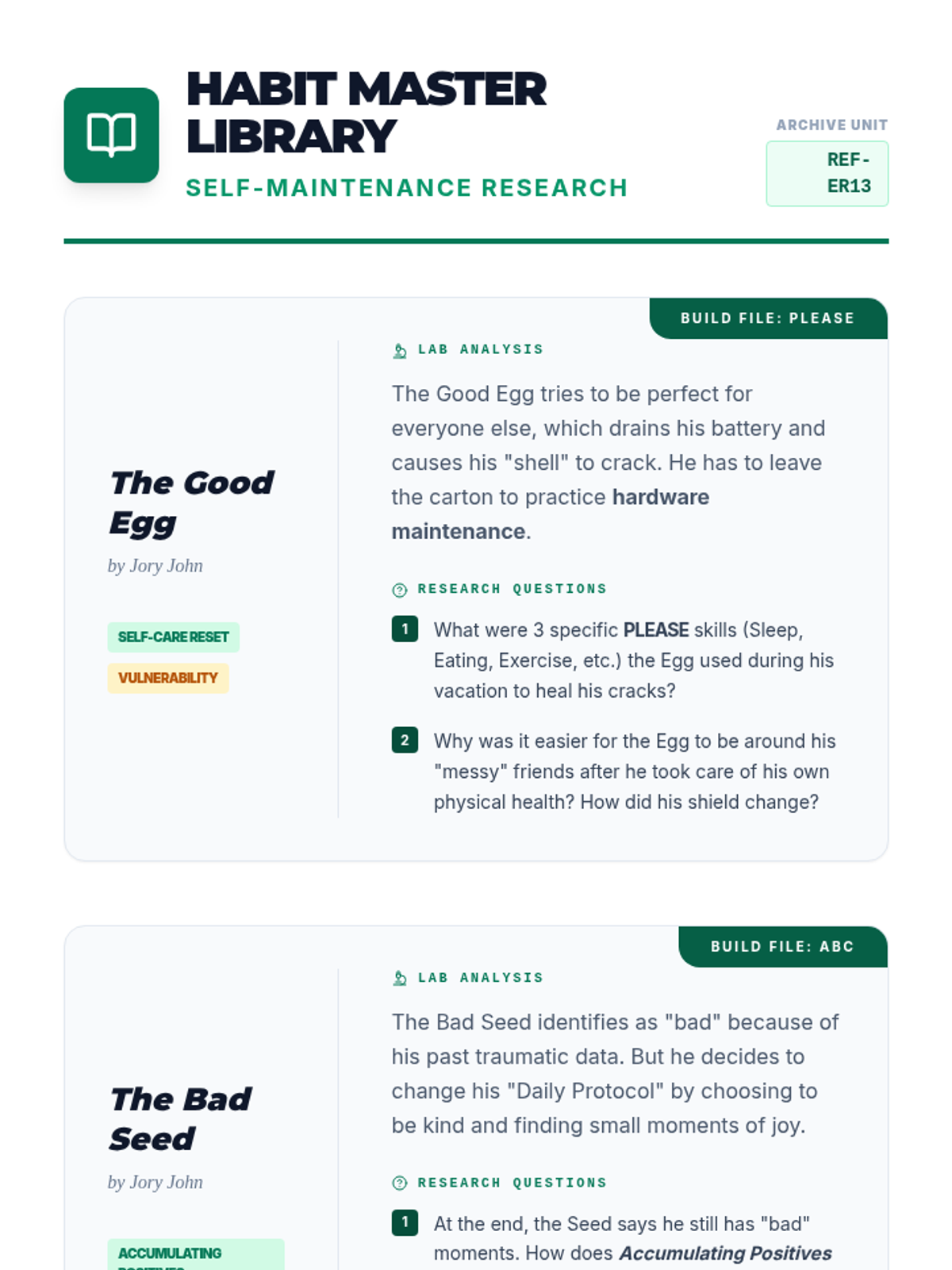
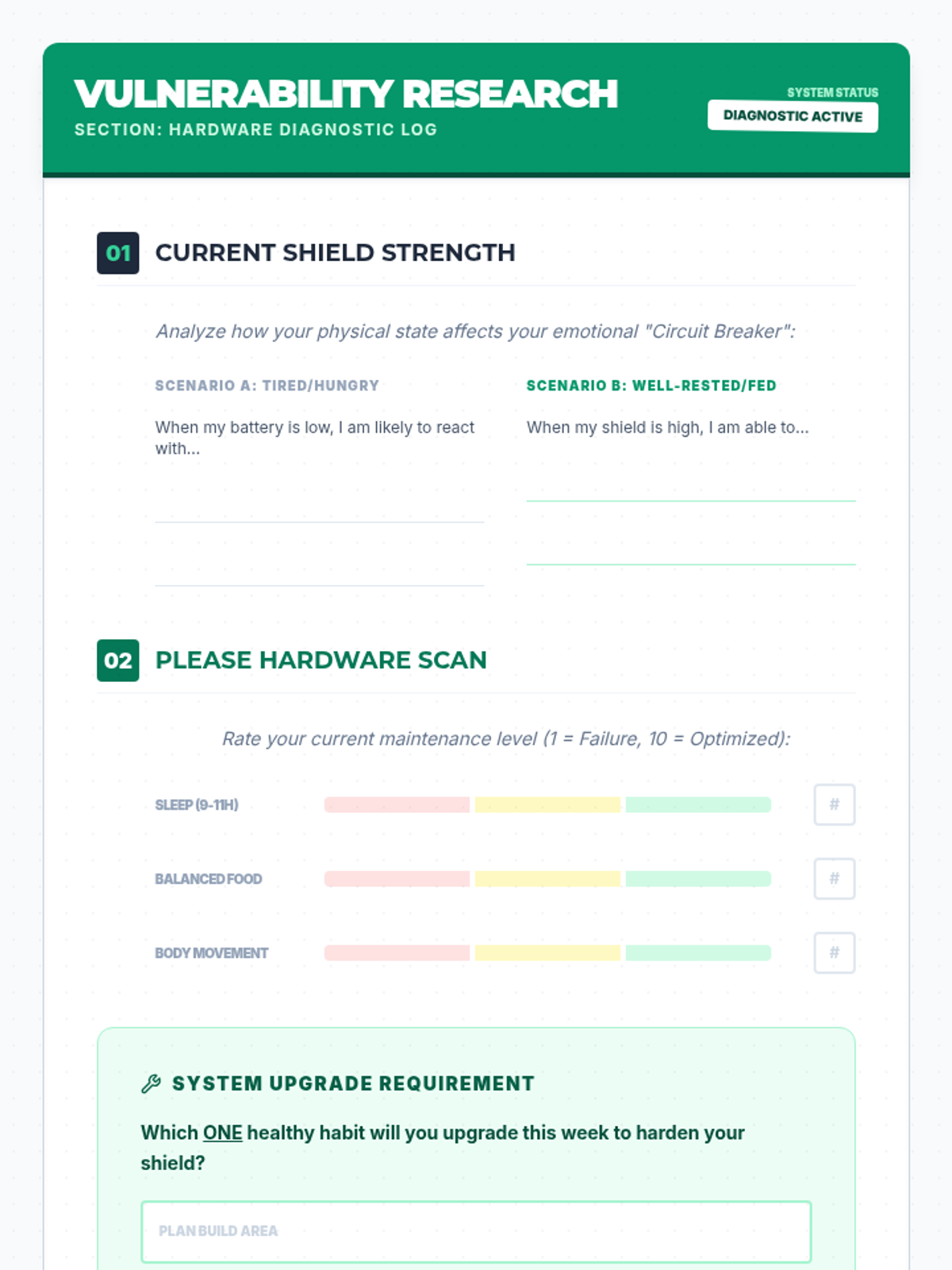
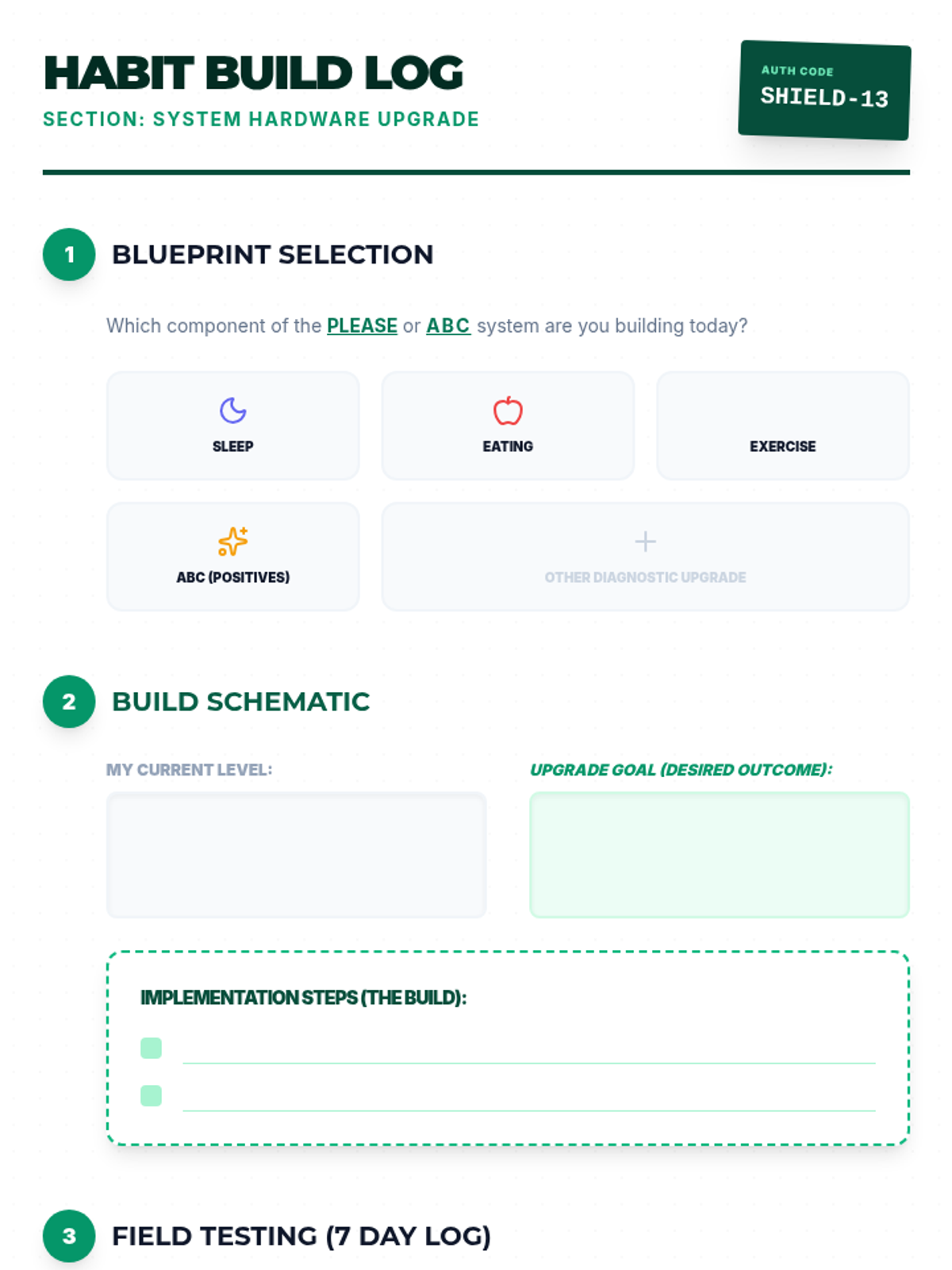
A lesson for grades 3-5 on the 'ABC' and 'PLEASE' skills, called 'Healthy Habits,' focusing on building a life that reduces emotional vulnerability through accumulation of positive events and physical health.
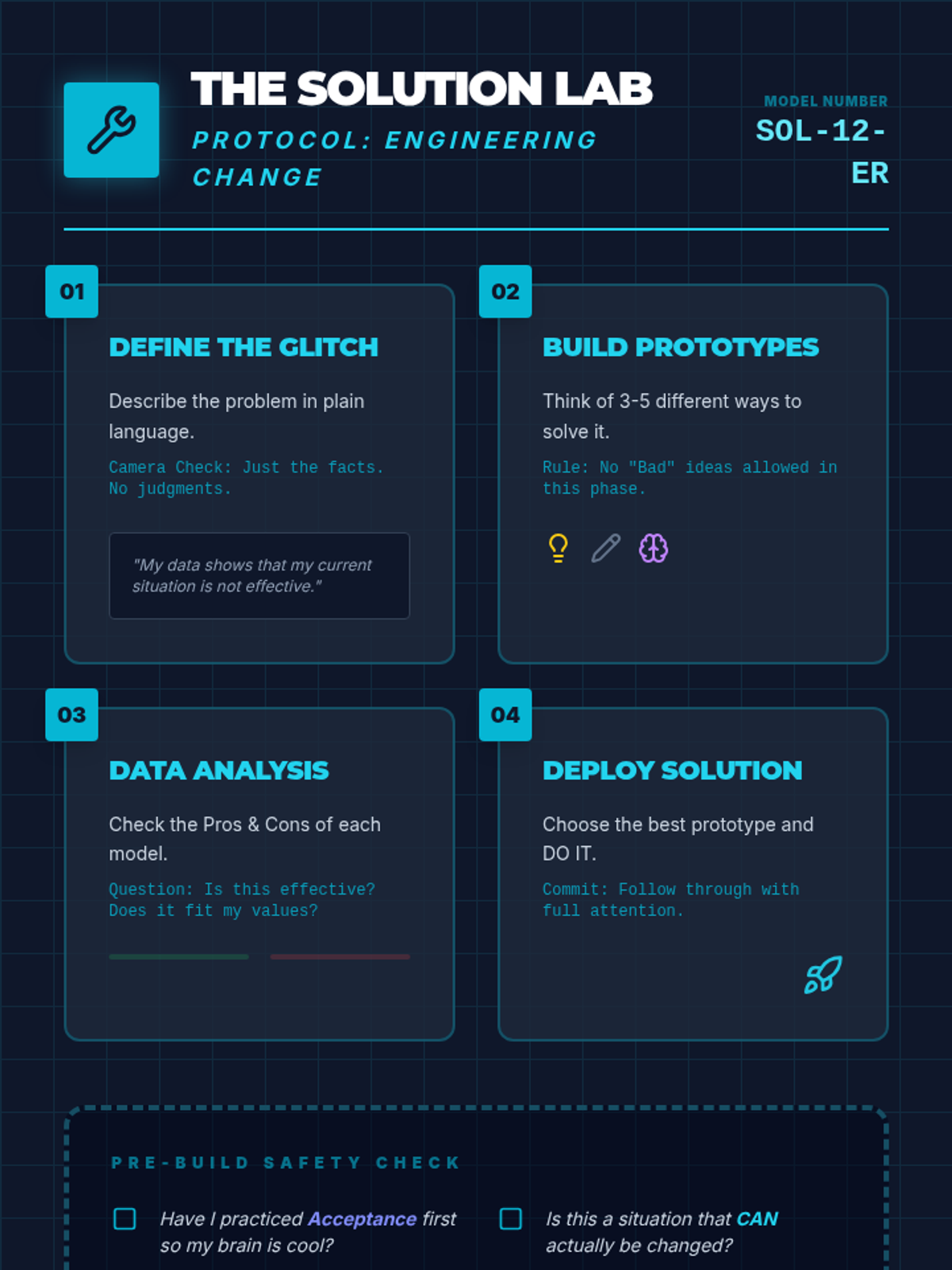
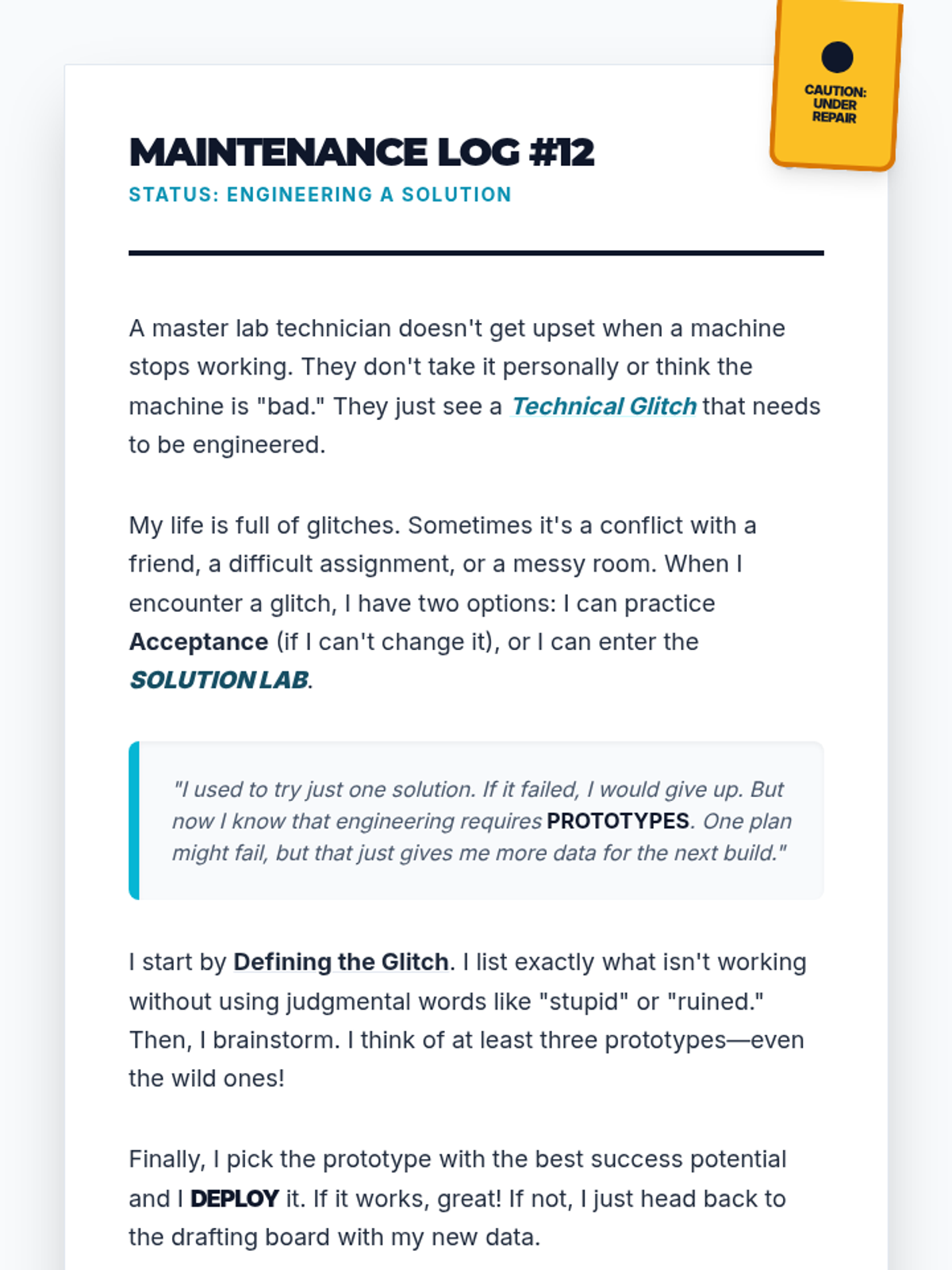
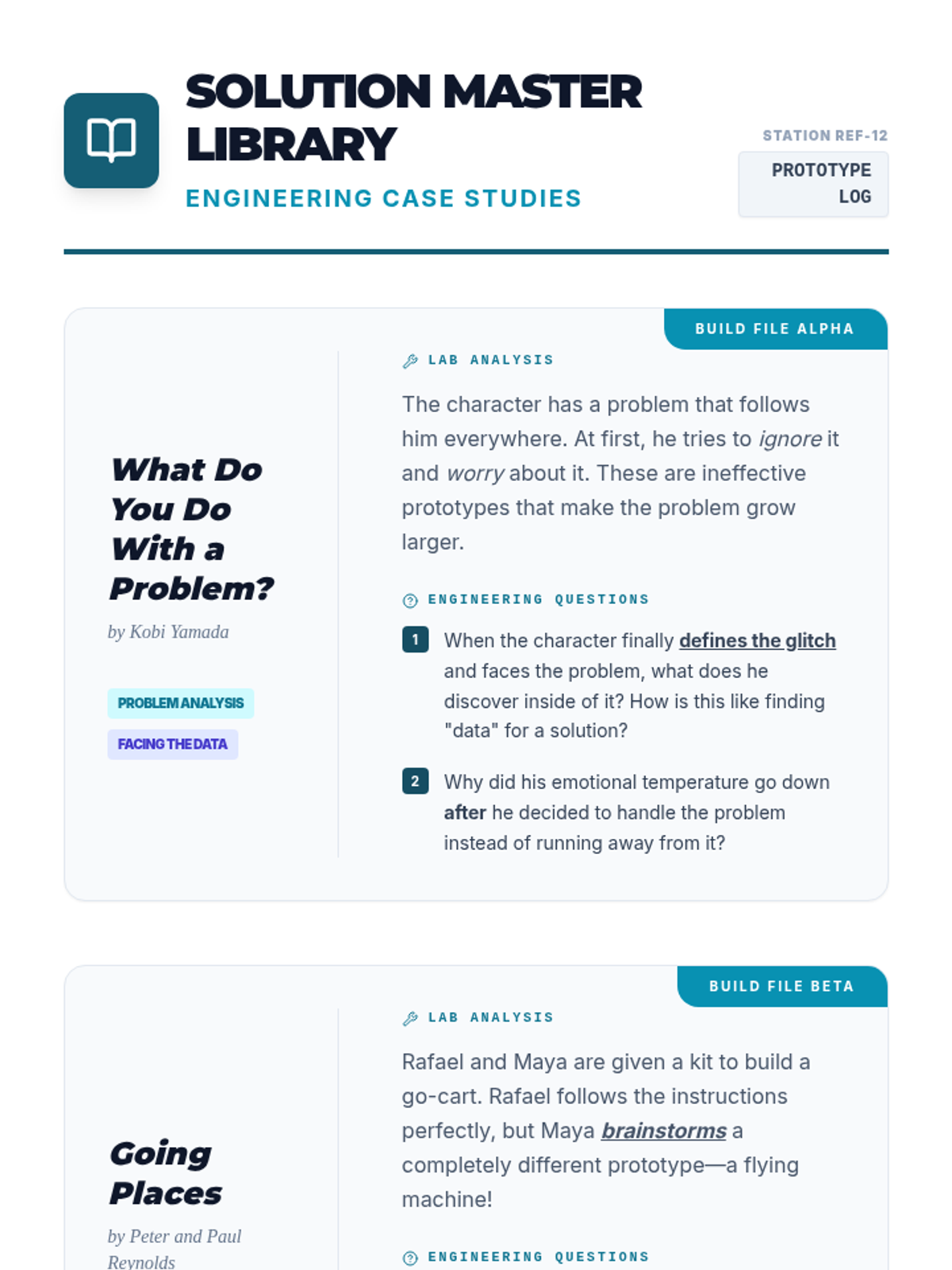
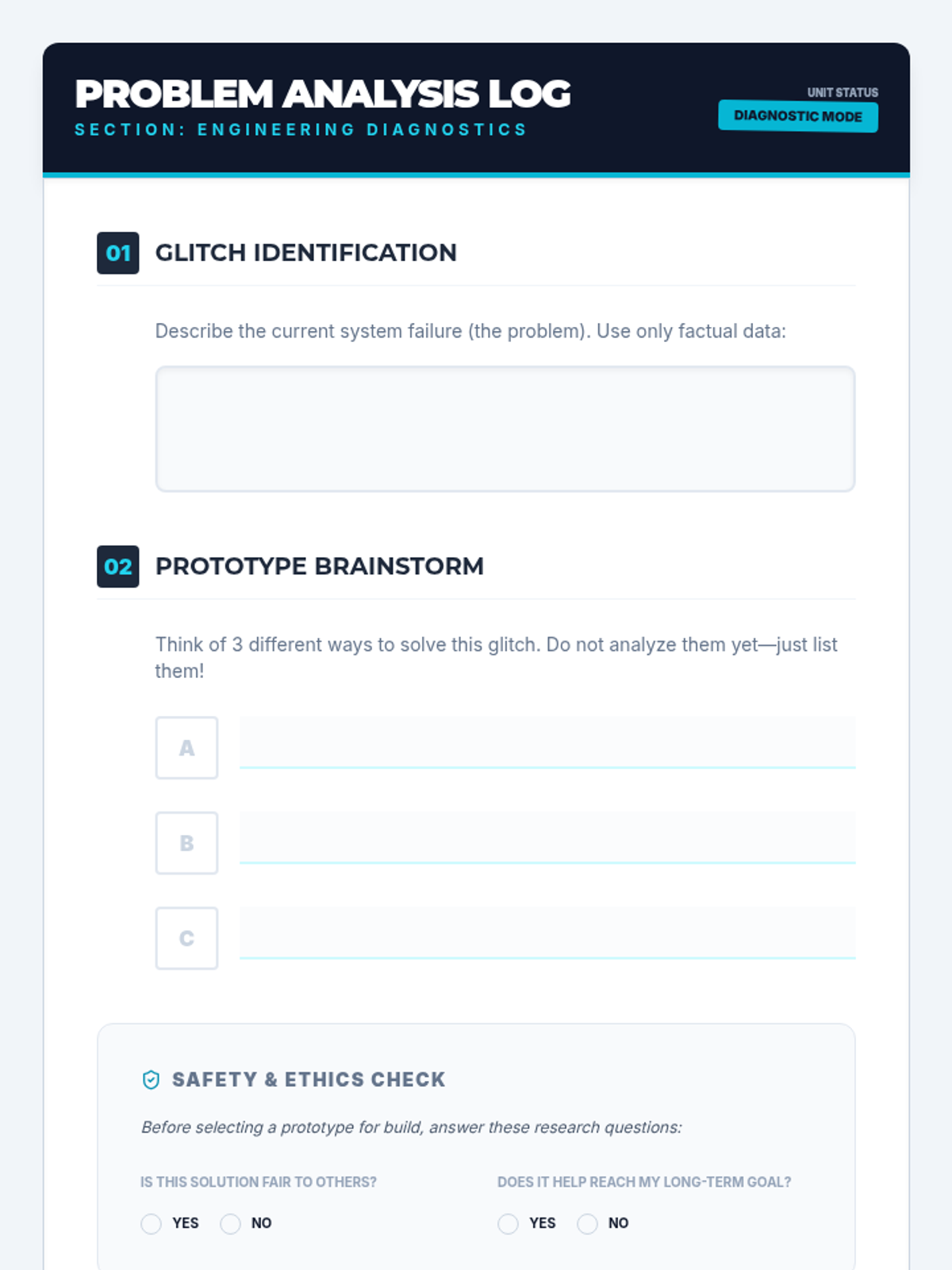
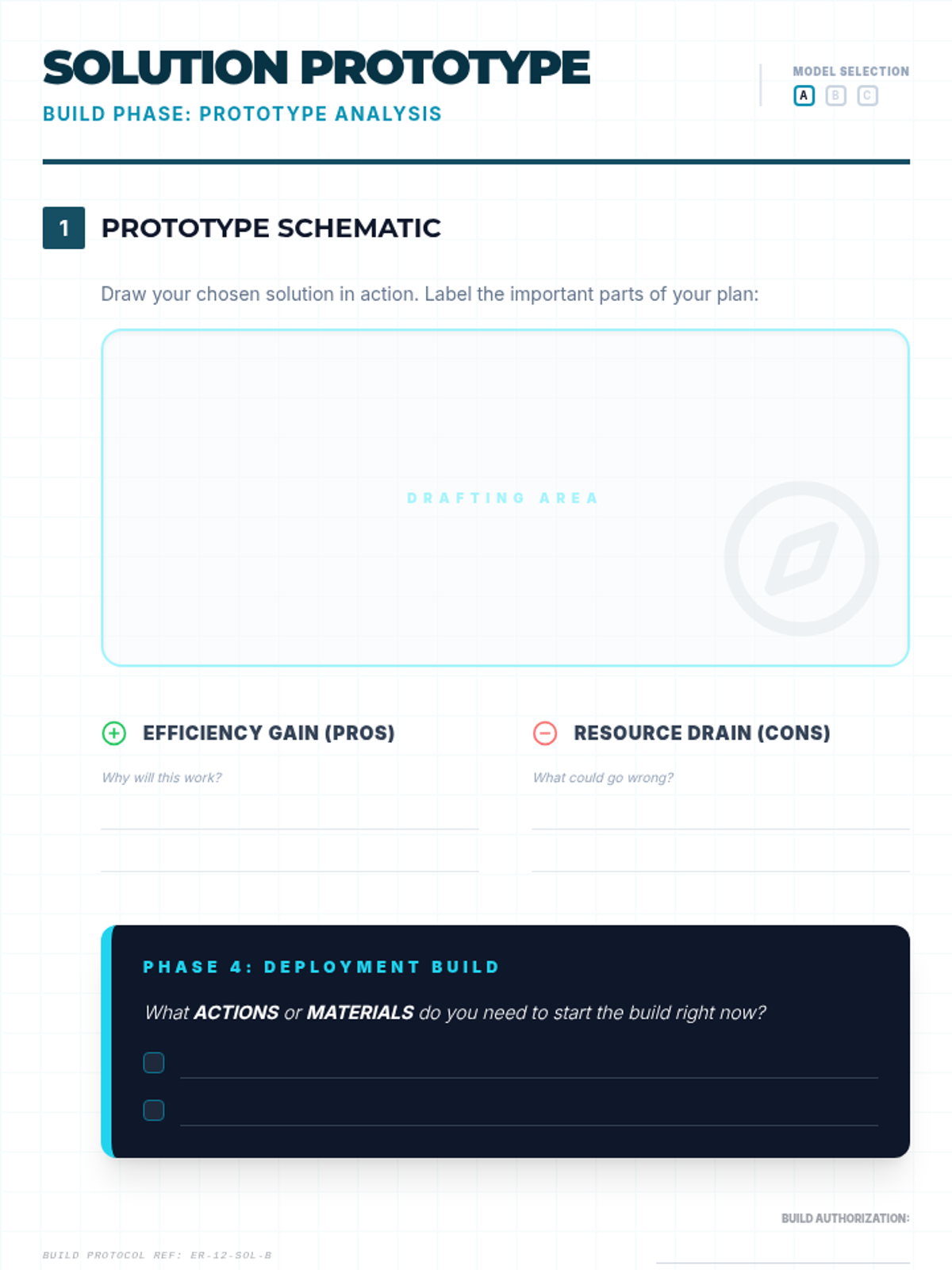
A lesson for grades 3-5 focused on Problem Solving, using the 'Solution Lab' metaphor to teach a step-by-step approach to resolving situations that can be changed.
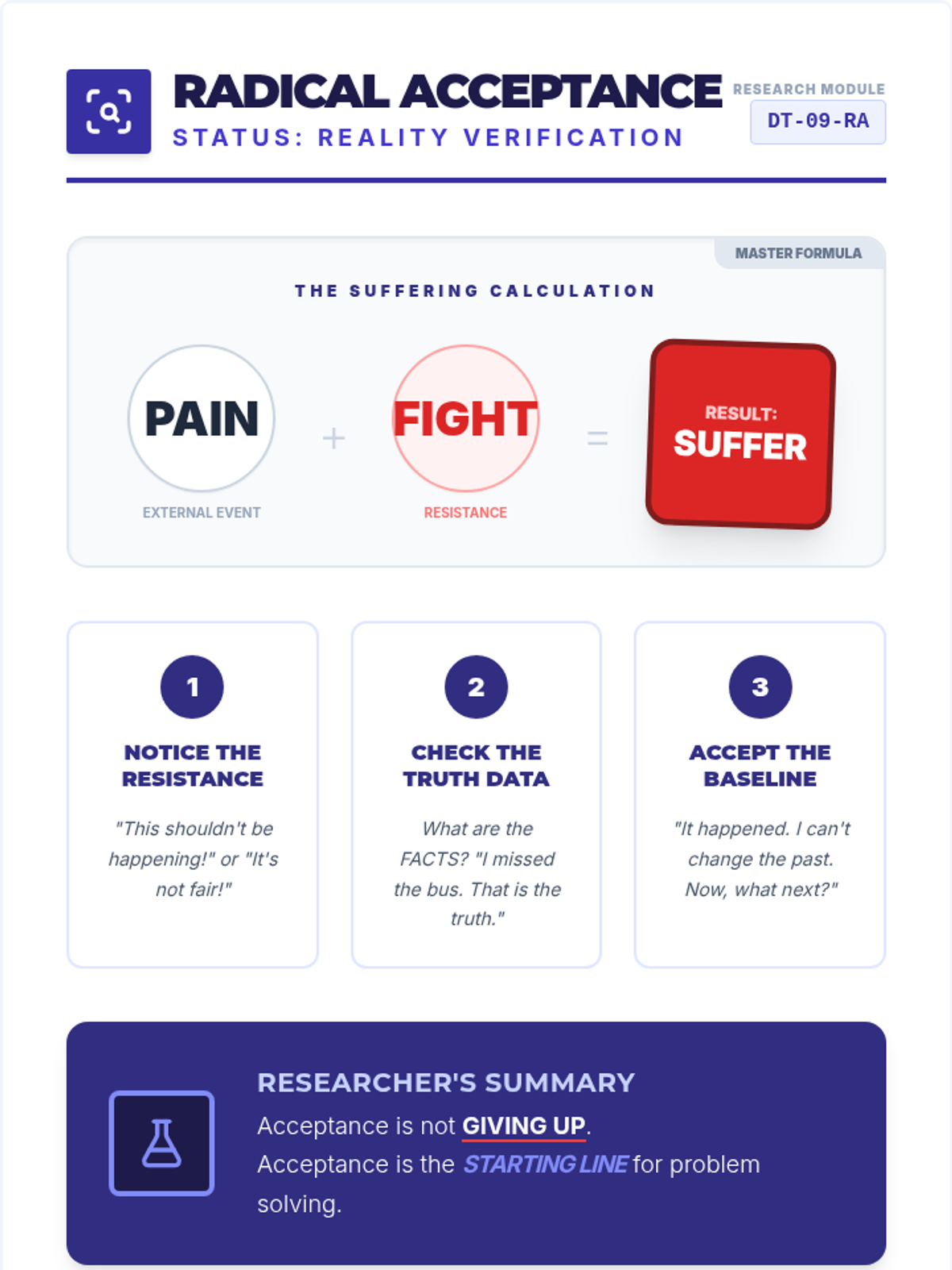
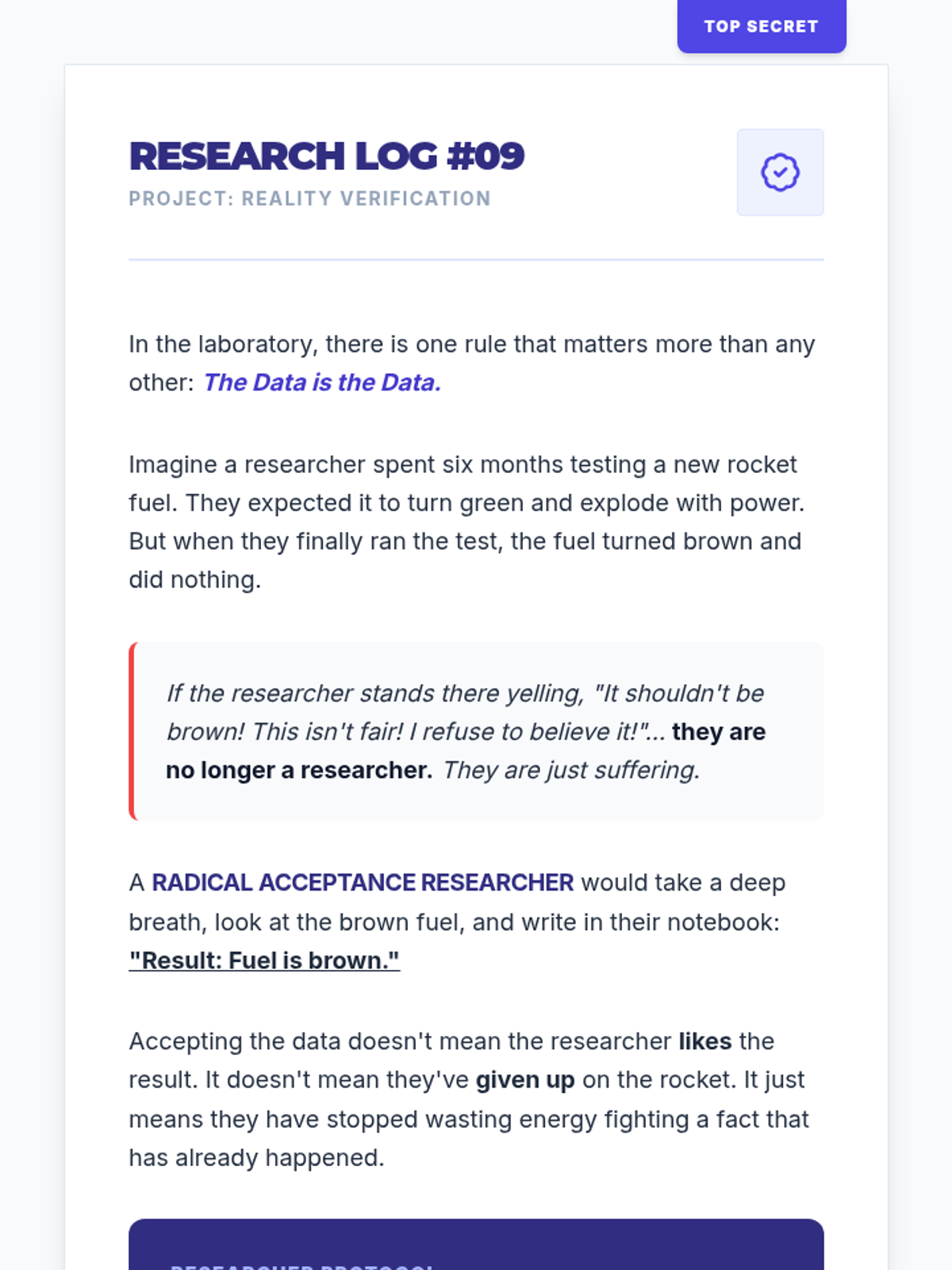
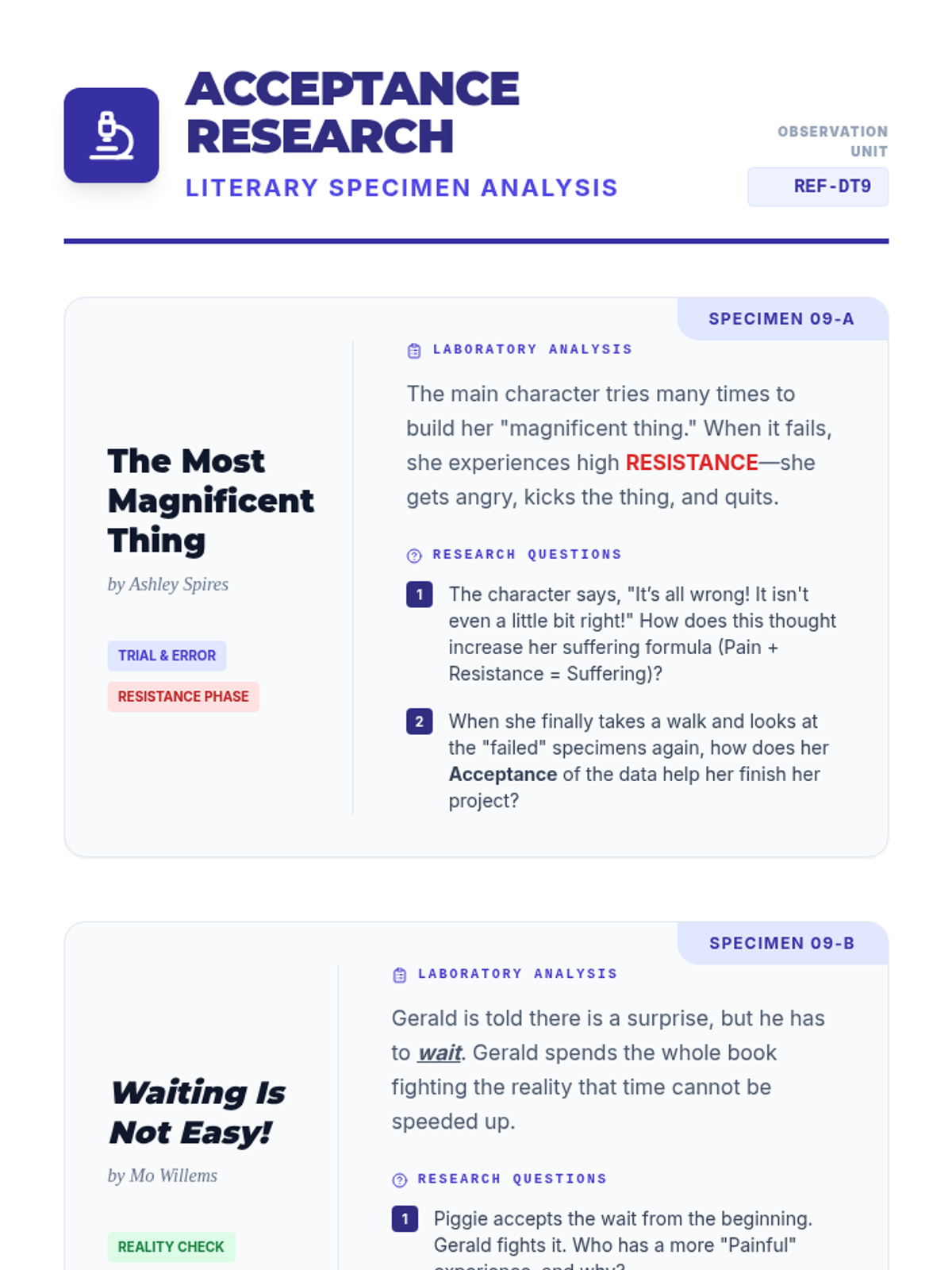
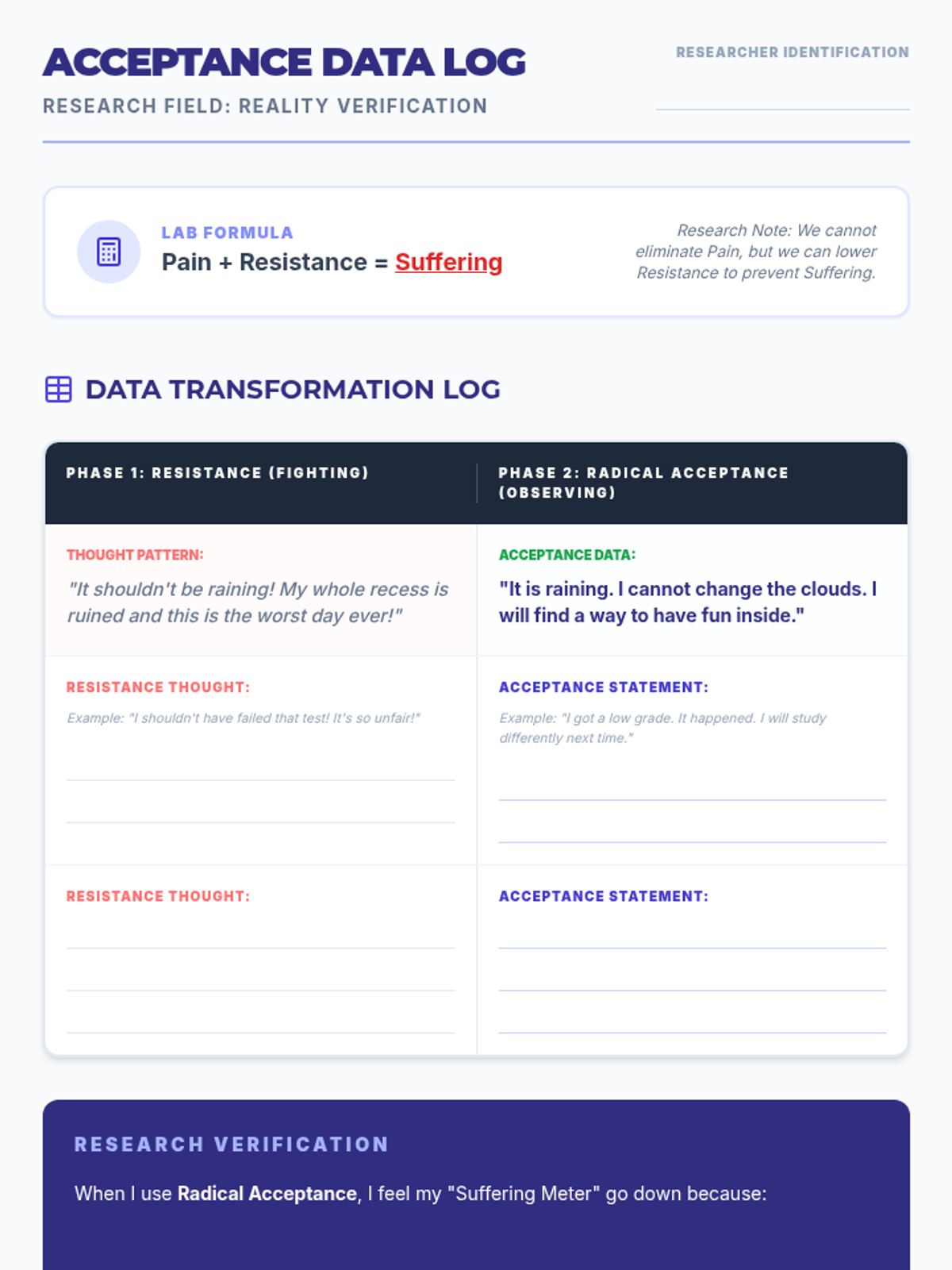
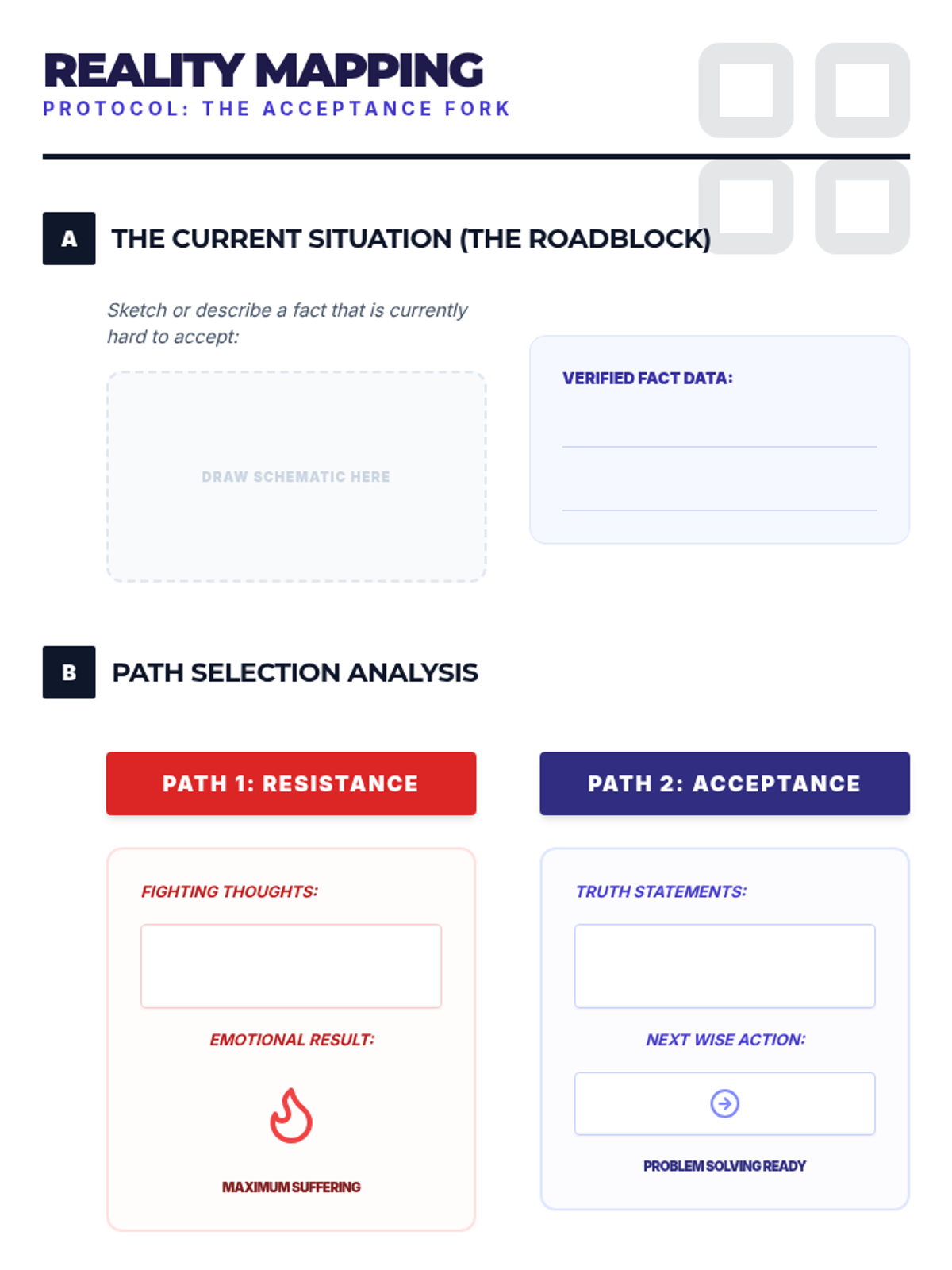
A lesson for grades 3-5 focused on the concept of Radical Acceptance, called the 'Acceptance Lab,' where students learn to accept reality as it is to reduce suffering and move toward problem-solving.
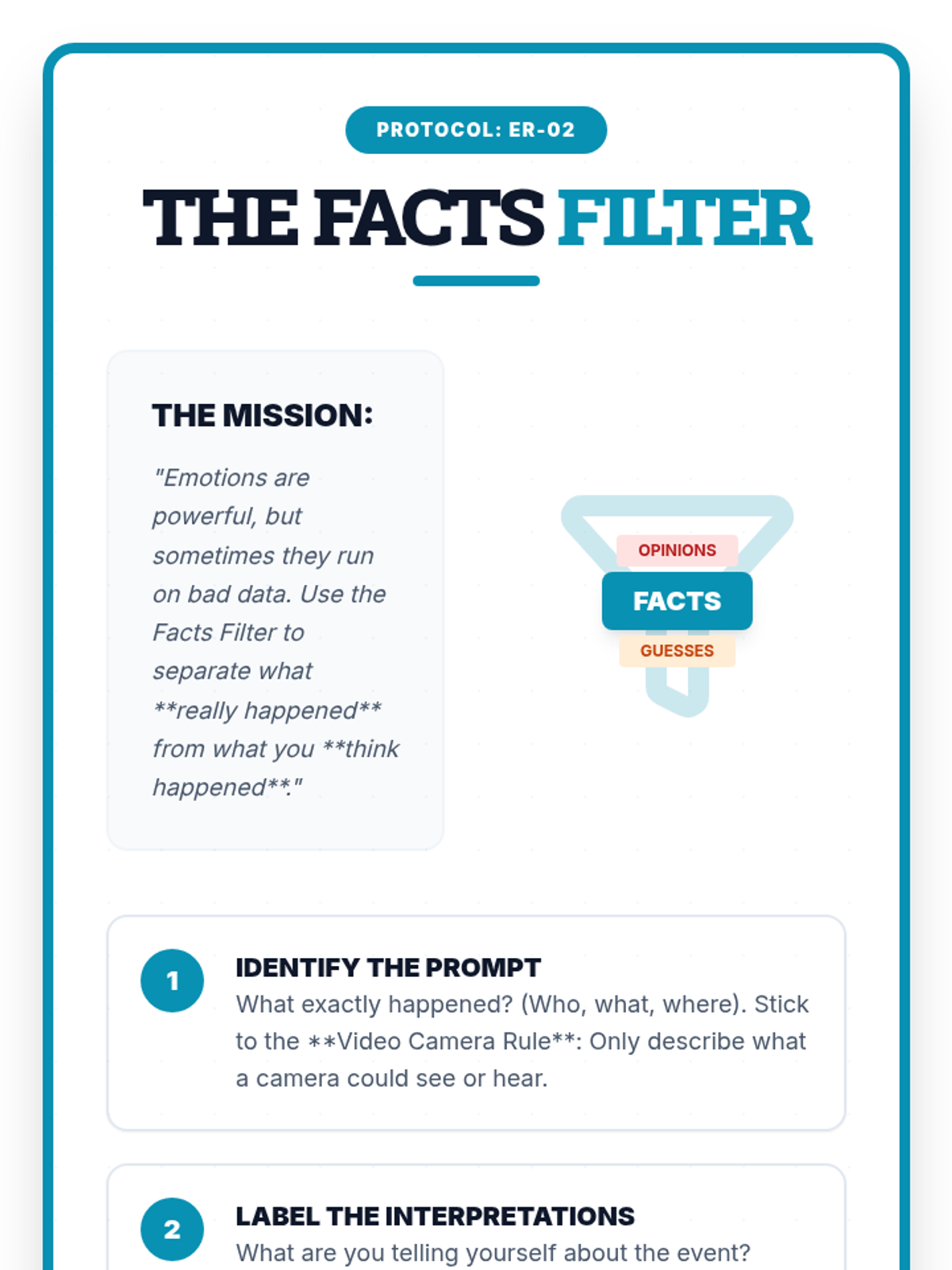
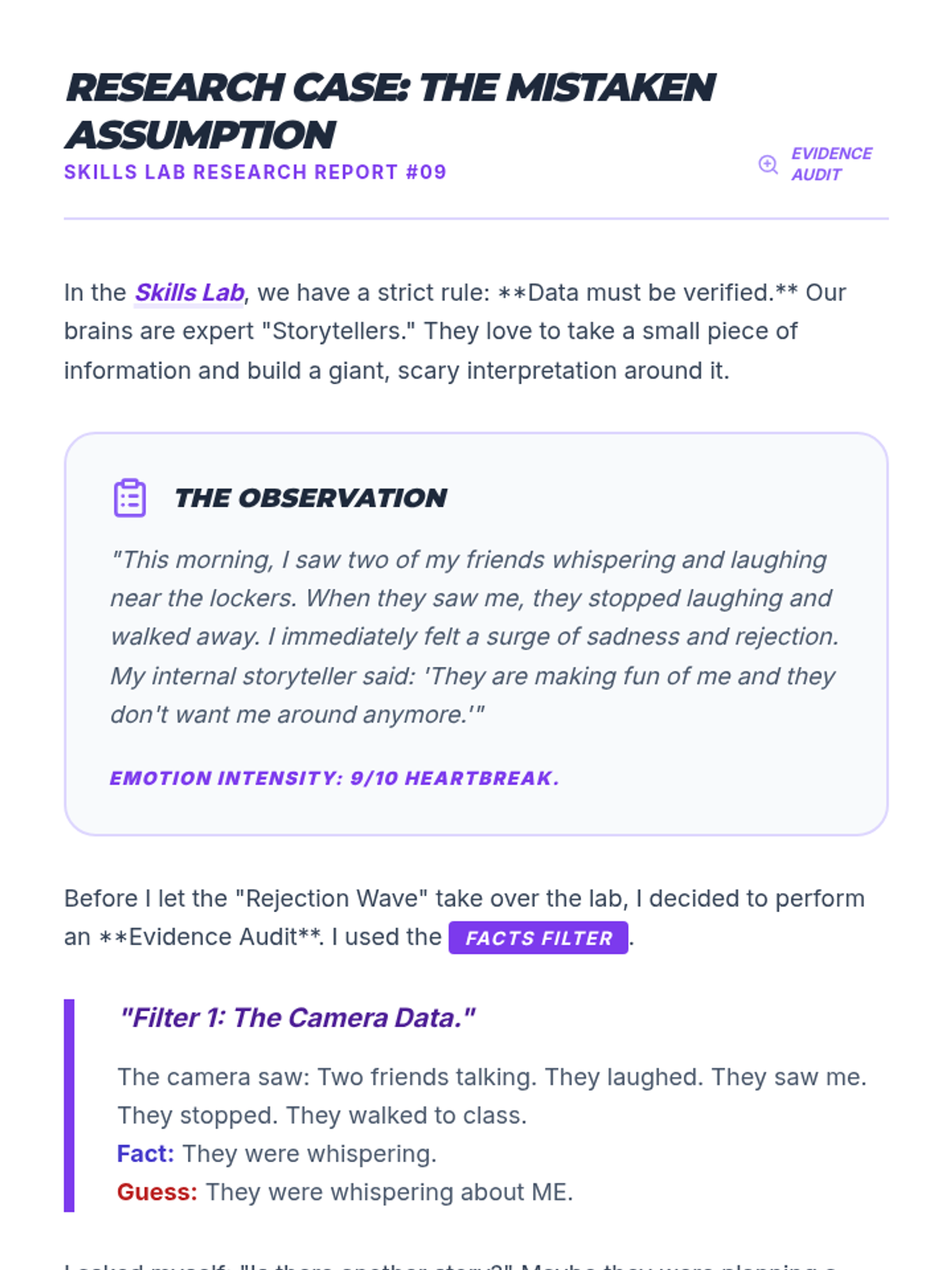
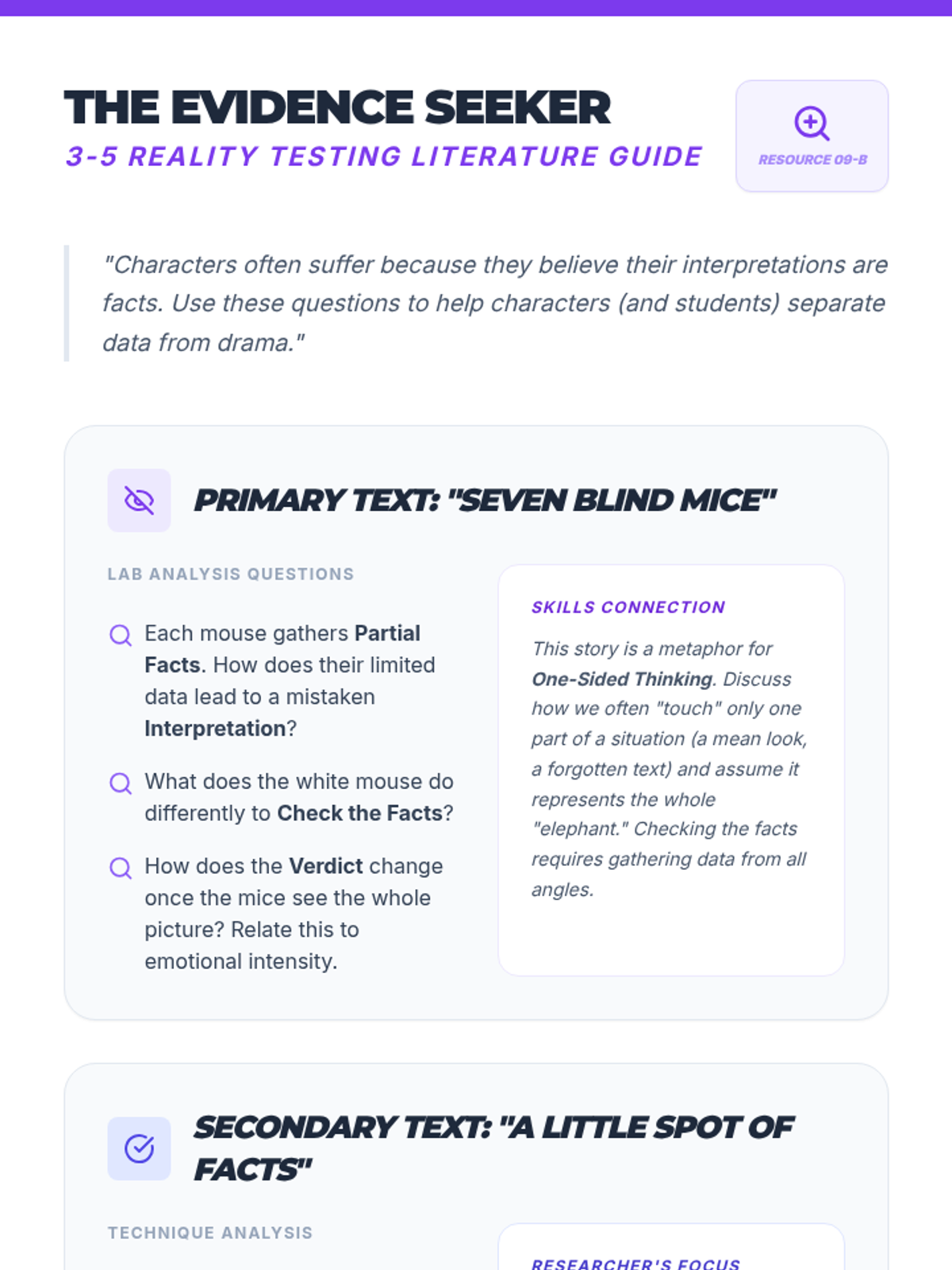
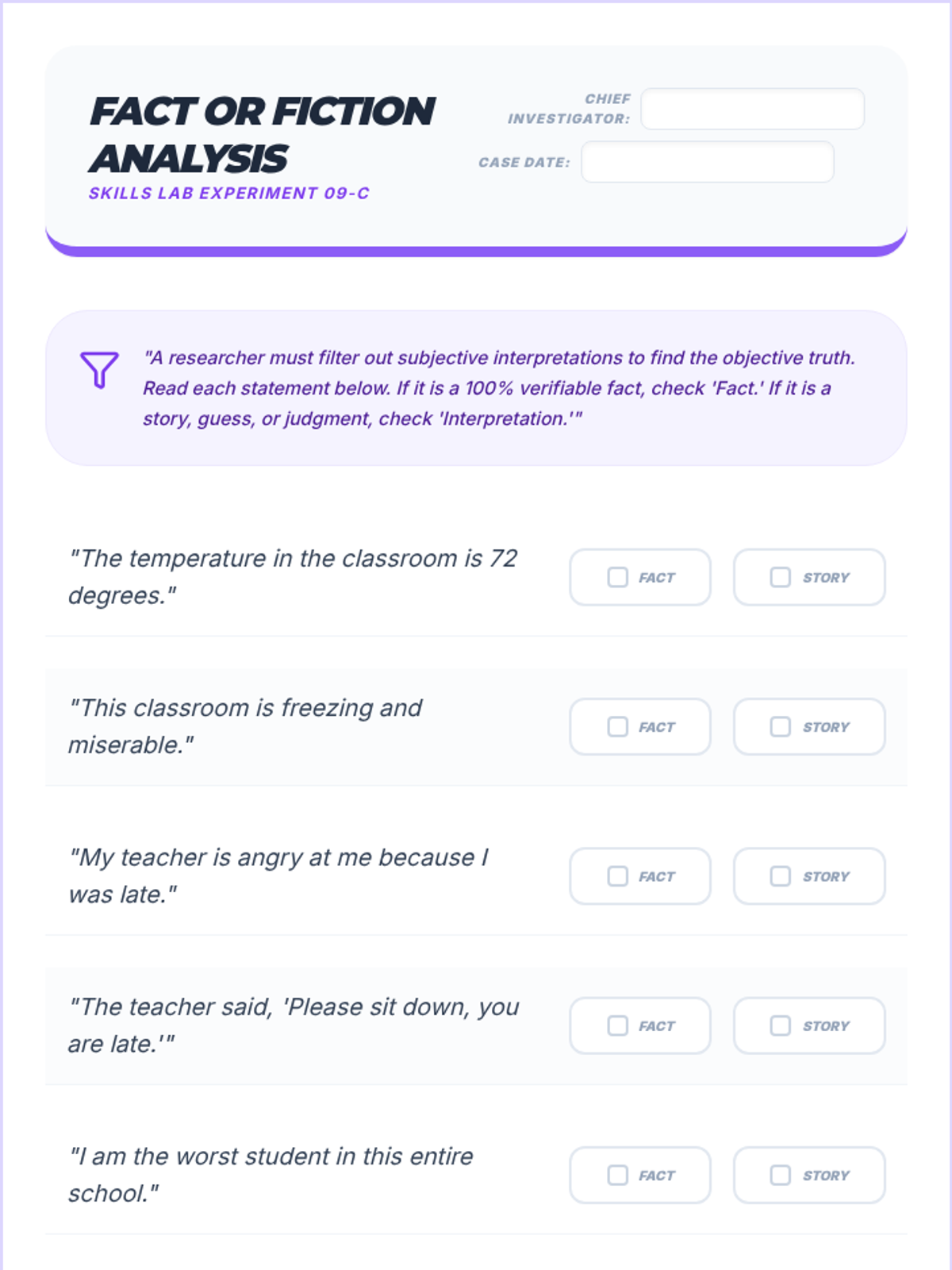
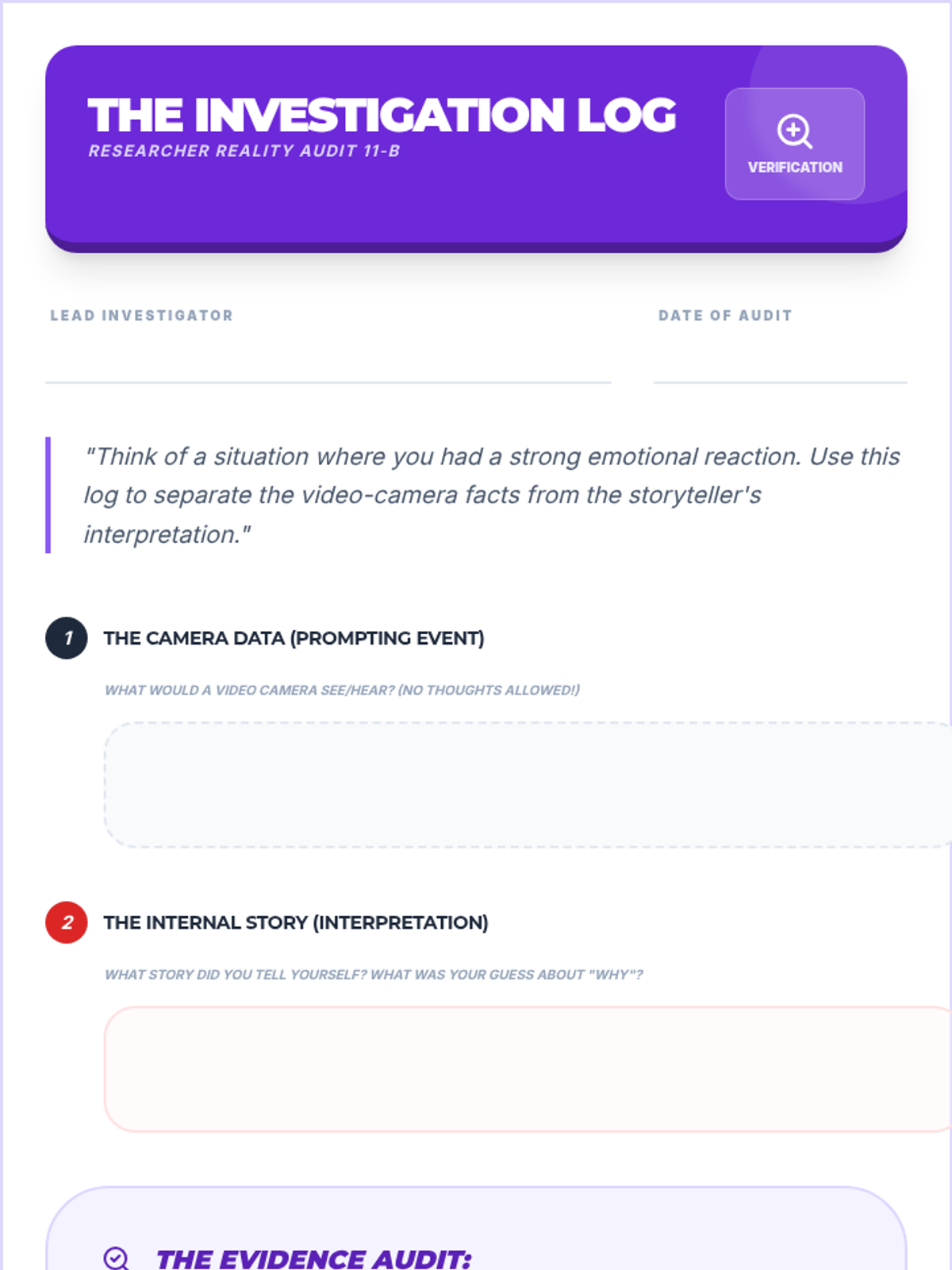
A lesson for grades 3-5 to teach the 'Check the Facts' skill. Students learn to use a 'Facts Filter' to determine if their emotional reaction matches the reality of a situation.
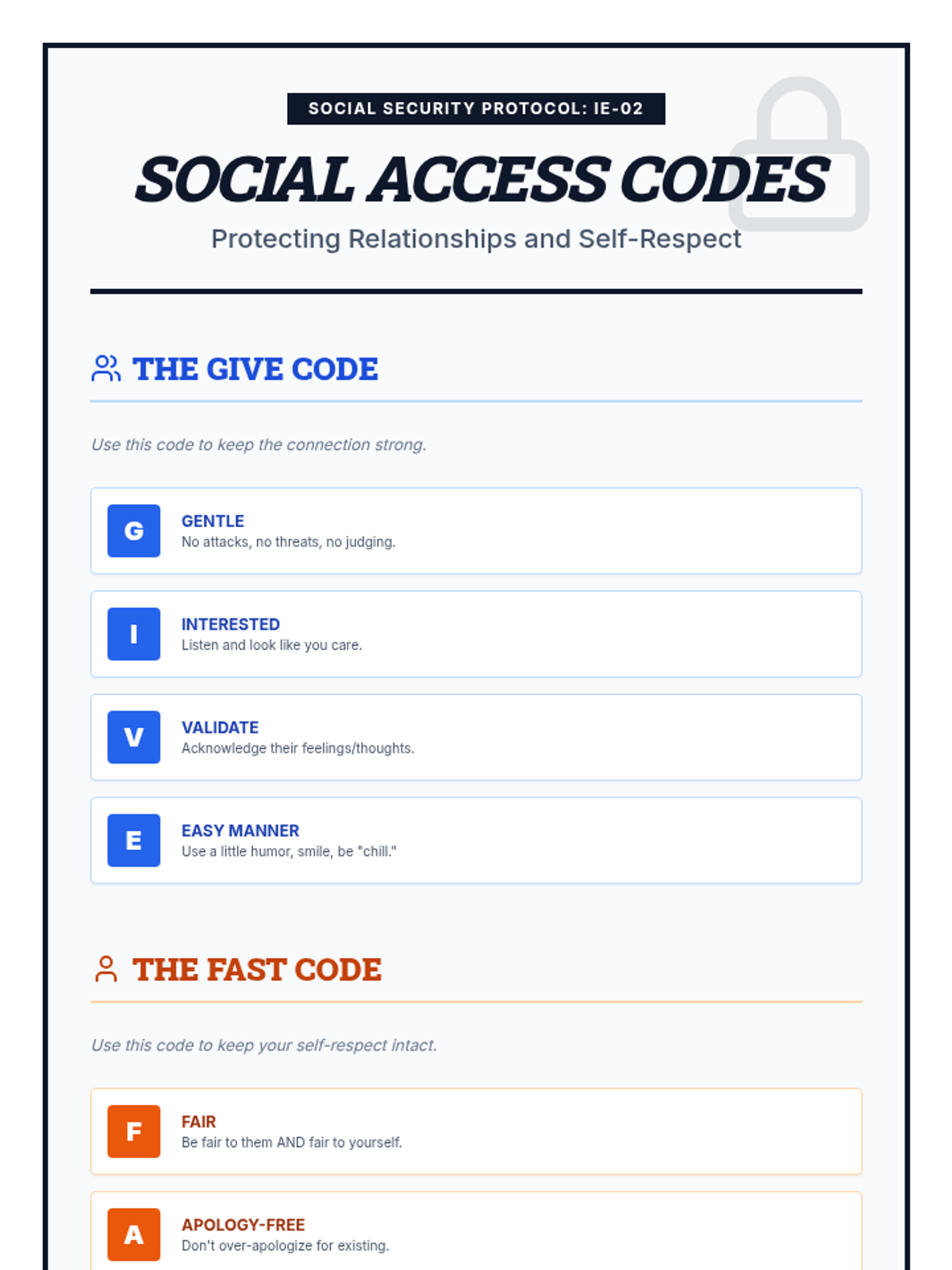
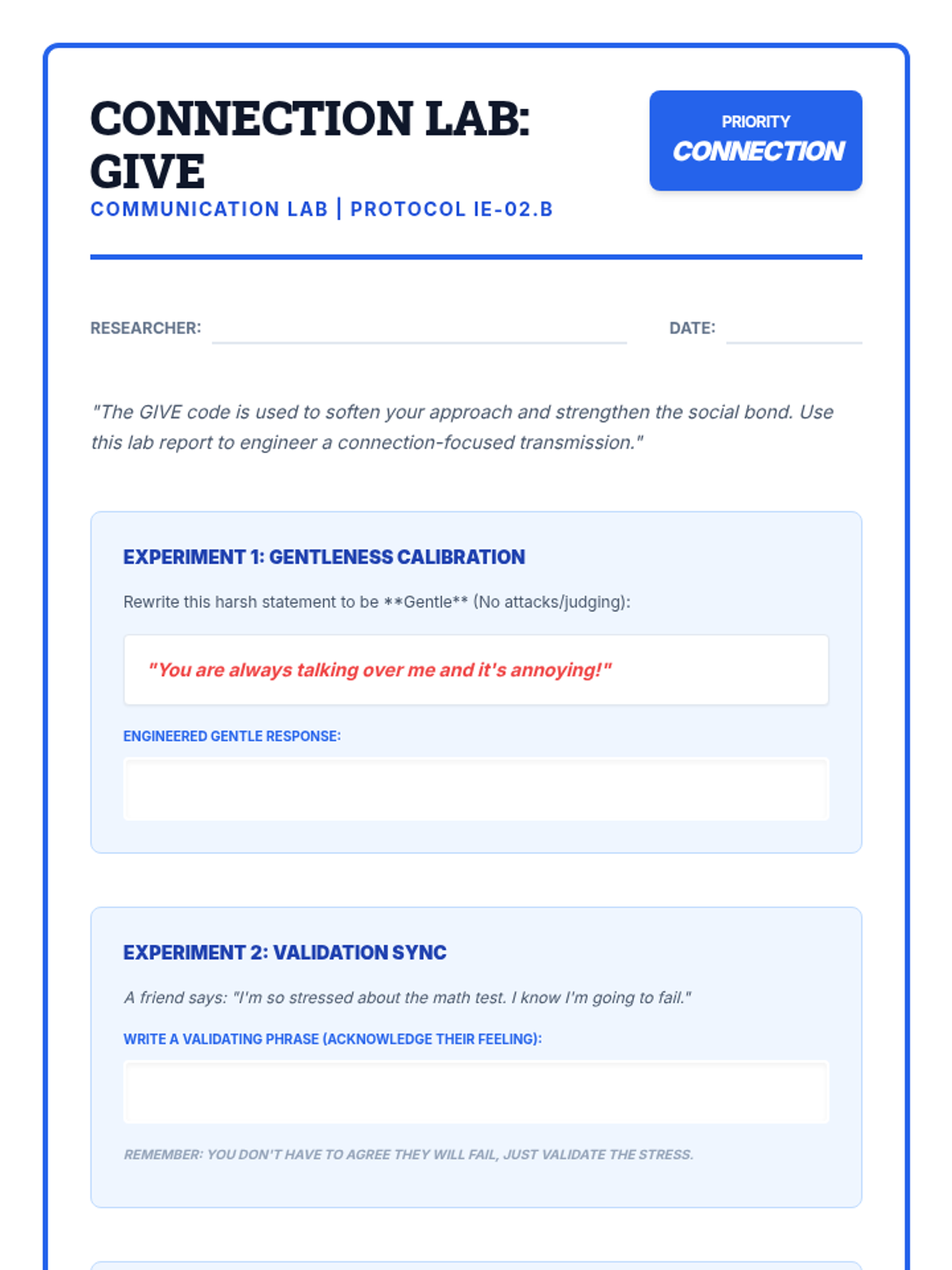
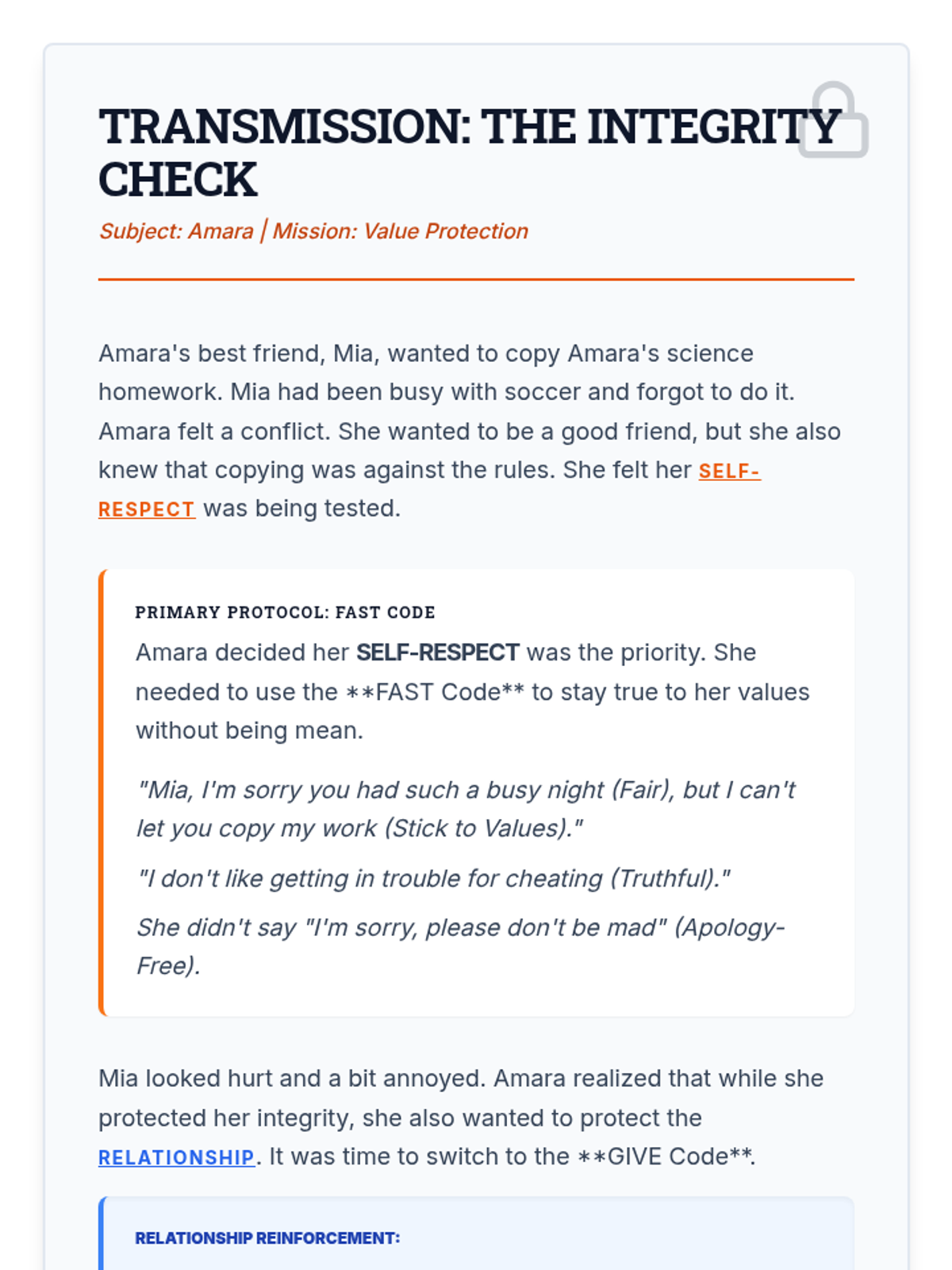
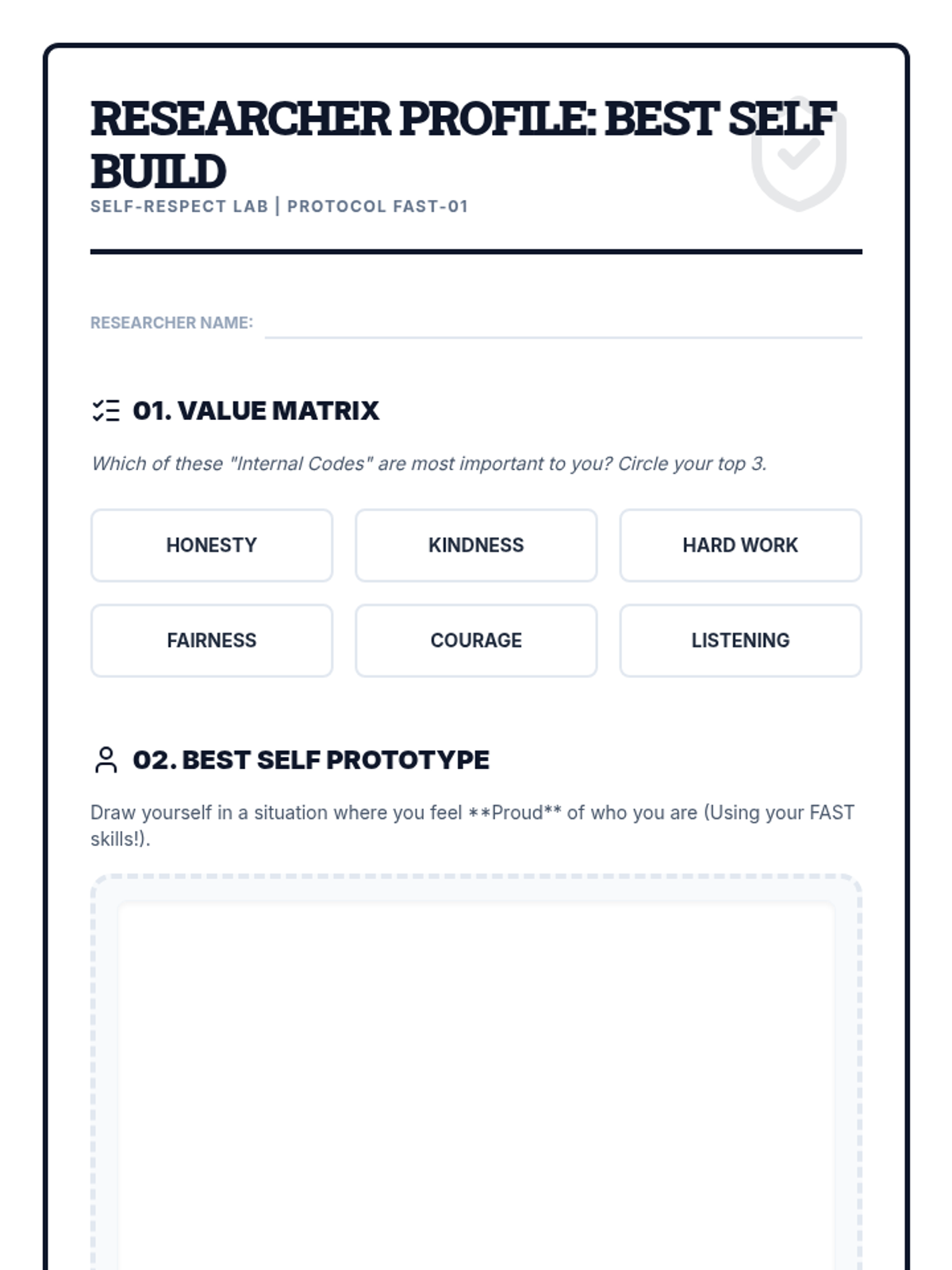
The final Interpersonal Effectiveness lesson for grades 3-5, teaching the GIVE and FAST skills for maintaining relationships and self-respect.
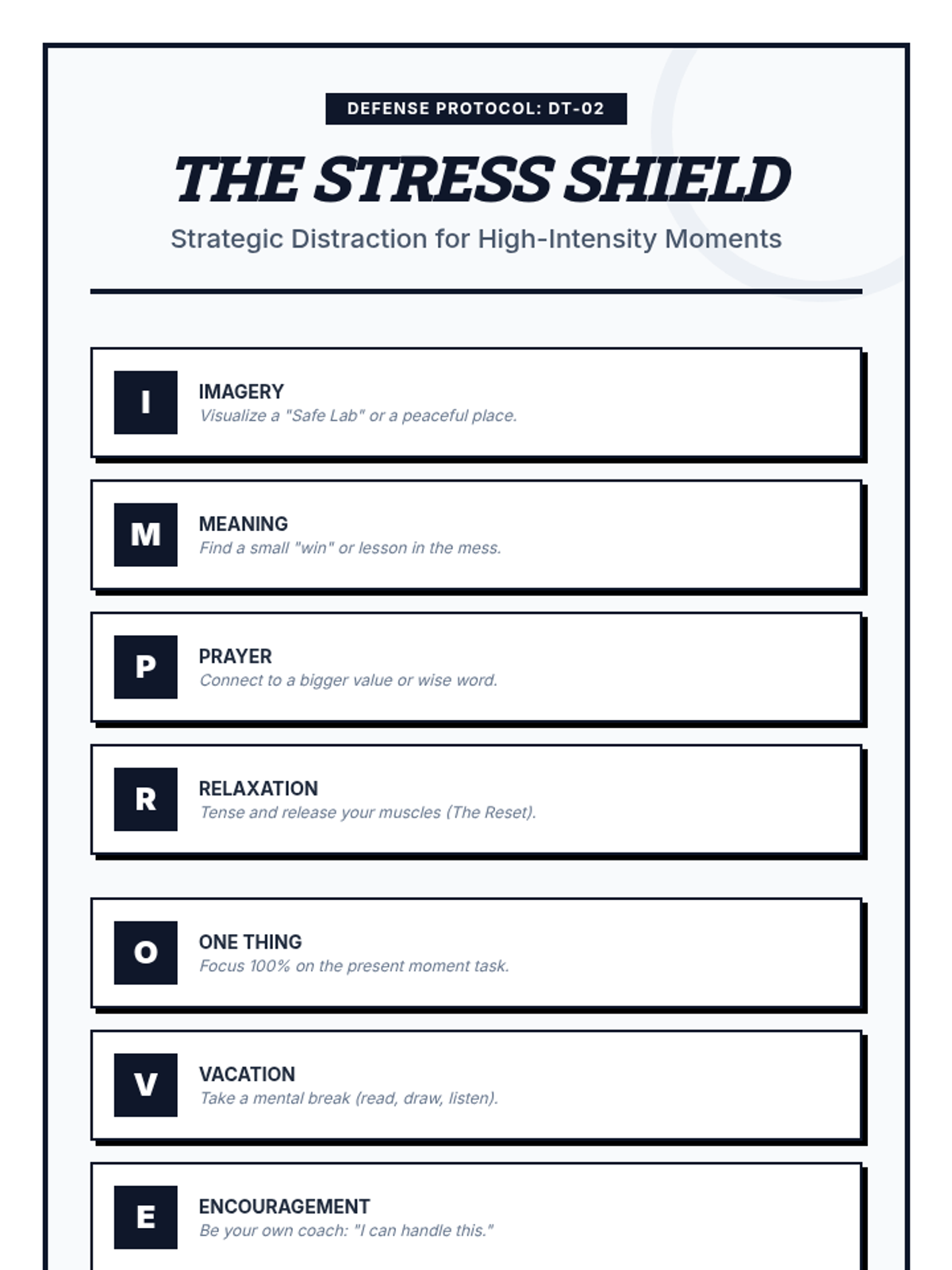
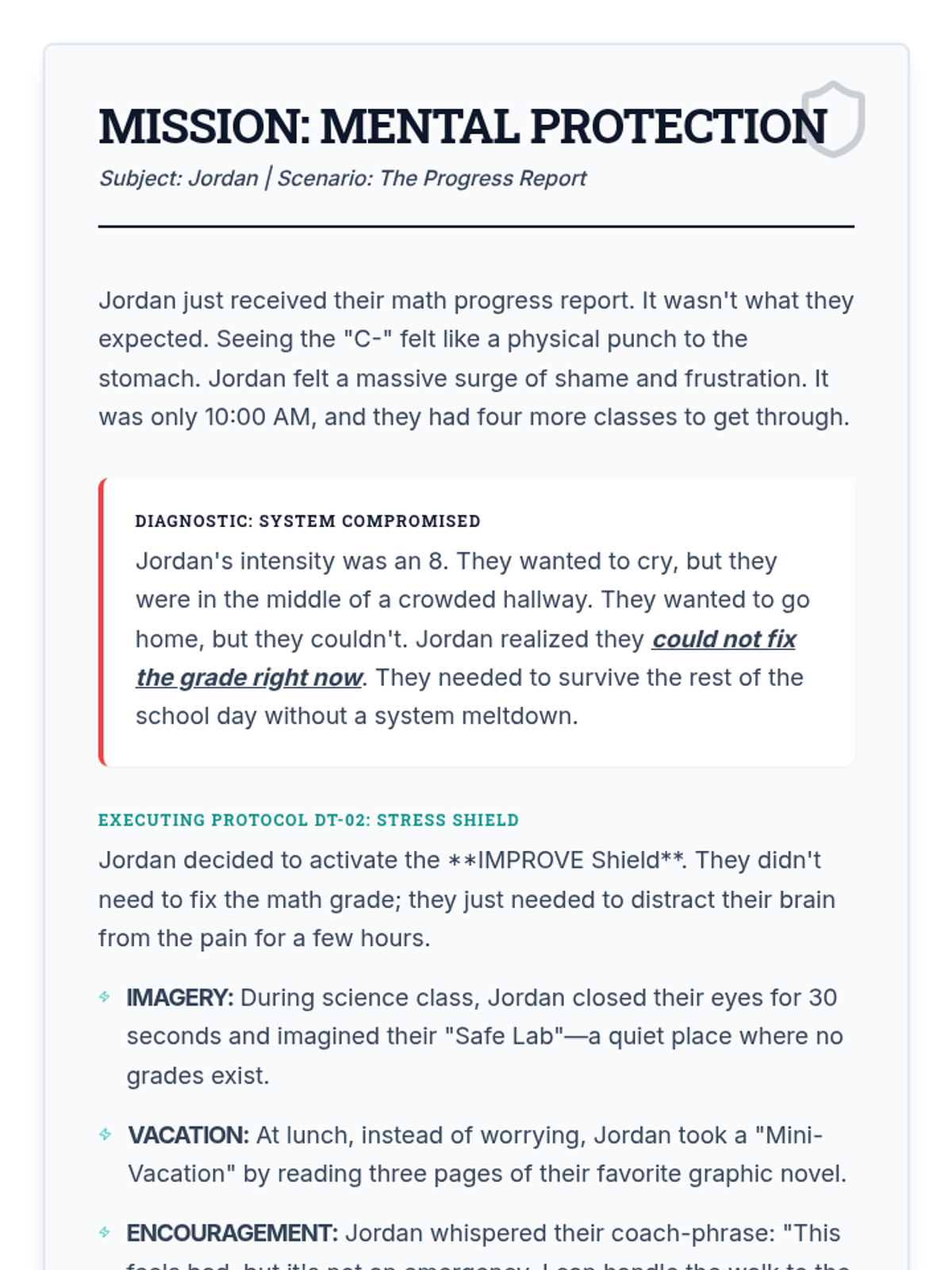
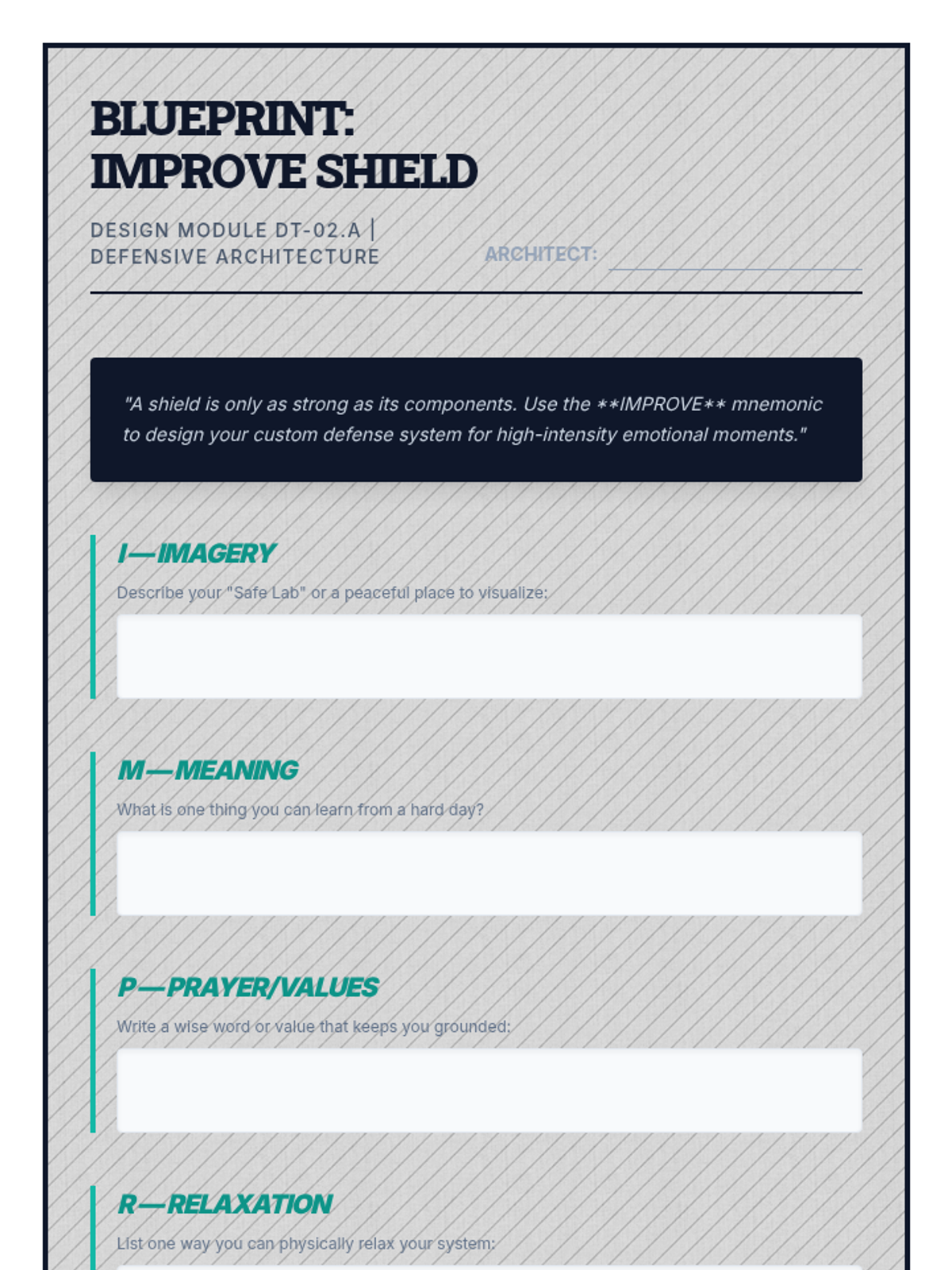
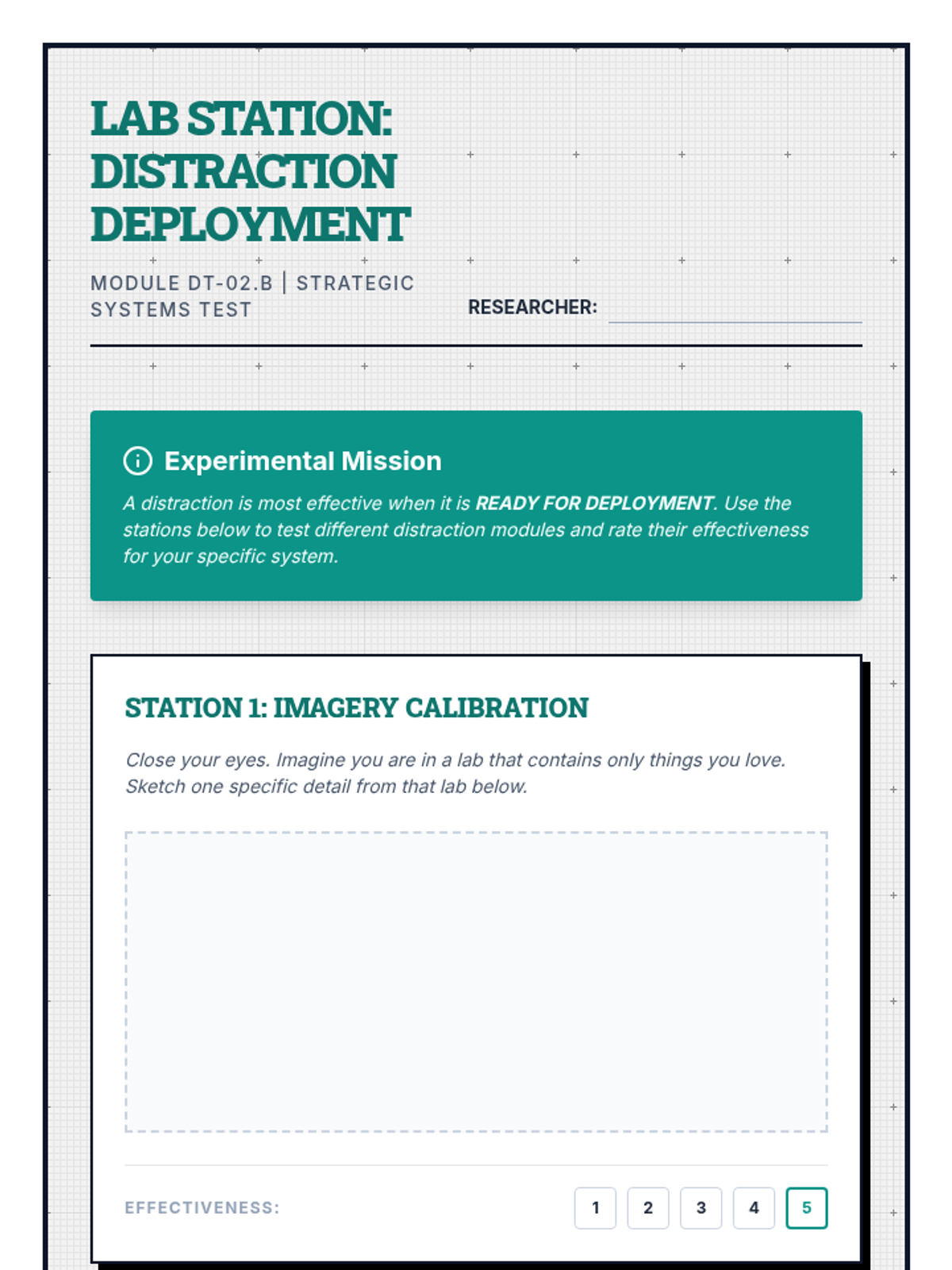
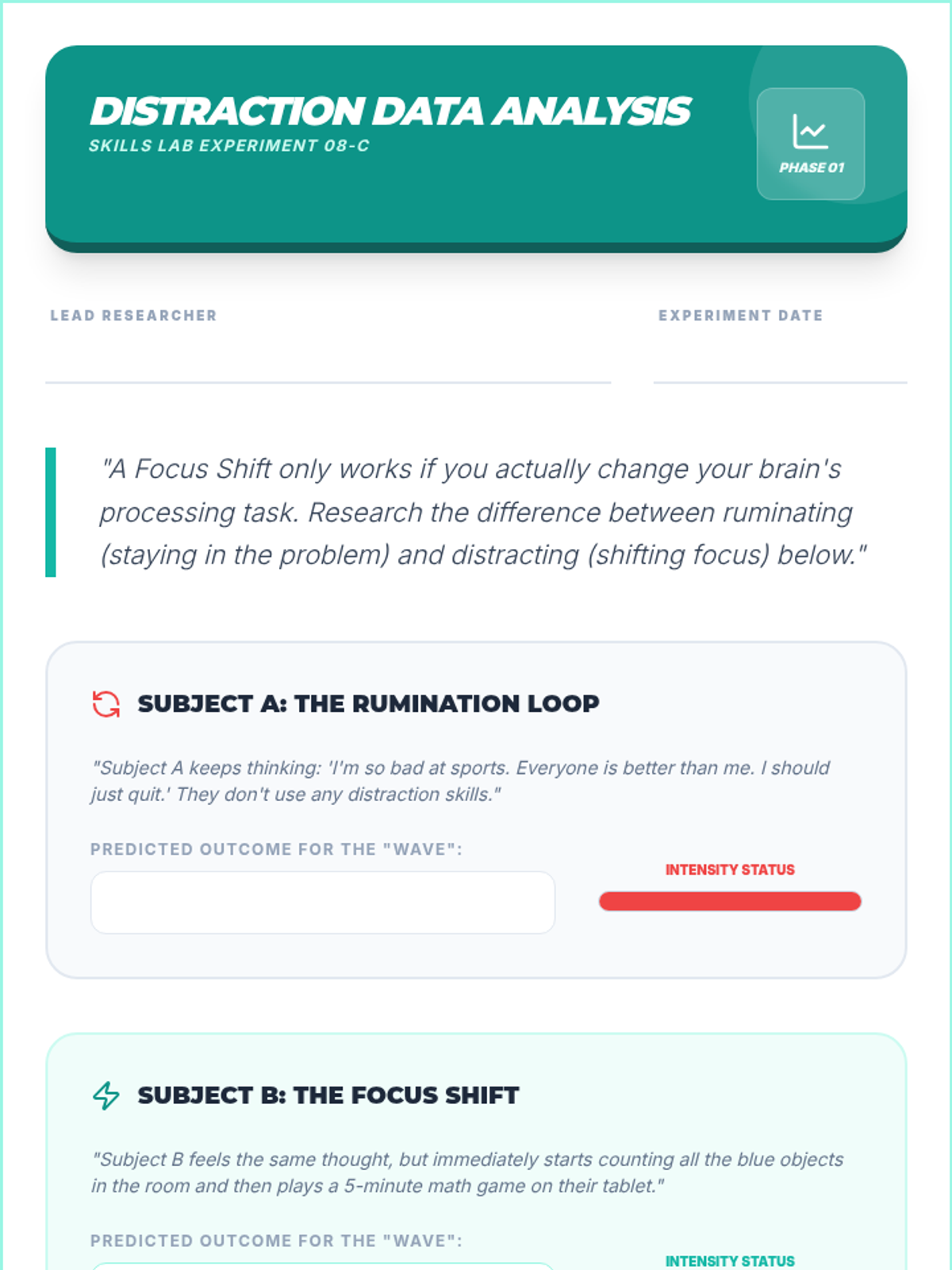
A Distress Tolerance lesson for grades 3-5 focusing on strategic distraction using the IMPROVE and Distraction skills (renamed Stress Shield).
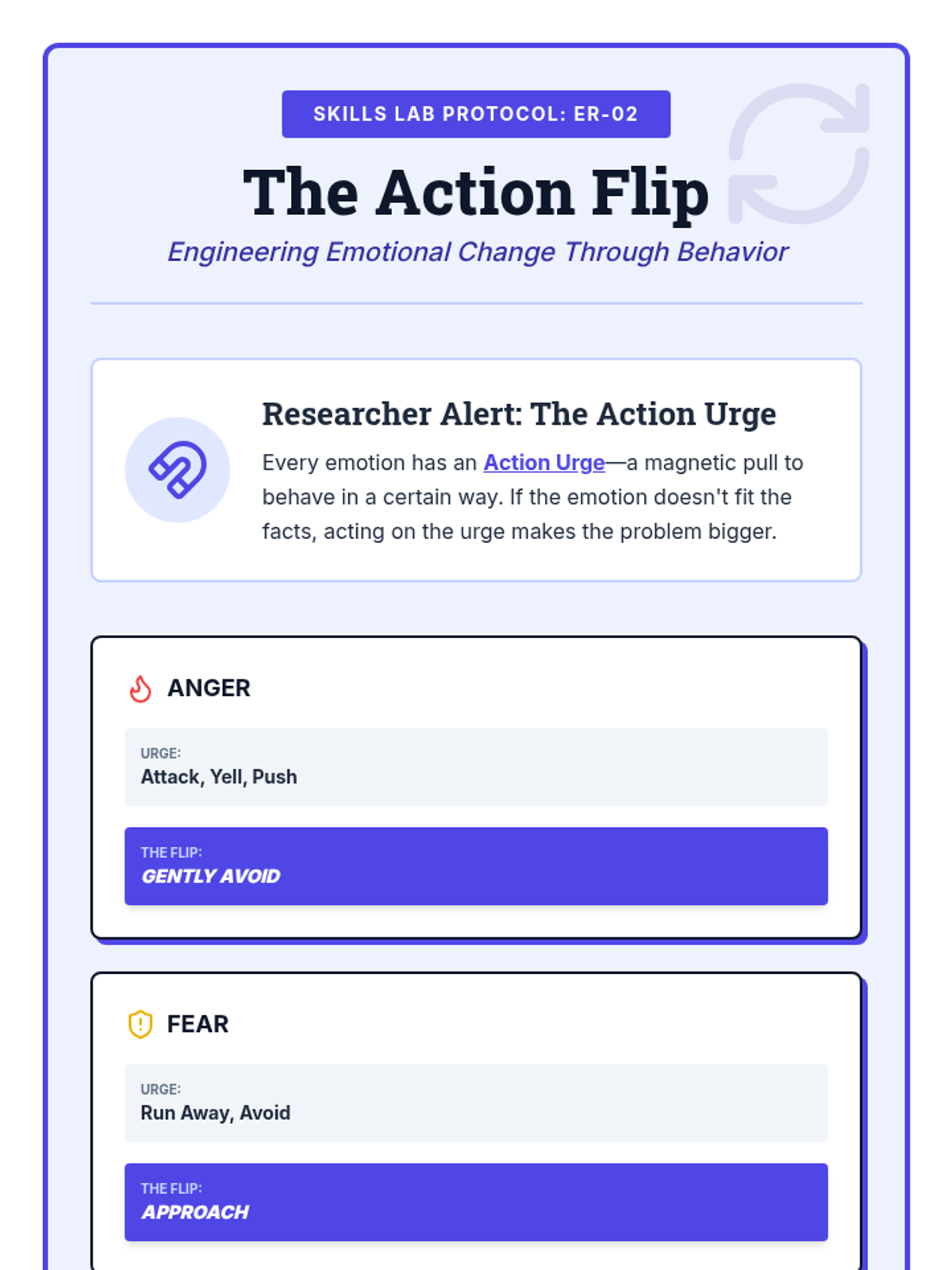
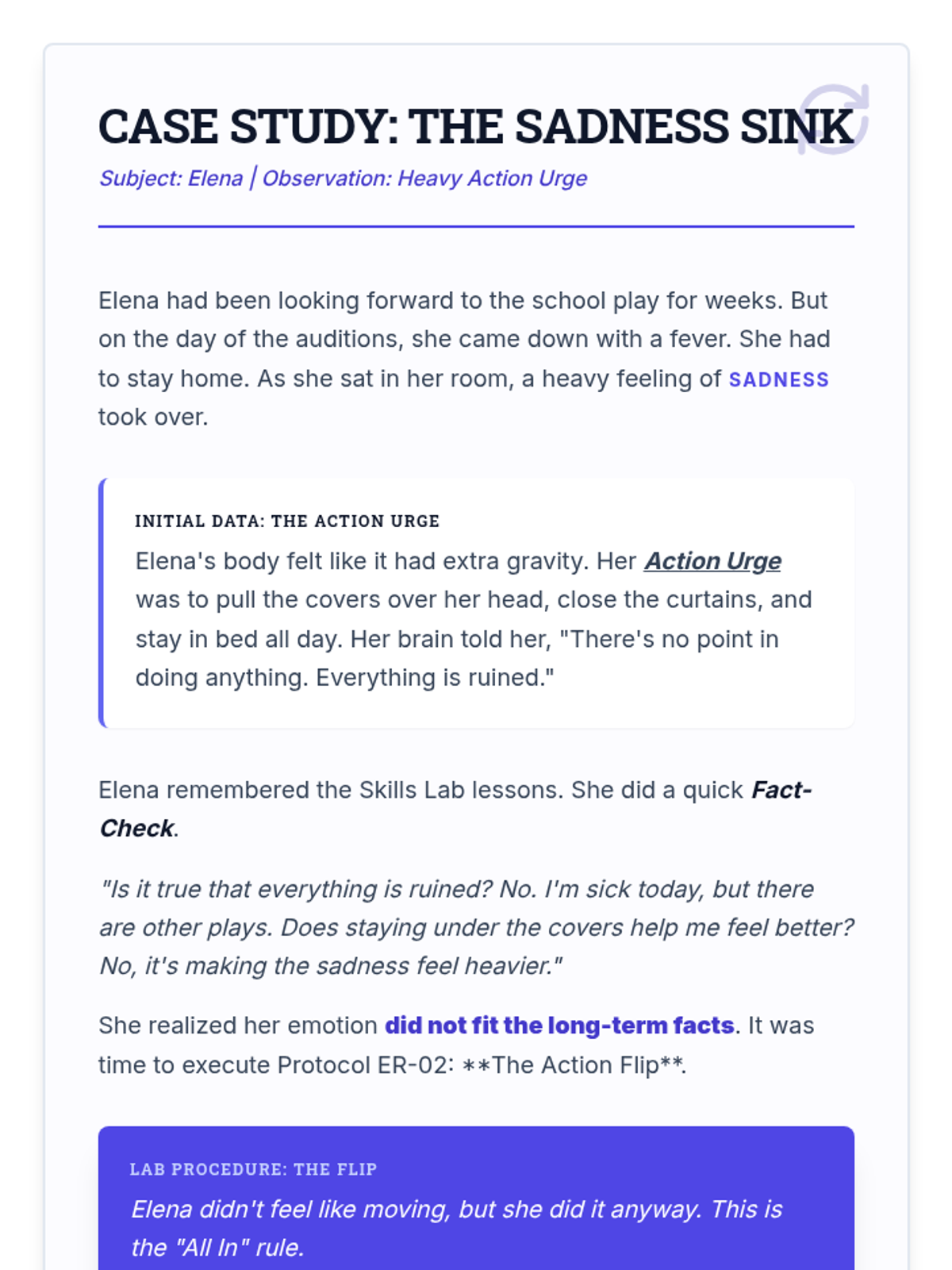
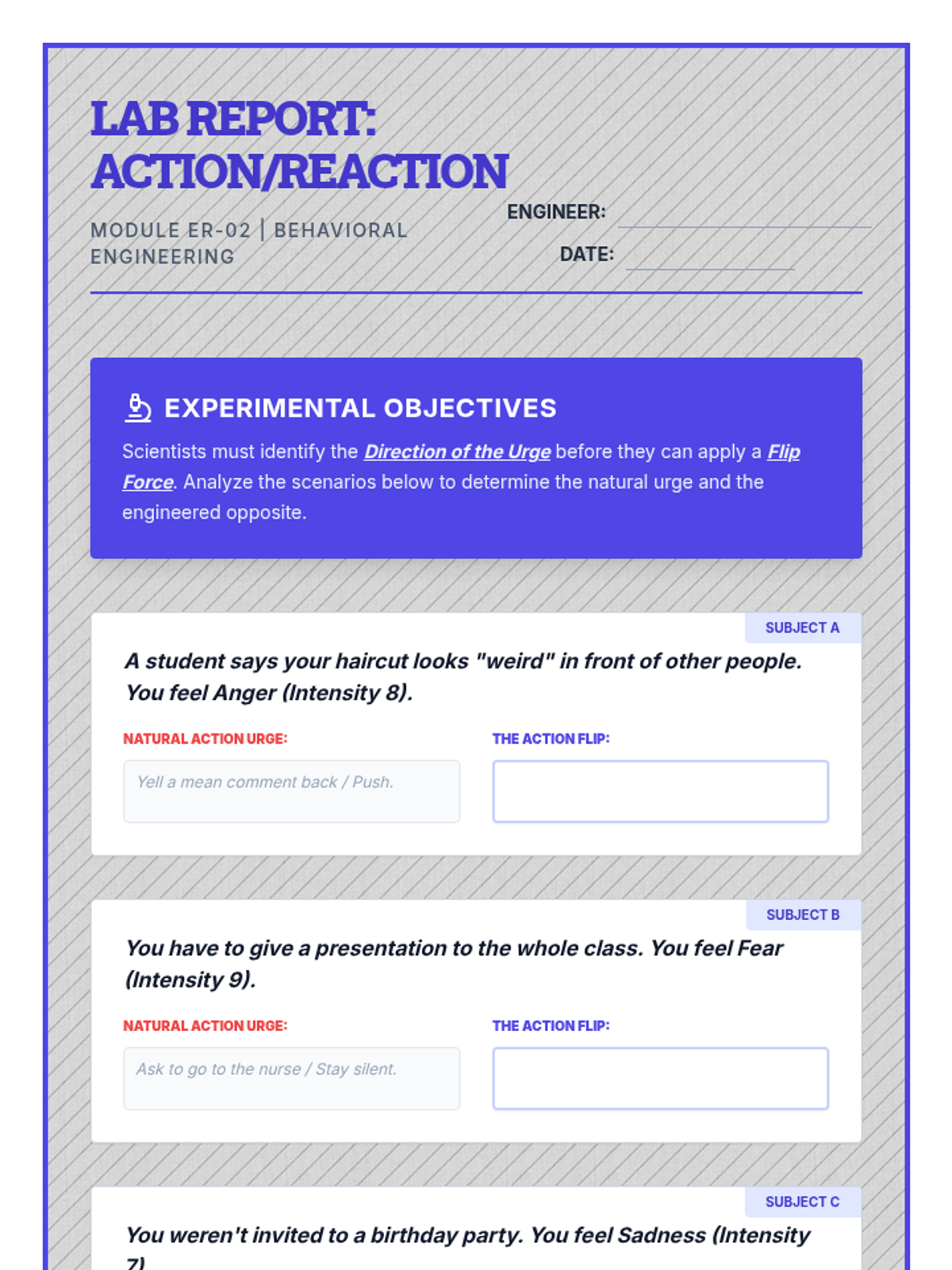
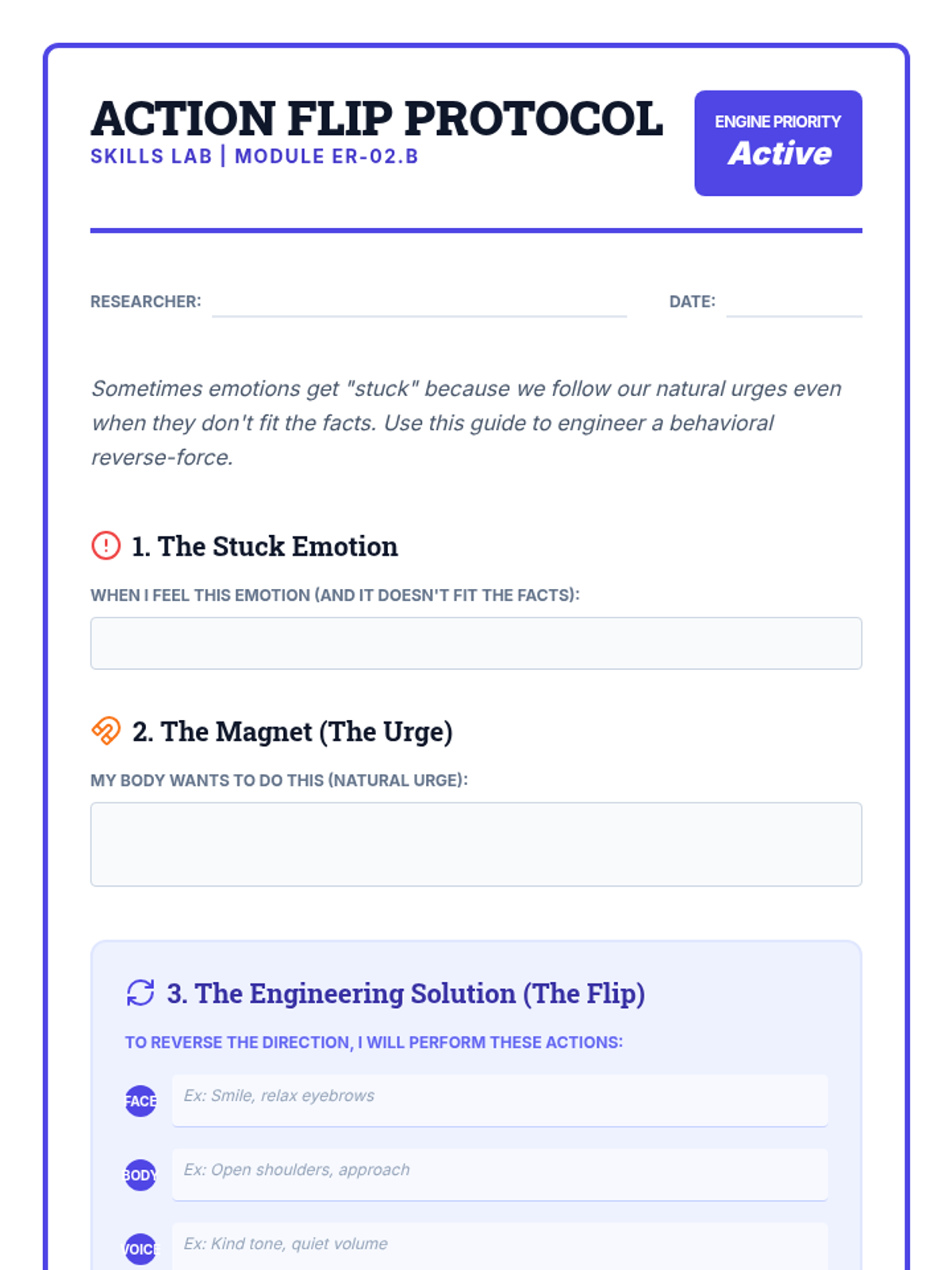
A lesson for grades 3-5 students to teach the 'Opposite Action' skill. Students learn to identify action urges and perform behaviors that are opposite to an emotion that doesn't fit the facts.
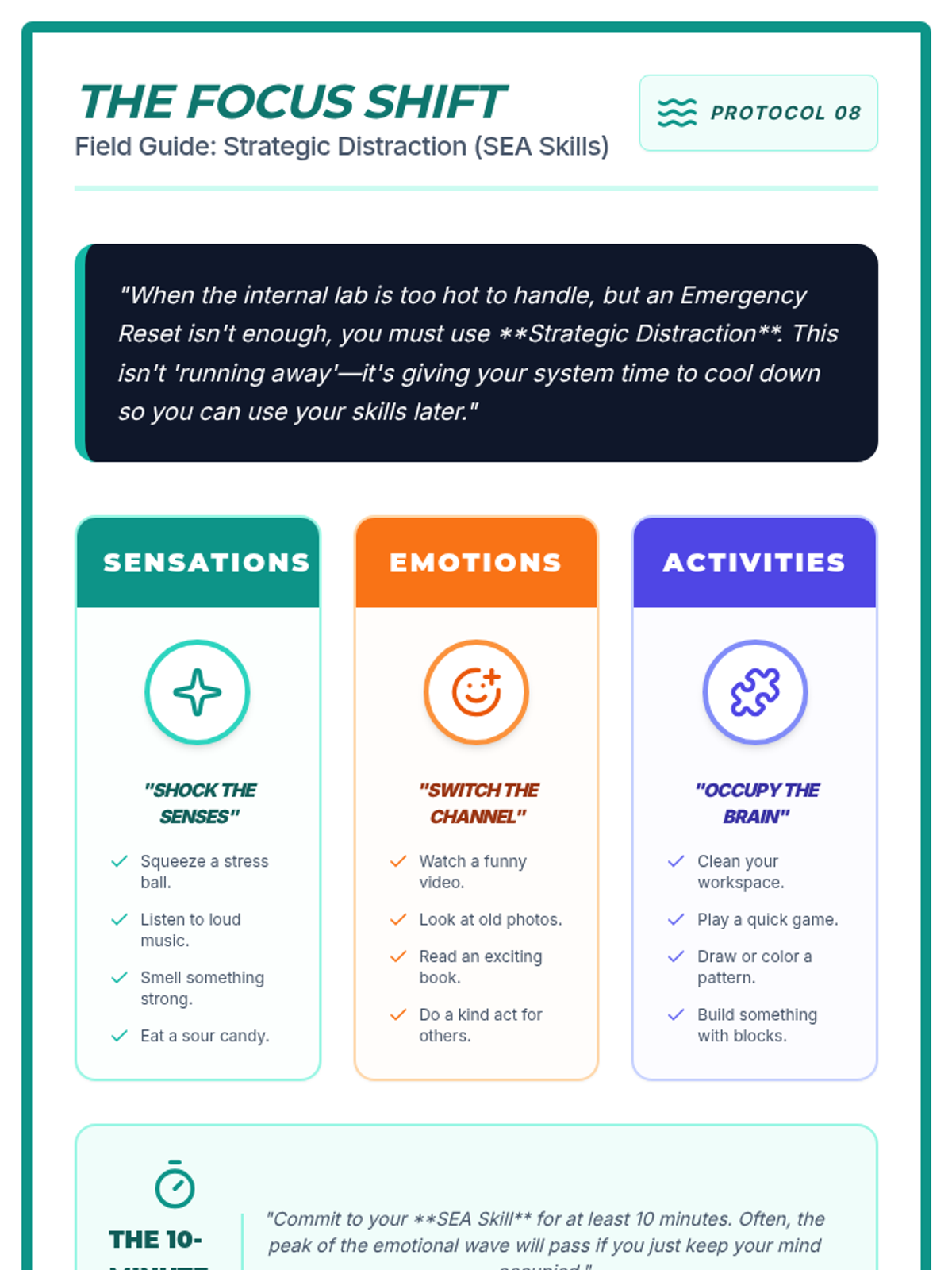
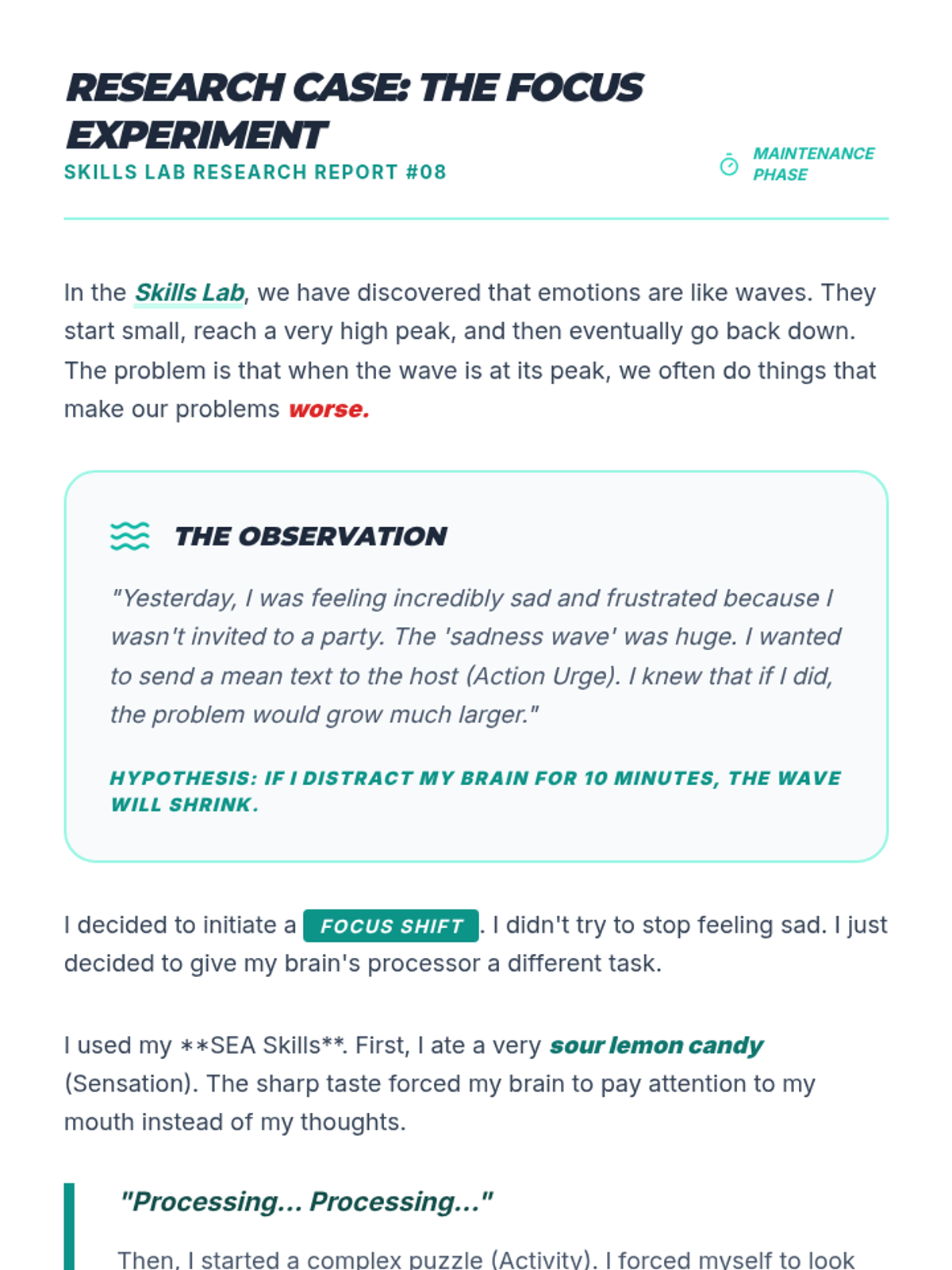
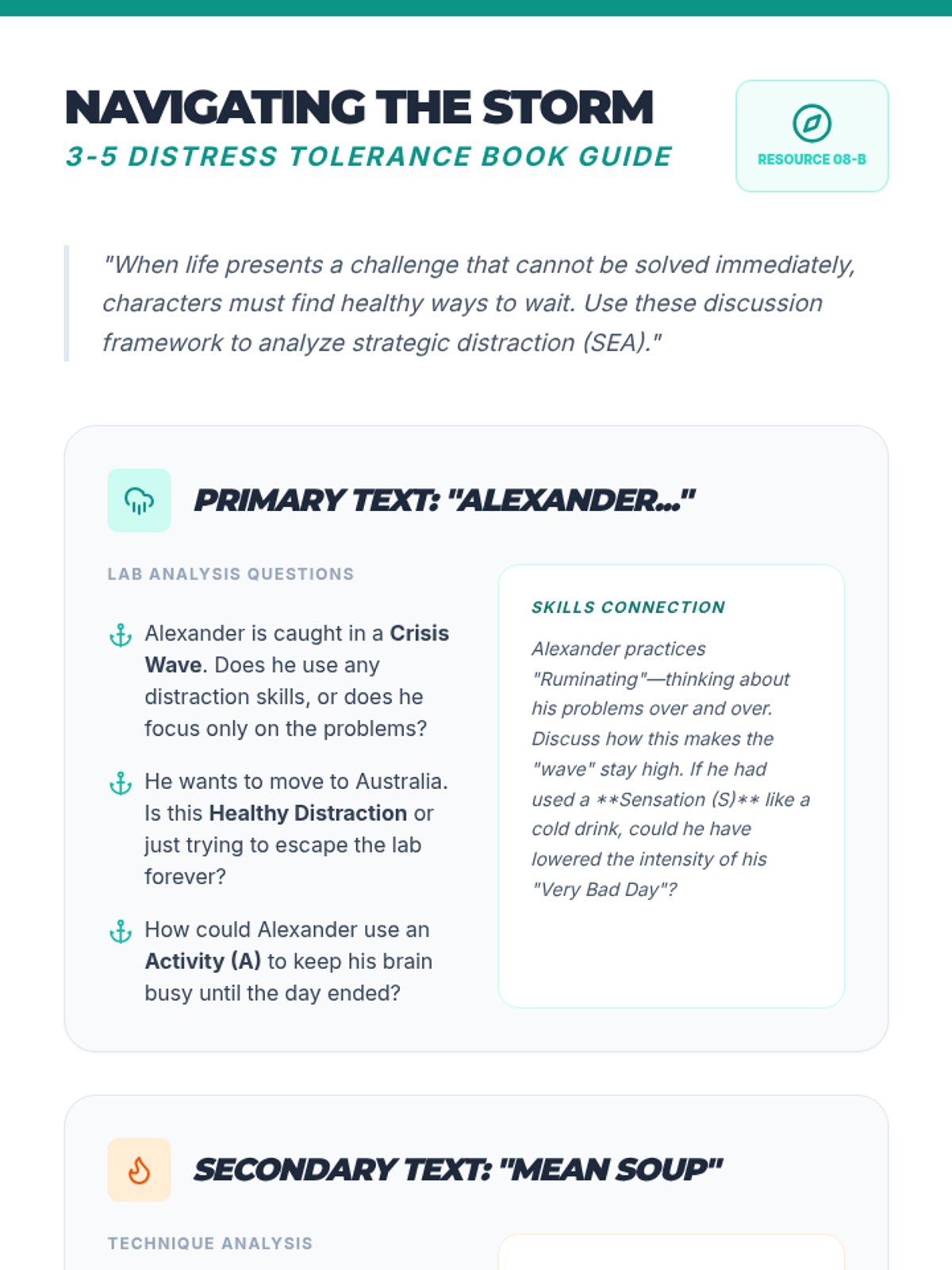
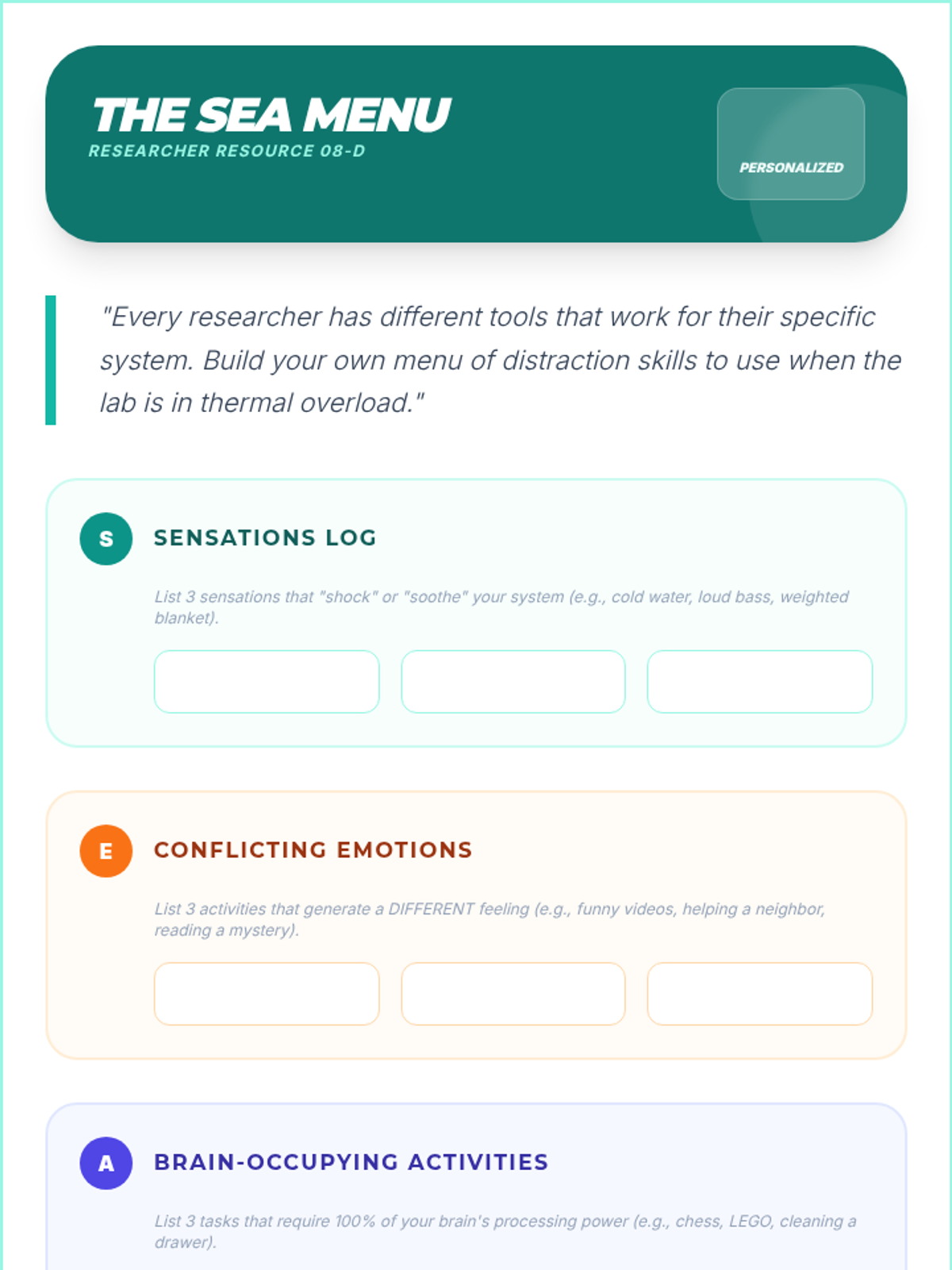
A Distress Tolerance lesson for grades 3-5 focusing on using strategic distraction (SEA: Sensations, Emotions, Activities) to manage high emotional arousal without acting impulsively.
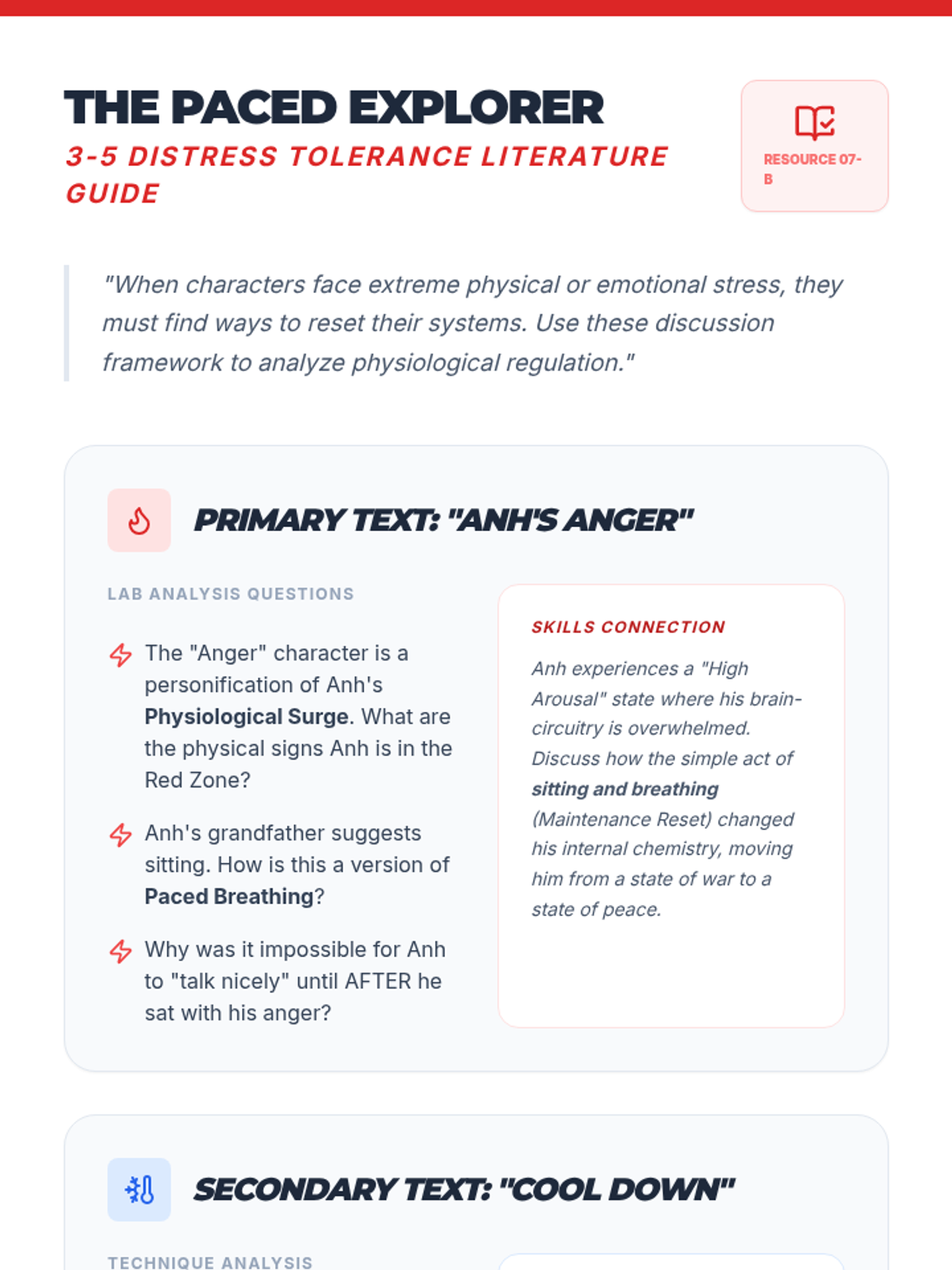
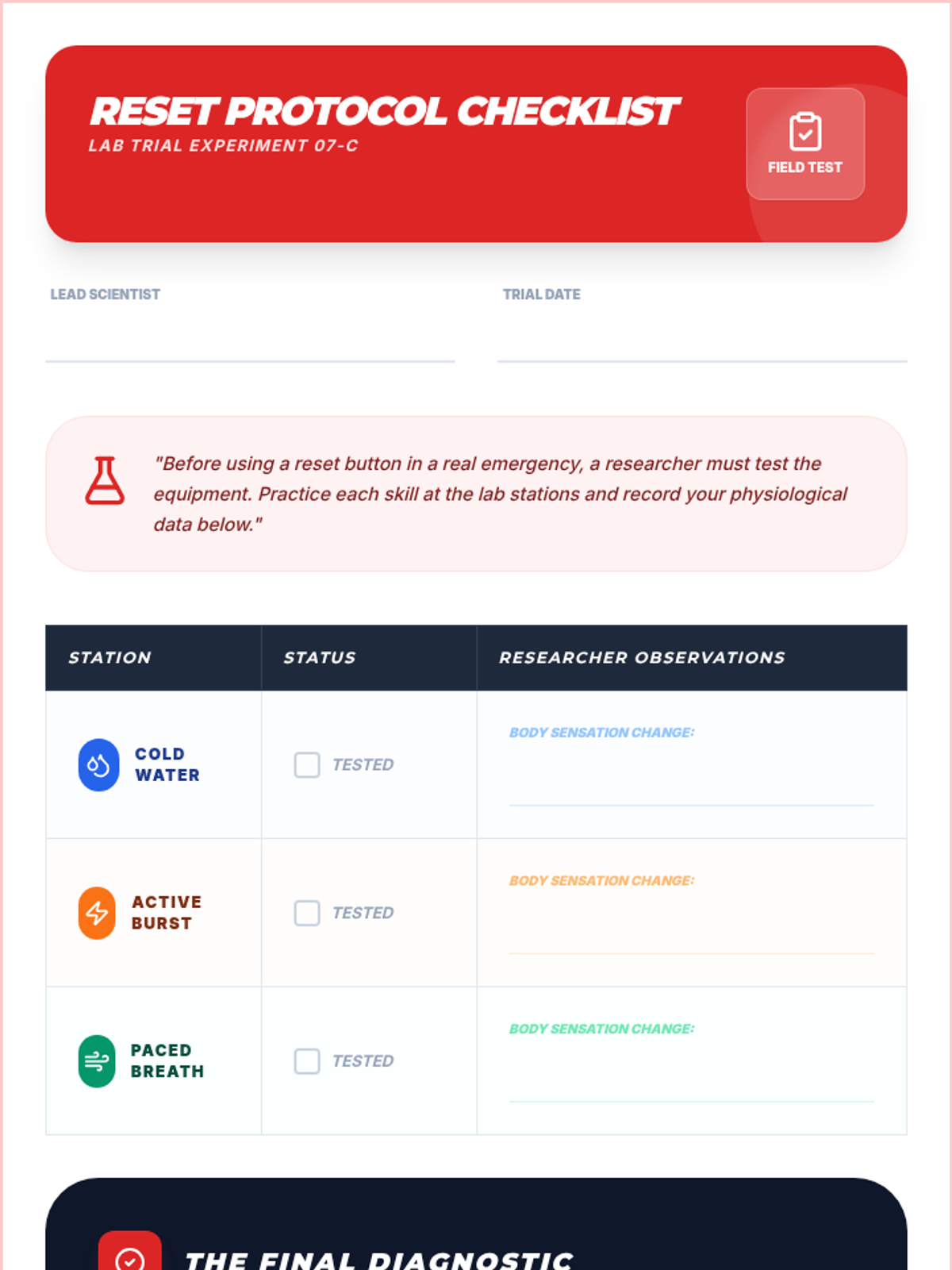
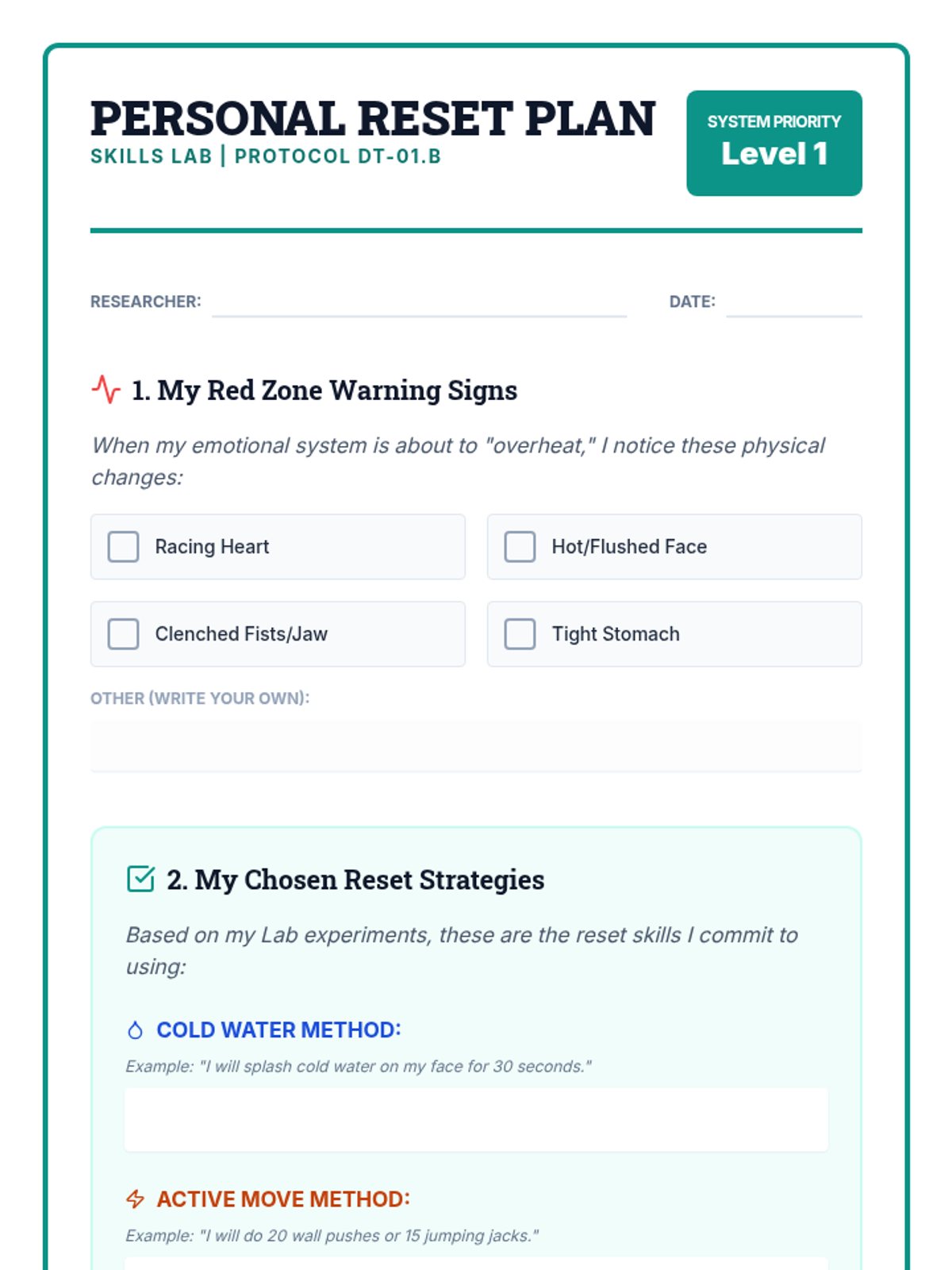
A follow-up lesson for grades 3-5 students to learn the 'CAP' skills (Cold Water, Active Exercise, Paced Breathing) to change their body's physiology and reduce intense 'RED zone' emotions quickly.
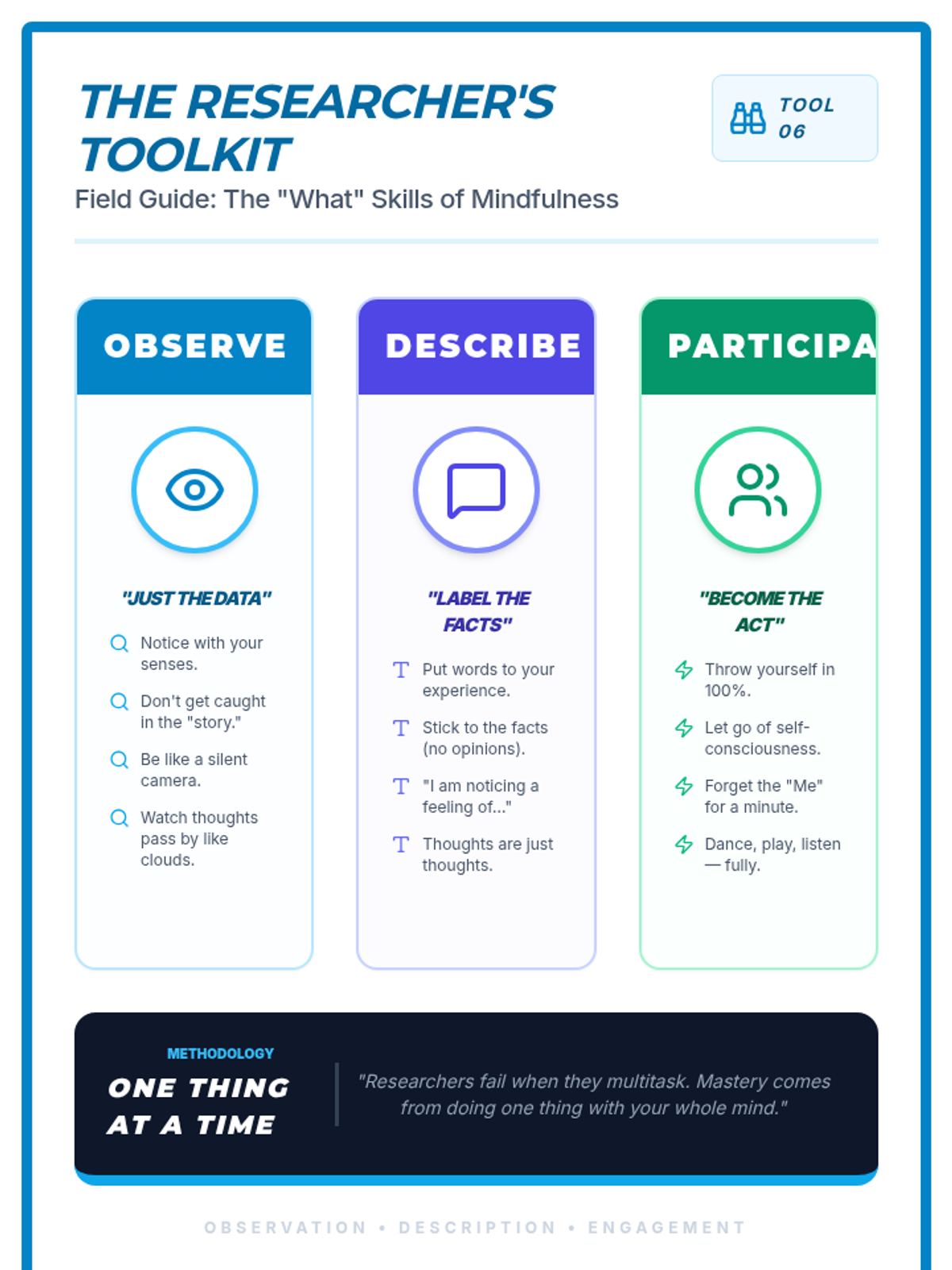
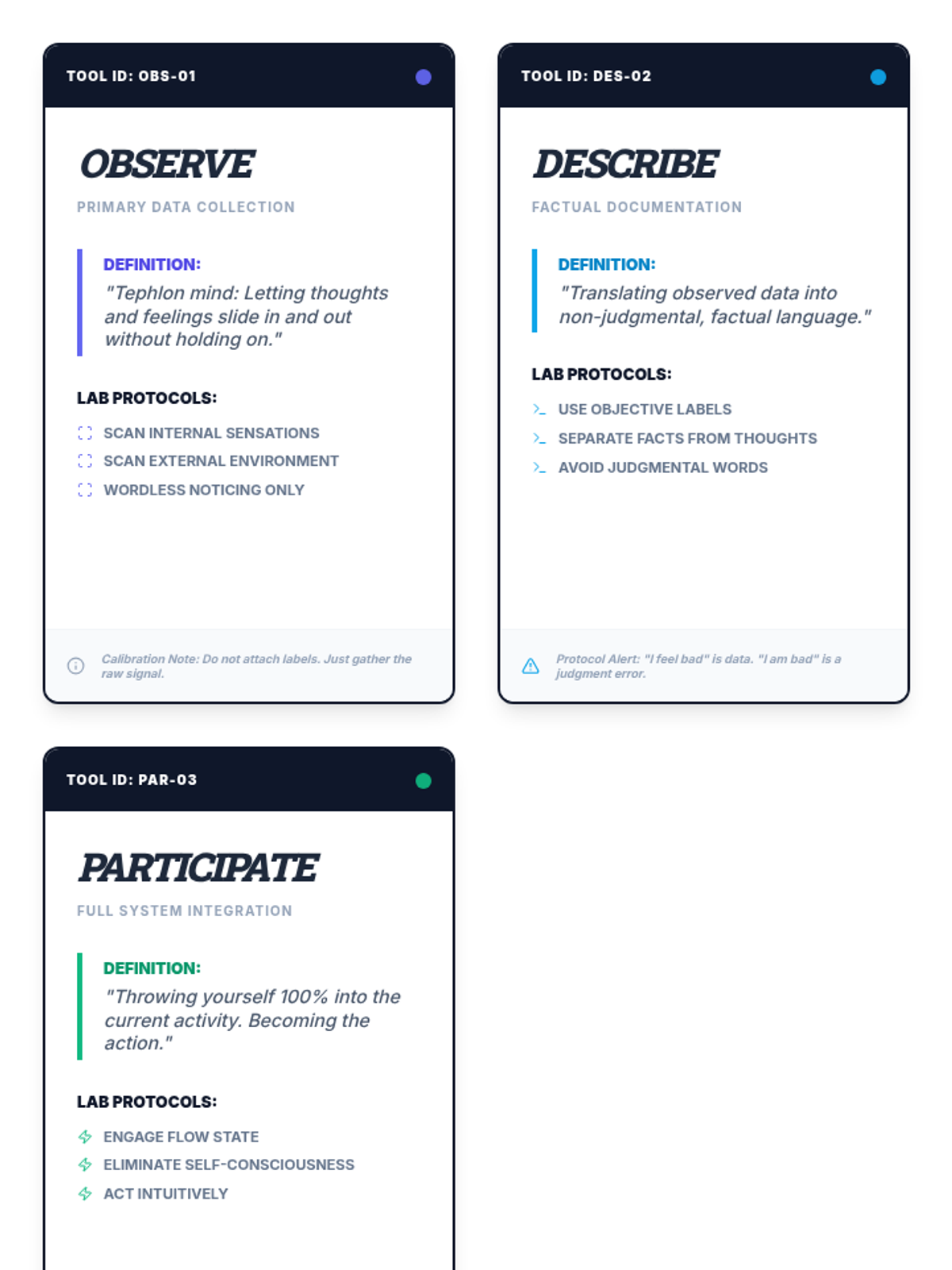
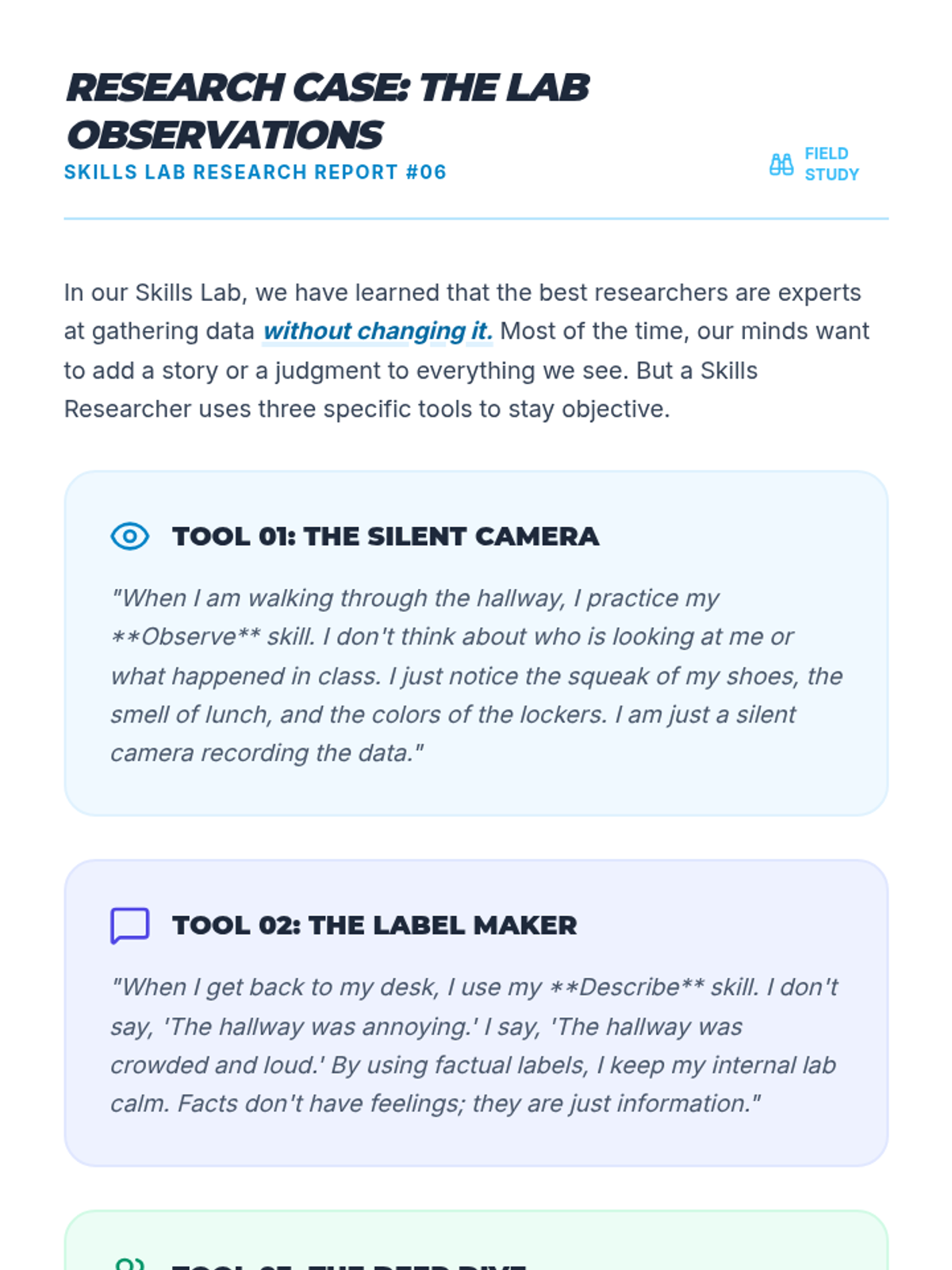
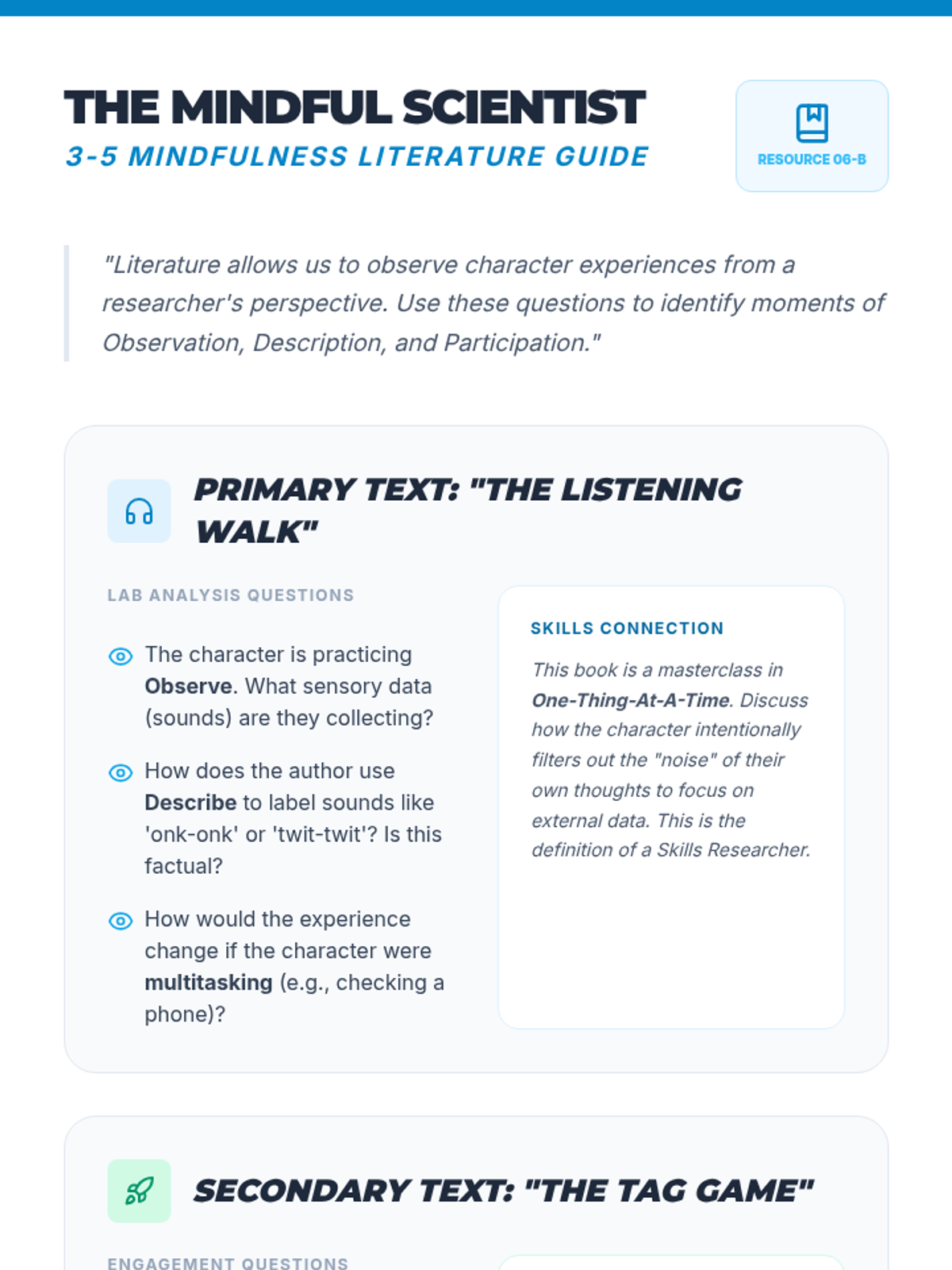
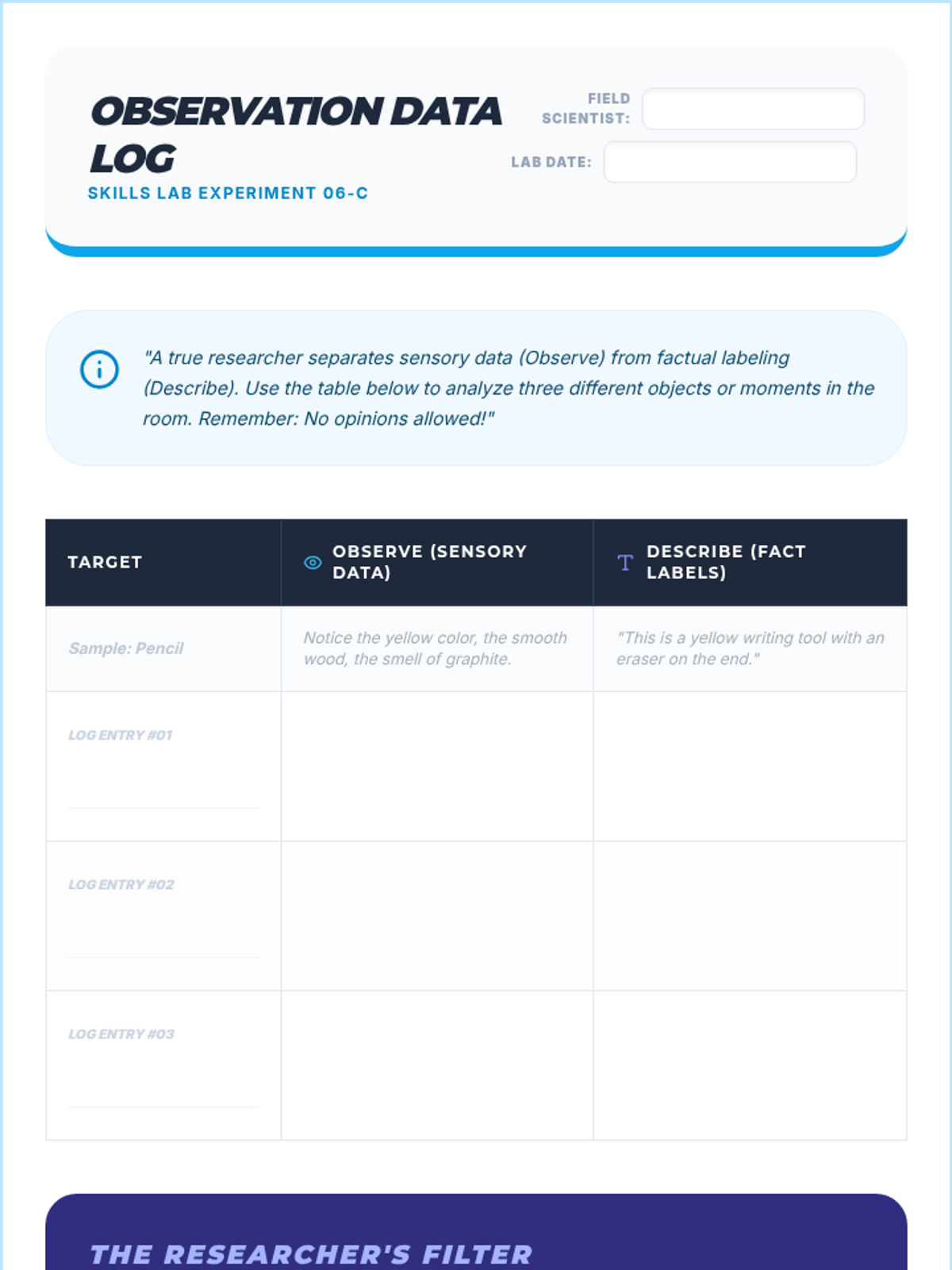
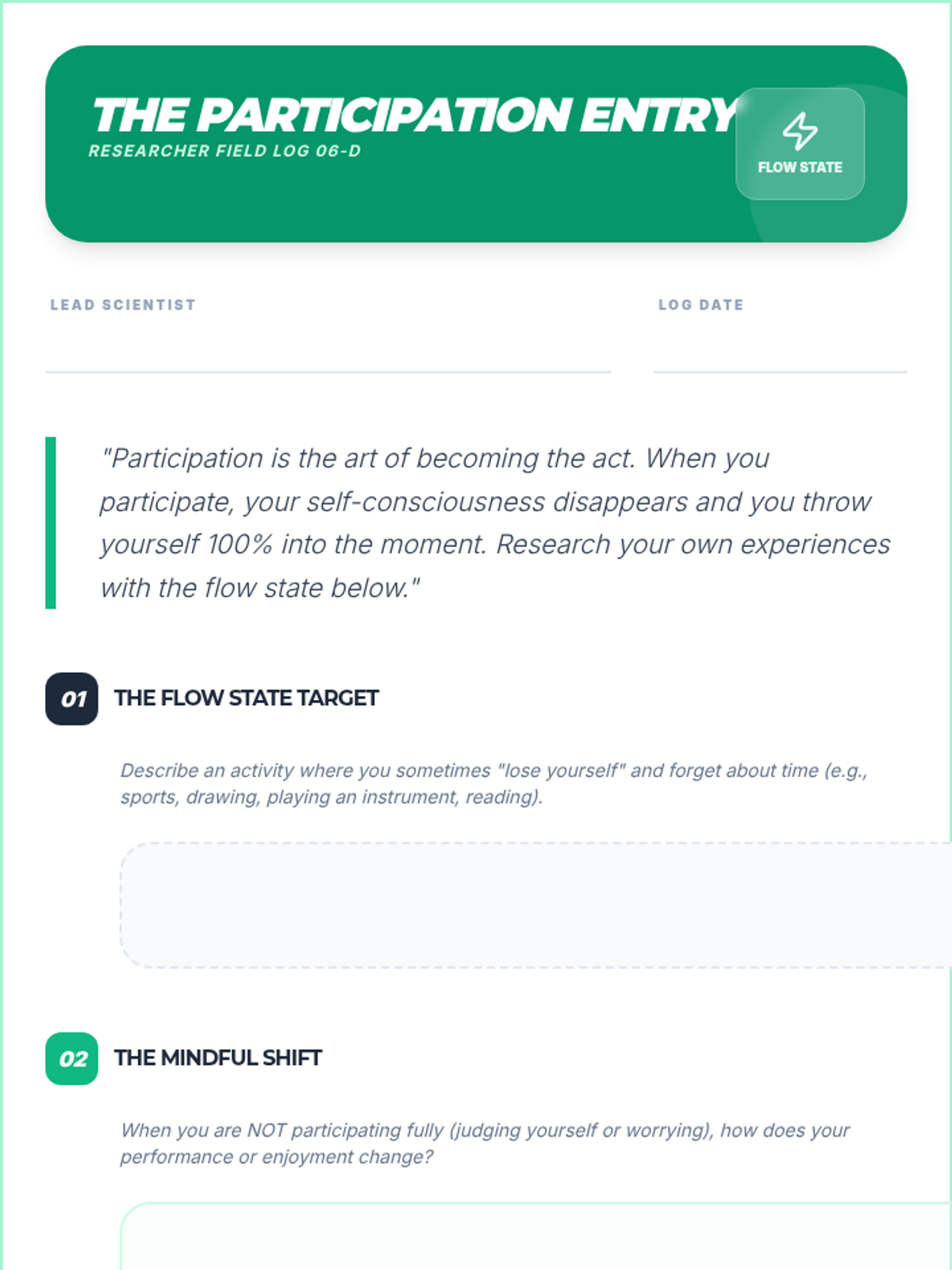
A lesson for grades 3-5 to teach the Three Mindfulness 'What' Skills: Observe (noticing without labels), Describe (using factual language), and Participate (fully engaging in an activity).
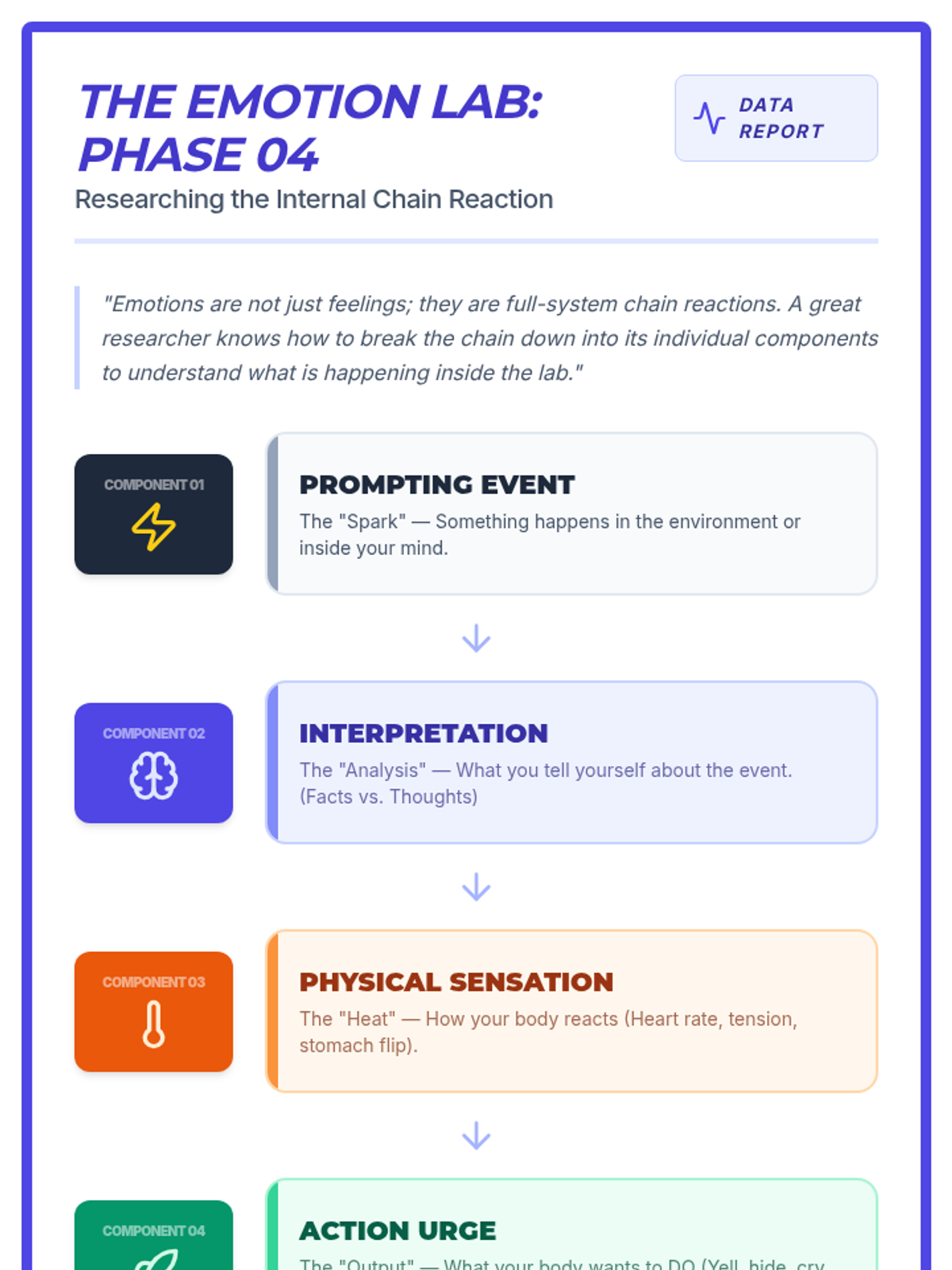
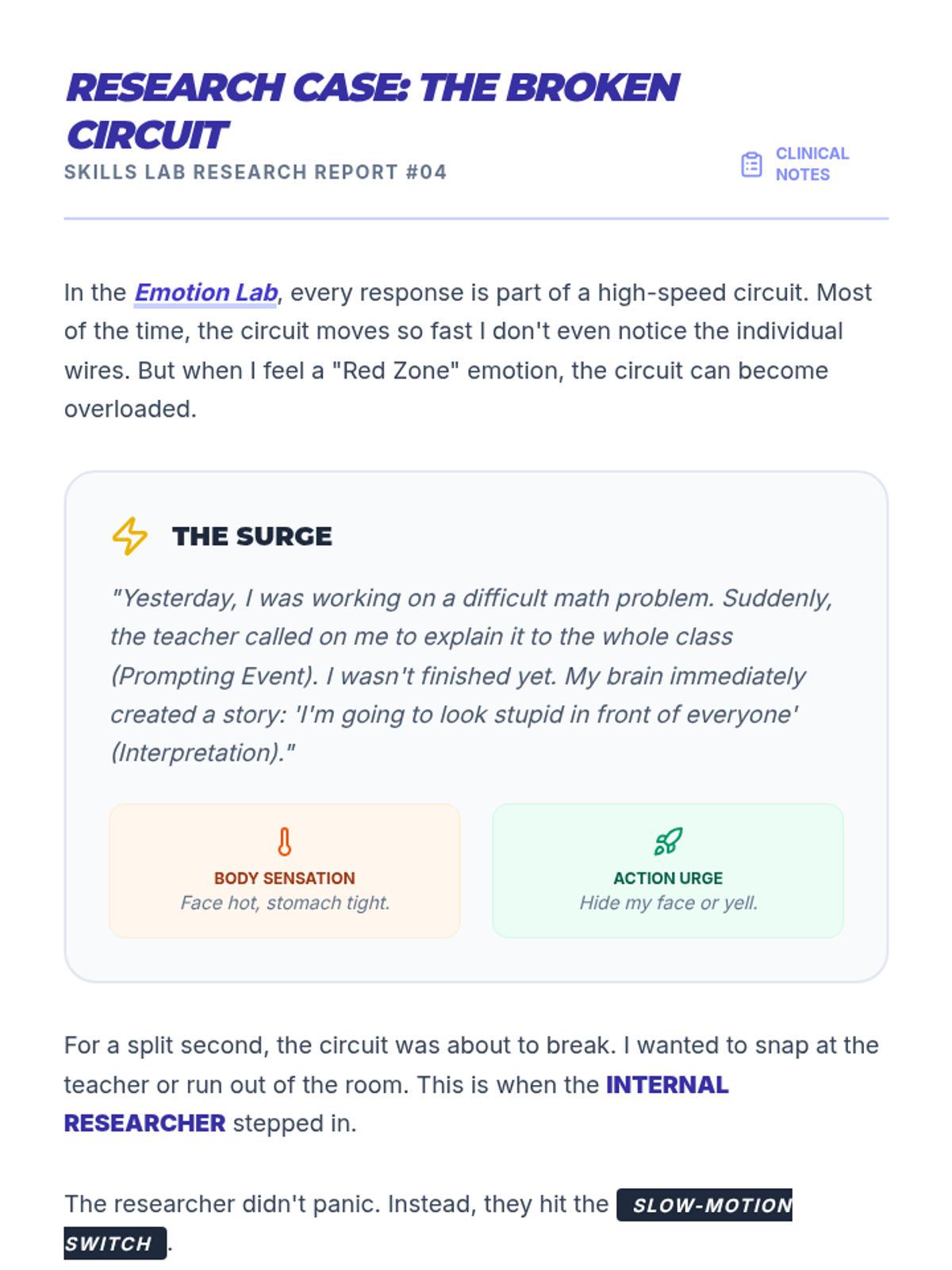
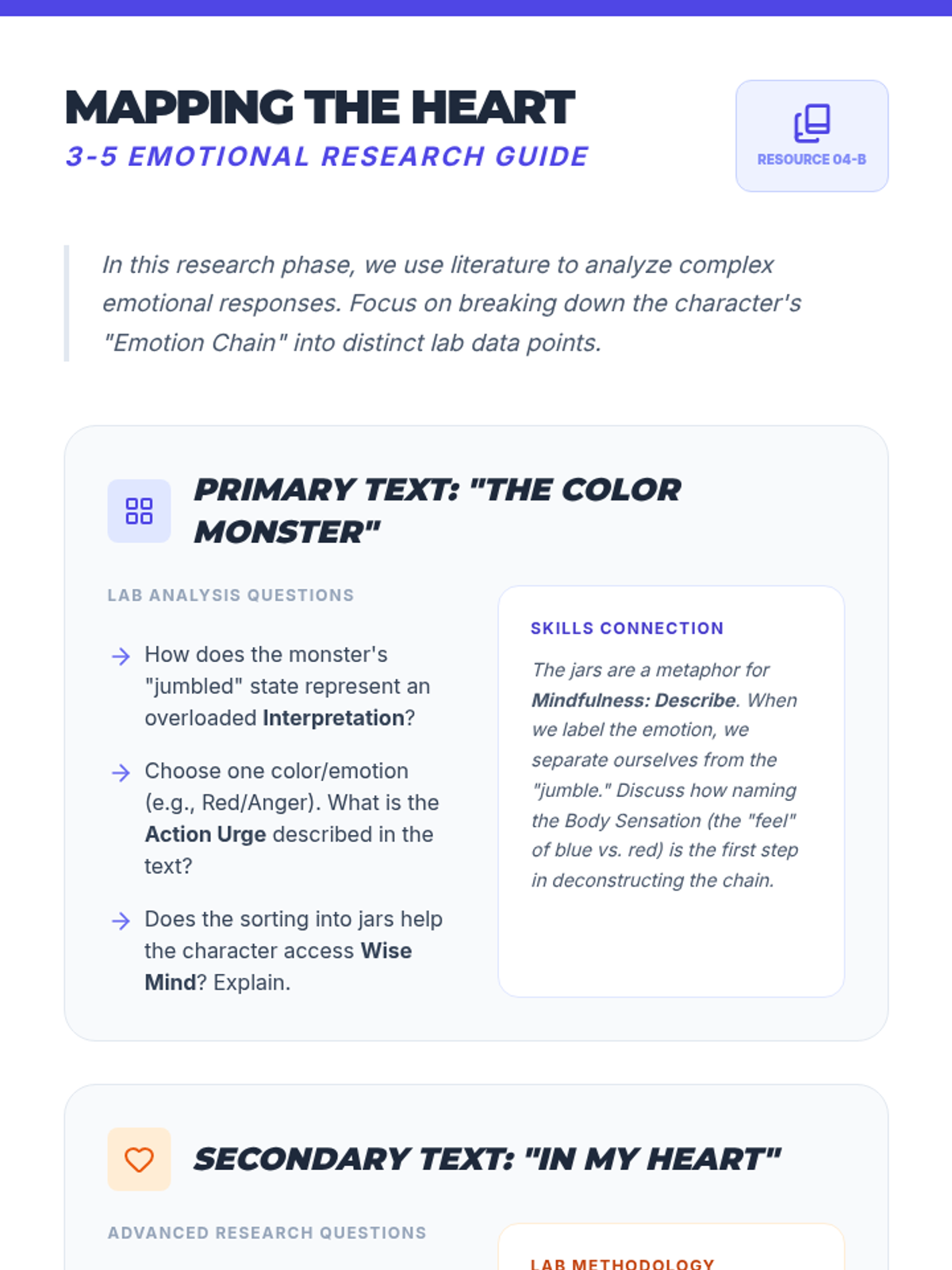
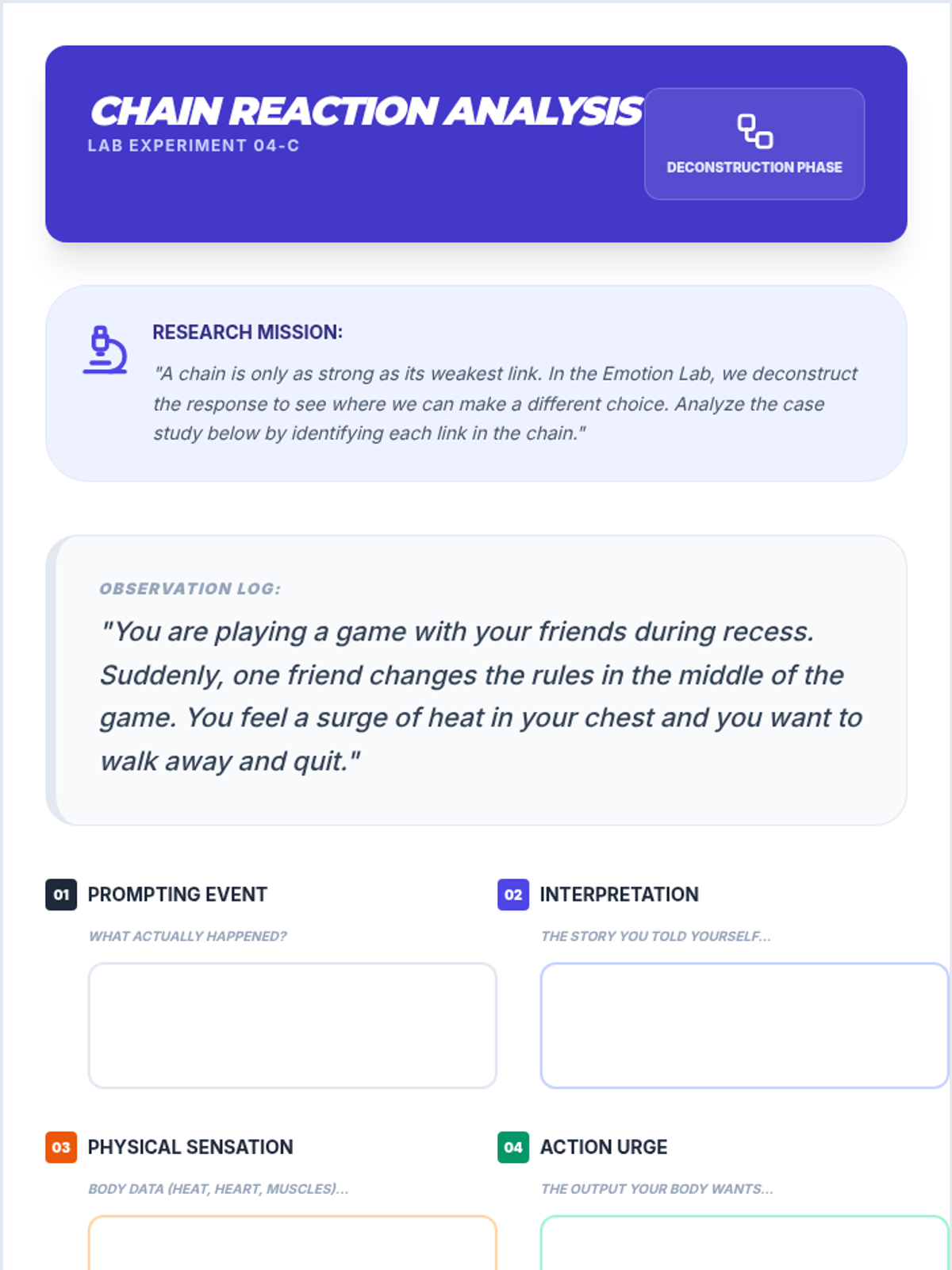
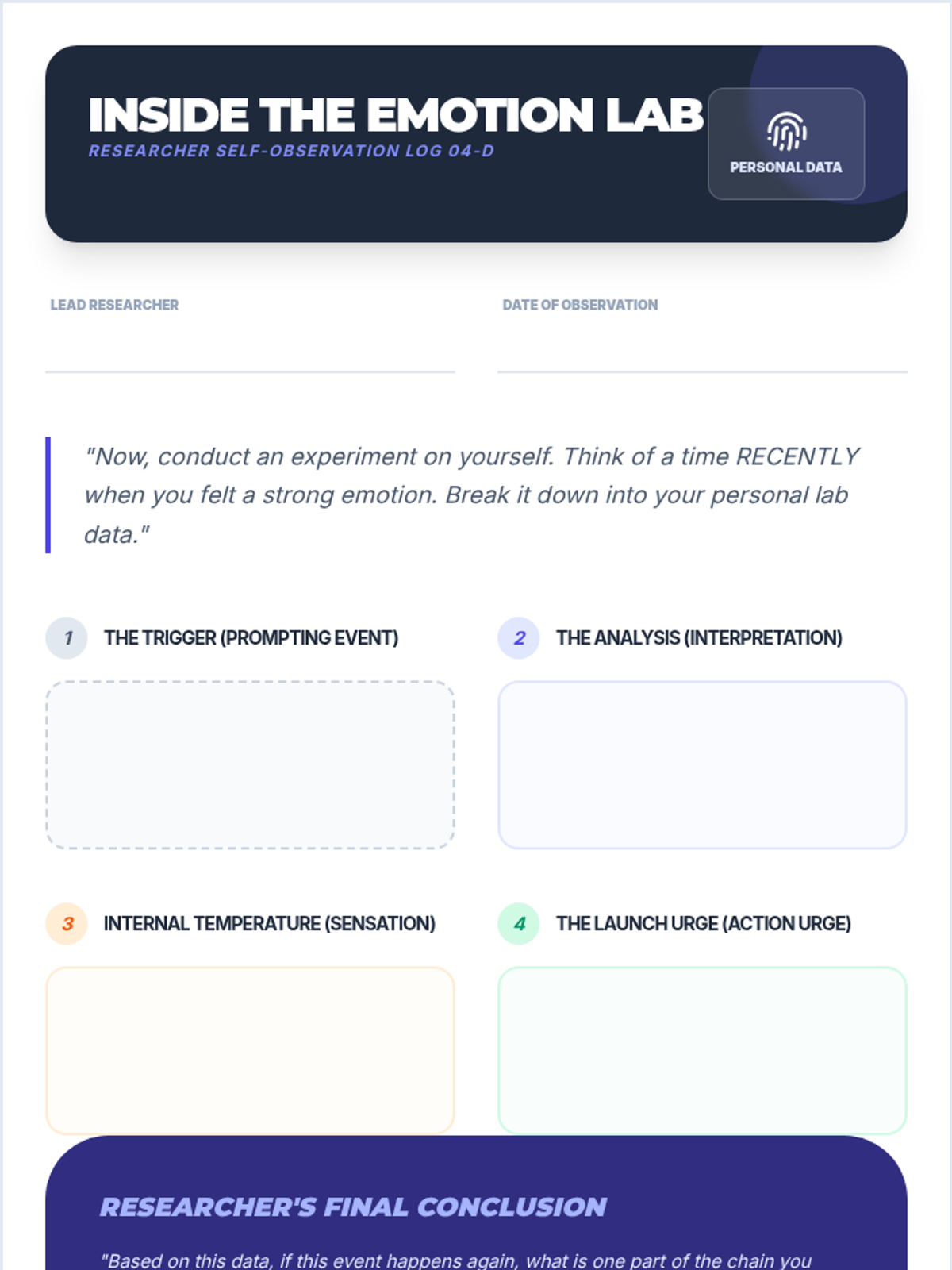
A sophisticated lesson for grades 3-5 students to break down the complex parts of an emotional response: the prompting event, thoughts/interpretations, body sensations, and action urges.