Root cause analysis and brainstorming techniques for everyday problem-solving. Equips learners with ethical frameworks and risk-benefit evaluation skills to predict consequences and make informed choices.
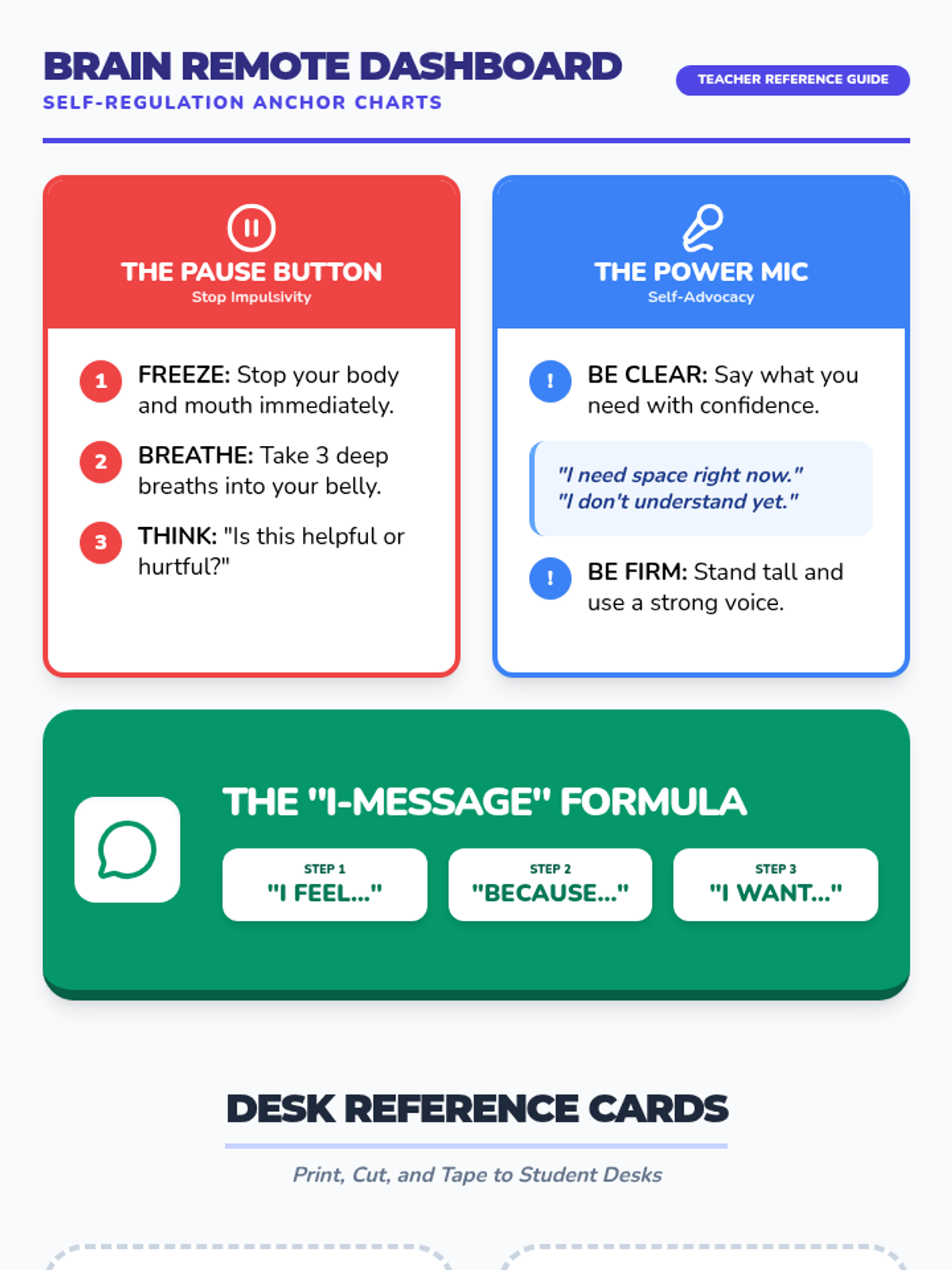
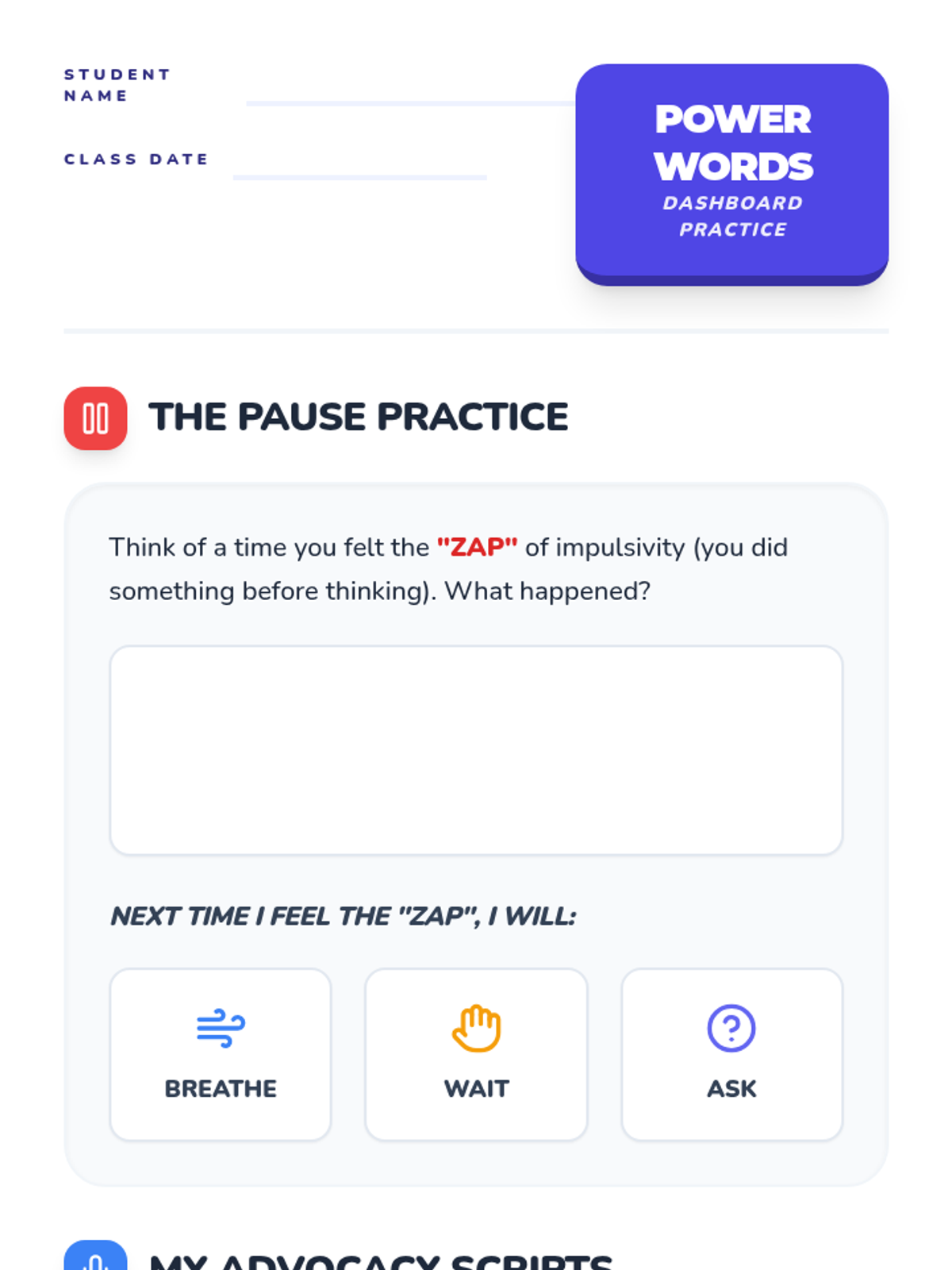
A comprehensive lesson exploring the 'Brain Remote' to manage impulsive urges and use 'Power Words' for self-advocacy and conflict resolution.
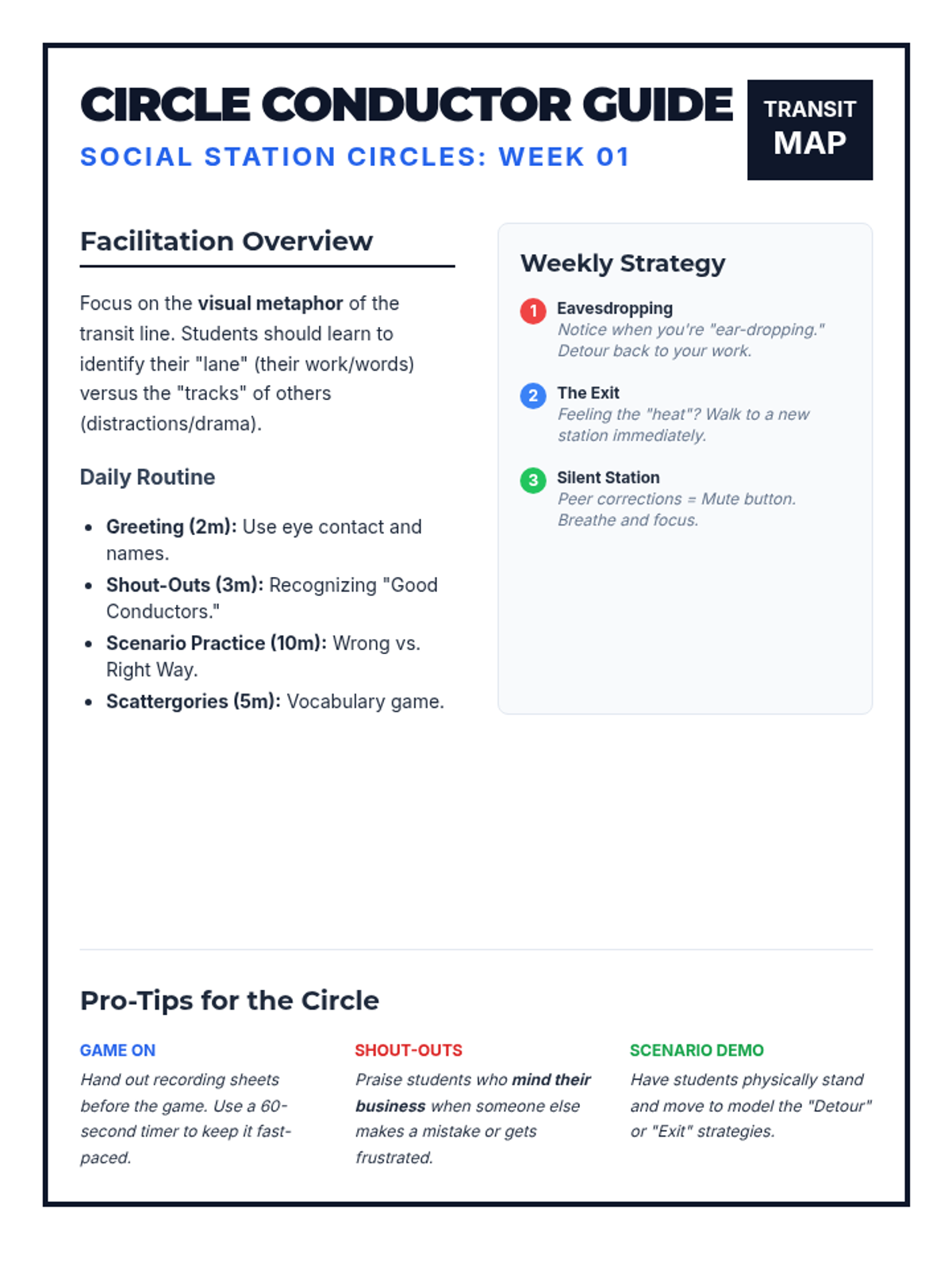
Day 5 covers staying focused and not contributing to classroom distractions.
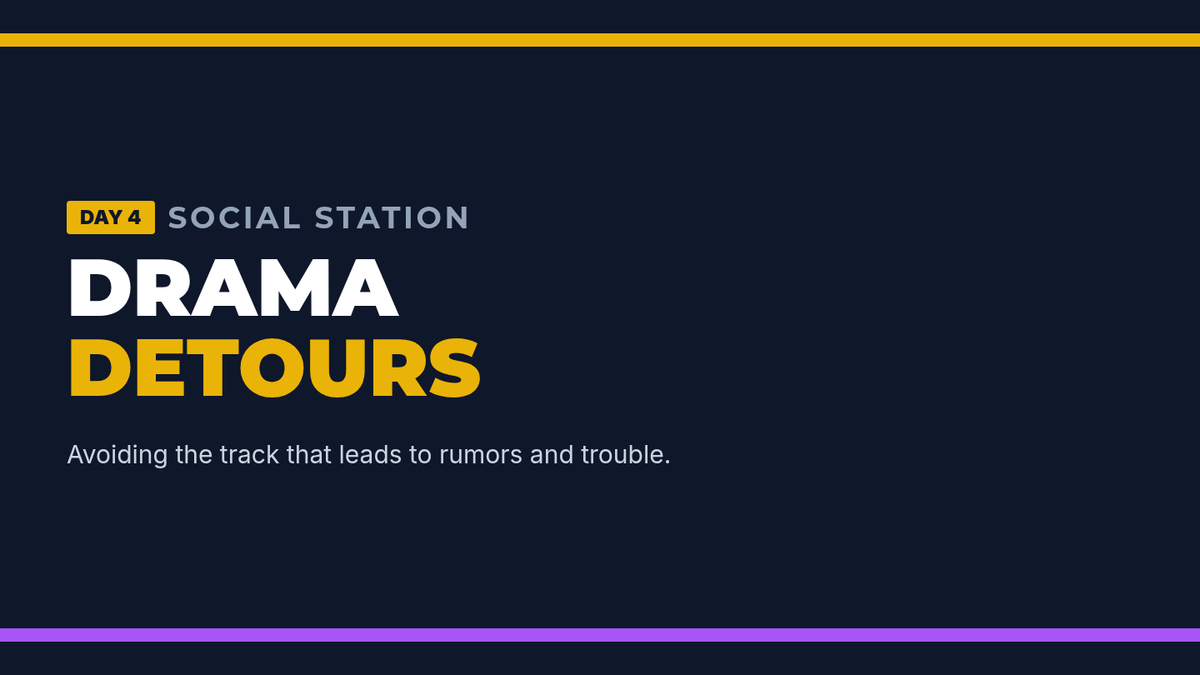
Day 4 teaches students how to avoid drama and rumors by taking a 'detour'.
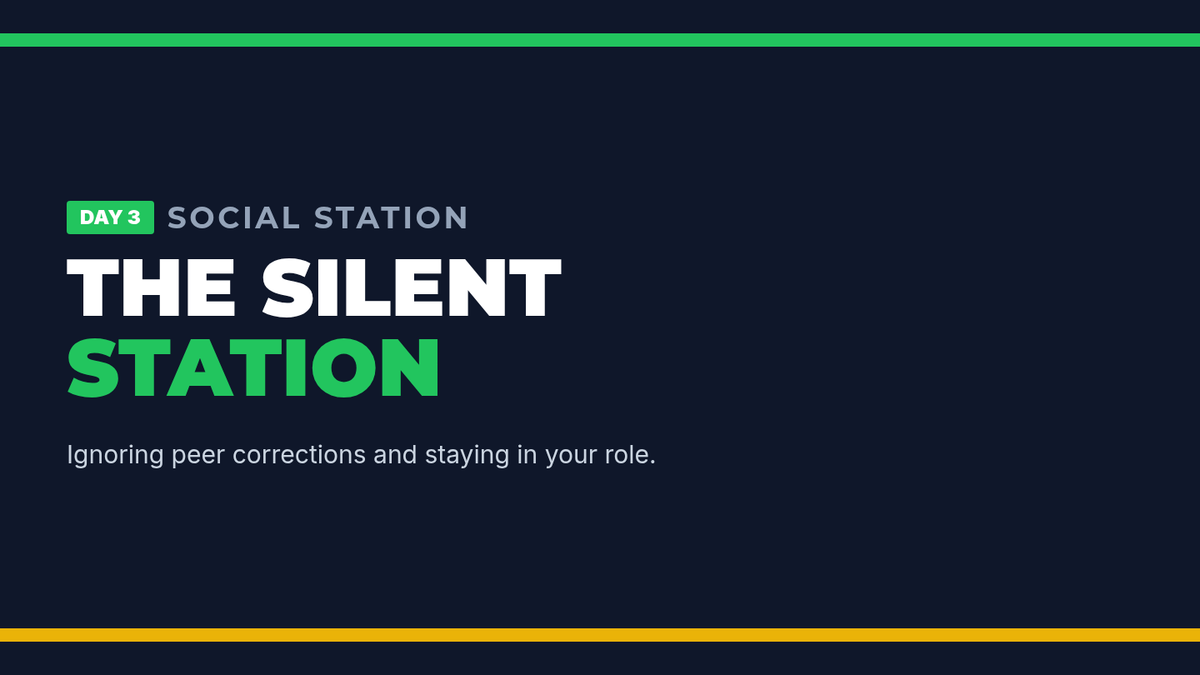
Day 3 addresses how to ignore peer corrections and focus on one's own work.
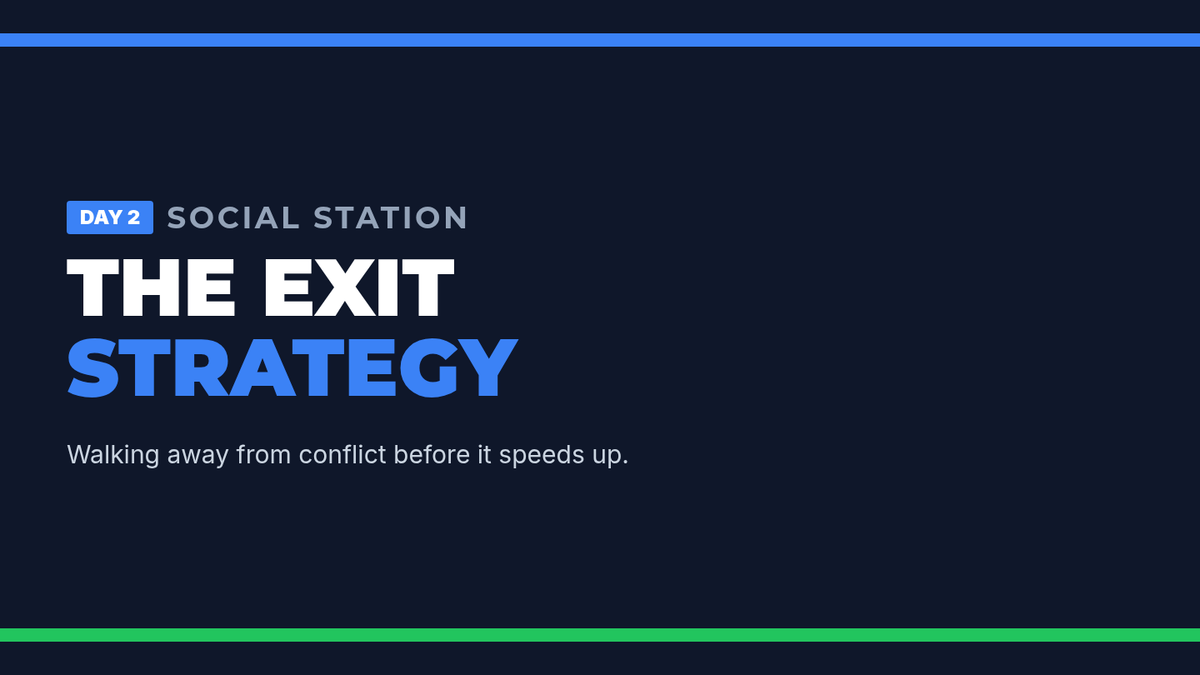
Day 2 focuses on the 'exit strategy' for walking away from rising conflict.
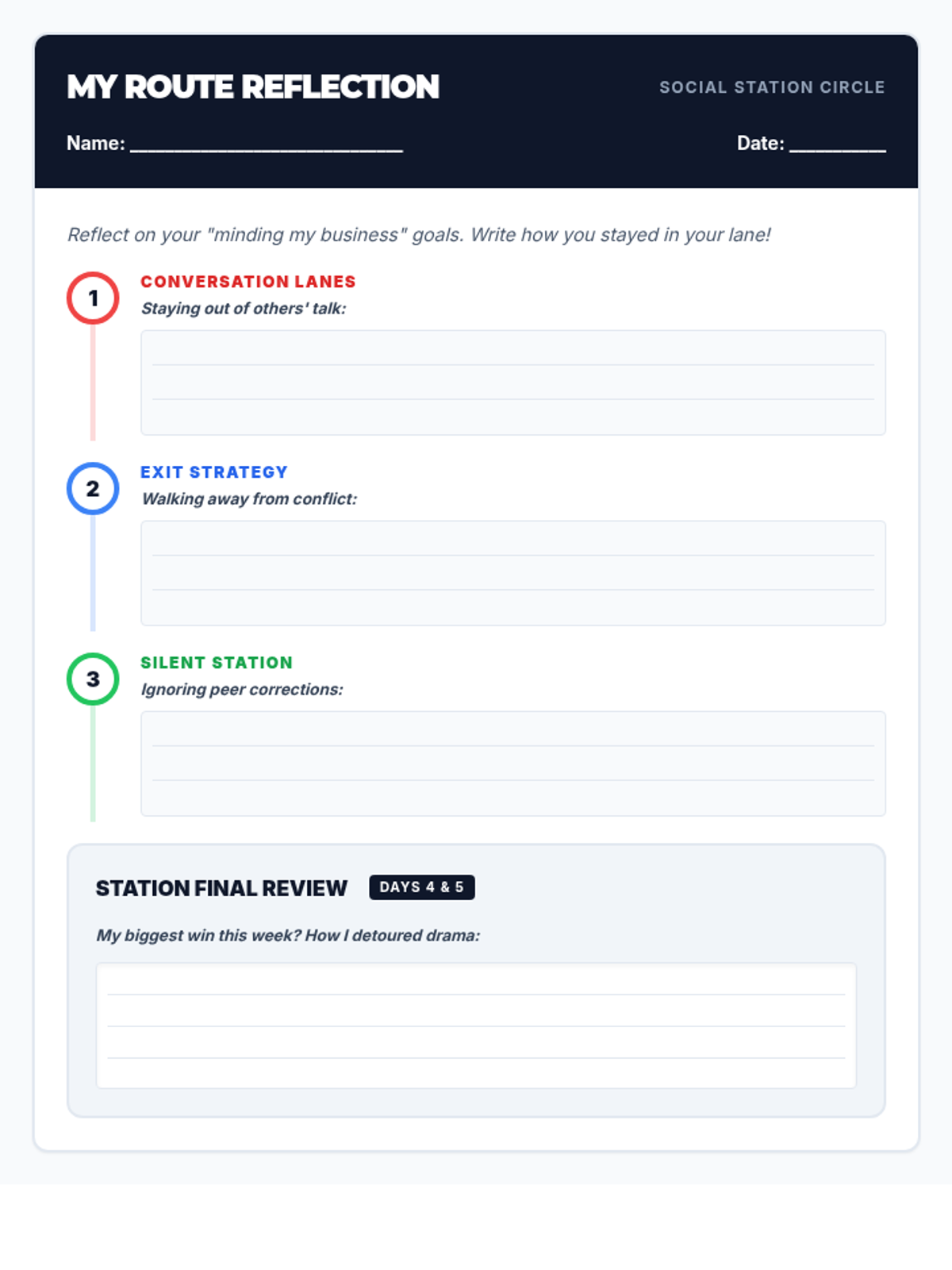
Day 1 focuses on staying out of others' conversations and 'ear-dropping' awareness.
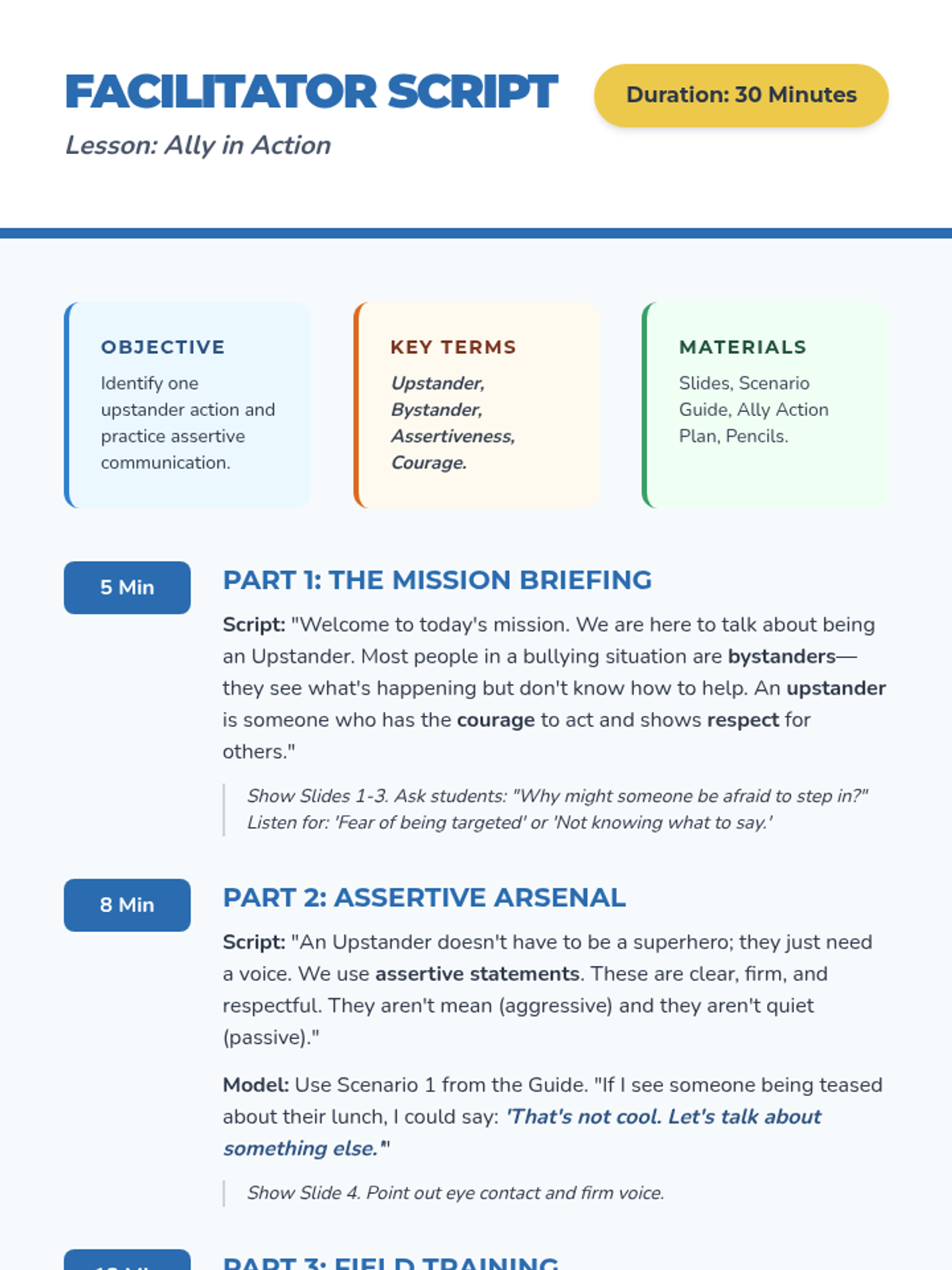
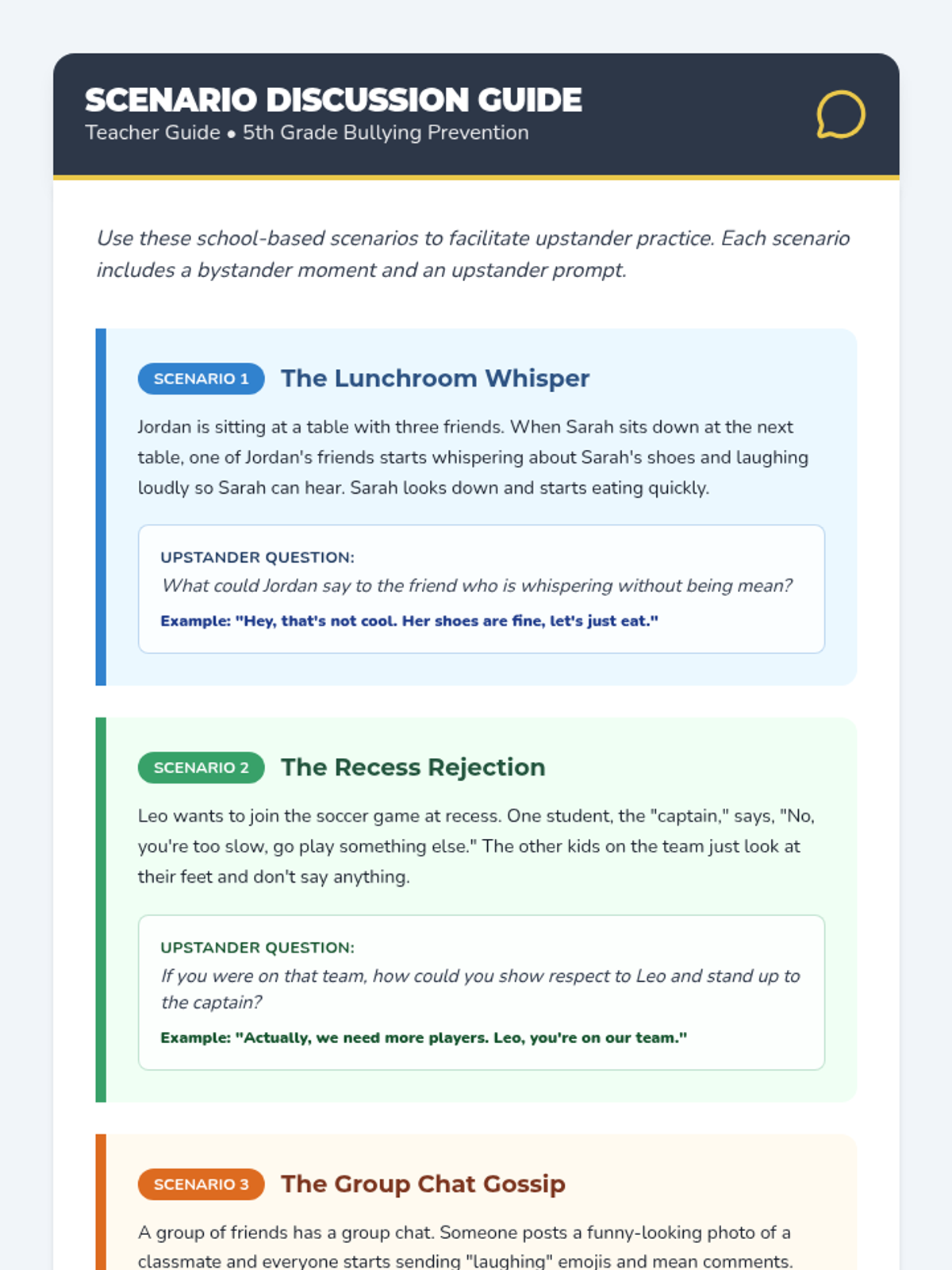
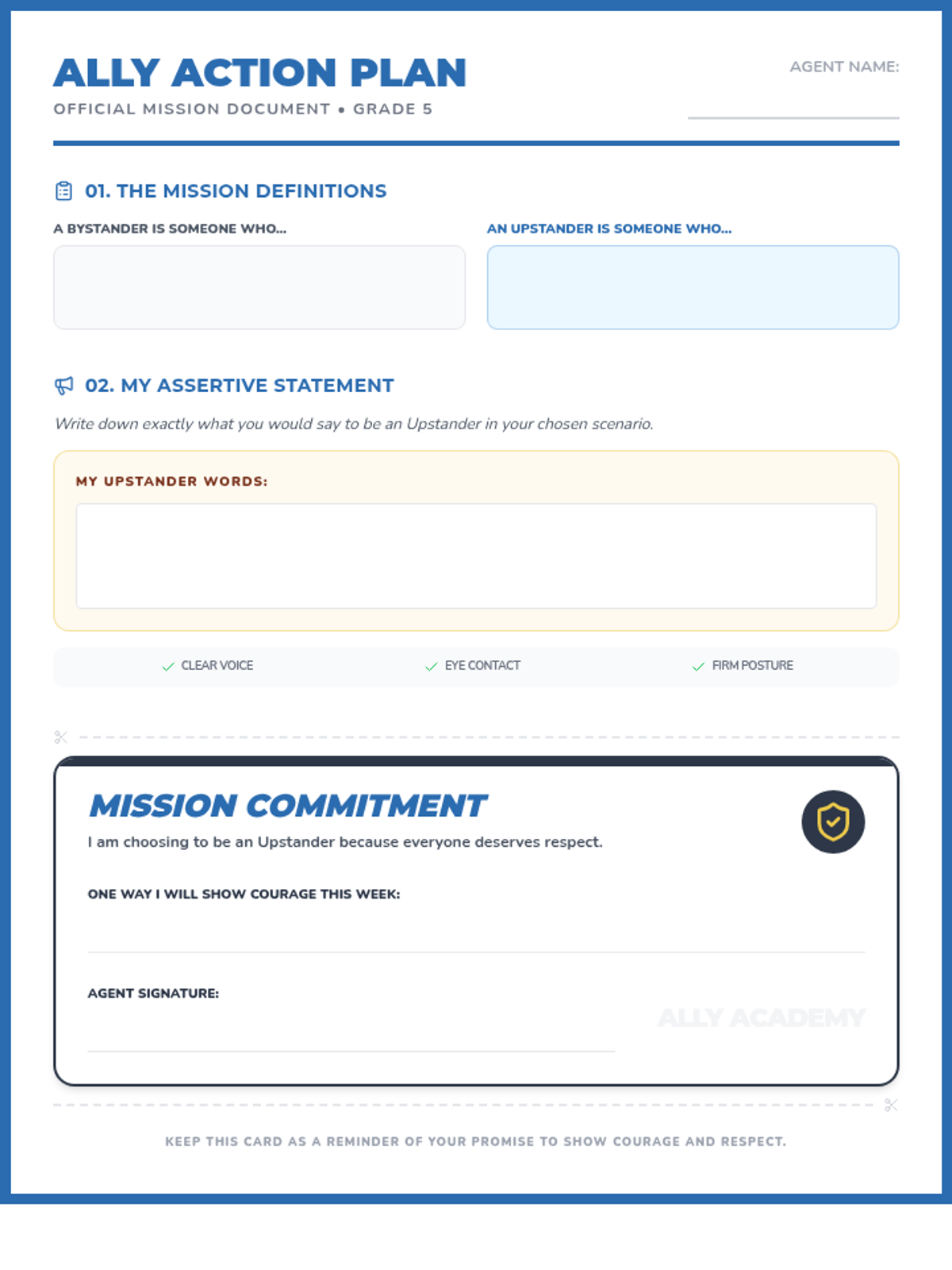
A 30-minute lesson for 5th graders focused on moving from a bystander to an upstander. Students learn to use assertive statements and create a personal action plan for showing courage and respect in bullying situations.
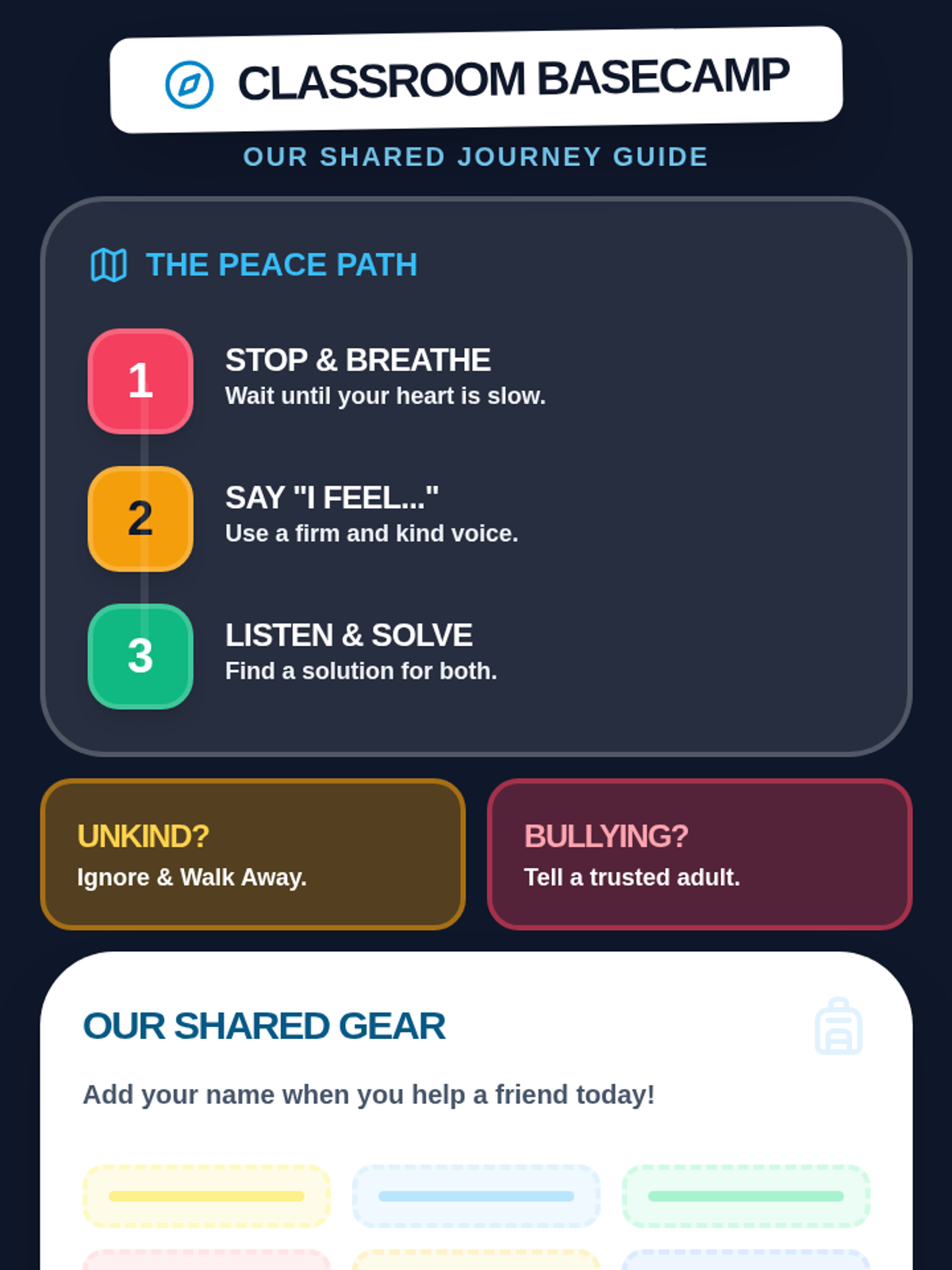
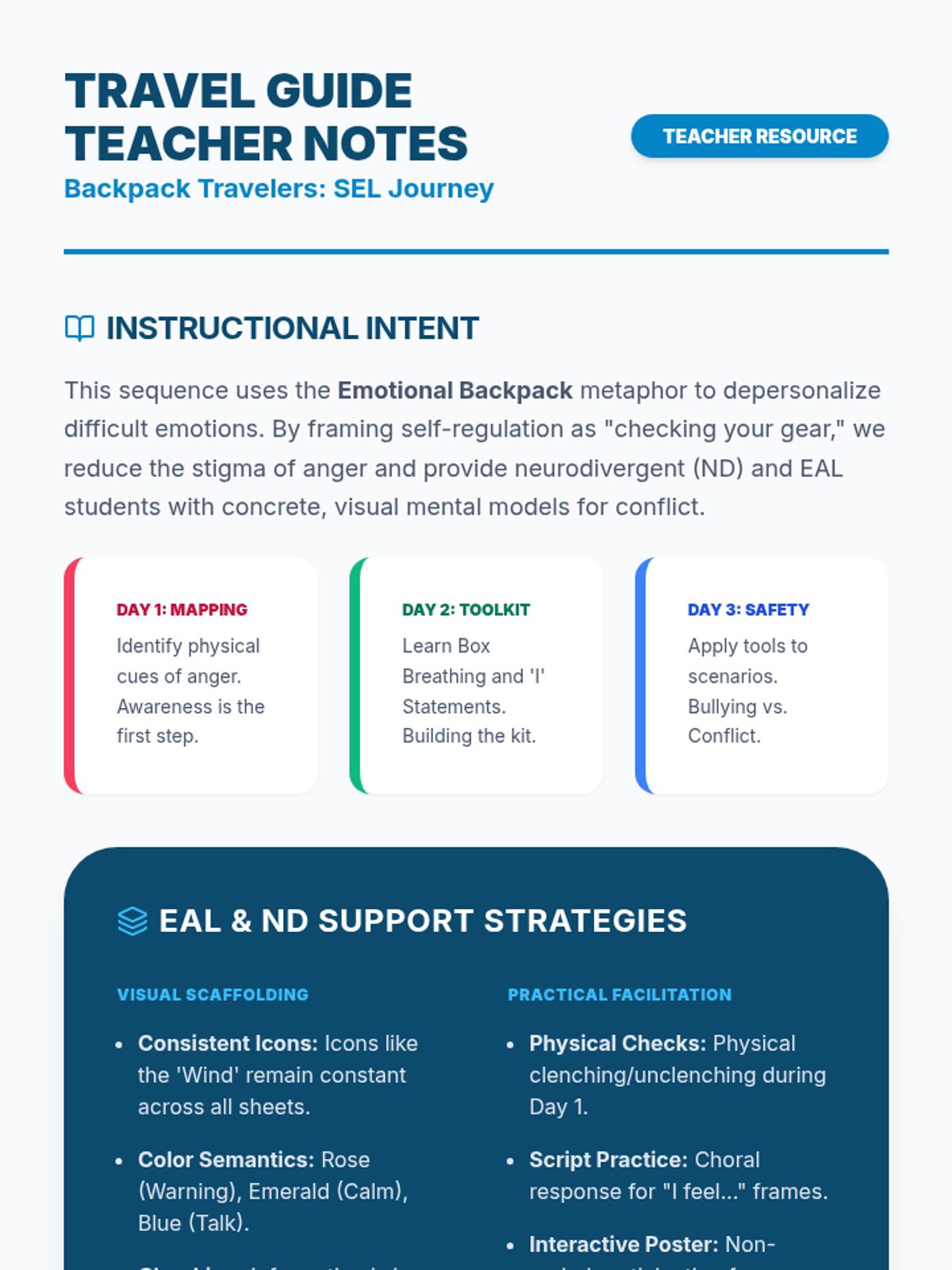
Applies regulation tools to social situations, including conflict resolution steps and handling unkind behavior or bullying.
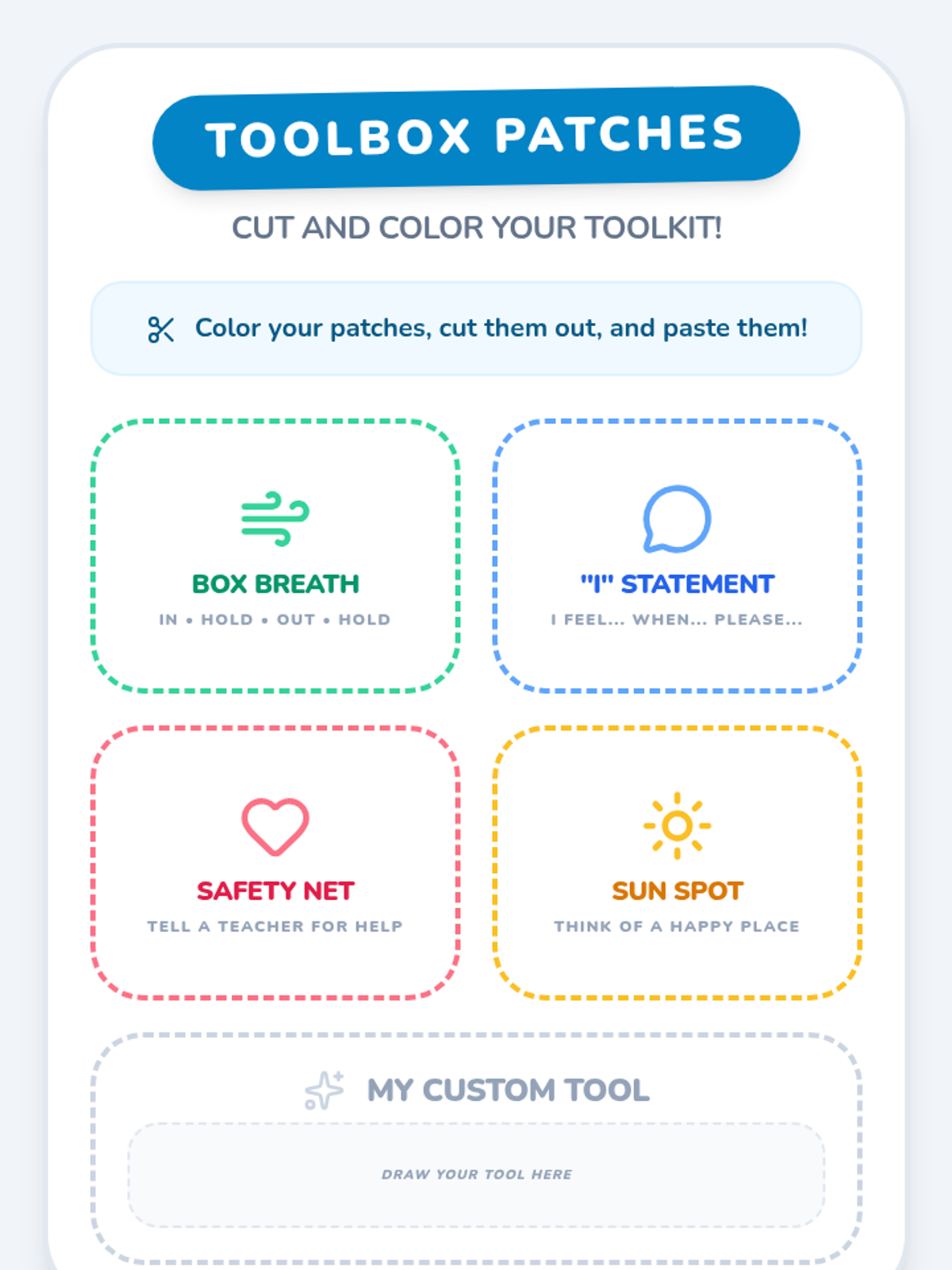
Focuses on practical tools for regulation: deep breathing, mindfulness, and the 'I' Statement tool.
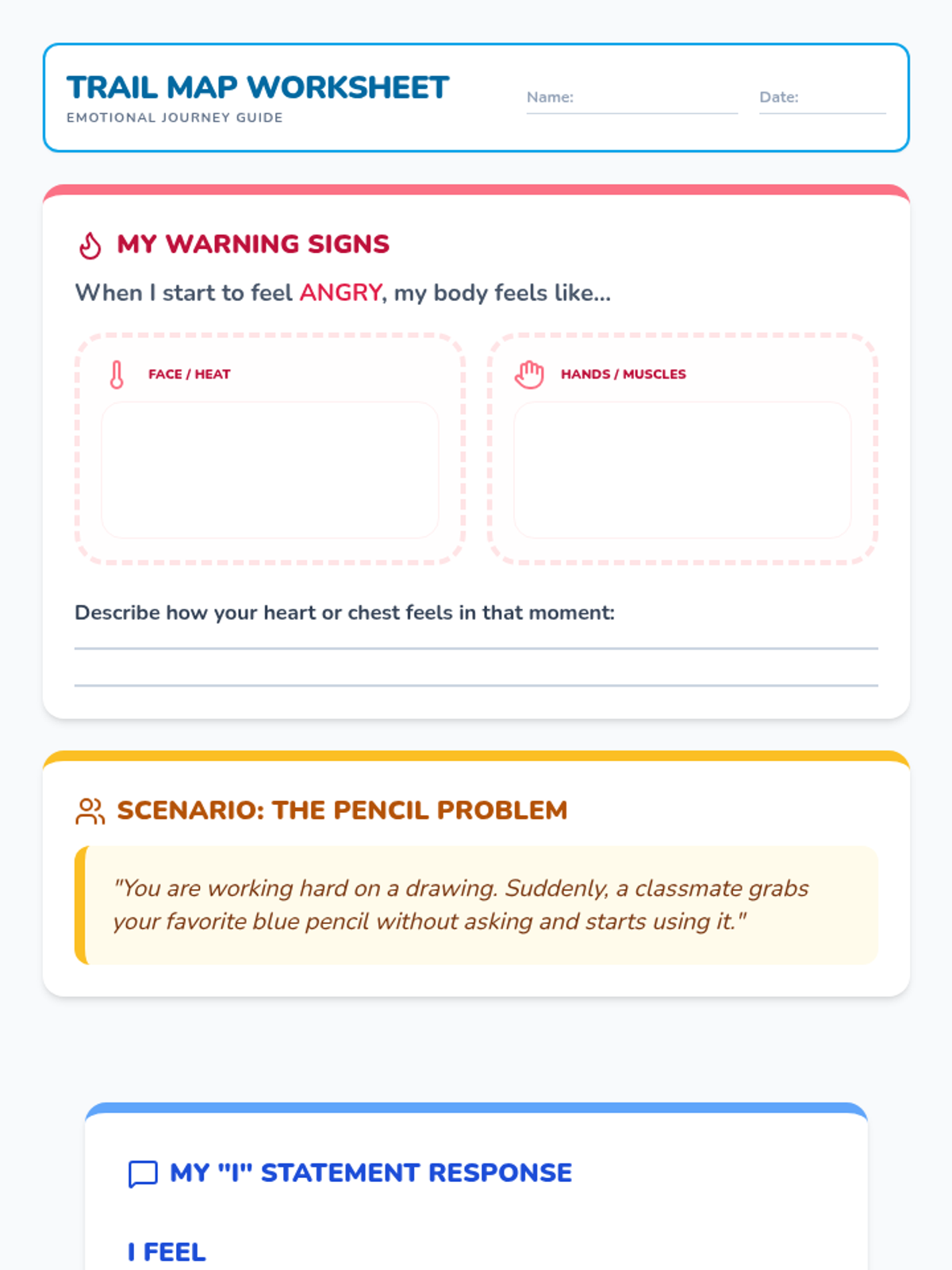
Students learn to identify physical signs of anger and use the 'Emotional Backpack' metaphor to understand that everyone carries feelings.
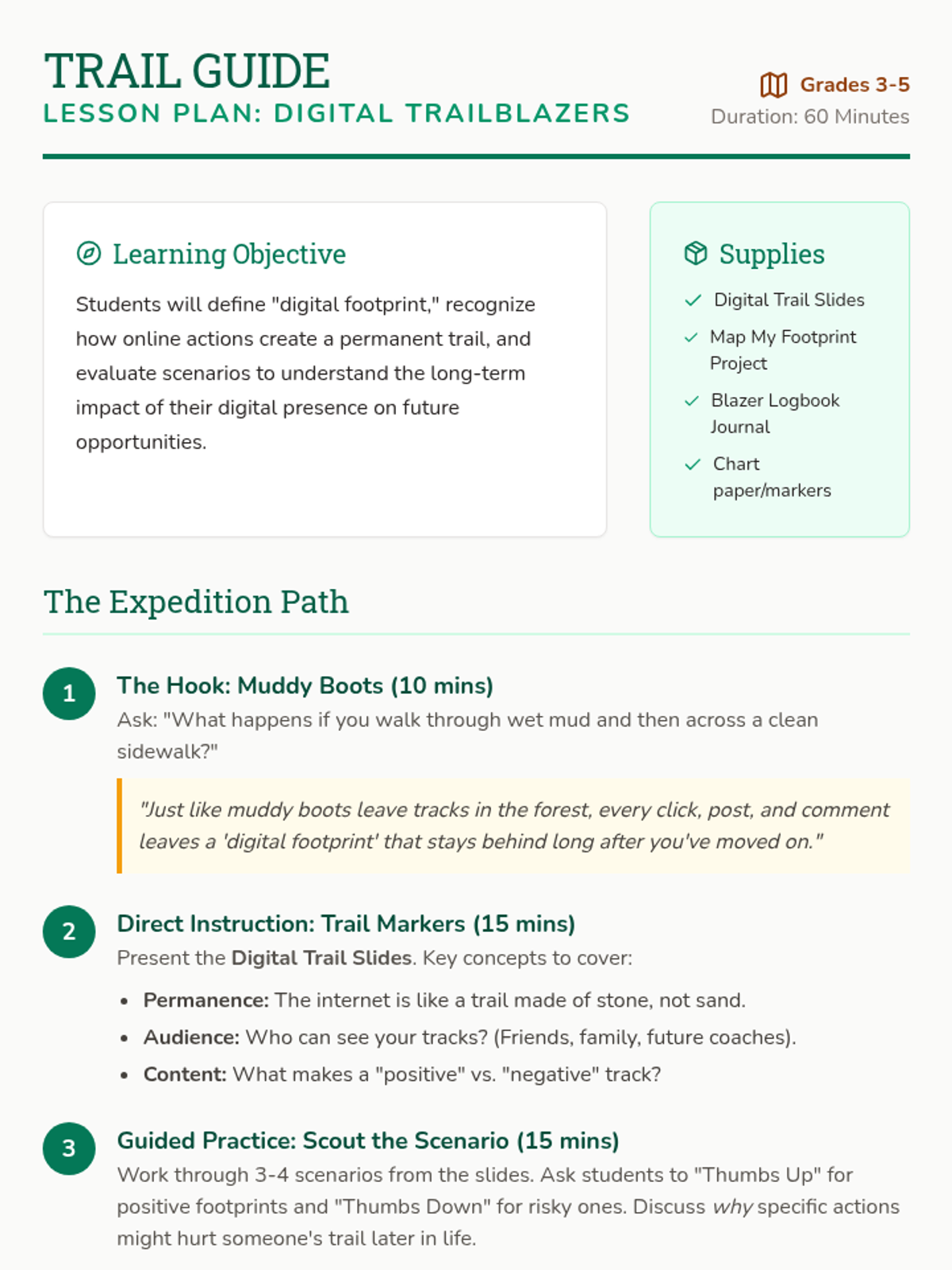
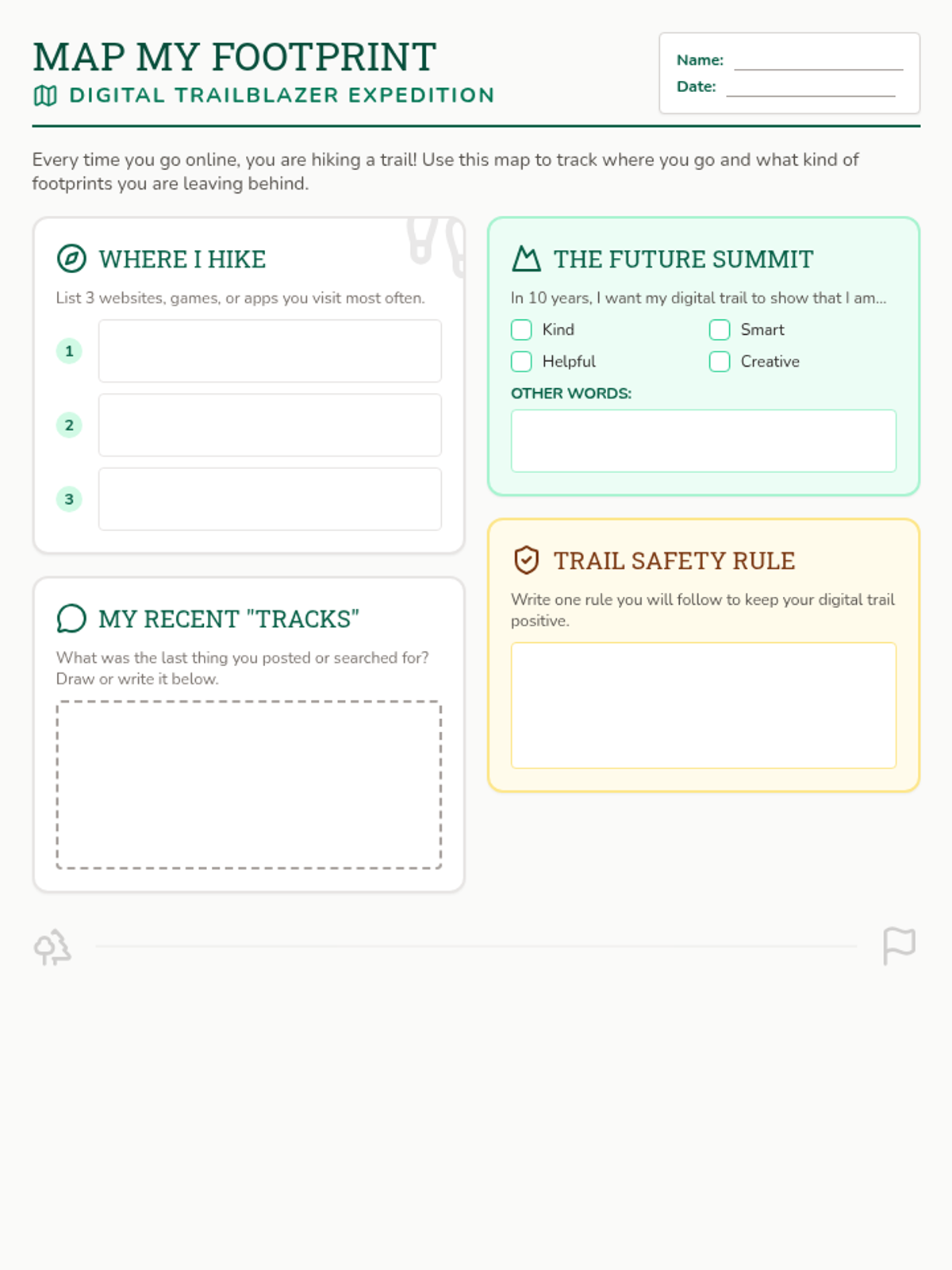
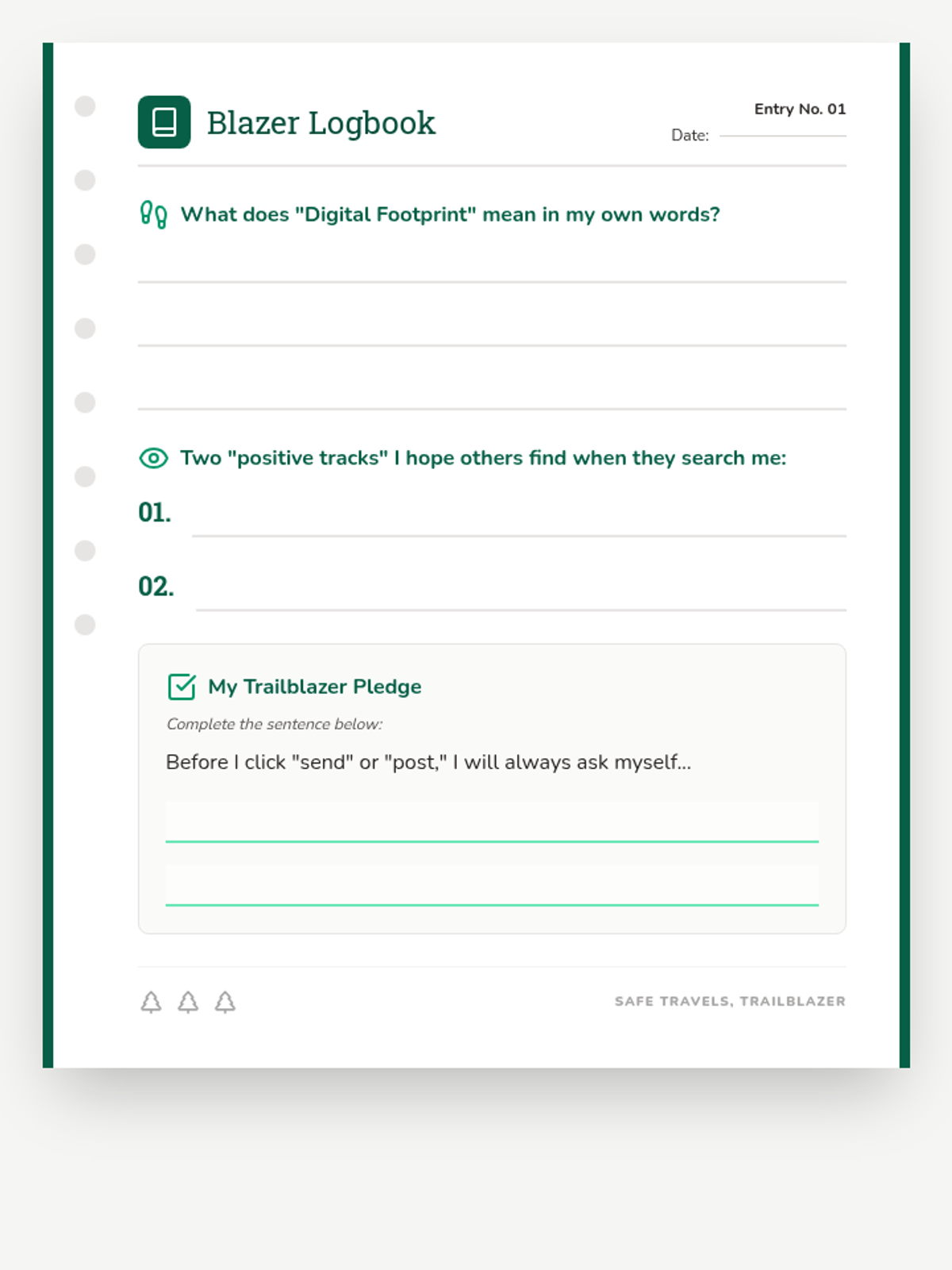
A lesson for grades 3-5 on digital footprints, using a wilderness trail analogy to explore how online actions leave lasting marks and affect future opportunities.
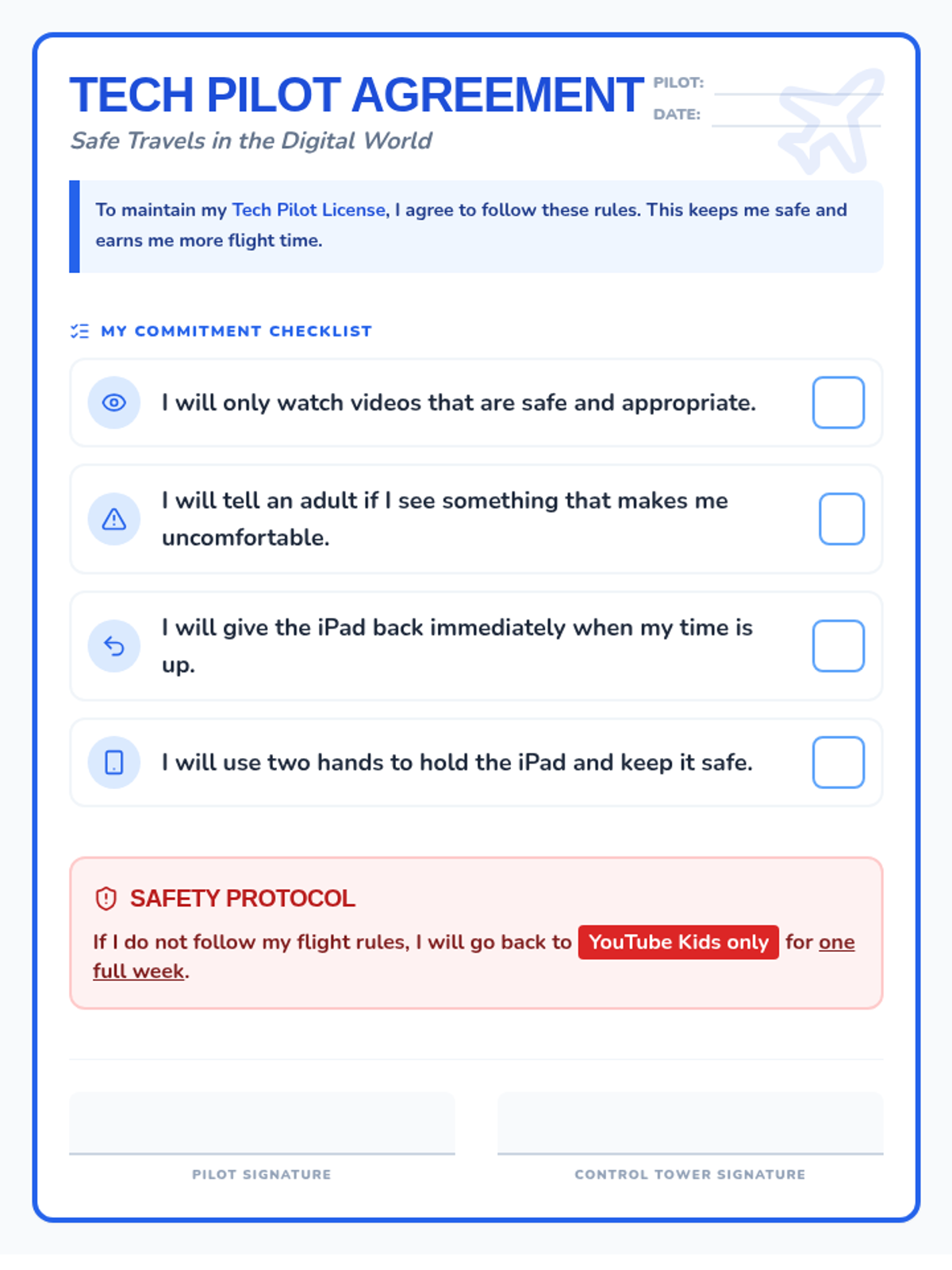
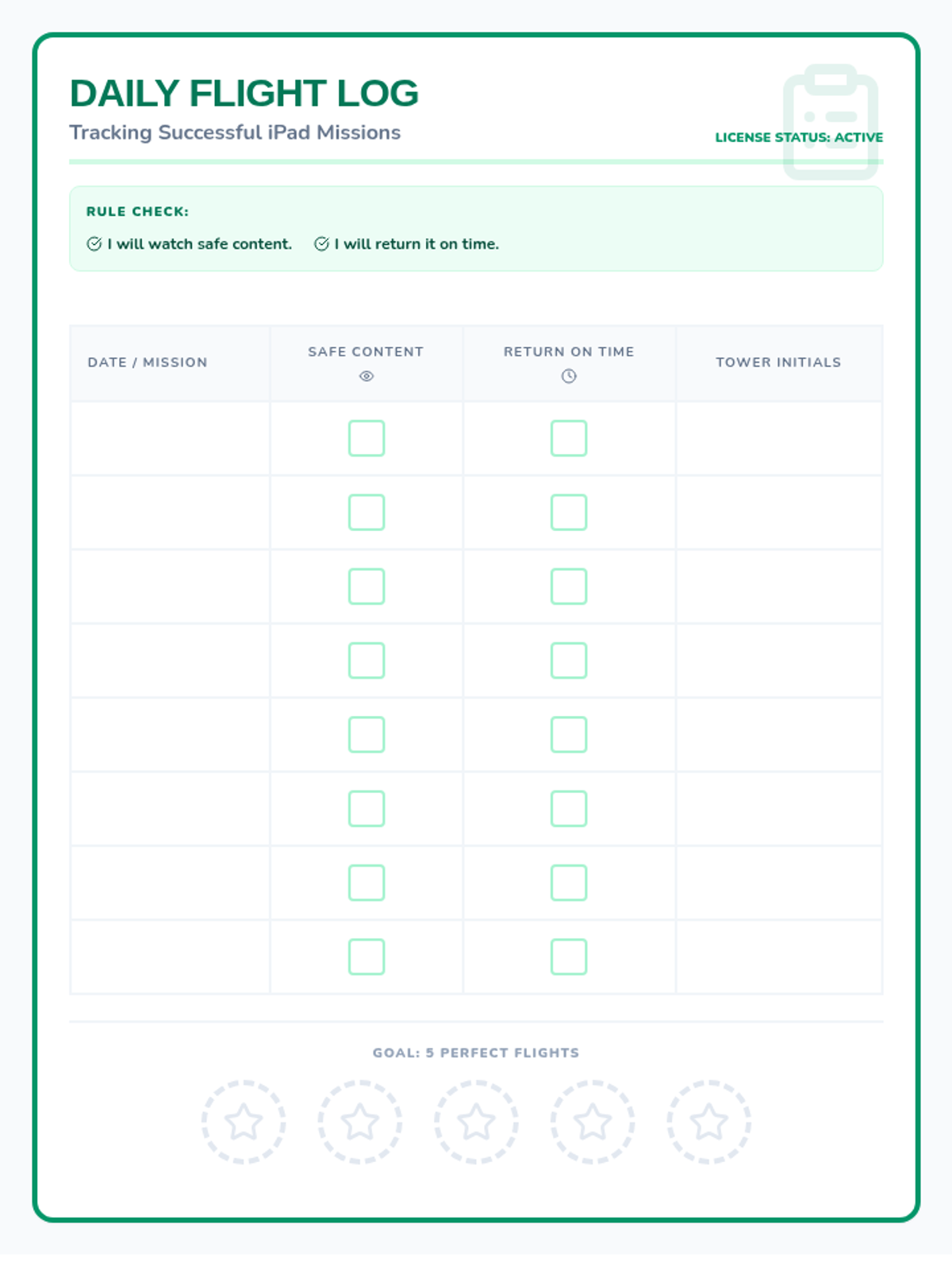
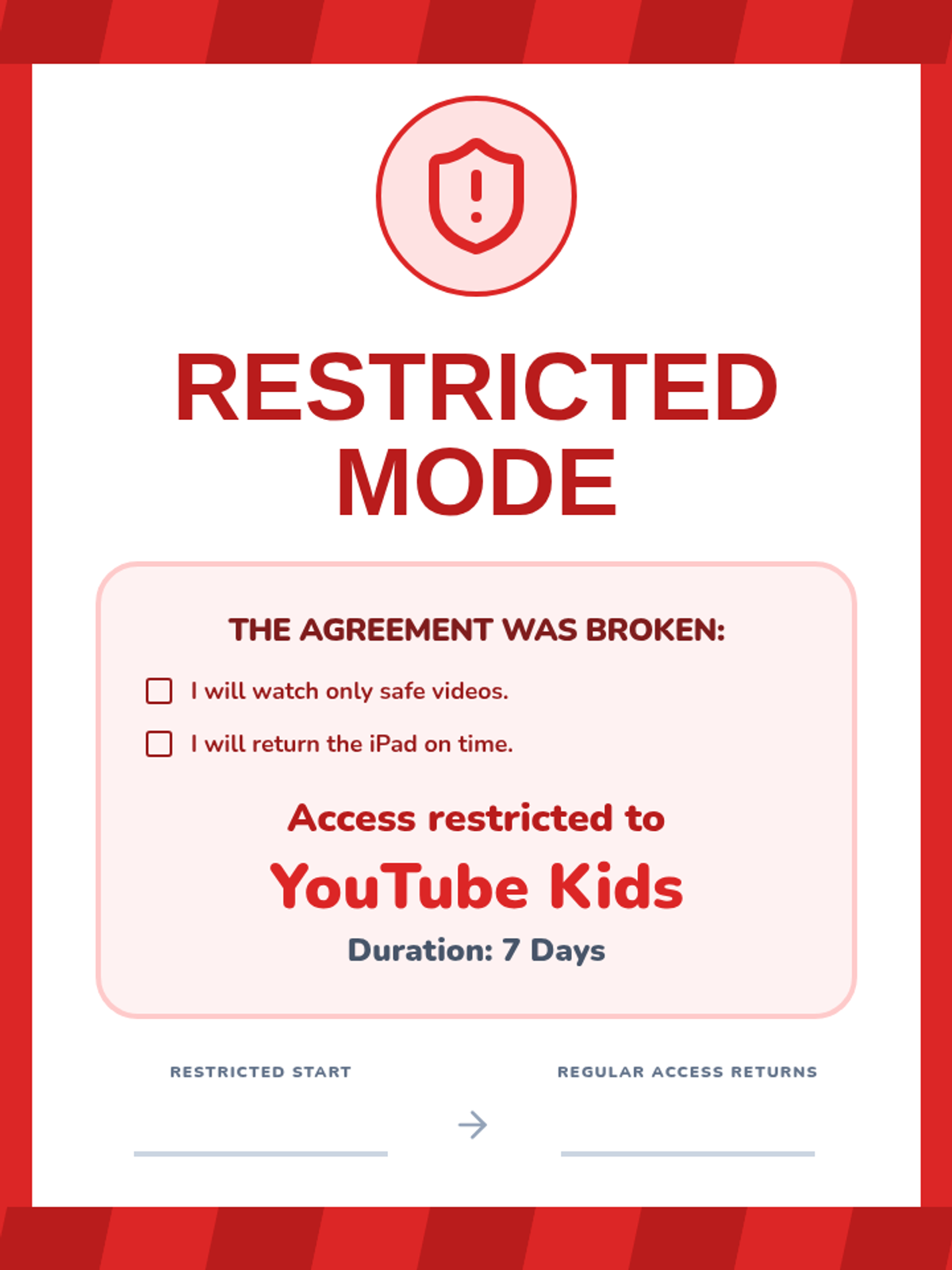
A lesson focused on establishing clear boundaries and accountability for iPad and YouTube usage, using a 'Tech Pilot' theme to frame digital responsibility.
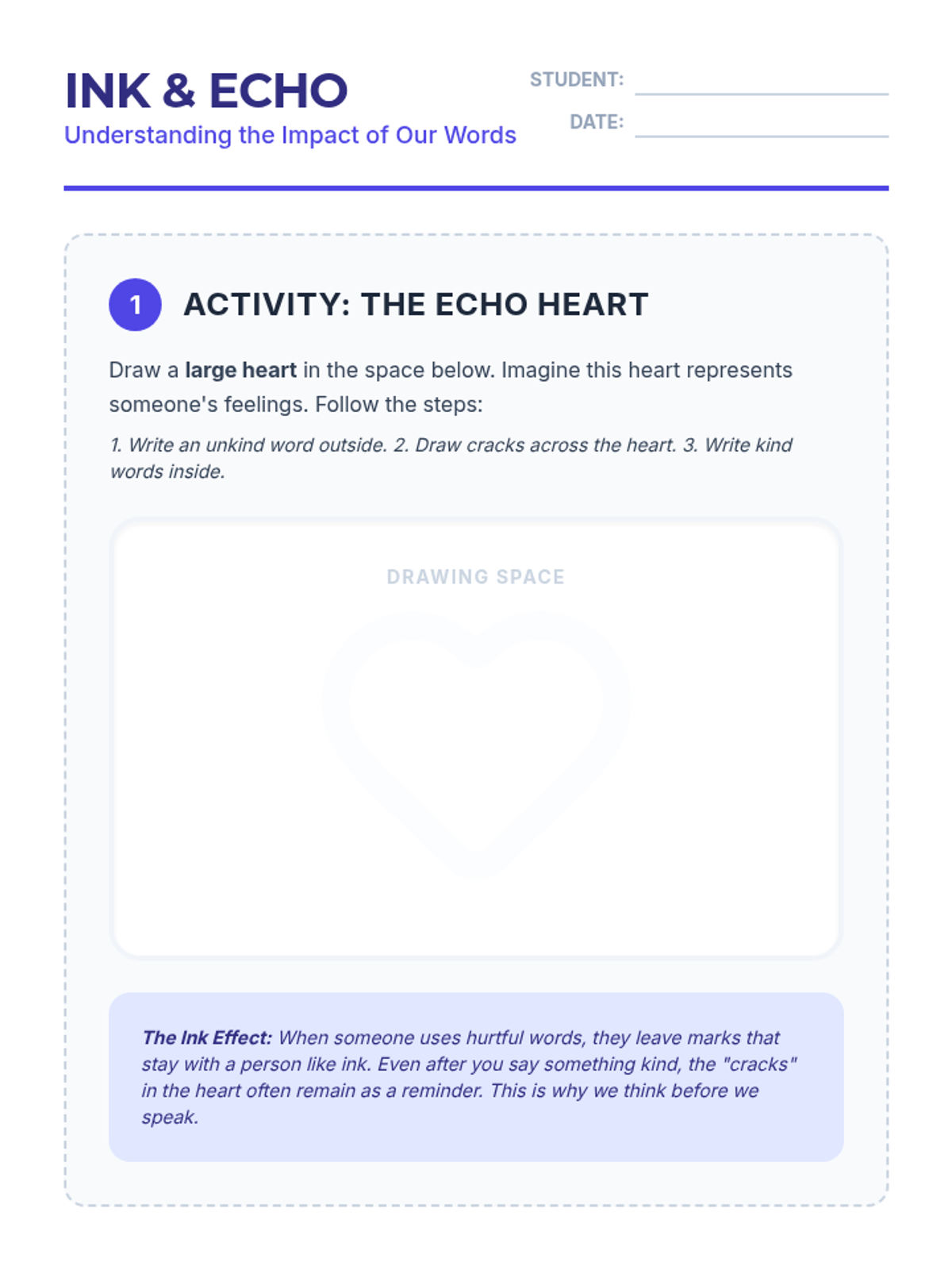
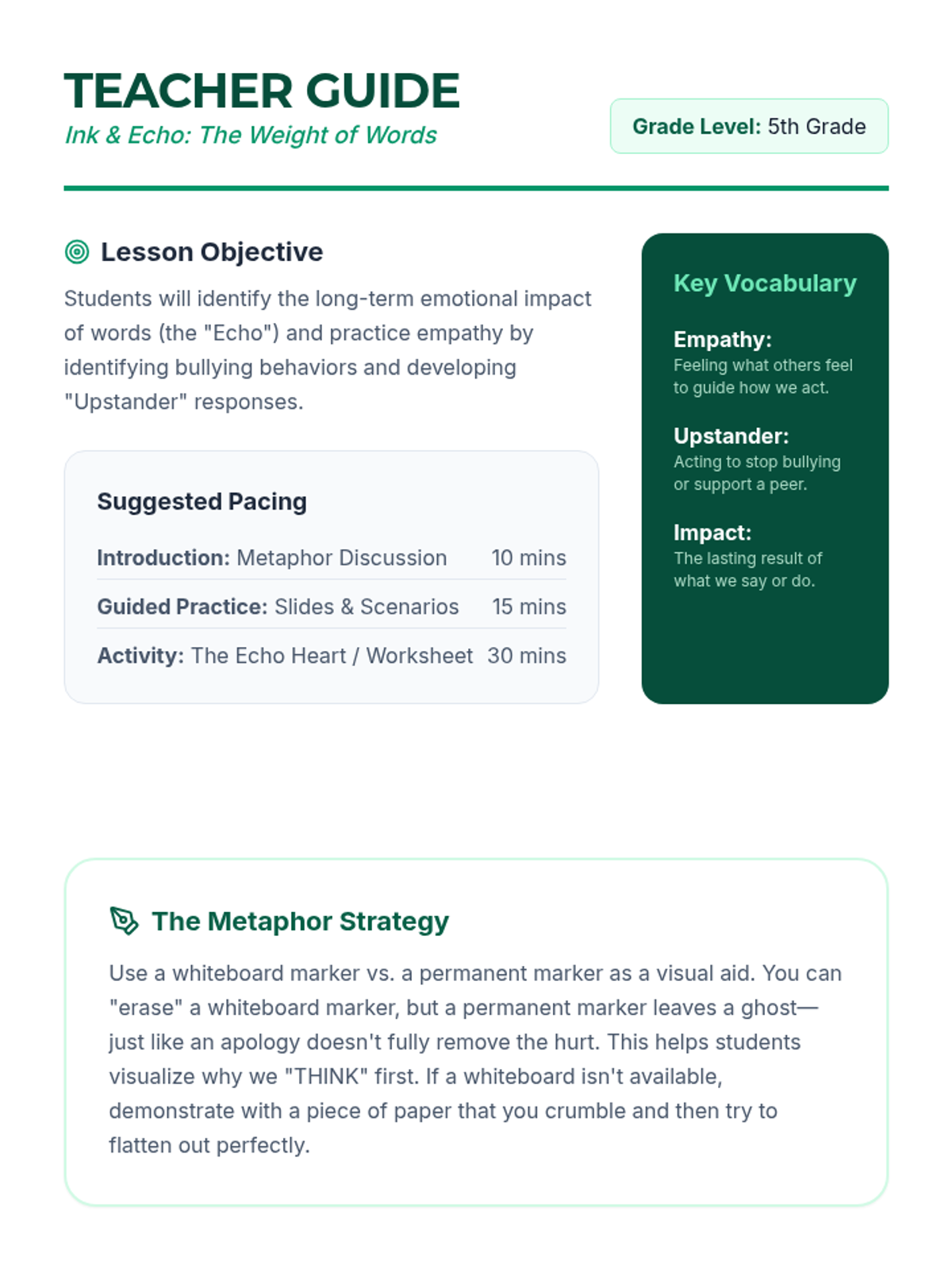
A social-emotional learning lesson for 5th graders focusing on the lasting impact of words, fostering empathy, and addressing bullying through the 'Ink and Echo' metaphor.
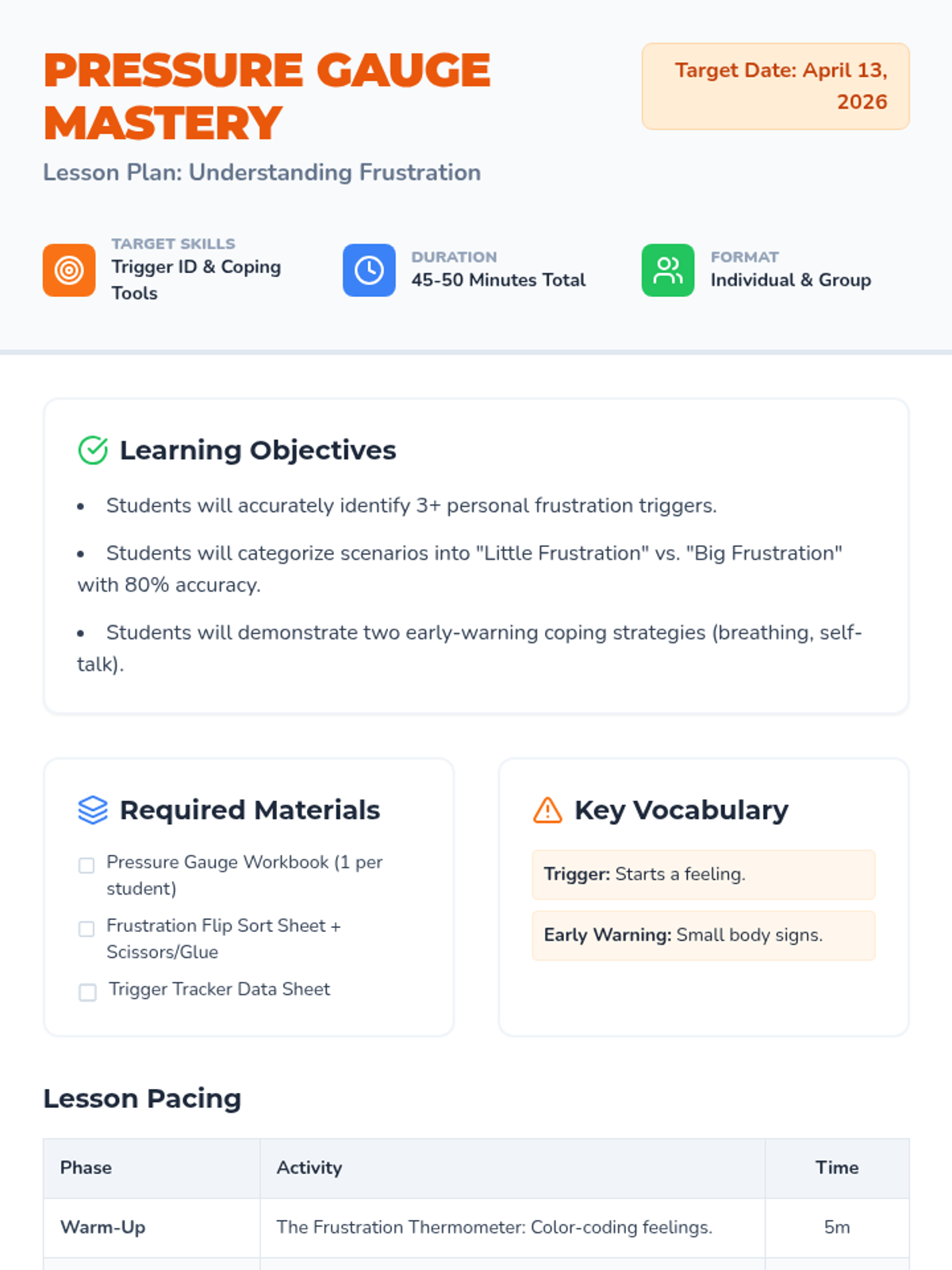
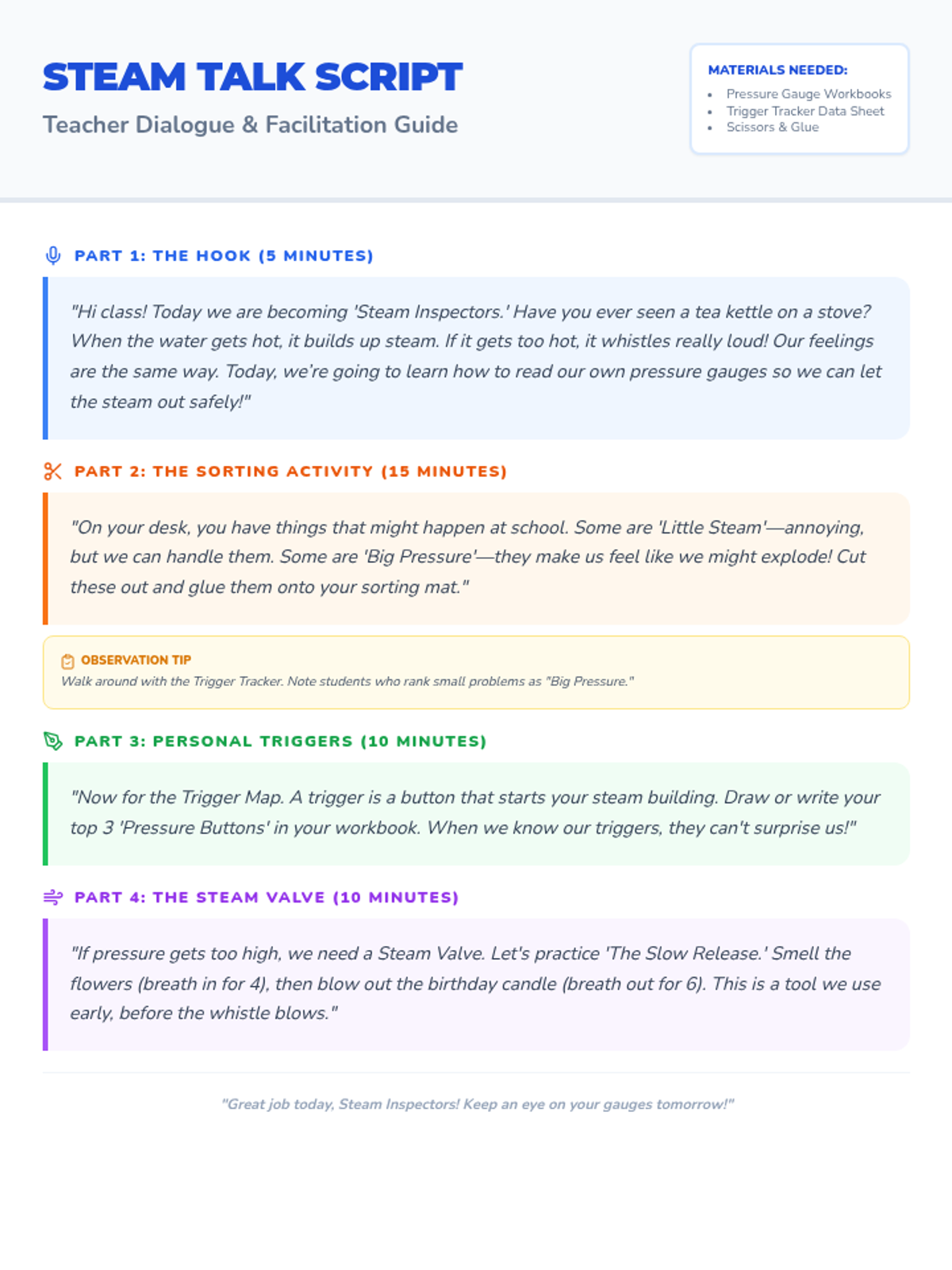
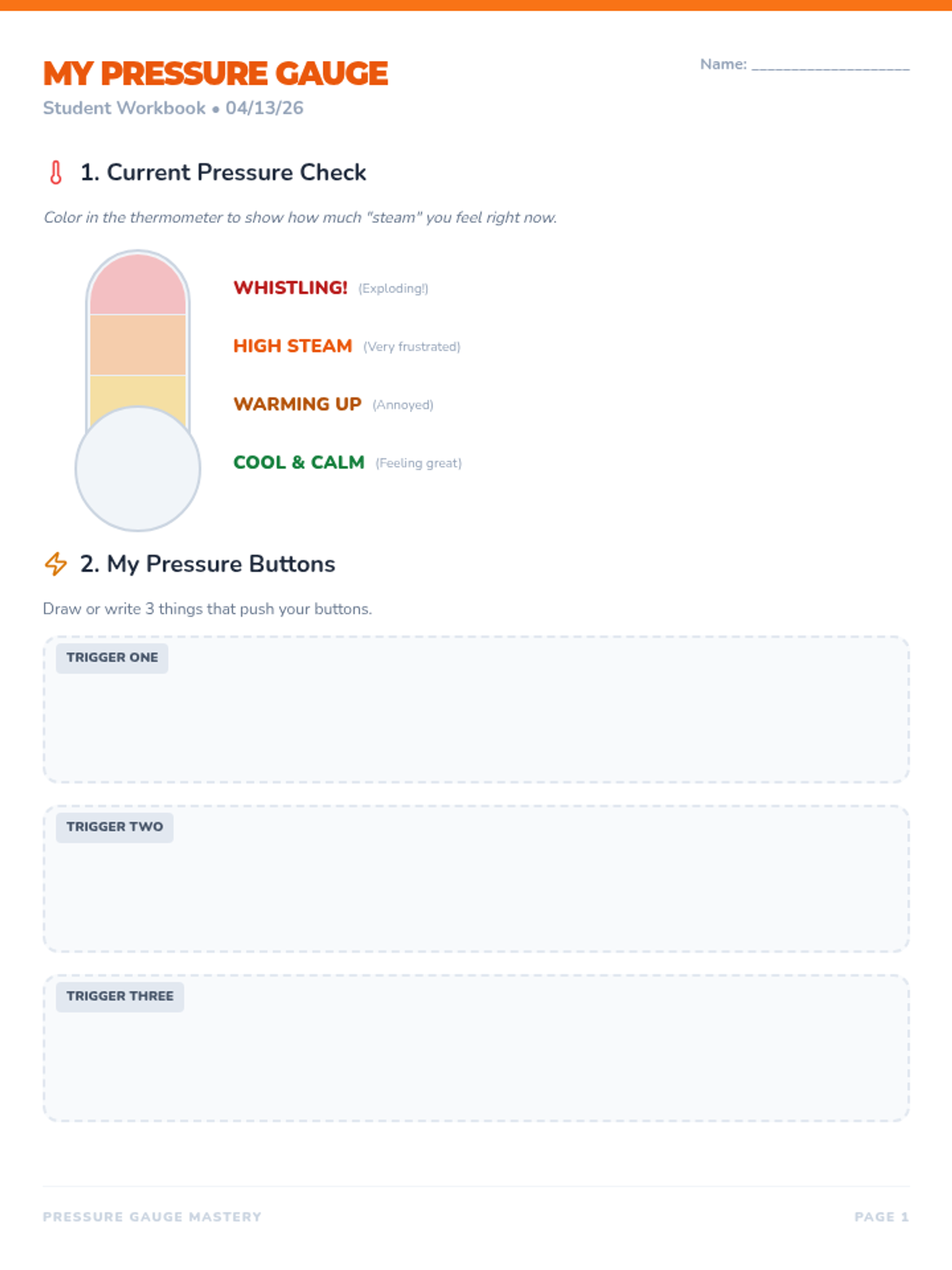
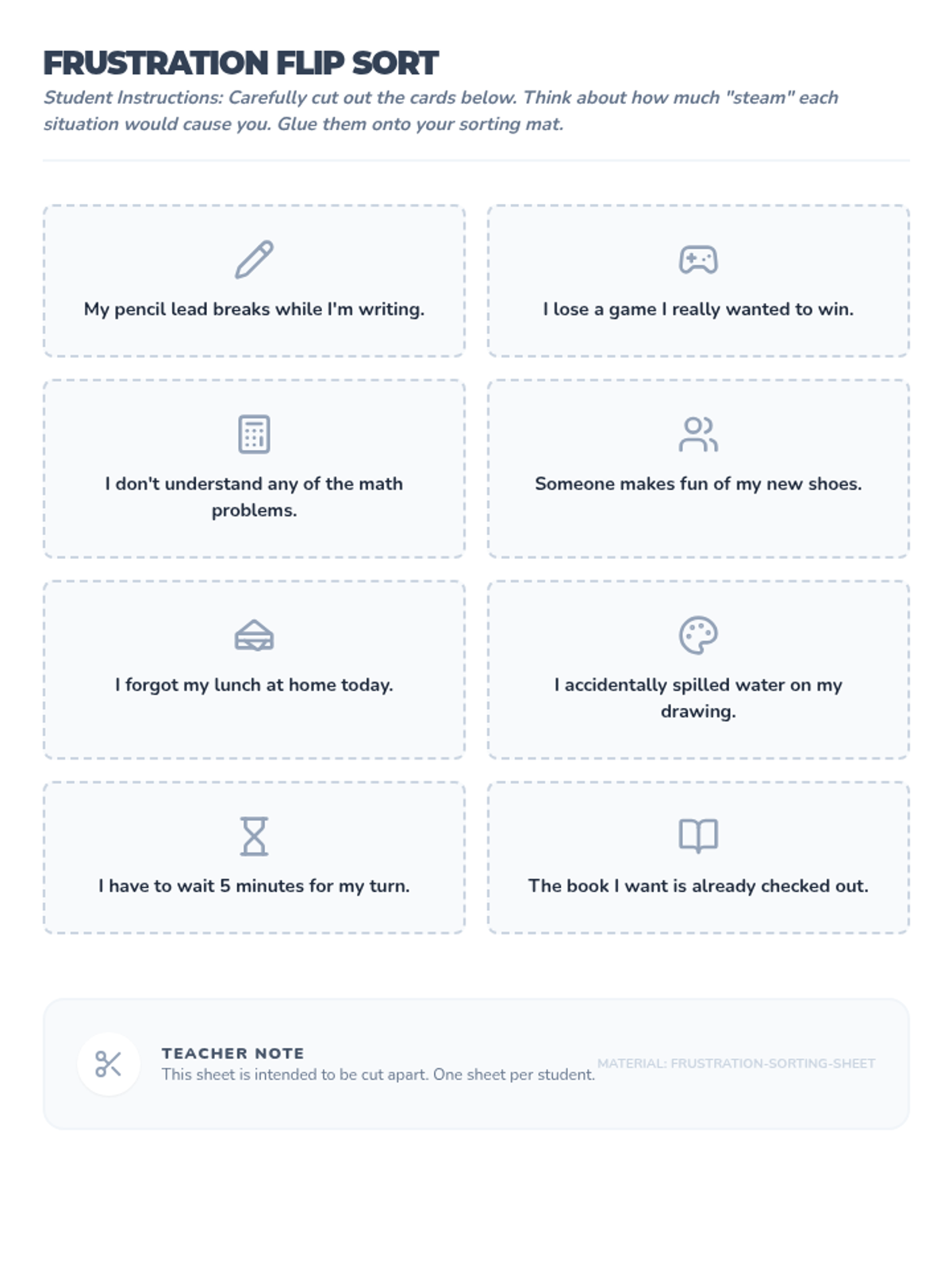
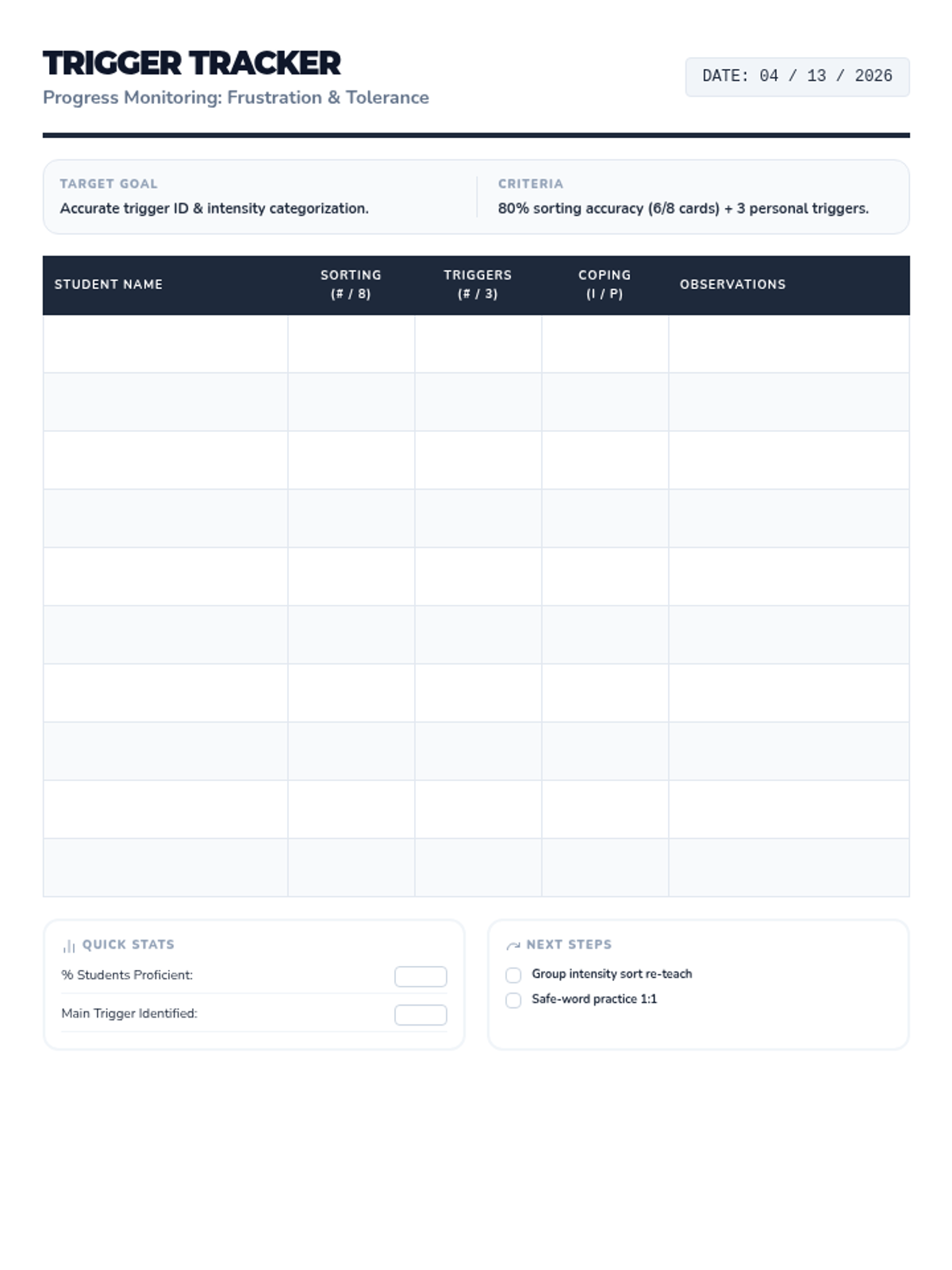
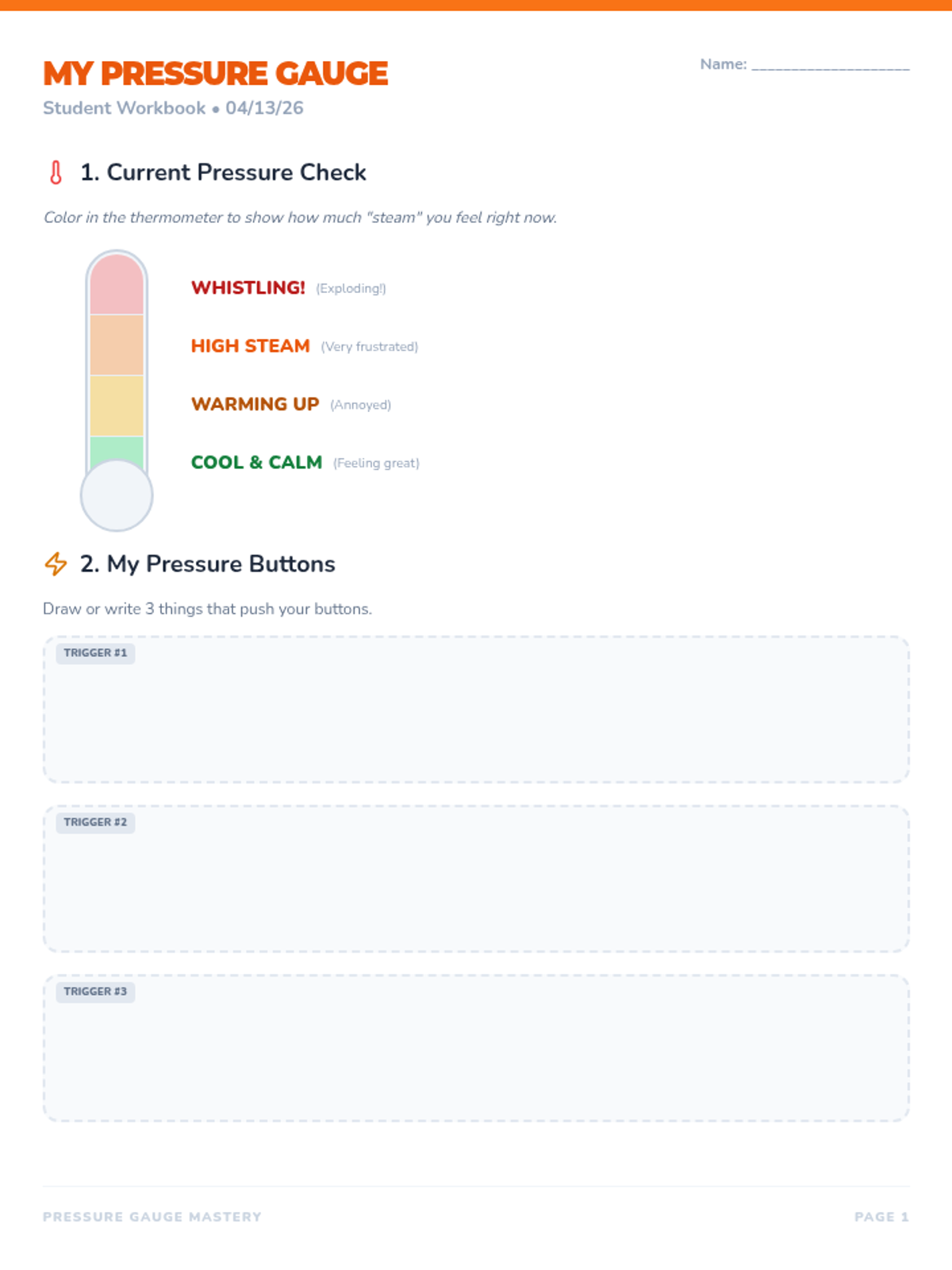
A comprehensive lesson on identifying frustration triggers and developing early-intervention coping strategies. Students learn to categorize frustration levels and match them with appropriate tools to maintain emotional regulation.
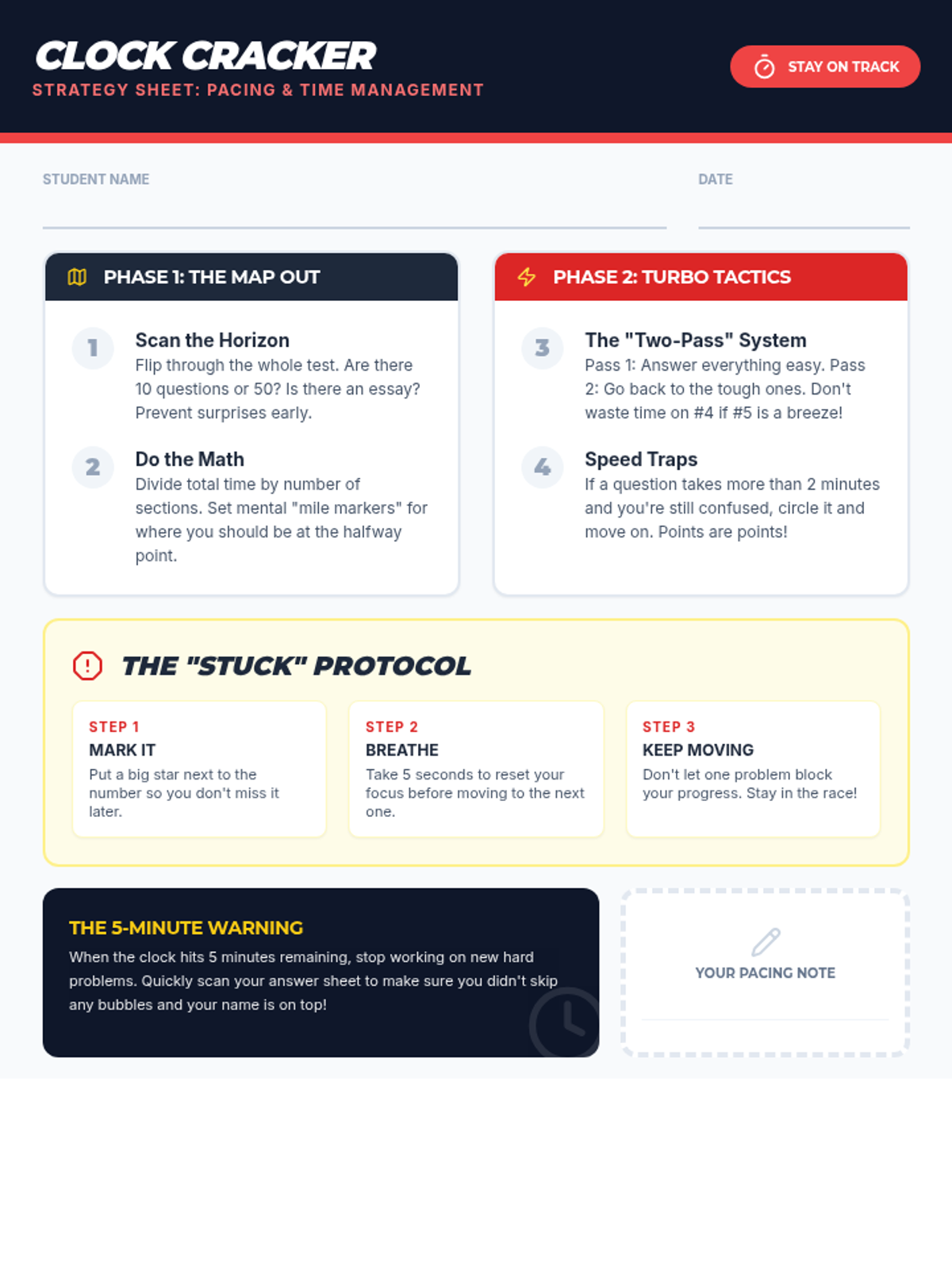
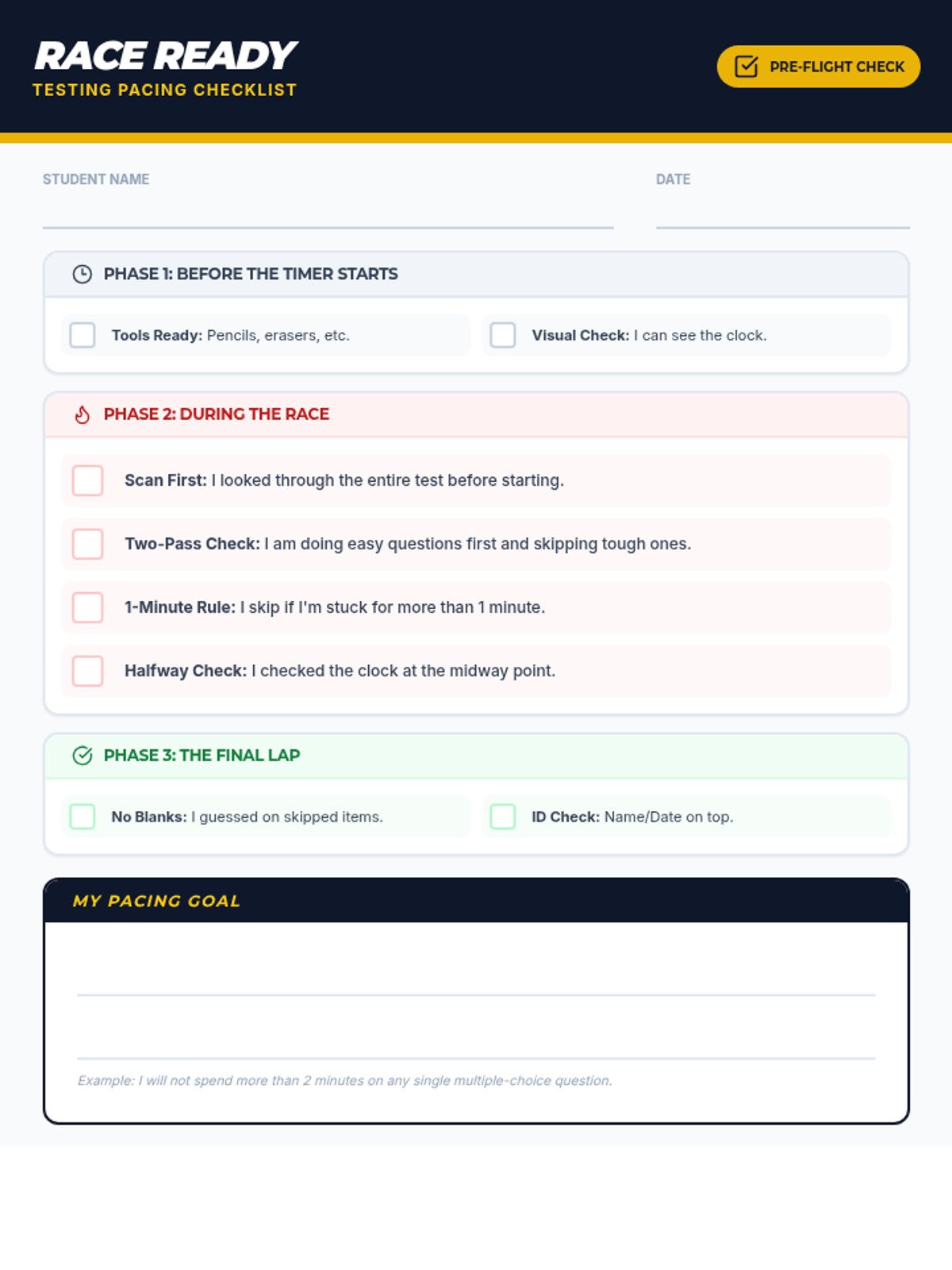
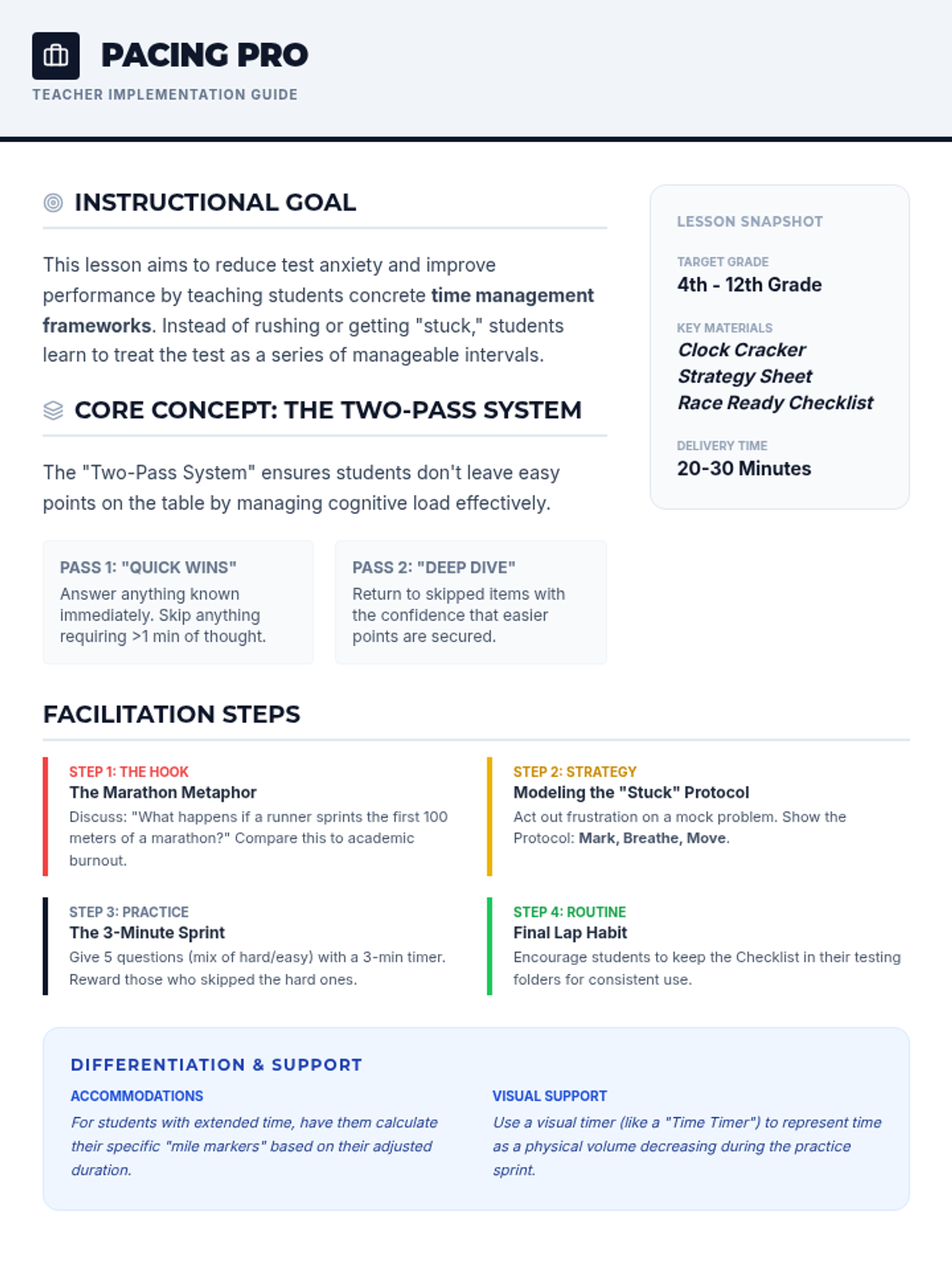
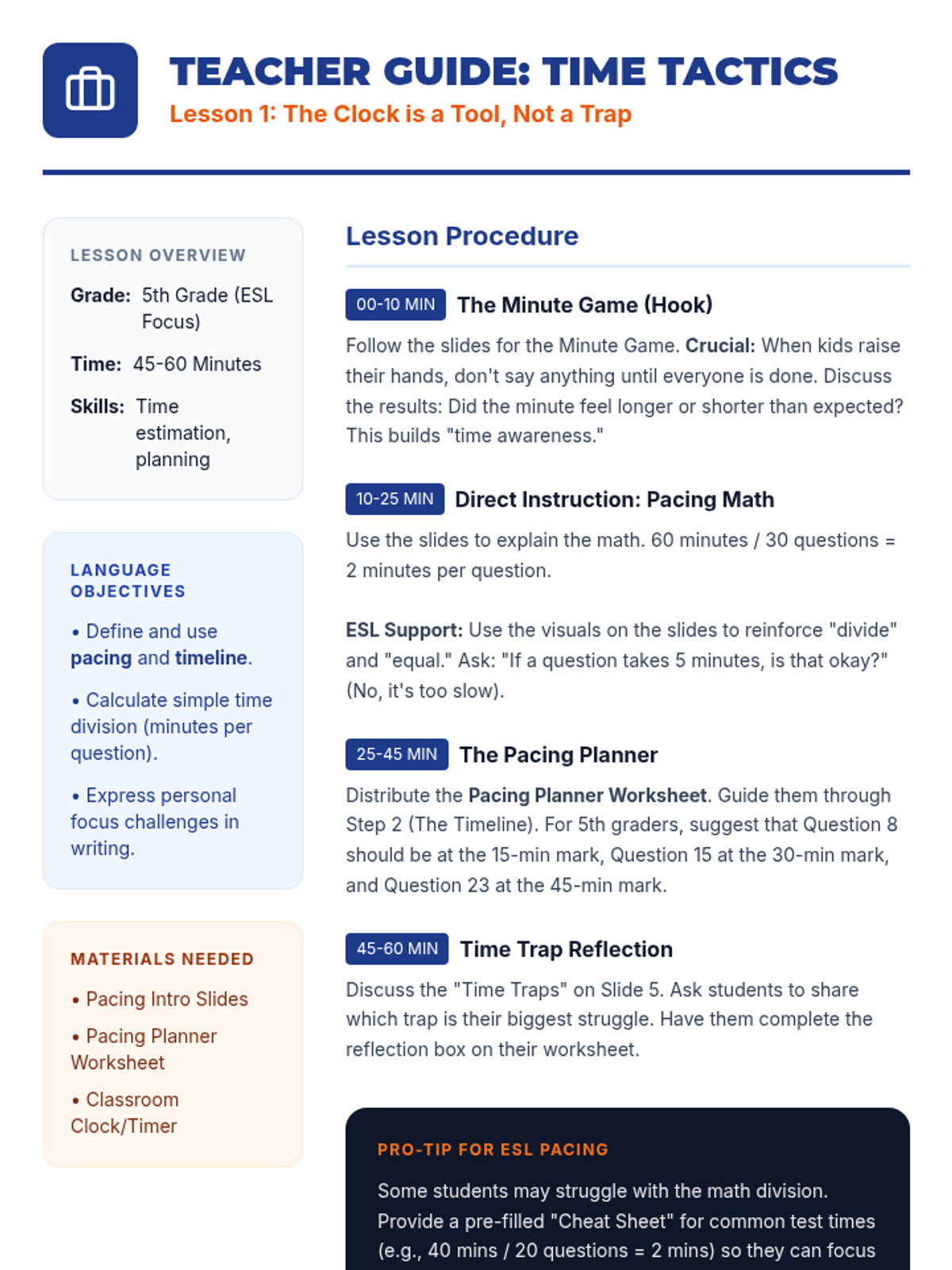
A high-energy set of resources focused on mastering test-taking pacing and time management strategies to help students finish exams with confidence.
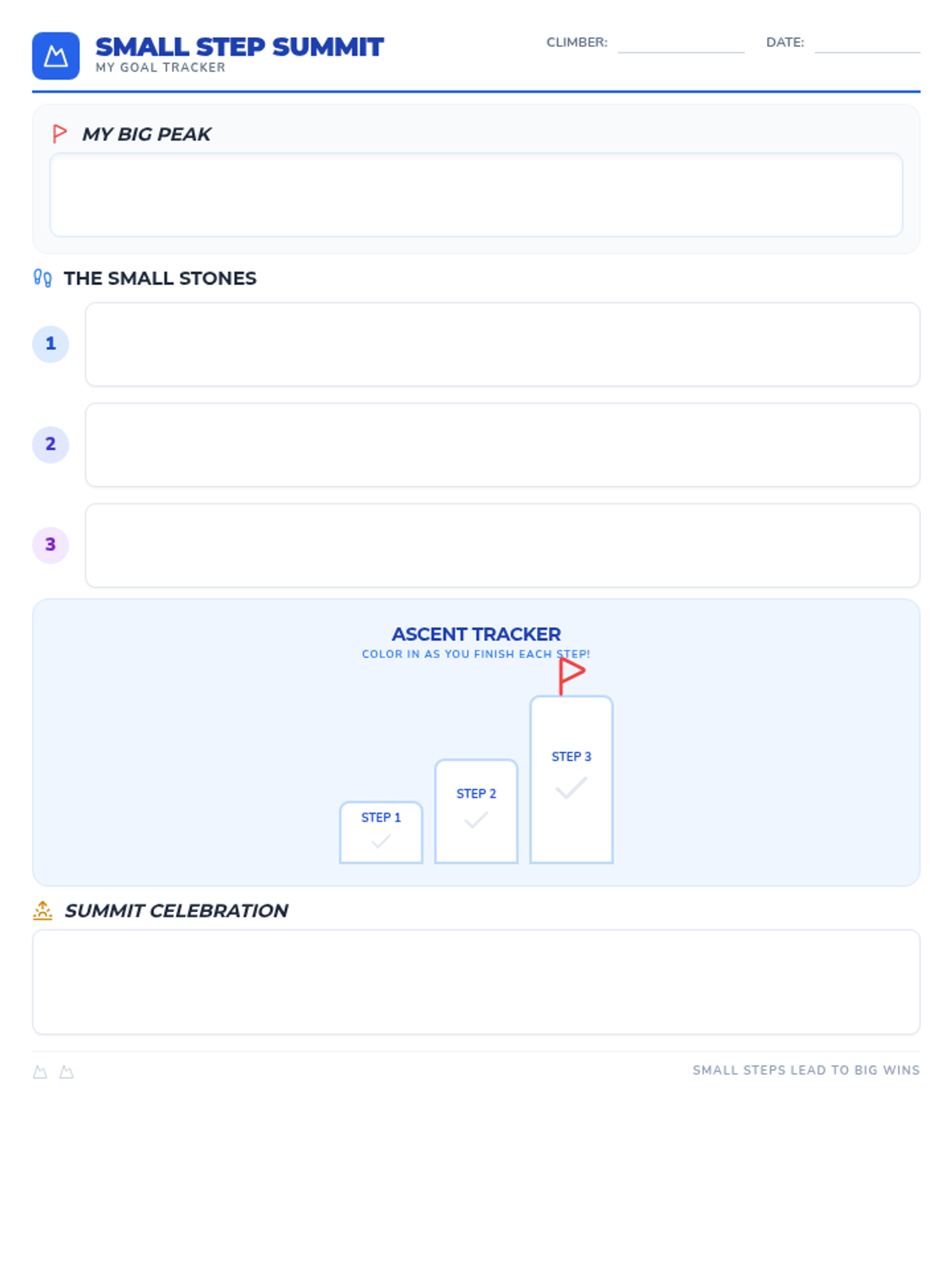
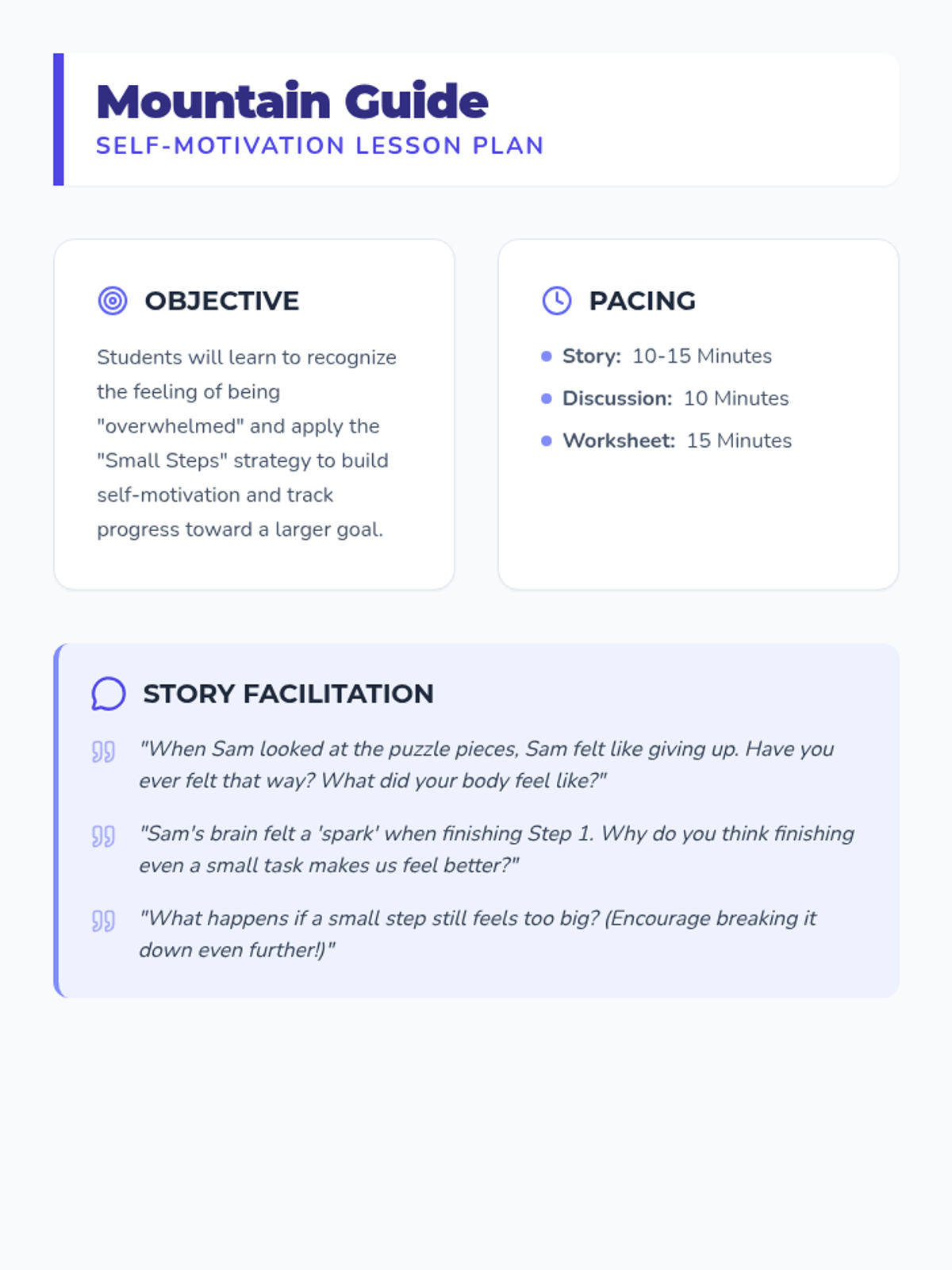
A lesson designed to help students understand self-motivation through the concept of breaking large, overwhelming tasks into small, manageable goals using a 'mountain climber' metaphor.
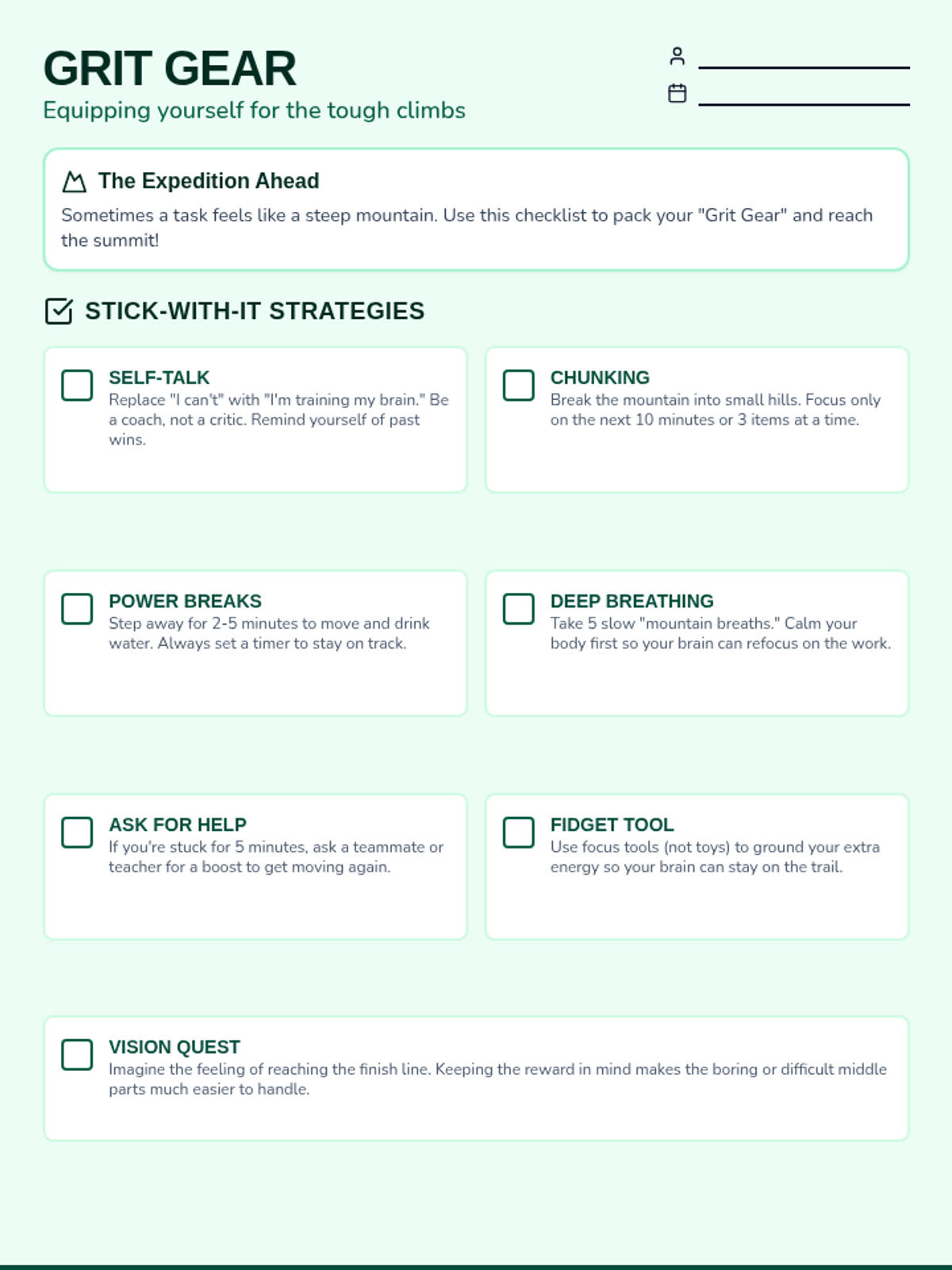
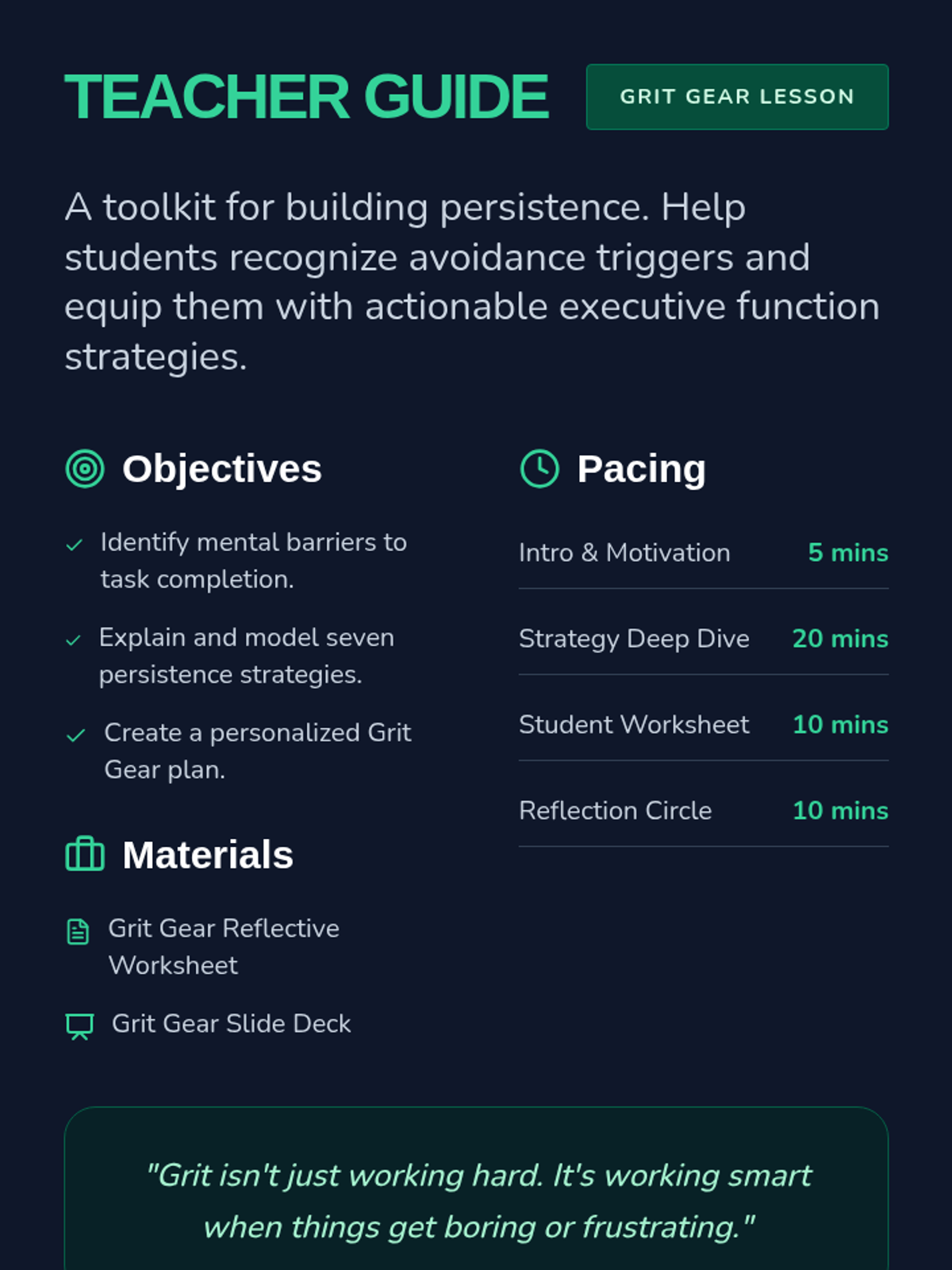
A lesson focused on equipping students with practical strategies to maintain focus and persistence during difficult or monotonous tasks.
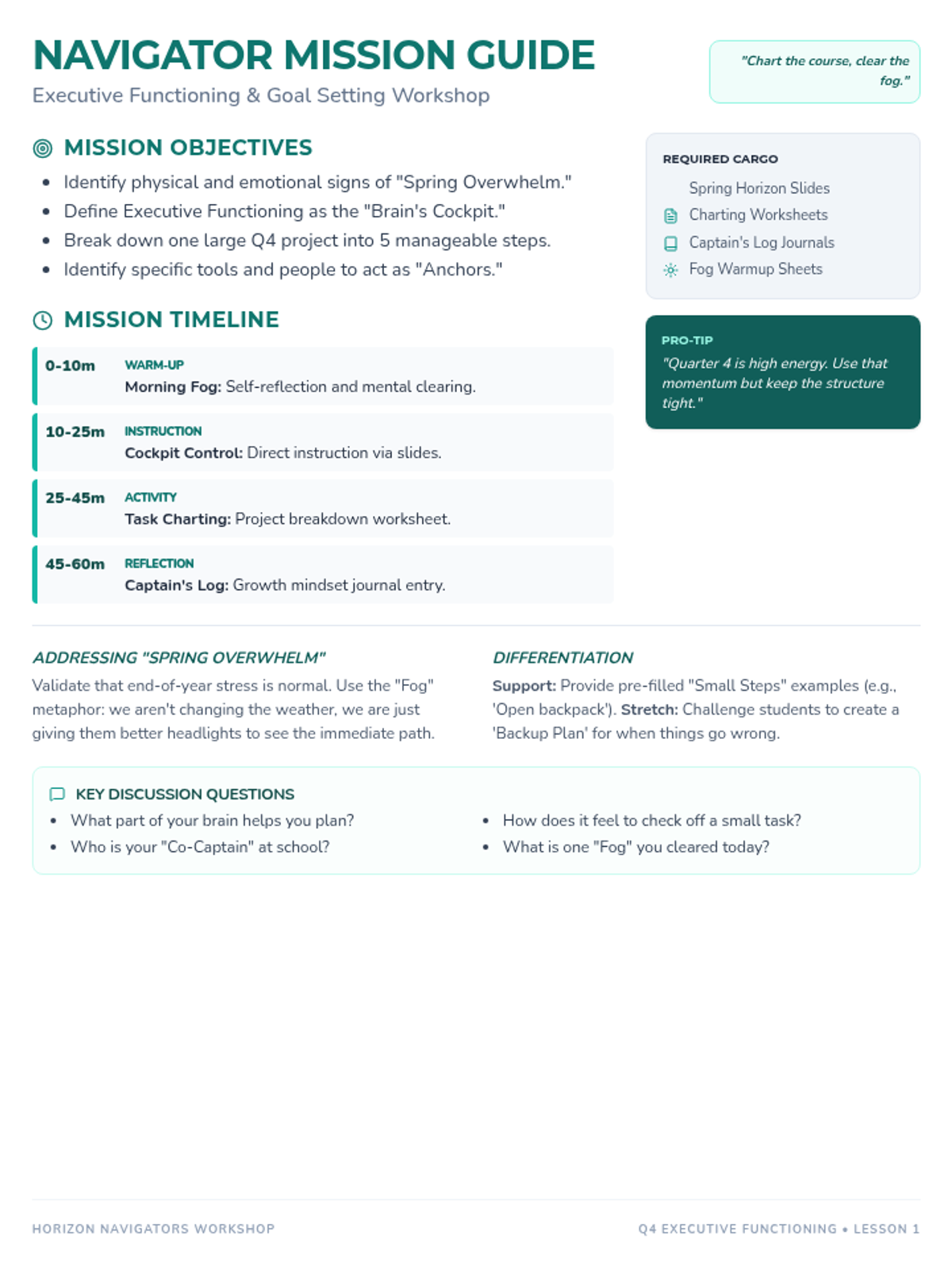
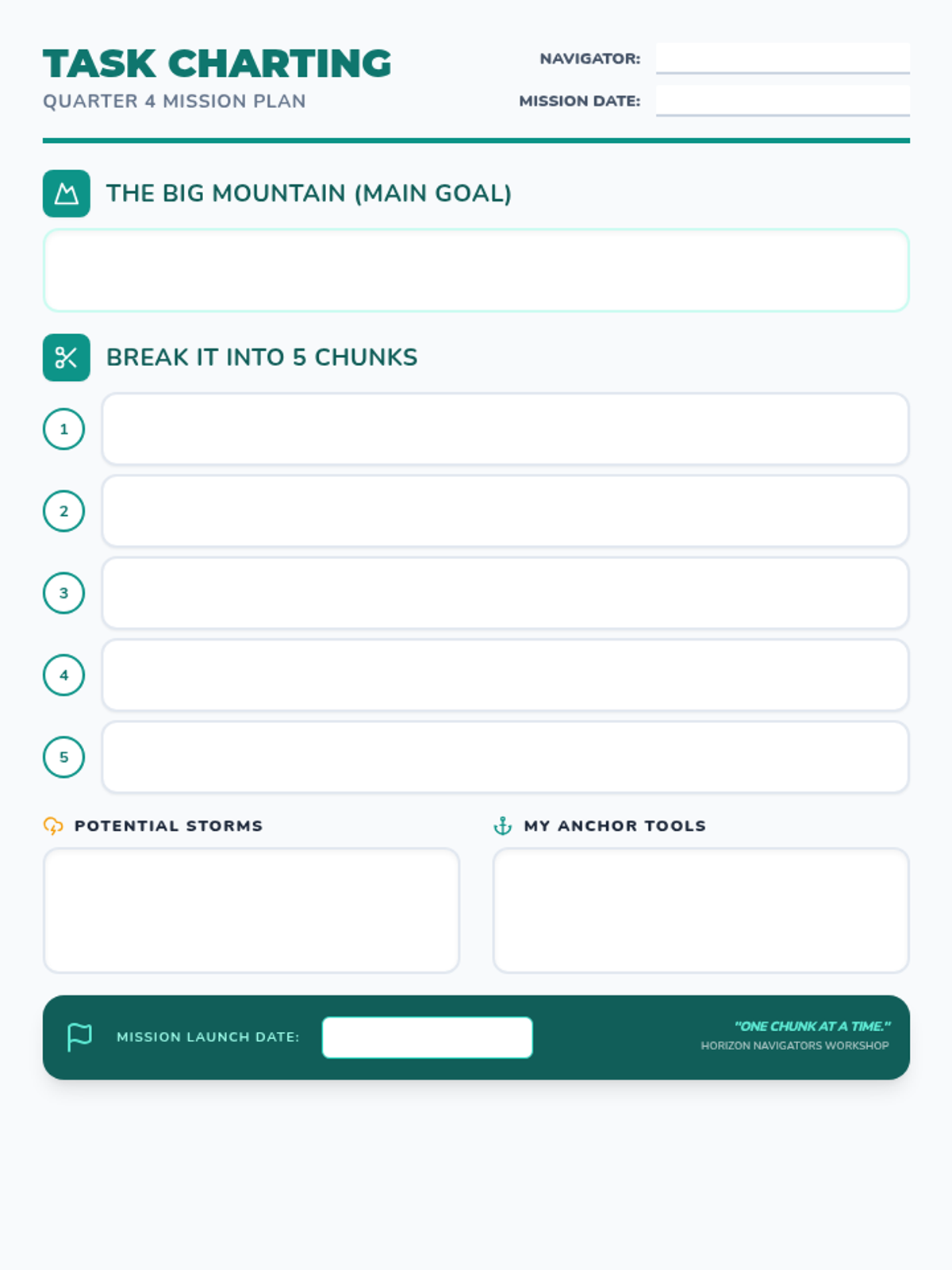
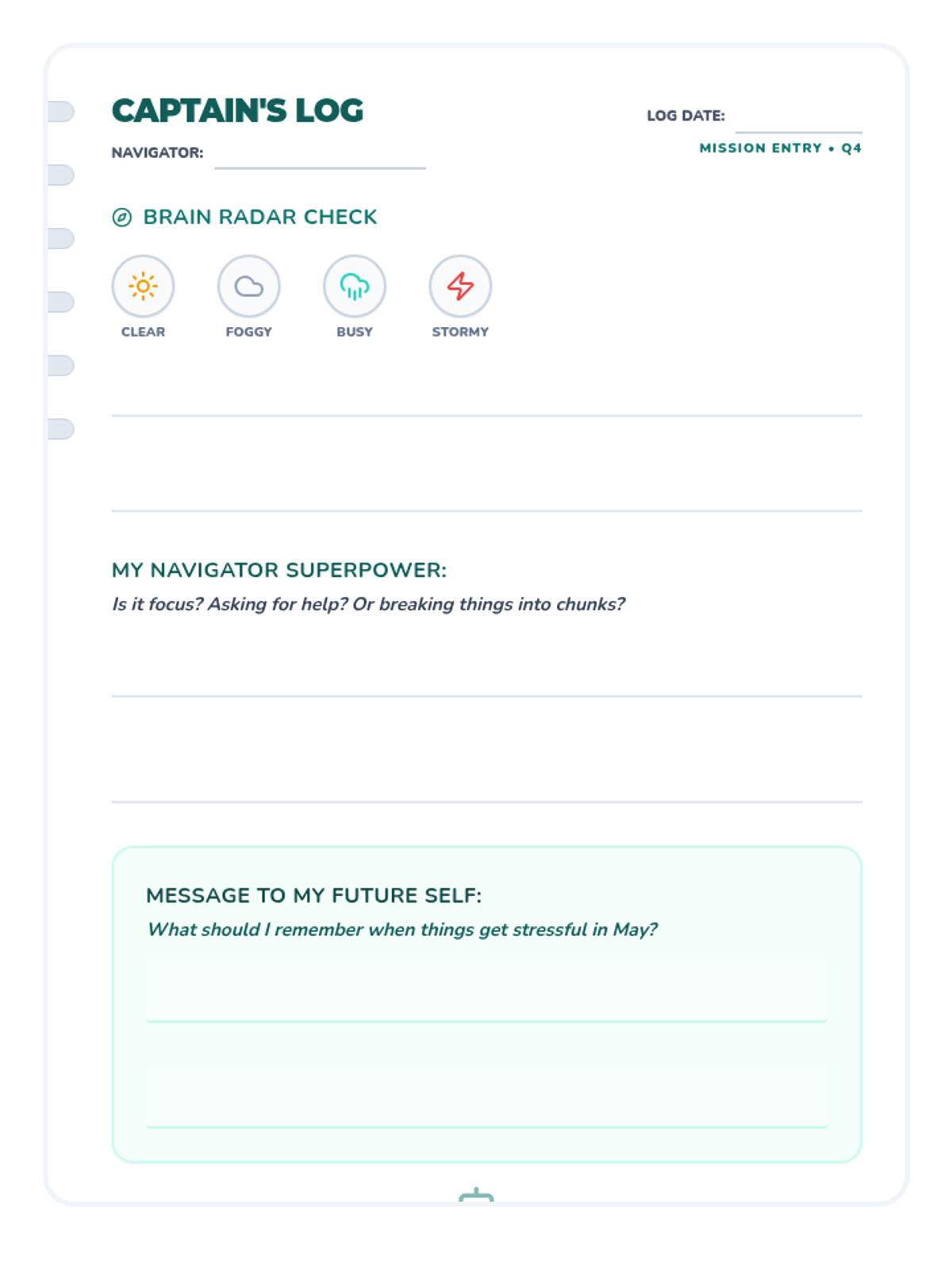
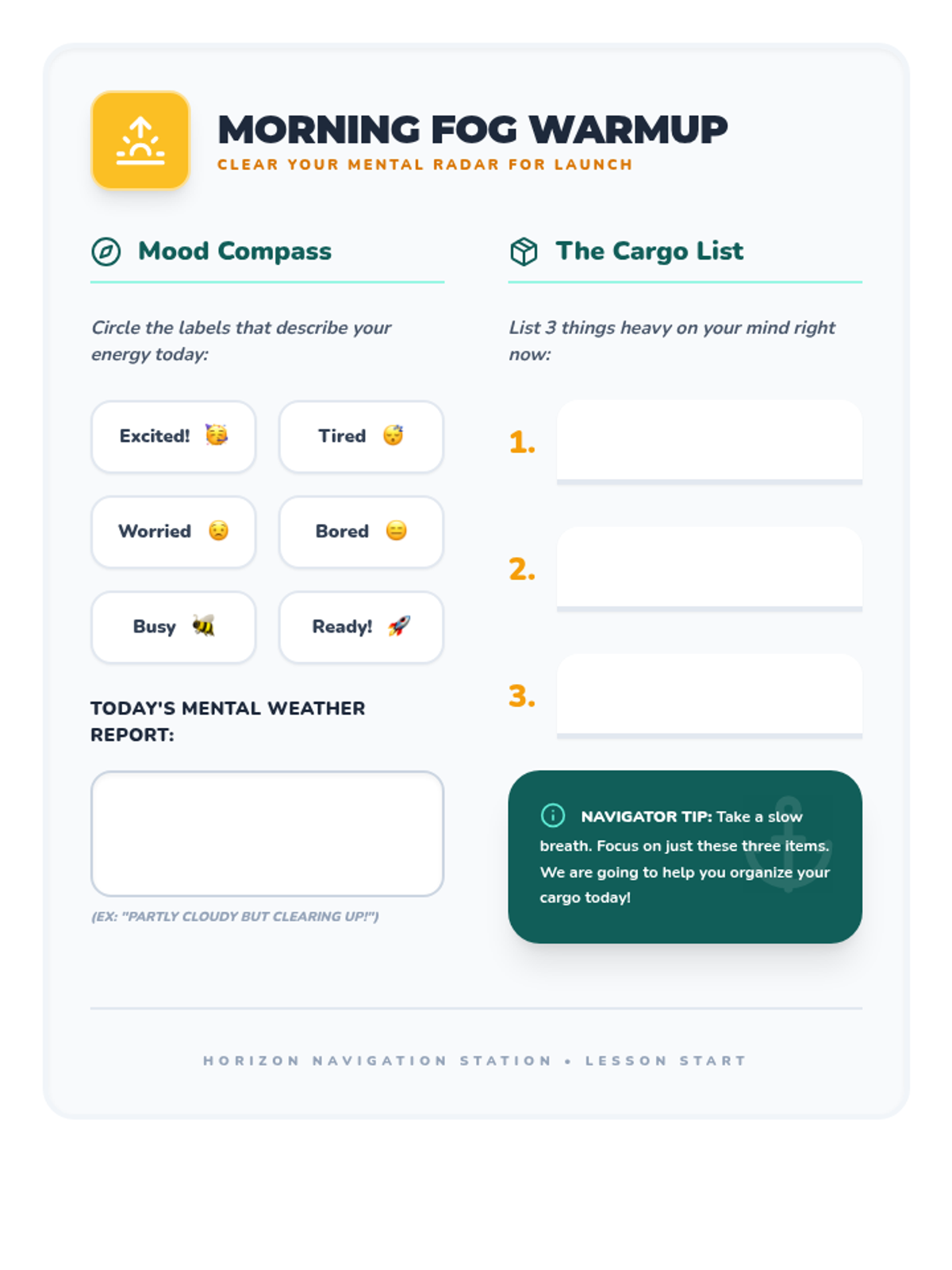
A workshop designed to help 3rd-5th graders navigate the final school quarter using executive functioning and goal-setting skills. Students learn to break down big projects and manage 'spring overwhelm' through actionable planning.
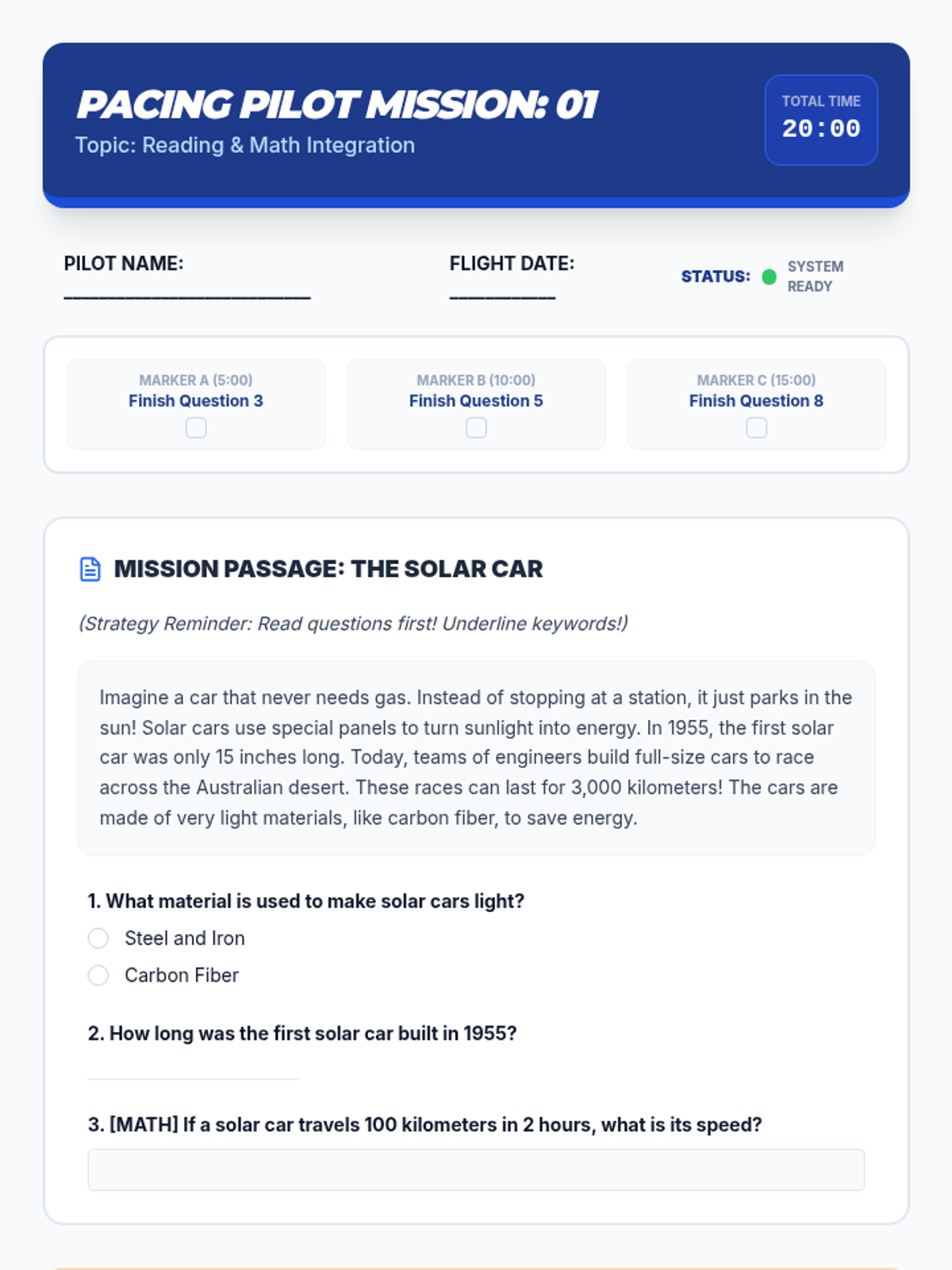
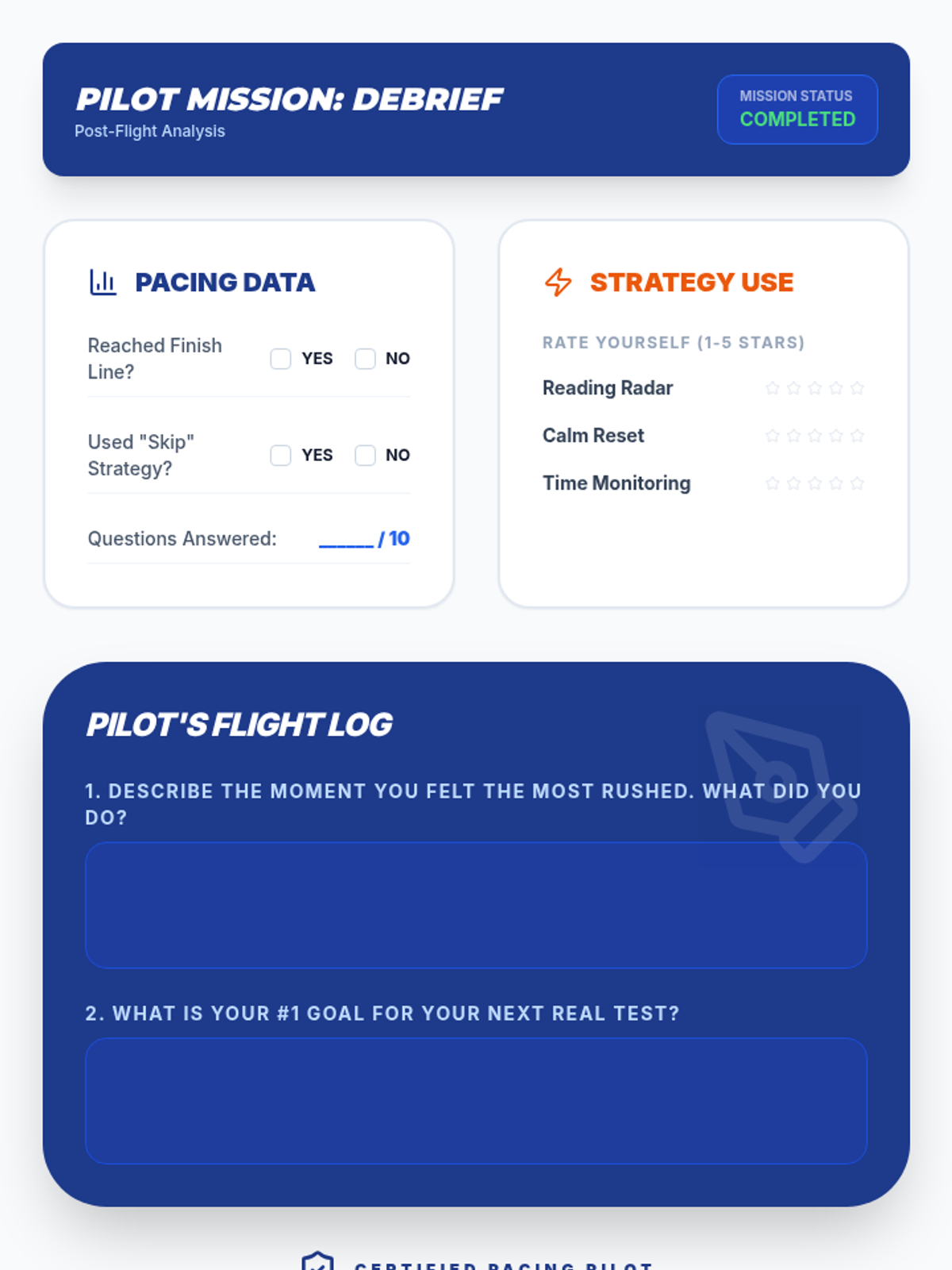
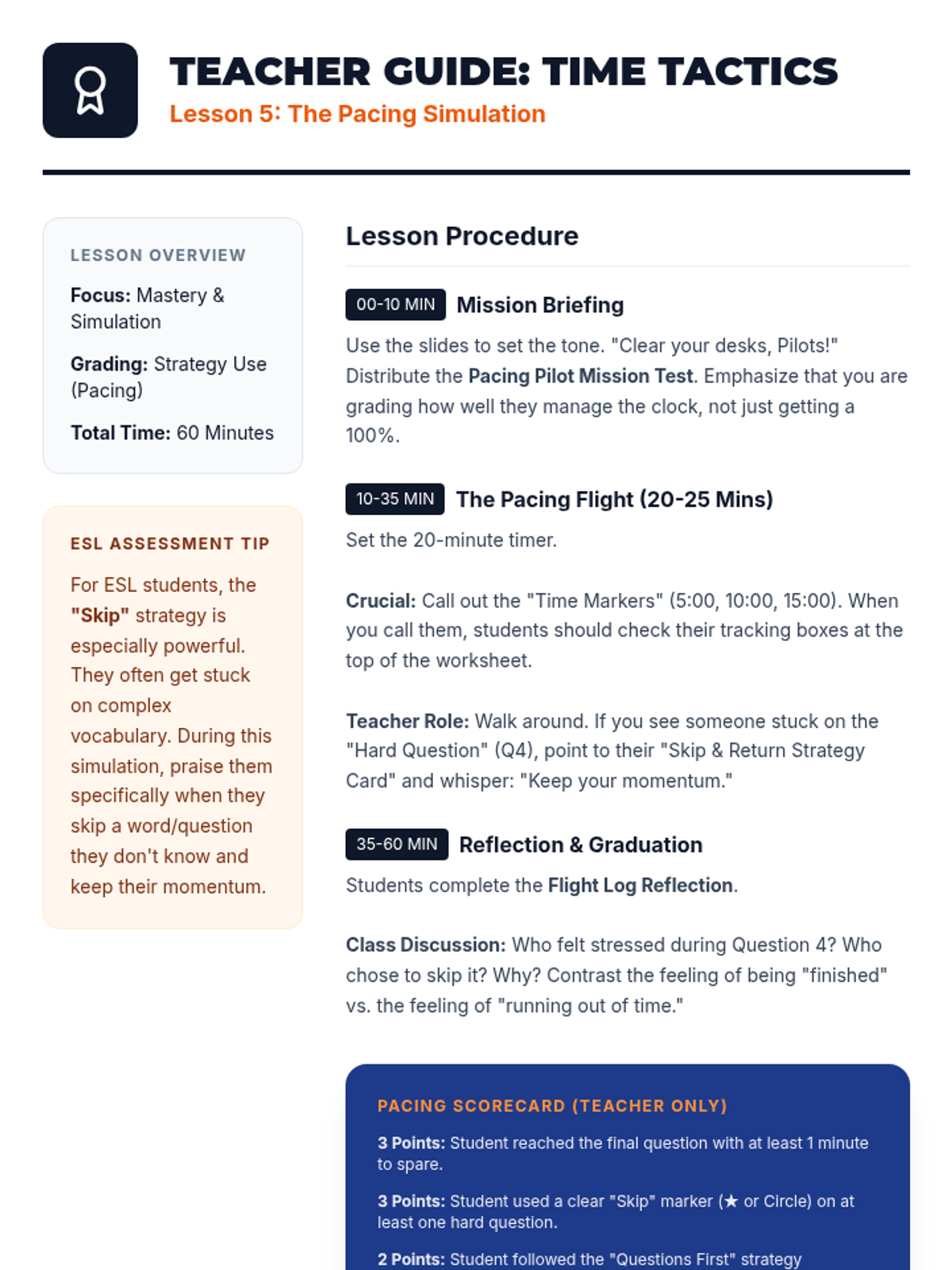
A simulated test session where students are graded on their ability to hit specific pacing markers and reflect on their performance.
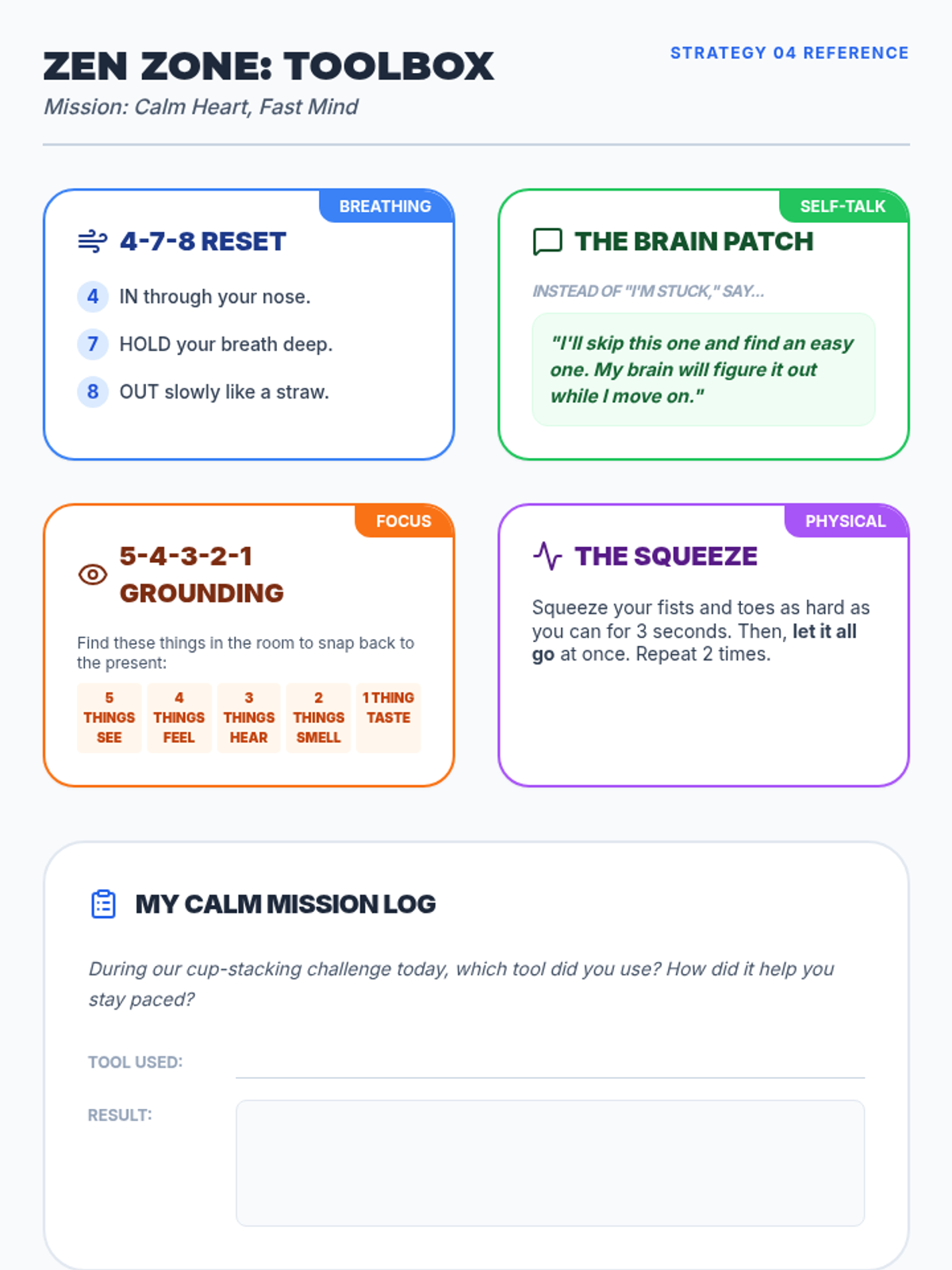
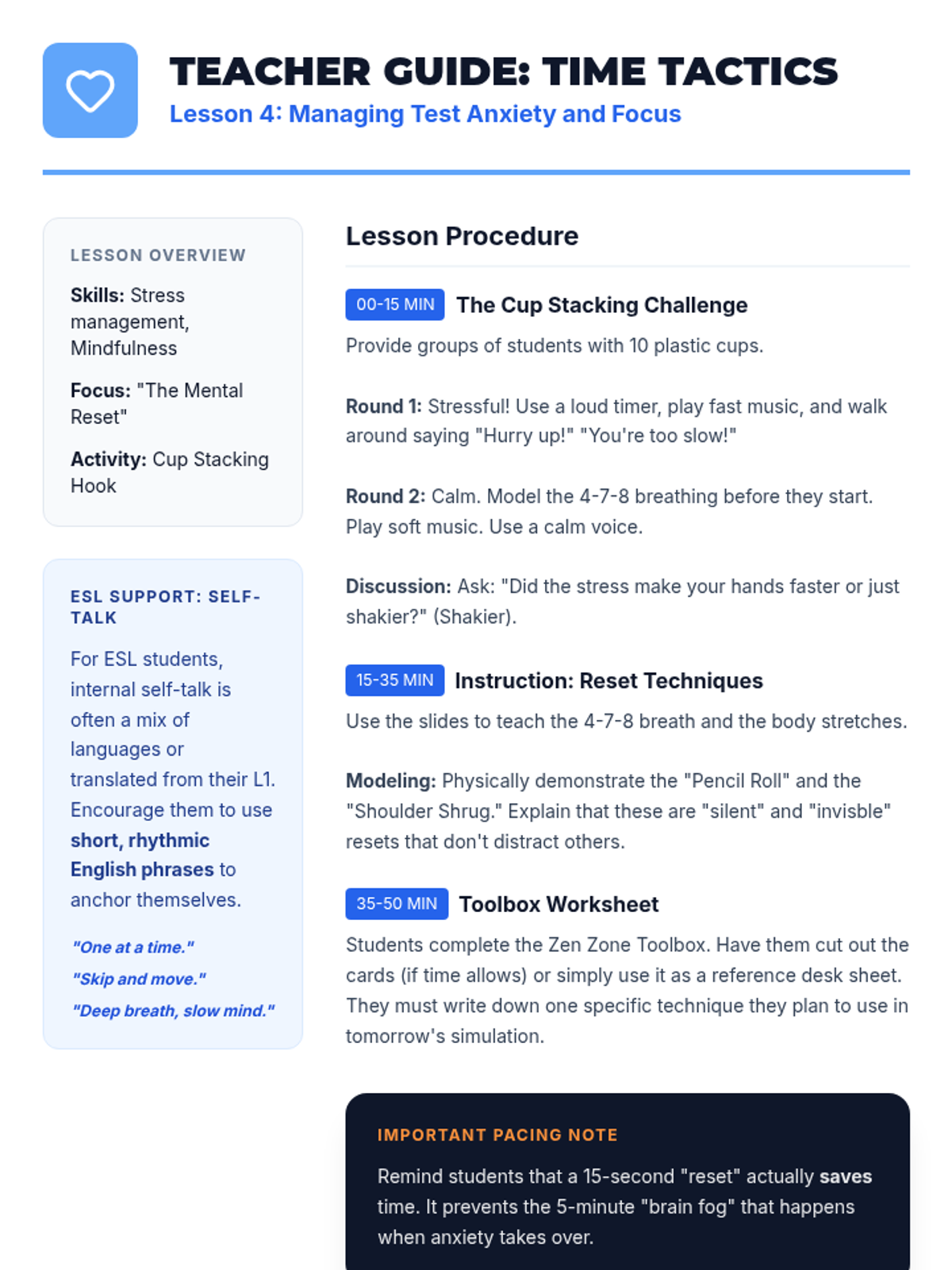
Teaches students physiological and mental reset techniques to stay calm and focused when the clock is ticking.
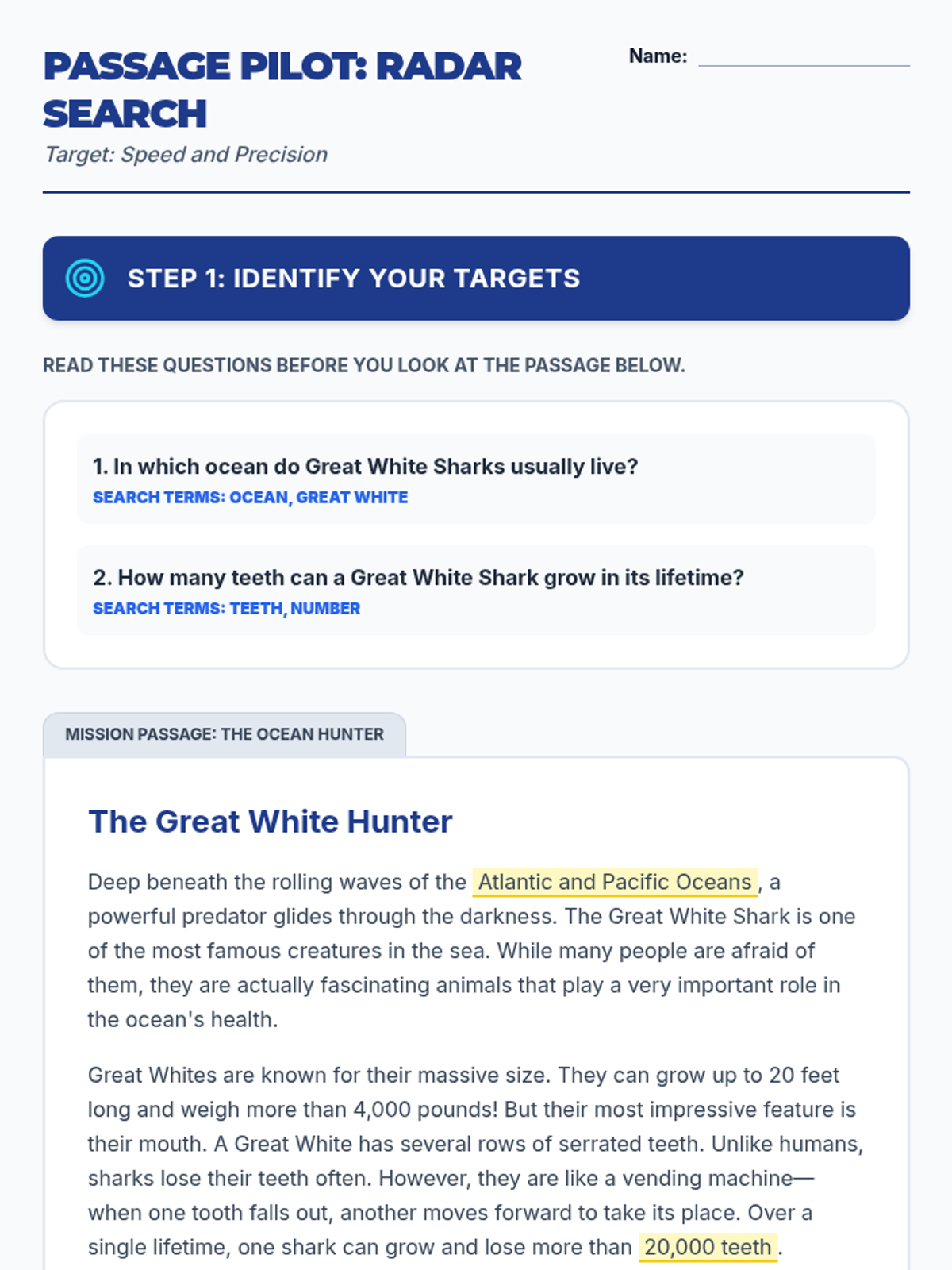
Focuses on reading strategies like 'questions first' to save time and improve focus during long reading comprehension sections.
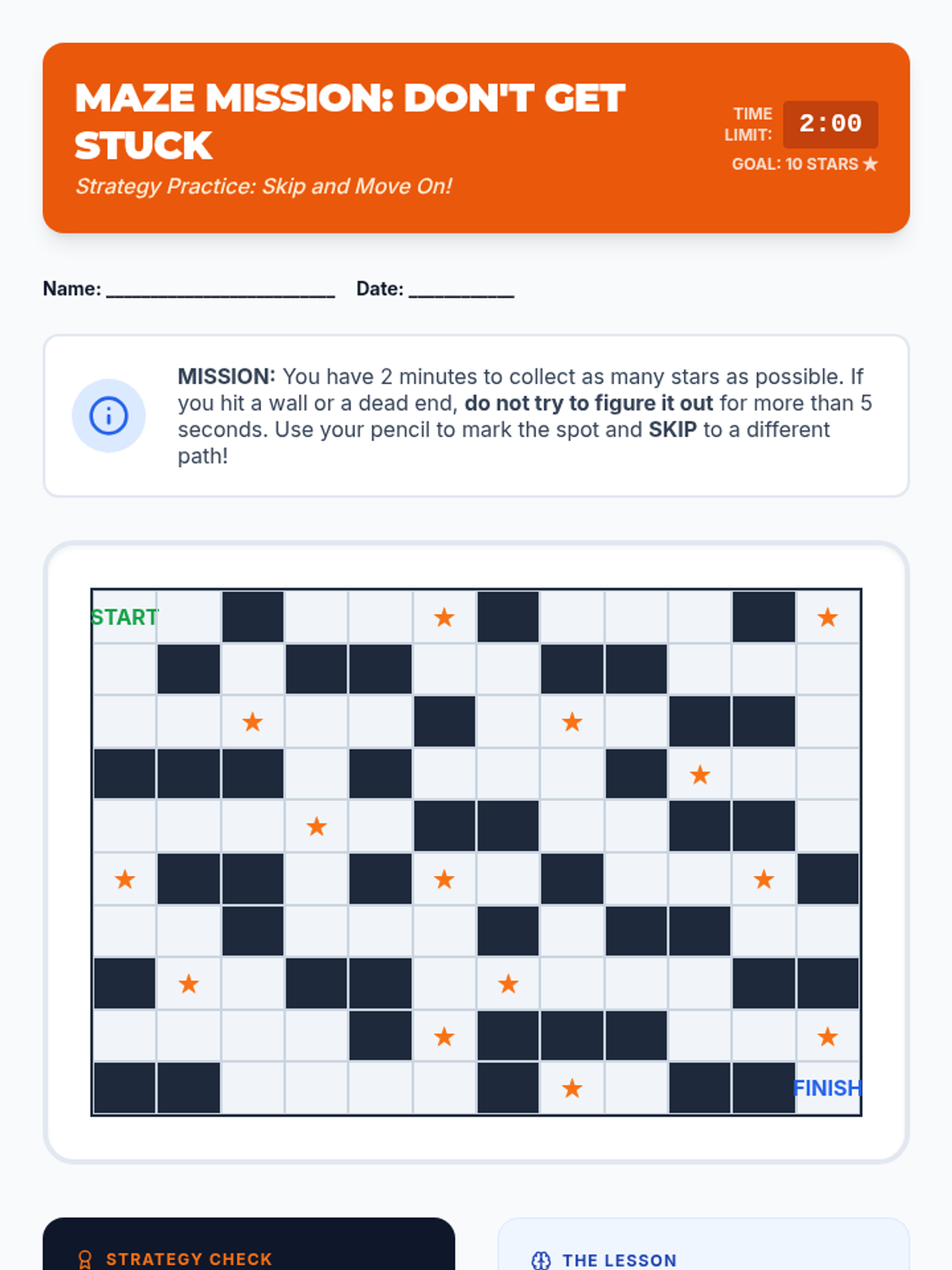
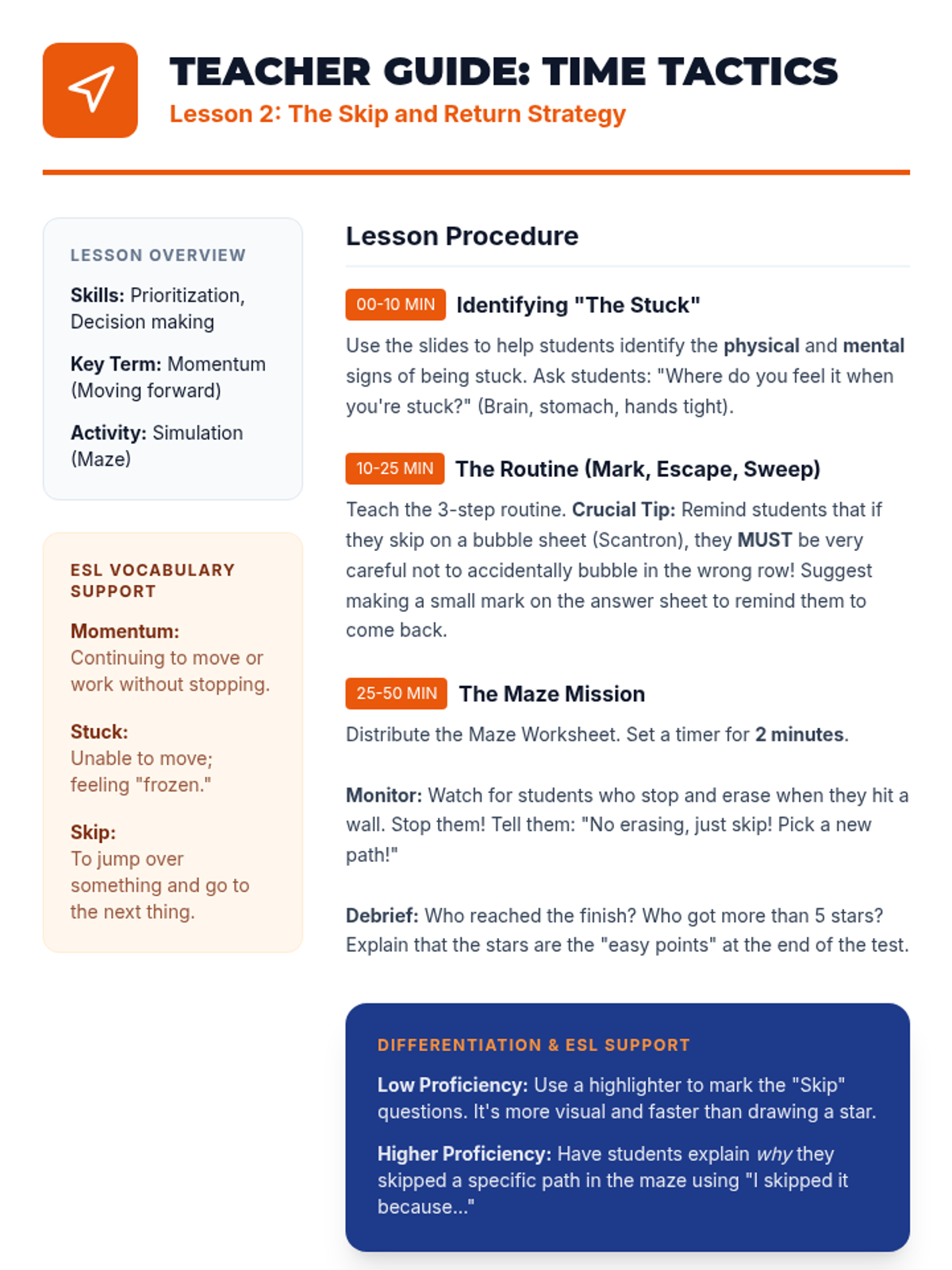
Students practice identifying when they are stuck and learn the 'skip and return' method to maximize their points by answering easy questions first.
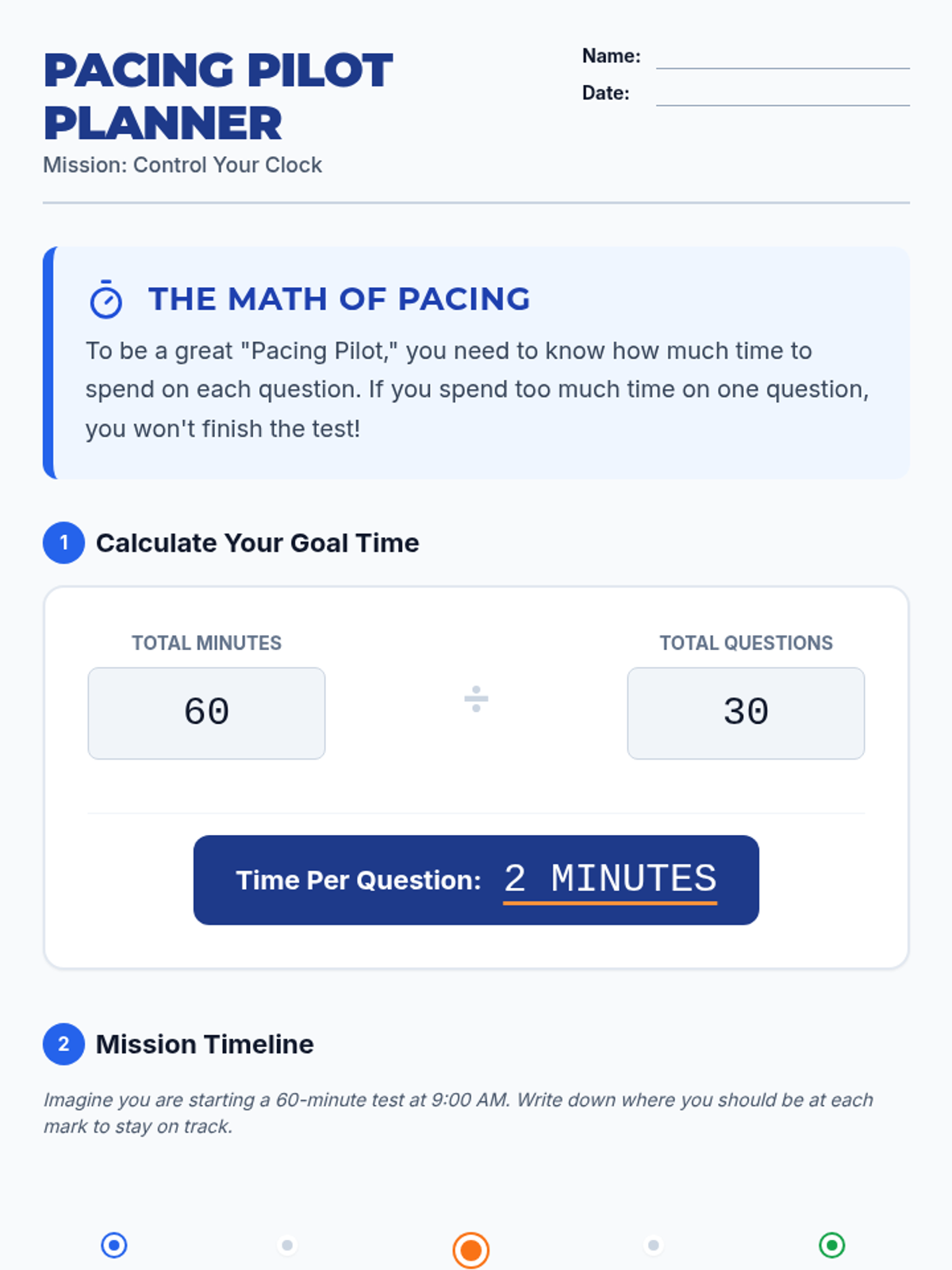
Students learn the basics of pacing by breaking down total test time and creating visual pacing guides to avoid the 'time trap.'
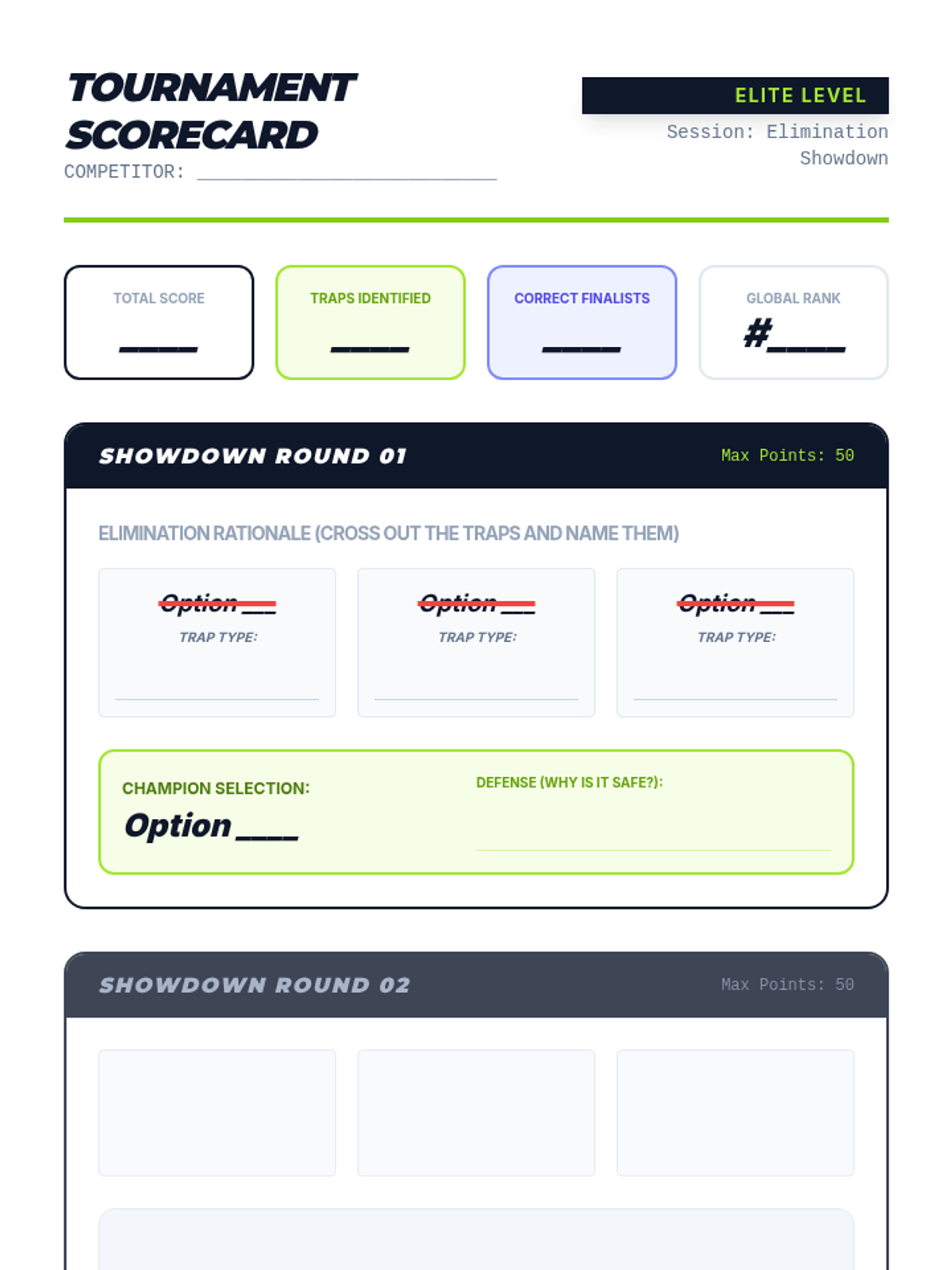
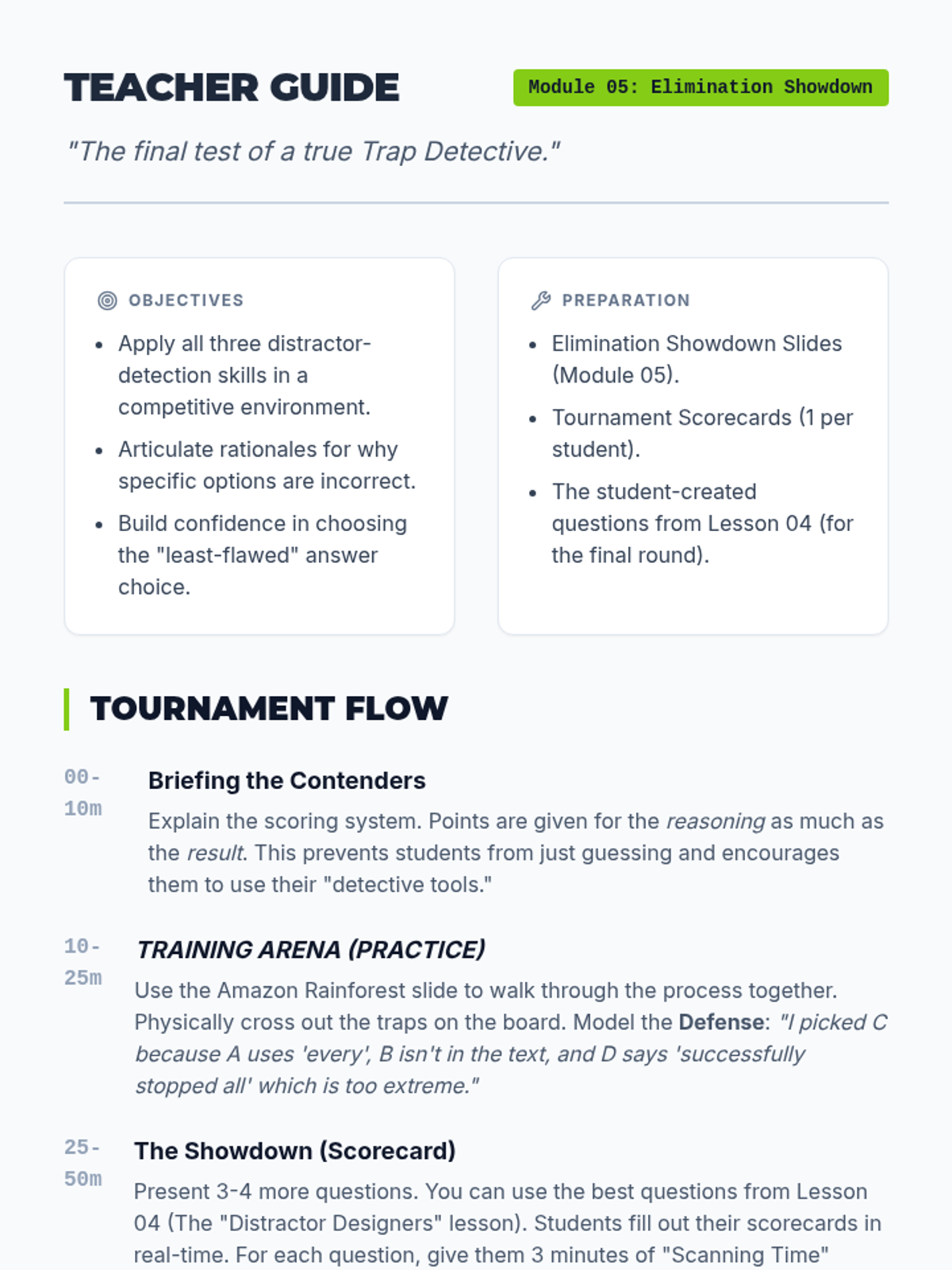
A competitive review tournament where students physically eliminate distractors with a rationale. Points are awarded for identifying specific trap types before selecting the correct answer.
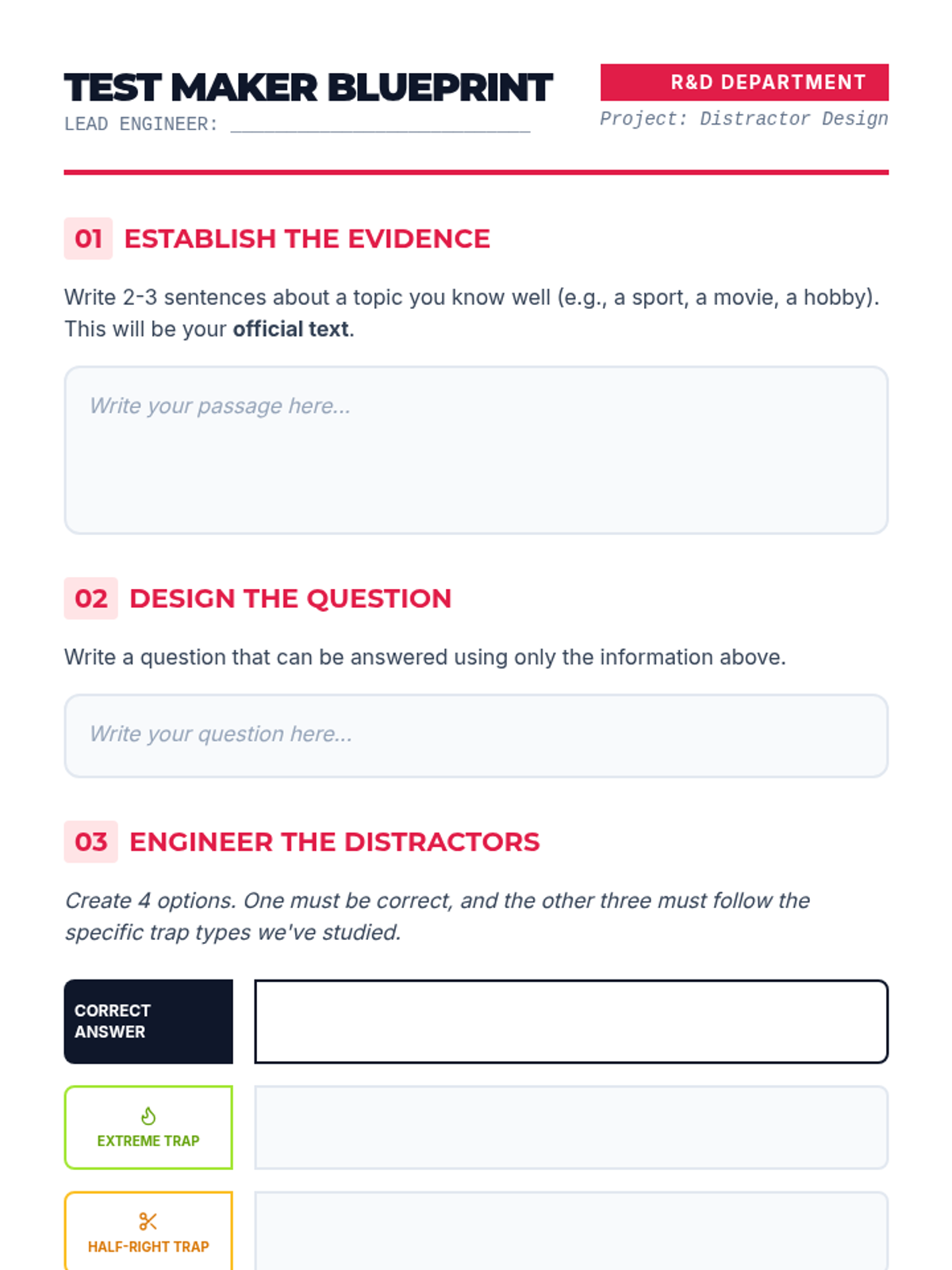
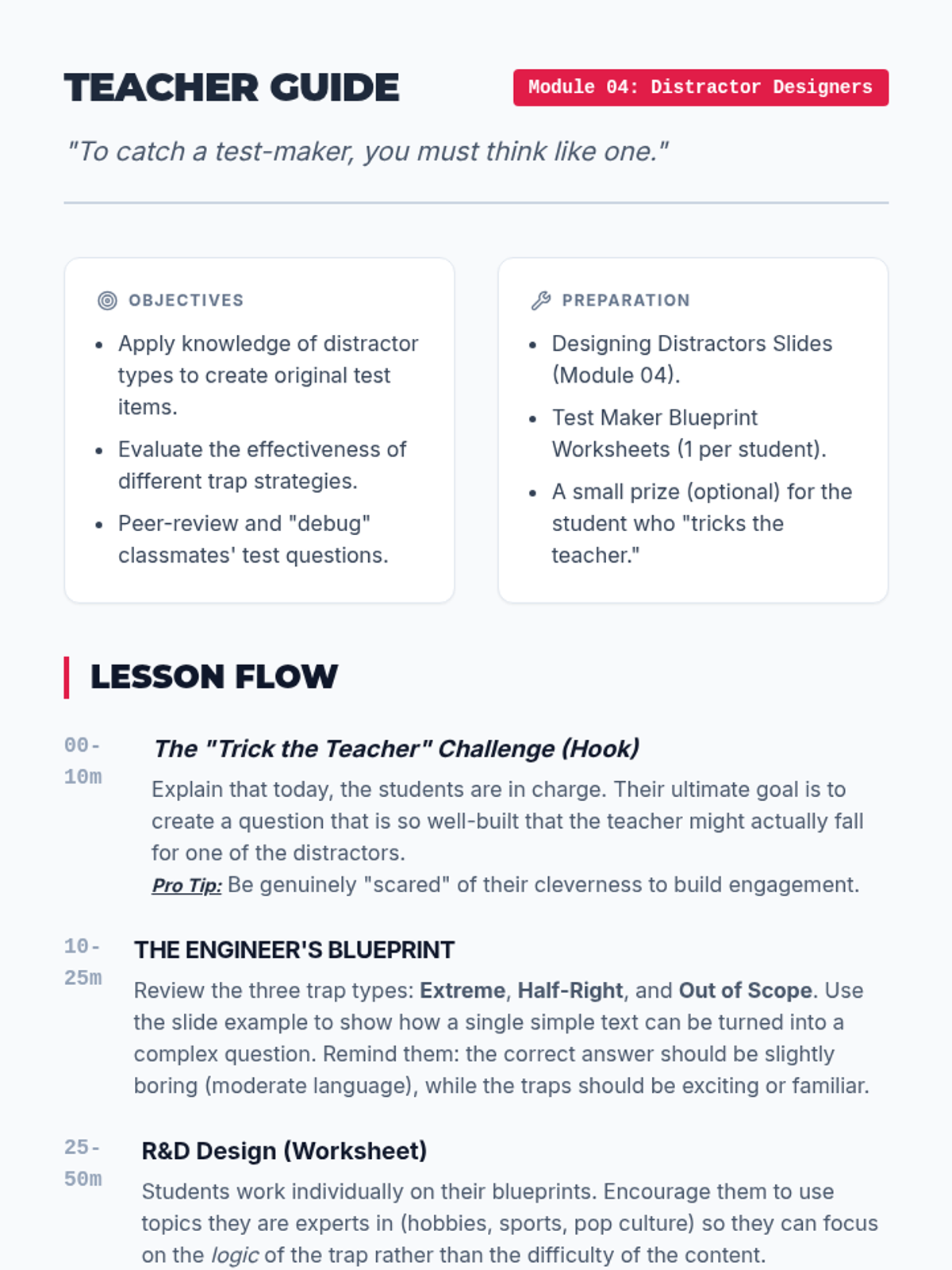
Students become test-makers by writing their own multiple-choice questions with deliberate traps. This role-reversal helps them internalize the logic behind distractor construction.
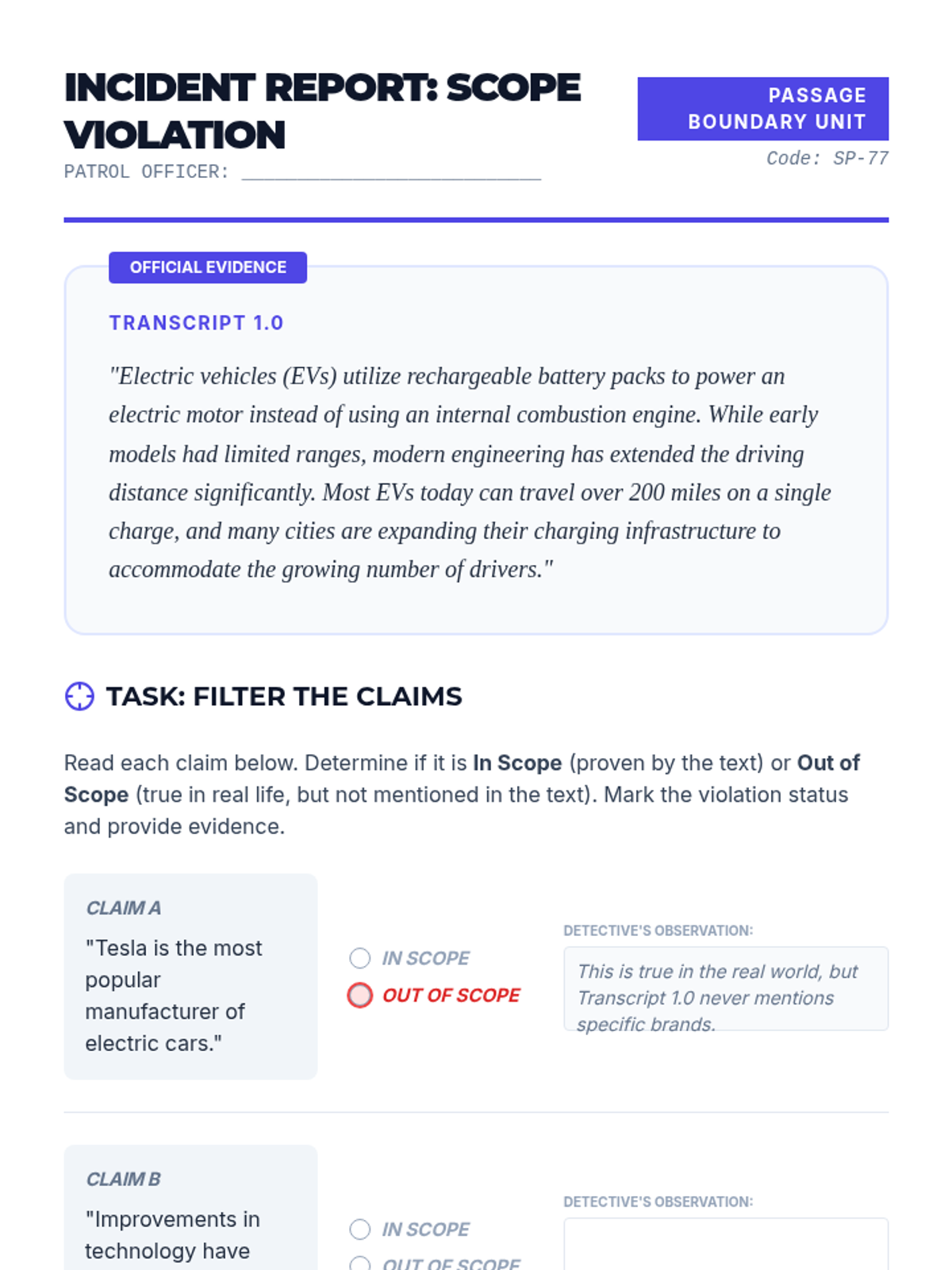
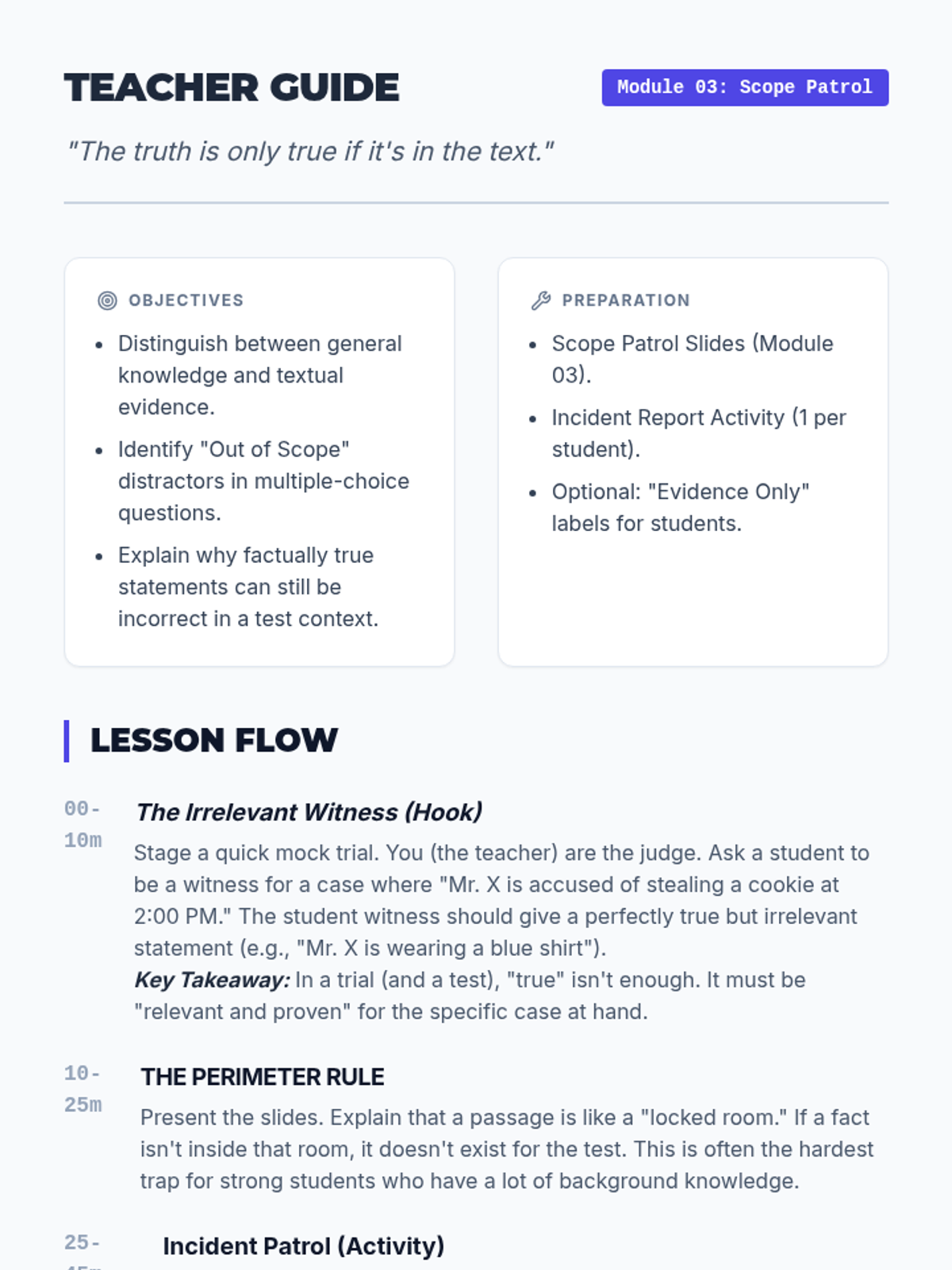
Students identify statements that are factually true in the real world but are not supported by the specific text provided. The focus is on maintaining evidence-based focus within the scope of the passage.
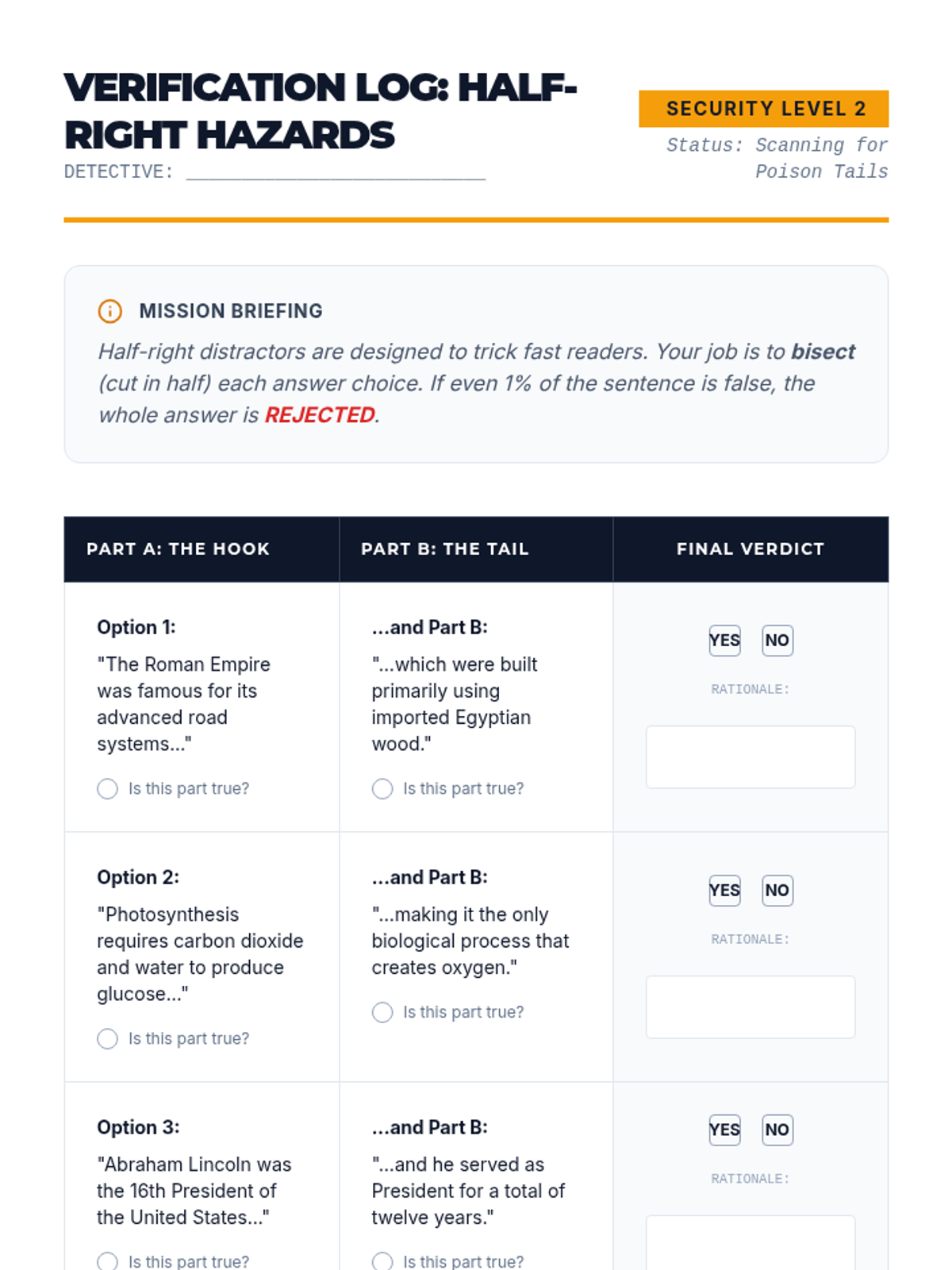
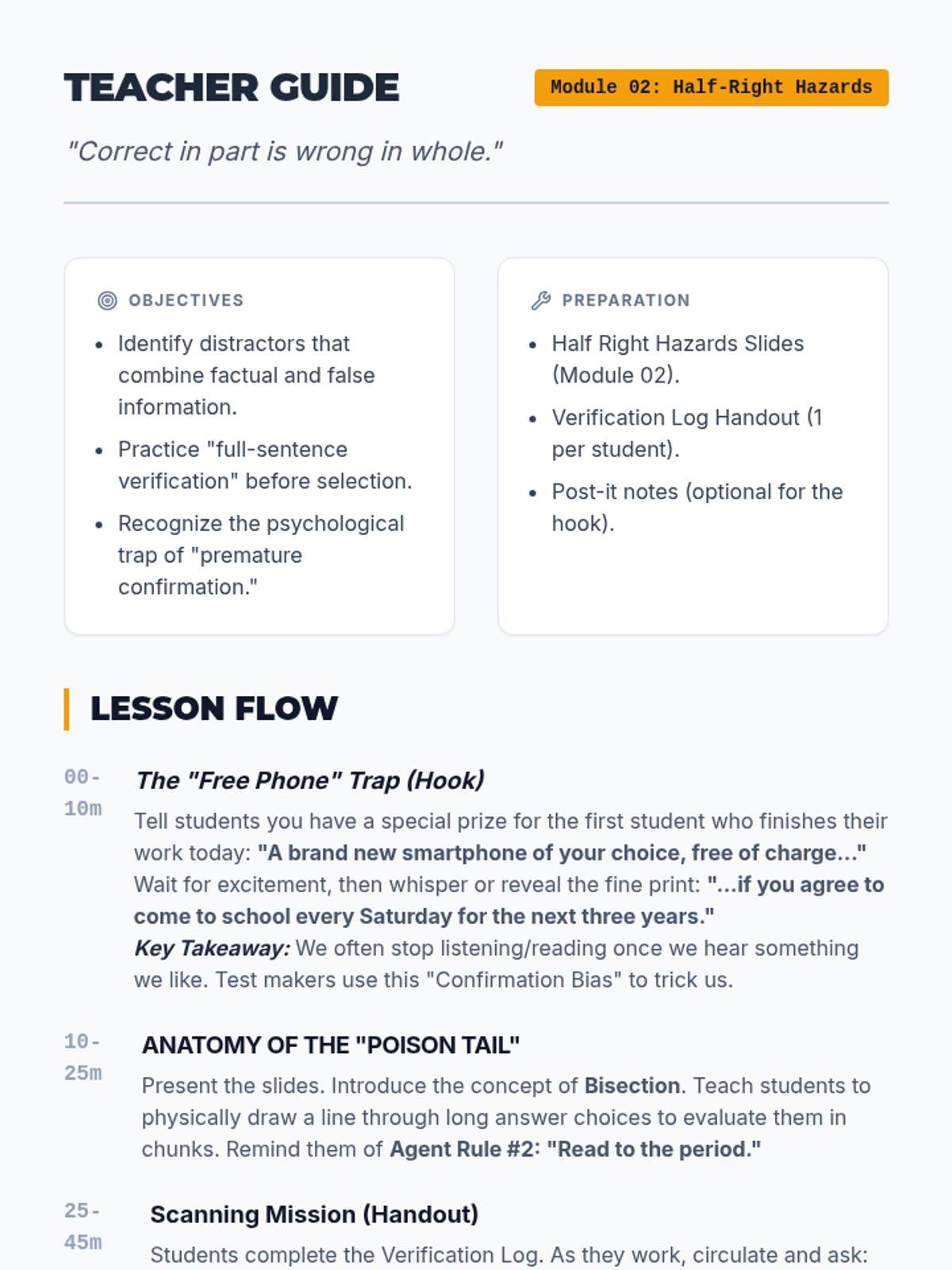
Learners analyze options that are partially correct but ultimately false. This lesson emphasizes the importance of reading every word of an answer choice to catch subtle inaccuracies.
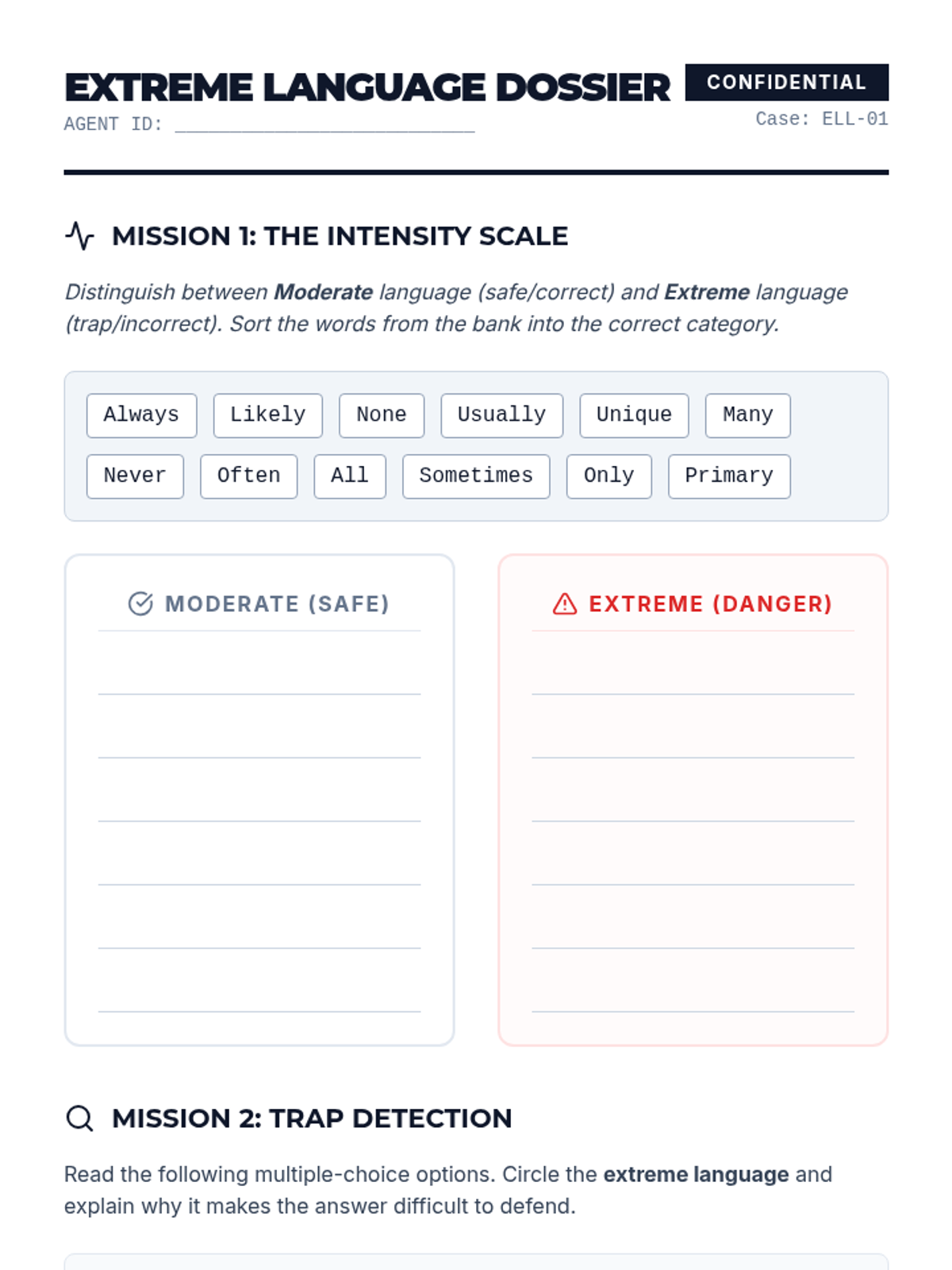
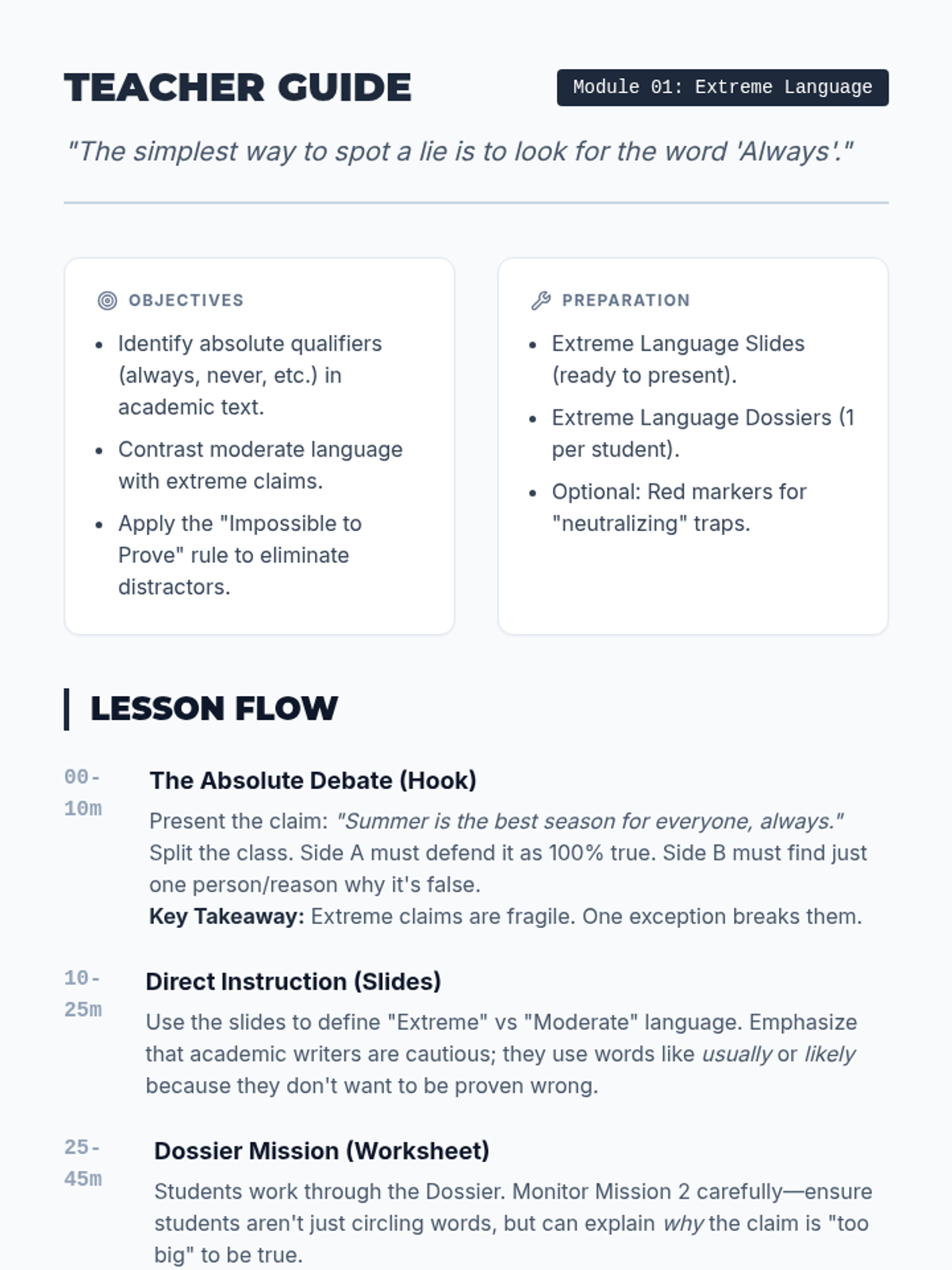
Students learn to identify absolute qualifiers like 'always' and 'never' that signal incorrect answers. They practice categorizing statements by their degree of intensity to evaluate their validity in a test context.
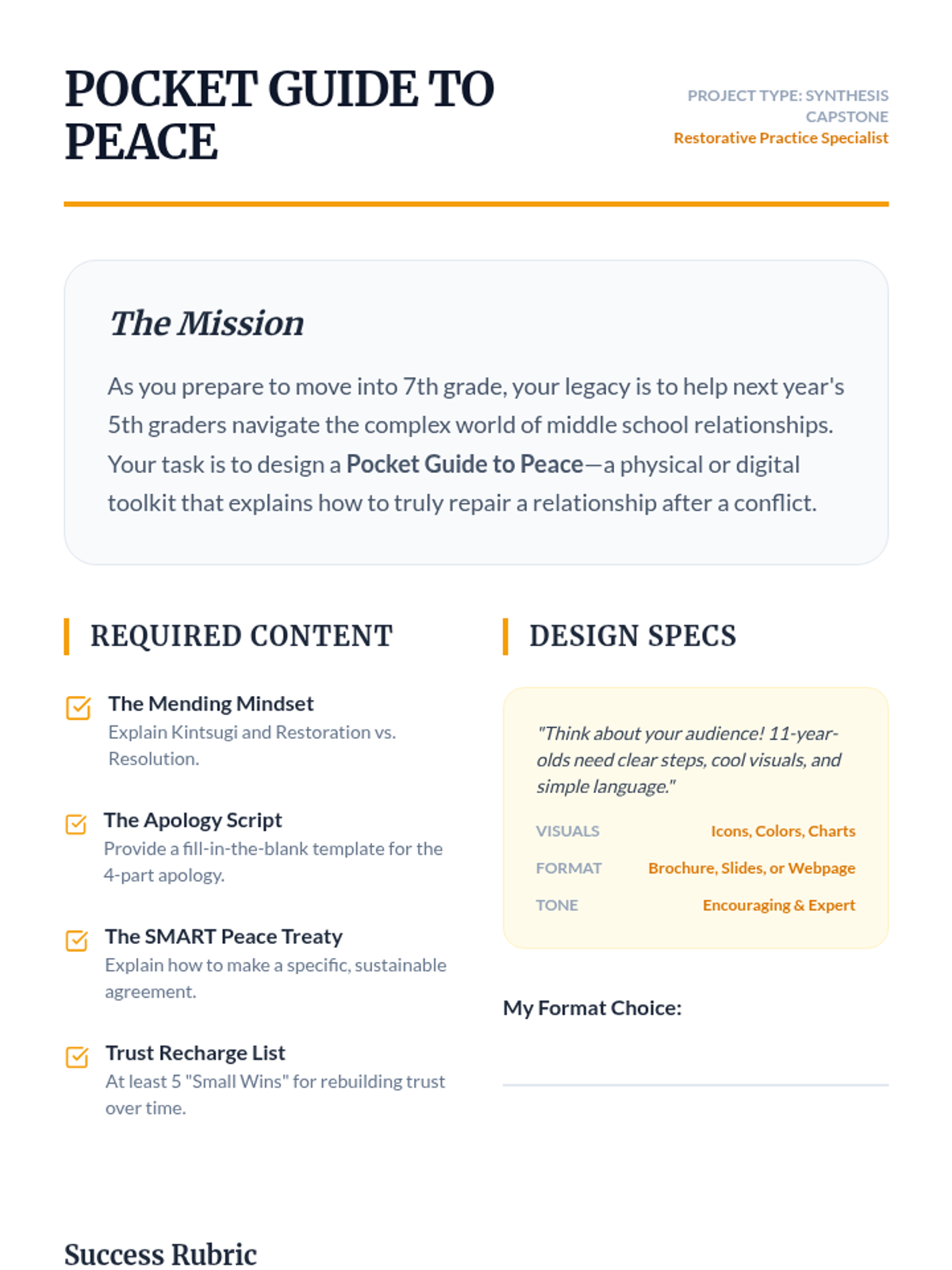
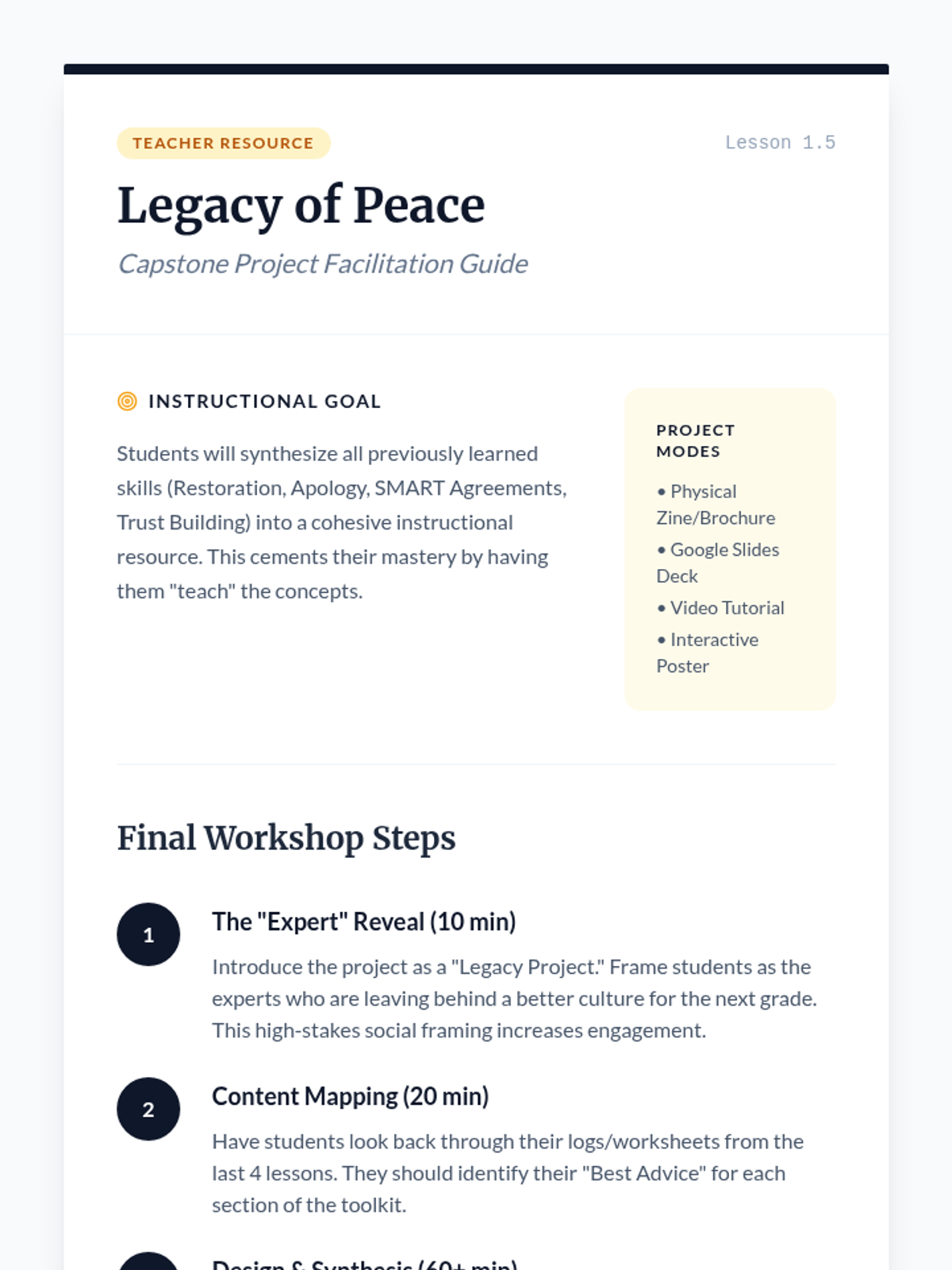
A capstone project where students synthesize their learning to create a 'Pocket Guide to Peace' for younger students.
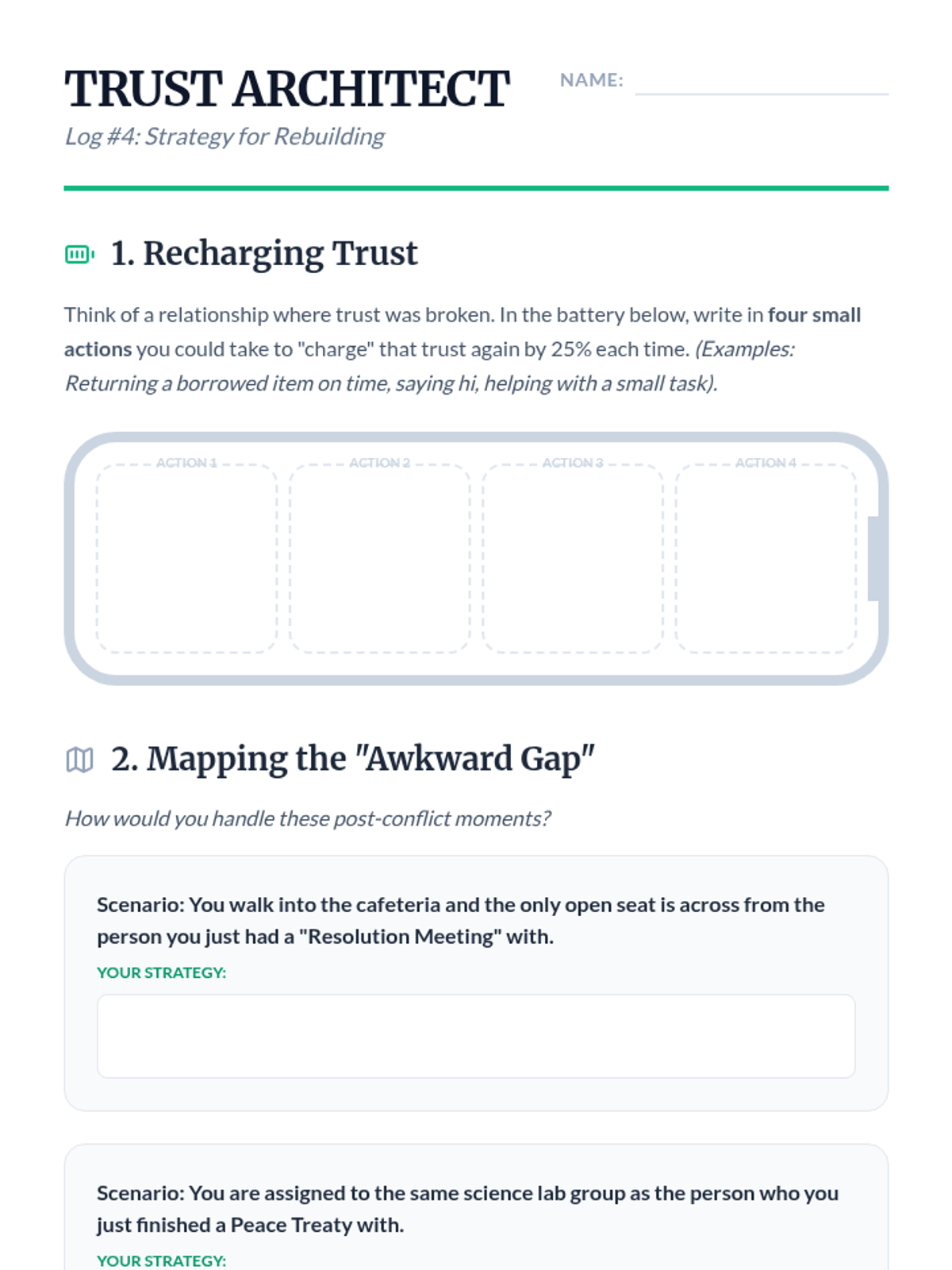
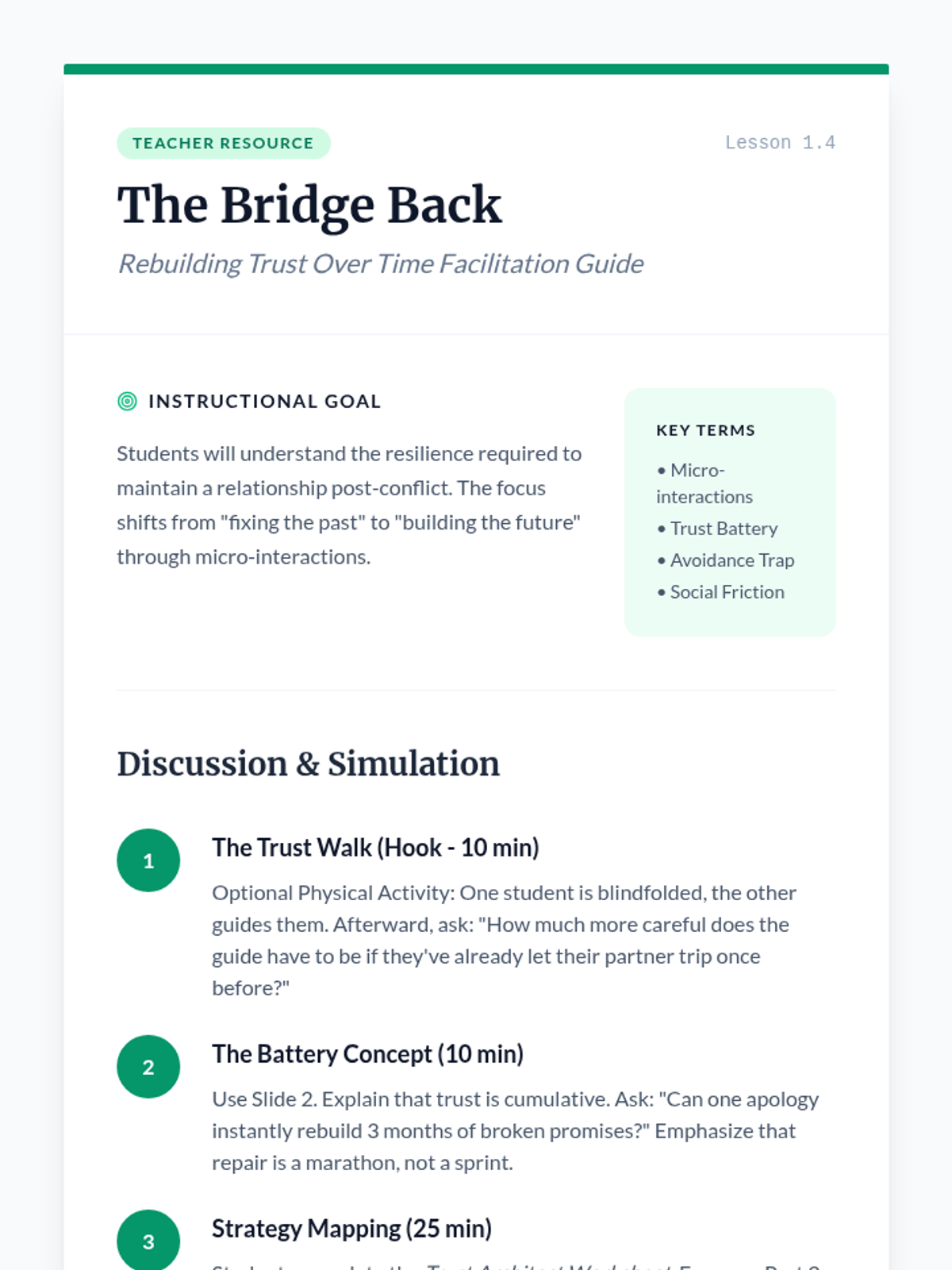
Explores the slow process of rebuilding trust after a conflict, focusing on small, consistent actions and the courage required to be vulnerable again.
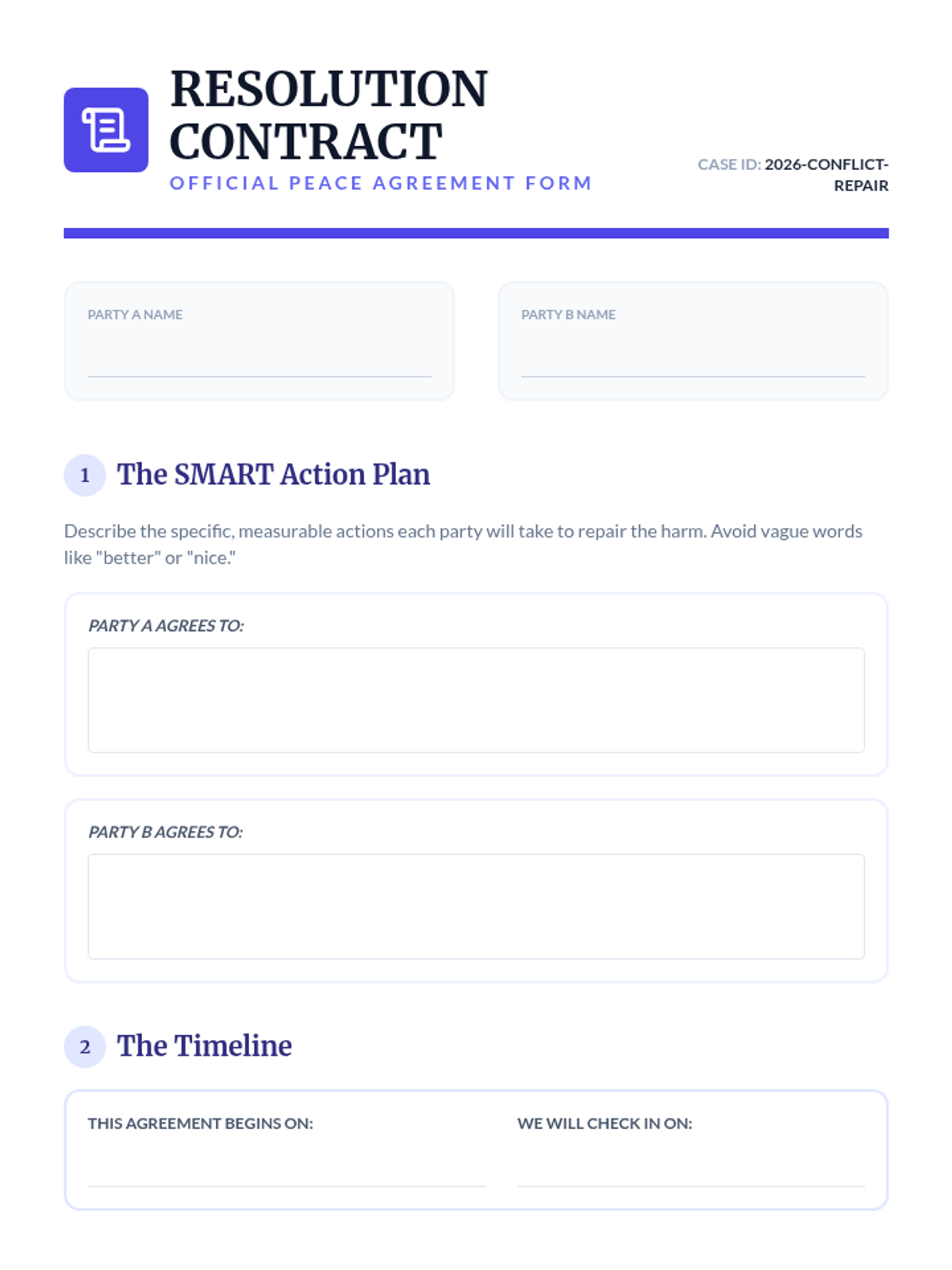
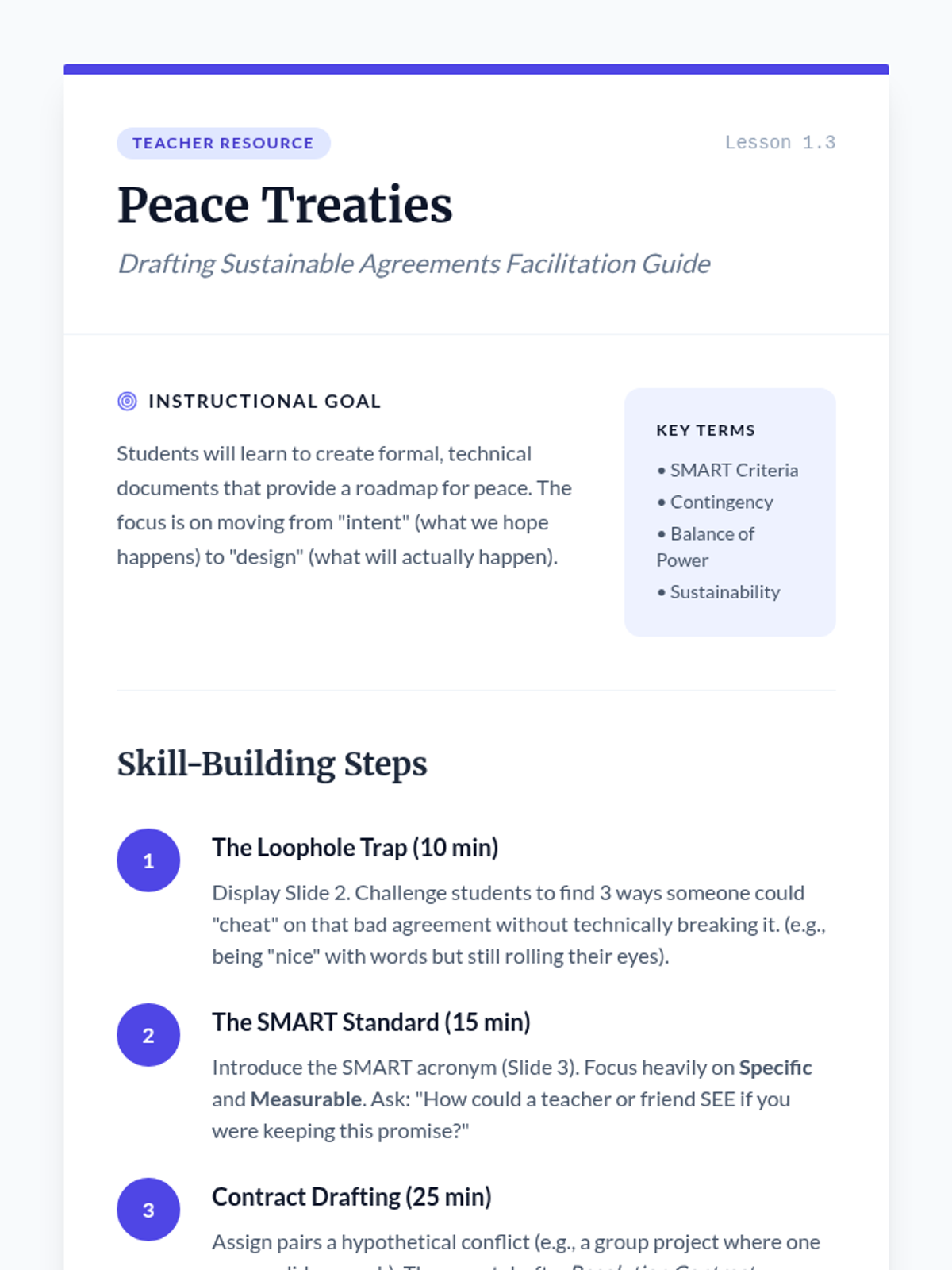
Focuses on technical skills for creating 'fight-proof' agreements that are specific, measurable, and include contingency plans for future friction.
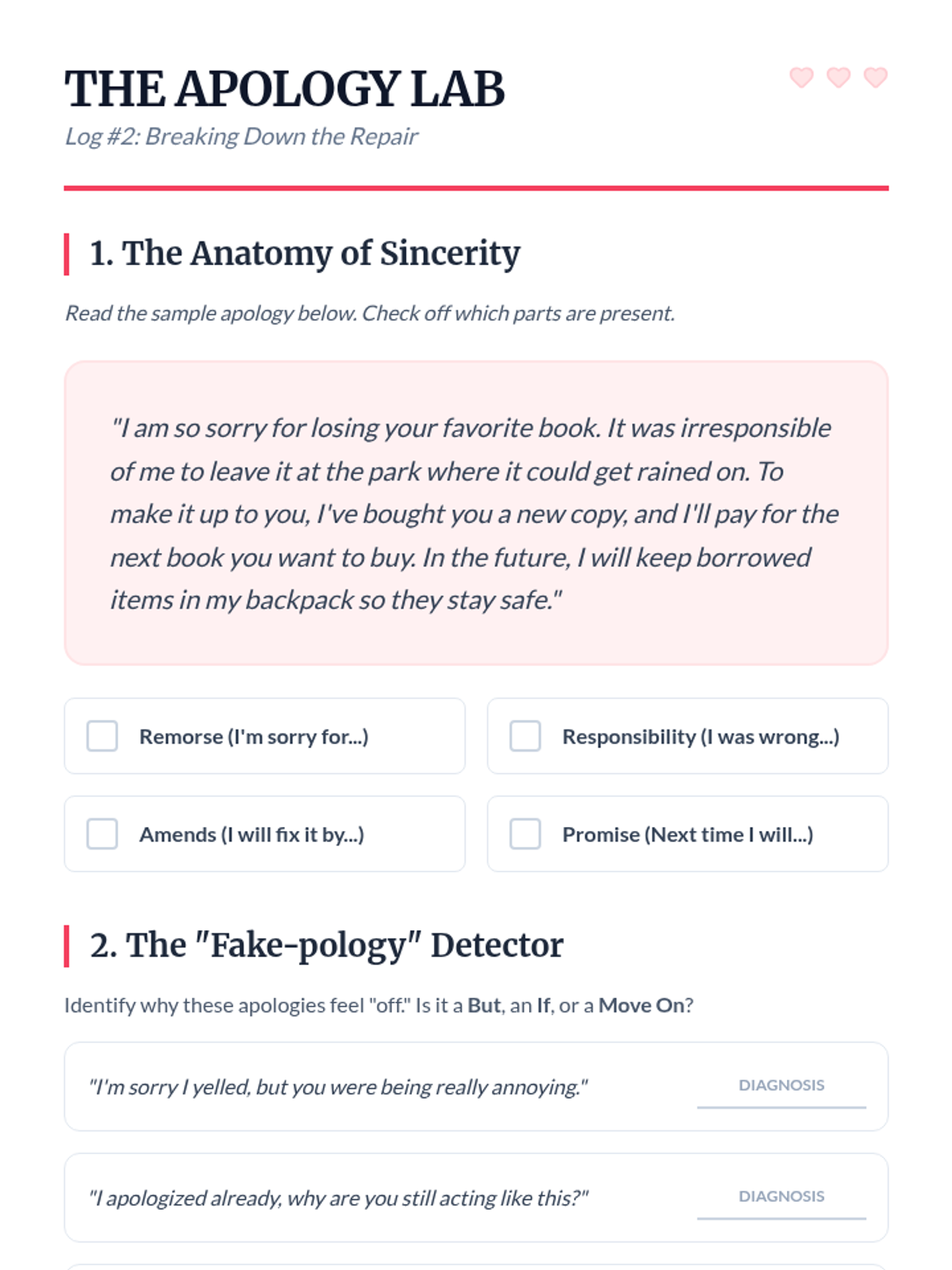
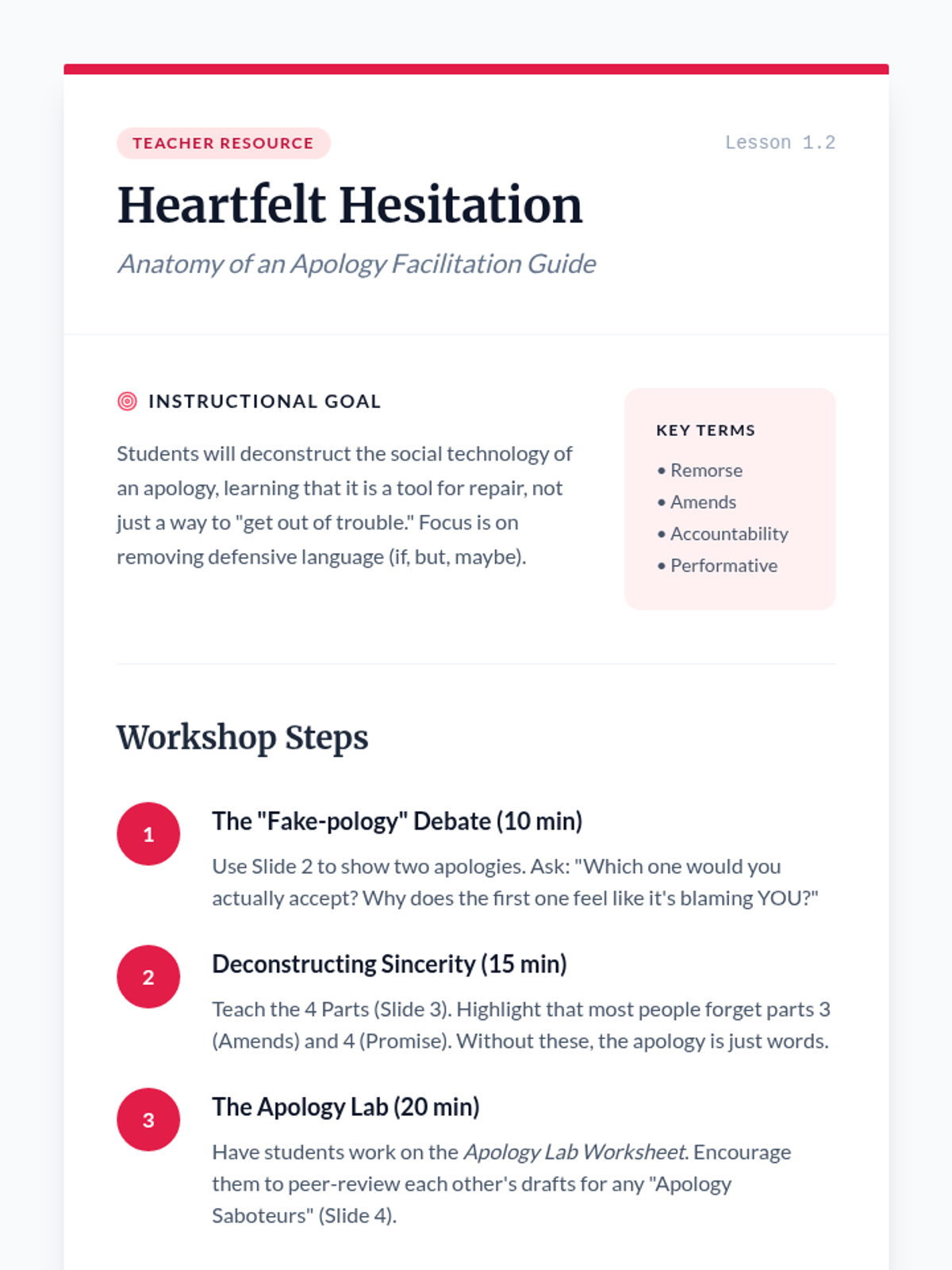
Learners break down the four essential components of a meaningful apology and practice distinguishing between performative and sincere expressions of remorse.
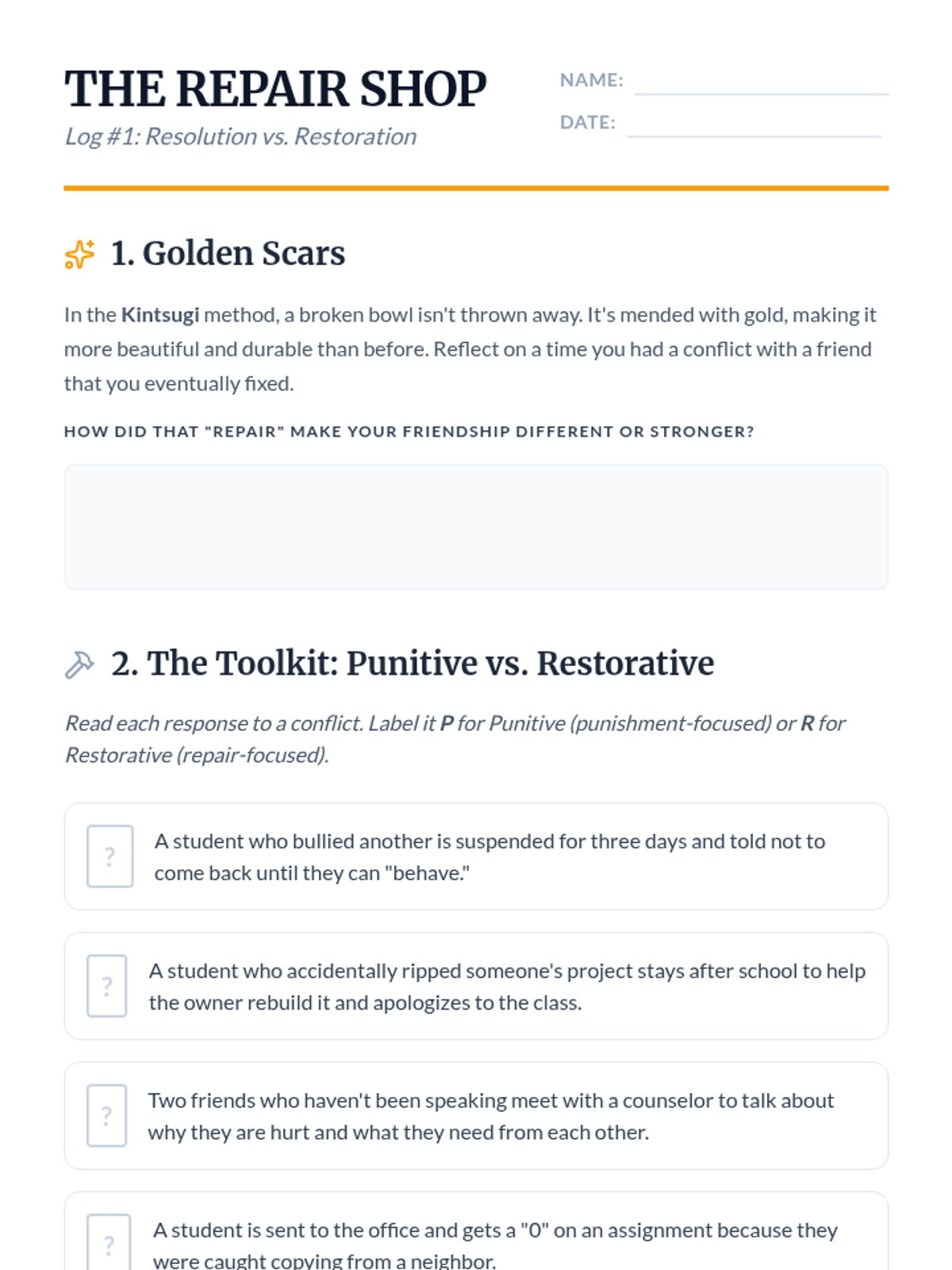
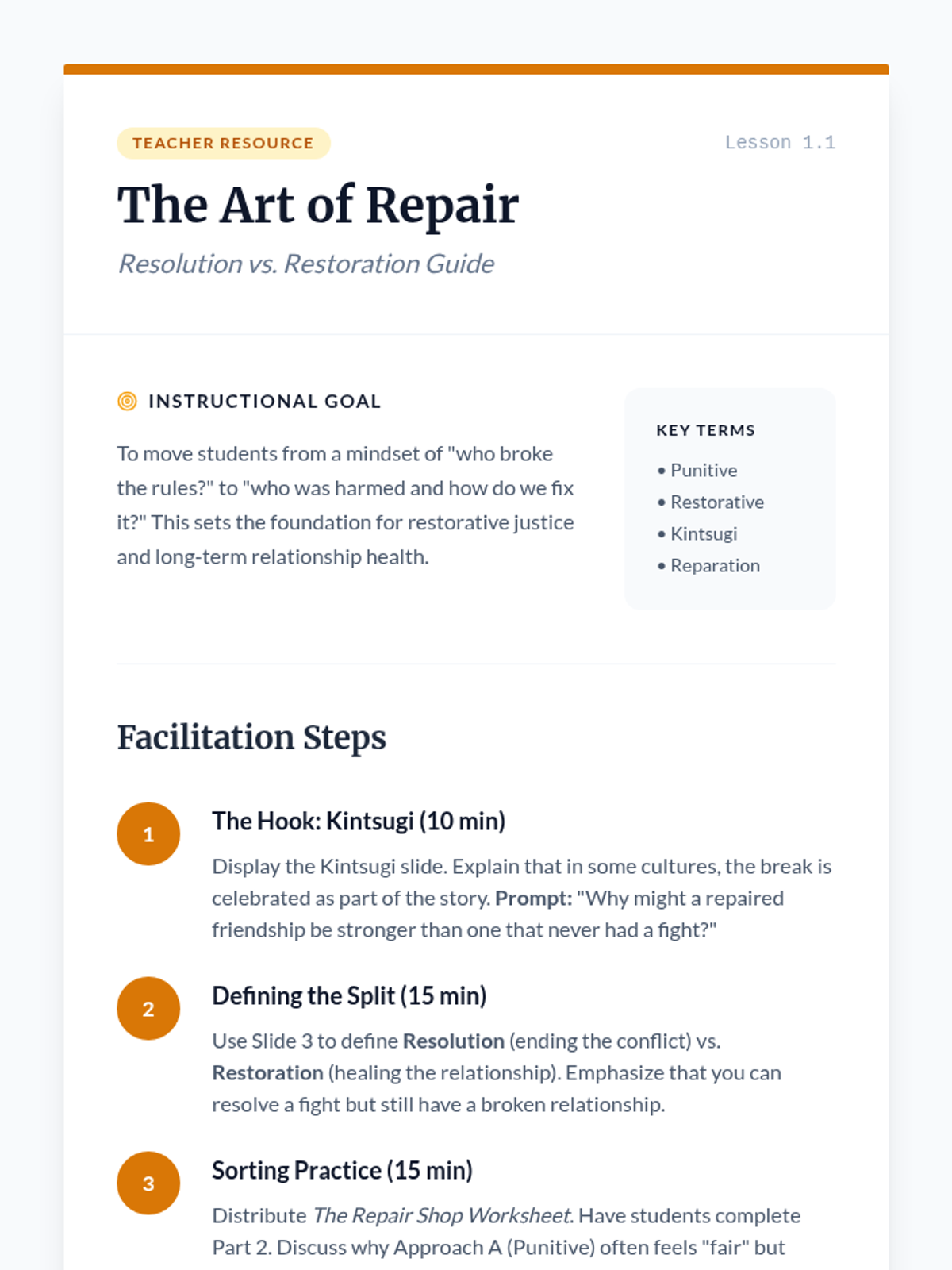
Students contrast punitive and restorative approaches to conflict, using the concept of Kintsugi to understand how repair can make a relationship stronger.
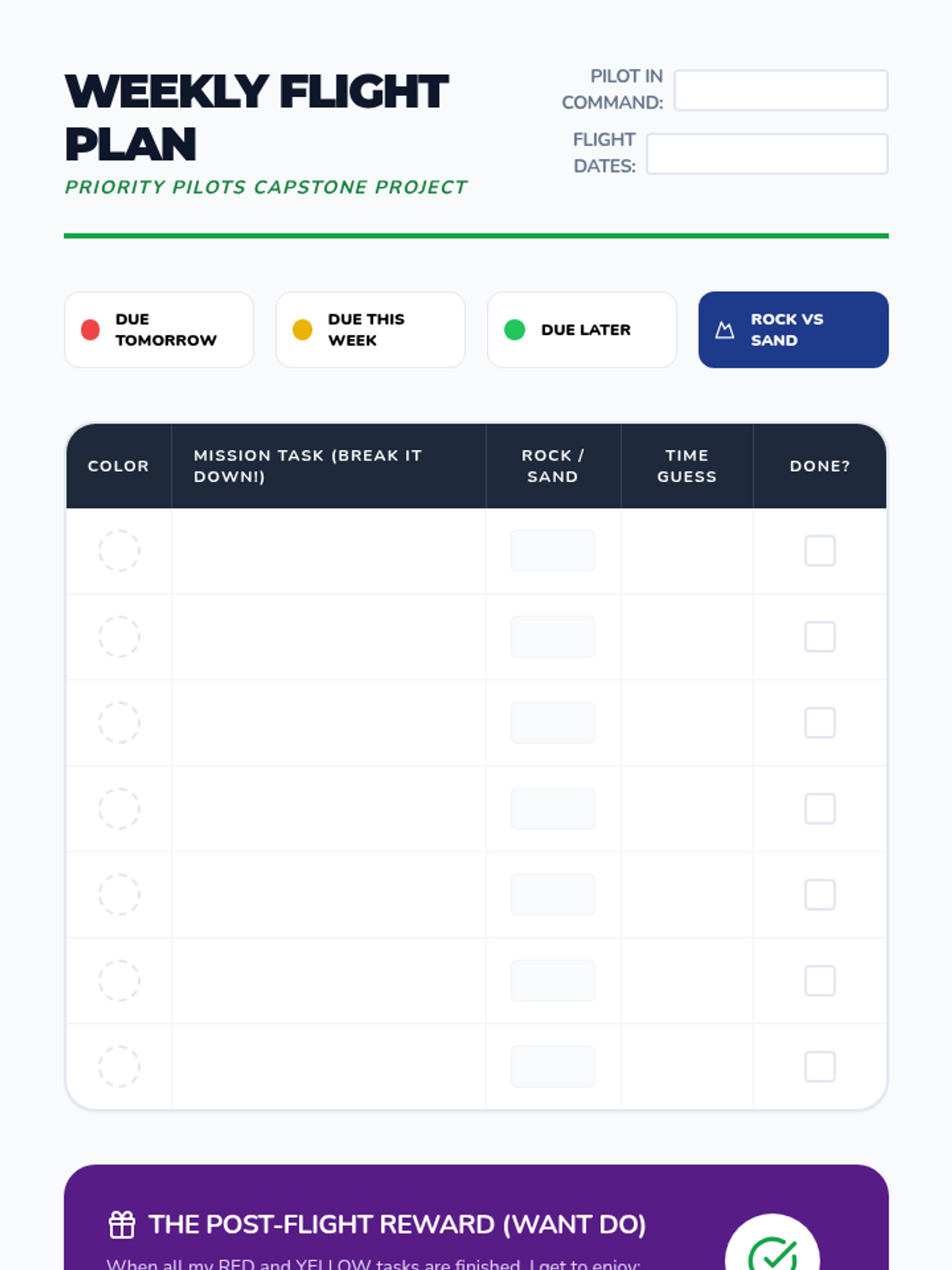
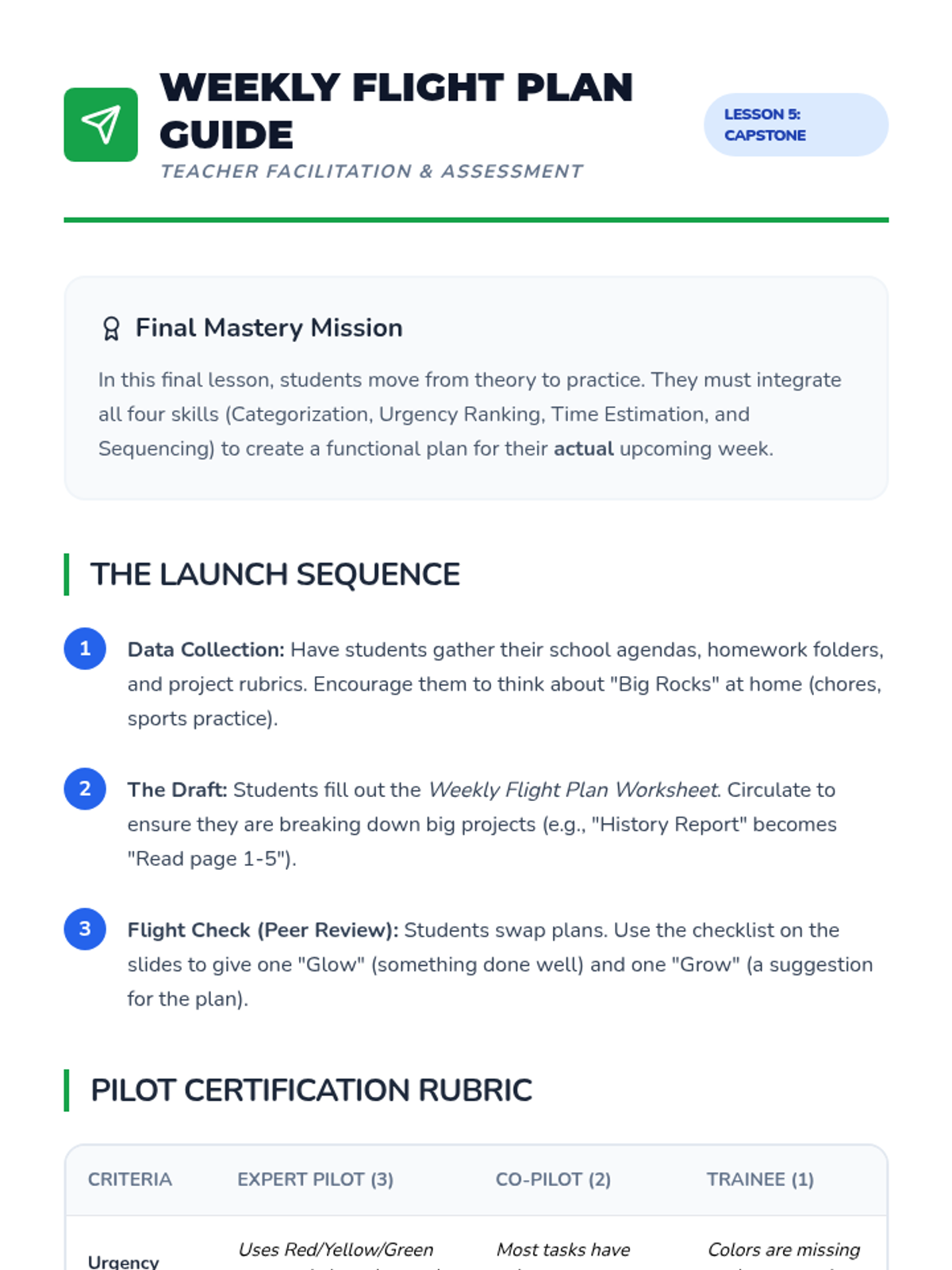
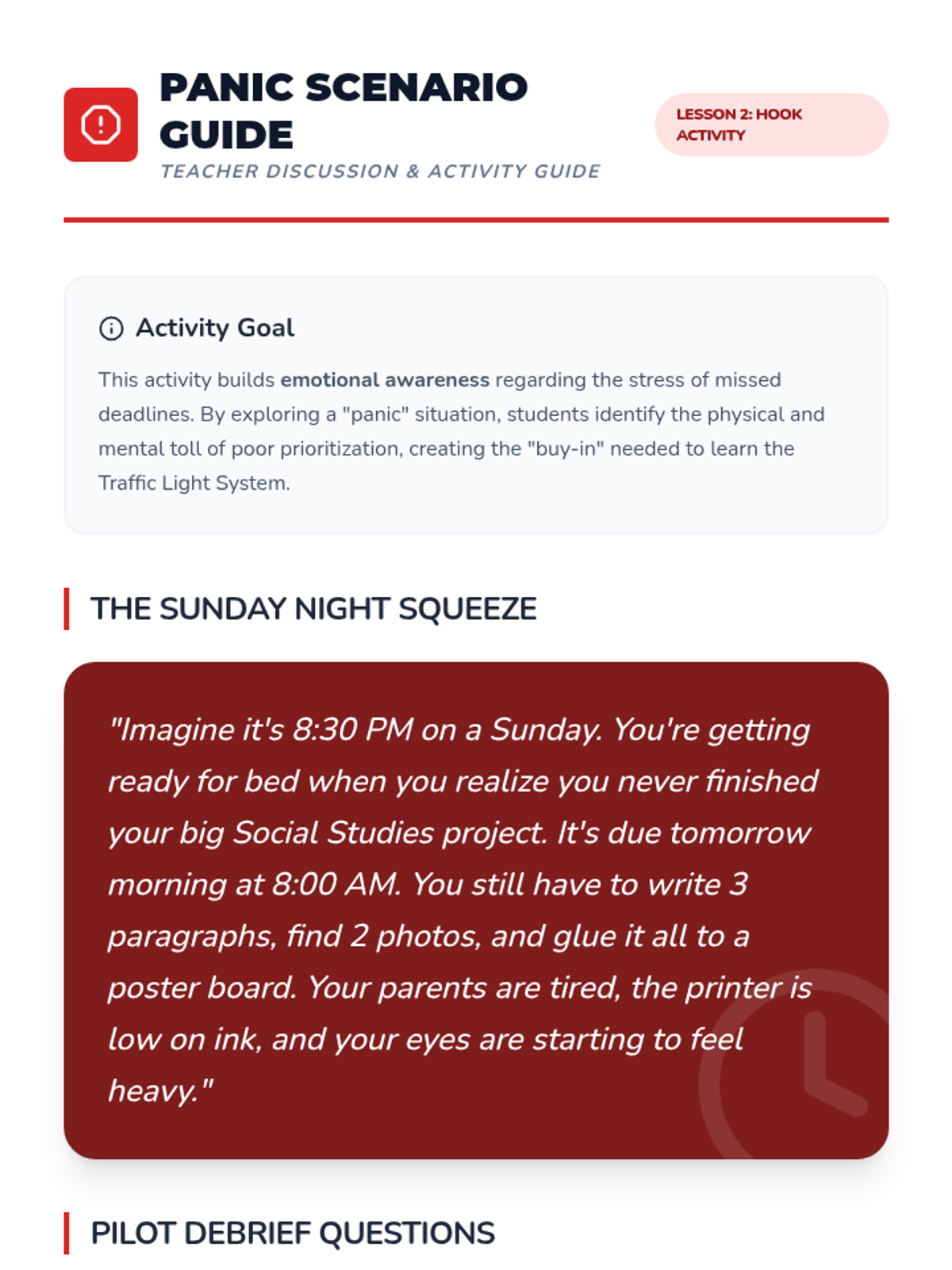
Students apply all learned strategies to create a personalized weekly prioritization plan for their own workload.
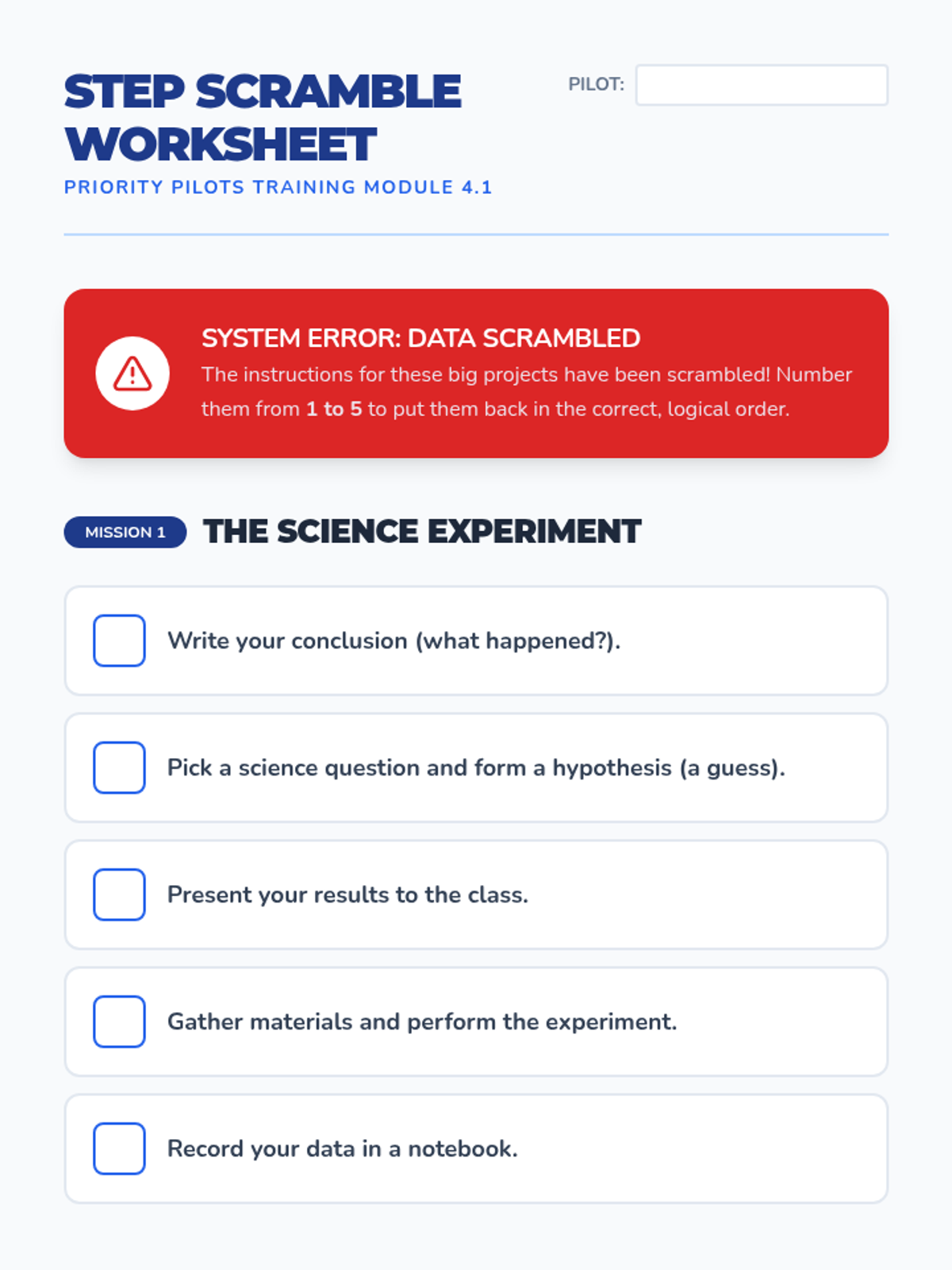
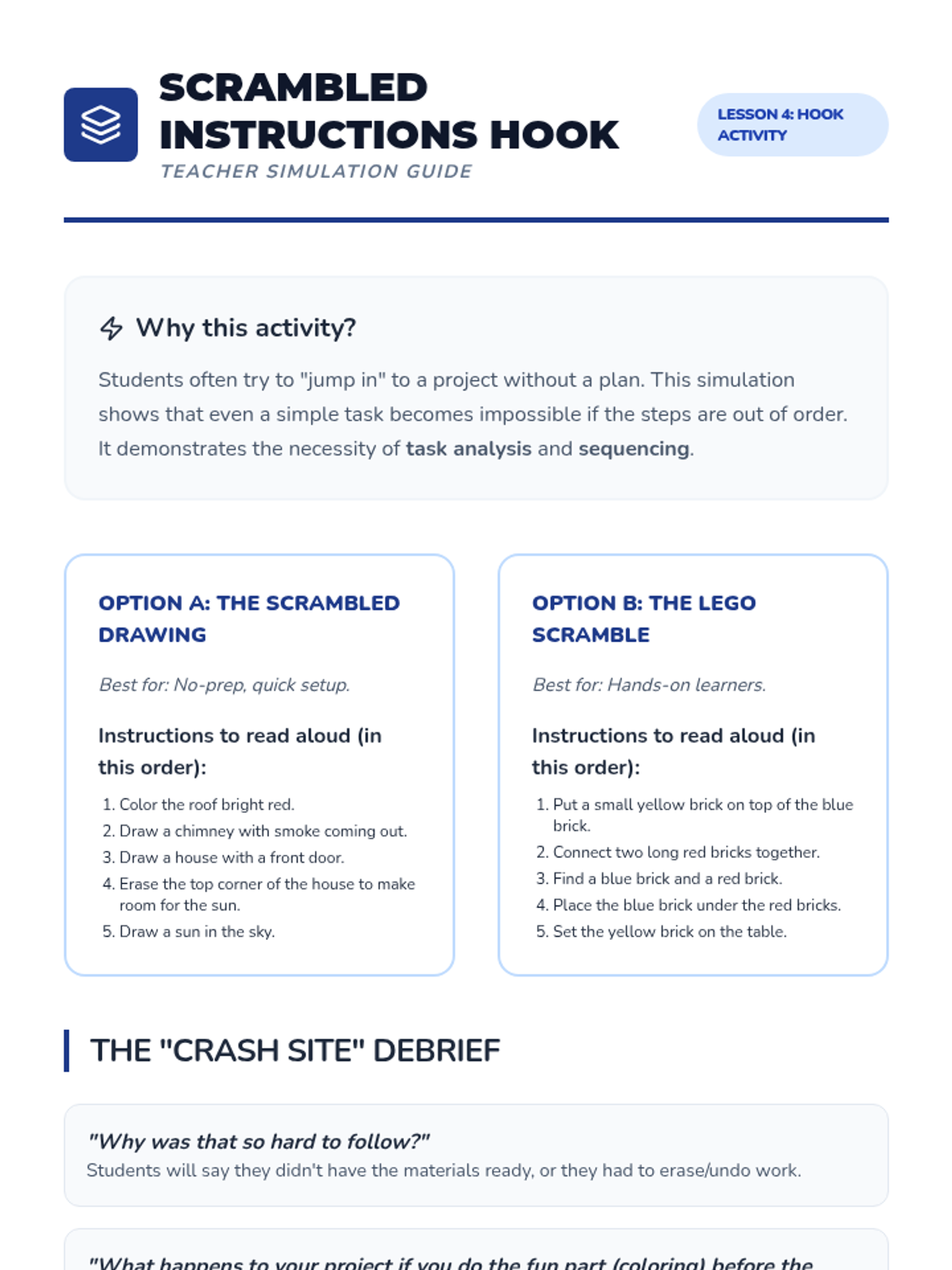
Students learn how to break down large projects into logical, sequential steps to avoid overwhelm.
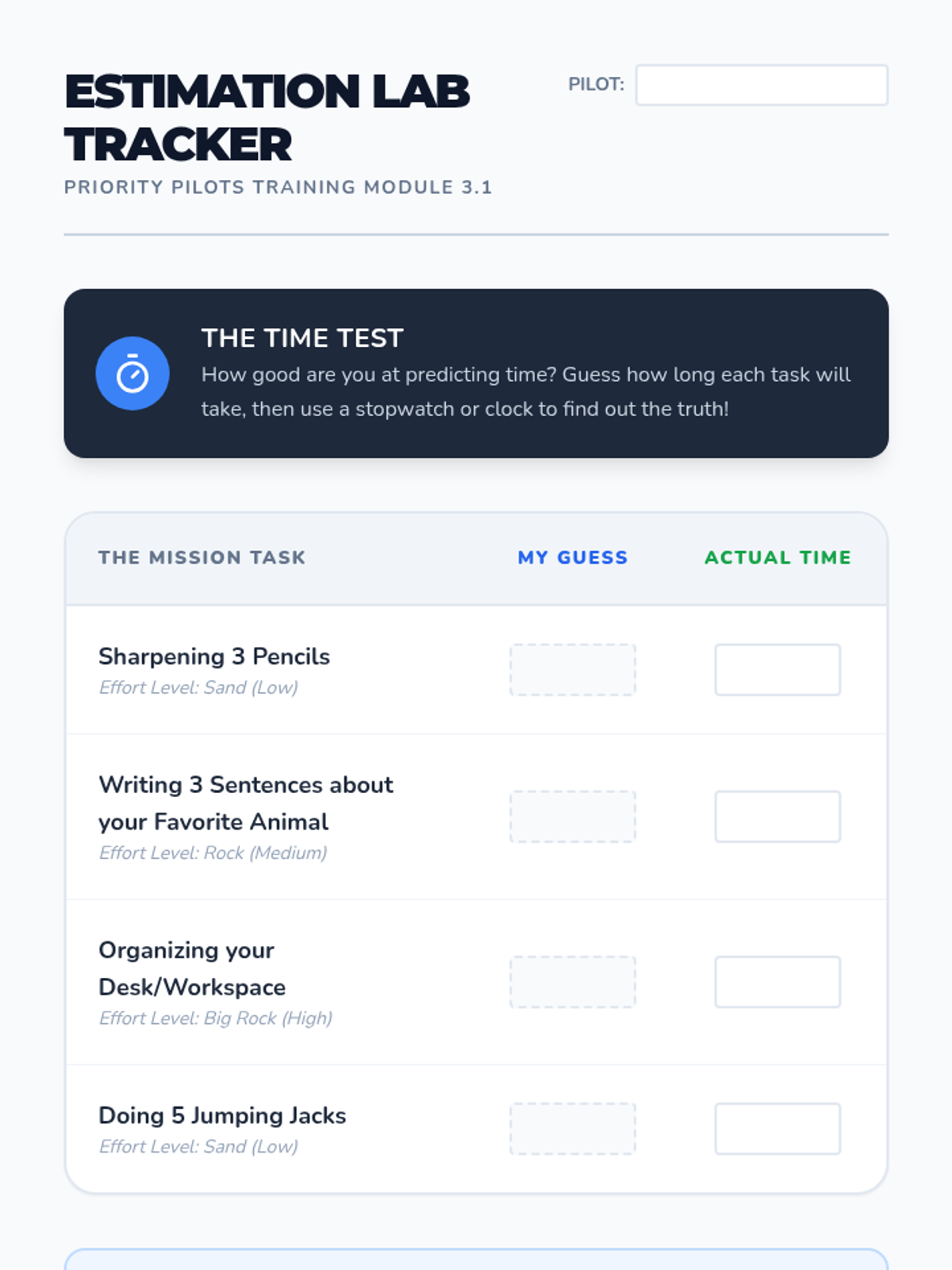
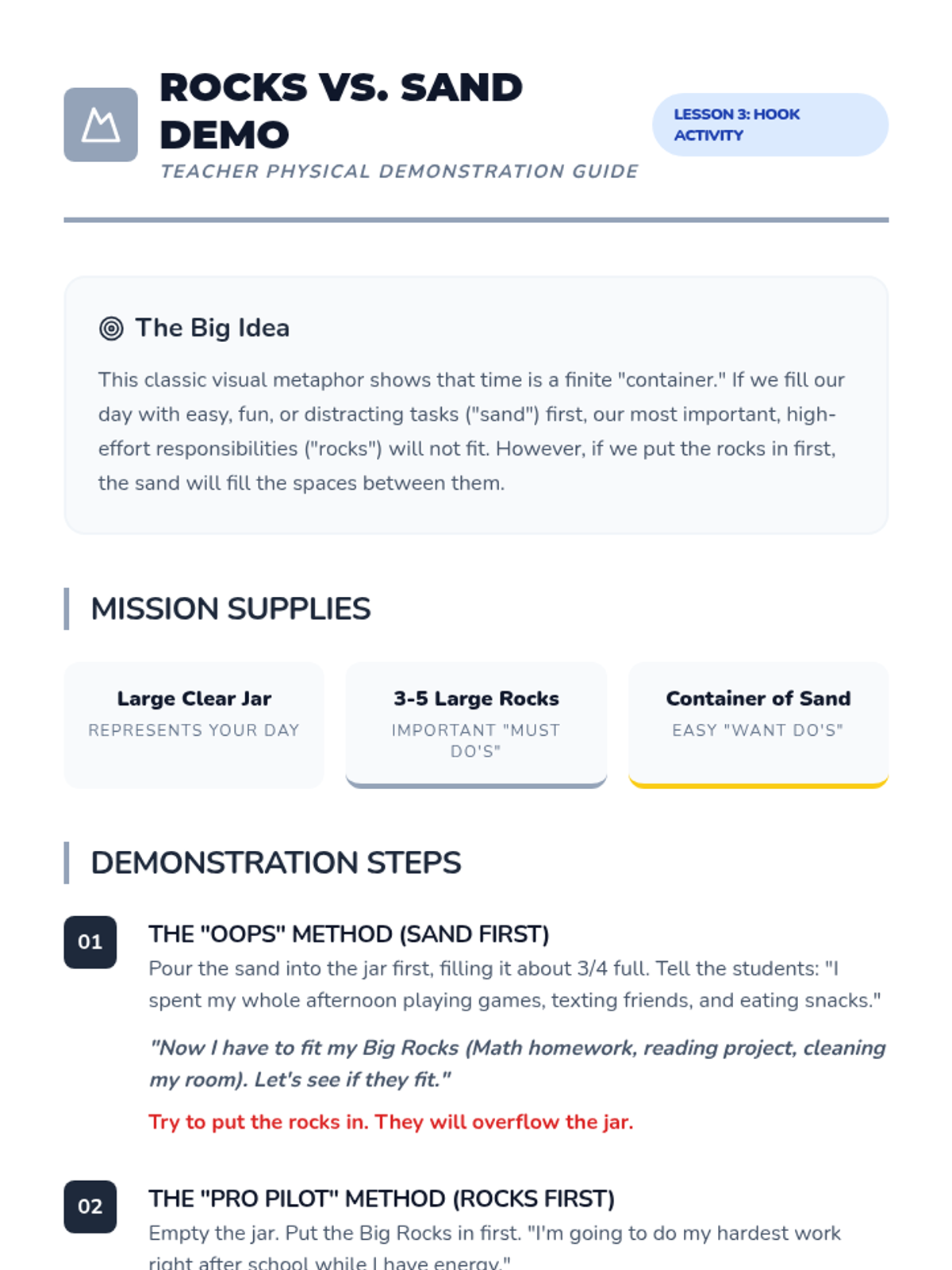
Students practice estimating the time and effort required for tasks using the 'Rocks vs. Sand' analogy.
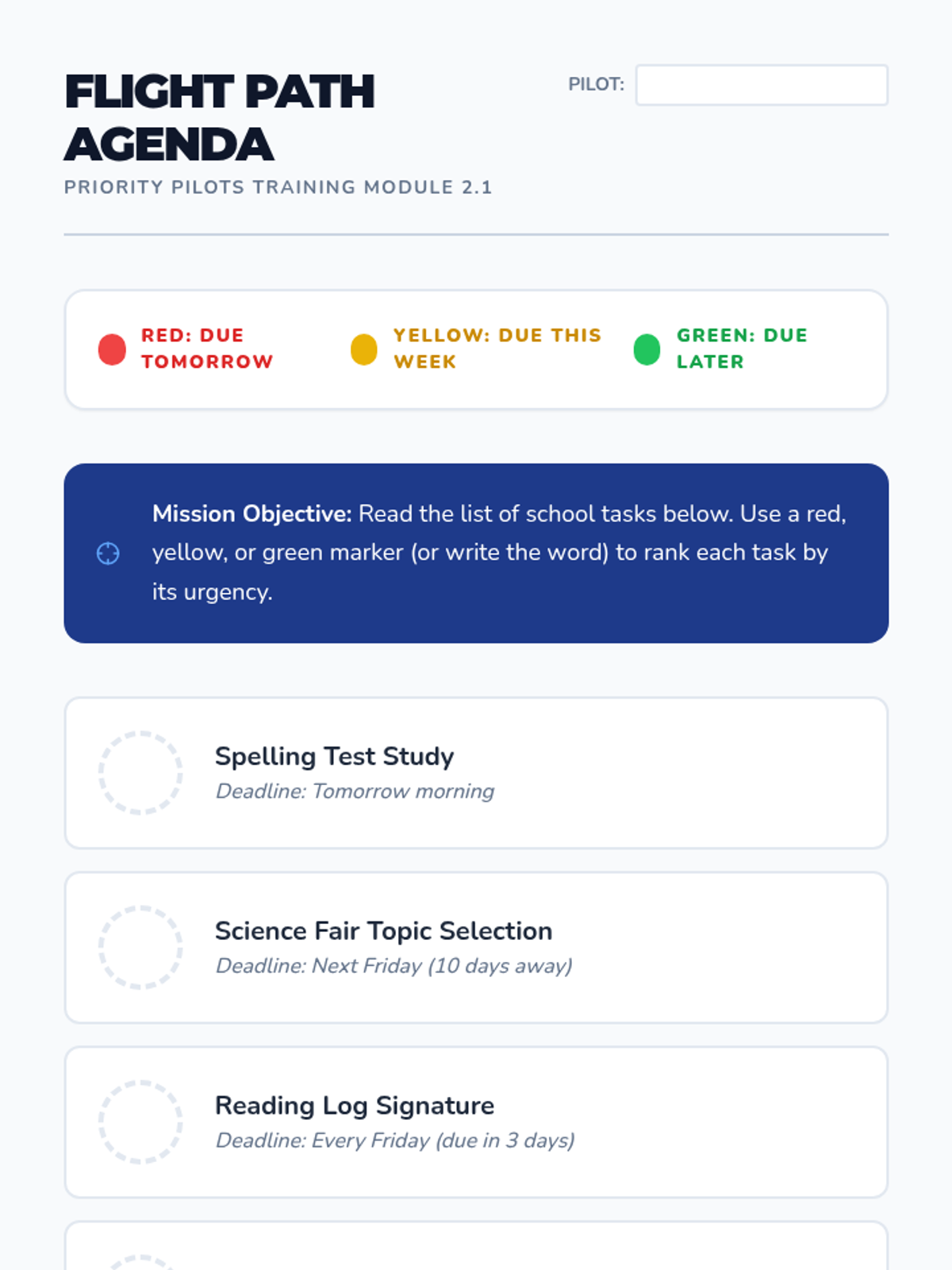
Introduction to the Traffic Light Urgency System (Red, Yellow, Green) for ranking tasks by deadline.
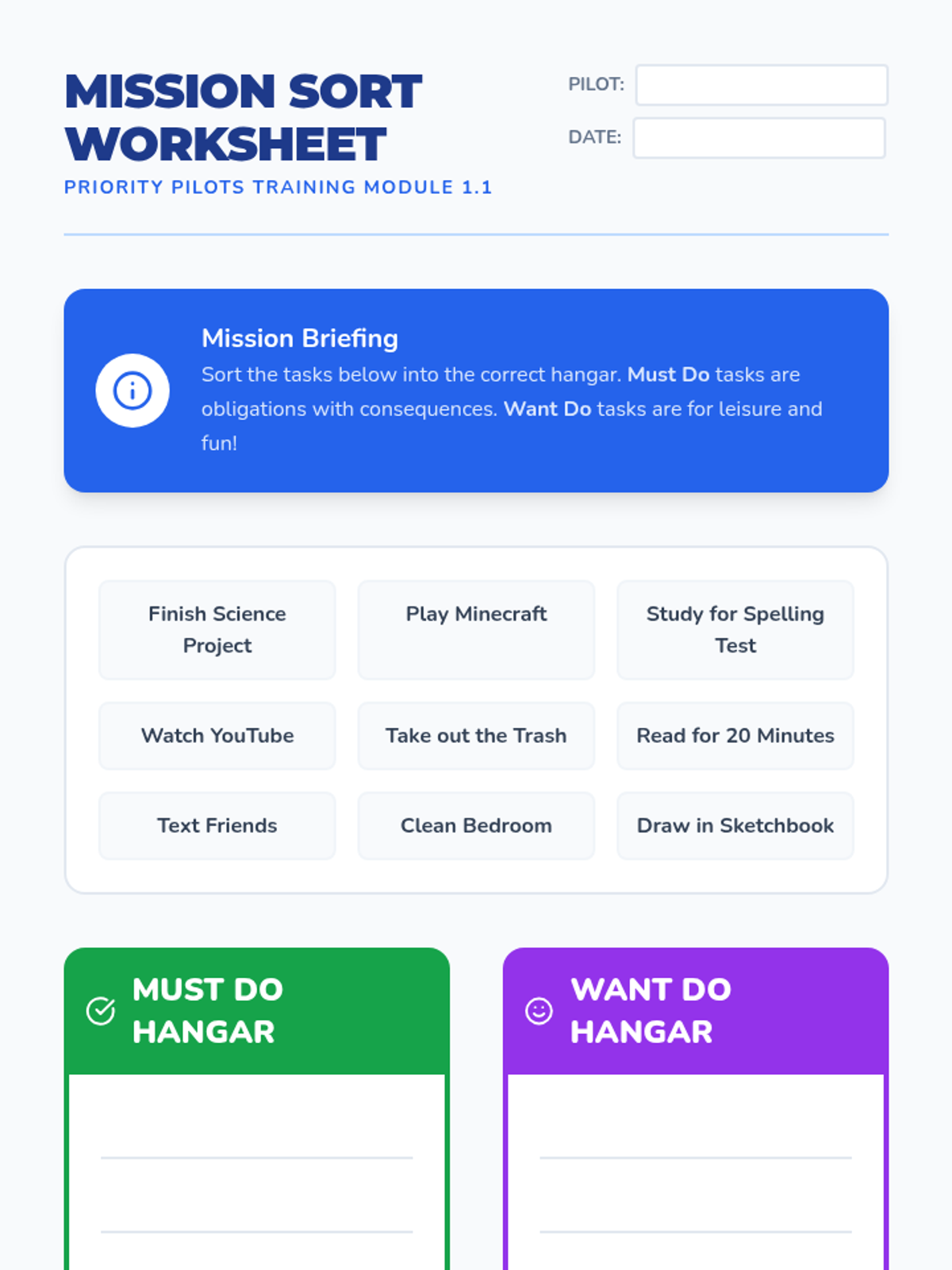
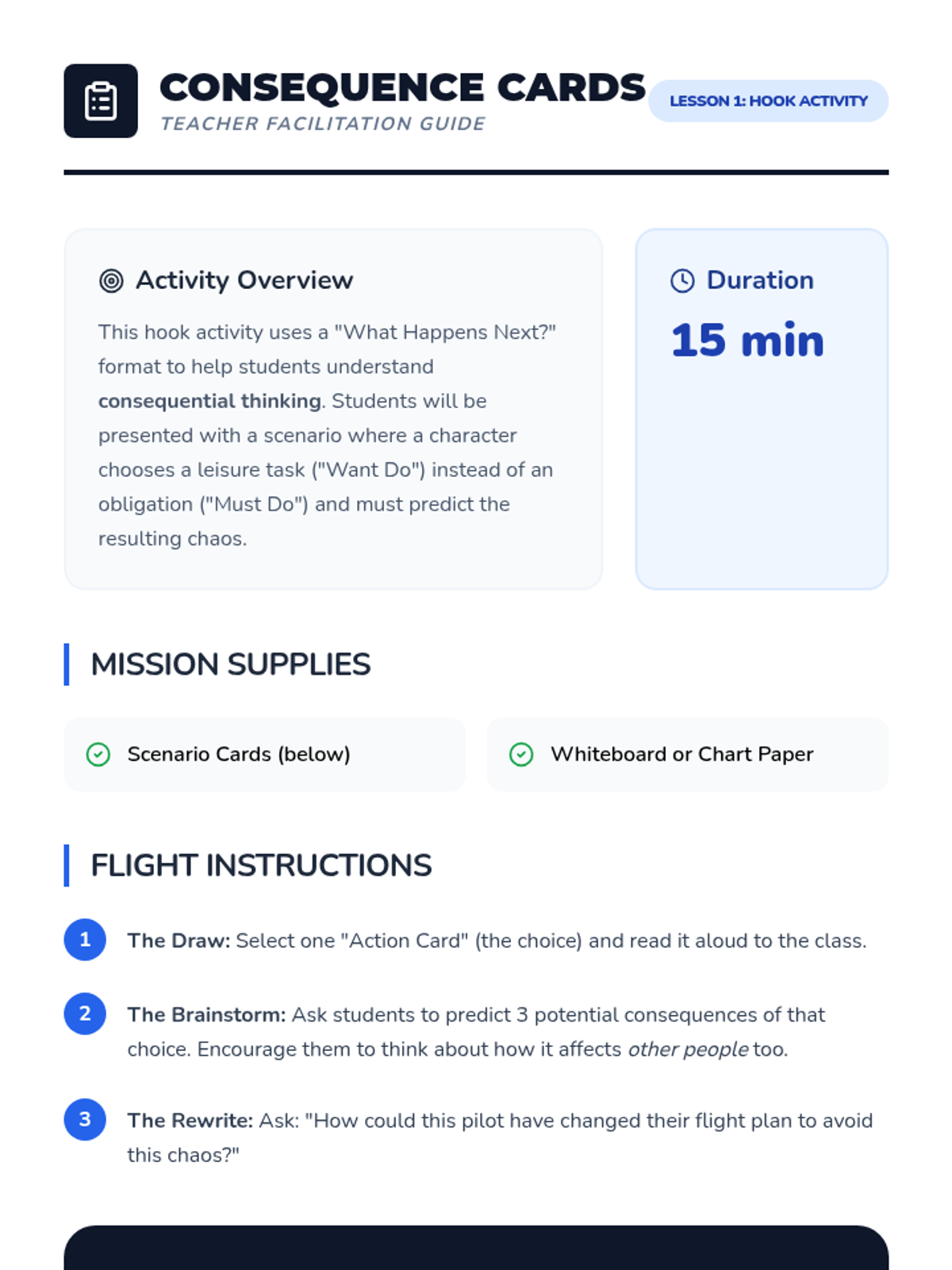
Students learn to categorize daily tasks into 'Must Do' (Obligations) and 'Want Do' (Leisure) and discuss the consequences of their choices.
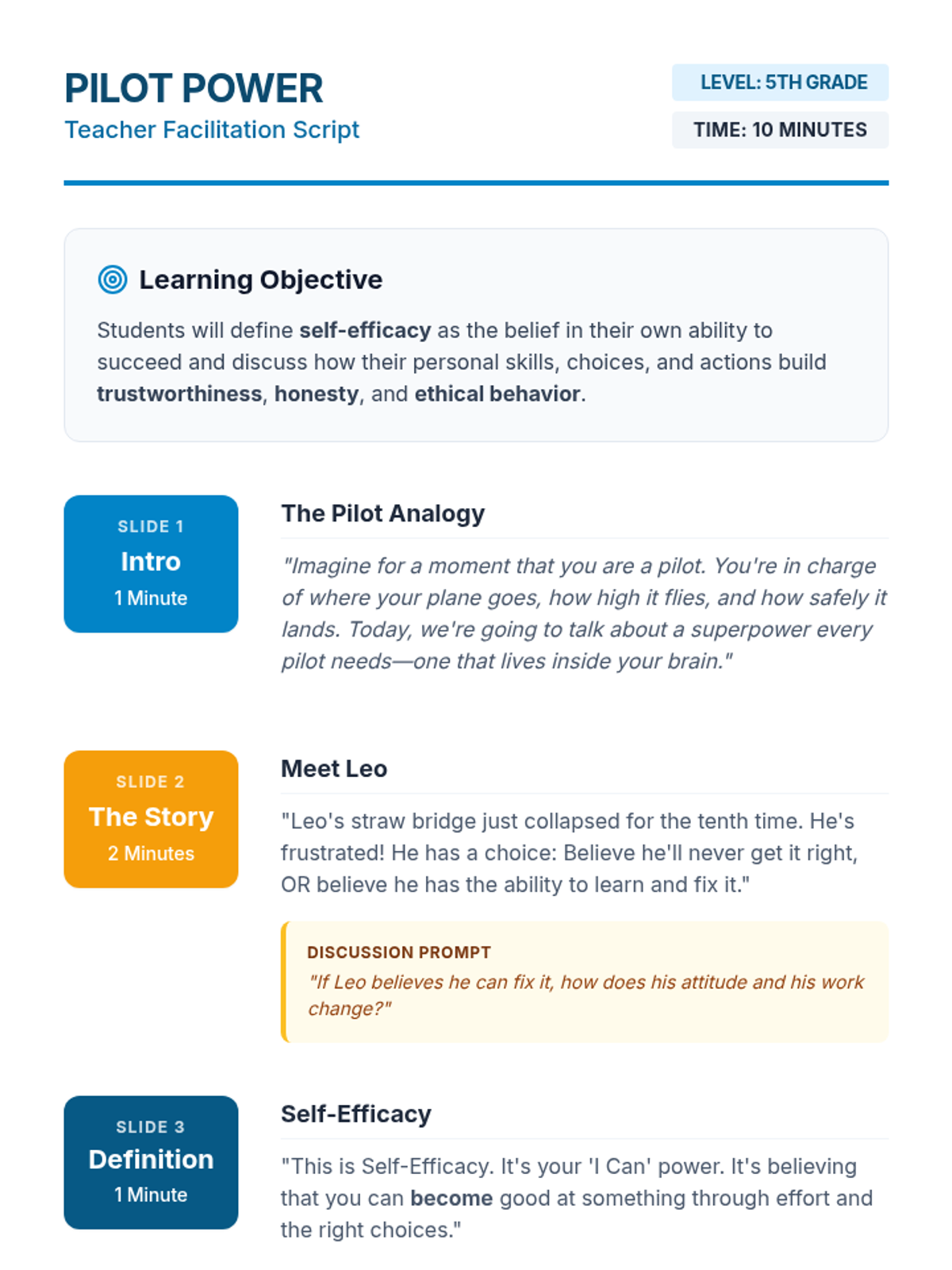
A 10-minute lesson for 5th graders on self-efficacy, focusing on how personal choices and actions build trustworthiness and ethics through a relatable story-based approach.
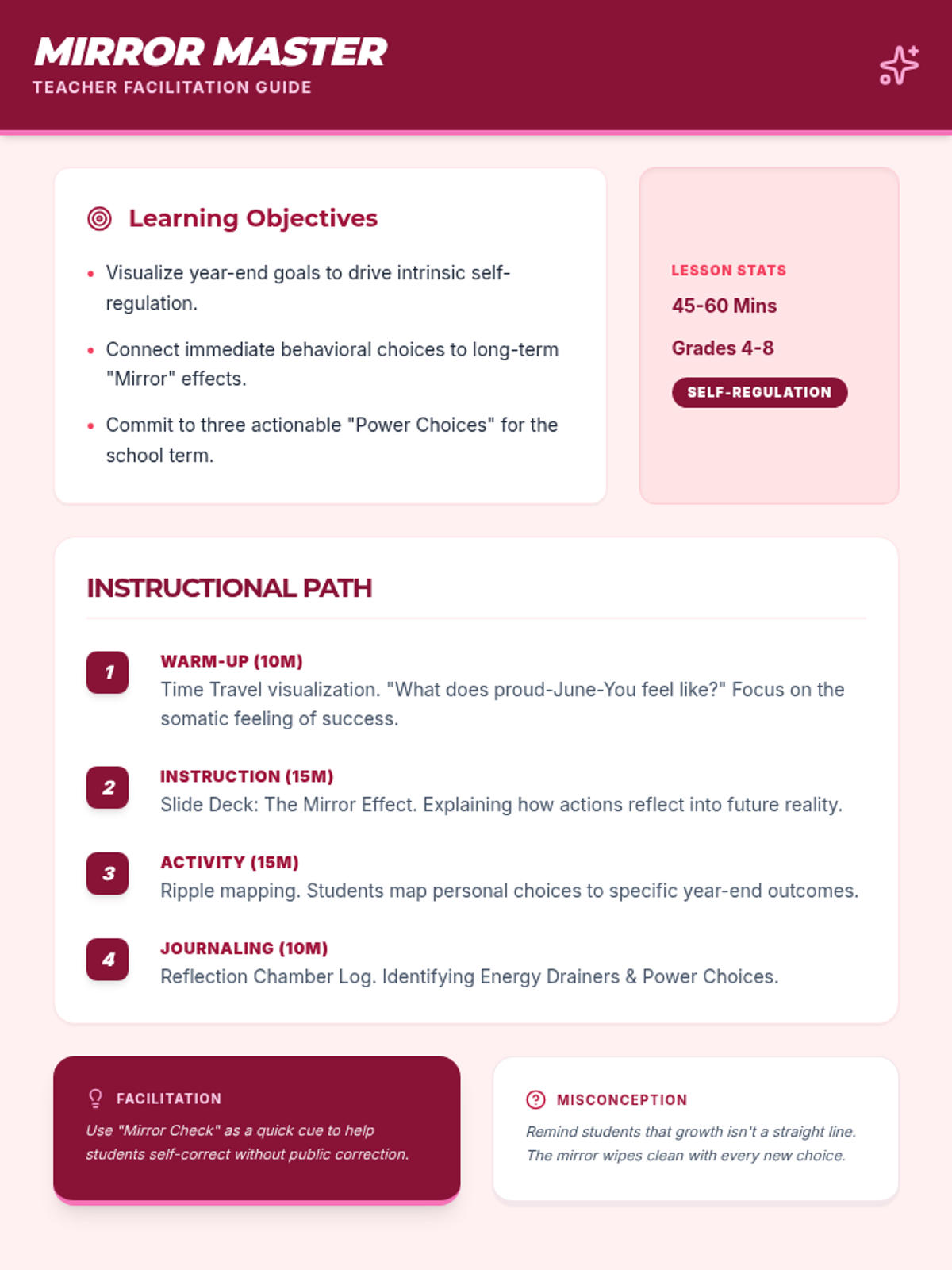
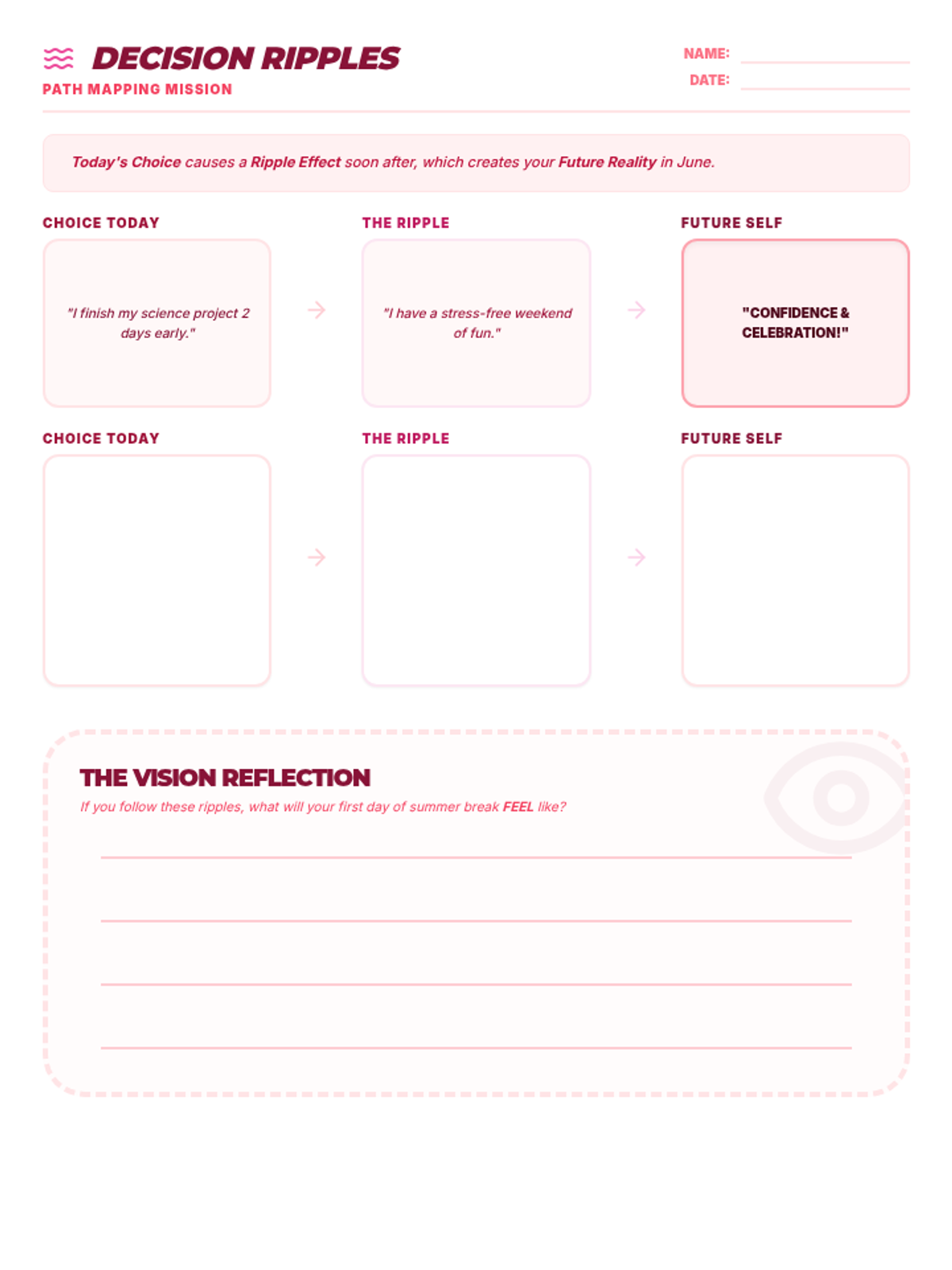
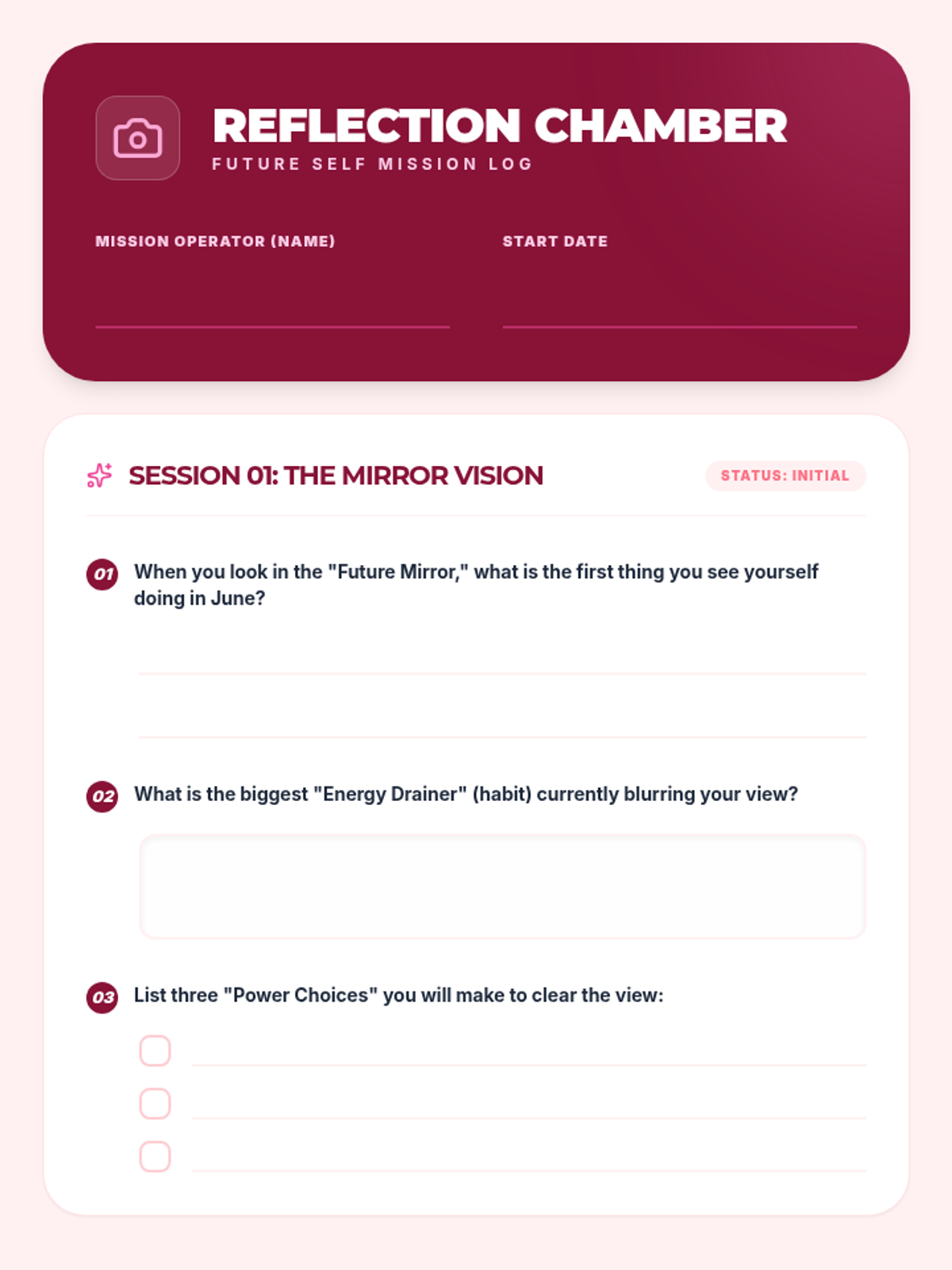
This lesson helps students visualize their future success to motivate self-regulation and goal-oriented decision-making in the present. Students explore the 'Mirror Effect,' connecting daily choices to long-term rewards like grade promotion and year-end celebrations.
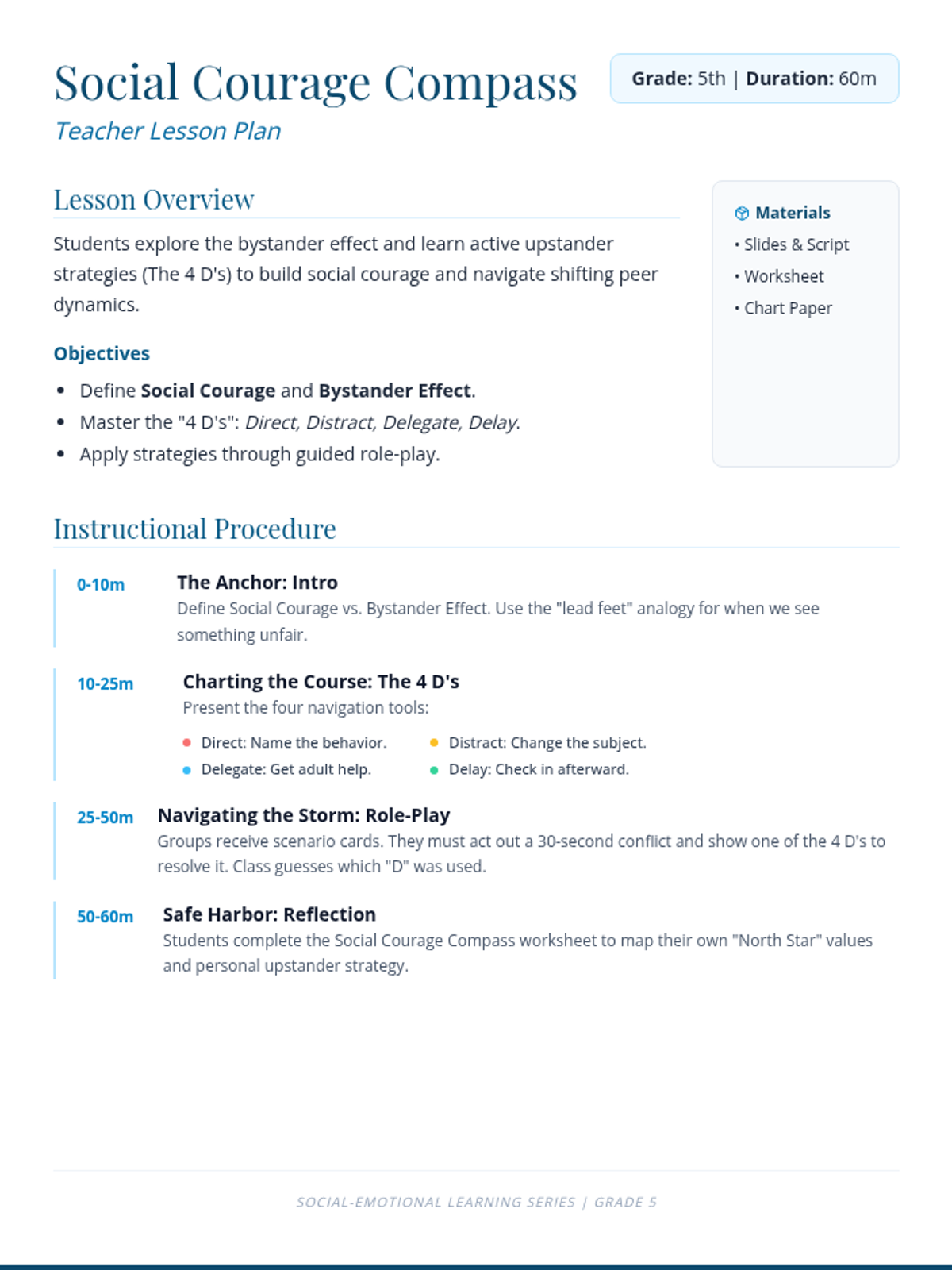
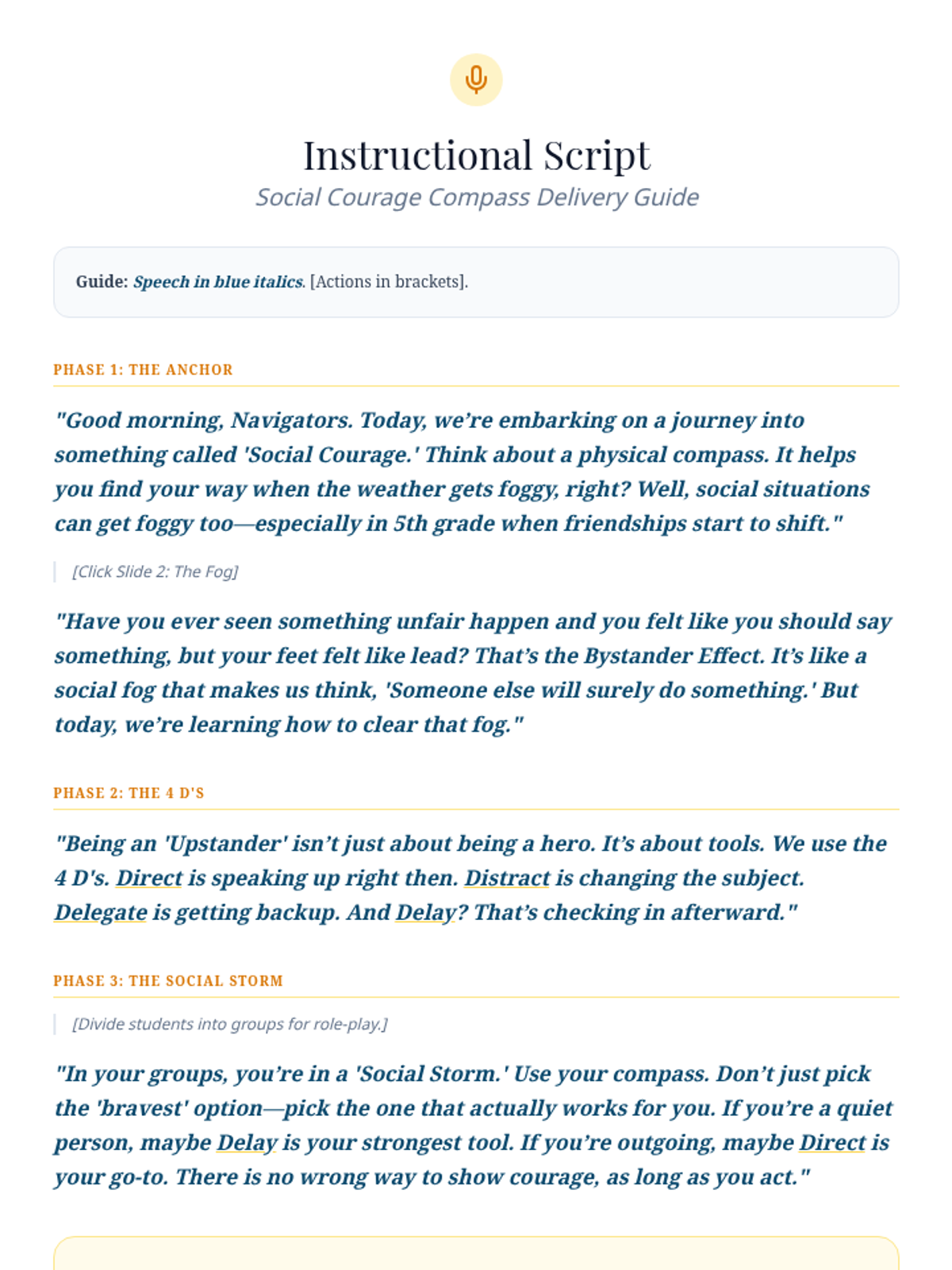
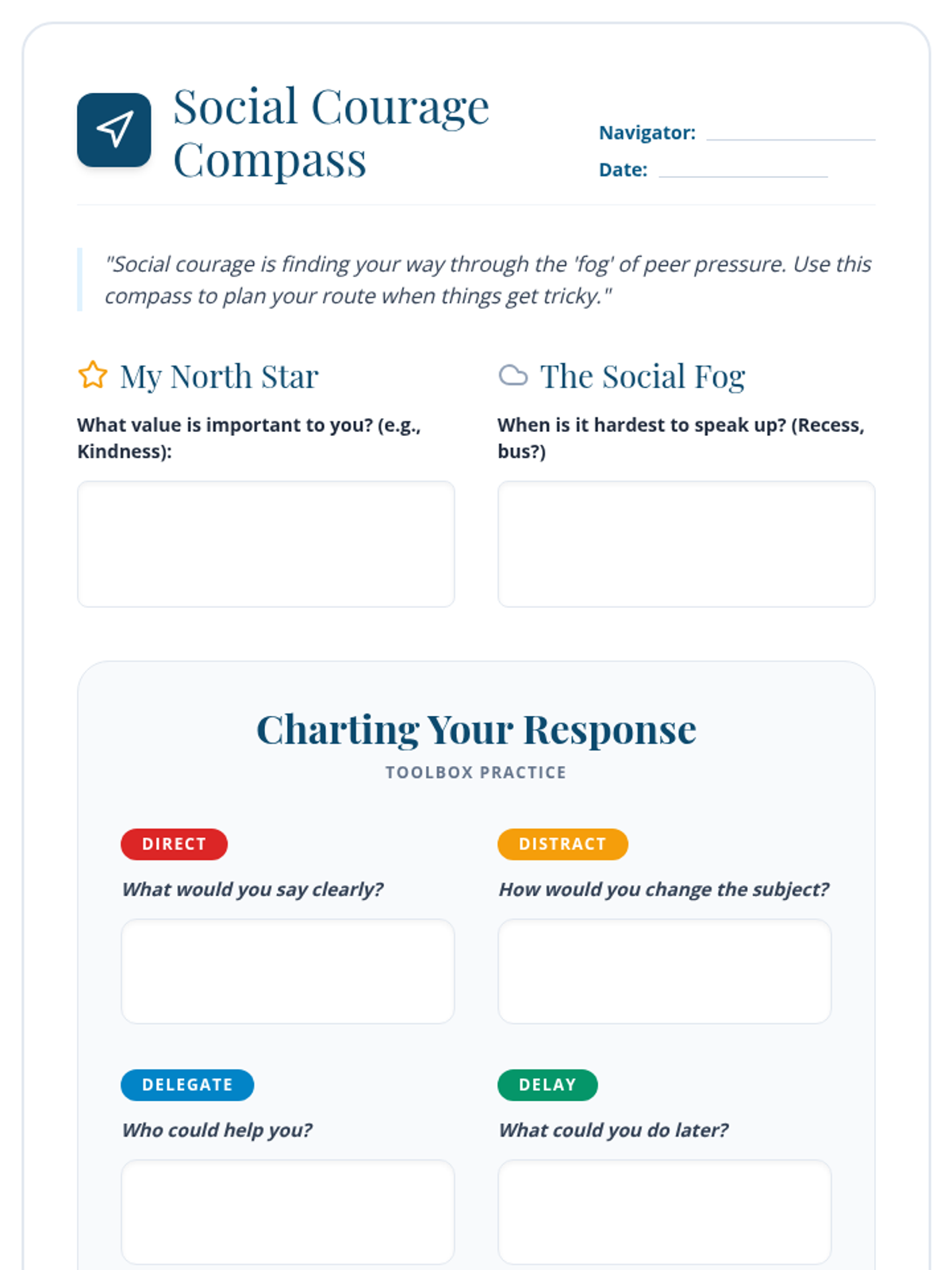
A social-emotional learning lesson for 5th graders focused on overcoming the bystander effect and developing 'upstander' strategies through the lens of social courage. Students will use the 4 D's (Direct, Distract, Delegate, Delay) to navigate common peer-pressure scenarios.
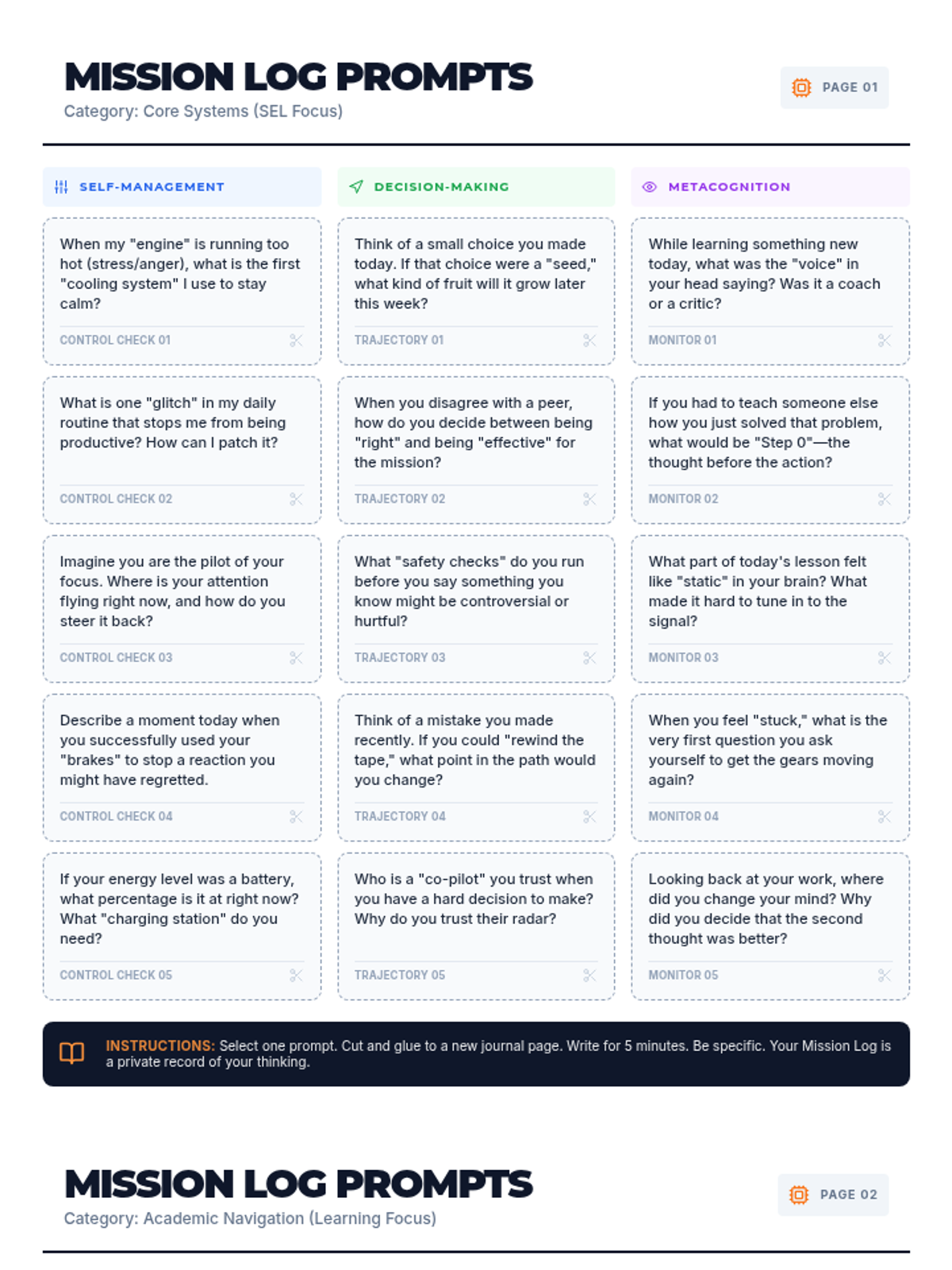
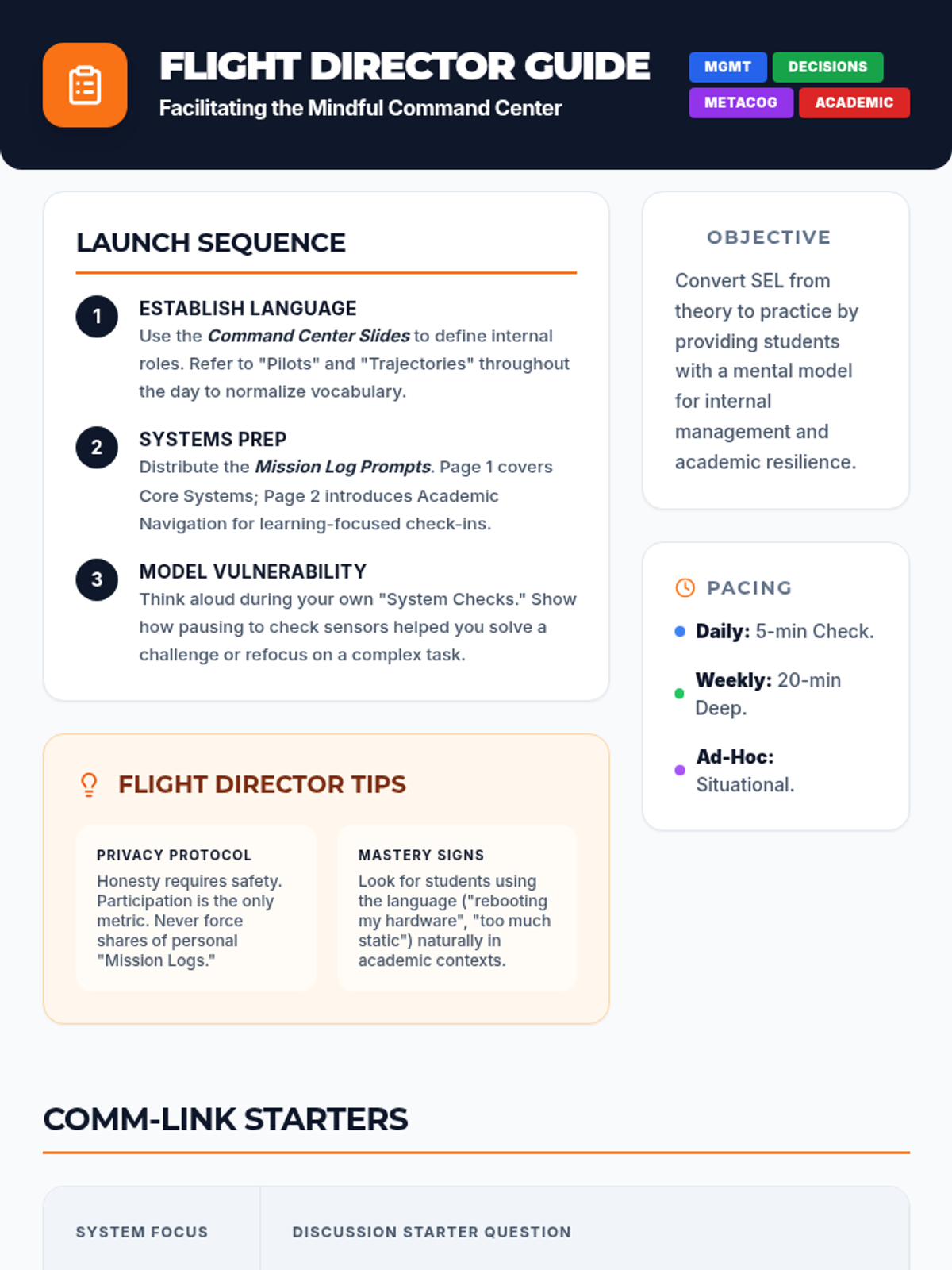
Students explore self-management, decision-making, and metacognition through a 'Command Center' metaphor. This lesson provides visual instruction and a set of reflection prompts for students to integrate into their personal journals.
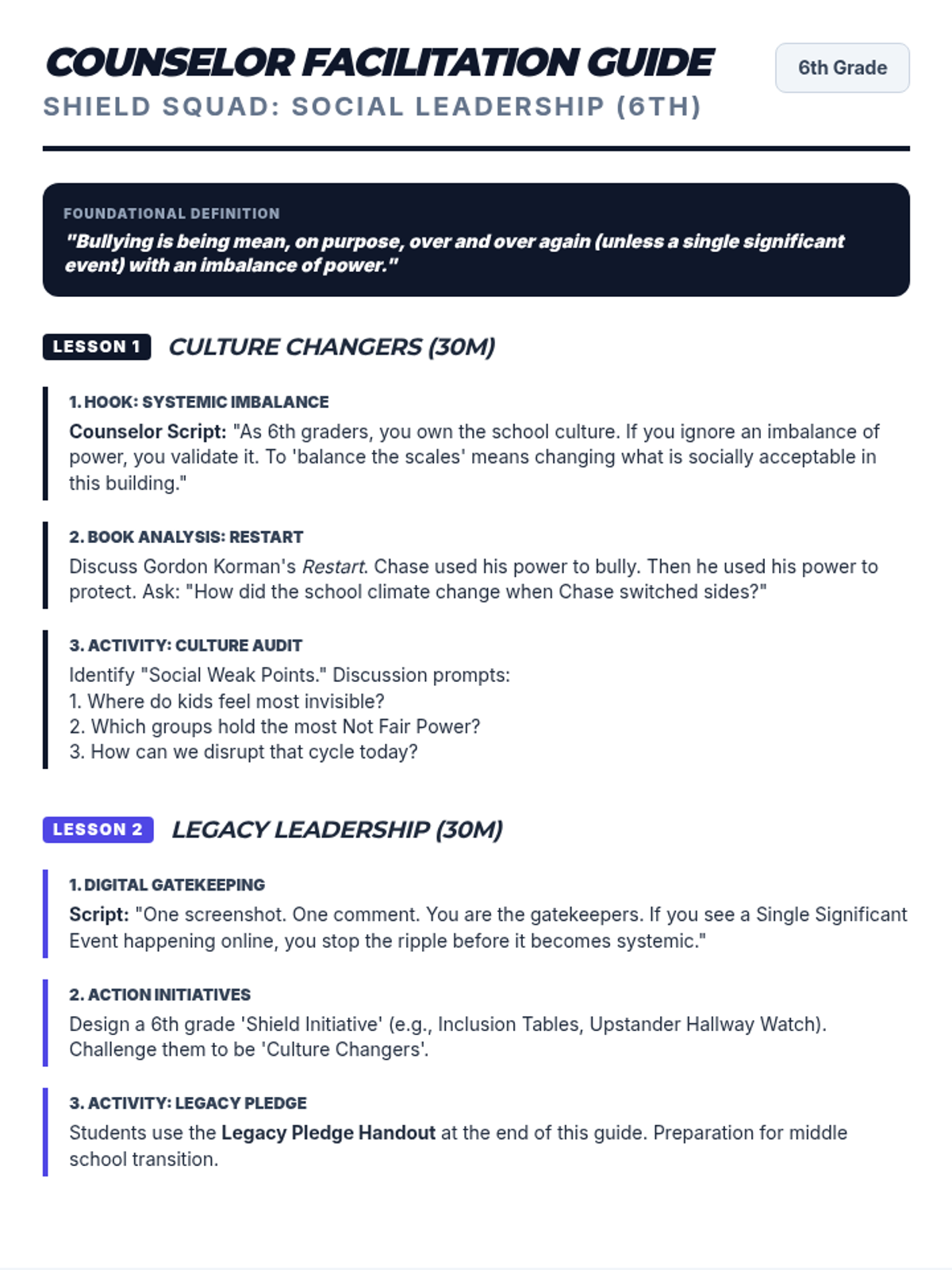
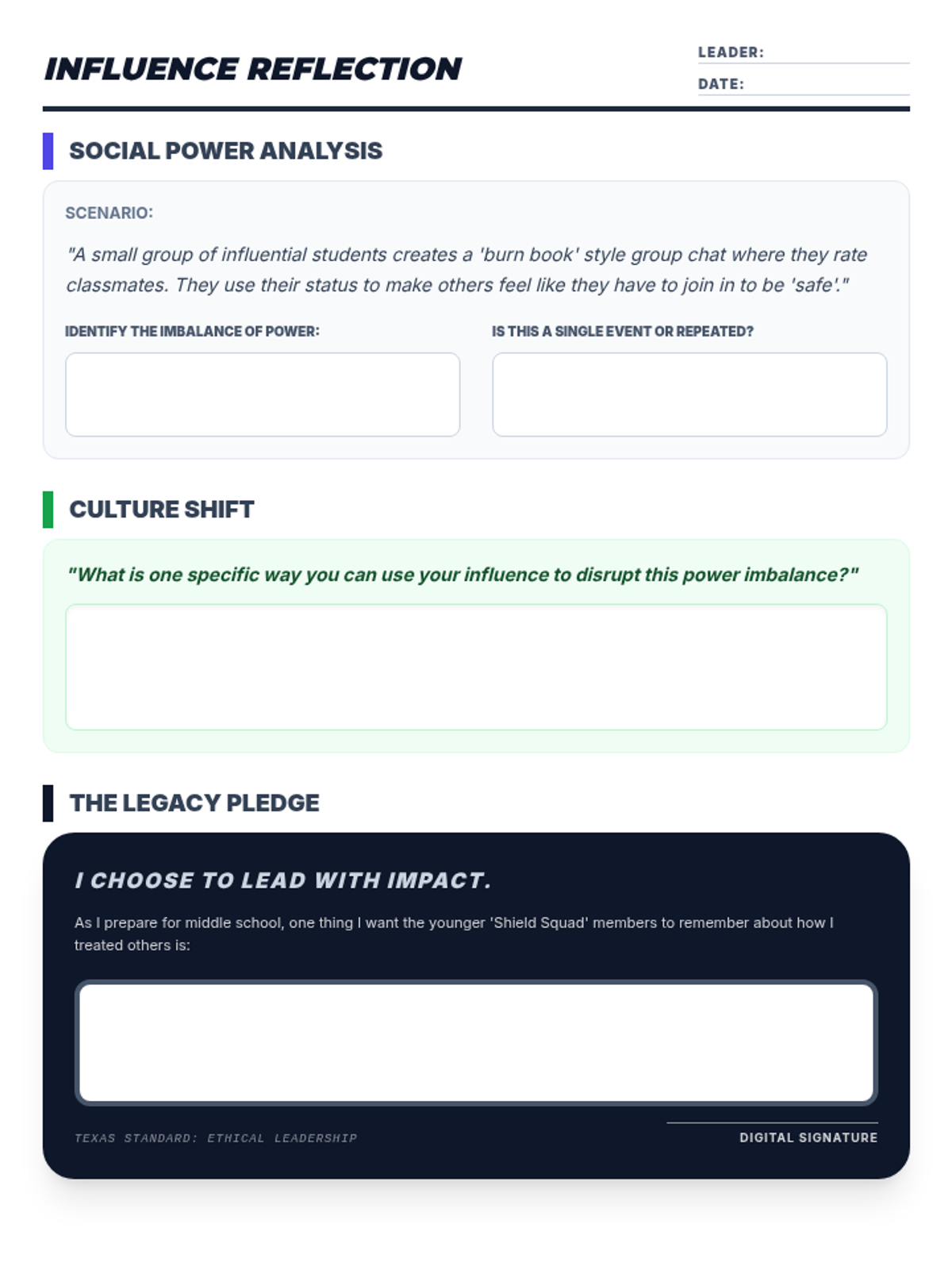
The first of two 30-minute sessions for 6th grade. Using 'Restart' by Gordon Korman, students analyze school culture, social leadership, and the concept of a 'Social Reset'.
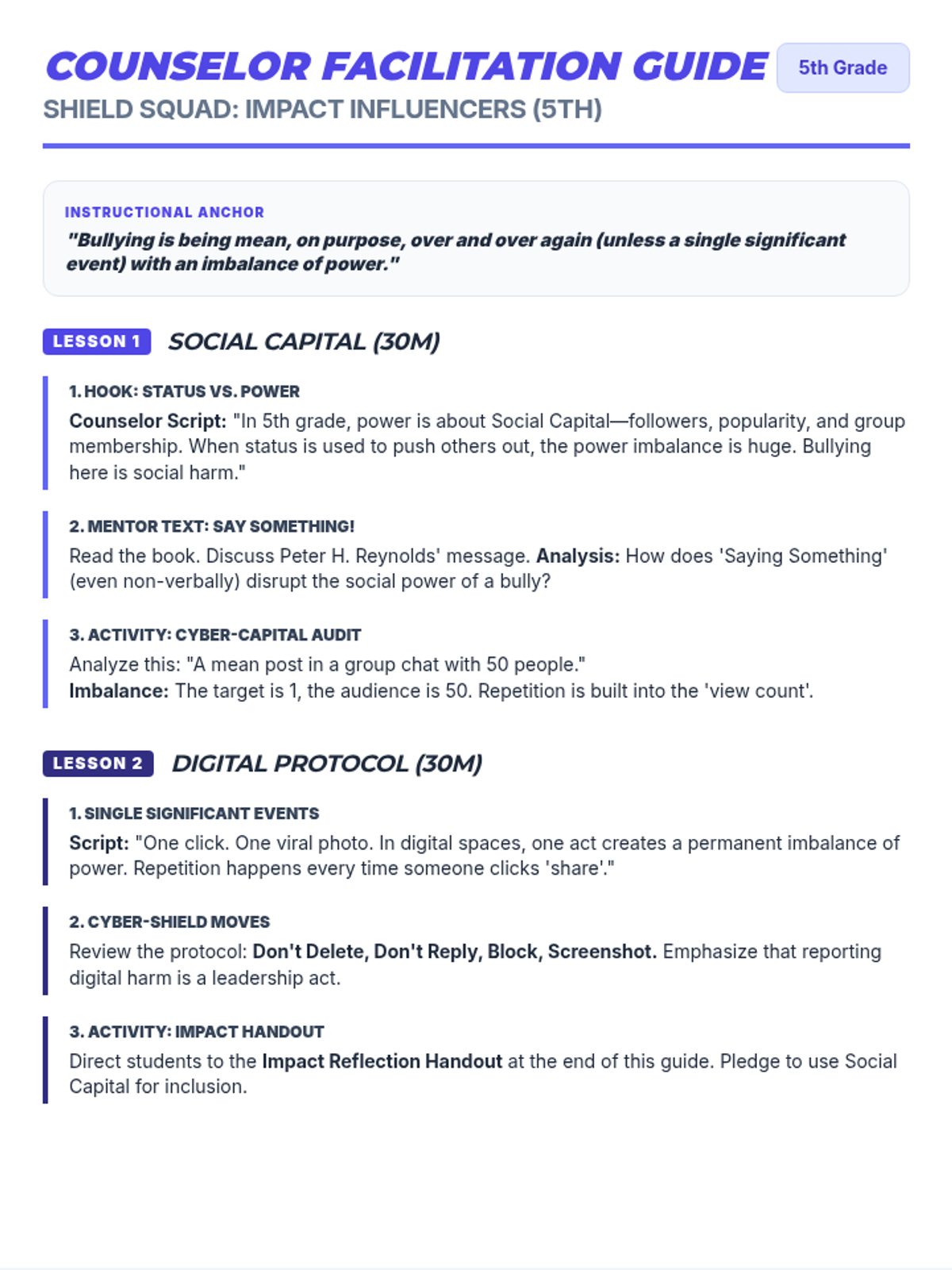
The first of two 30-minute sessions for 5th grade. Using 'Zero' by Kathryn Otoshi, students explore social capital as power and the specific dynamics of cyberbullying.
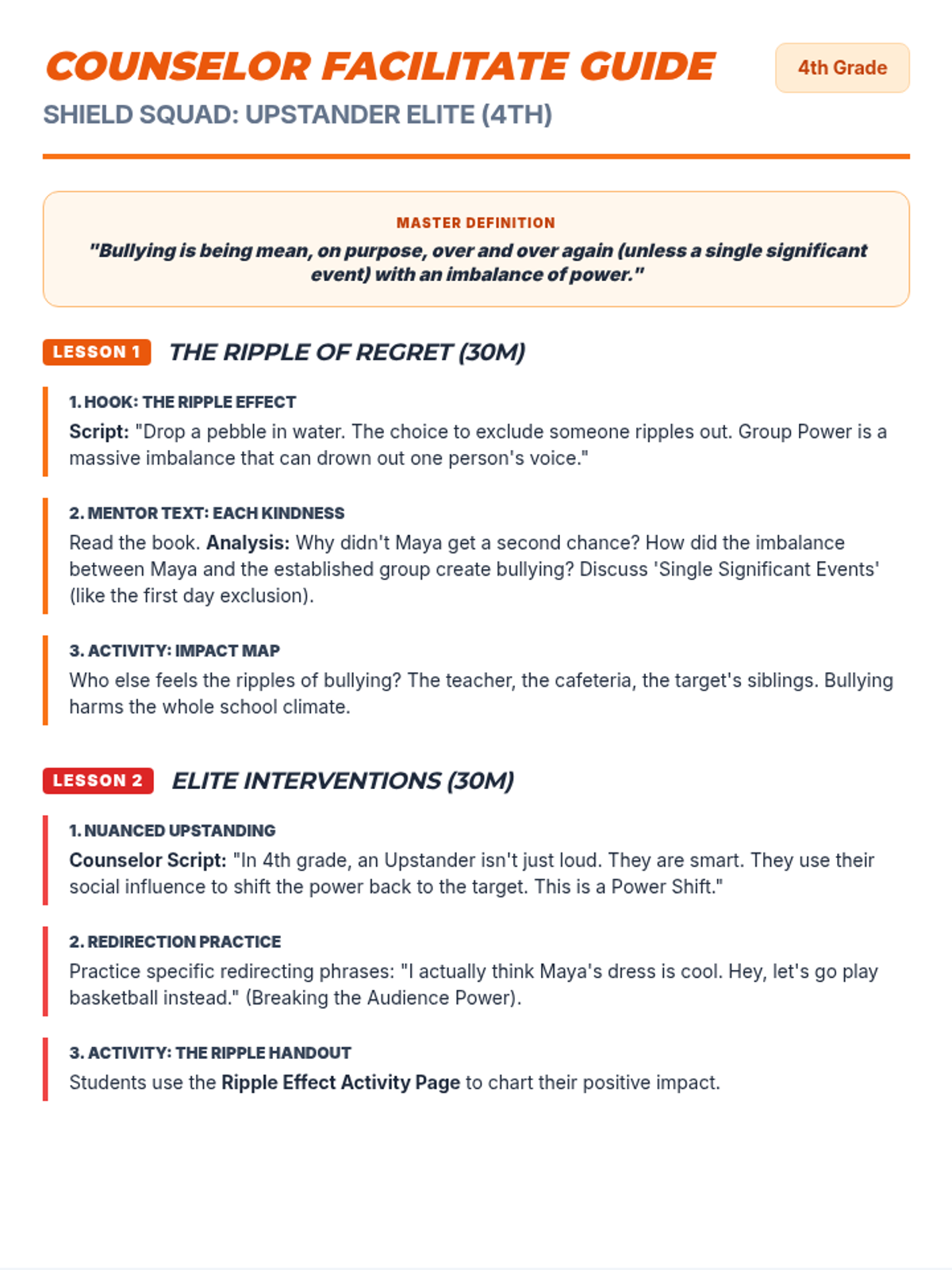
The first of two 30-minute sessions for 4th grade. Using 'Confessions of a Former Bully' by Trudy Ludwig, students understand the bullying circle and the roles people play in social dynamics.
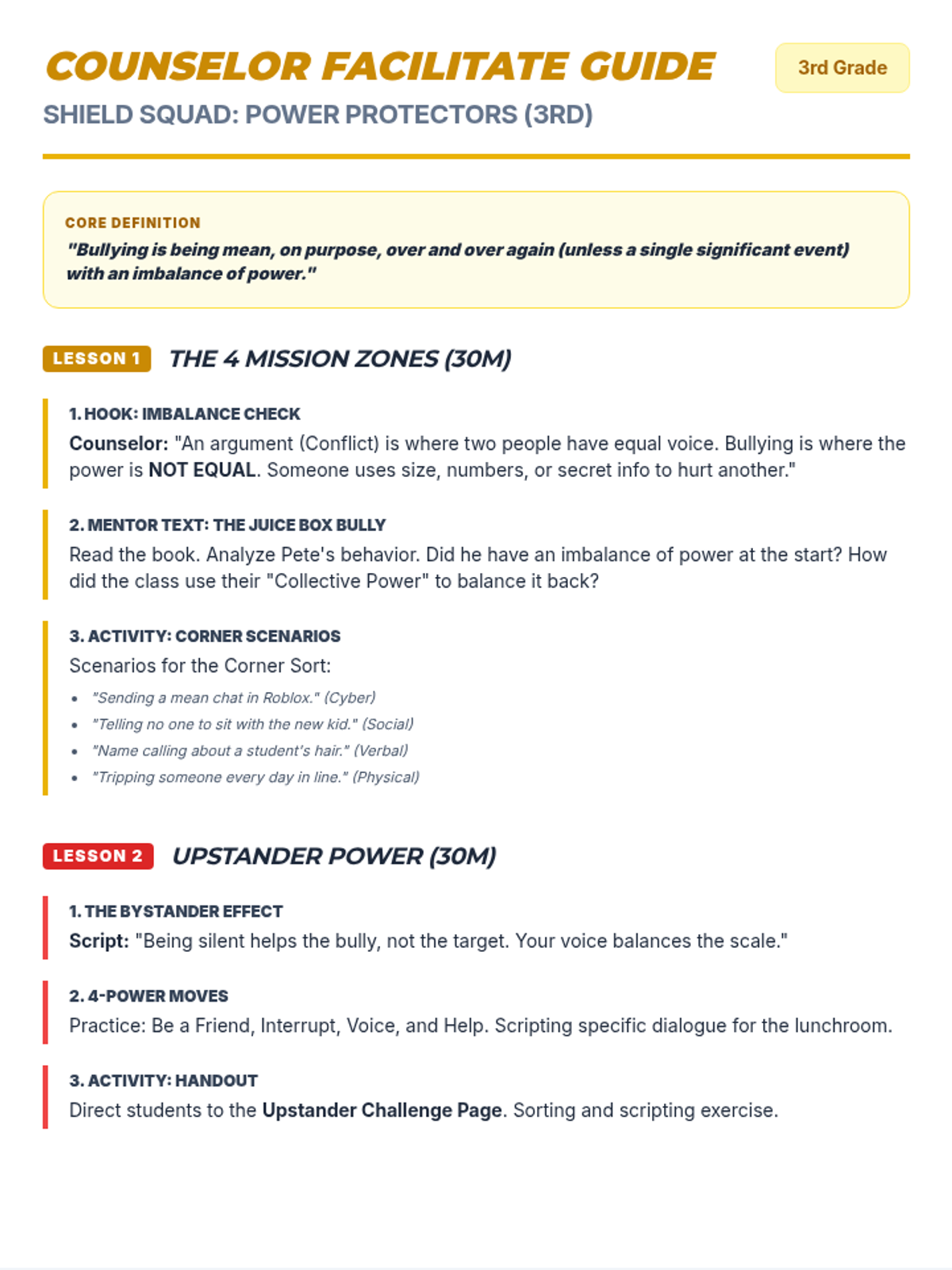
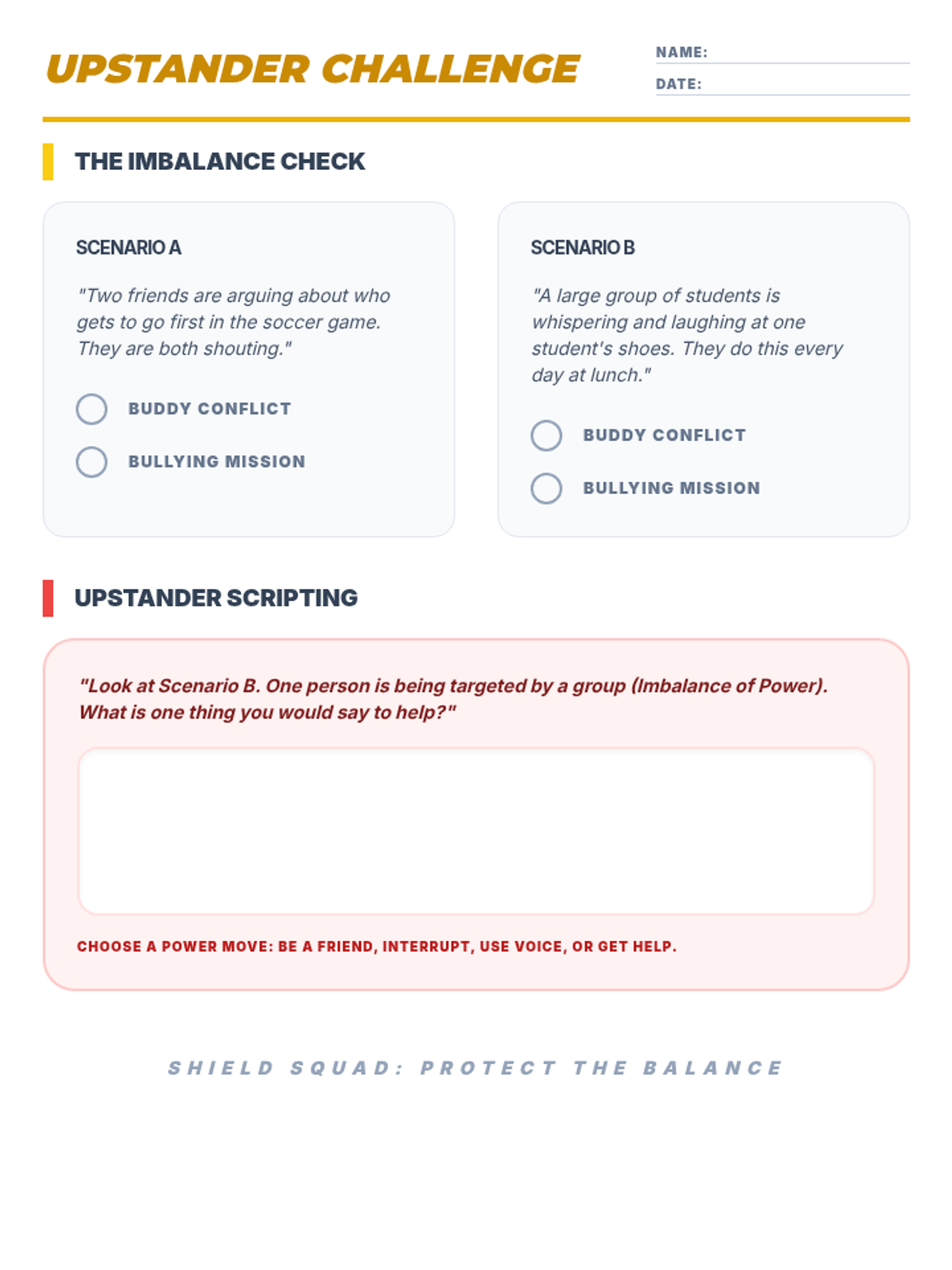
The first of two 30-minute sessions for 3rd grade. Using 'Tease Monster' by Julia Cook, students categorize behavior and analyze the 'Target' vs 'Bully' power gap.
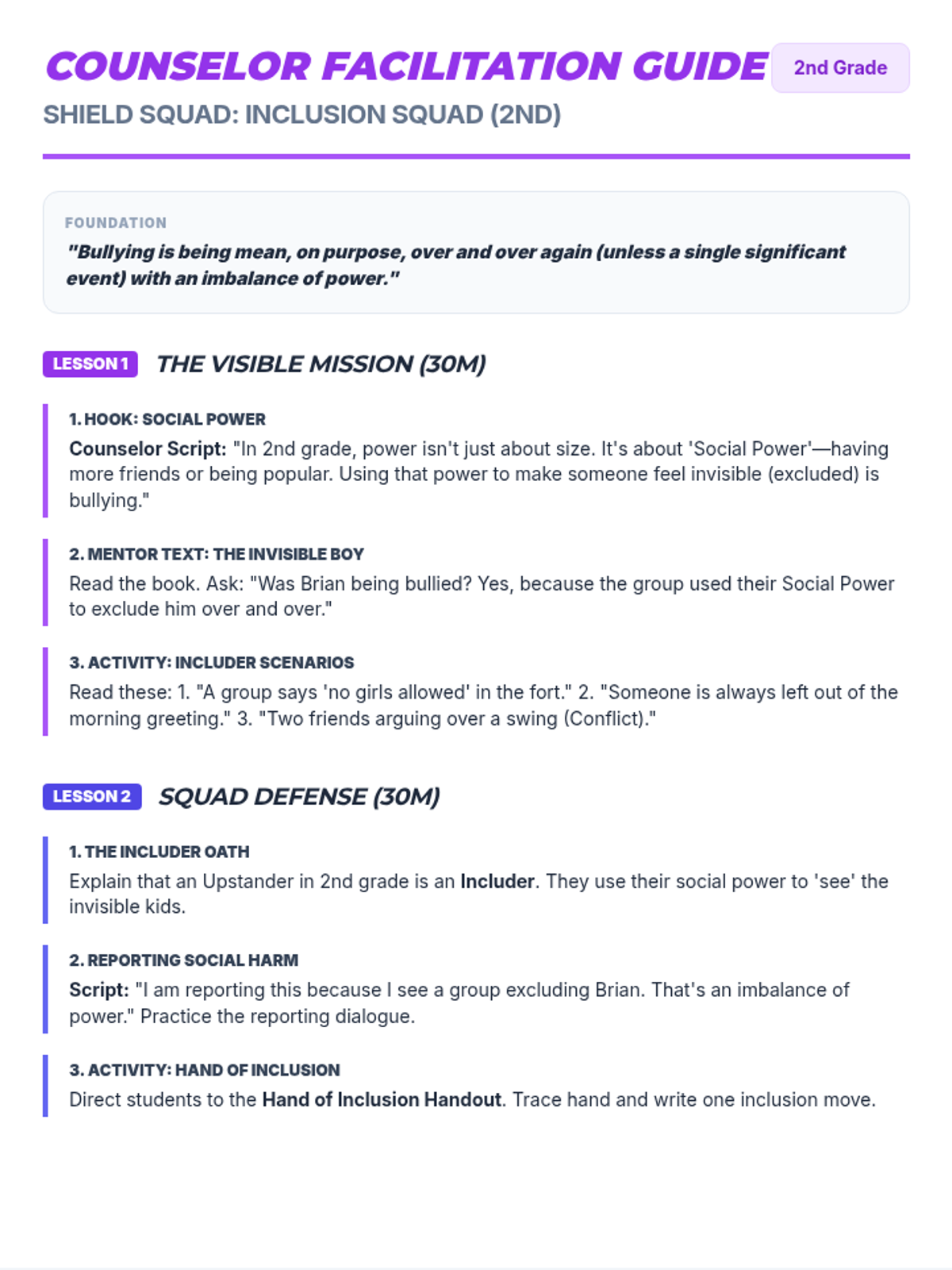
The first of two 30-minute sessions for 2nd grade. Using 'The Invisible Boy' by Trudy Ludwig, students explore social exclusion and the transition from a 'Buddy Conflict' to bullying.
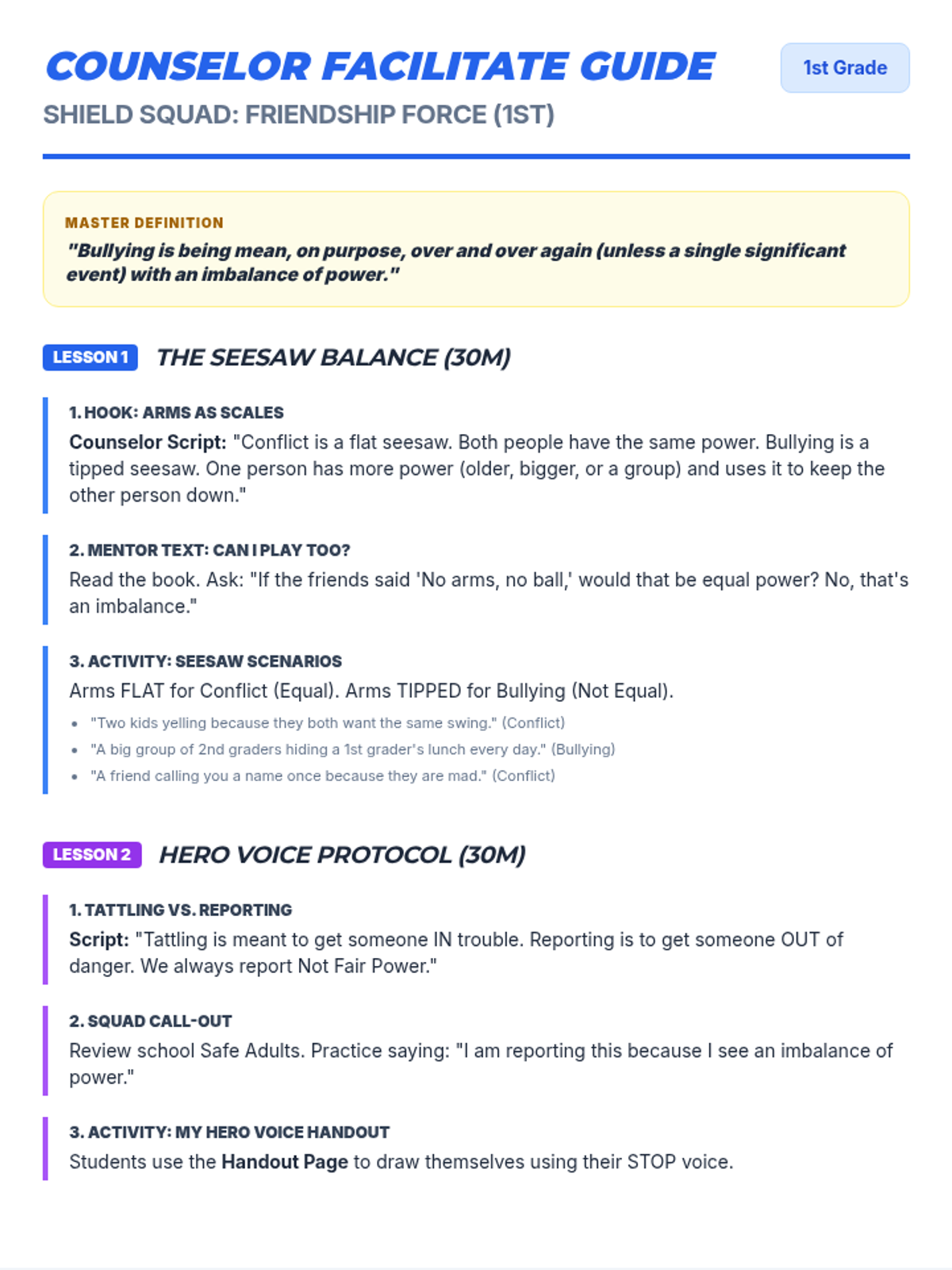
The first of two 30-minute sessions for 1st grade. Using 'Trouble Talk' by Trudy Ludwig, students explore verbal bullying and the 'Seesaw' model of unequal power.
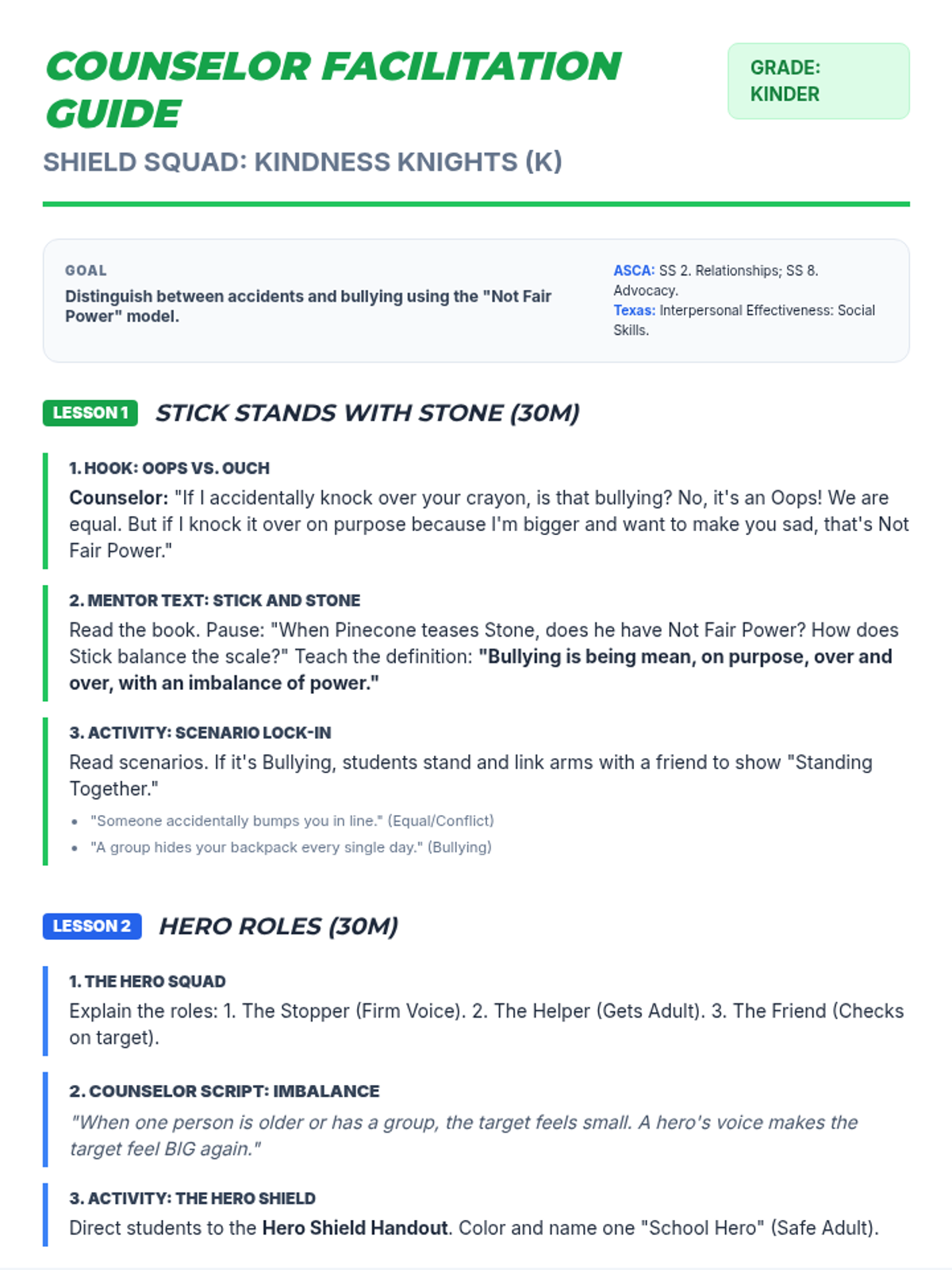
The first of two 30-minute sessions for Kindergarten. Using 'Bully B.E.A.N.S.' by Julia Cook, students learn to distinguish between accidents and bullying using the 'Purposeful' and 'Repeated' criteria.
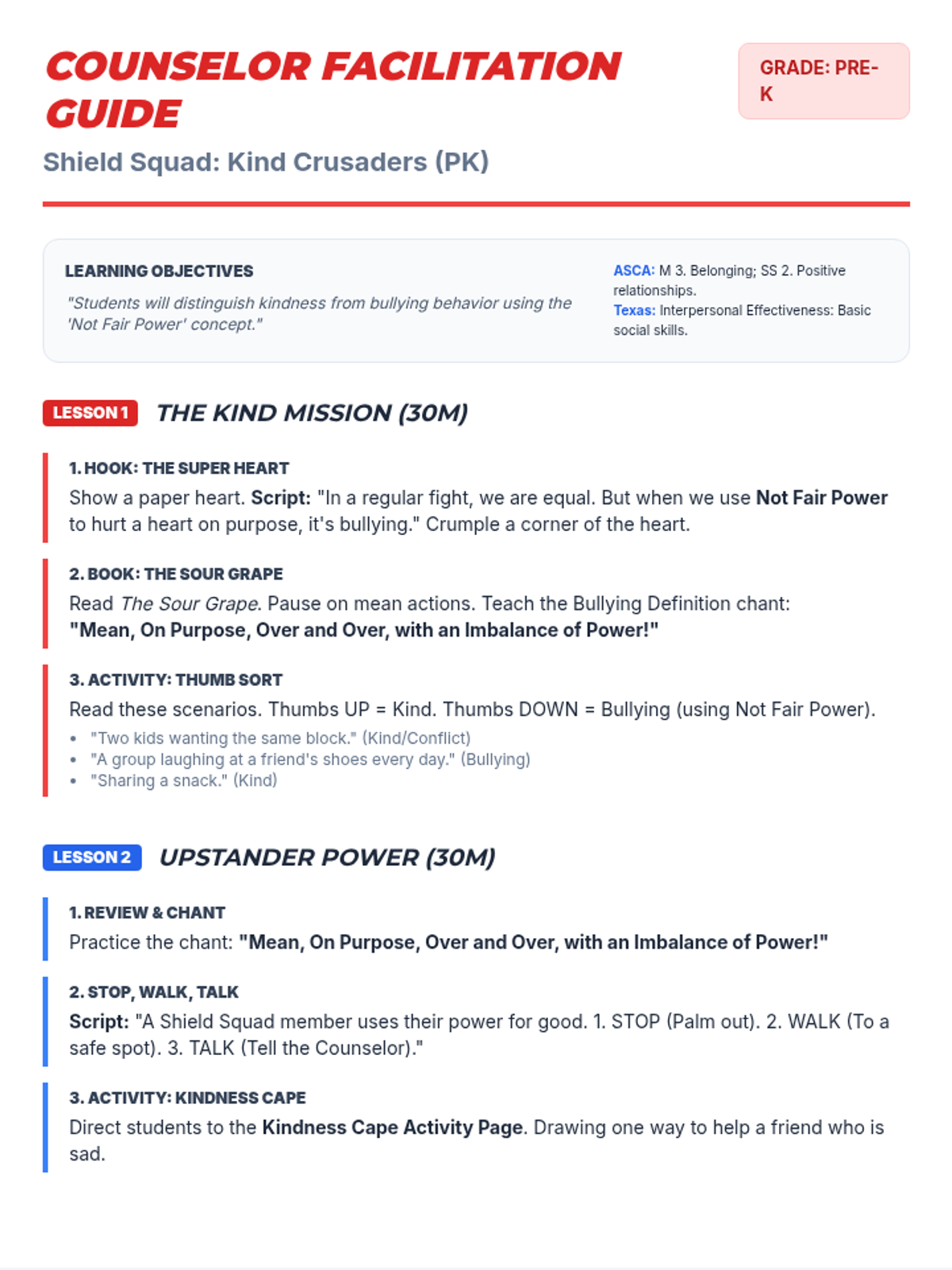
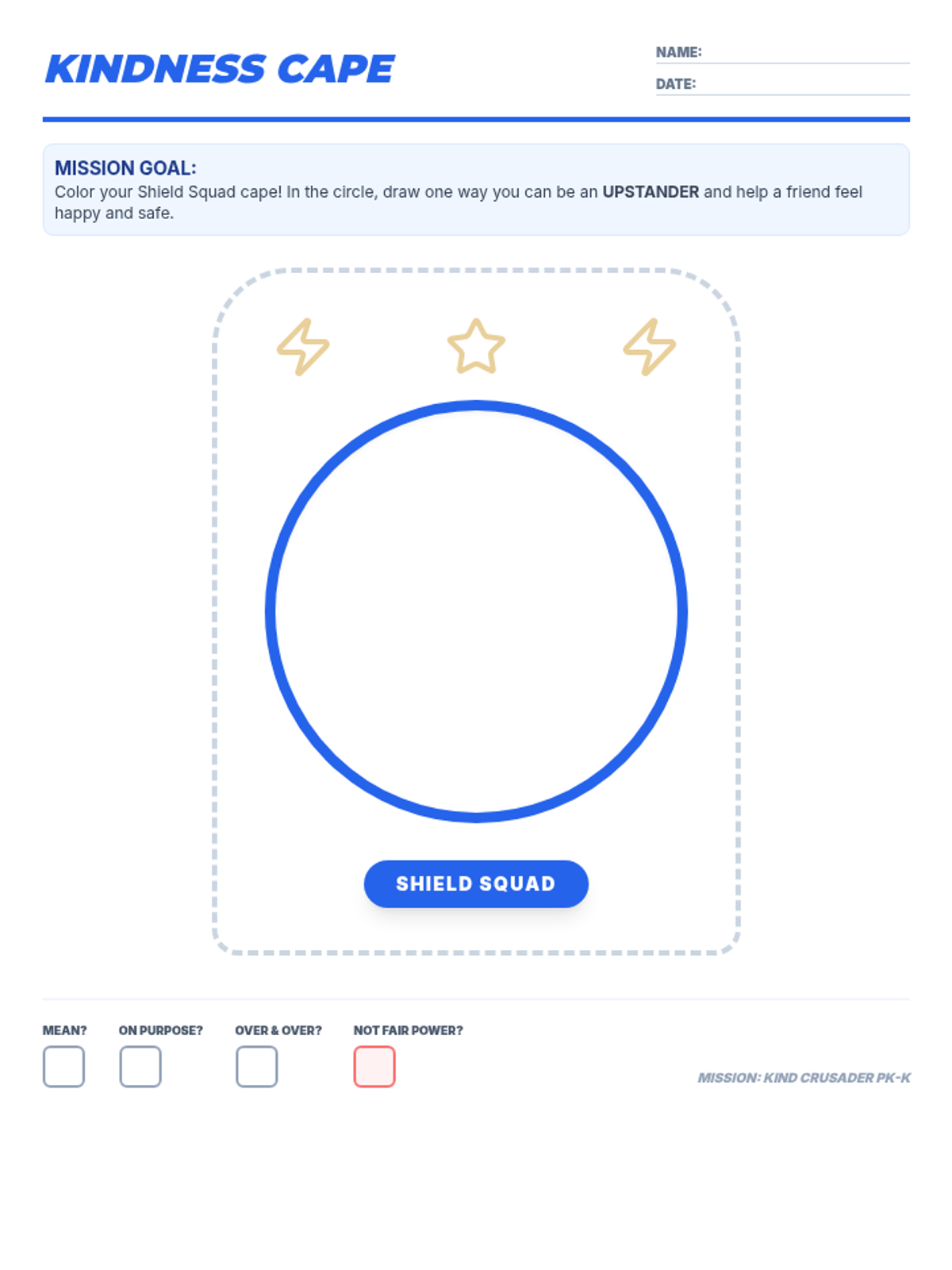
The first of two 30-minute sessions for PK. Using 'One' by Kathryn Otoshi, students are introduced to the 'Shield Squad' definition of bullying and the concept of 'Not Fair Power'.
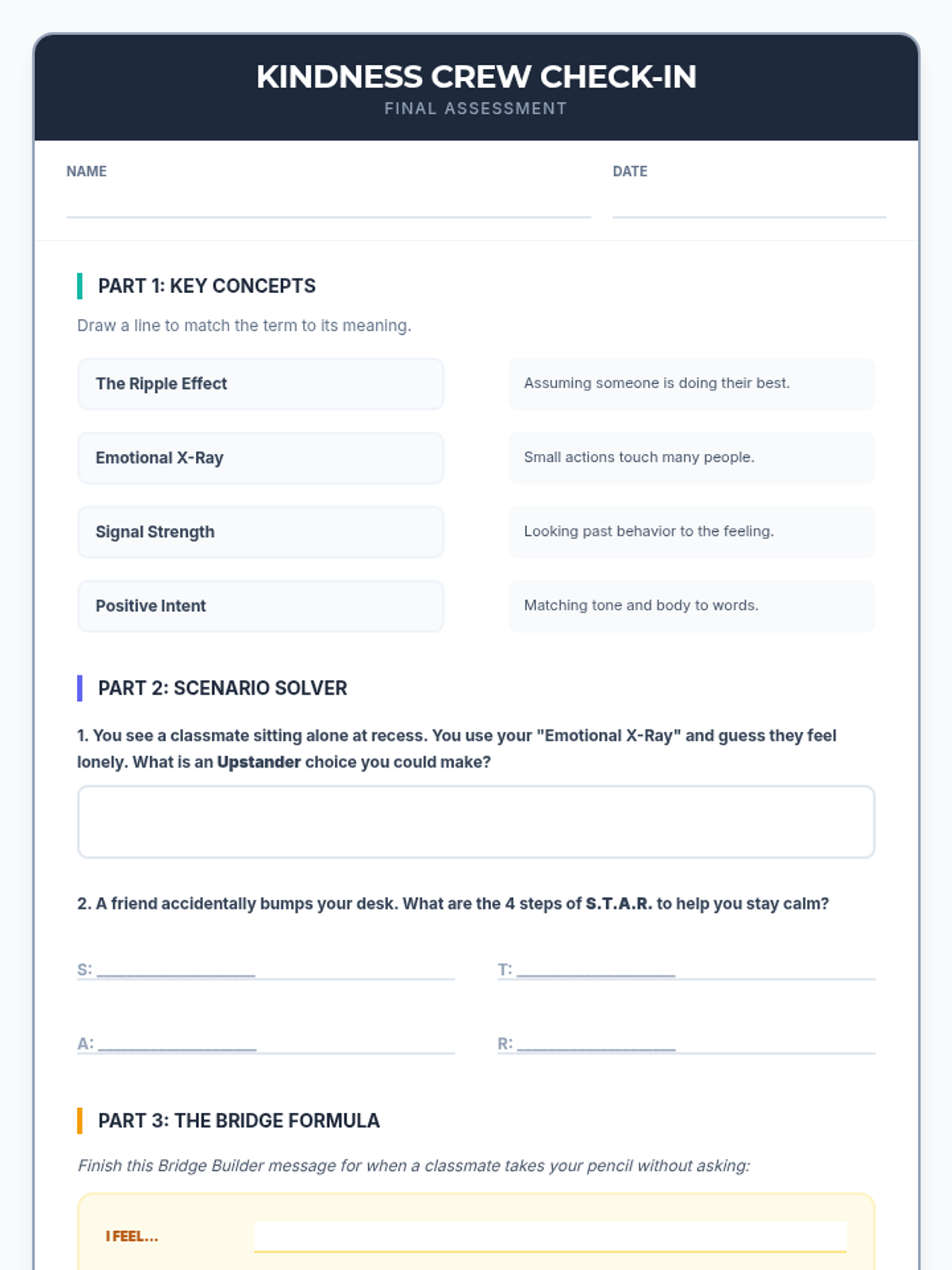
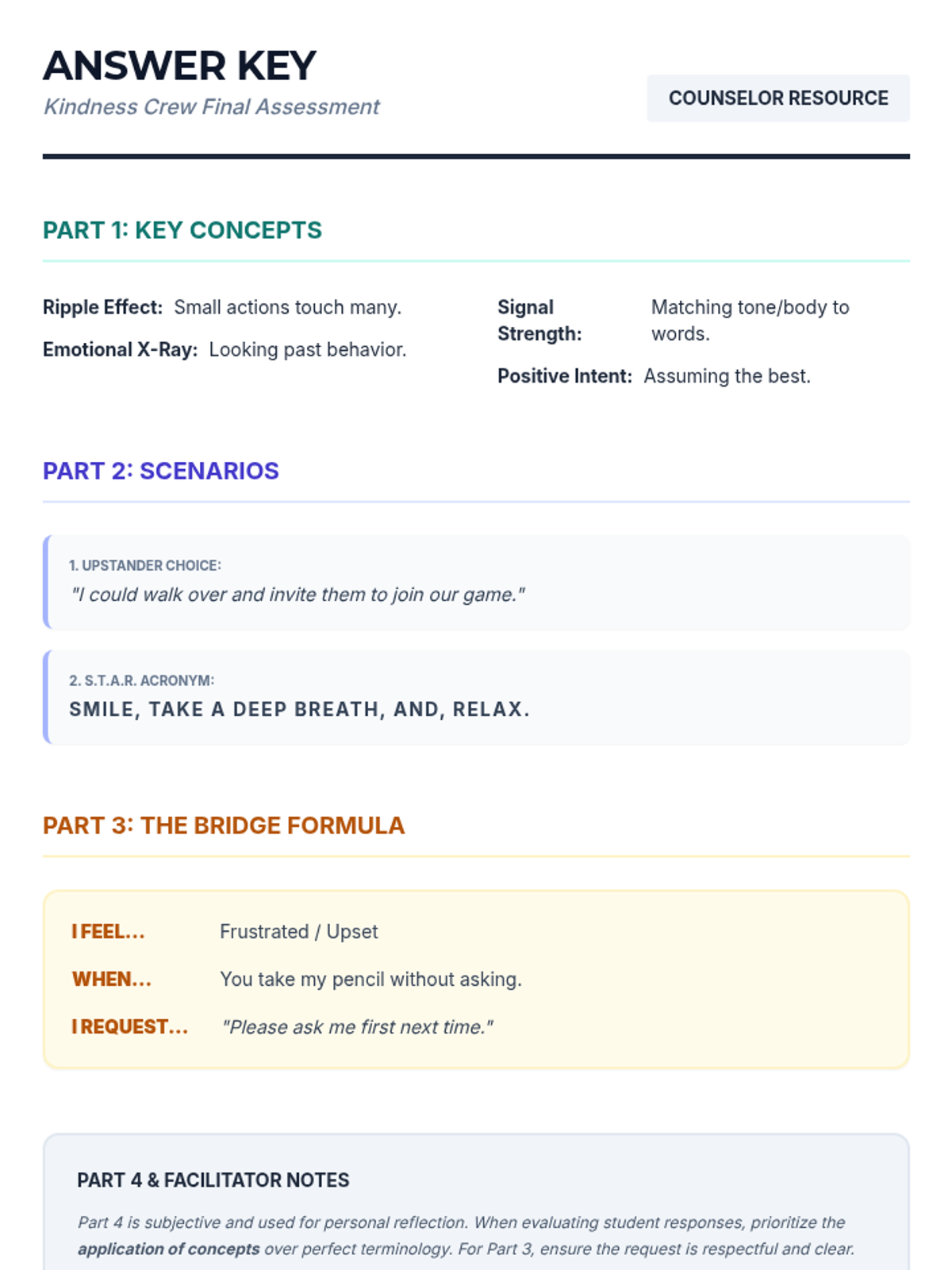
A final review and celebration session where students complete a comprehensive assessment of the 6-week Kindness Crew series. Focuses on reinforcing key terminology and reflecting on personal growth.
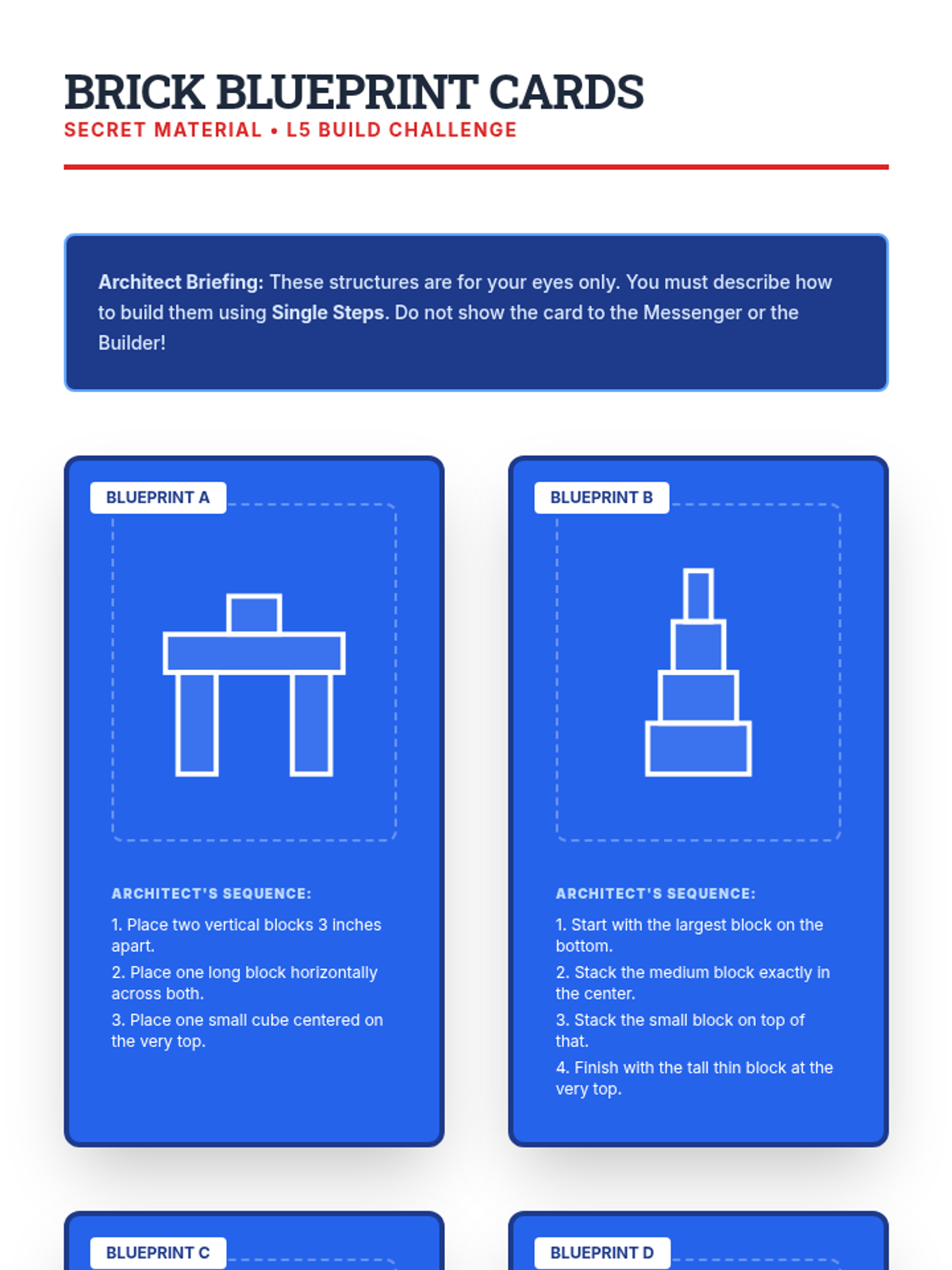
A final project-based challenge where groups of three must collaborate to build a structure, strictly adhering to single-step communication roles.
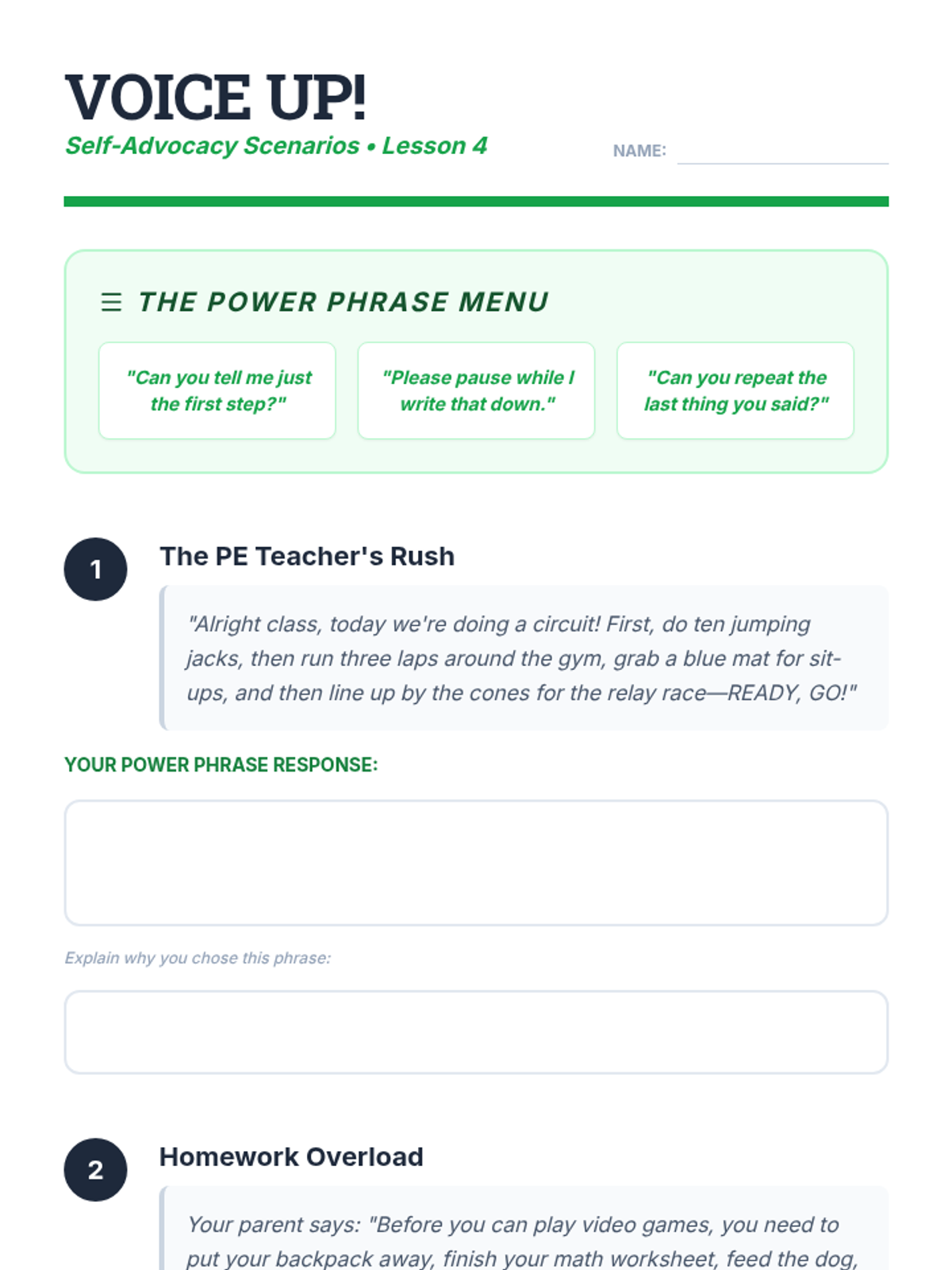
Students learn and practice self-advocacy phrases to use when instructions are too fast or complex, building social-emotional resilience and self-awareness.
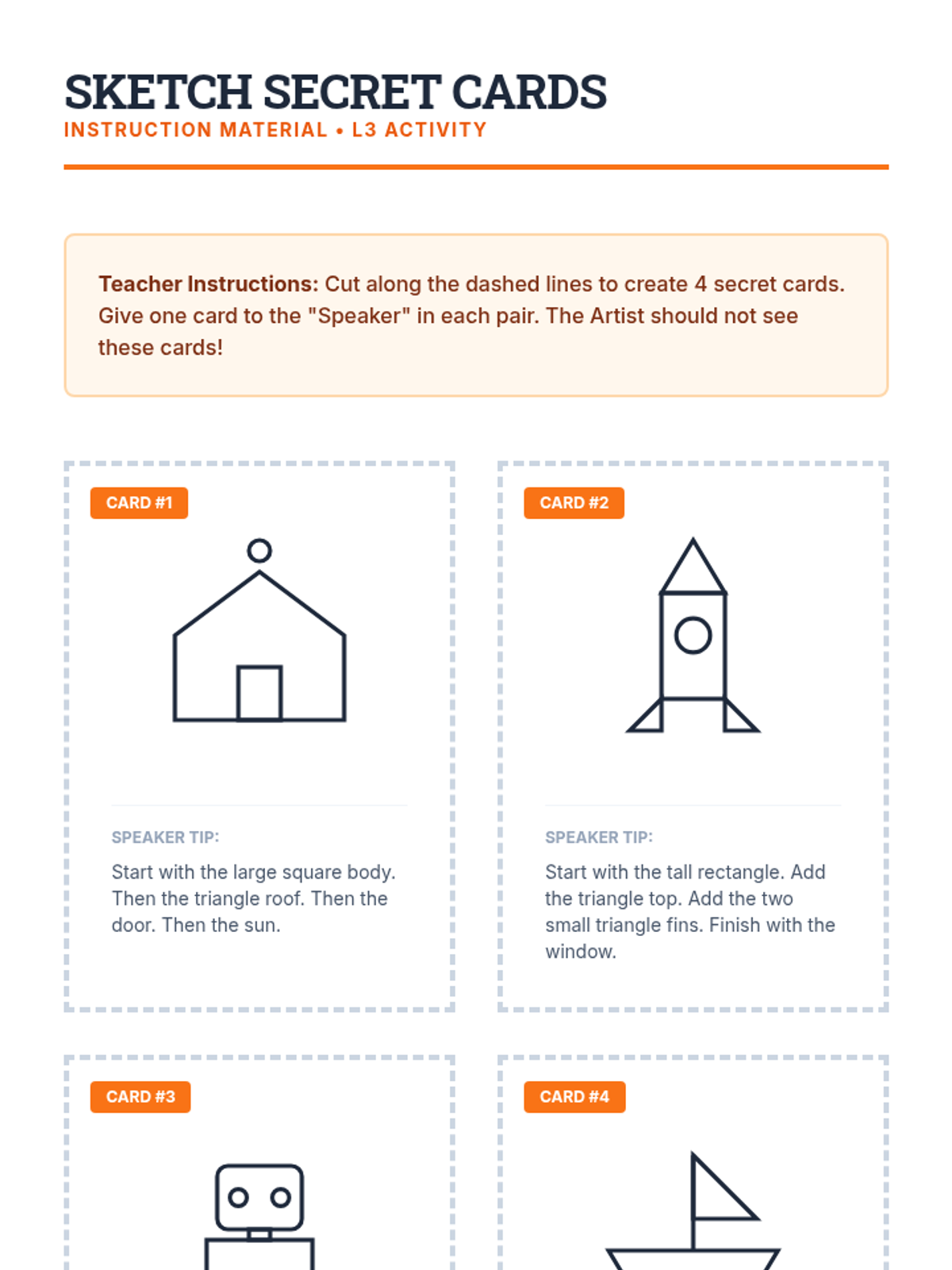
Pairs participate in a back-to-back drawing activity to experience how pacing and single-step instructions impact accuracy and success.
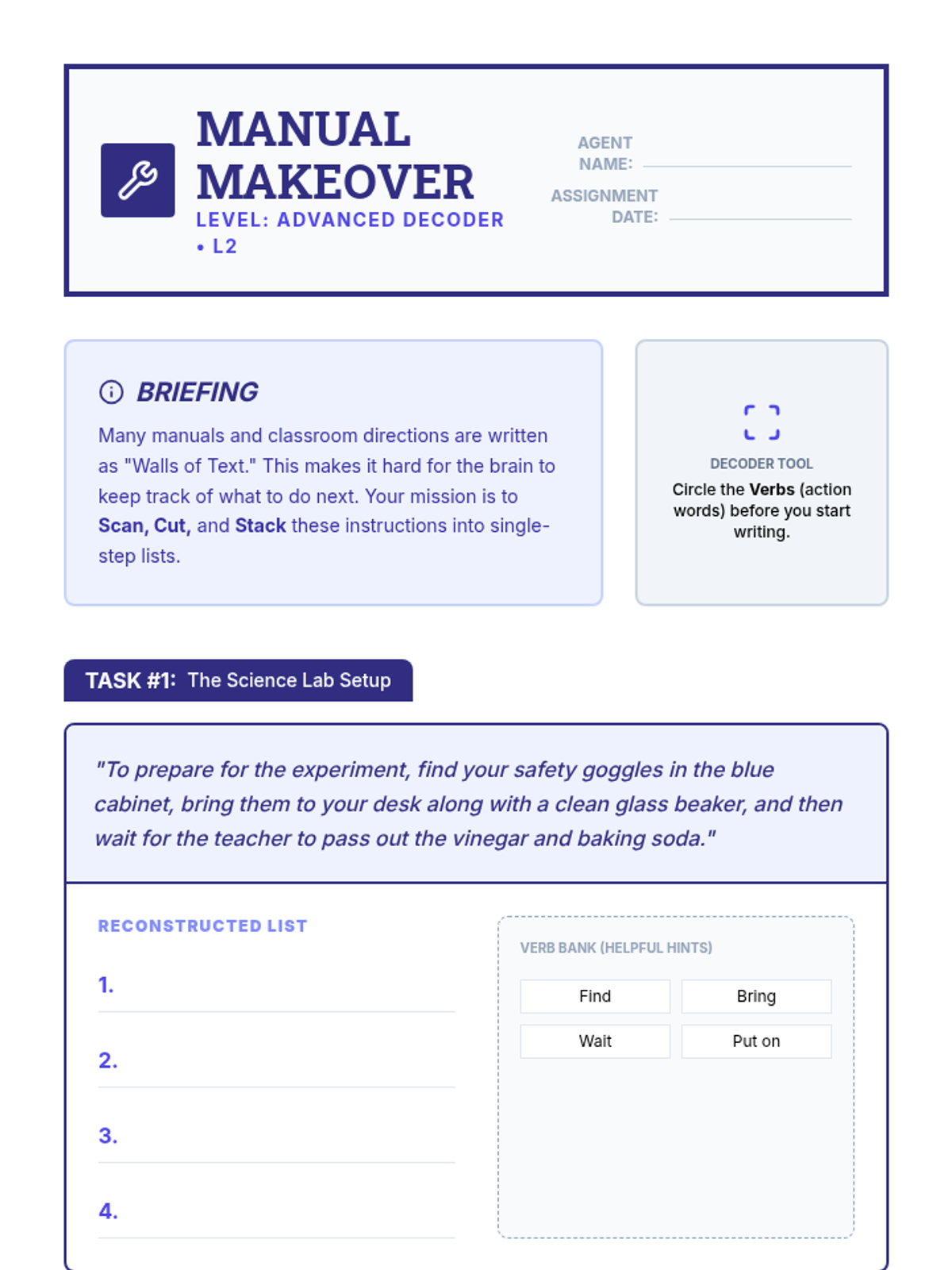
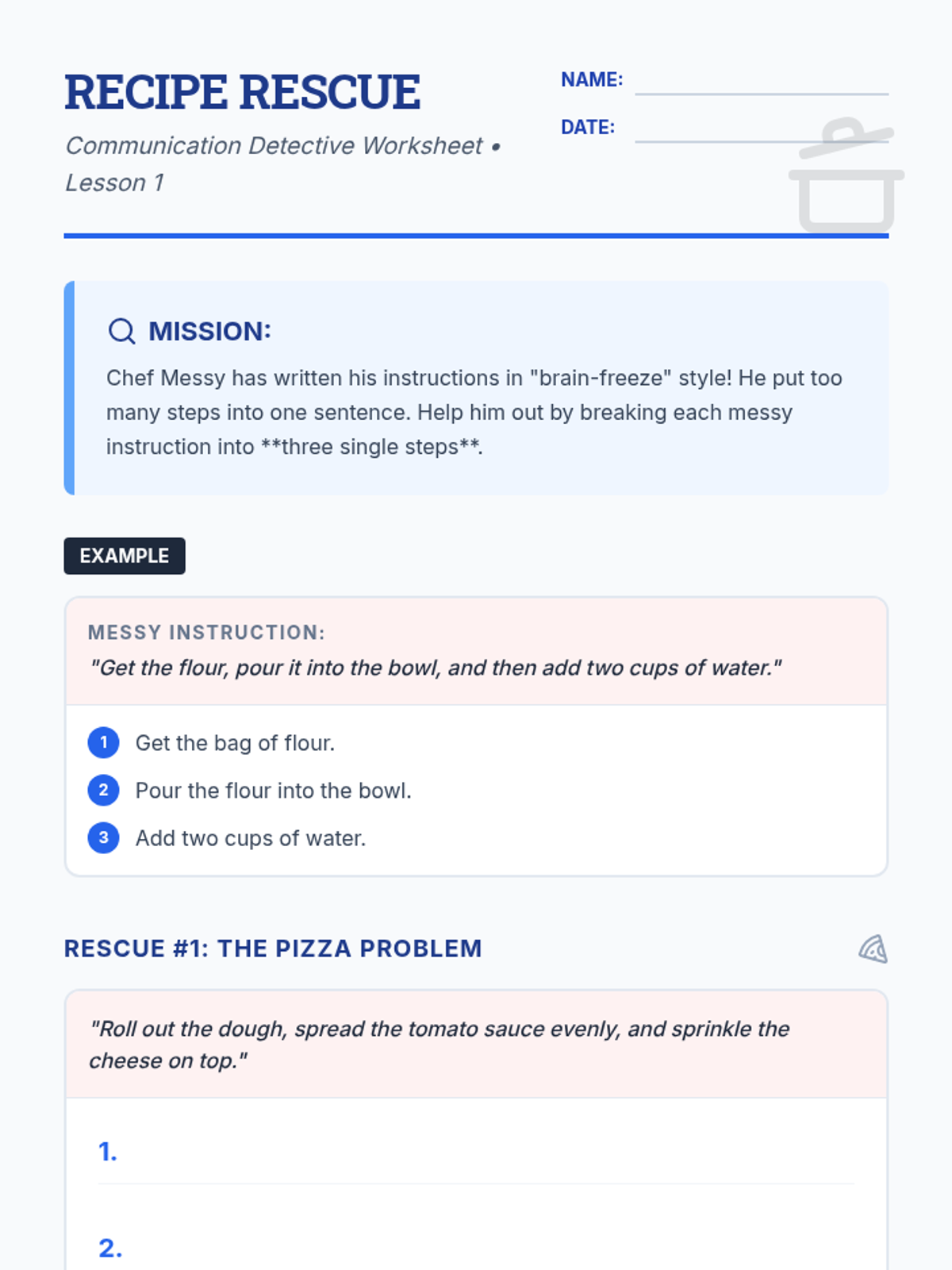
Students practice the skill of information synthesis by 'translating' complex, multi-step paragraphs into clear, numbered lists of single actions.
Students analyze a scenario where a cook fails due to overwhelming instructions, learning to identify 'cognitive overload' and rewrite multi-step directions into single, manageable steps.
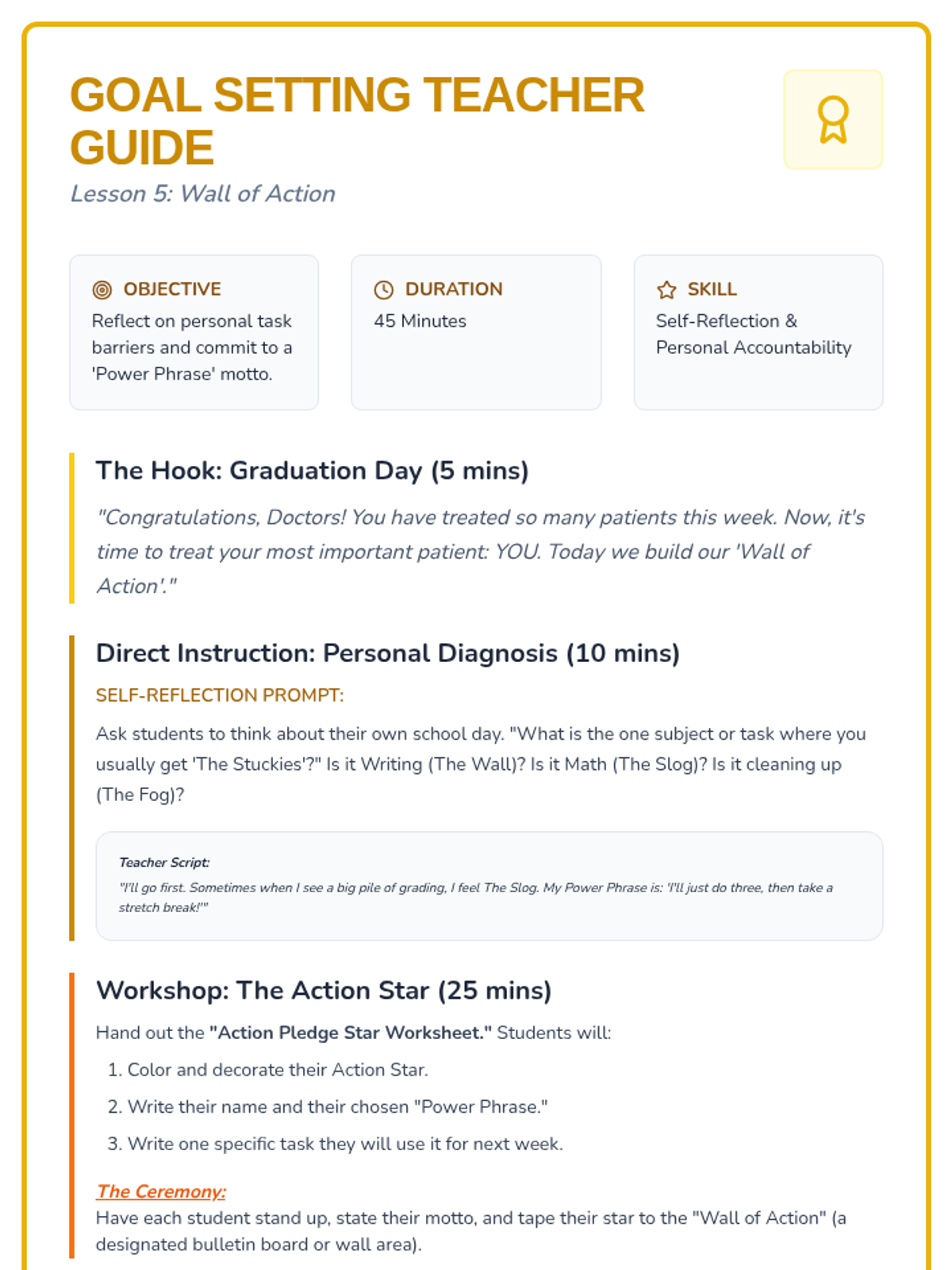
Students identify their own barriers to starting work and select a personal 'Power Phrase' motto for future tasks.
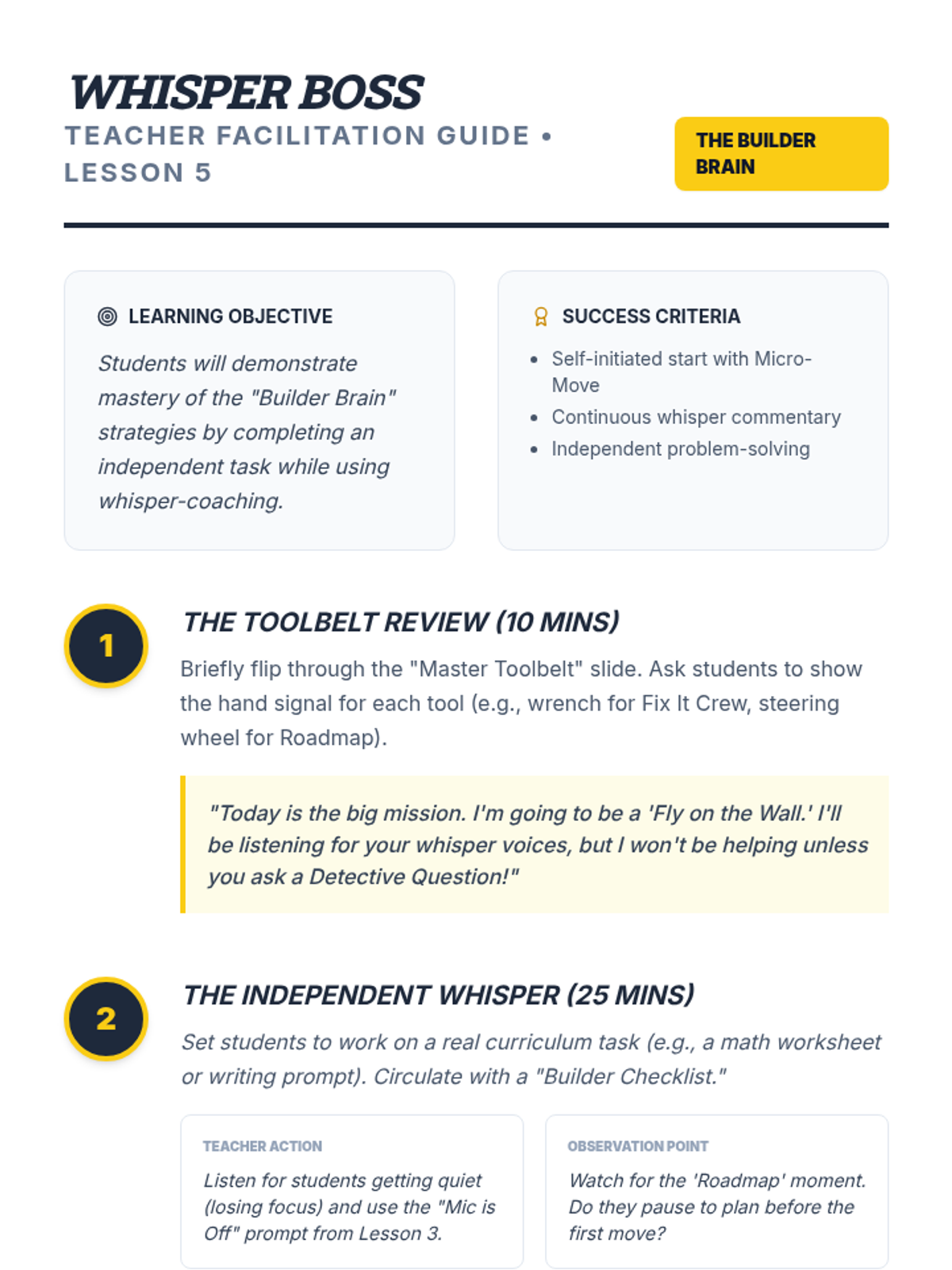
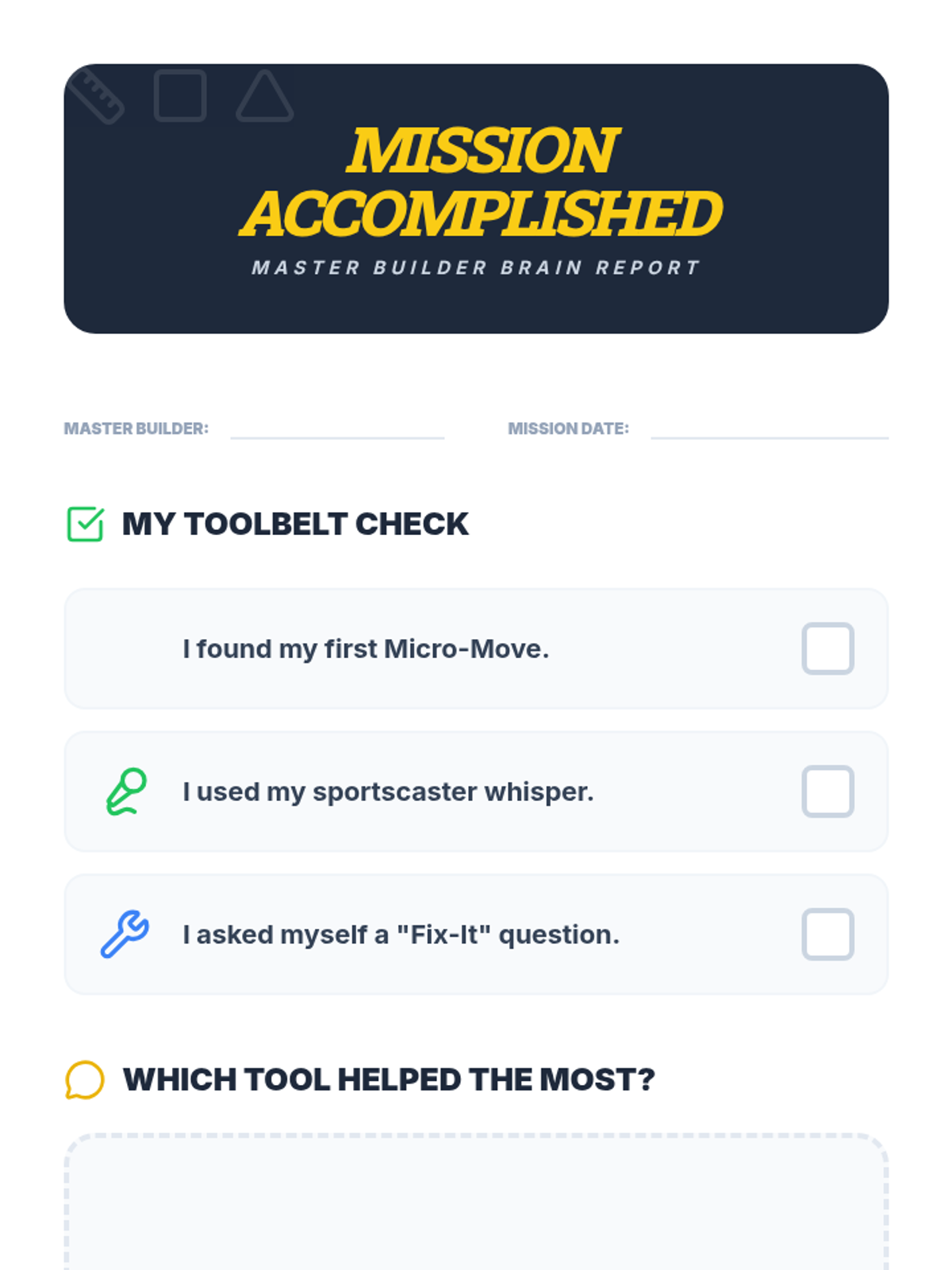
Students apply the breakdown and narration techniques to a real independent work session. The teacher circulates to listen for 'whisper coaching' as students initiate and sustain their work.
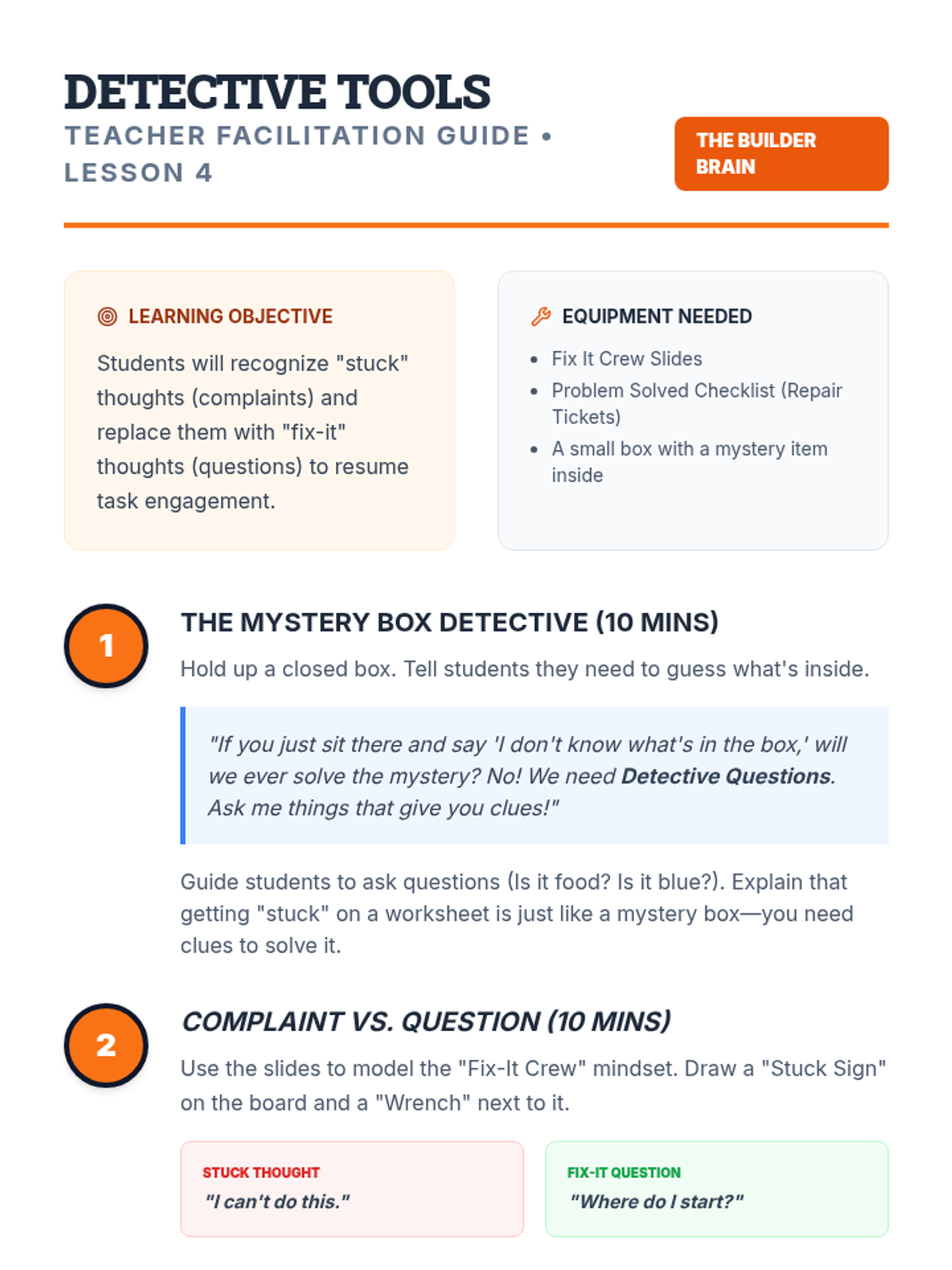
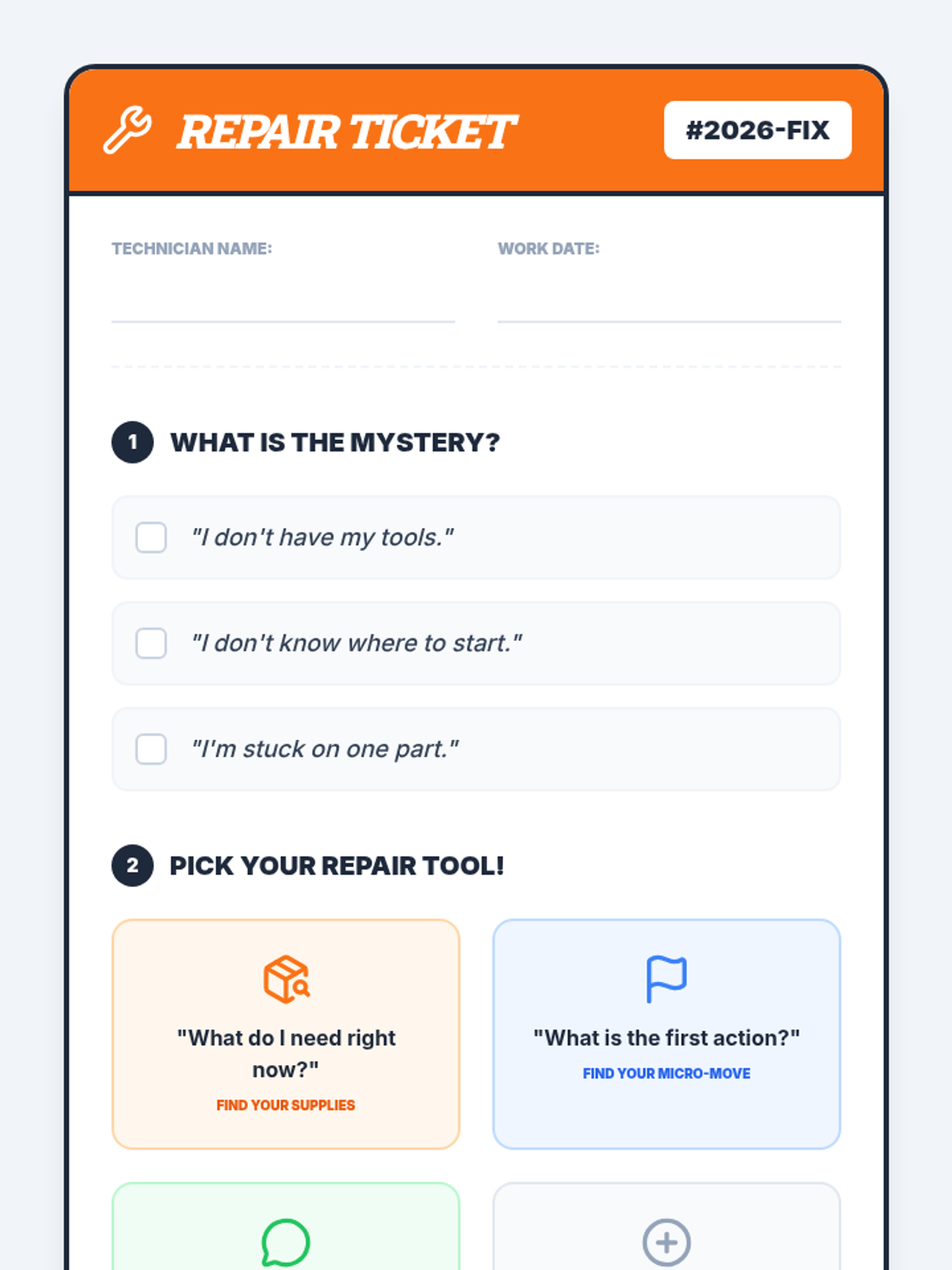
Students learn to ask themselves specific questions when they get stuck. This shifts the internal monologue from complaint to inquiry and problem-solving.
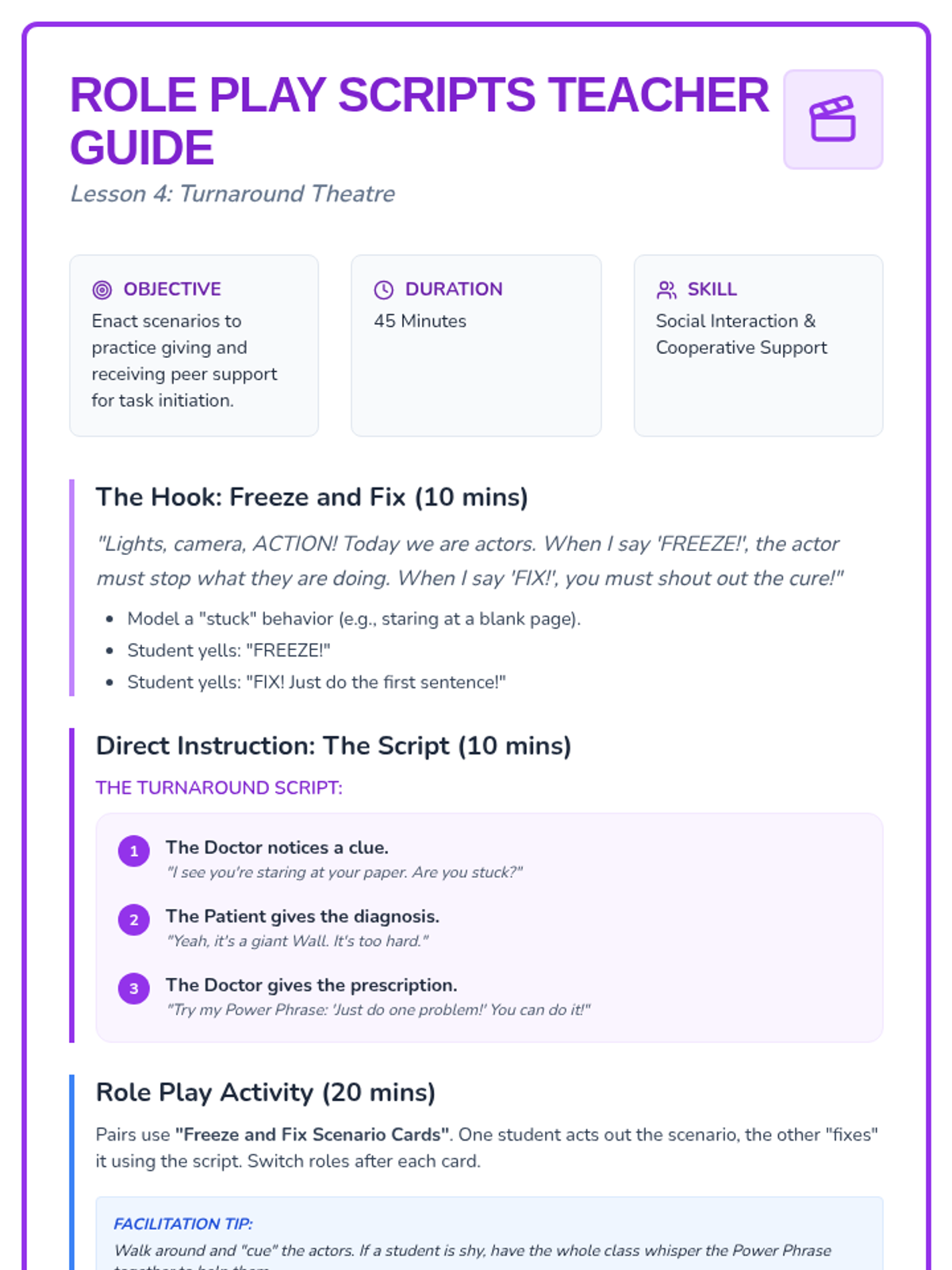
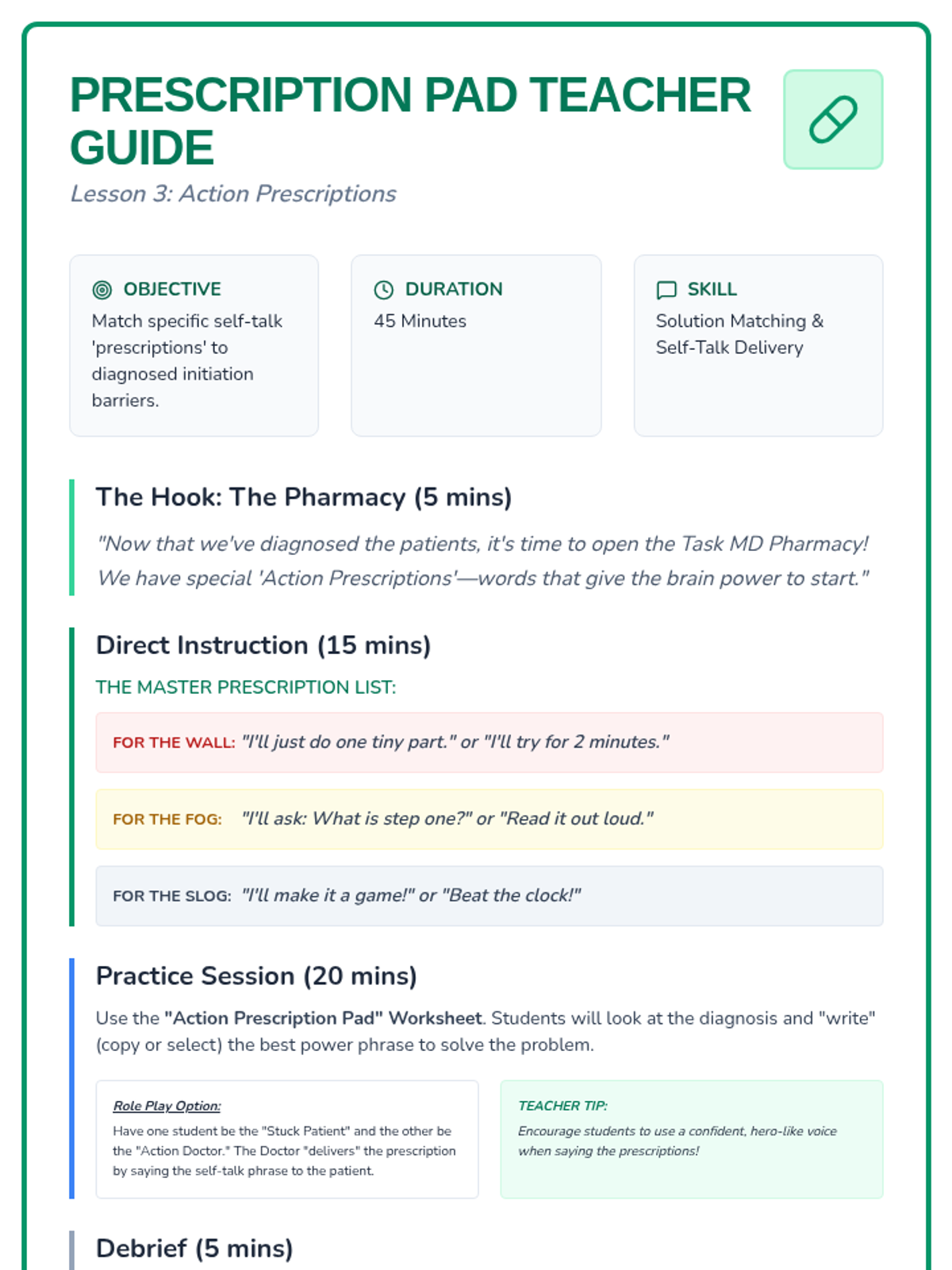
Students role-play scenarios where they help a peer get 'unstuck' using their self-talk prescriptions.
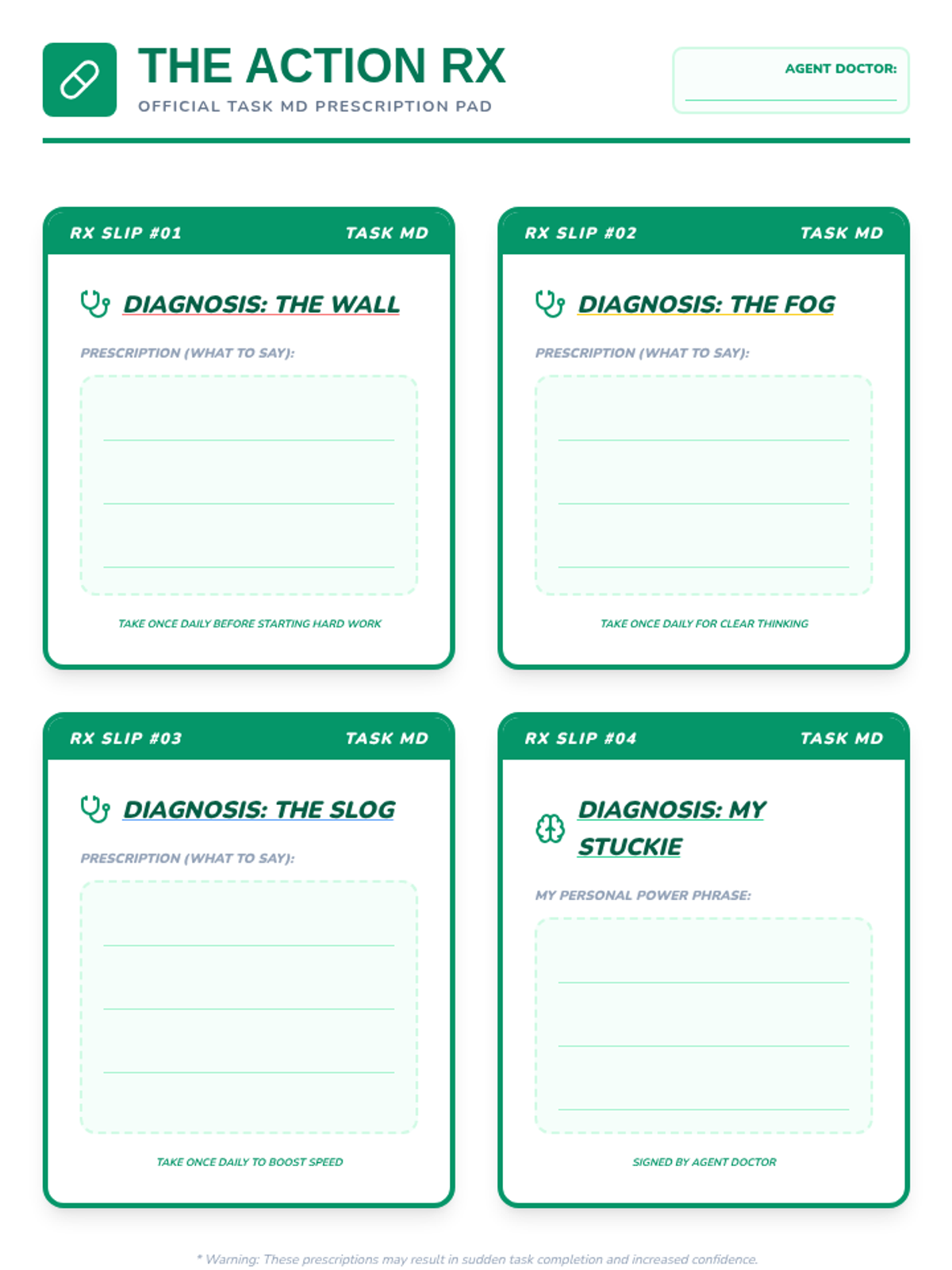
Students match specific self-talk 'prescriptions' to diagnosed problems and practice delivering these lines to characters.
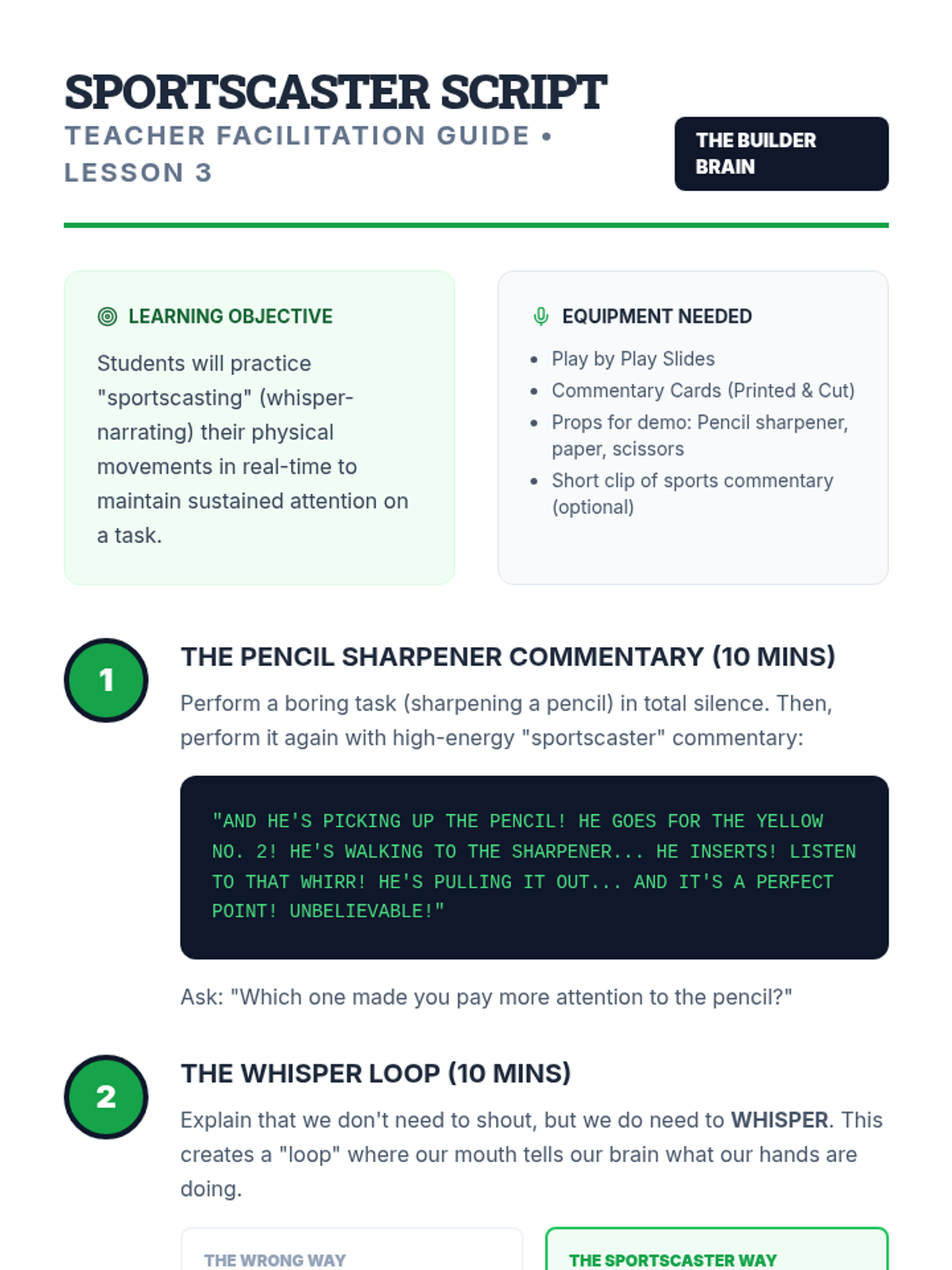
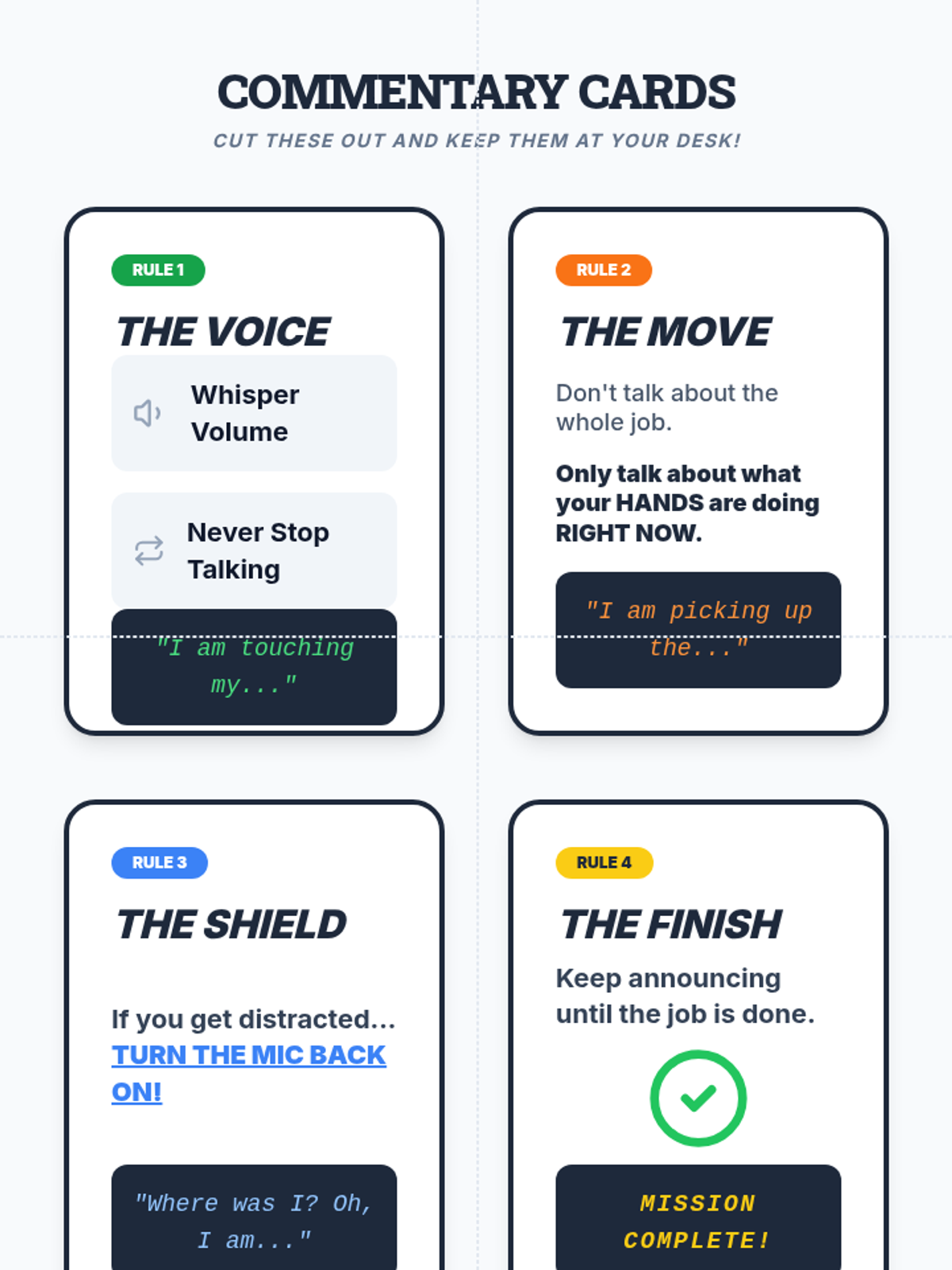
Students practice whispering their actions as they do them, similar to a sportscaster announcing a game. This continuous verbal loop helps prevent distraction and keeps the student engaged.
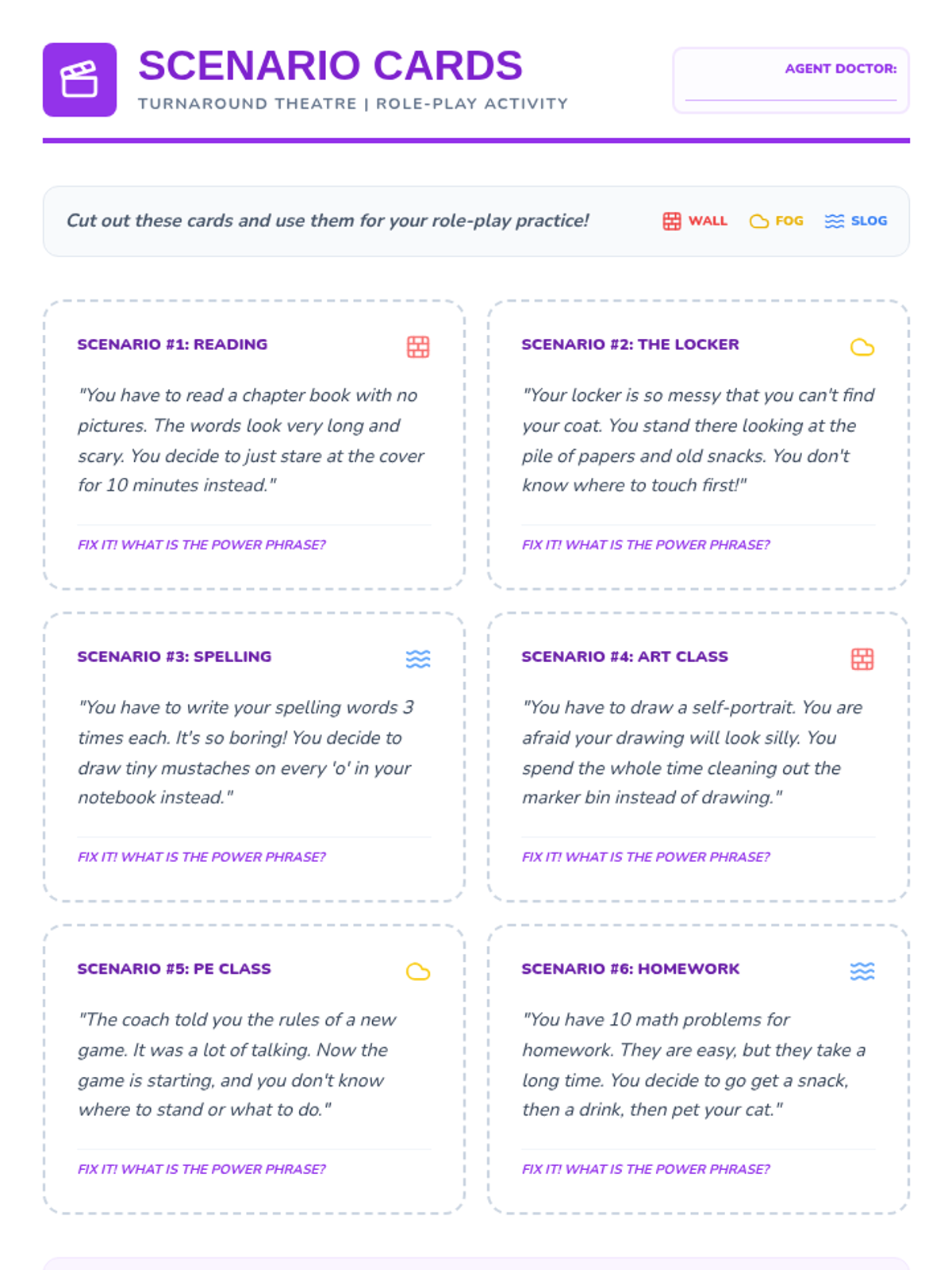
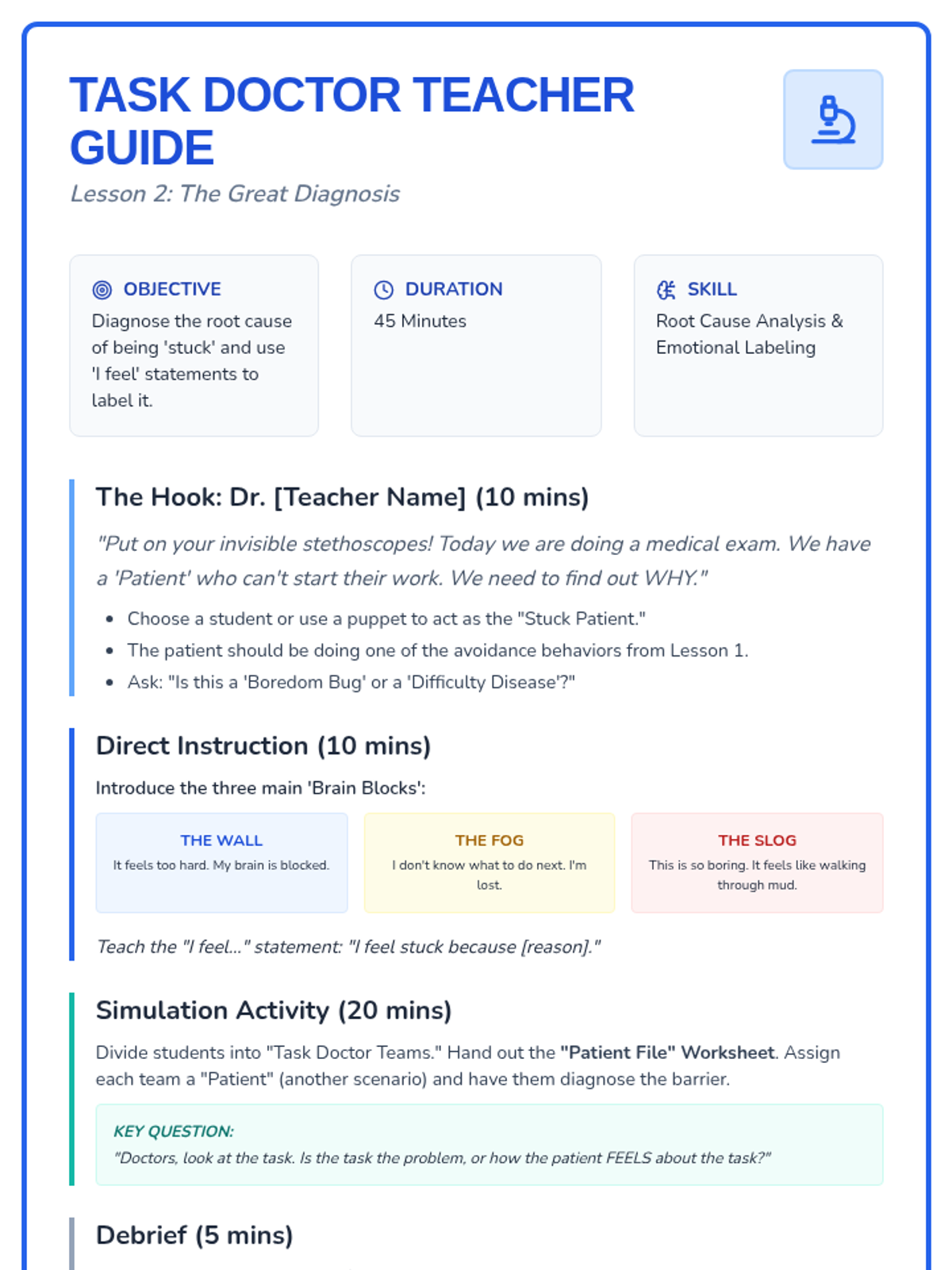
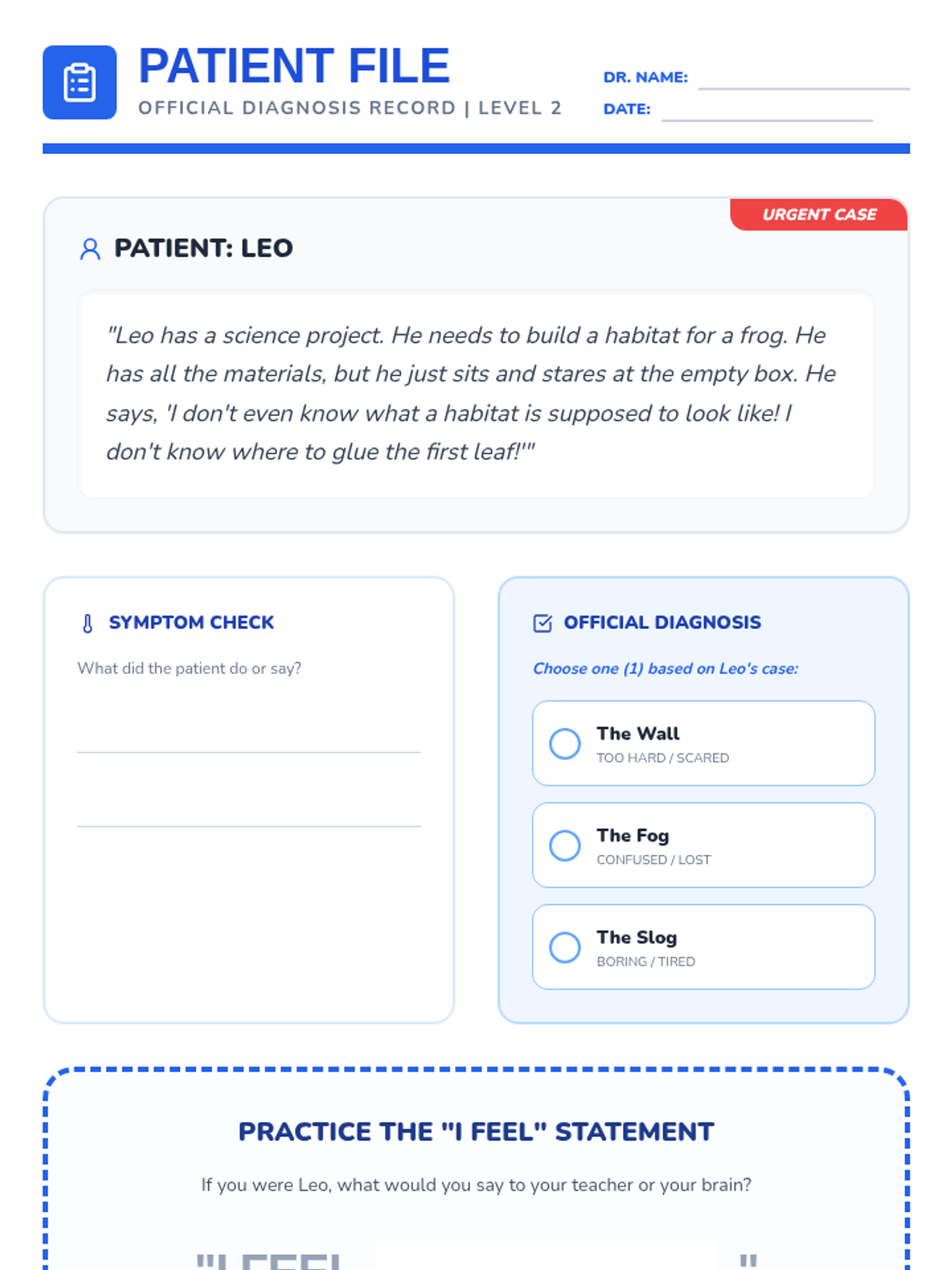
Students act as 'Task Doctors' to determine why a character is stuck (boredom, difficulty, fatigue) and practice labeling these emotions.
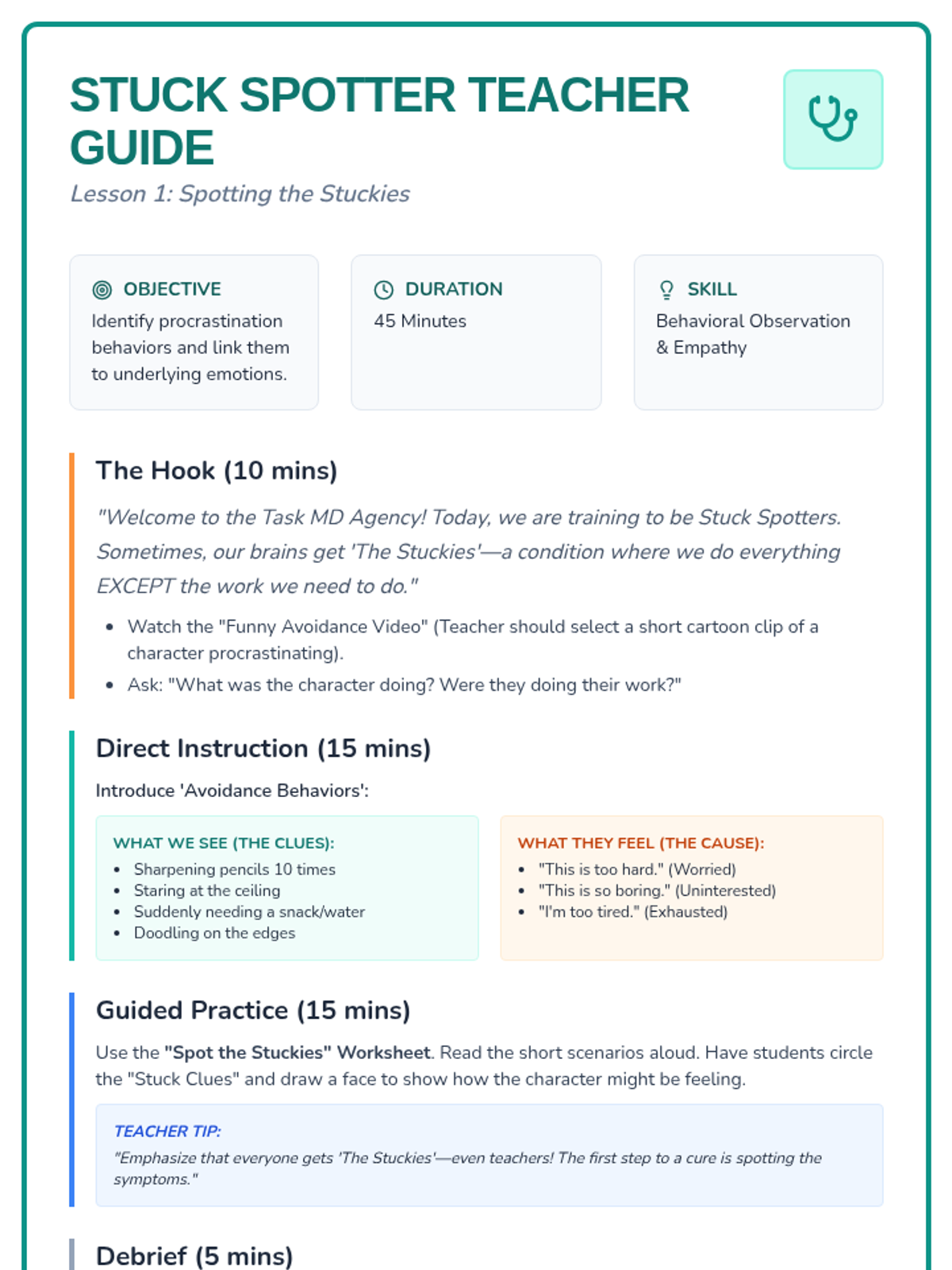
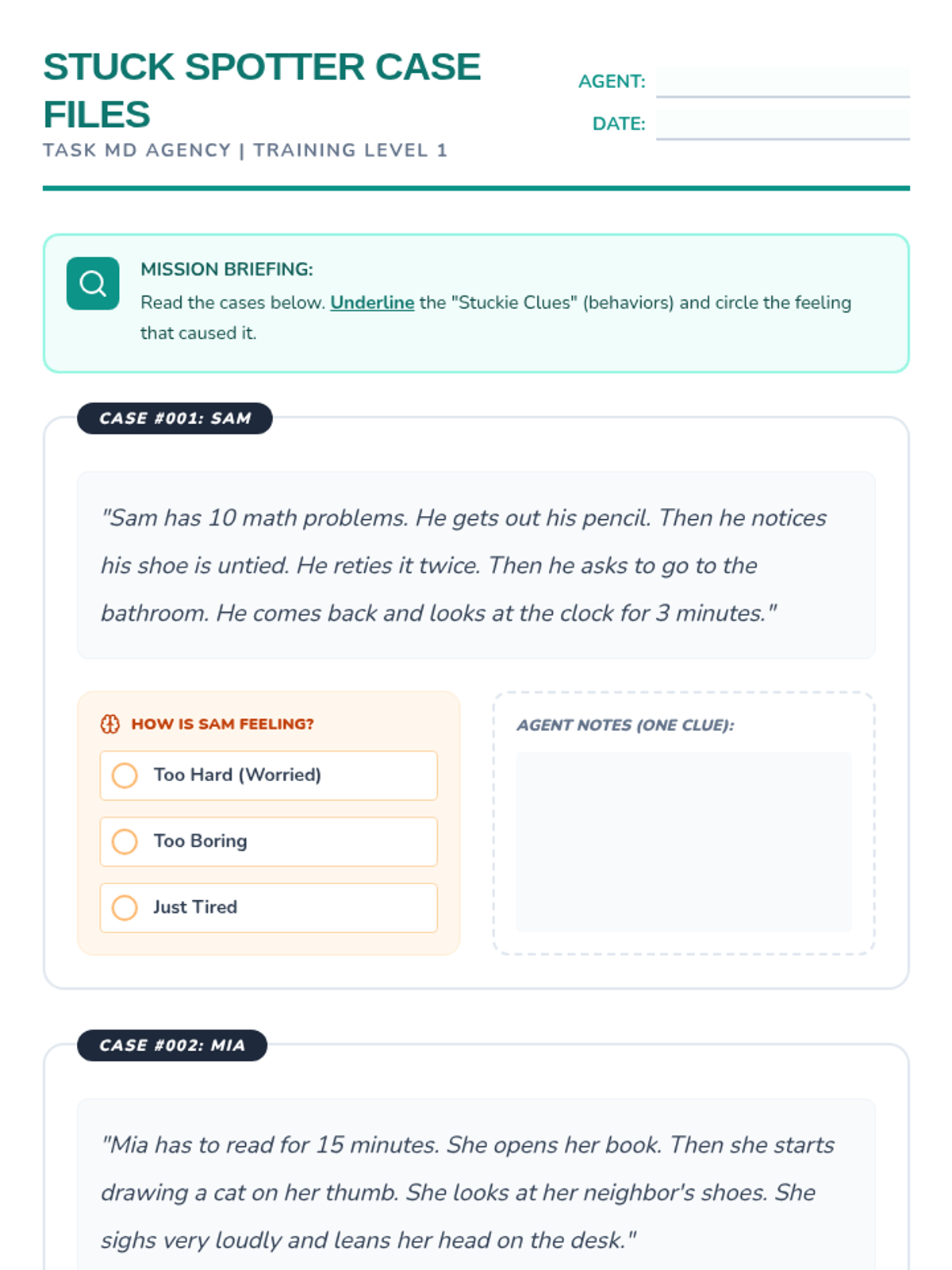
Students identify behaviors that show someone is avoiding work and brainstorm what emotions might be driving those behaviors through case studies.
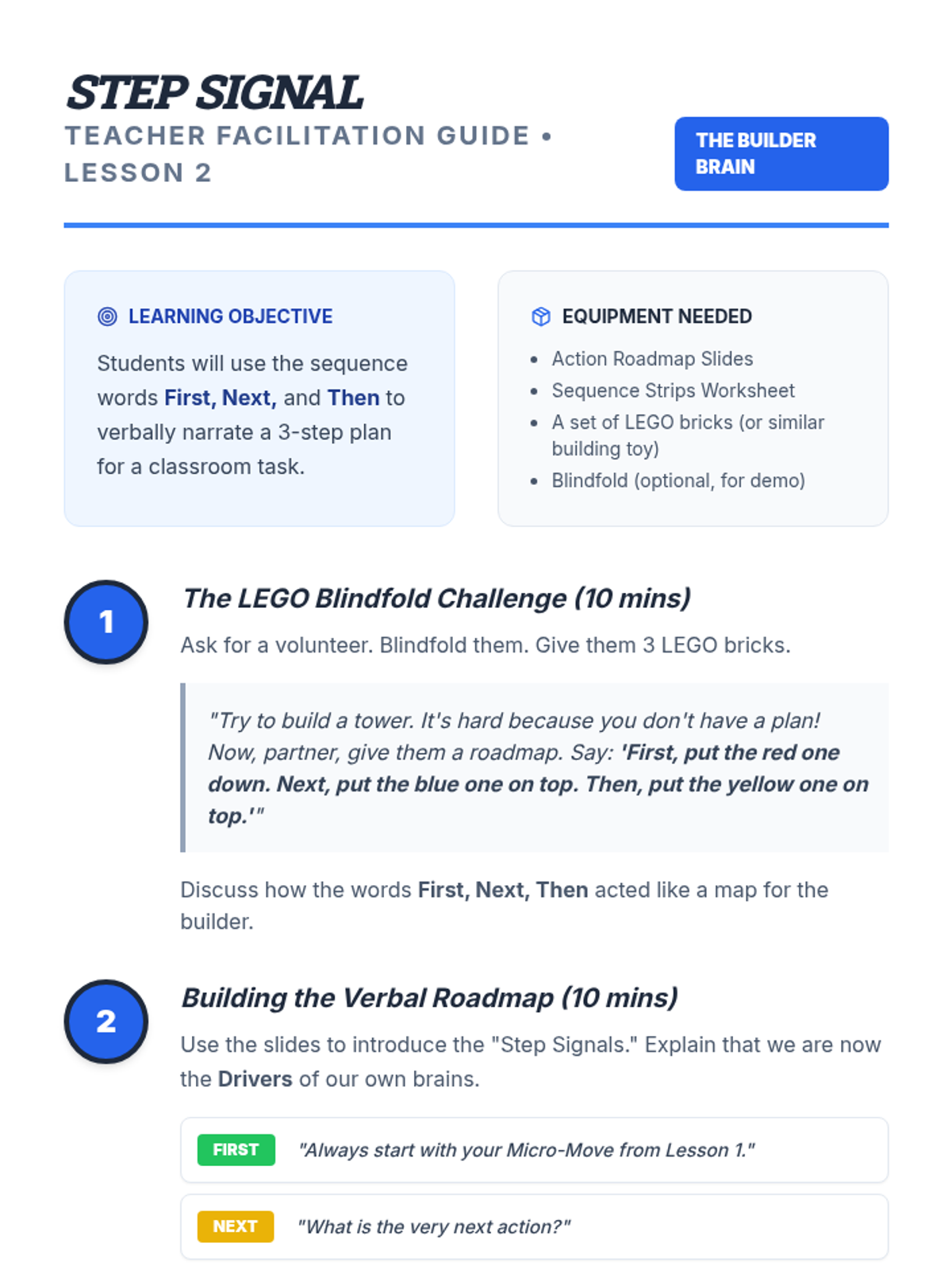
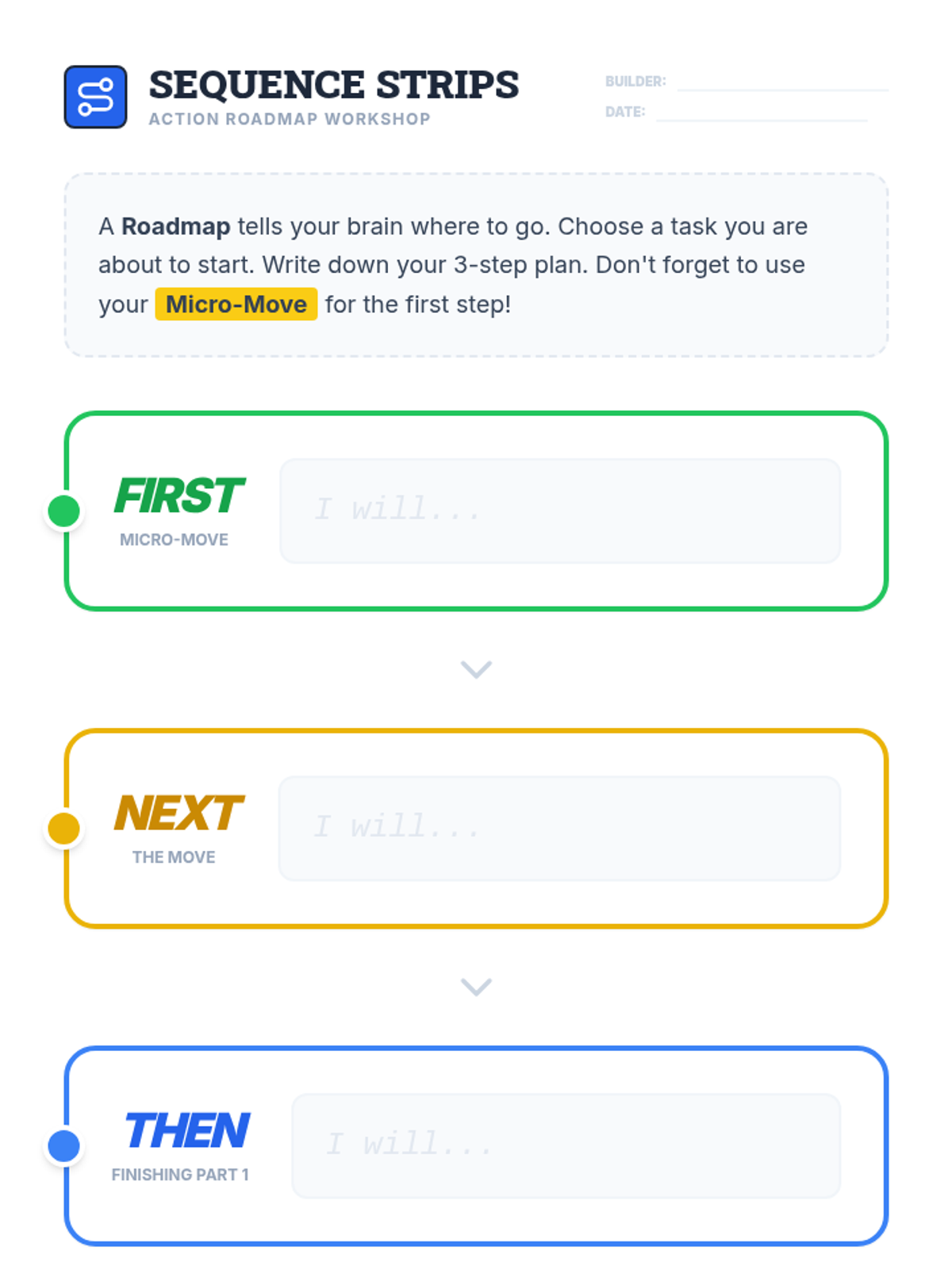
Students practice using the words 'First,' 'Next,' and 'Then' to create a verbal roadmap. They verbally plan a simple classroom routine, ensuring they can narrate the order of operations before beginning.
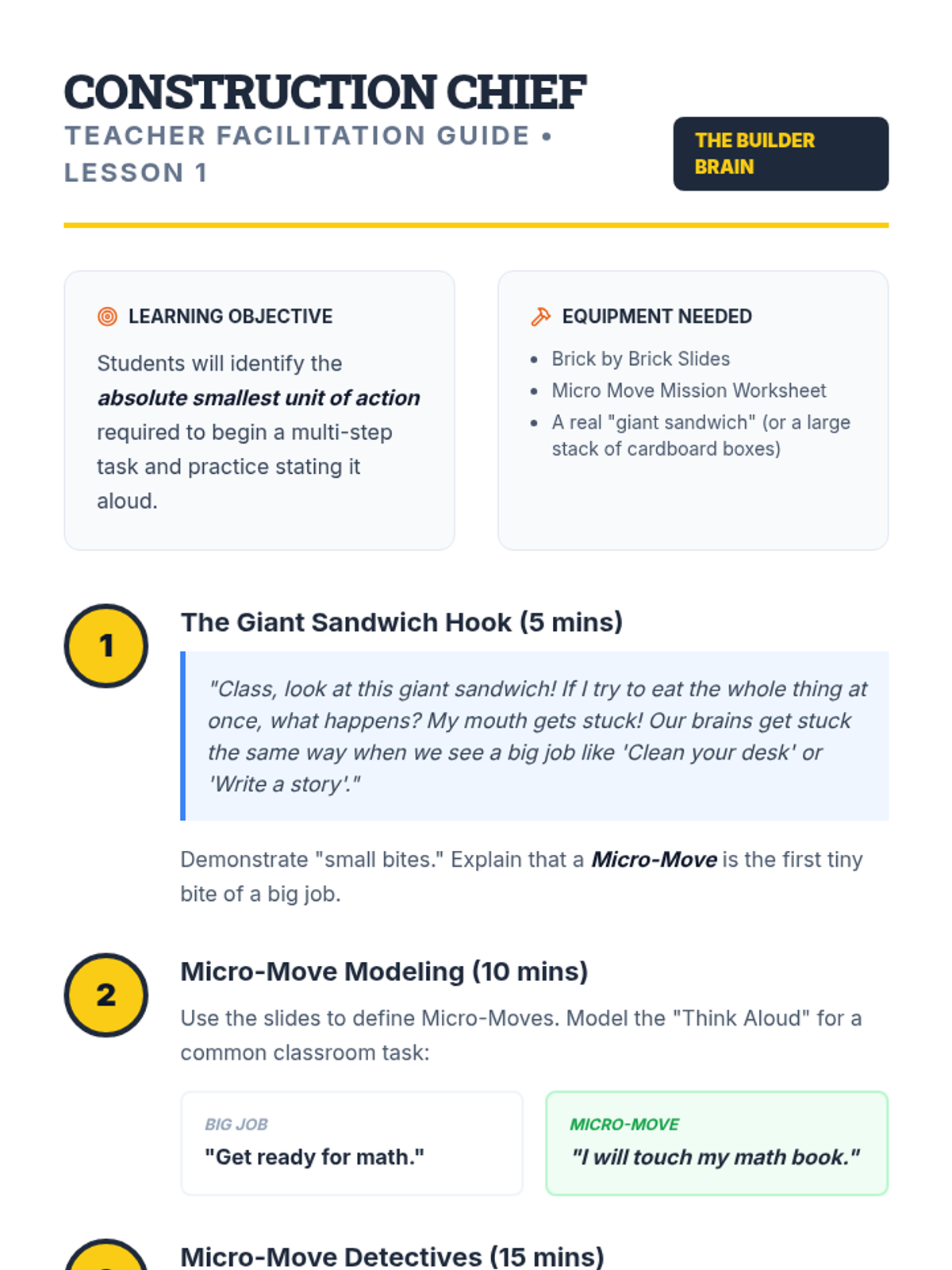
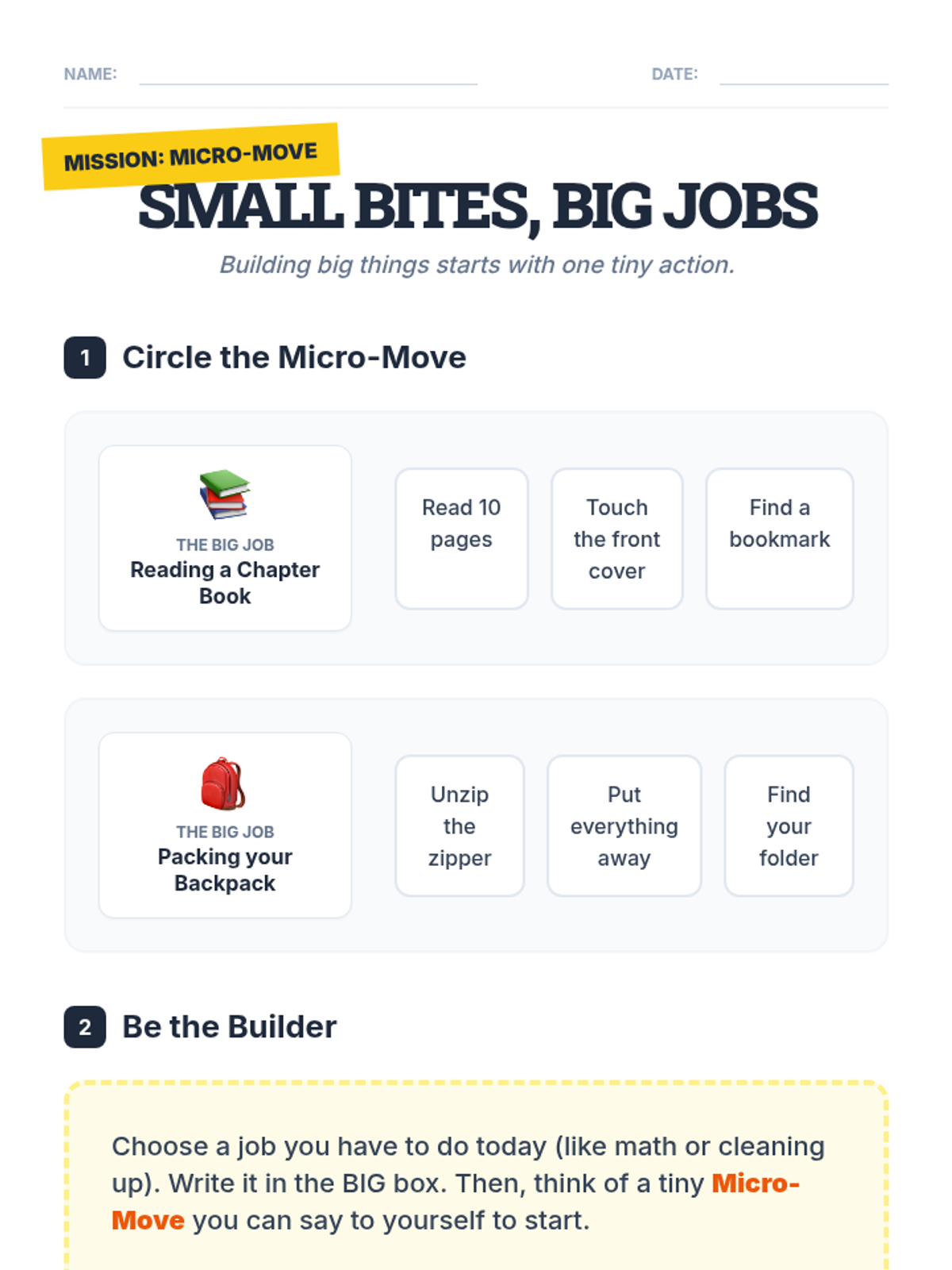
Students learn to identify the absolute smallest unit of action required to begin a task. They practice ignoring the whole assignment to focus solely on the physical action needed to start.
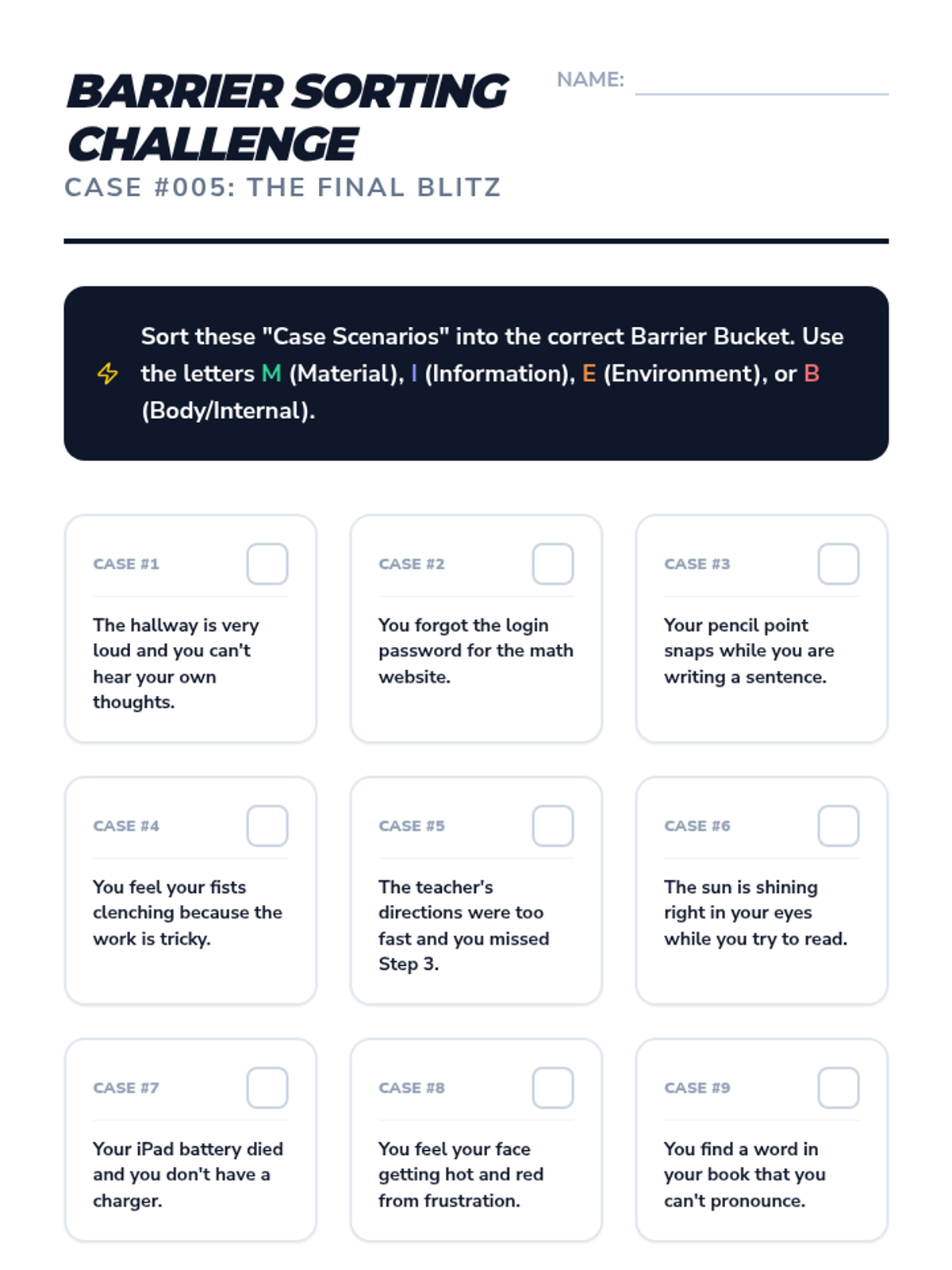
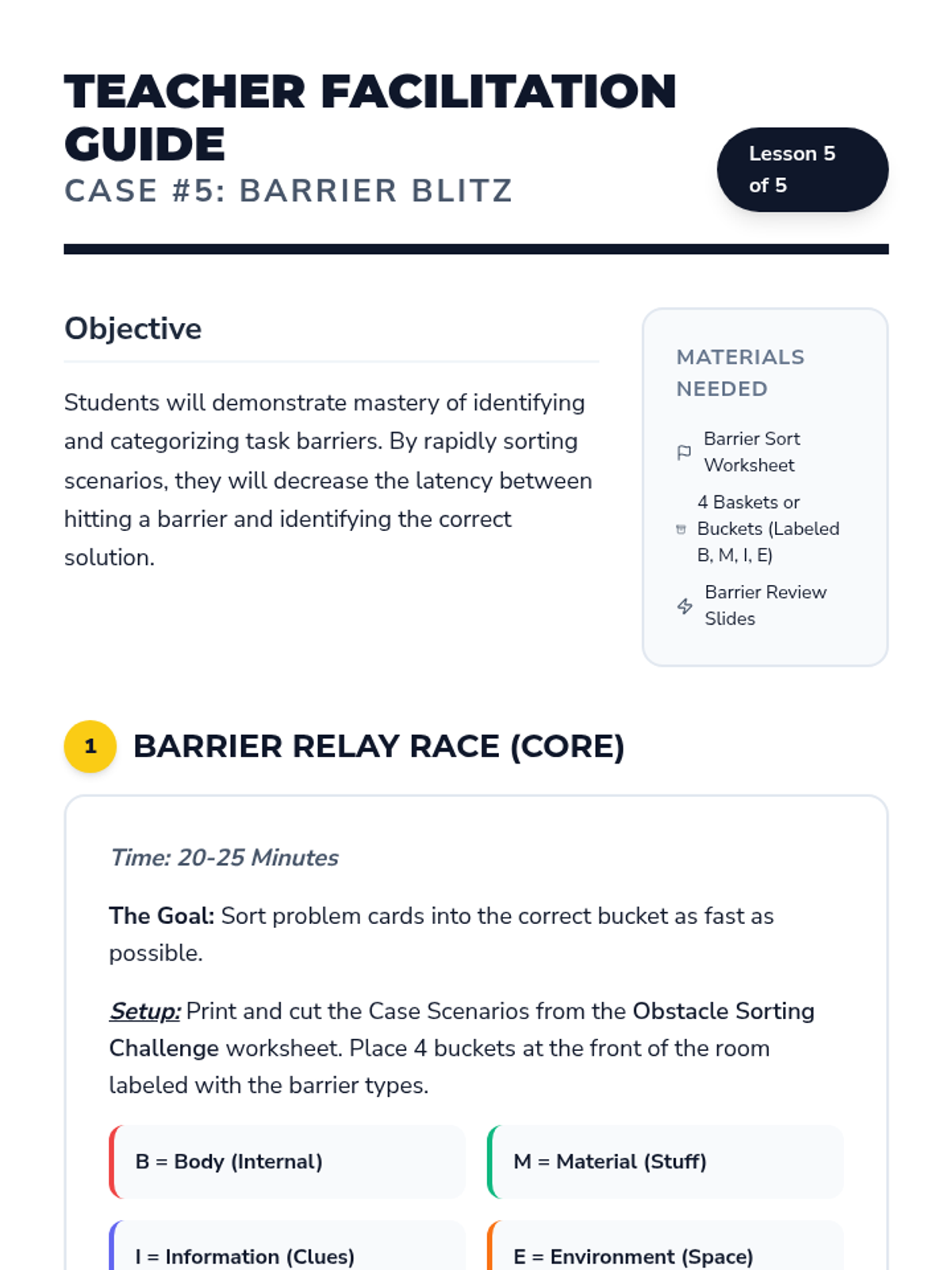
A culminating lesson where students rapidly sort various scenarios into barrier categories to reduce the time between hitting a wall and identifying the solution.
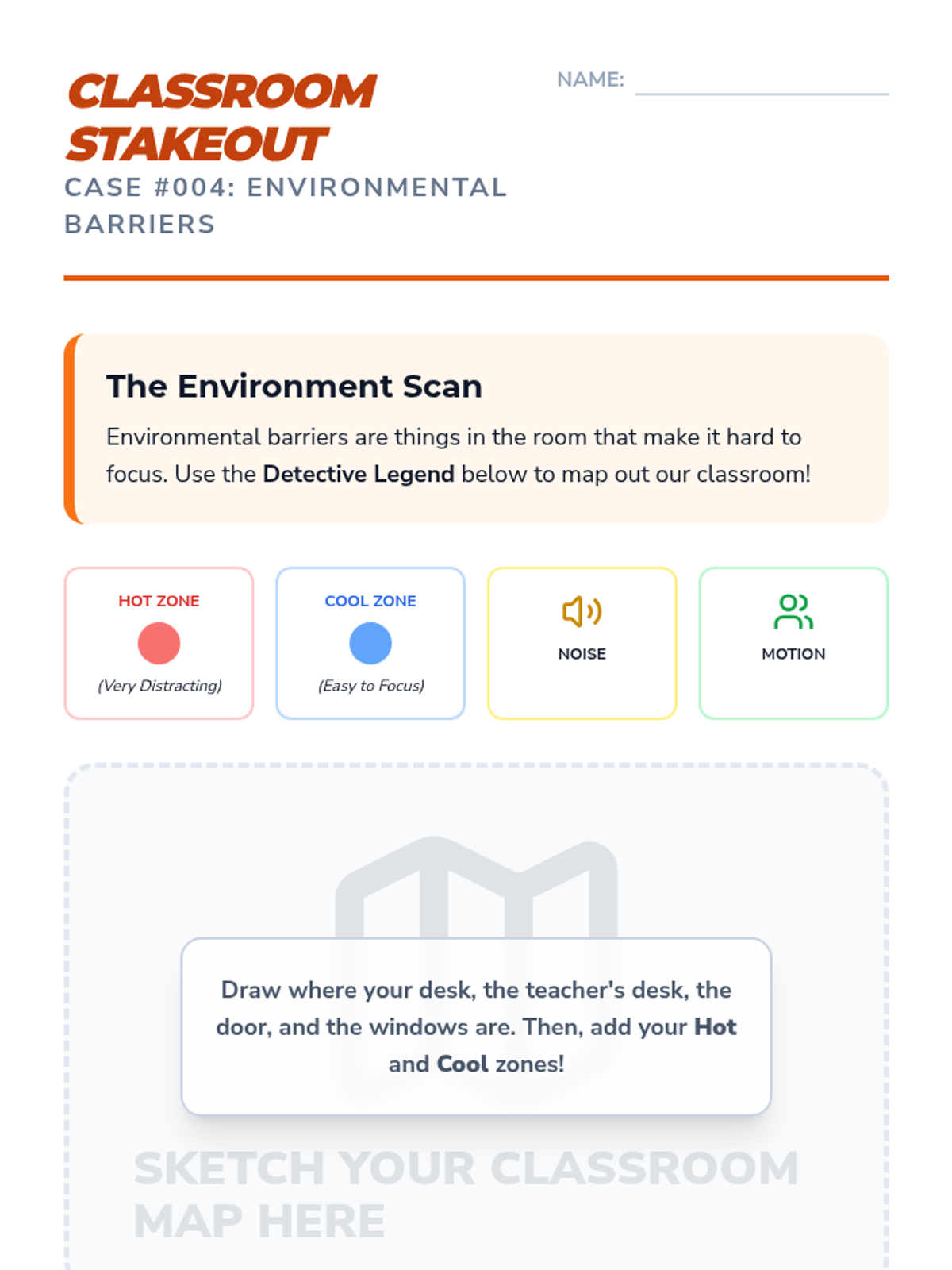
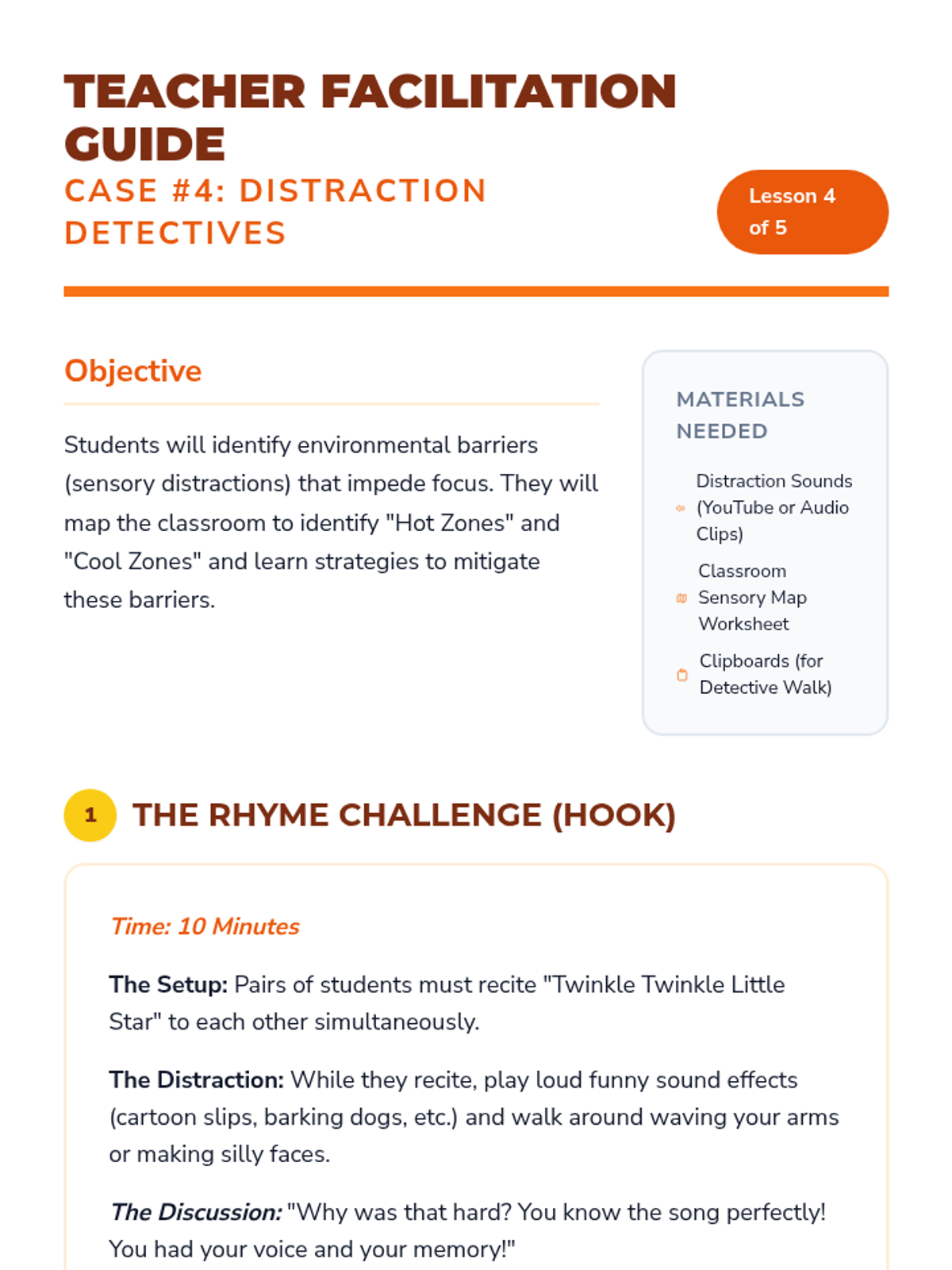
Investigates sensory and environmental barriers like noise or clutter, conducting a 'detective walk' to identify classroom distractions.
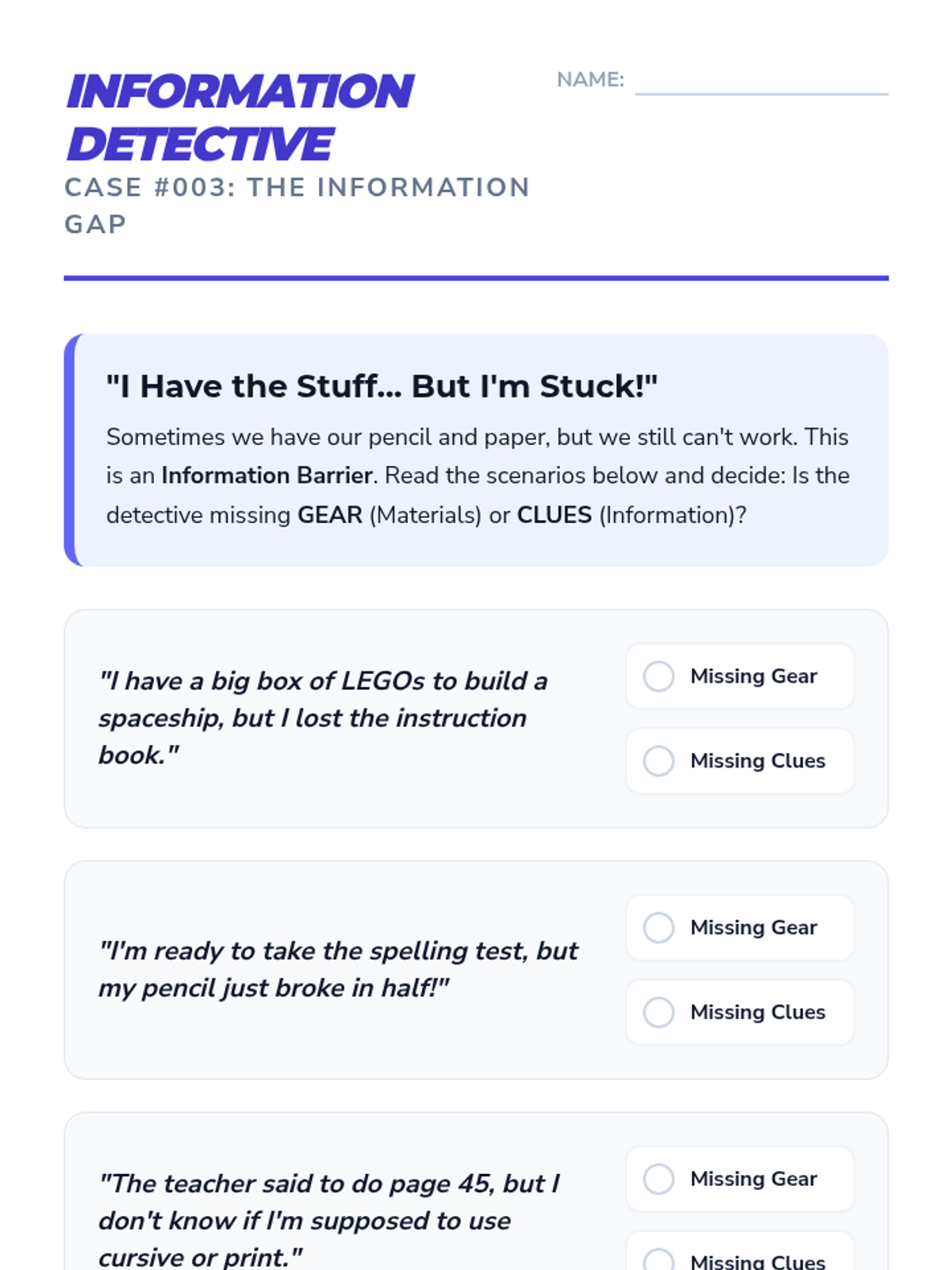
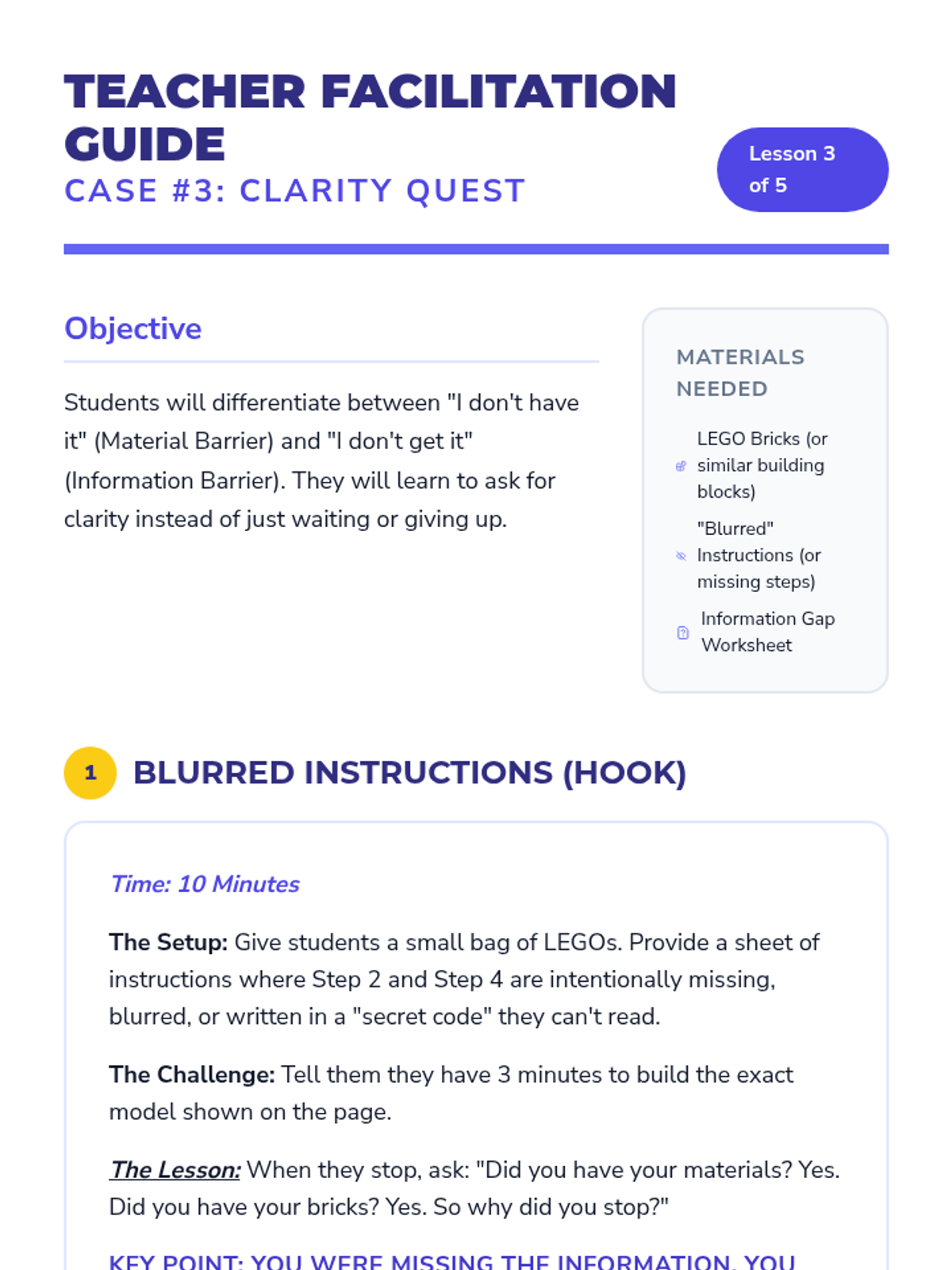
Teaches students to recognize when they are stuck due to a lack of clarity or understanding, differentiating between 'I don't have it' and 'I don't get it.'
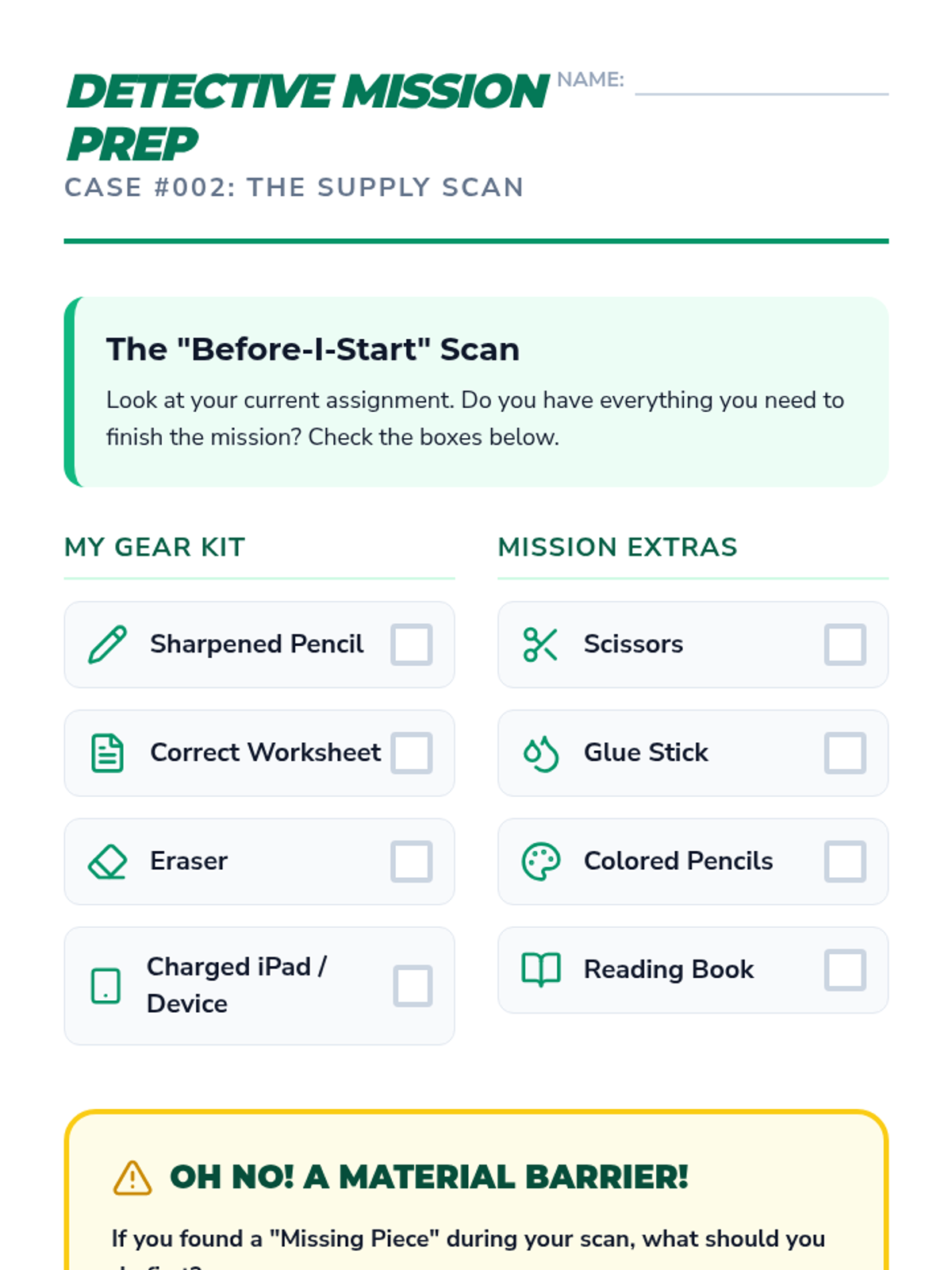
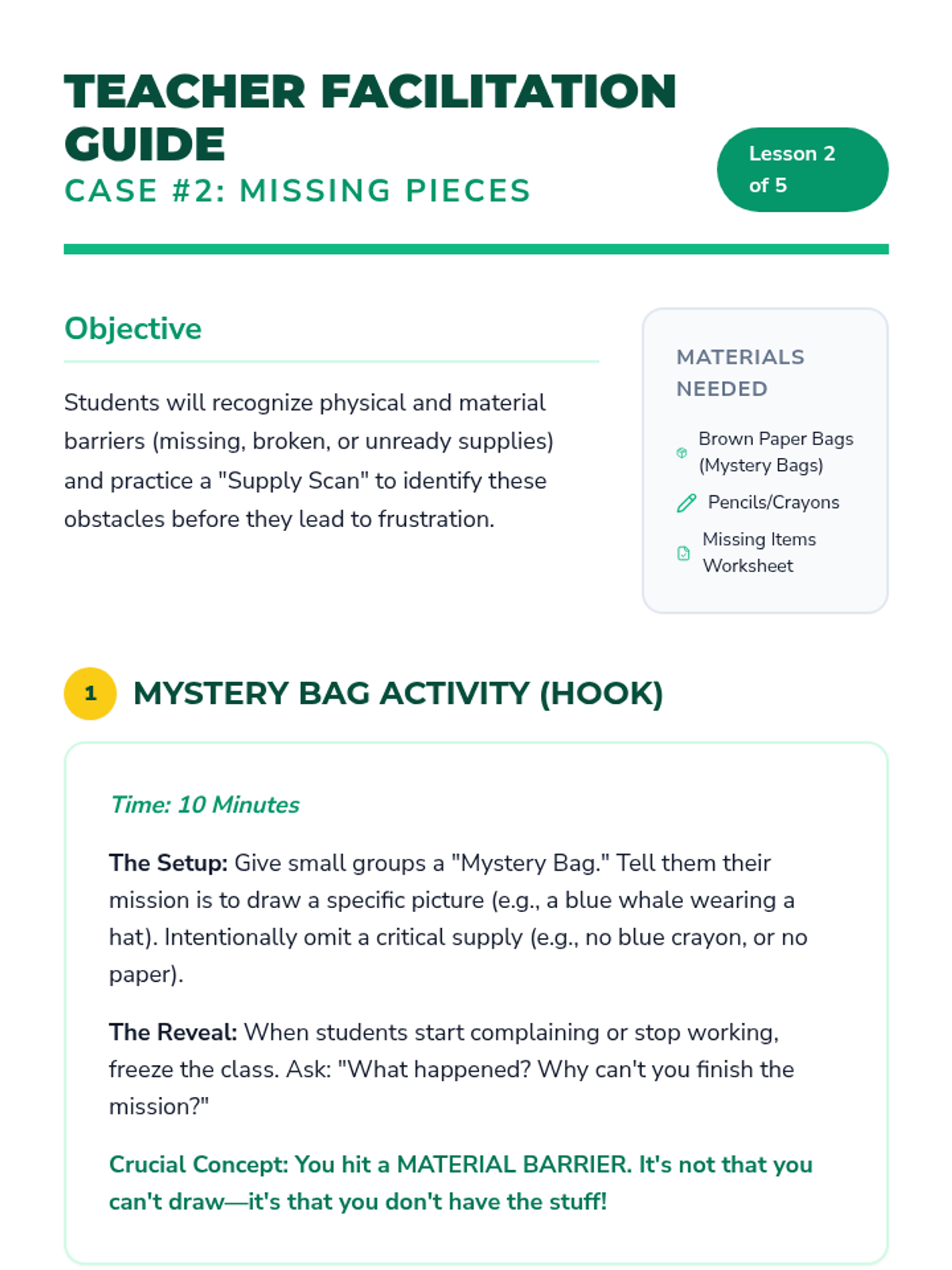
Focuses on tangible obstacles like broken tools or missing materials, teaching students to perform a 'supply scan' to identify what is physically missing.
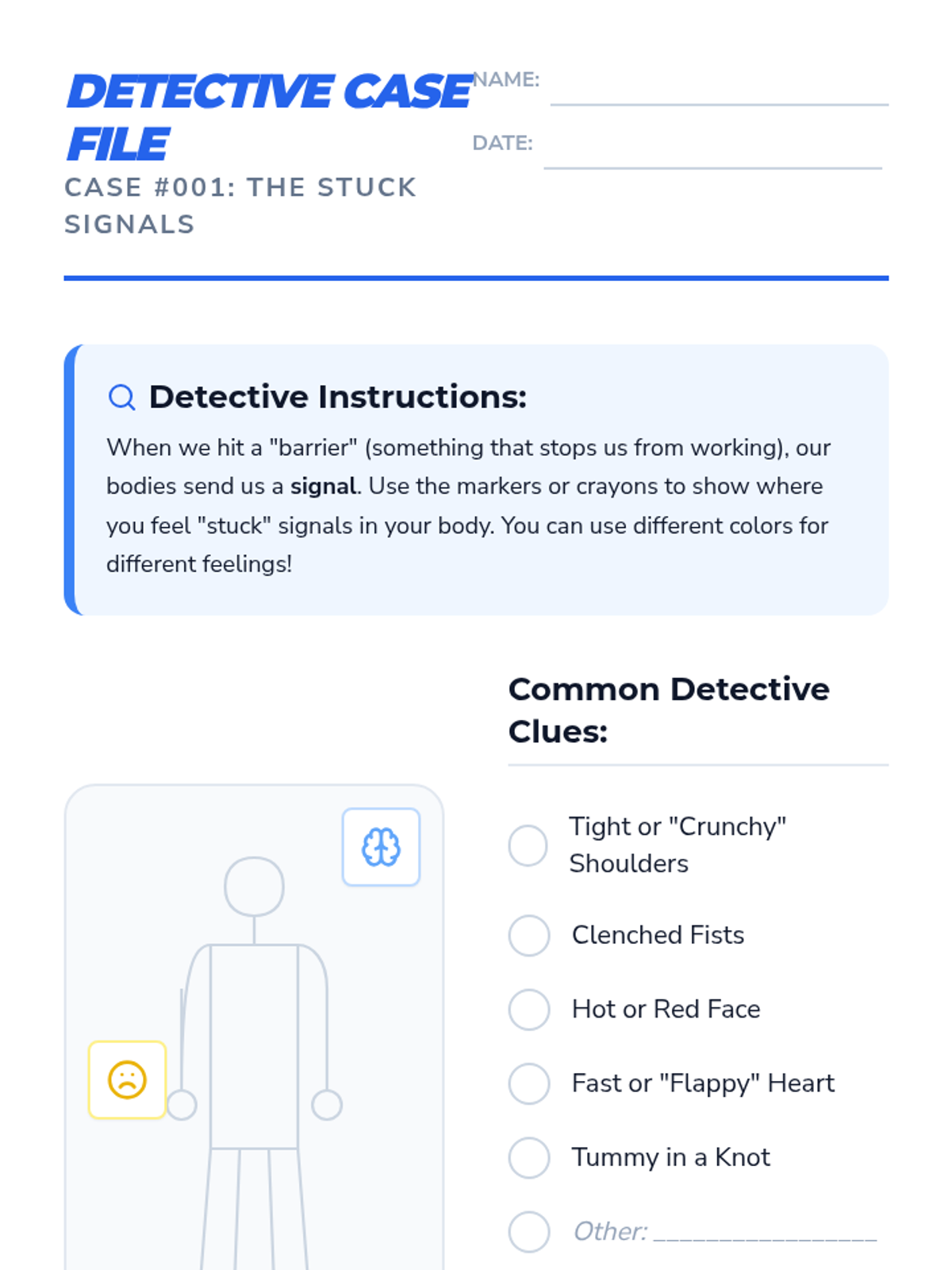
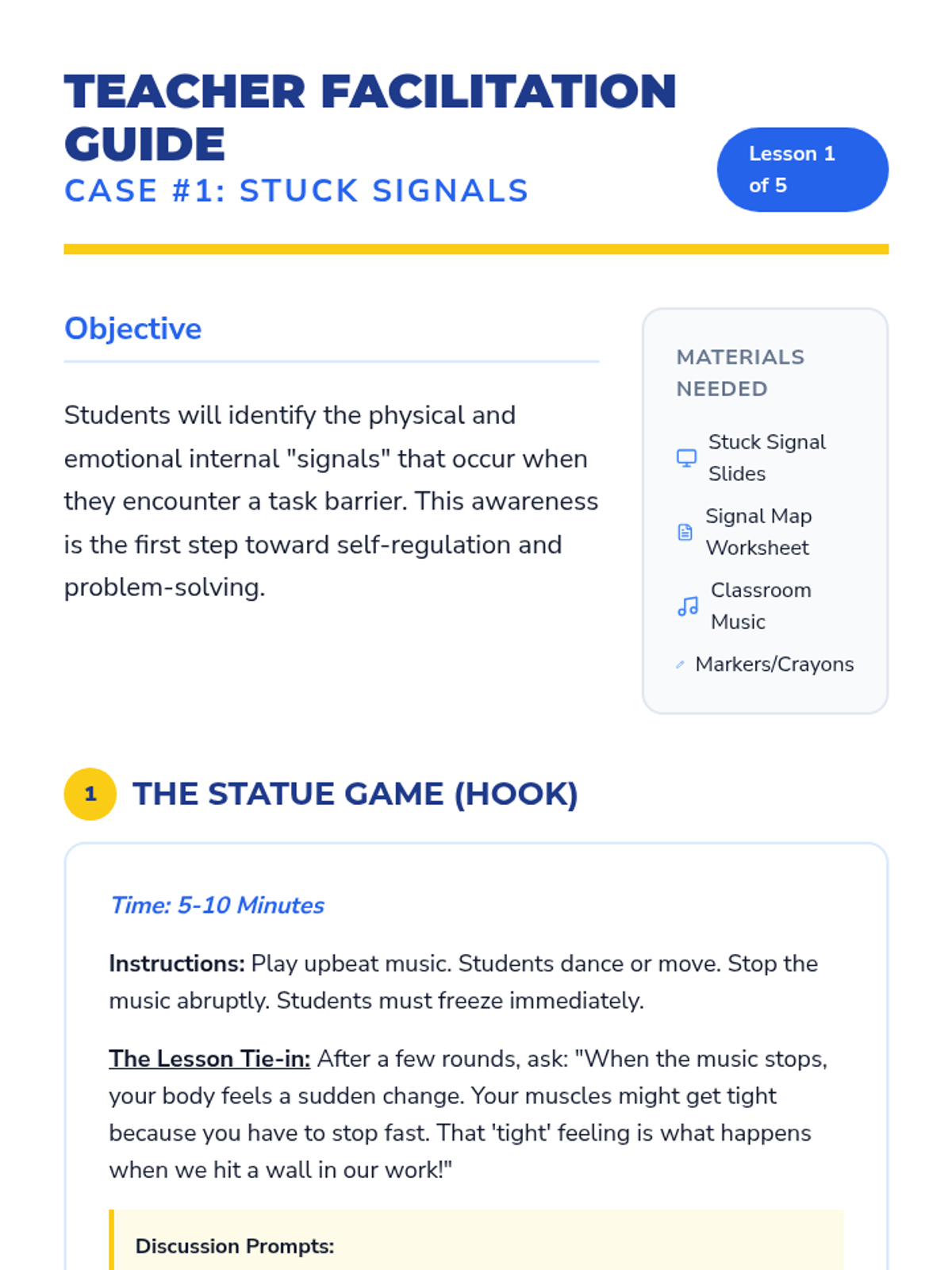
Students explore the physical and emotional sensations associated with hitting a task barrier, identifying what frustration feels like to recognize the moment they need to stop.