Empathetic skill development through emotion recognition, cultural diversity appreciation, and bias confrontation. Targets multi-perspective analysis to support respectful interactions and complex social responses.
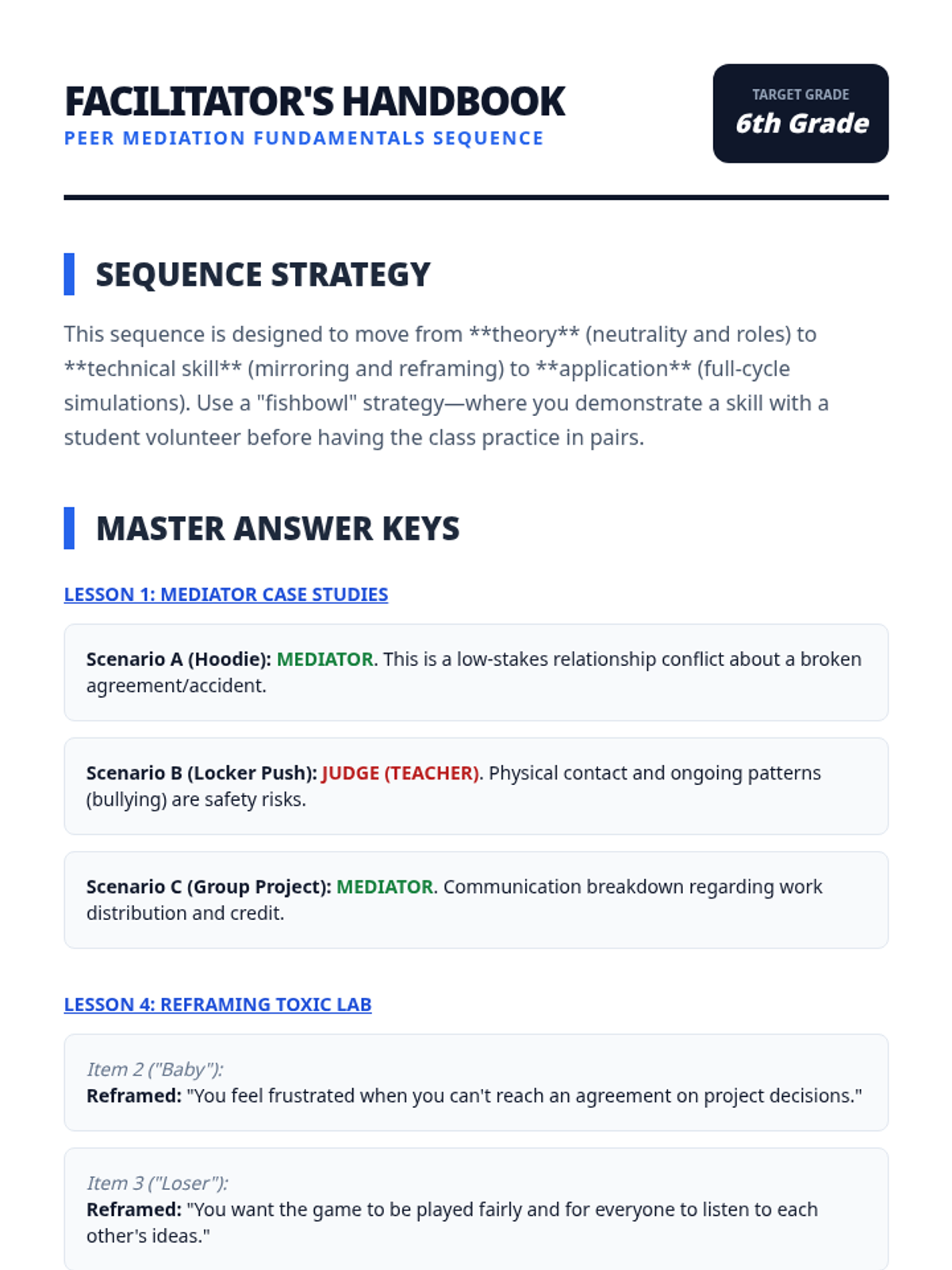
Teacher-facing facilitation guide and answer keys for the entire Peer Mediation sequence, including coaching tips for mock mediations.
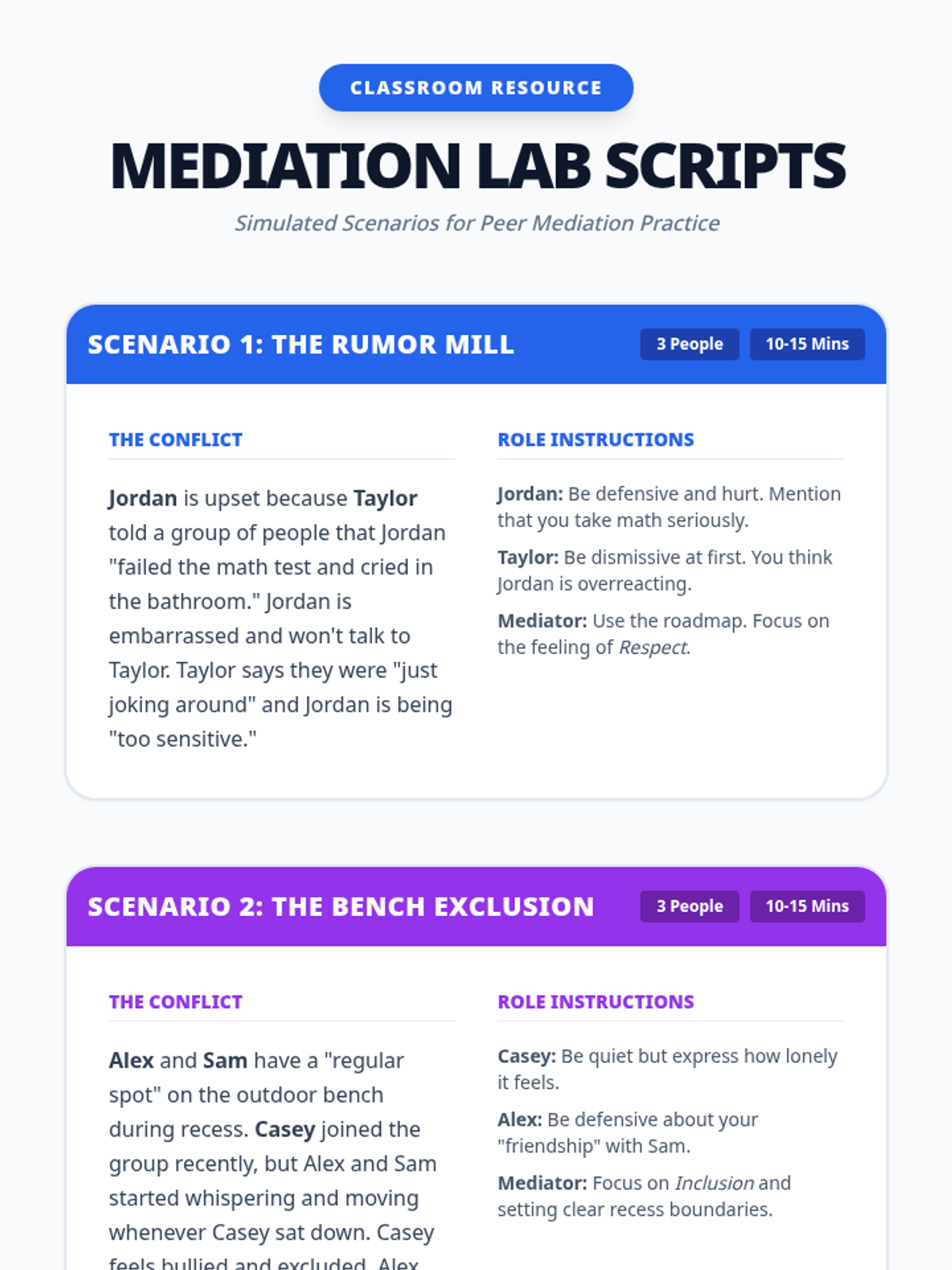
Role-play scenarios based on common middle school conflicts to be used during the Mediation Lab simulation.
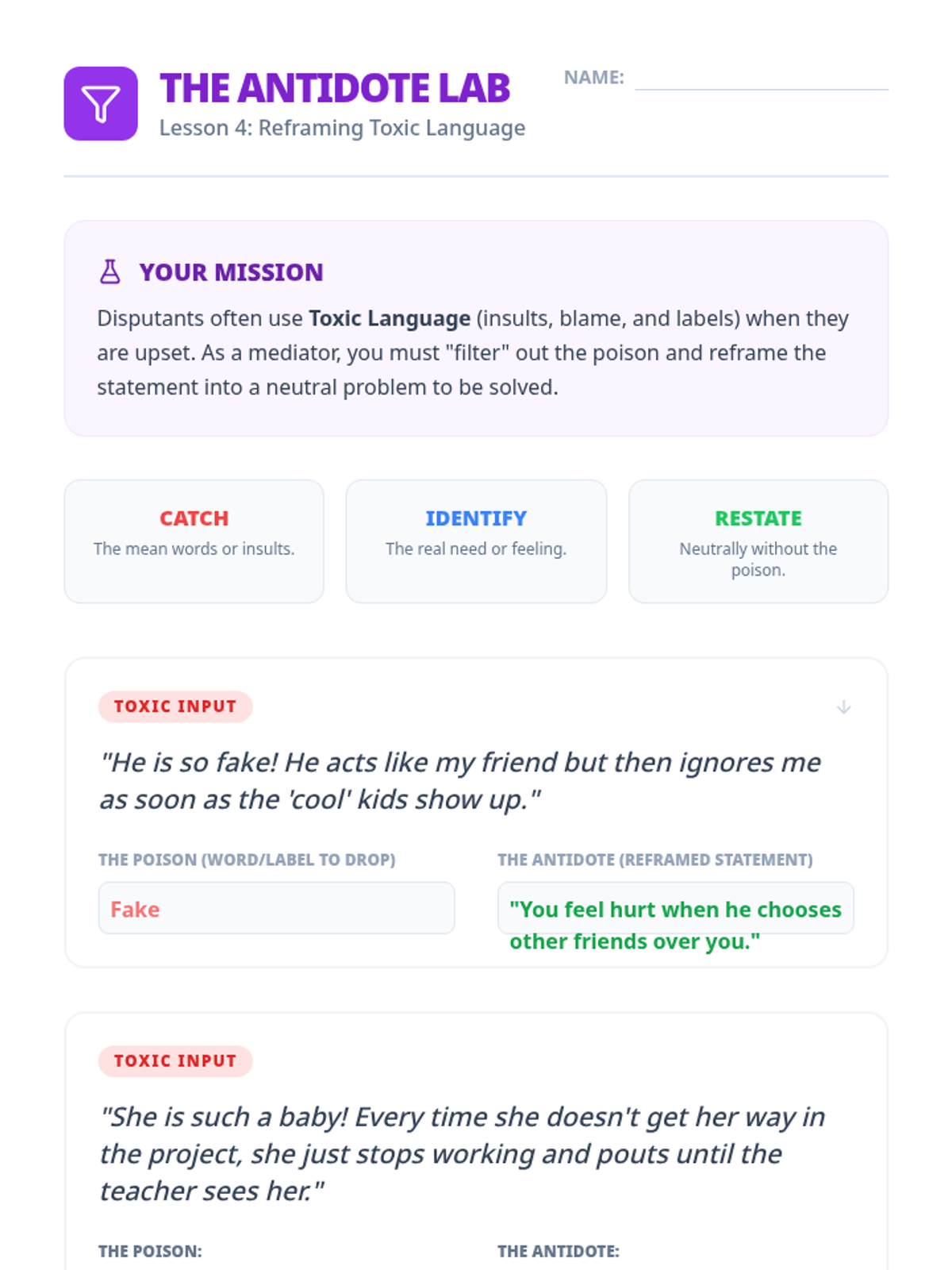
Advanced practice worksheet where students identify toxic labels and absolutes in conflict statements and reframe them into neutral needs or feelings.
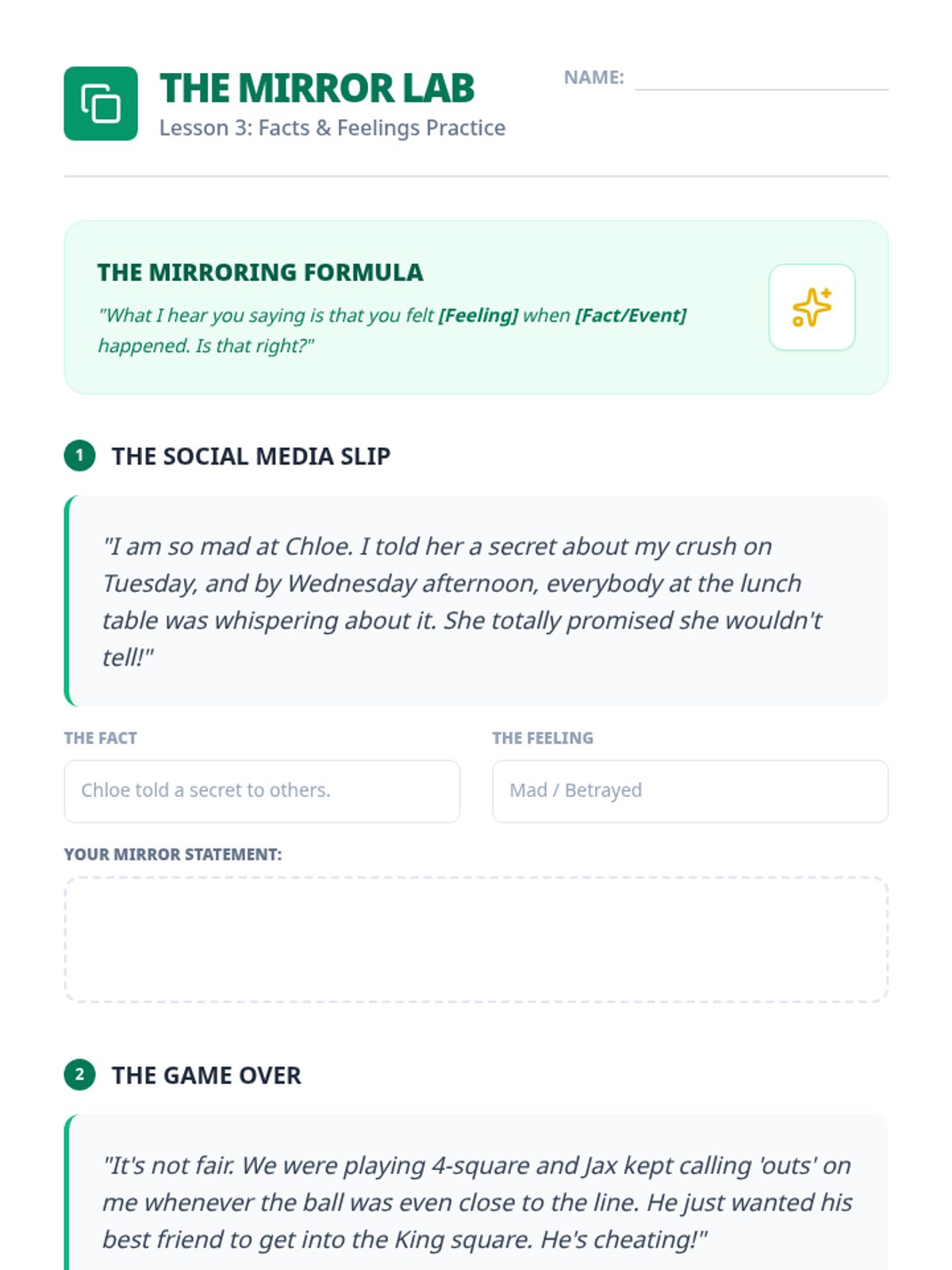
Worksheet for students to practice identifying facts and feelings in conflict statements and crafting neutral mirroring responses.
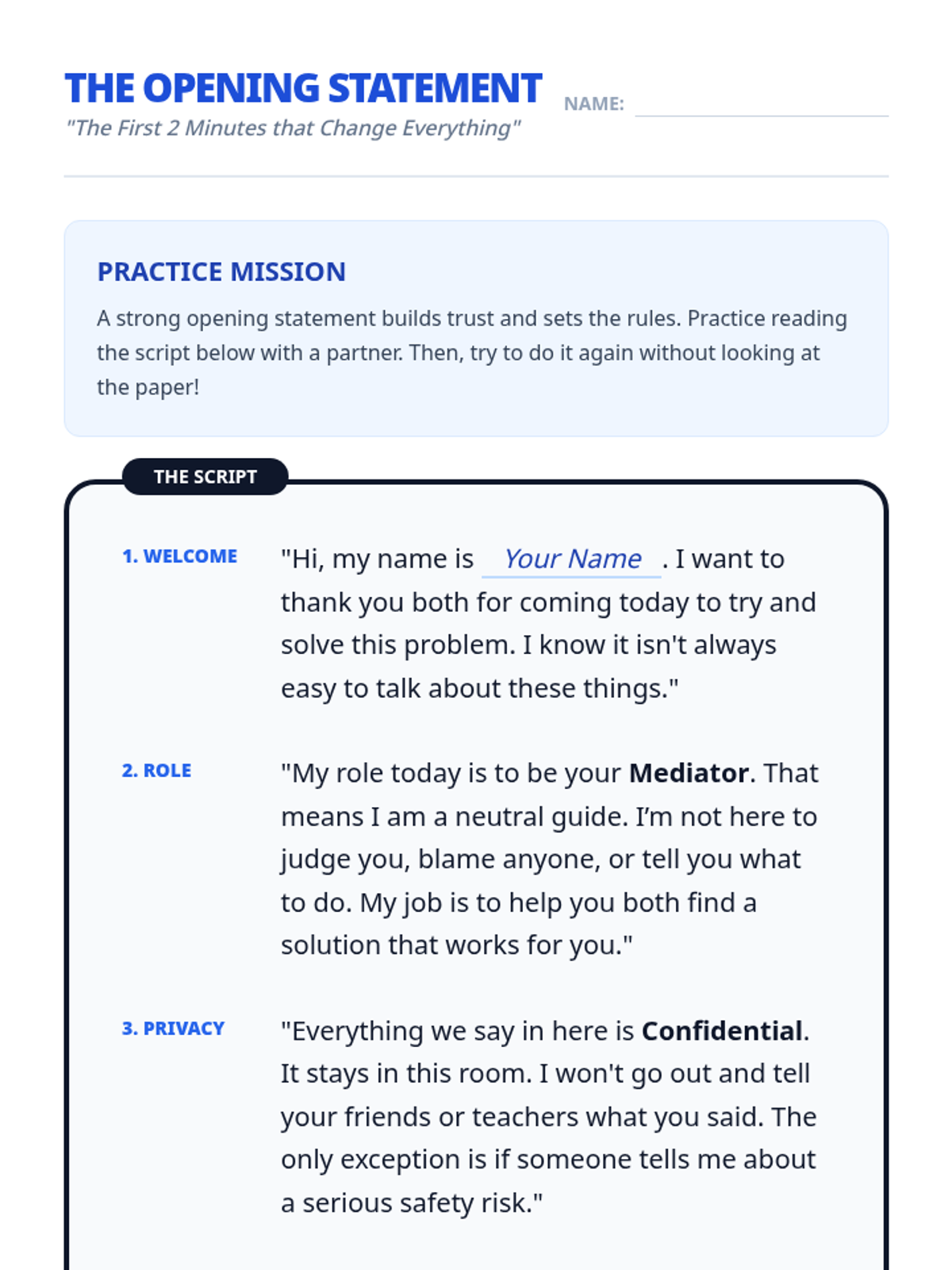
Student-facing script and practice guide for delivering a mediation opening statement, including ground rules and neutrality reminders.
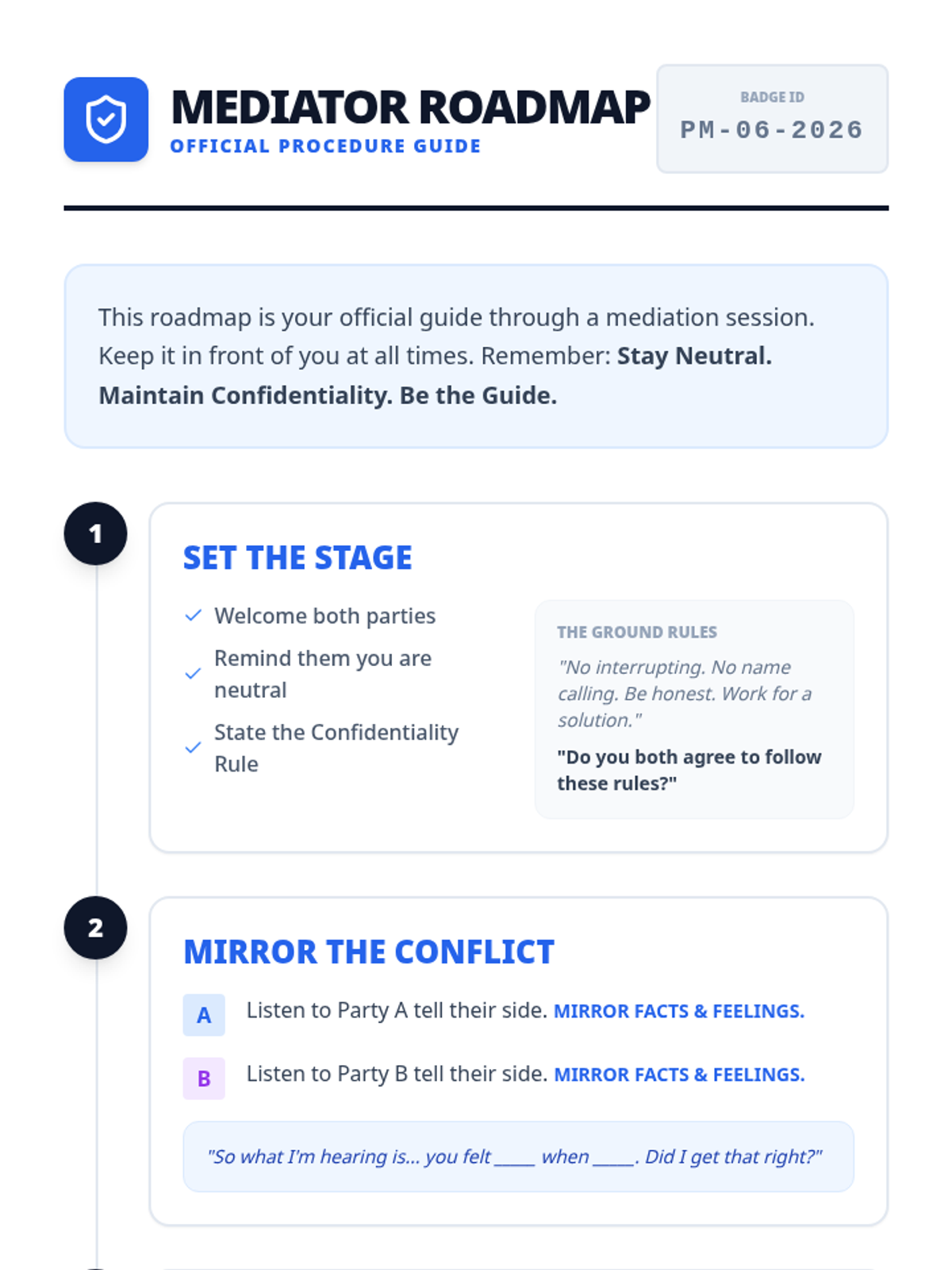
Student-facing reference sheet to guide them through the 4-step peer mediation process during simulations.
Slide deck explaining the concept of reframing toxic language into neutral problem statements to help de-escalate conflicts and focus on solutions.
Slide deck focusing on the mediator's primary tool: mirroring. It explains the concept, provides "magic phrases" for starting reflections, and includes a practice scenario.
Slide deck explaining the structure of a mediation opening statement and the importance of establishing ground rules before beginning the conflict resolution process.
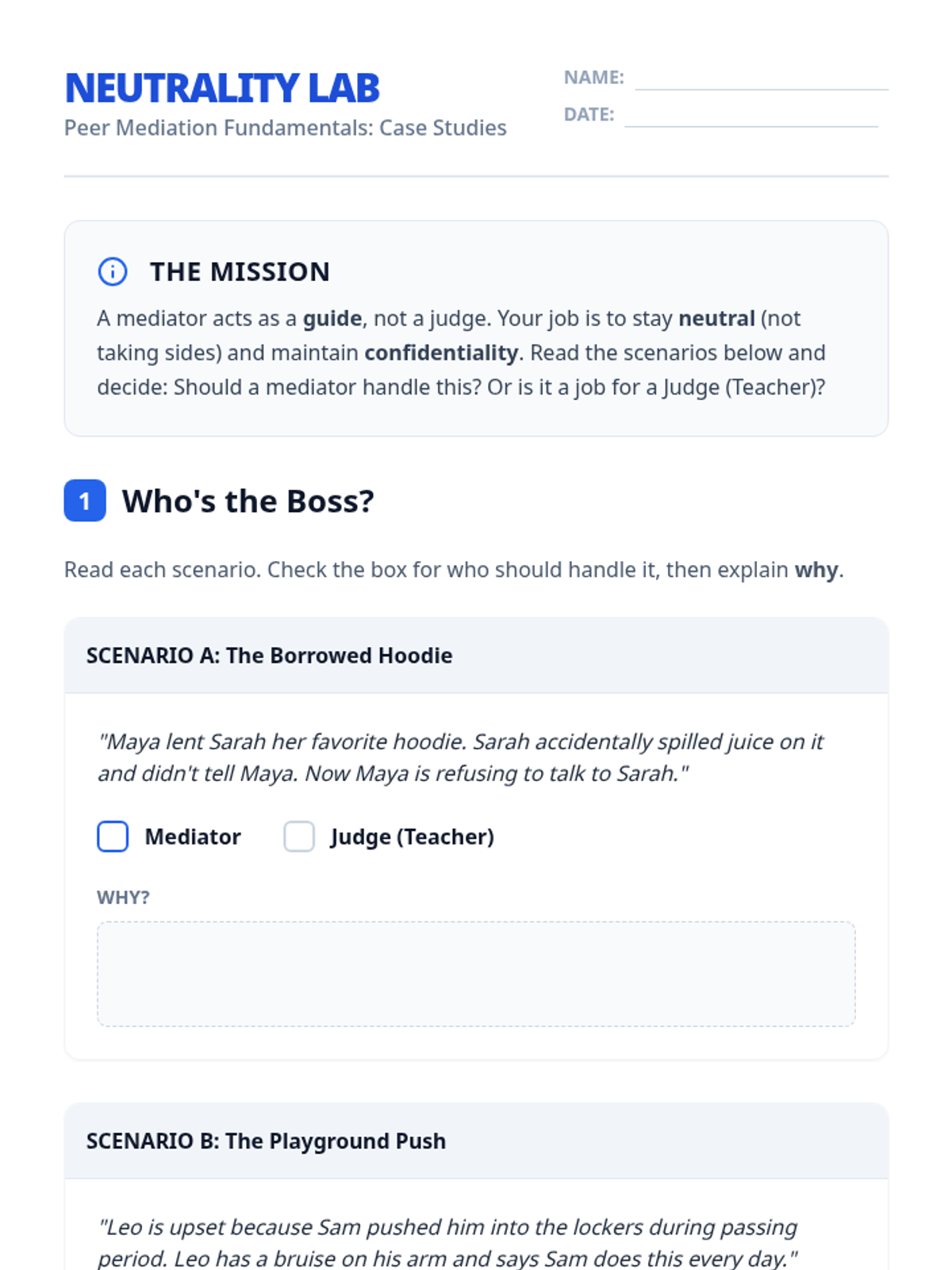
Worksheet with case studies helping students distinguish between situations suitable for mediation and those requiring adult intervention, along with neutrality exercises.
Introductory slide deck defining the mediator's role, the principle of neutrality, the difference between a mediator and a judge, and safety boundaries for peer mediation.
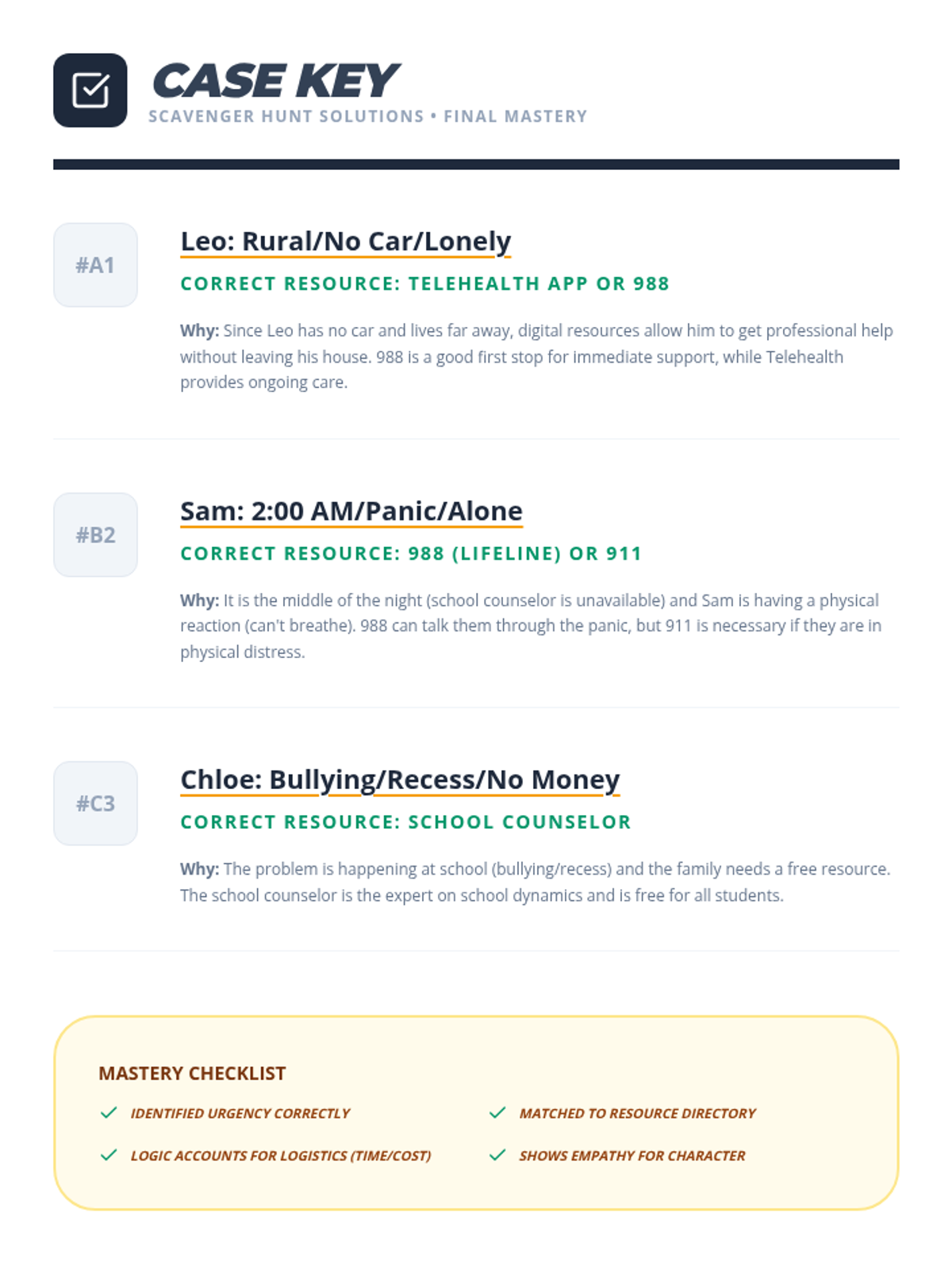
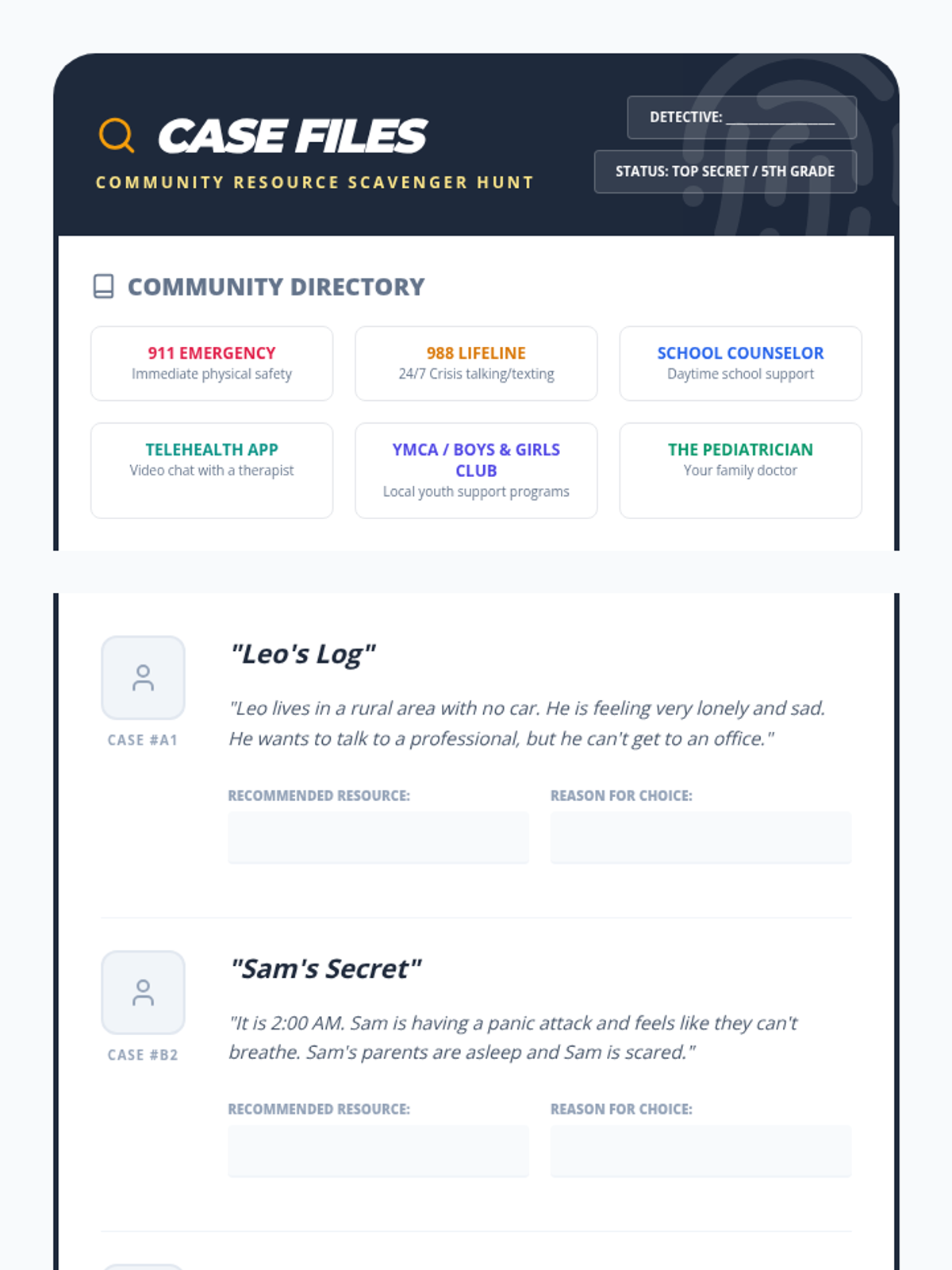
Answer key for the Resource Detective Case Files, providing the correct resource matches and the instructional logic for each fictional scenario.
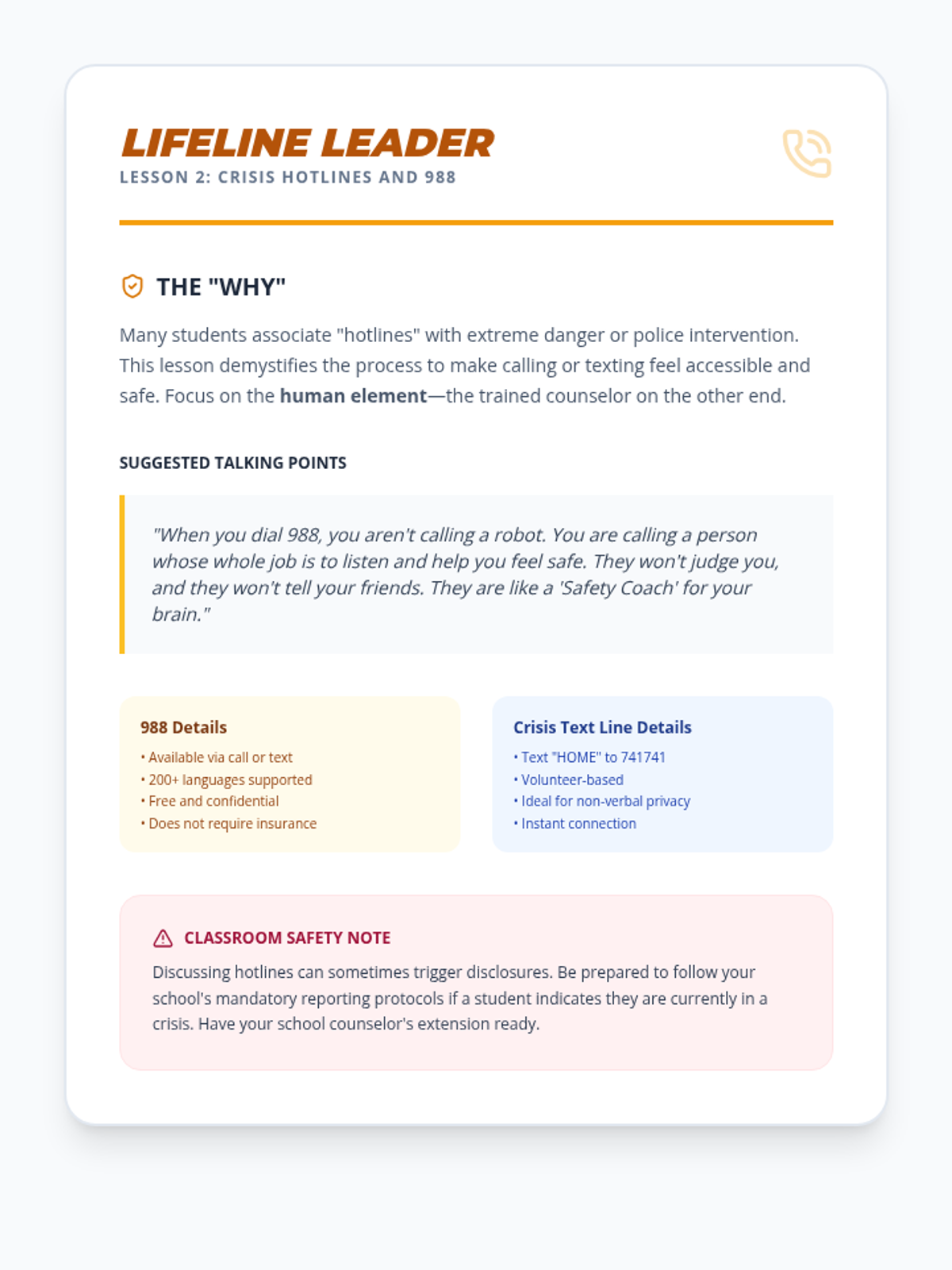
Teacher briefing for Lesson 2, providing specific facts about 988 and the Crisis Text Line, along with instructional scripts.
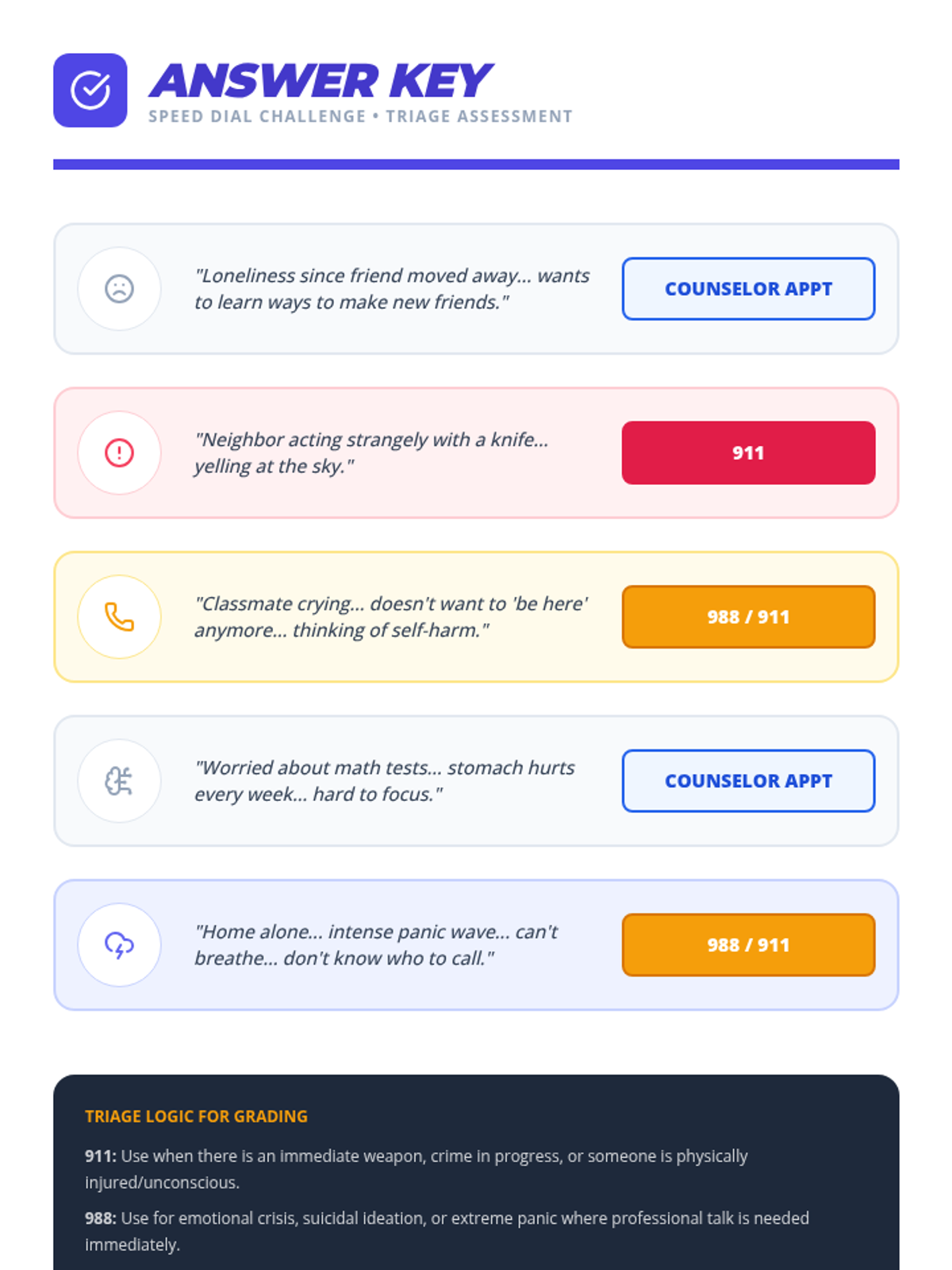
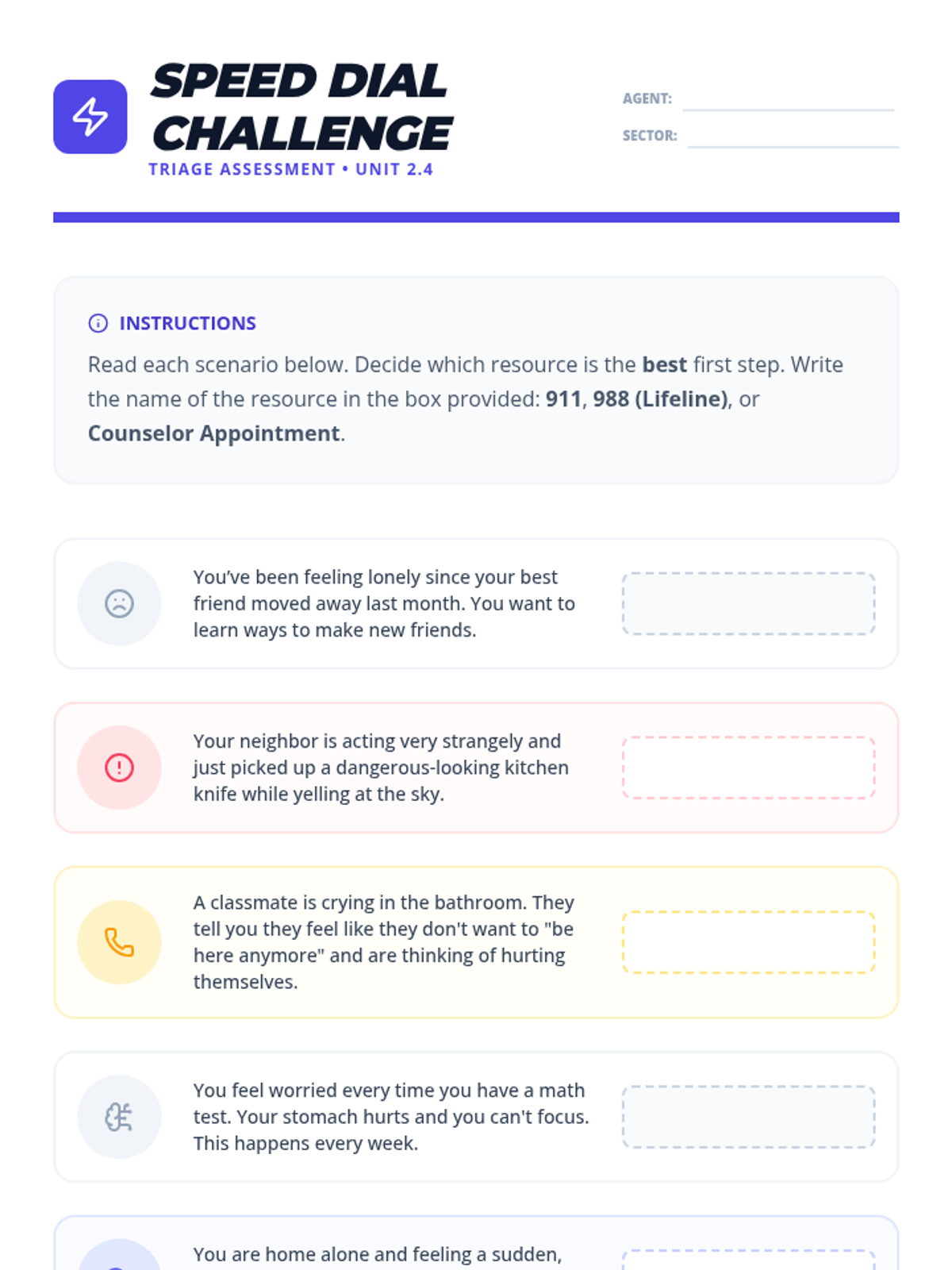
Teacher answer key for the Speed Dial Sorting Activity, including triage logic for grading.
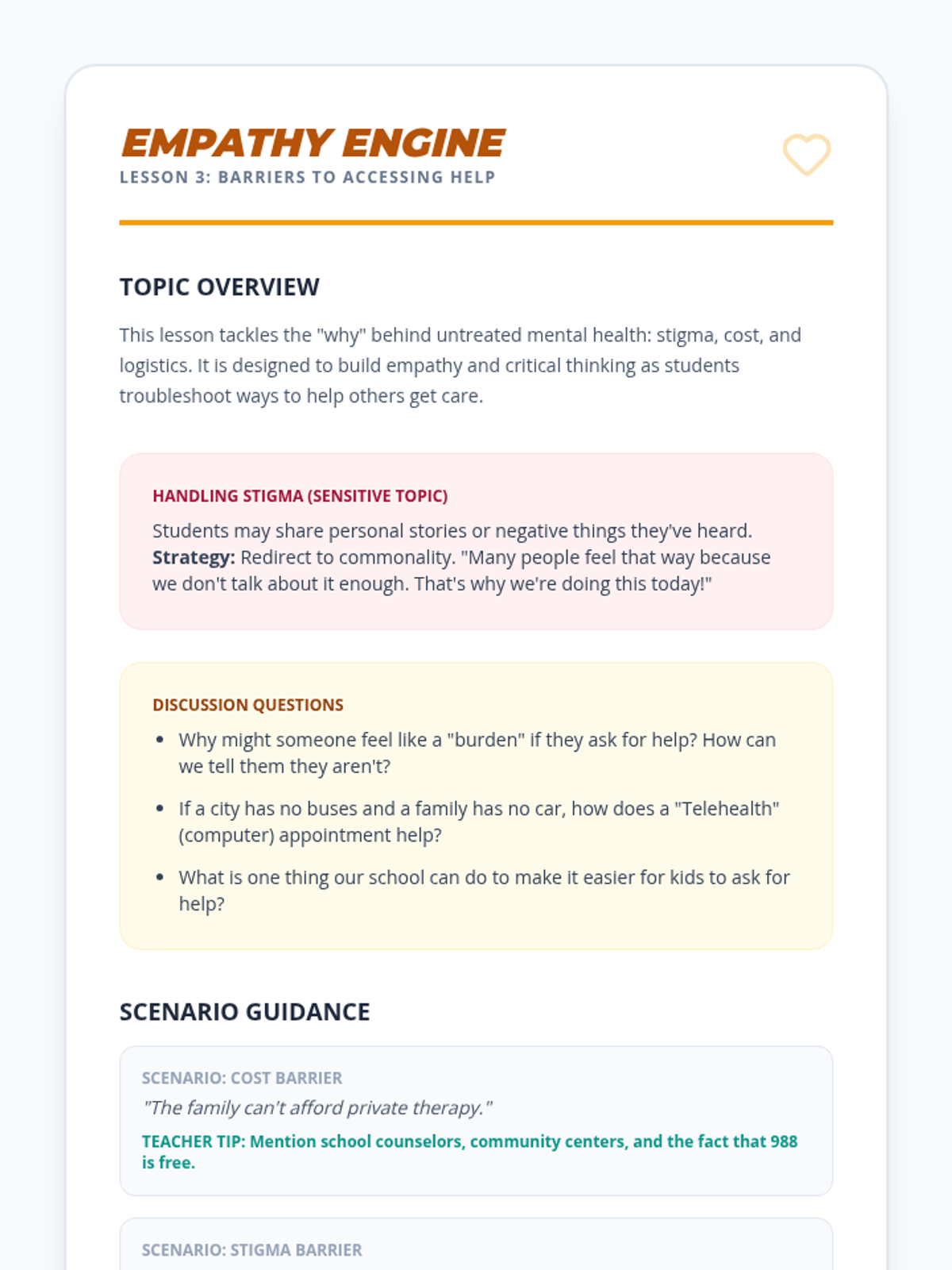
Teacher facilitation guide for Lesson 3, providing strategies for discussing sensitive topics like stigma and logistical barriers to care.
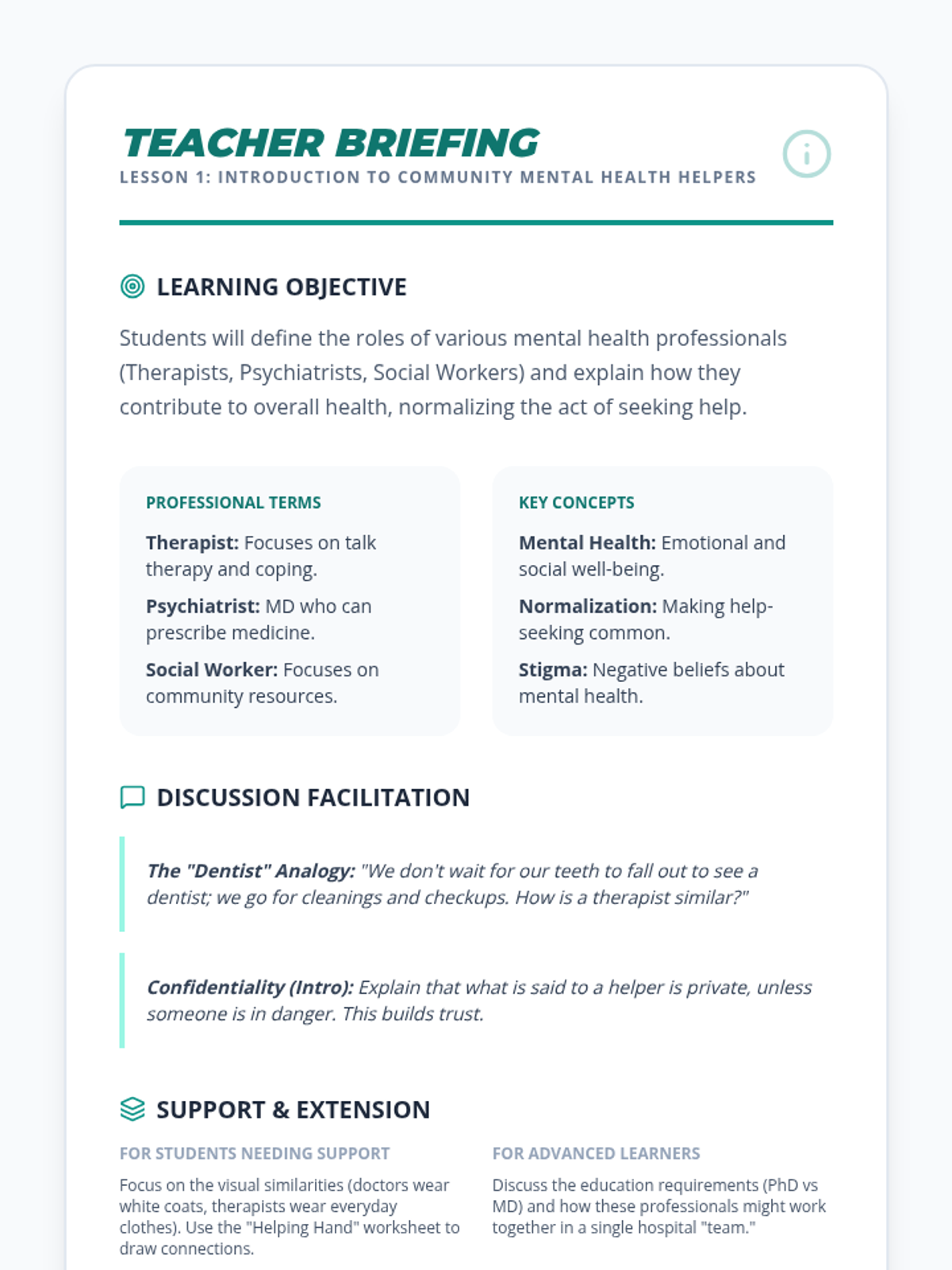
Teacher guide for Lesson 1, providing instructional scripts, discussion prompts, and differentiation strategies for introducing mental health professionals.
The "Case Files" student worksheet for Lesson 5, where students match character needs with the appropriate community resource.
Final slide deck for Lesson 5, framing the community resource scavenger hunt as a "detective mission" to solve character needs.
Student activity for Lesson 4 where they must categorize different scenarios into the correct level of support: 911, 988, or a scheduled appointment.
Slide deck for Lesson 4 on triage and distinguishing between emergency and non-emergency mental health needs.
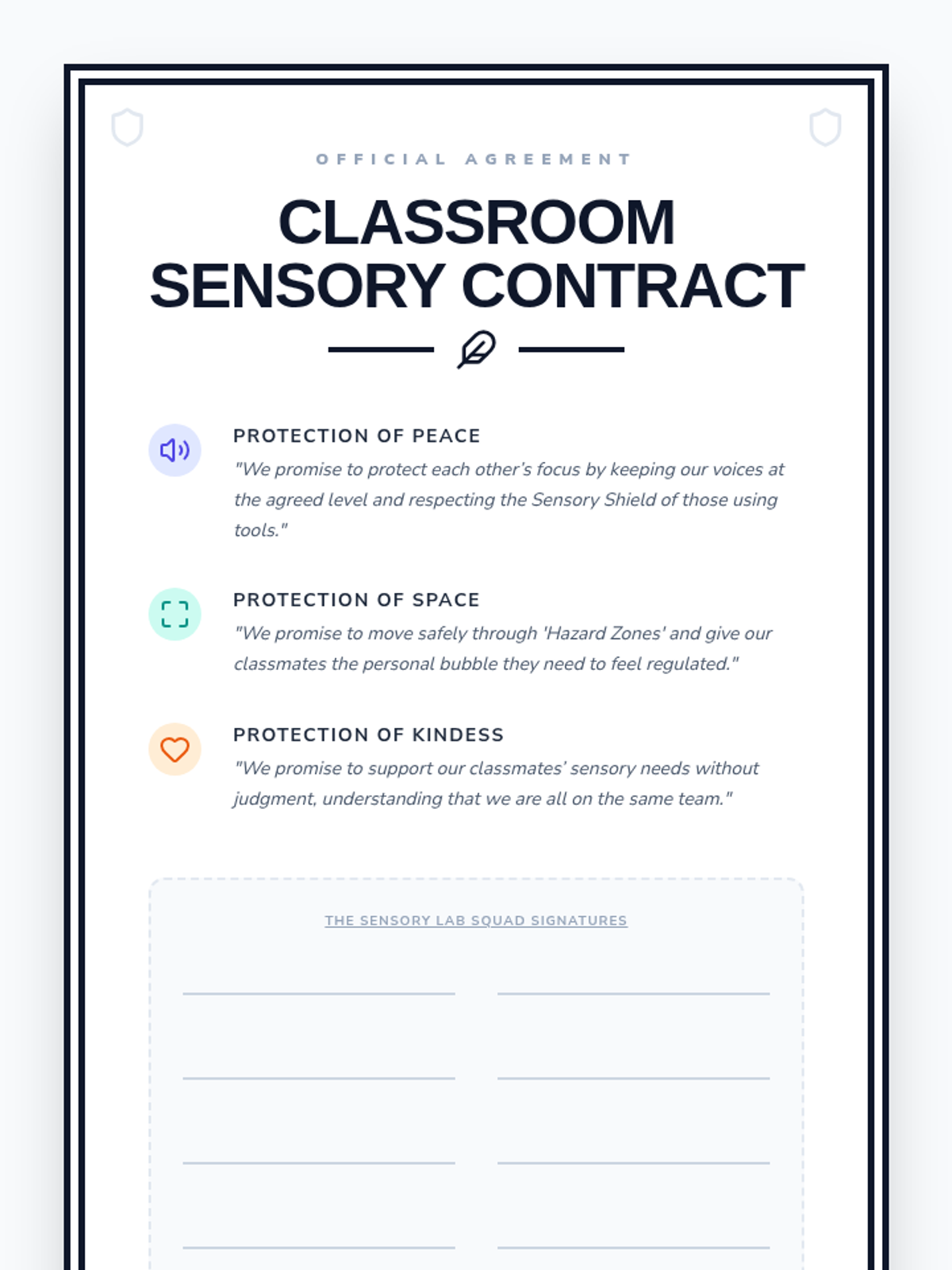
A formal classroom agreement document that establishes shared norms for noise, space, and sensory support, intended for all students to sign.
Slides for Lesson 5 consolidating learning into a classroom agreement on noise, space, and sensory support.
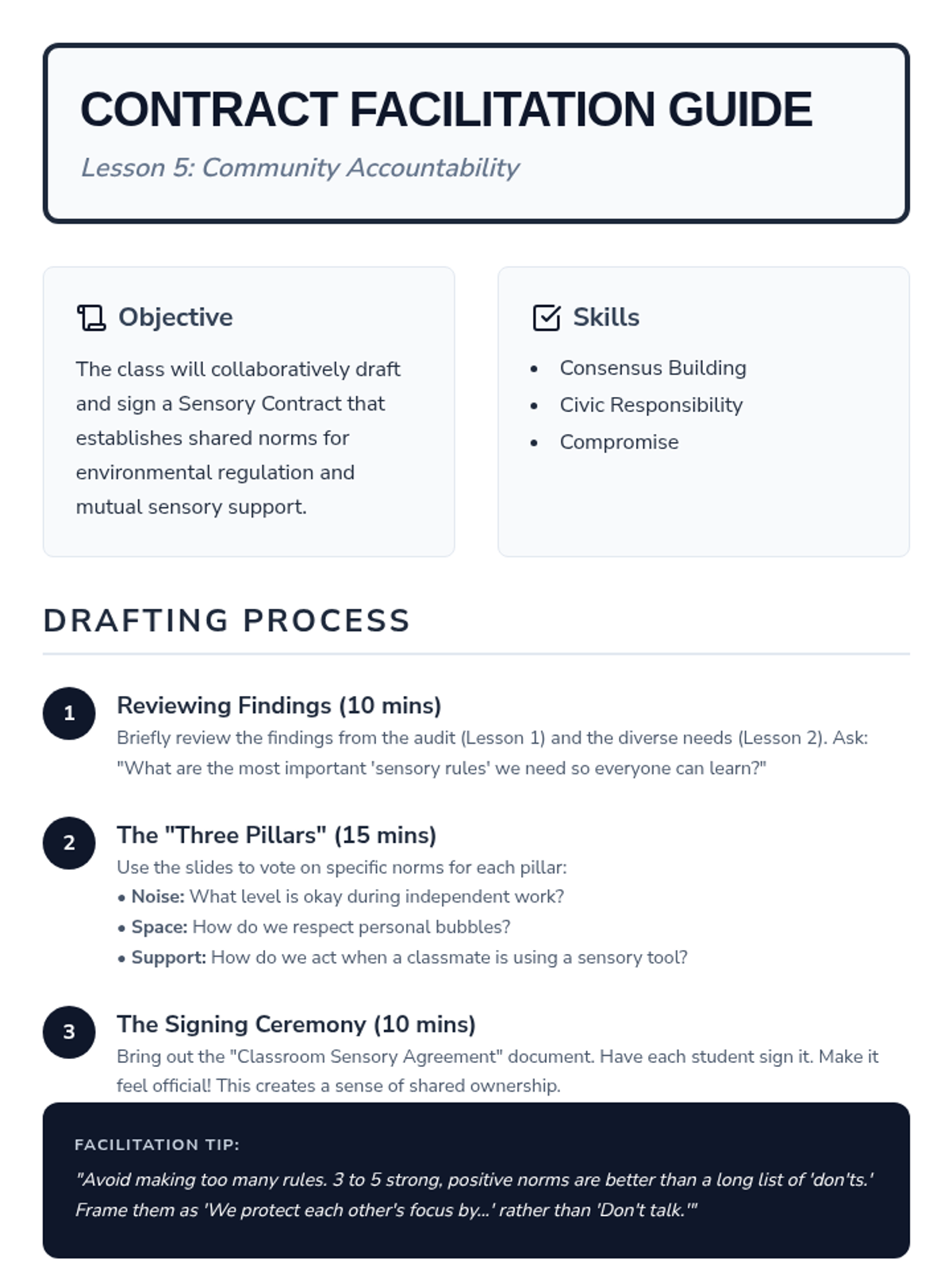
A teacher guide for the Classroom Sensory Contract lesson, featuring strategies for consensus building, signing ceremonies, and ongoing contract maintenance.
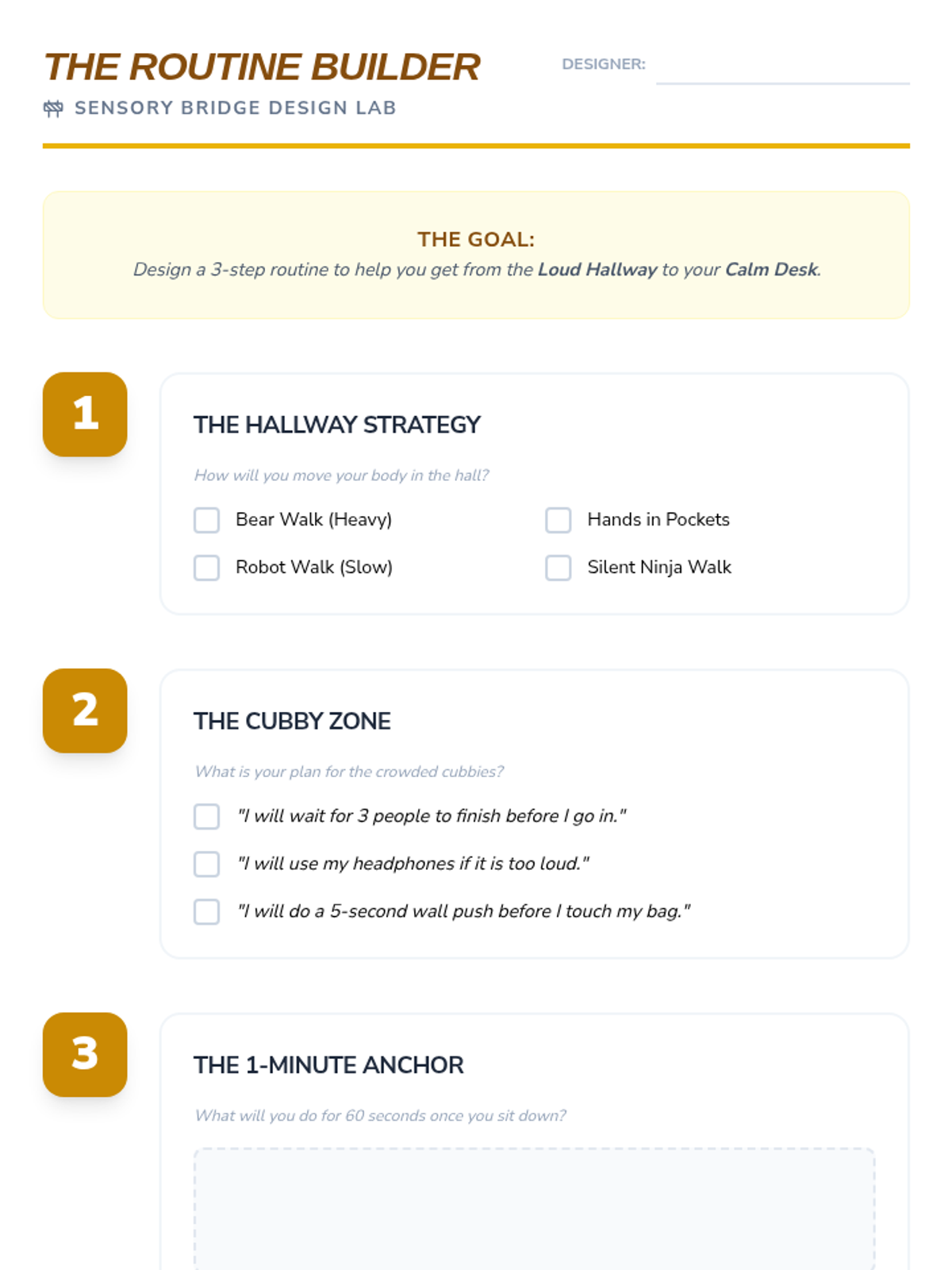
A student worksheet for building a personalized 3-step transition routine using sensory strategies.
Slides for Lesson 4 exploring the "Transition Bridge" concept and identifying sensory hazards during class changes.
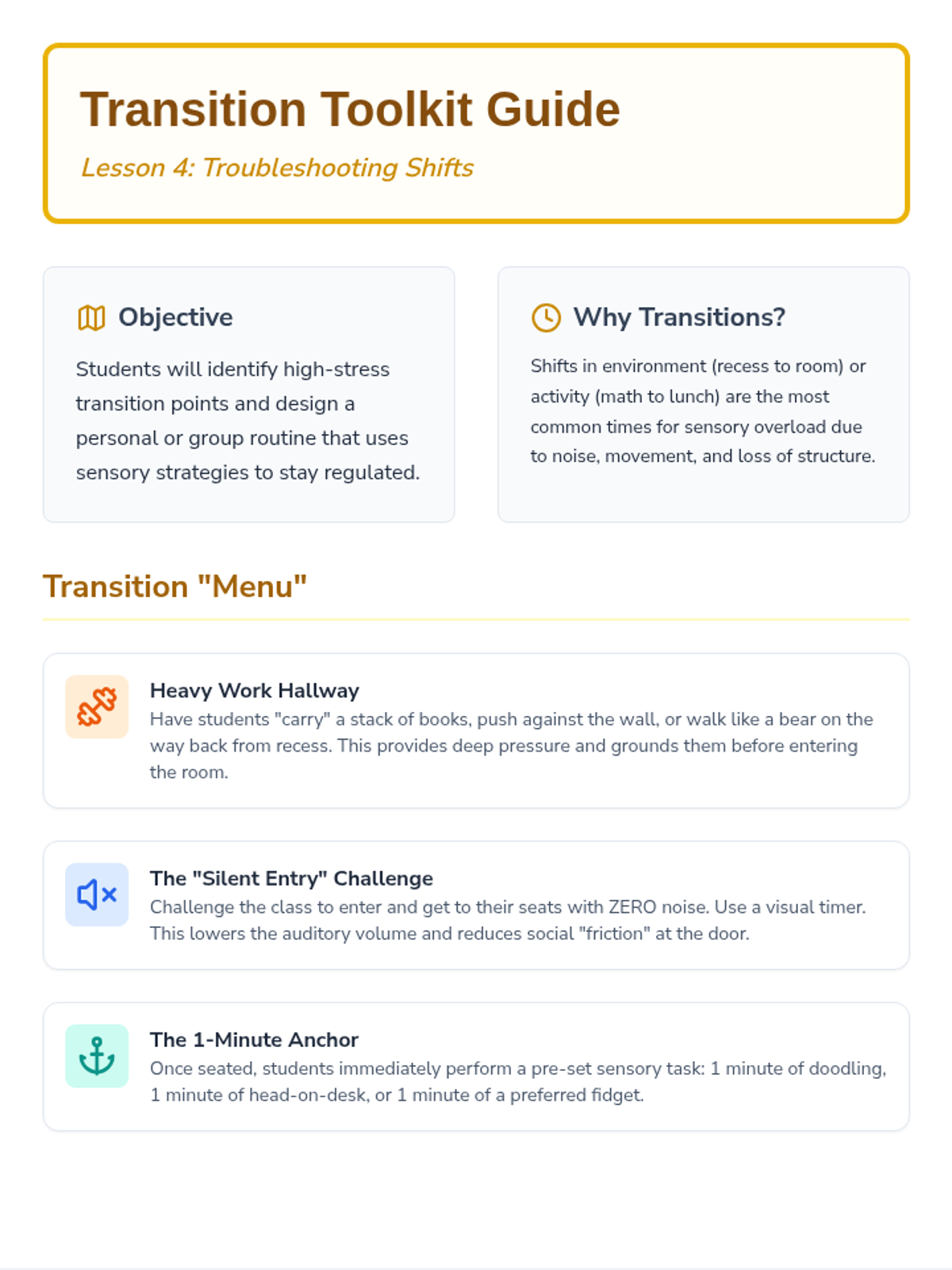
A teacher guide for the Transition Troubleshooting lesson, featuring specific strategies like "Heavy Work Hallway" and "The Buffer Zone".
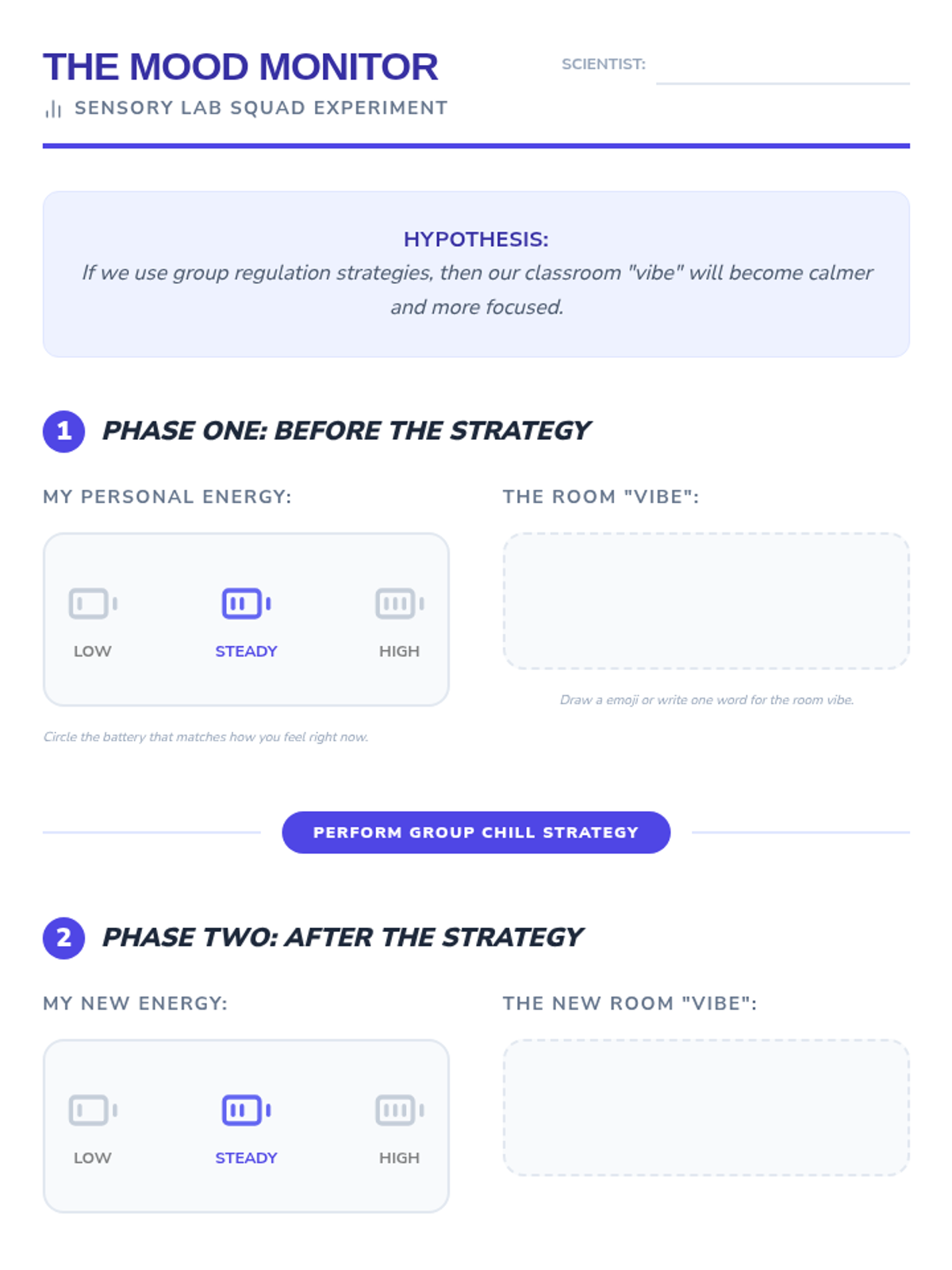
A student data sheet for tracking personal energy and classroom "vibe" before and after group regulation exercises.
Slides for Lesson 3 introducing collective regulation, "The Group Chill," and explaining the science of co-regulation and heavy work.
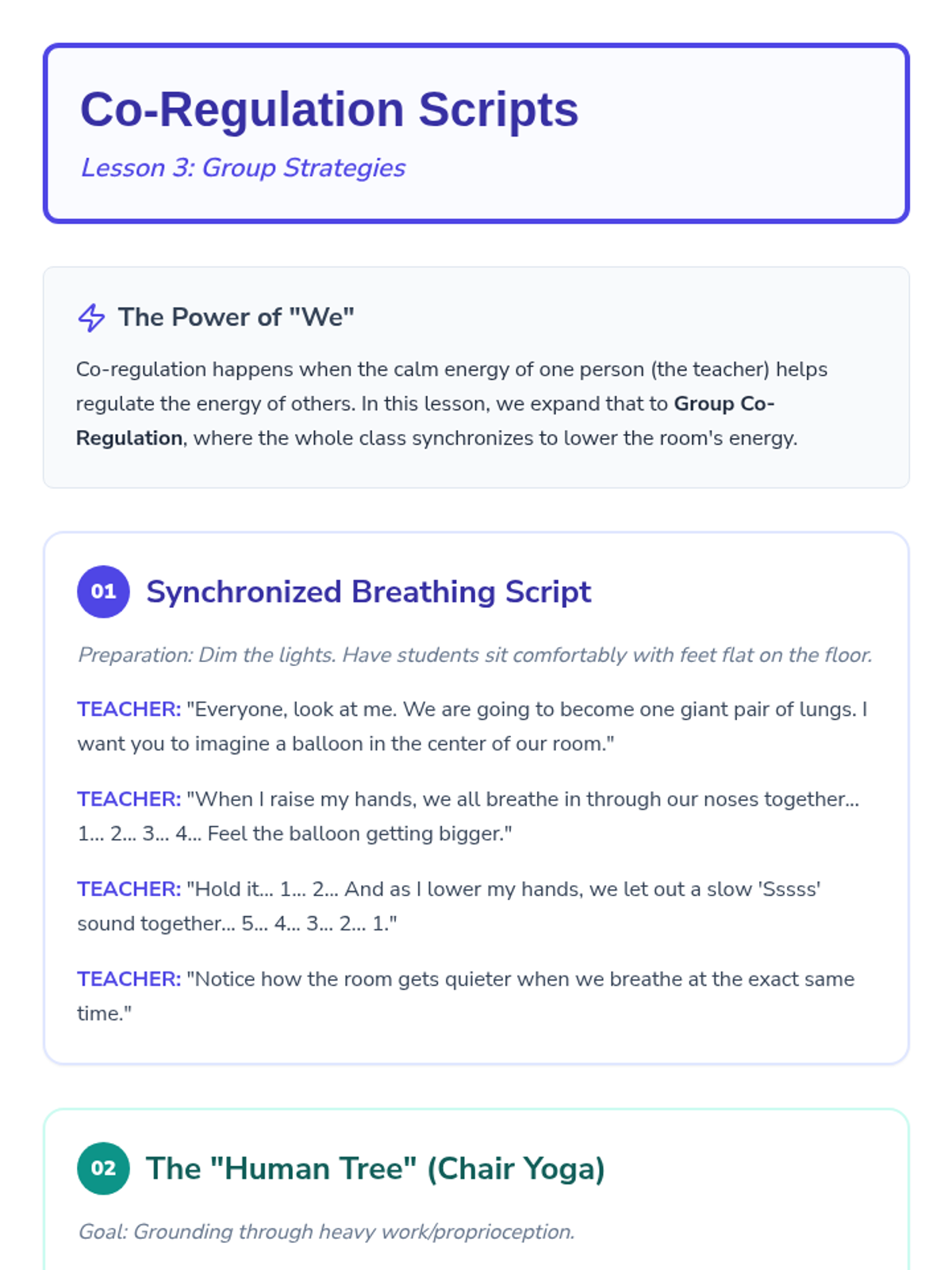
Teacher-facing co-regulation scripts and facilitation tips for synchronized breathing and chair yoga exercises.
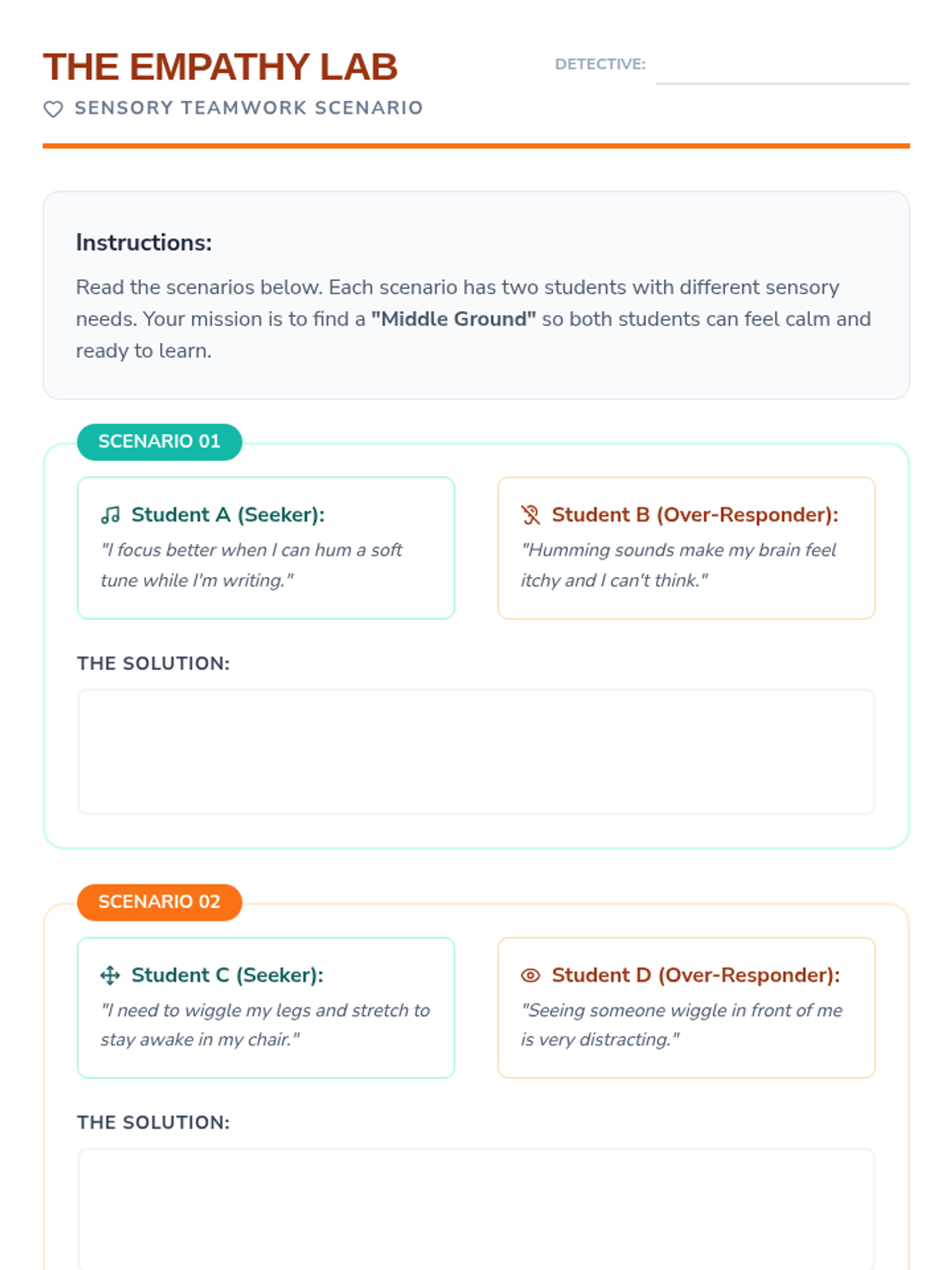
A student worksheet with scenarios featuring conflicting sensory needs, challenging students to find empathetic "Middle Ground" solutions.
Slides for Lesson 2 introducing "Sam the Seeker" and "Olivia the Over-Responder" to explain diverse sensory needs and the concept of a sensory "Middle Ground."
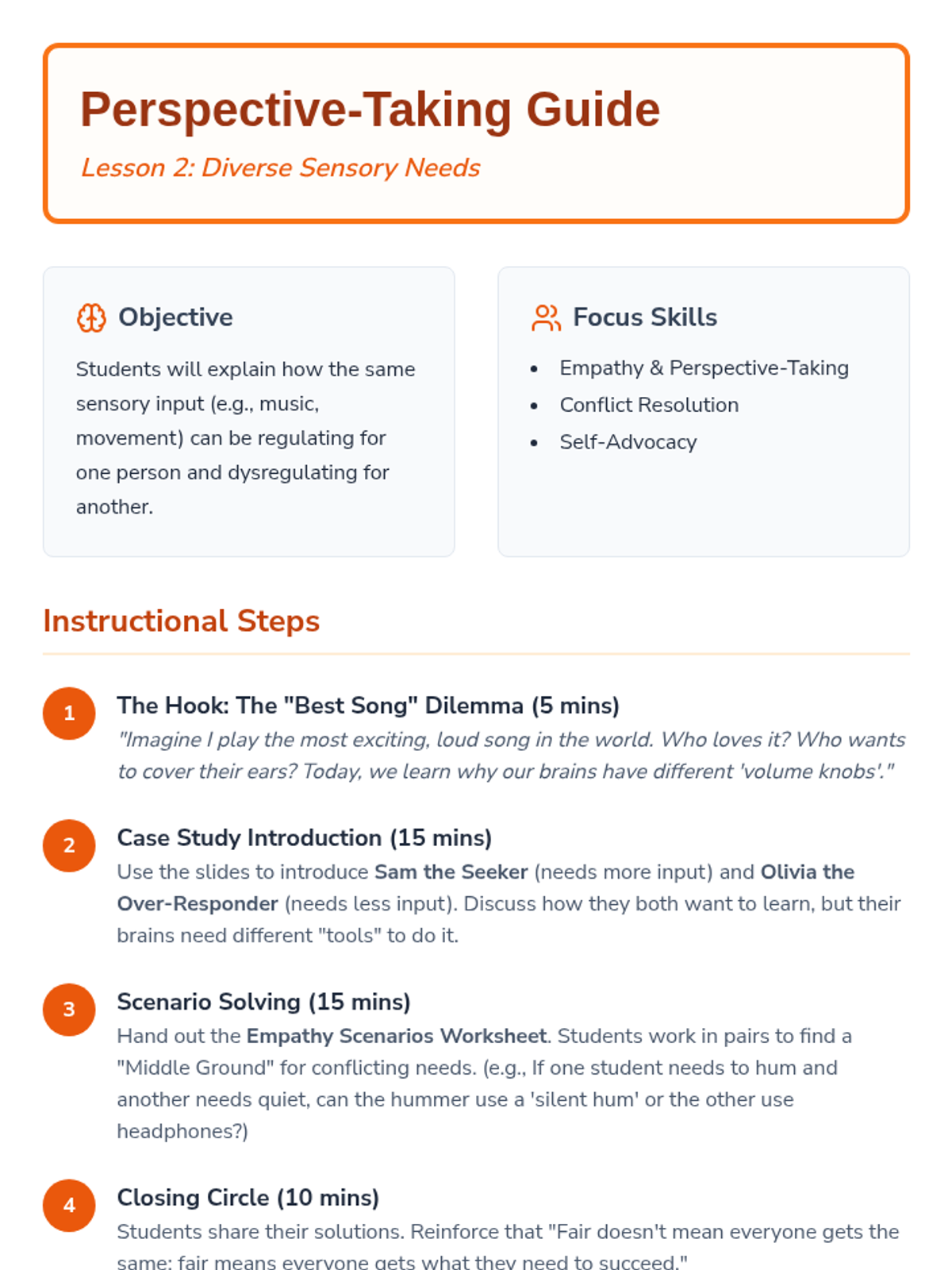
A teacher guide for the Respecting Diverse Sensory Needs lesson, focusing on perspective-taking, empathy, and the "Glasses Analogy" for sensory tools.
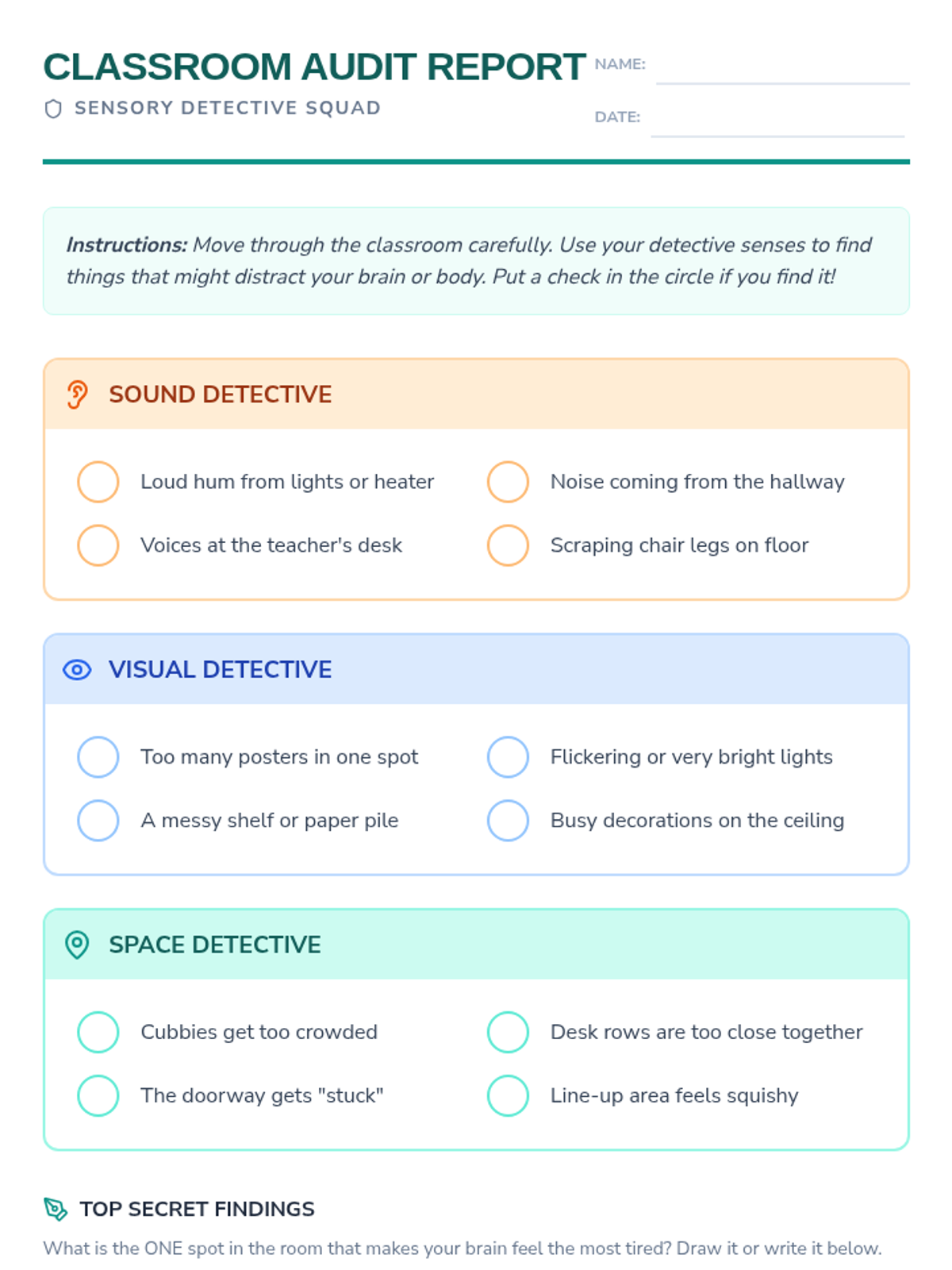
A student worksheet for the Sensory Detective Audit, featuring checklists for sound, visual, and spatial sensory triggers in the classroom.
Slides for Lesson 1: The Sensory Detective Audit. Introduces the concept of a sensory audit and identifies key areas like Noisy Zones, Clutter Corners, and Traffic Jams.
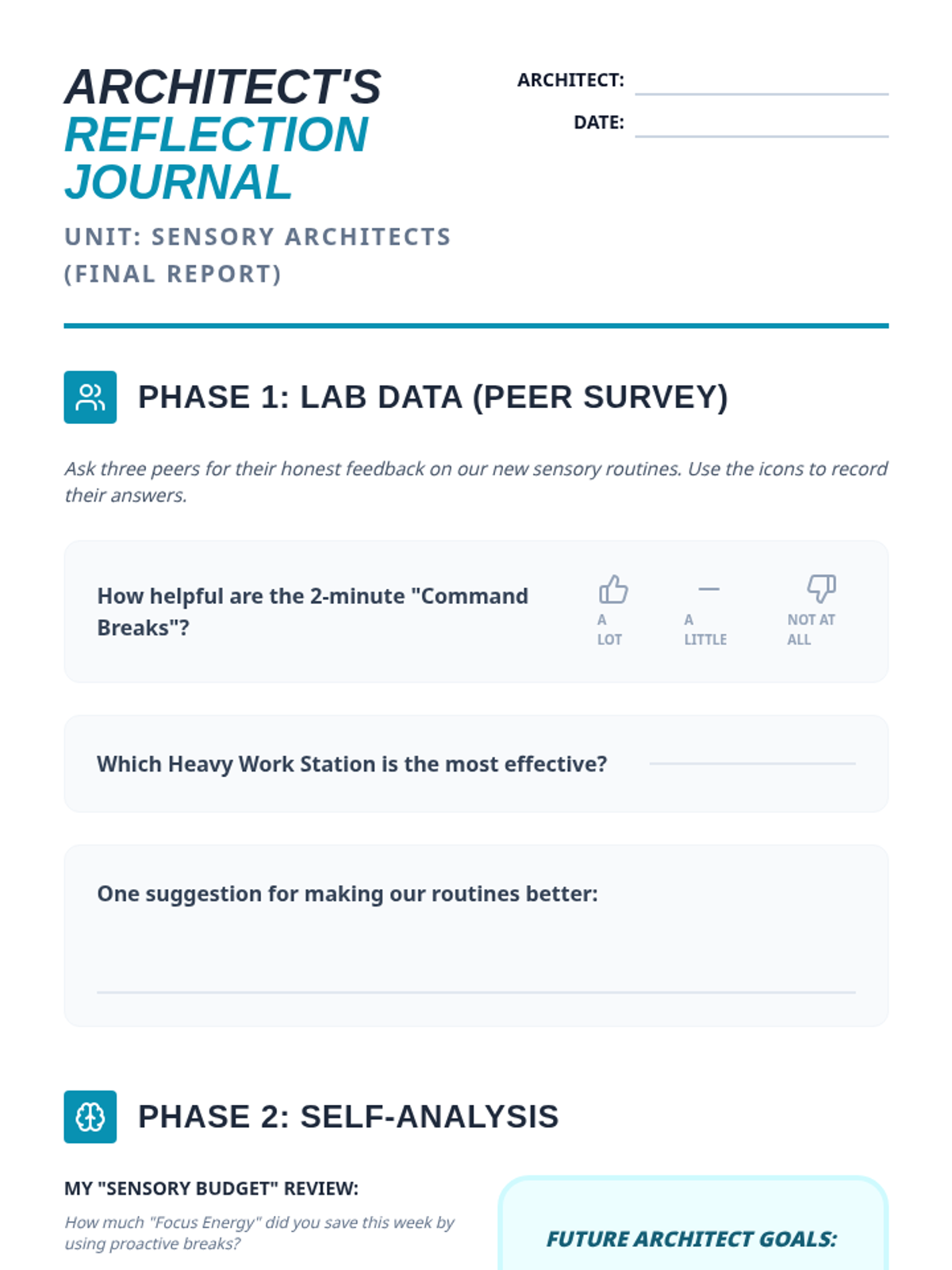
Final reflection journal for Lesson 5, including a peer survey data collection section and personal self-analysis on sensory regulation progress.
Presentation for Lesson 5, focusing on data evaluation, work analysis, and iterative design for classroom sensory routines.
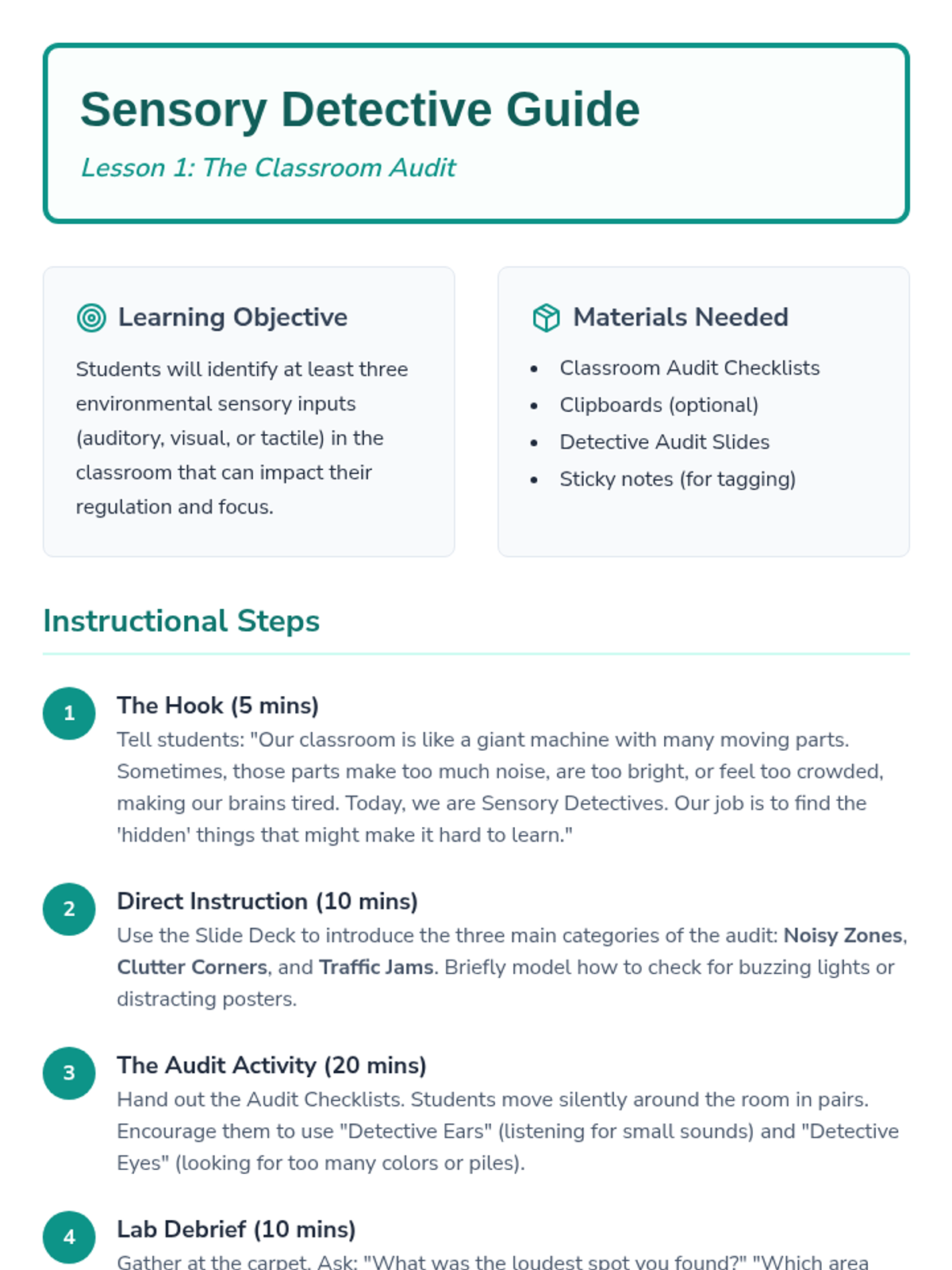
A teacher guide for the Sensory Detective Audit lesson, including objectives, step-by-step instructions, discussion prompts, and differentiation strategies.
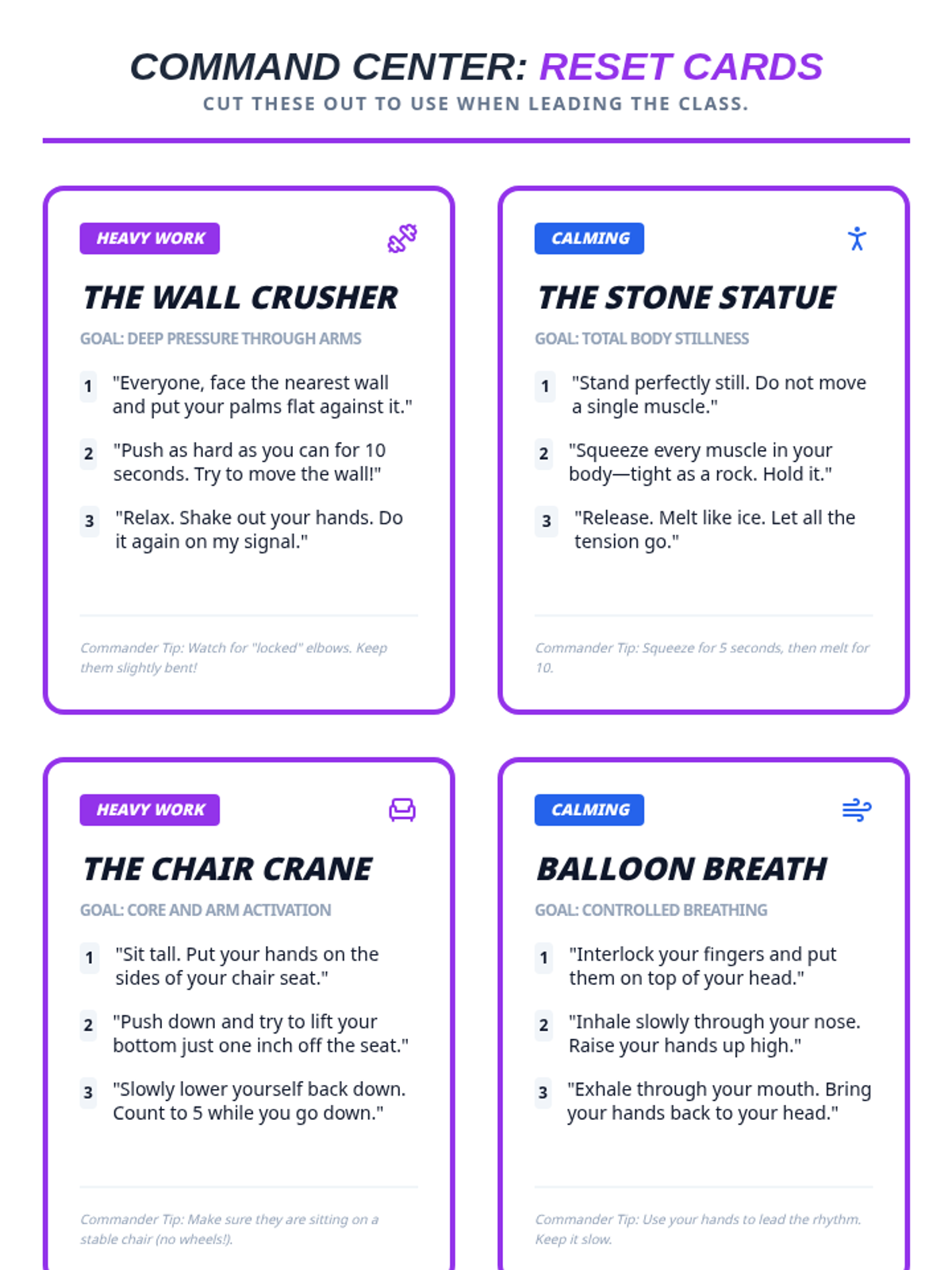
Set of four instructional "Reset Cards" for students to use when leading peer-led sensory breaks, including two heavy work and two calming options.
Presentation for Lesson 4, teaching students leadership skills for guiding peer-led sensory breaks, focusing on co-regulation and clear communication.
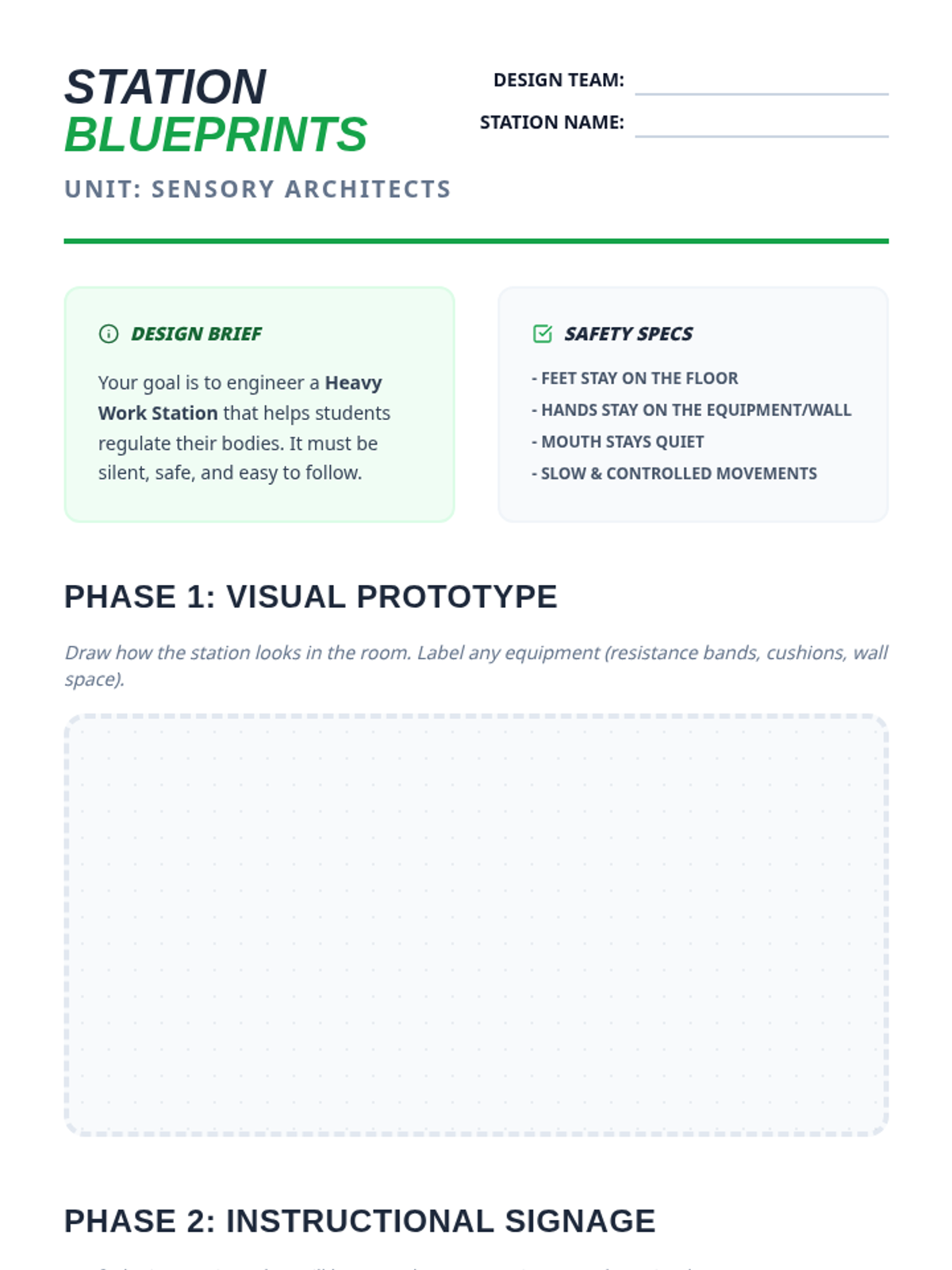
Student worksheet for teams to design their heavy work station, including a blueprint area and space for drafting 3-step instructional signage.
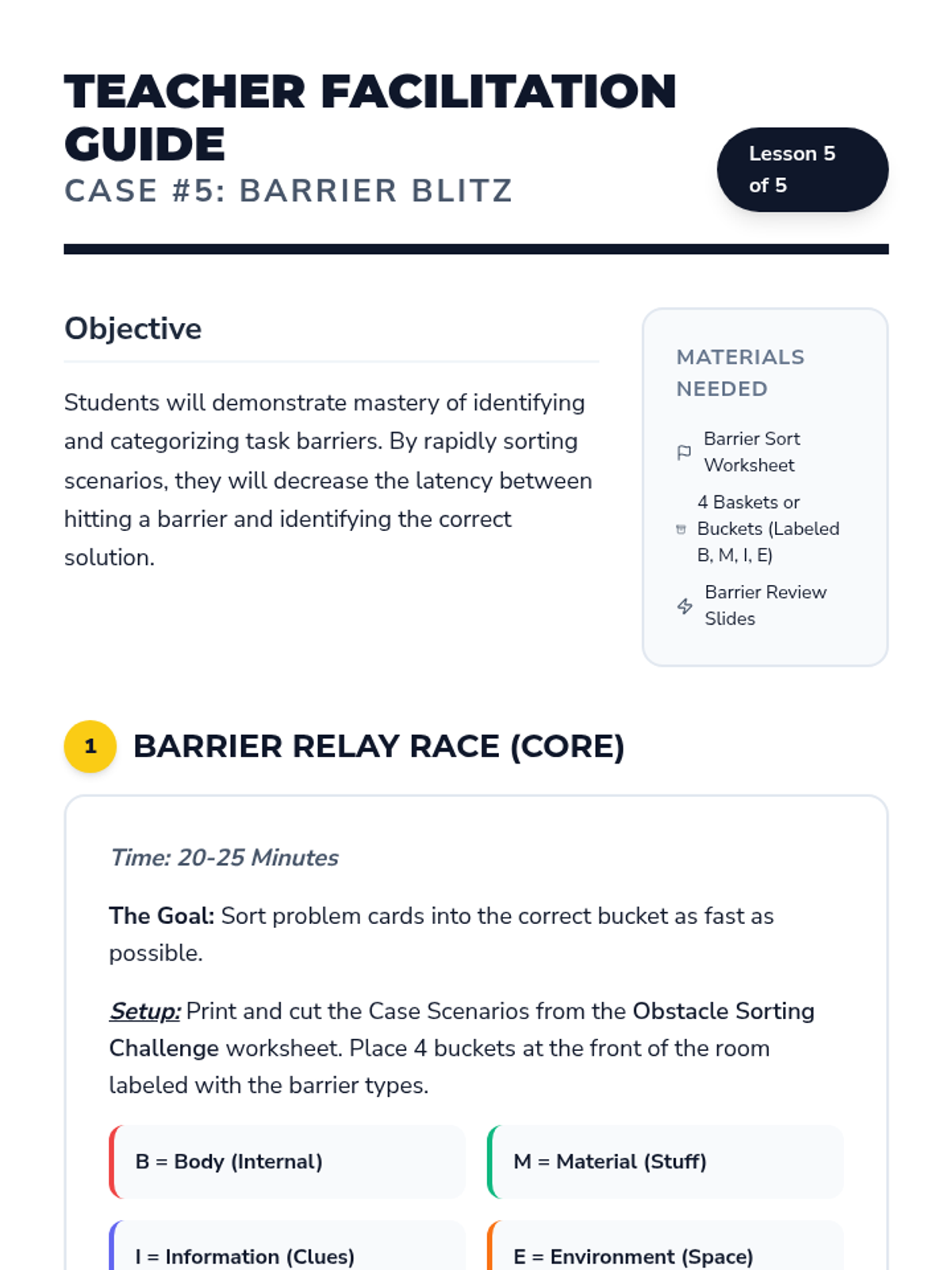
A teacher facilitation guide for Lesson 5, including instructions for the 'Barrier Relay Race' and a unit conclusion.
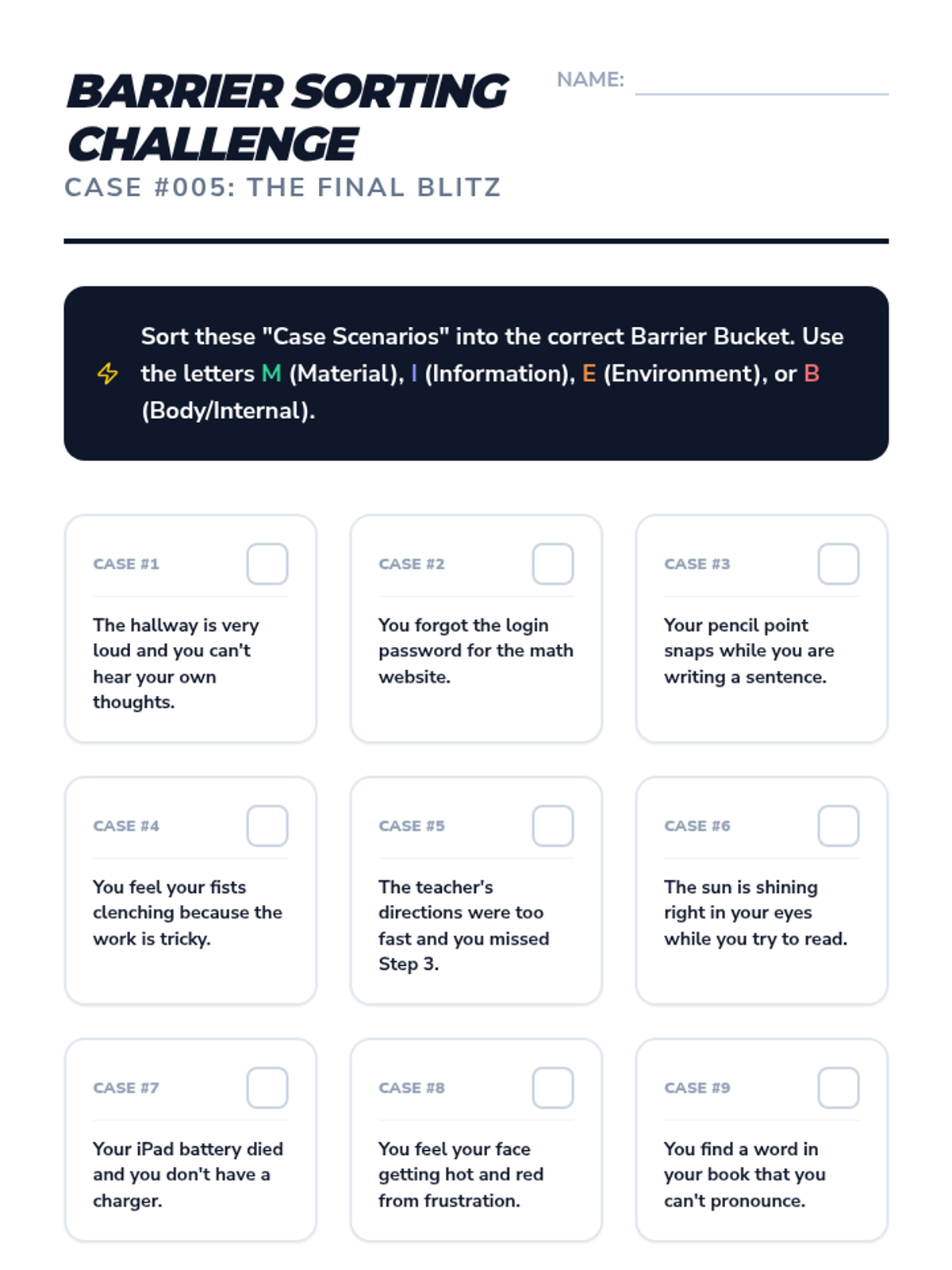
A culminating sorting activity where students categorize various problem scenarios into the four task barrier types.
A culminating slide deck for the 'Barrier Blitz' lesson, reviewing all 4 types of task barriers and preparing students for the final sorting activity.
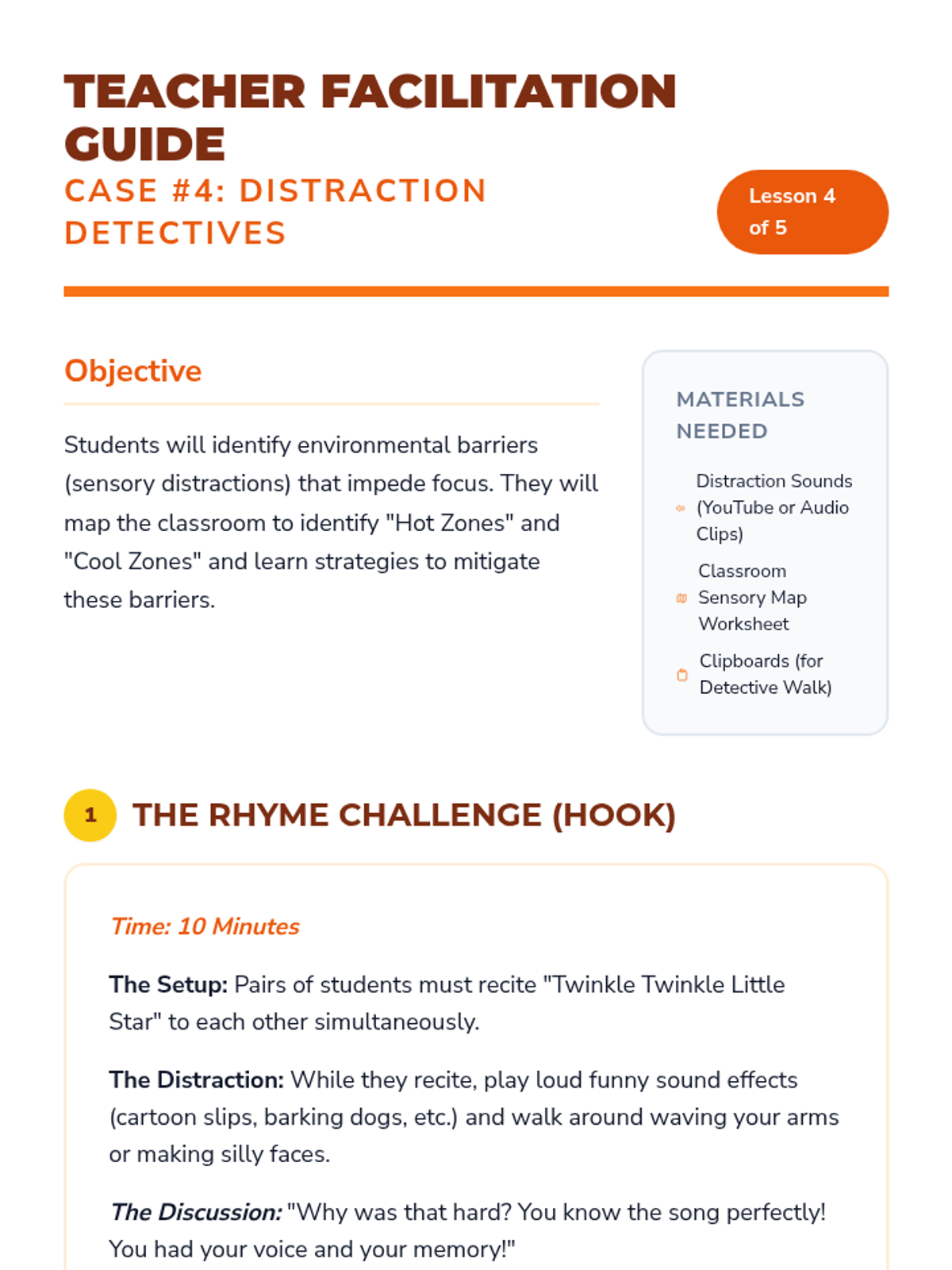
A teacher facilitation guide for Lesson 4, including instructions for the 'Stakeout Walk' and sensory mapping activity.
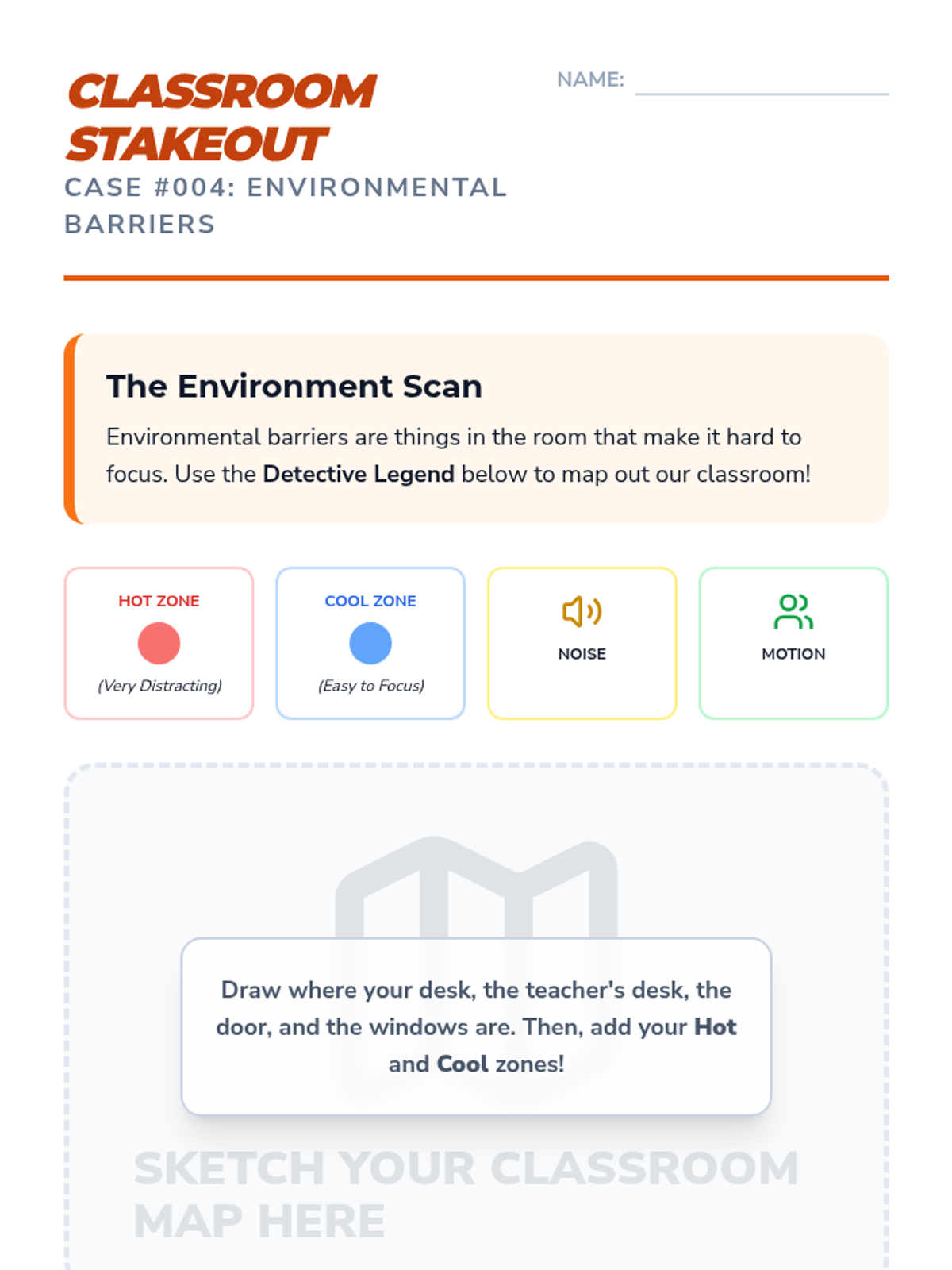
A mapping activity for students to identify 'Hot' and 'Cool' sensory zones in their classroom to manage environmental distractions.
A slide deck for Lesson 4 teaching students about sensory and environmental barriers to focus.
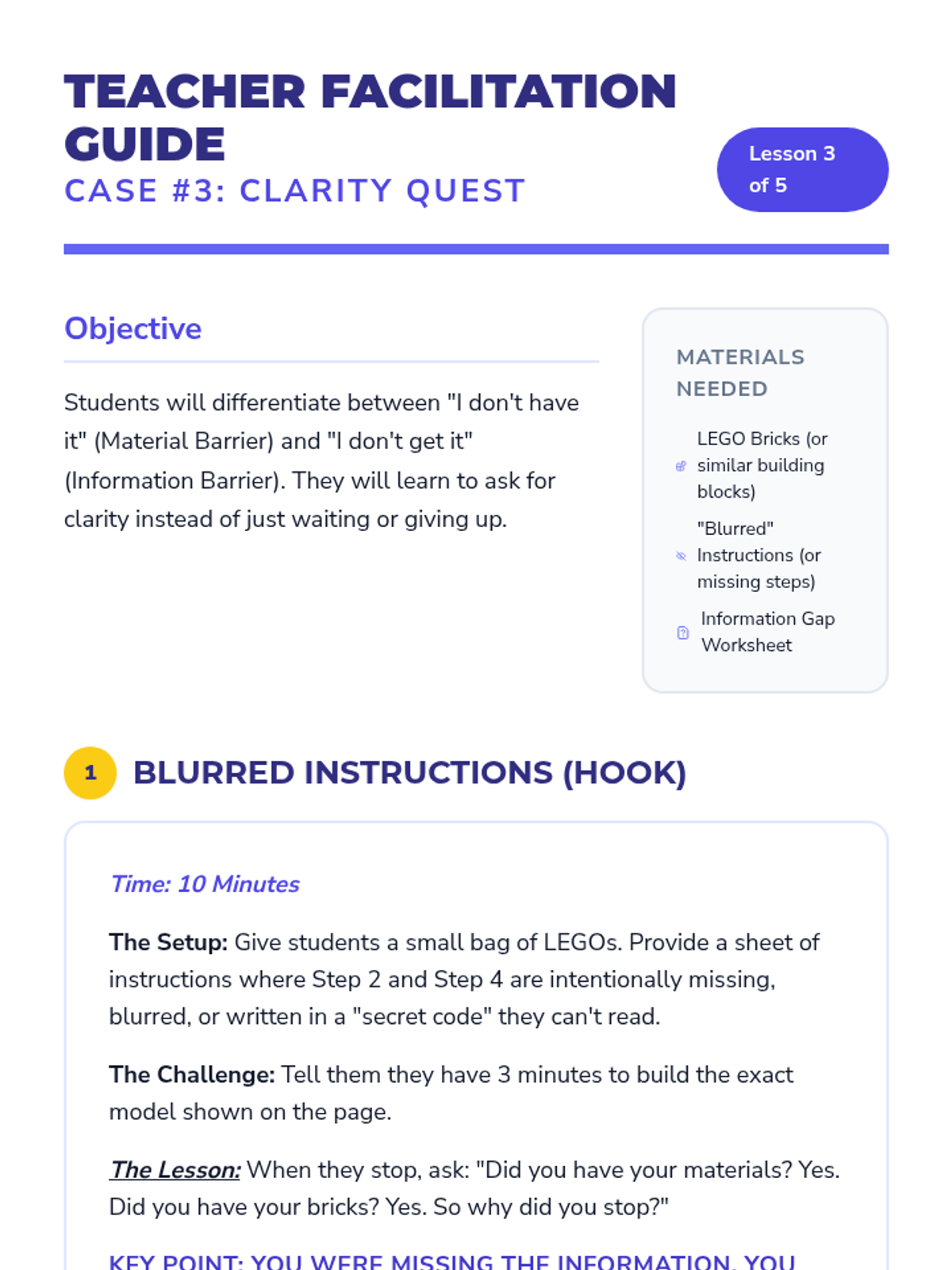
A teacher guide for Lesson 3, including instructions for the LEGO hook and advocacy scripting for students.
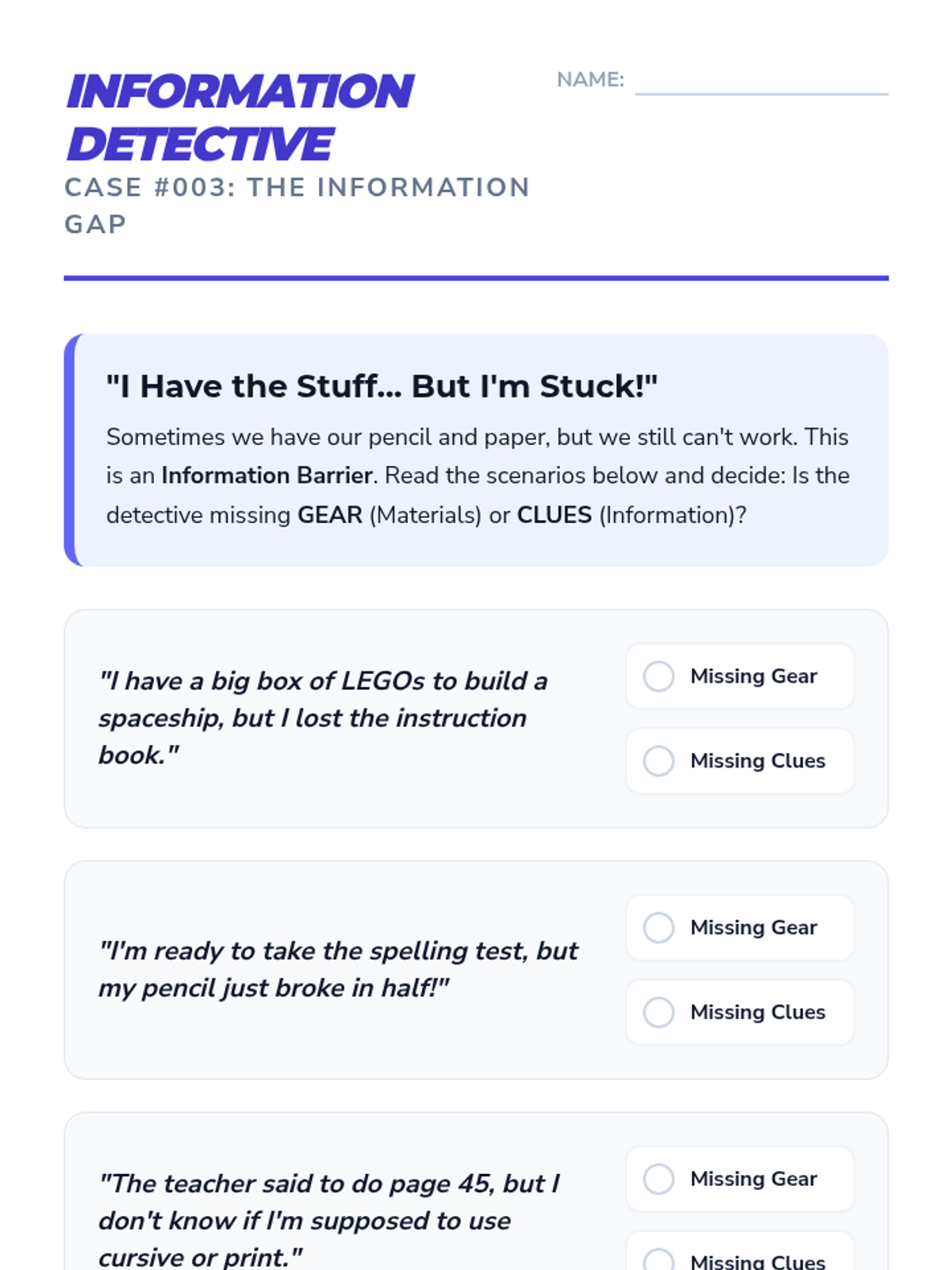
A worksheet for students to identify and differentiate between material barriers and information barriers in various classroom scenarios.
A slide deck teaching students how to identify information and clarity barriers, differentiating between 'I don't have it' and 'I don't get it.'
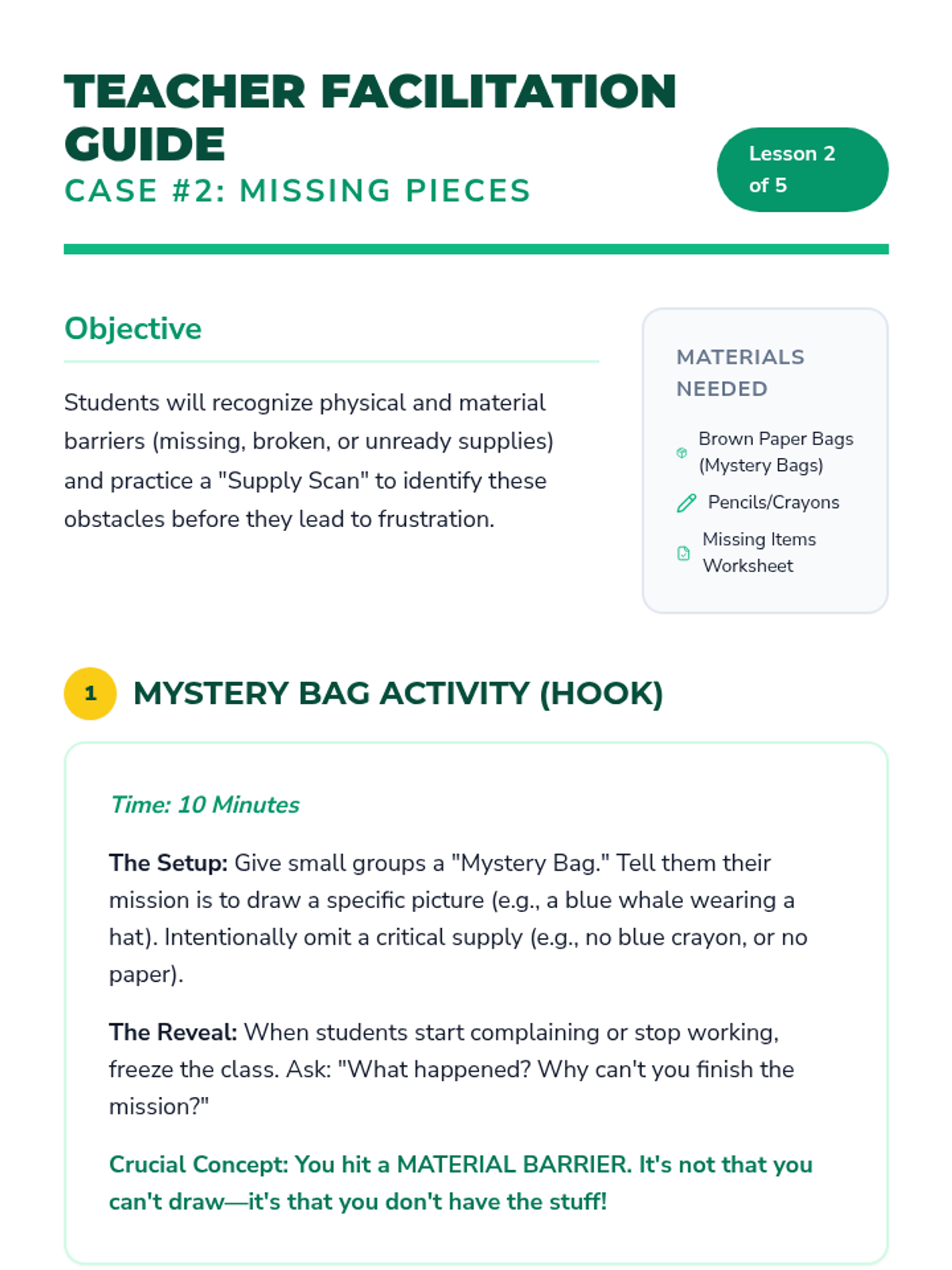
A teacher guide for Lesson 2, including instructions for the 'Mystery Bag' hook and how to facilitate a 'Supply Scan' in the classroom.
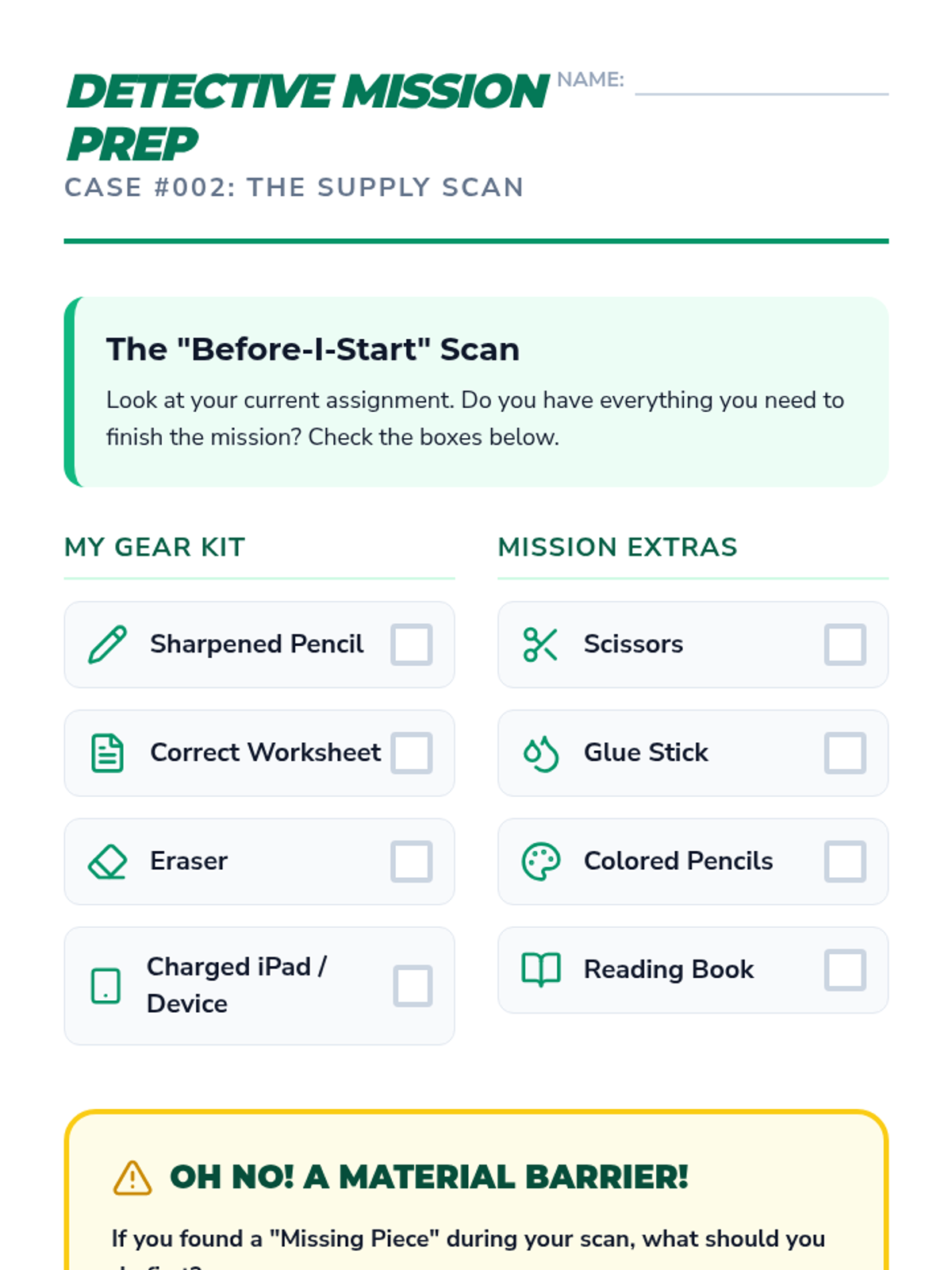
A worksheet for students to perform a 'Supply Scan' and identify physical materials needed for their tasks.
A slide deck teaching students about physical and material barriers, introducing the 'Supply Scan' technique.
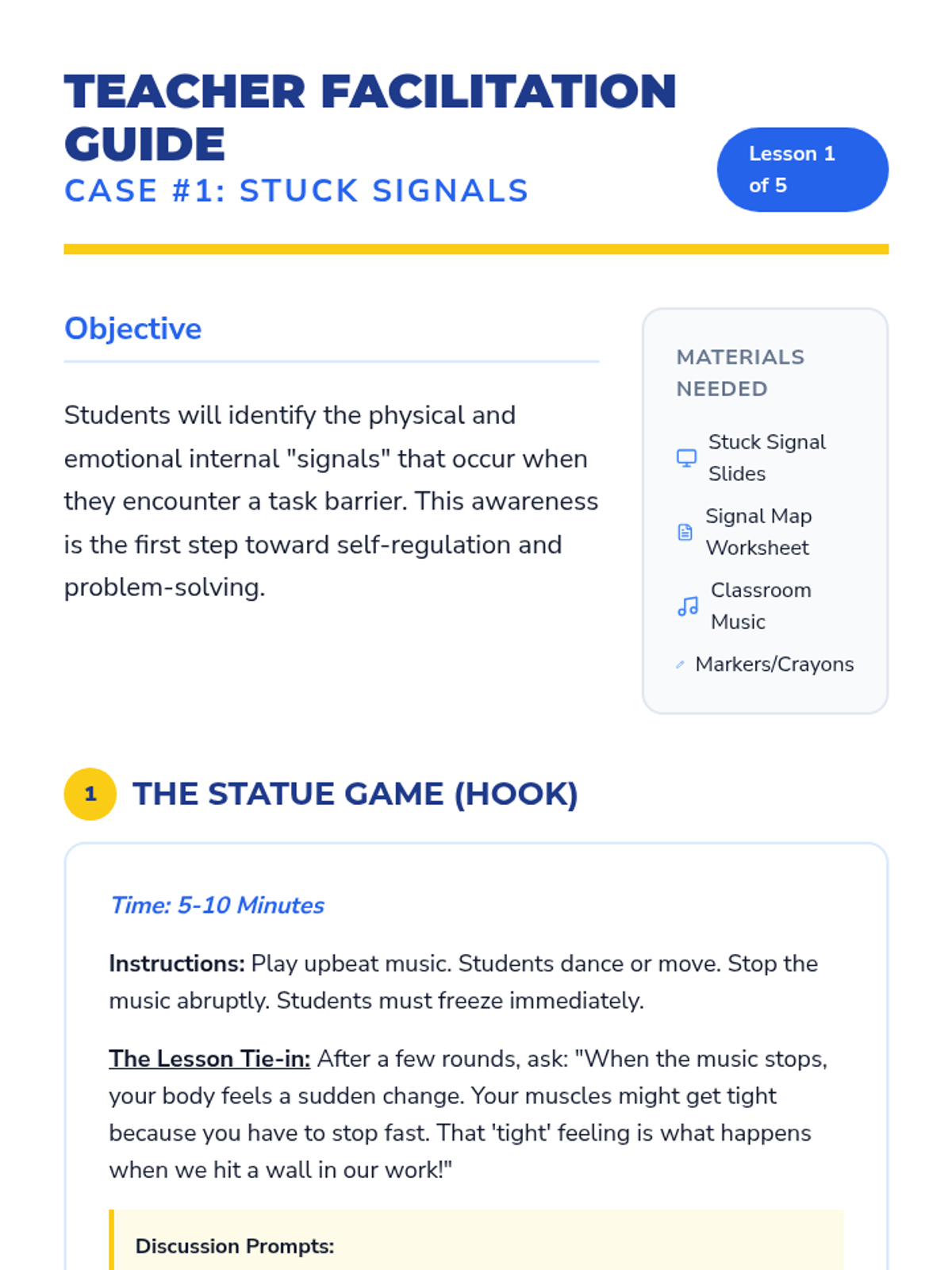
A teacher facilitation guide for Lesson 1, including instructions for the Statue Game hook and the Body Mapping core activity.
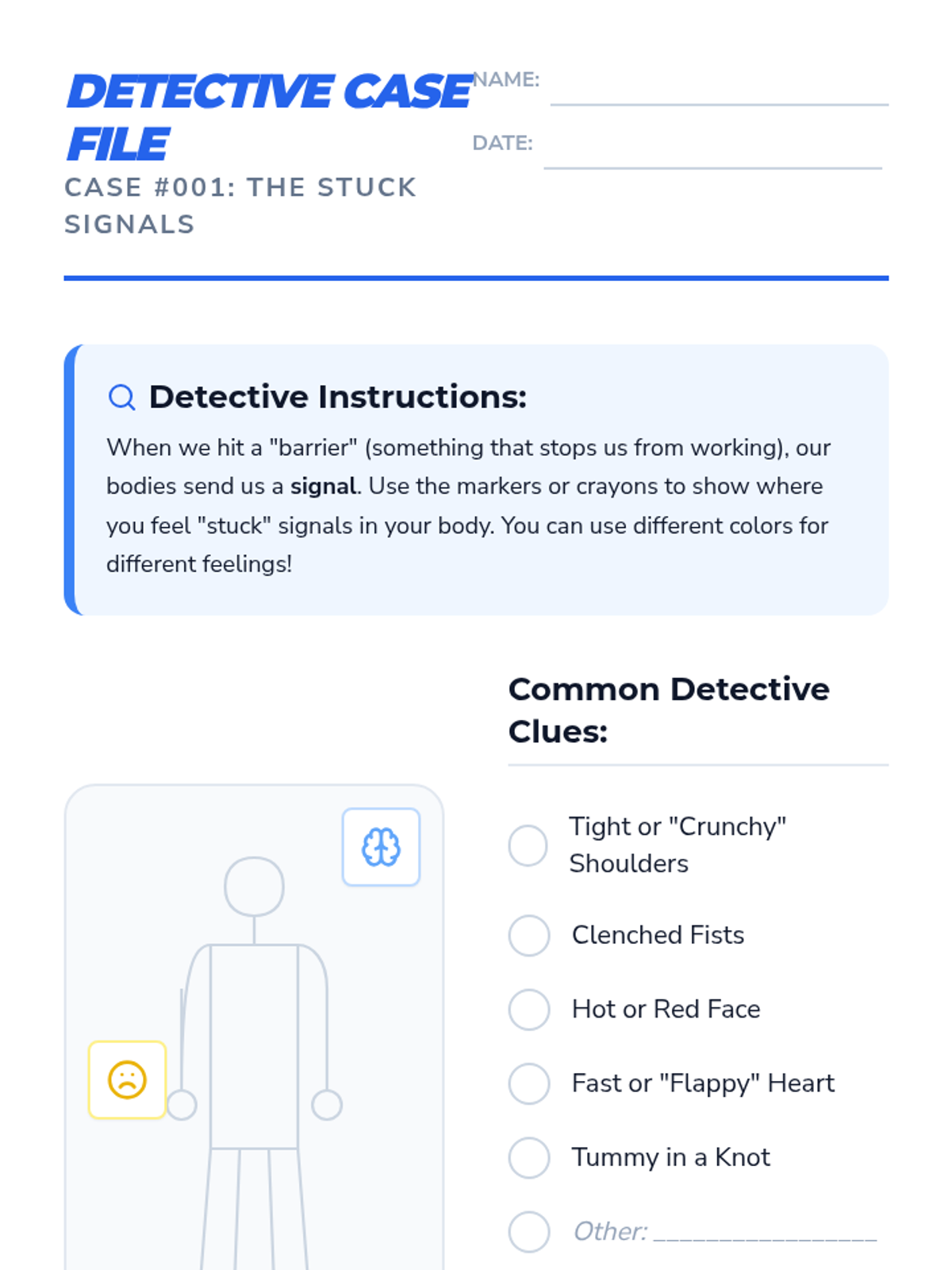
A worksheet for students to identify and map the physical signals of frustration and being 'stuck' in their own bodies.
An introductory slide deck for the 'Stuck Signals' lesson, using a Task Detective theme to help students recognize the physical and emotional sensations of being stuck.
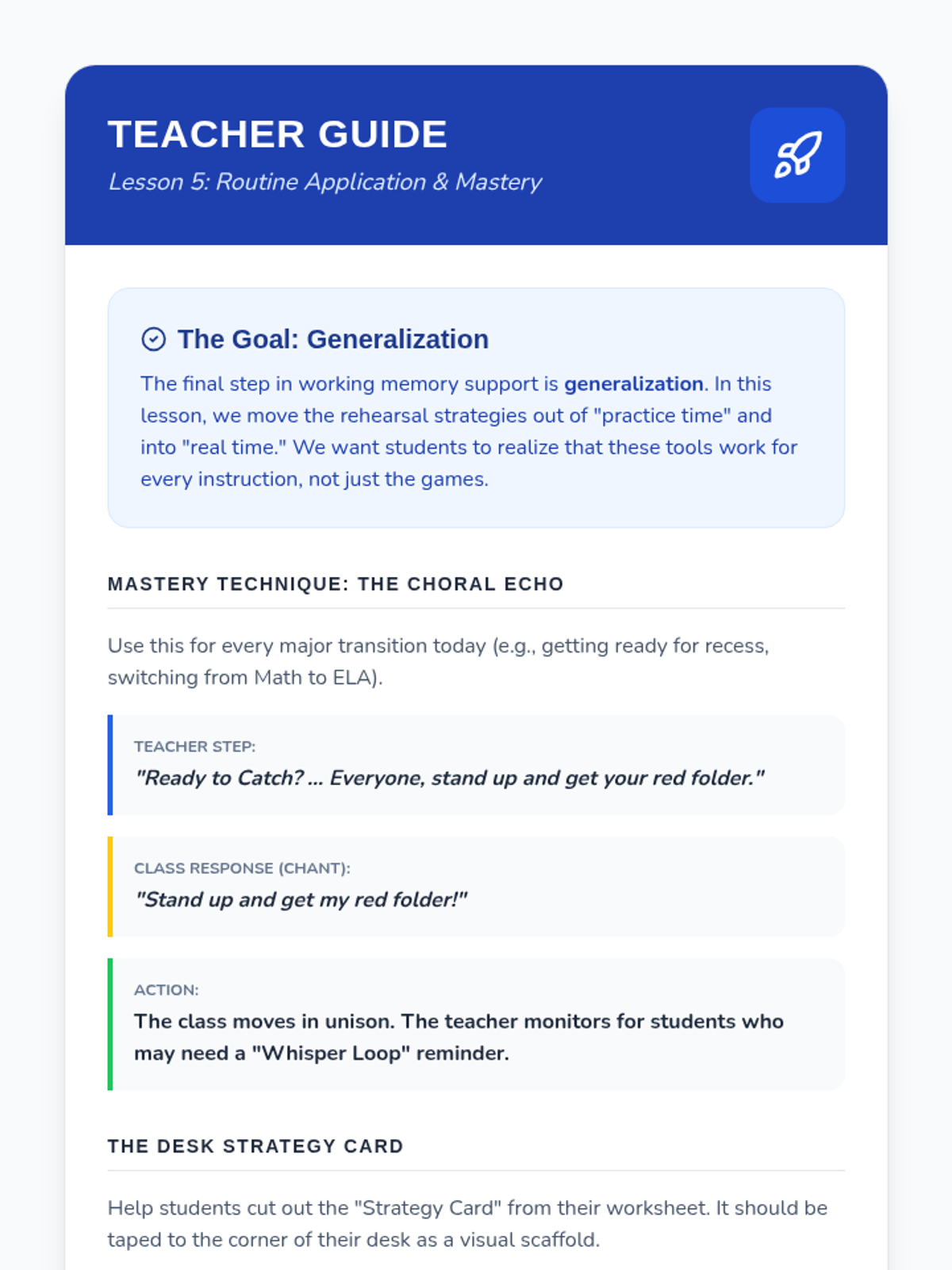
Final teacher guide for the sequence, focusing on choral response techniques, the use of desk-based strategy cards, and informal mastery assessment.
Final slides for the sequence, focusing on graduating the 'Brain Training' skills into everyday classroom routines like cleaning up and transitions.
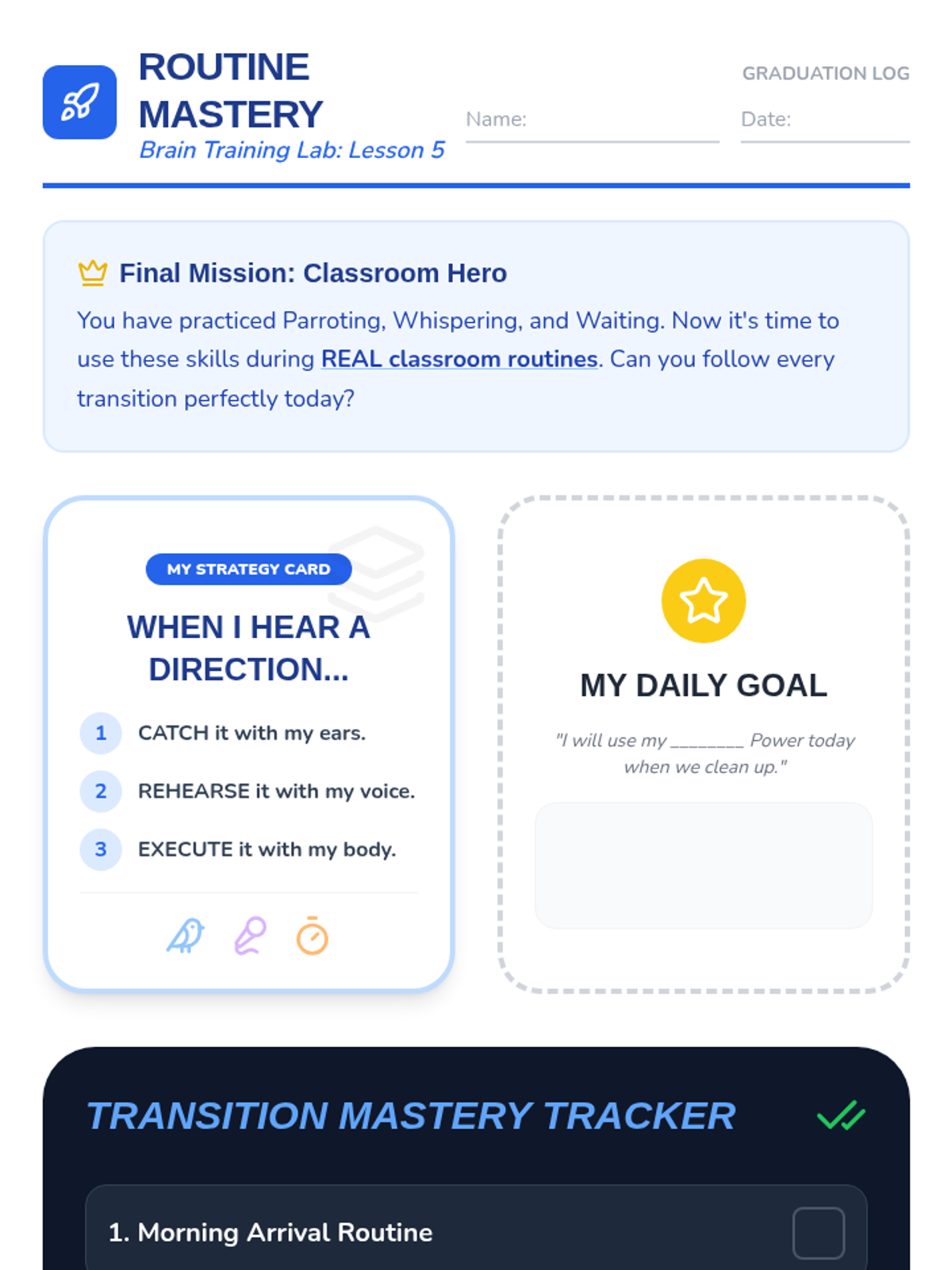
A cumulative resource for Lesson 5 including a strategy desk card and a transition mastery tracker to help students apply verbal rehearsal to real classroom routines.
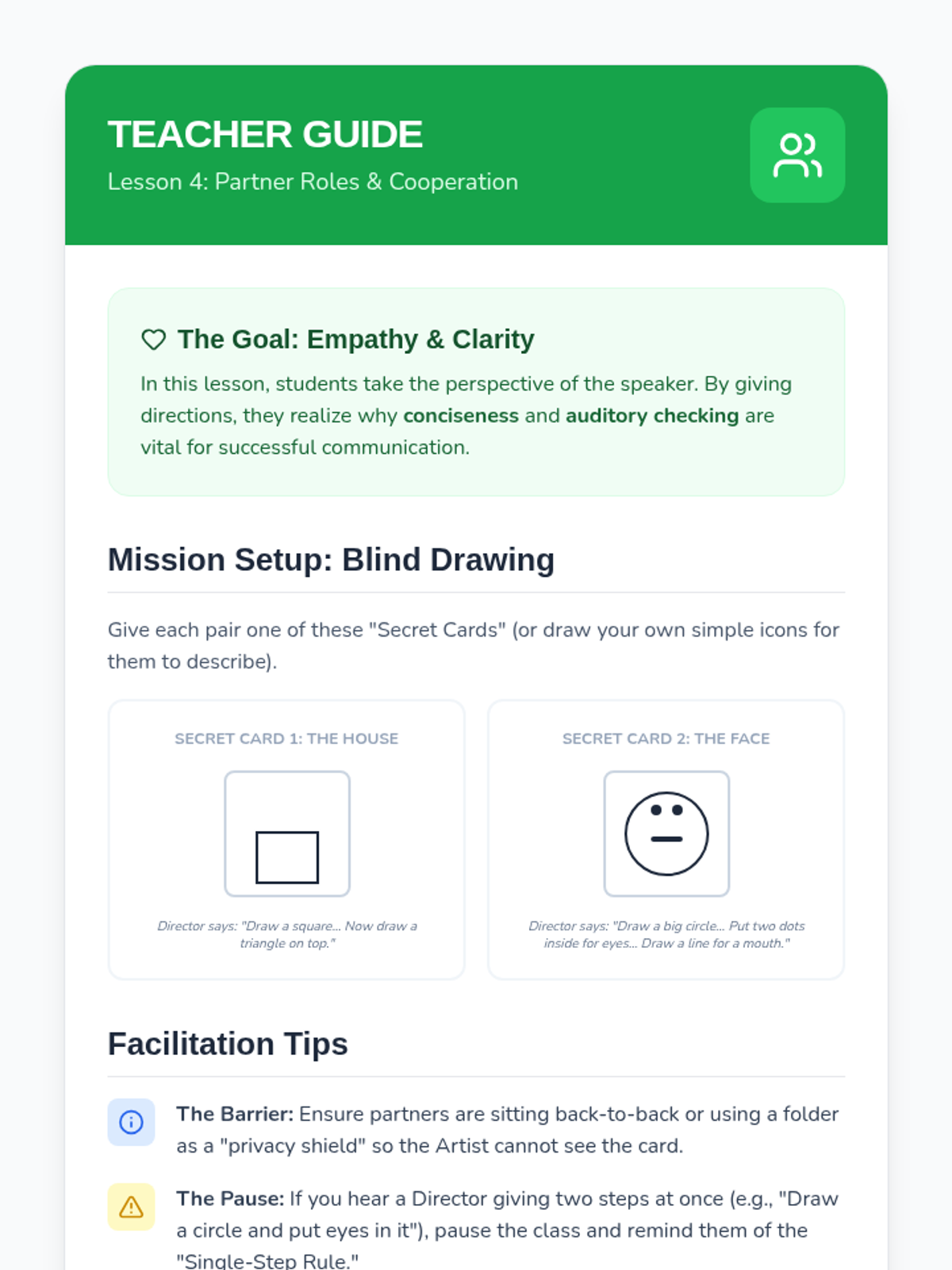
A teacher guide for Lesson 4 including secret cards for the blind drawing activity, facilitation scripts, and peer feedback prompts.
Slides for Lesson 4 facilitating a peer-to-peer communication activity. Introduces the roles of 'Director' and 'Artist' for a collaborative drawing challenge.
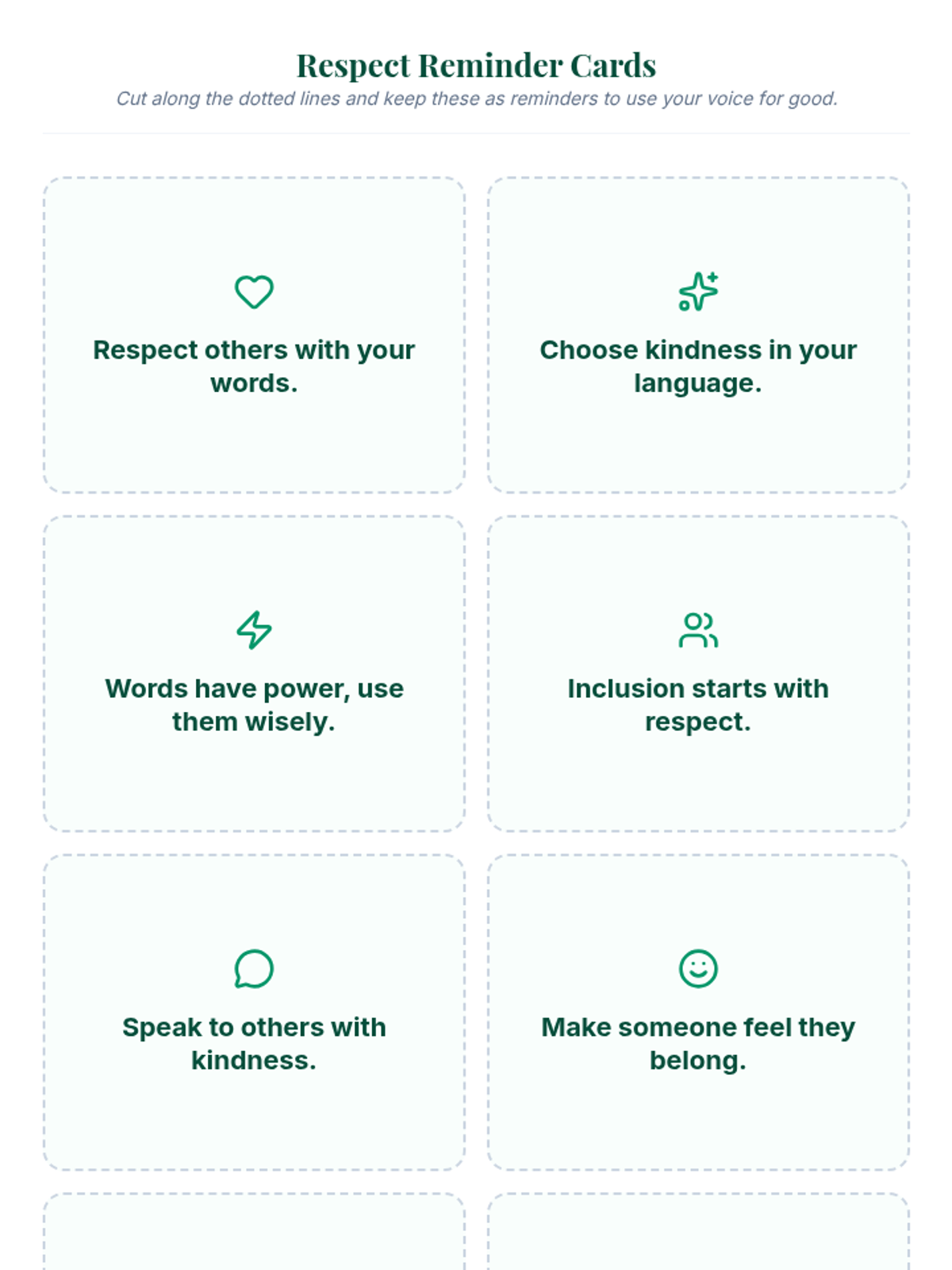
A set of printable reminder cards for students to help them remember to use inclusive and respectful language in their daily interactions.
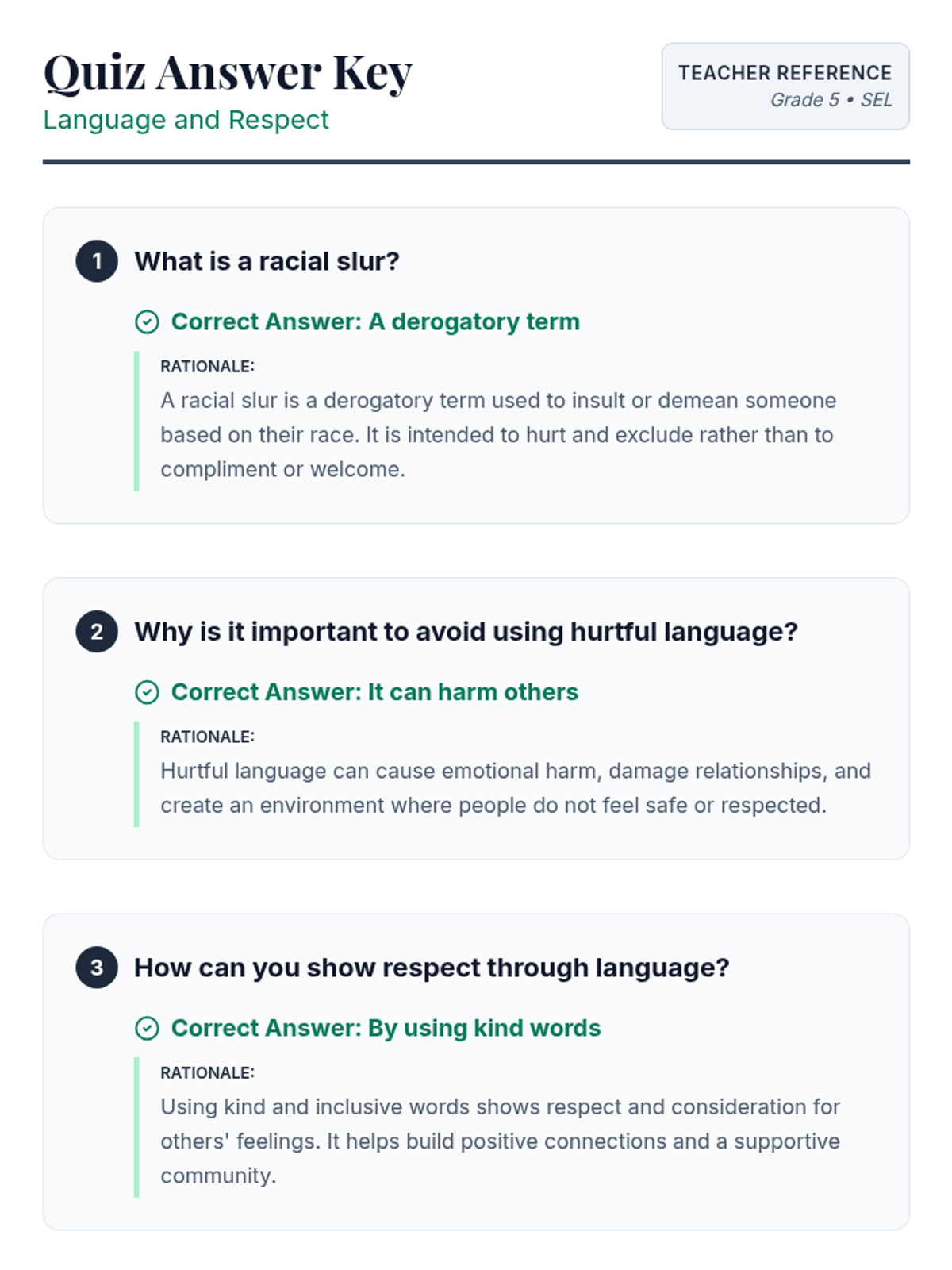
An answer key for the Language and Respect quiz, including rationales for each correct answer to aid in classroom discussion.
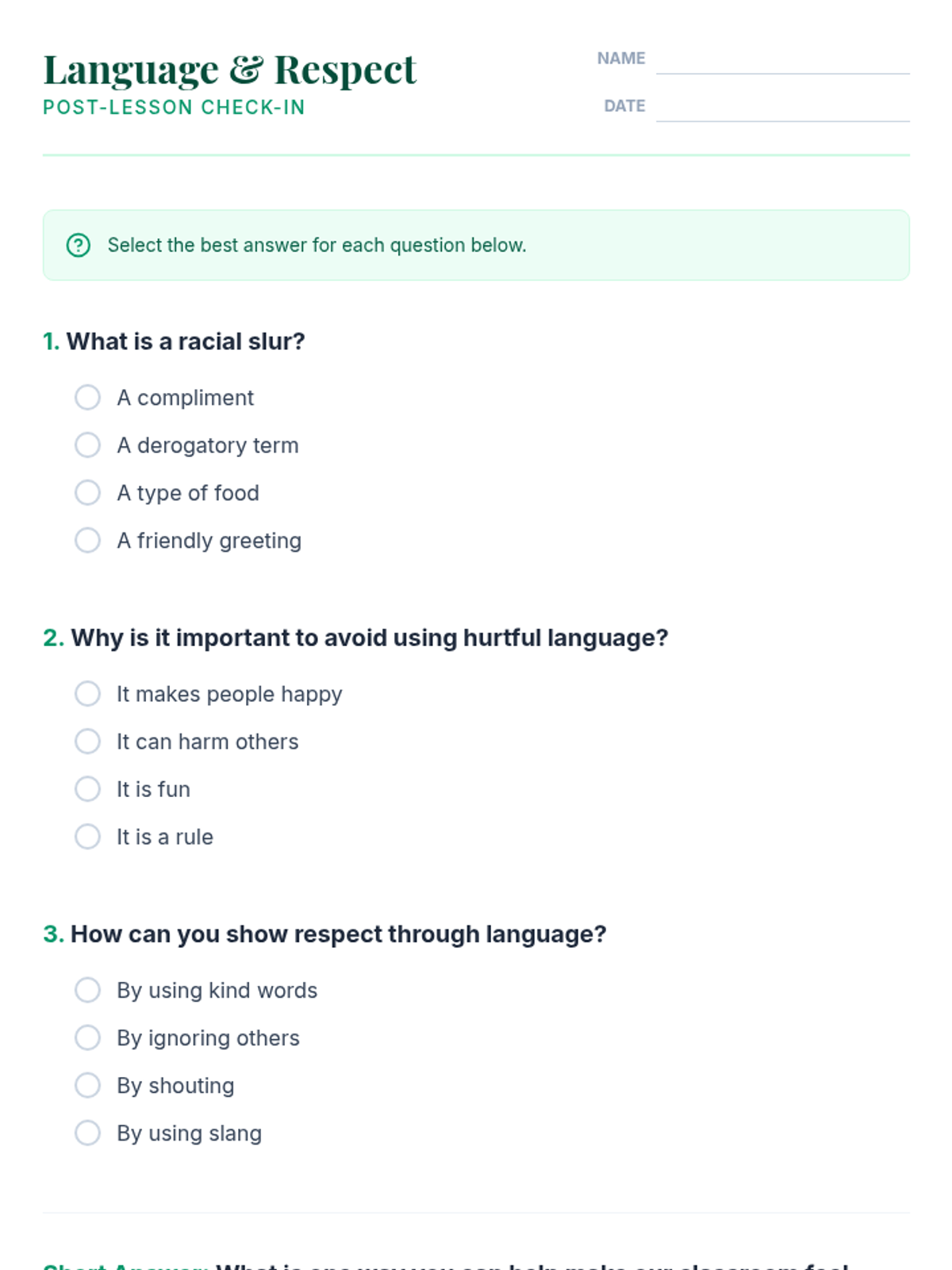
A short assessment to evaluate student understanding of the impact of racial slurs and the importance of respectful language choice.
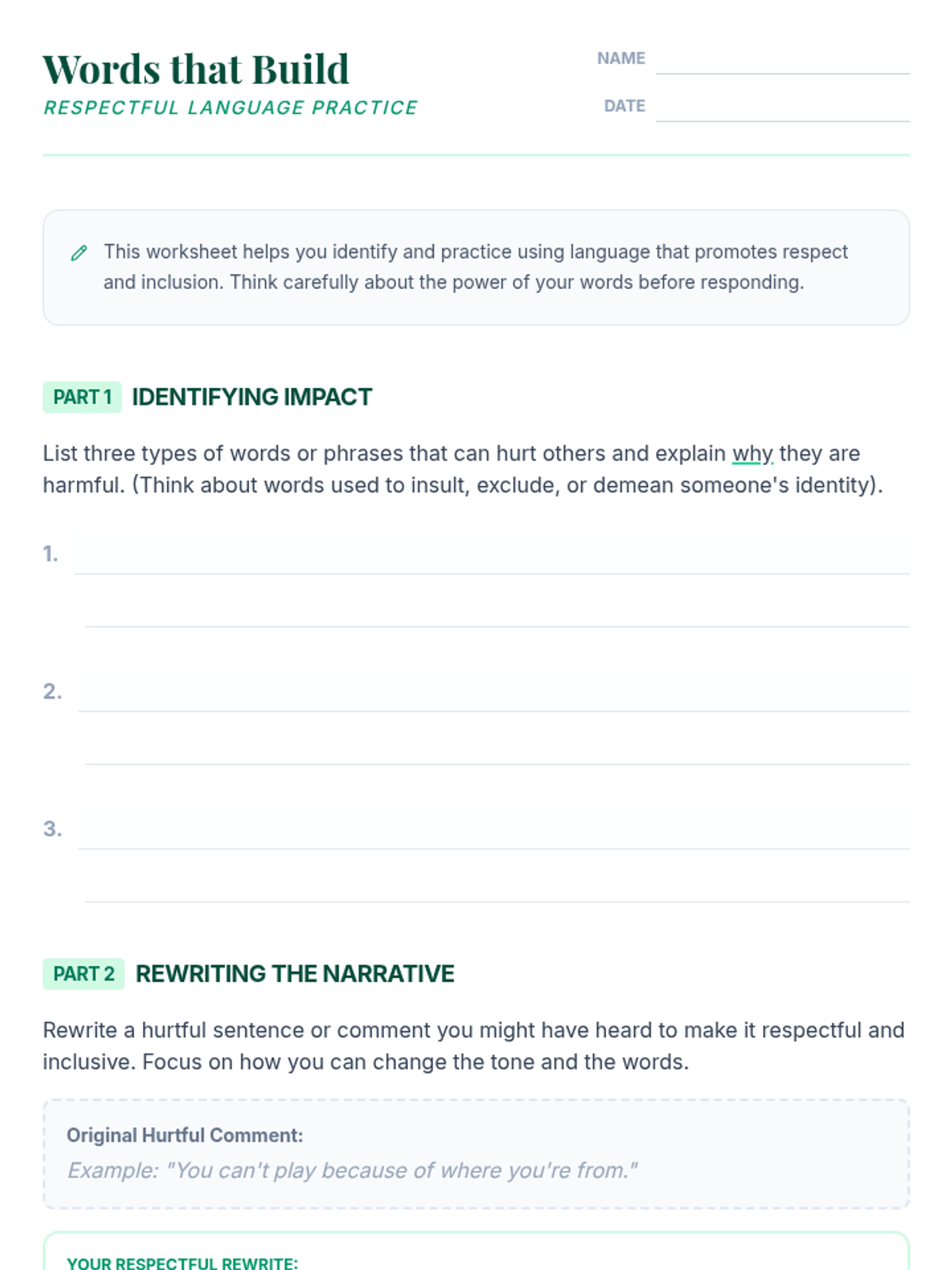
A student worksheet focused on identifying hurtful language, practicing respectful rephrasing, and reflecting on the importance of inclusive communication.
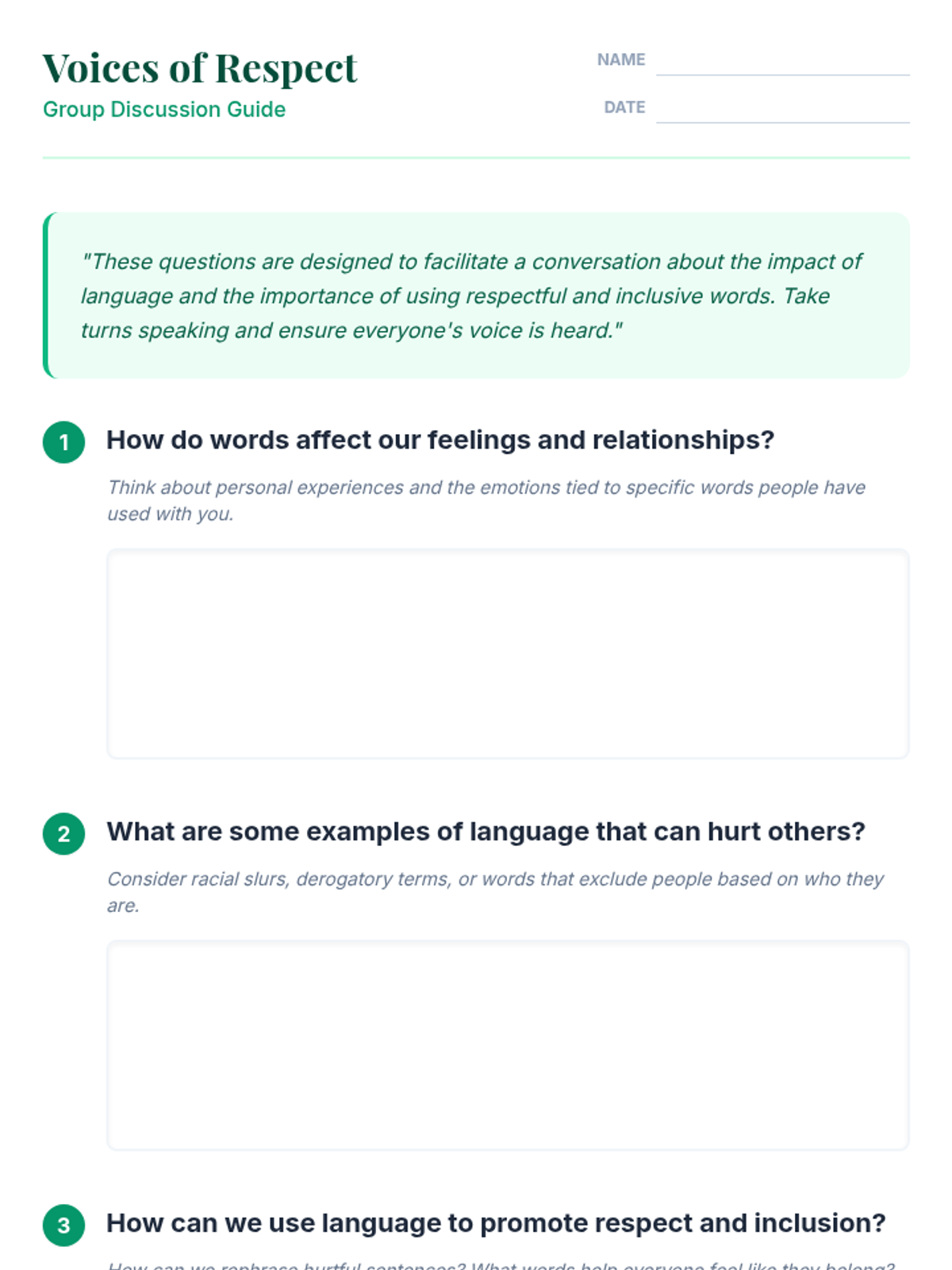
A group discussion guide with prompts designed to help students reflect on the emotional impact of words and the power of inclusive language.
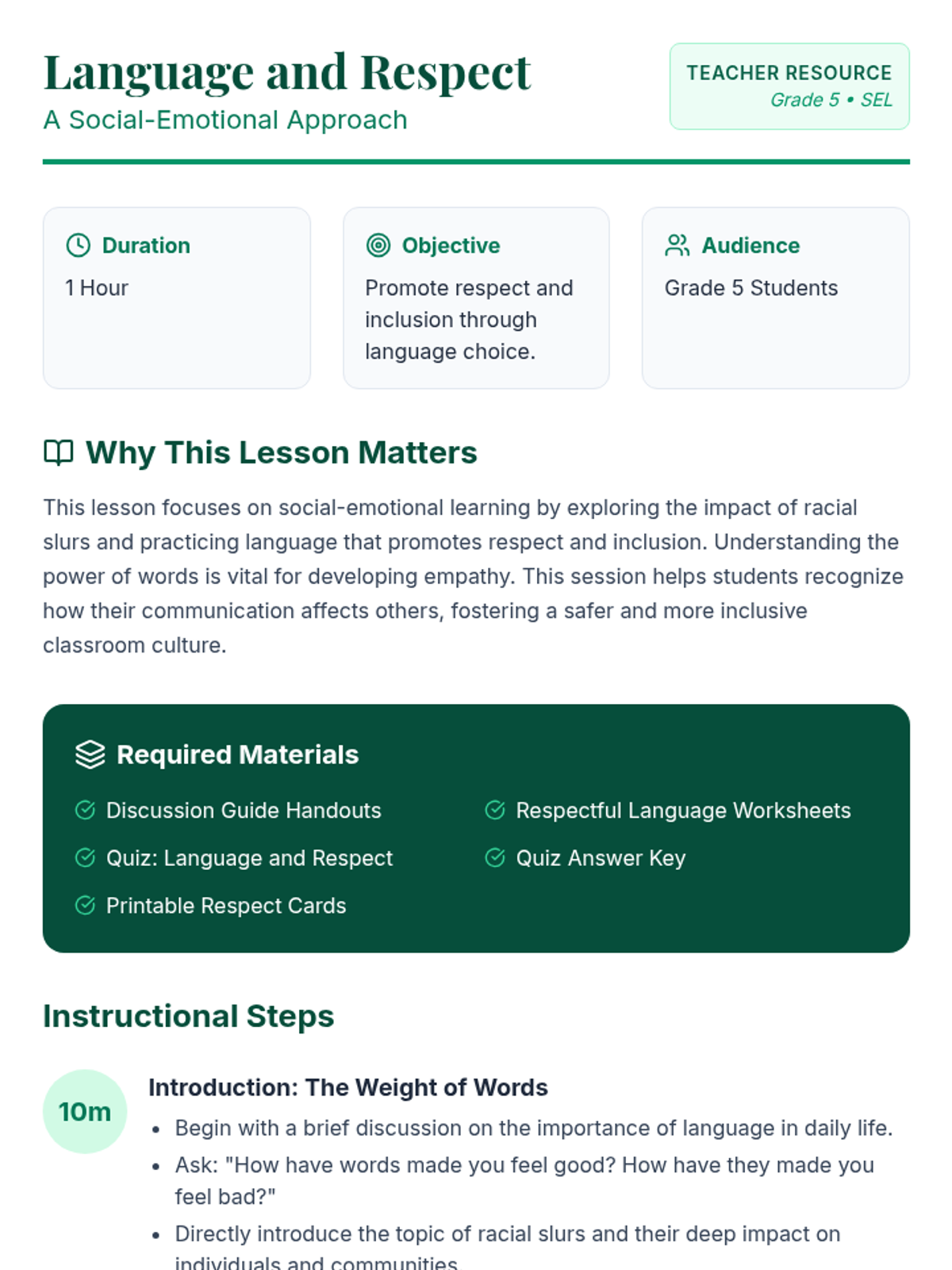
A comprehensive lesson plan for teachers on navigating discussions about racial slurs and promoting respectful language in Grade 5.
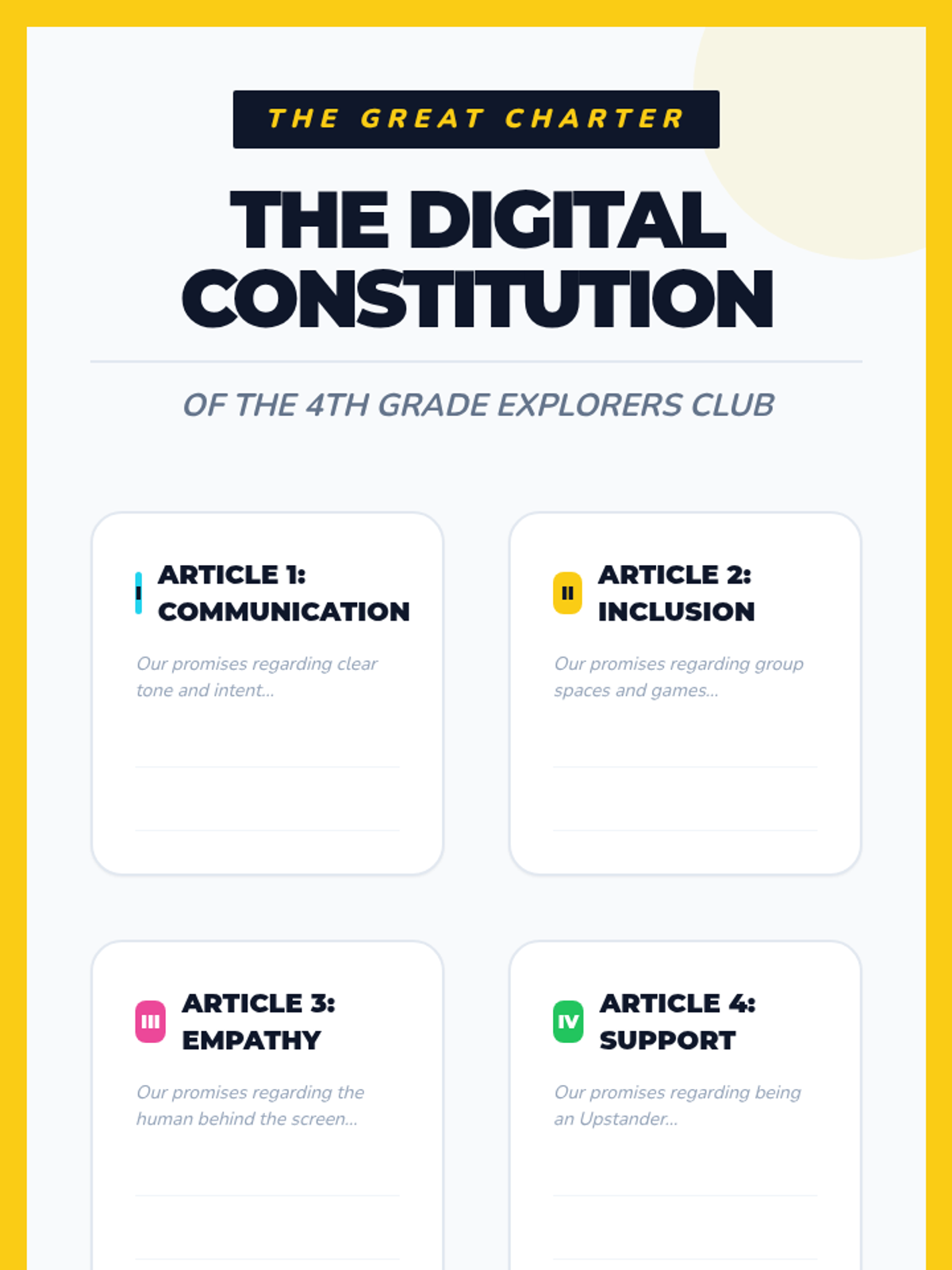
The culminating class document and individual pledge for the Digital Empathy sequence. Includes space for class-drafted articles and an individual commitment signature.
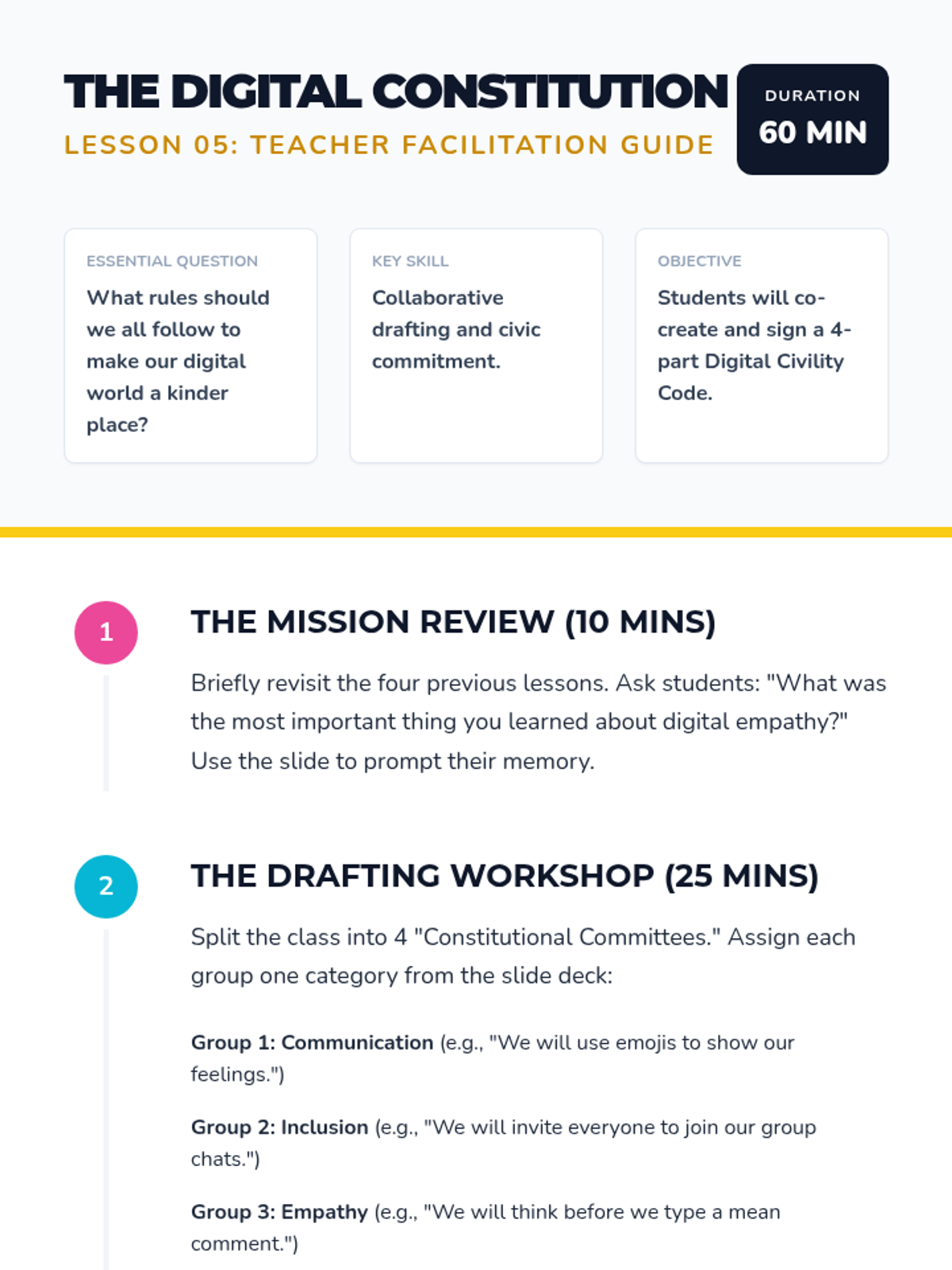
A teacher facilitation guide for Lesson 5: The Digital Constitution. Includes workshop instructions, category prompts, and a guide for the signing ceremony.
A slide deck for Lesson 5: The Digital Constitution. It guides students through the process of reviewing the sequence's themes and collaborating to draft a class digital civility code.
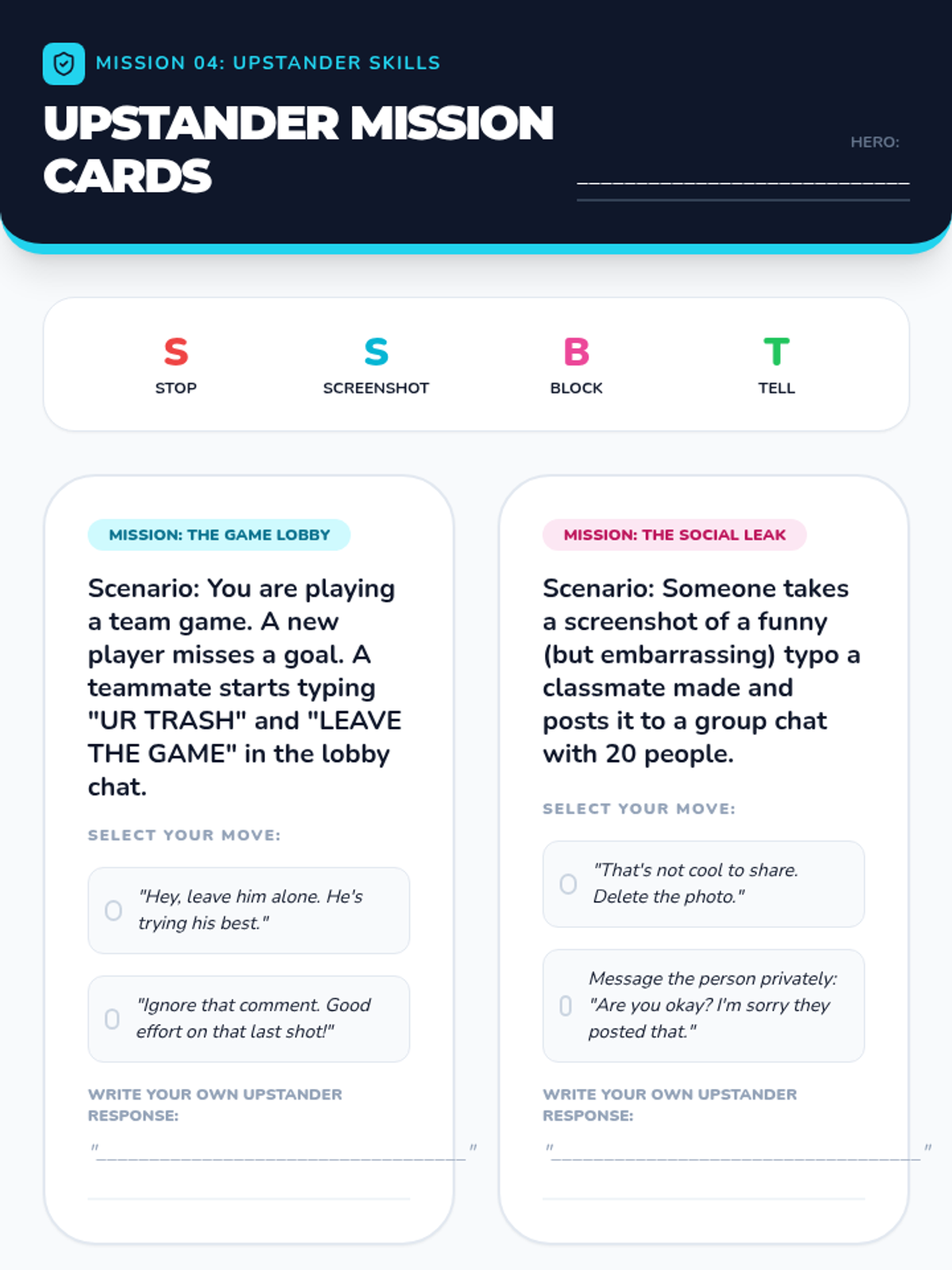
A student activity worksheet for Lesson 4: Power Up Upstanders. Includes simulation scenarios and writing prompts for practicing upstander intervention strategies.
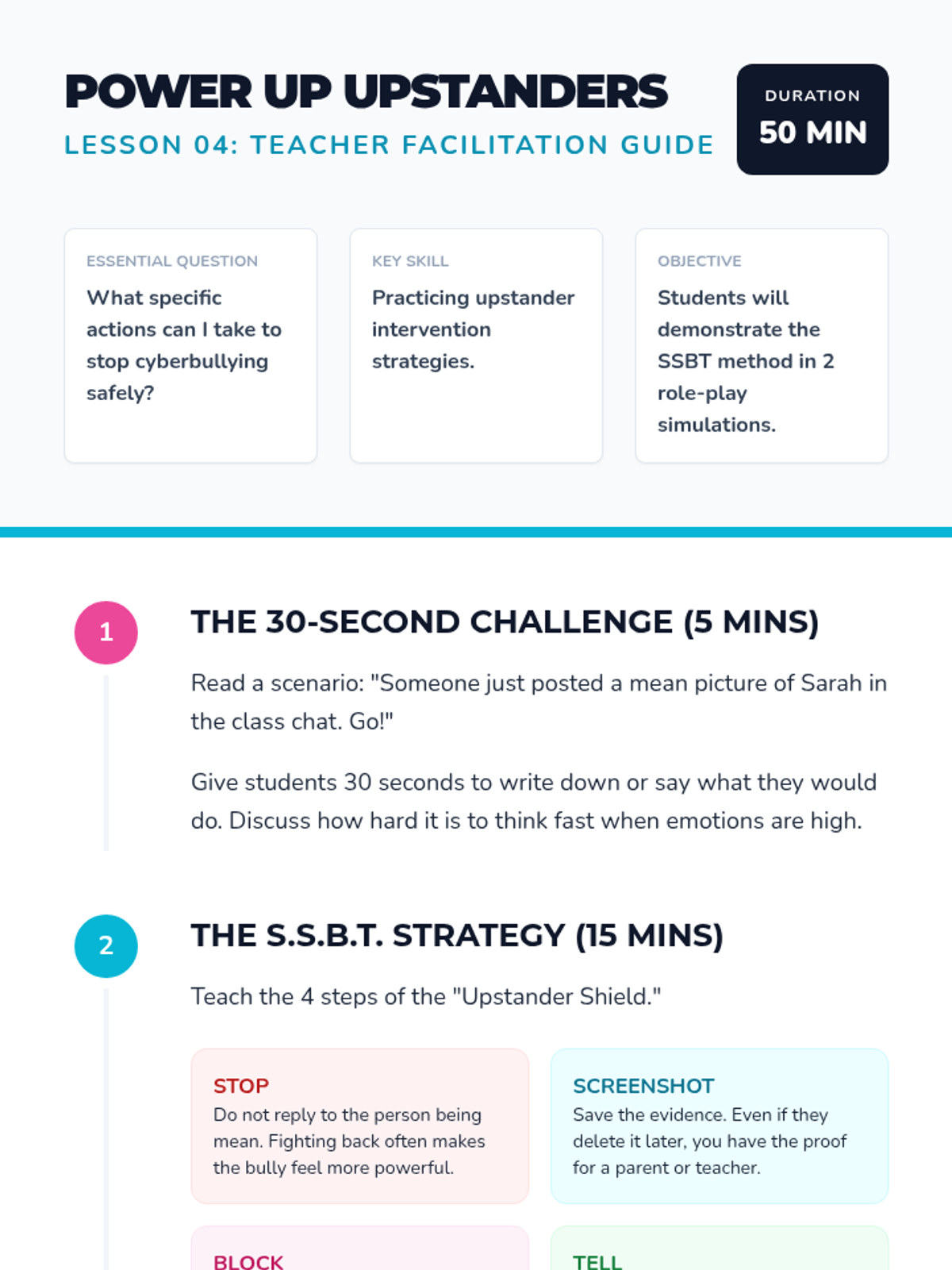
A teacher facilitation guide for Lesson 4: Power Up Upstanders. Includes role-play scenarios, scripts, and a guide for the "Stop, Screenshot, Block, Tell" method.
A slide deck for Lesson 4: Power Up Upstanders. It introduces the 'Stop, Screenshot, Block, Tell' method and provides simulation scenarios for practicing upstander intervention strategies.
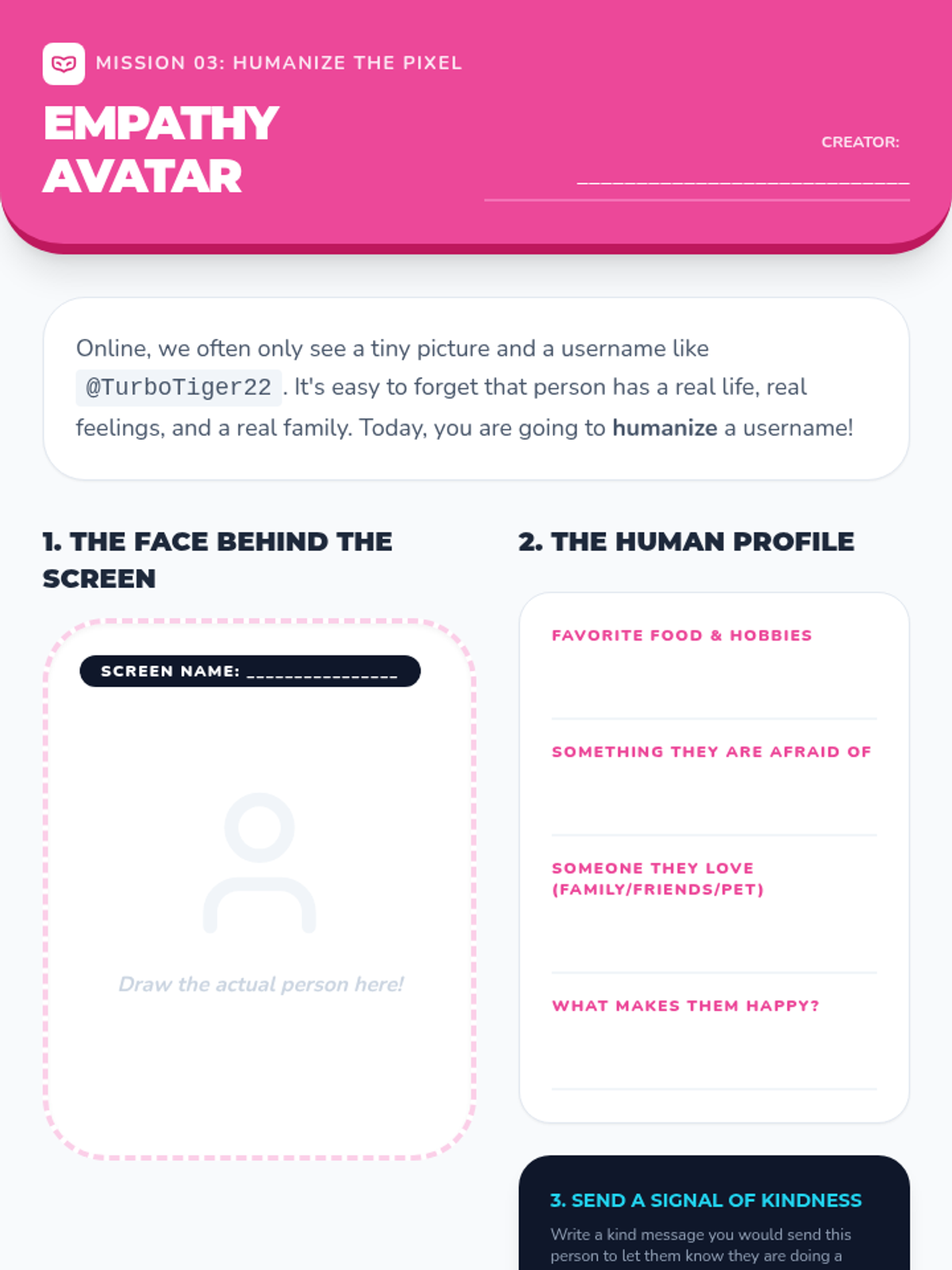
A student activity worksheet for Lesson 3: Behind the Screen. Students create a 'human' profile for a digital username, drawing the person behind the screen and listing their personal interests to foster digital empathy.
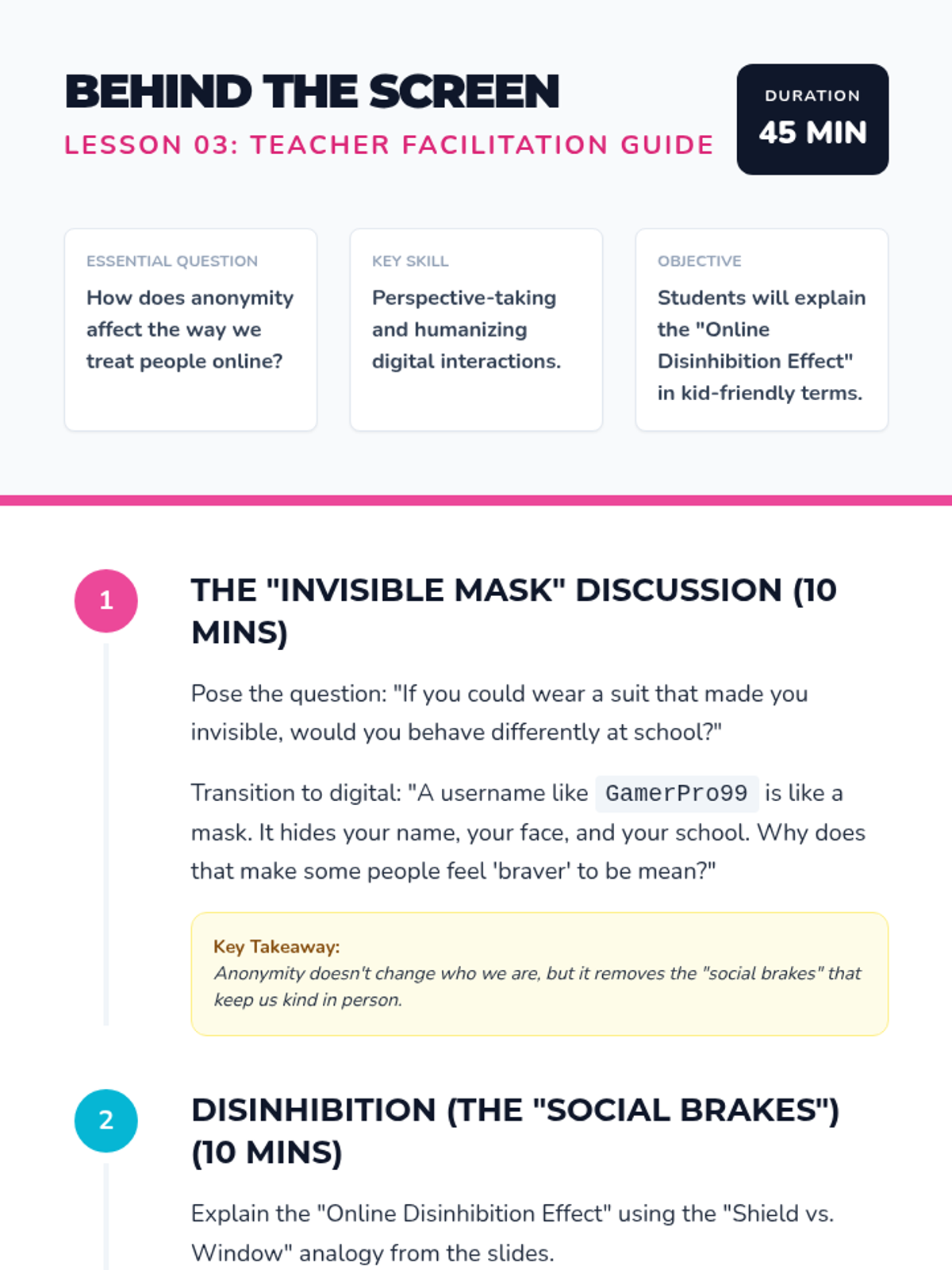
A teacher facilitation guide for Lesson 3: Behind the Screen. Includes discussion prompts for the 'Invisible Mask', explanations of the online disinhibition effect, and activity instructions for the Empathy Avatar worksheet.
A slide deck for Lesson 3: Behind the Screen. It explores the 'online disinhibition effect,' explaining how anonymity affects behavior and introducing the concept of humanizing digital interactions.
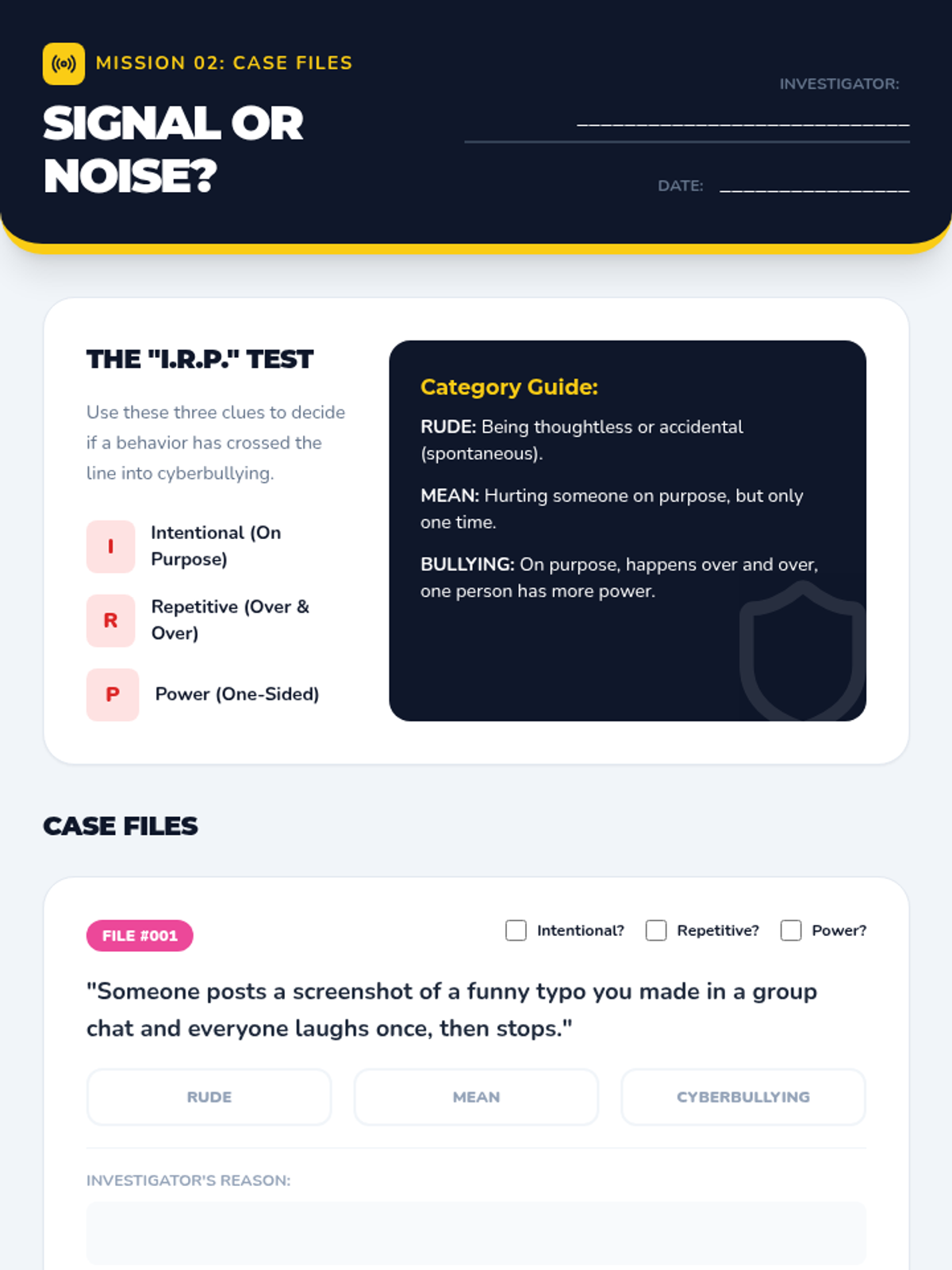
A student worksheet for Lesson 2: Signal or Noise. Students categorize various online scenarios as rude, mean, or bullying by applying the I.R.P. (Intent, Repetition, Power) test.
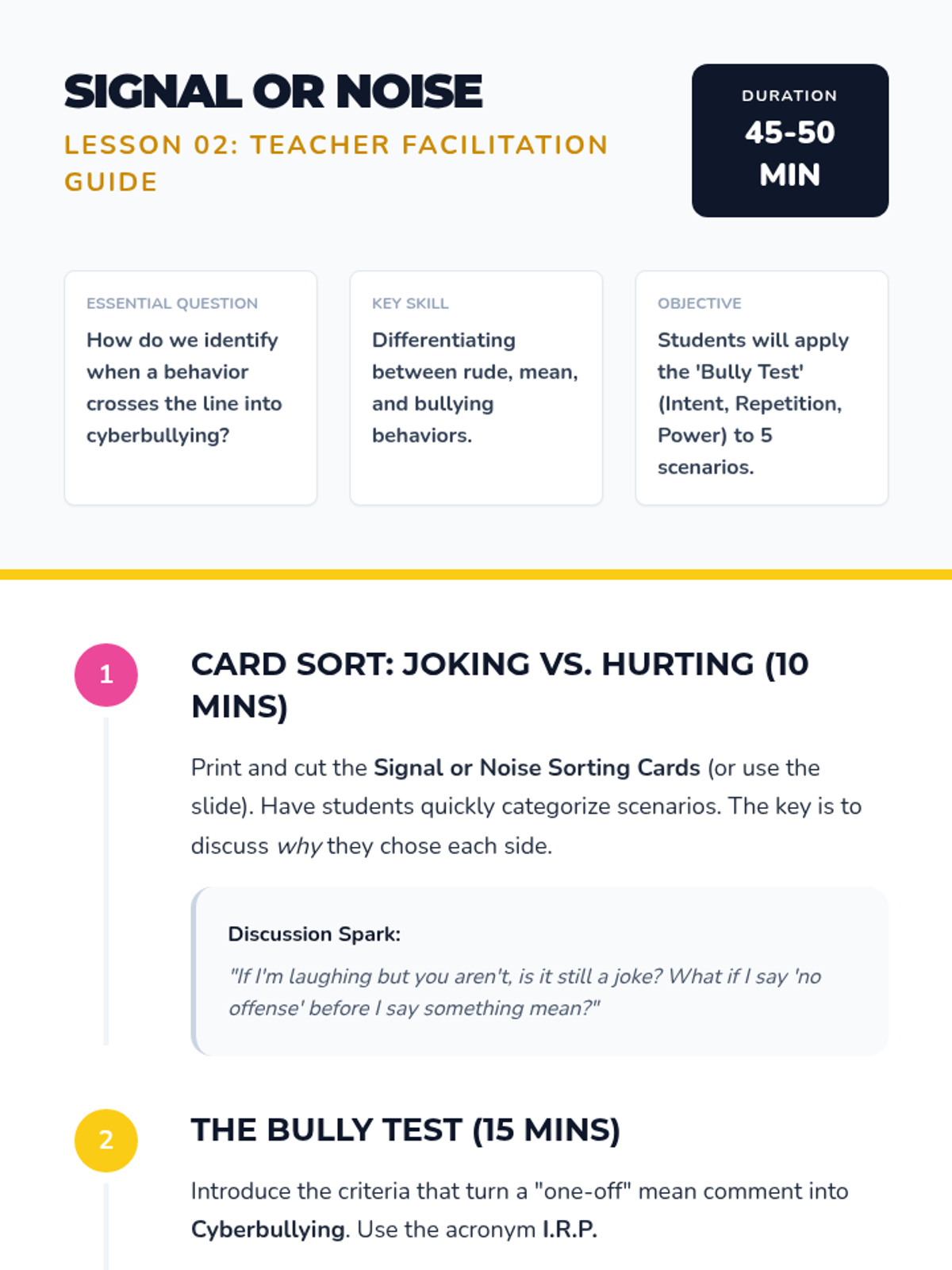
A teacher facilitation guide for Lesson 2: Signal or Noise. Includes definitions of Rude, Mean, and Bullying, the I.R.P. criteria, and a worksheet answer key.
A slide deck for Lesson 2: Signal or Noise. It defines rude, mean, and bullying behaviors and introduces the 'Bully Test' criteria (Intent, Repetition, Power Imbalance).
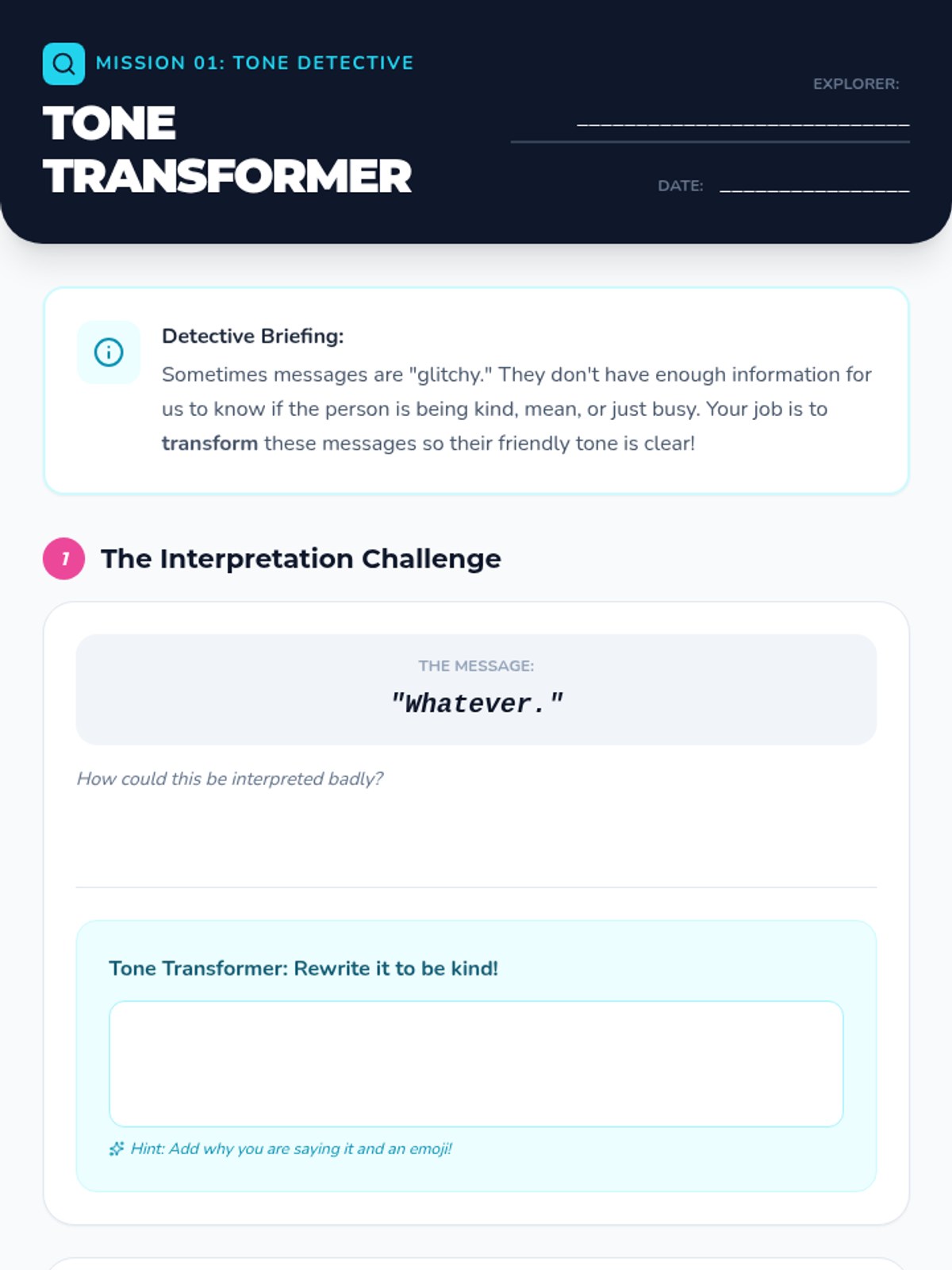
A student worksheet for Lesson 1: Tone Detectives where students practice interpreting ambiguous messages and rewriting them with clear, kind tones using punctuation and emojis.
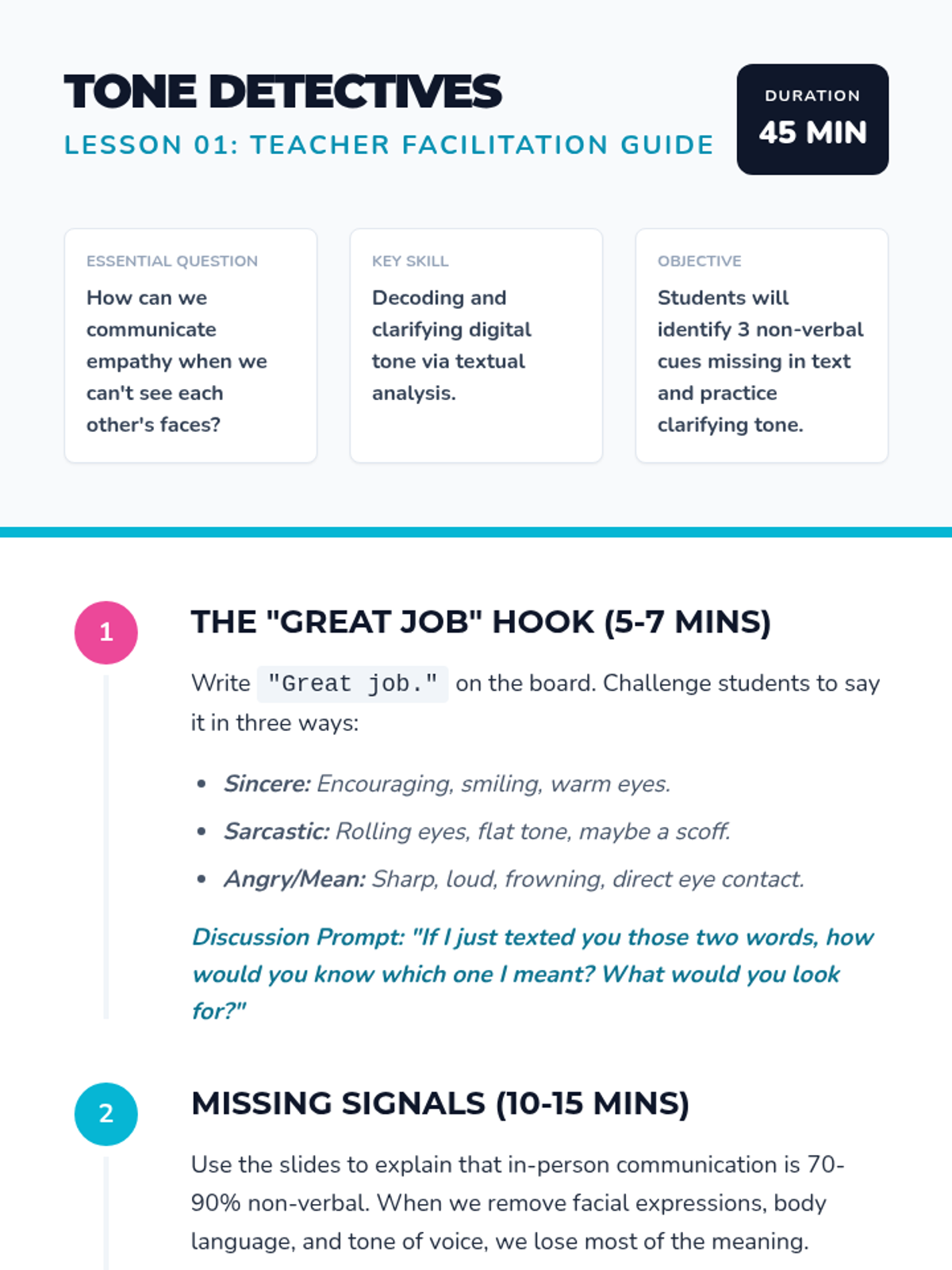
A comprehensive teacher facilitation guide for Lesson 1: Tone Detectives. Includes hook instructions, key definitions, discussion prompts, and an answer key for scenario analysis.
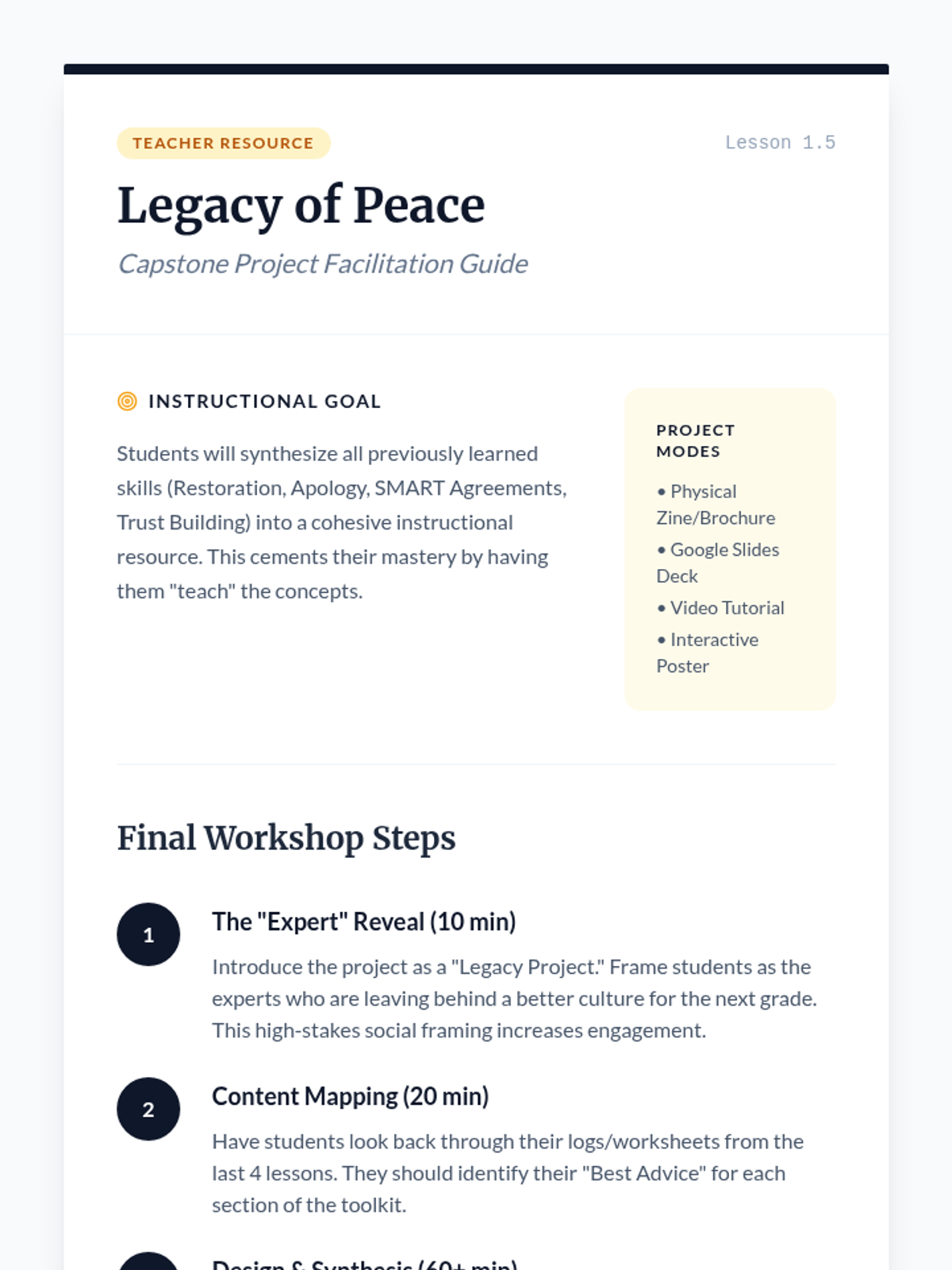
A teacher guide for the Lesson 5 capstone project, providing instructional strategies for the 'Legacy Project' and ways to share student work with a wider audience.
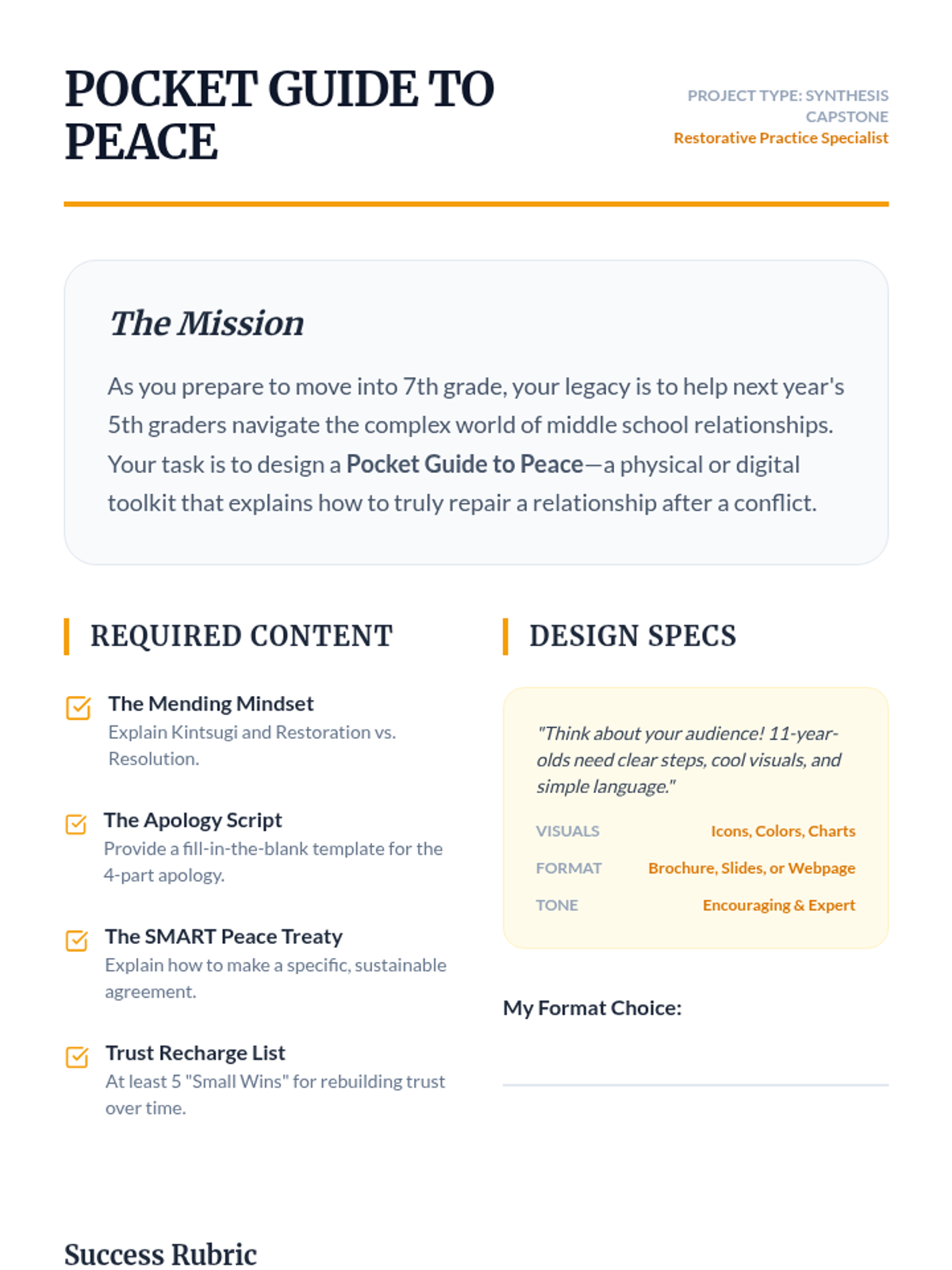
A student-facing project guide and rubric for the 'Pocket Guide to Peace' capstone project, where students synthesize their conflict resolution skills.
Capstone project slides for Lesson 5, introducing the 'Pocket Guide to Peace' project where students synthesize their learning to create a guide for younger students.
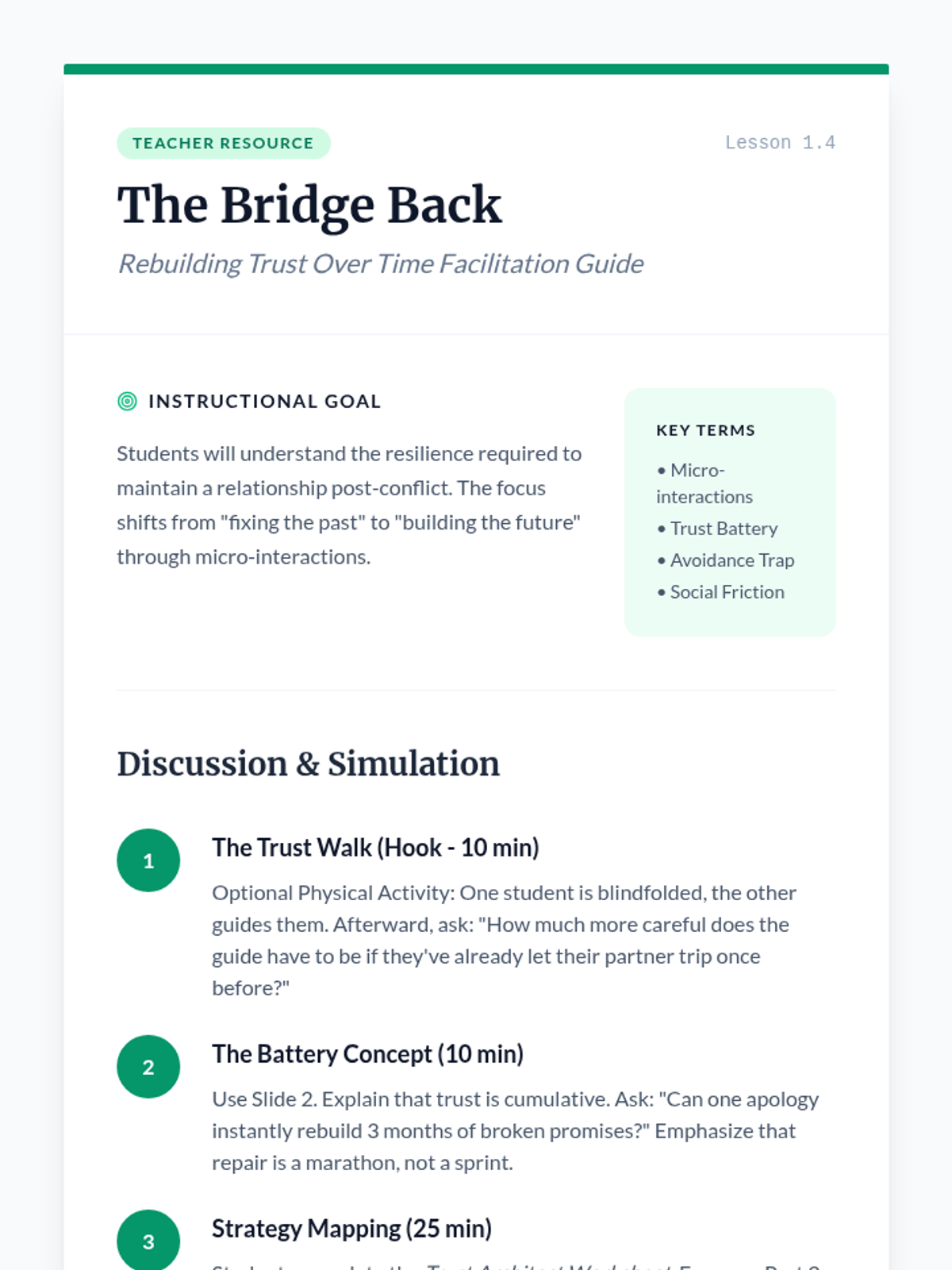
A teacher guide for Lesson 4 on facilitating trust-building activities and helping students navigate the social complexities of post-conflict resolution.
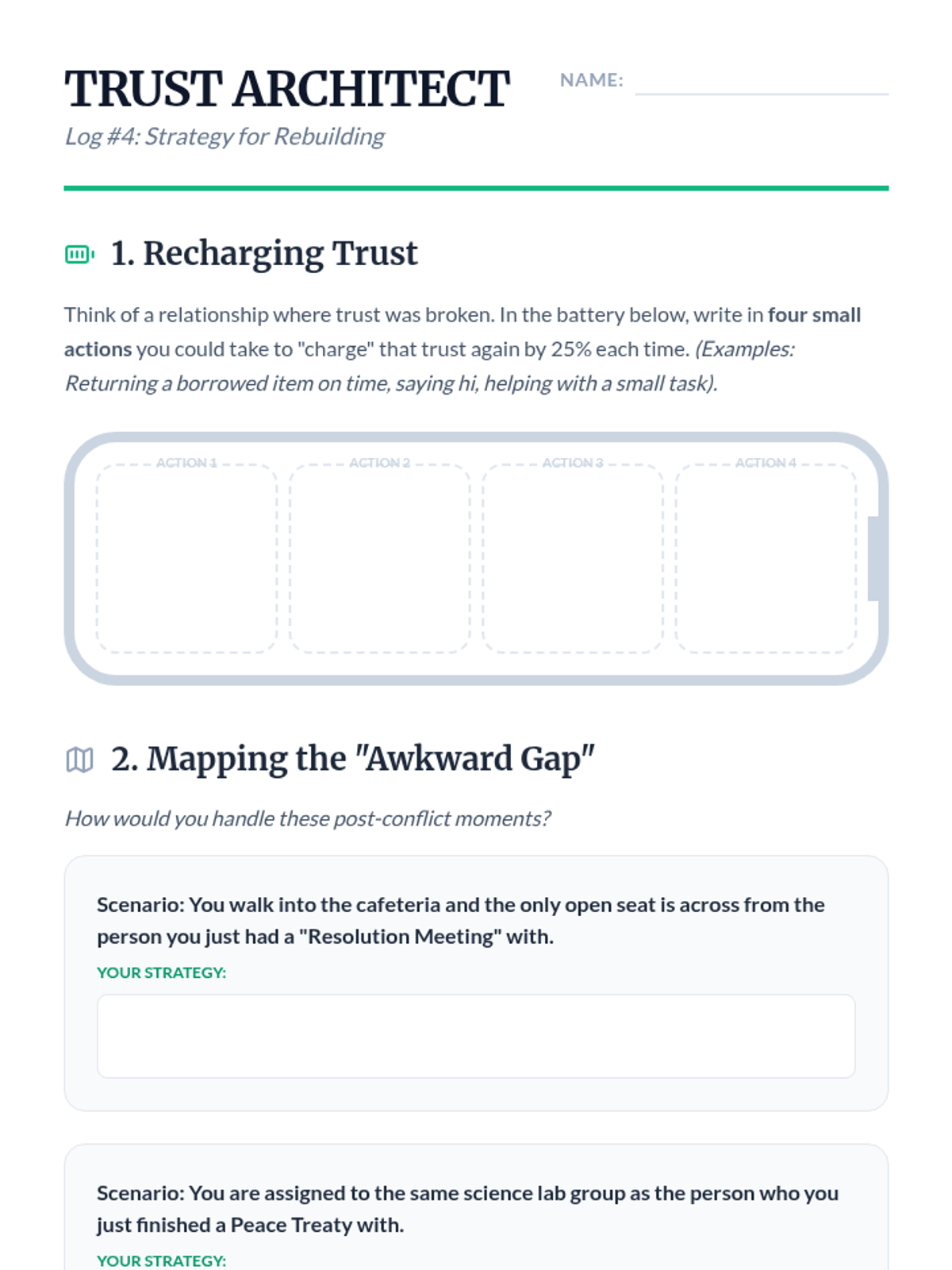
A student worksheet for Lesson 4 that uses a 'Battery' metaphor to help students plan small, consistent actions for rebuilding trust and strategizing for awkward post-conflict social situations.
A slide presentation for Lesson 4 exploring the slow process of rebuilding trust through small, consistent interactions and navigating post-conflict awkwardness.
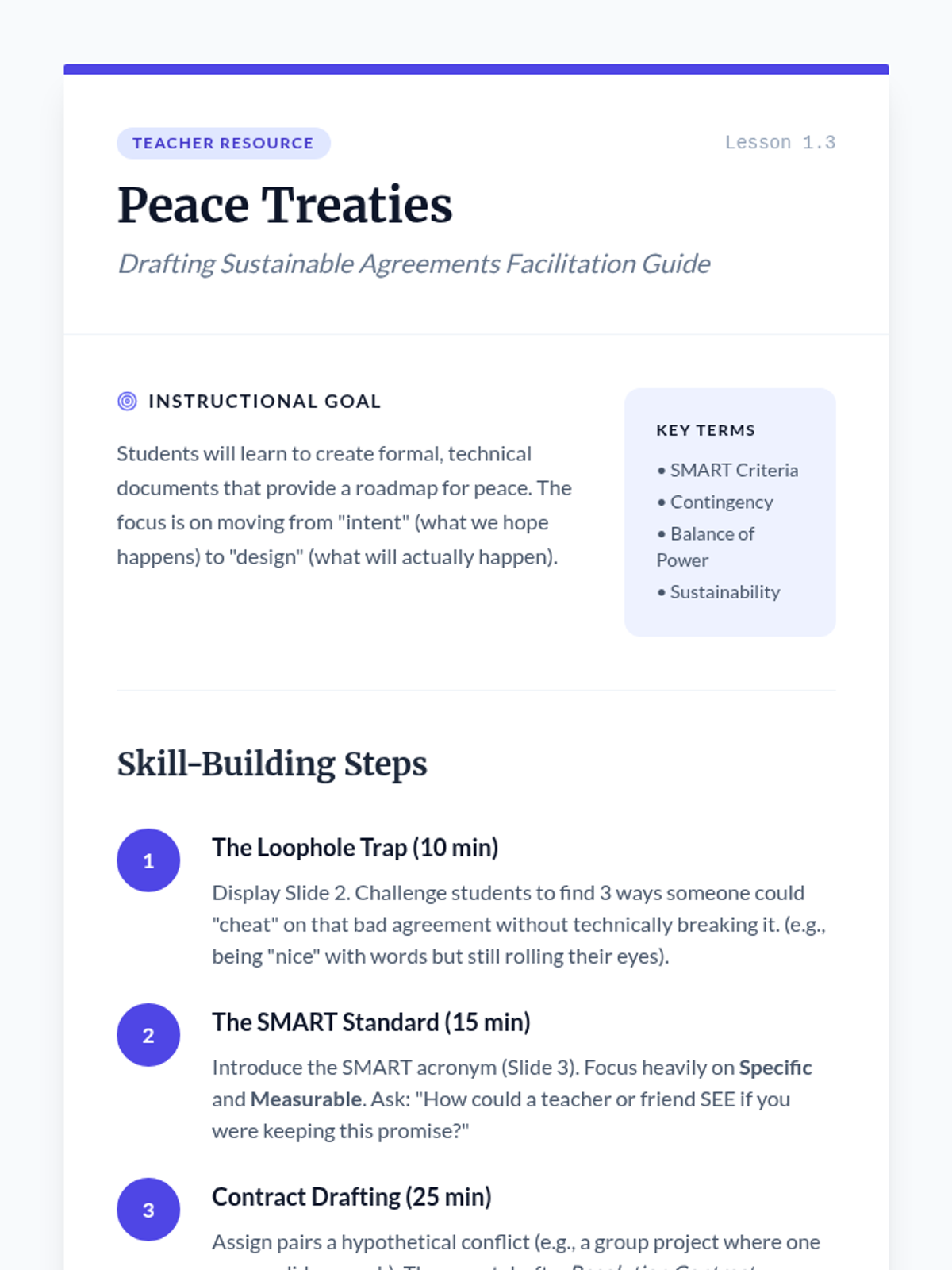
A teacher guide for Lesson 3 on facilitating the creation of sustainable peace agreements and using SMART criteria for conflict resolution.
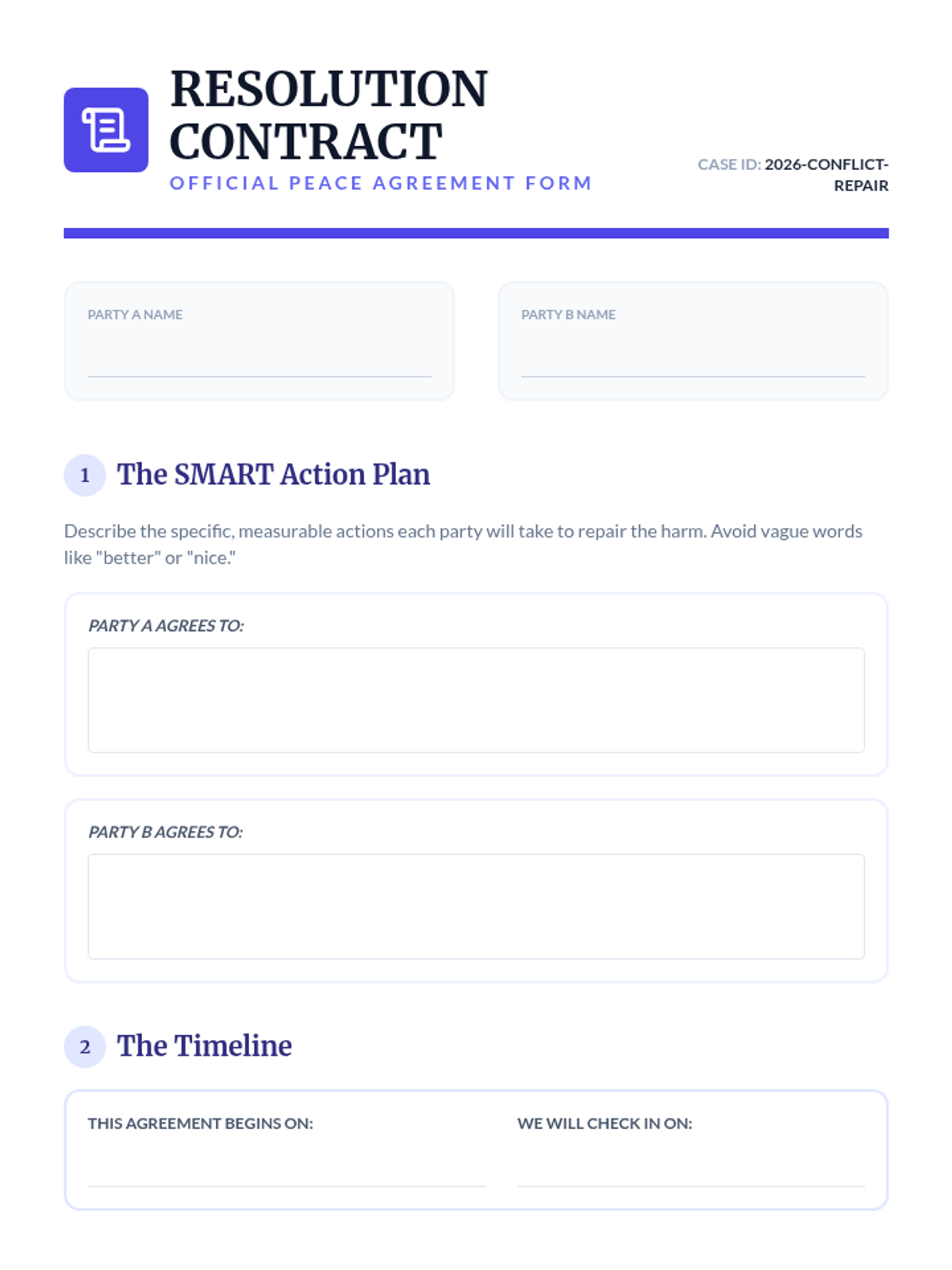
A formal 'Resolution Contract' template for students to use in drafting specific and sustainable agreements during conflict mediation.
A slide presentation for Lesson 3 on drafting SMART agreements that are specific, measurable, achievable, relevant, and time-bound to ensure sustainable conflict resolution.
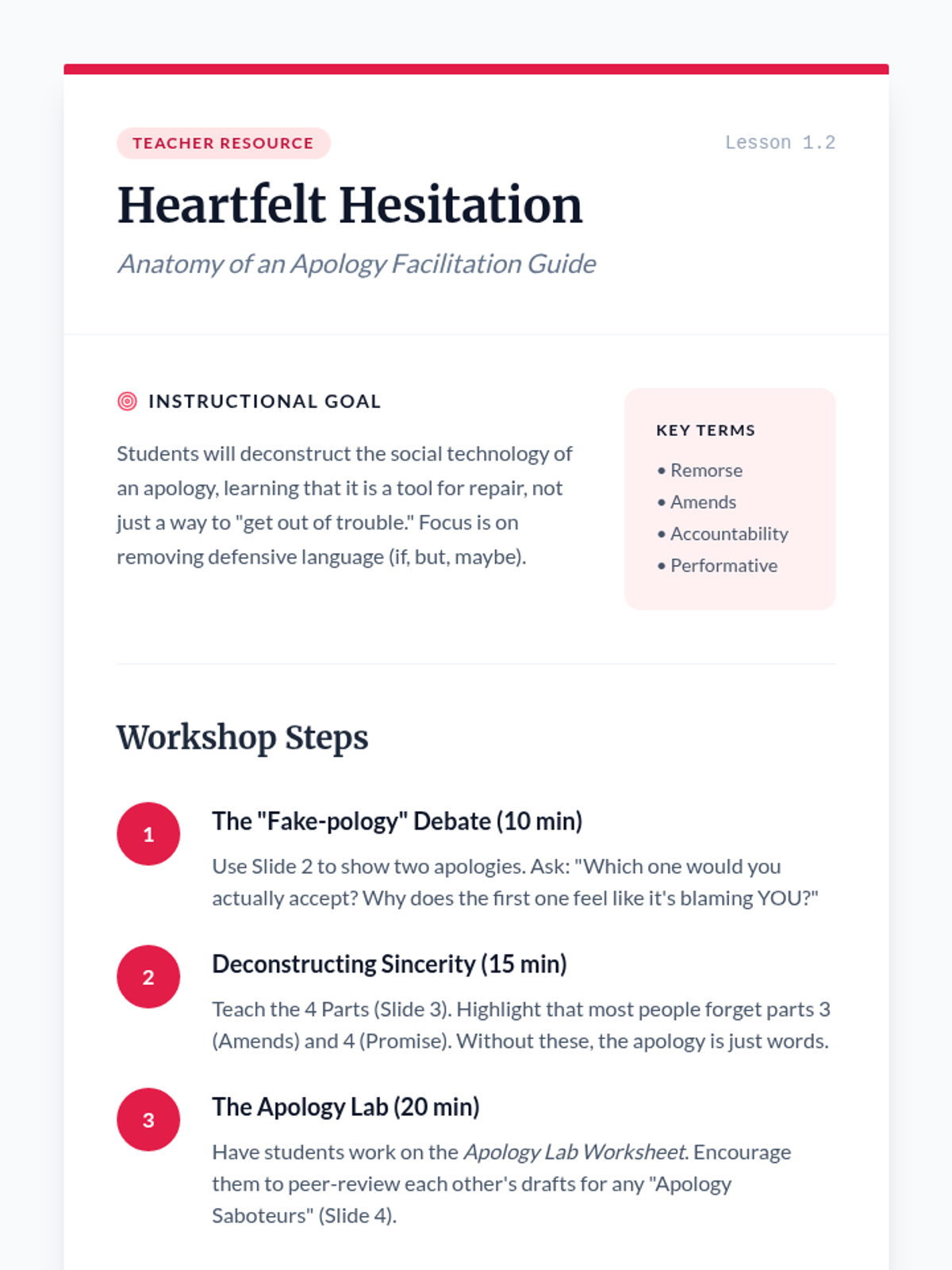
A teacher guide for Lesson 2 focusing on the deconstruction of apologies and facilitating active accountability in the classroom.