Emotion recognition ranging from basic feelings to complex nuances and mixed states. Strengthens accurate self-assessment through identity exploration, strength identification, and values-based decision making.
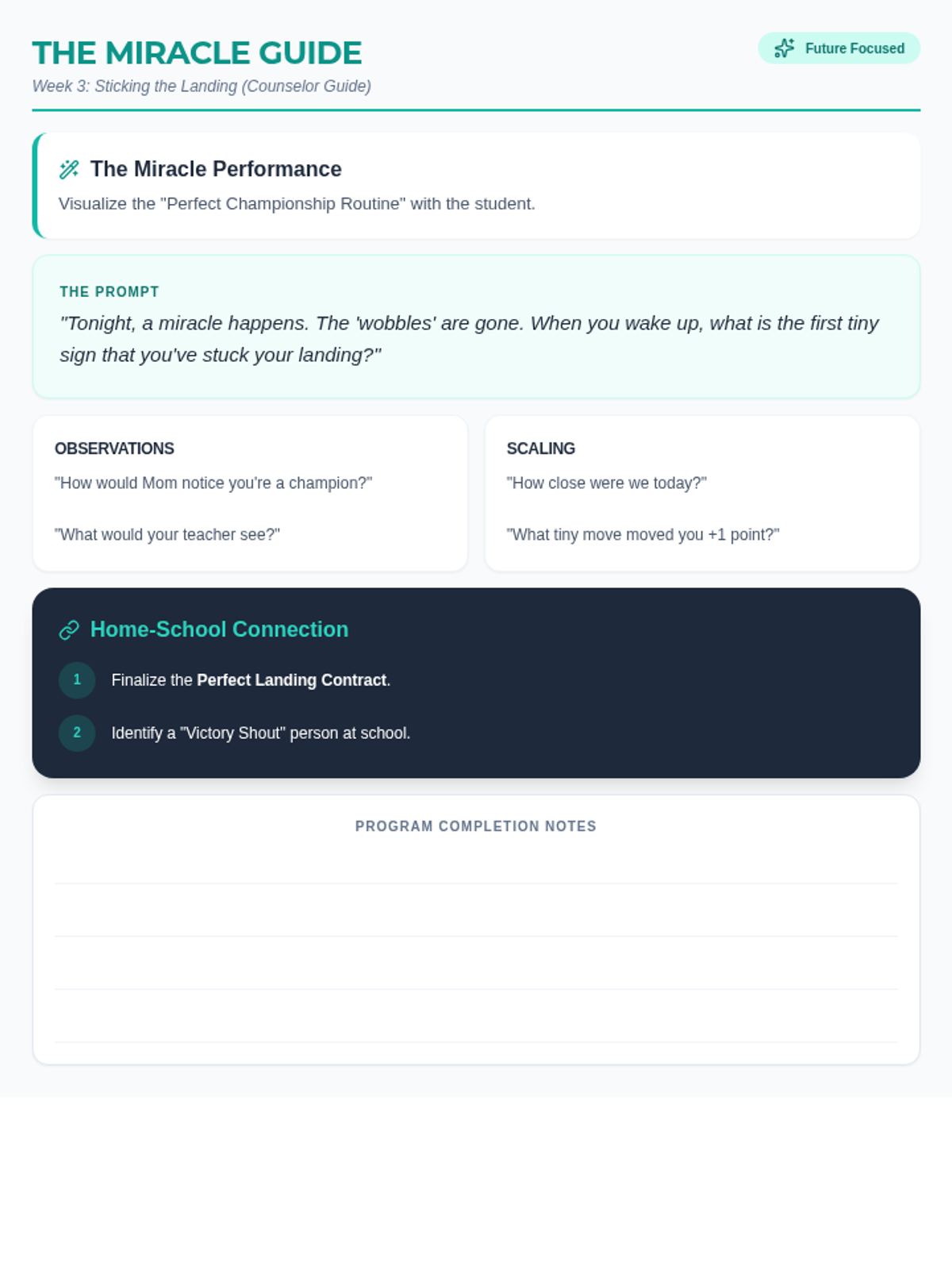
A counselor's guide for the third week of the Perfect Landing Program. Revised to fit on a single page, increase font sizes for key prompts, and improve the layout balance.
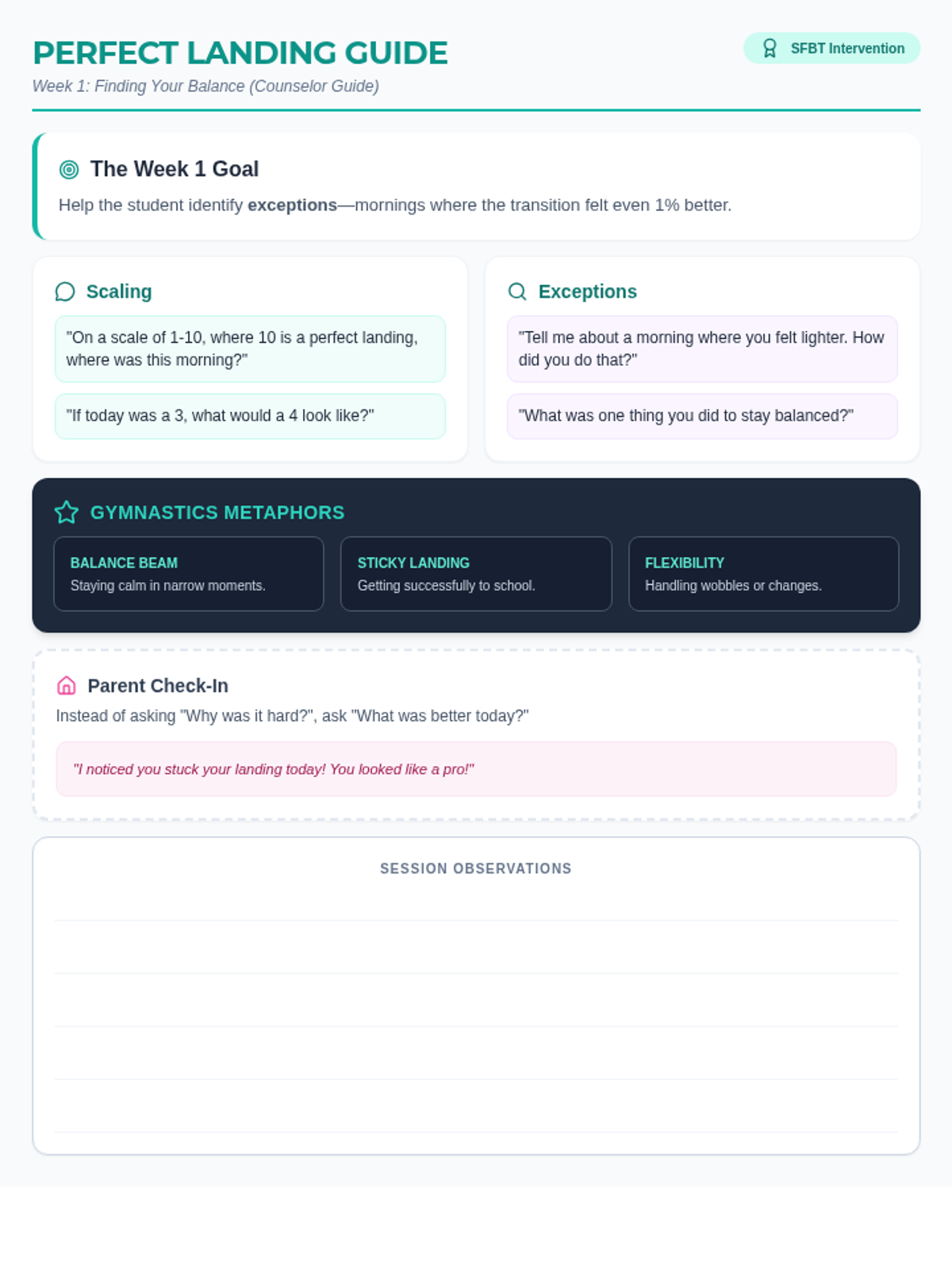
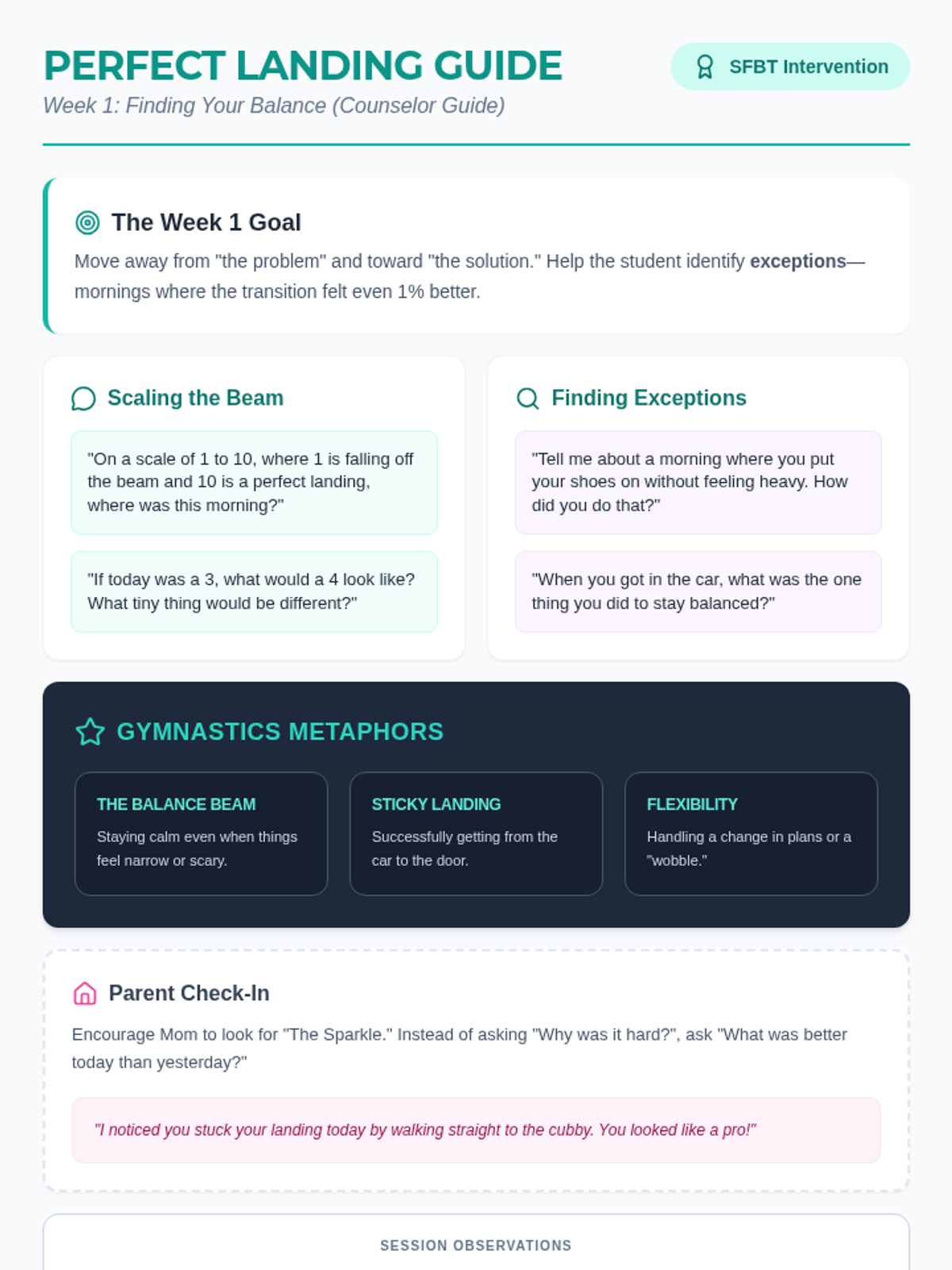
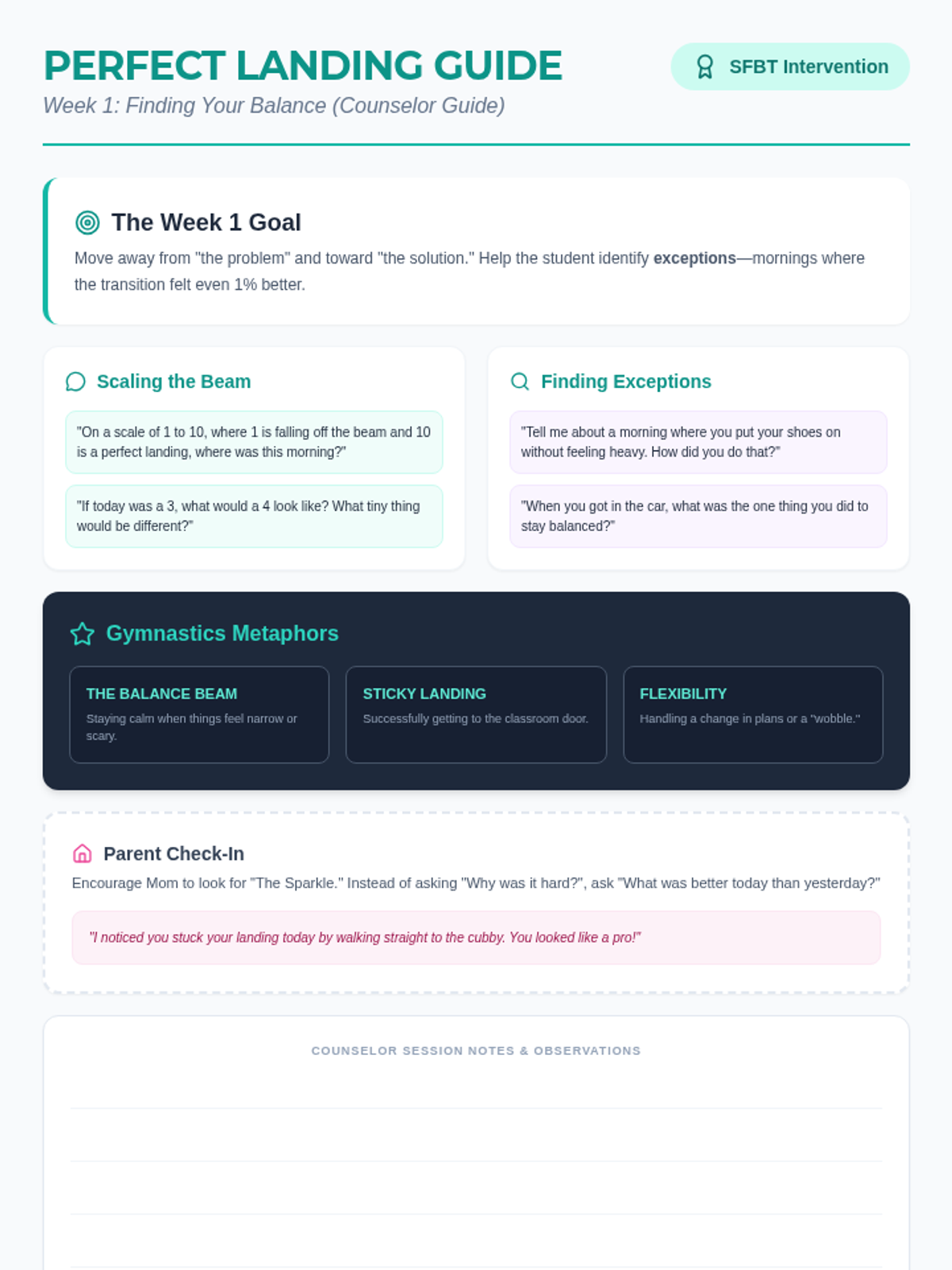
A teacher and counselor guide for the first week of the Perfect Landing Program, featuring solution-focused prompts, gymnastics metaphors, and scaling questions for morning transitions. Revised to fit everything on a single page with better font sizes.
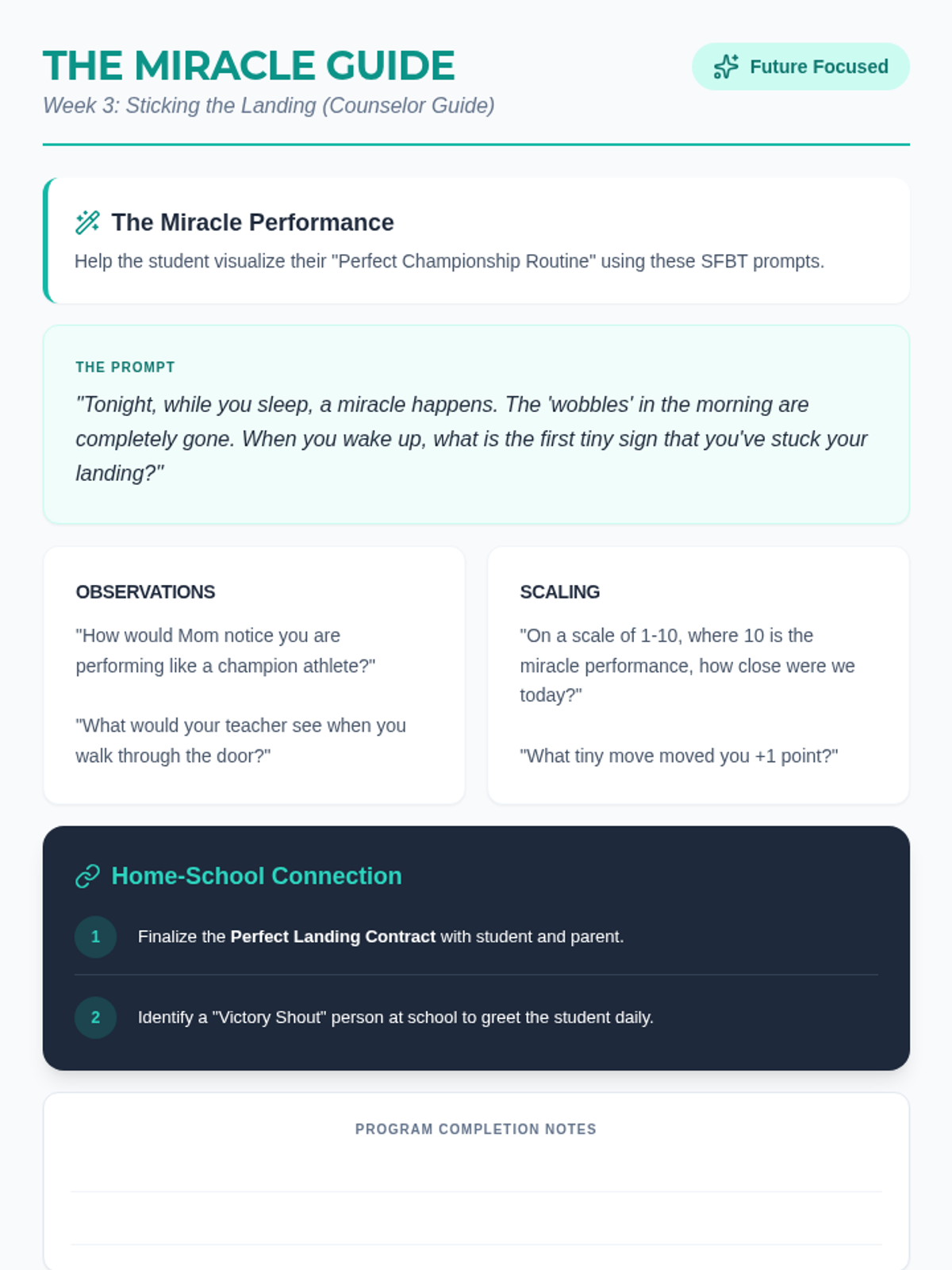
A counselor's guide for the third week of the Perfect Landing Program. Revised to fix page break issues and improve text size and facilitation prompts.
A teacher and counselor guide for the first week of the Perfect Landing Program, featuring solution-focused prompts, gymnastics metaphors, and scaling questions for morning transitions. Revised to fix page break and layout issues.
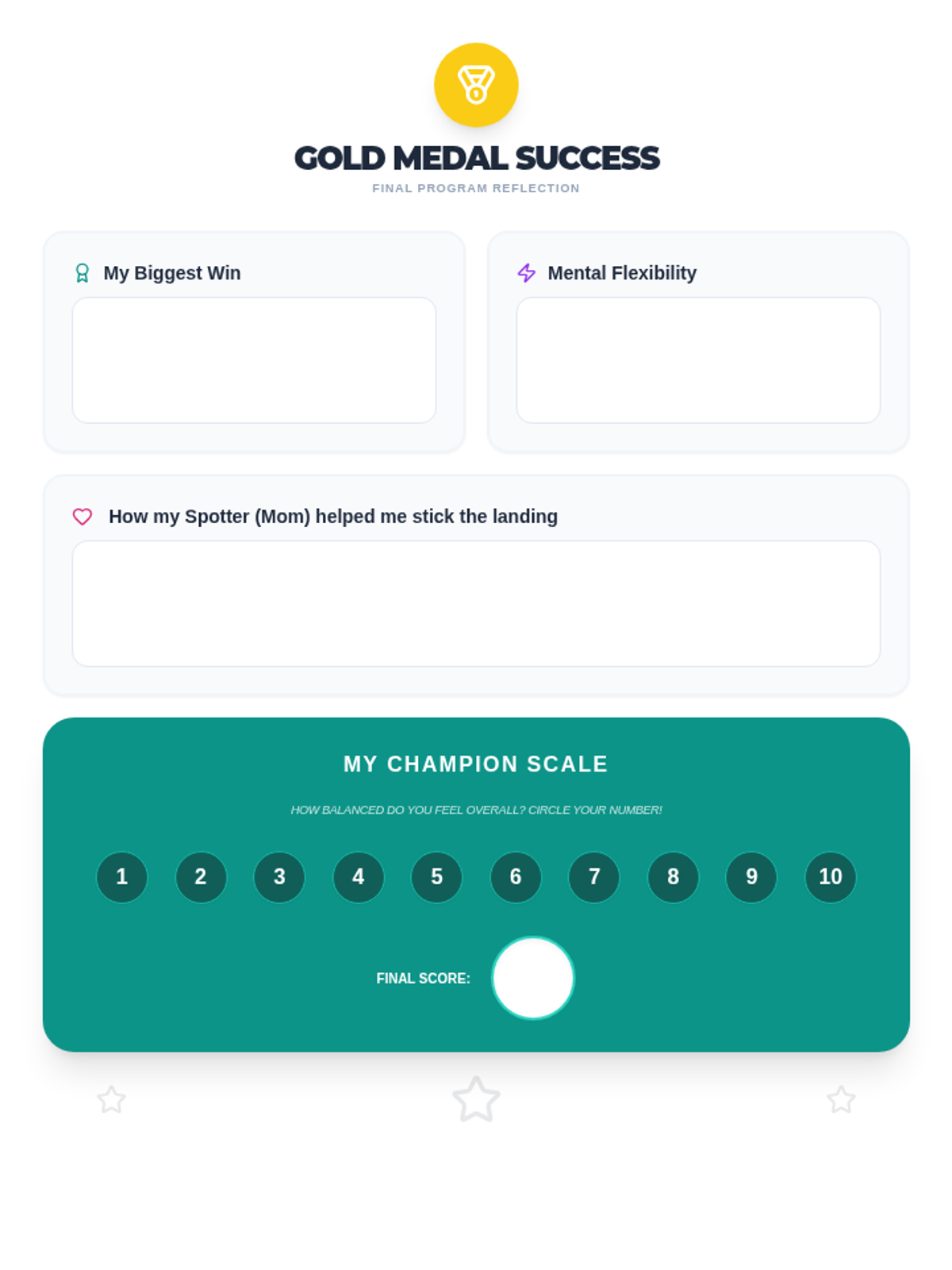
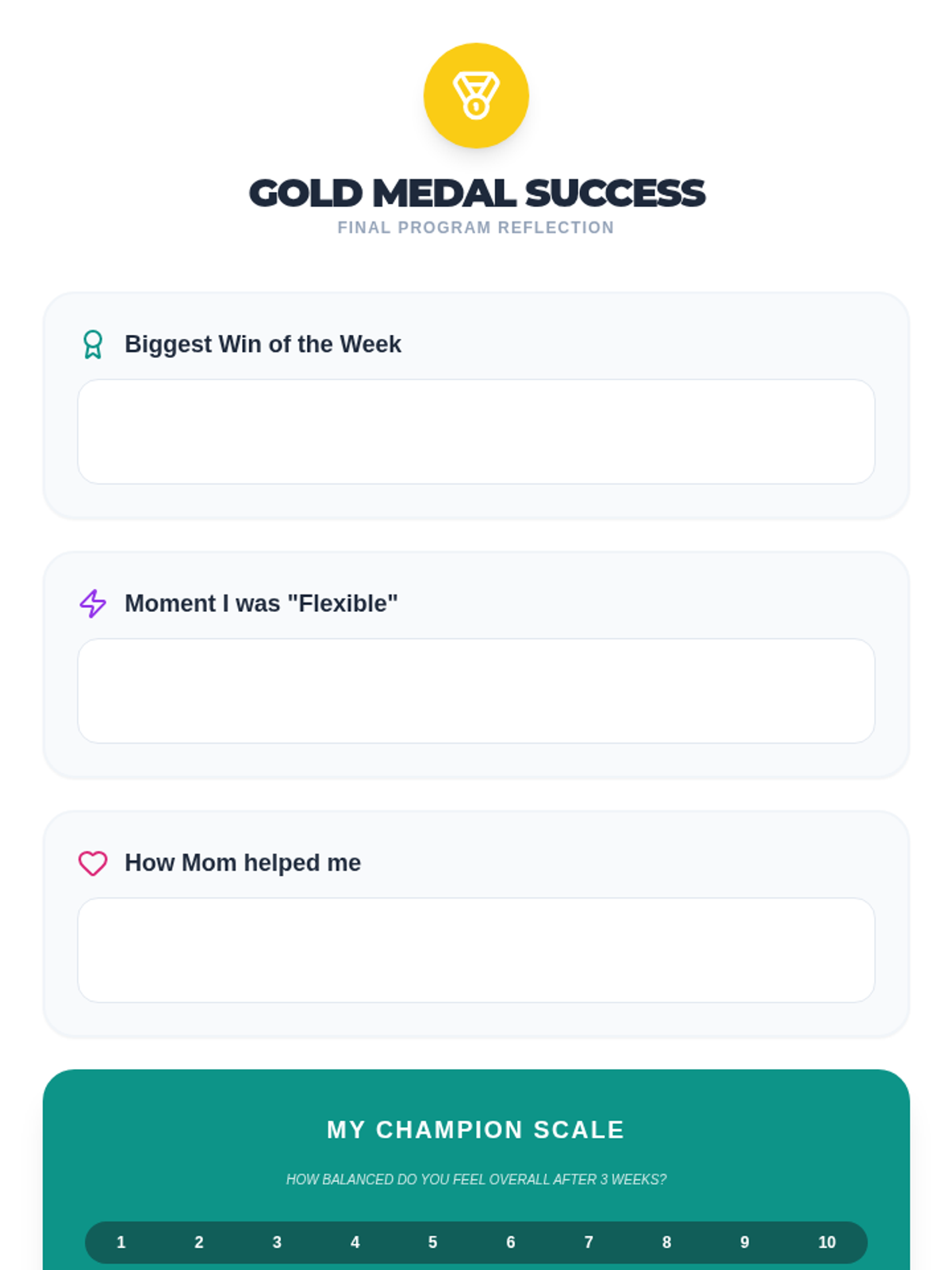
A final reflection journal for the student to record their progress over the 3-week program. Revised to fit perfectly on one page, increase box heights, and improve the scaling section for better student usability.
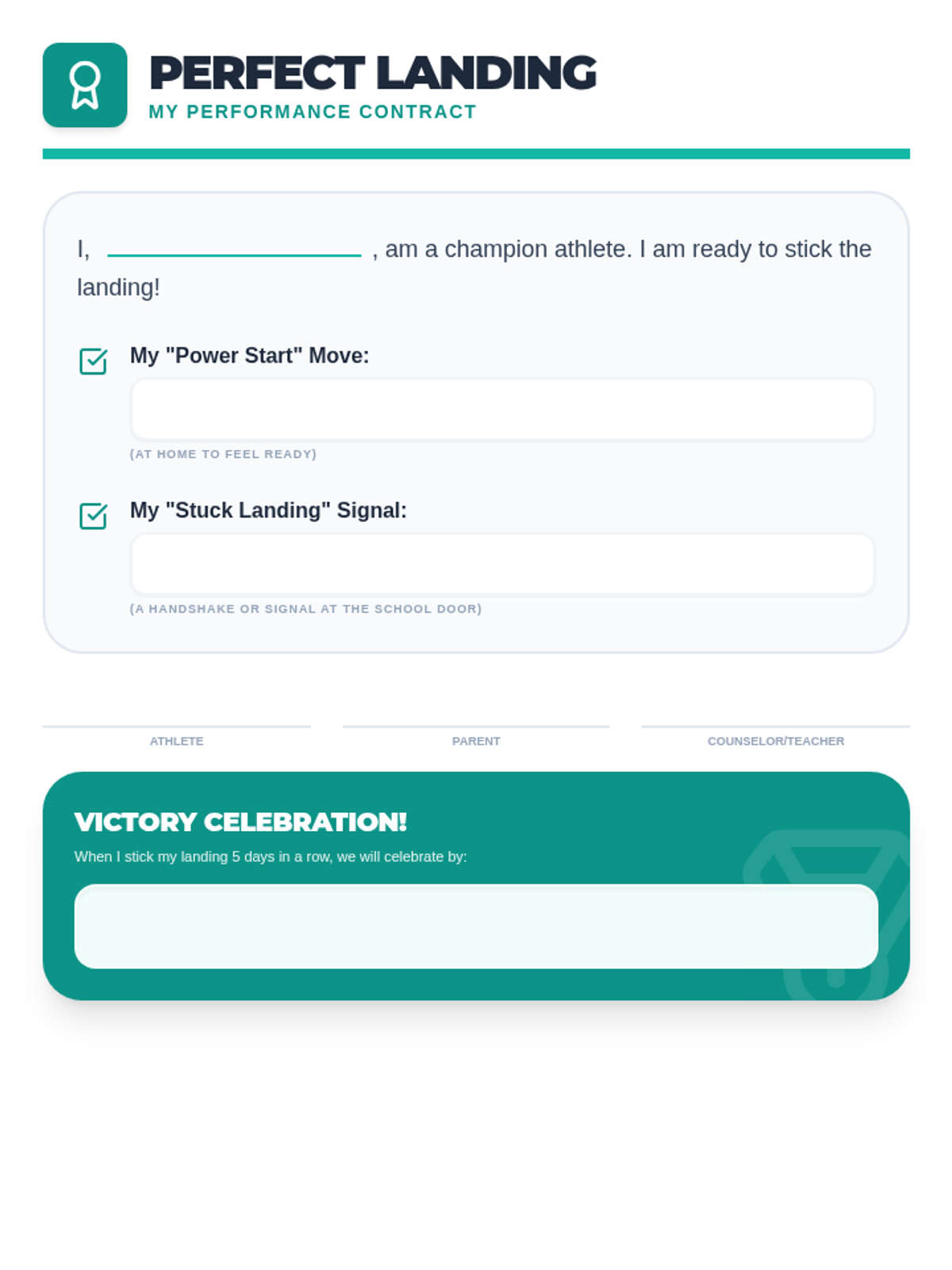
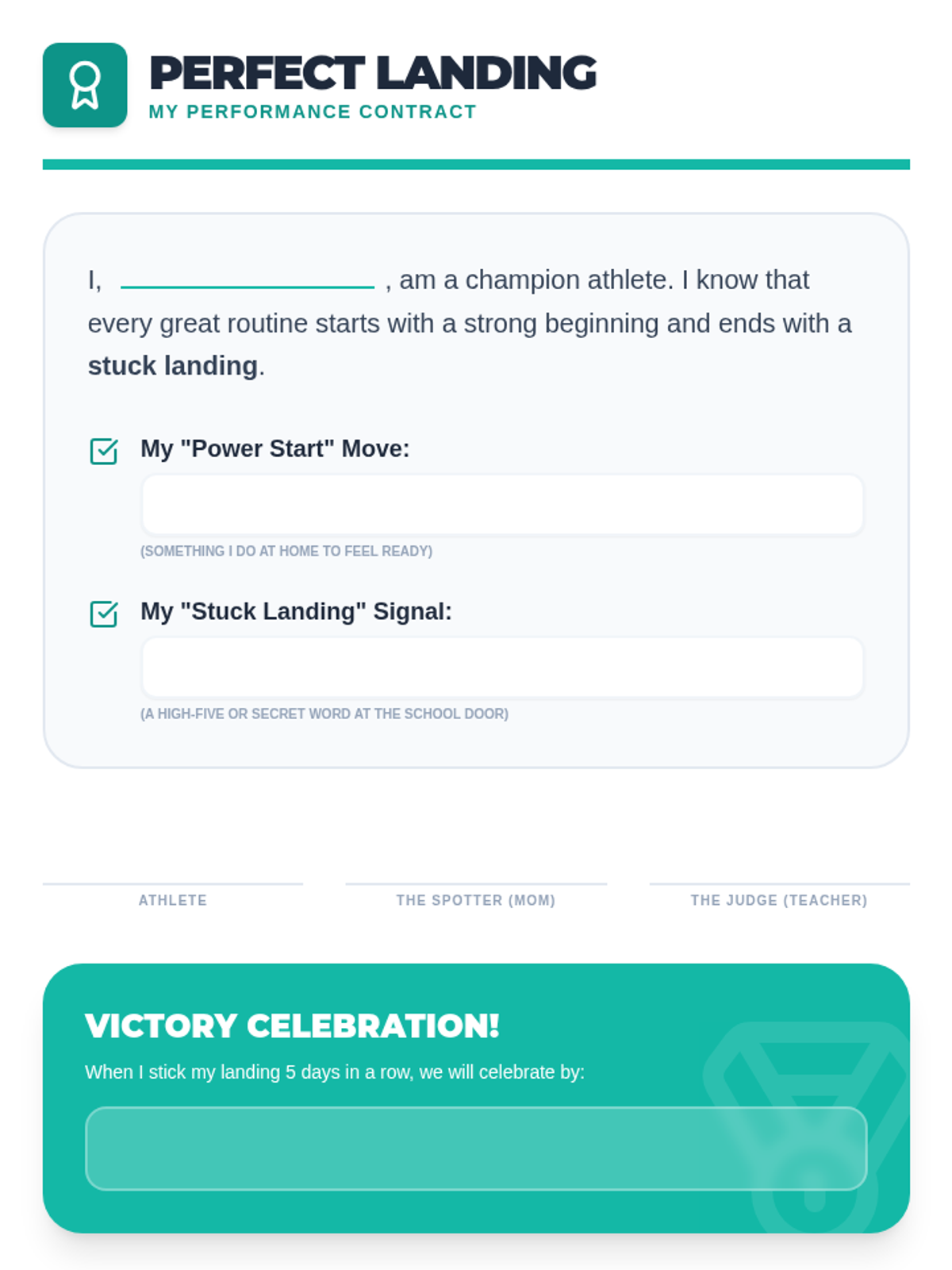
A collaborative home-school contract for the student, parent, and teacher. Revised to fit on a single page, improve visual balance, and lighten the work areas for better legibility.
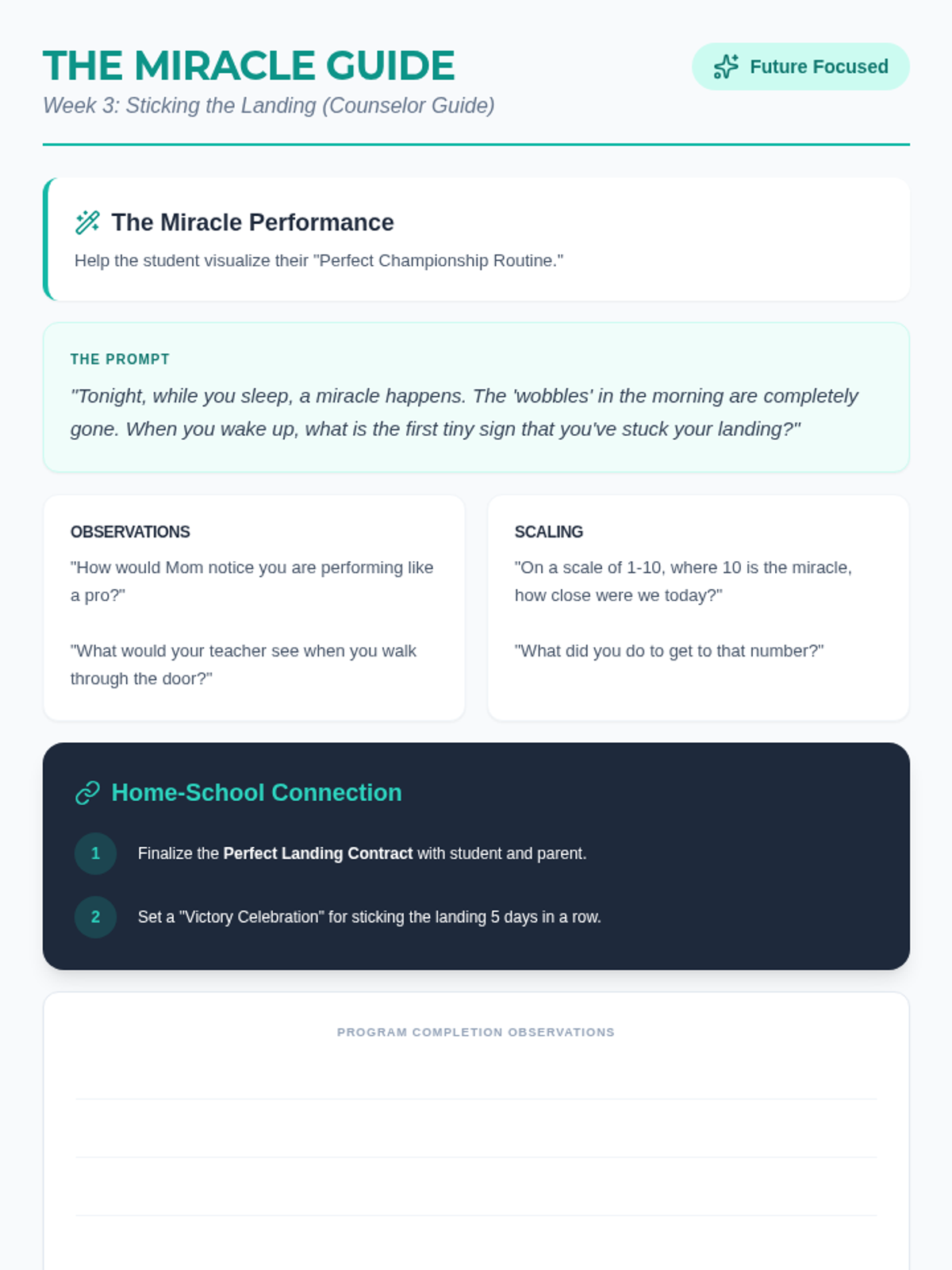
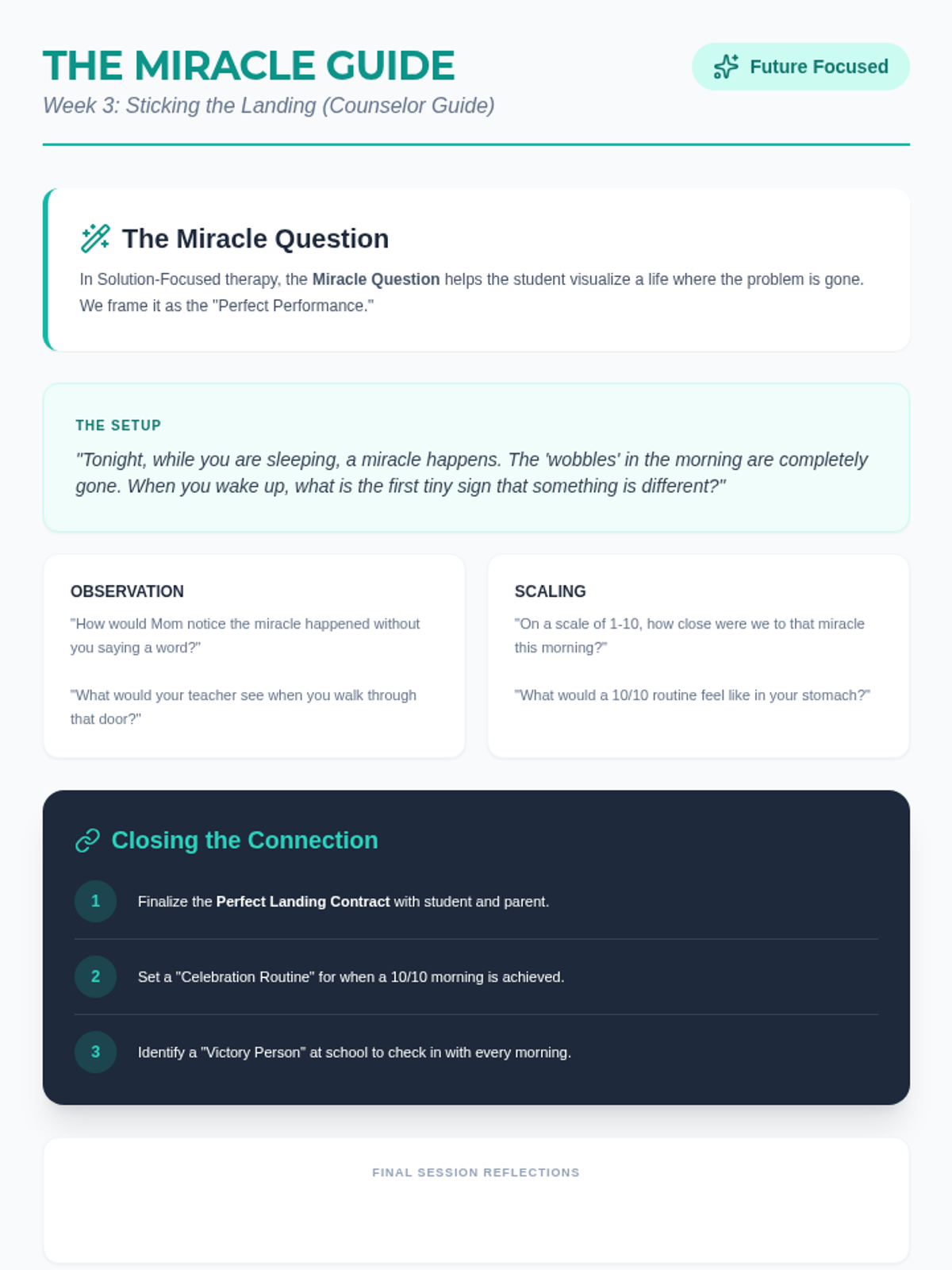
A counselor's guide for the third week of the Perfect Landing Program. Features SFBT "Miracle Question" prompts. Revised to consolidate everything onto one page, increase font sizes, and improve the reflection area.
The final slide deck for the Perfect Landing Program. Revised to remove visual bugs, improve text contrast, and fix element alignment on Slide 3.
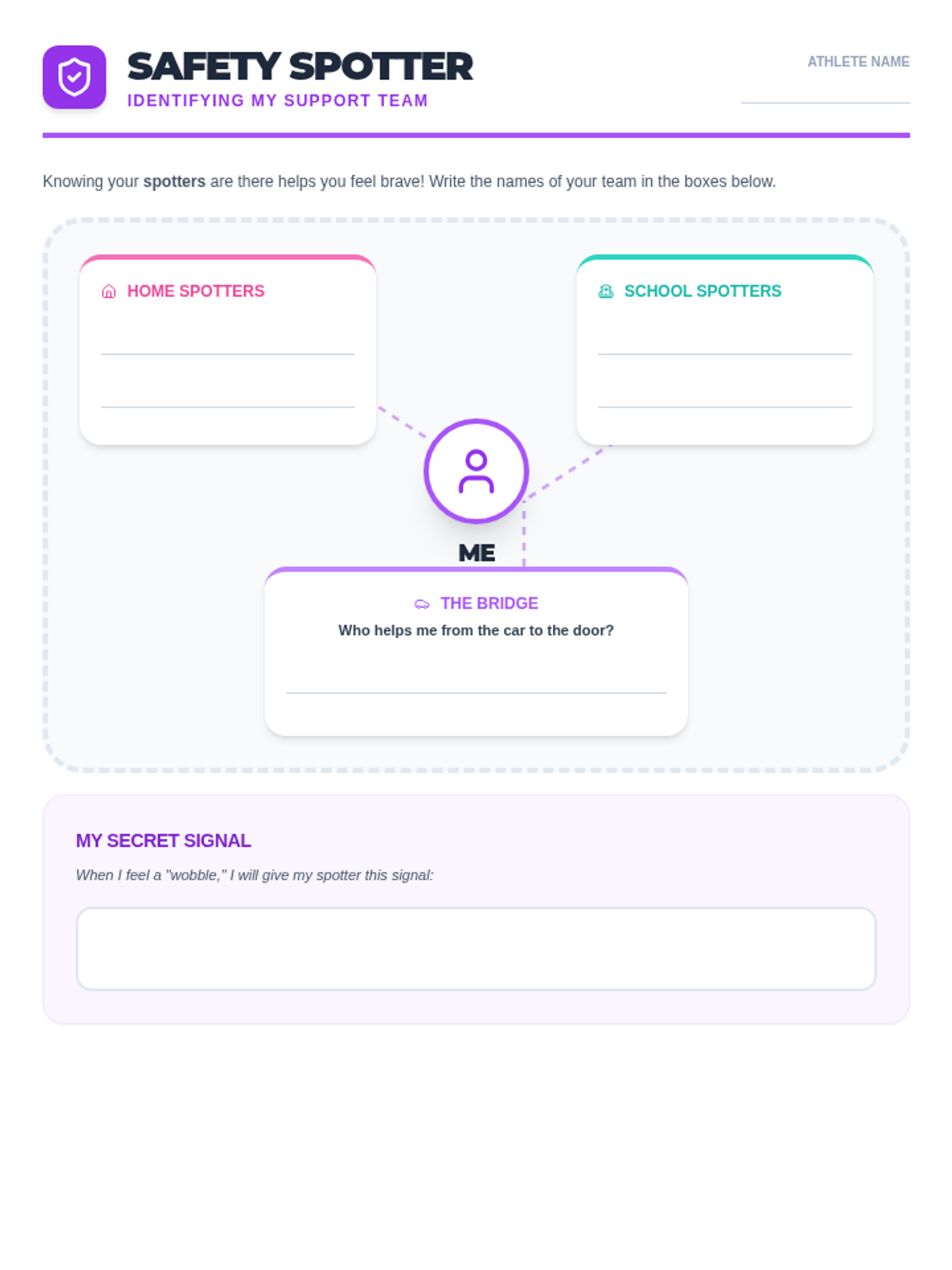
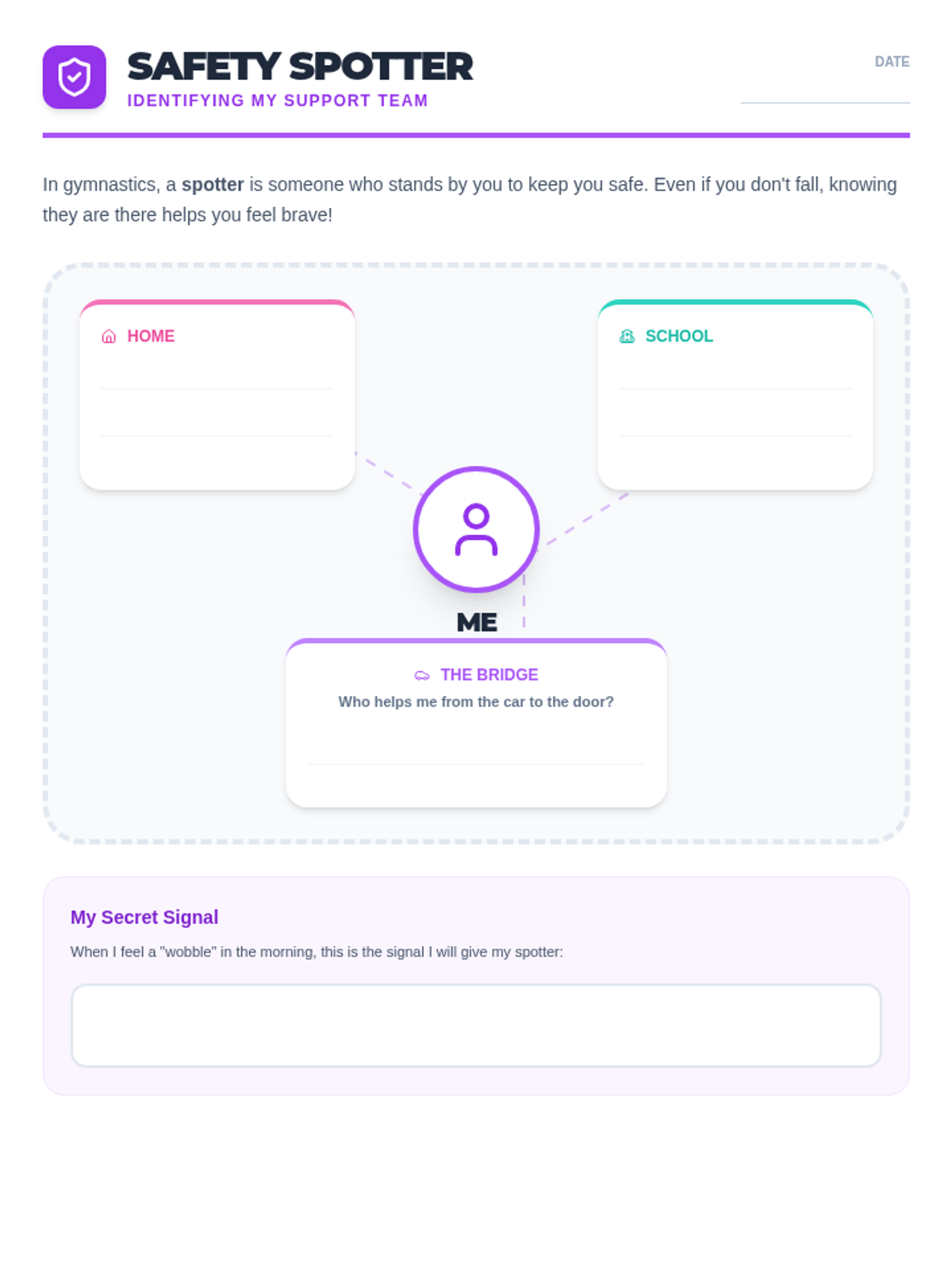
A worksheet for identifying support systems. Revised to darken writing lines, balance the layout, and ensure everything fits perfectly on a single page with usable student work areas.
A final reflection journal for the student to record their progress over the 3-week program. Includes scaling questions and success highlights.
A collaborative home-school contract for the student, parent, and teacher. Formalizes the "Power Start" and "Stuck Landing" goals with a reward system.
A counselor's guide for the third week of the Perfect Landing Program. Features SFBT "Miracle Question" prompts and a structured framework for the final home-school connection.
The final slide deck for the Perfect Landing Program, focusing on the SFBT "Miracle Question" and visualizing a perfect school transition. Features a concluding "Closing Ceremony" slide.
A worksheet for students to identify support systems. Revised to fix page breaks, improve handwriting space, and increase text contrast and visibility.
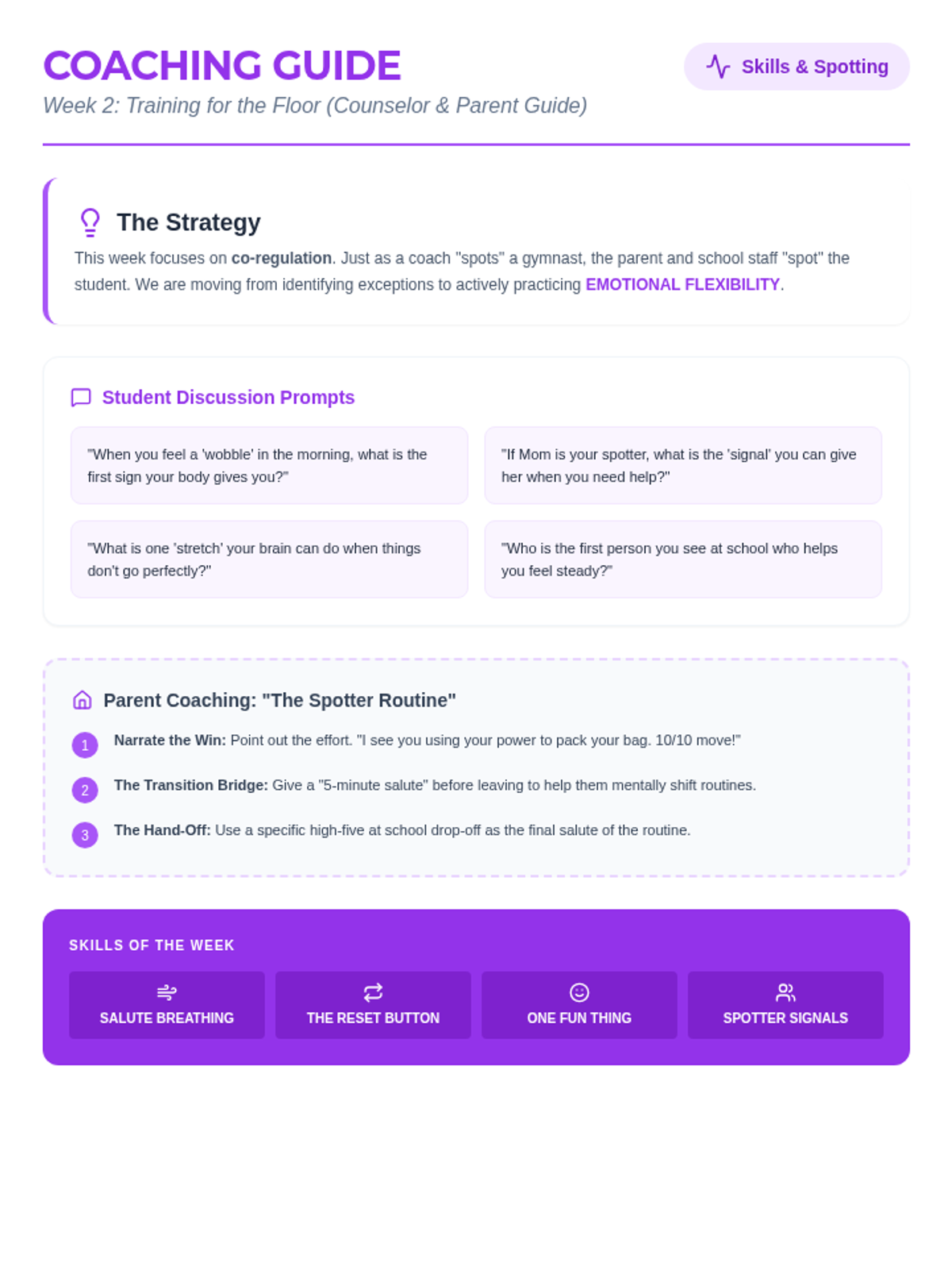
A facilitation guide for counselors and parents for Week 2 of the program. Revised to fix page break issues, markdown rendering, and consolidate layout.
A slide deck for the second week of the Perfect Landing Program, focusing on coping skills, identifying support systems (spotters), and mental flexibility during school transitions.
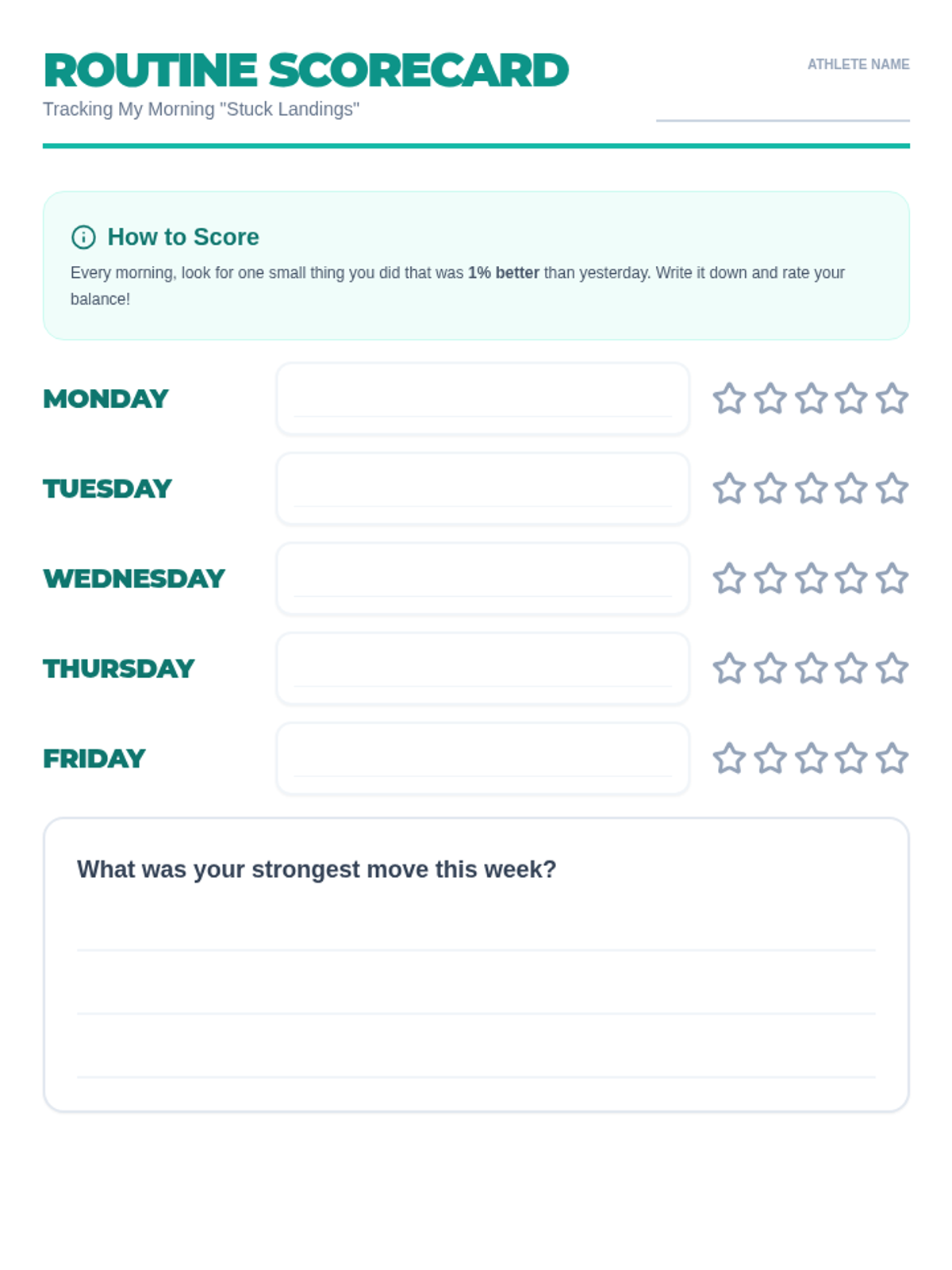
A student tracking worksheet for the first week. Revised to improve contrast, fix label clipping, add handwriting lines, and fix page break issues for the reflection section.
An introductory slide deck for the first week of the Perfect Landing Program. Revised with a "Next Steps" conclusion slide and minor cleanup.
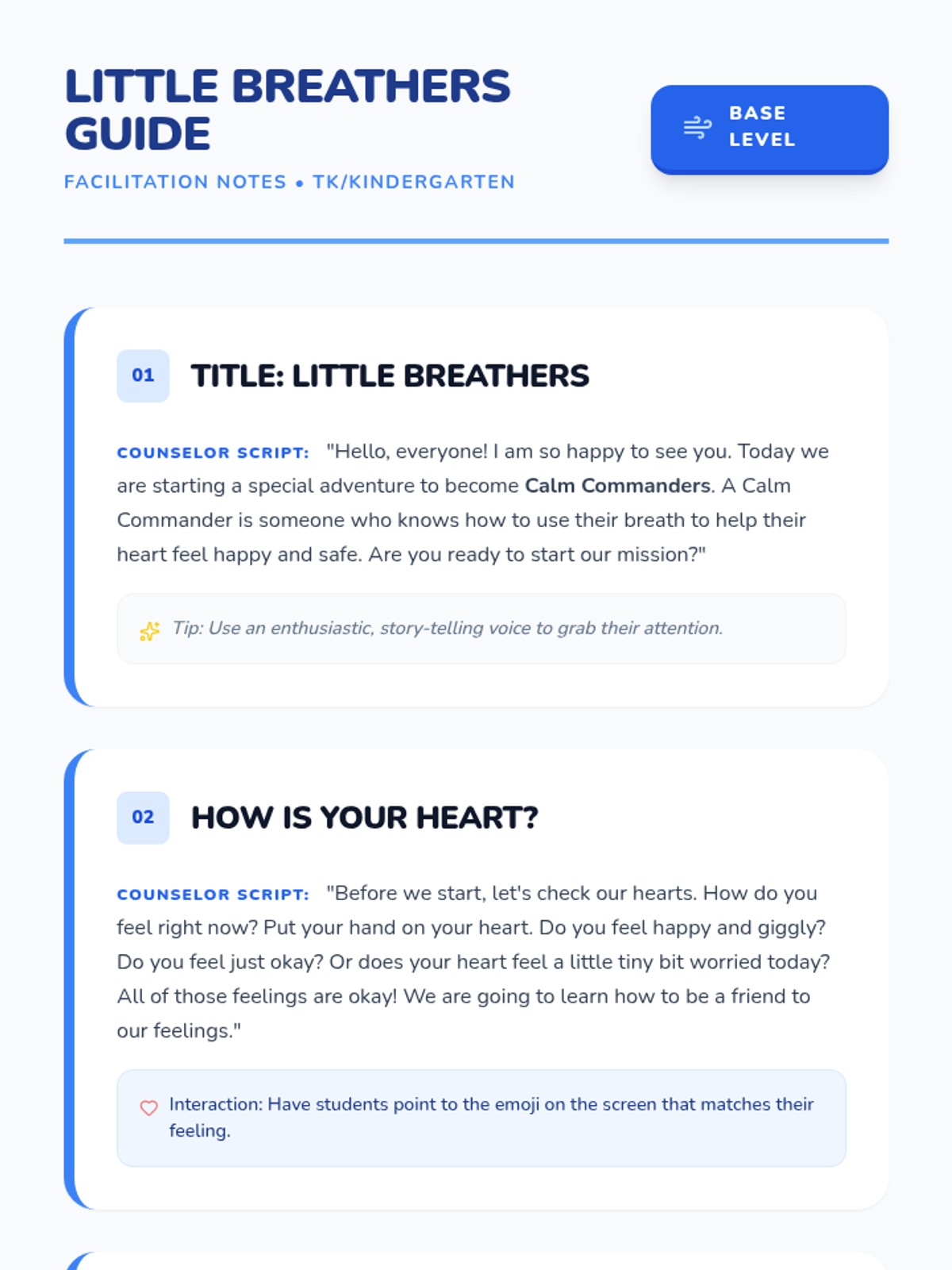
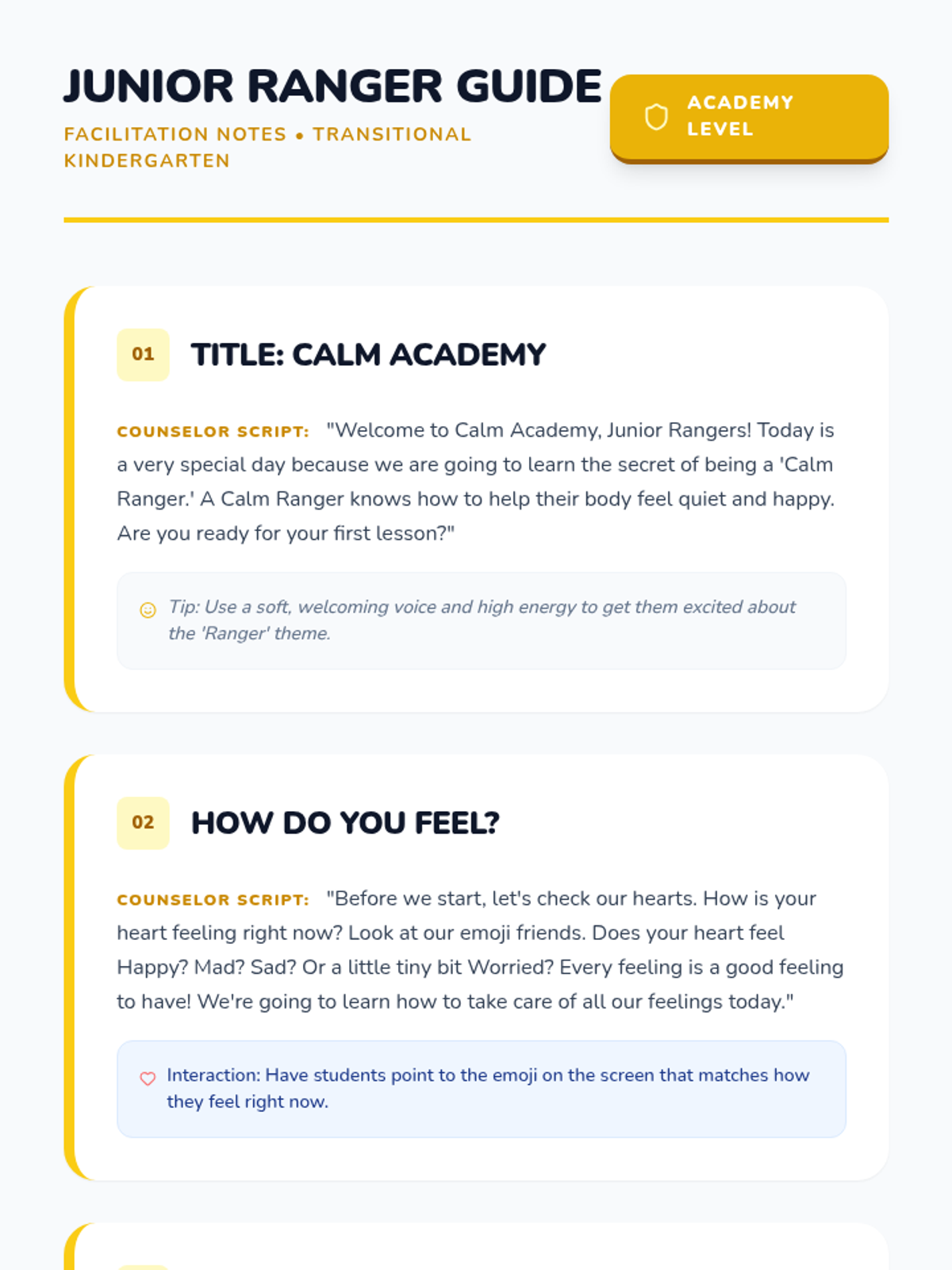
A detailed slide-by-slide facilitation guide for the TK/Kindergarten lesson 'Little Breathers'. Includes simple counselor scripts, child-friendly analogies for stress, and instructions for interactive breathing practice.
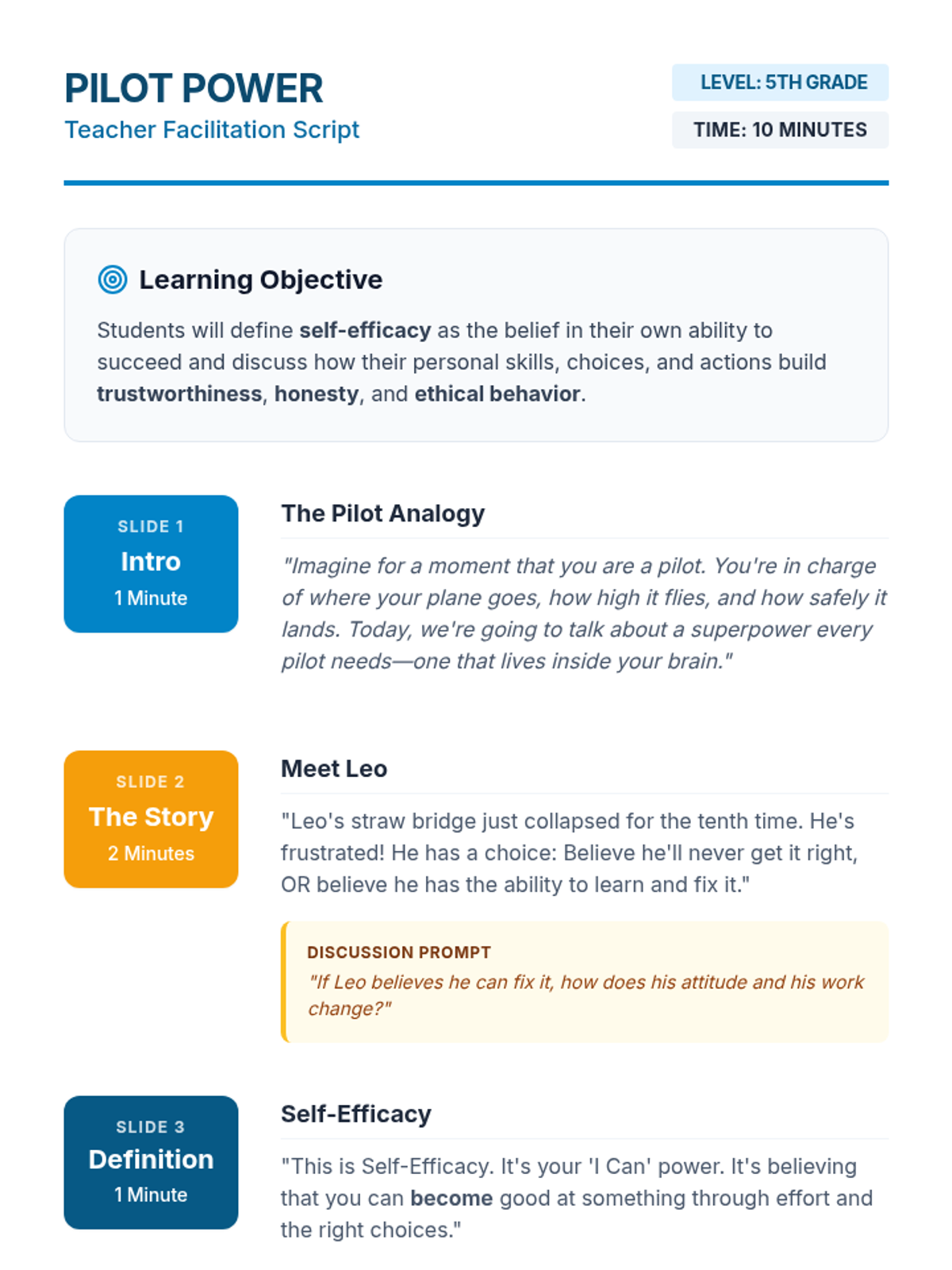
A detailed 10-minute teacher script and facilitation guide for a 5th-grade lesson on self-efficacy, trustworthiness, and ethical decision-making using a pilot analogy.
A 10-minute slide deck for 5th graders on self-efficacy, featuring a 'pilot' theme and the story of Leo to explain how belief in oneself drives ethical choices and trustworthiness.
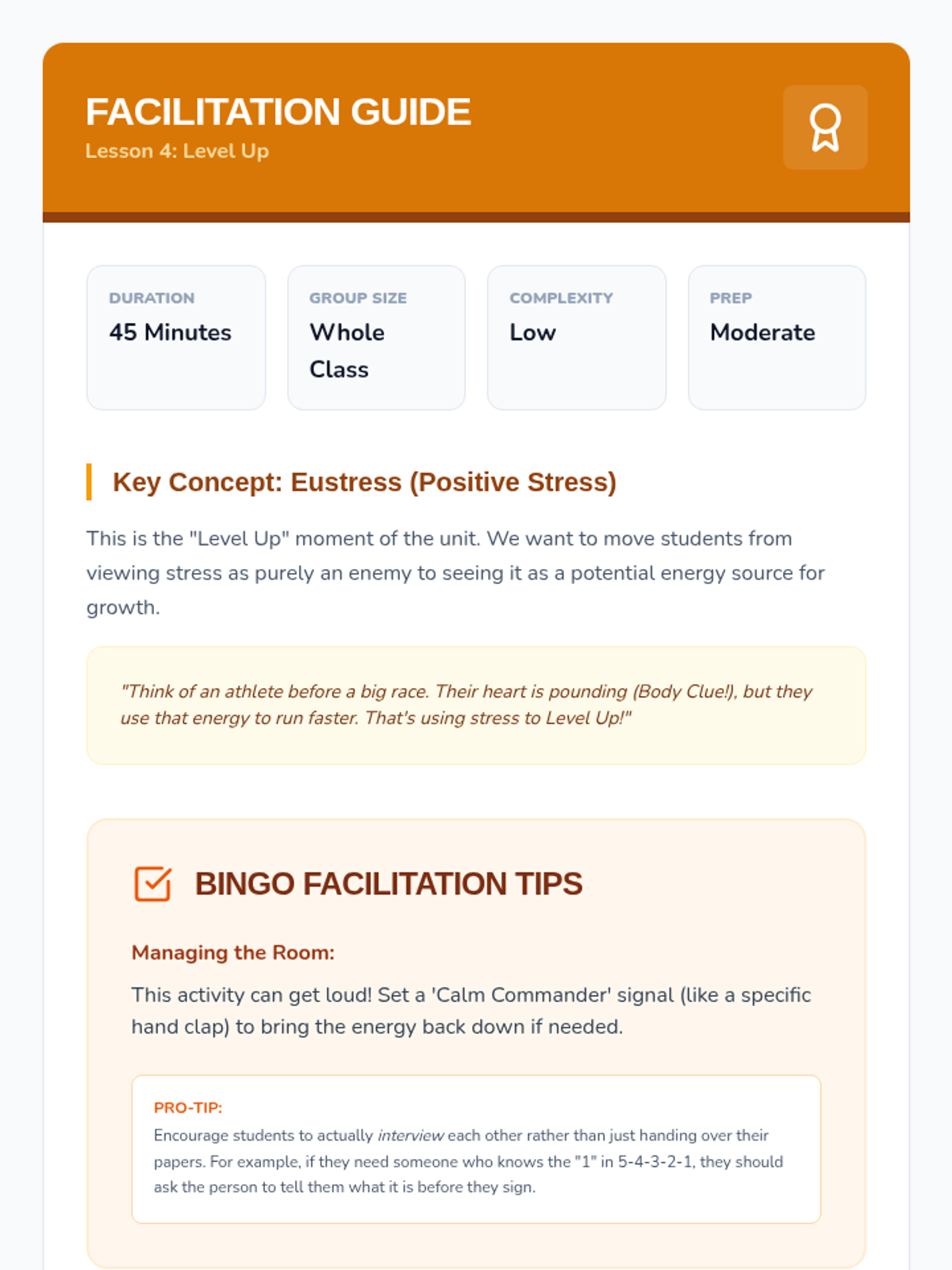
Teacher facilitation guide for Lesson 4, covering the concept of positive stress, bingo activity management, and unit closure strategies.
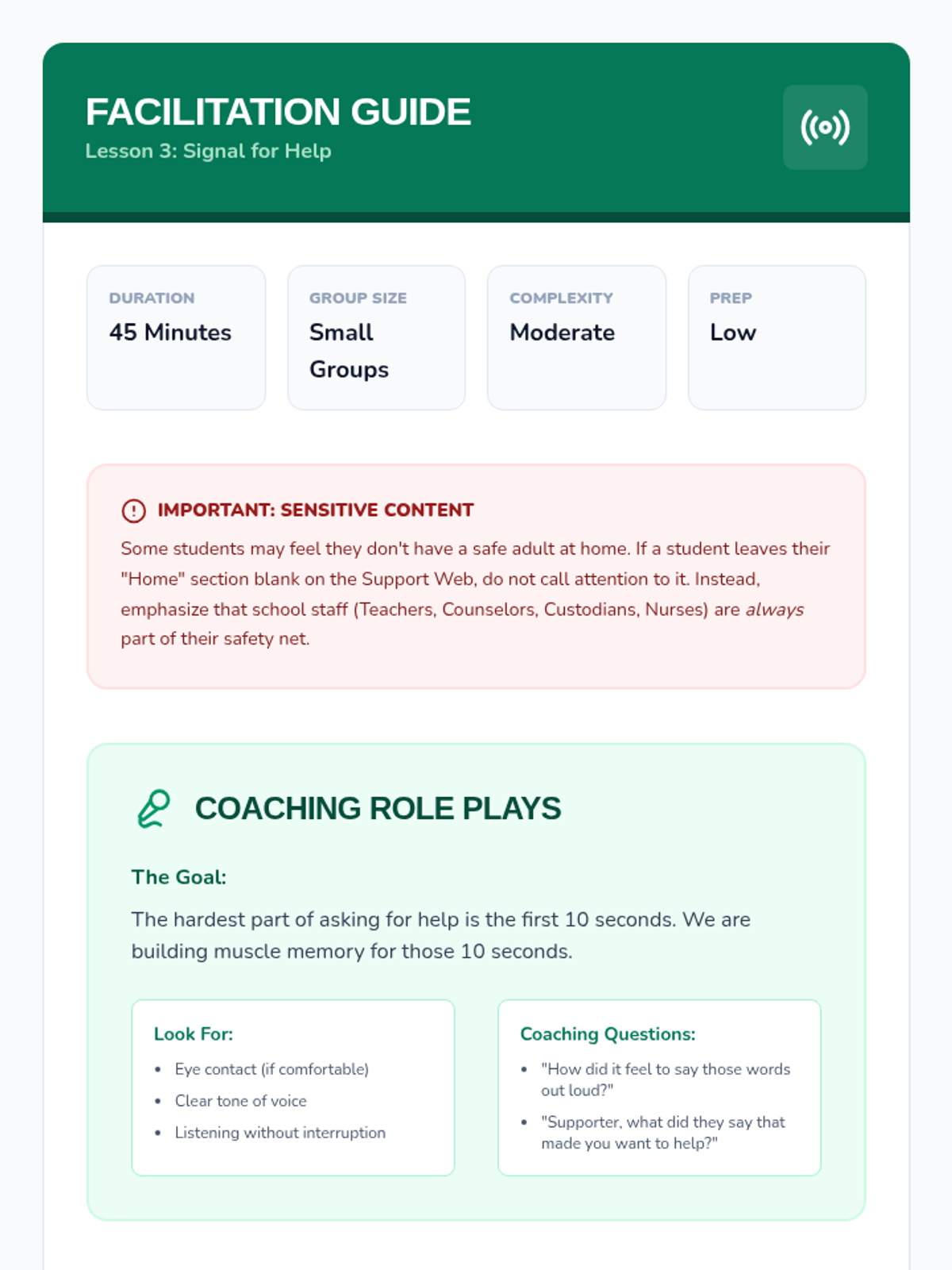
Teacher facilitation guide for Lesson 3, focusing on social support systems, handling sensitive disclosures, and coaching role-play activities.
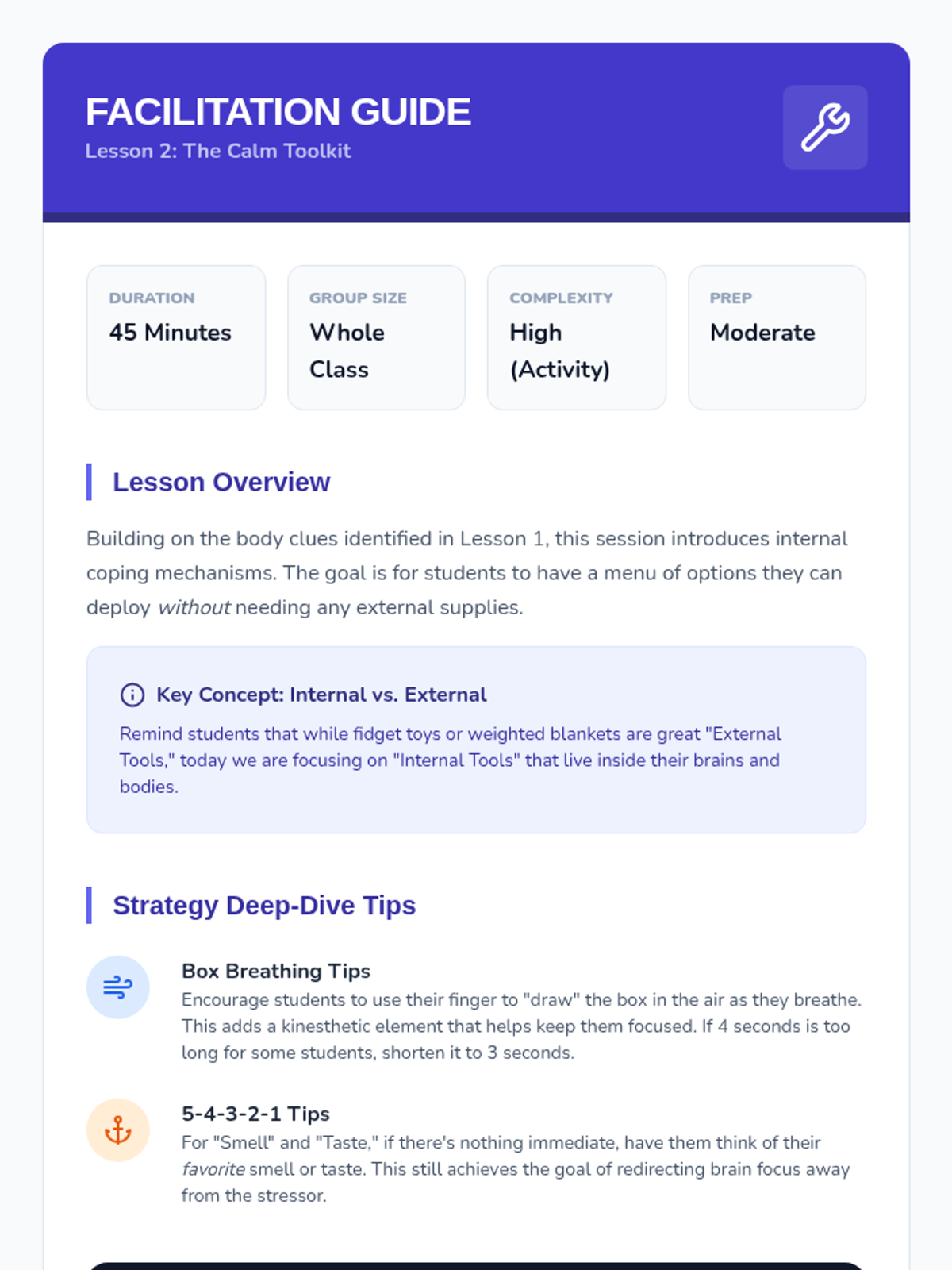
Teacher facilitation guide for Lesson 2, providing instructional depth on internal coping mechanisms, delivery tips for breathing exercises, and activity facilitation strategies.
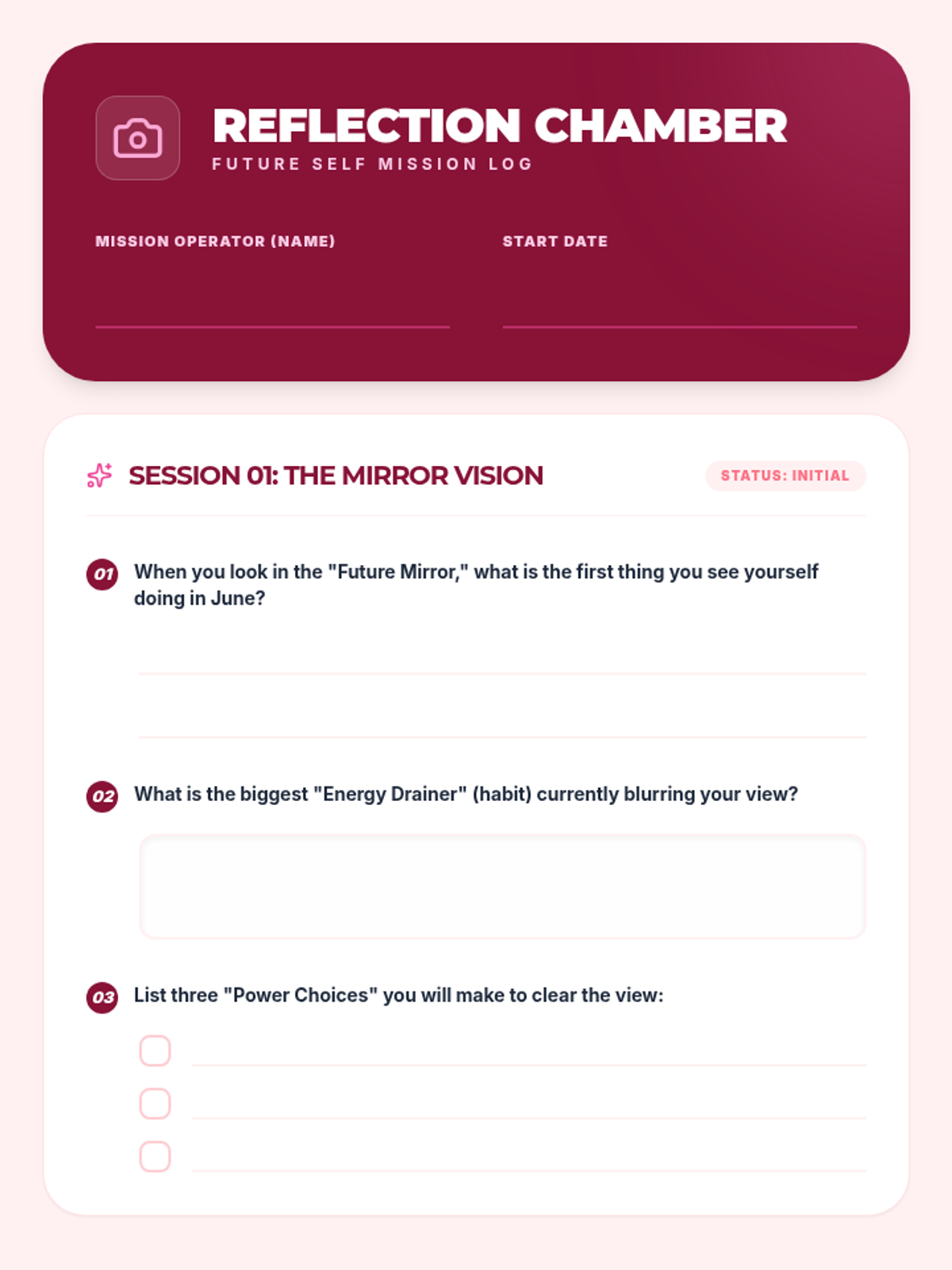
The Reflection Chamber Journal, redesigned with a pink and rose theme. This two-page journal includes reflection prompts, habit trackers, and clarity ratings for student self-assessment.
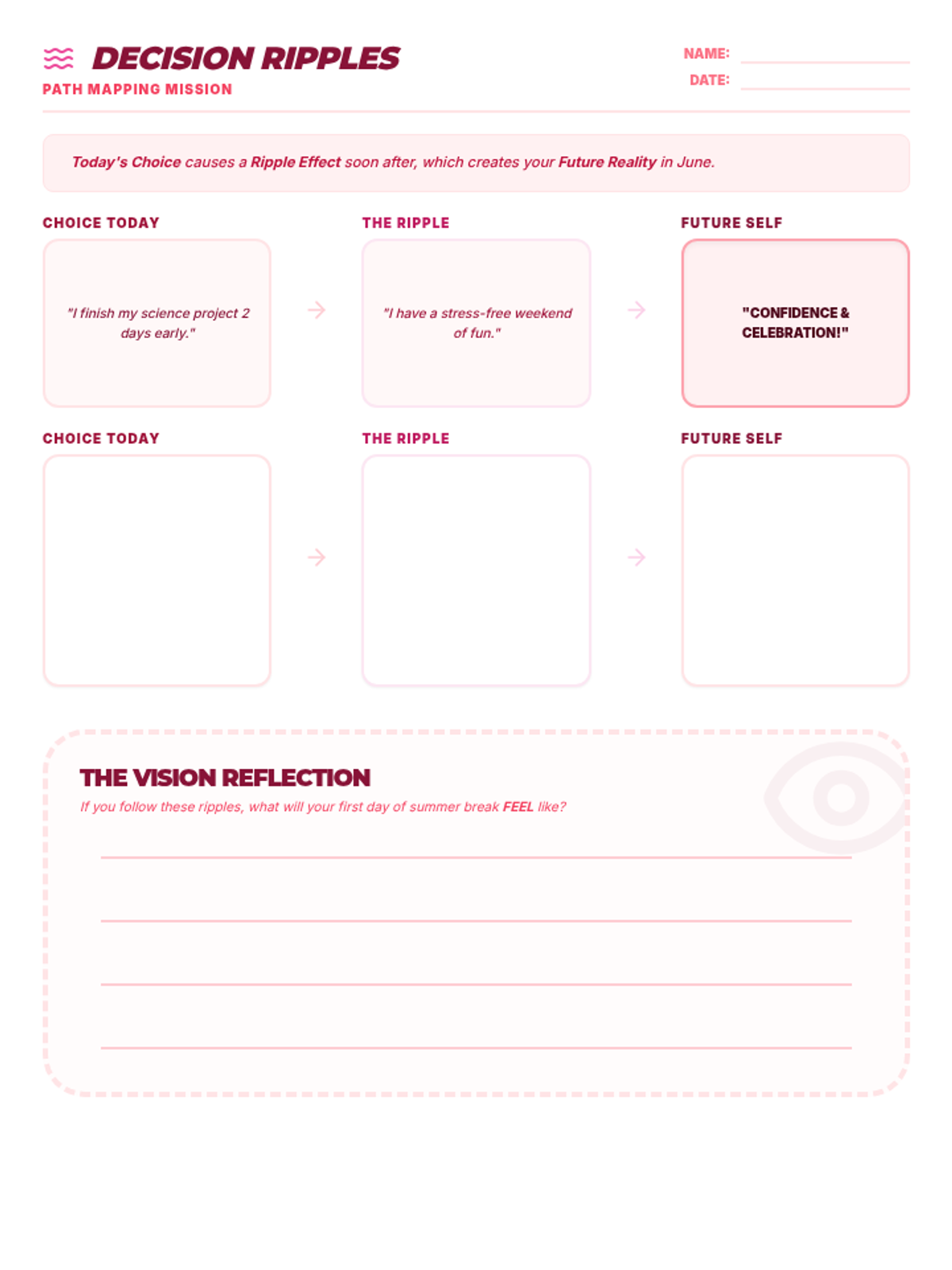
A student mapping worksheet updated with a pink and rose aesthetic. It helps students connect current behavior choices to future consequences and end-of-year goals.
A visually dynamic slide deck exploring the concept of the 'Mirror Effect,' now themed in various shades of pink and rose. It features high-contrast visuals on visualization, decision paths, and future rewards.
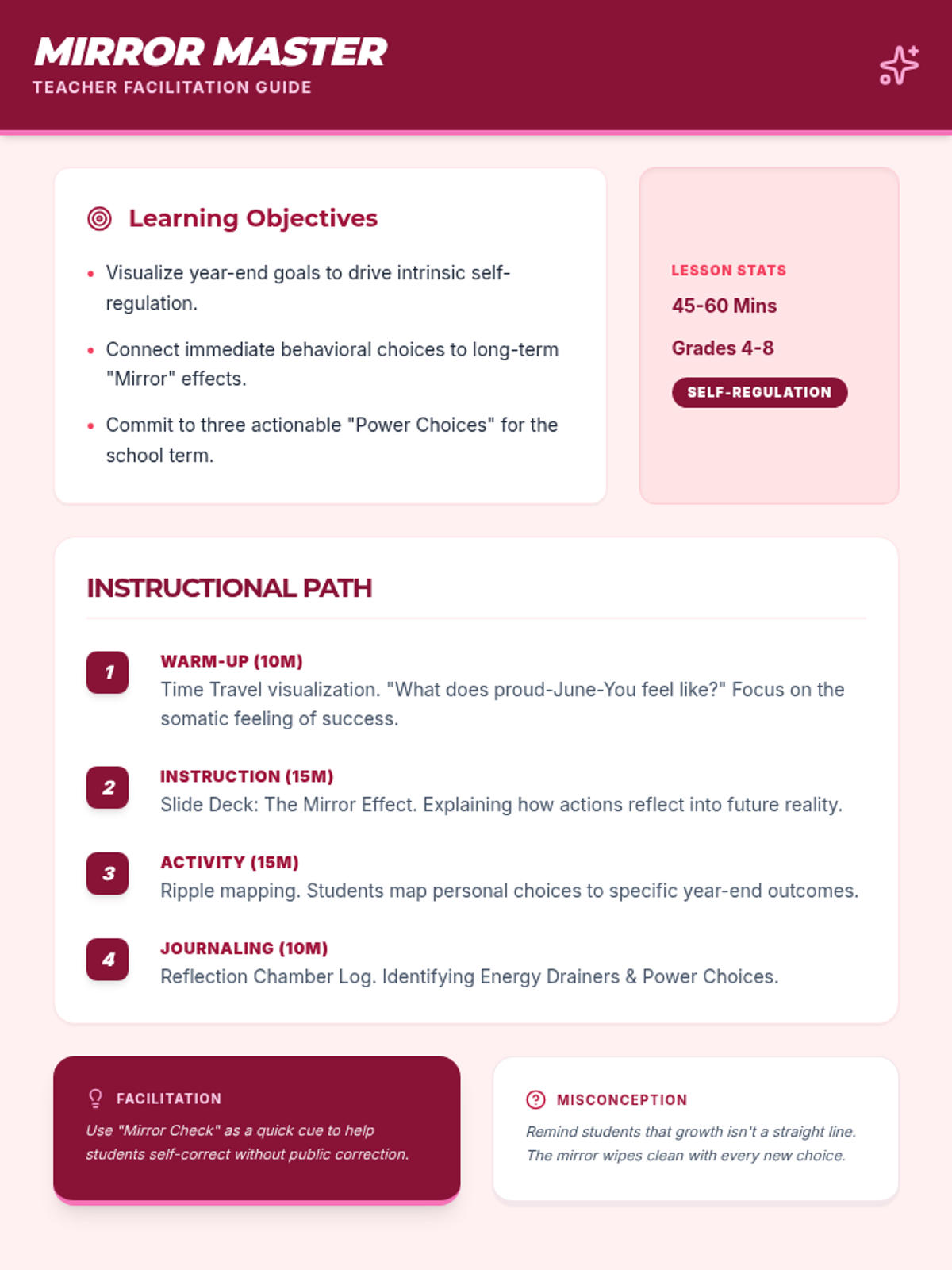
A comprehensive teacher guide for the Future Self Mirror lesson, updated with a professional pink and rose color palette. It includes learning objectives, instructional sequences, and support strategies.
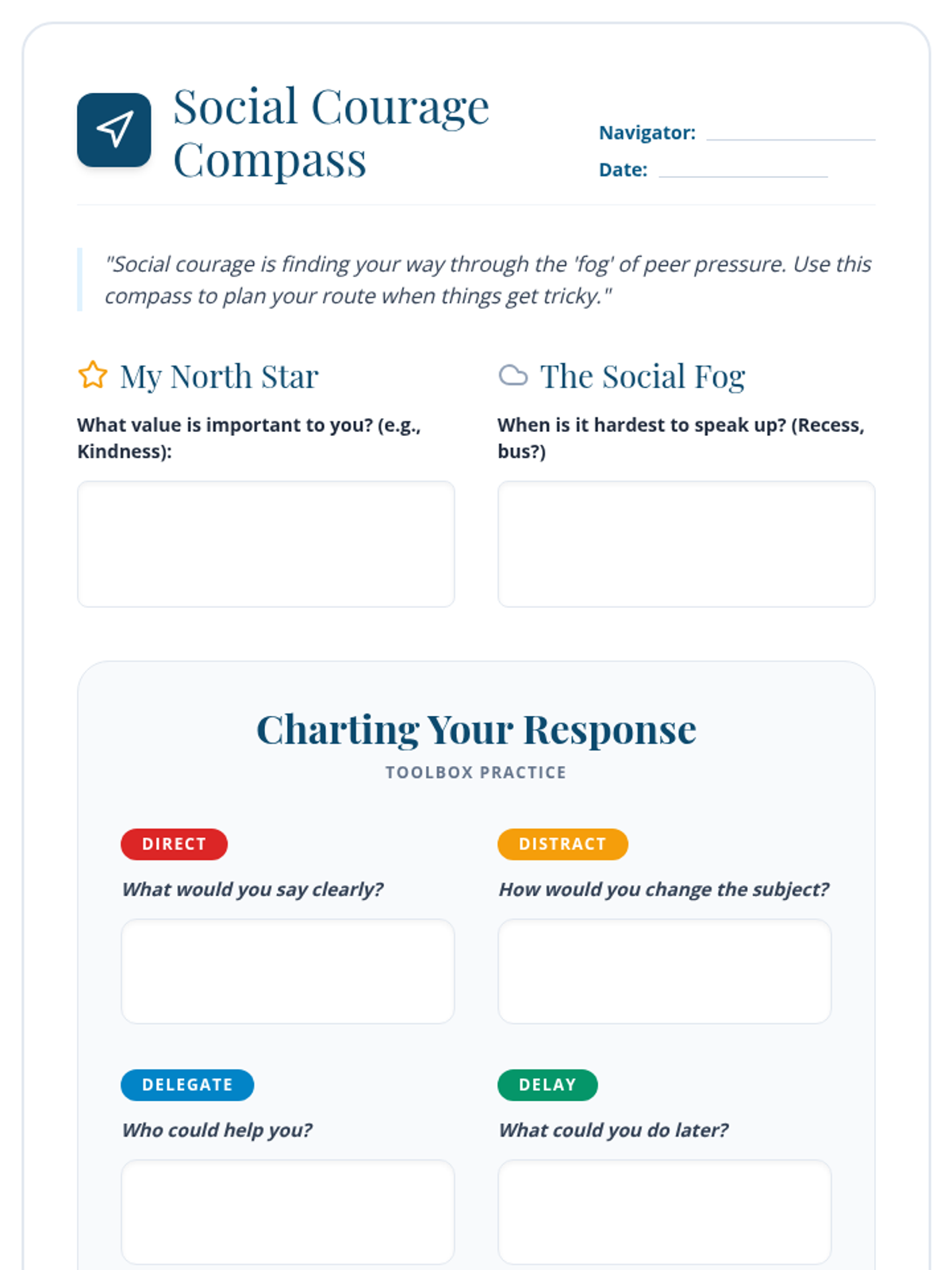
A student-facing activity worksheet for the Social Courage Compass lesson. Revised for better spacing, legibility in reflection areas, and clear page breaks. Goal is to fit within 2 clean pages.
A visually engaging slide deck for a 5th-grade SEL lesson on social courage, explaining the bystander effect and the 4 D's of being an upstander with scenarios and role-play prompts.
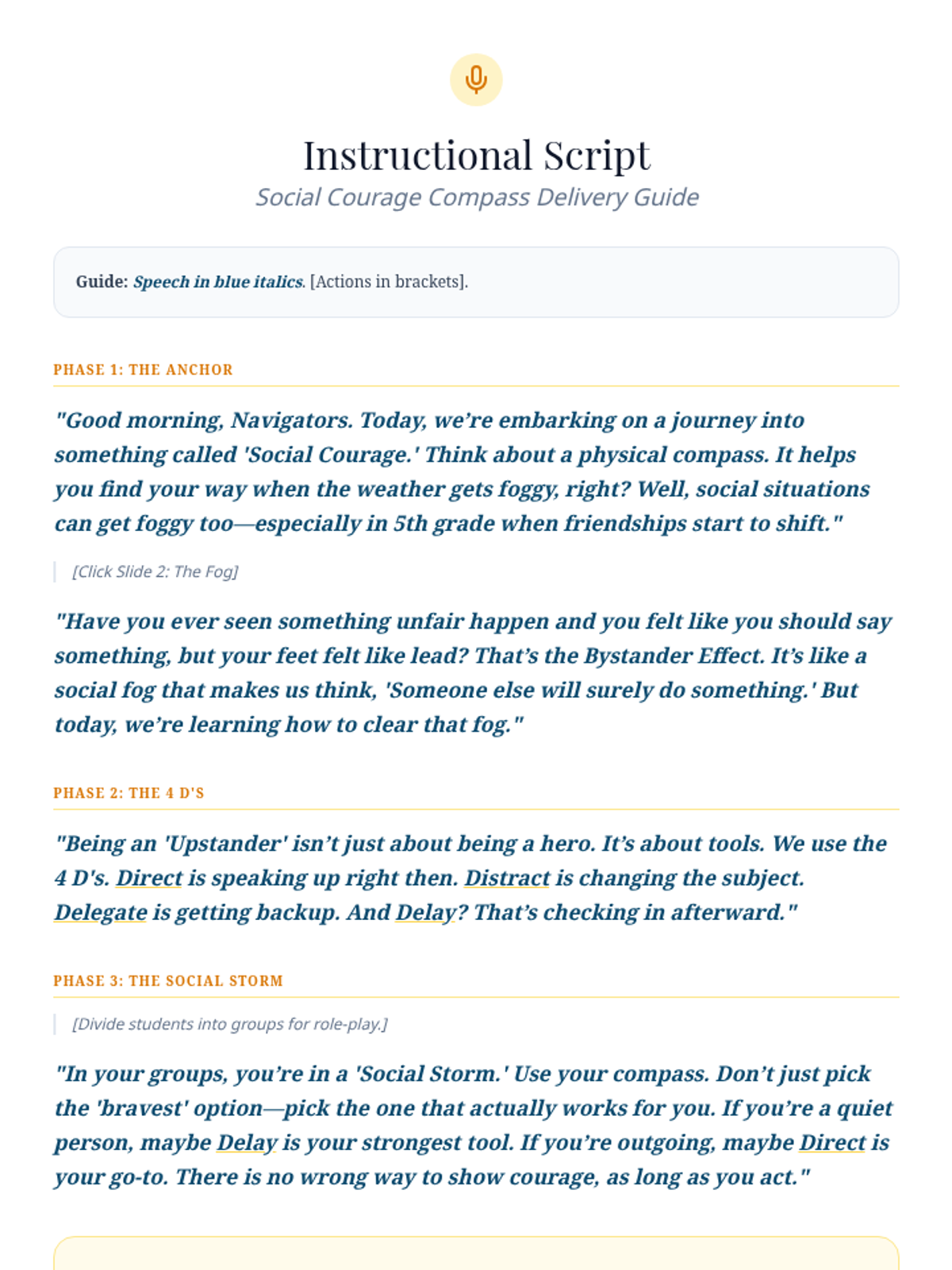
A detailed instructional script for teachers to deliver the Social Courage Compass lesson. Revised for better page flow and consistent vocabulary formatting.
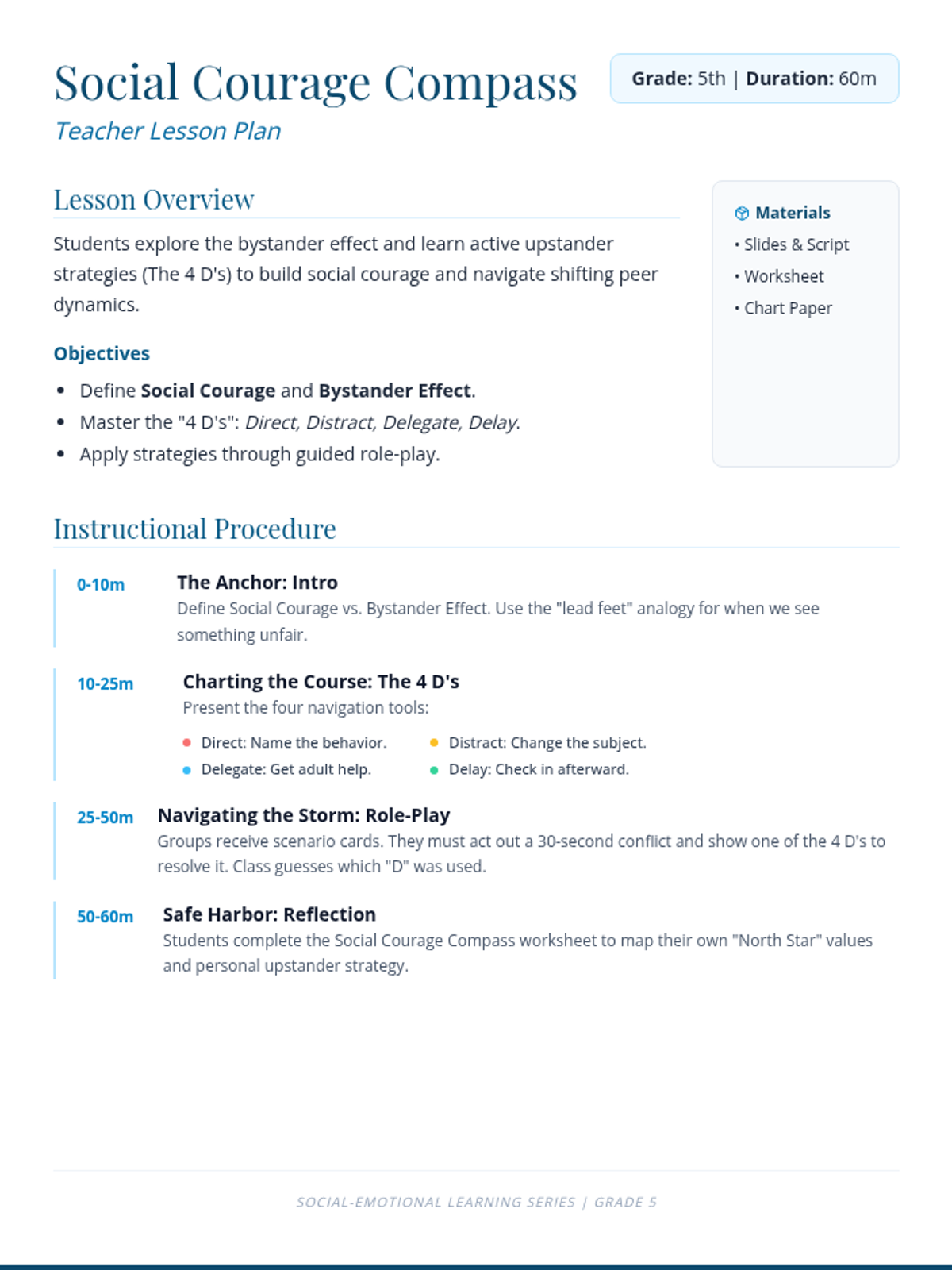
A comprehensive teacher lesson plan for a 5-grade SEL lesson on social courage, featuring learning objectives, a timed procedure, and differentiation strategies. Revised for better page flow and polish.
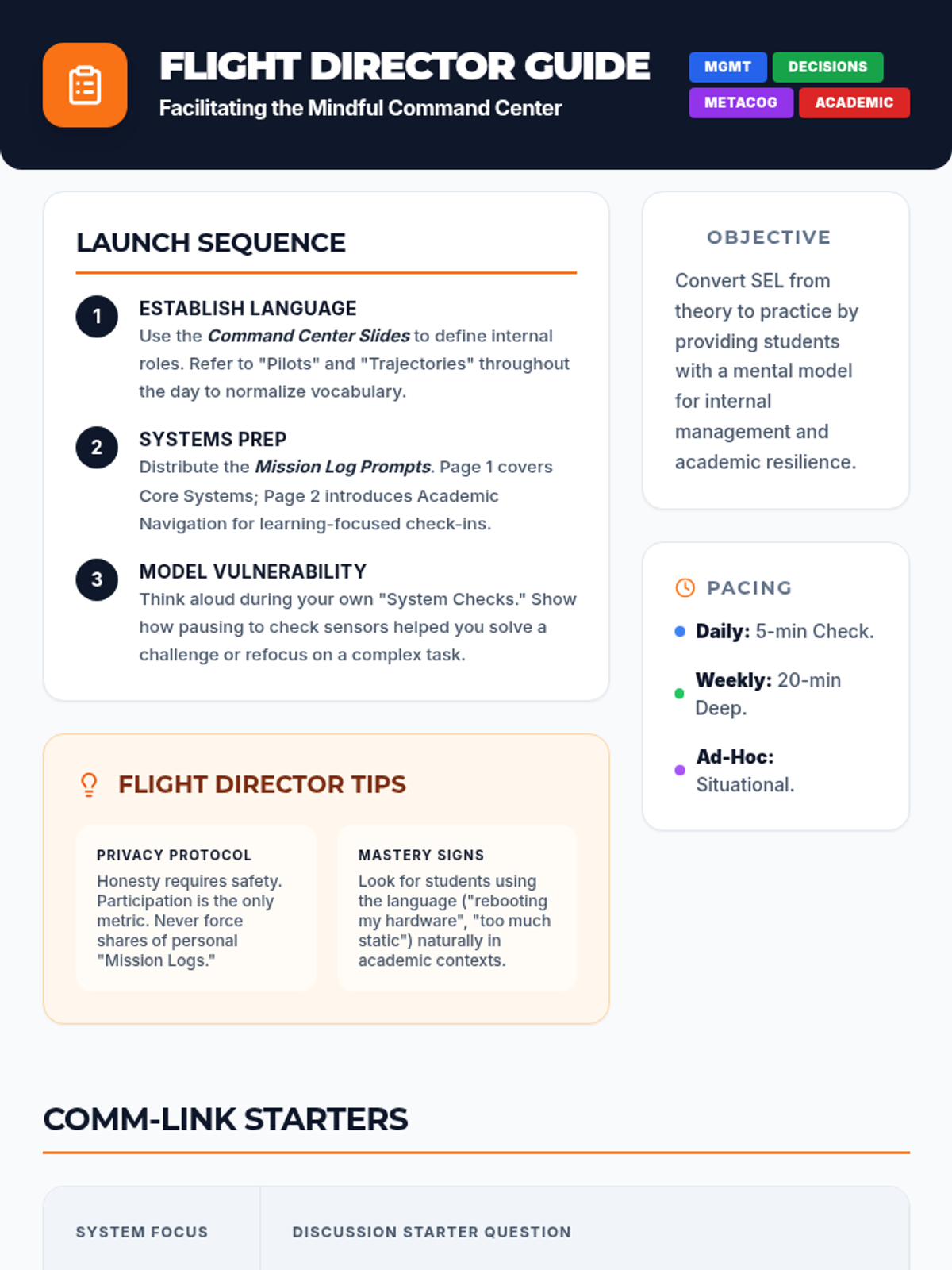
A guide for teachers to implement the 'Command Center' journaling system. Includes pacing suggestions, facilitation tips, and discussion starters.
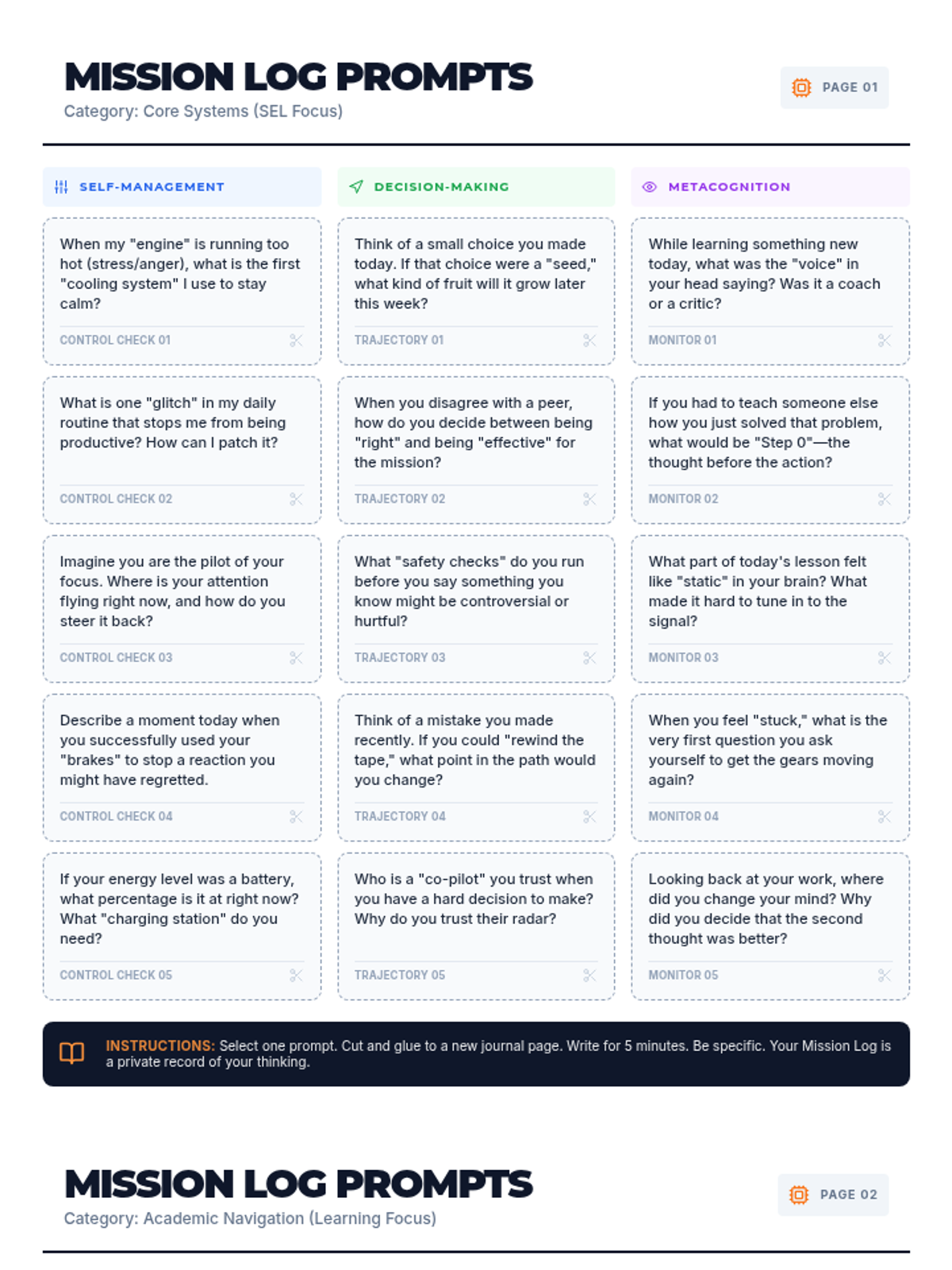
A collection of printable prompt strips categorized by focus area (Core Systems and Academic Navigation). Designed to be cut out and glued into student journals for regular check-ins.
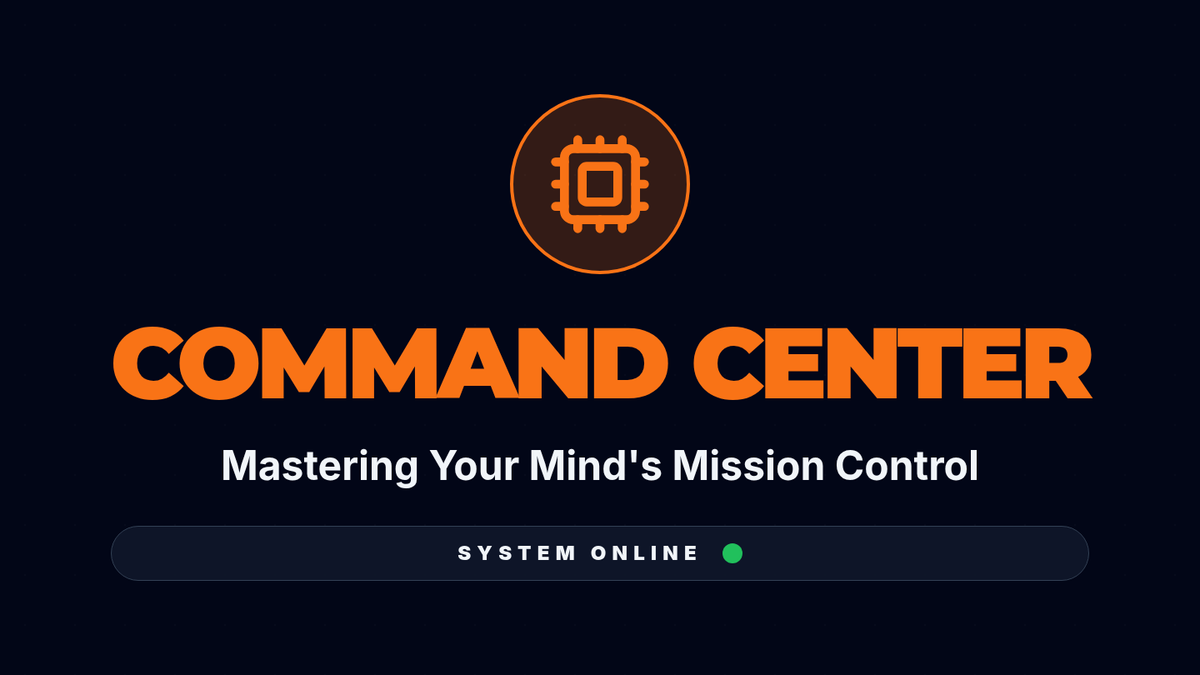
A visual presentation that introduces the 'Command Center' metaphor for self-regulation and metacognition. Includes visual prompts and system-focused slides for classroom discussion.
Slide deck for 4th grade Upstander Elite, featuring 'Confessions of a Former Bully' by Trudy Ludwig, the bullying circle, and power shift strategies. Optimized for high contrast and fixed rendering.
Slide deck for 3rd grade Power Protectors, featuring 'Tease Monster' by Julia Cook, bullying definitions, and the 4 upstander power moves. Optimized for classroom delivery.
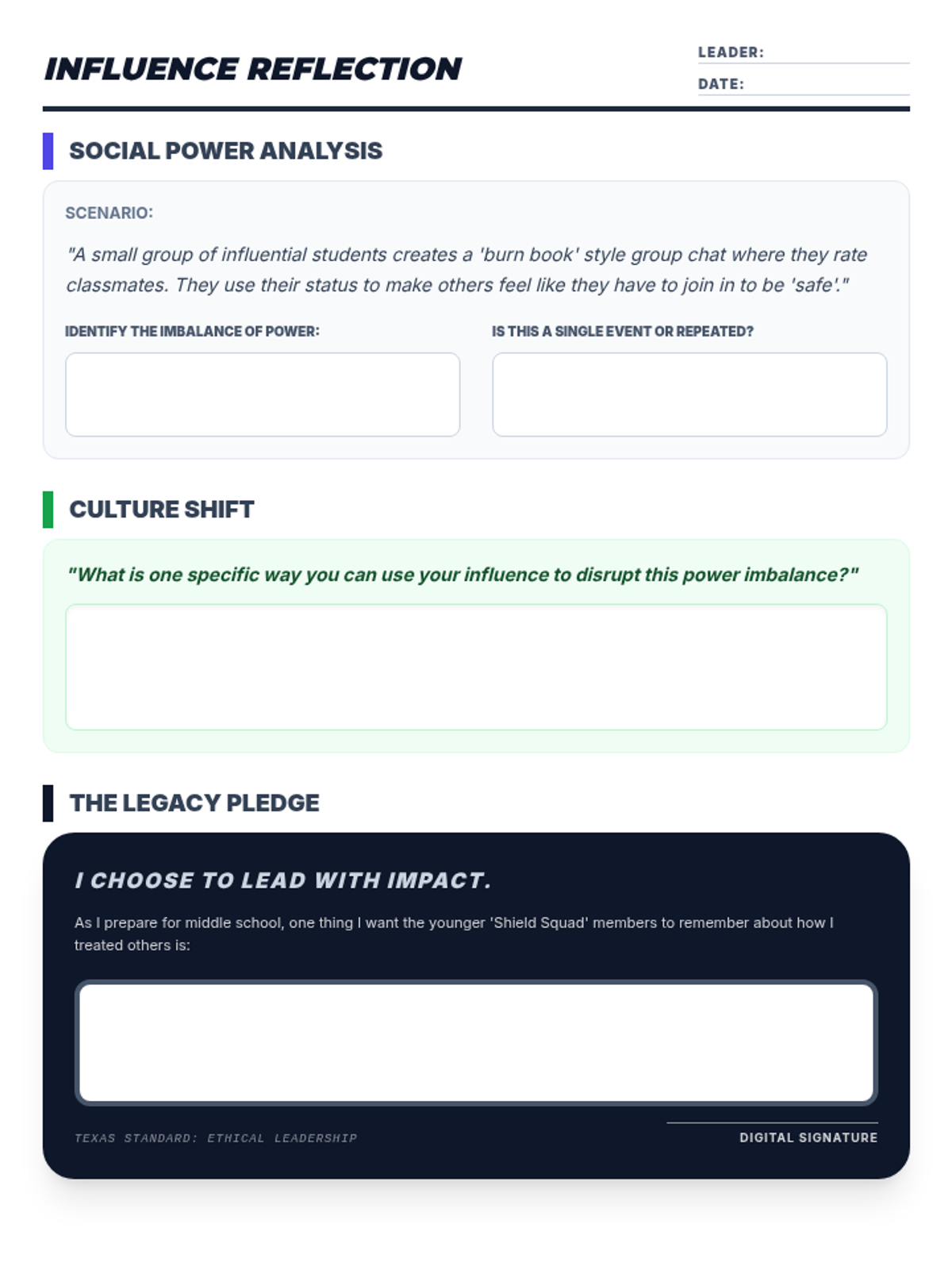
Legacy reflection handout for 5th-6th grade. Features status auditing, a leadership move brainstorm, and a school legacy pledge with high-contrast work areas.
Slide deck for 6th grade Social Leadership, exploring school culture audits, 'Restart' themes, and building a legacy of advocacy. Optimized for high contrast and fixed rendering. Includes conflict vs bullying comparison.
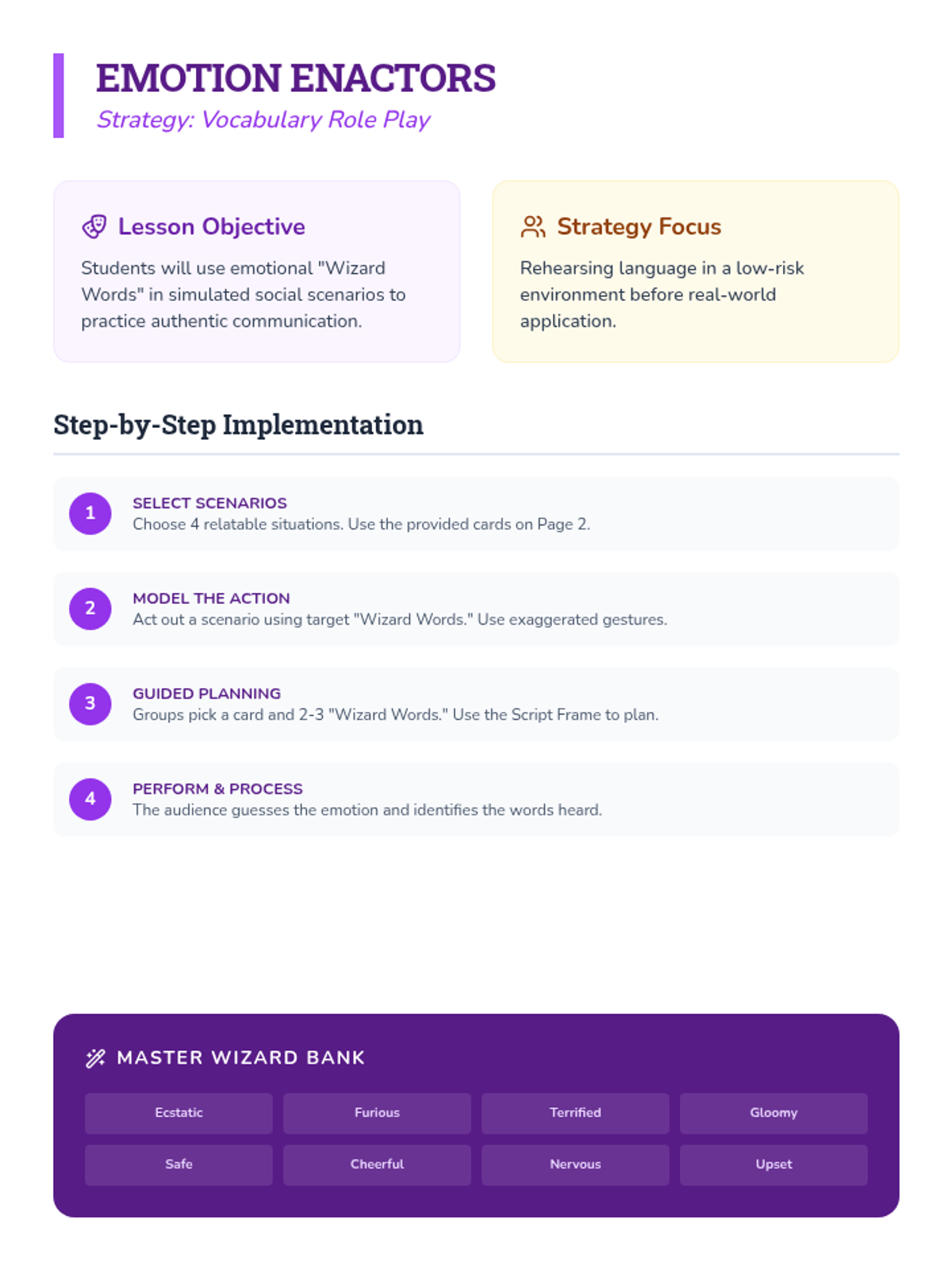
A slide deck for introducing Vocabulary Role Play, providing script frames and audience guidelines for practicing emotional vocabulary.
Teacher guide for vocabulary role play and student scenario cards for practicing emotional vocabulary in social contexts.
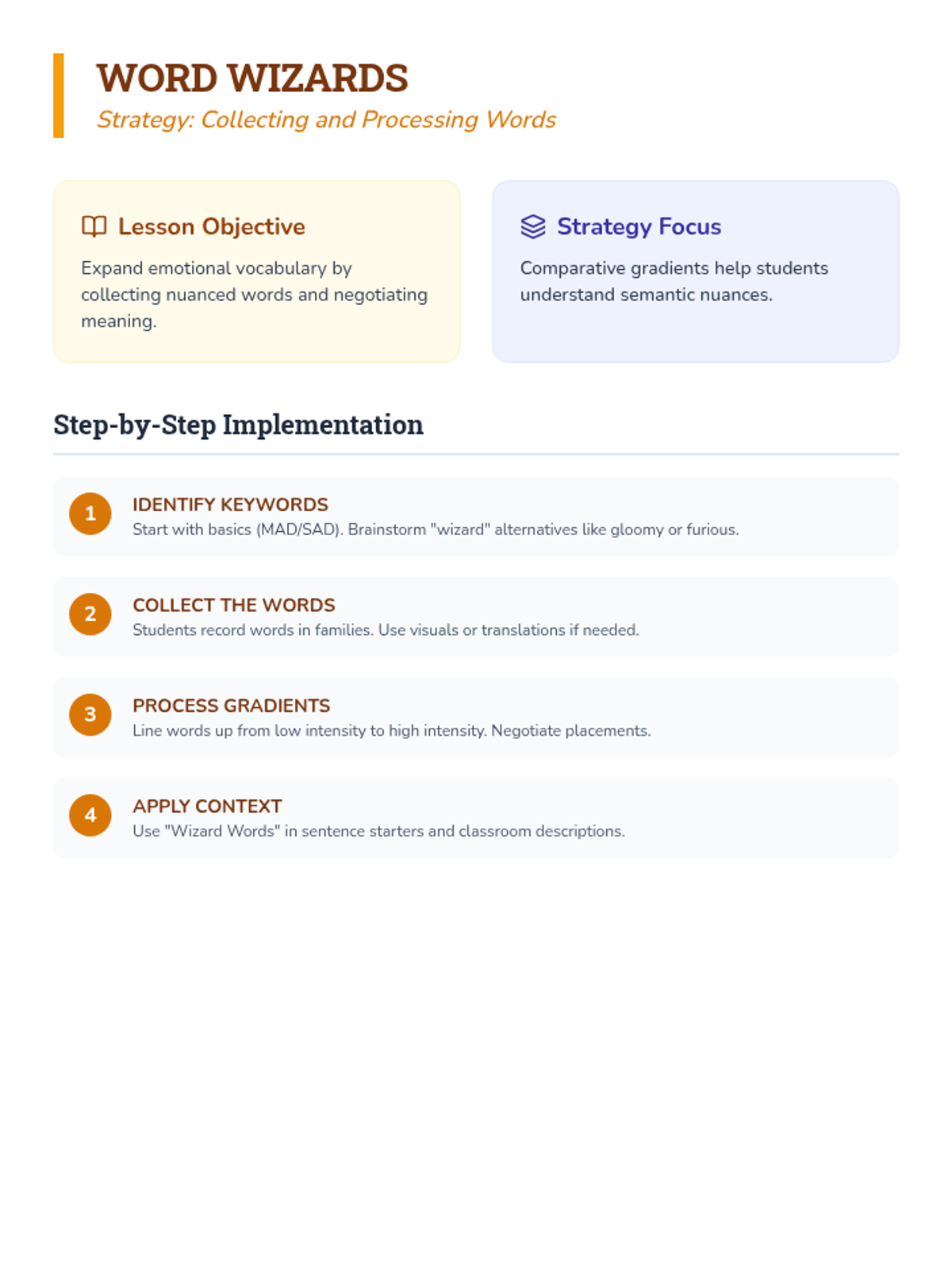
A slide deck for teaching word intensity and synonyms for emotions, helping students 'level up' their vocabulary from basic to advanced terms.
A teacher guide and student vocabulary collection sheet for expanding emotional vocabulary using 'Word Gradients' and word families.
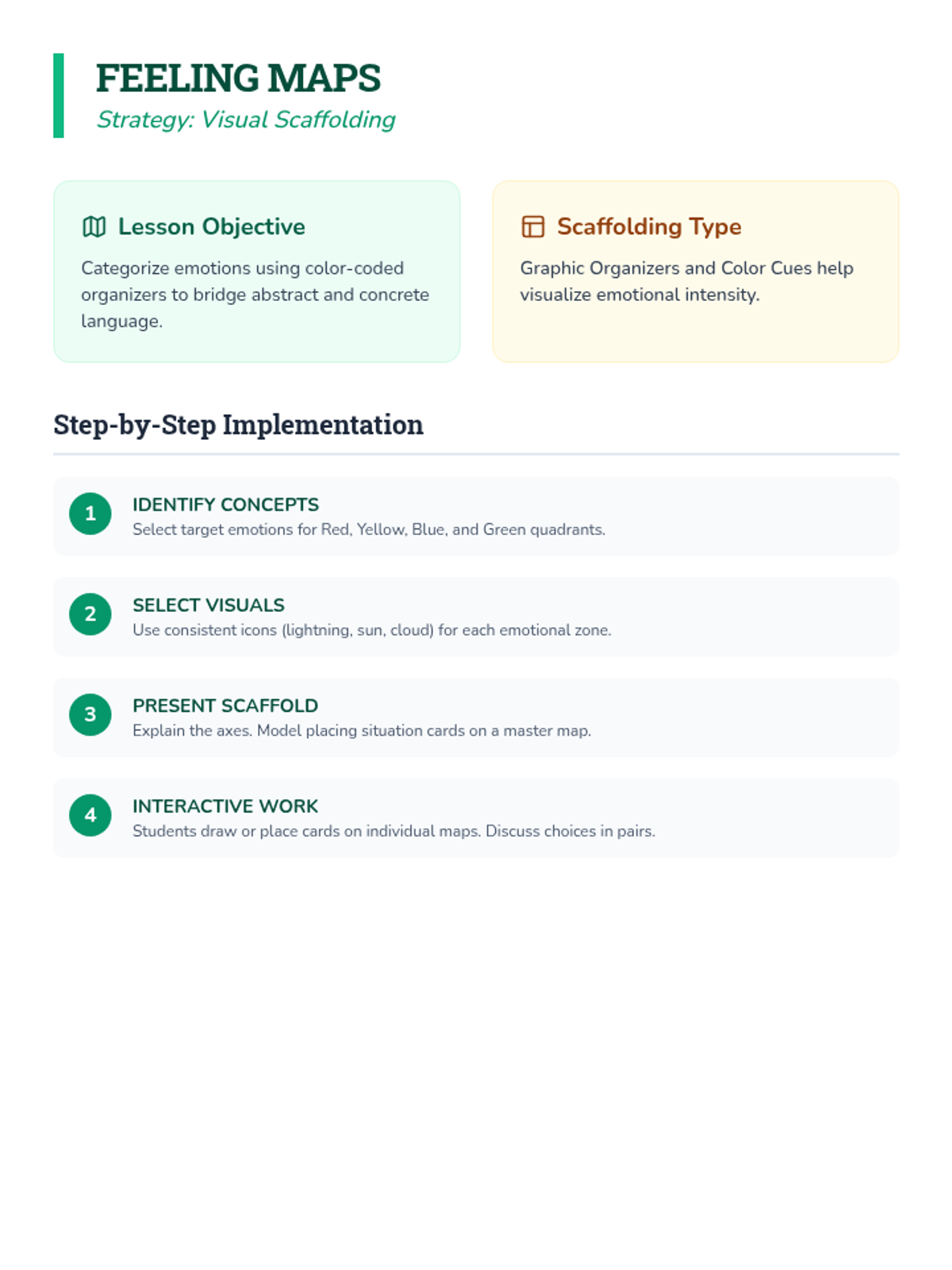
A visual slide deck explaining the Mood Map concept and how color-coded quadrants help students identify their energy and emotional state.
A teacher lesson plan and a student Mood Map organizer using color-coded visual scaffolding to categorize emotions by energy and pleasantness.
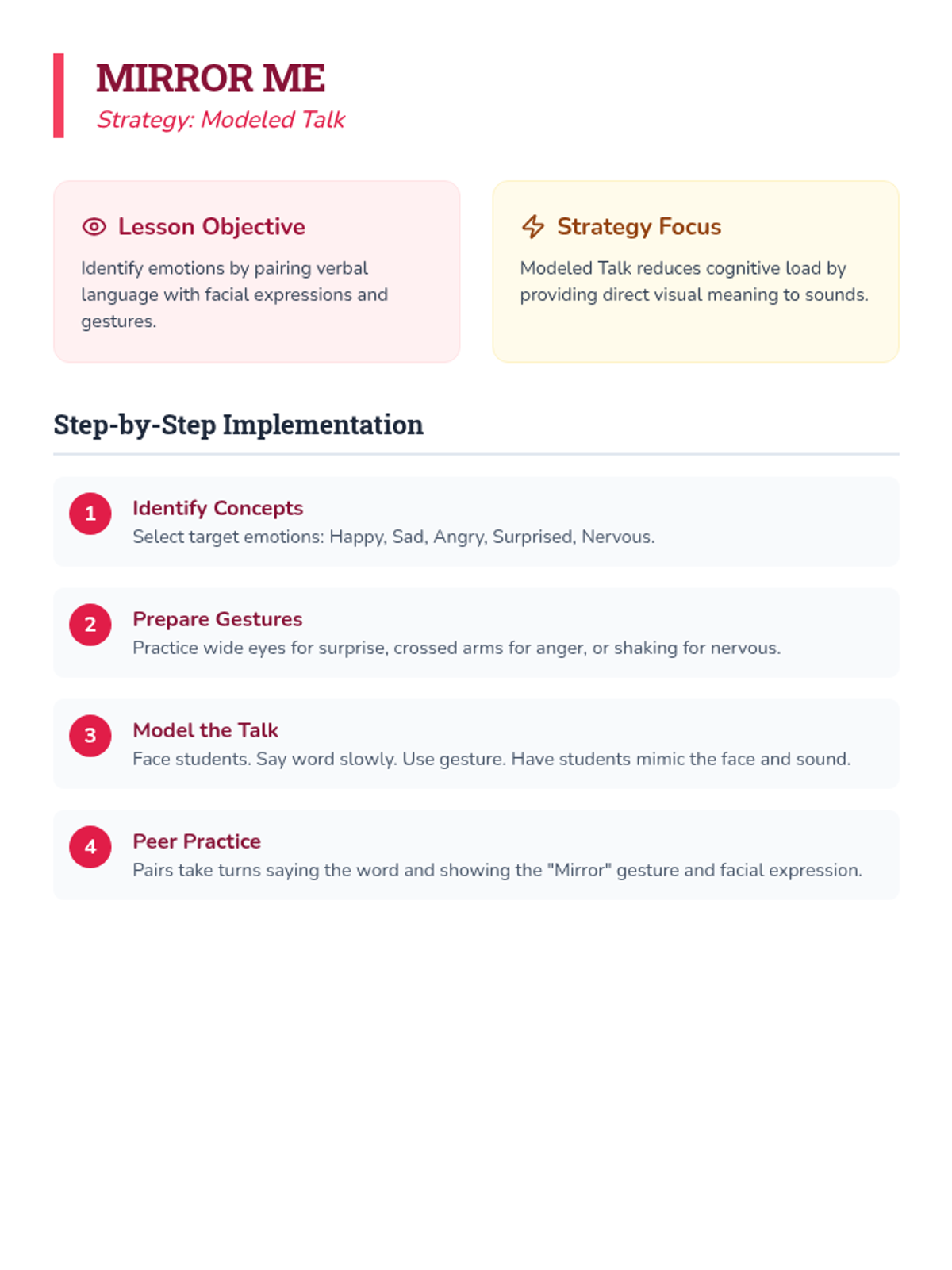
A slide deck that guides students through the 'Mirror Me' activity, demonstrating how to use modeled talk to understand and express emotions.
Teacher guide for modeled talk and a student drawing worksheet for matching emotions to physical gestures and expressions.
A visual presentation slide deck introducing the 'Heart Weather' daily routine and non-verbal signals for emotional check-ins.
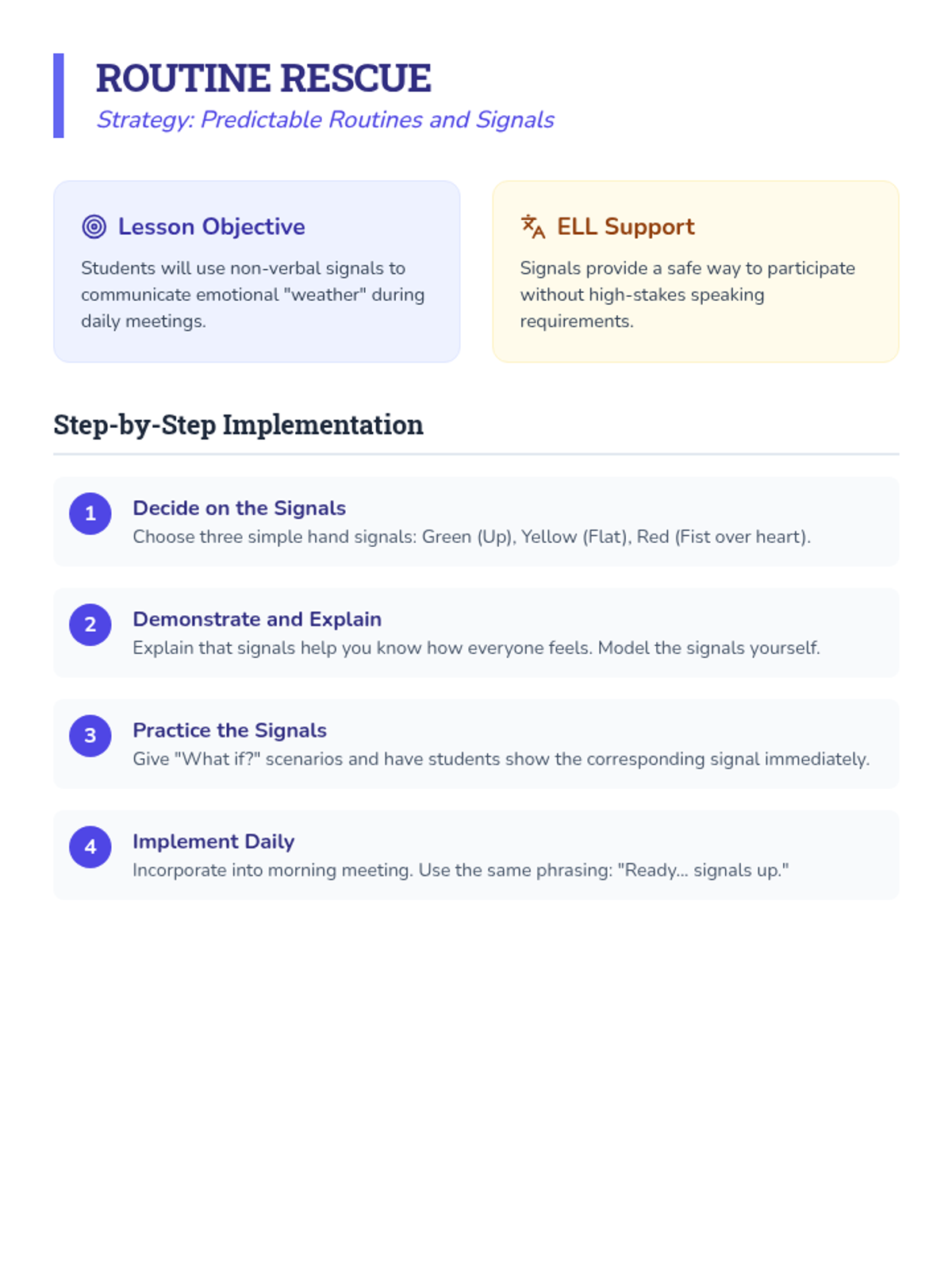
A teacher instructional guide and student reference sheet for implementing daily non-verbal signals to check student emotional readiness, based on the 'Predictable Routines and Signals' strategy.
A detailed facilitation guide for the TK lesson 'Foundations of Calm'. Includes scripts for the 'Wiggle & Freeze' activity, Turtle Breathing technique, and the Butterfly Hug demonstration. Updated to match the Academy theme.
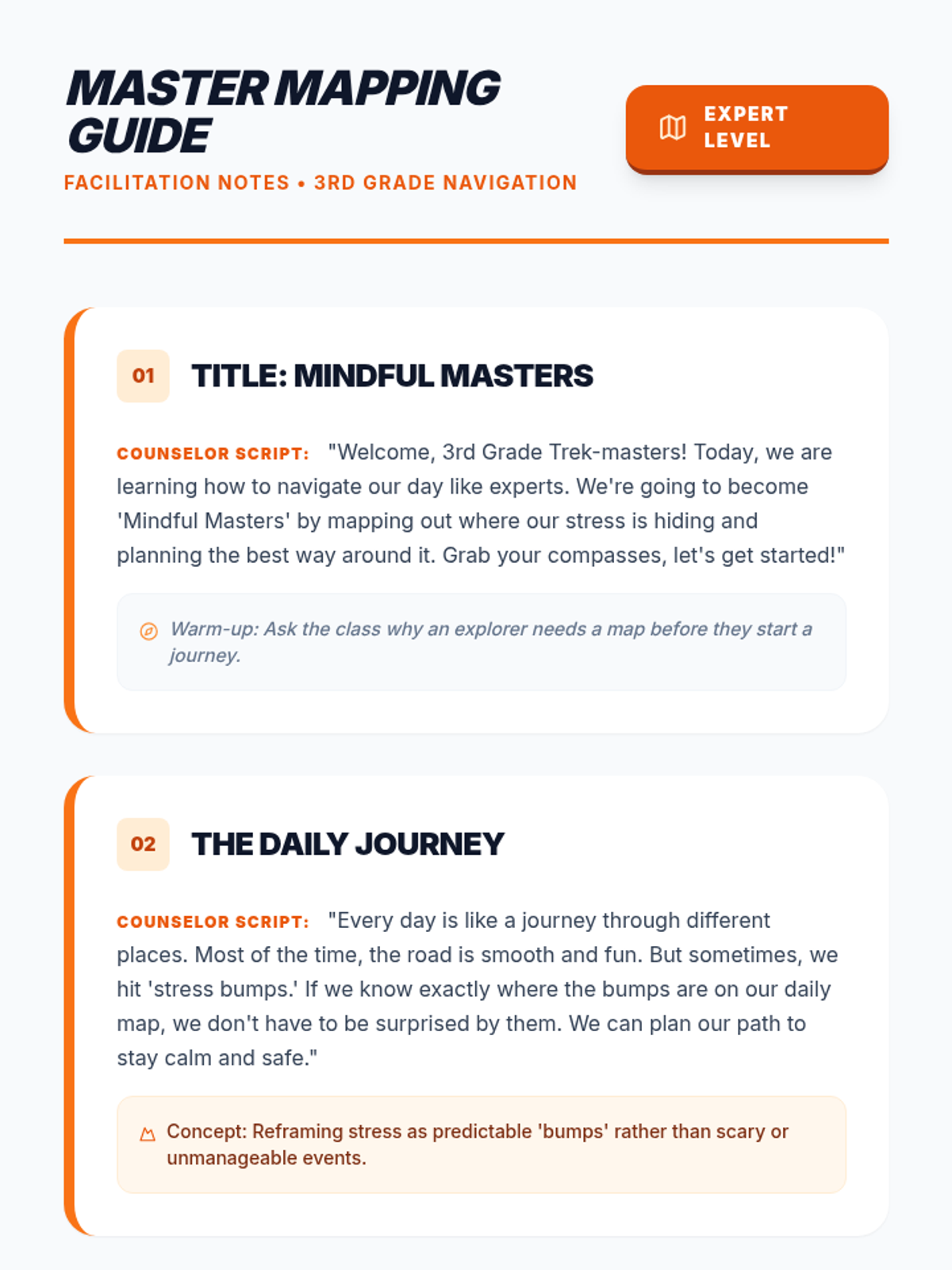
A detailed slide-by-slide facilitation guide for the 3rd grade 'Mindful Masters' lesson. Includes scripts for explaining the 'Observe, Name, Reroute' technique and instructions for the mapping activity.
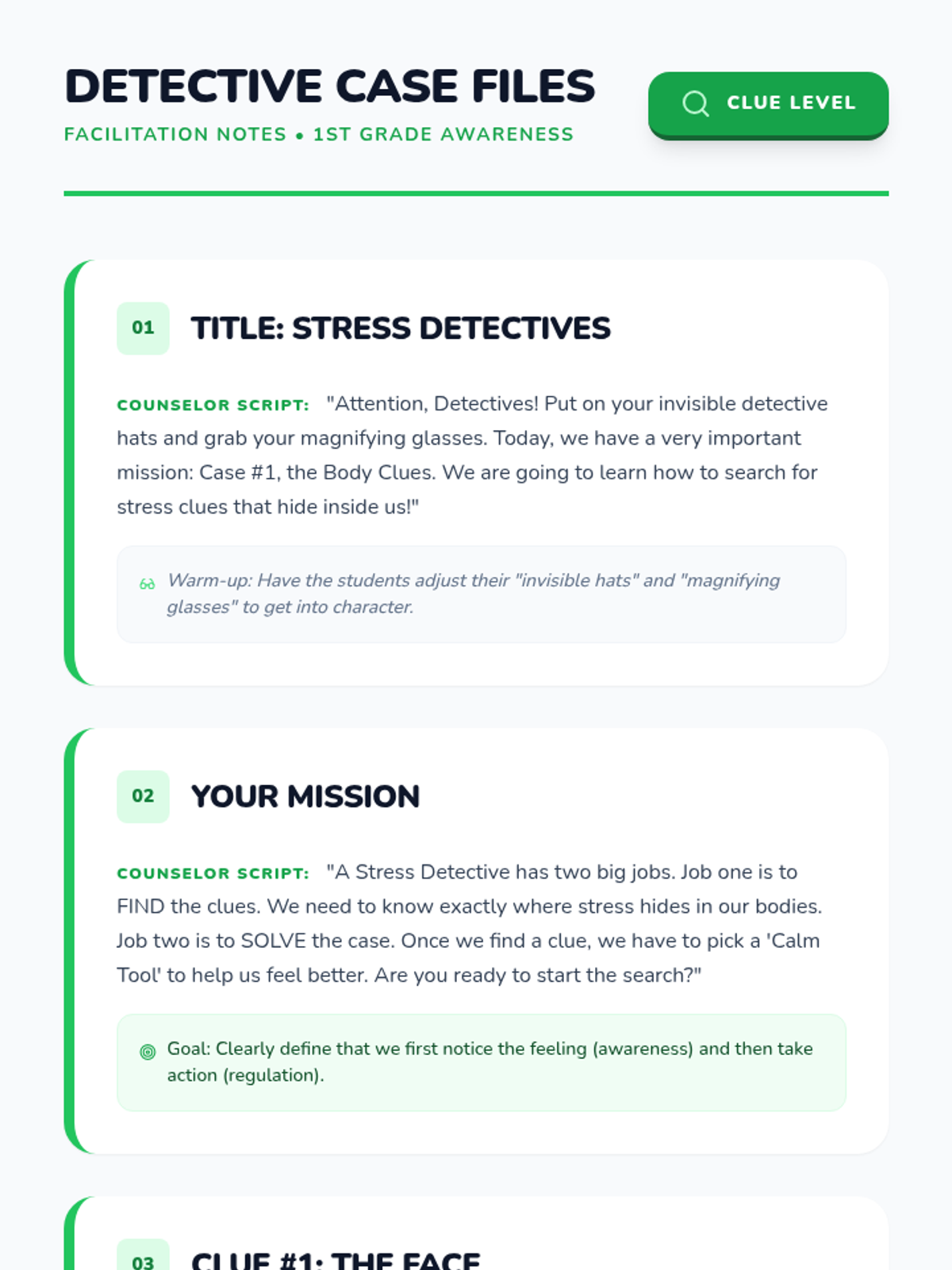
A detailed slide-by-slide facilitation guide for the 1st grade 'Stress Detectives' lesson. Includes scripts for explaining body signals, the 'Stop & Search' technique, and instructions for the Body Signal Search activity.
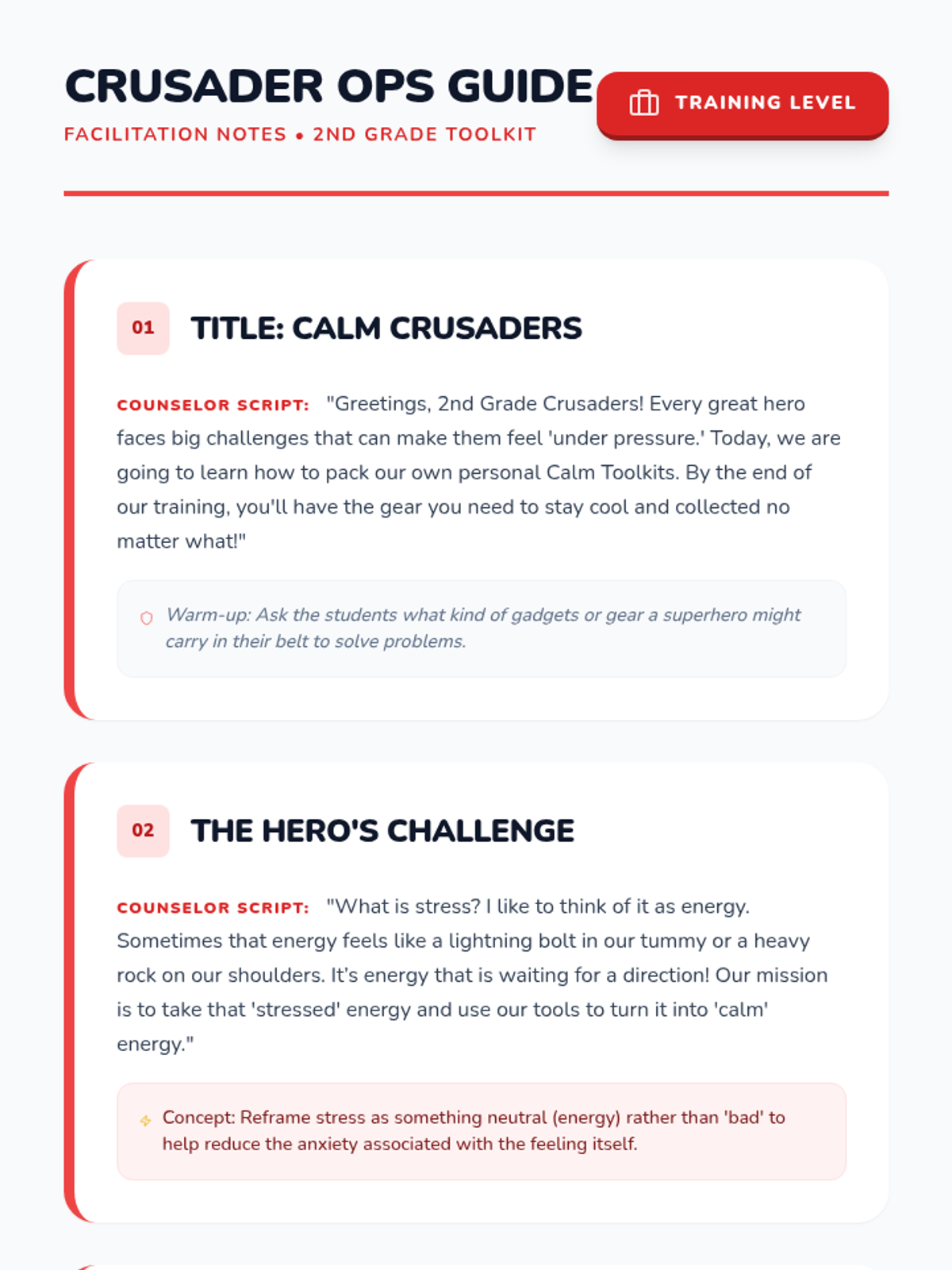
A detailed slide-by-slide facilitation guide for the 2nd grade 'Calm Crusaders' lesson. Includes scripts for explaining the difference between 'Mouse' and 'Elephant' problems and guidance for proactive vs. reactive toolkits.
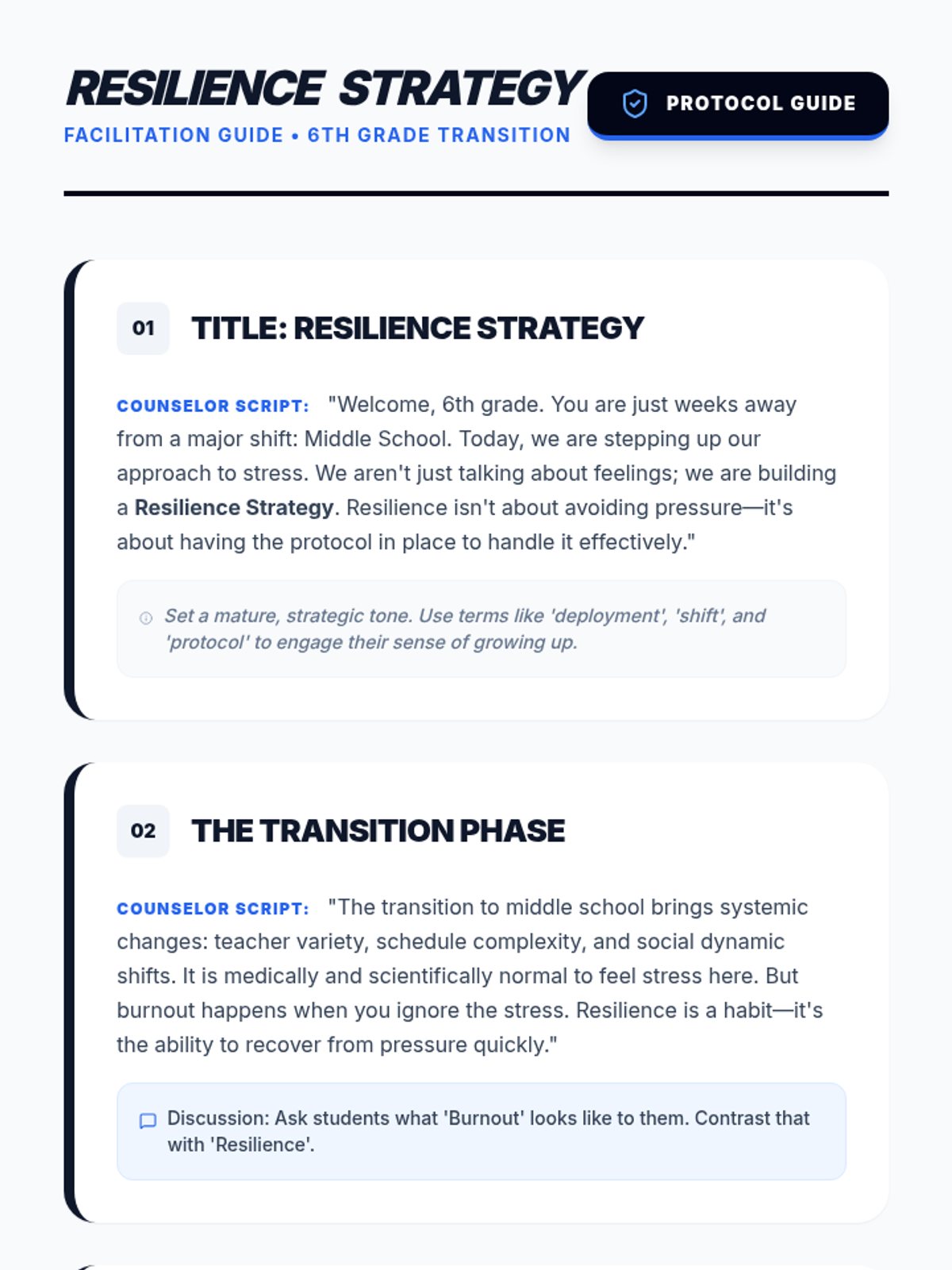
A detailed facilitation guide for the 6th grade 'Resilience Strategy' lesson. Provides scripts, mature analogies for transition stress, and instructions for practicing Box Breathing. Terminology updated for a more sophisticated 6th grade audience.
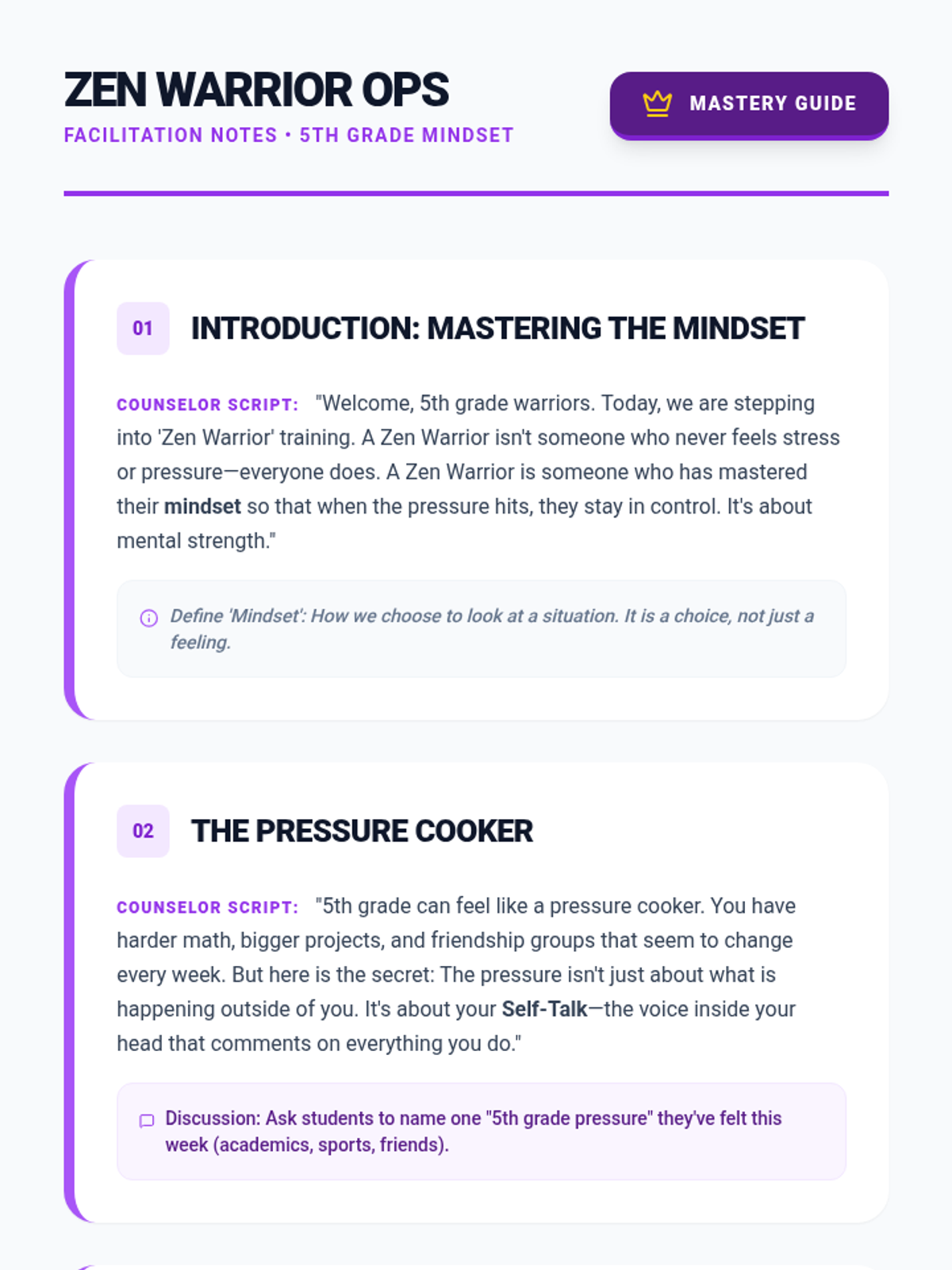
A detailed facilitation guide for the 5th grade 'Zen Warriors' lesson. Includes scripts for explaining 'Thinking Traps', 'The Flip' self-talk technique, and 'The 10-10-10 Rule' for perspective shifting.
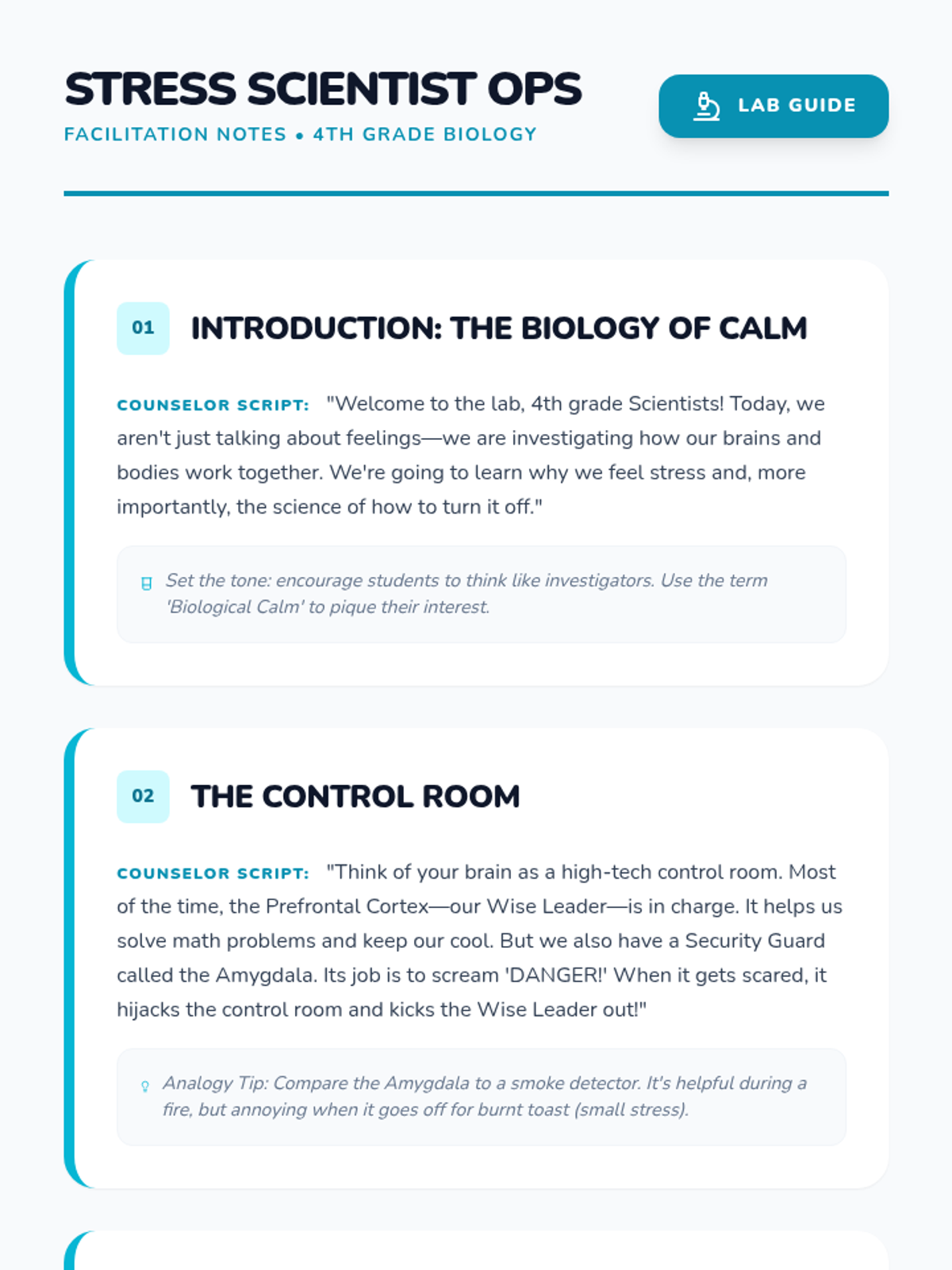
A detailed facilitation guide for the 4th grade 'Stress Scientists' lesson. Includes counselor scripts, biology-themed analogies for brain function, and interactive prompts for the 'Scientific Method' practice.
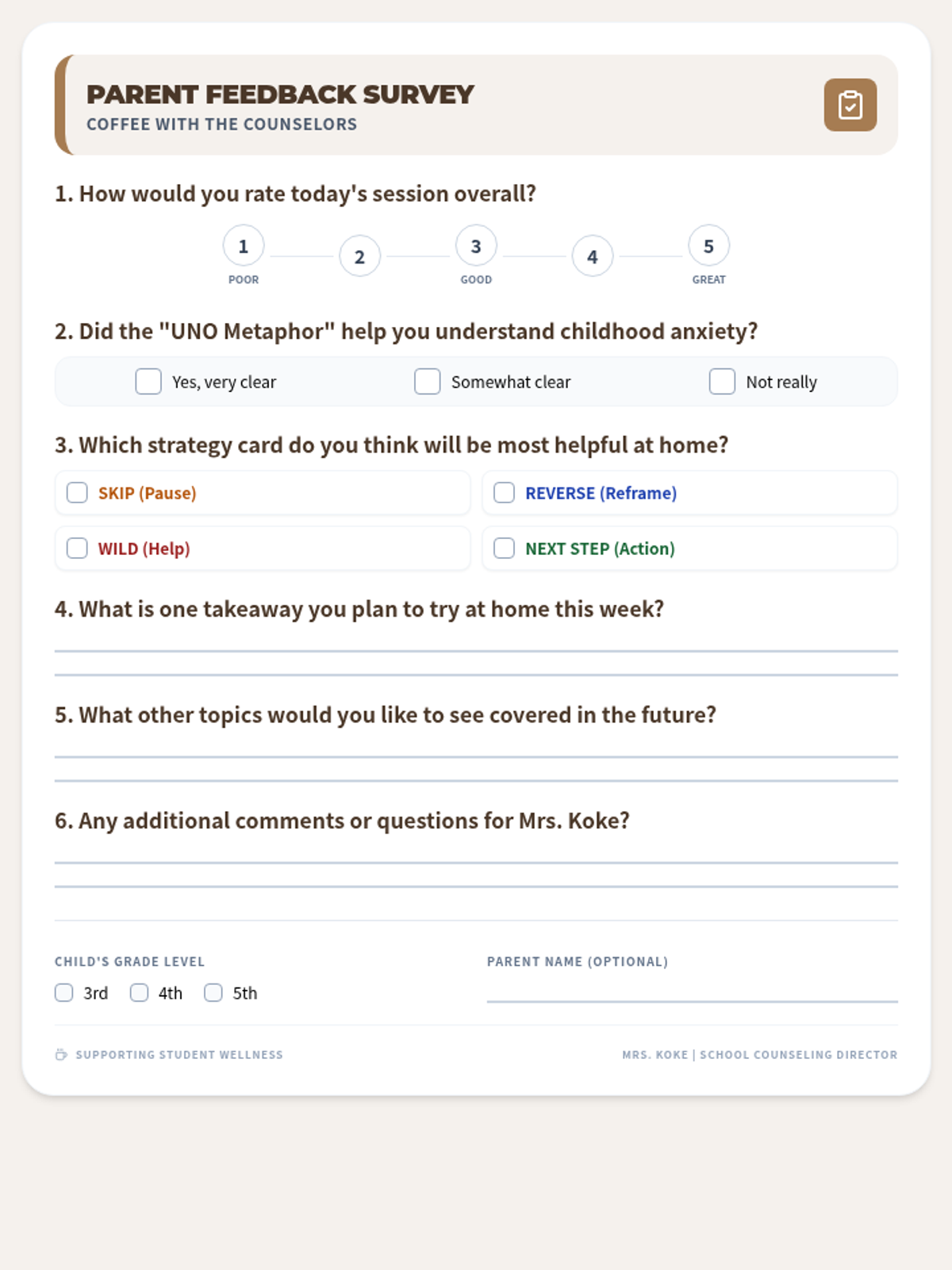
A professional feedback survey for parents to complete at the end of the 'Coffee with the Counselors' session. It features a clean design with thematic elements, gathering data on session quality, the effectiveness of the UNO metaphor, and interest in future topics.
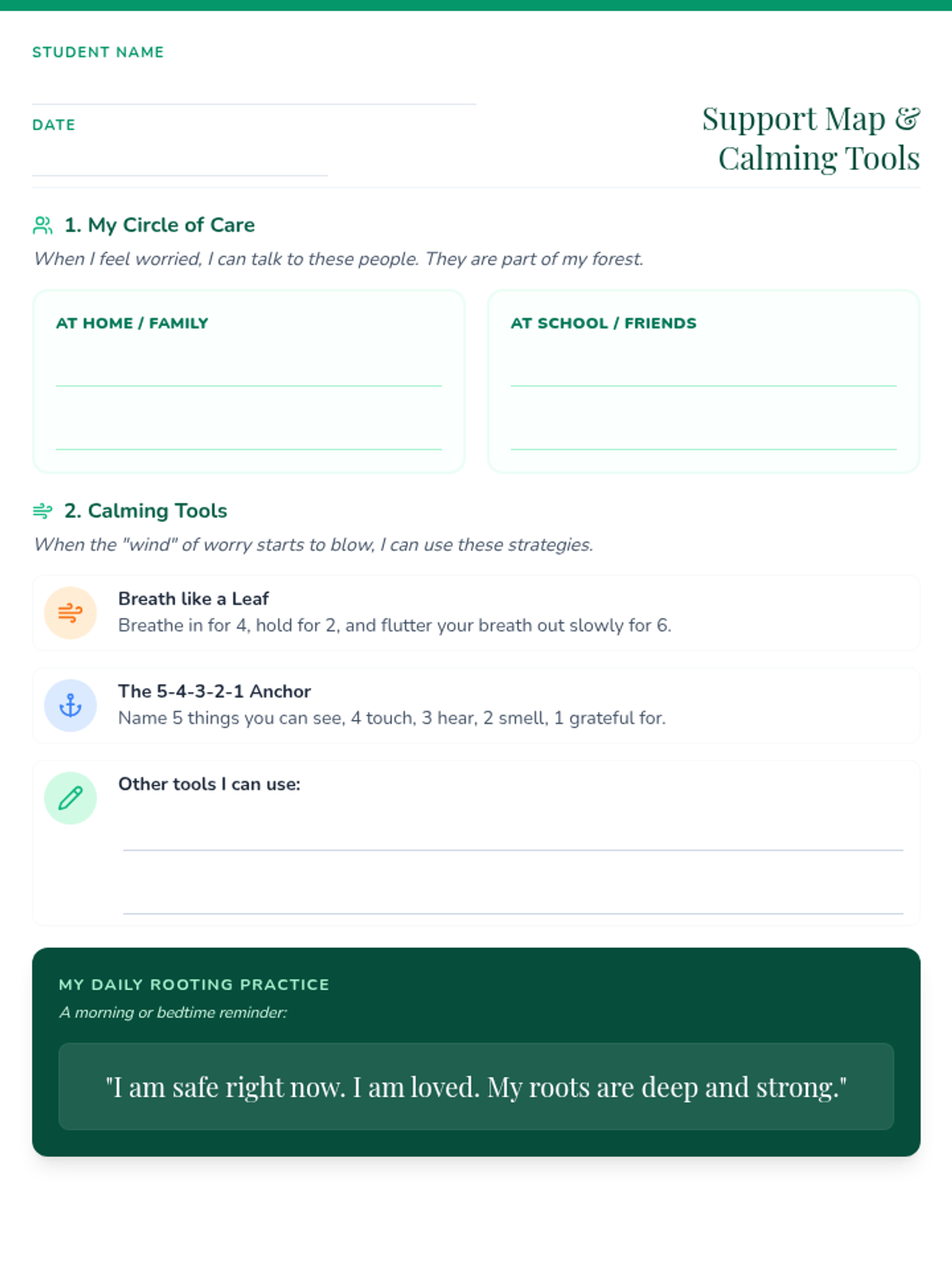
A structured worksheet to help students map their support systems and practice specific anxiety-coping strategies.
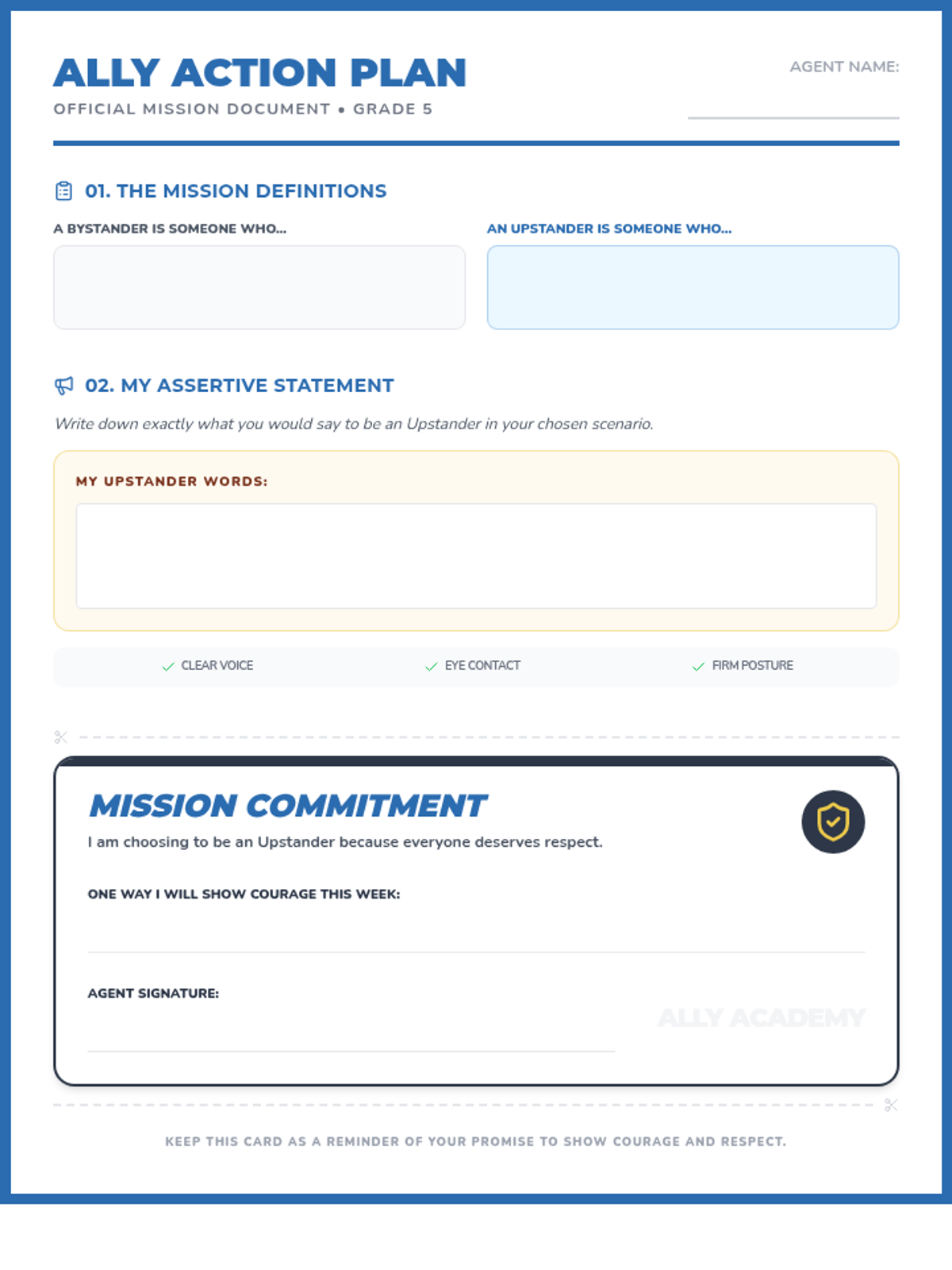
A student-facing worksheet where they define key terms, draft their own assertive upstander statement, and complete a 'Mission Commitment' card to practice being an ally.
Day 5 slides focusing on the transition from awareness to acceptance and the Acceptance Ally pledge. Expanded for a full 15-minute lesson with teacher notes. Revised layout for better PDF rendering of teacher notes. Now with improved spacing and contrast. Now with improved spacing and contrast.
Day 4 slides introducing the 'Inclusion Protocol': Wait, Invite, and Adjust. Now expanded for a full 15-minute lesson with teacher notes. Revised layout for better PDF rendering of teacher notes. Now with improved spacing and contrast.
Day 3 slides focusing on communication diversity, including AAC, body language, and non-traditional listening styles. Expanded for a full 15-minute lesson with teacher notes. Revised layout for better PDF rendering of teacher notes. Now with improved spacing and contrast.
Day 2 slides exploring sensory processing differences and the 'volume knob' analogy for hyper- and hypo-sensitivity. Expanded for a full 15-minute lesson with teacher notes. Revised layout for better PDF rendering of teacher notes.
Day 1 slides focused on introducing the 'Mind Lab' and the concept of Neurodiversity using the fingerprint analogy. Now expanded with teacher notes and more slides for a full 15-minute lesson. Revised layout for better PDF rendering of teacher notes. Now with improved spacing and contrast.
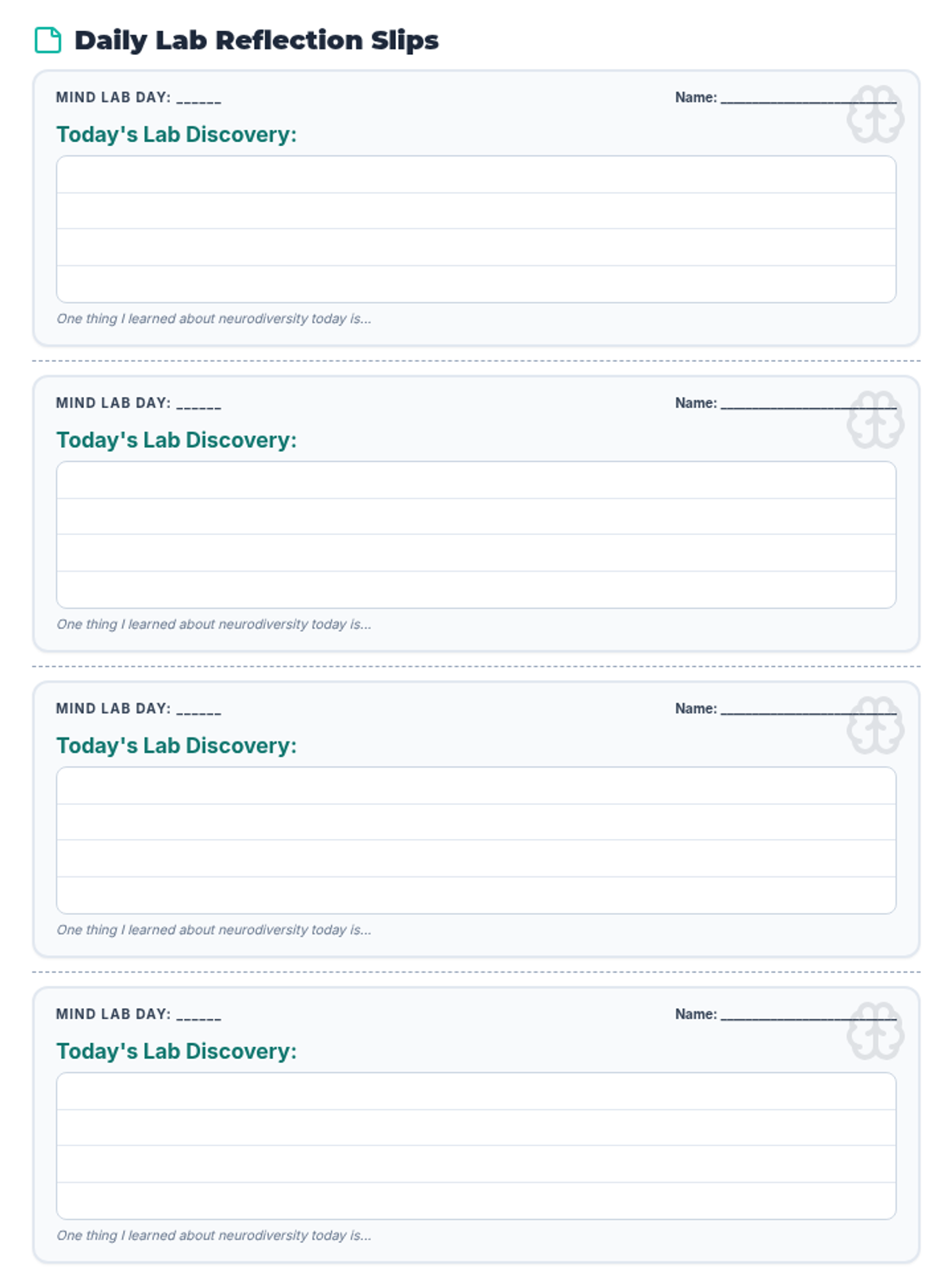
Printable exit tickets for students to record daily 'Lab Discoveries'. Revised for 4 slips per page with improved writing space and contrast.
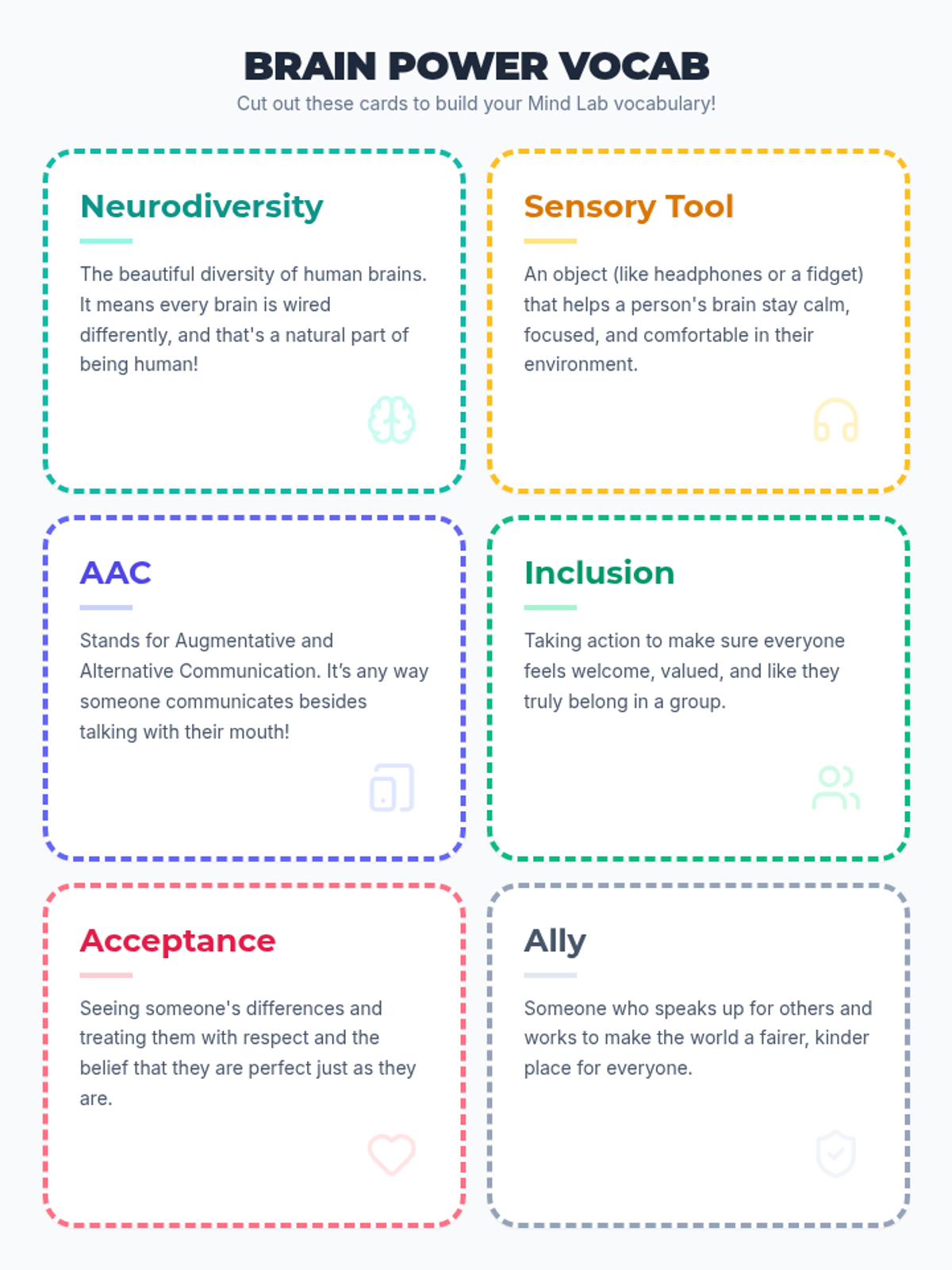
A set of 6 printable vocabulary cards with definitions and icons, designed for 3rd-5th graders to learn key terms related to Autism Acceptance. Revised to fit on a single page.
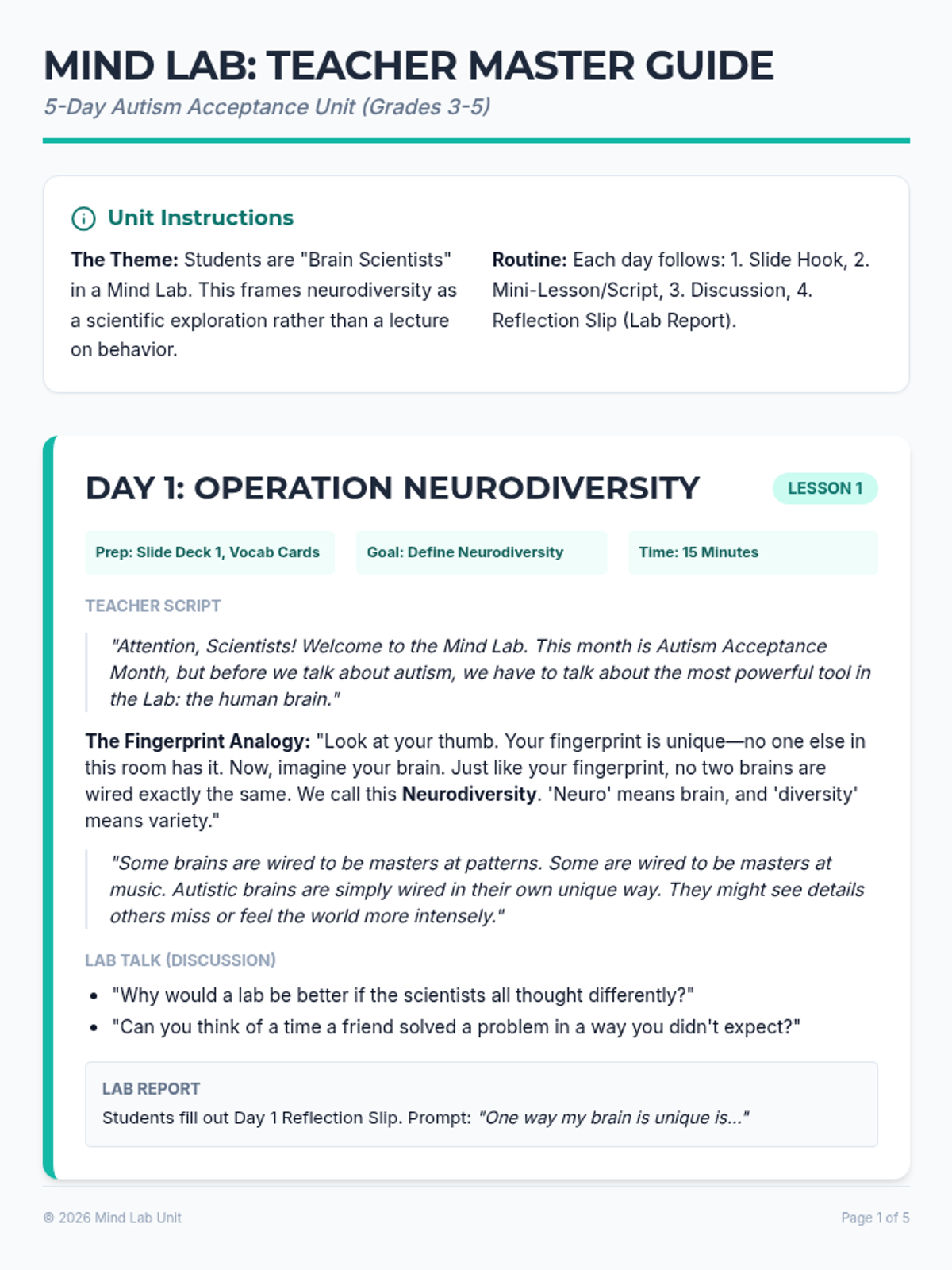
A highly detailed 5-page teacher guide for the Mind Lab unit, featuring day-by-day scripts, discussion prompts, prep checklists, and specific learning objectives for each 15-minute session.
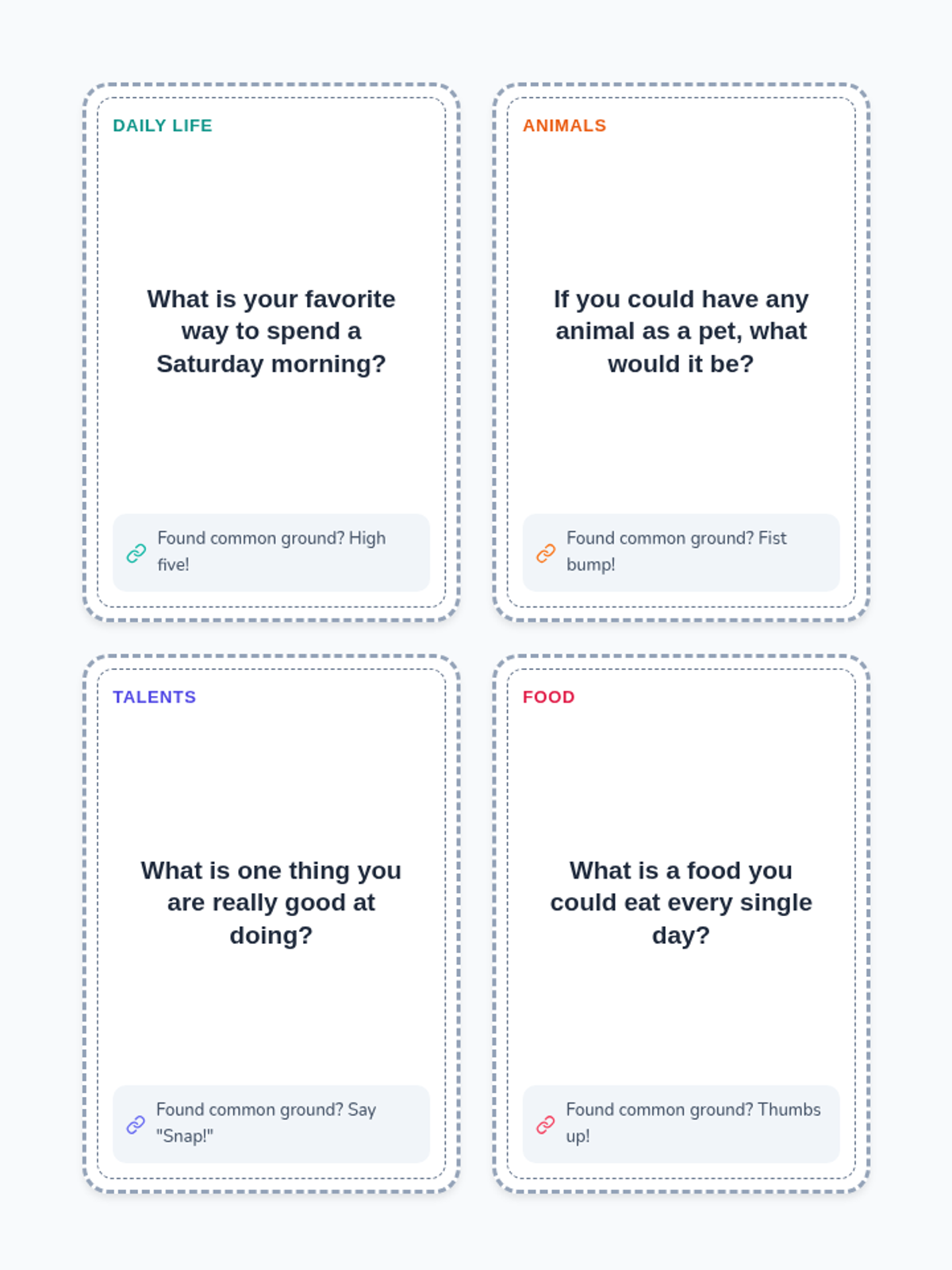
A set of 20 conversation cards designed to help students find common ground. Each card features a prompt and a connection-building activity.
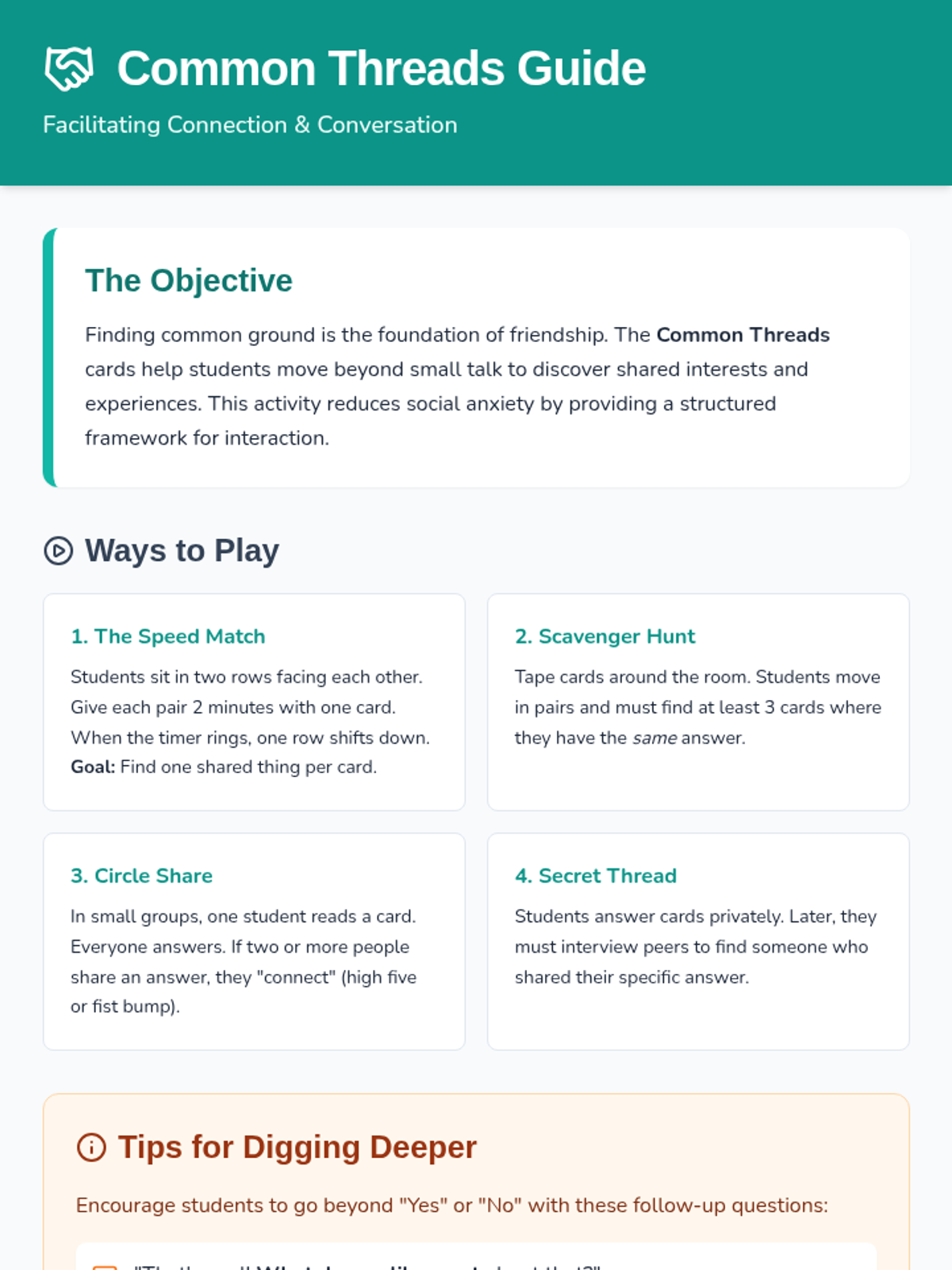
A facilitator's guide for the Common Threads conversation activity, including instructions for various gameplay modes and tips for fostering deeper connections.
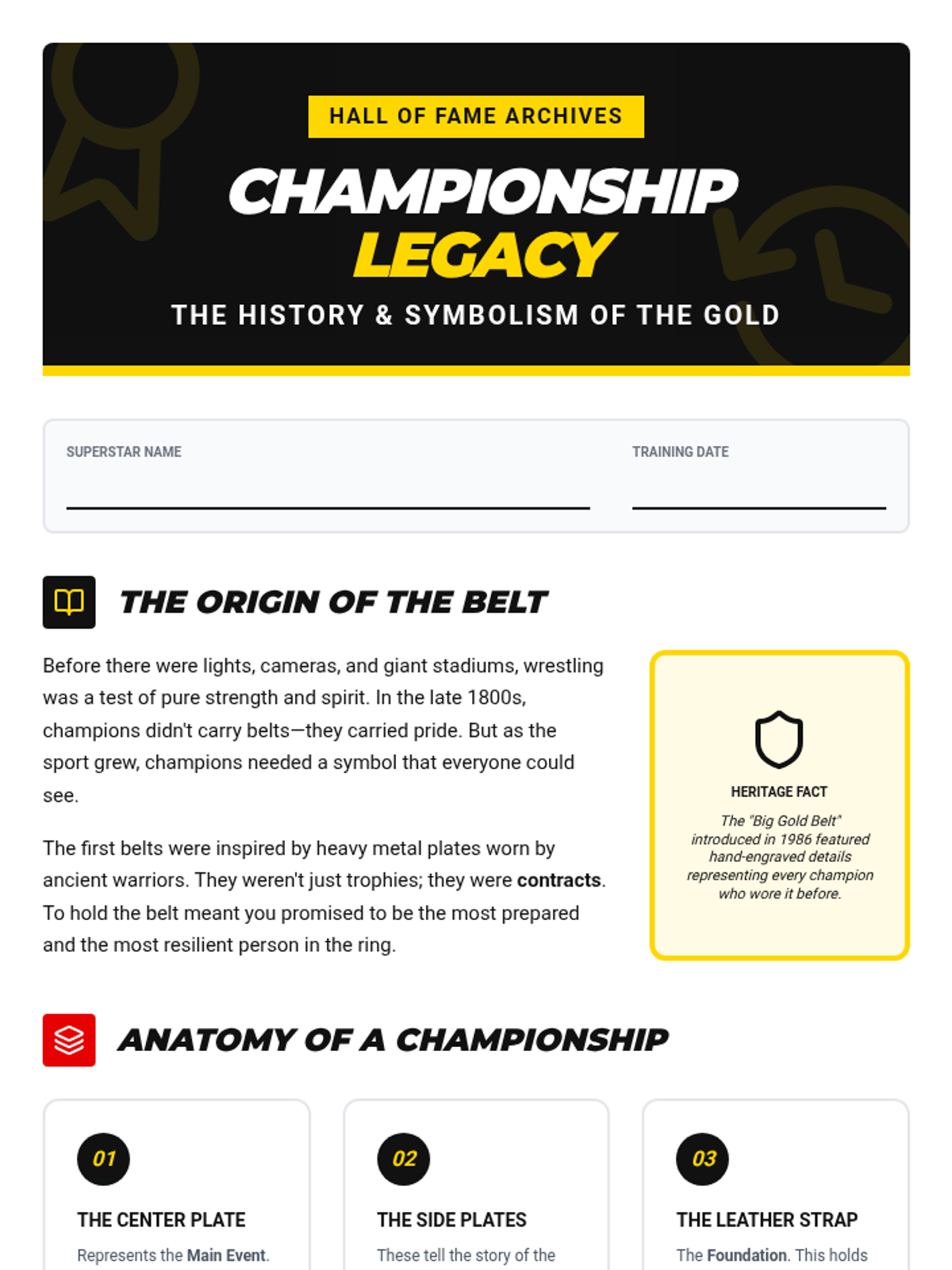
A student-facing reading and activity sheet exploring the history of wrestling championship belts, their symbolism, and how students can build their own academic legacy.
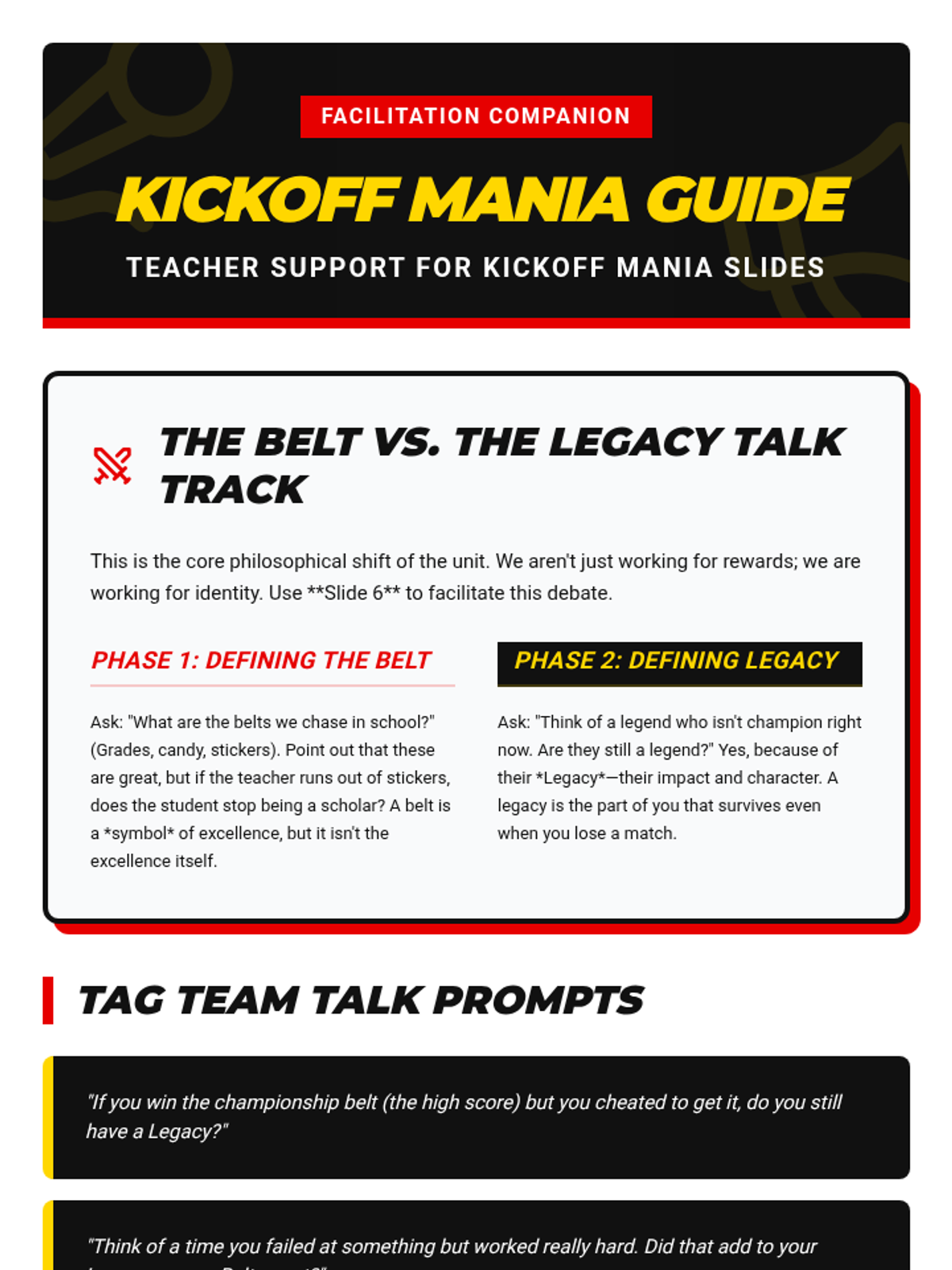
A detailed teacher facilitation companion for the Kickoff Mania slides, providing talk tracks for the 'Belt vs. Legacy' discussion, discussion prompts, and implementation steps for the Ubuntu mission.
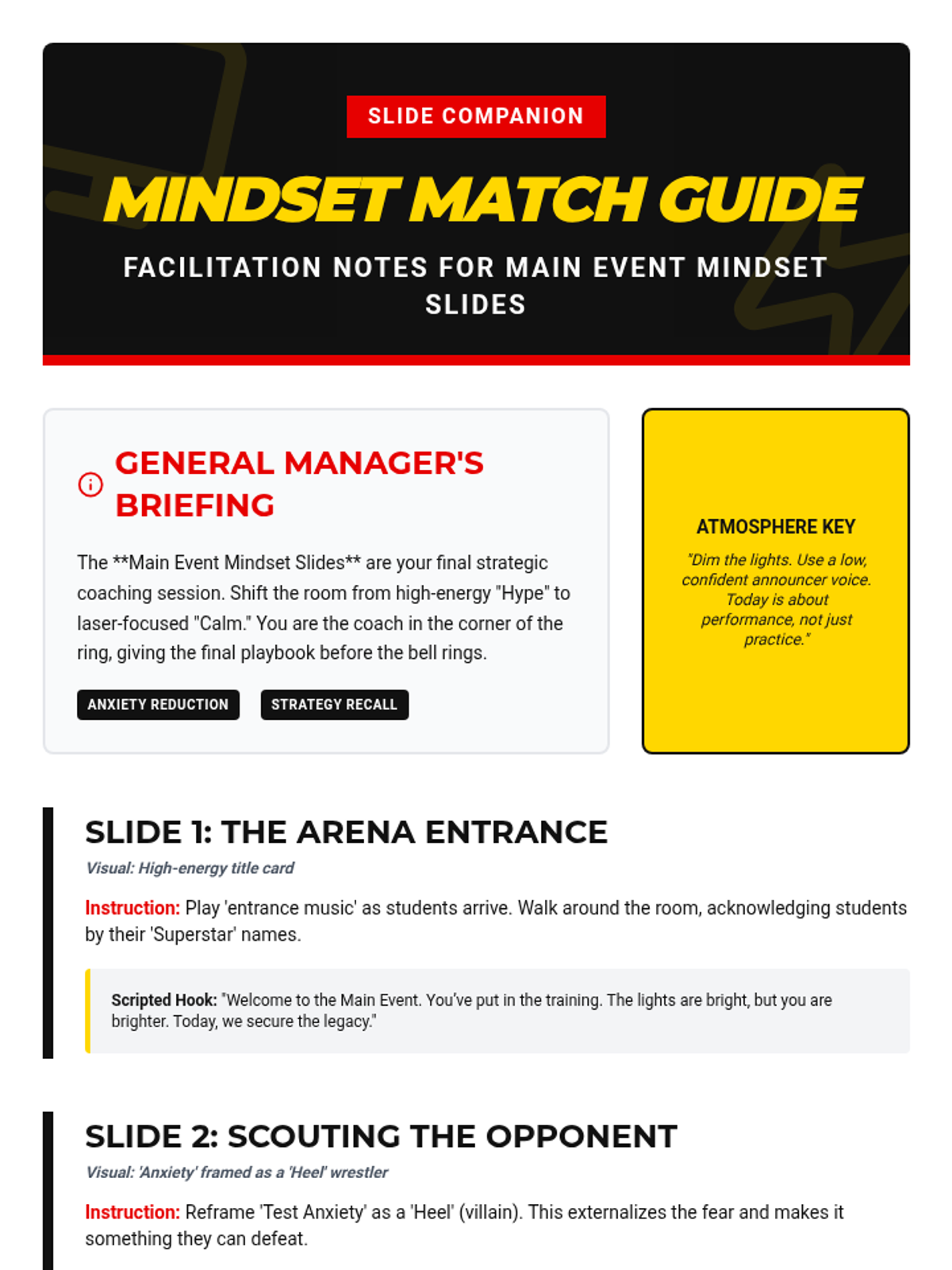
A teacher-facing companion guide for the 'Main Event Mindset' slides, providing slide-by-slide scripts, instructional instructions for managing test anxiety, and post-test decompression strategies.
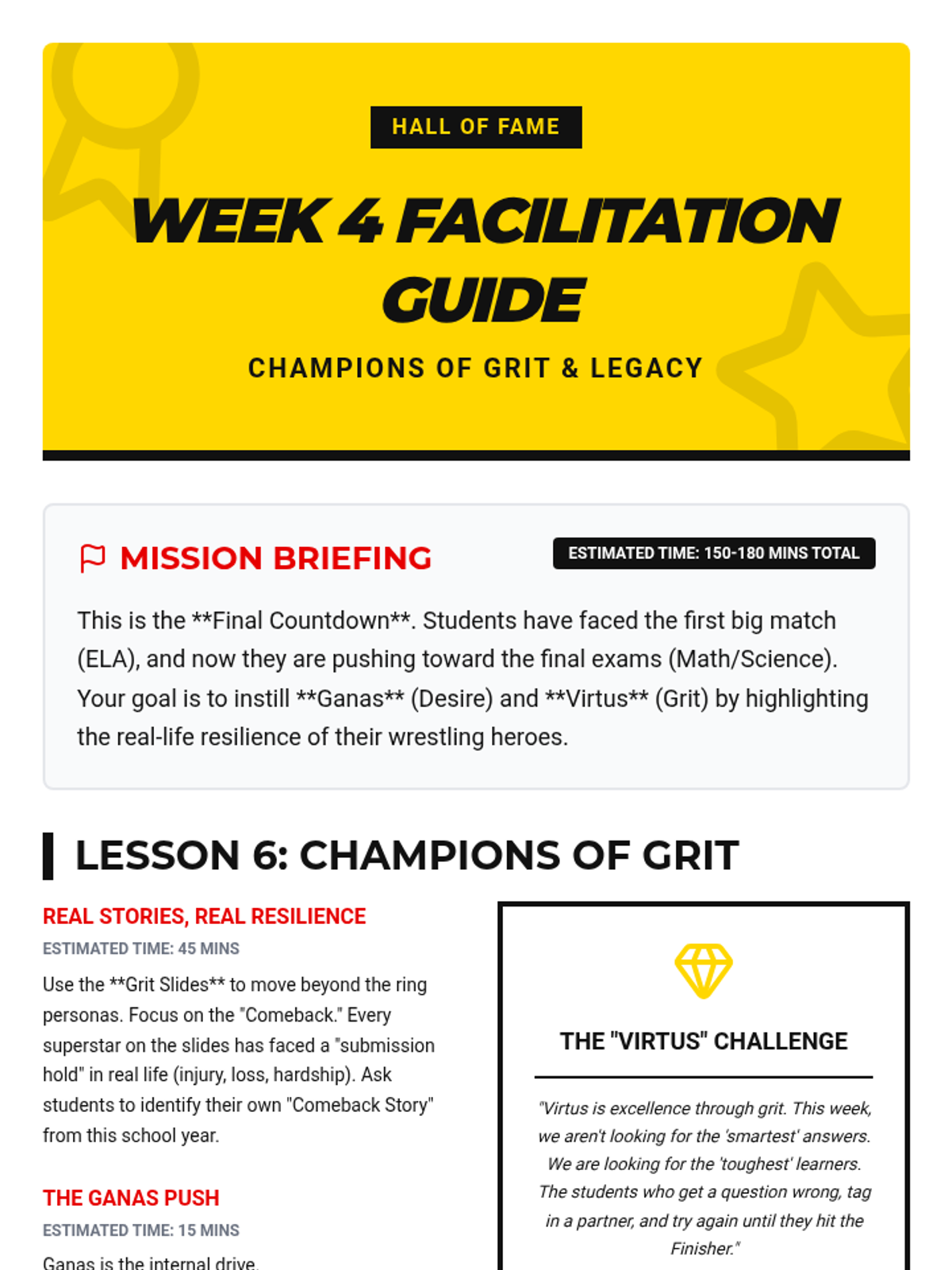
A detailed teacher facilitation guide for Week 4 of the 'Road to State Exam Mania' sequence, focusing on Ganas (drive) and Virtus (grit) for the final exam push and the 'Mania Gala' unit wrap-up.
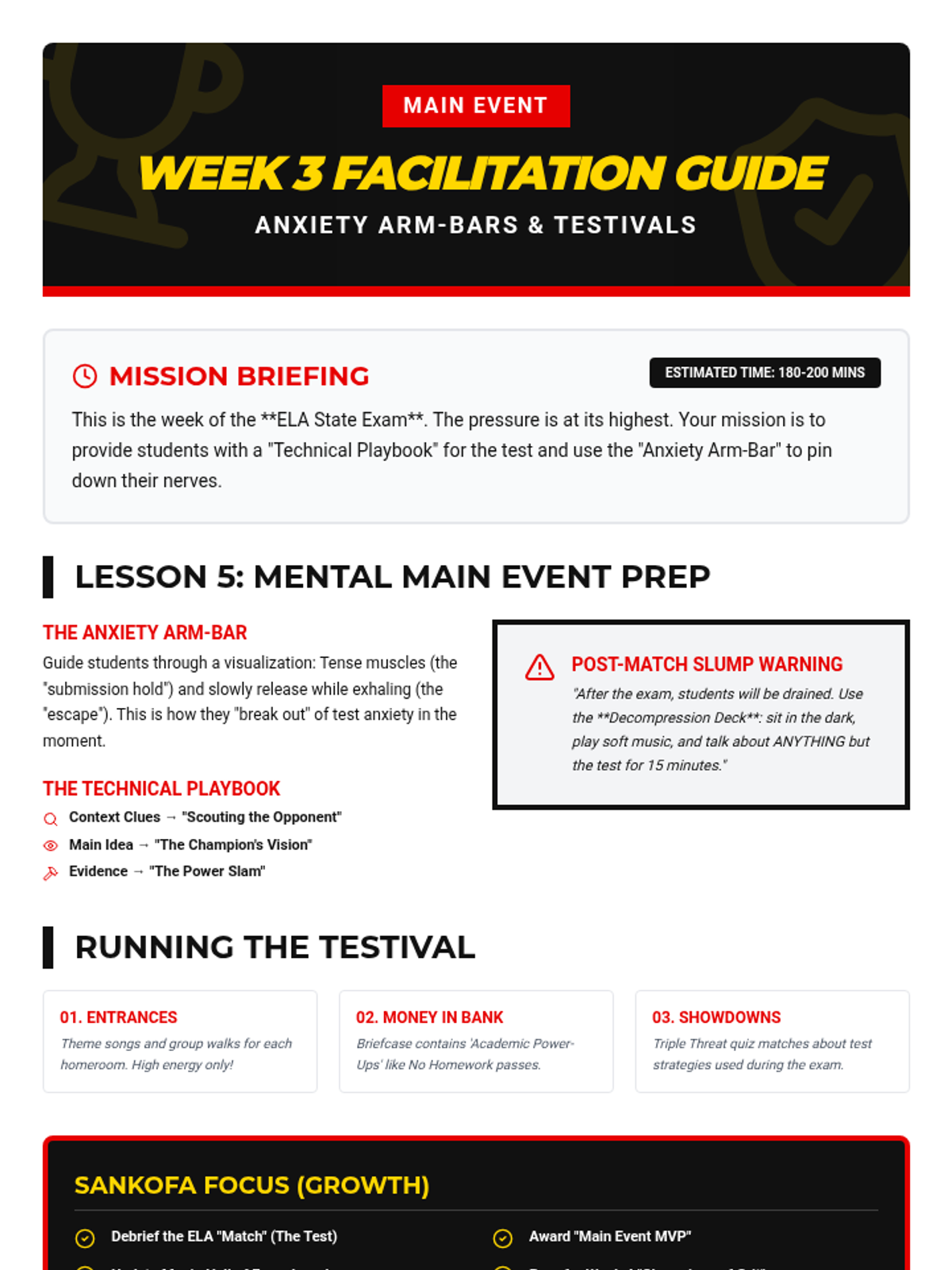
A detailed teacher facilitation guide for Week 3 of the 'Road to State Exam Mania' sequence, focusing on ELA state exam preparation and the 'Testival' pep rally.
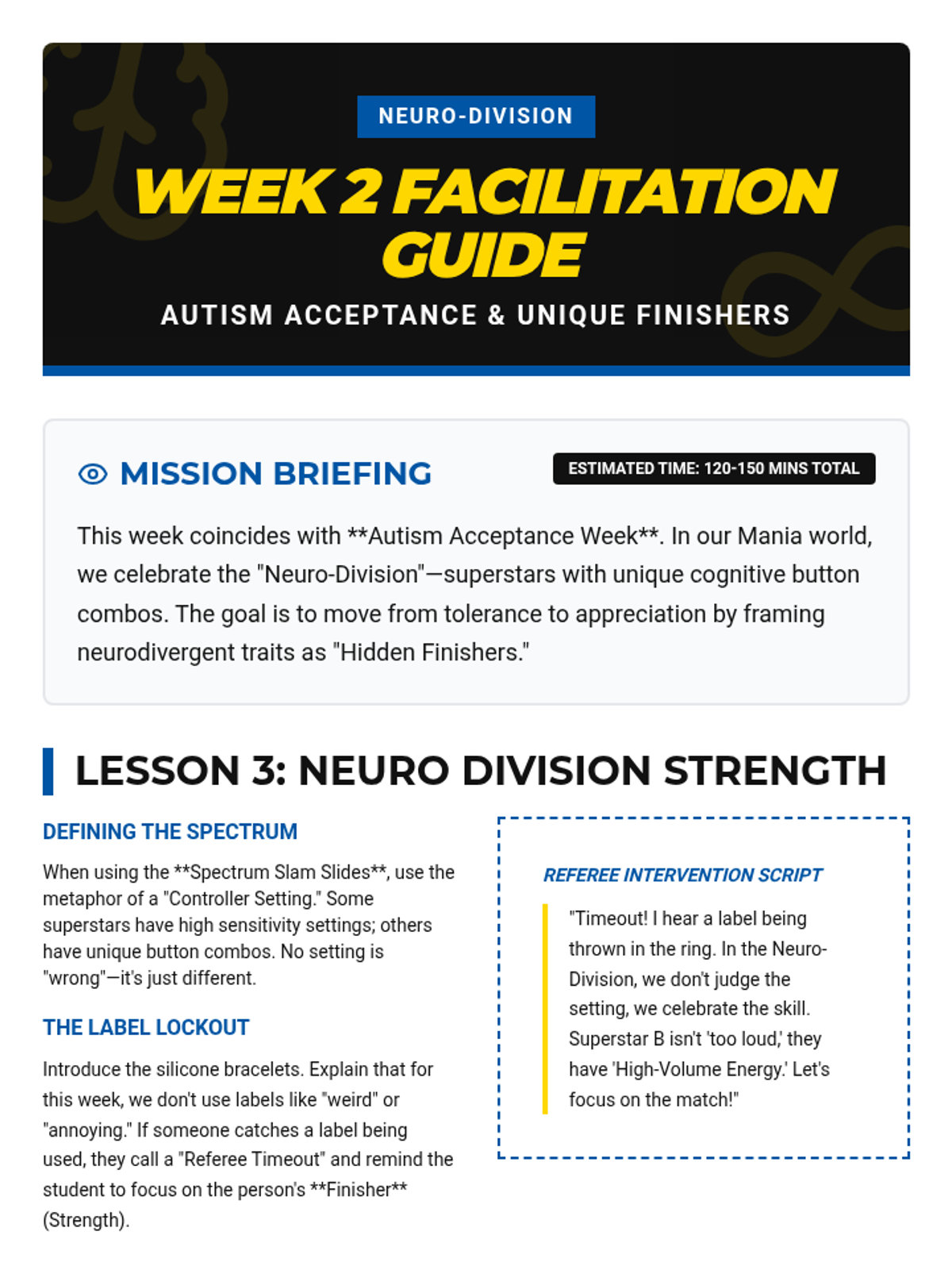
A detailed teacher facilitation guide for Week 2 of the 'Road to State Exam Mania' sequence, focusing on Autism Acceptance Week and celebrating neurodiversity.
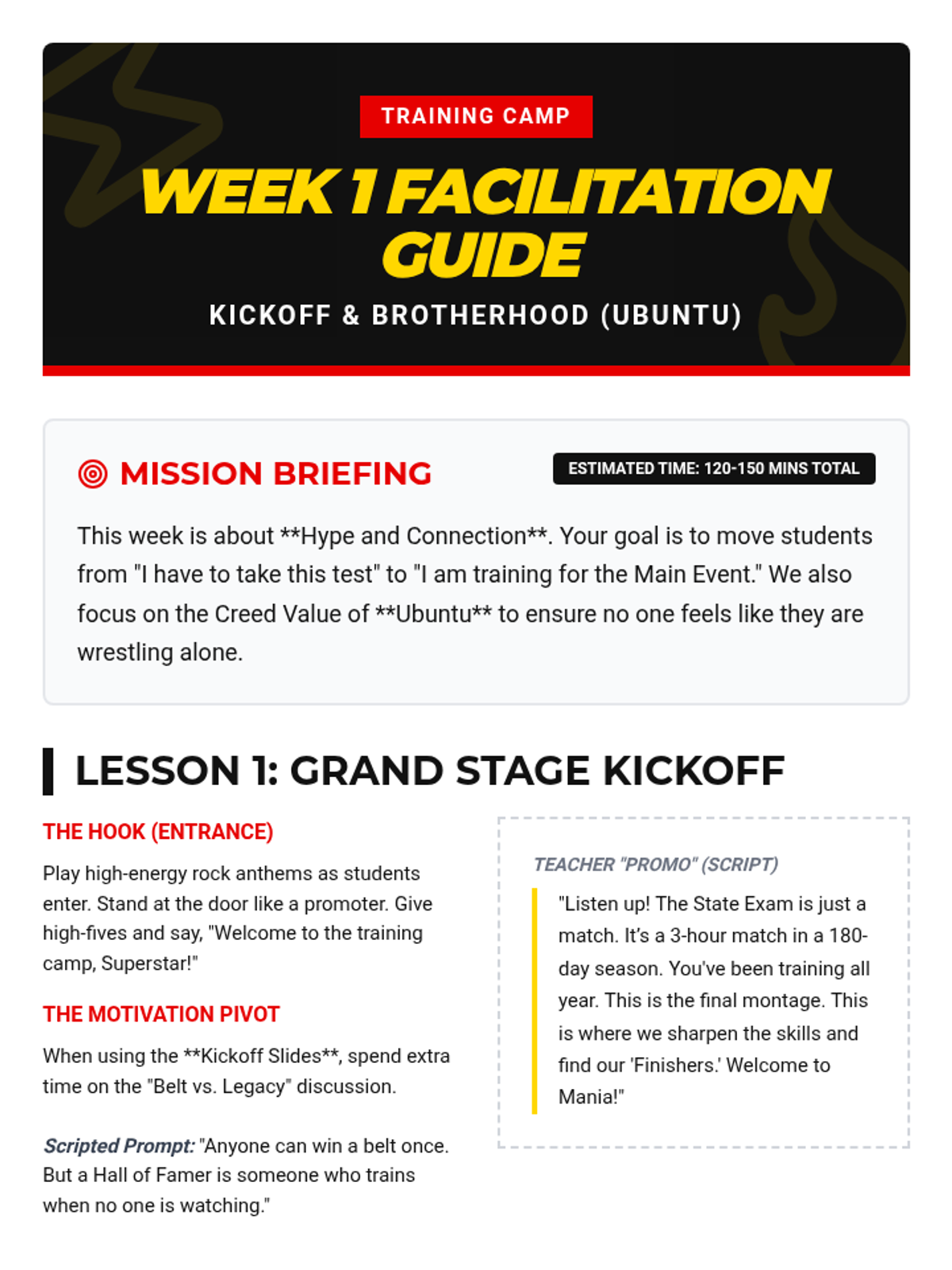
A detailed teacher facilitation guide for Week 1 of the 'Road to State Exam Mania' sequence, focusing on kickoff motivation and the Creed Value of Ubuntu.
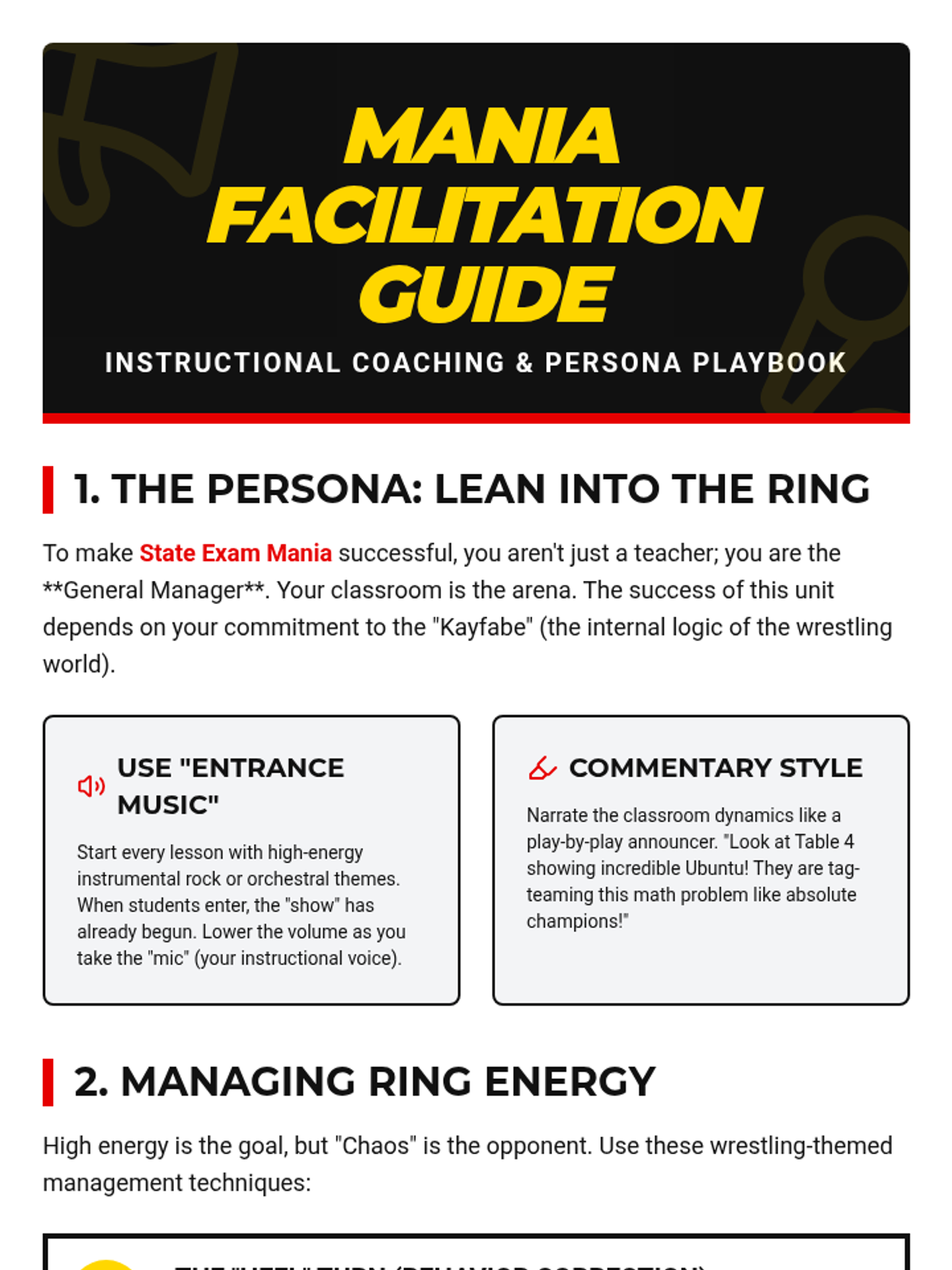
A comprehensive teacher facilitation guide for the 'Road to State Exam Mania' sequence, featuring persona coaching, behavior management strategies (using wrestling metaphors), lesson-specific tips, and a bank of discussion questions.
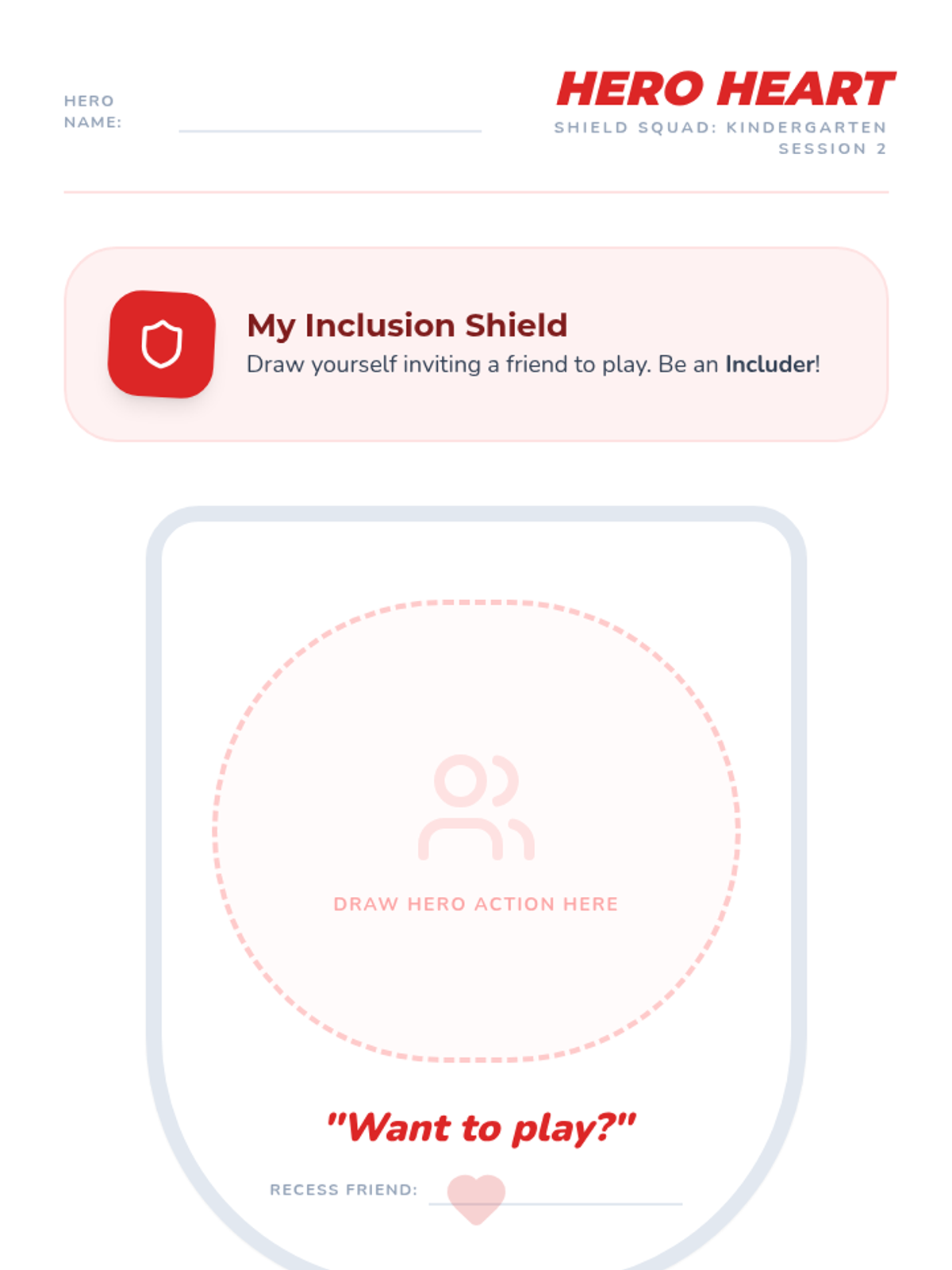
A creative drawing and strategy reinforcement worksheet for Kindergarten. Features a large shield area for students to draw inclusive actions and reminders for the Stop-Walk-Talk strategy.
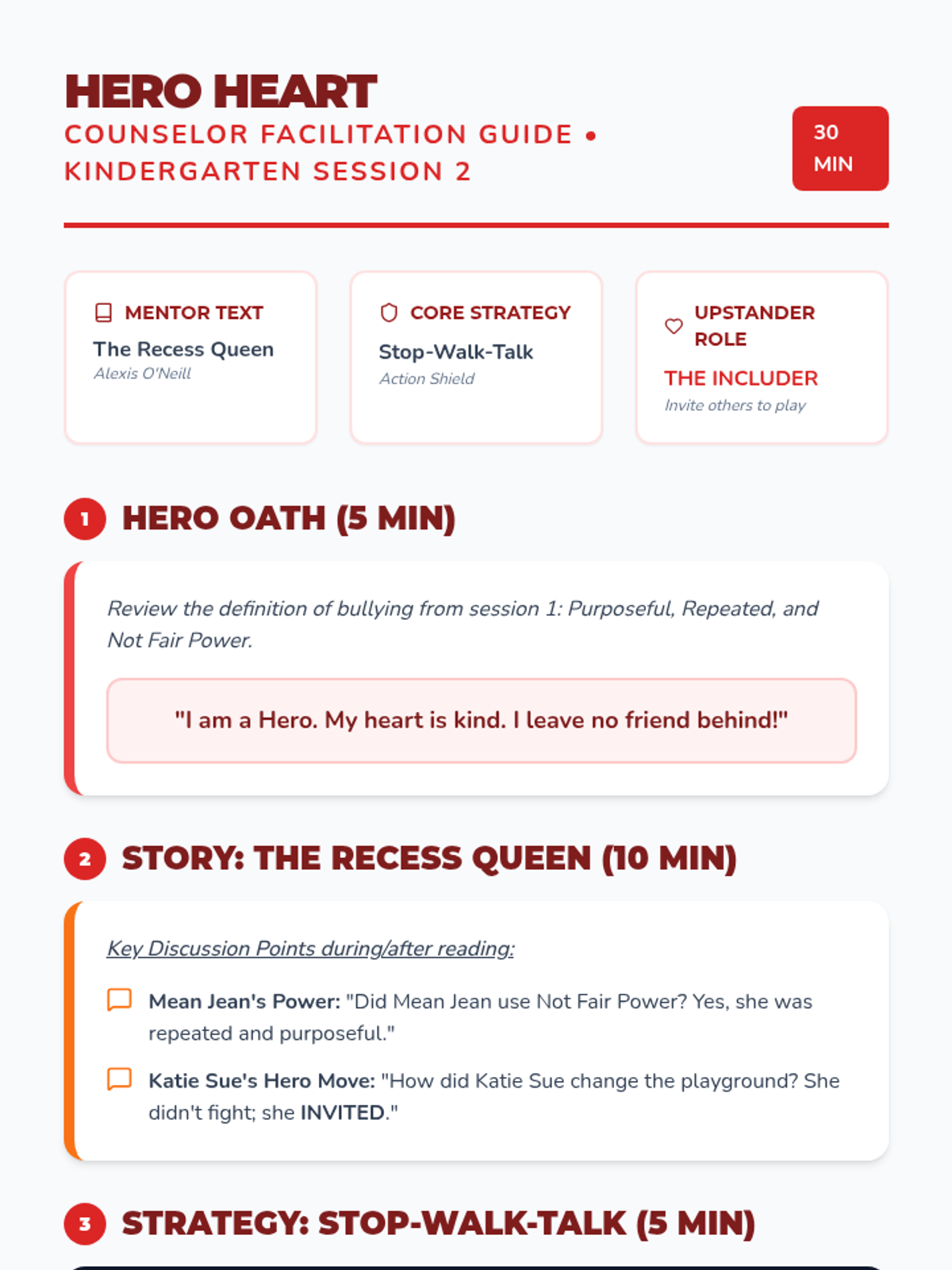
Counselor guide for Kindergarten using 'The Recess Queen' by Alexis O'Neill. Includes lesson script, Stop-Walk-Talk strategy review, and instructions for the Hero Heart Shield activity.
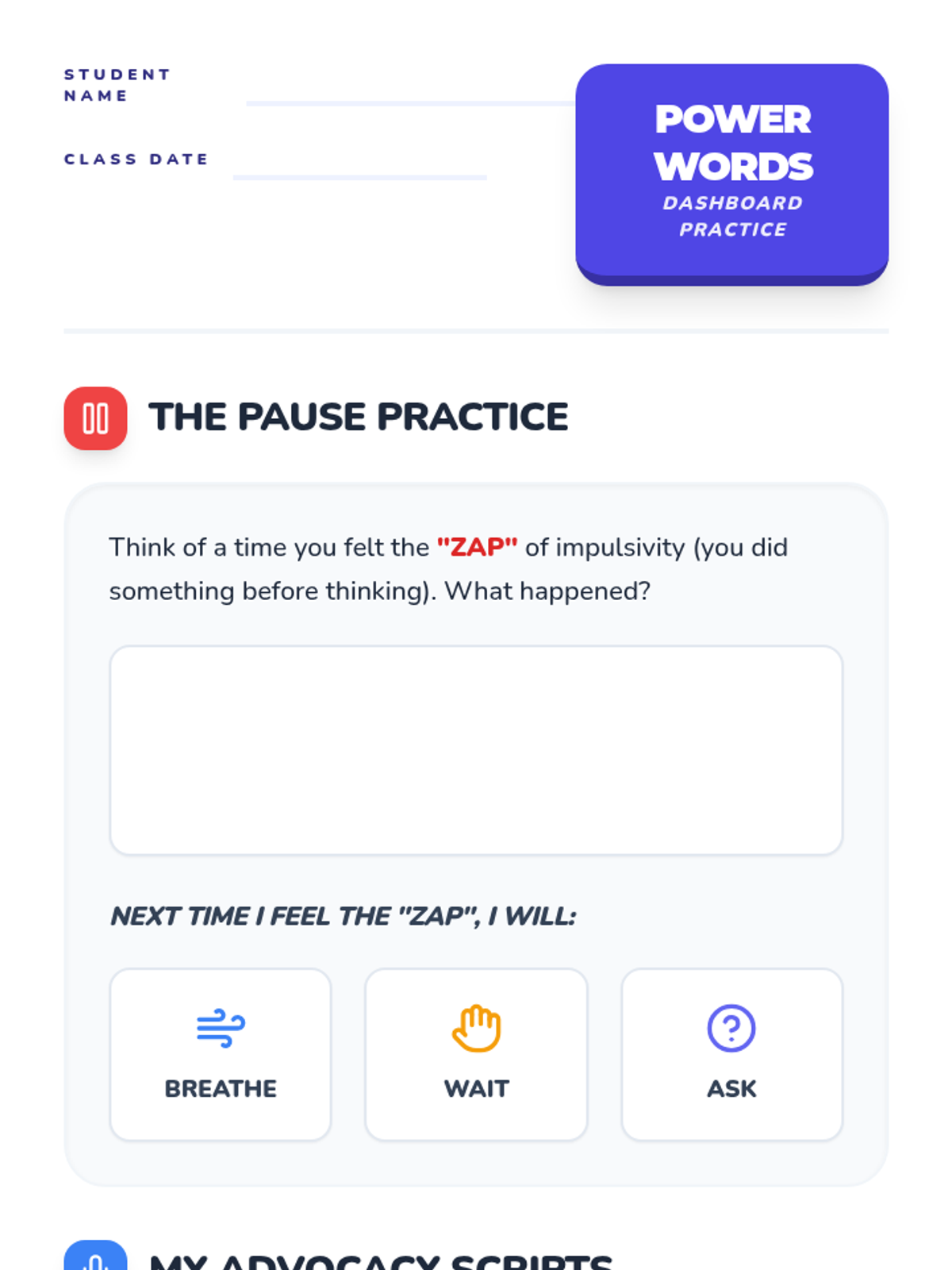
A student-facing worksheet for practicing self-advocacy scripts and reflecting on impulsive behaviors. It includes guided scenarios and creative spaces for students to develop their own 'Power Words'.
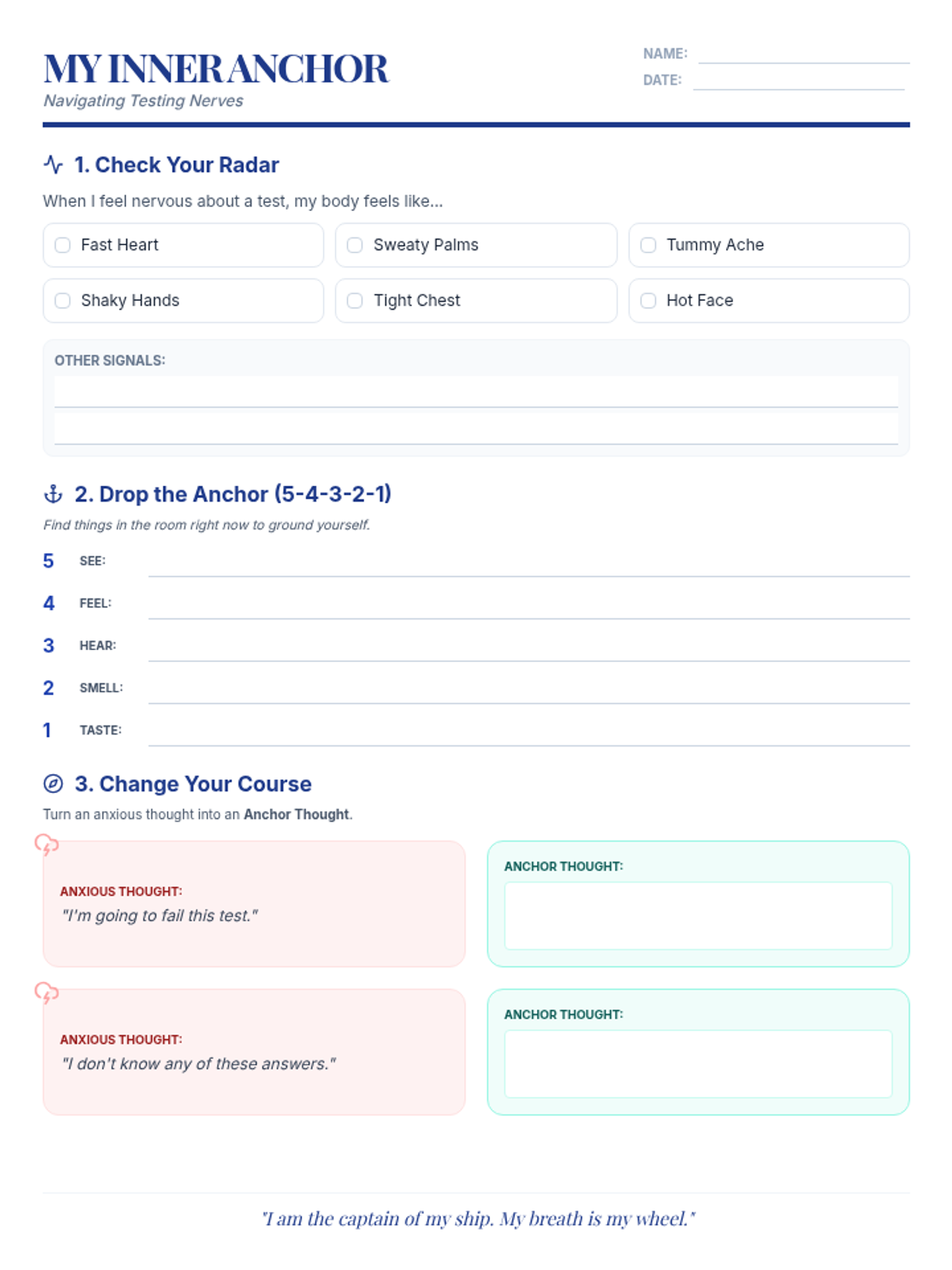
A final consolidated student worksheet that fits perfectly on one page, featuring balanced reframing boxes and darkened grounding lines.
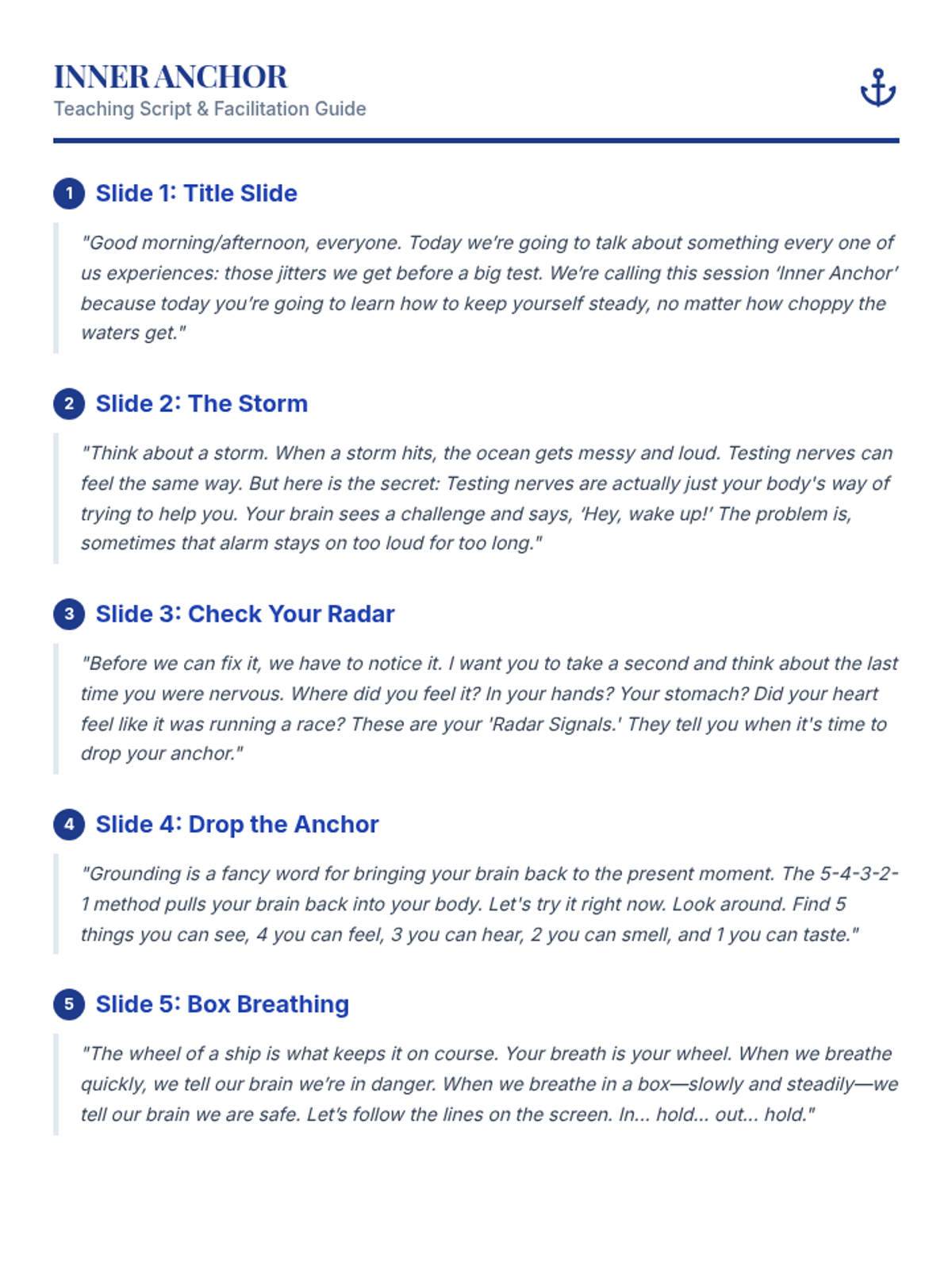
A revised teaching script consolidated into two pages with headers repeated on each page for professional consistency and no awkward splits.
A finalized slide deck with polished text rotation for breathing exercises and improved quote layout.
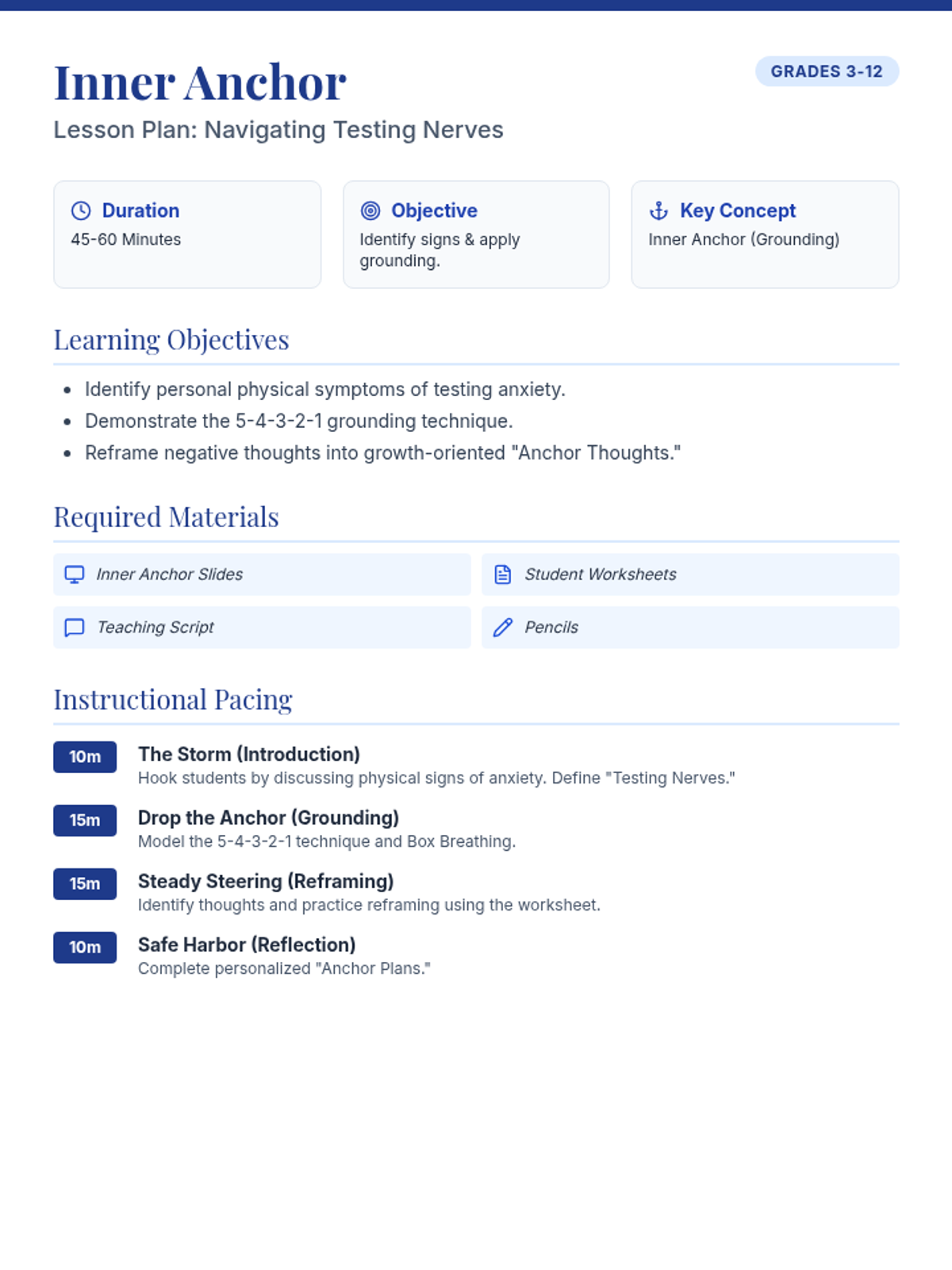
A revised lesson plan for teachers, consolidated into two pages to avoid awkward breaks and improve readability.
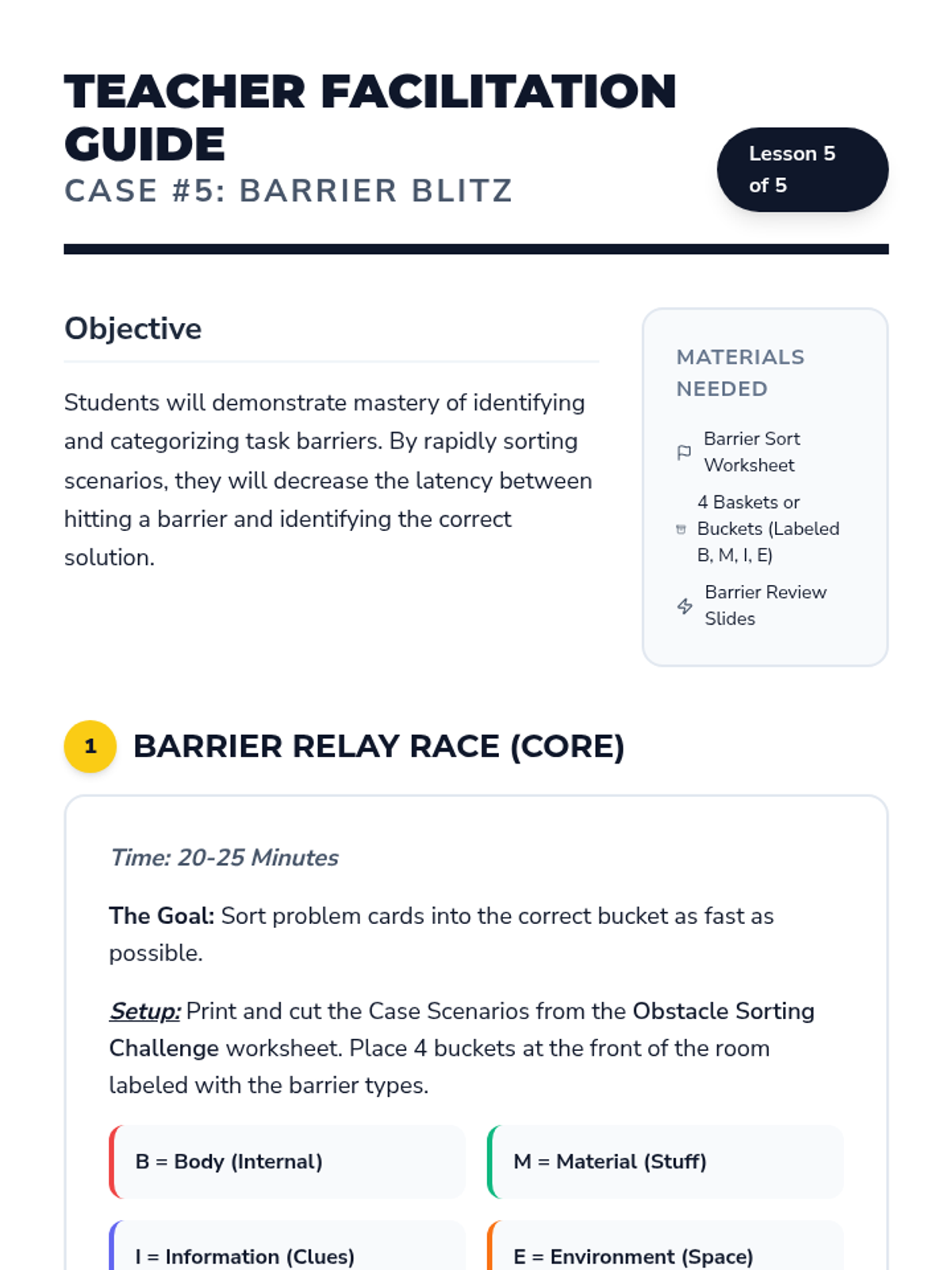
A teacher facilitation guide for Lesson 5, including instructions for the 'Barrier Relay Race' and a unit conclusion.
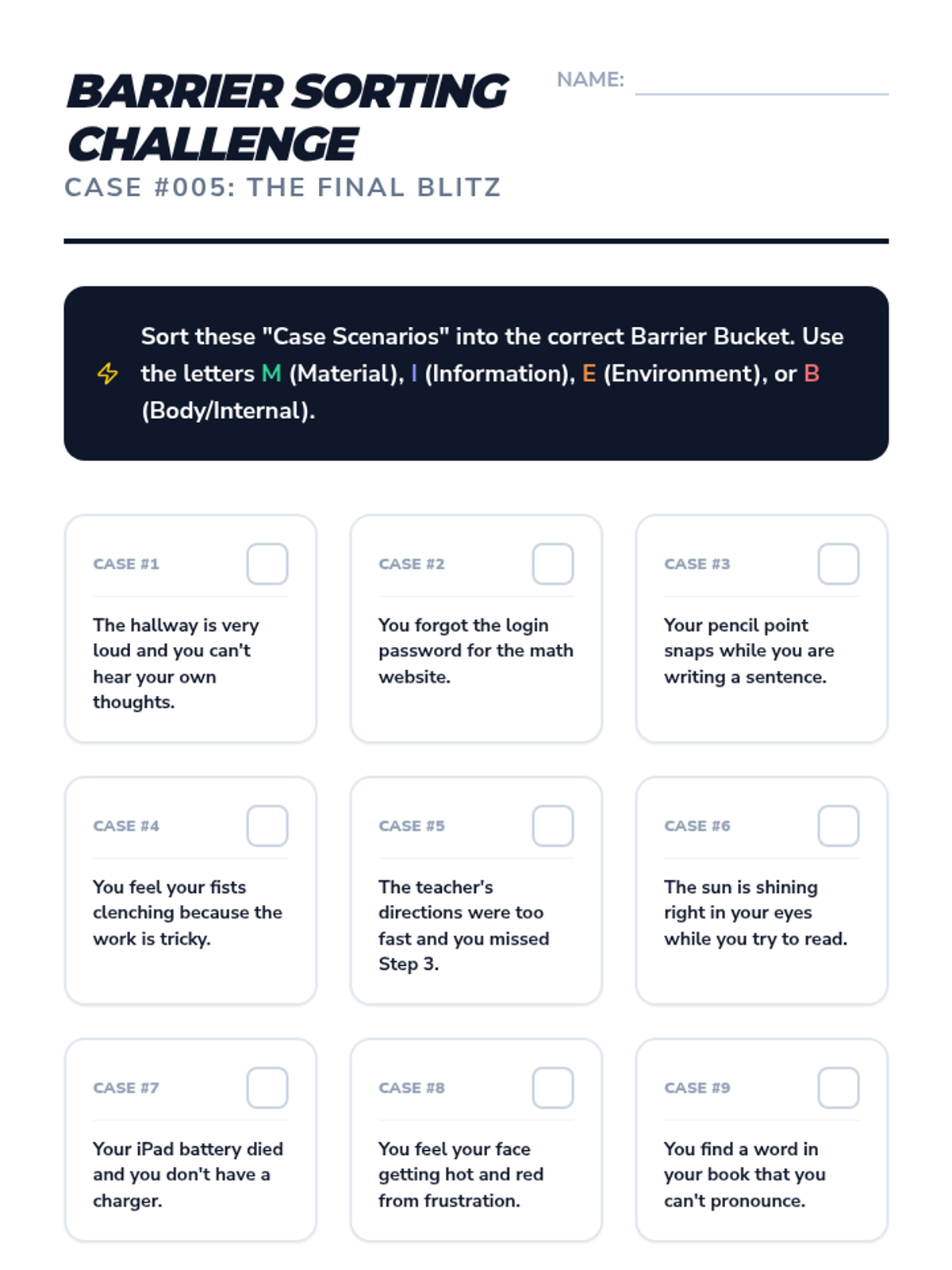
A culminating sorting activity where students categorize various problem scenarios into the four task barrier types.
A culminating slide deck for the 'Barrier Blitz' lesson, reviewing all 4 types of task barriers and preparing students for the final sorting activity.
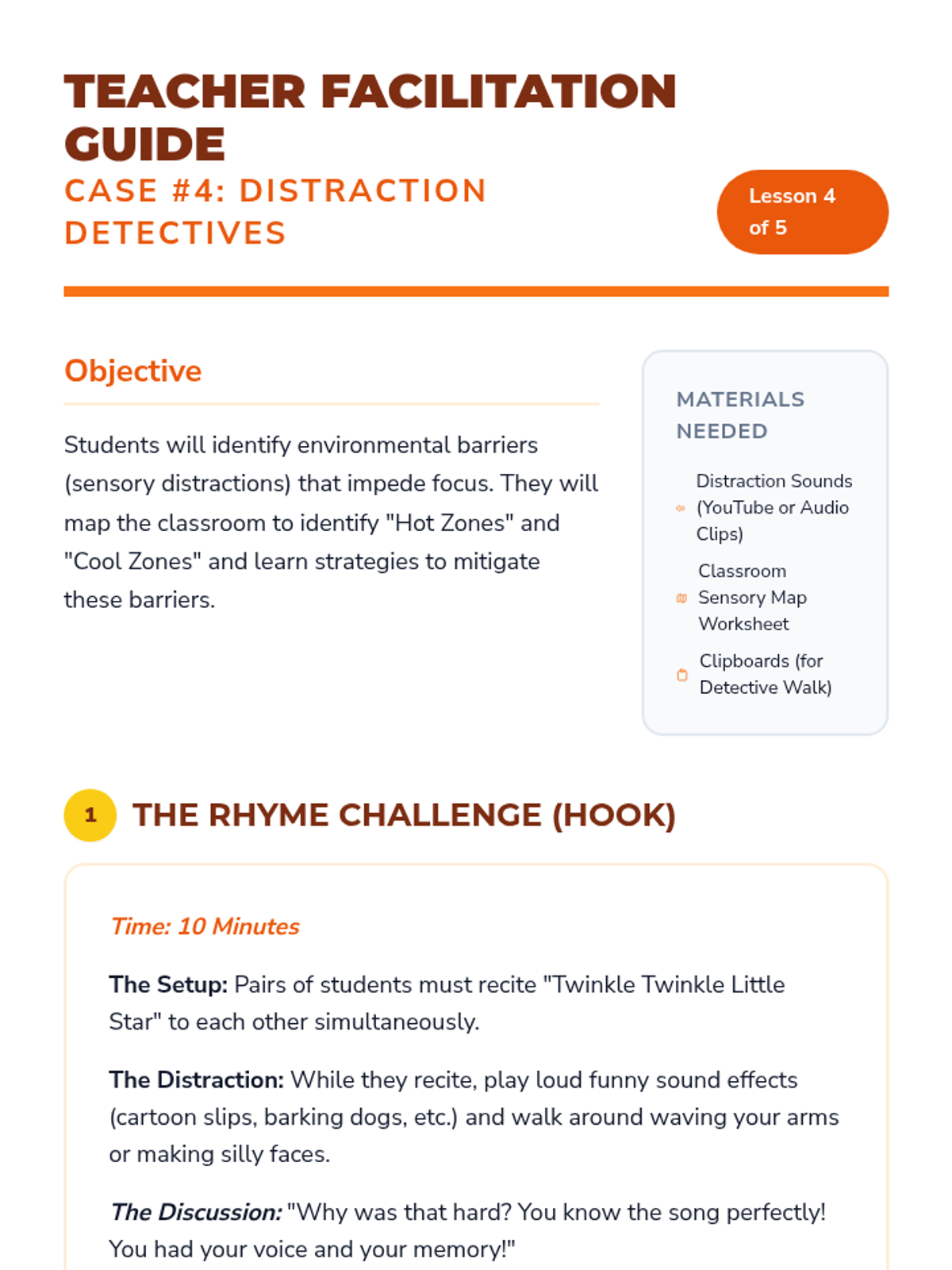
A teacher facilitation guide for Lesson 4, including instructions for the 'Stakeout Walk' and sensory mapping activity.
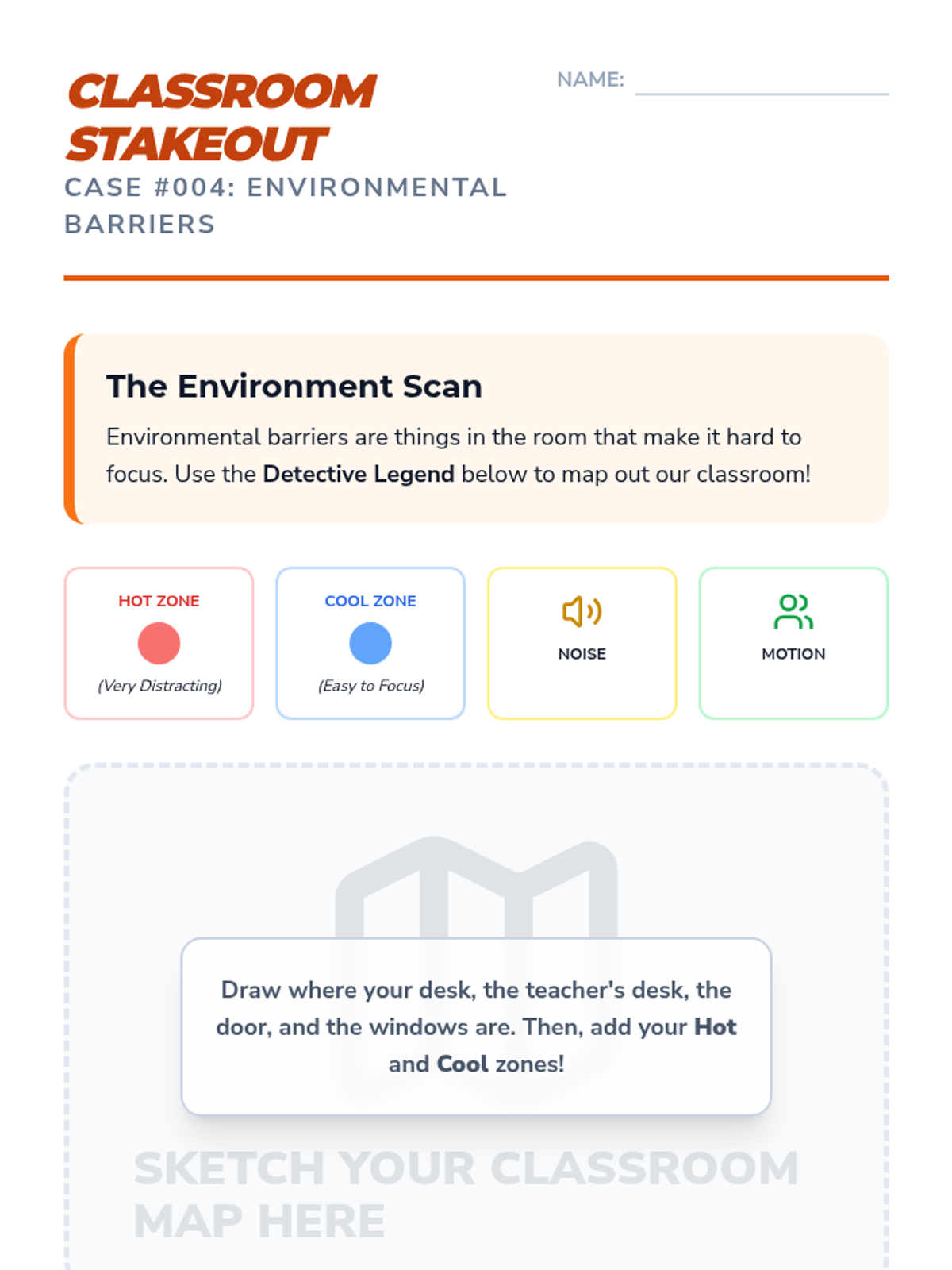
A mapping activity for students to identify 'Hot' and 'Cool' sensory zones in their classroom to manage environmental distractions.
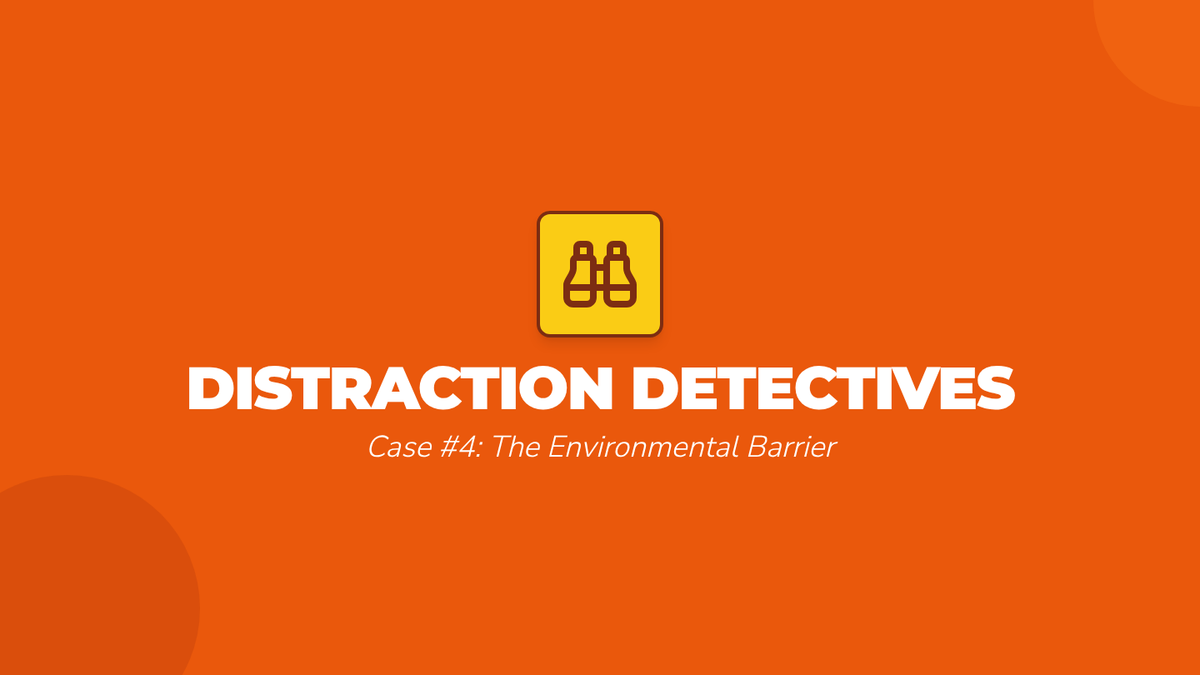
A slide deck for Lesson 4 teaching students about sensory and environmental barriers to focus.
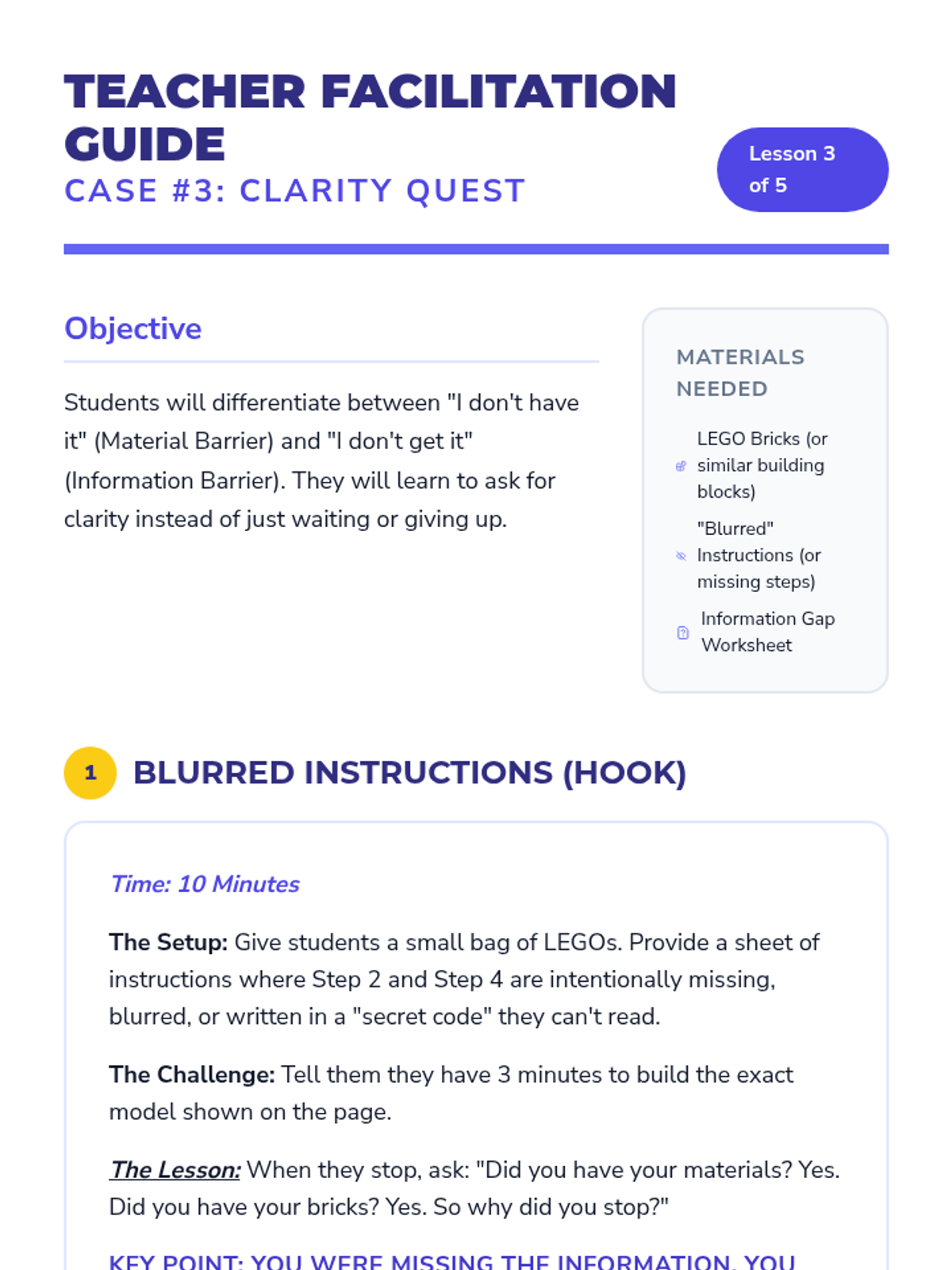
A teacher guide for Lesson 3, including instructions for the LEGO hook and advocacy scripting for students.
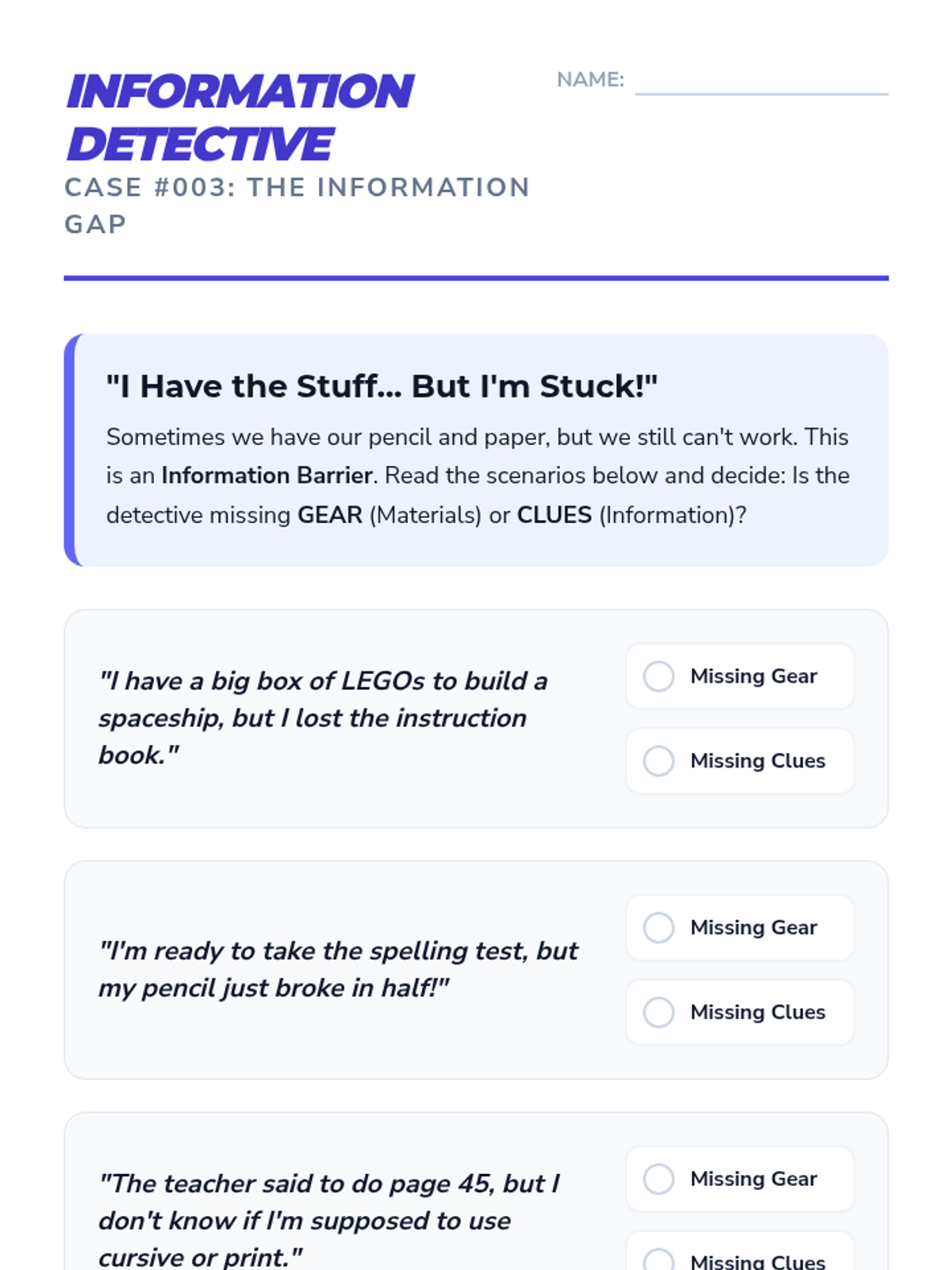
A worksheet for students to identify and differentiate between material barriers and information barriers in various classroom scenarios.
A slide deck teaching students how to identify information and clarity barriers, differentiating between 'I don't have it' and 'I don't get it.'
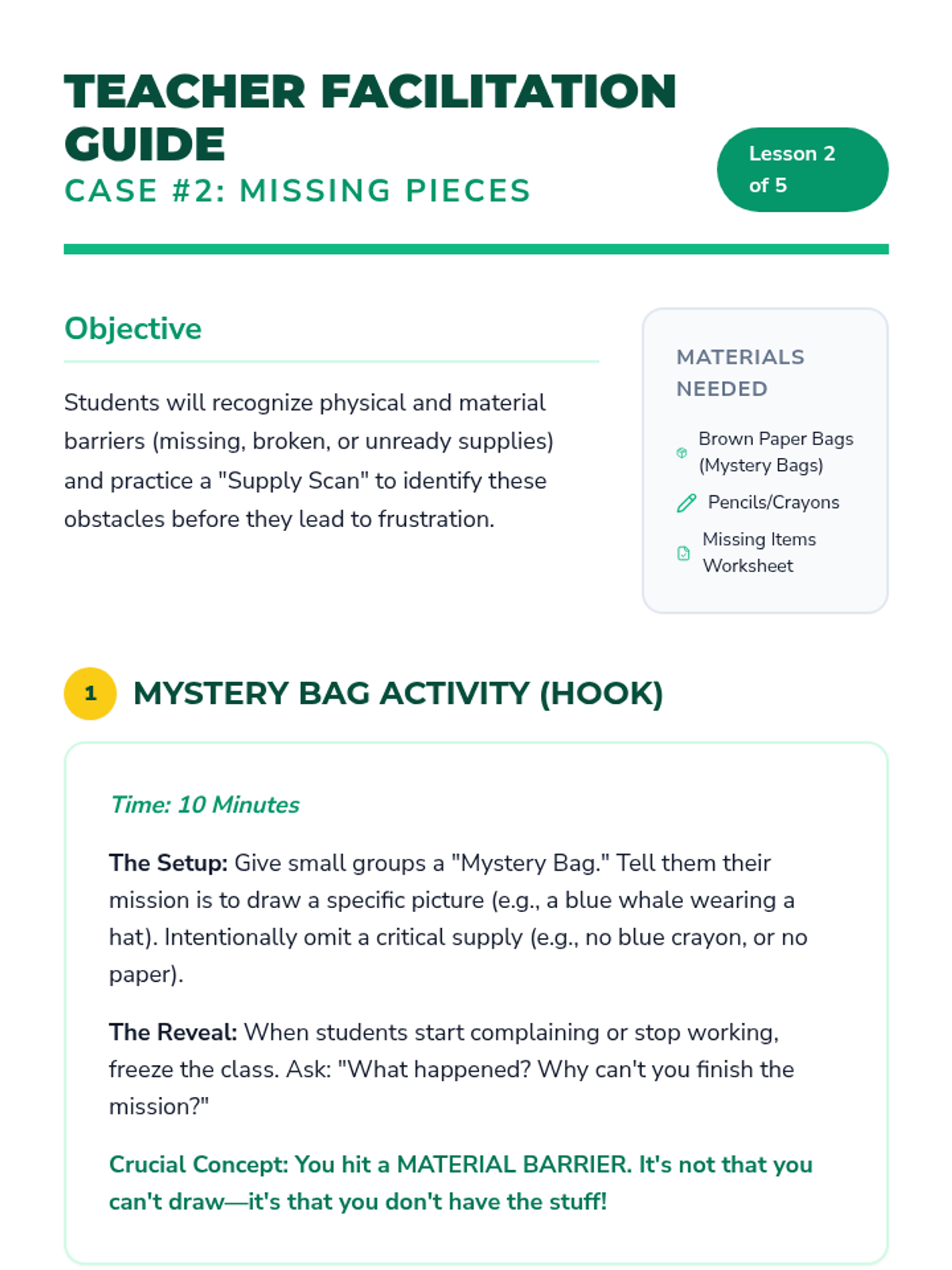
A teacher guide for Lesson 2, including instructions for the 'Mystery Bag' hook and how to facilitate a 'Supply Scan' in the classroom.
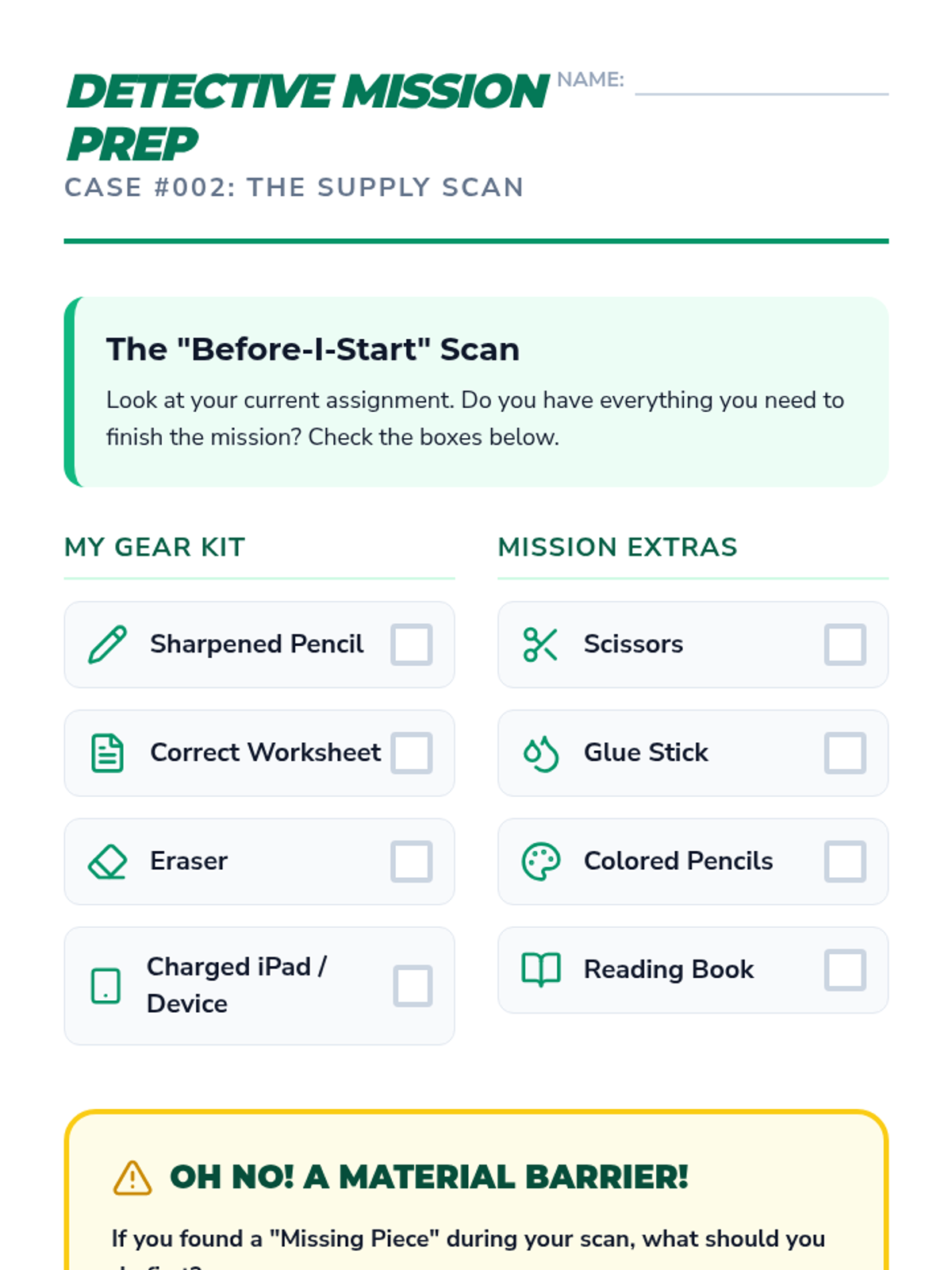
A worksheet for students to perform a 'Supply Scan' and identify physical materials needed for their tasks.
A slide deck teaching students about physical and material barriers, introducing the 'Supply Scan' technique.
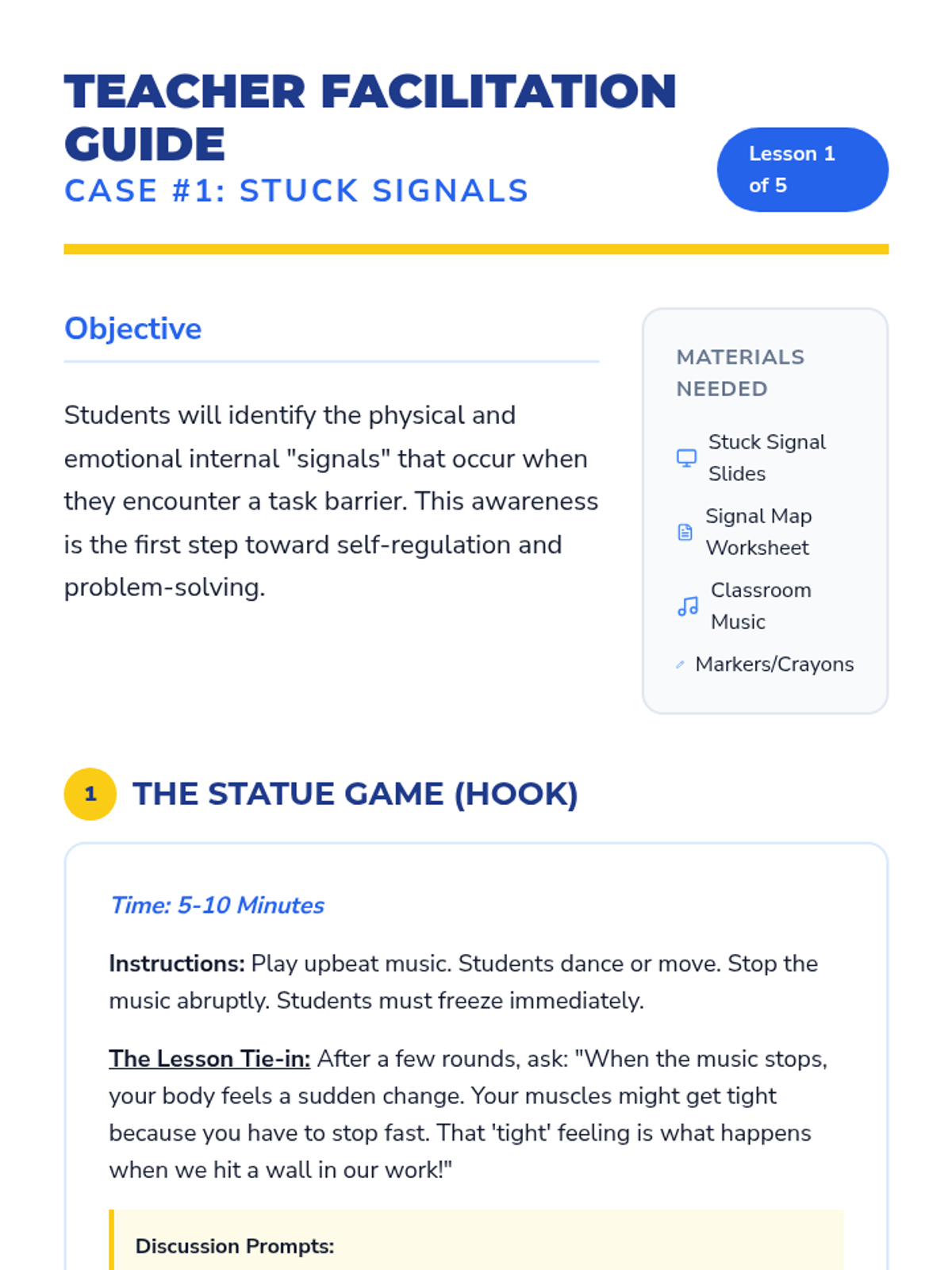
A teacher facilitation guide for Lesson 1, including instructions for the Statue Game hook and the Body Mapping core activity.
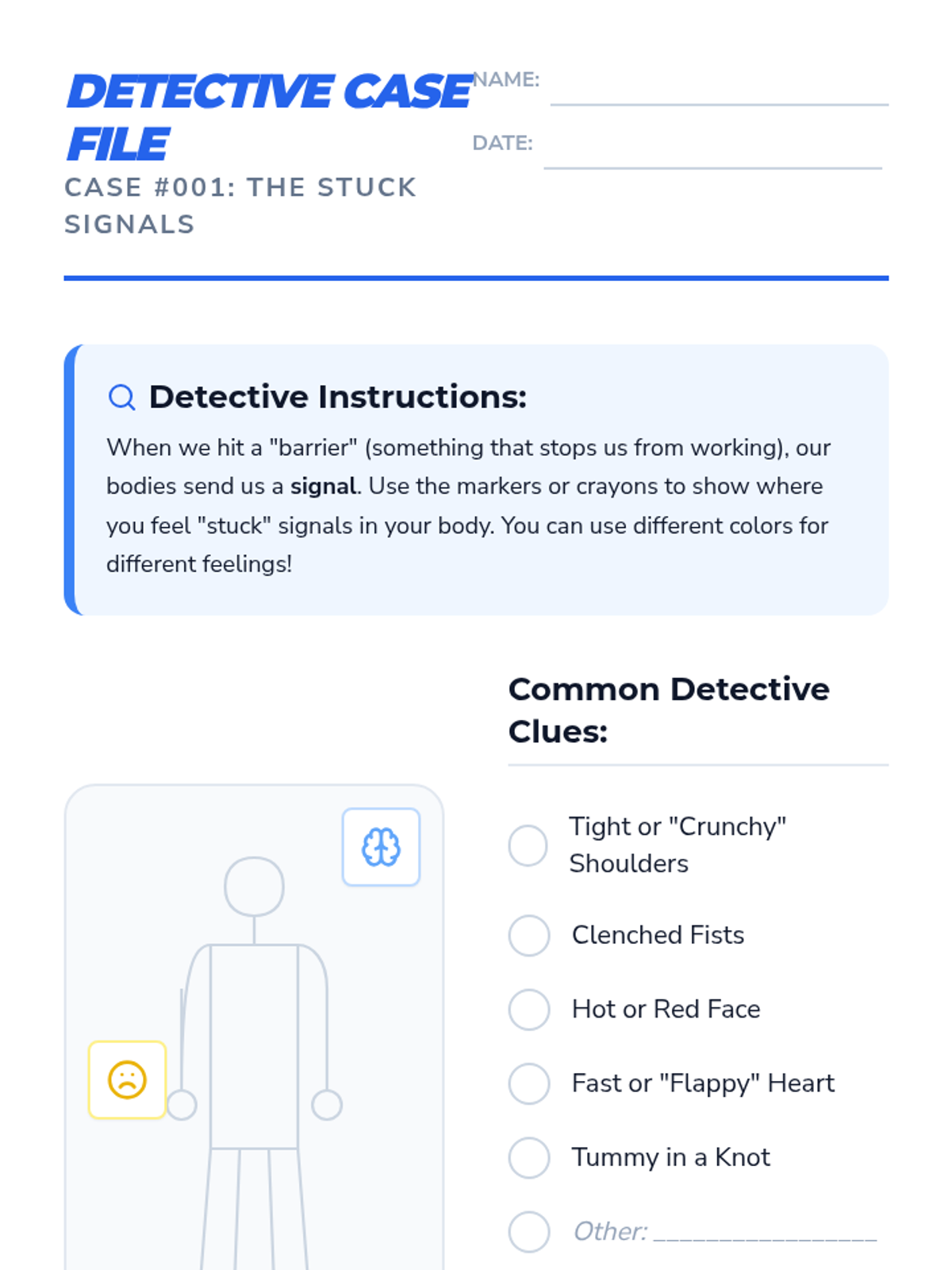
A worksheet for students to identify and map the physical signals of frustration and being 'stuck' in their own bodies.
An introductory slide deck for the 'Stuck Signals' lesson, using a Task Detective theme to help students recognize the physical and emotional sensations of being stuck.
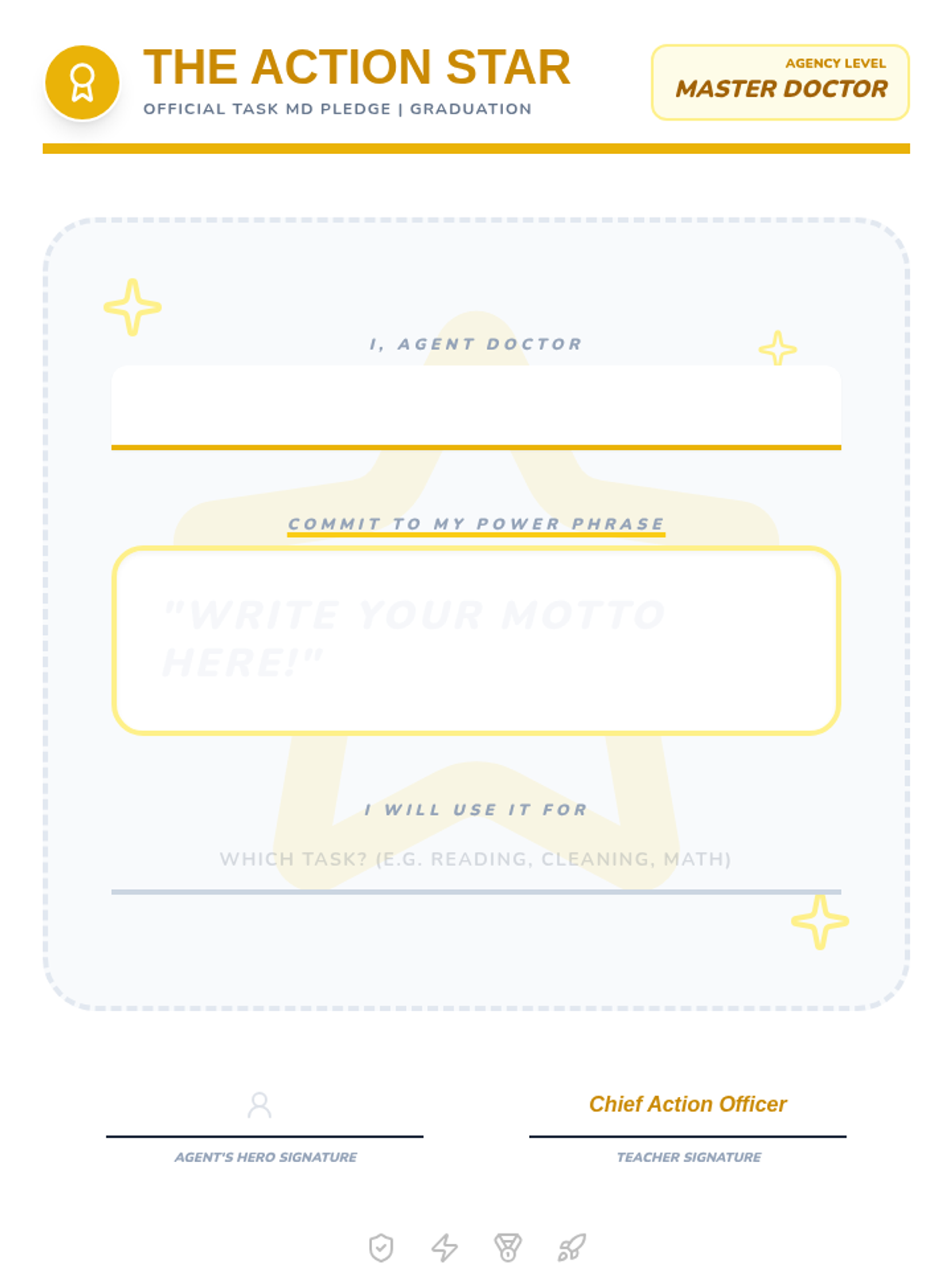
A student worksheet for the final lesson, where students write their personal 'Power Phrase' motto on a star-themed pledge sheet to be displayed on the 'Wall of Action'.
Engaging slides for Lesson 5 that guide the student self-reflection process and introduce the 'Wall of Action' graduation ceremony.
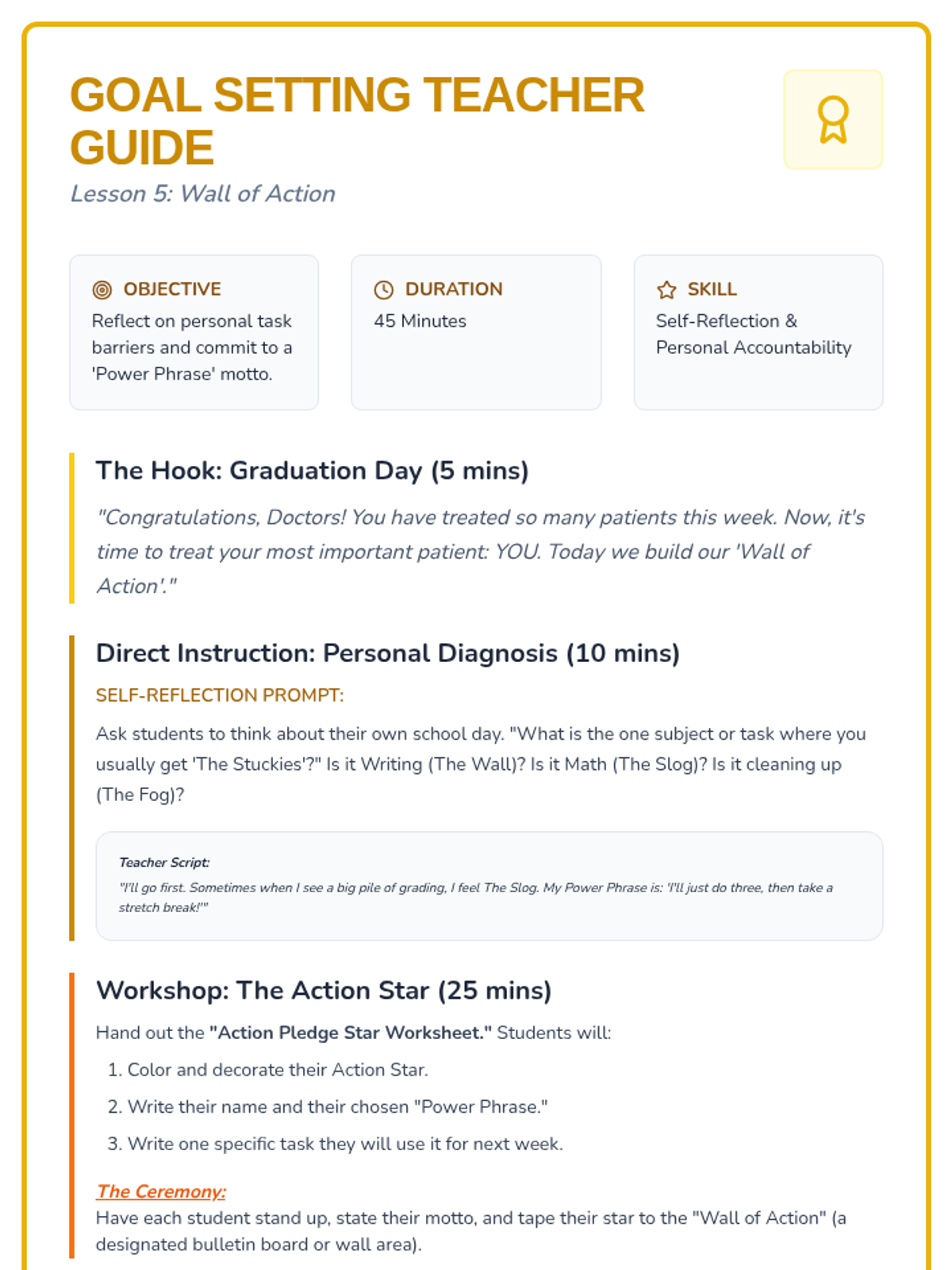
A comprehensive teacher's guide for the fifth lesson, focused on student self-reflection and creating a 'Wall of Action' with personal self-talk mottos.
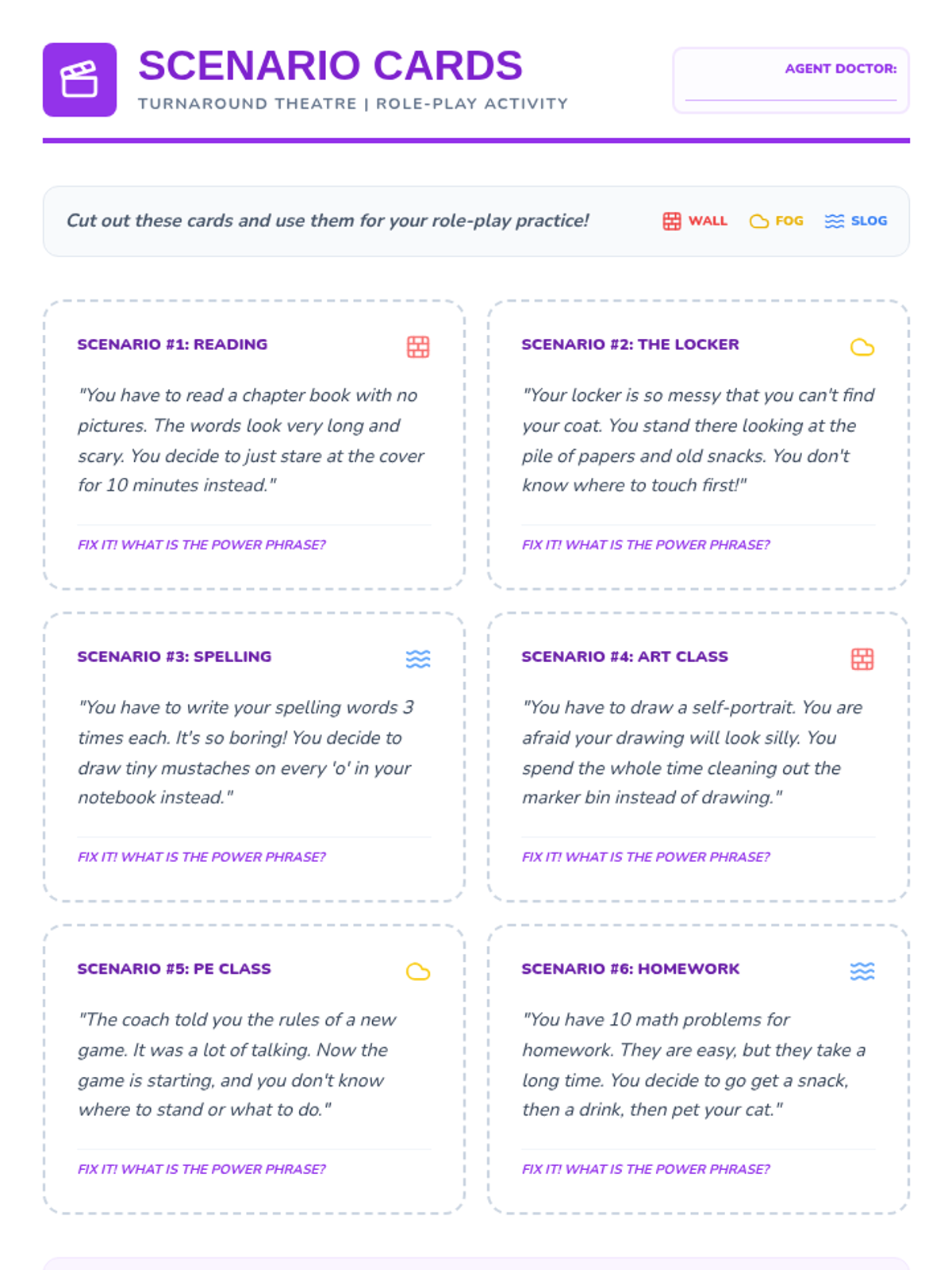
A set of role-play scenario cards for Lesson 4, allowing students to practice diagnosing barriers (Wall, Fog, Slog) and delivering self-talk prescriptions.
Engaging slides for Lesson 4 that guide the "Freeze and Fix" improvisational game and present role-play scenarios for students to practice self-talk solutions.
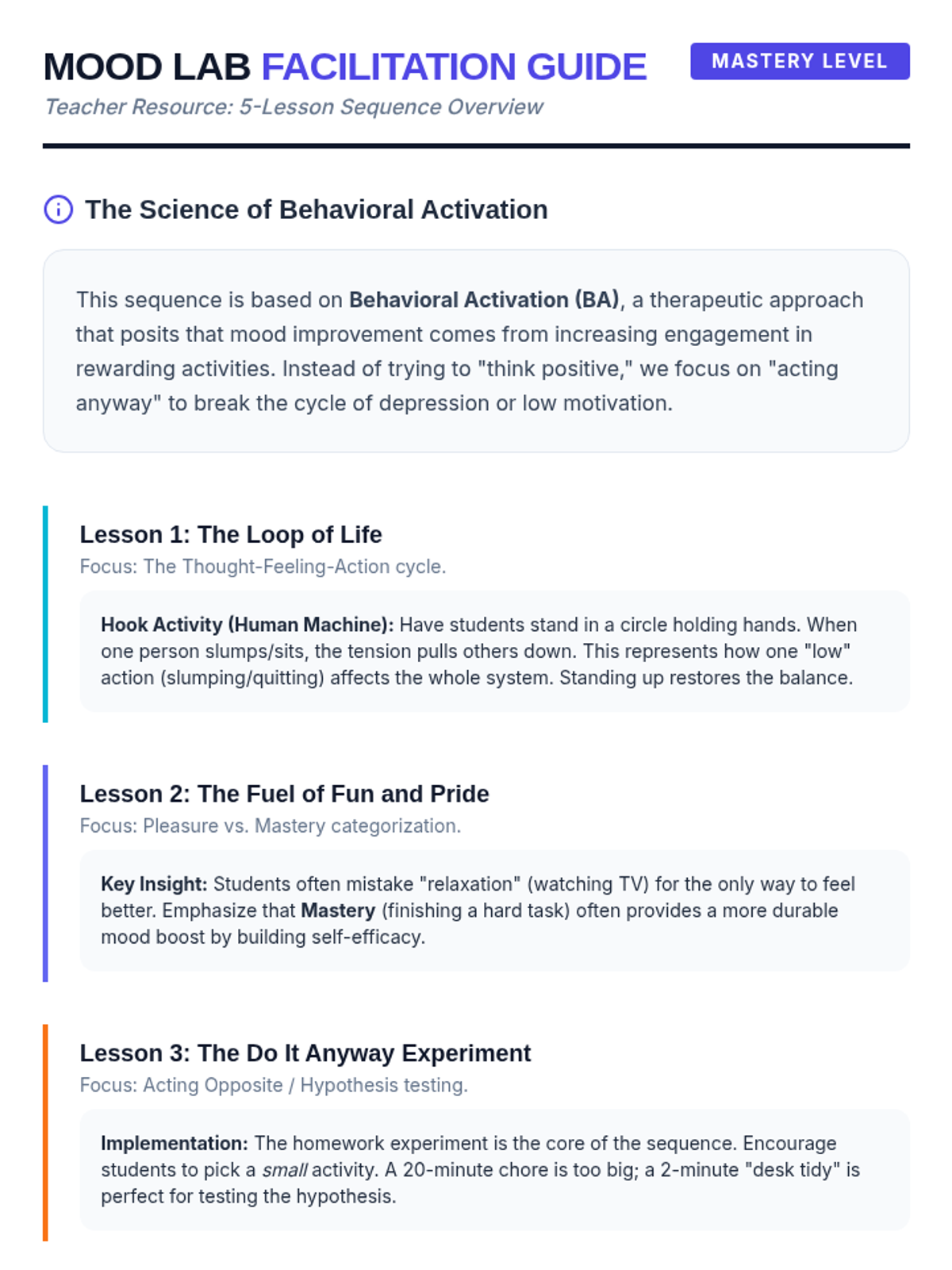
A teacher facilitation guide for the 'Mood Lab Experiment' sequence, providing therapeutic context, hook instructions, and tips for each lesson.
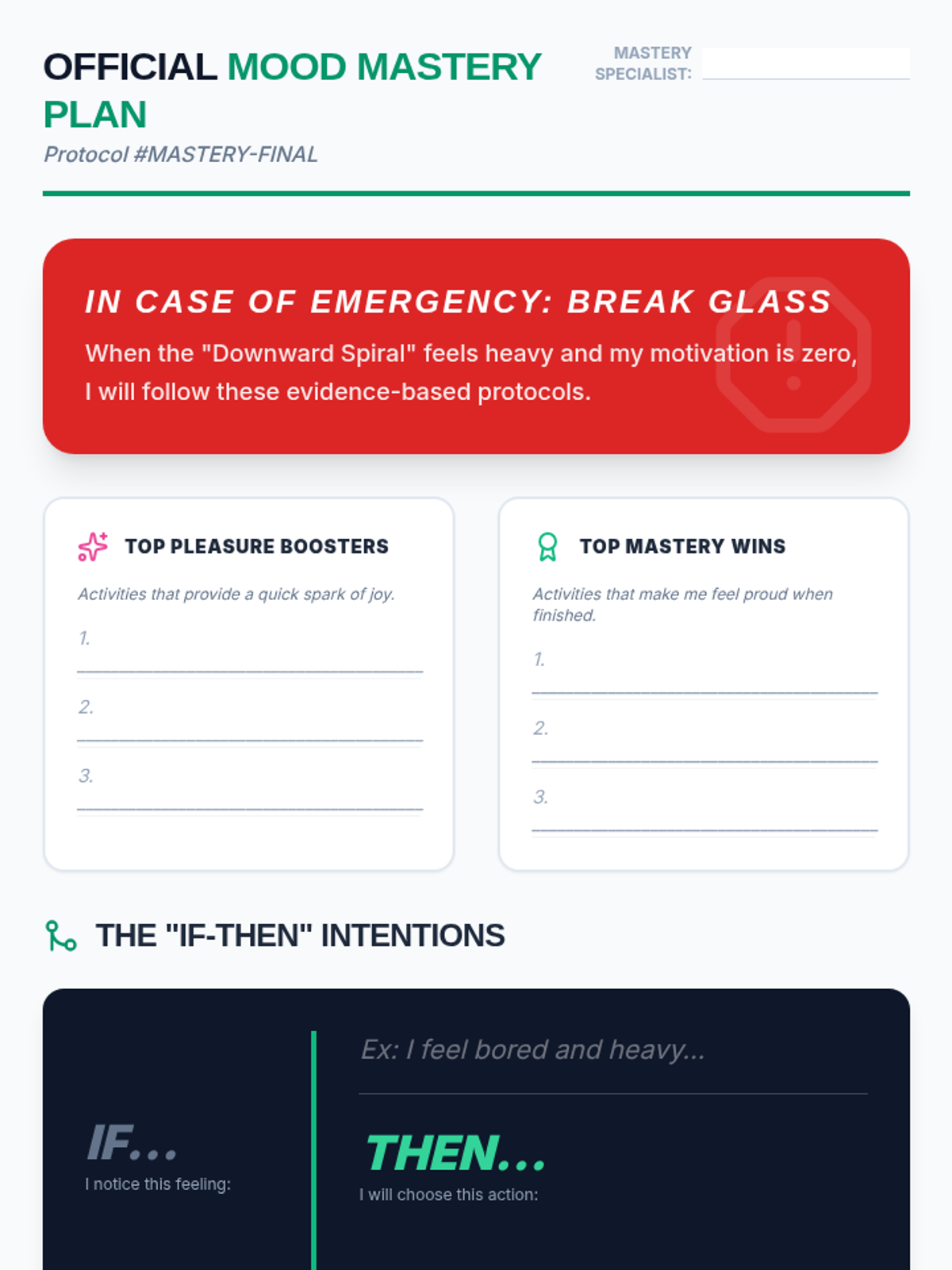
A comprehensive 'Break the Glass' emergency plan worksheet where students synthesize their findings into specific 'If-Then' implementation intentions for mood regulation.
Final slide deck for the 'Mood Mastery Lab' lesson, teaching students how to create implementation intentions and synthesize their learning into an emergency activation plan.
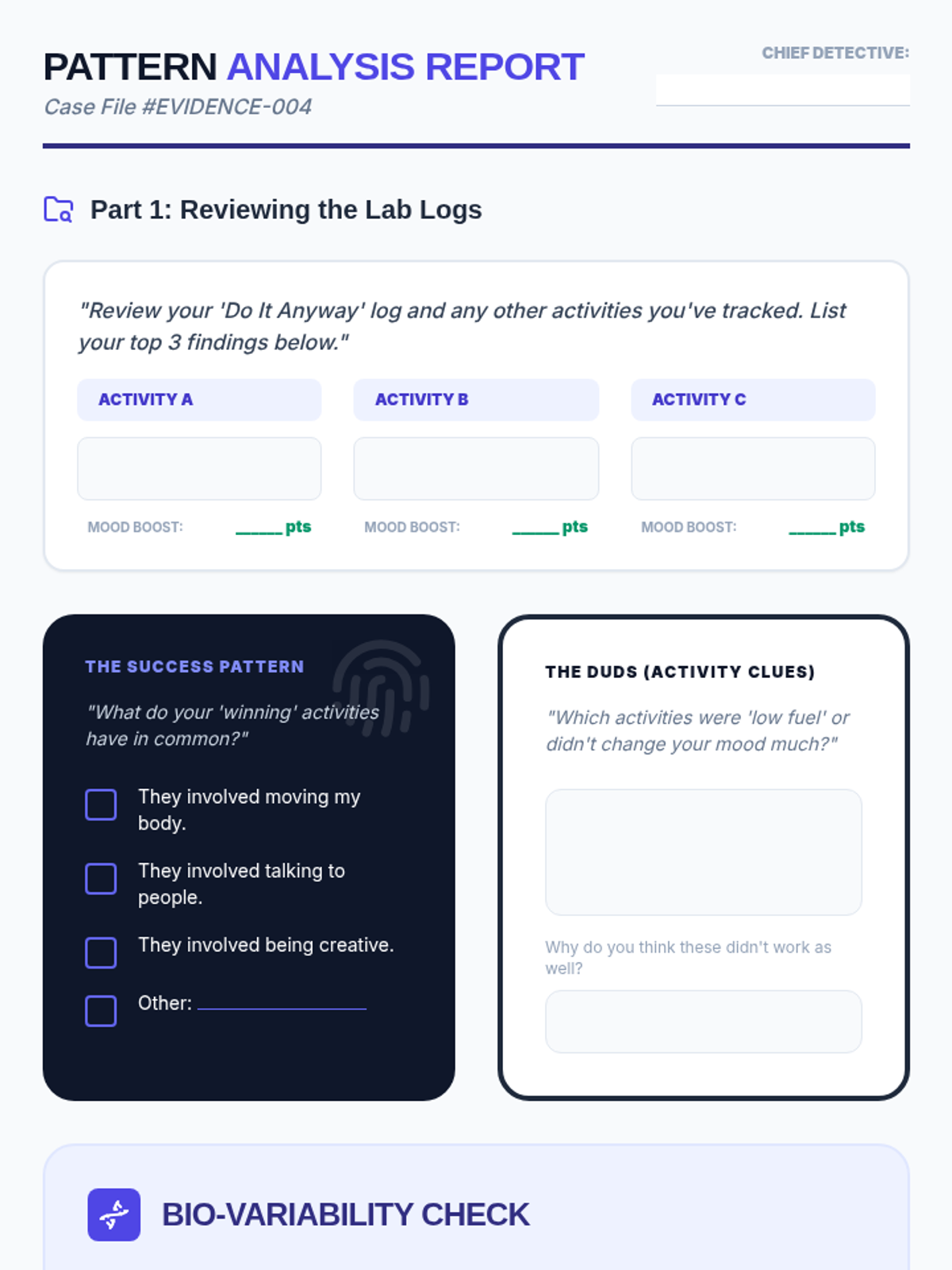
A lab report worksheet for students to analyze their experiment data, identify patterns in effective activities, and reflect on individual differences.
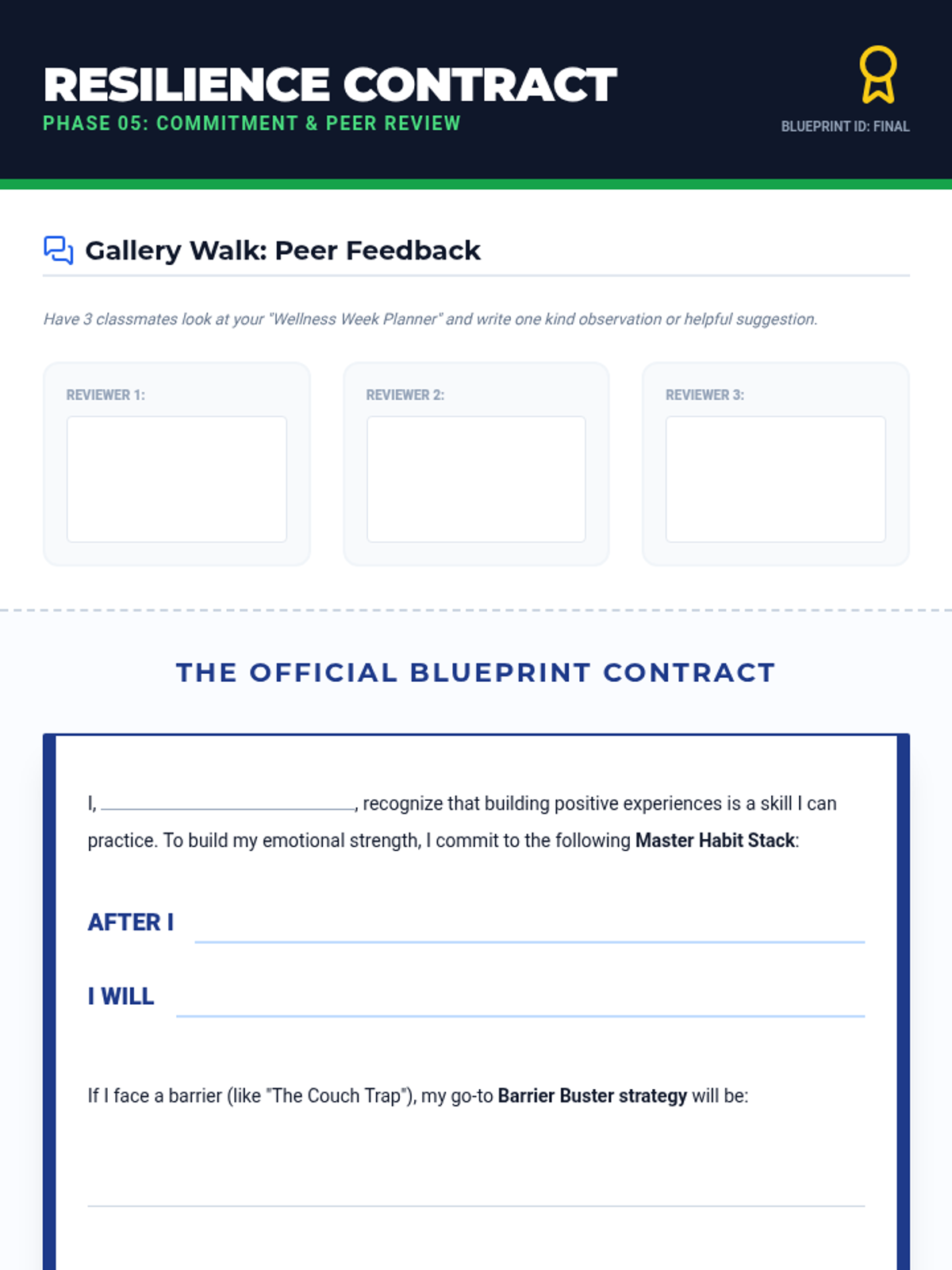
A culminating peer-review and goal-setting contract where students finalize their habit stacks and commit to their wellness routine.
Introductory slides for the final lesson, guiding students through the Gallery Walk and the peer feedback process for their wellness roadmaps.
Introductory slides for the 'Mood Pattern Detectives' lesson, helping students analyze their data and understand the concept of individual variability in activity effectiveness.
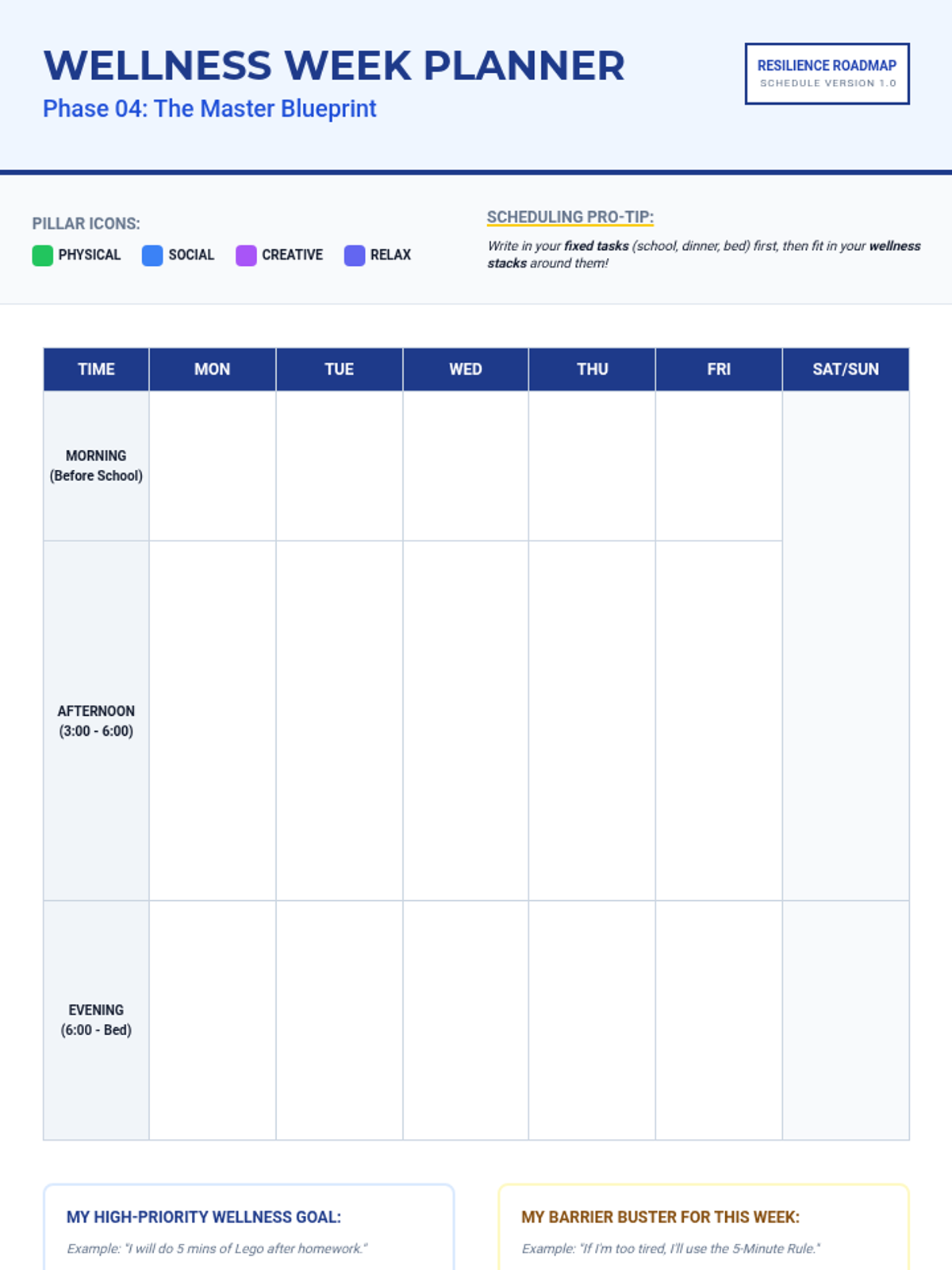
A student worksheet for designing a realistic weekly wellness schedule, including fixed obligations and "scheduled joy" using pillar categories and habit stacks.
Introductory slides for Lesson 4, explaining the concept of budgeting time for joy and how to solve the "Time Puzzle".
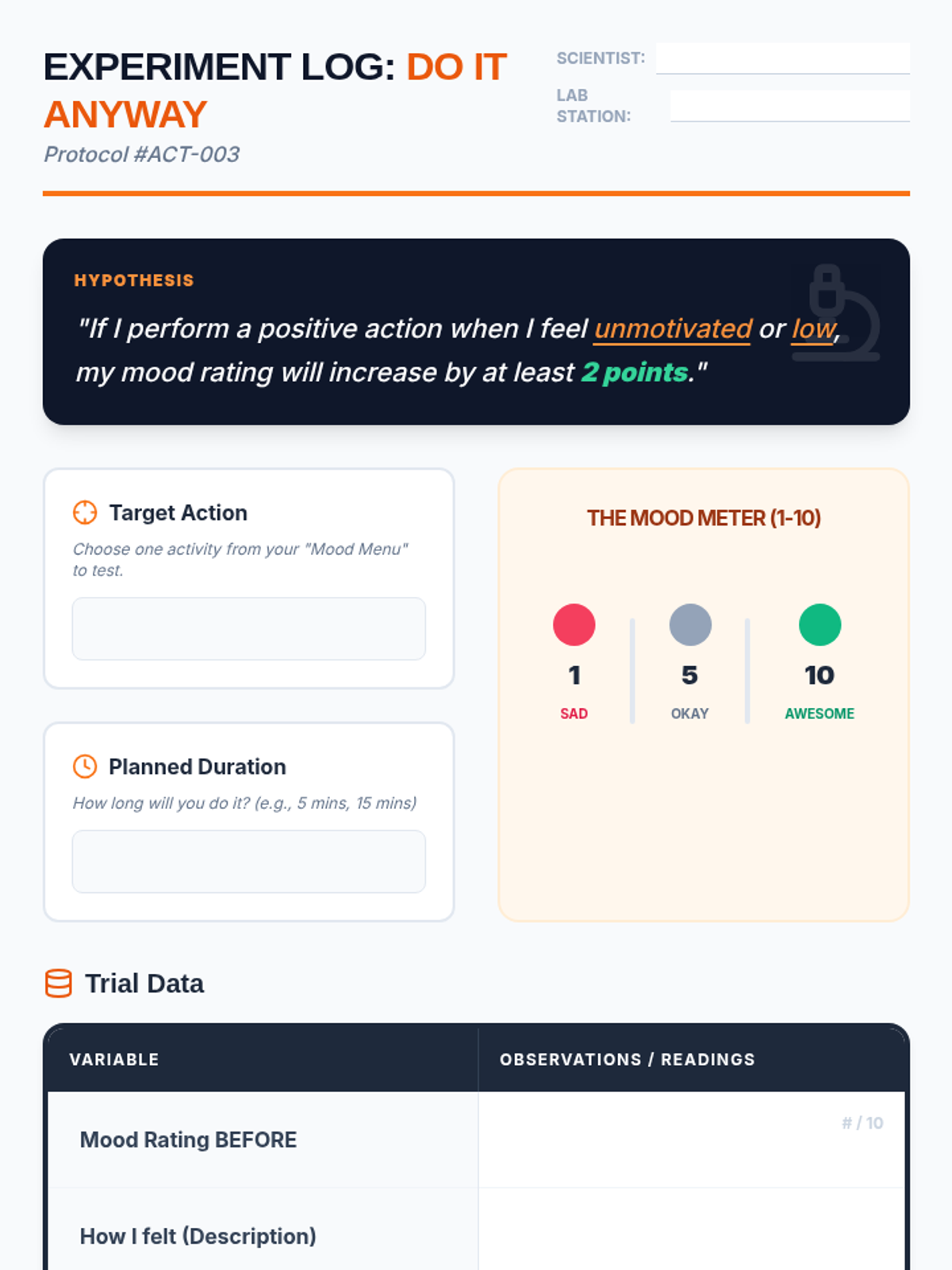
A data collection log for the 'Do It Anyway' experiment, allowing students to track their mood ratings before and after engaging in a positive action.
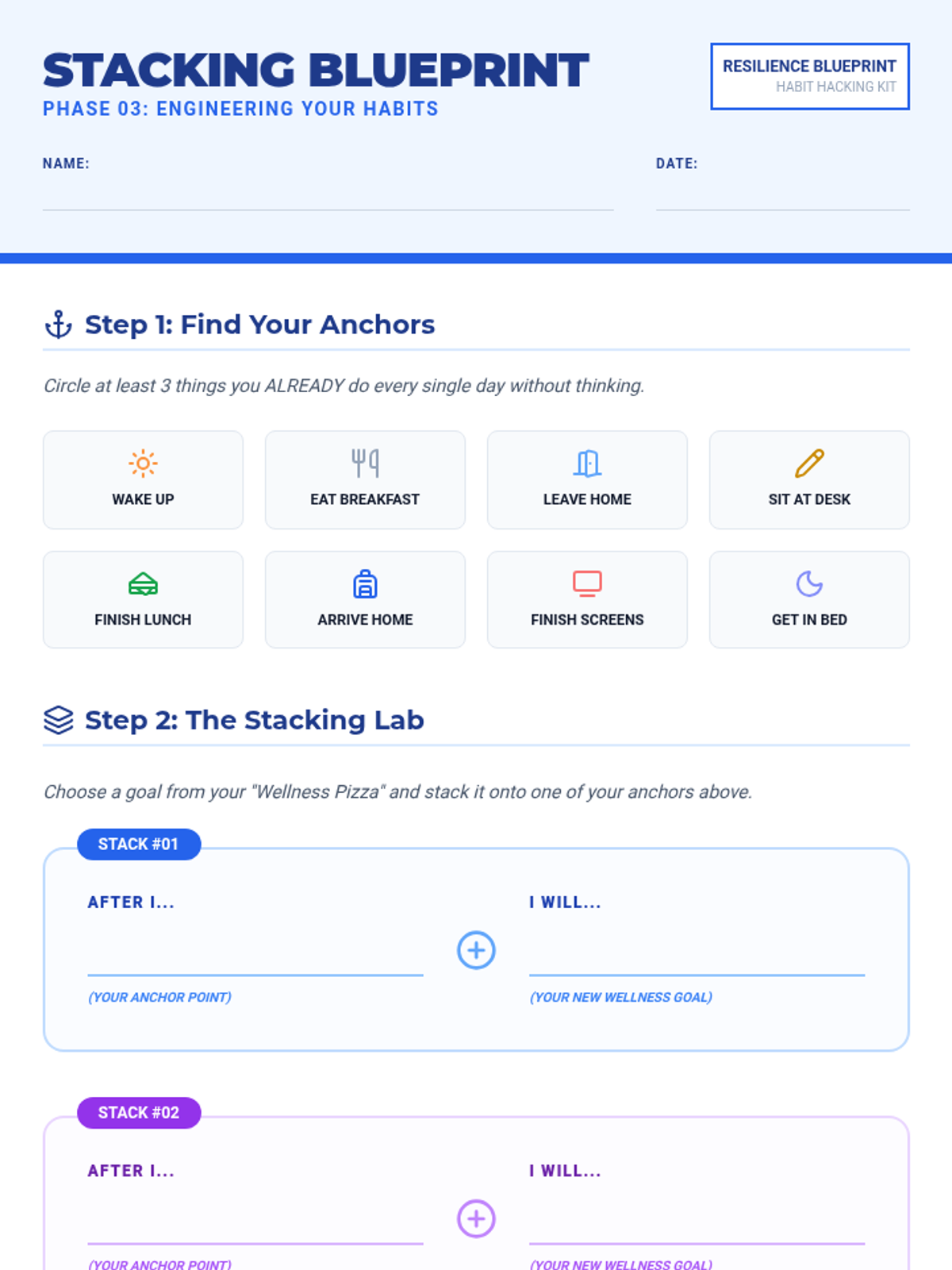
A student worksheet to help identify daily anchor points and create custom "After I... I will..." habit stacks for wellness goals.
Introductory slides for the 'Do It Anyway' experiment, explaining the concept of 'acting opposite' and how to track mood data for a personal science experiment.
Introductory slides for Lesson 3, explaining the concept of habit stacking, anchor points, and the stacking formula.
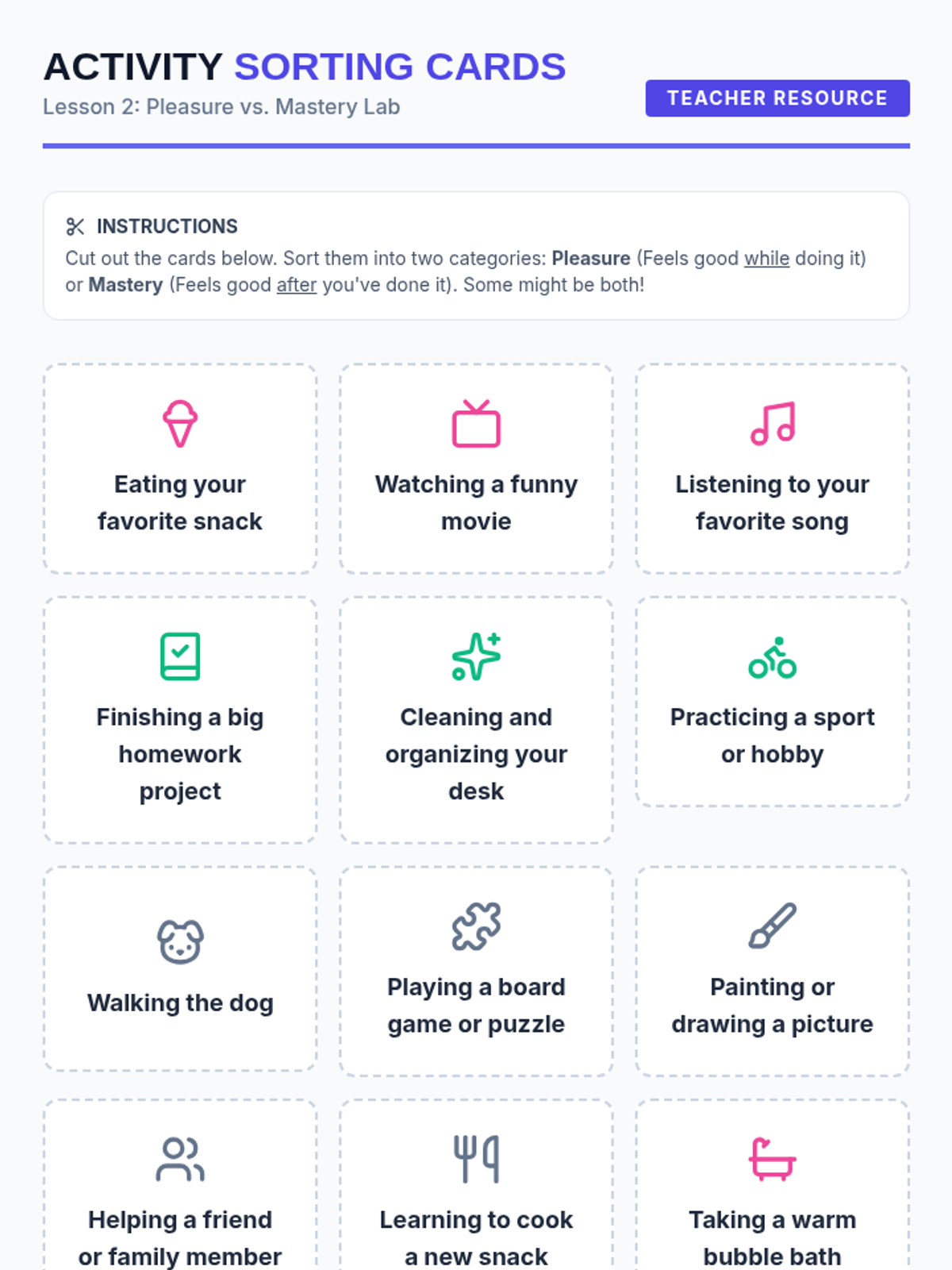
Sorting cards and a categorization t-chart for Lesson 2, helping students distinguish between pleasure-based and mastery-based activities.
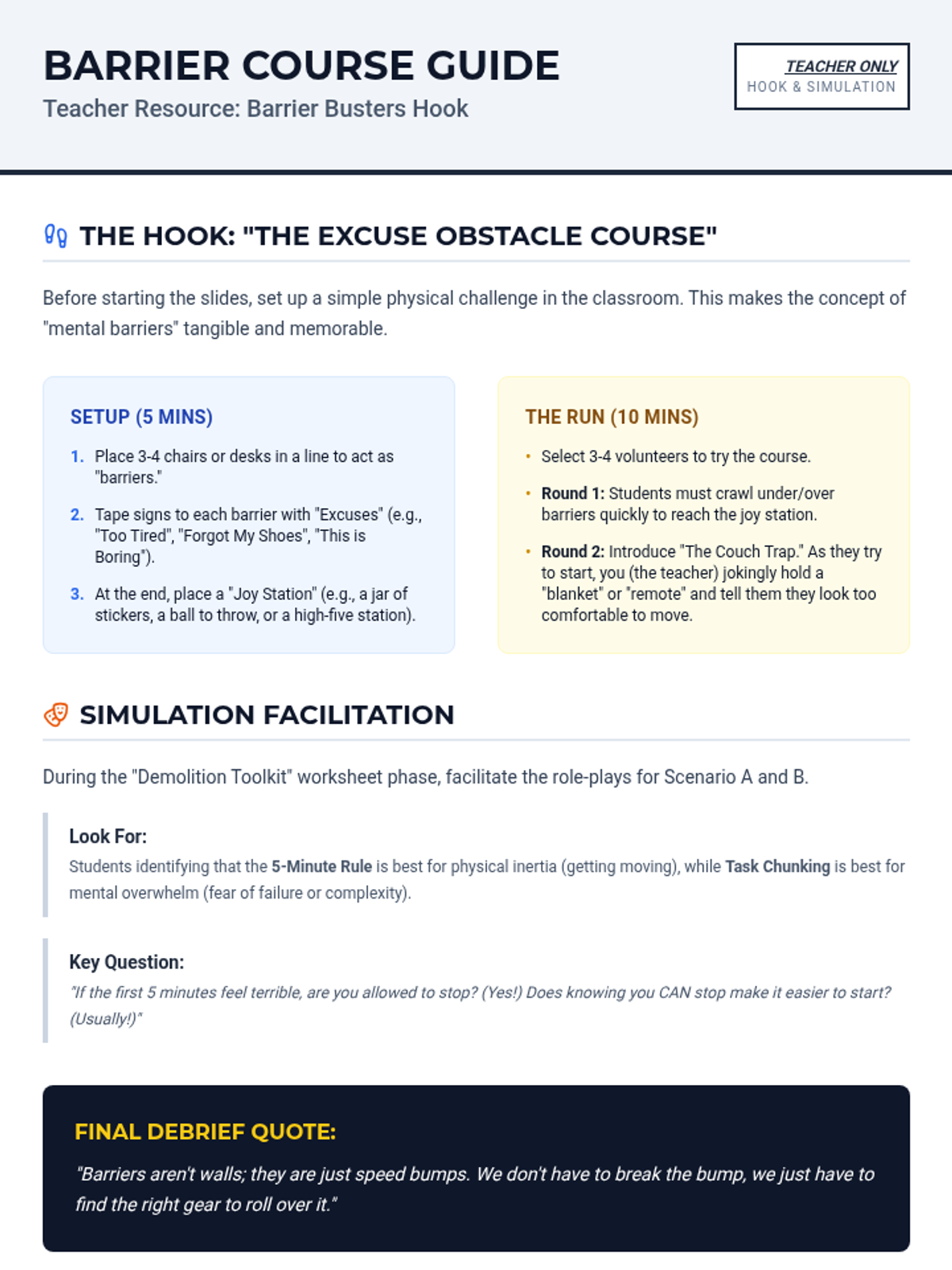
A teacher guide for Lesson 2's obstacle course hook and role-play facilitation, providing setup instructions and debriefing strategies for 'Barrier Busters'.
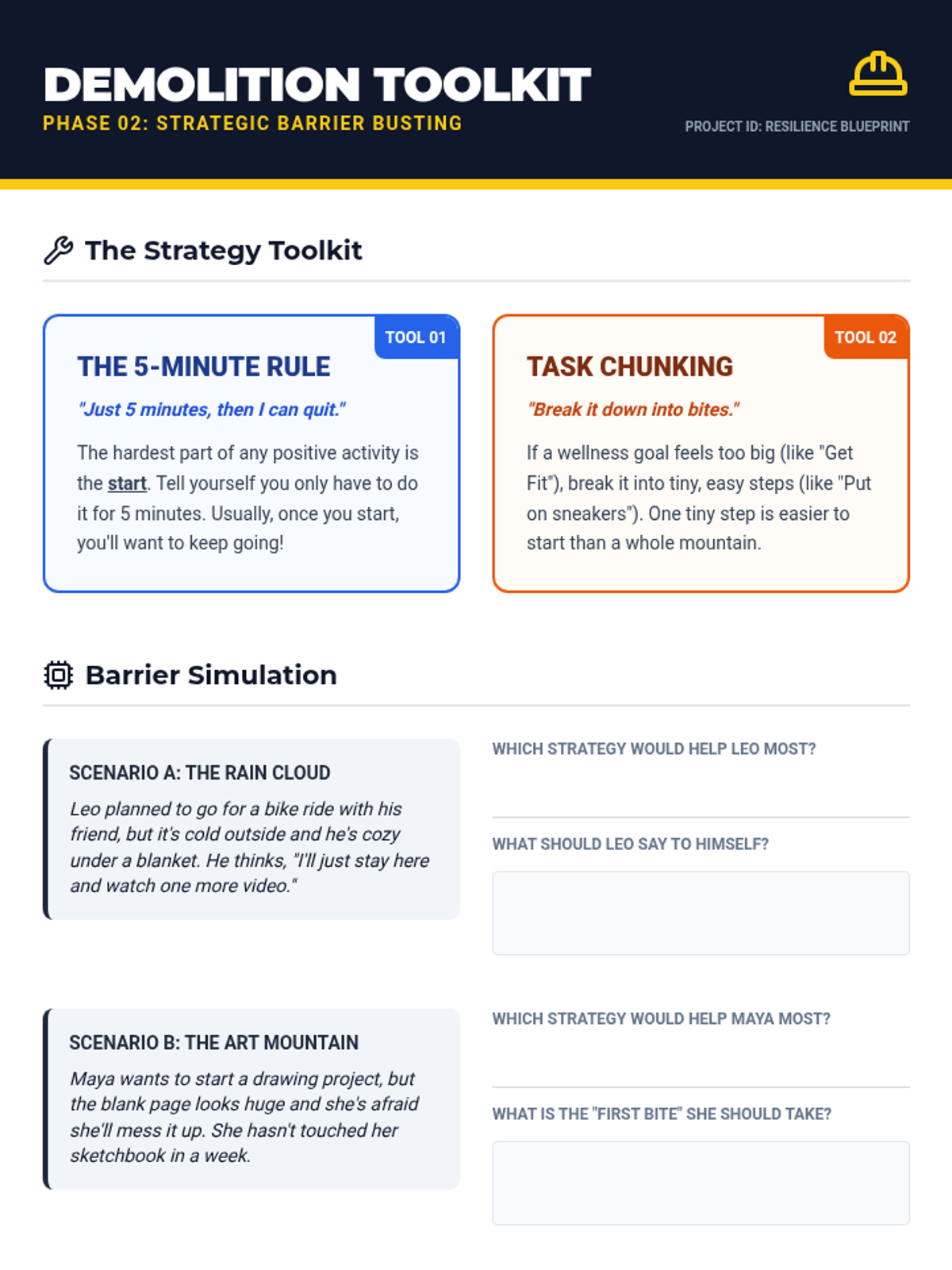
A strategy reference and scenario-based worksheet where students practice applying the 5-Minute Rule and Task Chunking to overcome common barriers to wellness.
Introductory slides for the 'Pleasure and Mastery' lesson, explaining the difference between 'Fun fuel' and 'Proud fuel' and the importance of a balanced activity diet.
Slides for Lesson 2, identifying 'The Couch Trap' and teaching the 5-Minute Rule and Task Chunking as strategic 'barrier busters'.
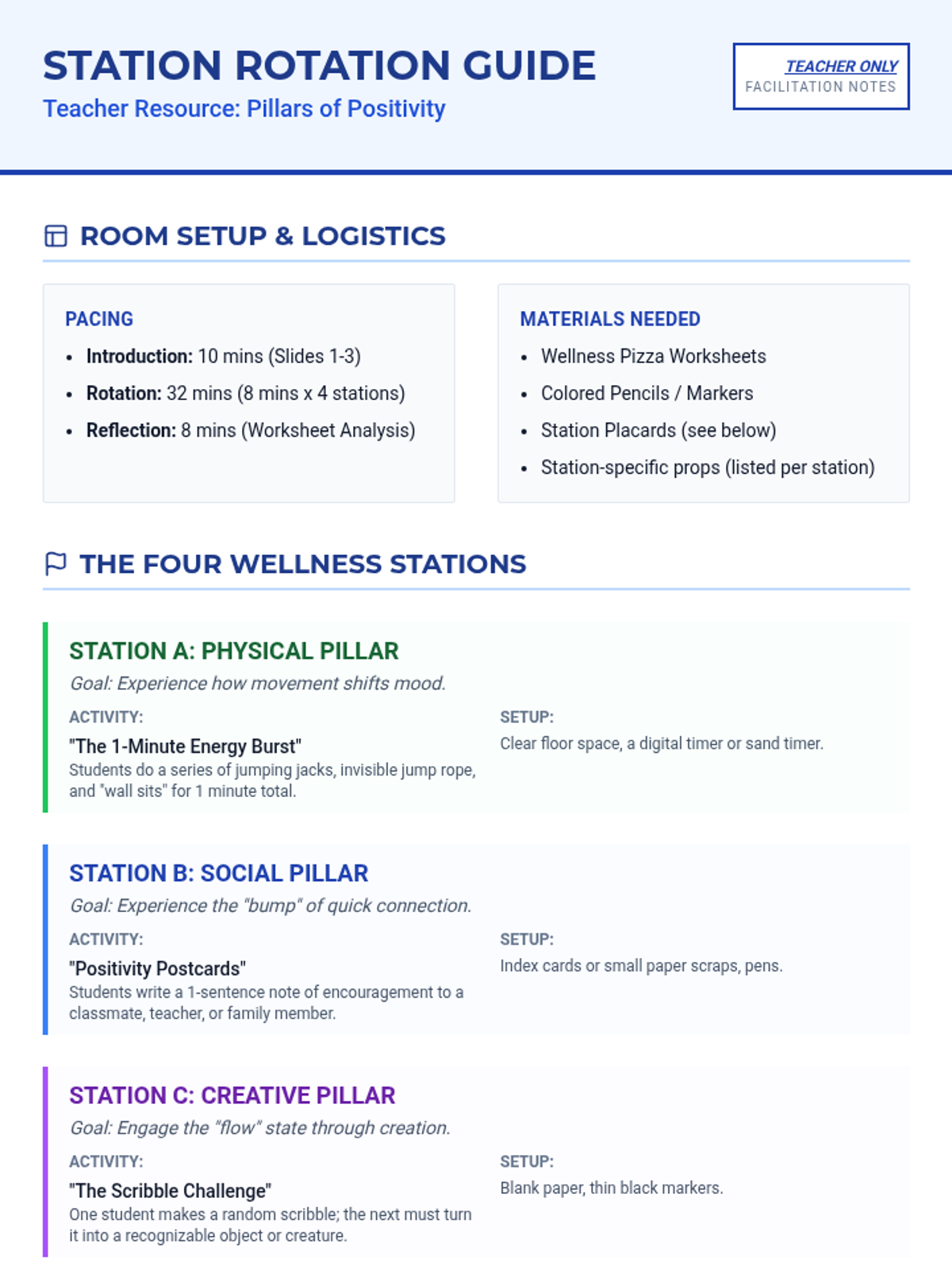
A facilitation guide for teachers to set up and run the four wellness pillar stations, including activities, setup needs, and debrief questions.
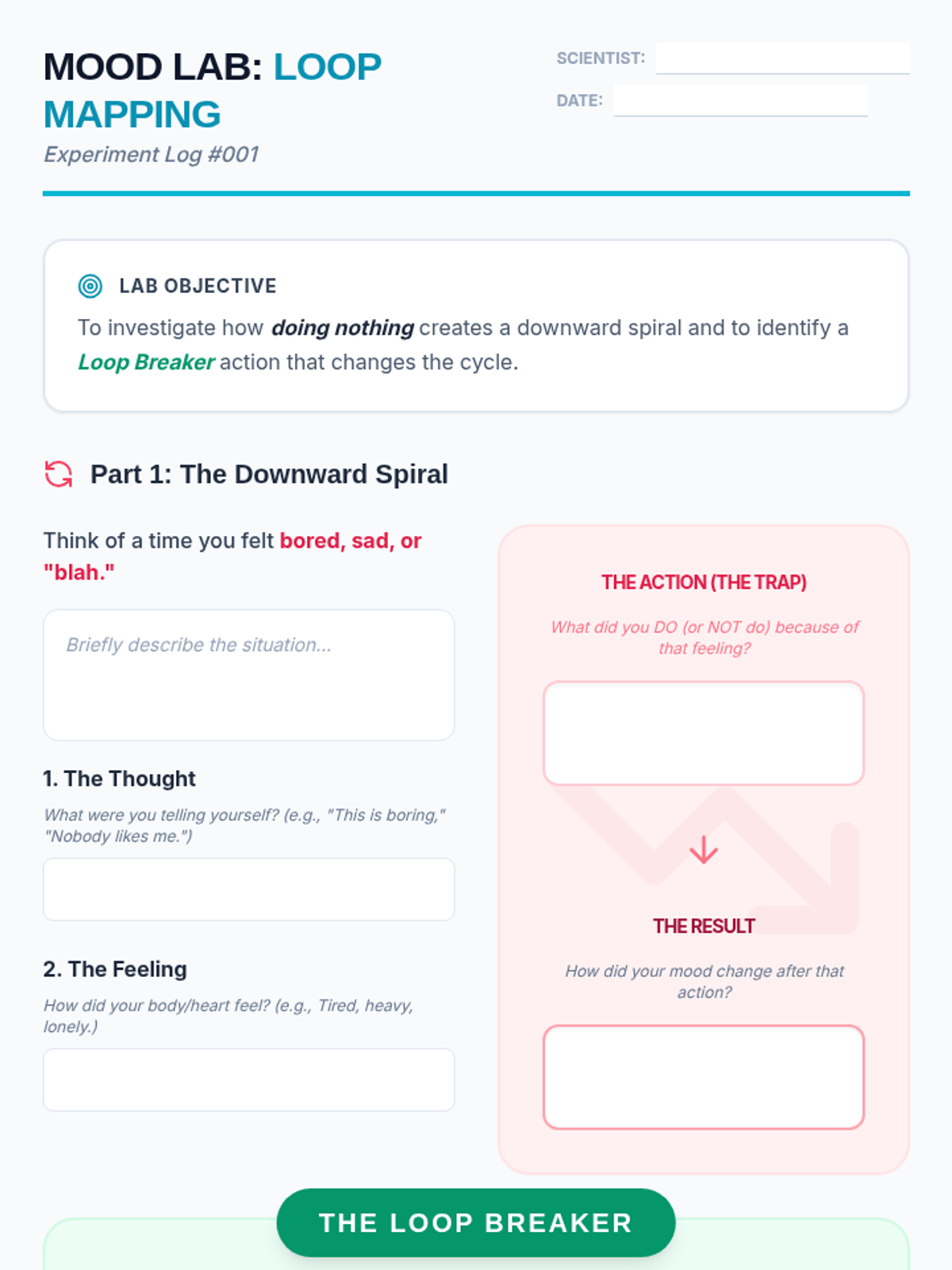
A lab notebook style worksheet for students to map out their own action-emotion loop, identifying a 'downward spiral' moment and a 'loop breaker' action.