A teacher resource guide providing standards alignment, background information on the PFAS crisis in NC, answer keys for student materials, and a sample Claim-Evidence-Reasoning argument.
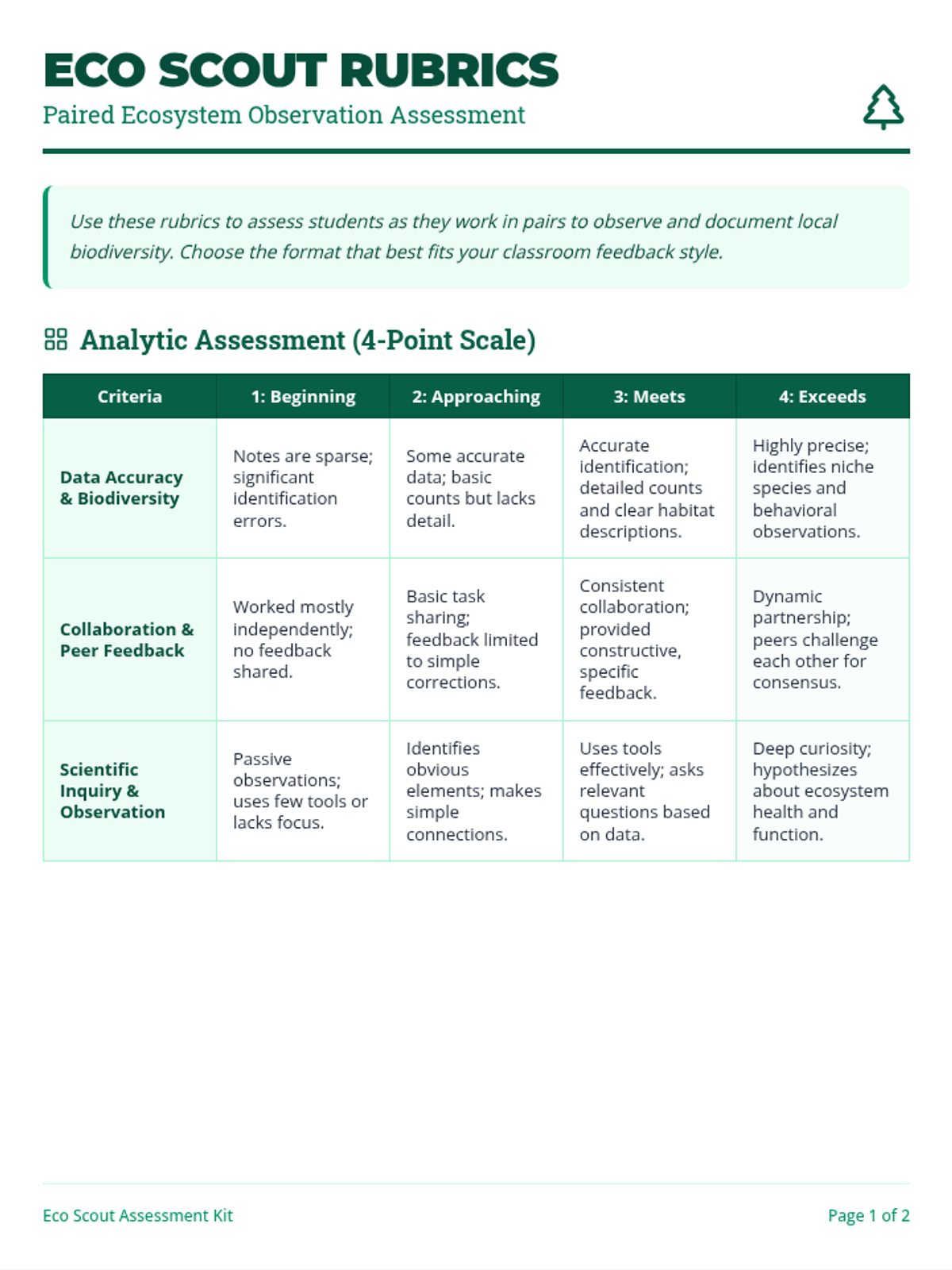
A set of three distinct rubric formats (analytic, holistic, and single-point) for evaluating local ecosystem observation activities, with a focus on biodiversity data, collaboration, and scientific inquiry.
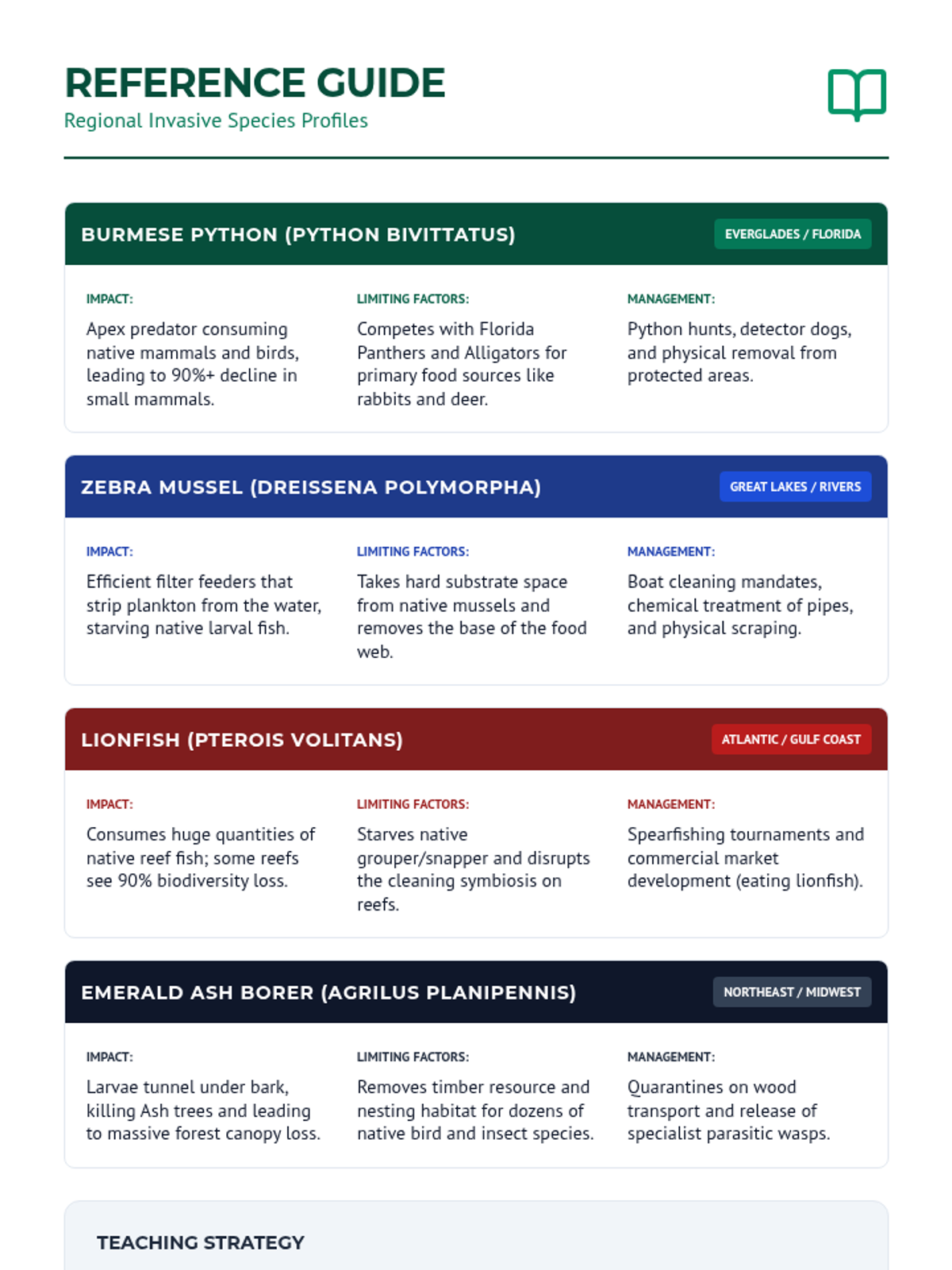
A teacher's reference guide providing specific ecological and management data for four common regional invasive species in the US. Supports the Local Invader Field Report.
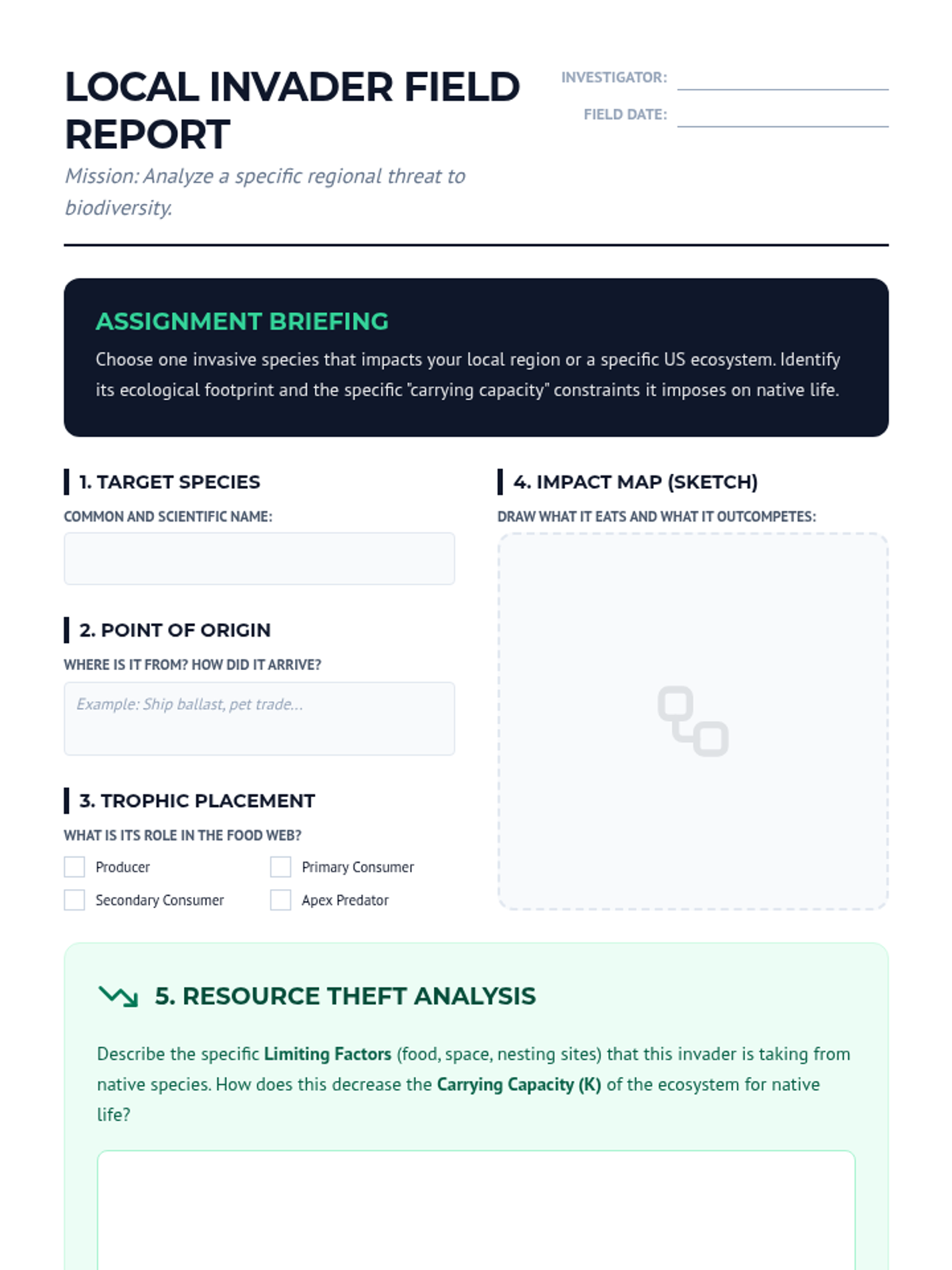
A flexible research worksheet that allows students to investigate and report on an invasive species specific to their region or a provided list of common US invaders. Focuses on carrying capacity and trophic impacts.
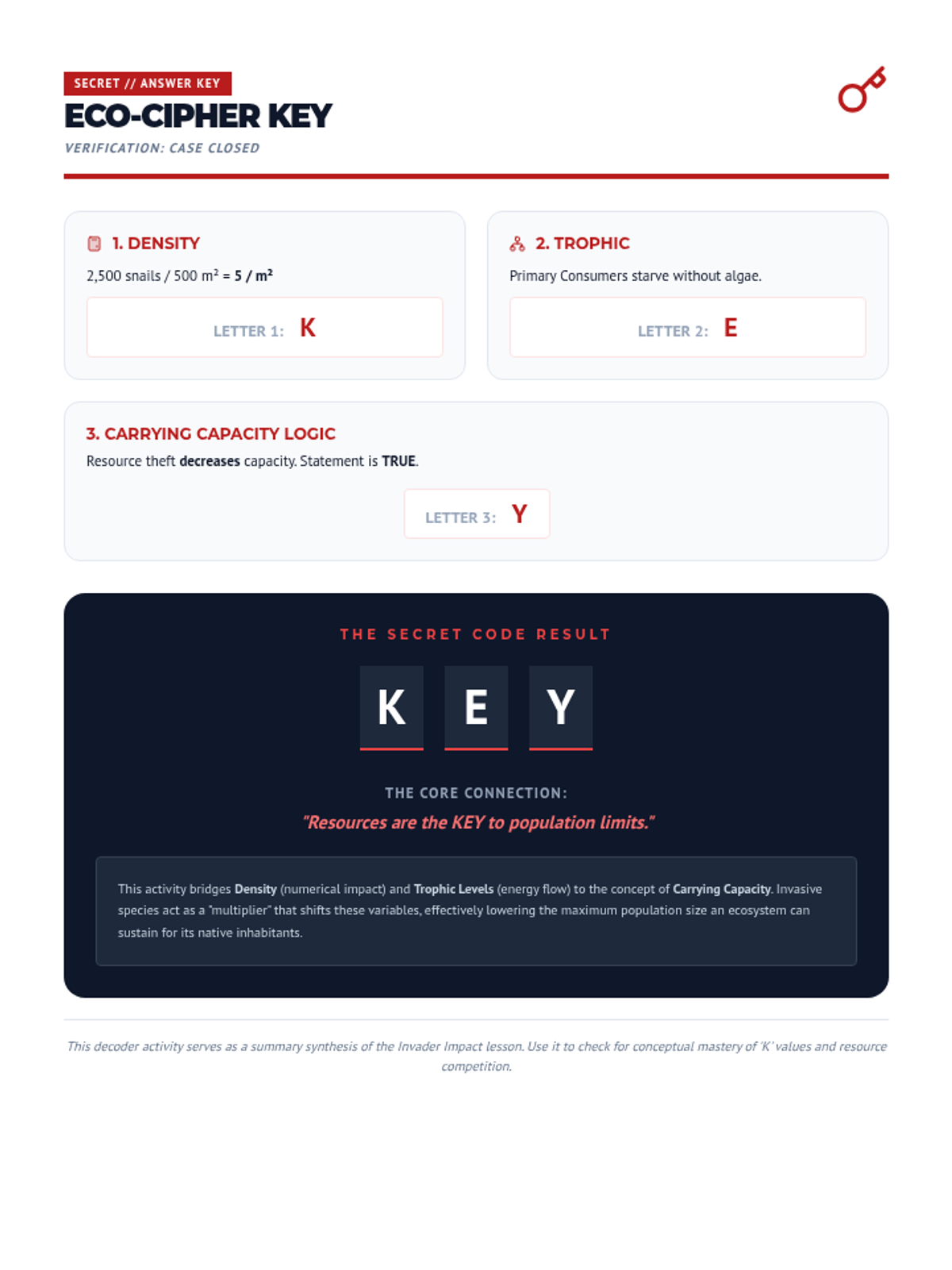
The answer key and instructional guide for the Eco Decoder Worksheet, explaining the math and ecological logic behind the secret code. Revised to fit on a single page with improved visual summary.
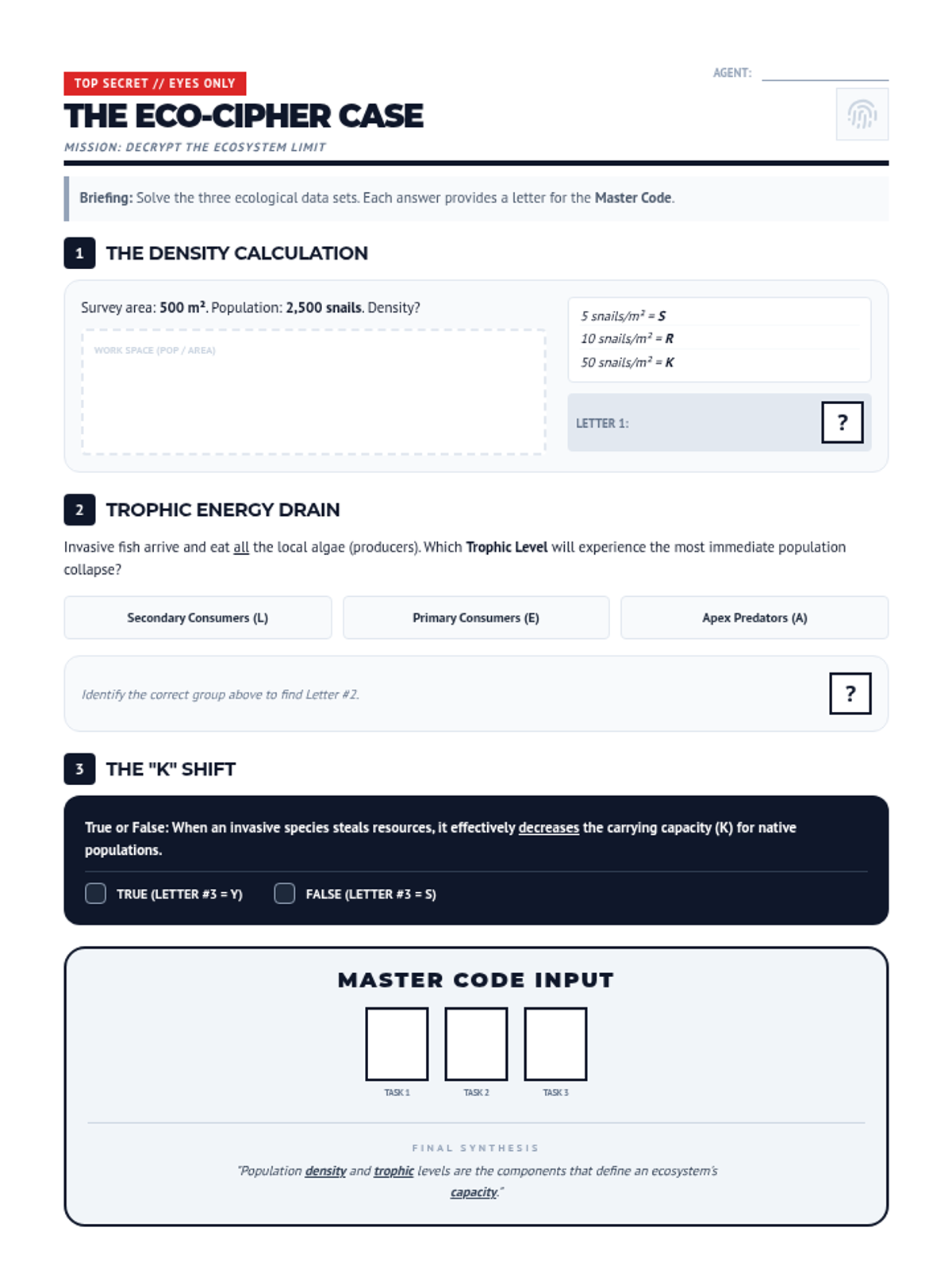
A specialized decryption worksheet that challenges students to solve ecological math and logic problems to reveal a secret code about carrying capacity and resources. Revised for improved task clarity and layout.
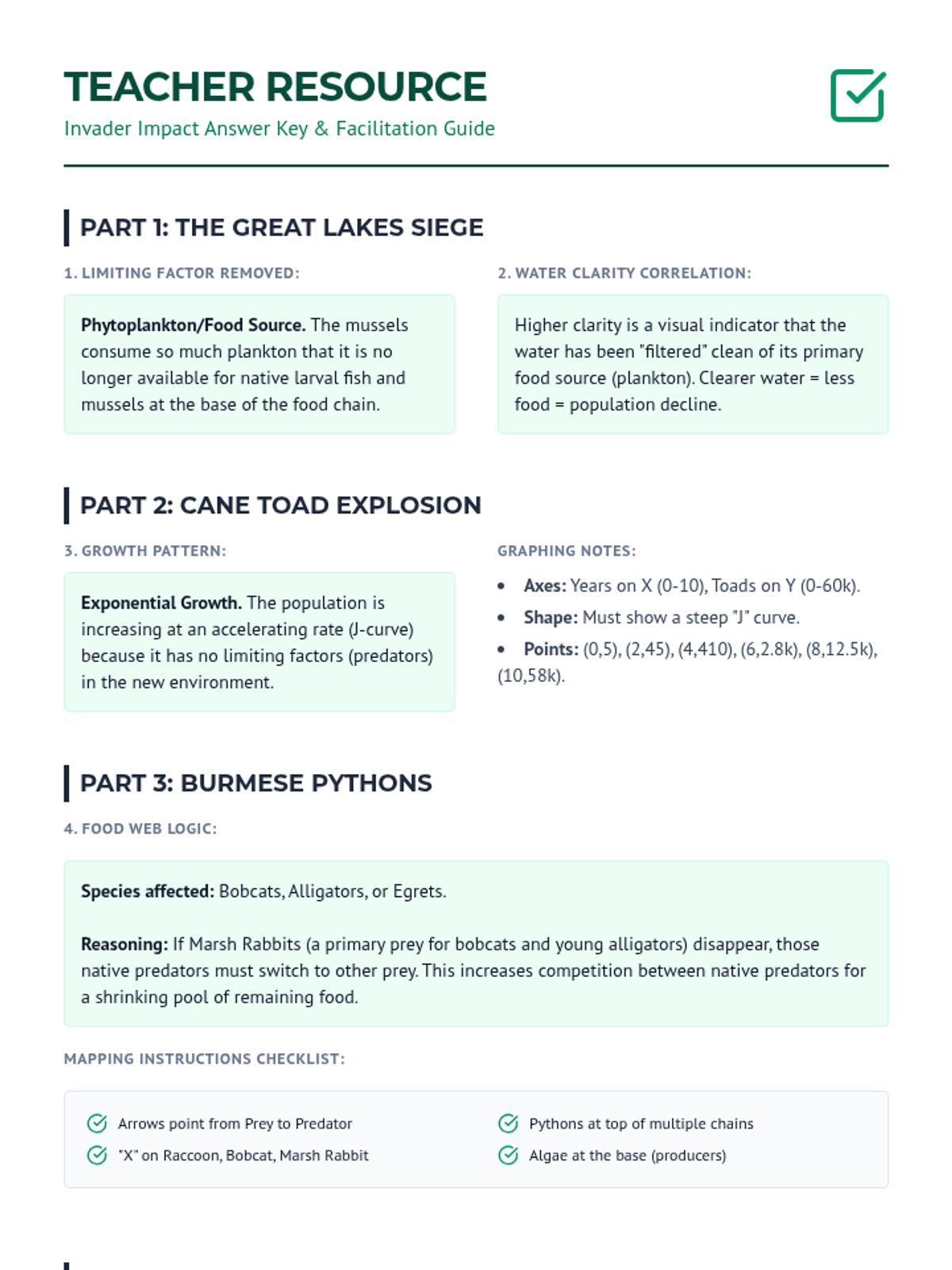
A teacher's guide and answer key for the Invader Impact Worksheet. Revised for better page breaks, consistent alignment, and improved checklist formatting.
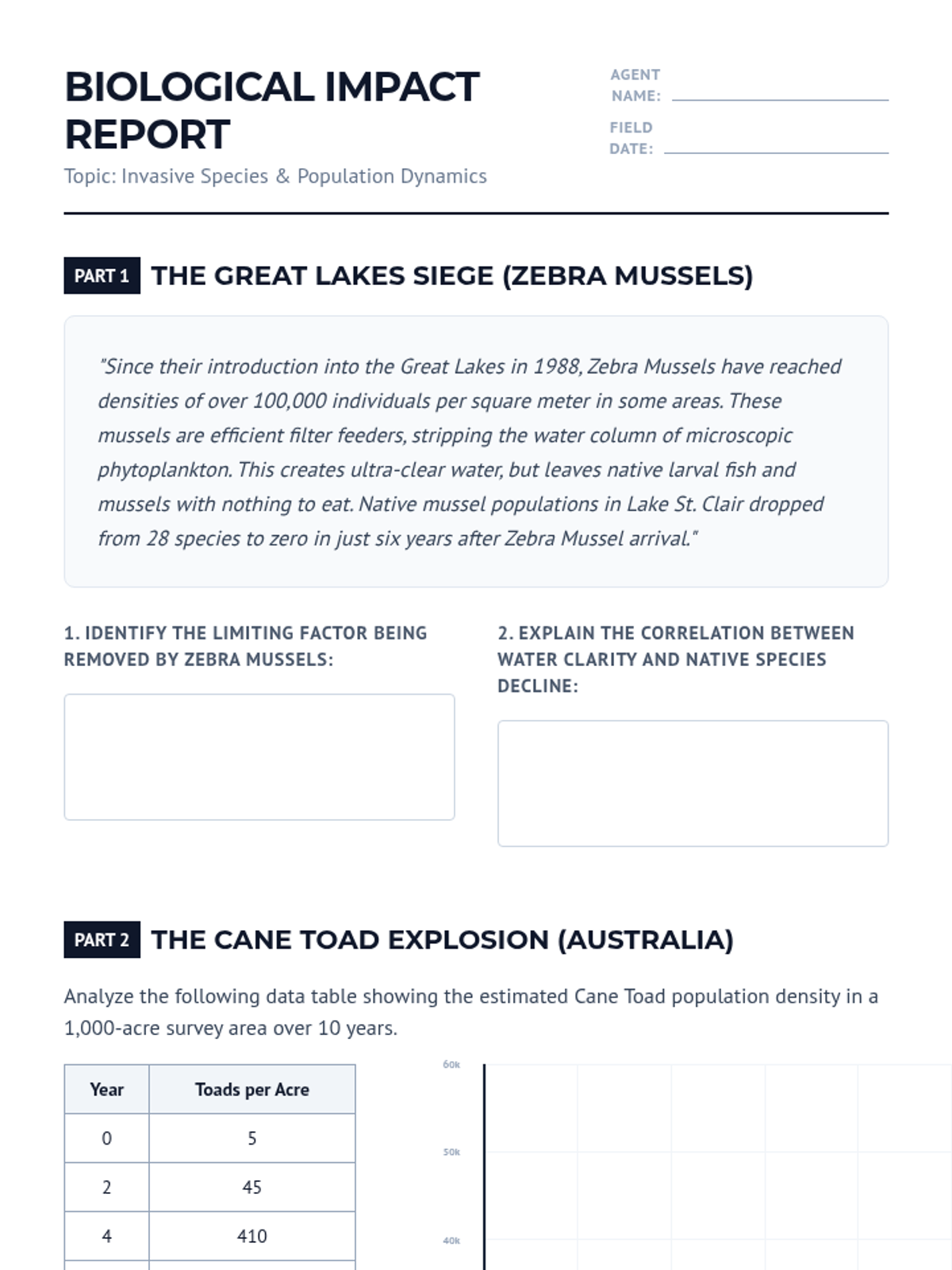
A comprehensive worksheet for students to analyze the population impacts of invasive species. Revised for improved layout, page breaks, and a fully functional graphing area with accurate labeling and grids.
Introductory presentation for the Invader Impact lesson, featuring case studies on Zebra Mussels, Burmese Pythons, Cane Toads, and the Spotted Lanternfly with a focus on population dynamics. Revised for content completeness and layout consistency. Added regional examples including Emerald Ash Borer and Lionfish.
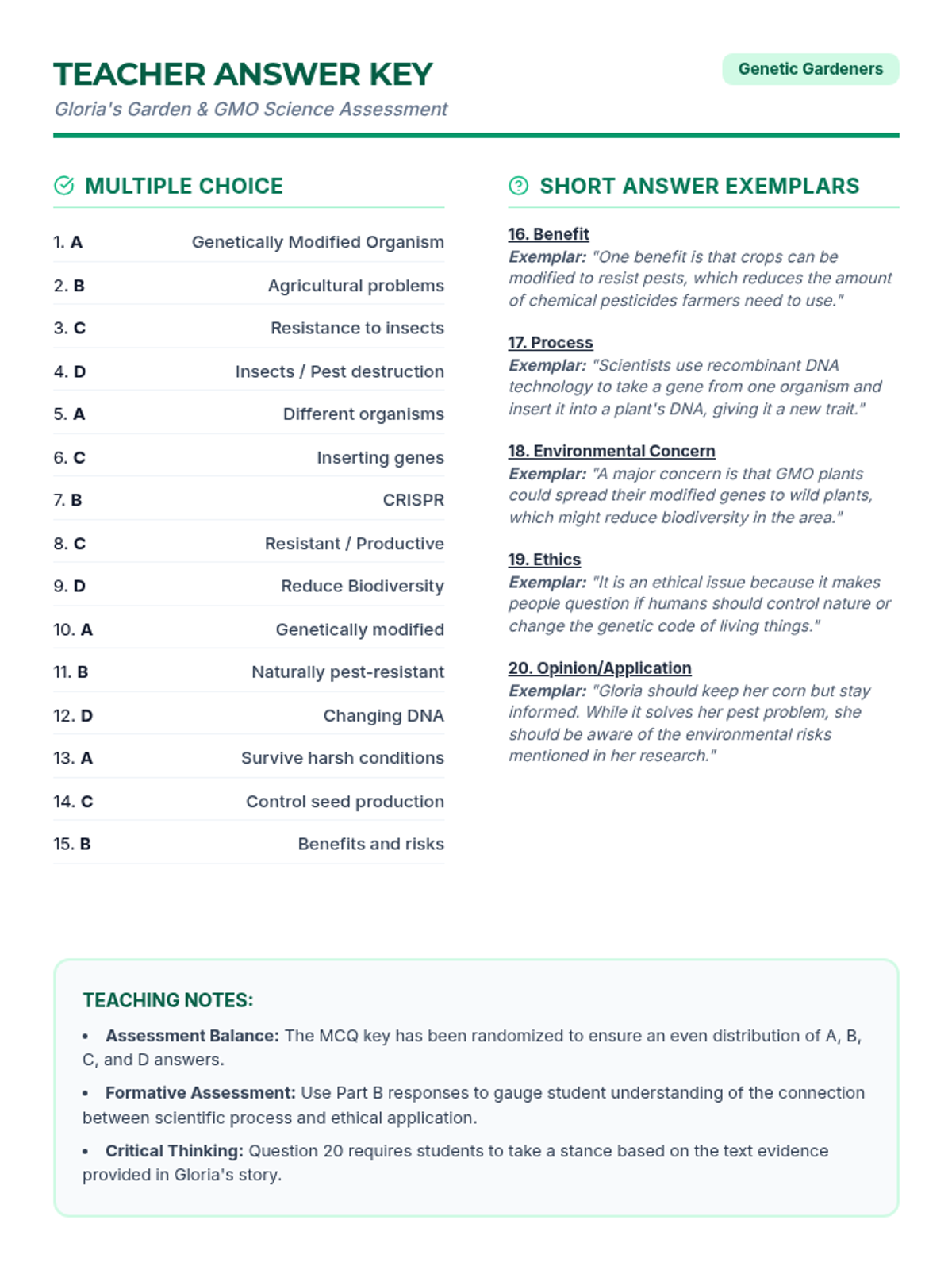
A finalized teacher answer key with a randomized multiple-choice key (to match the student worksheet) and specific exemplar responses for short-answer questions. Optimized for a single-page layout.
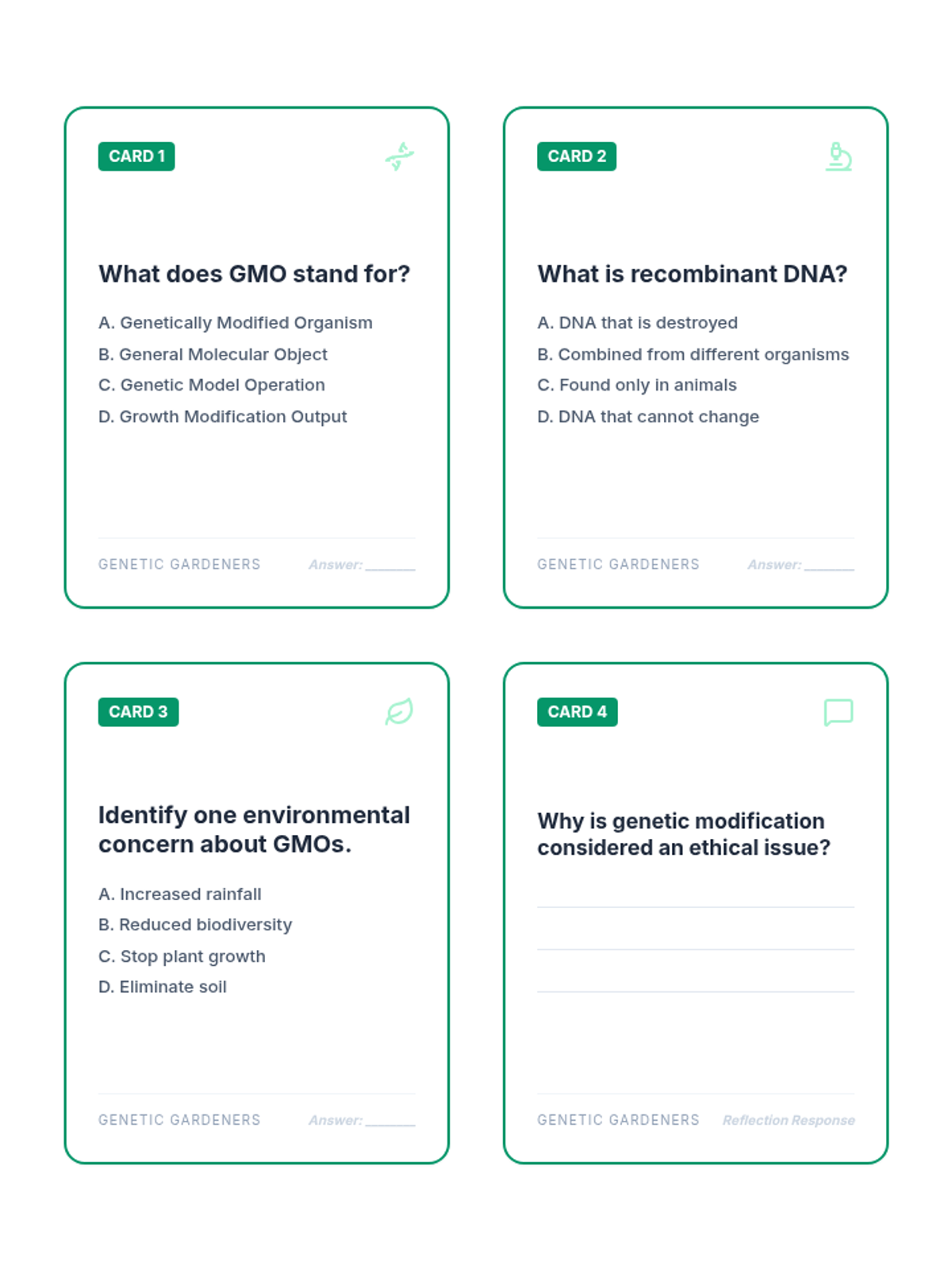
A revised set of question cards with sequential numbering, integrated writing lines, and a decorative 'back-side' template for double-sided printing. Optimized to align perfectly for double-sided document production.
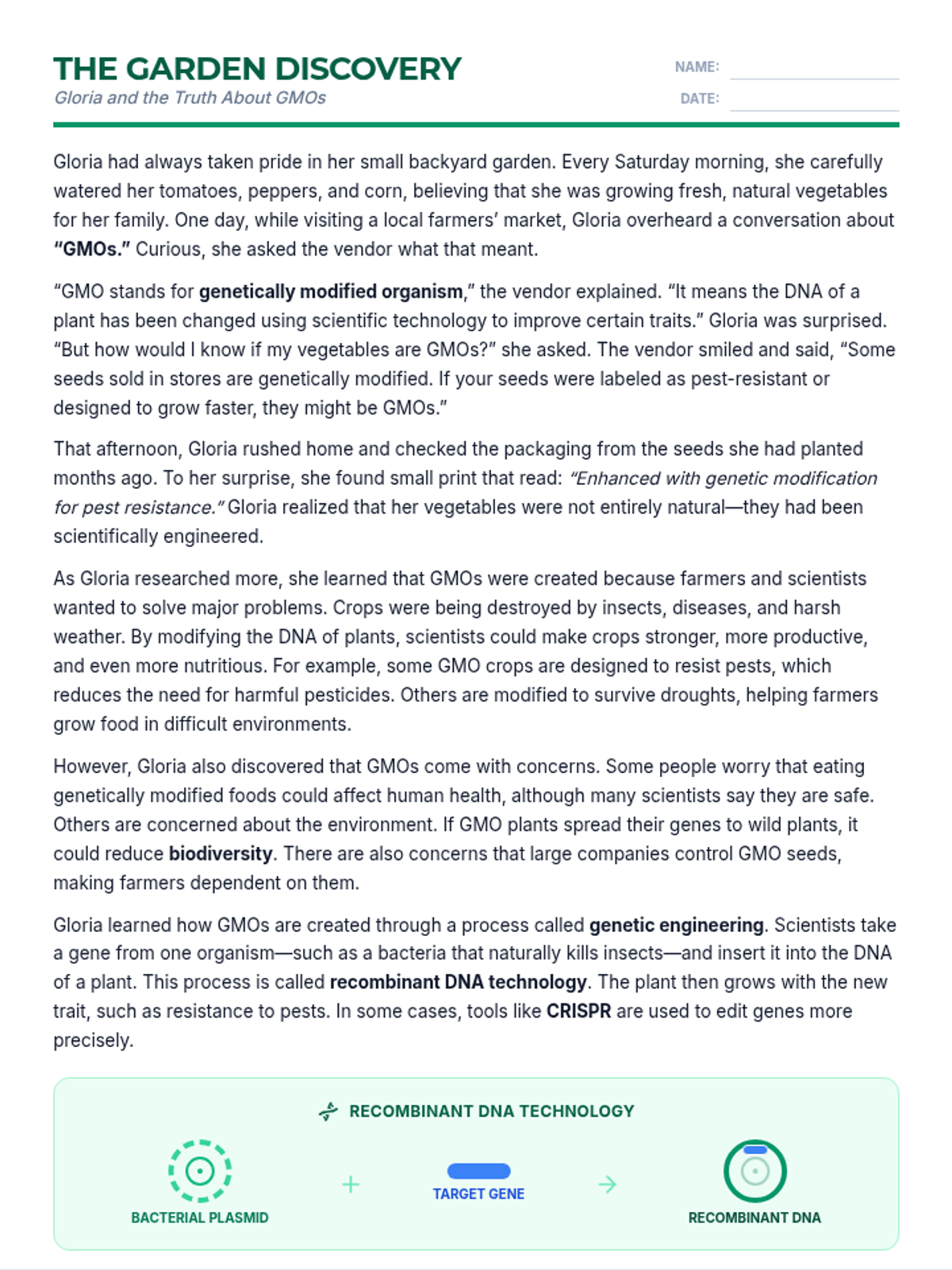
A finalized student worksheet with randomized multiple-choice answer positions to ensure assessment validity. Features scientific diagrams, the Gloria's Garden story, and reflection questions.
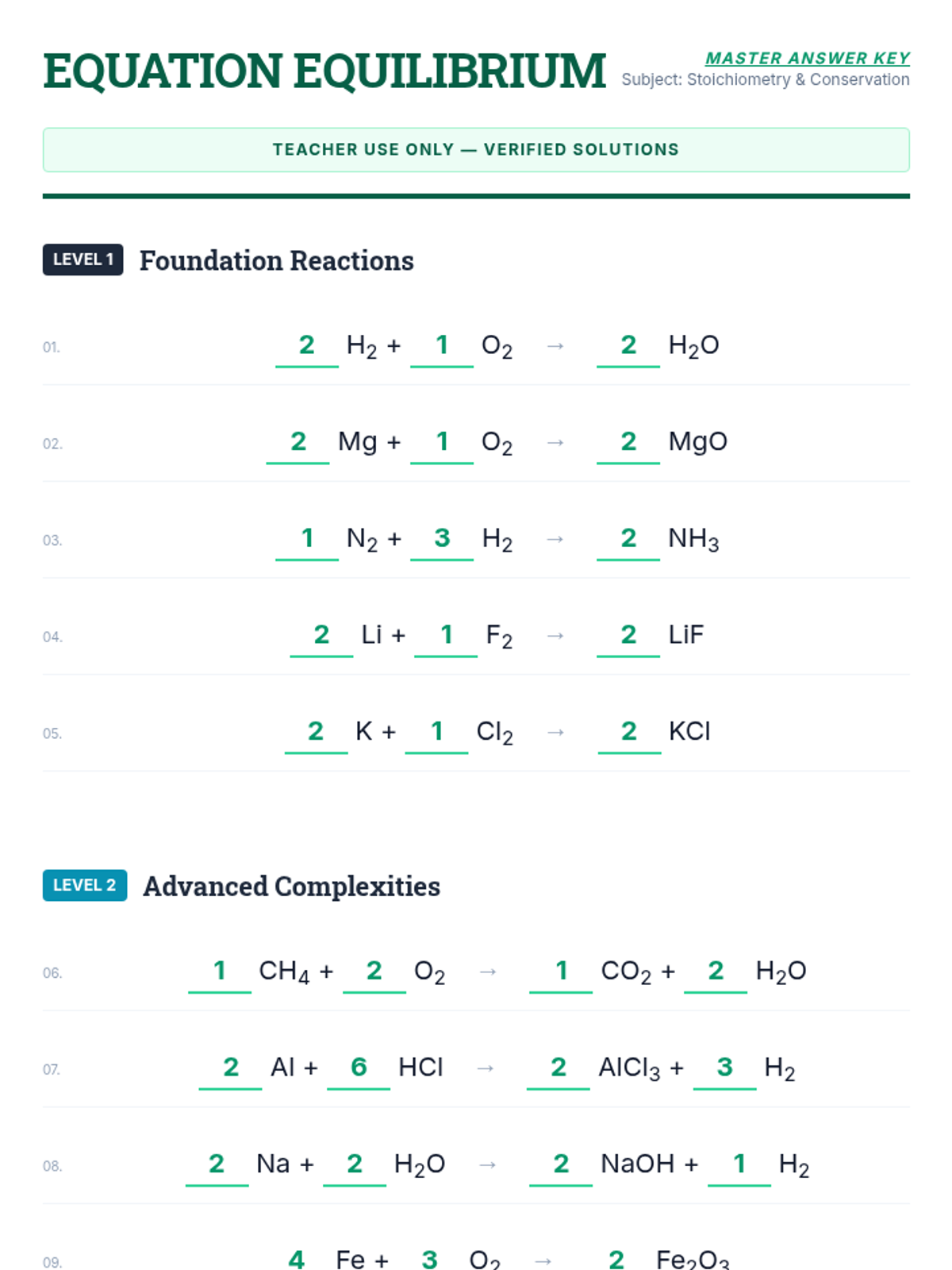
A teacher answer key for the Equation Equilibrium worksheet, providing correct coefficients for all 15 chemical equations. Fixed spacing and alignment issues.
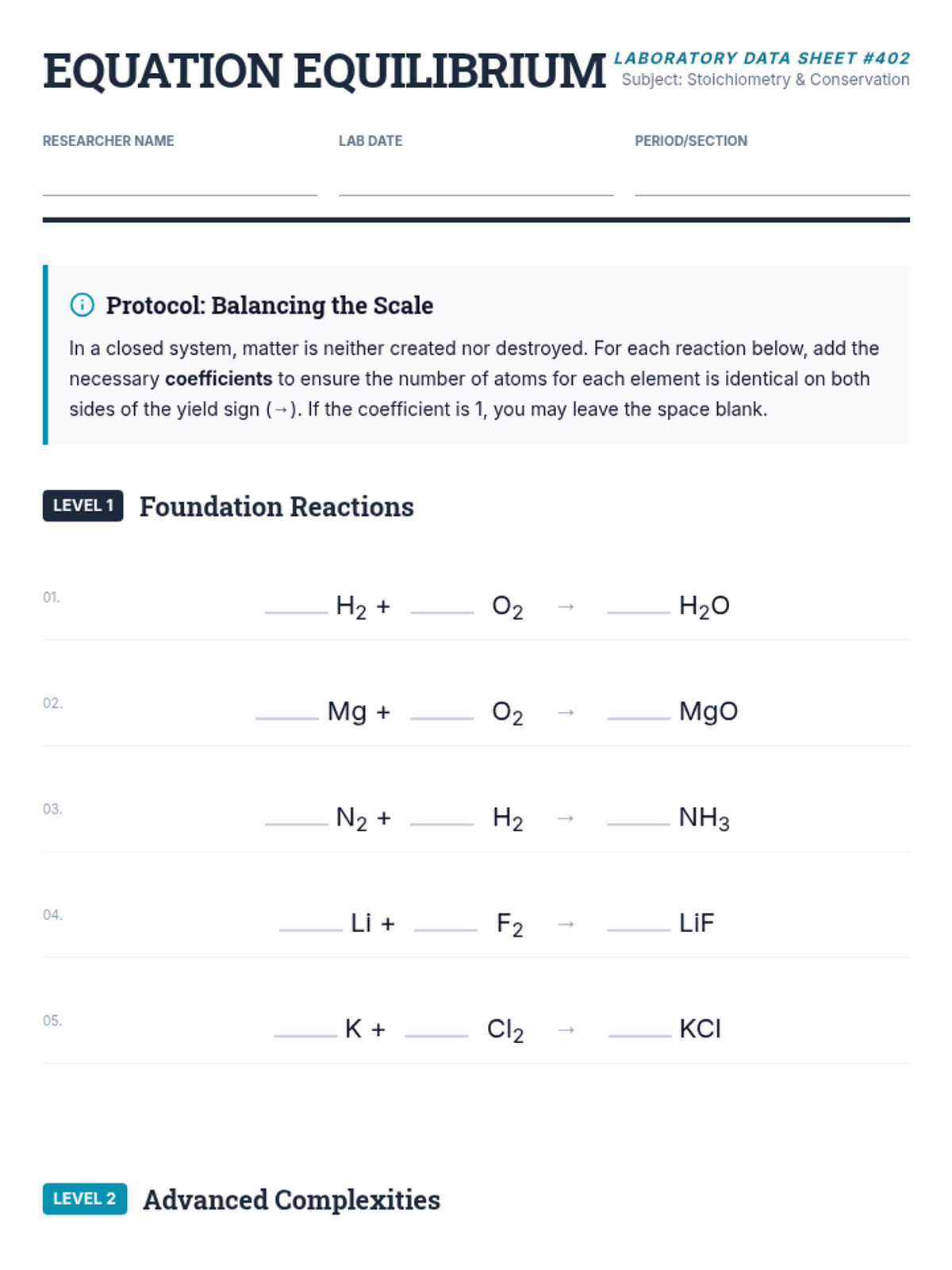
A drill-style worksheet for practicing balancing chemical equations, featuring basic and moderate complexity levels with clear coefficient lines. Fixed spacing issues and improved student writing areas.
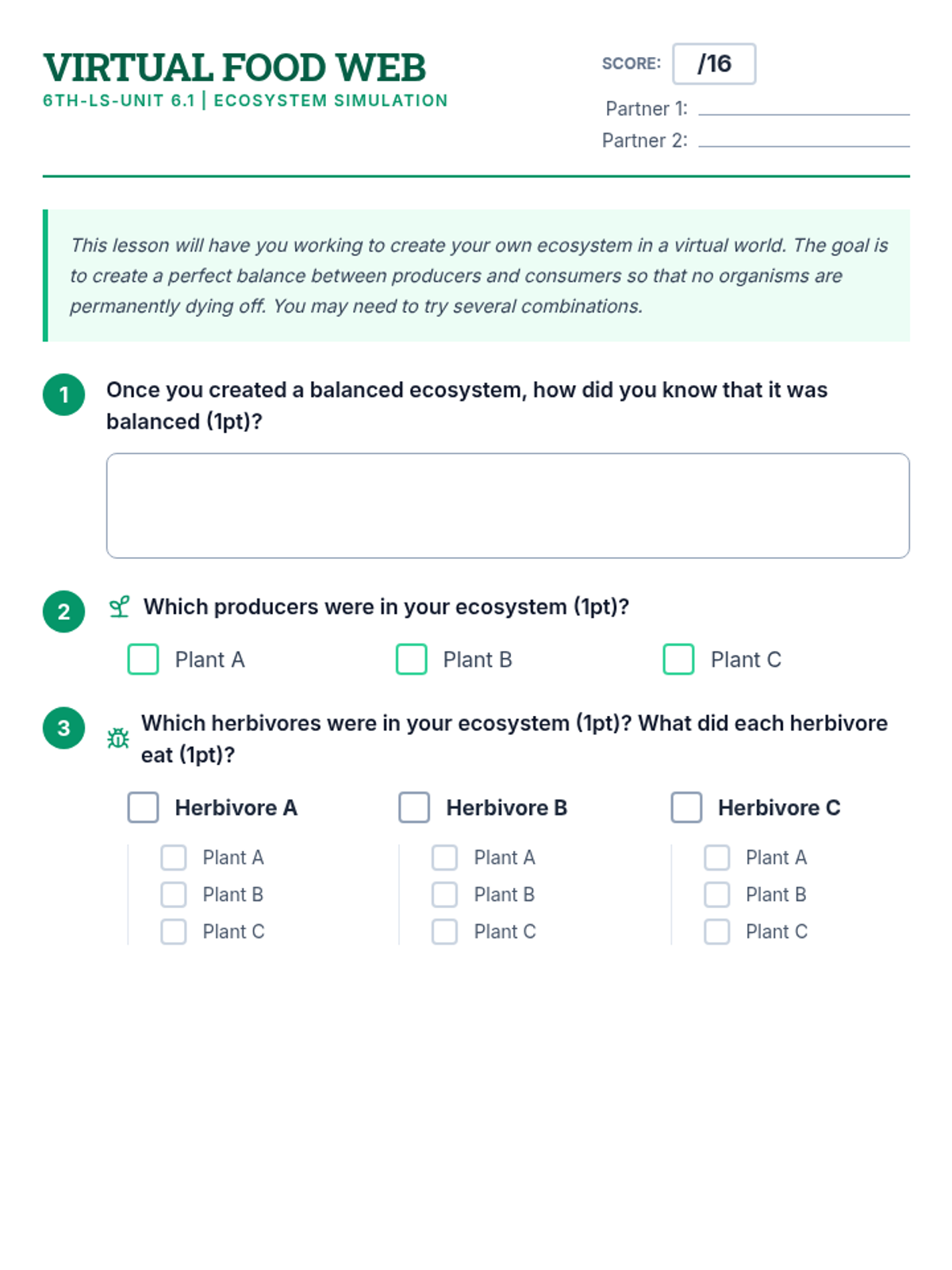
A polished 3-page worksheet for a virtual food web simulation. It features a clean lab notebook aesthetic with clear organism checklists, a structured graph area with axis labeling prompts, and reflection sections. Designed for 6th-grade Life Science with improved PDF rendering stability and better spatial organization.
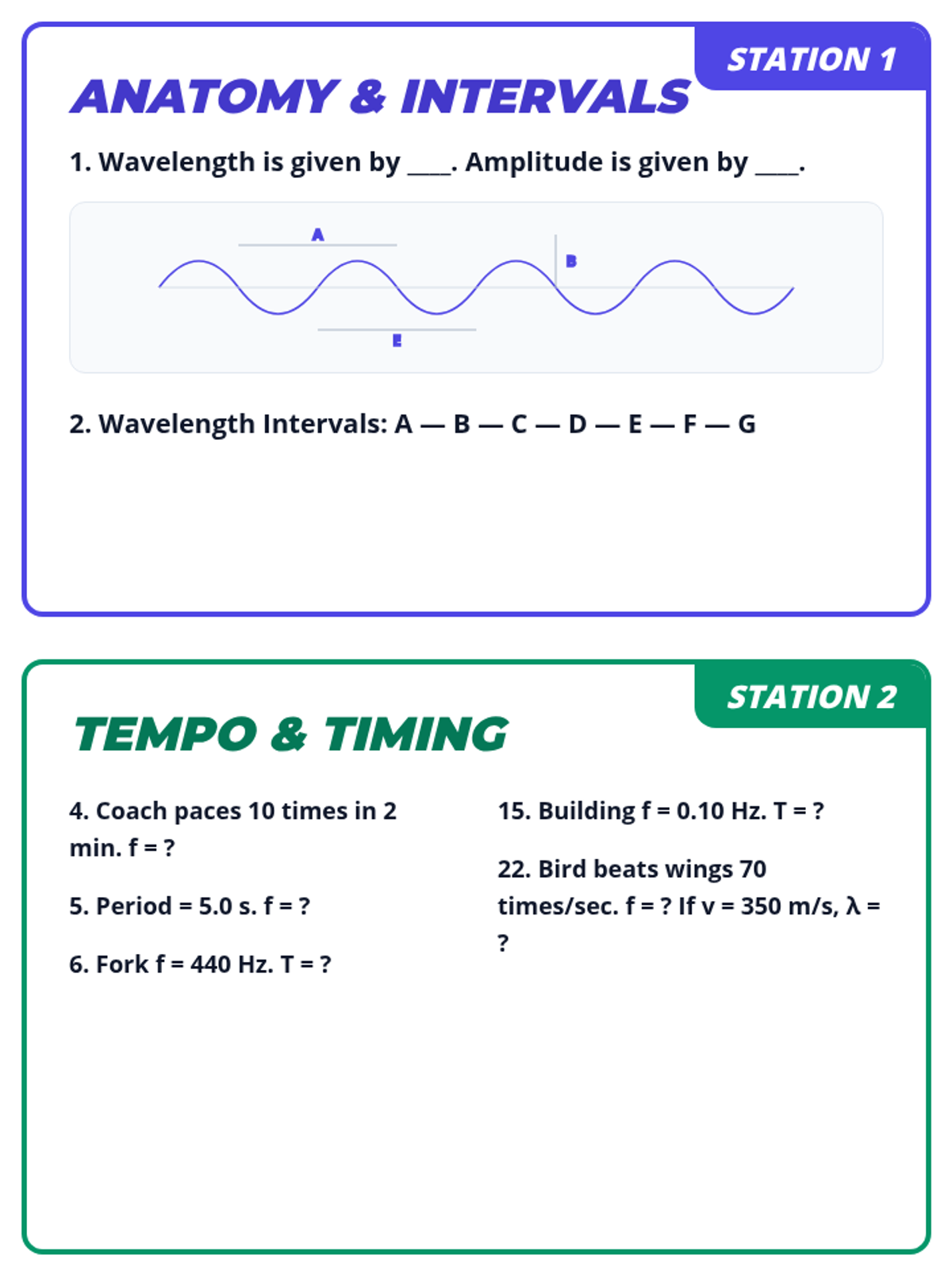
Large-print station cards for the Wave Racer activity. Each card occupies one full 8.5x11 page for clear classroom display. Includes thematic colors, precision SVG wave diagrams, scaffolded guides with worked examples, and all 22 problems from the source material. Optimized for rendering and distance reading.
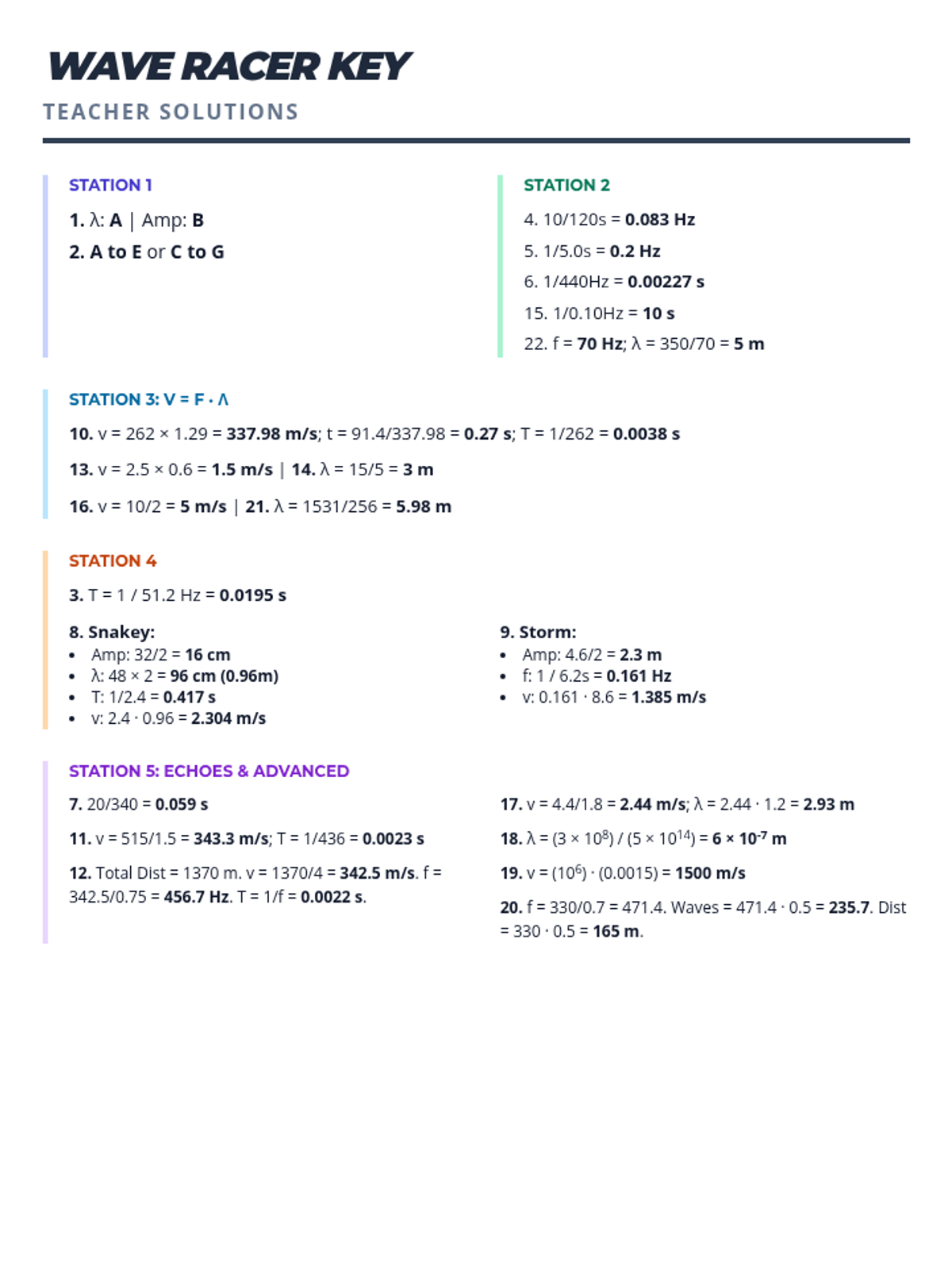
A comprehensive teacher answer key for the Wave Racer station activity. Includes full solutions, pedagogical rationales, and tips for addressing common student misconceptions across all 22 problems. Revised for better contrast and page flow. Corrected exponents for rendering.
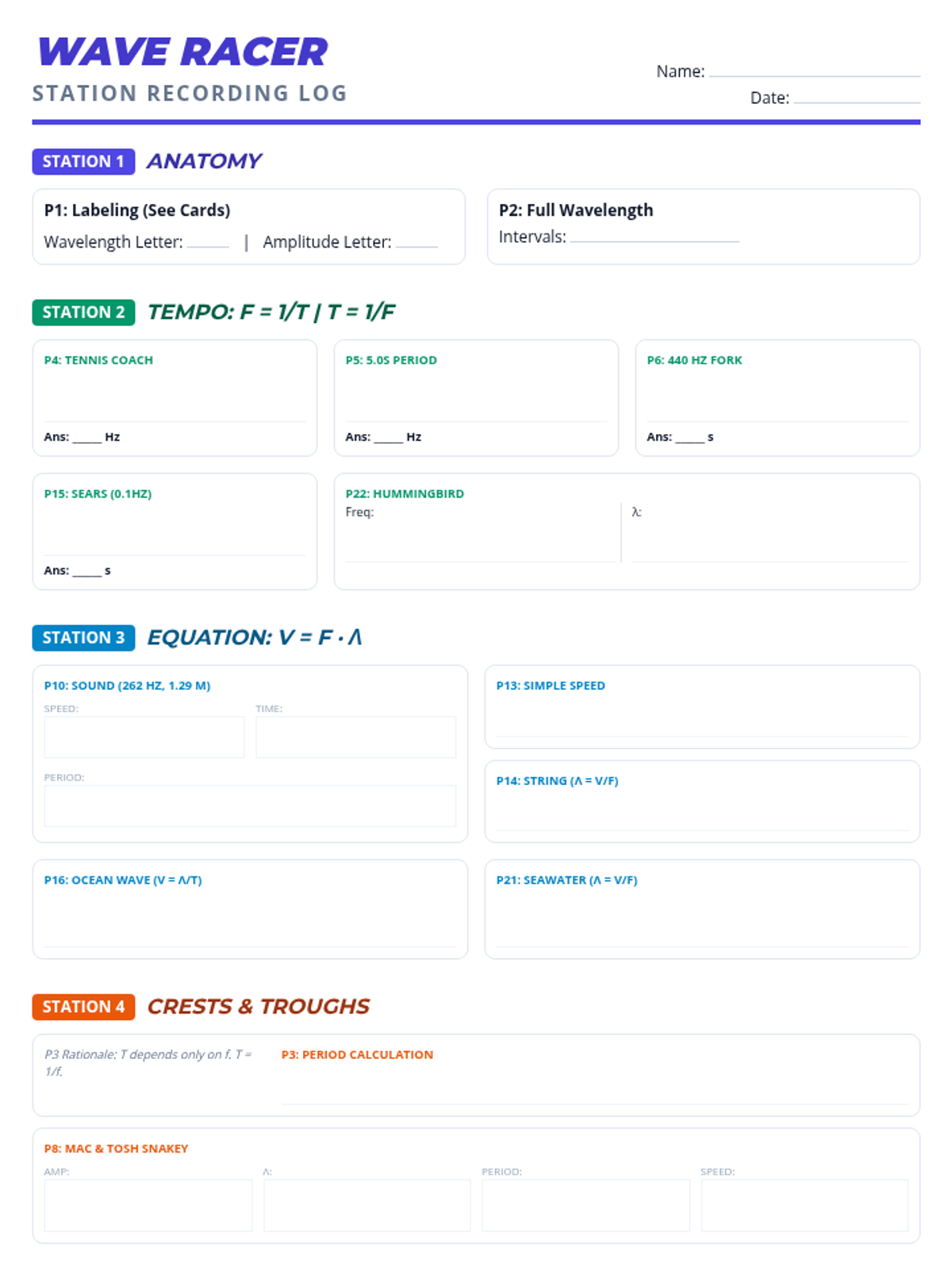
A scaffolded station recording log for students to solve wave property problems. Includes thematic station sections with rationales, variable identification boxes, and step-by-step math scaffolds for all 22 problems. Revised for better layout and to include missing problems. Improved consistency with station cards.
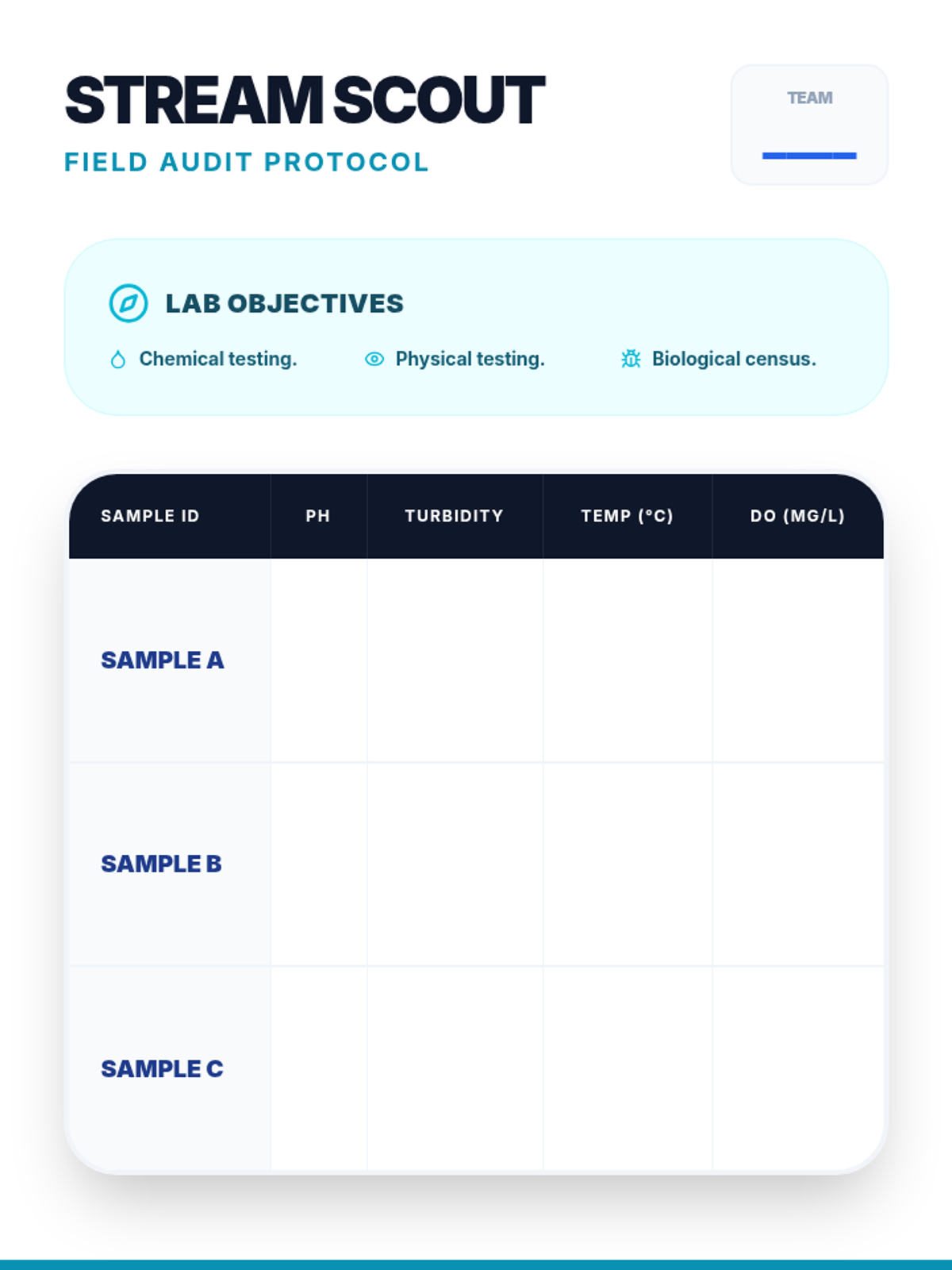
A hands-on laboratory activity sheet for the Stream Scout audit, allowing students to record chemical data and identify bio-indicator macroinvertebrates across different water samples.
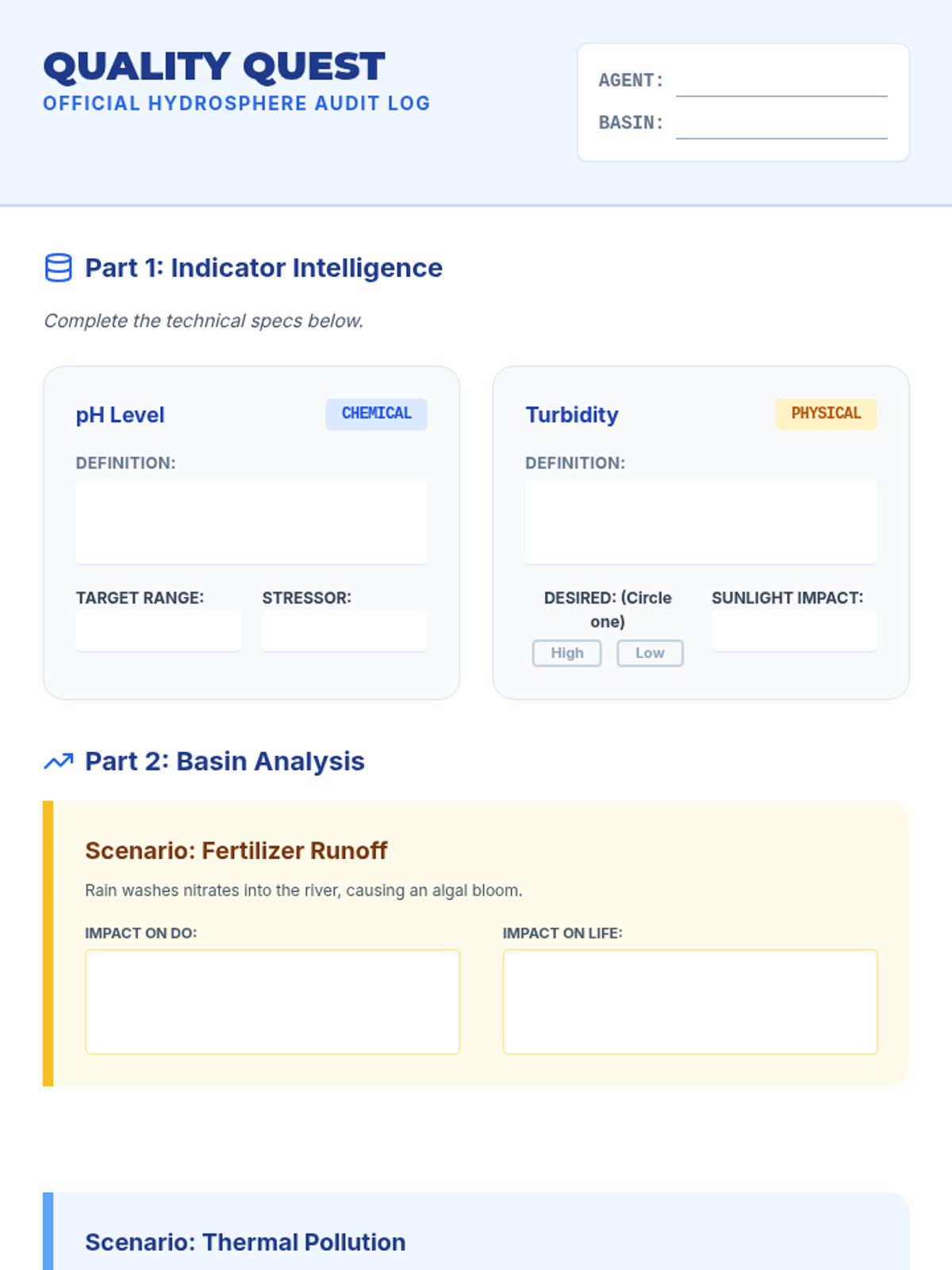
A student worksheet for the Aqua Quest lesson, focusing on defining water quality indicators and analyzing environmental scenarios affecting river basin health.
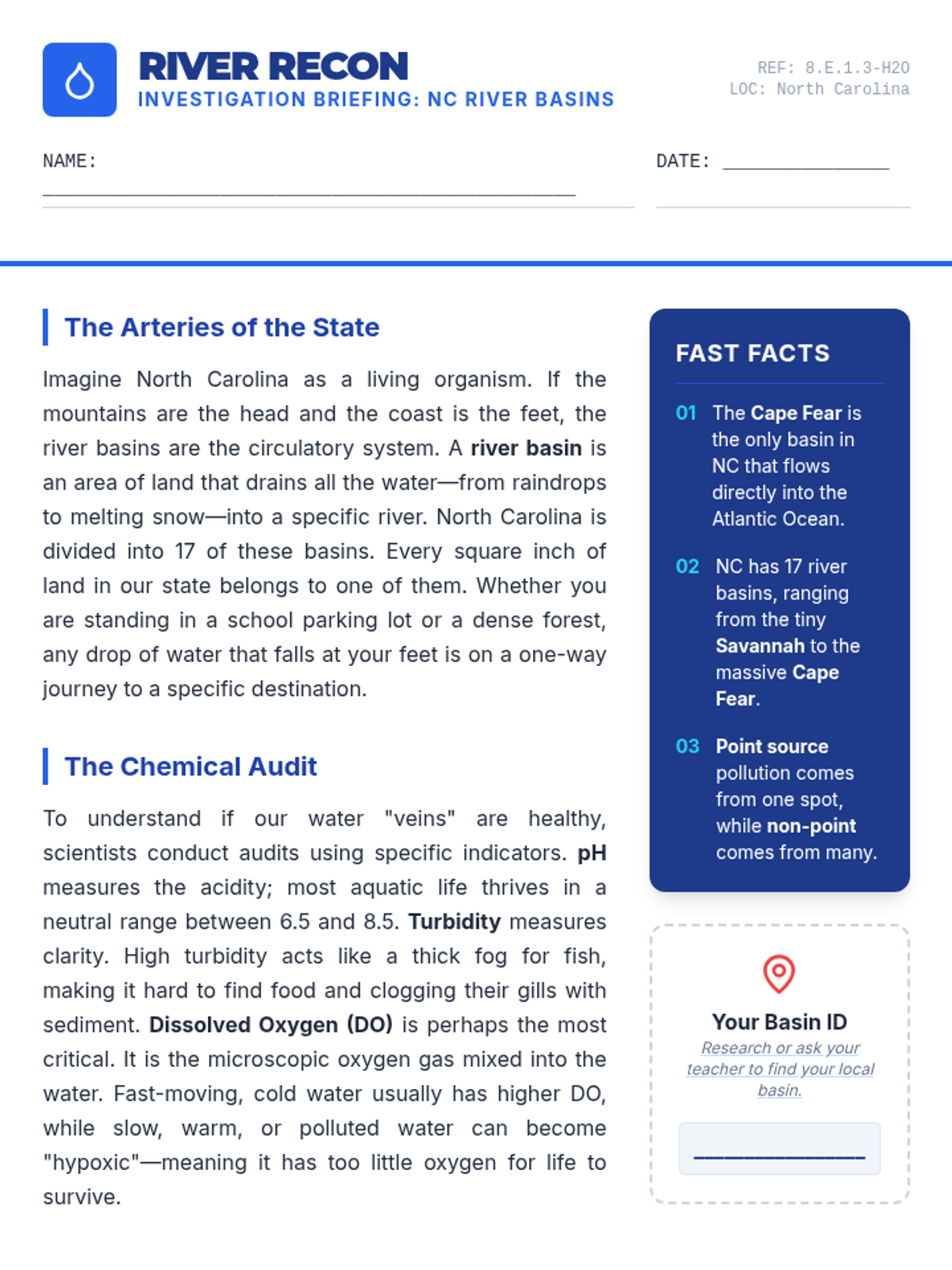
A detailed background reading for students about North Carolina river basins, water quality indicators, and bio-indicators, complete with comprehension questions.
An instructional slide deck for the Aqua Quest lesson, featuring visual explanations of NC river basins, pH, turbidity, dissolved oxygen, and bio-indicators.
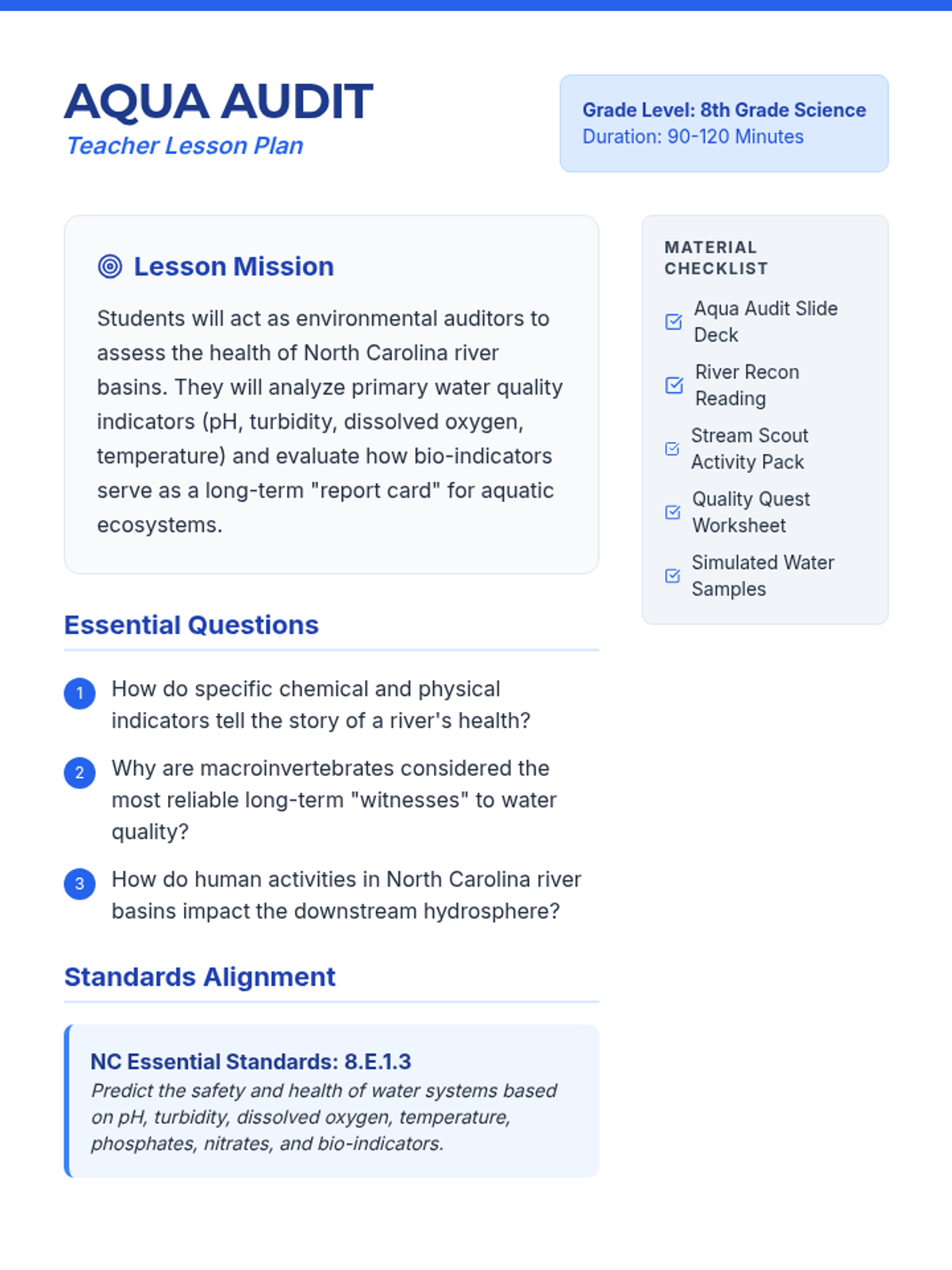
A comprehensive teacher lesson plan for the Aqua Quest hydrosphere audit, detailing instructional sequences, material checklists, and hands-on lab procedures for 8th-grade science.