A visual note-taking worksheet designed to accompany the Venture Spark slides, prompting students to fill in key entrepreneurial concepts and record their initial 'Friction Hunter' business ideas.
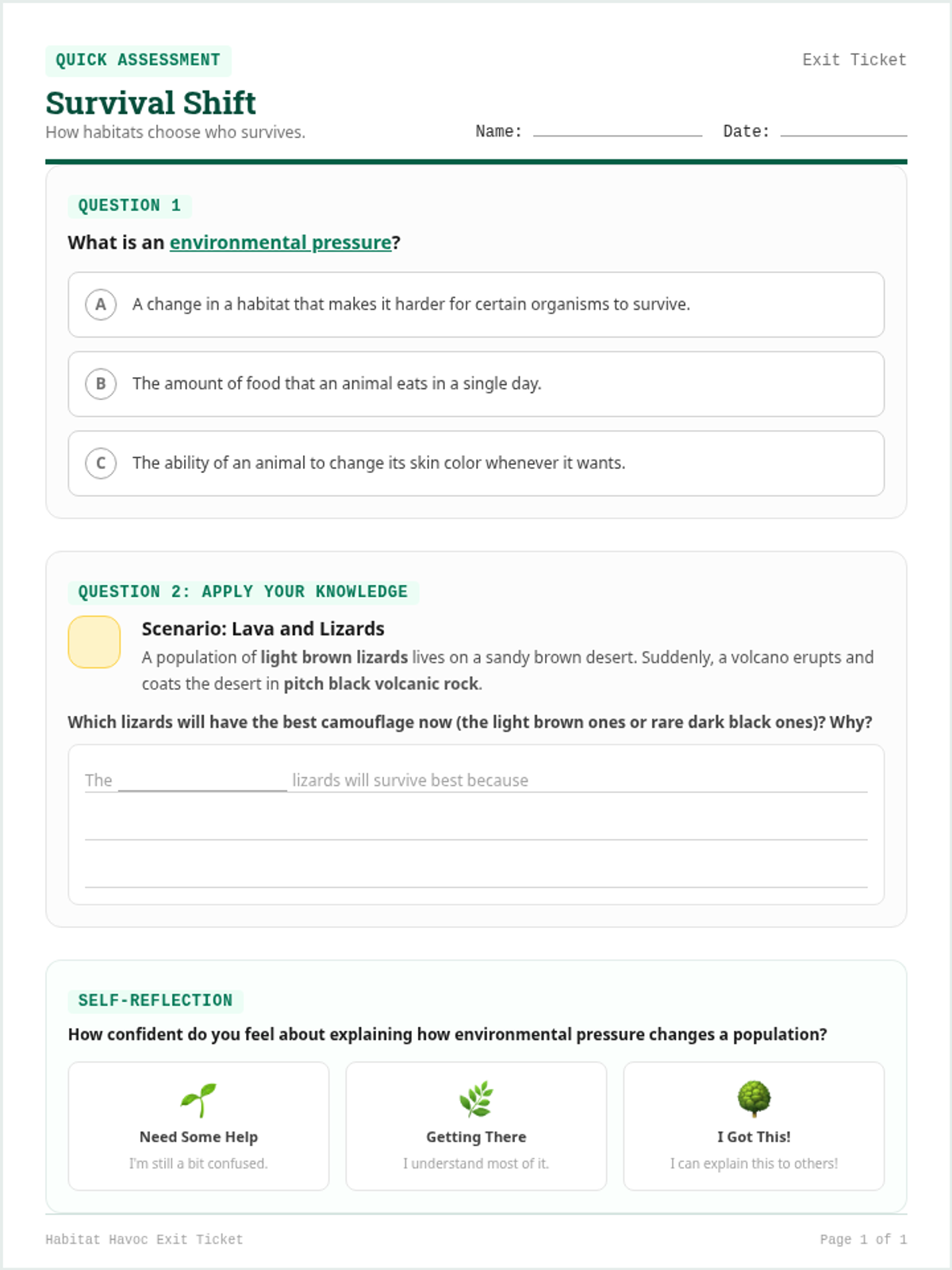
A highly visual, 1-page exit ticket designed to quickly assess understanding of environmental pressures and adaptation with scaffolded questions and a self-reflection scale. designed for special education.
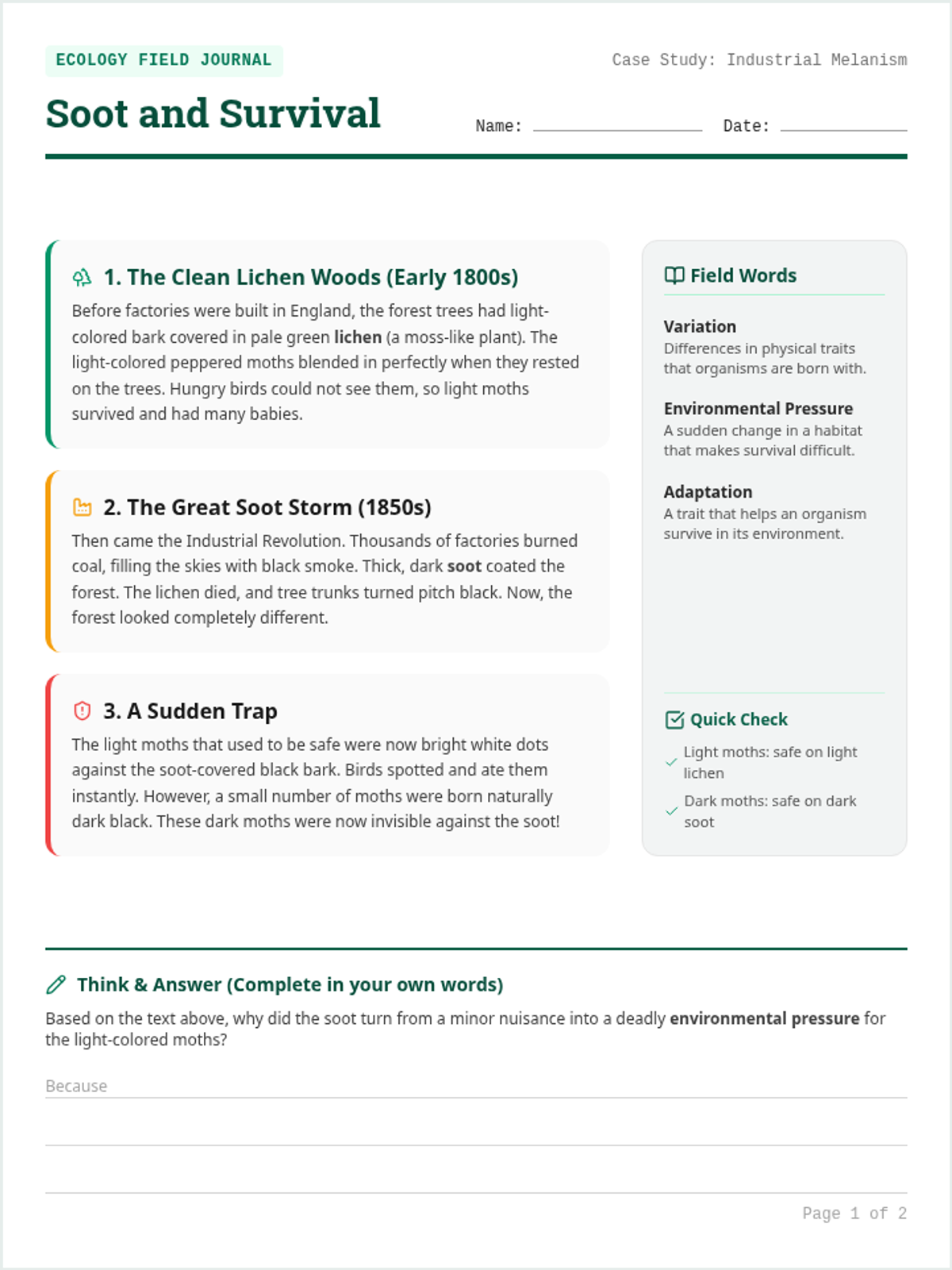
A highly visual, 2-page student worksheet containing a chunked reading passage about the peppered moth on page 1, and a structured Cause-and-Effect graphic organizer with spacious writing lines on page 2. designed for special education.
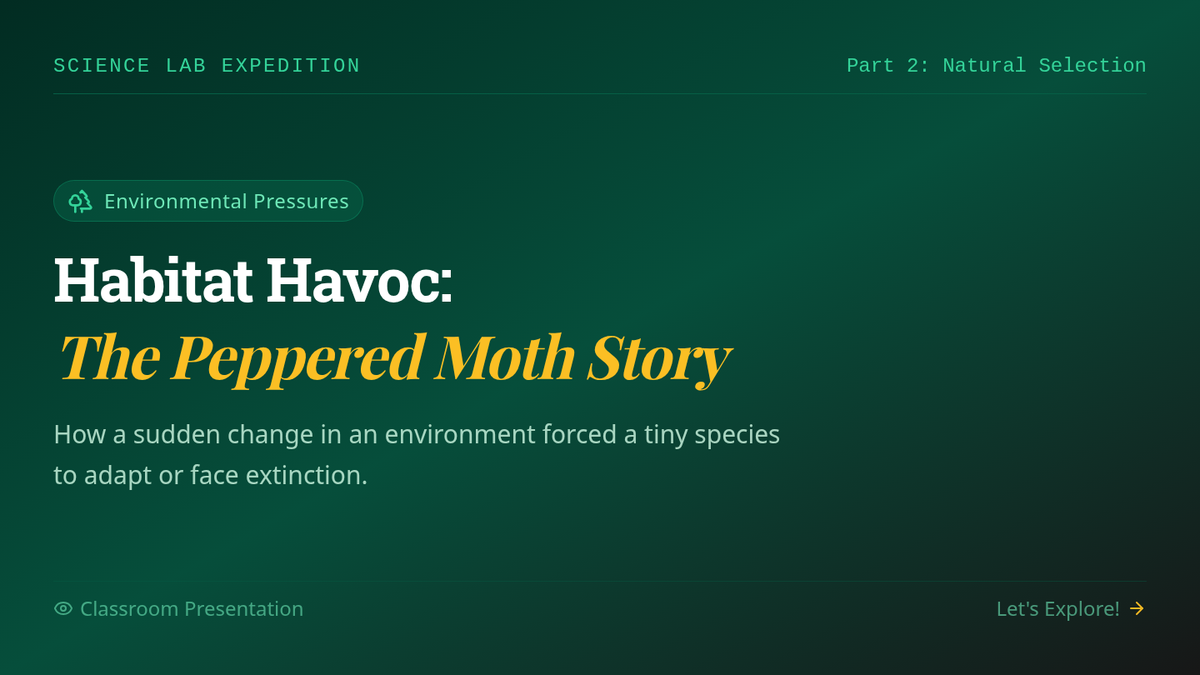
An engaging, highly visual slide deck that introduces environmental pressure using the classic peppered moth case study. Fully scaffolded with large font sizes and guided prompts for special education students.
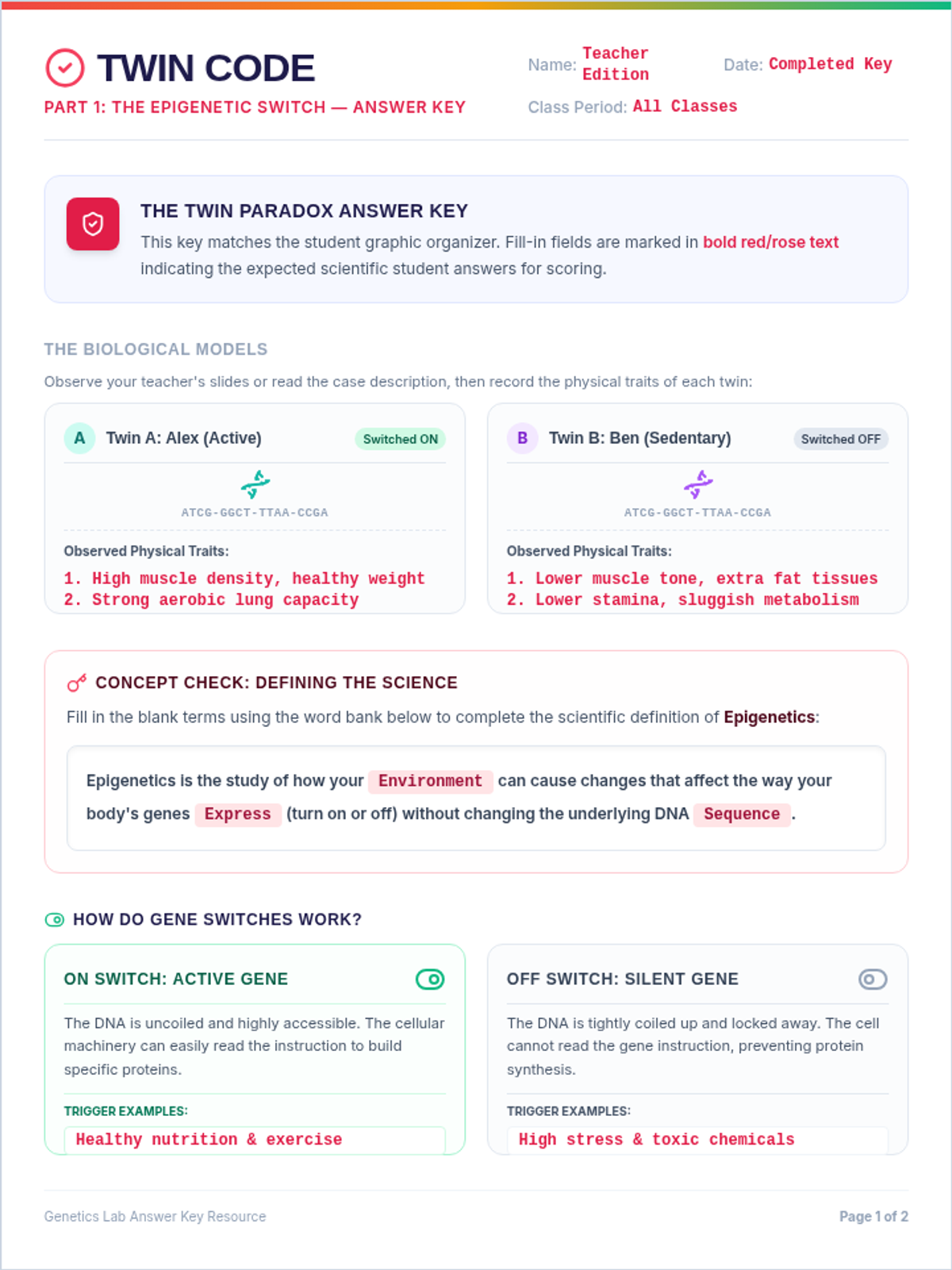
A completed answer key version of the Twin Code Graphic Organizer. Displays correct answers filled into all blank lines, typical triggers for gene switches, completed environmental checkboxes, and a model critical thinking answer.
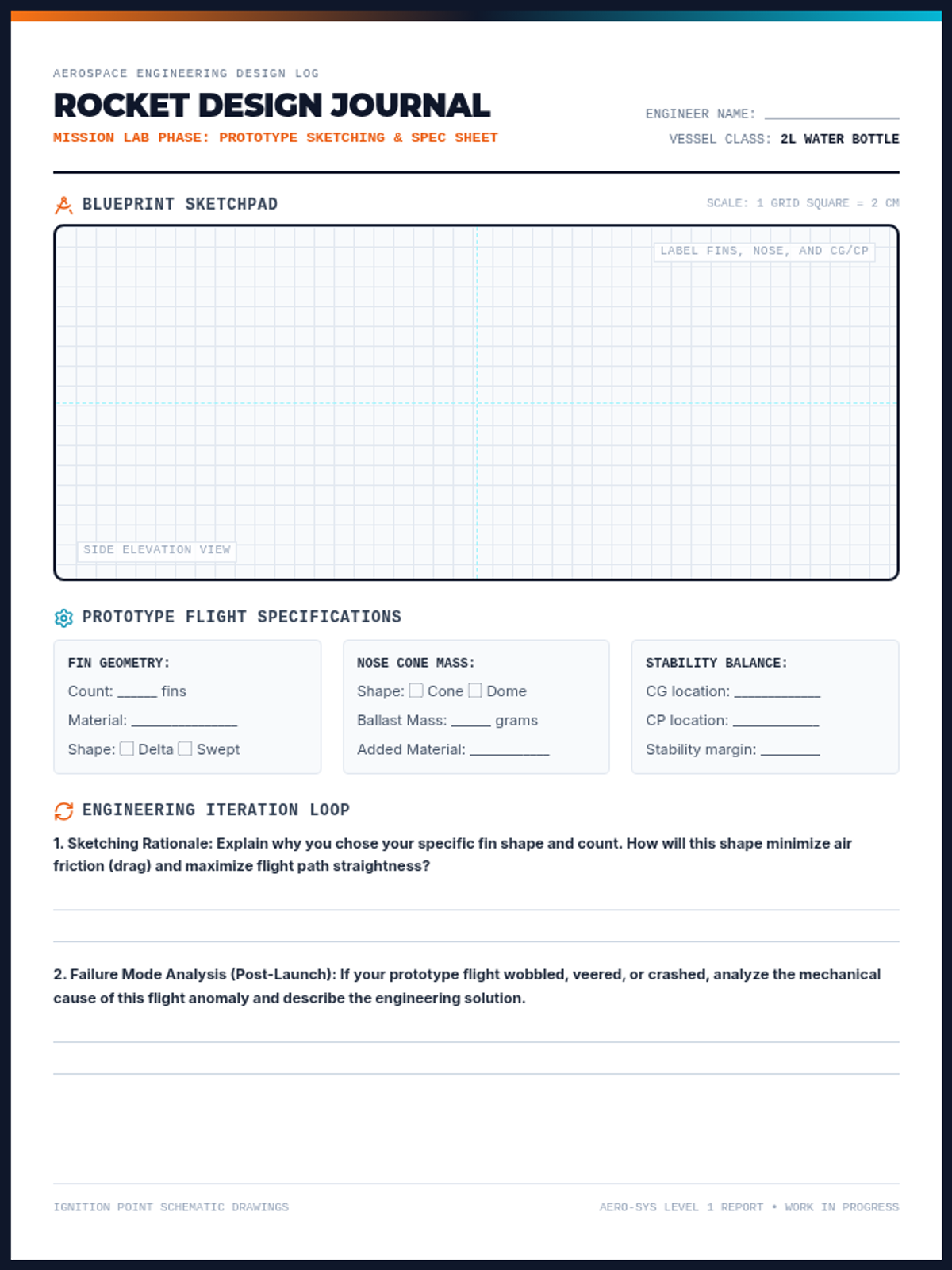
A print-ready student design journal and engineering sketchpad page. Features a graph-paper blueprint box for sketching rocket schematics and structured fields for logging aerodynamic design decisions.
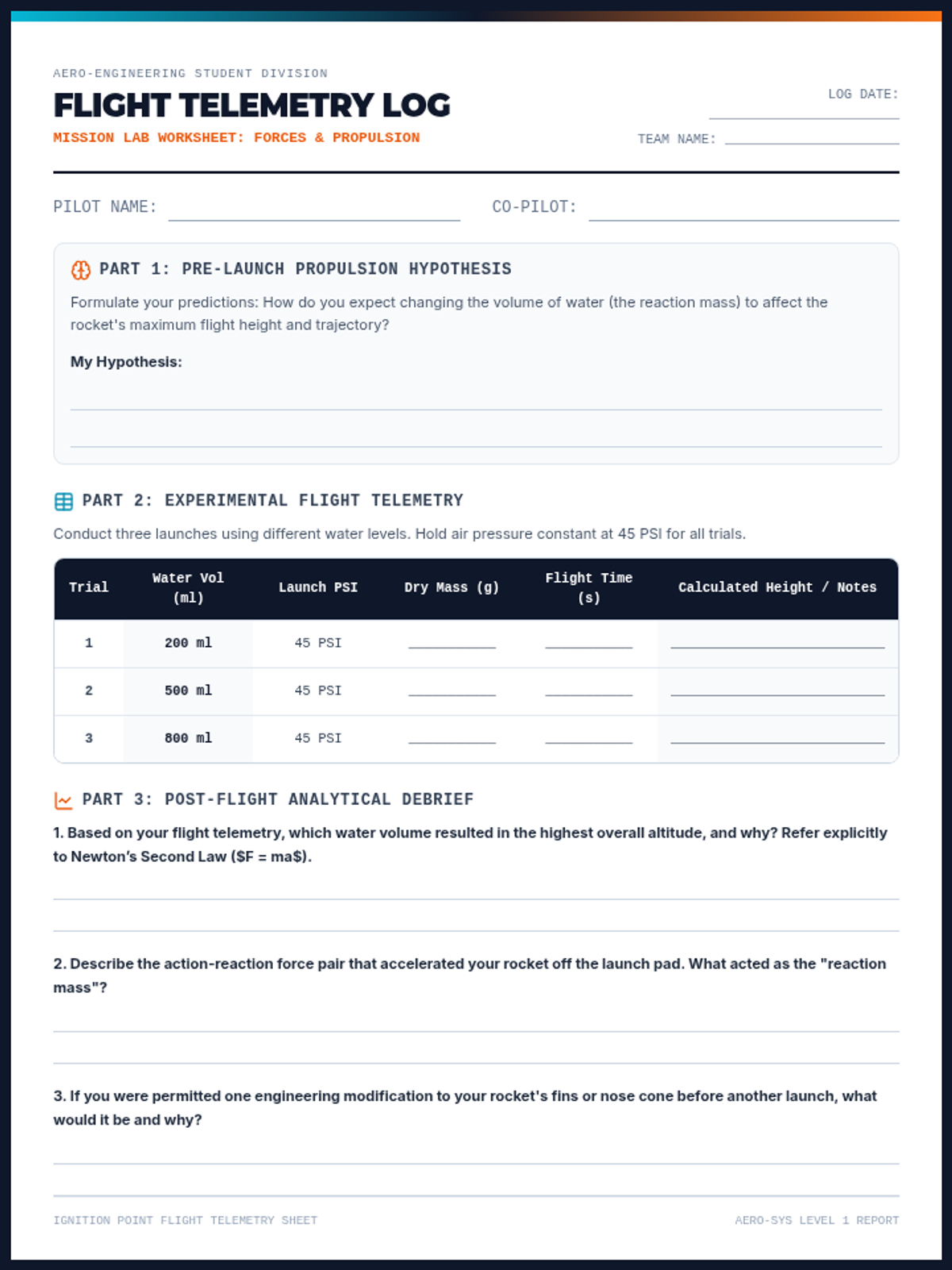
A structured, print-ready student lab worksheet designed as a Flight Telemetry Log. Includes student name and team fields, pre-flight hypothesis, a telemetry data table for water volume trials, and handwriting-friendly physics analysis questions.
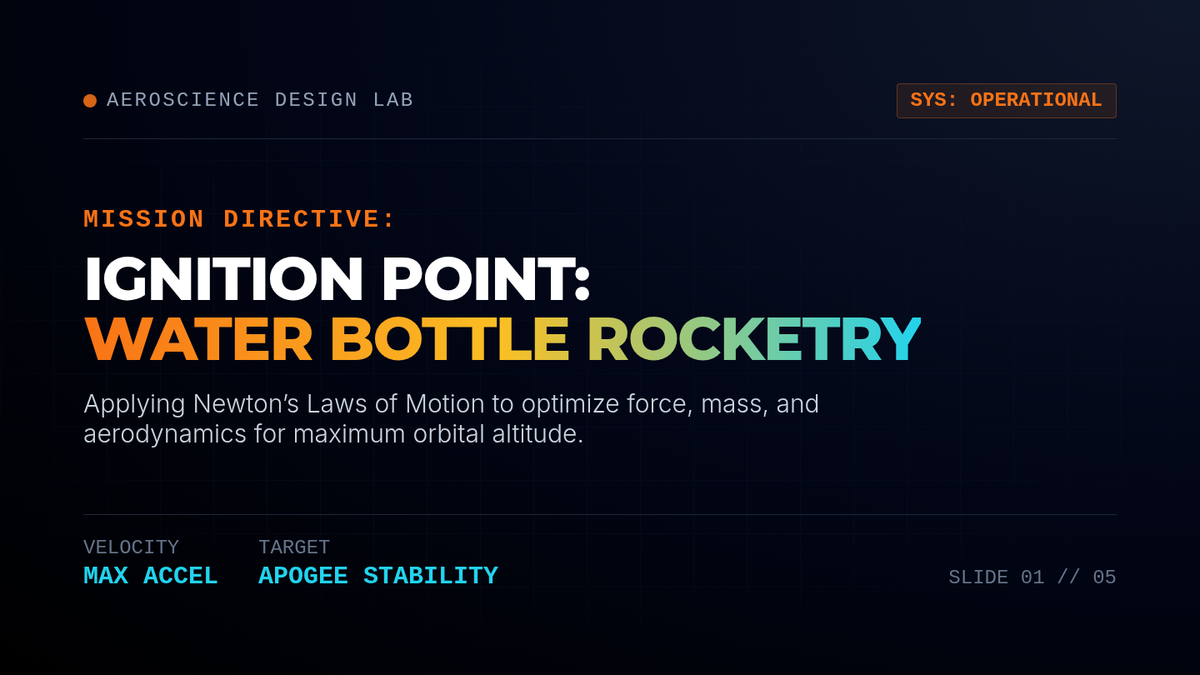
A sleek, high-impact 5-slide presentation designed for Mission Control style instruction. Introduces Newton's Laws, rocketry physics (action-reaction), aerodynamics, stability criteria, and safety protocols with minimum 24px text size.
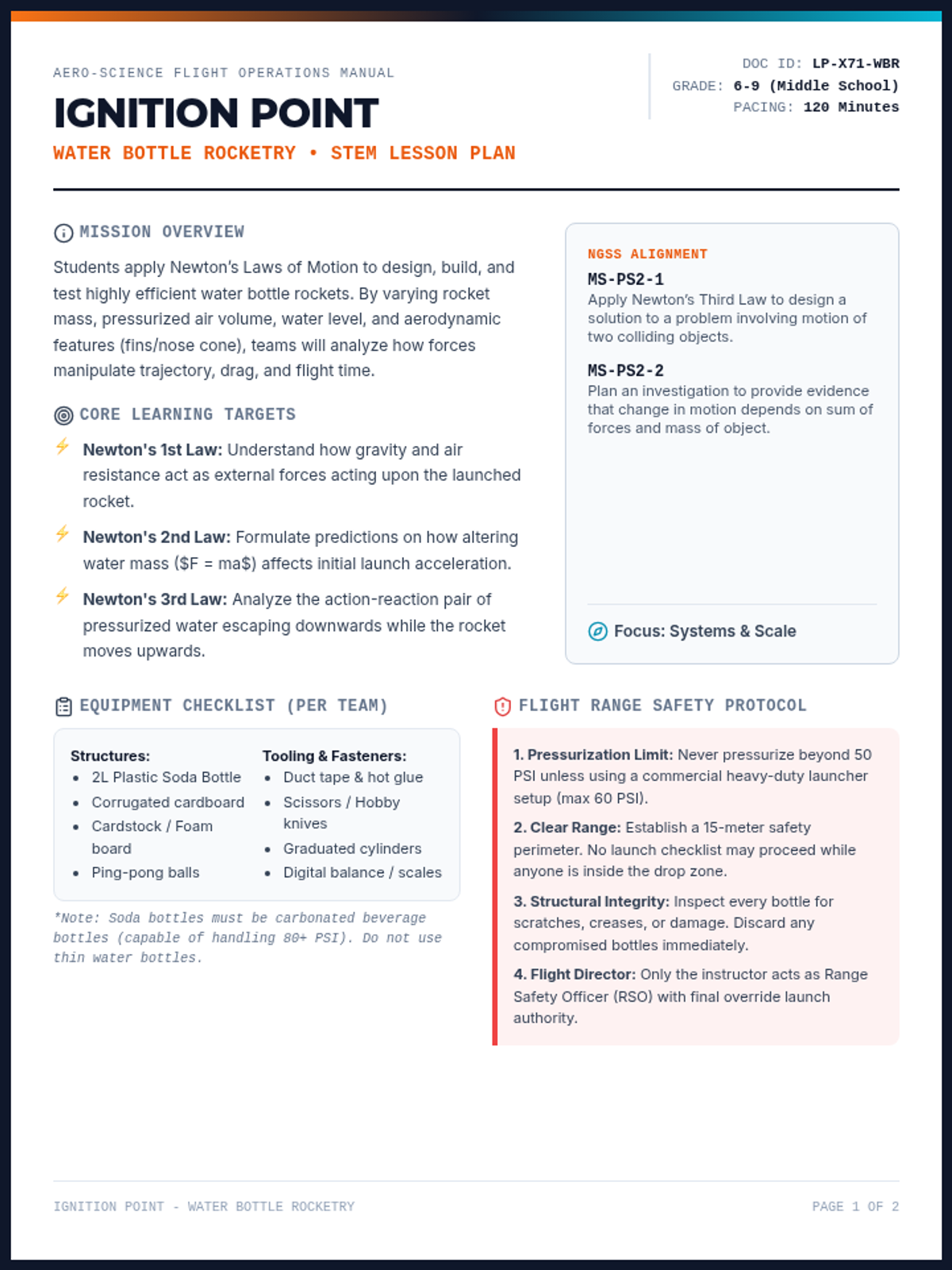
A comprehensive 2-page print-ready lesson plan and facilitation guide for teachers leading the Ignition Point water bottle rocketry lab. Includes standards, pacing, materials checklist, safety guidelines, and troubleshooting.
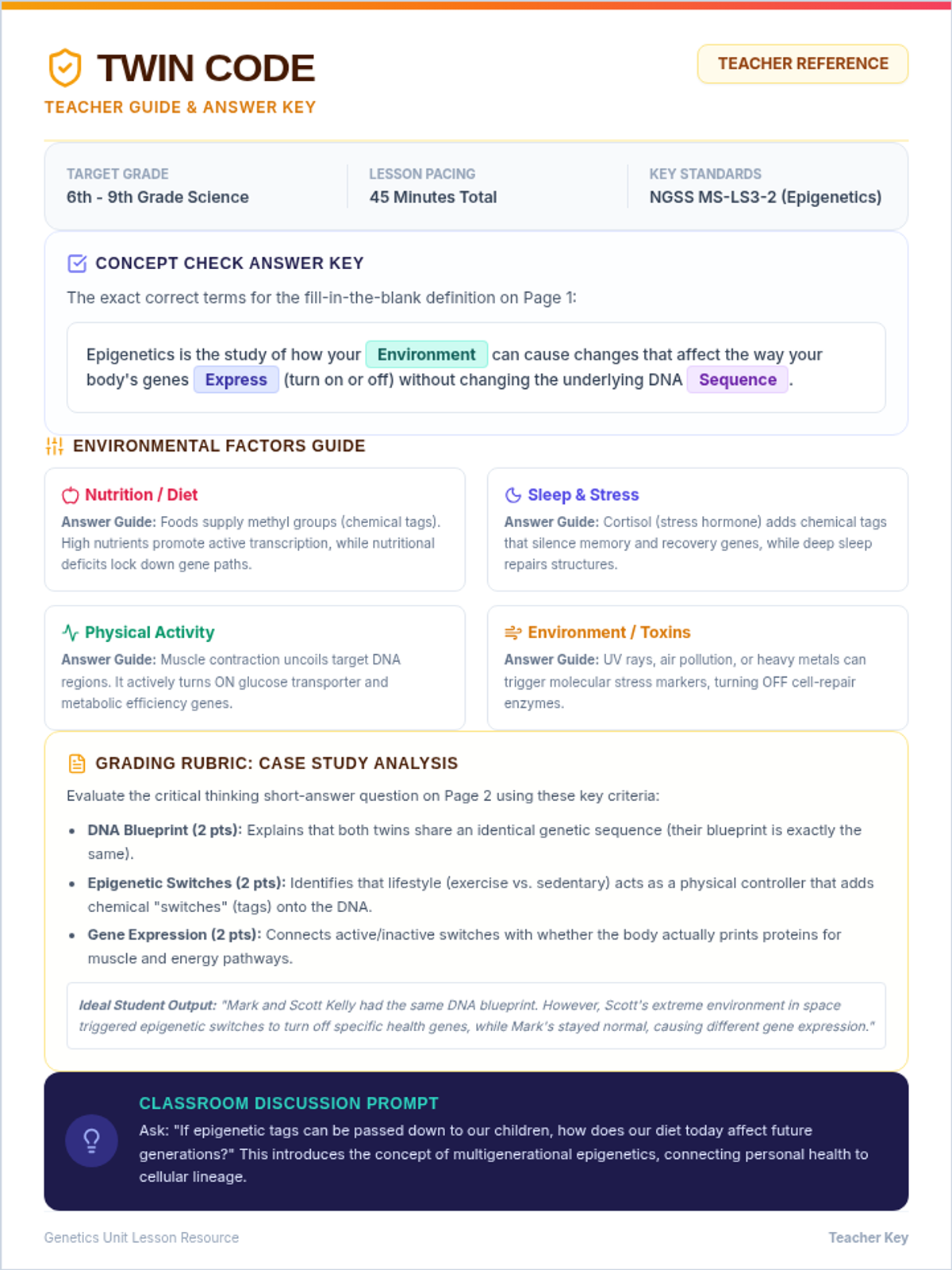
A comprehensive 1-page teacher guide and answer key for the Twin Code lesson. Provides instructional pacing, explicit answers to the fill-in-the-blank conceptual definition, standard student answers for the environmental factors, and a grading rubric guide for the critical thinking section.
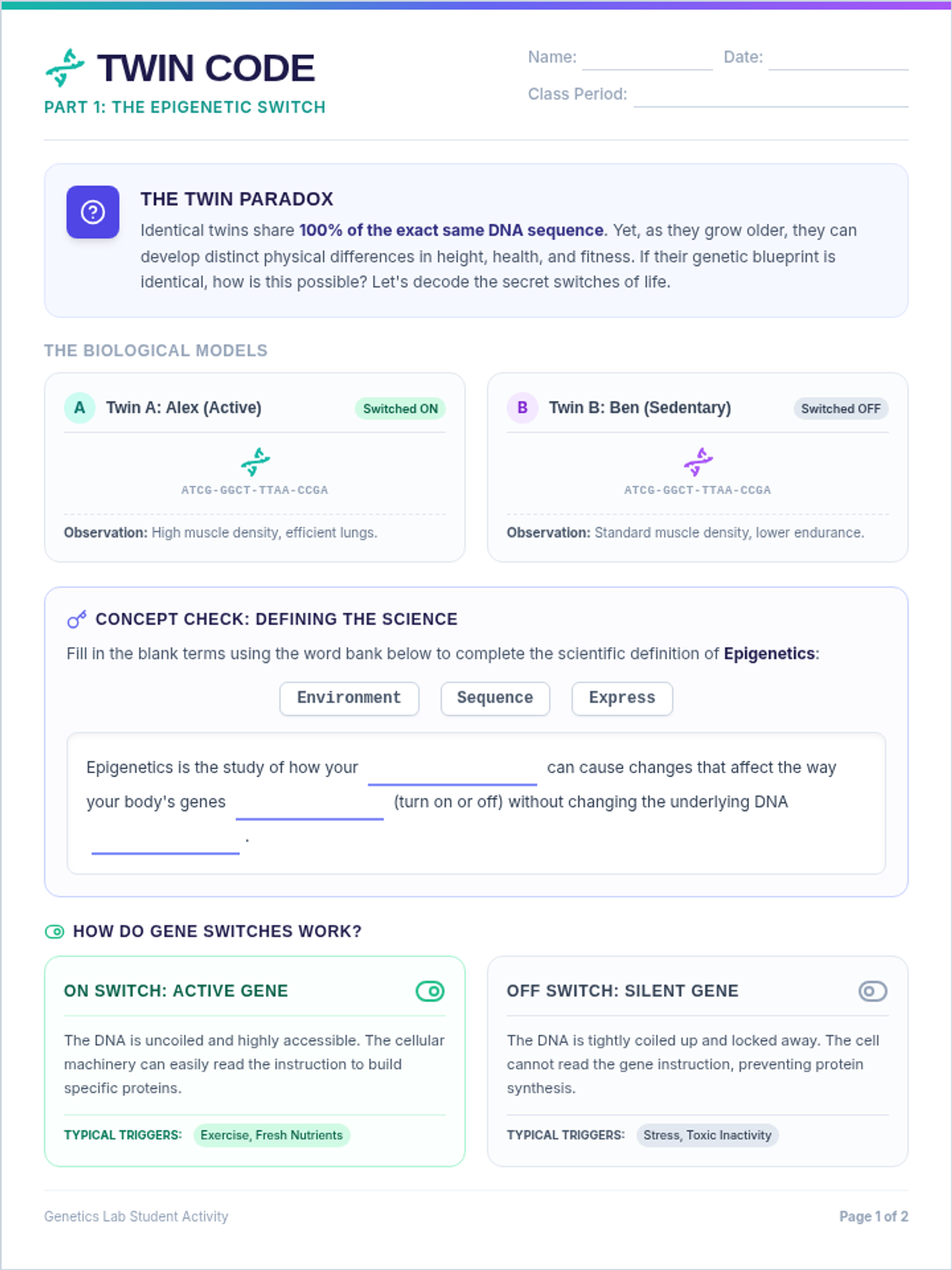
A completely blank, scaffolded student graphic organizer worksheet. Features beautiful spaces for handwriting observations about Twin A and Twin B, blank fill-in-the-blank lines for definitions, and blank trigger spaces, encouraging students to actively discover and record key epigenetics concepts.
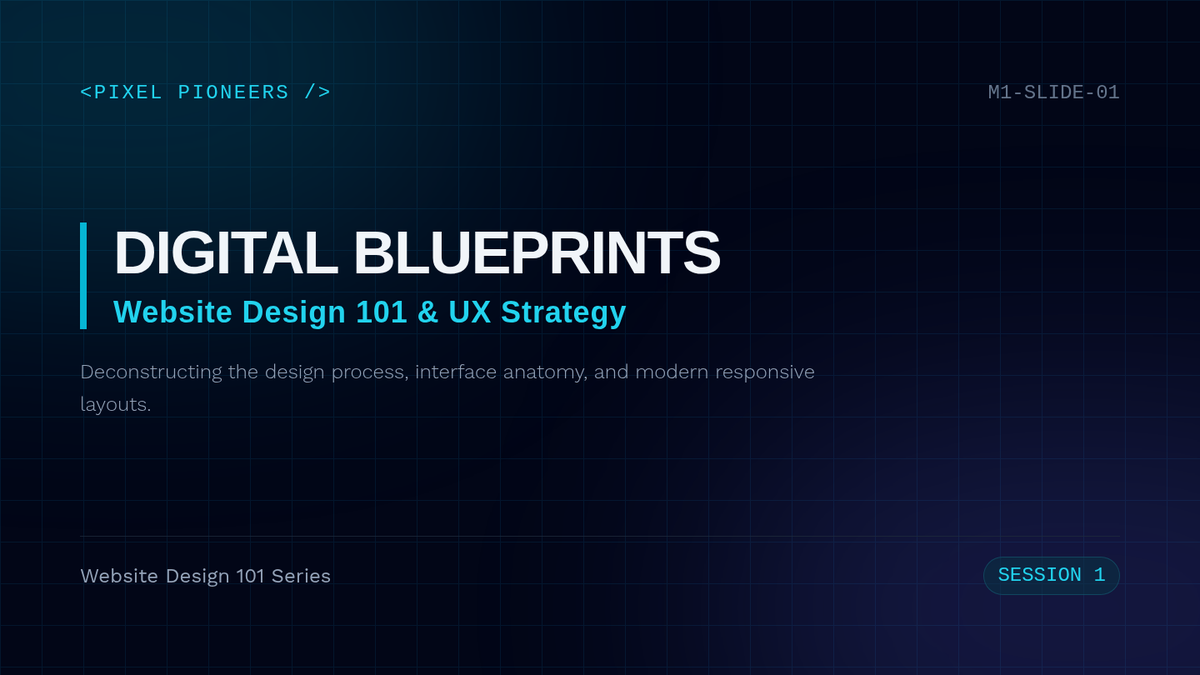
A 9-slide visual presentation introducing the 4-phase website design process, modern web component anatomy, mobile-first responsive principles, and wireframe shorthand rules.
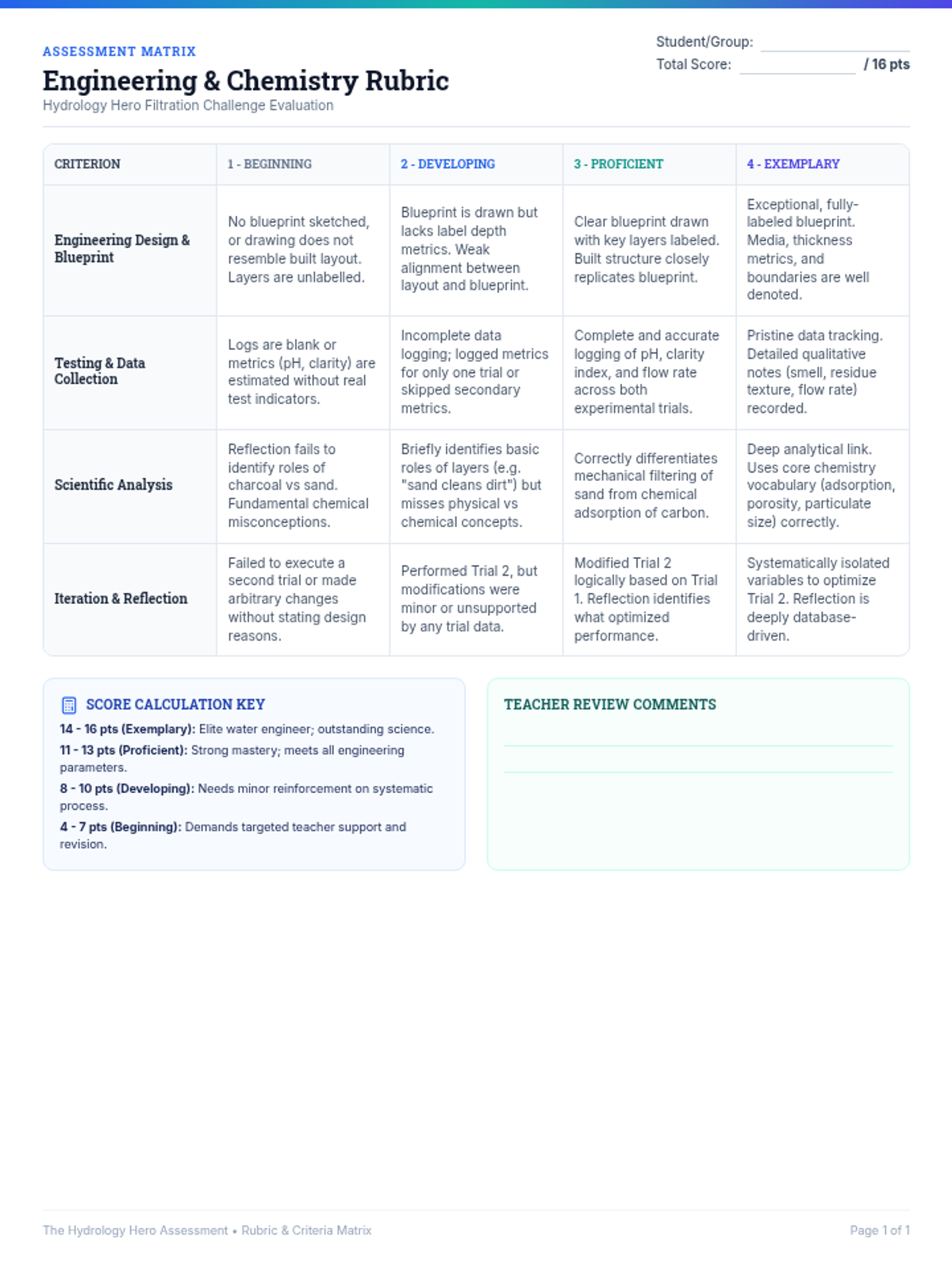
A 1-page structured evaluation rubric for teachers and students, defining performance descriptors across 4 tiers for Engineering Design, Data Collection, Scientific Analysis, and Collaboration.
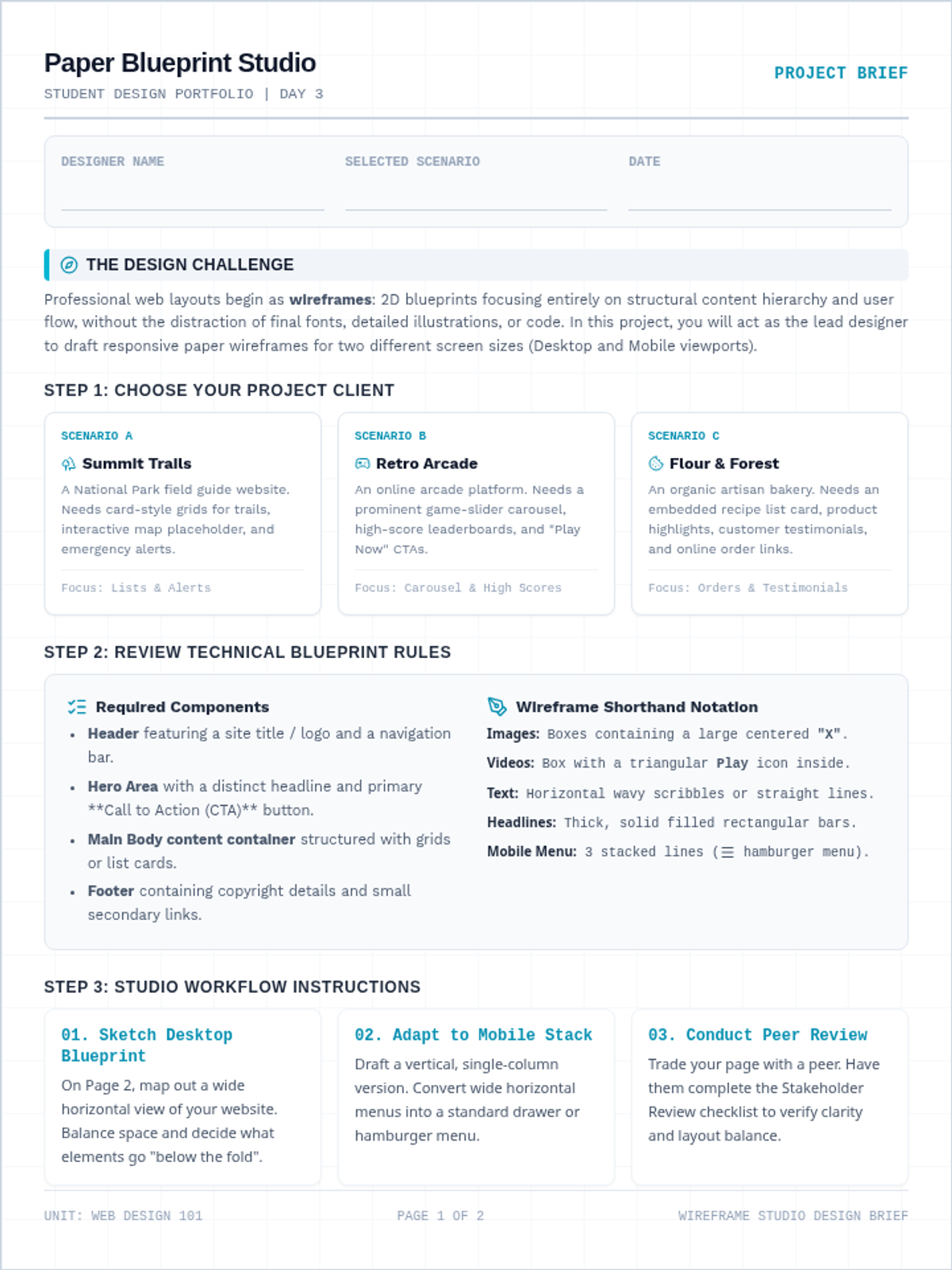
A 2-page printable student wireframing project packet containing three creative scenario briefs, design constraints, and dual grid sketching canvases (Desktop & Mobile viewports) with a peer-review checklist.
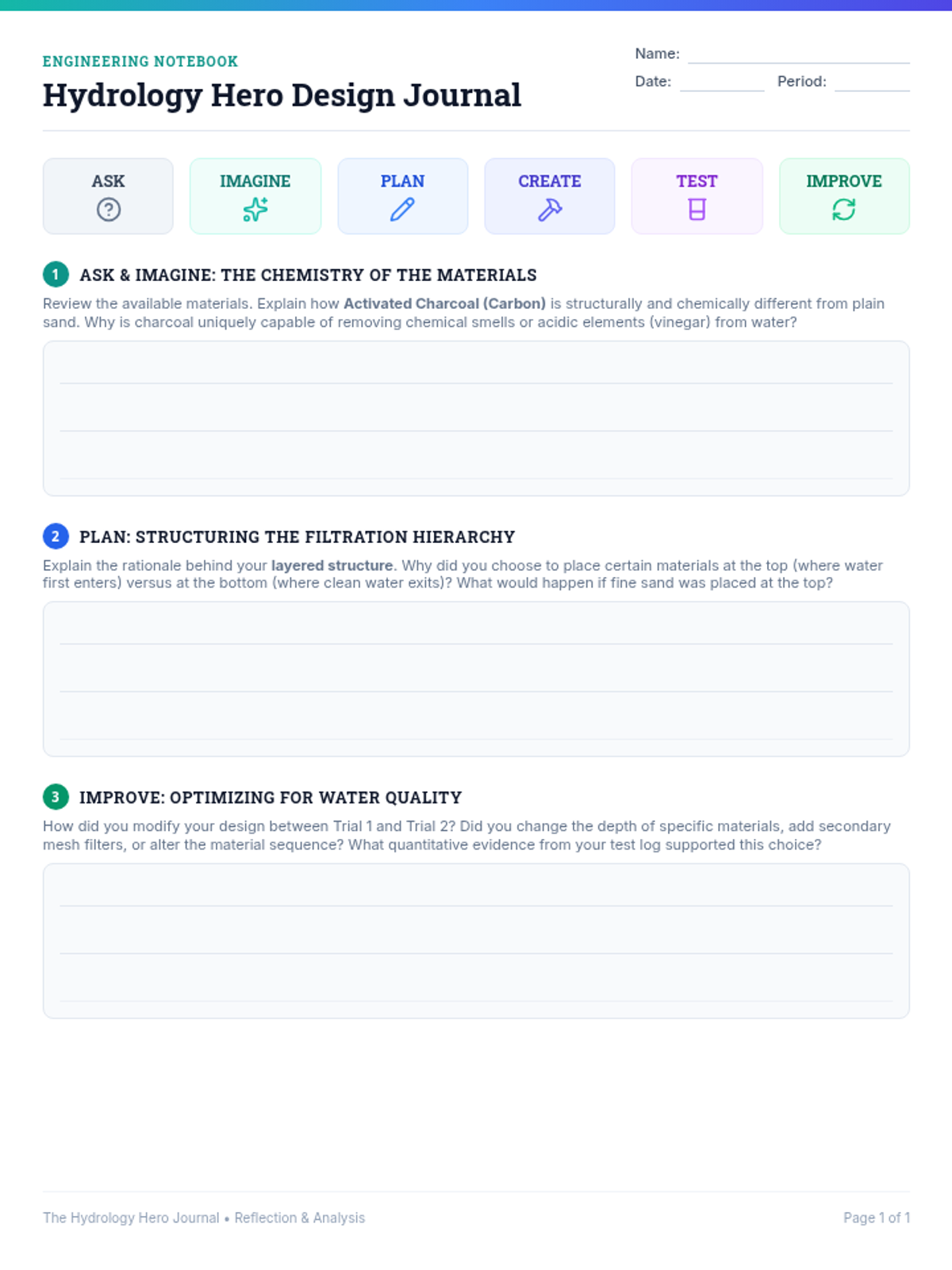
A 1-page student engineering design journal that facilitates structural reflection on the design process, prompt engineering questions, and system analysis of water filtration mechanisms.
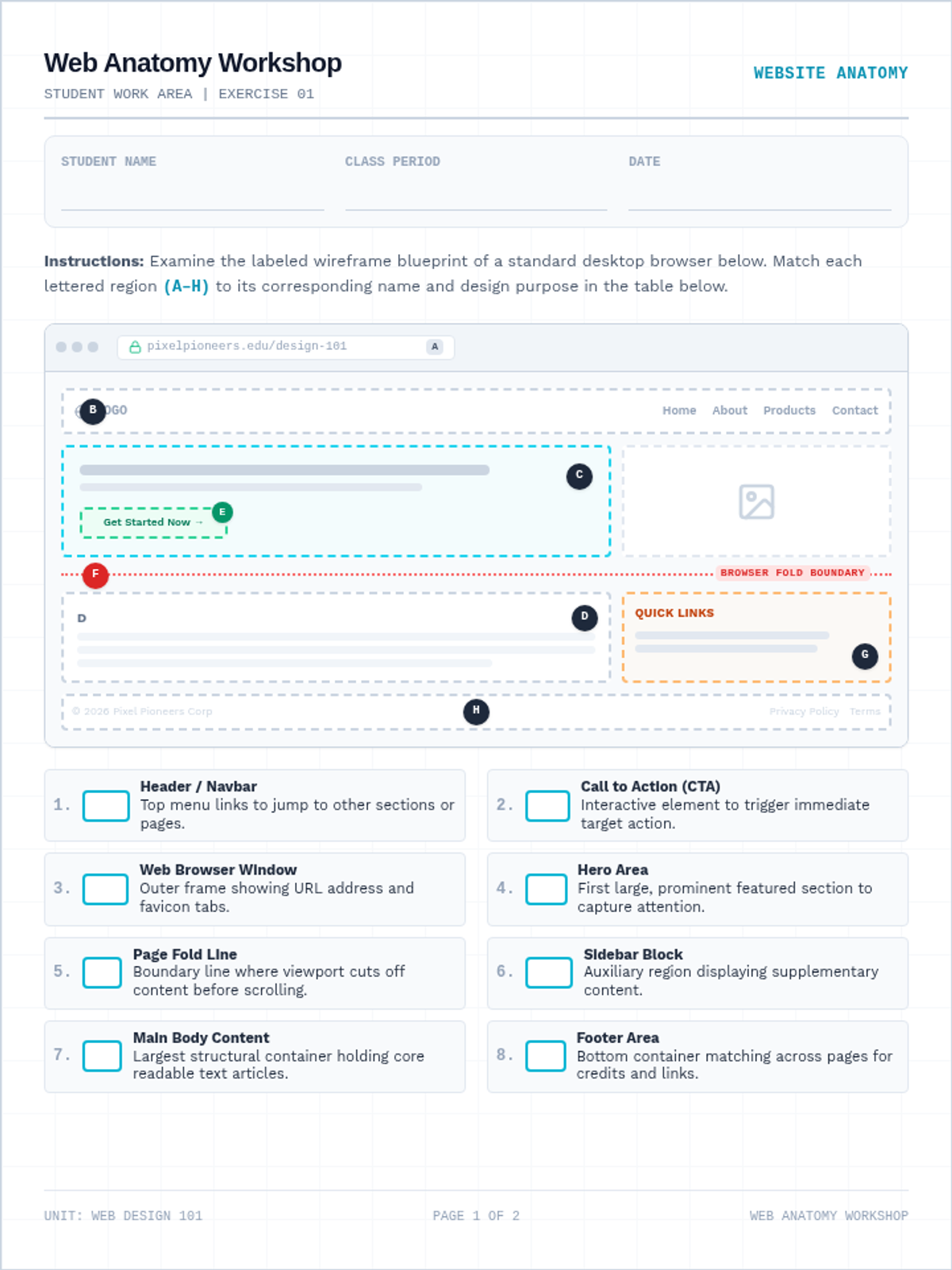
A 2-page printable student worksheet featuring a highly visual wireframe anatomy matching challenge, a fill-in-the-blank web design process guide, and short-answer concept checks.
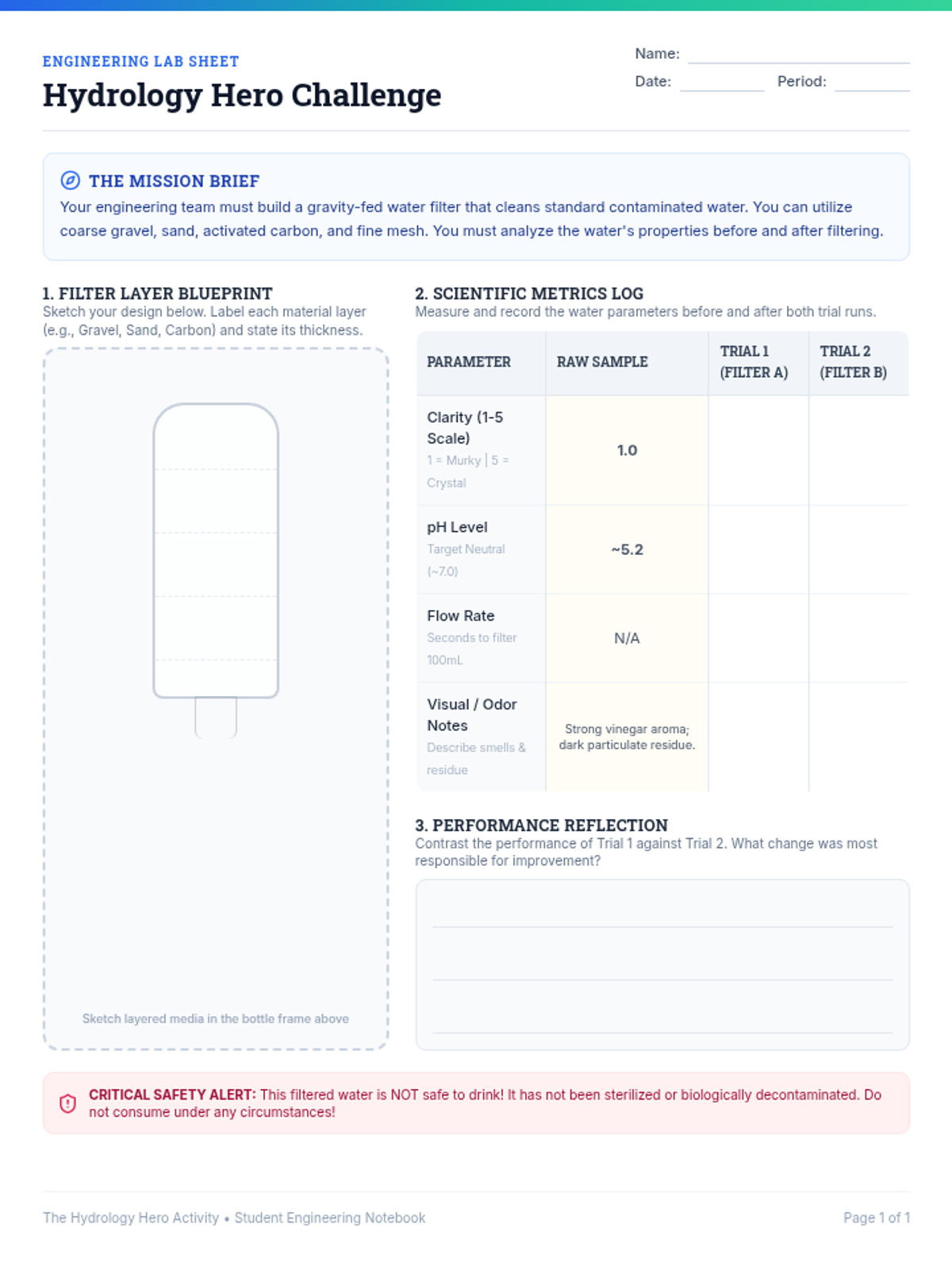
A 1-page student activity sheet containing the engineering brief, a schematic diagram drawing space, and a data-tracking table for water clarity, pH, and flow observations.
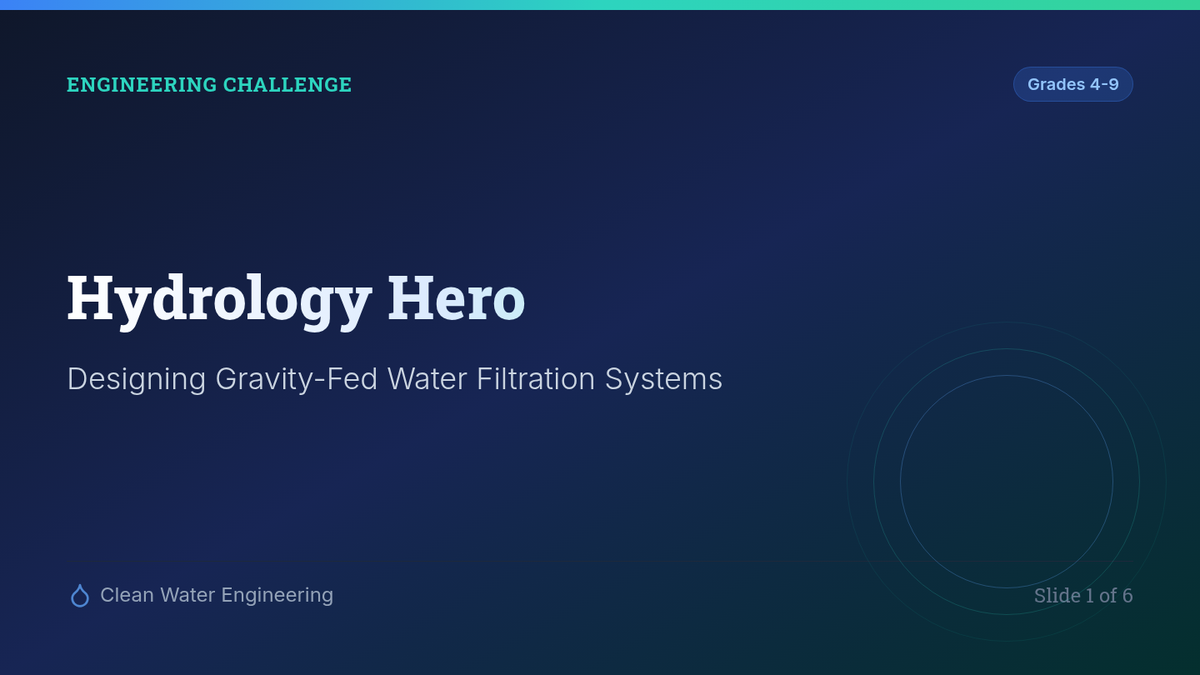
A visually striking 6-slide instructional slide deck for classrooms, explaining the global water crisis, the science of multi-layer filtration, design constraints, and testing parameters.
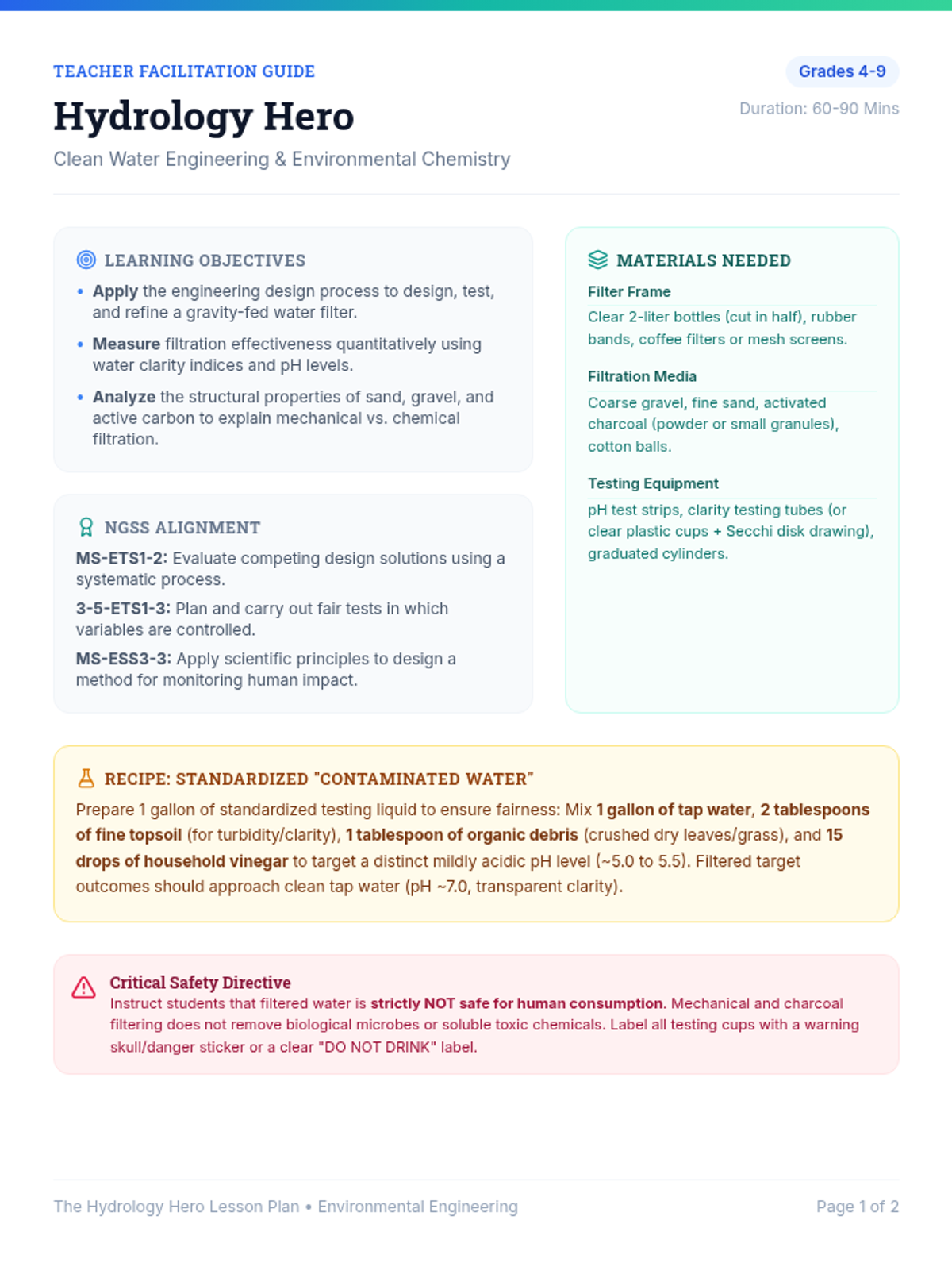
A comprehensive 2-page teacher facilitation guide for the Hydrology Hero filtration engineering lesson, containing lesson timelines, alignment standards, materials lists, dirty water recipes, and instructional scripts.
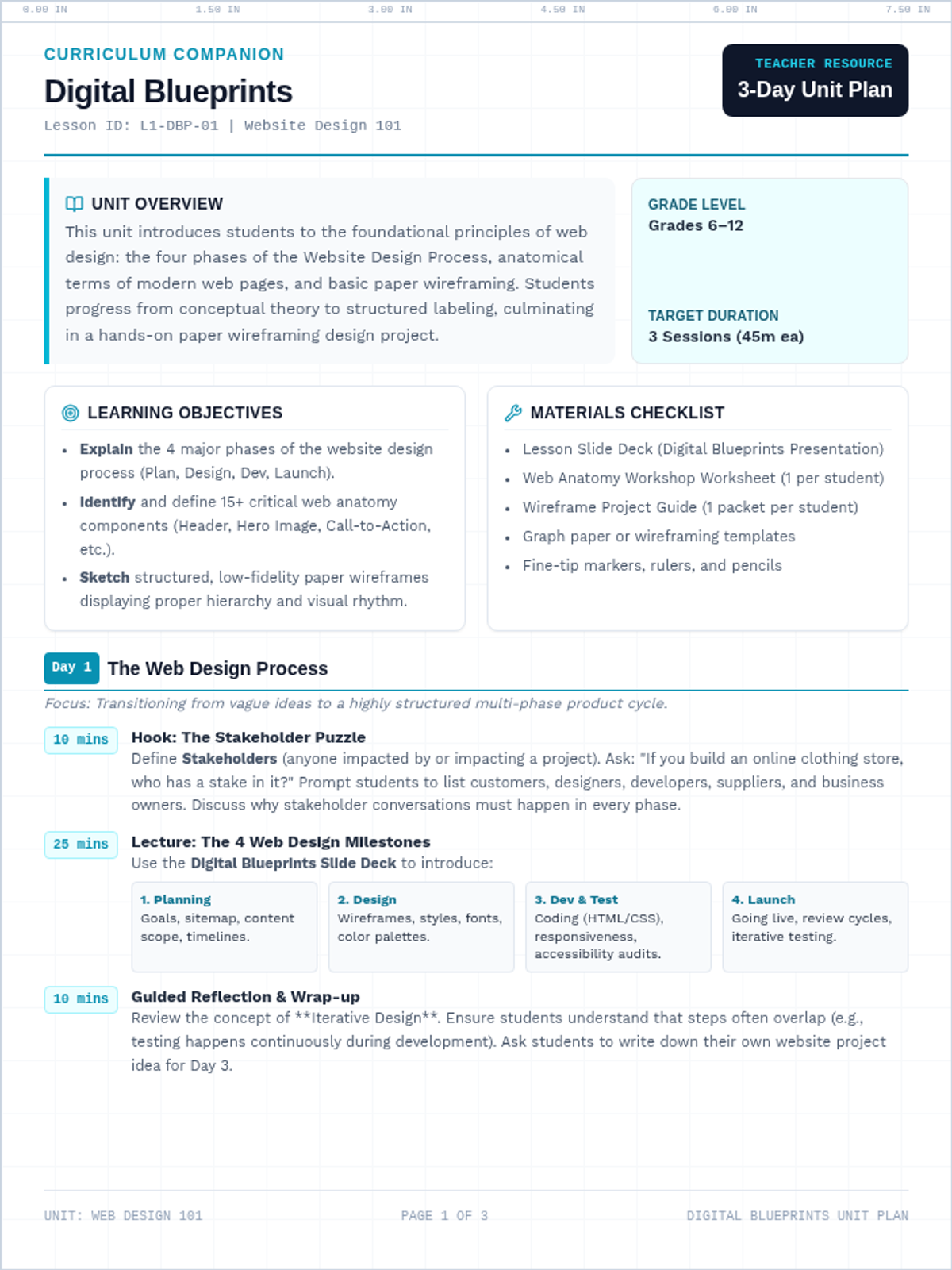
A 3-page printable instructional guide for teachers, providing a complete 3-day lesson plan, discussion prompts, grading rubric, and worksheet answer keys.
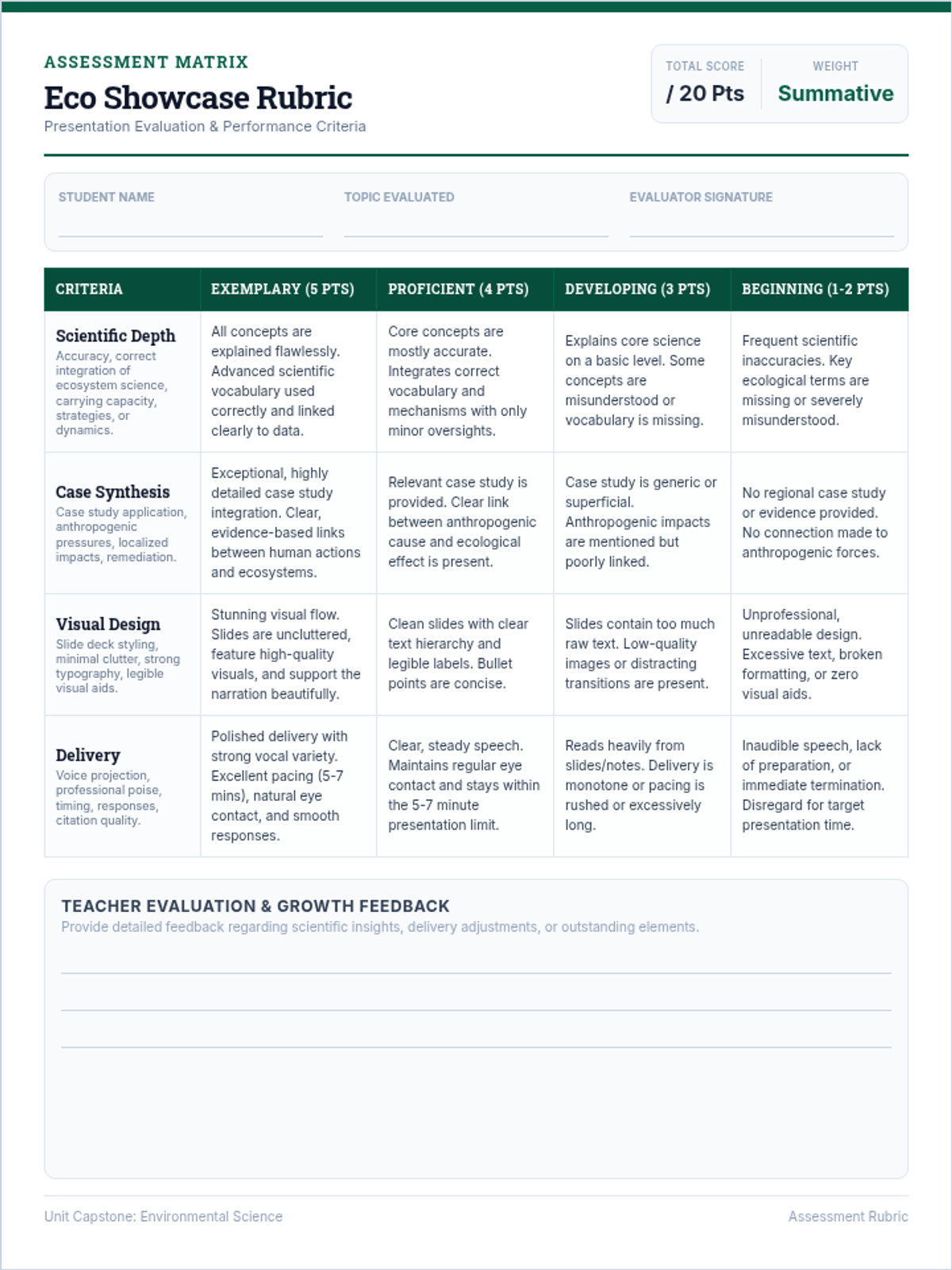
A professional evaluation rubric for the Eco Showcase Capstone presentation, outlining performance levels for scientific depth, real-world synthesis, slide design, and presentation mechanics.
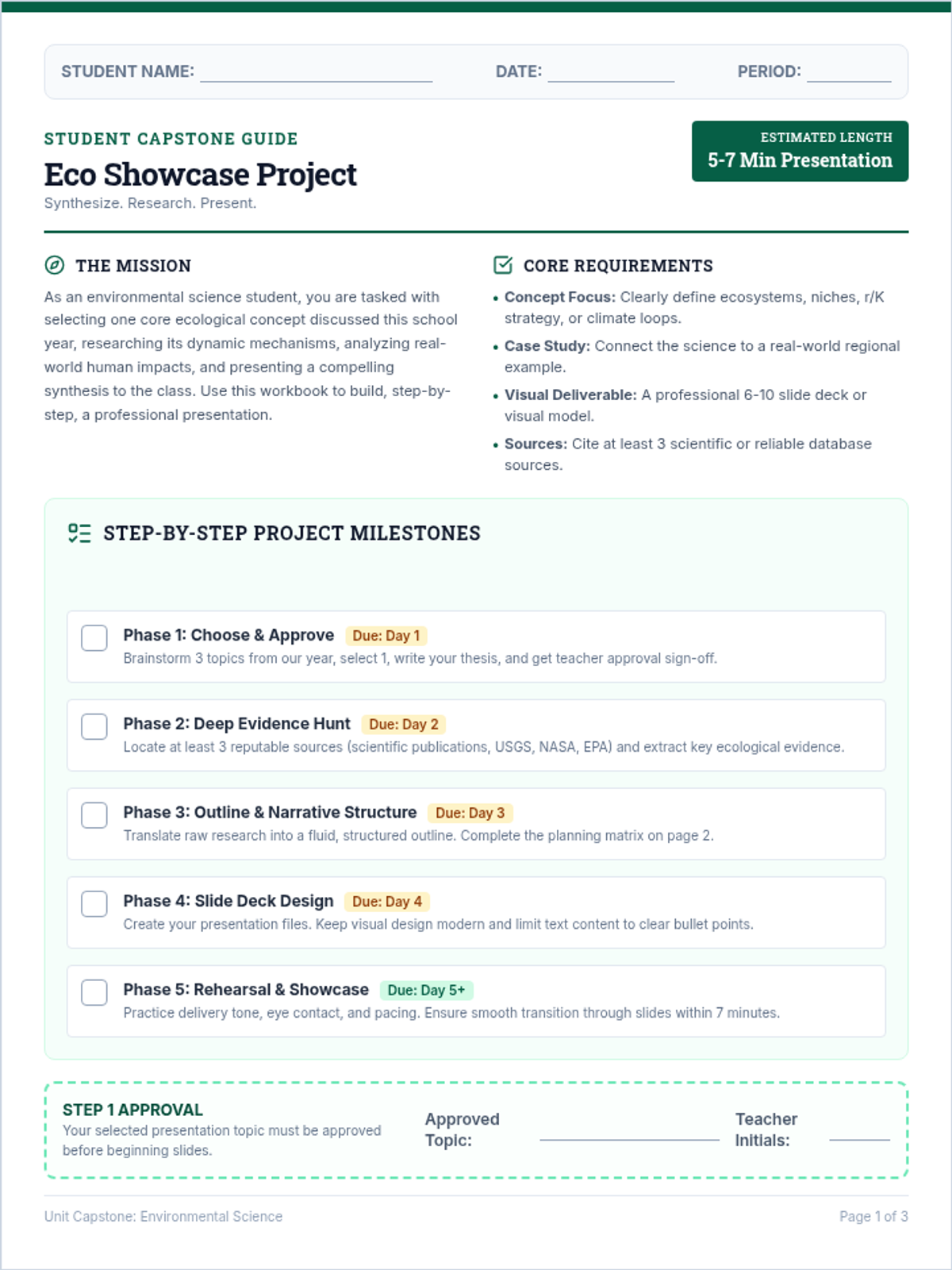
A 3-page print-ready student workbook featuring project guidelines, a milestones checklist, scaffolded outline blocks, and a dedicated research notes & source tracking page.
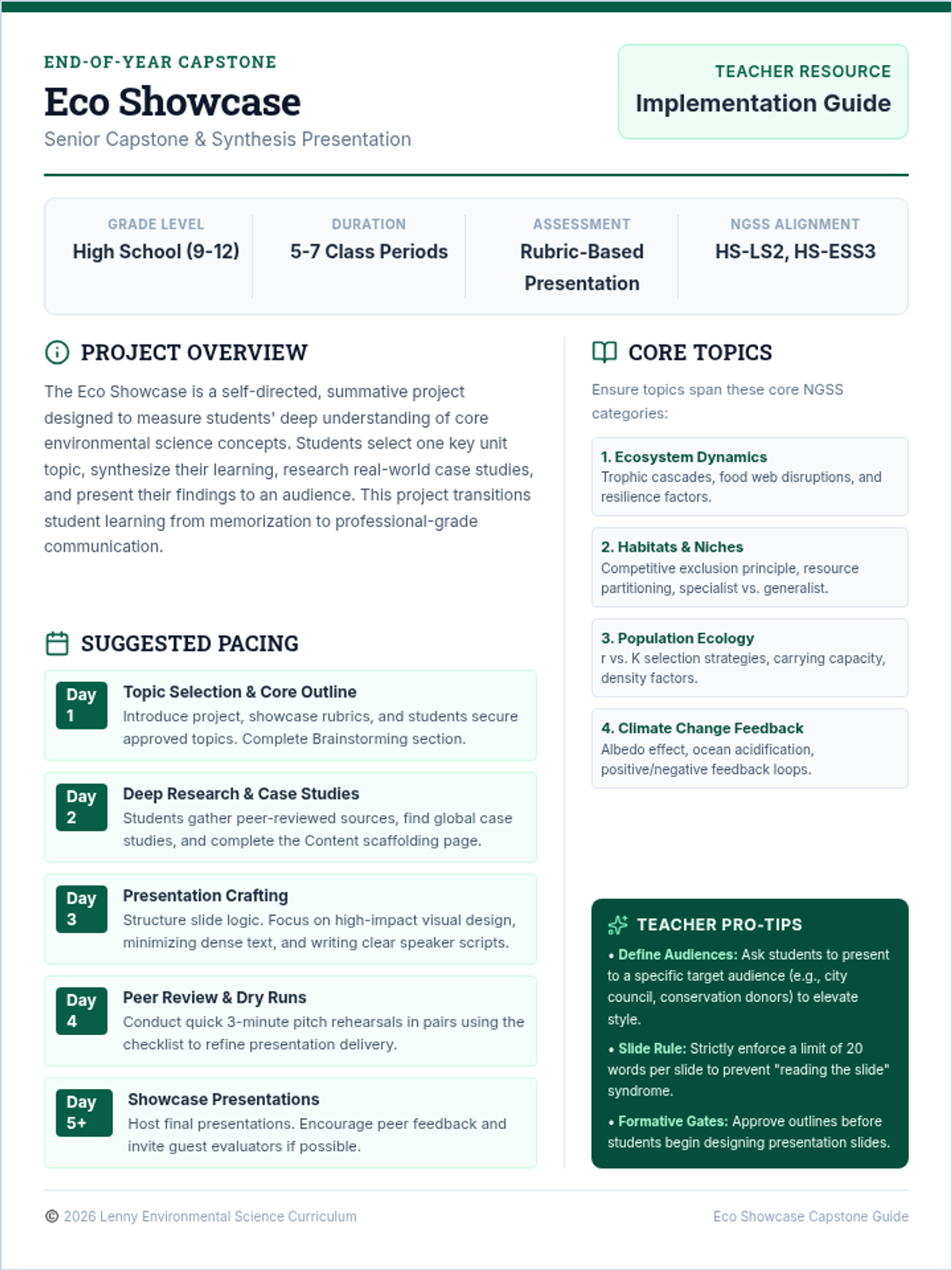
A comprehensive teacher implementation guide for the Eco Showcase Capstone project, featuring a 5-day pacing guide, curated environmental science topics list, and presentation day recommendations.
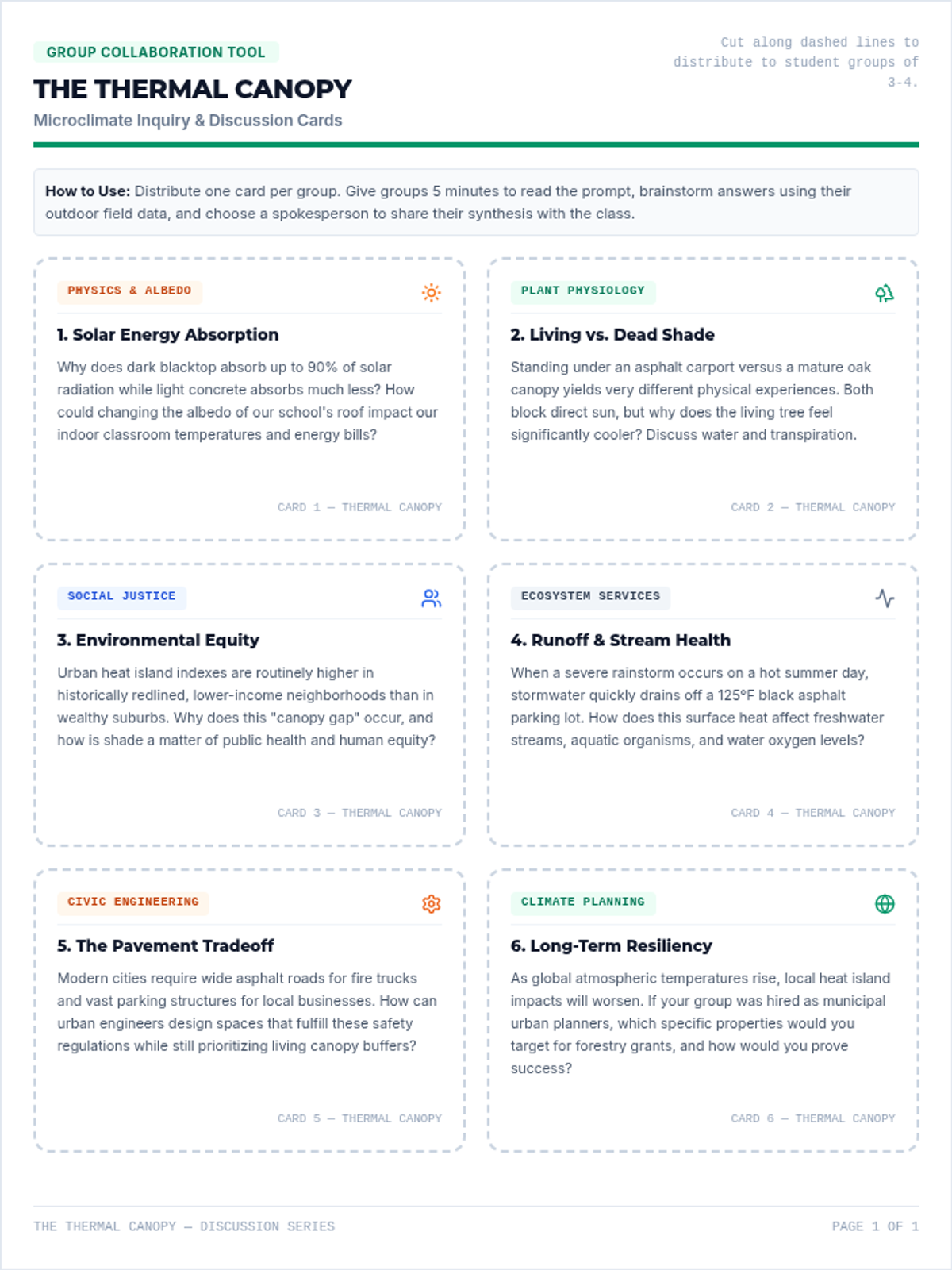
A single-page printable resource featuring 6 beautifully designed discussion cards for student group work. Prompts cover physics of albedo, environmental justice, urban development, climate resilience, and ecosystem services.
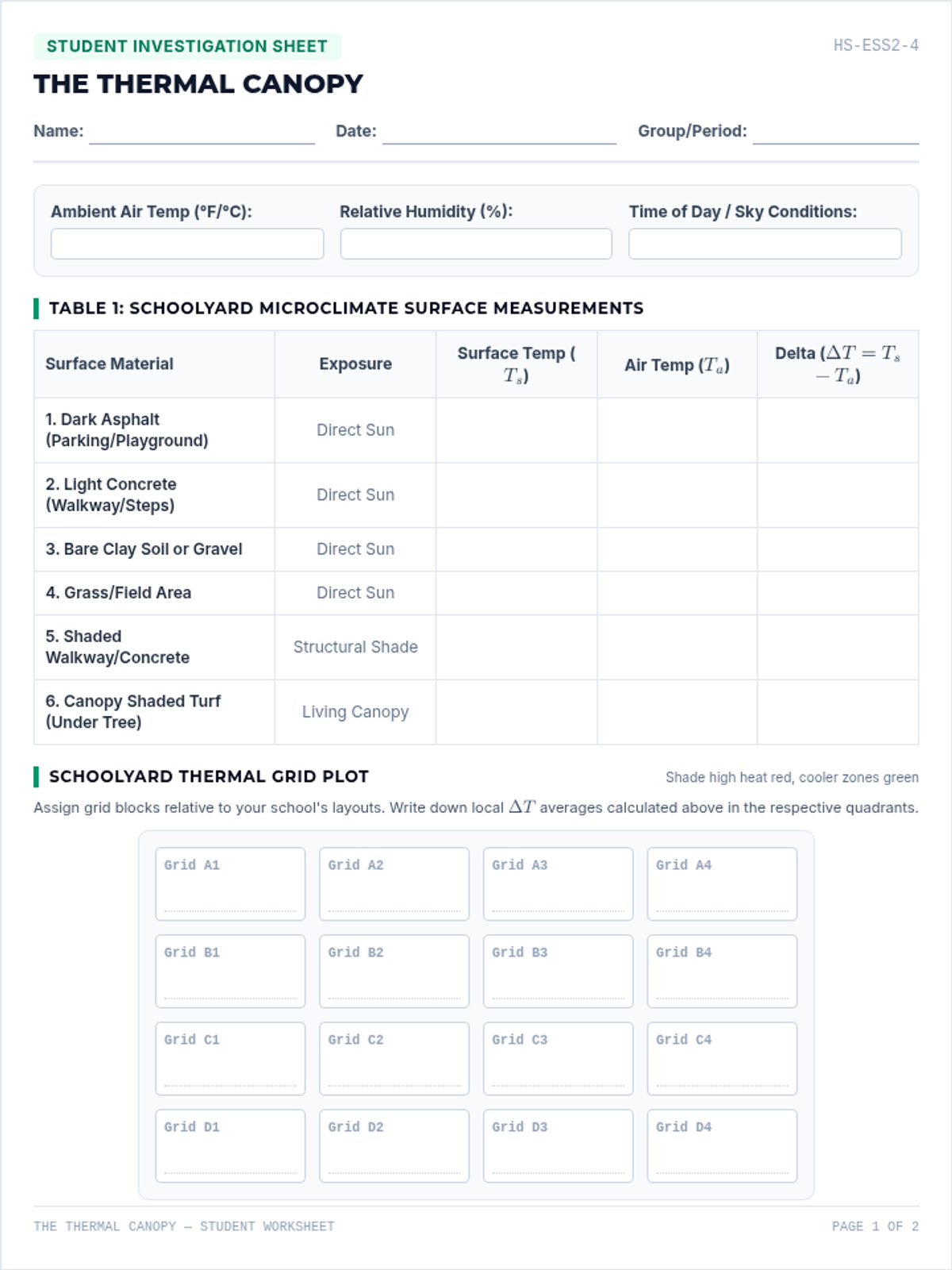
A highly structured 2-page print-ready student worksheet. Includes weather data logging, a schoolyard microclimate mapping table, thermal calculations, and a spatial canopy mitigation challenge with written CER prompt spaces.
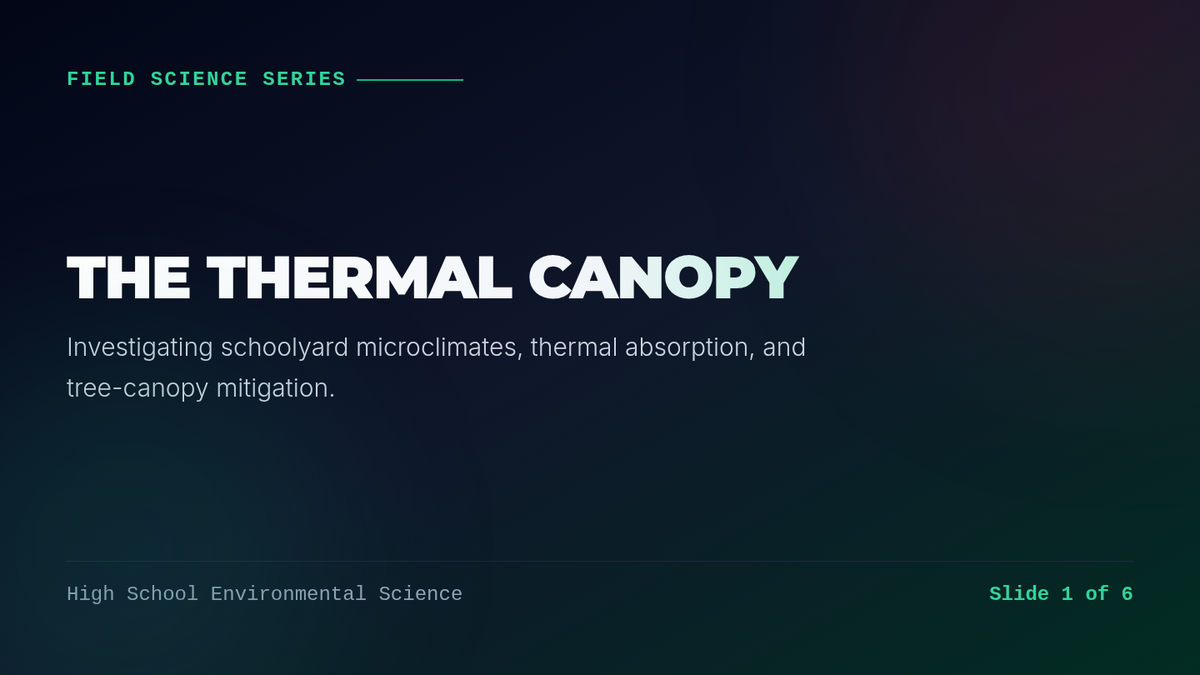
An engaging, visual 6-slide deck introducing students to urban heat islands, thermal dynamics (albedo and evapotranspiration), the outdoor mapping field protocol, data synthesis, and the canopy design challenge.
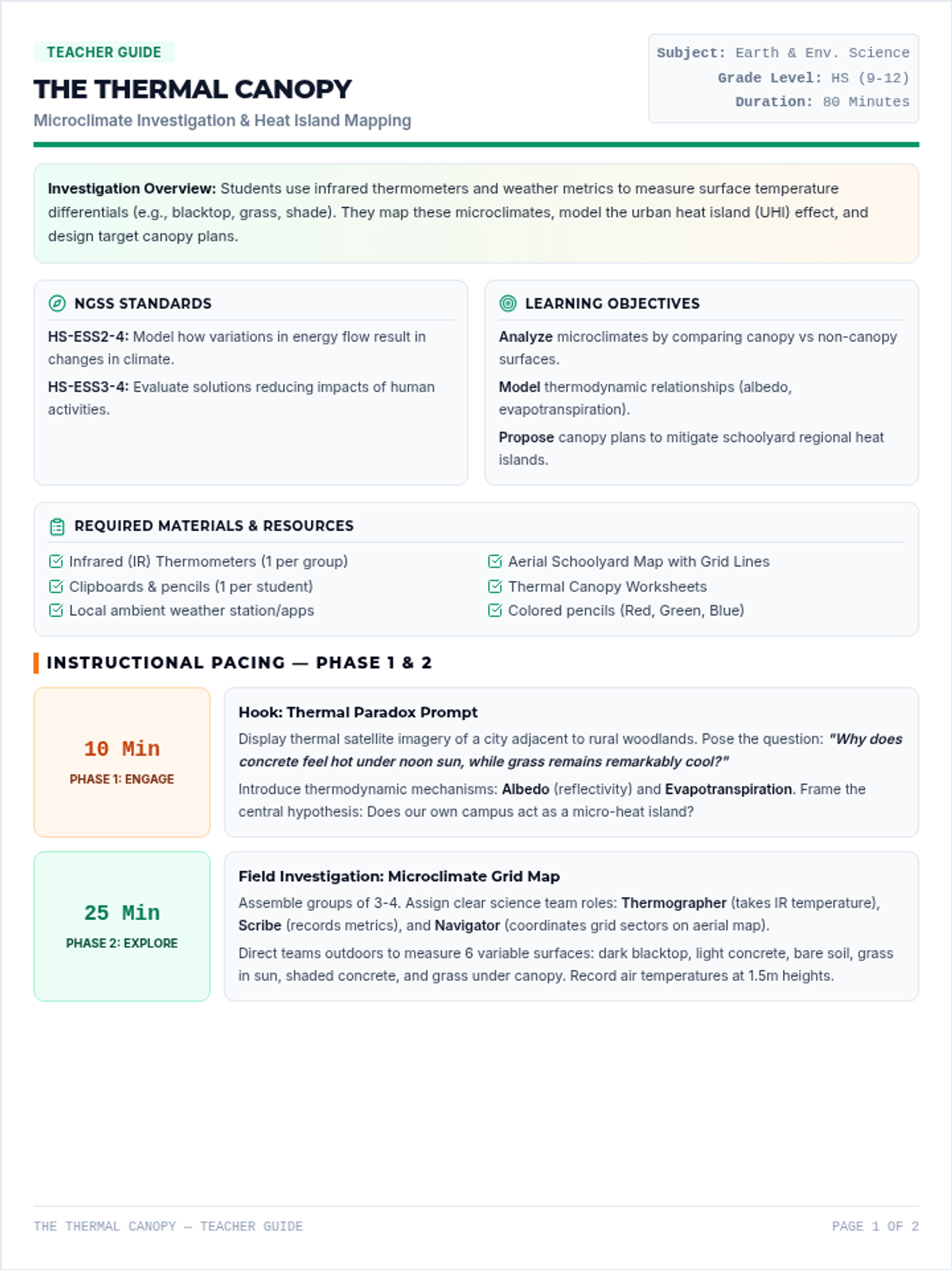
A professional, 2-page teacher-facing lesson plan aligning with NGSS standards. Includes step-by-step instructional phases (5Es), materials lists, outdoor safety protocols, and differentiation strategies for mapping schoolyard microclimates.
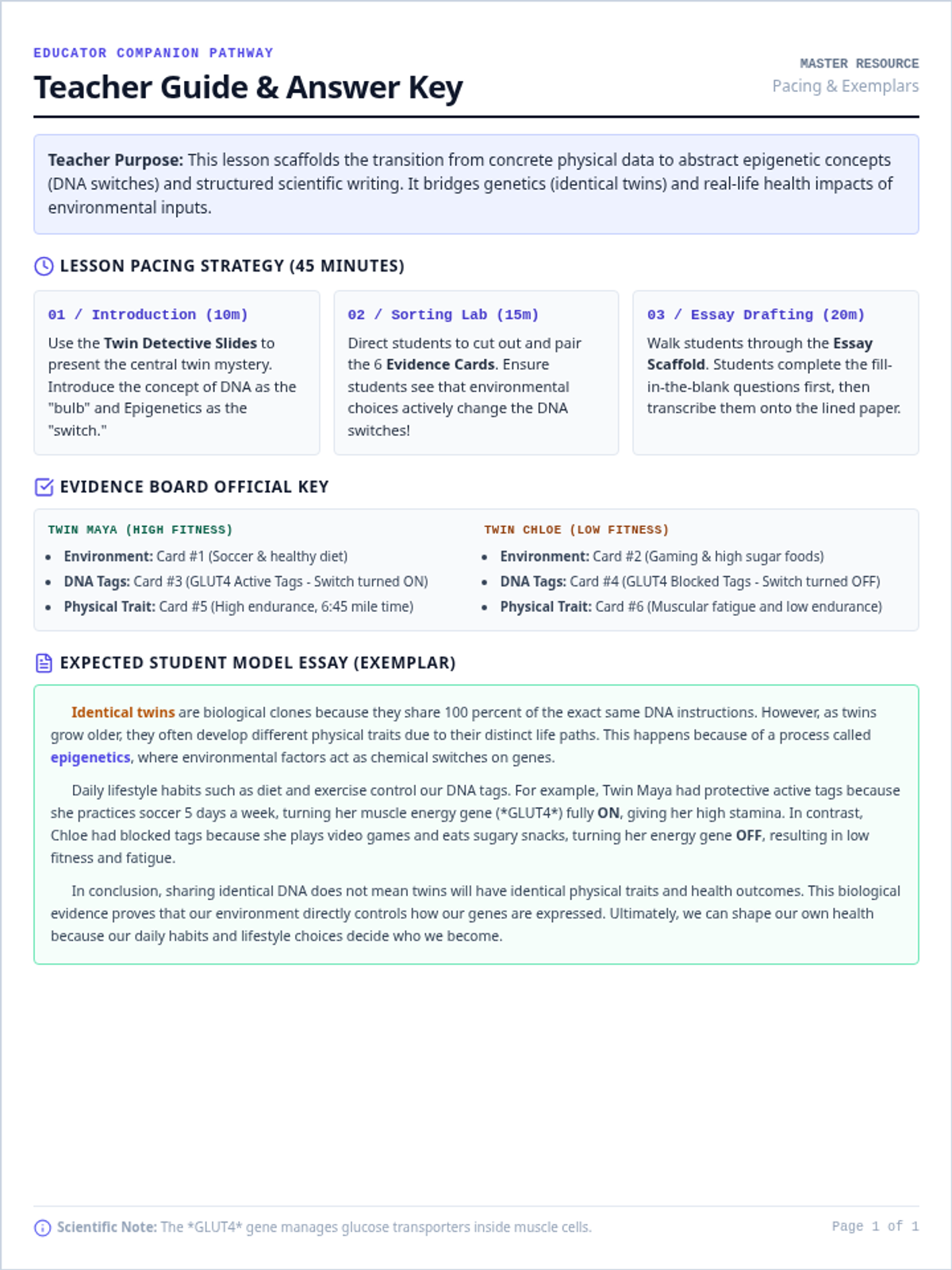
A detailed teacher lesson guide and master answer key for 'Twin DNA Detective'. Includes a 45-minute lesson pacing outline, the official answer keys for the matching board, and a model high-scoring student exemplar essay.
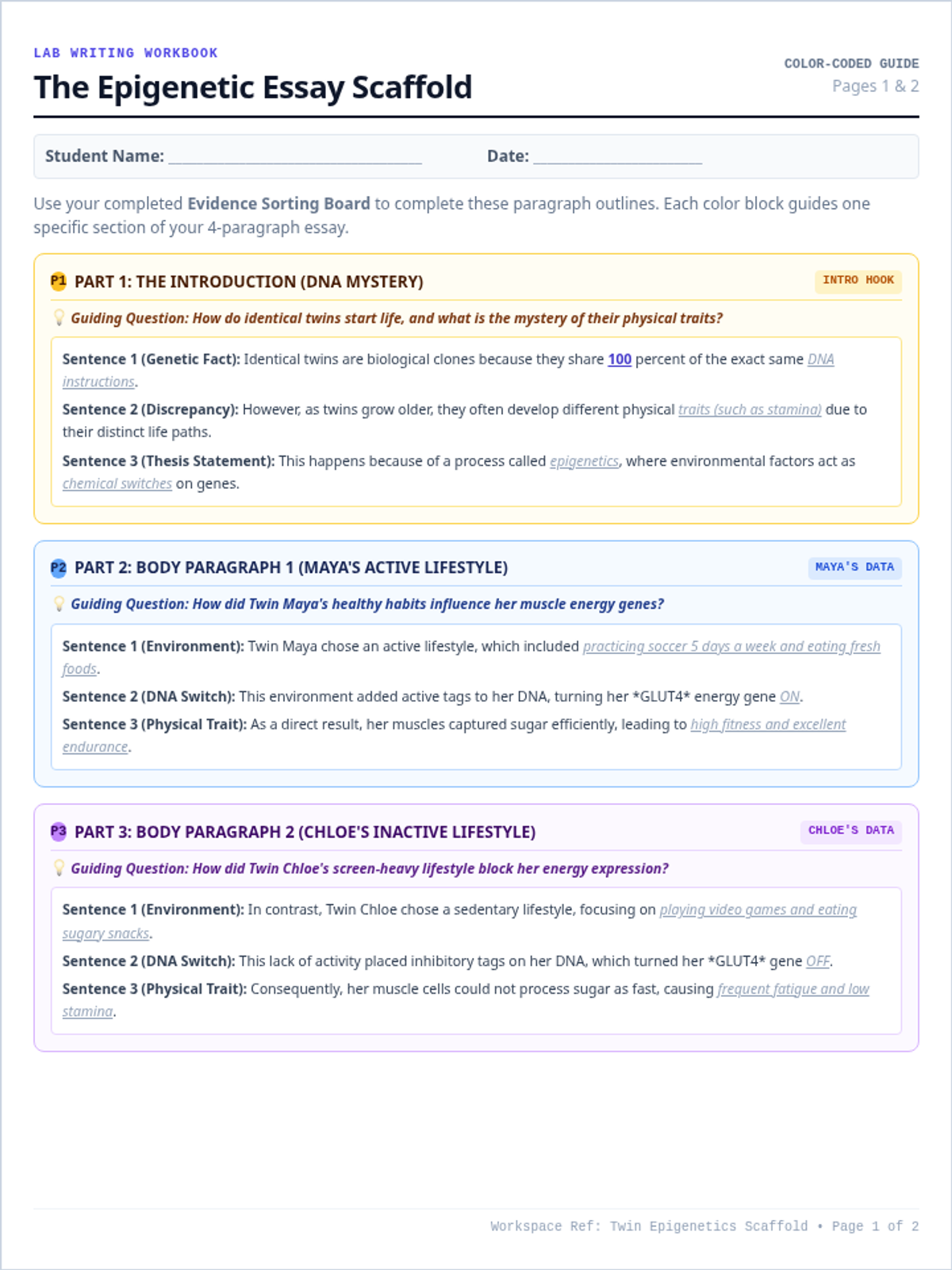
An expanded 2-page essay writer's workbook. It features color-coded paragraph blocks (yellow introduction, blue body paragraph for Maya, purple body paragraph for Chloe, green conclusion) with guiding questions and sentence-by-sentence fill-in-the-blank prompts for a 4-paragraph essay.
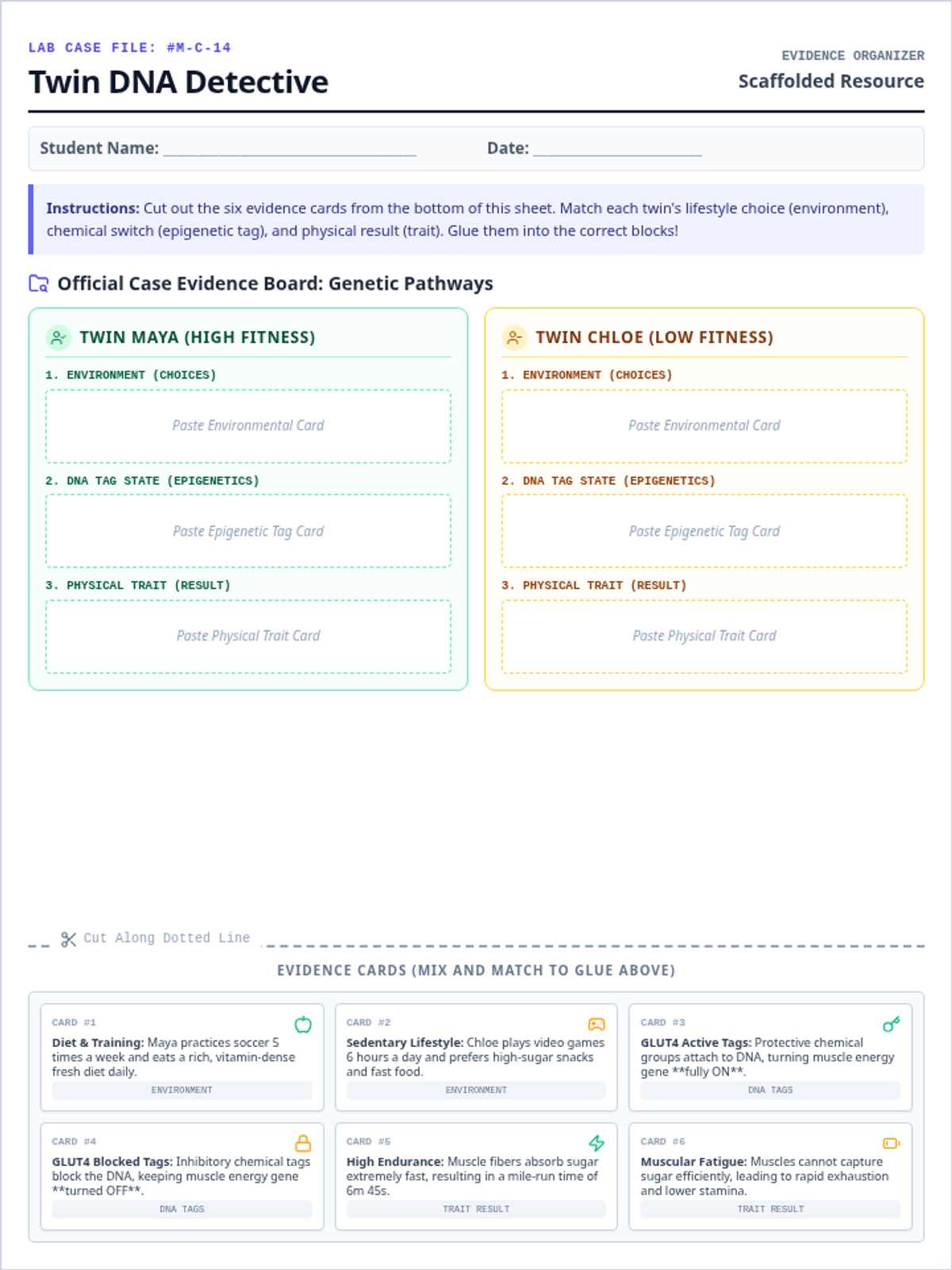
Hands-on evidence sorting board with cut-out case study cards. Students match environmental inputs, epigenetic DNA tag states, and final physical traits for twins Maya and Chloe to synthesize data before writing.
Interactive lesson slides for 'Twin DNA Detective'. These slides introduce the core concept of epigenetics, demonstrate how environmental factors (diet, exercise, stress) act as chemical switches on DNA, present twin case study data, and outline the writing mission.
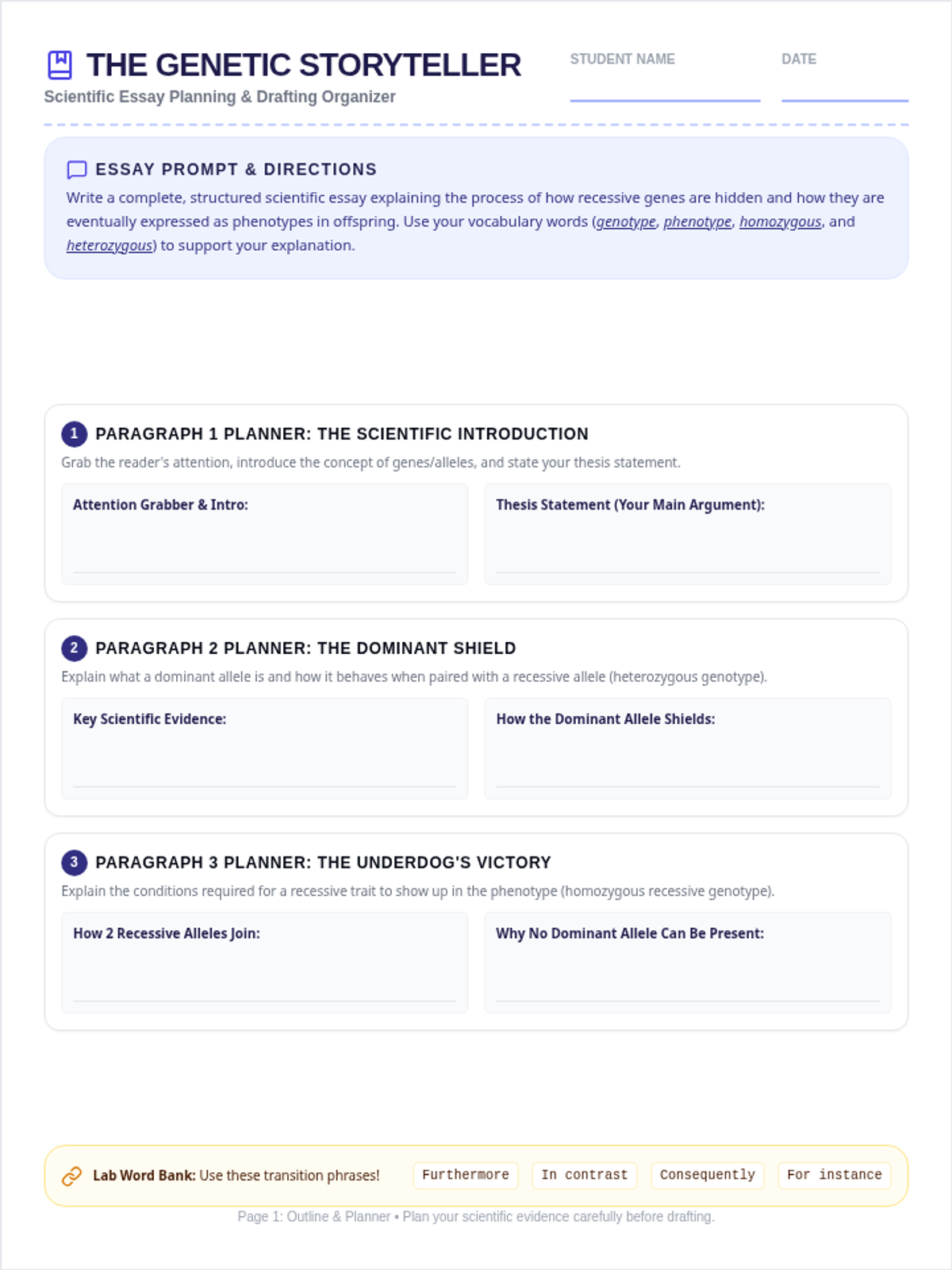
A structured, highly scaffolded three-page essay planner and writing draft document. Guides students through organizing and writing a complete essay on how recessive traits are expressed, including paragraph-by-paragraph organizers, transition word banks, and a self-editing checklist.
Step-by-step visual slides that walk students through filling out their Underdog Genes Organizer. Includes introducing vocabulary terms, demonstrating the Punnett square crossing process, and explaining the paragraph prompts.
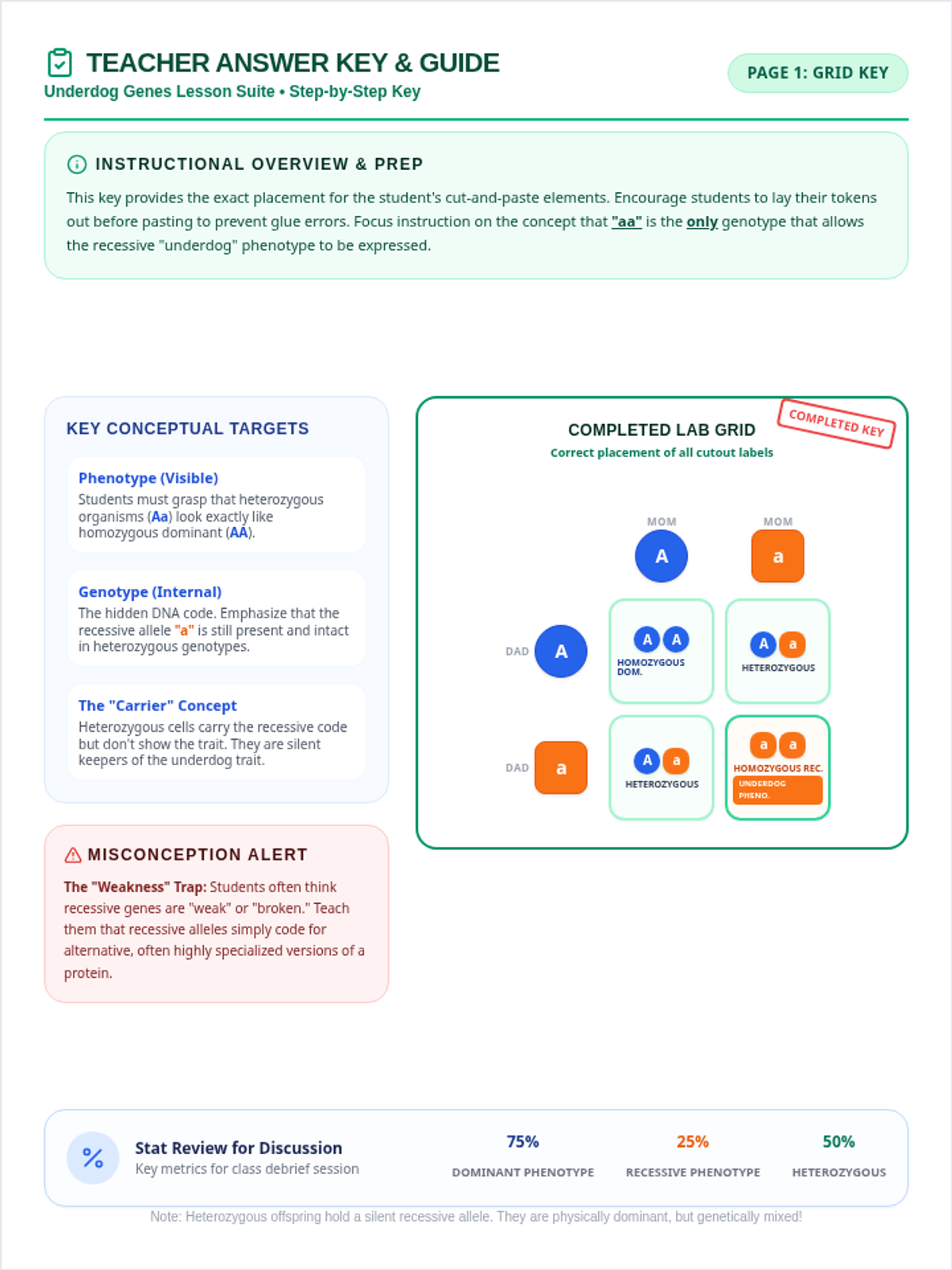
A highly supportive, detailed teacher guide and completed answer key for the Underdog Genes Graphic Organizer. Includes completed Punnett square diagrams with visual annotations, sample written paragraphs, common misconceptions, and an accommodation-friendly grading rubric.
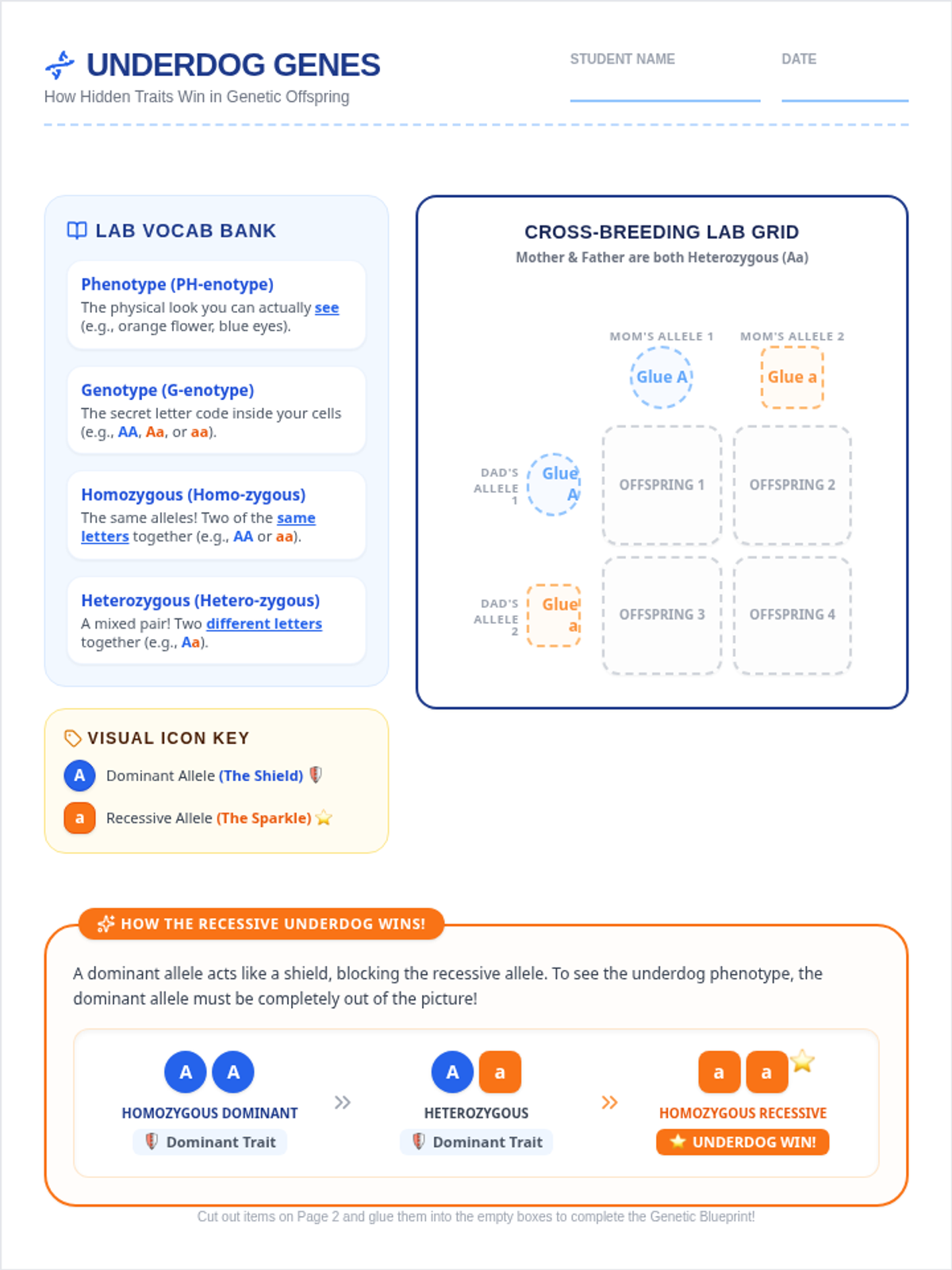
A visual, highly scaffolded student graphic organizer and cut-and-paste activity worksheet about how recessive alleles express their phenotypes. Includes a student-friendly vocabulary bank, a Punnett square diagram, guided paragraph frames with sentence starters, and custom cutouts.
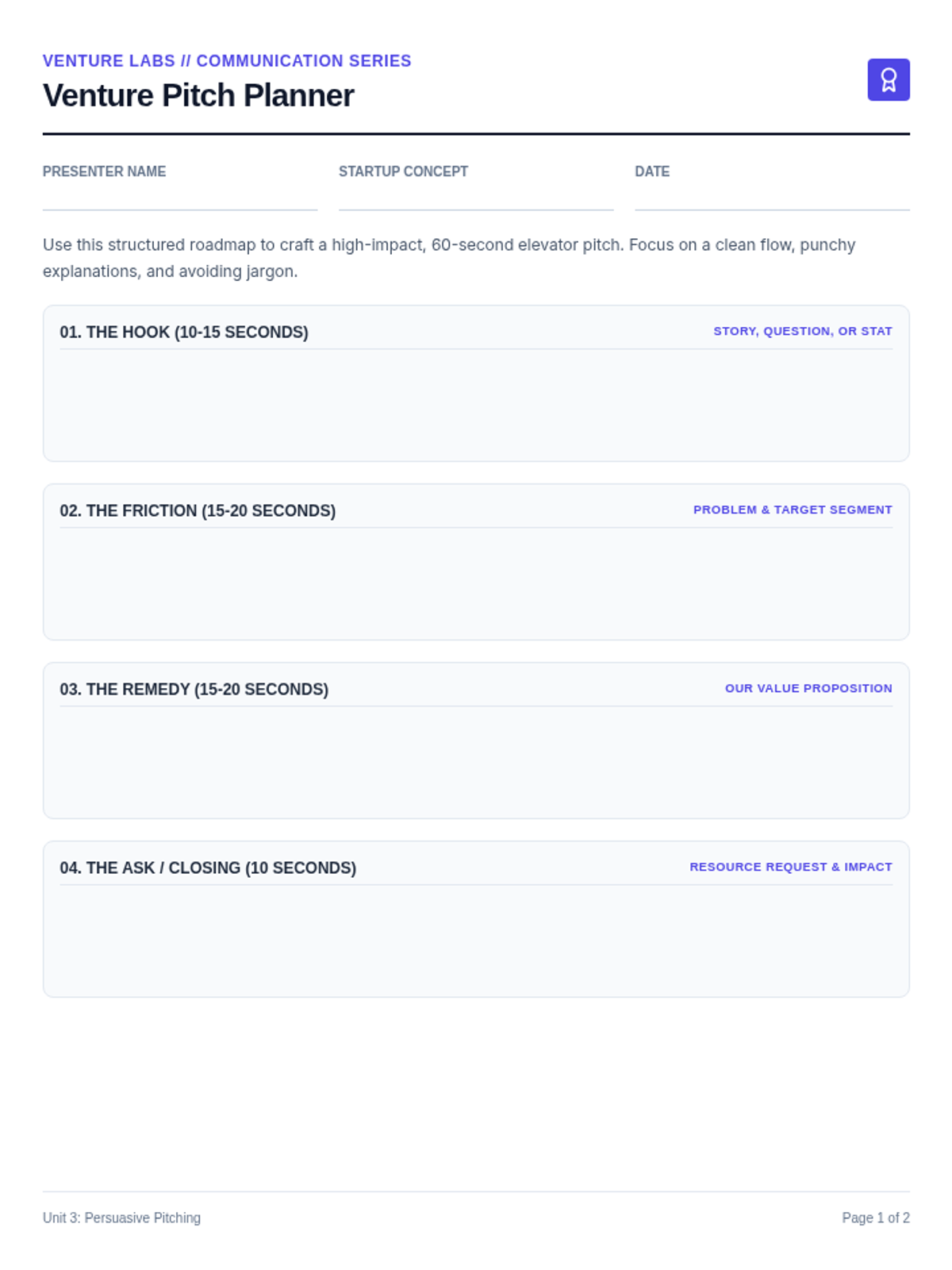
A 2-page workspace guide: Page 1 outlines the 4 pillars to draft a 60-second elevator pitch script; Page 2 provides a peer-evaluation scorecard for the Shark Tank-style Venture Forum.
Visual slides that guide students on structuring a pitch, delivering with impact, and presenting their business model to investors.
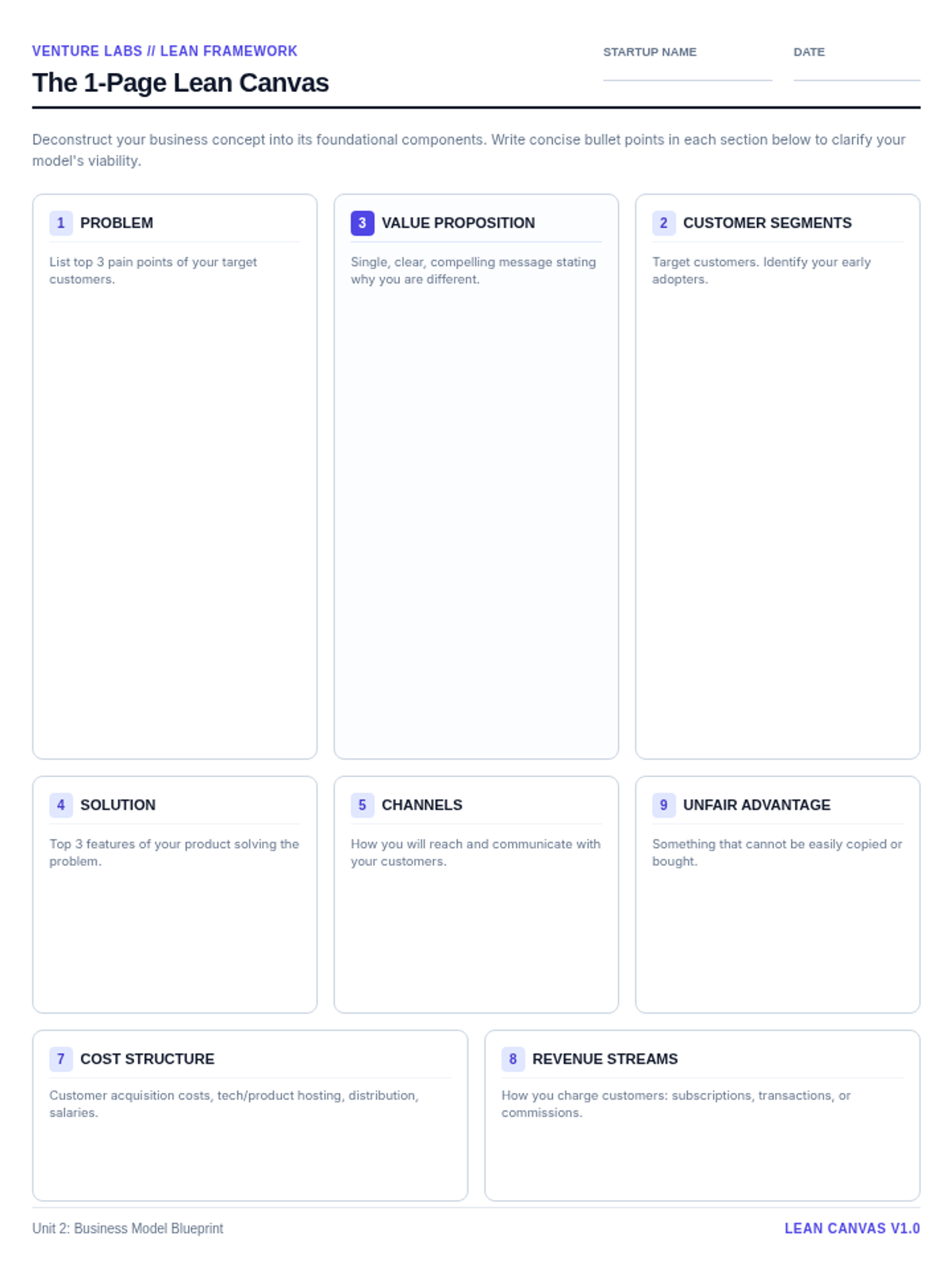
A visual, structured Lean Canvas template that allows students to map out all 9 key segments of their business model on a single print-ready sheet.
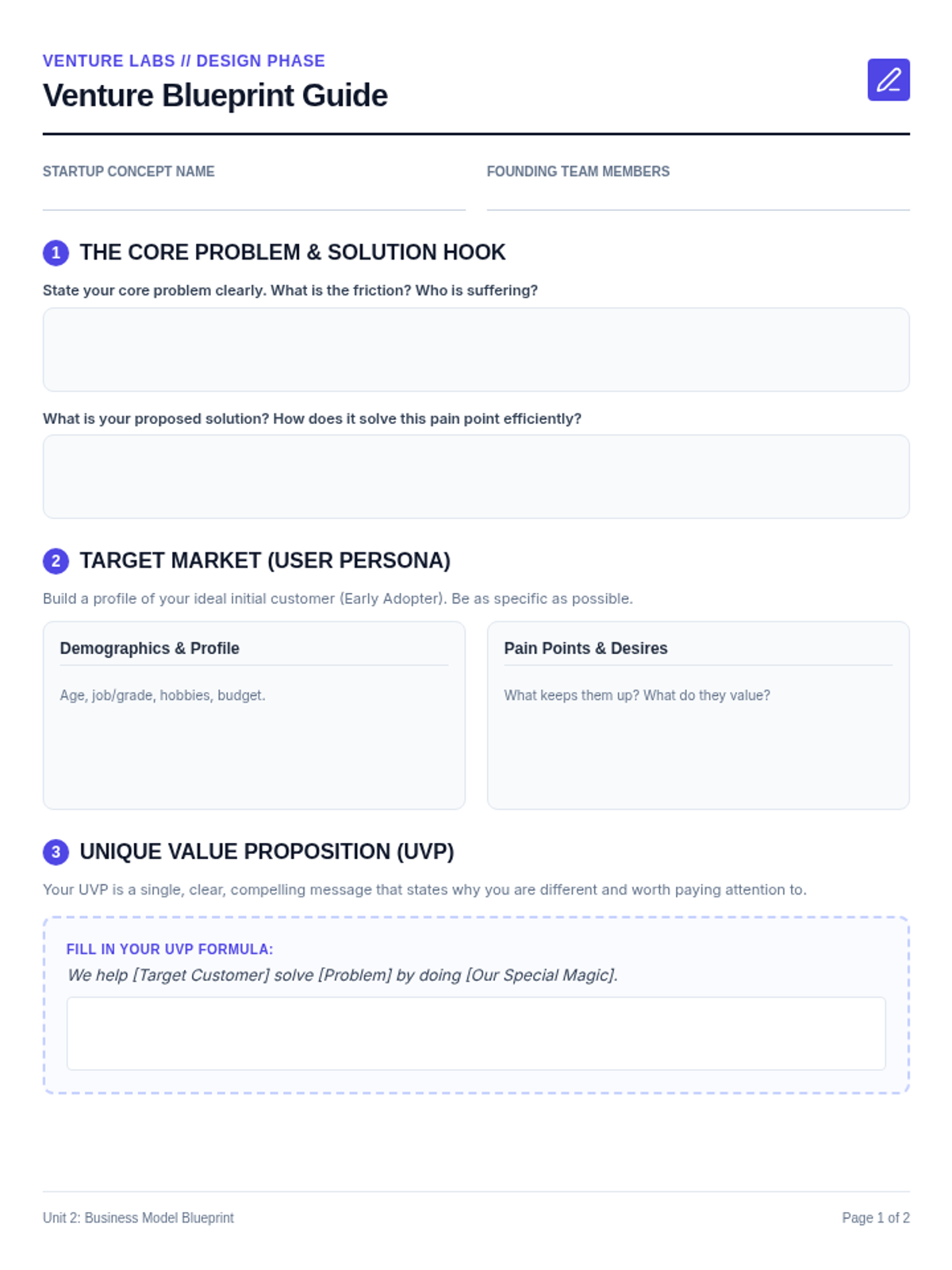
An interactive project workbook for students to define their startup concept, outline their target customer personas, define their unique value proposition, and map competitor solutions.