Comprehensive lesson plan for 'Secret Sauce Lab', detailing the 60-minute instructional sequence, preparation steps, and learning objectives for 7th-grade business education.
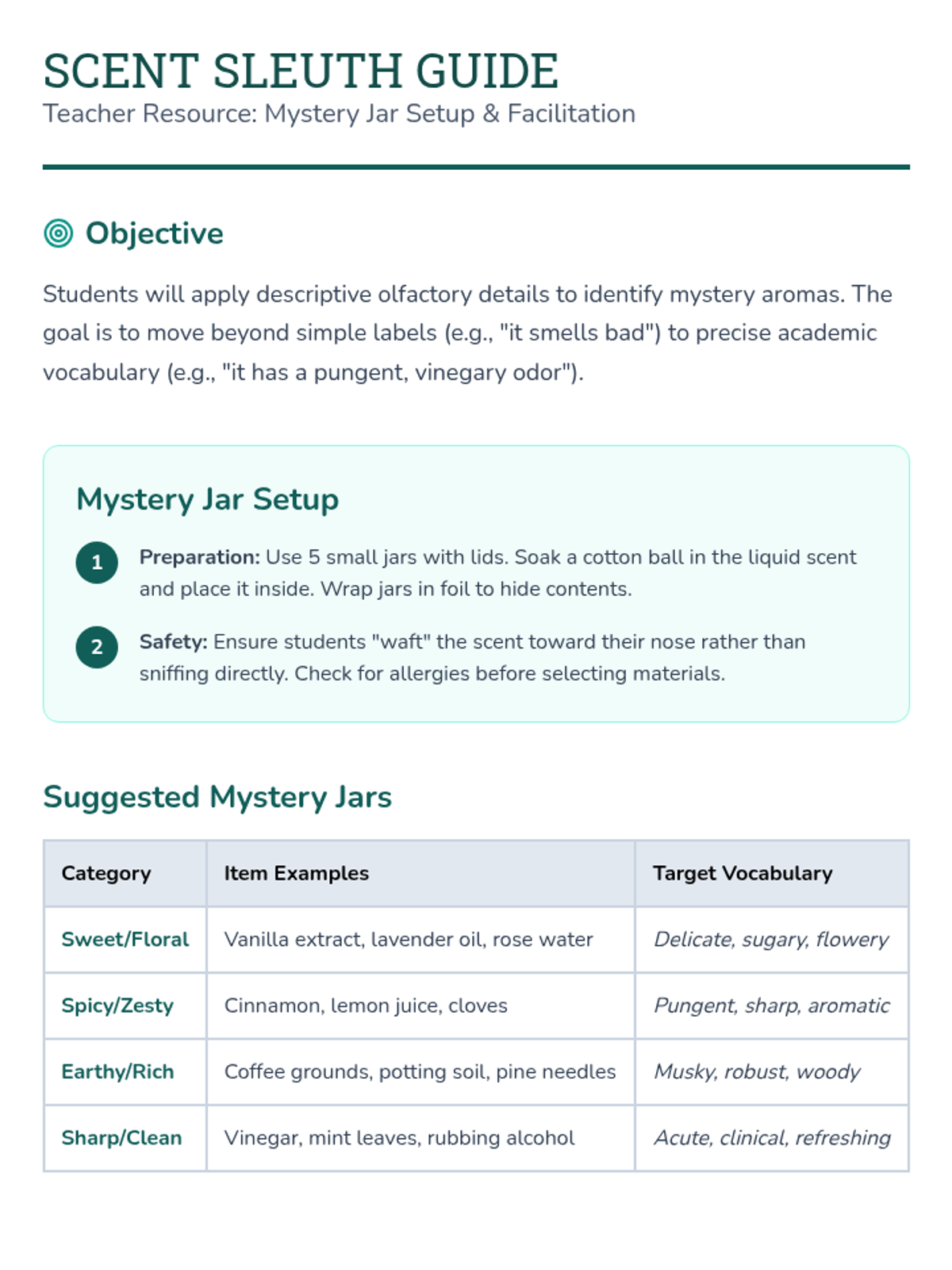
A teacher guide for the Scent and Search lesson, including jar setup instructions, suggested scents, and safety wafting techniques. Revised for better page layout and content density. Adjusted table contrast and added a facilitator notes section. Increased line-height for teacher handwriting.
A presentation to introduce the mystery scent activity, focusing on olfactory vocabulary and the difference between simple and descriptive language. Structured into 4 high-contrast slides.
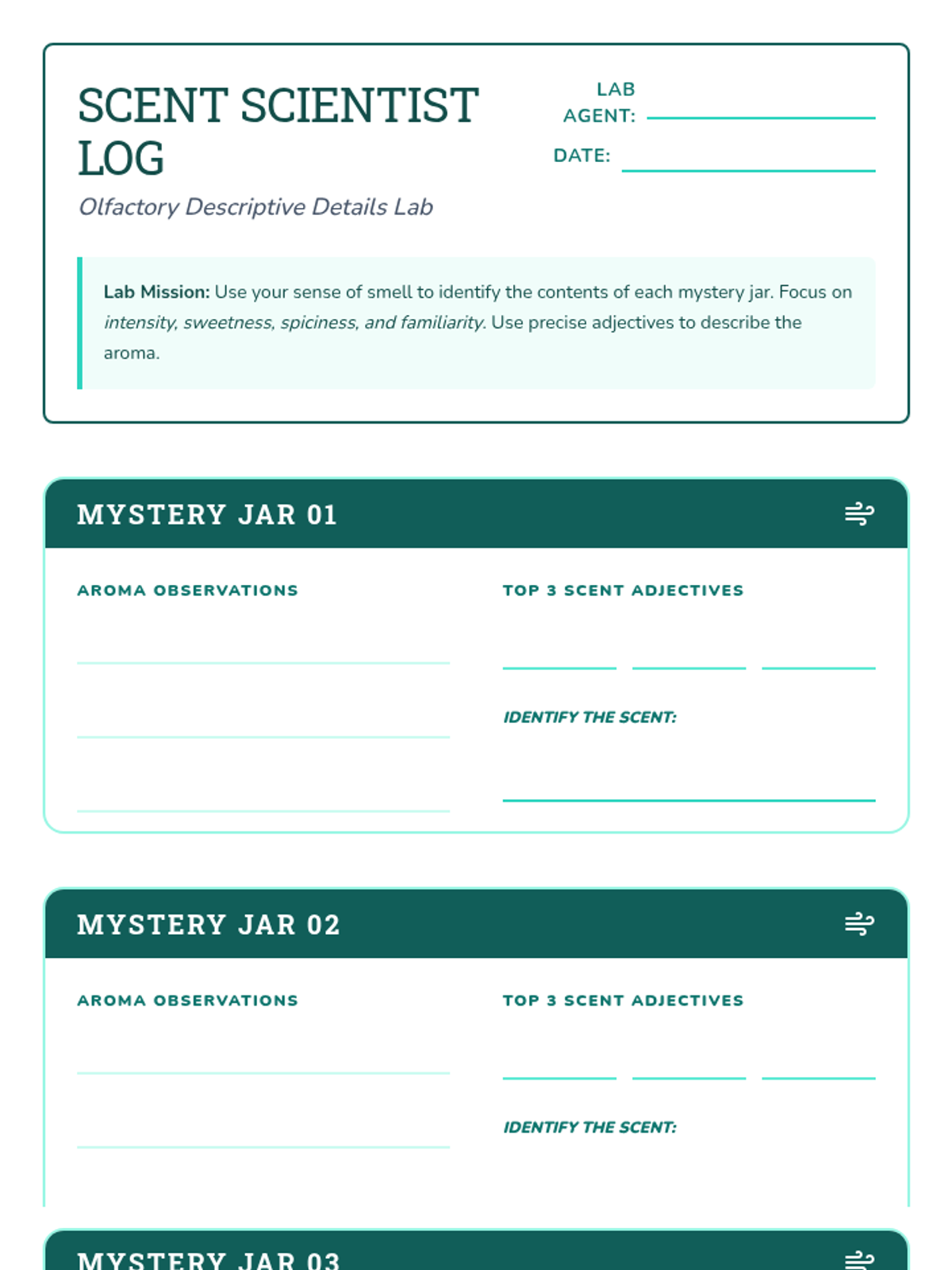
A two-page graphic organizer for a scent exploration activity. Features large recording areas for 5 mystery scent jars, detailed observation sections, and standardized layouts. Designed for double-sided printing to maximize student work space. Every box includes 3 observation lines and 3 adjective slots. Revised for optimal page utilization and line spacing.
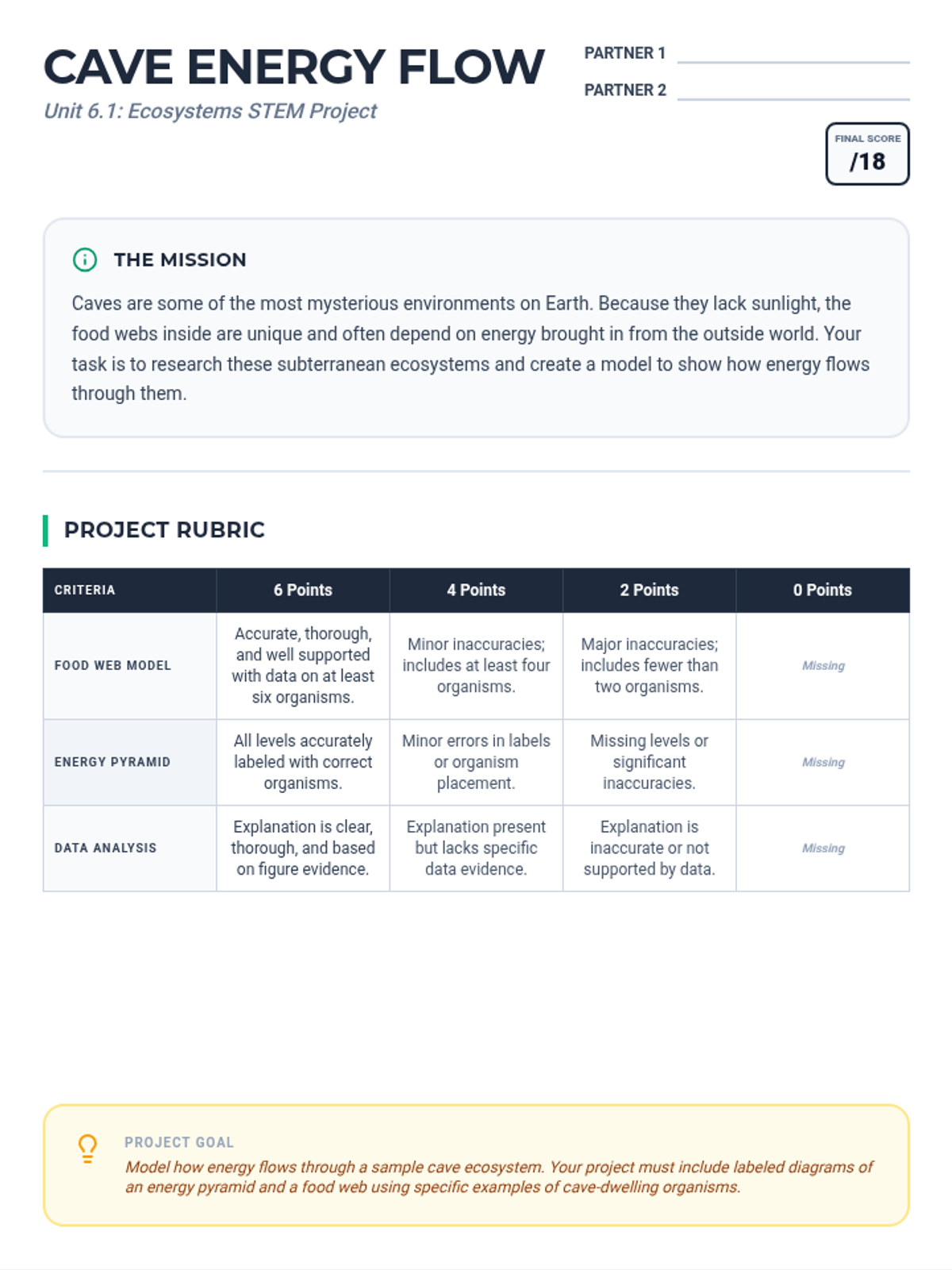
A 4-page STEM project worksheet for middle school students to model cave ecosystem energy flow. It includes a project rubric, a blank food web canvas with an organism word bank, a robust SVG energy pyramid with blanks for trophic levels and specific organisms (using the full word bank from the source material), and a data analysis section focusing on bat-salamander population relationships.
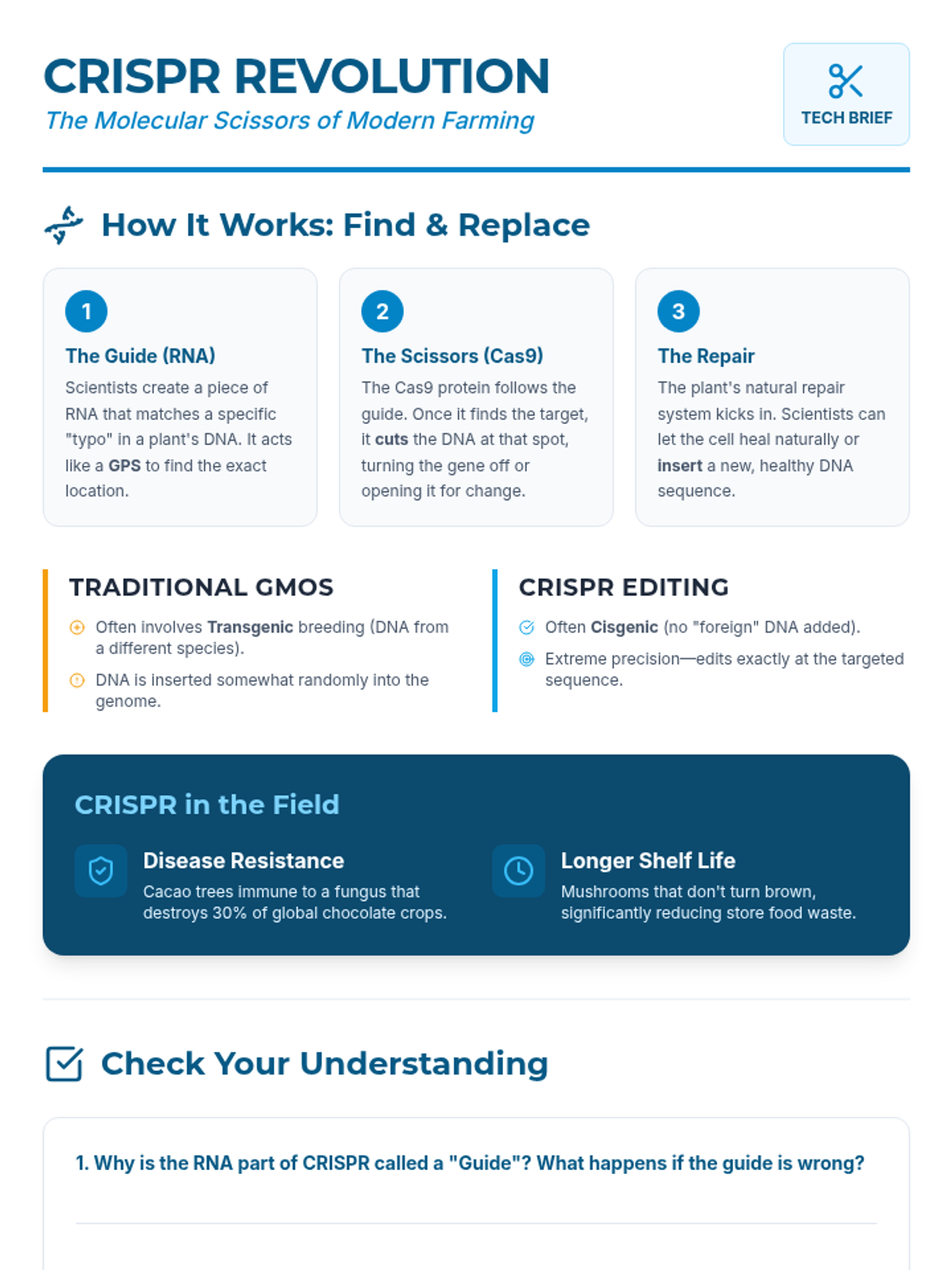
A technical fact sheet for 7th grade students explaining the mechanism of CRISPR gene editing, comparing it to traditional GMOs, and highlighting real-world agricultural applications. Now includes a self-check section with drawing space.
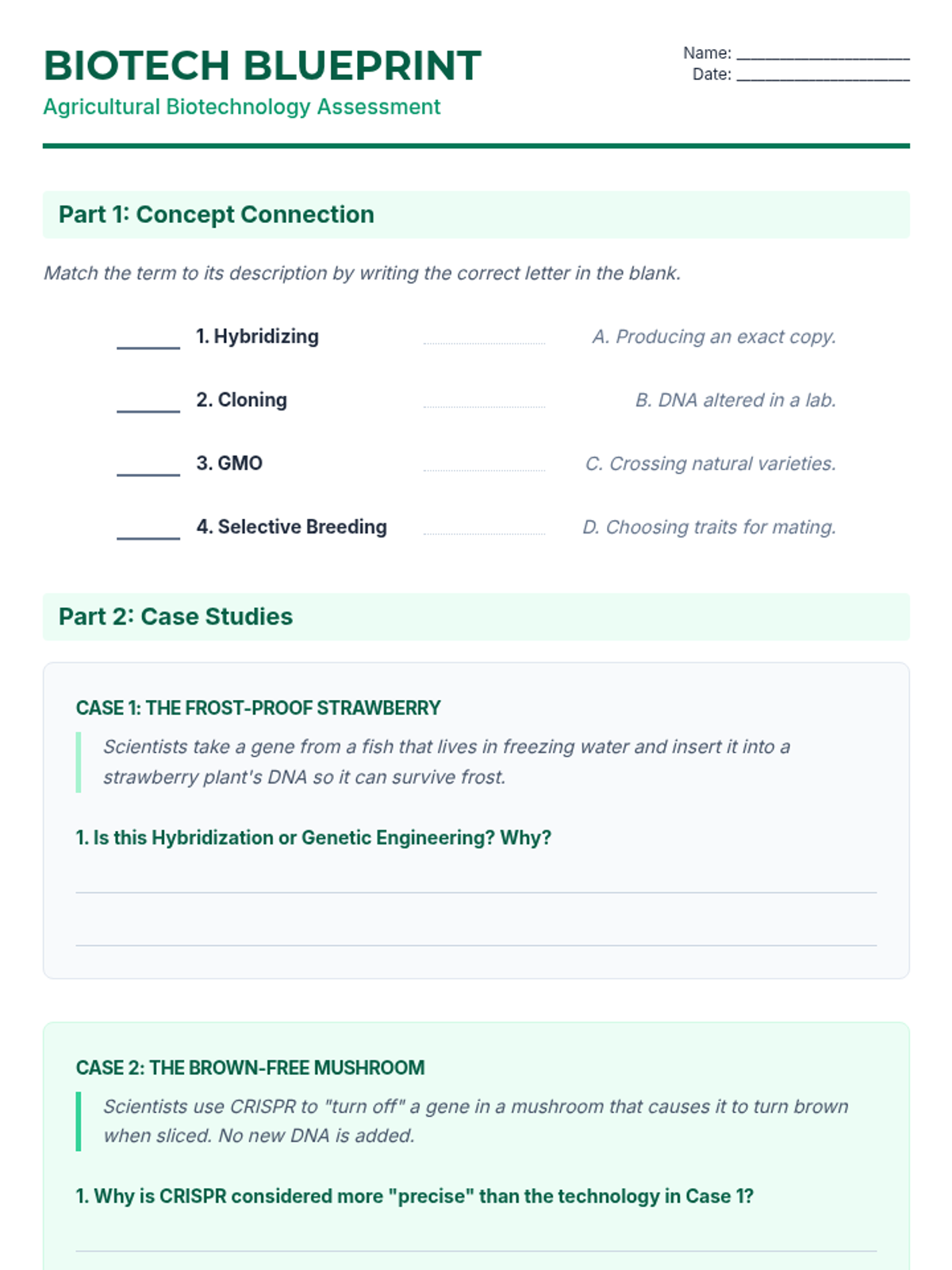
An assessment worksheet for students with improved spacing for explanations, clearer matching layout, and sections protected from awkward page breaks. Now includes a case study comparing CRISPR to traditional GMOs.
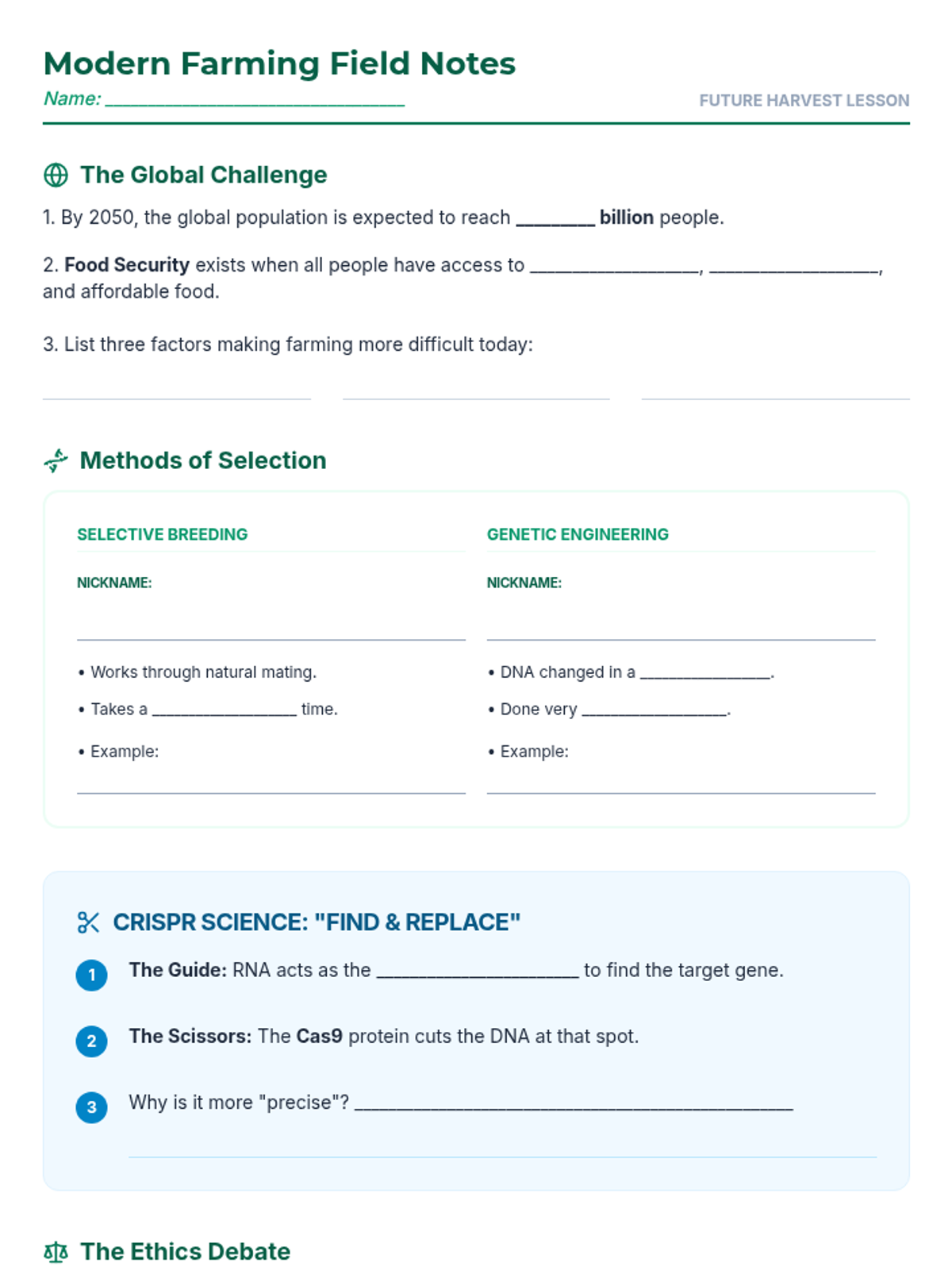
A guided notes document for 7th grade students to use during the presentation, now with a dedicated section for taking notes on the CRISPR 'molecular scissors' mechanism and a creative drawing area.
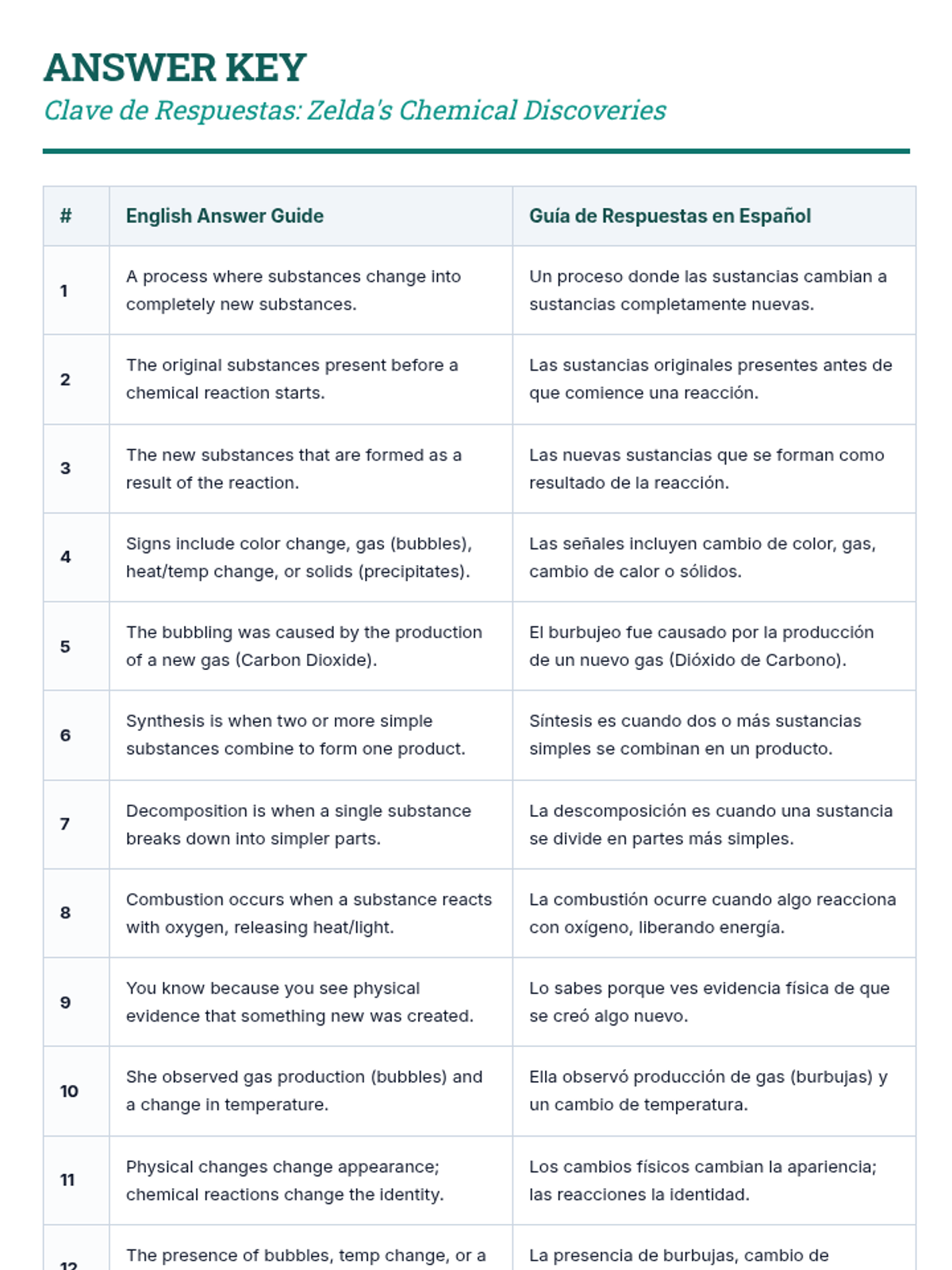
A bilingual answer key for the Zelda's Chemical Discoveries worksheet, providing guide responses in both English and Spanish for all 15 questions.
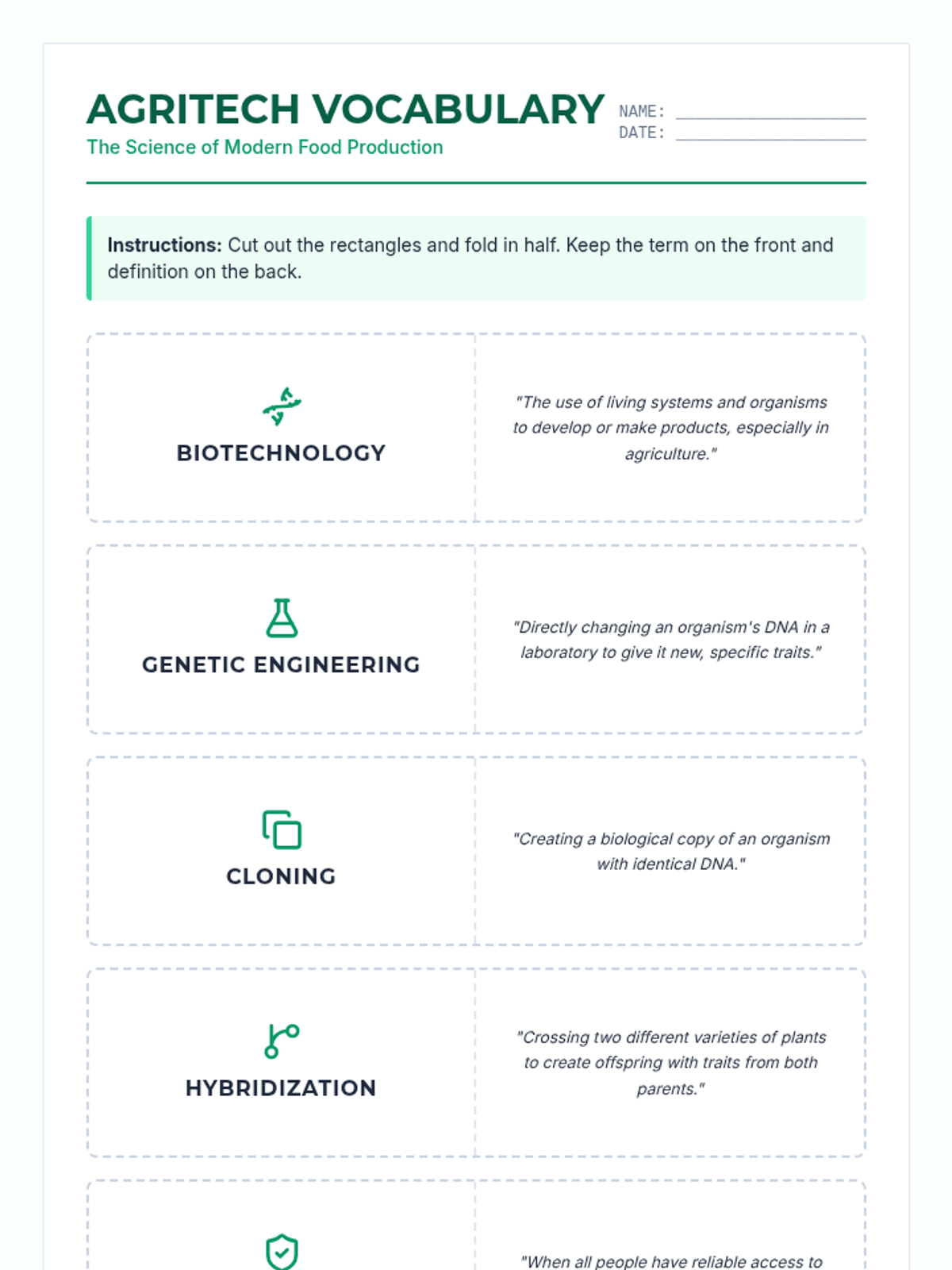
A set of printable vocabulary flashcards for students to learn key terms related to agricultural biotechnology, designed for easy cut-and-fold use with clear definitions and icons.
A visually engaging slide deck for 7th grade students exploring the science of biotechnology, food security, and the ethical debates of genetic engineering, now including a deep dive into CRISPR.
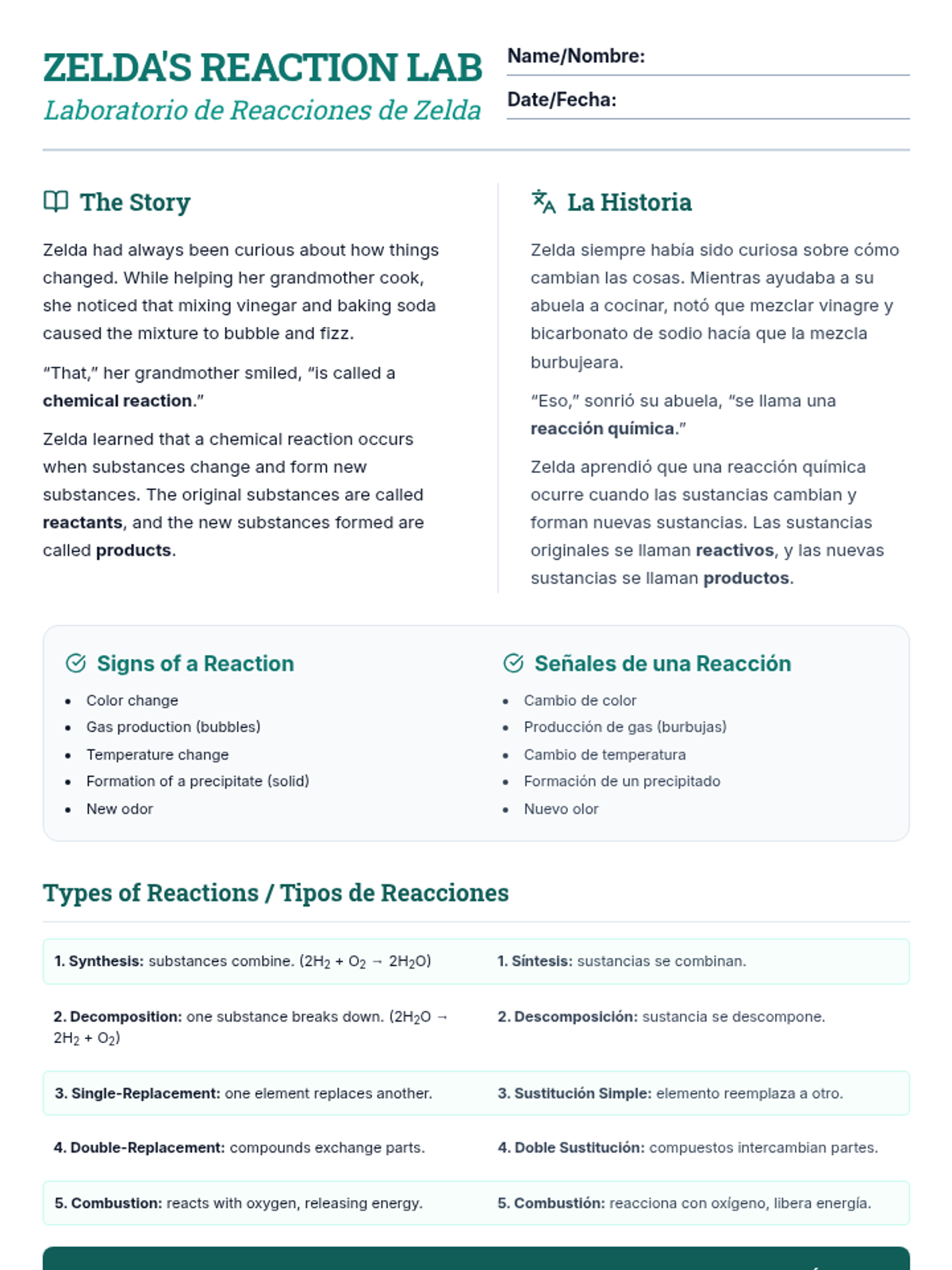
A bilingual English-Spanish worksheet about chemical reactions, featuring a story, vocabulary, and 15 comprehension questions with sentence stems for student responses.
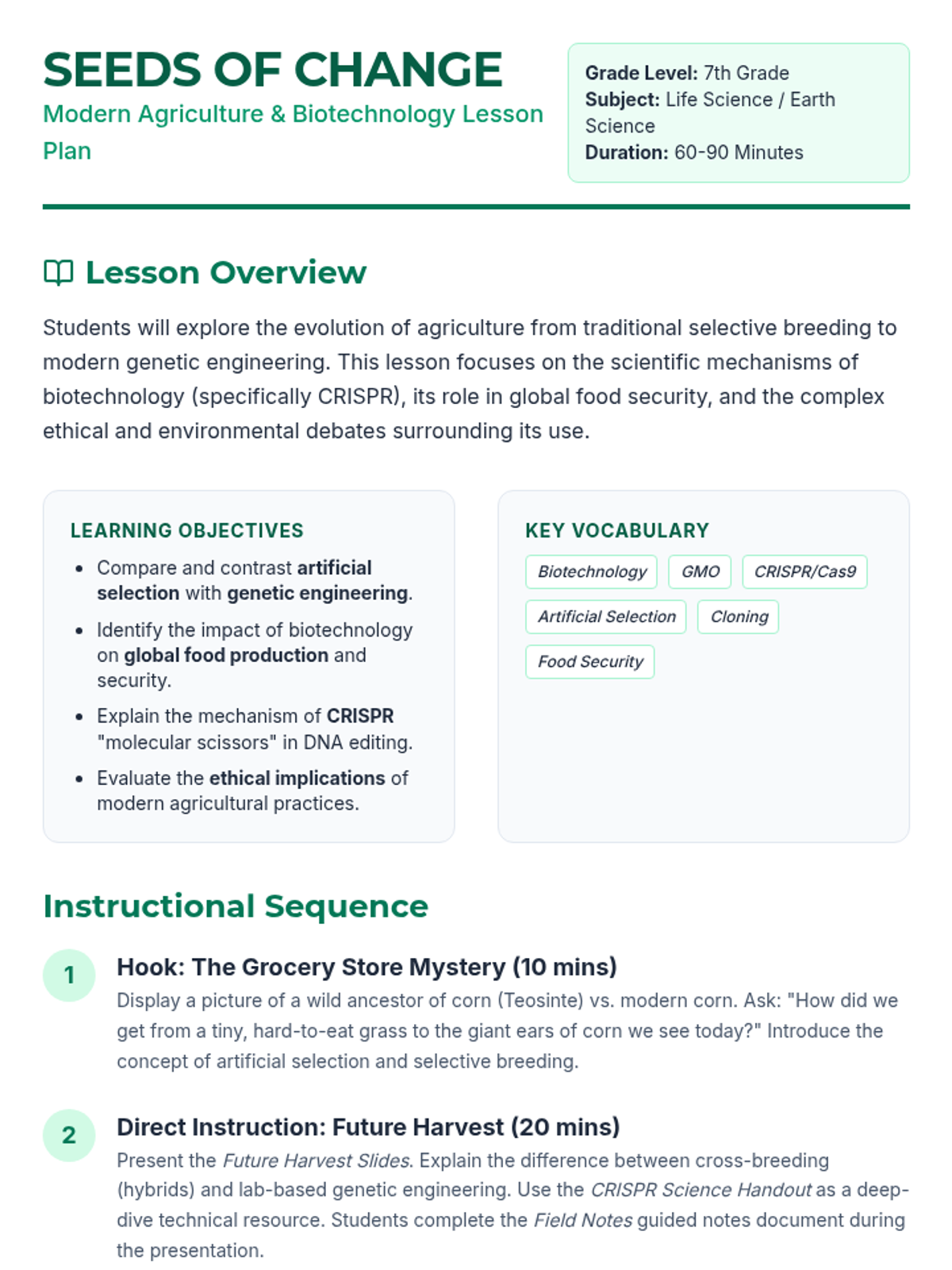
A comprehensive teacher's lesson plan for 7th grade science, outlining the instructional sequence, learning objectives, and teacher tips for teaching agricultural biotechnology. Now updated to include CRISPR deep-dive integration.
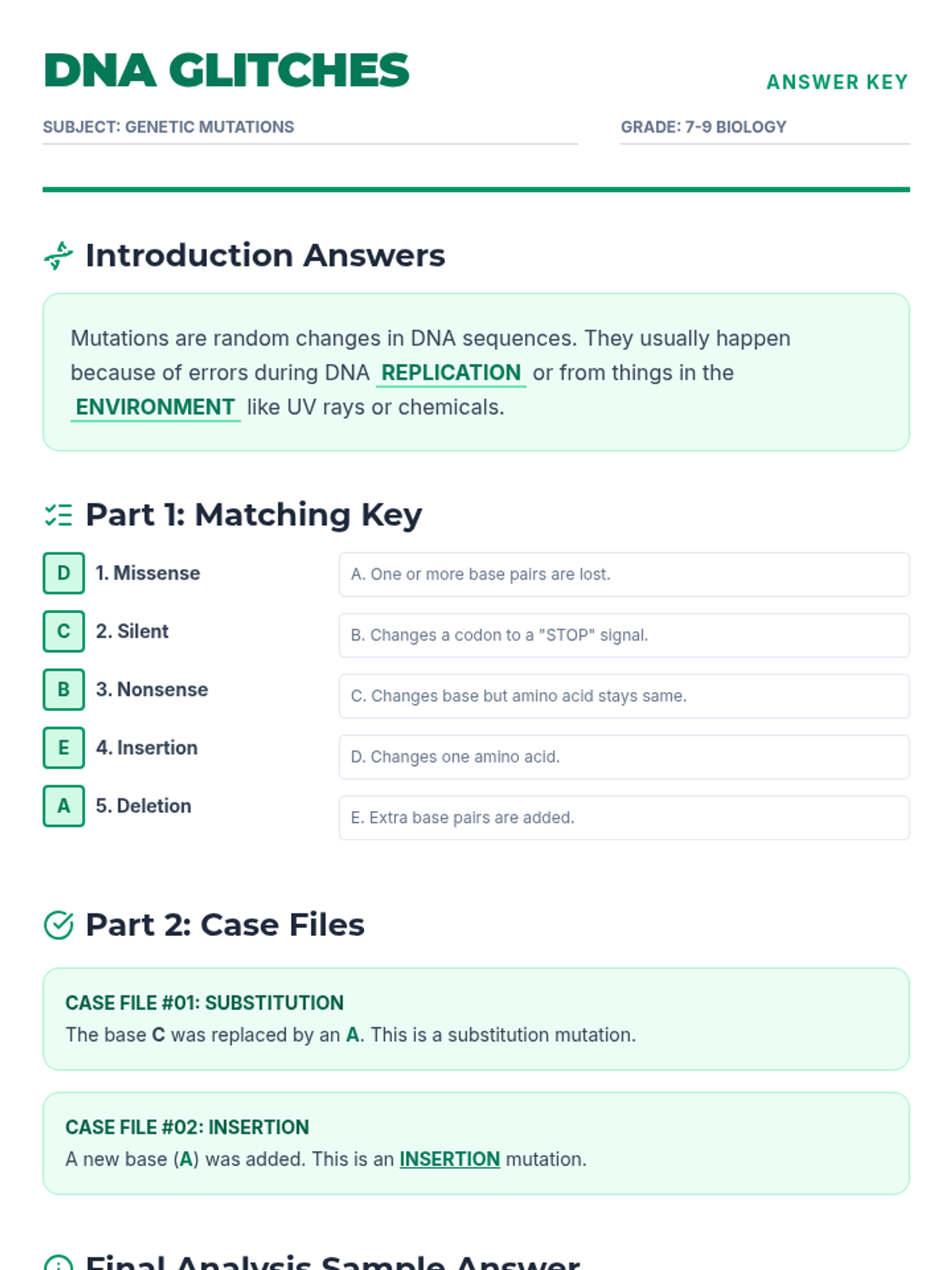
A teacher's answer key for the DNA Glitches worksheet, providing correct answers and explanations for the mutation activities.
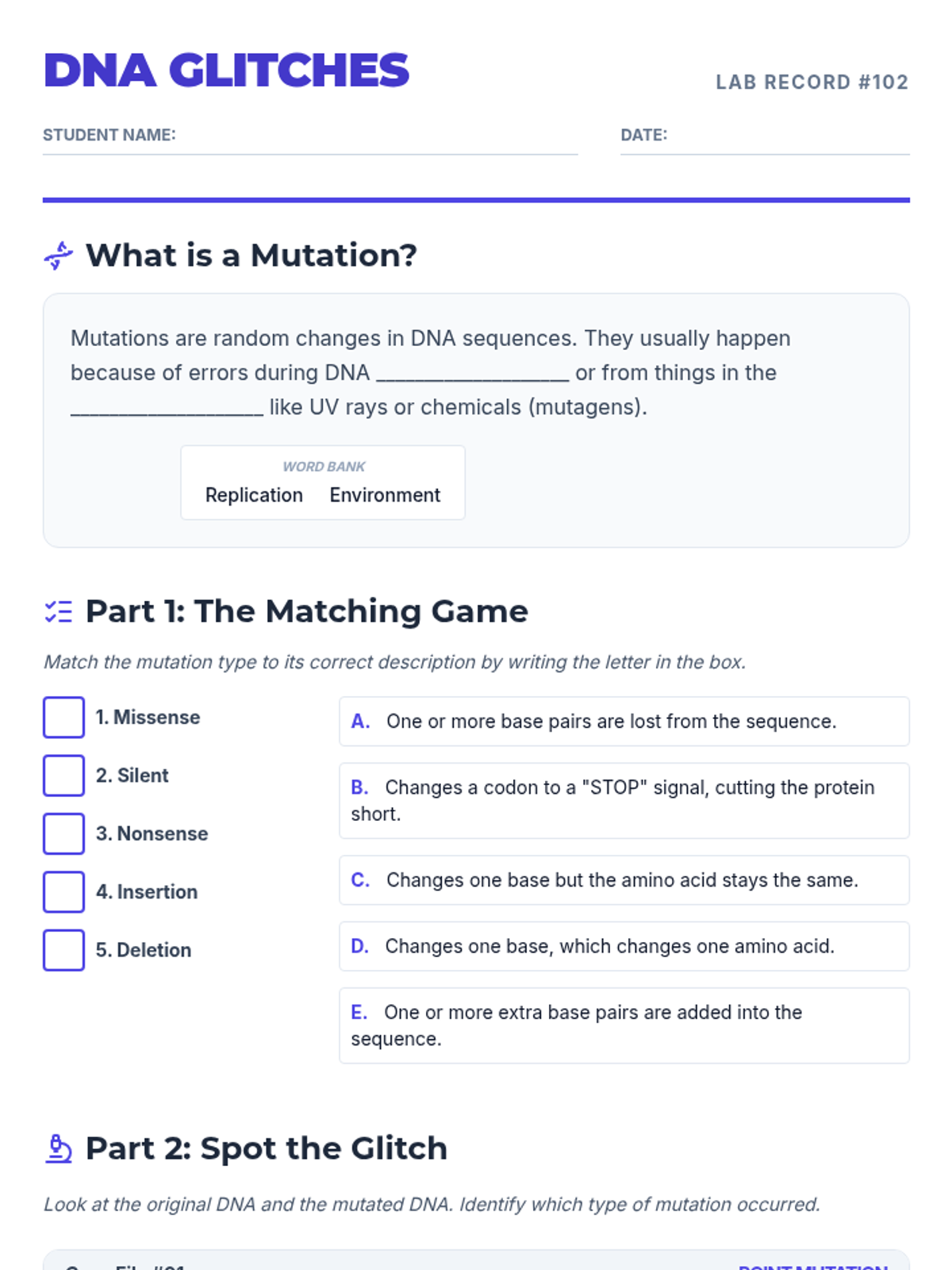
A student worksheet covering the basics of point and frameshift mutations, including matching and visual identification activities.
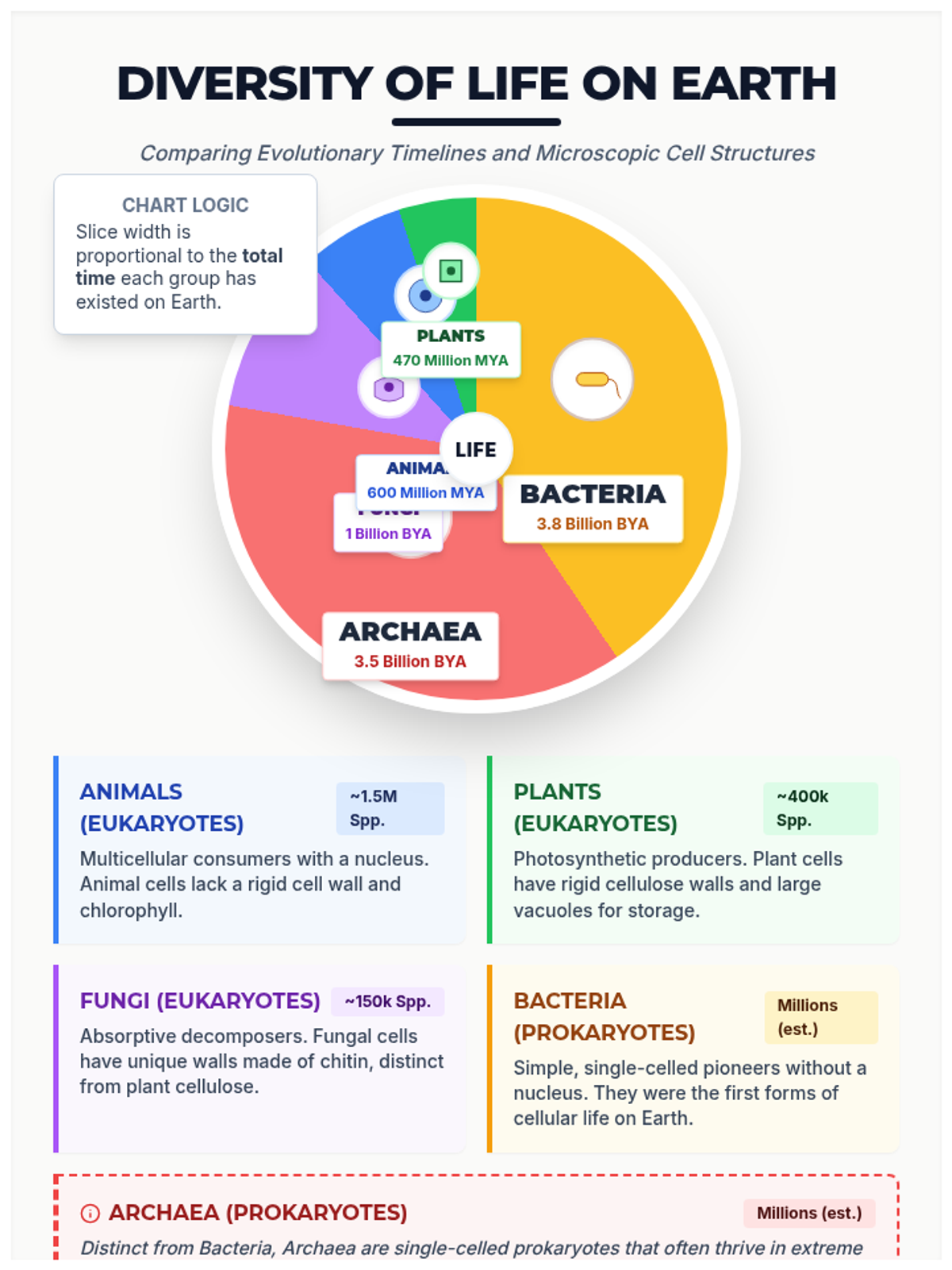
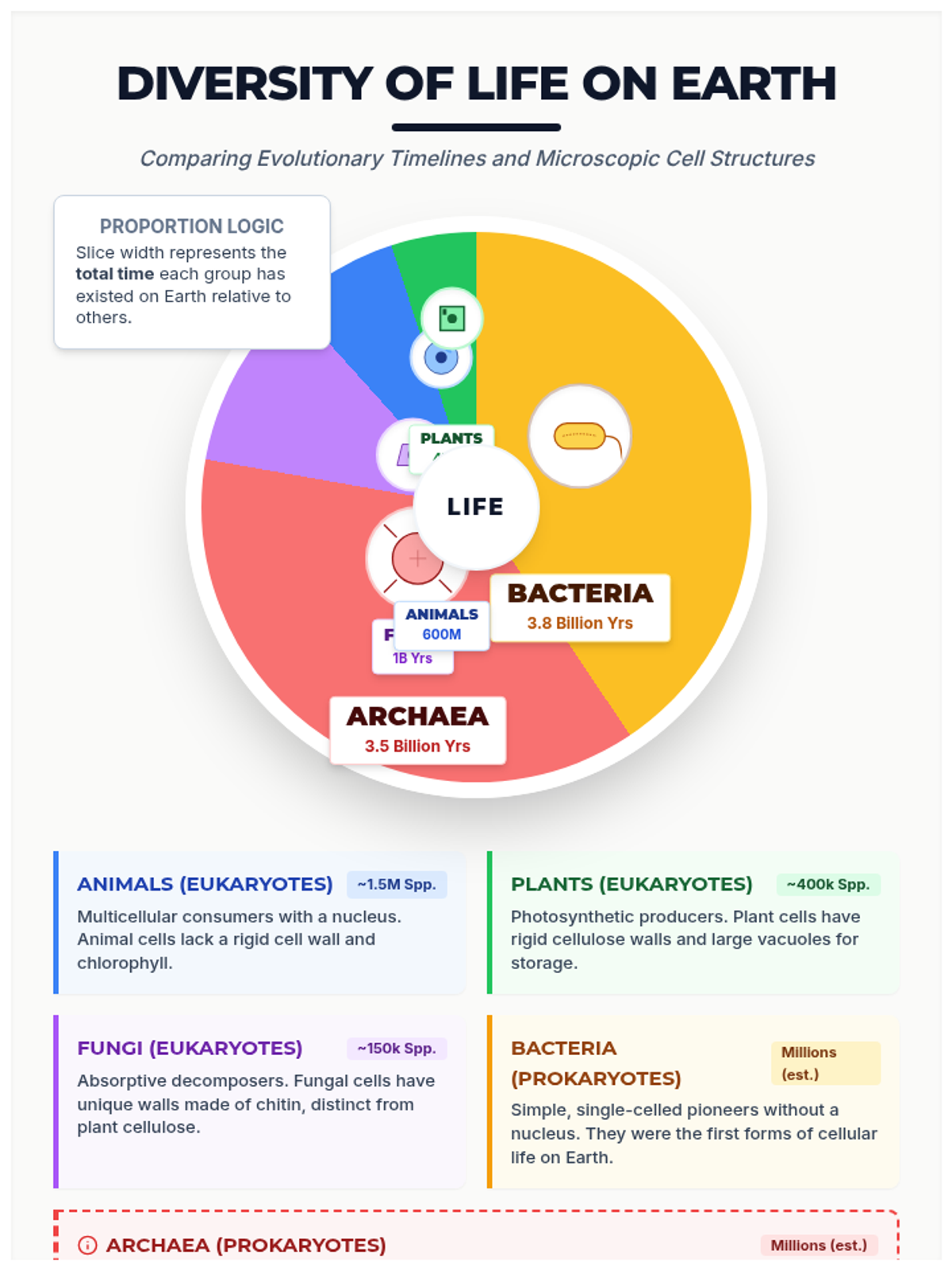
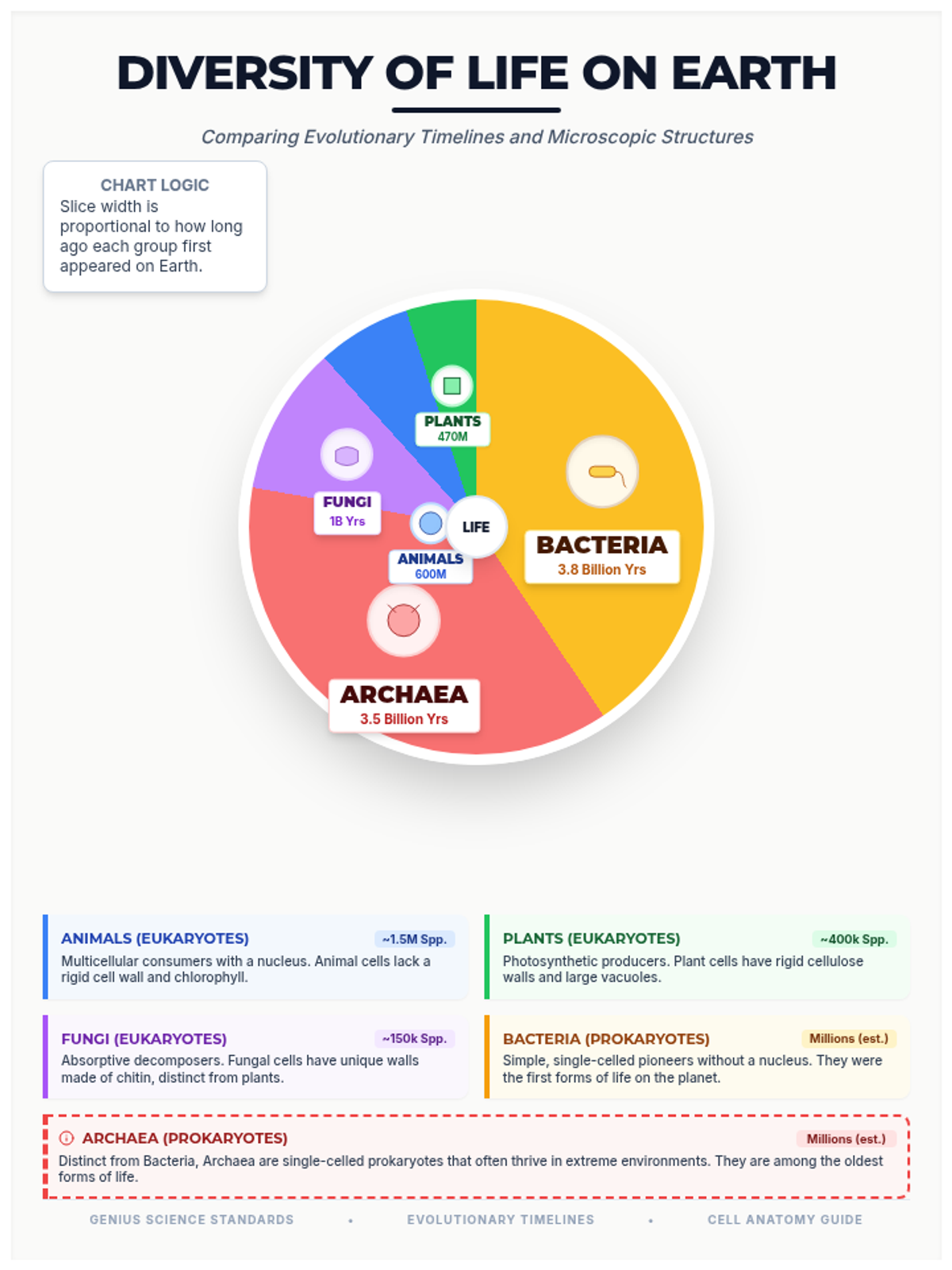
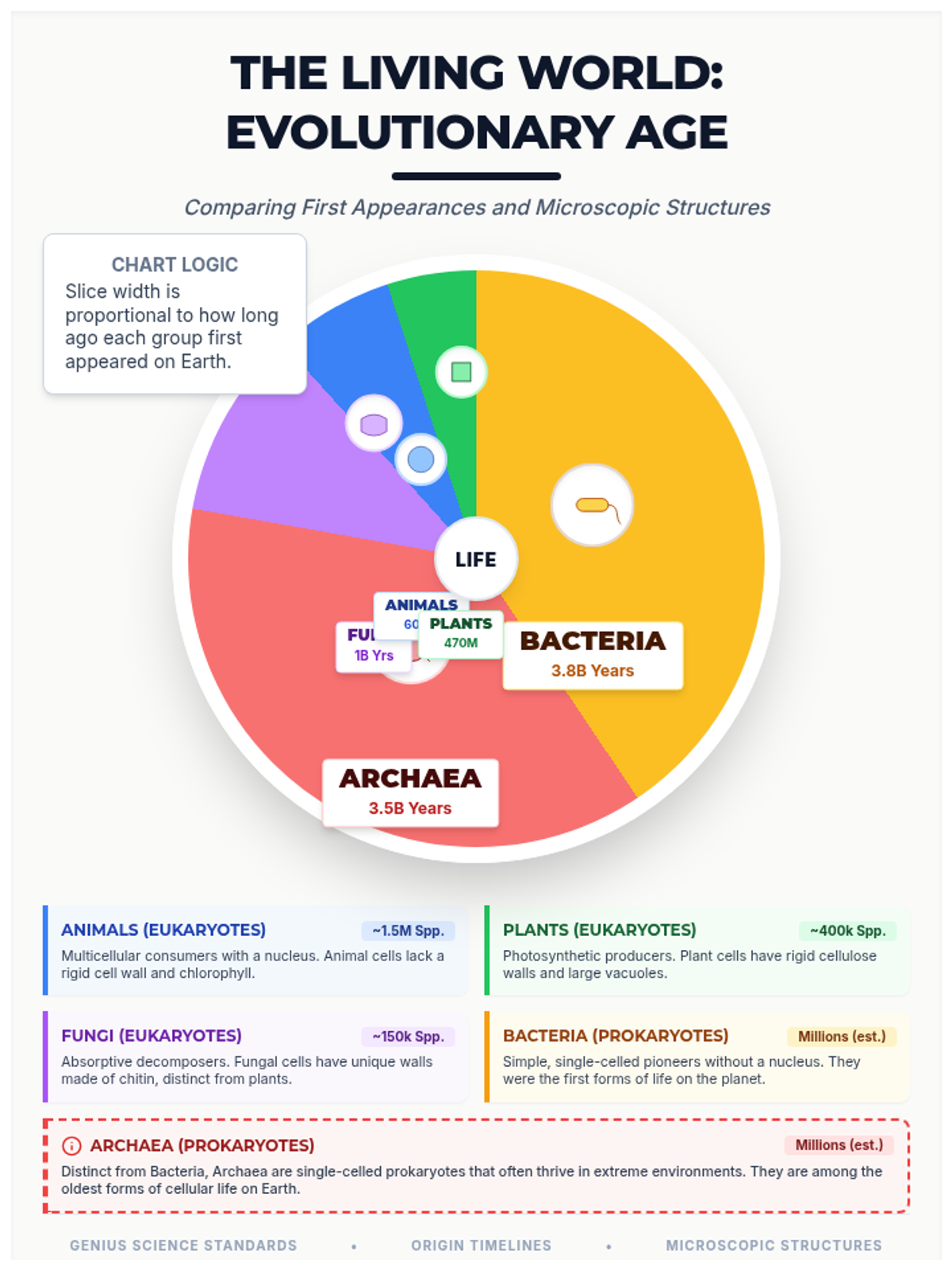
An updated Kingdoms of Life classroom poster where the pie chart slices are proportional to the time each group has existed on Earth. The Virus slice has been replaced by Archaea (Prokaryotes), and each slice includes a detailed visual representation of a cell and the group's origin date. Labels have been repositioned for maximum legibility.
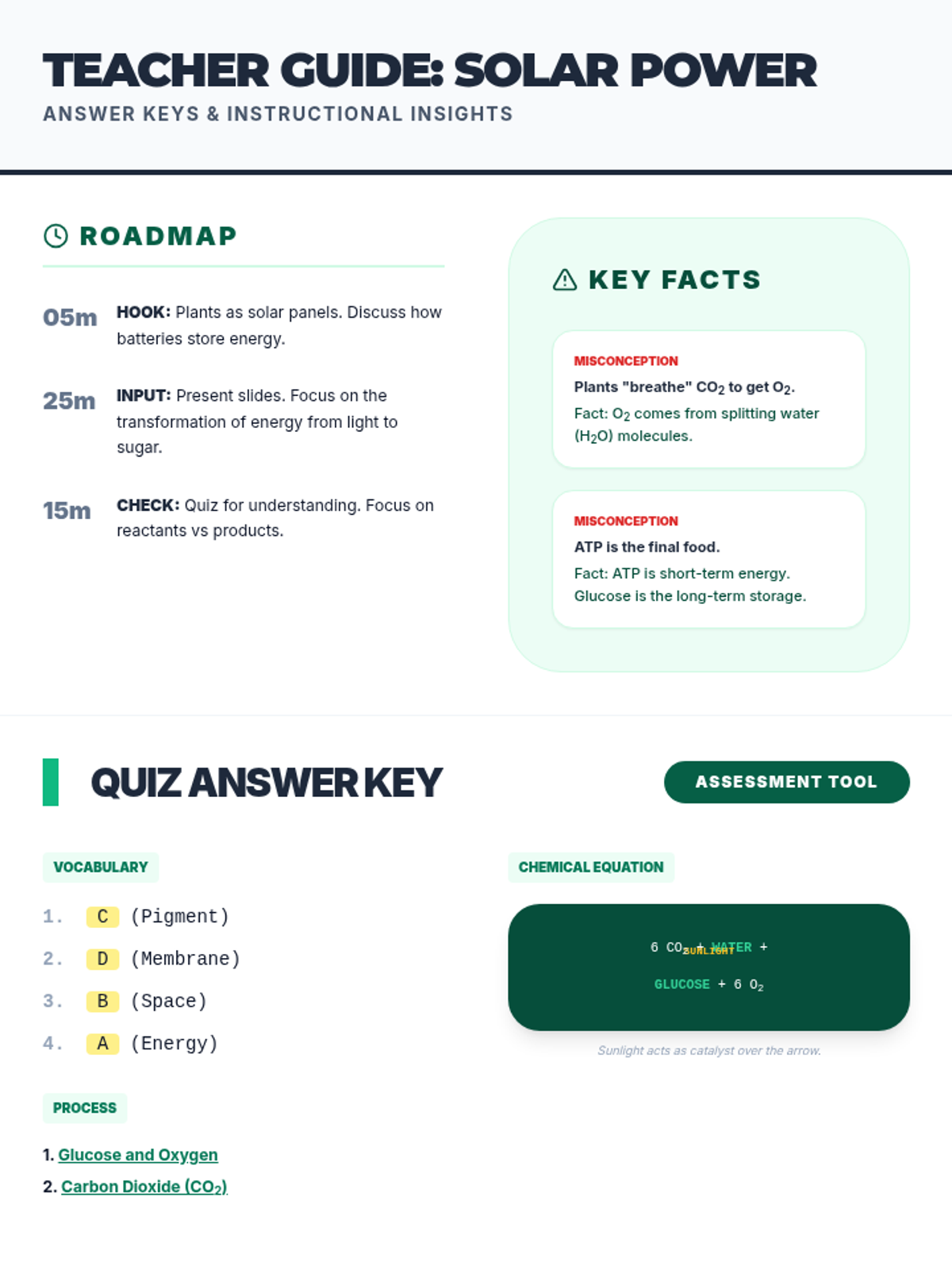
A teacher-facing resource providing a lesson roadmap, key misconceptions to address, and detailed answer keys for the guided notes and quiz.
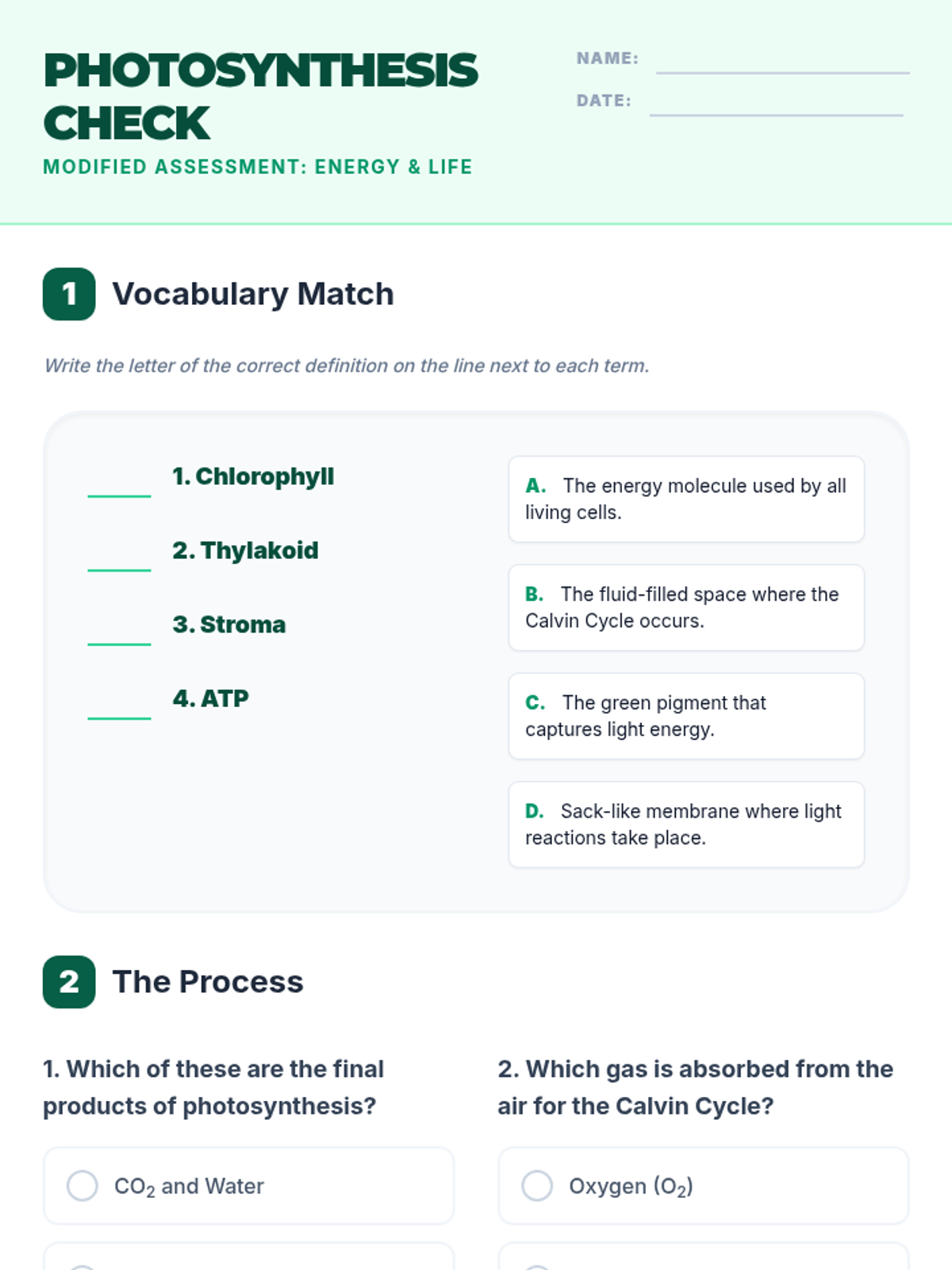
A modified assessment on photosynthesis featuring simplified vocabulary matching, multiple-choice questions with visual cues, and a word-bank assisted chemical equation. Designed for accessibility and clarity.
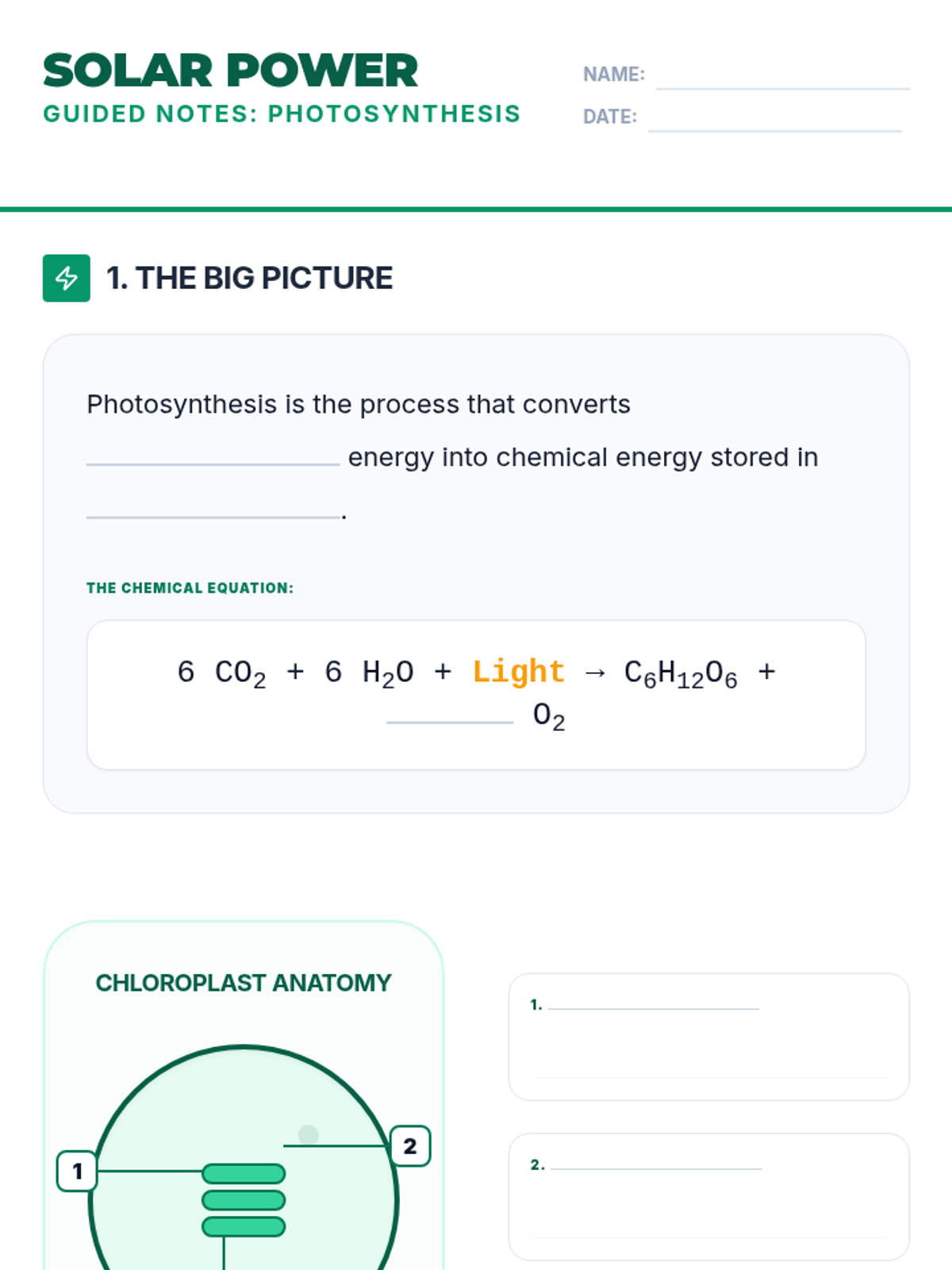
A structured guided notes document for students to follow along during a photosynthesis lesson. Includes diagrams for the chloroplast, energy transfer (ATP/ADP), and comparison tables for light and dark reactions.
A comprehensive slide deck detailing the process of photosynthesis, including chloroplast structure, ATP energy transfer, and the step-by-step breakdown of light-dependent and light-independent reactions.
Instructional slides for the Survival Strategies lesson, covering ecological niches, traits of generalists and specialists, and their respective survival outcomes in changing vs. stable environments. Includes field vocabulary and conservation risks.
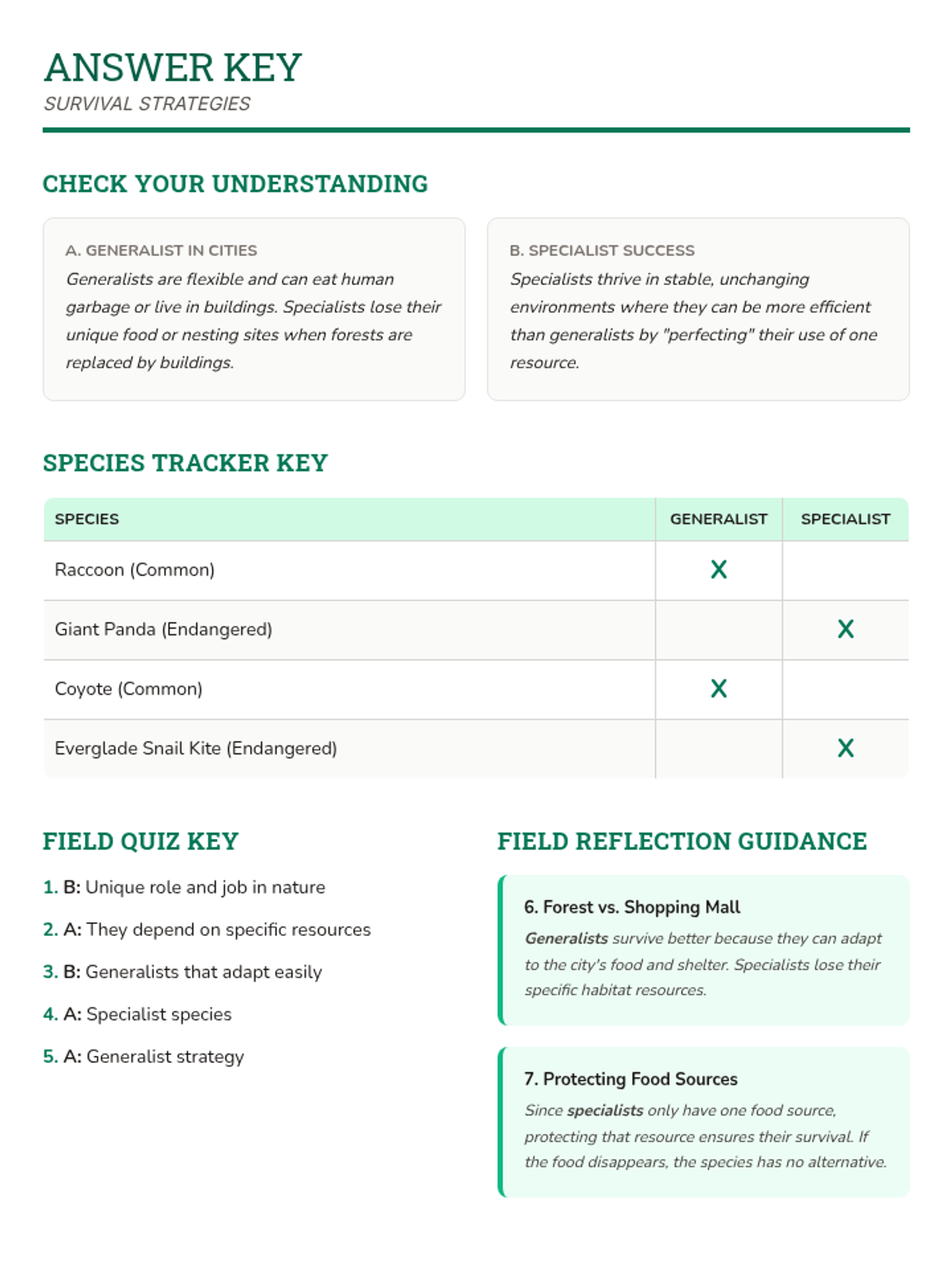
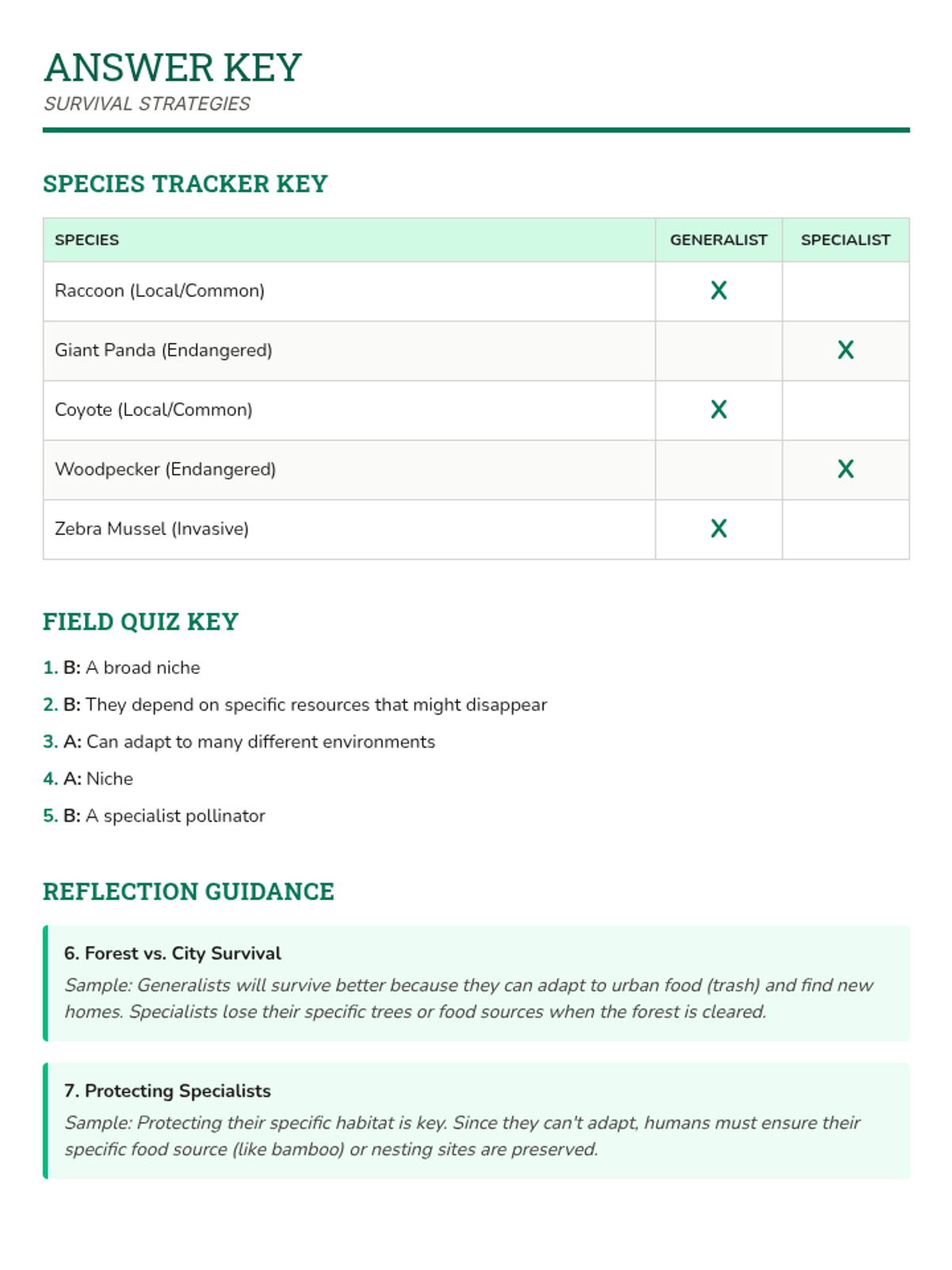
Revised teacher answer key for the Survival Strategies worksheet. Compact design to fit on a single page with improved visual alignment.
Revised Survival Strategies worksheet featuring a new 'Field Vocabulary' section, an expanded reading passage about generalist and specialist niches, new 'Check Your Understanding' short-answer questions, and a streamlined tracker and quiz layout.
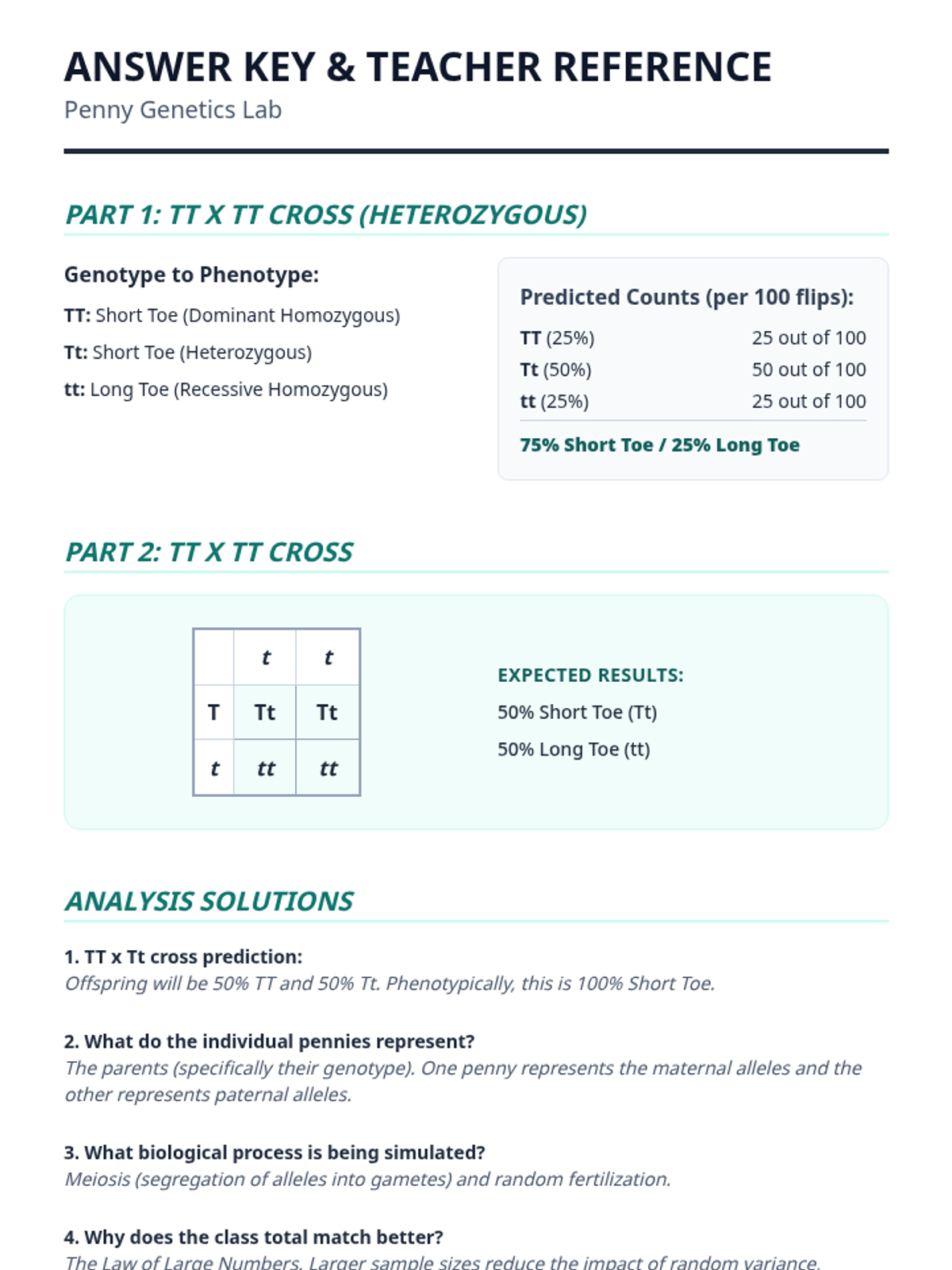
Answer key for the Penny Genetics Lab, providing Punnett square solutions, expected ratios, and sample answers for the analysis questions.
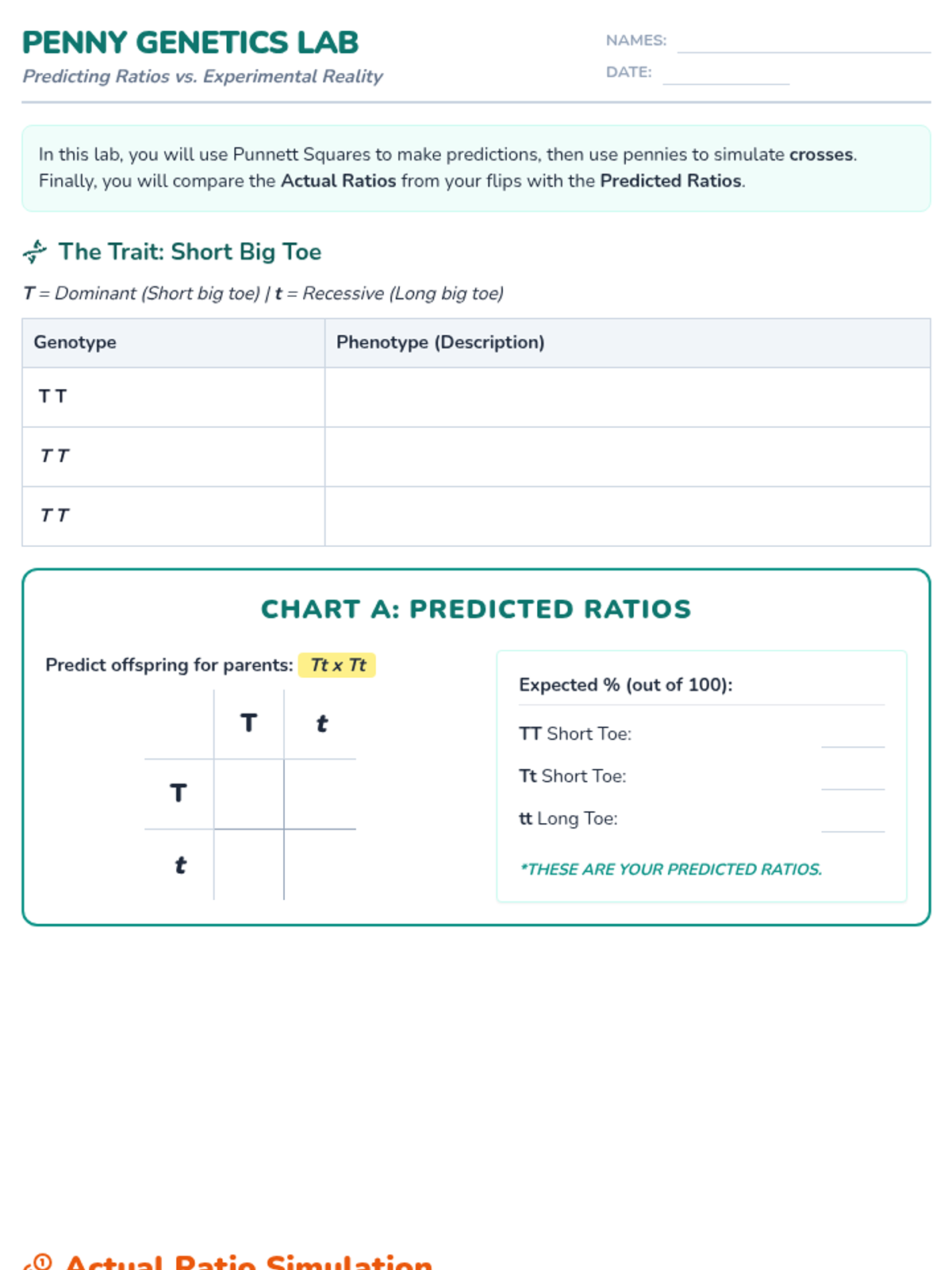
A redesigned 3-page student lab worksheet for the Penny Genetics activity. It includes space for Punnett square predictions, 100 coin-flip tallies, comparison charts, and analysis questions.
Slide deck for the Penny Genetics lesson, covering the science of chance, lab setup instructions, and the importance of sample size.
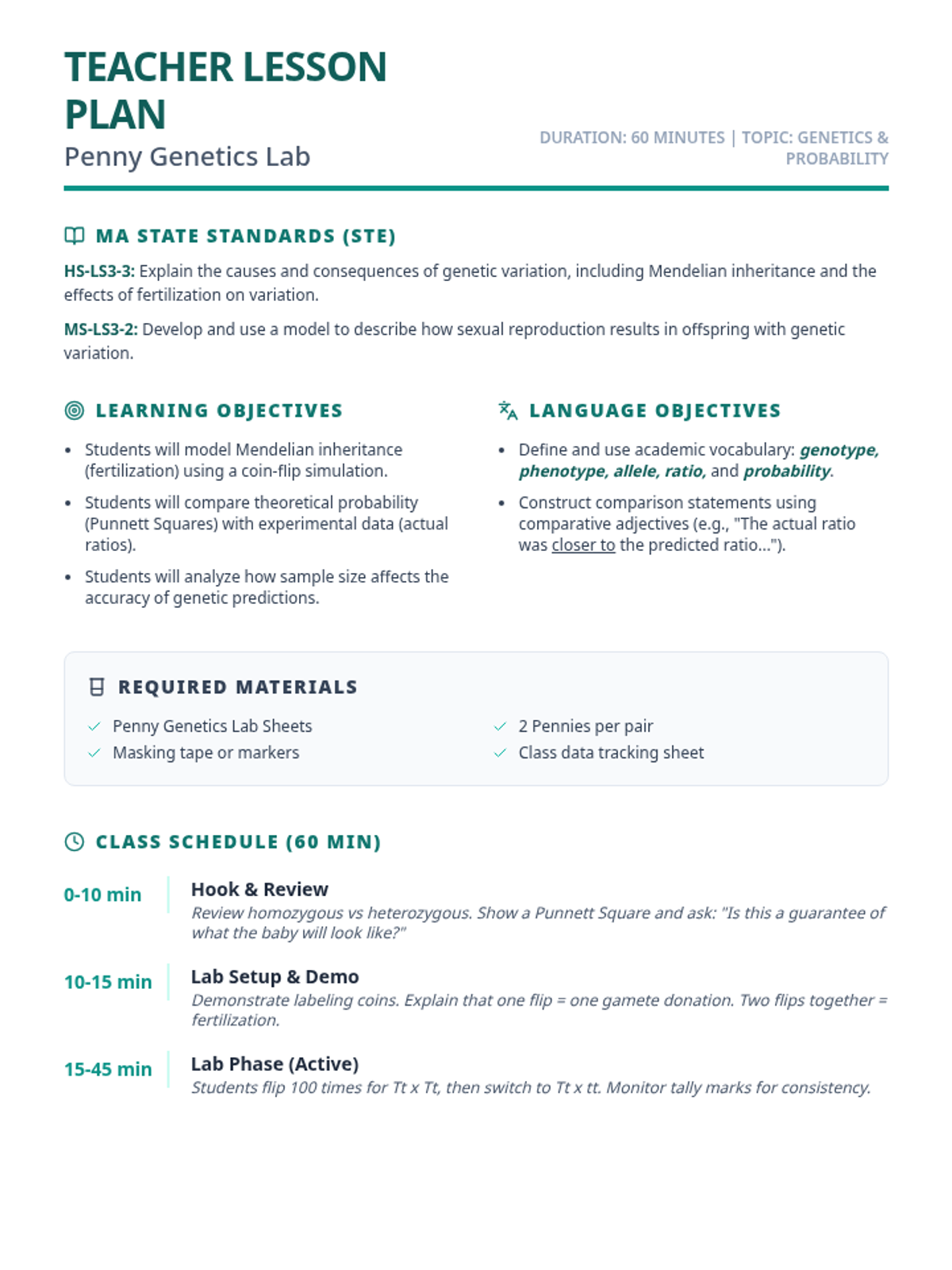
Teacher lesson plan for the Penny Genetics Lab, detailing the 60-minute class structure, required materials, and discussion prompts. Updated with MA State Standards, Learning Objectives, and Language Objectives.
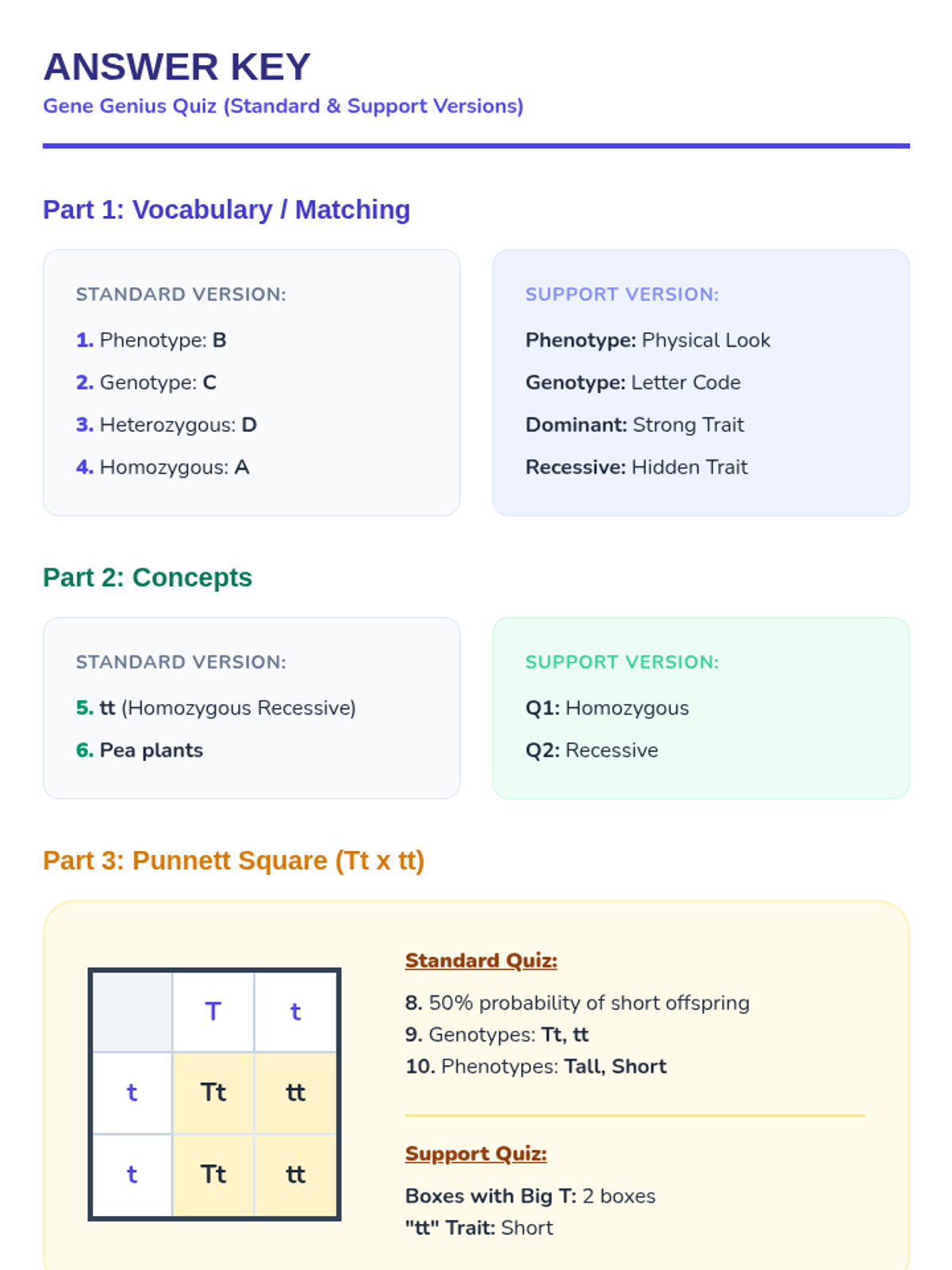
A comprehensive answer key for both the standard and support versions of the genetics quiz, including teacher tips for implementation.
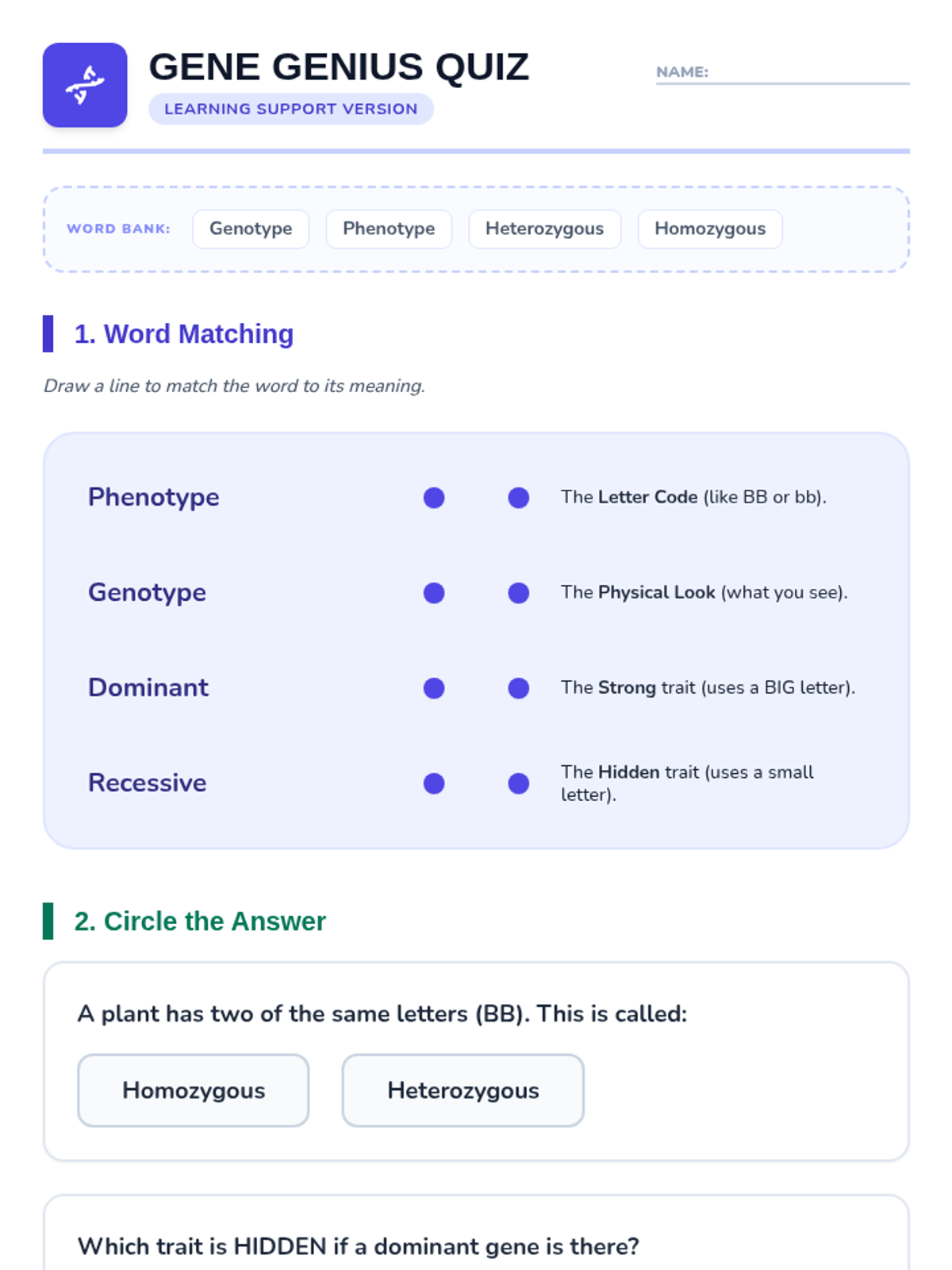
A differentiated genetics quiz featuring simplified language, visual icons, guided Punnett square setup, and a word bank to support diverse learners.
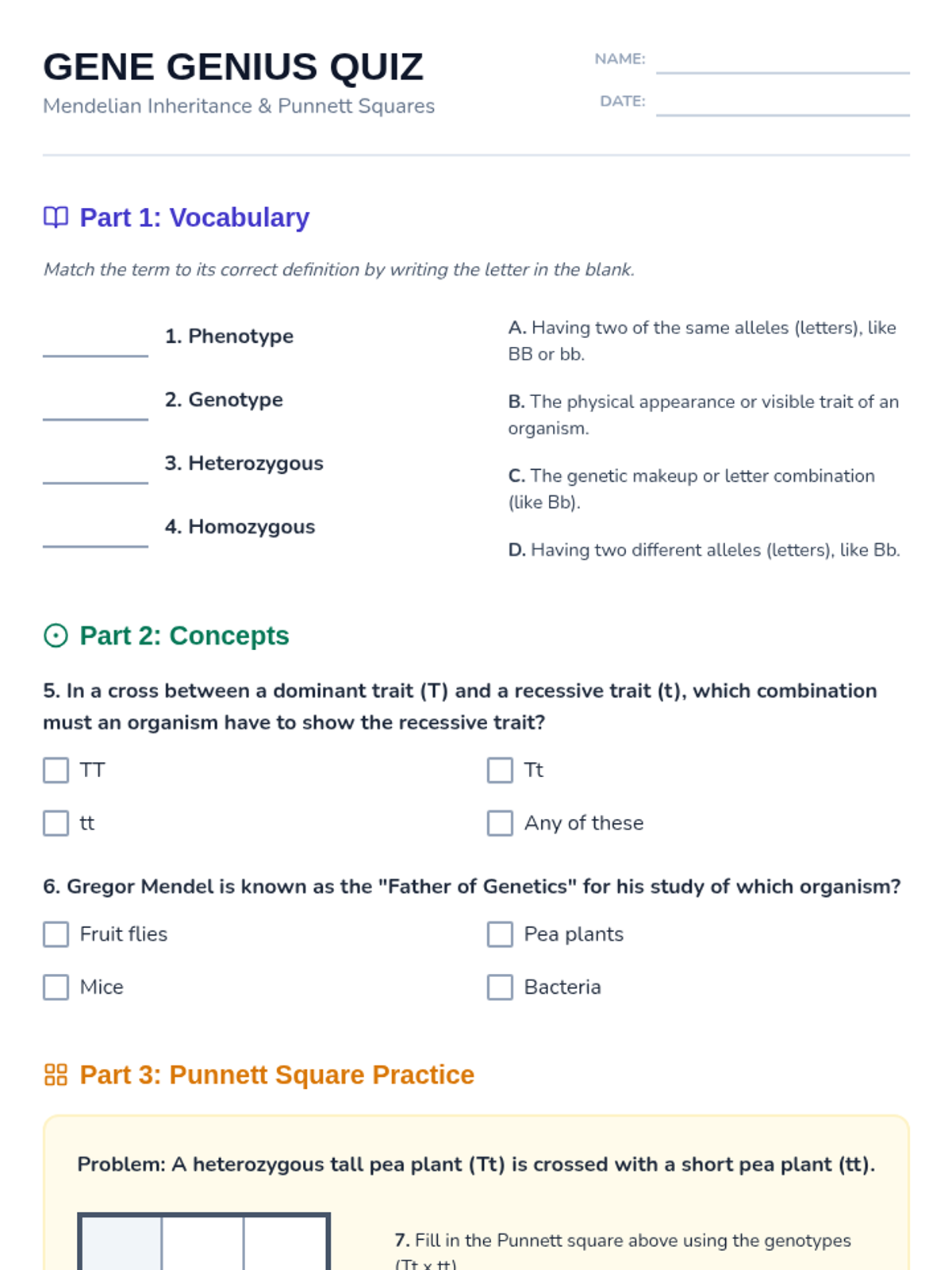
A standard level genetics quiz covering Mendelian vocabulary, basic inheritance concepts, and Punnett square application.
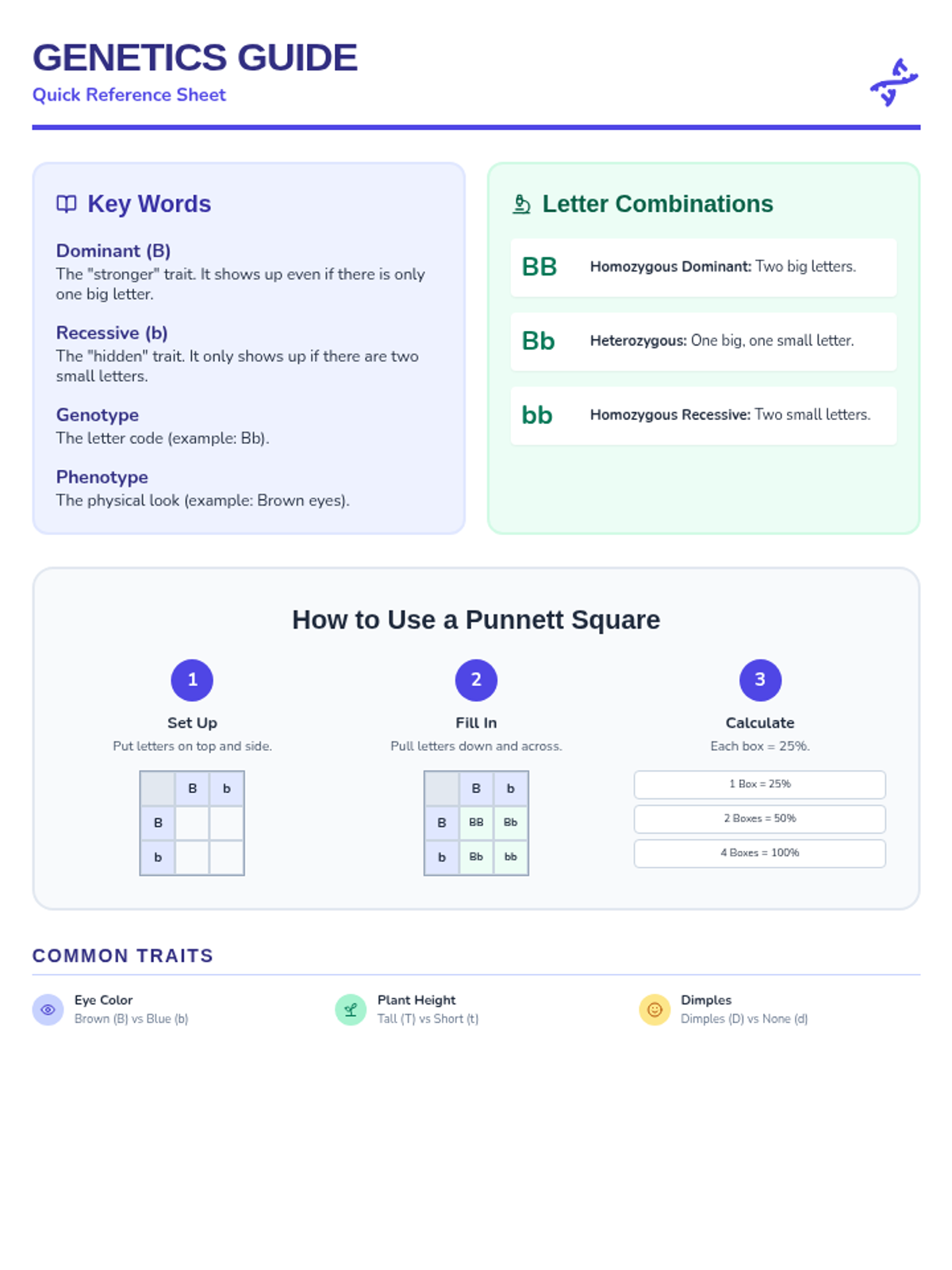
A visual reference sheet for students that defines key genetics vocabulary and provides a step-by-step guide to filling out Punnett squares.
A visual review slide deck for teaching carrying capacity, limiting factors, and human environmental impact. Includes high-impact graphics, clear definitions, and a case study prompt. Revised for clarity and corrected typos.
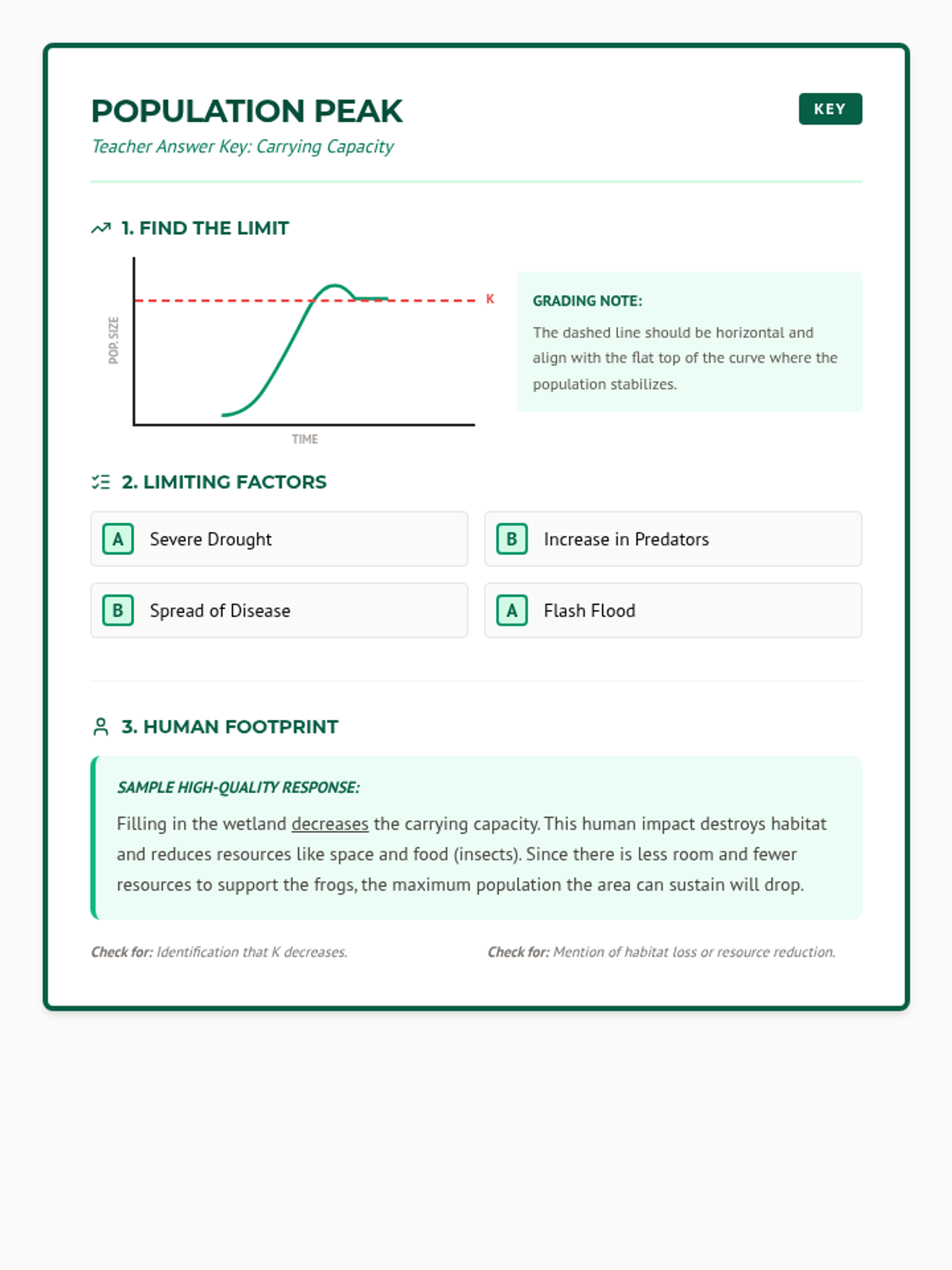
An answer key for the Population Peak exit ticket, providing correct graph placement, limiting factor classifications, and a sample high-quality response for the human impact question.
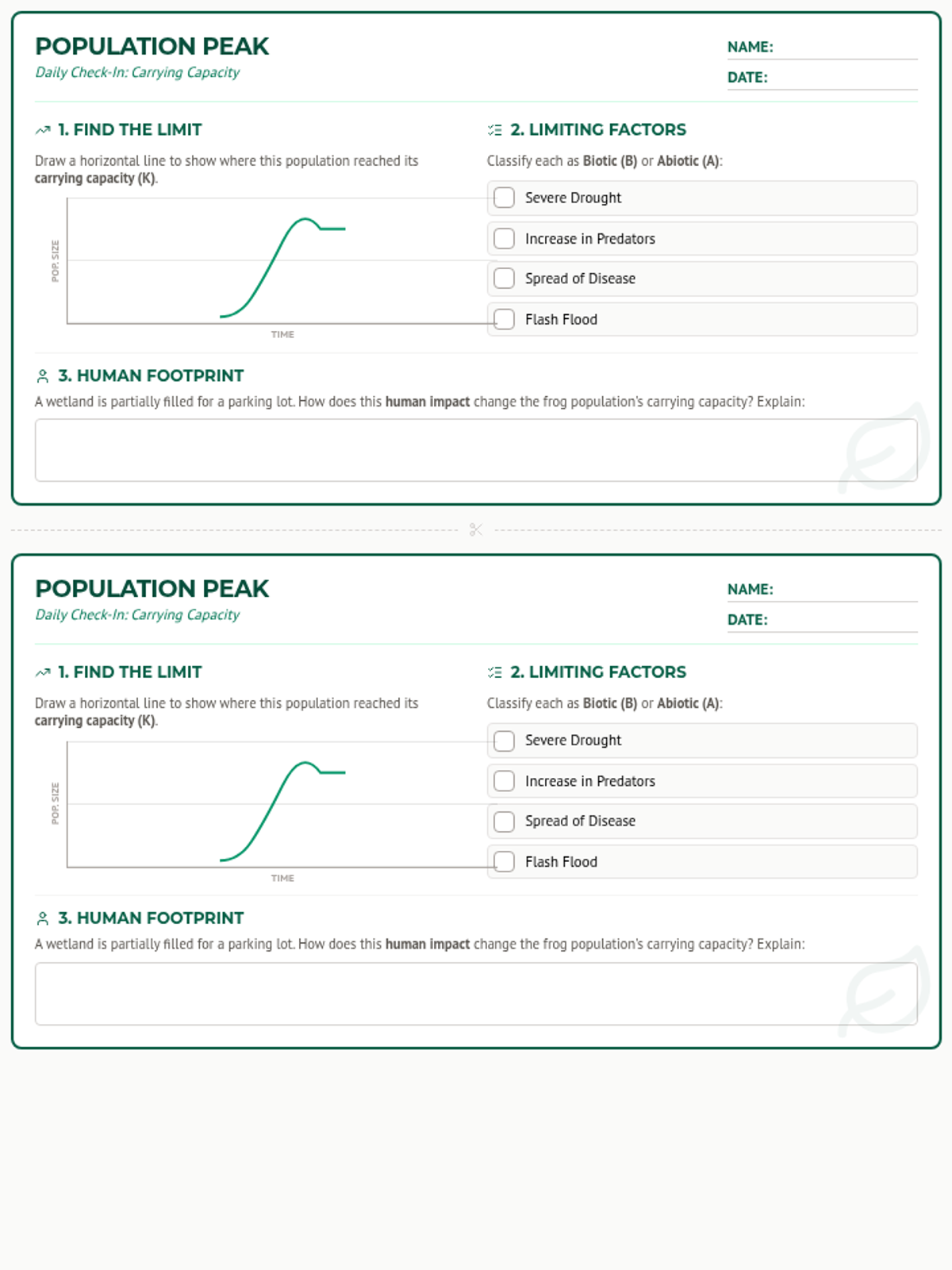
A set of two printable exit tickets on a single page designed to review carrying capacity. It includes a graph interpretation task, a sorting activity for biotic and abiotic limiting factors, and a short response question on human environmental impact. Revised for strict height constraints to ensure both fit on one page.
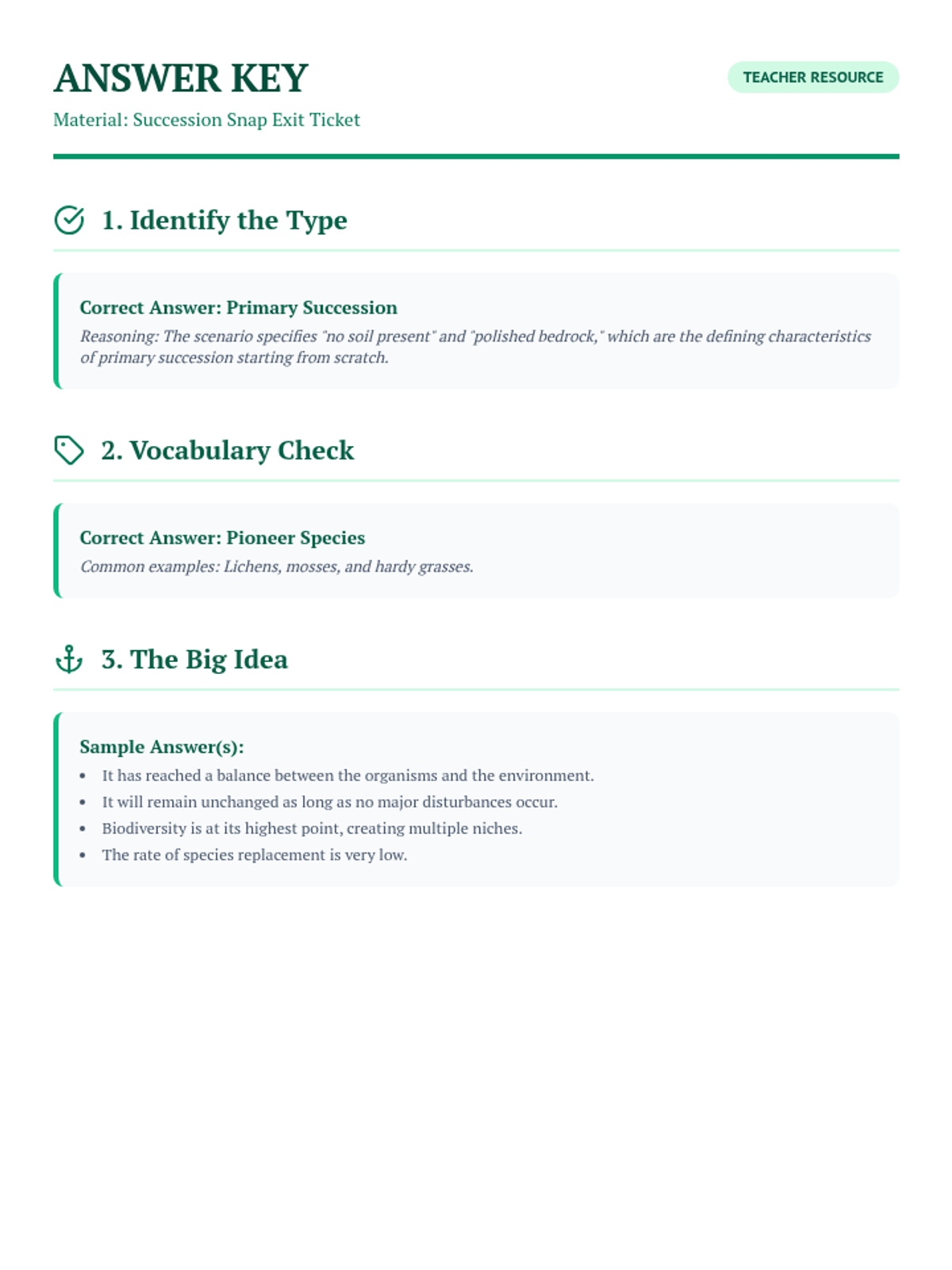
An answer key for the Succession Snap Exit Ticket, providing correct responses and sample explanations.
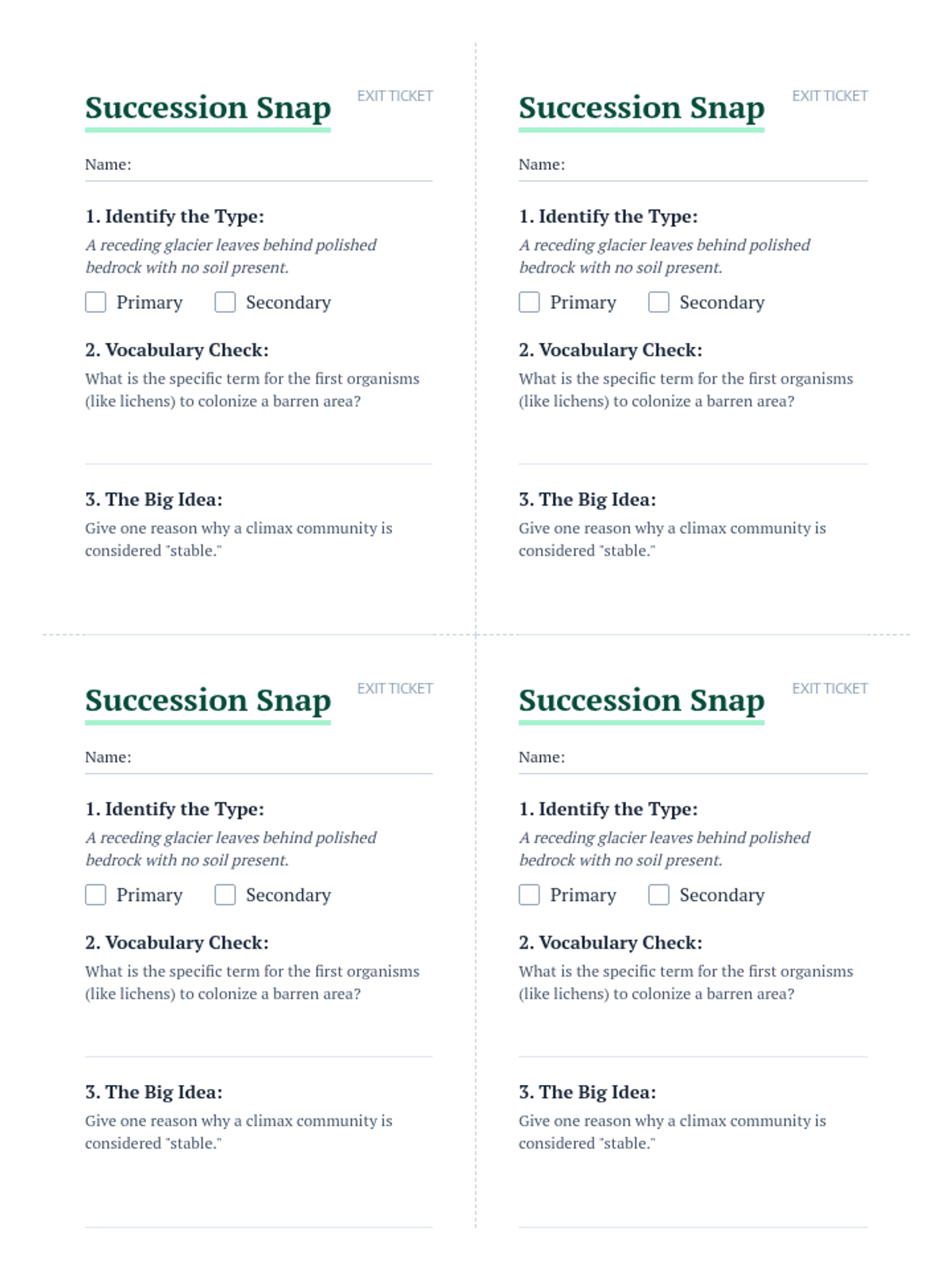
A four-per-page exit ticket for a quick formative assessment on ecological succession types and key vocabulary. Corrected for readability and text size.
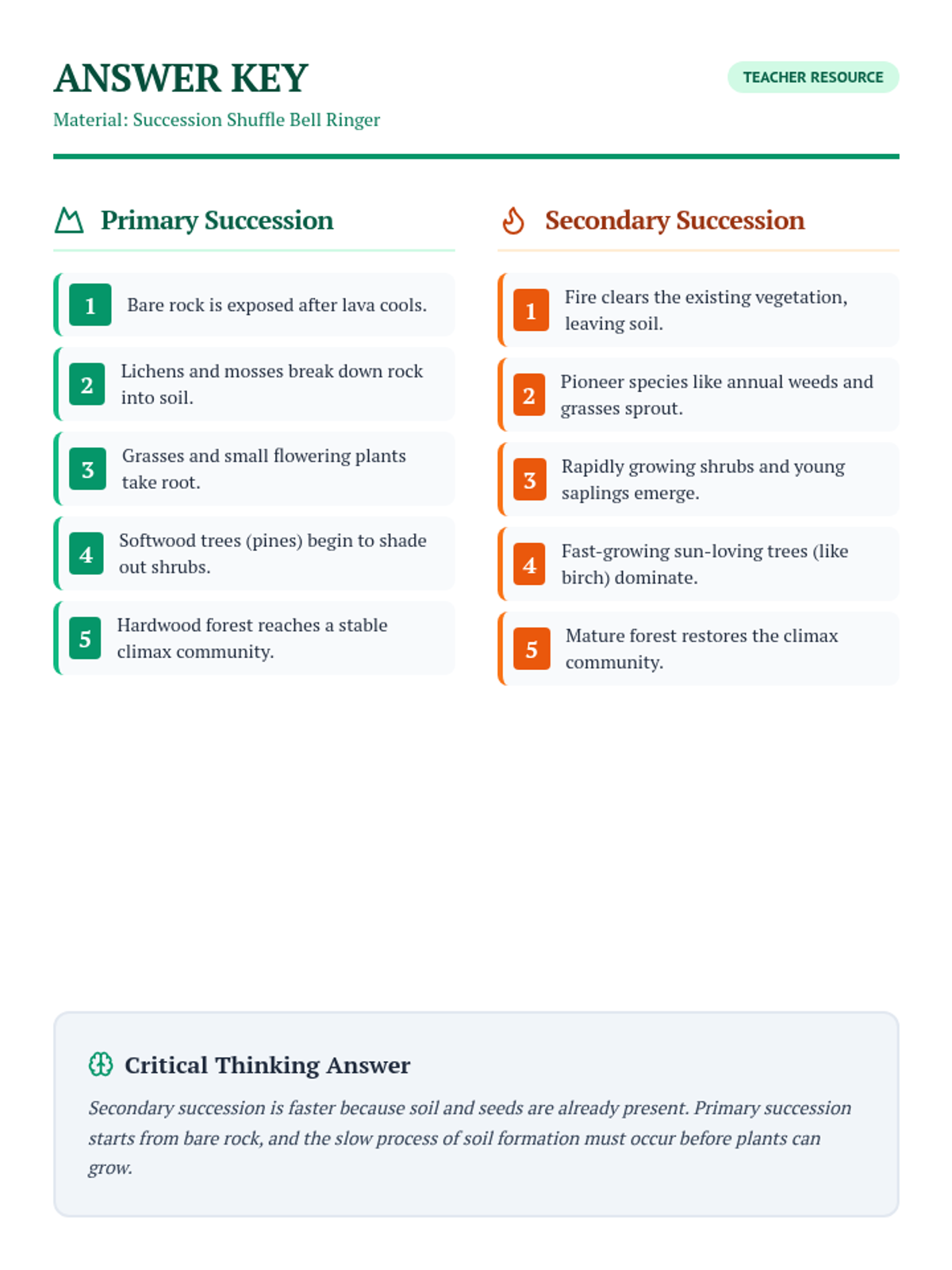
An answer key for the Succession Shuffle Bell Ringer, providing the correct numerical order for primary and secondary succession stages. Optimized for single-page printing.
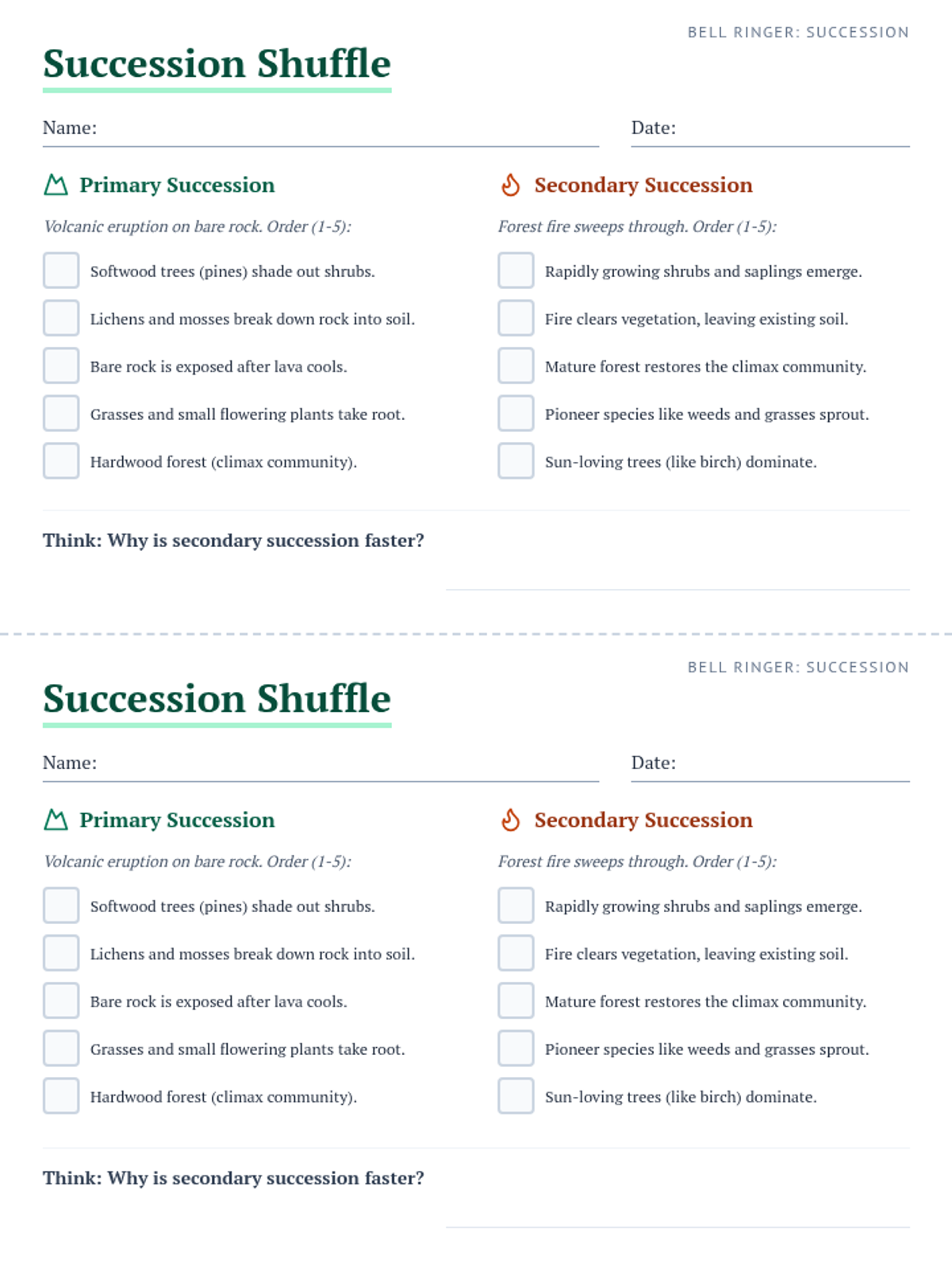
A double-up printable worksheet containing two half-sheet bell ringers. Students order the stages of primary and secondary succession. Corrected layout for single-page printing.
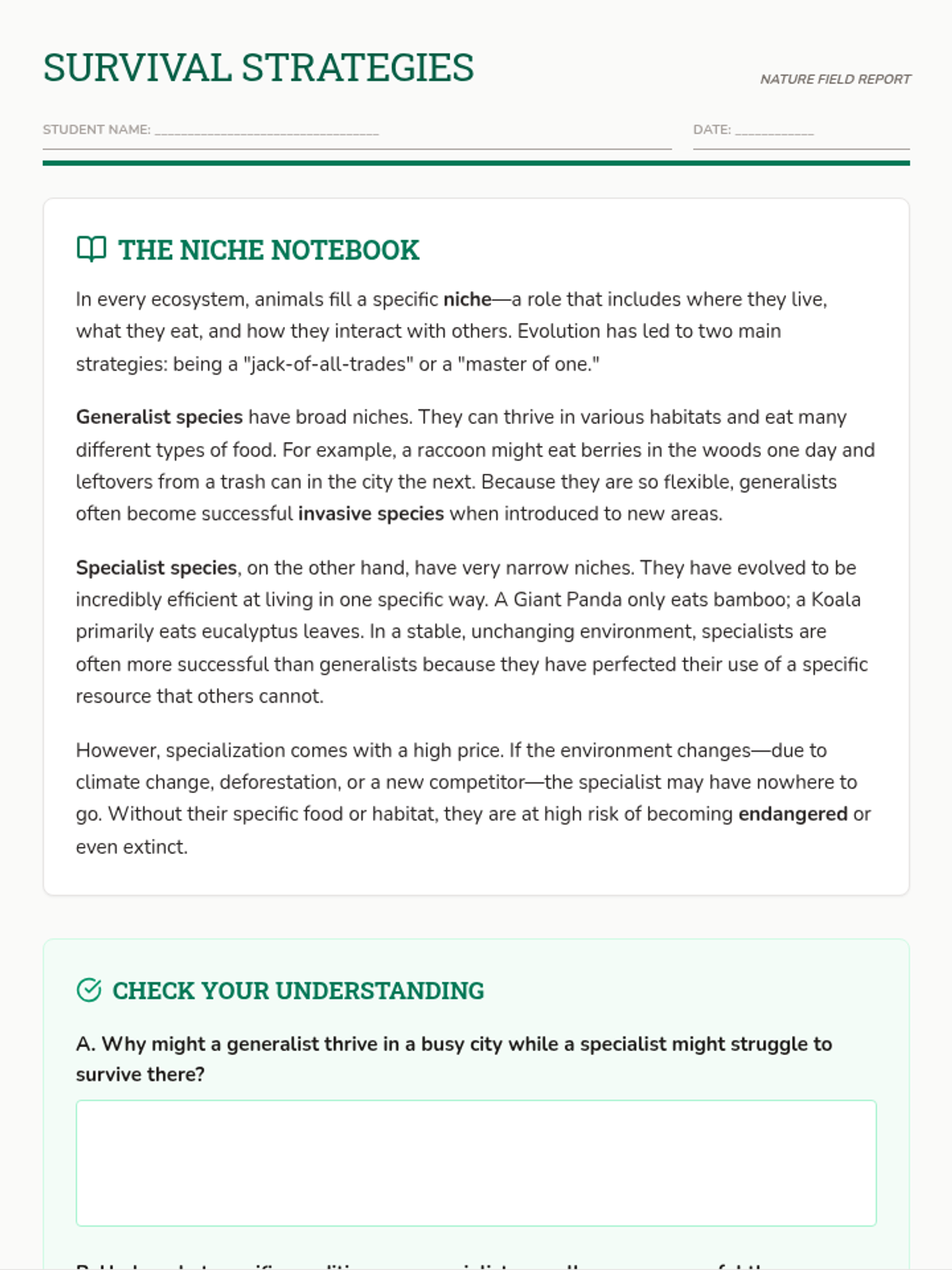
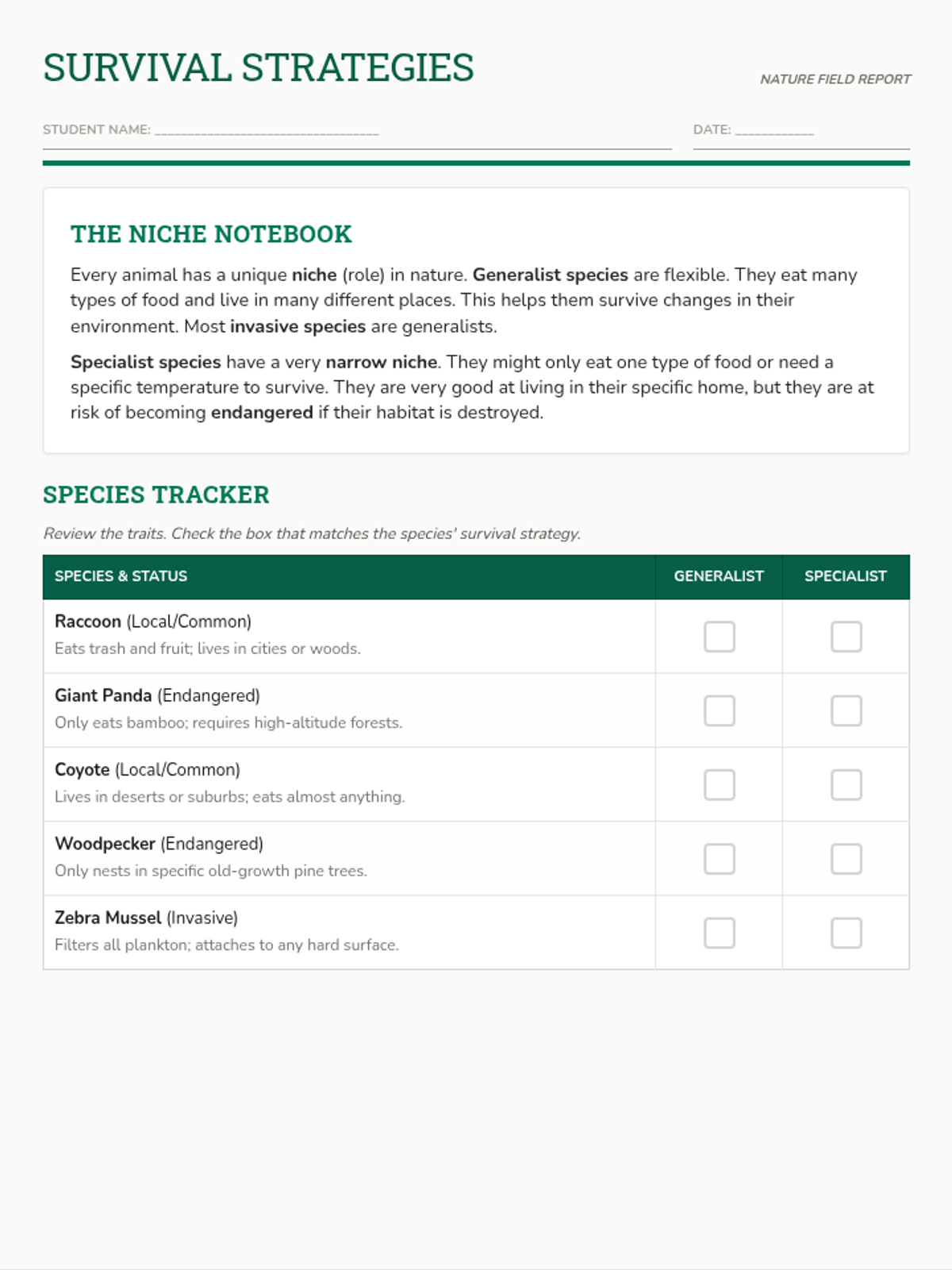
Final version of the Survival Strategies worksheet. Compact, two-page layout optimized for print with reading, tracker, quiz, and reflection.
A visual presentation exploring the differences between generalist and specialist species. Includes comparisons for Raccoons vs. Koalas, Coyotes vs. Pandas, and Rats vs. Polar Bears.
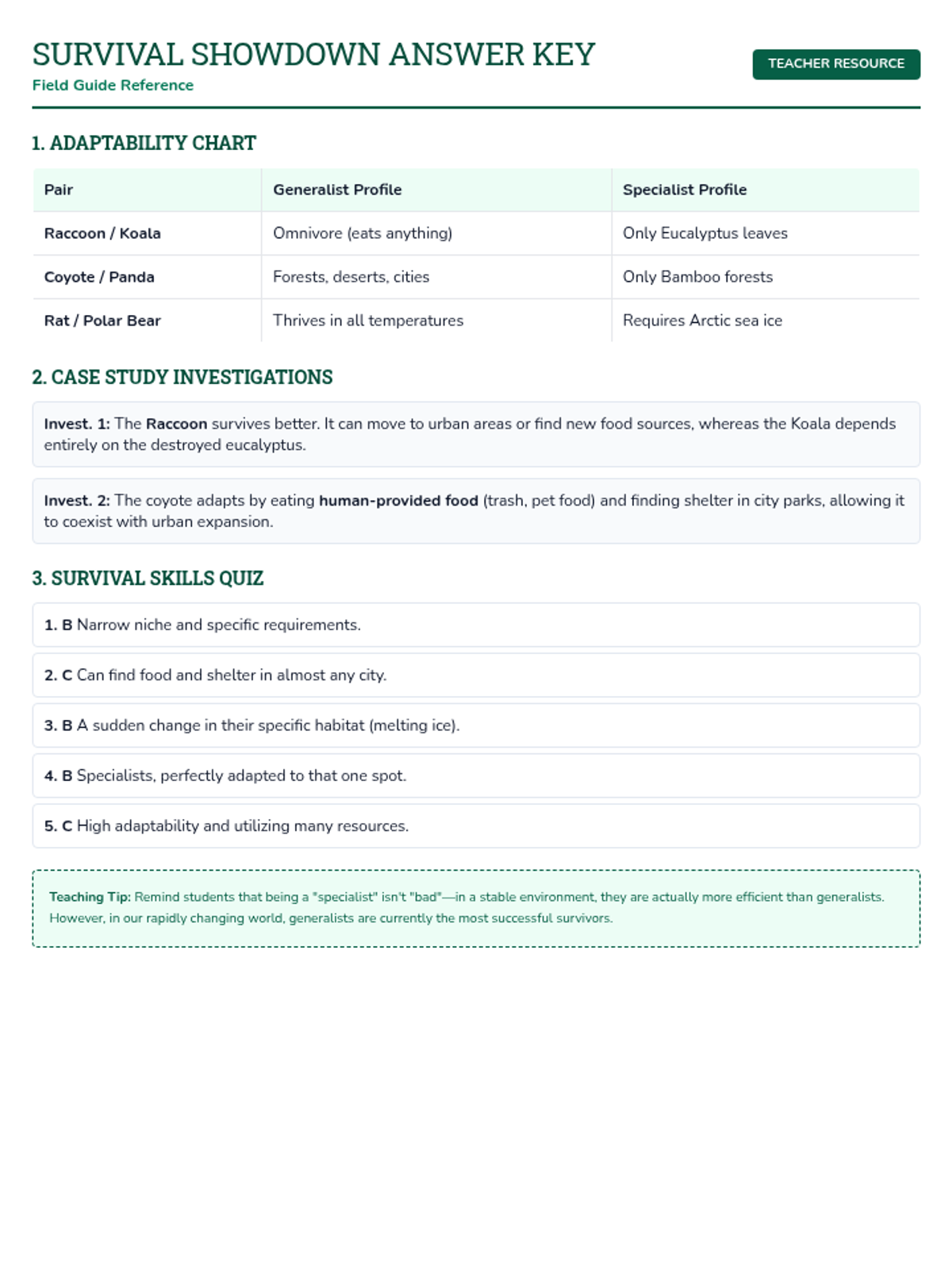
The teacher answer key for the Survival Showdown worksheet, providing sample responses for open-ended questions and correct choices for the multiple-choice quiz. Optimized for one-page reference.
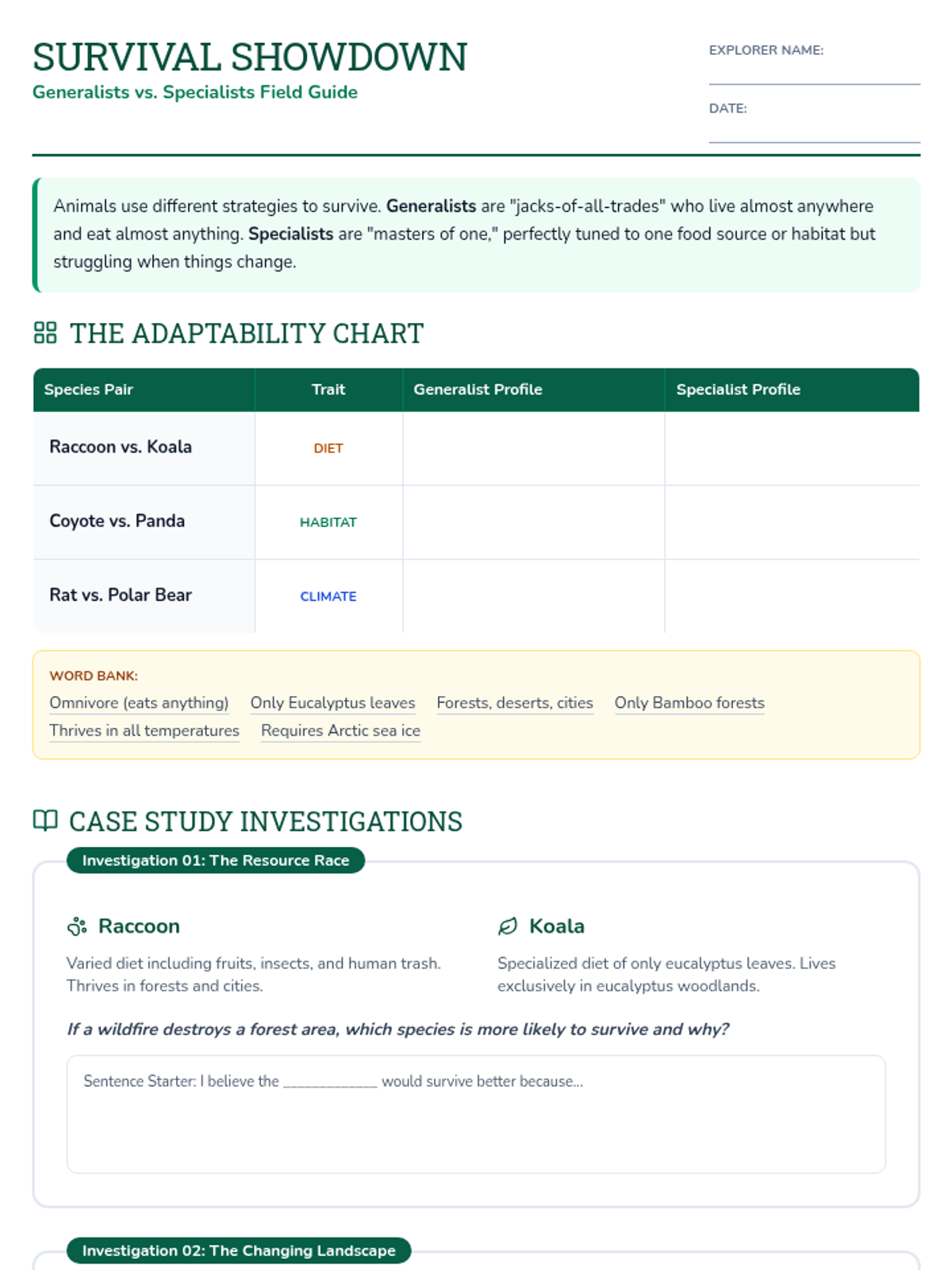
A comprehensive worksheet exploring the survival strategies of generalist and specialist species through three animal pairings. Includes a comparison chart with word bank, detailed case studies with sentence starters, and a multiple-choice assessment. Condensed to fit comfortably within a 3-page printable format.
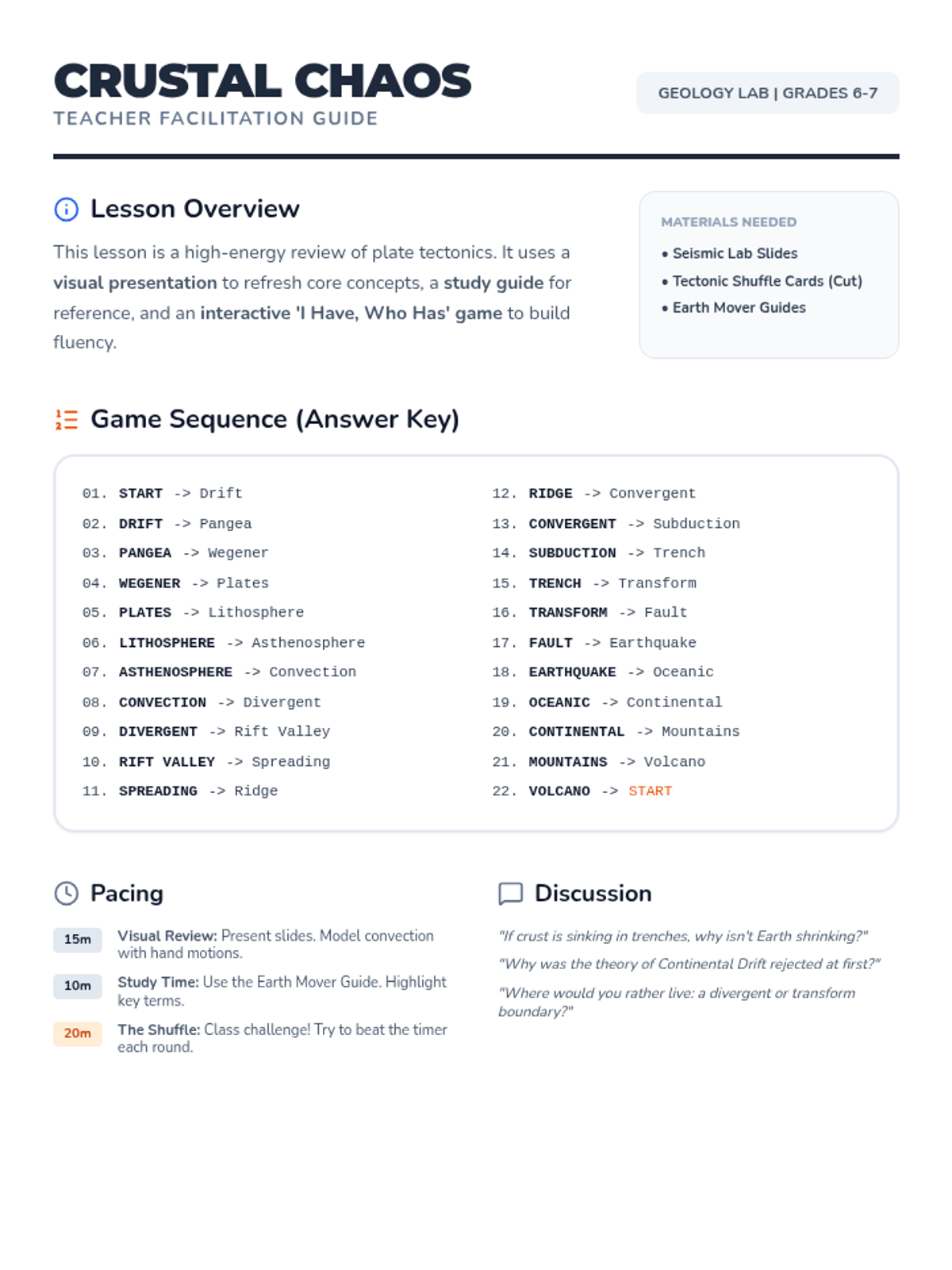
A teacher facilitation guide for the 'Crustal Chaos' lesson. Includes a game sequence answer key, pacing suggestions, and higher-order thinking discussion prompts. Designed to minimize prep time and maximize classroom flow.
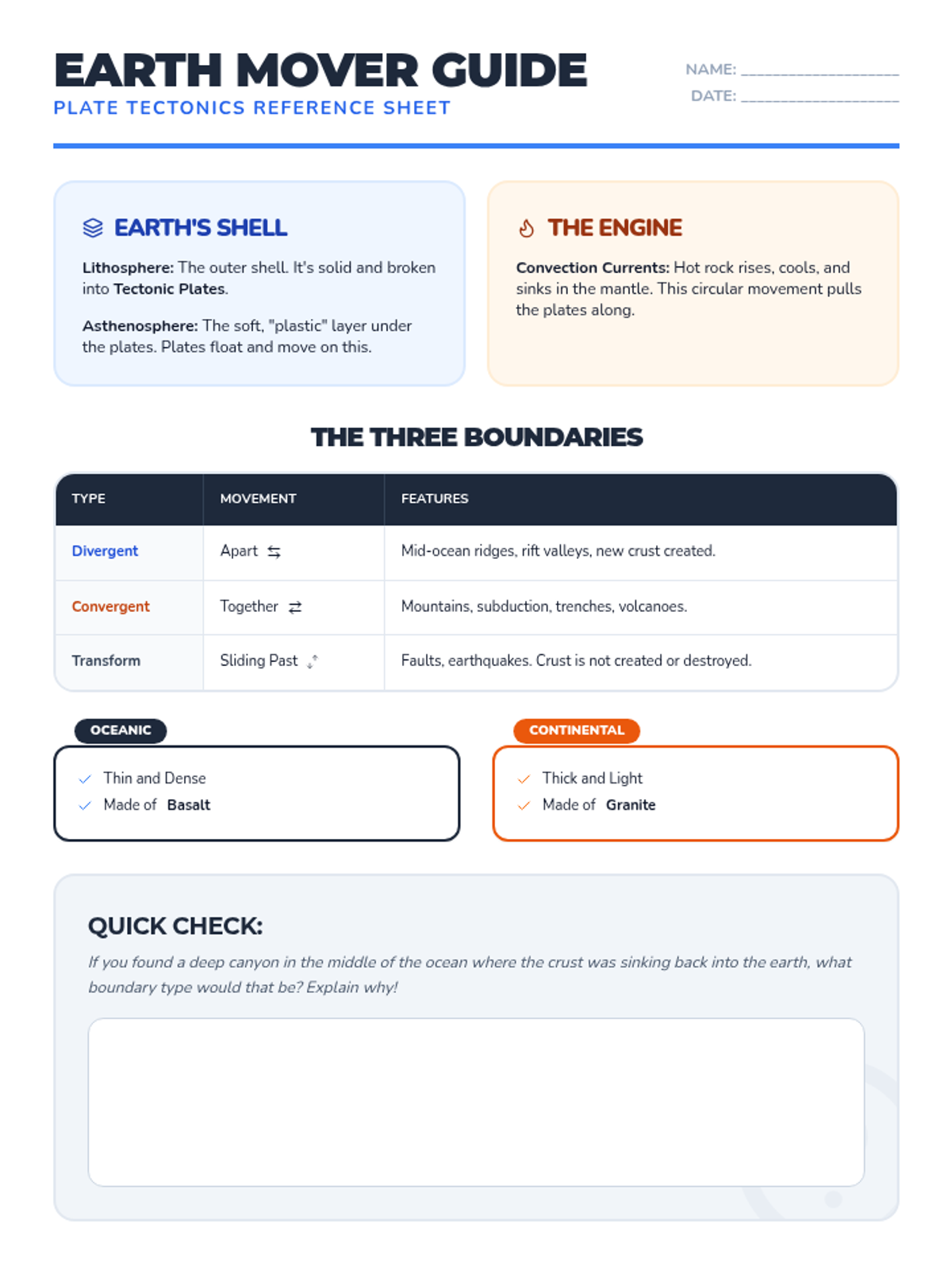
A student-facing reference sheet and study guide for plate tectonics. Includes clear definitions of Earth's layers, a matrix of boundary types, and a comparison of oceanic versus continental crust. Designed with a 6th-grade reading level in mind.
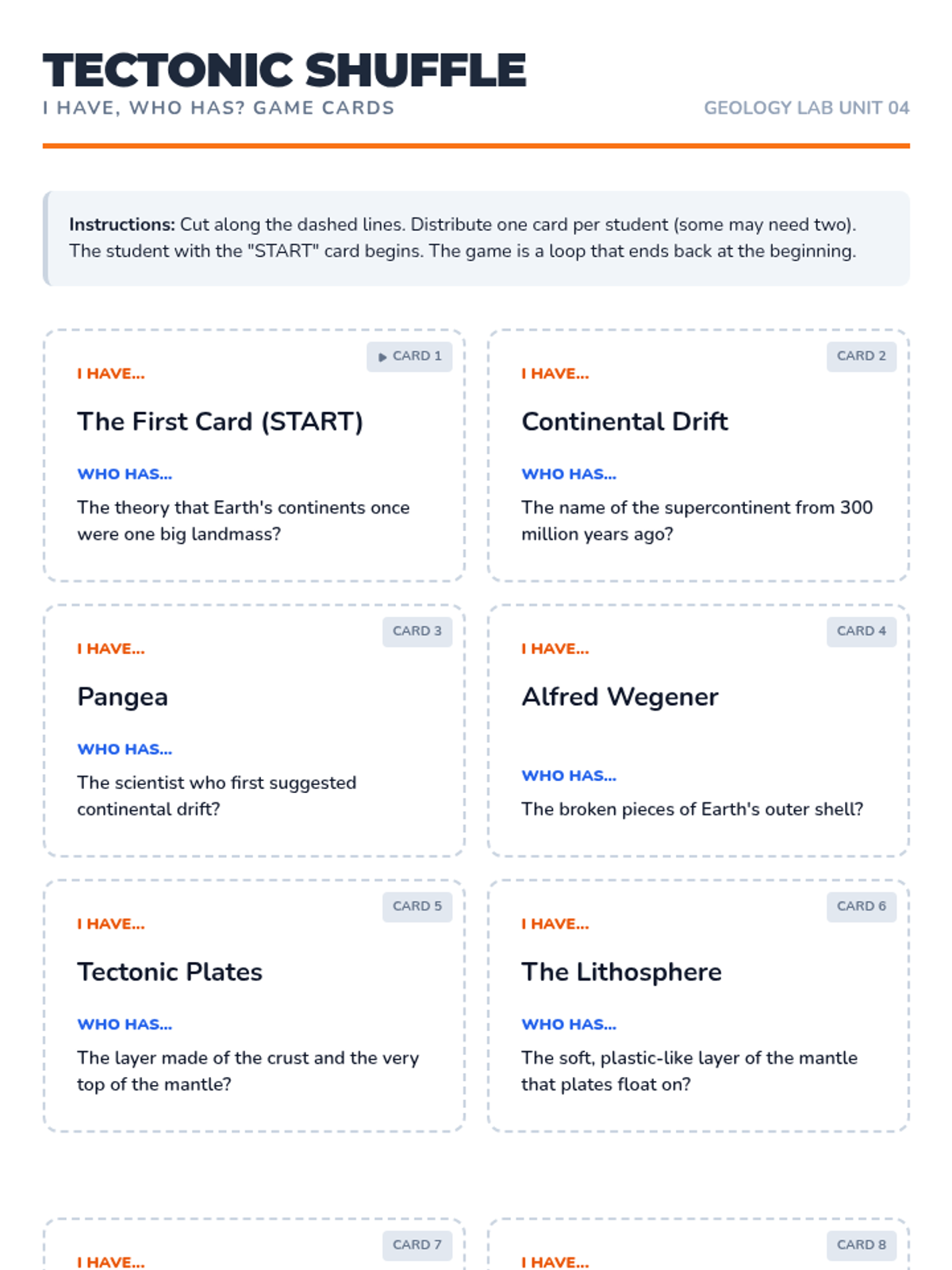
A set of 22 'I Have, Who Has' cards covering key plate tectonics vocabulary. Designed to be cut out and used in a collaborative classroom game. Each card follows a logical sequence to create a complete loop.
A visual slide deck reviewing key plate tectonics concepts including layers of the Earth, convection currents, boundary types, and crust differences. Designed for high engagement with a modern 'Seismic Lab' aesthetic.
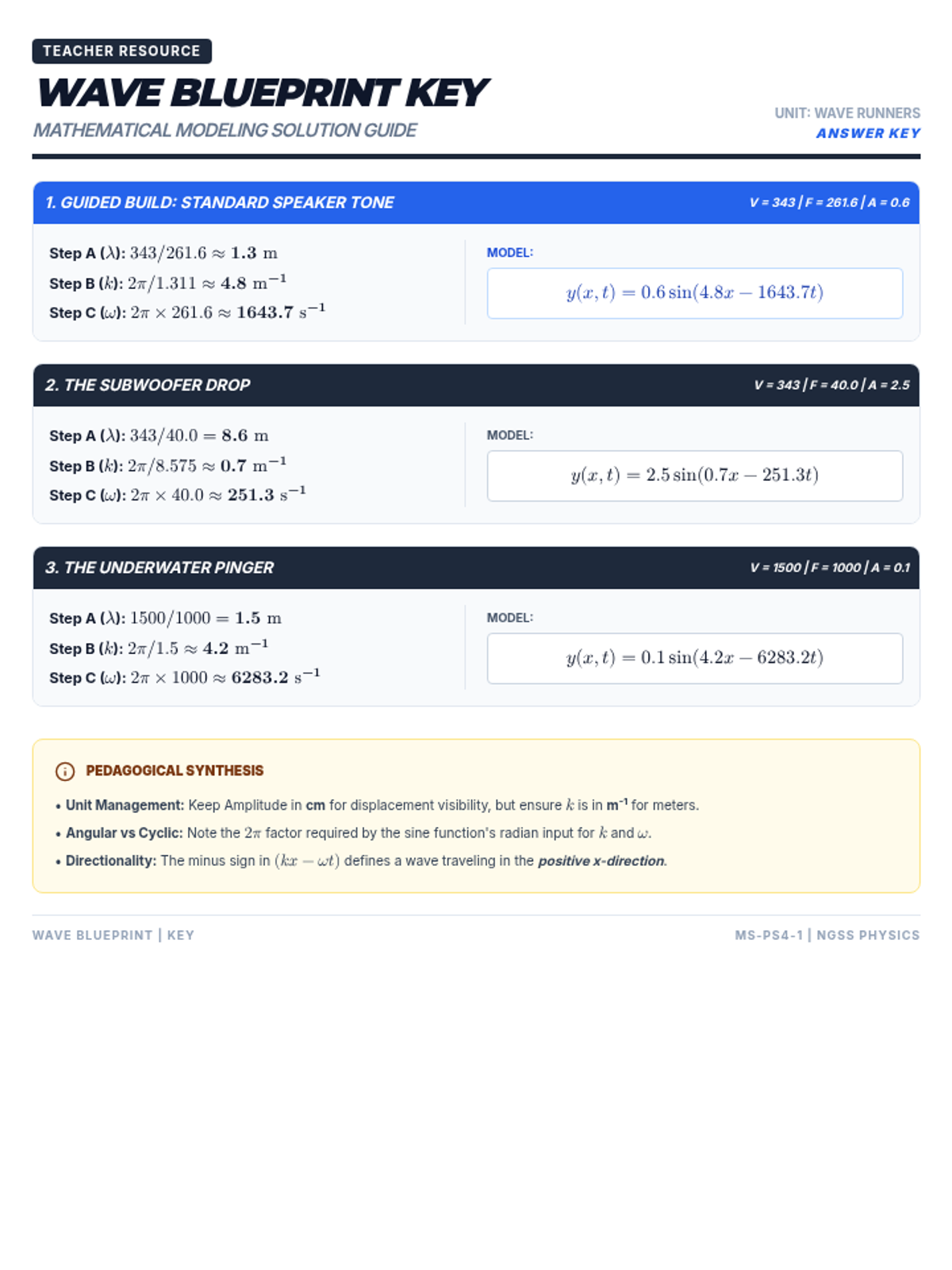
A comprehensive teacher answer key for the Wave Blueprint worksheet. Provides step-by-step calculations for wavelength, wave number, and angular frequency, along with the final mathematical wave functions for three different speaker scenarios. Revised for consistency and clarity.