A bright, visual anchor chart for elementary students identifying what information is private (red list) versus safe to share (green list), featuring the 'Stop and Ask' golden rule.
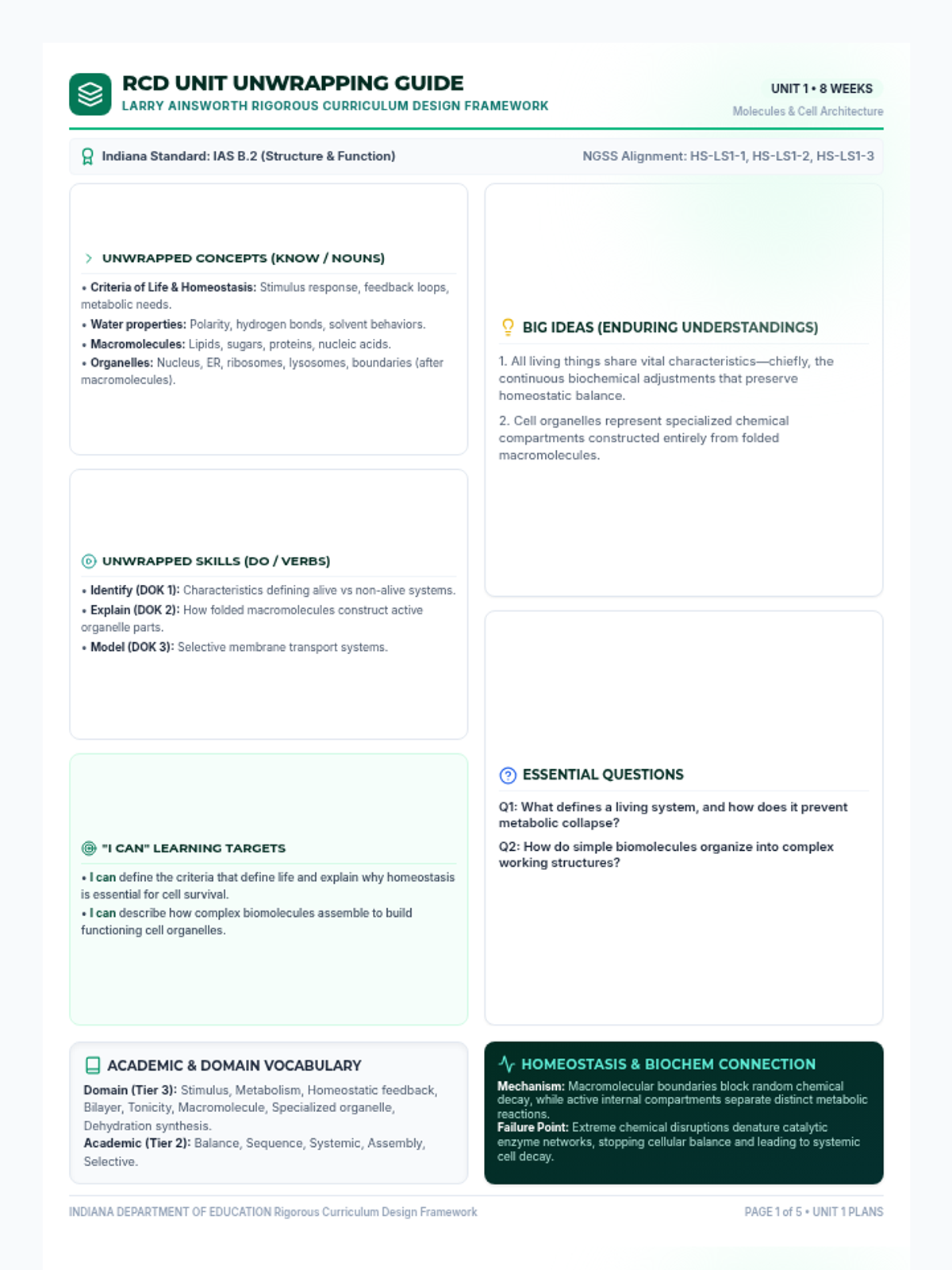
A set of five Larry Ainsworth RCD style unit unwrapping guides mapping Big Ideas, Essential Questions, Nouns/Verbs (Know/Do), vocabulary, and Indiana Biology Standards for all units.
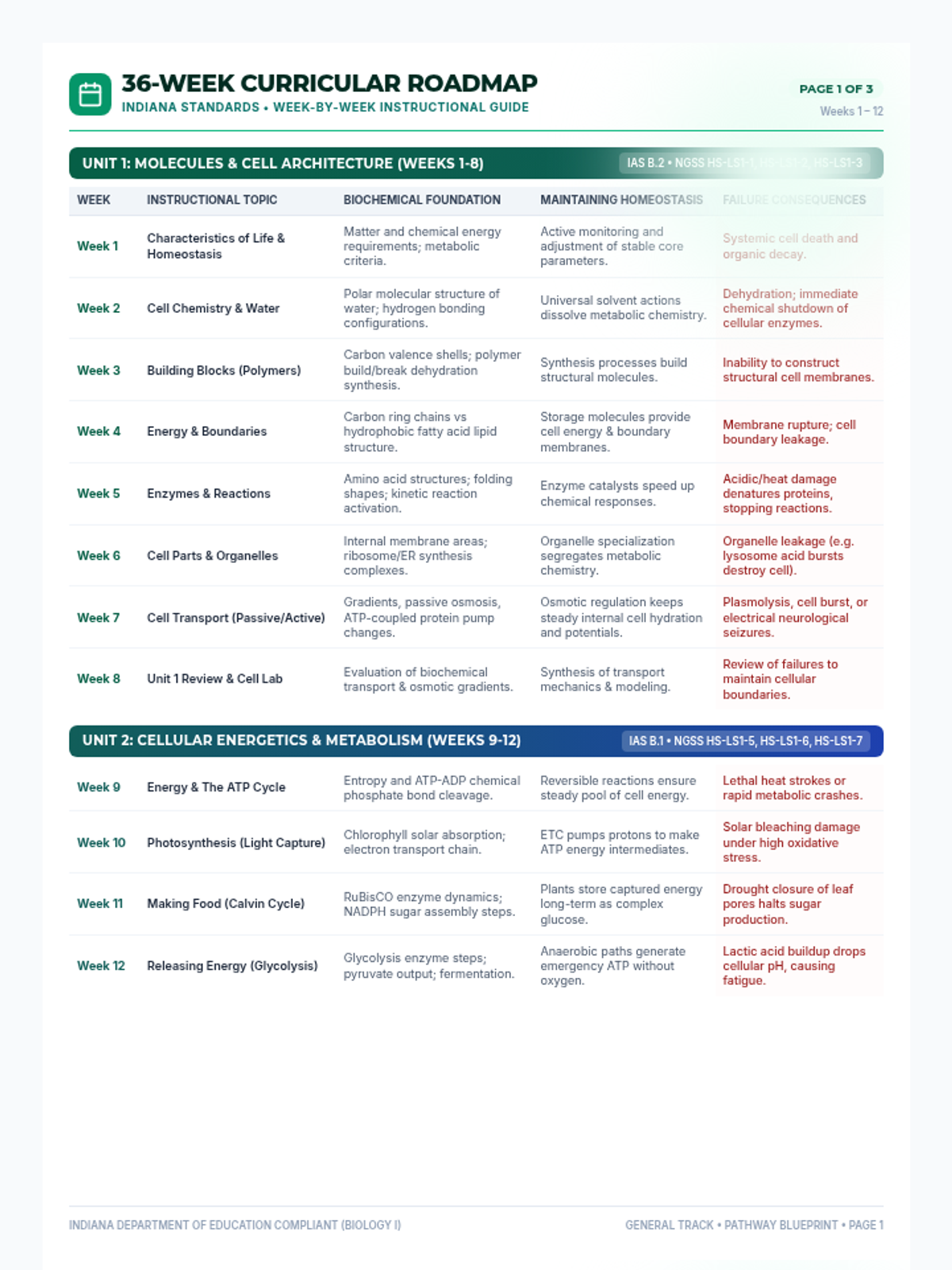
A highly structured week-by-week curriculum roadmap detailing all 36 weeks of General Biology, aligned with Indiana Standards and highlighting biochemistry and homeostasis mechanisms.
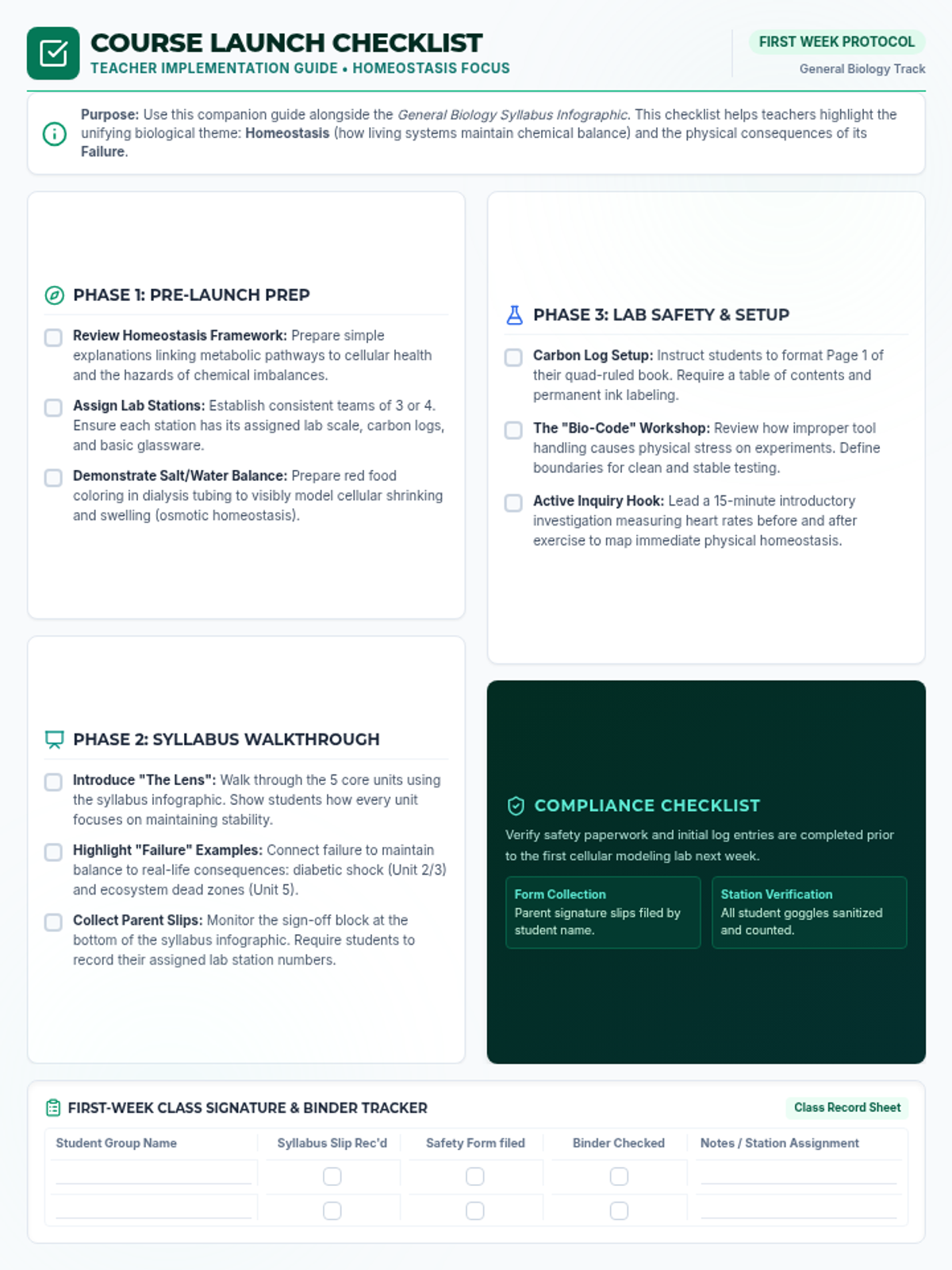
A checklist teacher guide to align first-week classroom logistics, lab safety setups, and Indiana biochemistry integration milestones for General Biology.
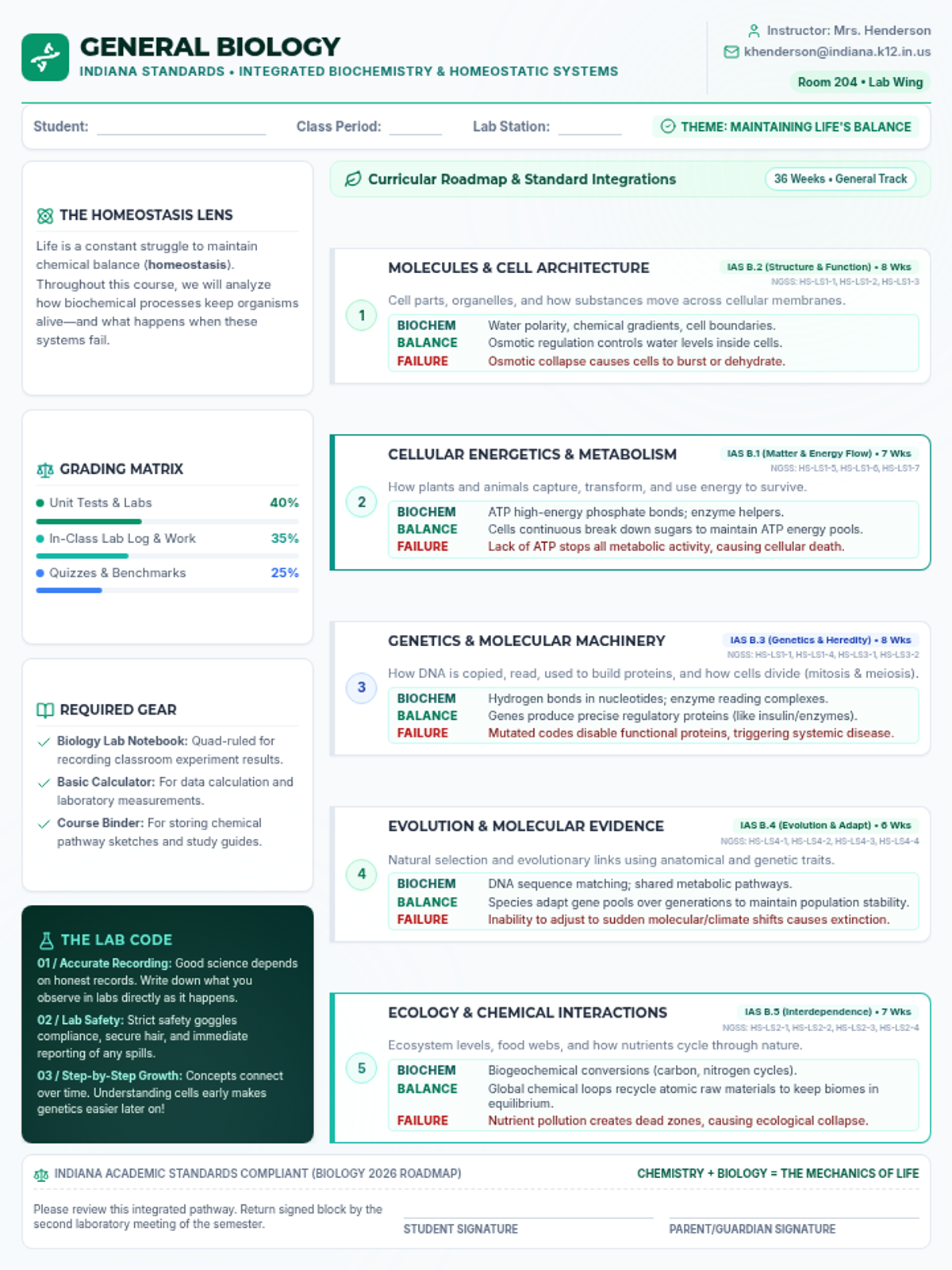
A visual one-pager syllabus infographic integrating Indiana Biology standards with foundational biochemistry concepts for each units, featuring course policies and grading breakdown.
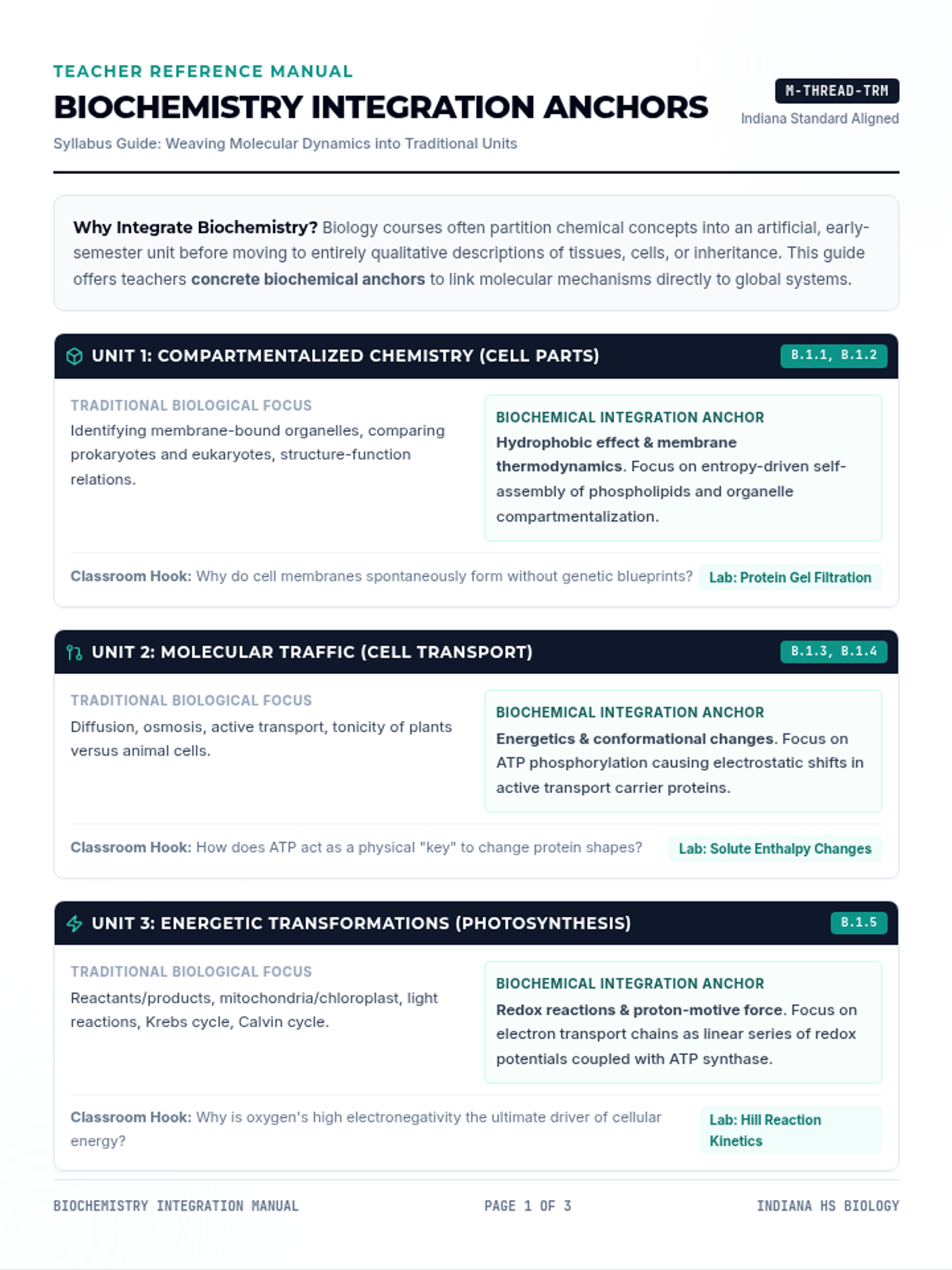
A comprehensive teacher guide/curriculum map detailing the specific biochemical concepts, molecular mechanisms, chemical "anchors", laboratory investigations, and classroom activities that bridge biochemistry with cell structures, genetics, evolution, and ecology.
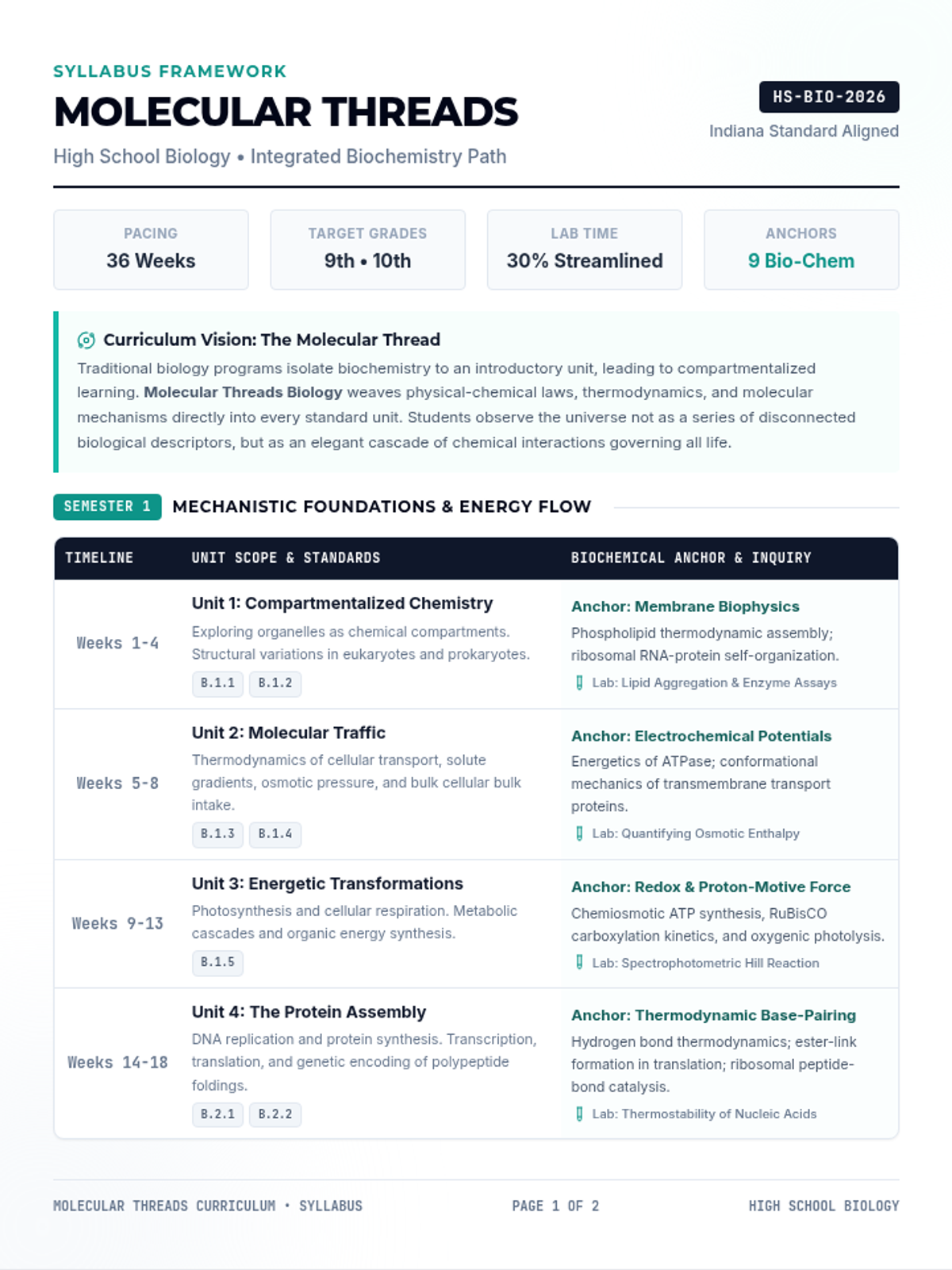
A comprehensive high school biology syllabus fully aligned to Indiana Academic Standards, mapping out a 36-week schedule across 9 units with detailed biochemistry integration anchors and inquiry-based laboratory focus areas.
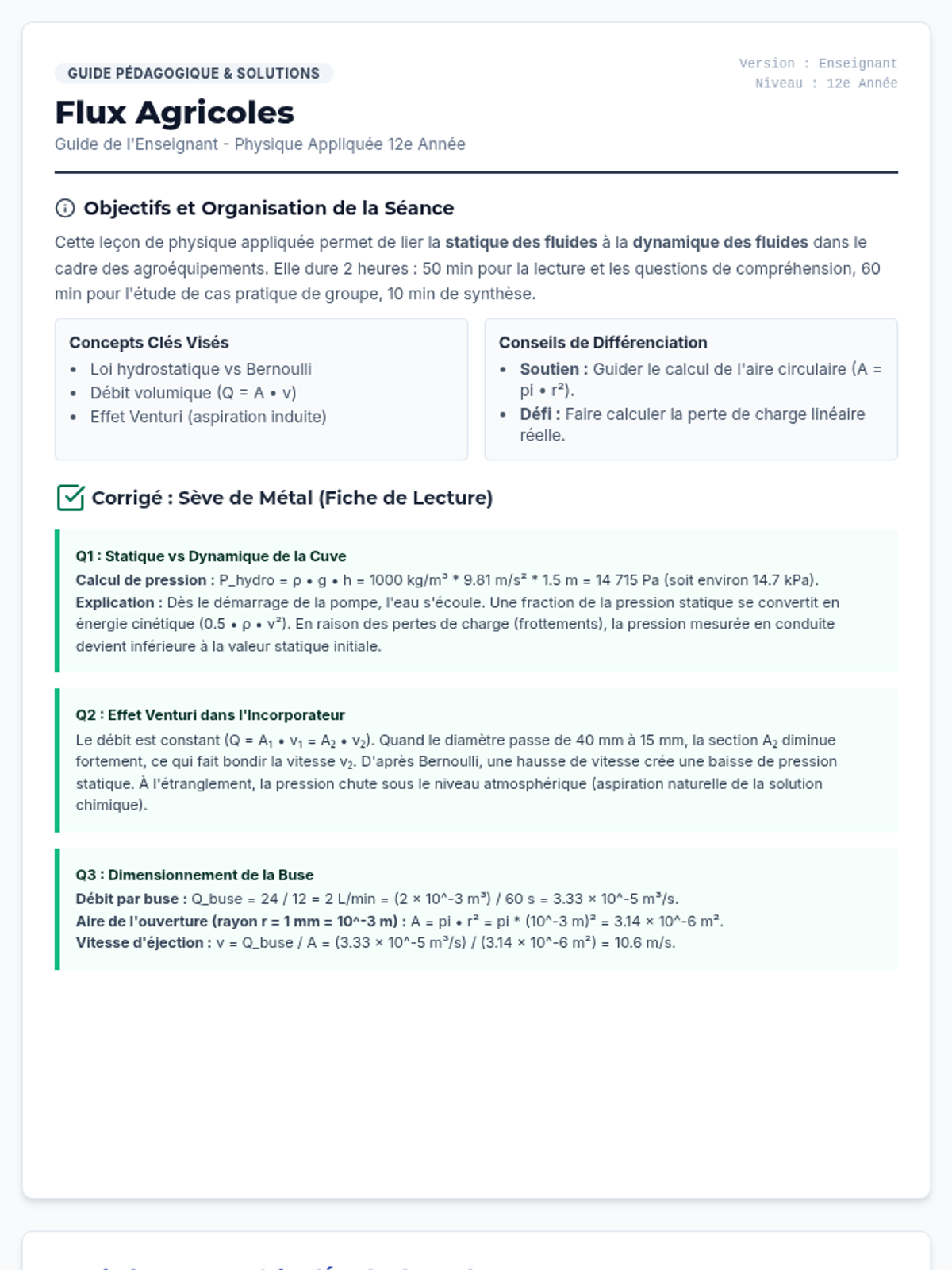
Un guide pédagogique détaillé destiné à l'enseignant pour la leçon de dynamique des fluides agricoles. Il présente les objectifs d'apprentissage, le déroulement de la séance, ainsi que les corrigés complets avec calculs détaillés pour la fiche de lecture et l'étude de cas sans notations LaTeX complexes.
Une étude de cas pratique sous forme de travail d'équipe pour les élèves de 12e année, consistant à modéliser la circulation des fluides dans une rampe de pulvérisation agricole de 24 mètres, à diagnostiquer une chute de pression via des calculs de débit et vitesse, et à proposer des solutions techniques.
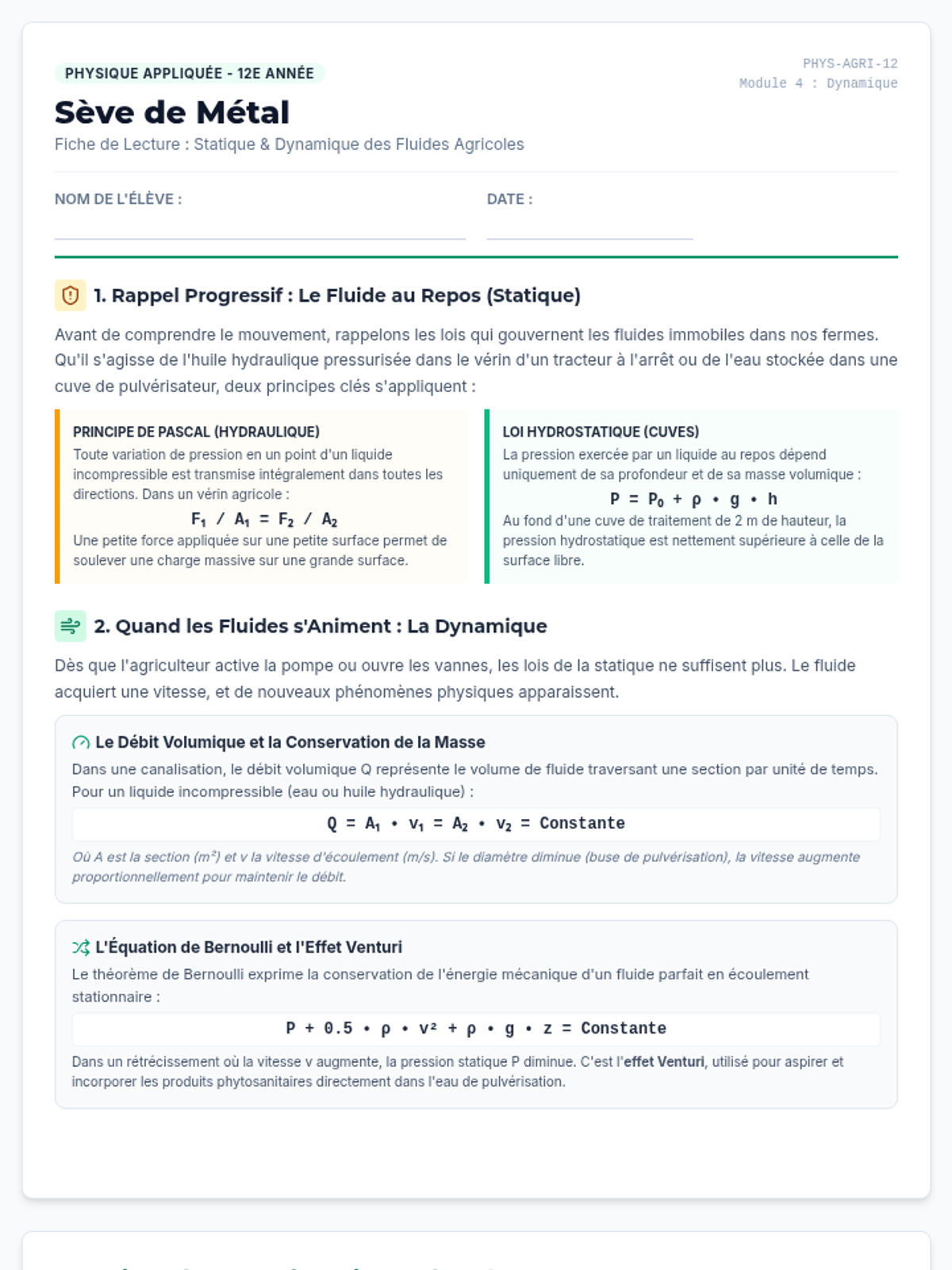
Une fiche de lecture complète pour les élèves de 12e année associant des rappels théoriques de la statique des fluides et des notions de dynamique (Bernoulli, débit volumique, effet Venturi) appliquées aux machines et équipements agricoles, suivie de trois exercices d'application mathématique et conceptuelle.
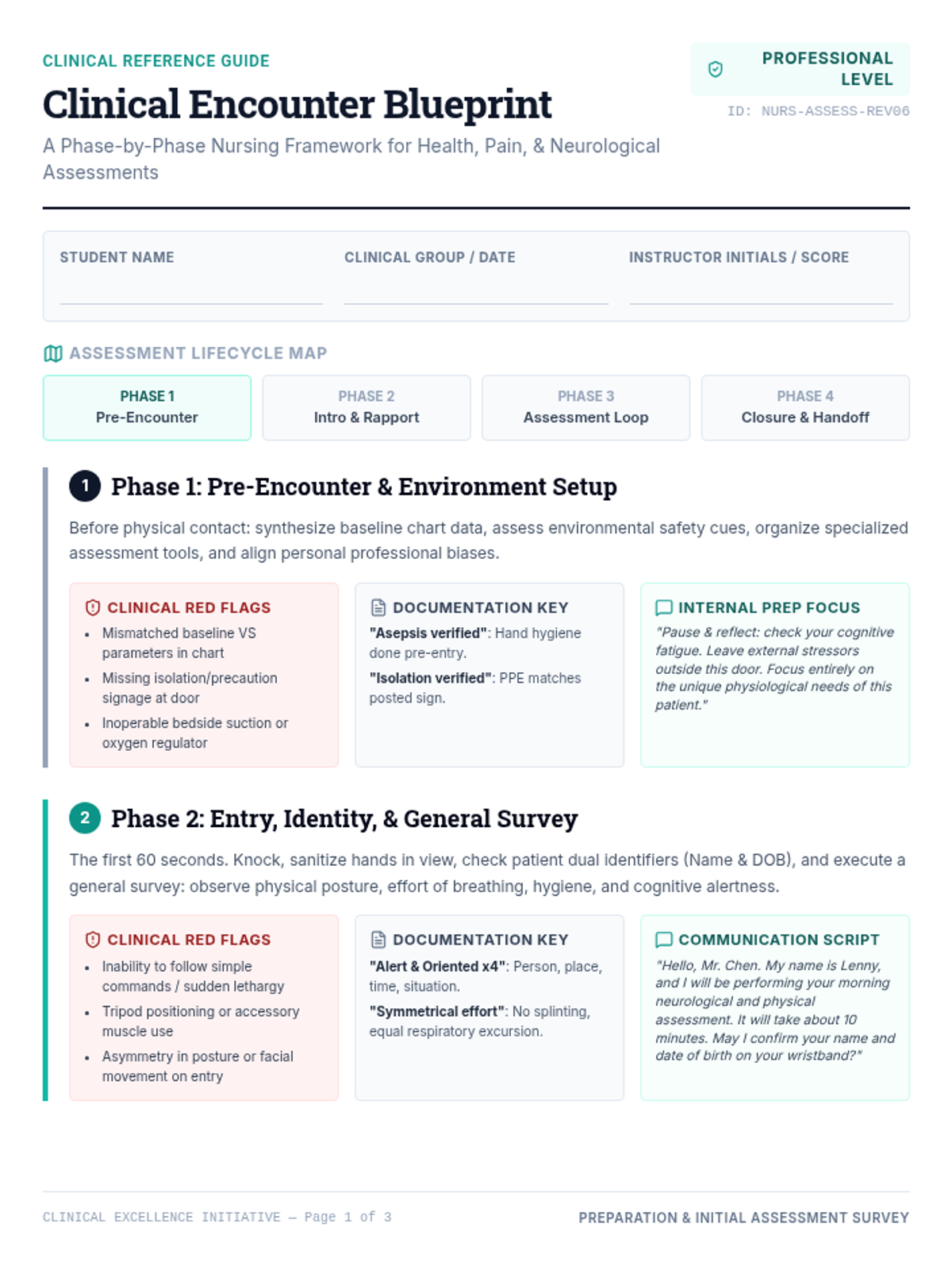
A highly detailed and clean Clinical Encounter Blueprint Guide structured across four phases of a patient encounter, including specific safety red flags, documentation terminology, and communication script guidelines for pain and neuro assessments.
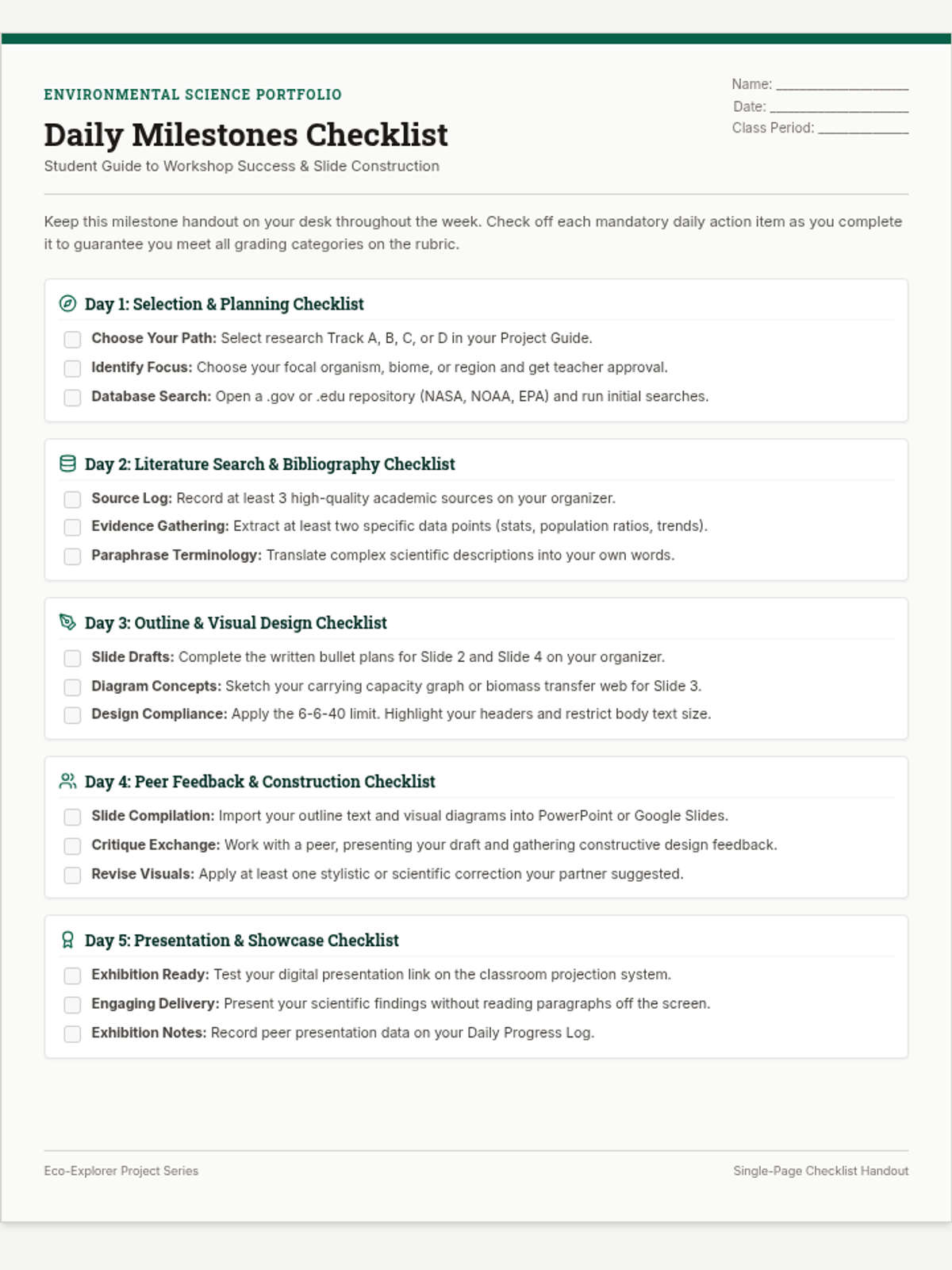
A highly practical, student-facing daily milestone checklist handout containing step-by-step tasks, visual formatting goals, and reference benchmarks for Days 1 through 5.
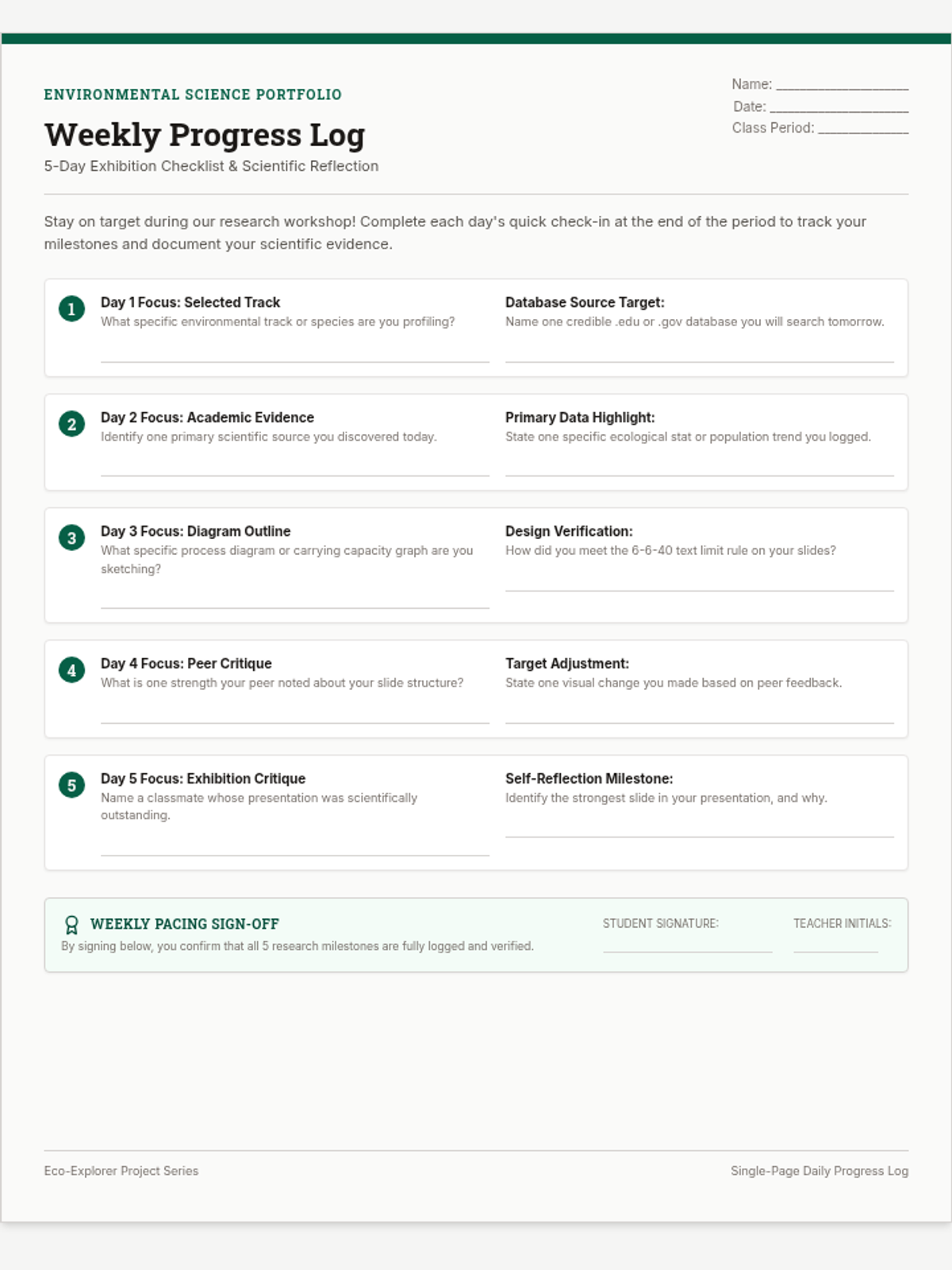
A guided 5-day daily progress log and reflective science journal for students to self-monitor their research pace, set daily goals, and answer scientific check-in questions.
An engaging presentation slide deck to launch the research project, introduce the four ecological topics, set expectations, and illustrate high-quality presentation design.
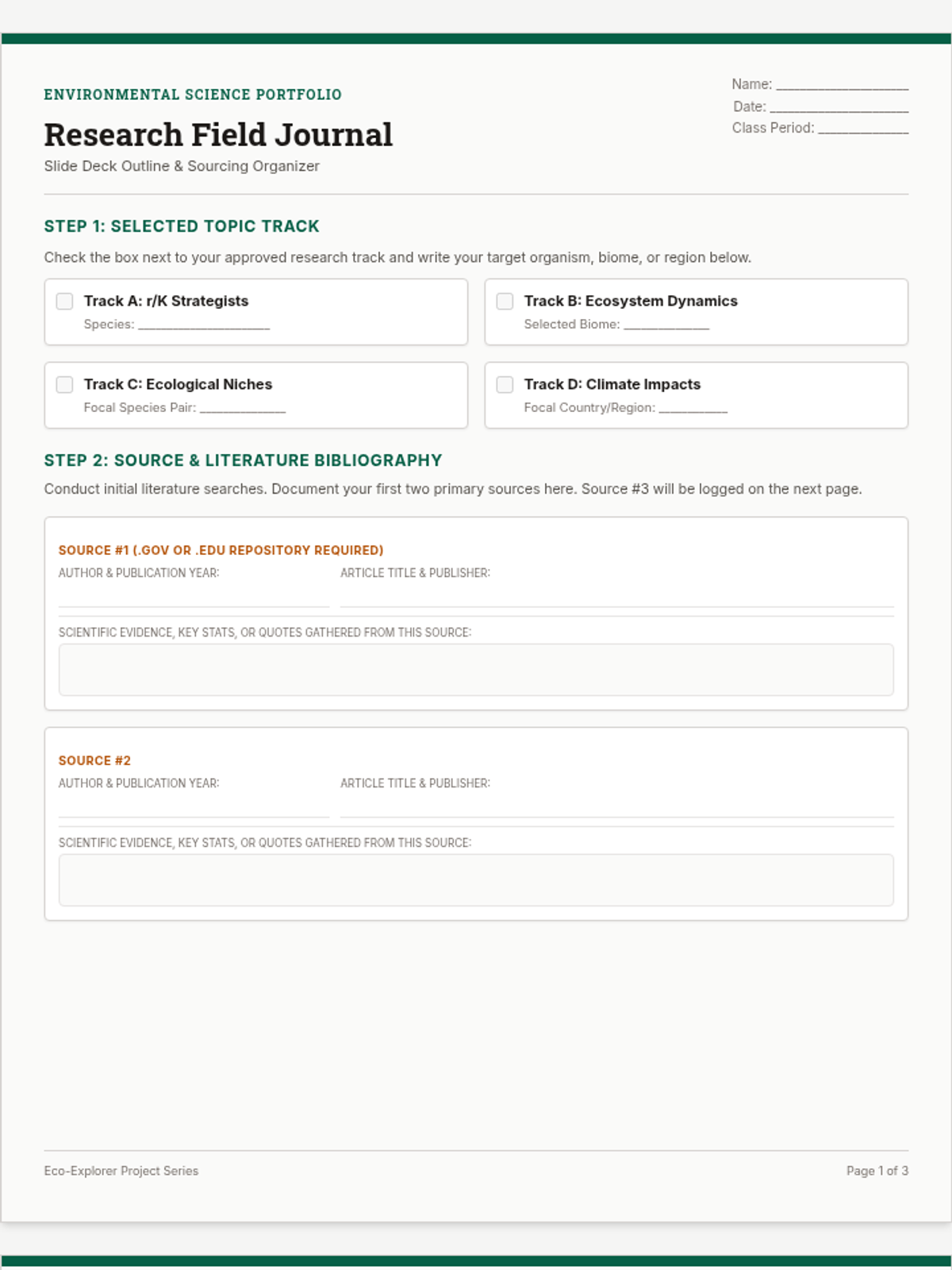
A structured, print-ready field notebook graphic organizer for students to gather evidence, cite sources, and draft slide-by-slide content.
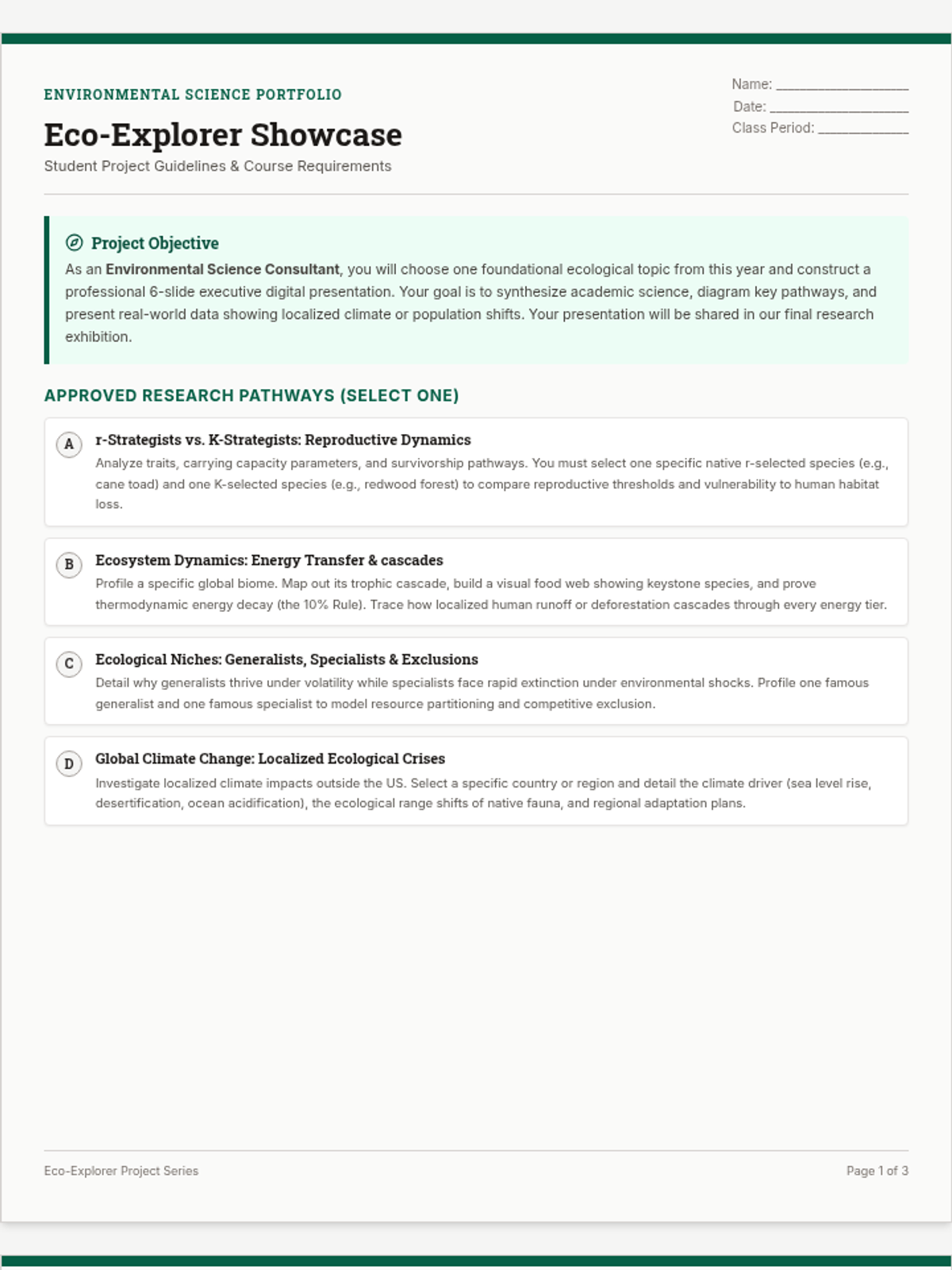
A printable student packet detailing the four core research topics, a step-by-step slide deck outline, and a transparent grading rubric.
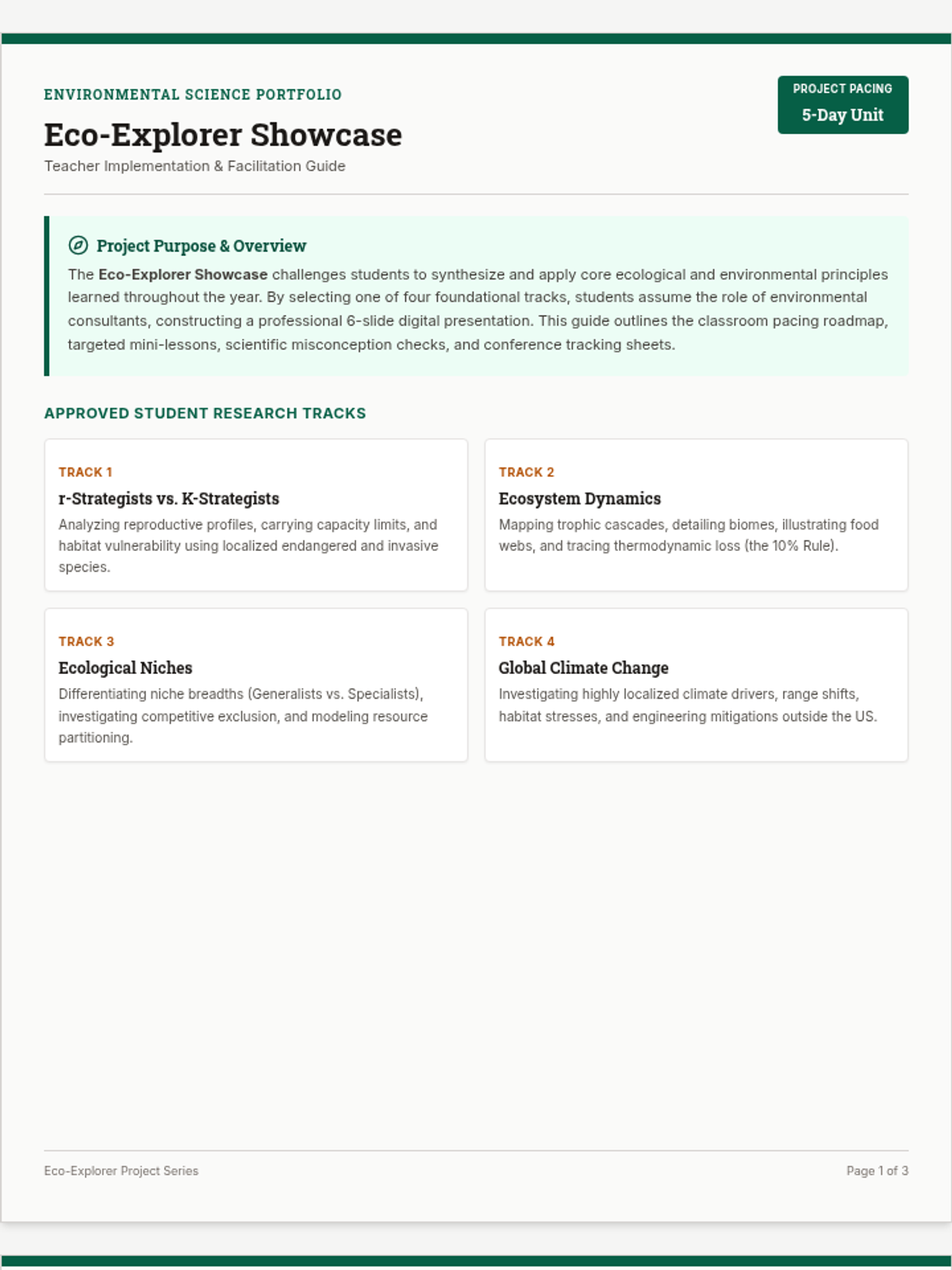
A comprehensive pedagogical implementation guide for teachers, including a 5-day pacing schedule, day-by-day mini-lessons, key scientific misconceptions to monitor, differentiation plans, and a printable check-in tracker.
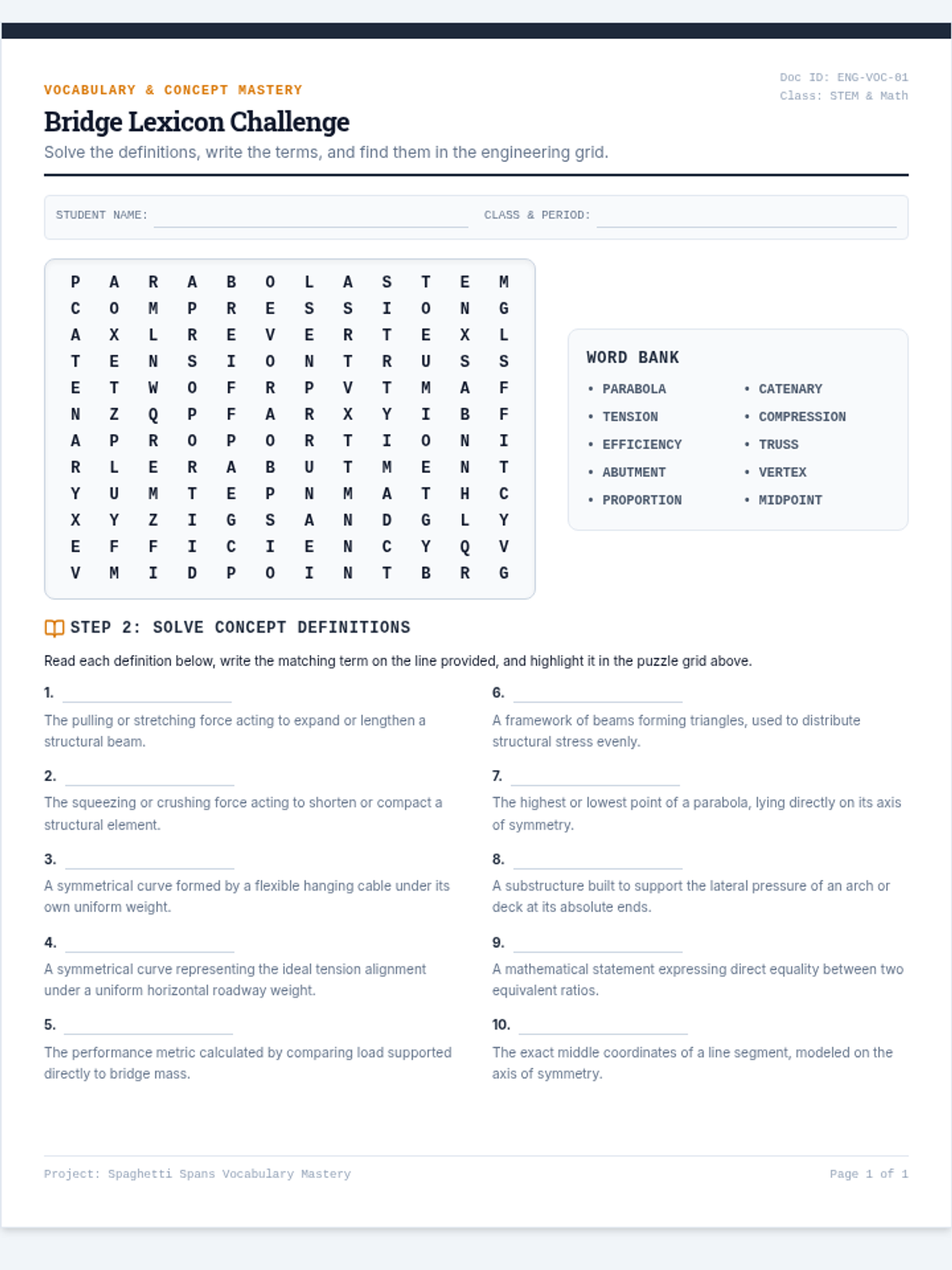
A vocabulary reinforcement worksheet combining a solvable 12x12 engineering word search grid with formal definitions matching.
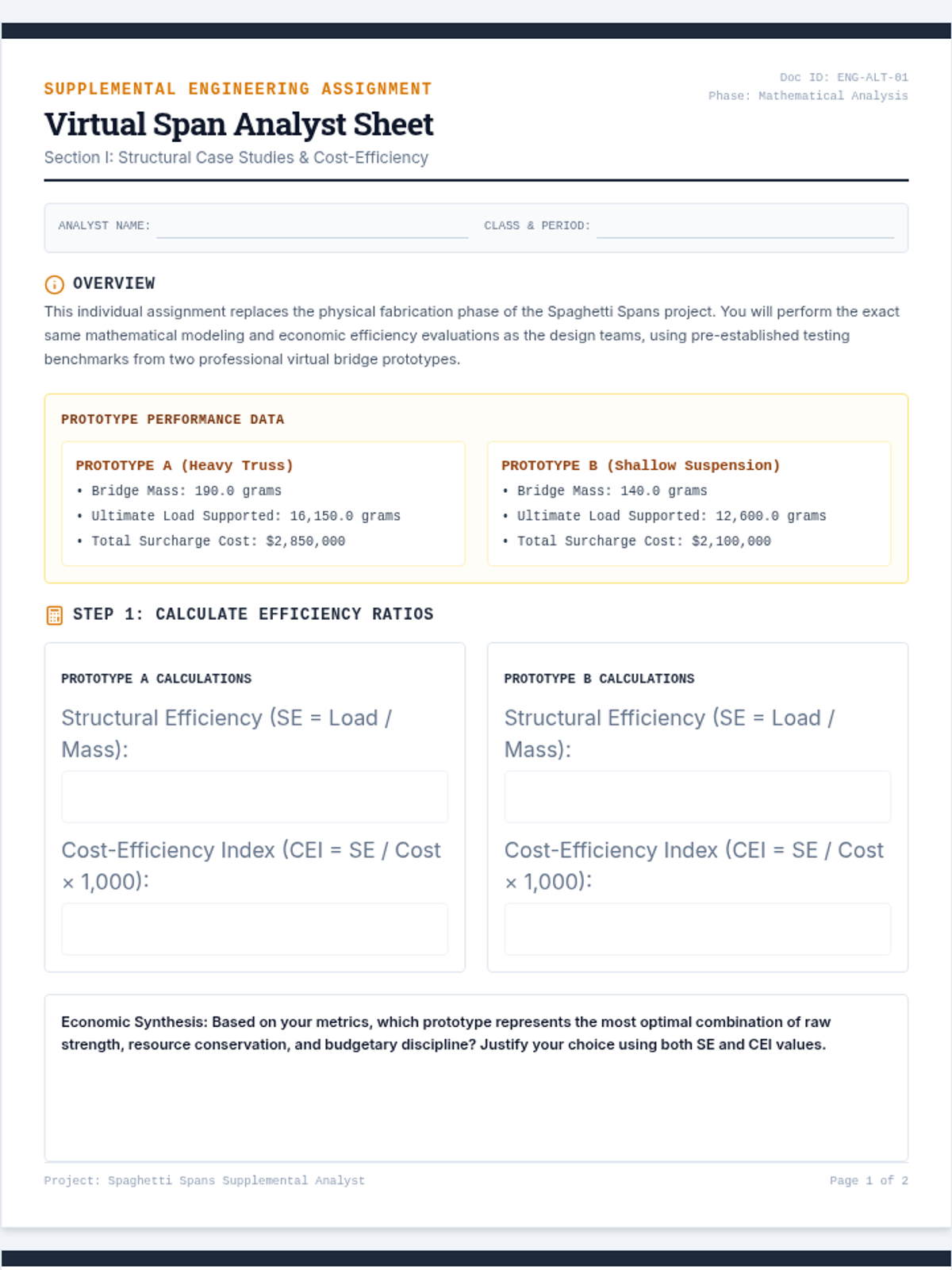
An alternate, paper-based mathematical modeling and cost-efficiency worksheet designed for students who are unable to participate in physical bridge construction.
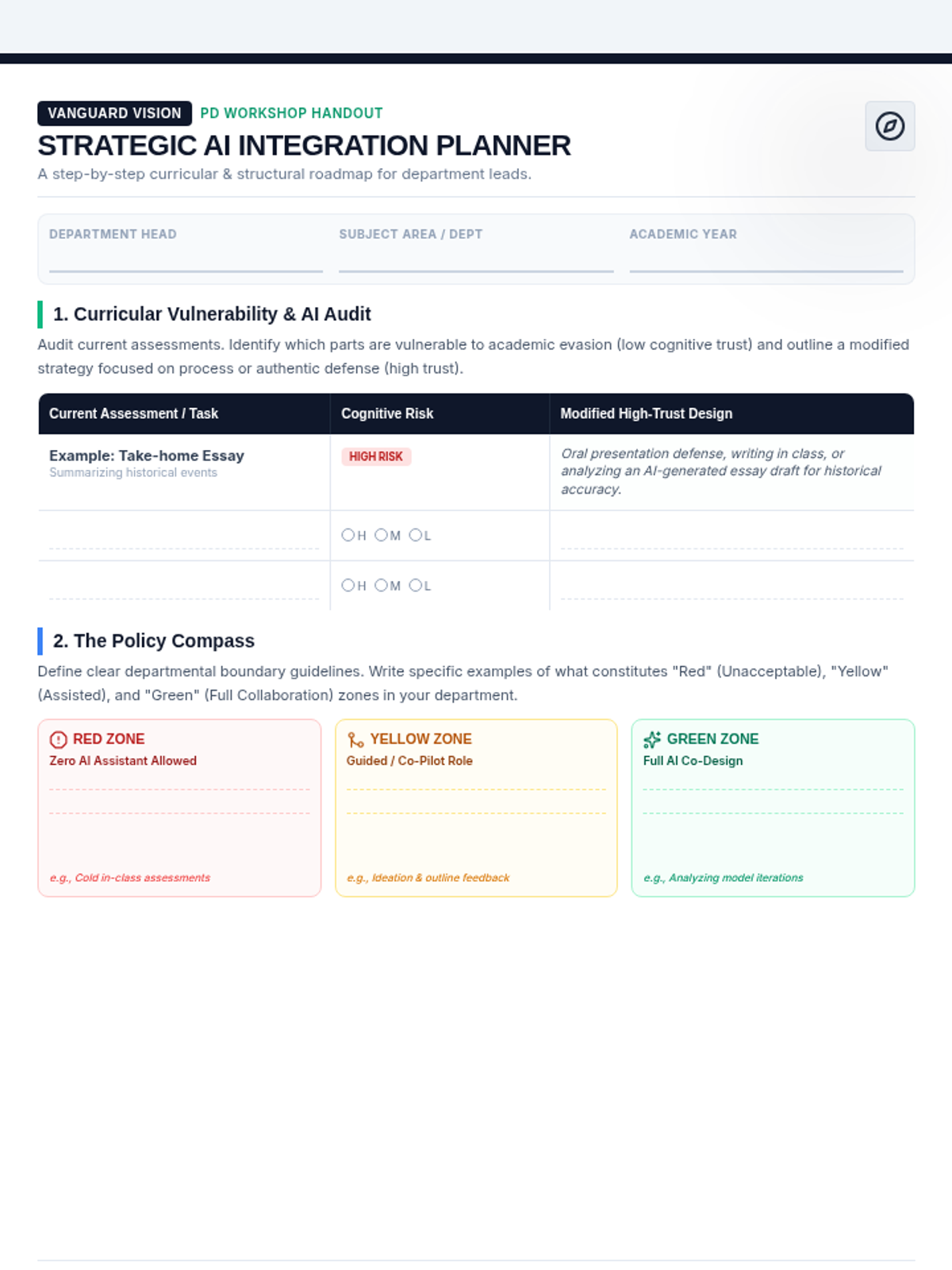
A comprehensive strategic integration roadmap for department heads, acting as a workshop planning tool to audit curriculums, design custom academic policies, and build workload-efficient AI playbooks. Includes clear work fields with pristine white backgrounds.
A high-end professional development slide deck for department heads and instructional leads on strategic AI and educational technology integration. Establishes core frameworks, curricular adaptations, teacher efficiency, and redesigned high-trust assessments with no text below 24px for maximum presentation legibility.
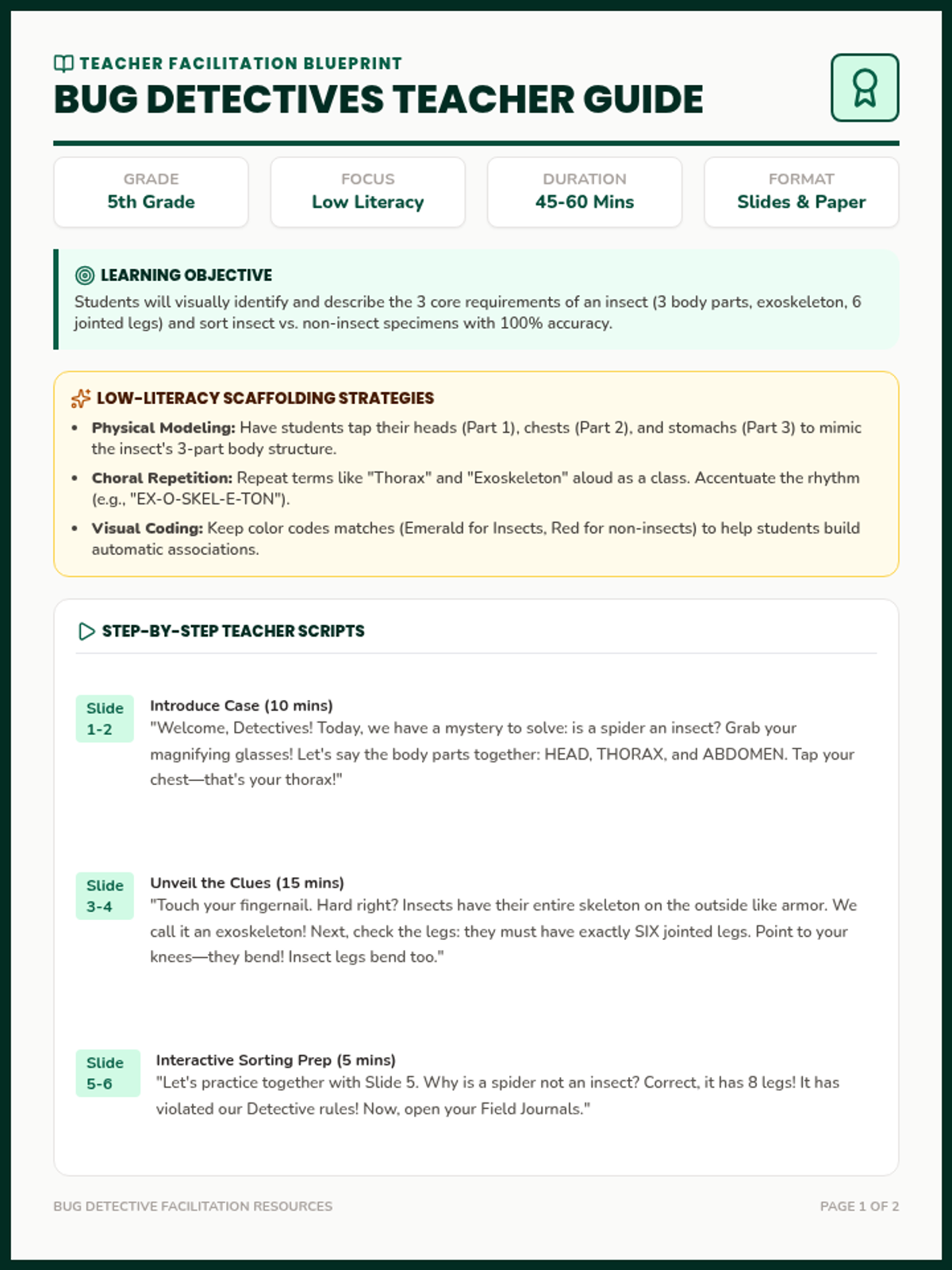
A comprehensive 2-page print-ready teacher blueprint and answer key. Page 1 contains a detailed pacing breakdown, instructional script matched to slides, and critical pedagogical scaffolding strategies for students with low literacy. Page 2 provides explicit answer keys for both the student Field Journal and Sorting Board, alongside formative checklist diagnostics.
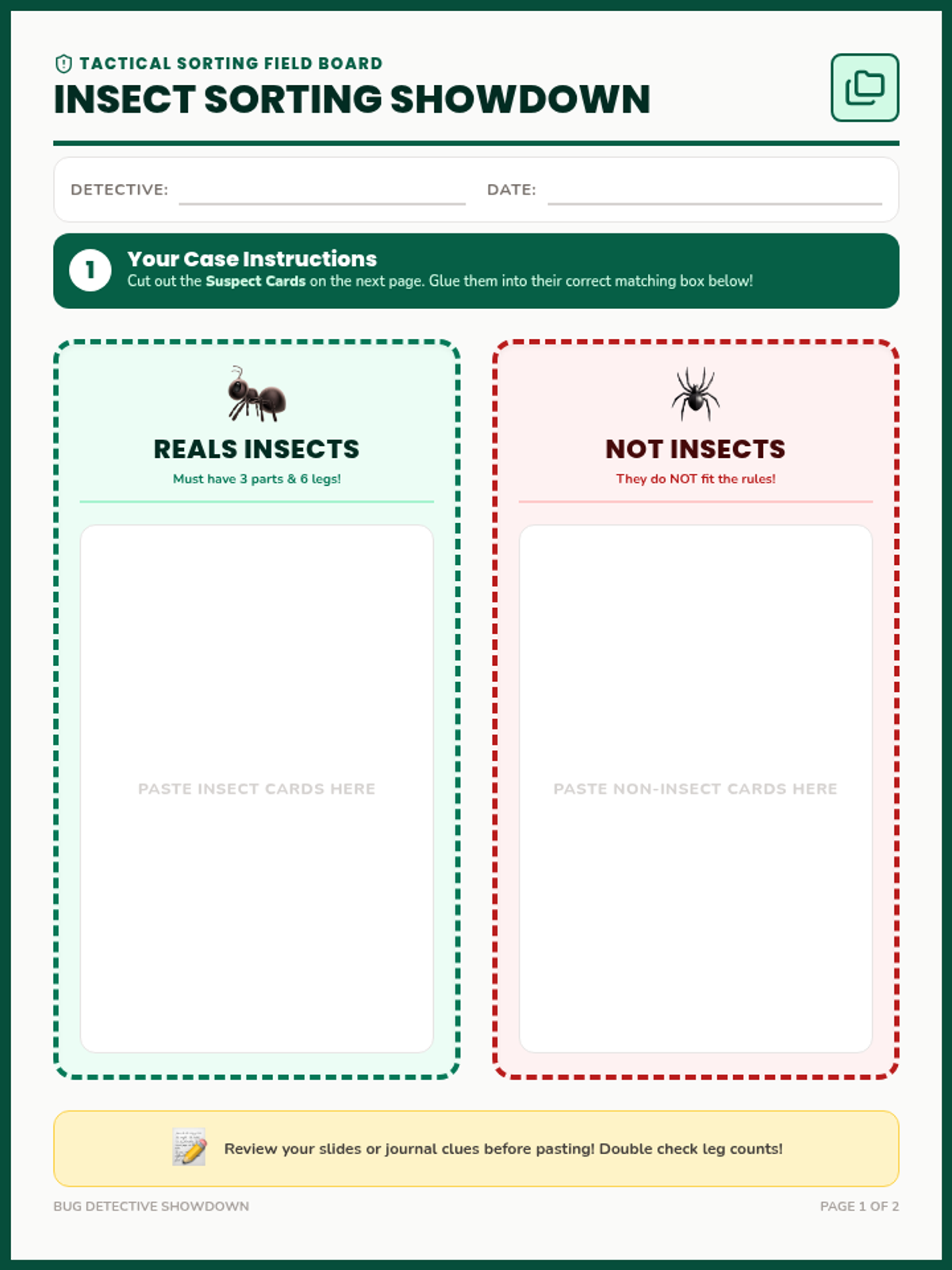
An interactive 2-page student sorting activity. Page 1 contains a high-contrast sorting board with distinct, labeled zones for insects vs. non-insects. Page 2 provides six stylized suspect cards with emoji illustrations and key body-part and leg-count clues, designed for students to cut out, analyze, and paste on the sorting board.
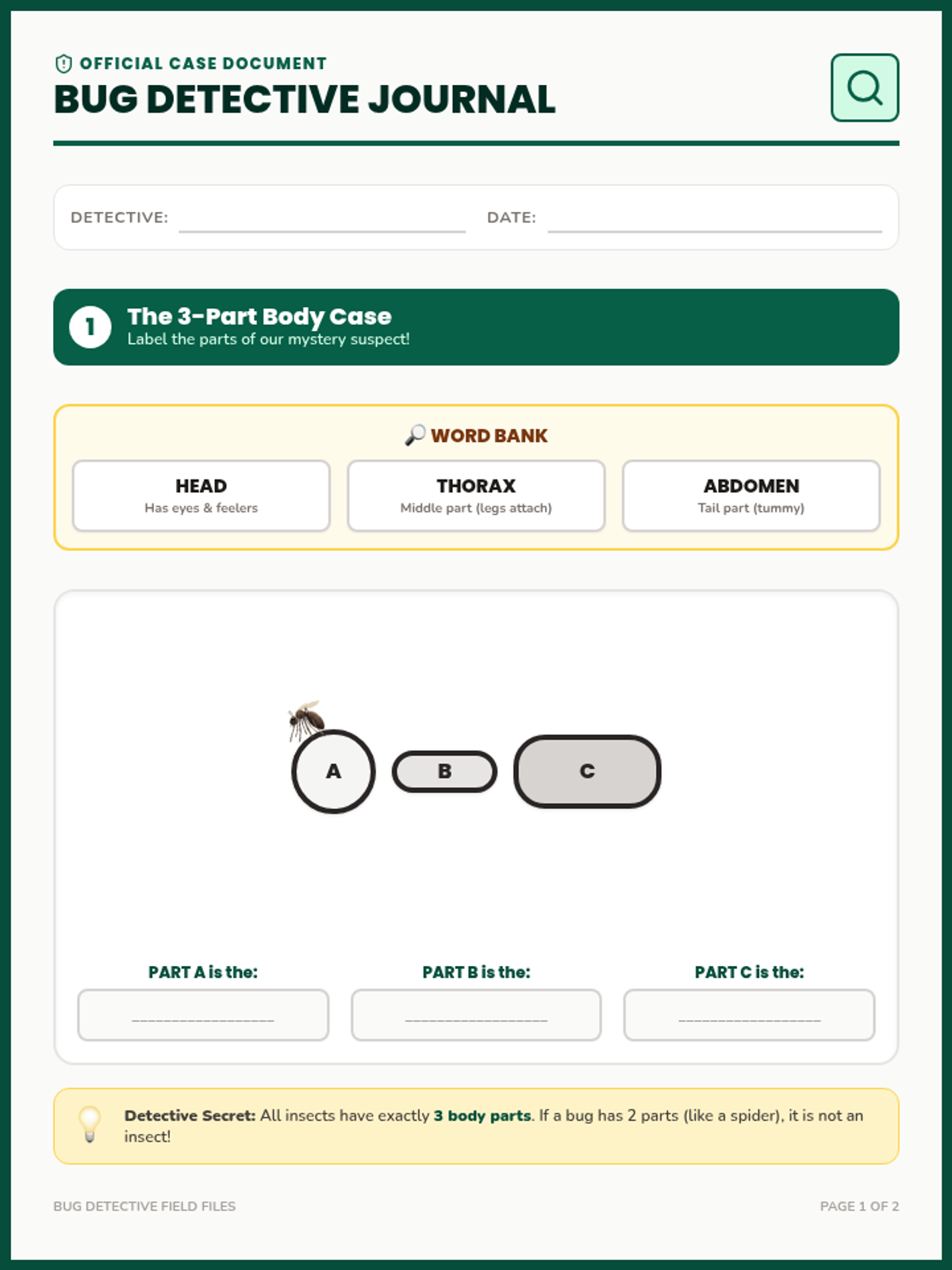
A printable 2-page student Field Journal worksheet tailored for 5th-grade students with limited literacy. Page 1 features a large visual labeling activity for the three primary body parts with a high-contrast visual word bank, while Page 2 includes a structured exoskeleton question and an active drawing canvas where students practice adding six jointed legs to a highlighted thorax.
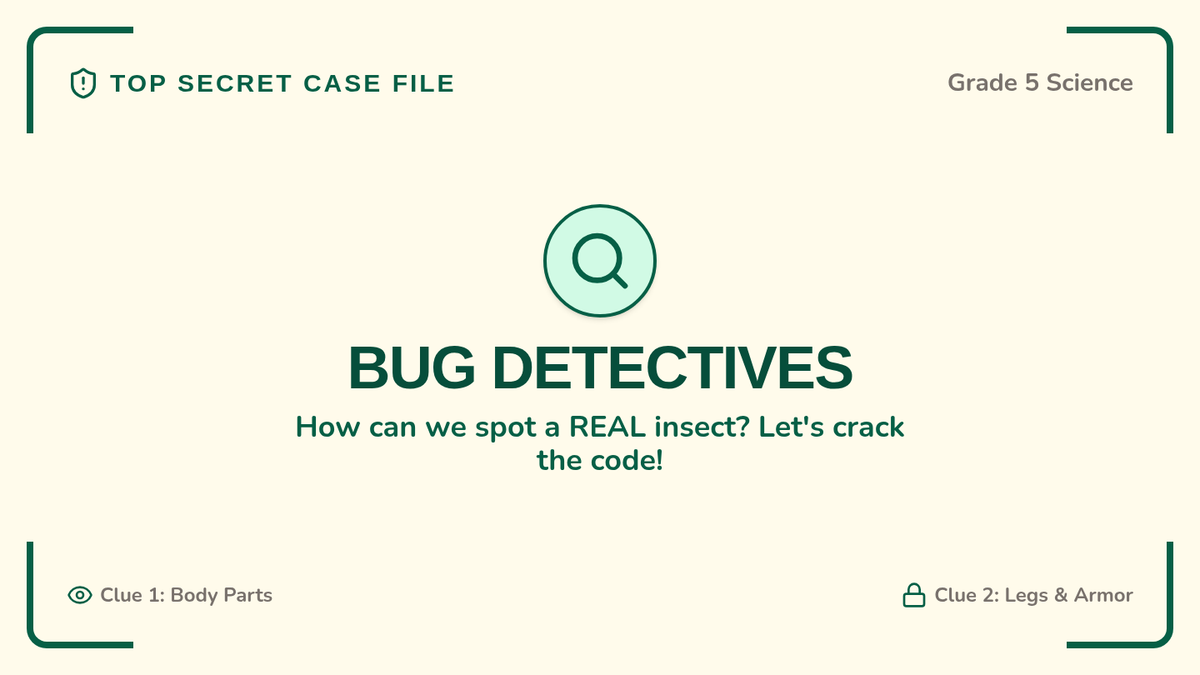
Visually engaging slides designed for 5th-grade students with limited literacy, featuring high-contrast diagrams, bold icons, minimal text, and large 28px+ font sizes. The slides introduce the three core characteristics of insects: three-part body structures, exoskeletons and sensory antennae, and six jointed legs, finishing with an interactive sorting challenge.
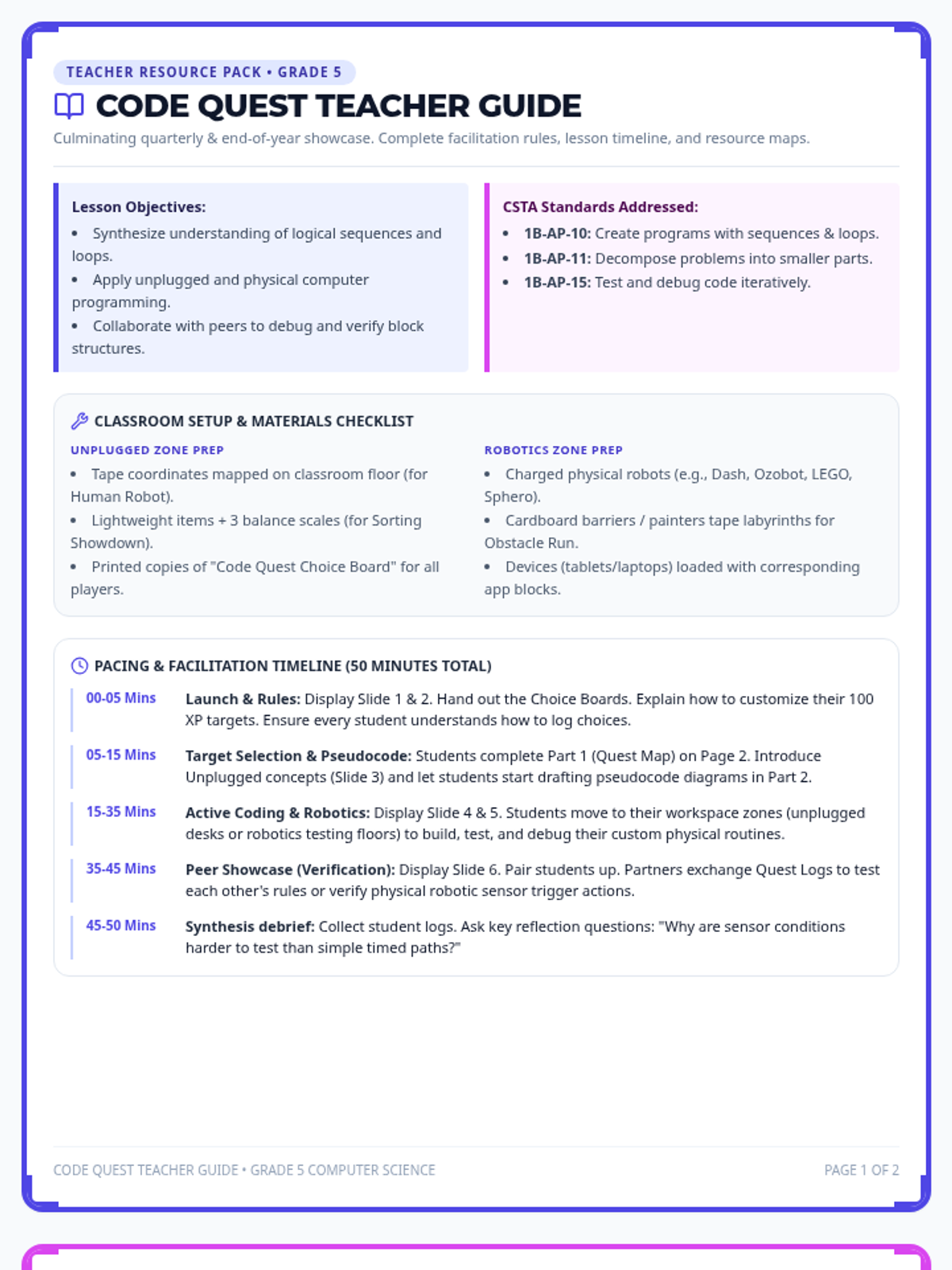
An essential 2-page teacher facilitation resource. Page 1 maps a detailed 50-minute pacing timeline and preparation guidelines. Page 2 provides an aligned performance rubric and standard troubleshooting diagnostics for physical robotics loops.
Stunning, high-impact presentation slides featuring retro-arcade vibes, structured directions for the Unplugged and Robotics modules, timer and engineering advice, and interactive peer-sharing instructions.
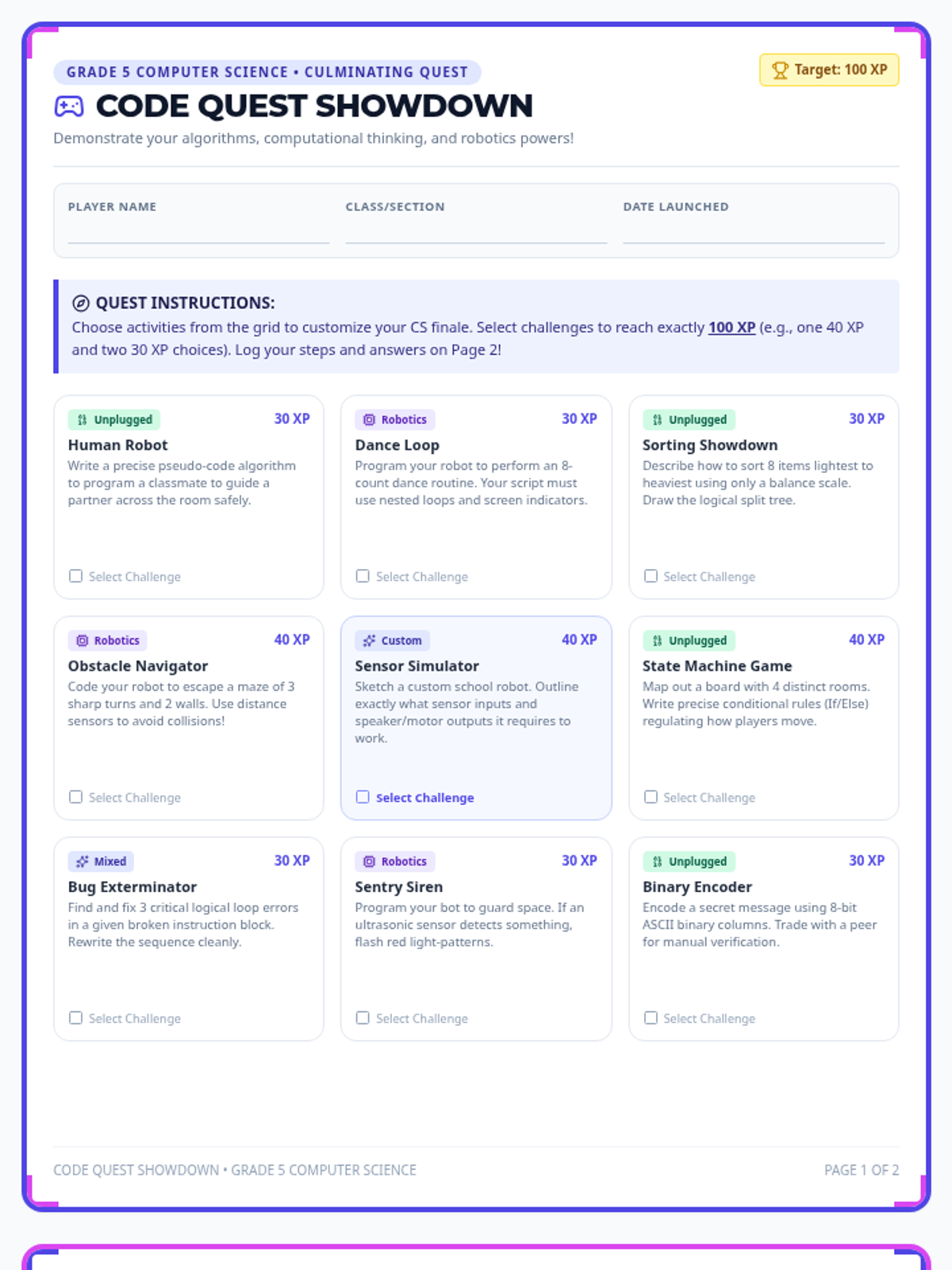
An engaging, dual-page retro-arcade style Choice Board and Student Quest Log. Page 1 contains a curated 3x3 choice matrix spanning algorithms and robotics categorized by difficulty/XP. Page 2 provides a clean student planning, pseudocode, drawing, and reflection journal.
A high-impact instructional presentation introducing the Spaghetti Spans STEM challenge, comparing catenary and parabolic curves, explaining structural efficiency metrics, and walking through coordinate modeling.
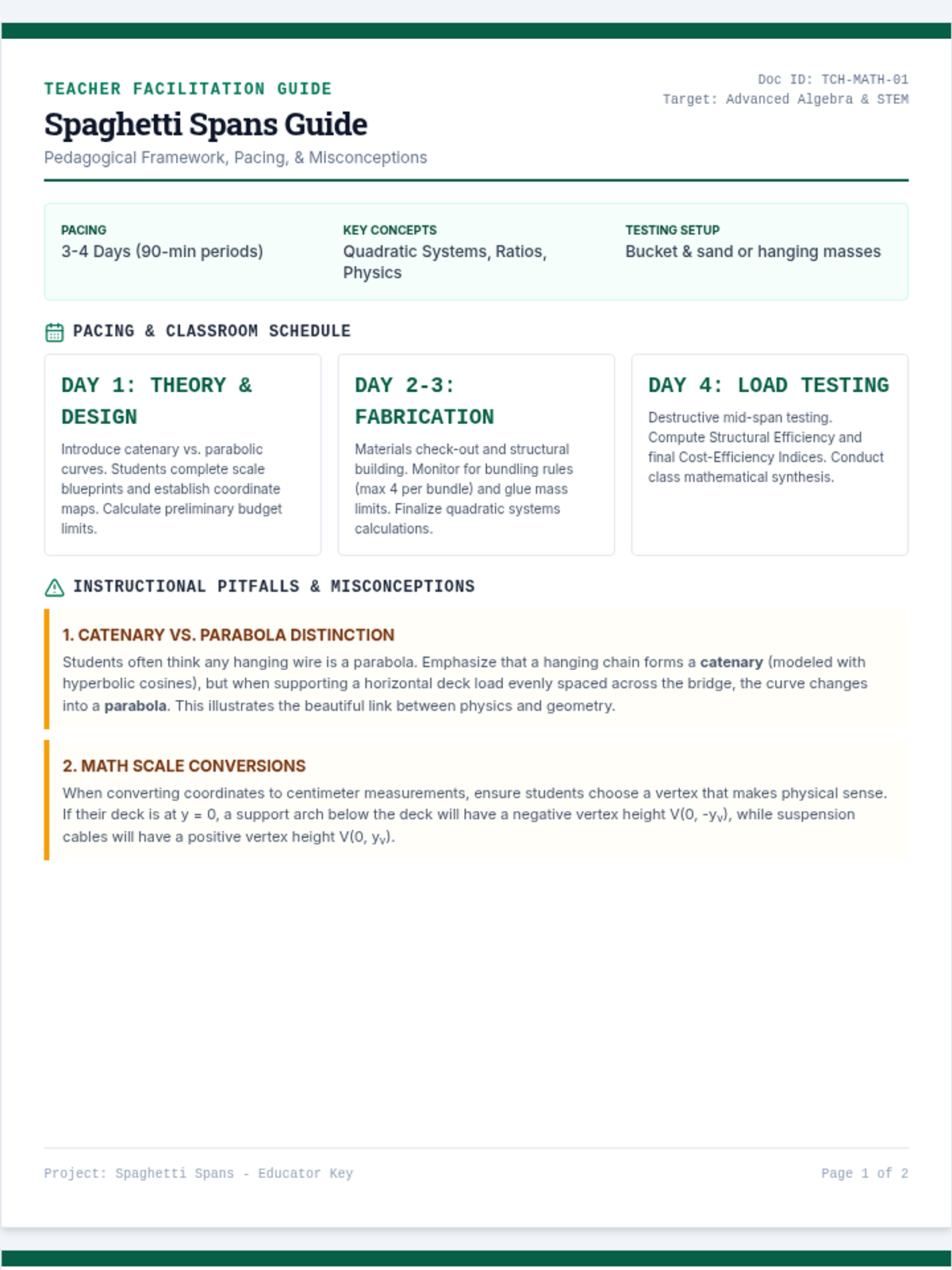
An instructional guide for educators, featuring grading tips, setup instructions, common misconceptions, and worked mathematical exemplars for quadratic curve fitting.
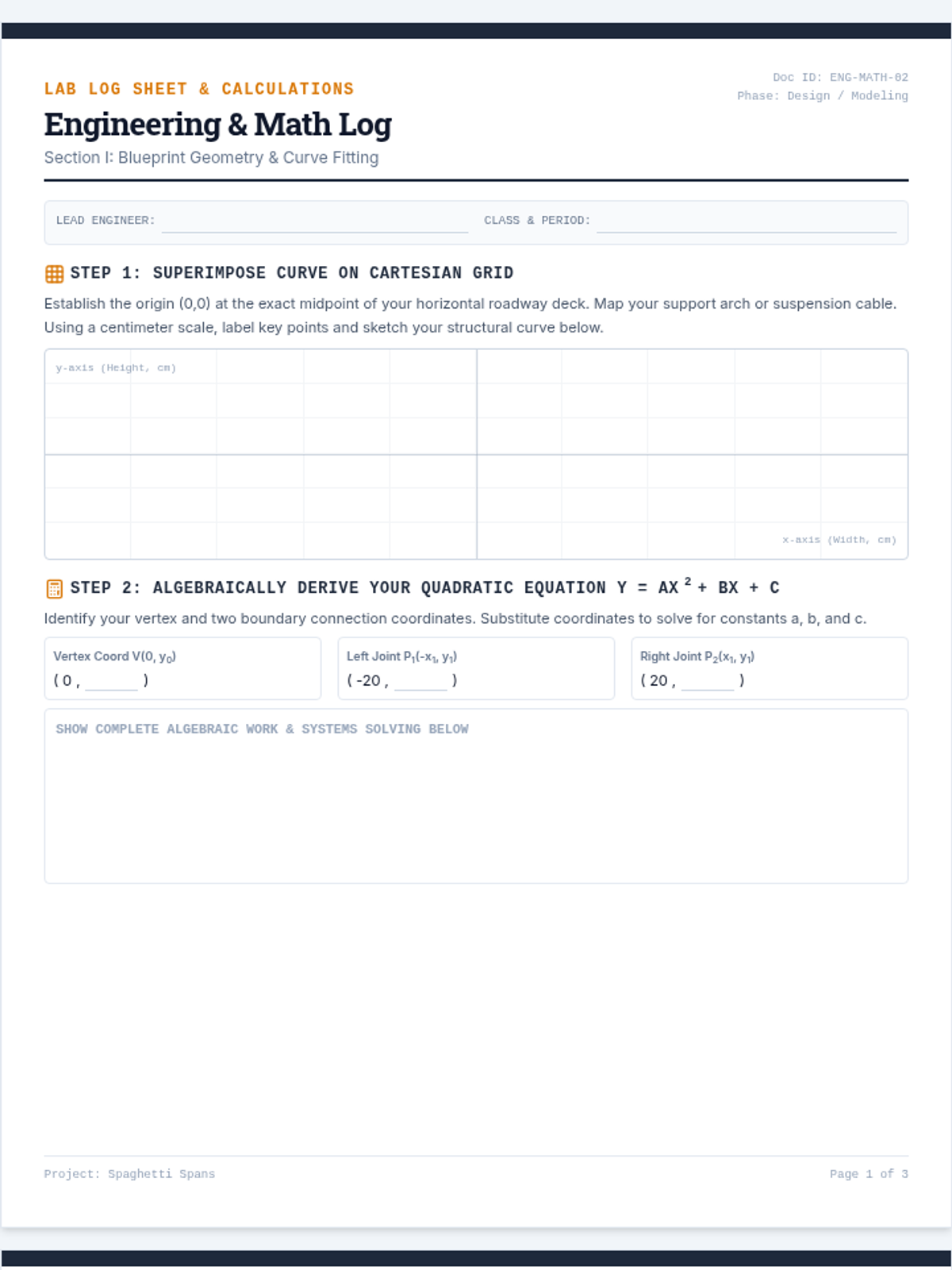
A step-by-step student lab report template for blueprinting, coordinate mapping, cost tracking, load testing, and mathematical performance analysis.
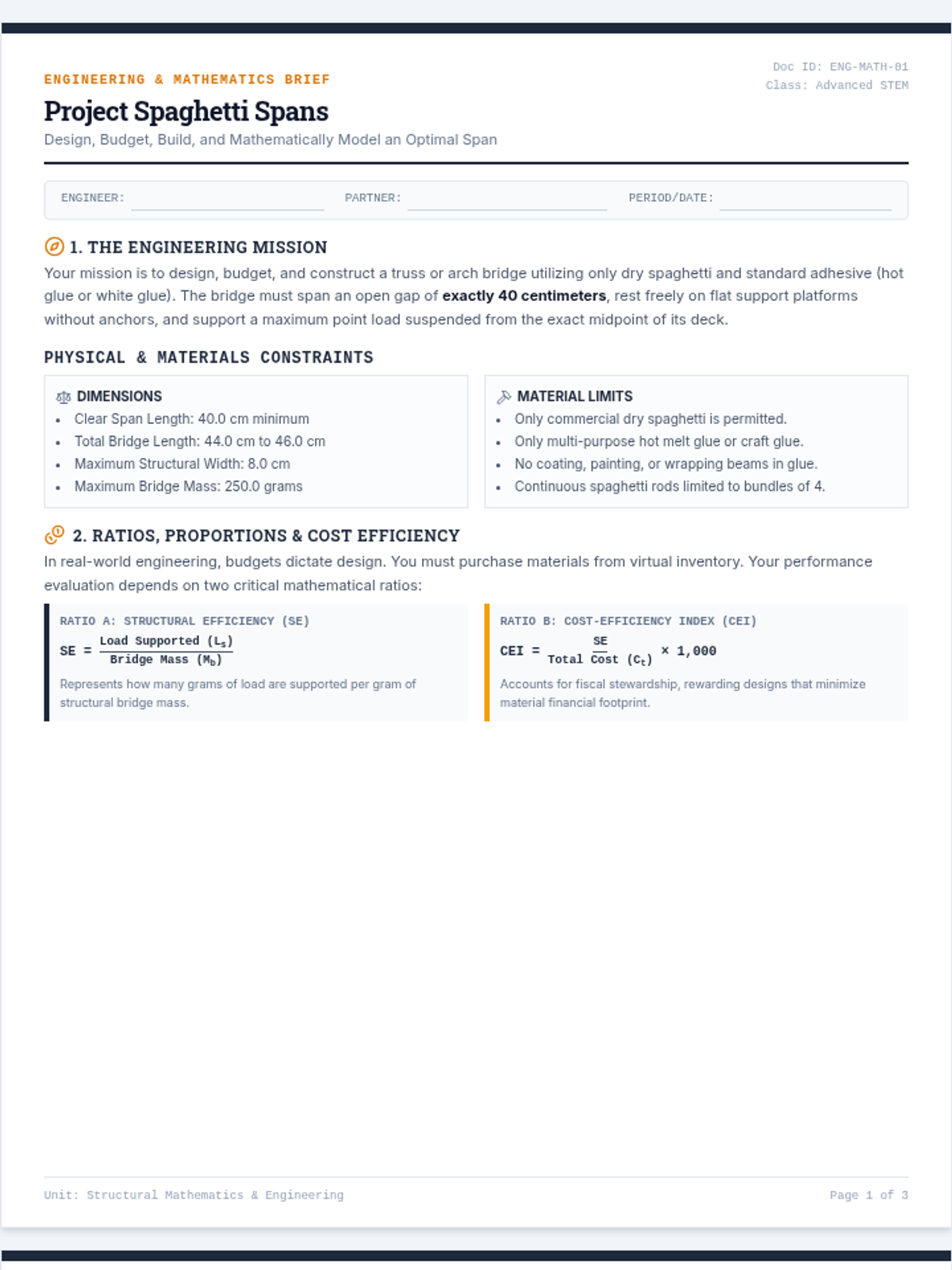
A comprehensive student guide containing engineering constraints, material costs, mathematical modeling theory (quadratic and catenary), and a detailed assessment rubric.
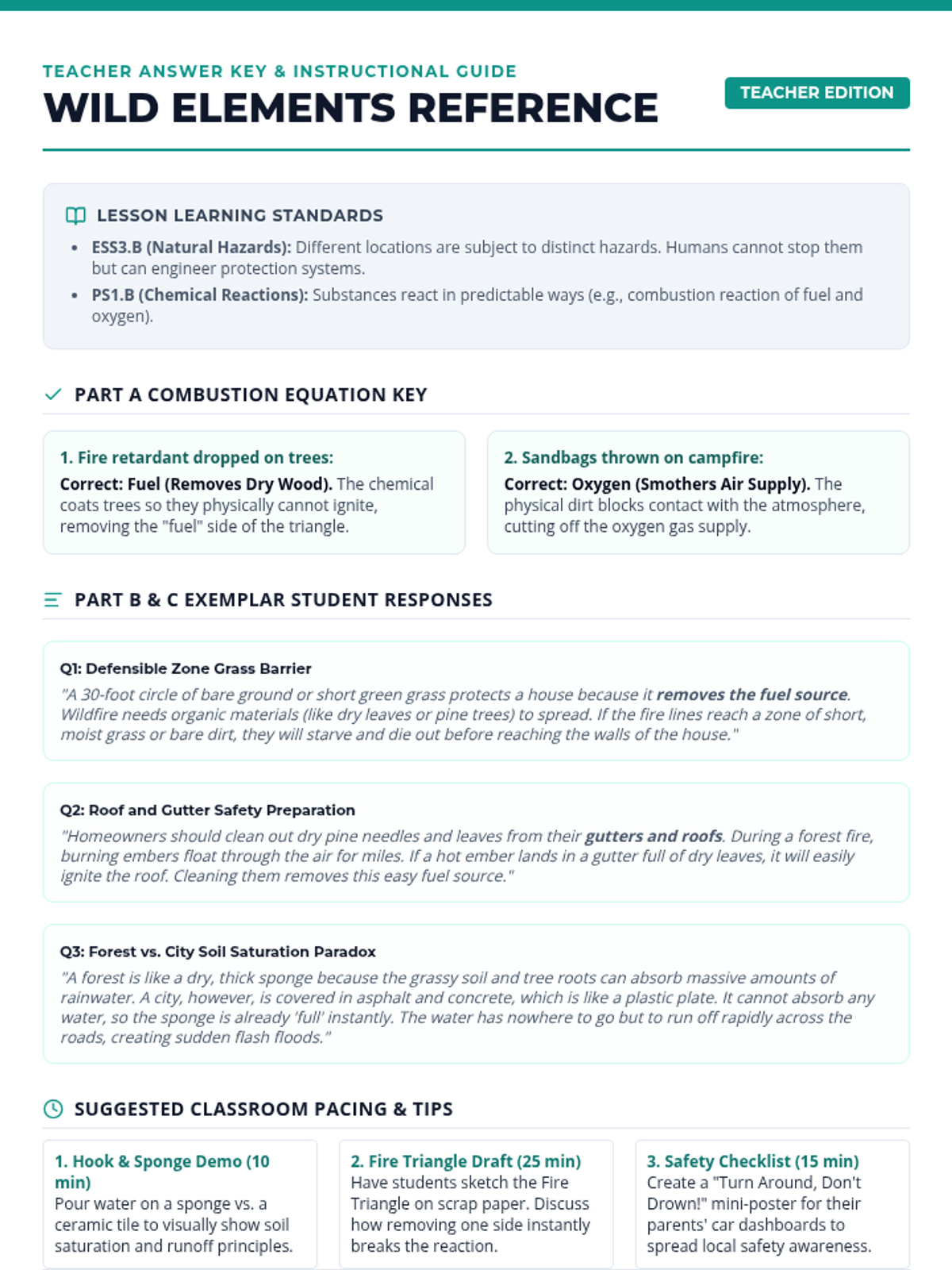
Teacher instructional reference and answer key for the Wild Elements lesson. Includes detailed matching keys, high-quality sample written student responses, and instructional pacing guidelines.
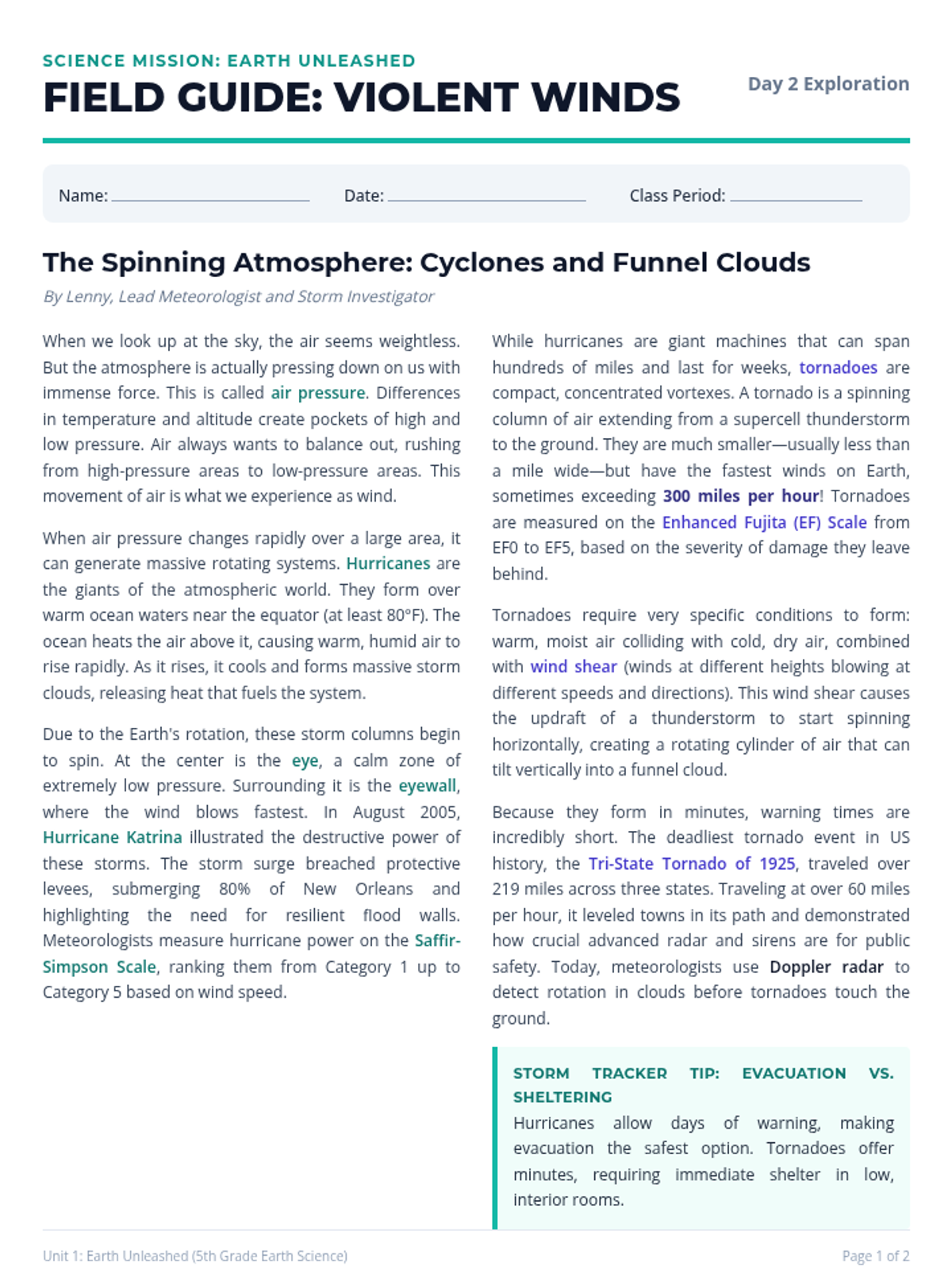
A student-facing 2-page field guide reading investigation on hurricanes, tornadoes, and pressure systems. Includes comparison matrices and storm shelter safety plan drafting.
Interactive instructional slide deck for Lesson 3 on wildfires and floods. Introduces the Fire Triangle, soil saturation, flash floods vs. river floods, historical events (1871 Chicago and 1927 Mississippi), and urban mitigation strategies.
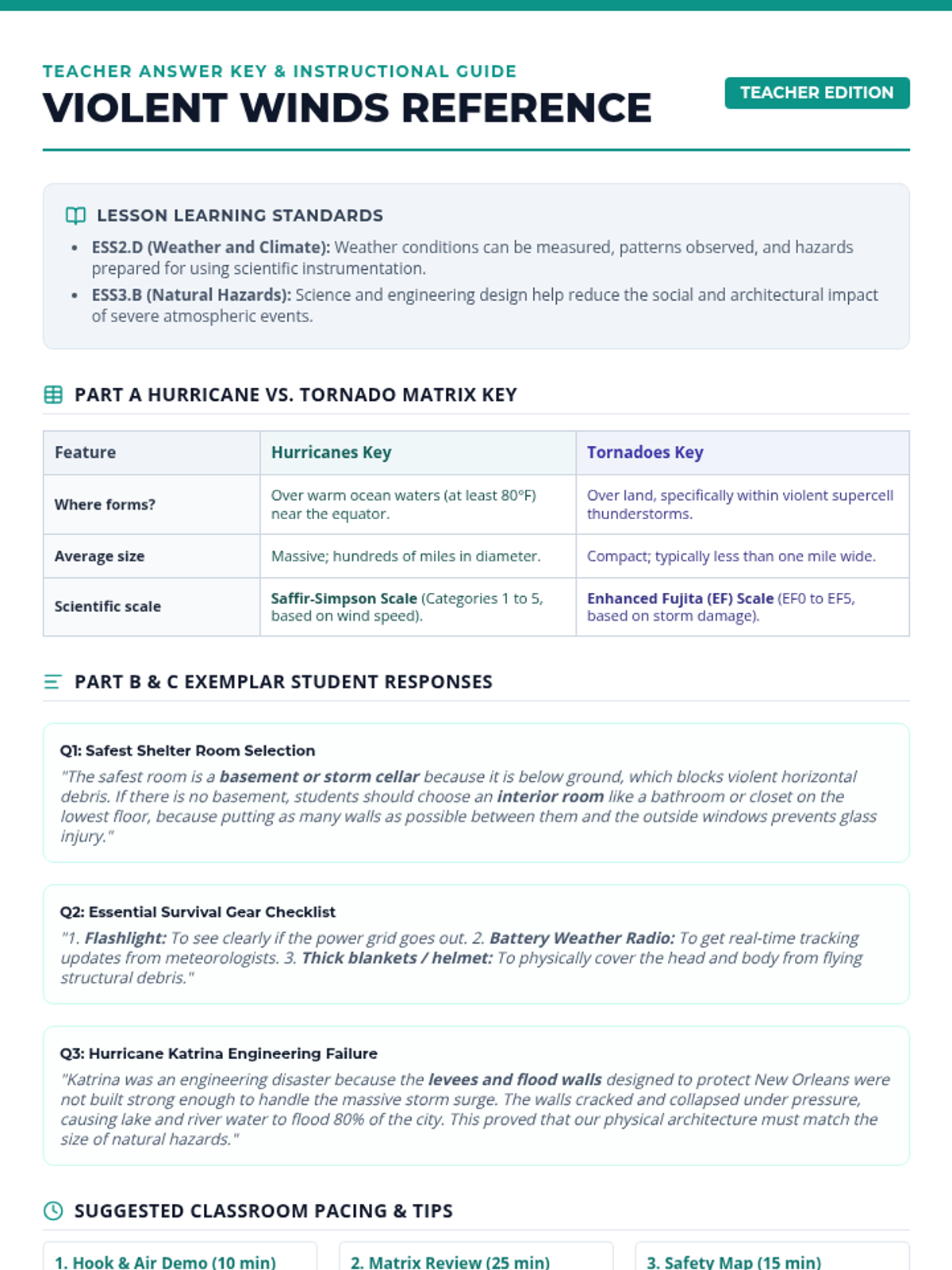
Teacher instructional reference and answer key for the Violent Winds lesson. Includes detailed comparison keys, high-quality sample written student responses, and instructional pacing guidelines.
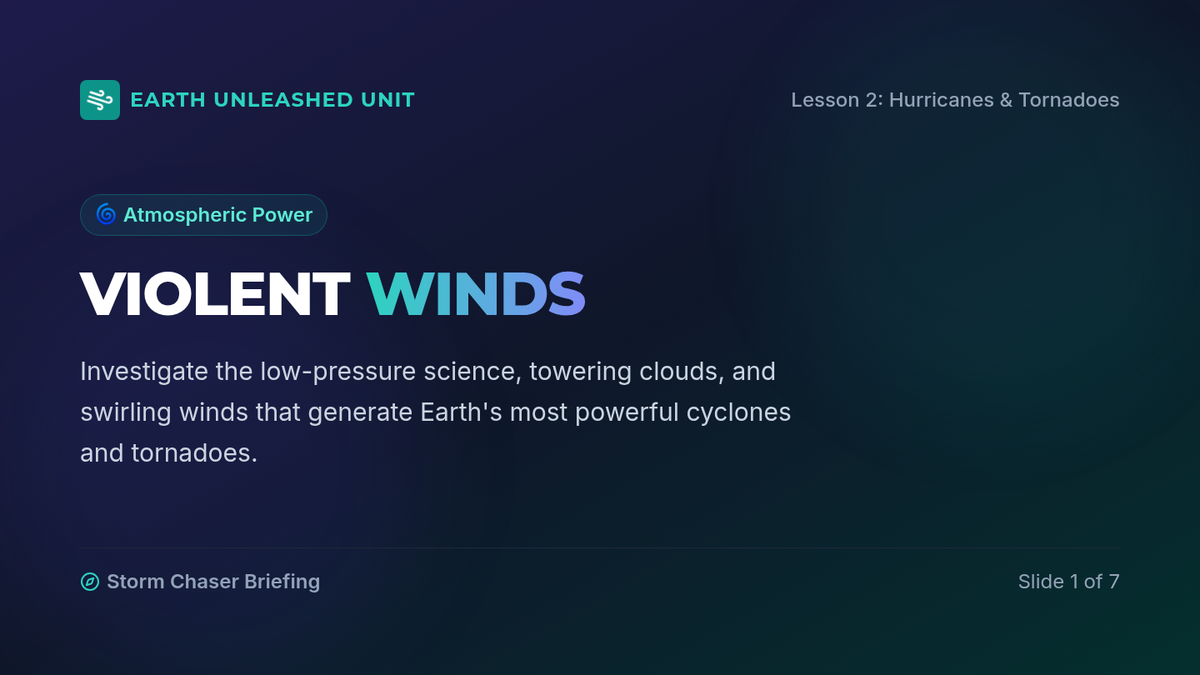
Interactive instructional slide deck for Lesson 2 on hurricanes and tornadoes. Introduces atmospheric pressure, hurricane eye/eyewall structures, tornado supercells, historical disasters (Katrina and 1925 Tri-State), and critical wind safety drills at a fifth-grade level.
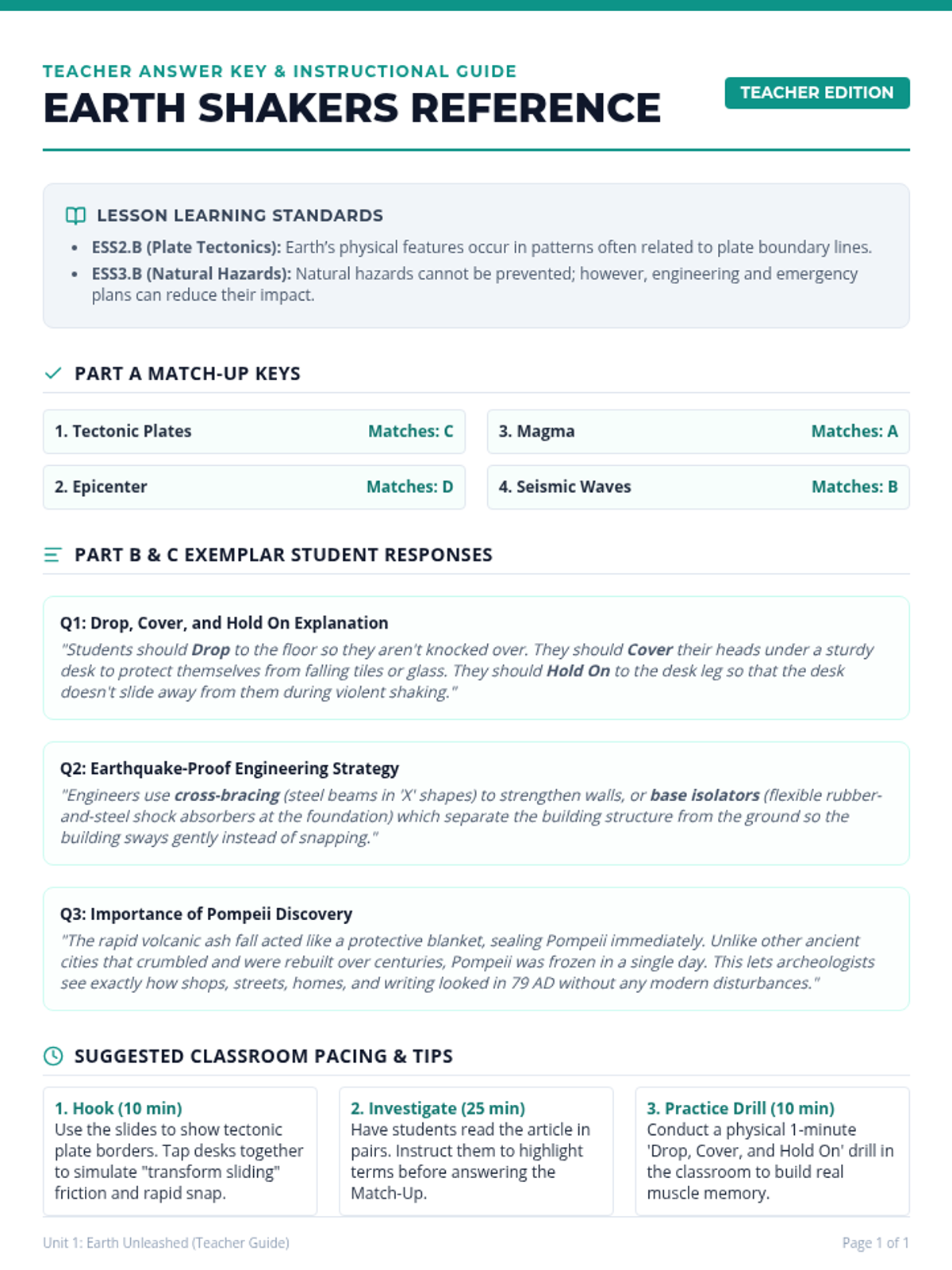
Teacher instructional reference and answer key for the Earth Shakers lesson. Includes detailed matching keys, high-quality sample written student responses, and instructional pacing guidelines.
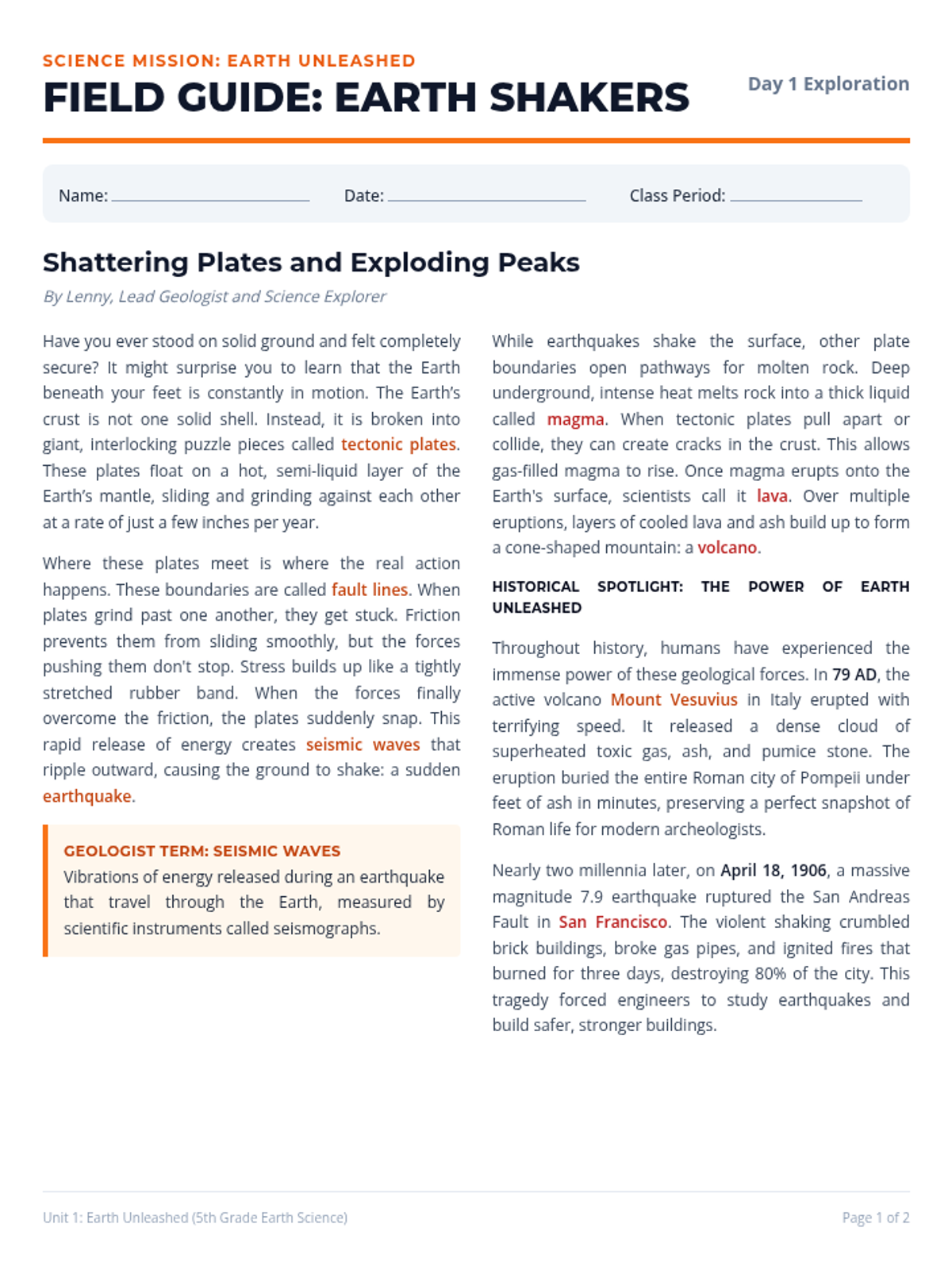
A student-facing 2-page field guide reading investigation on plate tectonics, earthquakes, volcanoes, and historic disasters (Vesuvius & San Francisco). Includes scientific reading, vocabulary matching, and safety planner writing fields.
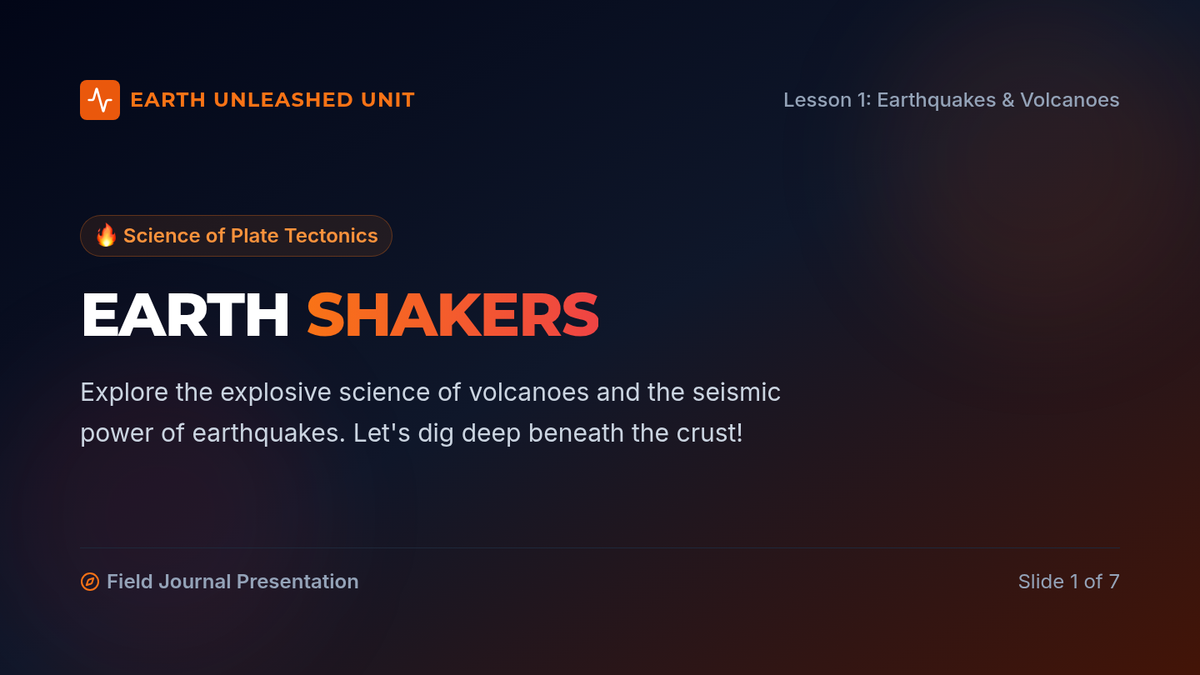
Interactive instructional slide deck for Lesson 1 on volcanoes and earthquakes. Introduces tectonic plates, seismic waves, magma vs. lava, historical case studies, and critical safety drills at a fifth-grade reading level.
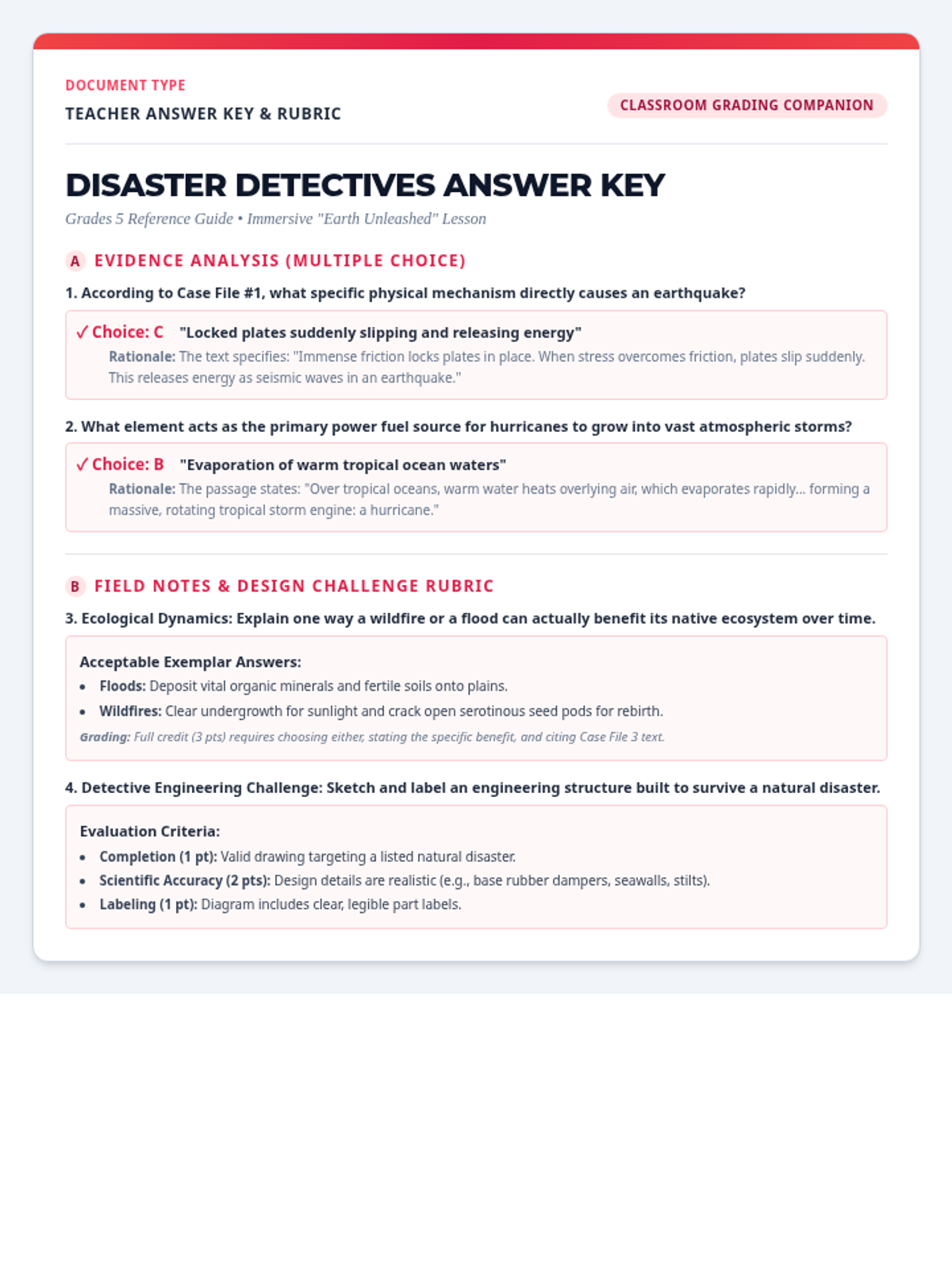
A detailed teacher's answer key and grading rubric matching the 'Disaster Detectives' reading comprehension passage. Includes rationales, exemplar answers, and point breakdowns.
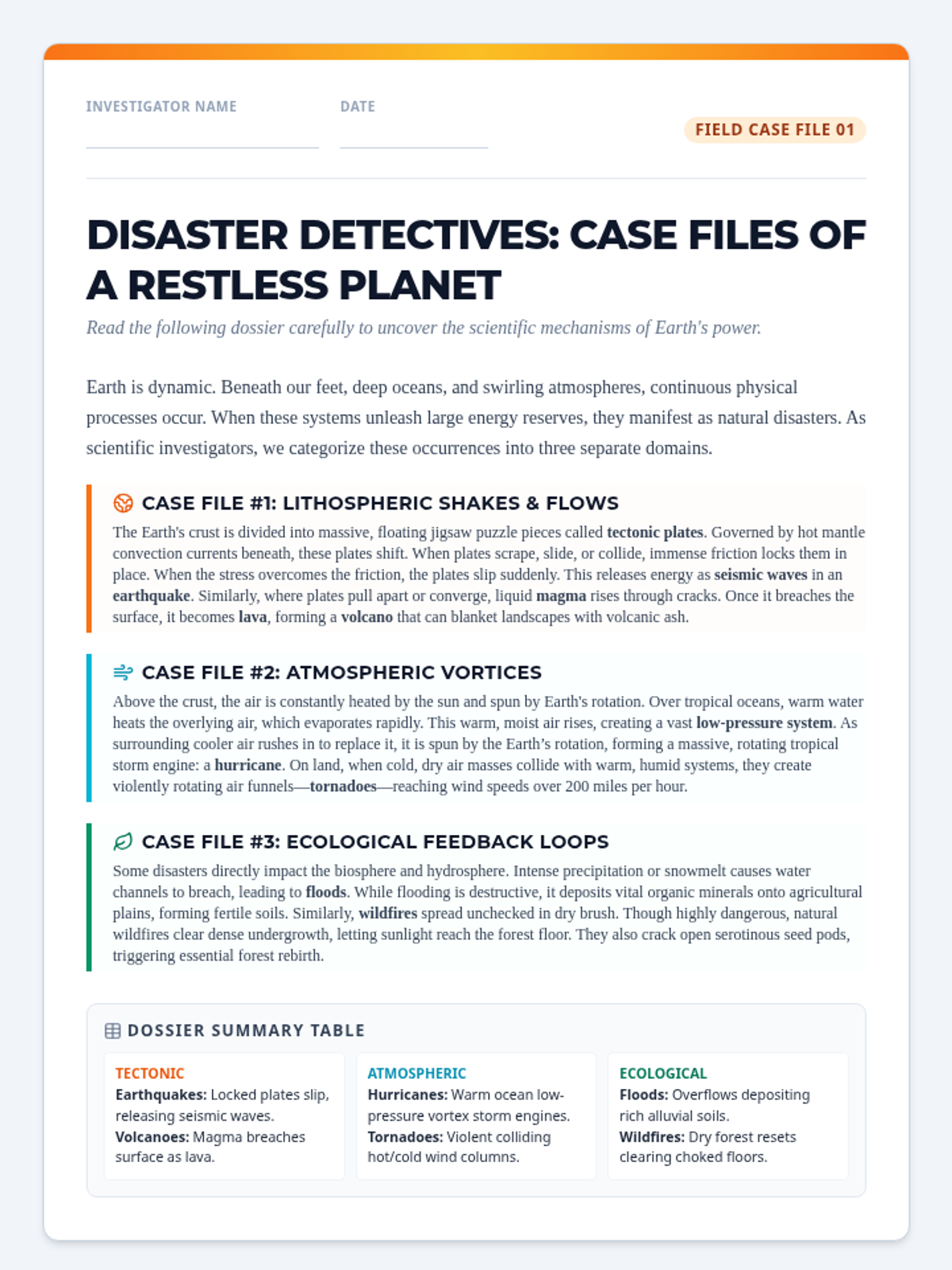
An investigator-themed reading comprehension passage and worksheet. Features three detailed natural disaster 'Case Files' followed by multiple-choice evidence questions and an engineering sketch challenge.
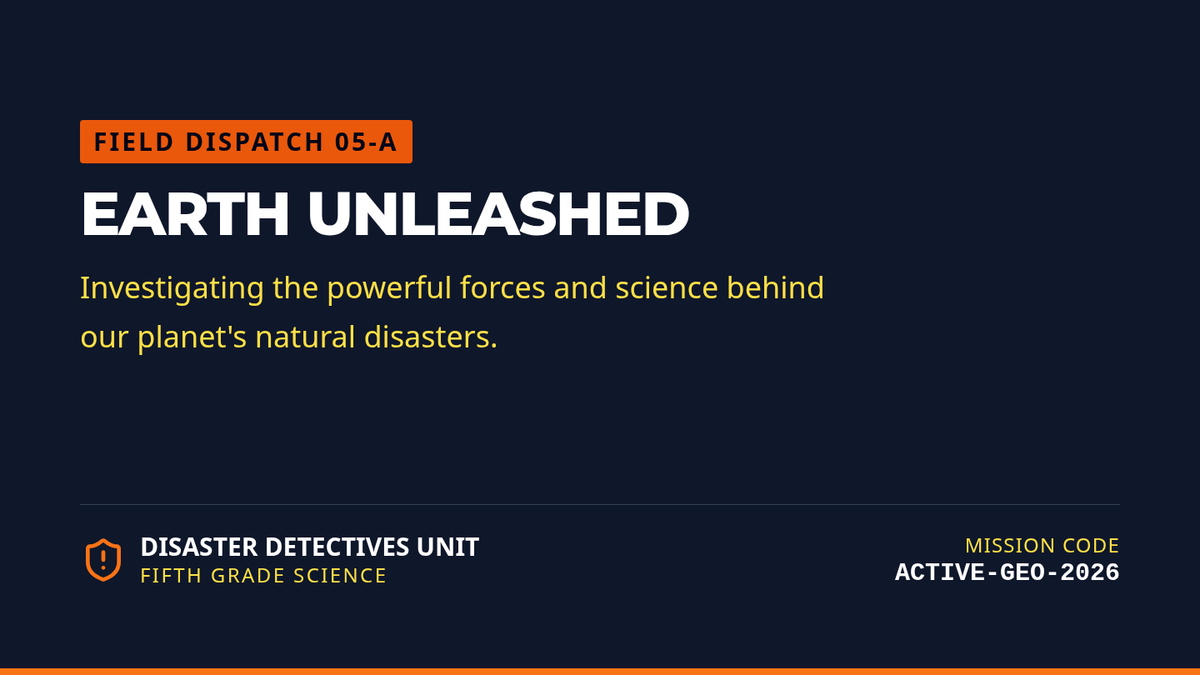
An immersive interactive slideshow introducing natural disasters across tectonic, atmospheric, and ecological domains. Tailored with large, legible fonts (>24px) and deep-contrast warning-style visuals to engage fifth-graders.
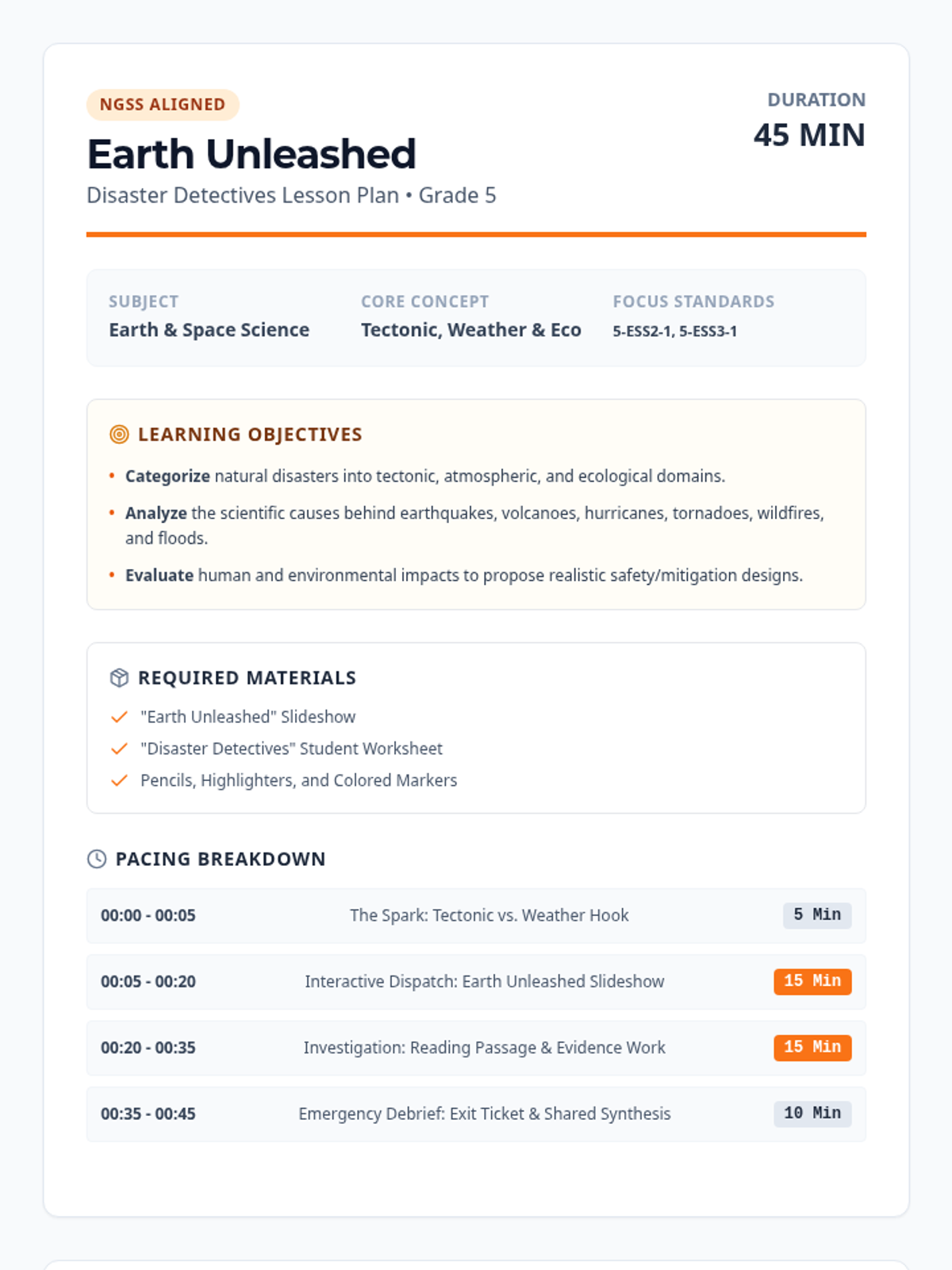
A complete, professionally structured 45-minute lesson plan for the 'Earth Unleashed' unit. Features NGSS standards mapping, precise pacing guides, key scientific vocabulary, differentiation pathways, and teacher scaffolding cues.
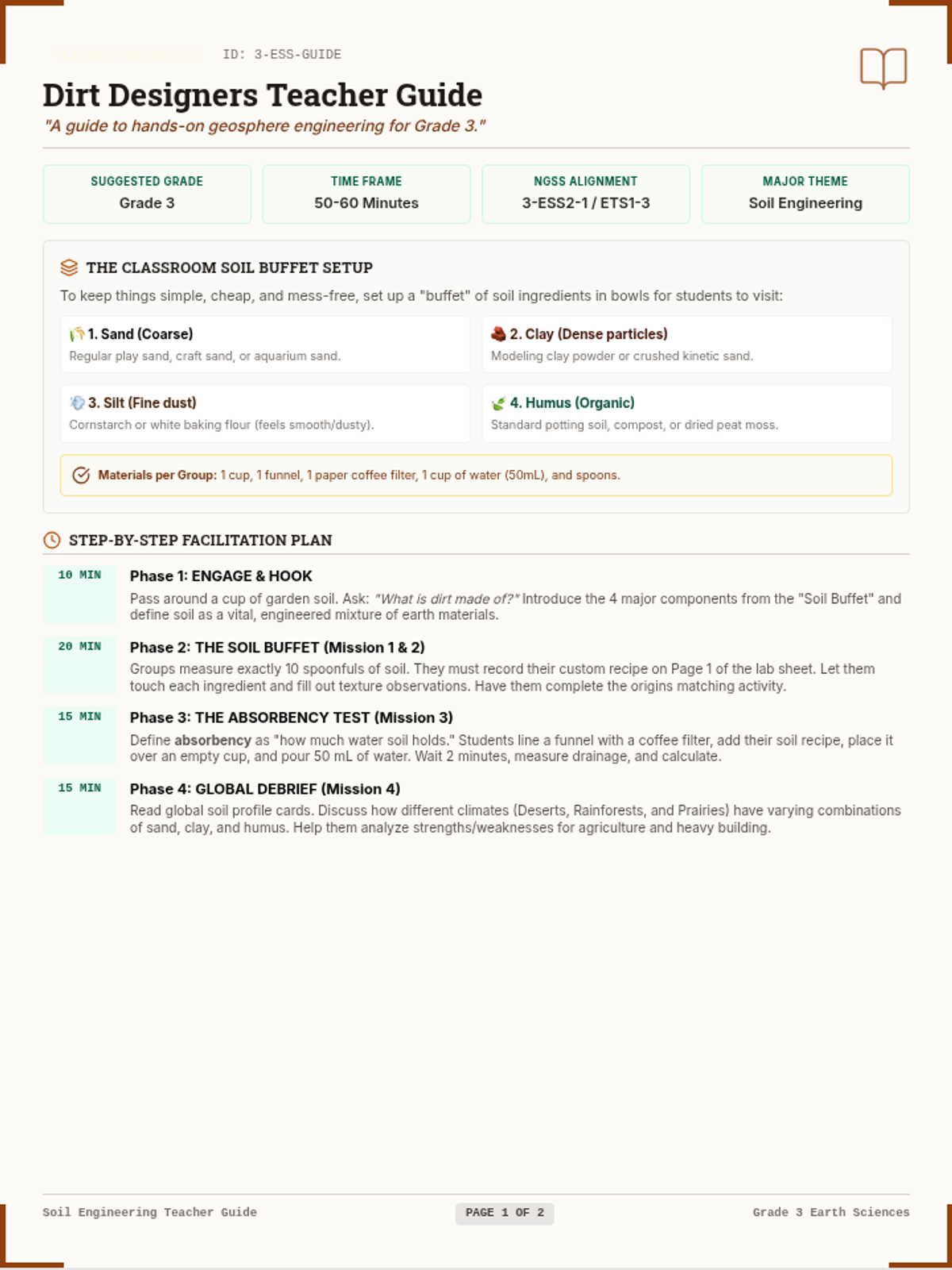
A professional 2-page teacher facilitation guide for the Dirt Designers soil engineering lesson. It outlines the classroom material setup using household items, detailed phase-by-phase pacing, pedagogical discussion prompts, scientific background, and an answer key with exemplar responses.
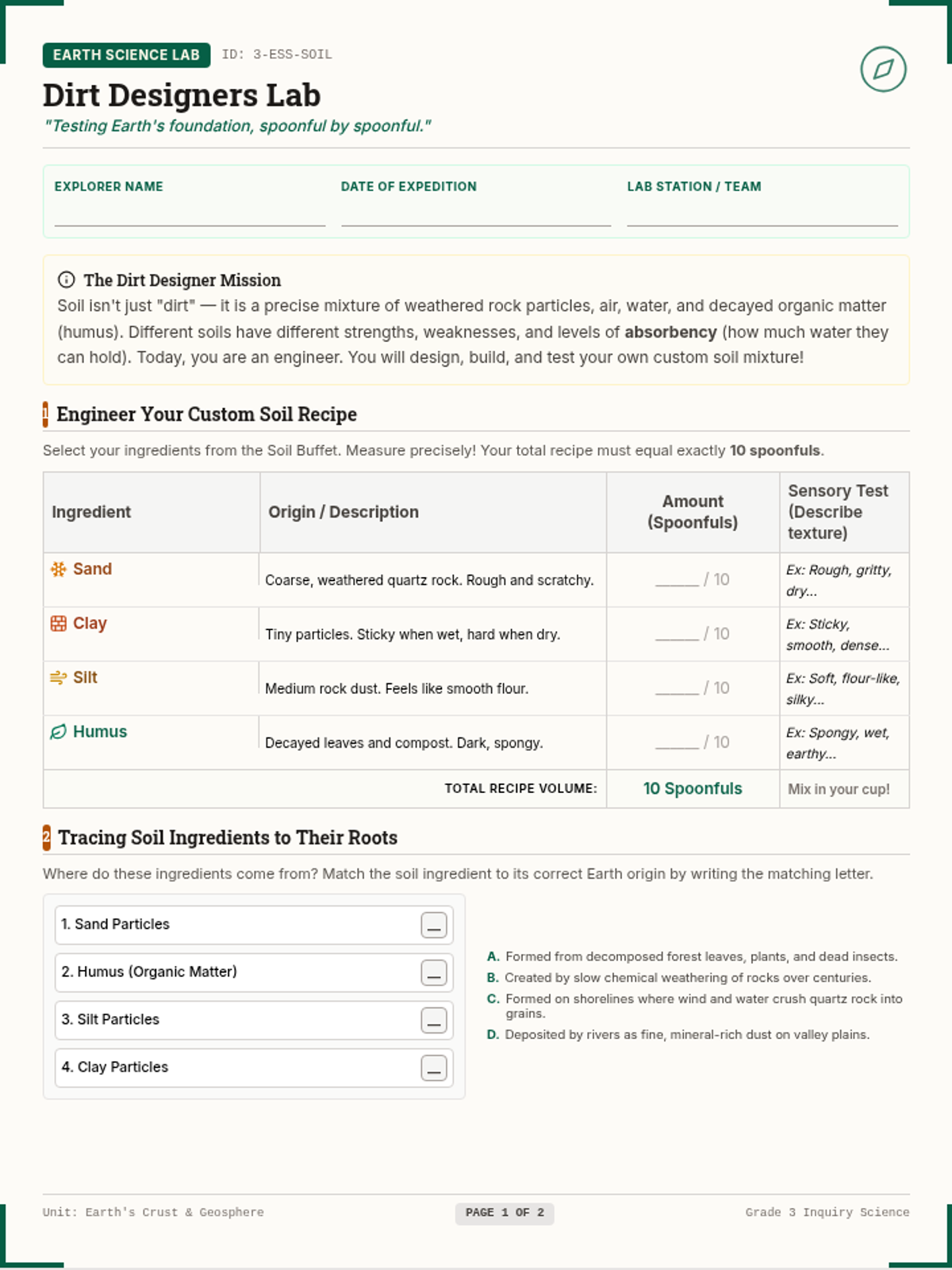
A beautifully designed, inquiry-based 2-page Earth science lab sheet for third-grade students. It lets them design custom soil recipes, test and calculate soil absorbency, and analyze global soil profiles for practical real-world uses like farming and building.
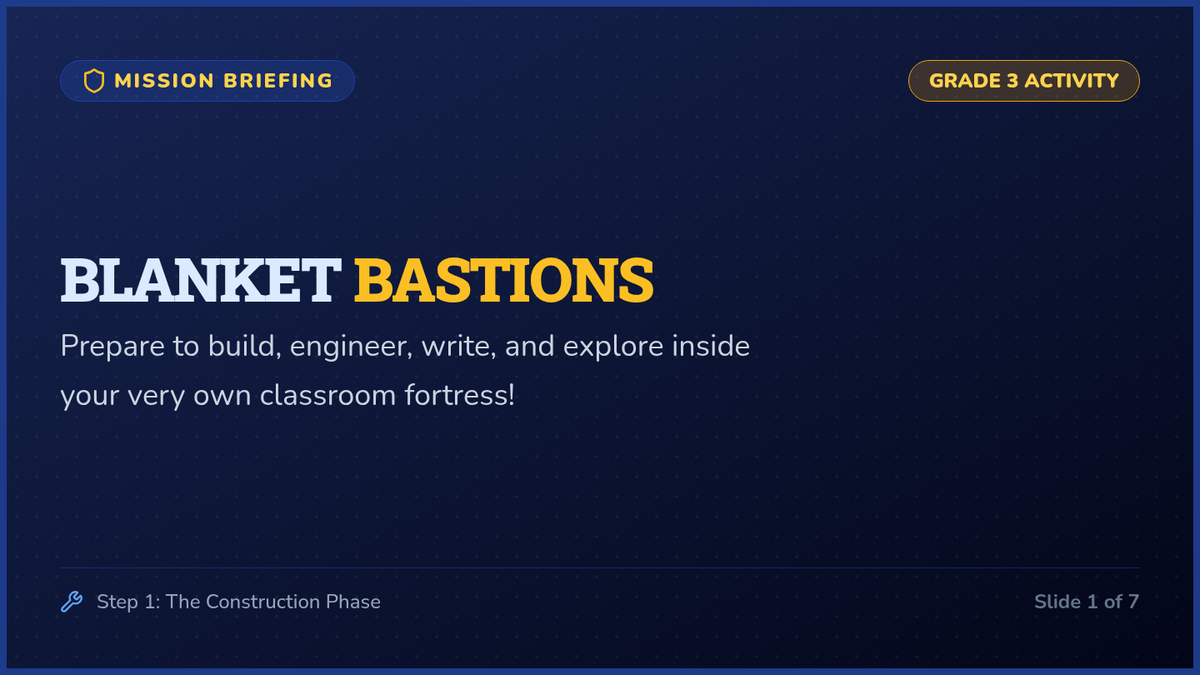
Visually striking slide deck for classroom presentation. Features grid blueprint styling, safety guidelines, and 5 interactive "mission" slides outlining math, writing, science, reading, and communication challenges with font size strictly 24px or larger.