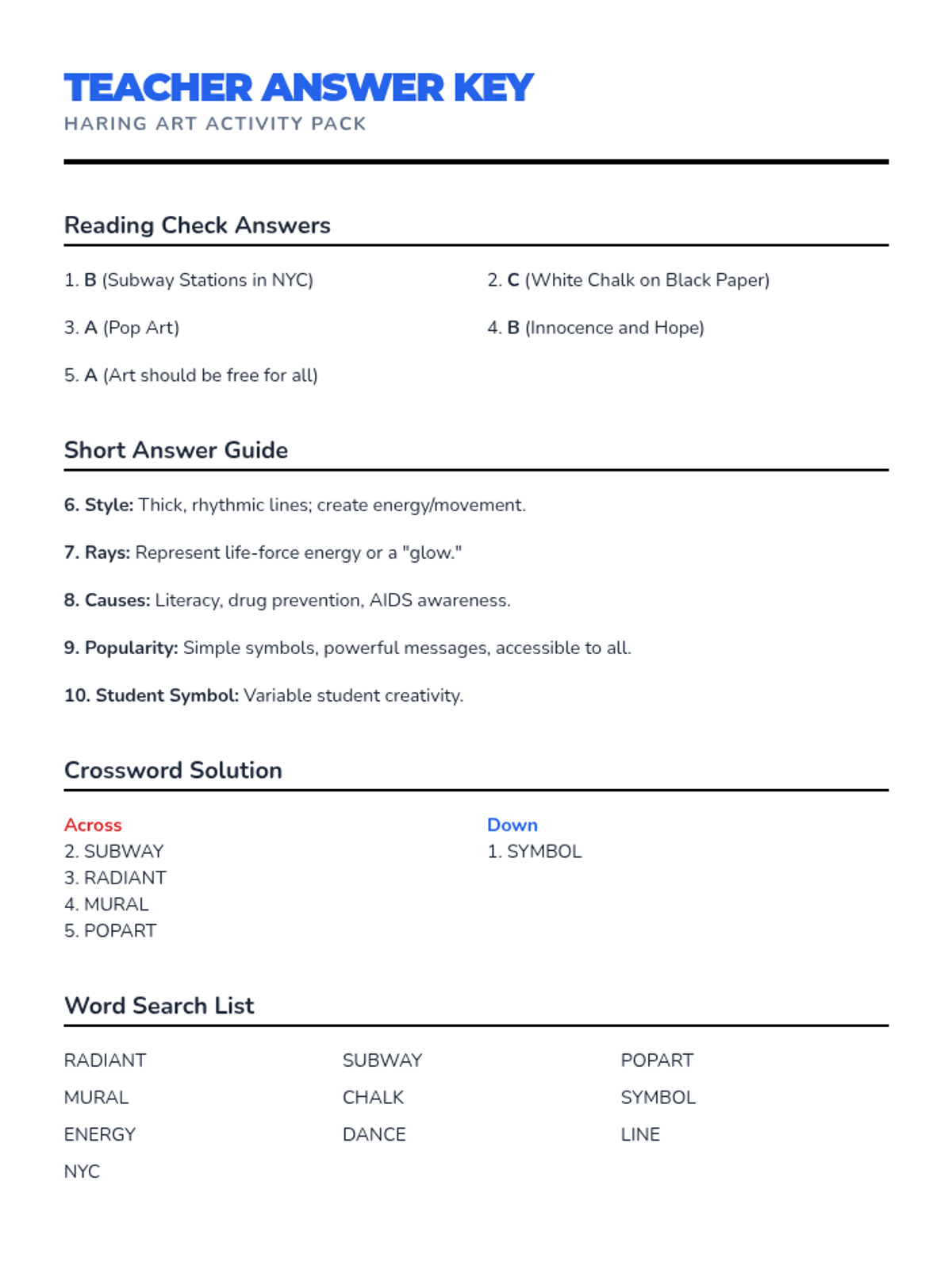
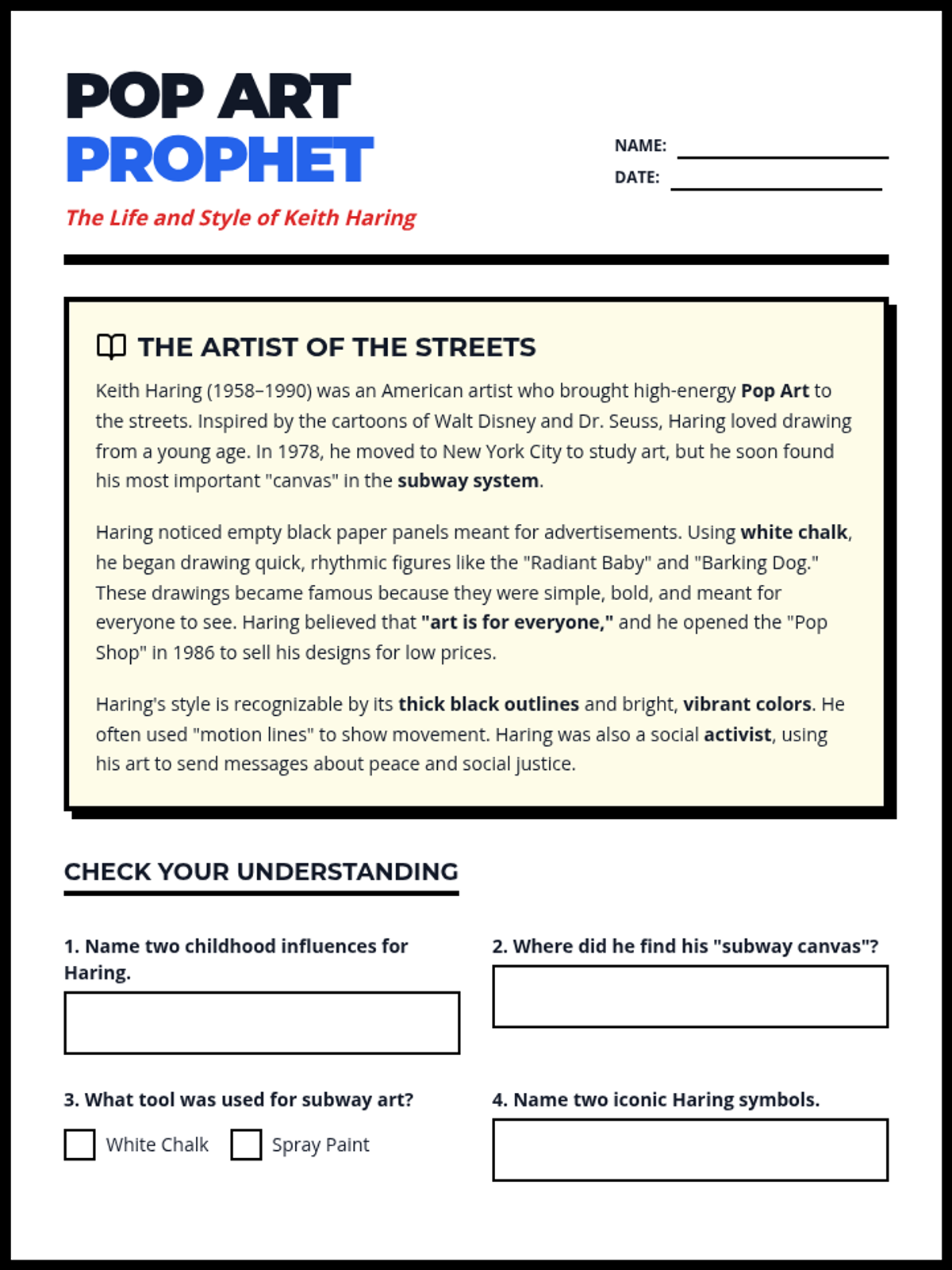
The teacher answer key for the Pop Art Prophet worksheet, providing solutions for the reading comprehension questions and the vocabulary word search.
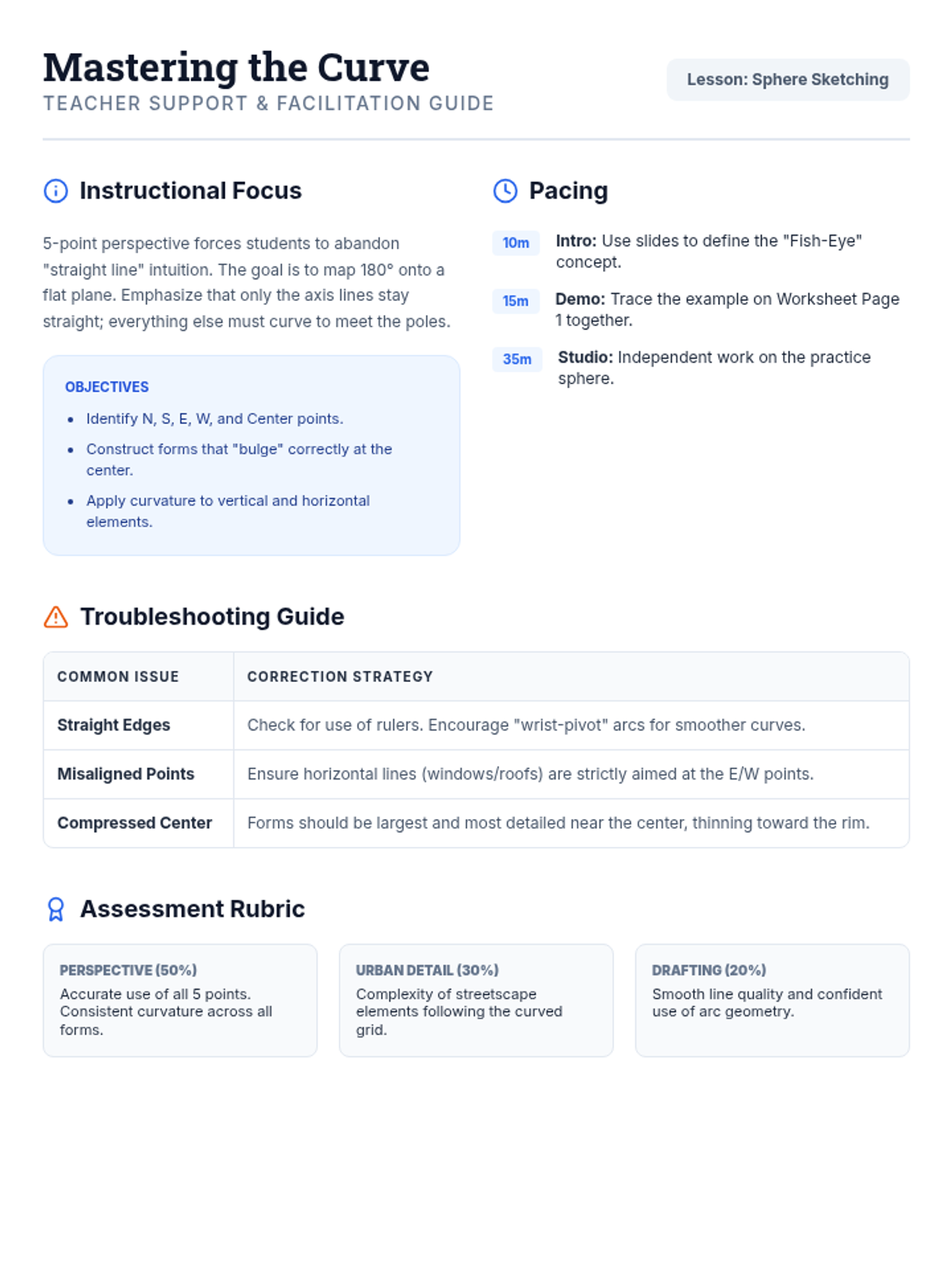
Teacher-facing guide for facilitating the 5-point perspective lesson. Includes instructional objectives, a detailed pacing guide, common student mistakes with suggested fixes, and a clear assessment rubric for evaluating curvilinear sketches.
Visual presentation slides covering the core concepts of 5-point perspective. Includes clear diagrams of the five vanishing points, explanations of the "fish-eye" effect, and specific rules for drawing urban architectural features like skyscrapers and streets on a curved grid.
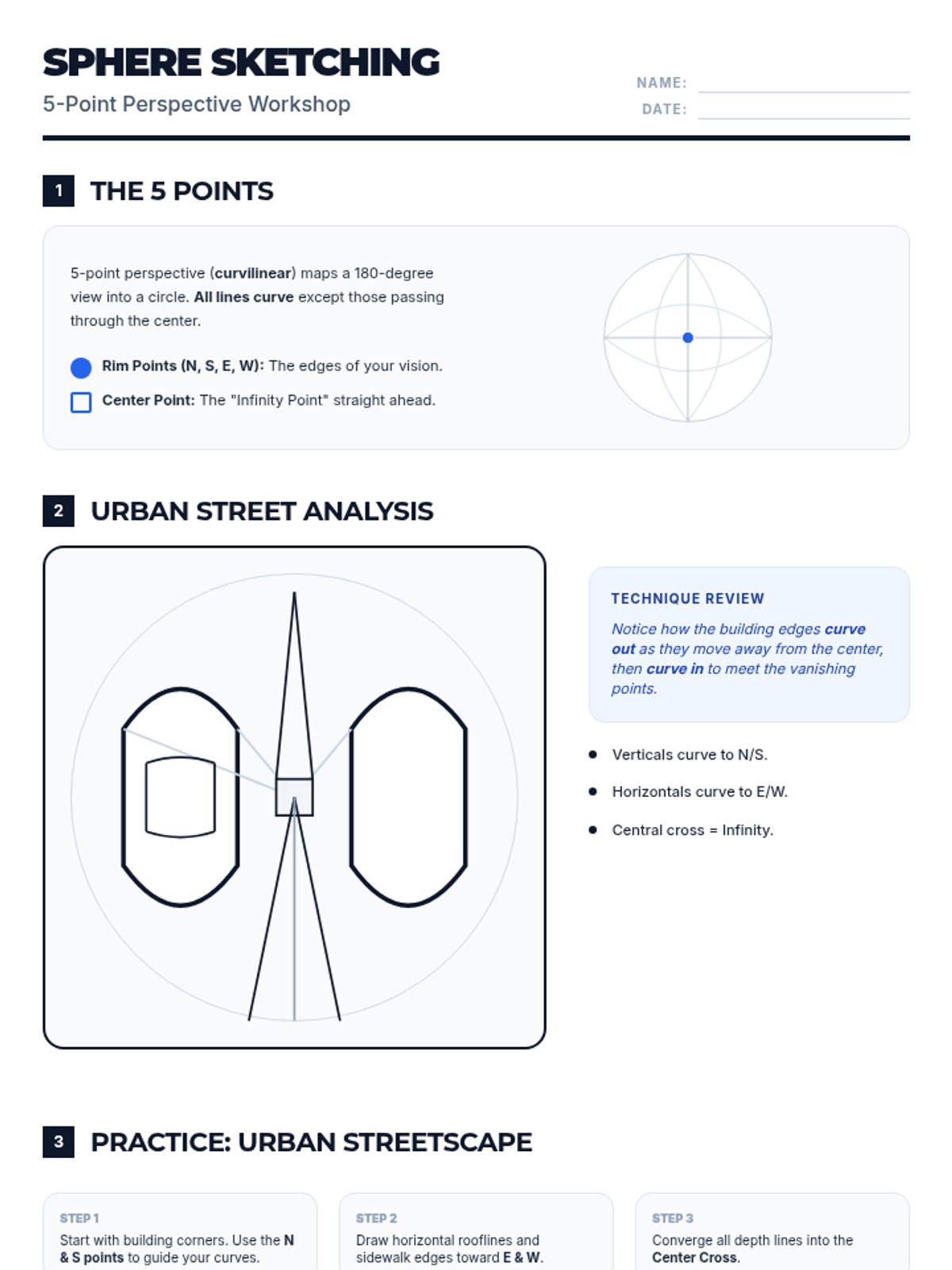
A comprehensive 2-page worksheet for mastering 5-point perspective. Includes a detailed visual guide on curvilinear points, a worked urban city street example for analysis, and a full-page practice area with a pre-formatted spherical grid for student sketching.
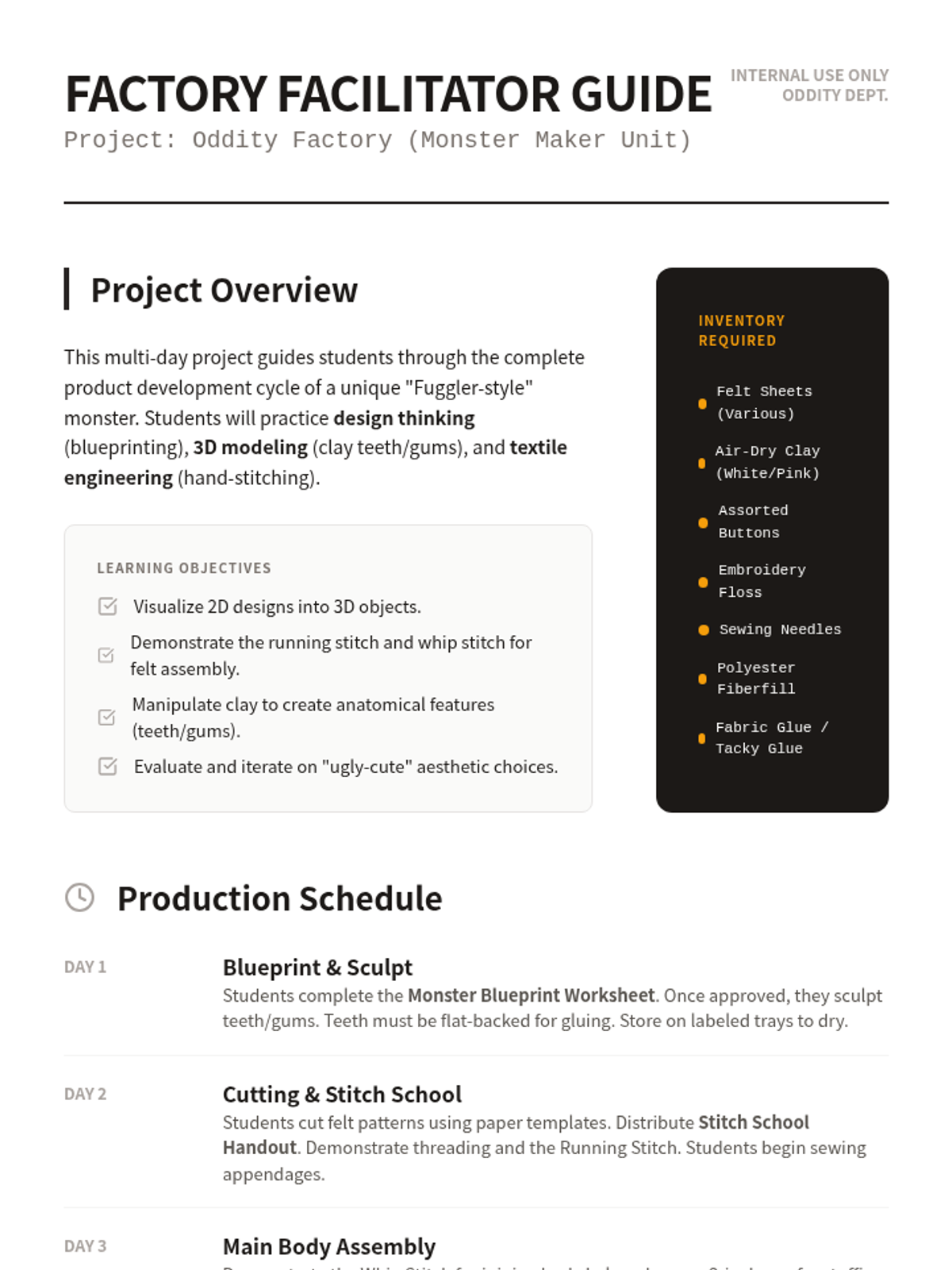
A teacher facilitation guide outlining pacing, learning objectives, material lists, and troubleshooting tips for managing the multi-day monster-making project.
An introductory slide deck for the project, covering the 'funny-ugly' aesthetic, project timeline, clay modeling tips, and basic hand-stitching overview.
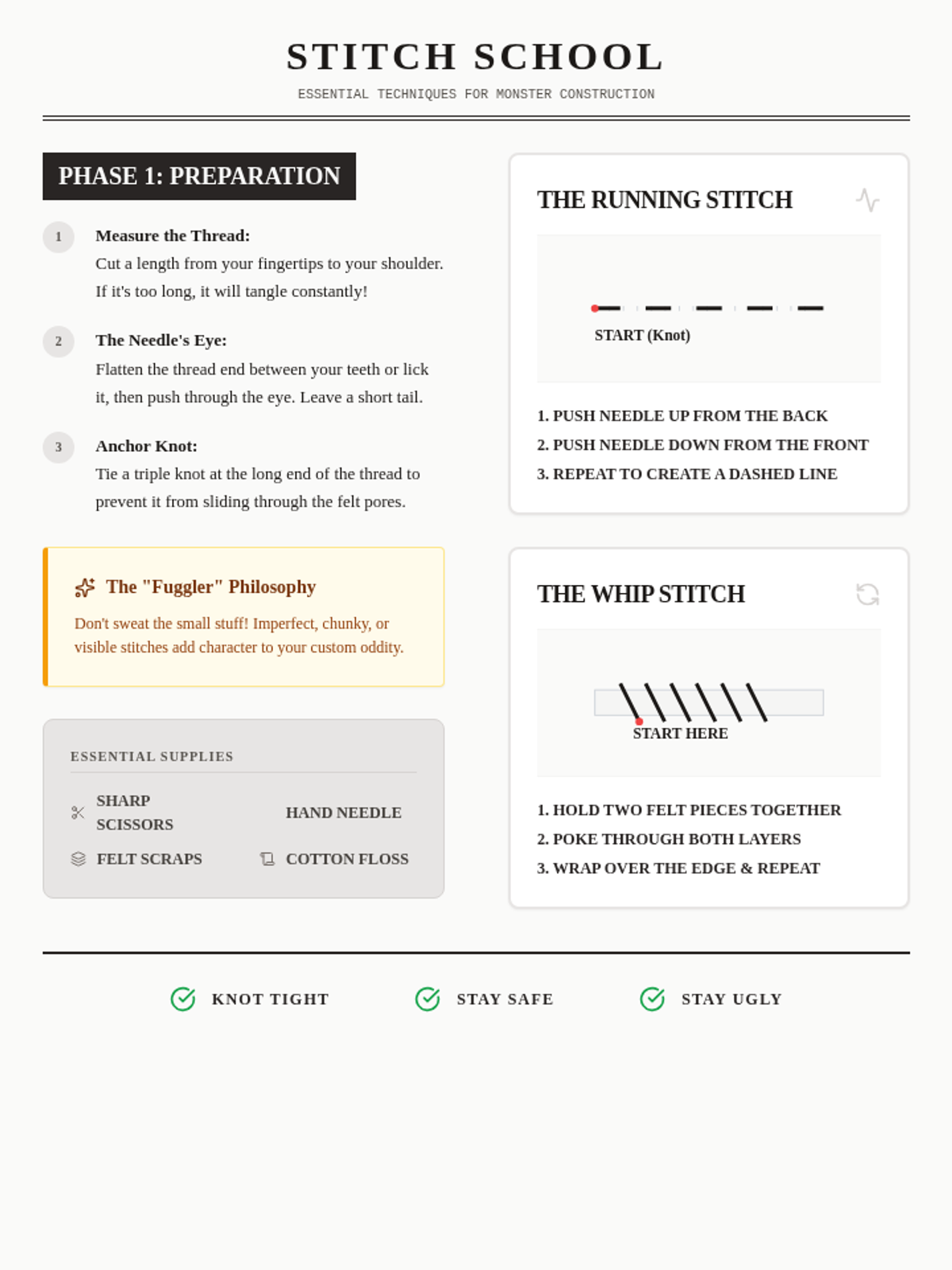
An illustrated reference sheet teaching the basics of threading a needle, tying knots, and performing the running and whip stitches for felt assembly.
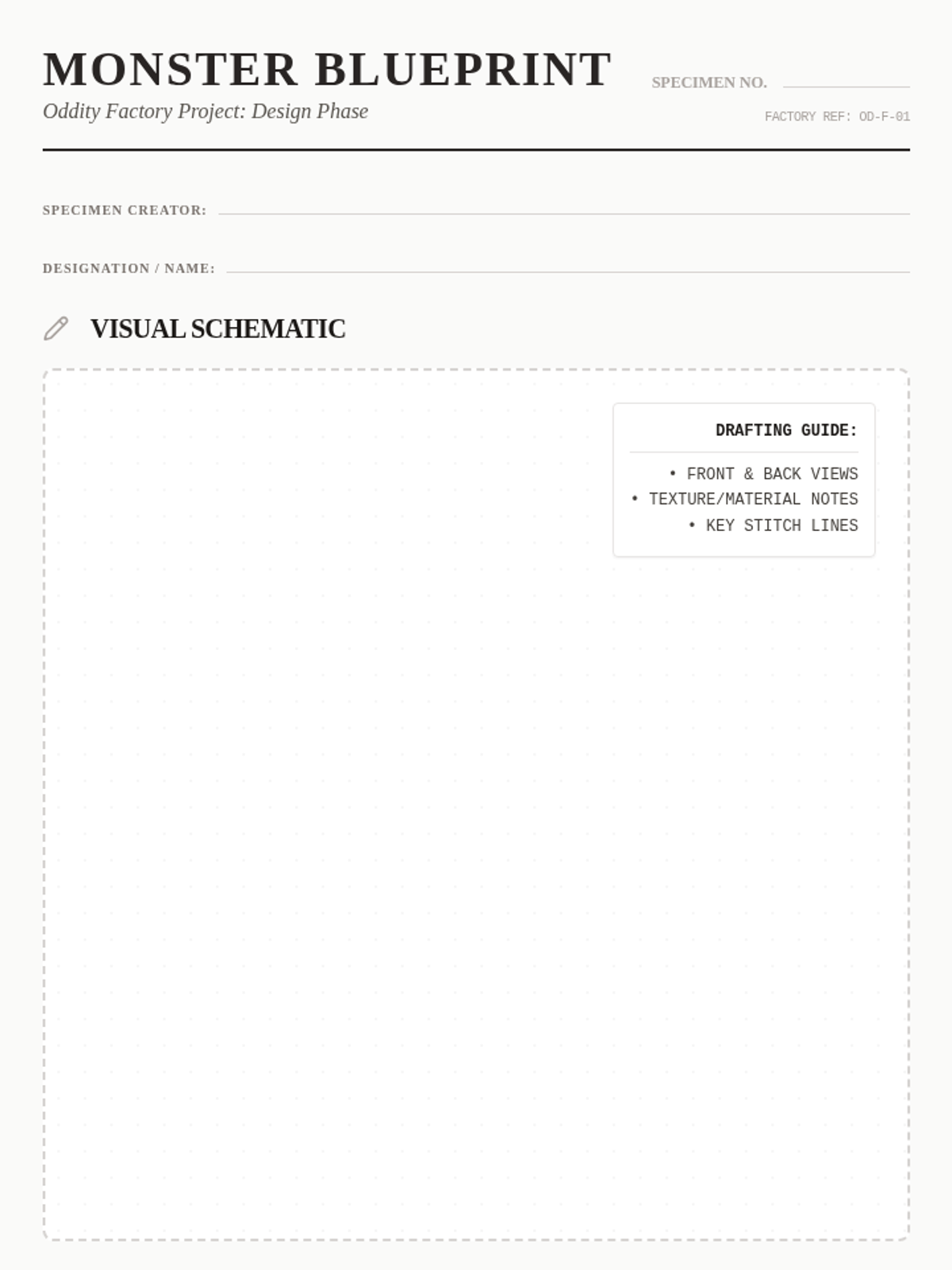
A detailed design planning worksheet for students to sketch their monster, plan materials (felt, buttons, clay), and conceptualize the unique 'ugly-cute' features of their creation.
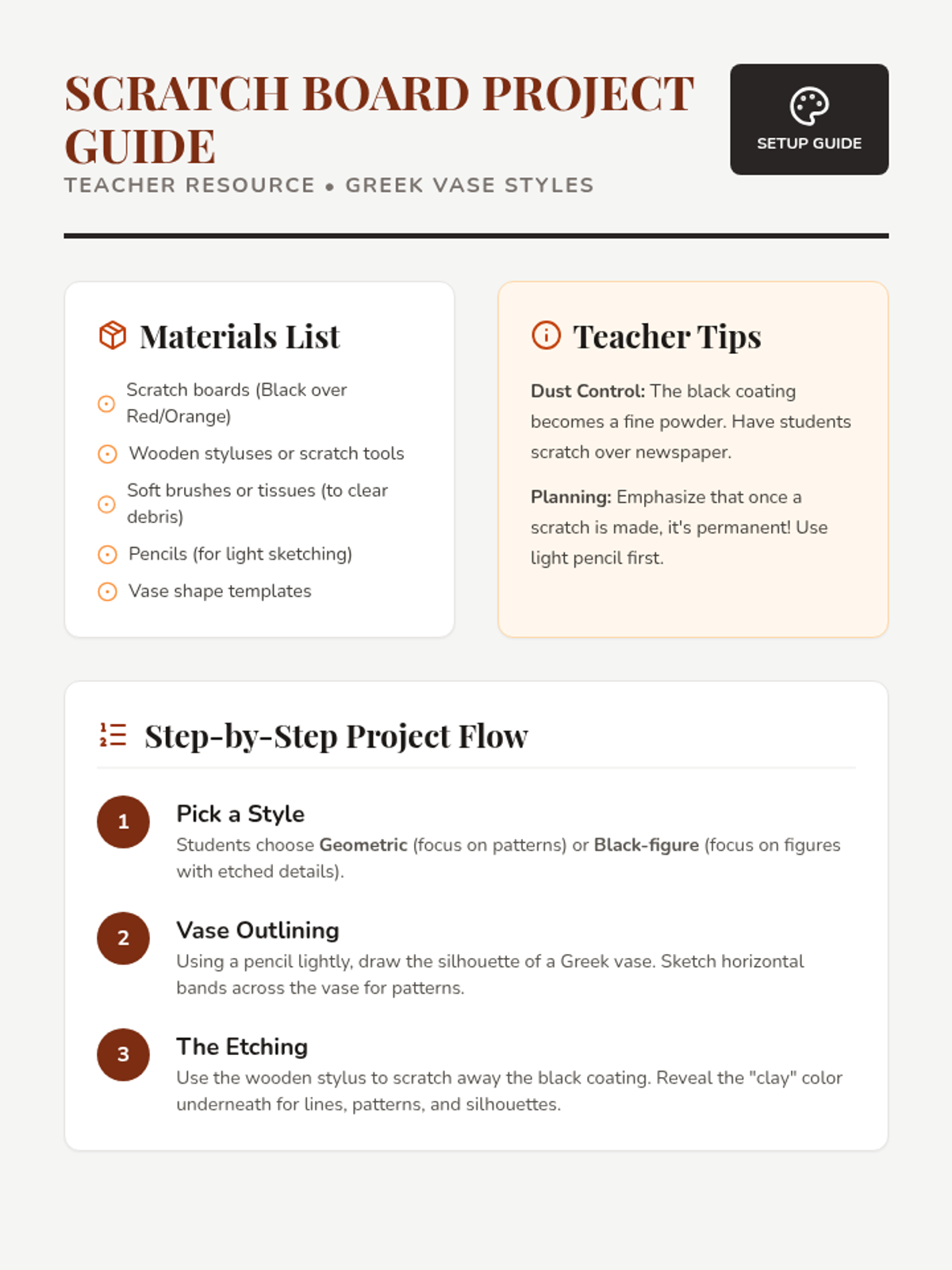
A teacher's guide for the scratch board art project, including materials, prep tips, step-by-step student instructions, and historical discussion prompts.
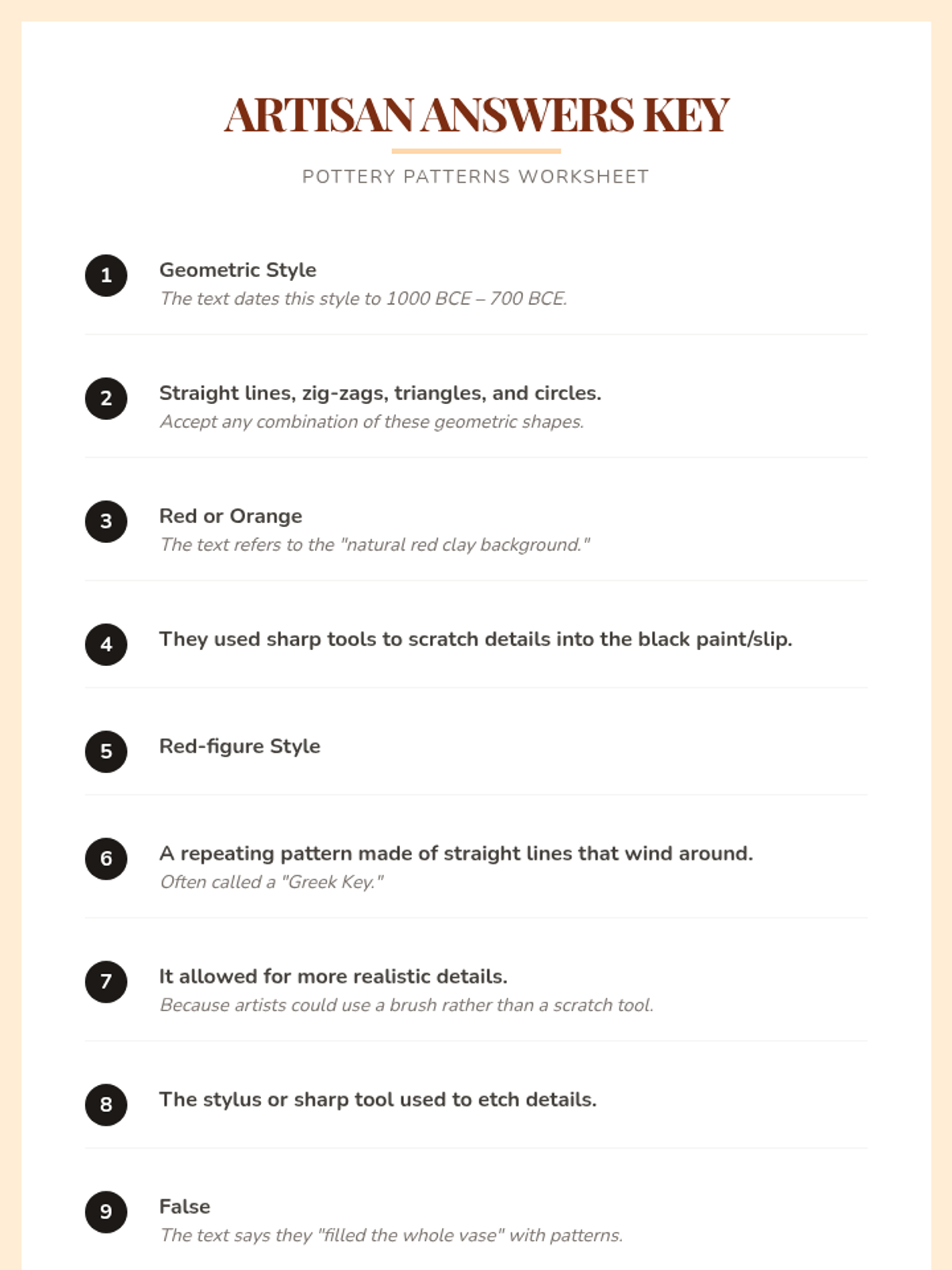
An answer key for the Pottery Patterns Worksheet, providing clear answers and teacher notes for all 10 questions.
Instructional slides introducing the history and visual characteristics of Geometric, Black-figure, and Red-figure pottery. Includes a project introduction slide connecting the history to scratch board art.
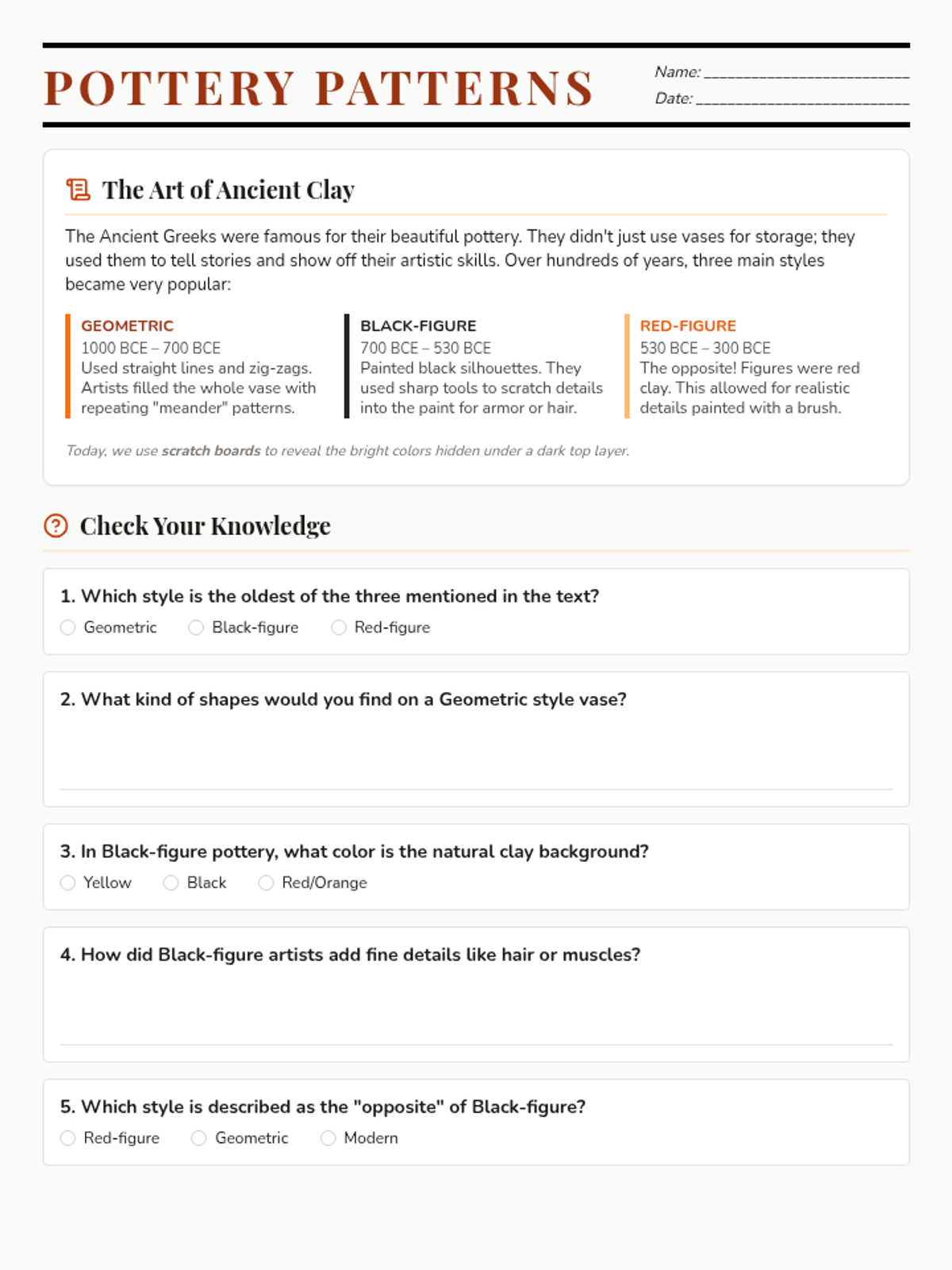
An introductory reading passage about Geometric, Black-figure, and Red-figure Greek pottery styles followed by 10 comprehension questions. Designed for primary/middle school students to build background knowledge before an art project.
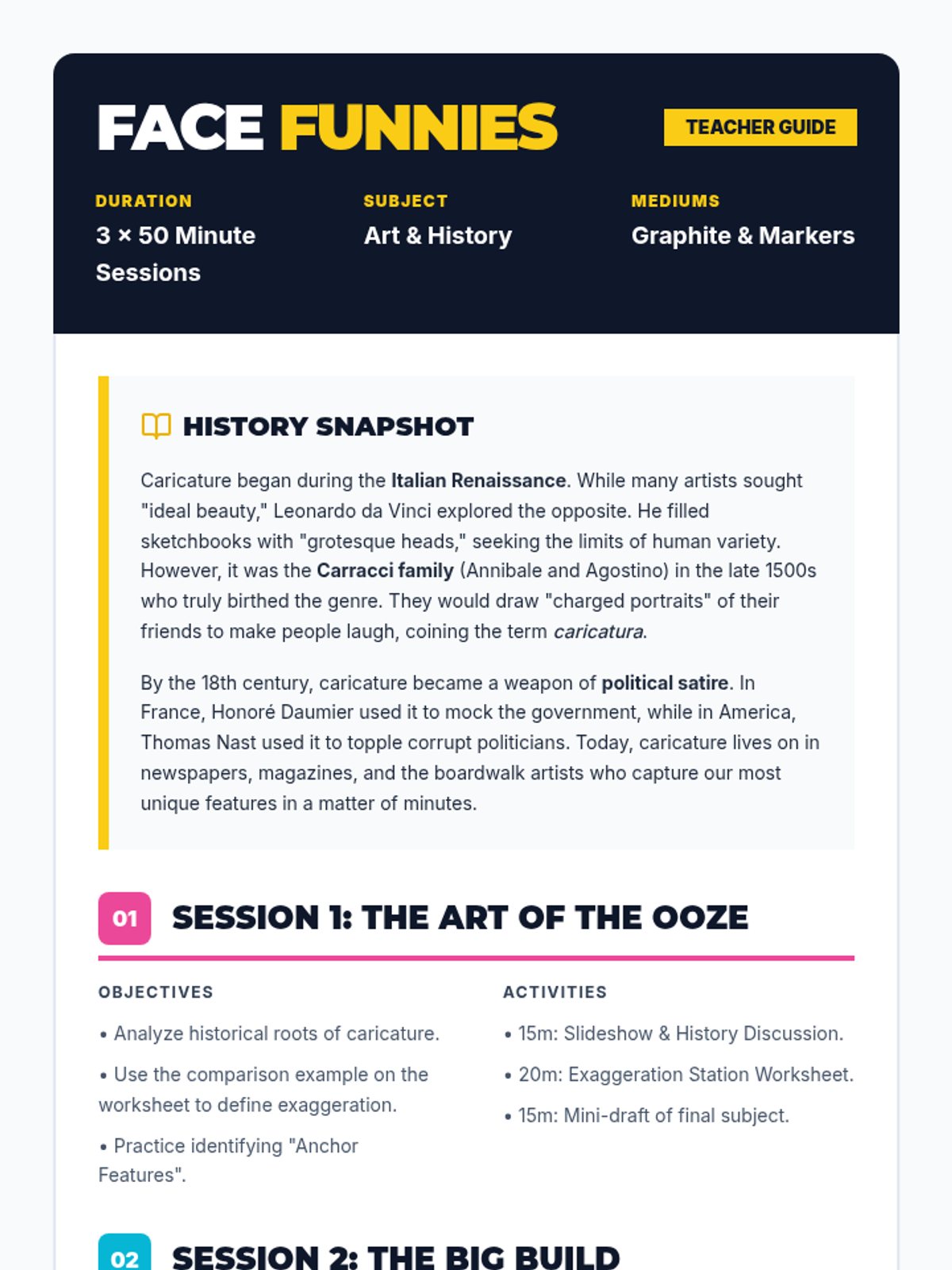
A comprehensive instructional guide for teachers, detailing the lesson's three-session structure, historical context, key learning objectives, and classroom facilitation tips.
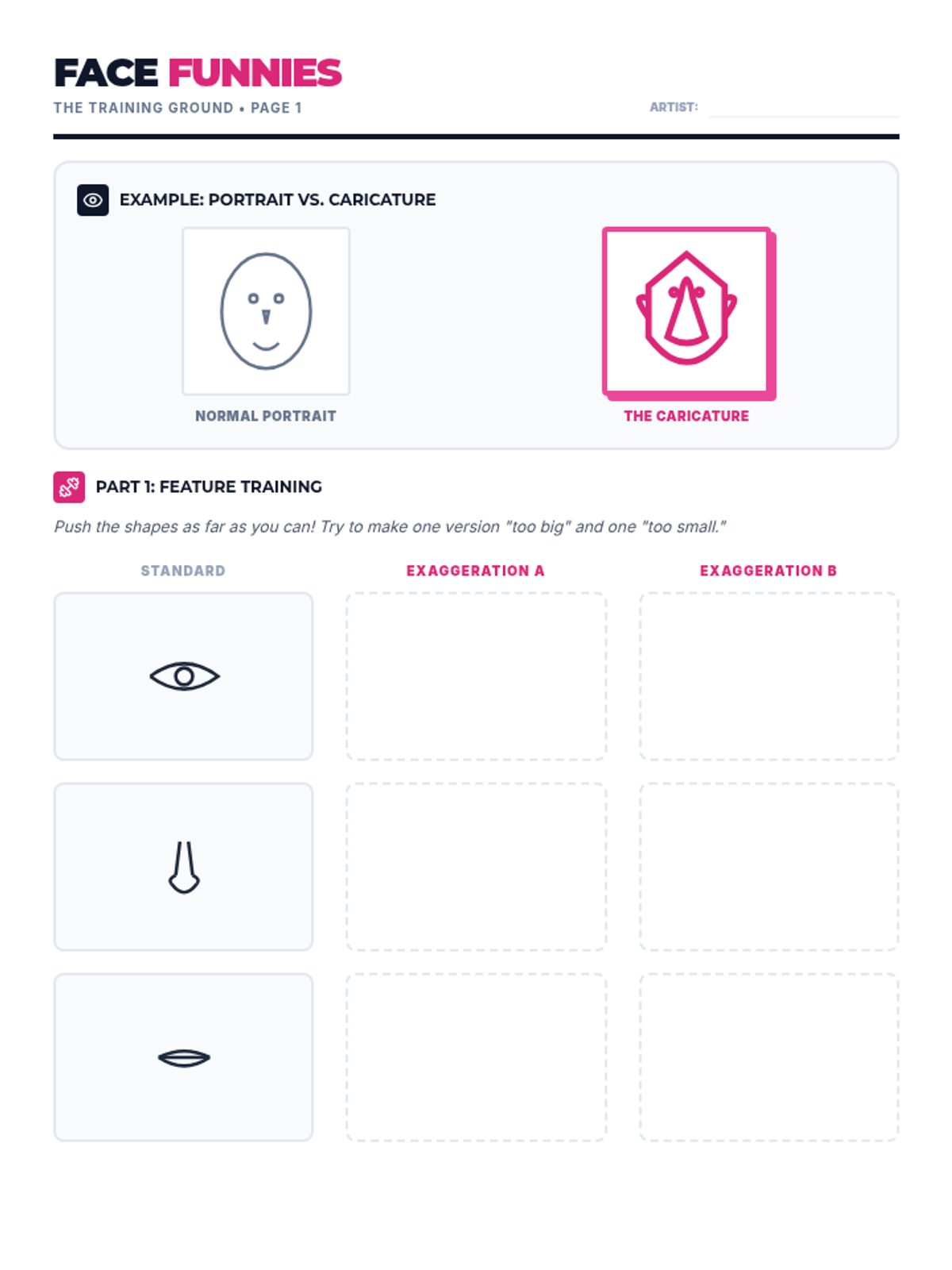
A student worksheet for practicing the fundamental skills of caricature: observing features and applying varied levels of exaggeration before attempting a full sketch. Now includes a generous two-page layout for better practice space.
A visual presentation introducing caricature art, its history from the Renaissance to modern times, and a step-by-step guide for creating an exaggerated portrait using graphite and markers.
Teacher answer key for all activities in the Haring Art Activity Pack.
A comprehensive activity pack including a reading passage, 10 comprehension questions, a themed crossword, and a word search about Keith Haring and Pop Art. All on unified pages for efficiency.
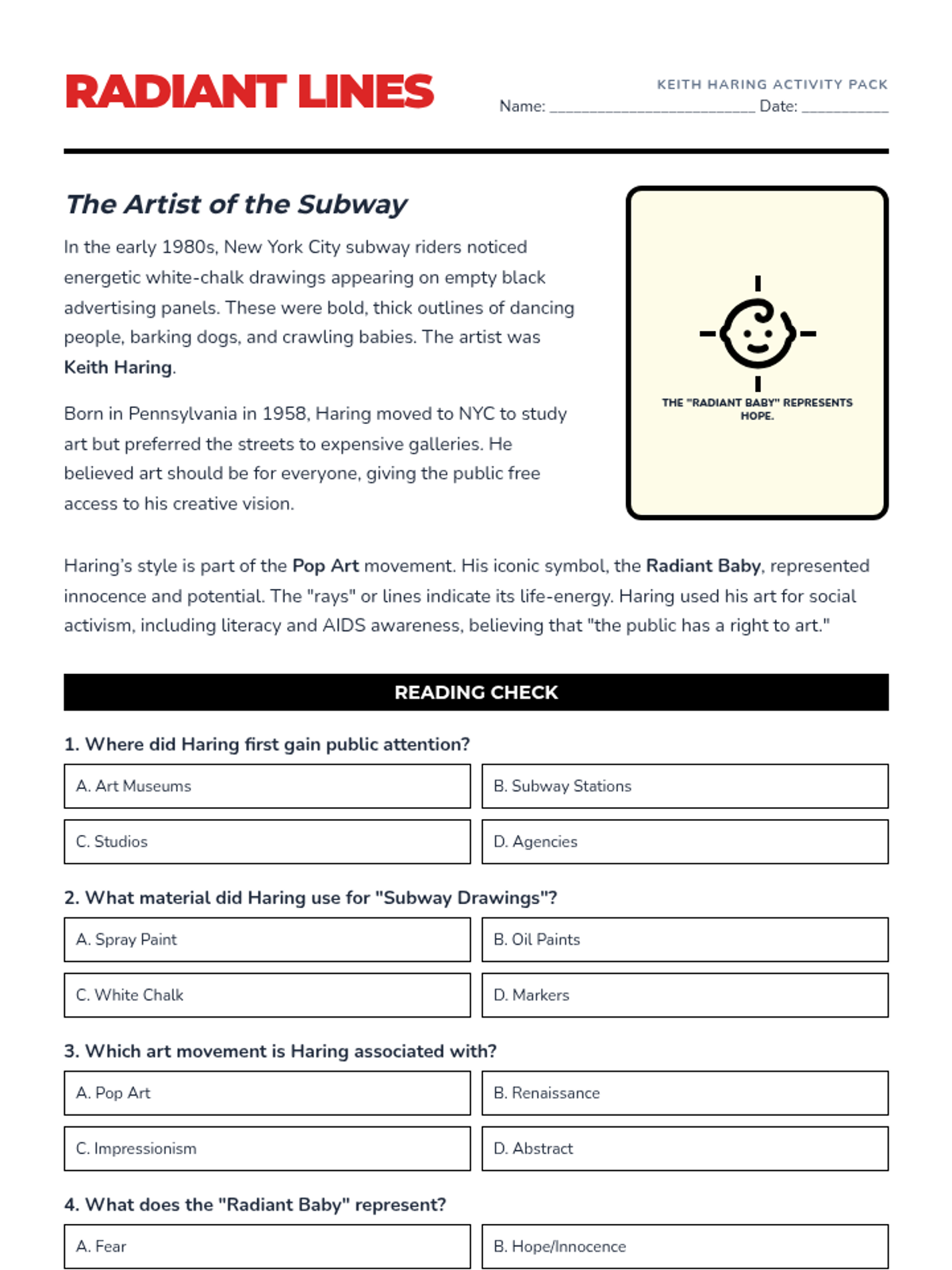
A comprehensive Keith Haring student worksheet featuring a middle school reading passage, 10 comprehension questions distributed across two pages, and a 15-word word search on a dedicated third page. It uses a bold Pop Art aesthetic with primary colors and Haring-inspired motifs.
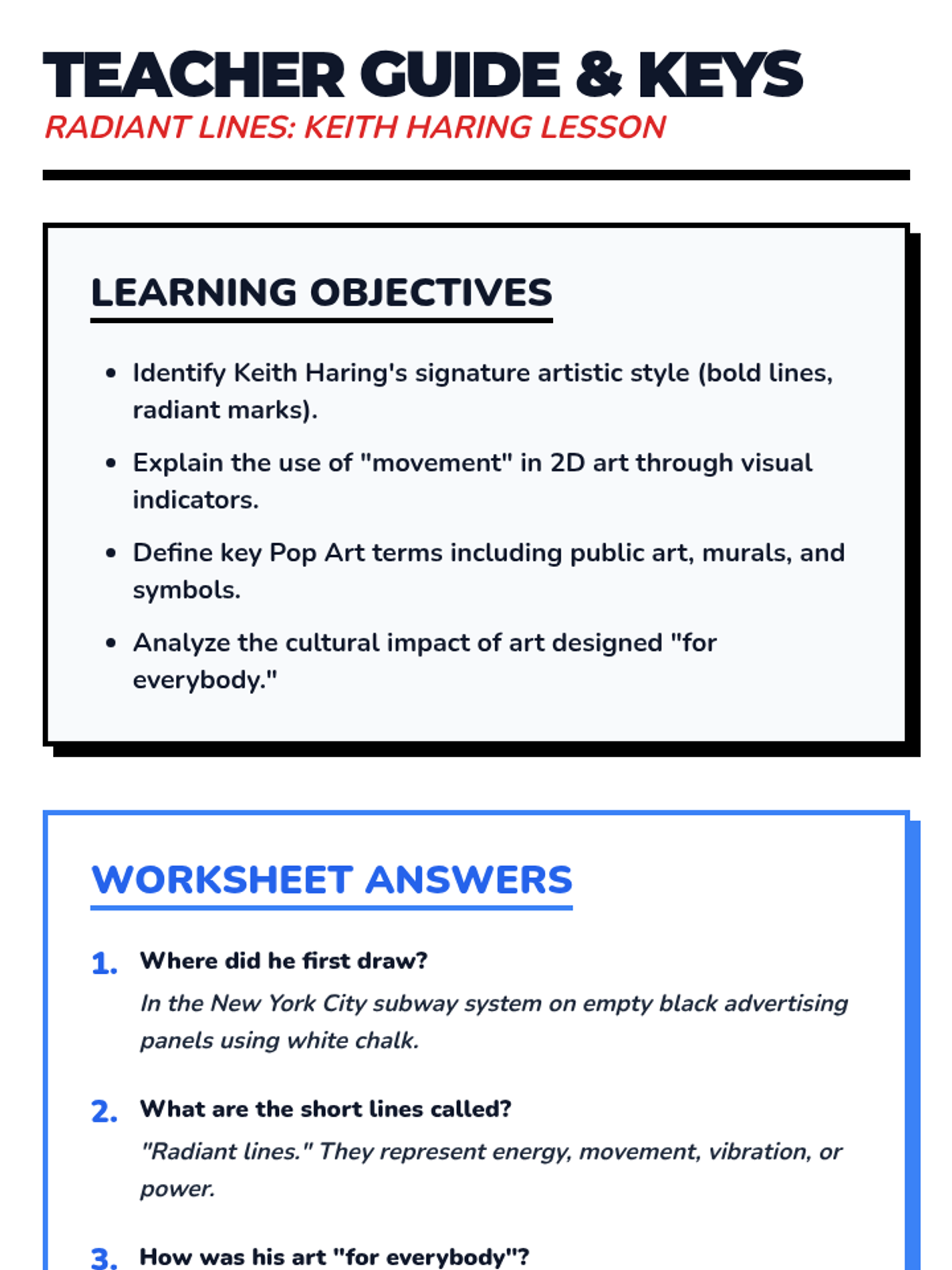
Comprehensive teacher resource featuring learning objectives, an answer key for both student materials, and a suggested pacing guide for the 'Radiant Lines' lesson. Part of the Radiant Lines lesson set.
A vibrant 6-slide presentation introducing Keith Haring, his signature 'radiant lines' technique, and the broader context of Pop Art. Features bold visual metaphors and interactive discussion prompts. Part of the Radiant Lines lesson set.
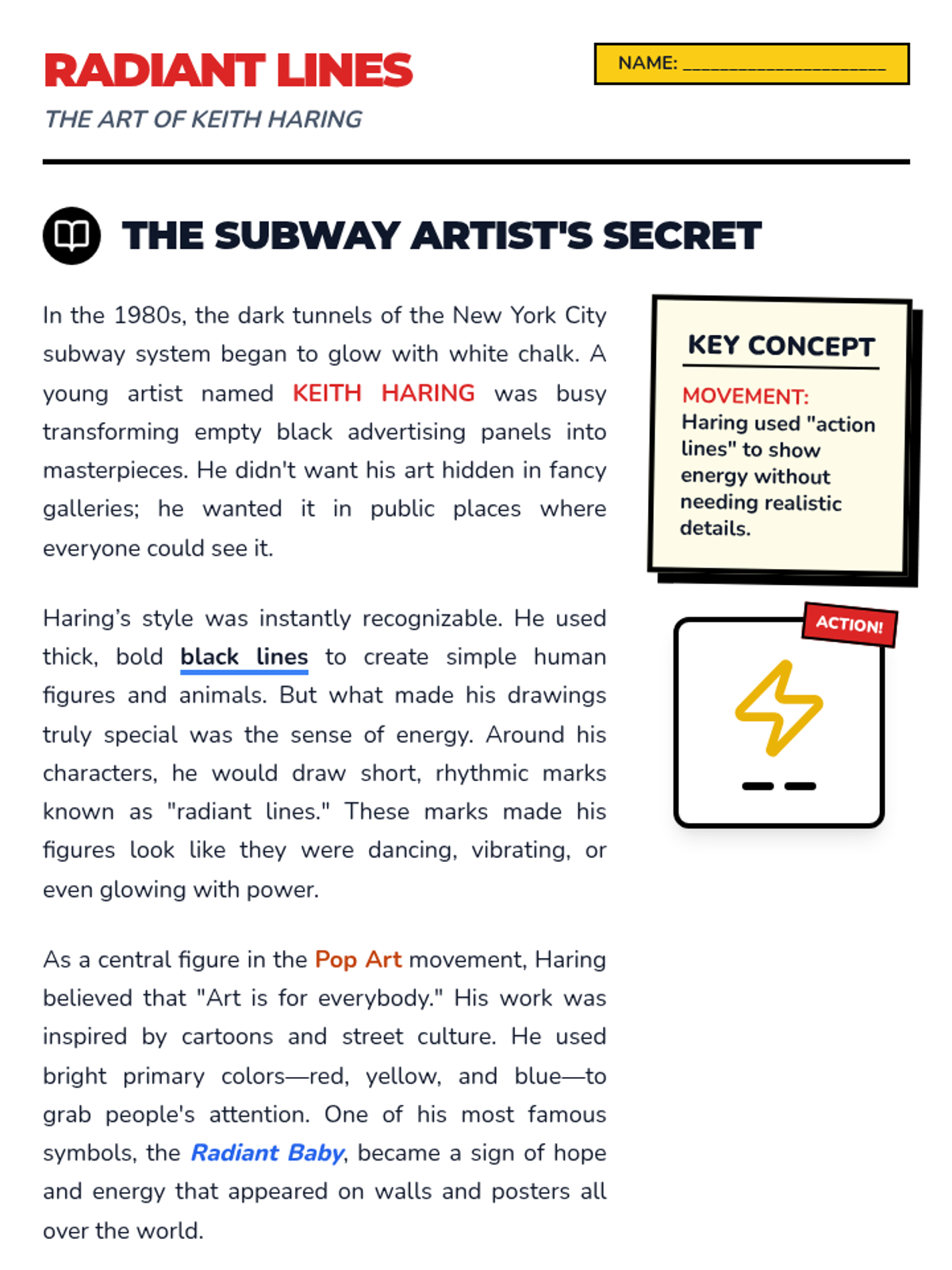
A comprehensive three-page student packet including a detailed reading passage about Keith Haring, 5 reading comprehension questions, and a Pop Art vocabulary crossword puzzle. Part of the Radiant Lines lesson set.
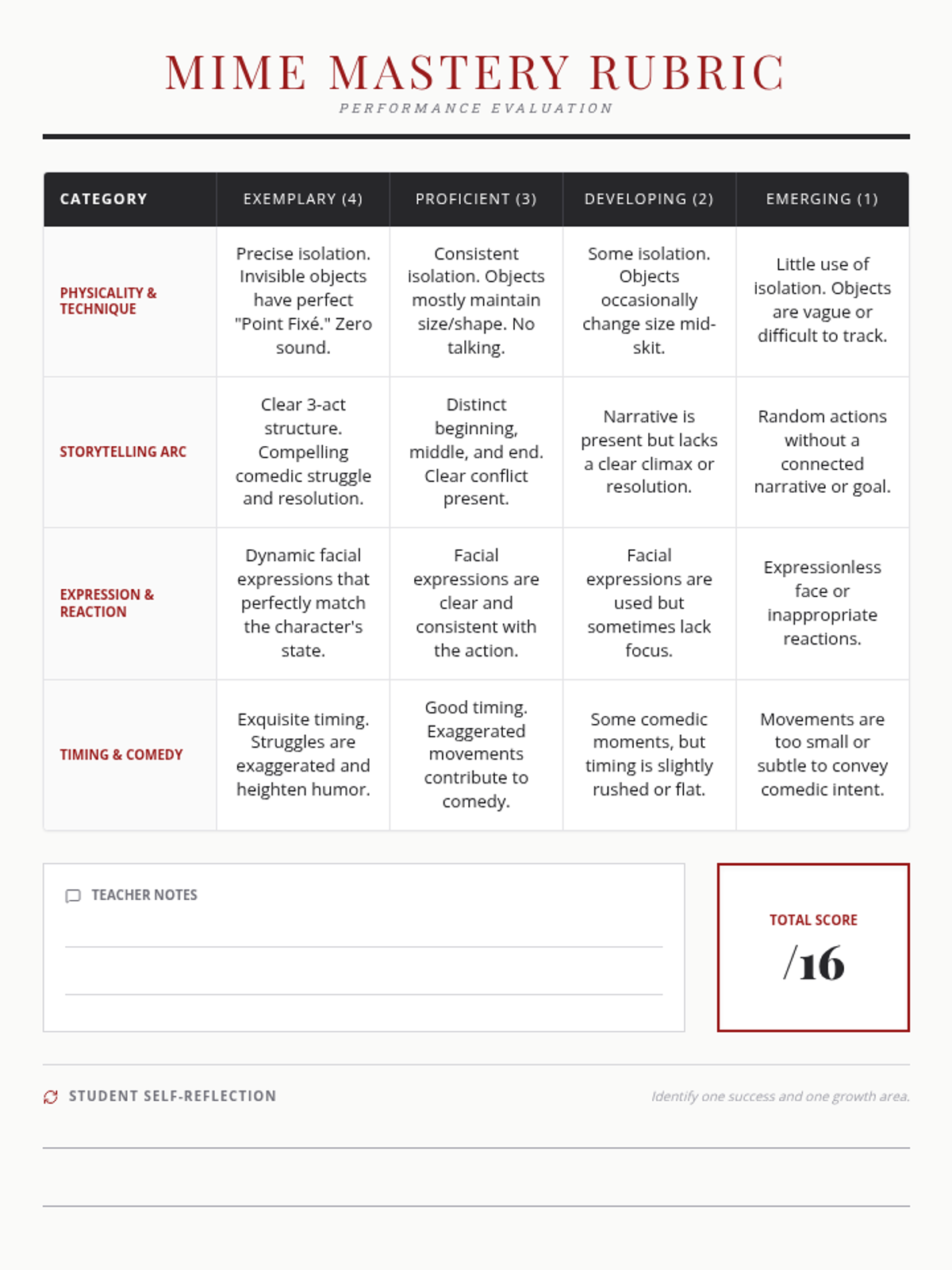
A performance rubric for evaluating mime and comedy performances, focusing on physicality, story arc, facial expression, and comedic timing.
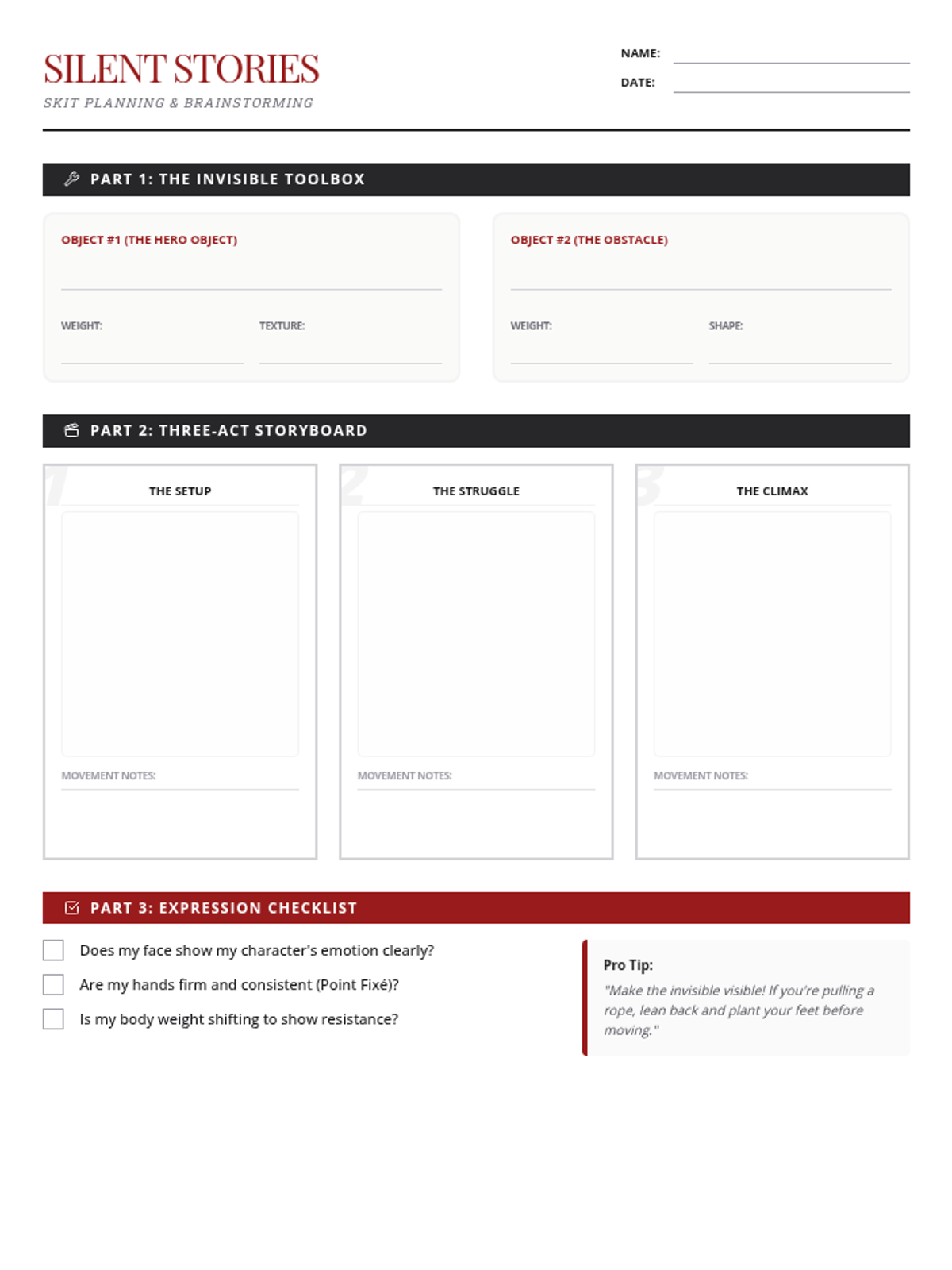
A planning worksheet for students to brainstorm and storyboard a short mime performance, including sections for invisible object details and a three-act comedic arc.
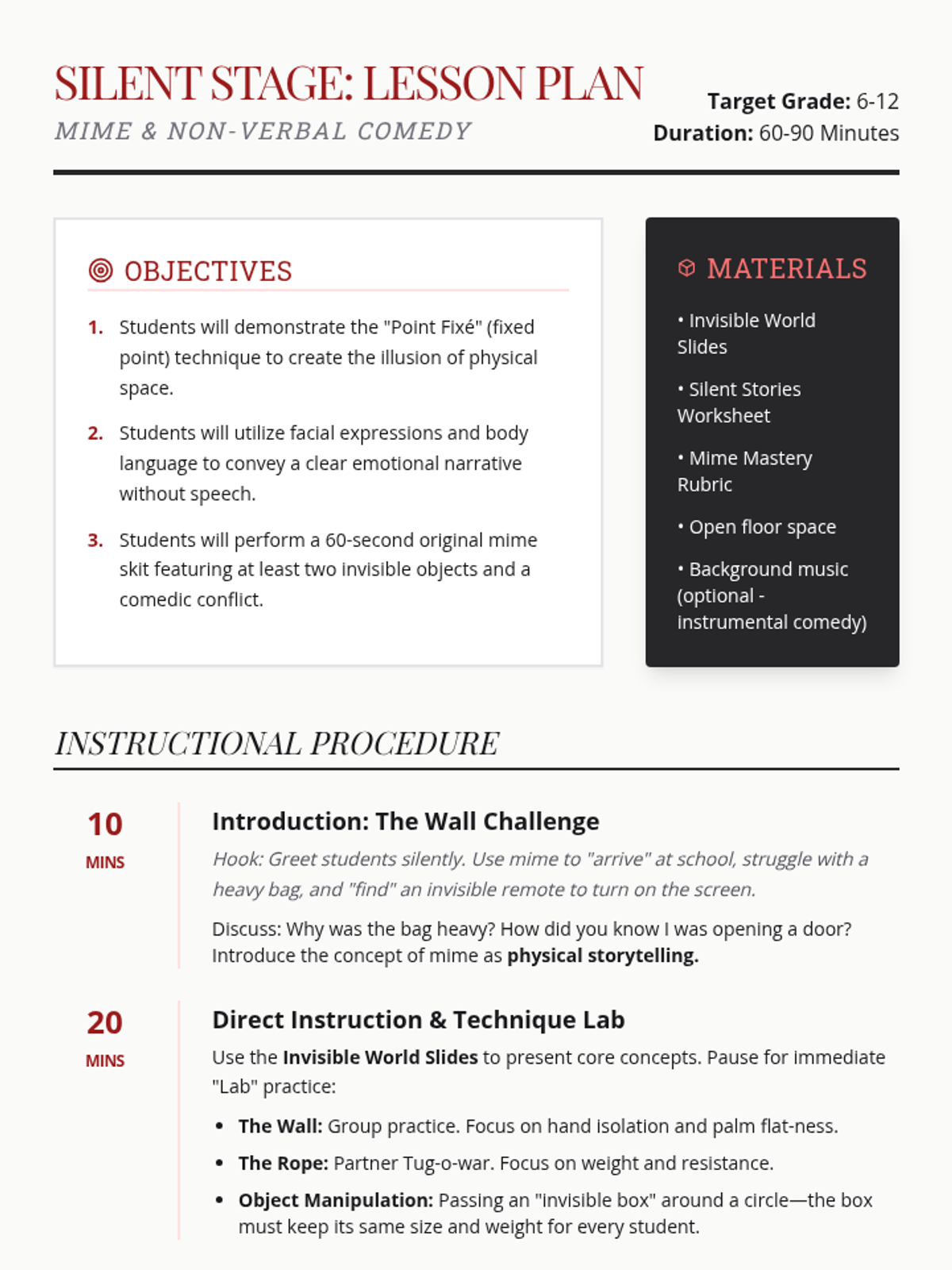
A teacher's lesson plan for the 'Silent Stage' mime unit, including learning objectives, a minute-by-minute procedure, and differentiation strategies for varying skill levels.
An introductory slide deck for a mime and non-verbal comedy lesson, featuring key terminology, visual explanations of 'The Wall' and 'The Rope' techniques, and the 'Object + Struggle = Comedy' formula.