A visual guide introducing students to site architecture, navigation rules, and the step-by-step process of building their digital publication framework.
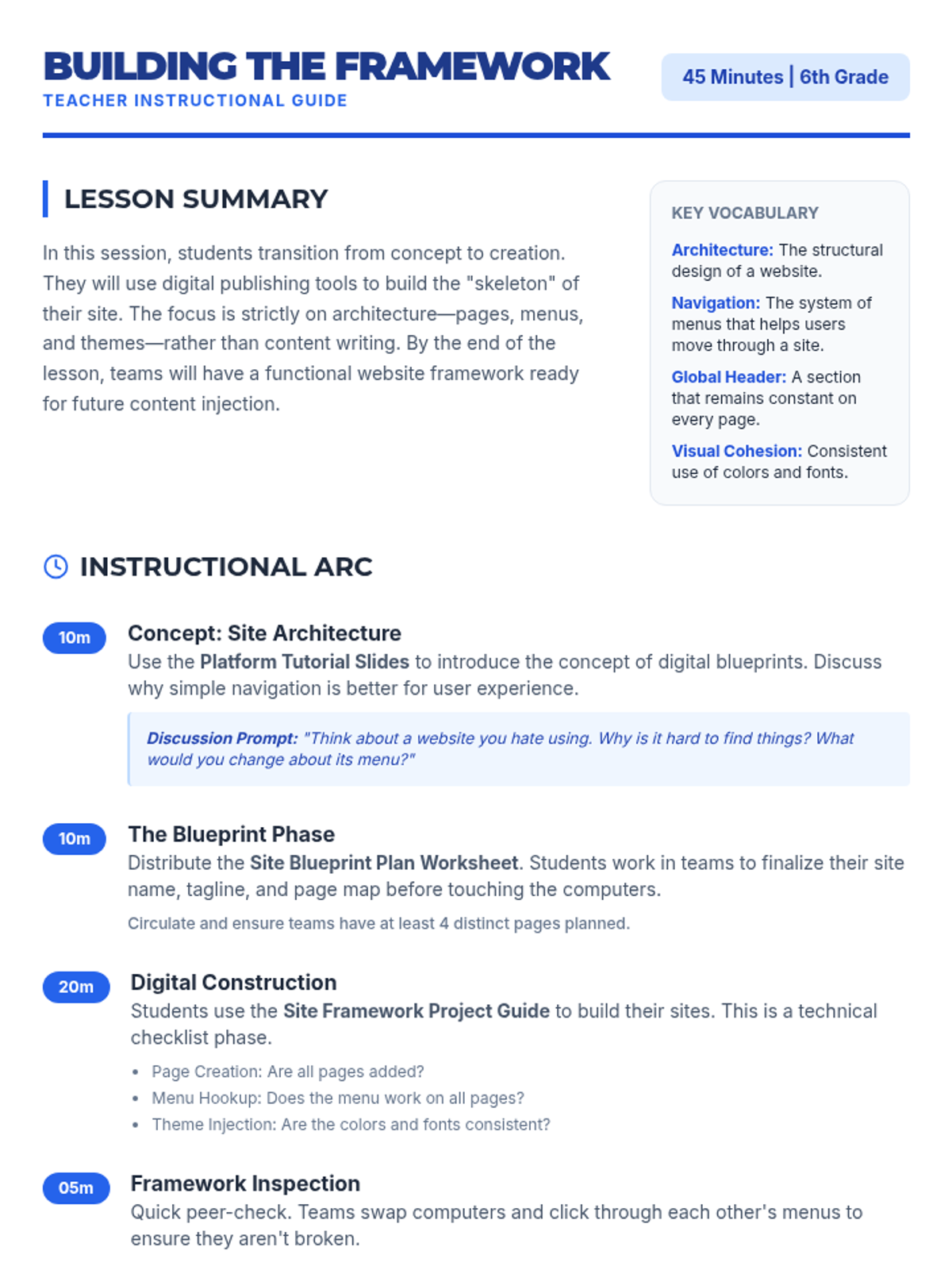
A comprehensive instructional guide for teachers, providing a 45-minute lesson arc, discussion prompts, and success strategies for teaching site architecture.
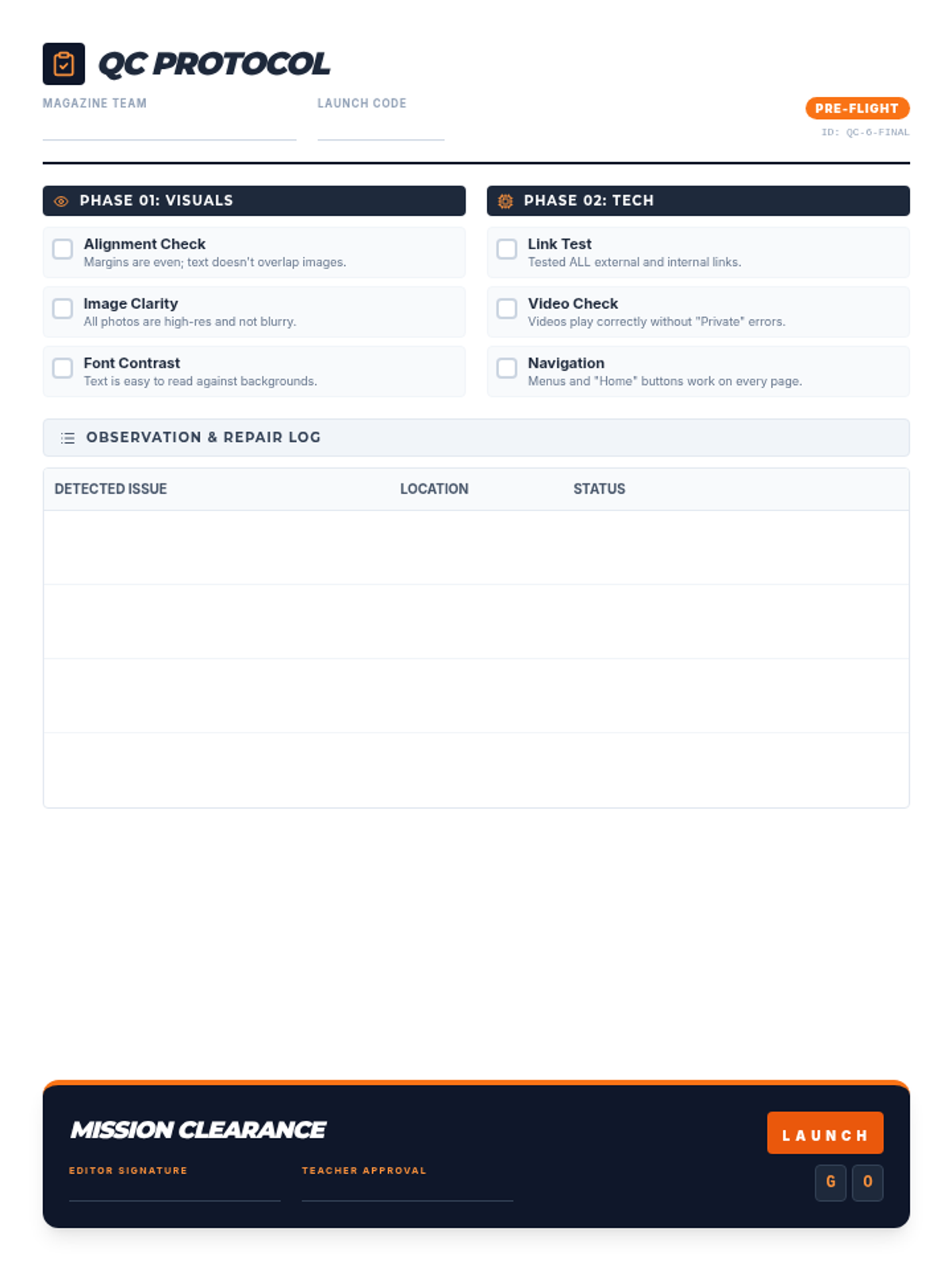
A professional-grade quality control checklist for students to use during the final magazine review process, including sections for visual design, technical functionality, and an 'Observation & Repair Log' for tracking fixes.
A high-energy, 'Mission Control' themed slide deck that guides students through the phases of quality control, from visual layout scans to technical link testing, concluding with the final publication countdown.
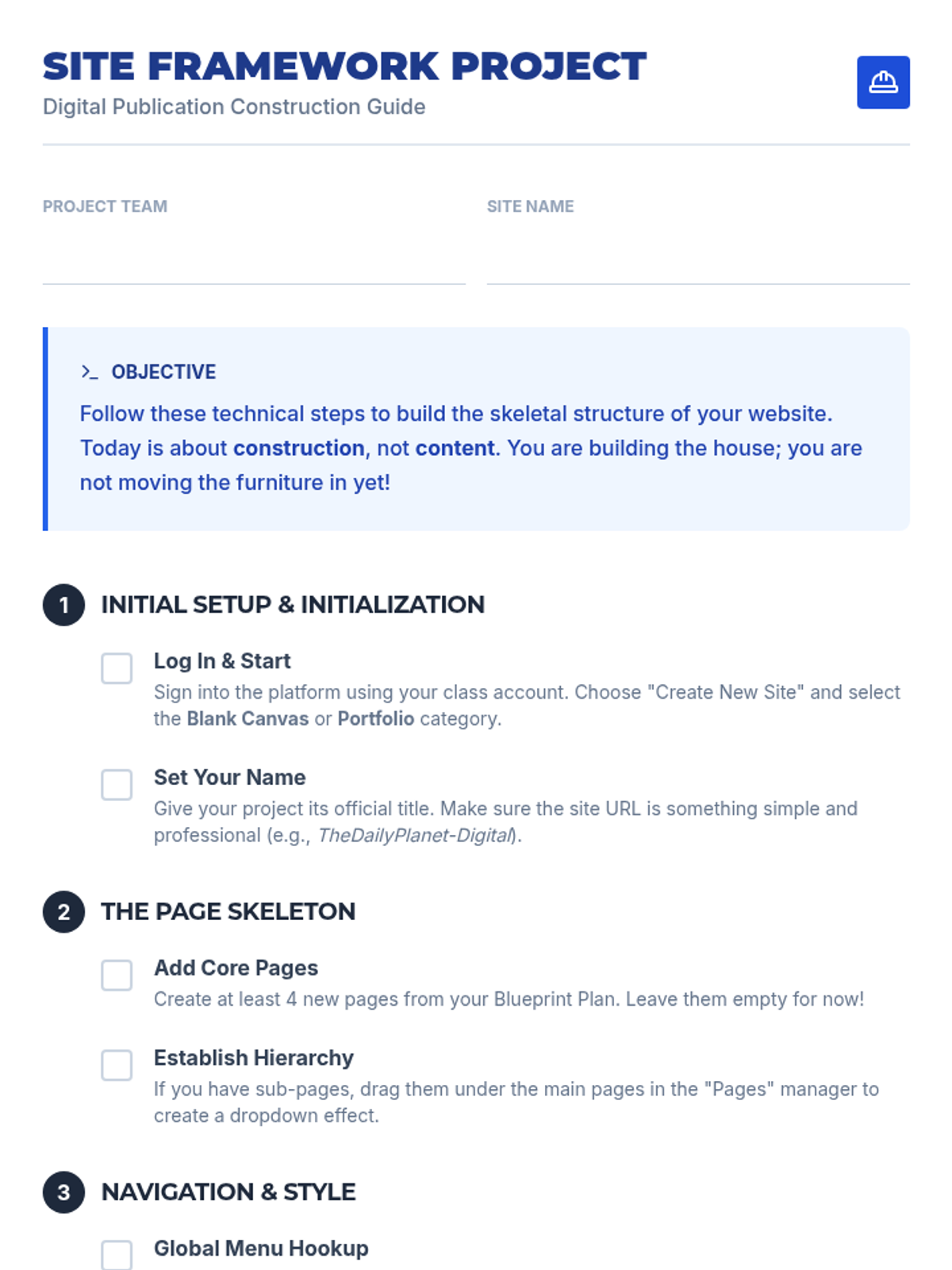
A step-by-step technical guide for students to follow during the site-building phase, including a task-based checklist and success criteria for their framework project.
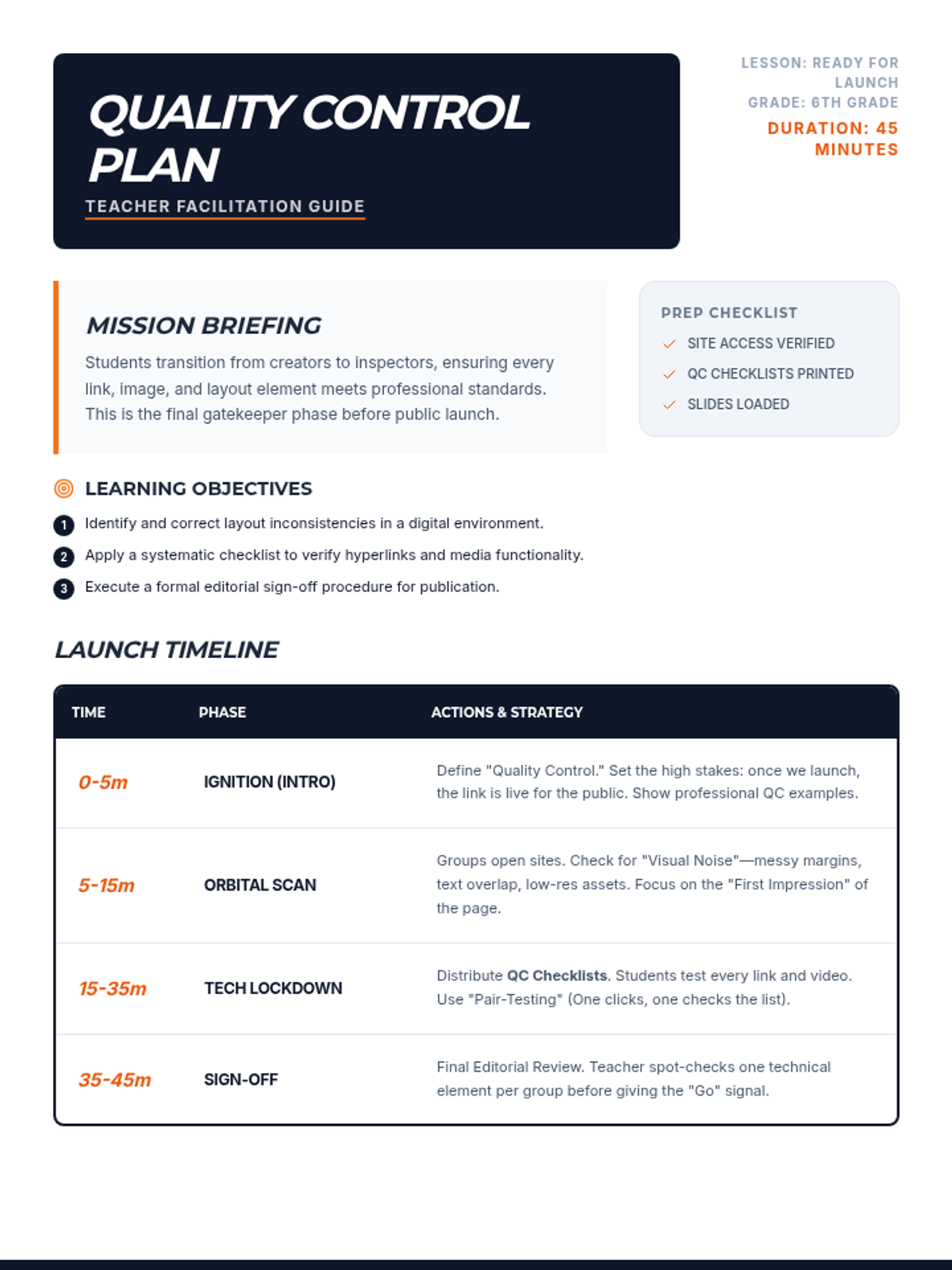
A comprehensive teacher facilitation guide for the Quality Control lesson, featuring a detailed pacing timeline, discussion prompts, troubleshooting tips, and a formal 'sign-off protocol' for digital magazine publication.
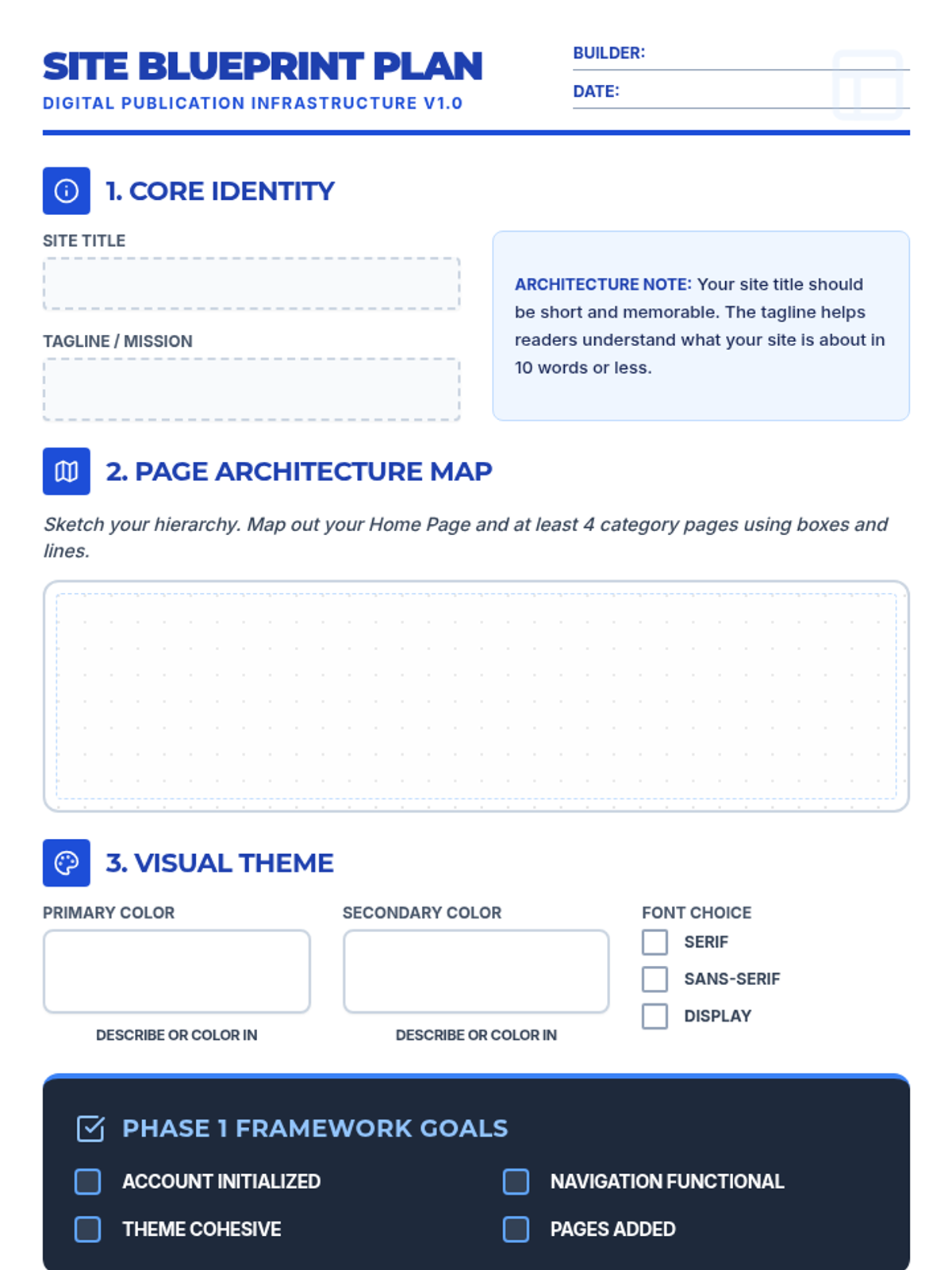
A planning worksheet designed for students to map out their website architecture, including site name, page hierarchy, and visual theme choices.
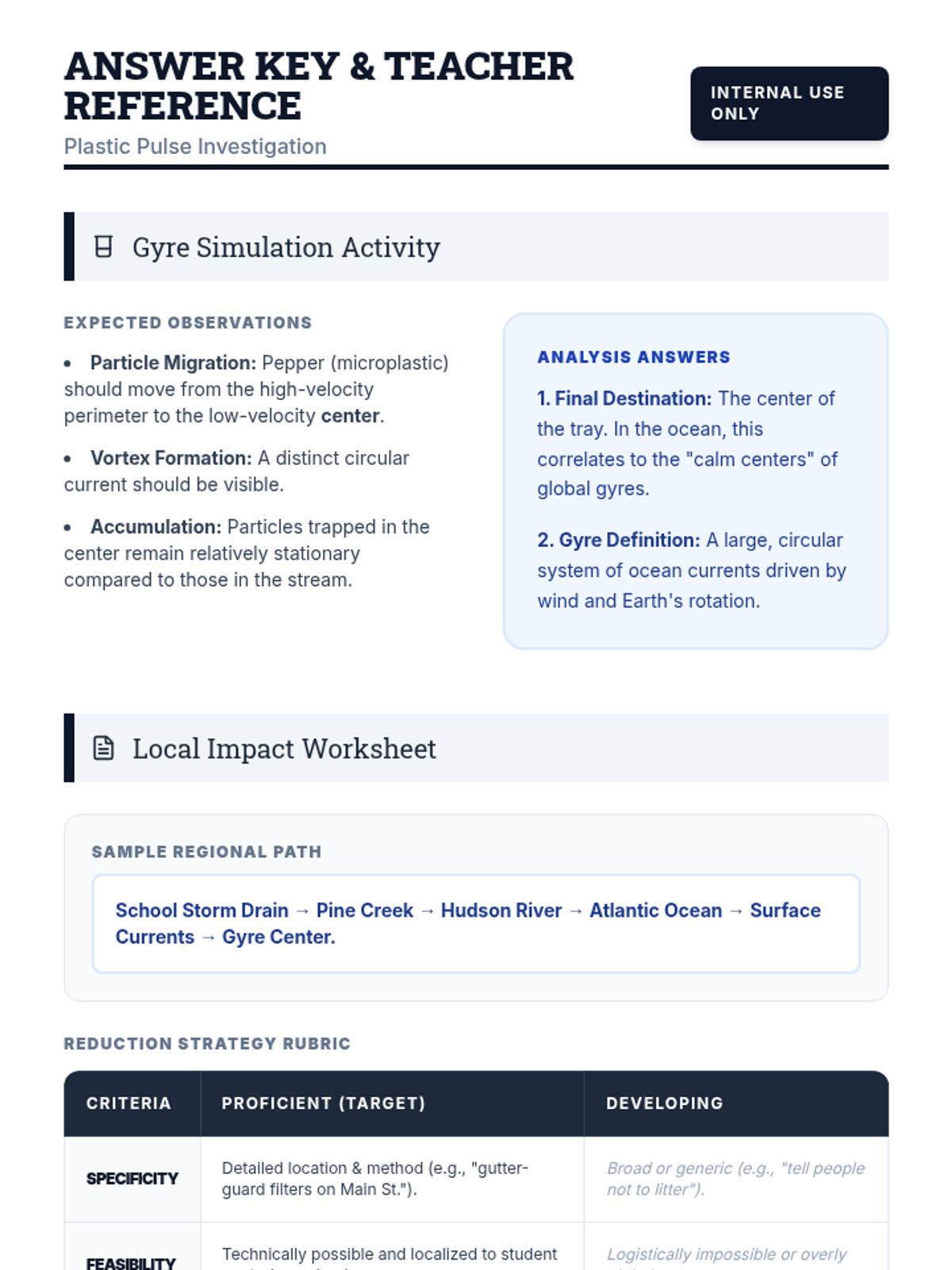
A teacher's reference guide containing expected student results, grading rubrics, and tips for addressing common misconceptions about ocean plastic pollution.
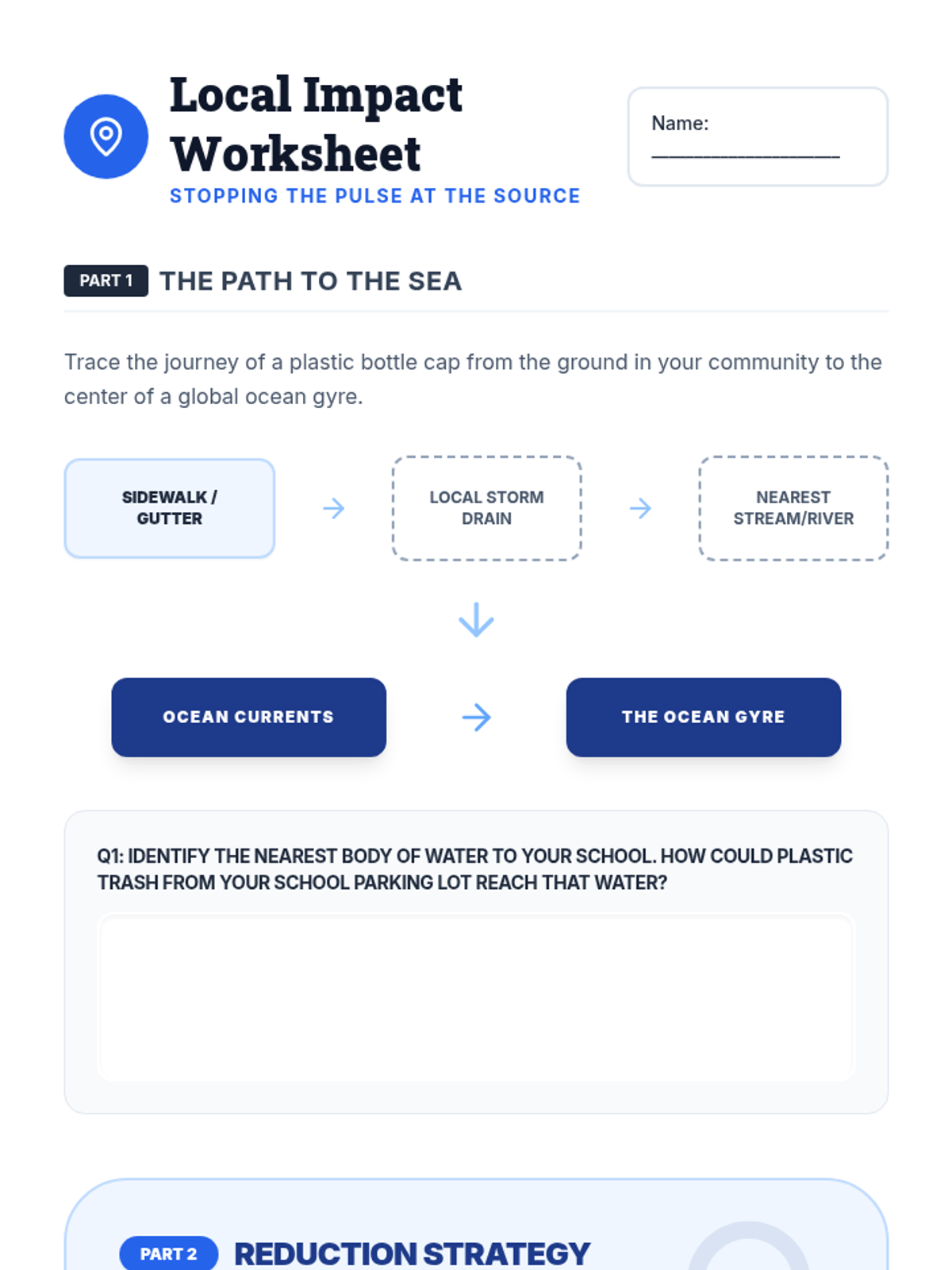
A synthesis worksheet where students trace the path of plastic from their local community to global gyres and design a localized intervention strategy to prevent plastic pollution.
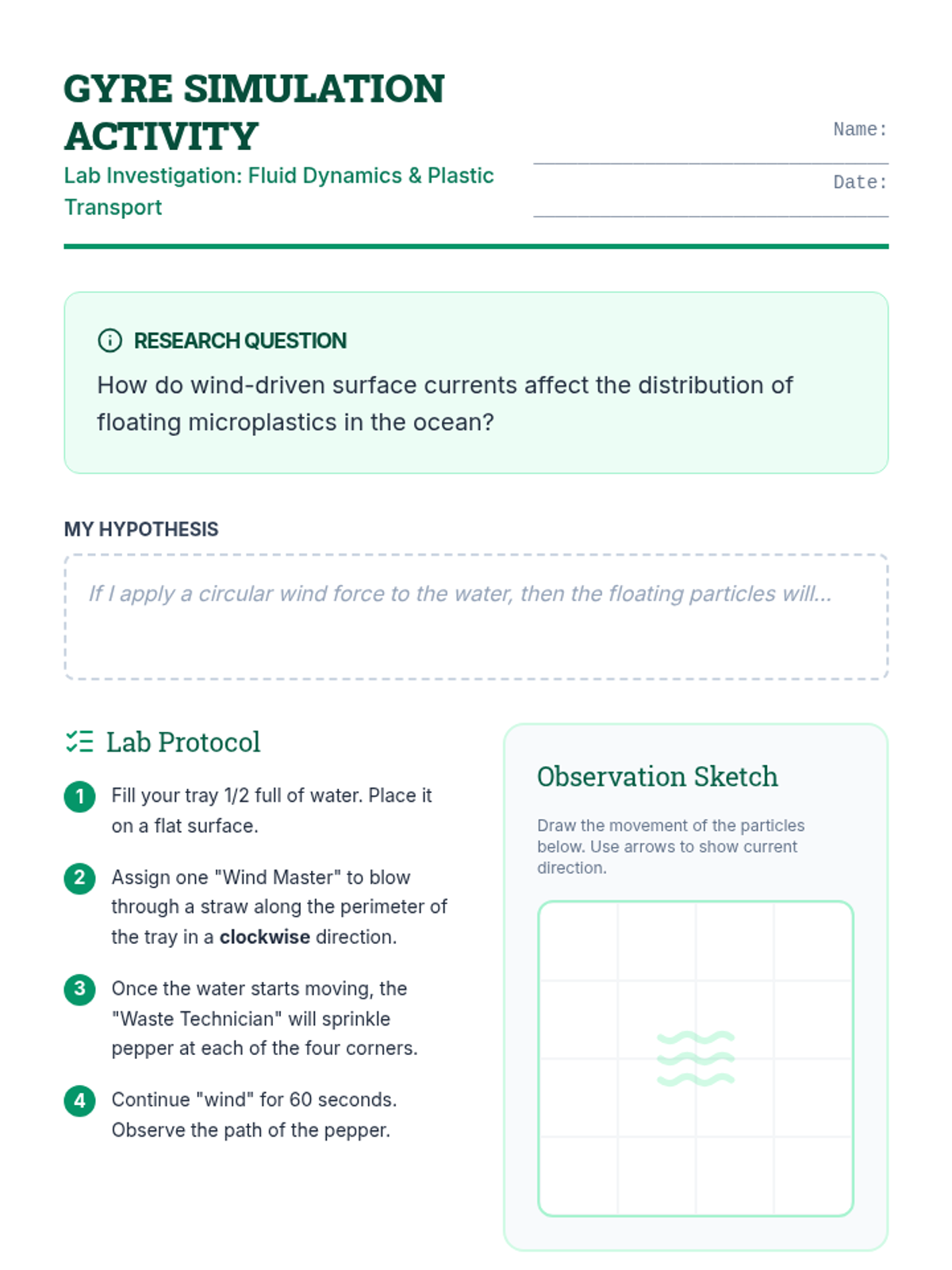
A structured lab sheet for students to document their ocean gyre simulation, including hypothesis formation, observation sketches, and analytical questions.
A visually engaging slide deck that introduces the concept of microplastics, explains ocean gyres and the Coriolis Effect, and sets up the hands-on simulation lab.
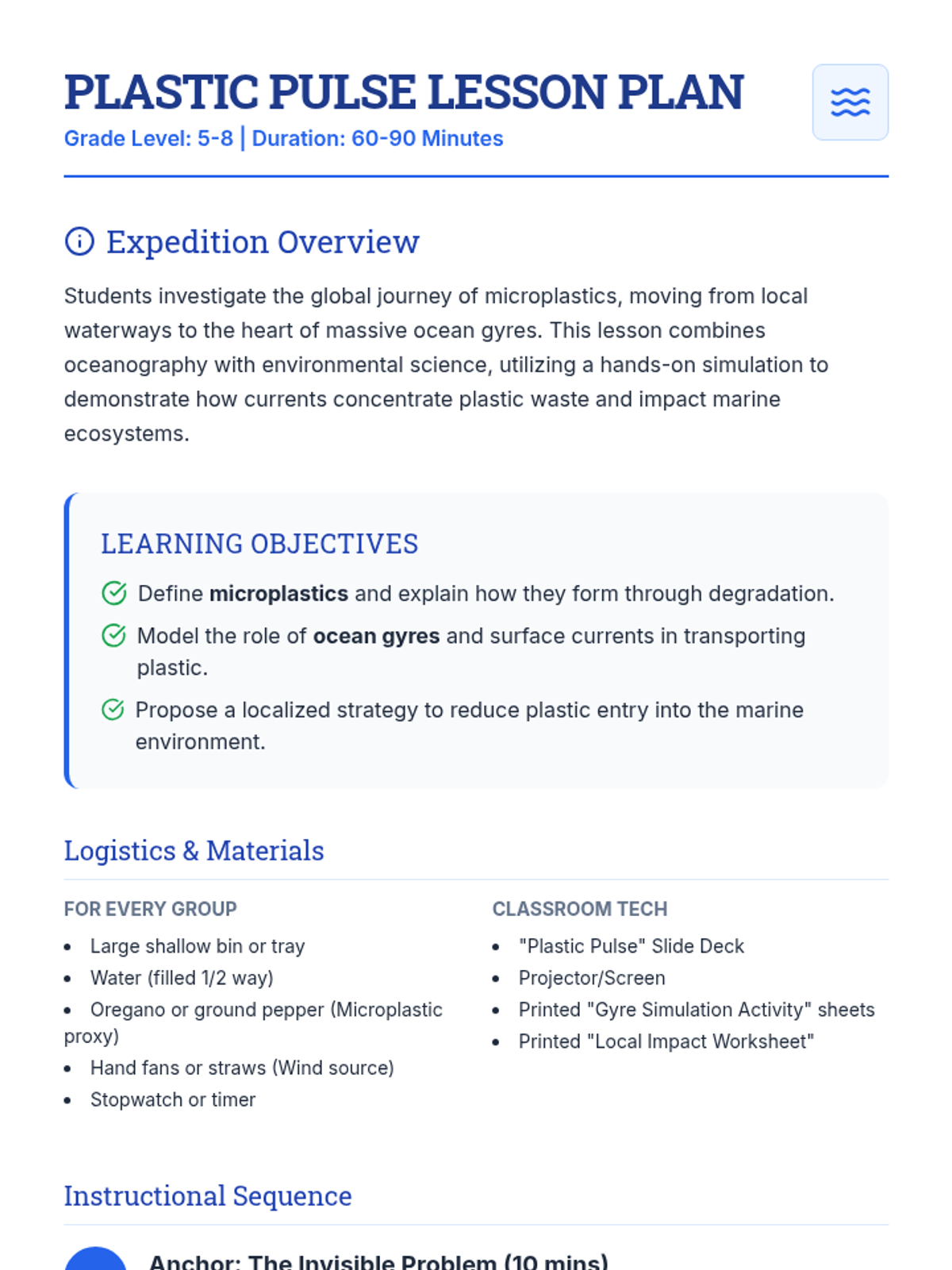
A comprehensive teacher's guide for the Plastic Pulse lesson, including learning objectives, a detailed instructional sequence, and differentiation strategies for investigating microplastic transport.
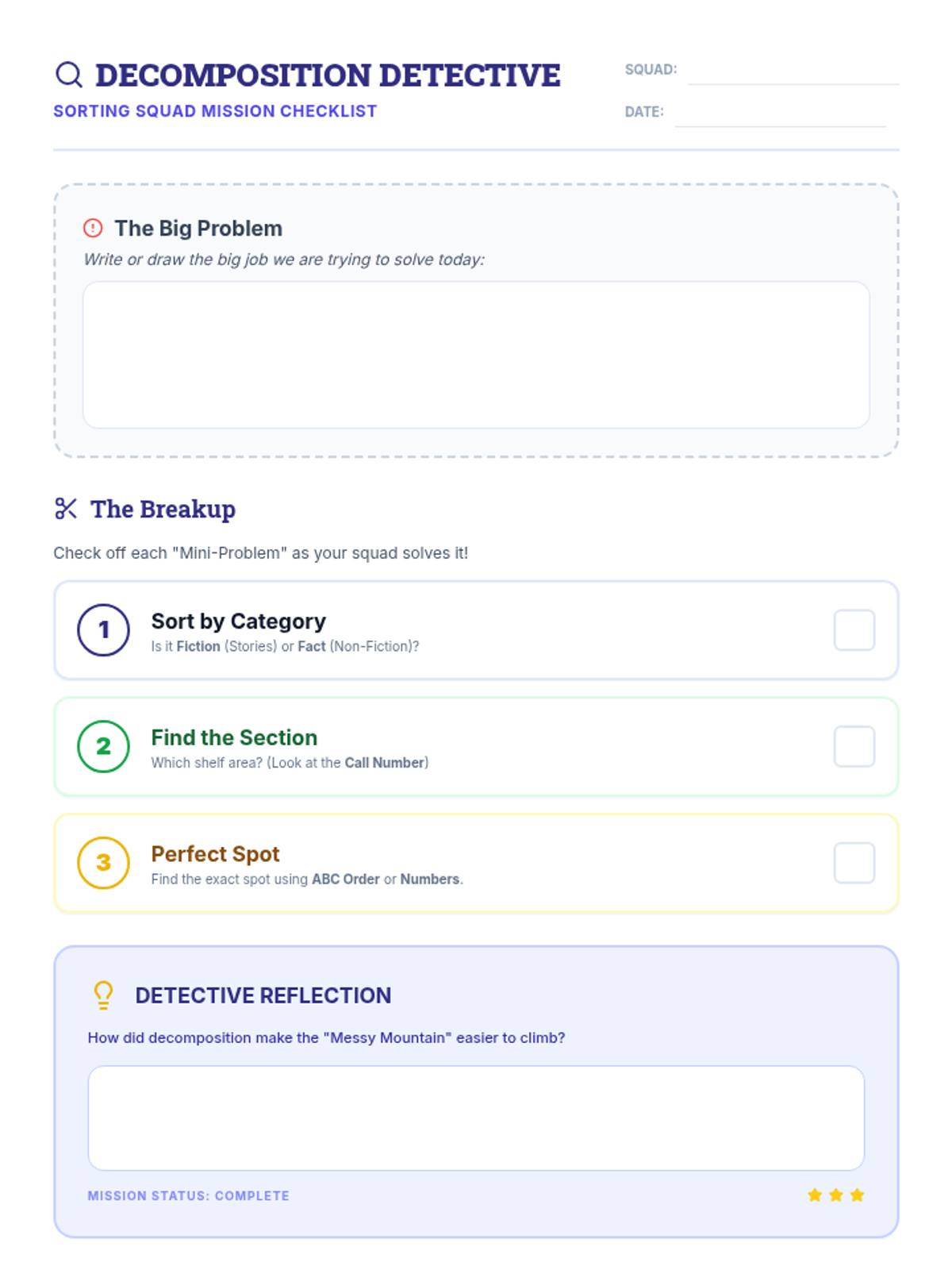
A student-facing application activity and assessment checklist for the 'Great Book Breakup' lesson. Students identify the 'big problem', check off decomposition steps (Category, Section, Spot), and reflect on the process.
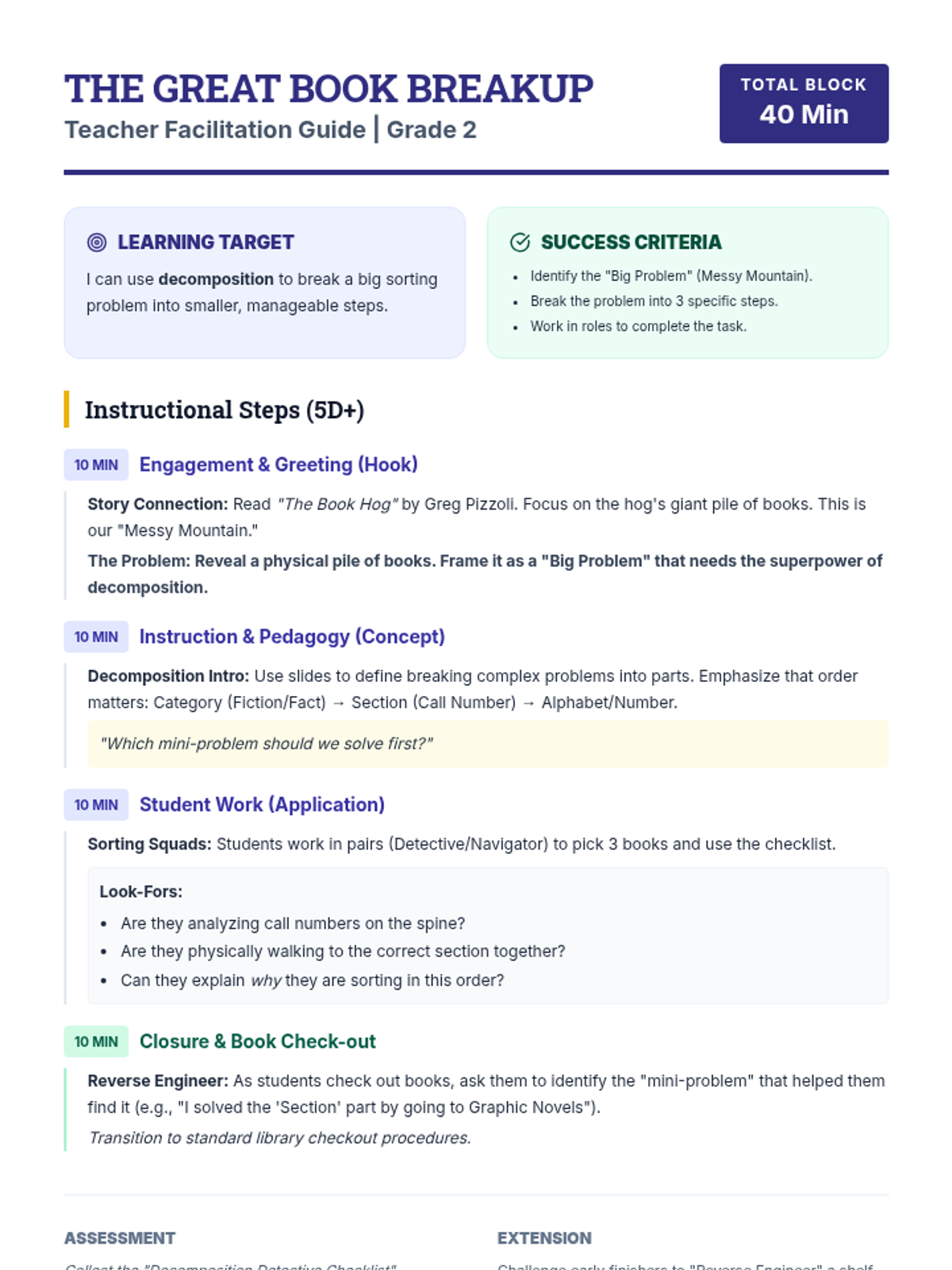
A teacher facilitation guide for the 'Great Book Breakup' lesson, including 5D+ framework alignment, CS and Iowa standards, learning targets, and specific instructional moves for a 40-minute library block.
A 6-slide presentation for a 2nd-grade CS unplugged lesson on decomposition. Using a library 'Messy Mountain' theme, it explains breaking large problems into smaller steps and assigns collaborative roles.
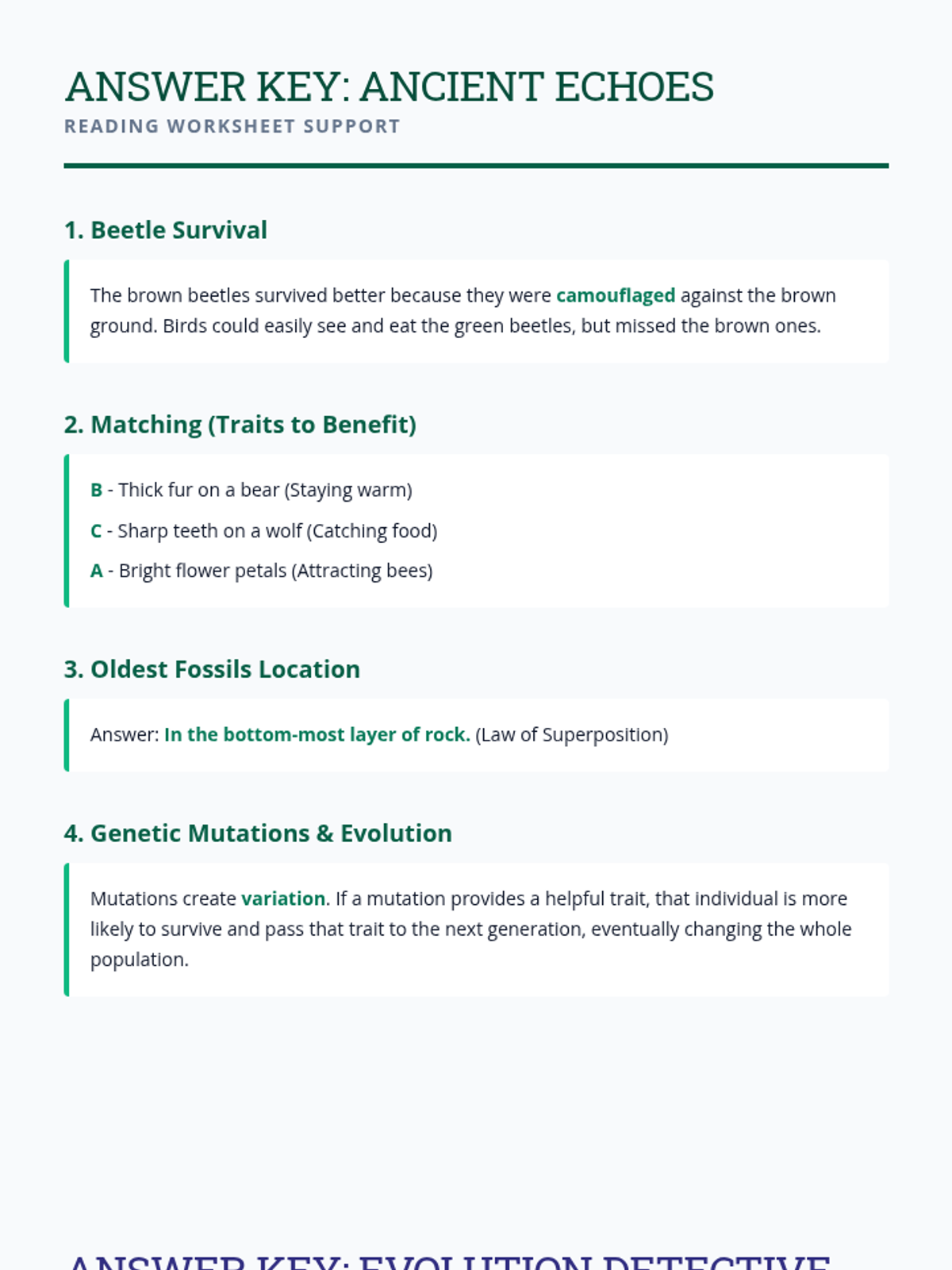
A teacher's answer key for both the Ancient Echoes reading worksheet and the Evolution Detective quiz, providing clear correct answers and brief explanations.
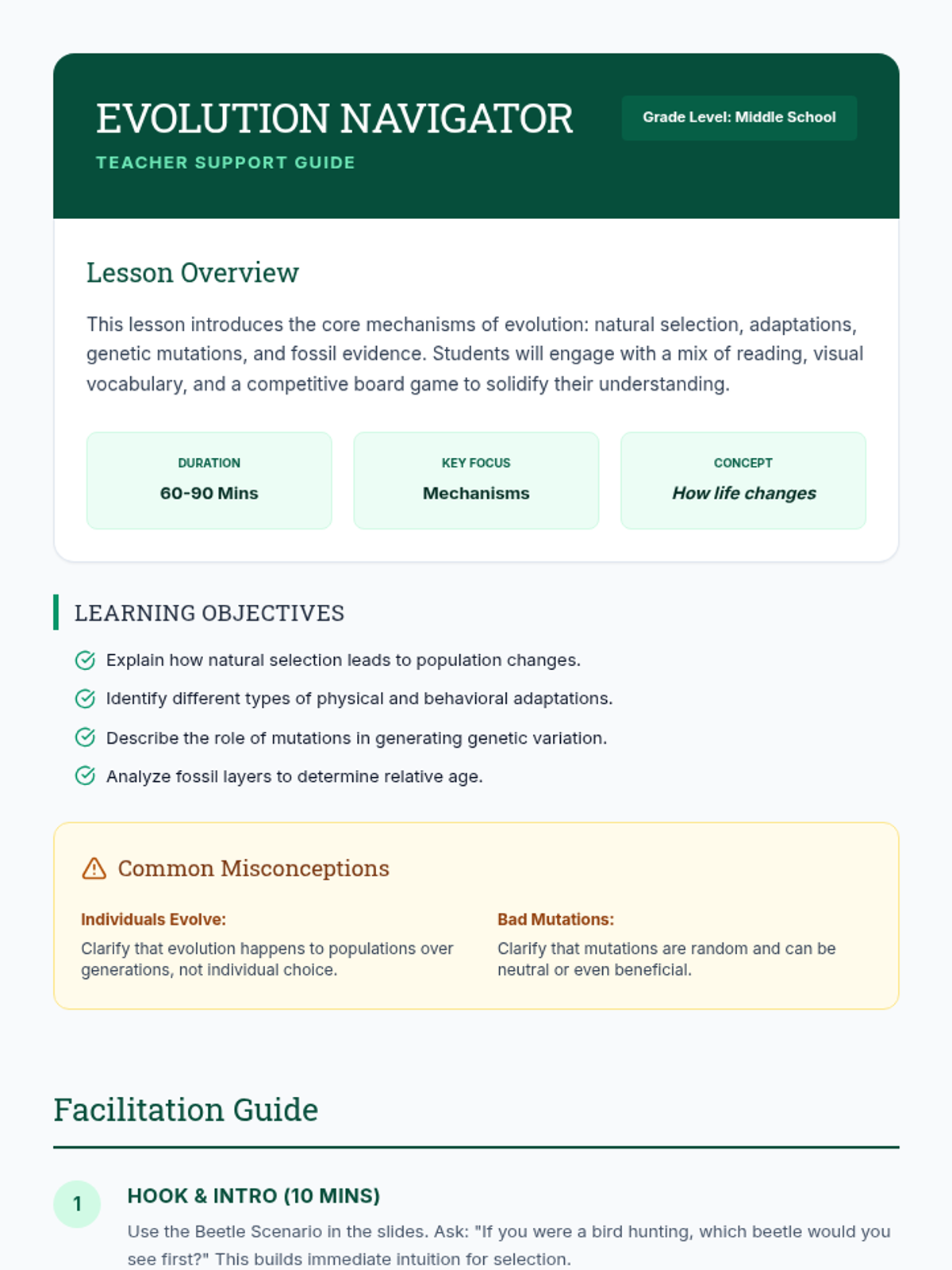
A comprehensive teacher guide for the Evolution Essentials lesson, providing learning objectives, common misconceptions, a step-by-step facilitation guide, and differentiation strategies.
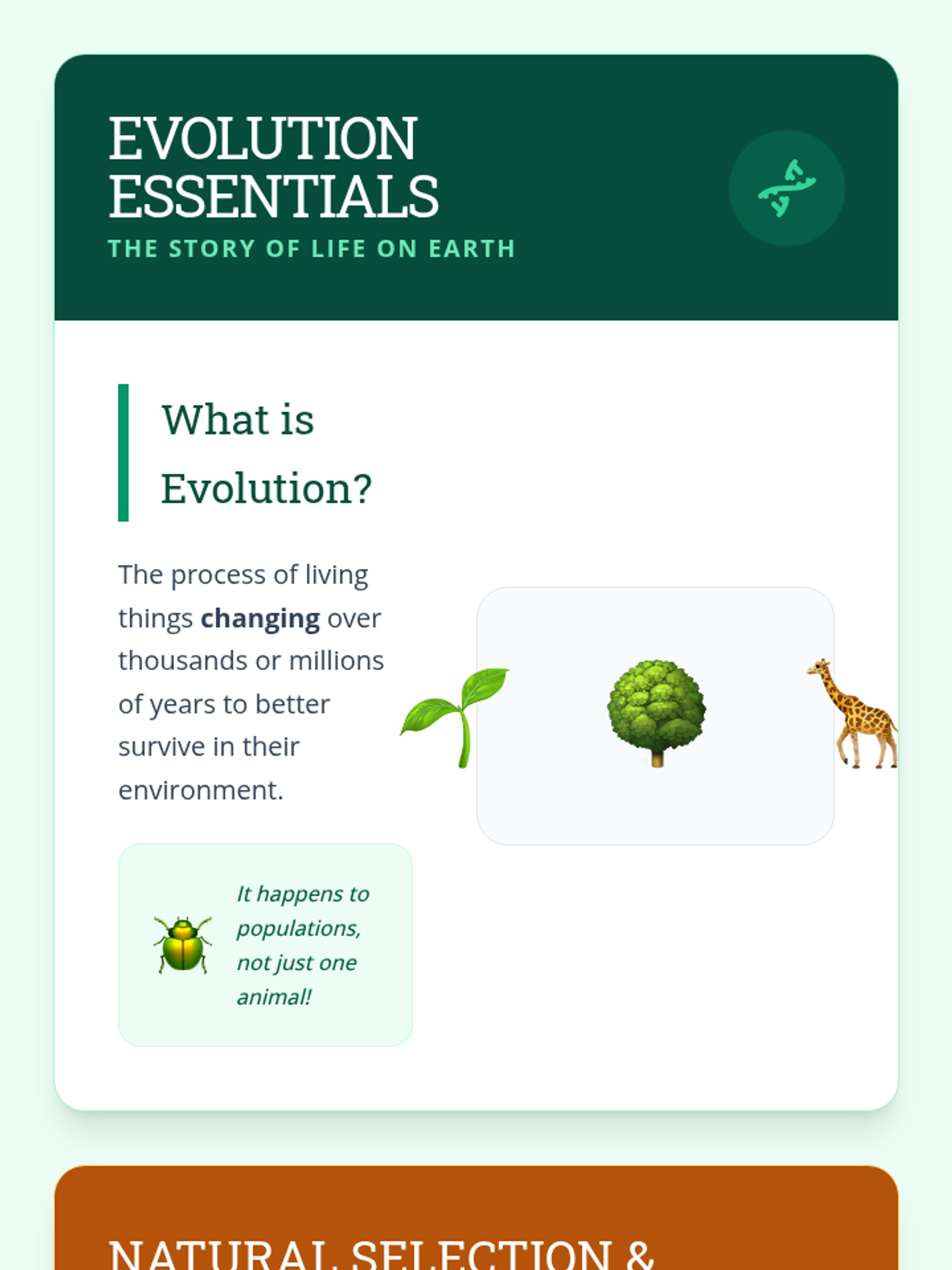
A dynamic set of printable slides (landscape) for the Evolution Essentials lesson, covering natural selection, adaptations, mutations, and fossil evidence with high-impact visuals.
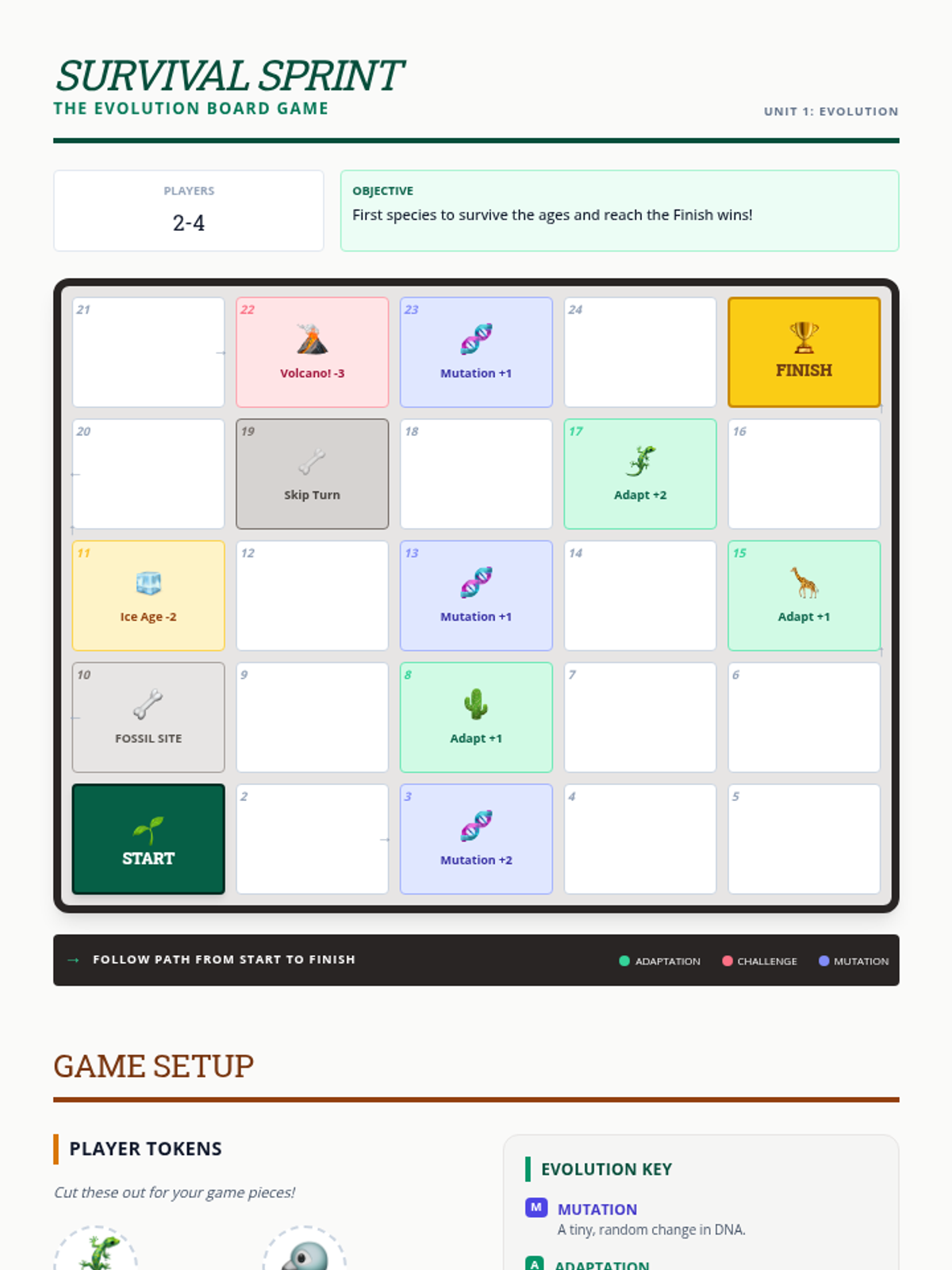
A printable board game for learning evolution concepts, optimized for 8.5x11 printing with a clear 5x5 grid, player tokens, and an evolution log.
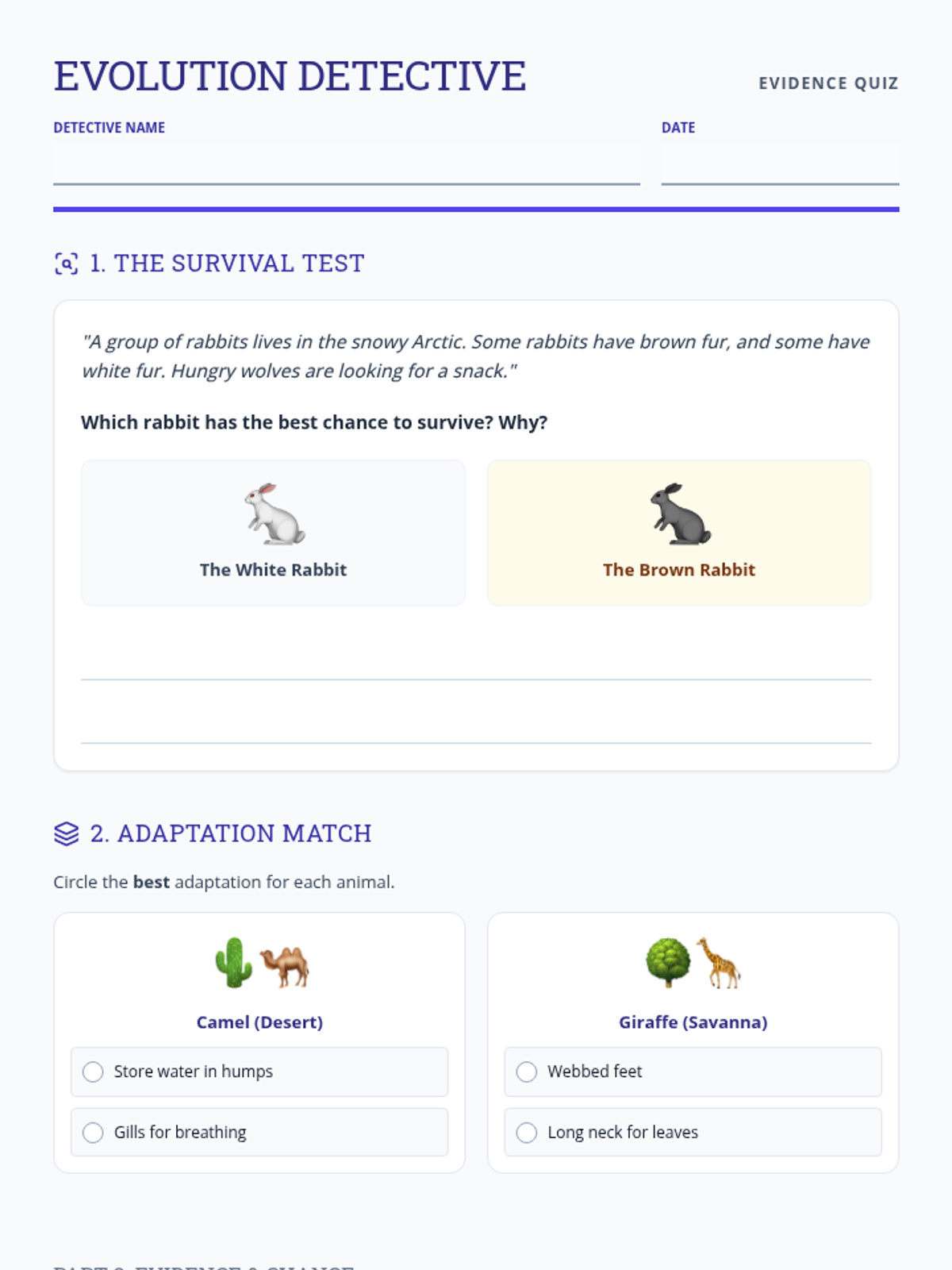
A revised evolution quiz optimized for 8.5x11 printing, featuring scenario-based questions, visual matching for adaptations, and a fossil layer analysis section.
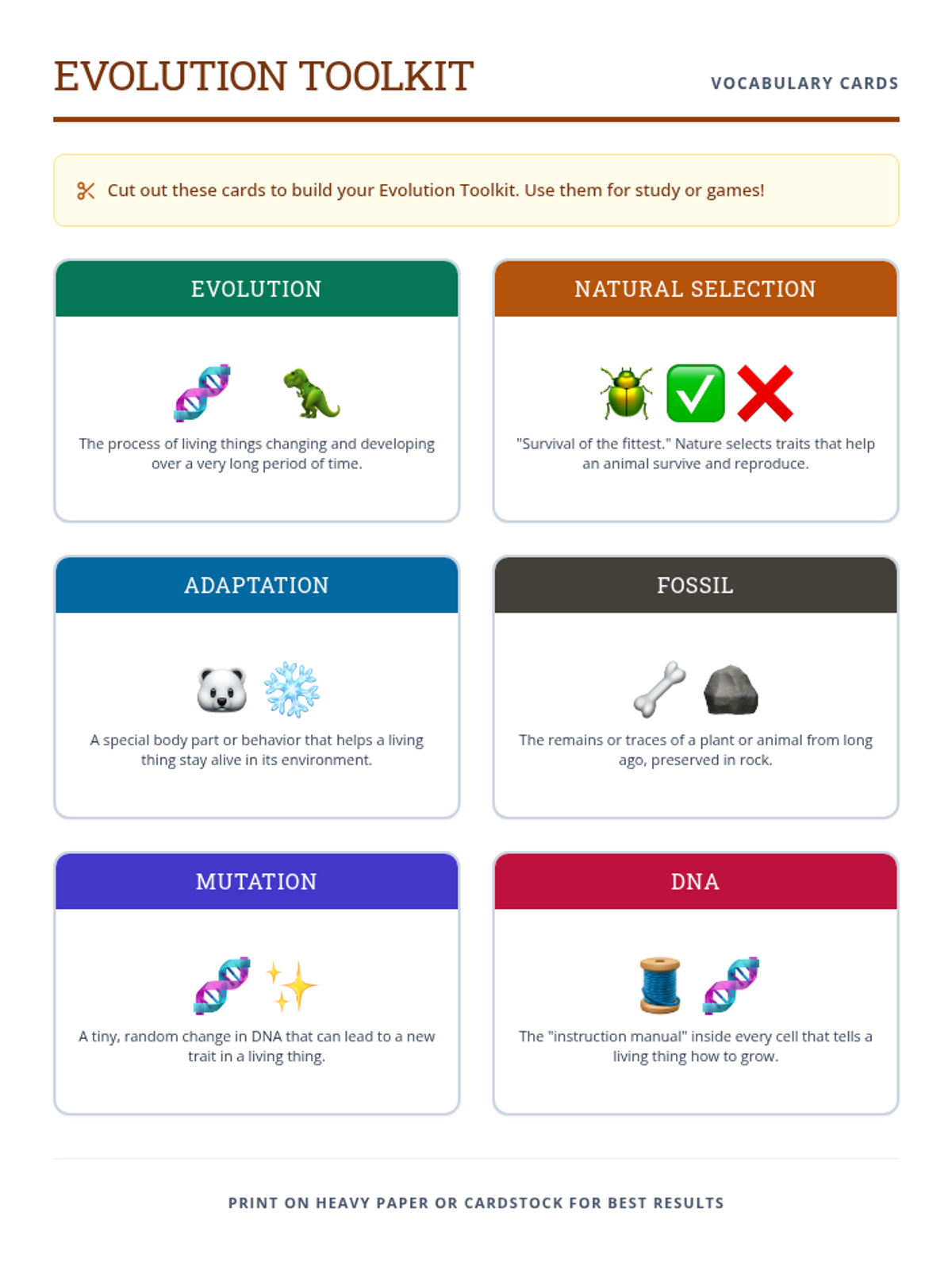
A set of 6 visual vocabulary cards for evolution terms, optimized for 8.5x11 printing with clear cut lines and vibrant, high-contrast designs.
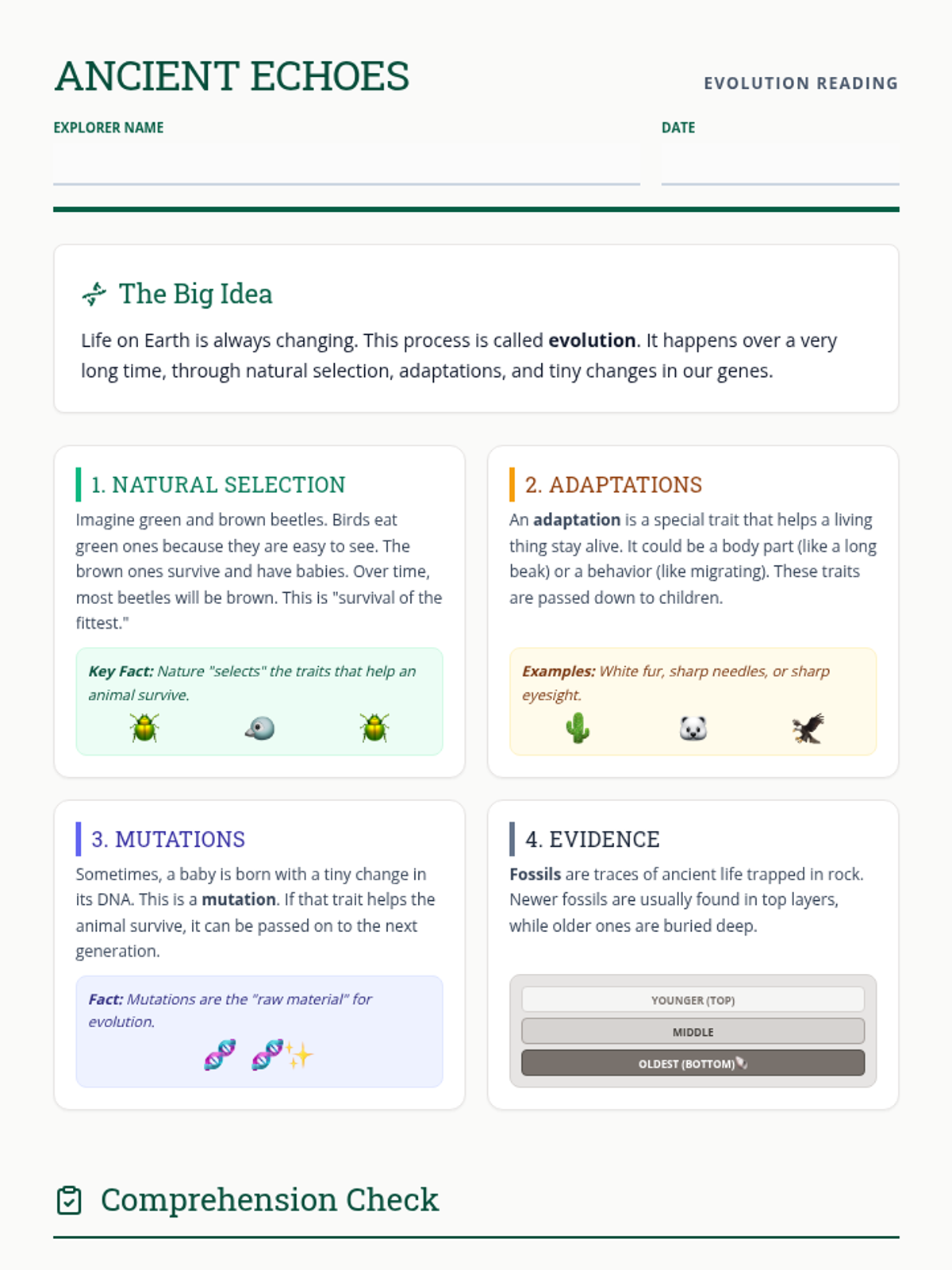
A revised reading worksheet on evolution, now optimized for 8.5x11 printing with clear sections on natural selection, adaptations, mutations, and fossils, followed by a comprehension check.
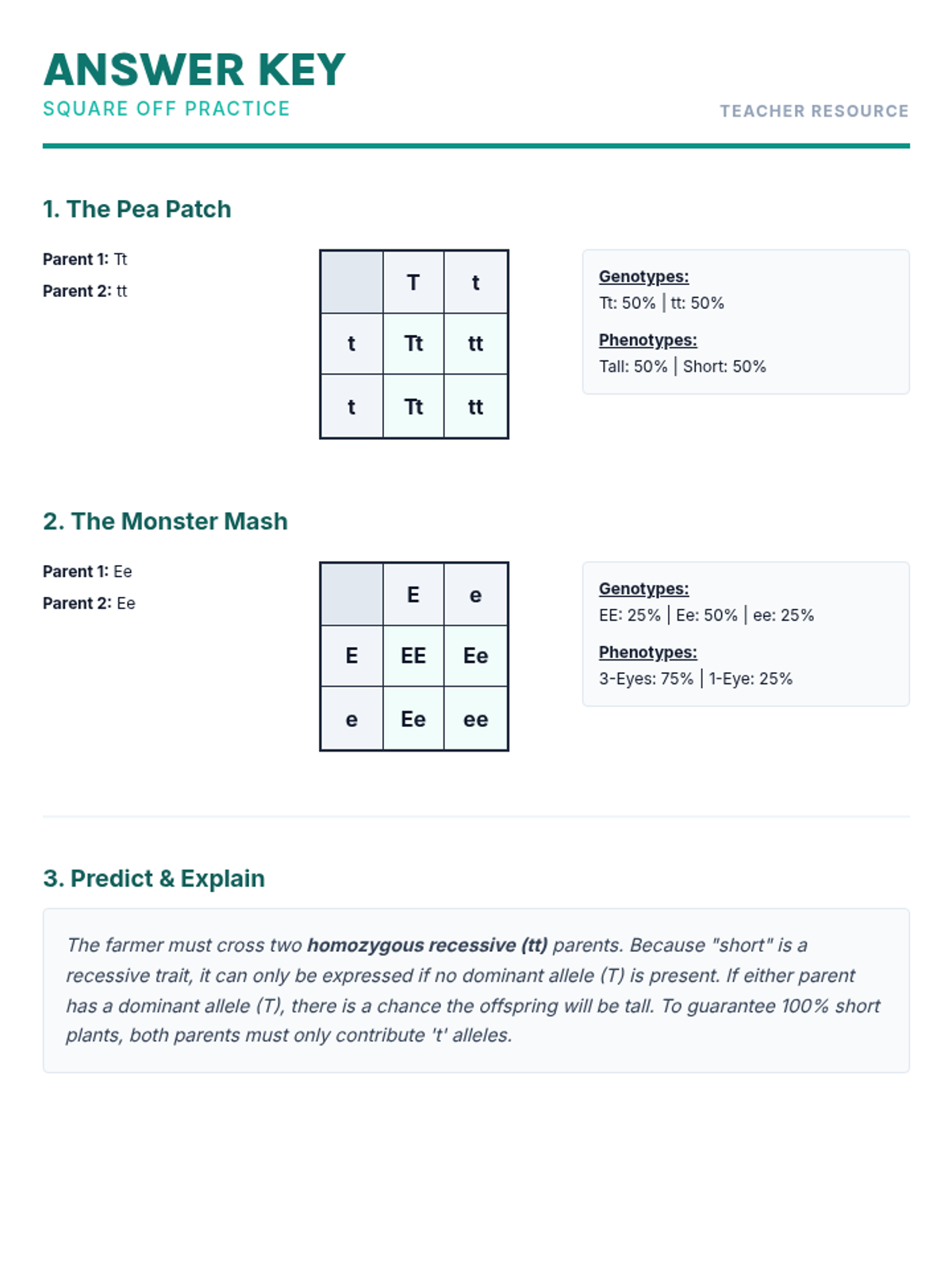
A teacher's answer key for the Square Off Punnett square practice worksheet, providing completed grids and probability calculations with optimized spacing for clarity.