This lab document provides a structured framework for students to record their baseline performance, document iterative optimization attempts, and analyze hardware-level bottlenecks during the final project.
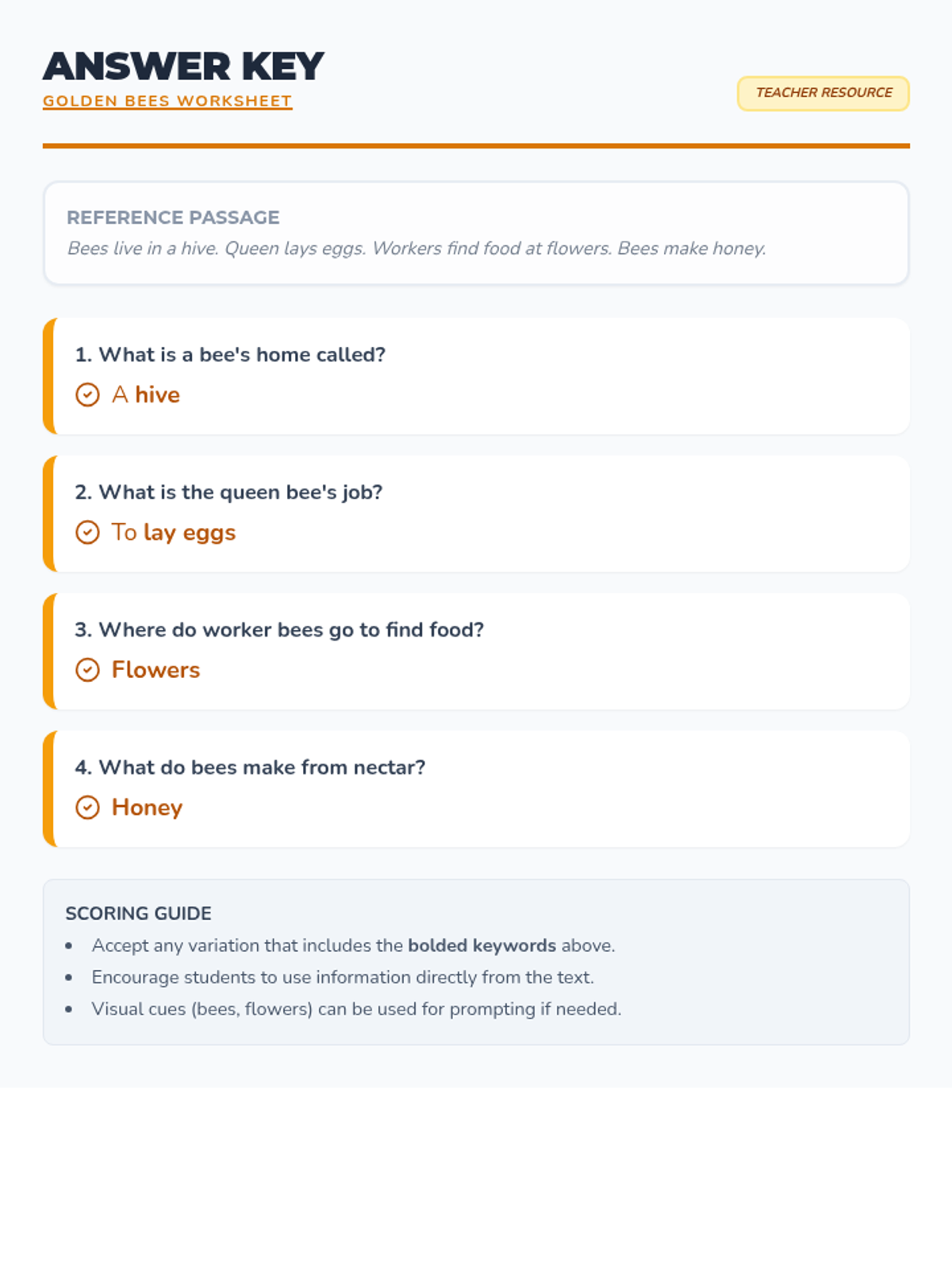
A teacher's answer key for the Golden Bees reading comprehension worksheet, providing correct answers and basic scoring guidance.
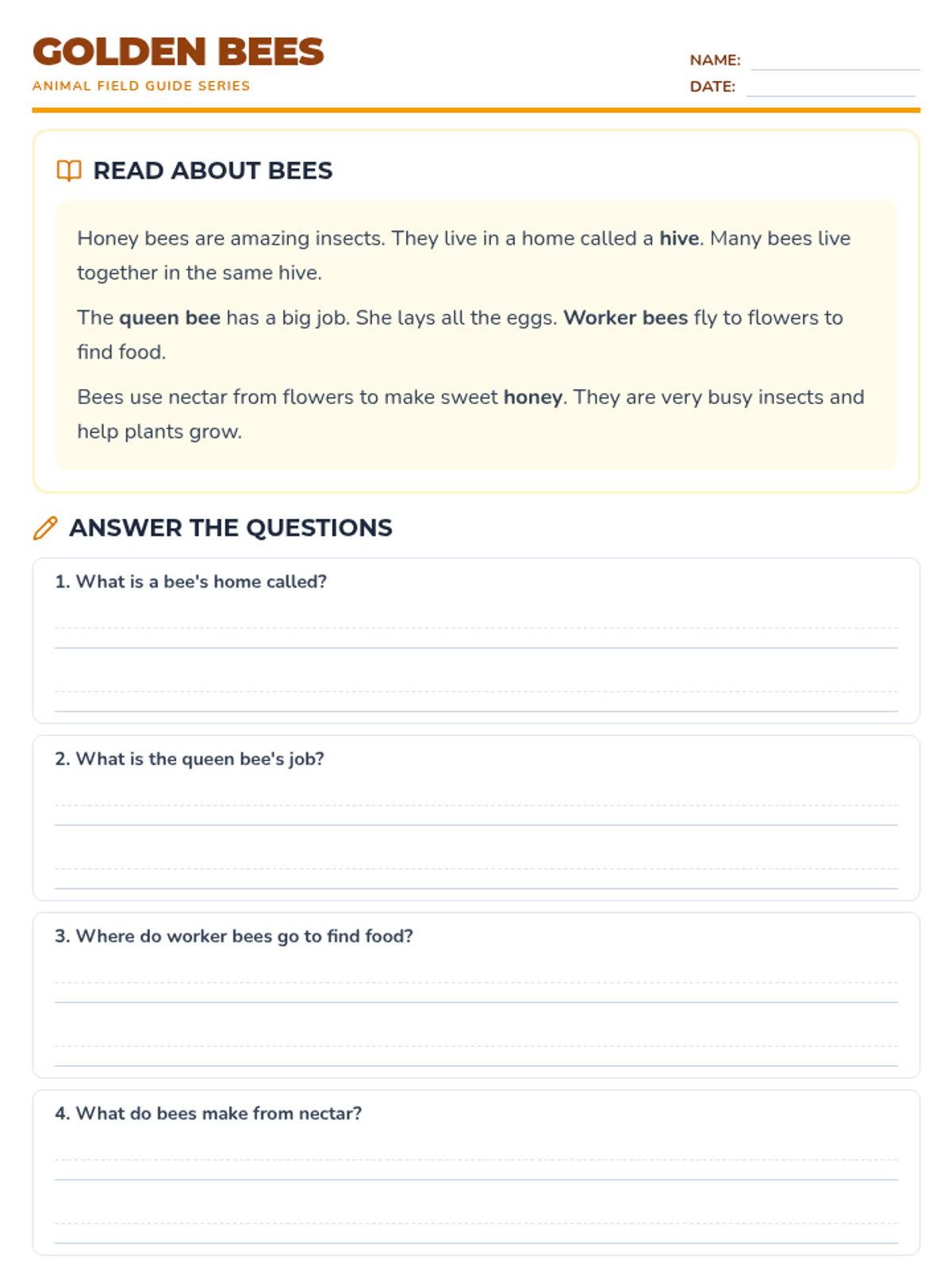
A non-fiction reading comprehension worksheet about honey bees, featuring a short passage and four literal short-answer questions with double-spaced writing lines. Designed for single-page printing.
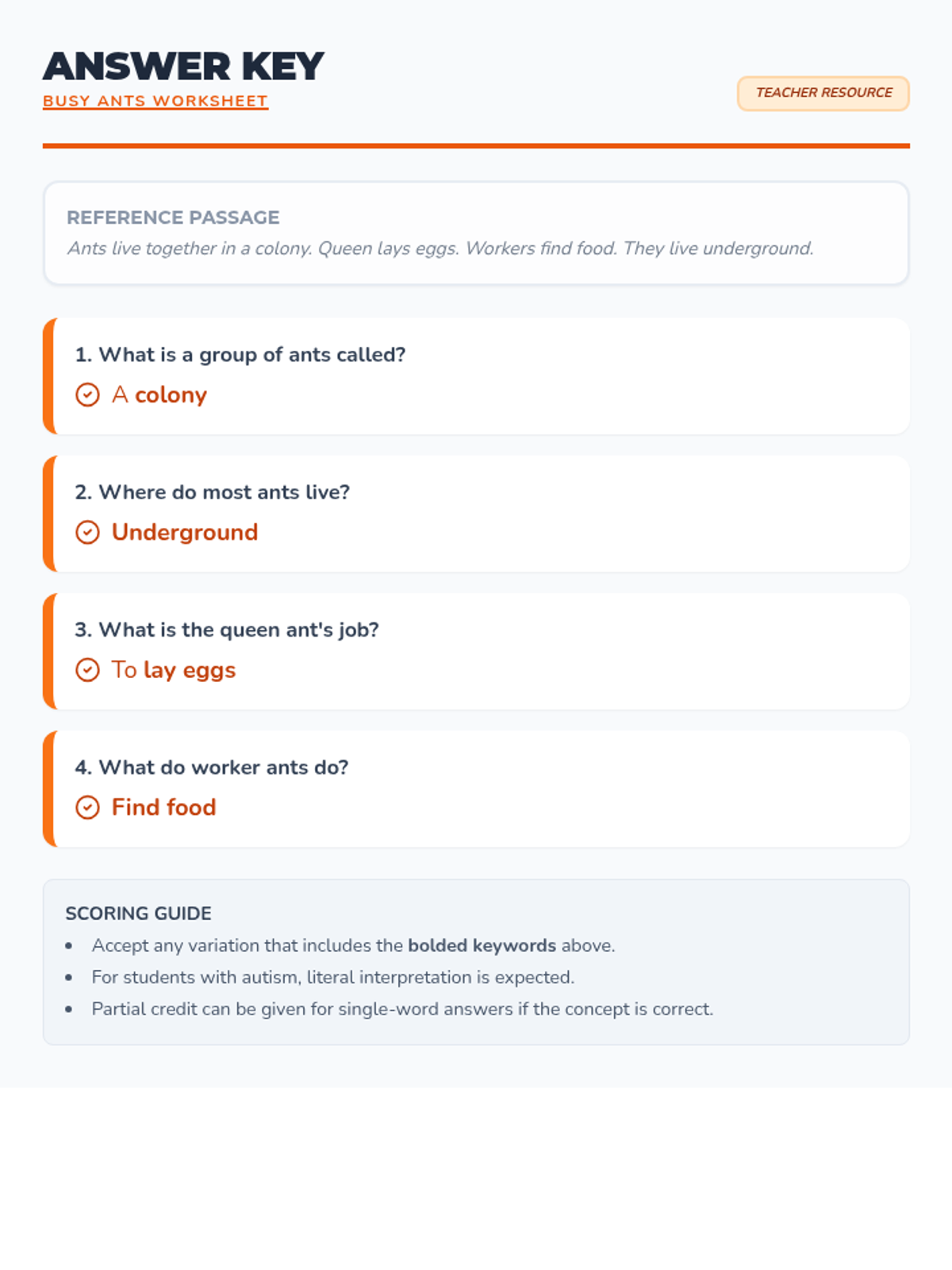
A teacher's answer key for the Busy Ants reading comprehension worksheet, providing correct answers and basic scoring guidance.
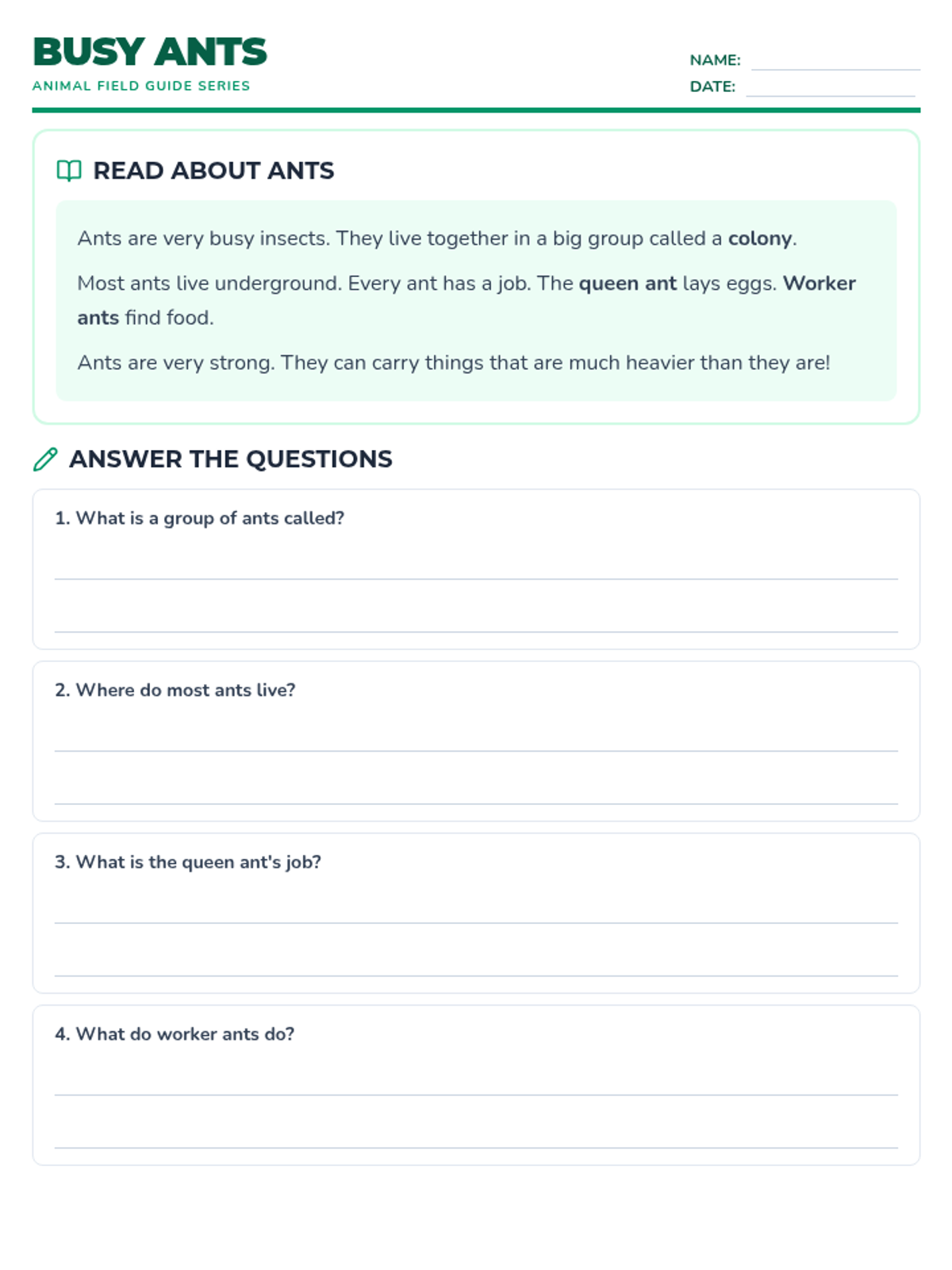
A non-fiction reading comprehension worksheet about ants, featuring a short passage and four literal short-answer questions with clear, double-spaced writing lines. Updated for single-page printing.
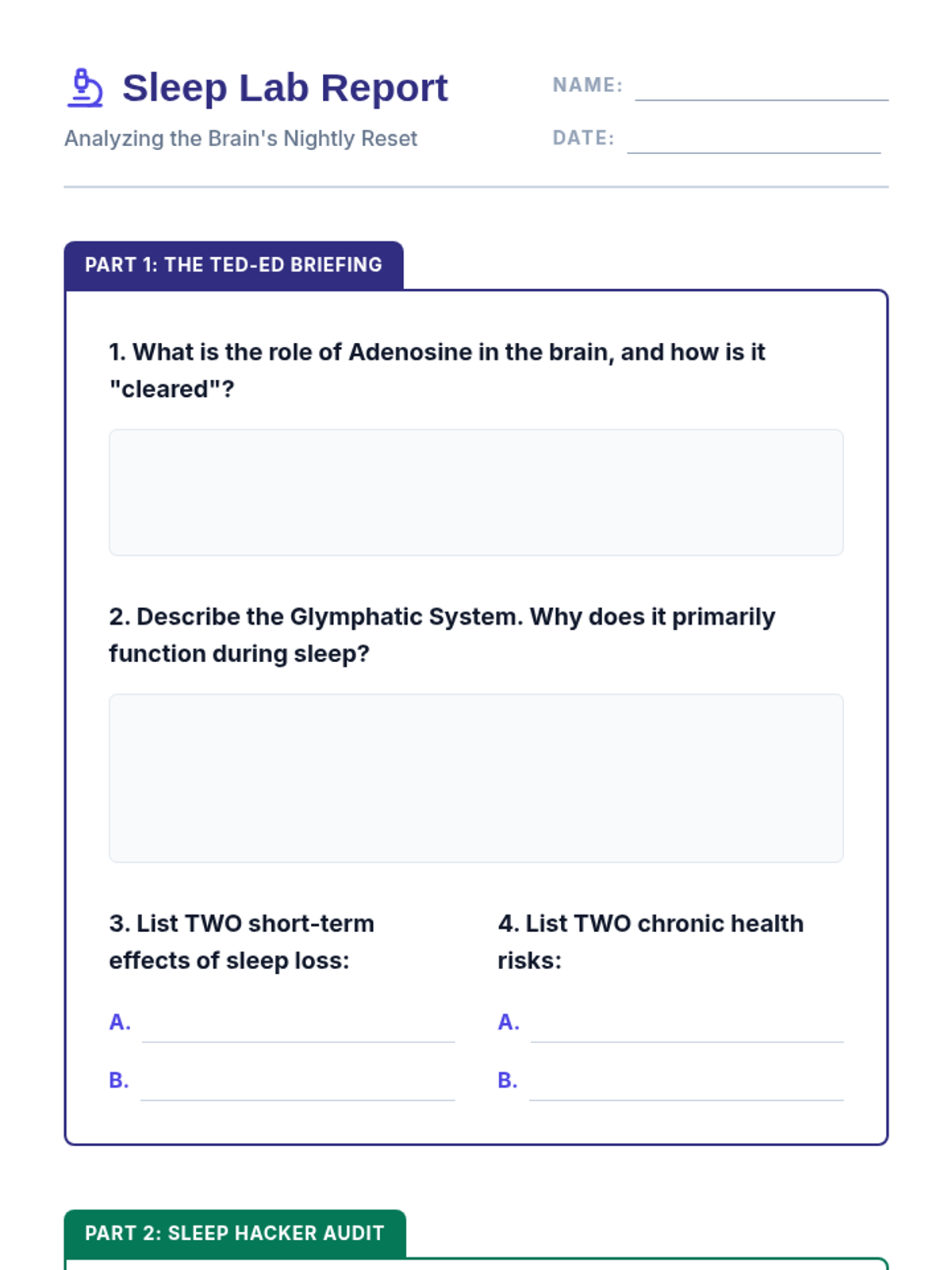
A student worksheet designed for use during and after the slide presentation, featuring video analysis questions and a personal sleep habit audit.
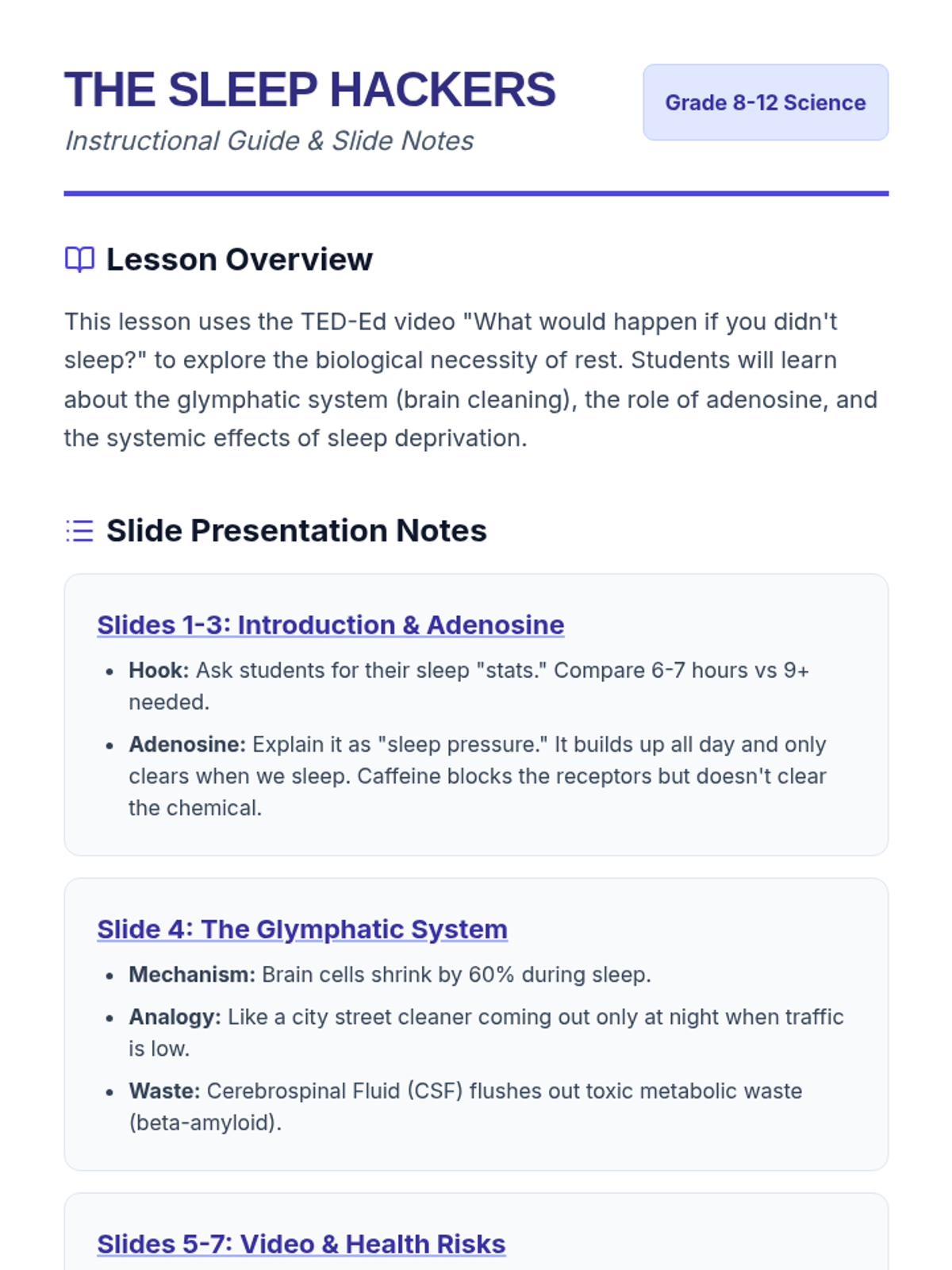
Comprehensive teacher notes and a slide-by-slide facilitation guide for "The Sleep Hackers" lesson, including discussion prompts and scientific background on the glymphatic system.
A high-impact slide deck exploring the biological mechanisms of sleep, including the glymphatic system and the dangers of sleep deprivation, based on the TED-Ed video.
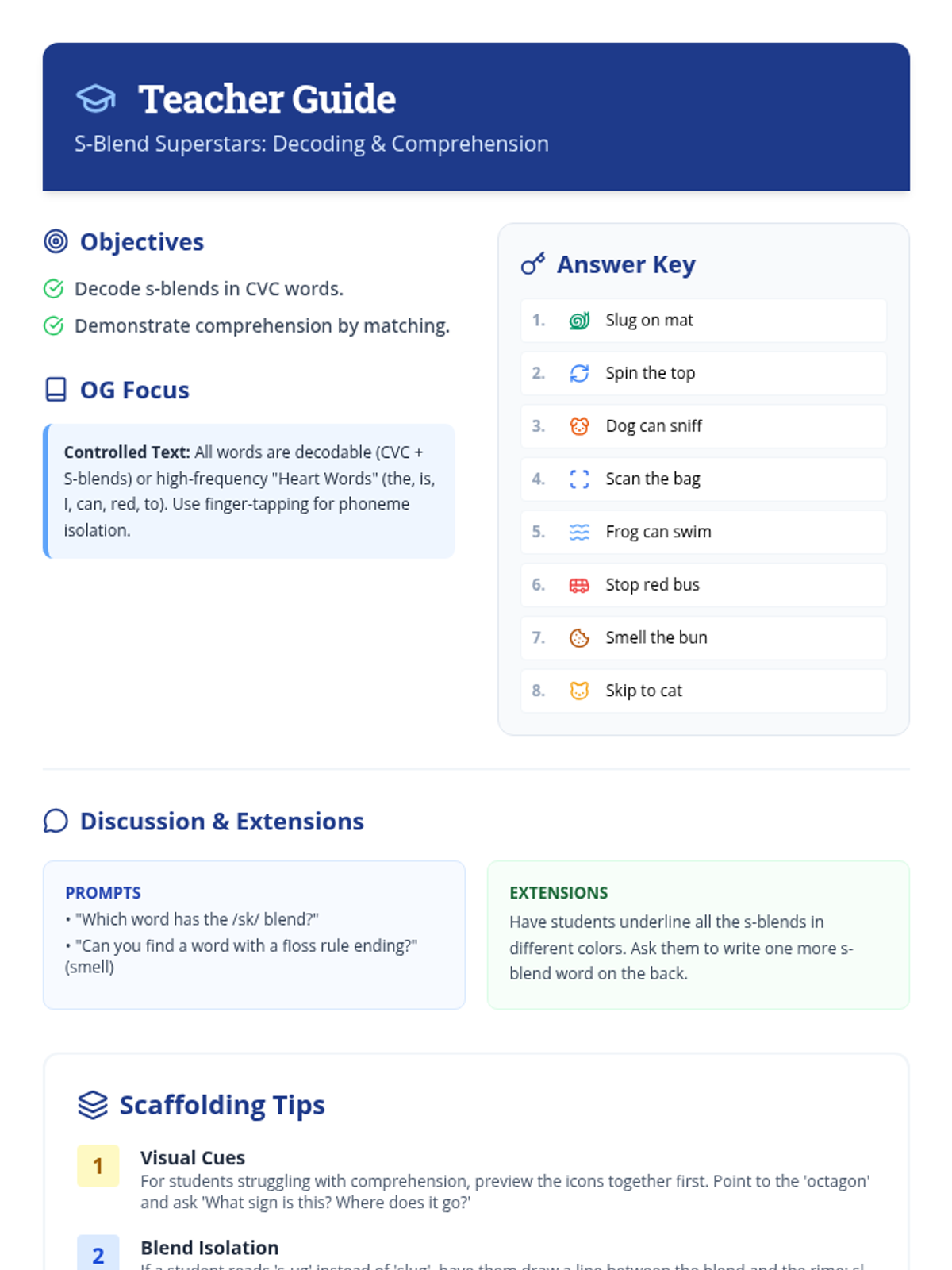
A teacher guide for the S-Blend Matcher lesson. Optimized to keep key sections together, uses standardized Lucide icons in the Answer Key, and includes a second page of scaffolding tips to help with differentiation.
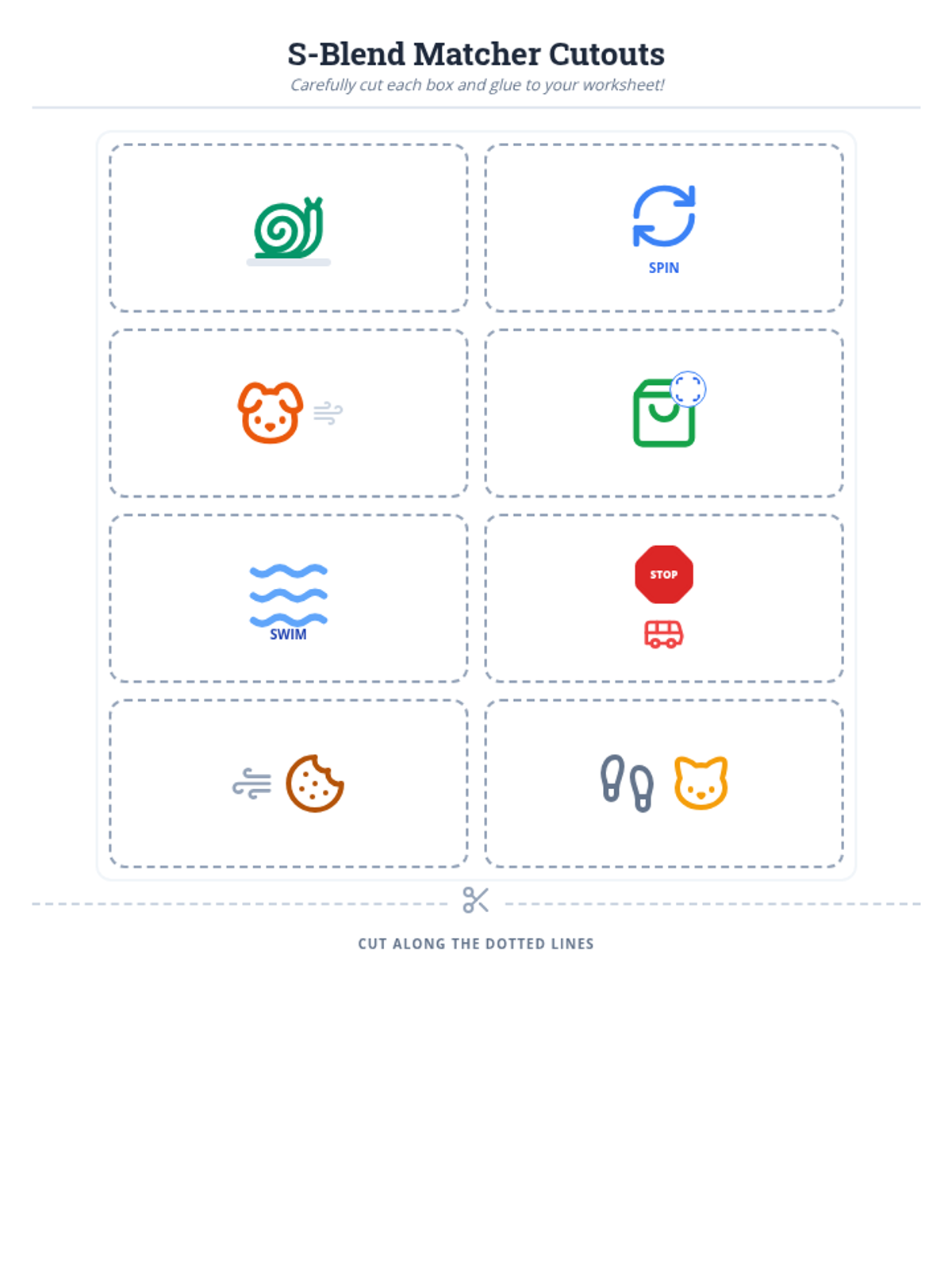
A single-page cut-out sheet with eight visual prompts. Standardized to use professional Lucide icons for a cohesive look and optimized layout to ensure everything fits on a single printed page. High-contrast labels added for accessibility.
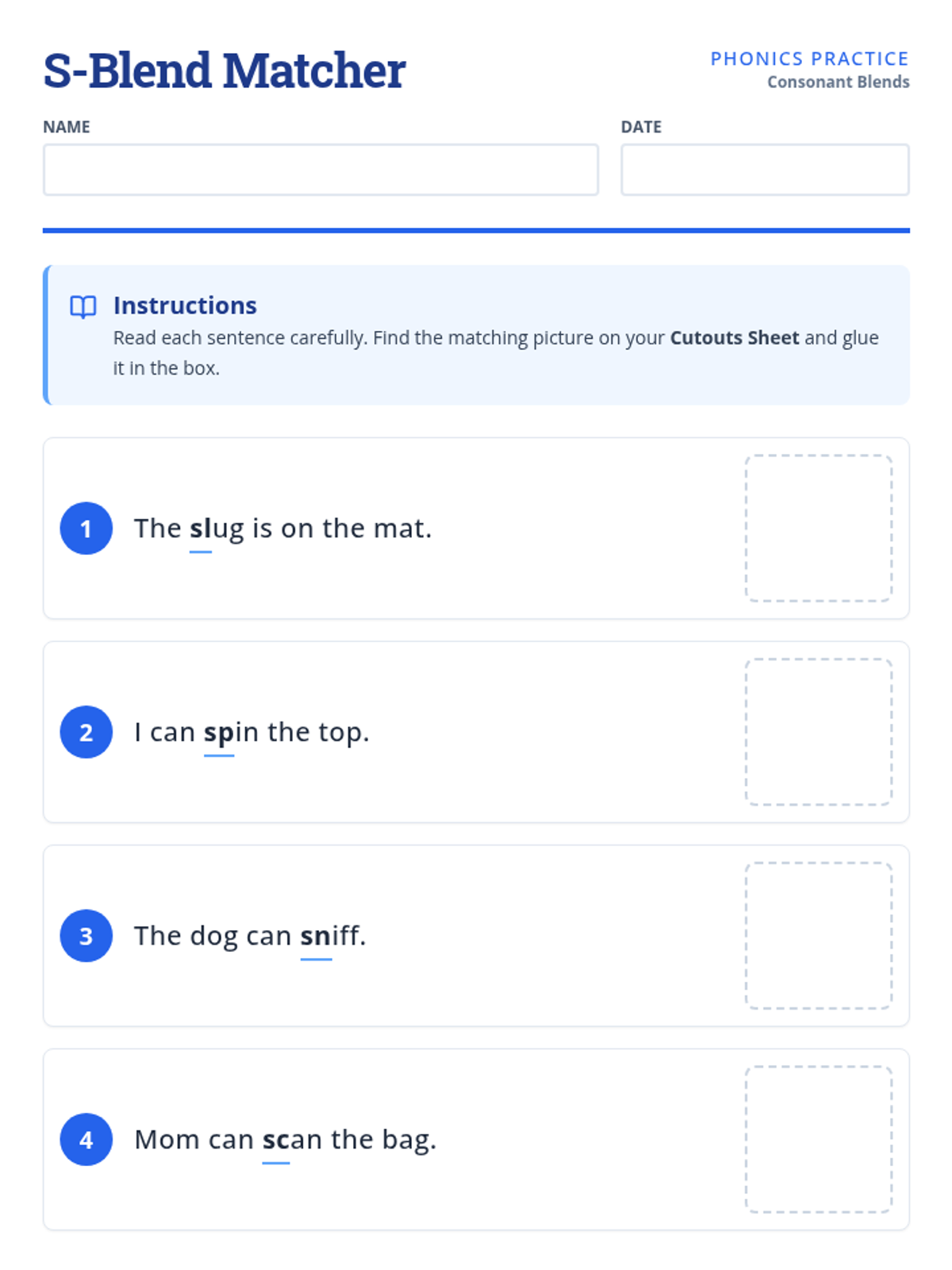
A student worksheet featuring eight decodable sentences with initial s-blends and dedicated areas for pasting matching pictures. Includes adjusted text decoration for better readability and a bonus drawing activity.
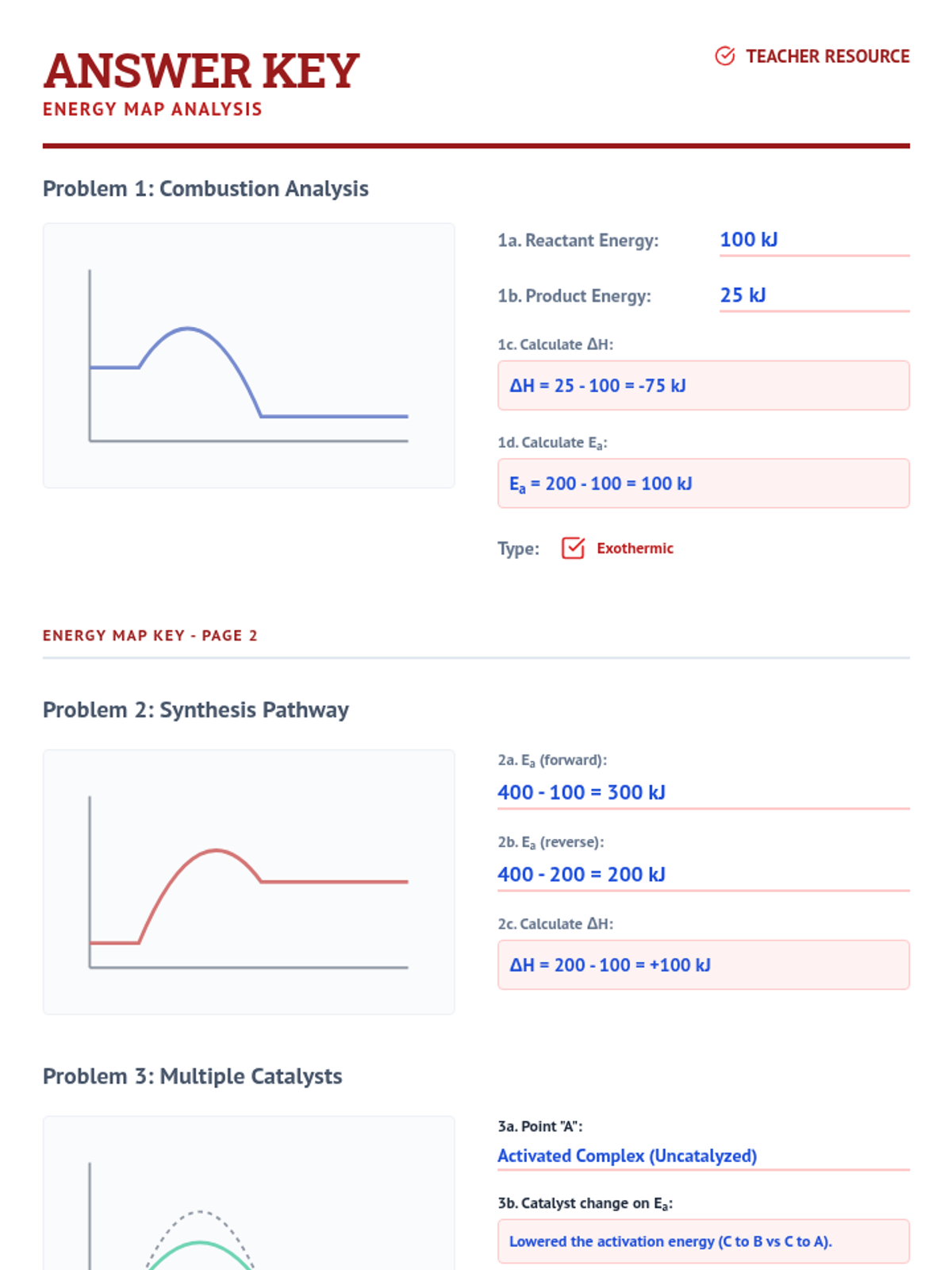
A detailed answer key for the Energy Map Worksheet, featuring solved diagrams and completed summary tables. Revised to match the worksheet layout and fixes.
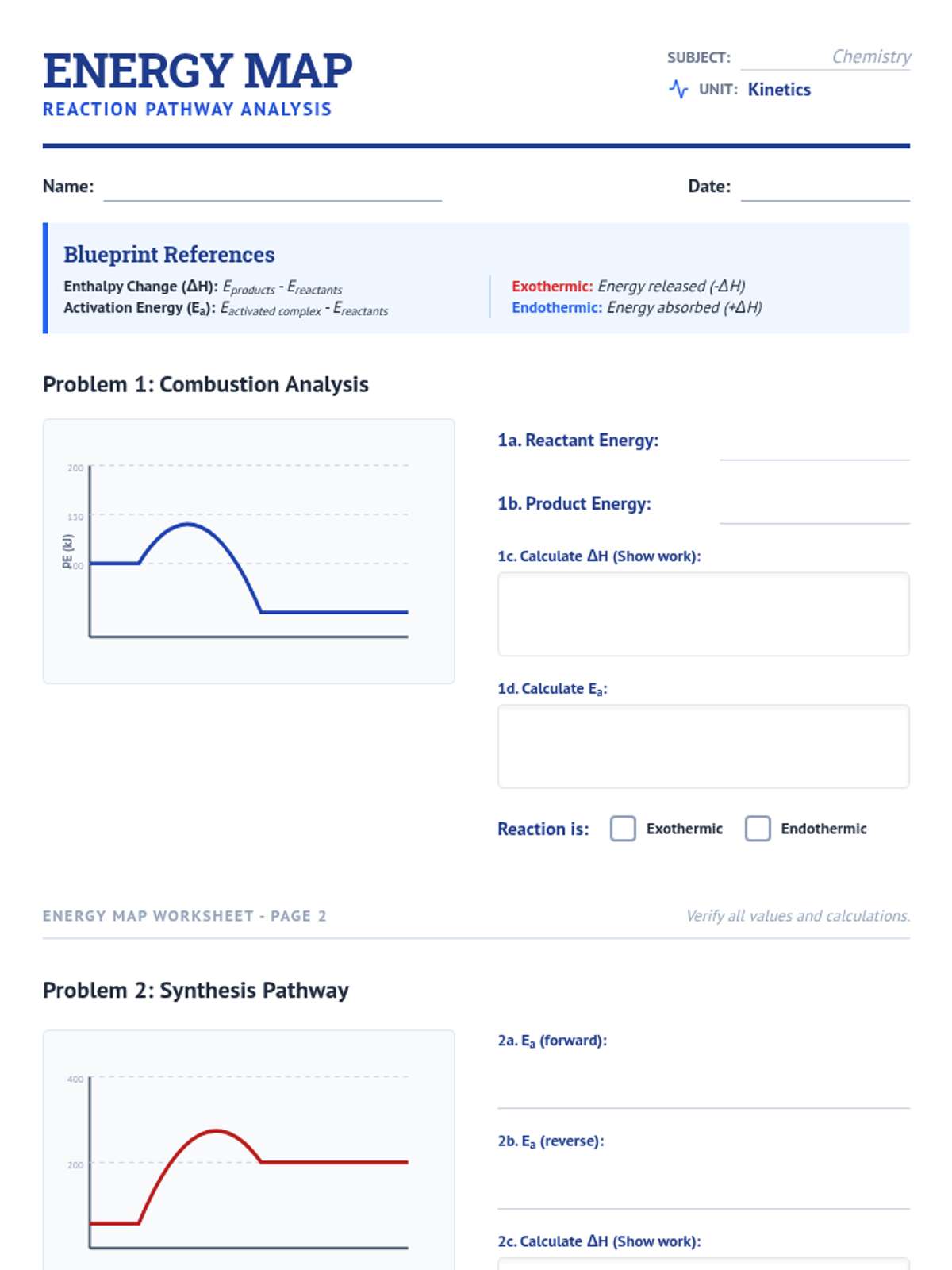
A 2-page worksheet for calculating activation energy and enthalpy from potential energy diagrams. Includes visual problems, catalyst analysis, and conceptual checks. Revised for better page breaks and larger work areas.
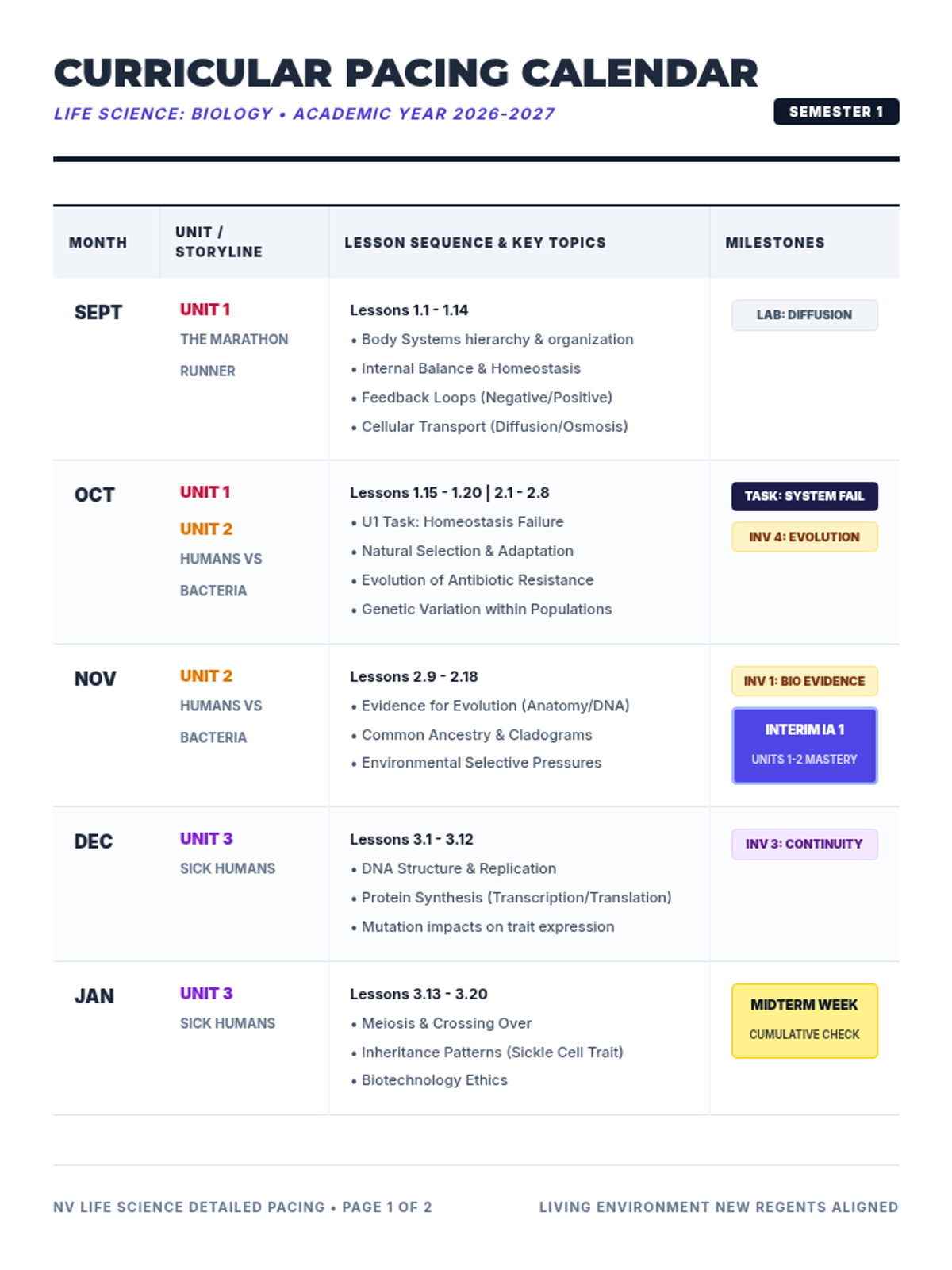
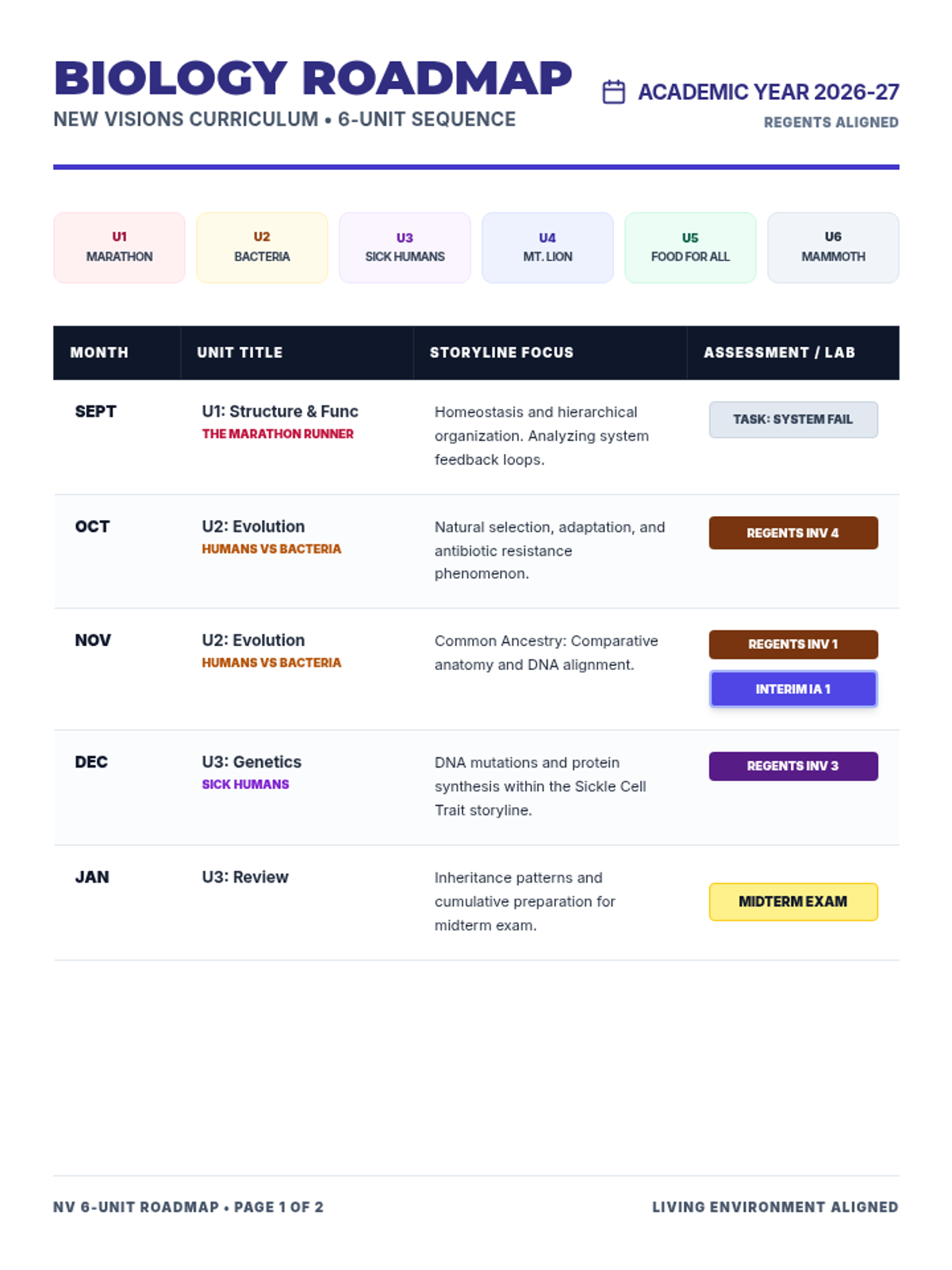
A comprehensive detailed pacing guide for the 26-27 school year, providing a month-by-month breakdown of unit coverage, lesson numbering, and specific milestones including labs, performance tasks, and the three Interim Assessments.
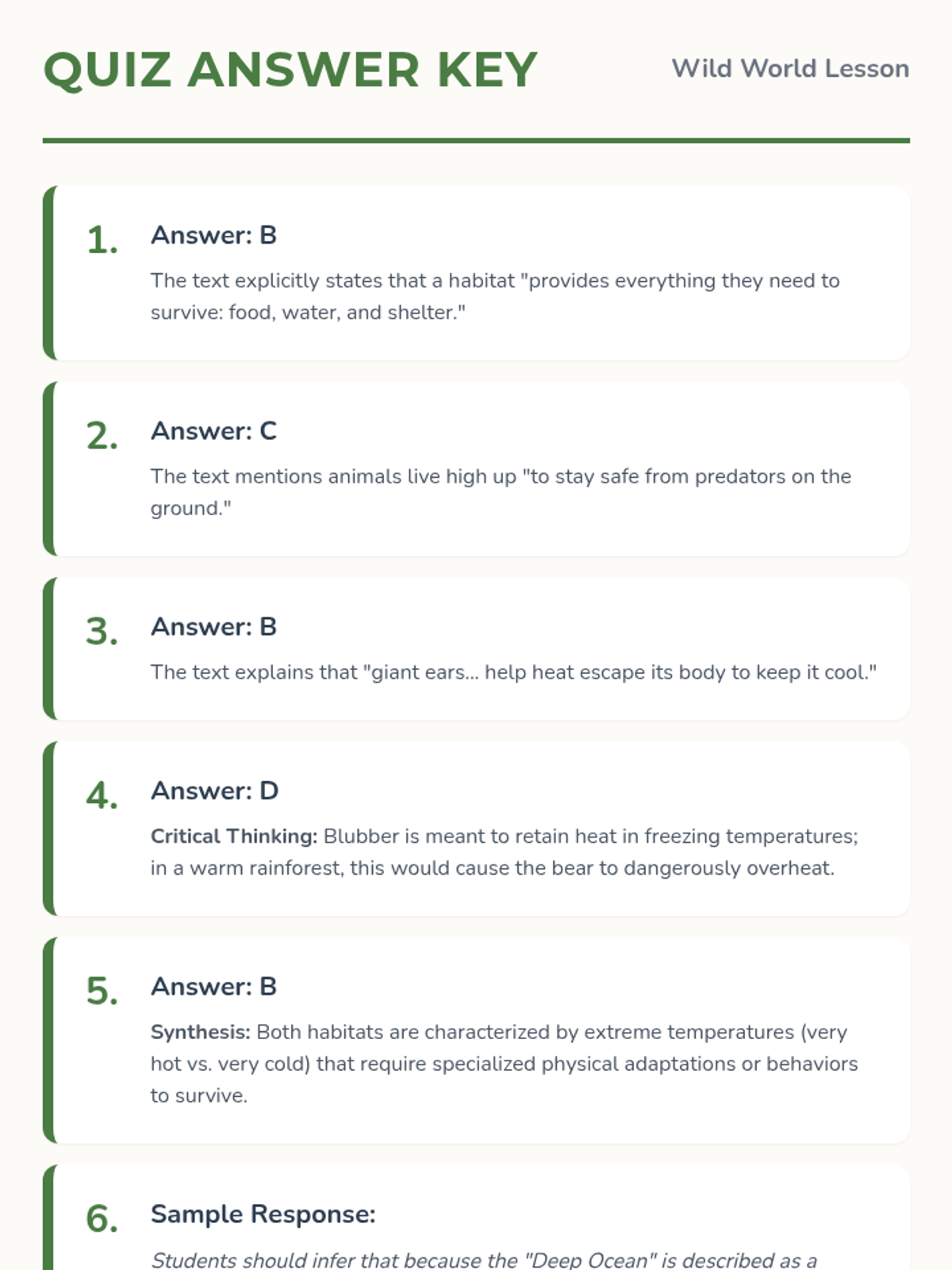
A comprehensive teacher's answer key for the Home Sweet Home Quiz, including explanations for critical thinking questions and discussion extension ideas.
A visual slide deck designed for classroom discussion about animal habitats, featuring the Rainforest, Desert, Arctic, and Ocean ecosystems with built-in discussion prompts and interactive quiz questions.
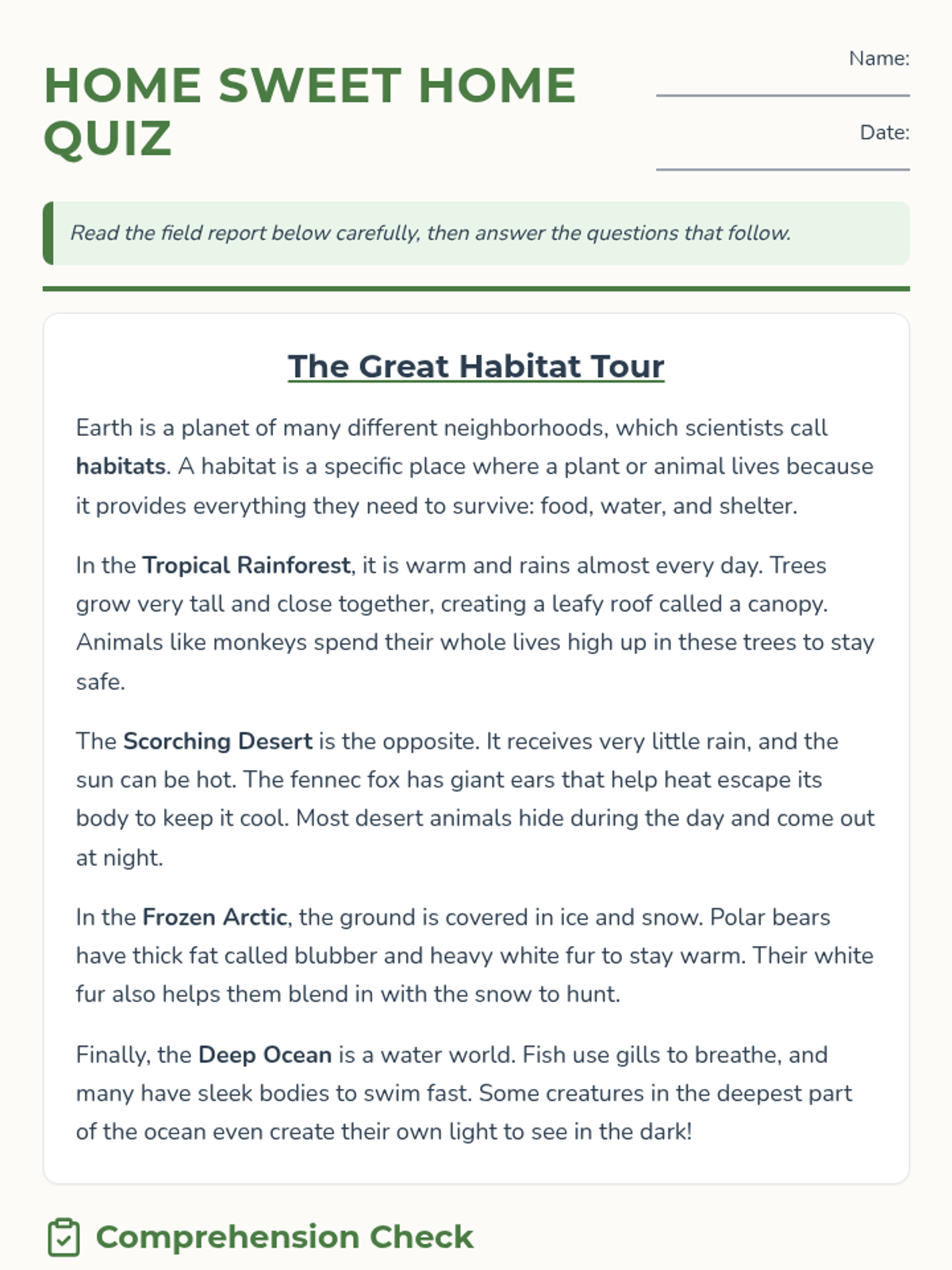
A comprehension quiz for 3rd grade students featuring a non-fiction passage about animal habitats (Rainforest, Desert, Arctic, Ocean) followed by multiple-choice and critical thinking questions.
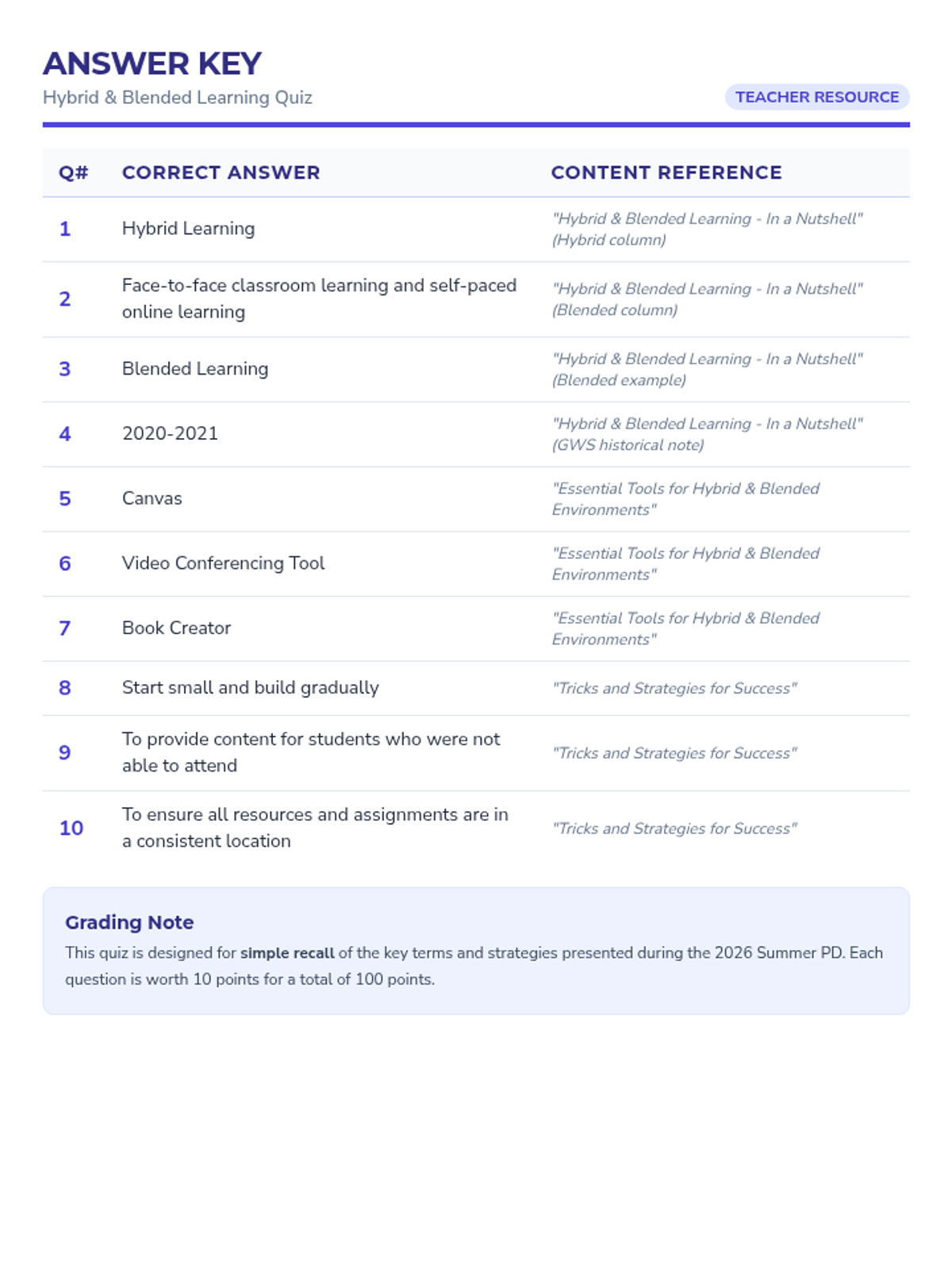
A teacher-facing answer key for the Hybrid Hub Quiz, including correct answers and specific references to the presentation material.
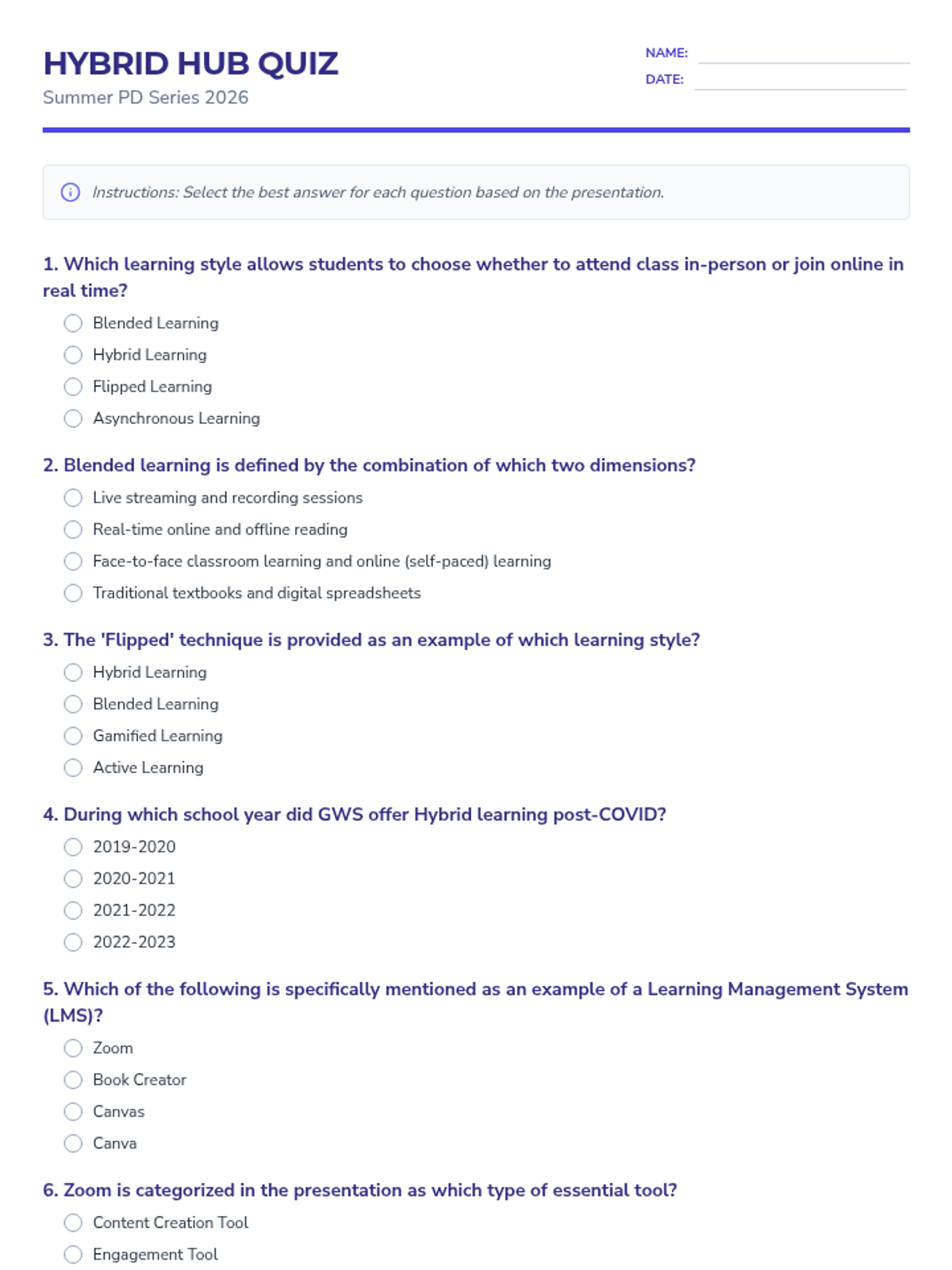
A 10-question multiple-choice quiz designed for simple recall of key concepts from the Hybrid and Blended Learning Summer PD. Organized with consistent 1-column layouts and optimized for space.
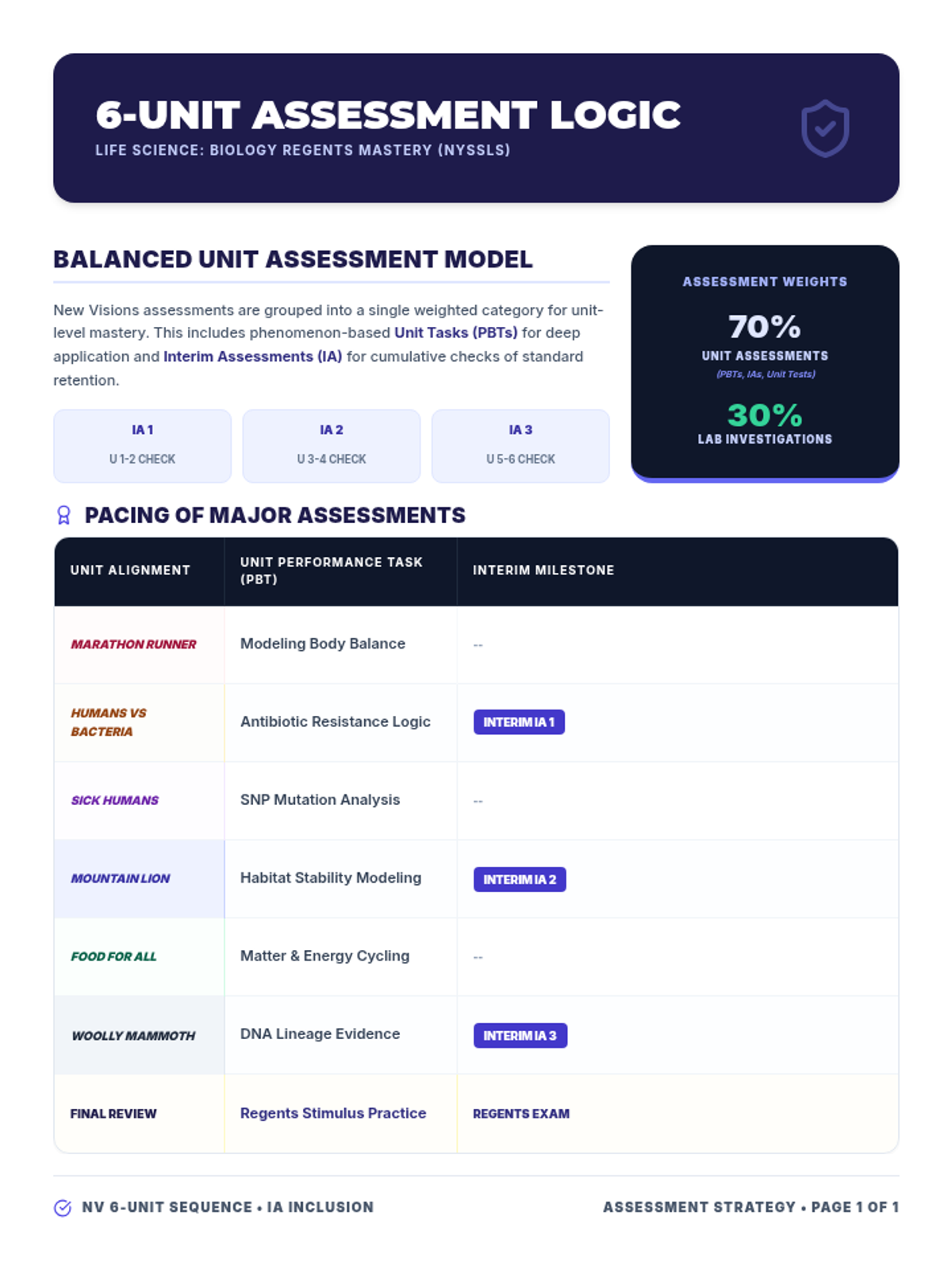
A condensed single-page guide to assessment strategy within the New Visions Life Science: Biology framework. Updated to move Interim Assessments into the general "Unit Assessments" weighting category (70% total with PBTs) and to reflect that IA 3 is a Units 5-6 check.
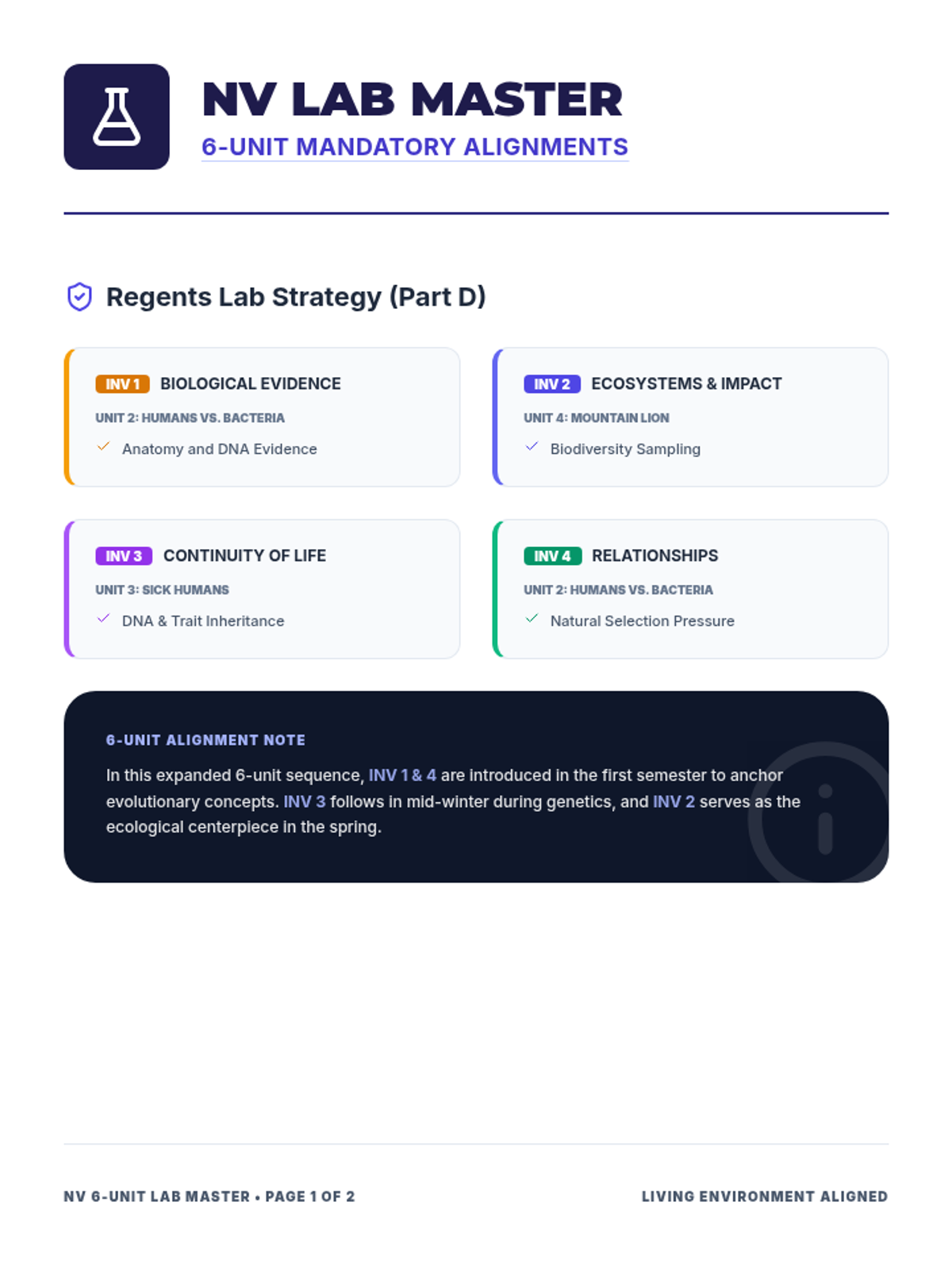
A logistics resource for managing New Visions Life Science: Biology labs. Updated to align the 4 Mandatory Investigations across the 6-unit sequence (Unit 1: Marathon, Unit 2: Bacteria/Inv 1&4, Unit 3: Sick Humans/Inv 3, Unit 4: Mountain Lion/Inv 2, Unit 5: Food for All, Unit 6: Mammoth).
A high-level pacing guide for a 6-unit year-long high school Life Science: Biology course. Revised to reflect that IA 3 is a check for Units 5-6 and to update terminology for interim assessment integration.
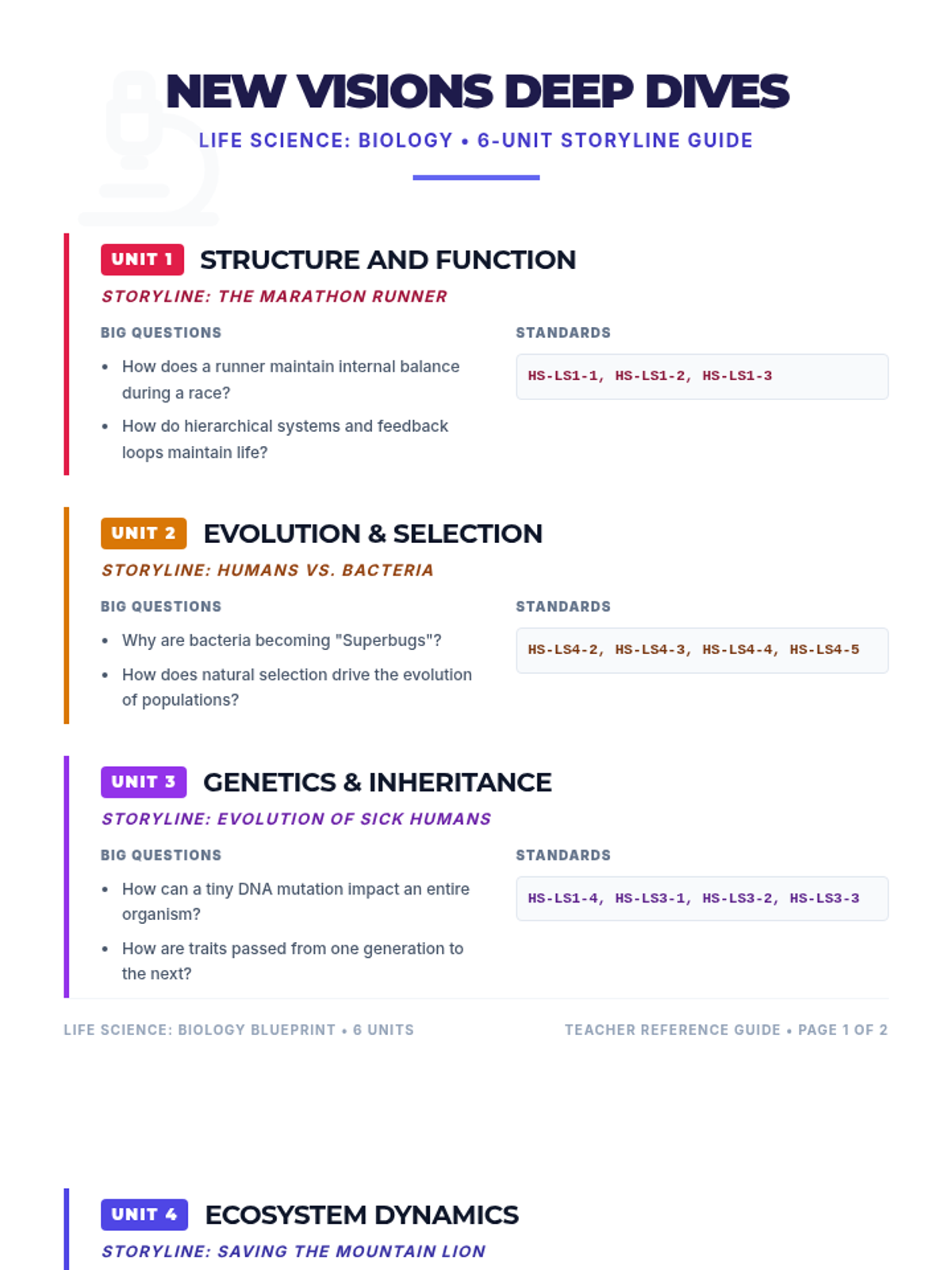
A revised teacher-facing guide providing deep-dive details for the 6-unit New Visions Life Science: Biology curriculum. Standardized font sizes, improved contrast, and balanced layout across two pages. Includes storylines: Marathon Runner, Humans vs. Bacteria, Evolution of Sick Humans, Saving the Mountain Lion, Food for All, and Woolly Mammoth.
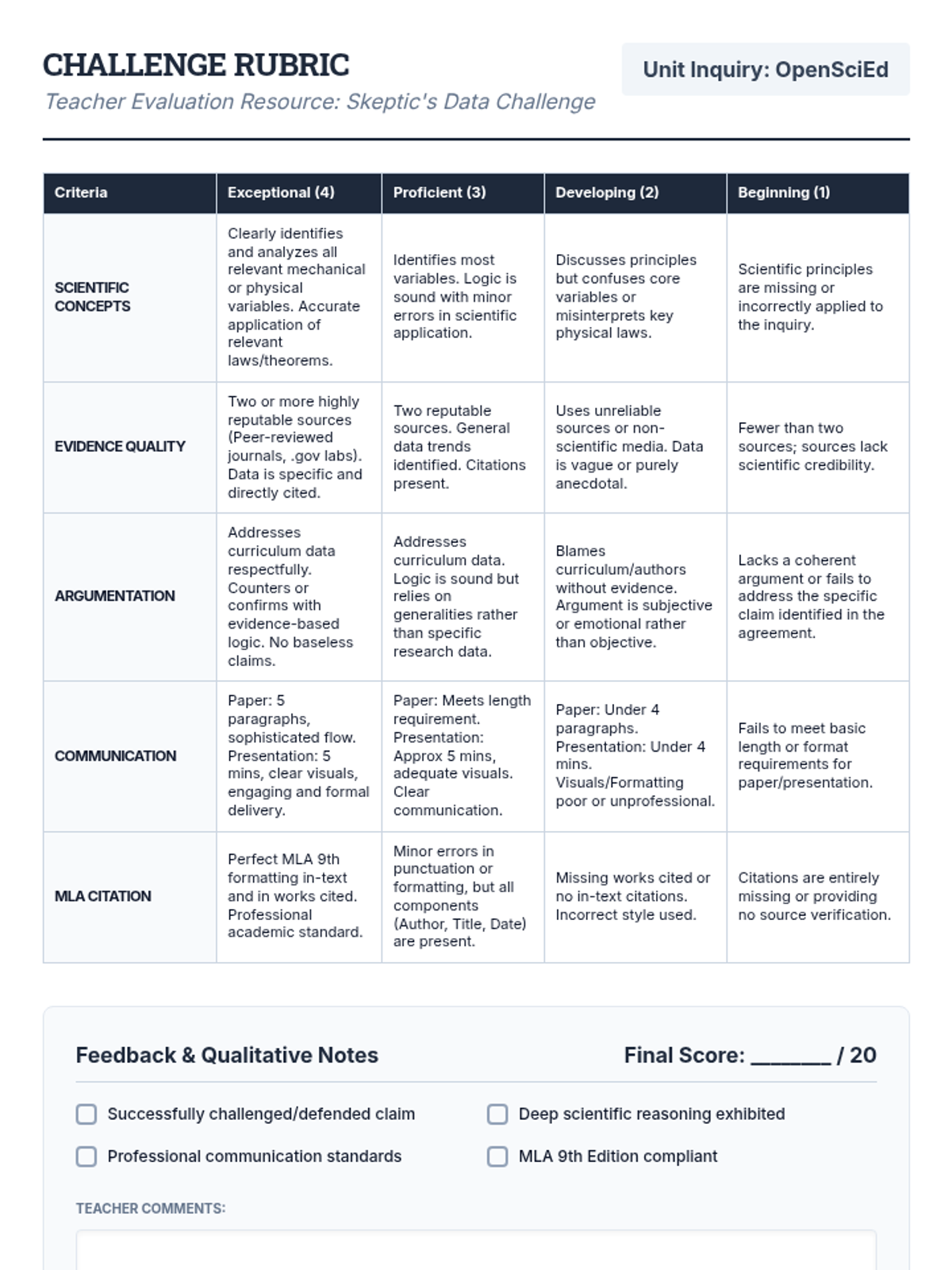
A grading rubric for teachers to evaluate the research project, focusing on physics accuracy, evidence quality, formal argumentation, and MLA 9th Edition citation compliance.
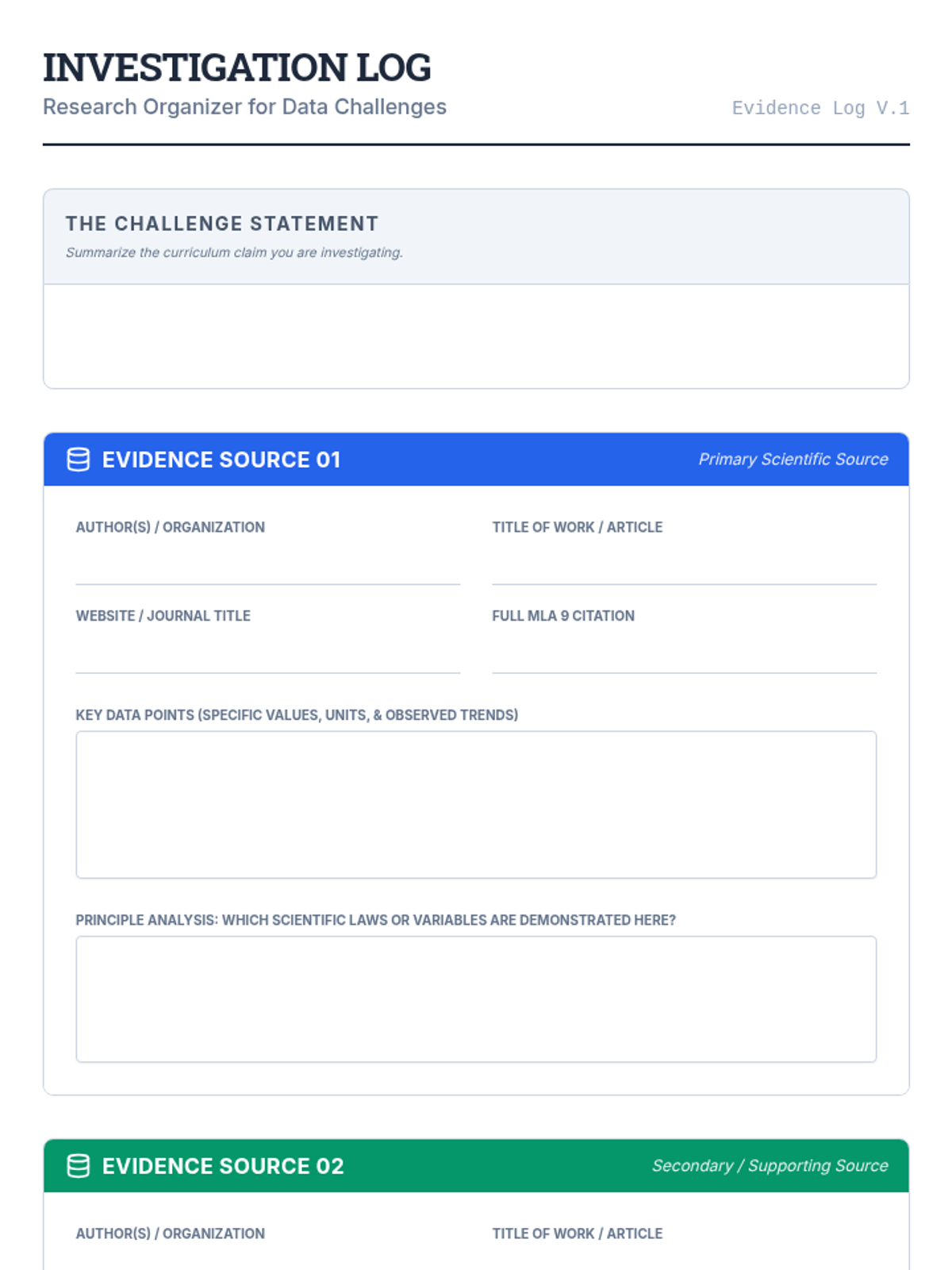
A research organizer for students to record and analyze data from two reputable sources, specifically focusing on the connection between their findings and the physics variables of braking and friction.
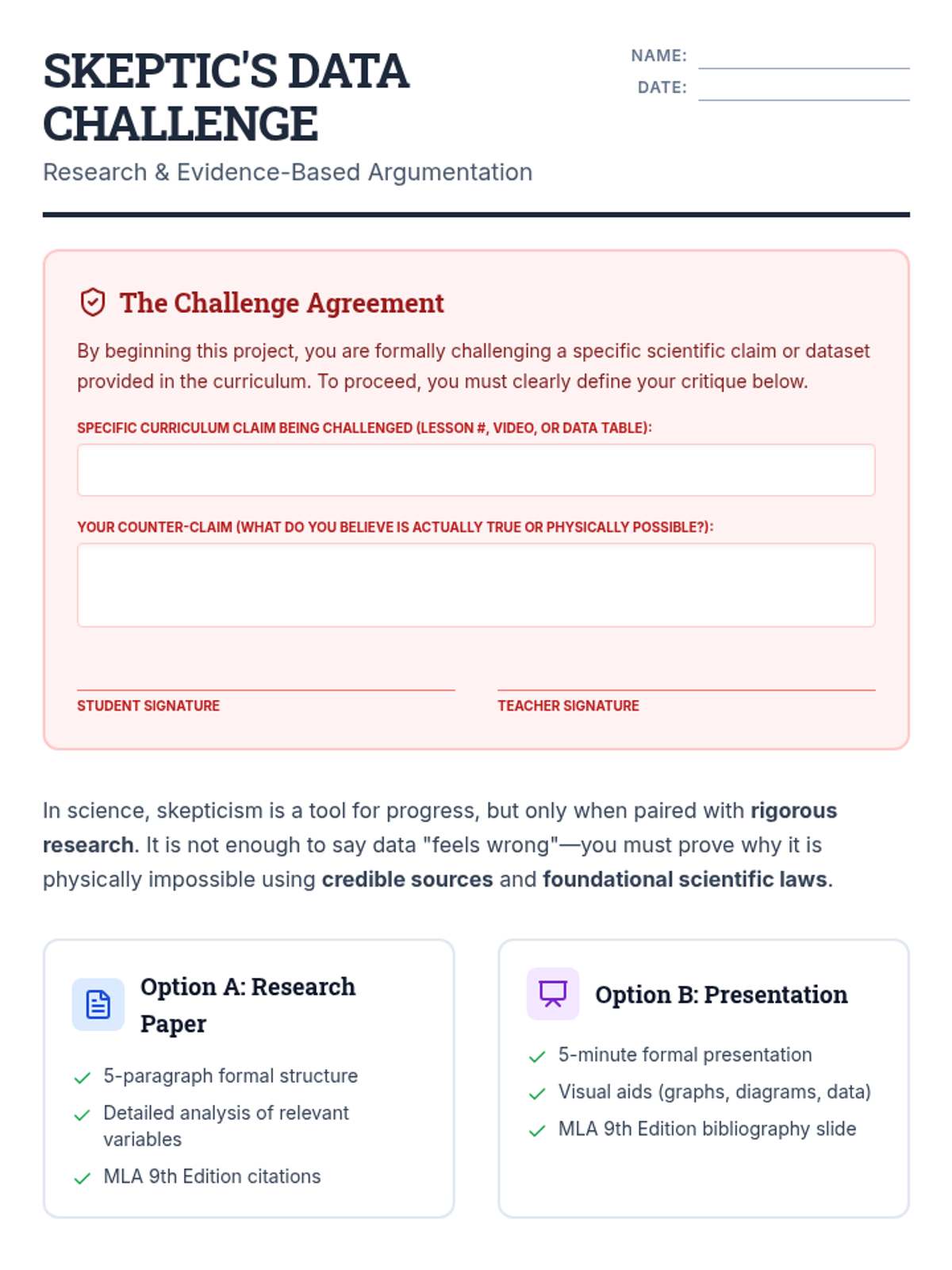
A generalized student project guide for the Data Validation Challenge, including a formal Validation Agreement to define the research scope, a guided checklist, and an MLA 9th Edition quick citation guide.
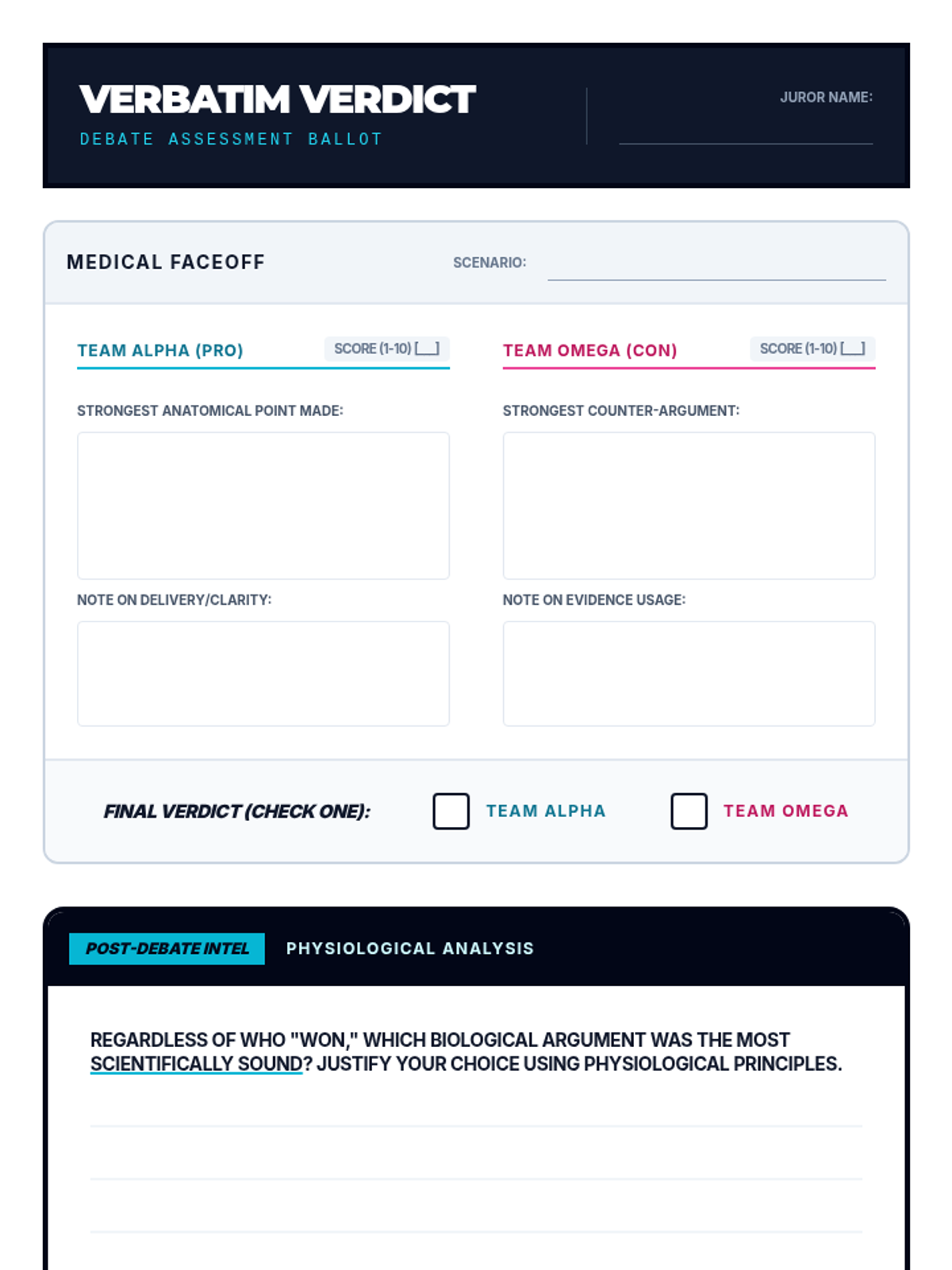
A peer-assessment ballot for students to use while observing debates, featuring structured scoring for anatomical accuracy, evidence usage, and delivery across two rounds.
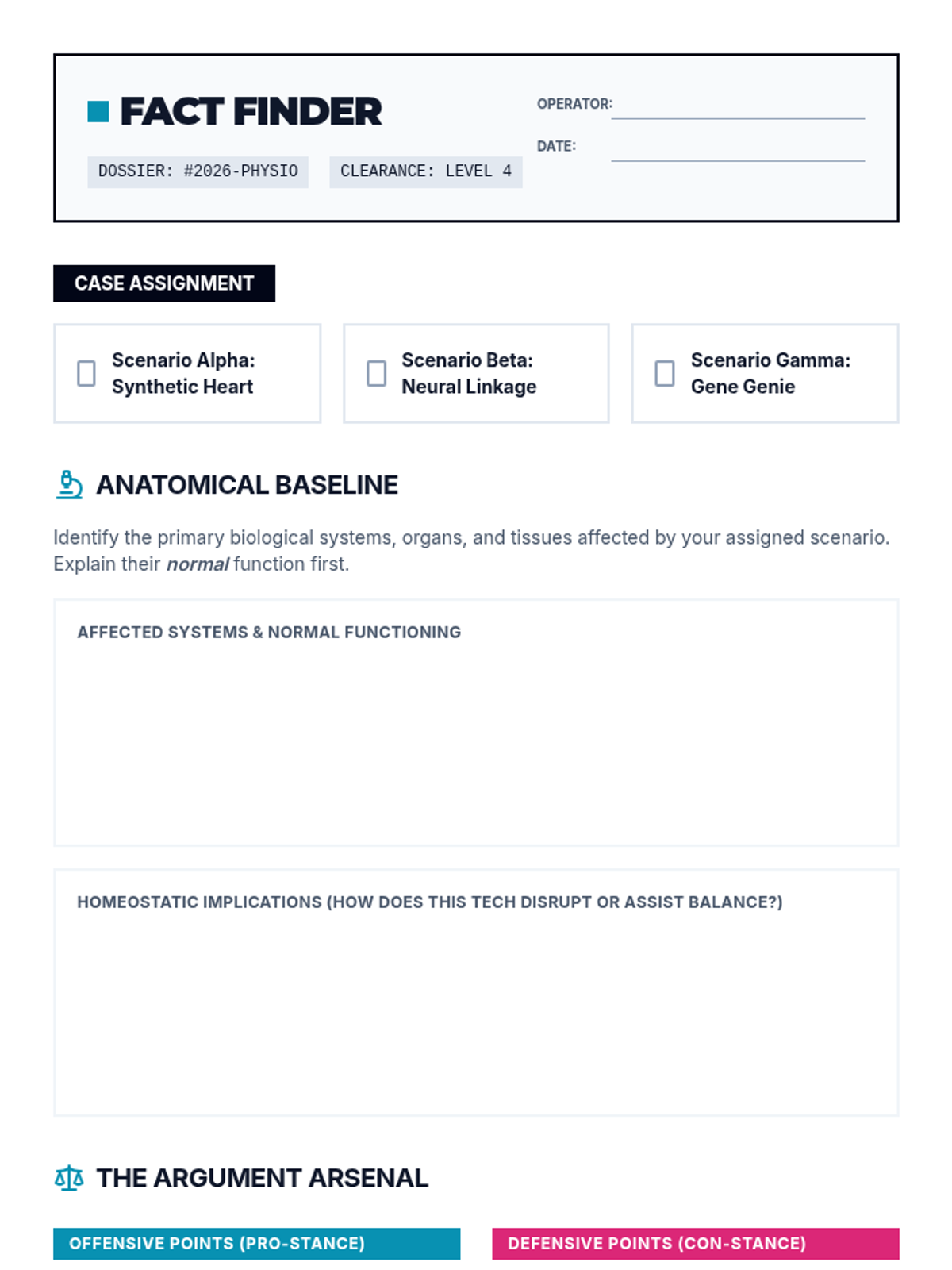
A student-facing research worksheet designed as a high-tech medical dossier, helping students organize anatomical facts and develop bio-ethical arguments for debate.
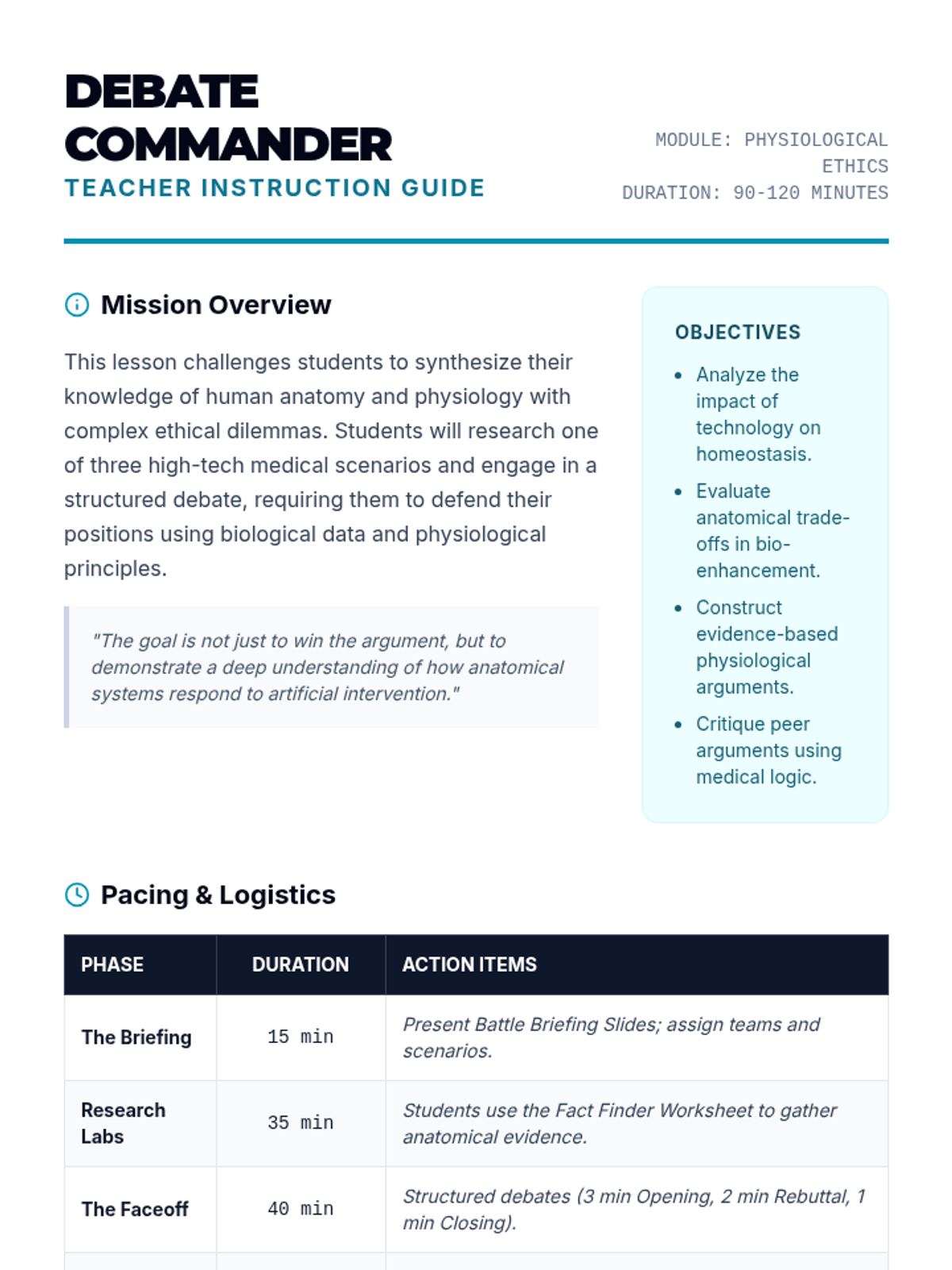
A comprehensive teacher guide for facilitating the Body Battles debate, including a detailed pacing guide, suggested debate formats, and a specialized scoring rubric.
A high-impact slide deck for introducing a bio-ethics and anatomy debate, featuring three distinct scenarios (Synthetic Hearts, Neural Linkage, and Gene Editing) with a futuristic medical aesthetic.
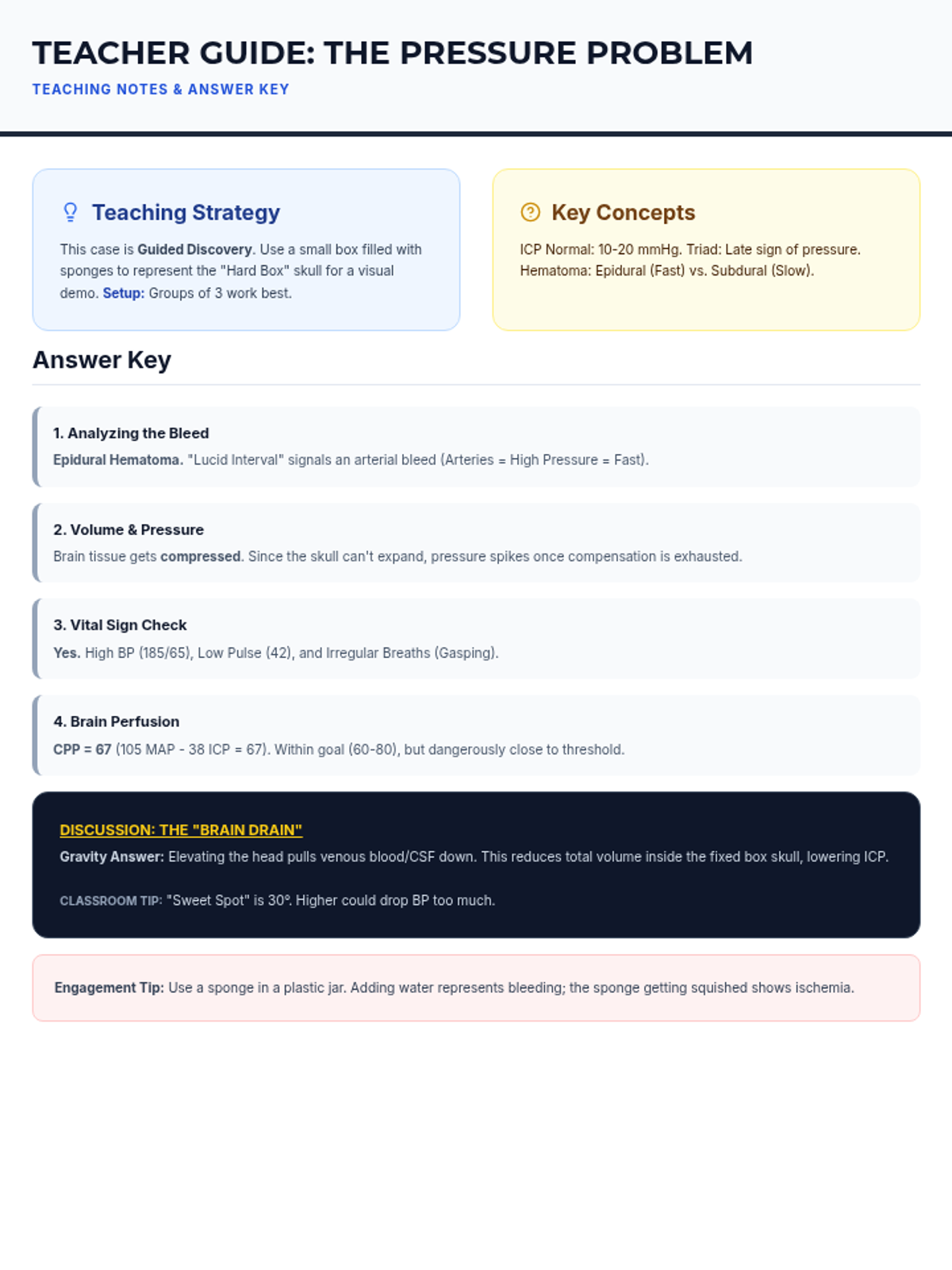
Simplified teacher guide tailored for pre-college instruction. Includes classroom engagement tips, simplified explanations, and a strategy for case-based discovery learning. Now fits answer key on one page.
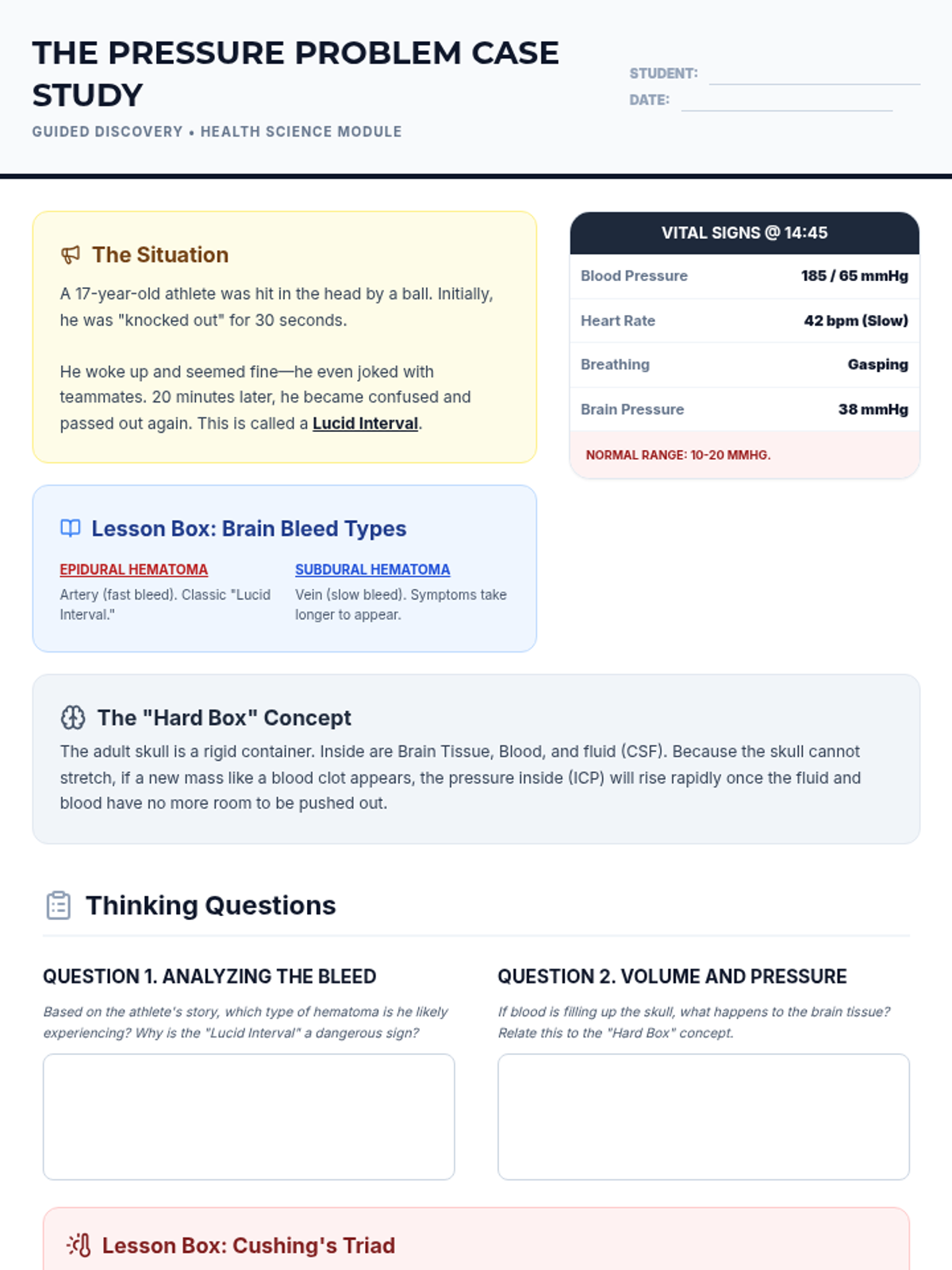
A self-contained, guided inquiry case study for pre-college students. Includes "Lesson Boxes" within the document so students can learn the concepts and immediately apply them to the clinical scenario. Now with optimized 2-page layout.
Engaging, high-impact slides designed for pre-college health science students. Explains ICP, Monro-Kellie doctrine, and hematoma differentiation using accessible language and clear visuals. Now includes a 2-part application scenario.
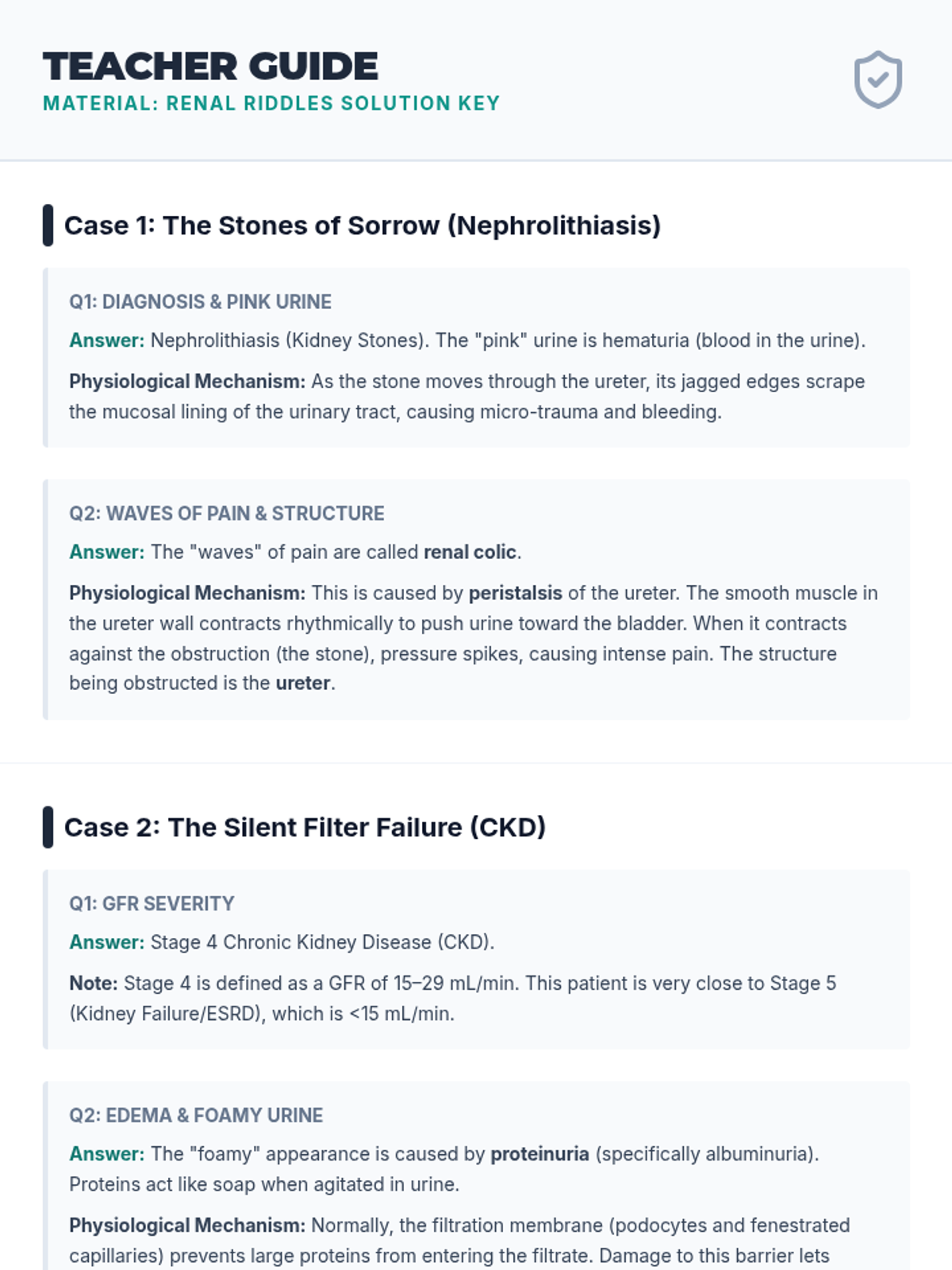
Comprehensive answer key and teaching notes for the Renal Riddles case studies, including detailed physiological explanations for the diagnosis and student pitfalls.
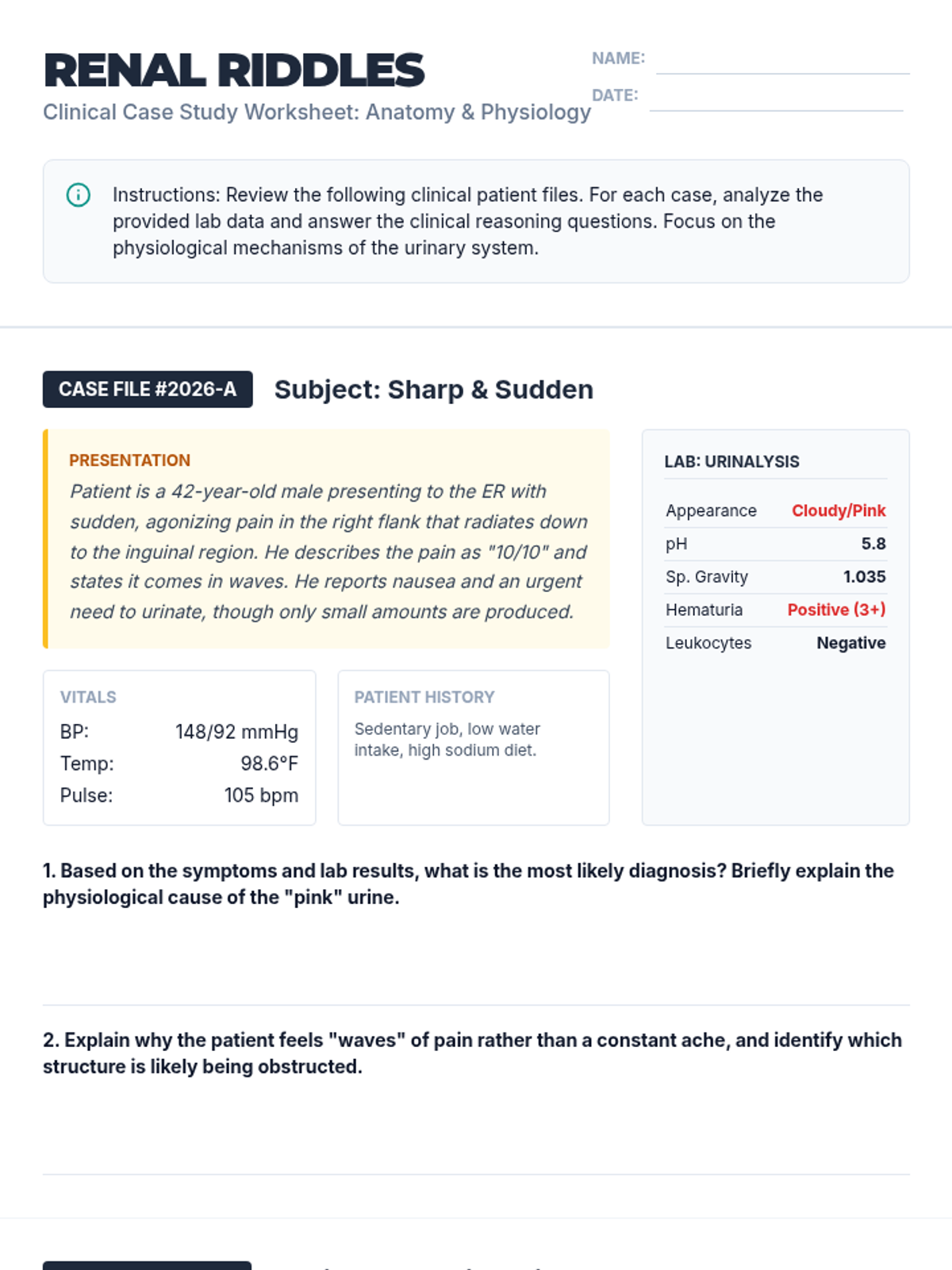
A worksheet containing clinical cases like kidney stones and Chronic Kidney Disease. Each case provides patient symptoms, diagnostic data, and questions for students to apply their knowledge of renal physiology.