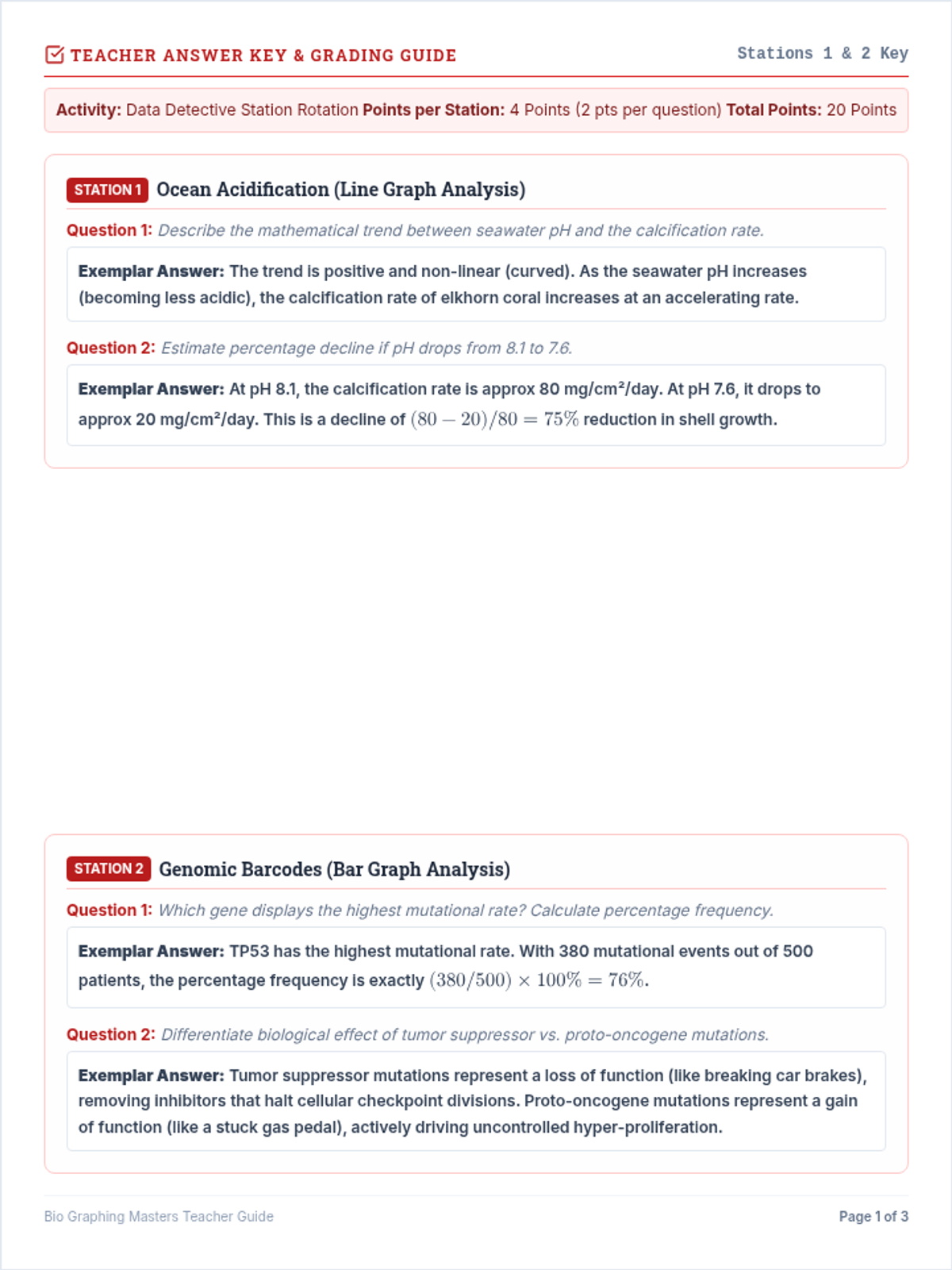
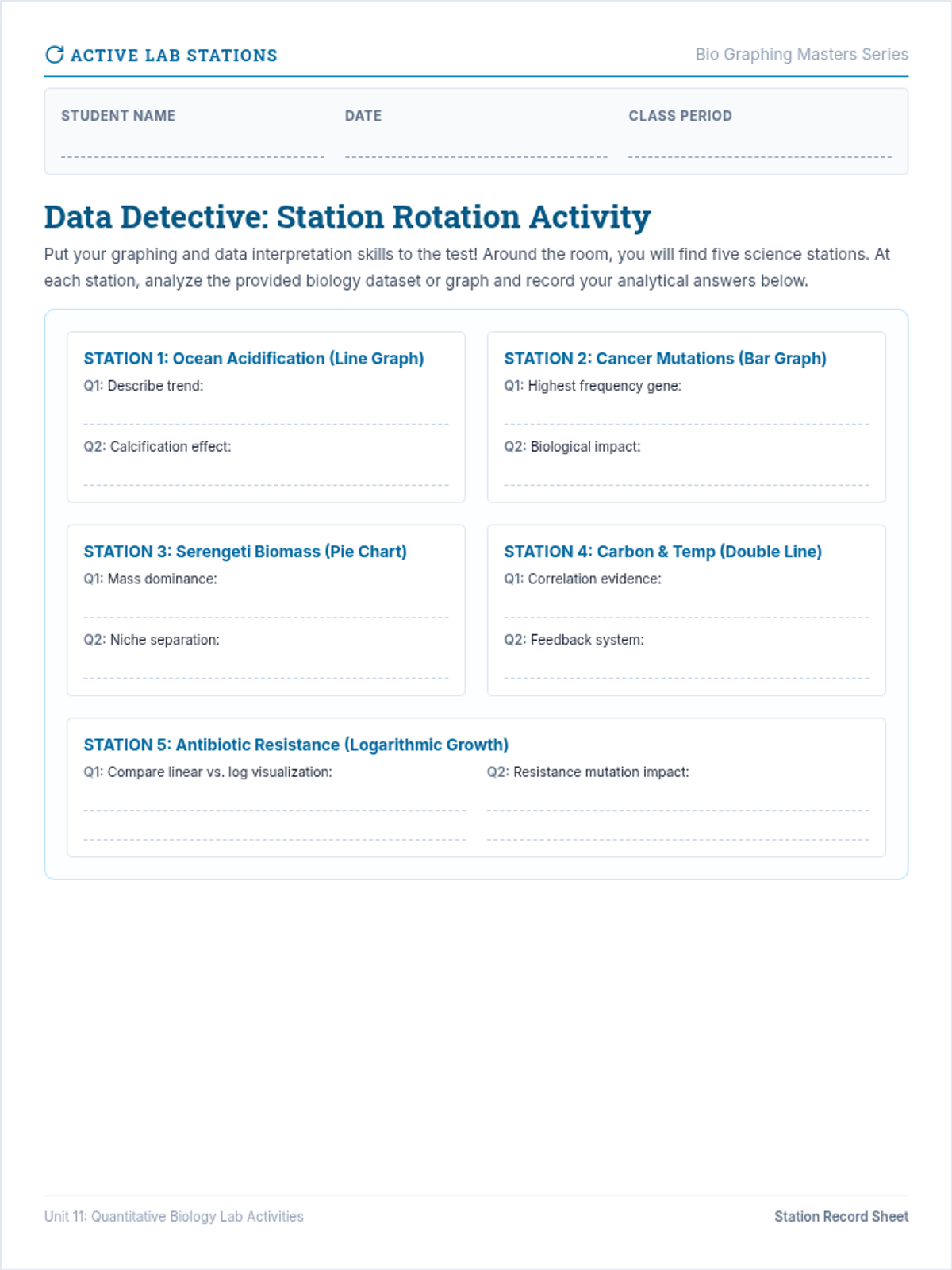
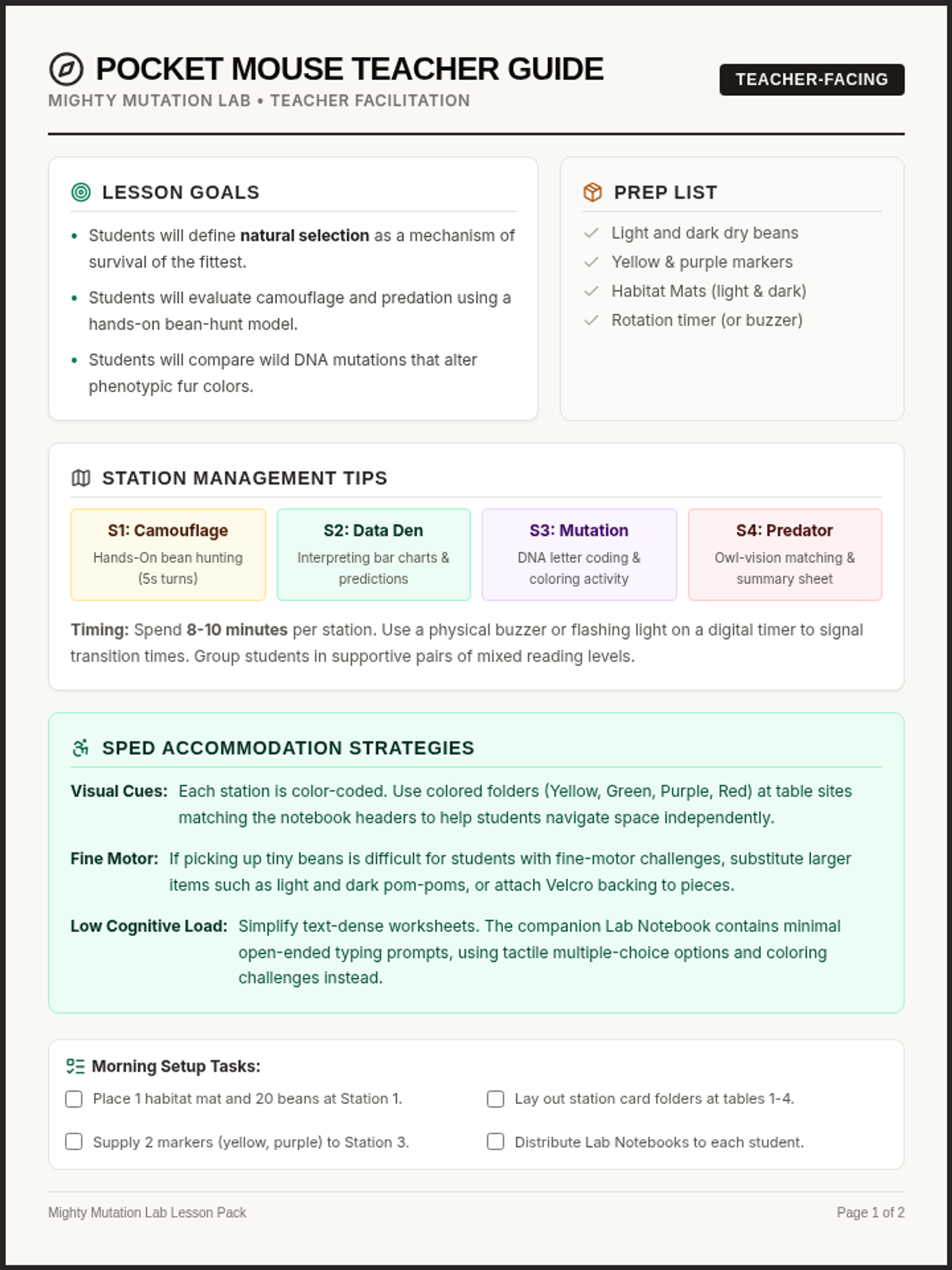
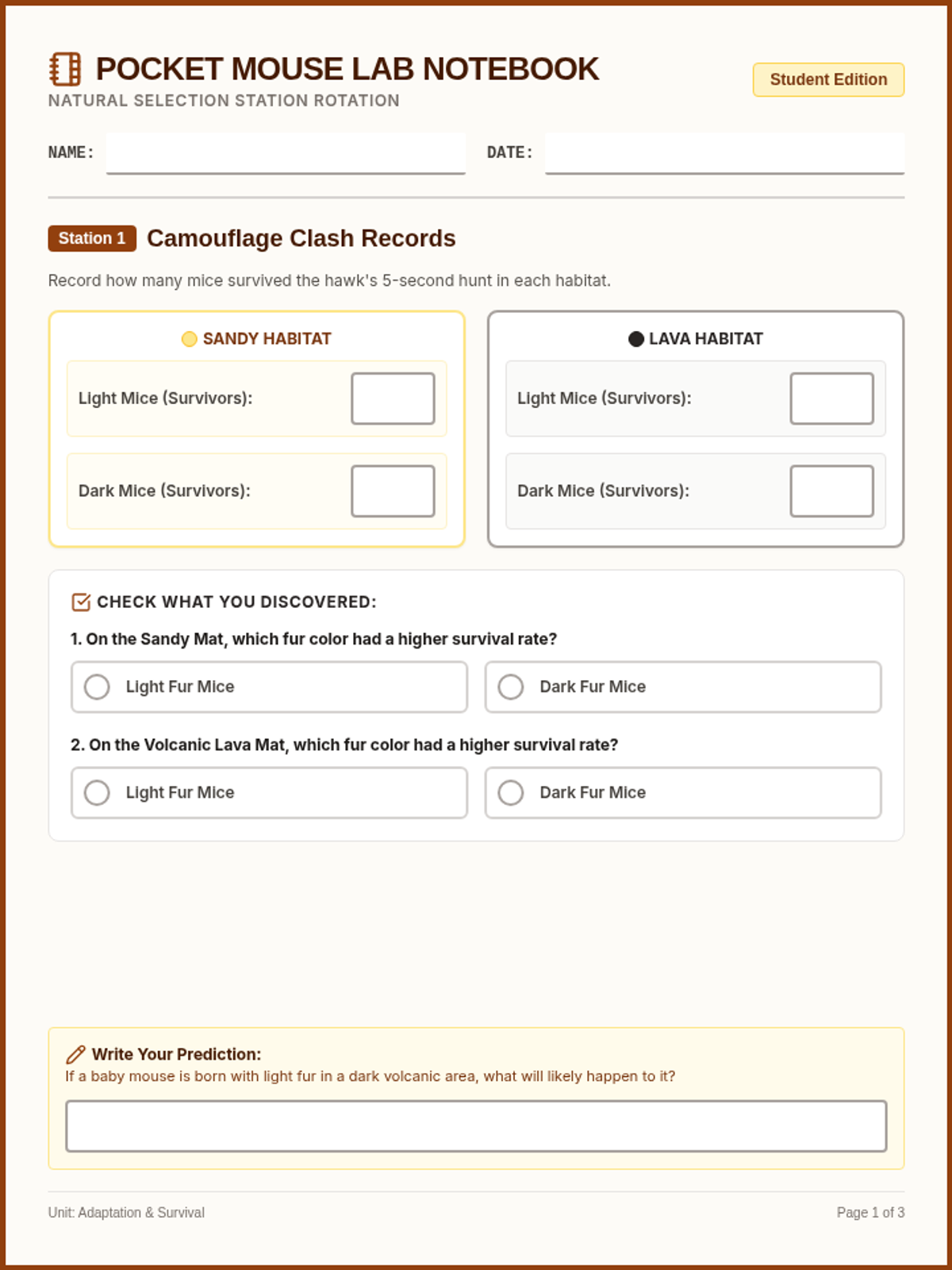
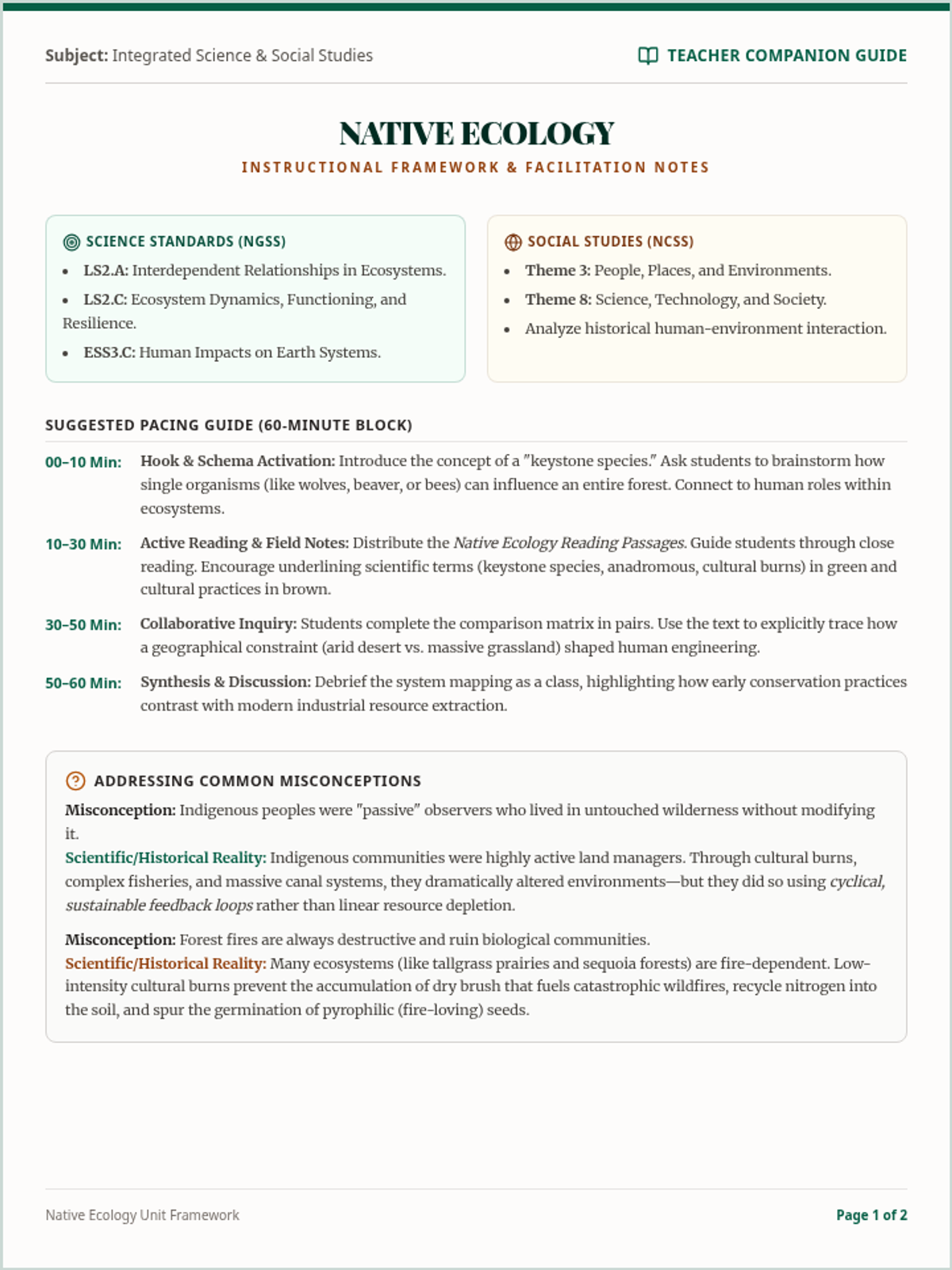
An updated facilitation guide for Lesson 3 (Pattern Recognition), featuring a detailed 20-minute PL flow, specific scripts/talking points, connections to Iowa Teaching Standard 5, and the master handout copy.
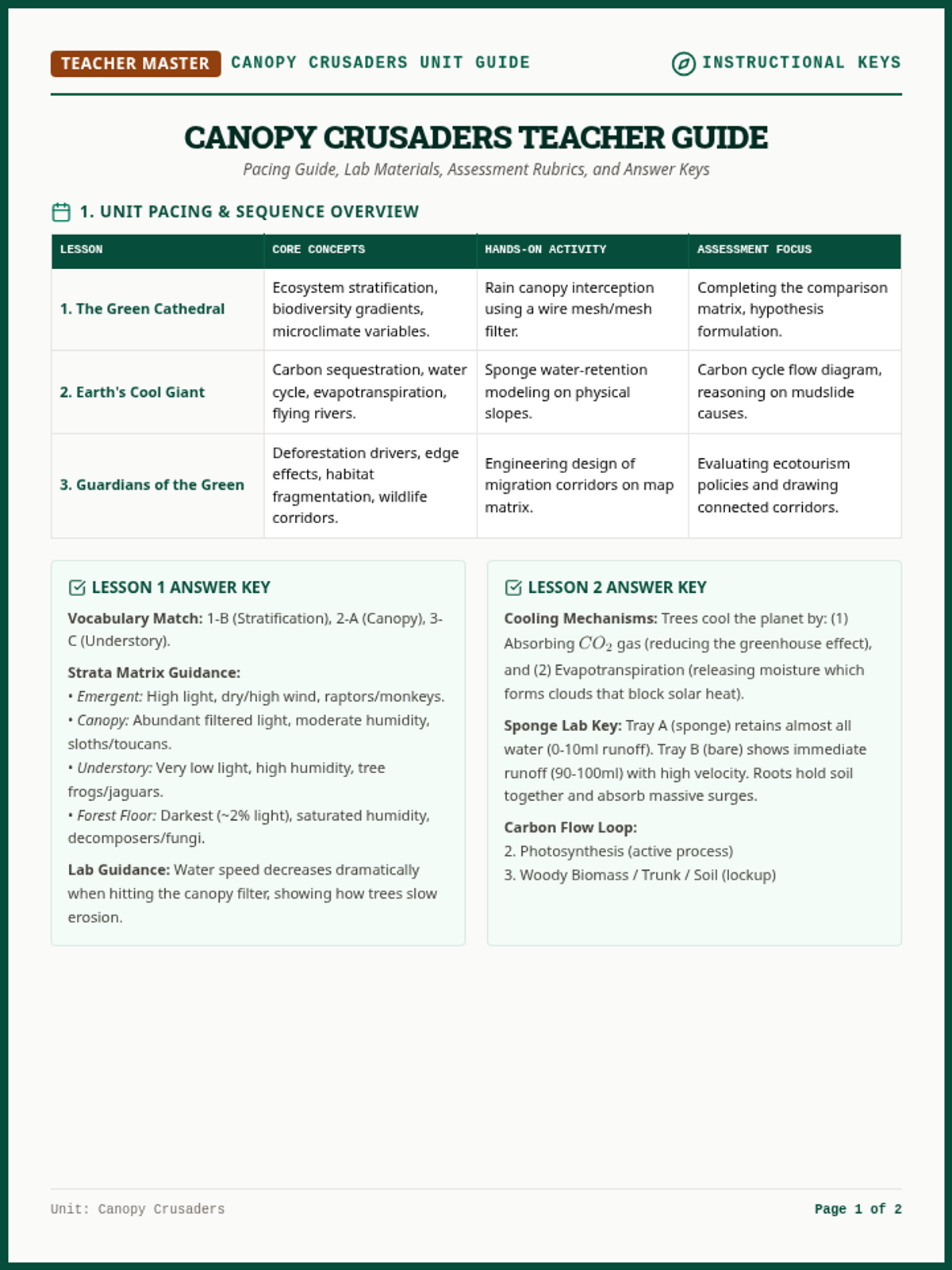
A teacher answer key for the Earth Sculptors unit. Revised to improve rubric print quality by inverting colors, preventing awkward page breaks between headers and content, and condensing Lesson 1 and 2 keys.
An exit ticket for assessing sentence expansion in science. Revised to condense the layout to a single page, switch the final writing area to a light background for legibility, and increase contrast for footer elements.
A student investigation worksheet for erosion. Revised to correct logical matching errors in the Agents section, condense the layout onto fewer pages, improve text contrast, and lighten highlight colors in sentence frames.
Day 2 instructional slides for English Learners focusing on the definition of erosion, the four main agents of erosion, and advanced sentence expansion using 'because' and descriptive details.
A teacher facilitation guide for Lesson 1, providing instructional scripts, pacing cues, and EL-specific differentiation strategies. Revised to fix page breaks, improve subtitle contrast, and remove visible markdown.
A student lab worksheet for modeling weathering using sugar cubes. Revised to condense the layout to fit on fewer pages, increase handwriting space for predictions, and improve the visual labeling of student work areas.
Day 1 instructional slides for English Learners focusing on the definition of weathering and sentence expansion techniques using adjectives and prepositions. Includes lab instructions and vocabulary building. Revised to ensure uniform answer choice styling.
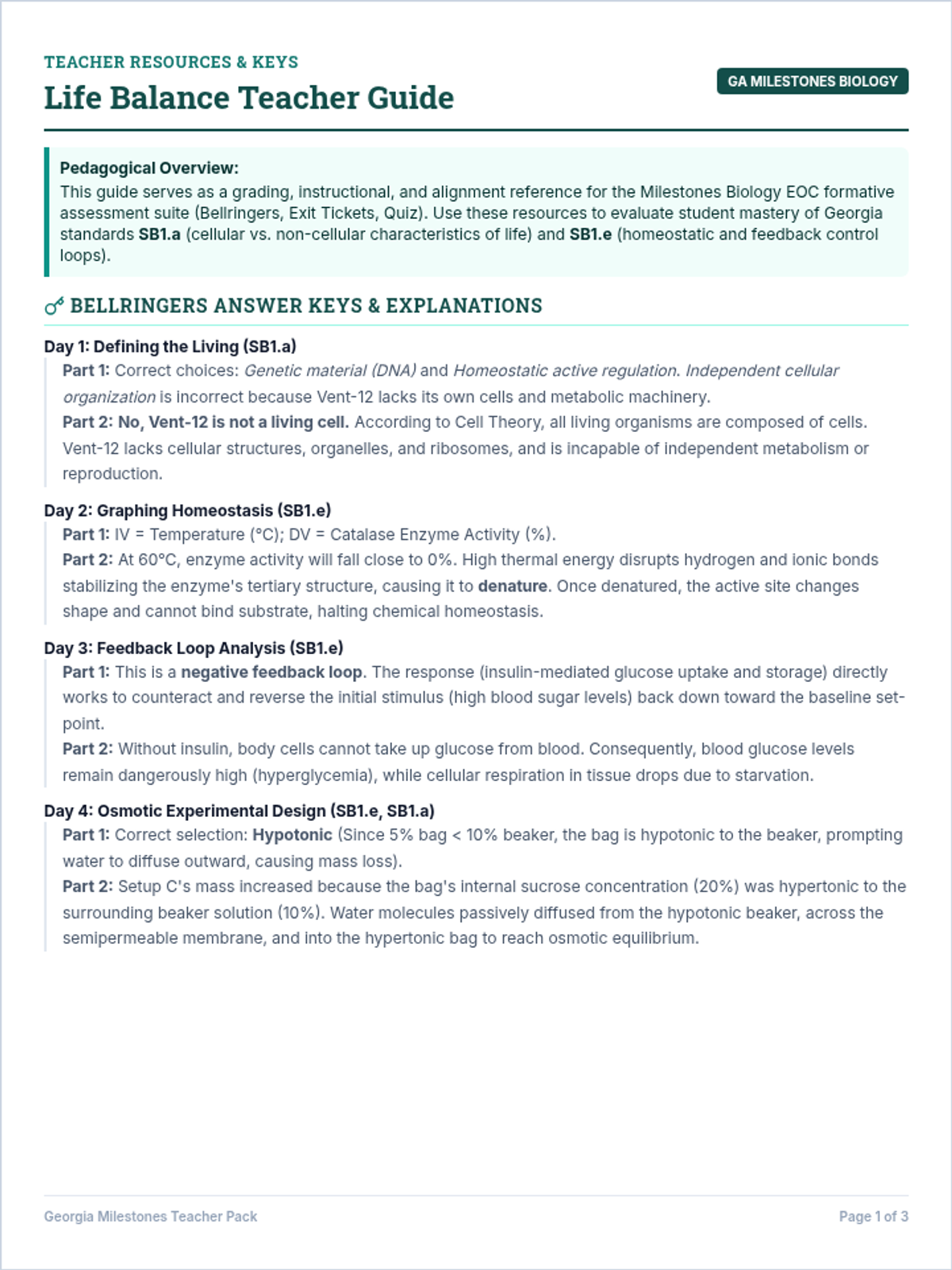
A teacher guide and answer key for the Loop Inquiry Planner, providing example scientific questions, rationales for testable questions, and engineering problem definitions.
A practice worksheet focused on Science and Engineering Practice 1 (SEP1), challenging students to formulate scientific questions and define engineering problems related to blood glucose feedback loops.
A comprehensive assessment featuring I-Learn style questions focused on HS-LS1-4, including model analysis, multi-select, and constructed response. Expanded with new questions on gene expression and stem cell differentiation. Revised for layout and page efficiency.
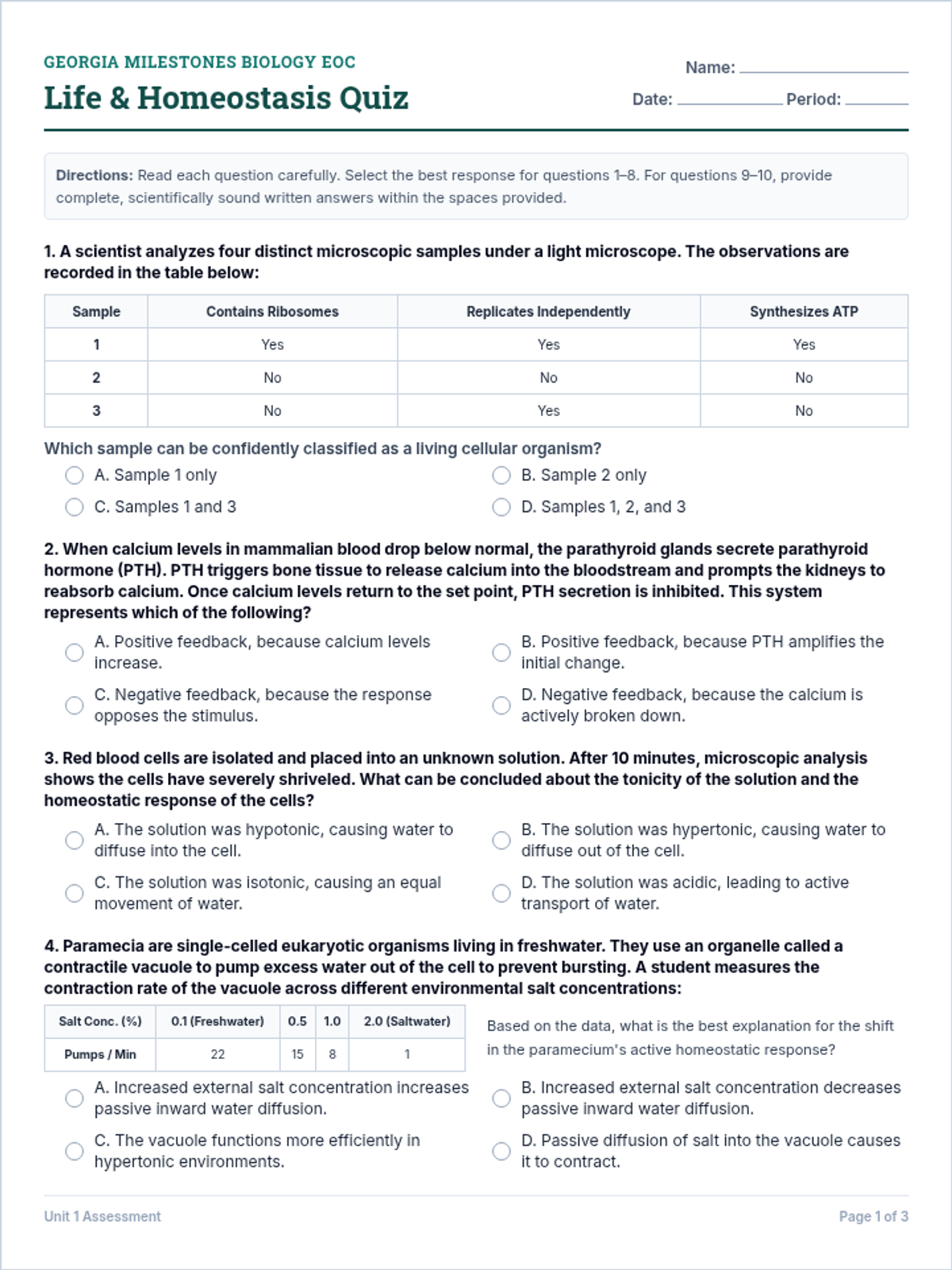
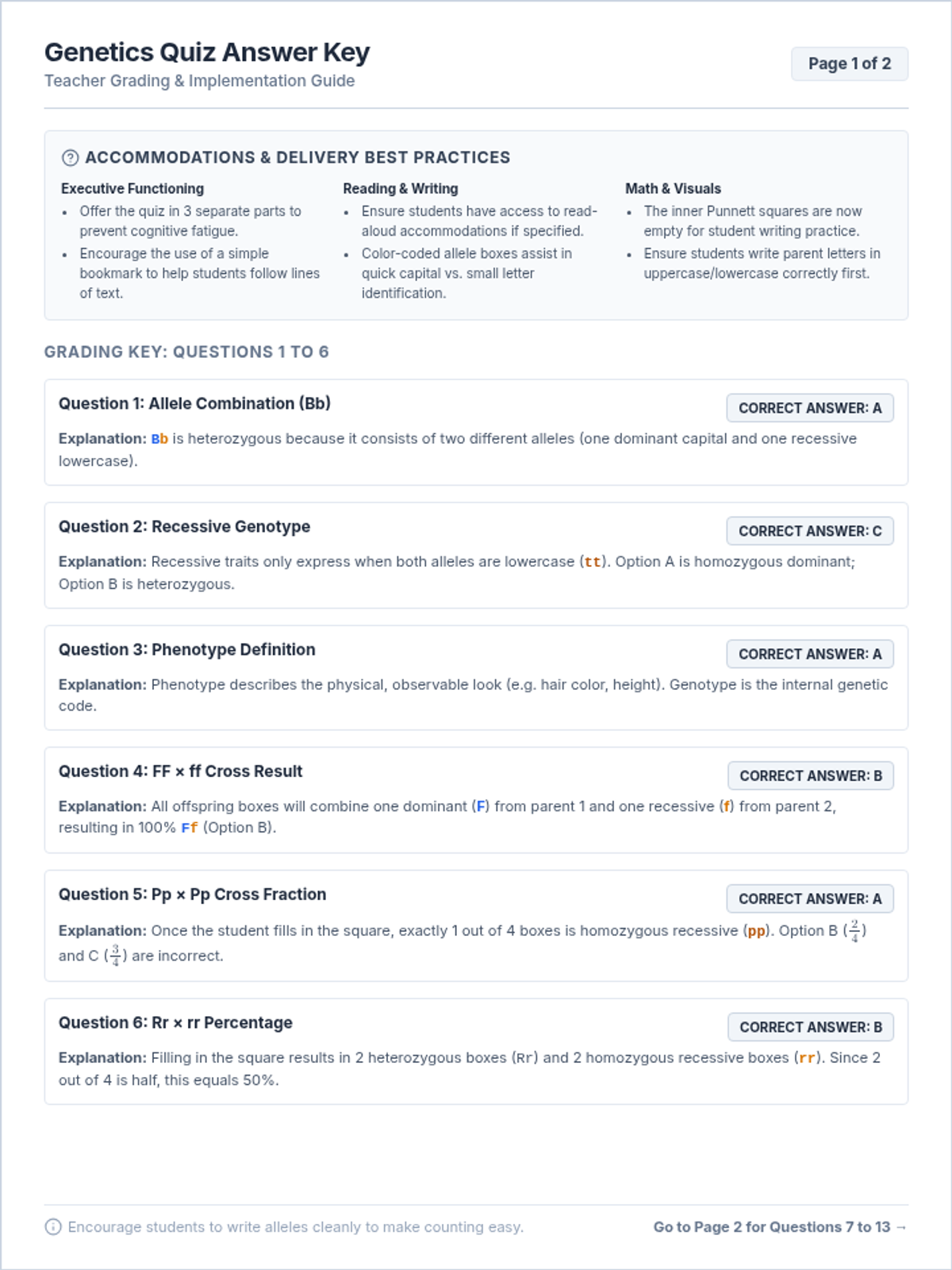
Teacher answer key and scoring rubric for the Division Dynamics Assessment. Revised for better layout, clarity, and readability, including new questions on gene expression and stem cells, a sample high-score response, and improved question numbering.
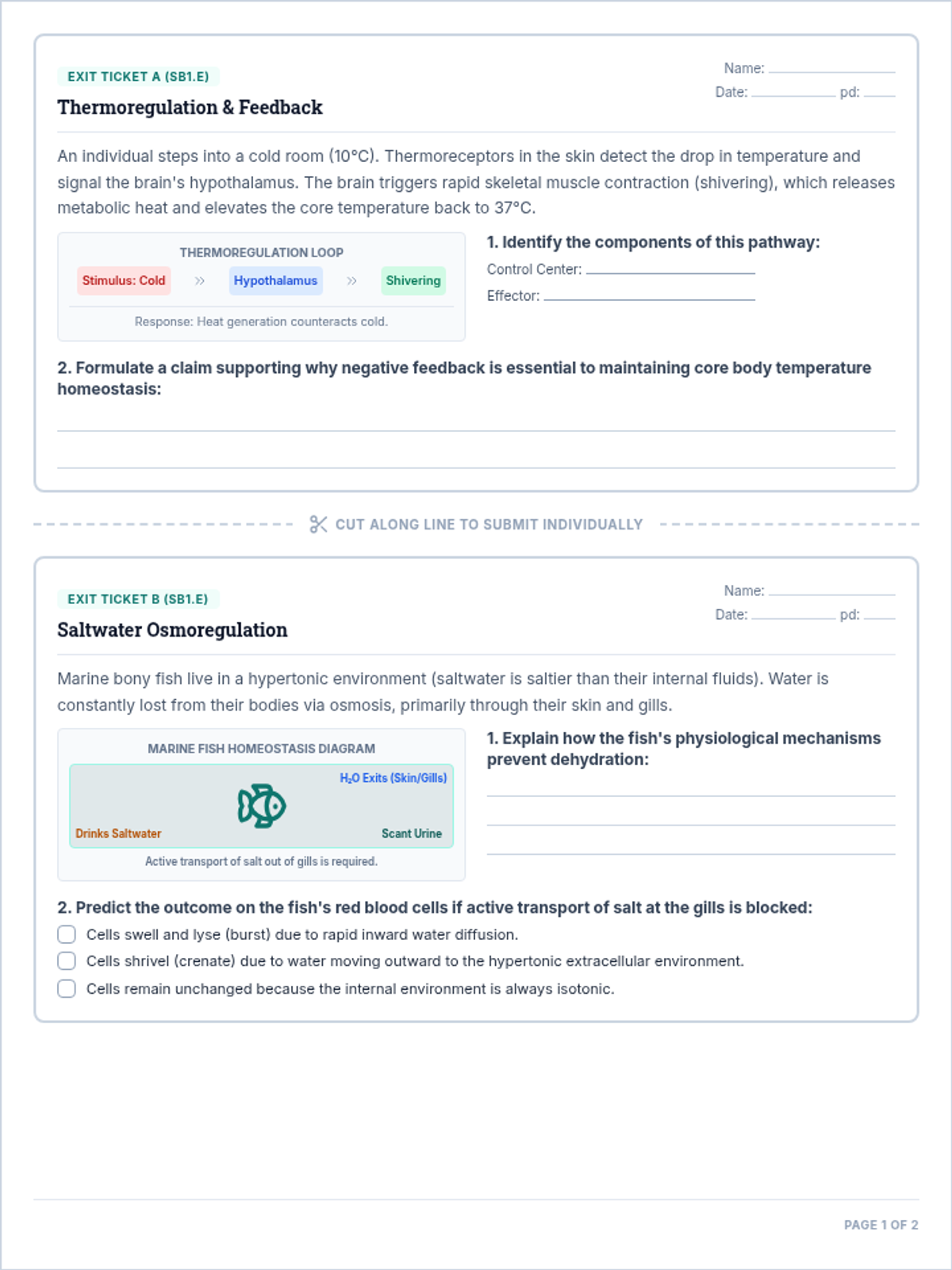
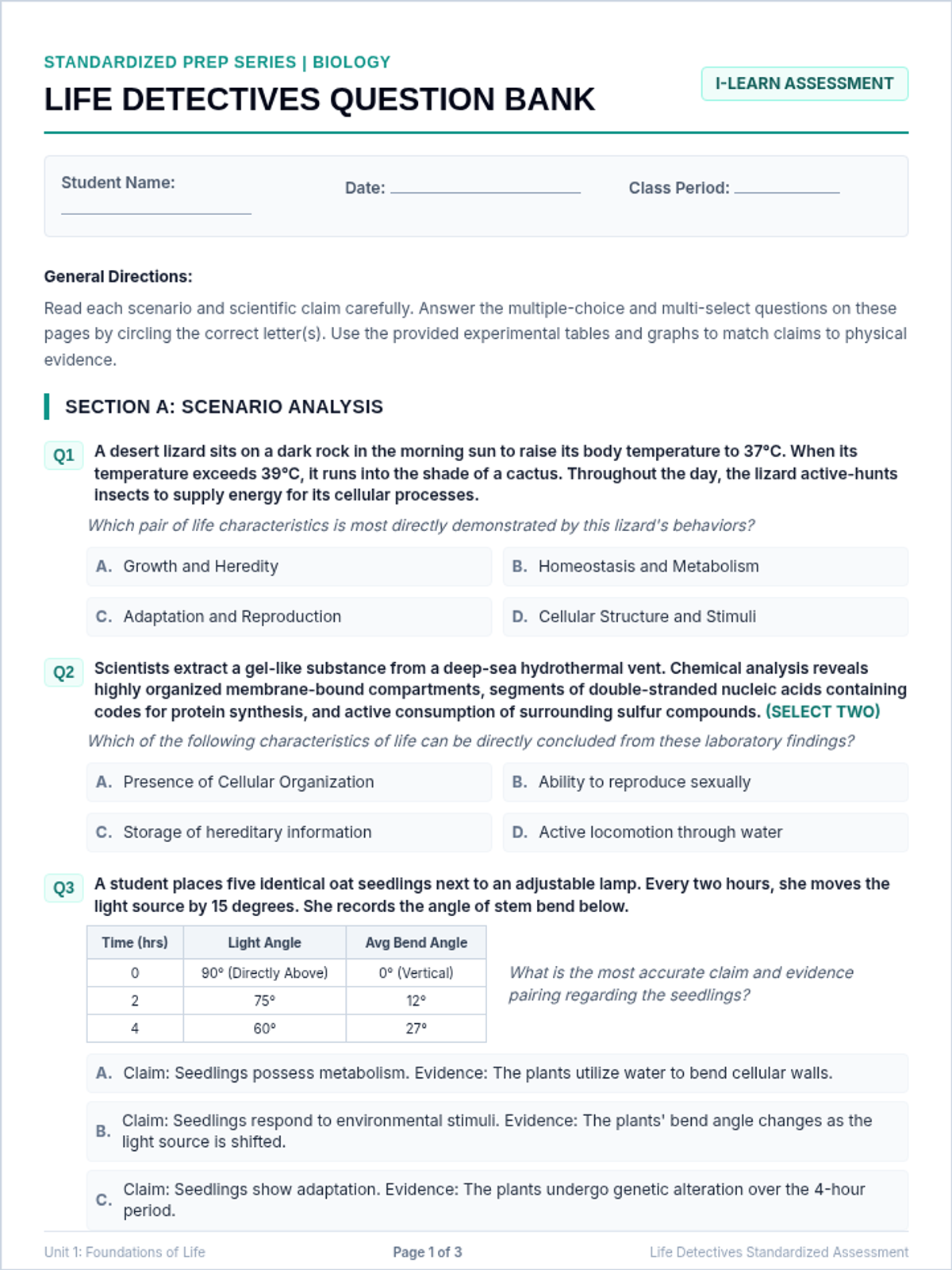
A comprehensive assessment featuring I-Learn style questions focused on HS-LS1-4, including model analysis, multi-select, and constructed response. Revised for better layout and page efficiency.
A visual slide deck introducing the concepts of mitosis and cell differentiation as they relate to HS-LS1-4.
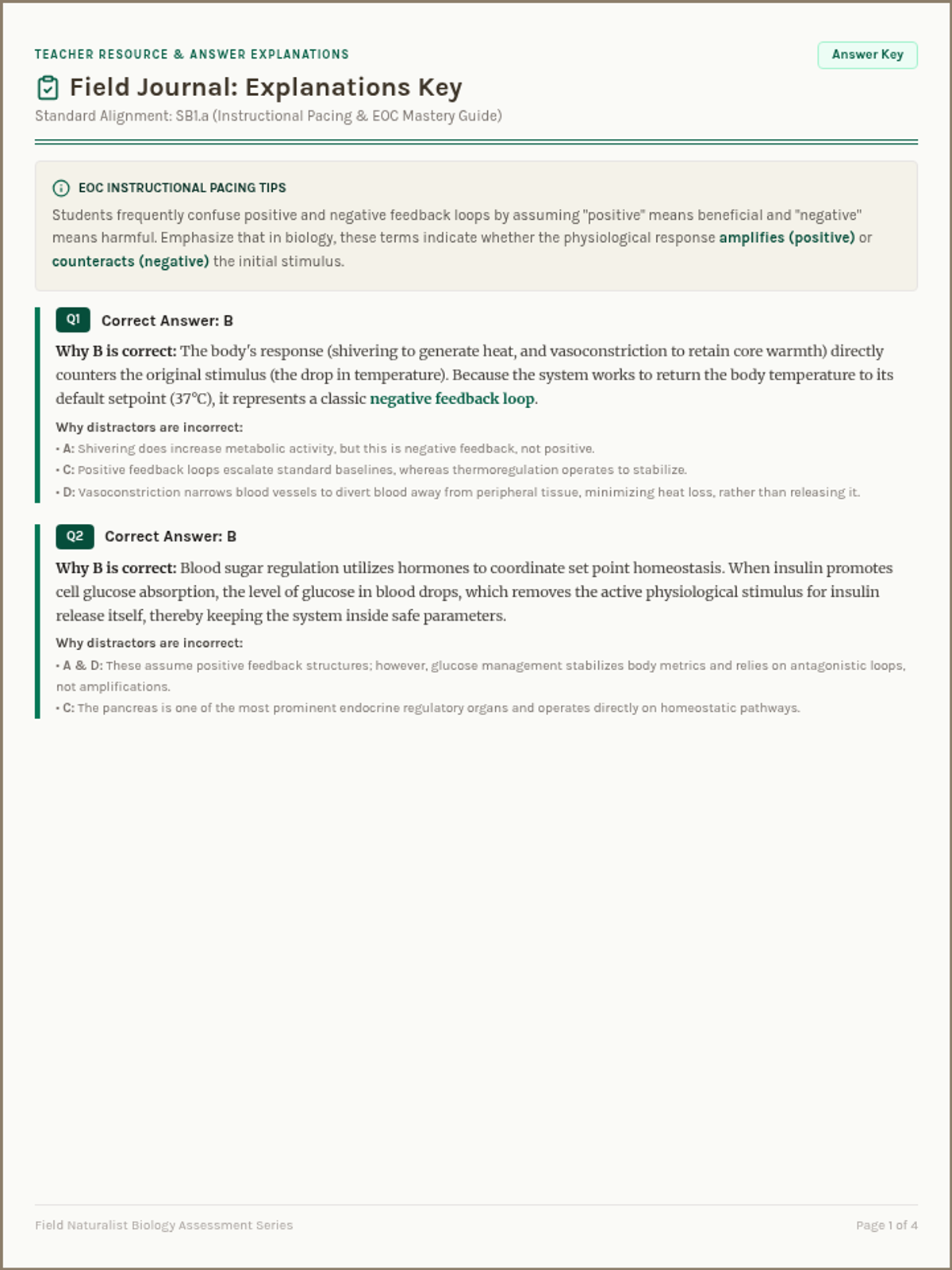
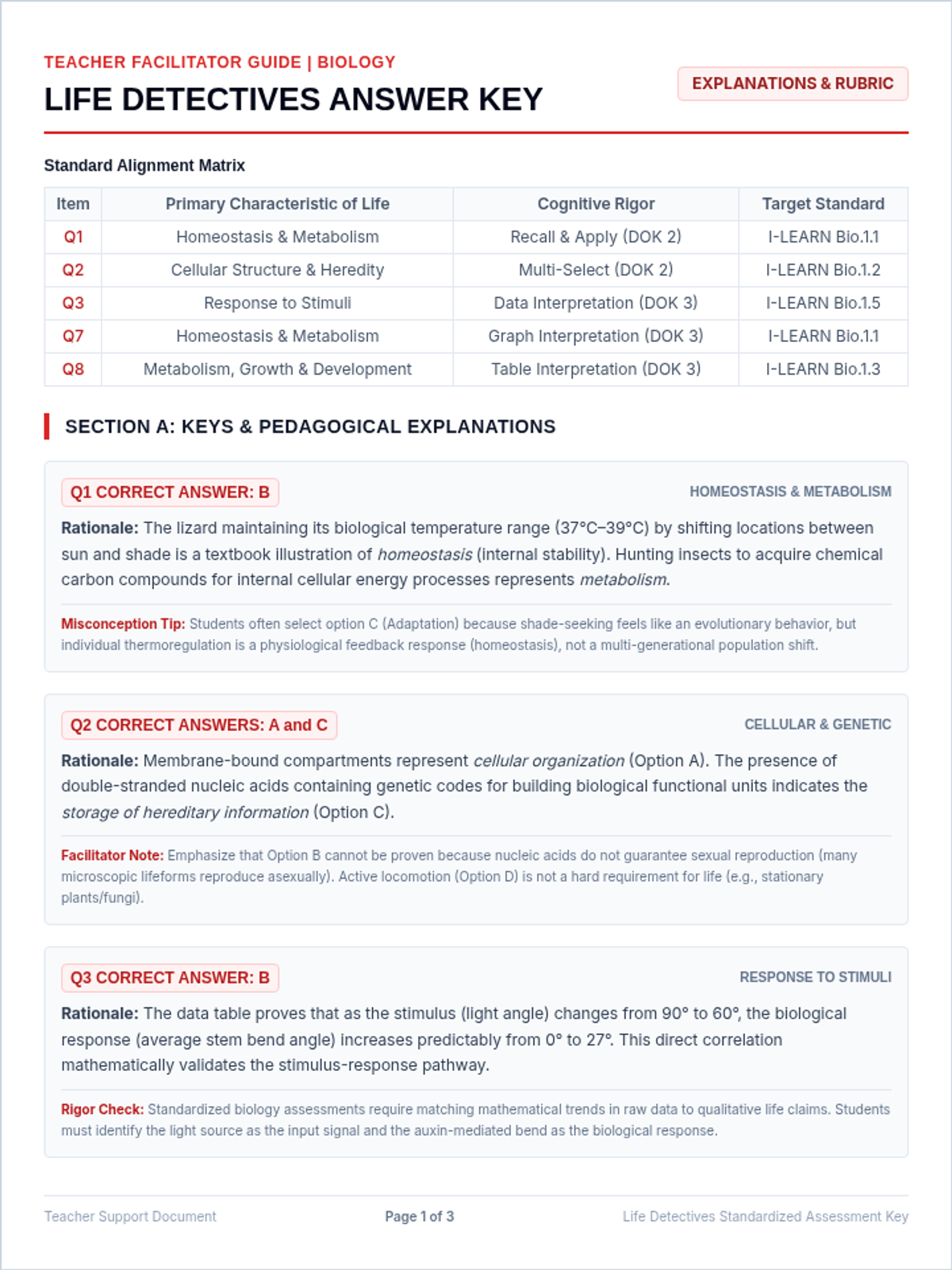
A comprehensive teacher answer key and instructional guide for the Bio-Logic practice worksheet, including rationales, scoring guidance, and common student misconceptions.
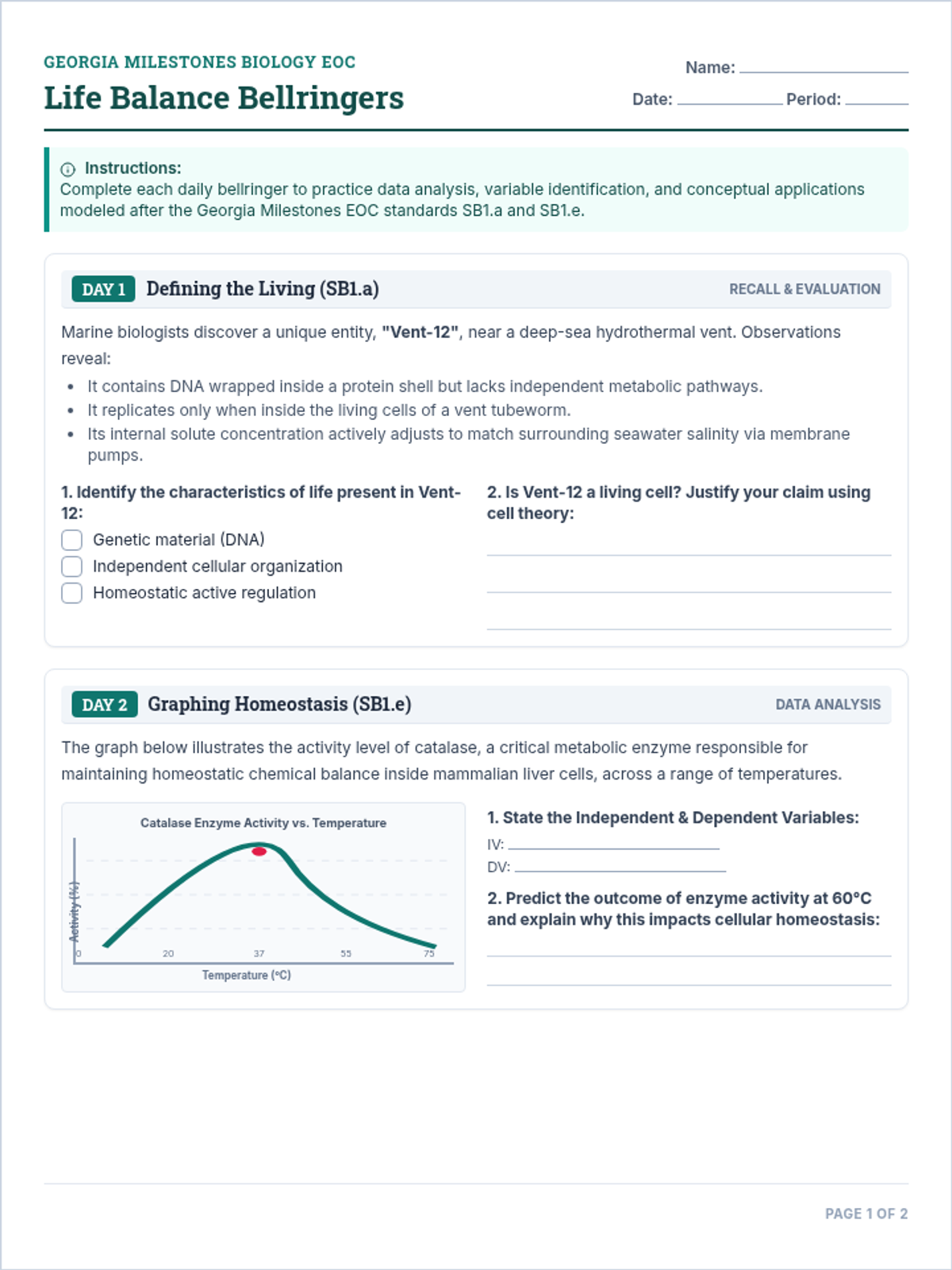
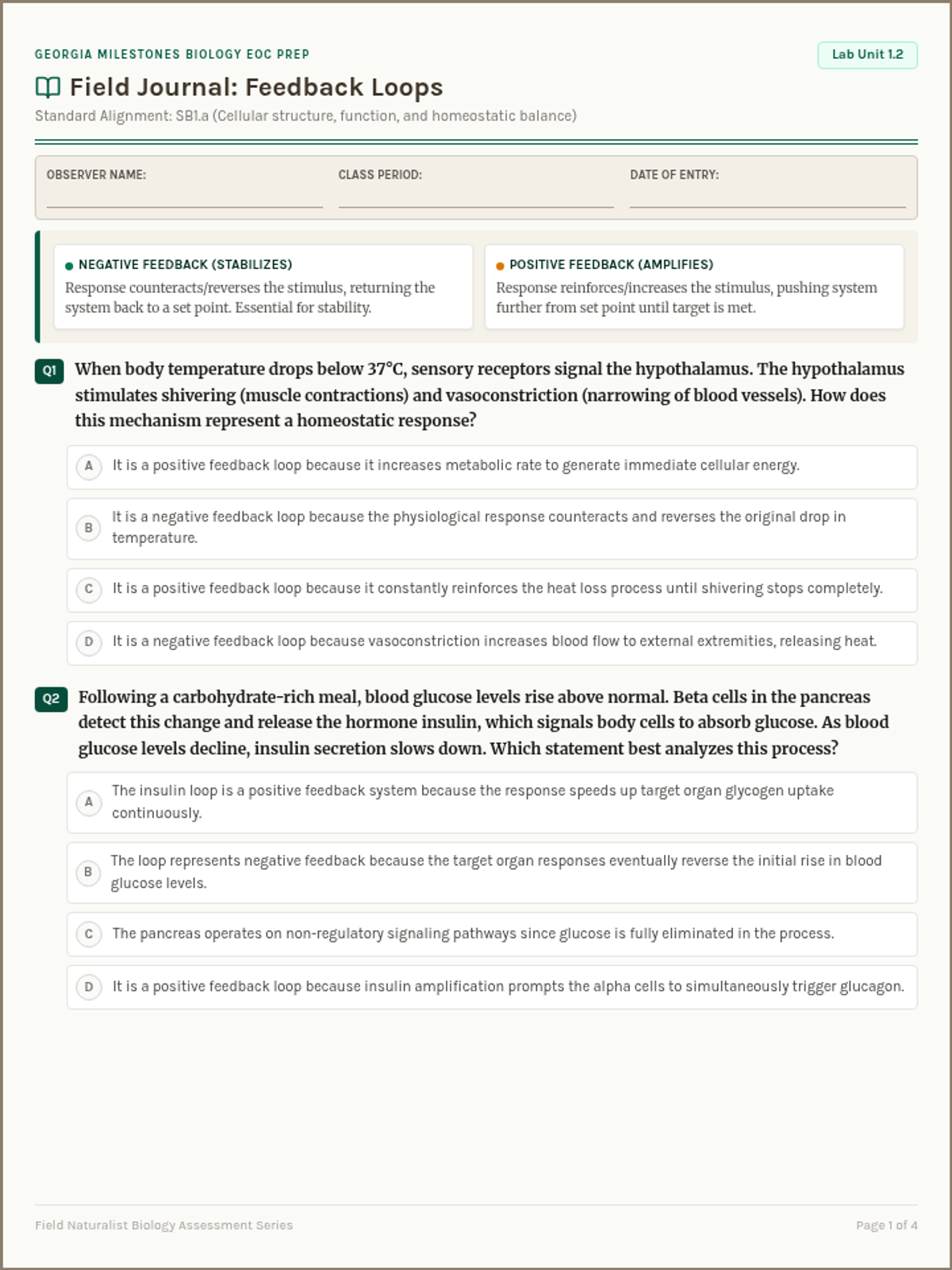
A biological feedback loops practice worksheet styled after standardized tests, featuring thermoregulation and fruit ripening scenarios with visual models and evidence-based questions.
Teacher answer key and scoring rubric for the System Layers Assessment, including rationales and point values.
A comprehensive assessment featuring I-Learn style questions focused on HS-LS1-2 hierarchical organization. Revised for improved layout and clarified visual markers.
A visual slide deck introducing the hierarchical organization of living systems, from cells to whole organisms. Revised for improved visual relevance and clarity.
An answer key for the Replication Blueprint Worksheet, including correct options, explanations, and a grading rubric for the synthesis question.
A reading comprehension passage and worksheet about DNA replication, covering the double helix structure, enzymes, and the semiconservative model. Includes 8 multiple-choice questions and a short-answer synthesis question. Revised for better layout and page breaks.
An engaging slide deck introducing DNA replication, enzymes involved, and the semi-conservative model. Revised with improved visuals for the semi-conservative model and clear transitions to student work.
An informative letter for parents and guardians explaining the AI Project Lab series, the "Co-Pilot" philosophy, and how to support responsible AI use at home. Updated for single-page printing.
A customizable classroom AI policy template that uses a "Traffic Light" system to define appropriate vs. inappropriate AI use for students. Consolidated to a single page.
An answer key for the Green Engine Worksheet, providing correct answers, brief rationales for each question, and grading criteria for the student model section.
A reading passage and comprehension worksheet for 9th-grade students focusing on HS-LS1-5. It explores how plants transform light energy into chemical energy (glucose) and clarifies the role of oxygen as a byproduct.
Teacher answer key for the pH Puzzle Pursuit Worksheet, including correct numerical answers for all 22 clues and a visual representation of the shaded solution grid. Revised for consistency with the student worksheet.
A scaffolded 2-page puzzle activity for calculating pH, pOH, and ion concentrations. Problems are categorized by calculation type with worked examples for each section, concluding with a coordinate-style grid for students to find and shade their answers.
Teacher answer key for the revised pH Powerhouse Worksheet, featuring detailed step-by-step solutions for logarithmic calculations, unit conversions, and molarity-to-pH integration. Revised for improved rendering of chemical notation and layout.
A revised 2-page student worksheet focusing on pH calculations. The material is now broken into 6 scaffolded sections, featuring worked examples for each type of calculation, strategy boxes for strong acids/bases, and tiered practice from basic conversions to advanced stoichiometry scenarios. Revised for improved rendering of chemical notation and layout.
Teacher guide for Mini Lesson 3, optimized for printing with clear instruction blocks, sequential script steps, and high-contrast consolidated layout.
A student worksheet for Mini Lesson 3. Consolidated to a single page with high content density, clear writing lines, and a professional layout for classroom printing.
A slide deck for Mini Lesson 3 that covers AI hallucinations, the necessity of cross-referencing sources, and academic honesty. Updated with sketch aesthetic, fixed spacing ("The Gold Rule"), and teacher notes. (Final font size adjustment)
Teacher guide for Mini Lesson 2, optimized for printing with a consolidated layout, clear script steps, and an ink-friendly high-contrast answer key.
A student worksheet for Mini Lesson 2. Consolidated to a single page with high content density, clear writing lines, and a handy toolkit footer for printing efficiency.
A slide deck for Mini Lesson 2 that teaches students how to write specific, context-heavy AI prompts to get better support for their projects. Updated with sketch aesthetic, CTC formula clarity, and teacher notes. (Final font size adjustment)
Teacher guide for Mini Lesson 1, optimized for printing with clear instruction blocks, page-break prevention, and consolidated layout.
A student worksheet for Mini Lesson 1. Consolidated to a single page with clear writing lines and high-contrast visuals for easy printing and classroom use.
A slide deck for Mini Lesson 1 that introduces AI as a co-pilot for projects, emphasizing the difference between using AI to support thinking versus replacing thinking. Now with teacher notes and sketch aesthetic. (Final font size adjustment)
A detailed teacher answer key for the Layer Logic Organizer, providing altitude ranges, visual characteristics, and the biological or scientific significance of each atmospheric layer. Revised to ensure single-page layout and improved visual clarity.
Teacher answer key for the Energy Ecosystems Assessment. Includes standard alignment for Indiana HS-LS biology standards and a suggested grading rubric.
A comprehensive 52-question multiple-choice unit test covering bioenergetics (photosynthesis/respiration) and ecosystem dynamics (trophic levels, cycles, populations, and human impact). Includes diagrams for mitochondria, priestley experiments, carrying capacity, and energy pyramids.
A visual aid and worksheet for 5th-grade students to learn the process of photosynthesis, including diagrams of inputs/outputs and a labeling activity. Revised to use proper subscripts and fit on a single page.
A collection of engaging creative writing prompts for middle school students, featuring a mix of sci-fi, fantasy, and realism with a large, dedicated student writing area on a separate page. Revised for improved contrast and layout.
A professional grading rubric for high school biology lab reports, featuring clear criteria, point values, and a pre-submission checklist. Revised to fit on a single page with improved feedback line contrast.
A visual timeline graphic organizer for the American Civil War, featuring dedicated sections for key years and a reflection prompt. Revised to fit on a single page with improved writing lines.
Visual presentation slides covering fiber basics and fabric characteristics, now including interactive quiz slides to assess student comprehension during instruction.
A condensed teacher-facing guide providing answer keys with question letters, discussion prompts, and instructional tips for the Fabric Science lesson. Optimized to fit on a single page.
A set of multiple-choice questions designed to assess student understanding of the Textile Tech article, focusing on fabric properties and detergent selection. Includes layout improvements to ensure questions stay on a single page.