A comprehensive teacher facilitation guide for the Moon Puzzle Workshop, including learning objectives, materials lists, detailed lesson procedures, and specific timestamps for pausing the instructional video.
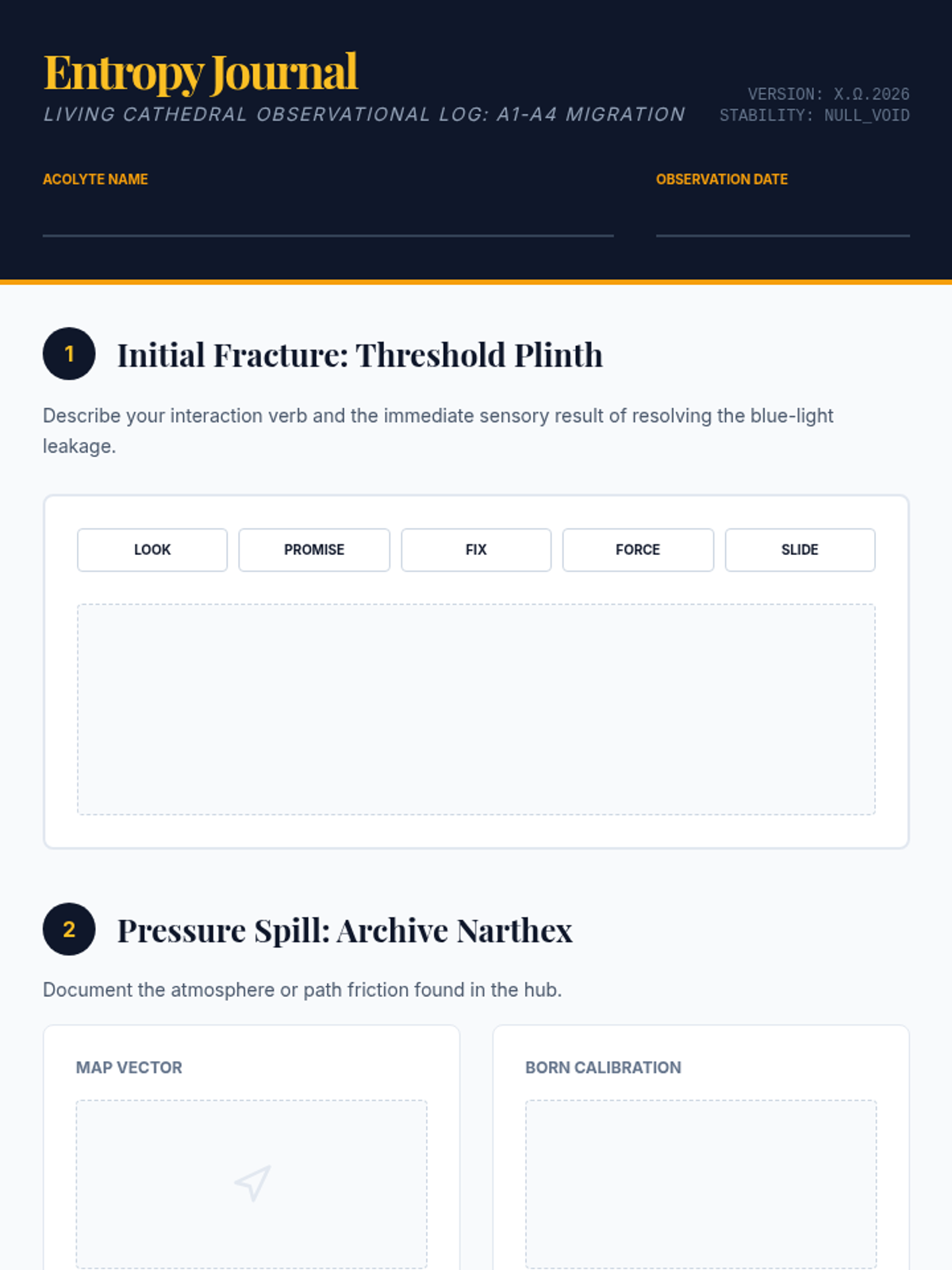
A student-facing journal for documenting player choices and consequences during the Pressure Propagation Loop. It includes sections for tracking verb usage, sketching UI map distortions, and reflecting on the systemic anticipation of the Cathedral architecture.
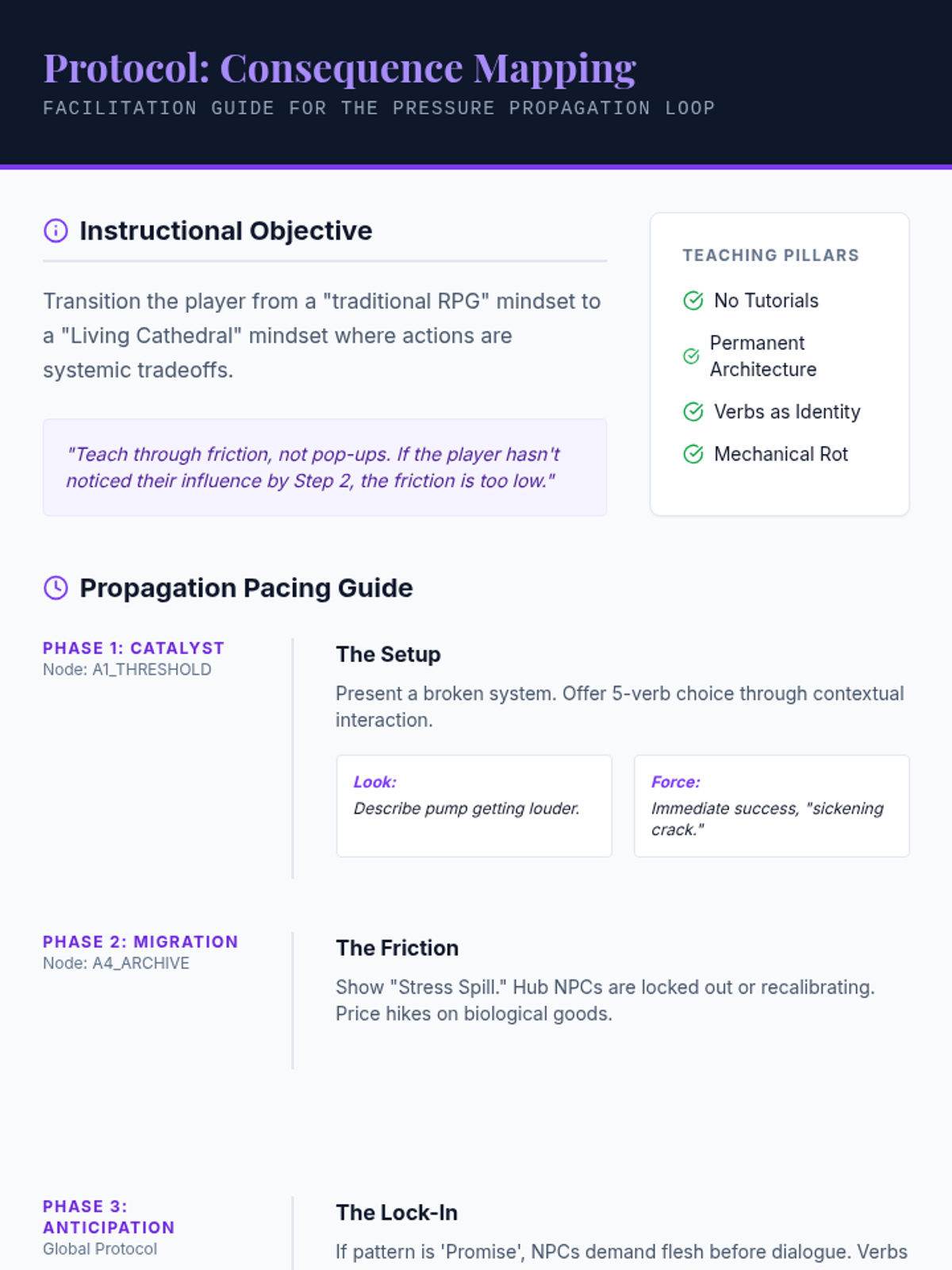
A facilitation guide for educators or lead designers to implement the Pressure Propagation Loop. It provides pacing instructions for the three phases of consequence, instructional objectives for teaching 'invisible friction,' and an observational rubric for tracking player behavioral shifts.
A slide presentation for the Pressure Propagation Loop. It covers the core axiom of 'No Clean Wins,' defines the five verbs used for tracking consequence, and visualizes the three-step sequence from Catalyst to Systemic Anticipation within the Temple UI aesthetic.
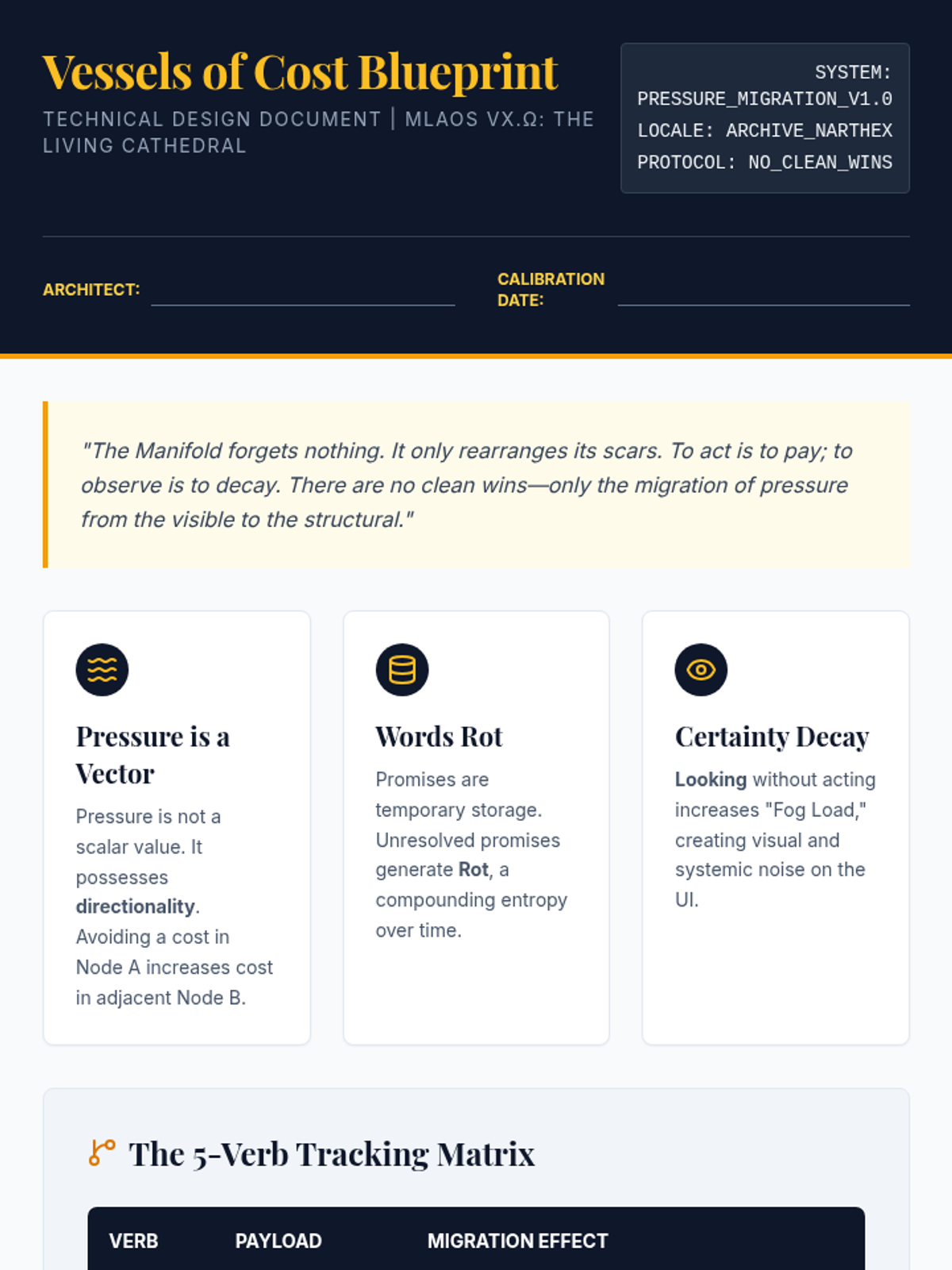
A technical design document outlining the 'Pressure Migration' logic for the MLAOS vX.Ω prototype. It includes tracking matrices for the five core verbs, TypeScript interfaces for state management, and an integration worksheet for developers to define systemic consequences.
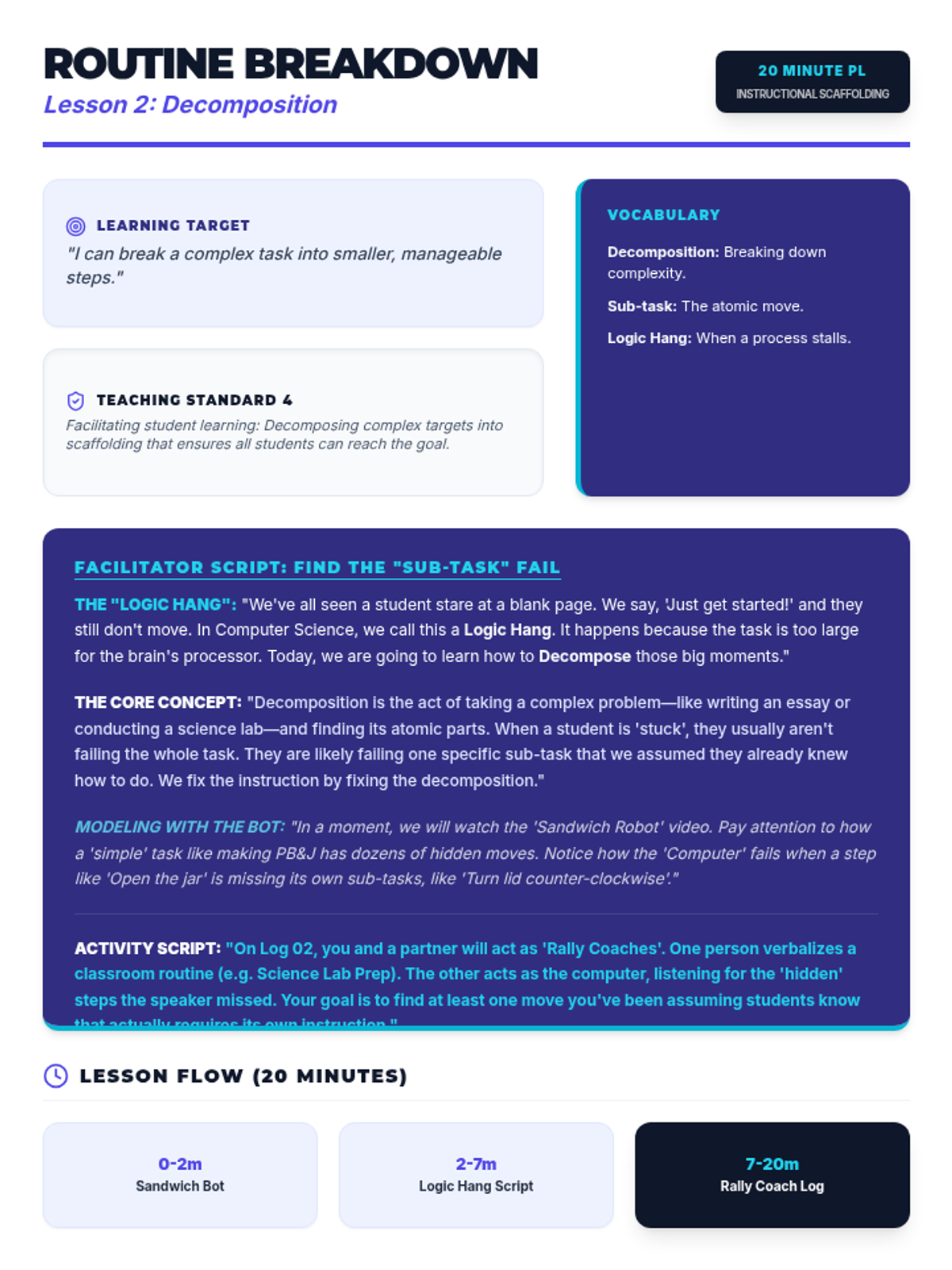
An updated facilitation guide for Lesson 2 (Decomposition), including a detailed 20-minute PL flow, specific scripts/talking points, connections to Iowa Teaching Standard 4, and the master handout copy. Includes expanded scripted instruction focusing on 'Logic Hangs' and finding 'stuck points.'
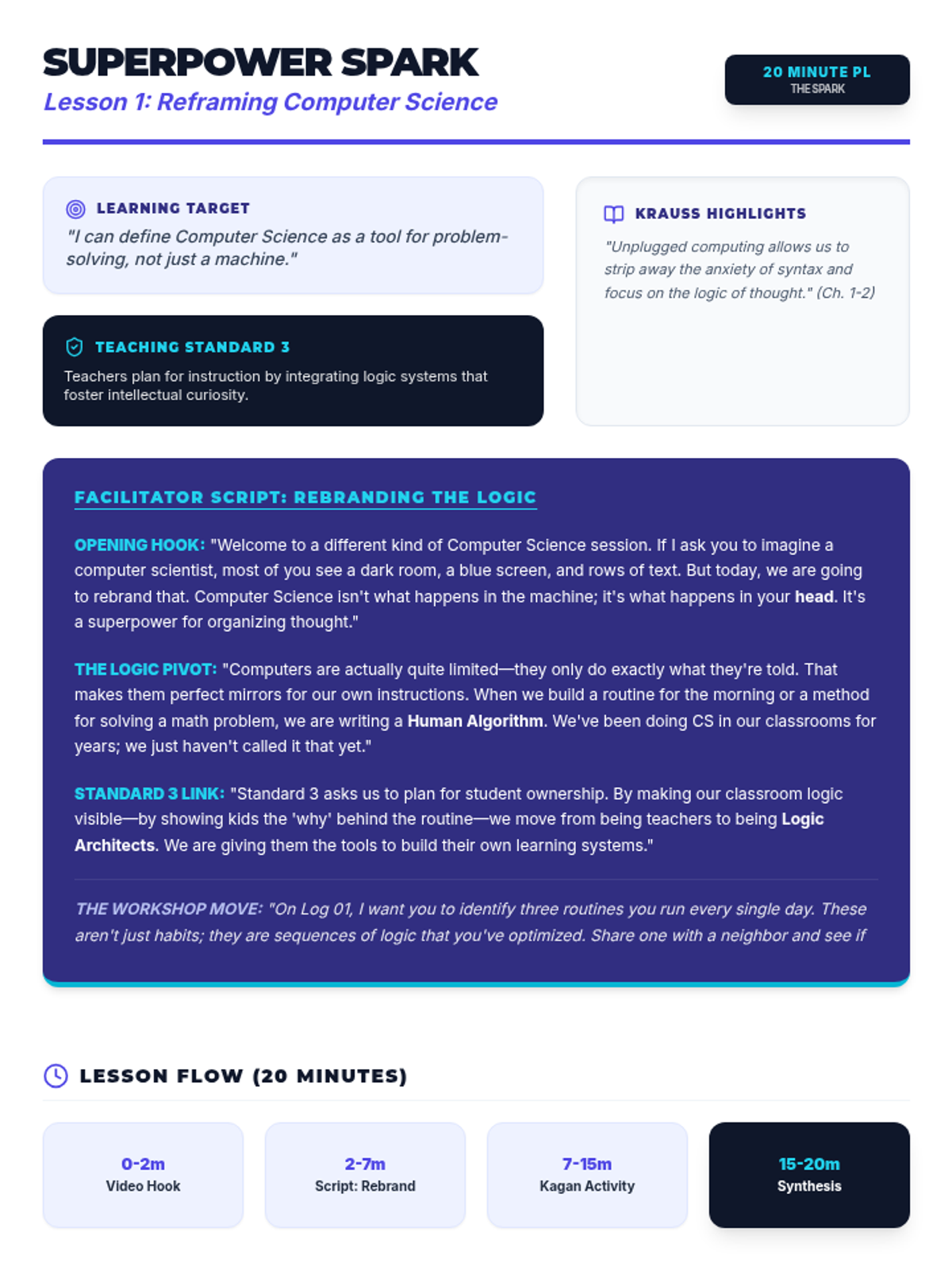
An updated comprehensive facilitation guide for Lesson 1, featuring a detailed 20-minute PL flow including a jigsaw reading, specific facilitator scripts/talking points, direct connections to Iowa Teaching Standard 3, and the master handout copy. Includes significantly expanded scripted instructions.
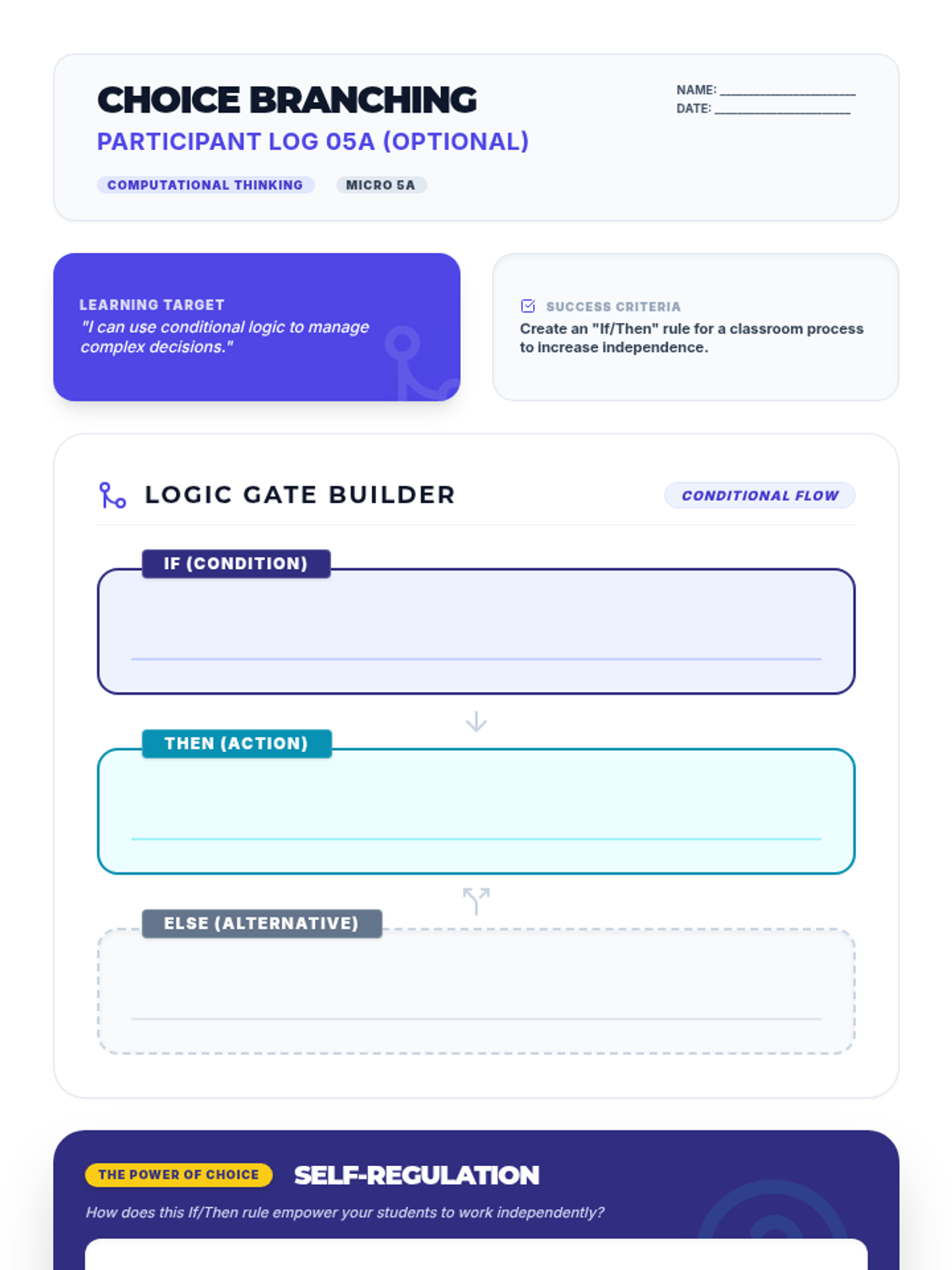
A participant handout for the optional Choice Branching micro-lesson, featuring a visual template for building "If/Then" logic gates. Includes improved workspace contrast and layout.
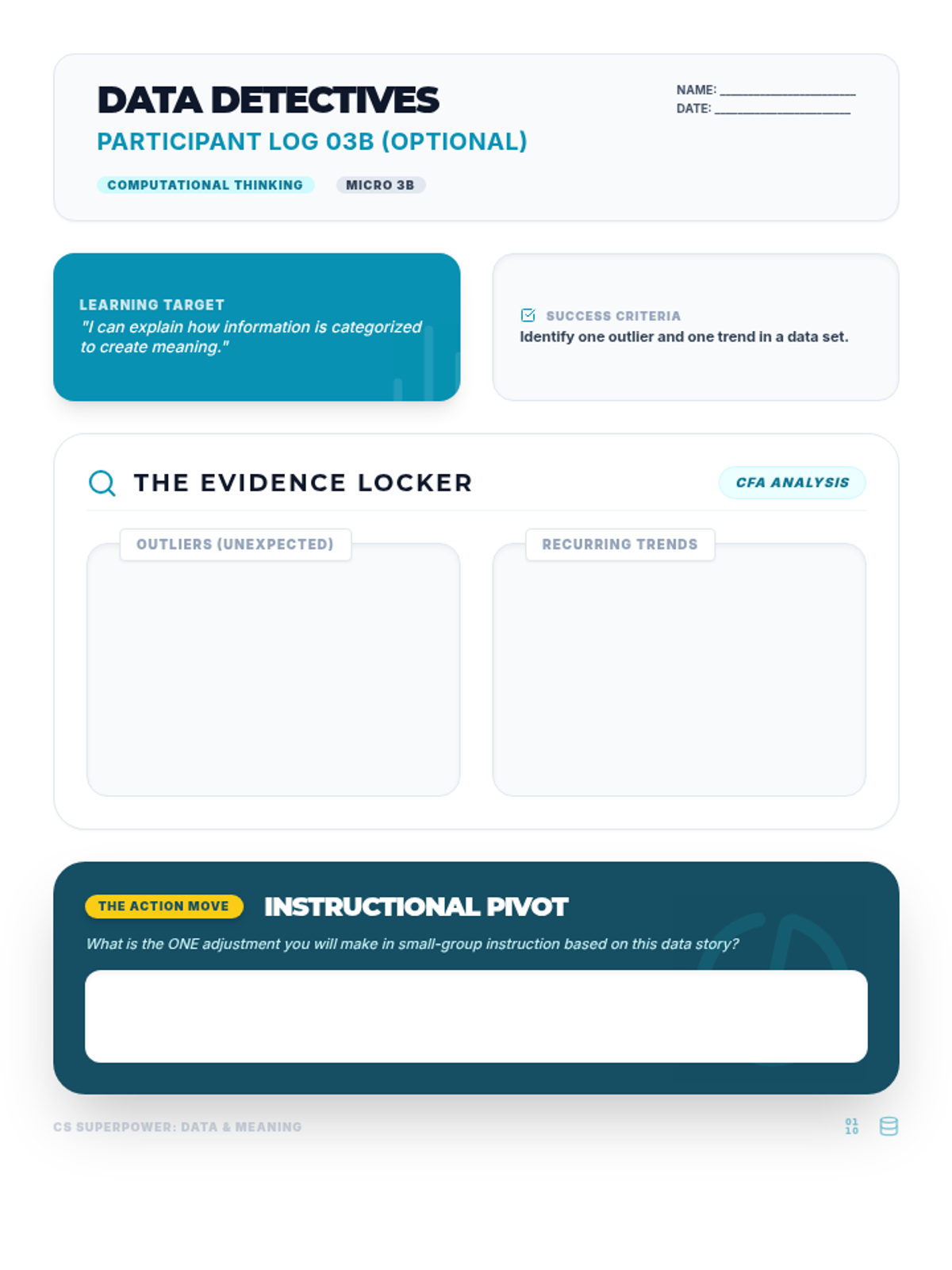
A participant handout for the optional Data Detectives lesson, featuring structured space for data analysis and instructional reflection. Includes increased handwriting space for data analysis.
A 5-slide presentation for the optional Choice Branching micro-lesson, illustrating how If/Then logic gates are used in classroom management and differentiation. Covers binary logic, ELSE paths, and building independence.
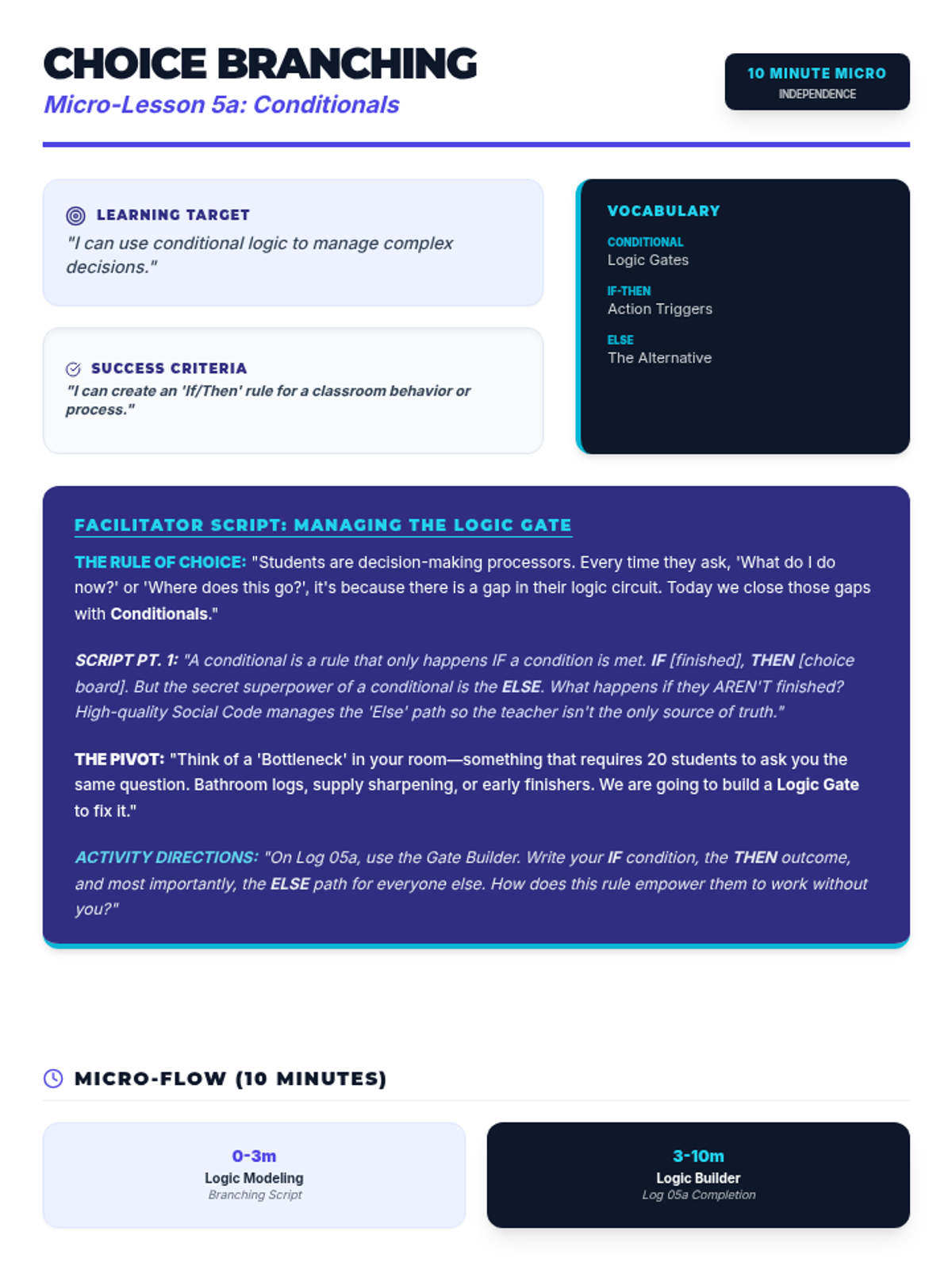
Updated facilitation guide for the optional Choice Branching micro-lesson, featuring scripts on conditional logic and student independence. Includes Participant Log 05a as an additional handout page for workshop use. Includes expanded scripted instruction on 'Managing Logic Gates' and the 'Else' path.
A 5-slide presentation for the optional Data Detectives lesson, illustrating how raw data is transformed into actionable instructional stories. Covers categorization, binary logic, and the data pivot.
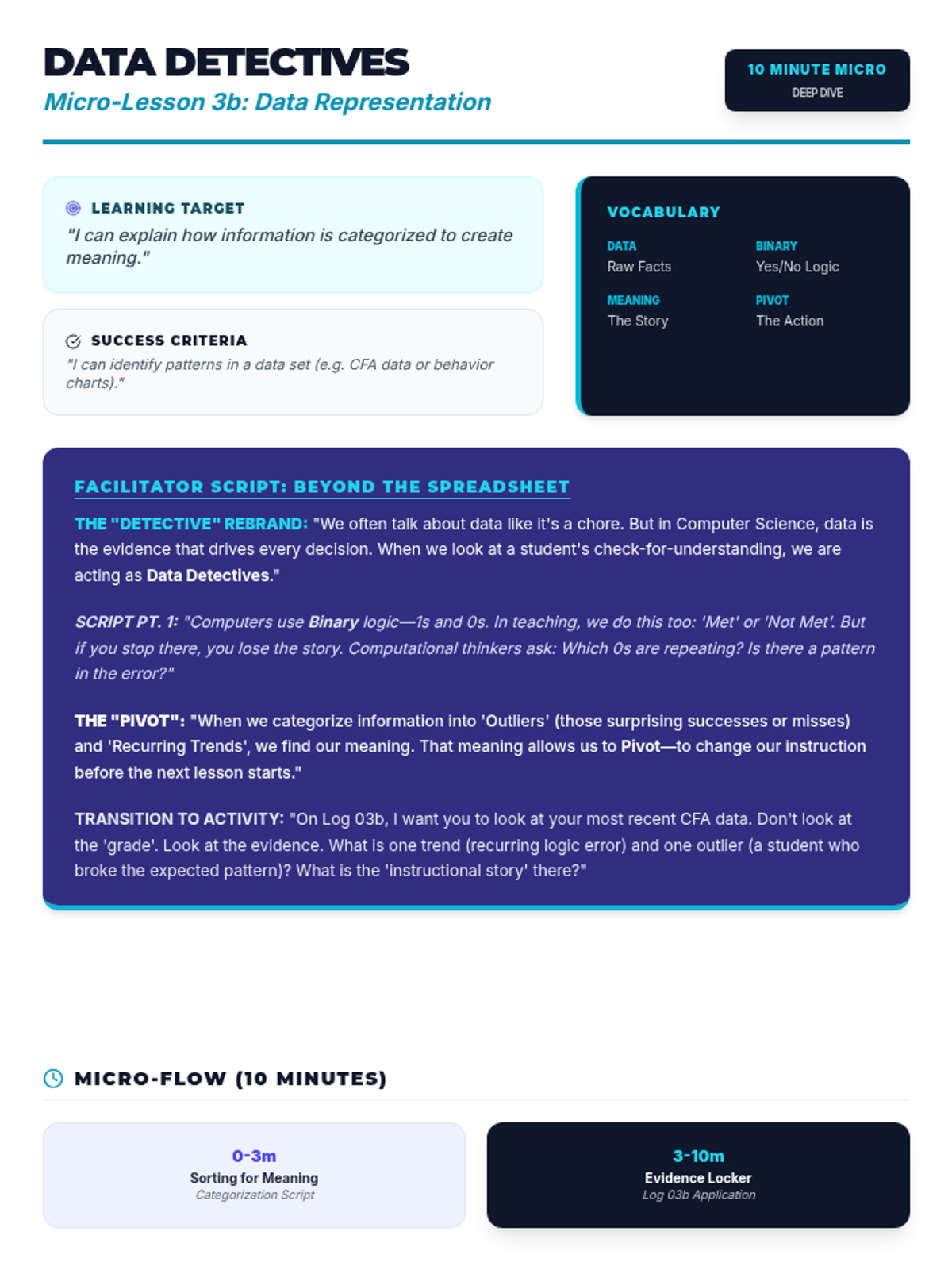
Updated facilitation guide for the optional Data Detectives micro-lesson, featuring PL timing, scripts, and a master handout copy. Deepens the connection between raw data and instructional meaning. Includes expanded scripted instruction focusing on the 'Data Pivot' and binary logic.
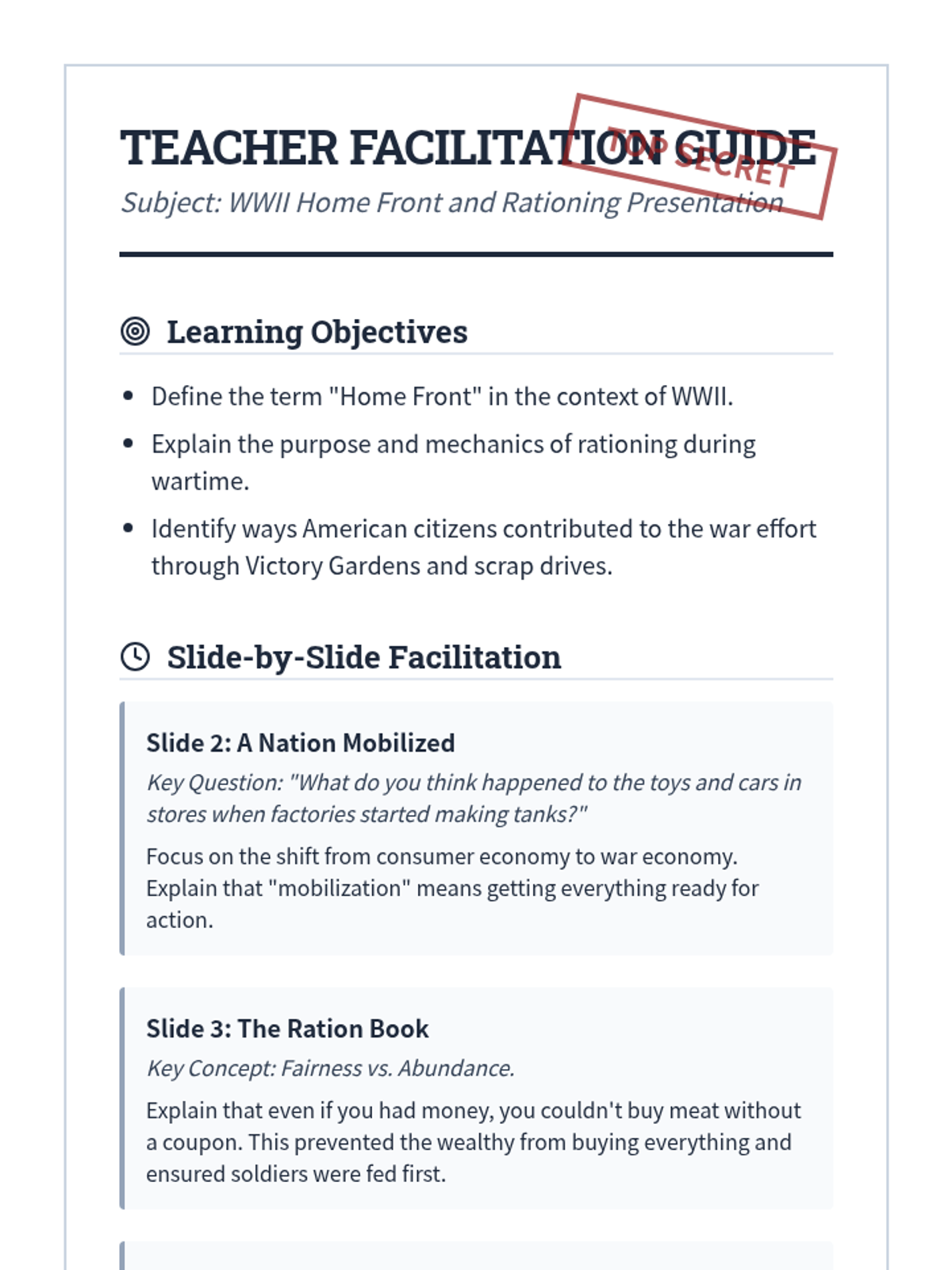
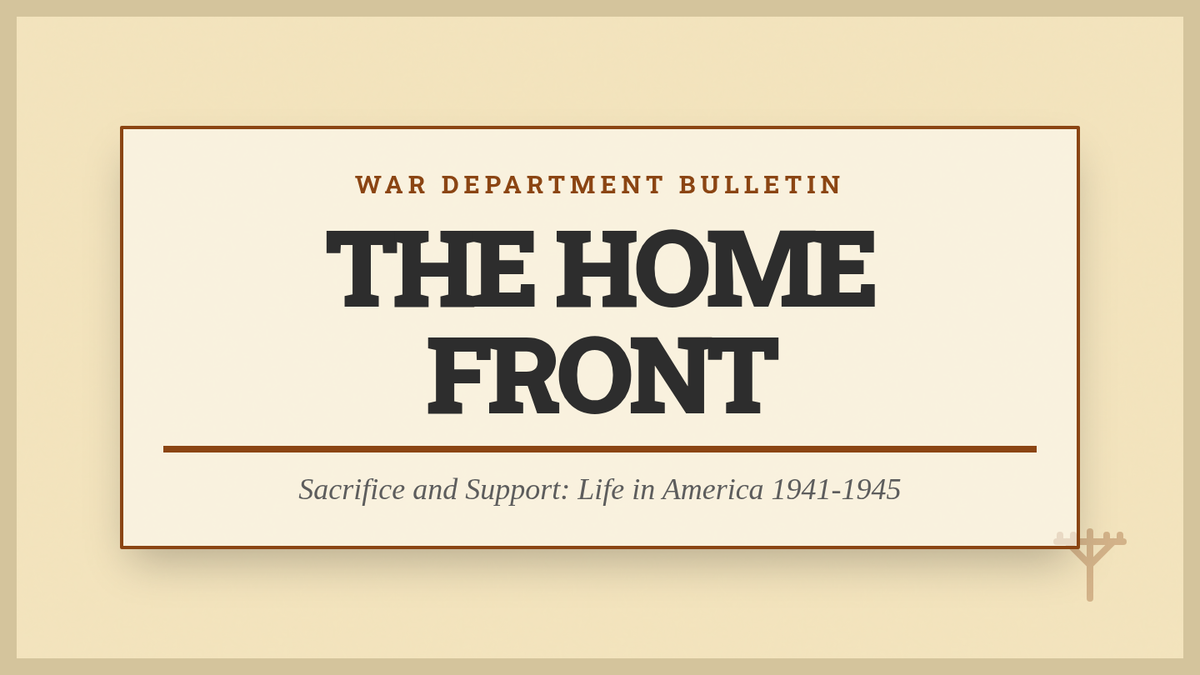
A teacher facilitation guide for the WWII Home Front slides, providing pacing notes, discussion prompts, and historical background information on rationing and mobilization.
A slide presentation layout for WWII Home Front and Rationing, featuring a vintage newspaper aesthetic, key concepts of mobilization, rationing mechanics, and community efforts like Victory Gardens.
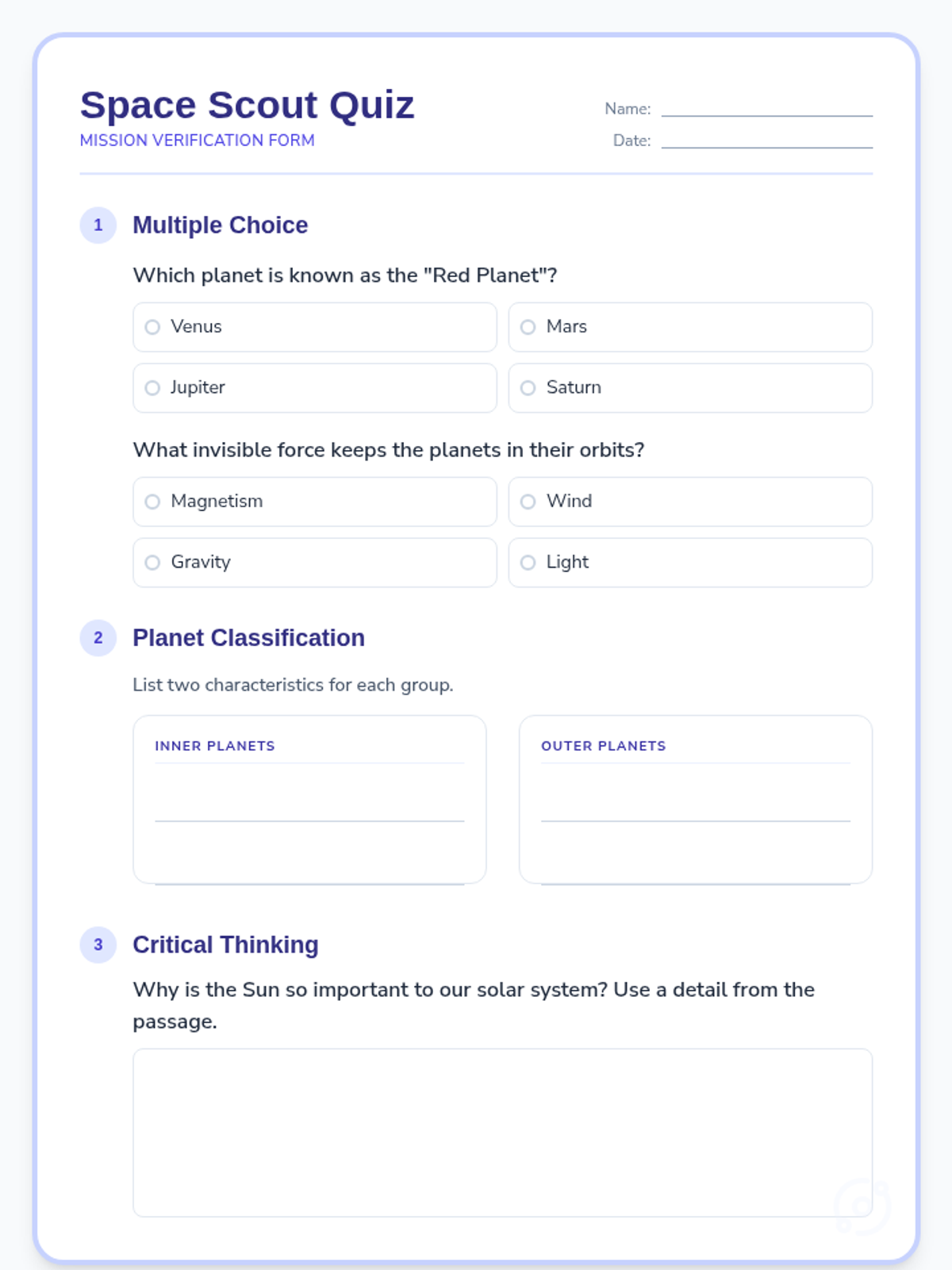
A comprehension worksheet for the Planet Scout passage, including multiple-choice questions, a comparison grid for inner and outer planets, and a short-answer reflection.
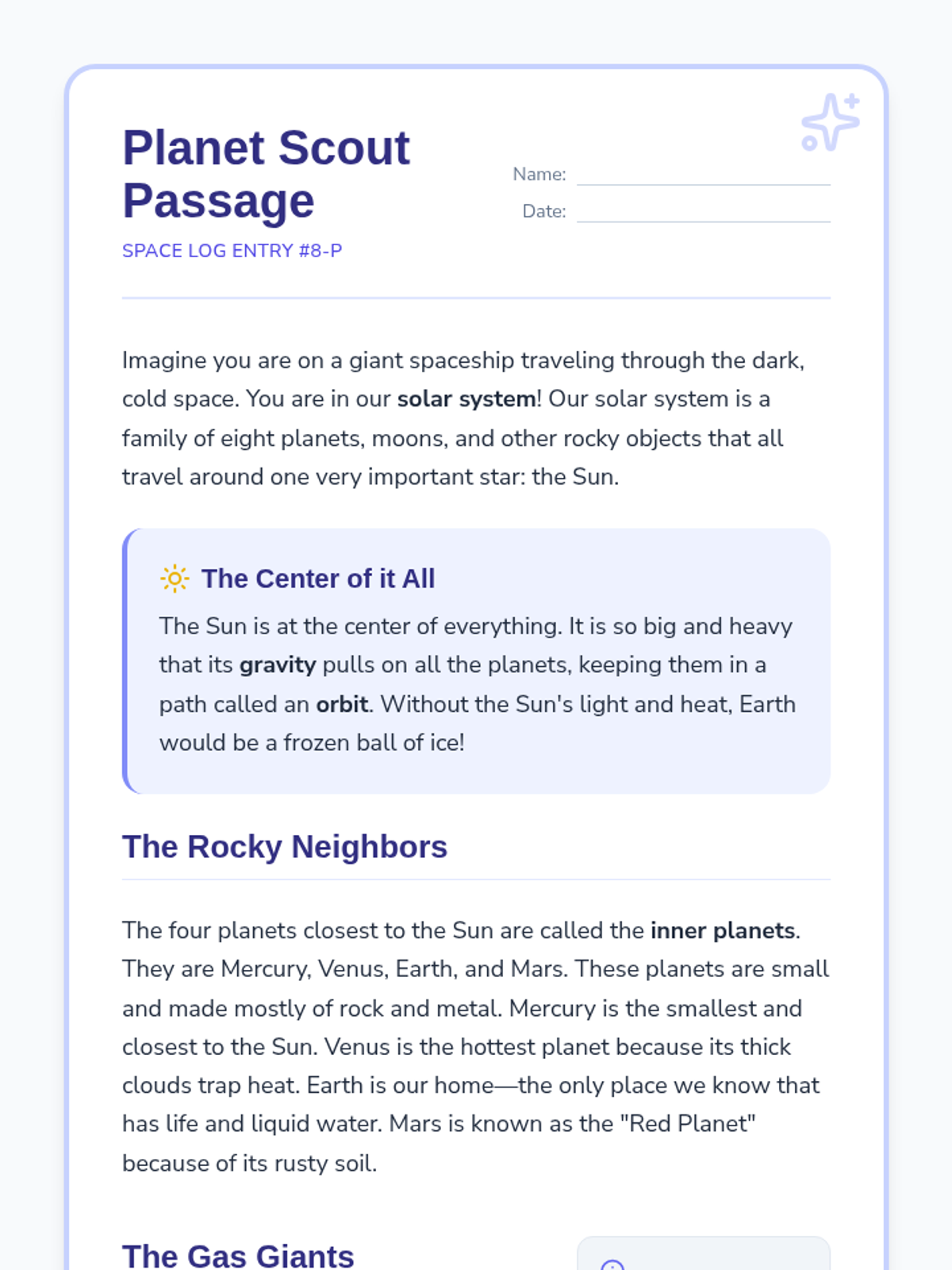
A 3rd-grade reading passage introducing the solar system, featuring descriptions of the Sun, inner rocky planets, and outer gas giants with a clean, space-themed design.
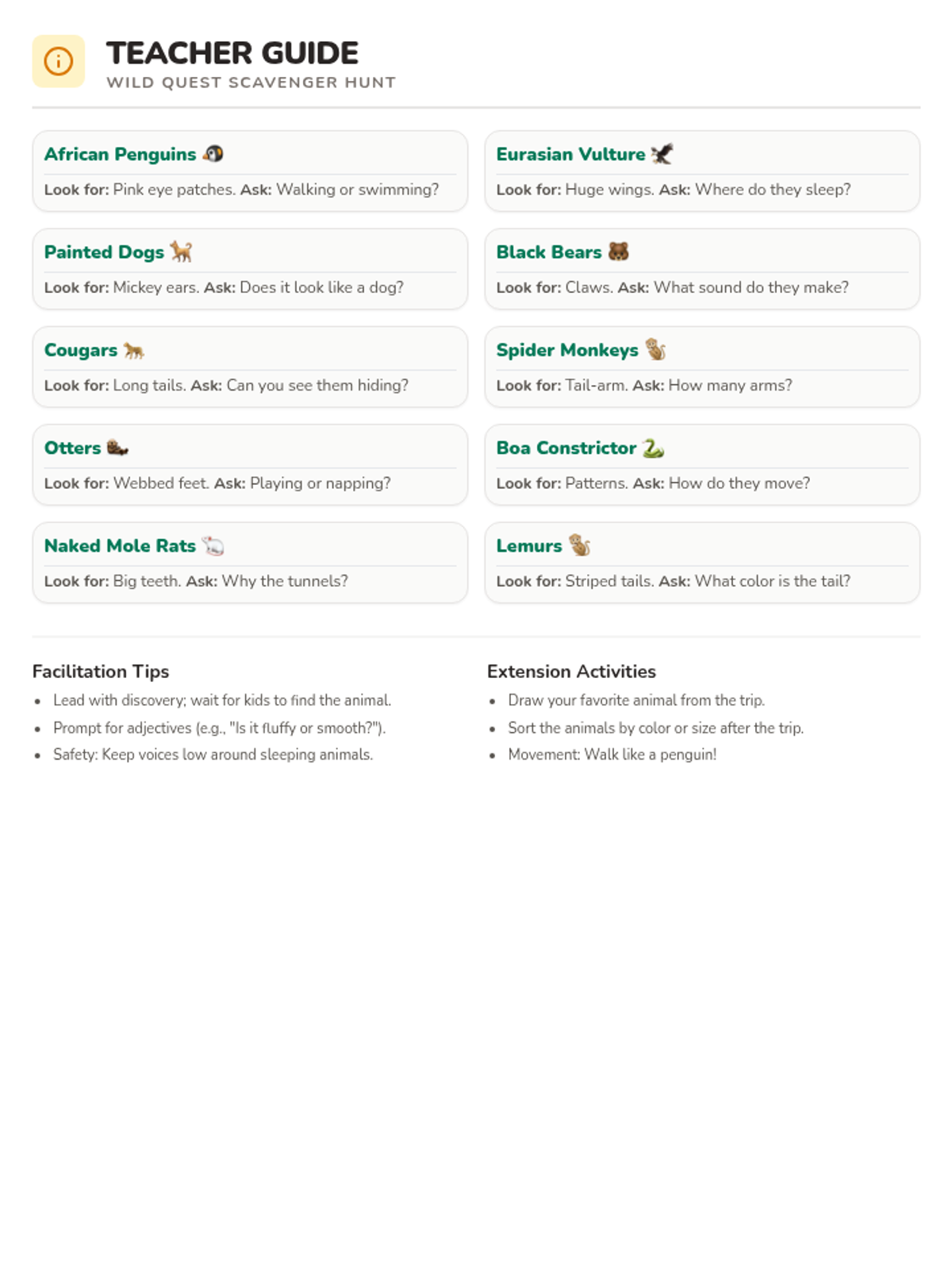
A teacher and chaperone guide for the Wild Quest scavenger hunt, featuring observation prompts and discussion questions for each of the ten animals to enrich the Pre-K learning experience.
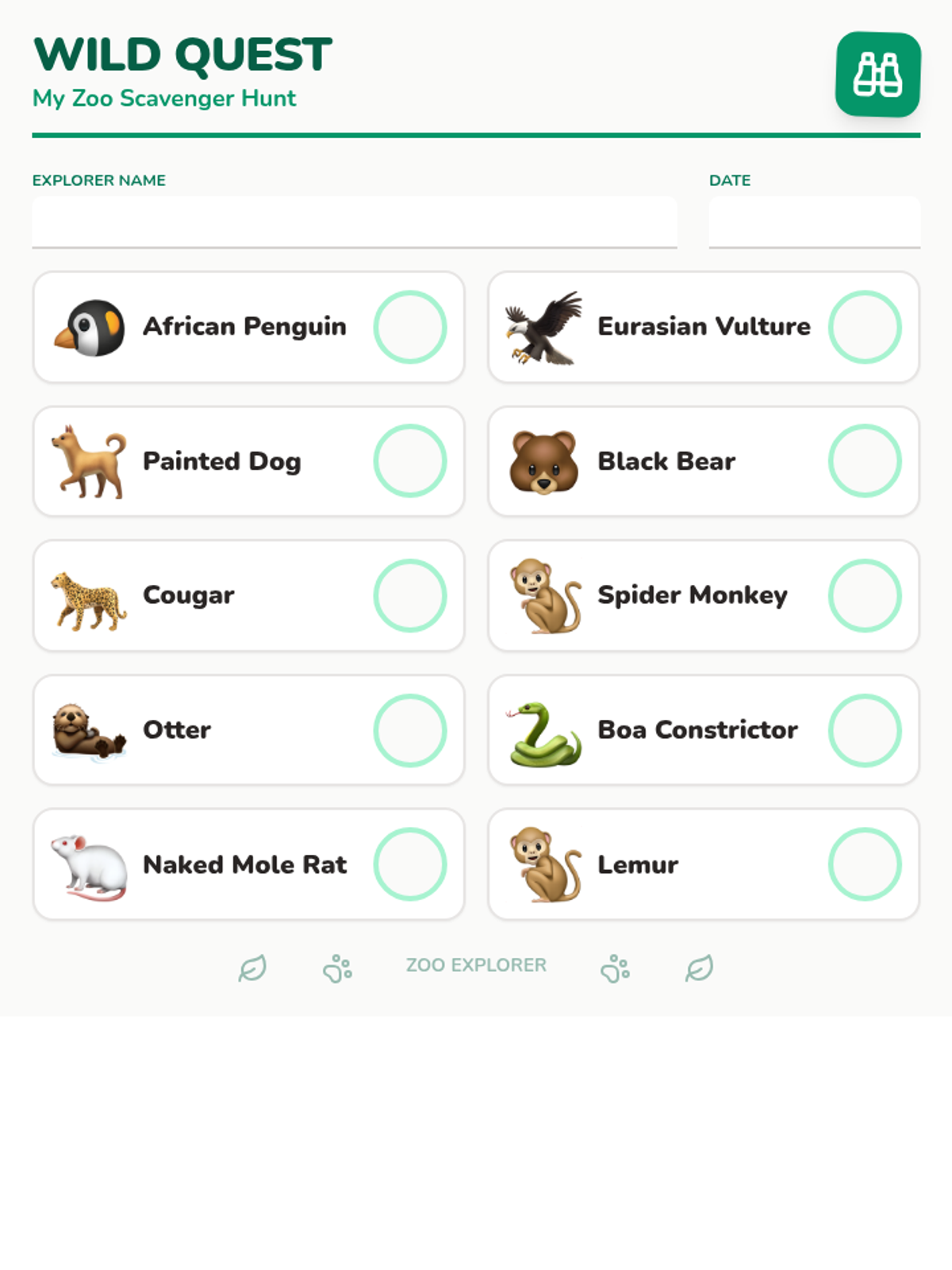
A highly visual, one-page checklist for Pre-K students to identify ten specific animals at the zoo. Each animal entry features a large emoji and a clear check box for little hands.
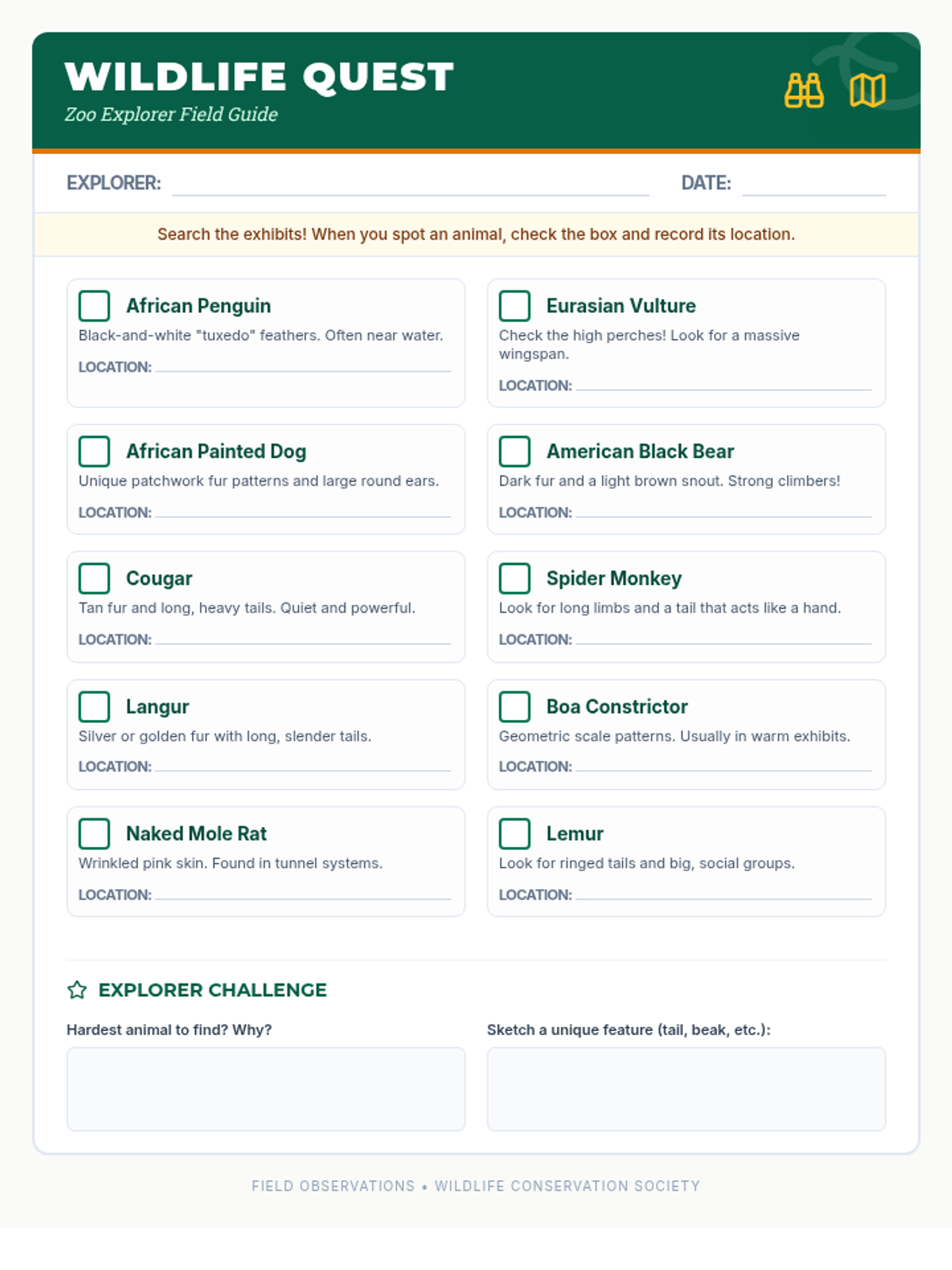
A compact, single-page wildlife scavenger hunt checklist featuring 10 specific animals. Each entry includes a checkbox, a short identification clue, and a dedicated location line. The bottom includes an 'Explorer Challenge' for reflection and sketching.
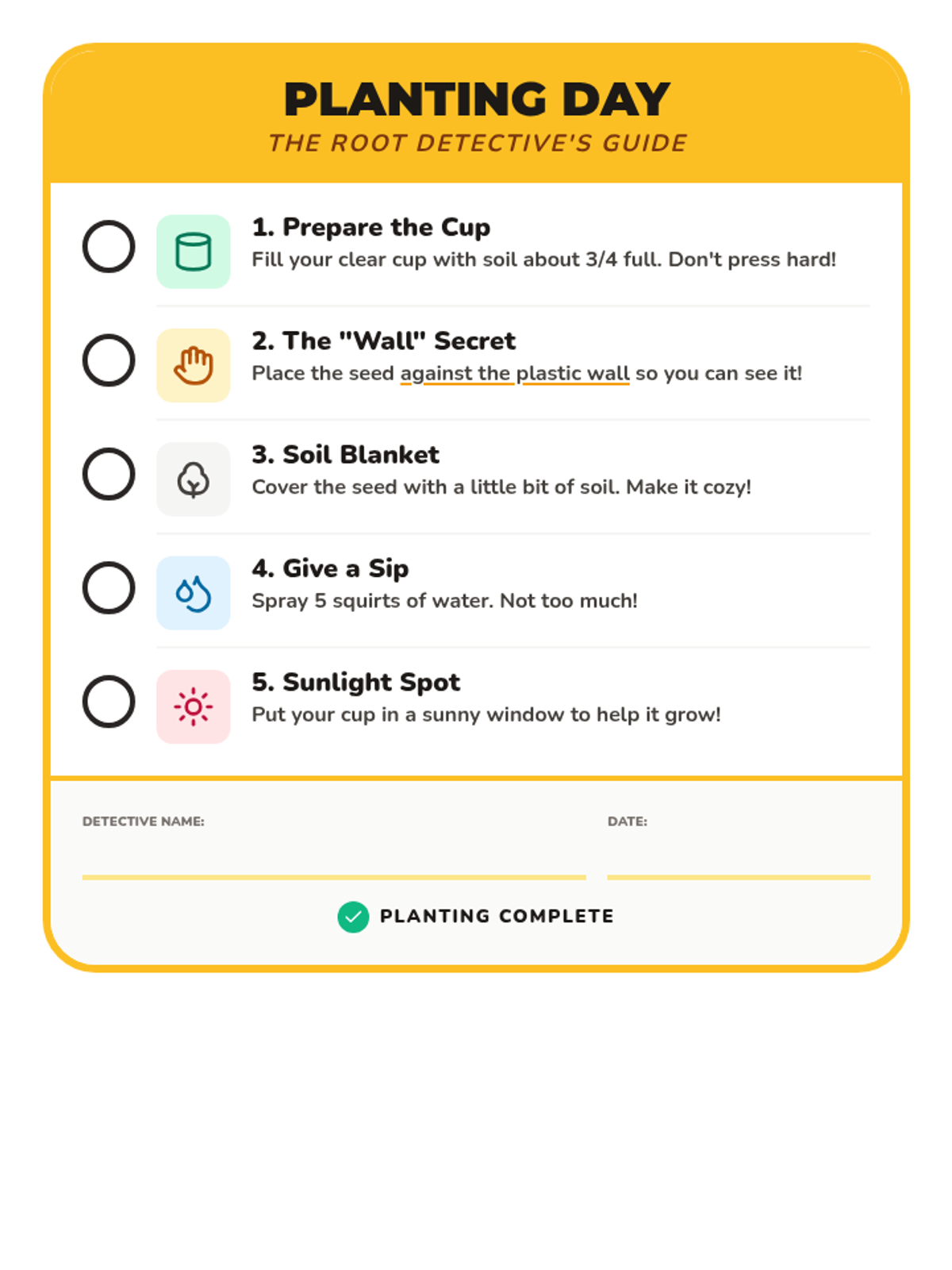
Revised Planting Day Checklist for Pre-K students, featuring a single-page layout, interactive check-circles for each step, and high-contrast text for better readability.
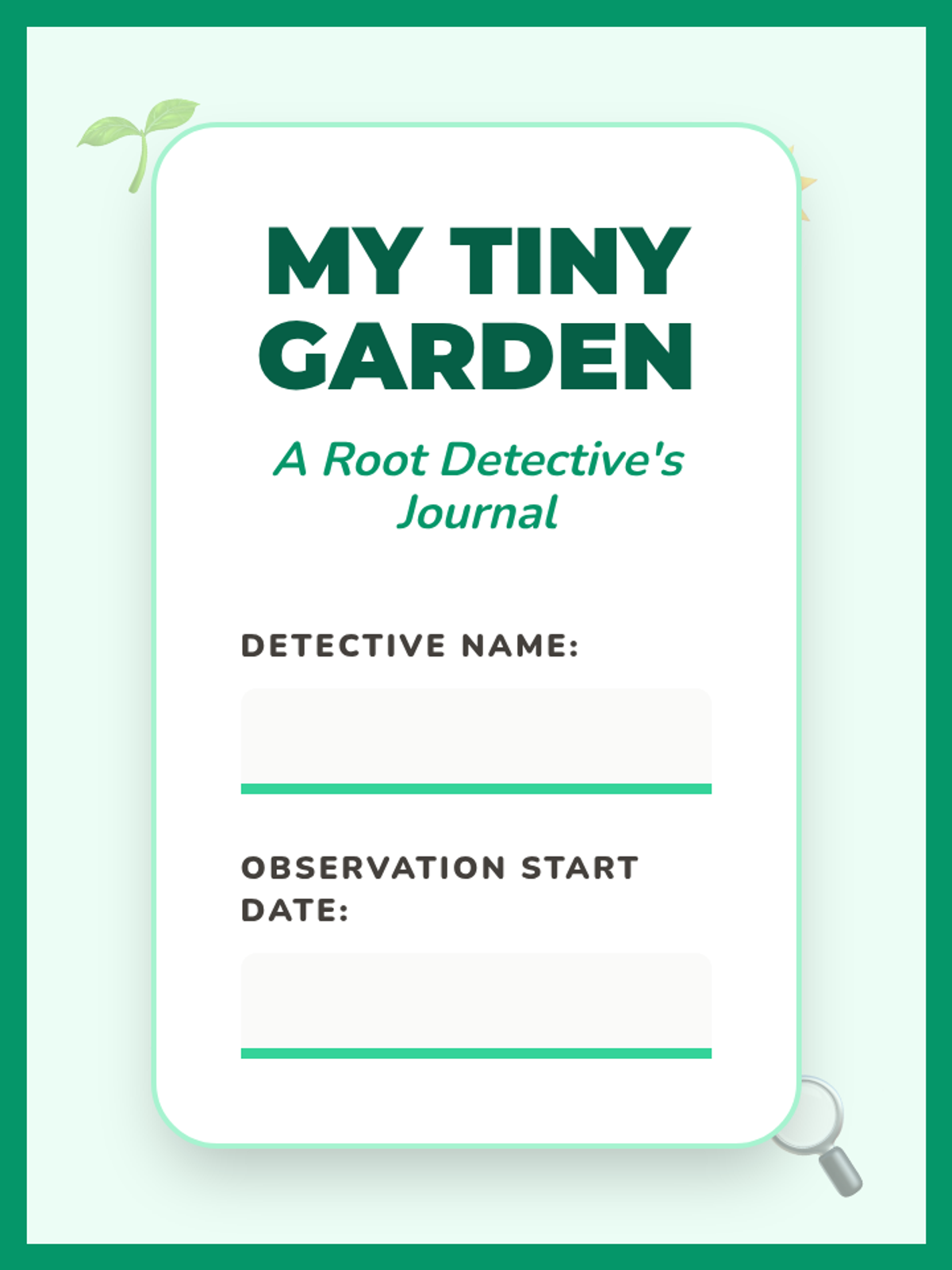
Revised student journal for Pre-K with larger writing fields for names and dates, and darker, high-contrast borders for observation and measurement areas to ensure clarity when printed.
Revised visual slides for the Root Detectives lesson, featuring increased font sizes for Pre-K visibility and a corrected layout for the root anatomy slide.
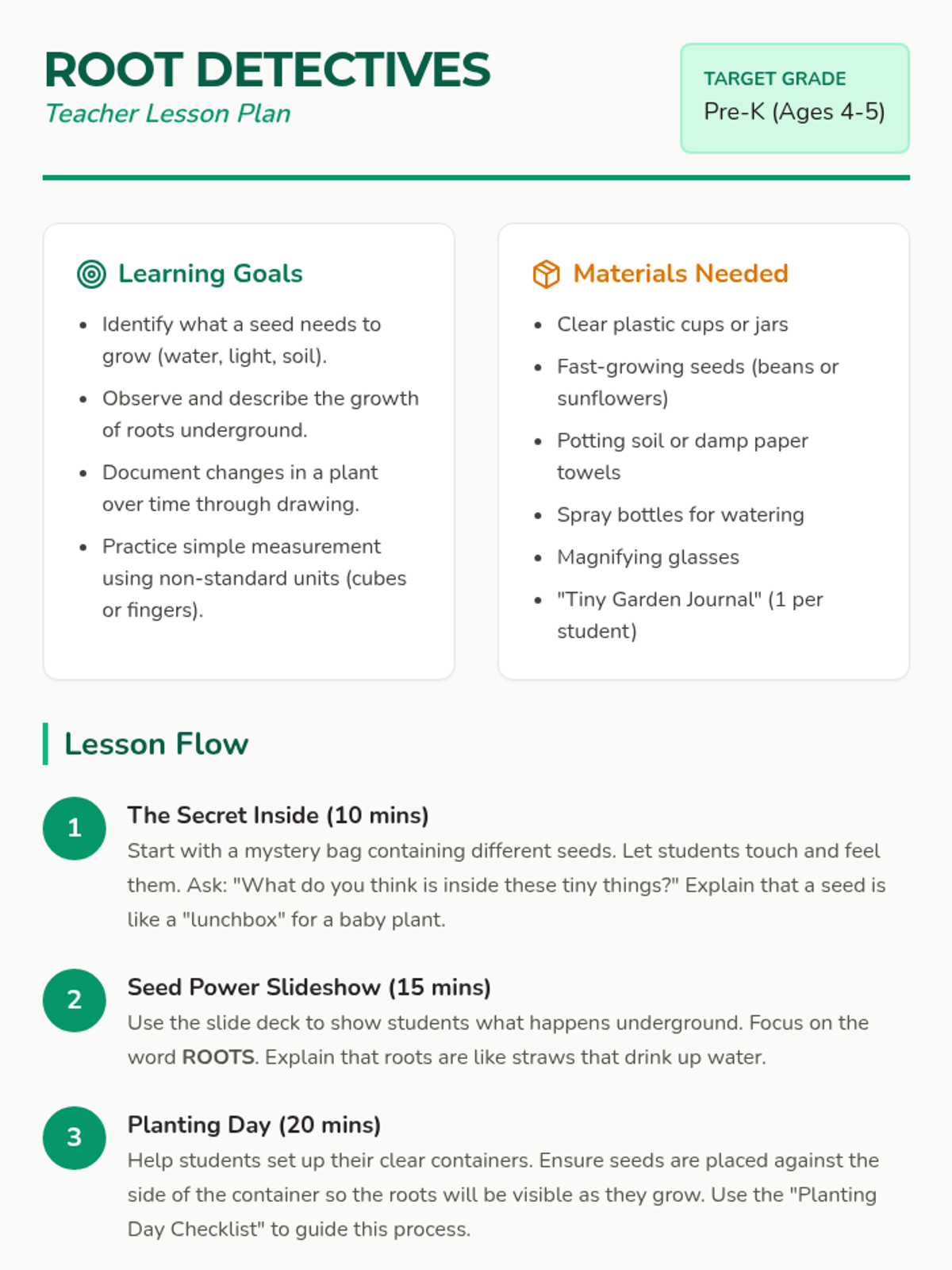
A comprehensive teacher's lesson plan for Pre-K, detailing learning objectives, materials, and a step-by-step instructional flow for the Root Detectives botany unit.
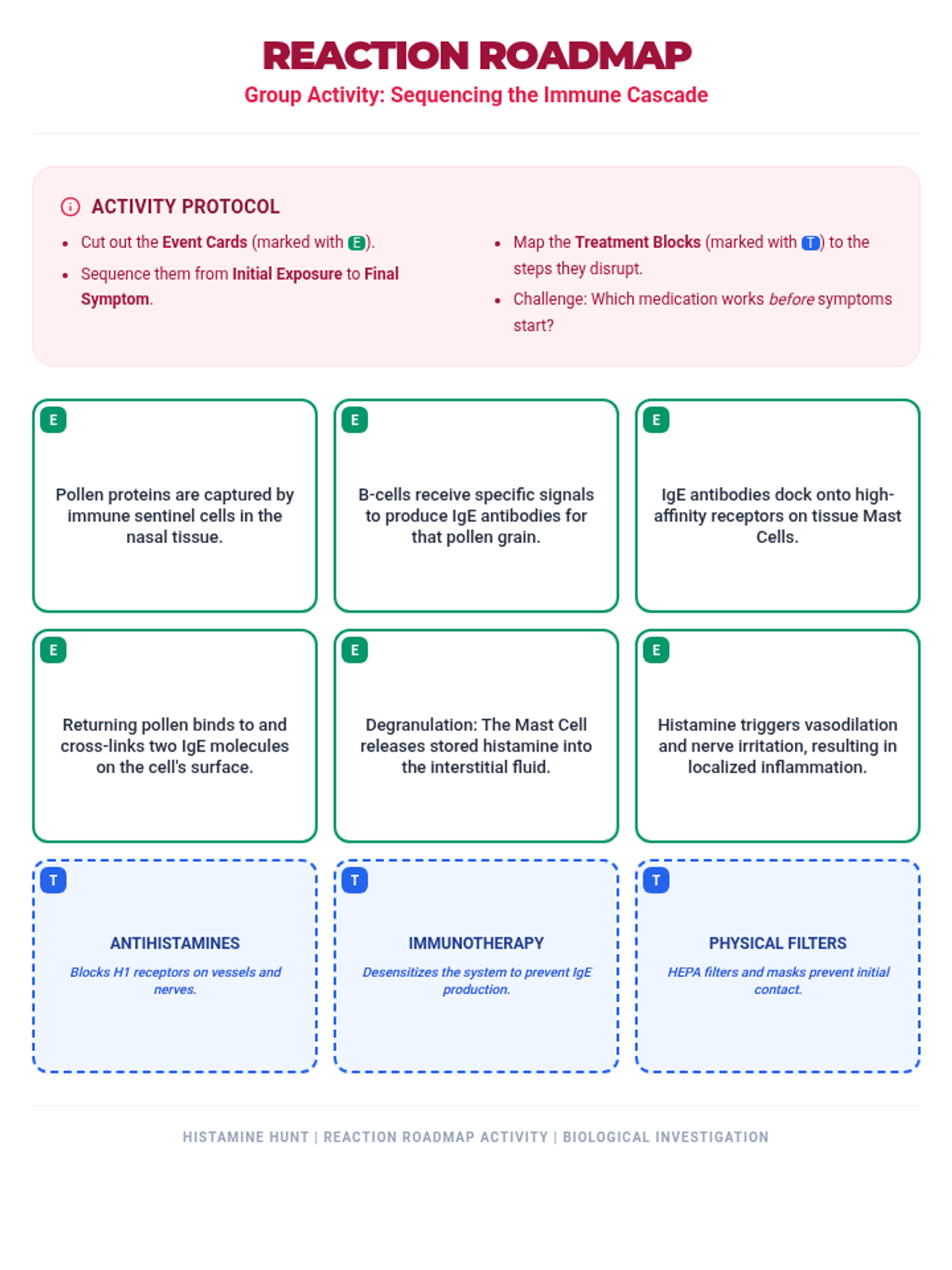
An interactive card-sorting activity where students sequence the stages of an allergic reaction and apply pharmacological treatments. Revised to fit on a single page with improved badge alignment and text wrapping.
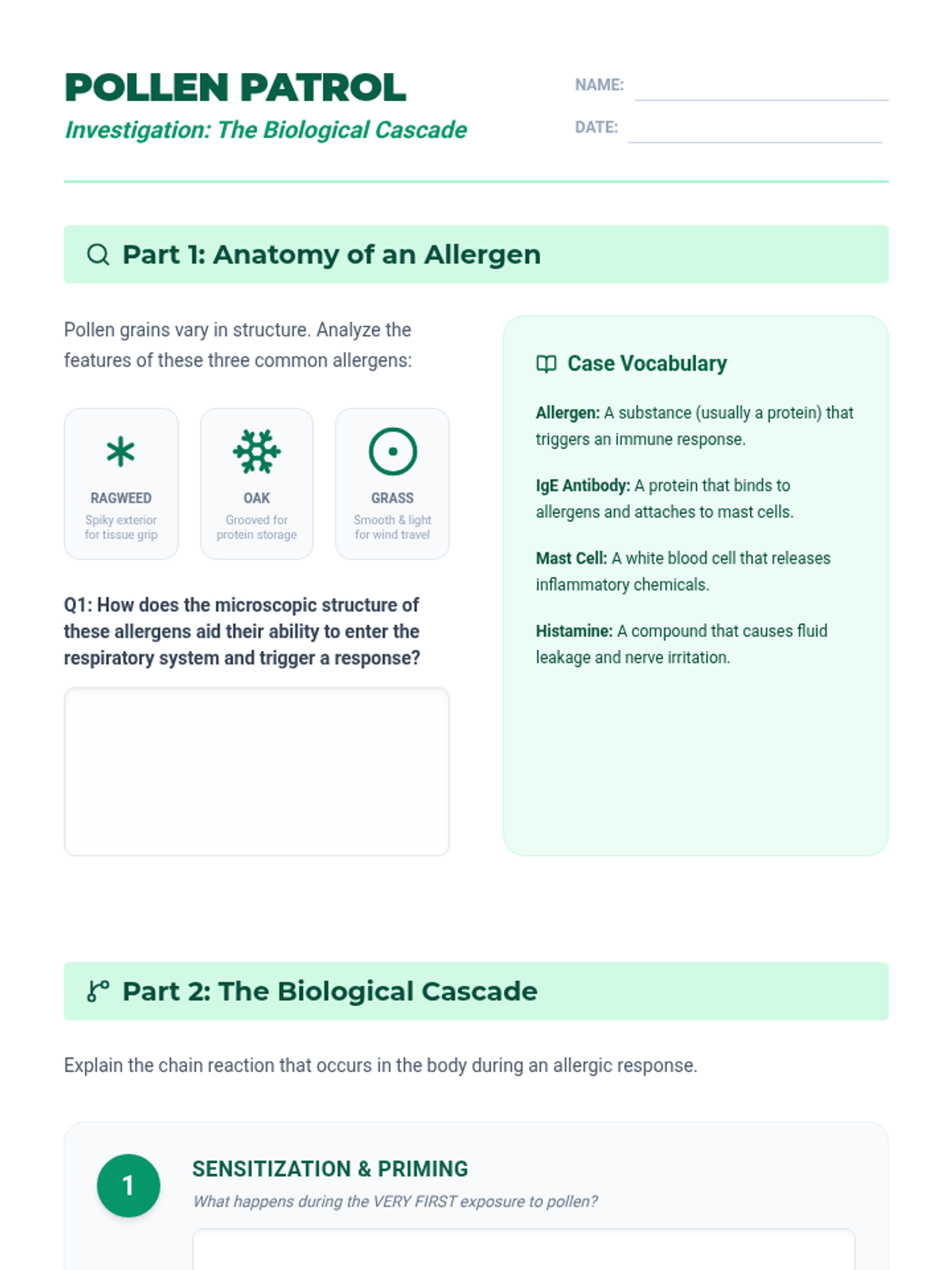
A student worksheet focusing on the anatomical structure of pollen, the flowchart of the allergic response, and the physiological mechanisms of histamine. Revised for better page breaks and larger work areas.
A high-impact slide deck for classroom instruction, covering the stages of an allergic reaction from sensitization to degranulation and management strategies. Revised with improved visuals and slide balance.
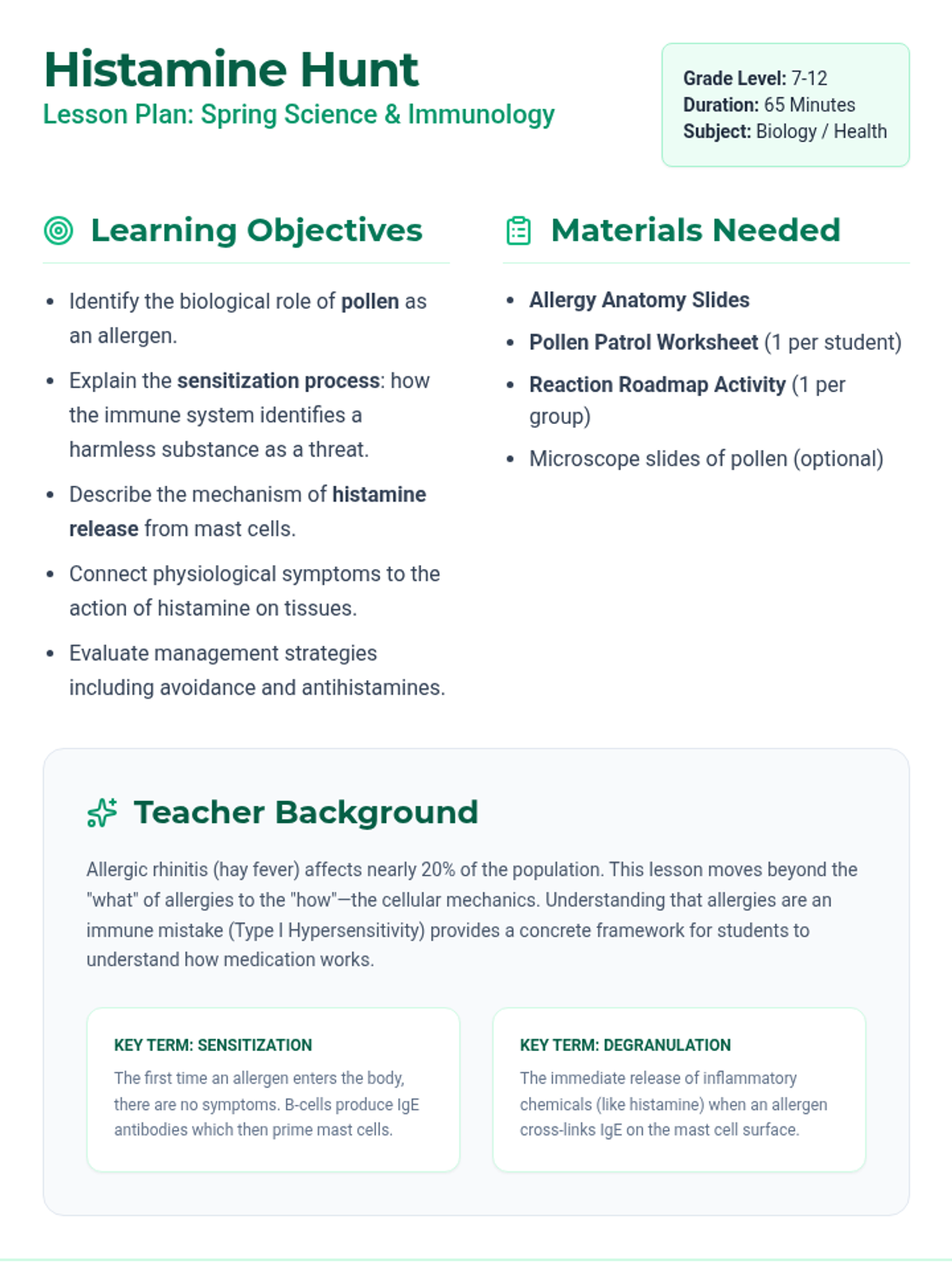
A detailed lesson plan for teachers, outlining the instructional sequence, learning objectives, and common student misconceptions regarding the biology of allergies. Revised for improved layout and content flow.
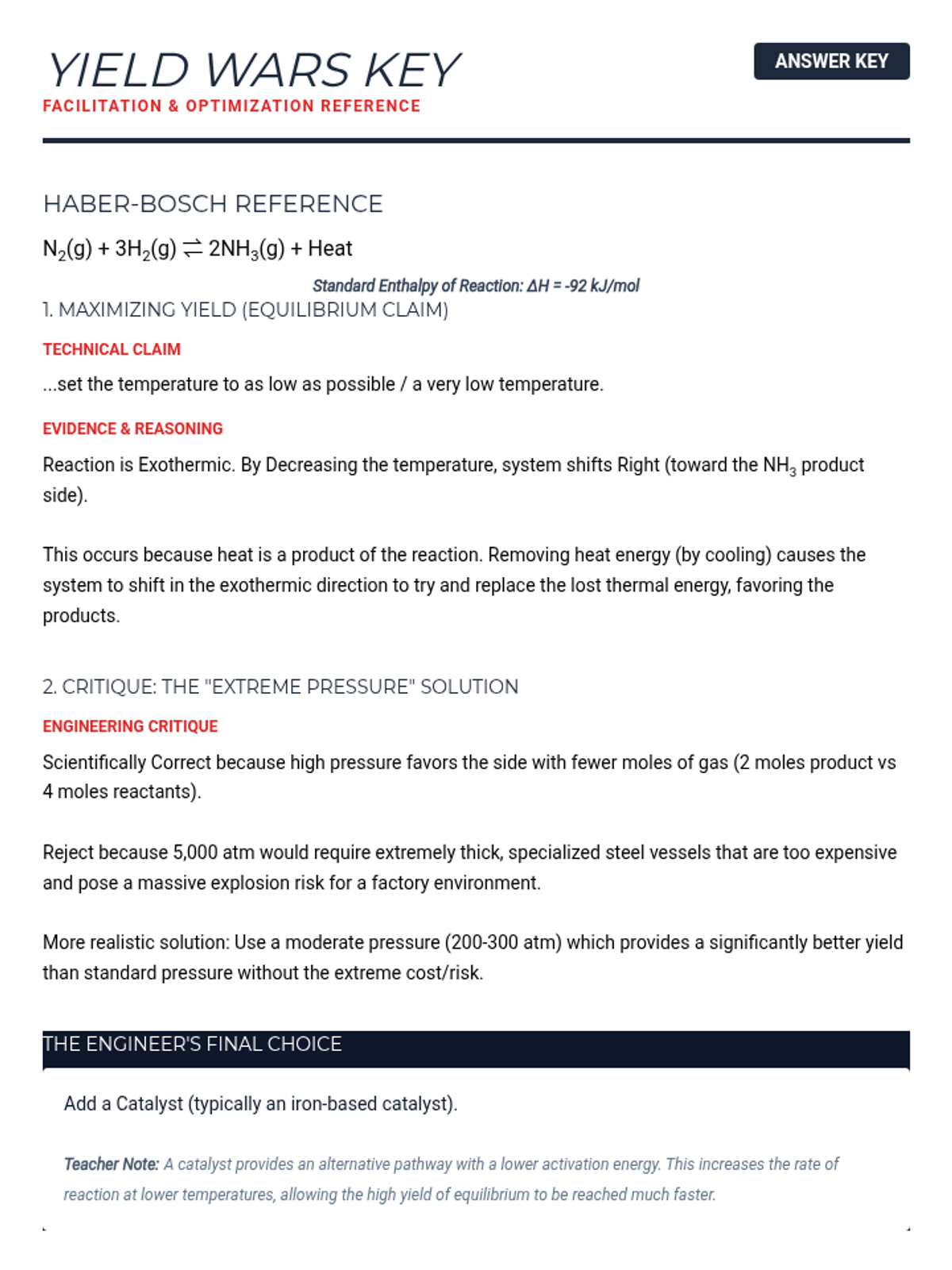
A teacher answer key and facilitation guide for the Yield Wars Worksheet. It provides the expected chemical reasoning for ammonia synthesis optimization, highlights the kinetic vs. thermodynamic trade-off, and suggests instructional focus points.
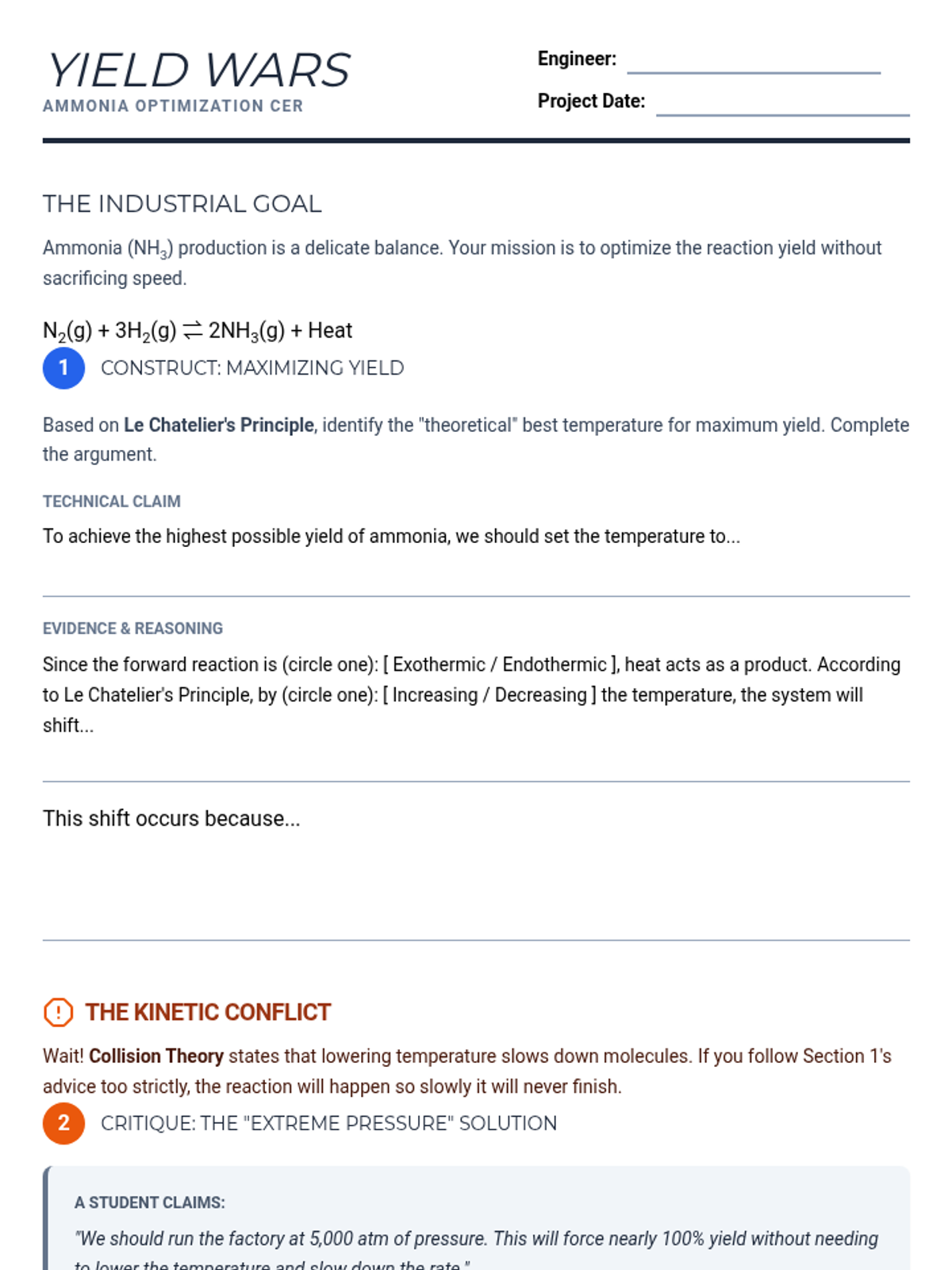
A scaffolded CER worksheet focusing on the optimization of ammonia synthesis. It guides students through the conflict between thermodynamics (yield) and kinetics (rate), using sentence stems to support trade-off analysis.
A 5-slide visual presentation introducing energy categories and the science behind solar and wind power, featuring a summary slide and improved contrast.
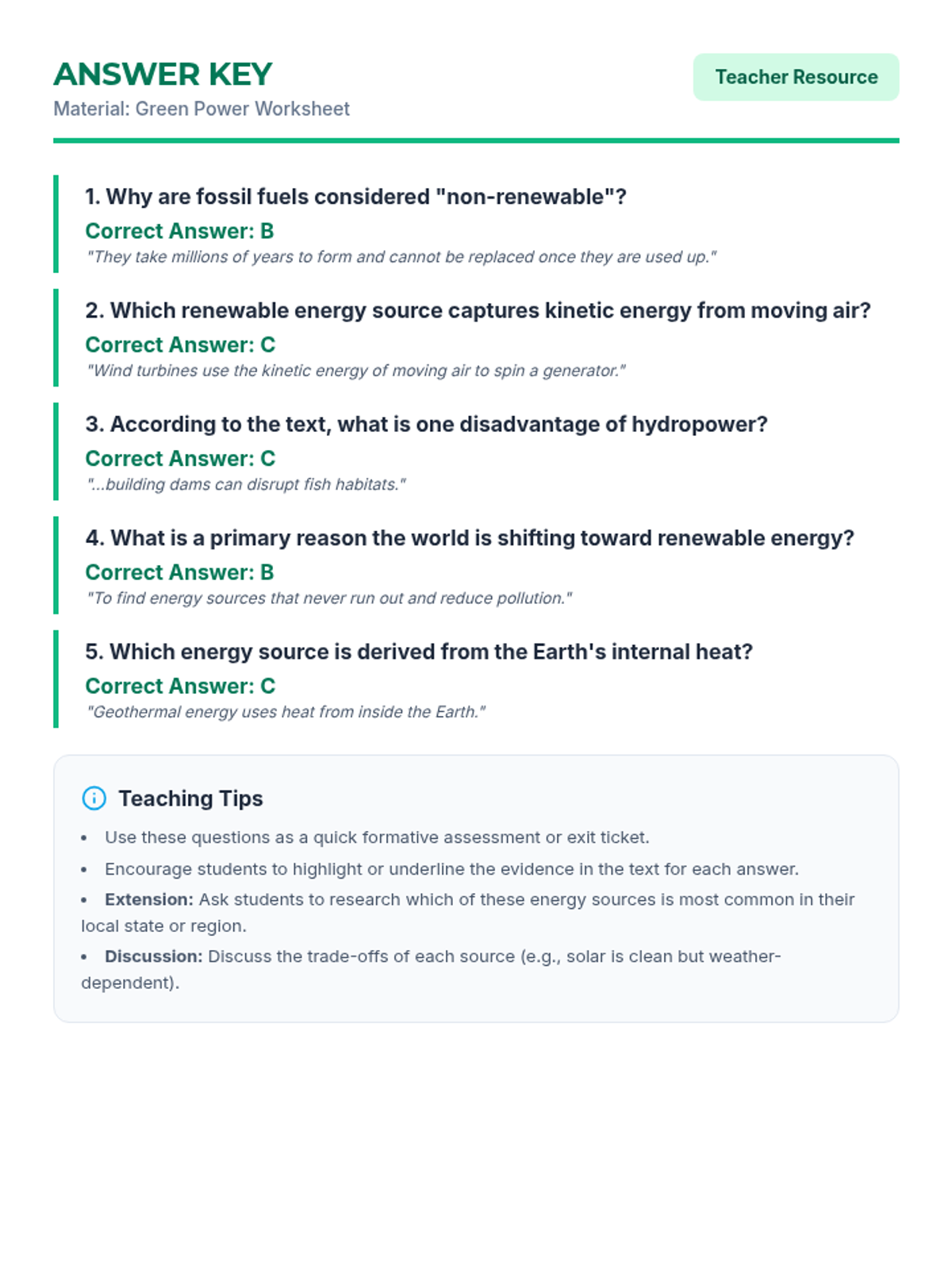
Teacher answer key for the Green Power Worksheet, updated to include letter choices and improved layout consistency.
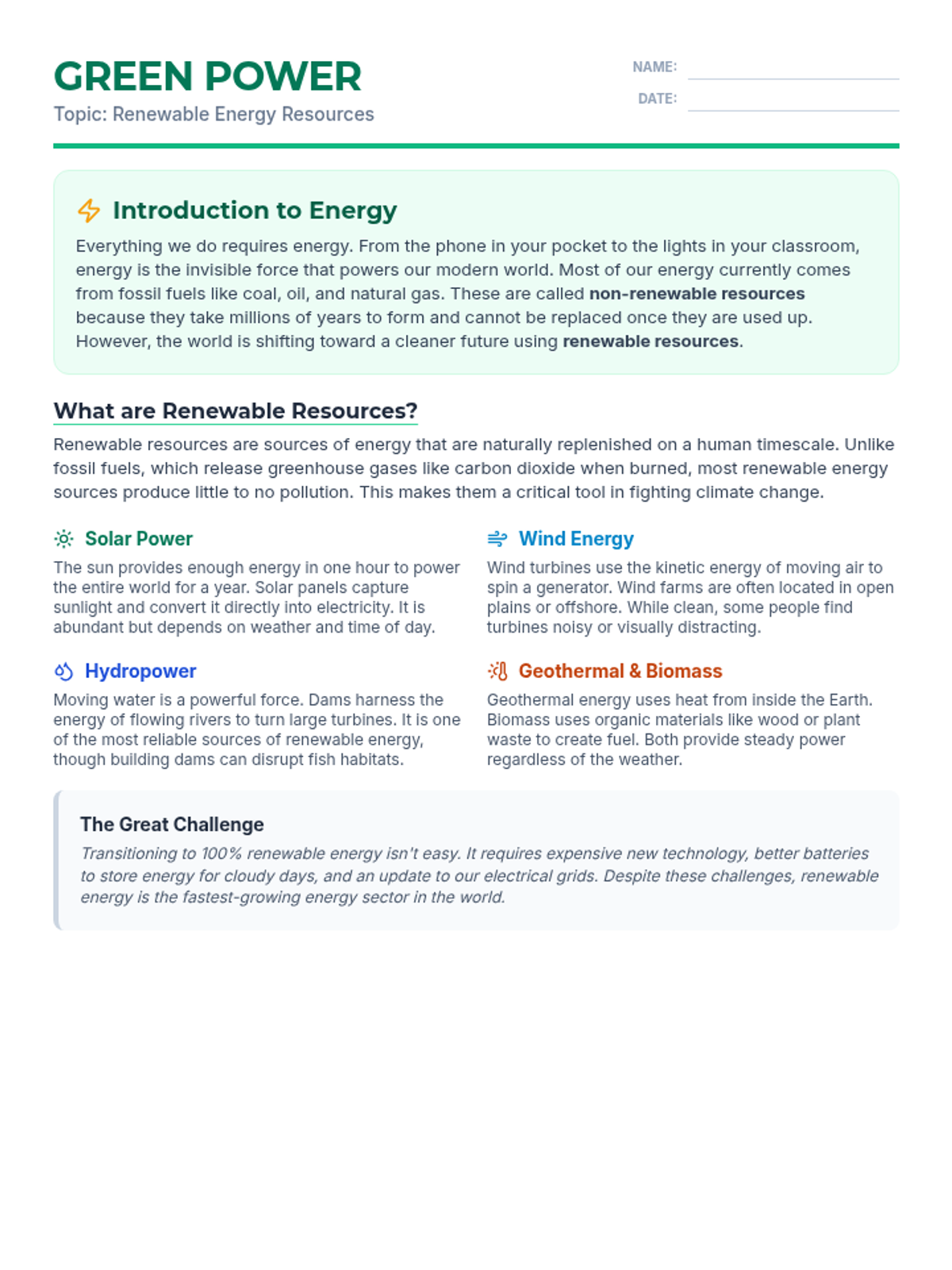
A two-page reading comprehension worksheet for 7th-grade students introducing renewable and non-renewable energy sources with multiple-choice assessment. Tightened layout to prevent orphaned text.
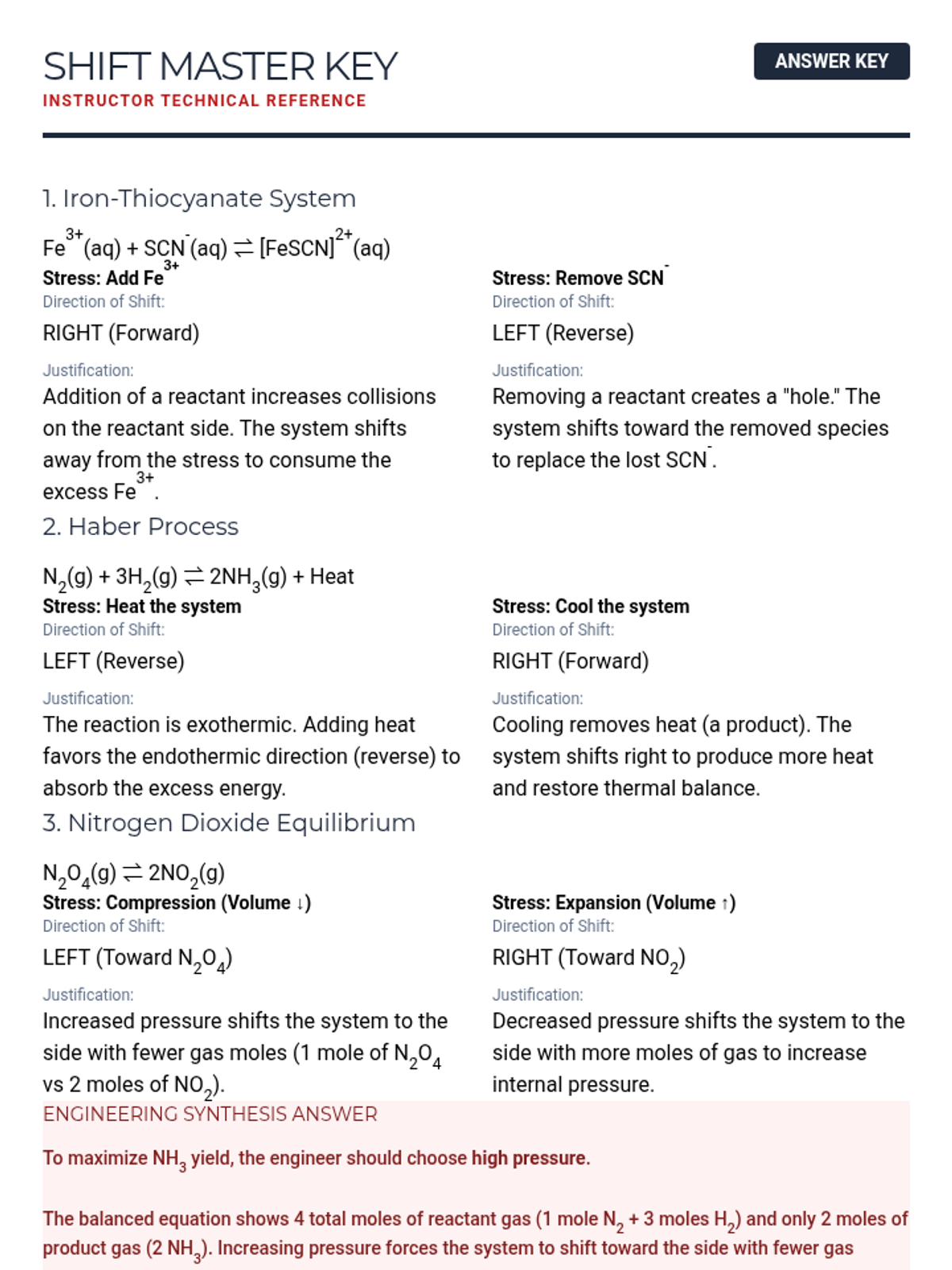
A detailed teacher answer key for the Shift Master Worksheet, featuring predicted directions and justifications based on Le Chatelier's Principle for various chemical stresses.
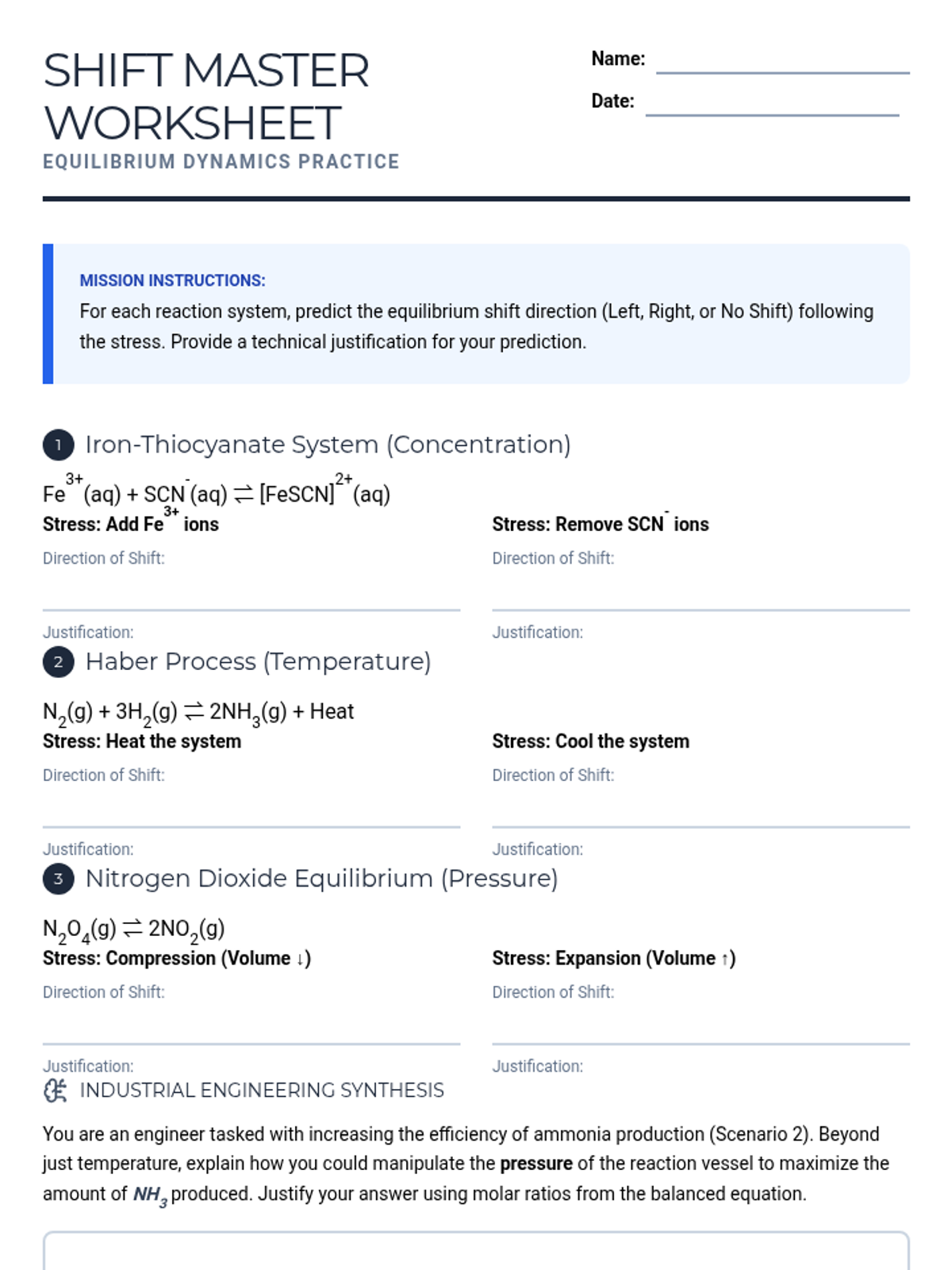
An application worksheet for Le Chatelier's Principle. It covers four distinct scenarios (concentration, temperature, pressure/volume, and catalysts) using real-world chemical reactions like the Haber Process and iron-thiocyanate equilibrium. Includes a synthesis question for critical thinking.
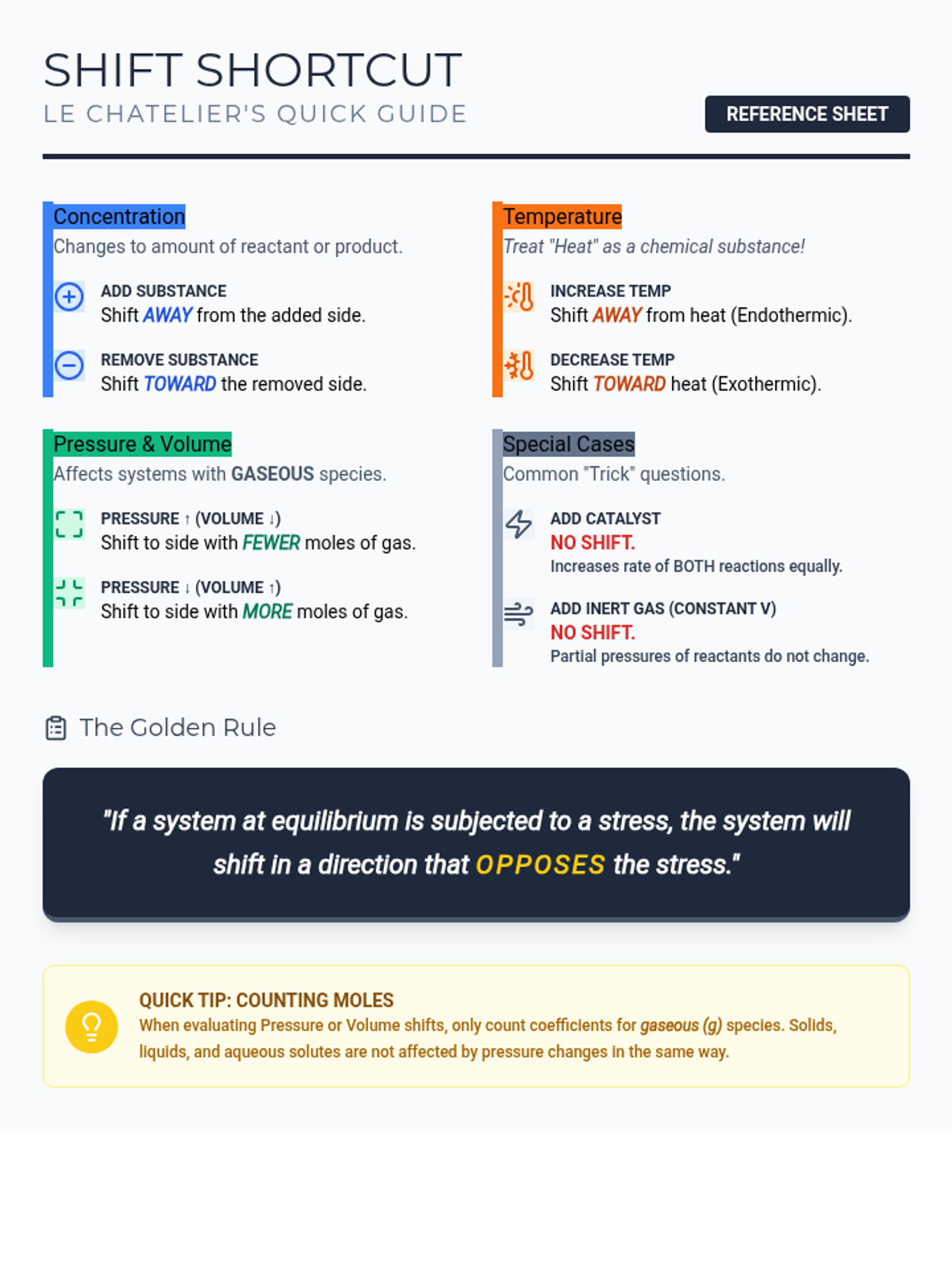
A visually organized reference sheet for Le Chatelier's Principle. It provides quick-look rules for concentration, temperature, volume, pressure, catalysts, and inert gases, styled as a clean technical guide.
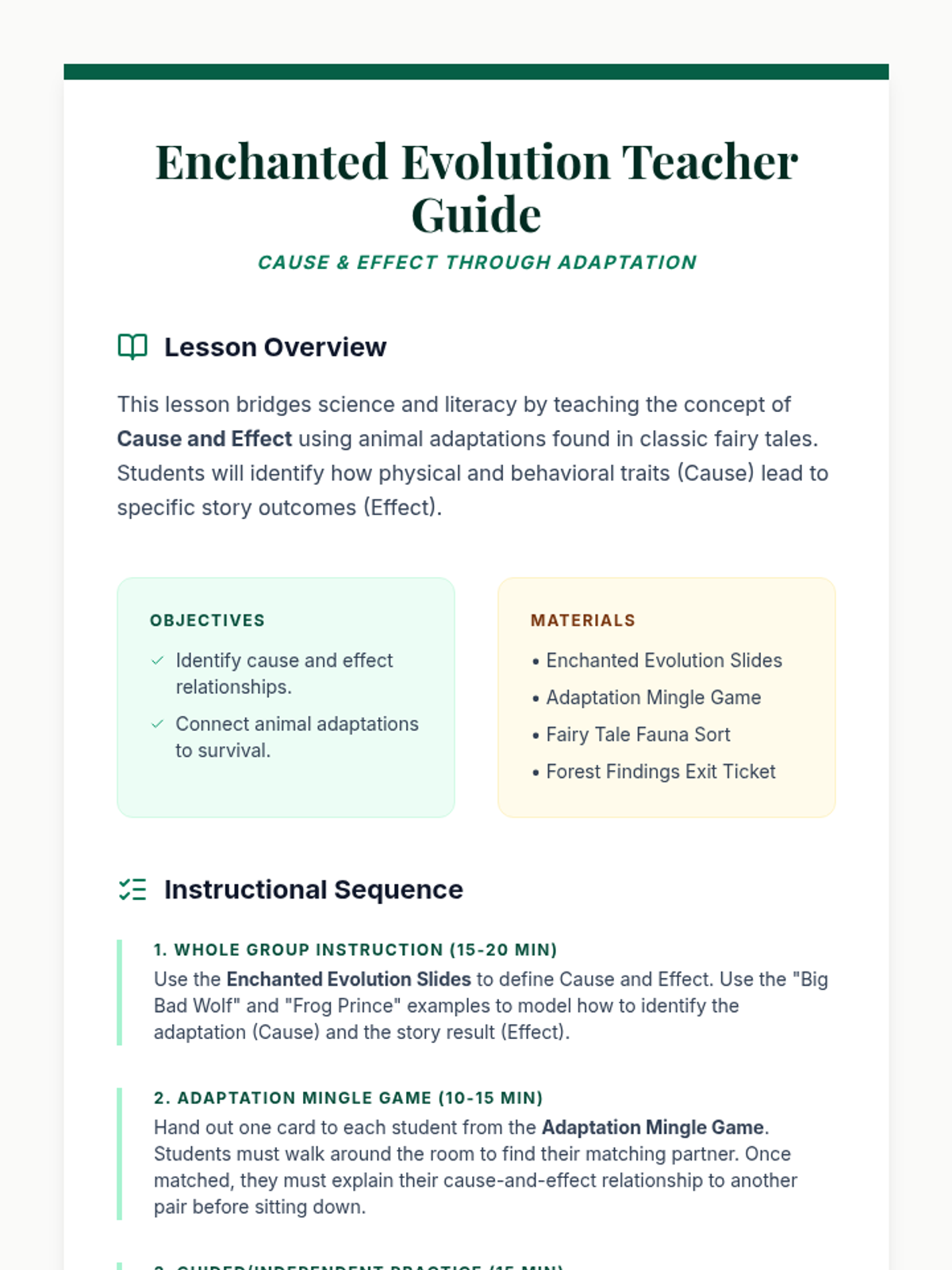
A facilitation guide for teachers including lesson objectives, instructional sequence, and answer keys for all materials in the Enchanted Evolution lesson.
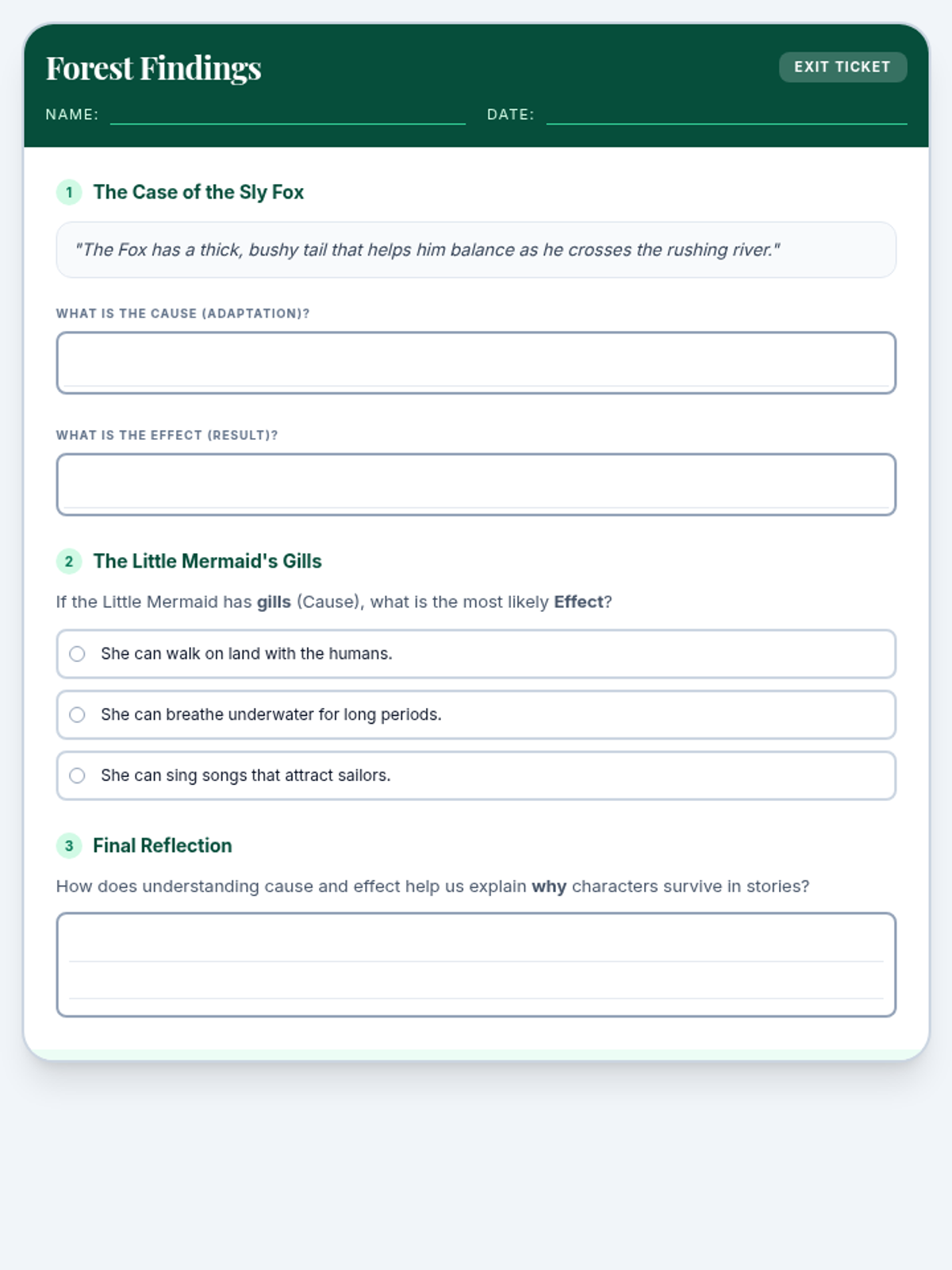
An assessment sheet to evaluate student understanding of cause and effect by analyzing scenarios involving the Gingerbread Man and the Little Mermaid.
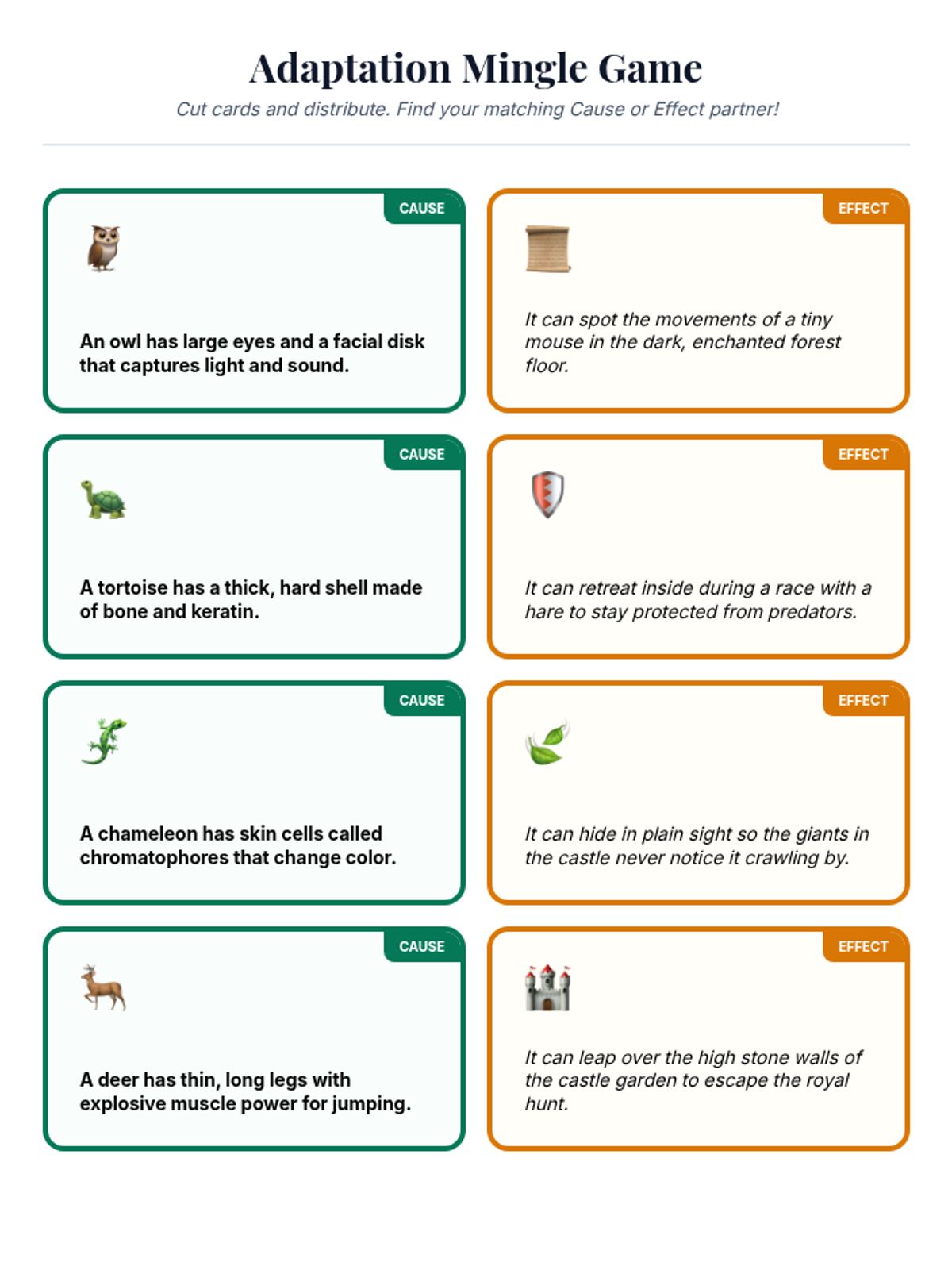
A set of matching cards for a 'Mingle' game where students find their cause (adaptation) or effect (story outcome) partner.
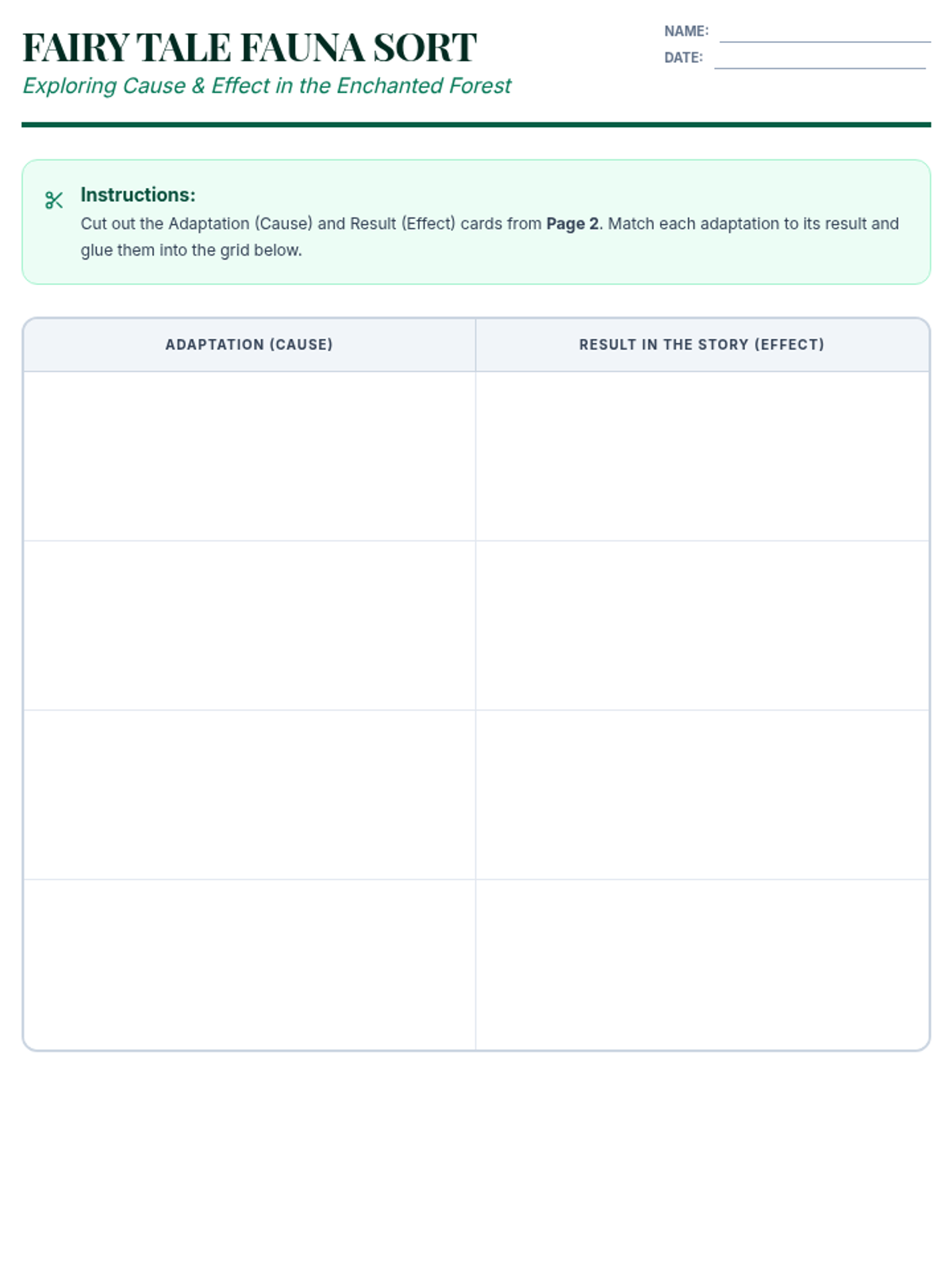
A hands-on cut-and-paste activity where students match animal adaptations (cause) to their specific survival benefits in fairy tale scenarios (effect).