Card set for students to practice reading script lines with various moods and emotions.
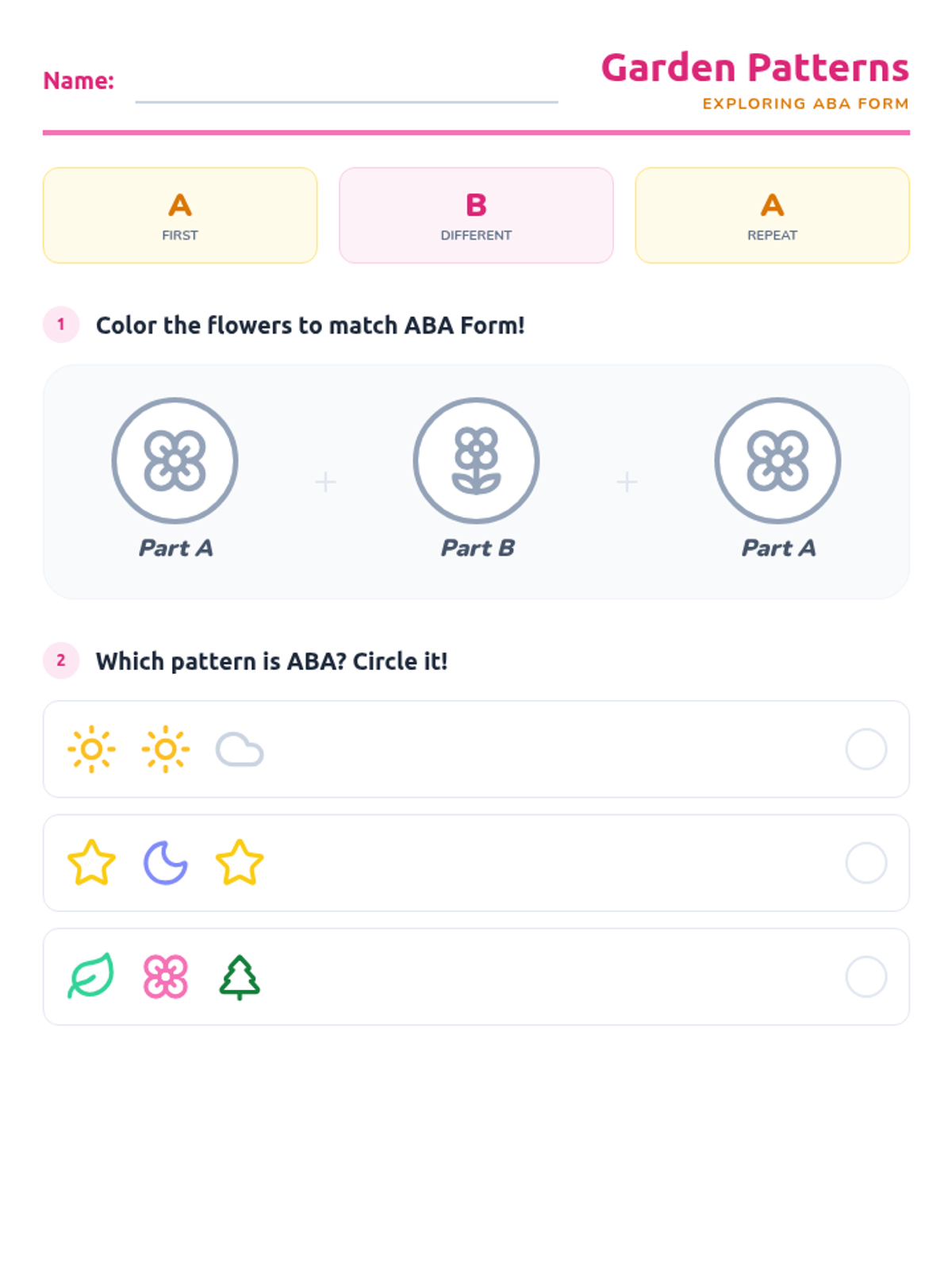
An introductory ABA form activity for primary students; includes coloring tasks and pattern identification exercises that use garden-themed symbols to visualize musical structure.
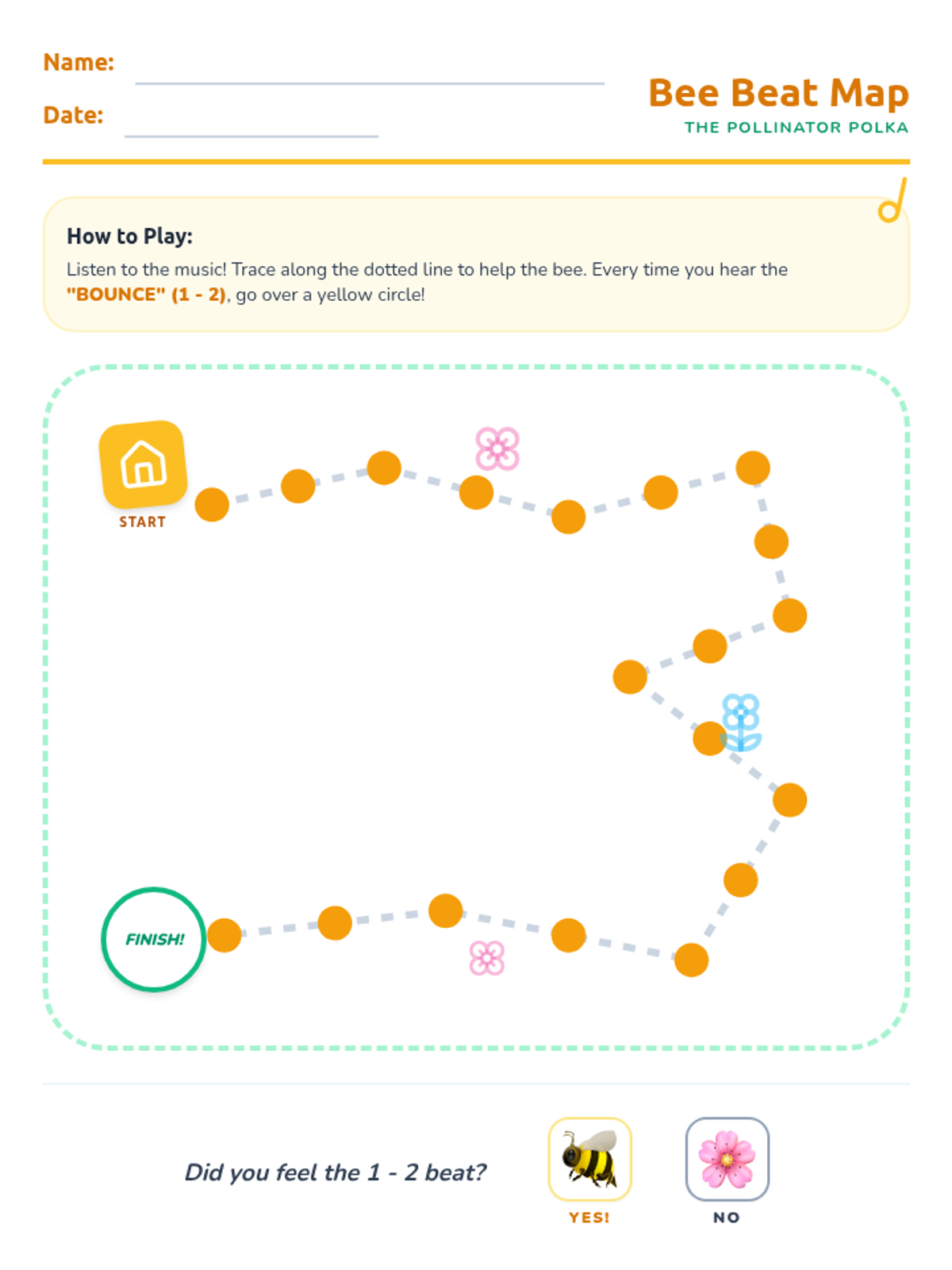
A student worksheet for early learners that facilitates rhythmic tracing; students trace the bee's flight path in time with a 2/4 polka beat, reinforcing steady beat perception and fine motor control.
A vibrant, high-contrast slide deck designed for young children, featuring bold visuals of bees and flowers to explain 2/4 polka meter and ABA form through interactive movement prompts.
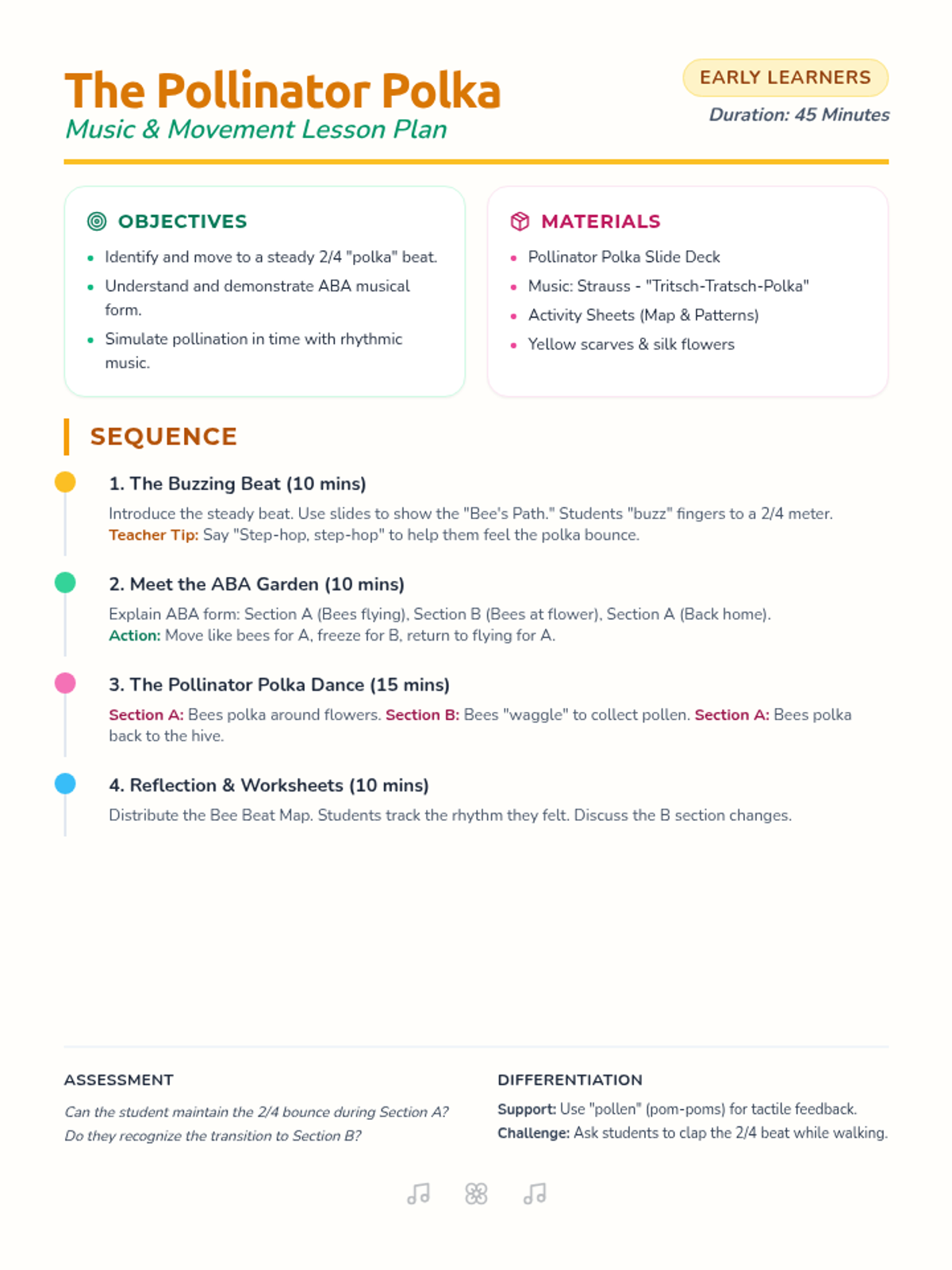
A comprehensive lesson plan for teachers, detailing the 45-minute instructional sequence, learning objectives, and movement-based strategies for teaching 2/4 meter and ABA form through a pollinator theme.
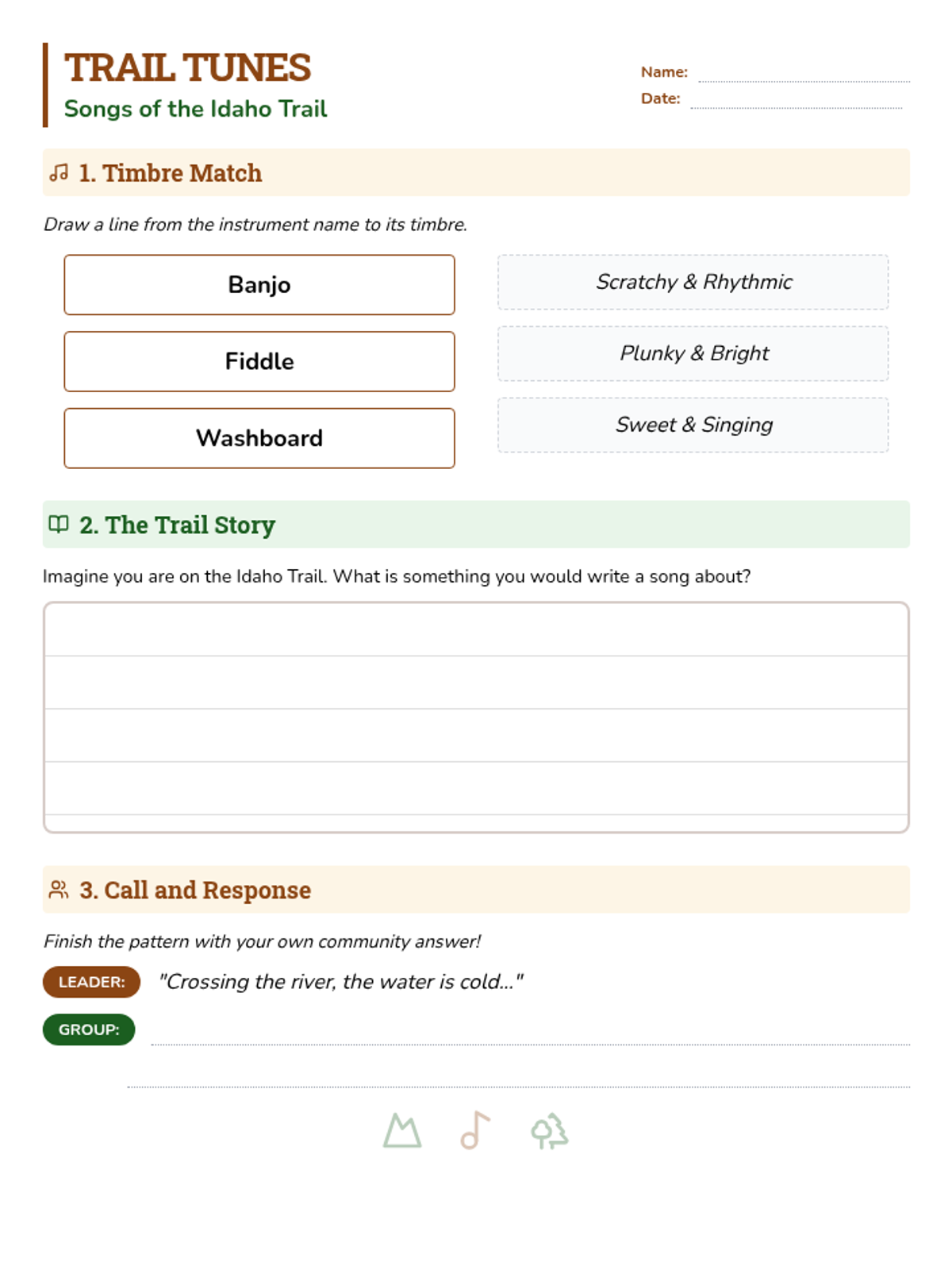
A student assessment worksheet featuring instrument matching, a short creative writing prompt about the Idaho Trail, and a call-and-response completion activity. Fits on a single page for efficiency.
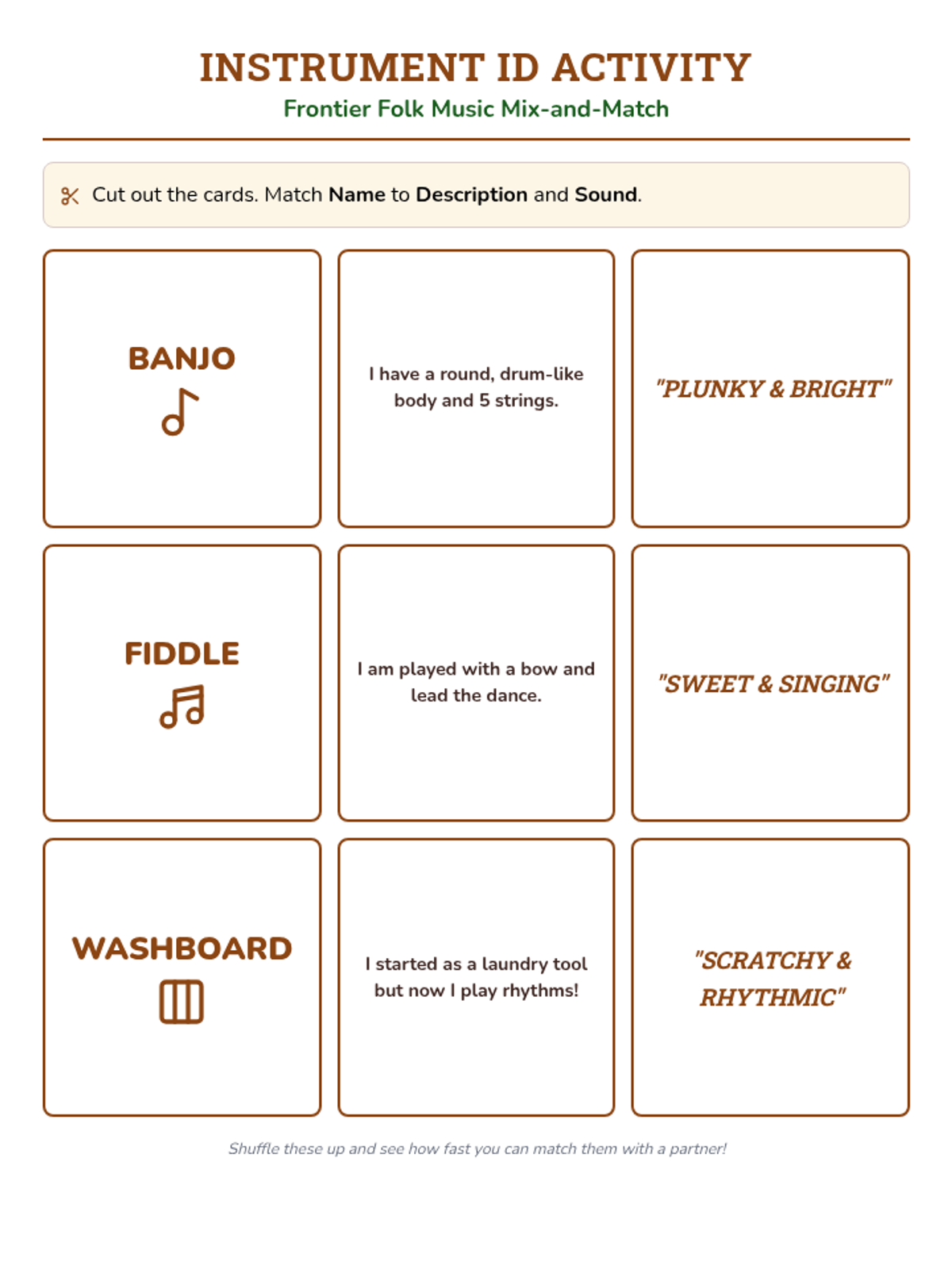
A printable card-sorting activity where students match instrument names with their visual descriptions and characteristic "sound secret" timbres. All cards use uniform styling to focus on identification skills.
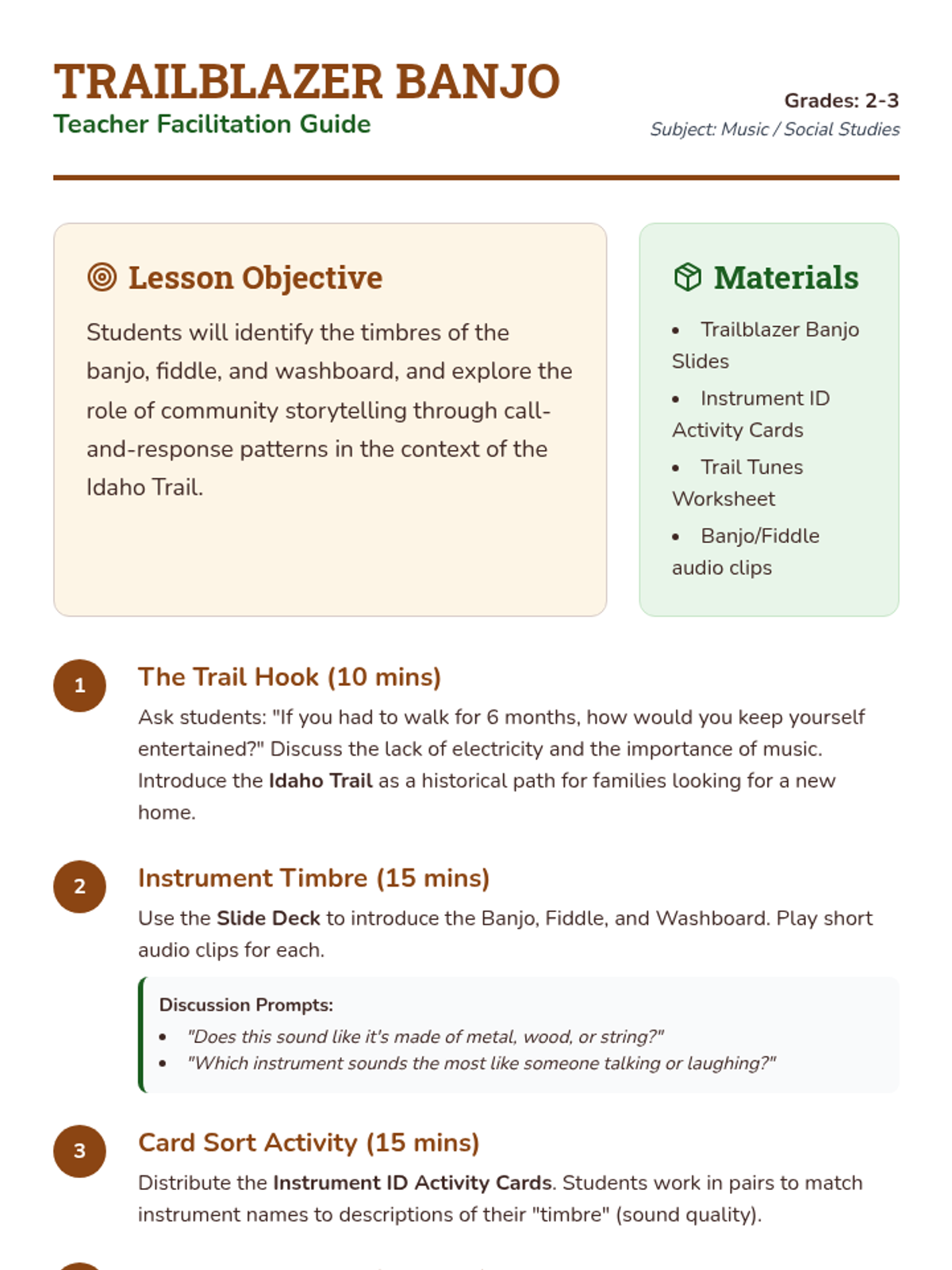
A comprehensive instructional guide for teachers, outlining the lesson sequence, discussion prompts, and alignment with music standards for the Idaho Trail folk music lesson.
A visual presentation introducing students to the history of folk music on the Idaho Trail, featuring descriptions of traditional instruments and a call-and-response practice slide.
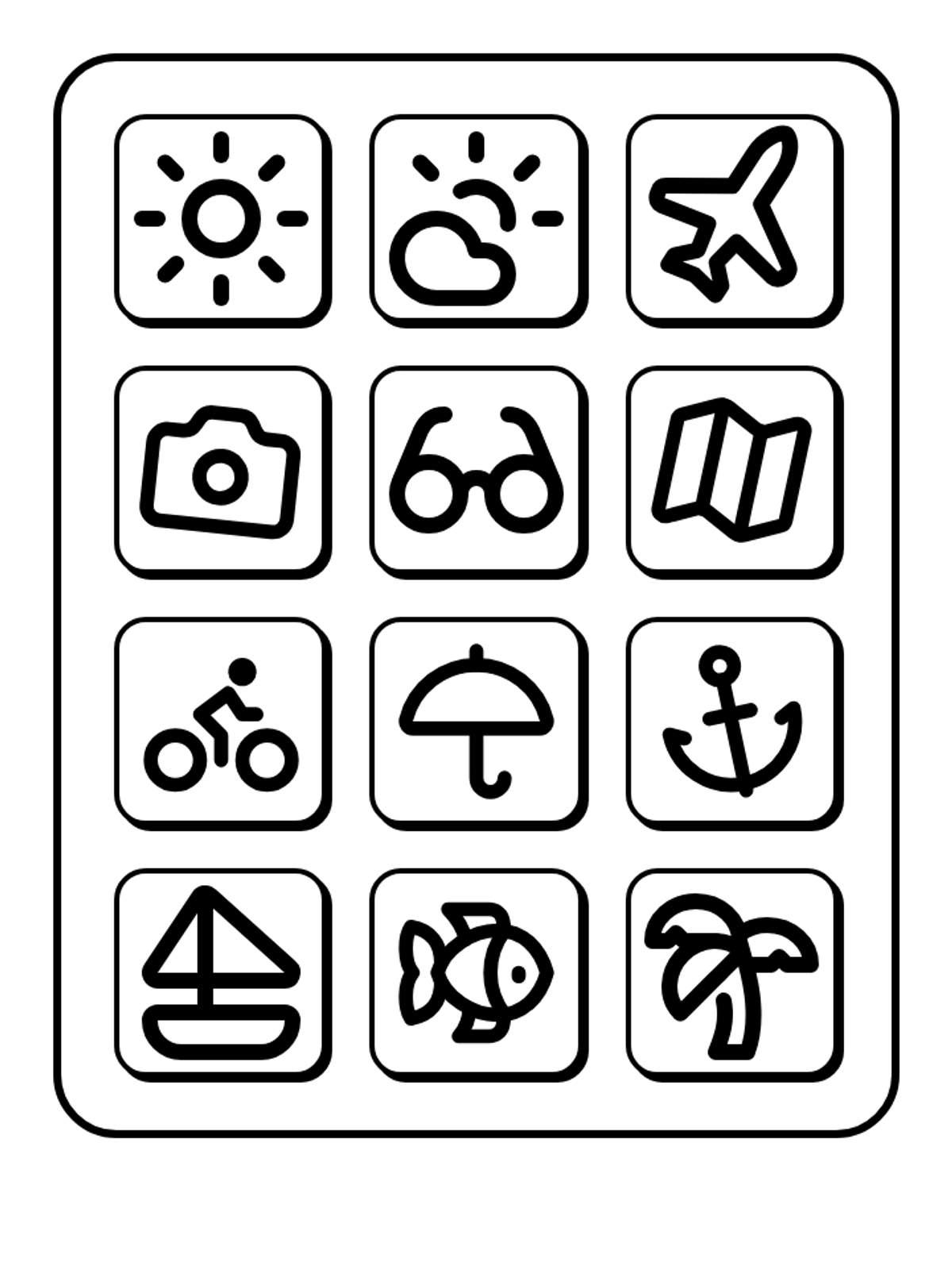
A summer-themed coloring page for 2nd graders featuring a 12-block grid of vacation icons like a sun, camera, and sailboat. This organized "sticker sheet" layout provides clear boundaries and plenty of space for young students to color each item individually.
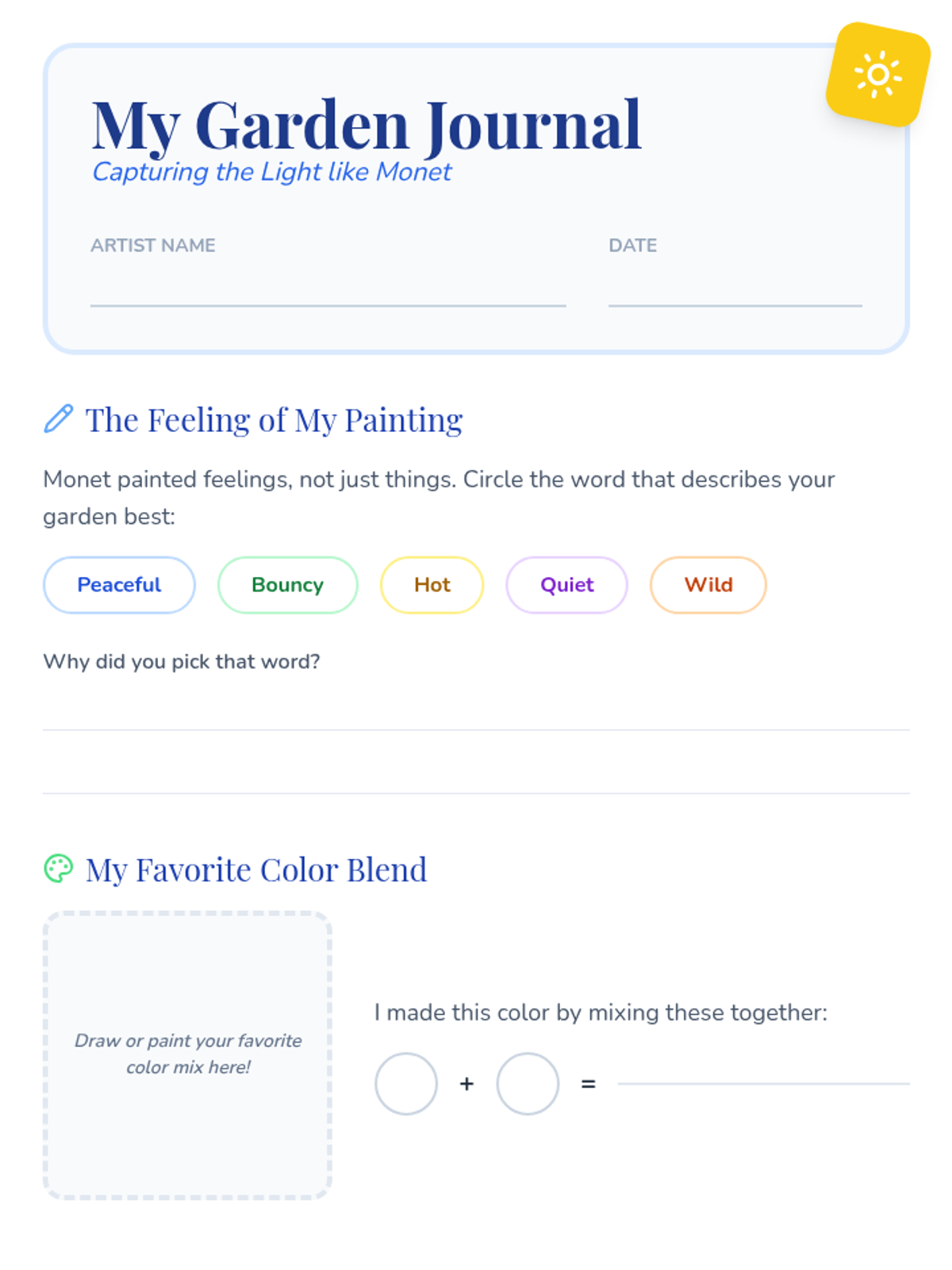
A student reflection journal for the Tiny Monet art lesson. It includes space for emotional reflection, color-mixing notes, and a drawing area to visualize themselves as an Impressionist artist.
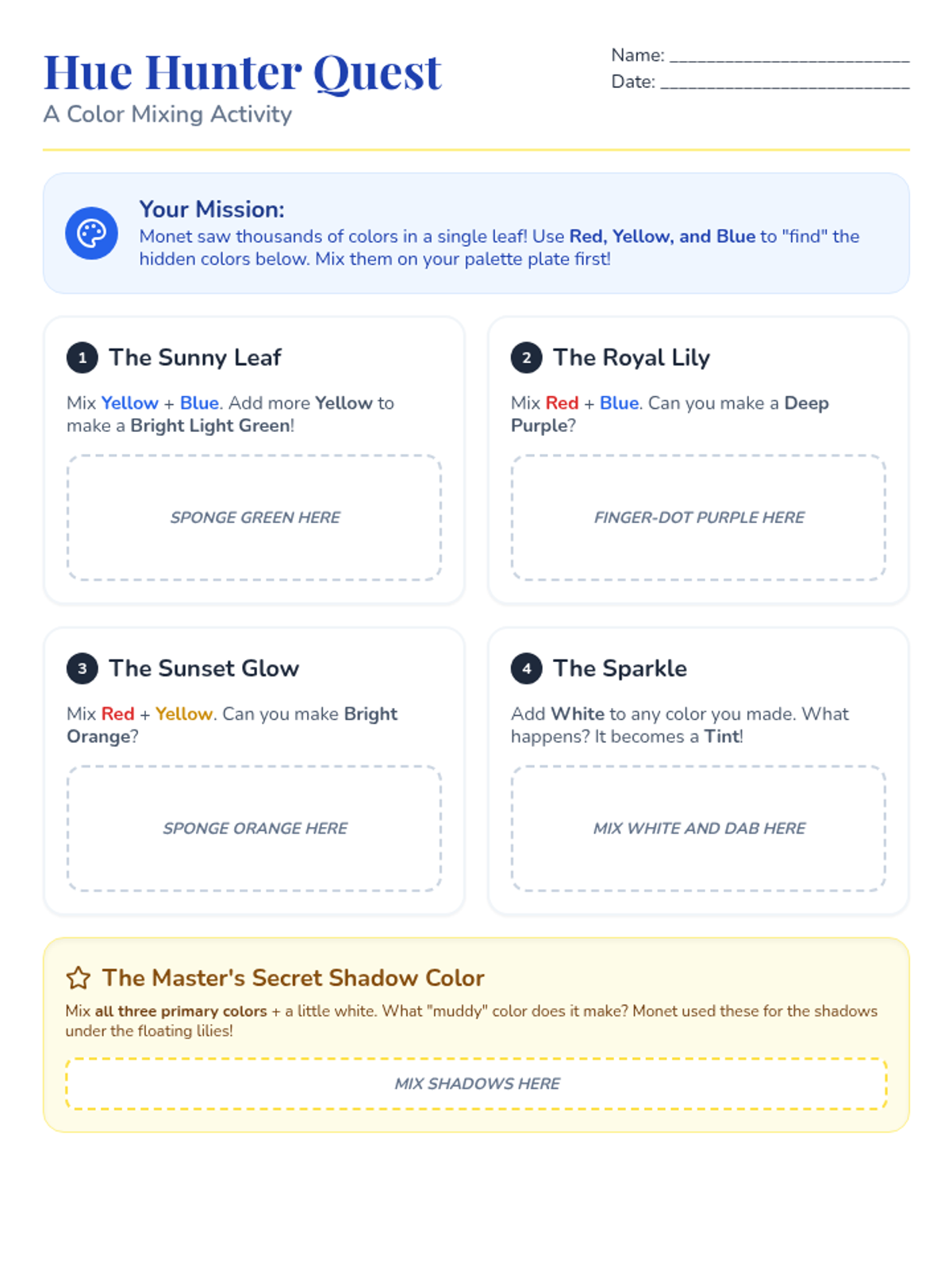
An interactive color-mixing game for students to practice creating secondary and tertiary colors. Students use sponges and fingers to 'capture' specific hues required for an Impressionist palette.
A vibrant and visually engaging slide deck that introduces Claude Monet, the concept of Impressionism, and the specific painting techniques (dappling, lily dots) used in the lesson.
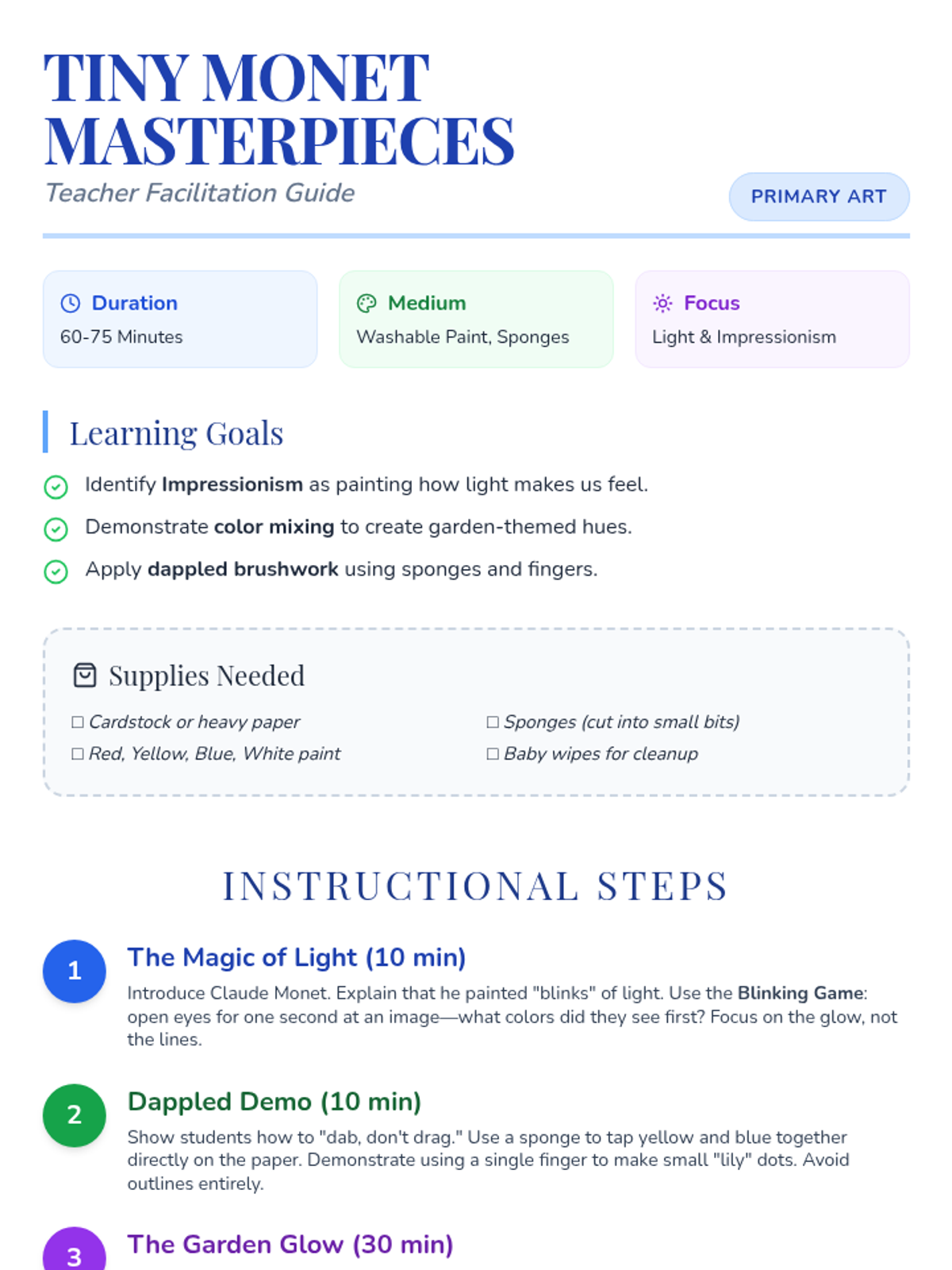
A comprehensive teacher facilitation guide for the Tiny Monet art lesson, including learning objectives, a detailed instructional flow, material checklist, and differentiation strategies.
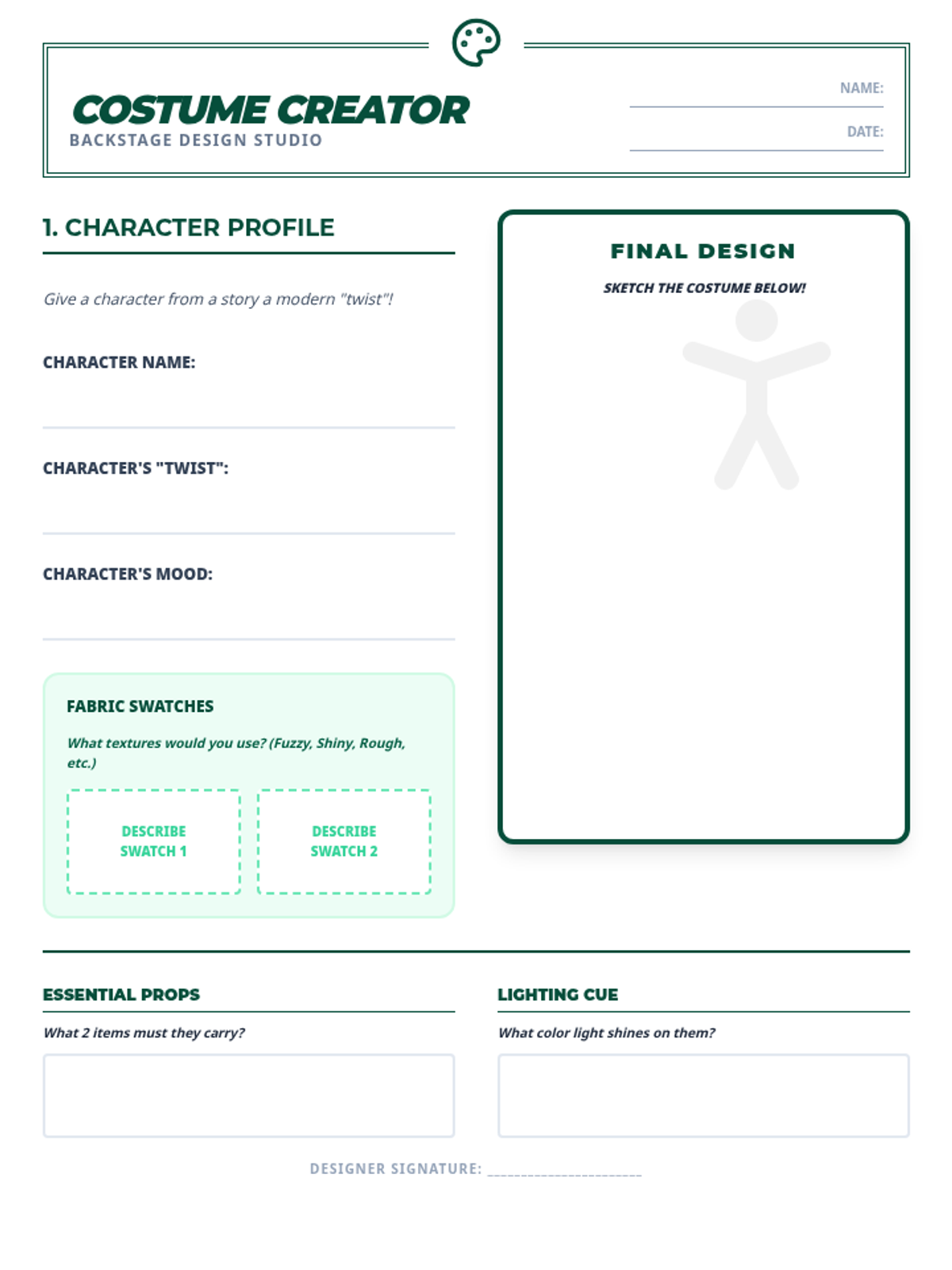
A student design worksheet for creating a character costume and identifying technical needs. Revised with white background response areas, larger swatch boxes, and improved text contrast for instructions. Optimized for single-page printing.
Presentation for Lesson 5, exploring theatrical roles and technical elements. Revised for better contrast, vertical balance on Slide 2, and improved visual composition on Slide 4.
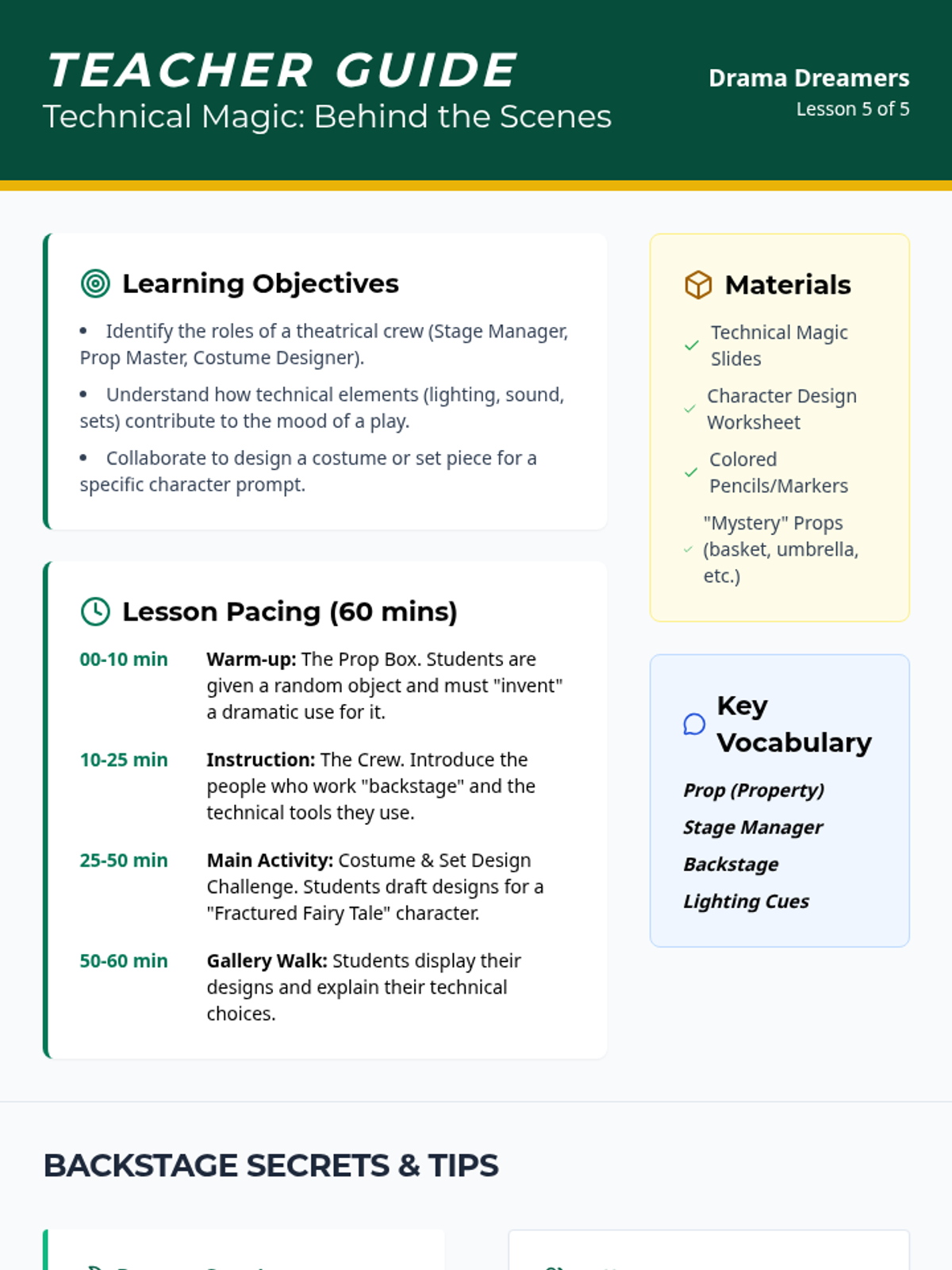
Instructional guide for Lesson 5, focusing on technical theater. Covers the crew, props, set design, and the use of lighting and sound to create mood.
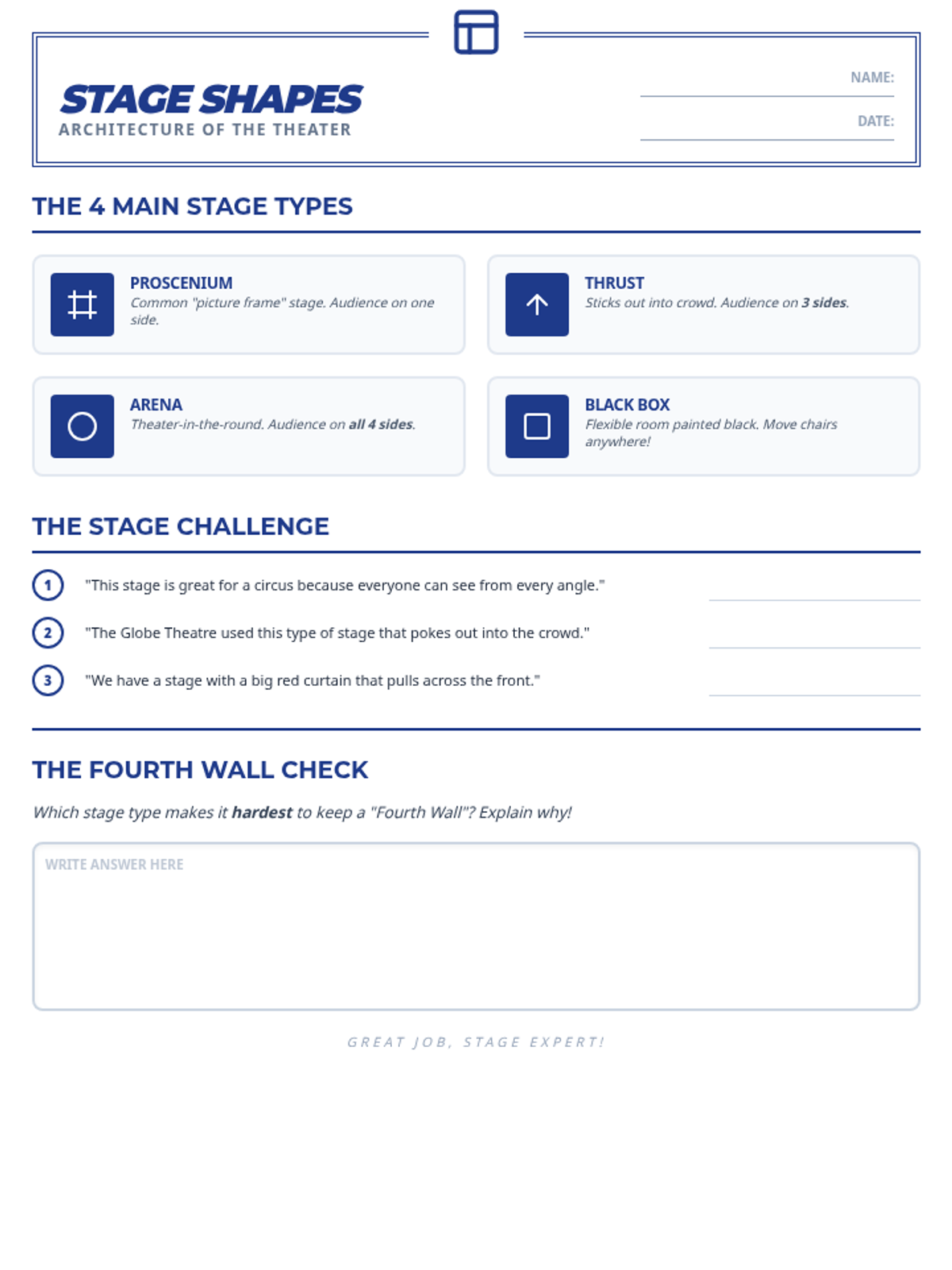
A student reference sheet and activity identifying the four primary types of stages: Proscenium, Thrust, Arena, and Black Box. Includes a matching challenge and a critical thinking question about the "Fourth Wall." Revised to fit on a single page with a white answer area and improved contrast.
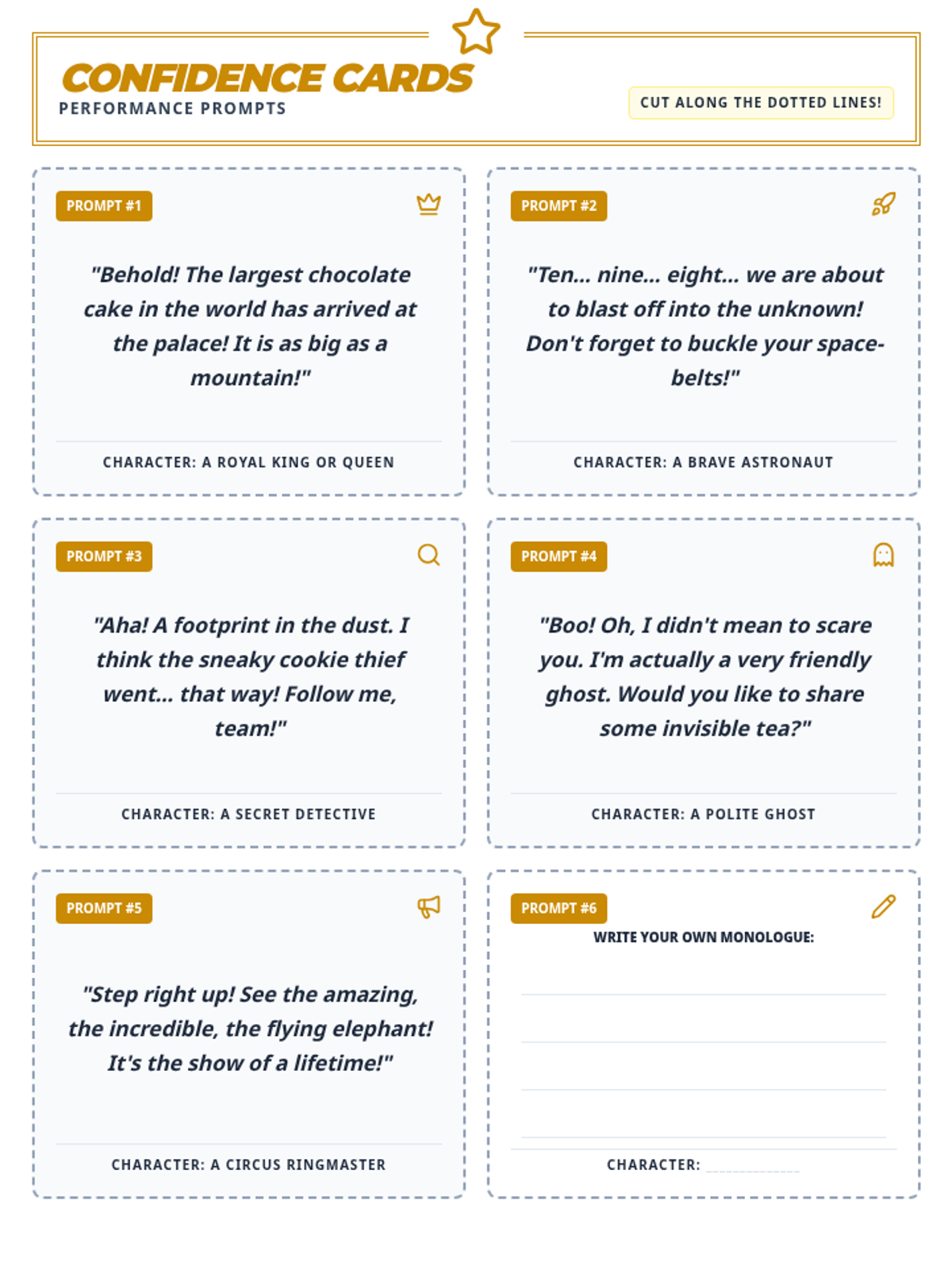
A collection of six cut-out performance prompt cards for students to practice monologues. Revised for single-page printing, improved writing space, and color consistency across all cards.
Final presentation for the unit, focusing on performance skills like projection and eye contact. Includes tongue twisters and the "Glow and Grow" feedback framework.
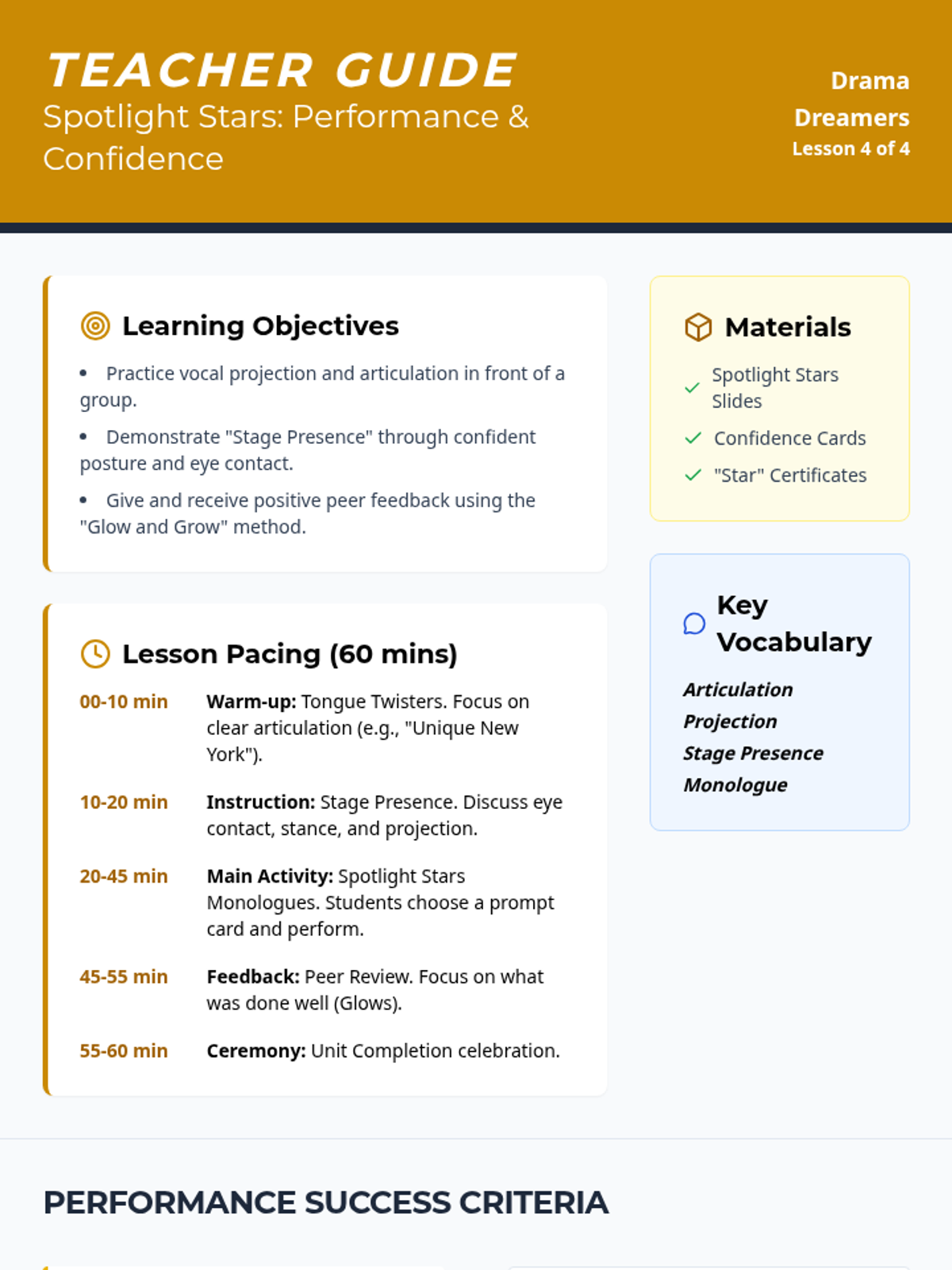
Instructional guide for Lesson 4, focusing on performance skills and confidence-building. Revised to fix pacing fragmentation, improve header contrast, and include detailed success criteria on page 2.
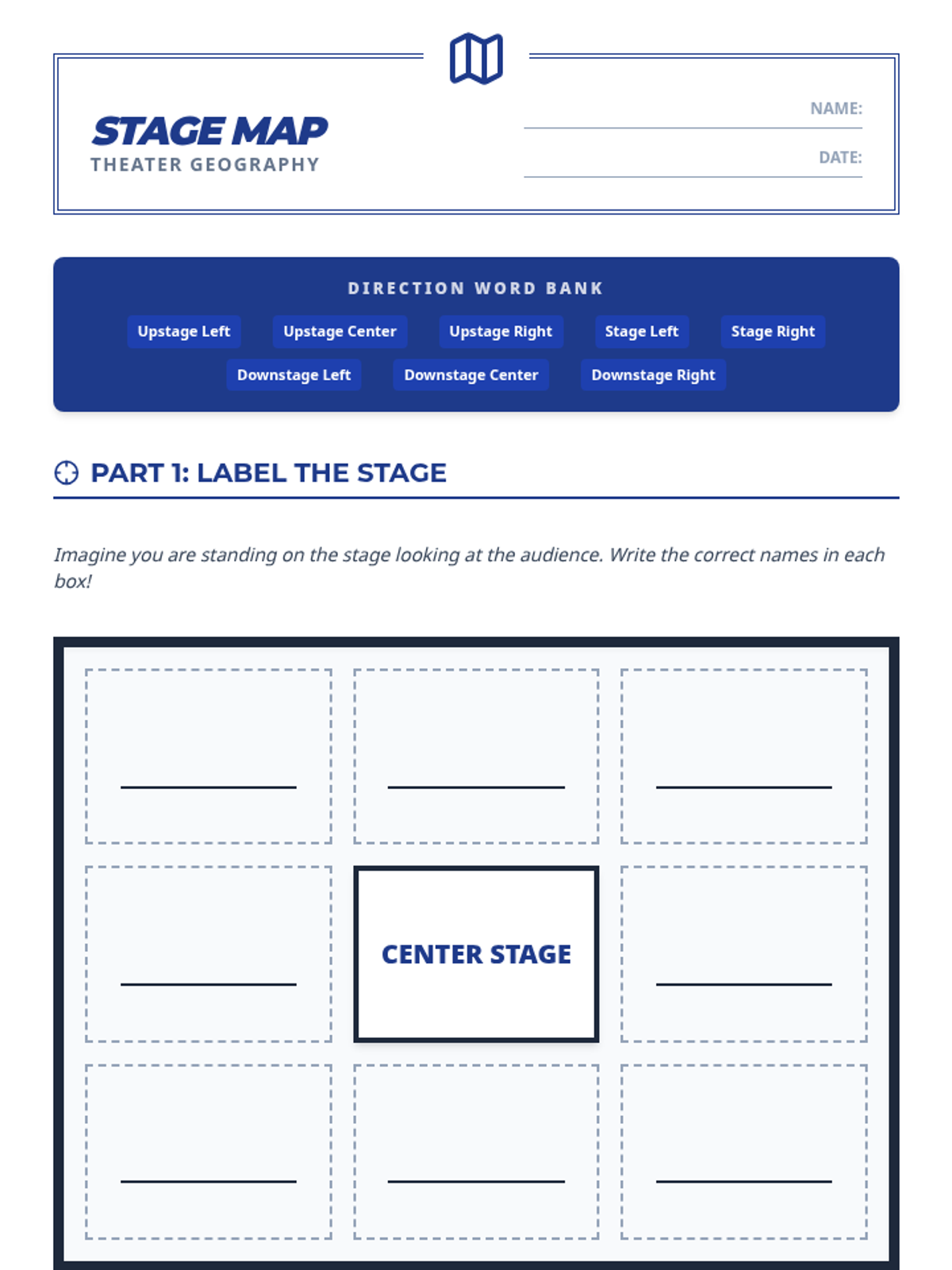
A student worksheet for mapping stage directions. Revised with a visible word bank, improved page breaks, and high-contrast writing areas for student completion.
Presentation for Lesson 3, visualizing the "Raked Stage" and mapping the 9 areas of a stage. Revised with improved text contrast on Slide 5 and better label positioning on Slide 2.
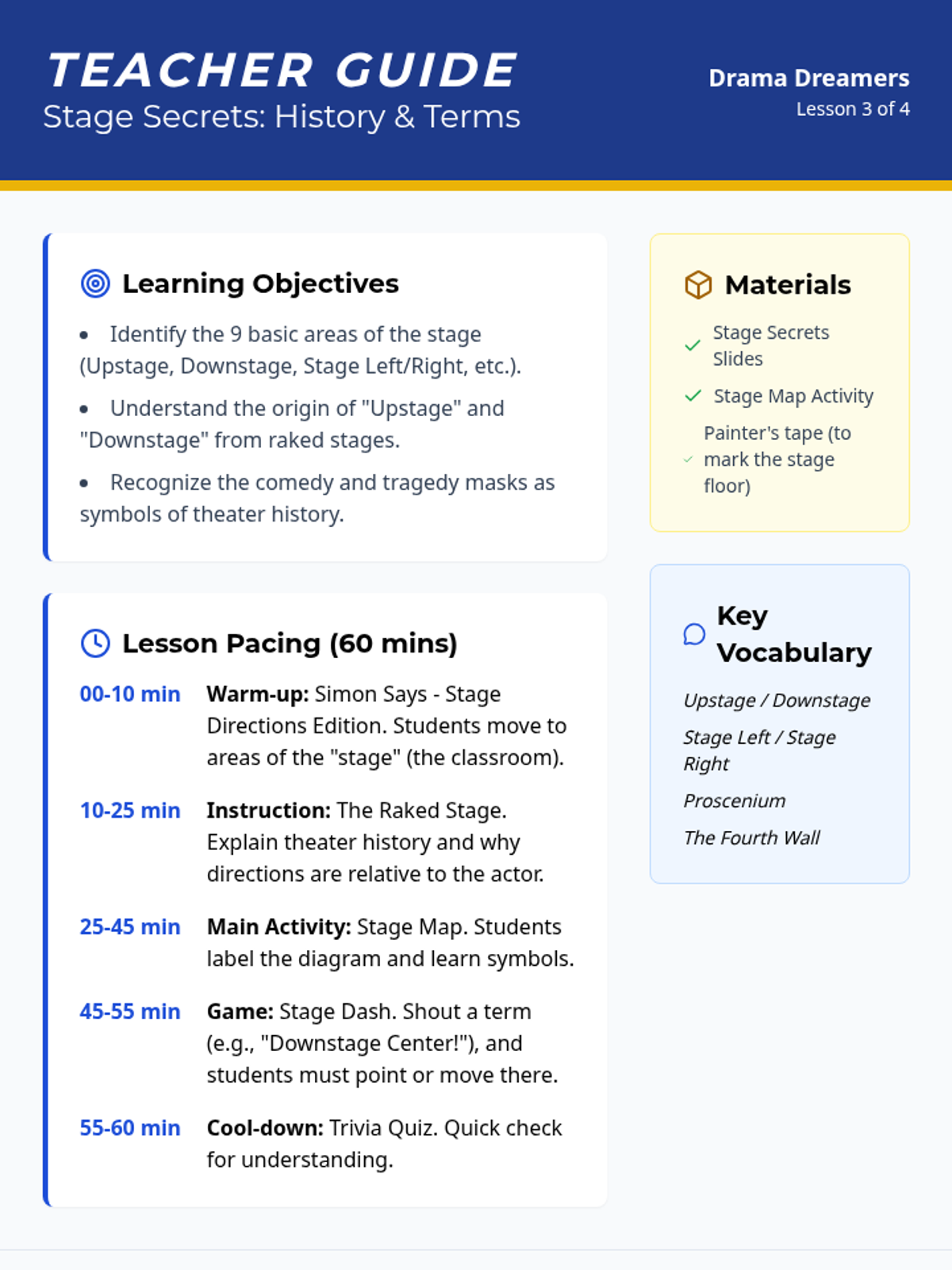
Instructional guide for Lesson 3, covering stage directions and theater history. Revised with a visual teacher's reference map, improved spacing, and a new extension activity.