A fill-in-the-blank study guide designed to prepare students for the 15-question modified assessment. It mirrors the assessment's key concepts and terminology, using a 'Training Log' aesthetic to maintain thematic consistency.
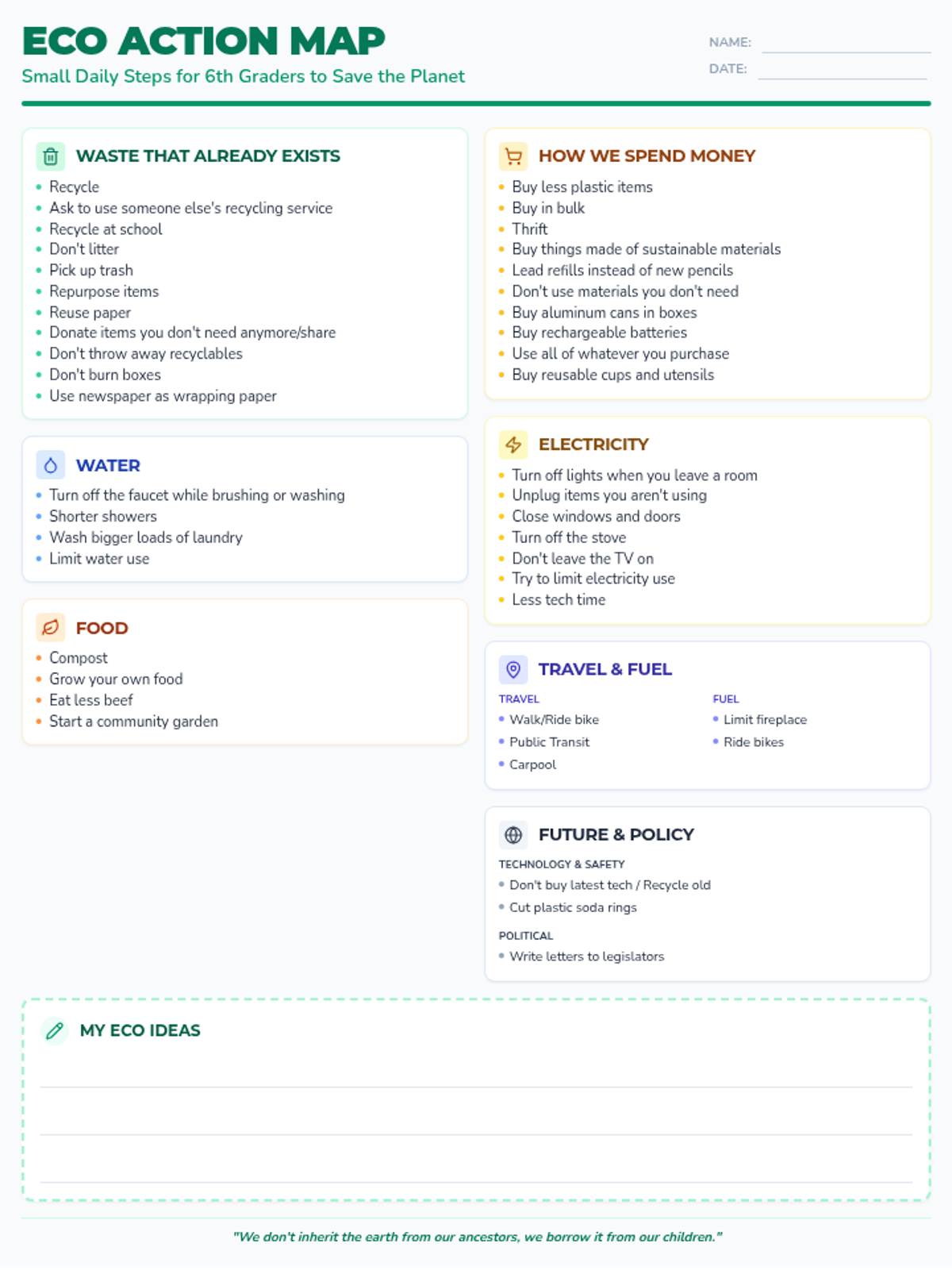
A visually organized handout for 6th graders detailing various ways to contribute to environmental sustainability, categorized by waste, water, electricity, money, and more. Now includes a student work area for personal ideas and optimized layout to fit on one page.
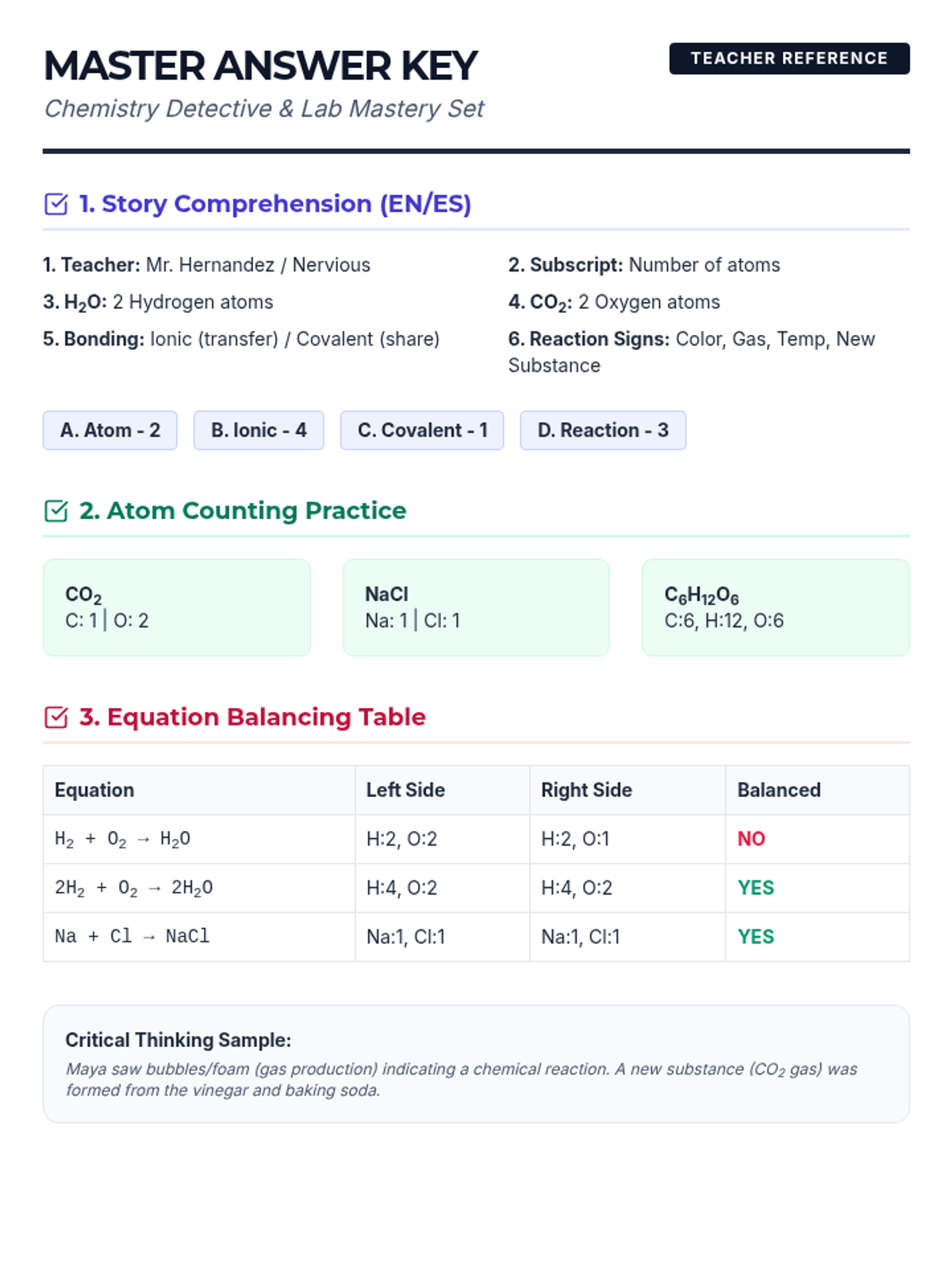
Complete answer key for the Chemistry Detective story and Lab Skills Mastery worksheets. Includes reading answers, matching key, atom counting, and balancing equations results. Corrected subscript formatting.
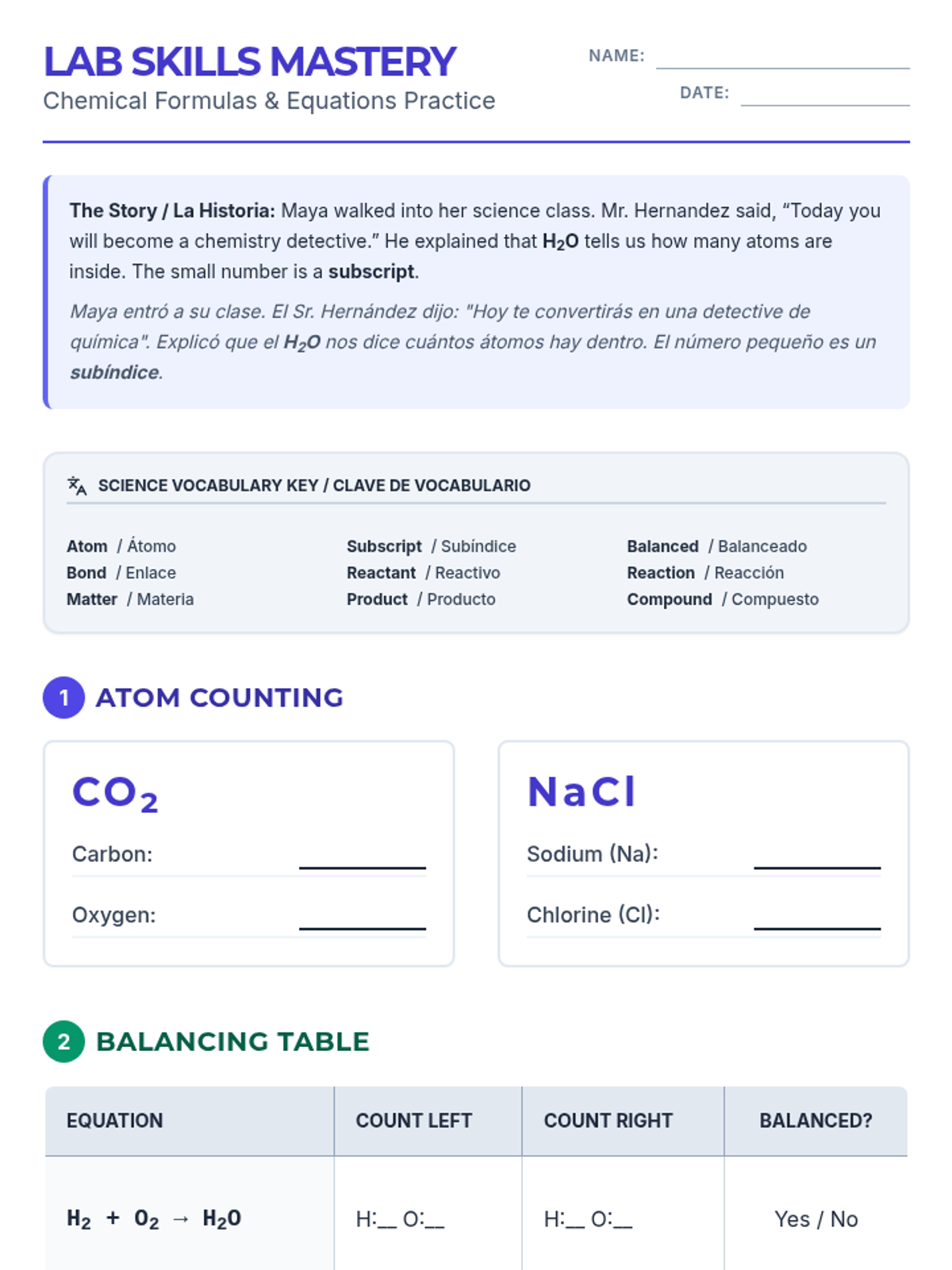
English version of the 'Lab Skills Mastery' practice sheet with a Spanish vocabulary key. Includes atom counting problems for various compounds and a balancing equations table, as well as a critical thinking section. Corrected subscripts and layout.
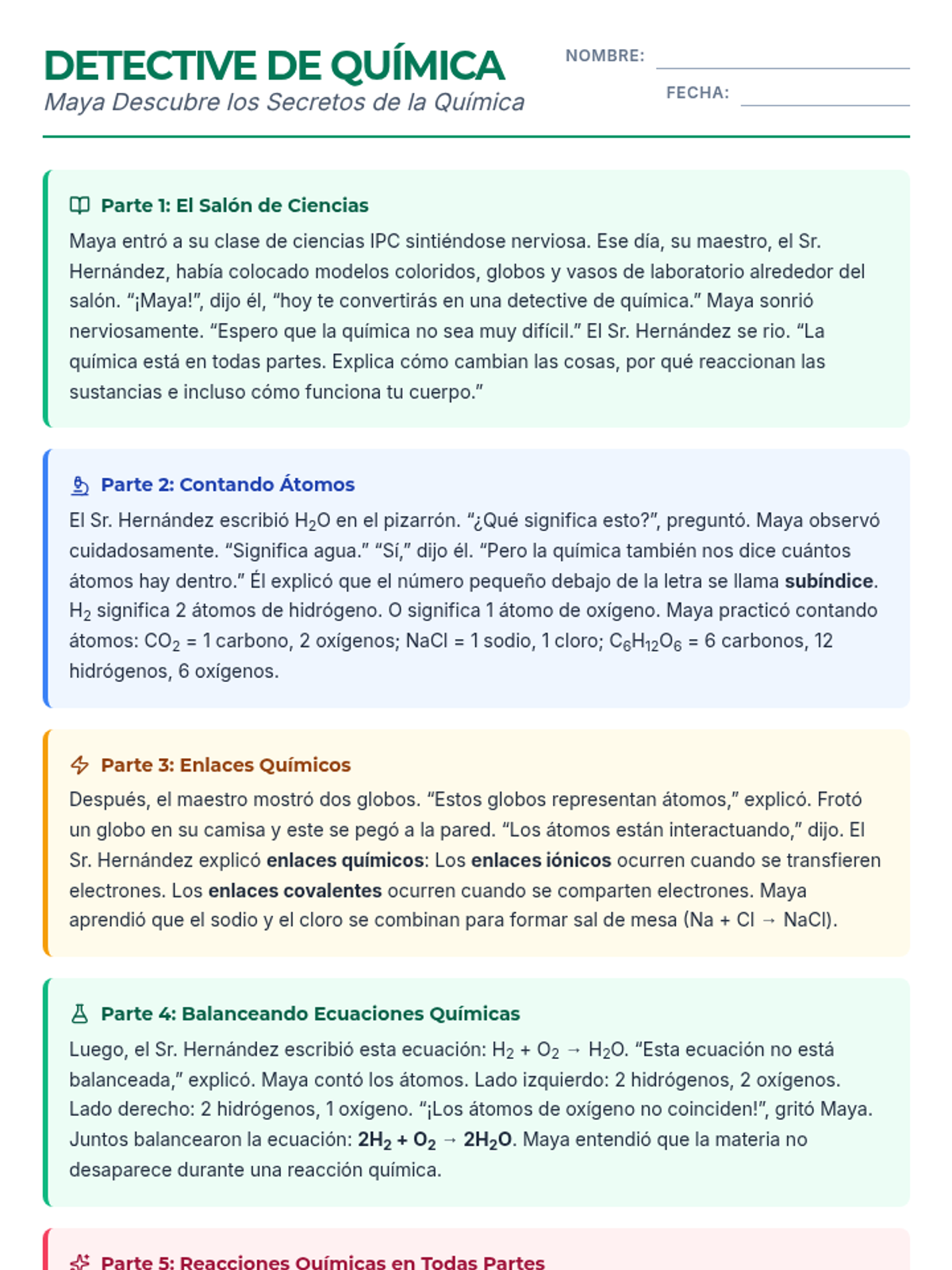
Spanish version of the 'Chemistry Detective' reading comprehension worksheet. Includes the full translated story, reading questions, and matching activity with consistent layout and chemical formula formatting.
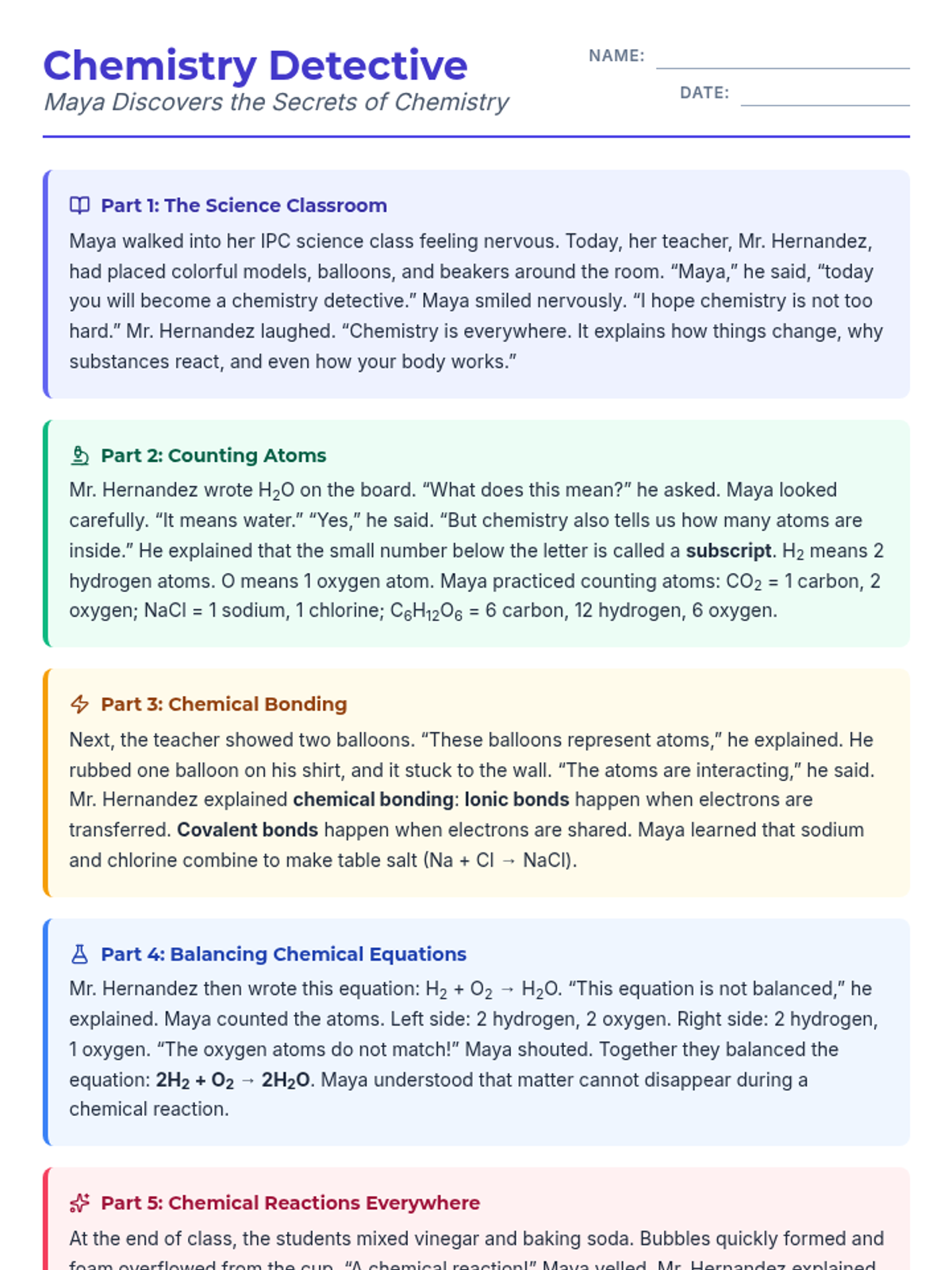
English version of the 'Chemistry Detective' reading comprehension worksheet. Features the 5-part story with chemical formulas correctly formatted using sub-tags, comprehension questions, and a vocabulary matching exercise. Corrected page breaks and rendering issues.
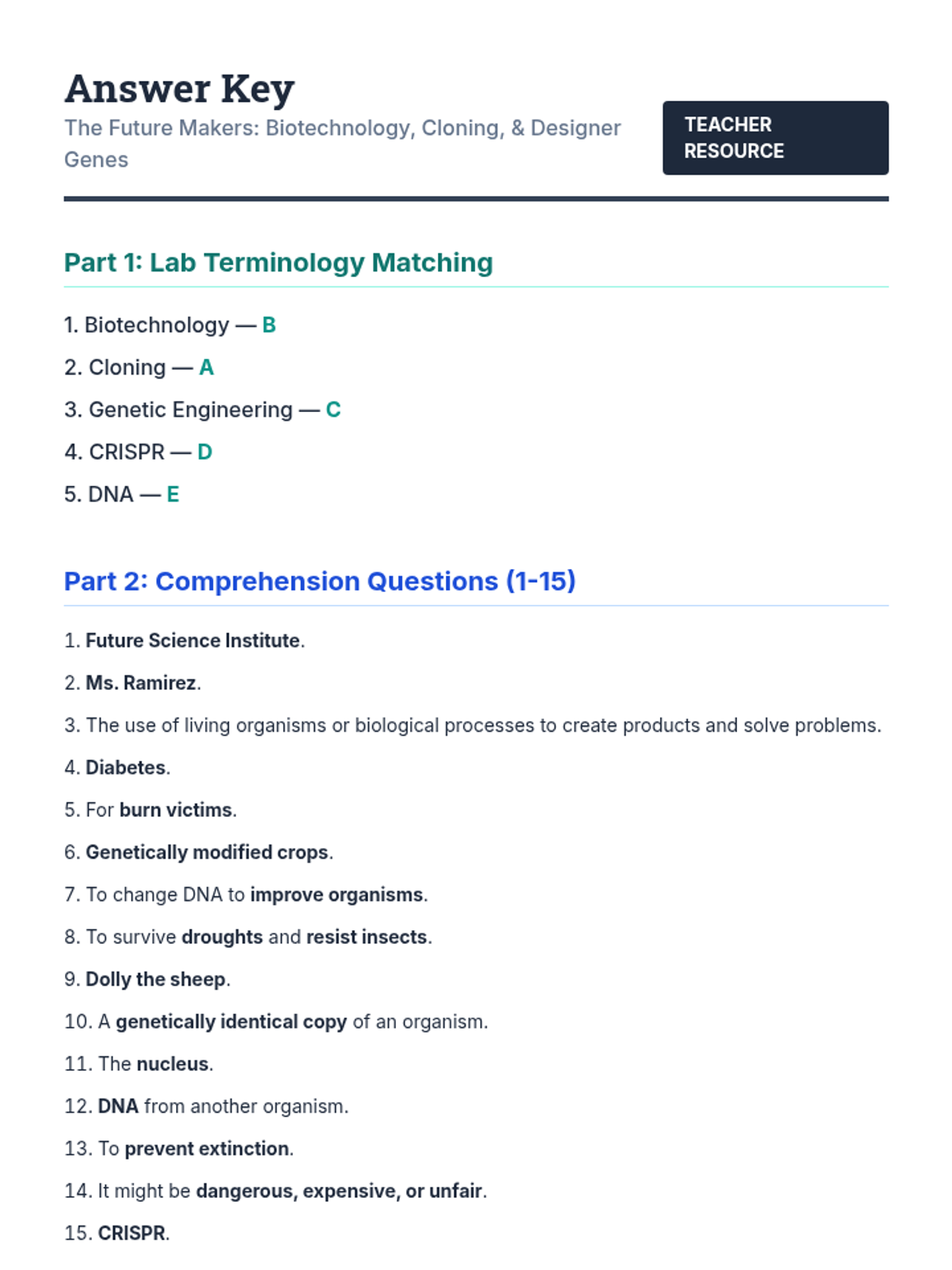
A 2-page answer key for the Future Makers worksheet, providing correct responses for the matching section, all 30 comprehension questions, and sample answers for critical thinking prompts. Font sizes optimized to 15px/16px for readability and header issues resolved. Corrected overflow to ensure all answers are visible.
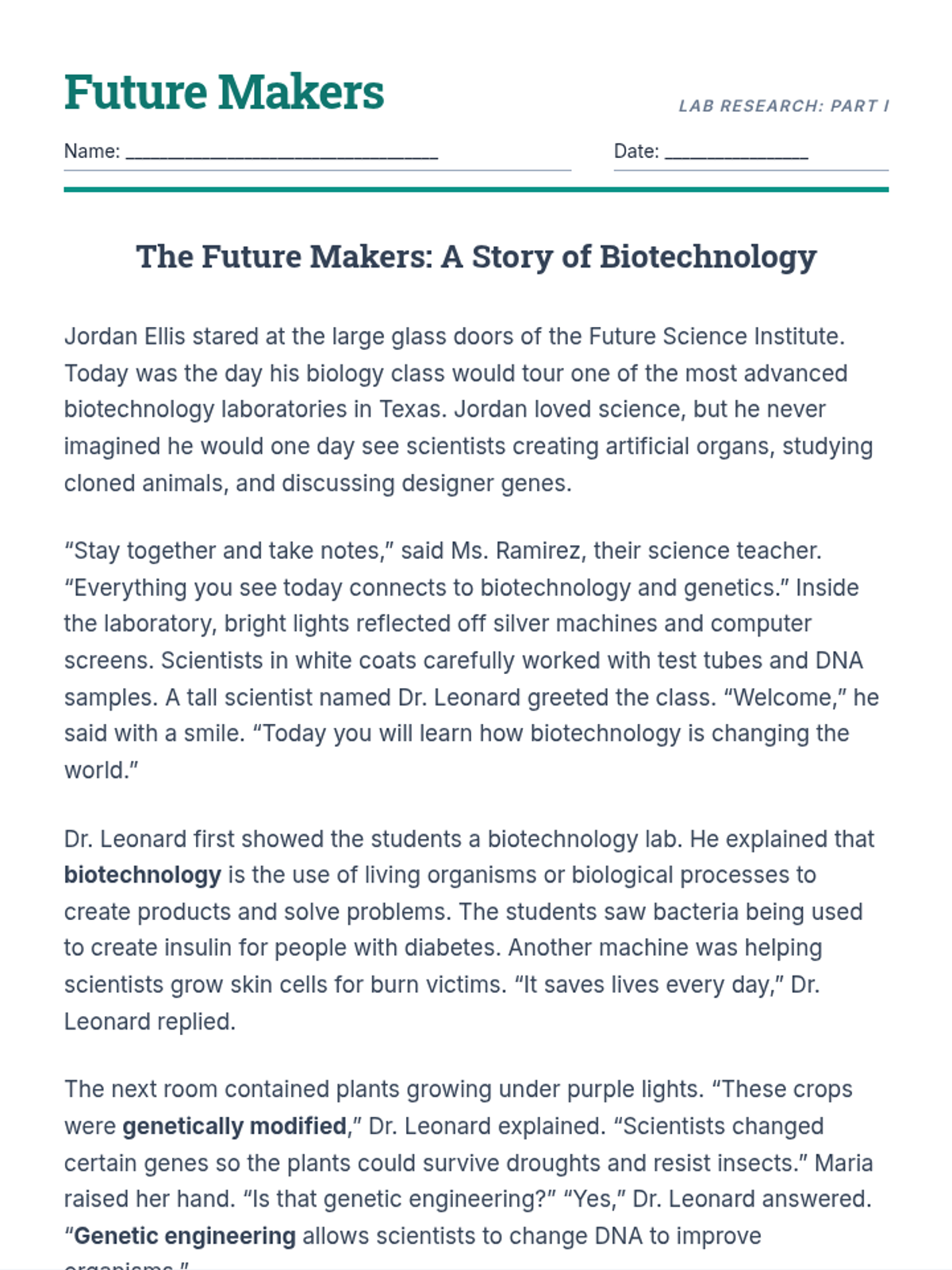
A comprehensive worksheet based on 'The Future Makers' story, featuring the full reading passage, matching vocabulary, 30 comprehension questions, and detailed short answer questions about biotechnology ethics. Font sizes have been adjusted for optimal legibility (16px body/question text).
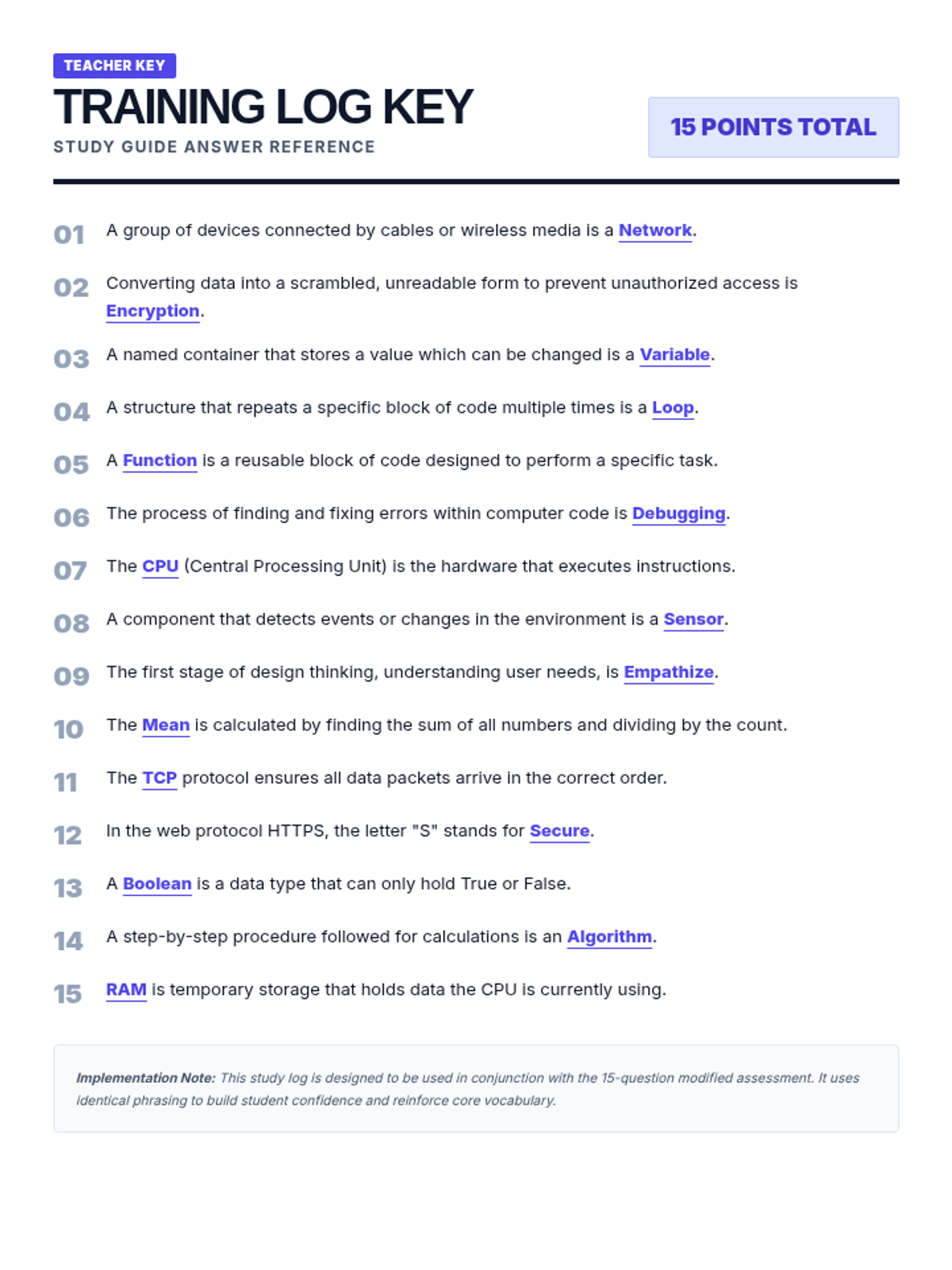
A teacher's answer key for the Modified Sprint Study Log. It provides the correct terminology for all 15 fill-in-the-blank statements, ensuring quick and accurate grading or self-correction.
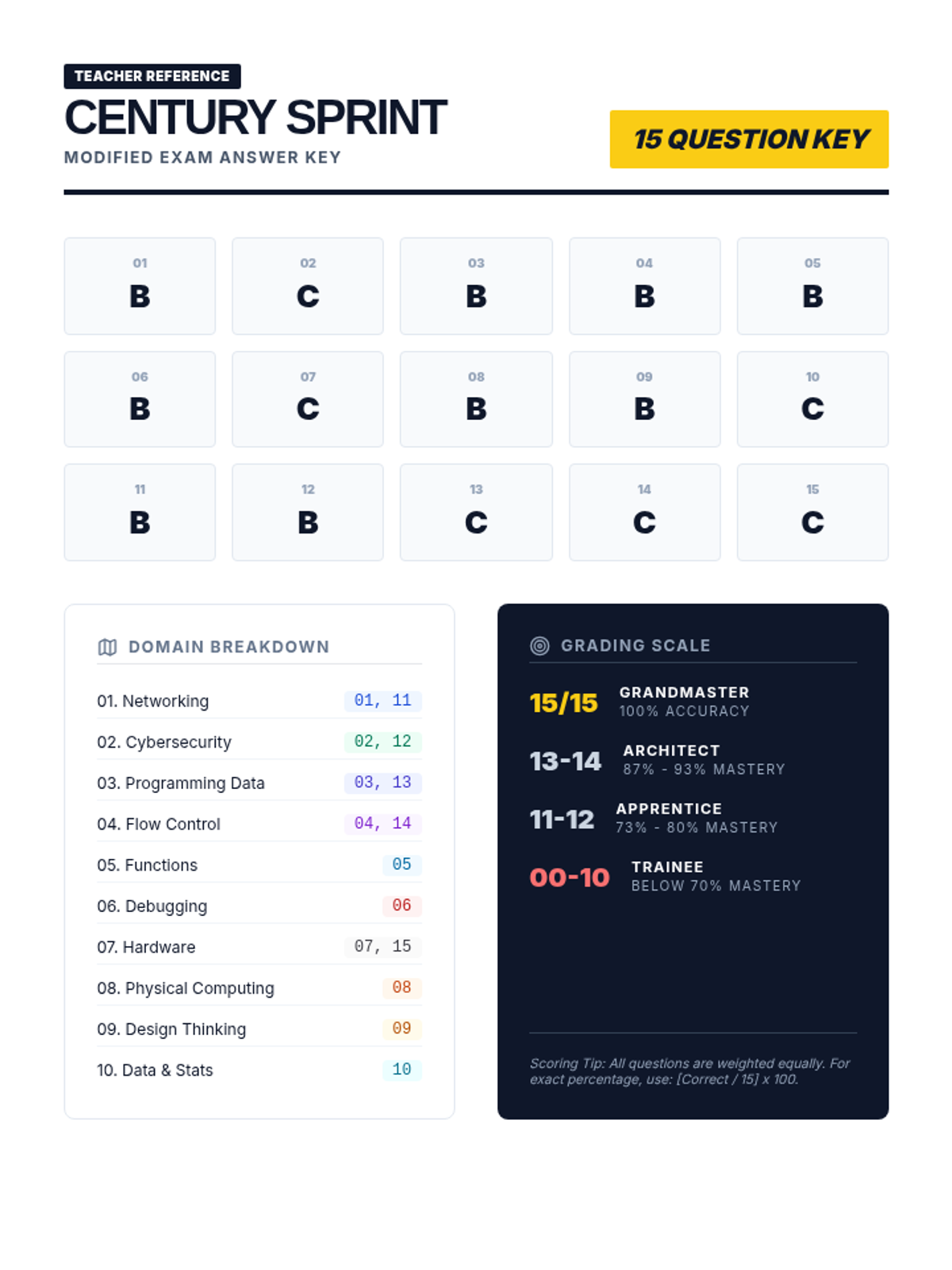
A teacher's answer key for the modified 15-question Century Sprint exam. Features a high-visibility answer grid, domain alignment mapping, and a simplified grading scale specifically calibrated for the 15-question set.
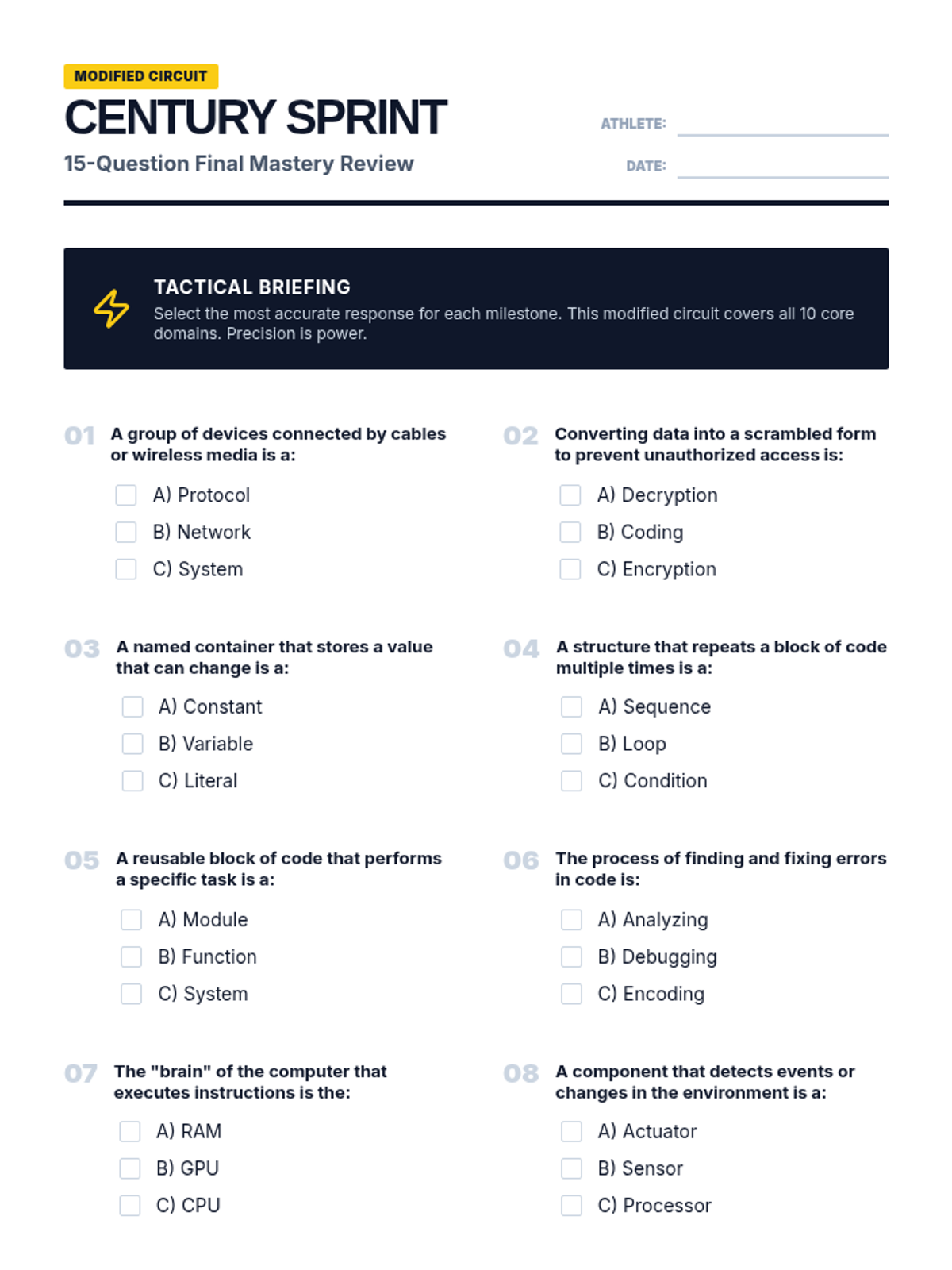
A modified version of the Century Sprint final review, condensed to 15 key questions from the original 100-question set. Each question features 3 simplified multiple-choice options, maintaining the same professional computer science domain coverage and branding.
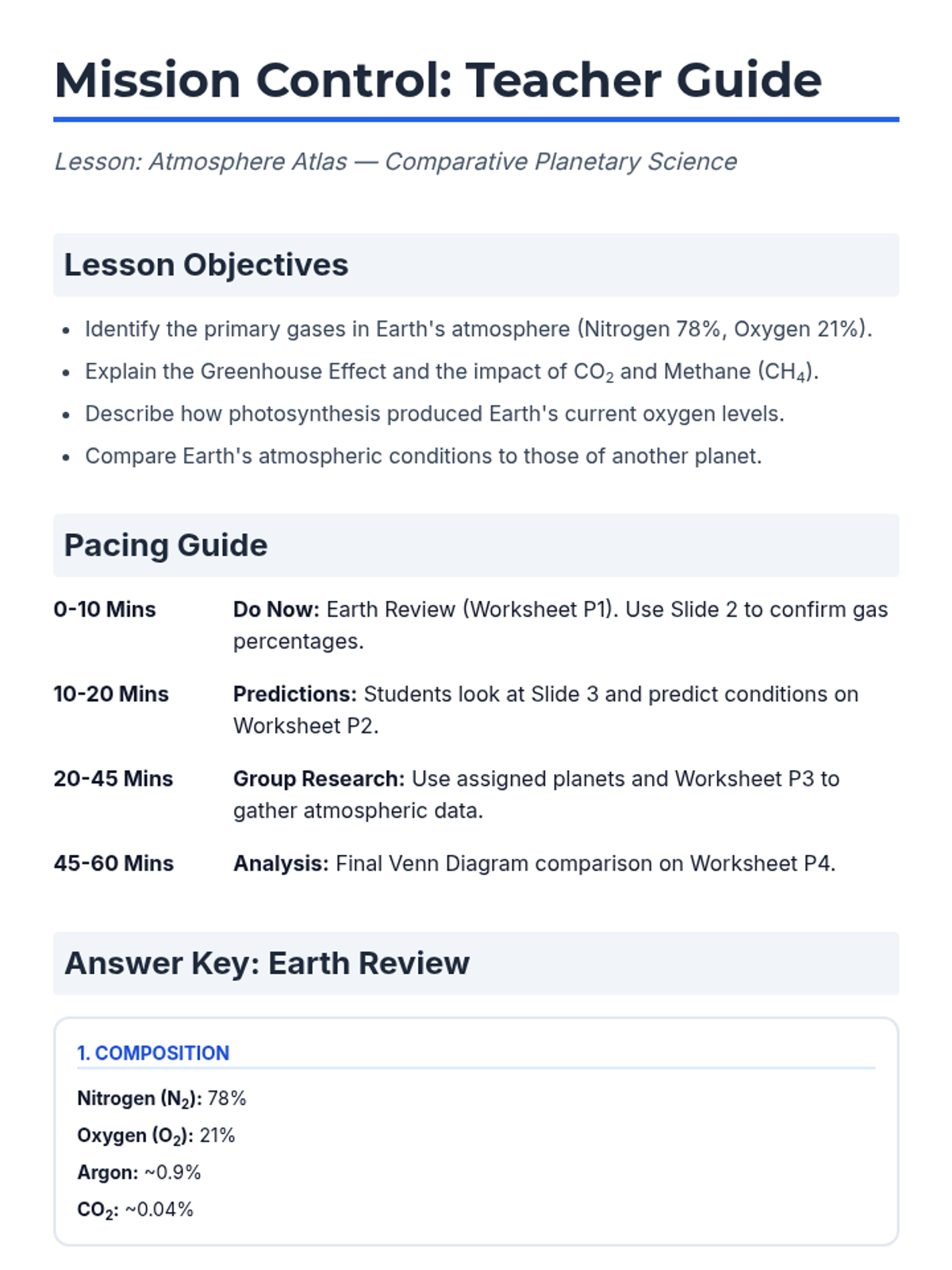
A teacher-facing resource providing lesson objectives, a pacing guide, an answer key for the Earth review, and a quick-reference planetary research cheat sheet to facilitate student group work. Fixed subscripts and answer key layout.
A 5-slide presentation to guide students through the atmosphere comparison lesson. It includes visual aids for Earth's composition, a solar system lineup for prediction tasks, and clear instructions for group research. Fixed subscript rendering and layout issues.
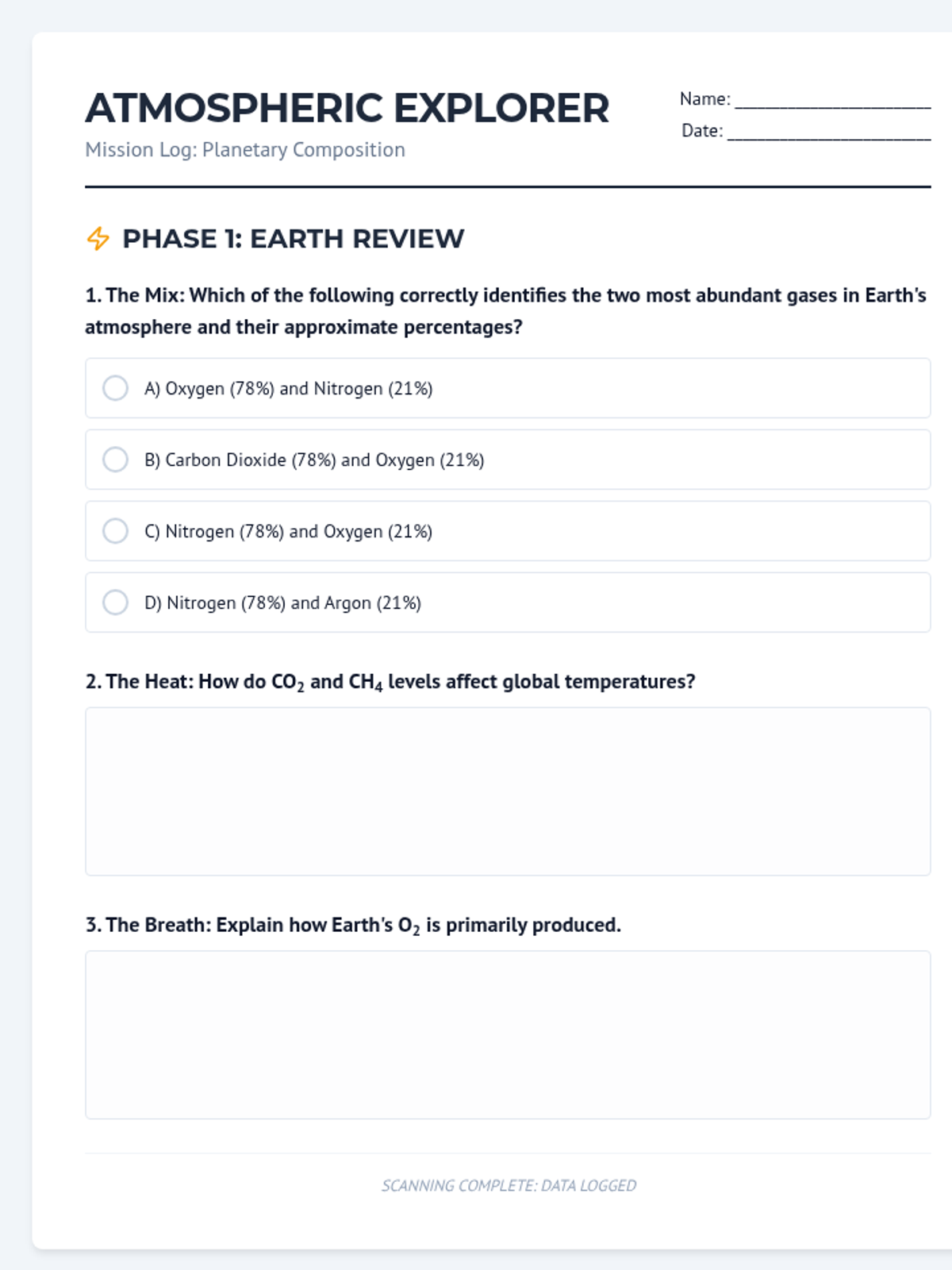
A comprehensive 4-page student worksheet for investigating planetary atmospheres. It includes an Earth-focused Do Now, a planet prediction section with a solar system lineup, a guided research template for deep dives, and a Venn diagram for comparative analysis. Question 1 has been updated to a multiple-choice format. Improved Venn diagram and subscript rendering.
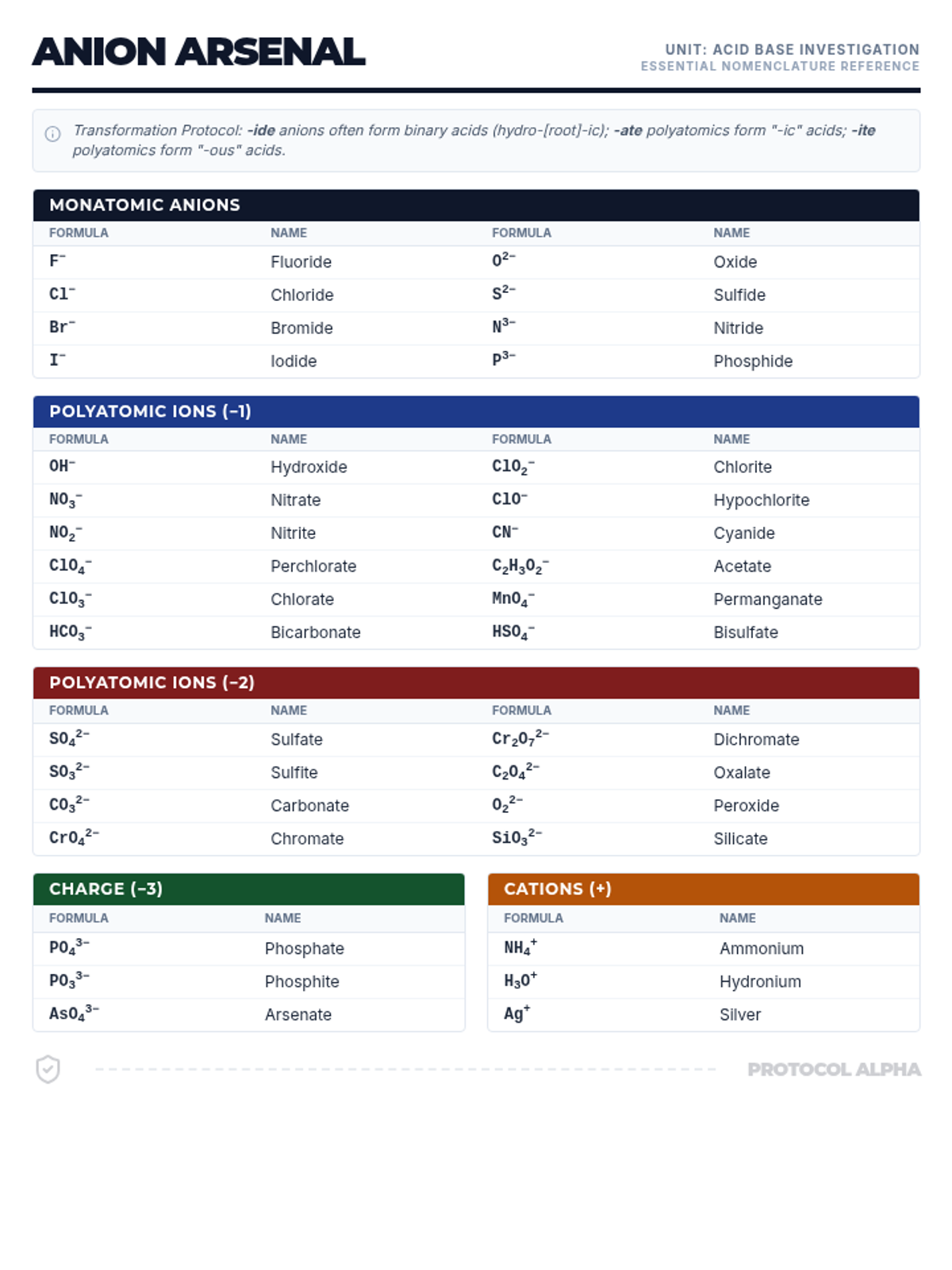
A comprehensive reference sheet for students listing common monatomic anions and polyatomic ions categorized by charge, designed to support acid and base nomenclature activities. Revised to improve character rendering and consolidate layout.
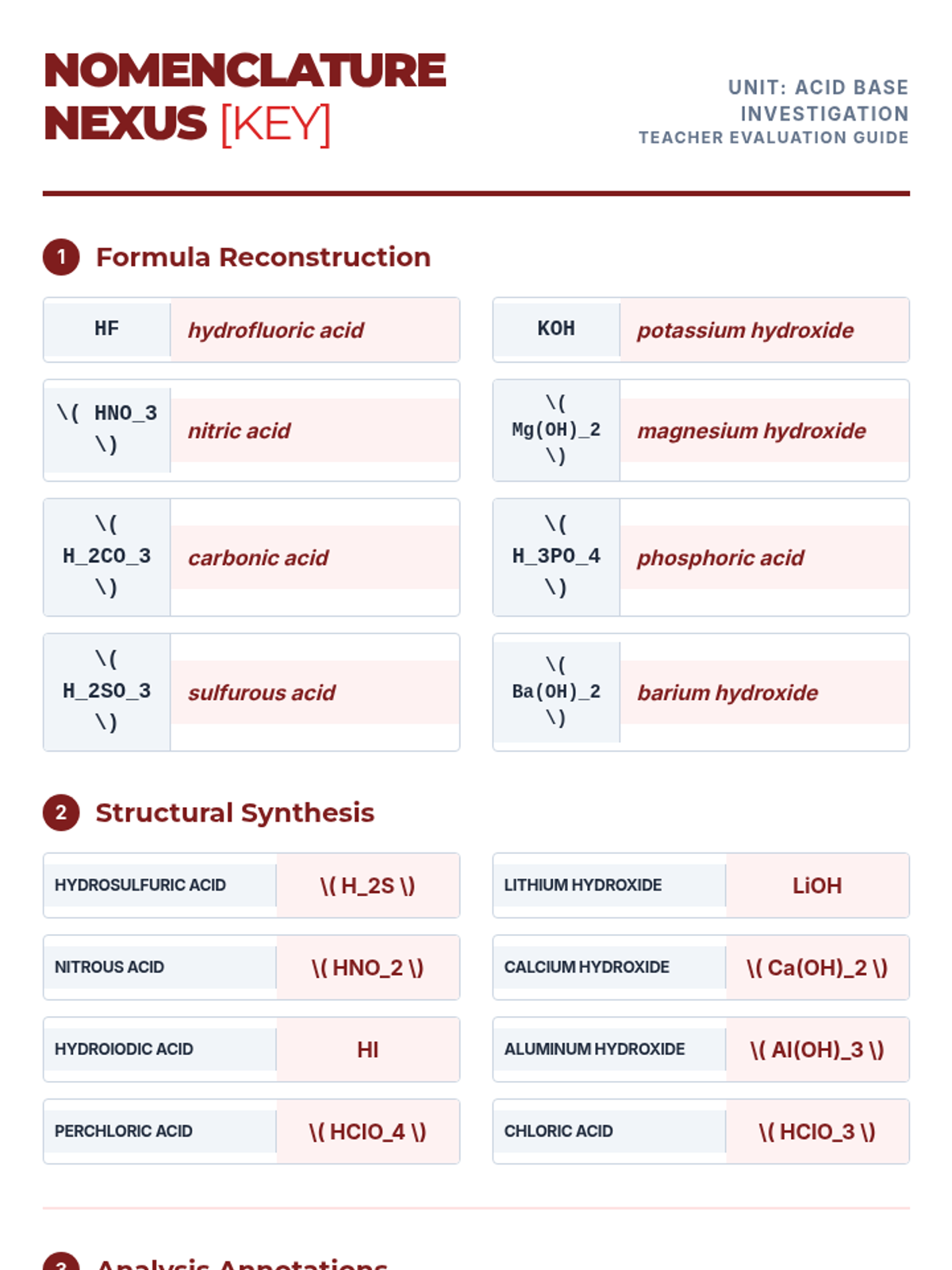
Teacher answer key for the Nomenclature Nexus worksheet, providing correct chemical names, formulas, and analysis explanations highlighted for easy grading. Revised for character rendering and layout. Now with improved contrast and consistent chemical notation.
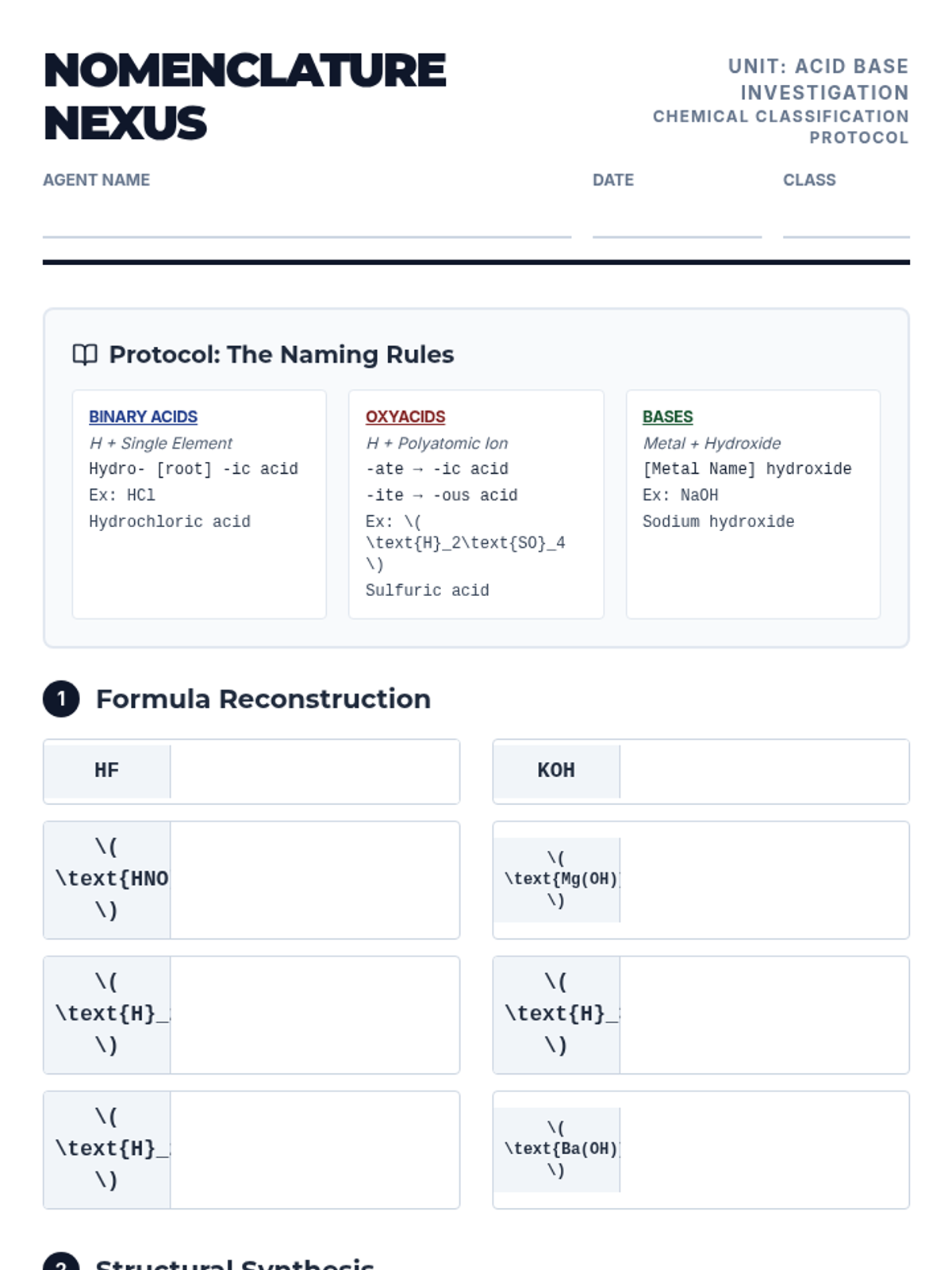
A student worksheet for practicing acid and base nomenclature, featuring rule summaries, formula-to-name conversion, name-to-formula conversion, and critical thinking questions on naming conventions. Revised for better character rendering and layout.
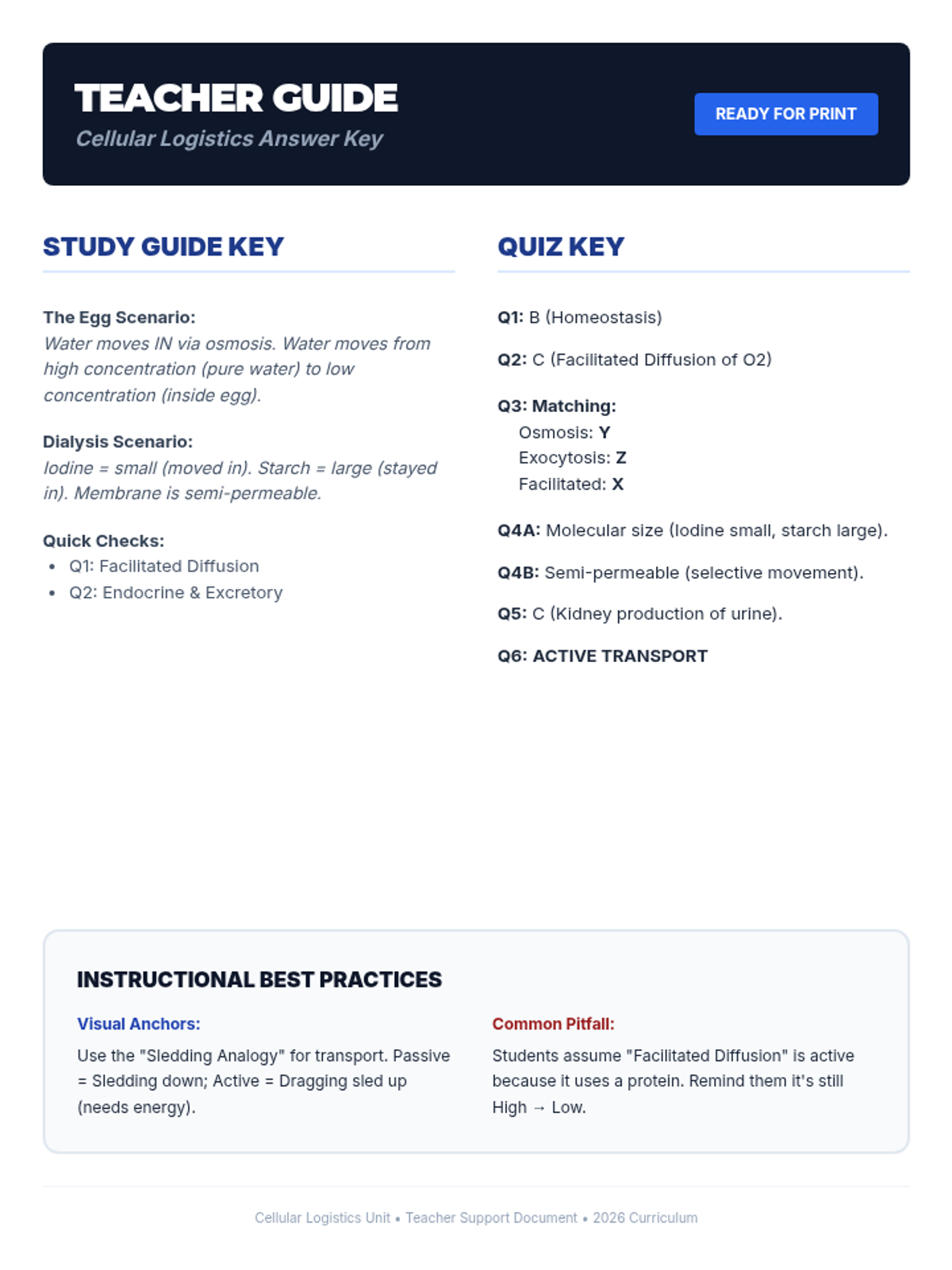
A detailed answer key and teacher instructional guide for the Cellular Logistics unit, including scoring notes, common student misconceptions, and teaching tips. Consolidated to a single high-impact page.
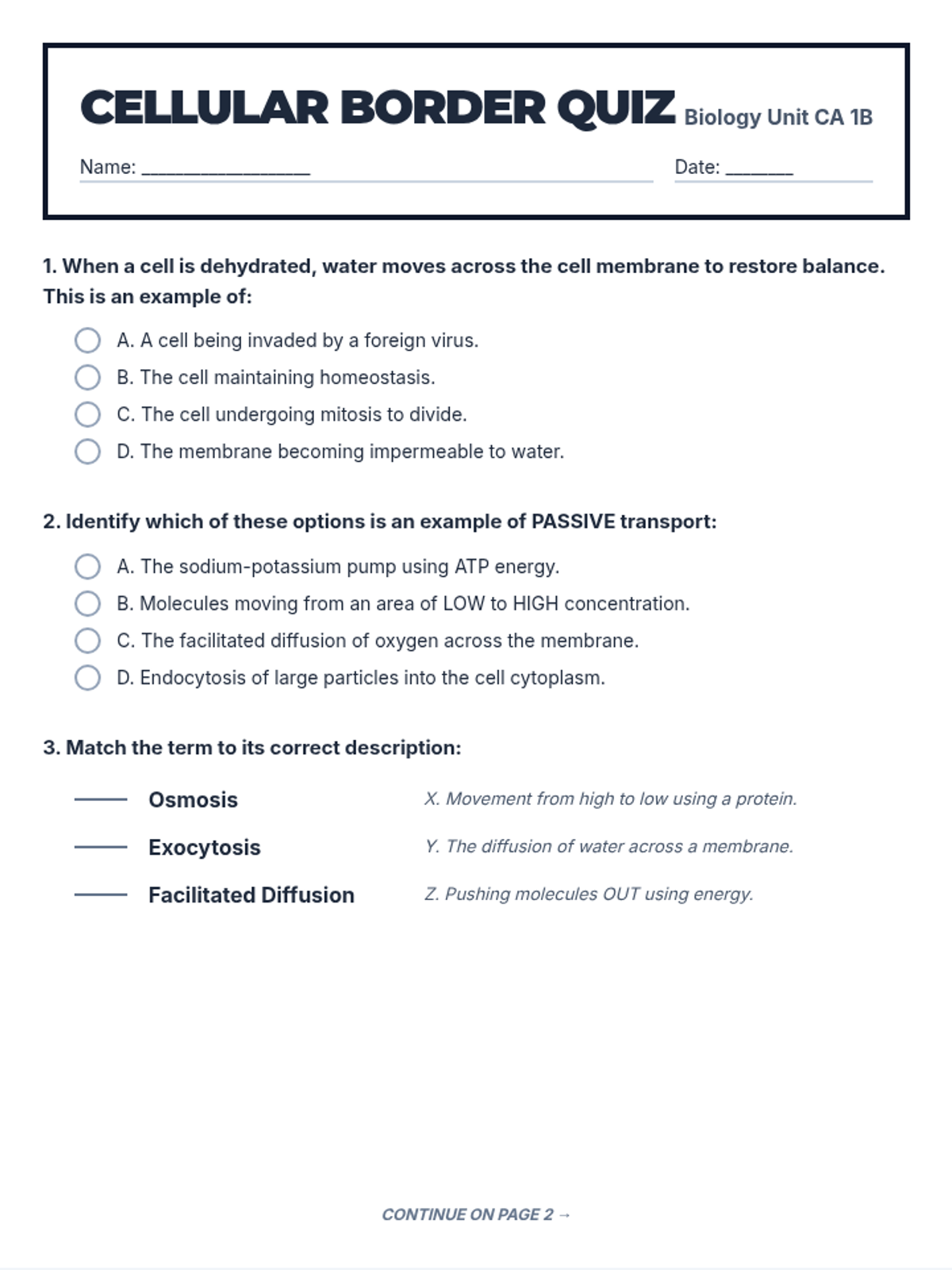
A 2-page, 6-question unit quiz covering cellular transport, homeostasis, lab scenario analysis, and body systems. Features improved contrast, larger response areas, and consolidated matching questions.
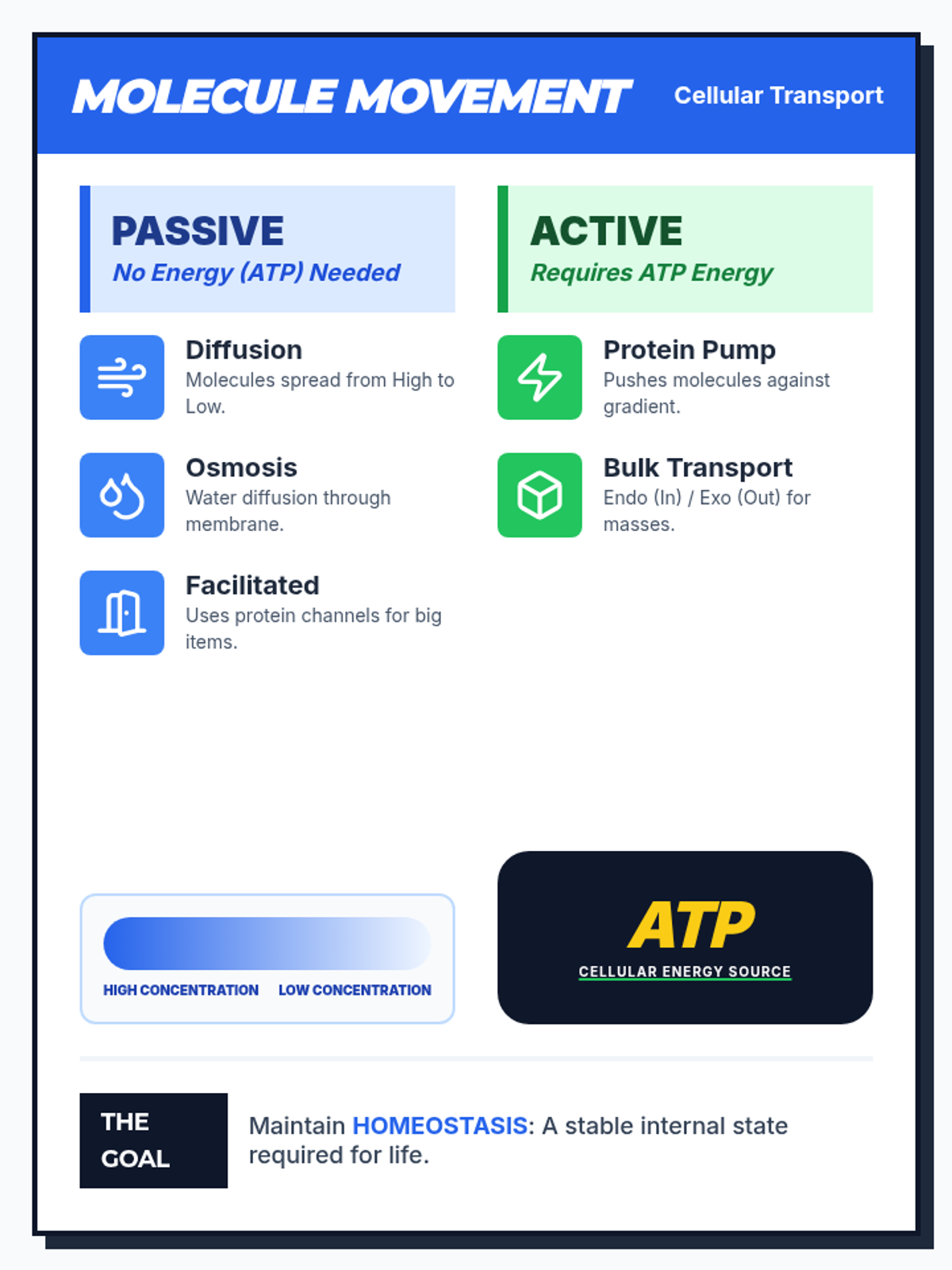
A visually bold anchor chart poster contrasting Passive and Active transport. Features simplified representations of diffusion, osmosis, and pumps, consolidated for a high-impact single-page print.
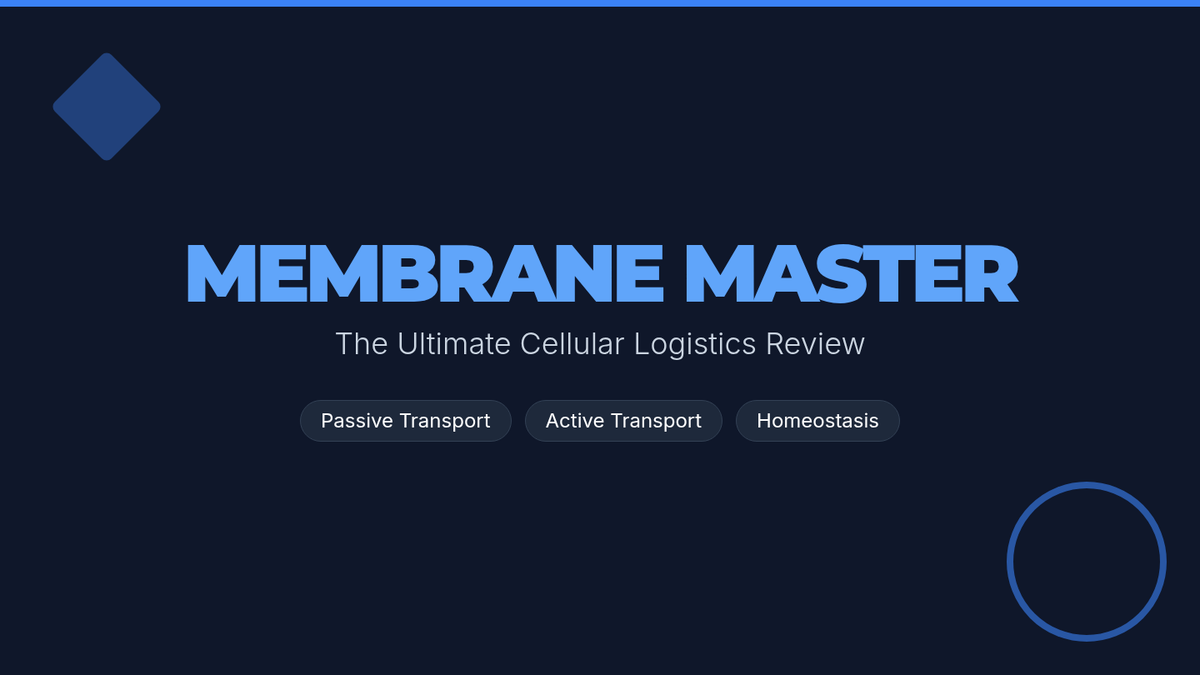
A high-energy, visual review slide deck for class instruction. It covers homeostasis, passive vs. active transport with clear analogies, and detailed breakdowns of the "Naked Egg" lab scenario.
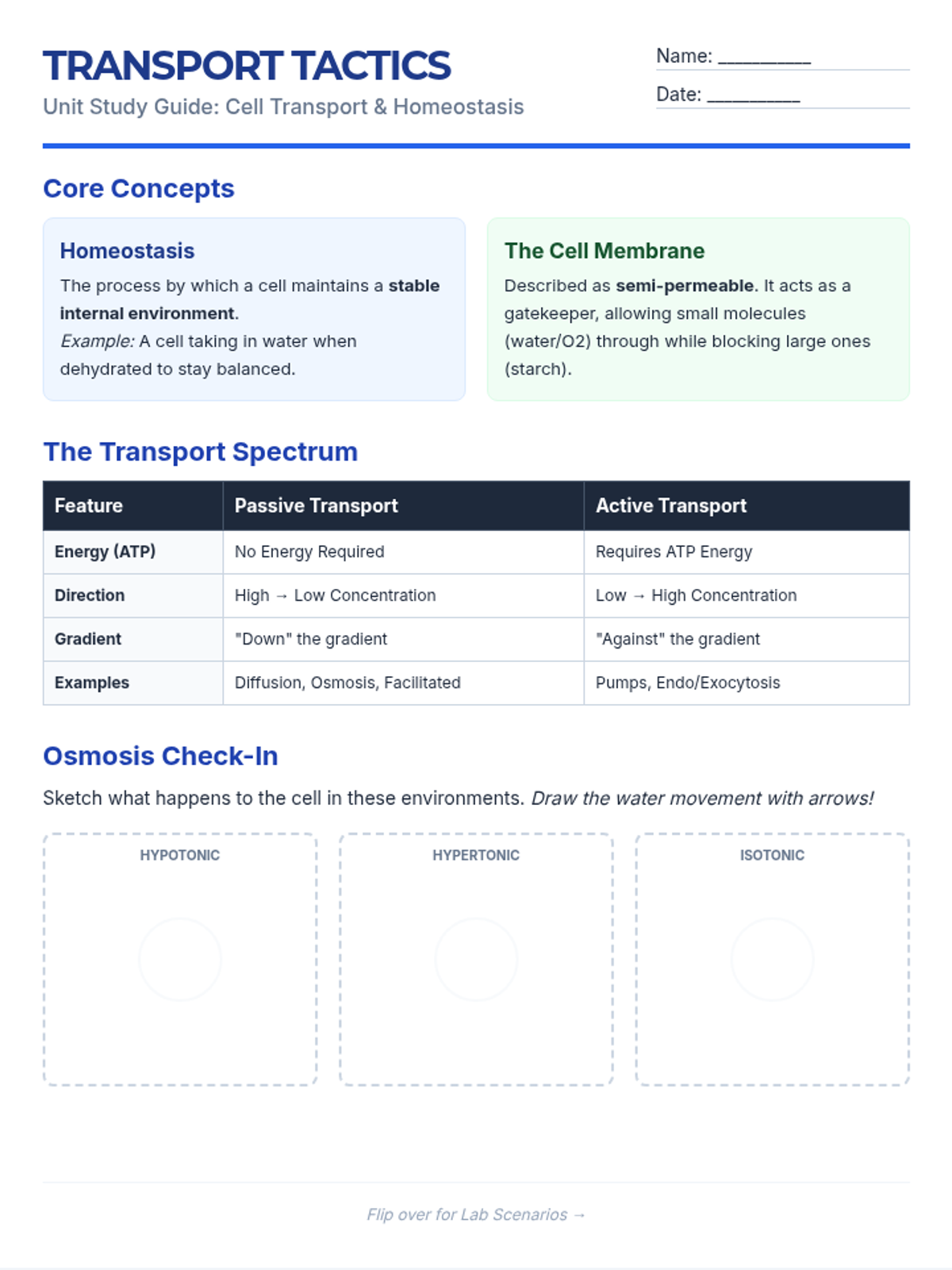
A comprehensive 2-page study guide covering cellular transport, homeostasis, and lab scenario analysis. It includes vocabulary tables, osmosis diagrams, and practice problems based on common biology lab experiments.
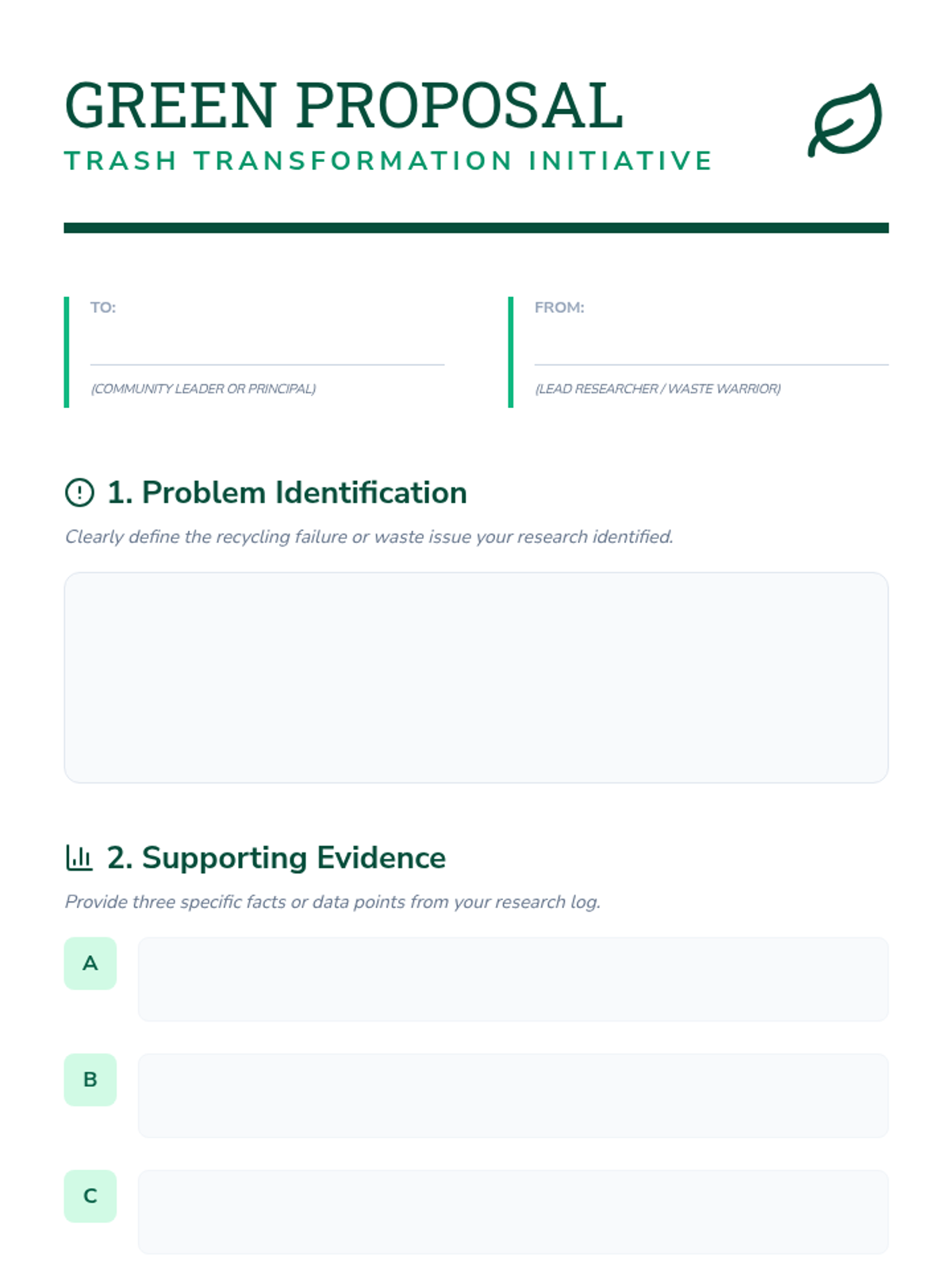
A formal proposal template for students to synthesize their research into a persuasive document. Includes sections for problem identification, evidence, a proposed solution, and a call to action.
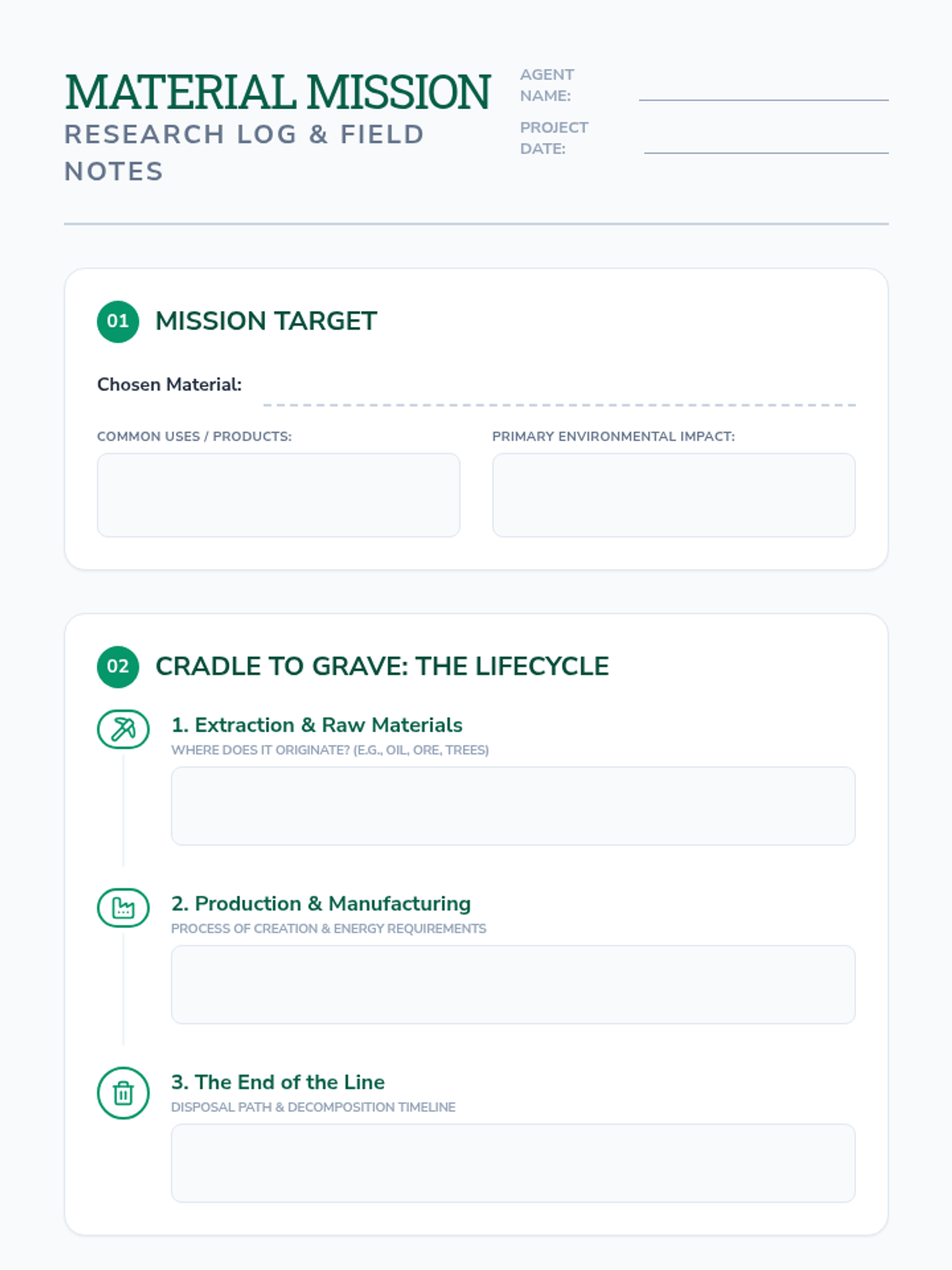
A scaffolded research organizer for students to track the lifecycle of a chosen material, collect local recycling data, and log their sources. Features a field-journal aesthetic to encourage active investigation.
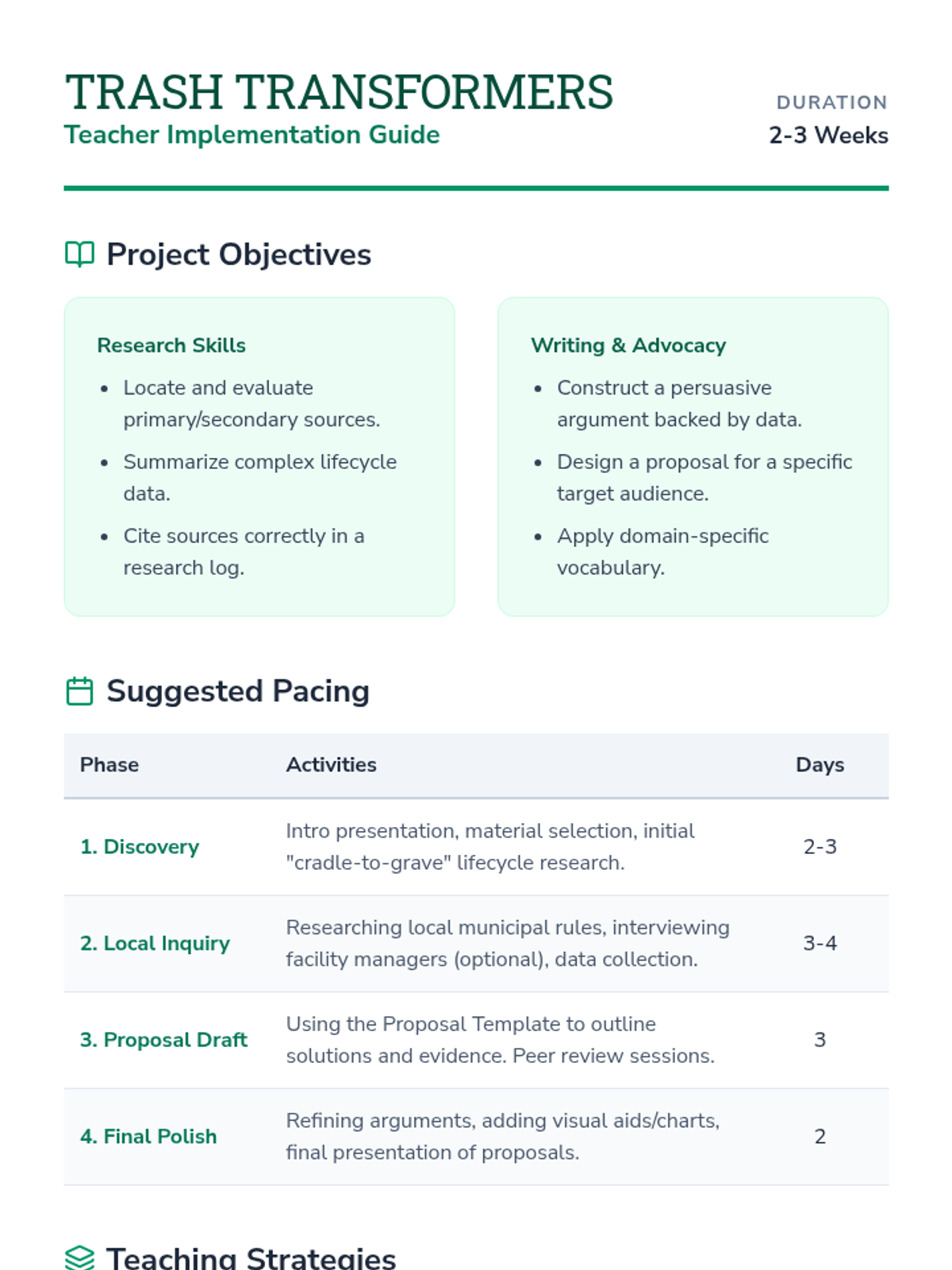
A comprehensive teacher's guide for the Trash Transformers project, including project objectives, a multi-week pacing calendar, differentiation strategies, and an assessment rubric.
An introductory slide deck for the Trash Transformers project, outlining the recycling crisis, the research mission, and the project's phases. Designed to spark student interest and provide high-level context.
A visual presentation to accompany the skeletal system lesson, illustrating key concepts such as bone function, types of joints, and the "skeletal bank" metaphor. Includes specific callouts for L.4 and L.5 language standards.
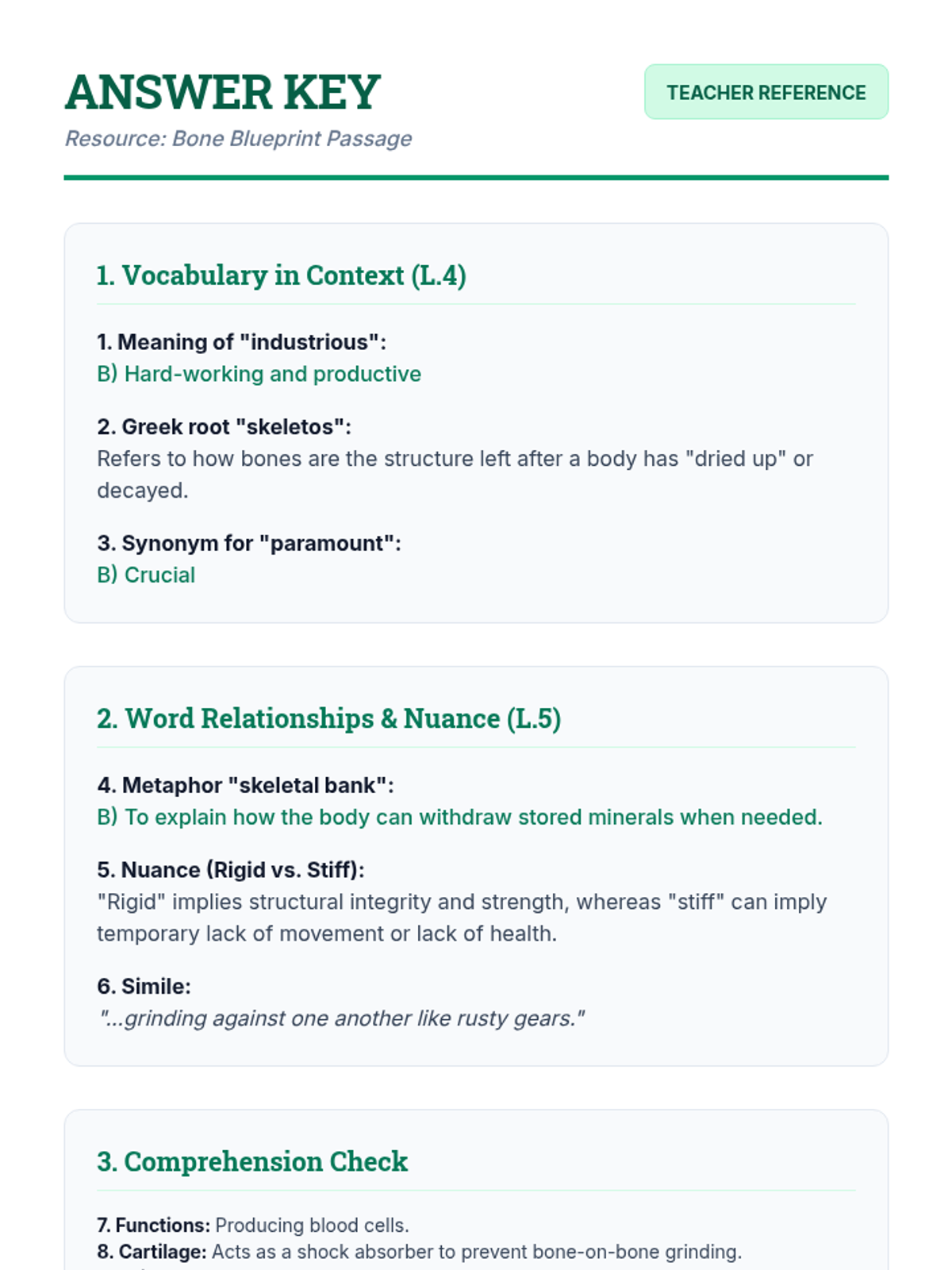
Teacher answer key for the updated Bone Blueprint Passage, providing correct answers for all 15 questions including vocabulary, figurative language, and comprehension. All answers fit on a single well-organized page.
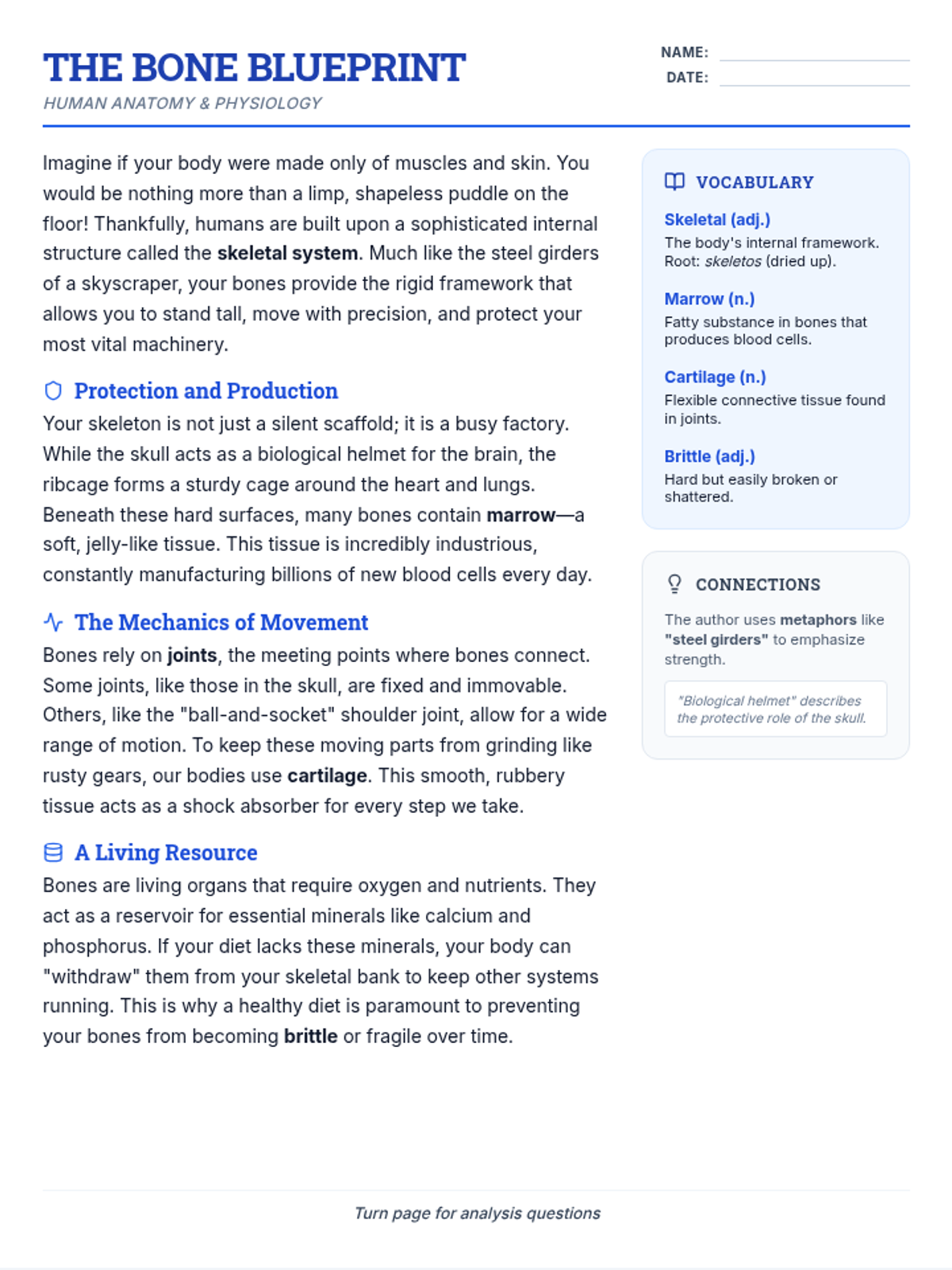
A detailed four-page student worksheet featuring a passage on the skeletal system and 15 analysis questions focused on vocabulary (L.4) and figurative language (L.5). The document uses a clean medical blueprint theme with dedicated pages for reading, language analysis, and comprehension to provide optimal writing space.
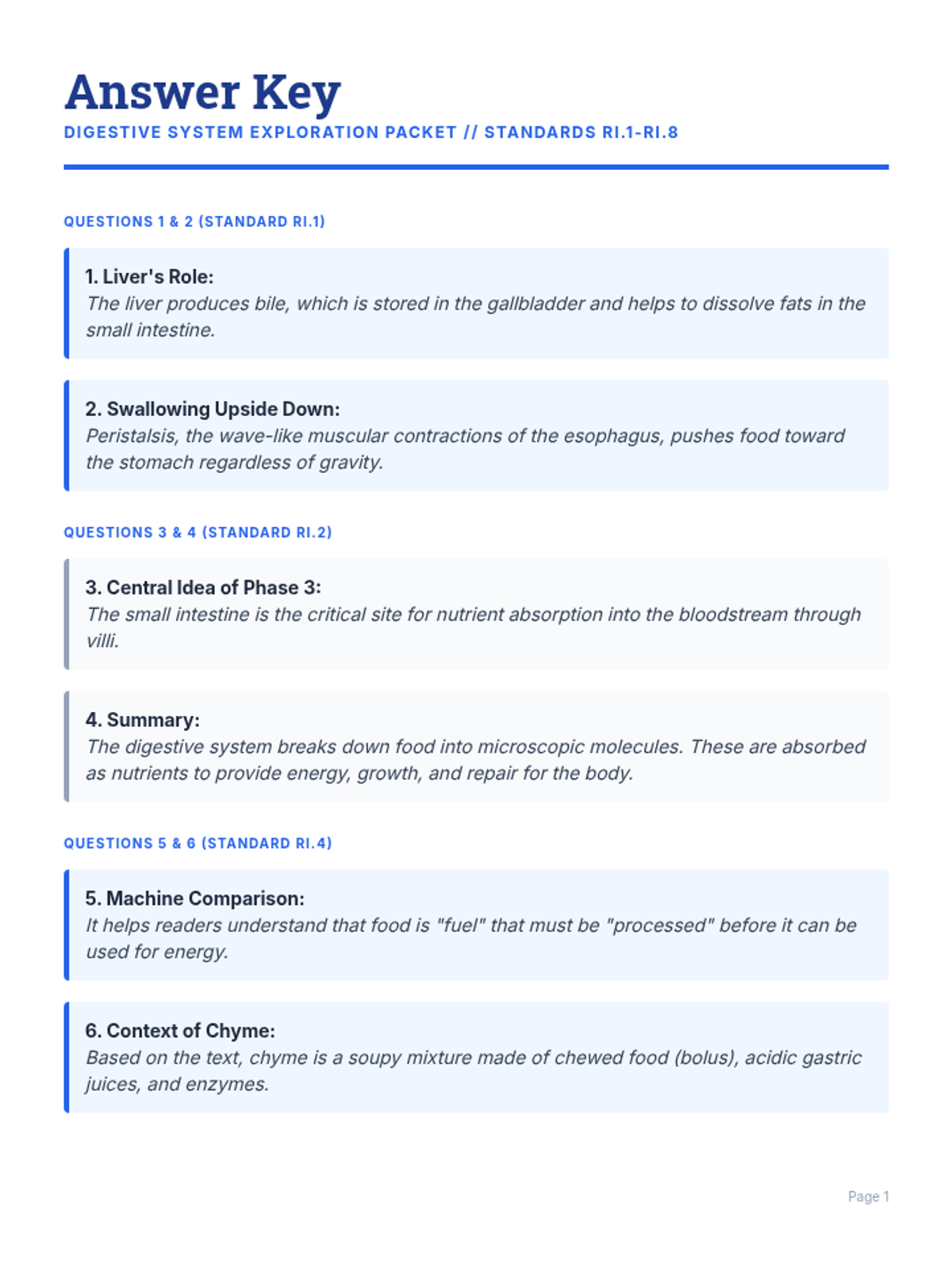
A comprehensive teacher answer key for the Digestive System Exploration Packet, covering all 20 questions with mappings to RI.1, RI.2, RI.3, RI.4, and RI.8.
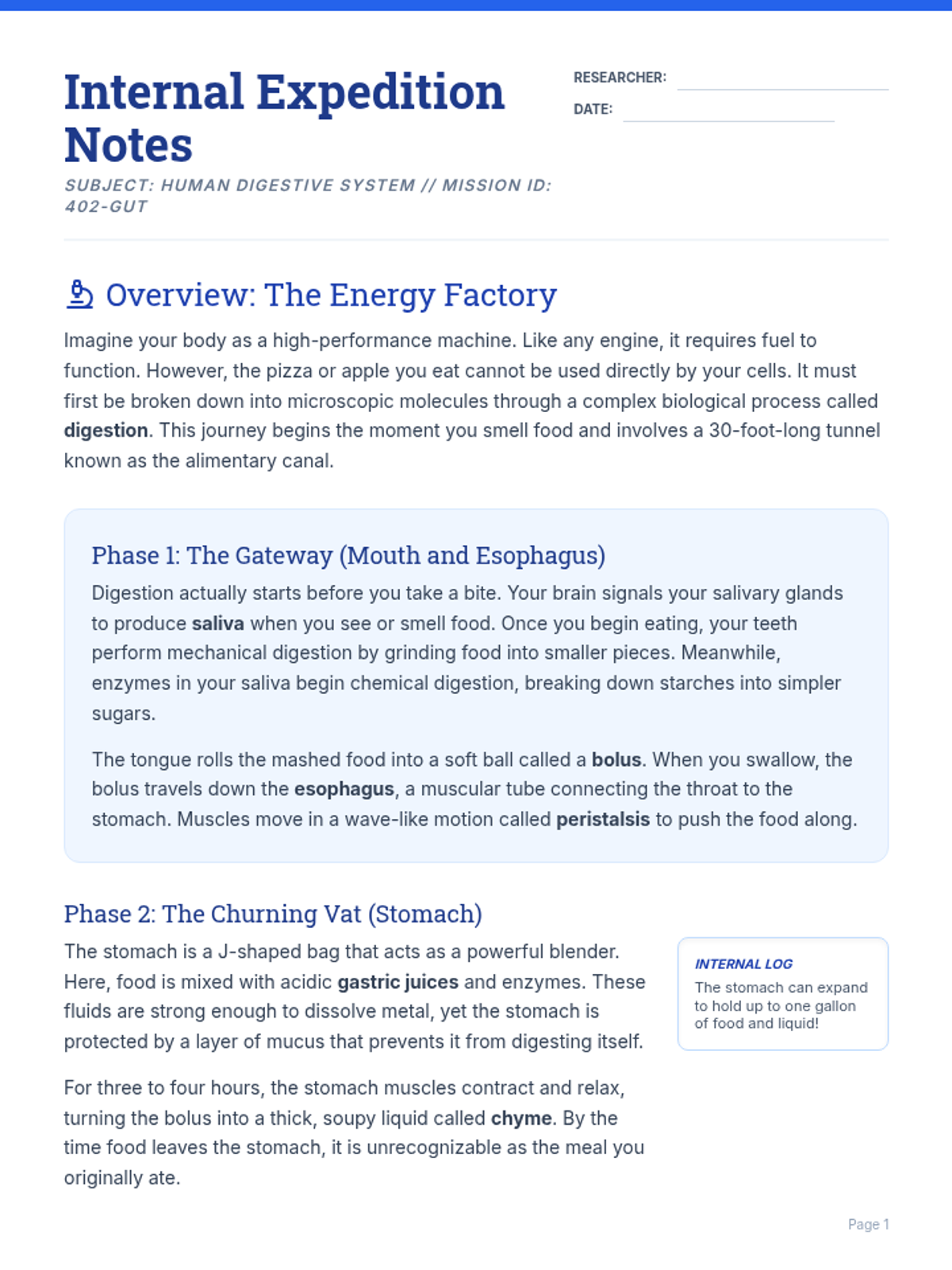
A comprehensive 7-page reading packet on the digestive system, including a 2-page detailed passage, vocabulary definitions, and 20 standard-aligned comprehension questions (4 each for RI.1, RI.2, RI.3, RI.4, RI.8).
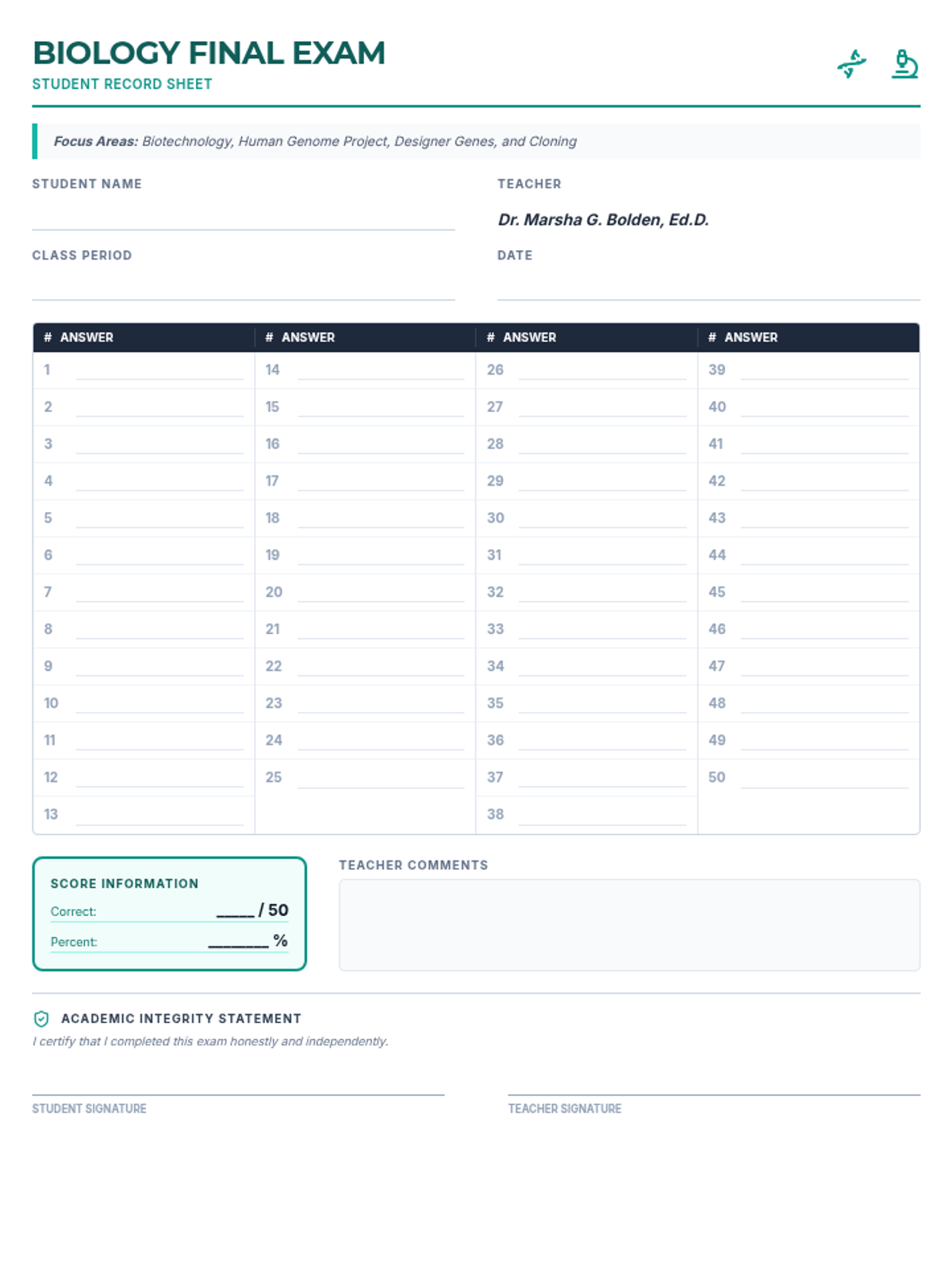
A professional, biotechnology-themed answer record sheet for a 50-question Biology Final Exam. Features organized entry columns, scoring sections, and an academic integrity statement.
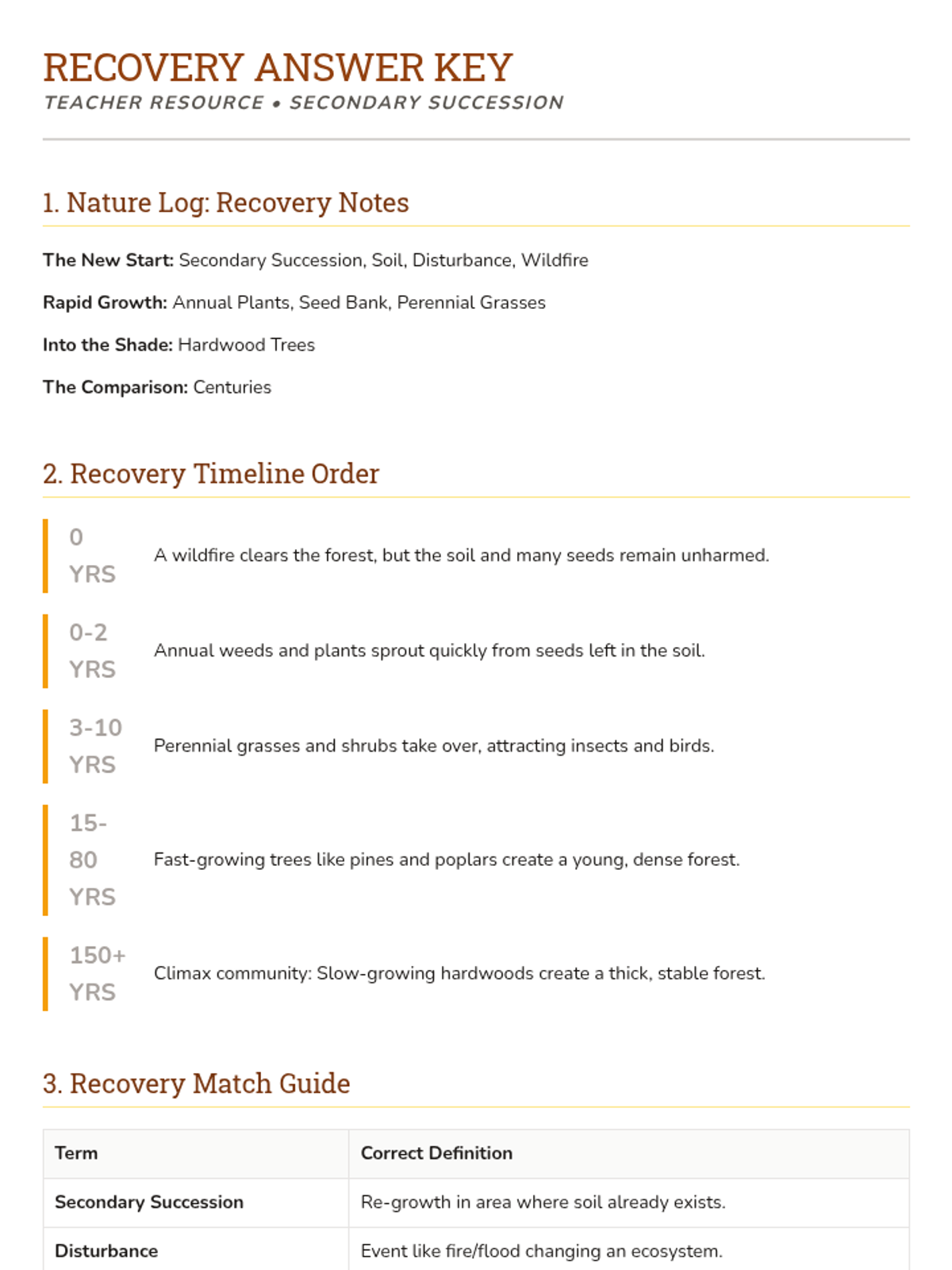
Comprehensive answer key for the secondary succession guided notes, sequencing activity, and vocabulary matching worksheet.