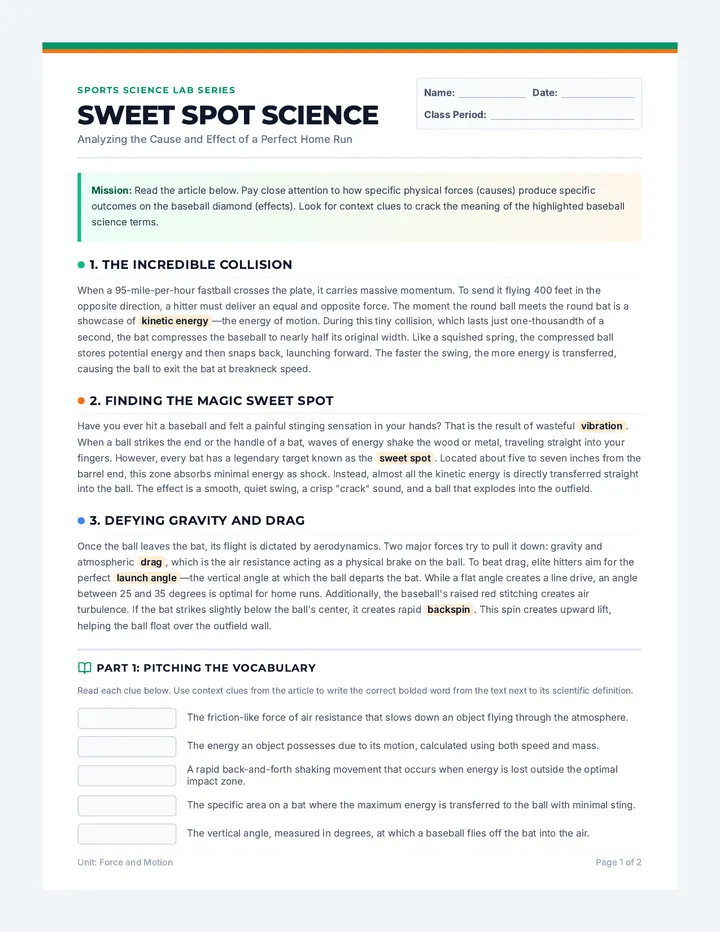
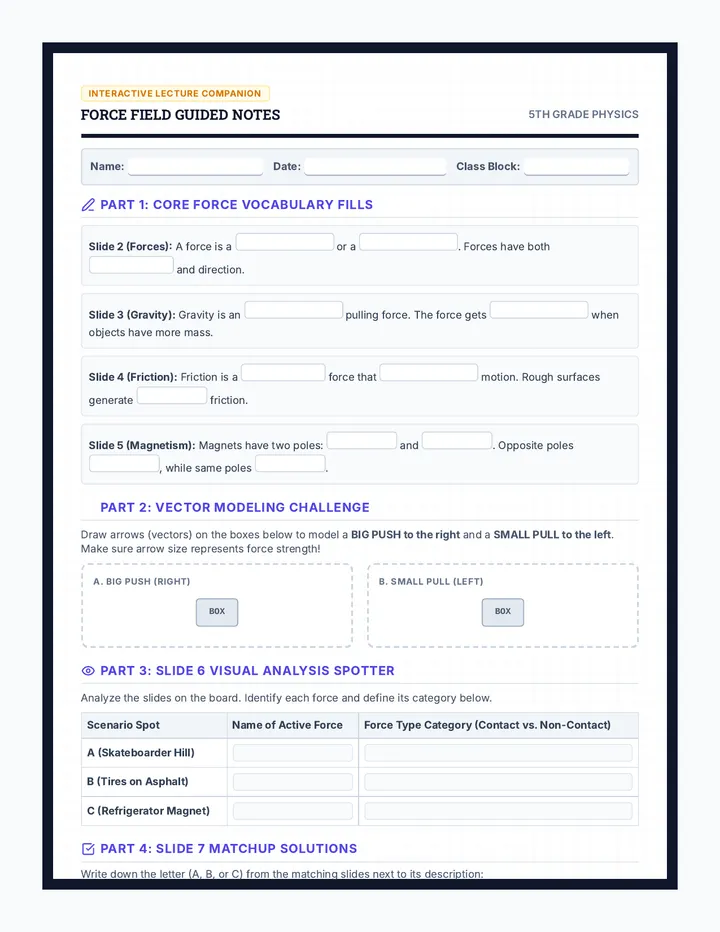
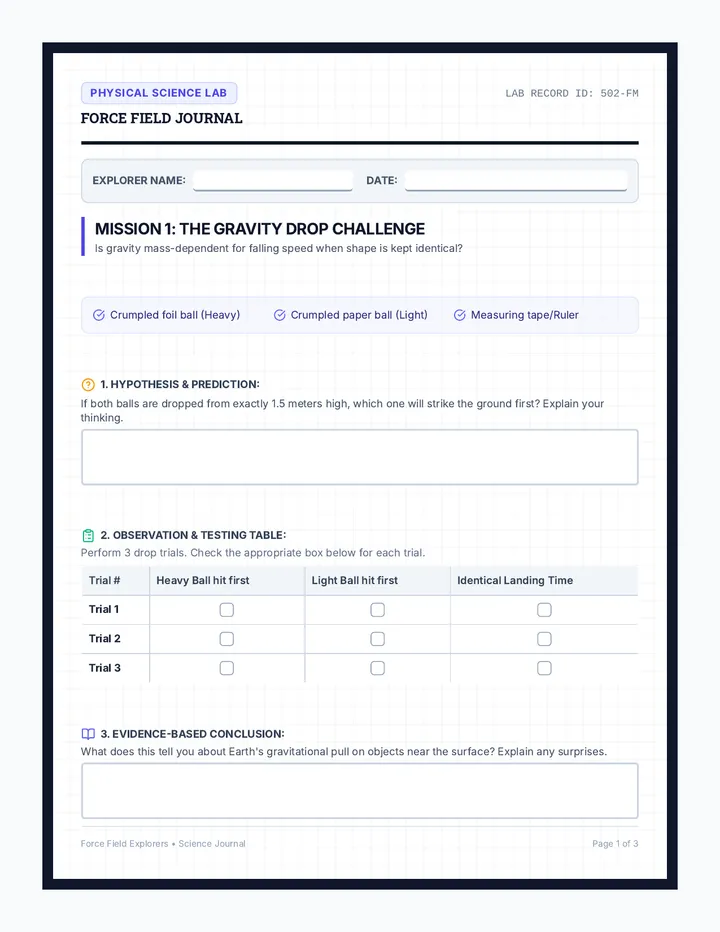
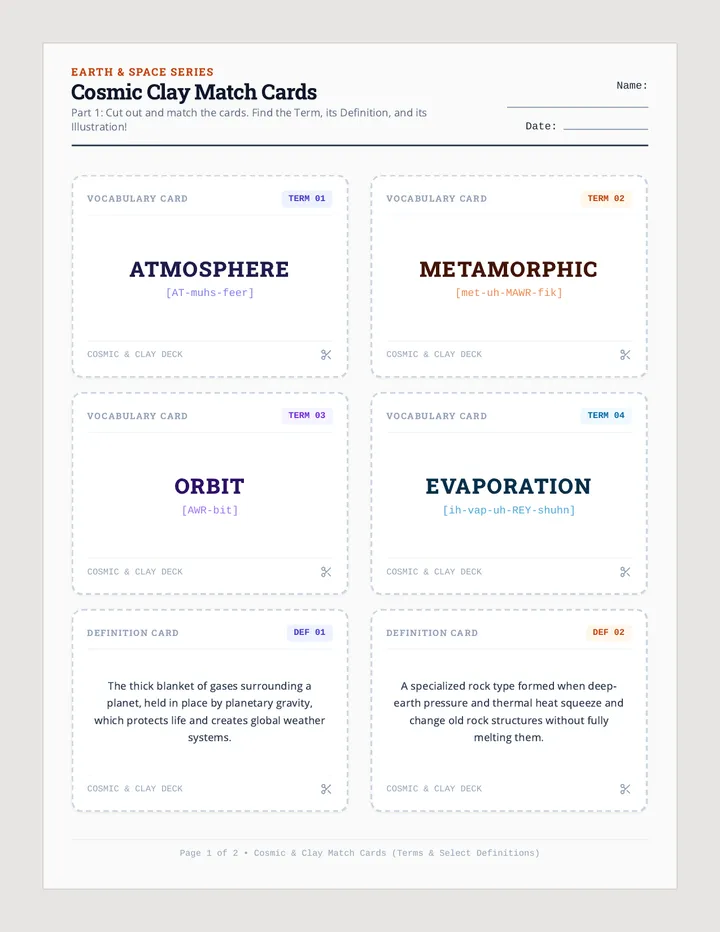
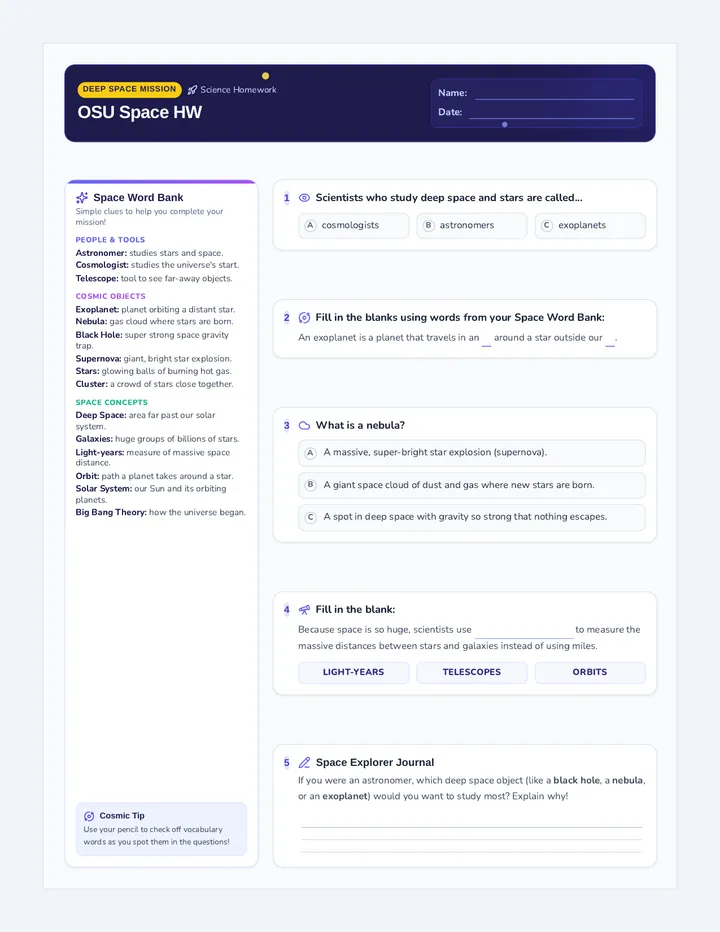
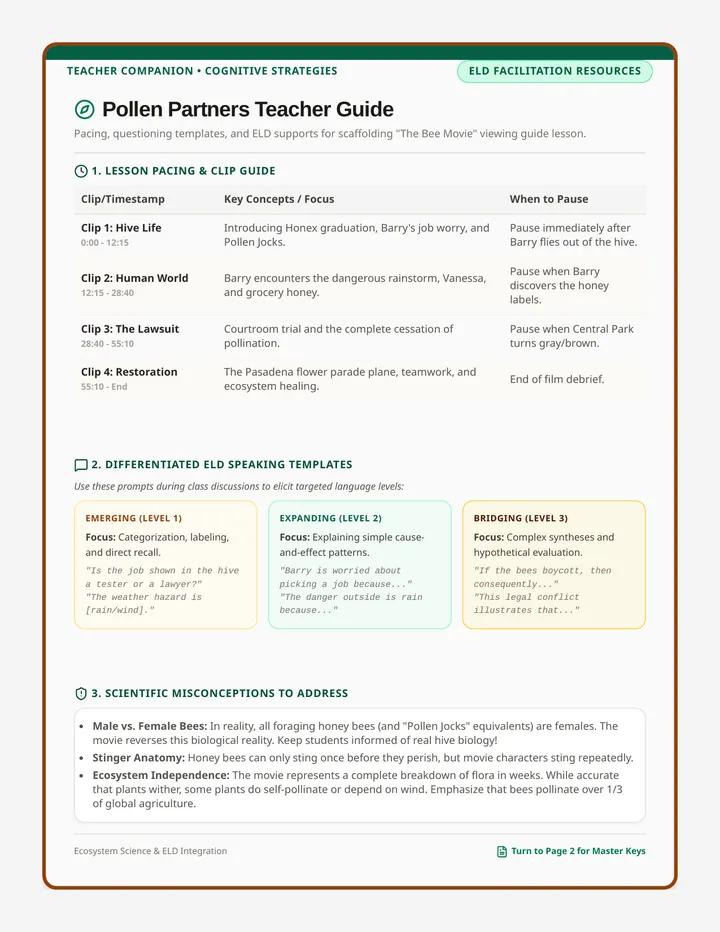
A teacher guide for the 'Human GPS' classroom activity, featuring maze setup diagrams, role definitions, and troubleshooting tips for 5th-grade instruction.
A facilitation guide for teachers leading 'The Nature Reset' lesson, including pacing, discussion prompts, biological background on cortisol, and materials management.
A data collection sheet for 'The Nature Reset' experiment, featuring pre- and post-experiment stress and energy scales, observation notes, and reflection questions.
A visual presentation for 'The Nature Reset' lesson, including a city vs. forest warm-up, embedded video, experiment instructions, and discussion prompts.
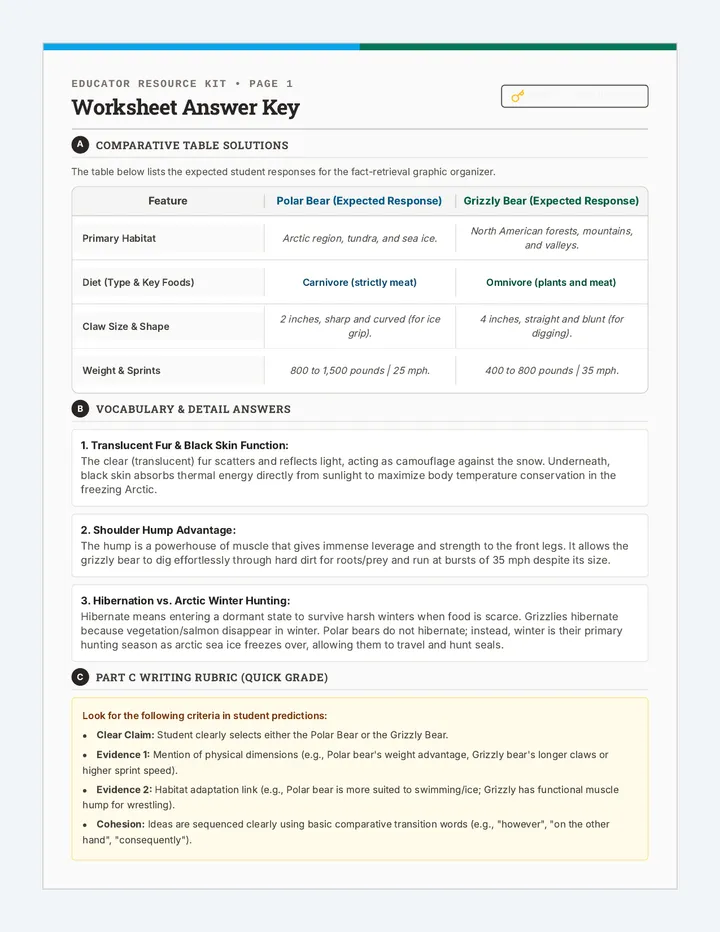
A detailed two-page field guide featuring "notebook-style" observations of 12 subterranean animals, focusing on their scientific observations and underground nesting habits.
A coloring sheet featuring the 12 subterranean animals in a grid format with large labels for coloring and literacy practice.
Updated page of 12 animal cards for cutting out, now including larger den-dwelling and nesting animals like foxes, badgers, and rabbits.
Updated landscape worksheet with 12 spots for animals that live in tunnels, dens, or nests beneath the soil.
An educator's guide for the Sabertooth Secrets lesson, including a full answer key and instructional notes on Smilodon fatalis.
A student worksheet designed to be used alongside the Sabertooth Secrets presentation, updated to include Smilodon genus and extinction questions.
A visual slide deck about Sabertooth cats, featuring instructional text on biological classification, prehistoric facts, and Smilodon genus specifics with comprehension questions.
A quick formative assessment for the end of the lesson, featuring two identical tickets per page for easy printing. It tests students on layer sequencing, fossil relative dating, and the formation process.
A comprehensive lesson plan for teachers, outlining objectives, materials, and a step-by-step instructional procedure for teaching sedimentary rock formation and fossil sequencing.
A teacher's answer key for the Rock Record Worksheet, providing correct sequencing, explanations for layer relative dating, and evidence for ancient plant life.
A student worksheet for practicing the sequencing of sedimentary rock formation and analyzing fossil layers. It includes a step-by-step ordering task and short-answer questions.
A comprehensive visual presentation covering the definition of sedimentary rocks, the four-step formation sequence, and the concept of relative dating using rock layers and fossils.
An educational anchor chart illustrating the four-step sequence of sedimentary rock formation and the concept of fossil age layers. It features a field-journal aesthetic with clear visual diagrams of rock stratification.
A simplified reading passage about periodical cicadas adapted for 3rd-grade readers, maintaining key science vocabulary and homework formatting while removing the original questions.
A quick exit ticket for the Grumble Guts lab to assess student understanding of mechanical vs chemical digestion and organ roles.
A digestive system mapping activity where students label and color the organs, including a simplified version for students who need more visual support.
A comprehensive teacher guide for the Grumble Guts lab, featuring a detailed 60-minute pacing guide, materials list, answer keys, and sensory-focused teaching tips for diverse learners.
A pictorial lab observation sheet for students with significant intellectual disabilities, focusing on visual steps and simple 'small vs big' recognition.
A guided lab worksheet for the Grumble Guts experiment, featuring organ matching (including intestines, liver, and gallbladder), a step-by-step procedure, and observation areas for modified learners.
A visual presentation for the Grumble Guts lab, introducing the concepts of mechanical and chemical digestion, helper organs (liver/gallbladder), and guiding students through the cracker-and-bag simulation.
A teacher resource for the Ecosystem Explorers lesson, including instructional pacing, differentiation strategies, and a full answer key for the Detective Worksheet. Designed with a clean, professional layout for easy reference.
A field-journal styled worksheet for students to apply their knowledge of ecosystems. Includes identification matching, component categorization, a habitat sketching area, and a reflective writing prompt on biodiversity.
A visual presentation introducing the concept of ecosystems, focusing on forest, desert, and ocean biomes. Includes key vocabulary, characteristics of different ecosystems, and the importance of biodiversity.
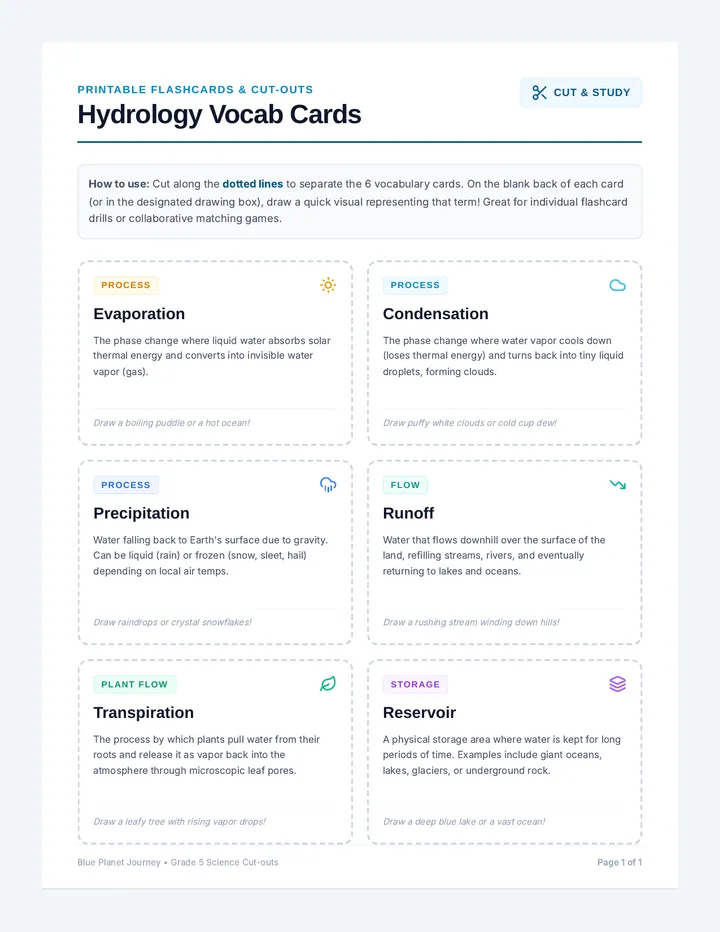
A set of 12 printable vocabulary cards featuring key ecosystem terms and definitions. Each card includes a clear definition, a thematic icon, and a specific ecosystem category, designed with a clean field guide aesthetic.
A teacher facilitation guide for the 'Think Outside the Box' lesson, providing video pause points, discussion prompts, neurodiversity-focused teaching tips, and a pacing guide.
A visual anchor chart comparing the 'Mystery Drink' metaphor to the reality of computer viruses, designed as a classroom reference for safe downloading practices.
A set of 4-up printable exit tickets for 'The Aqueduct Challenge', prompting students to reflect on how 'thinking differently' contributed to their team's engineering success.
A creative comic strip template where students illustrate a character facing an online 'Mystery Download' to demonstrate their understanding of malware risks and permission-seeking behavior.
A comprehensive assessment rubric for 'The Aqueduct Challenge', evaluating students on water transport success, innovation, teamwork (neurodiversity focus), and adherence to engineering constraints.
Visual slide deck for classroom instruction, featuring the '5 Internet Safety Tips' video, an analysis of the 'Mystery Drink' metaphor, and guidelines for the comic strip activity.
A student activity guide for 'The Aqueduct Challenge', featuring mission constraints, a materials checklist, and a 'blueprint' area for students to sketch their engineering designs before building.
A comprehensive teacher facilitation guide for the Virus Metaphor lesson, including learning objectives, a detailed pacing guide, and strategic video pause points for classroom discussion.
A set of interactive instructional slides for 'The Aqueduct Challenge', including a warm-up comparison, the embedded ADHD awareness video, clear engineering challenge constraints, and reflection prompts on neurodiversity and teamwork.
The updated Brain Command Slides Updated material with corrected font sizes for labels on the Touch slide to ensure all text is at least 24px.
A visual slide deck designed for direct instruction on the five senses and their neural connection to the brain, featuring high-impact typography and clear pathway diagrams.
The answer key for the Sensor System Check Quiz, providing correct answers for the multiple choice, labeling, and short-response sections.
The answer key for the Signal Mapper Organizer, providing the expected scientific terms for stimuli, organs, and brain processing roles for all five senses.
The answer key for the Sensory Signals Reading comprehension questions, providing expected student responses and grading notes for teachers.