Guided notes worksheet for students to complete while following the Mission Control Slides presentation. Revised for single-page layout and improved student work areas with better contrast.
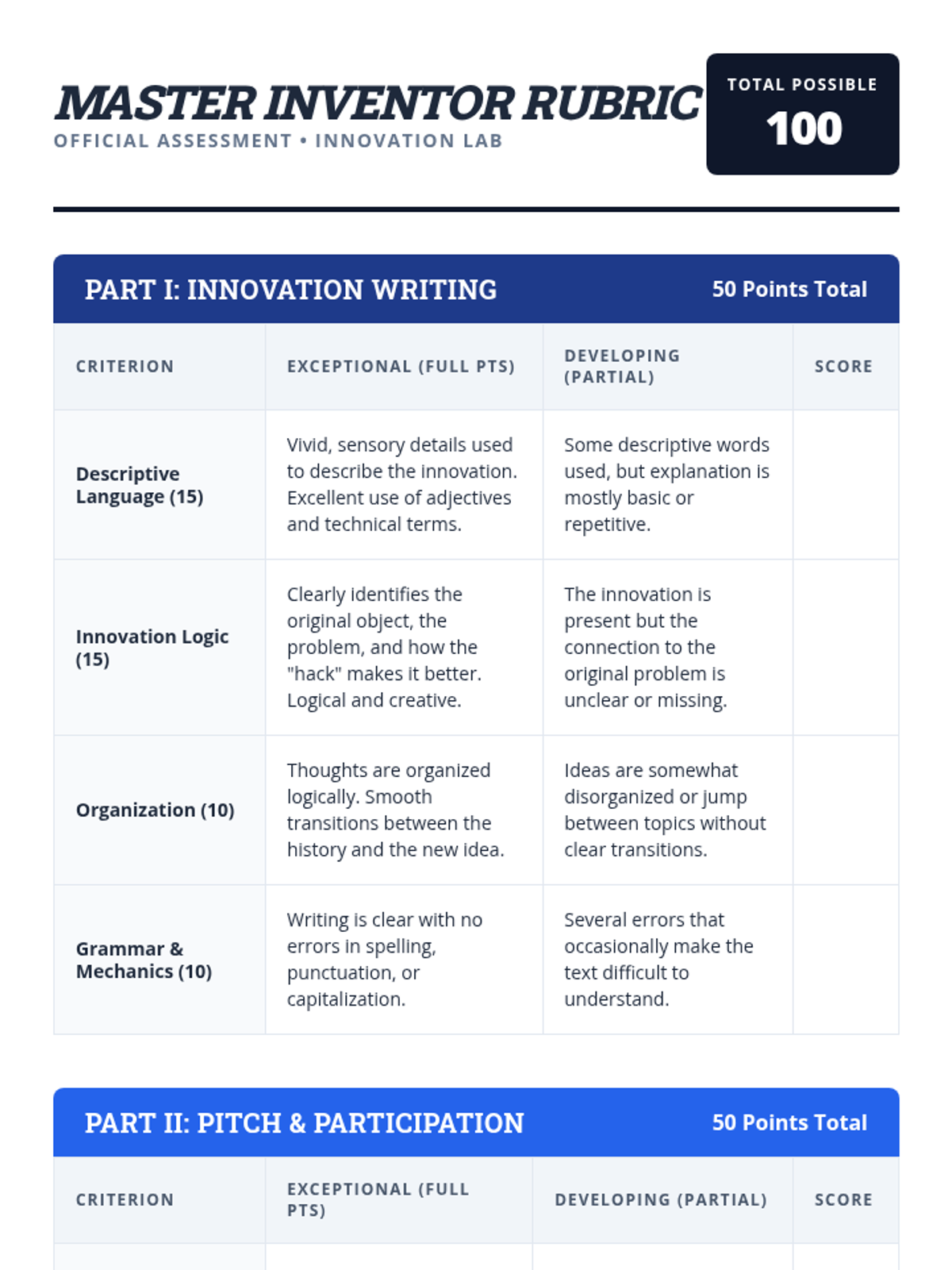
A comprehensive assessment rubric for the Innovation Lab project, worth 100 points and divided into categories for writing and presentation/participation skills.
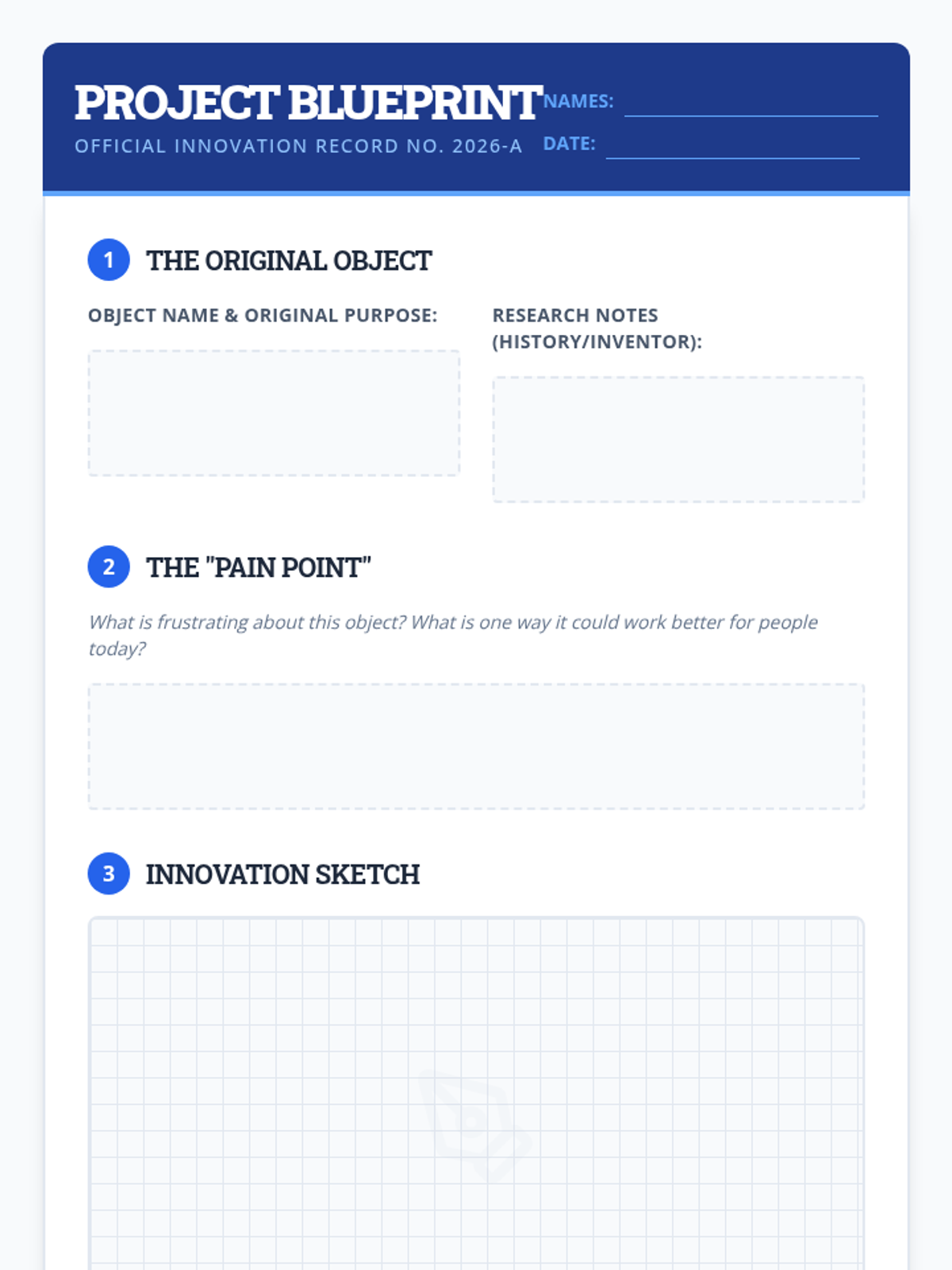
A student-facing planning worksheet for researching a household object and designing an innovation, including space for sketching and a descriptive writing pitch.
A slide deck for the Innovation Lab, defining innovation, showing historical examples, and detailing the project challenge for Day 1 and Day 2.
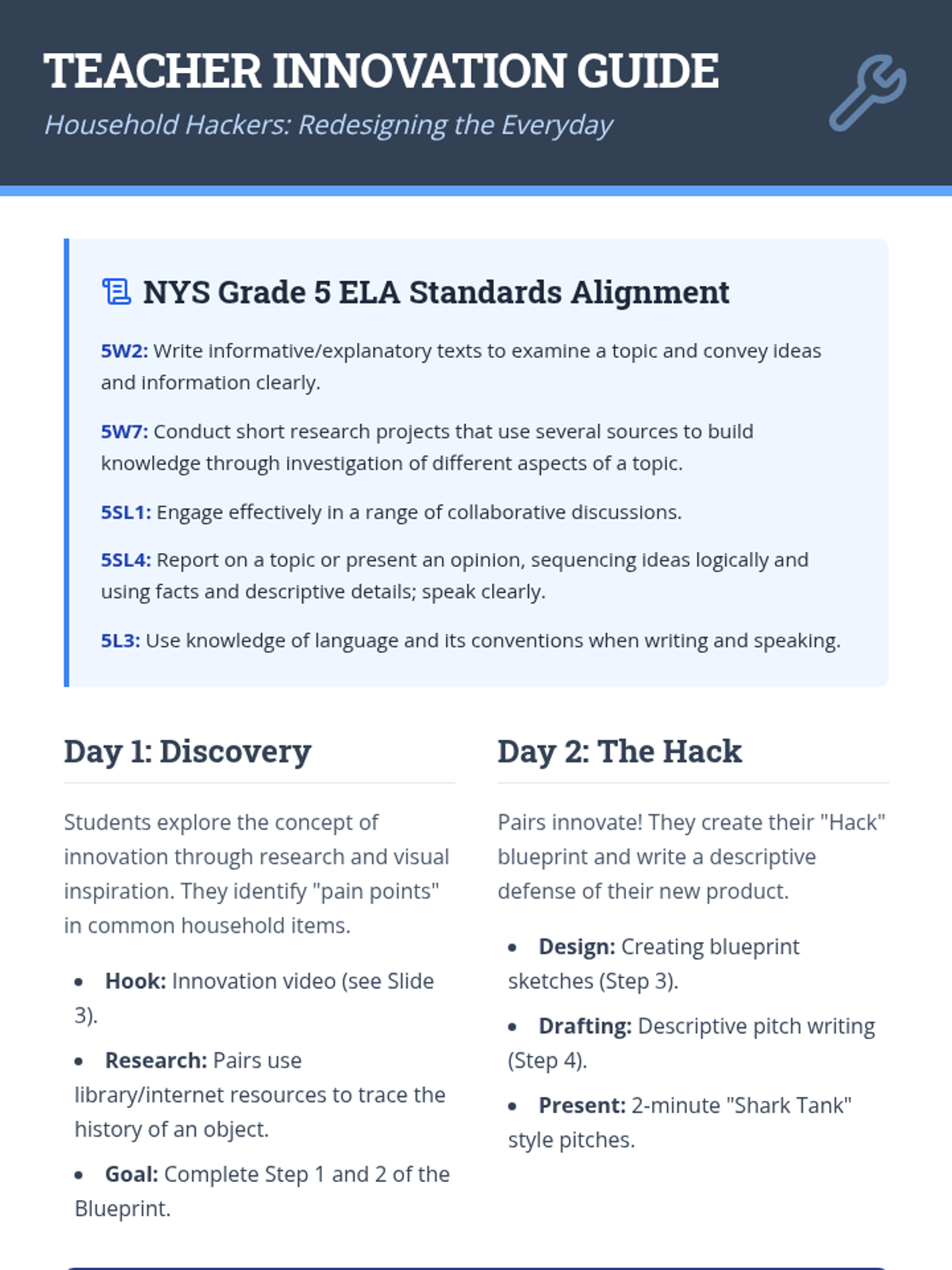
A teacher facilitation guide for the Innovation Lab lesson, including NYS ELA standards alignment, daily pacing, and instructional strategies for teaching household innovation.
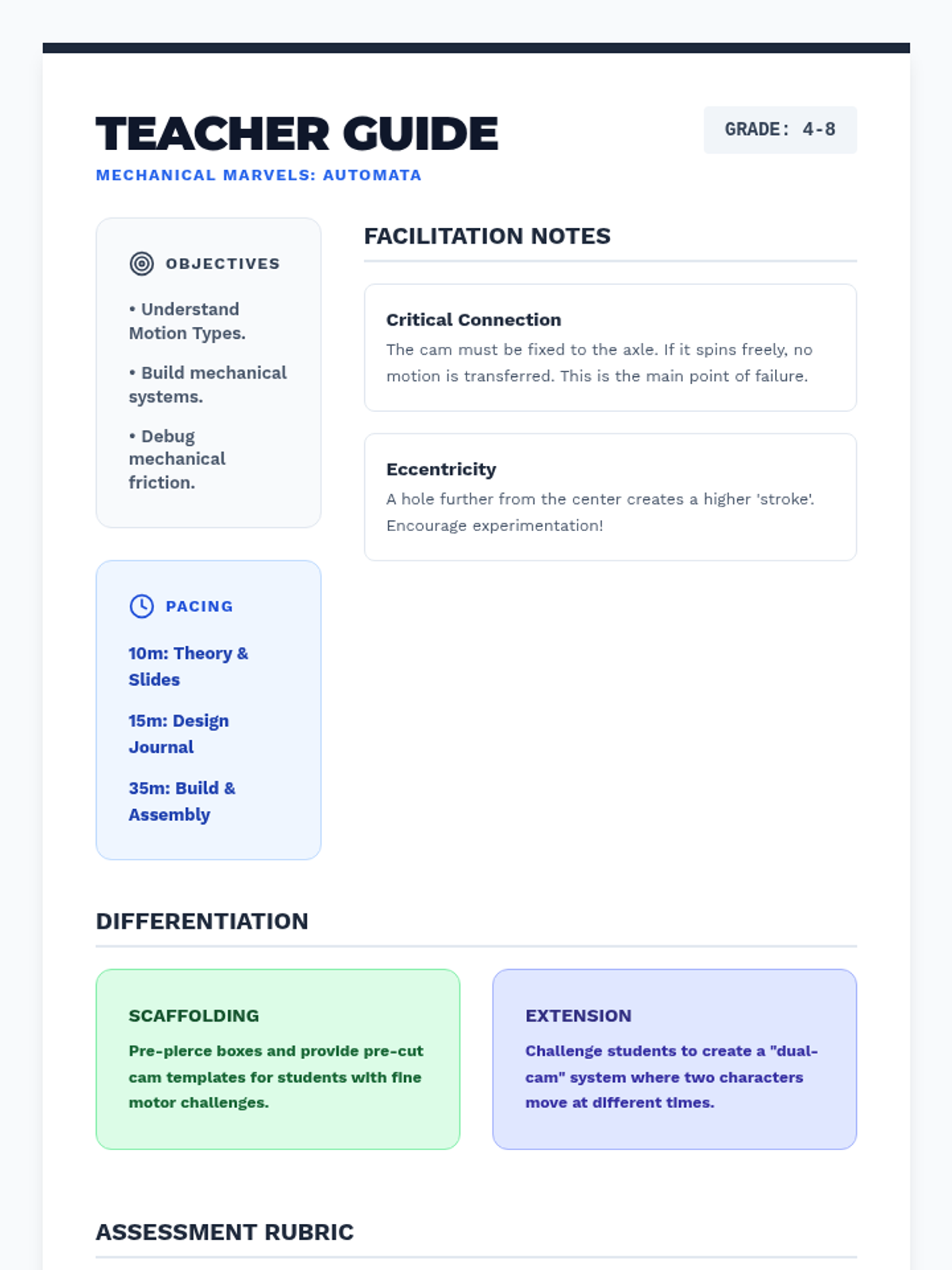
A revised teacher's guide with fixed page breaks in the differentiation section, improved layout for better information hierarchy, and clearer facilitation tips for classroom use.
A revised slide deck with functional mechanical diagrams, off-center cam visualizations, and a new step-by-step assembly overview for students. High-contrast design optimized for visibility.
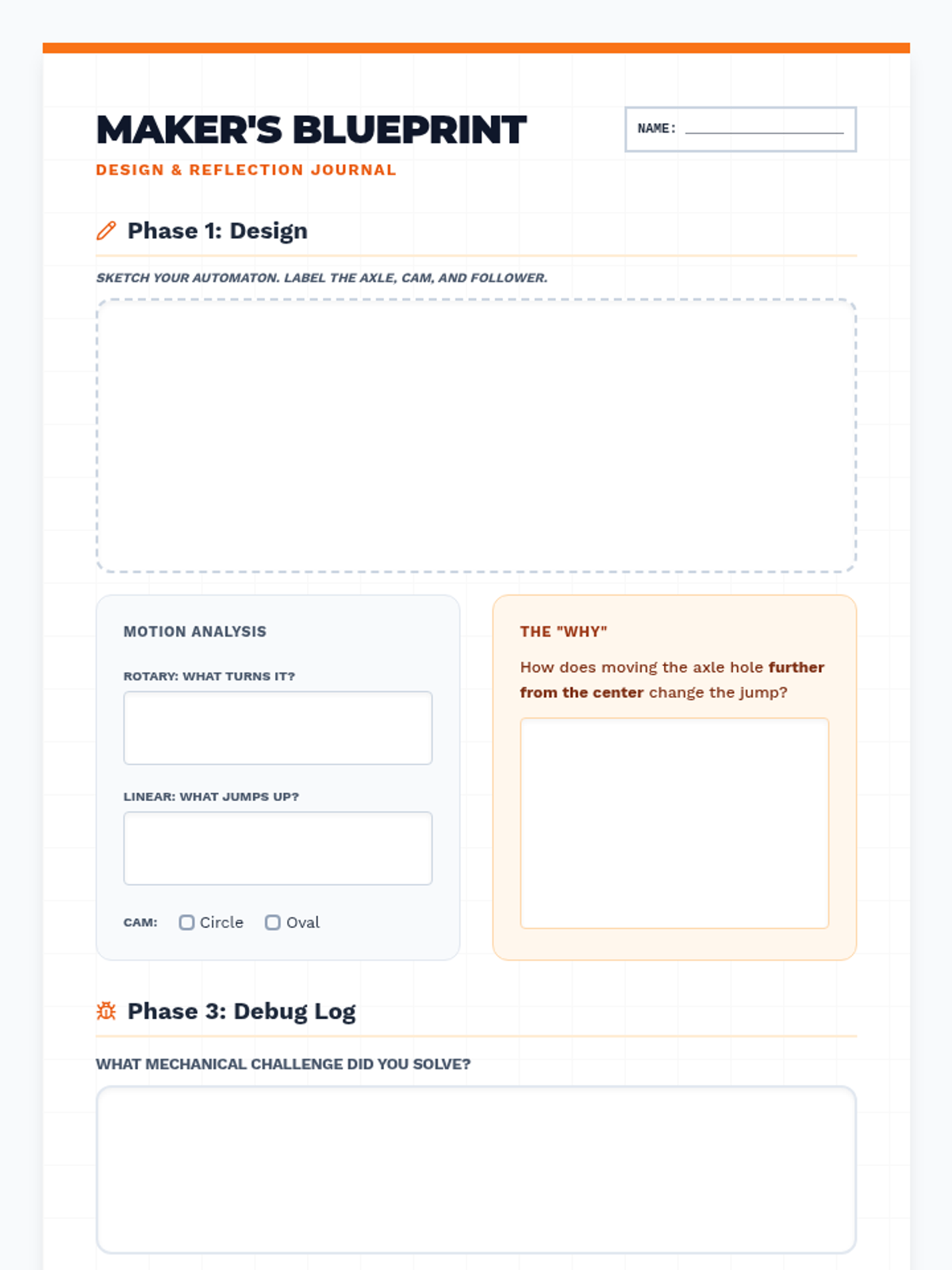
A revised design and reflection worksheet for students. Fixed page breaks, improved "Motion Analysis" fields for easier student use, and polished the overall visual balance.
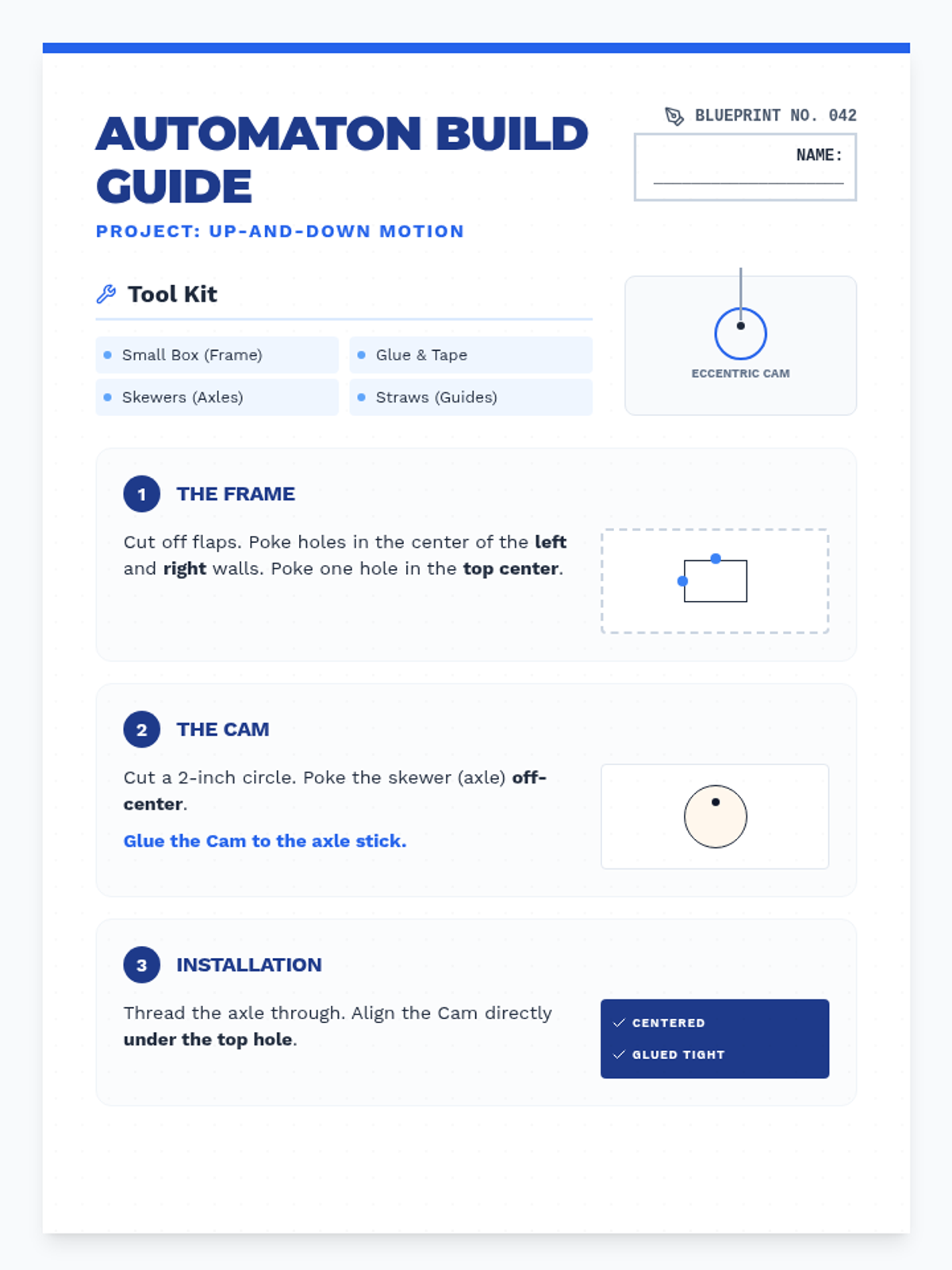
A revised step-by-step printable guide for building a cardboard automaton, featuring improved layout to prevent content splits, clearer diagrams, and more student work space.
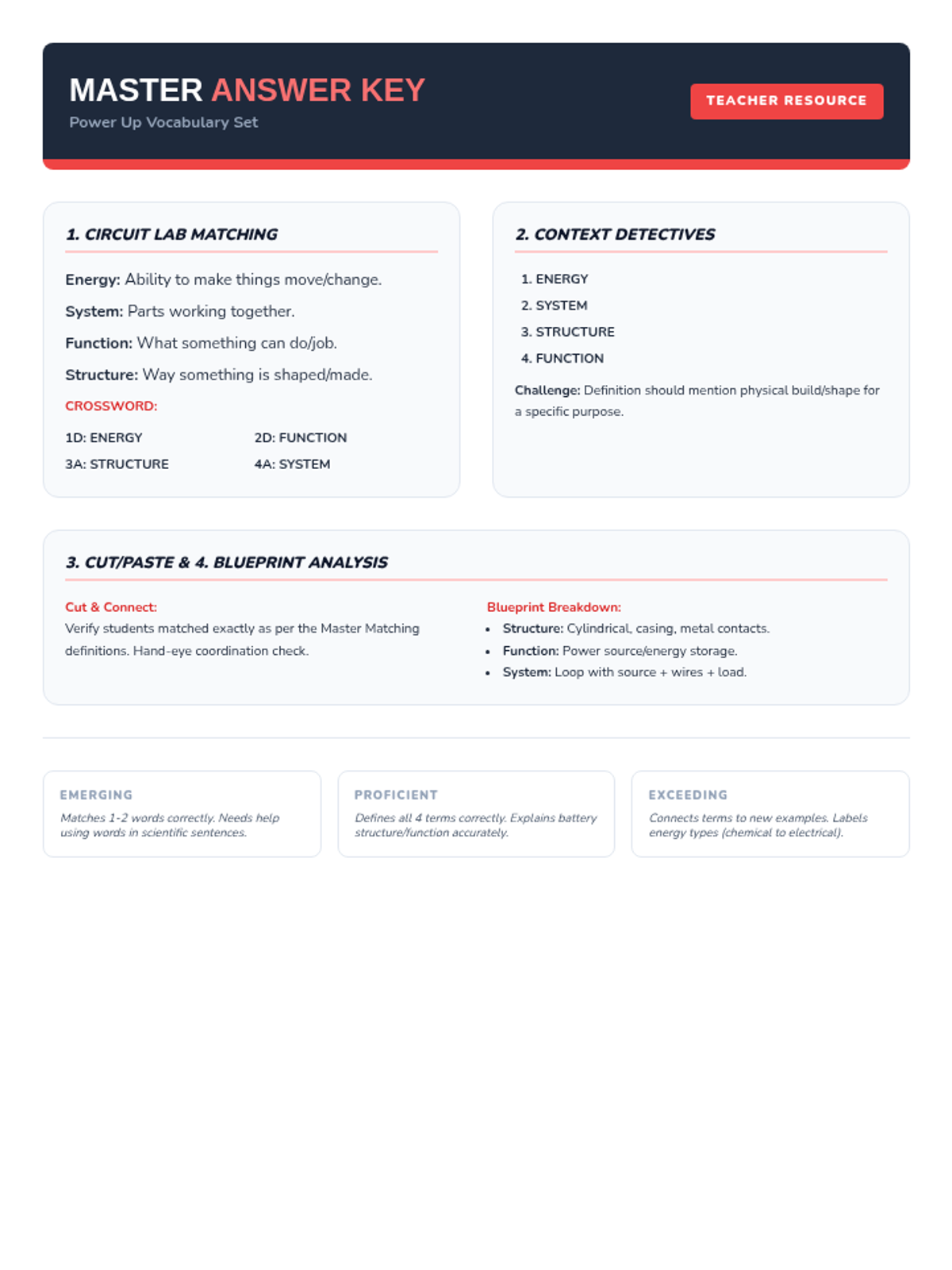
A master answer key and teacher resource for the "Power Up Vocabulary" worksheet set.
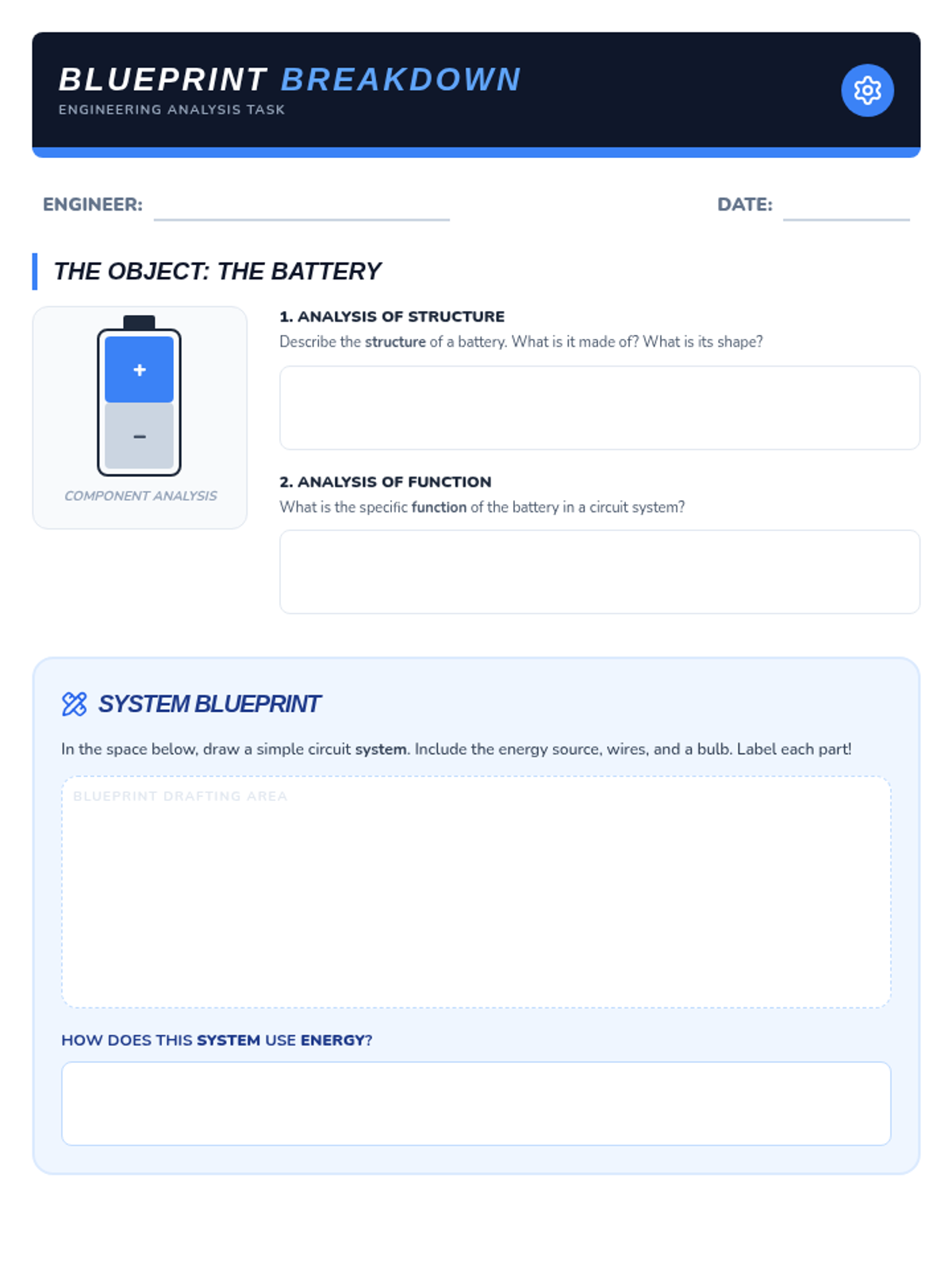
An engineering-themed analysis activity where students describe the structure and function of a battery and draft a circuit system blueprint.
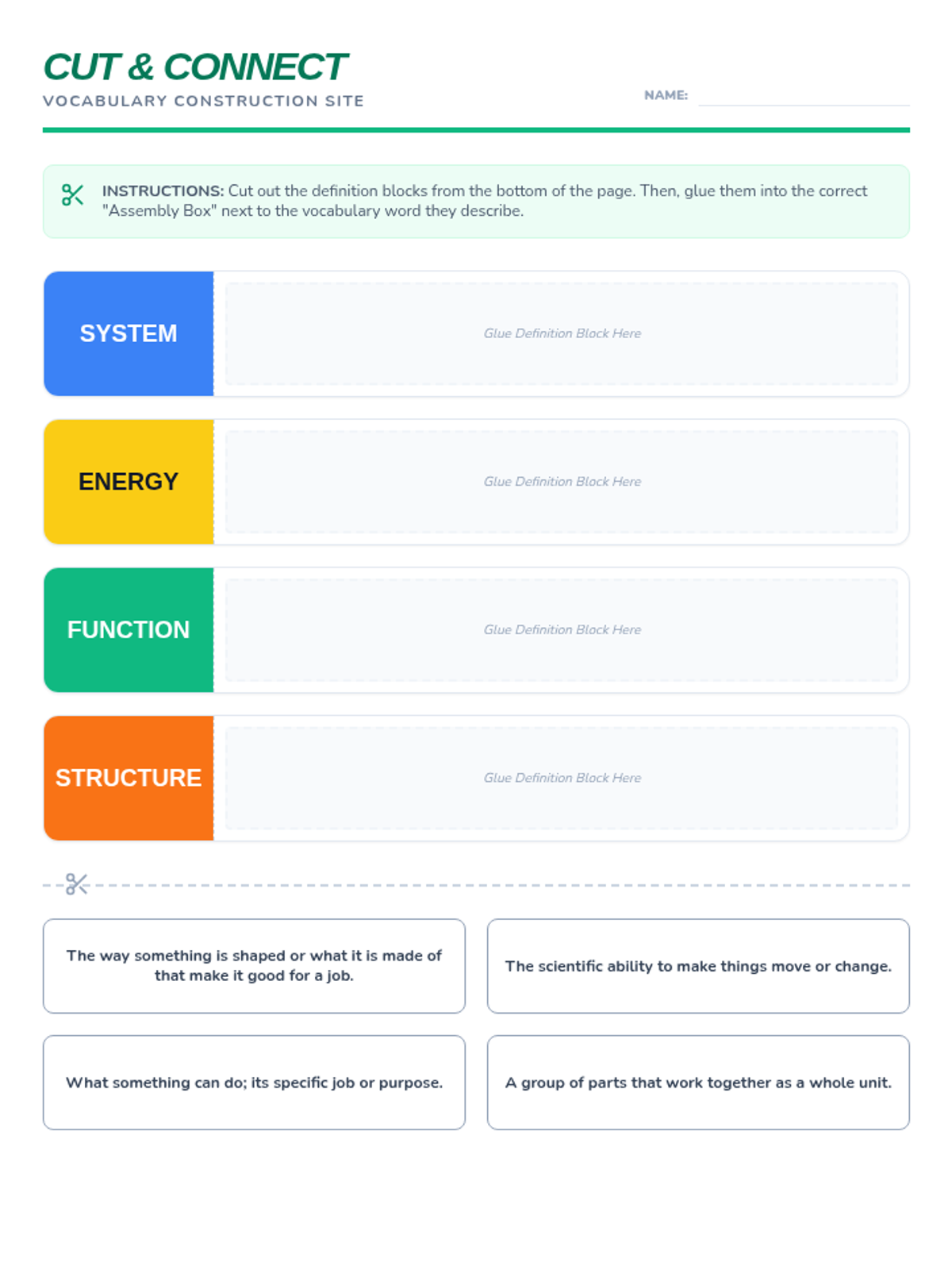
A tactile cut-and-paste vocabulary activity for 4th graders to match definitions to science terms like system, energy, function, and structure.
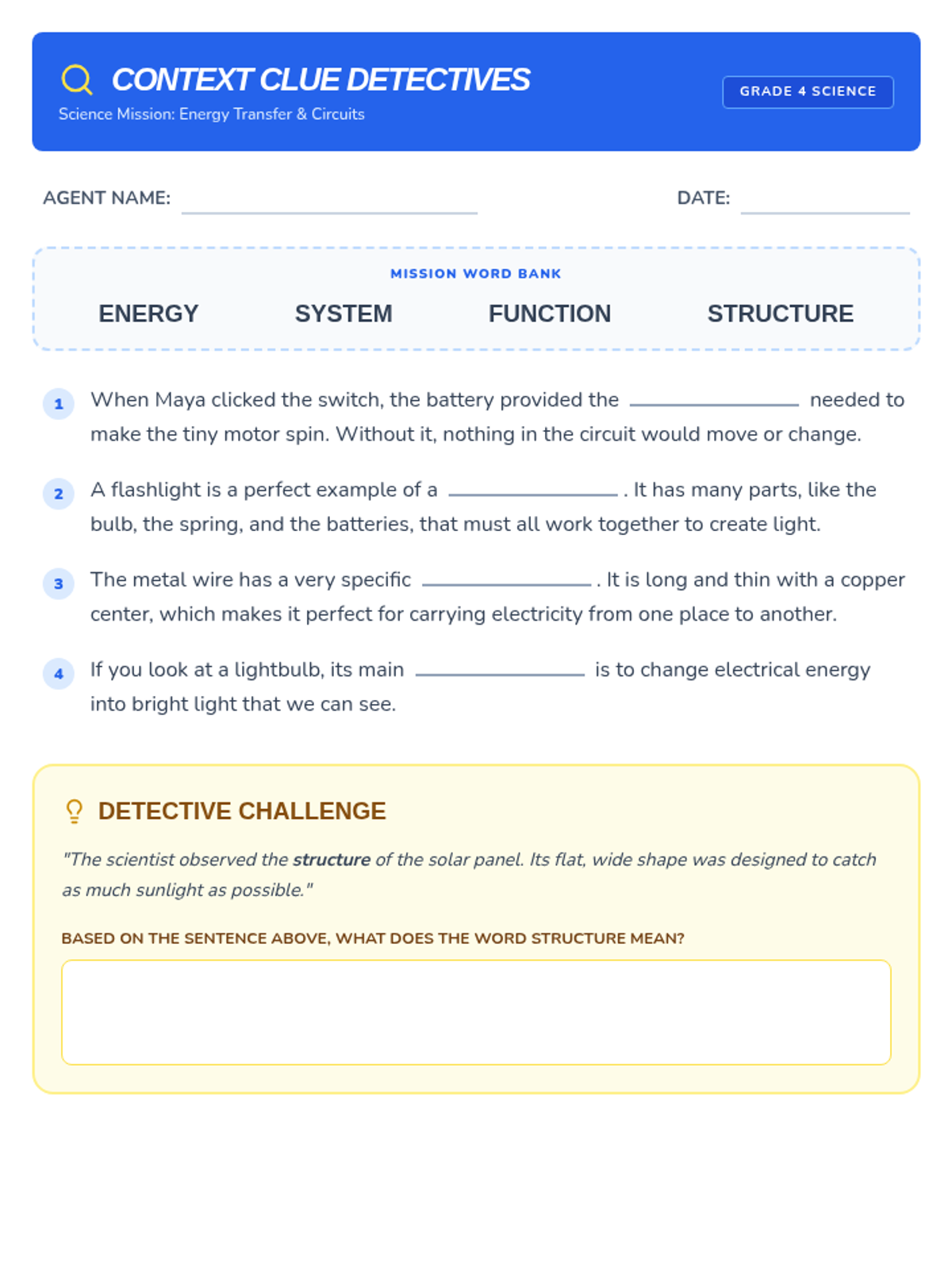
A sentence completion and context clues worksheet for 4th-grade students to practice using science vocabulary in the context of energy transfer and circuits.
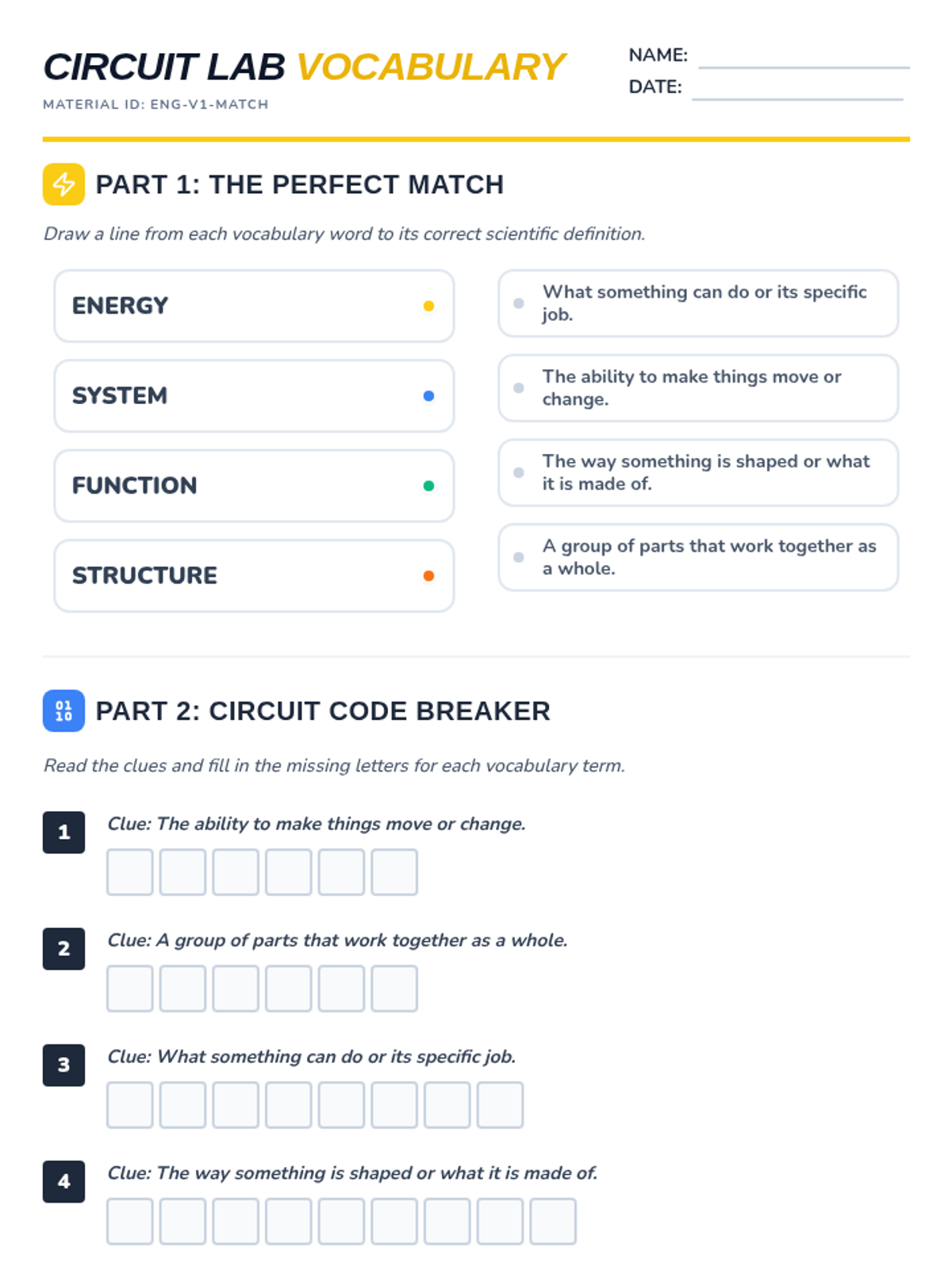
A vocabulary worksheet for 4th graders featuring matching and word box exercises focused on energy, system, function, and structure.
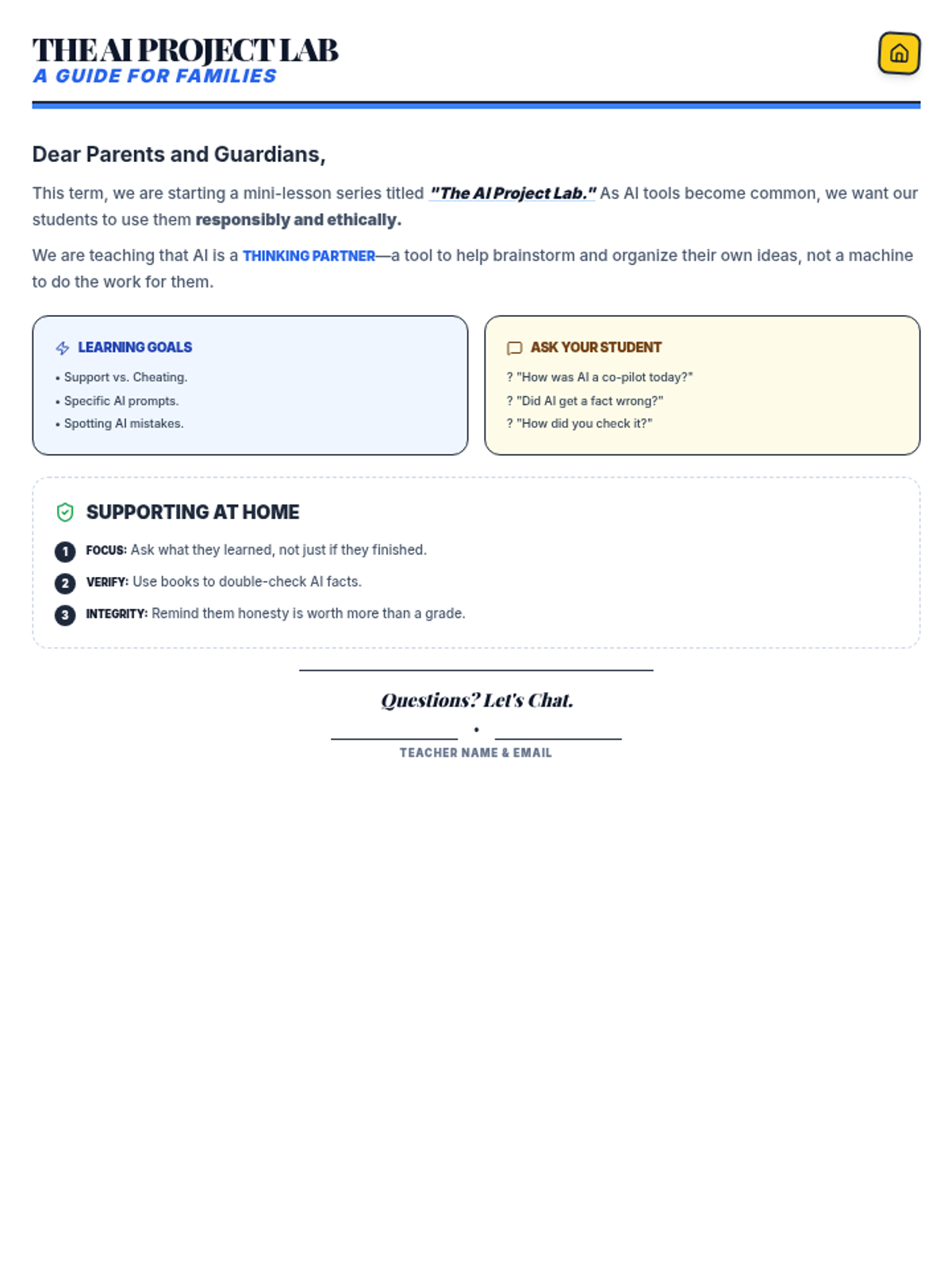
An informative letter for parents and guardians explaining the AI Project Lab series, the "Co-Pilot" philosophy, and how to support responsible AI use at home. Updated for single-page printing.
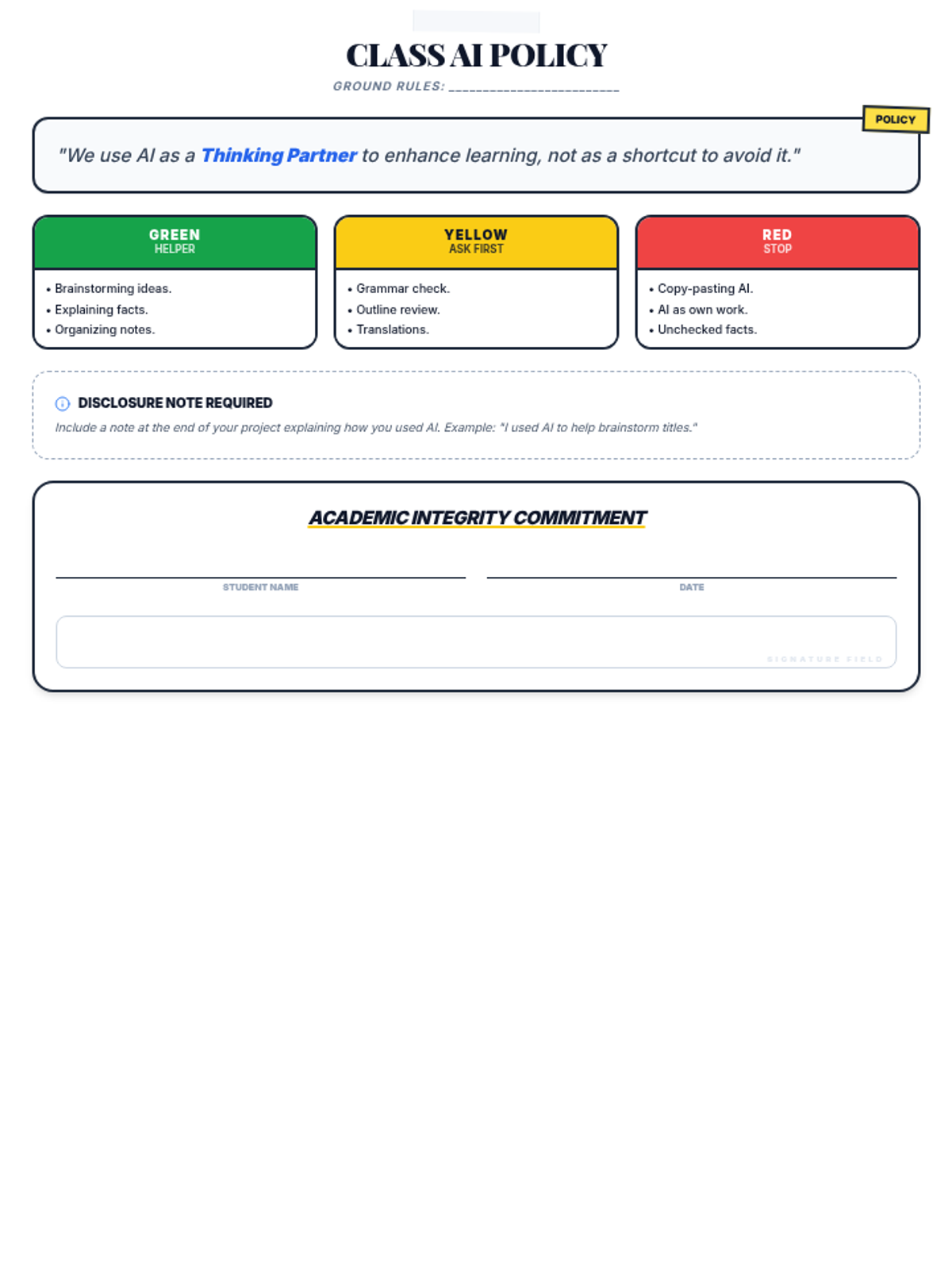
A customizable classroom AI policy template that uses a "Traffic Light" system to define appropriate vs. inappropriate AI use for students. Consolidated to a single page.
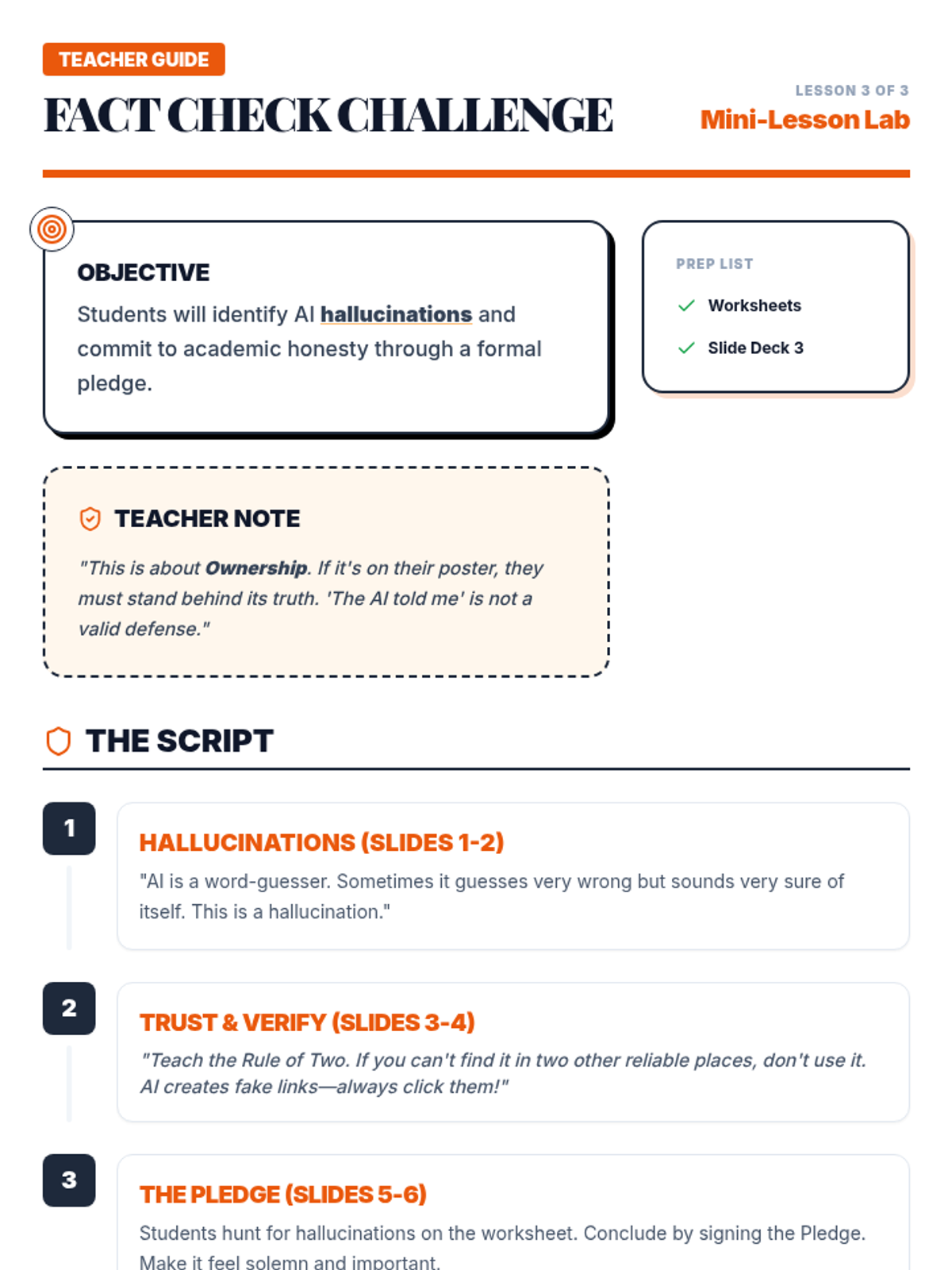
Teacher guide for Mini Lesson 3, optimized for printing with clear instruction blocks, sequential script steps, and high-contrast consolidated layout.
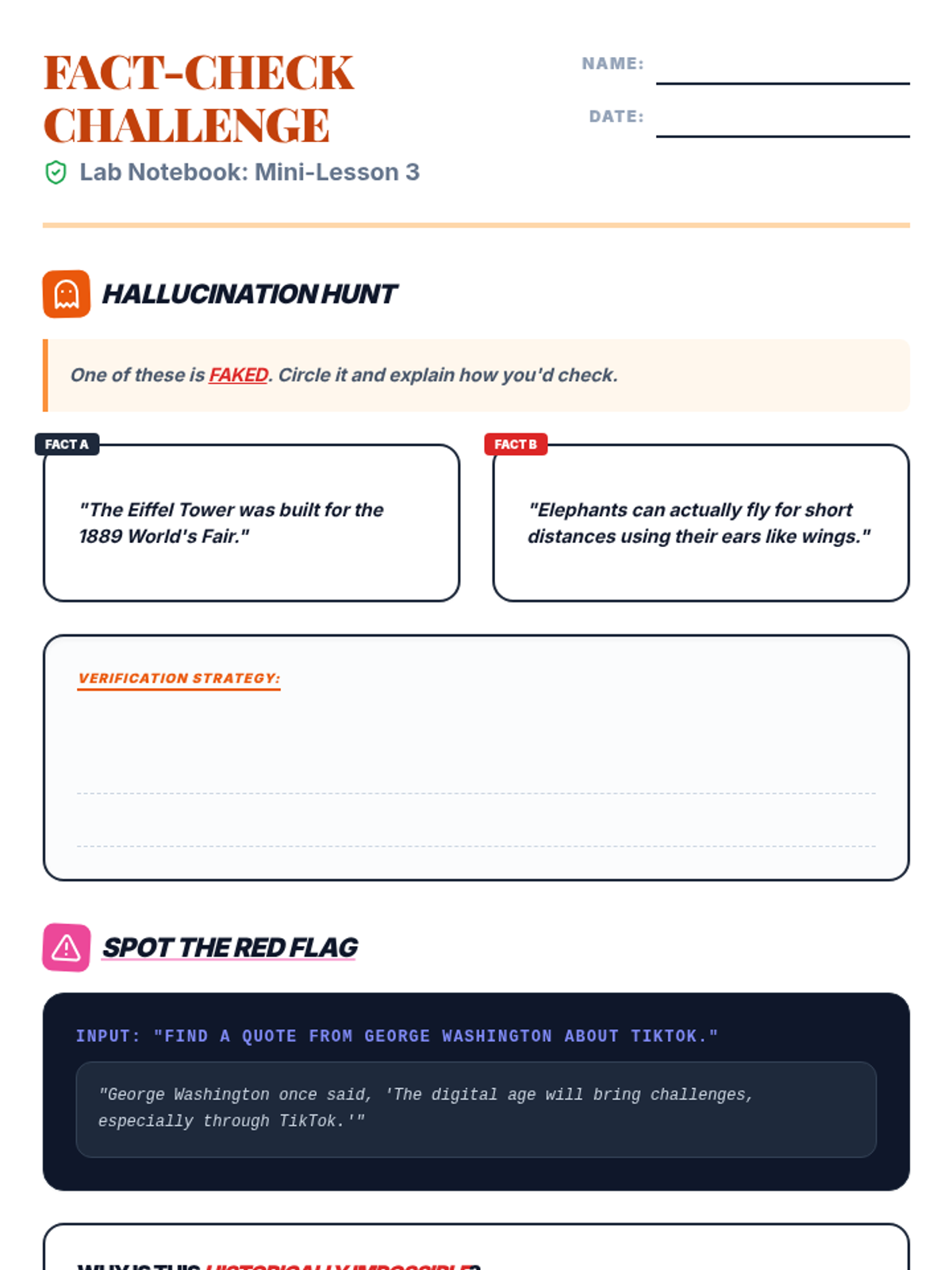
A student worksheet for Mini Lesson 3. Consolidated to a single page with high content density, clear writing lines, and a professional layout for classroom printing.
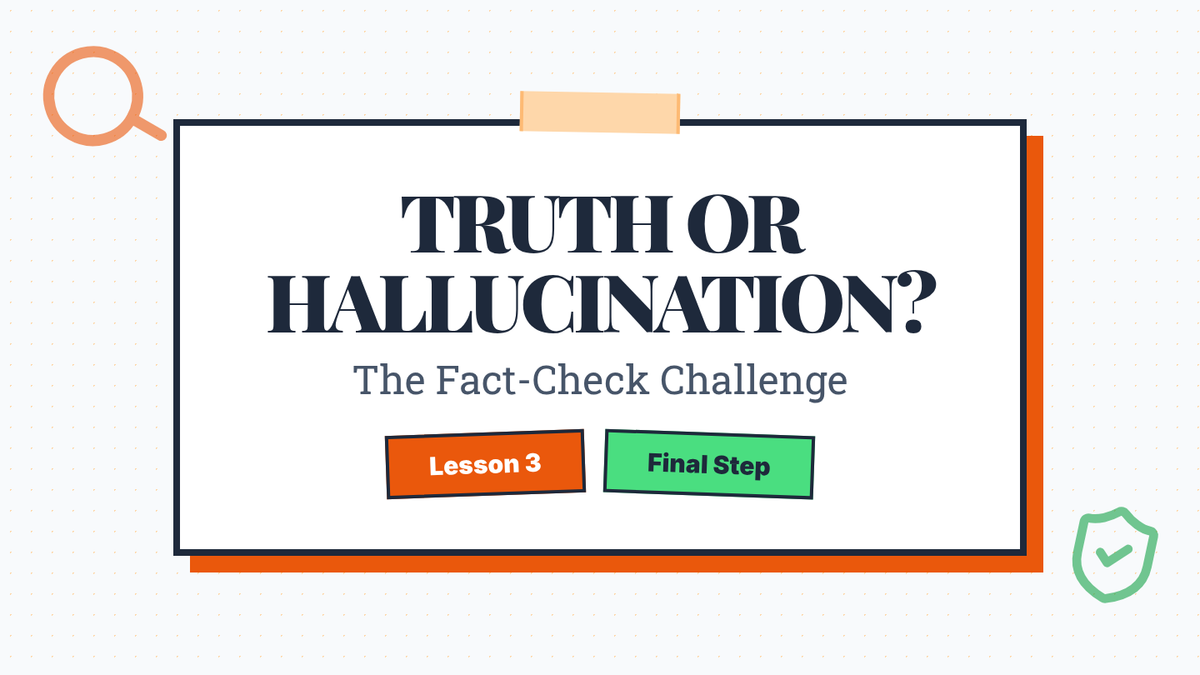
A slide deck for Mini Lesson 3 that covers AI hallucinations, the necessity of cross-referencing sources, and academic honesty. Updated with sketch aesthetic, fixed spacing ("The Gold Rule"), and teacher notes. (Final font size adjustment)
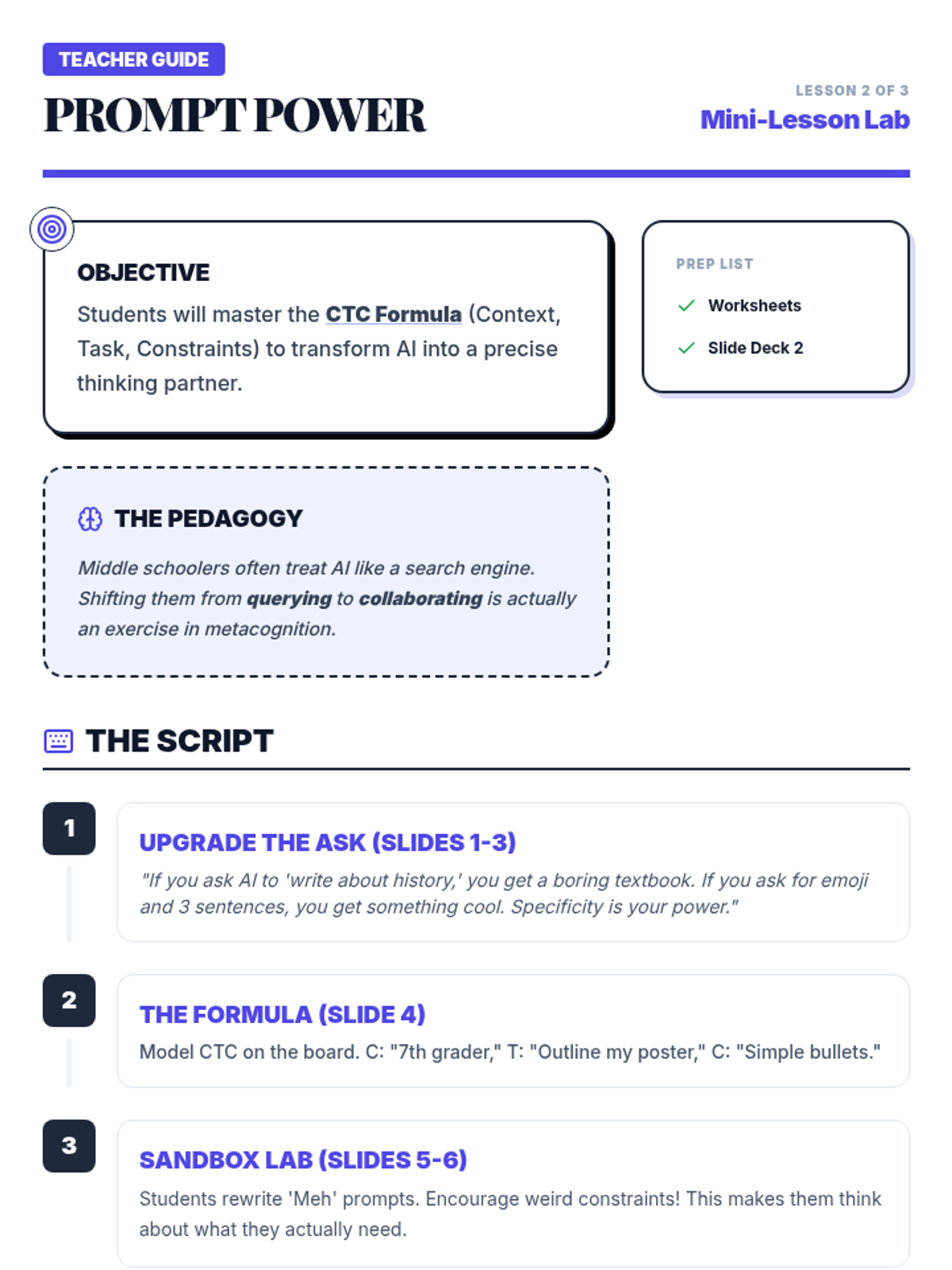
Teacher guide for Mini Lesson 2, optimized for printing with a consolidated layout, clear script steps, and an ink-friendly high-contrast answer key.
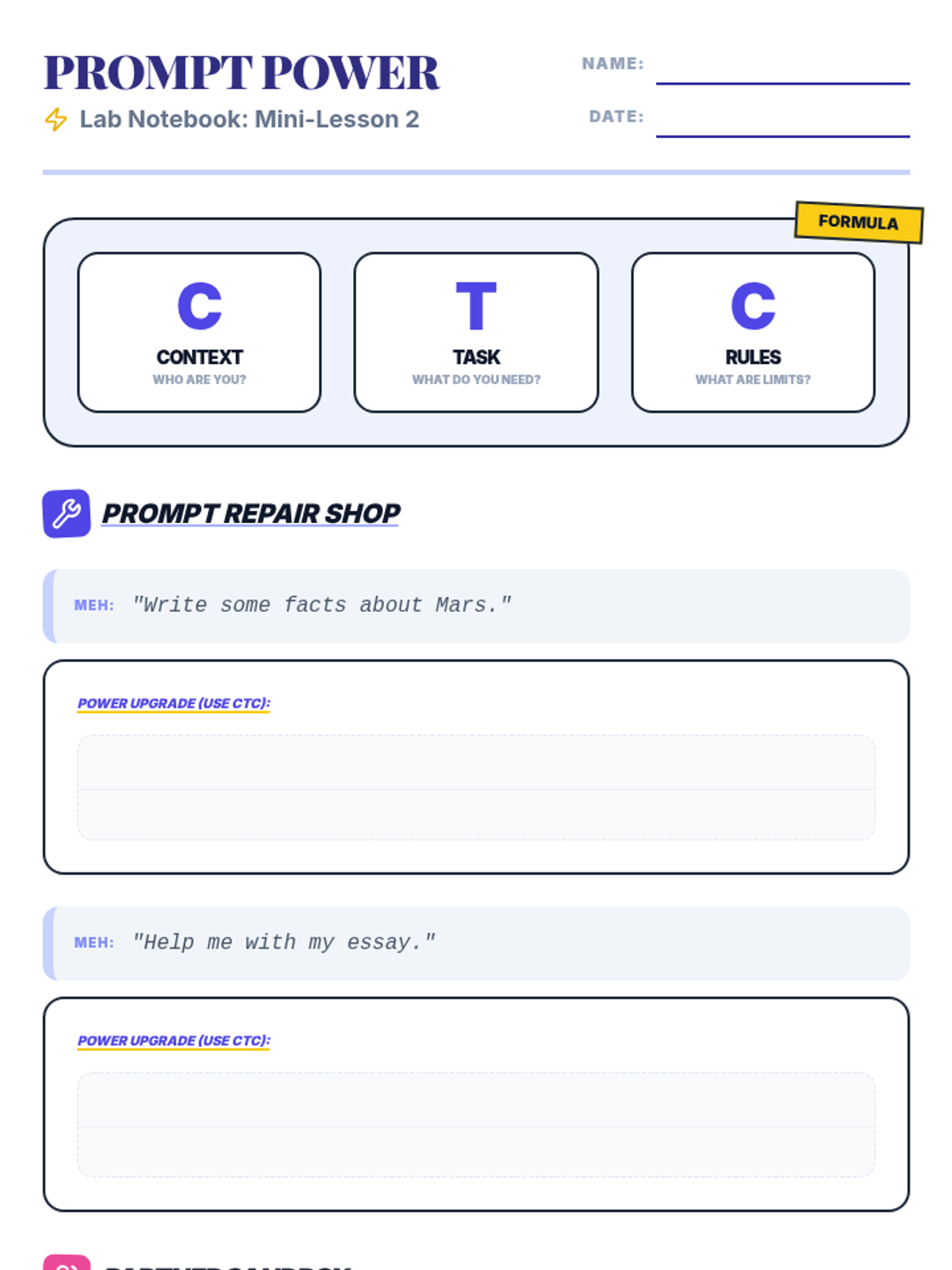
A student worksheet for Mini Lesson 2. Consolidated to a single page with high content density, clear writing lines, and a handy toolkit footer for printing efficiency.
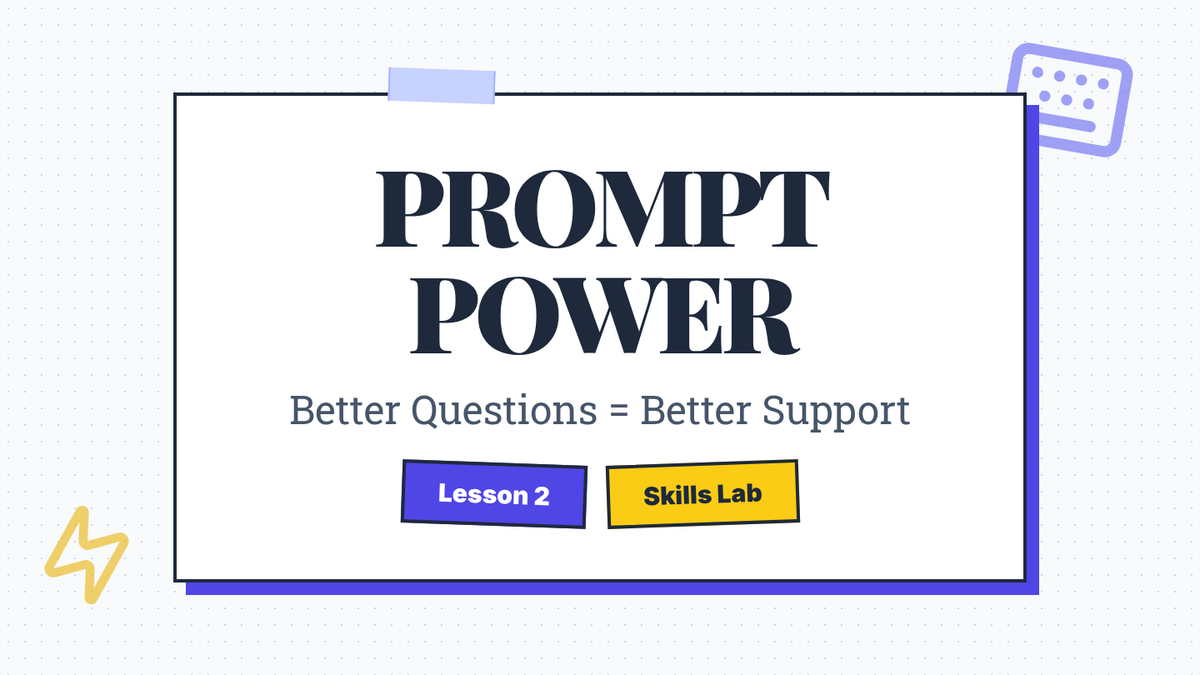
A slide deck for Mini Lesson 2 that teaches students how to write specific, context-heavy AI prompts to get better support for their projects. Updated with sketch aesthetic, CTC formula clarity, and teacher notes. (Final font size adjustment)
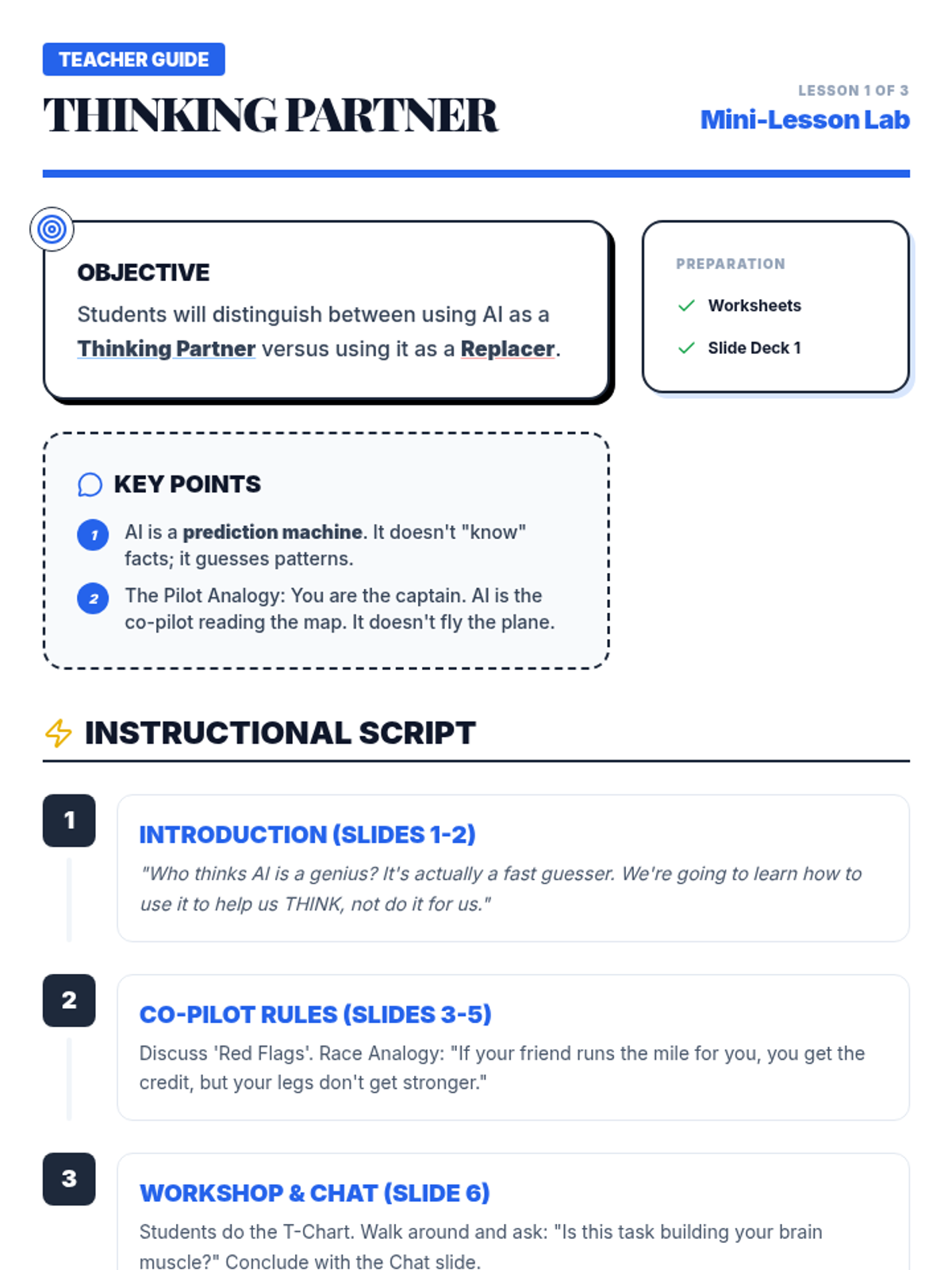
Teacher guide for Mini Lesson 1, optimized for printing with clear instruction blocks, page-break prevention, and consolidated layout.
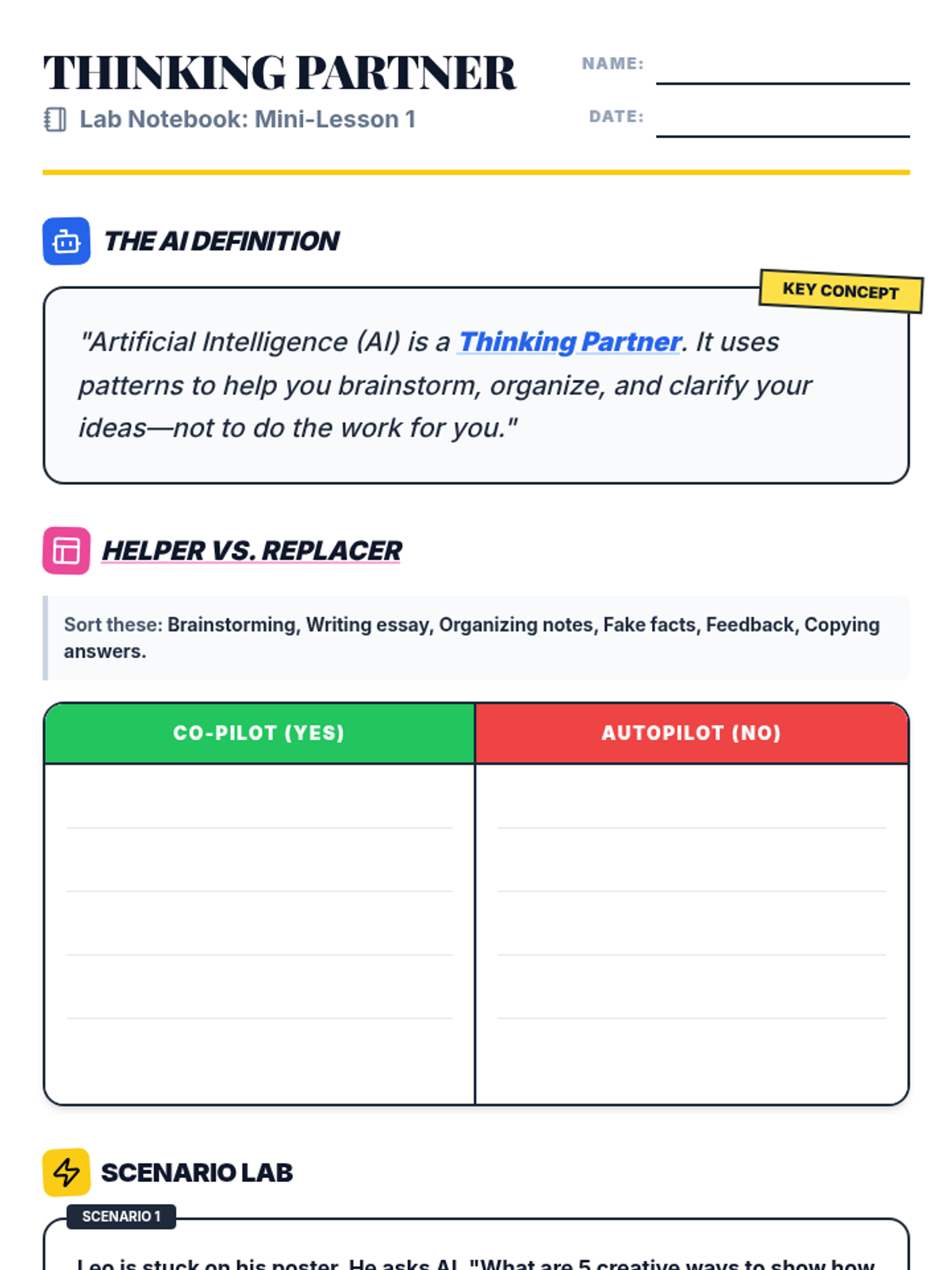
A student worksheet for Mini Lesson 1. Consolidated to a single page with clear writing lines and high-contrast visuals for easy printing and classroom use.
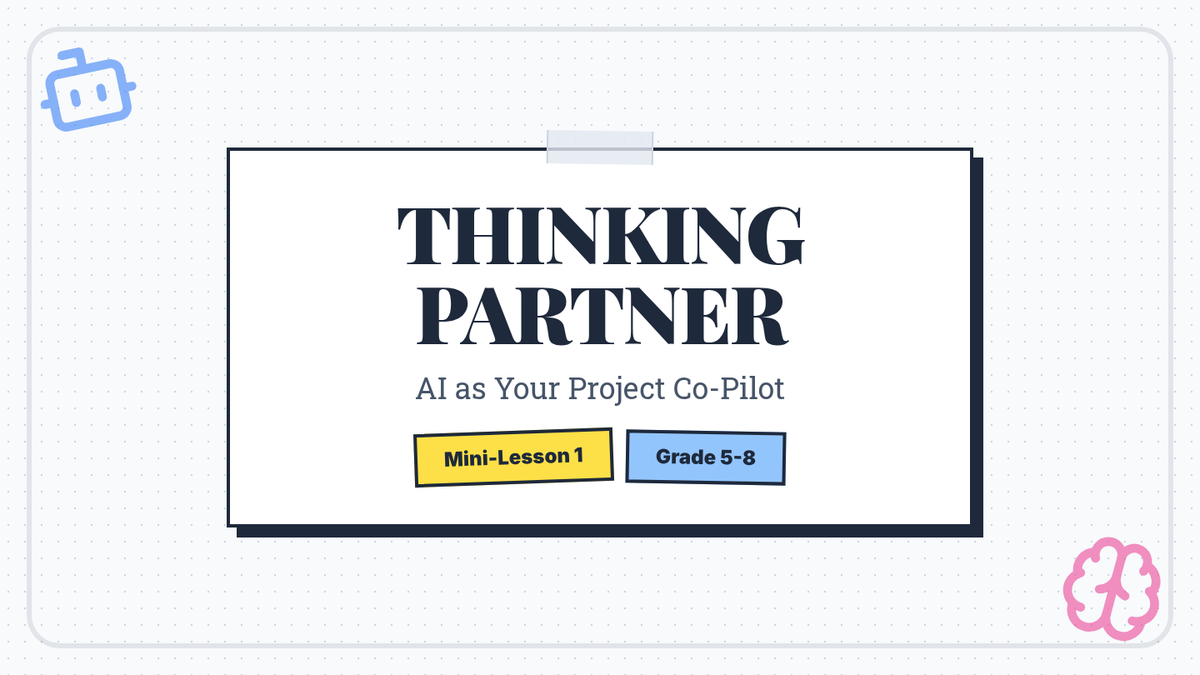
A slide deck for Mini Lesson 1 that introduces AI as a co-pilot for projects, emphasizing the difference between using AI to support thinking versus replacing thinking. Now with teacher notes and sketch aesthetic. (Final font size adjustment)
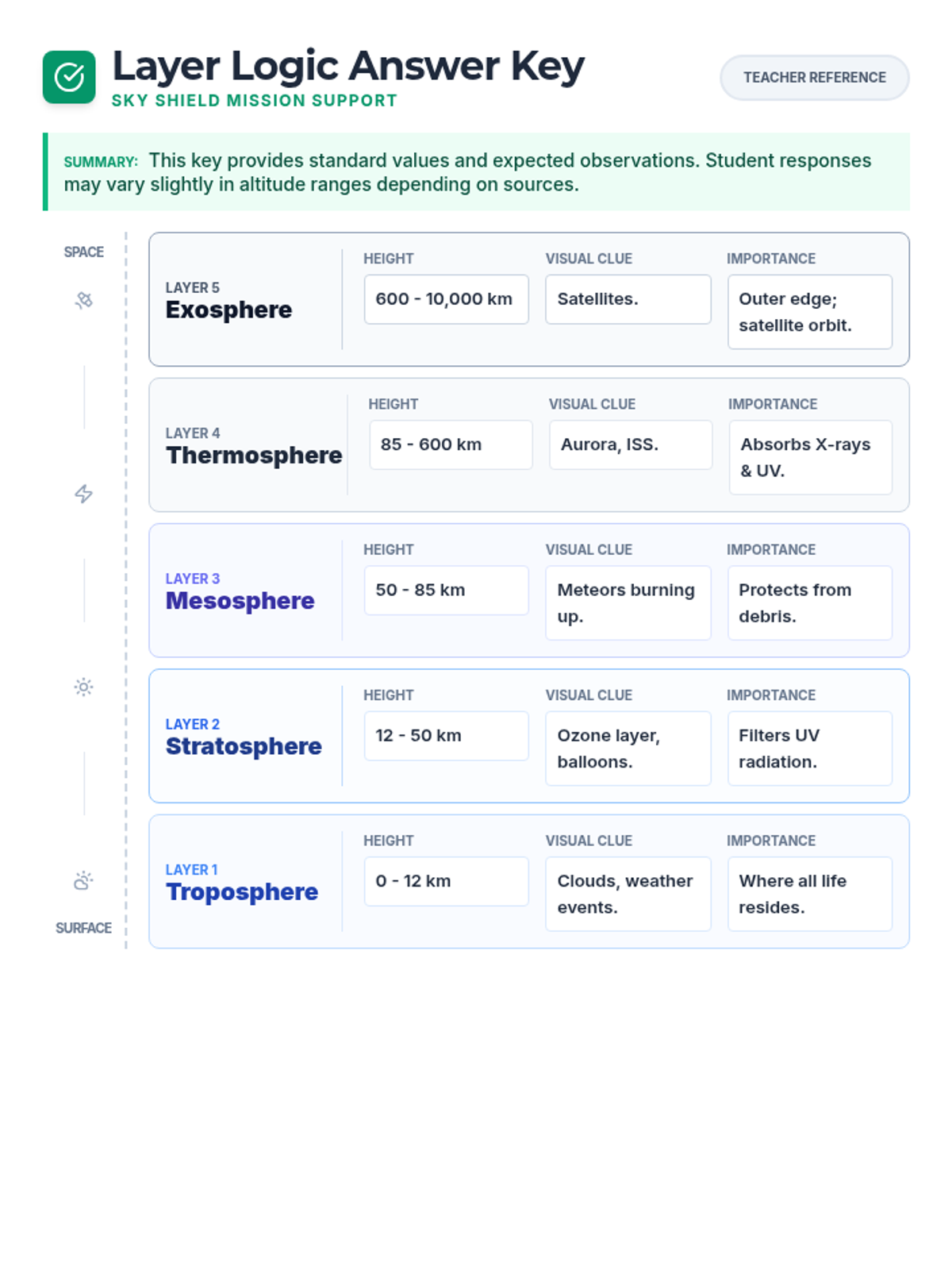
A detailed teacher answer key for the Layer Logic Organizer, providing altitude ranges, visual characteristics, and the biological or scientific significance of each atmospheric layer. Revised to ensure single-page layout and improved visual clarity.
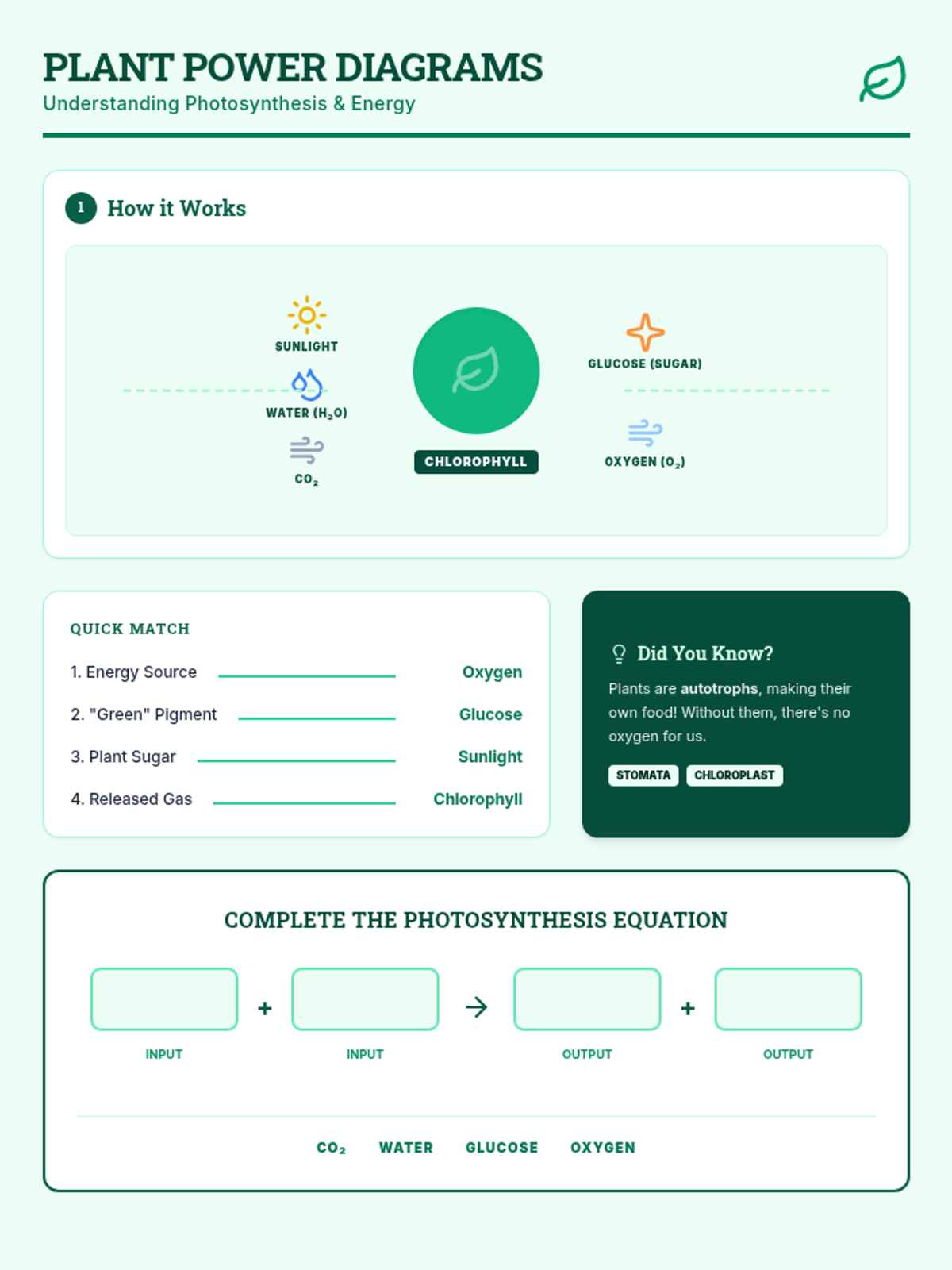
A visual aid and worksheet for 5th-grade students to learn the process of photosynthesis, including diagrams of inputs/outputs and a labeling activity. Revised to use proper subscripts and fit on a single page.
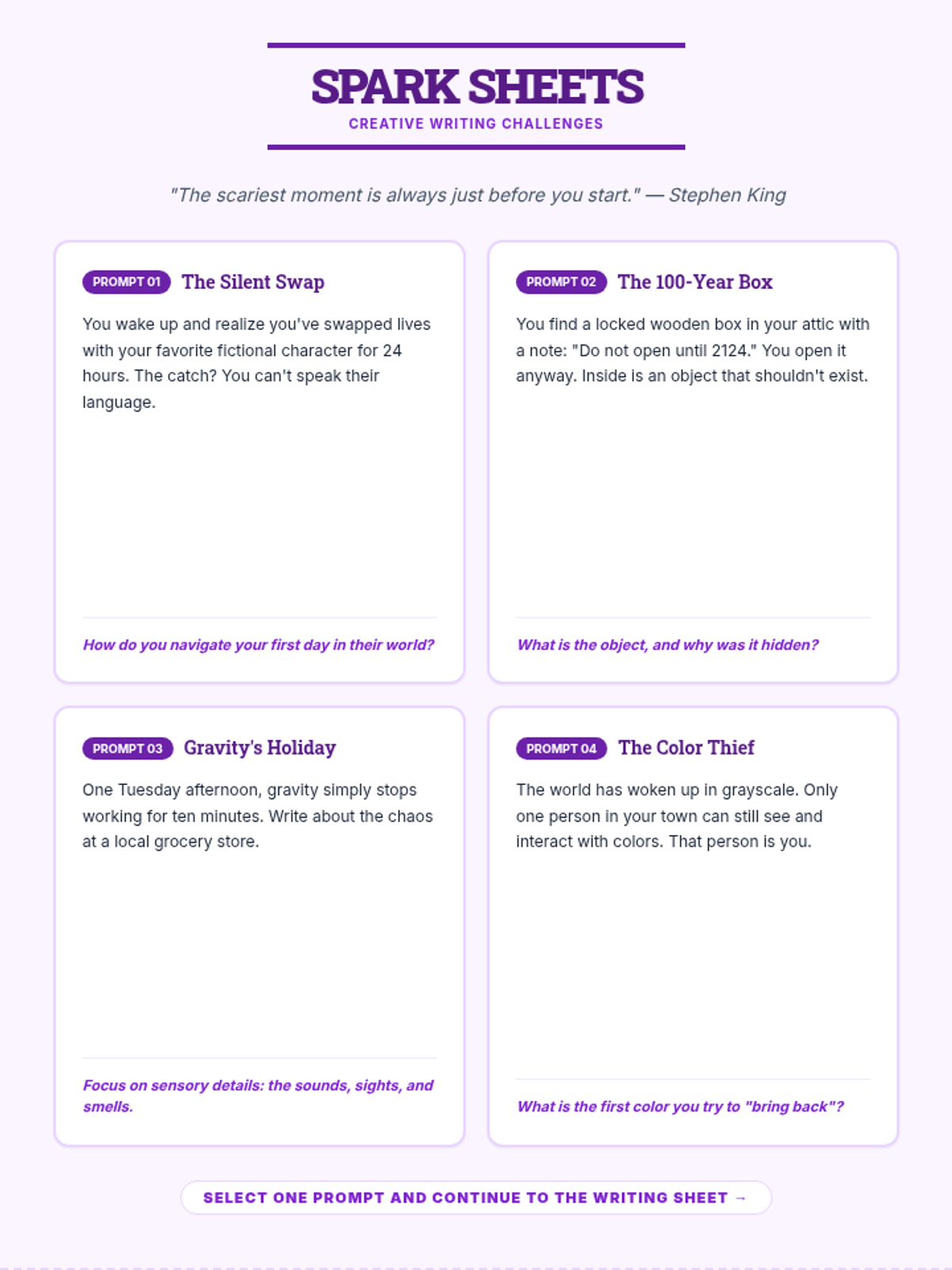
A collection of engaging creative writing prompts for middle school students, featuring a mix of sci-fi, fantasy, and realism with a large, dedicated student writing area on a separate page. Revised for improved contrast and layout.
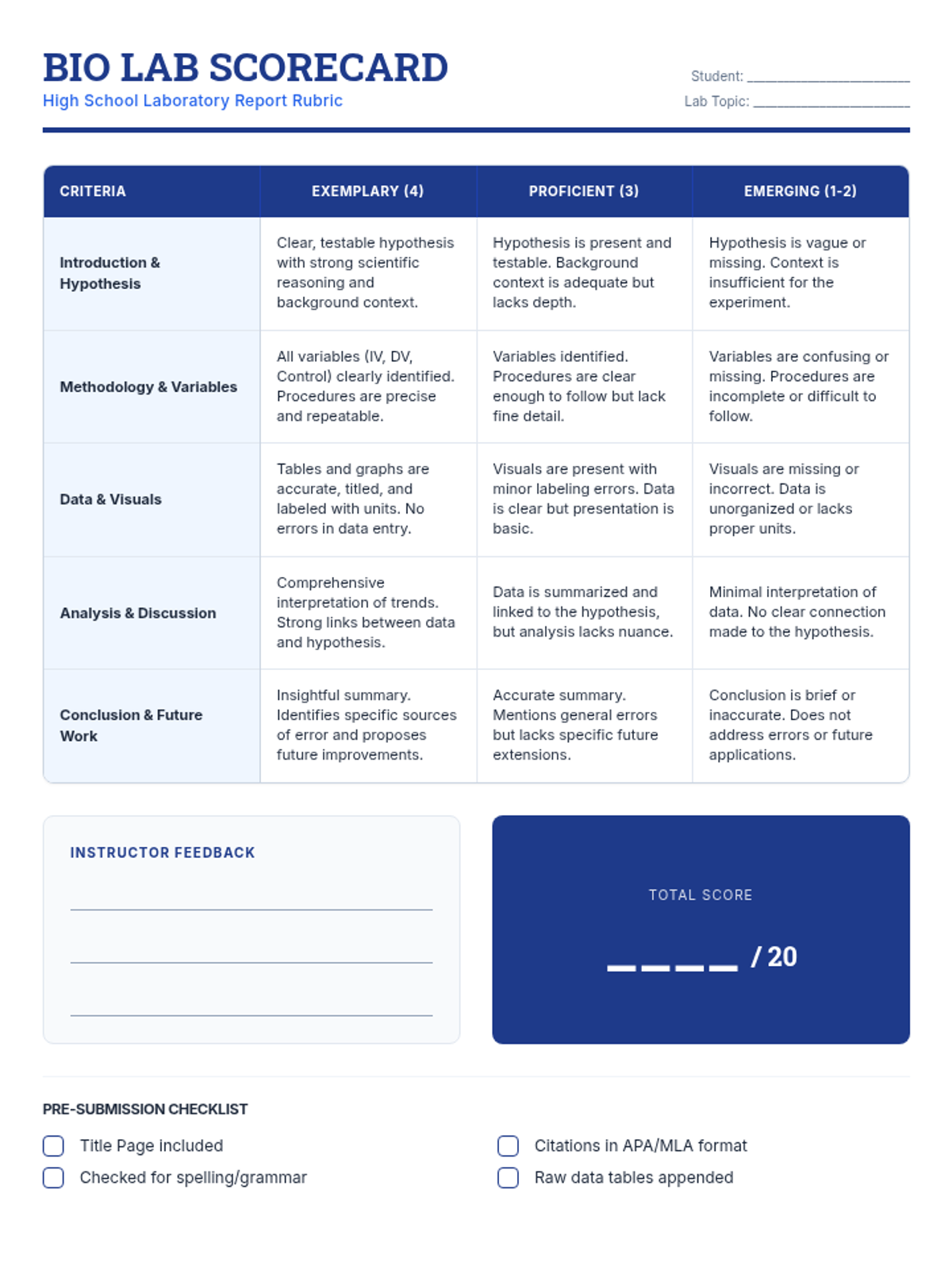
A professional grading rubric for high school biology lab reports, featuring clear criteria, point values, and a pre-submission checklist. Revised to fit on a single page with improved feedback line contrast.
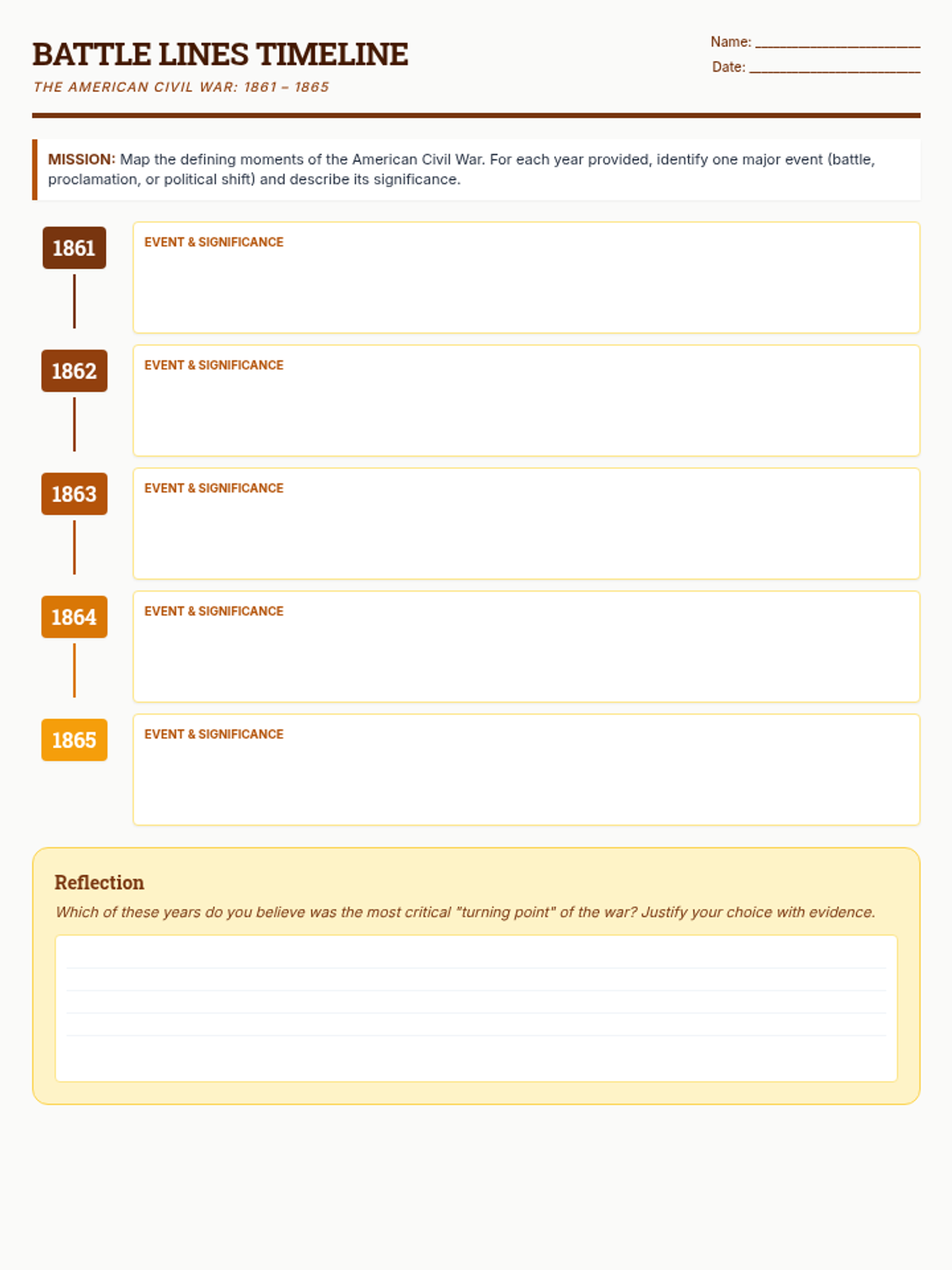
A visual timeline graphic organizer for the American Civil War, featuring dedicated sections for key years and a reflection prompt. Revised to fit on a single page with improved writing lines.
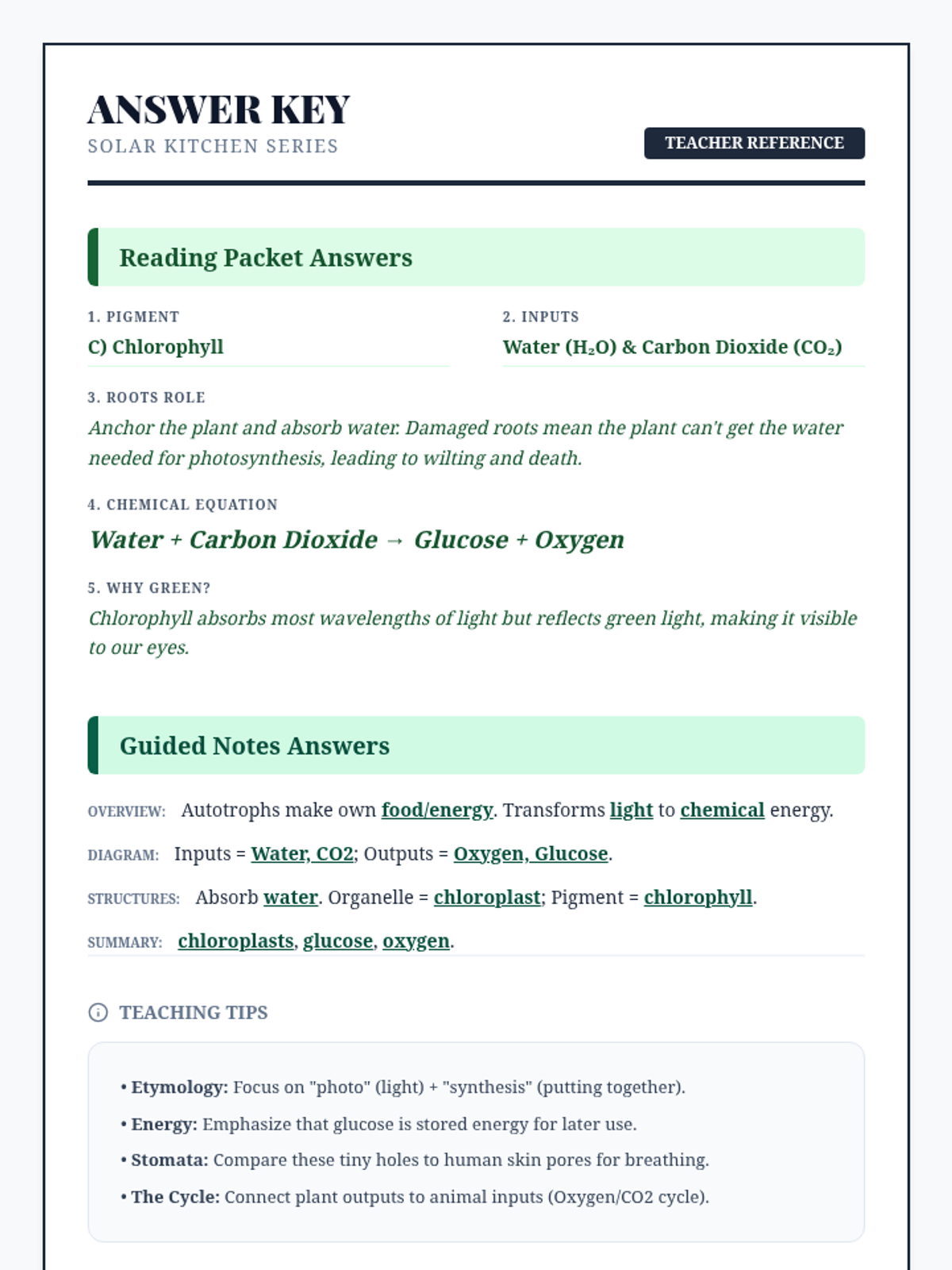
A comprehensive answer key for both the Solar Kitchen Reading Packet and the Leaf Lab Guided Notes, including teacher tips for instruction. Revised to fit on a single page with improved contrast and larger font for readability.
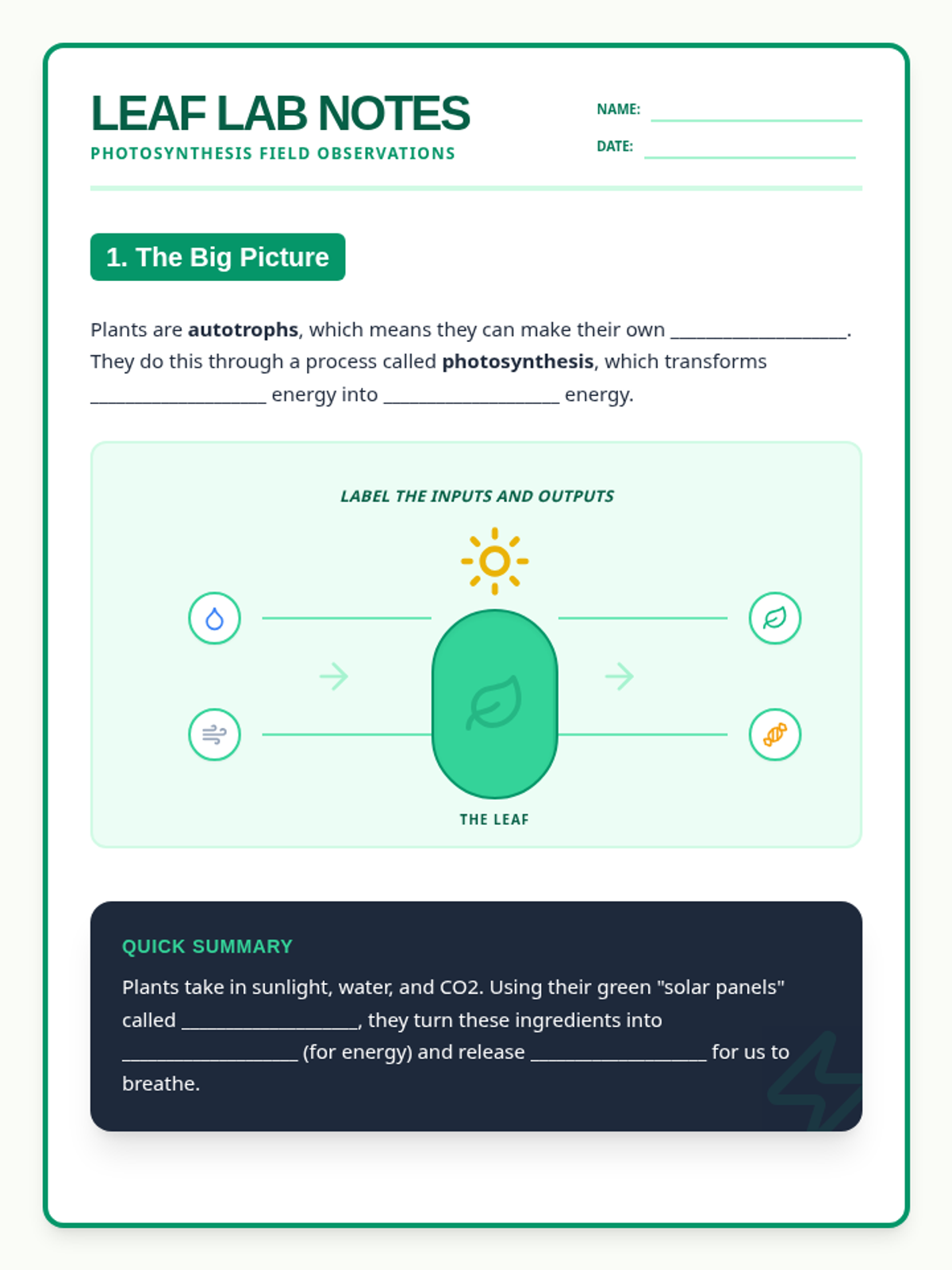
A visual guided notes document for students to complete while learning about photosynthesis. Includes diagrams for inputs/outputs, sections for plant structures, and fill-in-the-blank summaries. Revised for better page breaks and larger work areas.
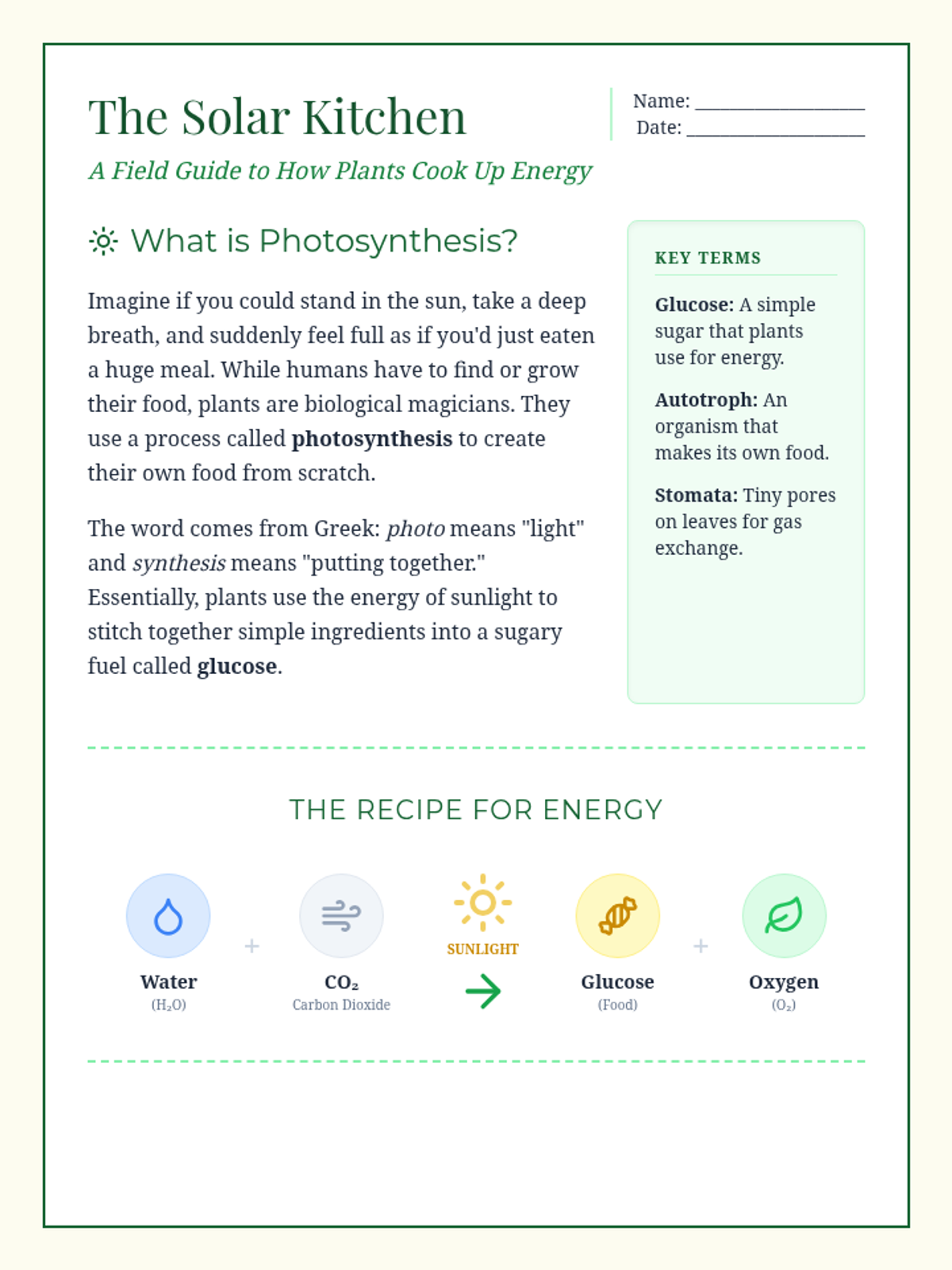
A 3-page informational reading packet about photosynthesis. It covers inputs/outputs, plant structures (roots/leaves), chloroplasts, and chlorophyll, including diagrams and reading comprehension questions. Revised to fix page breaks and layout spacing.
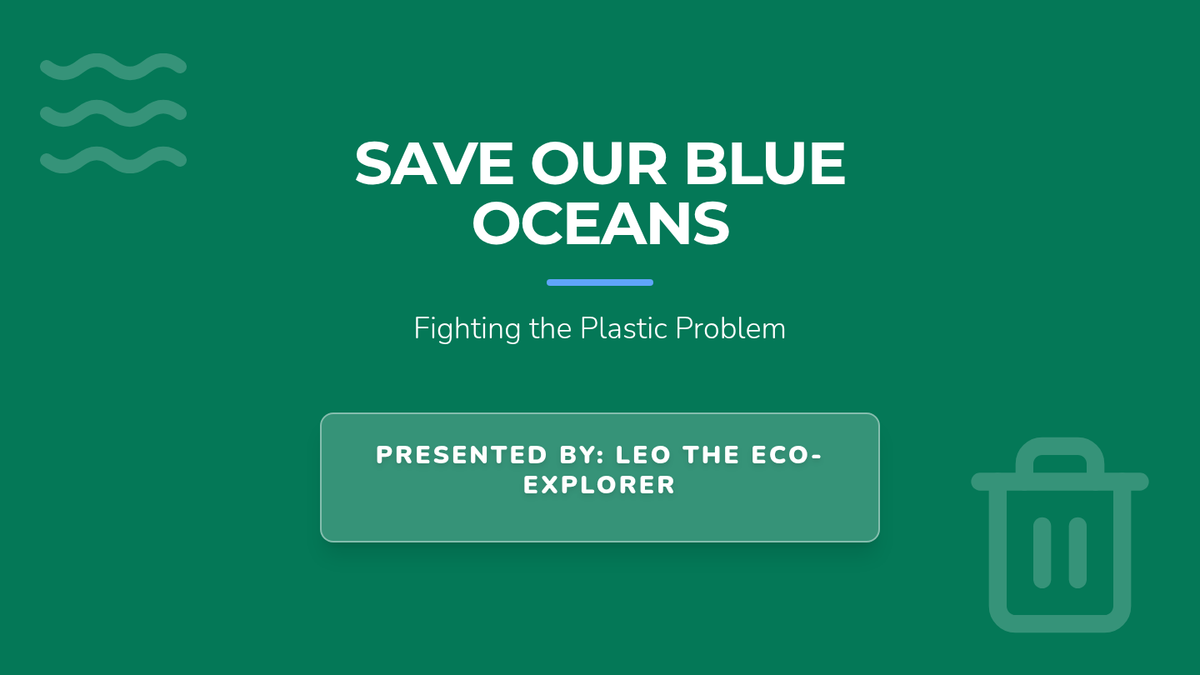
A complete example presentation about ocean plastic pollution that follows the 5-slide template, serving as a high-quality model for students.
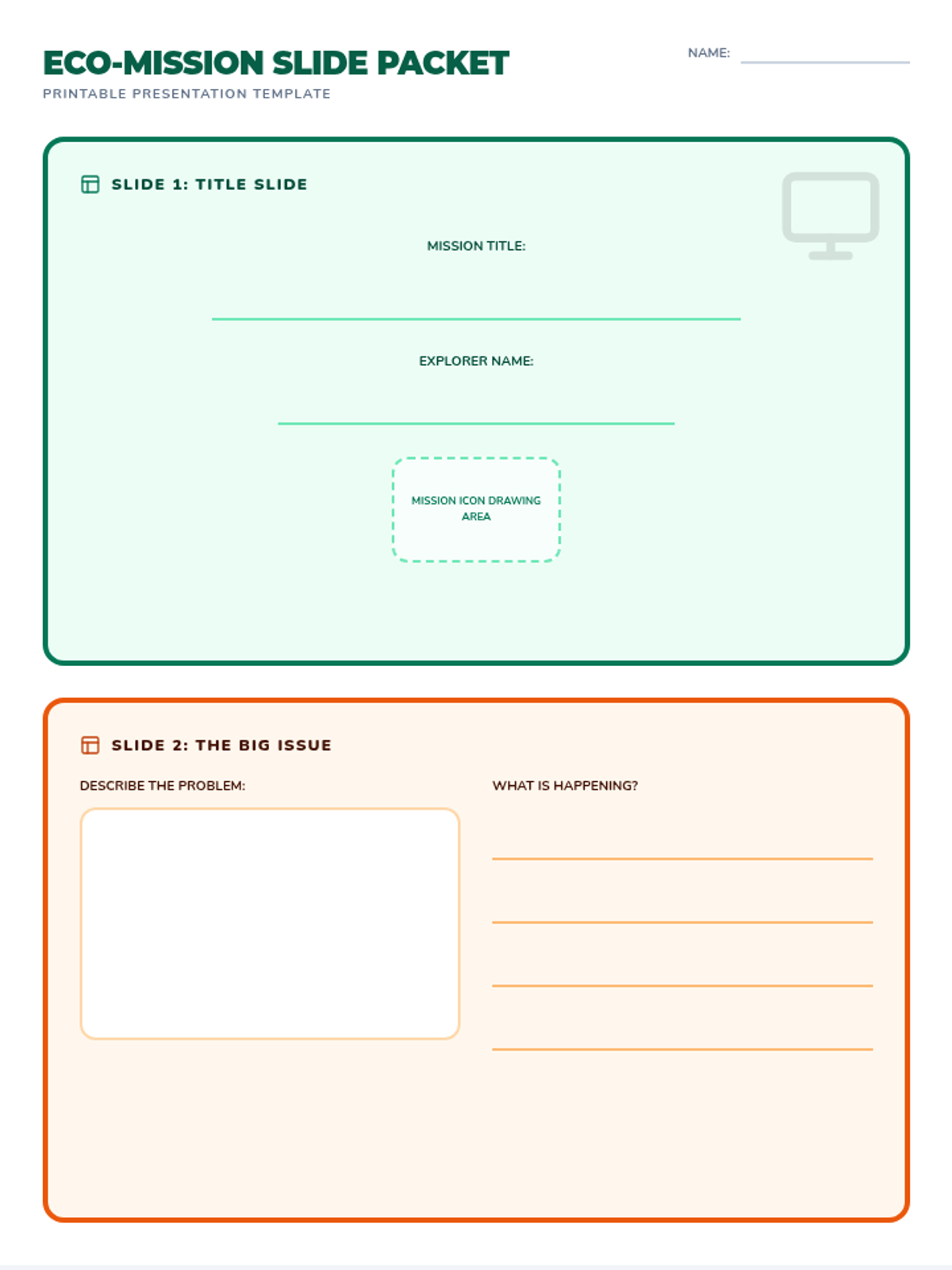
A printable 3-page packet that provides a physical, editable version of the slide template for students to draft their content and drawings.
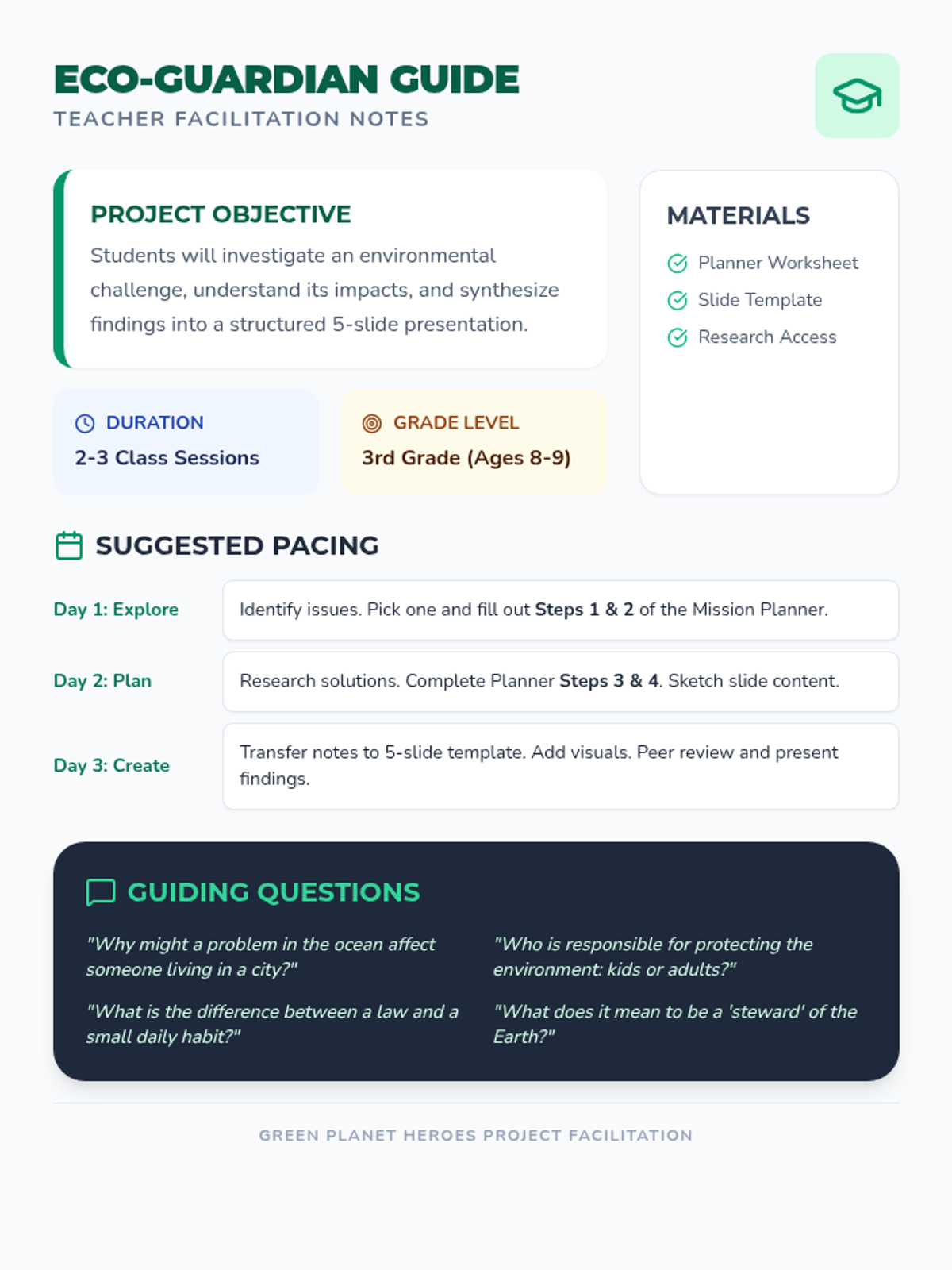
A teacher guide providing instructional support, pacing suggestions, and guiding questions for the Green Planet Heroes project.
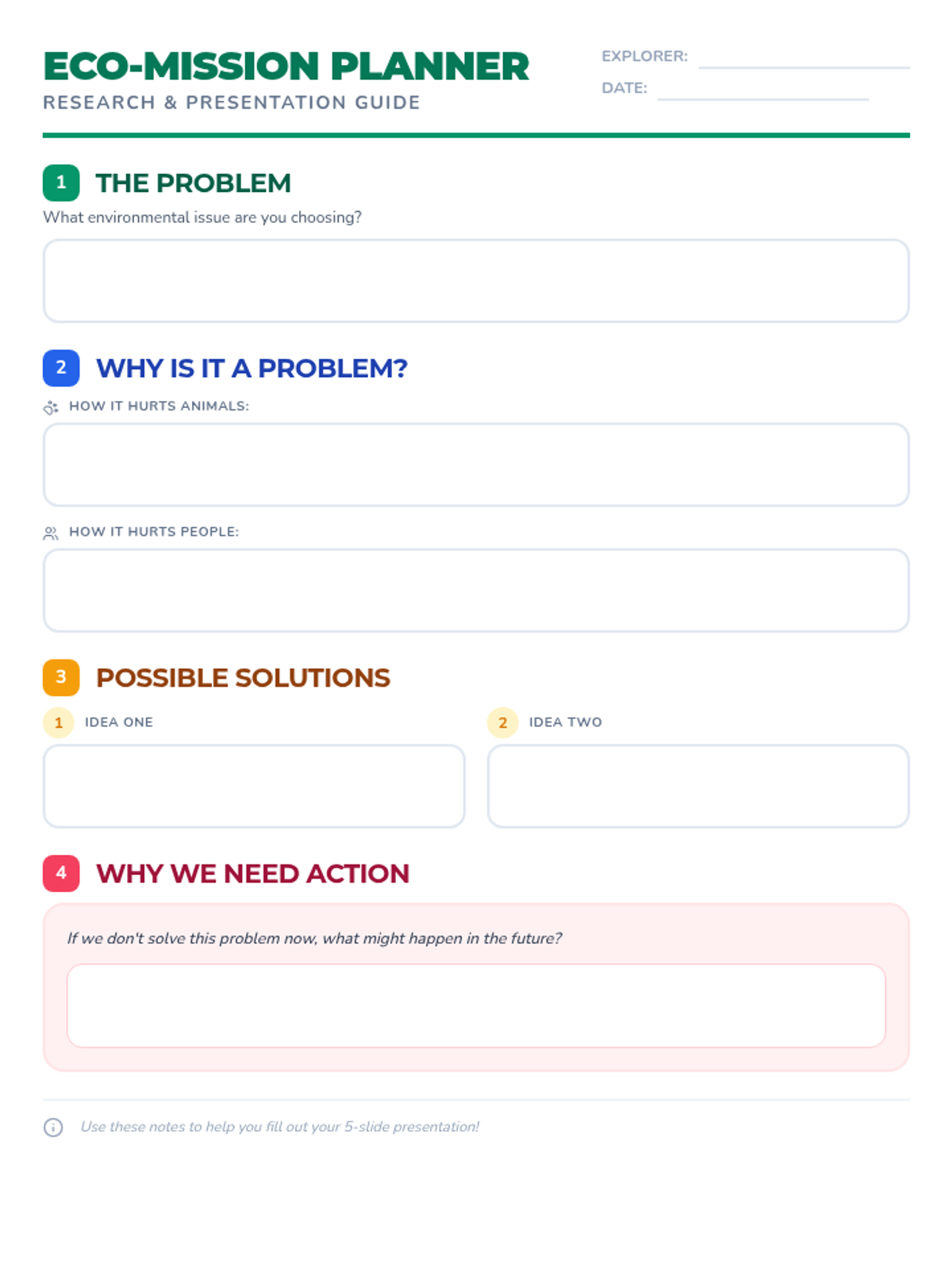
A printable brainstorming worksheet that helps students organize their research for the Eco Mission Slides project.
A structured 5-slide presentation template for third-grade students to research and present on an environmental issue, its impacts, and potential solutions.
An engaging presentation for young learners explaining the four stages of the plant life cycle (Seed, Sprout, Plant, Flower) and identifying the basic parts of a plant.
A secret agent-themed slide deck for Mission 7: Damage Report, analyzing environmental damage caused by human activity and predicting ecosystem consequences.
A secret agent-themed slide deck for Mission 6: Footprint Files, investigating the human impact on the environment through technology and daily life.
A secret agent-themed slide deck for Mission 5: Wild Shifts, exploring natural changes to the environment. Updated with higher contrast sub-text and corrected word spacing issues.
A secret agent-themed slide deck for Mission 4: Equilibrium Quest, teaching ecosystem stability. Updated with polished tracking and high-impact layouts. Corrected layout overflow.
A secret agent-themed slide deck for Mission 3: The Big Three, explaining the roles of producers, consumers, and decomposers. Updated with high-contrast badges and polished layouts. Corrected number contrast and tracking.
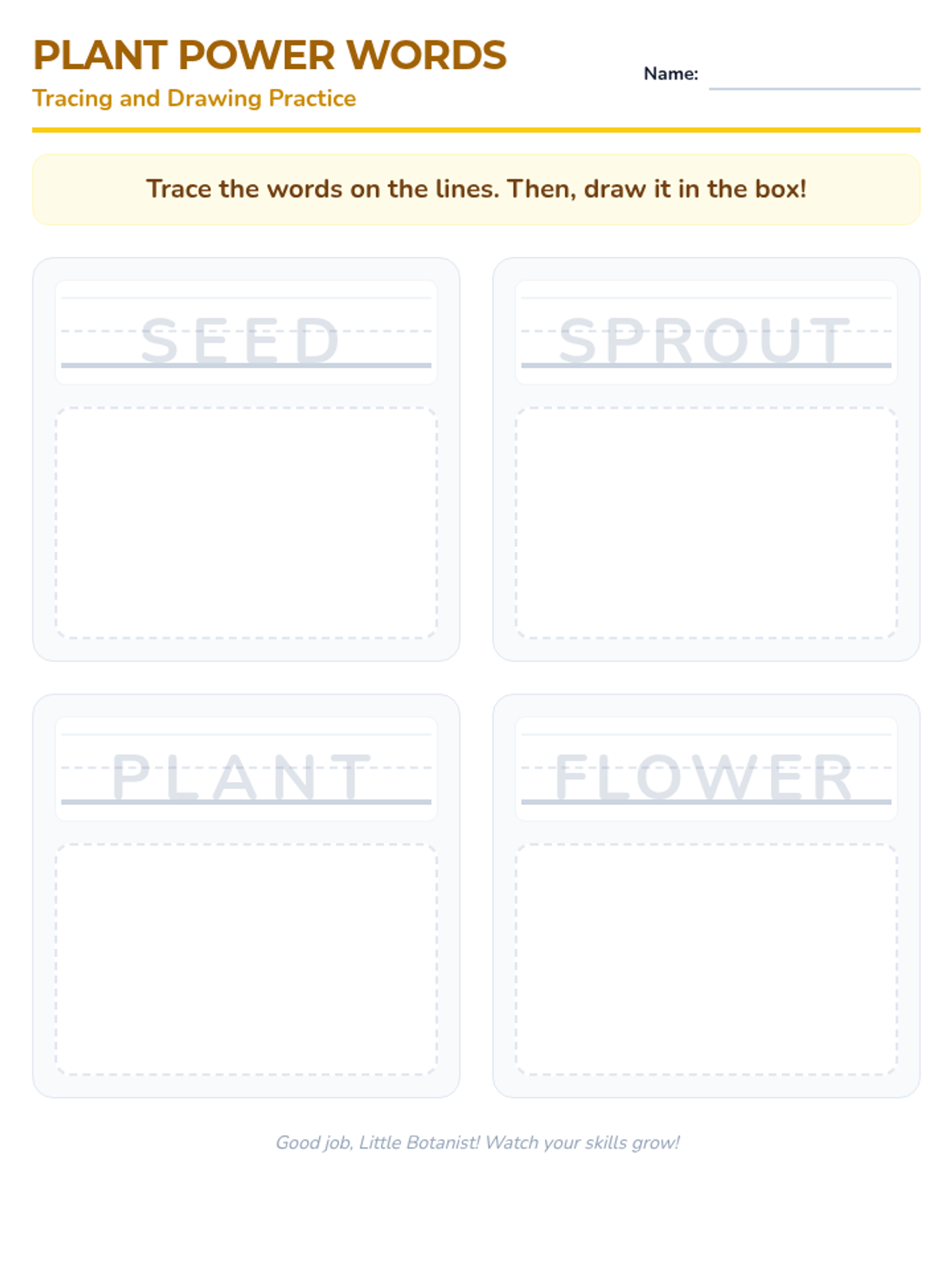
A literacy-focused worksheet where students trace the four key vocabulary words of the plant life cycle and draw their own illustrations to demonstrate understanding.
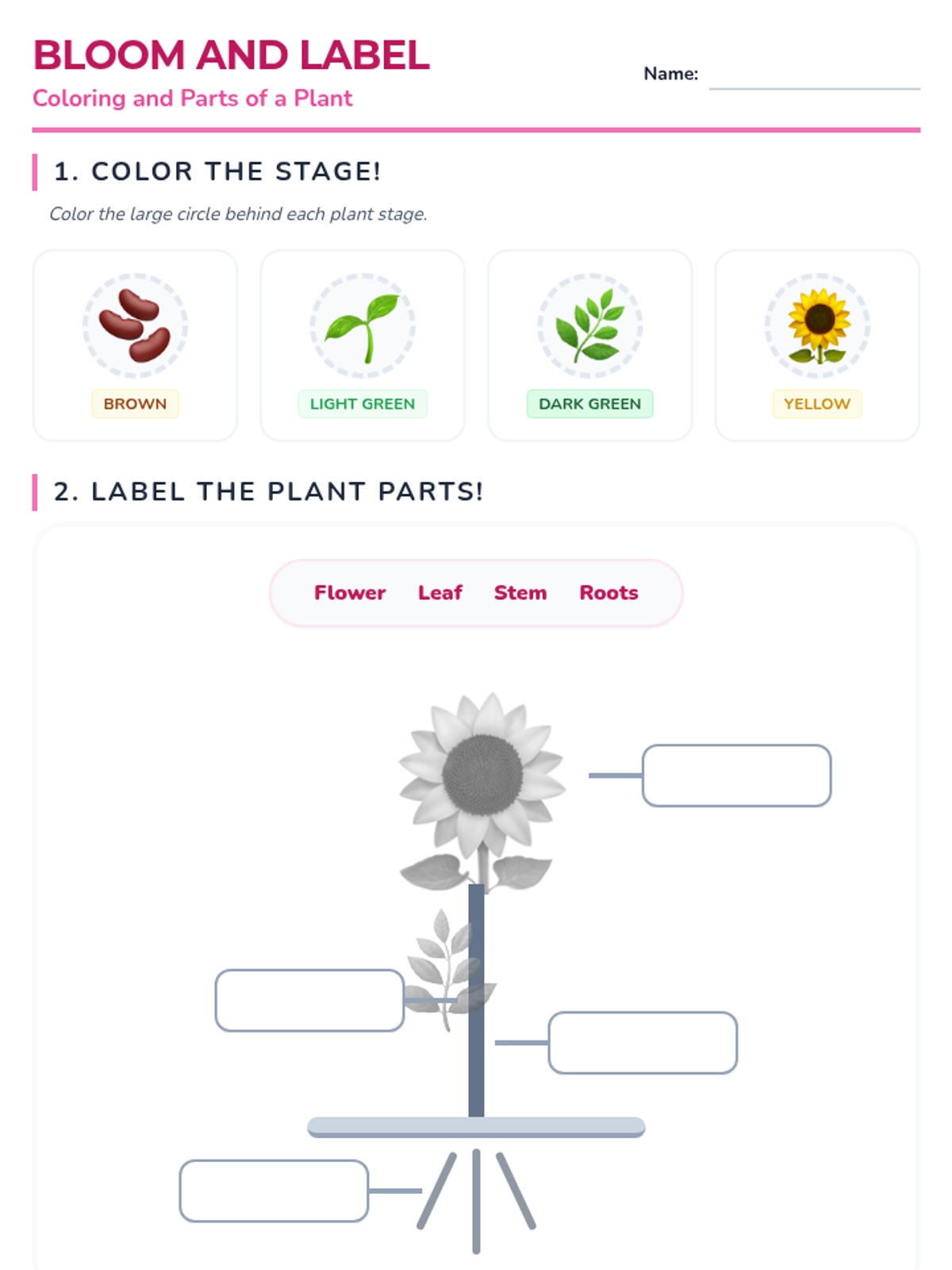
A dual-purpose worksheet where students color various plant stages based on instructions and label the anatomical parts of a fully grown plant (Flower, Leaf, Stem, Roots), using consistent emojis for visual recognition.
A secret agent-themed slide deck for Mission 2: Energy Intel, focusing on food chains, energy flow terminology, and grid analysis. Updated with better spacing, consistent headers, and Sun energy source logic. Corrected tracking.
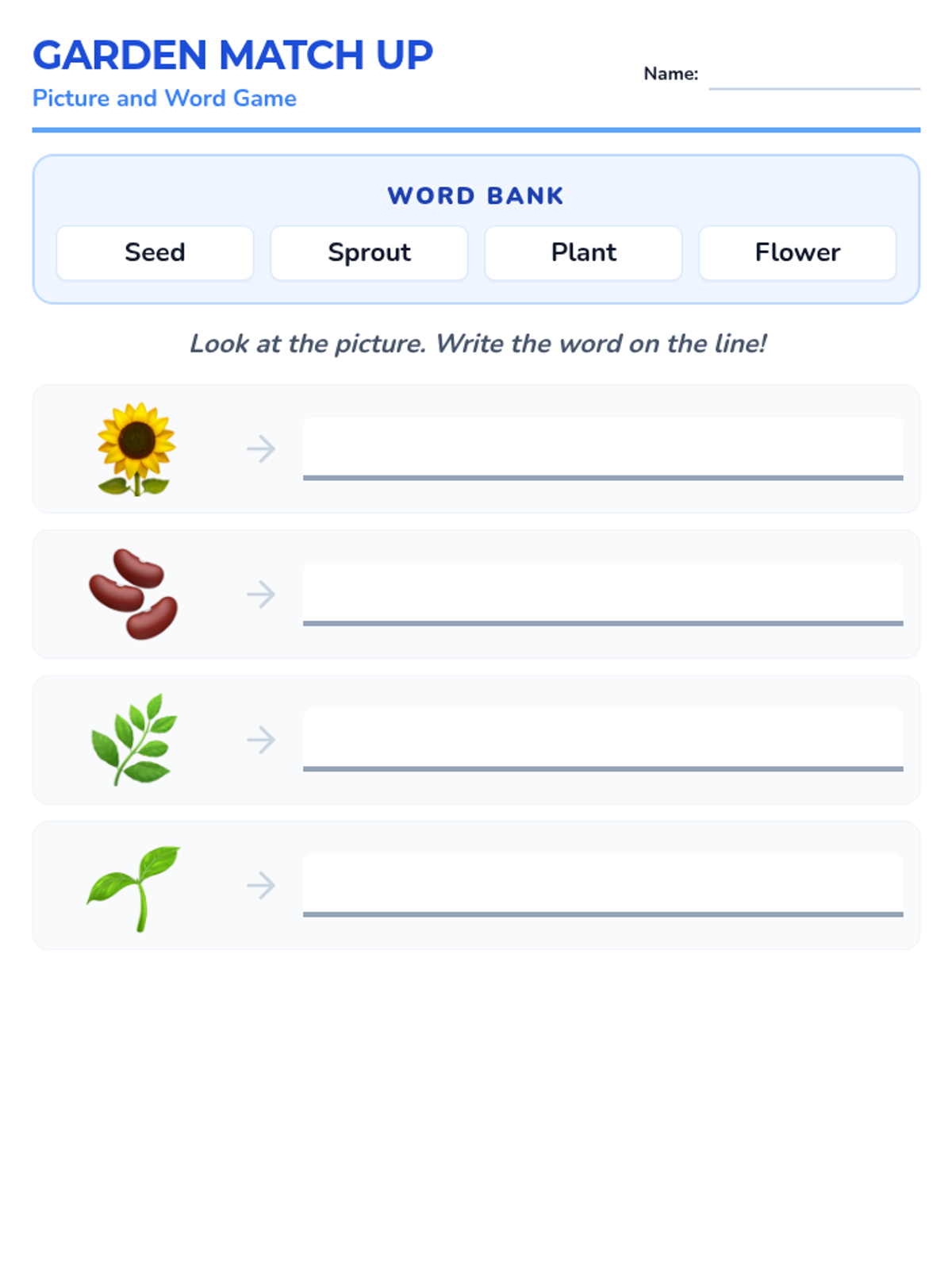
A matching worksheet that pairs plant life cycle illustrations with a word bank. Students identify and write the name of each stage next to its corresponding picture.
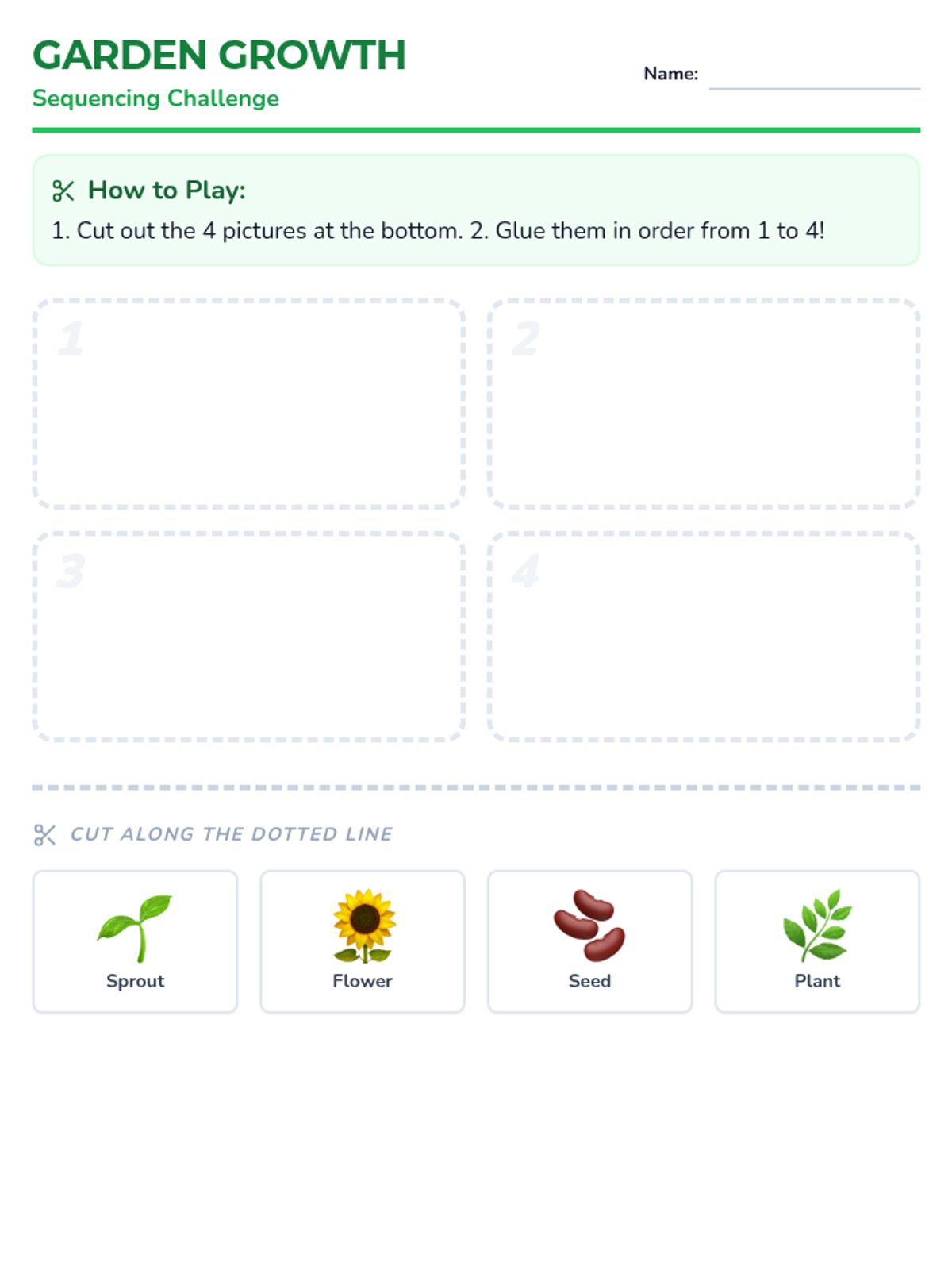
A cut-and-paste sequencing worksheet where students order the four stages of the plant life cycle (Seed, Sprout, Plant, Flower). Includes clear icons and large workspace boxes.
A secret agent-themed slide deck for Mission 1: Habitat Recon, featuring mission directives, intelligence briefings on habitat essentials, and target identification exercises. Updated with concrete habitat example and corrected tracking/icons. Corrected desert iconography.
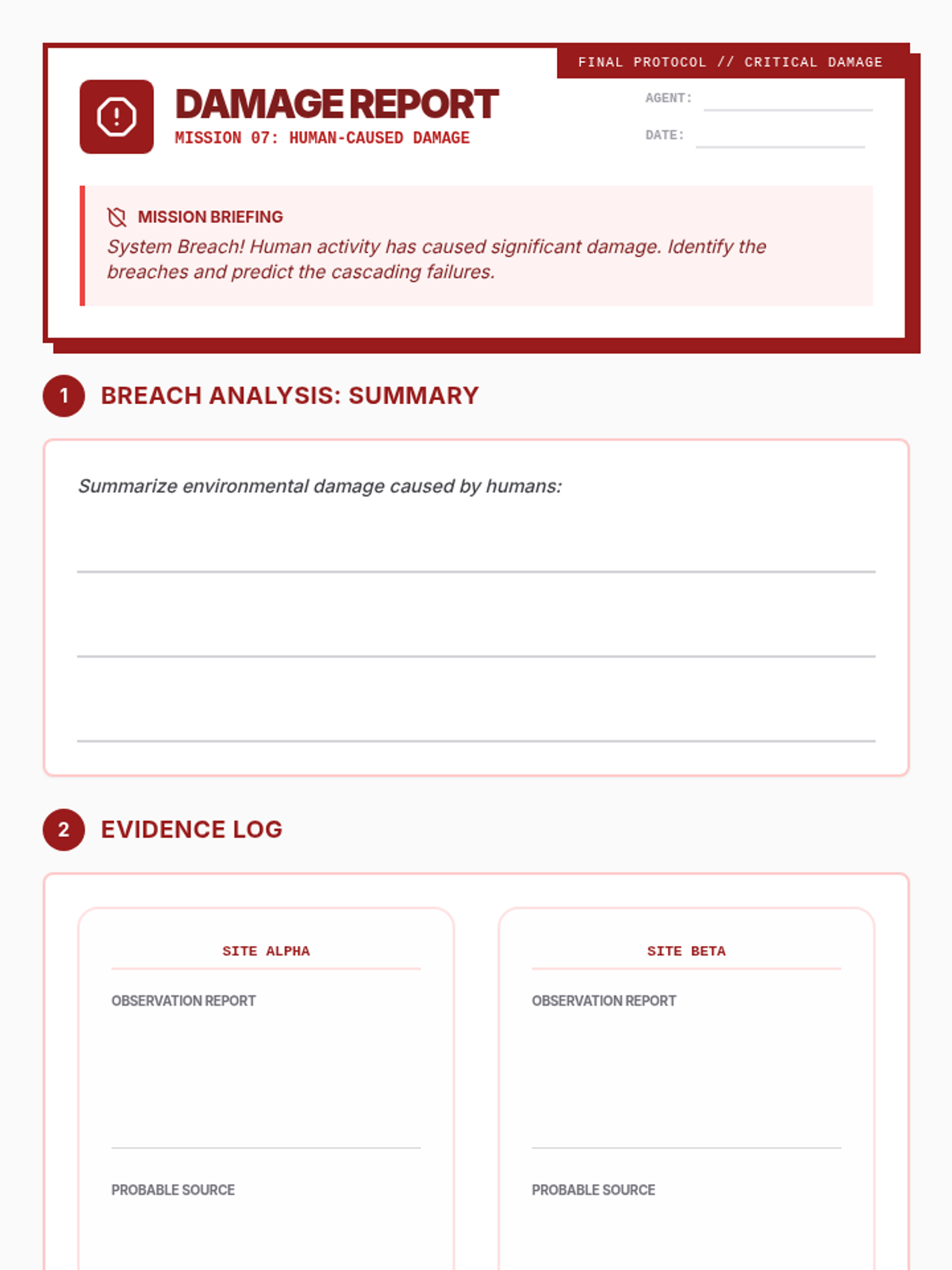
A secret agent-themed worksheet for Mission 7 on human-caused environmental damage, featuring breach analysis logs and ecosystem impact predictions. Corrected layout for page breaks and legibility. Expanded response areas and improved thematic seal. Removed unnecessary page overflow.