A guided note-taking sheet for students to use while watching the San Andreas Fault episode of 'How The Earth Was Made'. It includes vocabulary definitions, fill-in-the-blank observations, and a recurrence interval calculation section.
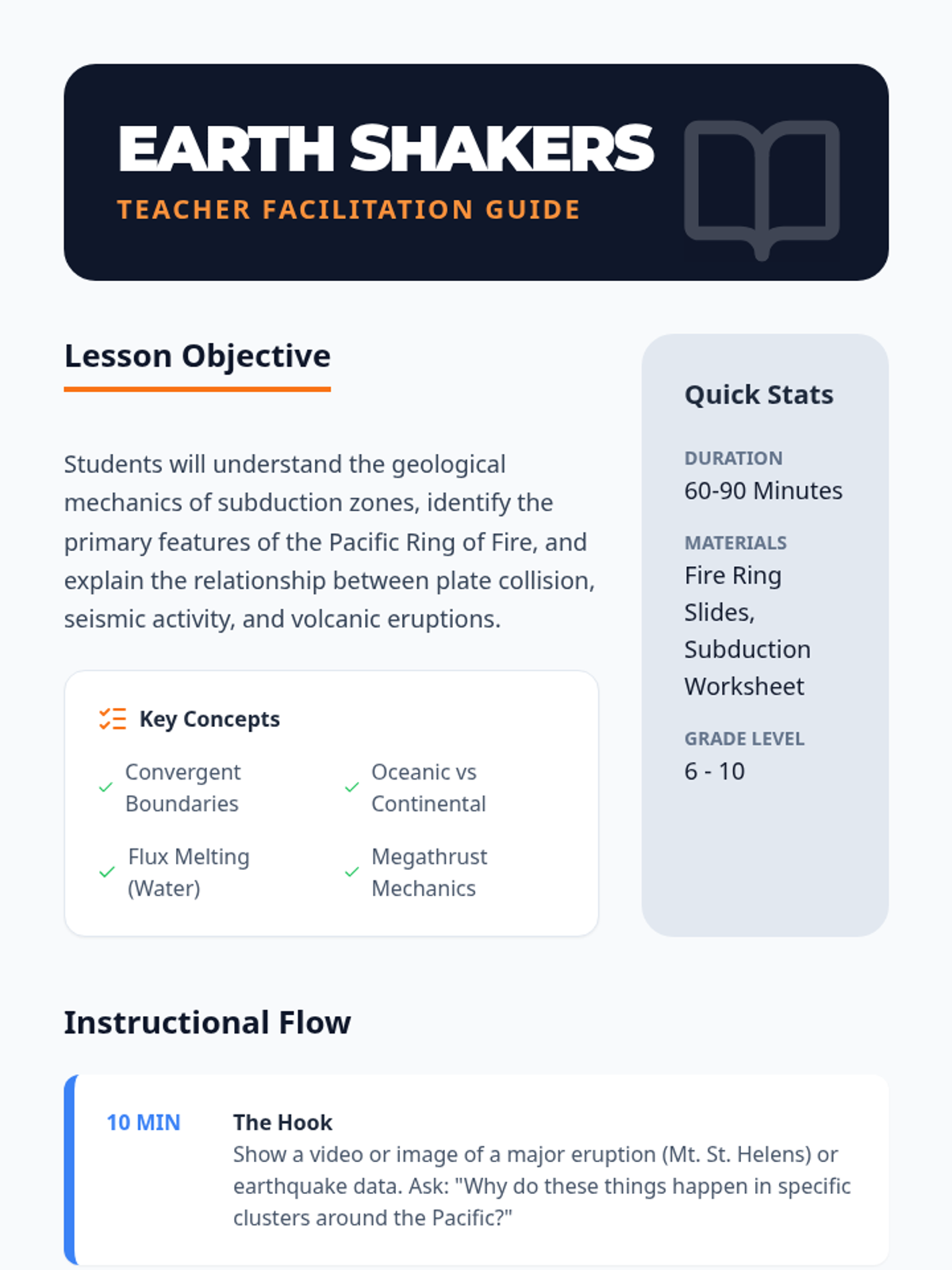
A professional teacher guide for the Tectonic Frontiers lesson, providing learning objectives, a detailed pacing guide, instructional tips, and high-level discussion prompts to facilitate the Fire Ring Slides and Subduction Secrets Worksheet.
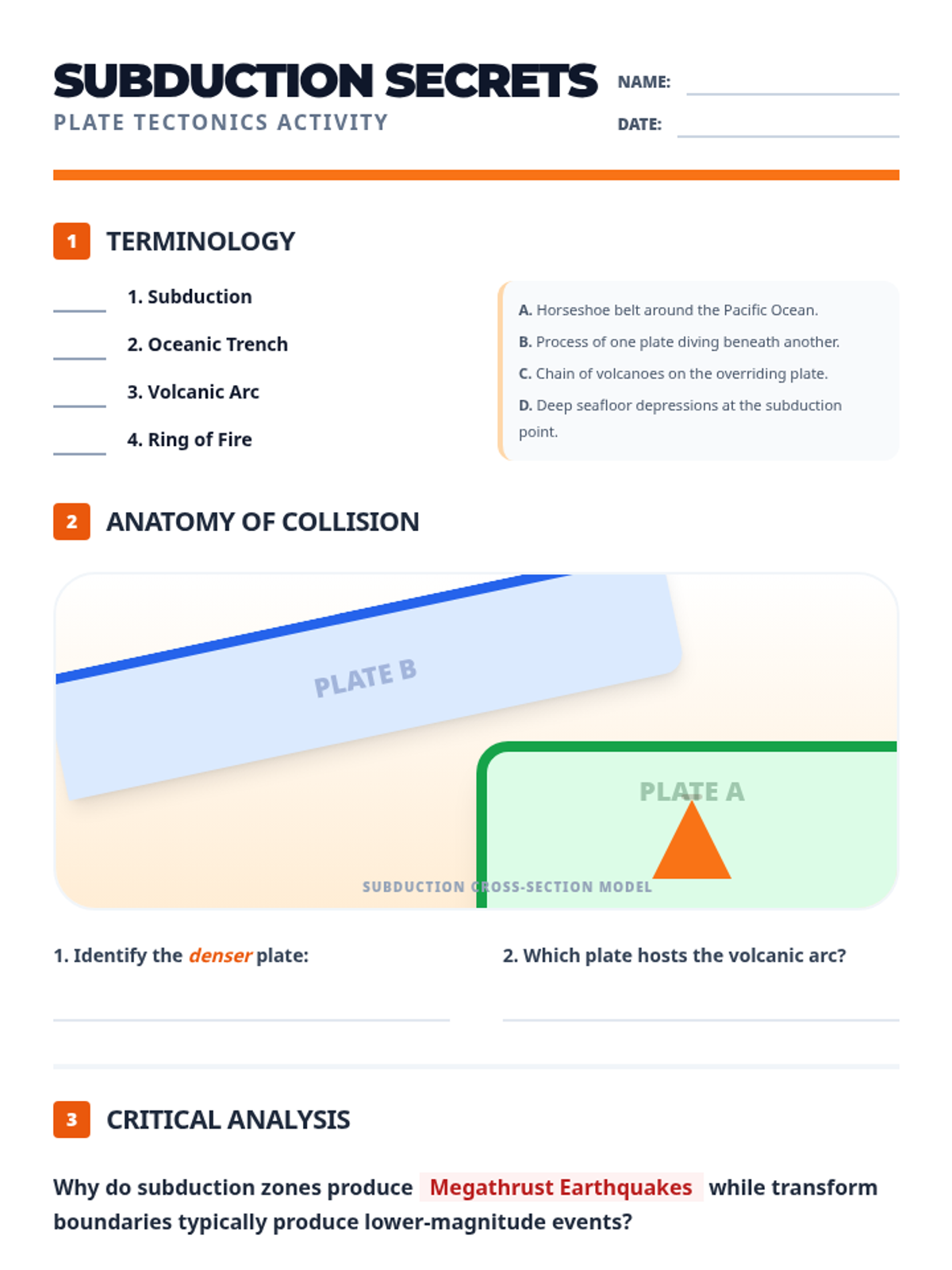
A focused worksheet for students to reinforce concepts from the Fire Ring Slides, featuring vocabulary matching, diagram analysis, and critical thinking questions about the mechanics of subduction and the Ring of Fire.
A comprehensive visual presentation covering the mechanics of subduction zones and the explosive geological activity within the Pacific Ring of Fire. Ideal for high-impact classroom instruction with large, readable text and clear diagrams.
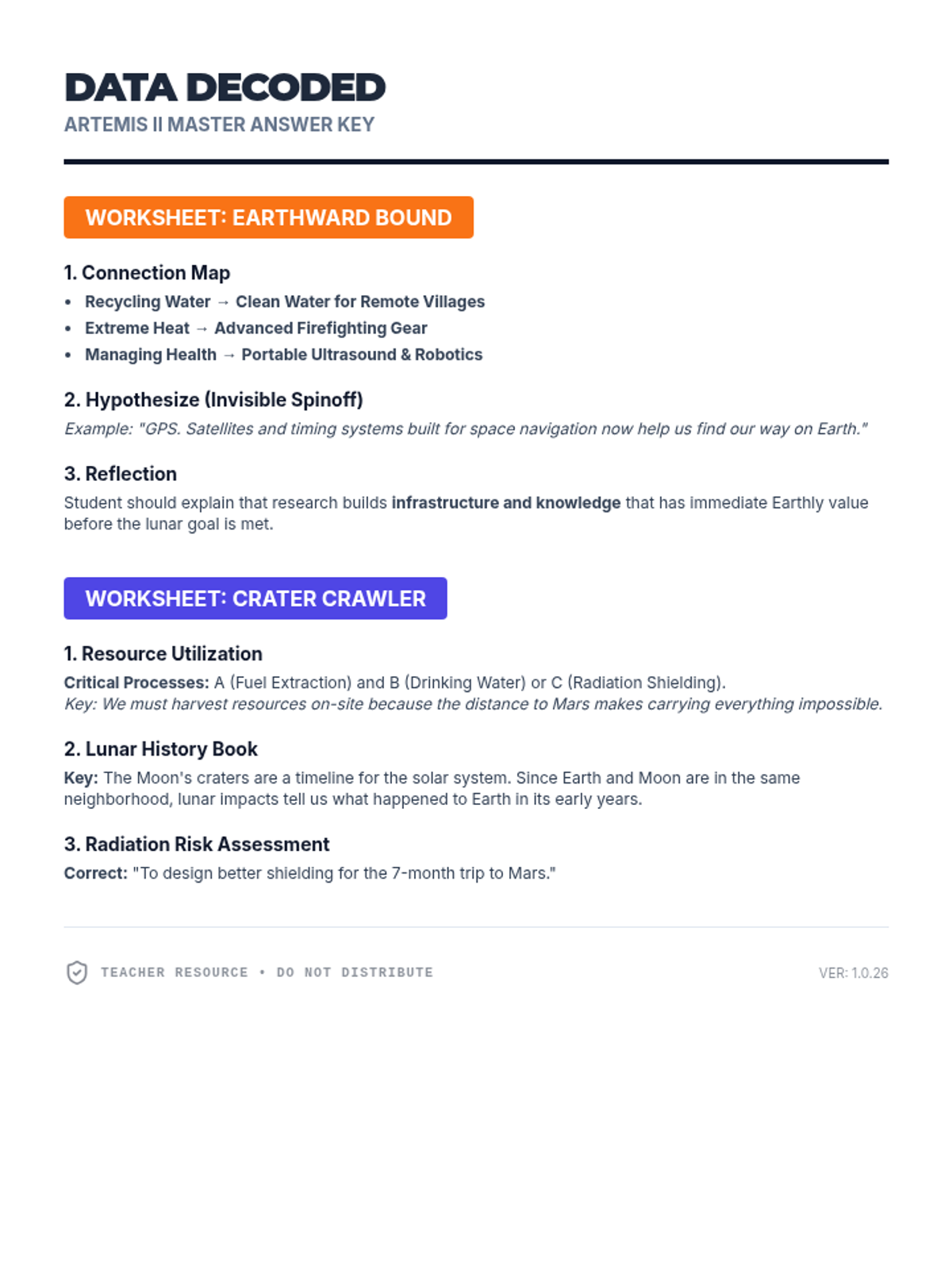
A comprehensive answer key and grading guide for both "Earthward Bound" and "Crater Crawler" student worksheets.
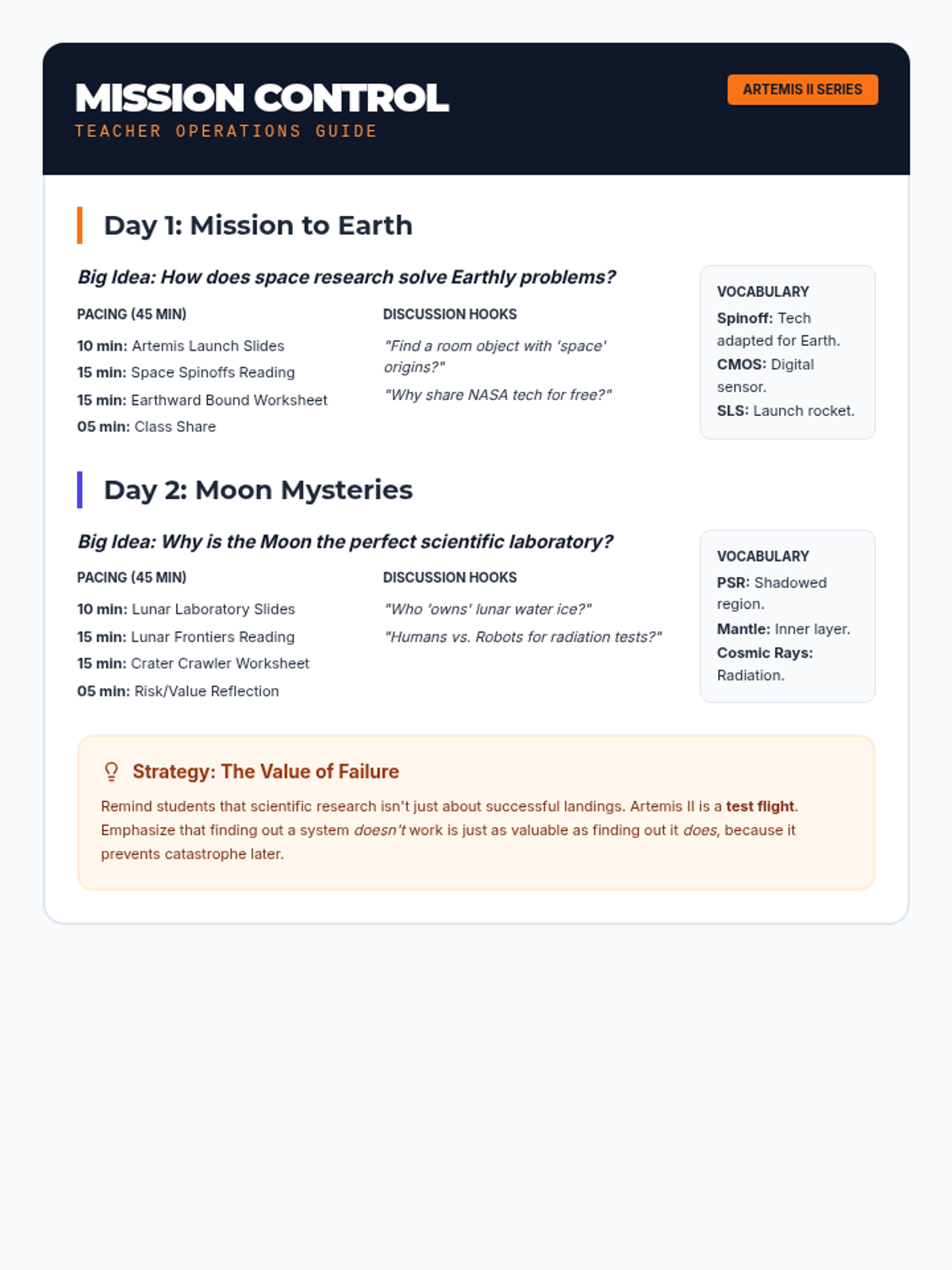
A teacher's facilitation guide for the two-day Artemis II lesson series, including pacing, discussion prompts, vocabulary, and instructional strategies.
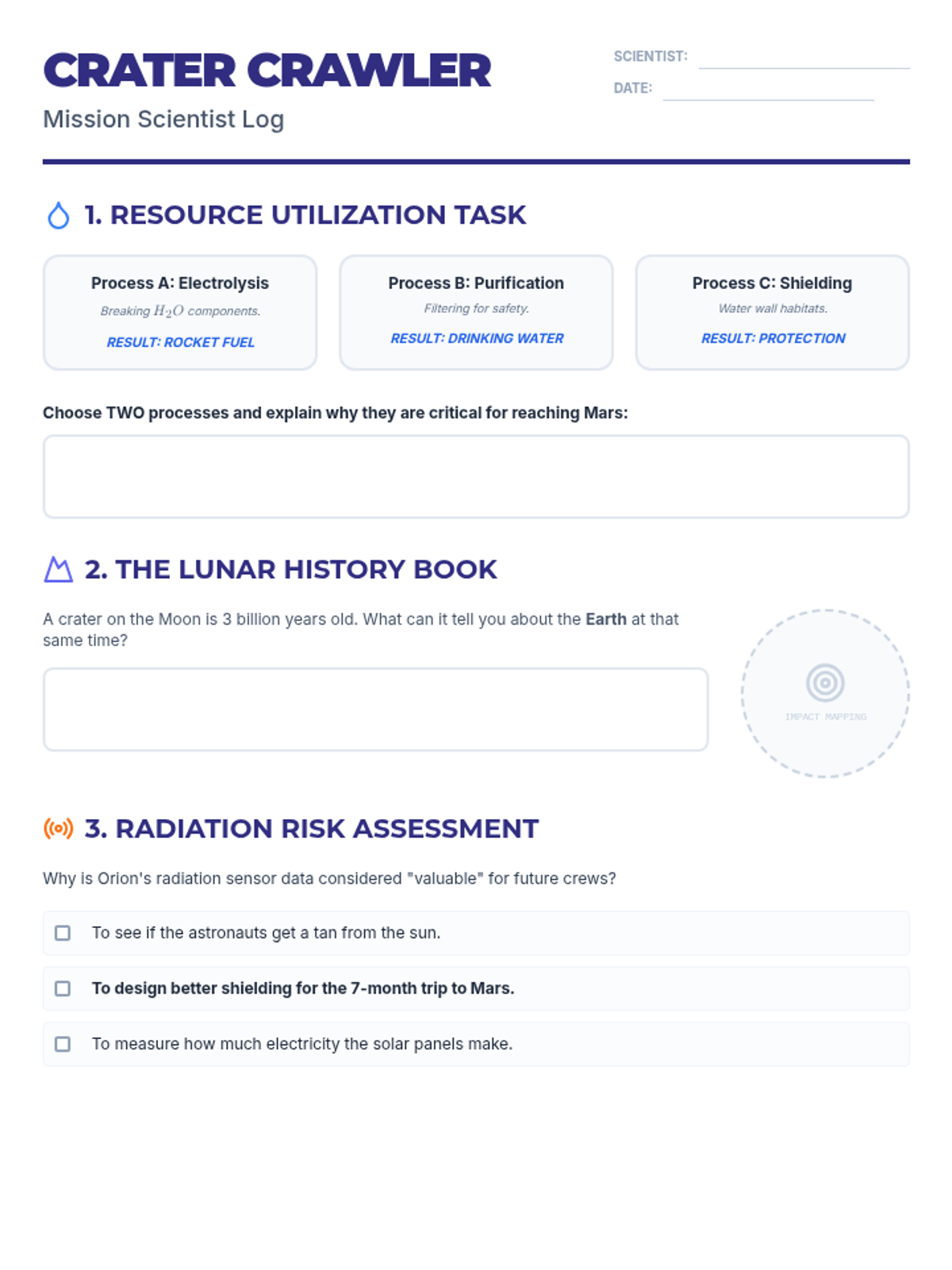
A student worksheet focused on data analysis regarding lunar resources, planetary geology, and radiation risks, simulating the role of a mission scientist.
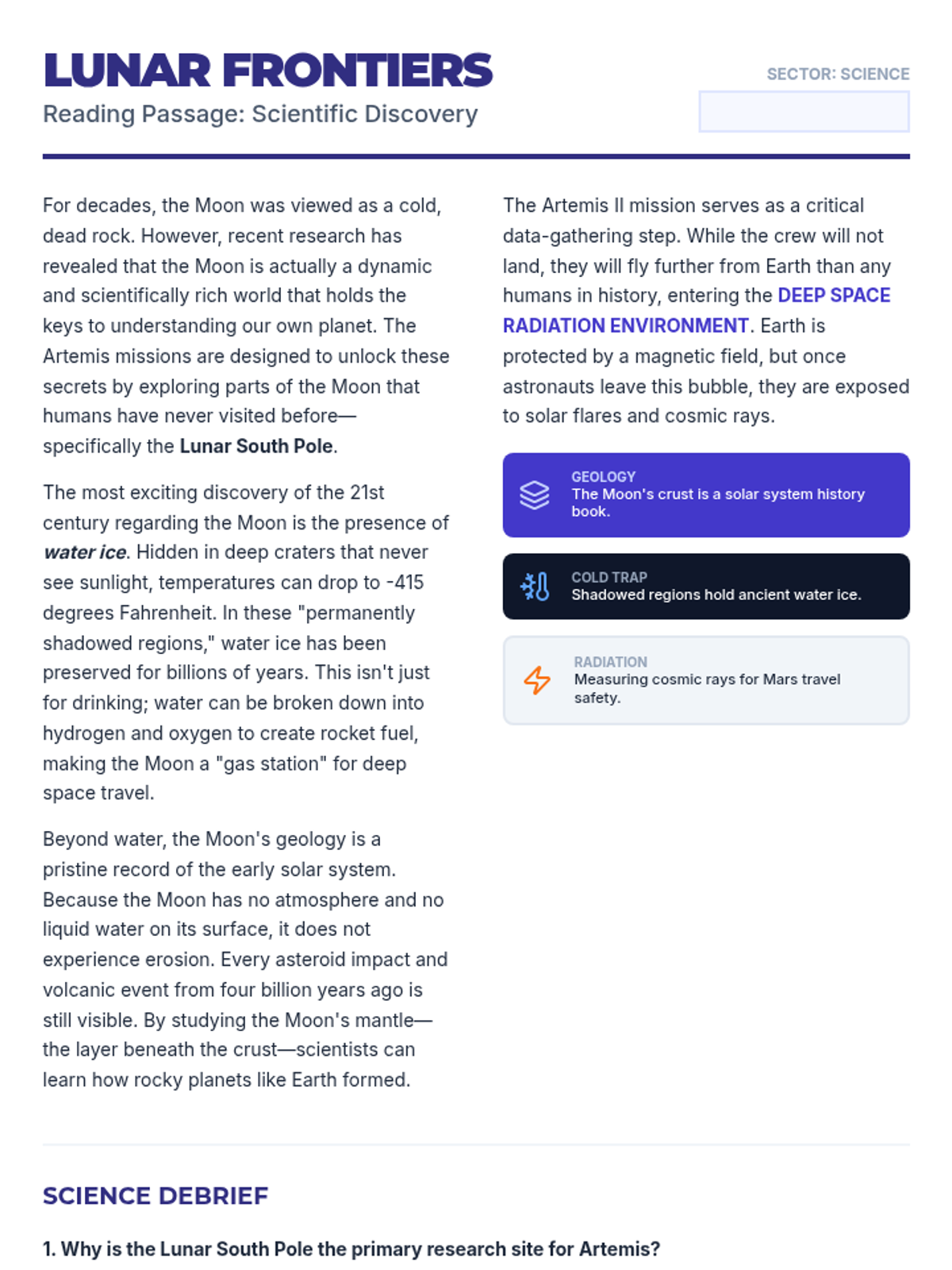
A reading passage exploring the scientific discovery potential of the Moon, focusing on water ice, lunar geology, and radiation research as a precursor to Mars exploration.
A presentation exploring the scientific motivations for returning to the Moon, including lunar geology, water ice discovery, and preparation for Mars exploration.
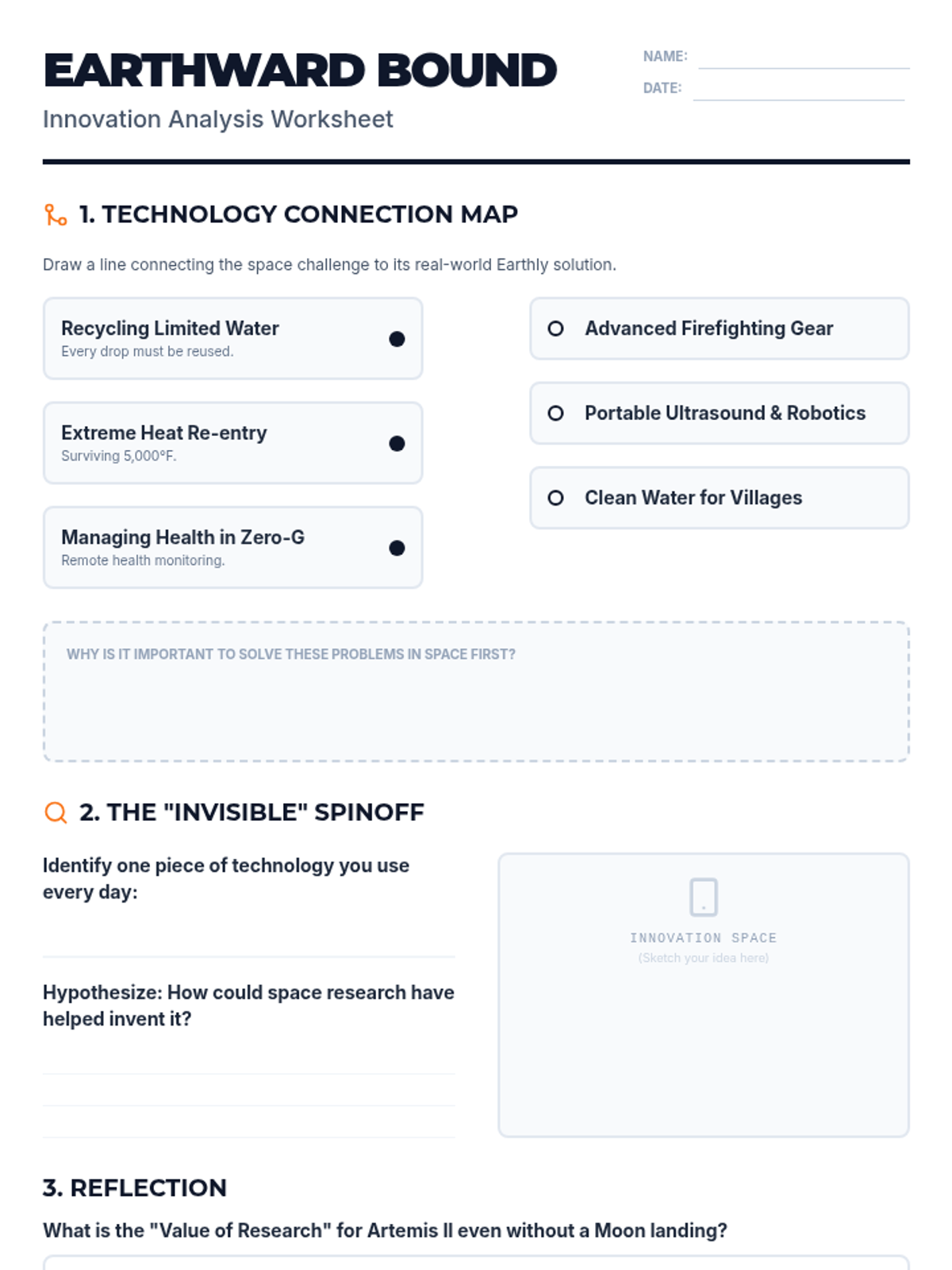
A worksheet for students to map space challenges to Earthly solutions, analyze everyday technology for space origins, and reflect on the value of indirect research benefits.
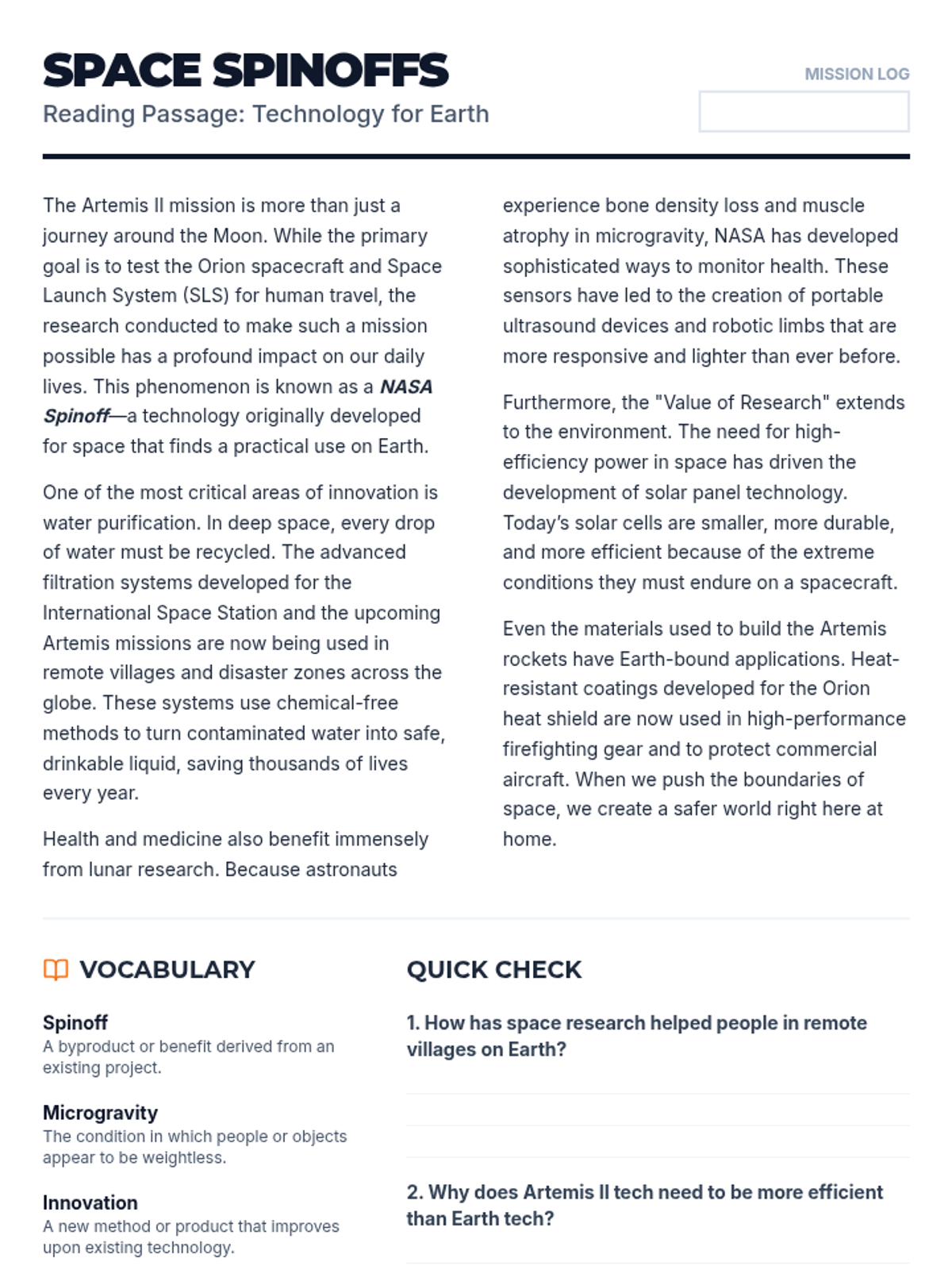
A reading passage that explains the concept of NASA Spinoffs and highlights how Artemis II research leads to innovations in water purification, medicine, and environmental technology.
An introductory presentation on the Artemis II mission, focusing on how solving the challenges of space travel leads to significant technological "spinoffs" that improve life on Earth.
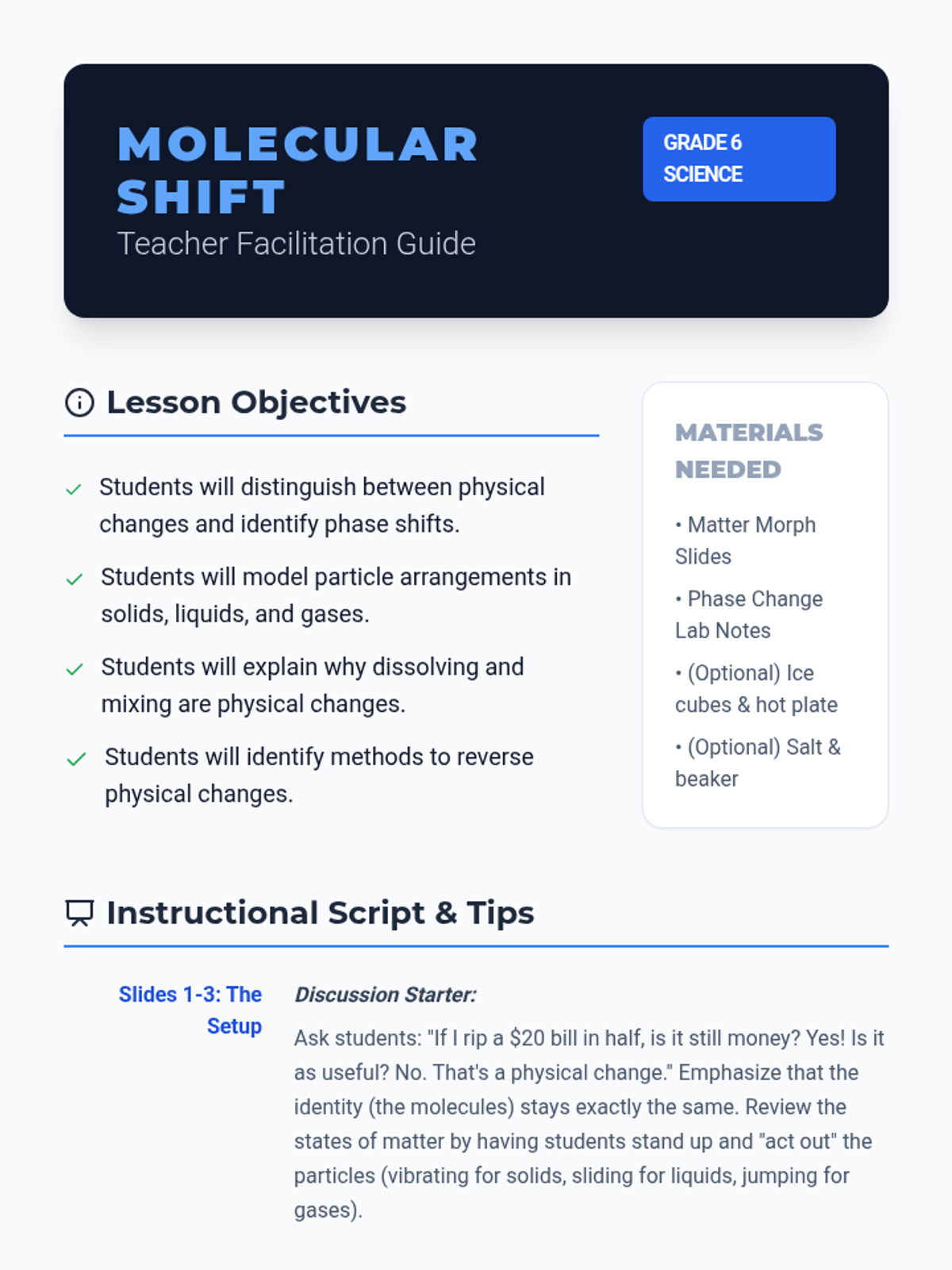
A teacher guide for the Matter Morph lesson, featuring instructional scripts, slide-by-slide facilitation tips, and a full answer key for the student worksheet.
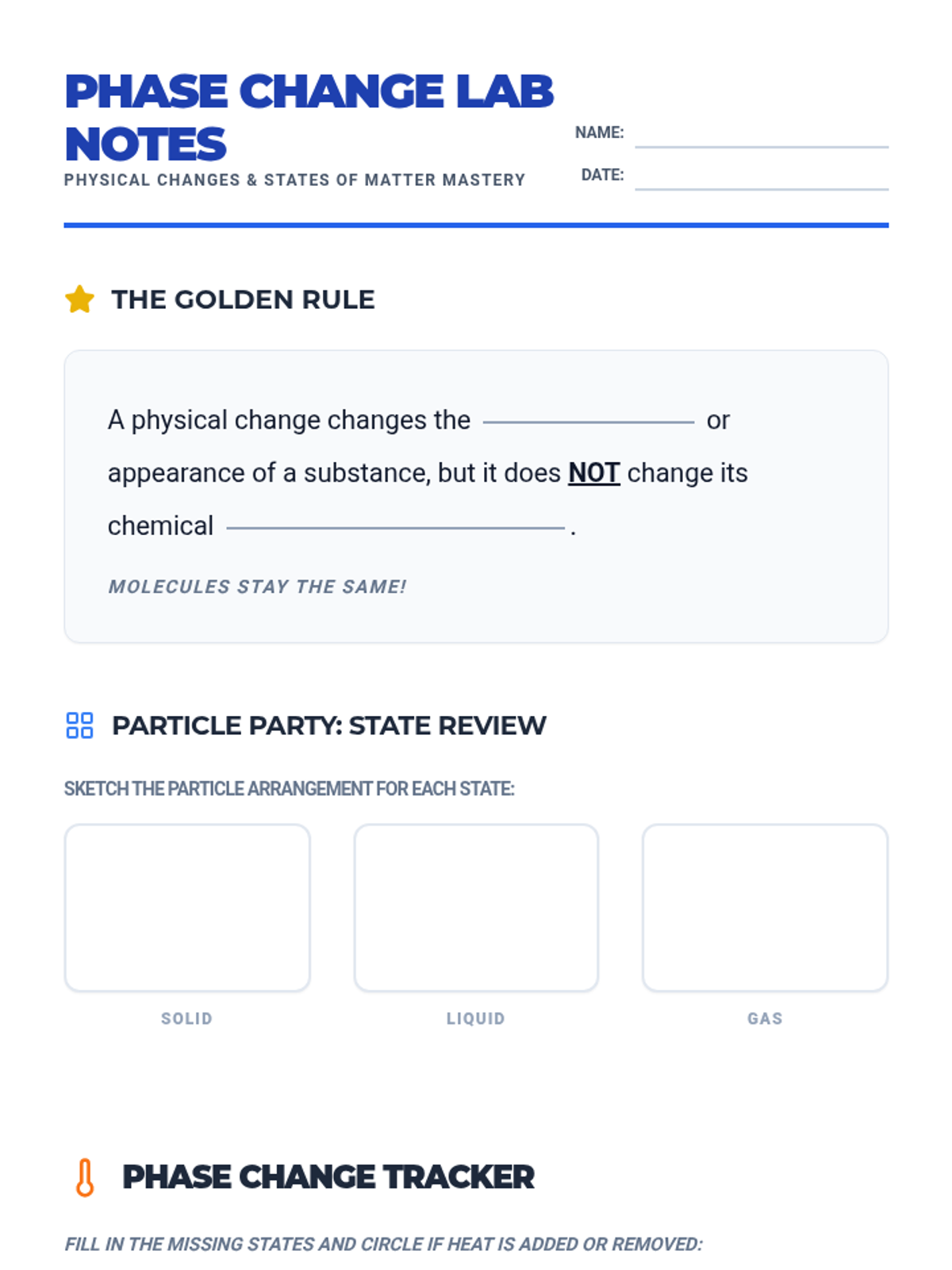
A student worksheet for guided note-taking during the Matter Morph slideshow, including particle diagram spaces and a phase change tracker table.
A visually dynamic slide deck covering physical changes, including states of matter review, phase change terminology (melting, freezing, sublimation, etc.), dissolving, mixtures, and reversibility.
A high-energy, vaporwave-themed slide deck featuring 'Identify the Vintage Item' challenges for Gen Z students, now including roll of film and bag phone.
A comprehensive facilitator's guide for the 'Vintage Vibe Check' game, featuring descriptions, modern equivalents, and discussion prompts for each technology item.
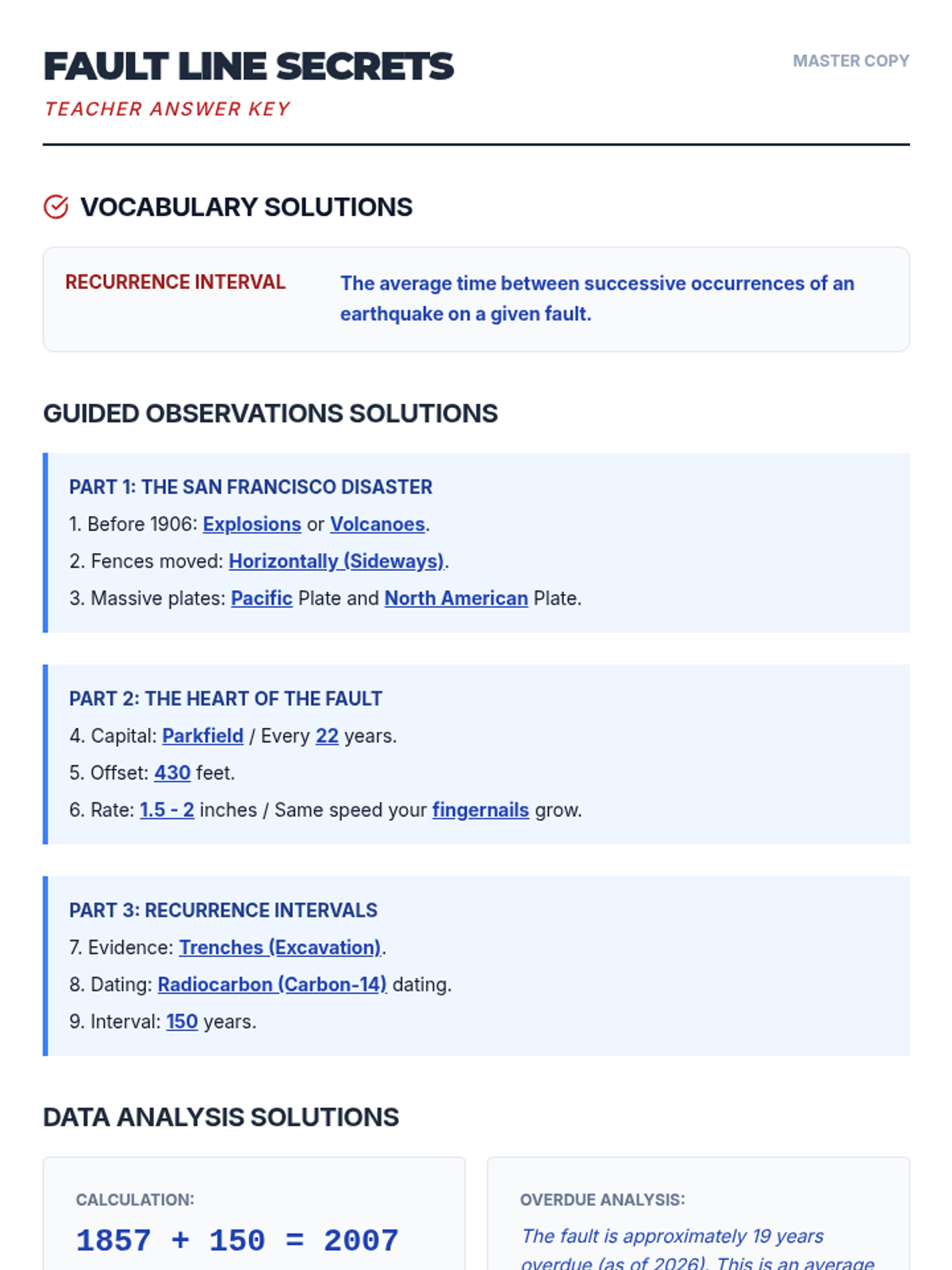
The teacher's answer key for the Fault Line Notes worksheet, including definitions, completed observation answers, and the recurrence interval calculation.
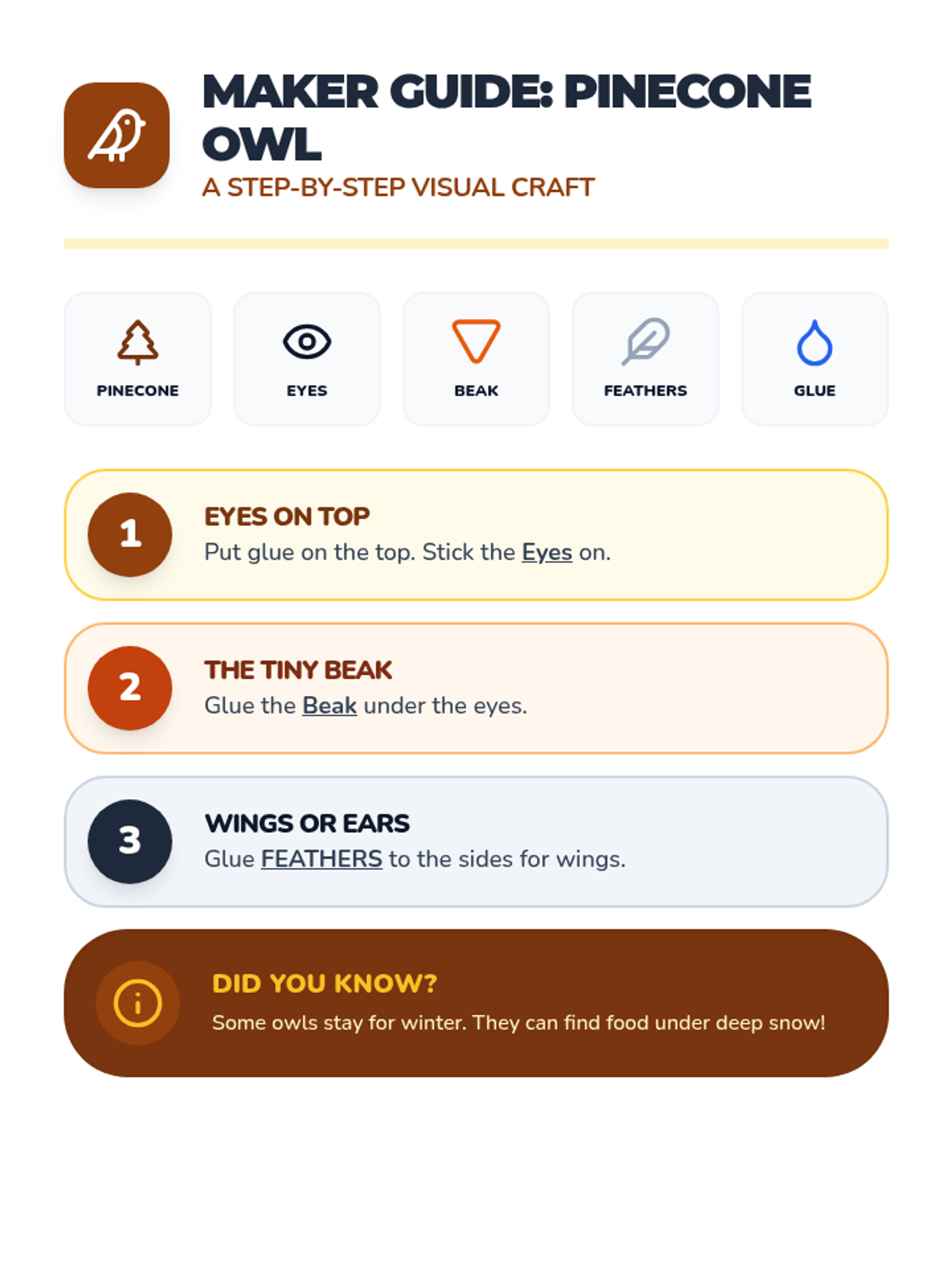
A visual craft guide for making a pinecone owl. Simplified steps and large icons make it accessible for middle school students with lower reading levels.
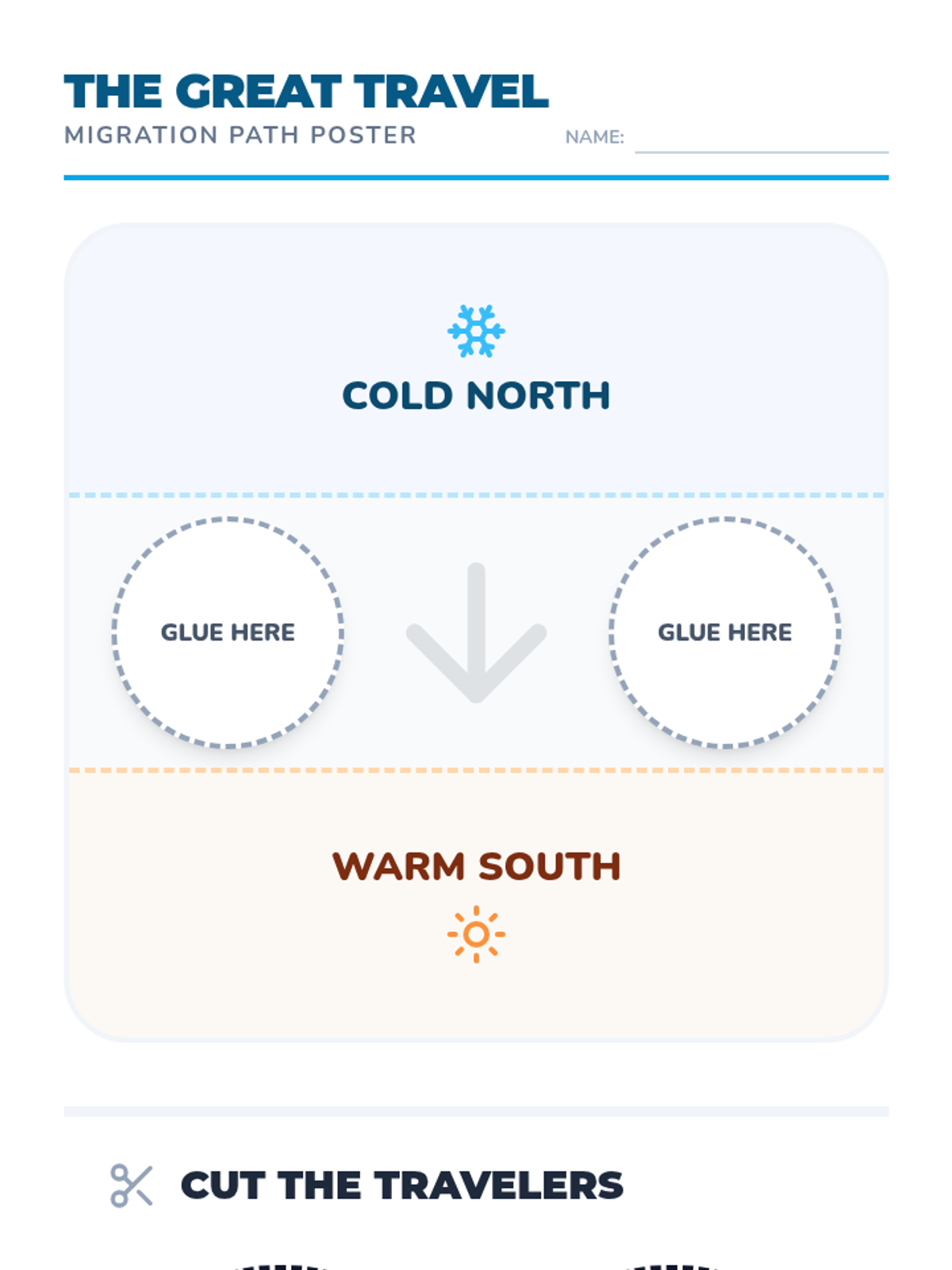
A cut-and-paste poster activity for students to visualize migration paths from north to south. Includes animal cutouts with brief, easy-to-read facts.
Slides exploring the concepts of migration and hibernation, focusing on animals that travel for winter. Uses simplified vocabulary and high-contrast visual aids.
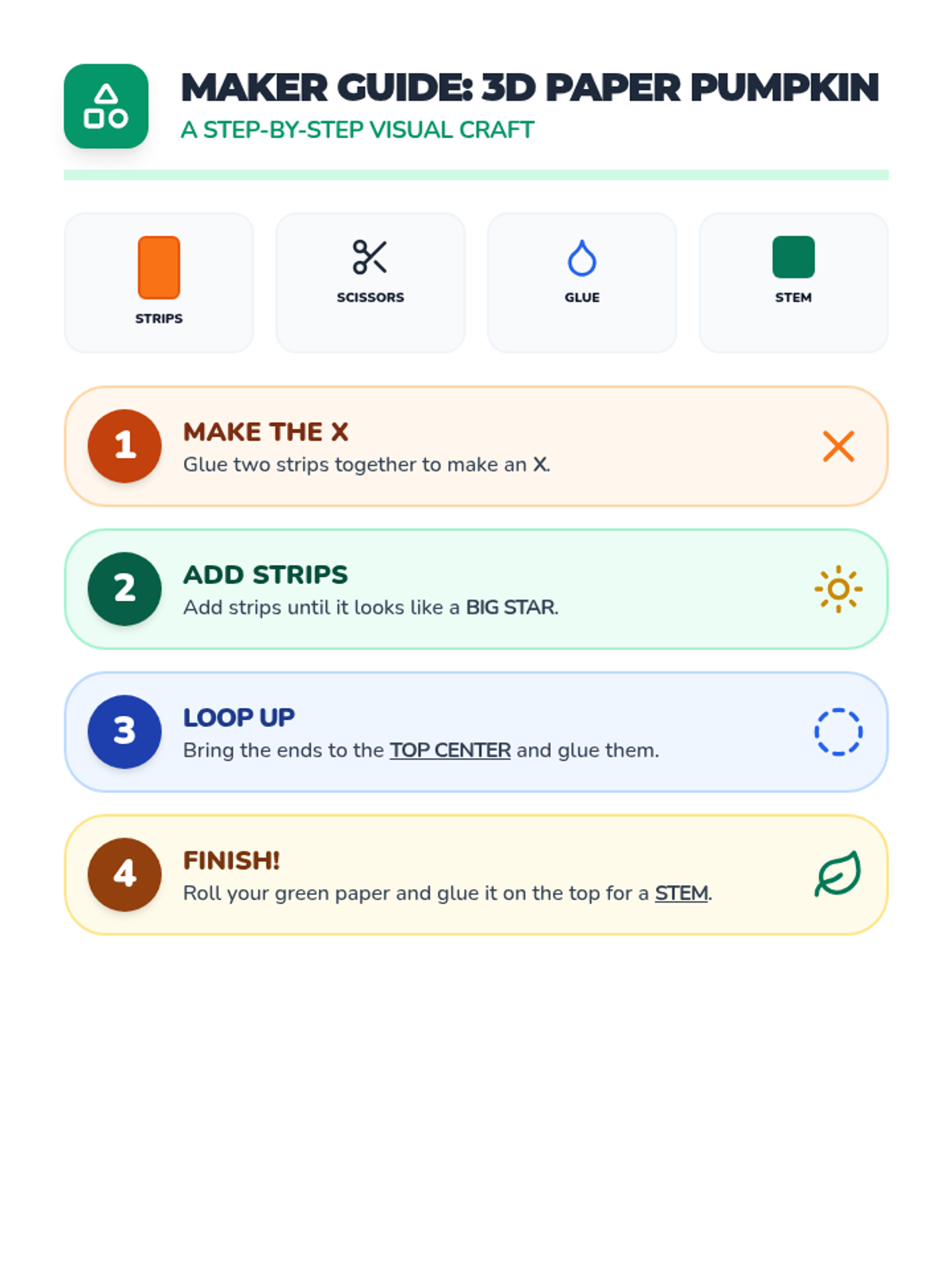
Visual step-by-step guide for creating a 3D paper pumpkin using paper strips. Designed for students at a 2nd-grade reading level with clear icon support.
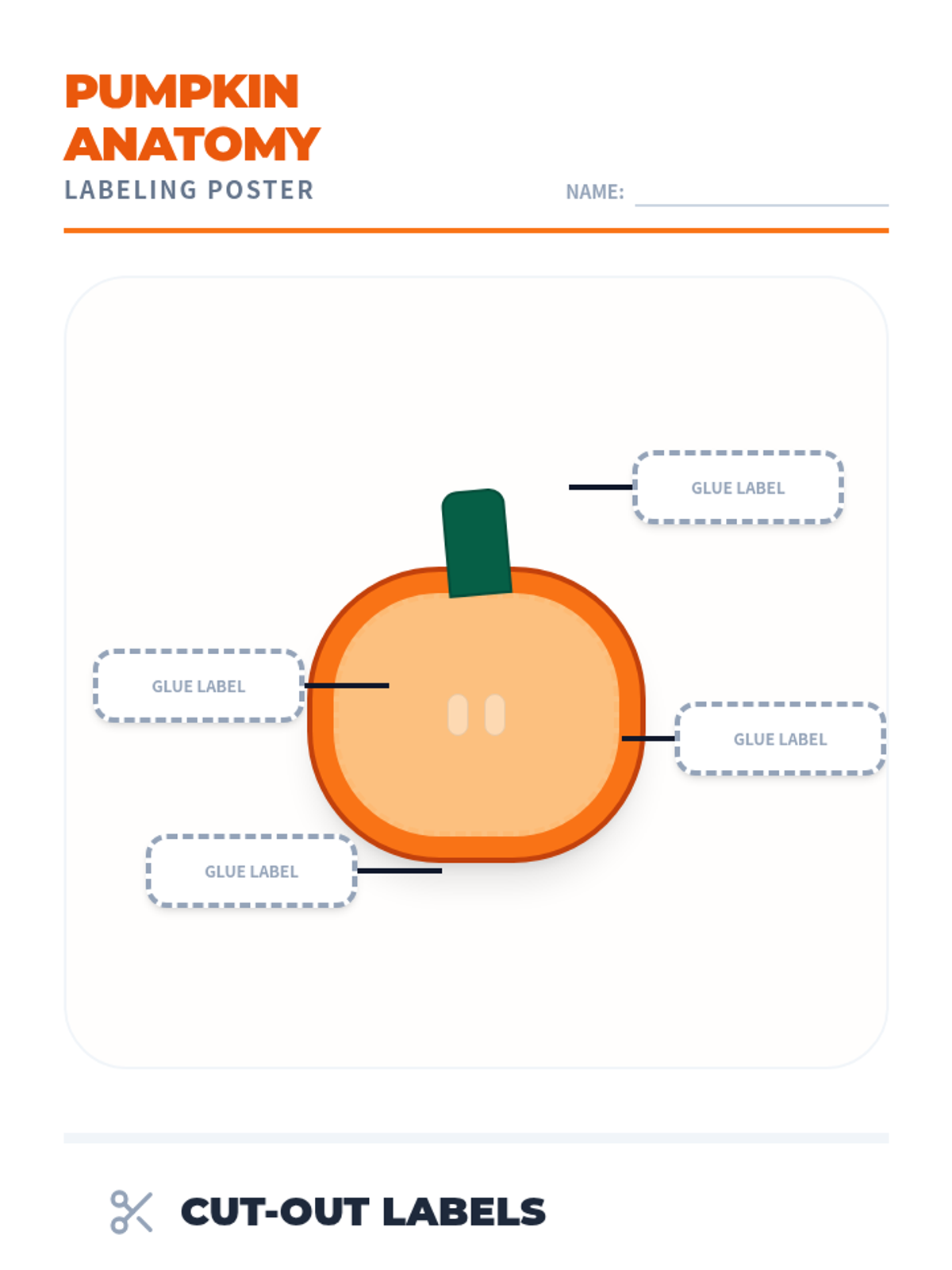
A cut-and-paste poster for labeling the parts of a pumpkin. Includes a poster template with clear visual anchors and a cutout section with labels and simple definitions.
Educational slides about pumpkin anatomy and growth cycles, using large text and simple icons suitable for 2nd-grade level readers.
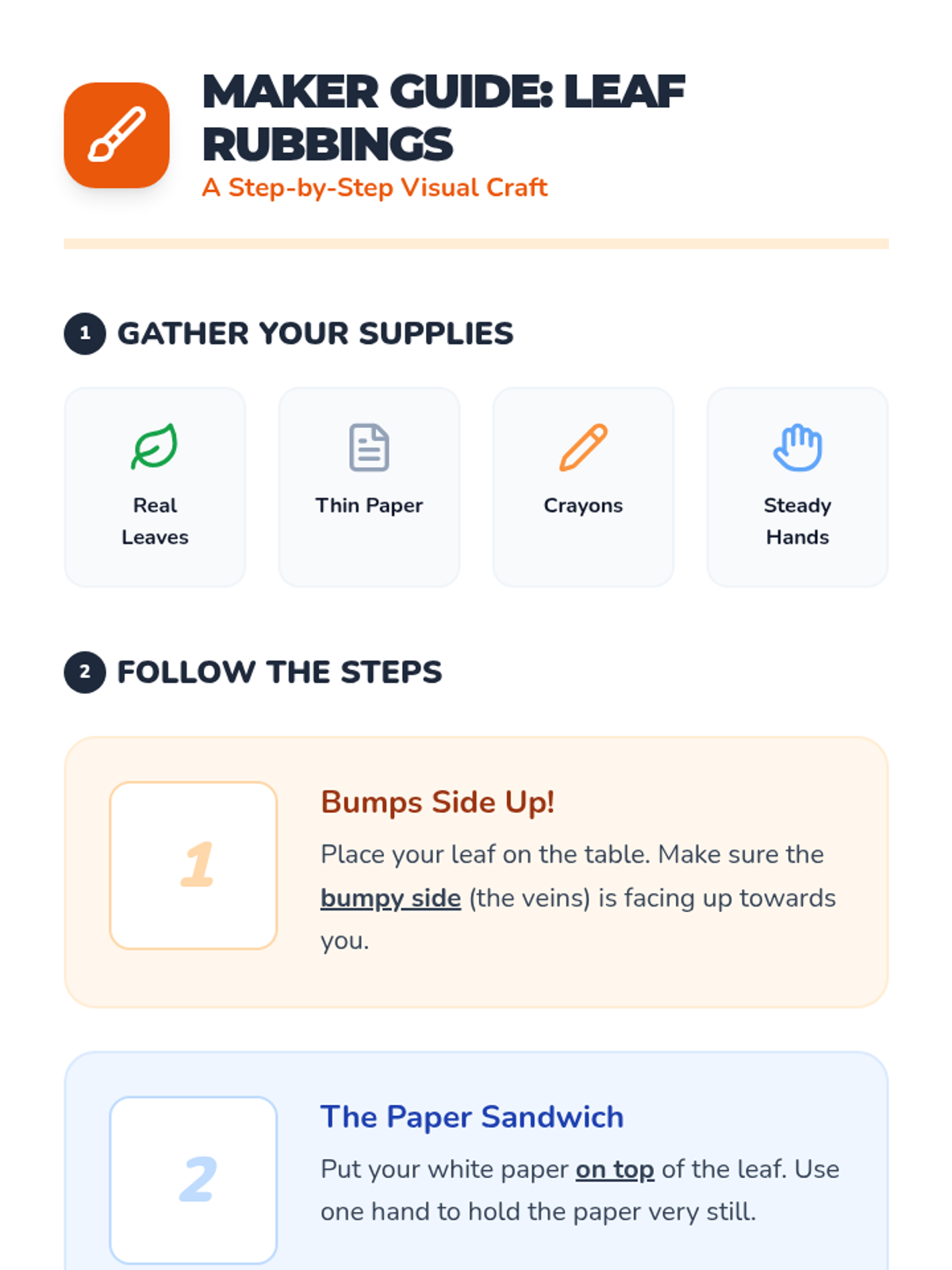
A step-by-step visual craft guide for creating leaf rubbings. Designed with large icons and clear, simple instructions for students at a 2nd-grade reading level.
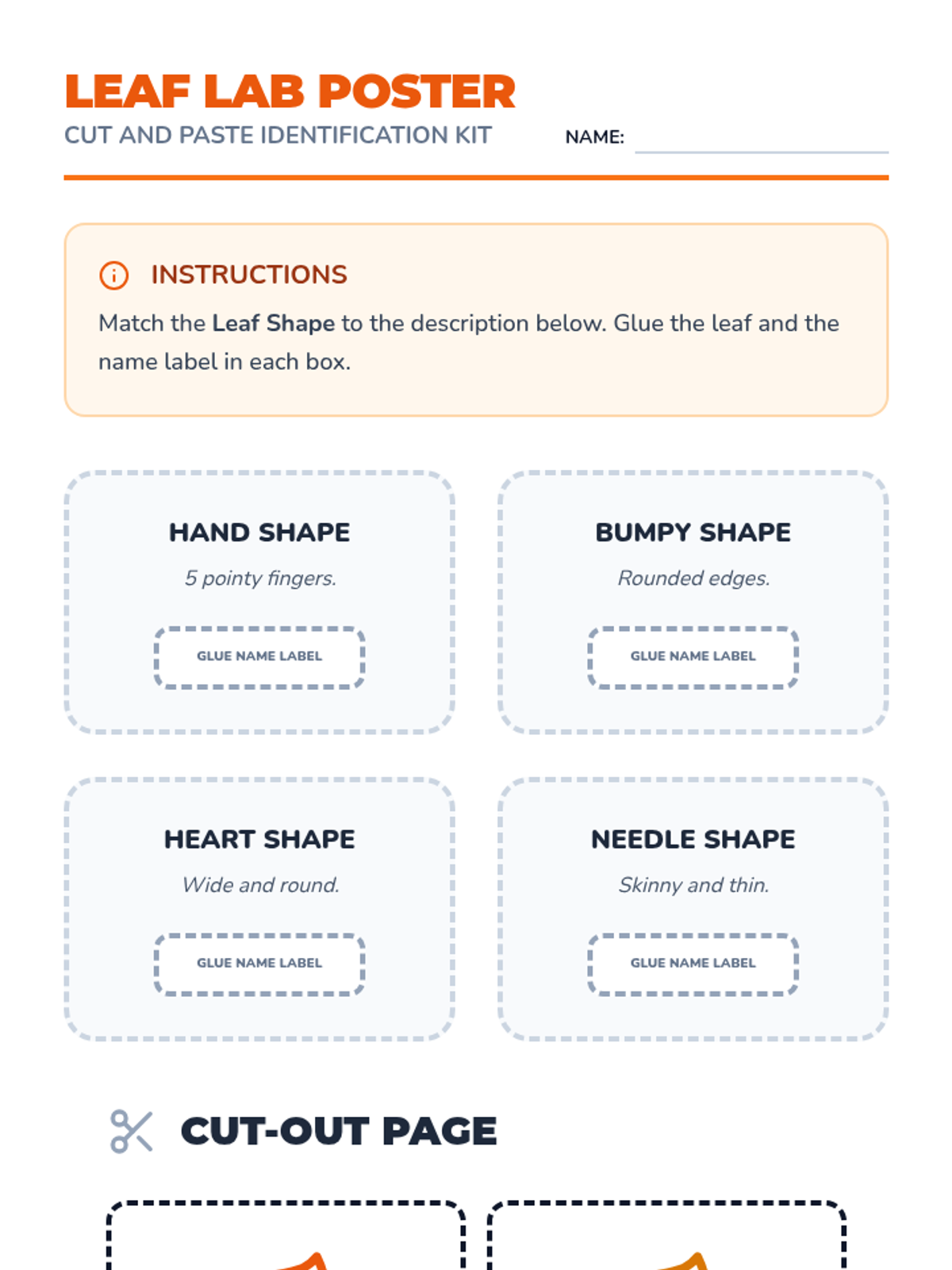
A cut-and-paste poster activity for students to identify different leaf shapes and names. Includes a poster template page and a cutout page with icons and labels.
Visual slides introducing leaf color changes and shapes for the Leafy Legends lesson. Includes clear text and icons for middle schoolers at a 2nd-grade reading level.
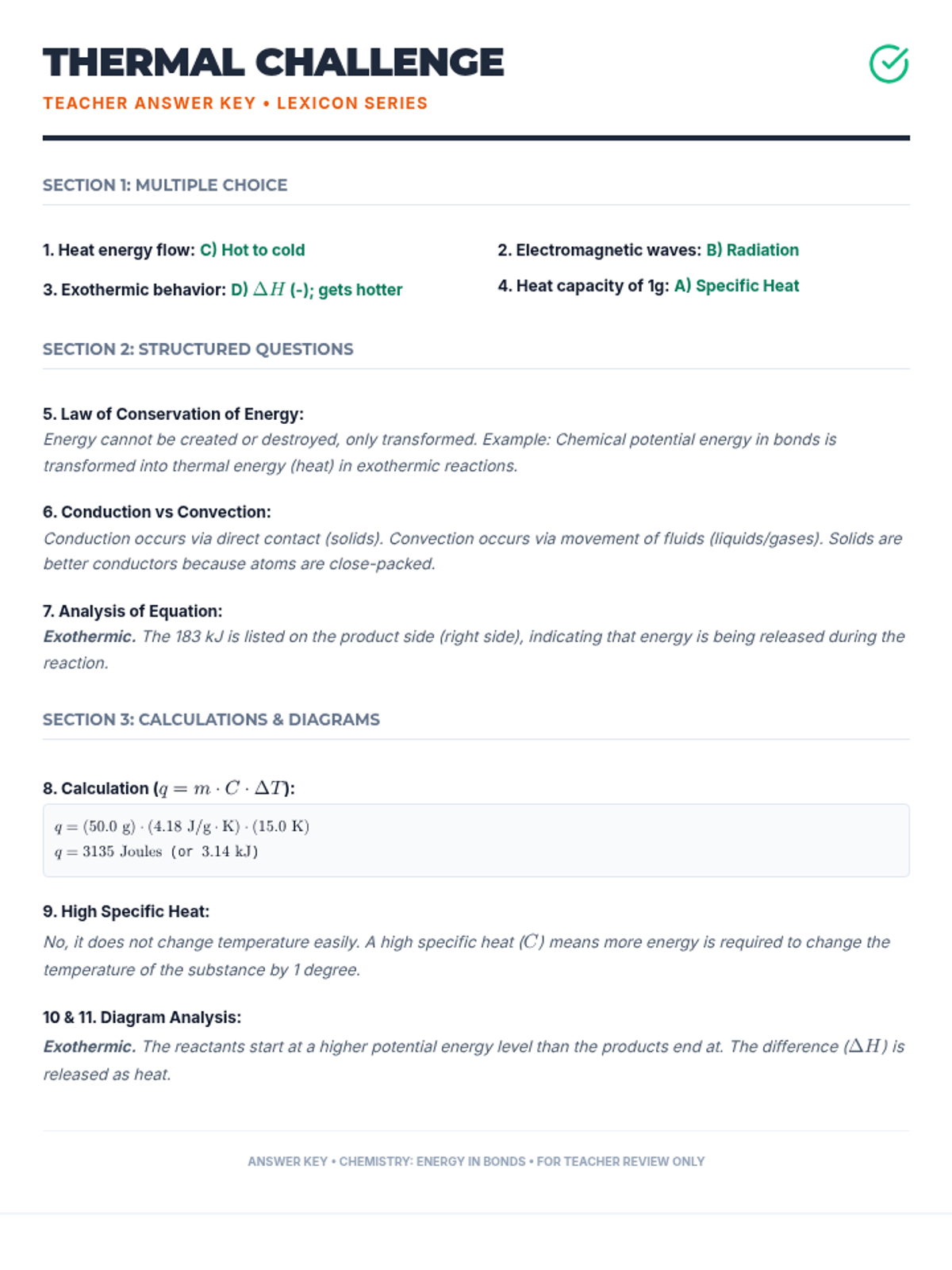
A detailed answer key for the Thermal Challenge Worksheet, providing solutions for the multiple-choice questions, structured answers, and the specific heat calculation problem.
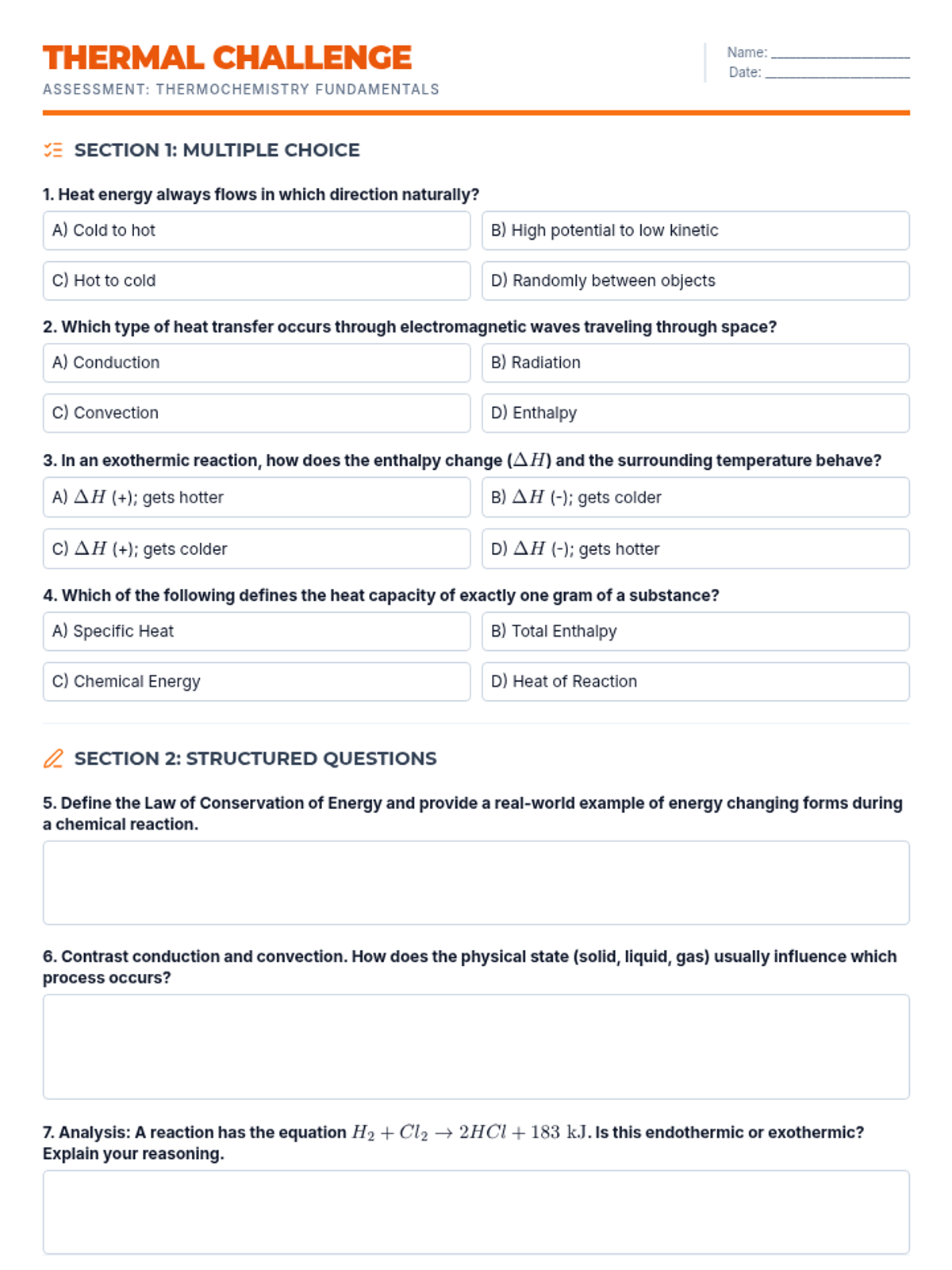
A two-page assessment worksheet based on the thermochemistry notes. It includes multiple-choice questions on heat transfer and enthalpy, structured questions for theoretical understanding, and a dedicated calculation zone for specific heat problems.
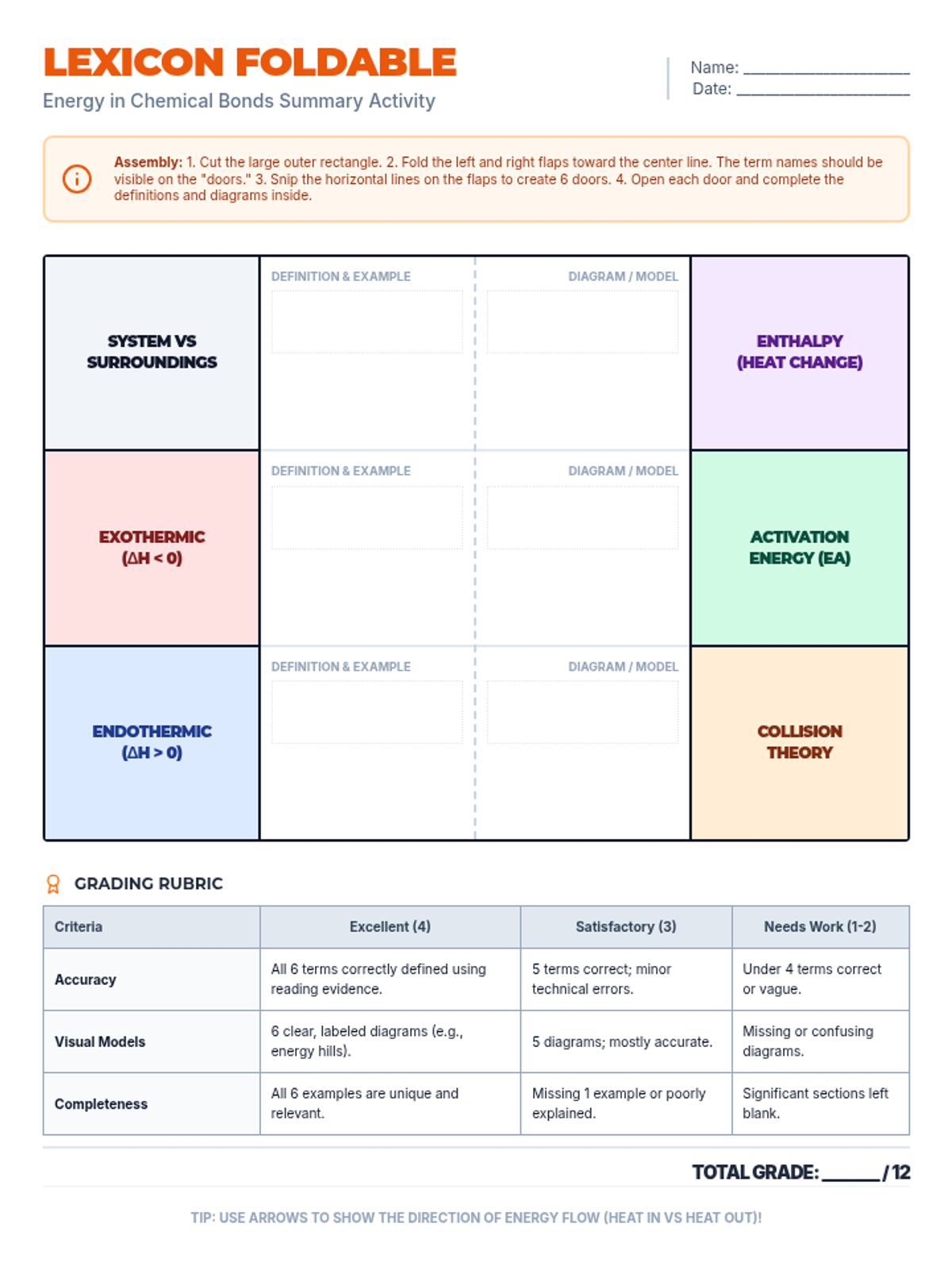
A single-page foldable template designed for a shutter-fold assembly. It includes spaces for six key thermochemistry terms from the lexicon articles, with designated writing areas for definitions, diagrams, and examples. A 12-point rubric is included at the bottom for easy grading.
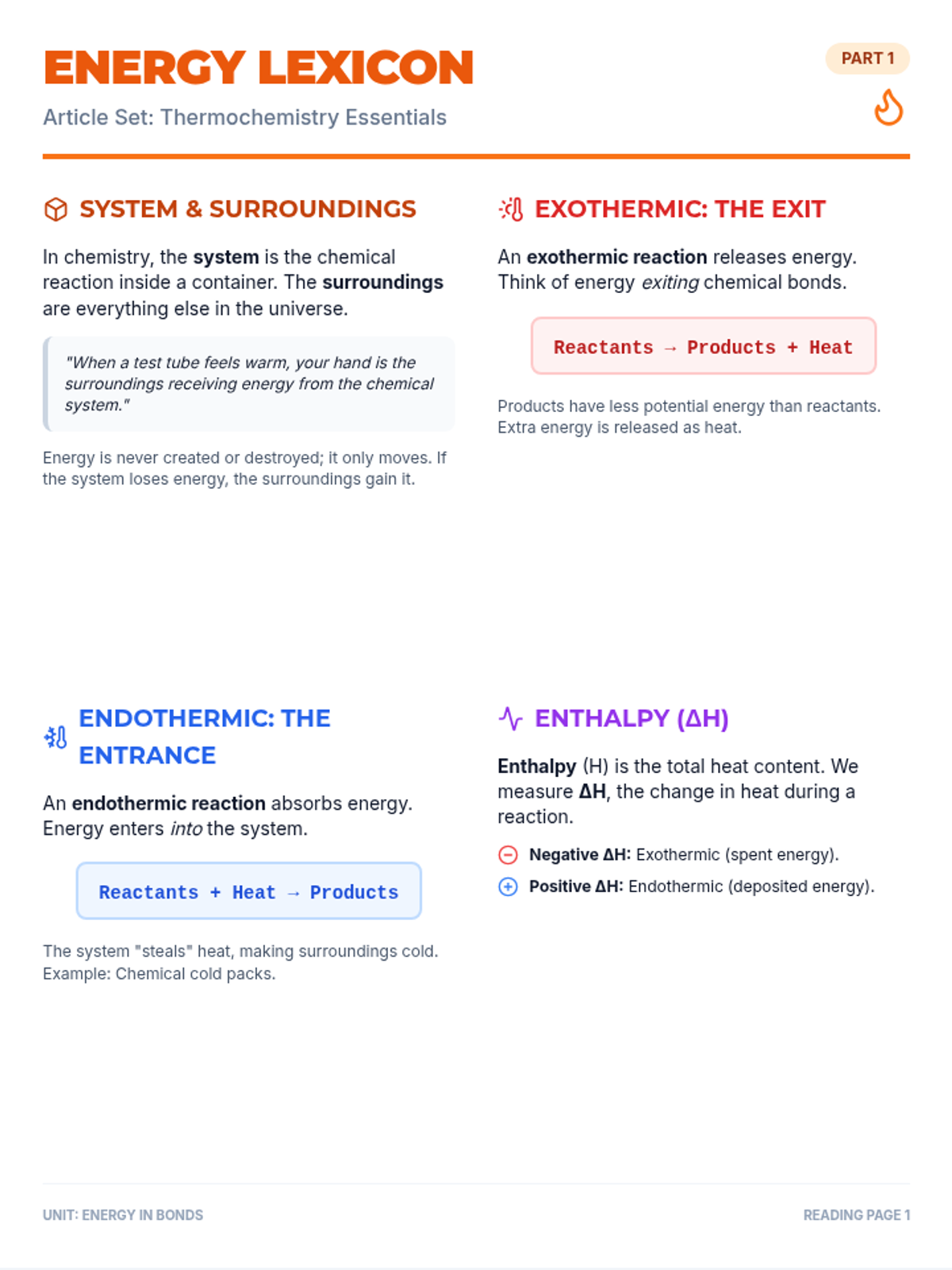
A two-page set of chunked reading articles covering six key thermochemistry terms: System/Surroundings, Exothermic, Endothermic, Enthalpy, Activation Energy, and Collision Theory. Each section includes clear definitions, simplified reaction equations, and real-world connections.