A 2-page topographic map worksheet featuring My Little Pony characters. Students learn about contour lines, intervals, and elevation through activities involving the geography of Canterlot Peak.
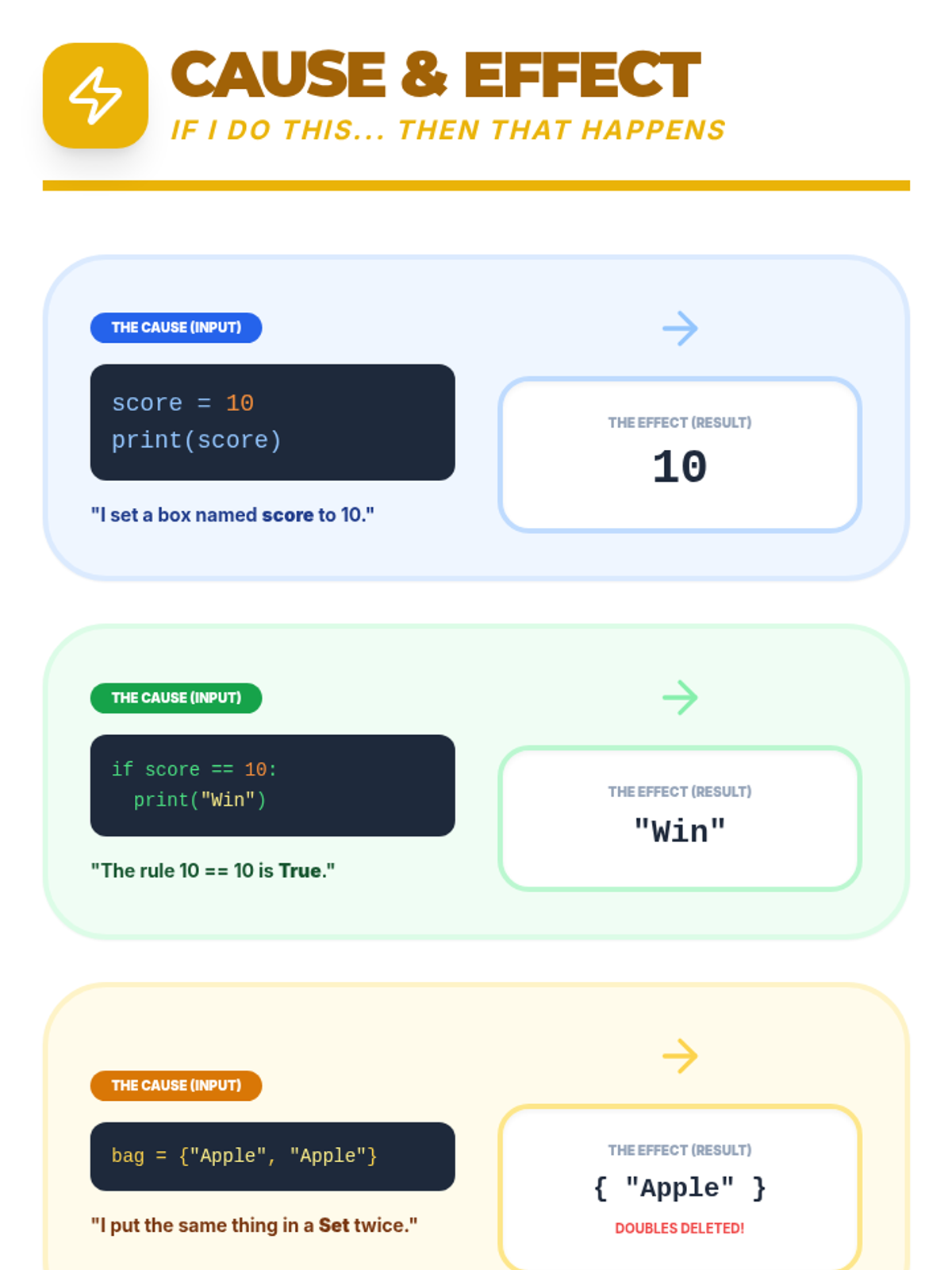
A visual "Cause and Effect" lab guide showing exactly how Python code results in specific outputs, designed to help students connect procedural steps to conceptual outcomes.
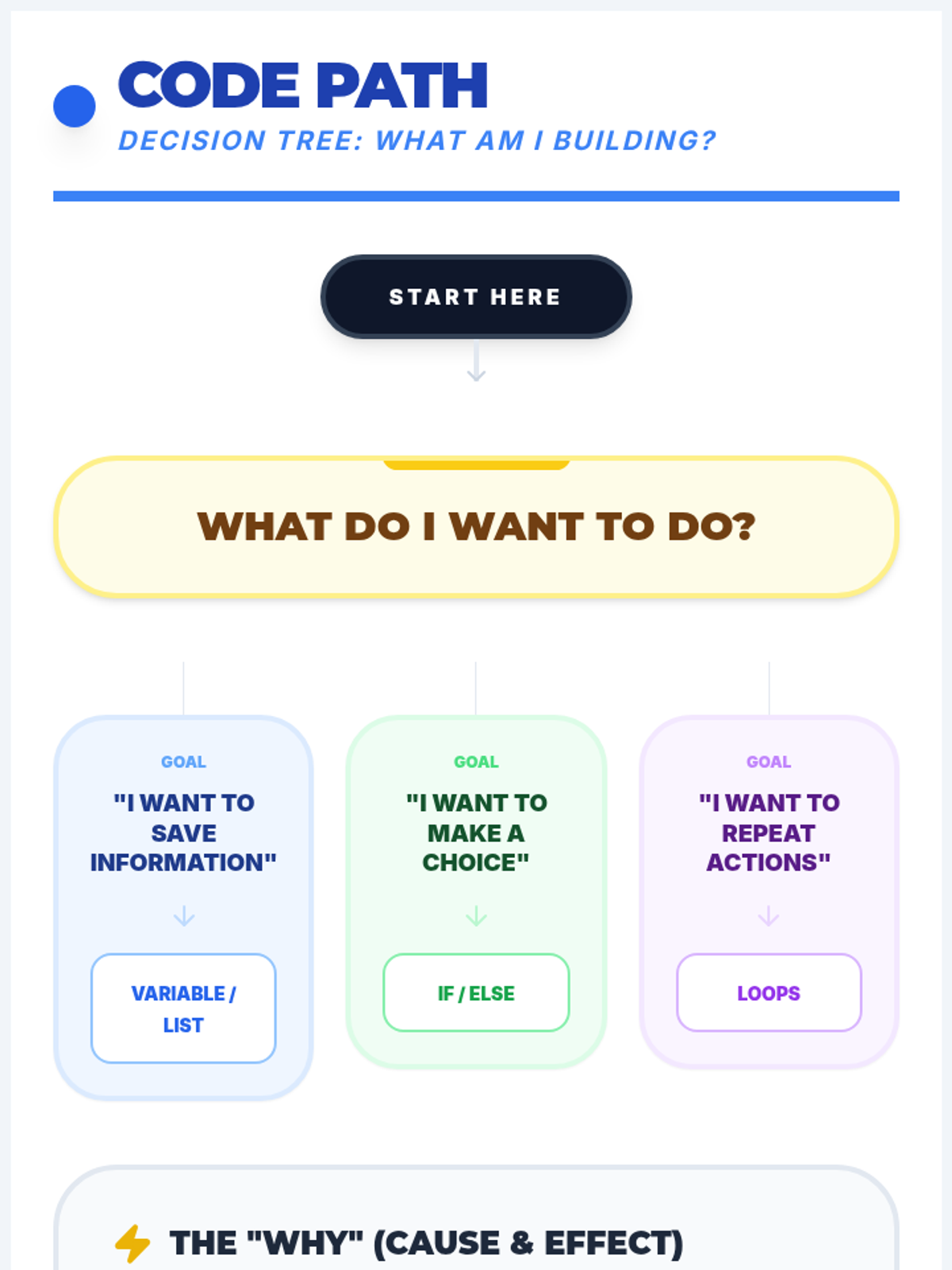
A 2-page procedural checklist and decision tree for students with memory and decision-making challenges, providing a structured 'if-then' roadmap for picking coding tools and a step-by-step writing procedure.
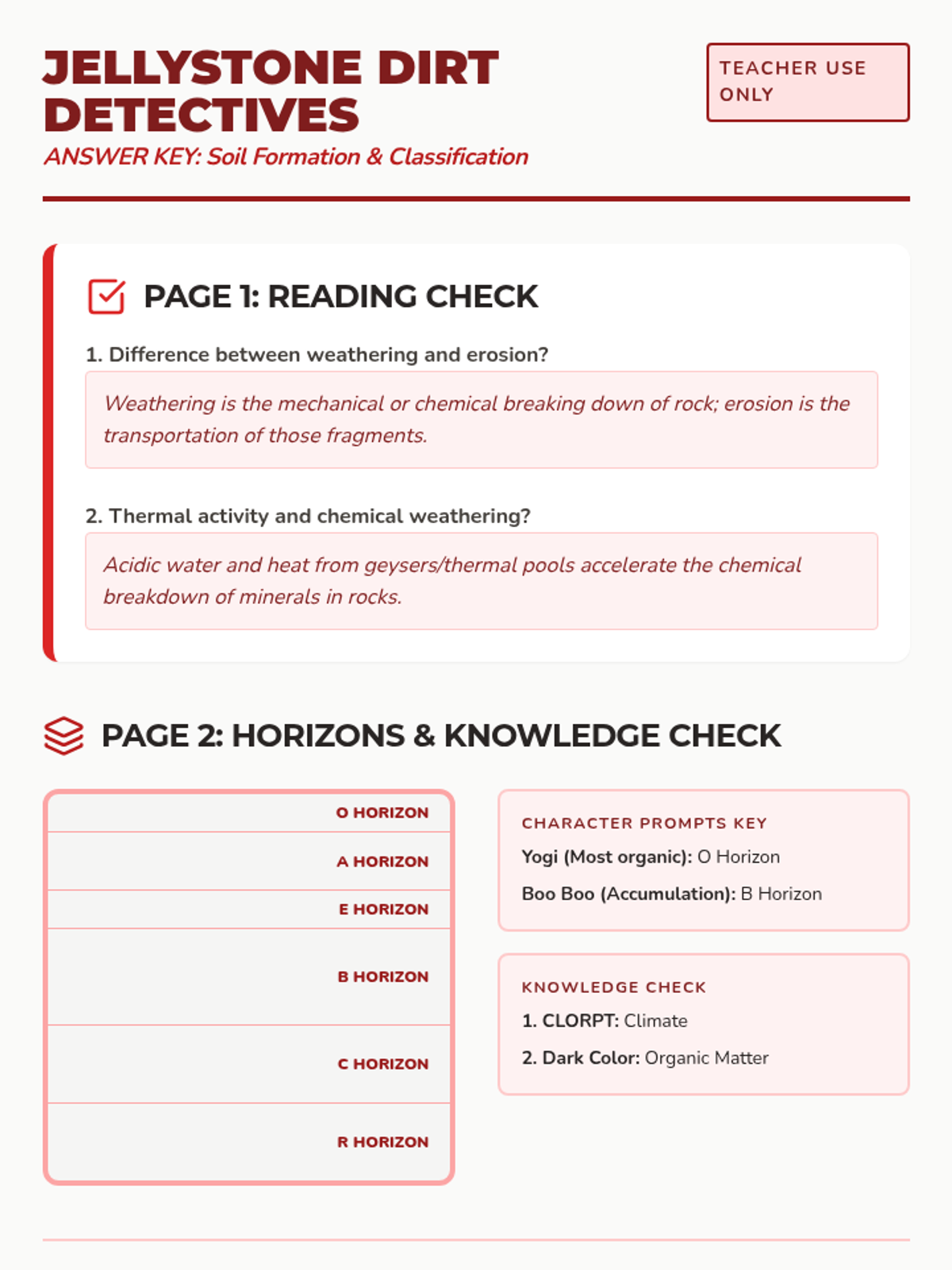
Teacher answer key for the Jellystone Dirt Worksheet, providing correct answers for comprehension questions, soil horizon labeling, and multiple-choice items.
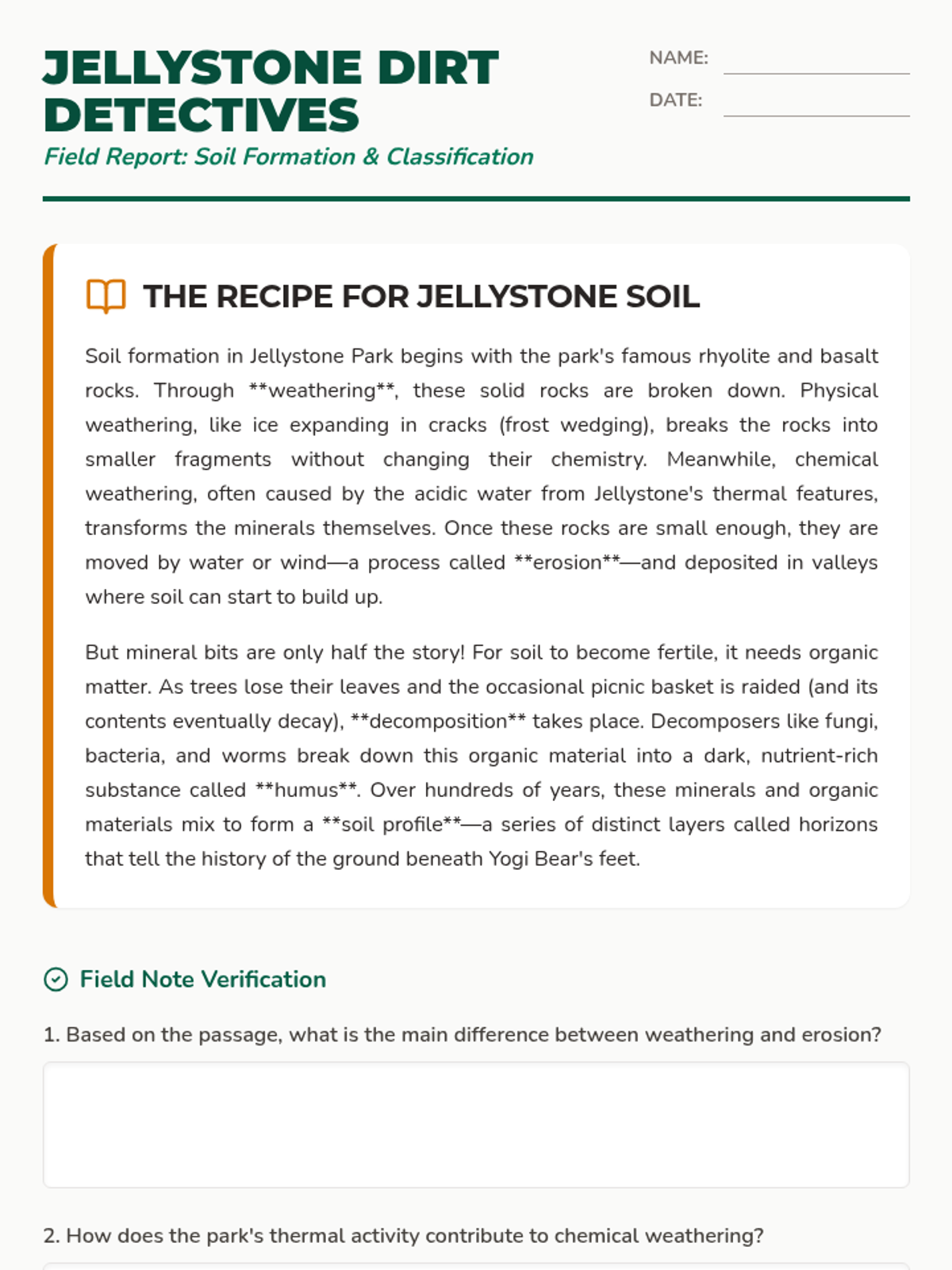
An expanded student worksheet featuring a reading passage, soil horizon labeling with character prompts, a texture triangle practice section, and multiple-choice questions about soil formation factors.
A comprehensive visual slide deck exploring soil formation, layers, and classification with a Jellystone Park theme. Features sections on weathering, decomposition, CLORPT factors, and the soil profile.
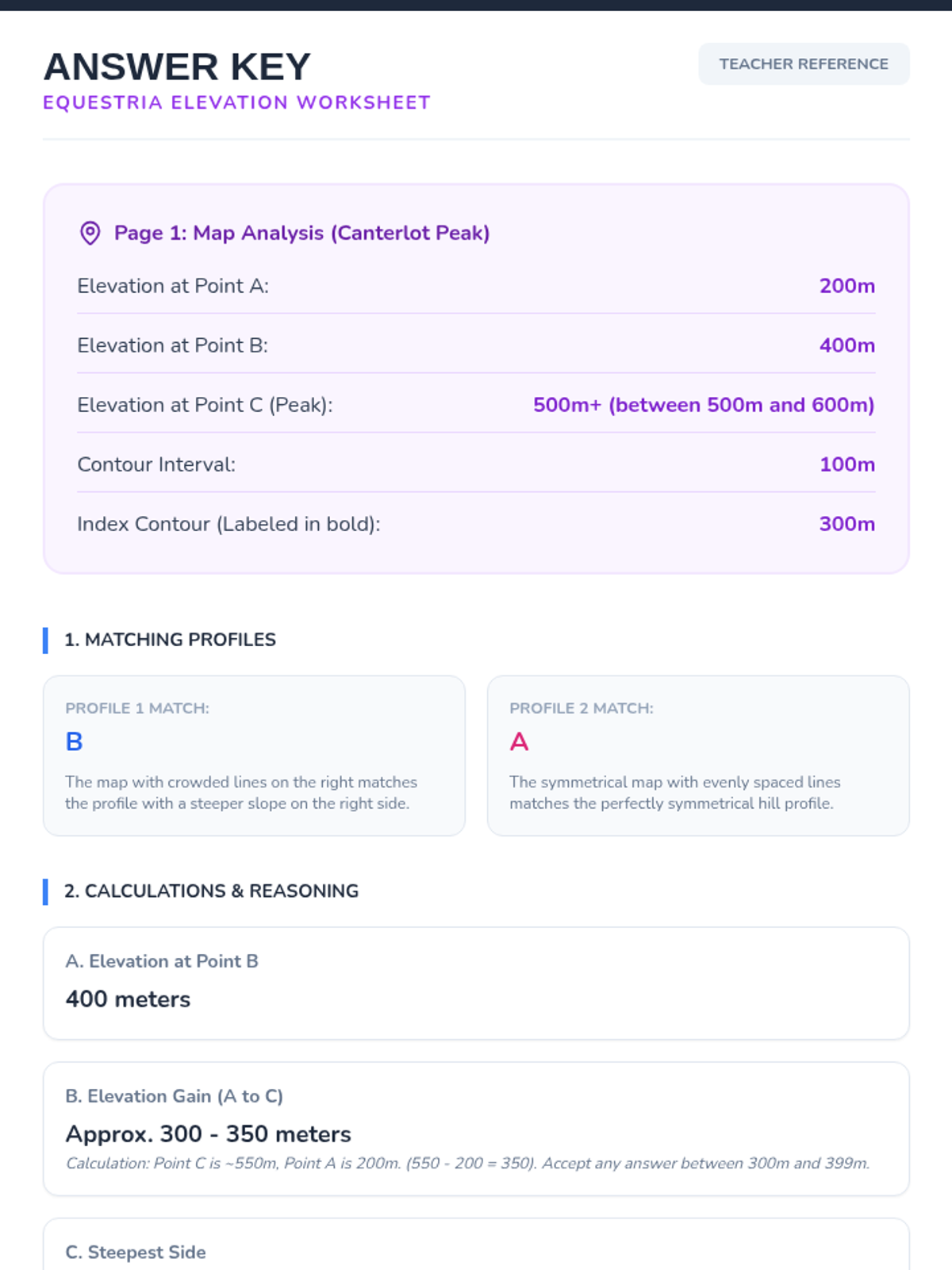
An answer key for the Equestria Elevation Worksheet, providing correct elevation values, matching results, and reasoning for teachers.
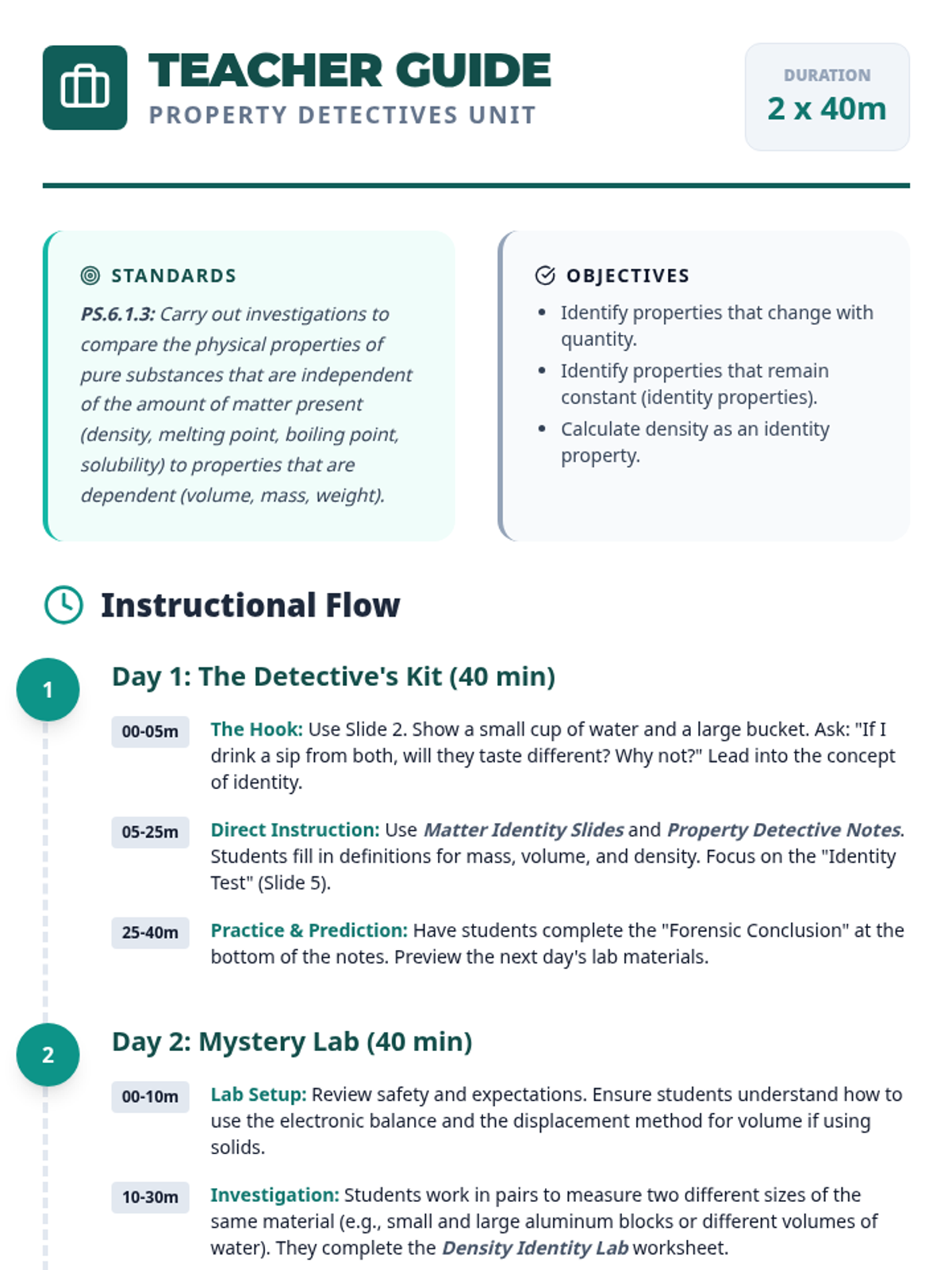
A comprehensive teacher-facing instructional guide for the 2-day Property Detectives unit. It includes specific pacing, lesson flow for both days, instructional hooks, and professional tips for addressing misconceptions and differentiation.
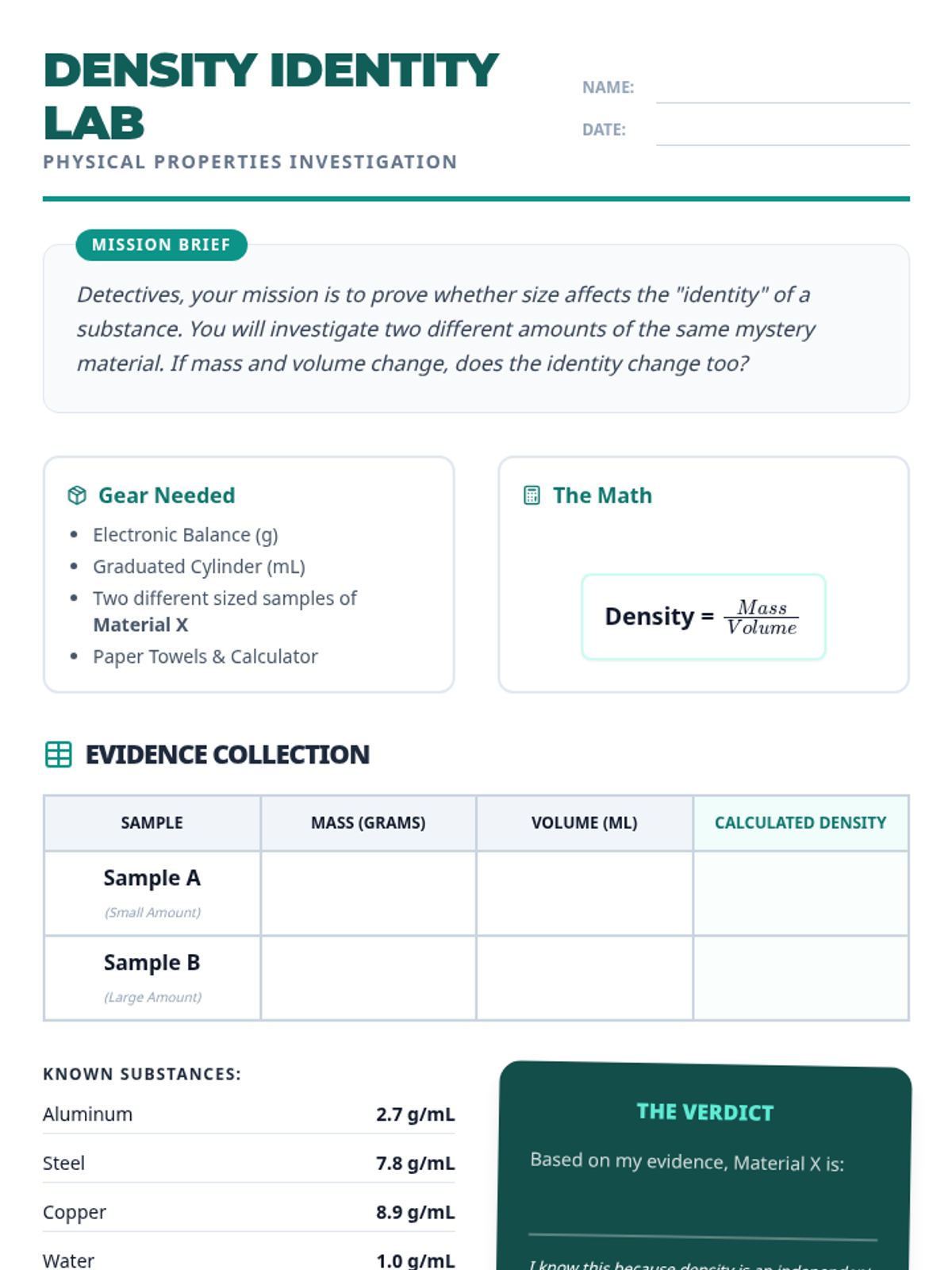
A student-led lab investigation worksheet where students measure mass and volume for two different-sized samples of the same substance, calculate density, and use it as an 'identity' property to identify a mystery material.
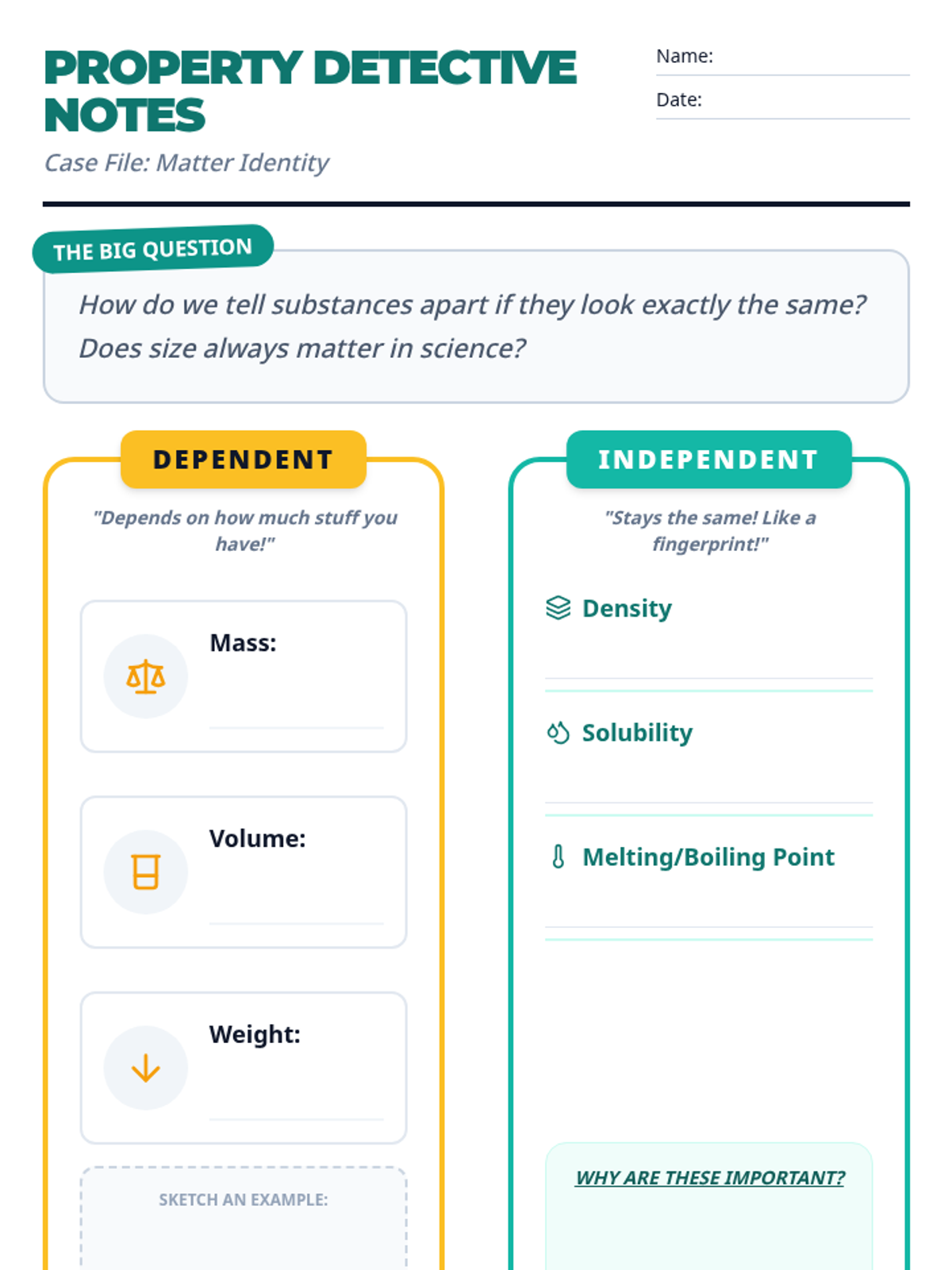
An interactive doodle notes worksheet for students to record definitions and examples of dependent and independent physical properties during the presentation. Features clear visual metaphors, guided sections for mass, volume, and density, and a summative forensic conclusion task.
A comprehensive 6-slide presentation introducing physical properties. It visually distinguishes between dependent (mass, volume, weight) and independent (density, solubility, boiling/melting point) properties using clean, lab-themed graphics and icons.
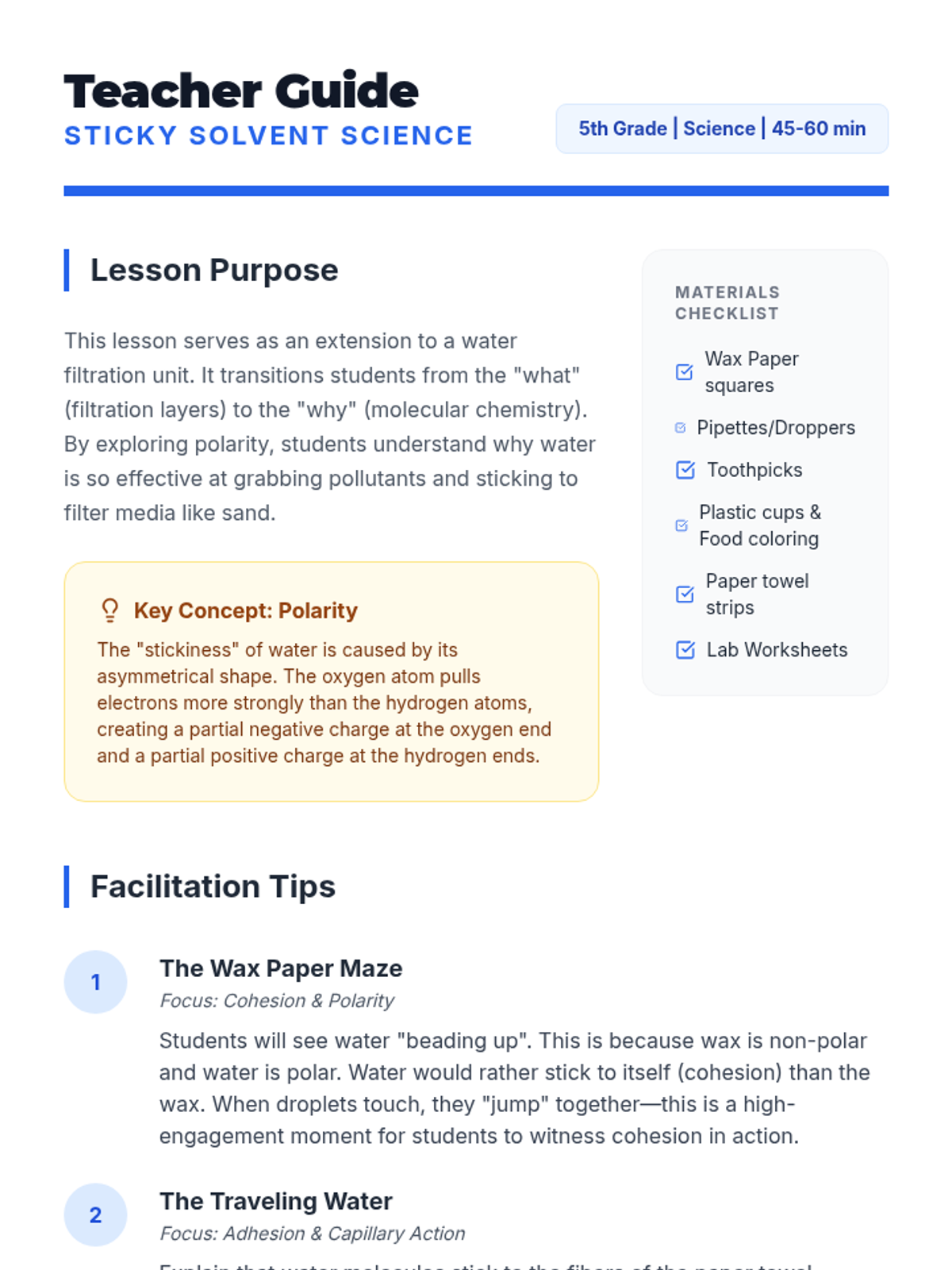
A comprehensive teacher facilitation guide for the Sticky Solvent Science lesson, providing scientific background, lab tips, discussion prompts, and common misconceptions. Updated for the Wax Paper Maze and Traveling Water activities.
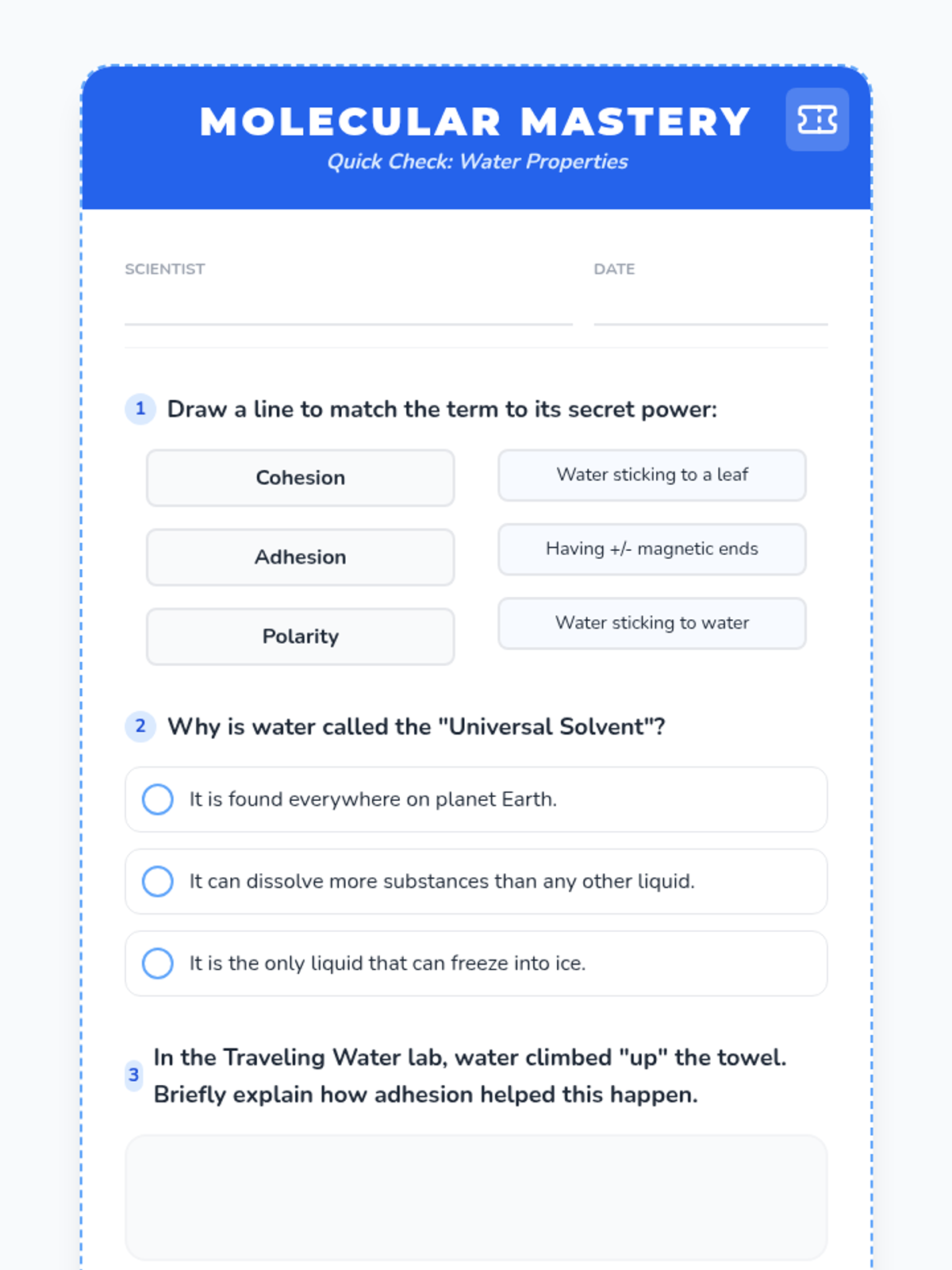
A quick assessment for students to demonstrate their understanding of cohesion, adhesion, polarity, and water's role as a universal solvent. Updated with a Traveling Water connection.
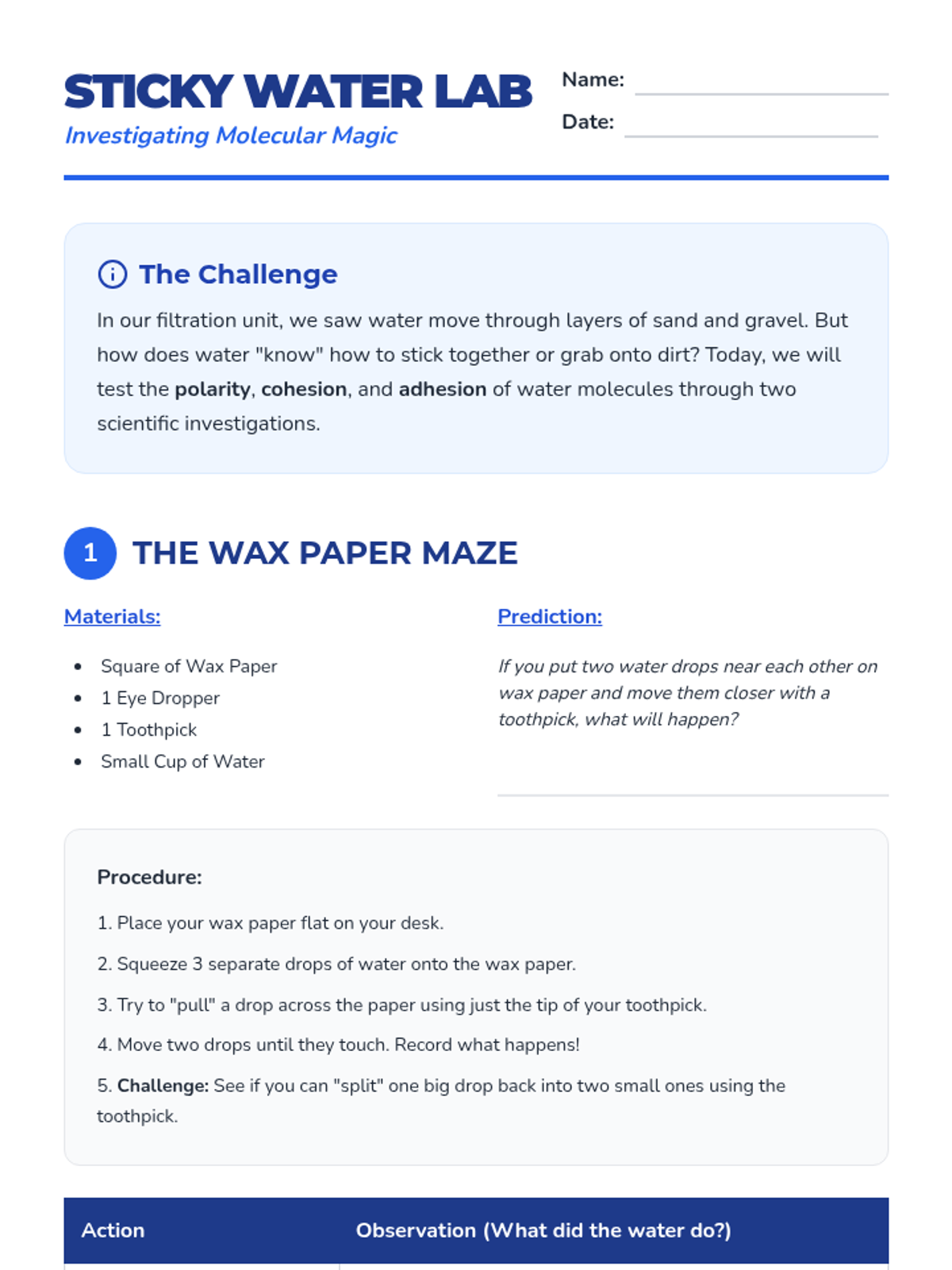
A hands-on lab activity document for 5th-grade students to investigate water properties including cohesion, adhesion, and capillary action through the "Wax Paper Maze" and "Traveling Water" experiments.
A visual presentation for a 5th-grade extension lesson on water properties, covering polarity, cohesion, adhesion, and water as a universal solvent. Updated to replace the Pepper lab with Traveling Water.
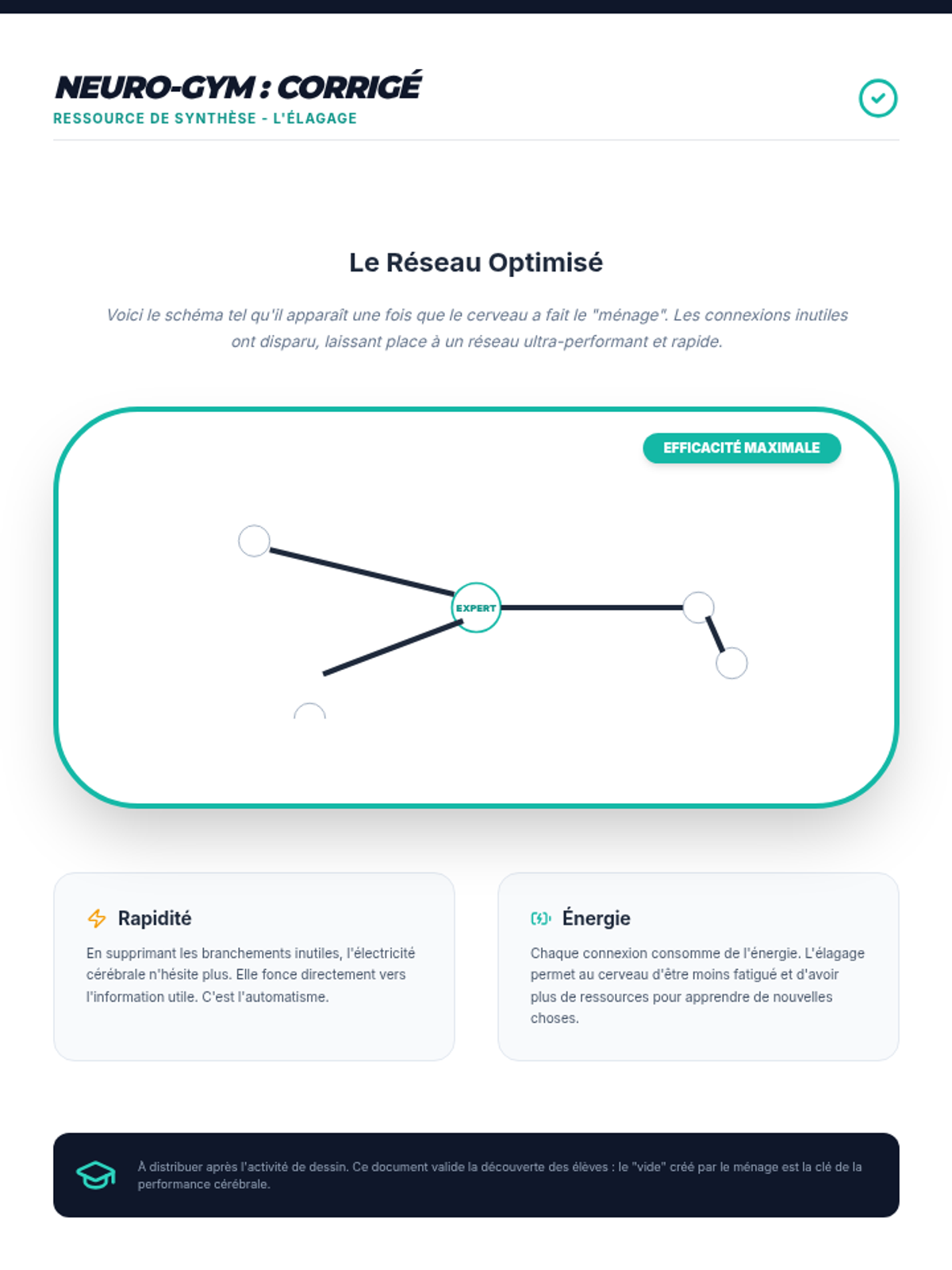
Ressource finale montrant le schéma neuronal optimisé après élagage, servant de corrigé visuel et de support de synthèse pour la séance Neuro-Gym.
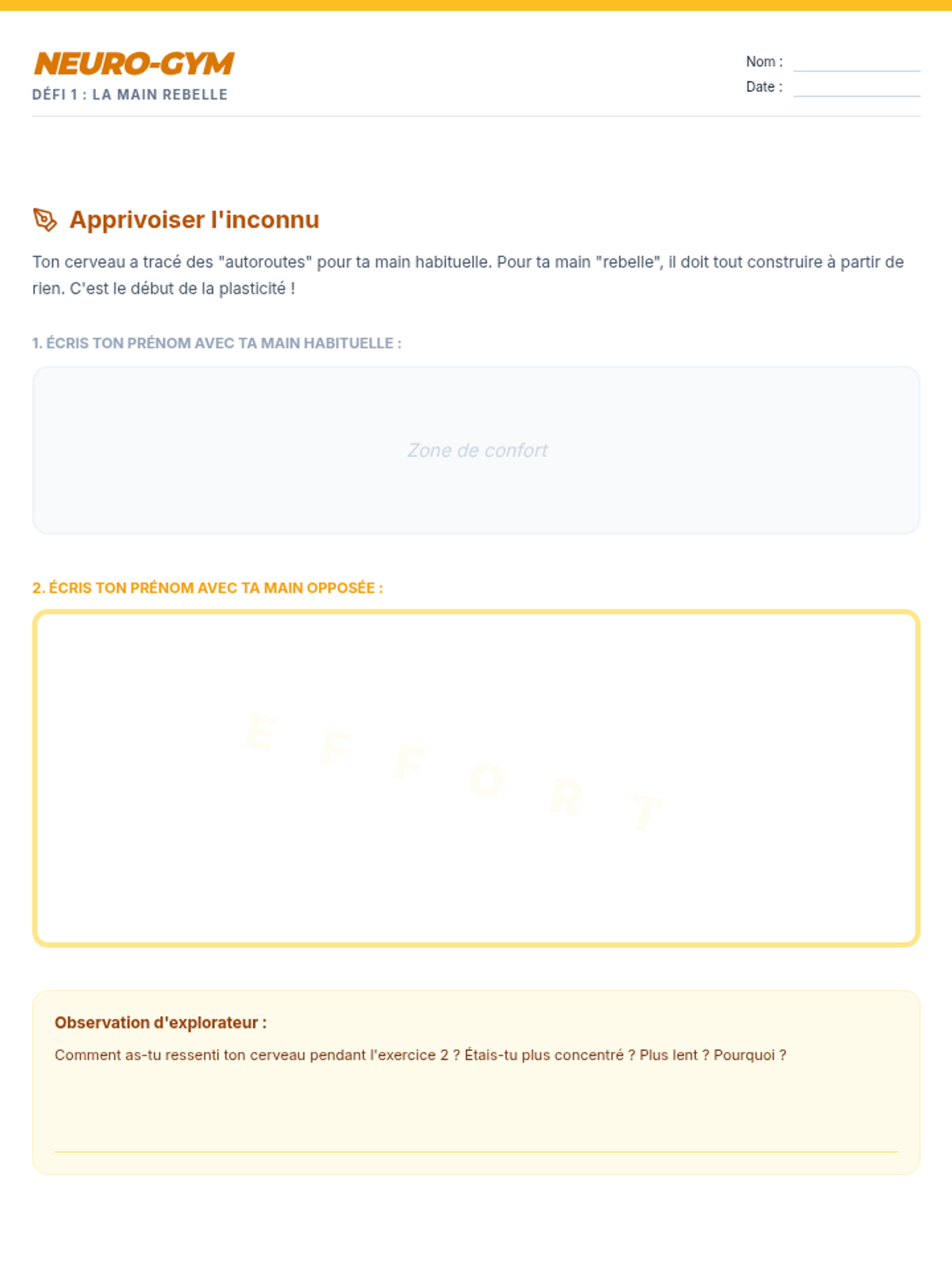
Version finale optimisée de la fiche Neuro-Gym (3 pages, 1 activité par page) avec une mise en page compacte, des polices Inter/Montserrat et un design épuré pour l'impression.
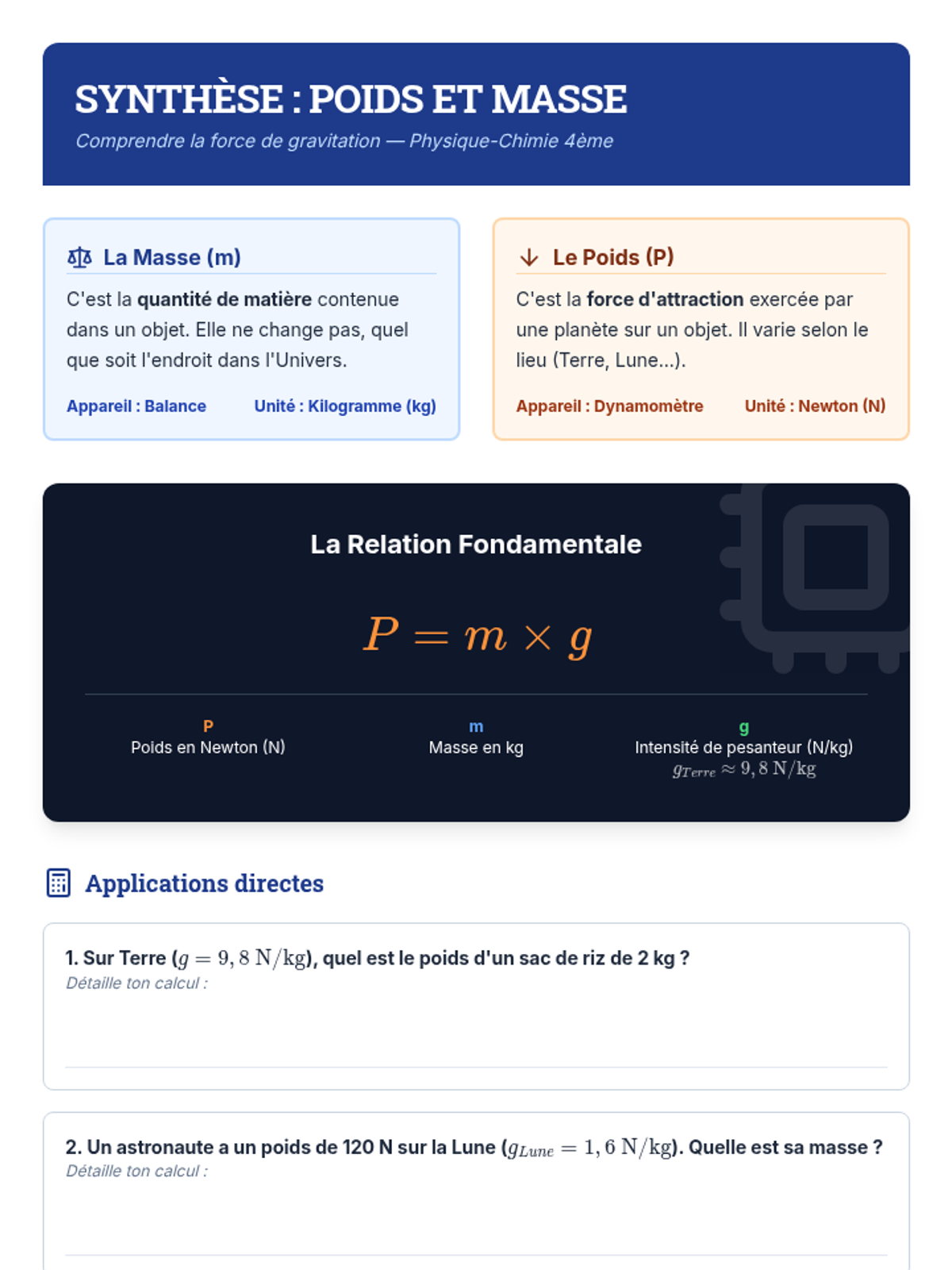
Une fiche de synthèse claire pour les élèves récapitulant la distinction entre poids et masse, présentant la formule P = m x g avec ses unités, et proposant des exercices d'application directe.
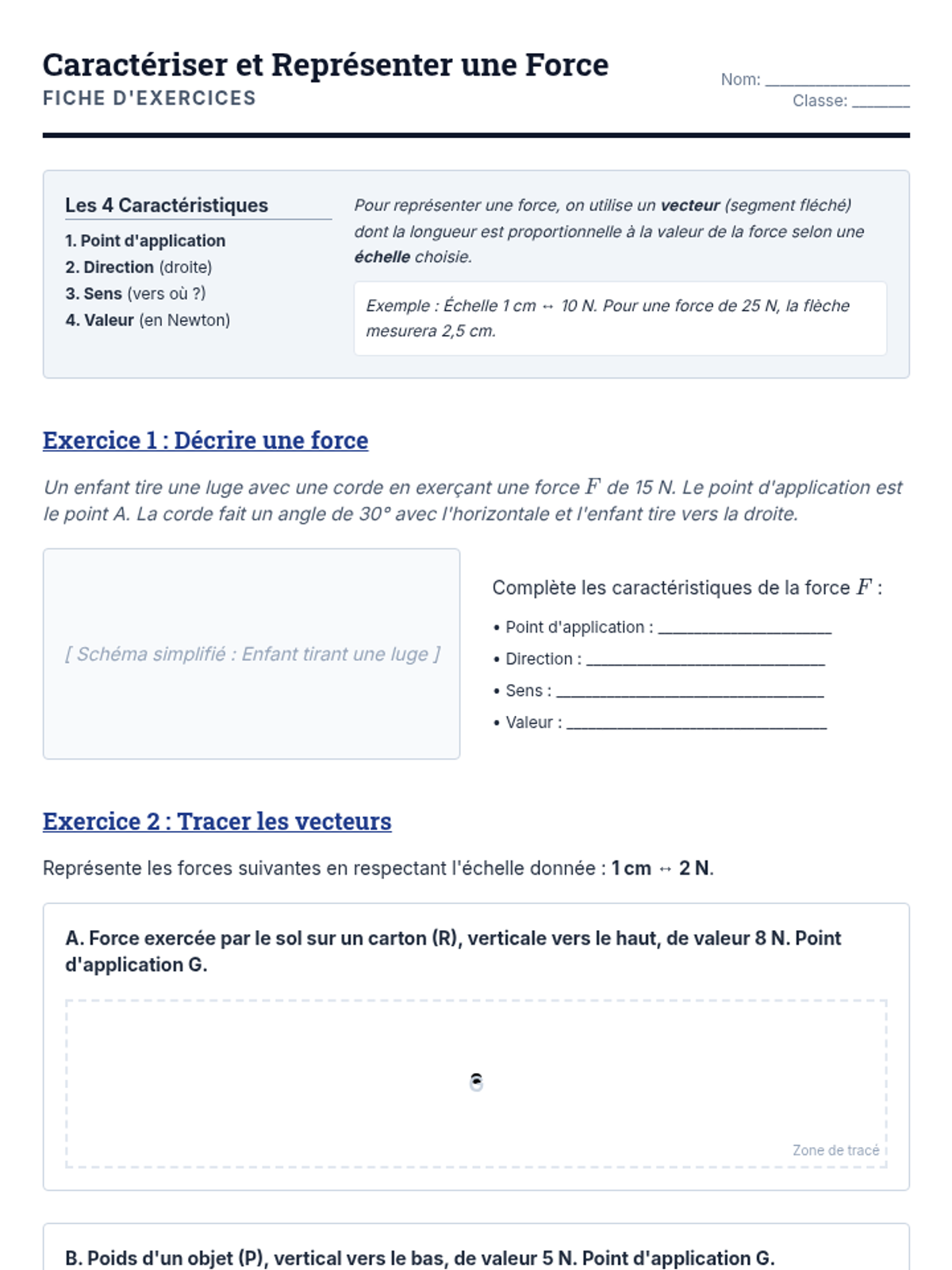
Feuille d'exercices permettant aux élèves de s'entraîner à identifier les quatre caractéristiques d'une force et à représenter des forces par des vecteurs en utilisant une échelle.
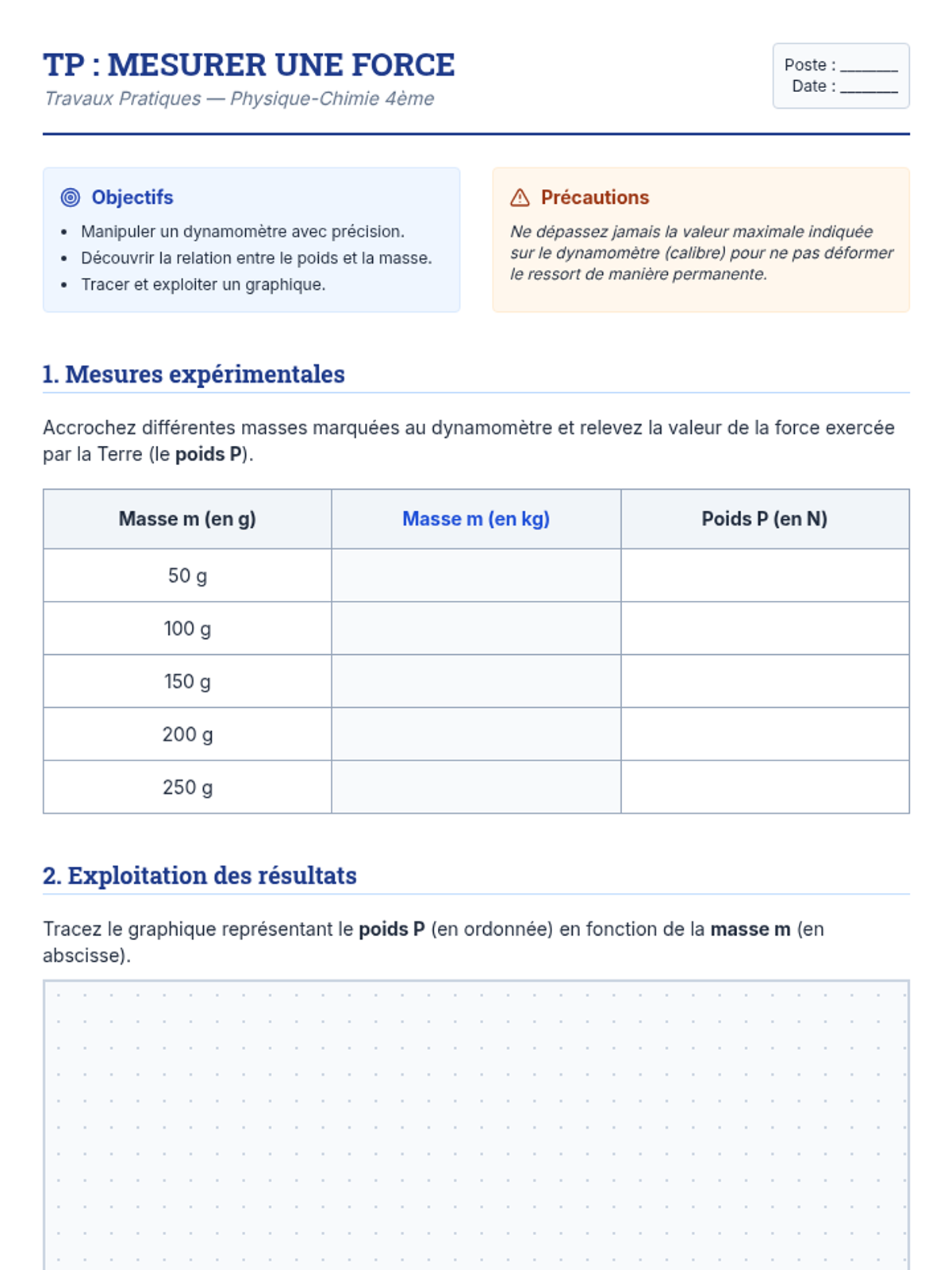
Une fiche de travaux pratiques pour la séance en demi-groupe. Les élèves mesurent le poids de masses marquées à l'aide d'un dynamomètre, complètent un tableau de mesures, tracent un graphique et calculent le coefficient de pesanteur g.
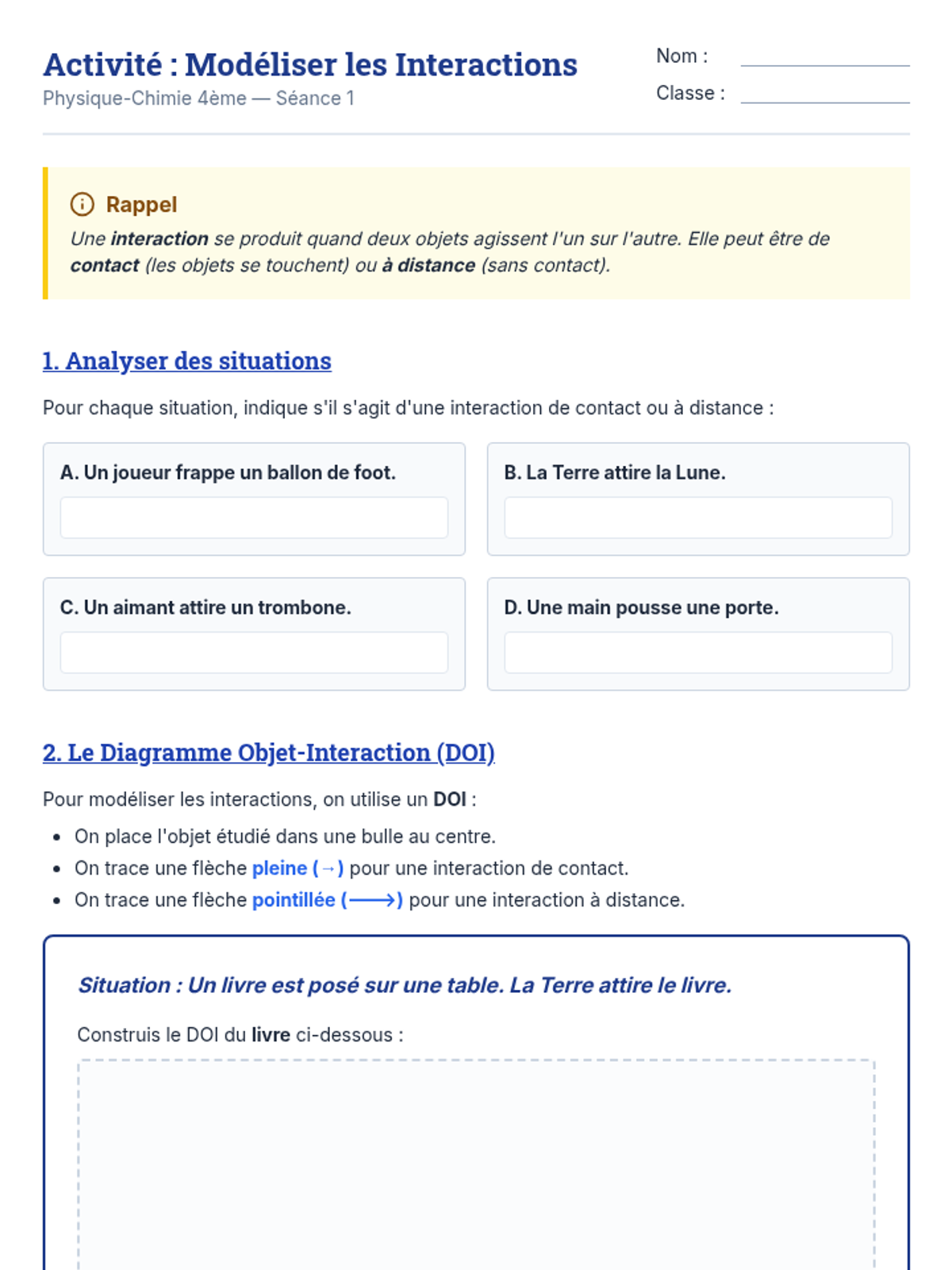
Une fiche d'activité pour les élèves introduisant les concepts d'interactions de contact et à distance, ainsi que la méthode de construction d'un Diagramme Objet-Interaction (DOI).
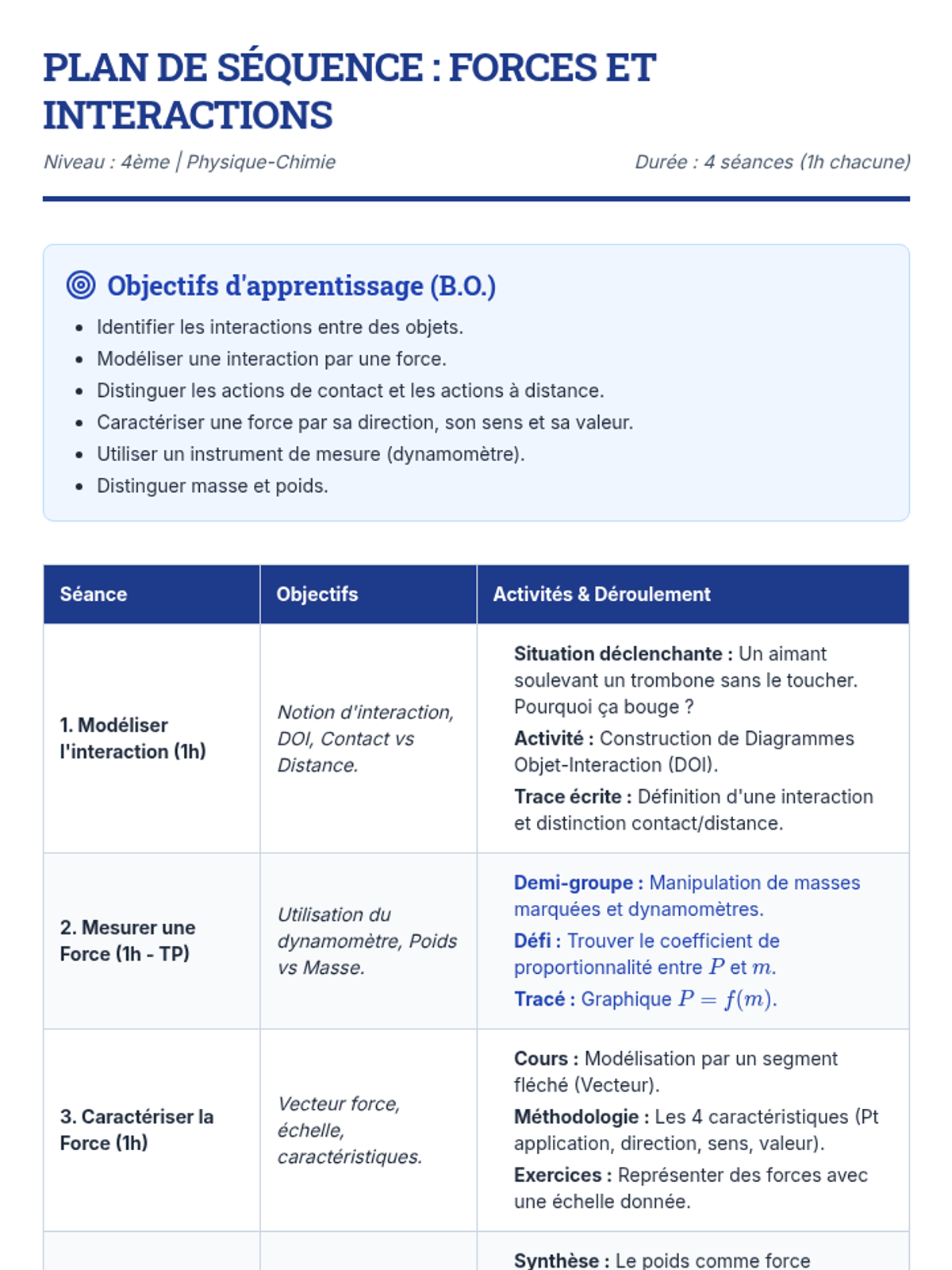
Un plan de séquence détaillé pour l'enseignant, structurant les 4 séances de travail sur les forces et interactions, incluant les objectifs du B.O. et le matériel nécessaire.
Updated slides for the Celtic Cauldron Science lesson, including a new section on "Fool's Gold" (Iron Pyrite) and its historical application for fire-starting. Corrected LaTeX notation.
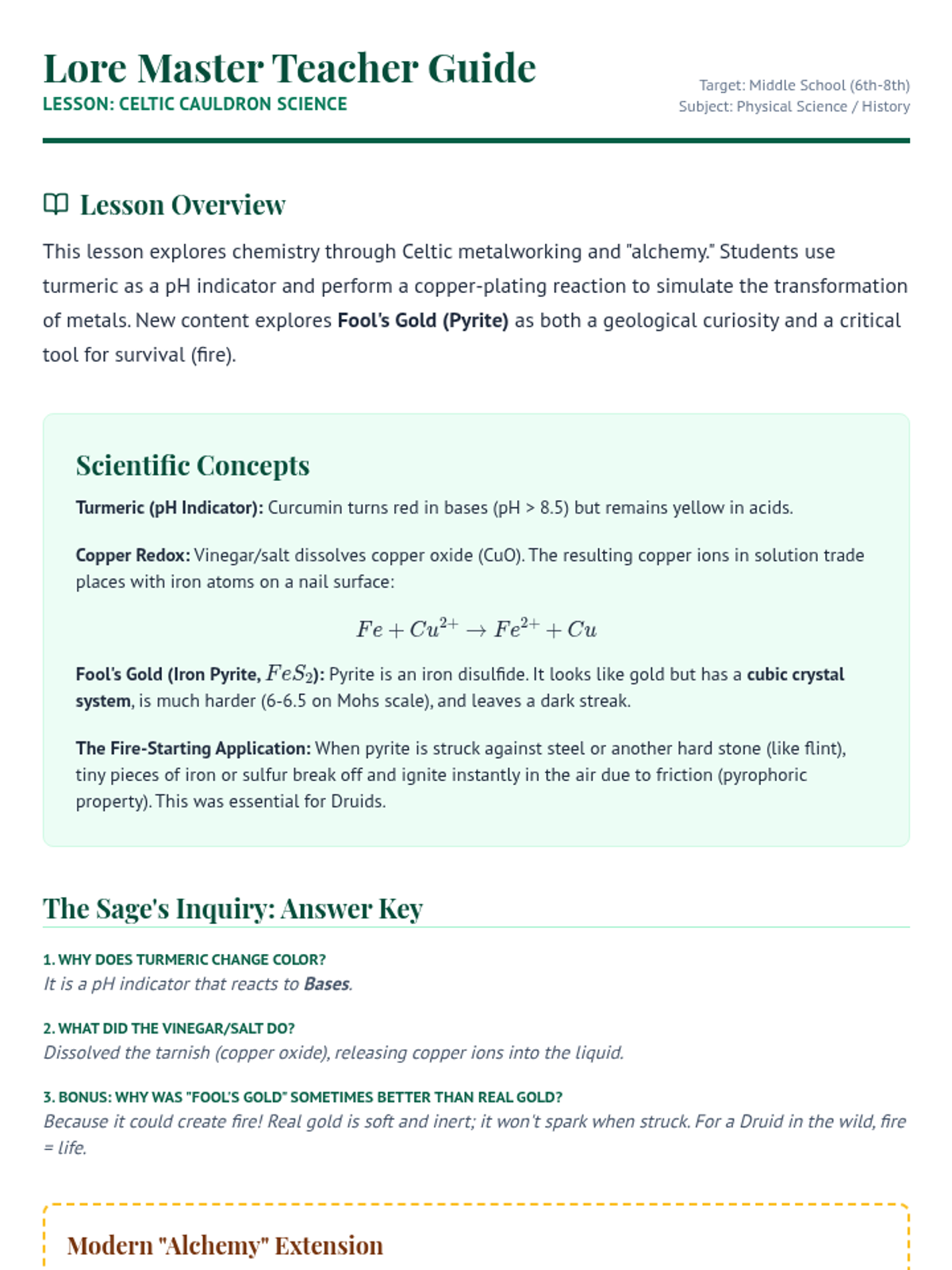
Updated teacher guide for the Celtic Cauldron Science lesson, focusing on turmeric pH and copper redox reactions. Corrected LaTeX notation.
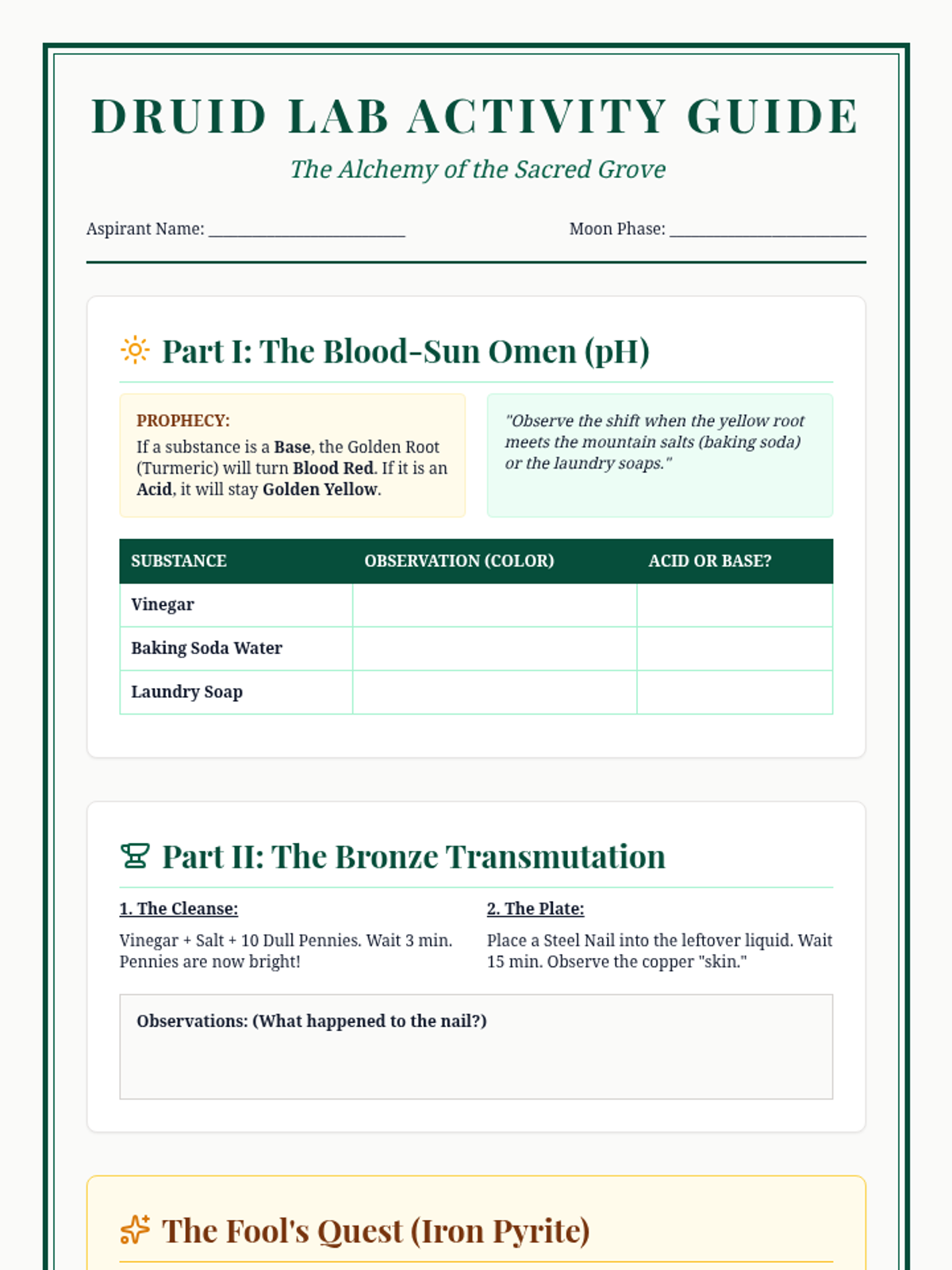
Updated student activity guide using Turmeric and Copper Plating experiments instead of red cabbage. Explores pH and redox reactions through the lens of Celtic metalworking. Corrected LaTeX notation.
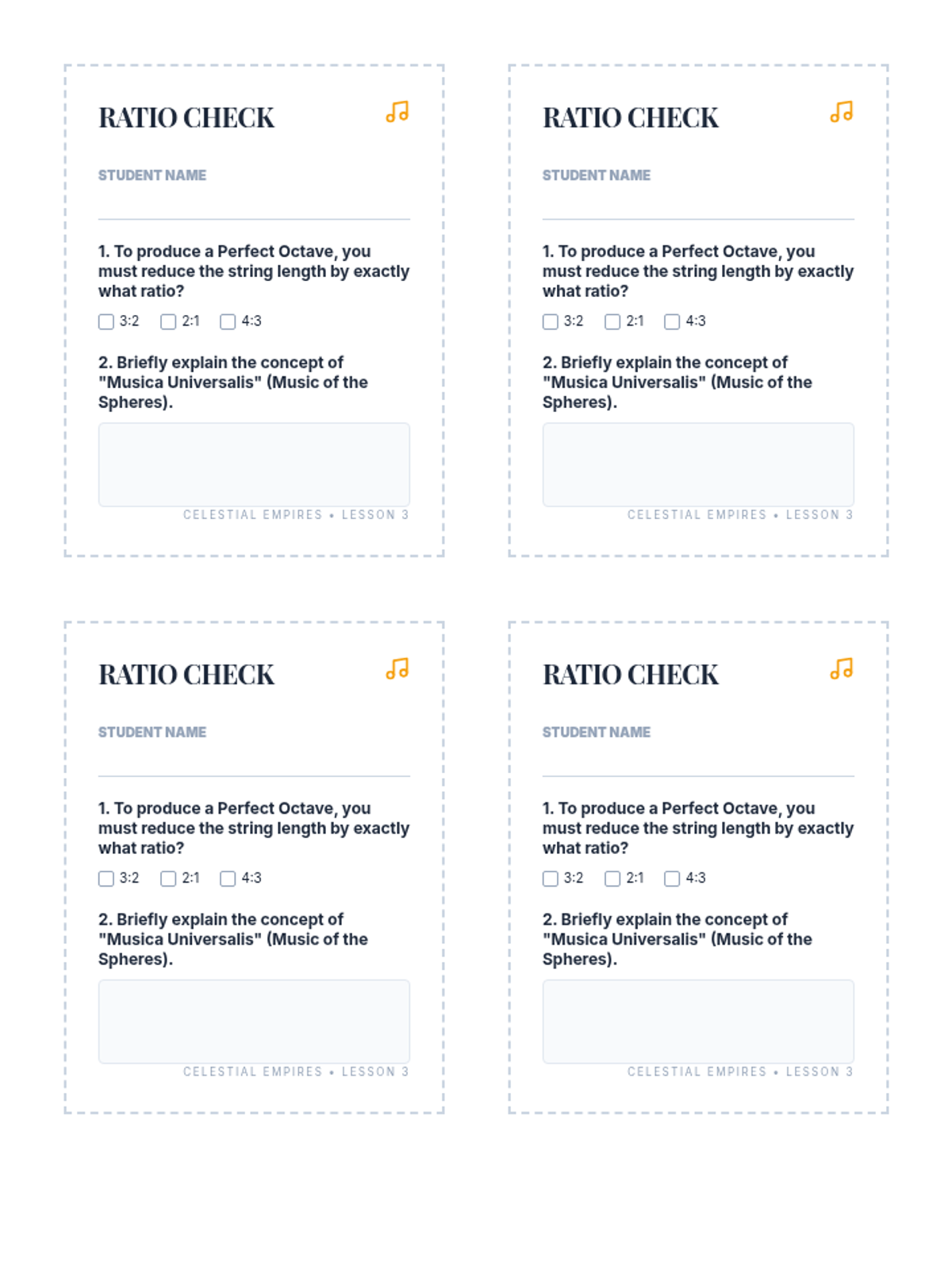
A set of 4-up printable exit tickets for a quick assessment on musical ratios and the concept of 'Musica Universalis'.
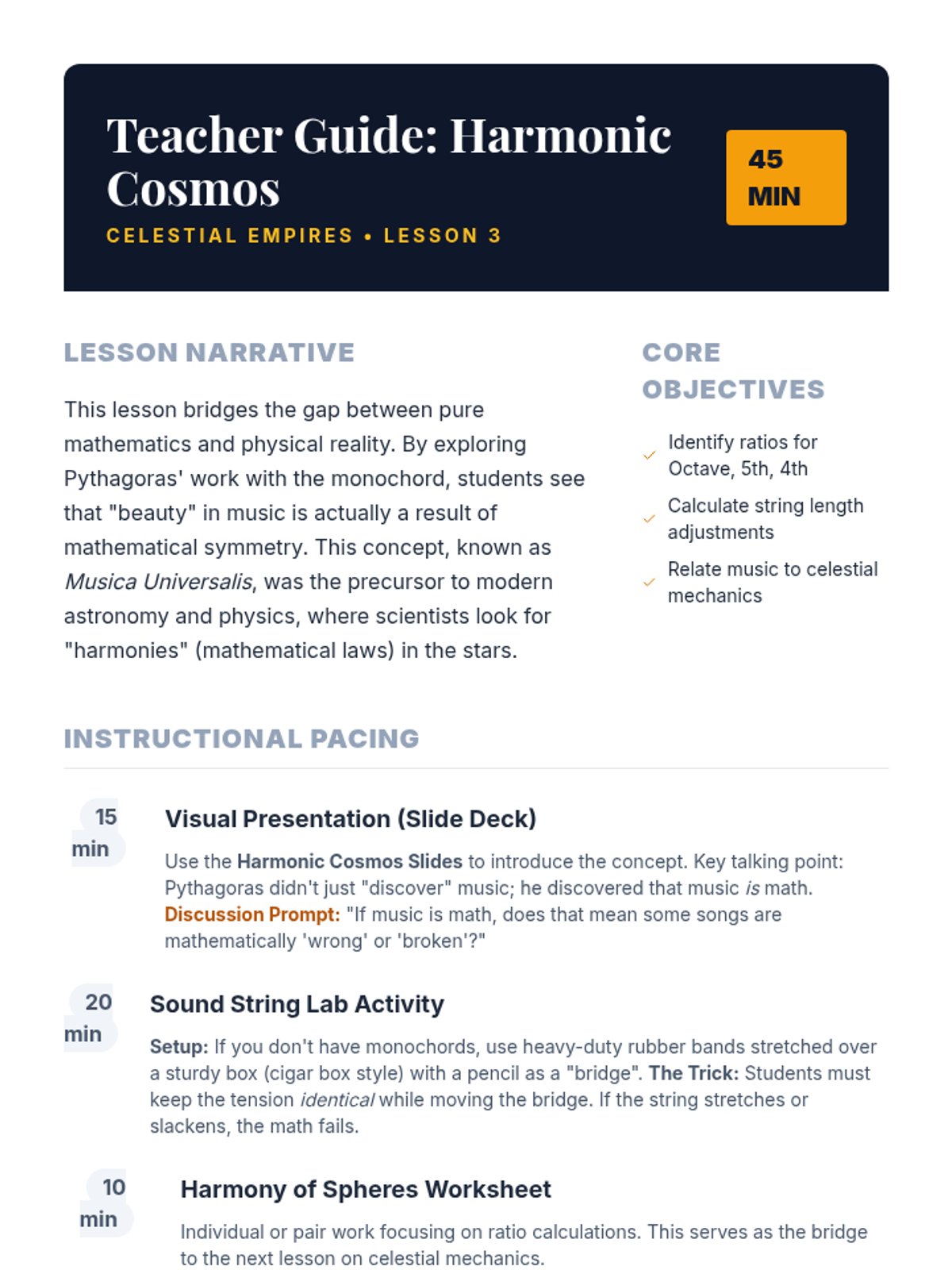
A teacher guide providing a pacing plan, setup instructions, and answer keys for the Harmonic Cosmos lesson.
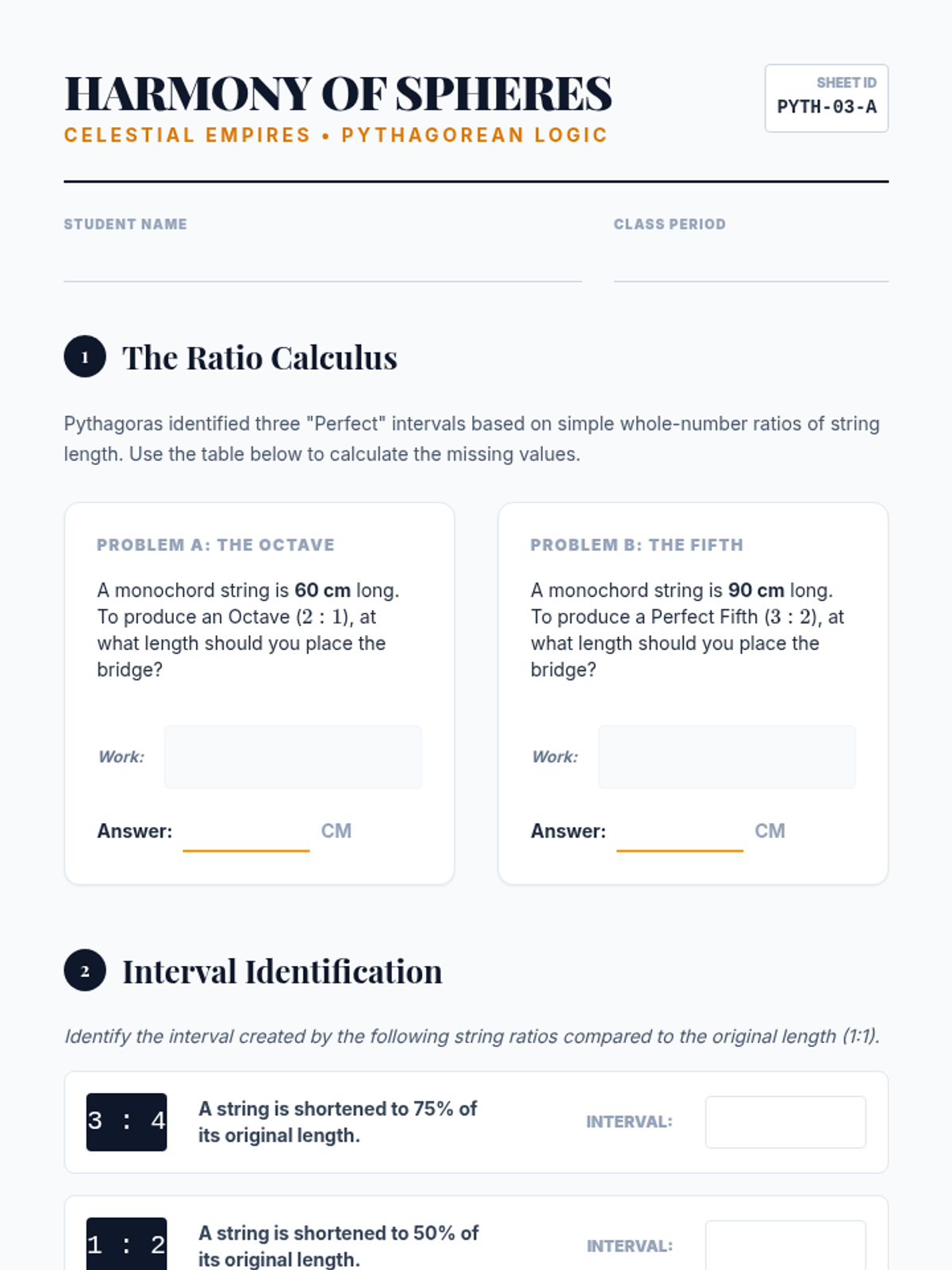
A practice worksheet for students to calculate musical ratios, identify intervals, and reflect on the philosophical concept of the 'Music of the Spheres'.
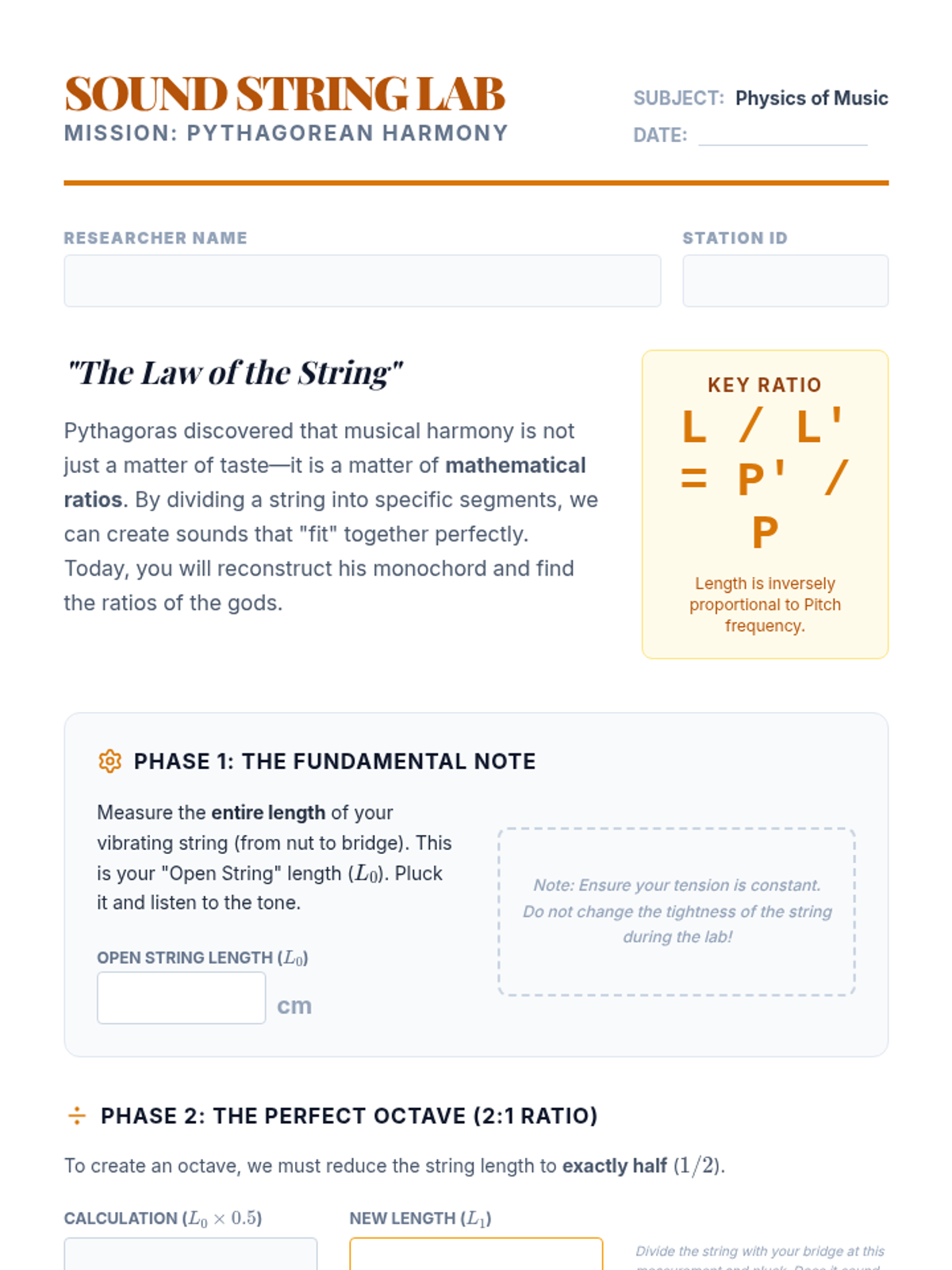
A student lab report for exploring the mathematical ratios of musical intervals using string measurements, including data tables and analytical questions.
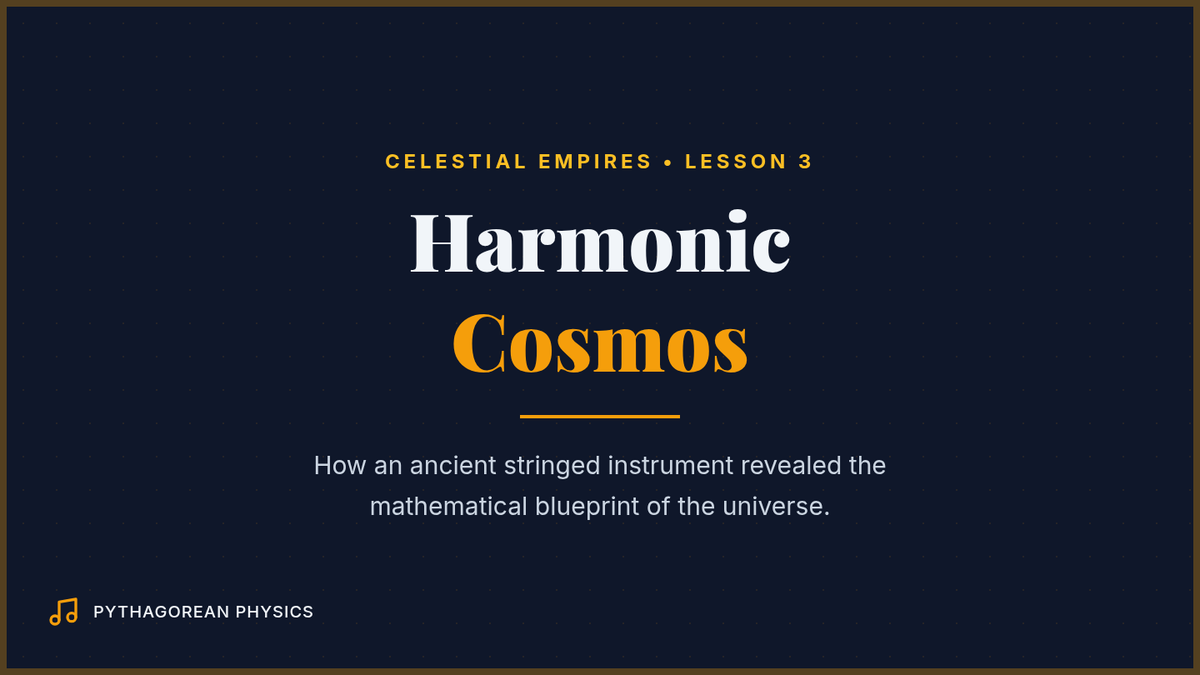
Visual introduction to Pythagorean music theory and the concept of 'Musica Universalis', featuring ratios and cosmic diagrams.
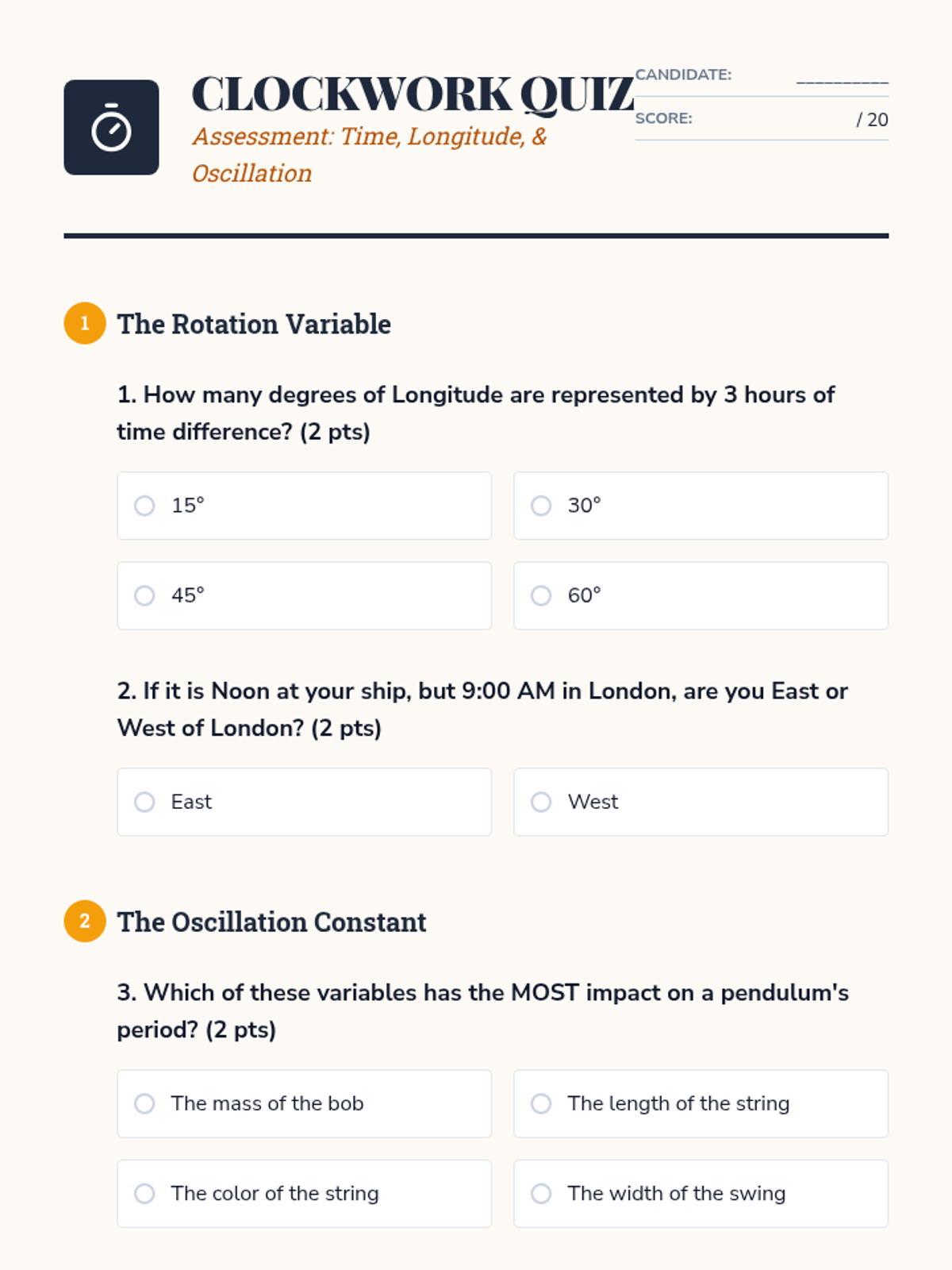
A short quiz assessing students on time-longitude calculations, pendulum physics, and historical engineering solutions.
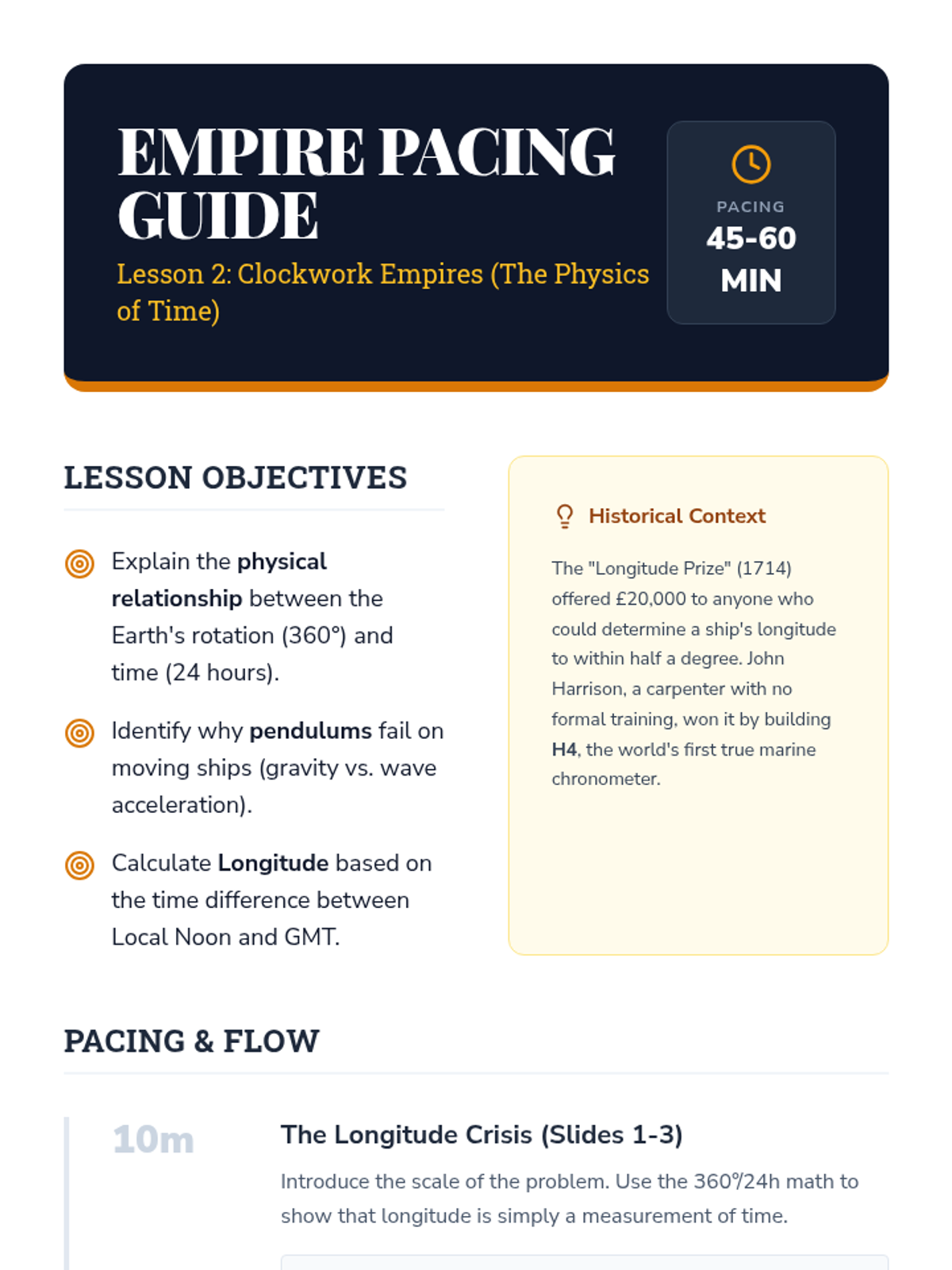
A teacher guide providing a pacing plan, discussion prompts, and answer keys for the Clockwork Empires lesson, focusing on the physics of time and navigation.