A comprehensive worksheet for students to diagram the greenhouse process, identify fossil fuel impacts, and differentiate between natural and human-enhanced warming. Revised for better layout and larger work areas.
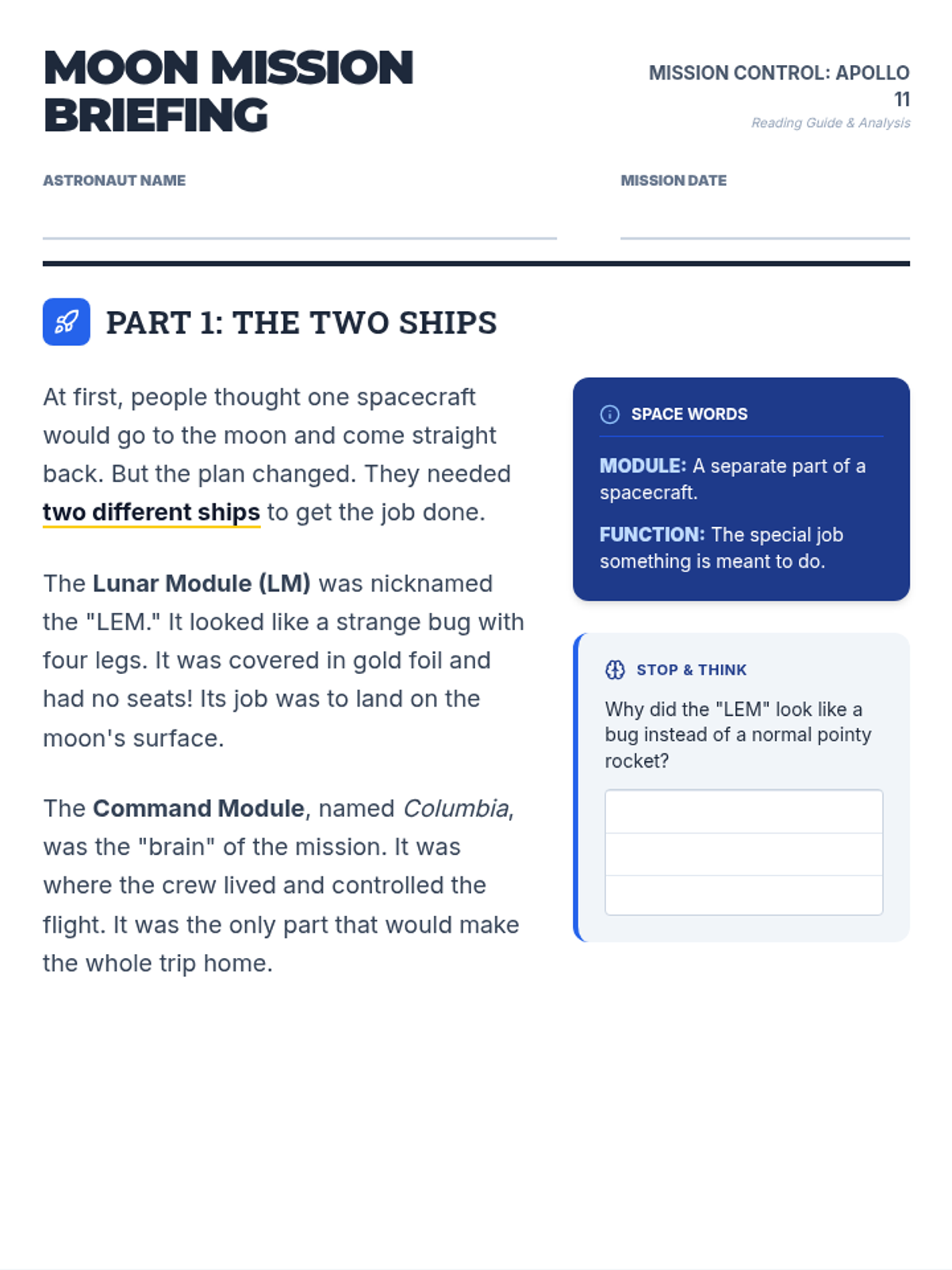
A guided reading worksheet for 6th-grade students, featuring a simplified version of the Team Moon text with vocabulary support, comprehension questions, and a mission-themed layout.
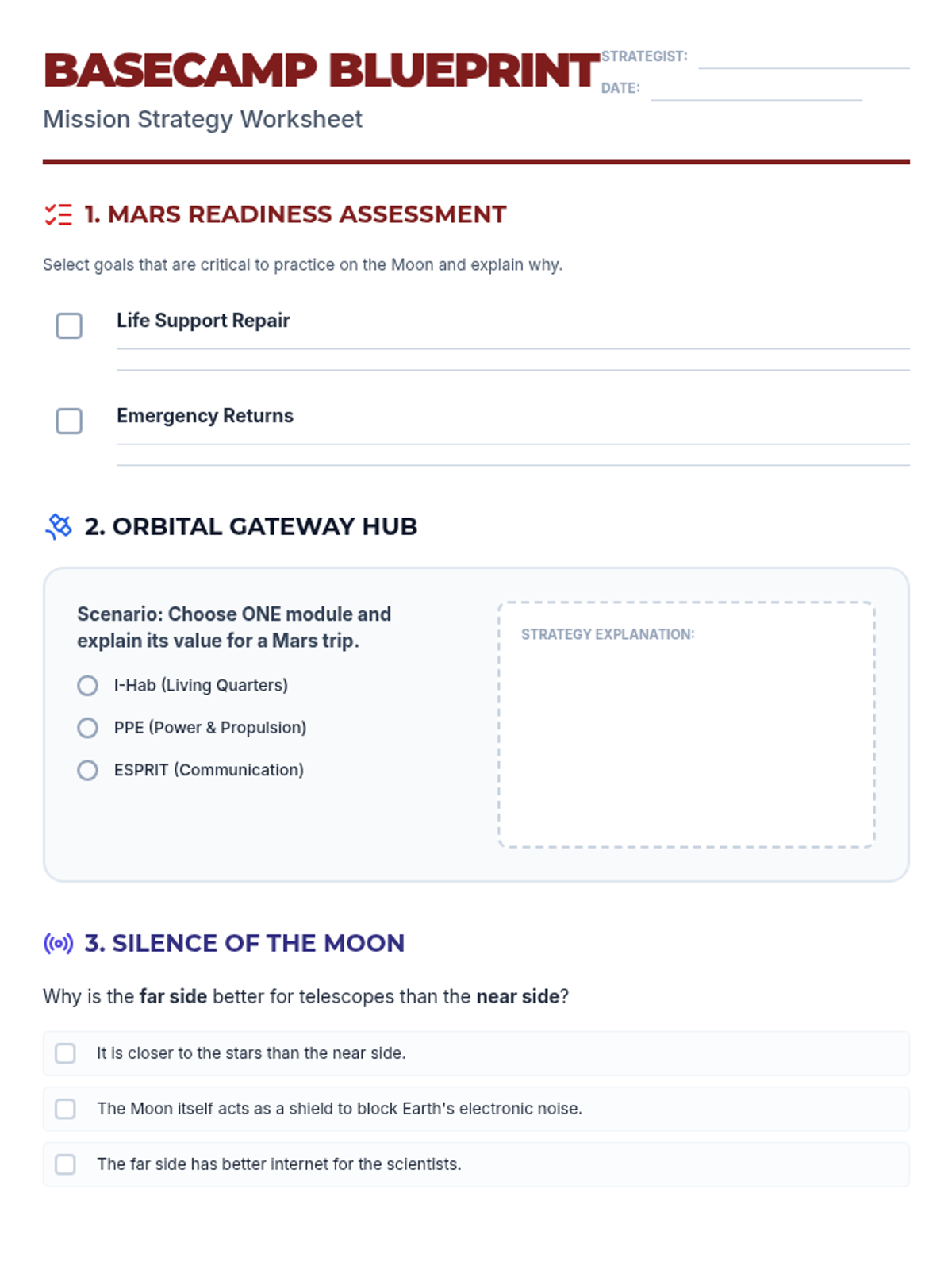
A student worksheet evaluating mission readiness for Mars, analyzing the modules of the Lunar Gateway, and understanding the scientific value of radio silence on the far side.
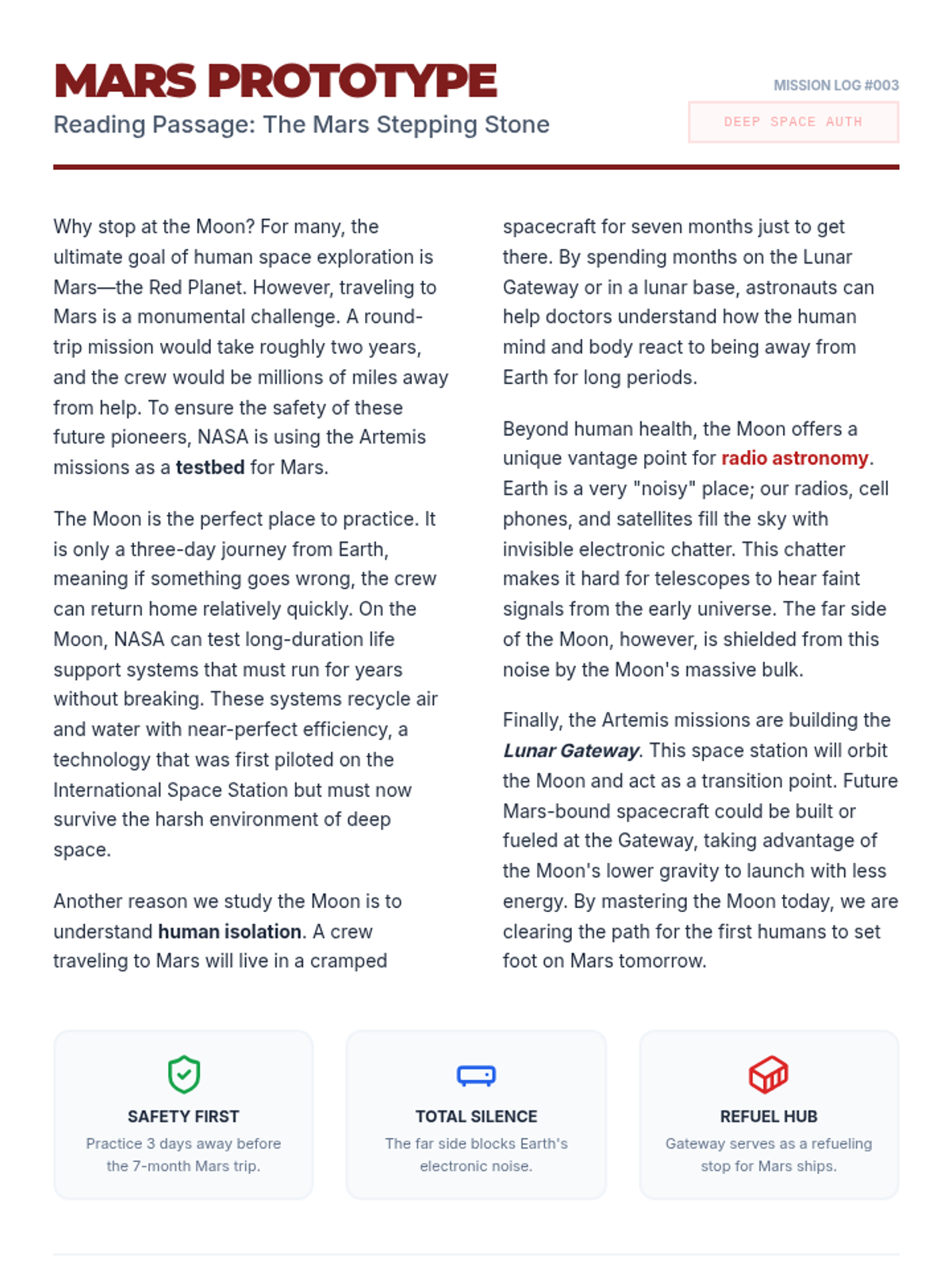
A reading passage explaining the Moon's role as a testbed for Mars, the purpose of the Lunar Gateway, and the unique advantages of radio astronomy on the lunar far side.
A presentation on the Lunar Gateway, the Moon's role as a testbed for Mars missions, and the unique potential for radio astronomy on the lunar far side.
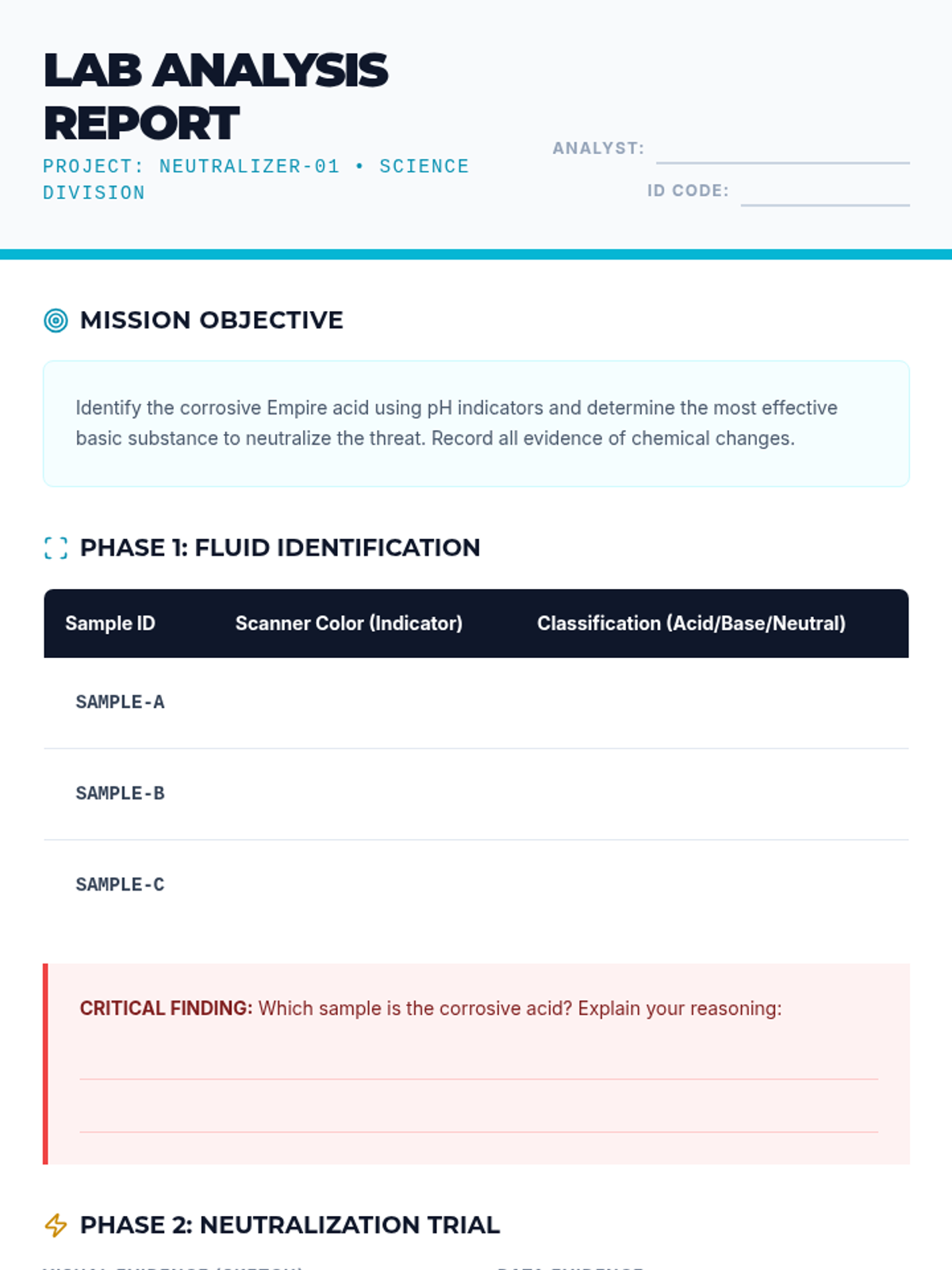
A student lab report for investigating chemical reactions. Revised for improved handwriting legibility with light backgrounds and better spacing across pages.
A slide deck for the 'Chemical Sabotage' lesson, featuring lab safety, a narrative of emergency acid leaks, and the science of pH and neutralization.
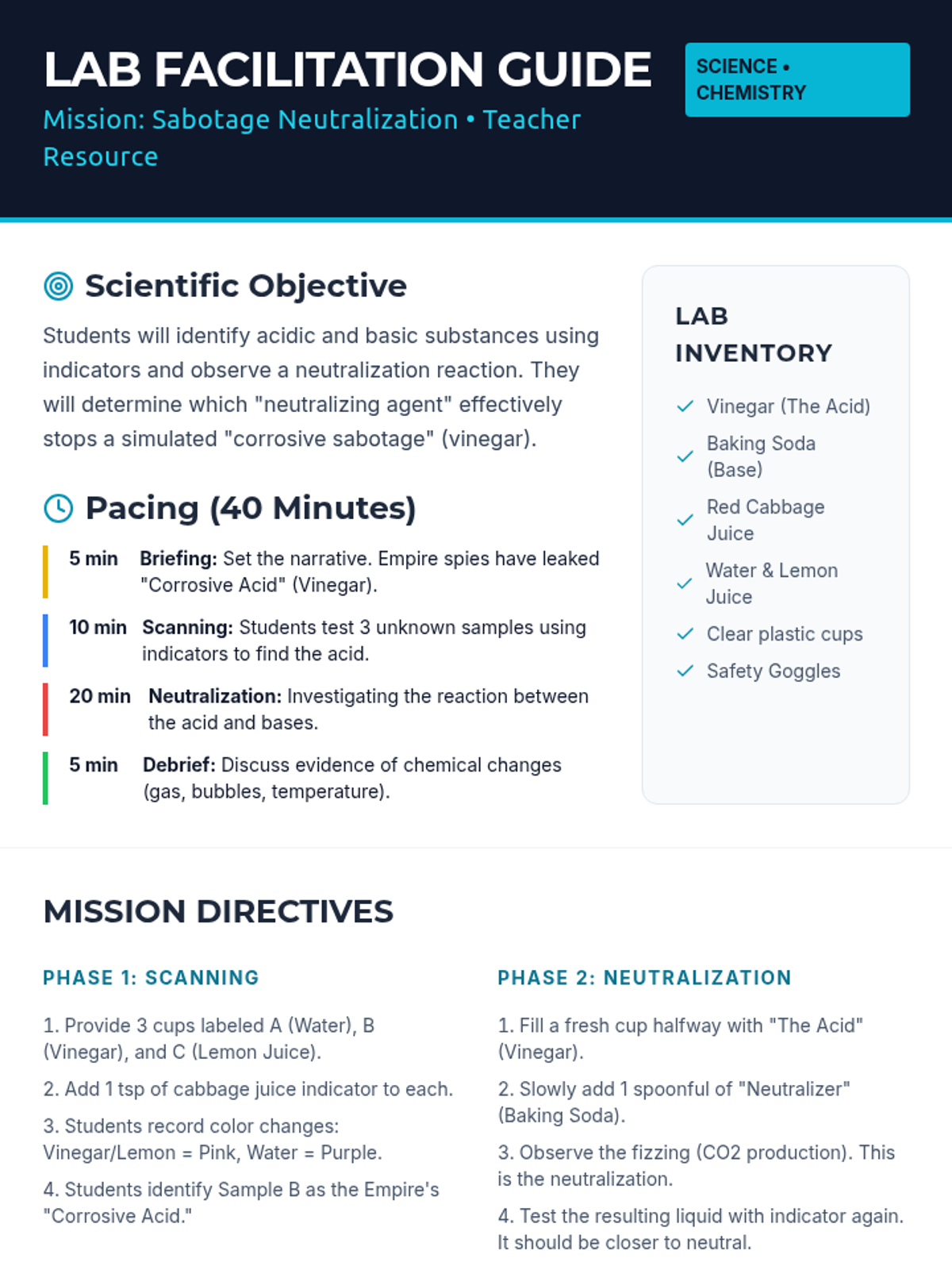
A teacher guide for a 40-minute science lesson focused on chemical reactions, acid-base chemistry, and pH indicators with a Star Wars narrative. Revised to include step-by-step procedures and fixed pacing typo.
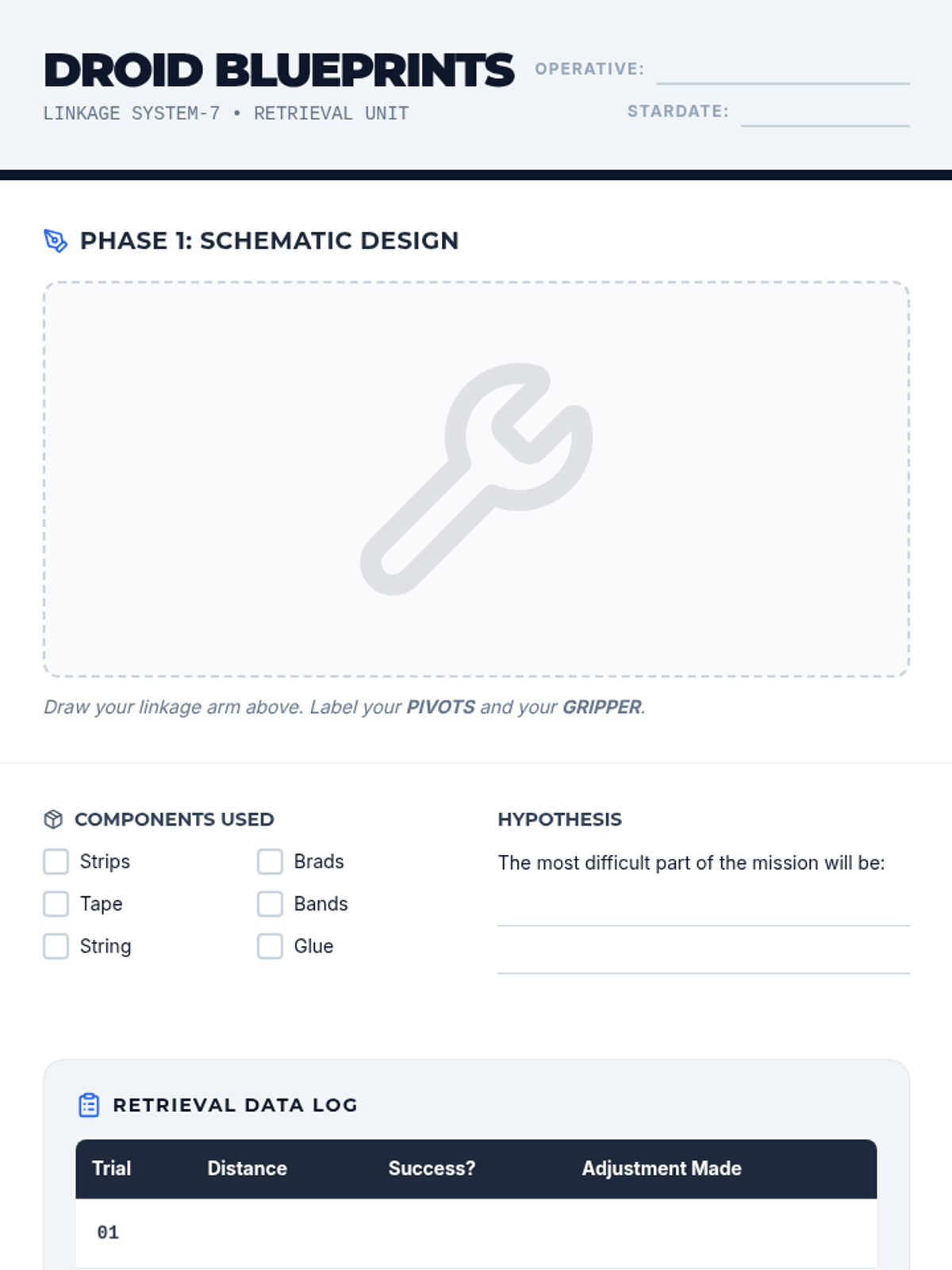
A student-facing activity sheet for the 'Kyber Retrieval Mission'. Revised for handwriting legibility (light backgrounds), improved table layout, and proper page flow.
A dynamic slide deck for the 'Kyber Retrieval' lesson. Revised to replace placeholders with diagrams and improve visual balance.
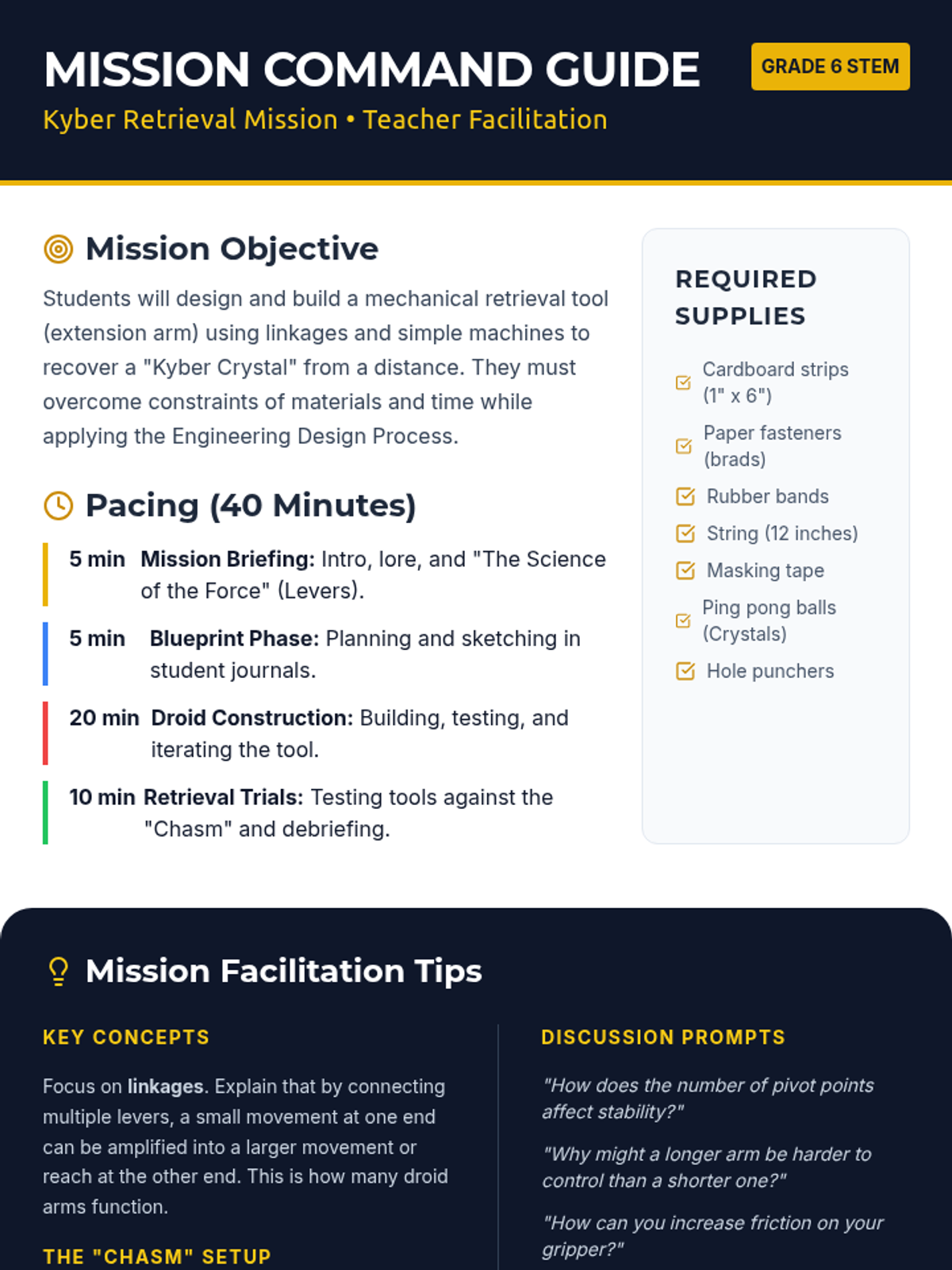
A comprehensive teacher guide for the 'Kyber Retrieval Mission', featuring lesson pacing, material lists, instructional tips, and alignment to STEM standards. Revised to ensure proper page flow.
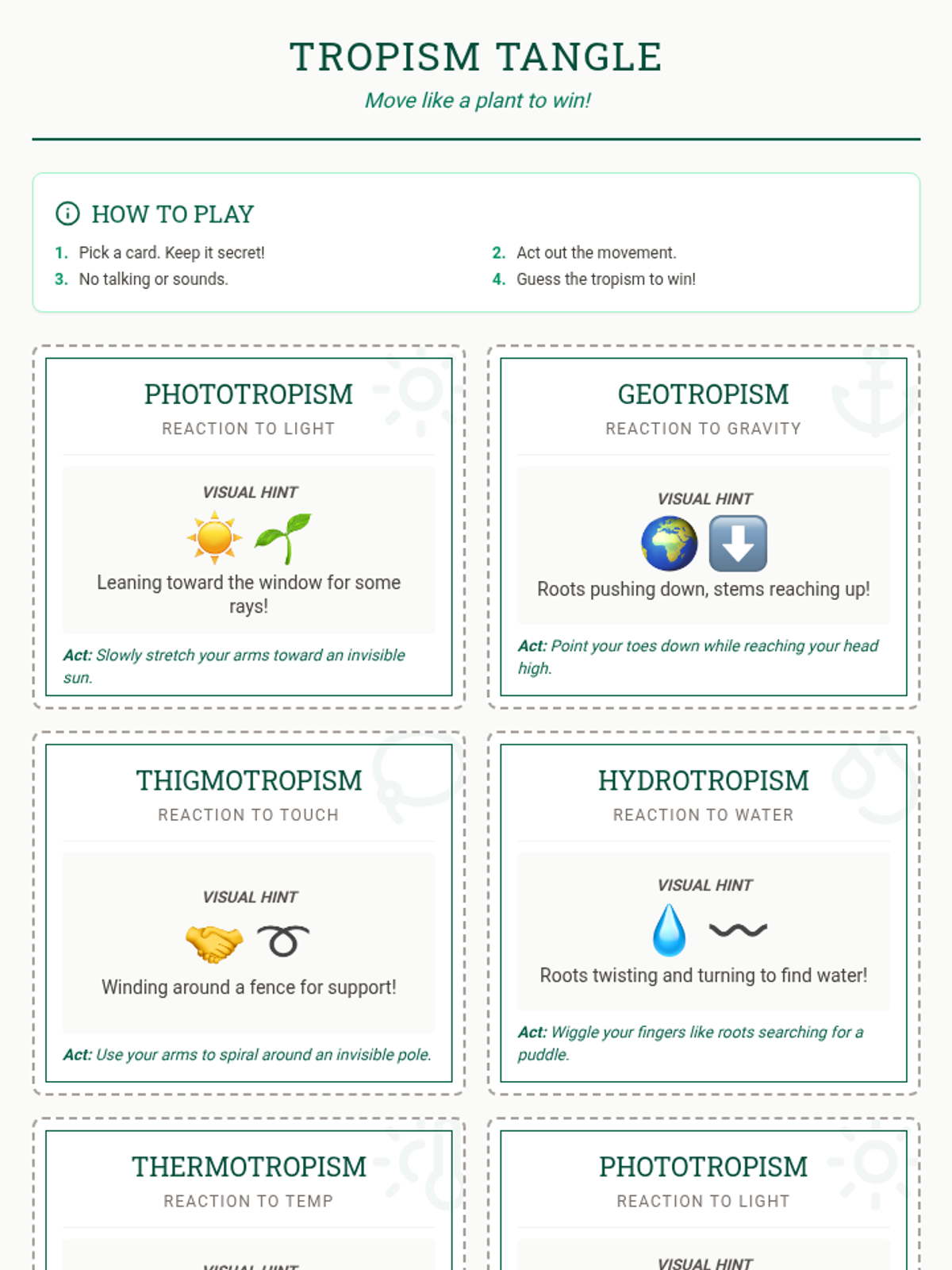
A set of 10 printable charades cards for teaching plant tropisms. Each card includes a visual hint, acting tips, and clear biological labels designed in a vintage botanical style. Revised to fix page break issues and improve visual clarity.
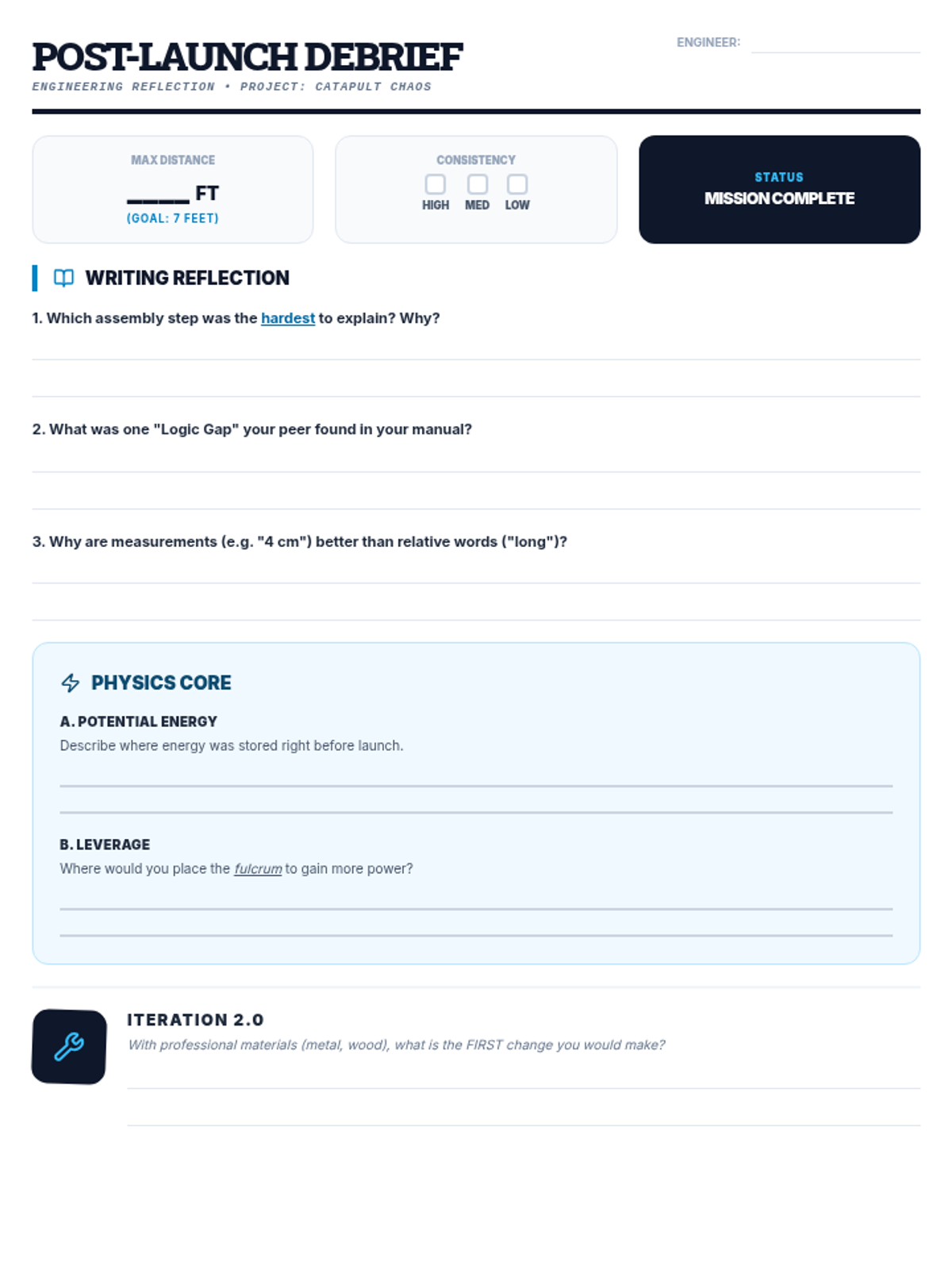
A post-project student reflection document focused on technical writing precision, peer review analysis, and application of physics concepts. Includes space for performance data and engineering iteration ideas. Updated project goal to 7 feet. Optimized for single-page layout.
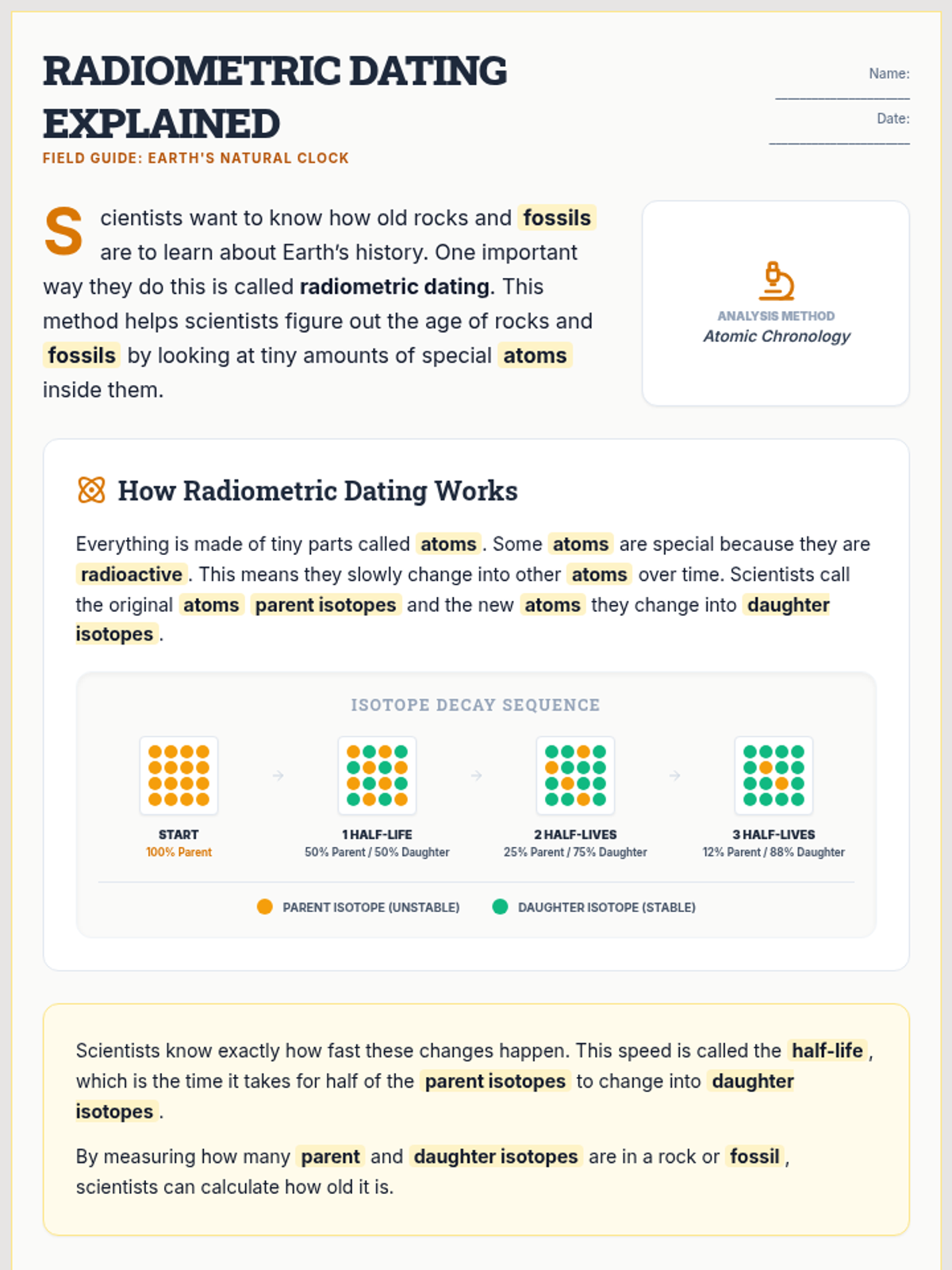
A complete, illustrated field-guide style article incorporating all text from the original PDF source. Explains radiometric dating, half-lives, and age comparisons with a detailed visual graphic showing isotope decay over multiple half-lives.
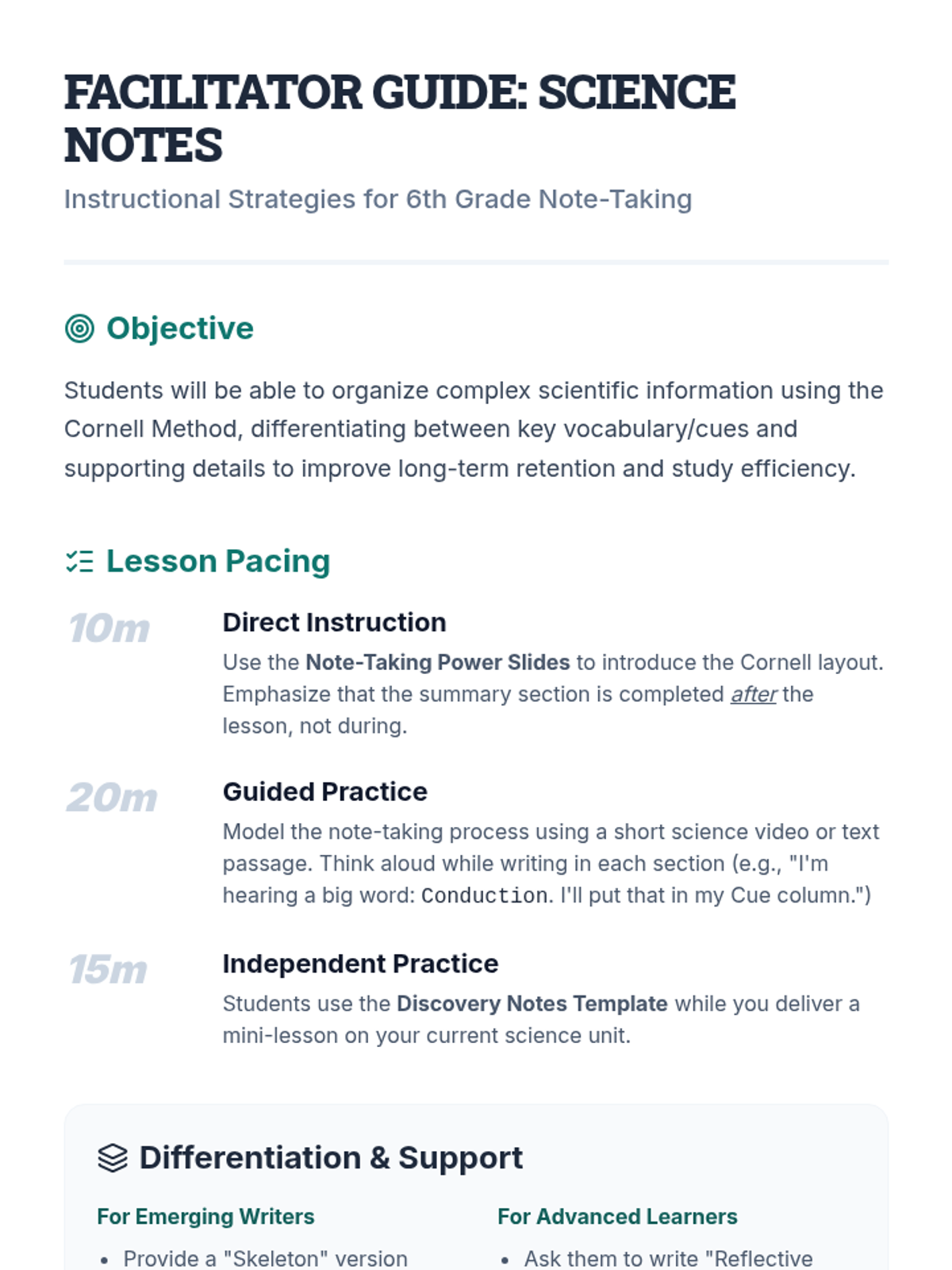
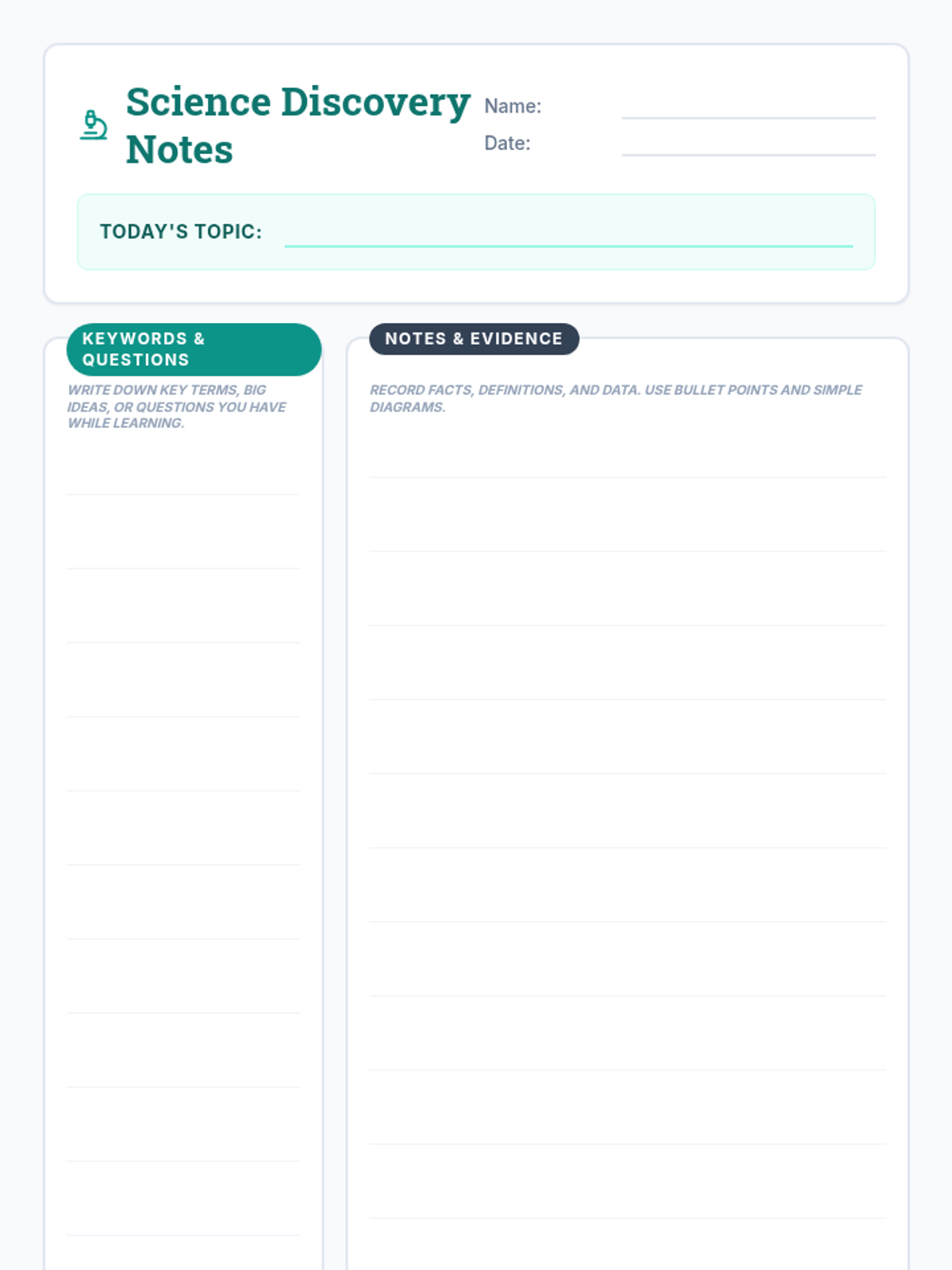
A teacher-facing facilitation guide providing instructional strategies, pacing suggestions, and differentiation tips for teaching the Cornell note-taking method in a 6th-grade science classroom.
A colorful and informative slide deck that introduces 6th-grade students to the Cornell note-taking method, updated to show the separated and resized Keywords and Questions sections in the layout without lines.
A visually engaging Cornell Notes template specifically designed for 6th-grade science students, featuring an enlarged Vocabulary section with blank writing space, stretched Questions and Notes sections, a resized Sketch Zone, and a more compact Summary area with 5 bullet points and a "3-4 sentences" prompt.
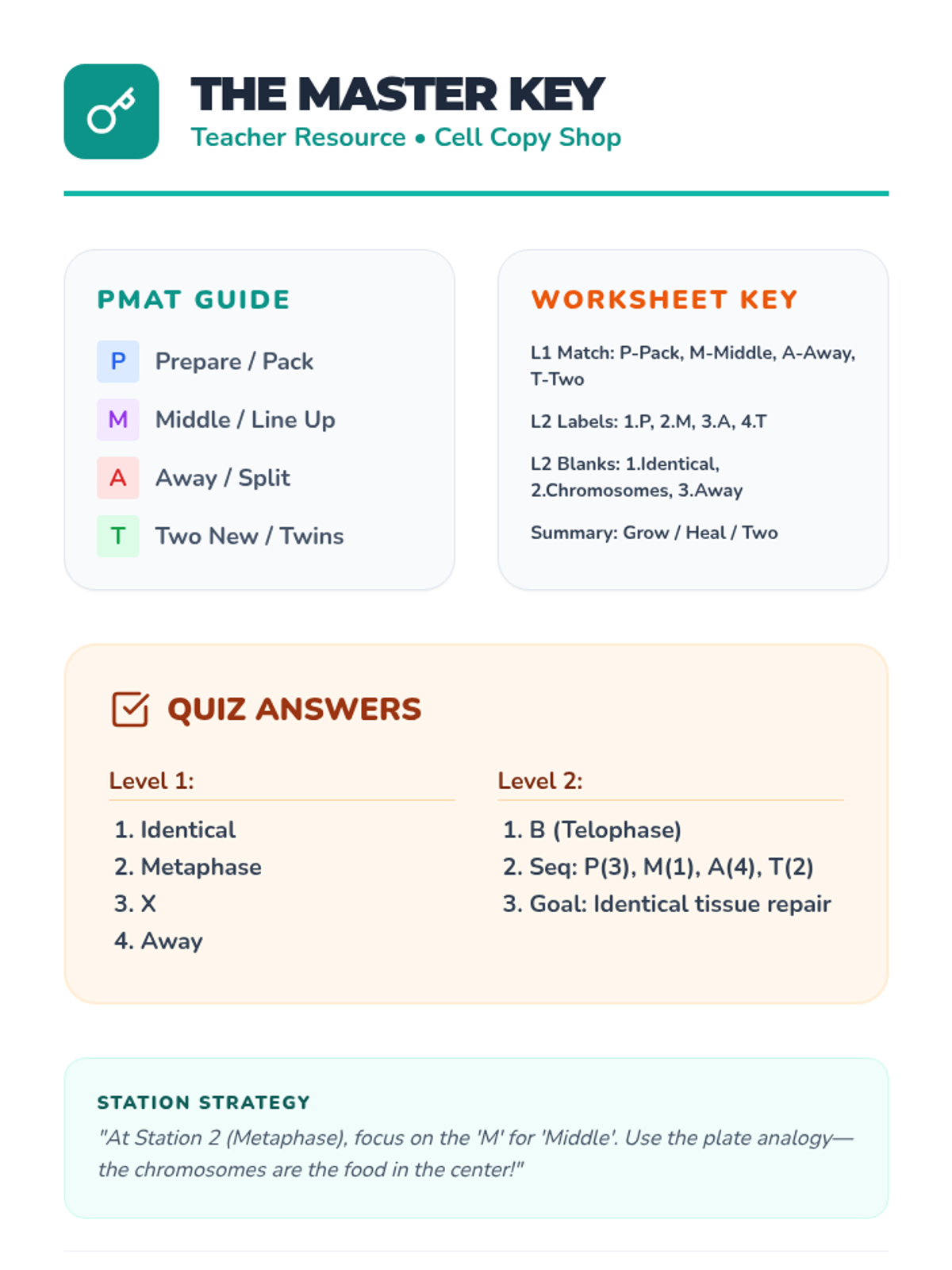
A teacher-facing answer key and facilitation guide for the 'Cell Copy Shop' lesson. Includes quick PMAT references, answer keys for all quizzes and worksheets, and instructional tips for differentiation. Printer-friendly light design.
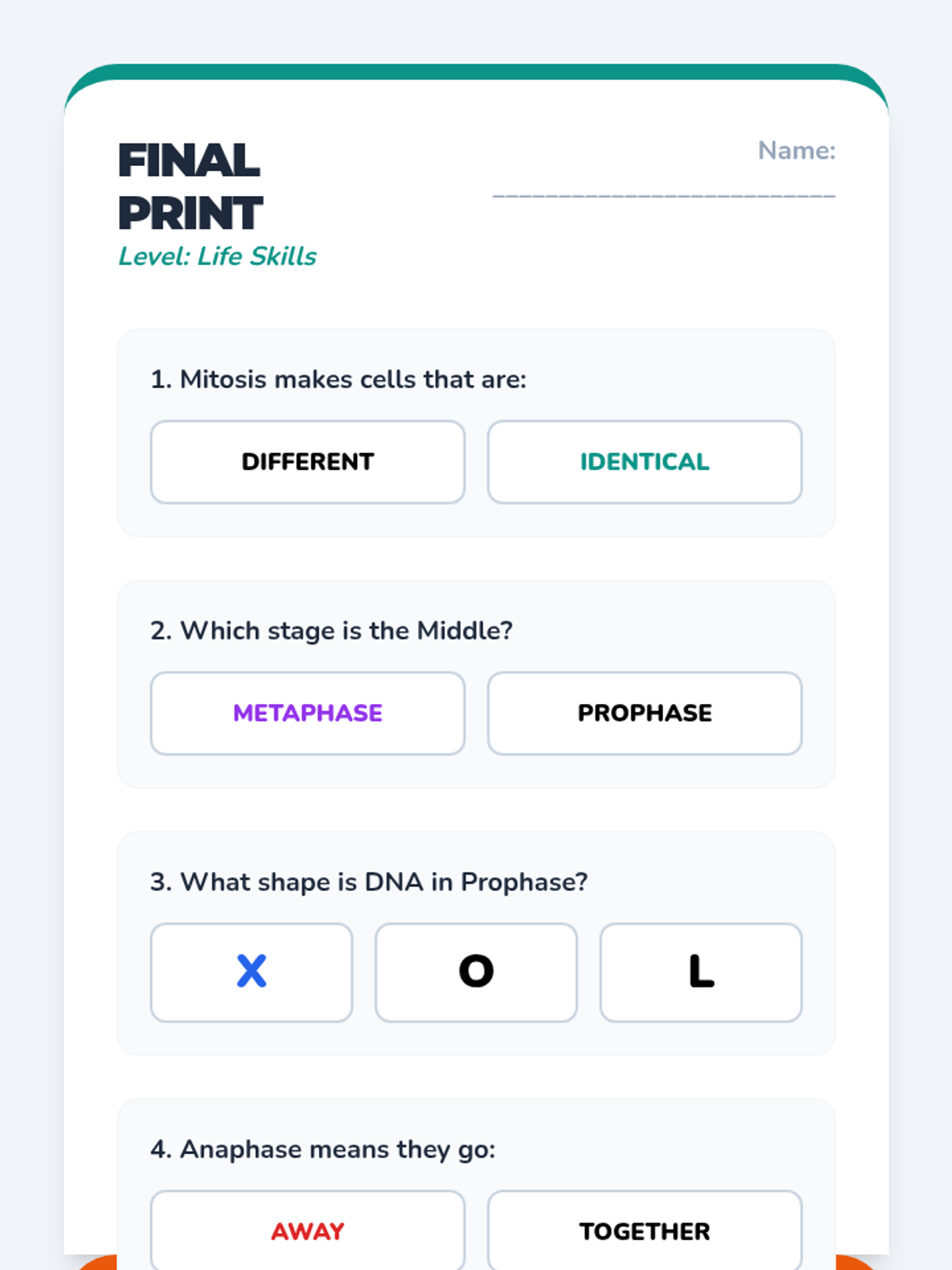
A 'Final Print' quiz pack with differentiated assessment. Life Skills (Level 1) focuses on big-picture recognition and simple PMAT recall. Modified Curriculum (Level 2) includes multiple choice, sequencing, and short answer. Differentiated levels are on separate pages.
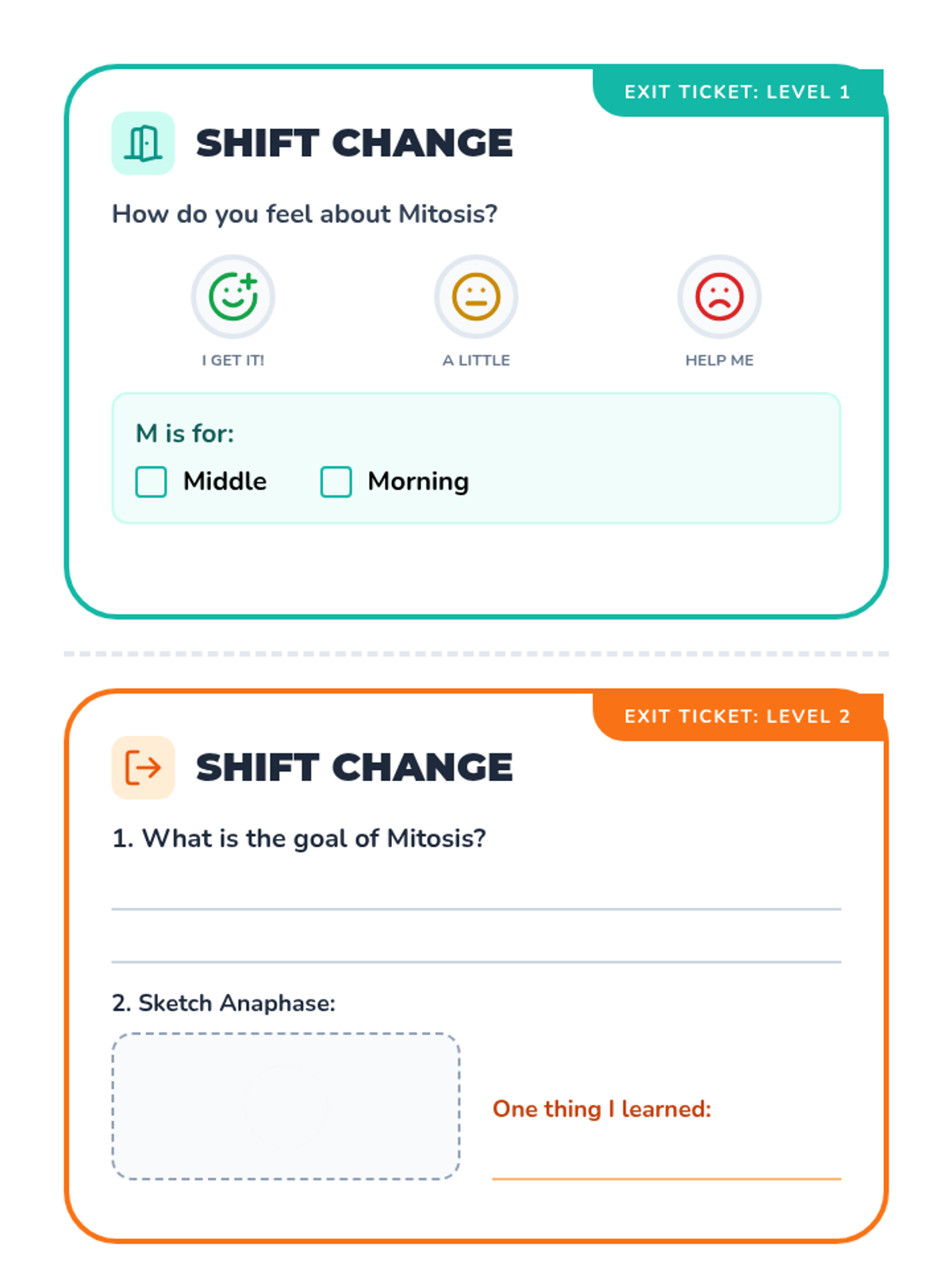
Differentiated 'Shift Change' exit tickets. Level 1 features emoji self-assessment and a single keyword check; Level 2 requires a brief written goal and a diagram of Anaphase. Optimized to fit on one page.
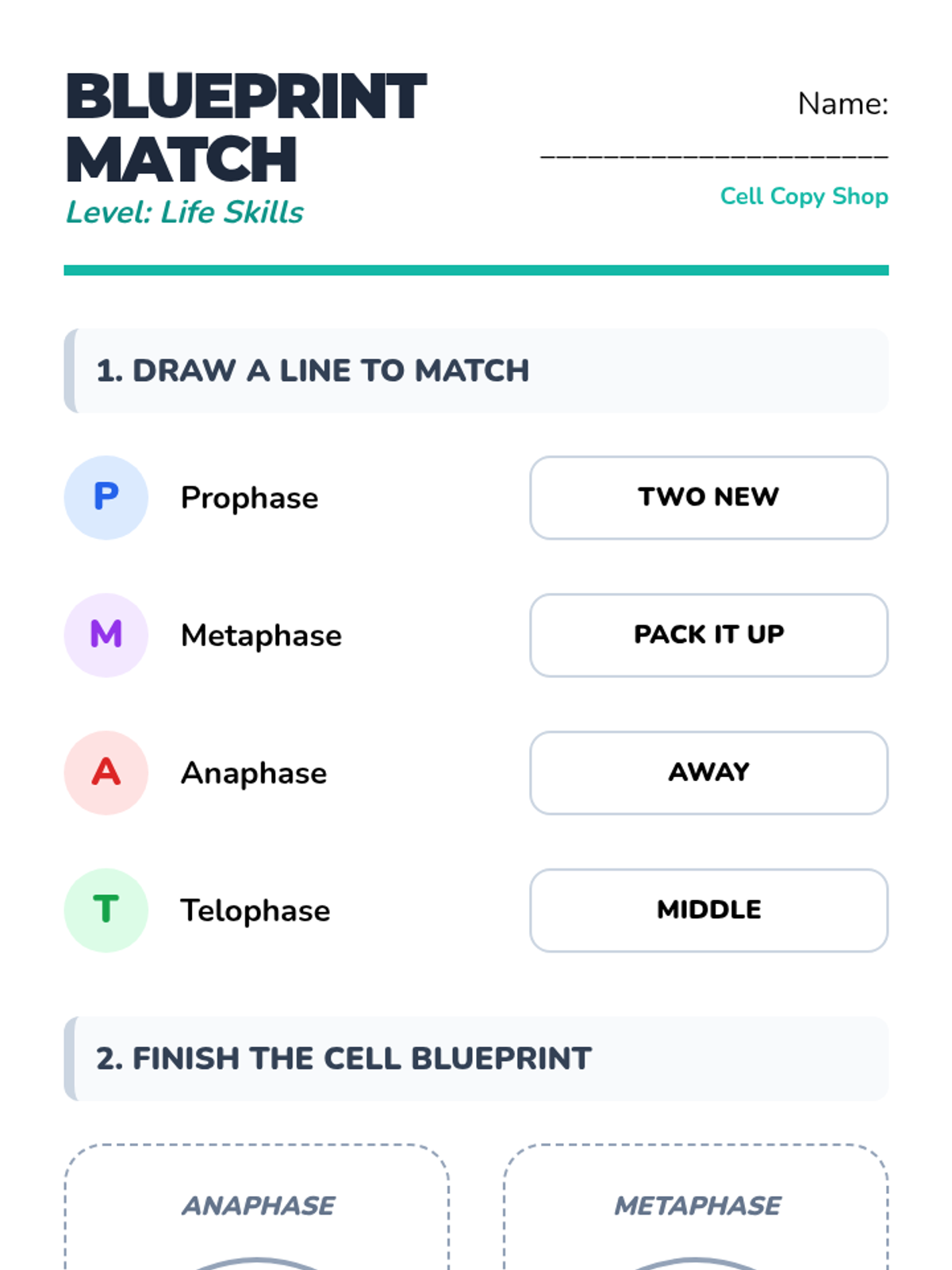
Differentiated worksheets for vocabulary matching and diagram labeling. Features a visual-first approach for Life Skills and a combination of labeling and word-choice for Modified Curriculum. Optimized for single-page printing per level.
Large-format station review cards for Mitosis. Each card features tasks for both Life Skills (Level 1) and Modified Curriculum (Level 2) students, ensuring inclusive participation during classroom movement activities.
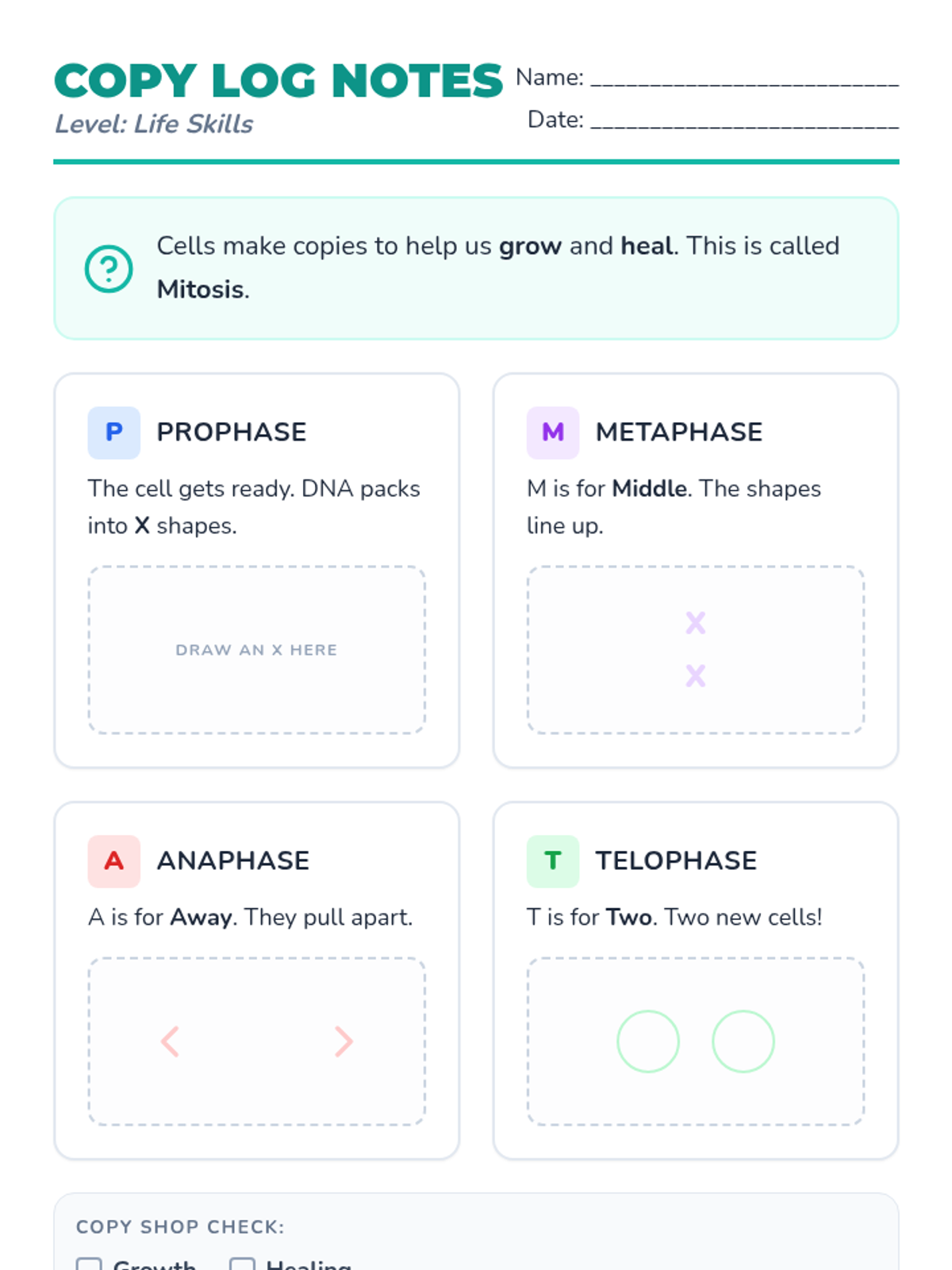
A set of differentiated guided notes to accompany the 'Cell Copy Shop' presentation. Includes a simplified drawing-focused version for Life Skills and a keyword-focused version for Modified Curriculum students.
A 8-slide presentation titled 'Cell Copy Shop' that uses a printing/copying analogy to review the phases of mitosis. Designed with high visual contrast and simplified PMAT mnemonics suitable for Life Skills and Modified Curriculum students.
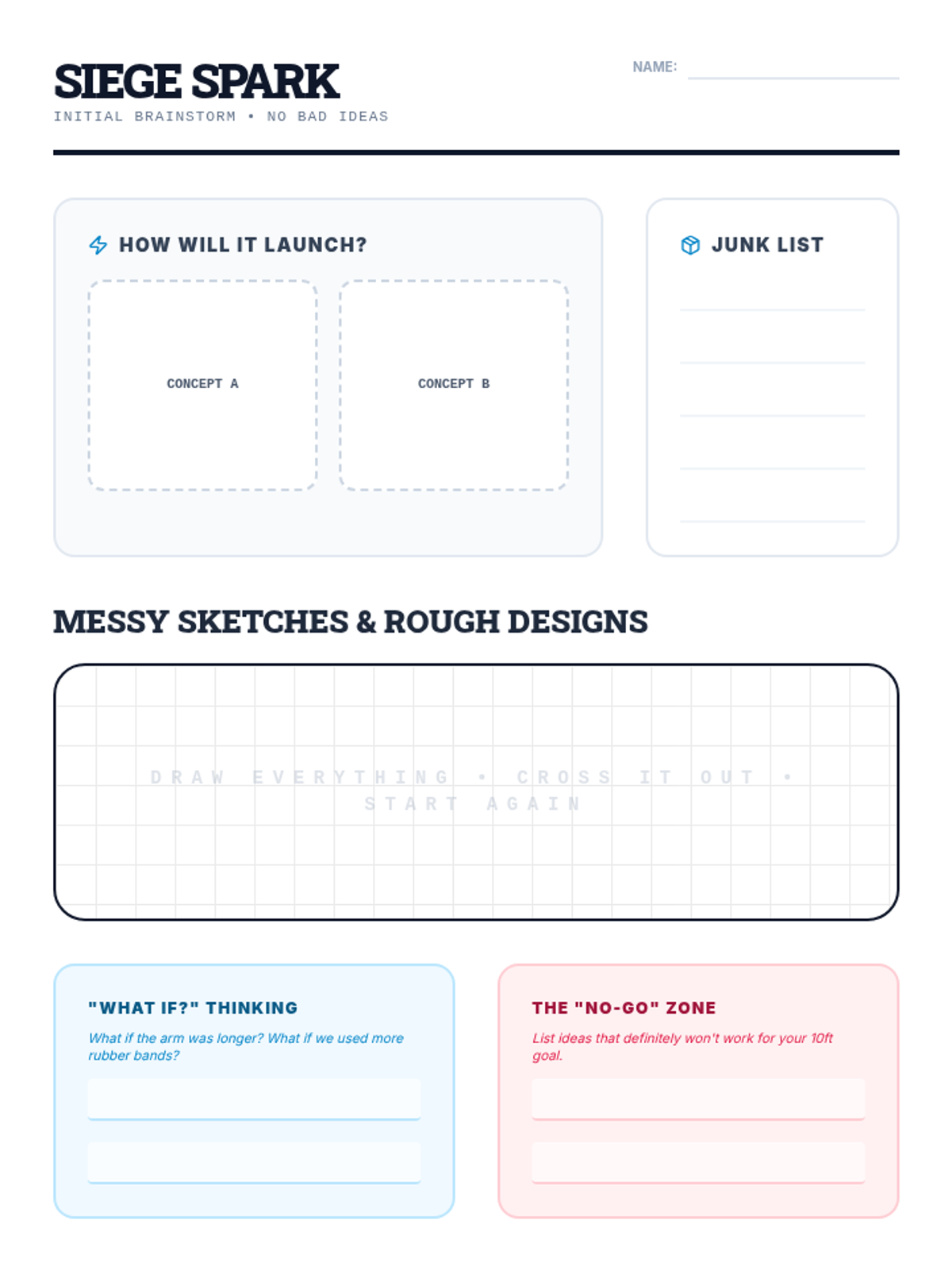
A free-form student brainstorming sheet for initial catapult ideas. Features large open spaces for rough sketches and material lists. Updated project goal to 7 feet.
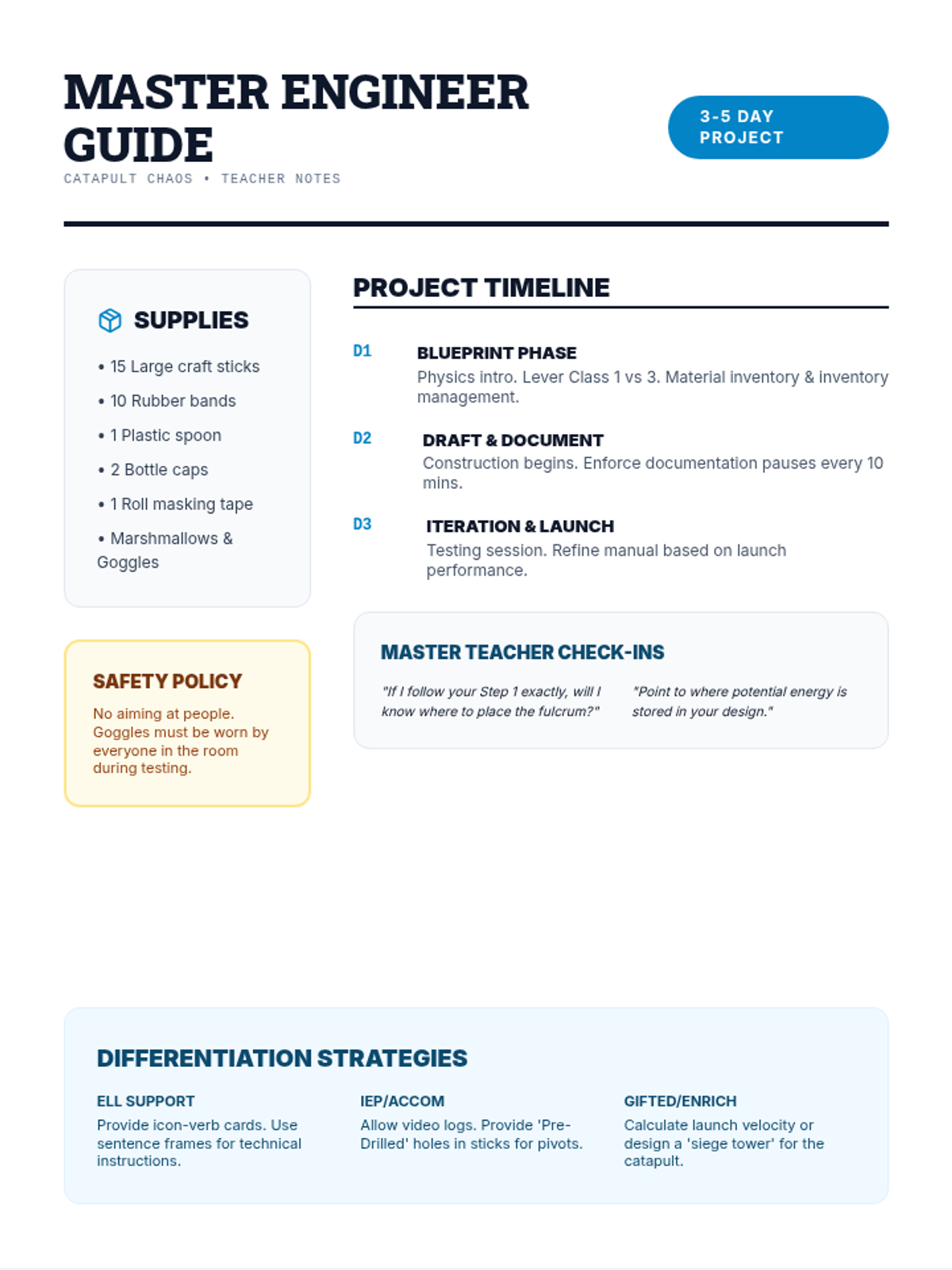
A teacher facilitation guide for the Catapult Chaos project. Includes a daily pacing guide, safety protocols, materials list, and grading rubric. Updated project goal to 7 feet.
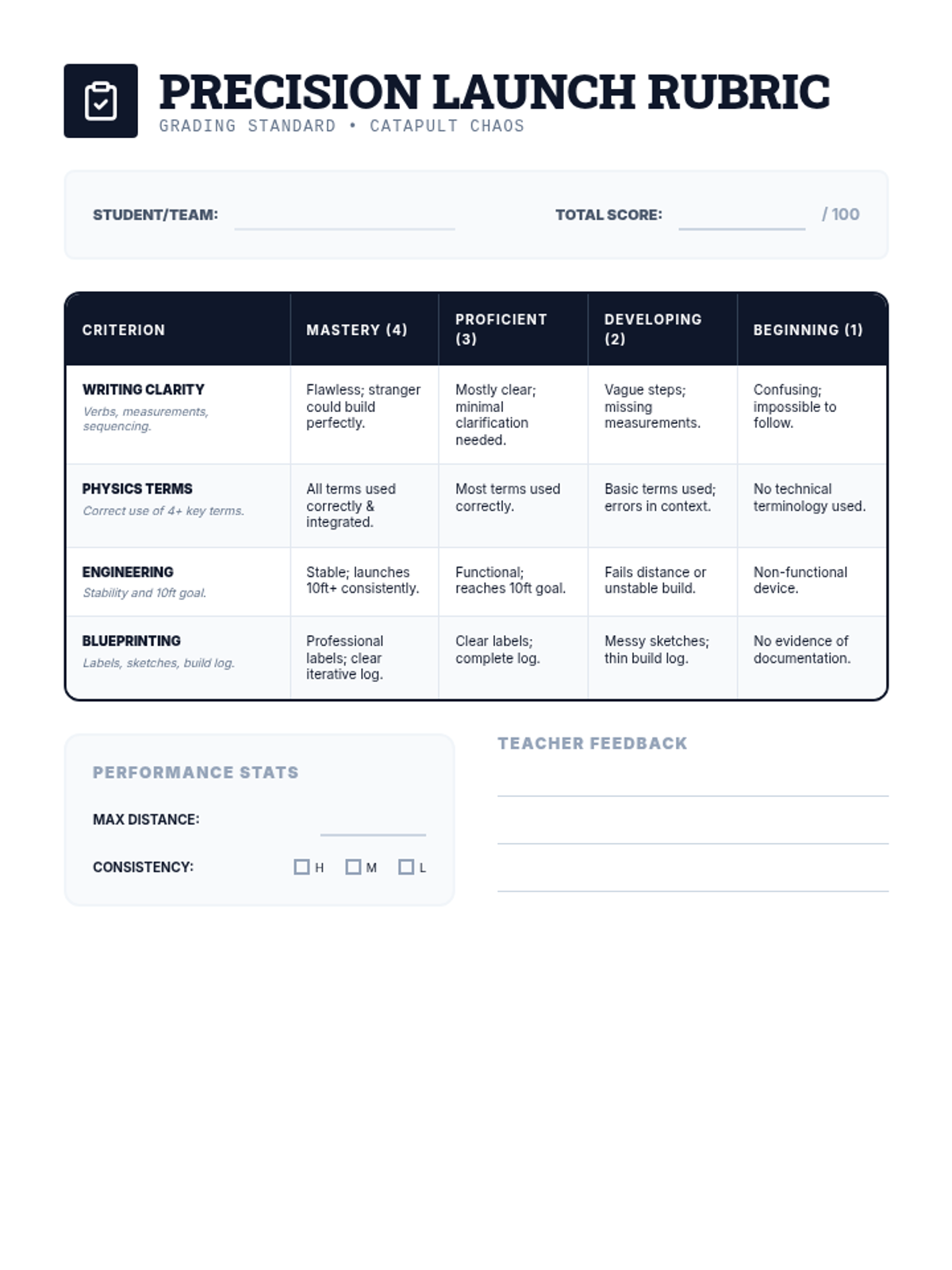
A teacher-facing grading rubric and scoring guide for the Catapult Chaos project. It features a 4-point scale for technical writing, physics terminology, engineering design, and blueprinting. Updated project goal to 7 feet.
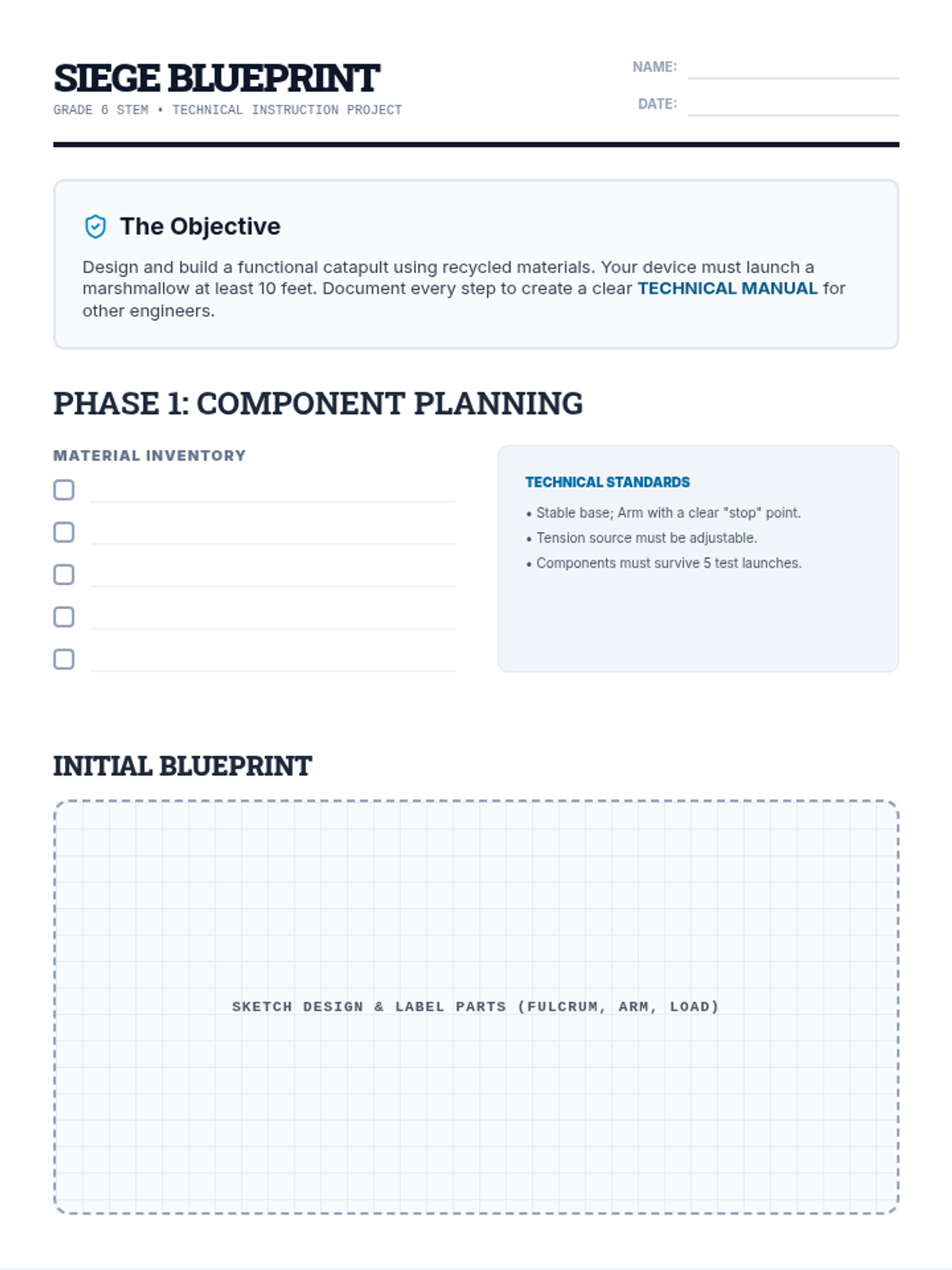
A comprehensive 3-page student project guide for building a catapult. Includes a planning section with blueprint space, a real-time build log for technical drafting, and a final manual template focusing on precise terminology and procedure writing. Updated project goal to 7 feet.
A 5-slide introductory presentation for the Catapult Chaos STEM project, covering physics concepts (levers, energy), the engineering challenge, and the focus on technical instruction writing. Updated project goal to 7 feet.
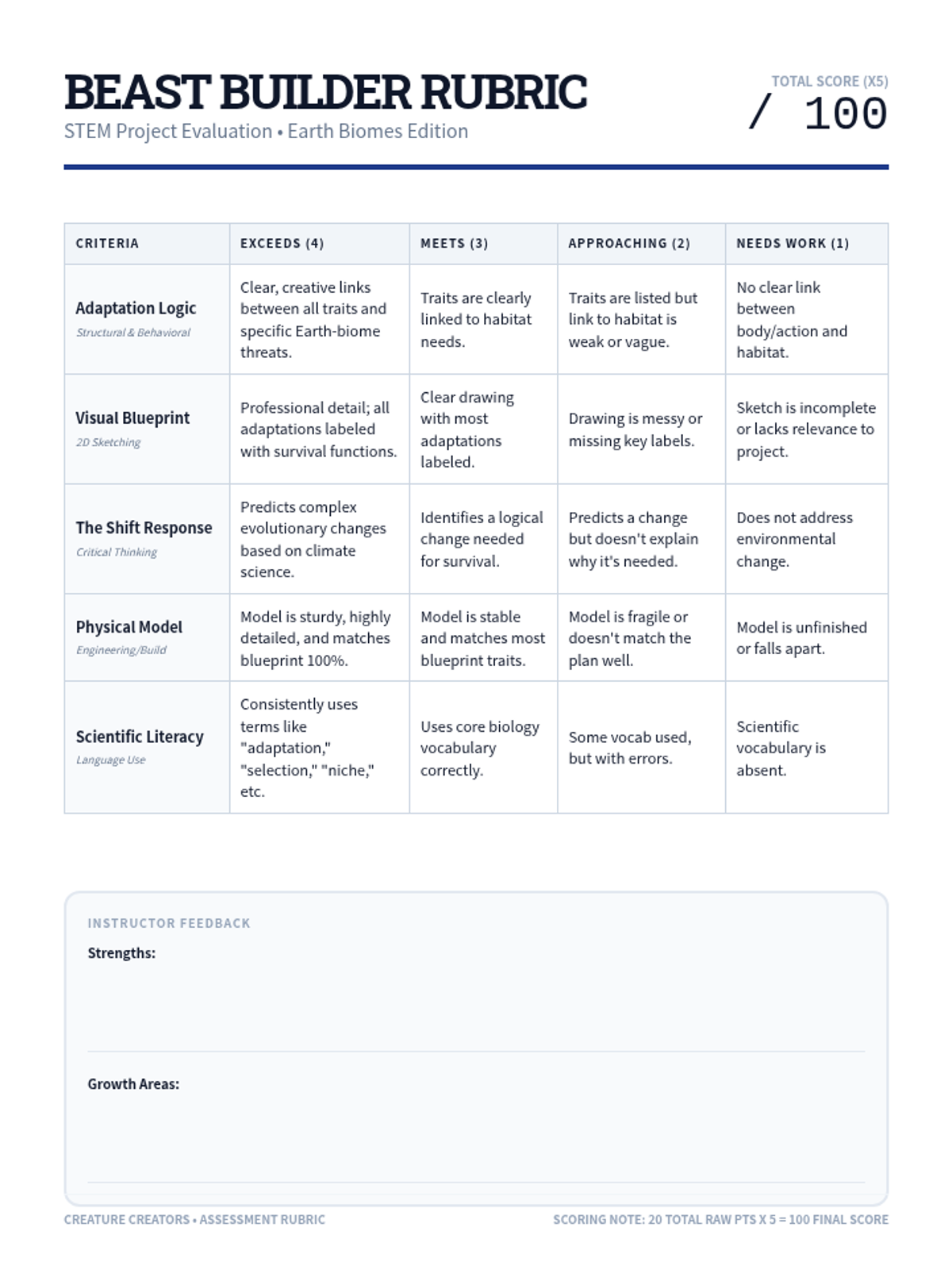
A detailed 100-point rubric for assessing the Earth-themed Beast Builder STEM project. Criteria include adaptation logic, visual blueprint accuracy, evolutionary response, and scientific literacy.