A comprehensive 40-question multiple choice and 5 performance-based question exam covering both CompTIA A+ Core 1 and Core 2 domains. Designed to simulate the rigor and scenario-based nature of the actual certification exam.
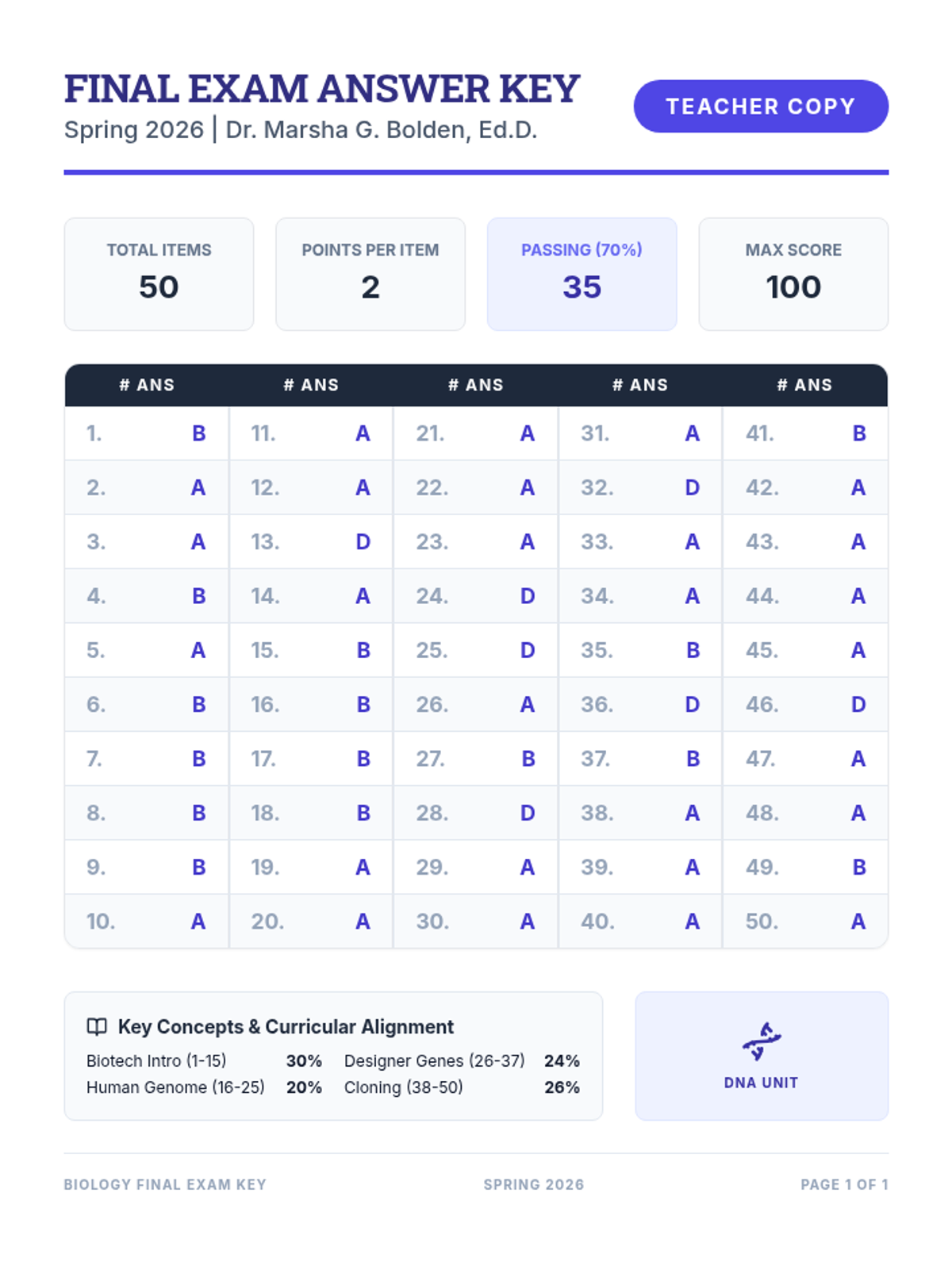
A structured answer key for the Biology Final Exam, providing correct responses for all 50 multiple-choice questions. Revised to fix footer spacing and numbering consistency.
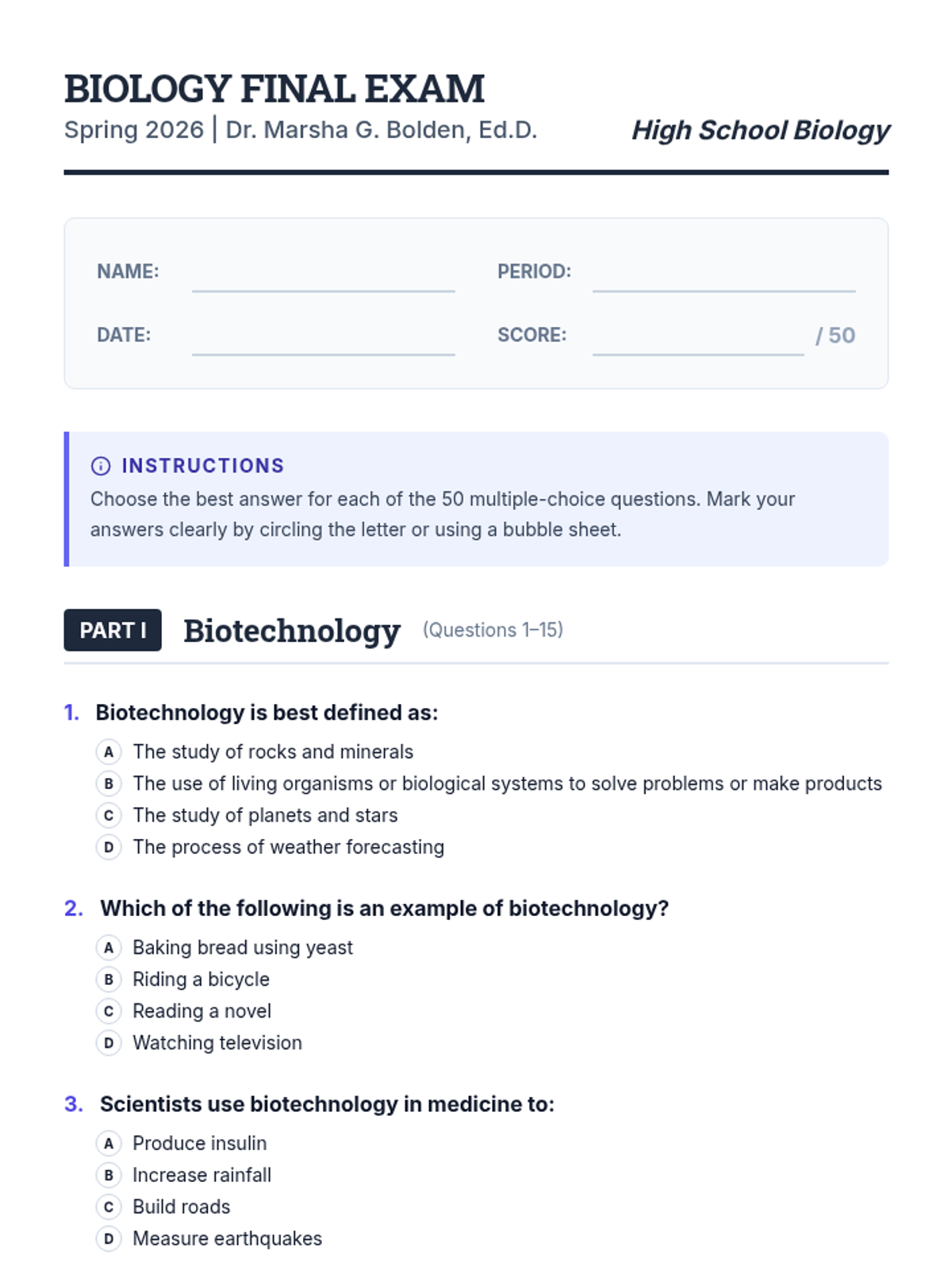
A comprehensive 50-question multiple choice final exam for High School Biology, covering biotechnology, the Human Genome Project, gene editing, and cloning. Includes diagrams for gel electrophoresis and CRISPR technology. Revised for better page breaks and consistent numbering.
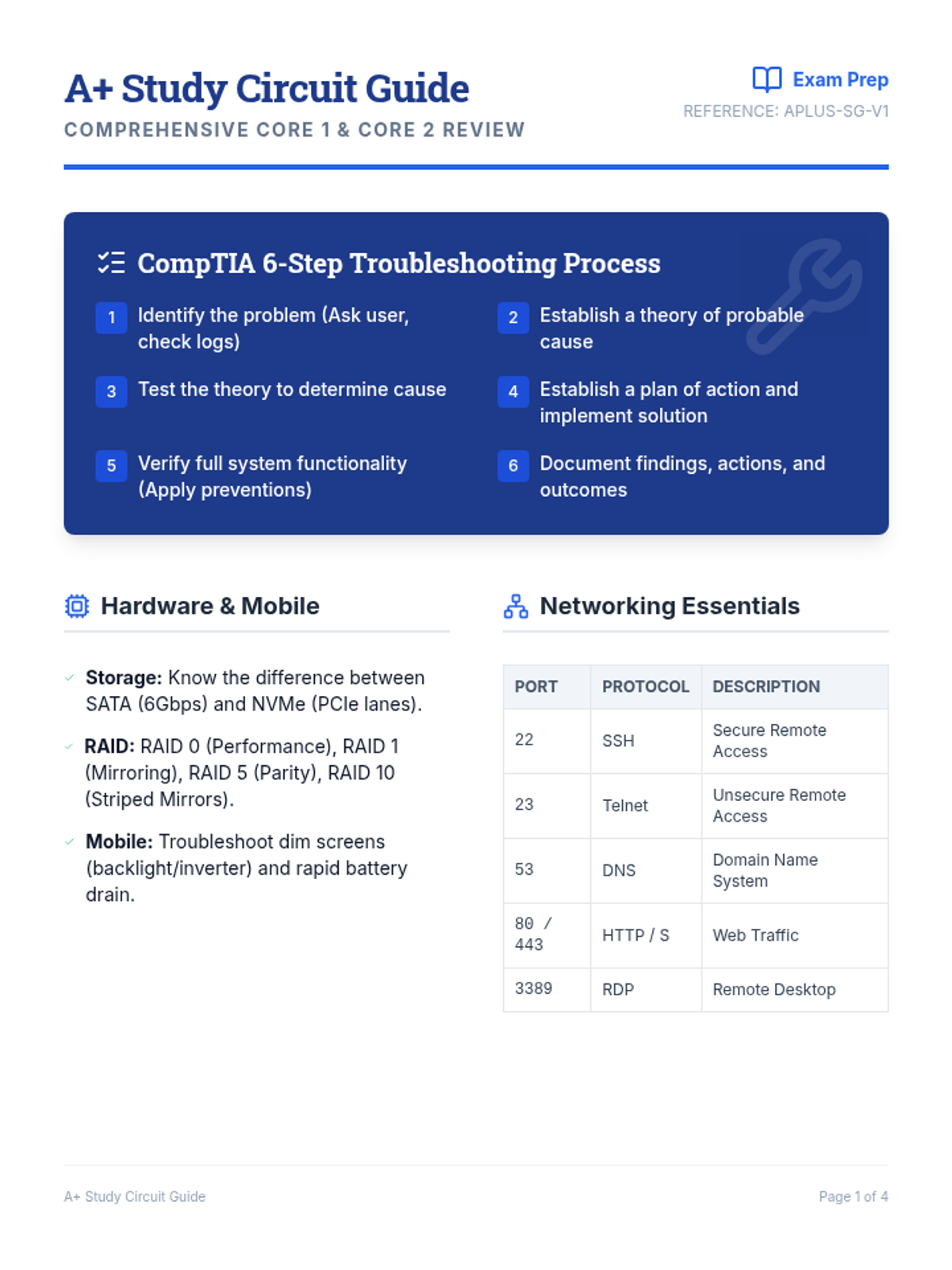
A structured review resource covering essential concepts for the CompTIA A+ Core 1 and Core 2 exams, including network ports, command-line references, the 6-step troubleshooting methodology, detailed hardware diagrams, and BIOS/UEFI configuration settings.
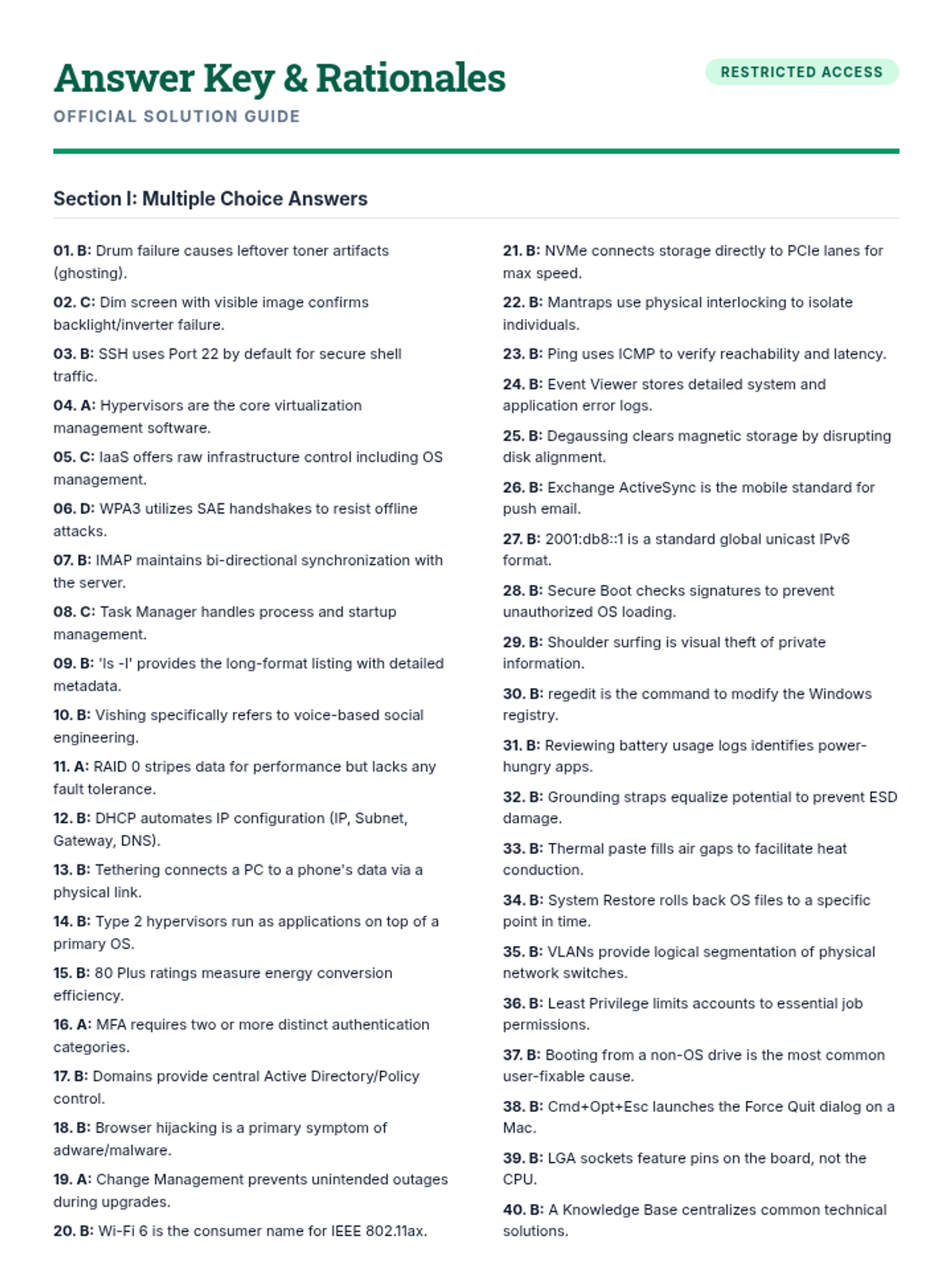
The official answer key and scoring guide for the CompTIA A+ Comprehensive Exam. Includes rationales for multiple-choice answers and a multi-point rubric for grading performance-based scenario responses.
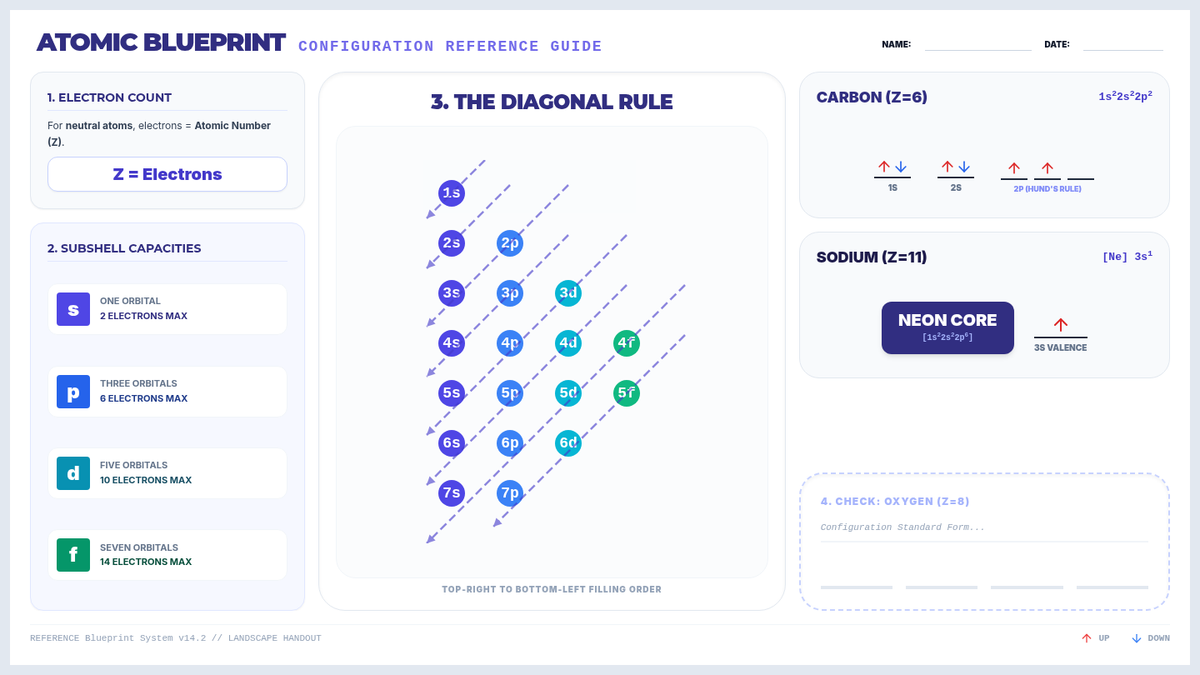
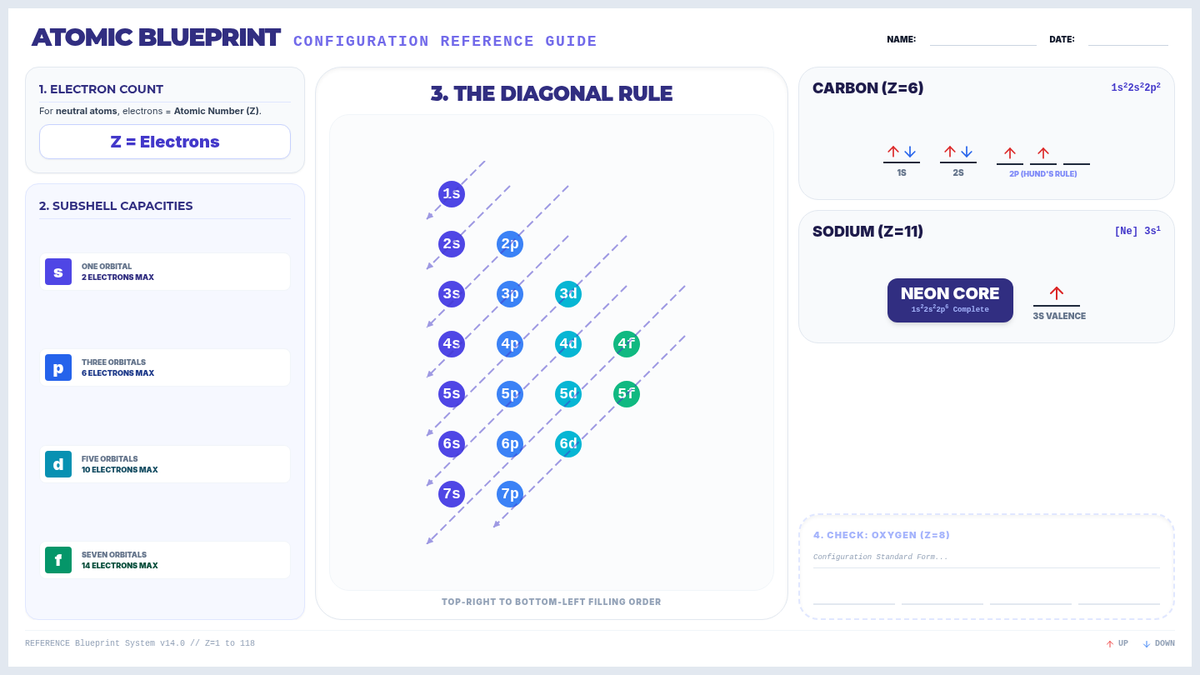
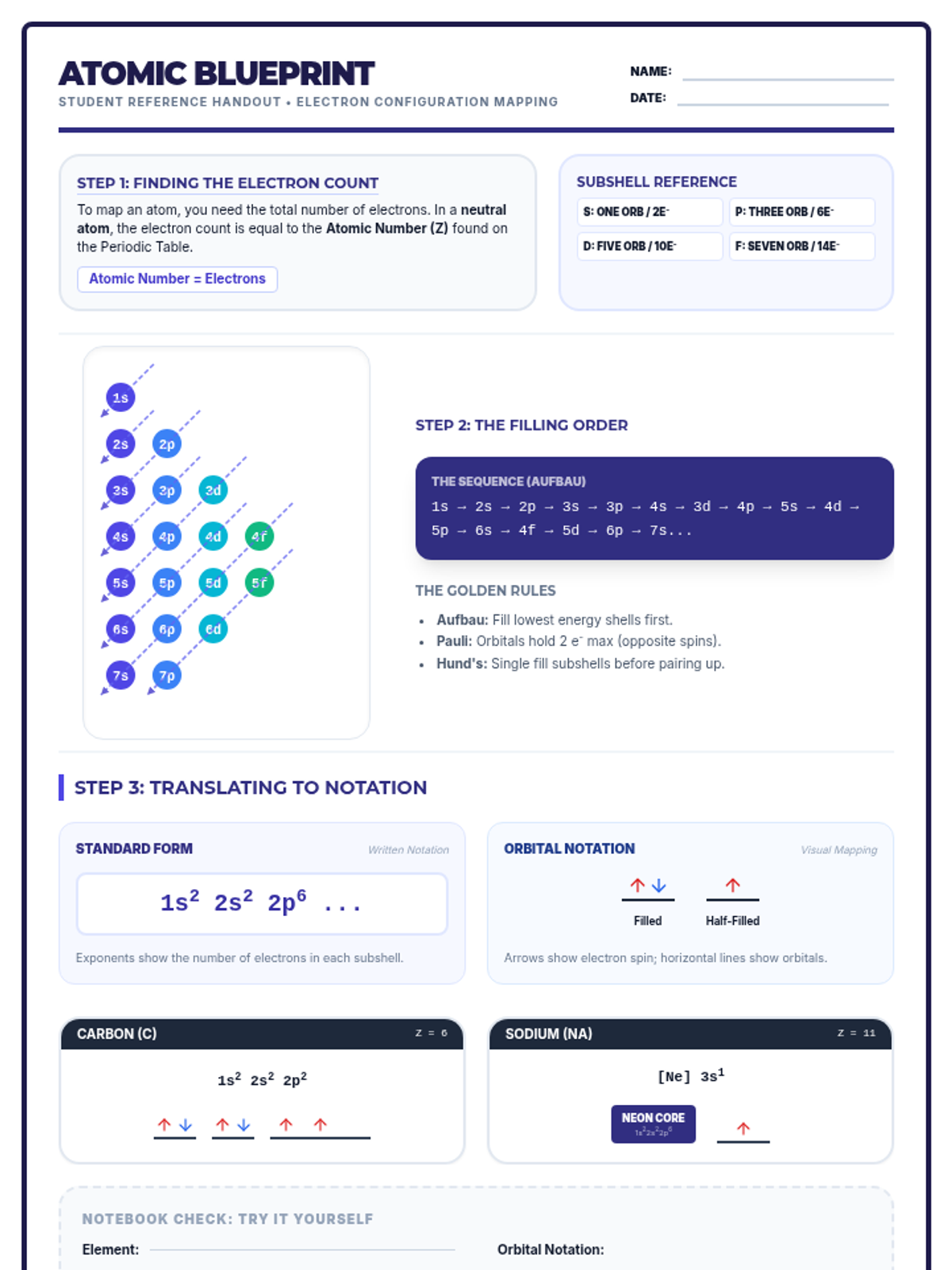
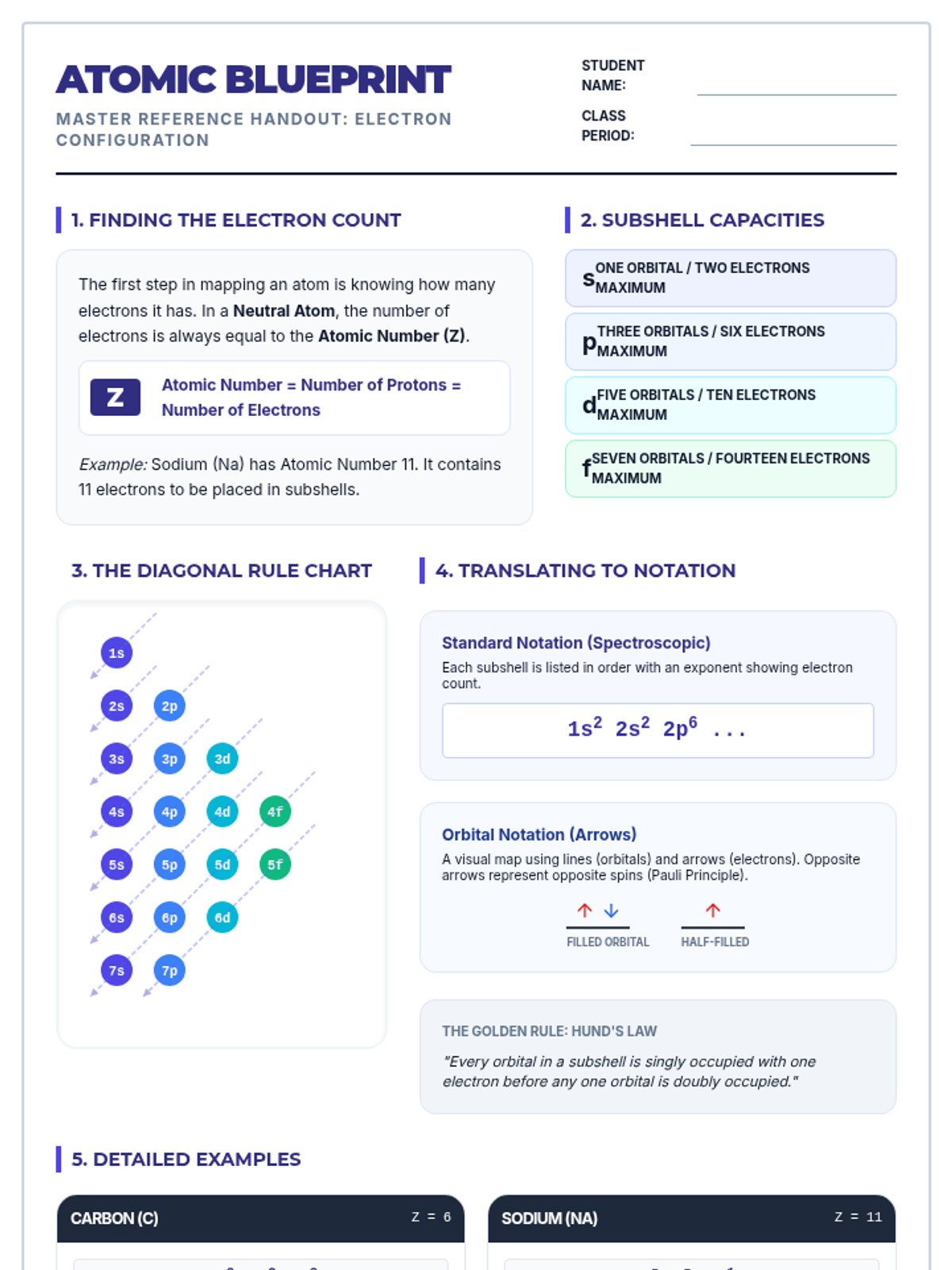
A final corrected landscape-oriented handout designed for print. Includes clear step-by-step instructions, full-word subshell capacities, a mathematically accurate 1s-7p Aufbau chart, and detailed orbital diagrams for Carbon and Sodium following Hund's Rule. Space for Oxygen practice is provided.
A final corrected landscape-oriented handout designed for print. Includes clear step-by-step instructions, full-word subshell capacities, a mathematically accurate 1s-7p Aufbau chart, and detailed orbital diagrams for Carbon and Sodium following Hund's Rule.
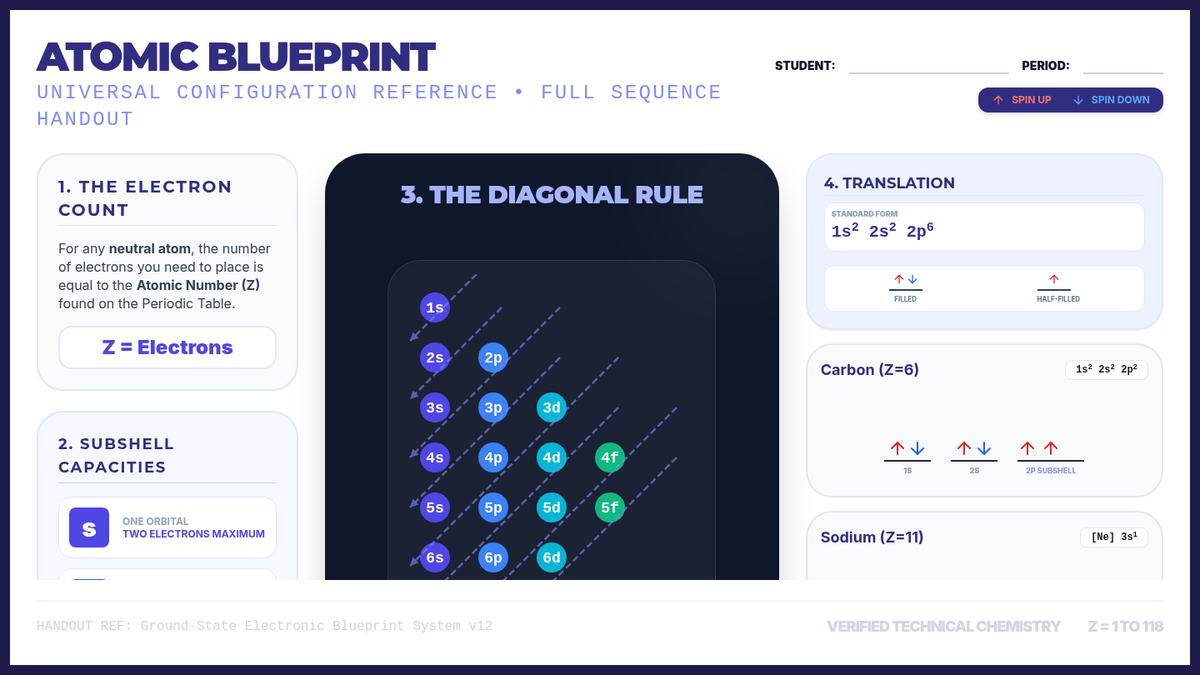
A comprehensive landscape-oriented handout designed for print. Includes step-by-step instructions for finding electron counts, full-word subshell capacity reference, a strictly corrected Aufbau chart (1s-7p), and detailed visualizations for Carbon and Sodium with orbital arrow notation.
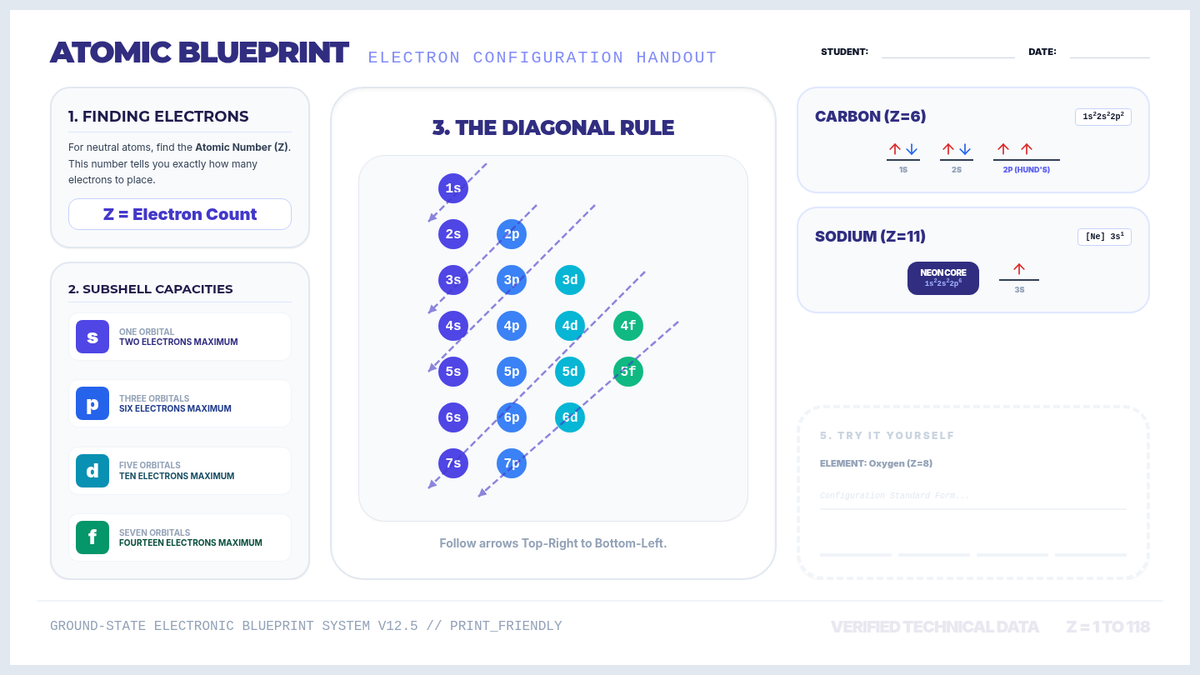
A print-friendly one-page reference handout for electron configurations. Features clear definitions, full-word subshell capacities, a corrected full Aufbau diagonal chart (1s to 7p), detailed notation guides, and step-by-step examples for Carbon and Sodium.
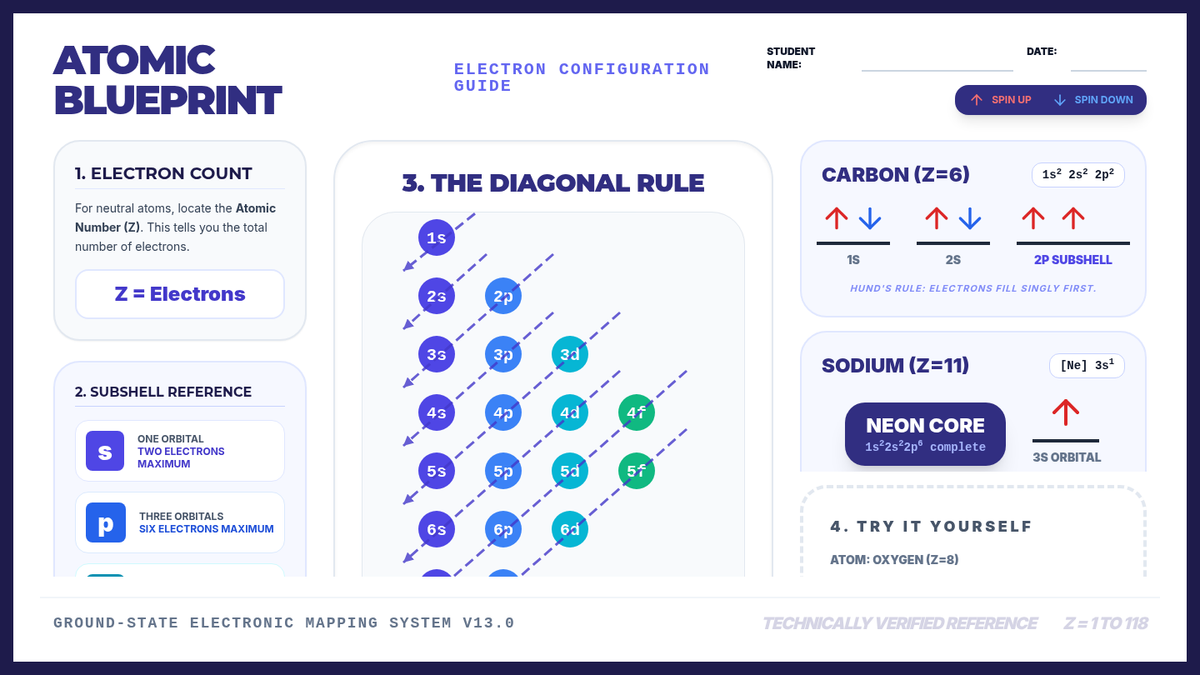
A print-friendly one-page handout providing a conceptual guide to electron configurations. Includes the definition of finding electrons, the Diagonal Rule (Aufbau) chart, notation methods, and detailed orbital diagram examples for Carbon and Sodium.
A high-impact, one-page BPA event flyer for high school students, featuring a prominent 'Business Professionals of America' title and pathway-based organization. Event descriptions use Title Case for emphasis, while paragraph text remains in standard sentence case.
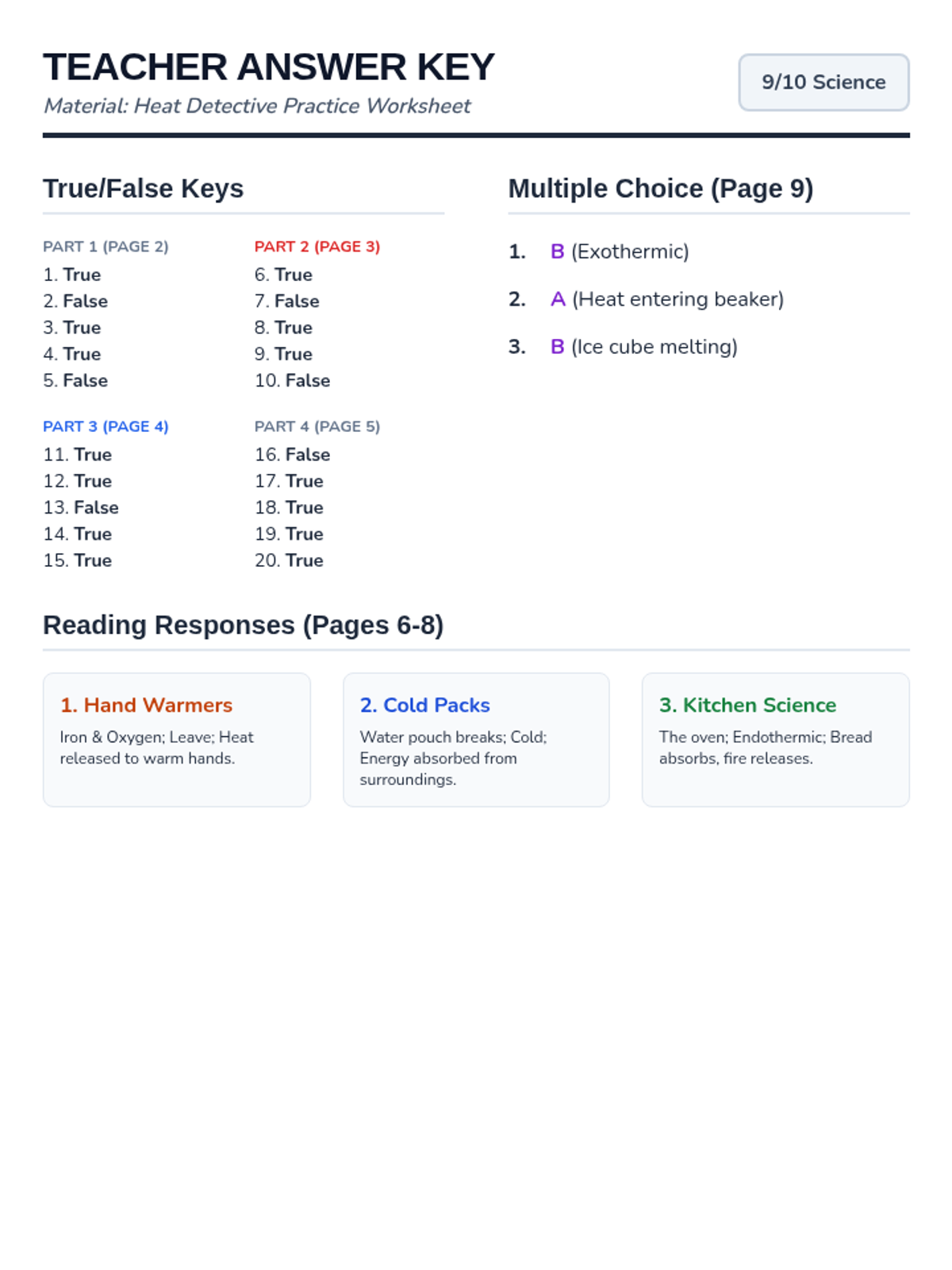
Complete teacher answer key for the Heat Detective Practice Worksheet, including True/False keys, suggested reading responses, and multiple choice answers.
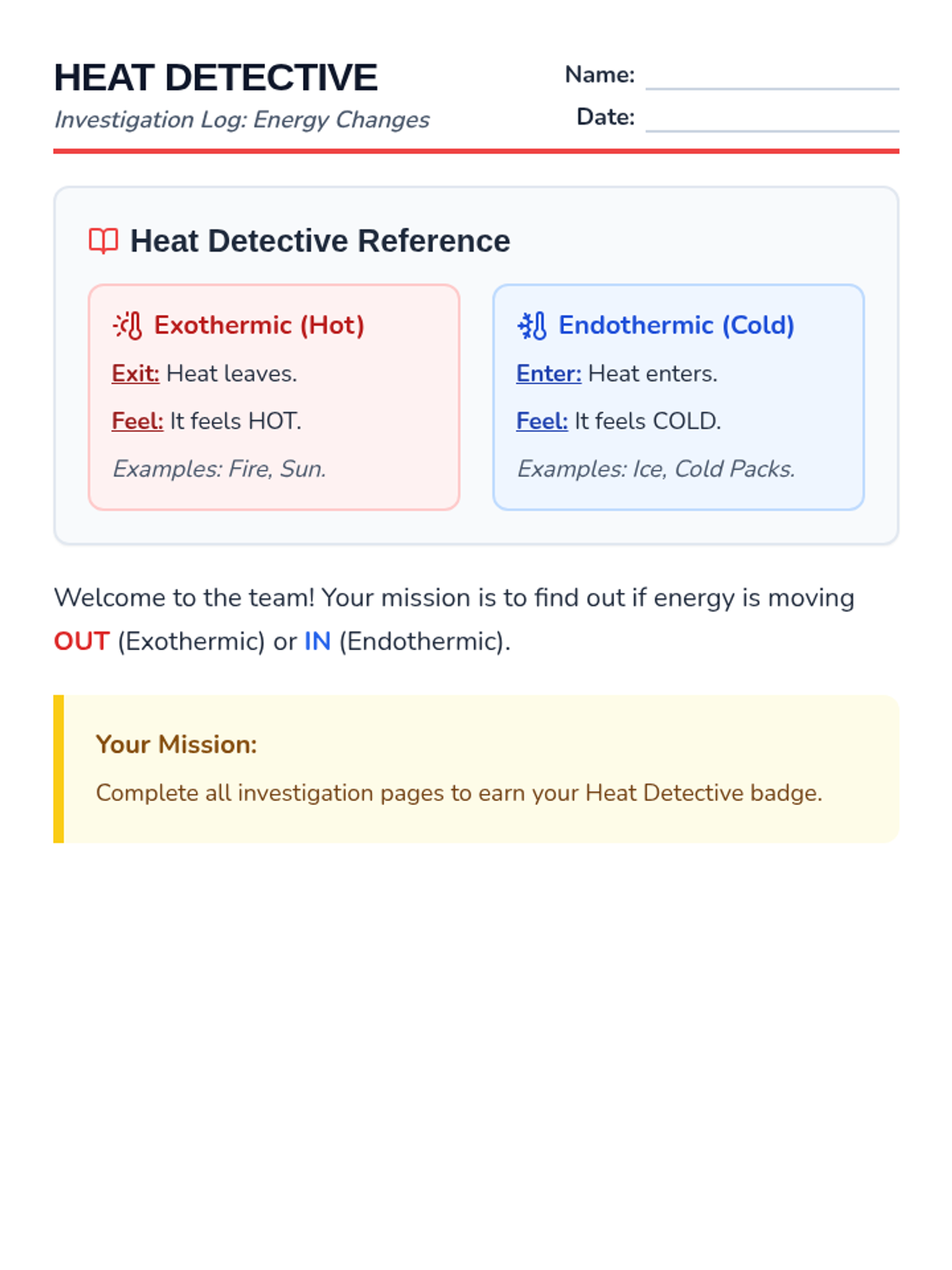
A 10-page scaffolded worksheet packet for Special Education students covering endothermic and exothermic reactions. Includes 4 pages of True/False questions (5 per page), 3 short reading passages with open-ended questions, a multiple-choice review, and a student-facing answer check page.
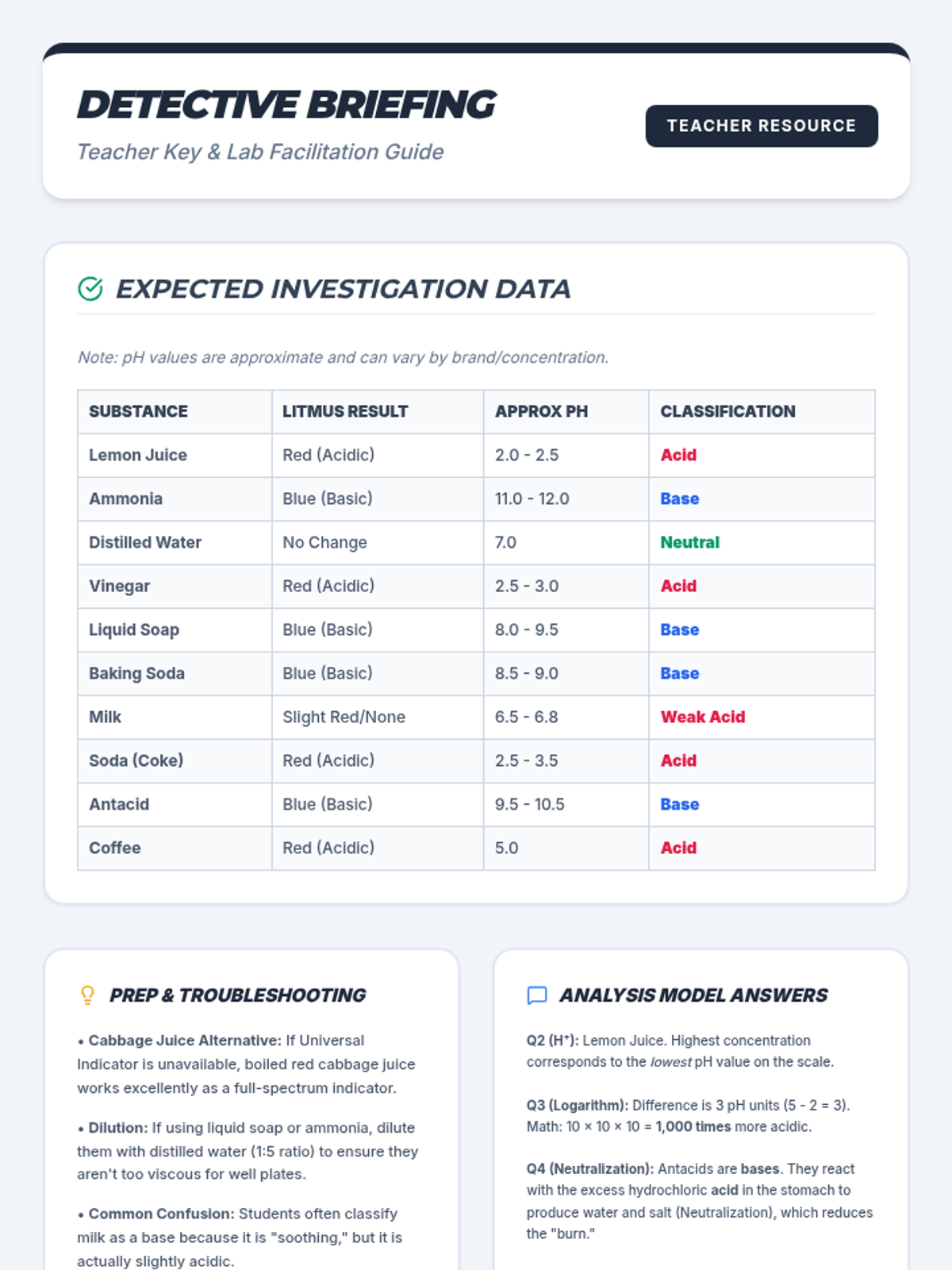
A teacher's guide and answer key for the Domestic Detective Lab, including expected pH values for household substances, prep tips, and model analysis answers. Updated to match the new pH paper column and mapping activity. Now with improved contrast, page breaks, and professional chemical notation. Now with black separating lines.
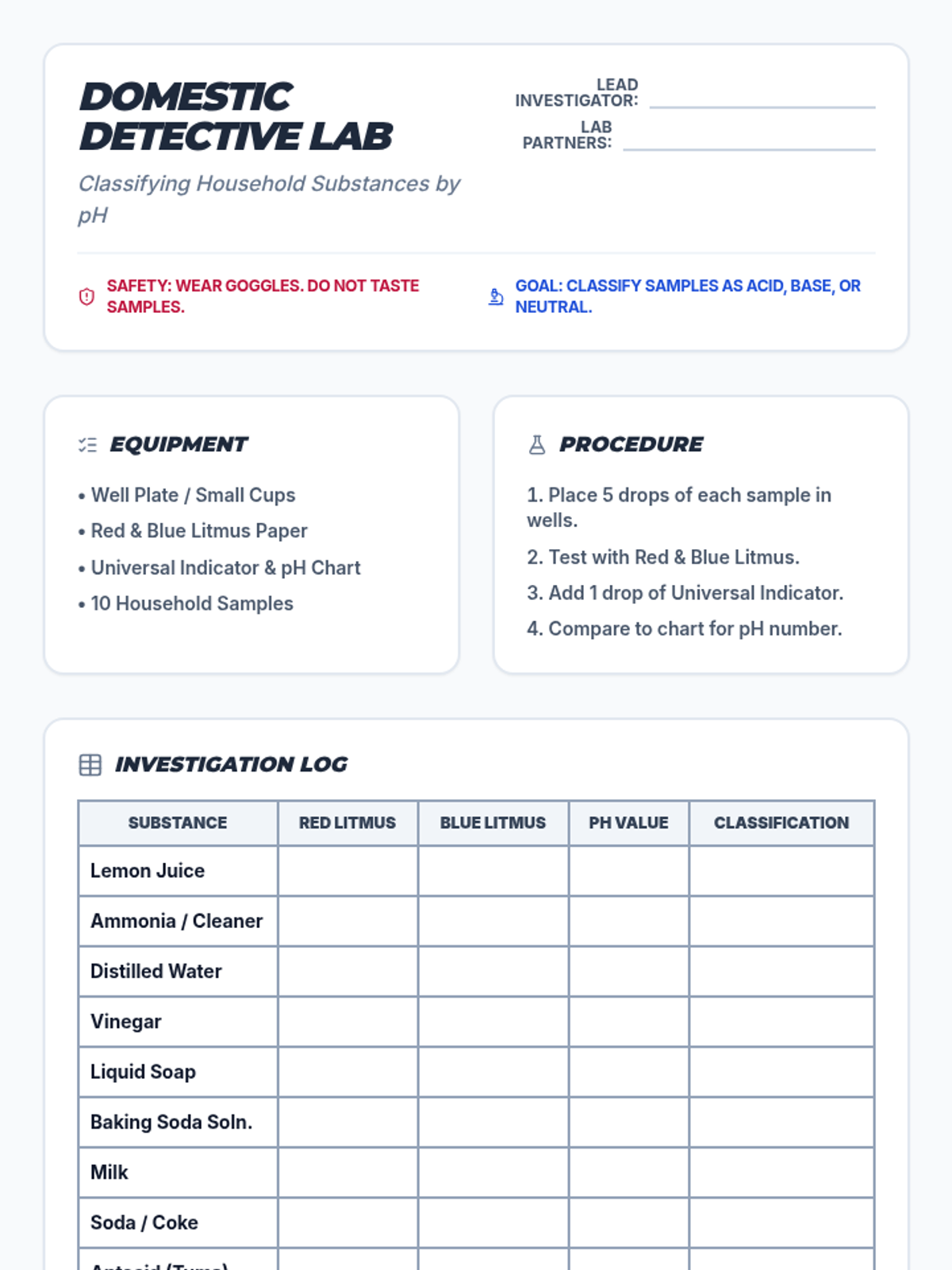
A student laboratory guide for testing the pH of common household substances using litmus paper and universal indicator, including a data table and post-lab analysis questions. Revised with black separating lines, a blank colorable pH scale, and optimized layout to 2 pages.
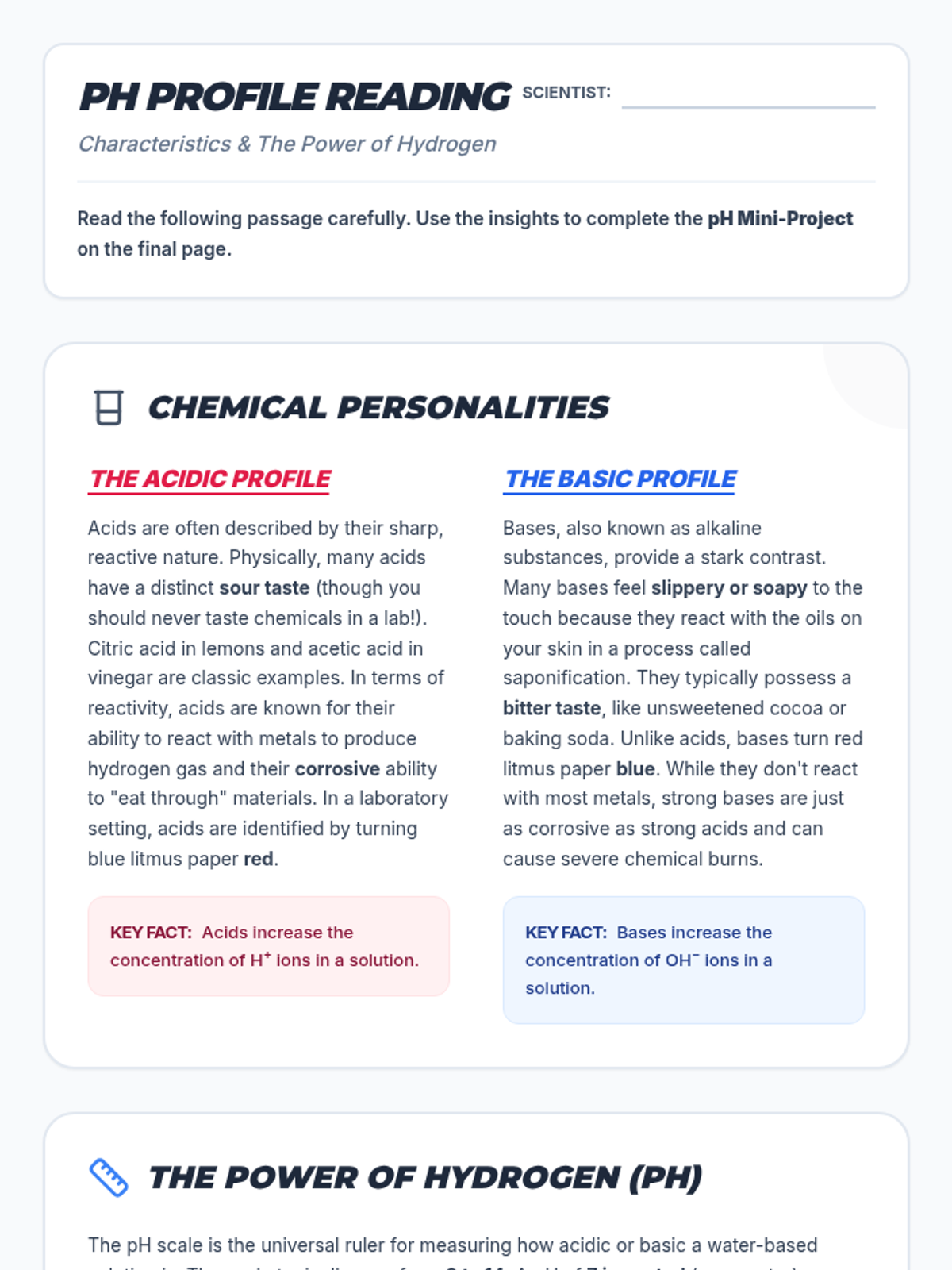
A reading passage and mini-project activity covering the physical and chemical properties of acids and bases, the logarithmic nature of the pH scale, and real-world applications. Revised for improved color consistency, layout, and black separating lines for print clarity.
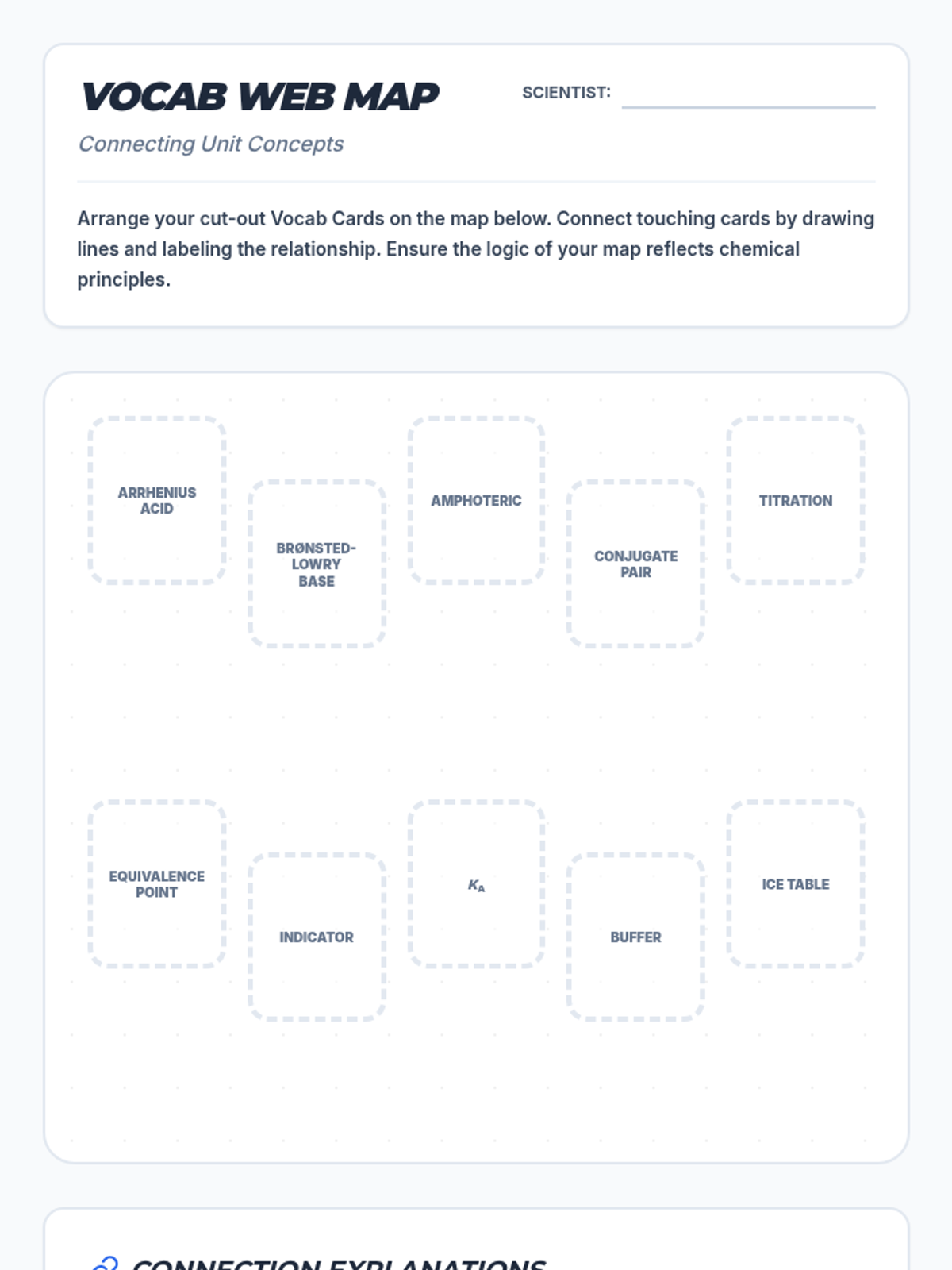
A graphic organizer for students to map and explain relationships between the vocabulary terms from the unit review cards. Revised for specific unit content and improved workspace. Now with black separating lines.
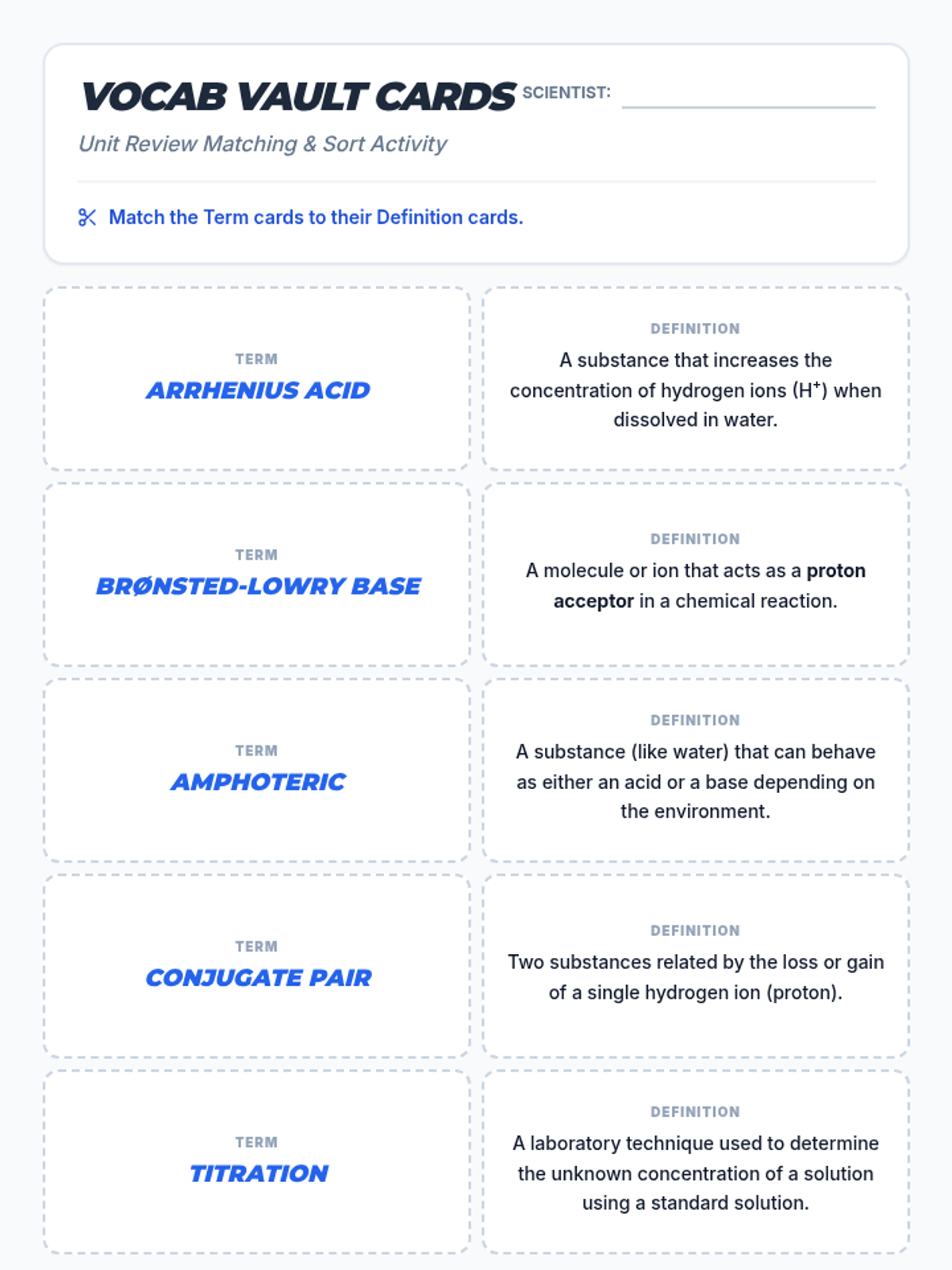
A printable card-sort activity featuring 10 key terms and definitions from the unit, designed for student matching and review sessions. Revised for improved page flow, chemical notation, and black dashed borders for printing. Now condensed to 2 pages.
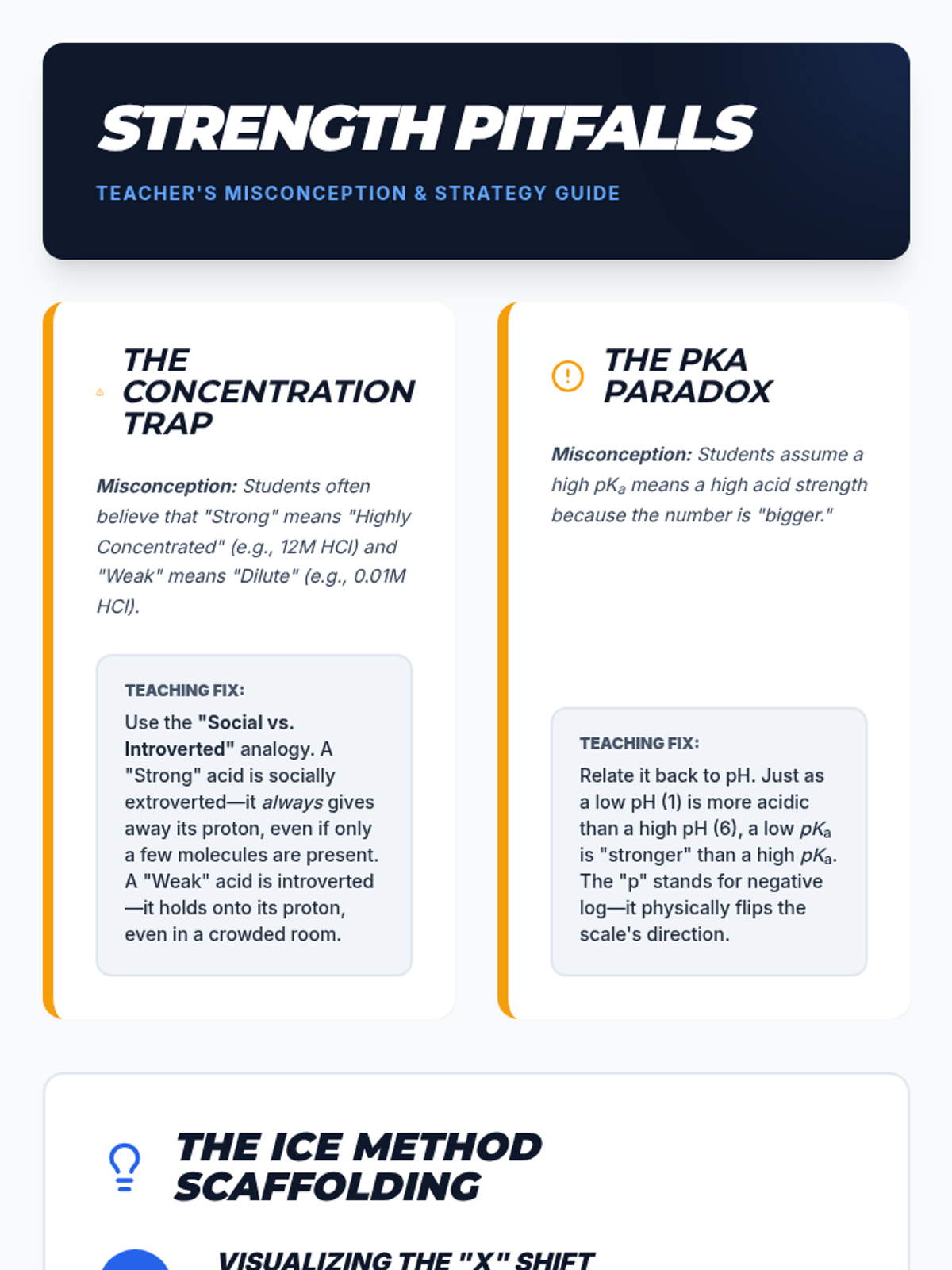
A teacher resource guide identifying common student misconceptions regarding acid/base strength and providing instructional strategies for teaching the ICE method. Revised for improved readability, better contrast, and fixed math rendering.
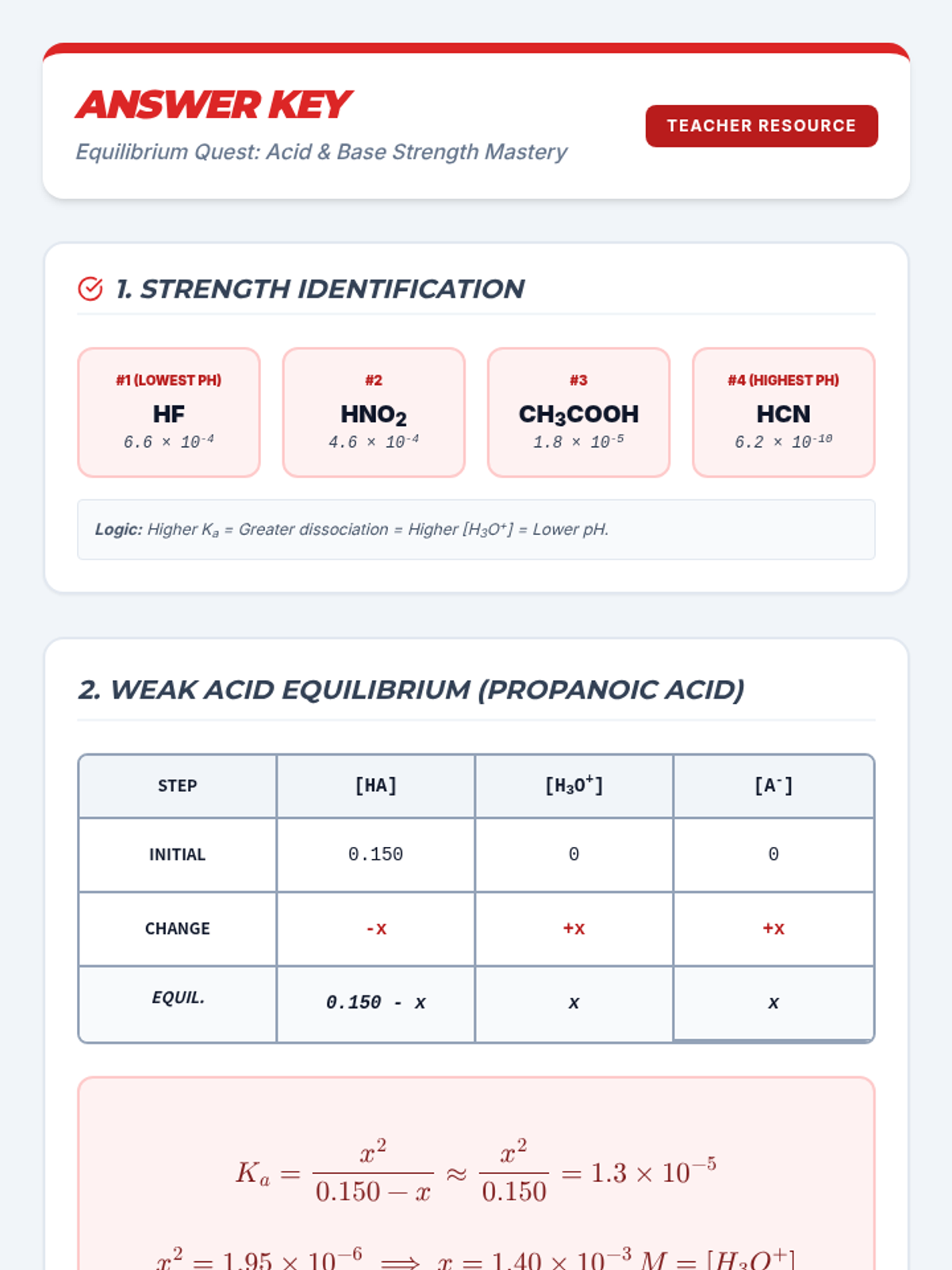
Answer key for the 'Equilibrium Quest' worksheet, providing full worked solutions for Ka, pH, and percent ionization problems. Revised with improved LaTeX rendering and high-contrast teacher annotations. Now with black separating lines.
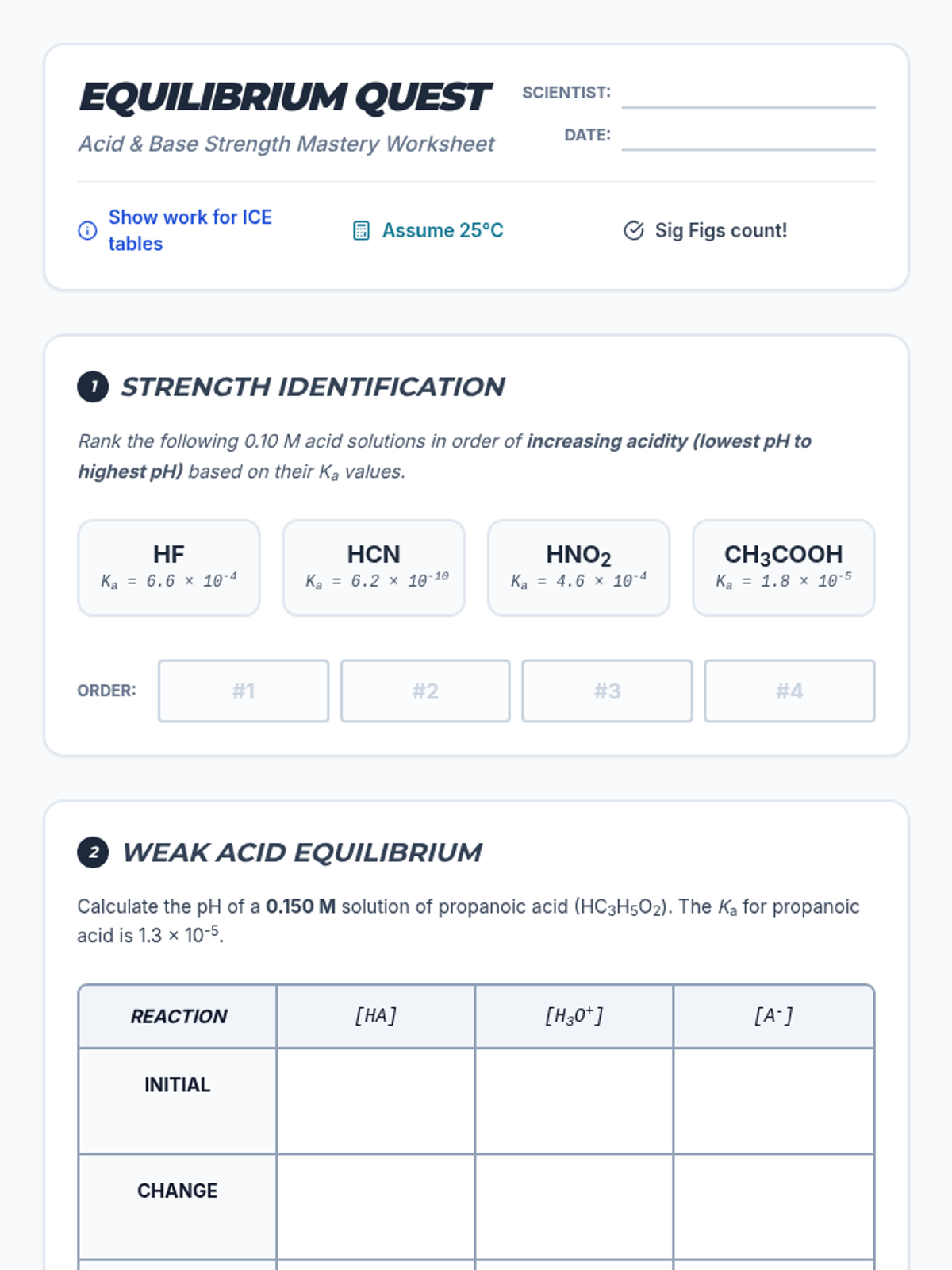
A student worksheet for the 'Strength Mastery' lesson, featuring acid/base ranking, ICE table problems, and percent ionization calculations. Revised with black separating lines for improved print clarity, larger work areas, and better page-break handling. Now with fixed ranking logic and visible math.
Visual presentation slides for the 'Strength Mastery' lesson, explaining the difference between strong and weak acids/bases, dissociation constants (Ka/Kb), and the ICE table method for equilibrium calculations. Revised with improved LaTeX rendering, molecular visuals, and slide 4 layout fixes.
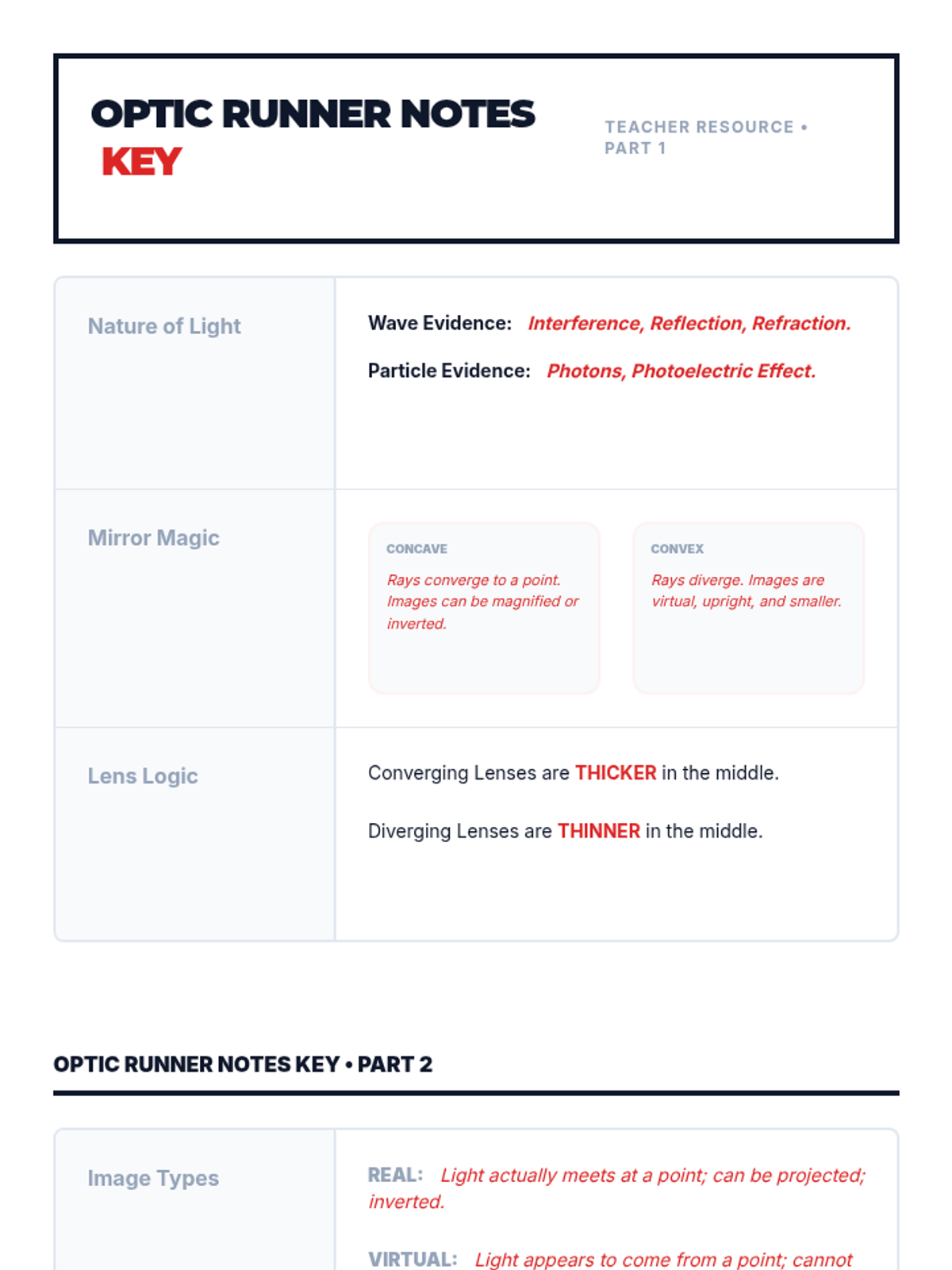
Teacher answer key for the Optic Runner Cornell Notes. Provides model definitions for wave-particle duality, mirror/lens comparisons, ray tracing rules, Snell's Law, and biological vision mechanics. Revised for 3-page layout alignment.