A comprehensive worksheet featuring a word scramble, matching activity, word search, and a structured paragraph response focused on AI vocabulary and the importance of diversity in technology.
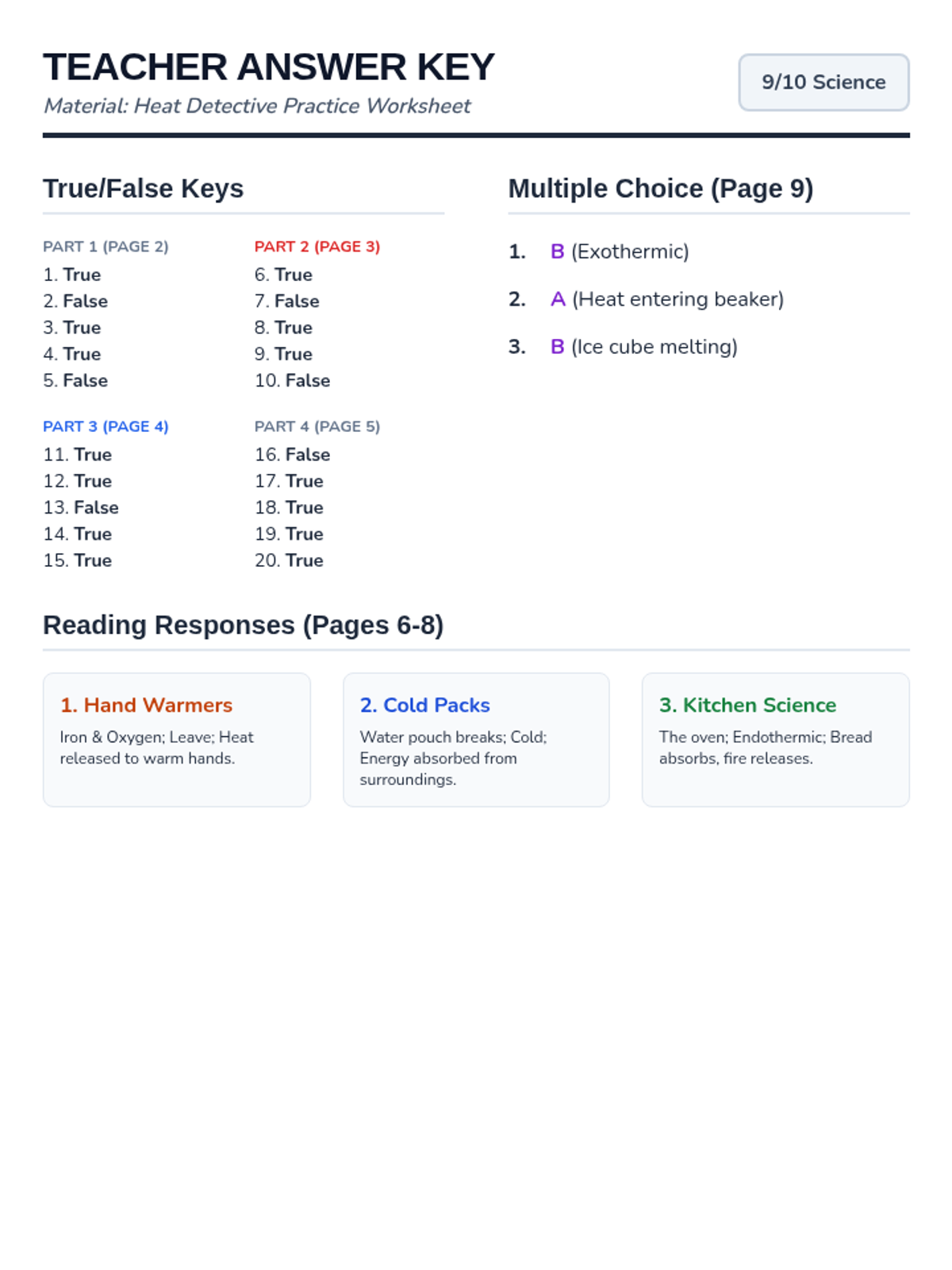
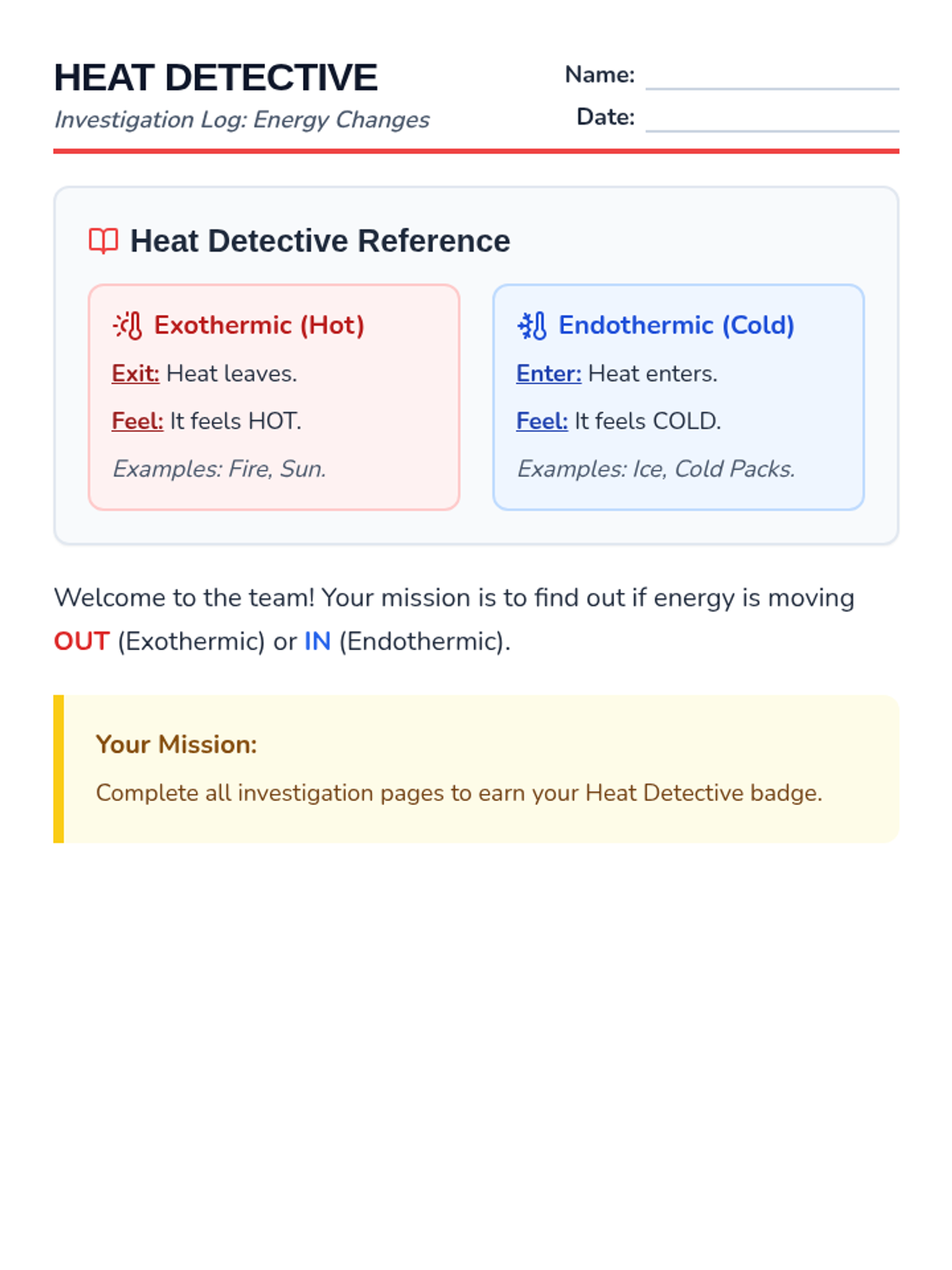
Complete teacher answer key for the Heat Detective Practice Worksheet, including True/False keys, suggested reading responses, and multiple choice answers.
A 10-page scaffolded worksheet packet for Special Education students covering endothermic and exothermic reactions. Includes 4 pages of True/False questions (5 per page), 3 short reading passages with open-ended questions, a multiple-choice review, and a student-facing answer check page.
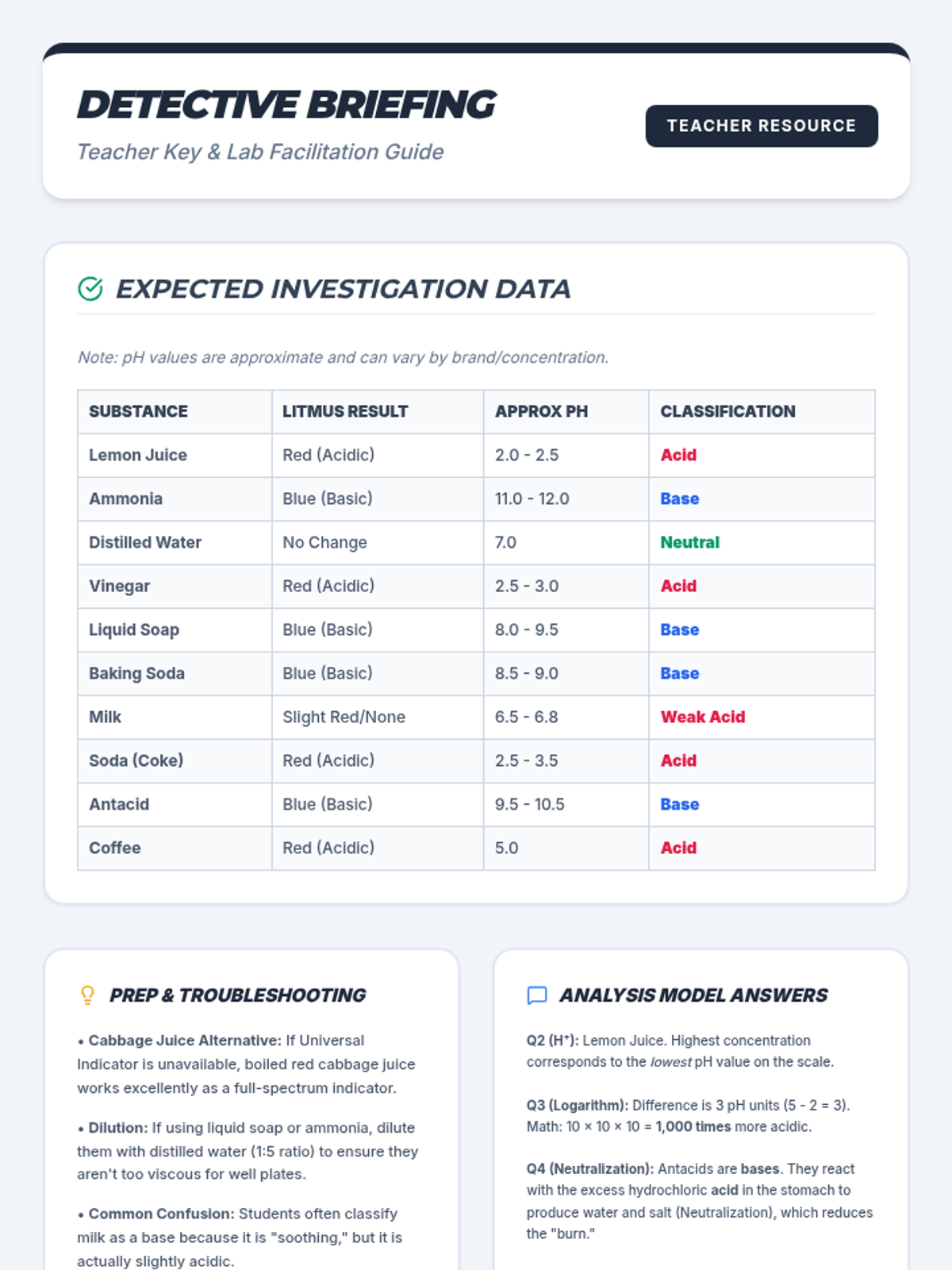
A teacher's guide and answer key for the Domestic Detective Lab, including expected pH values for household substances, prep tips, and model analysis answers. Updated to match the new pH paper column and mapping activity. Now with improved contrast, page breaks, and professional chemical notation. Now with black separating lines.
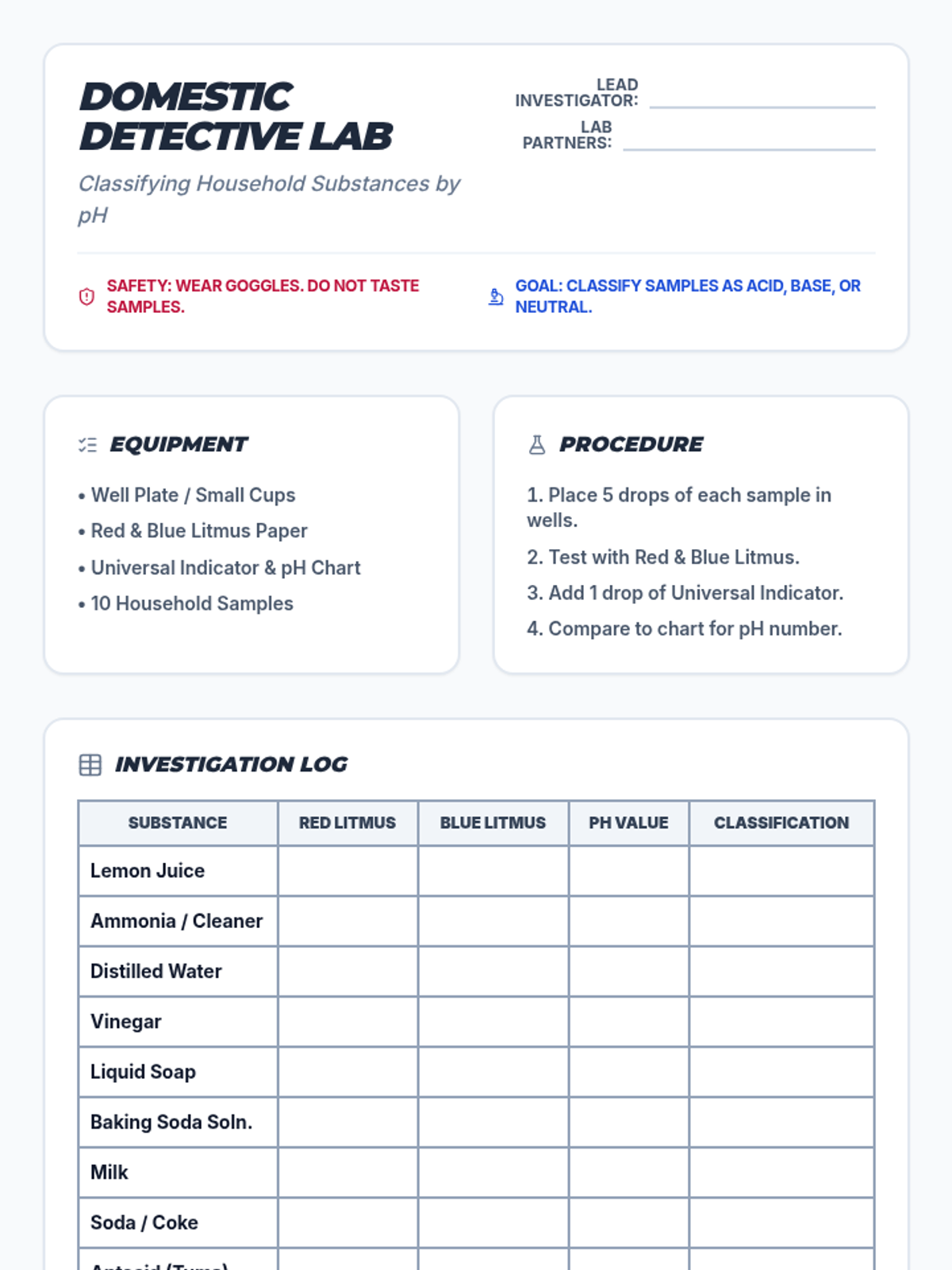
A student laboratory guide for testing the pH of common household substances using litmus paper and universal indicator, including a data table and post-lab analysis questions. Revised with black separating lines, a blank colorable pH scale, and optimized layout to 2 pages.
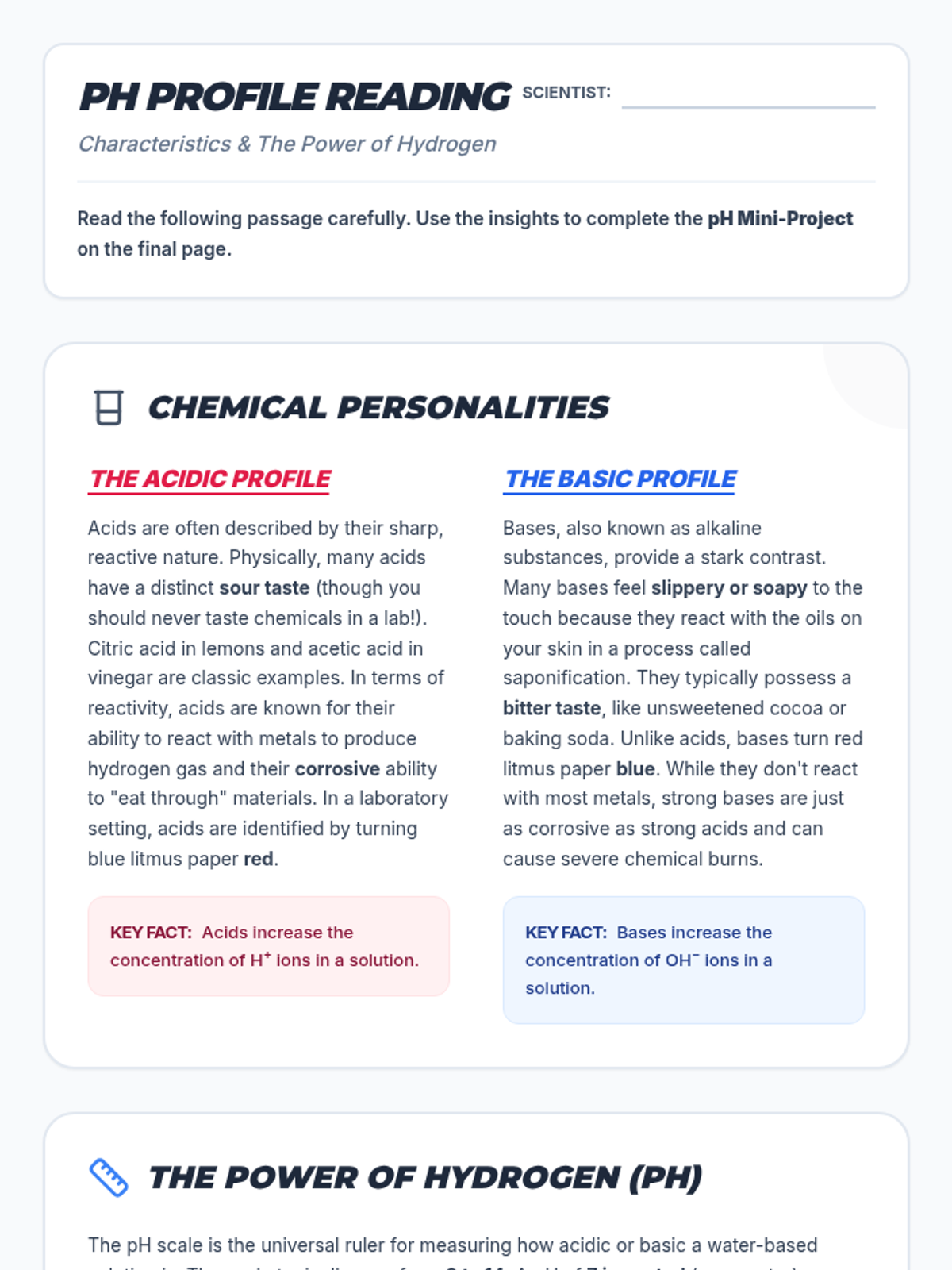
A reading passage and mini-project activity covering the physical and chemical properties of acids and bases, the logarithmic nature of the pH scale, and real-world applications. Revised for improved color consistency, layout, and black separating lines for print clarity.
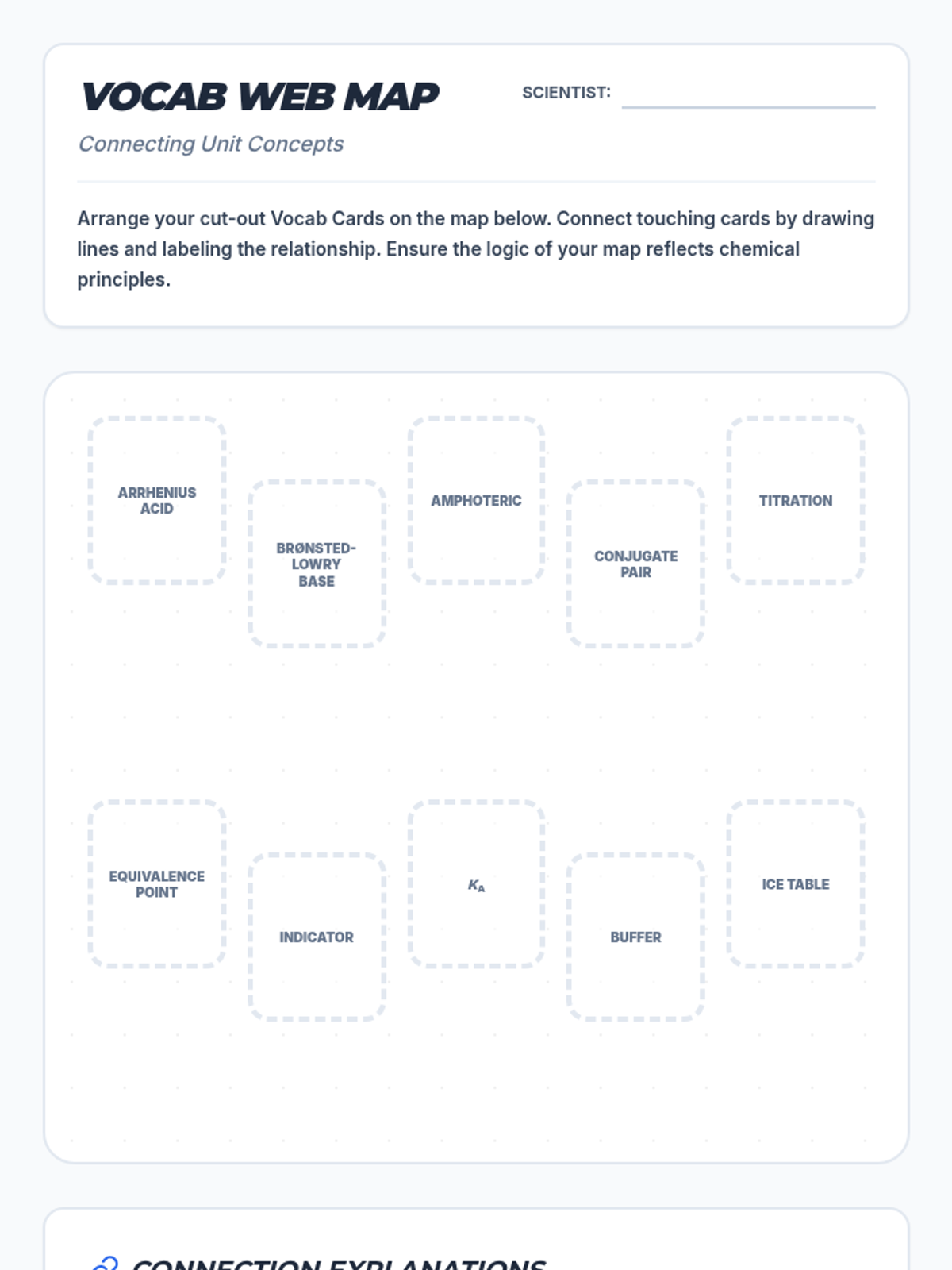
A graphic organizer for students to map and explain relationships between the vocabulary terms from the unit review cards. Revised for specific unit content and improved workspace. Now with black separating lines.
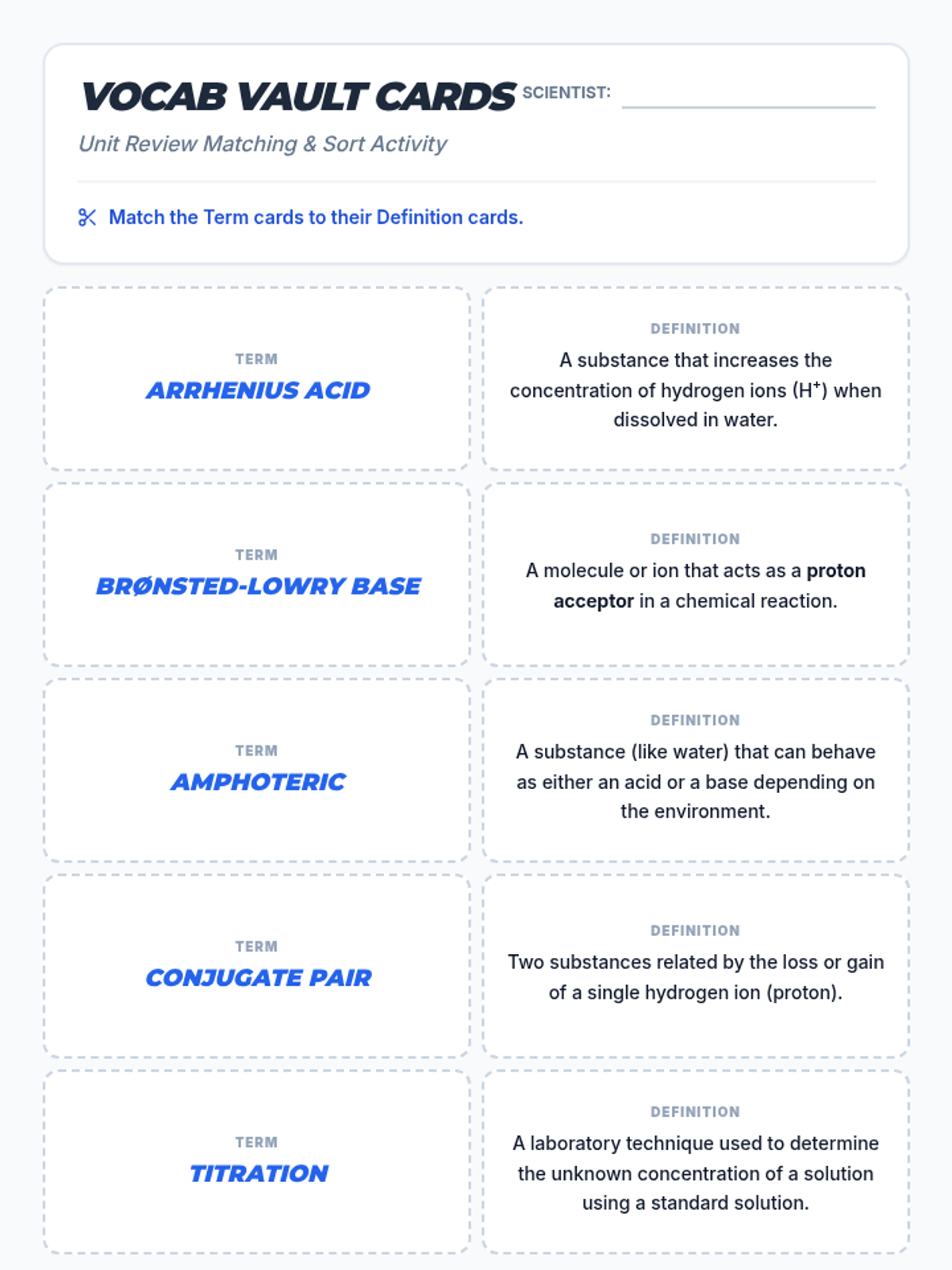
A printable card-sort activity featuring 10 key terms and definitions from the unit, designed for student matching and review sessions. Revised for improved page flow, chemical notation, and black dashed borders for printing. Now condensed to 2 pages.
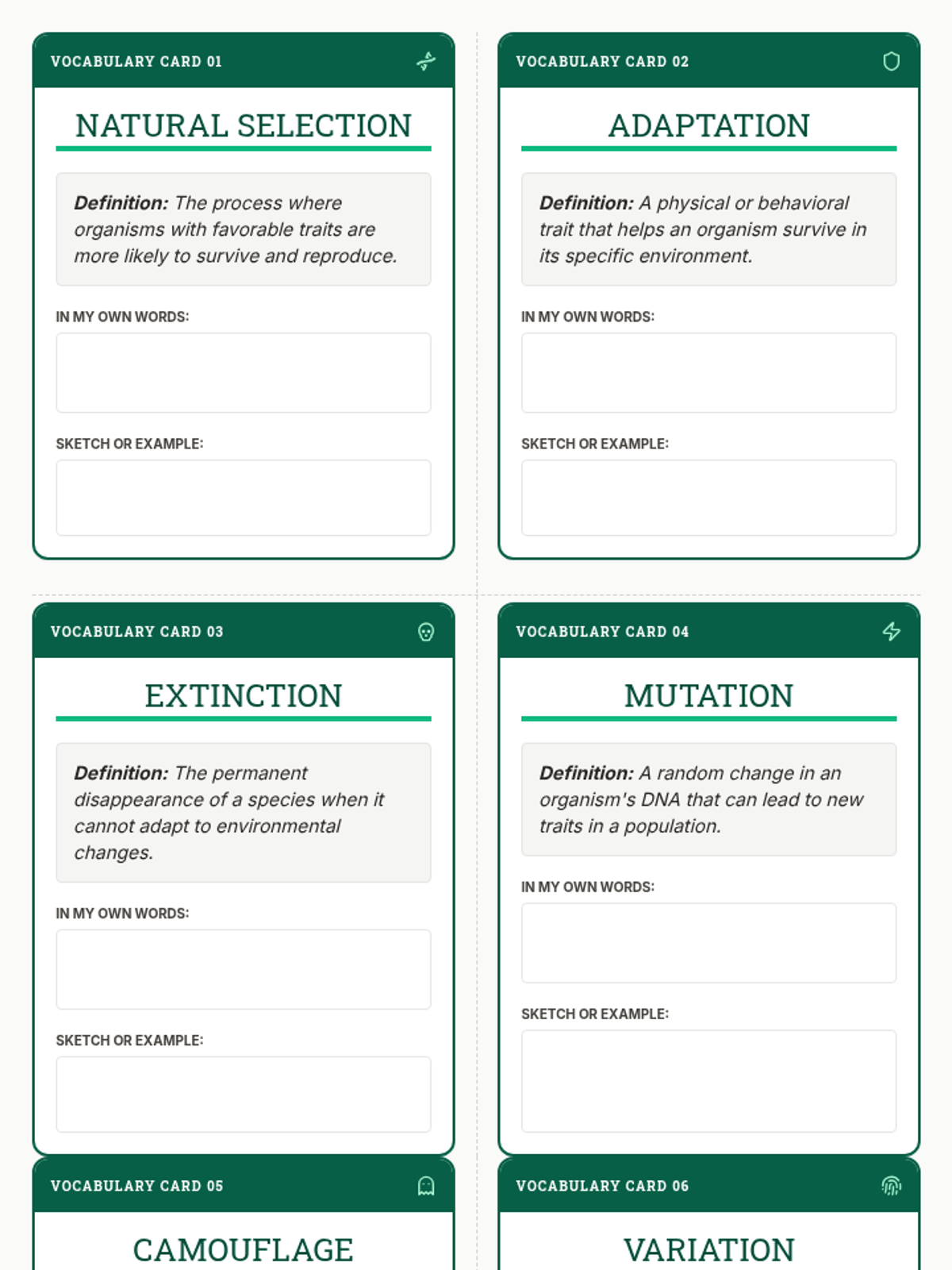
A set of eight printable vocabulary cards for the Natural Selection lesson, featuring key terms like Adaptation, Mutation, and Extinction. Each card includes a formal definition and space for students to write their own explanation and sketch an example.
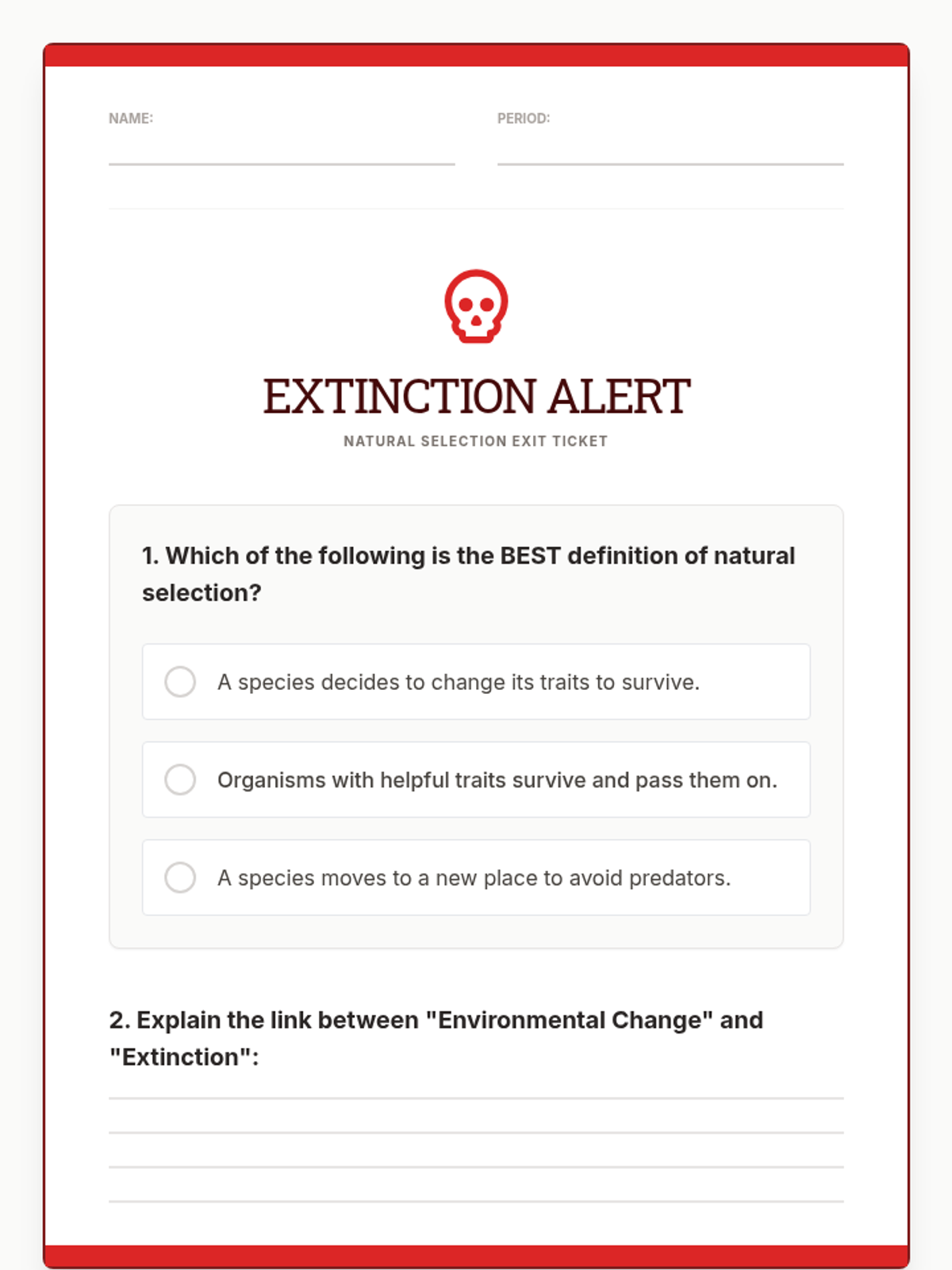
A quick formative assessment exit ticket to measure student understanding of the core definition of natural selection and the relationship between environmental changes and extinction.
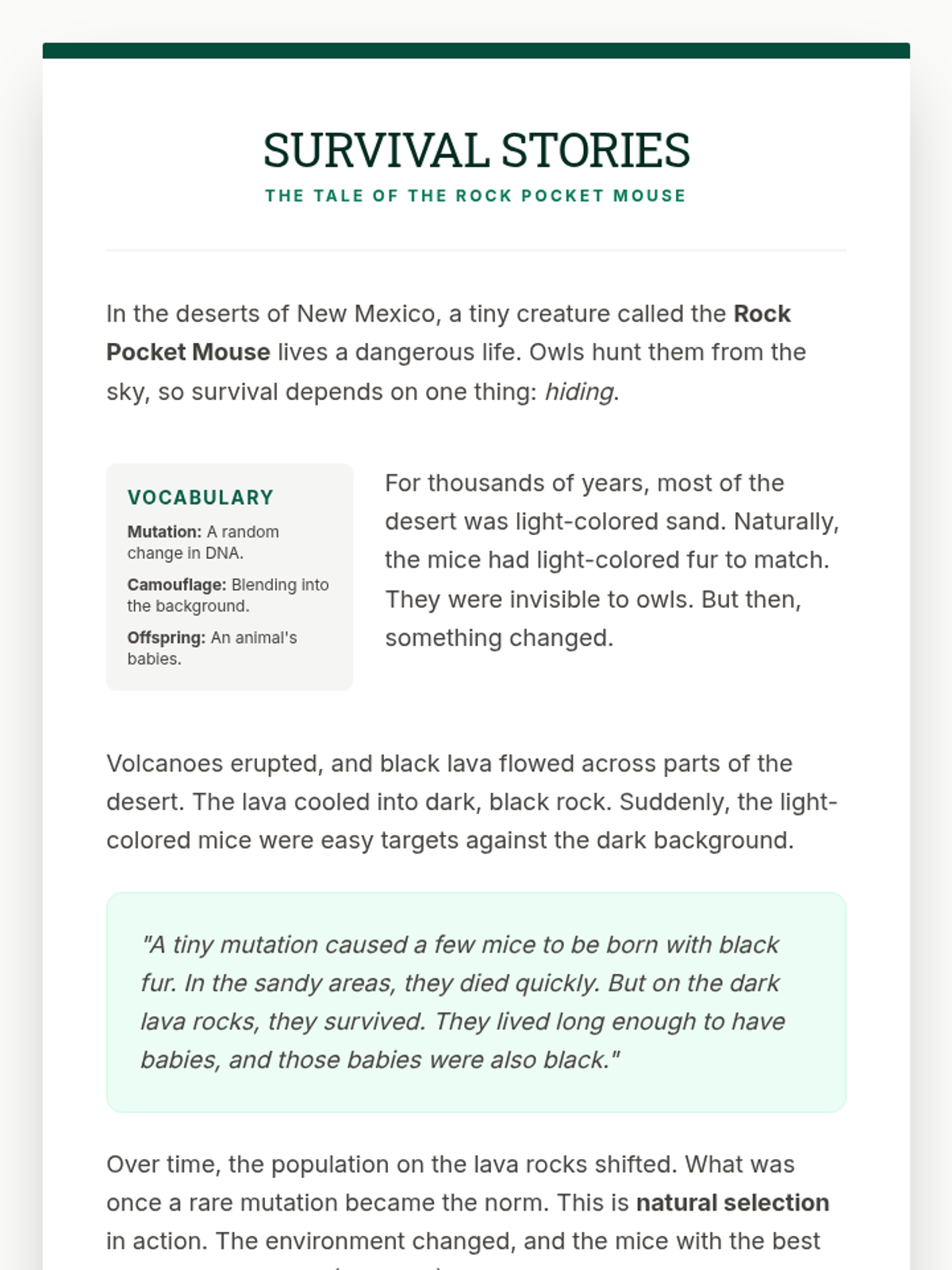
A modified, high-interest reading passage about the Rock Pocket Mouse, illustrating the concepts of mutation, camouflage, and natural selection. Includes vocabulary support and comprehension questions.
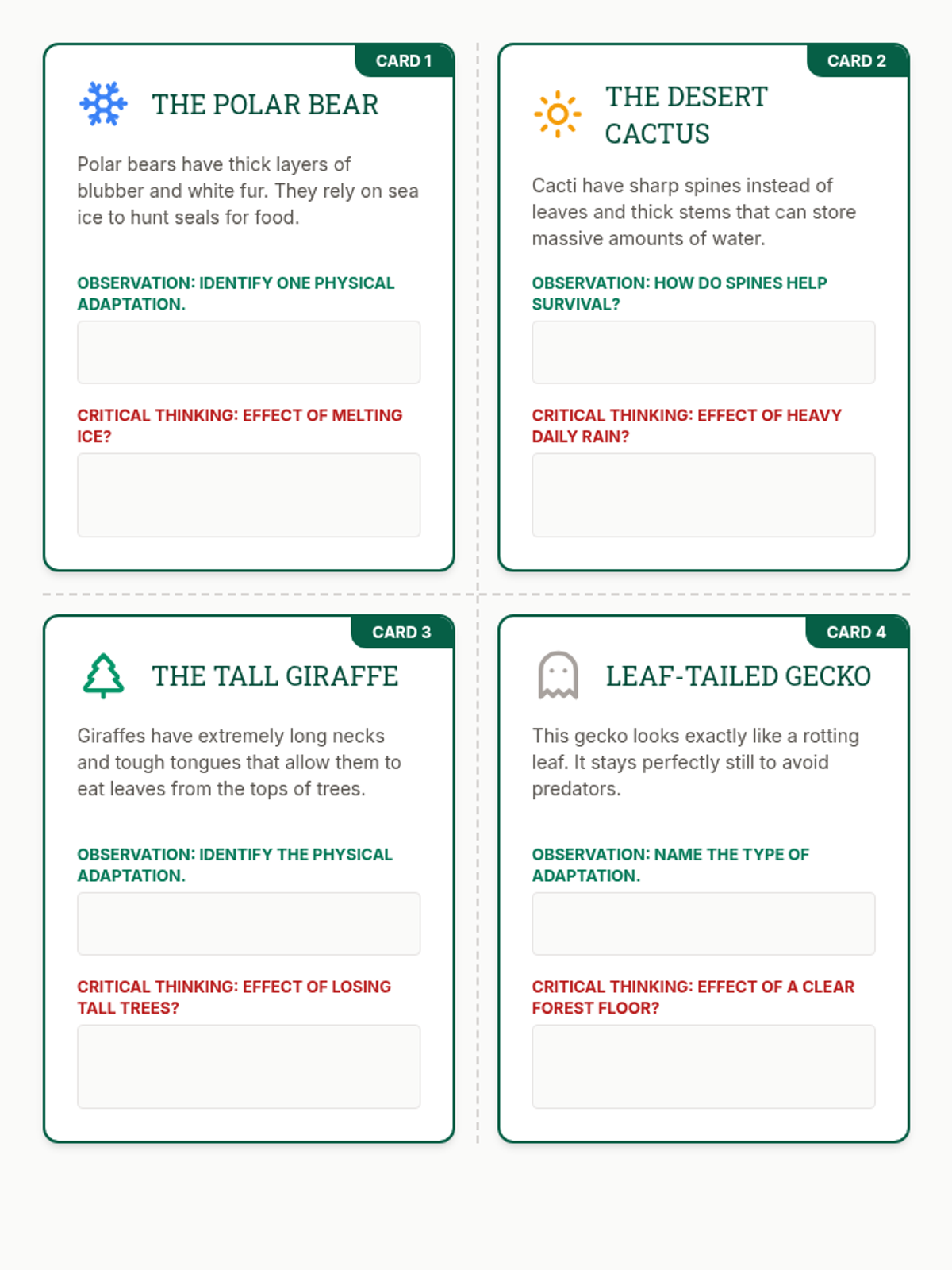
A set of four visual task cards featuring different organisms (Polar Bear, Cactus, Giraffe, Gecko) with prompts for students to identify physical adaptations and predict survival outcomes based on environmental changes.
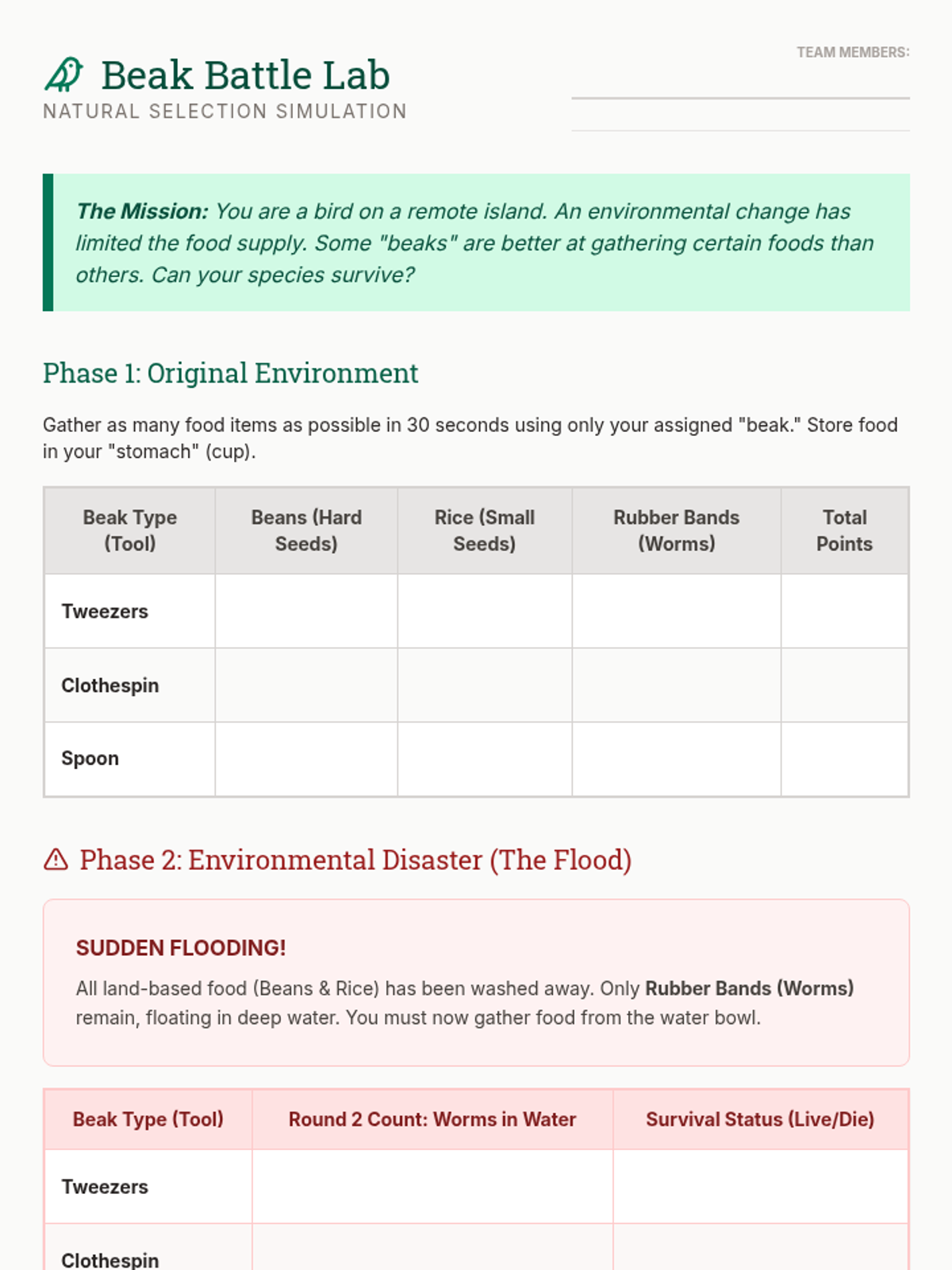
A hands-on laboratory activity where students simulate bird beaks using household tools to explore how physical traits and environmental changes impact survival and extinction.
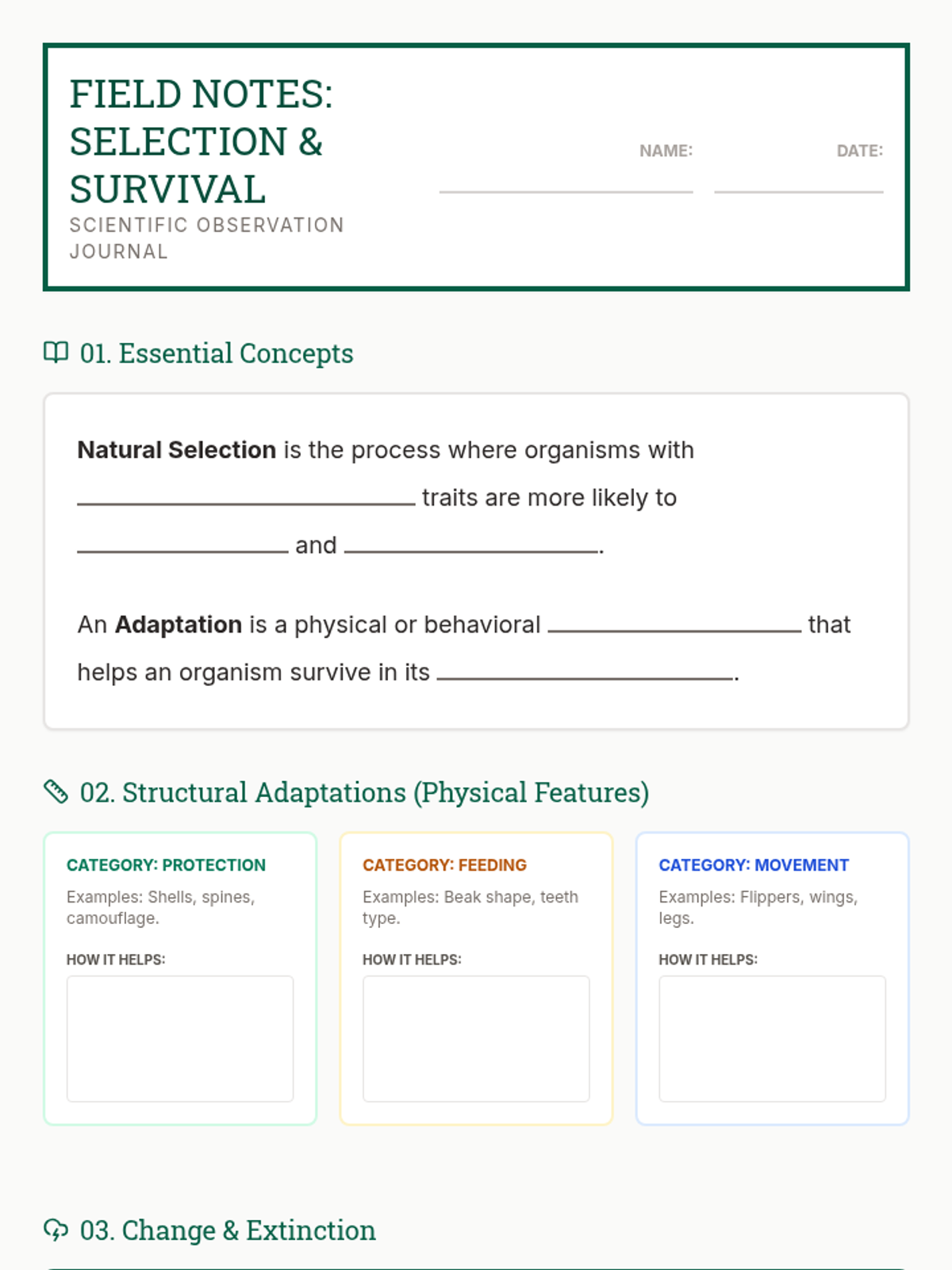
A guided note-taking worksheet designed for students to complete while following the 'Selection Survival' slide presentation. Includes sections for definitions, categorization of adaptations, and case study analysis.
A visually engaging slide presentation for 8th-grade science, covering the principles of natural selection, structural adaptations, environmental pressures, and the threat of extinction.
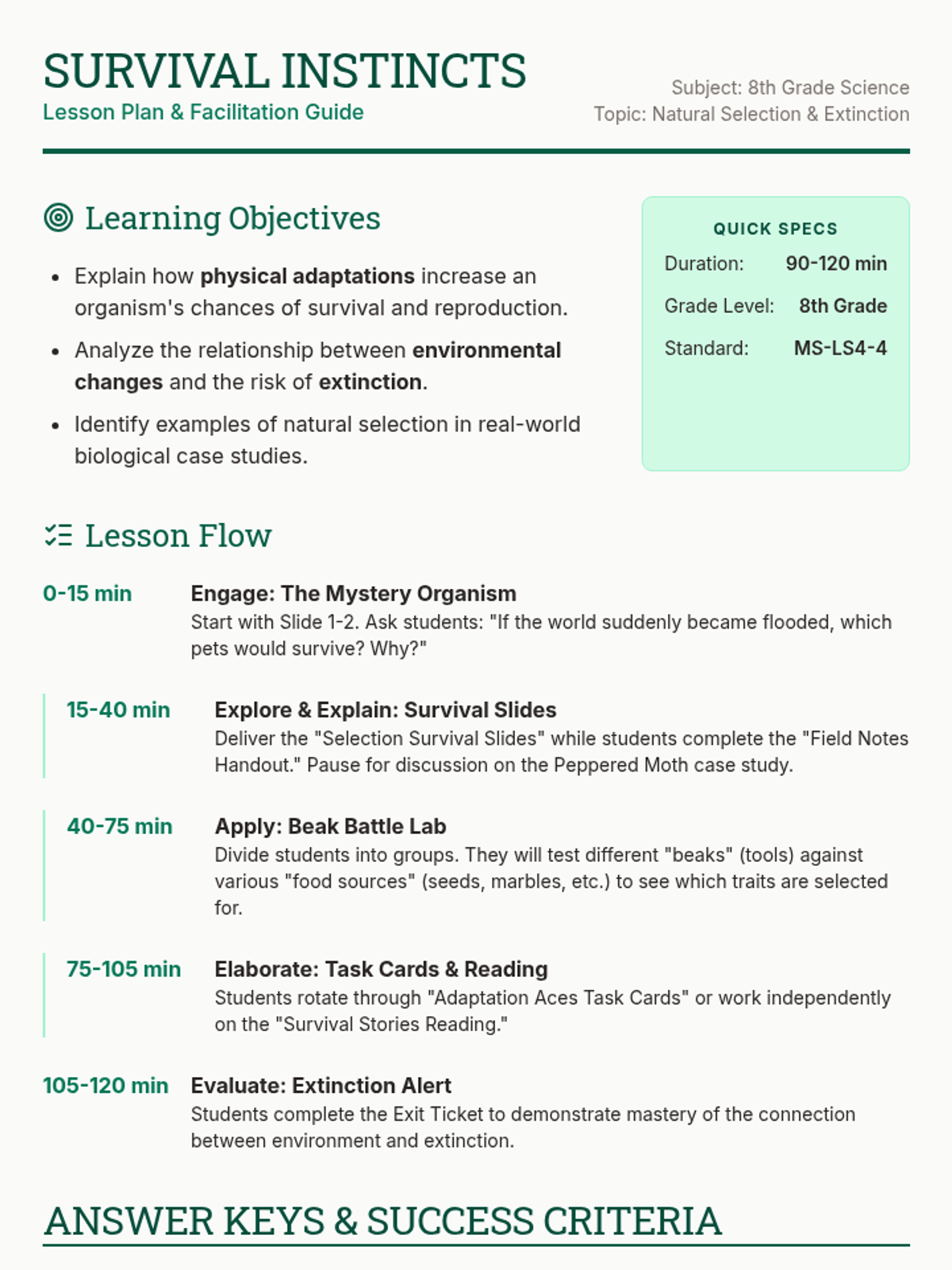
A comprehensive teacher's guide for the Natural Selection lesson, including learning objectives, a detailed lesson flow, preparation checklists, and answer keys for all student materials.
A teacher's resource providing an answer key, pacing guide, and pedagogical strategies for discussing AI ethics and representation with students.
An engaging slide deck introducing AI generators, the concept of training data, and the importance of representation and diversity in technology for young African American students.
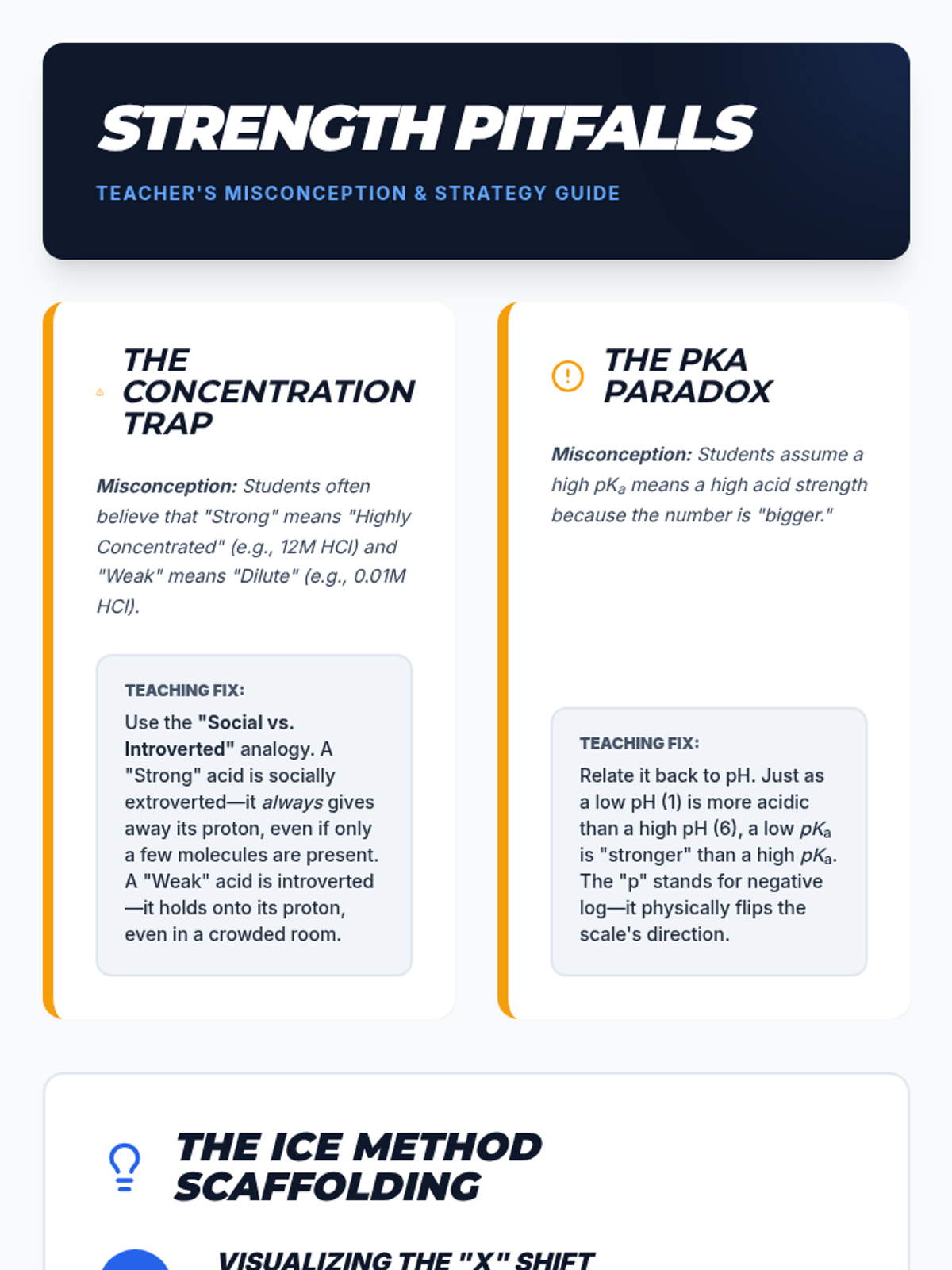
A teacher resource guide identifying common student misconceptions regarding acid/base strength and providing instructional strategies for teaching the ICE method. Revised for improved readability, better contrast, and fixed math rendering.
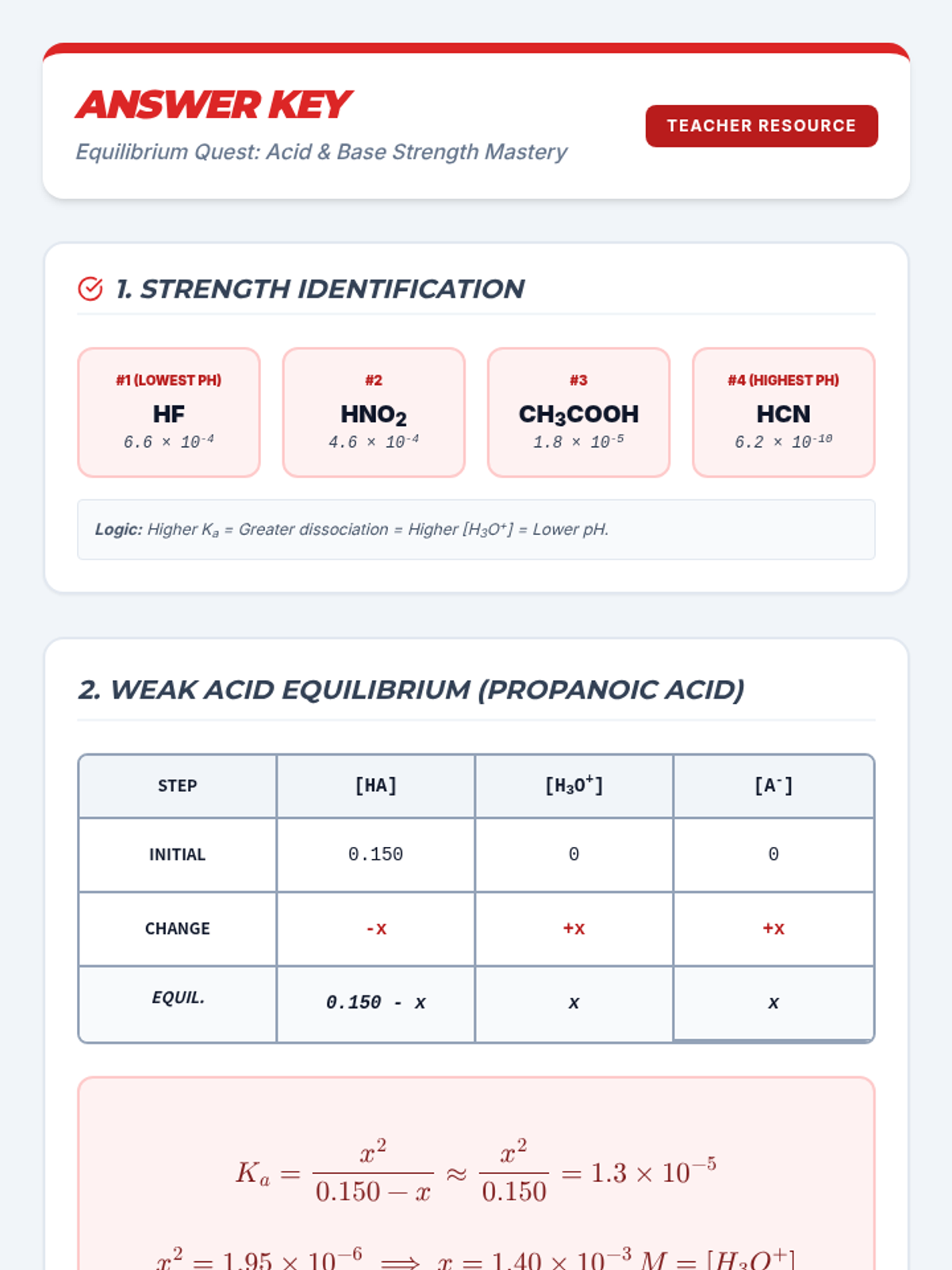
Answer key for the 'Equilibrium Quest' worksheet, providing full worked solutions for Ka, pH, and percent ionization problems. Revised with improved LaTeX rendering and high-contrast teacher annotations. Now with black separating lines.
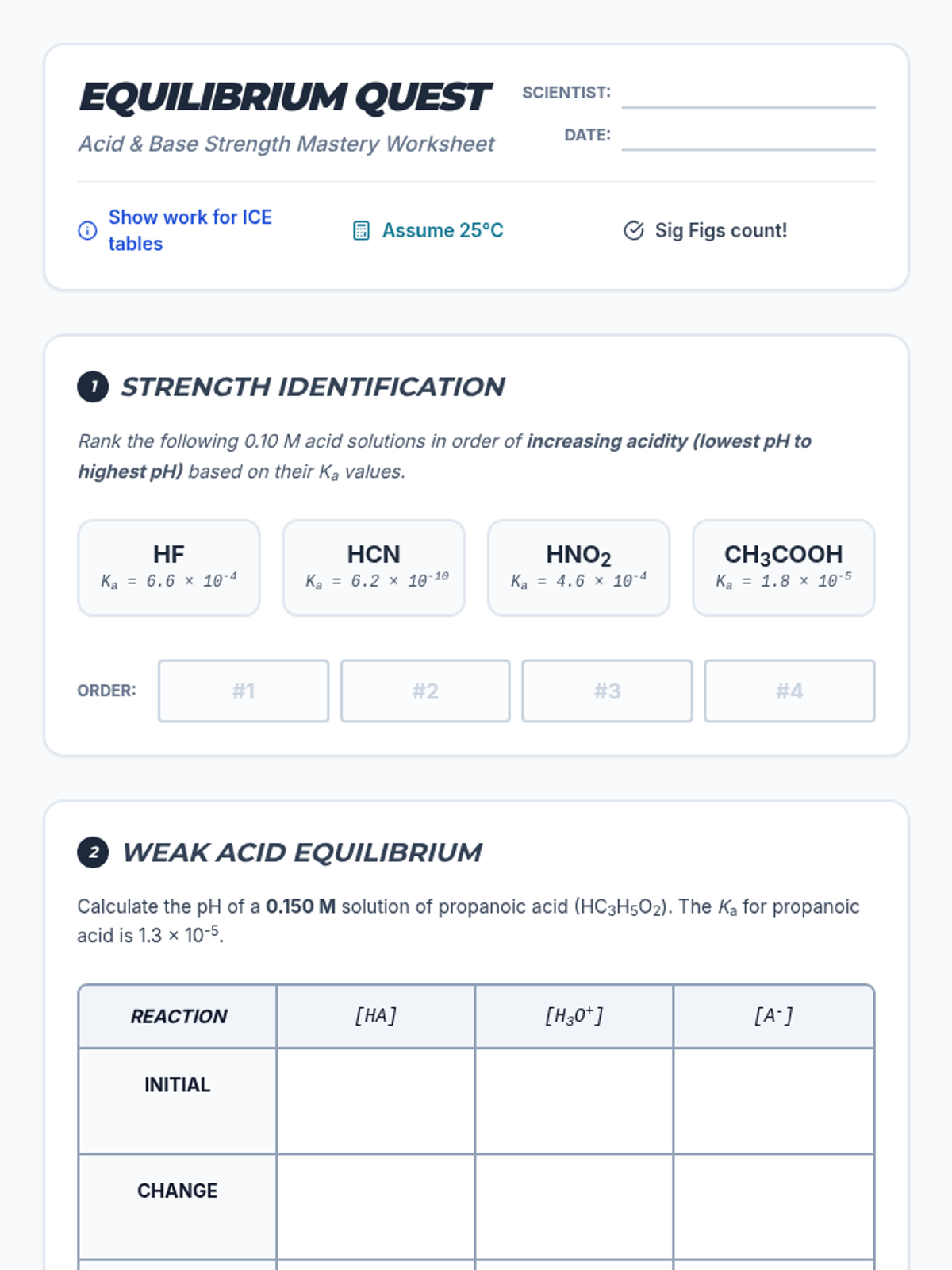
A student worksheet for the 'Strength Mastery' lesson, featuring acid/base ranking, ICE table problems, and percent ionization calculations. Revised with black separating lines for improved print clarity, larger work areas, and better page-break handling. Now with fixed ranking logic and visible math.
Visual presentation slides for the 'Strength Mastery' lesson, explaining the difference between strong and weak acids/bases, dissociation constants (Ka/Kb), and the ICE table method for equilibrium calculations. Revised with improved LaTeX rendering, molecular visuals, and slide 4 layout fixes.
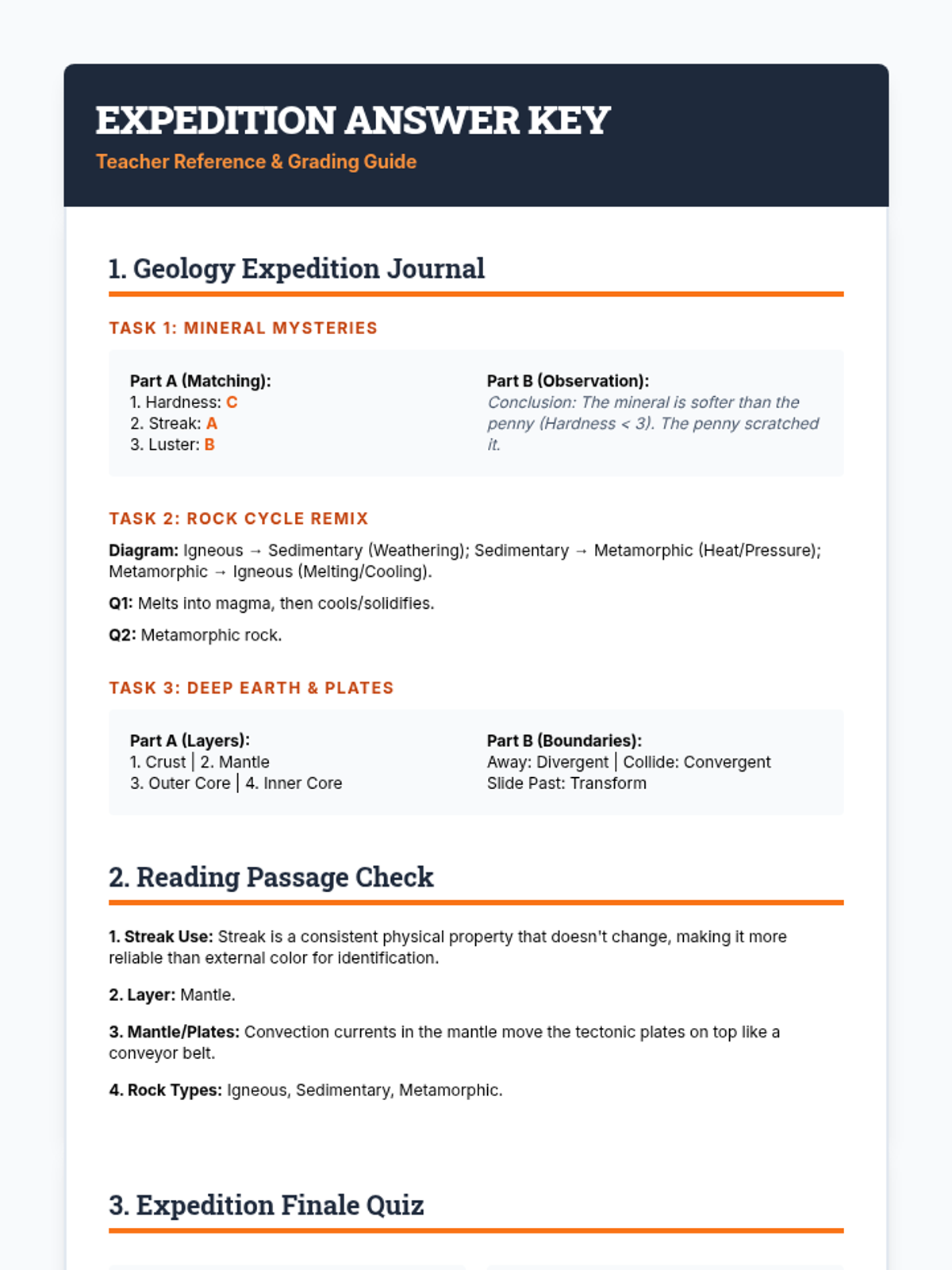
A comprehensive teacher's answer key for the unit's worksheet packet, reading passage, and finale quiz. Includes scoring rubrics and grading guidance for open-response questions.
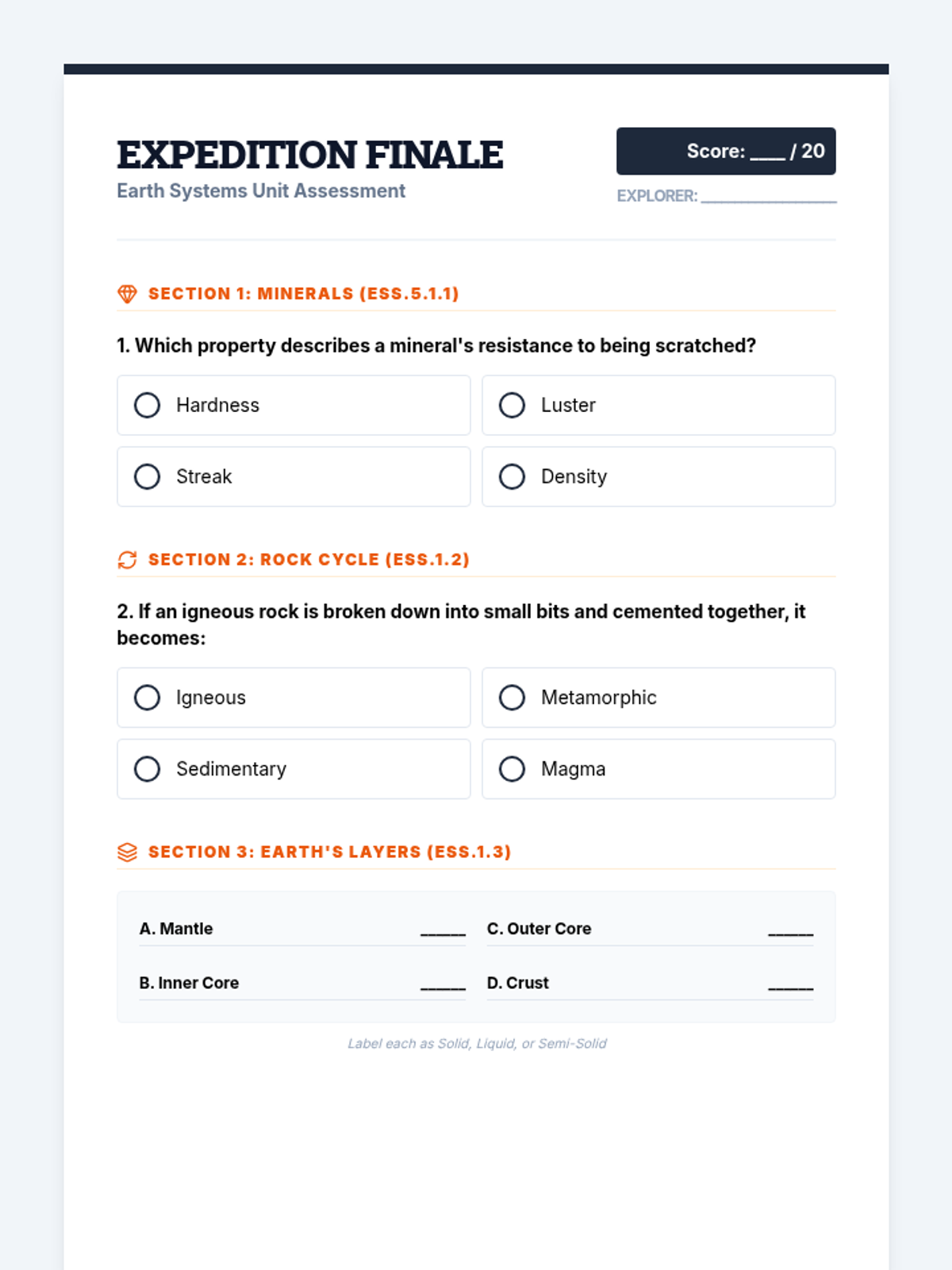
A revised unit quiz with a logical 20-point scoring system, expanded open-response space with writing lines, corrected section orphaning, and improved visual balance for multiple-choice options.
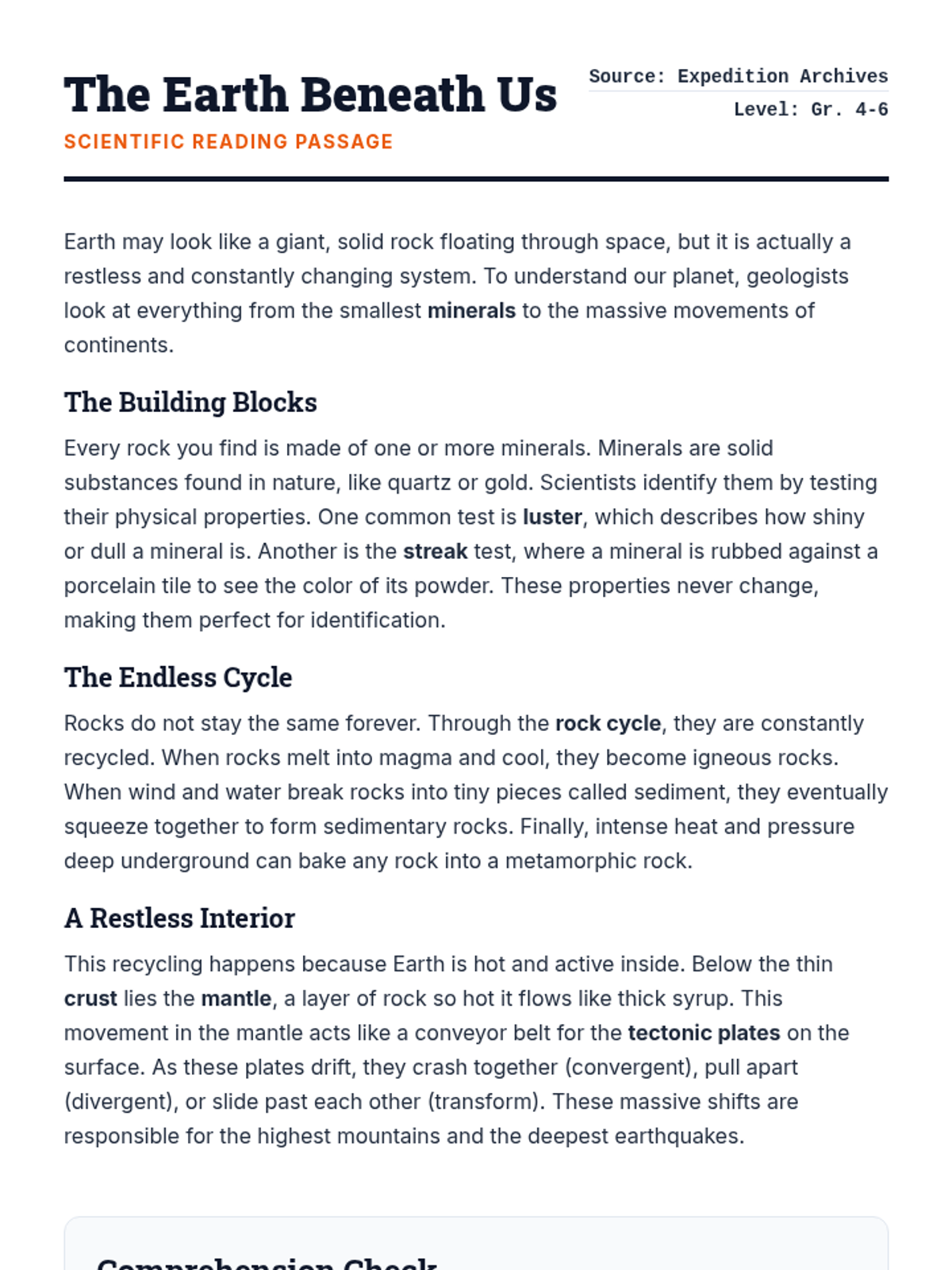
A revised reading passage and comprehension check with standardized response areas, high-contrast header metadata, and refined questions for evidence-based responses.
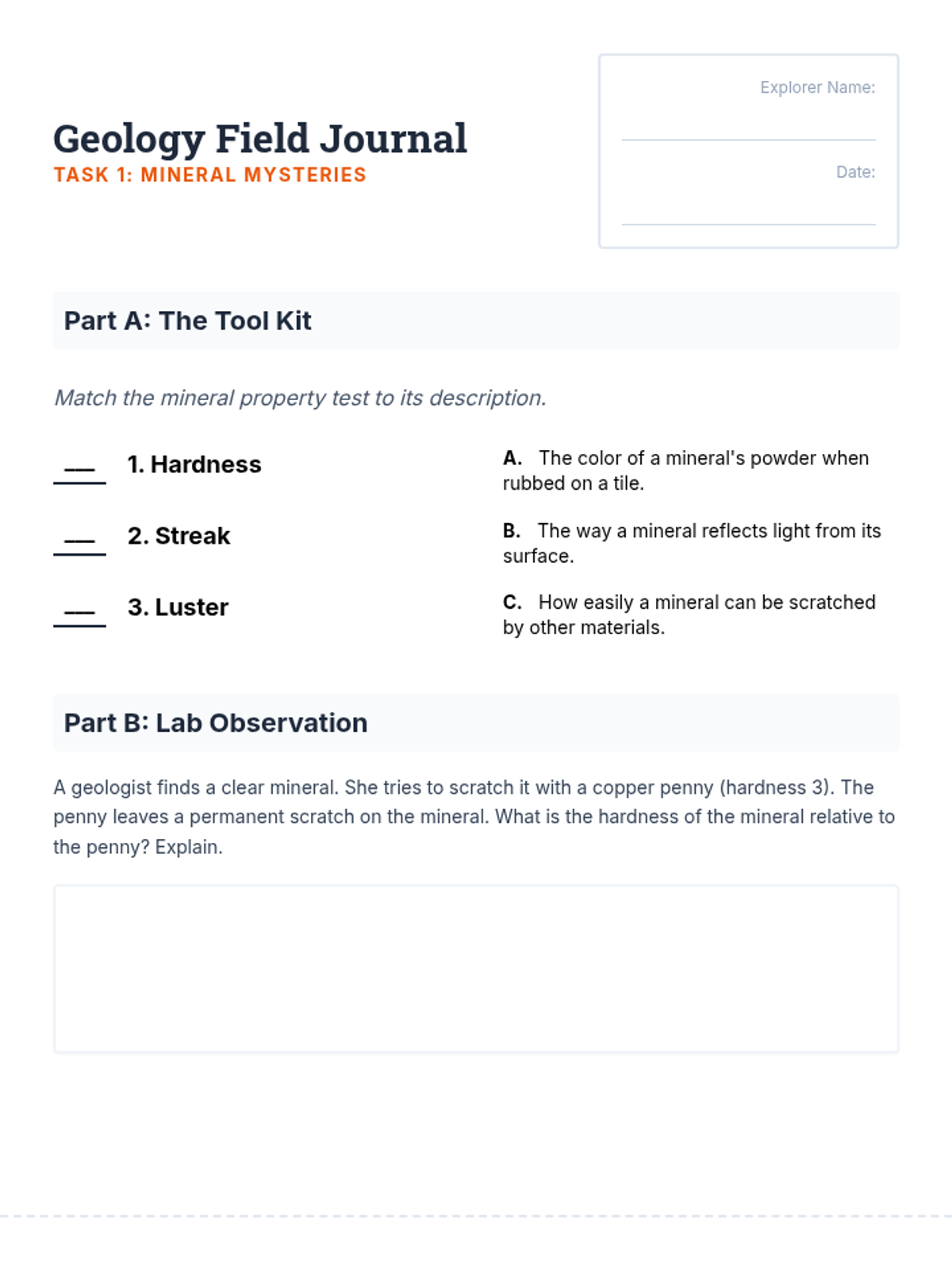
A revised 3-page student worksheet packet featuring a corrected Earth layers diagram, improved page breaks, standardized writing spaces, and a clearer matching section for mineral properties.
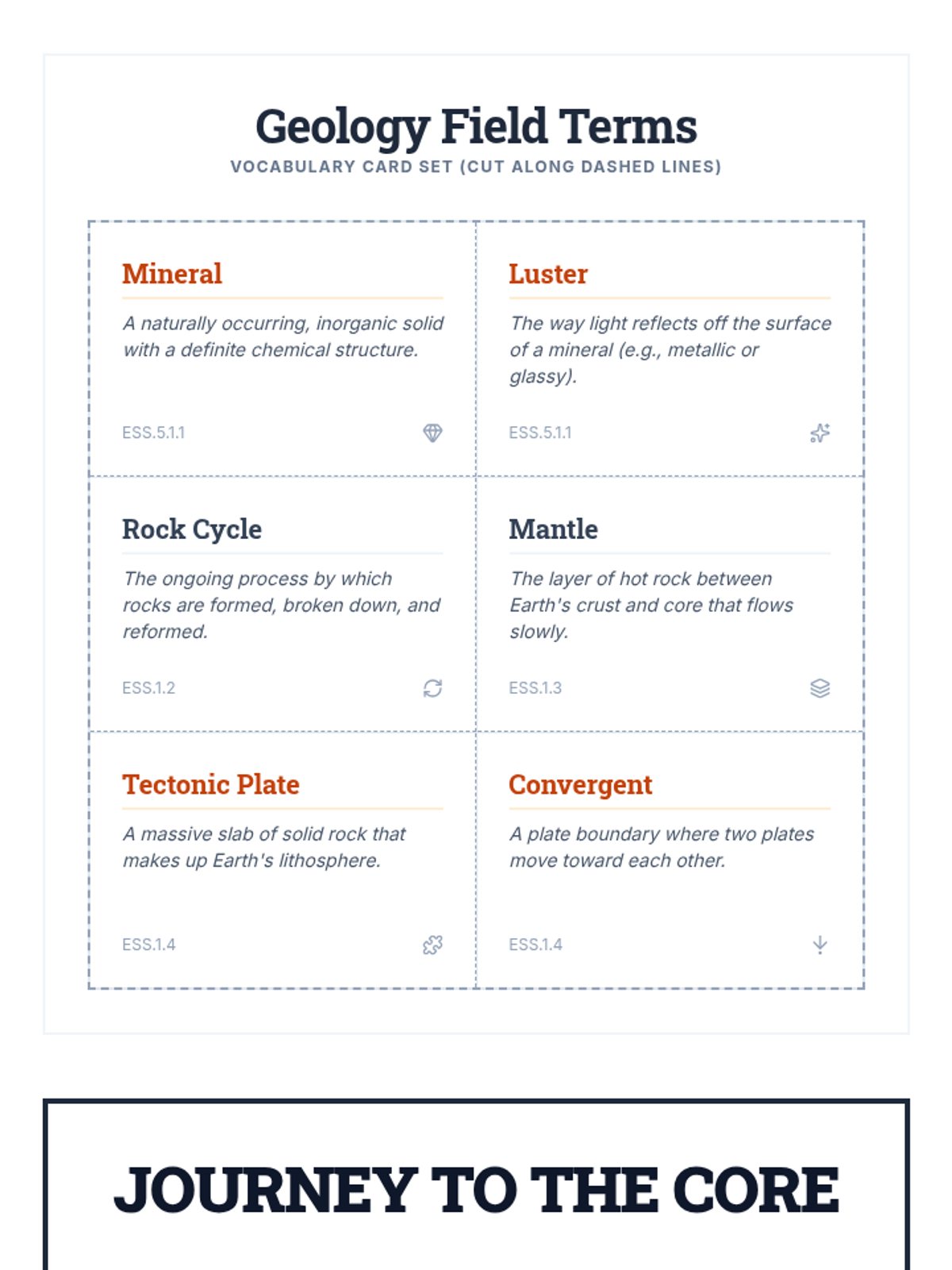
A revised set of visual vocabulary cards with cut lines and a condensed anchor chart for Earth's layers, ensuring all content fits on individual pages without awkward breaks.
A high-impact classroom slide presentation covering mineral properties, the rock cycle, Earth's layers, and plate tectonics. Designed with a 'Geology Expedition' theme for 4th-6th grade students.
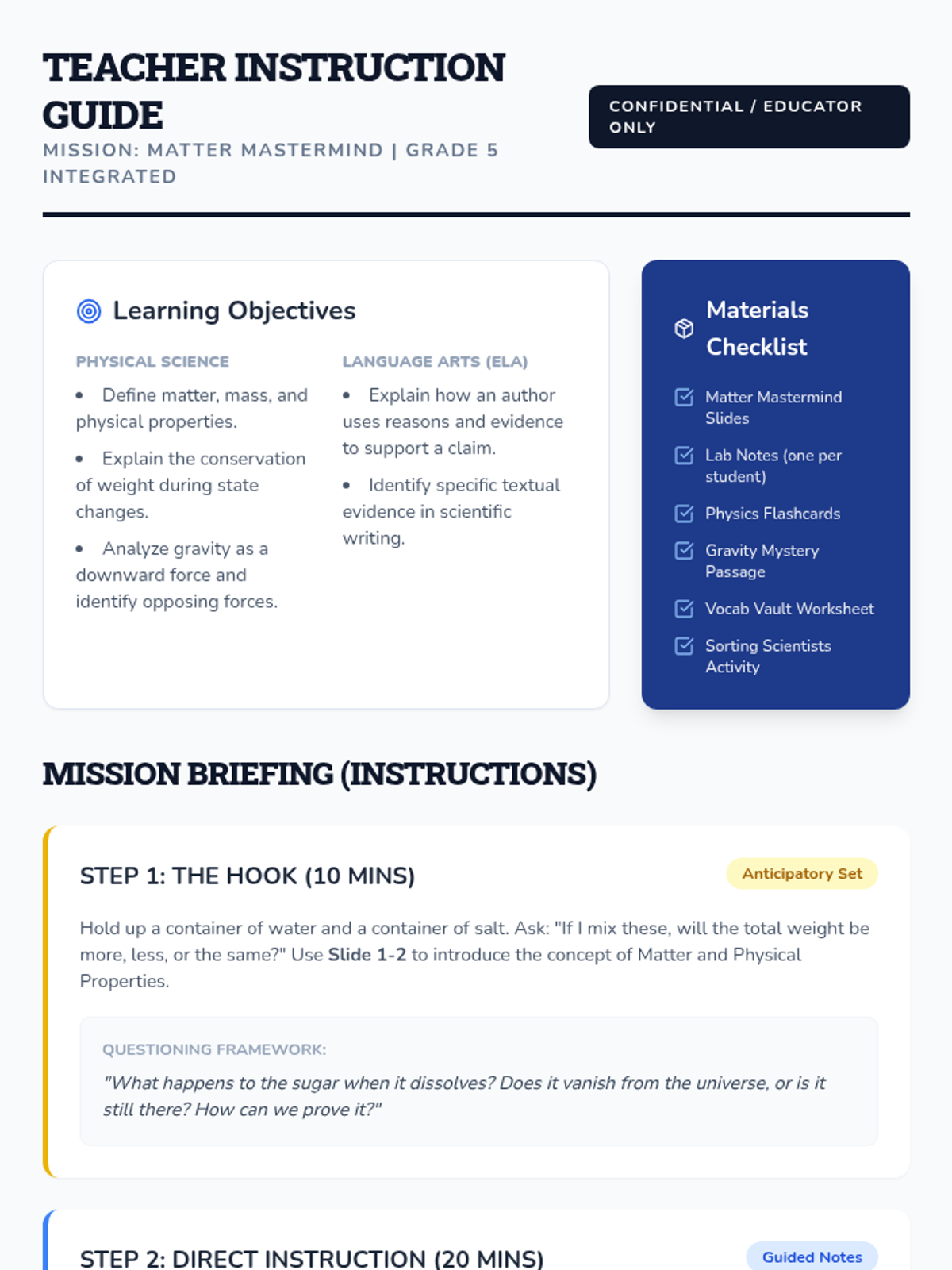
A comprehensive teacher instruction guide for the Matter Mastermind lesson. Includes learning objectives, an instructional sequence, questioning frameworks, and differentiation strategies.
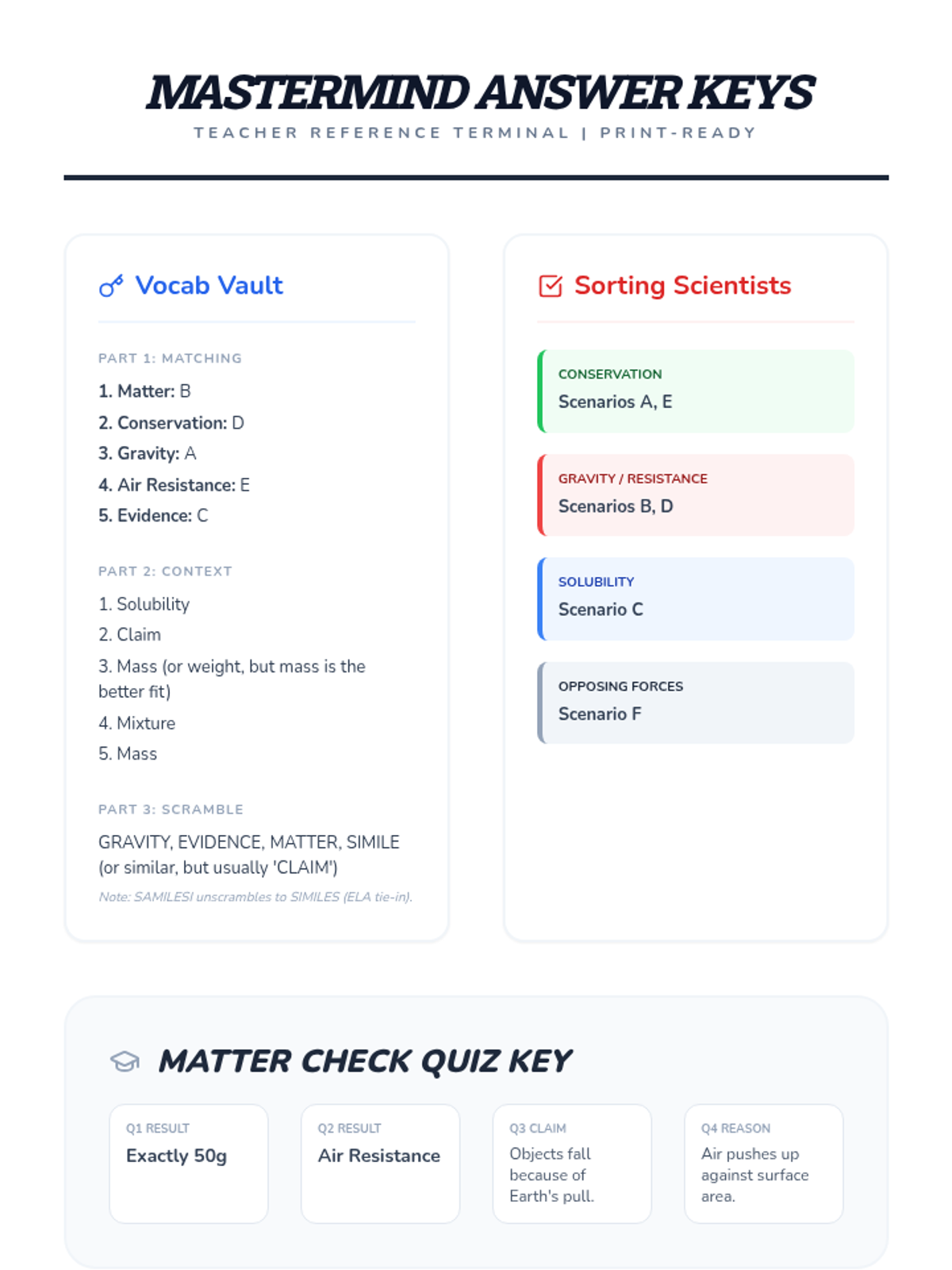
A comprehensive answer key for teachers, covering the Vocab Vault Worksheet, Sorting Scientists Activity, and the Matter Check Quiz. Optimized for one-page printing with high-contrast sections.
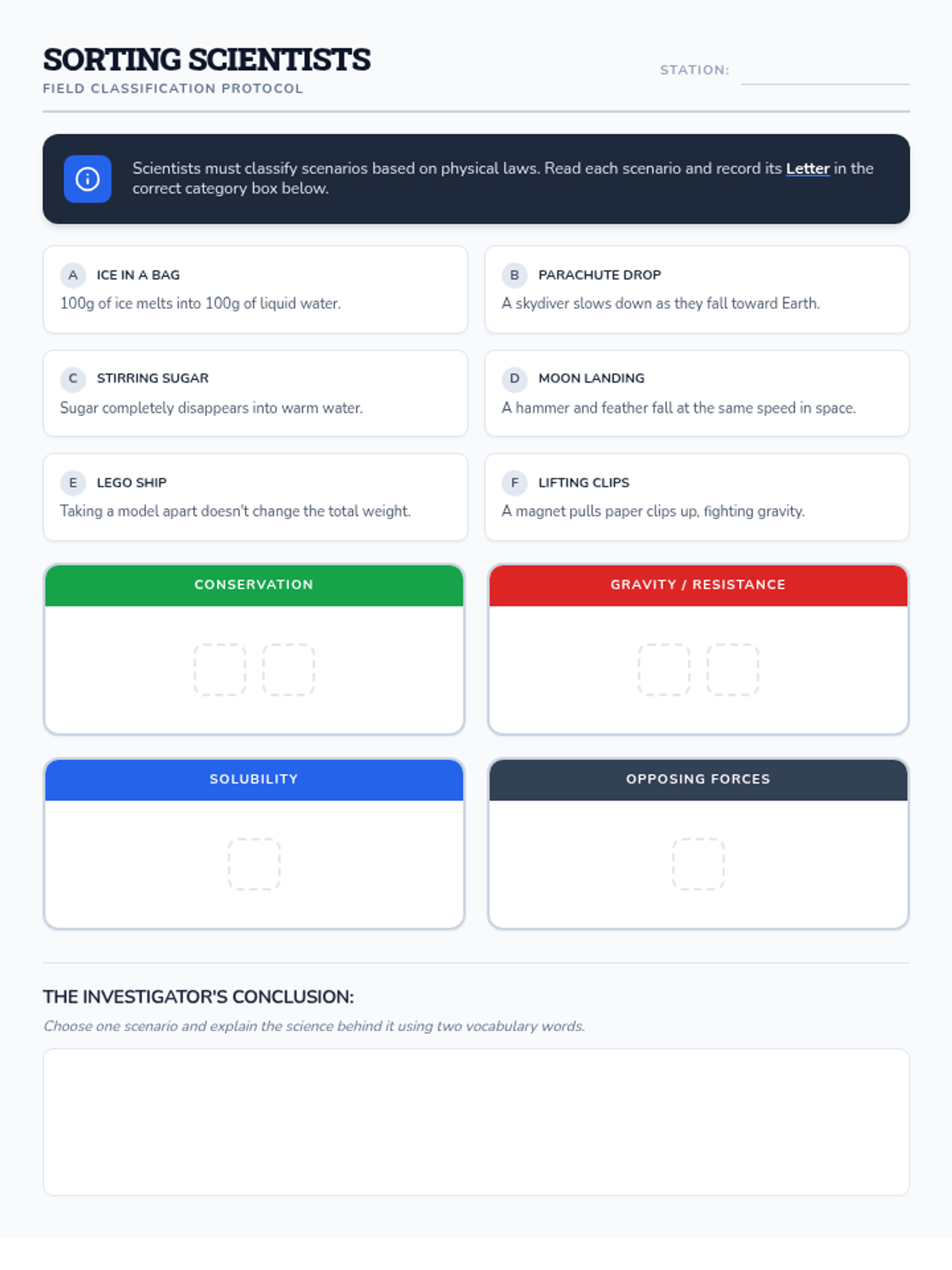
A scenario-based sorting activity where students classify different real-world examples into scientific categories such as Conservation of Weight, Gravity, Solubility, and Opposing Forces. Enhanced with scenario icons and a core concept briefing.
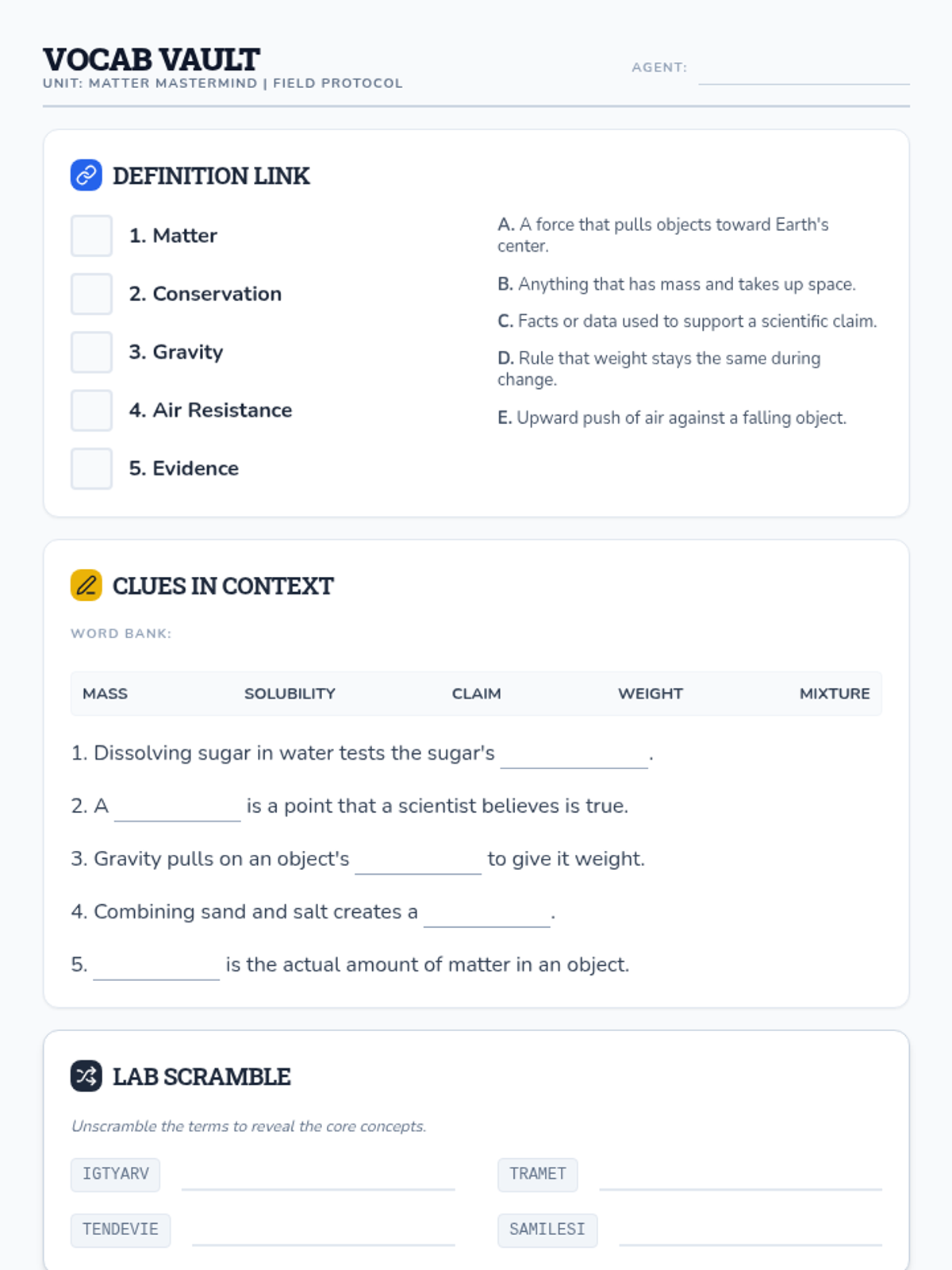
A vocabulary reinforcement worksheet for the Matter Mastermind lesson. Features a term-definition matching section, a contextual sentence completion activity, and a scientific word scramble. Optimized for alignment and handwriting space.
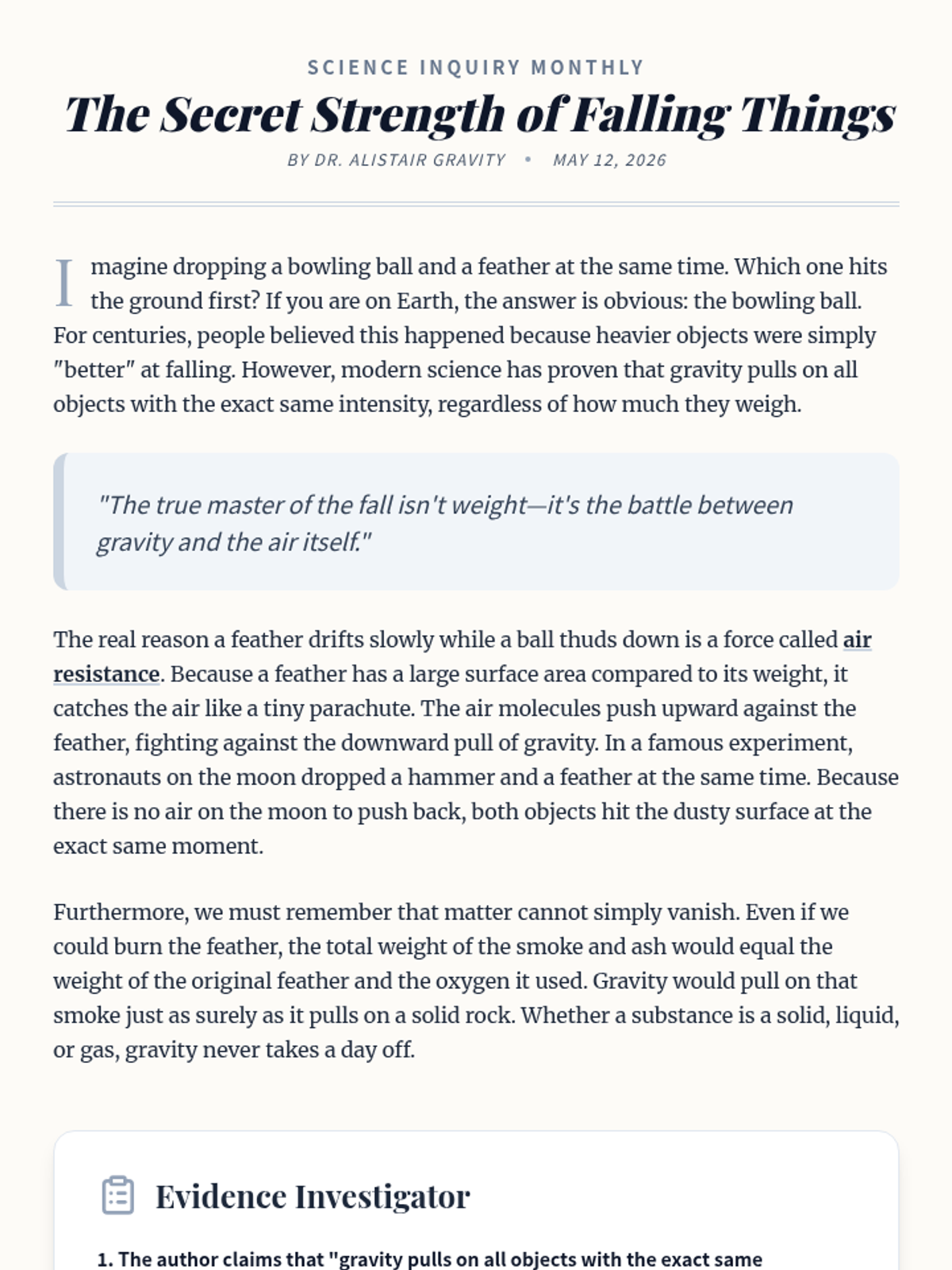
An expanded scientific reading passage about gravity, air resistance, and the conservation of weight. Includes historical context on Galileo and modern evidence from moon missions, with illustrative graphics and ELA questions focusing on claims and evidence (RL.5.8).
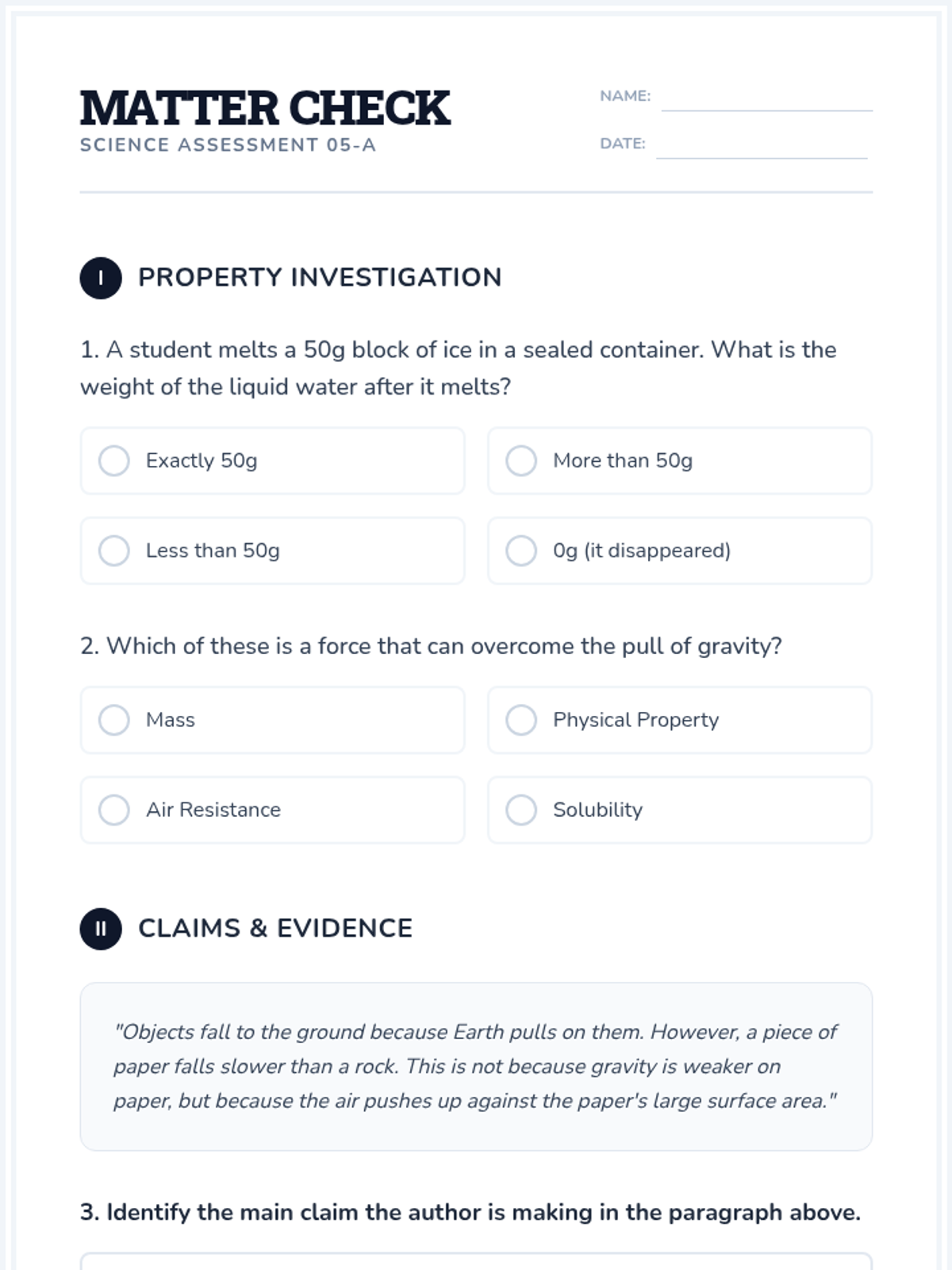
A summative assessment for the Matter Mastermind lesson. Includes multiple-choice questions on conservation of mass and gravity, and short-answer questions focusing on claims and evidence.
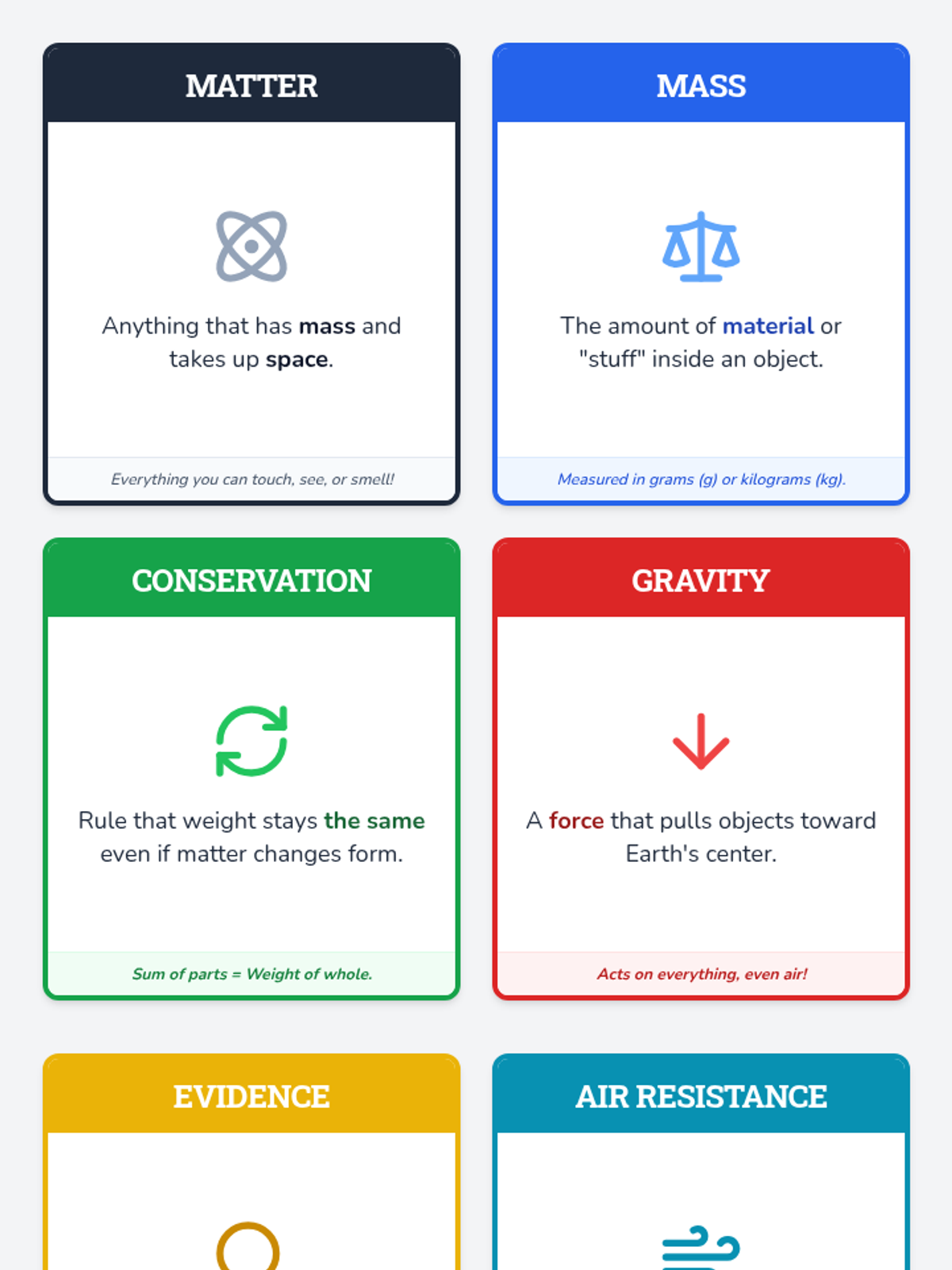
Visual vocabulary cards for the Matter Mastermind lesson, featuring key terms like Matter, Mass, Conservation, Gravity, Evidence, and Air Resistance. Optimized for contrast and clear layout.
An instructional slideshow for the Matter Mastermind lesson. Covers physical properties of matter, conservation of weight, gravity, and how to identify scientific claims and evidence with enhanced visual models.
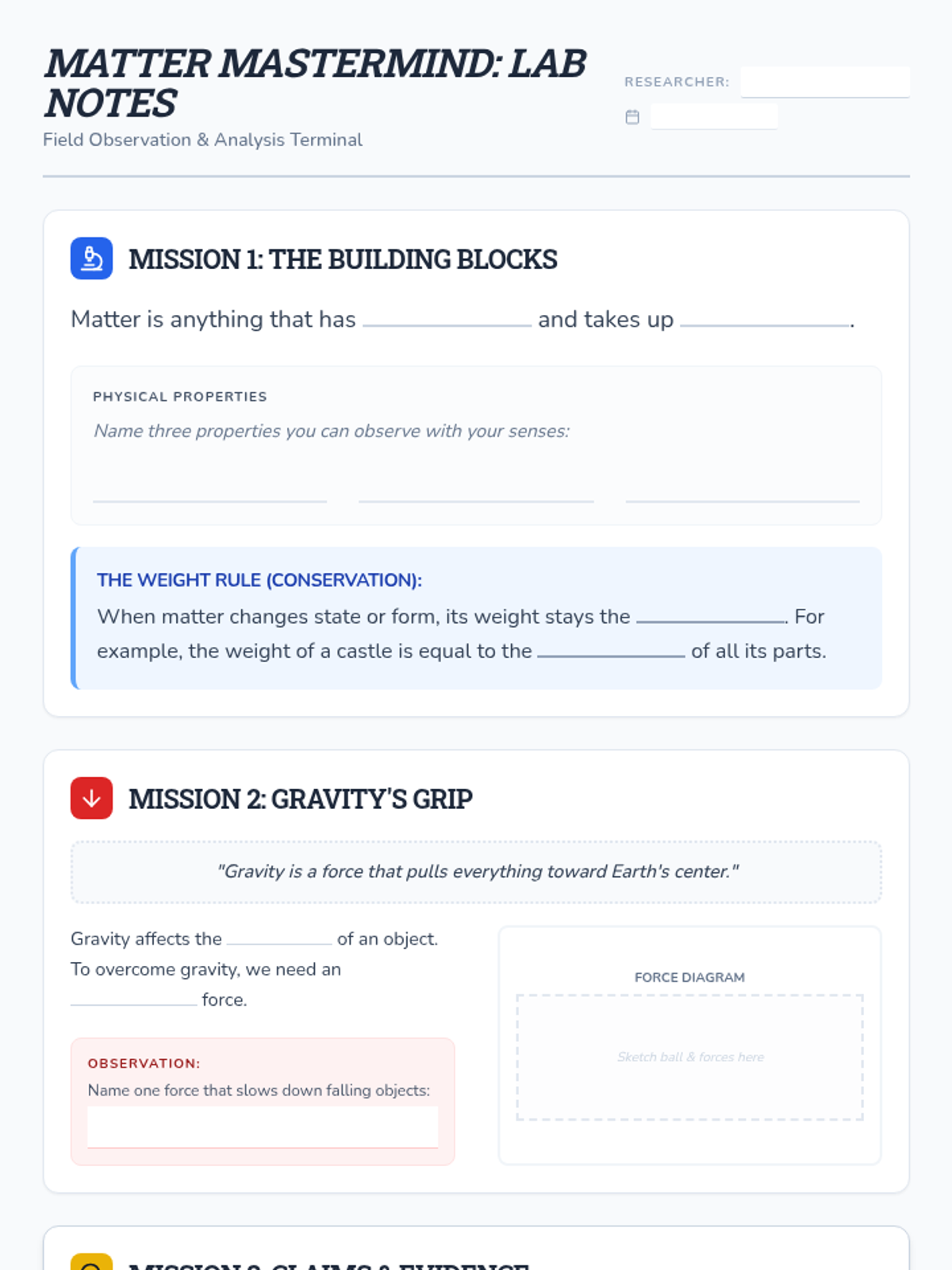
A set of guided notes designed for students to complete while following the Matter Mastermind lesson. The notes cover properties of matter, gravity, and the identification of scientific evidence.