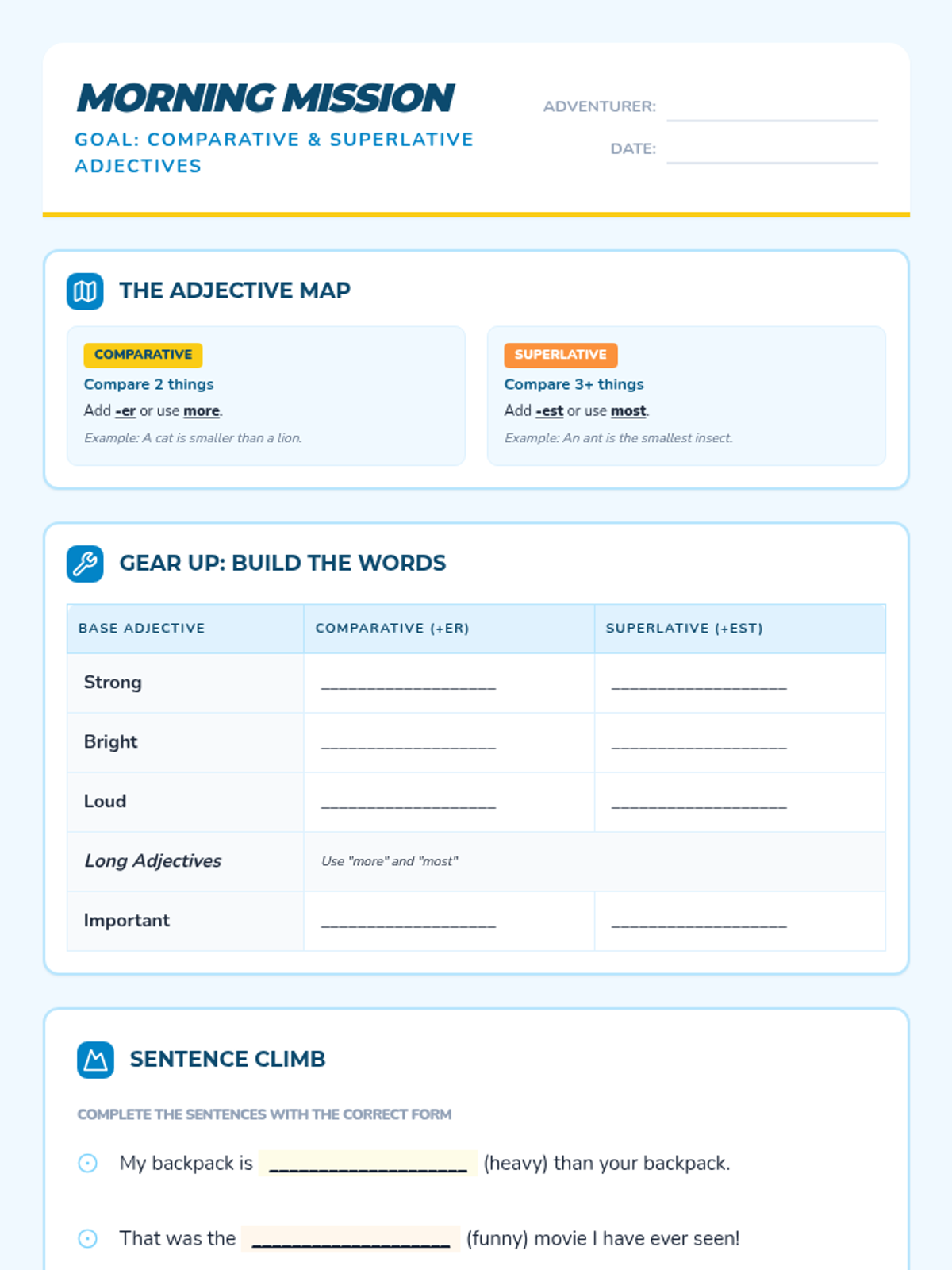
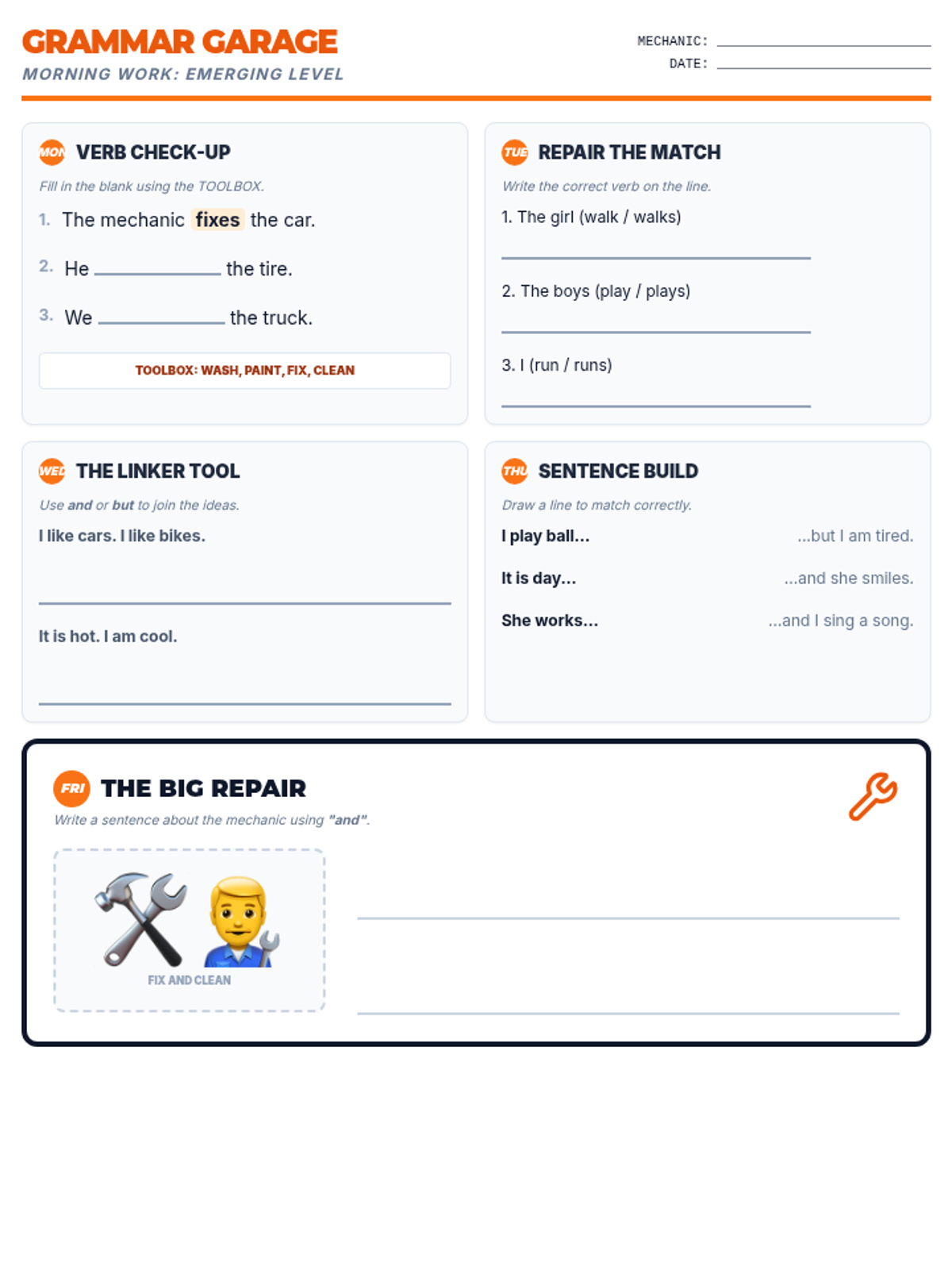
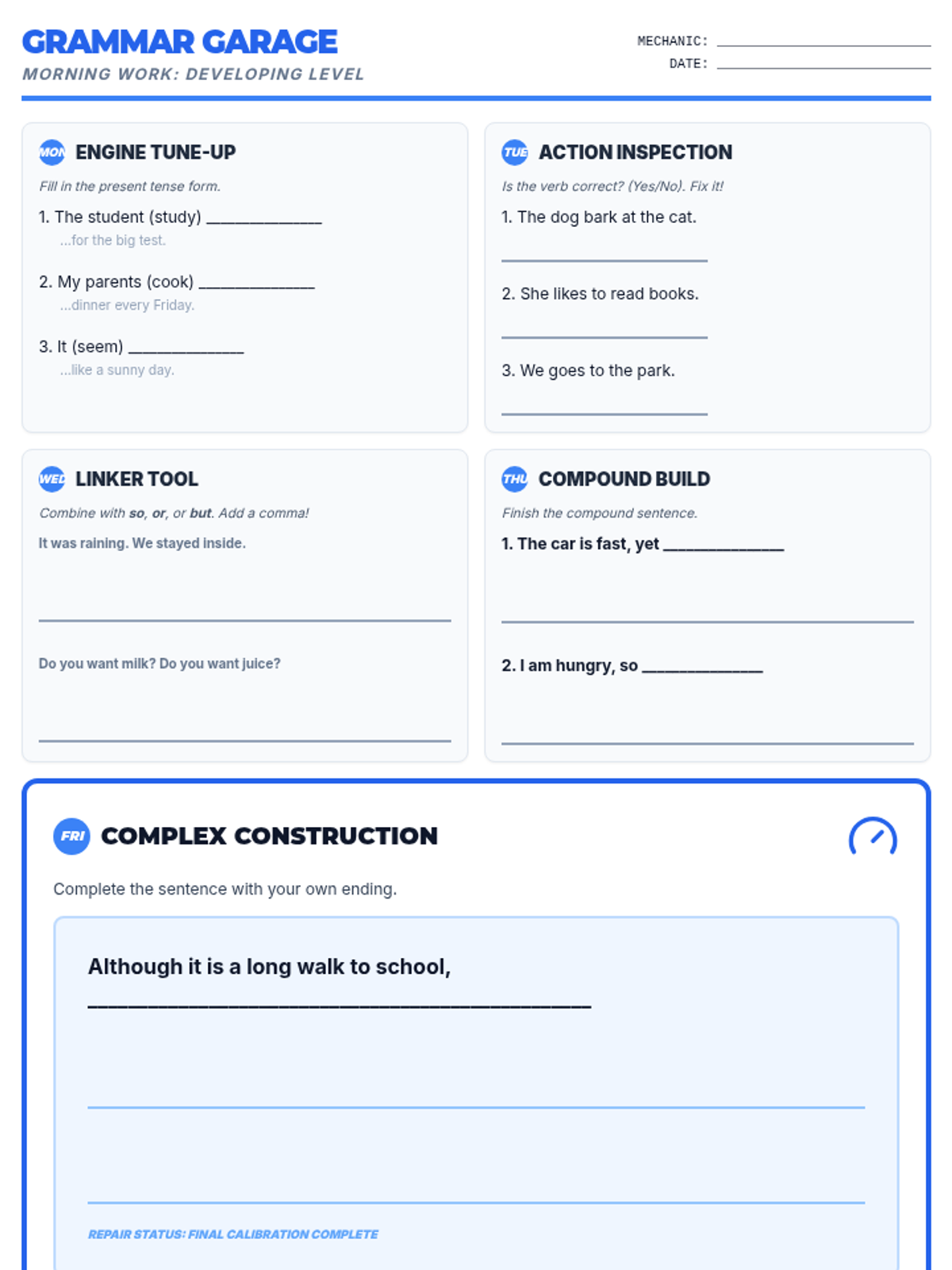
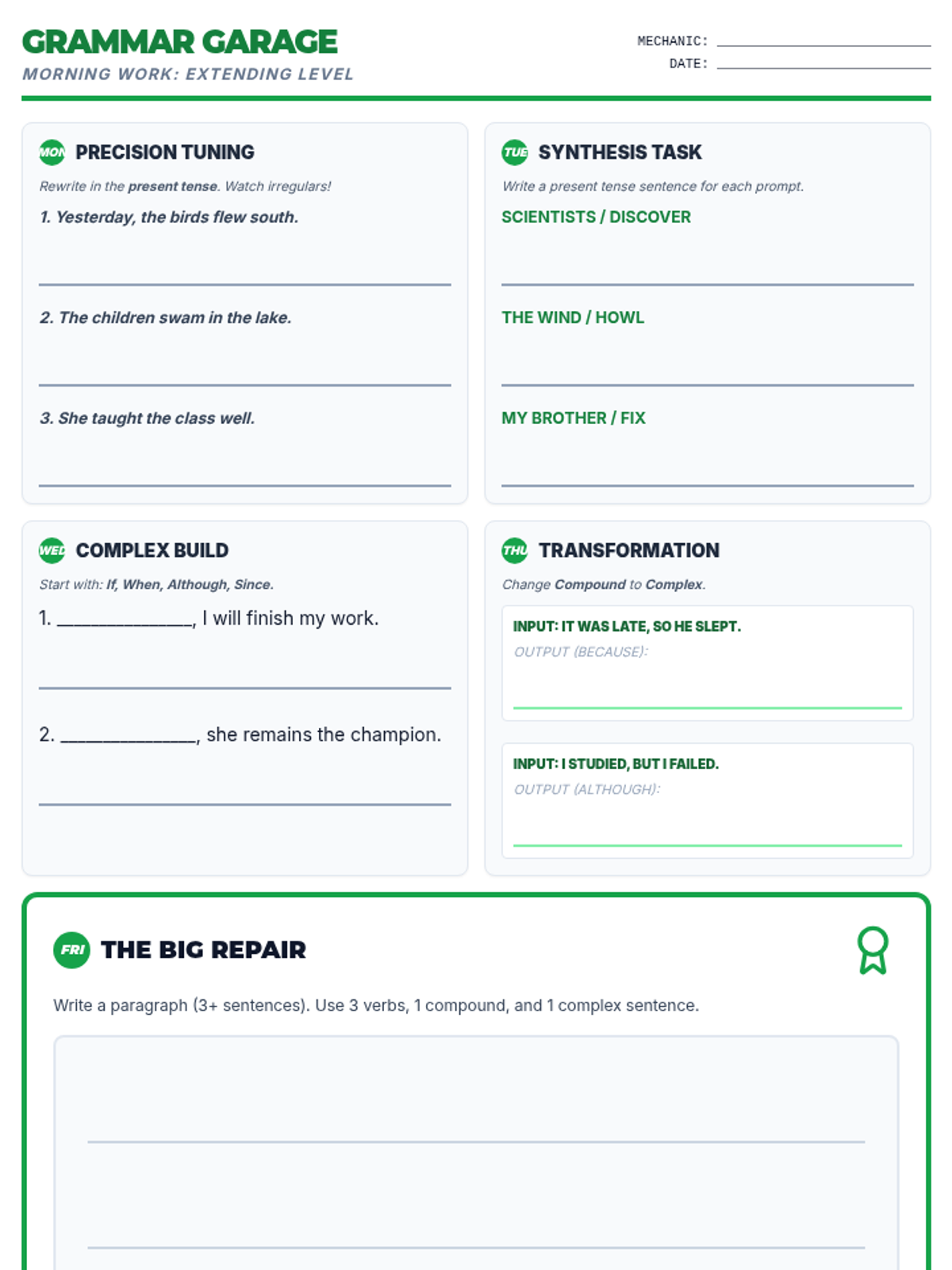
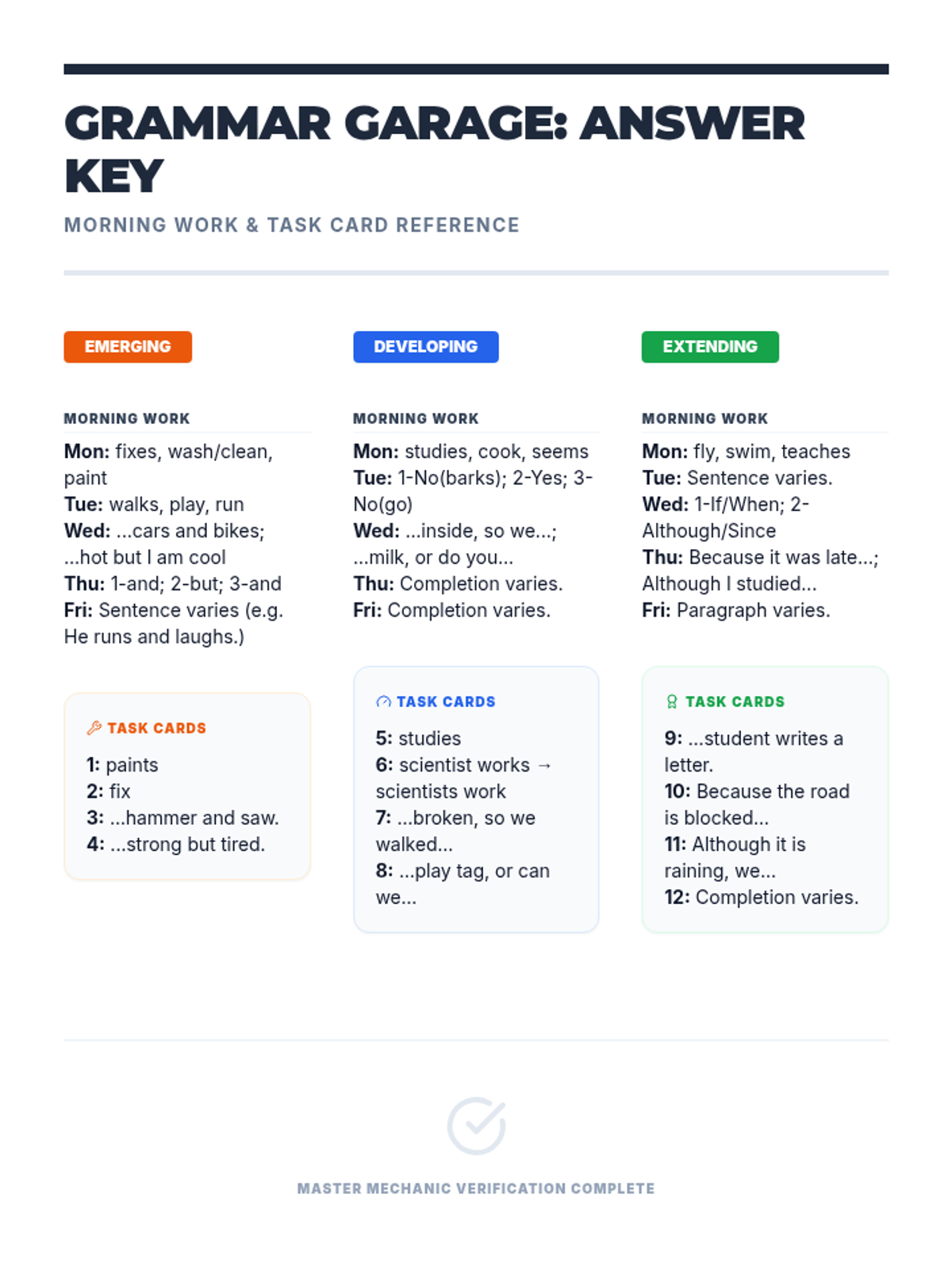
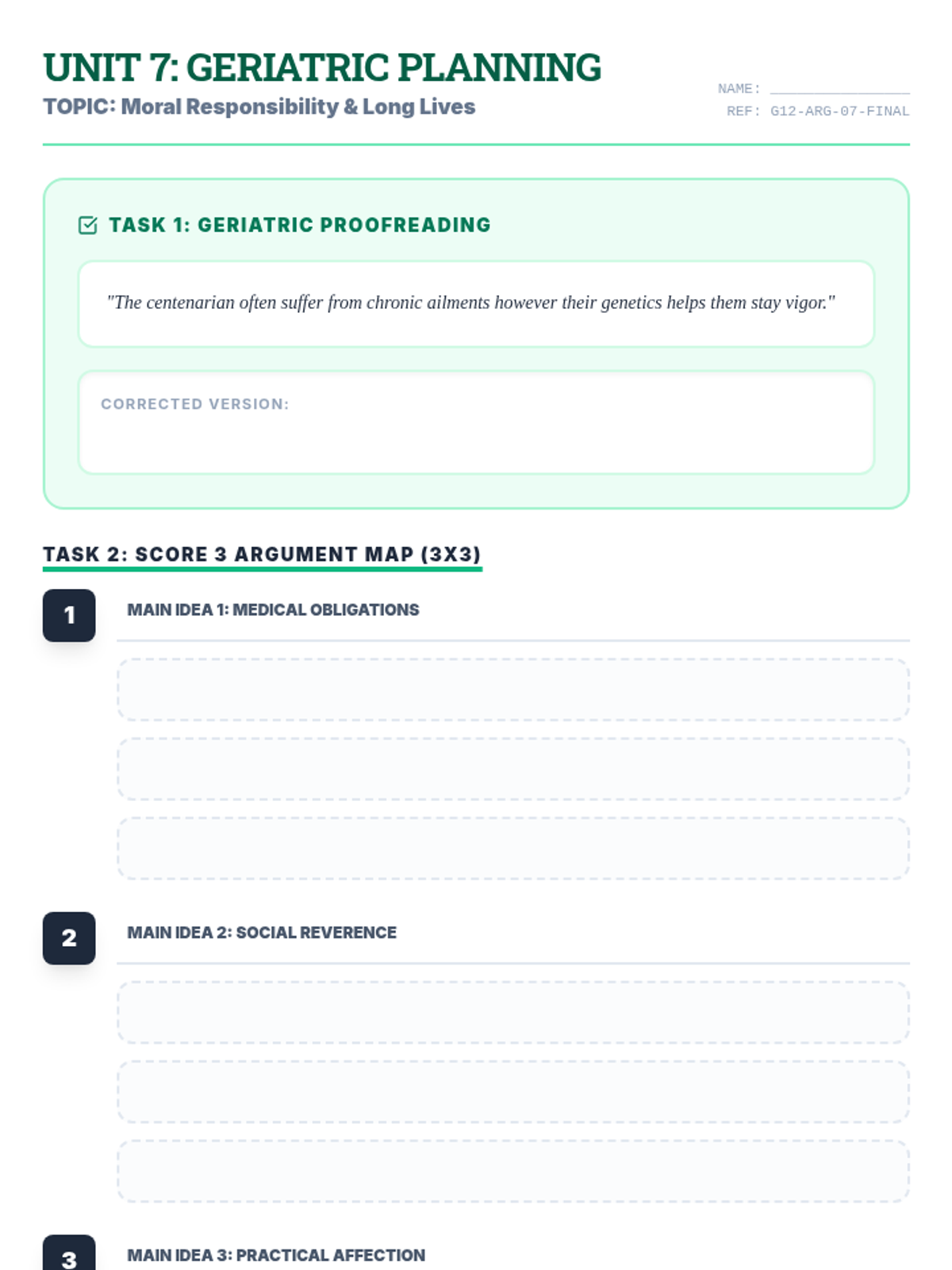
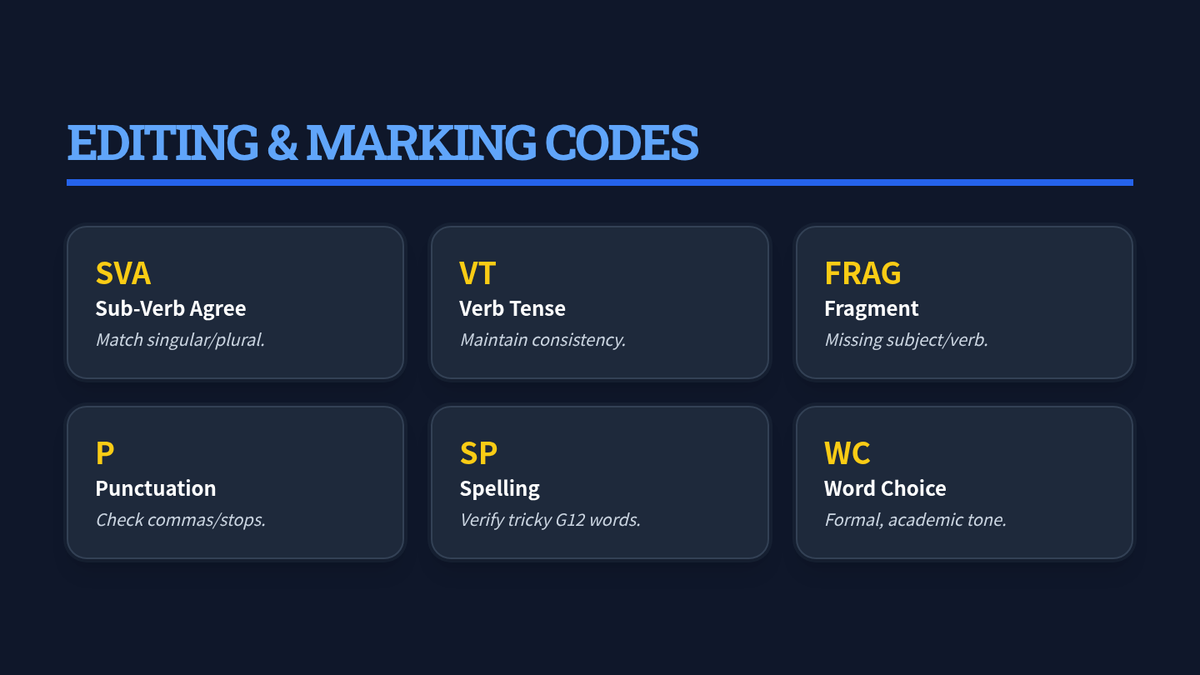
Sentence structure fundamentals, subject-verb agreement, and precise usage of parts of speech including pronouns, conjunctions, and adjectives. Targets technical accuracy through mastery of capitalization, punctuation, spelling, and verb mood.
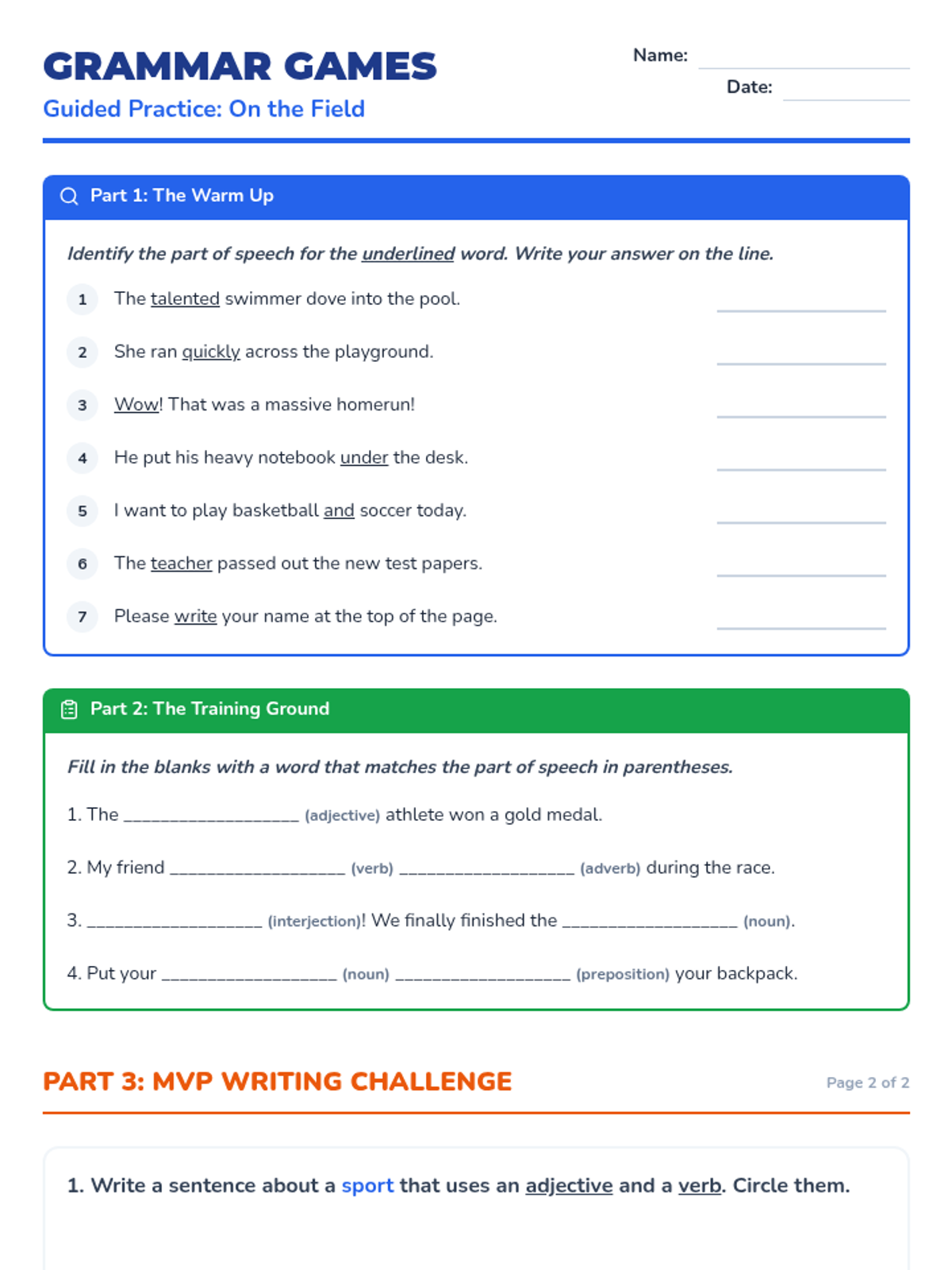
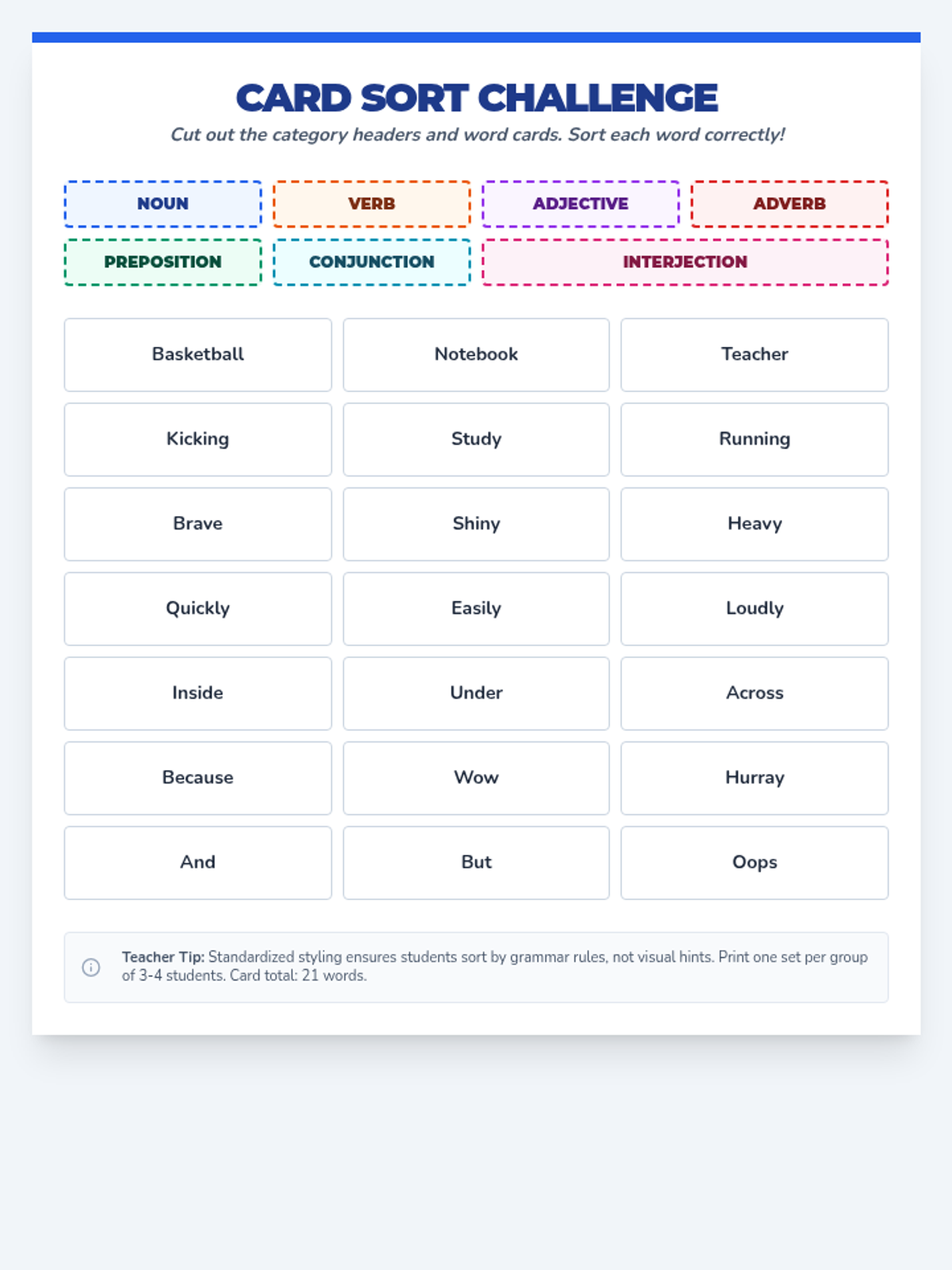
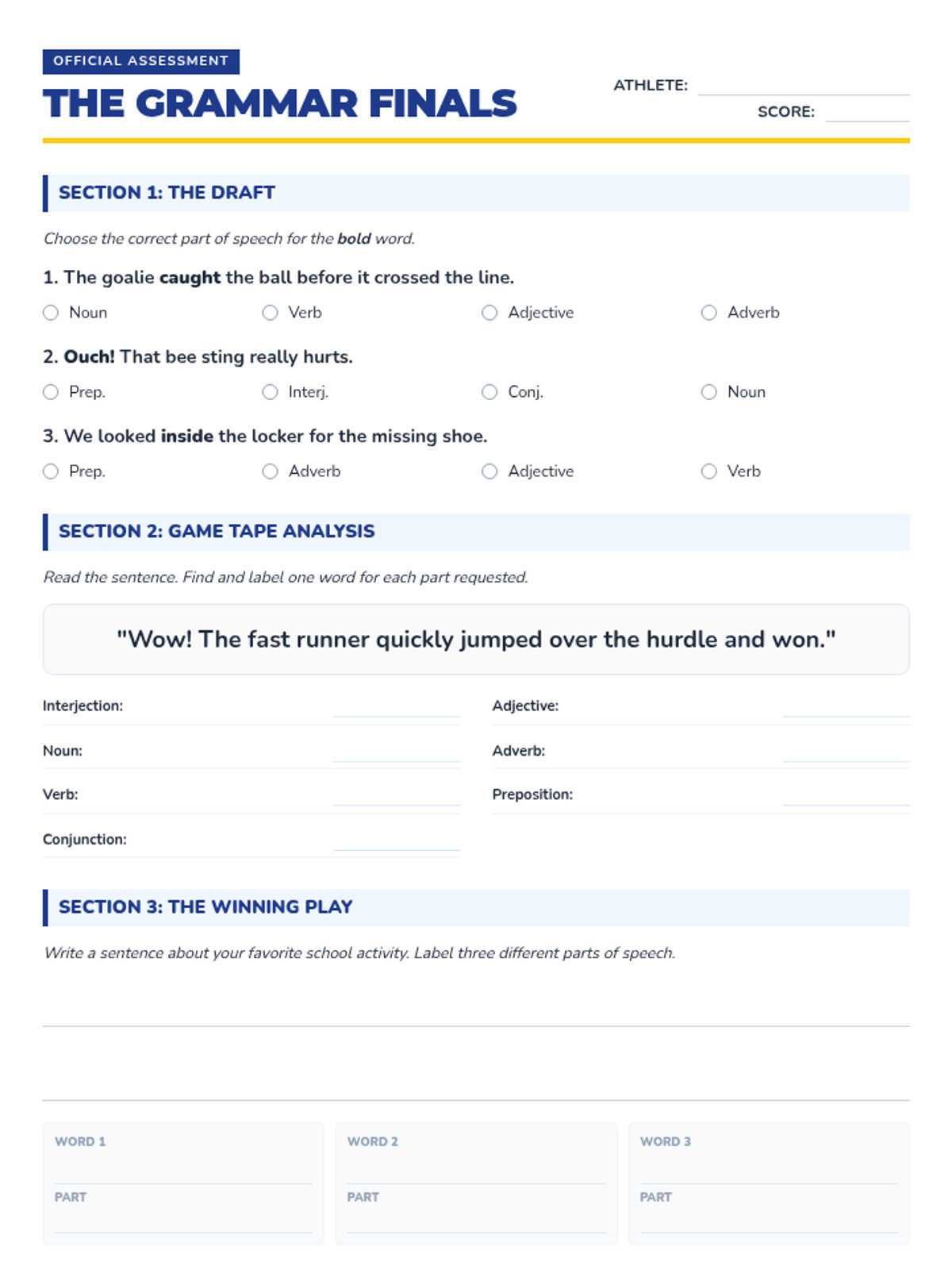
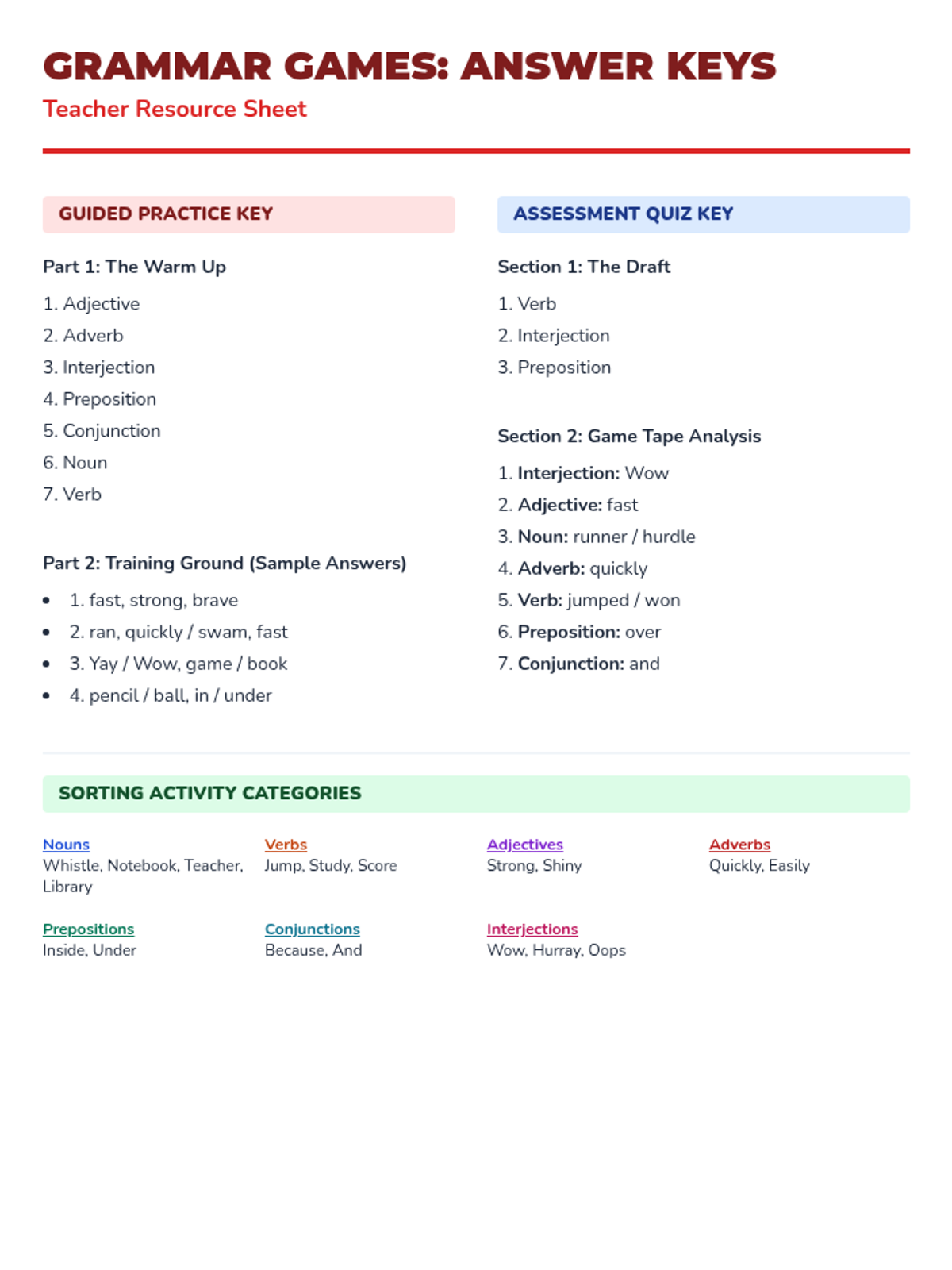
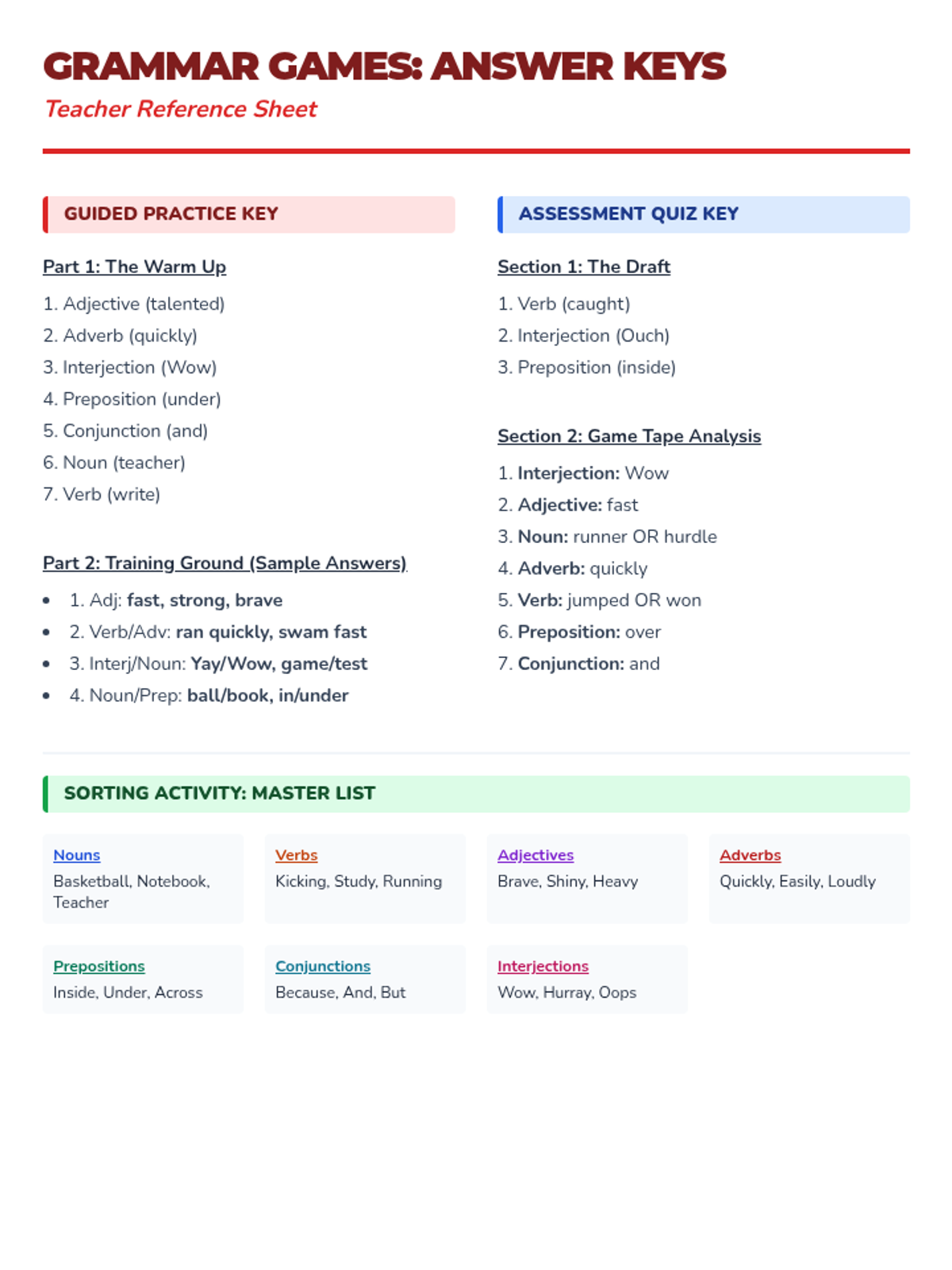
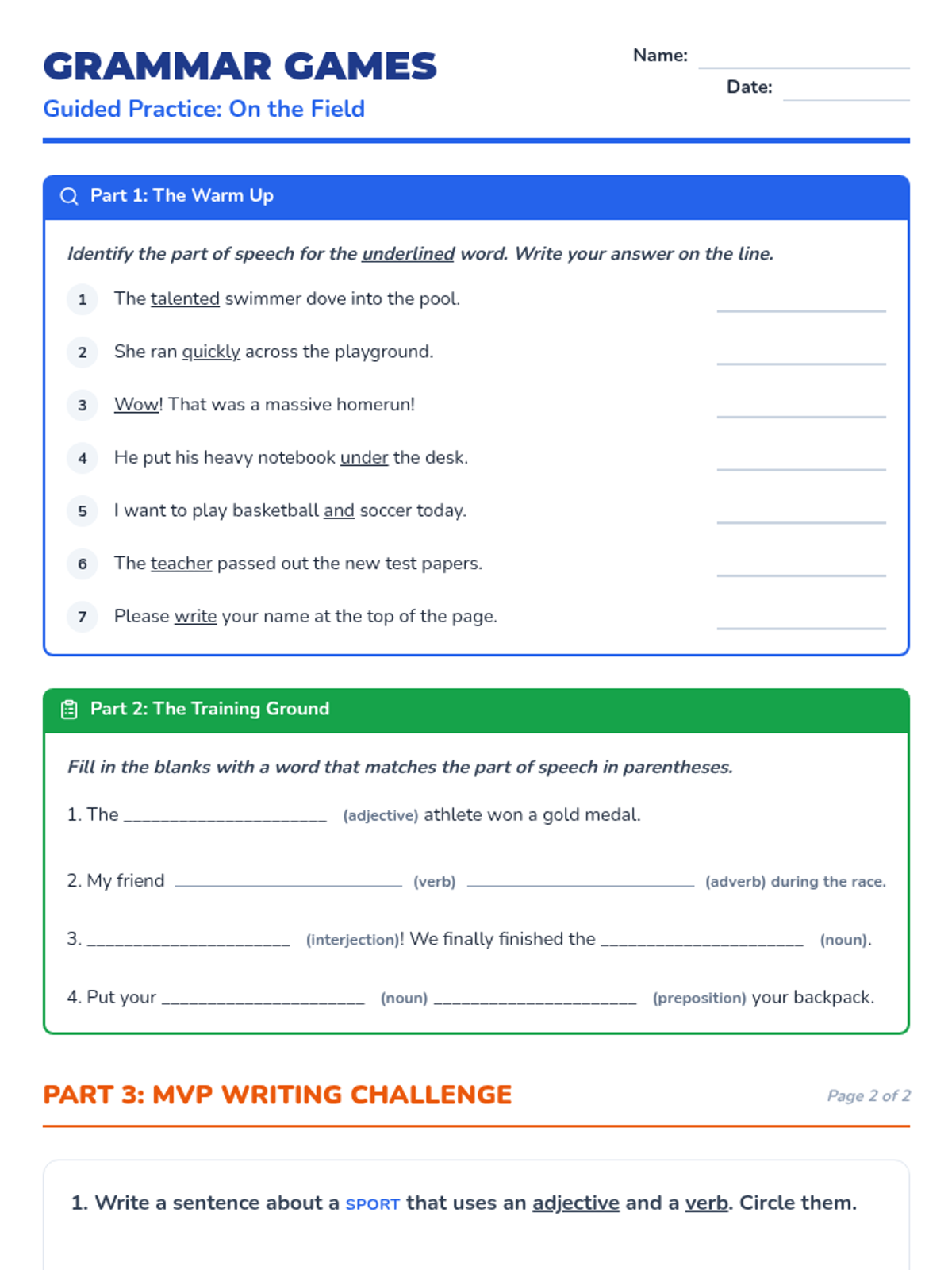
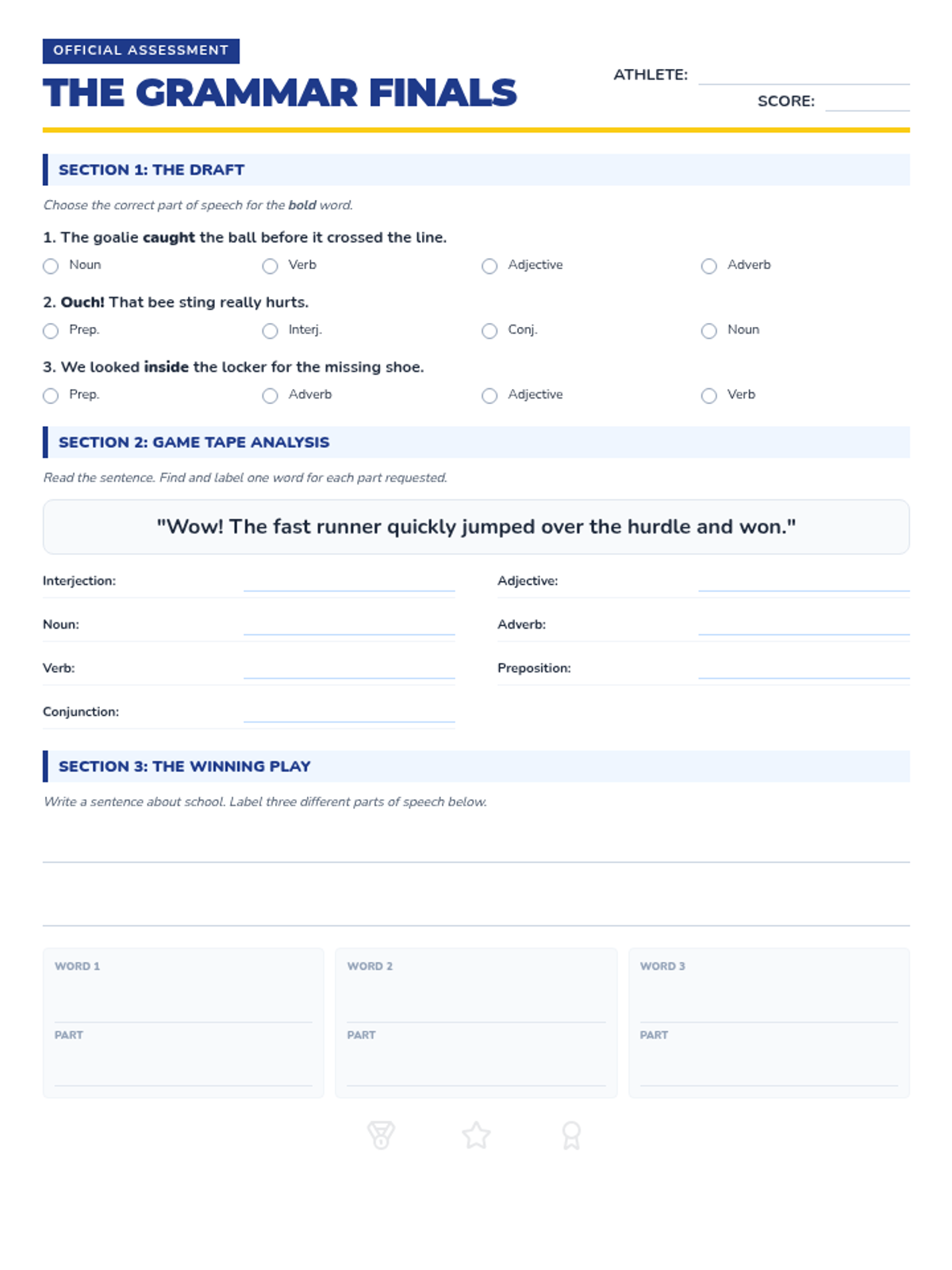
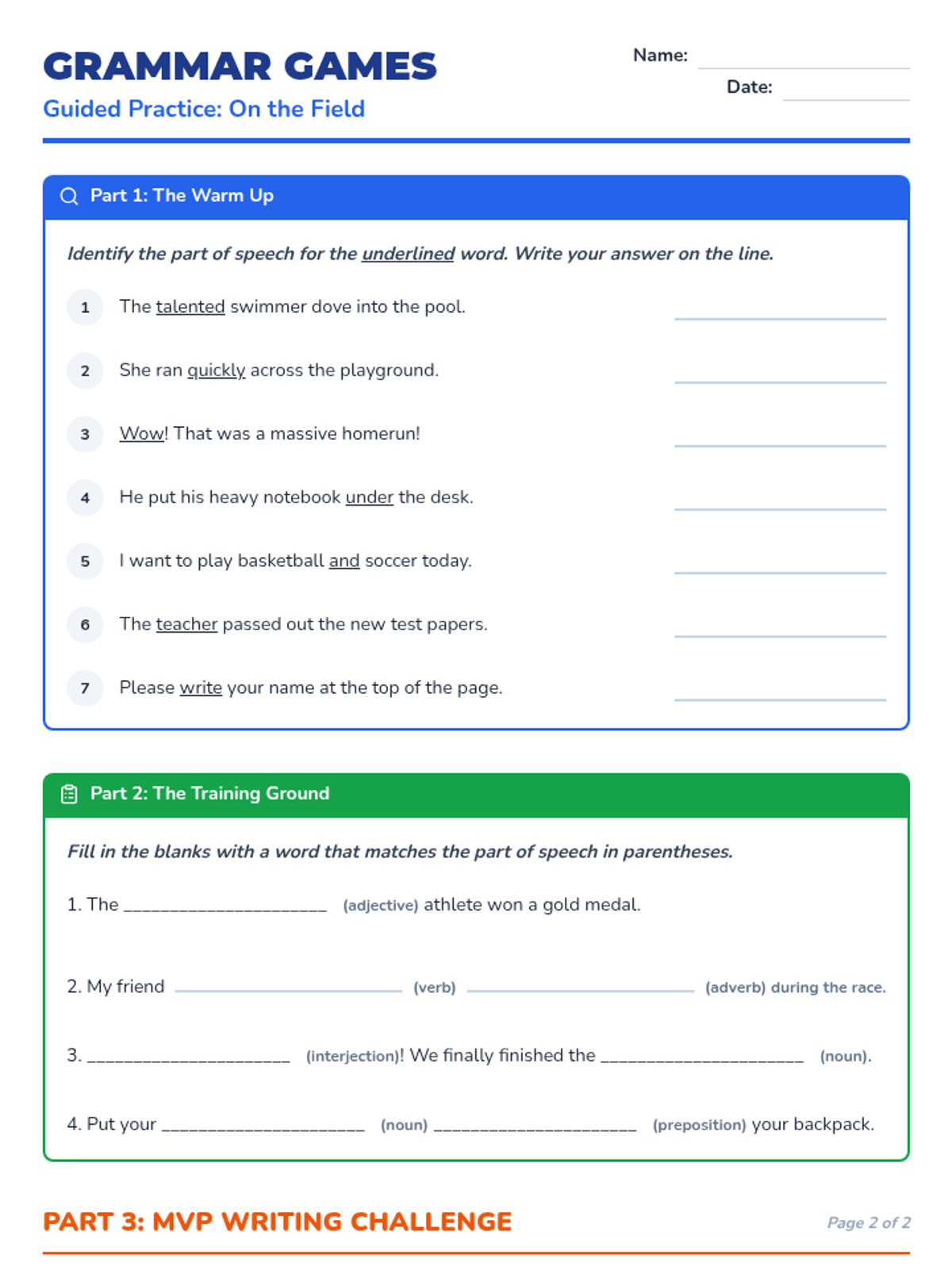
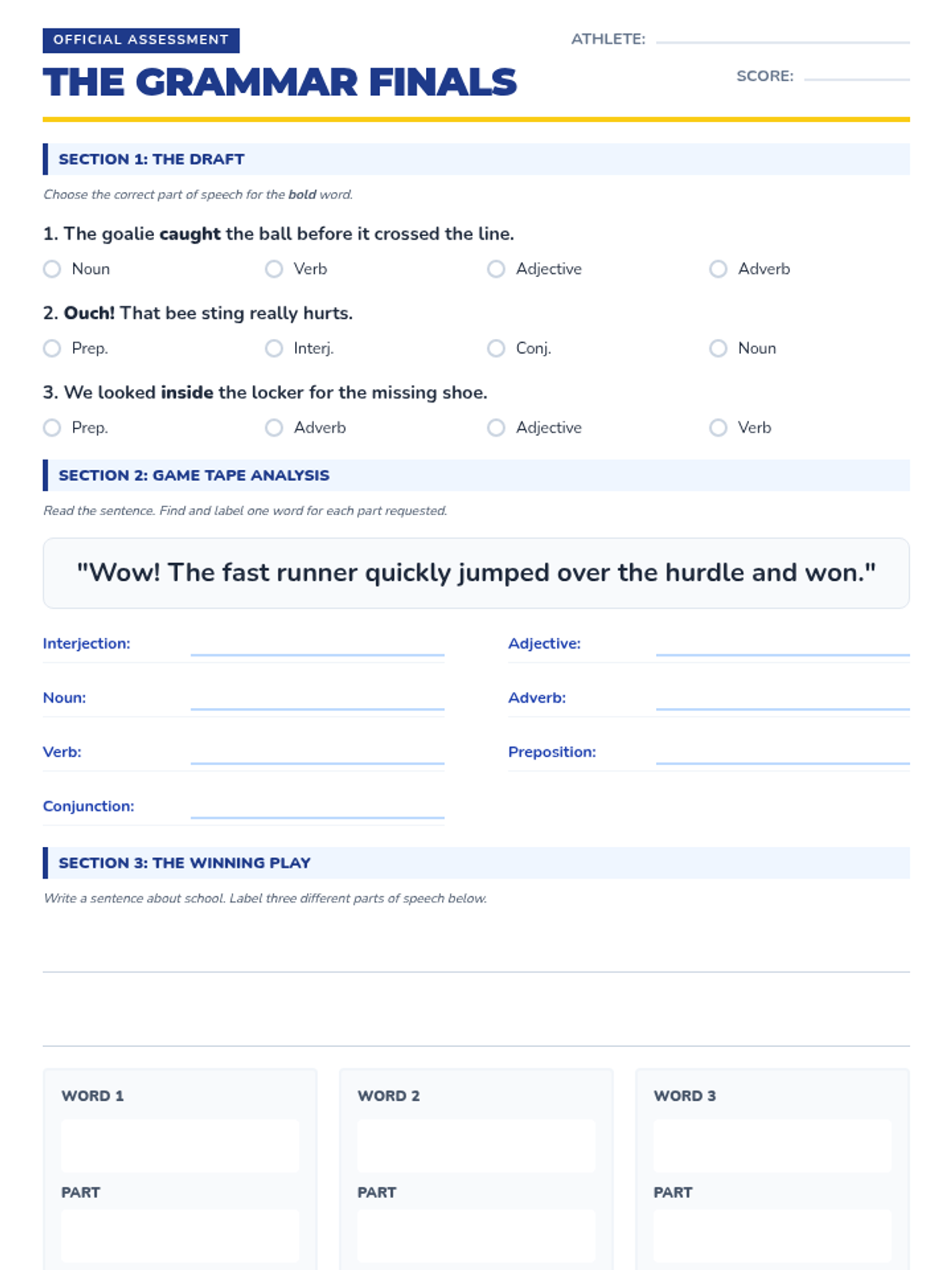
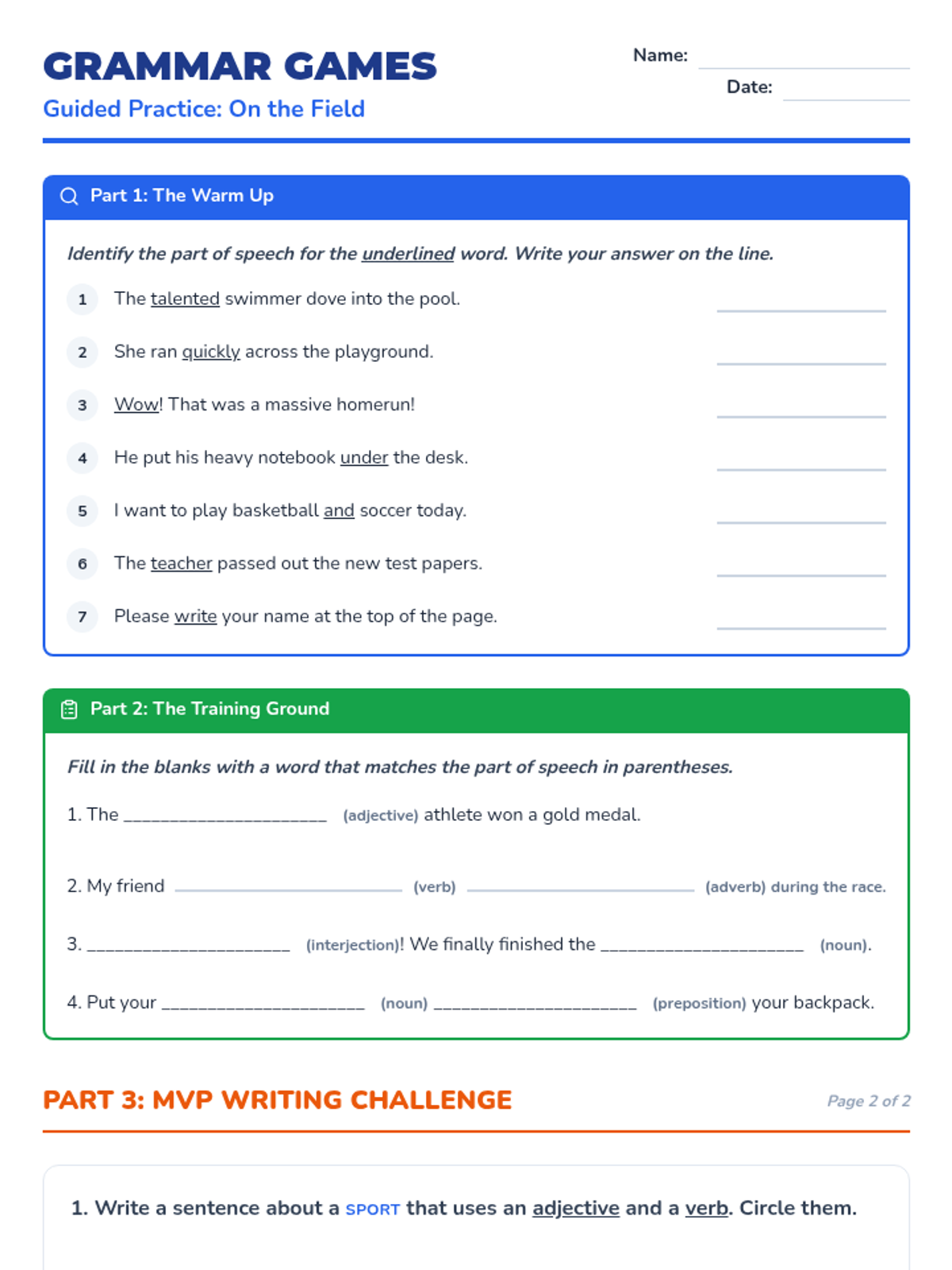
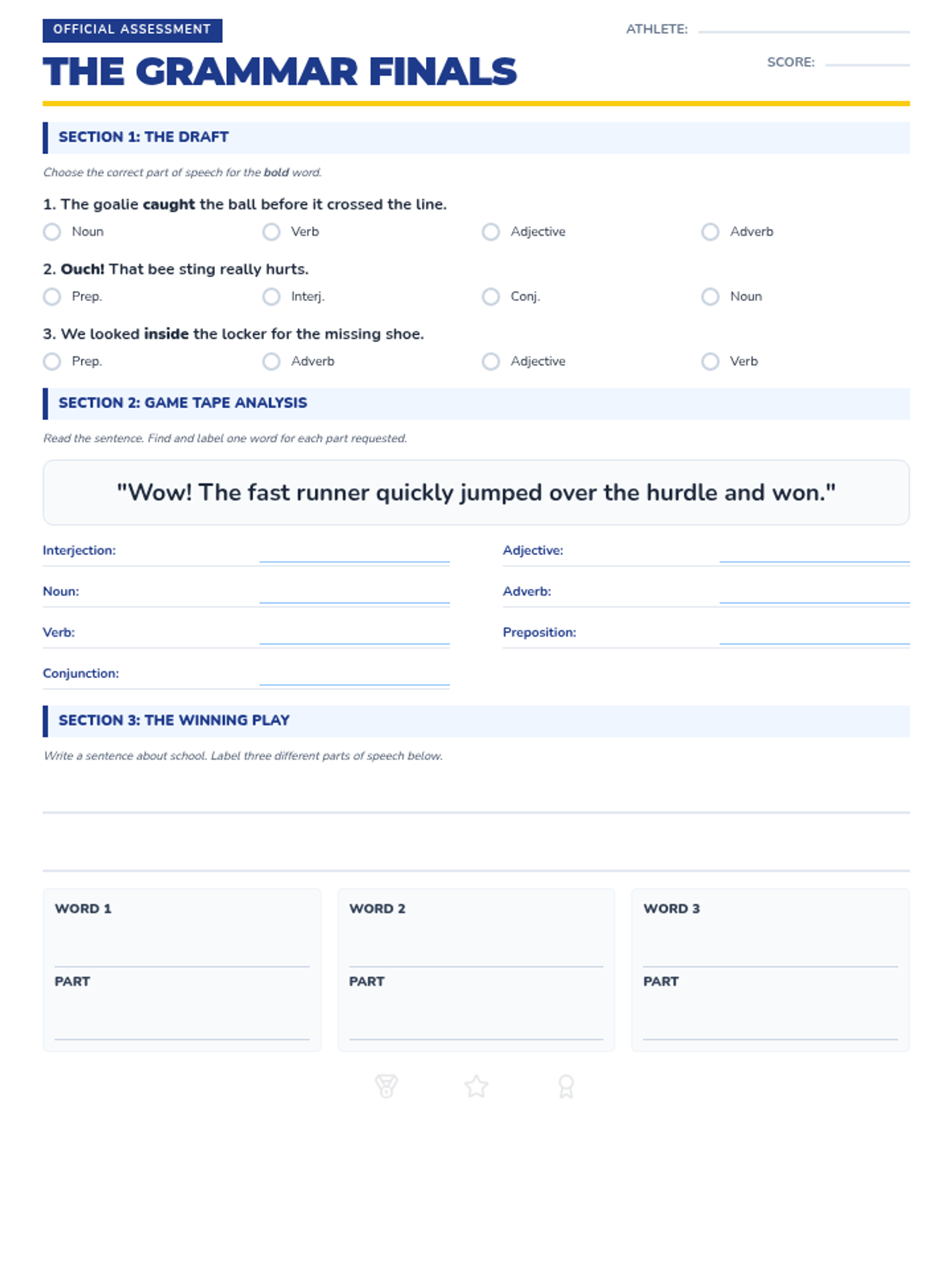
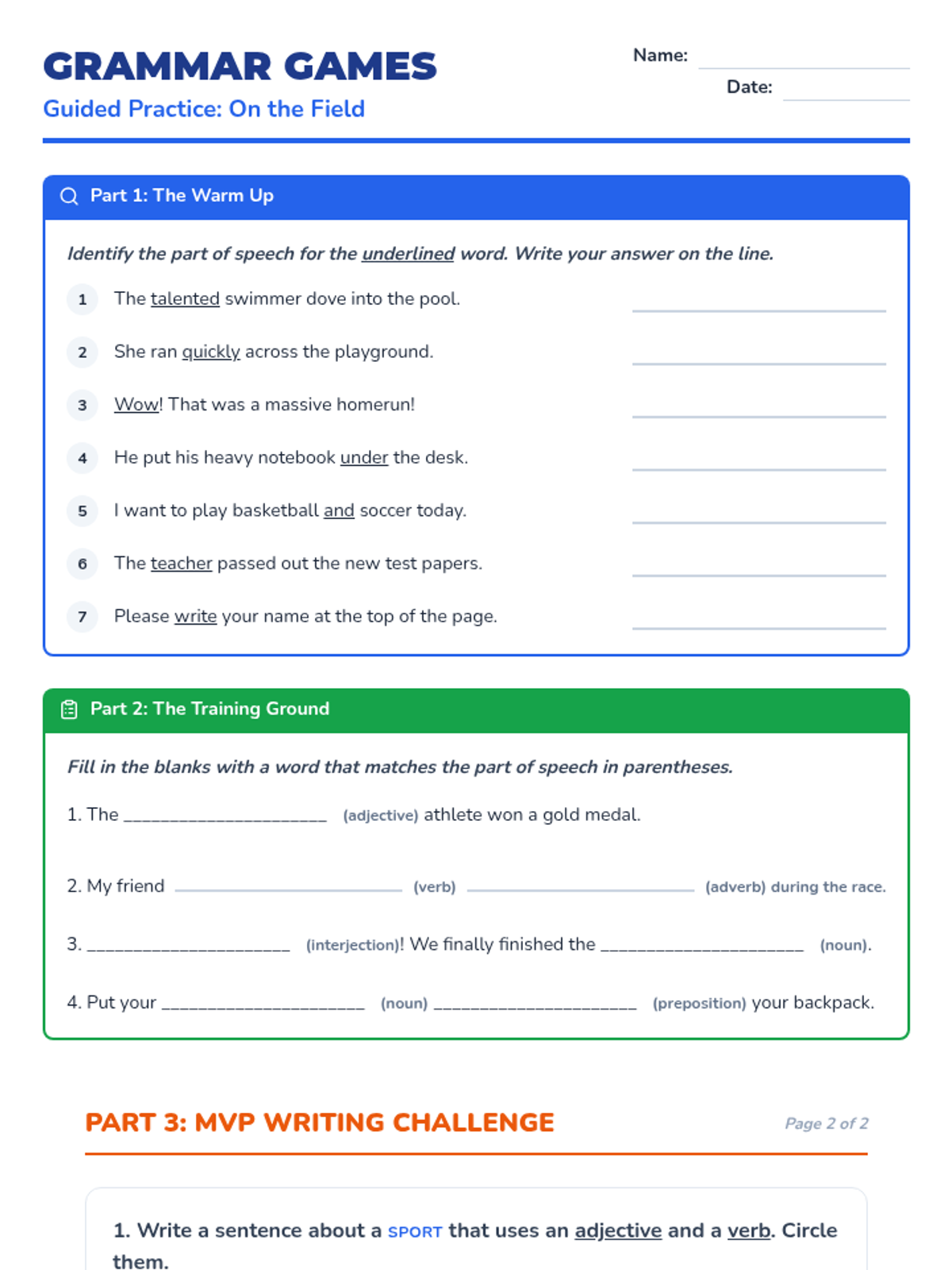
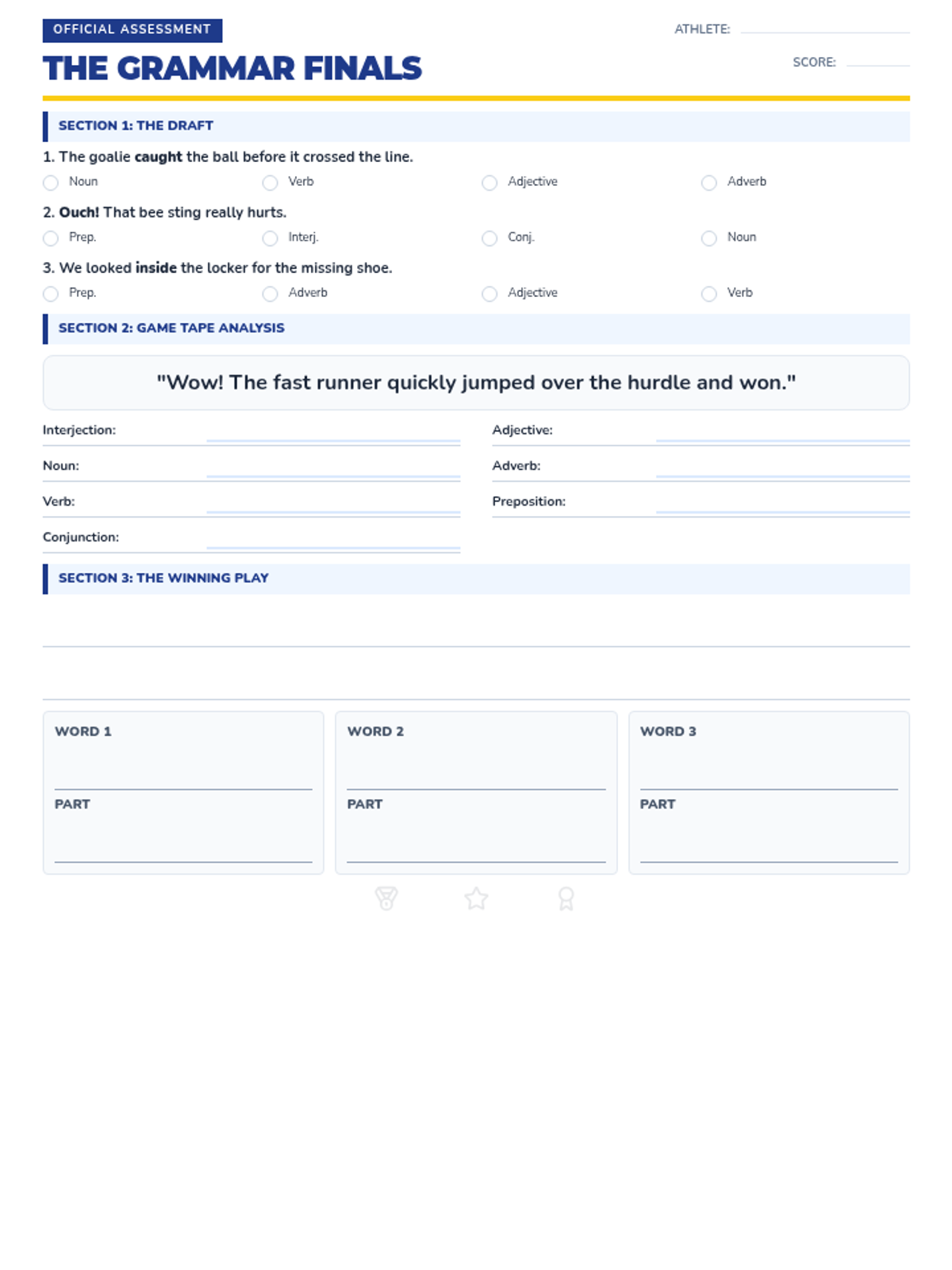
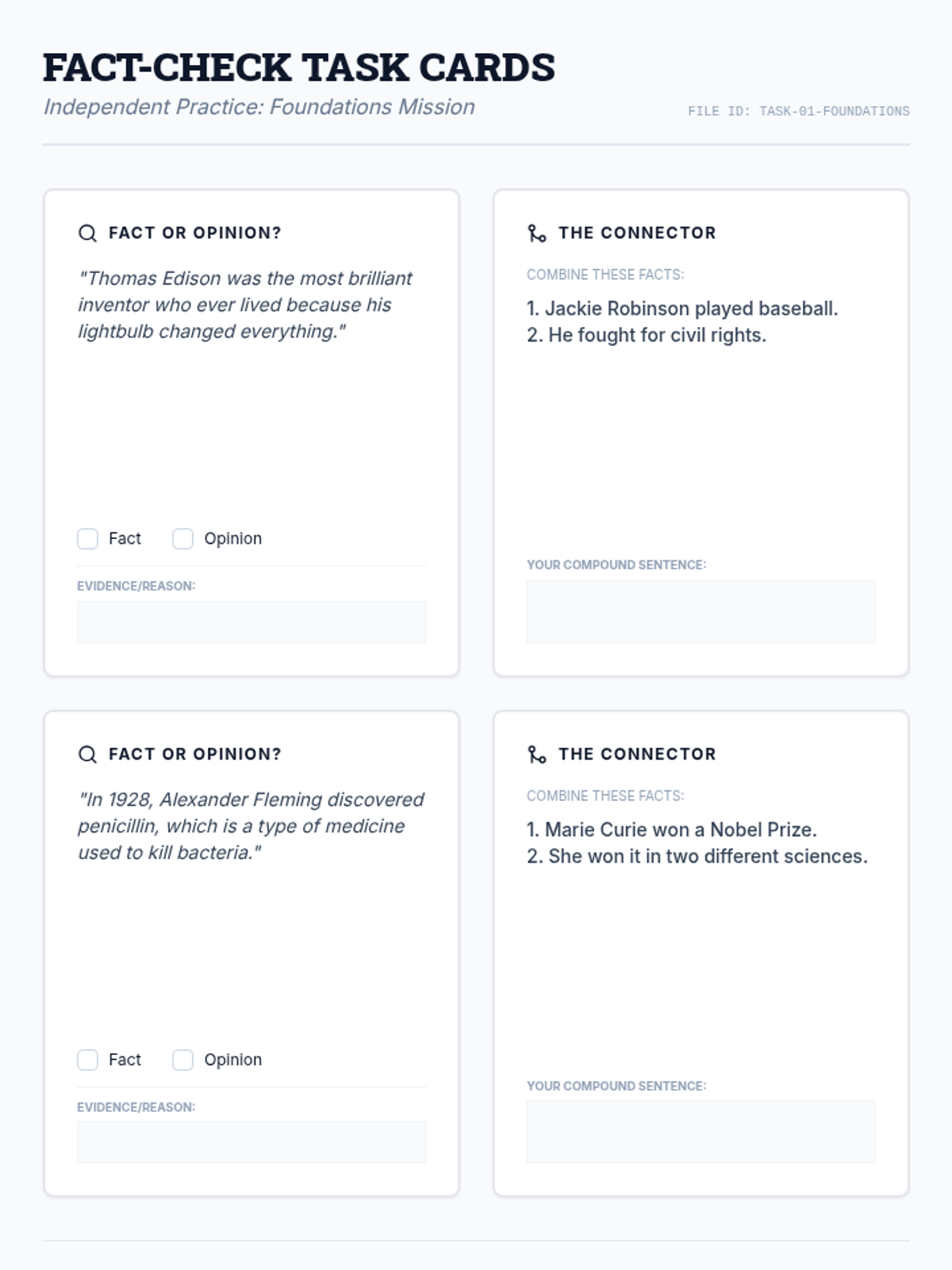
A comprehensive unit on identifying and using the seven primary parts of speech through the lens of sports, hobbies, and school life. Students progress from basic identification to complex sentence construction.
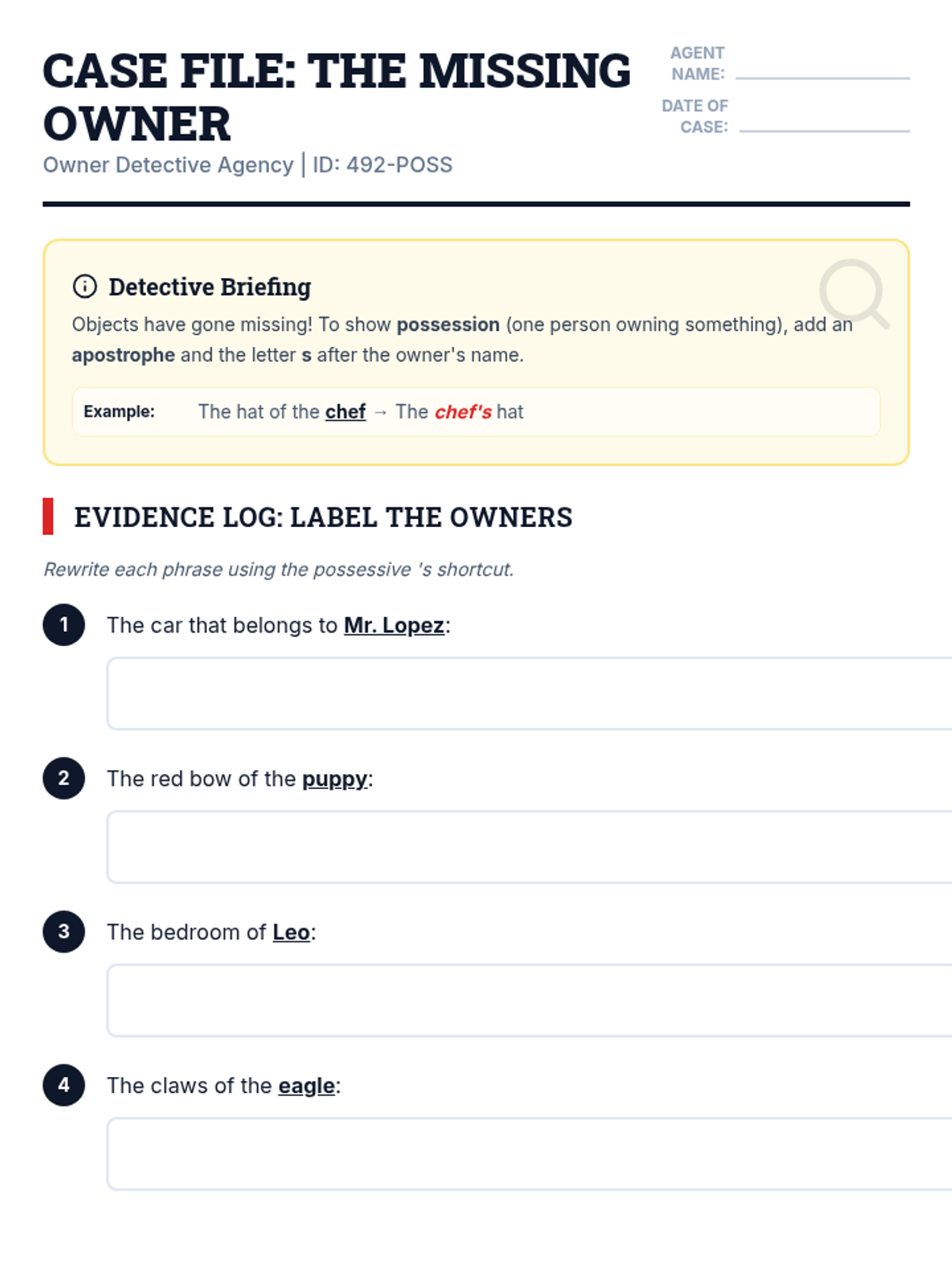
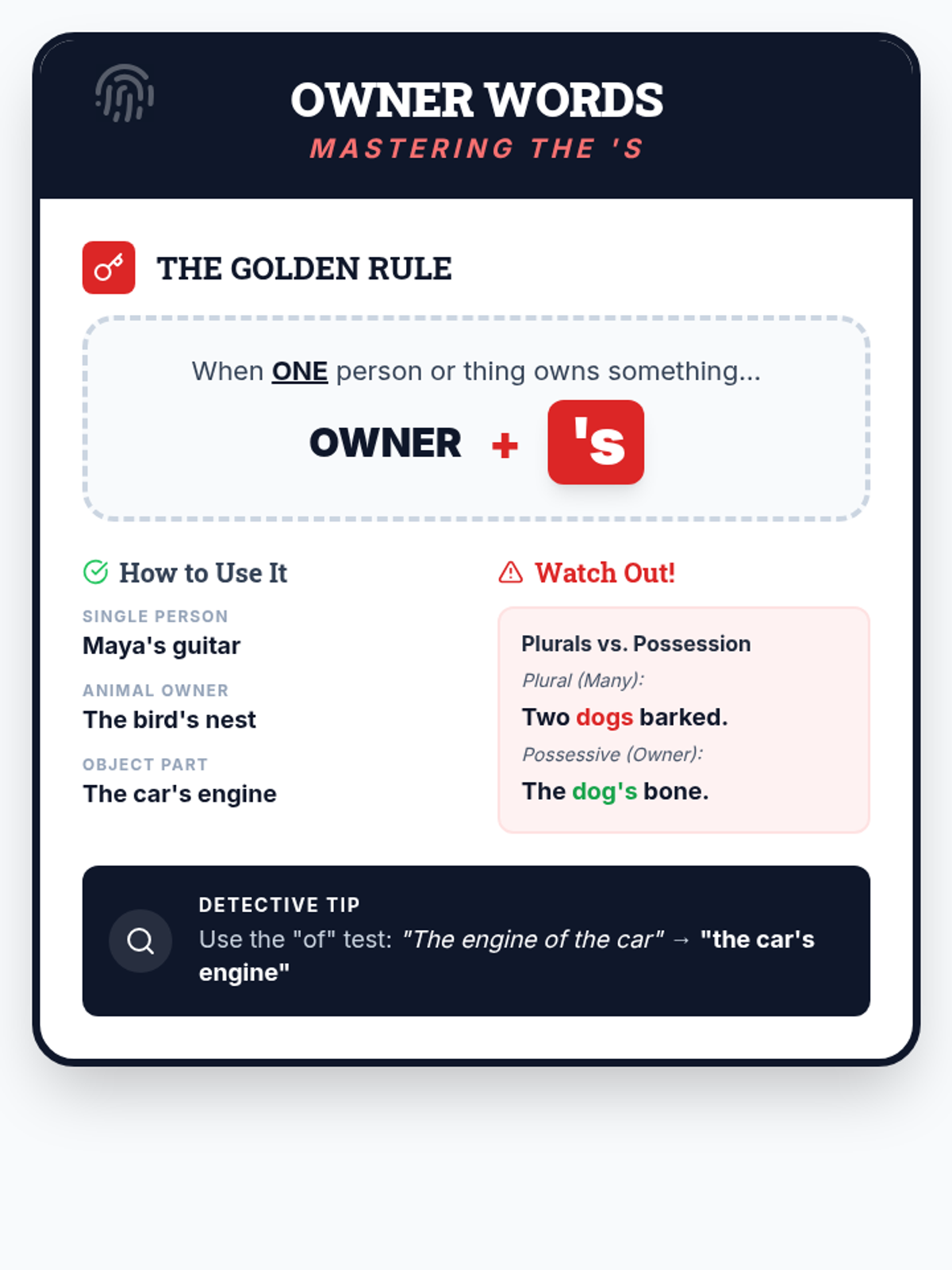
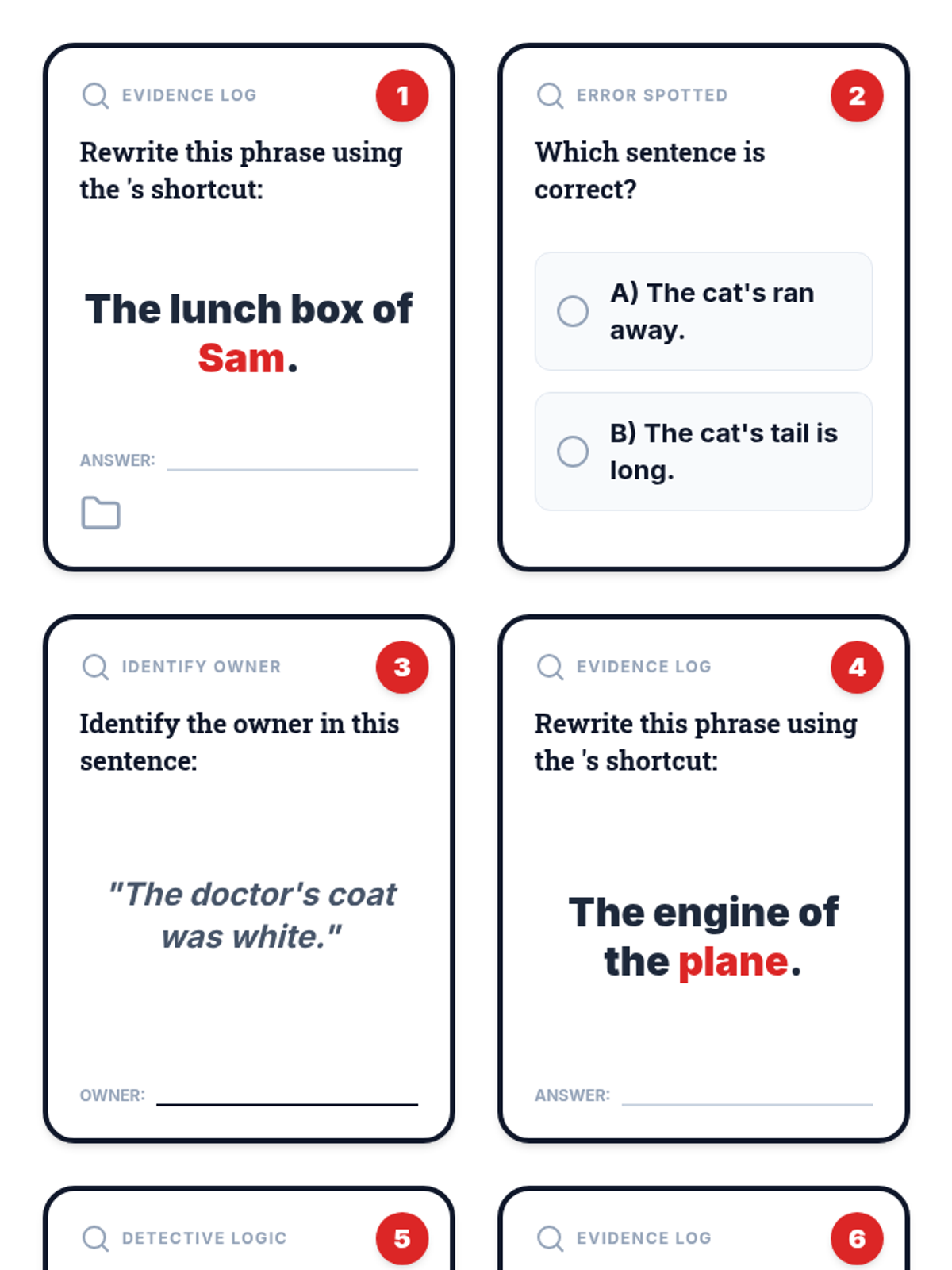
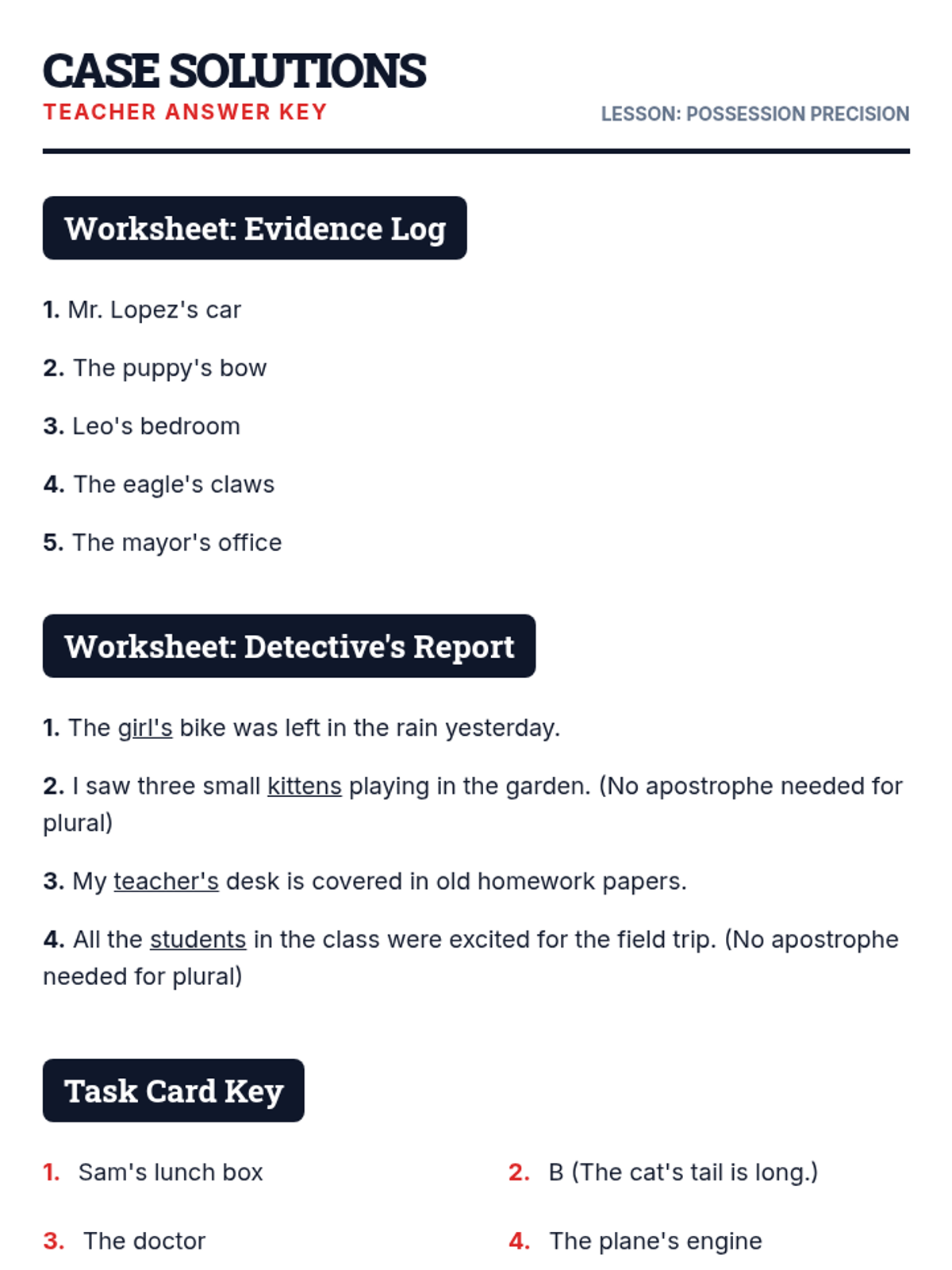
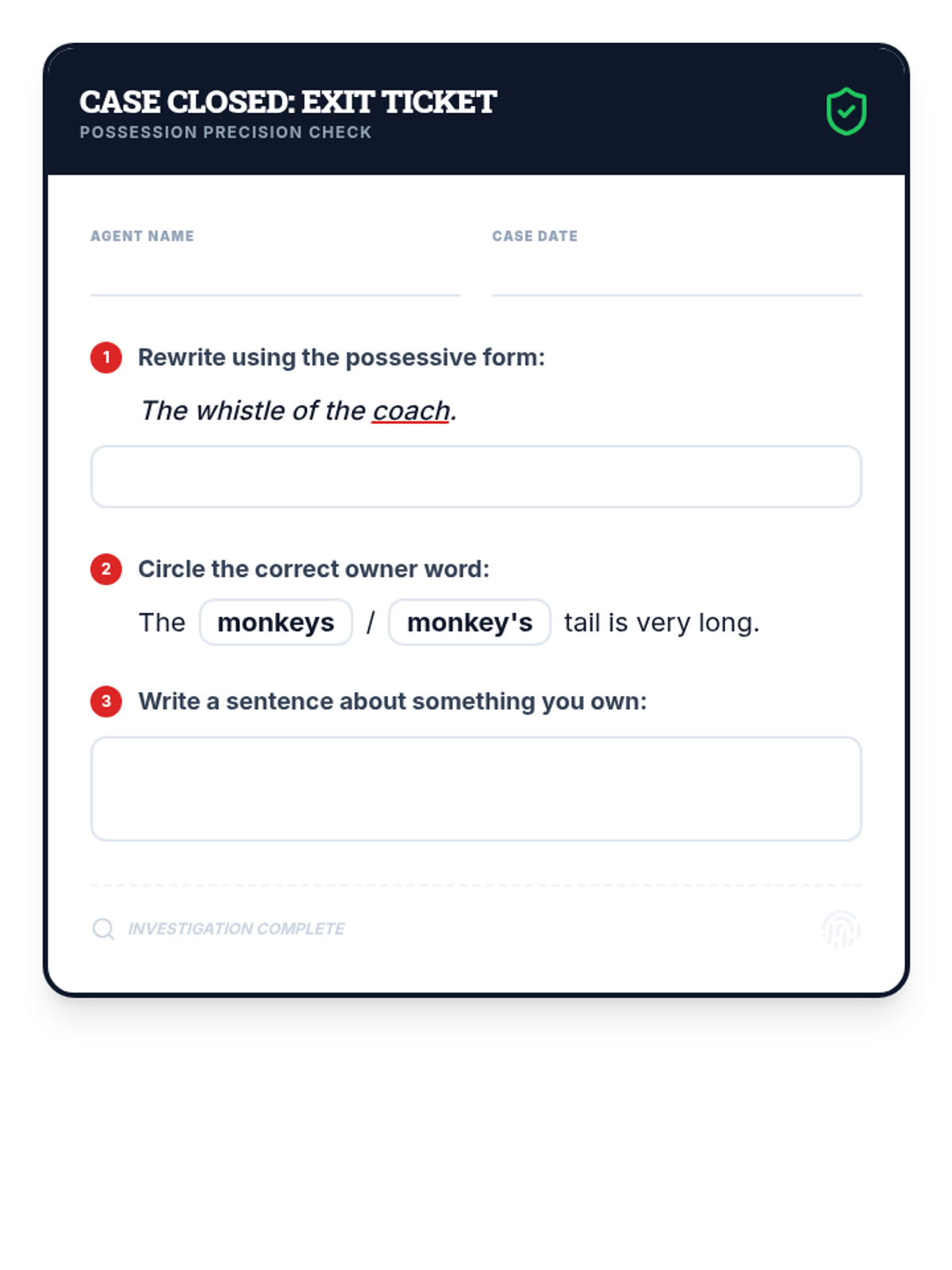
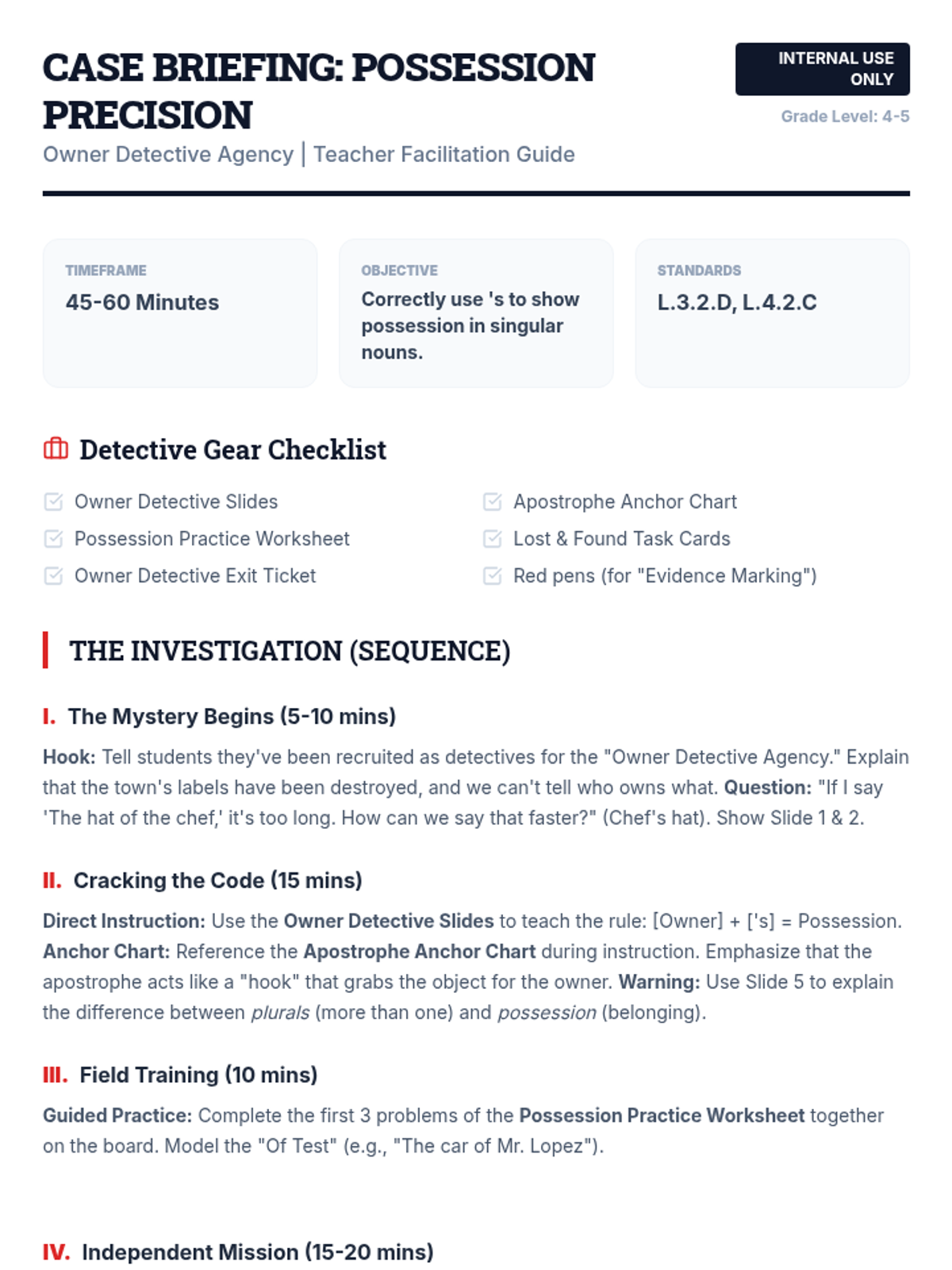
A unit focused on mastering possessive nouns through a detective-themed exploration of 'owner words' and the proper placement of apostrophes.
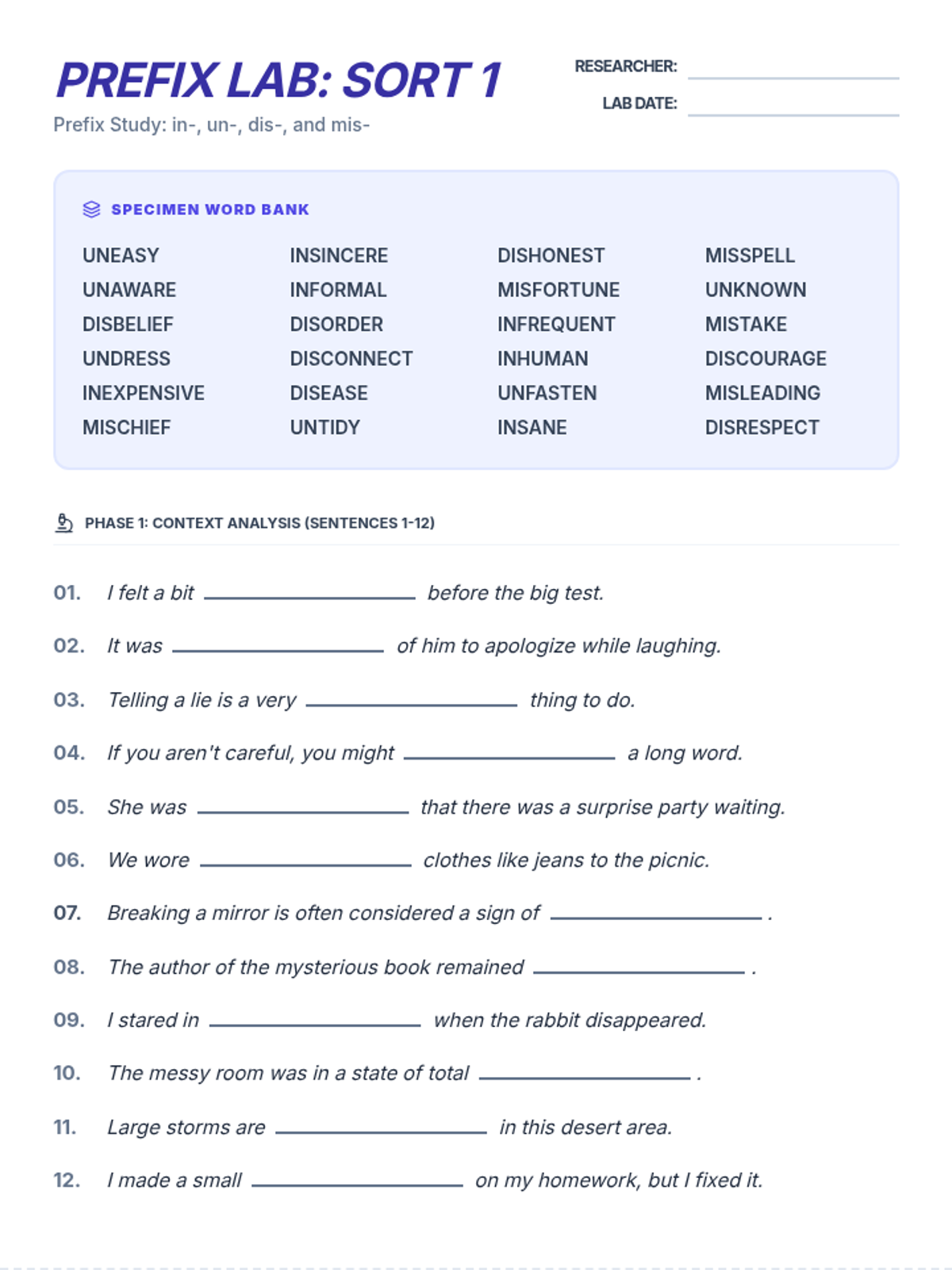
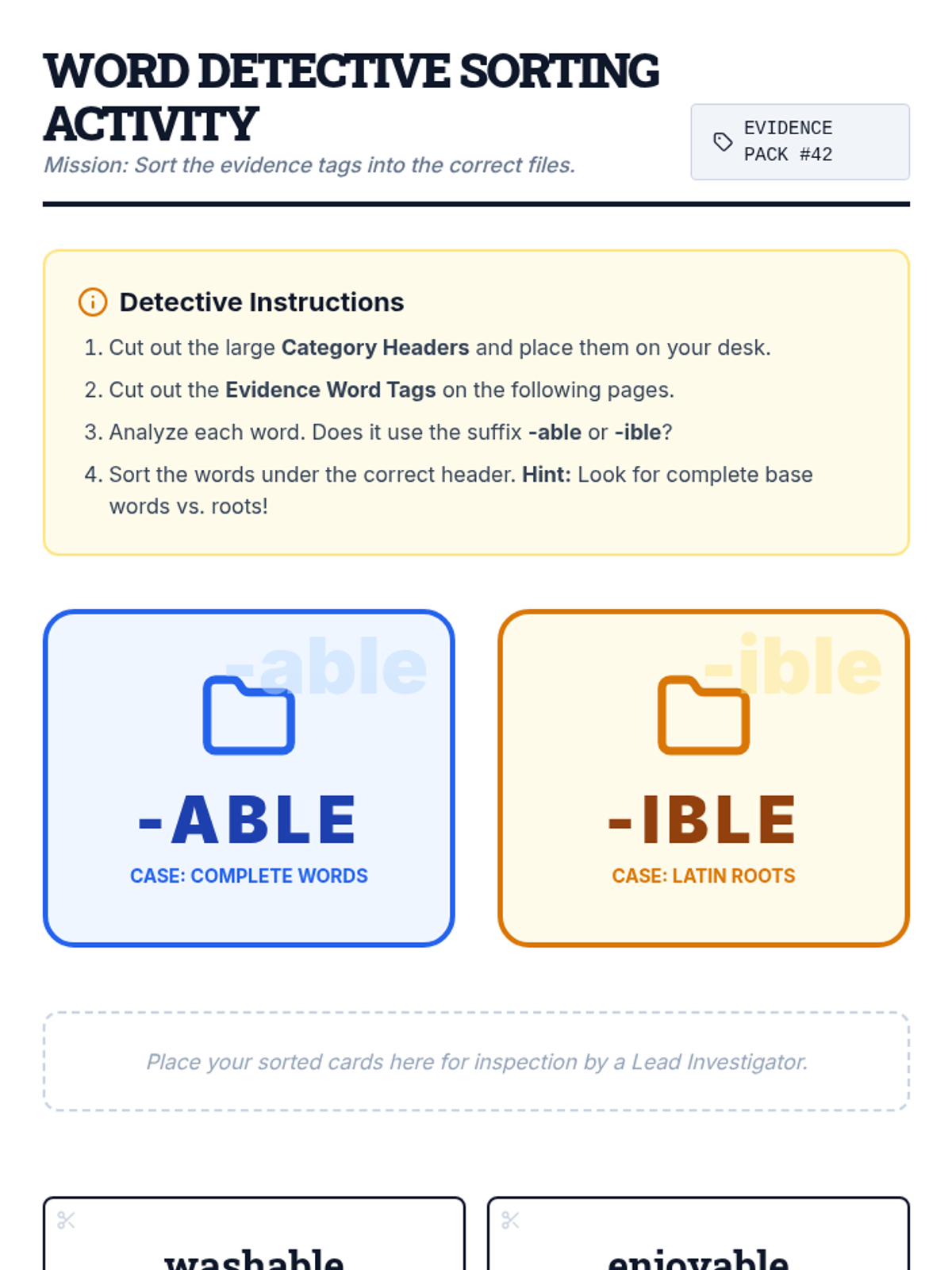
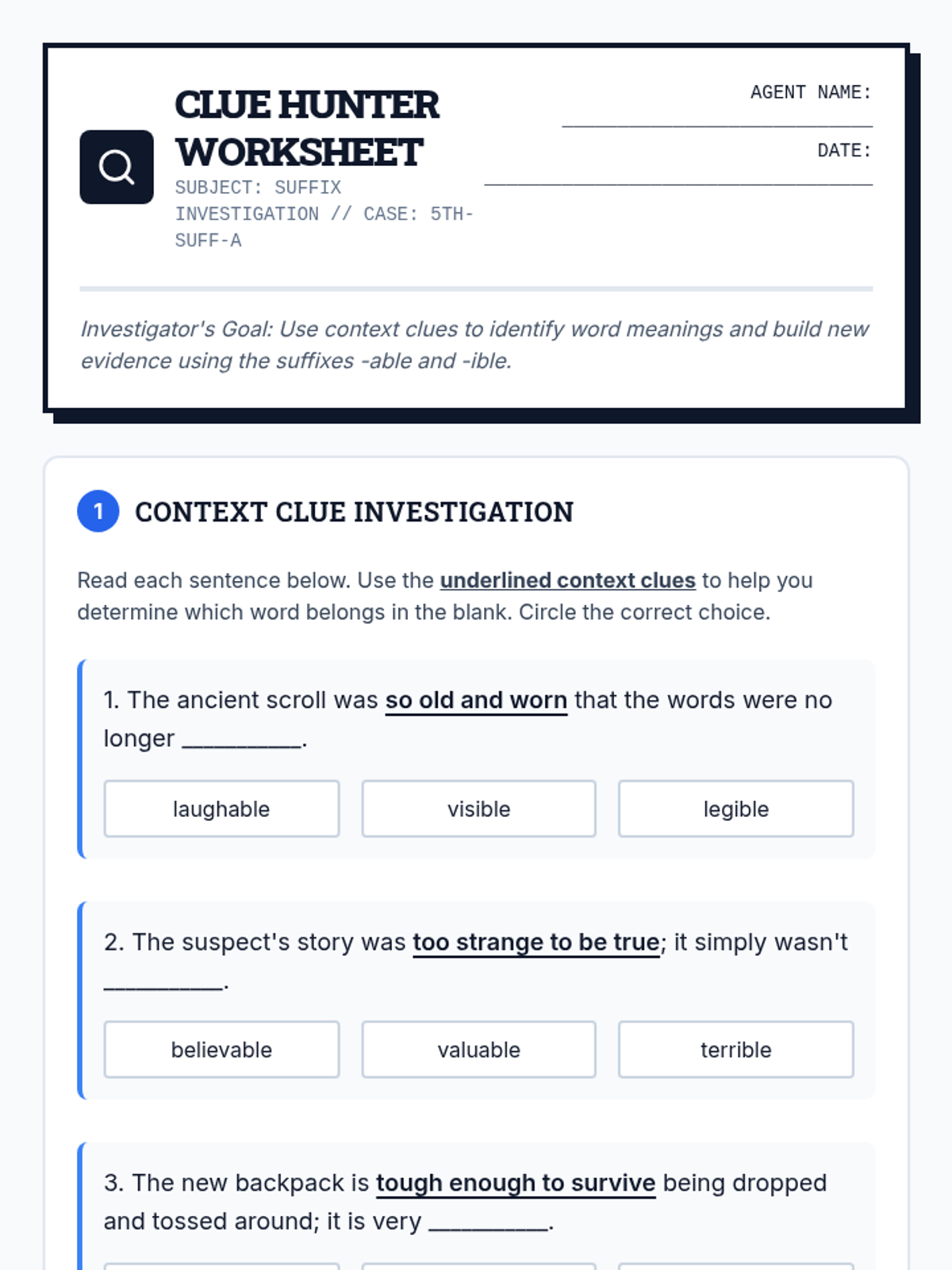
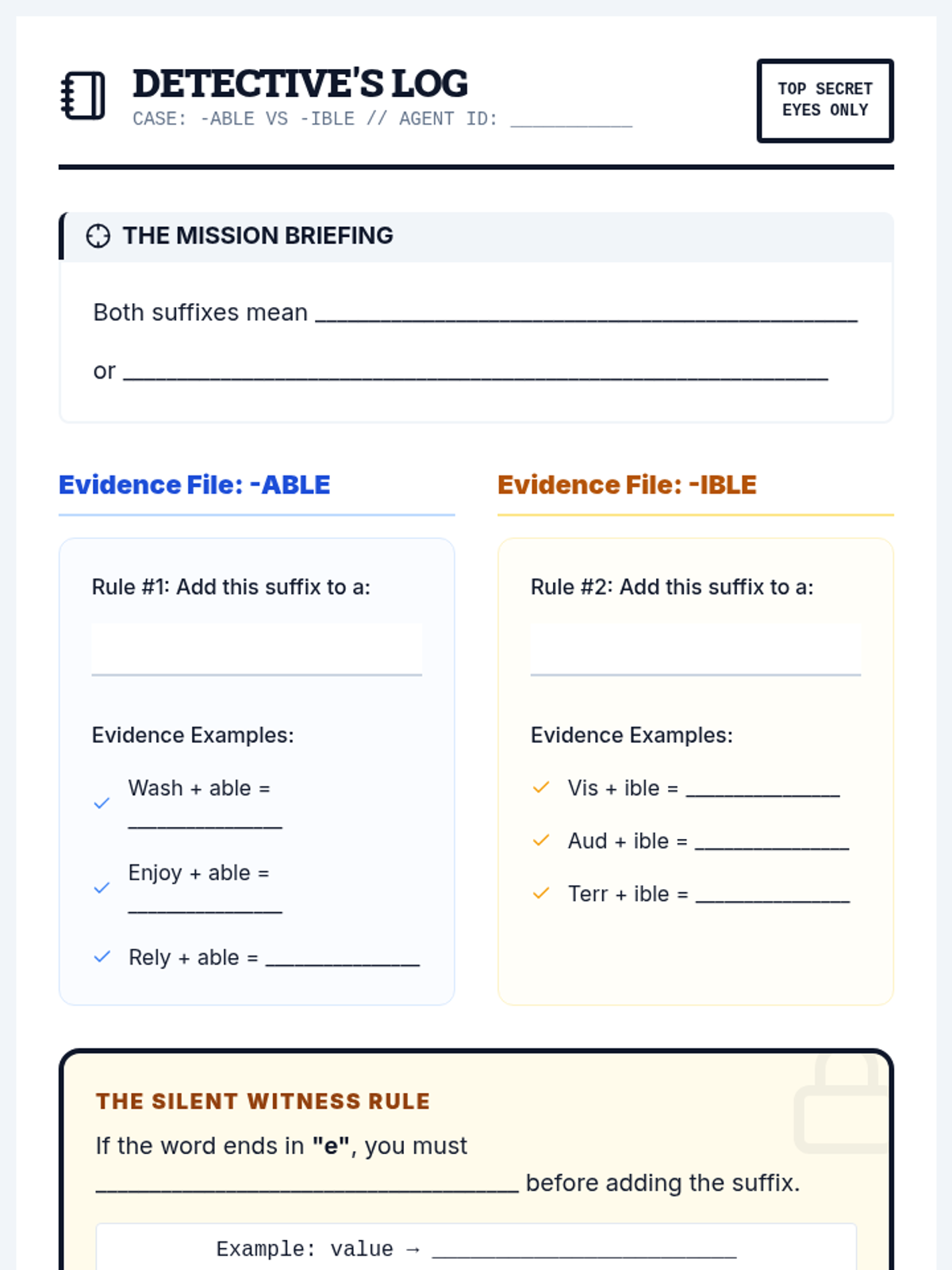
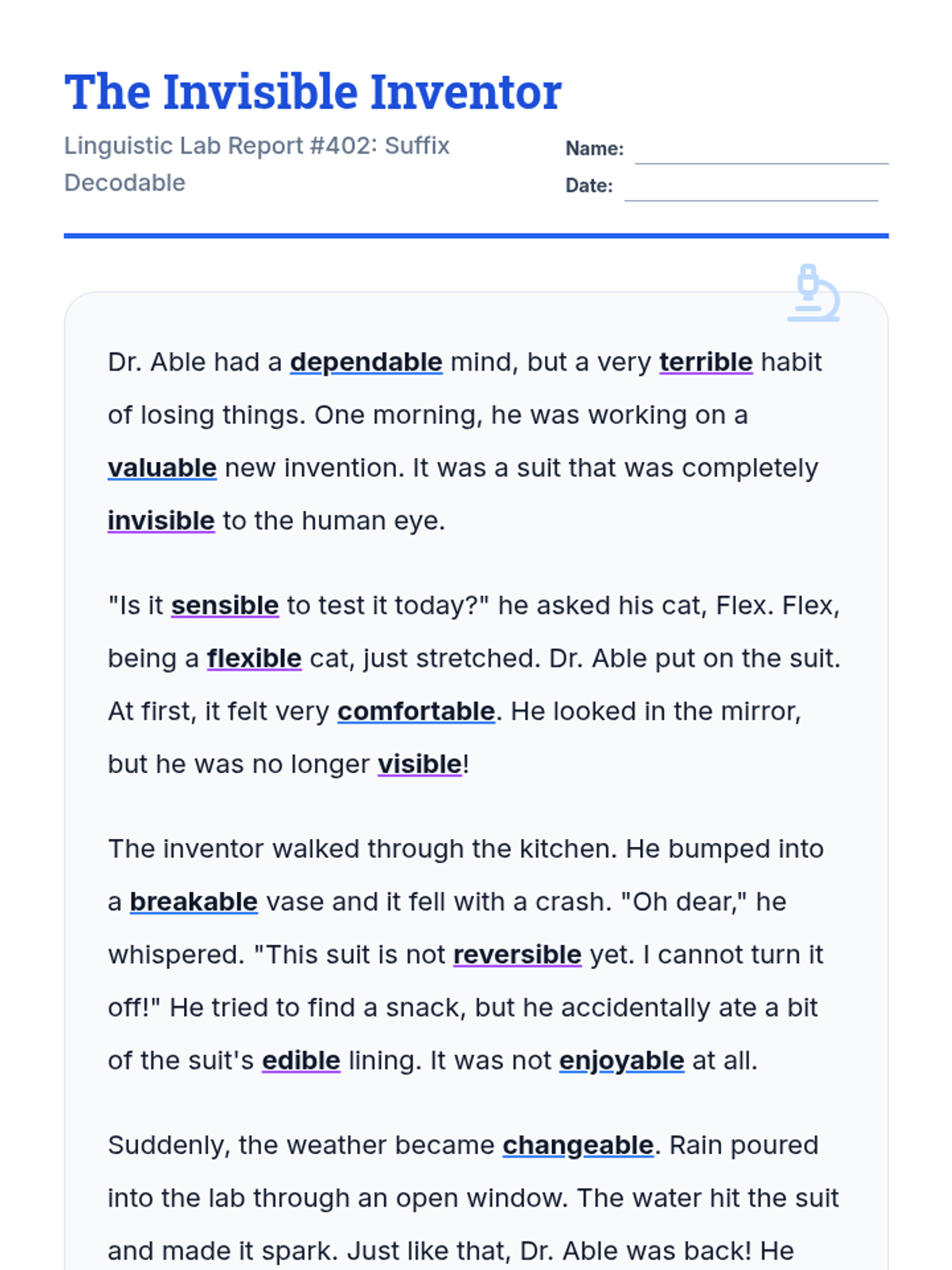
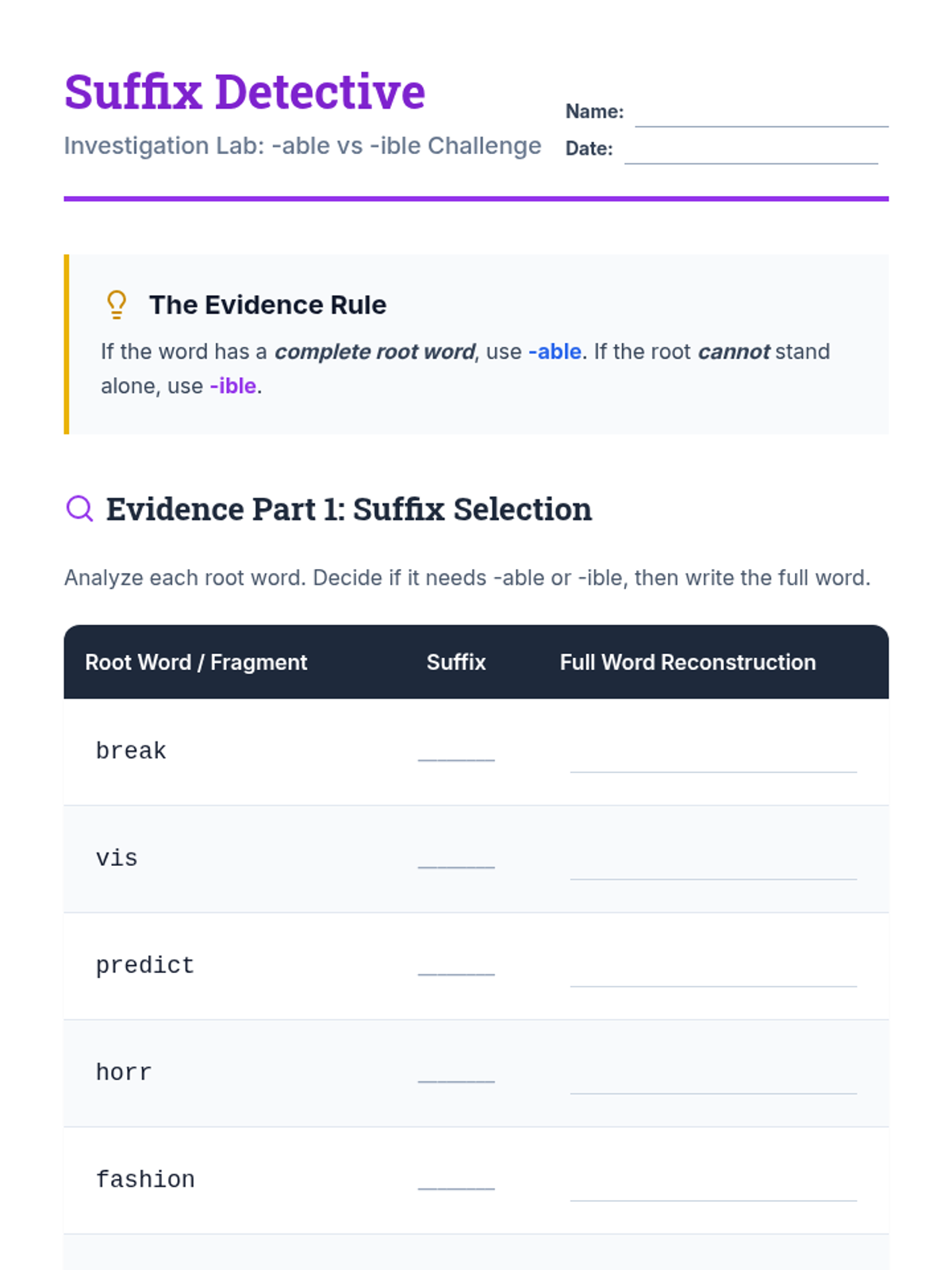
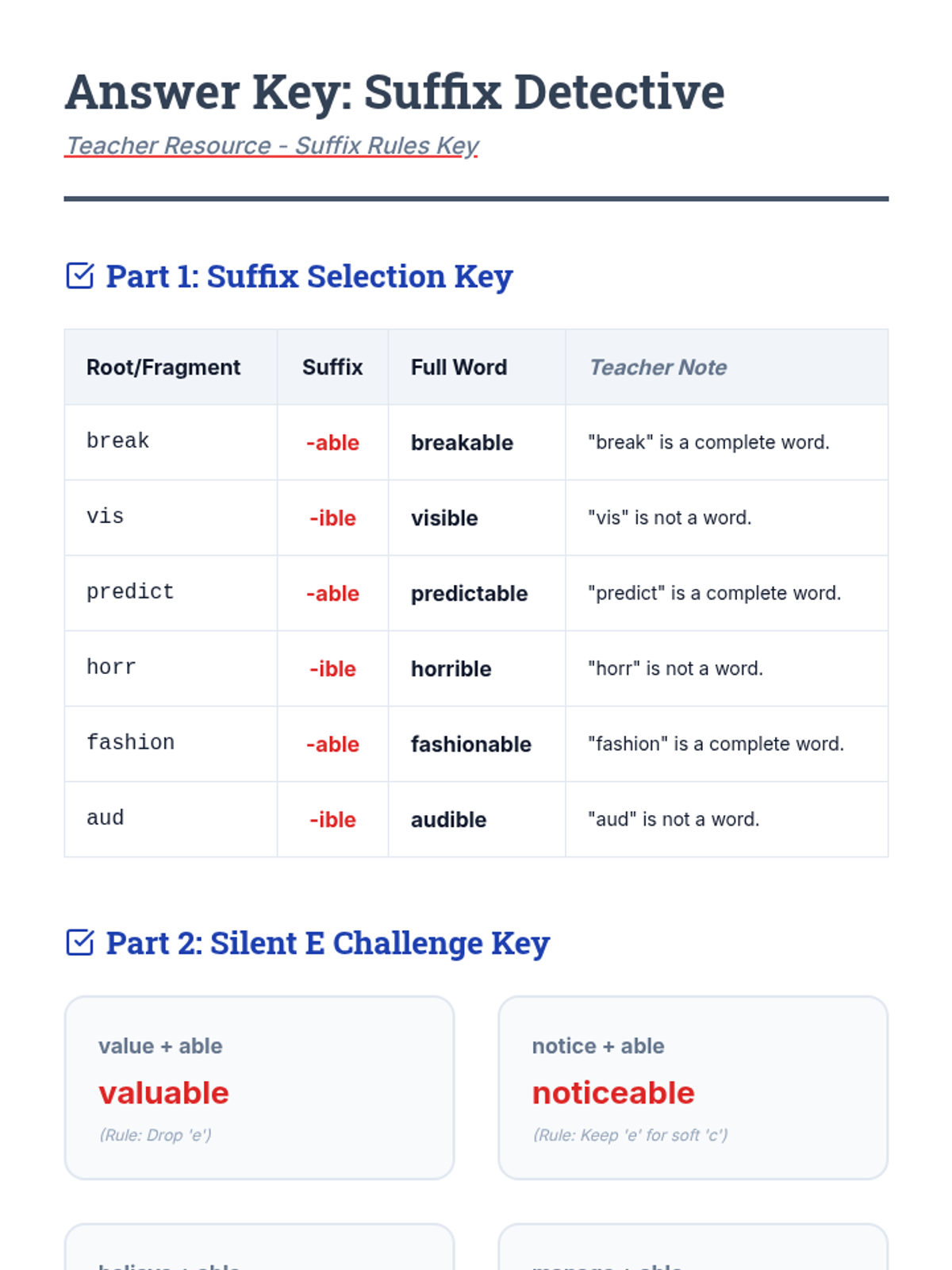
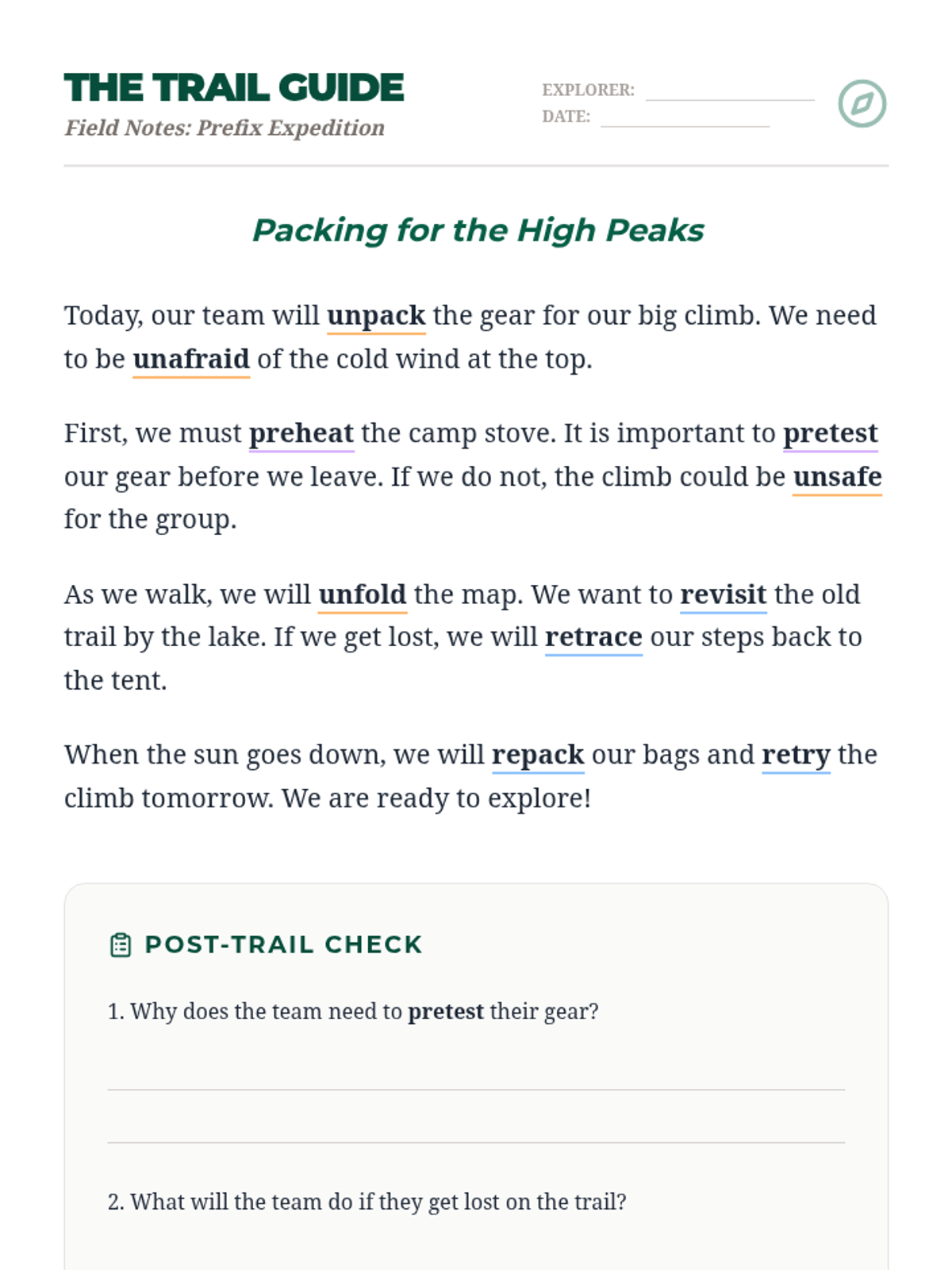
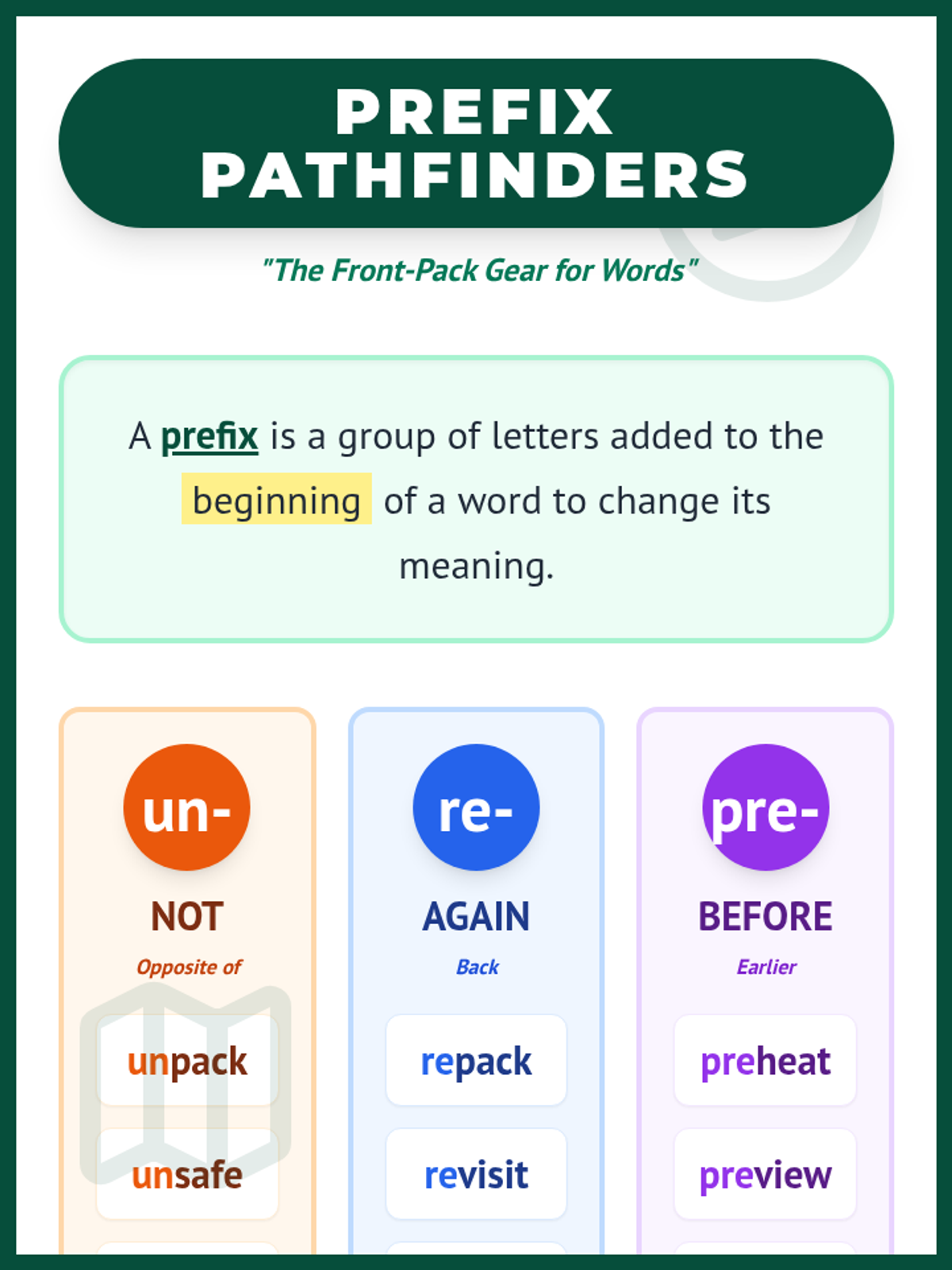
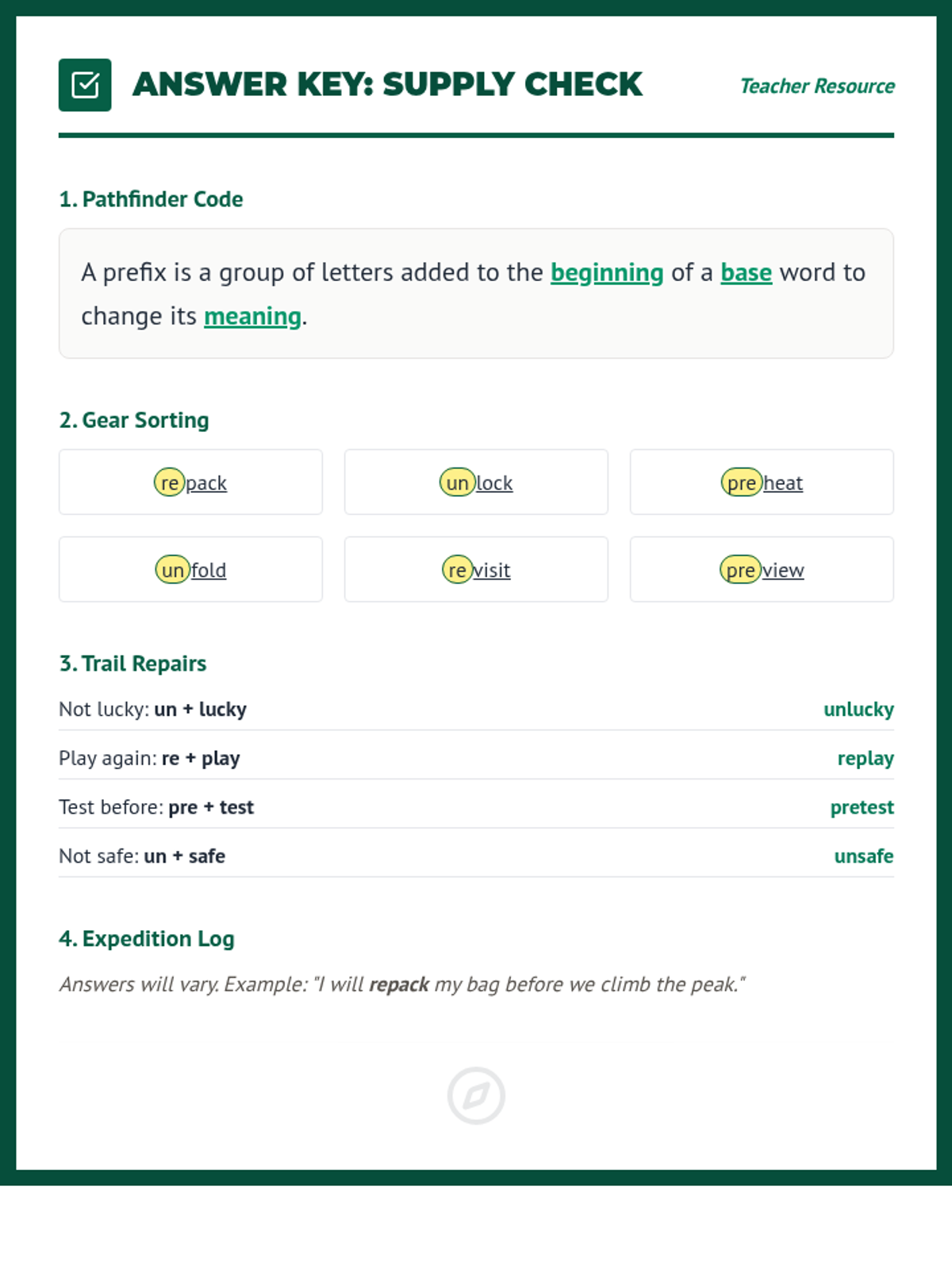
A series of prefix-focused labs designed to help students master common prefixes and suffixes through contextual application and logic puzzles.
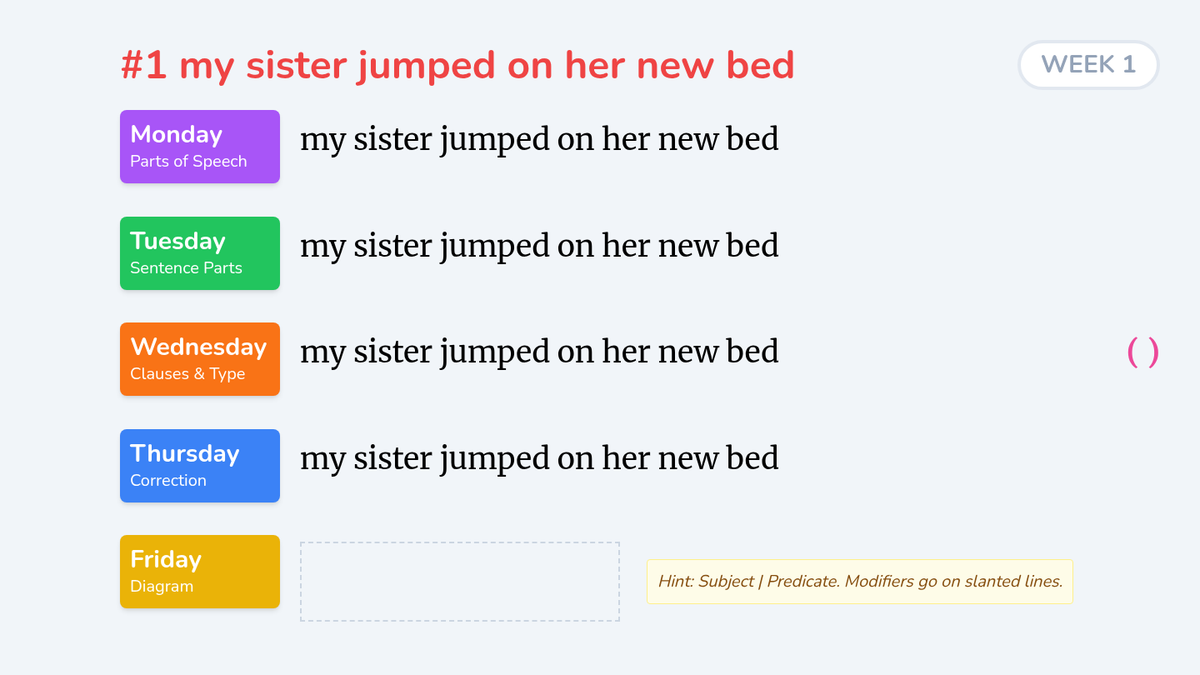
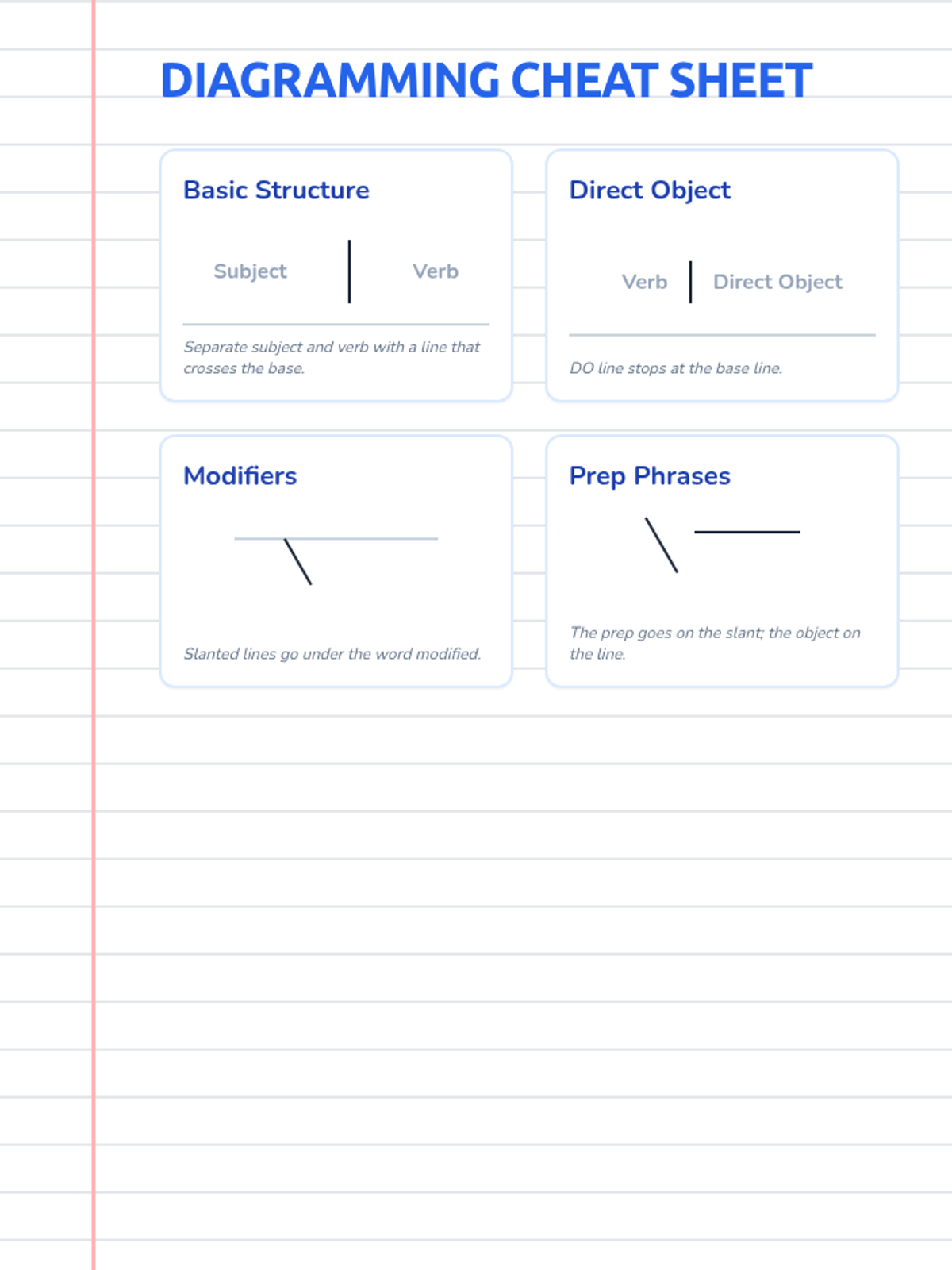
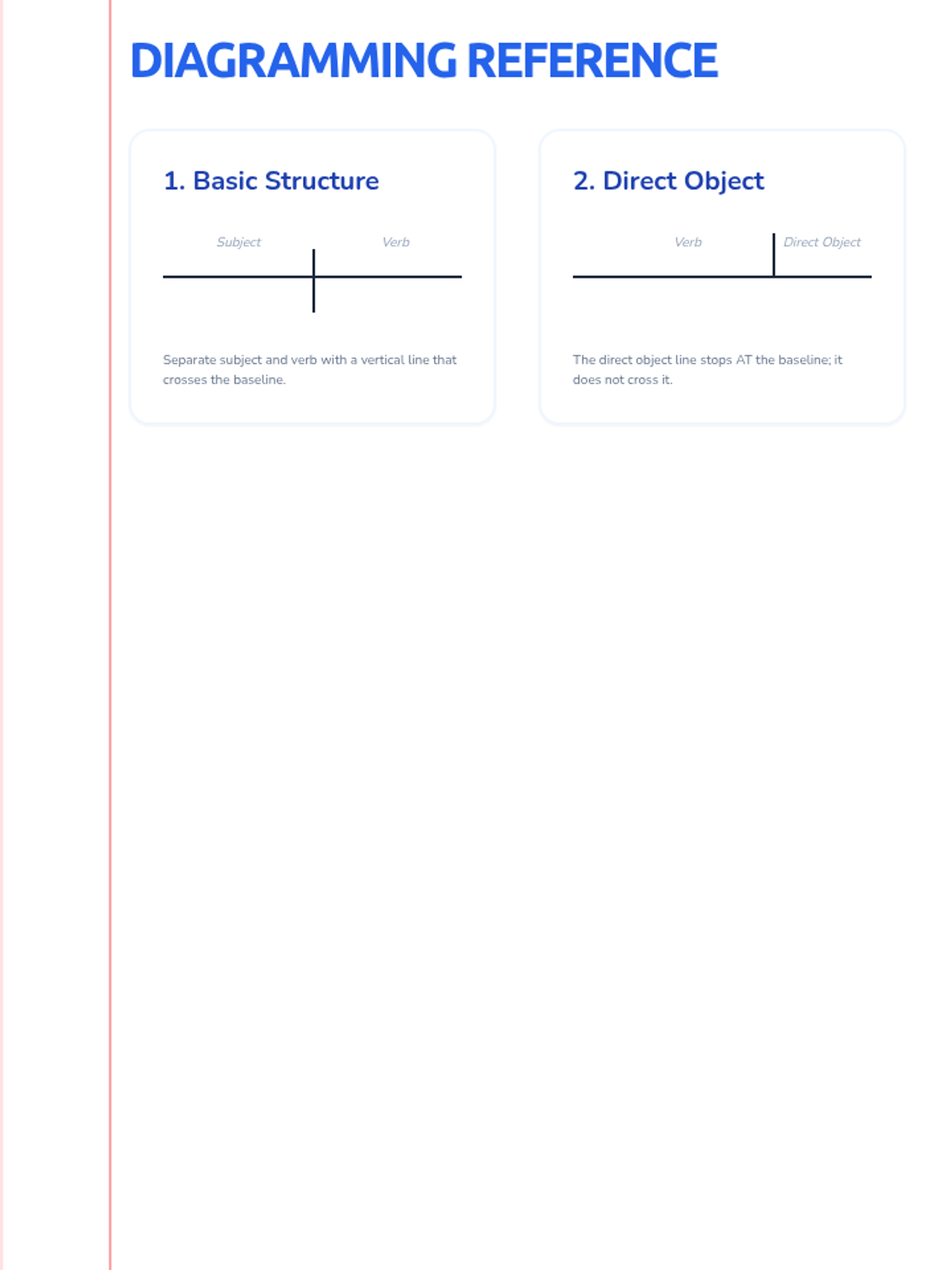
A comprehensive first semester of daily grammar practice focusing on sentence analysis, parts of speech, and diagramming.
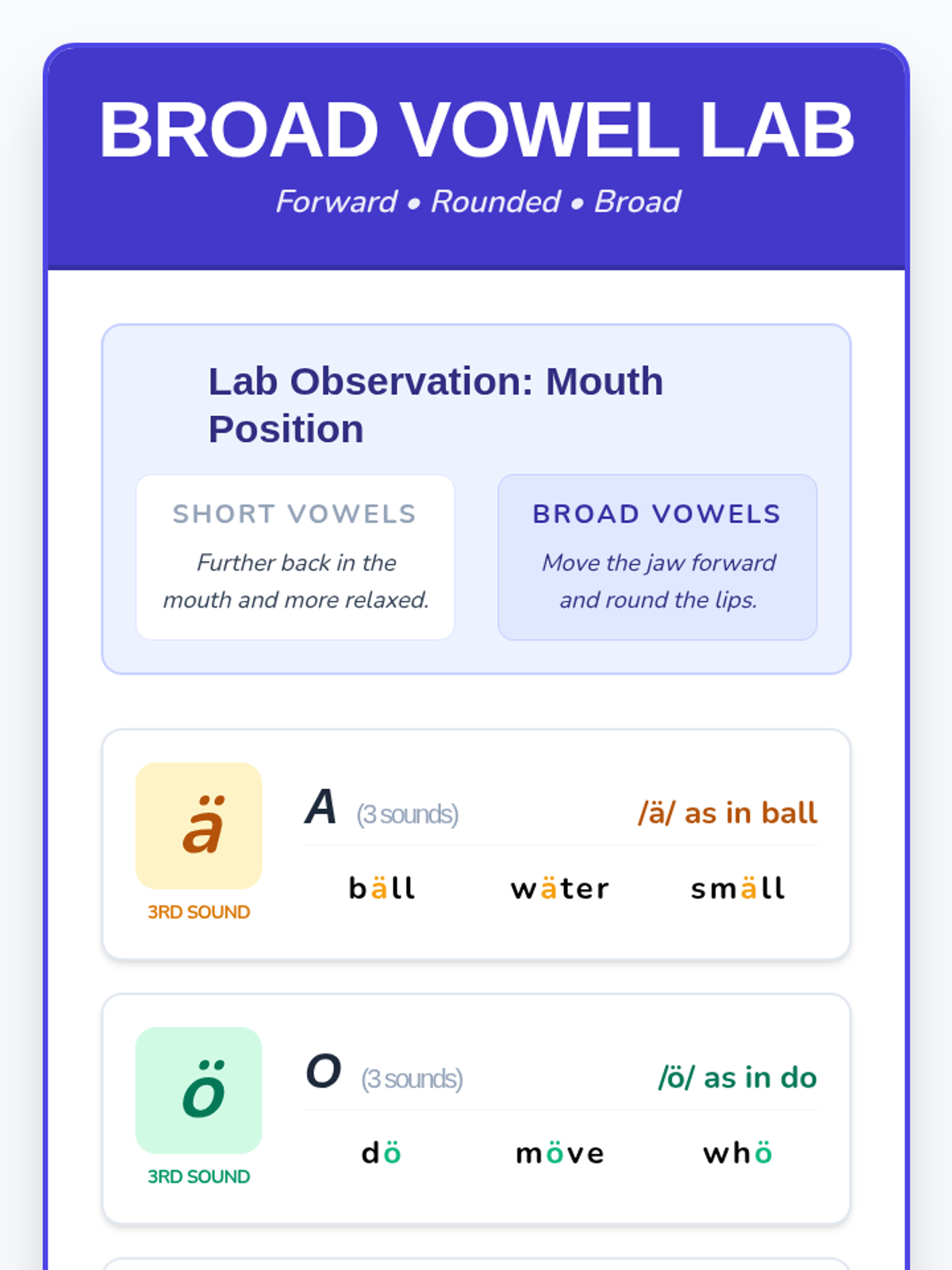
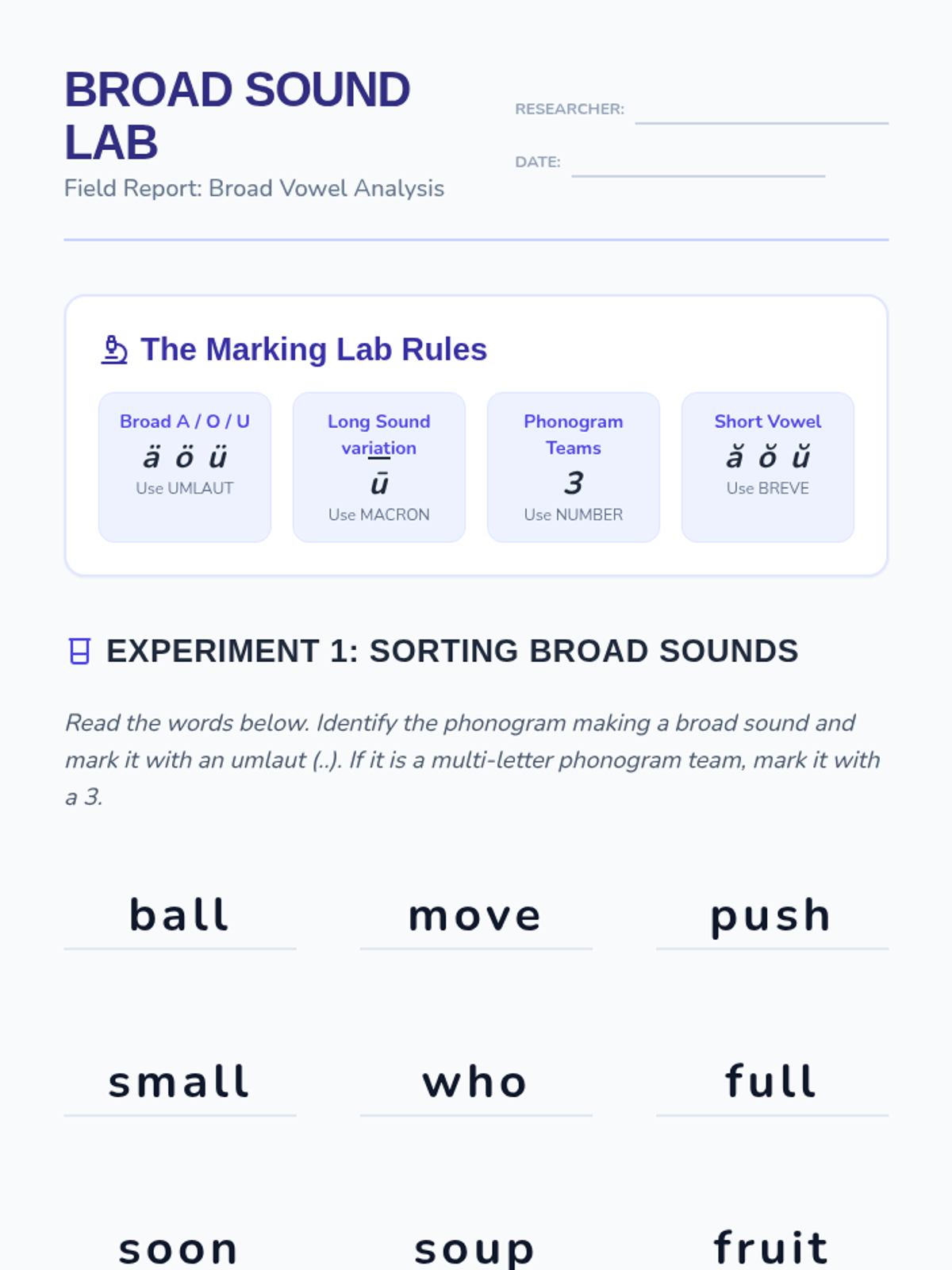
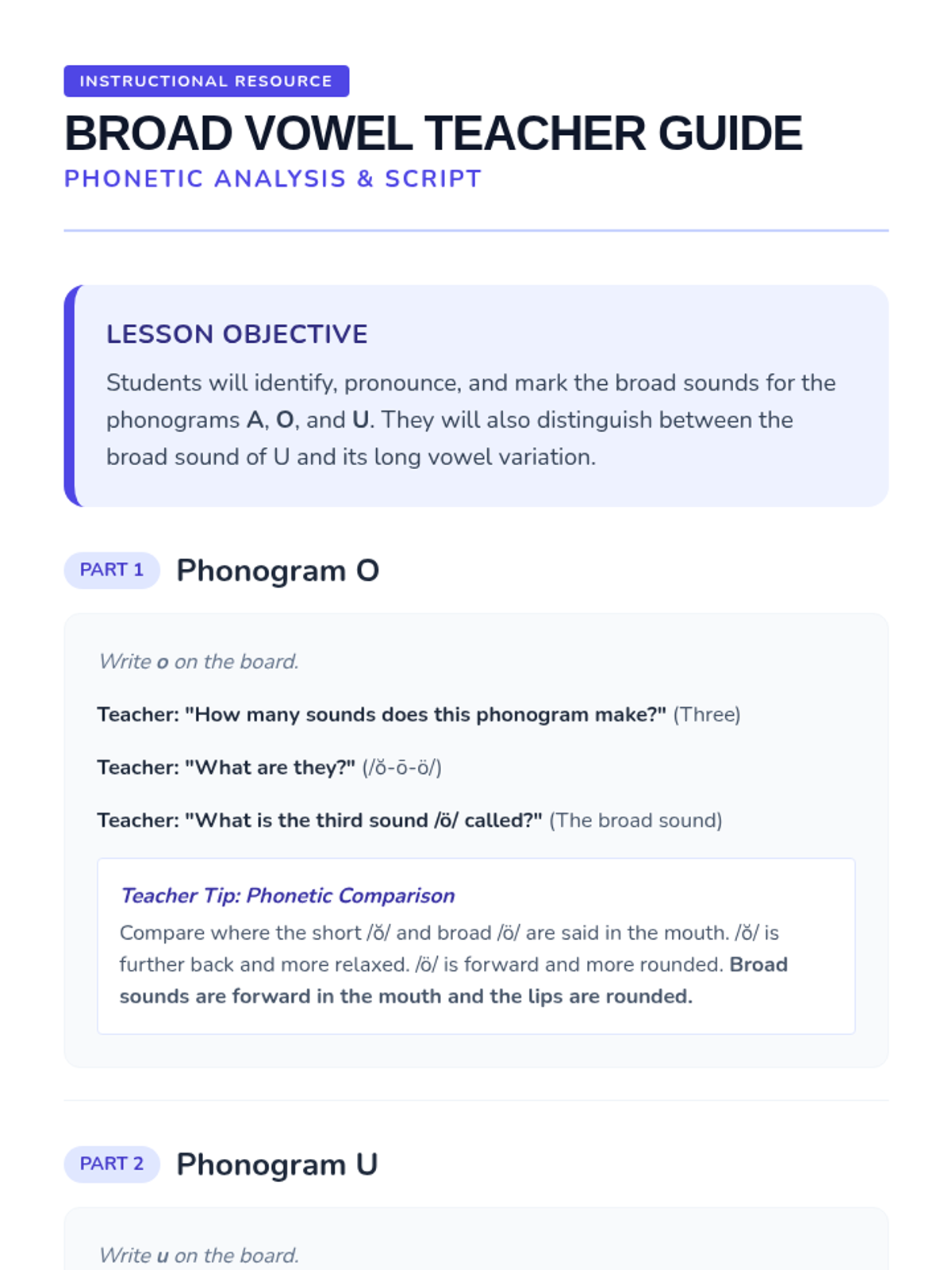
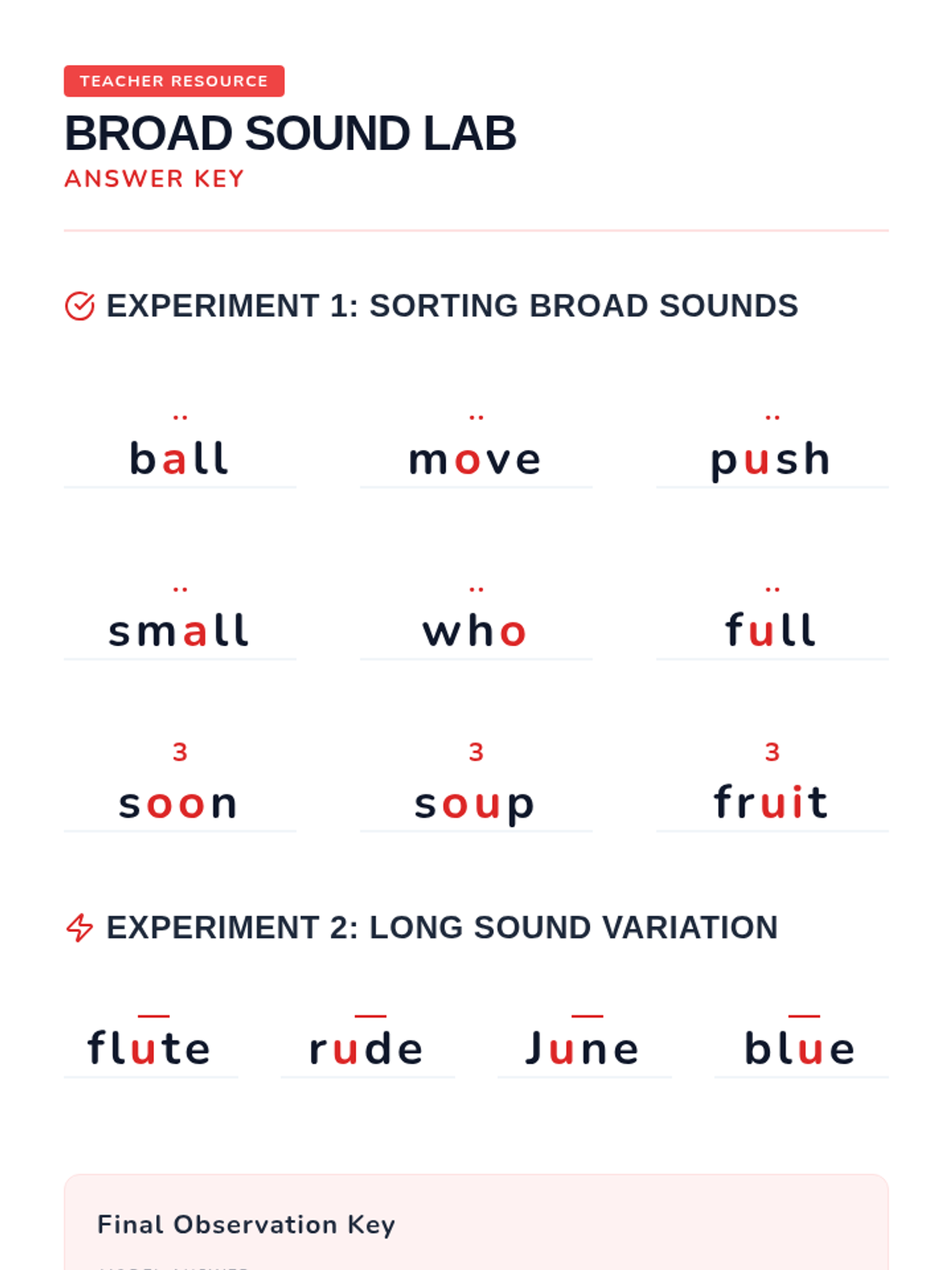
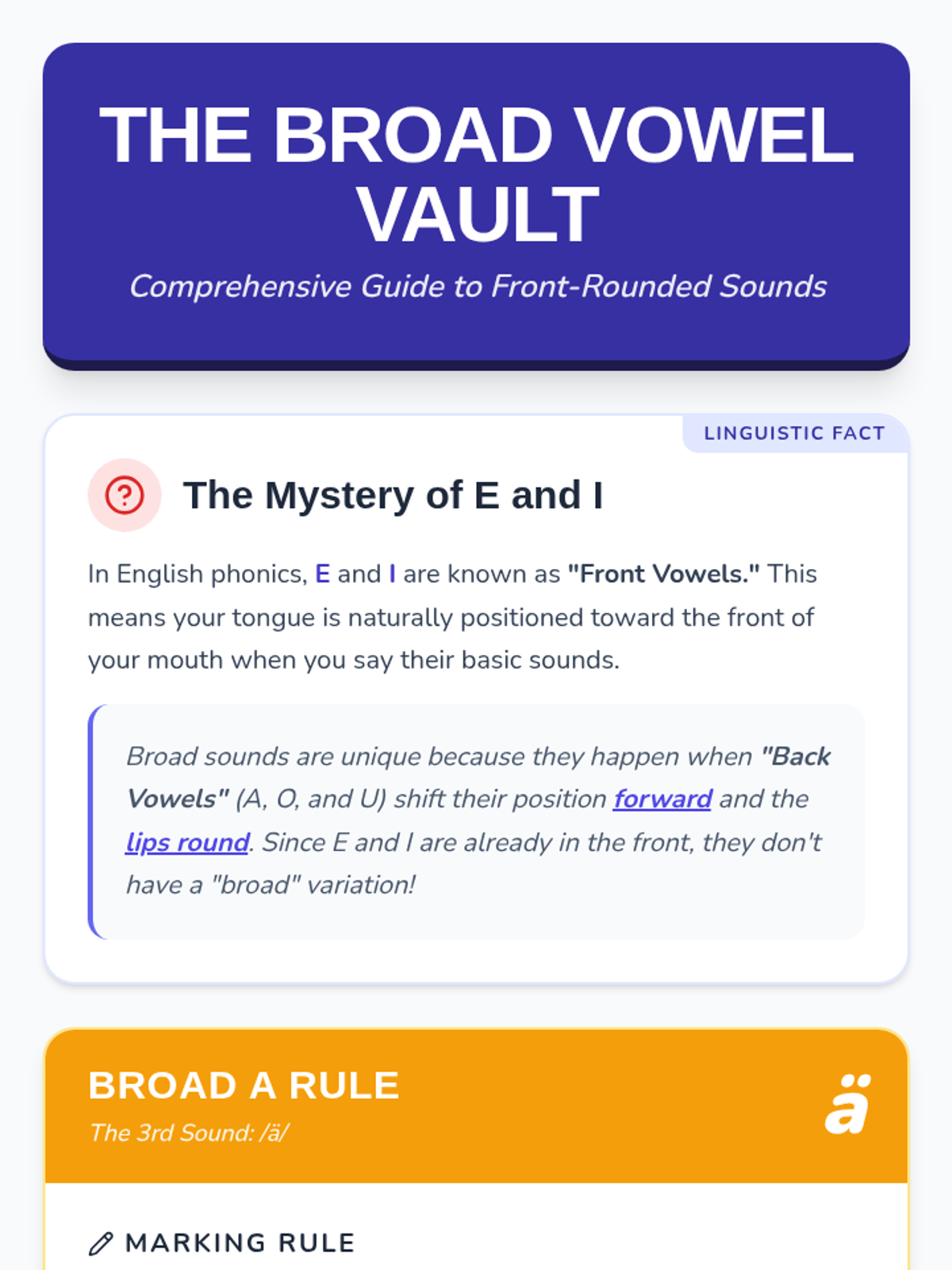
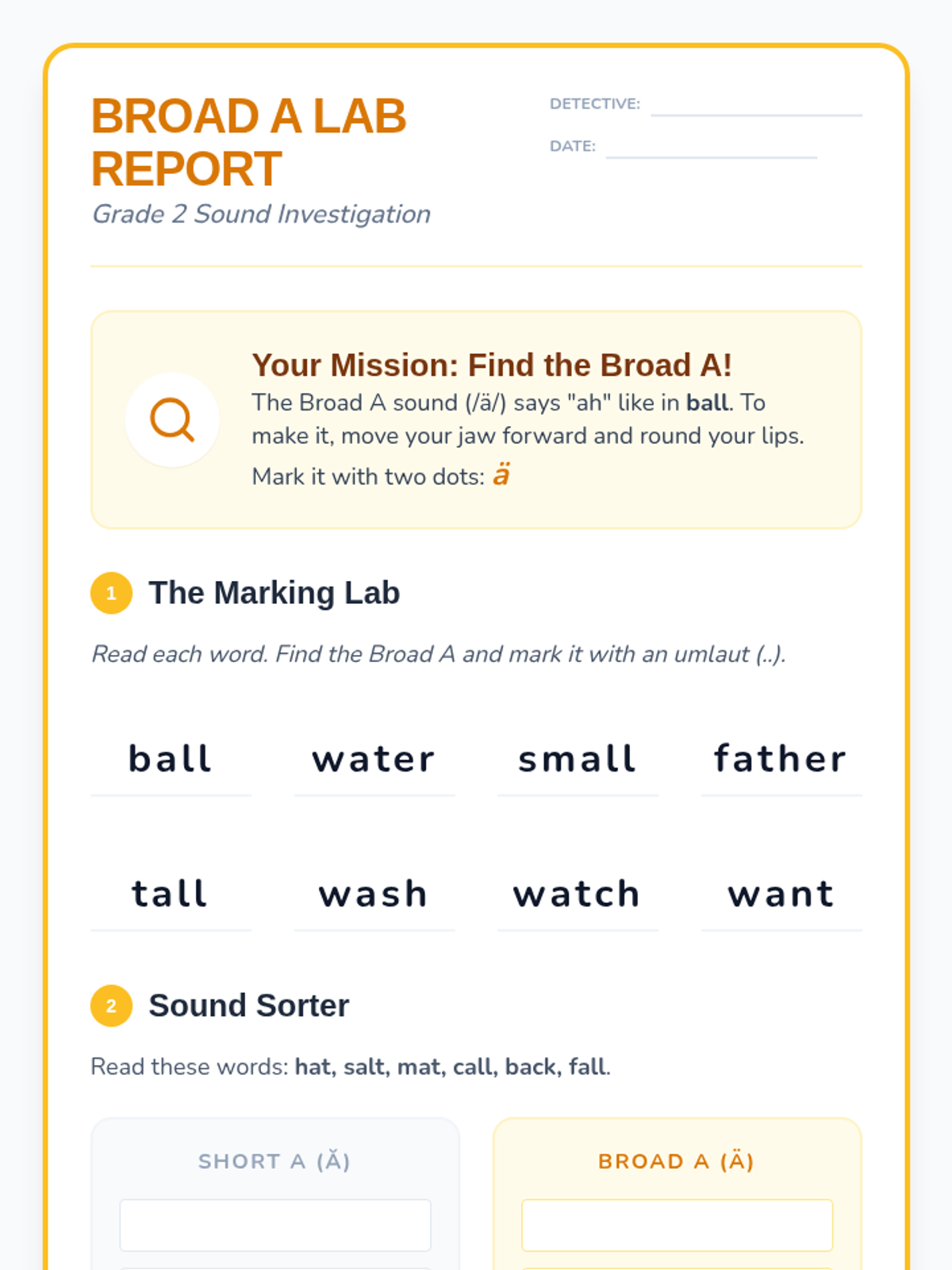
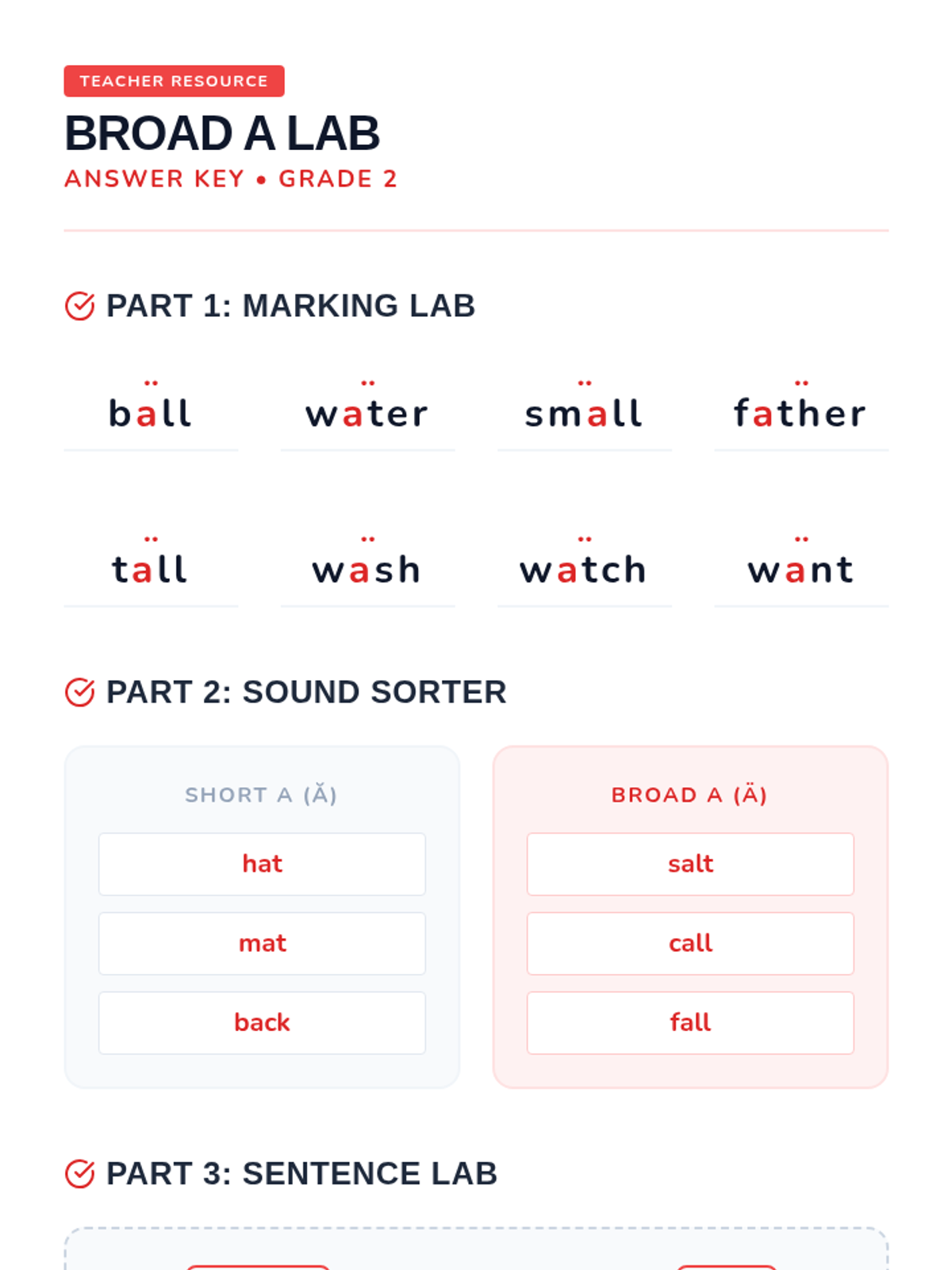
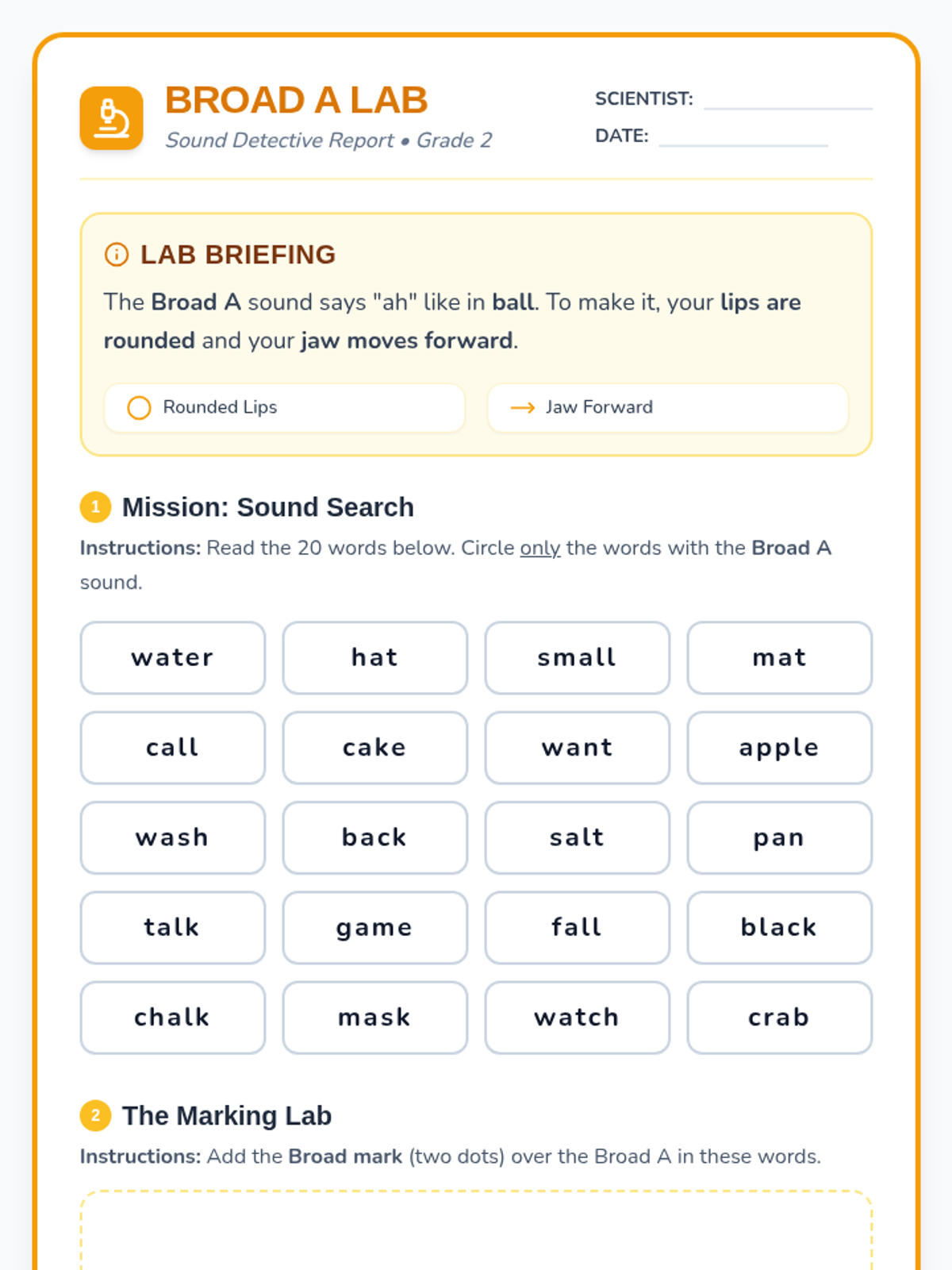
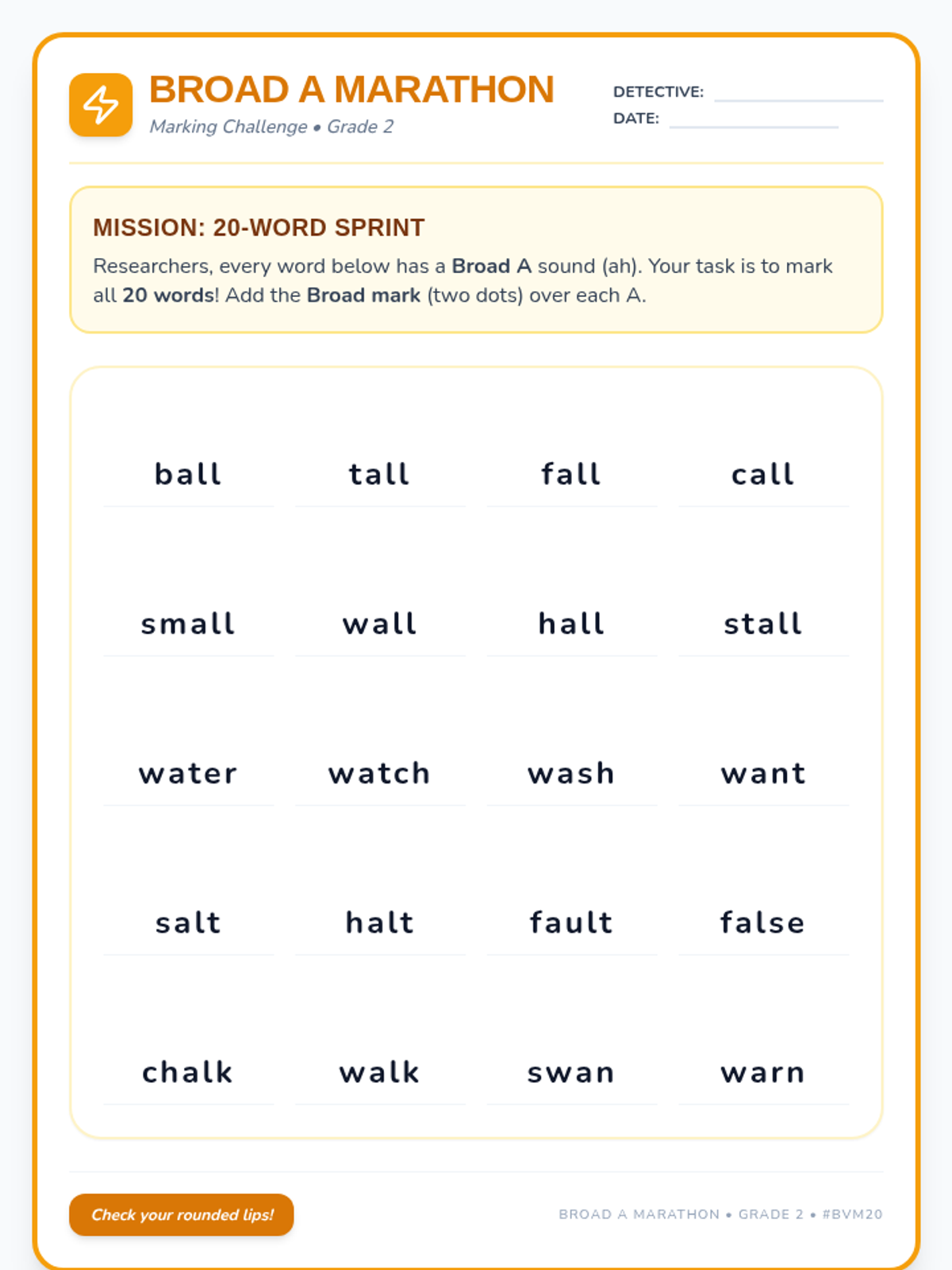
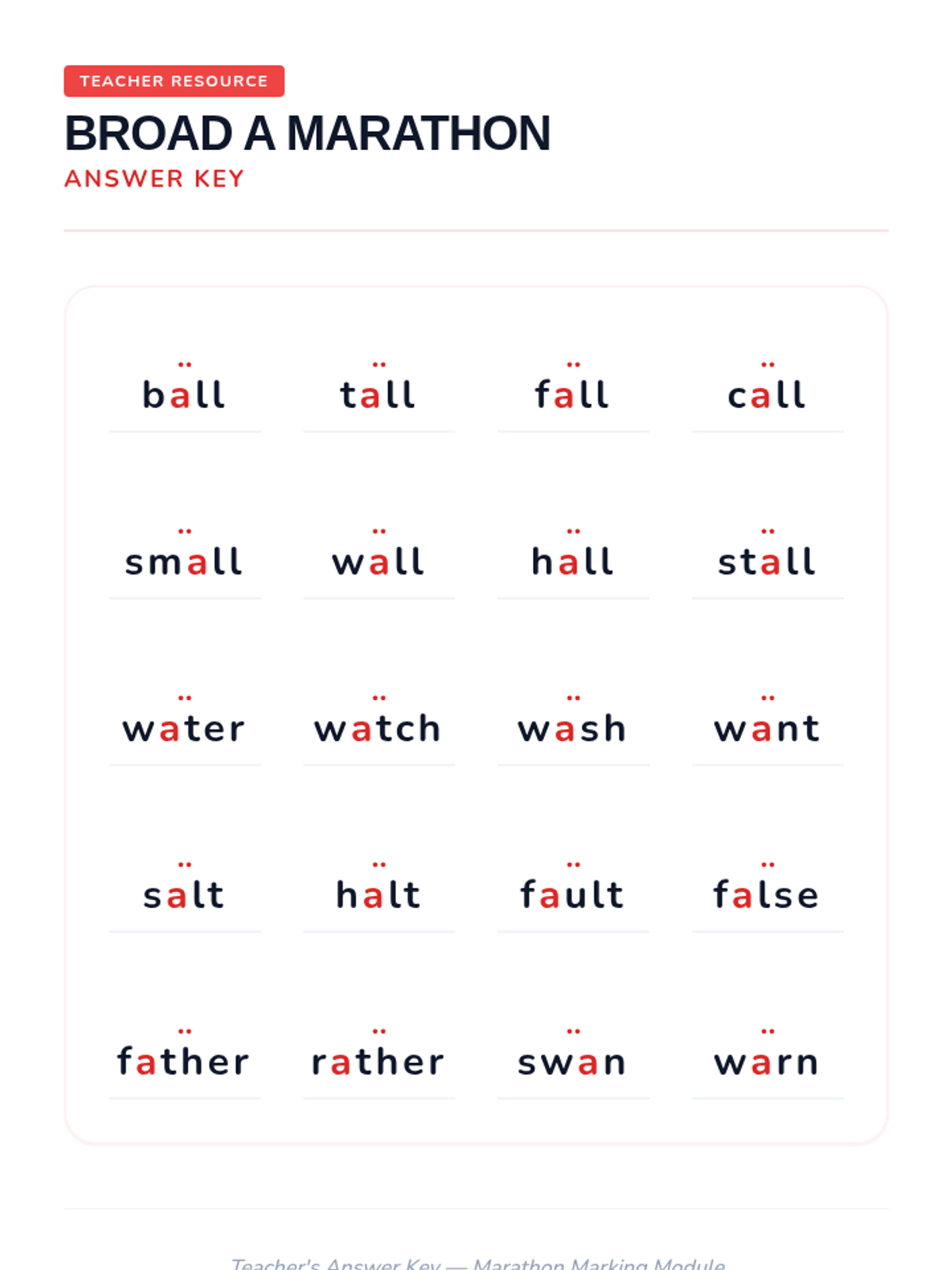
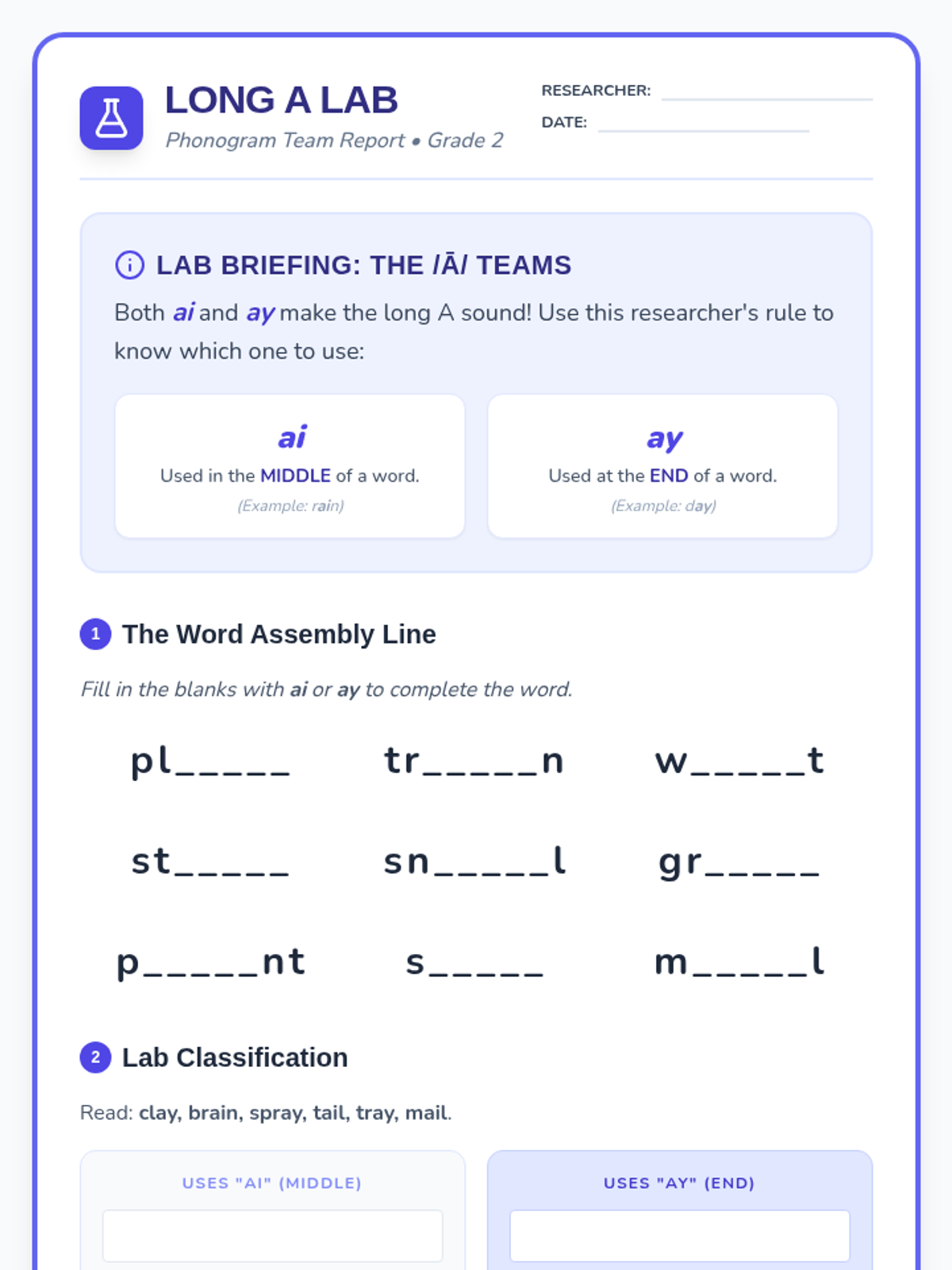
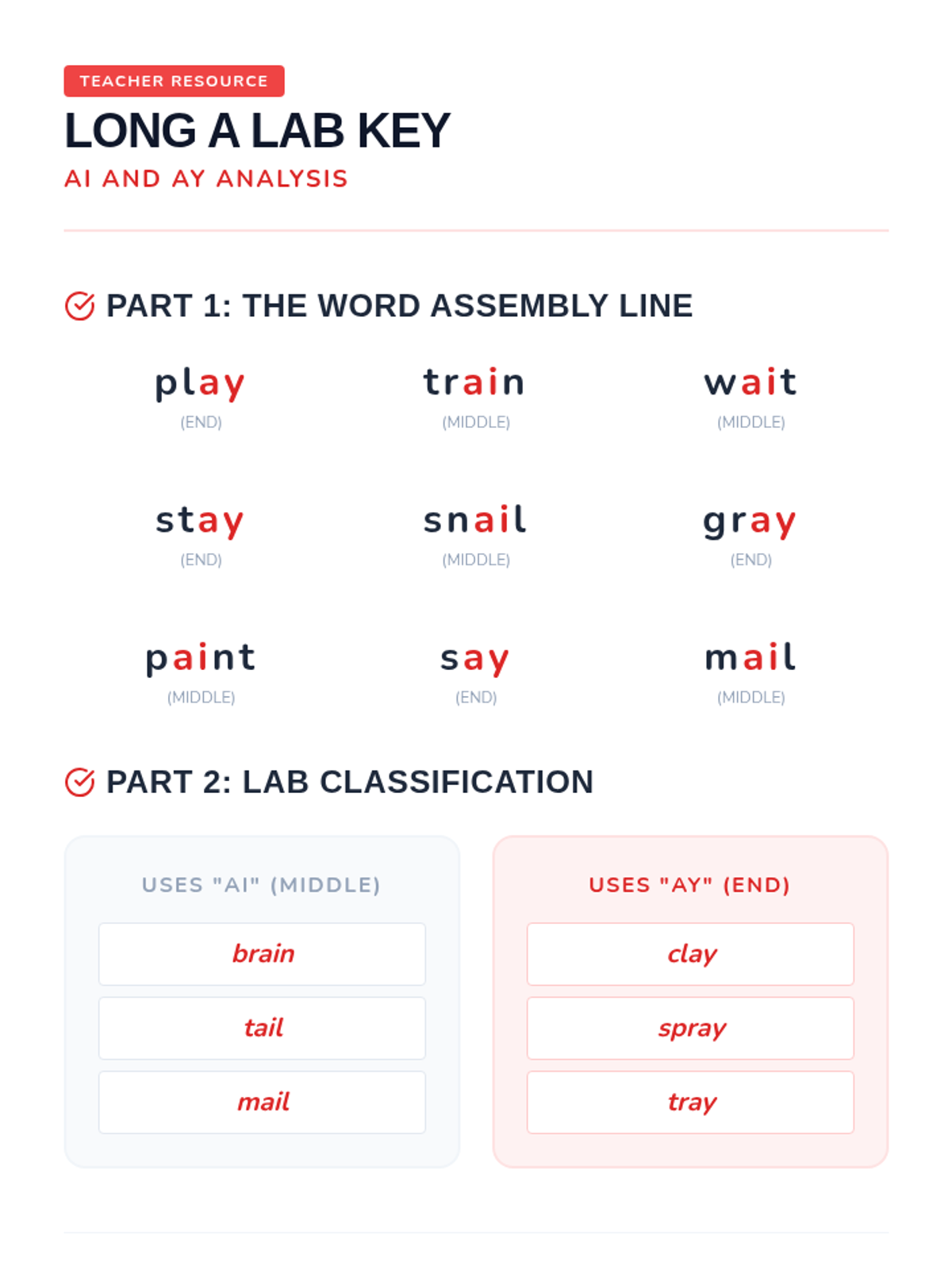
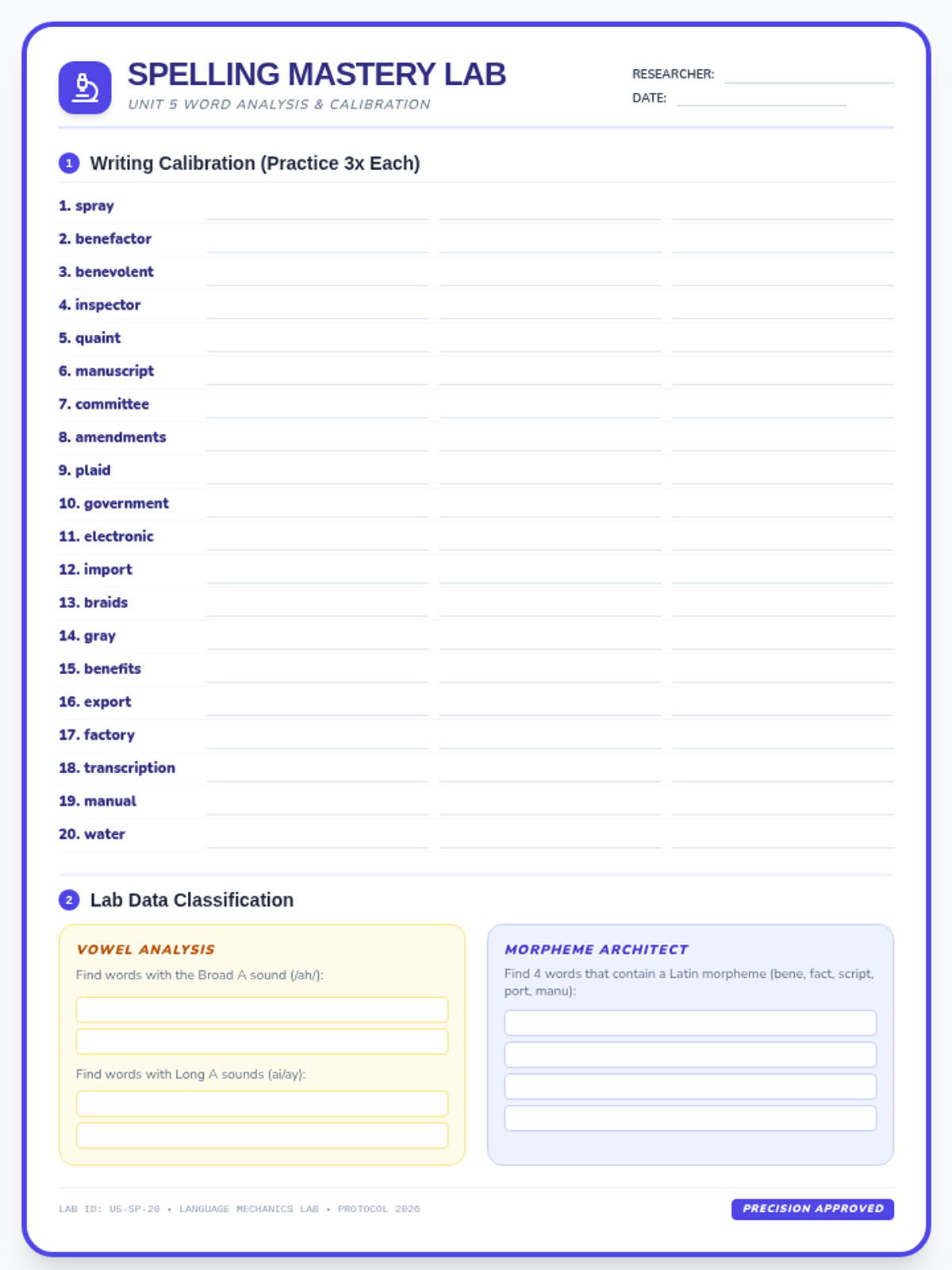
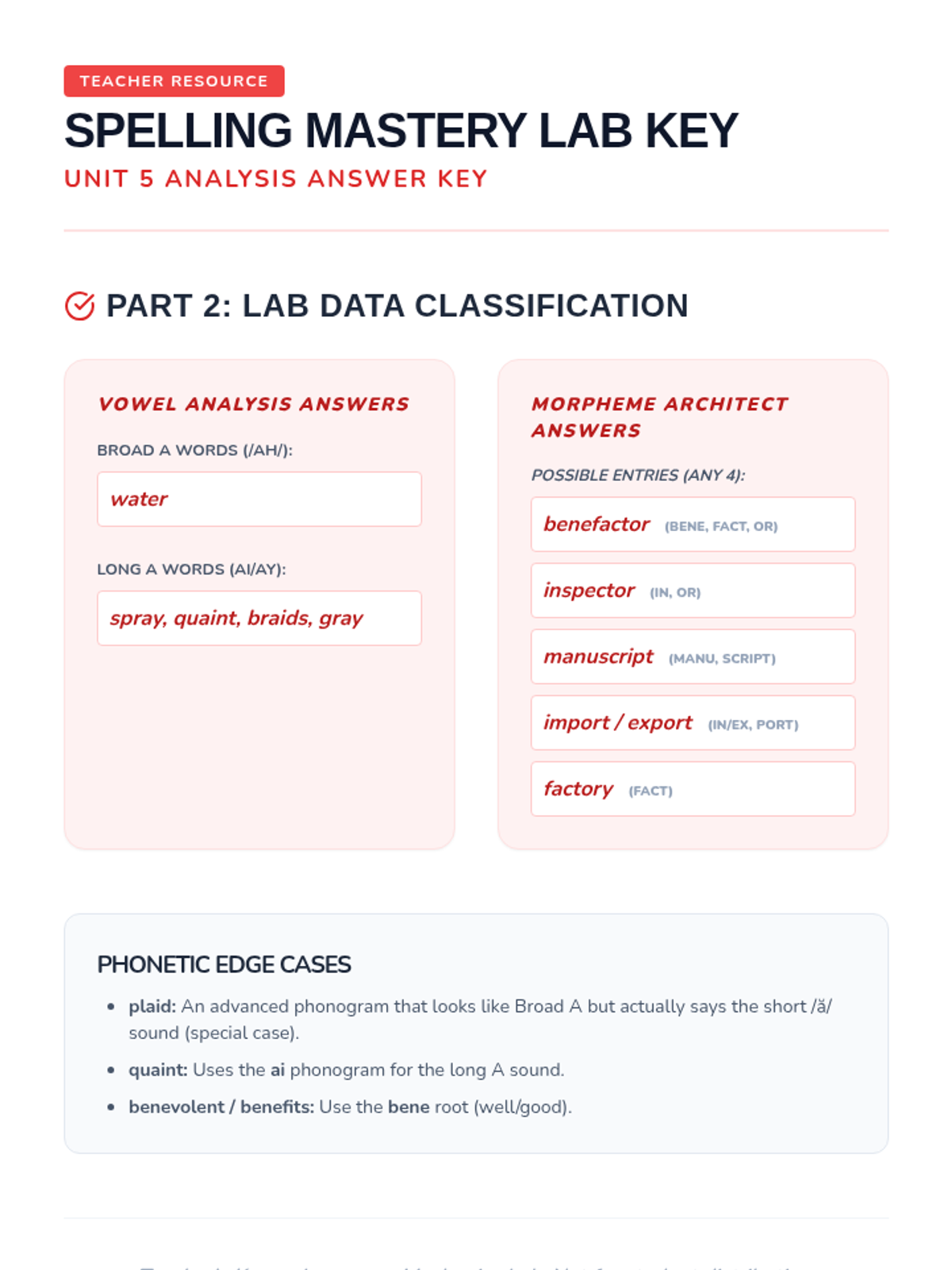
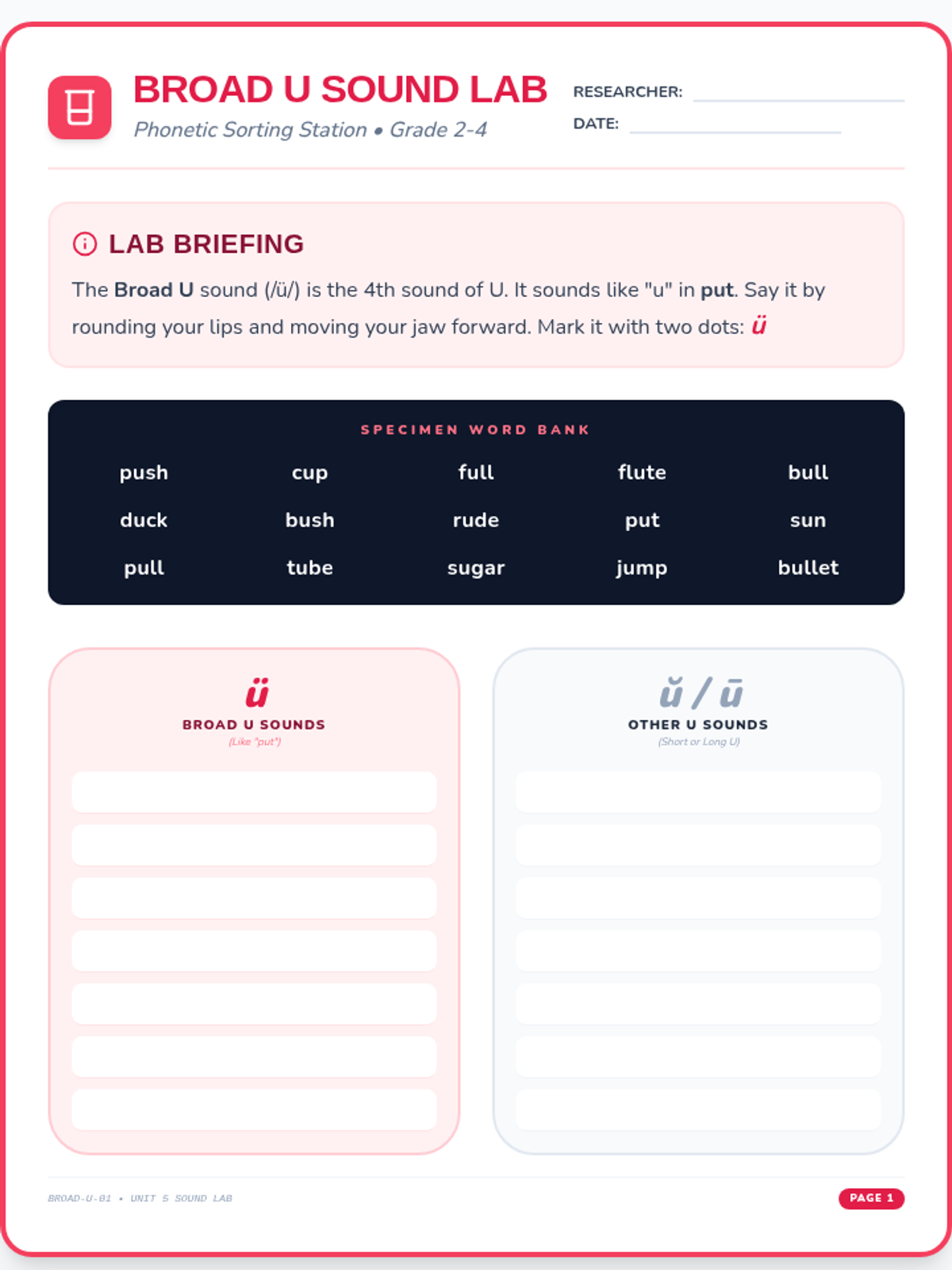
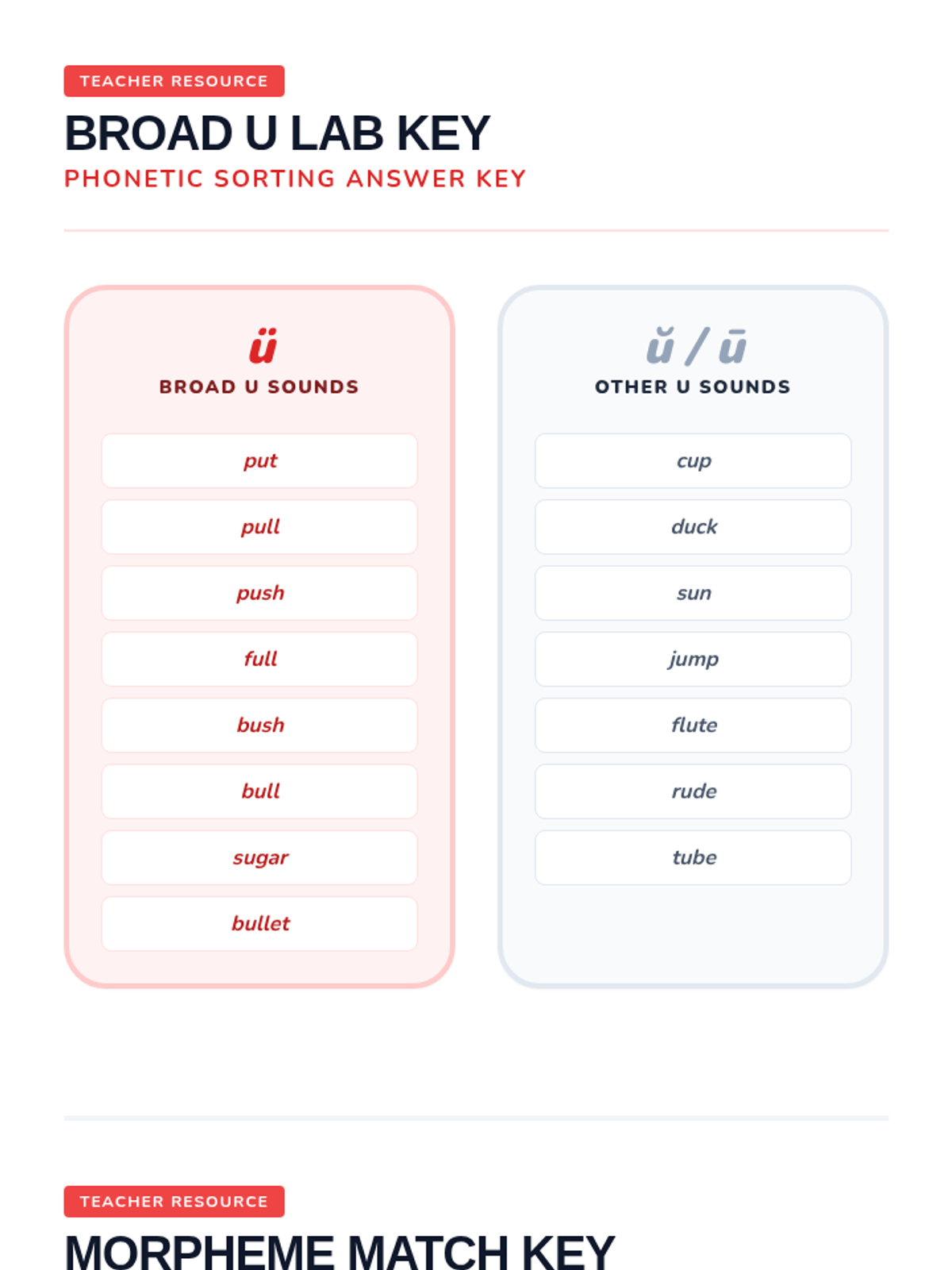
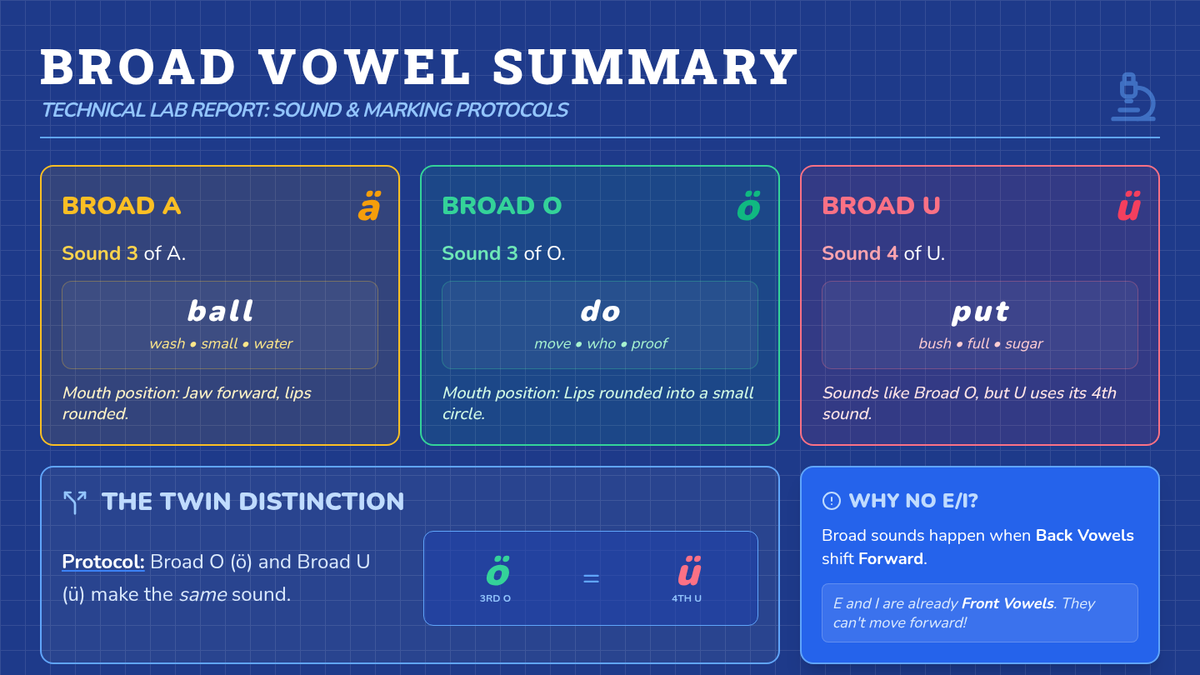
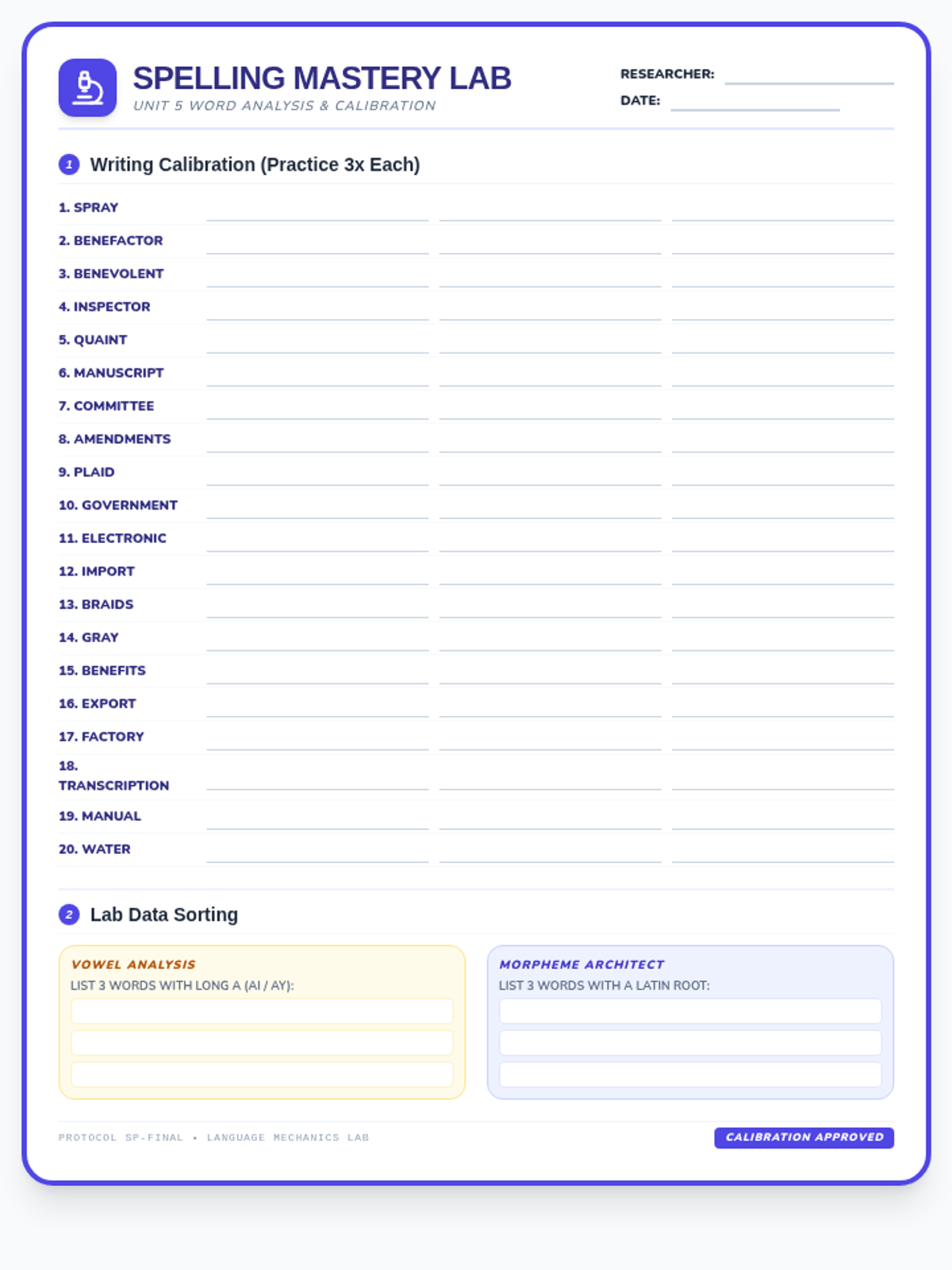
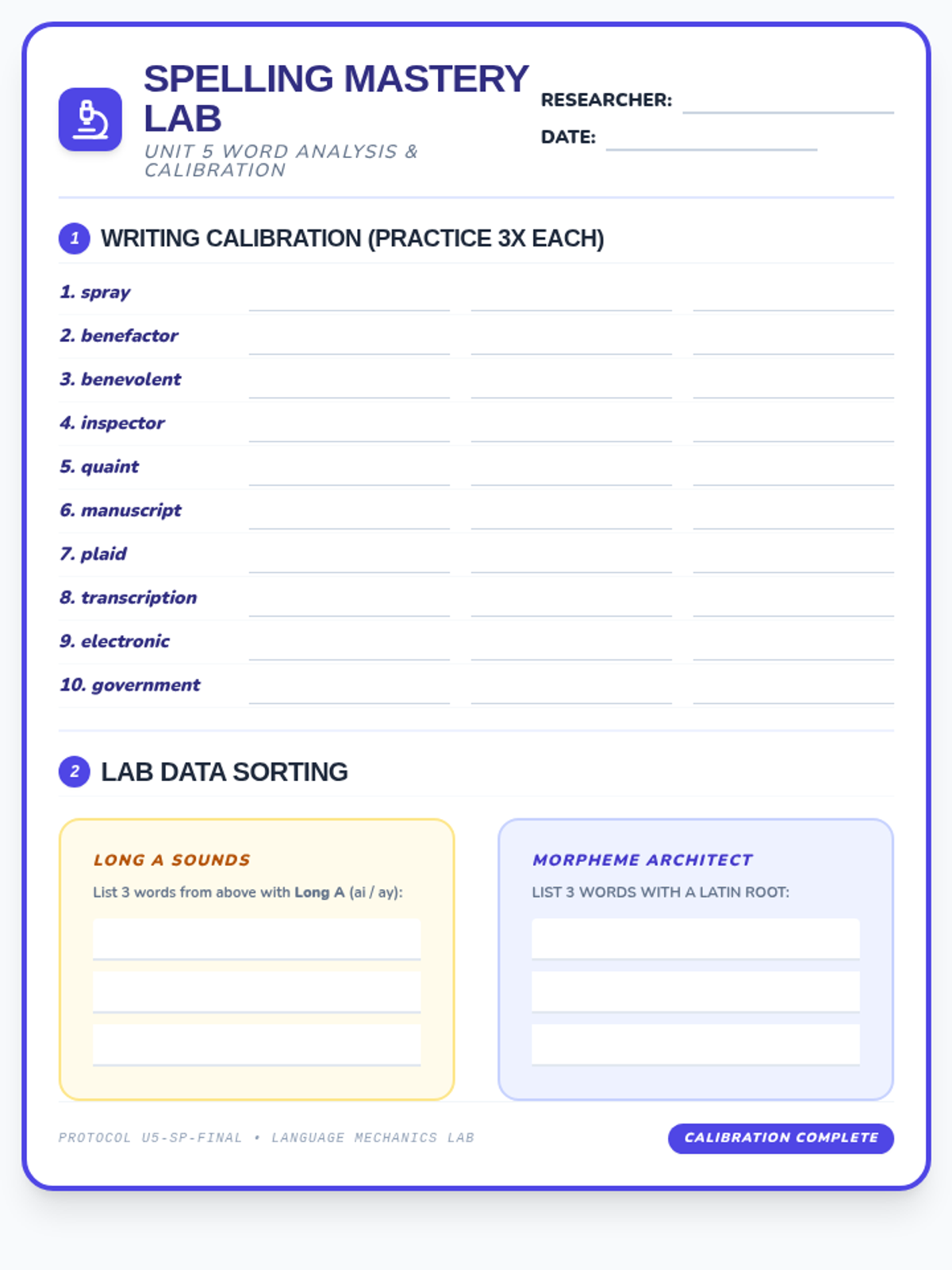
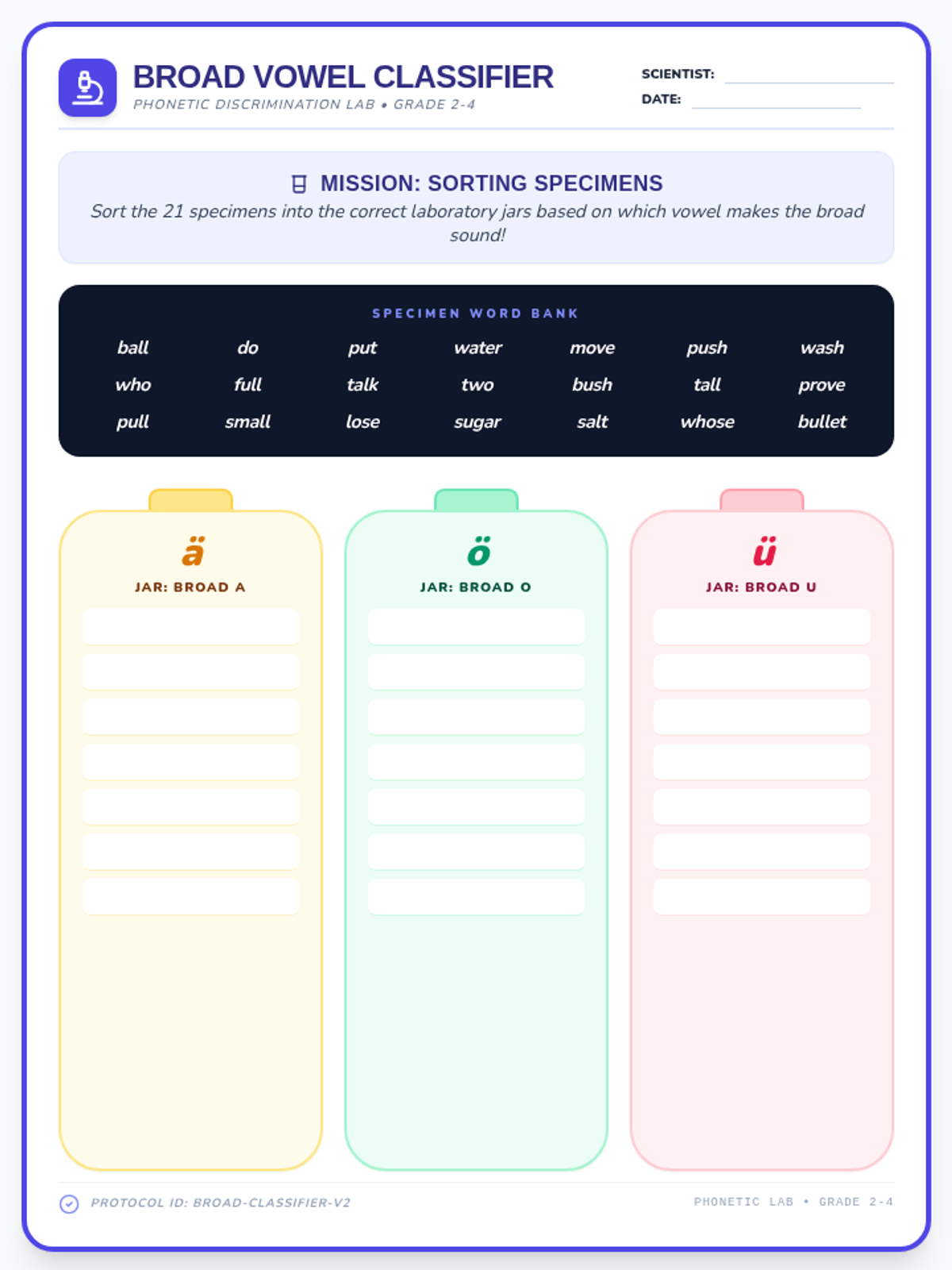
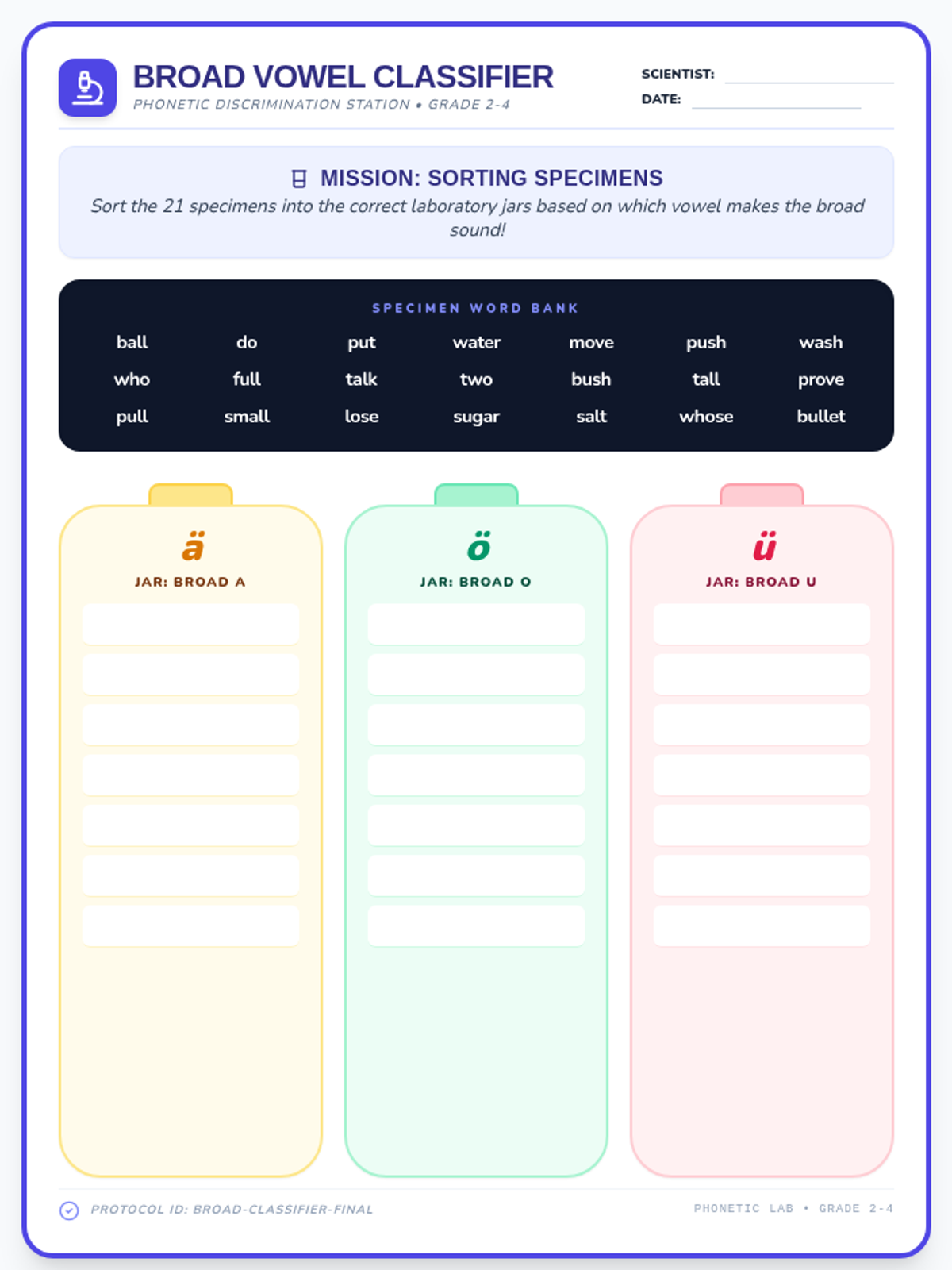
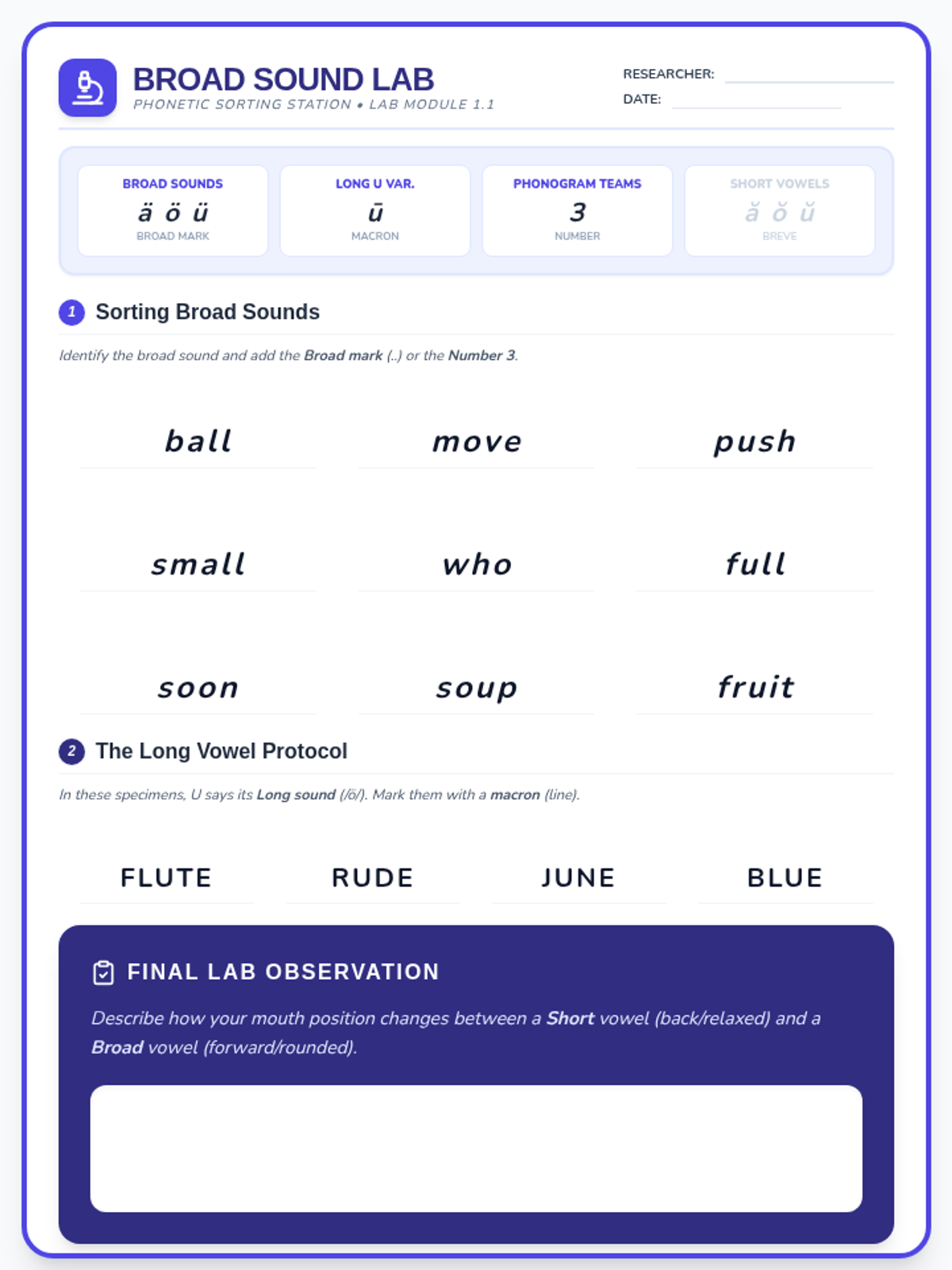
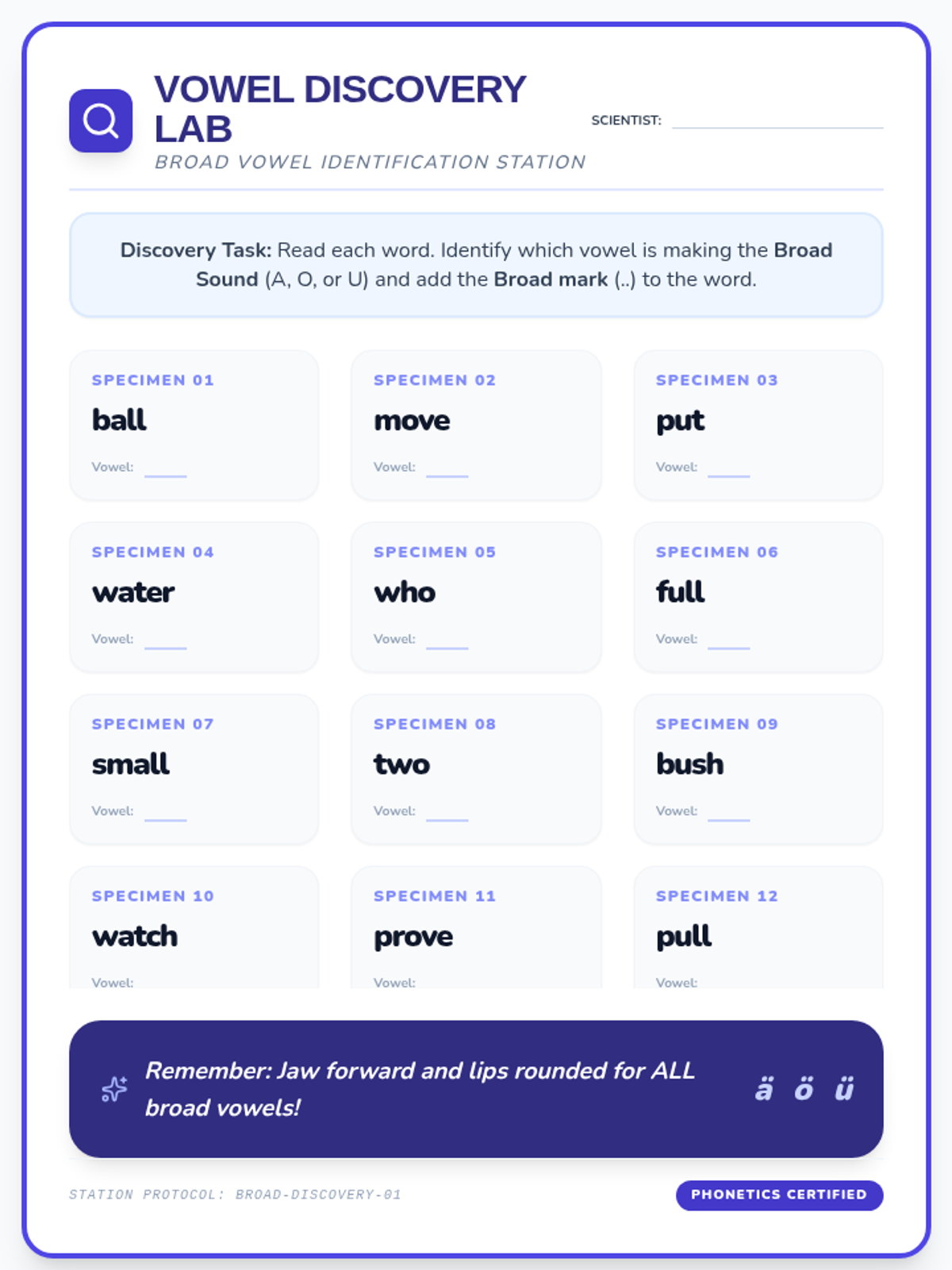
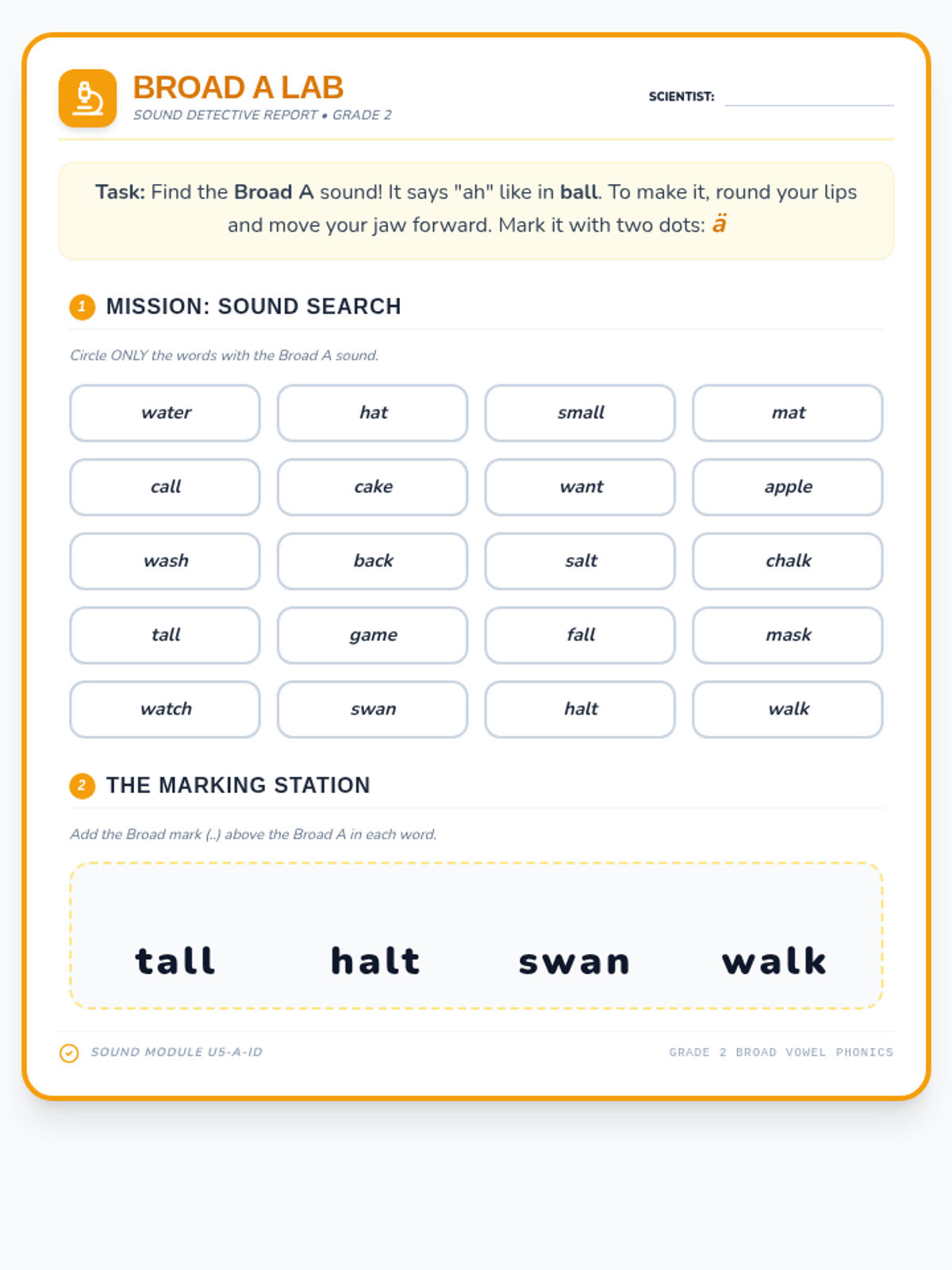
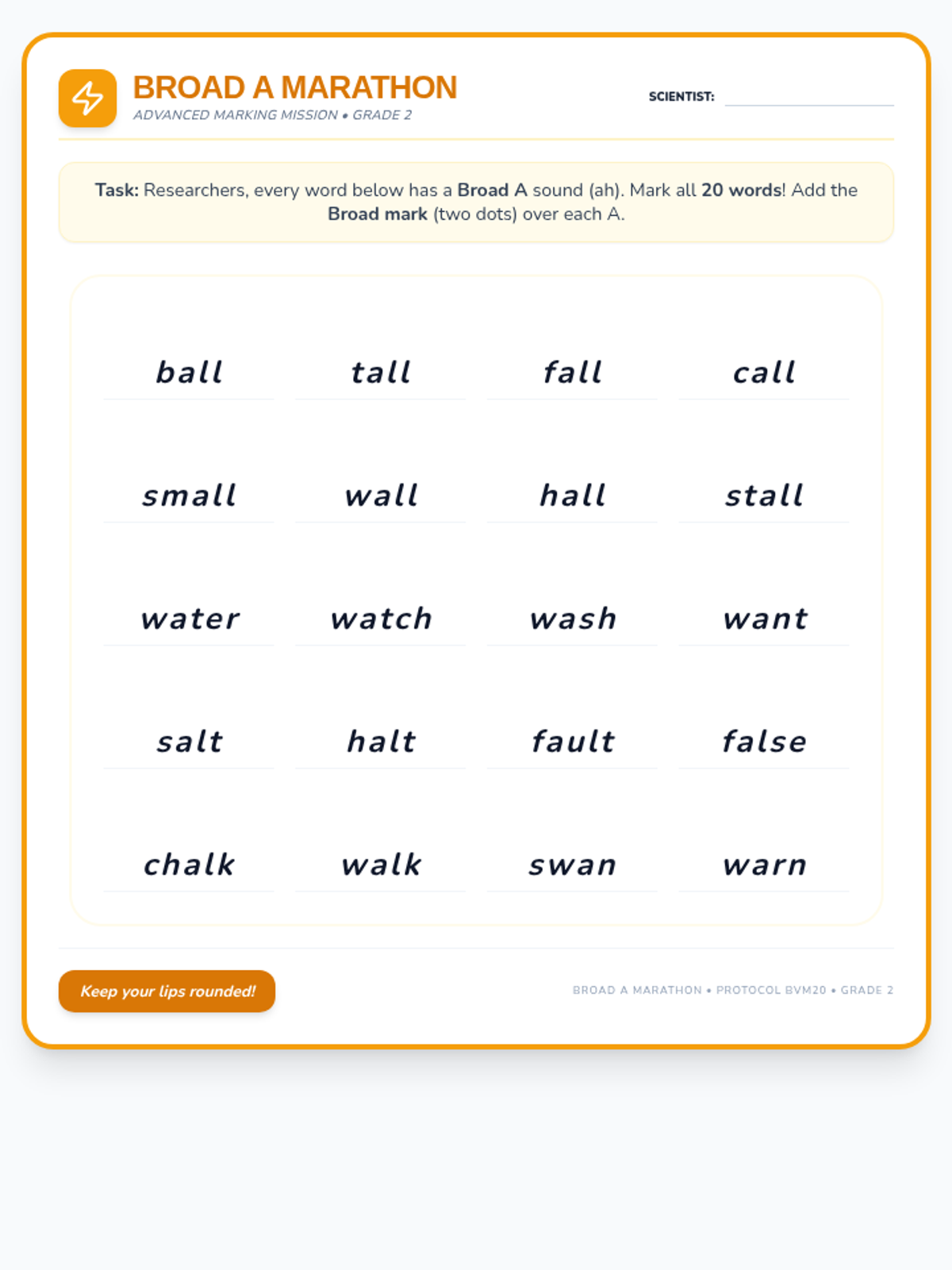
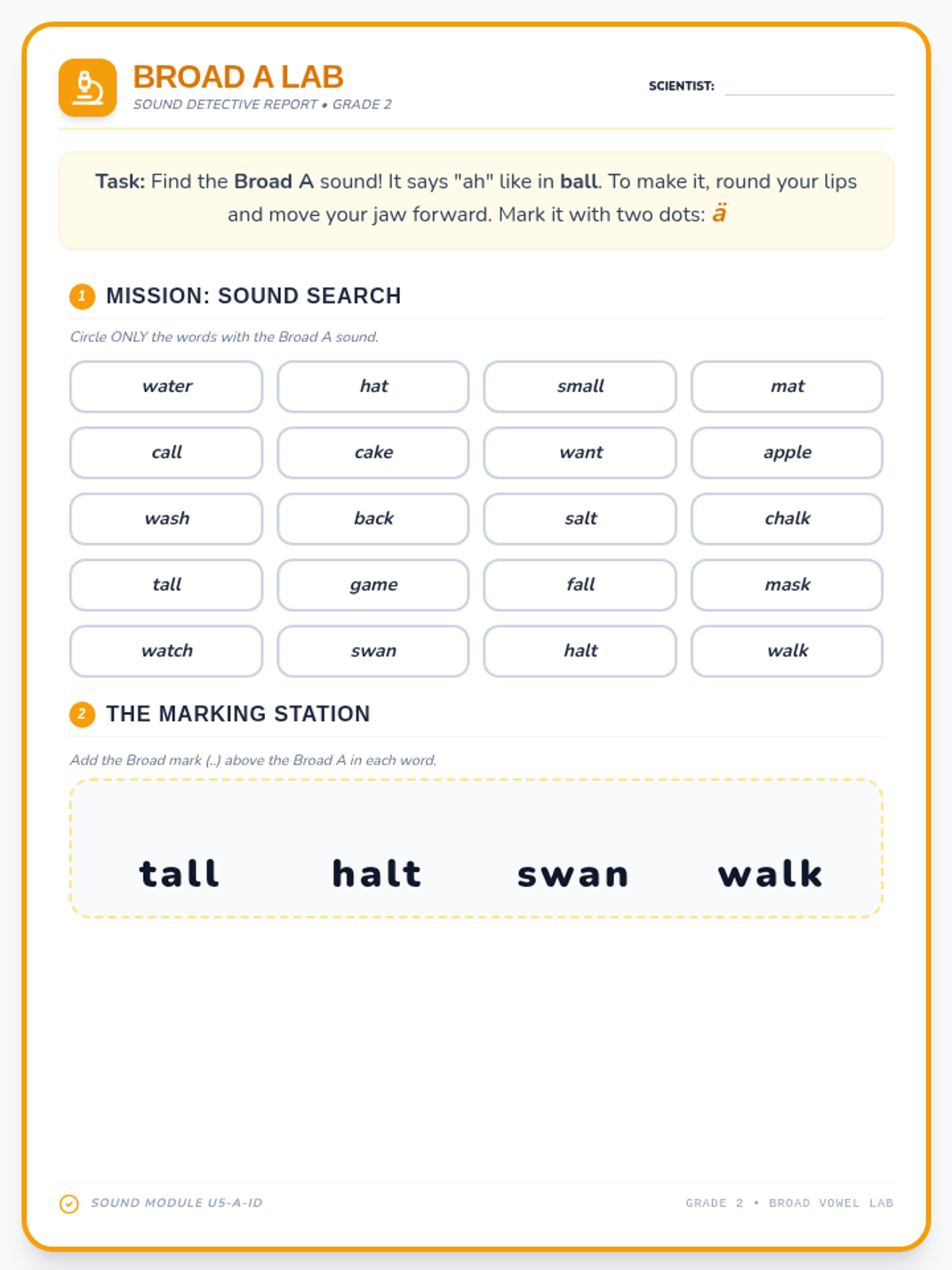
A comprehensive sequence on language mechanics, from phonetic marking of complex vowel sounds to the morphological analysis of Latin roots and affixes. Students develop deep decoding and encoding skills by investigating the building blocks of words.
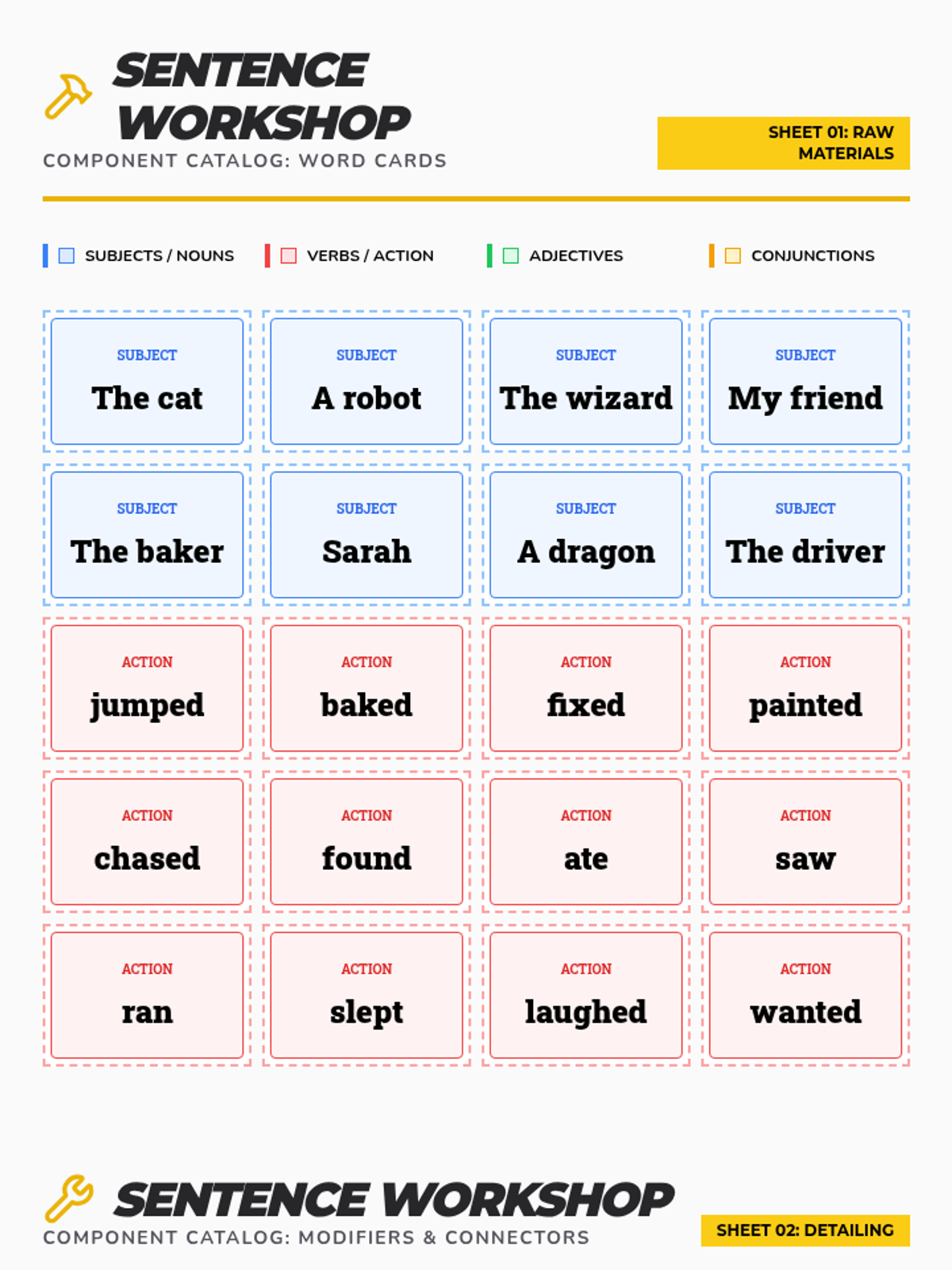
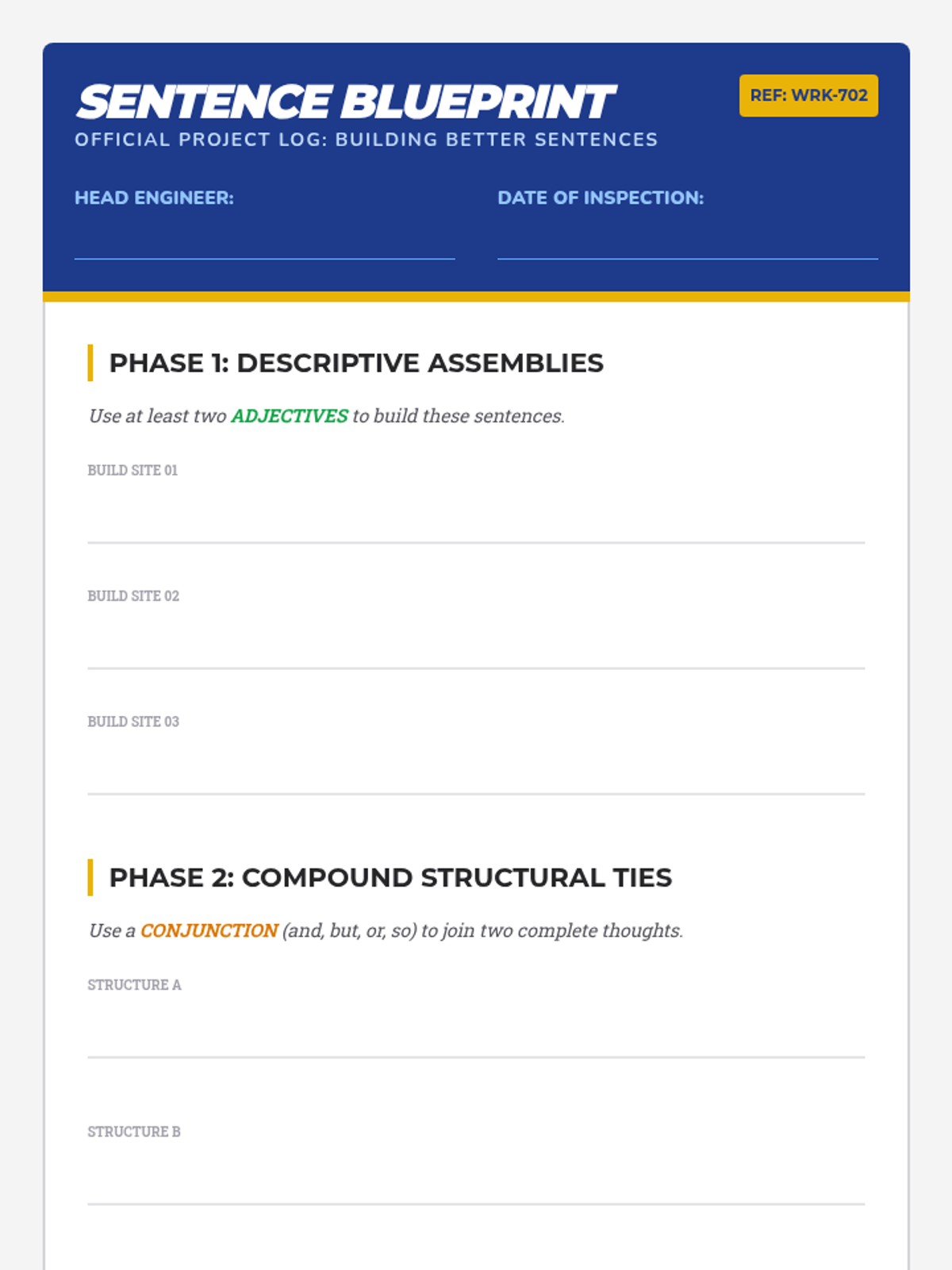
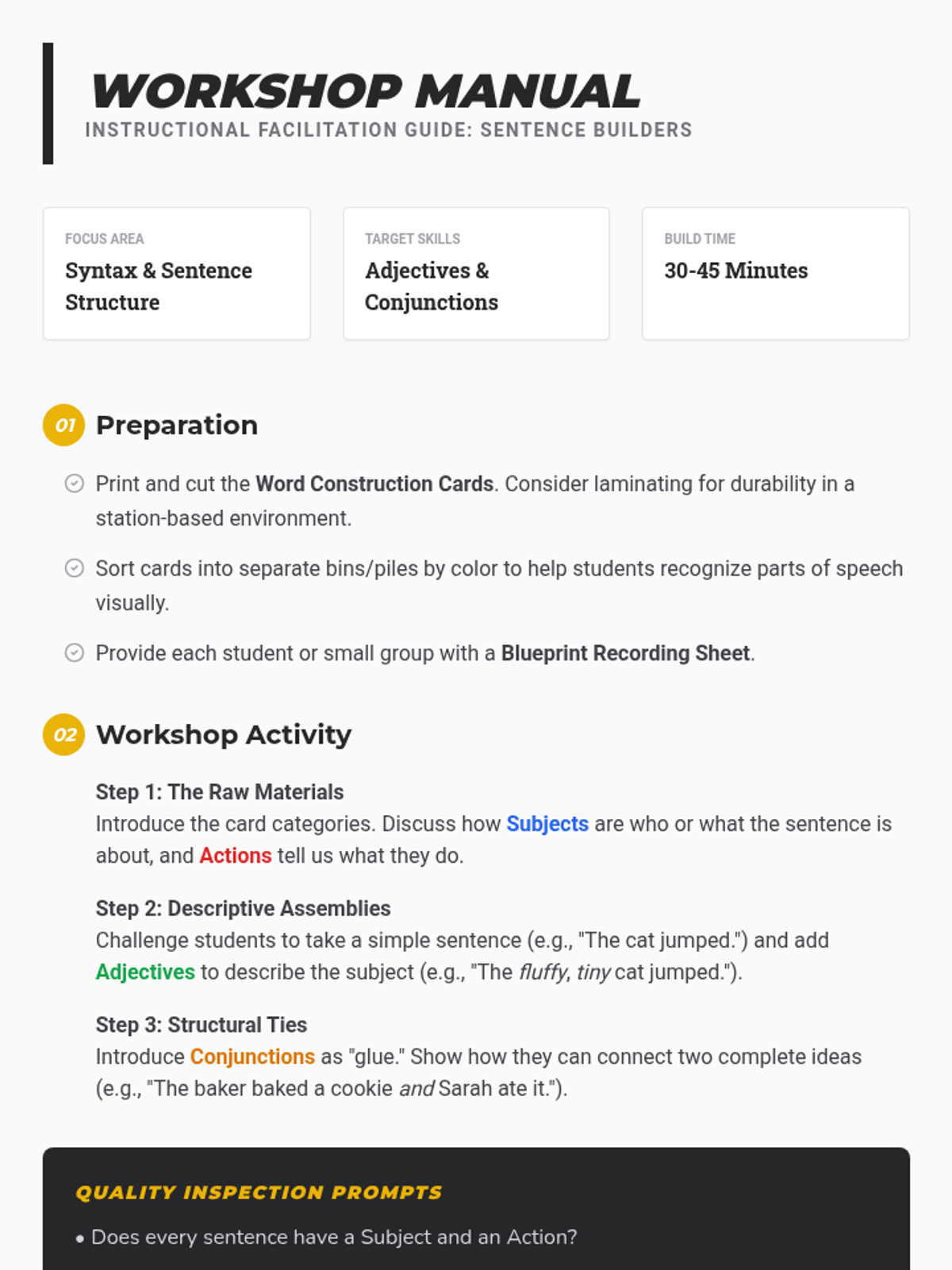
A series of hands-on workshops where students act as "sentence engineers," using word components to master syntax, sentence variety, and descriptive writing.
Une série de modules de formation destinés aux conseillers pédagogiques pour renforcer leur expertise en ingénierie de formation continue, spécifiquement appliquée à l'enseignement du français à l'école primaire.
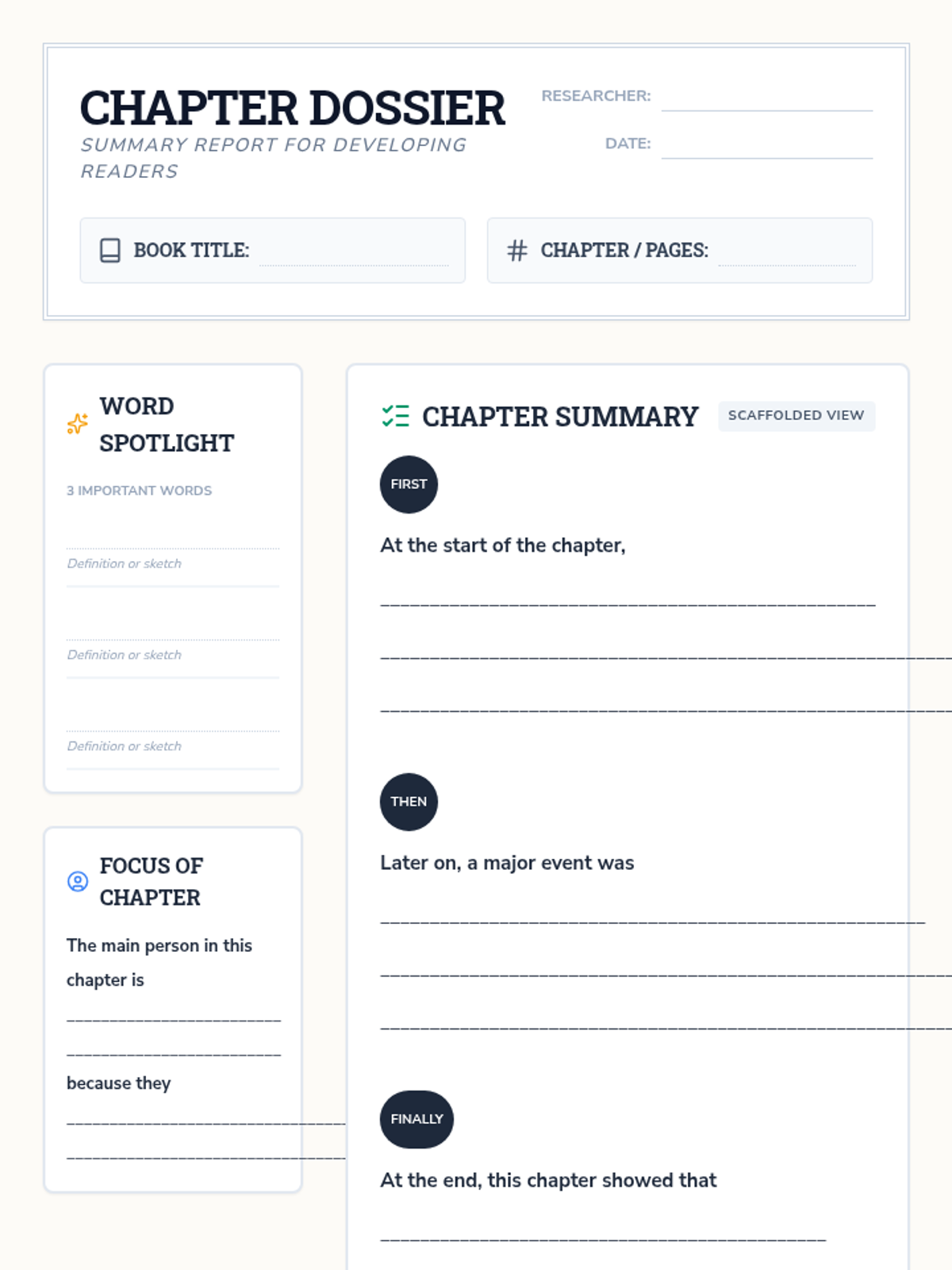
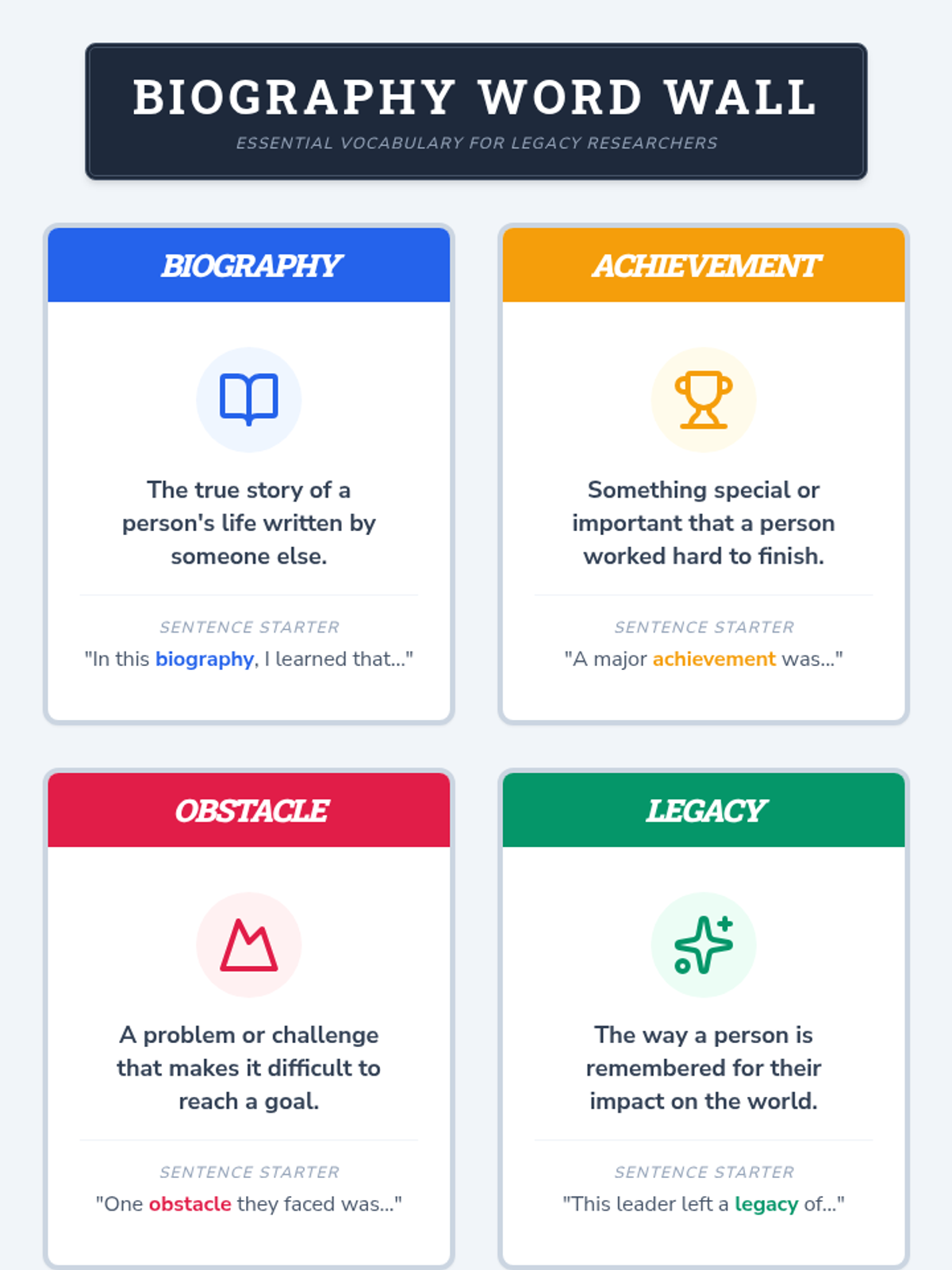
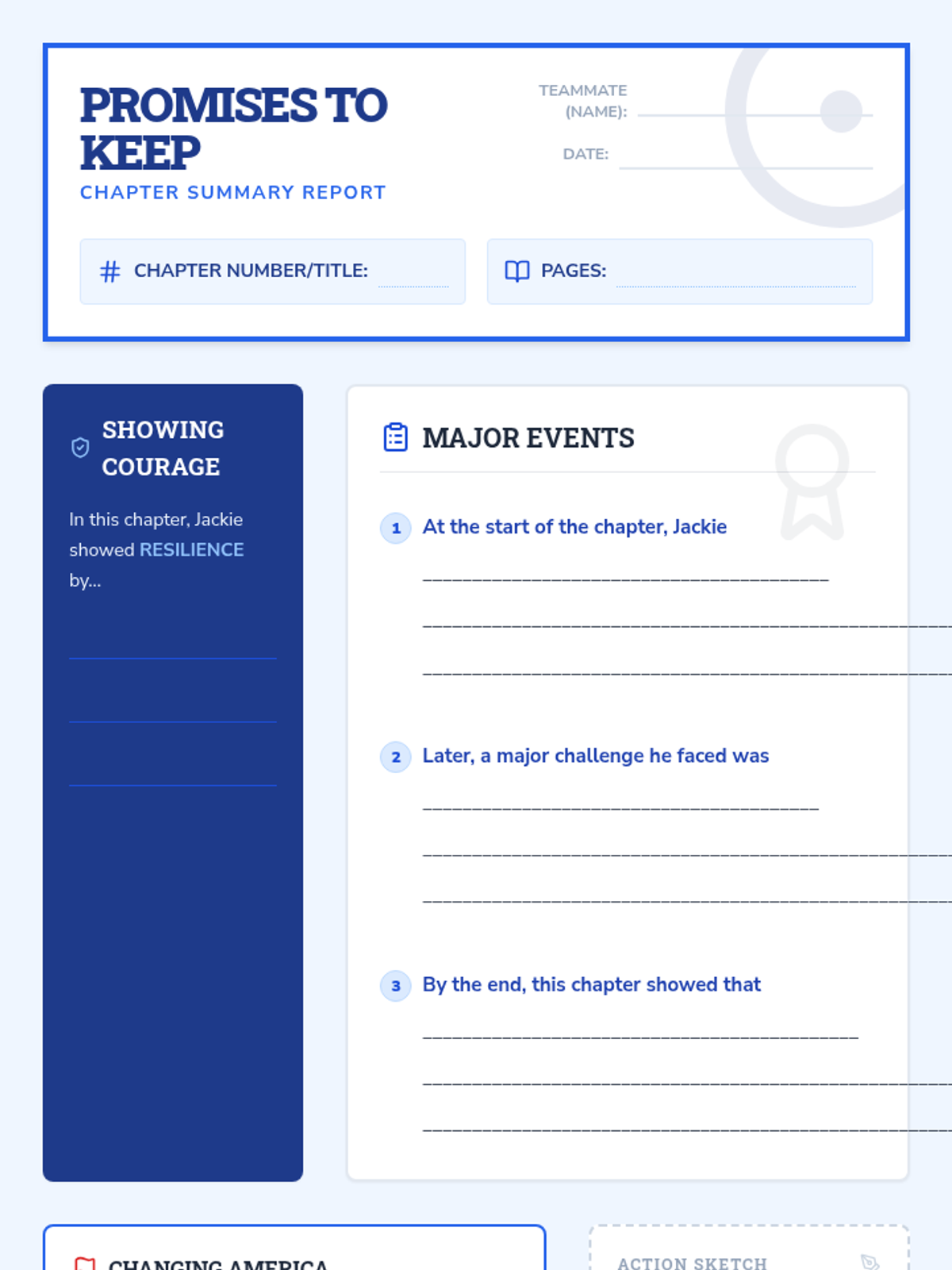
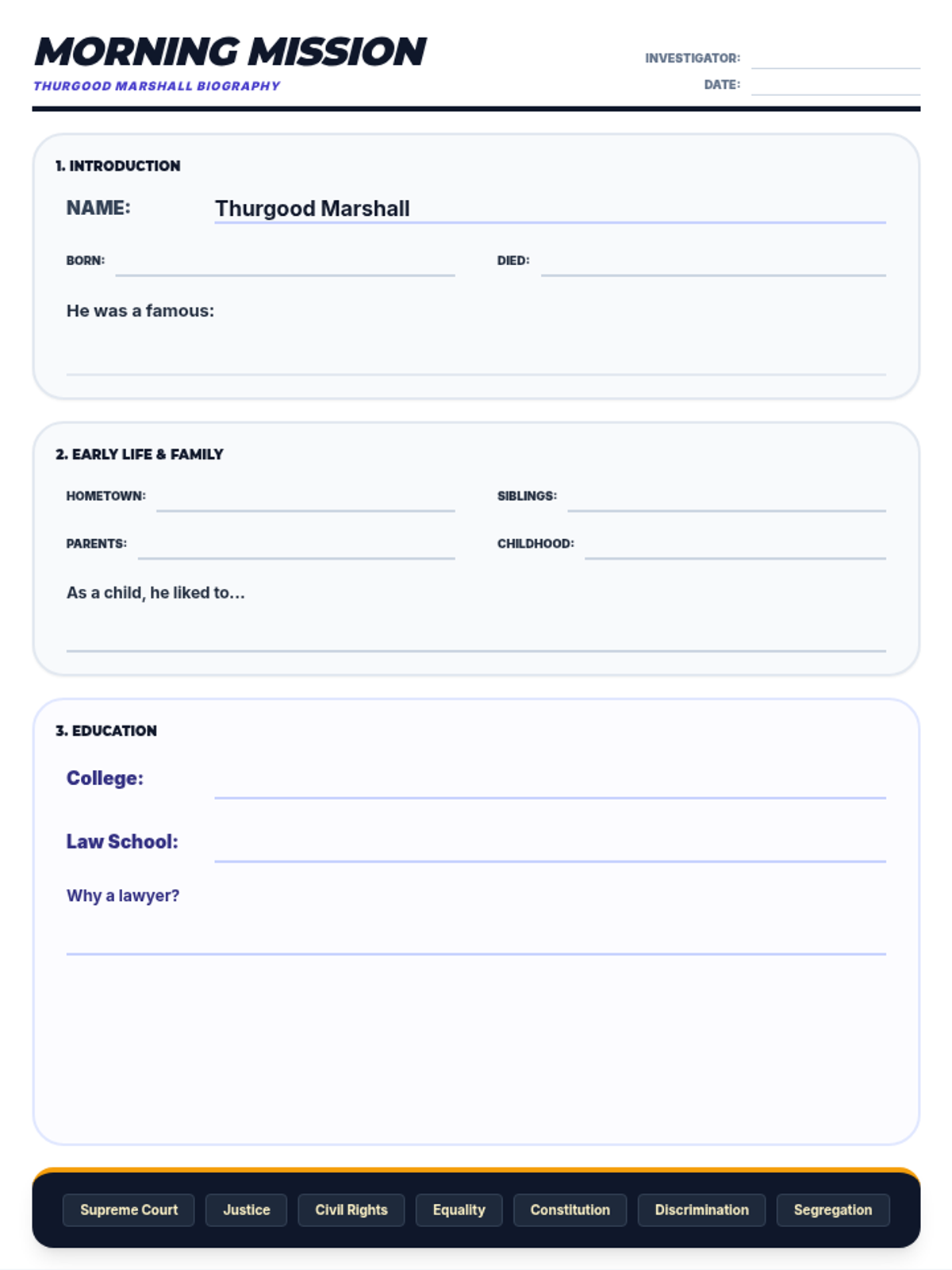
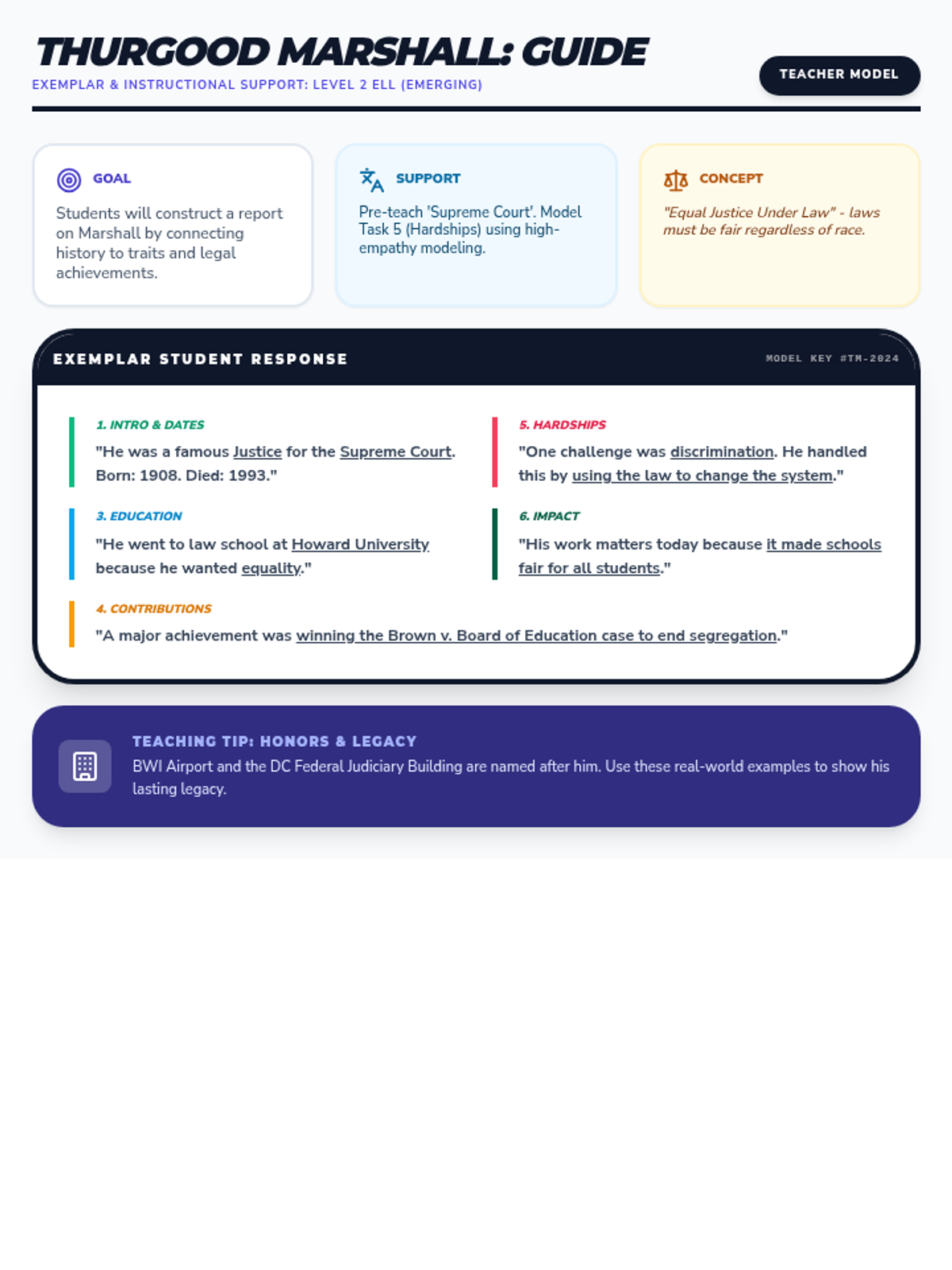
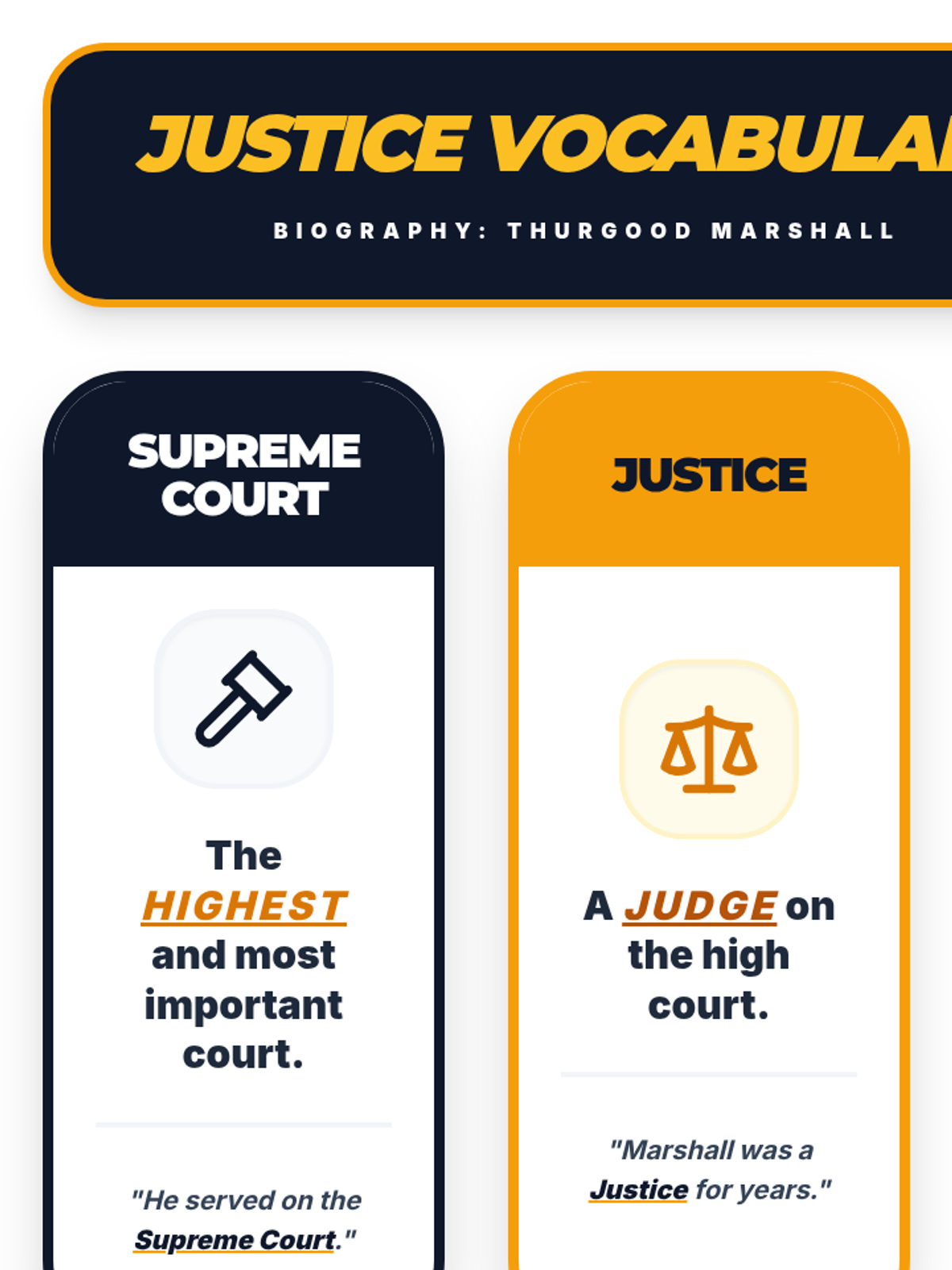
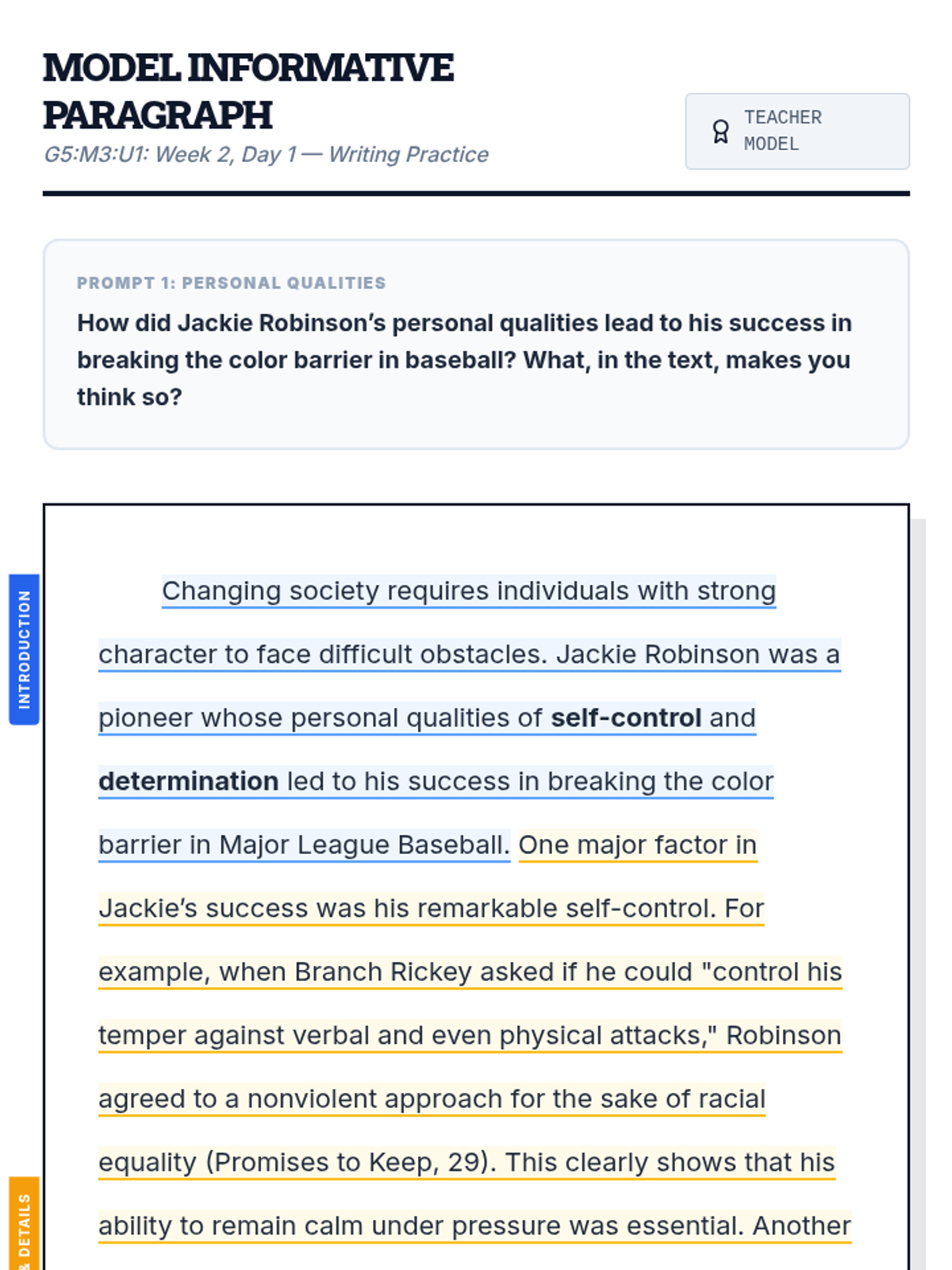
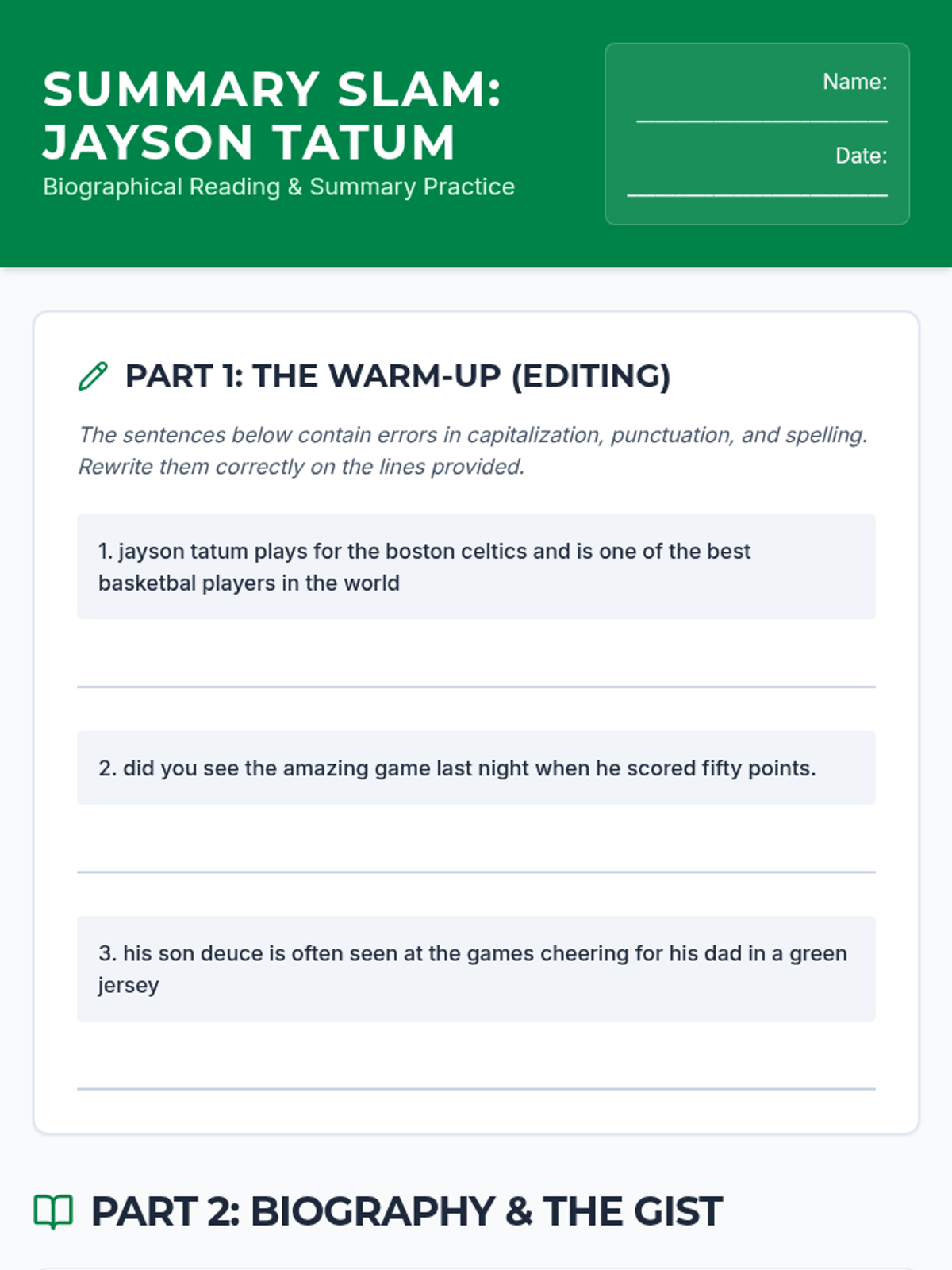
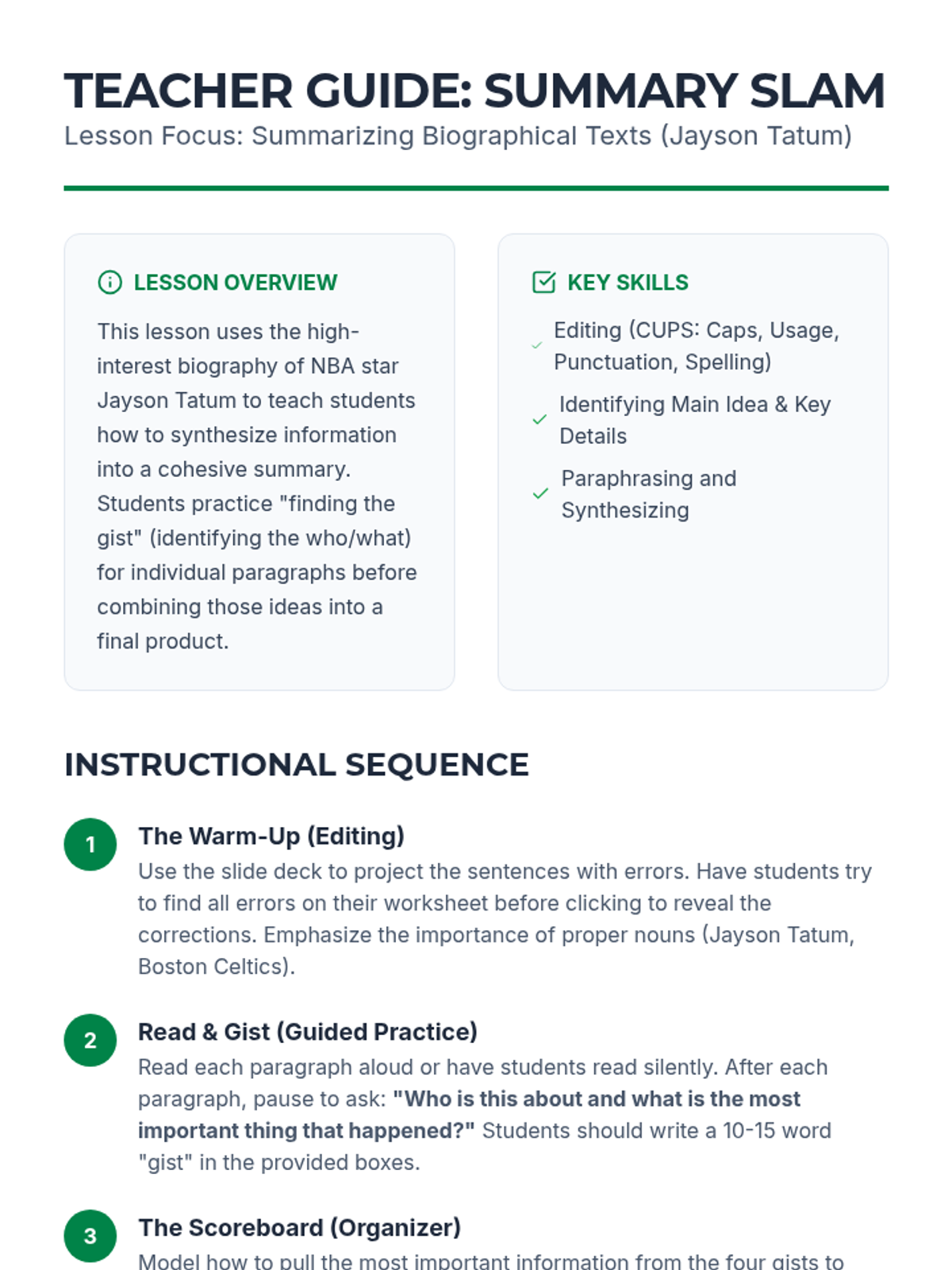
A collection of 5th-grade ELA and Grammar resources focusing on biographical research, summary writing, and language mastery.
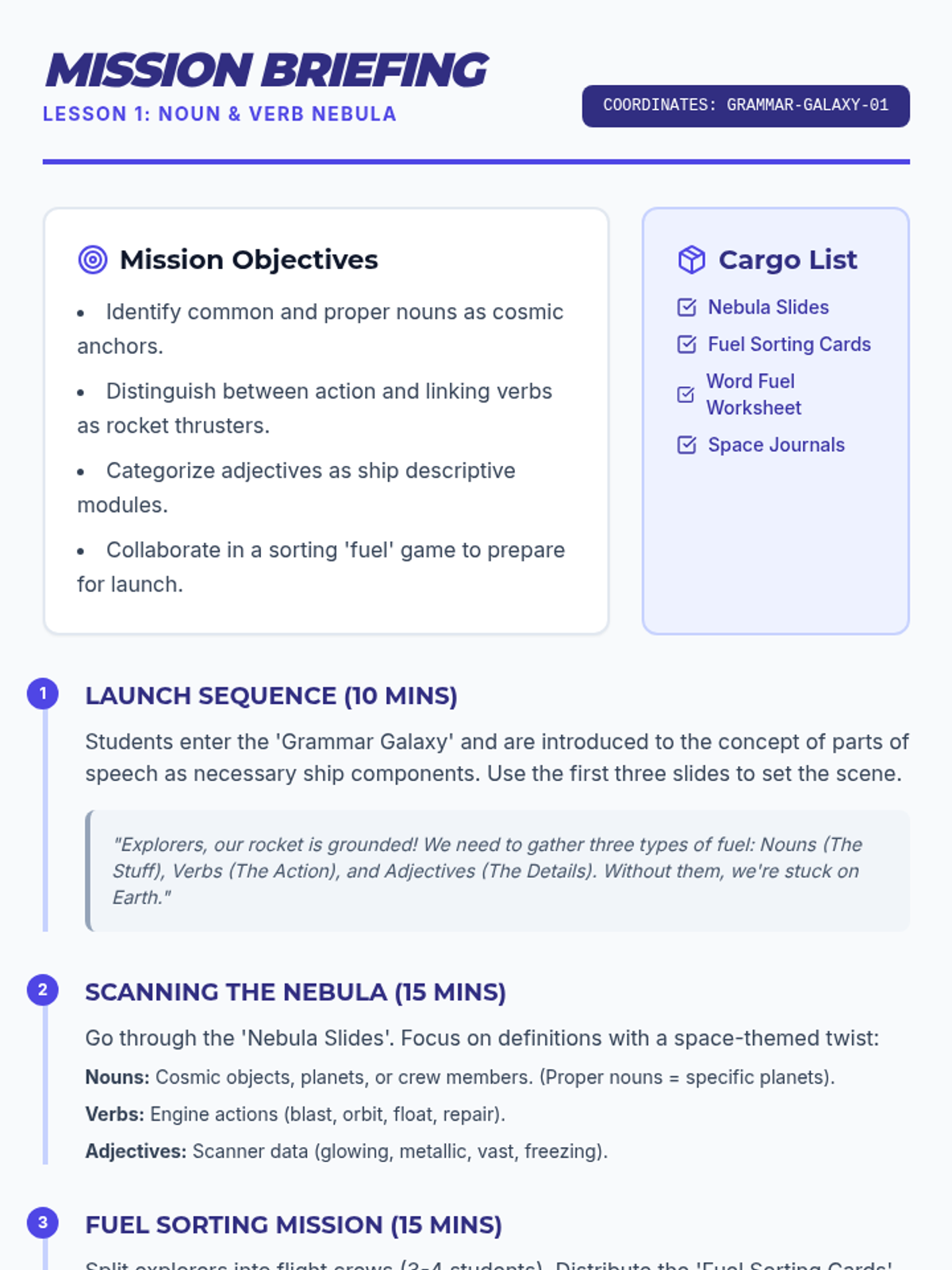
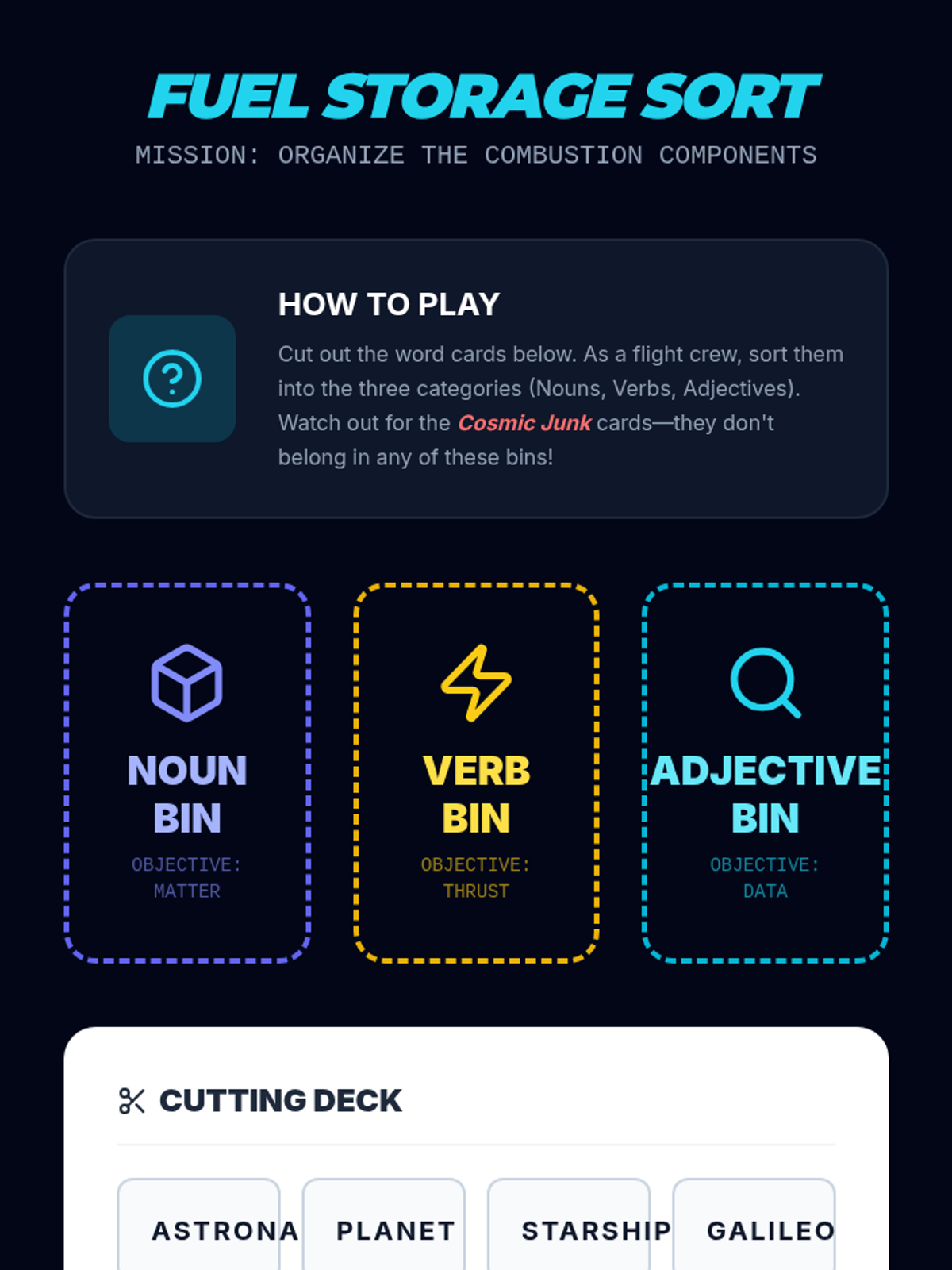
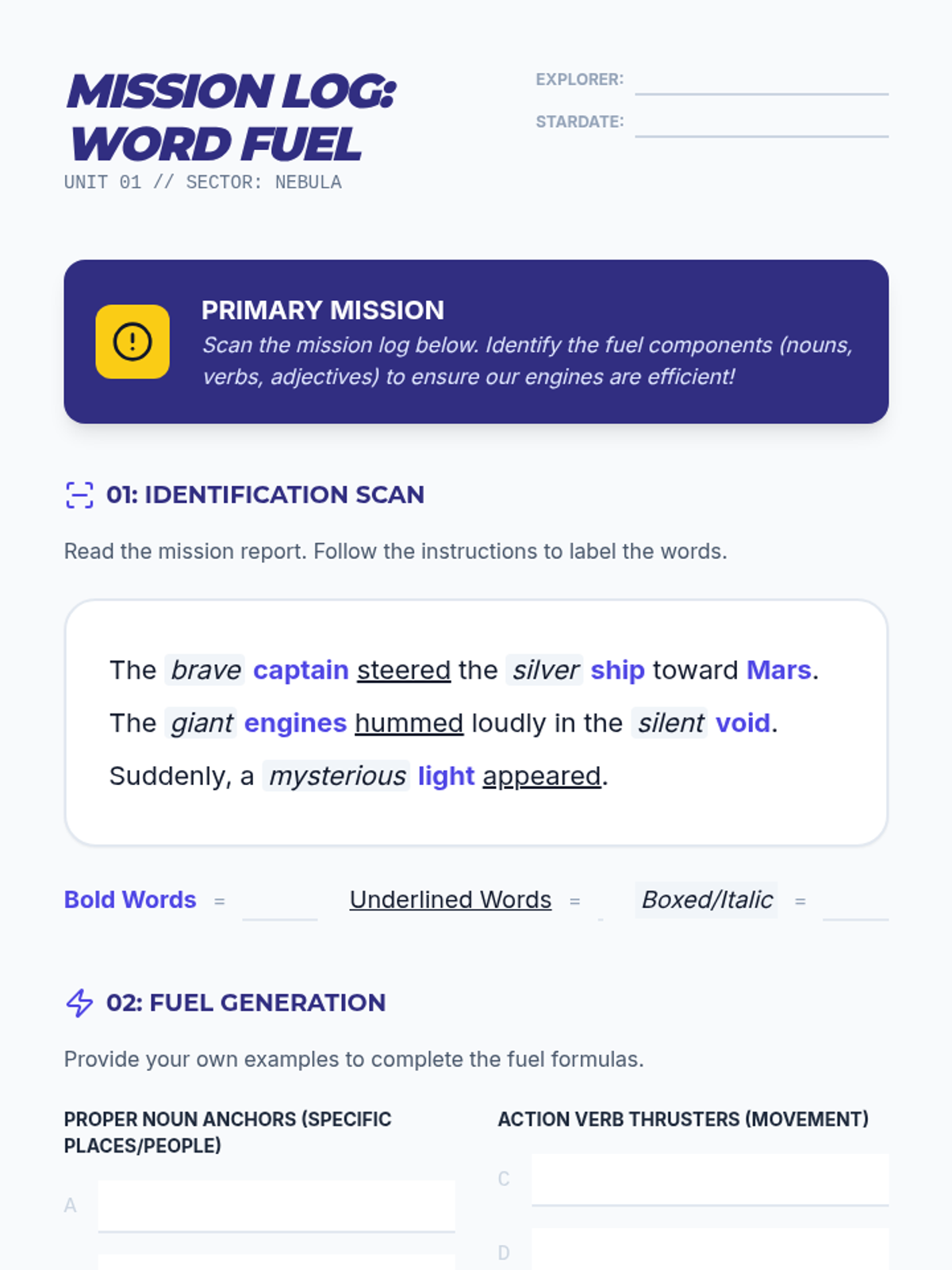
An interstellar grammar unit for grades 3-5, where students become space explorers to master parts of speech, sentence structure, and punctuation through missions and rocket-building challenges.
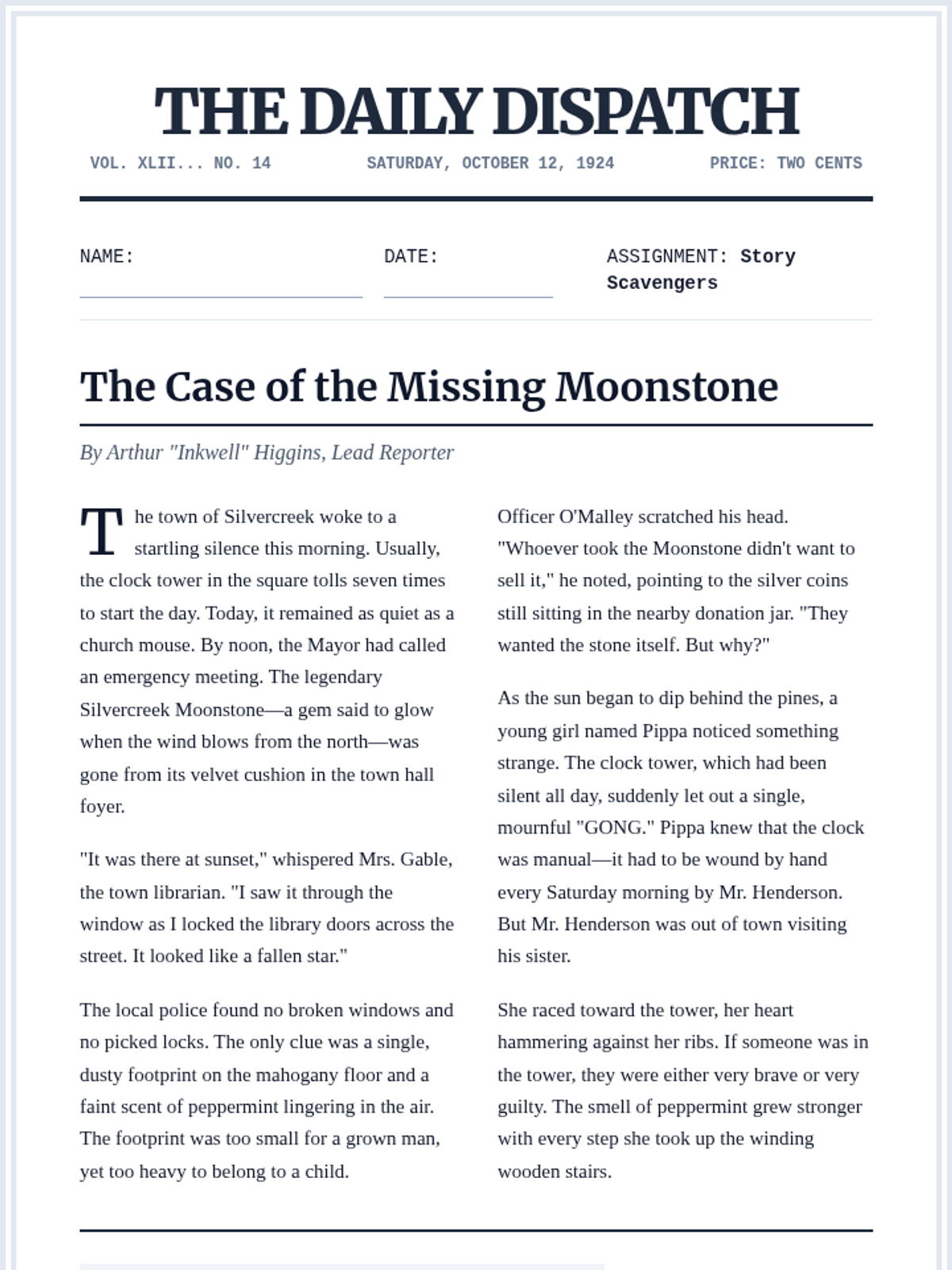
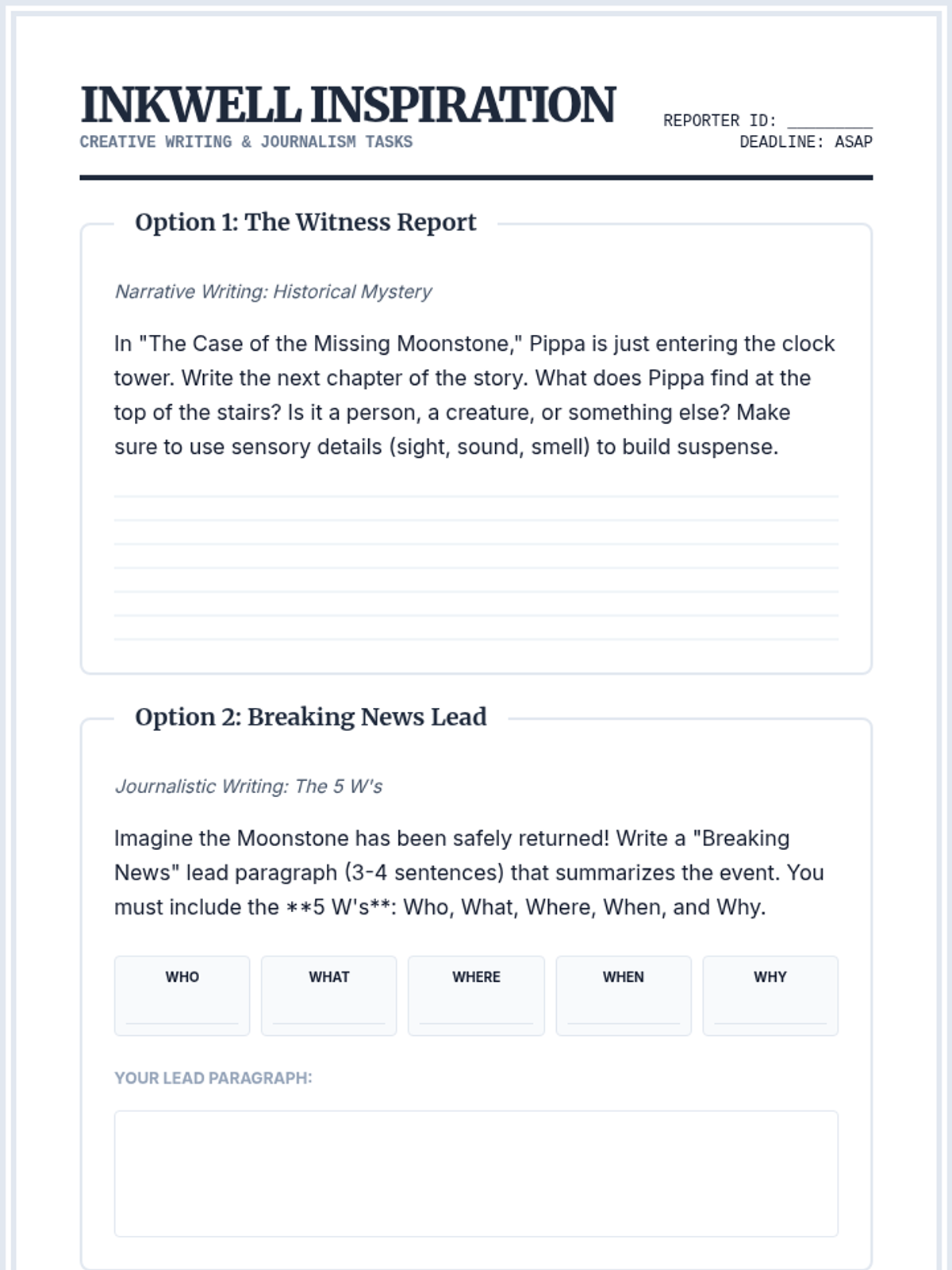
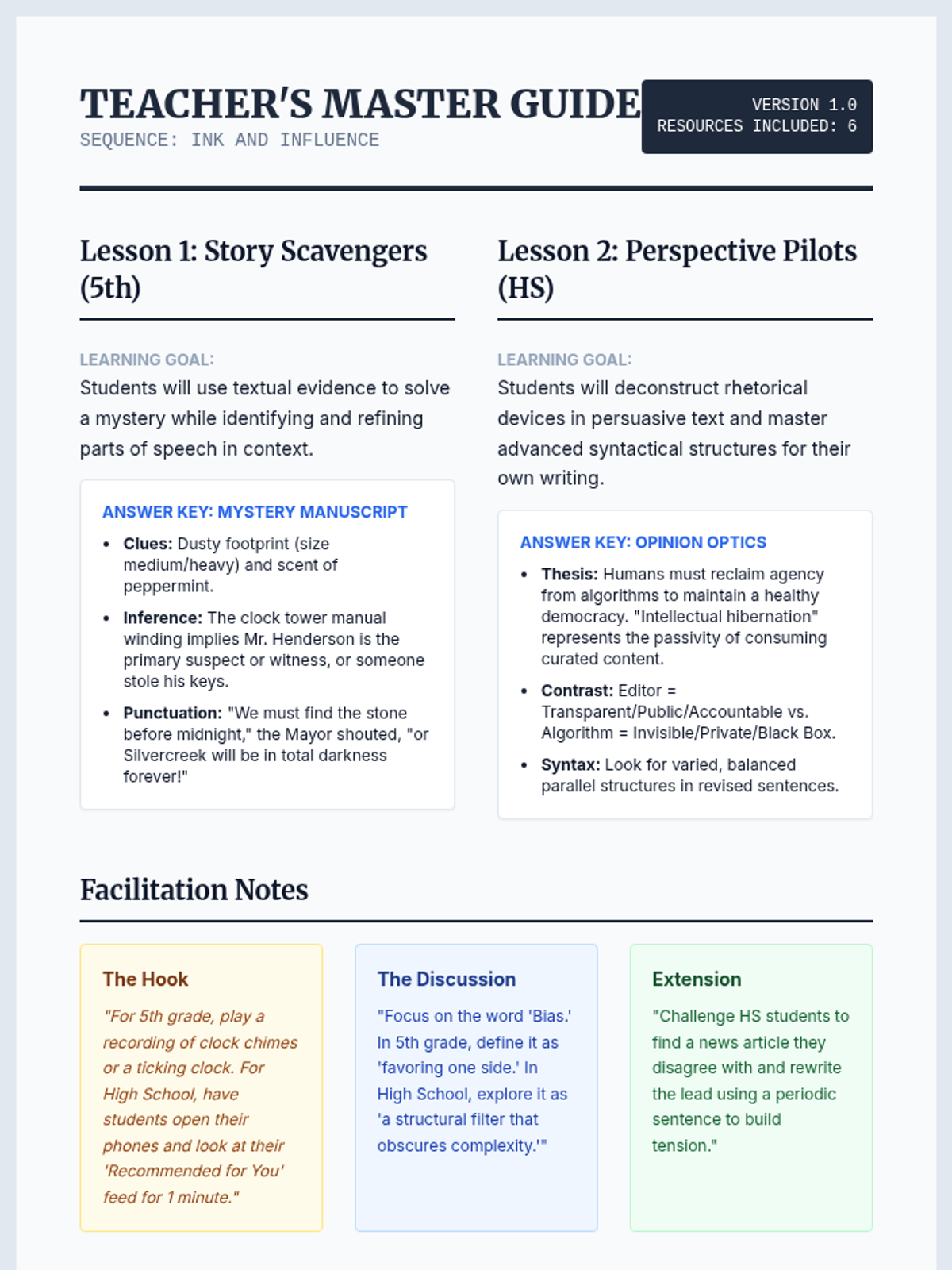
A comprehensive RLA sequence designed to sharpen reading comprehension, grammar, and writing skills through the lens of journalism. Students transition from foundational reporting in elementary school to sophisticated rhetorical analysis in high school, using a vintage newsroom aesthetic to explore the power of the written word.
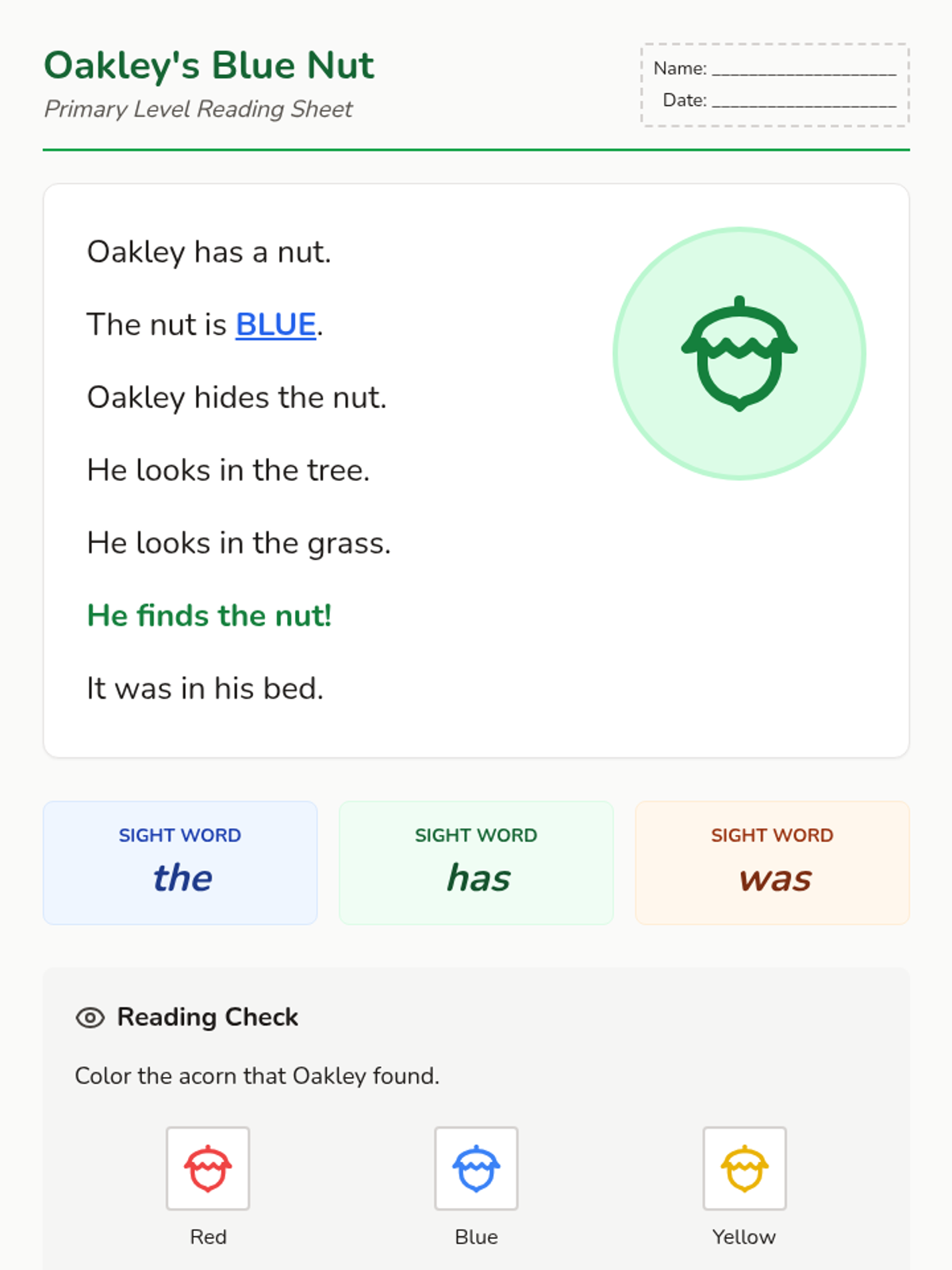
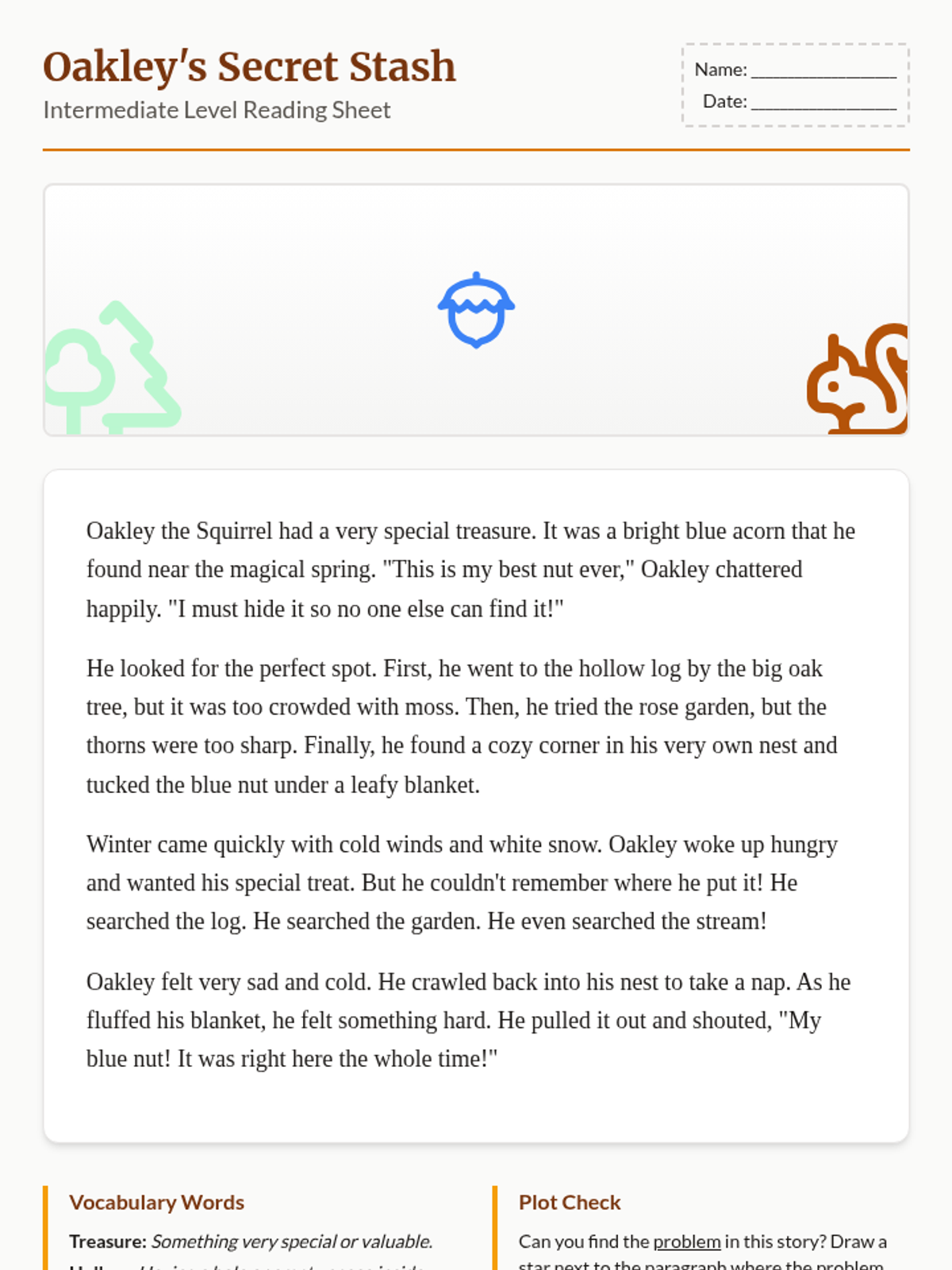
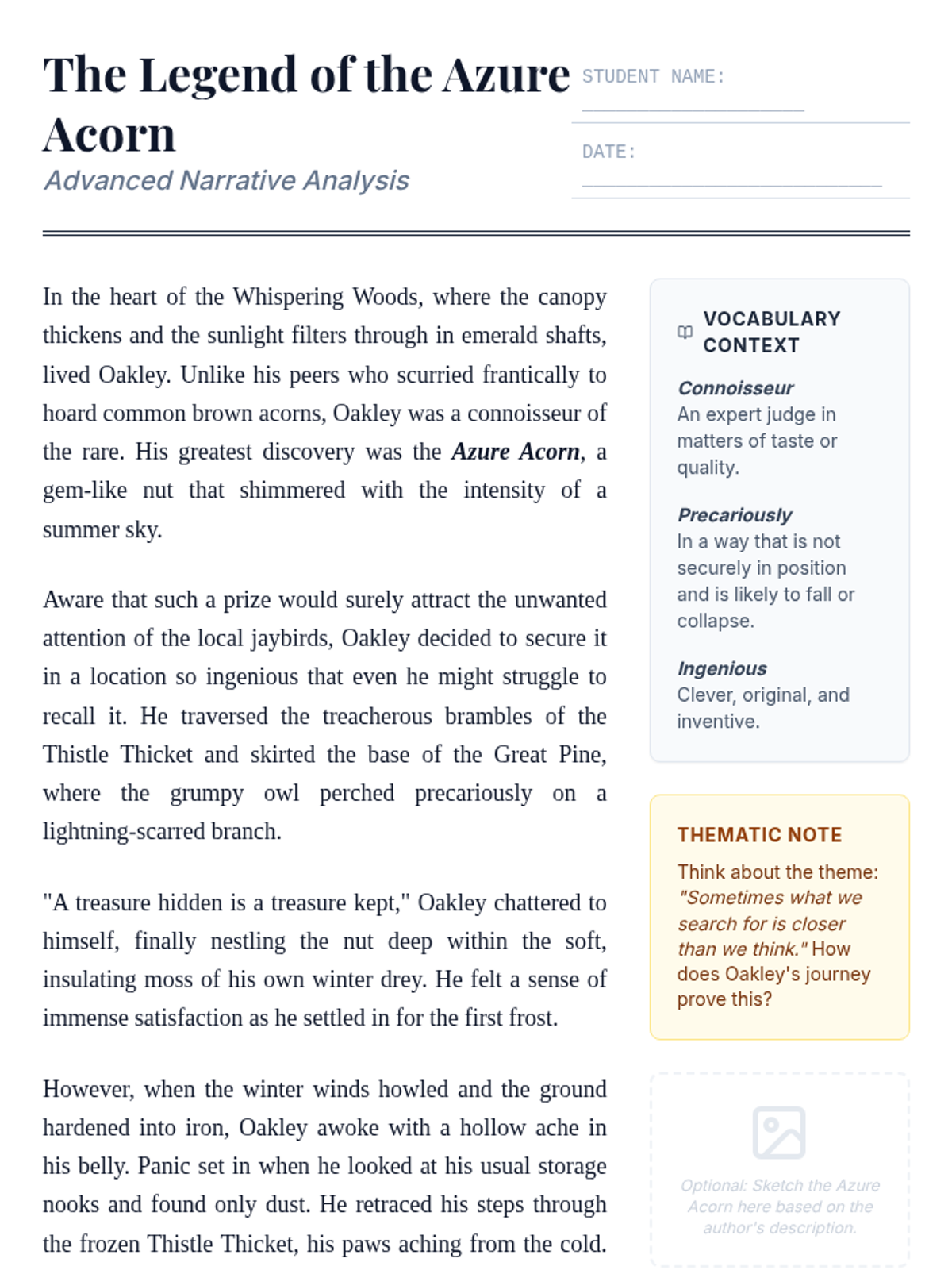
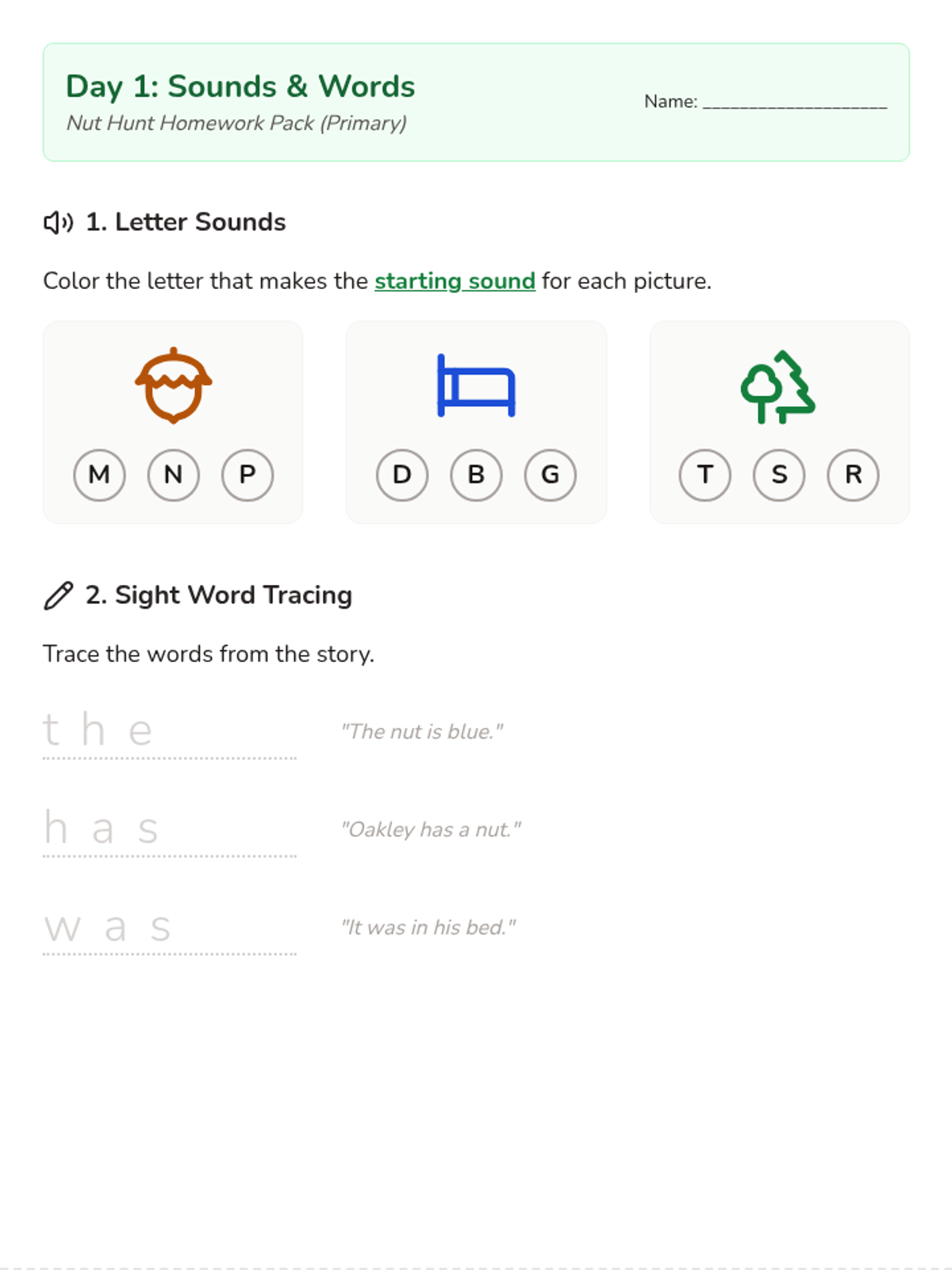
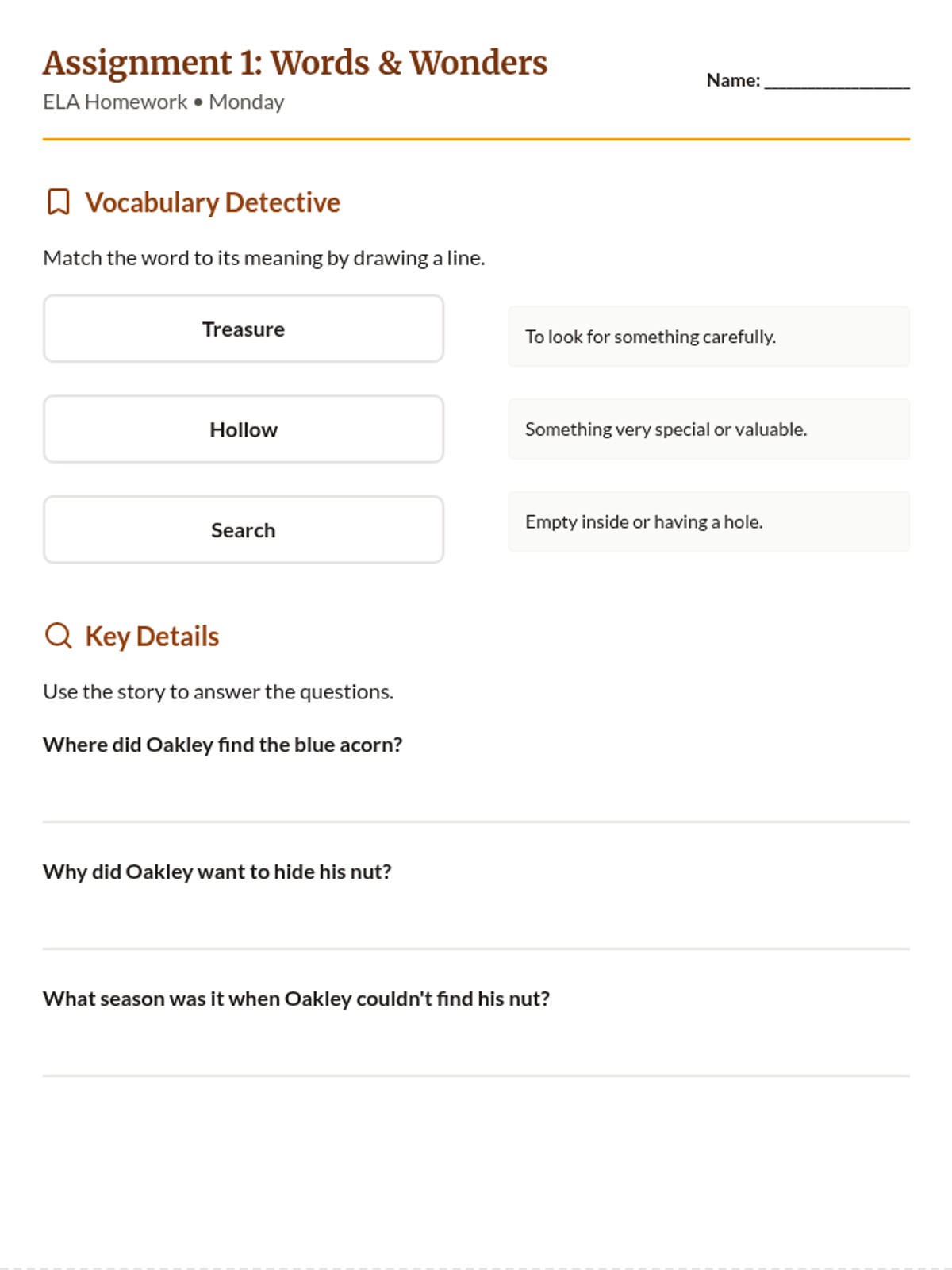
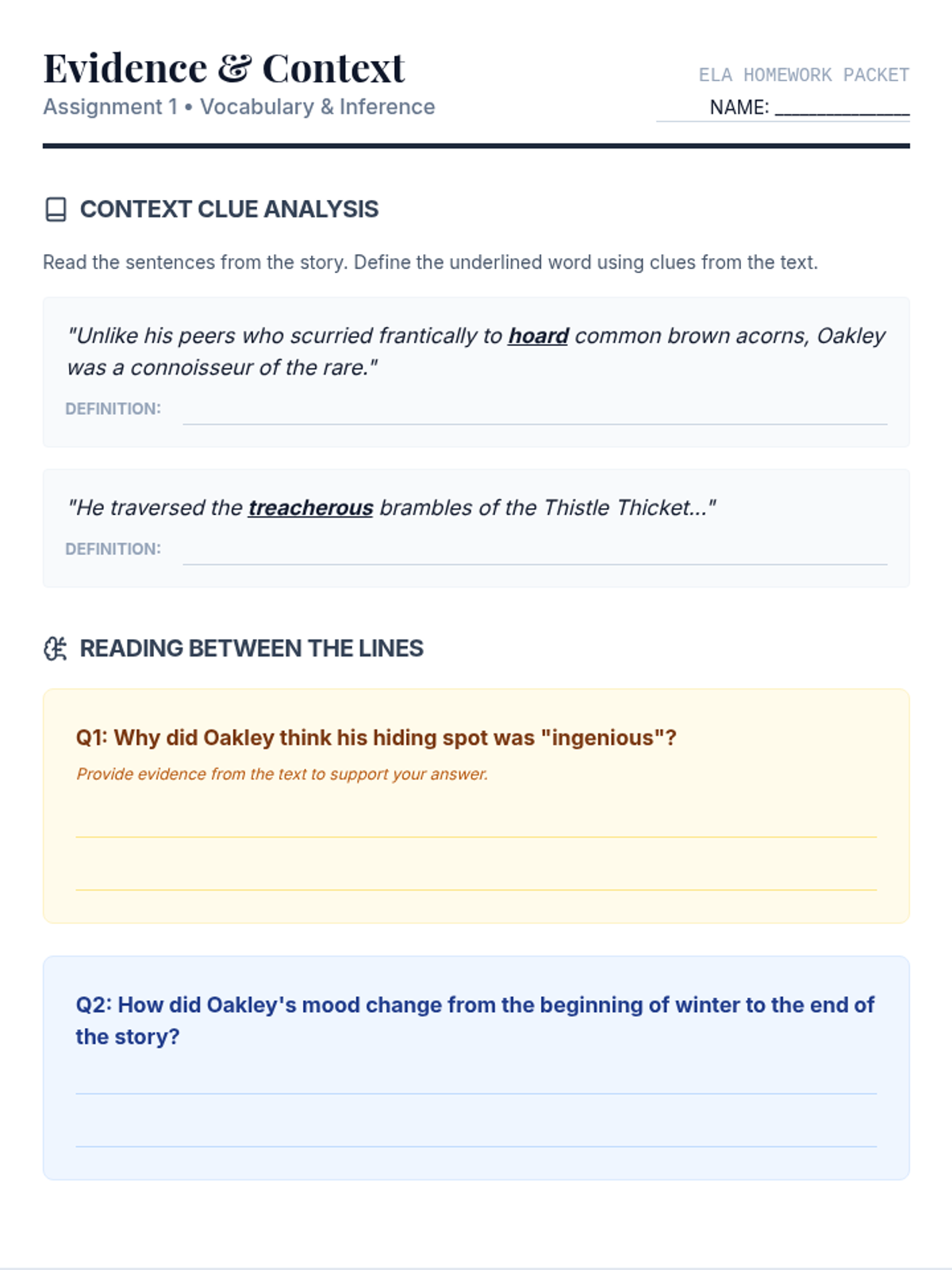
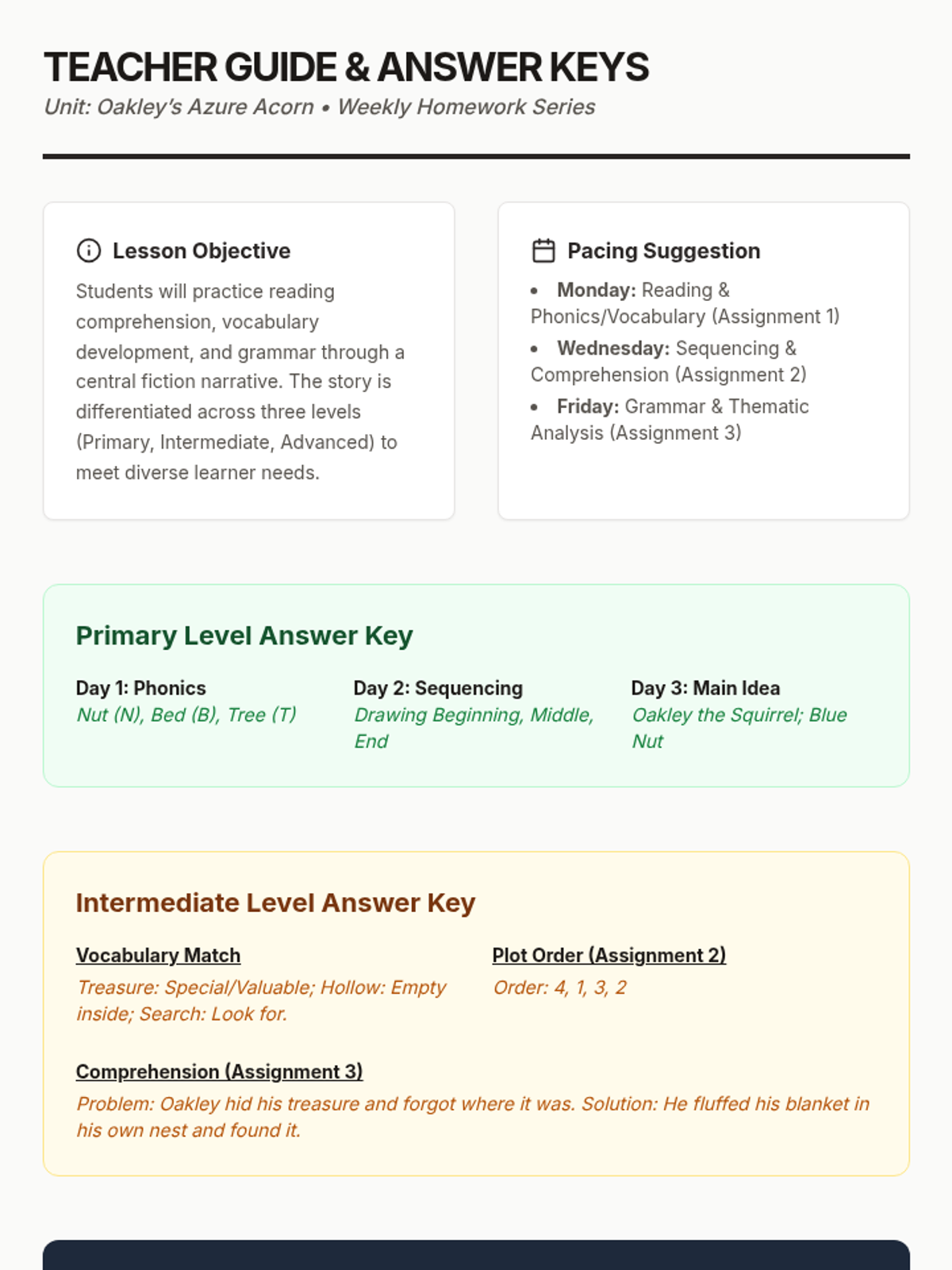
A week-long ELA homework series centered around a narrative about a squirrel's search for a rare acorn. The materials are differentiated for Kindergarten, 2nd Grade, and 4th Grade learners.
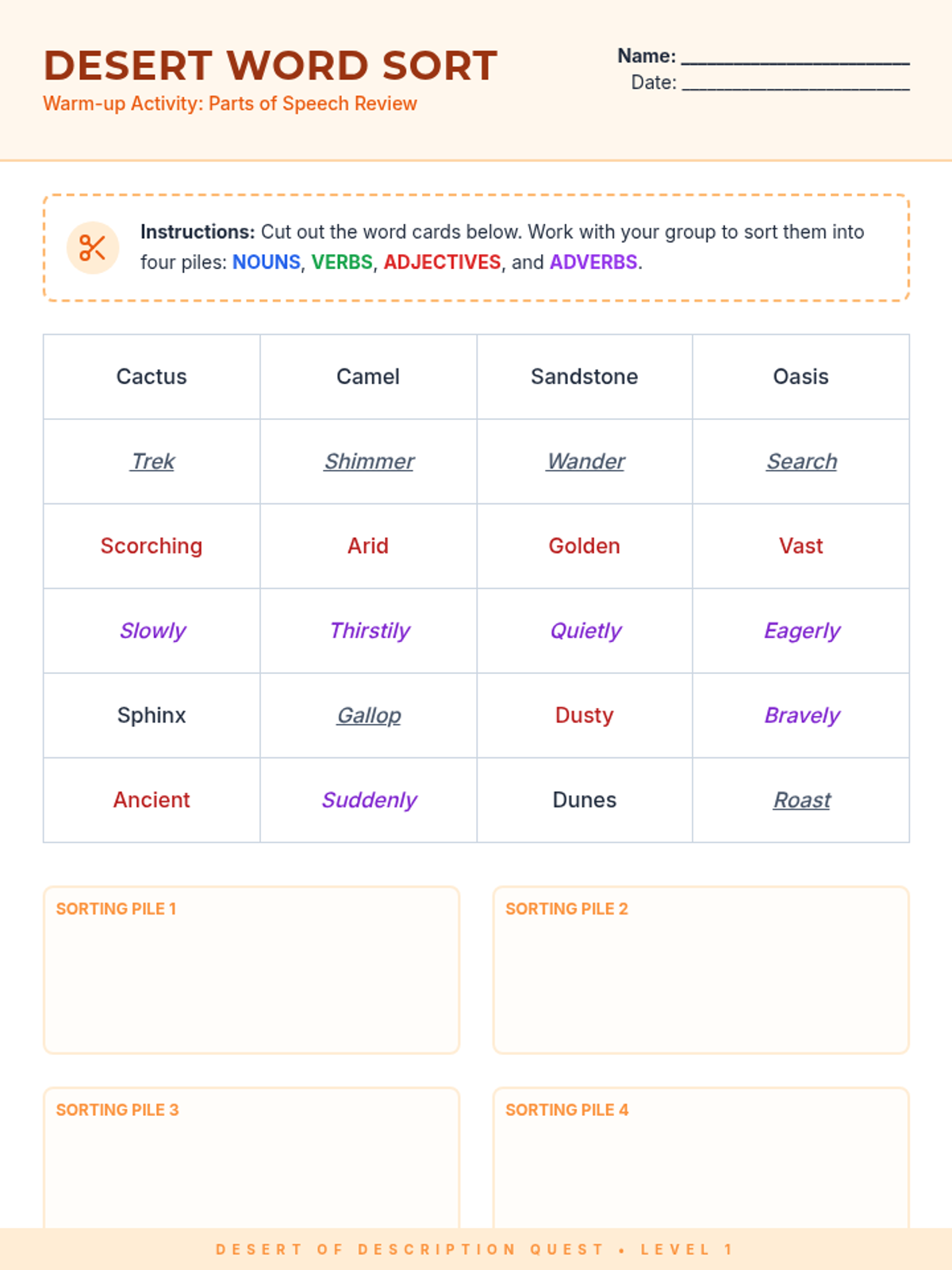
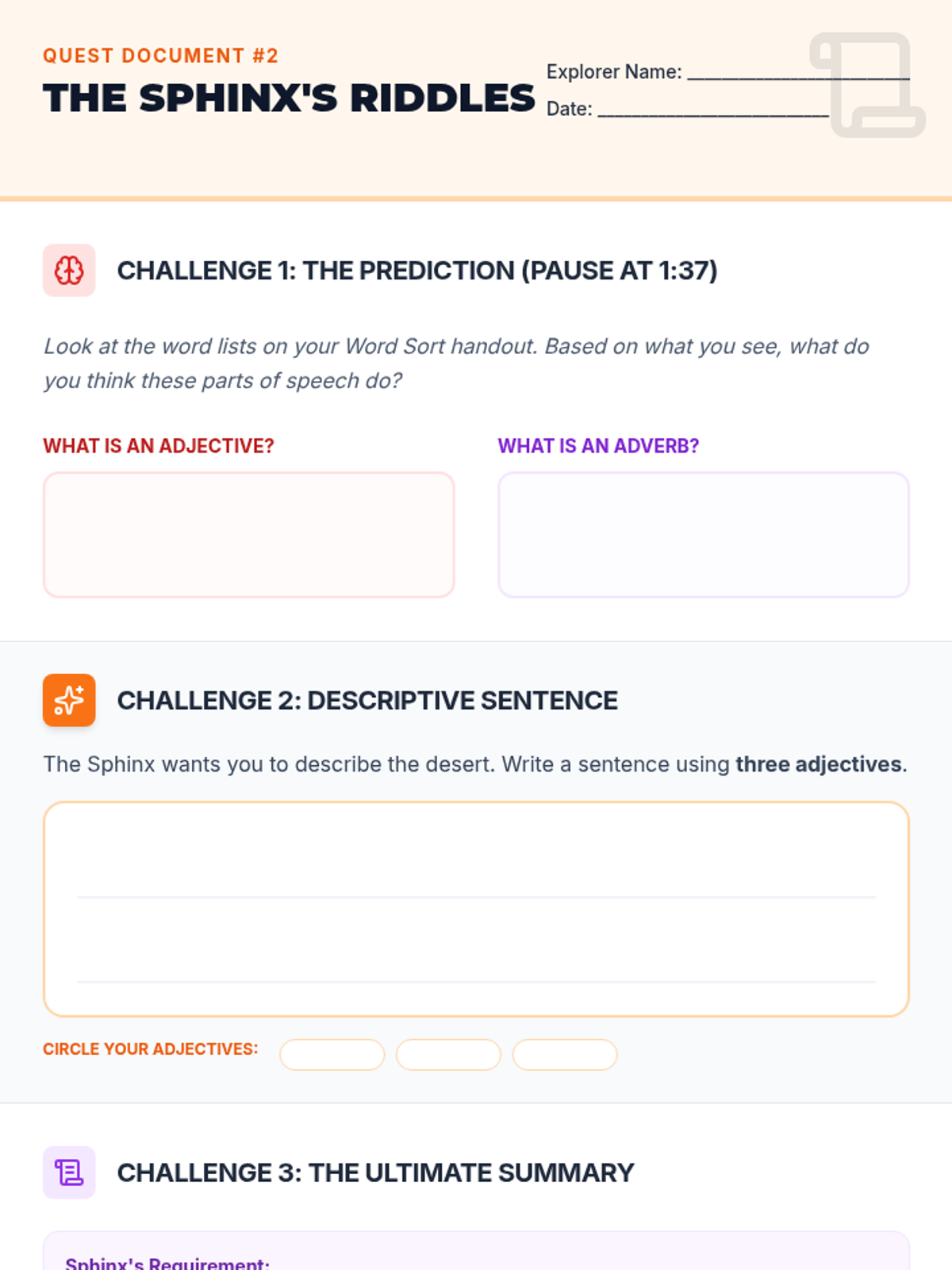
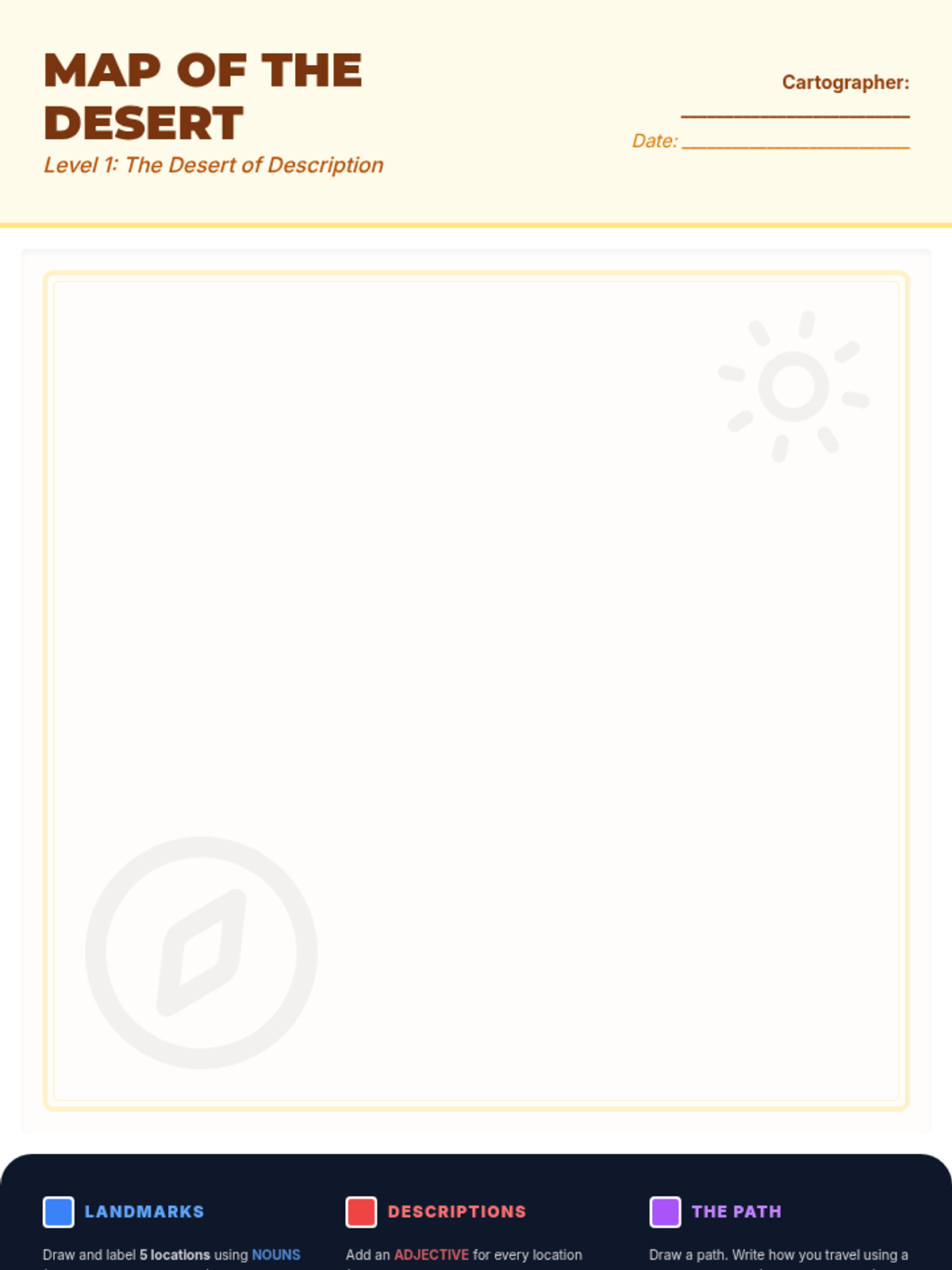
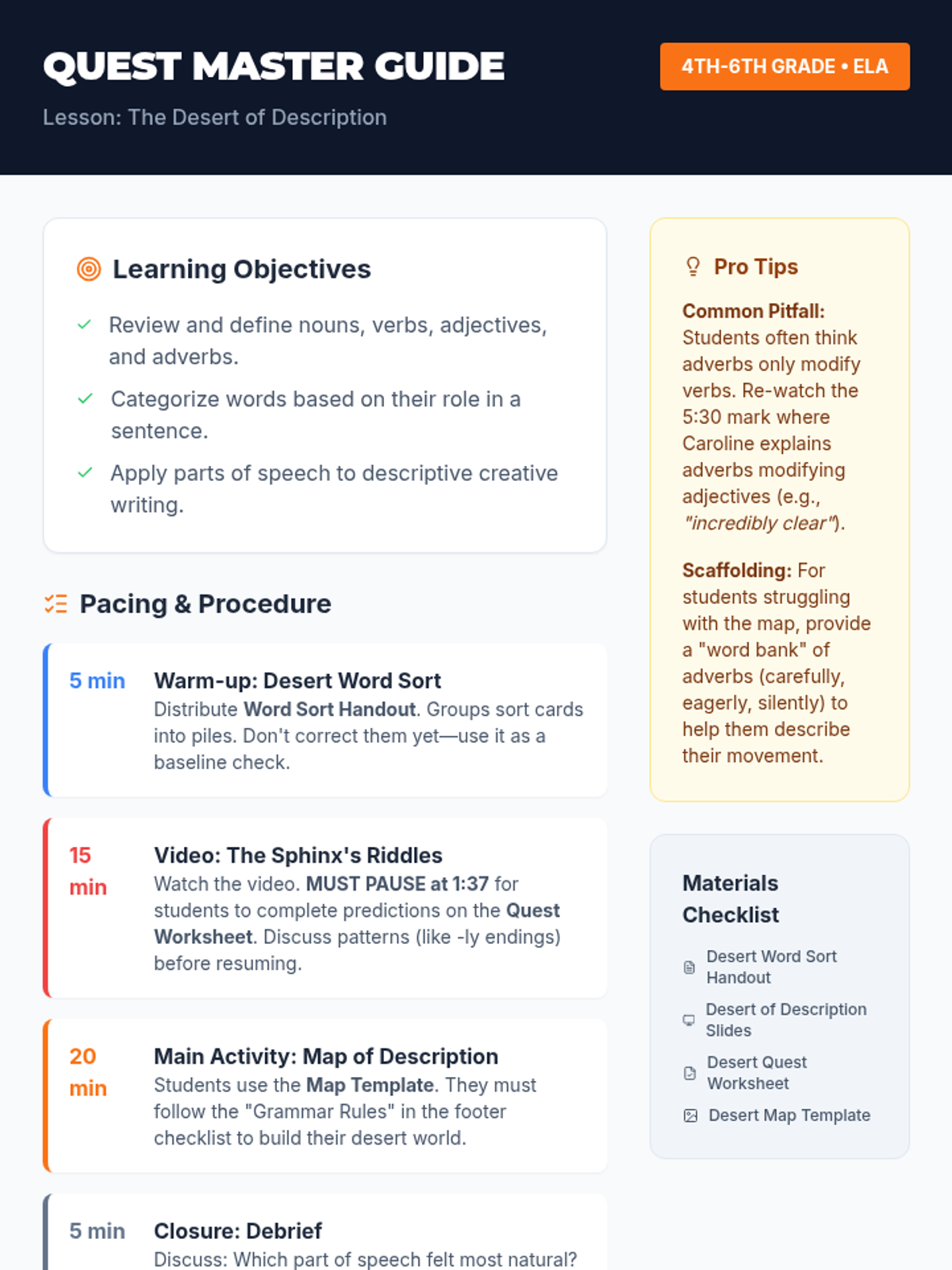
A remedial/review sequence for 4th-6th grade students focusing on parts of speech through a desert-themed adventure quest. Students identify and apply nouns, verbs, adjectives, and adverbs while building a descriptive map.
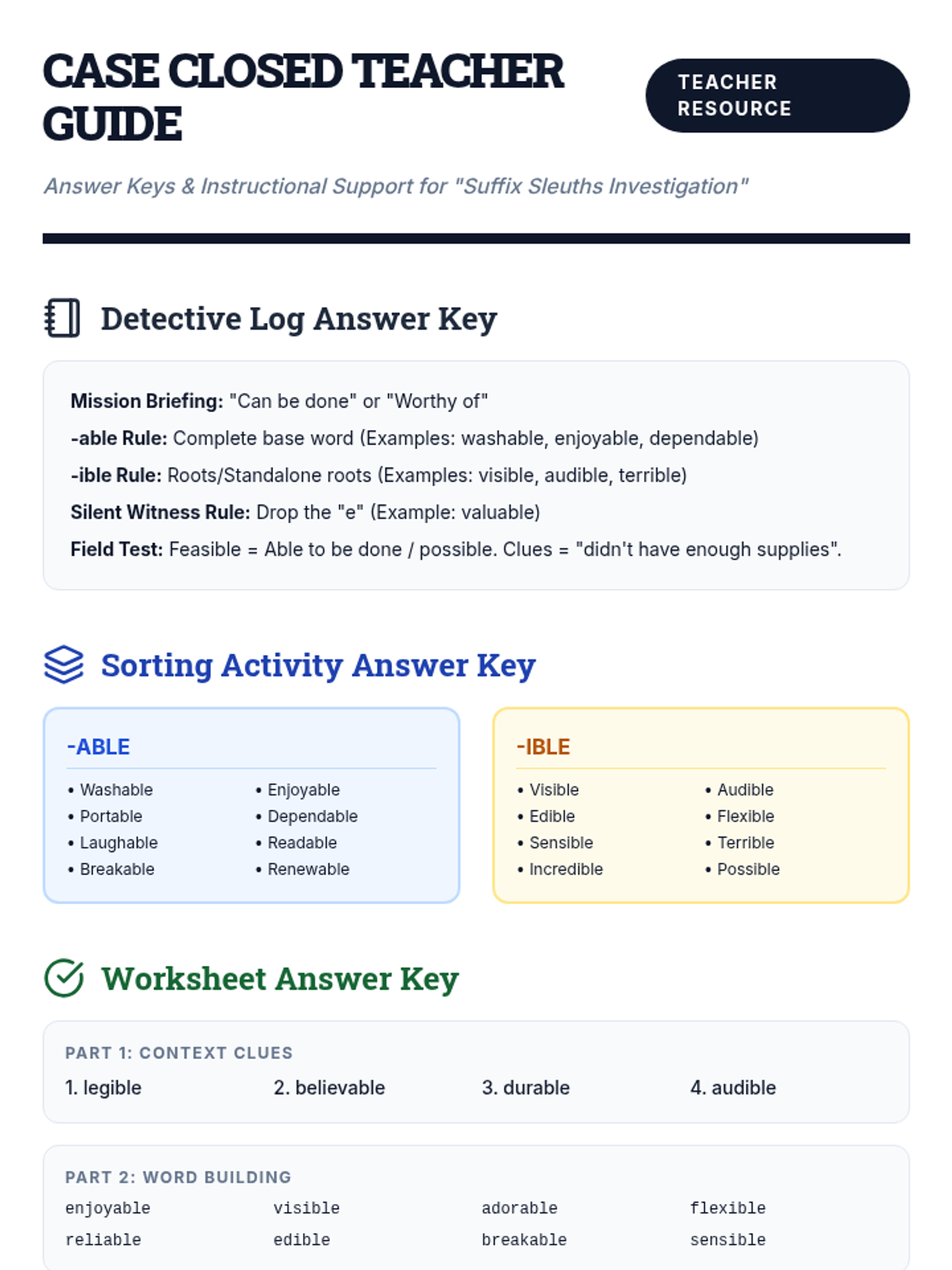
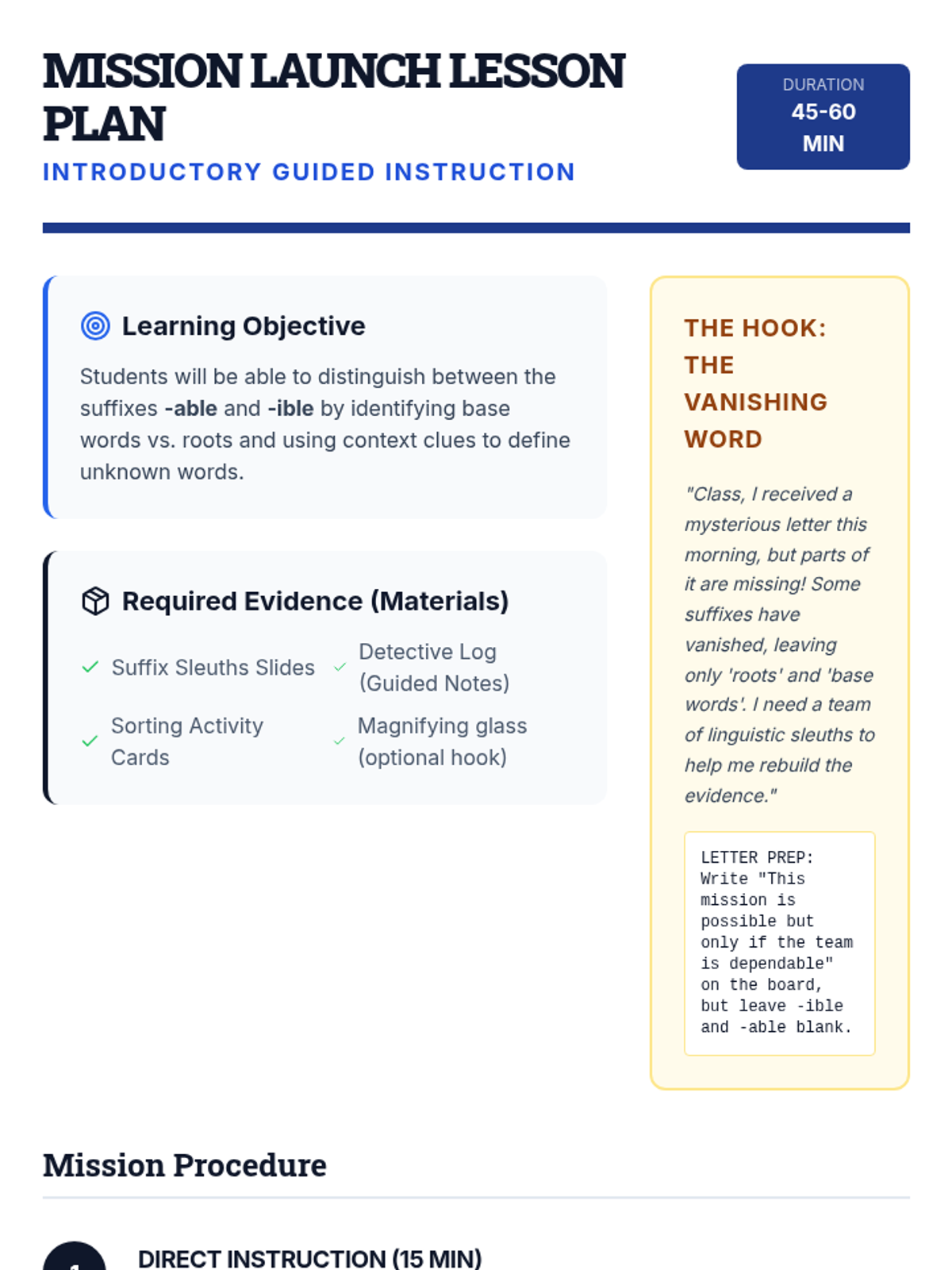
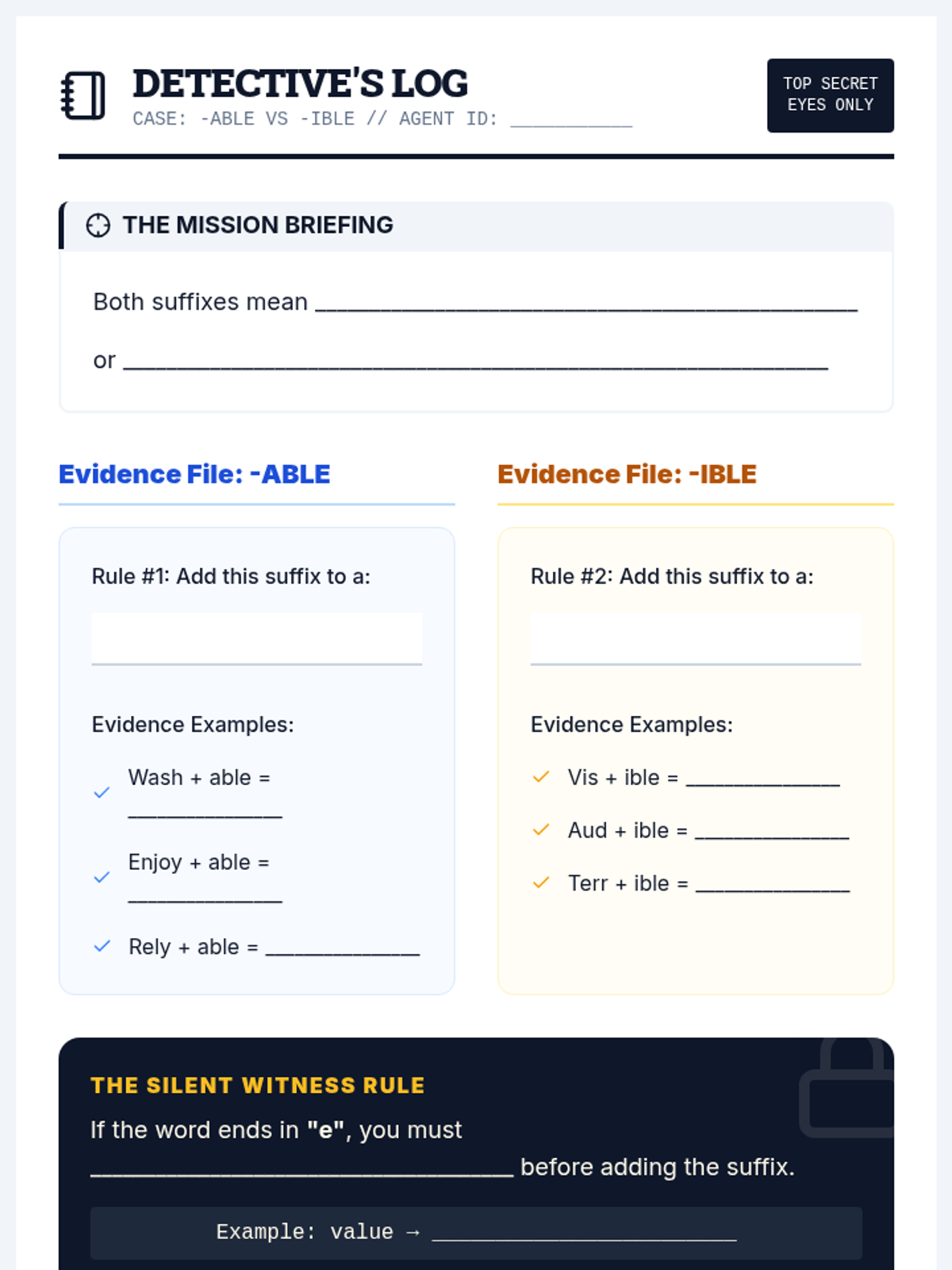
This 5th-grade sequence explores the mechanics of word formation, guiding students through the structural rules of adding prefixes and suffixes to base words to change meaning and grammatical function.
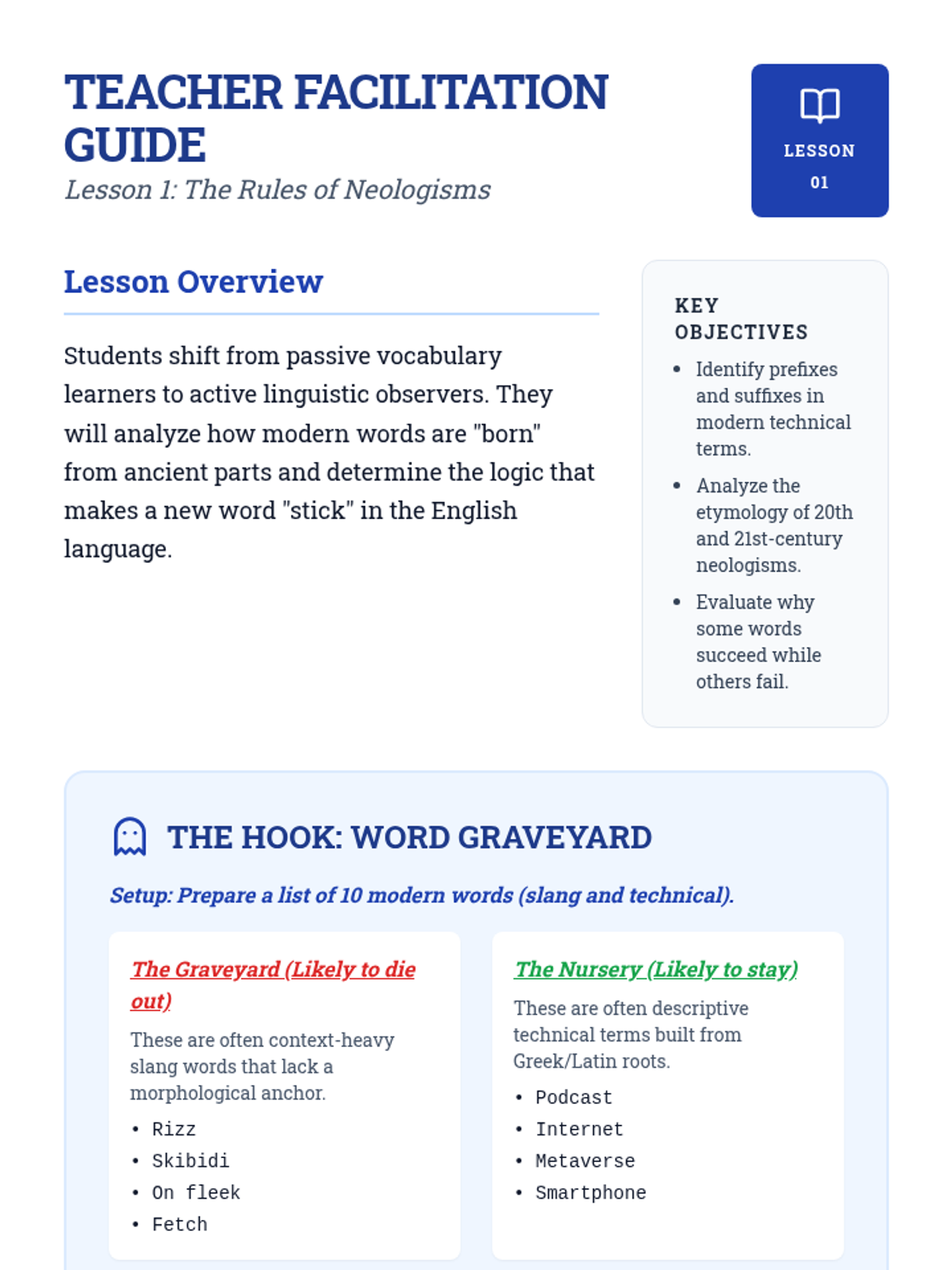
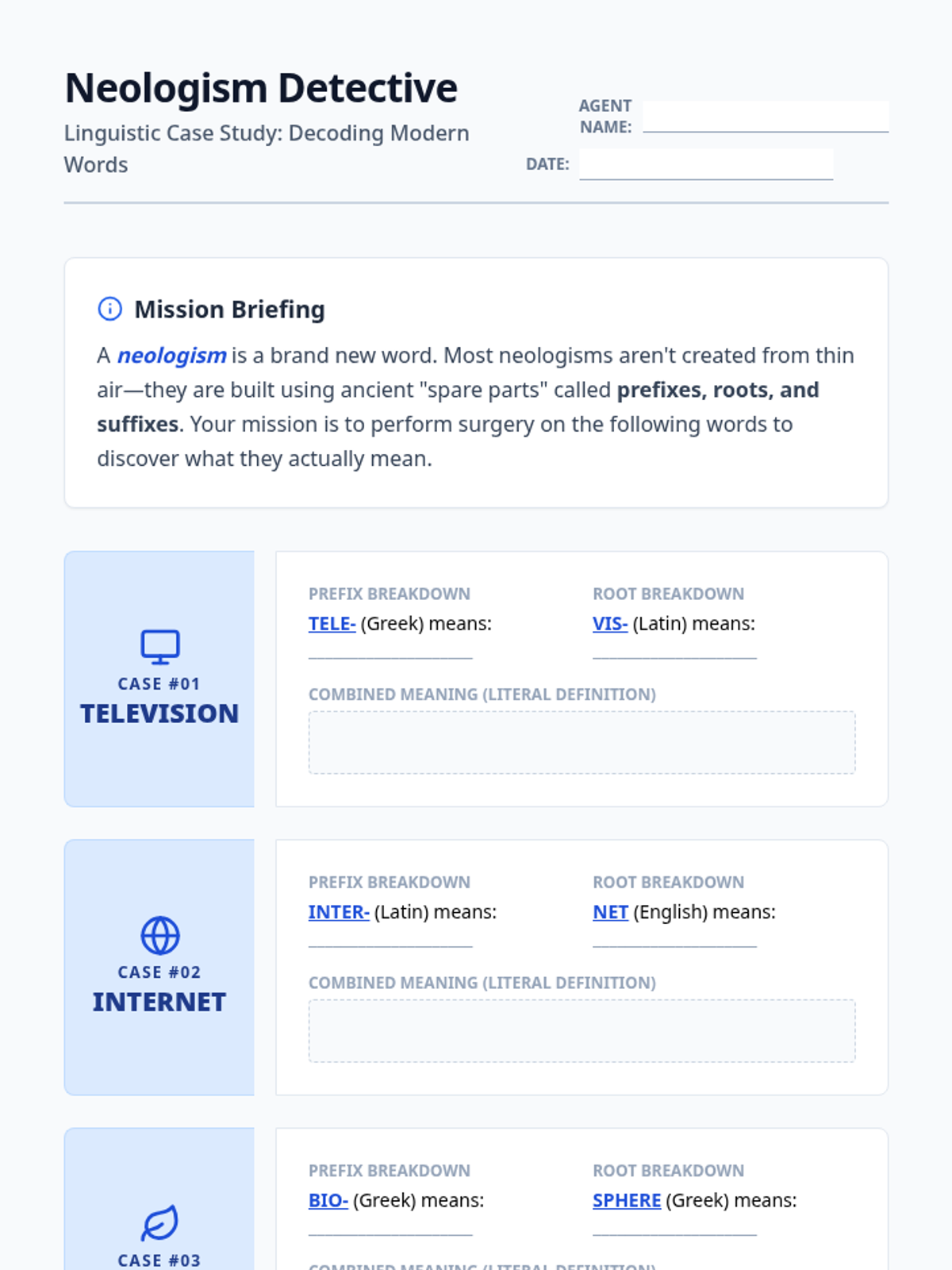
A project-based ELA sequence where 6th-grade students analyze the morphology of English, use affixes to create neologisms, and pitch inventions named using linguistic rules.
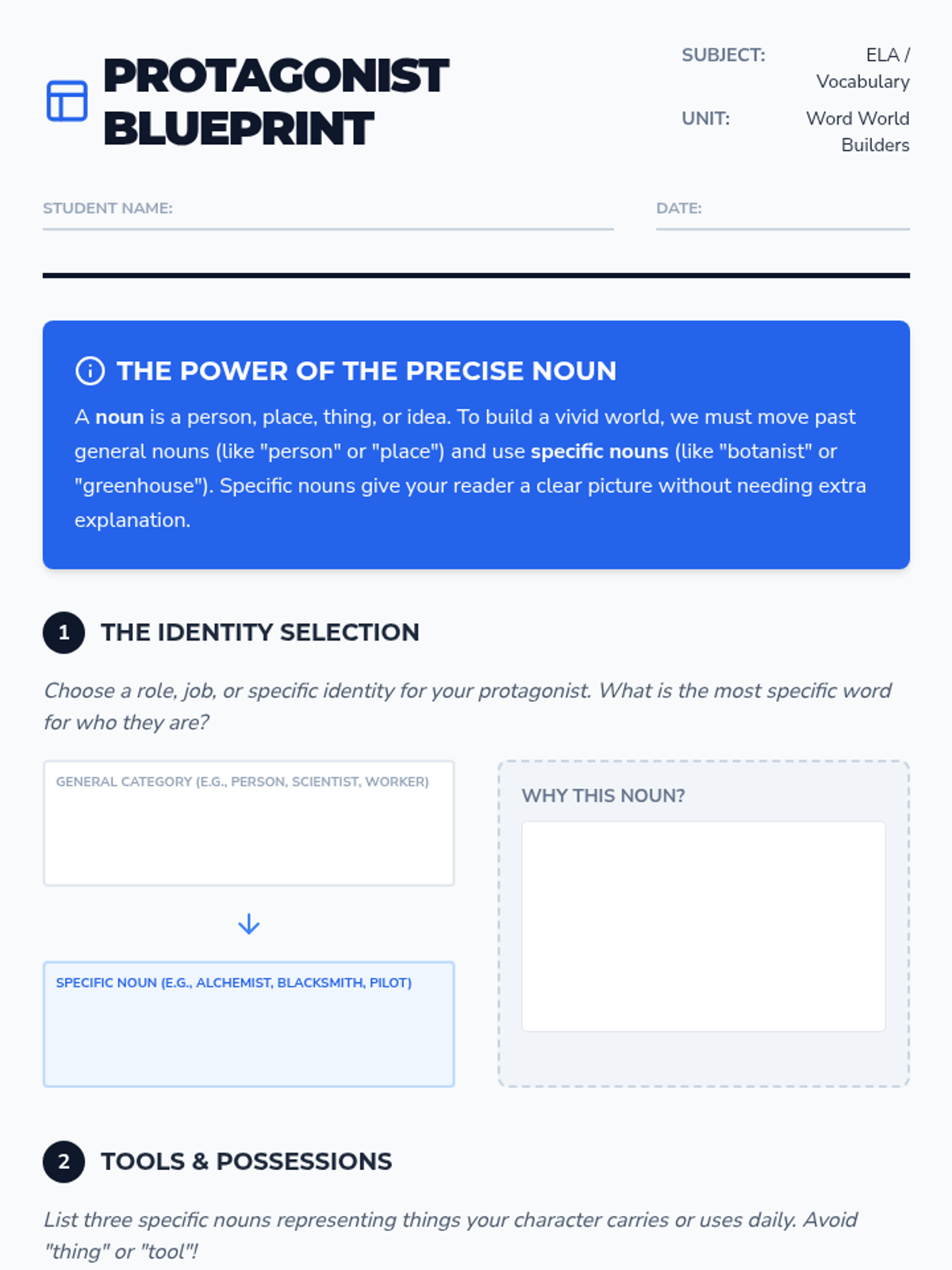
Students embark on a journey of fictional world-building, using precise nouns and vivid adjectives as their primary tools. They move from character identity to atmospheric settings, eventually crafting a polished narrative passage that demonstrates the power of descriptive imagery.
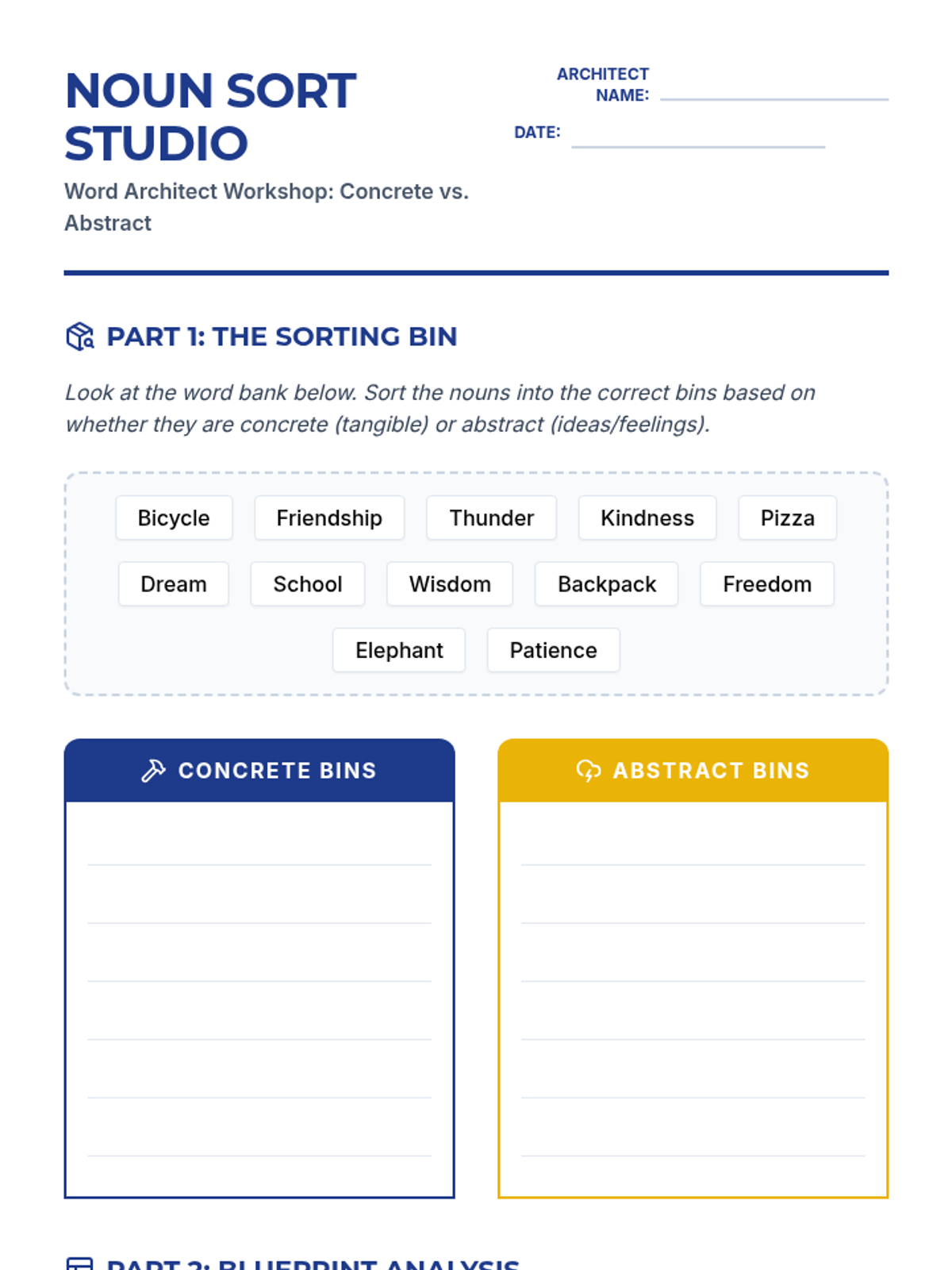
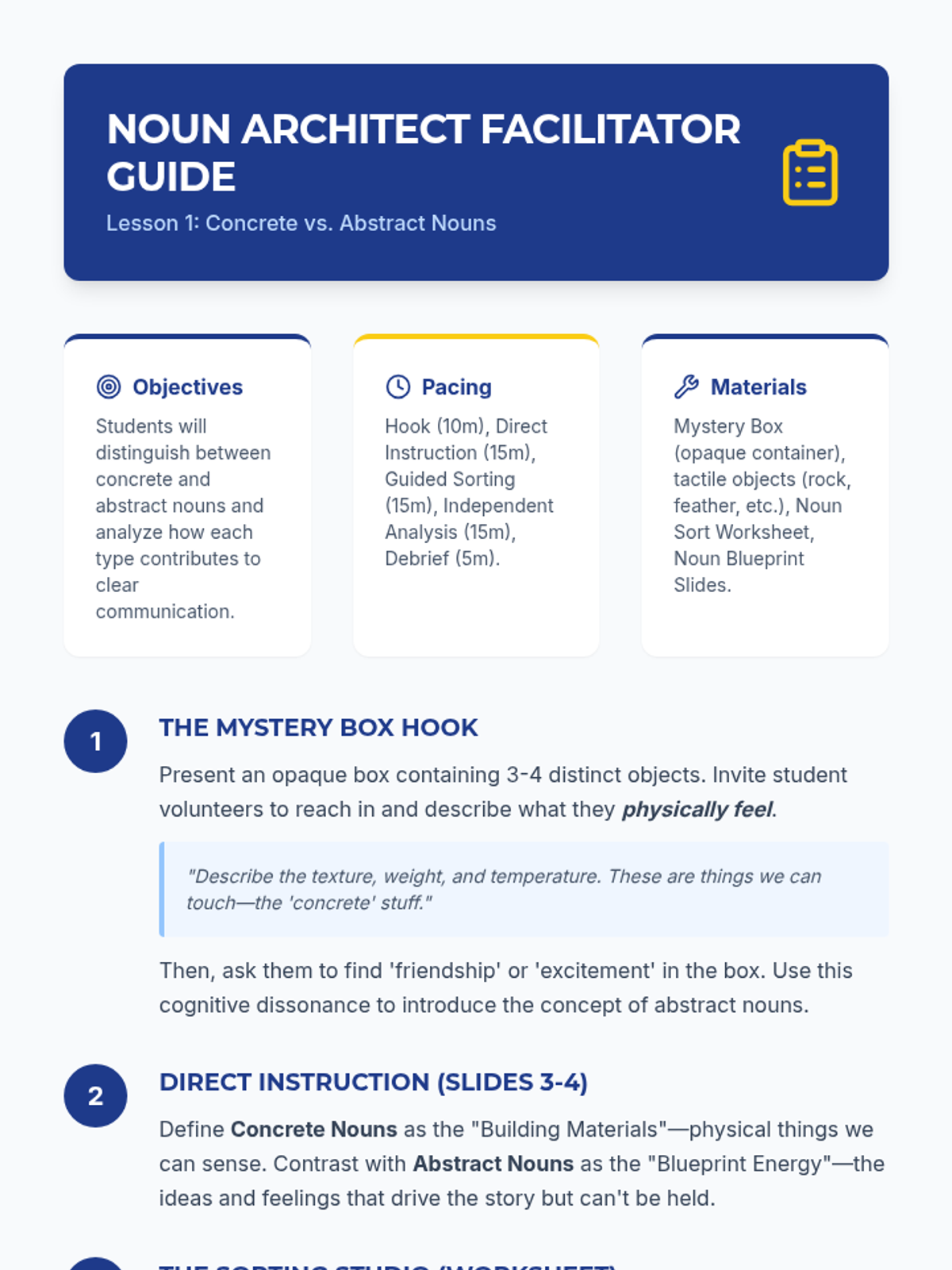
A 5th-grade English Language Arts sequence focusing on the precision of nouns and adjectives. Students progress from identifying concrete and abstract nouns to mastering capitalization rules, sensory descriptions, and the conventional order of adjectives, culminating in a descriptive writing renovation.
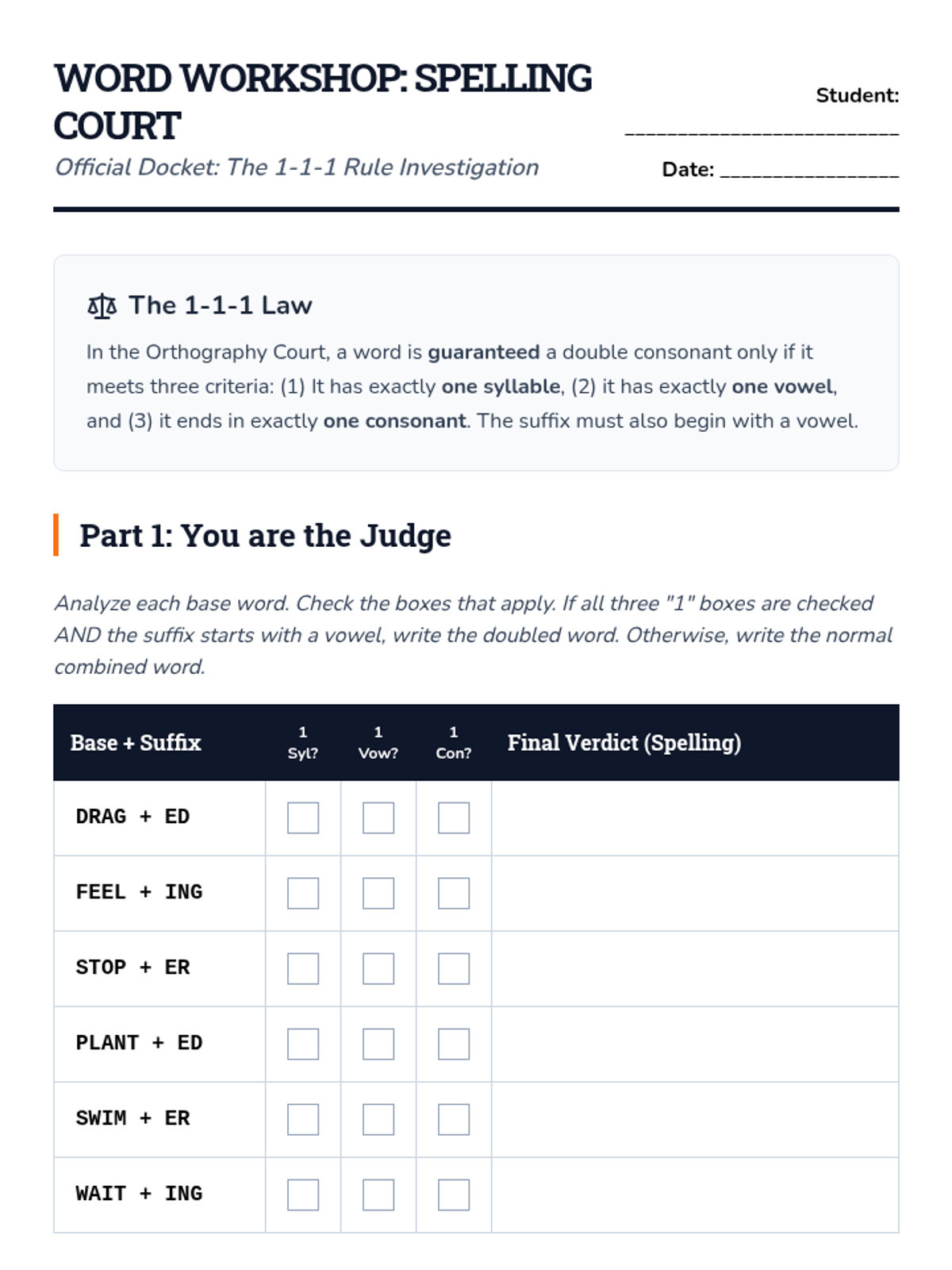
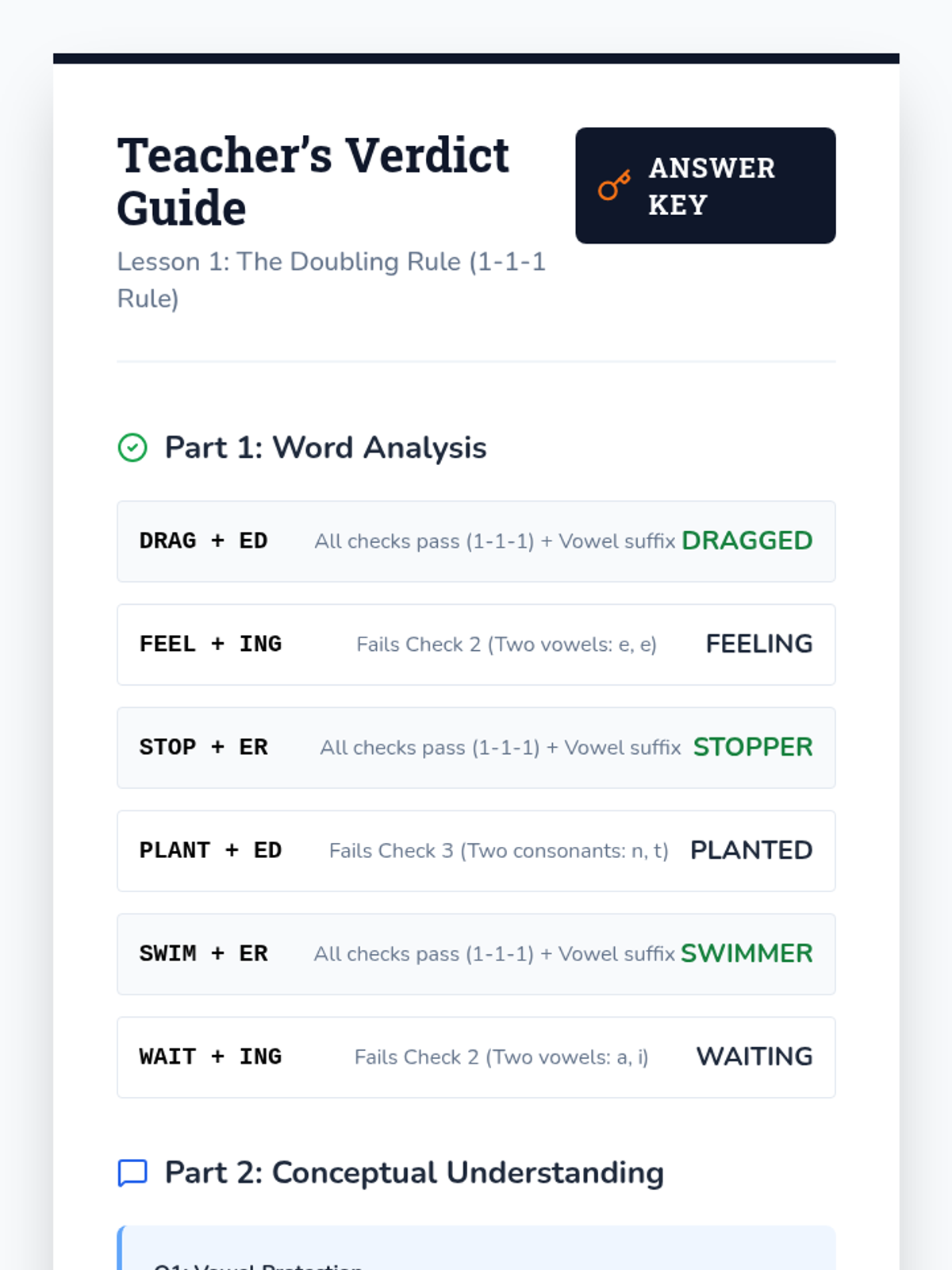
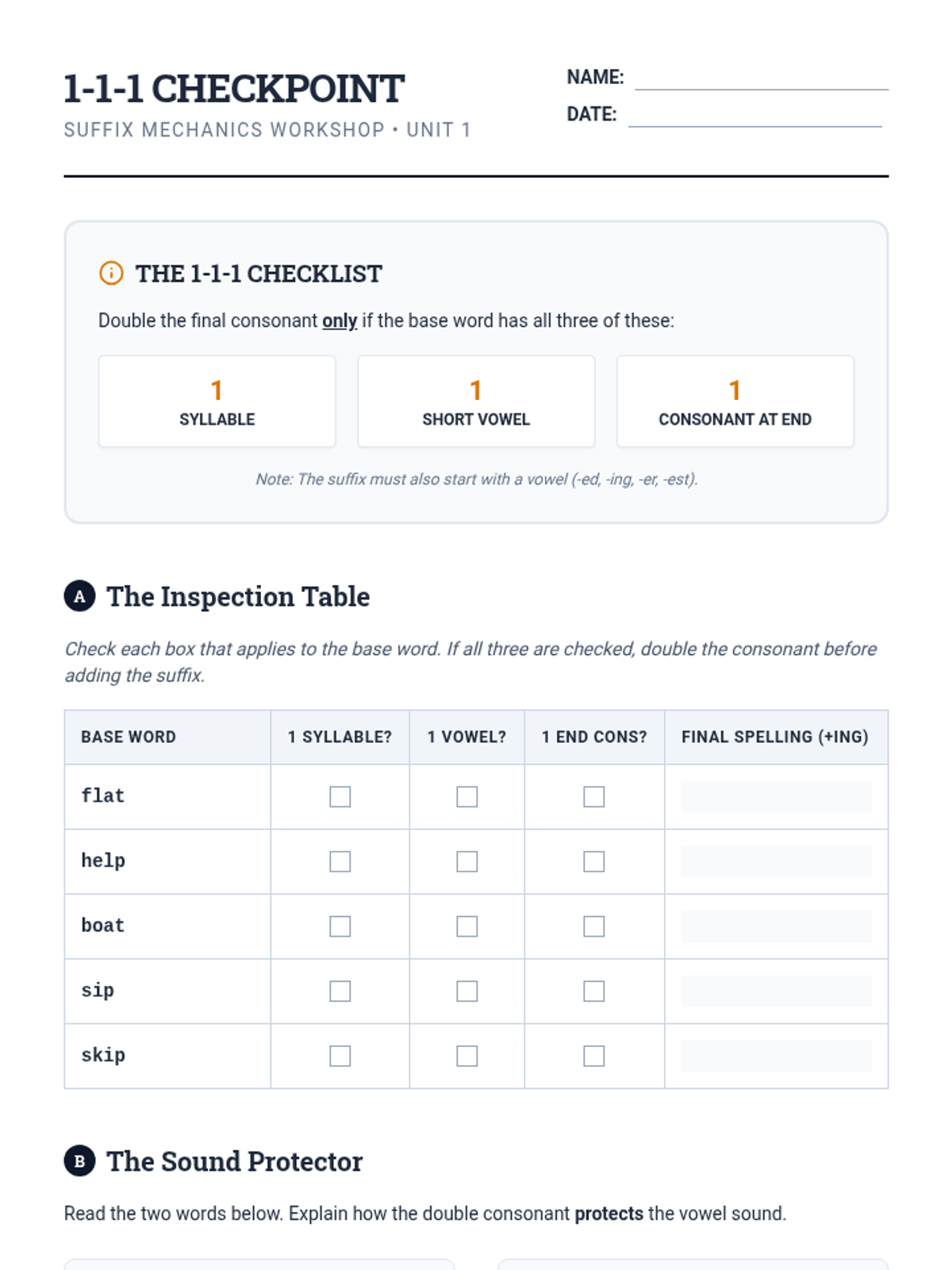
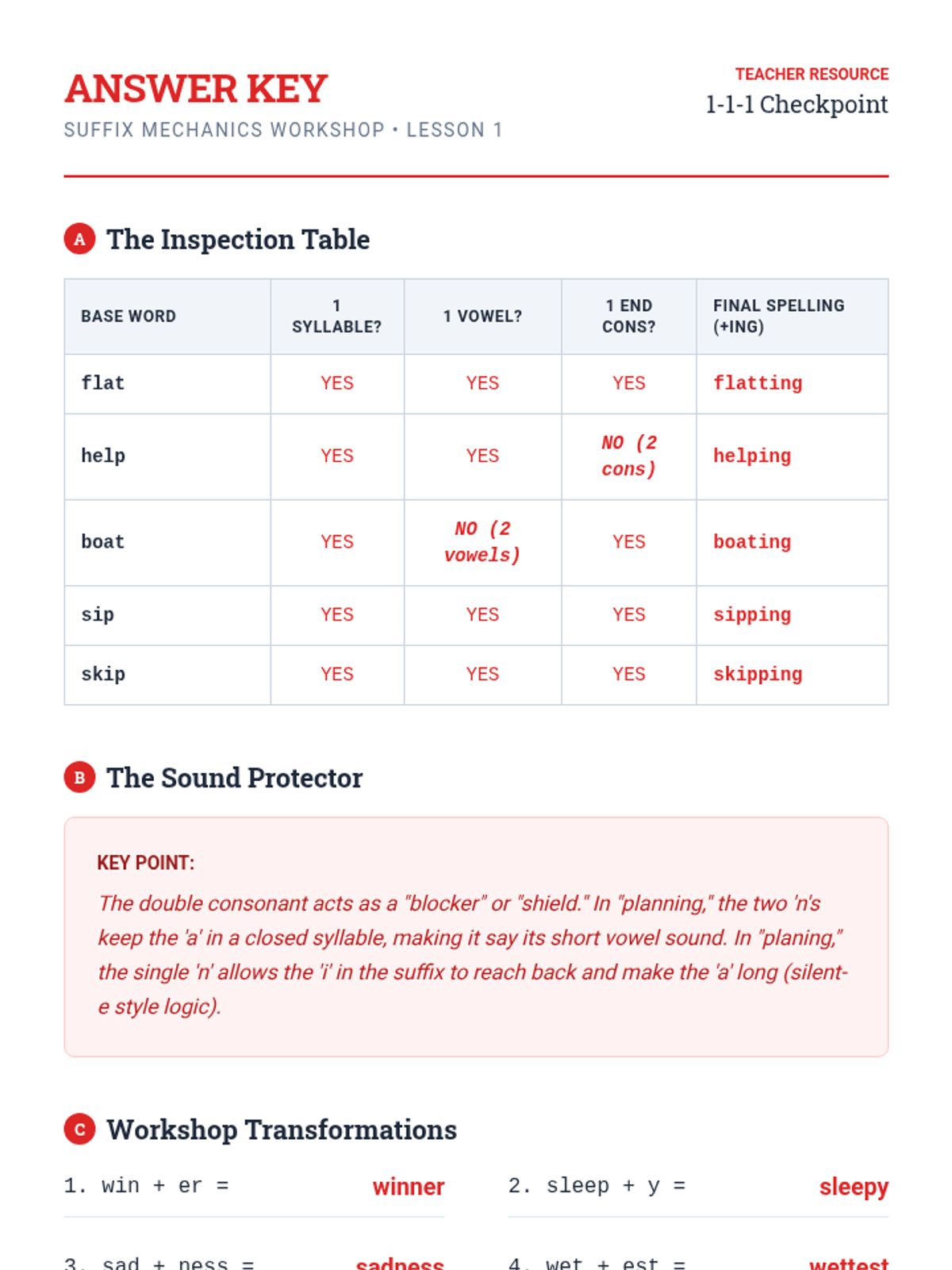
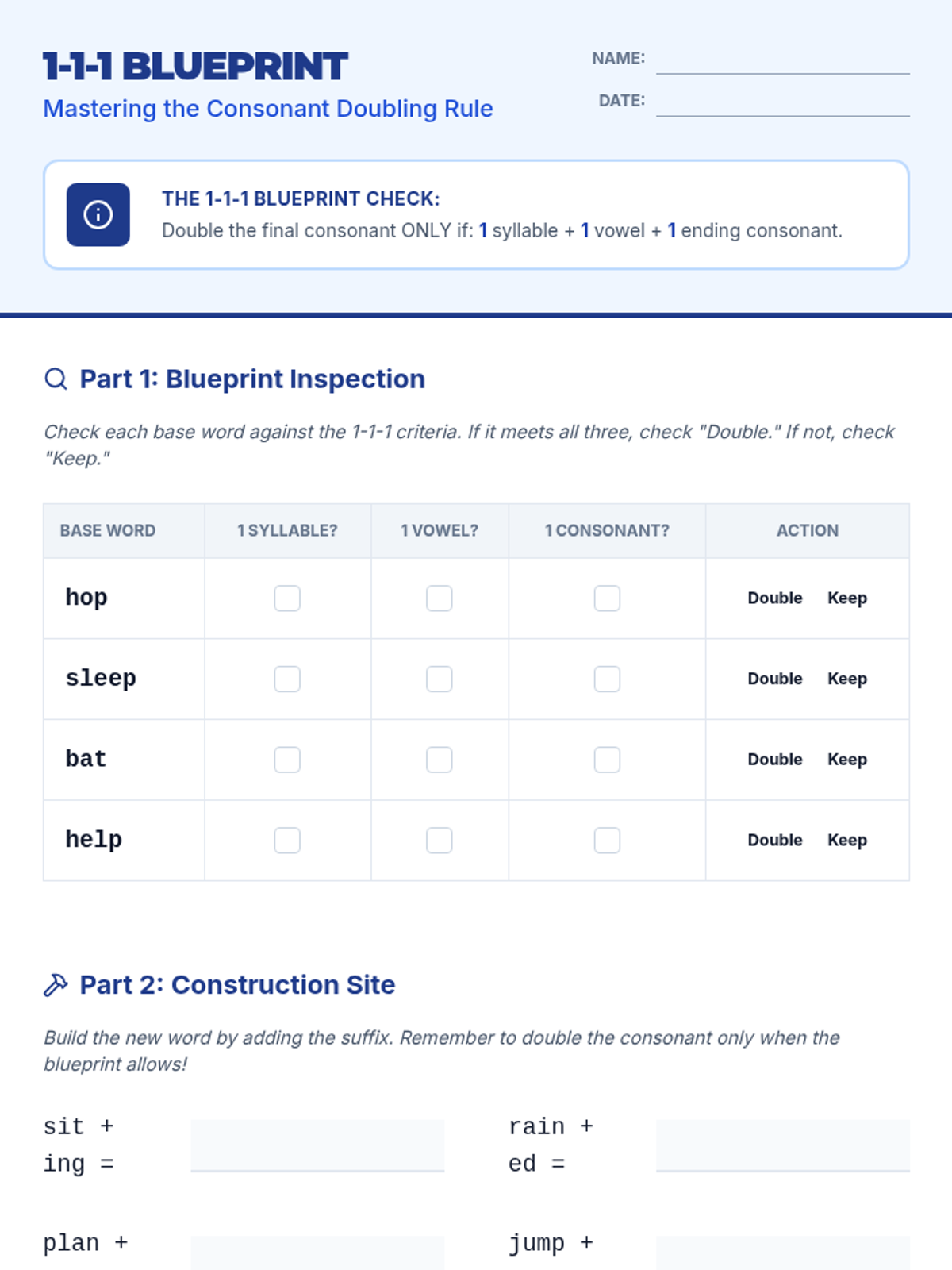
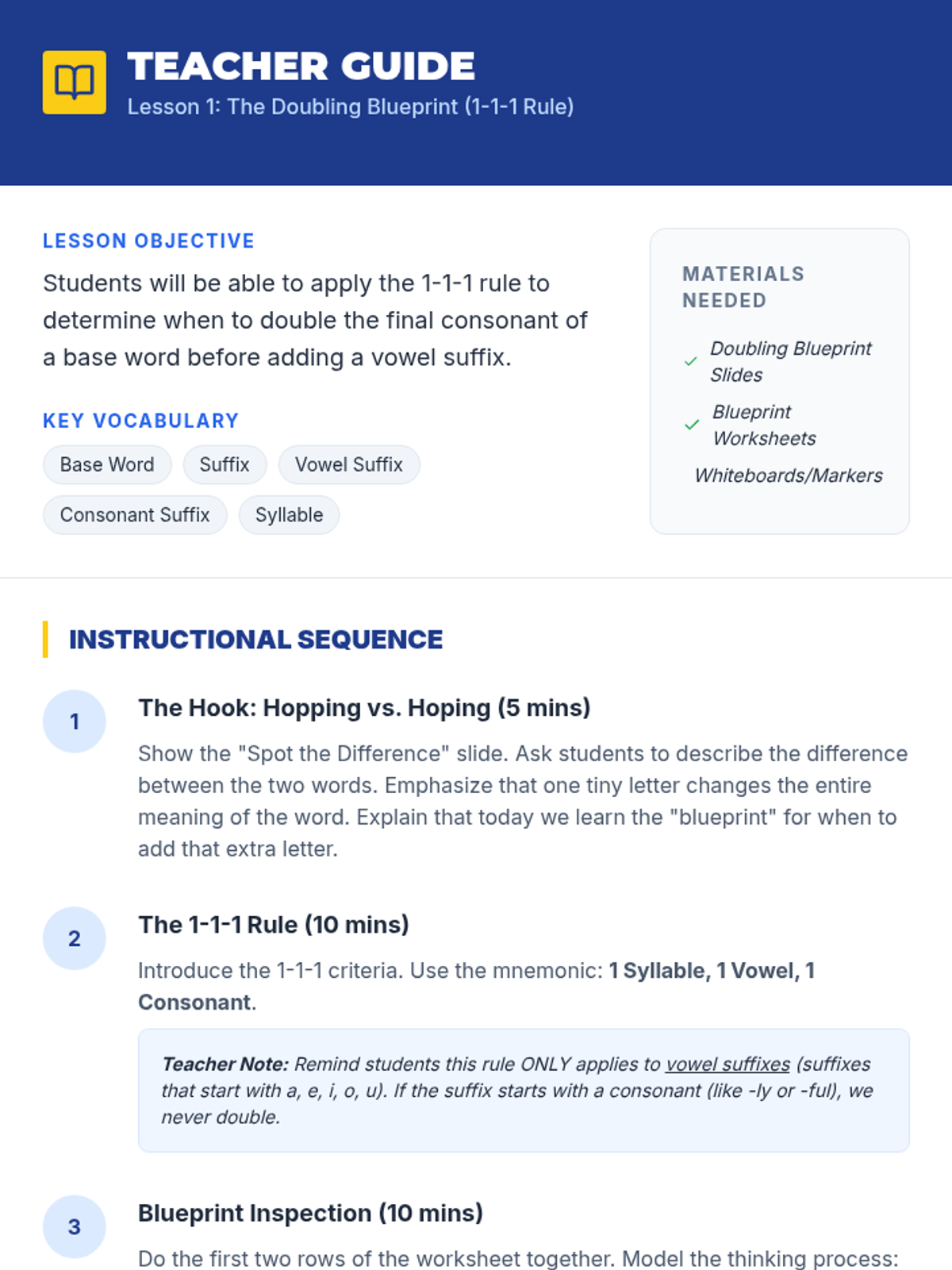
This sequence explores the orthographic transformations of base words when suffixes are added, focusing on the doubling rule, silent E, changing Y to I, and complex plurals. Students move from isolated practice to real-world editing through a workshop-themed approach.
A systematic study of suffix orthography rules including the 1-1-1 rule, silent e, changing y to i, and irregular plurals. Students learn the logic behind spelling changes to preserve vowel sounds and apply these rules in a final workshop.
A 5th-grade spelling workshop focusing on base word modifications when adding suffixes. Students master the 1-1-1 doubling rule, silent e removal, y-to-i changes, and irregular plurals through blueprint-themed lessons.
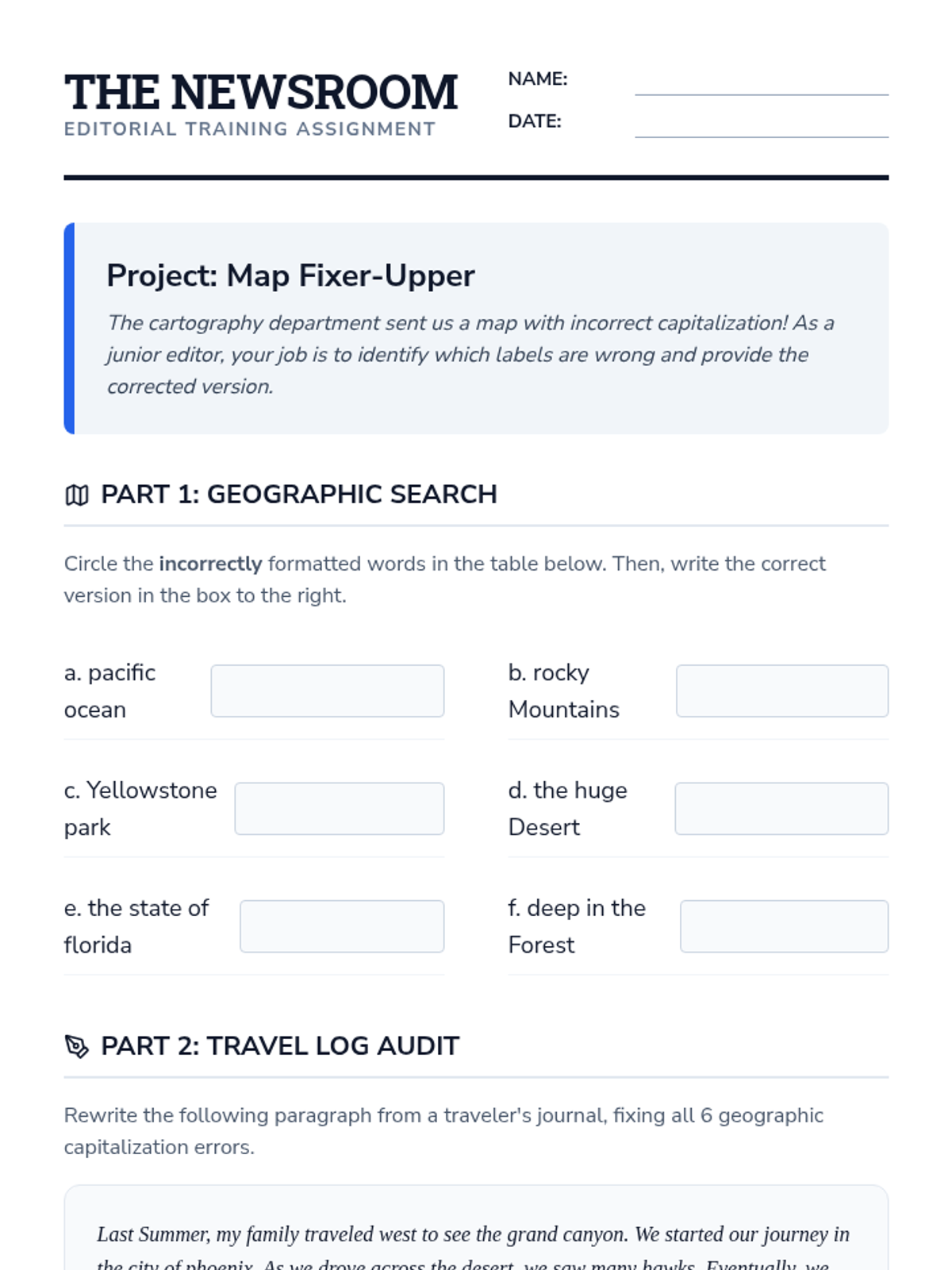
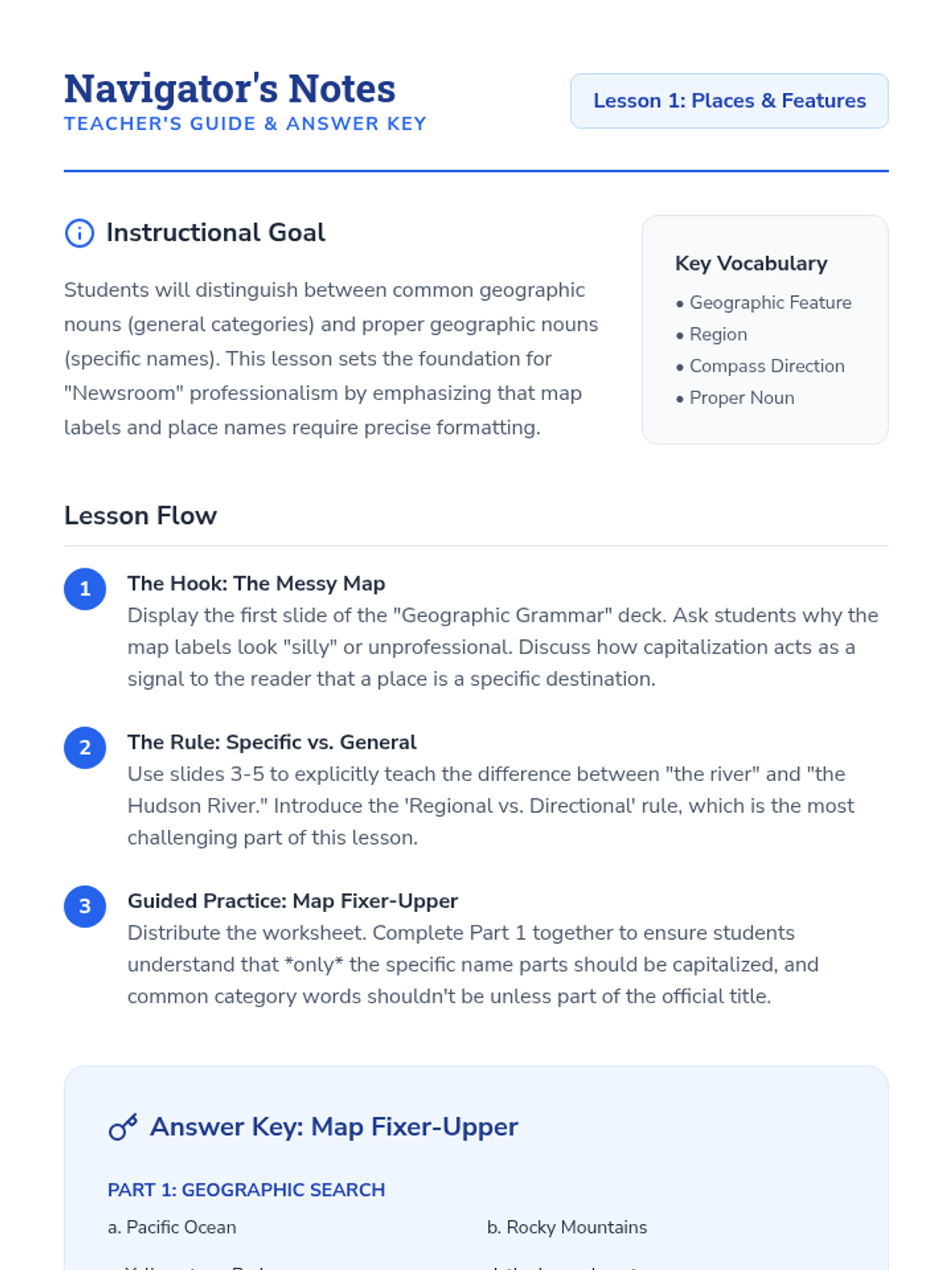
A 5th-grade ELA sequence where students become professional copy editors, mastering capitalization and mechanics through a newsroom-themed simulation. Students progress from specific noun categories to professional proofreading symbols, culminating in a Chief Editor certification challenge.
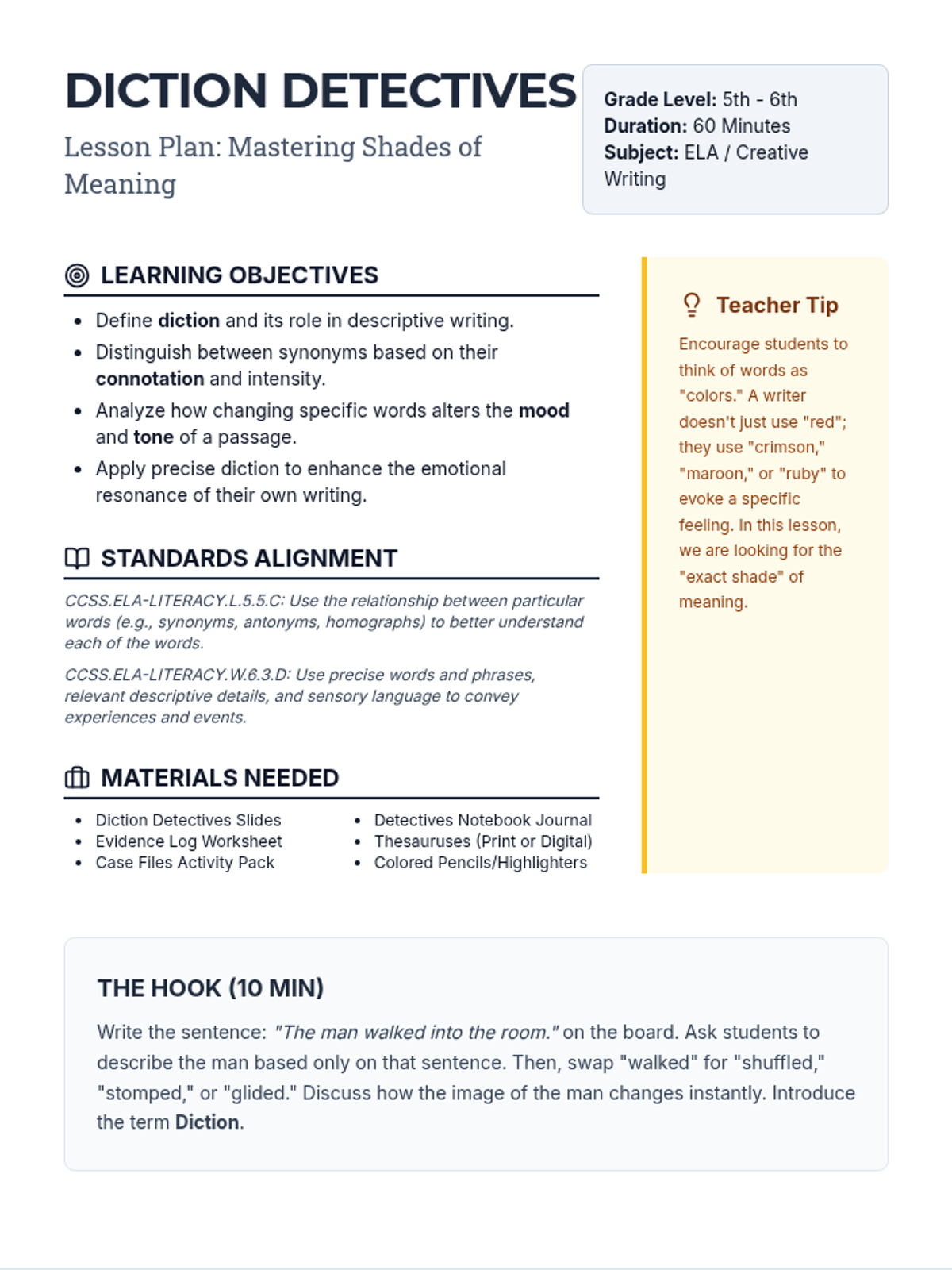
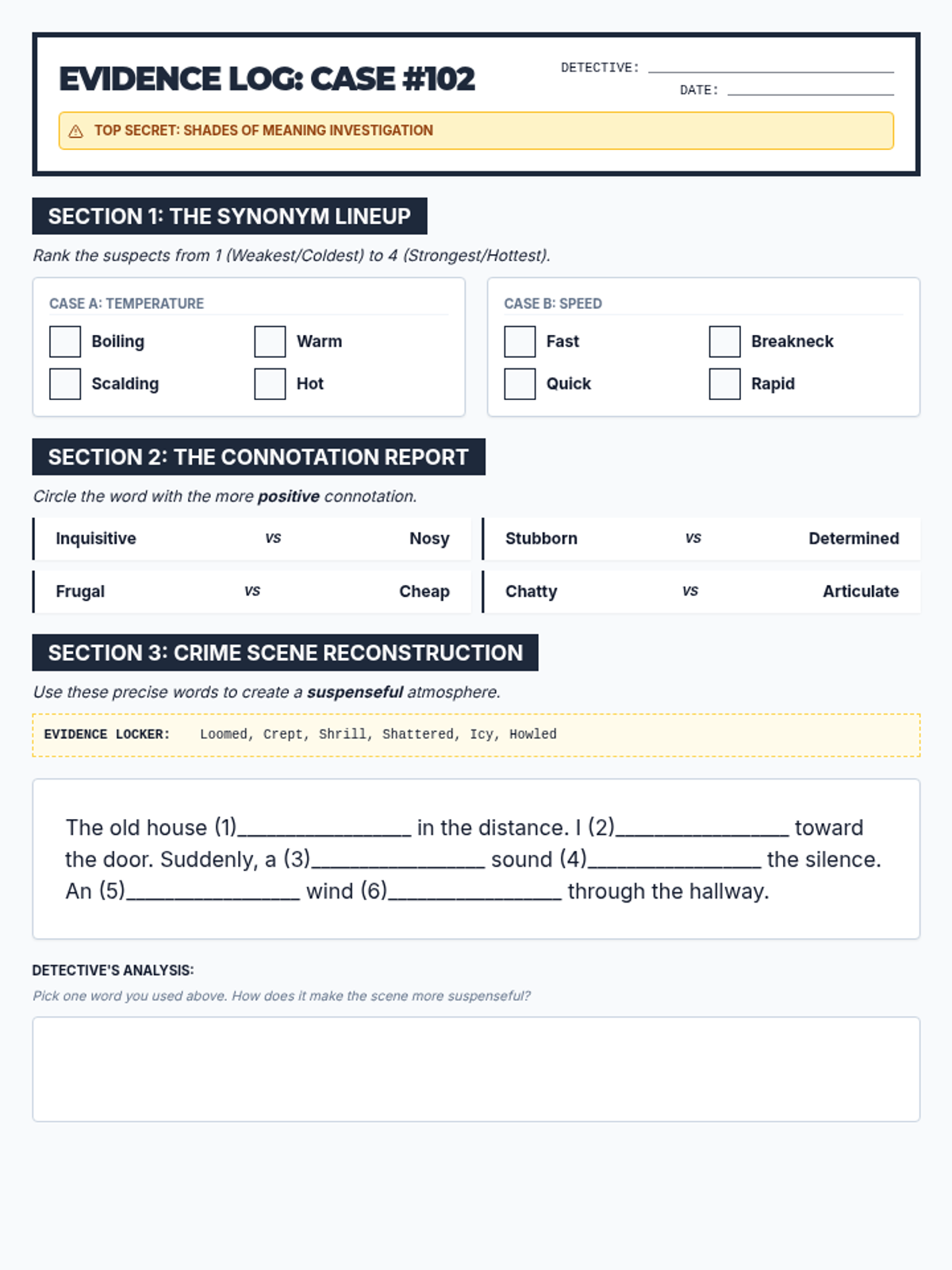
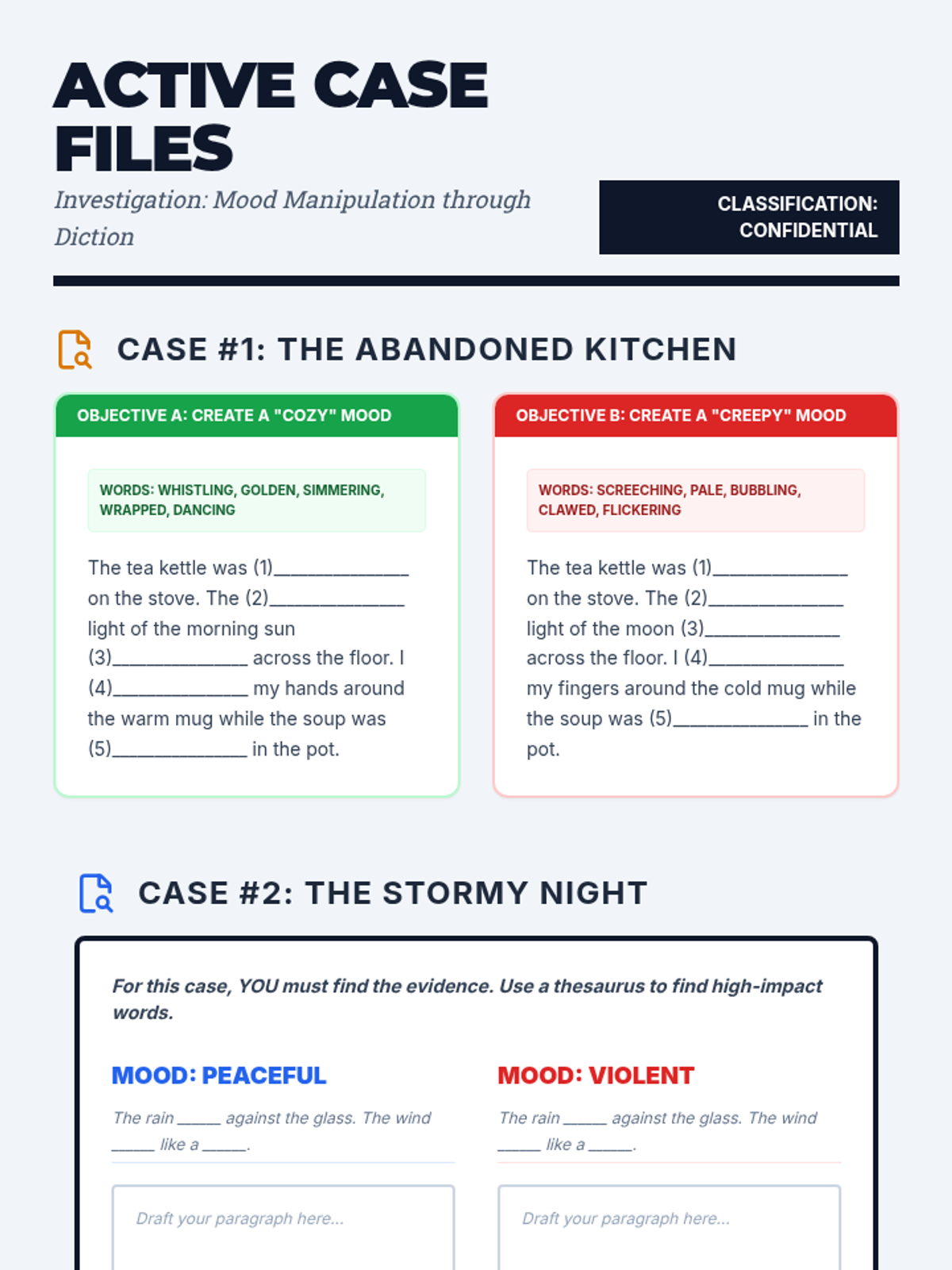
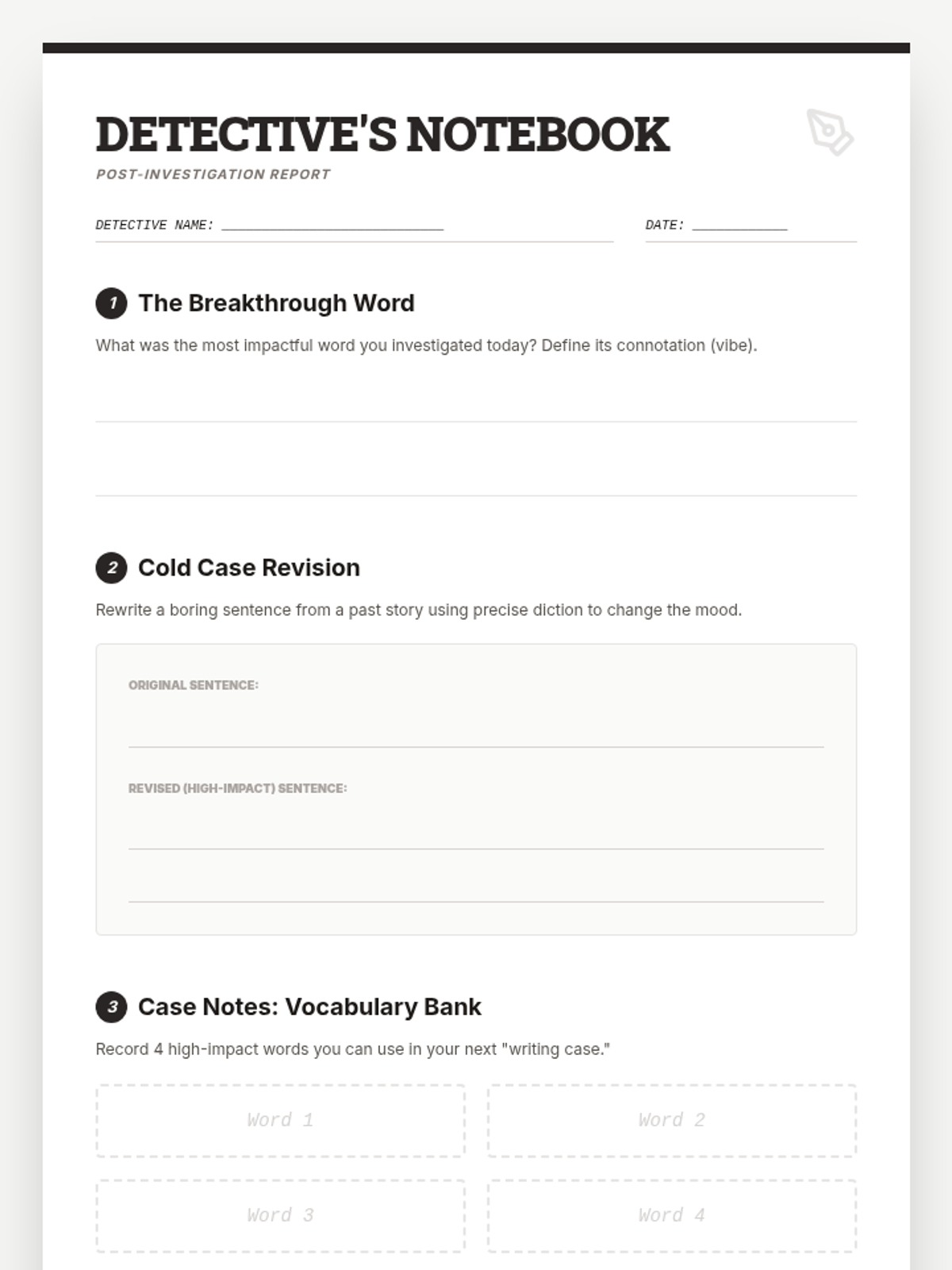
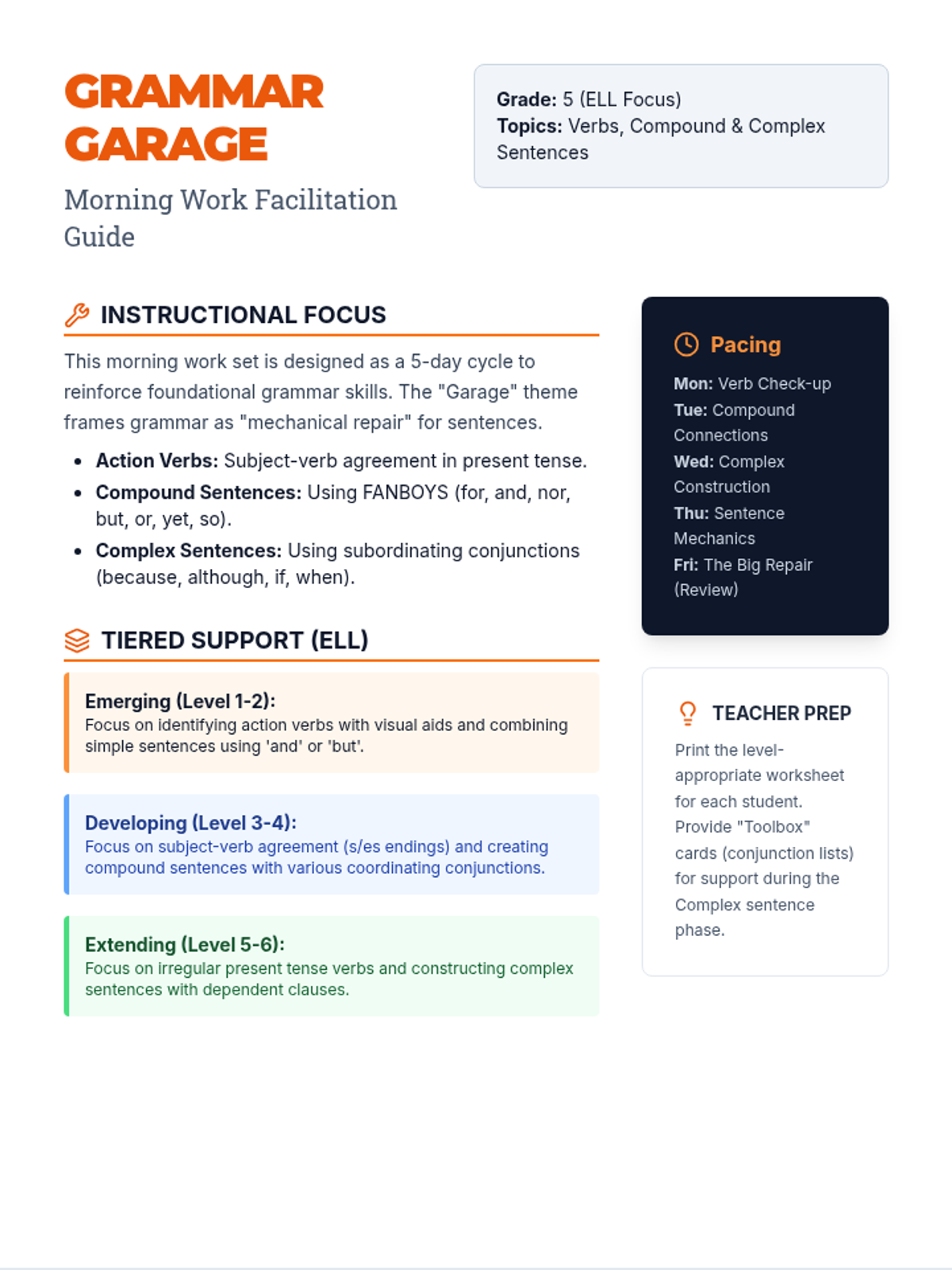
A collection of ELA resources focused on expanding vocabulary, refining diction, and mastering grammar mechanics through engaging, tiered activities.
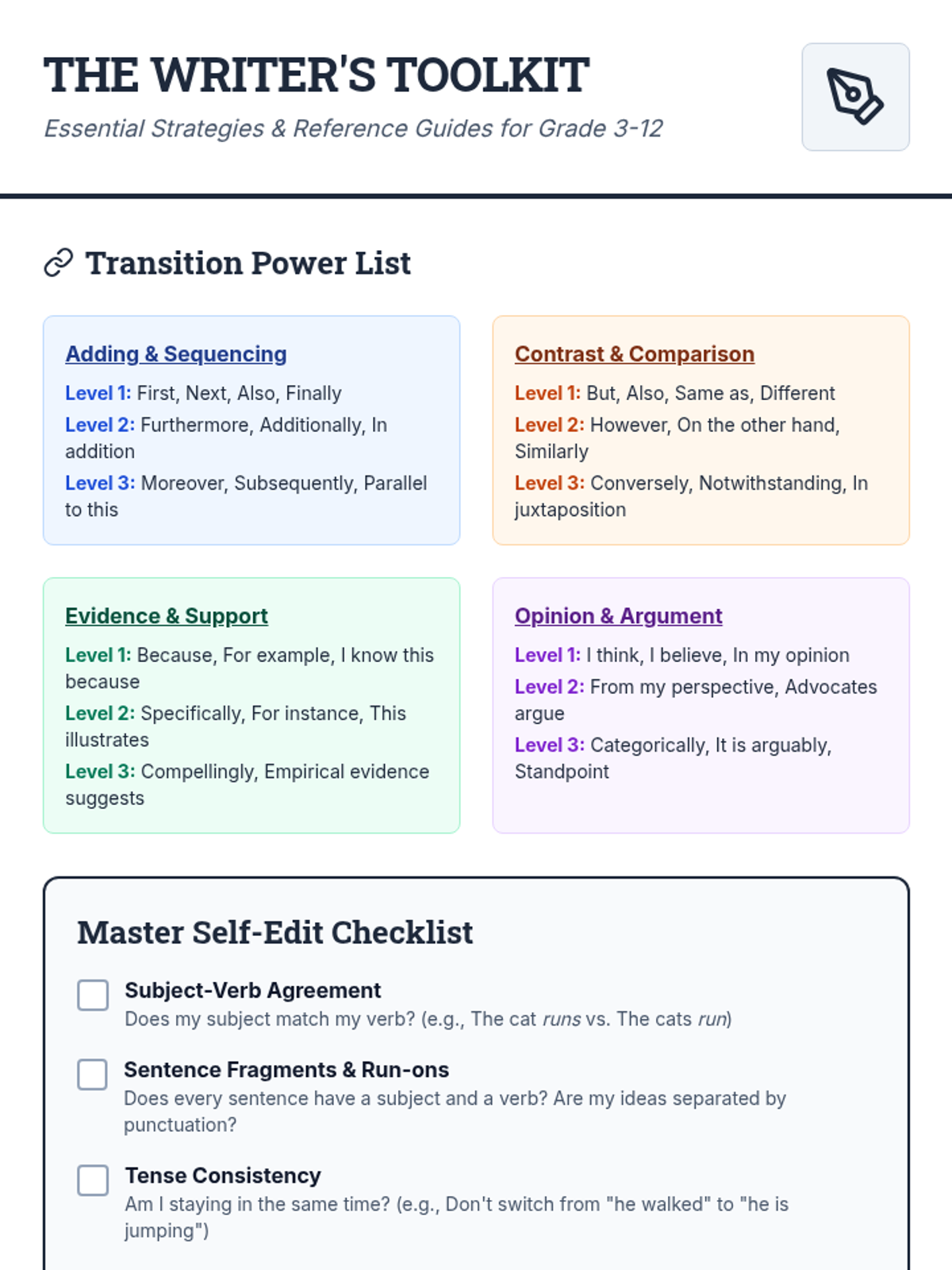
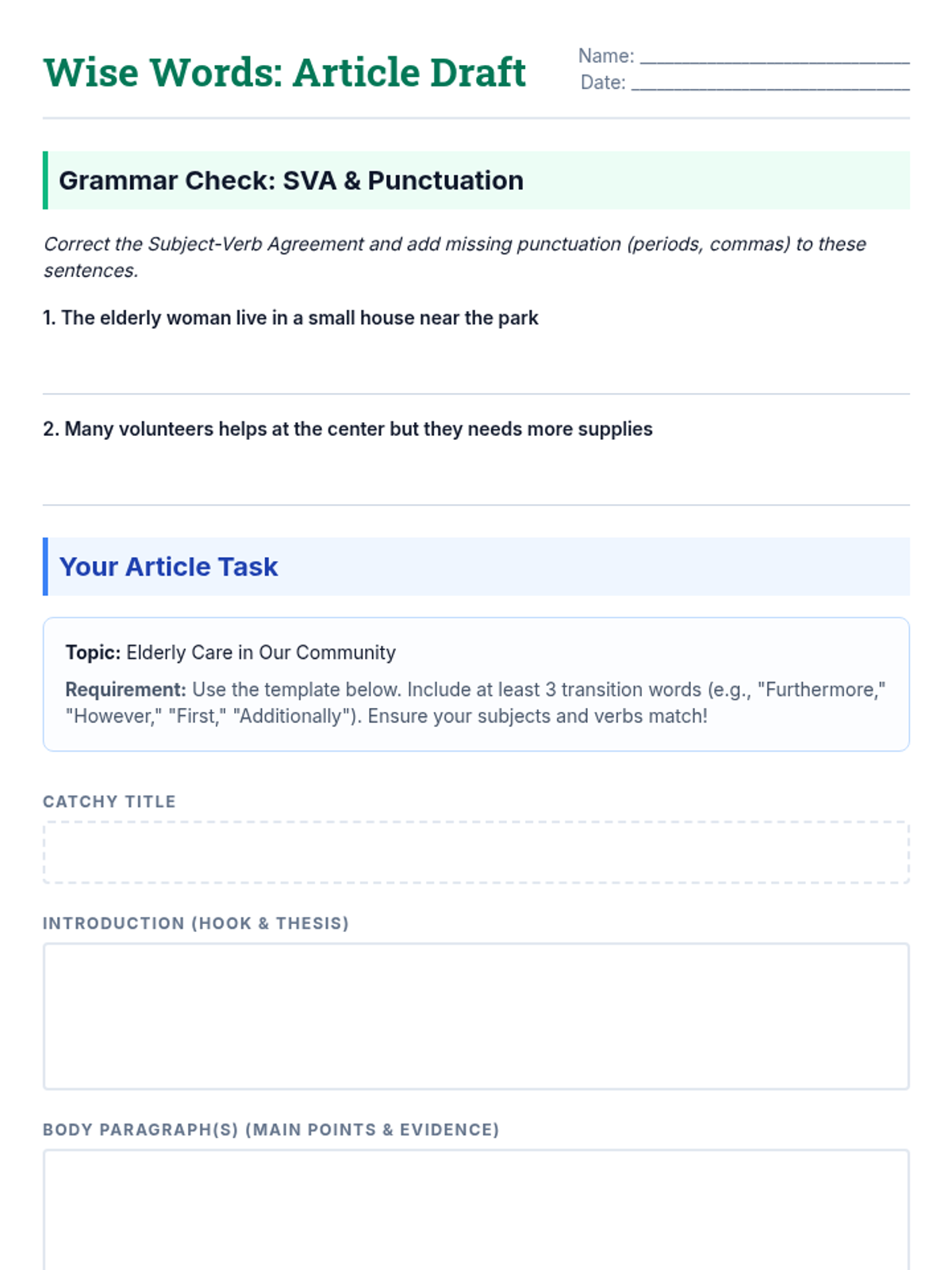
A unit on essential writing and grammar skills, focusing on sentence structure and cohesion through verbs and transition words.
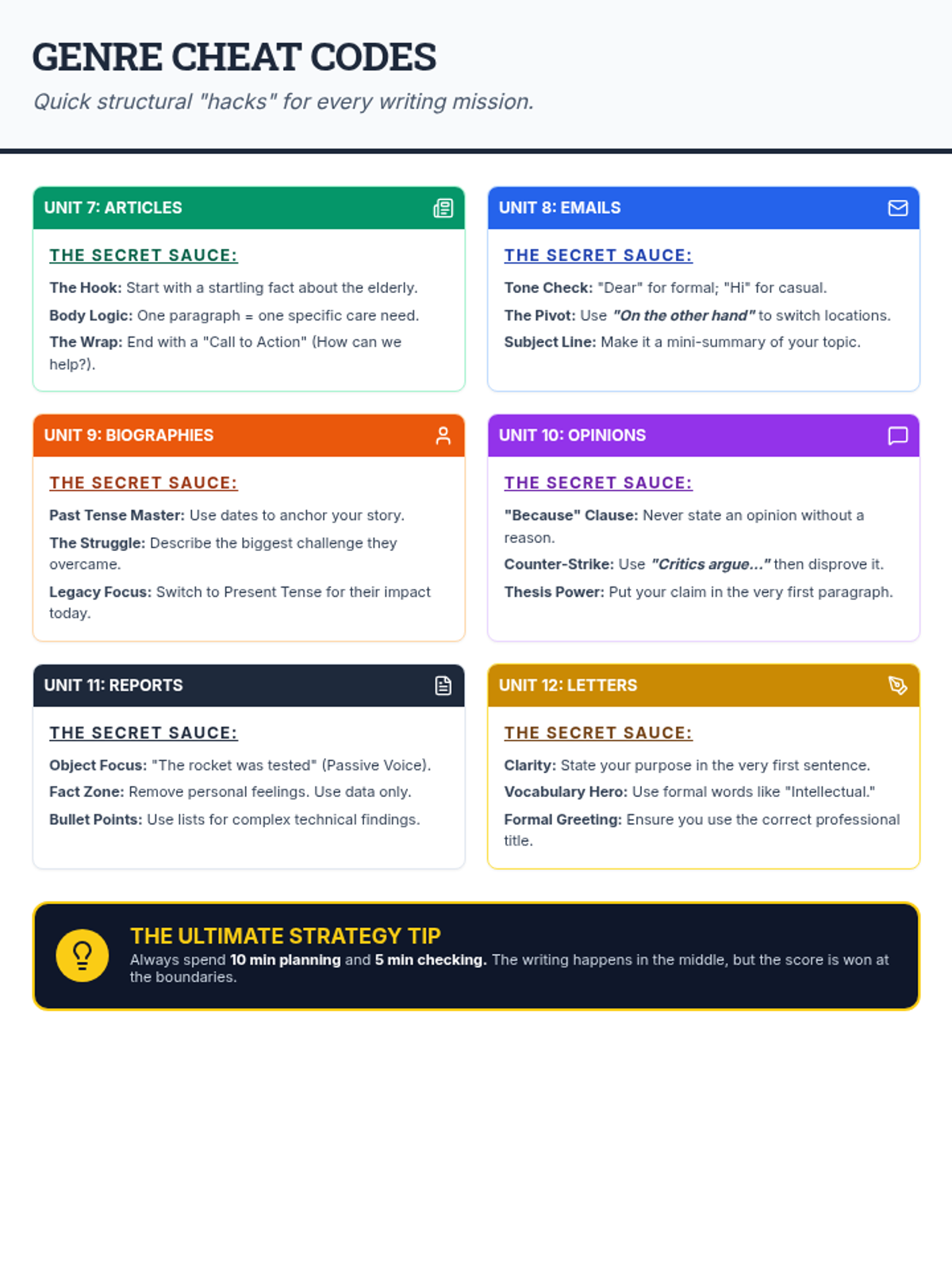
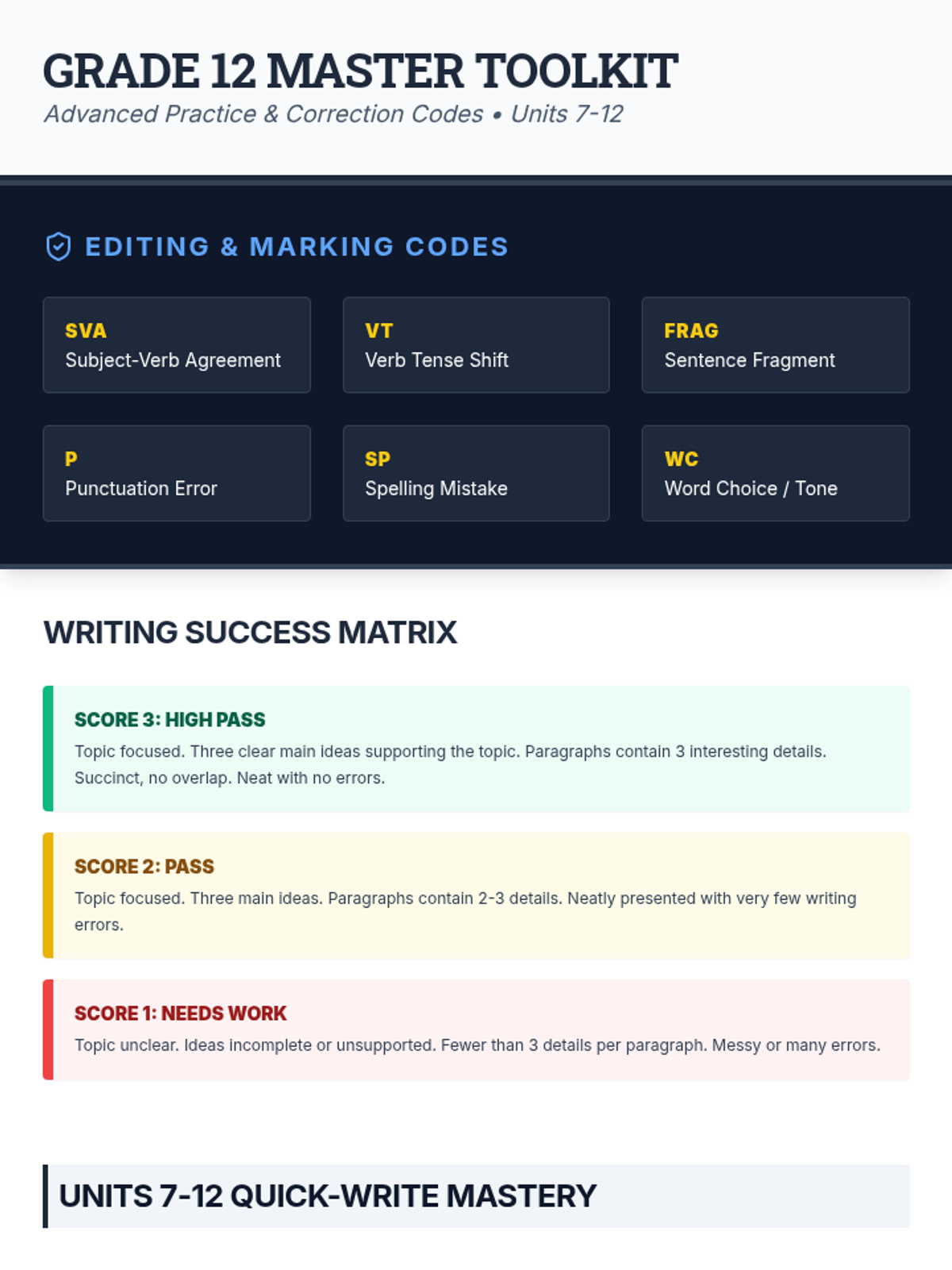
A comprehensive writing program for grades 3-12 focused on sentence and paragraph composition across six different genres, culminating in exam preparation and final assessments. The curriculum balances grammar foundations with creative and formal writing structures.
A unit on persuasive writing for 5th-grade students, focusing on structure, audience awareness, and linguistic scaffolding for ELL learners.
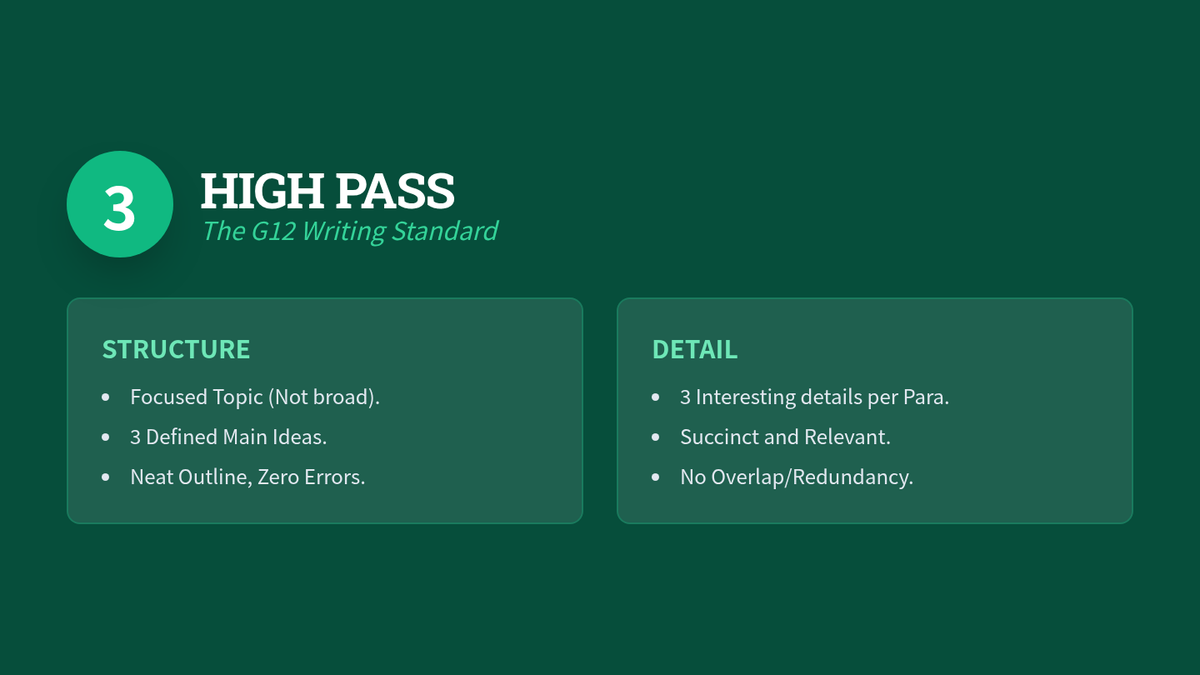
A comprehensive set of writing tools and rubrics across different genres to help students master various styles of storytelling and analysis.
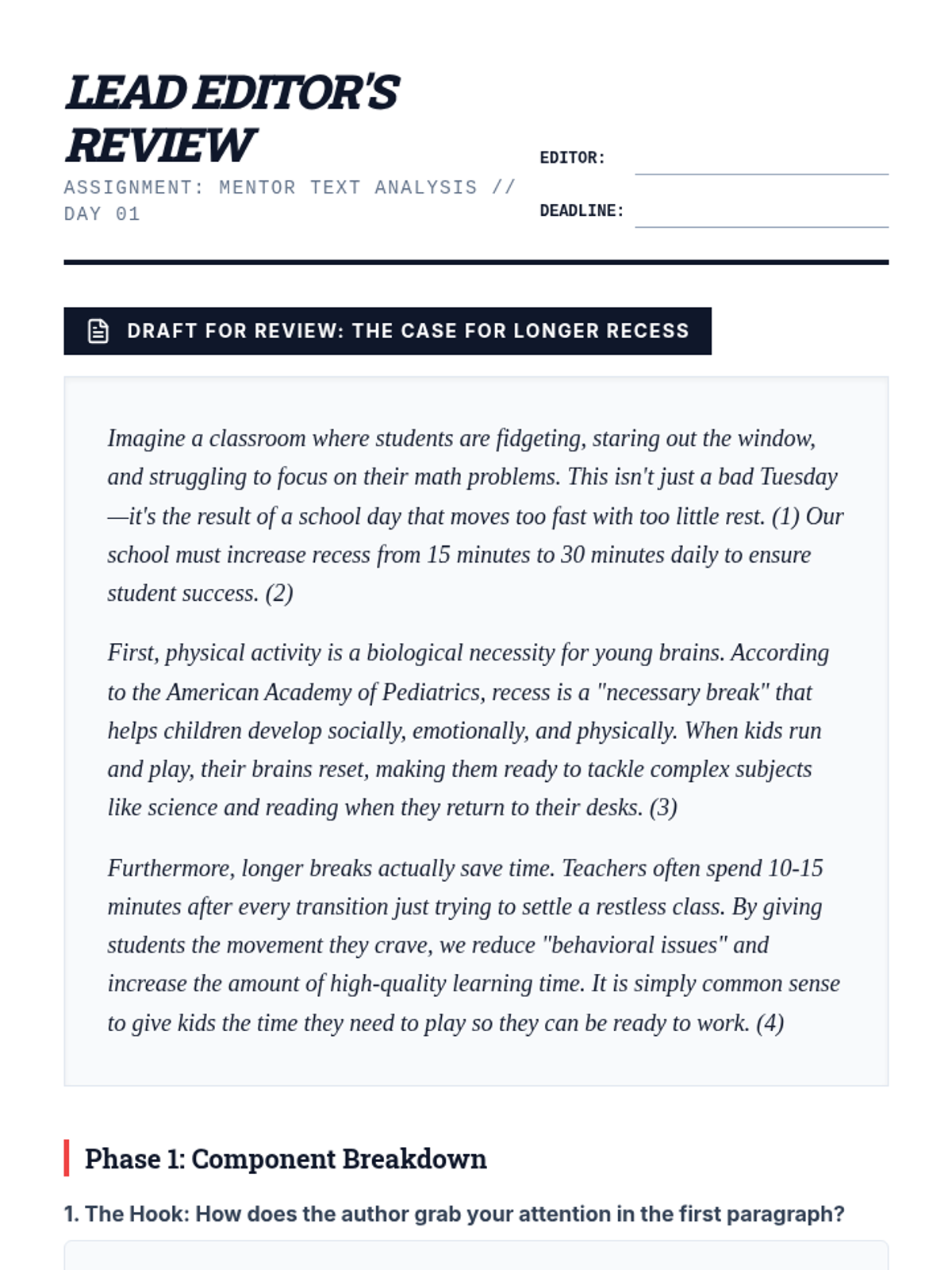
A comprehensive 5-day unit designed to take students from analyzing mentor texts to drafting and polishing their own persuasive essays. The unit uses a professional 'Editorial Office' theme to engage students as 'Lead Editors' of their own arguments.
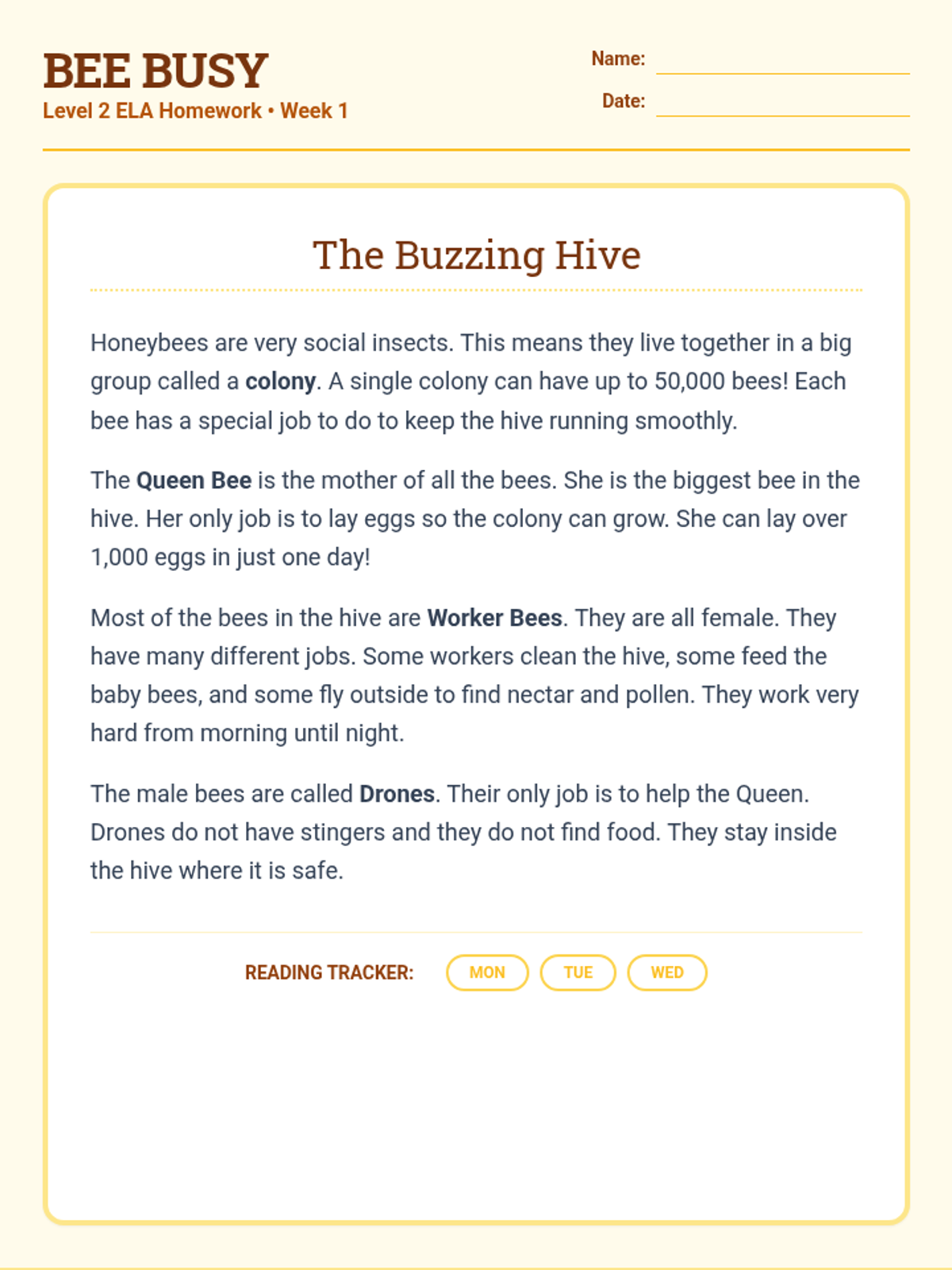
Differentiated ELA homework packets centered on the lives and importance of honeybees, organized by complexity levels.
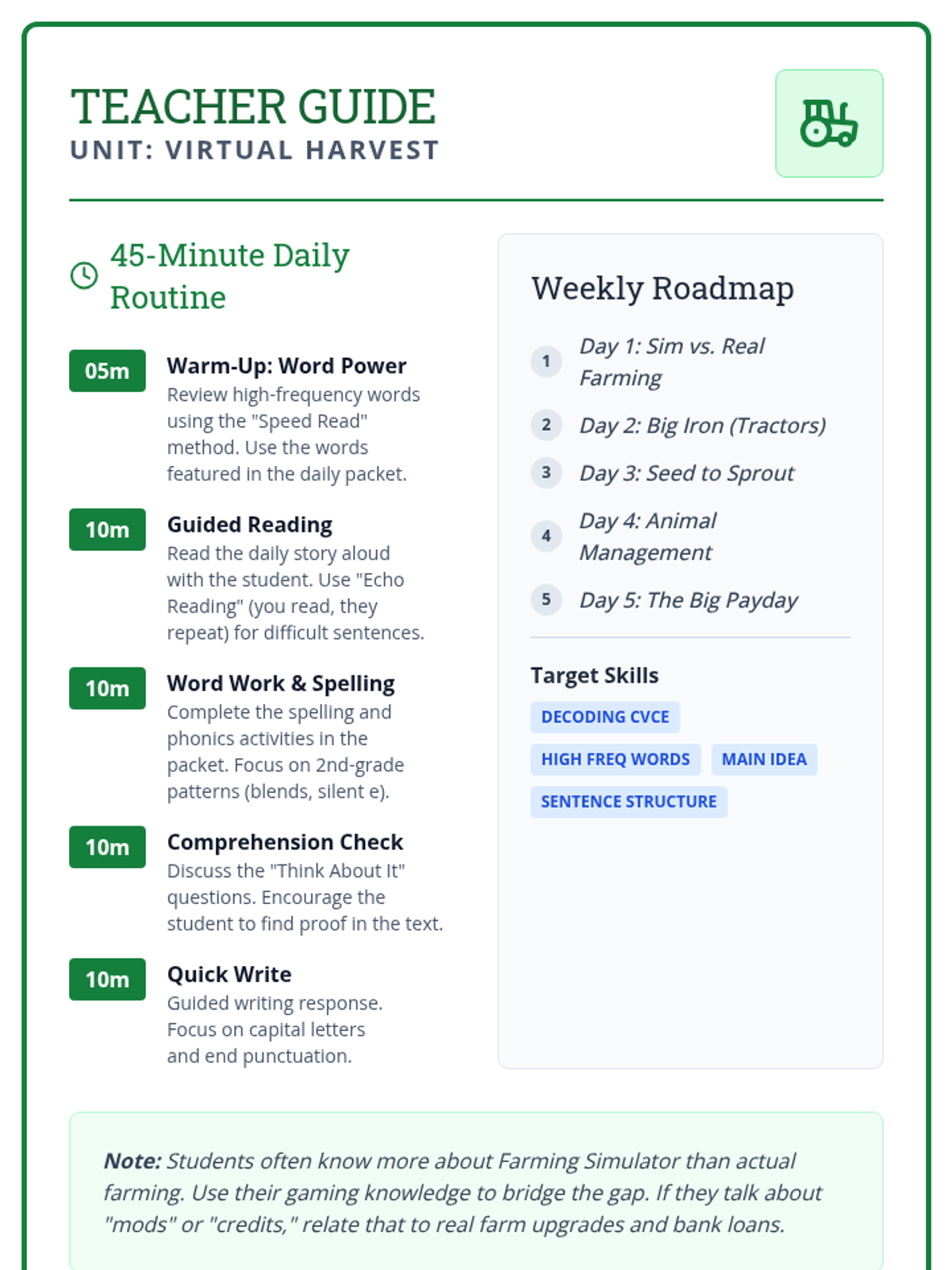
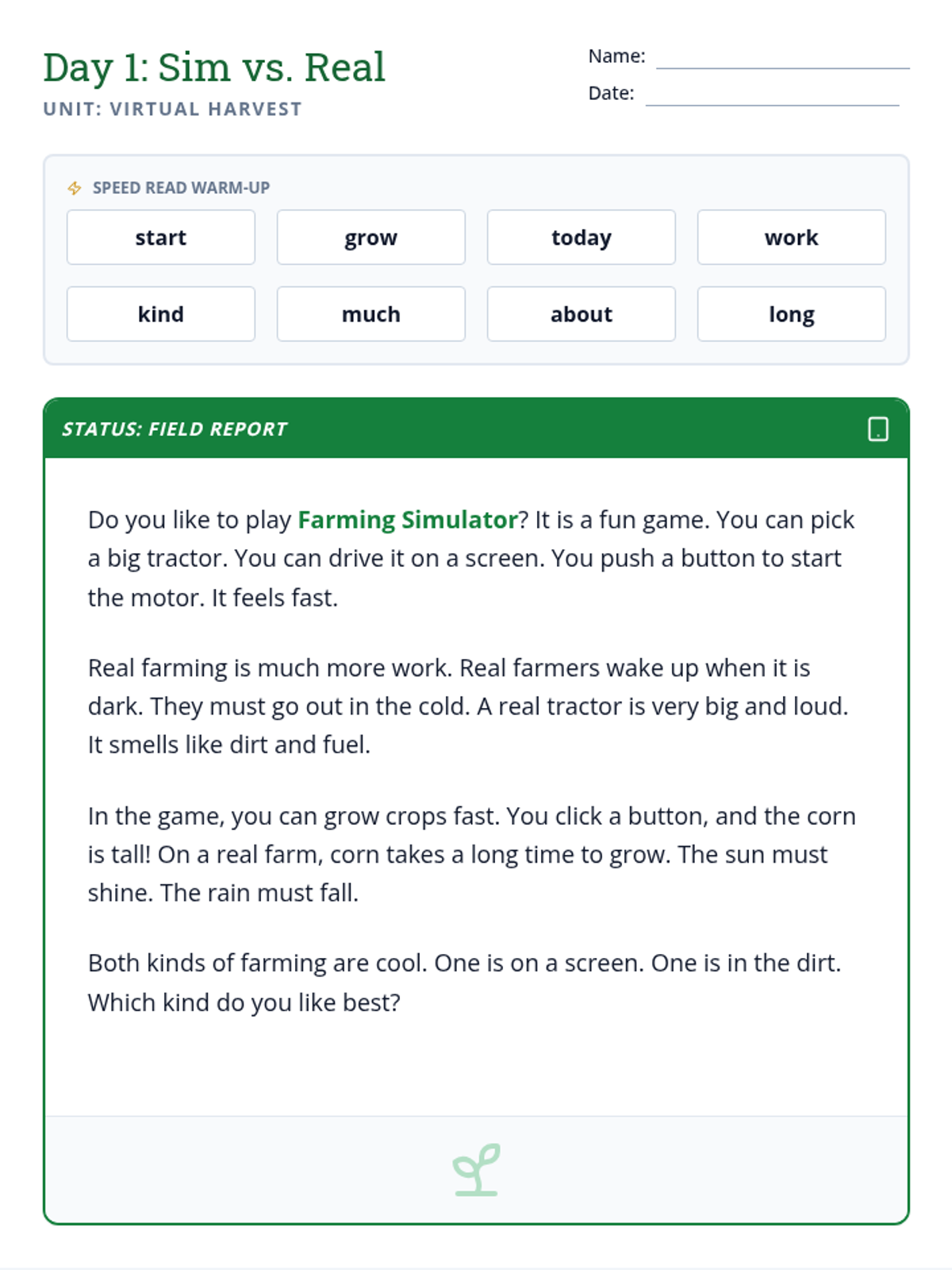
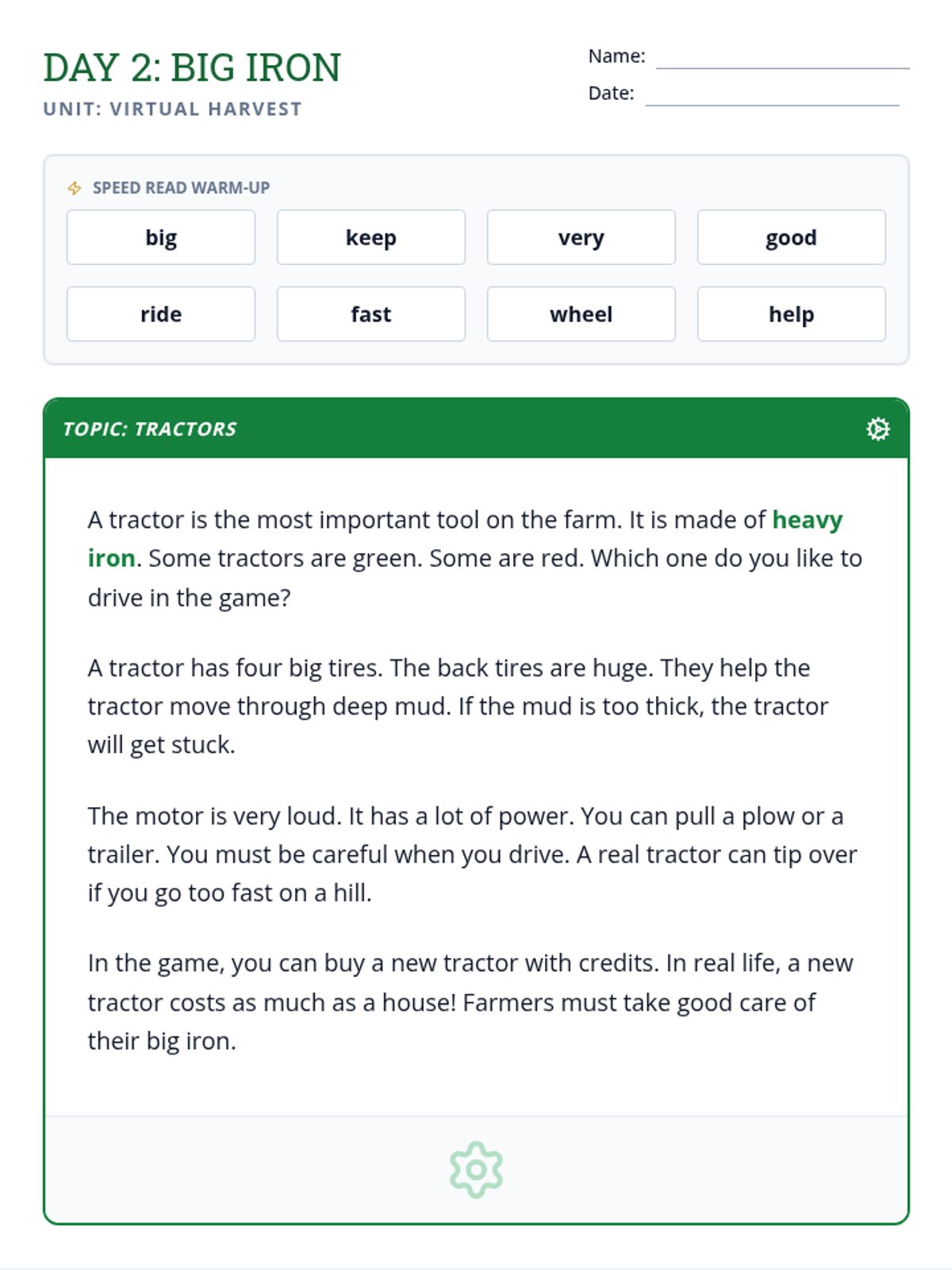
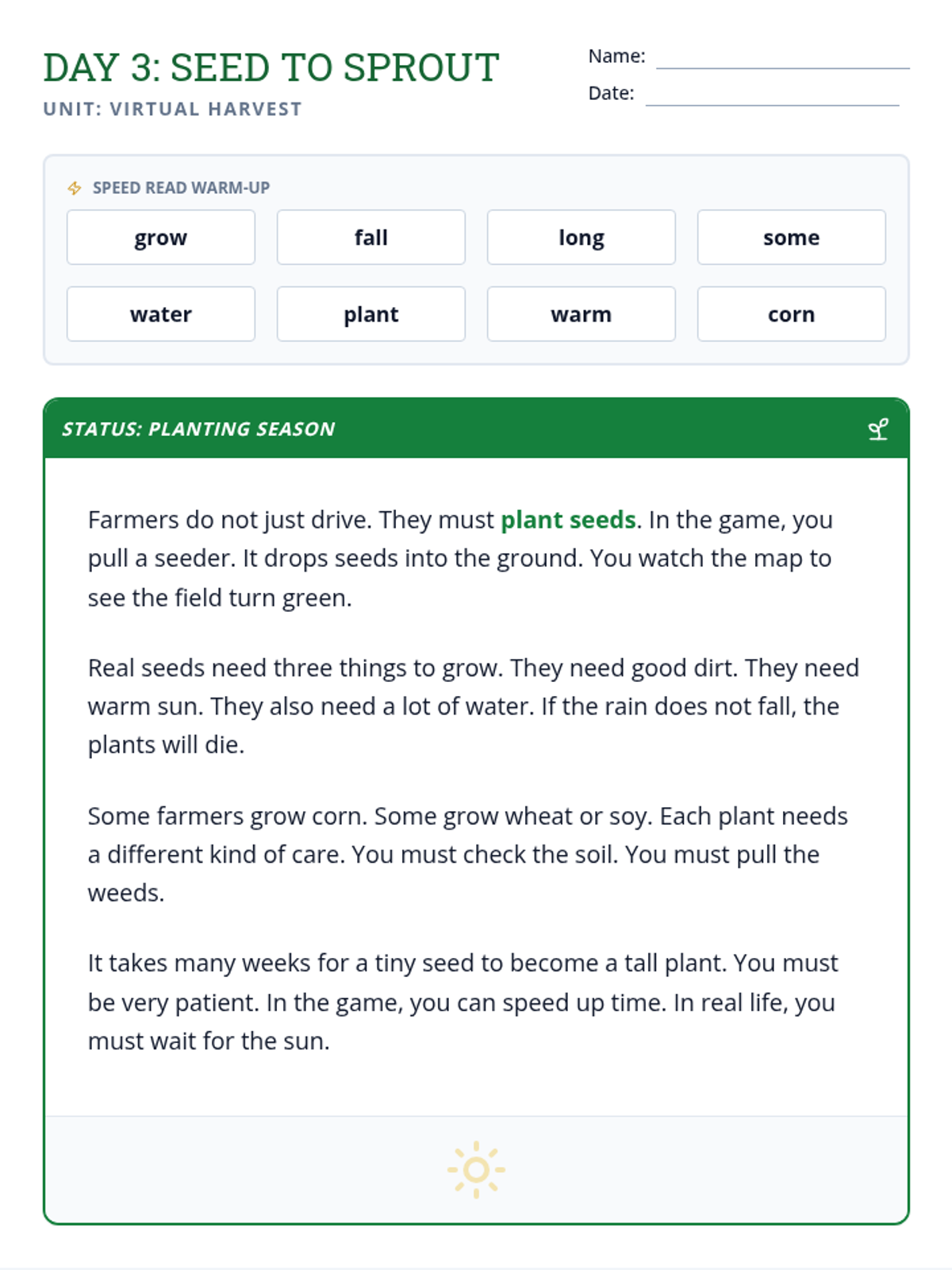
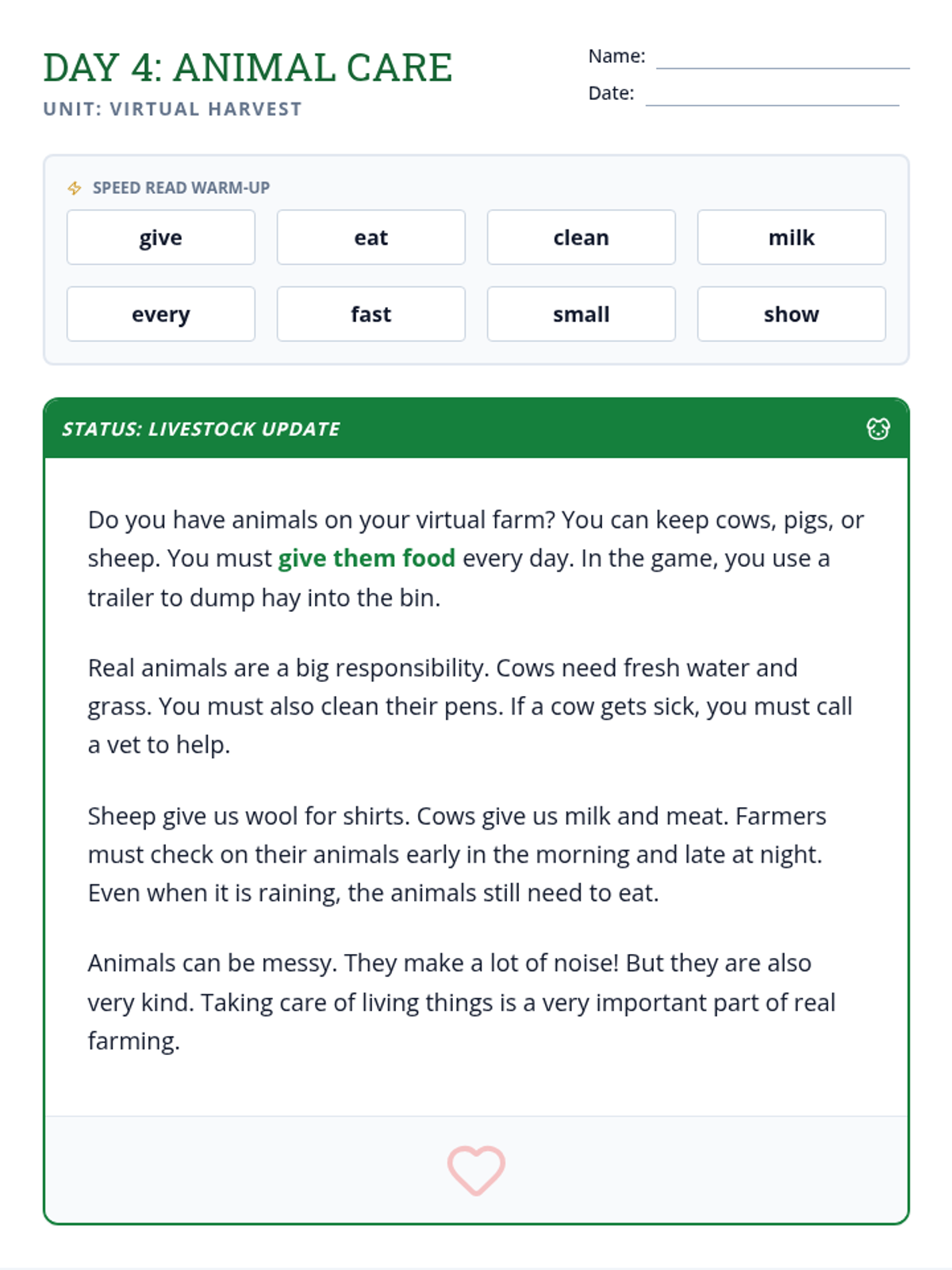
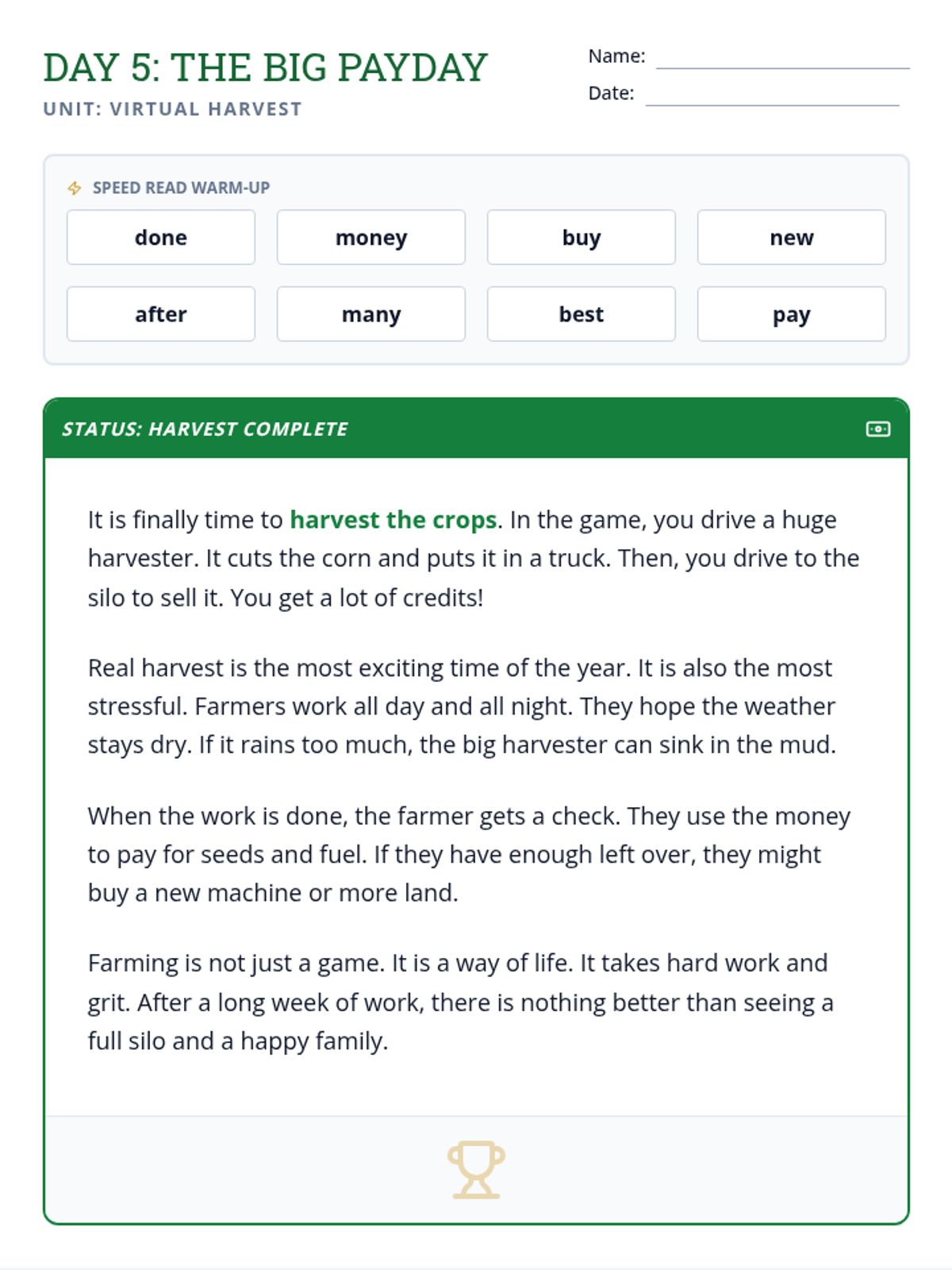
A 5-day reading comprehension and writing unit for struggling readers, blending the world of Farming Simulator with real-world agriculture. Focuses on 2nd-grade level literacy skills within a high-interest 5th-grade context.
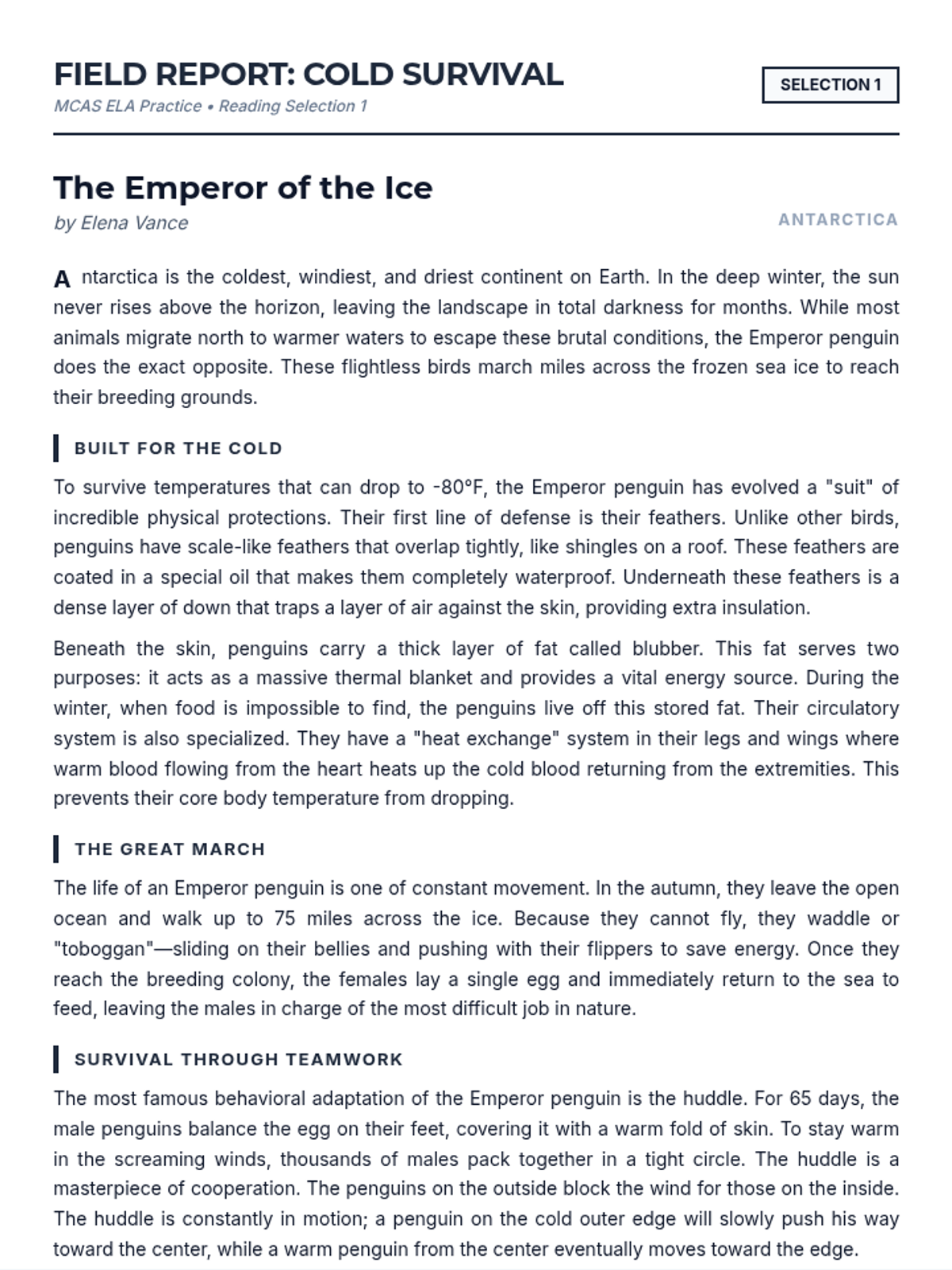
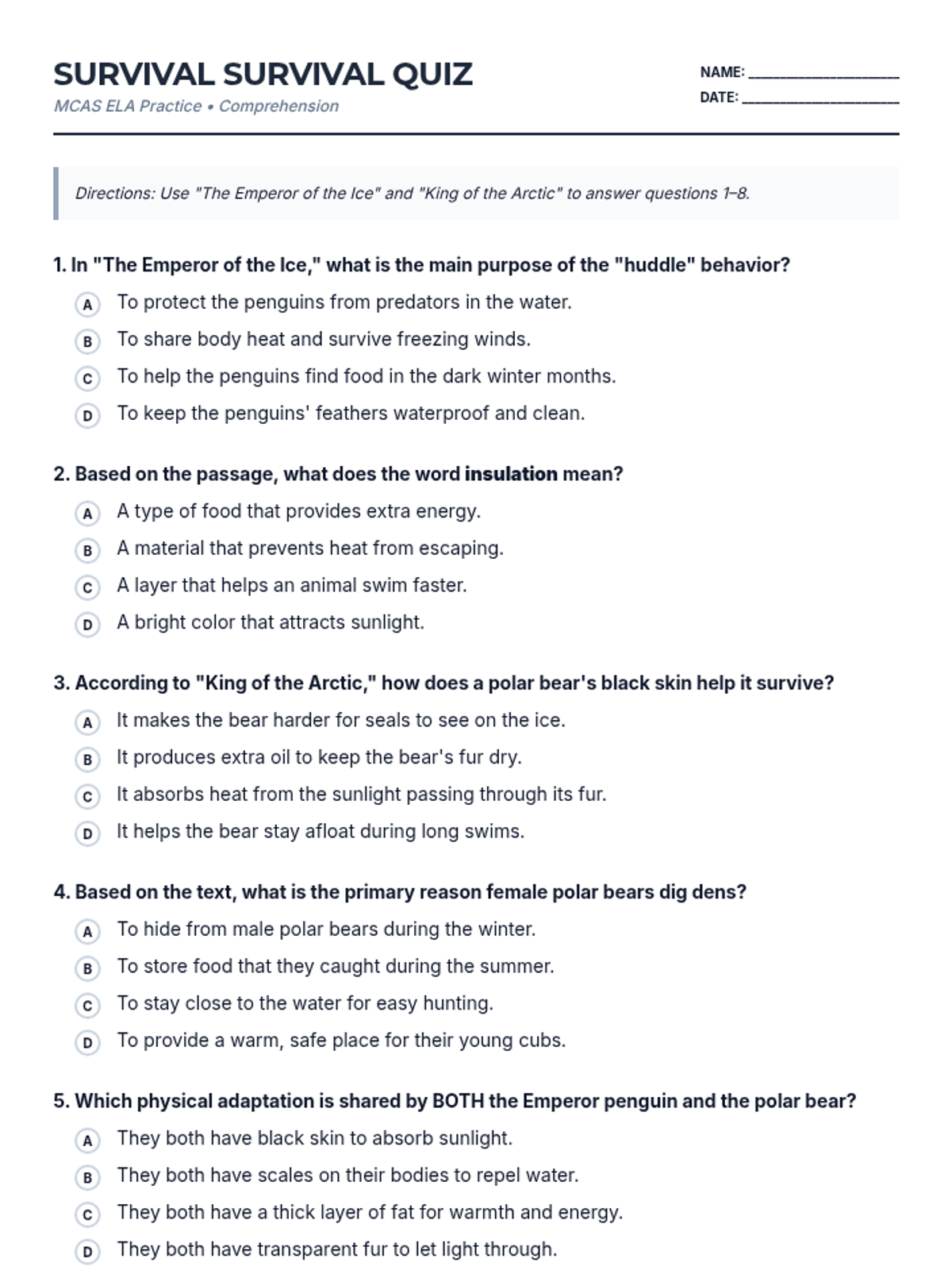
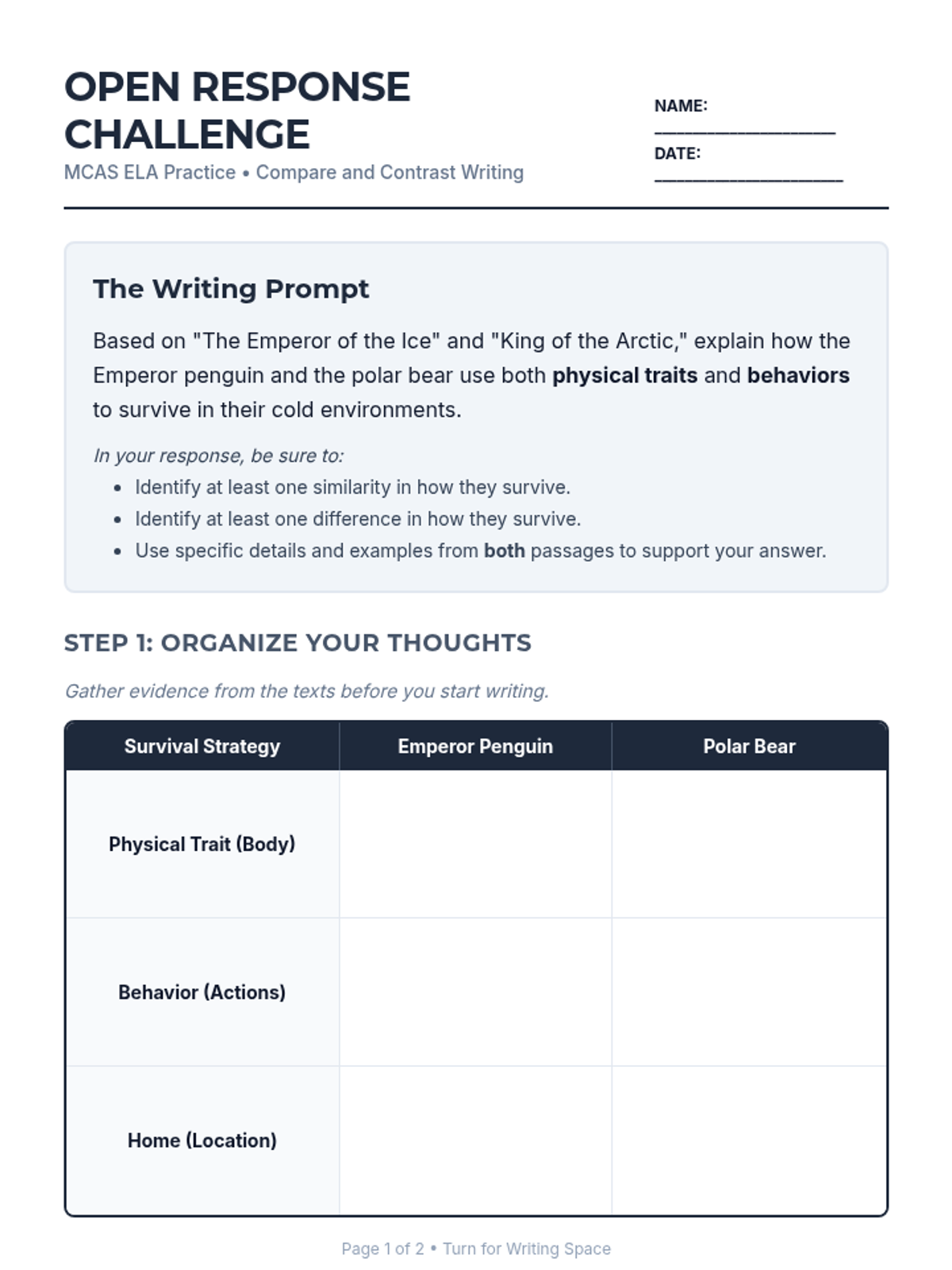
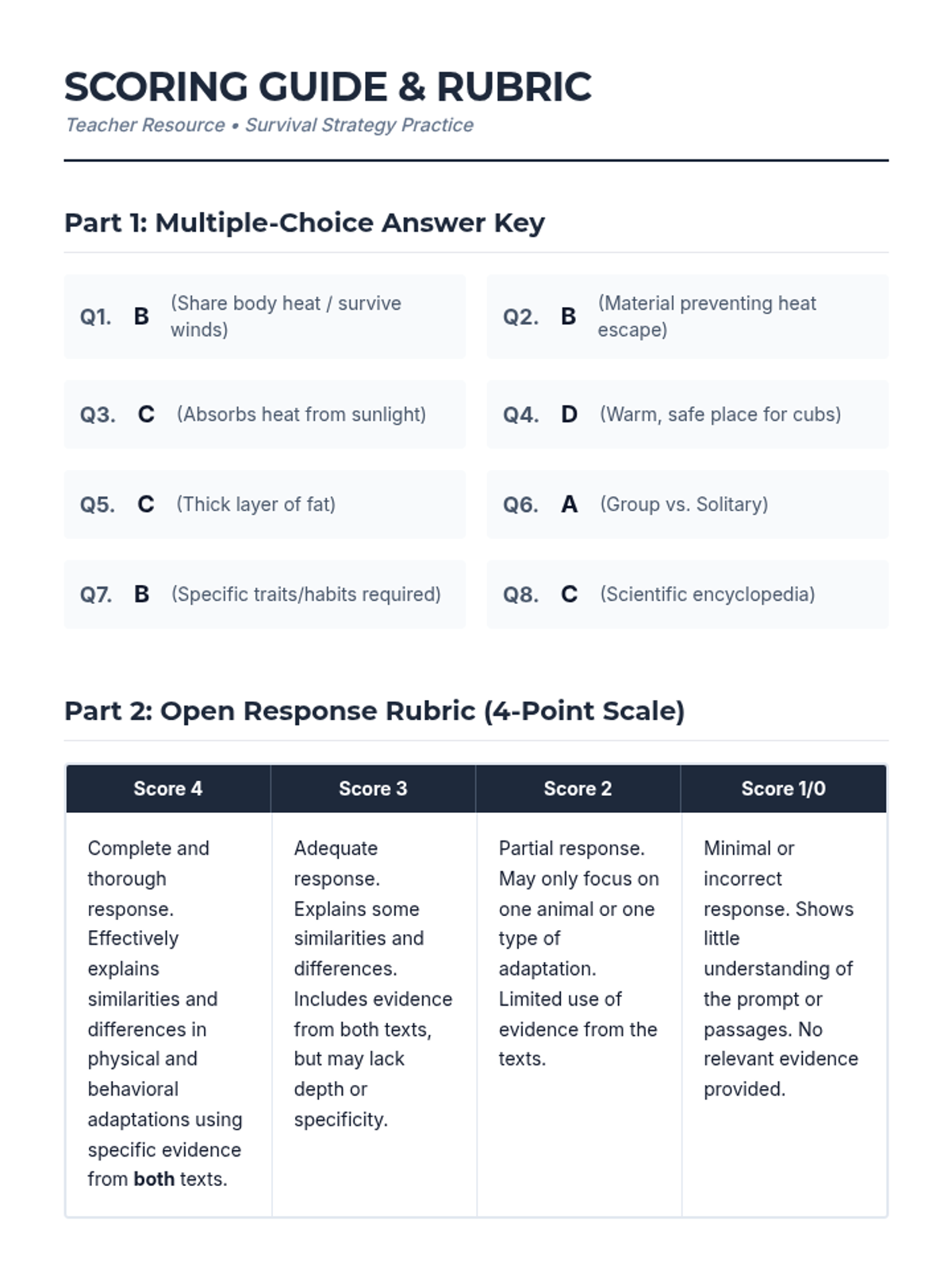
A series of ELA practice sessions modeled after MCAS assessments for 5th grade. Each lesson focuses on paired informational texts, comprehension skills, and compare-and-contrast writing.
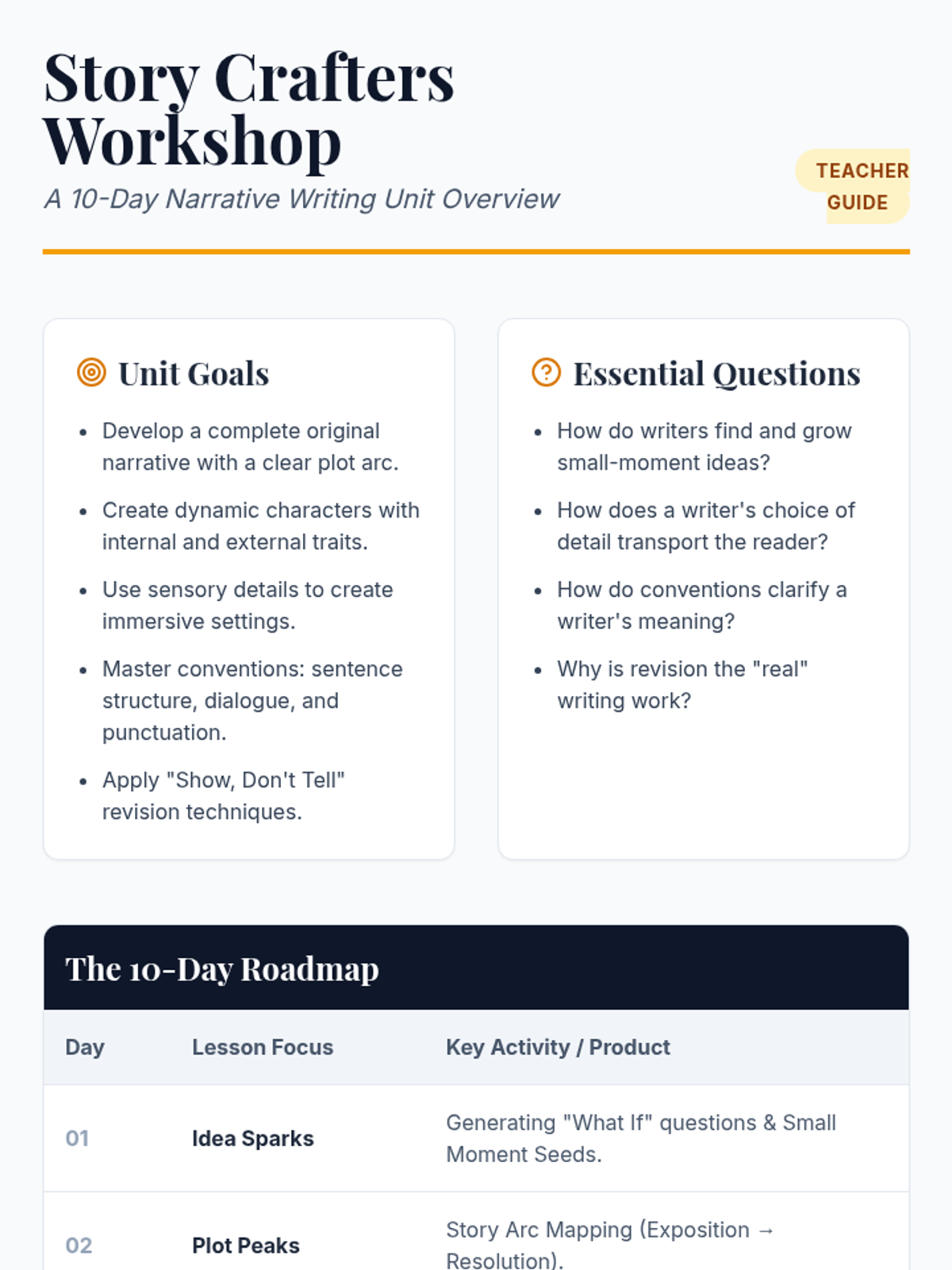
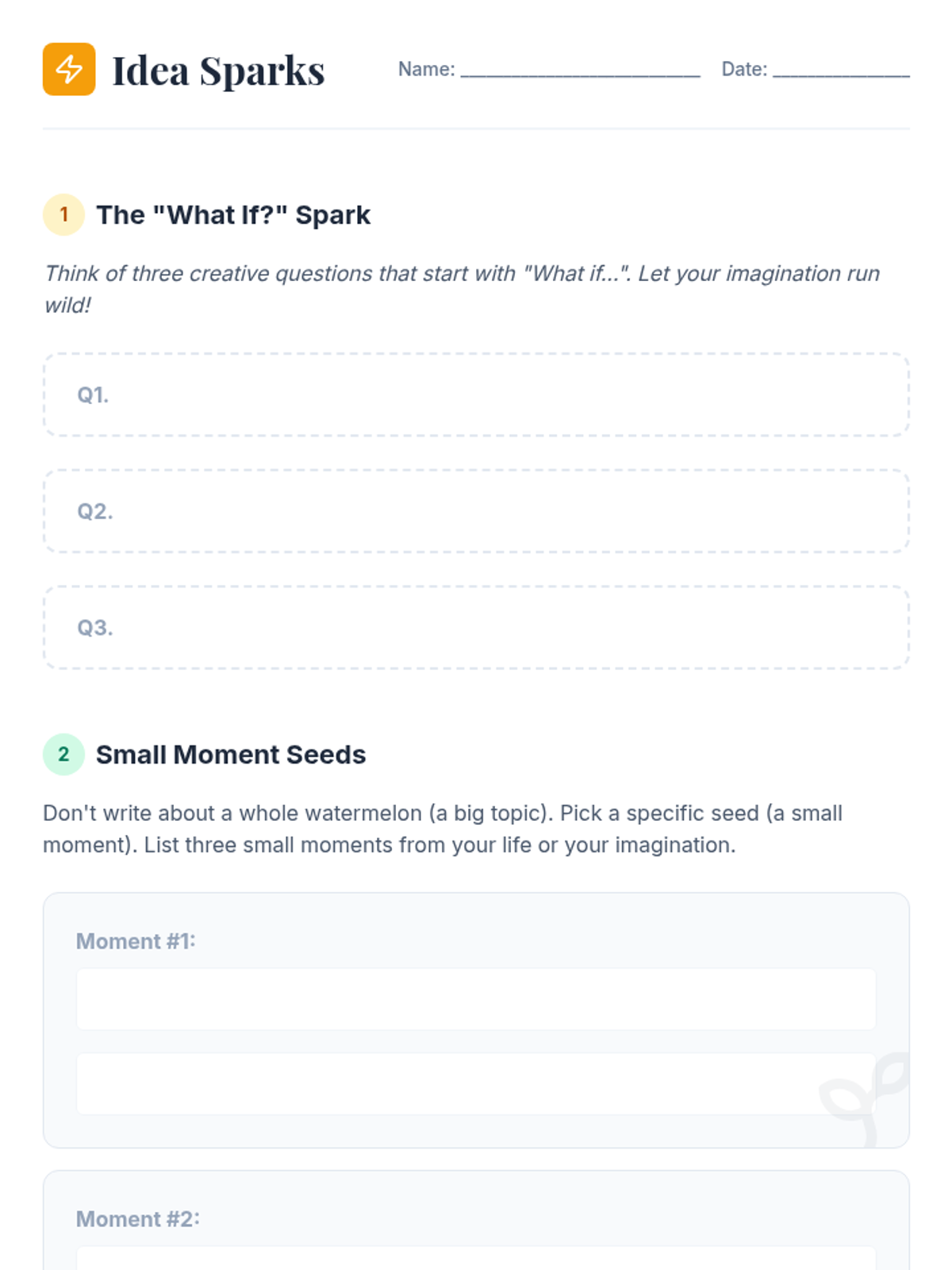
A 10-day immersion into narrative writing for upper elementary students, focusing on craft, structure, and grammar conventions.
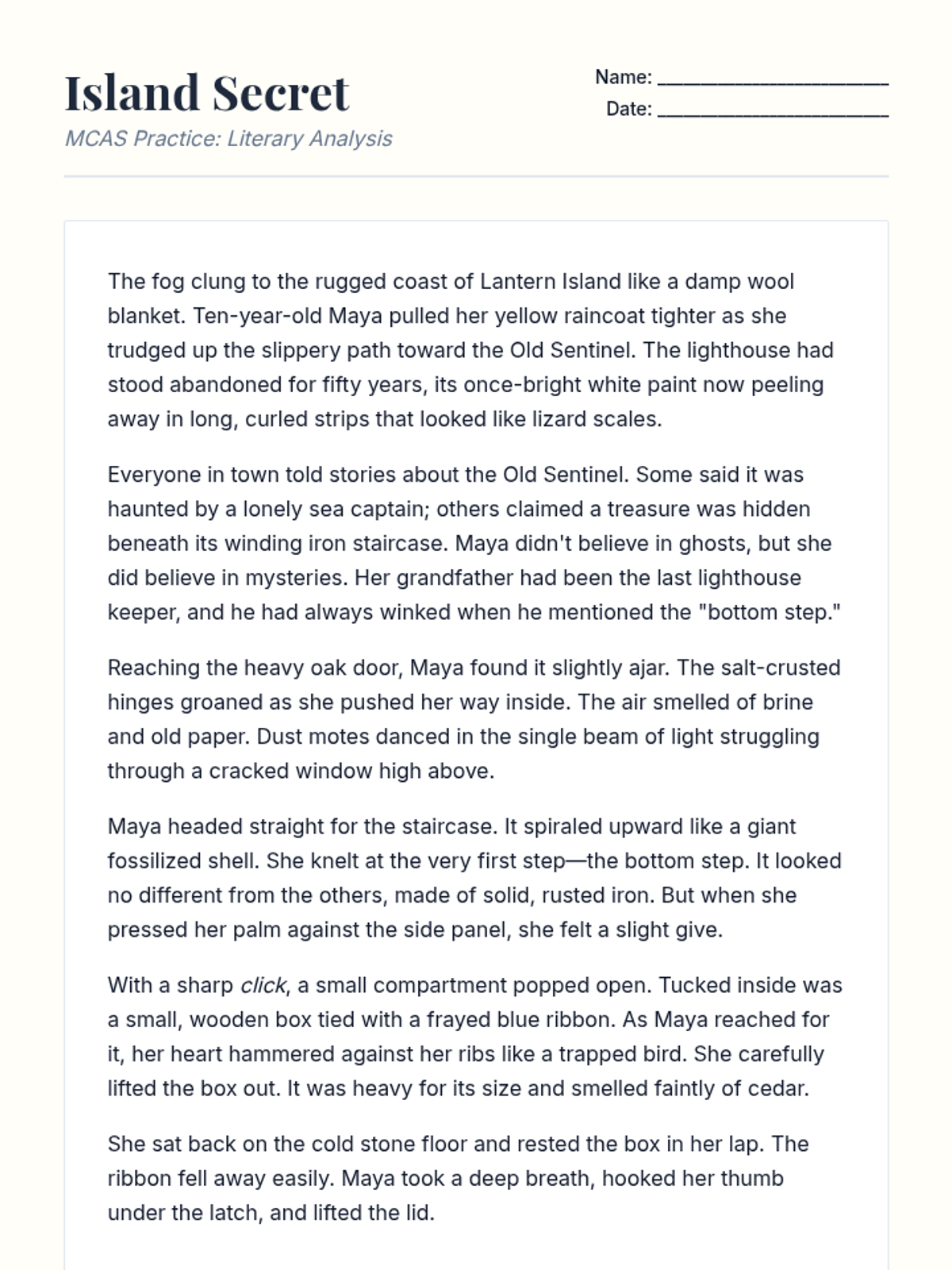
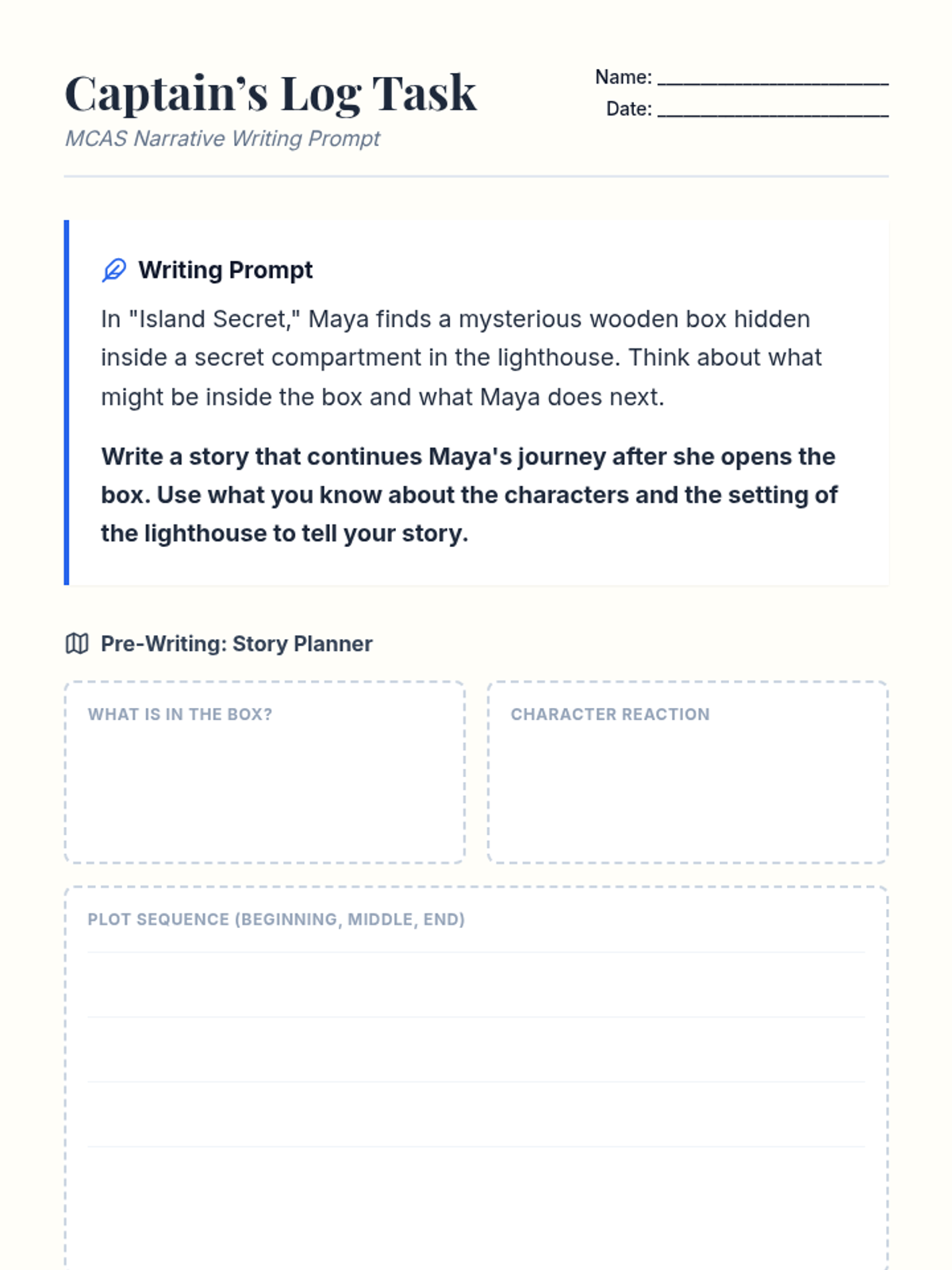
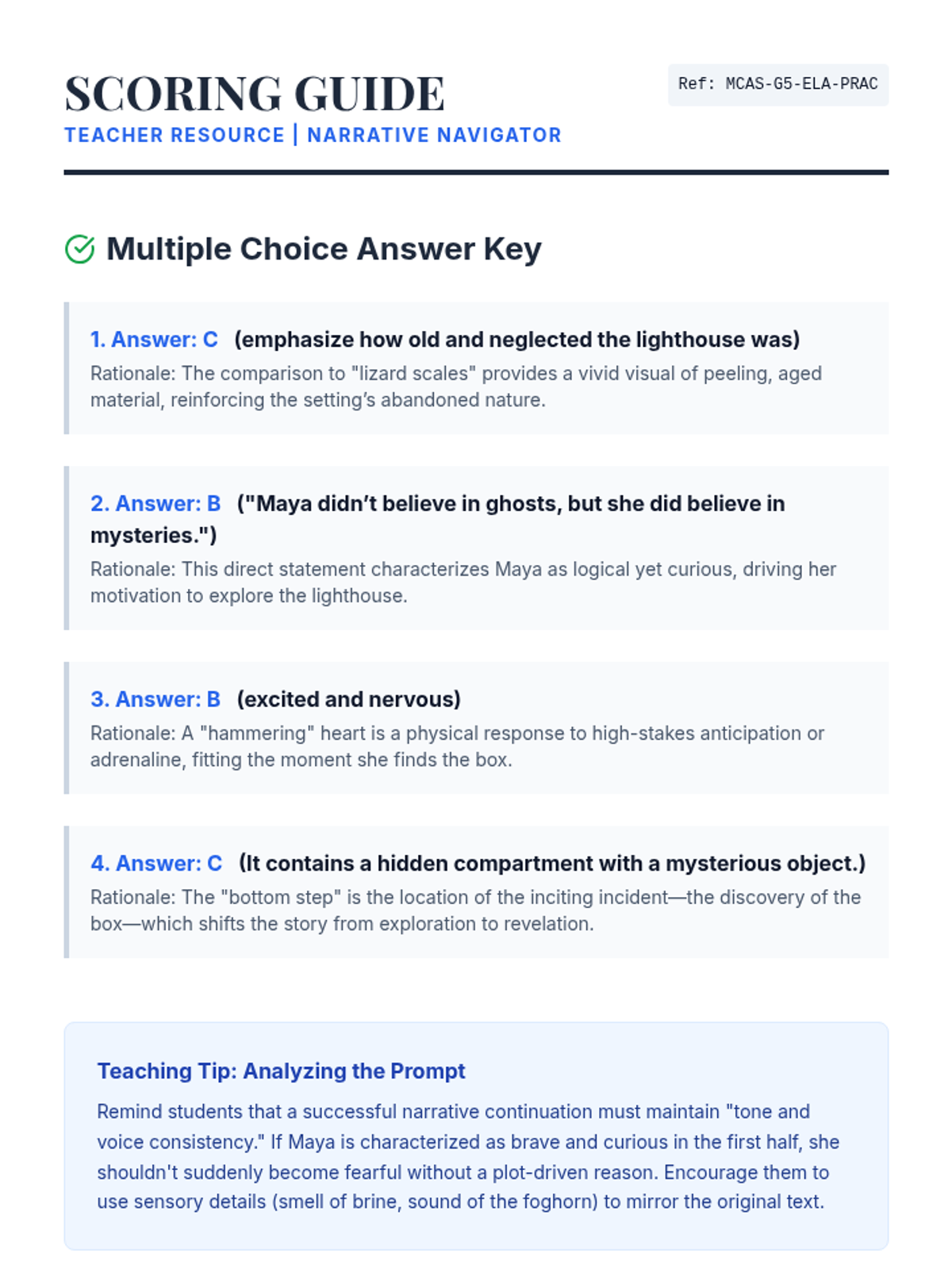
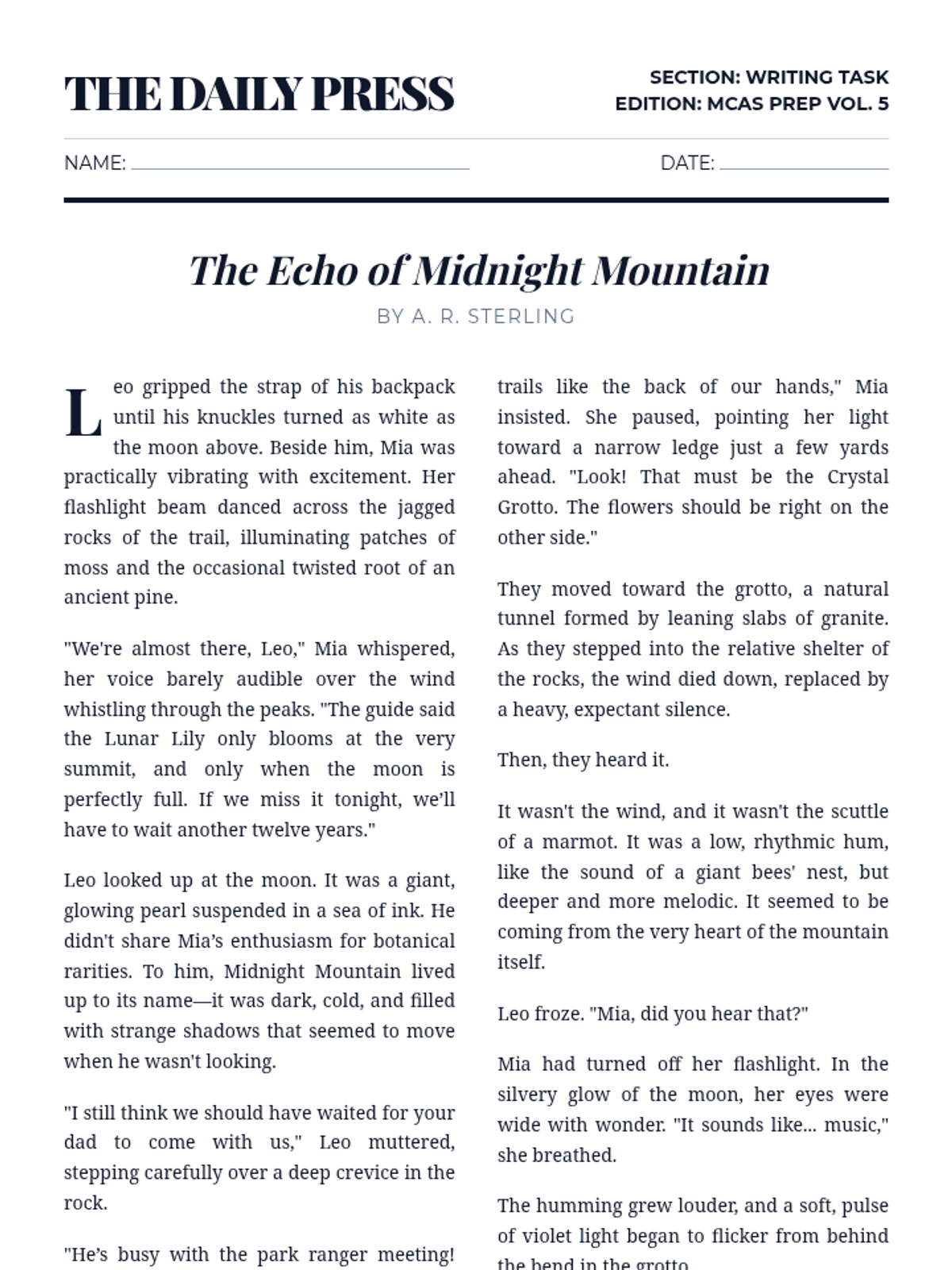
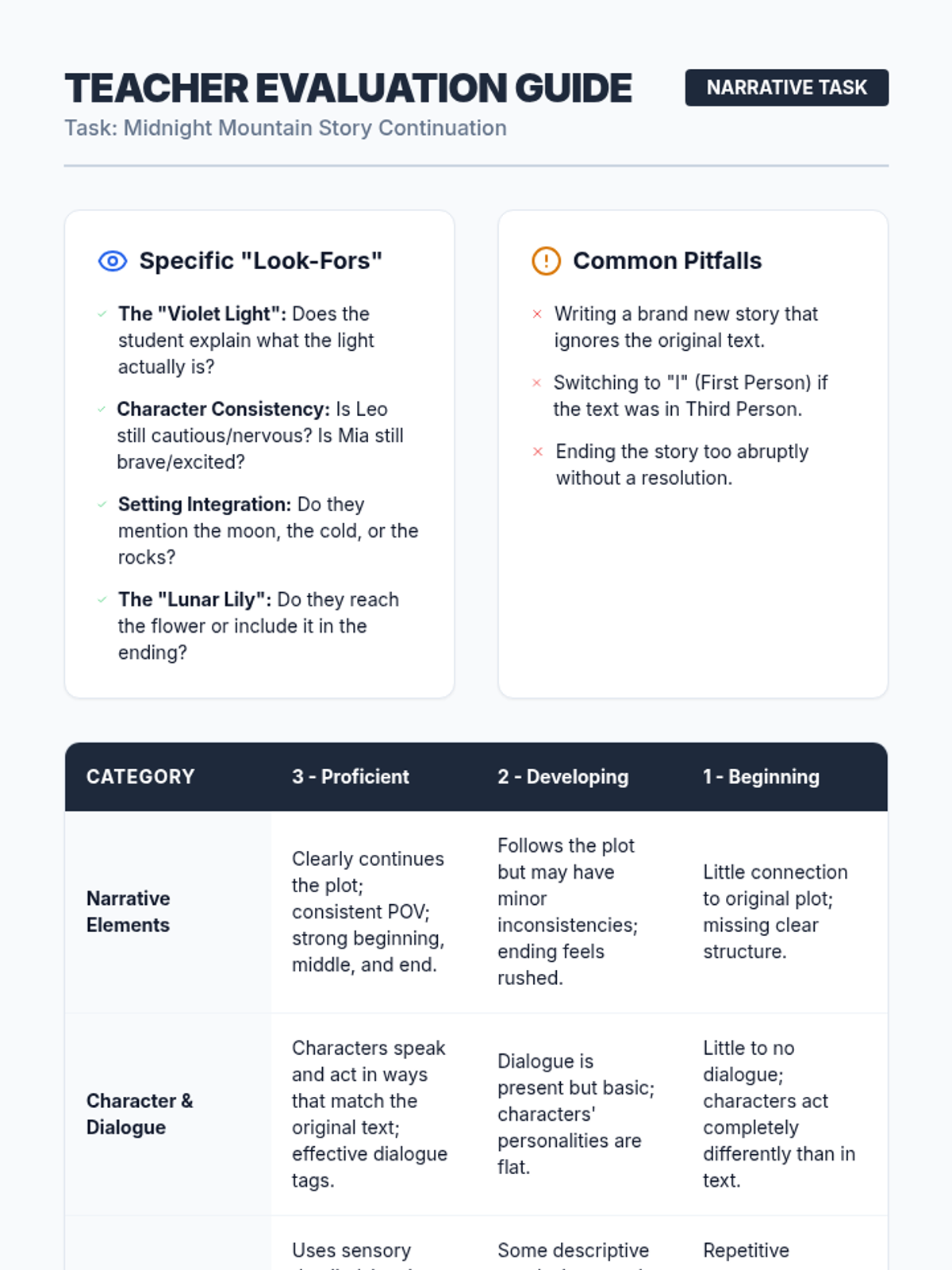
A targeted ELA preparation series for the 5th Grade MCAS, featuring multiple reading passages, text-dependent multiple choice questions, and narrative writing tasks designed to build stamina and test-taking strategies.
A comprehensive writing sequence designed for early writers and SpEd students to master paragraph structure through narrative, opinion, and journal writing with heavy visual scaffolding.
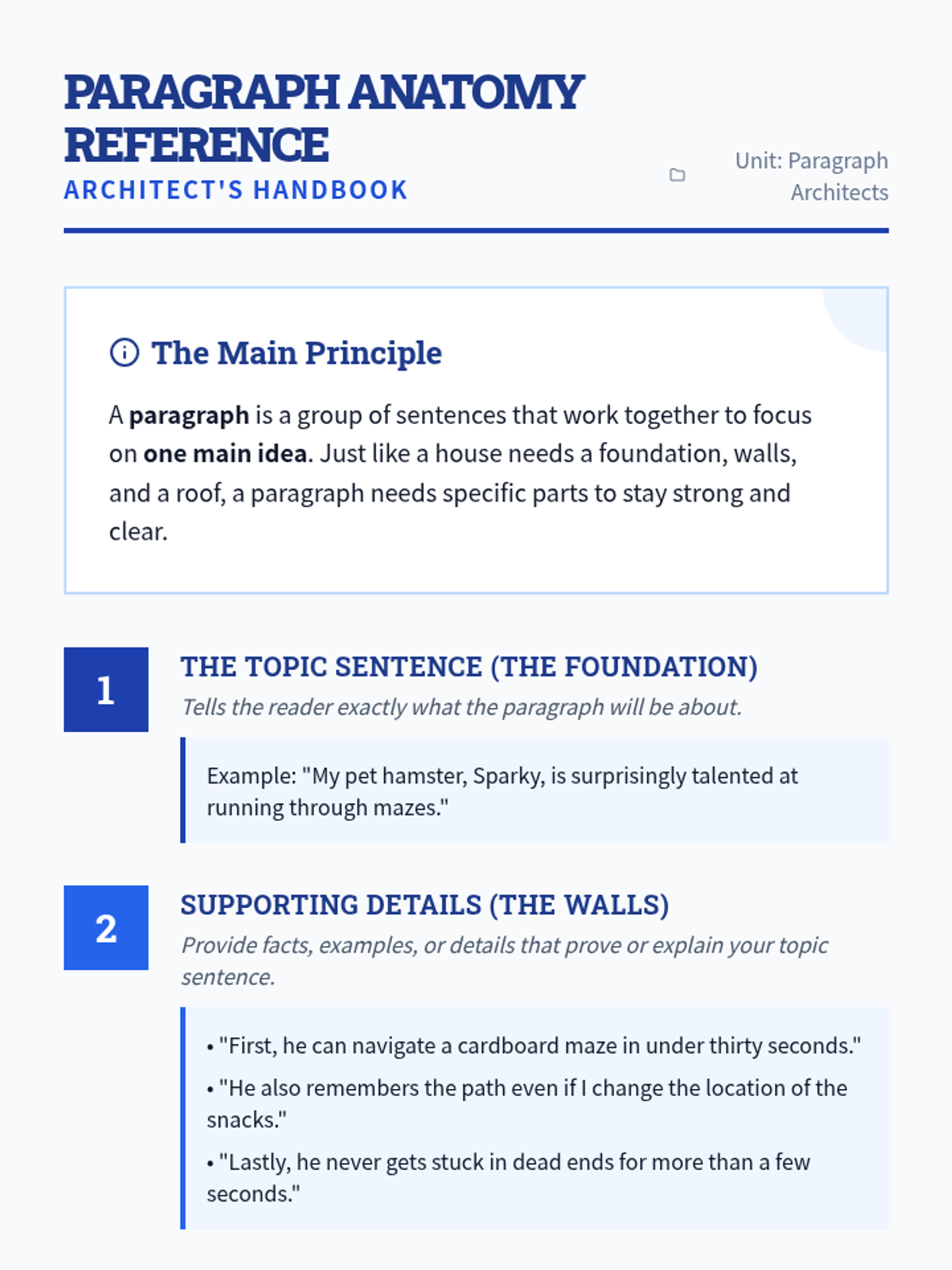
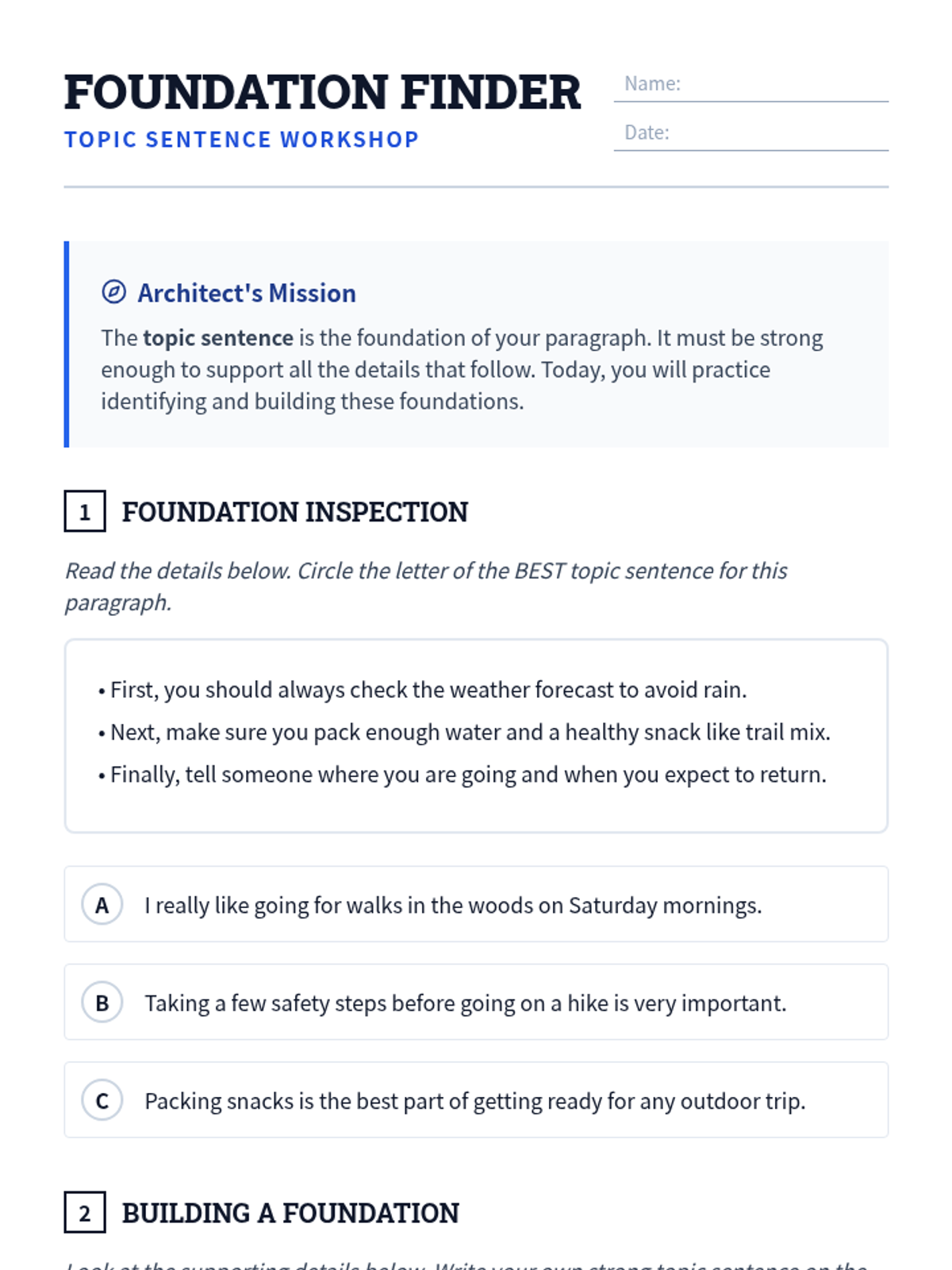
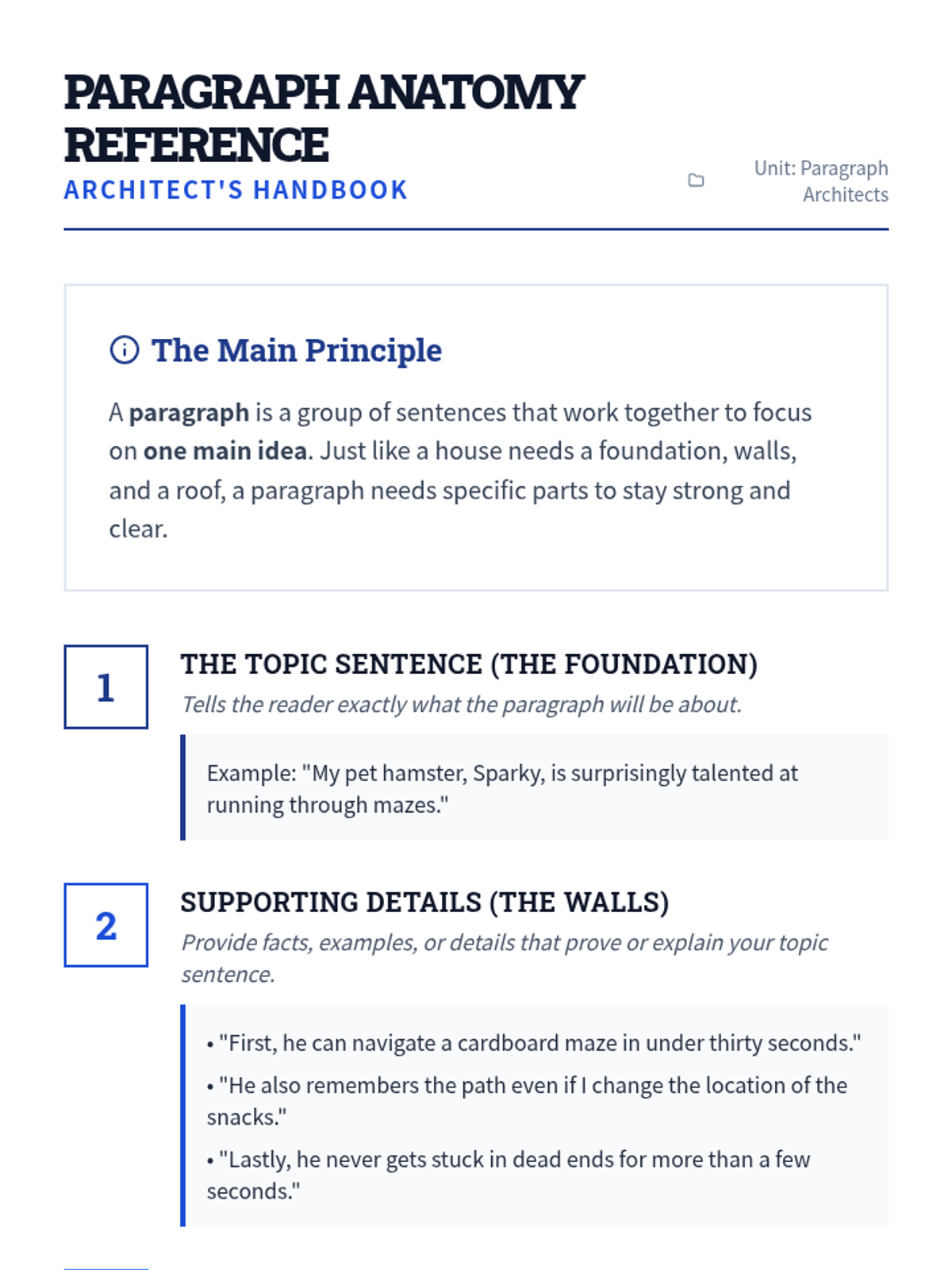
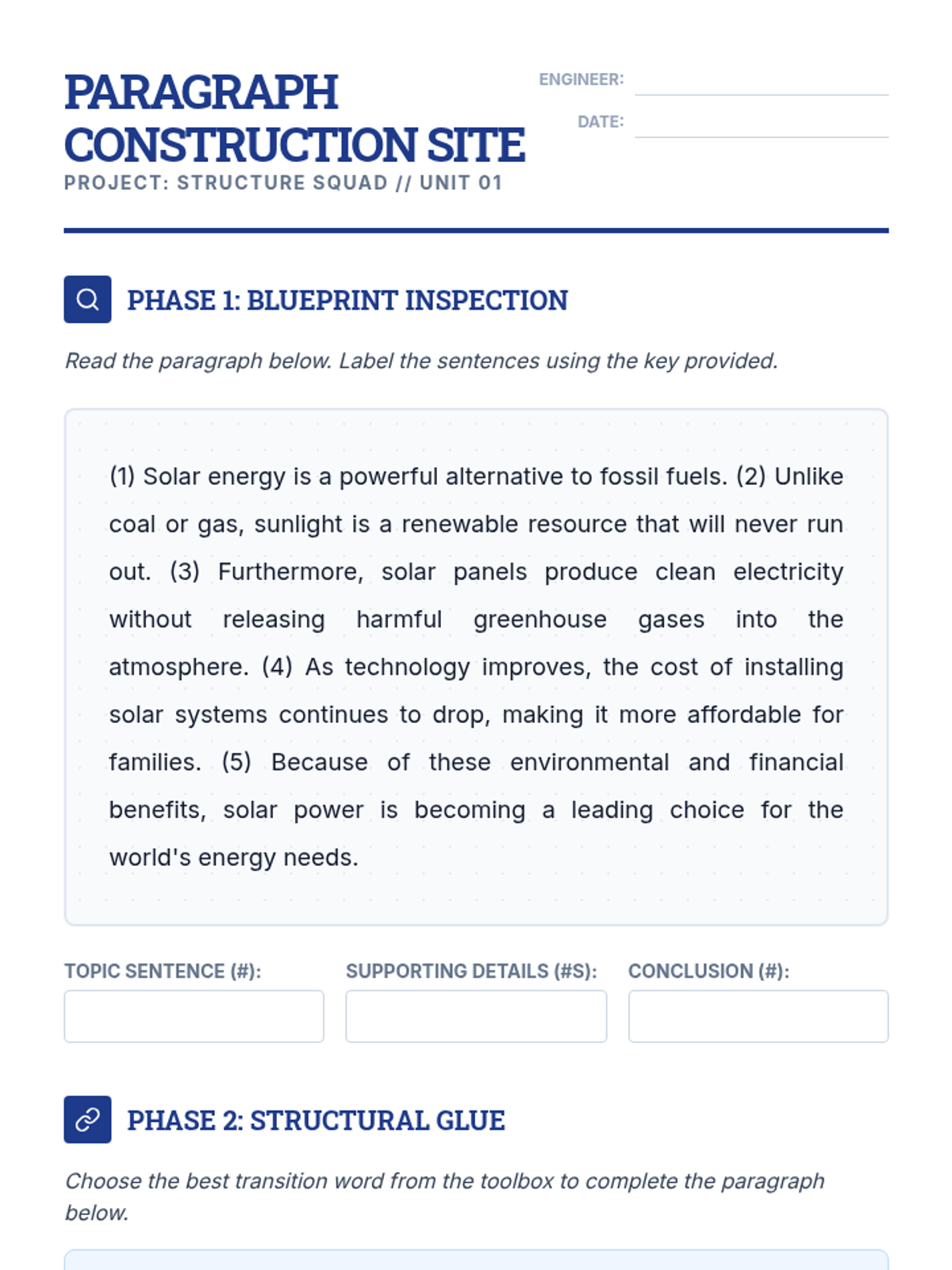
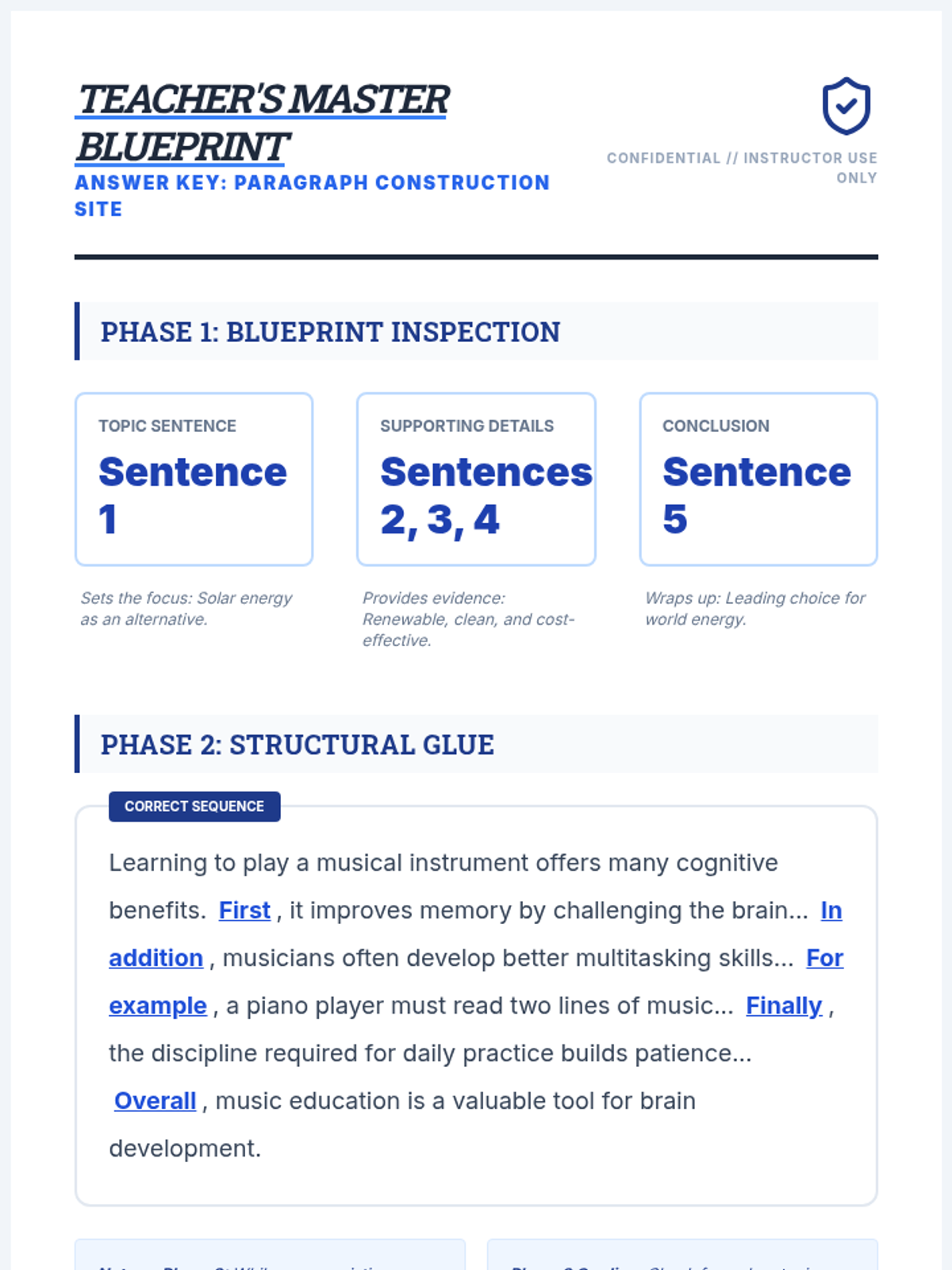
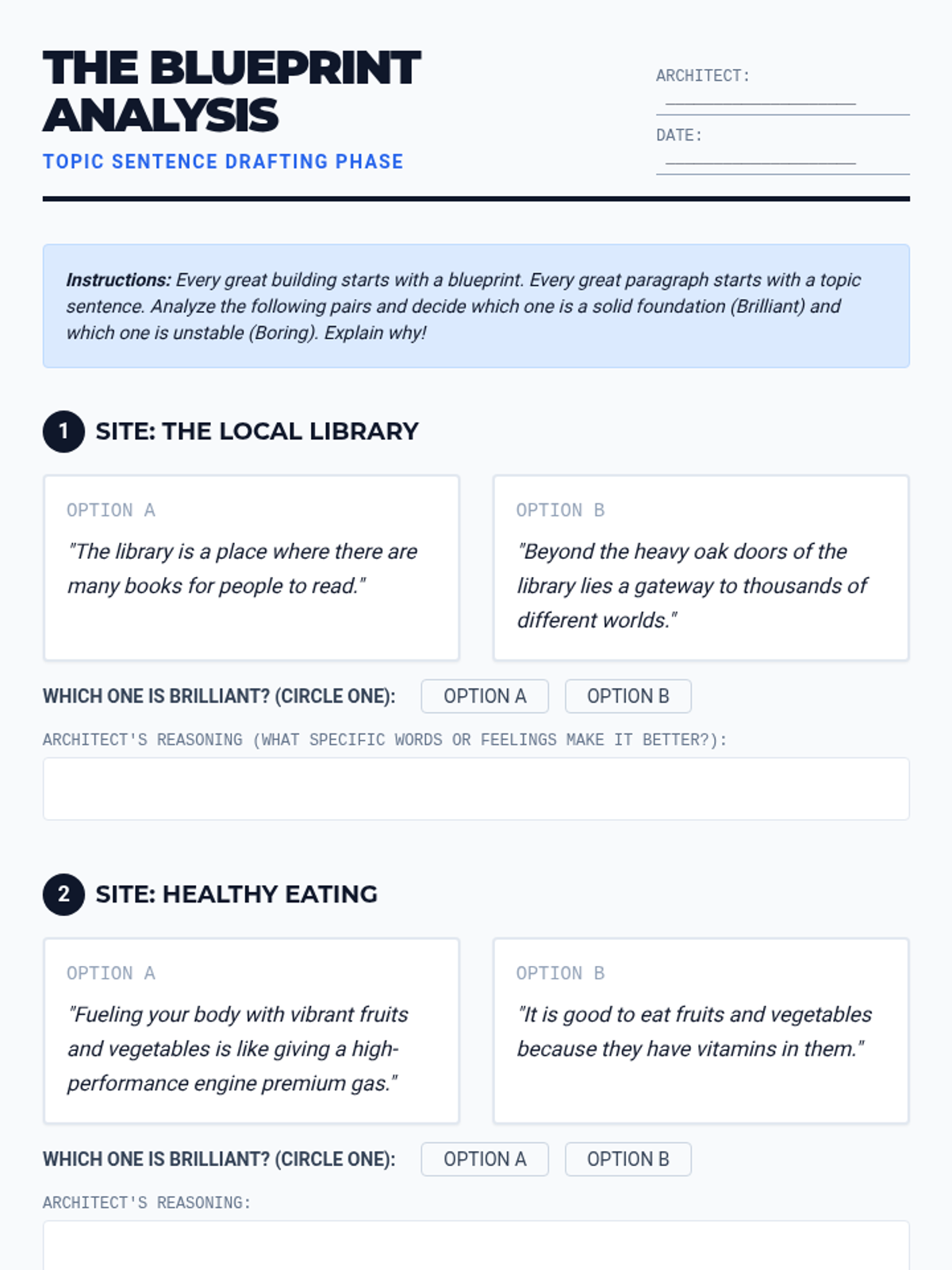
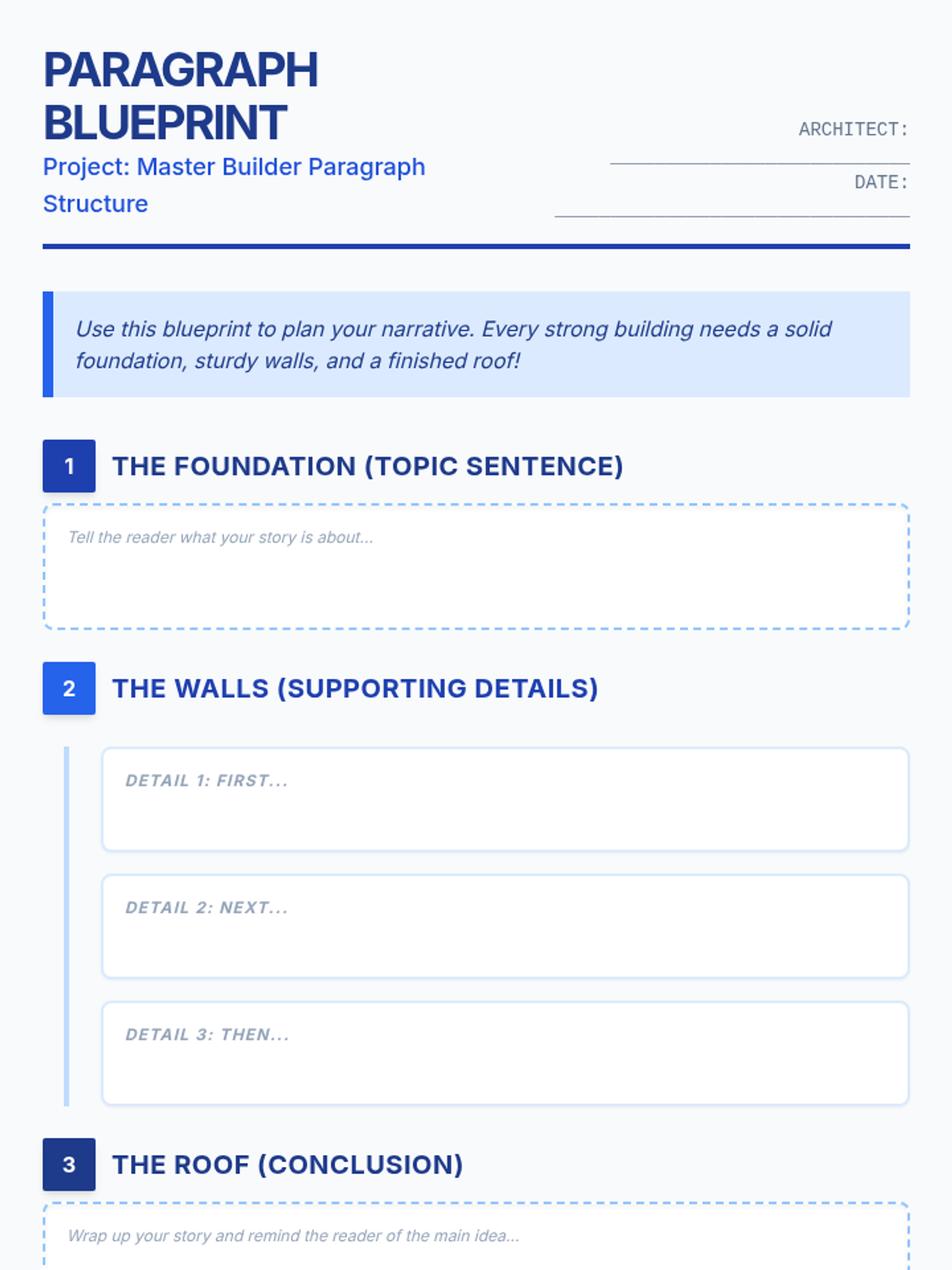
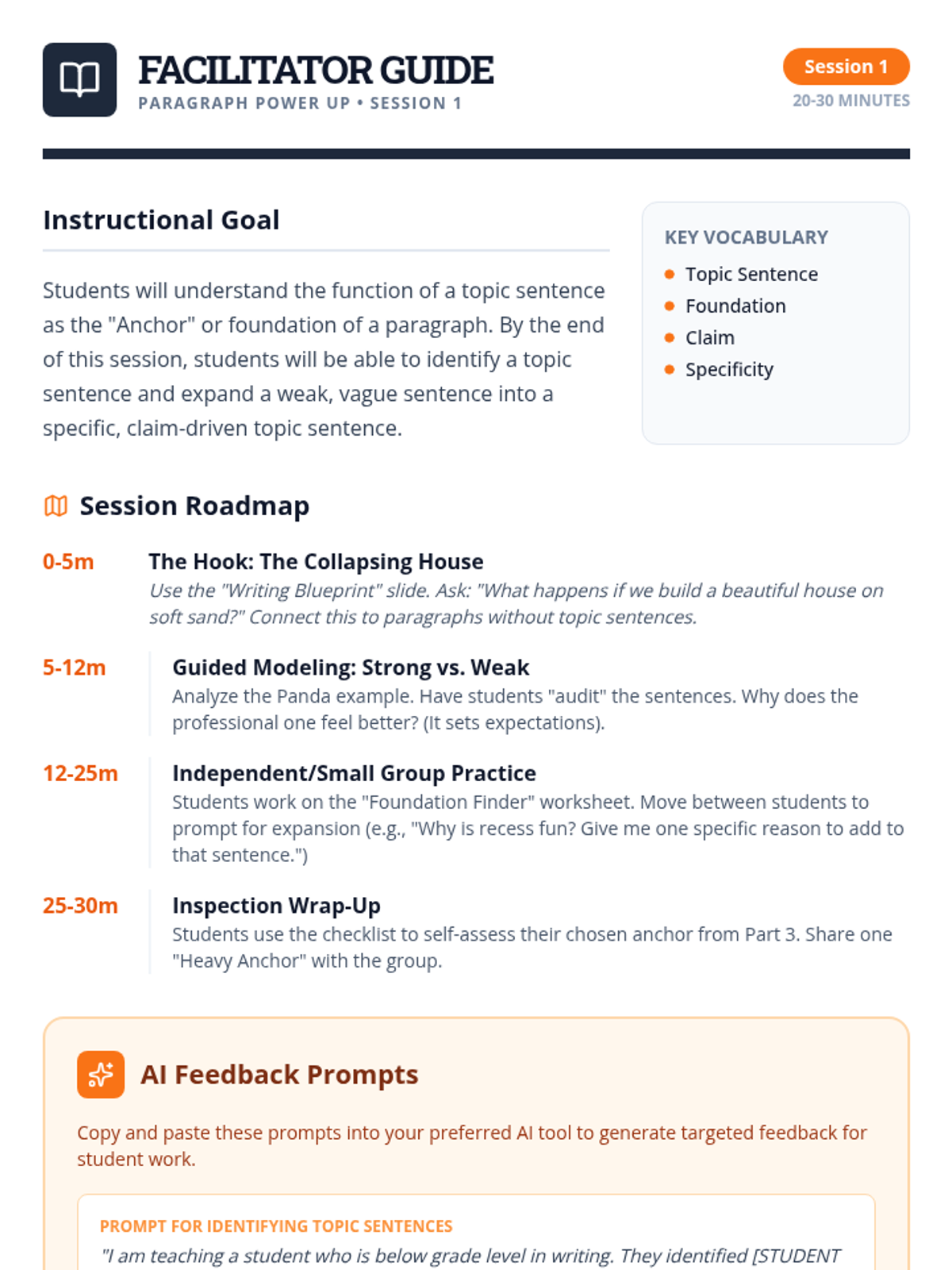
A comprehensive 2-week unit introducing students to the core components of paragraph writing, from topic sentences to concluding statements and transitions. The unit uses an architectural 'blueprint' theme to help students visualize the structure of their writing.
A comprehensive writing unit that breaks down complex structures into manageable building blocks, from individual paragraphs to complete narrative arcs and multi-paragraph essays. Students learn to use blueprints to construct clear, logical, and engaging pieces of writing.
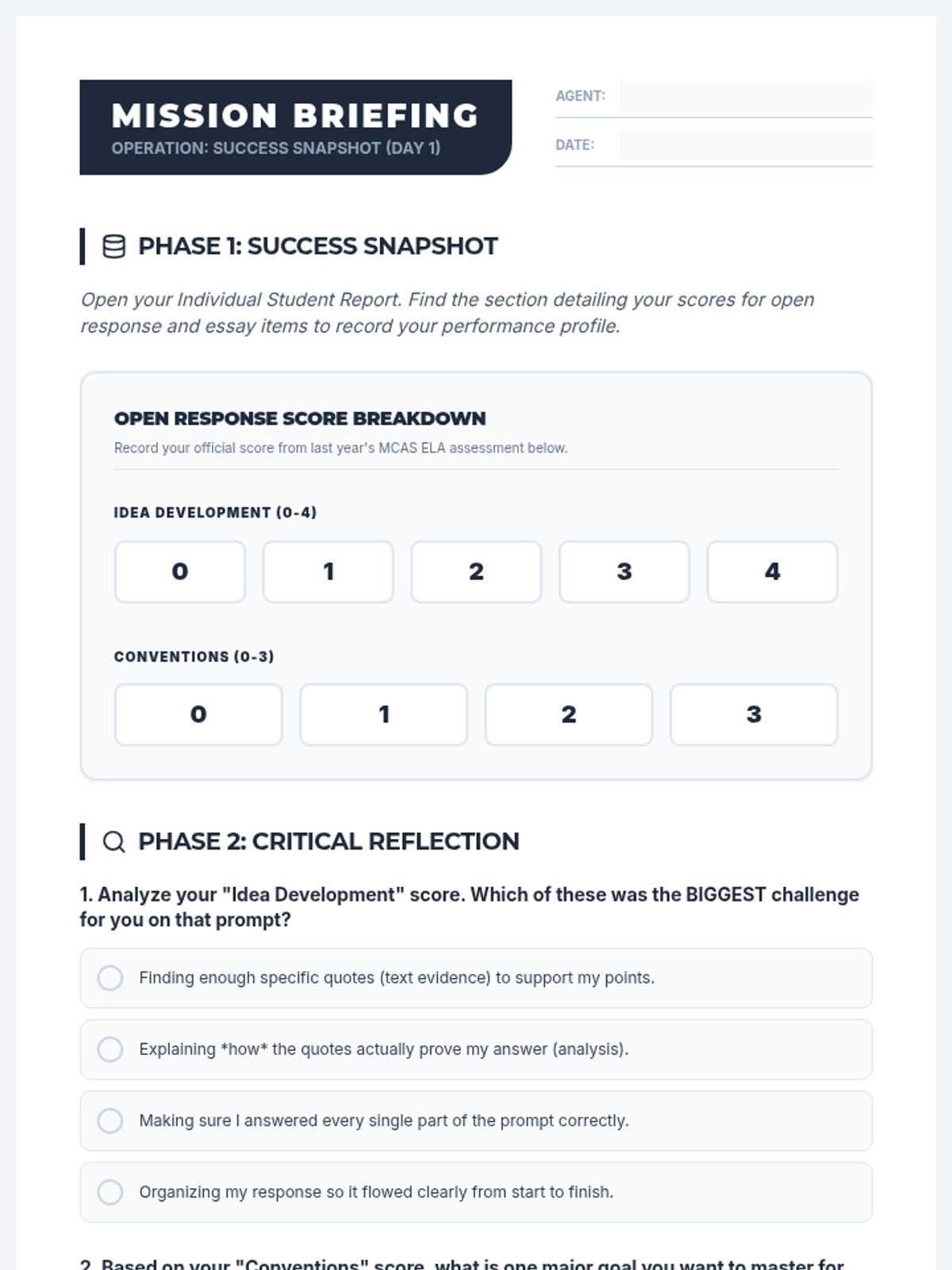
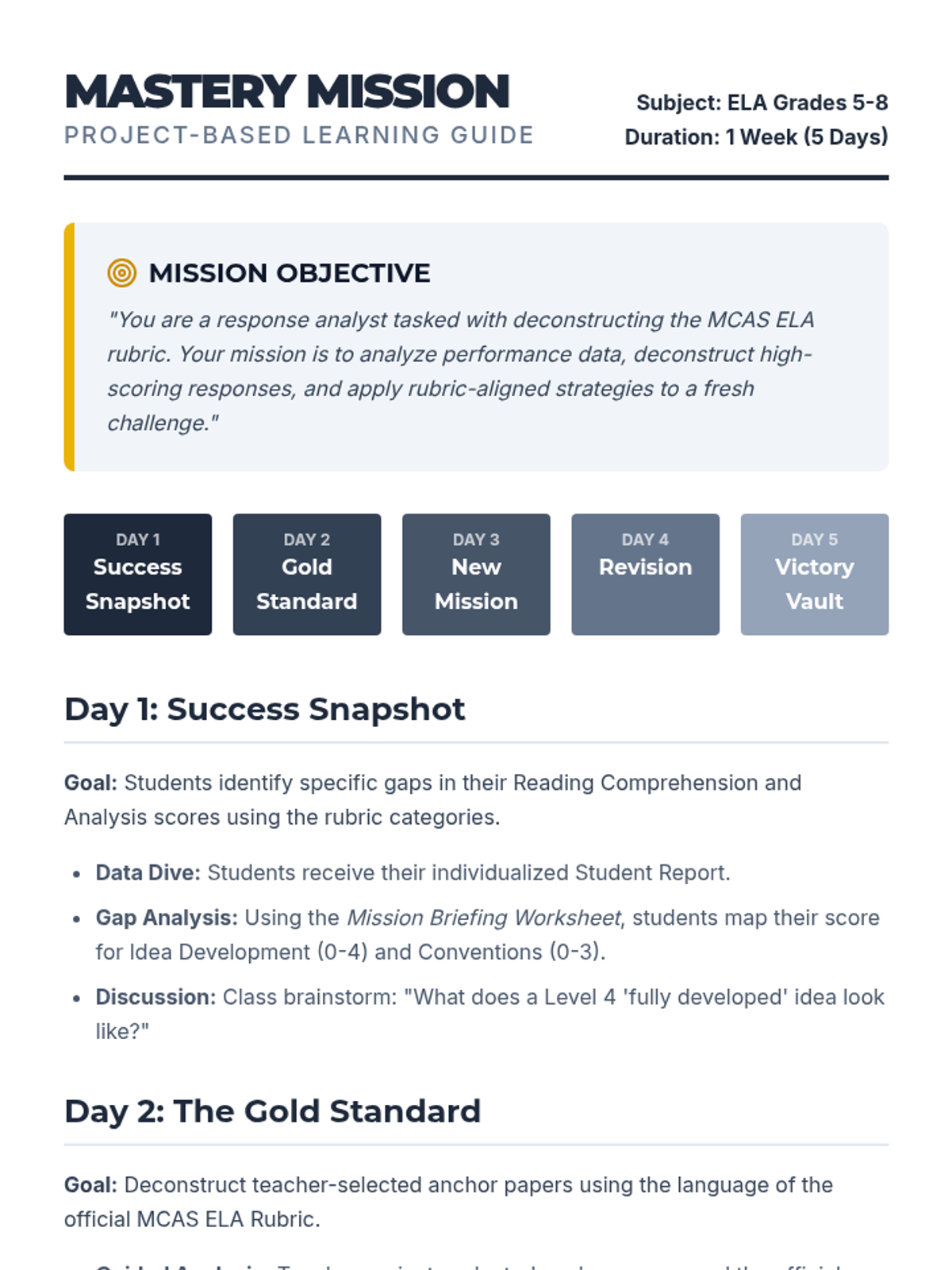
A project-based learning unit designed to help middle school students analyze their past MCAS ELA performance, deconstruct scoring rubrics, and create a personalized strategy playbook for upcoming assessments. Students move from 'investigating' their scores to 'rebooting' their responses and 'finalizing' their test-taking toolkit.
A unit focused on mastering various parts of speech and word parts to build stronger, more descriptive sentences in 5th grade.
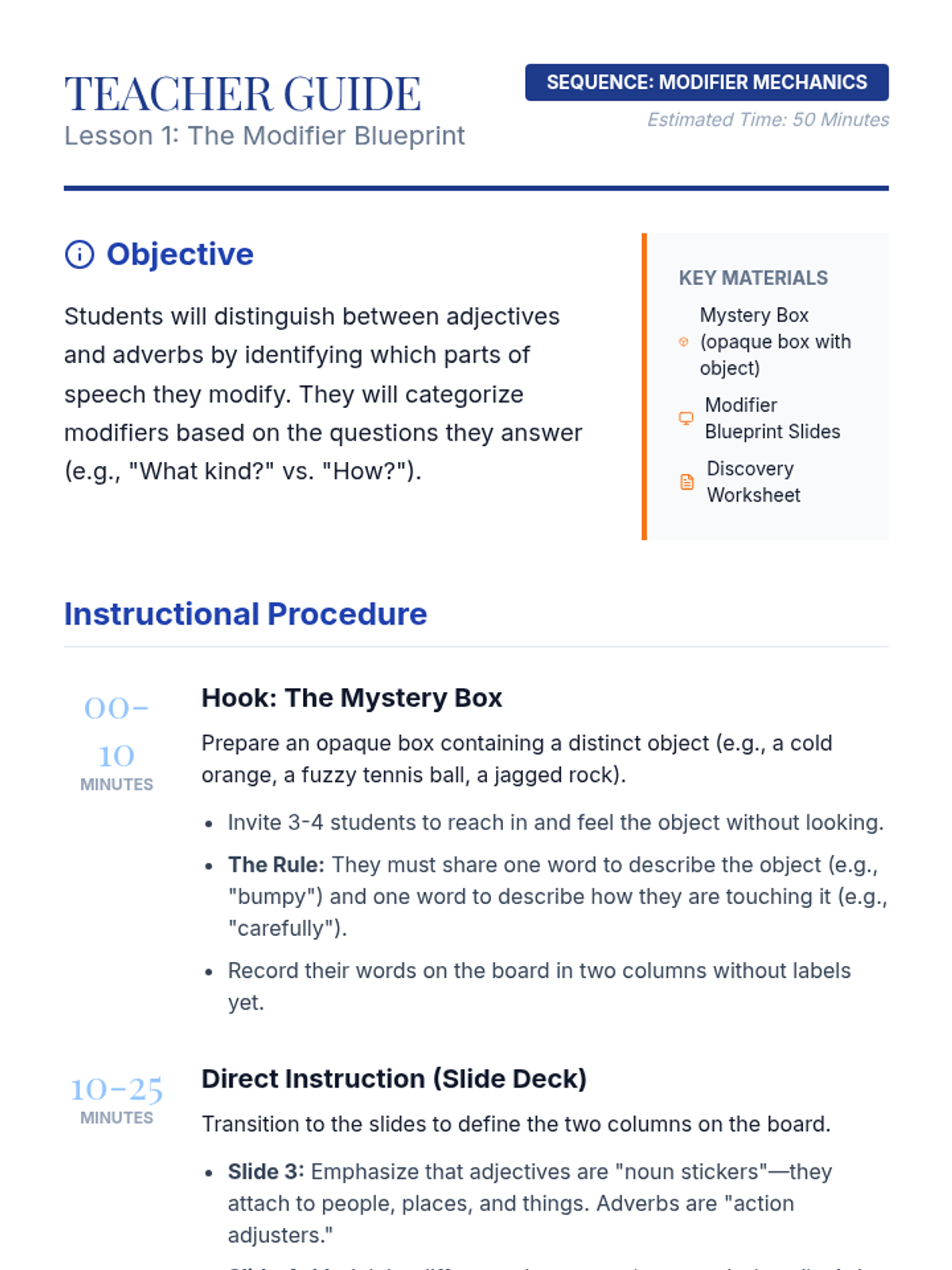
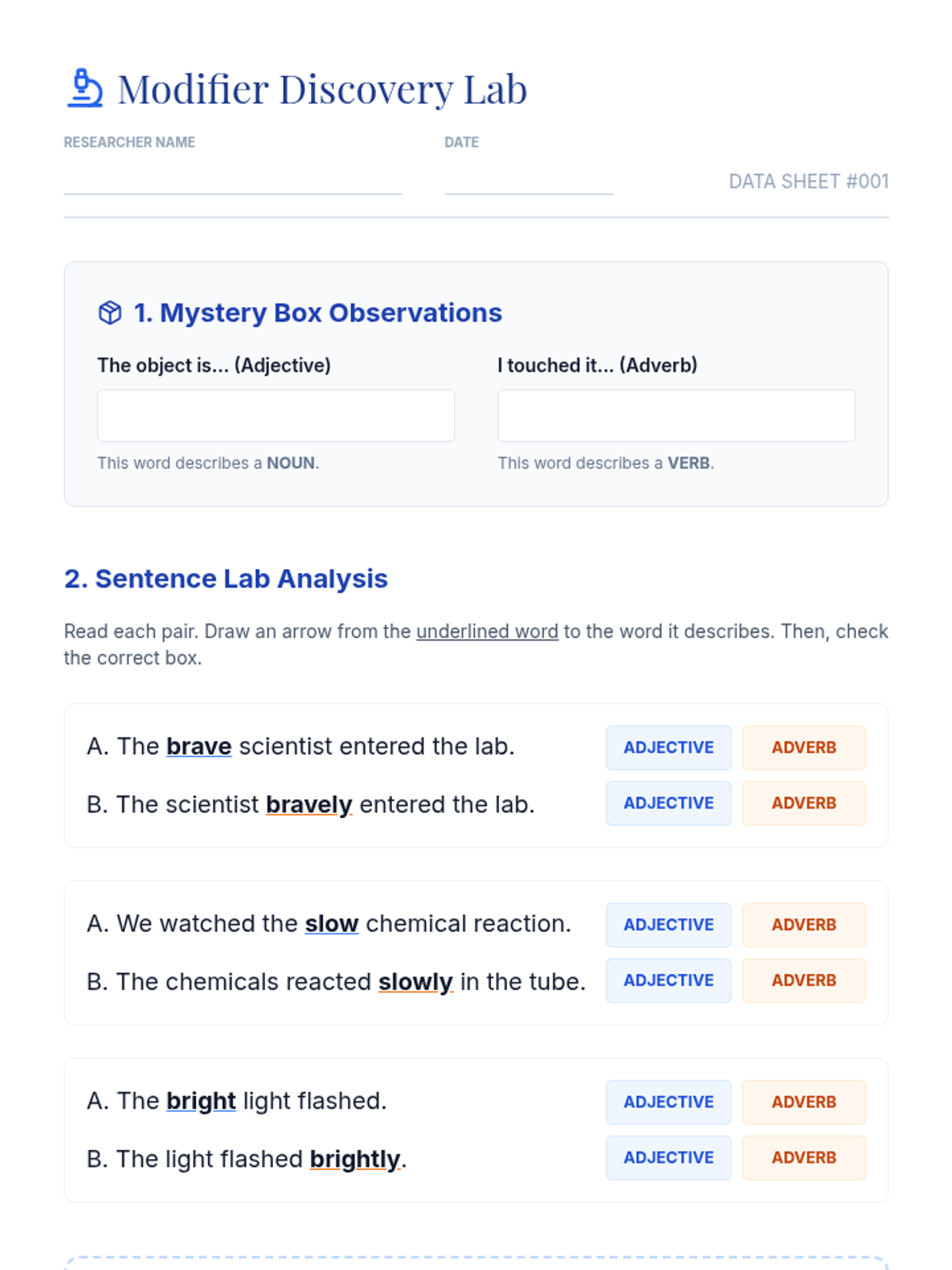
This sequence guides 5th-grade students through the nuances of adjectives and adverbs, focusing on their specific functions in sentences. From distinguishing foundational differences to mastering complex modifiers and correcting common errors, students conclude by revising their own writing for high-resolution descriptive precision.
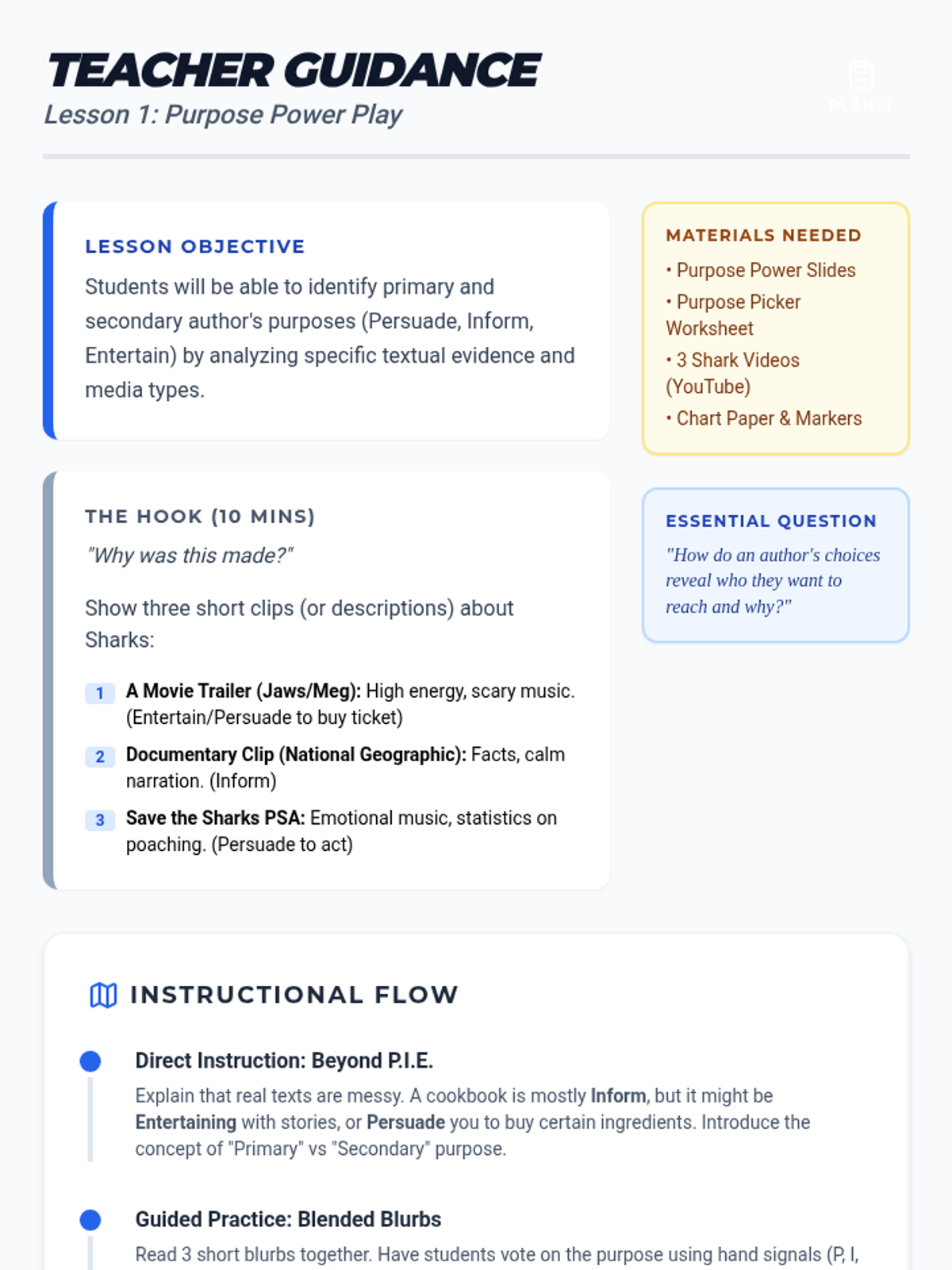
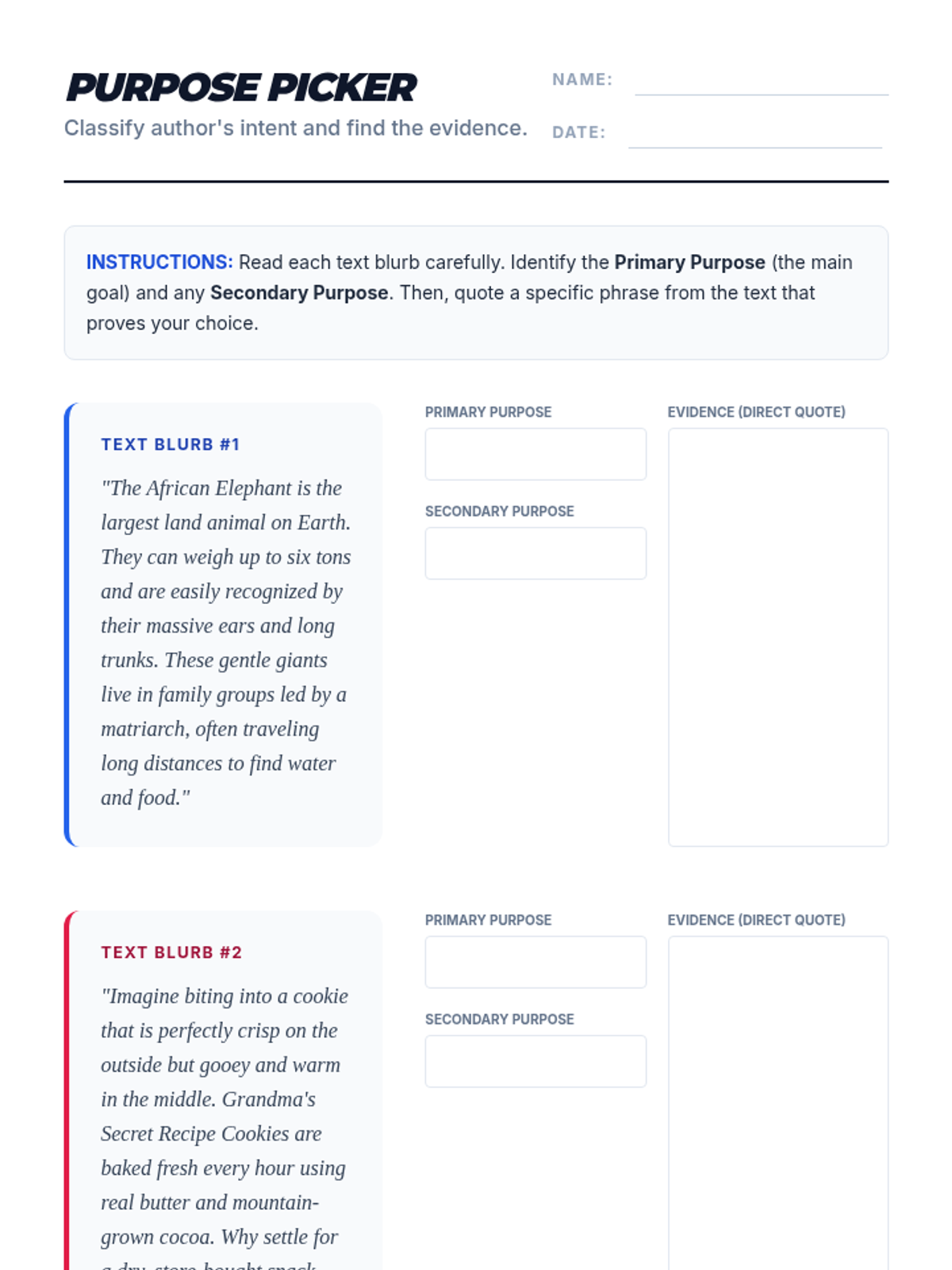
A comprehensive 5th-grade ELA sequence that explores how authors use specific vocabulary, tone, and structure to reach targeted audiences. Students progress from basic author's purpose to sophisticated comparative analysis and adaptive writing simulations.
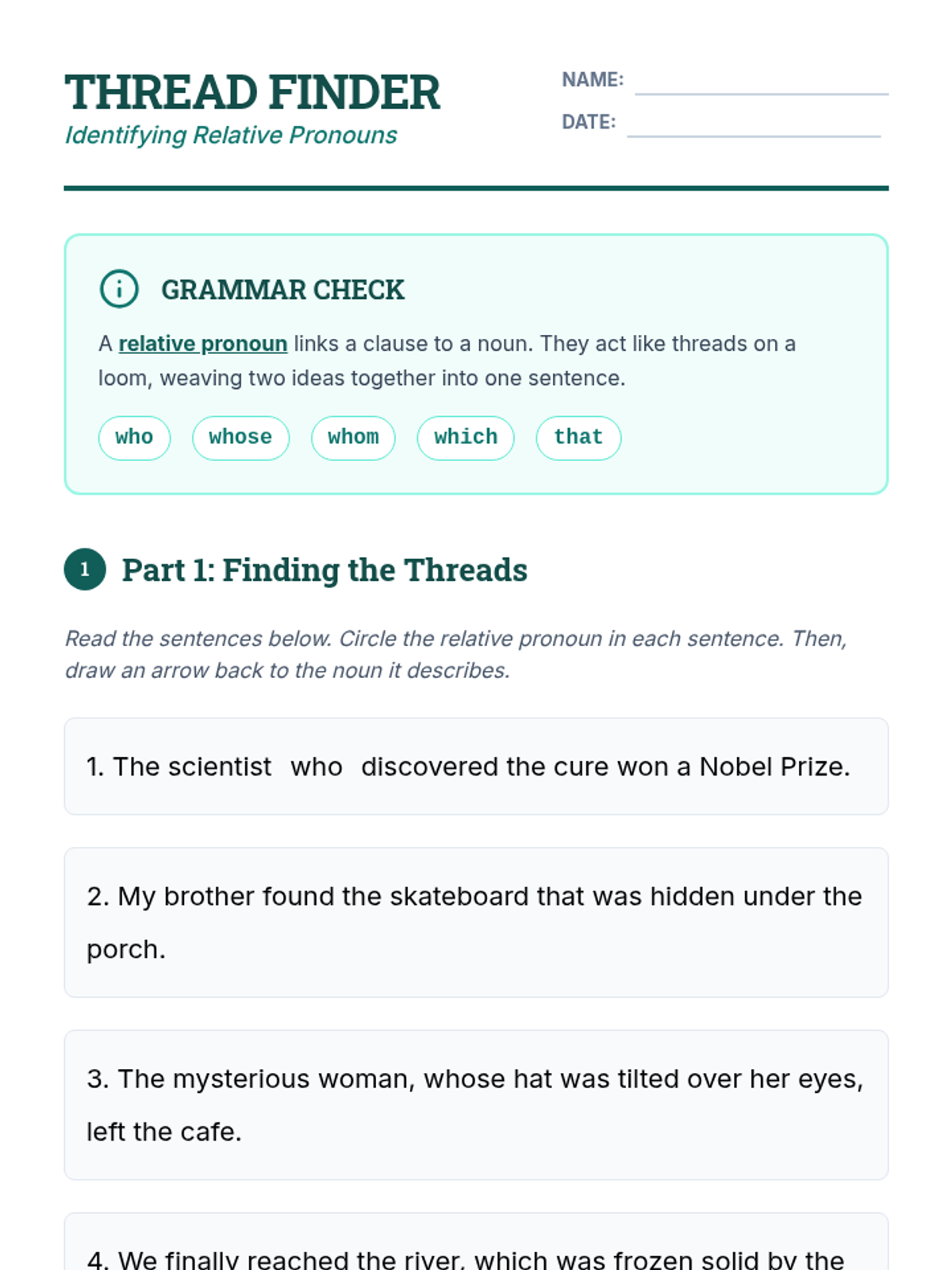
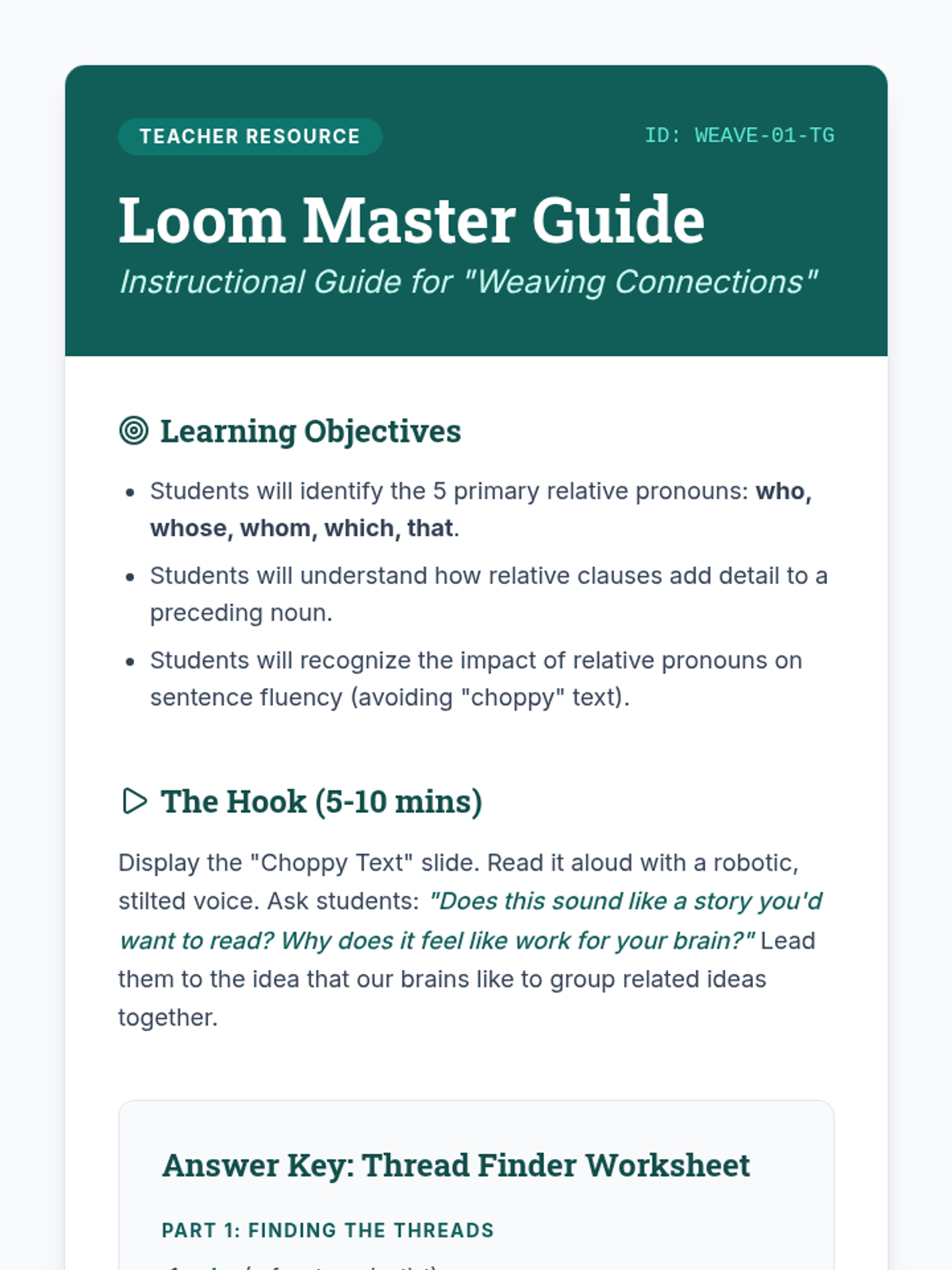
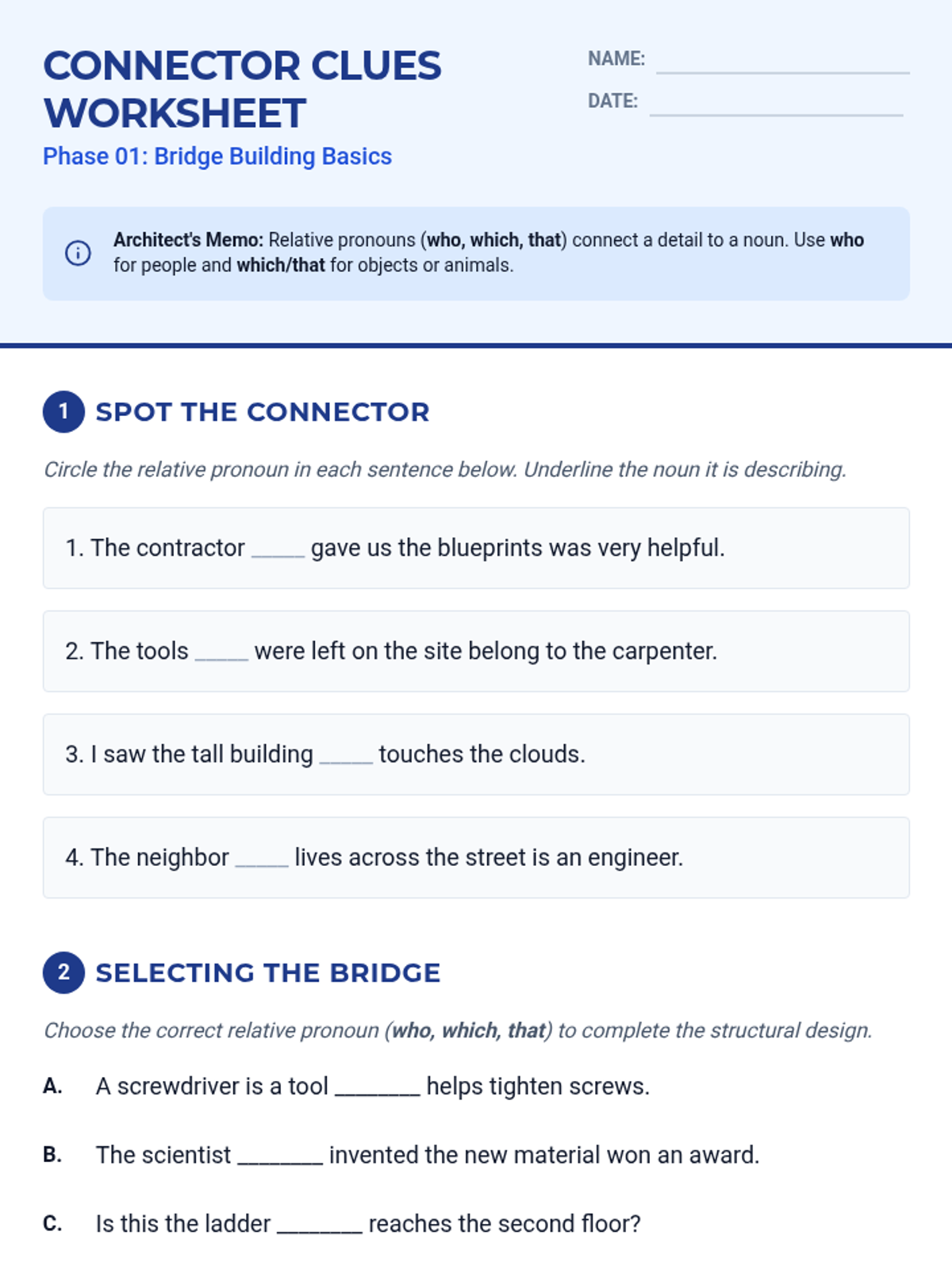
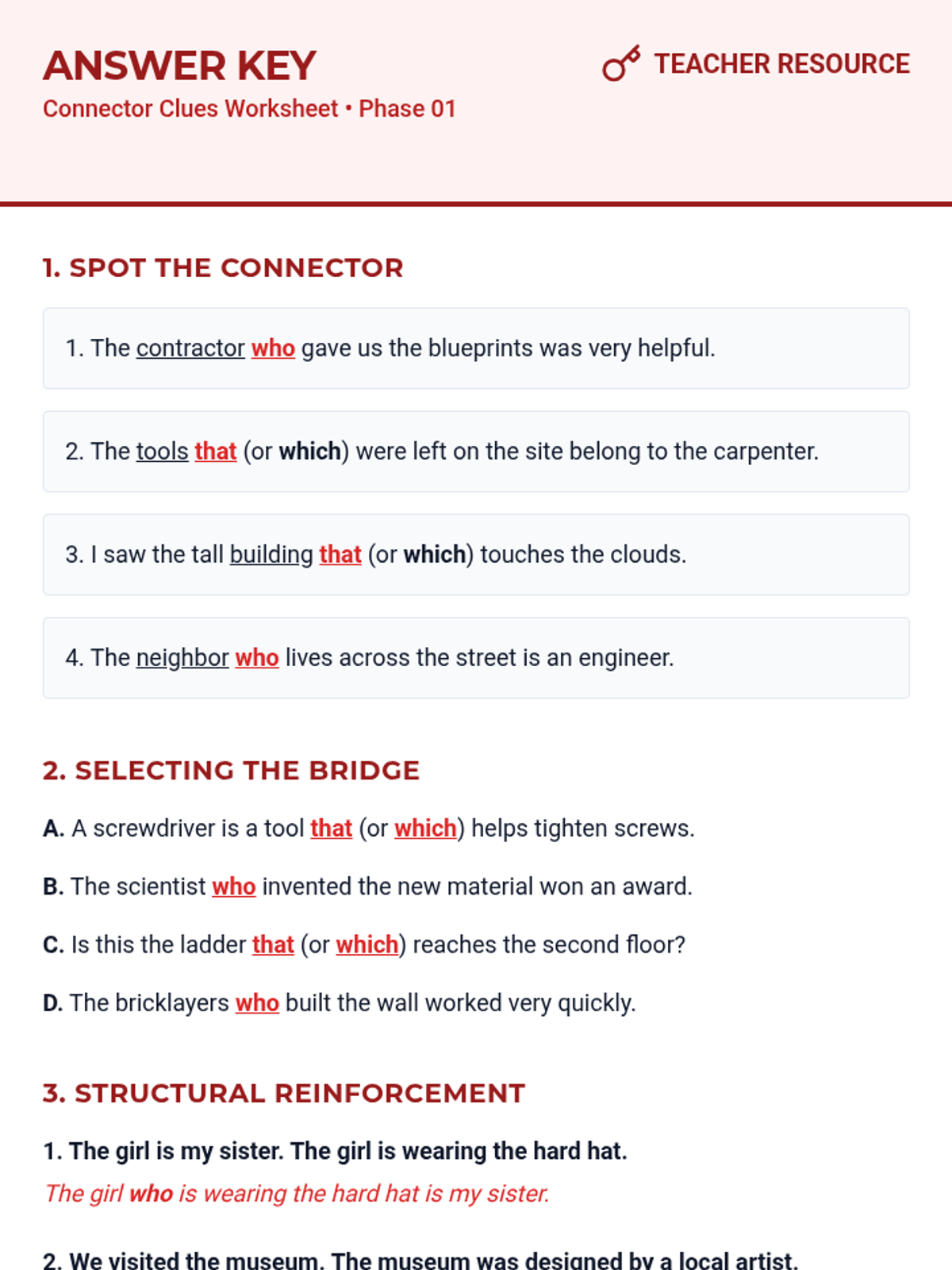
A 5th-grade ELA unit focused on using relative pronouns (who, whose, whom, which, that) to transform simple sentences into sophisticated, complex ones. Students progress from identification to application in descriptive writing, improving sentence fluency and narrative detail.
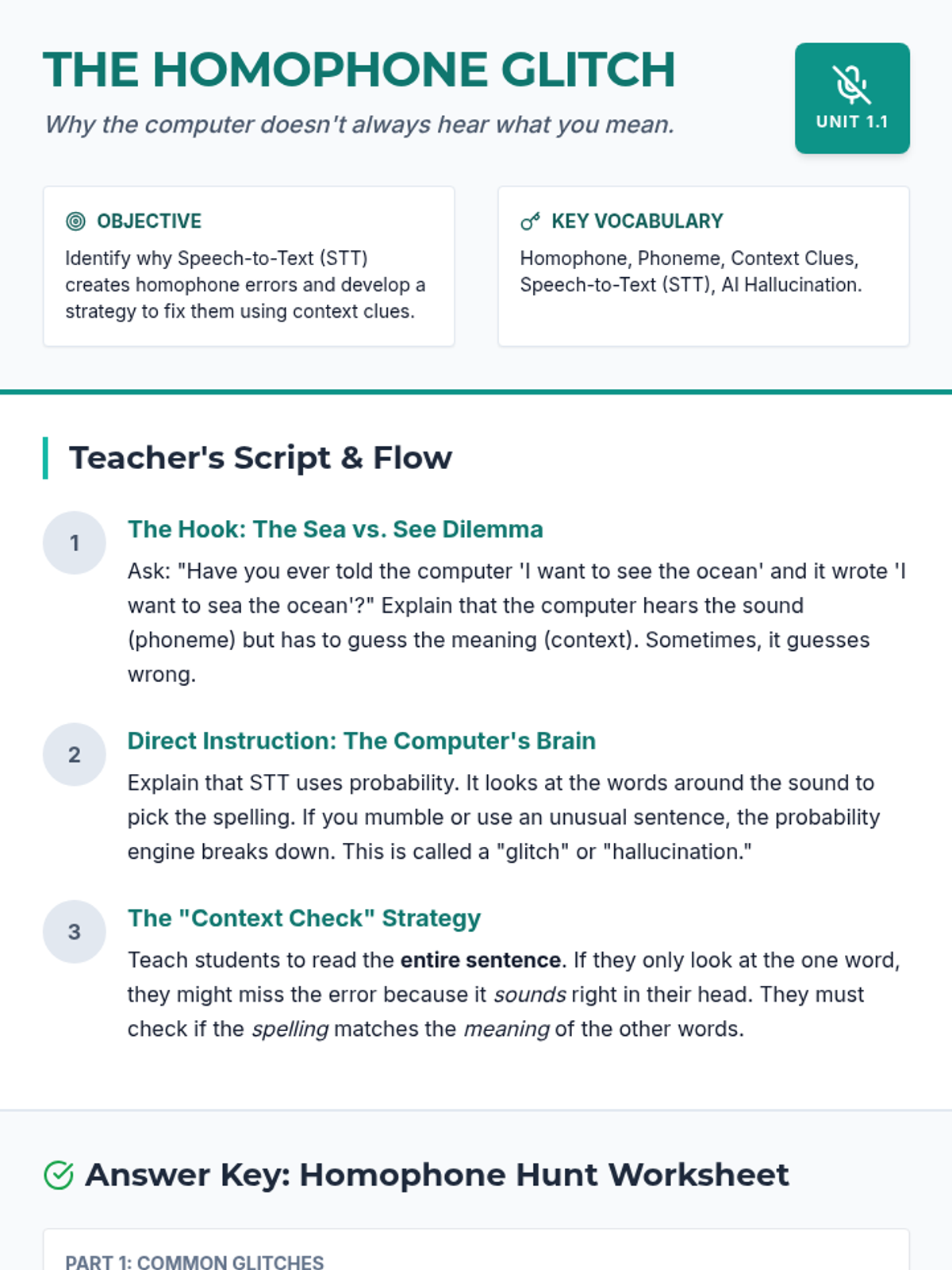
A sequence focused on the critical revision workflow for students using speech-to-text technology. Students learn to identify and fix common errors like homophone confusion, run-on sentences, and informal tone to turn raw dictation into polished academic writing.
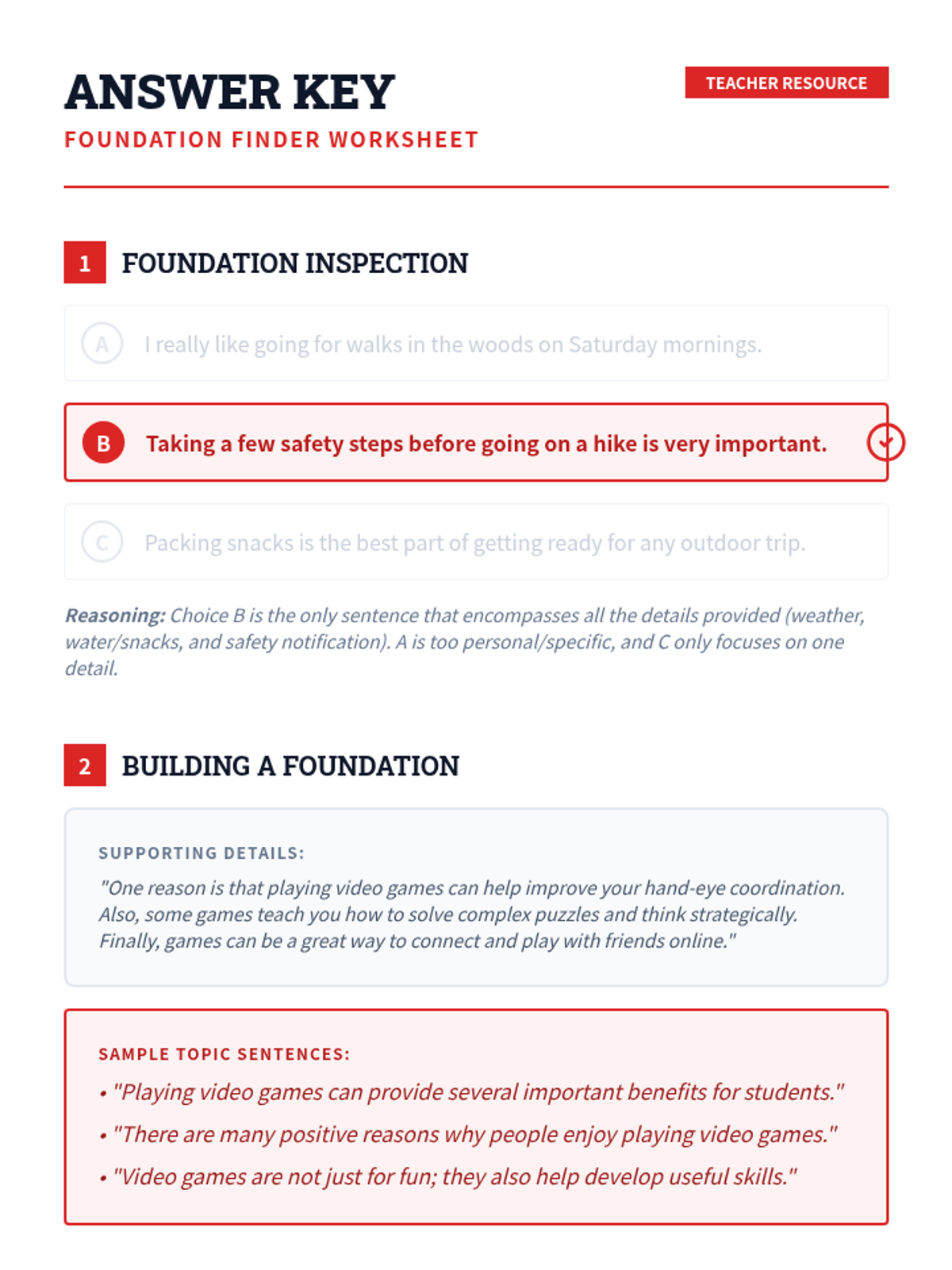
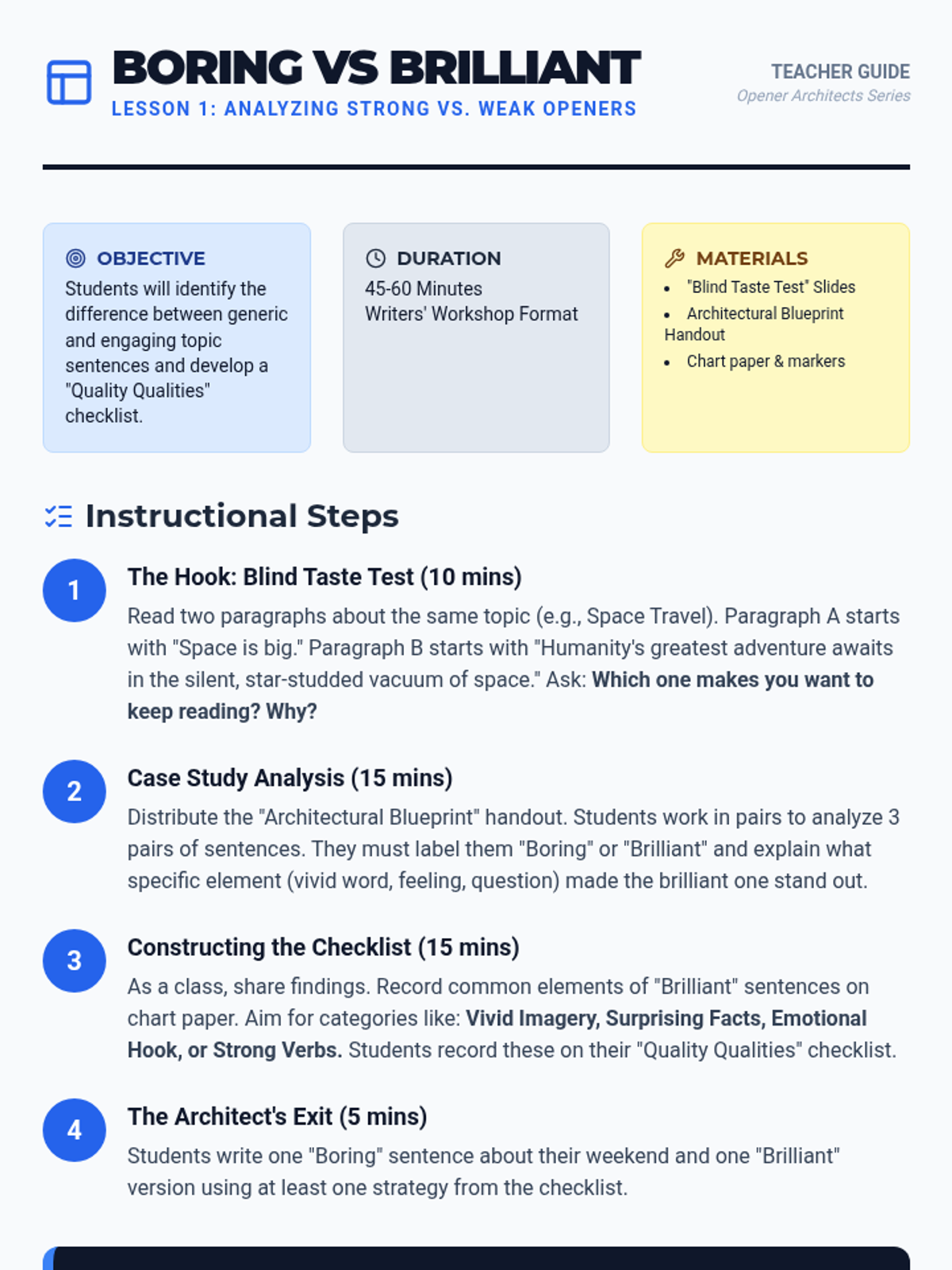
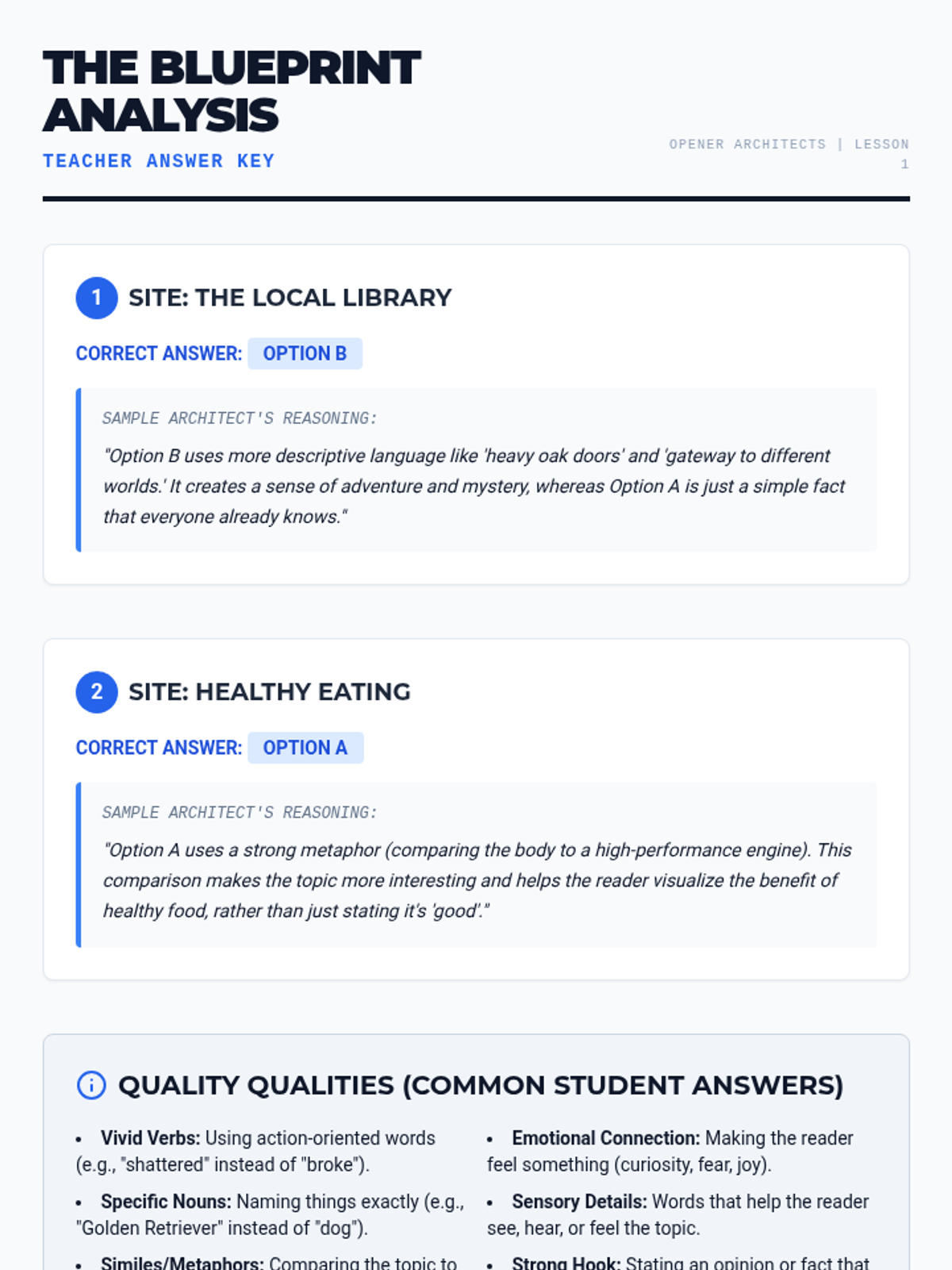
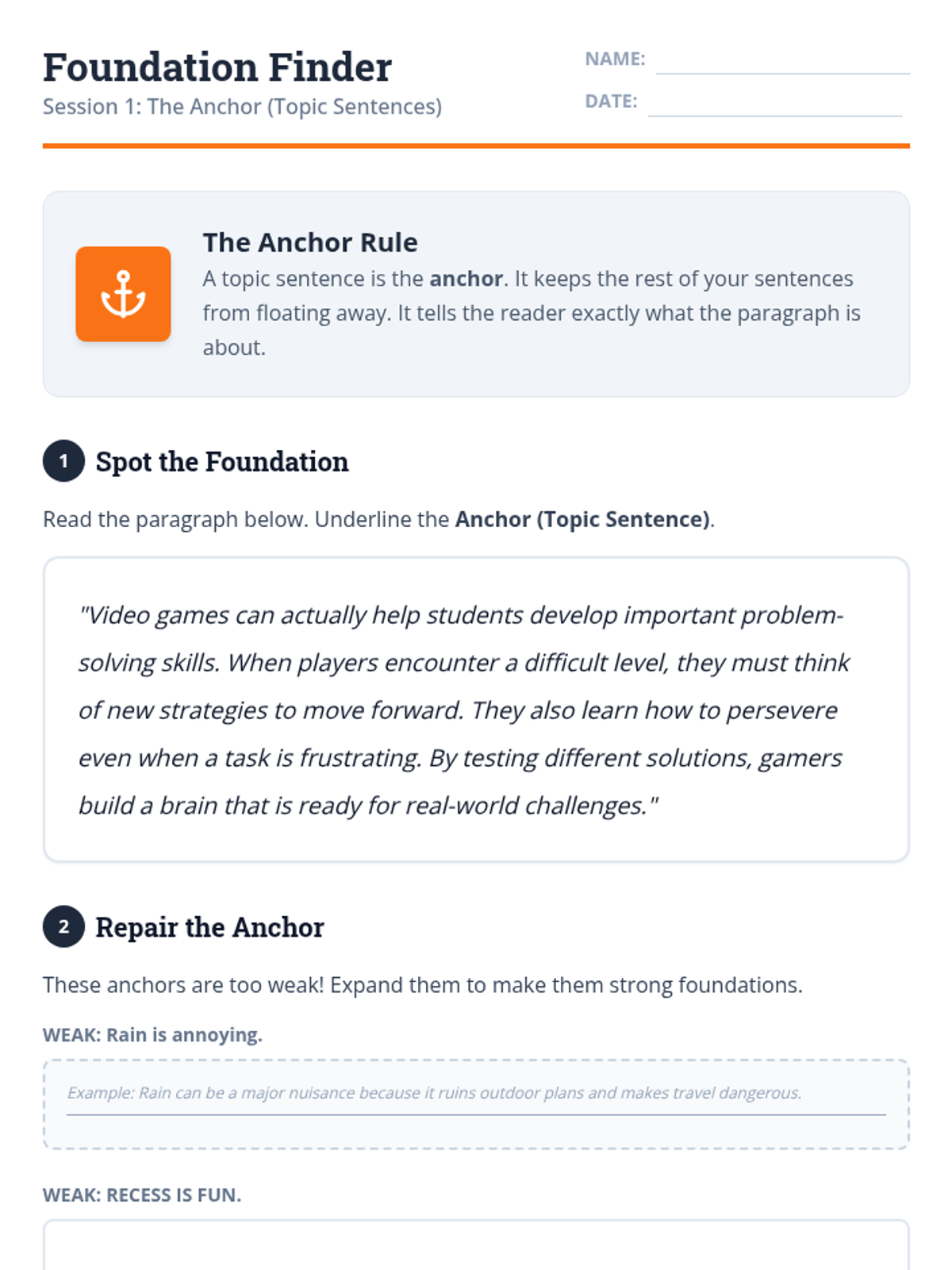
A 5th-grade writing sequence focused on transforming bland topic sentences into engaging 'hooks' that guide the reader while maintaining structural integrity. Students analyze, revise, and peer-review topic sentences using architectural metaphors to understand paragraph construction.
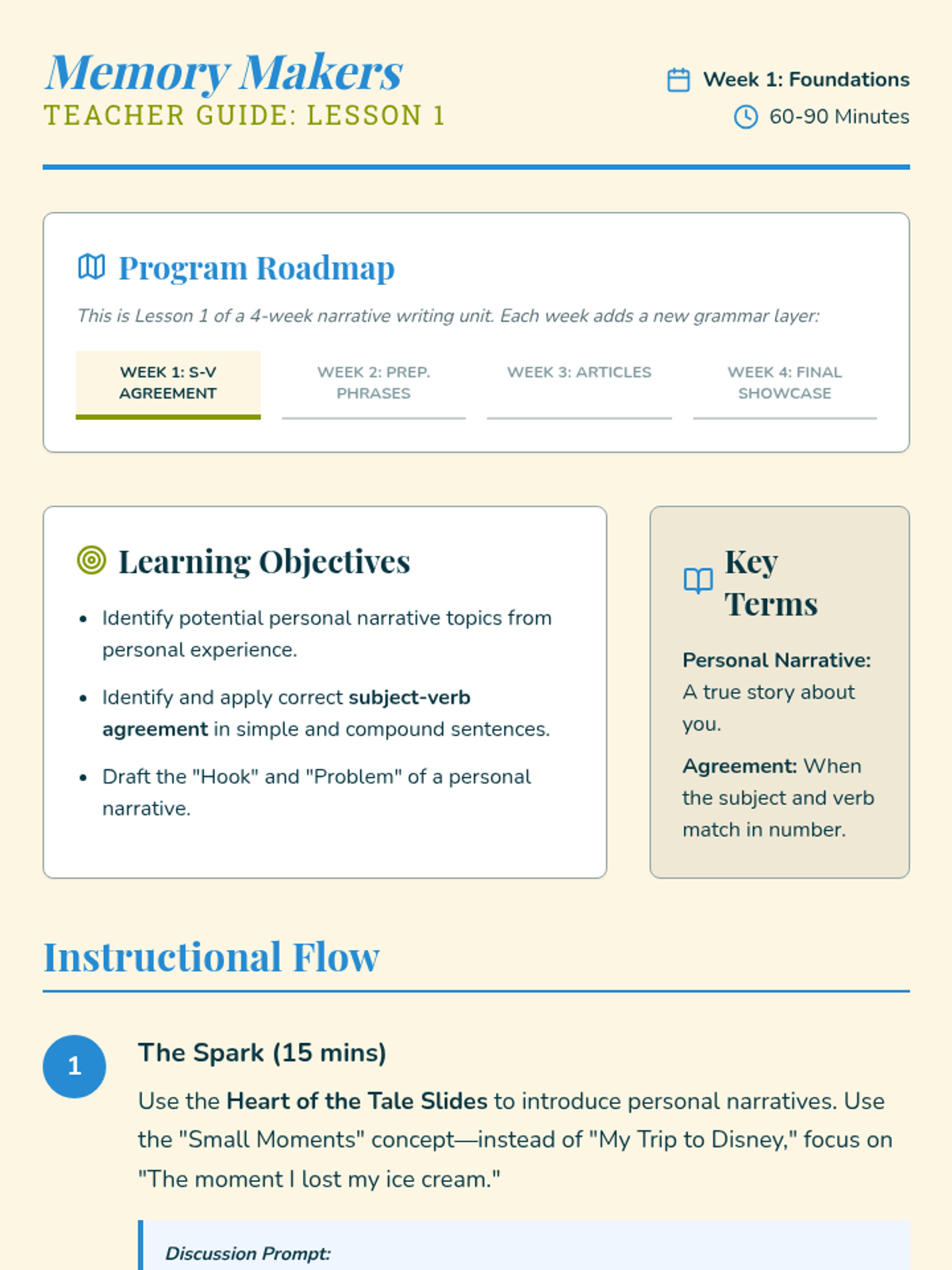
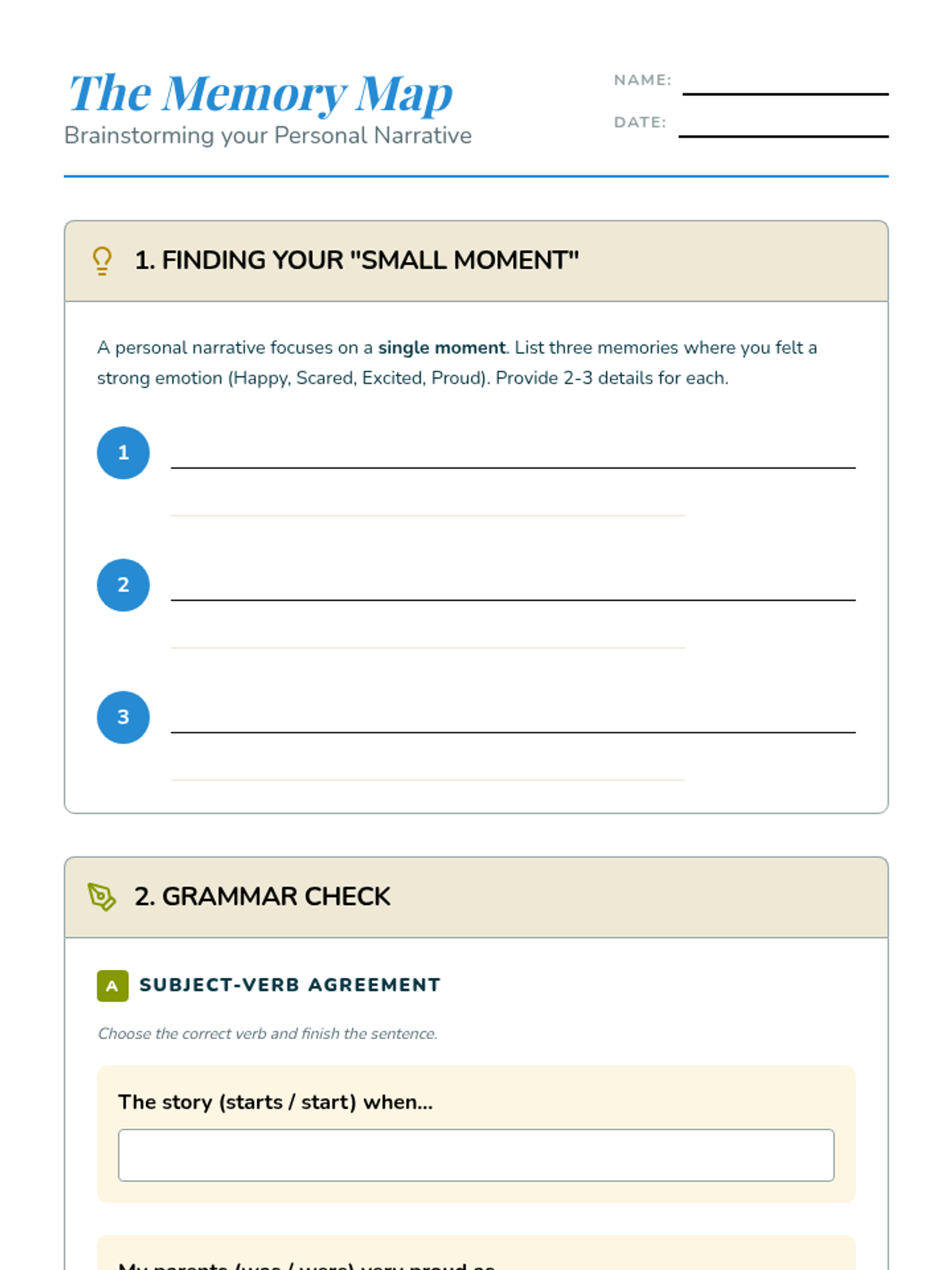
A 4-week program focused on personal narrative writing and oral presentation skills, with a heavy emphasis on subject-verb agreement, prepositional phrases, and the correct use of articles.
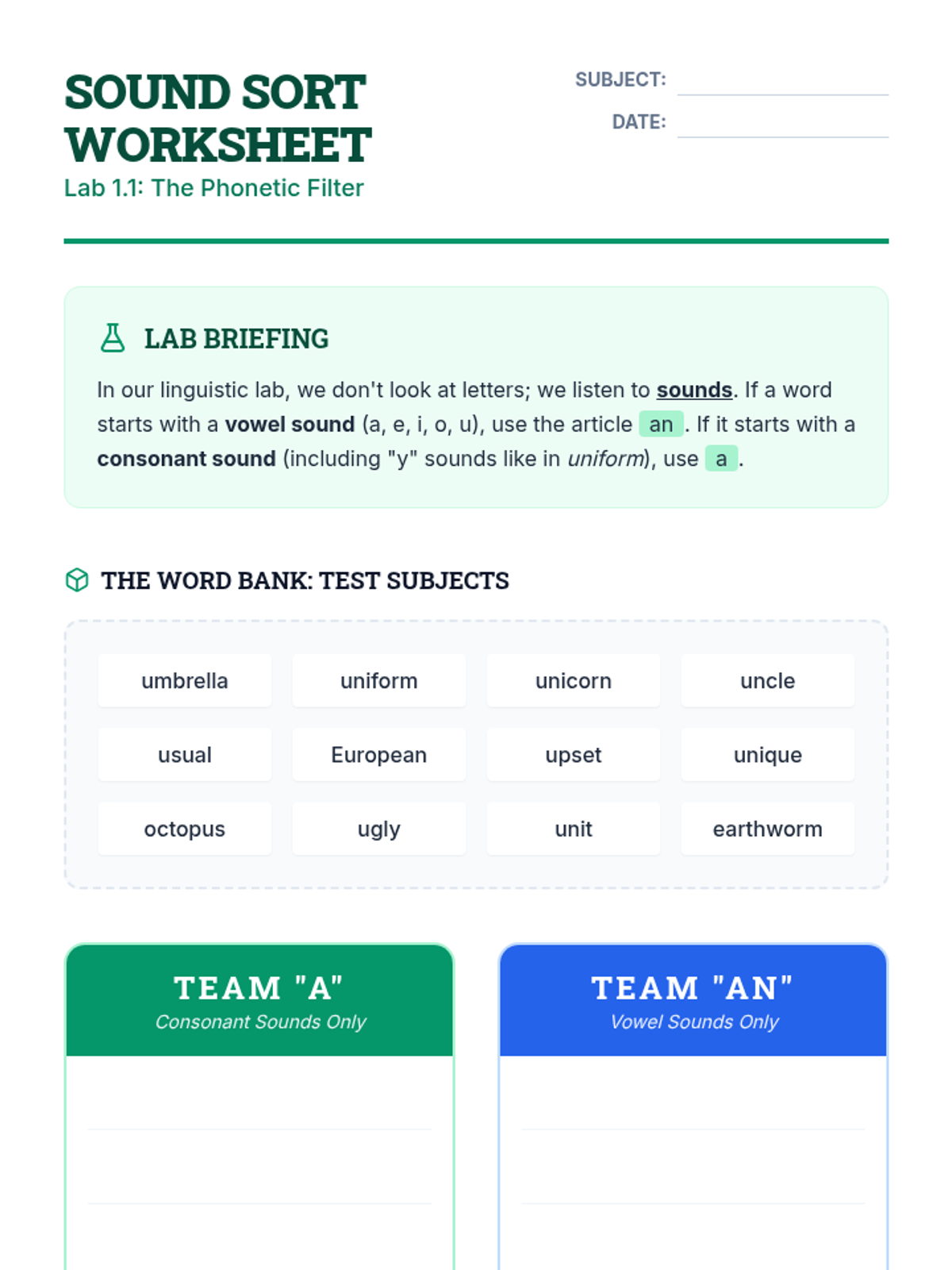
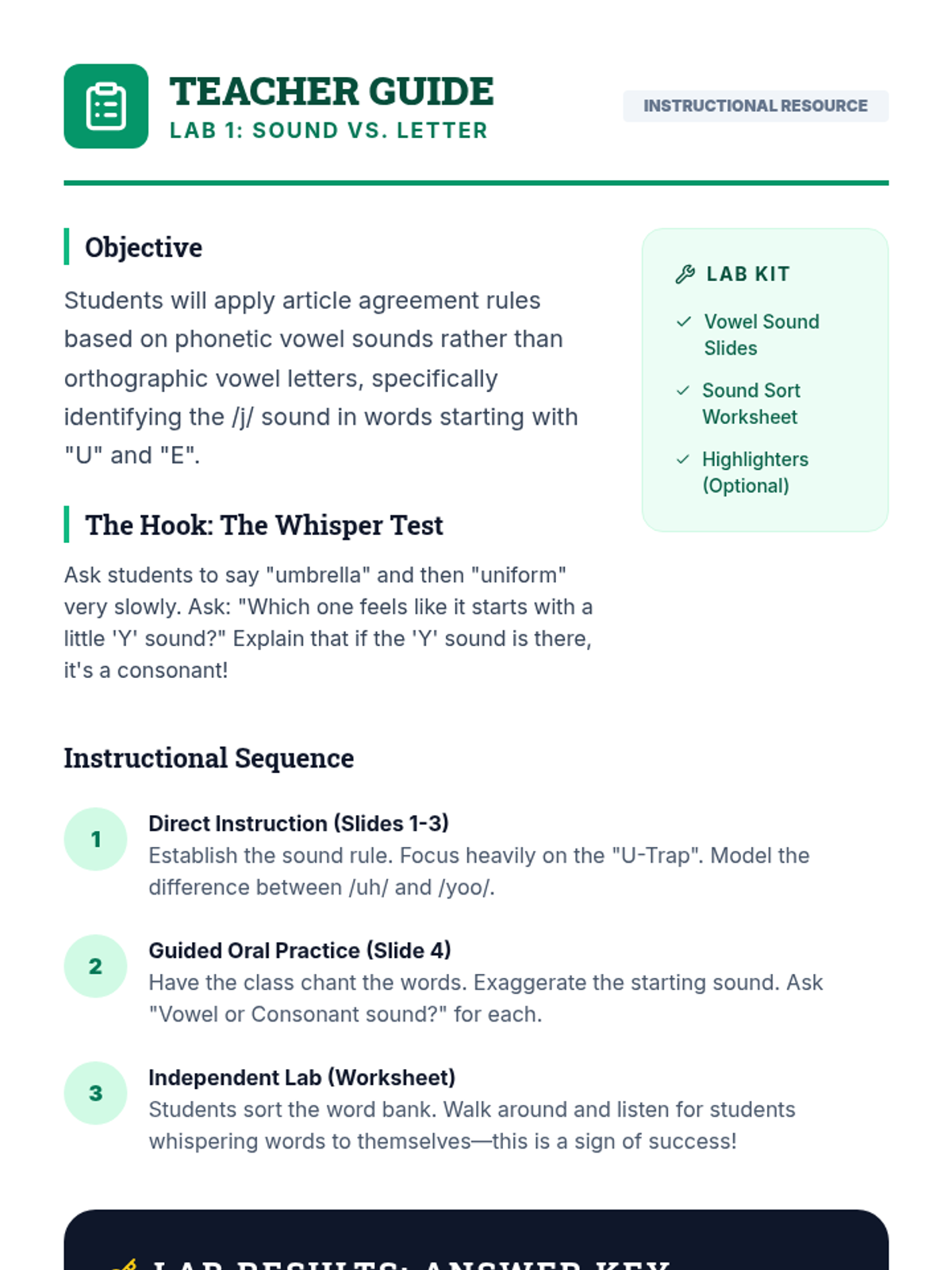
A technical grammar sequence for 5th graders focusing on phonetic exceptions for 'a' and 'an'. Students move from basic vowel sound awareness to handling silent letters and acronyms, culminating in a proofreading challenge.
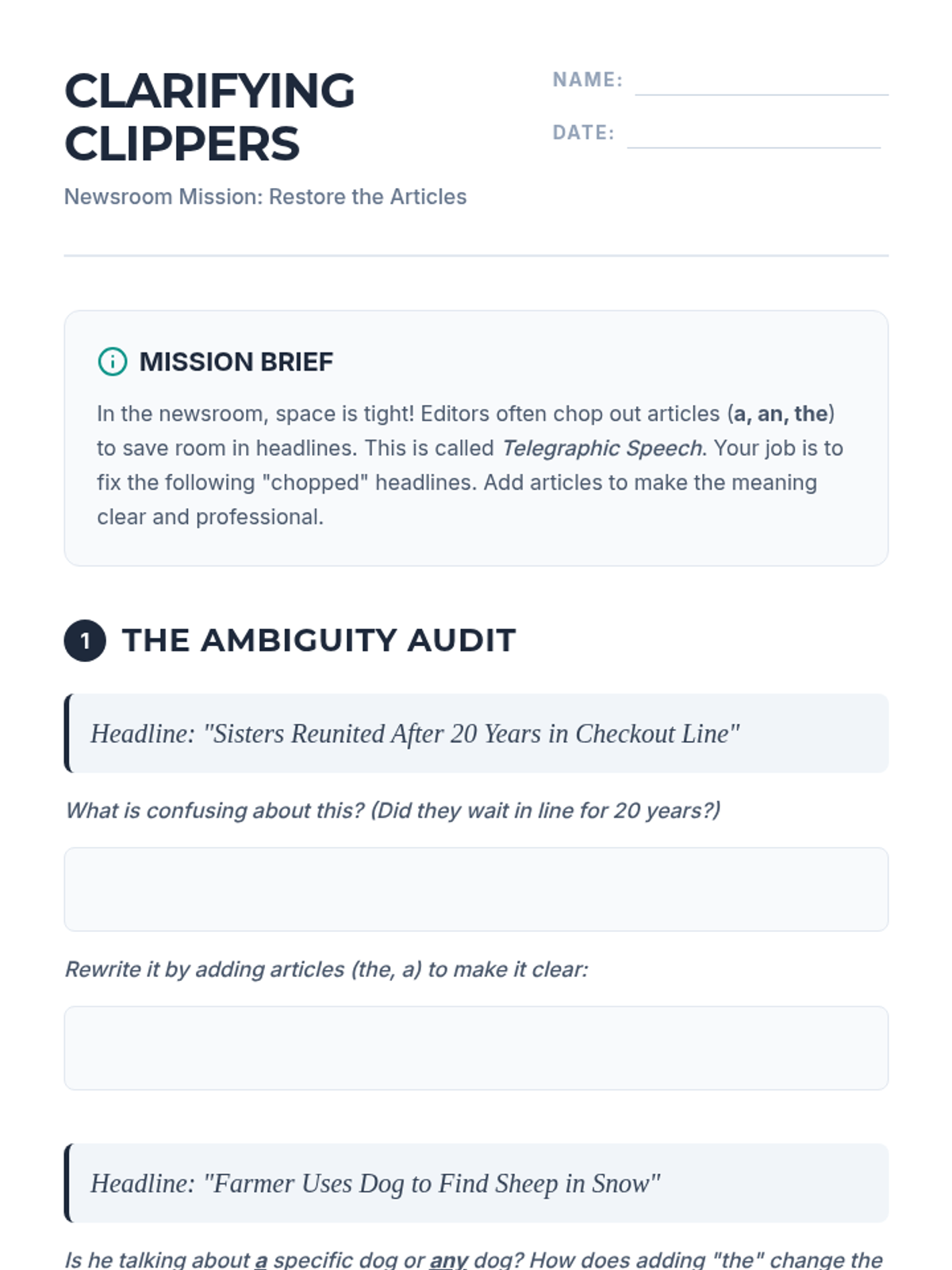
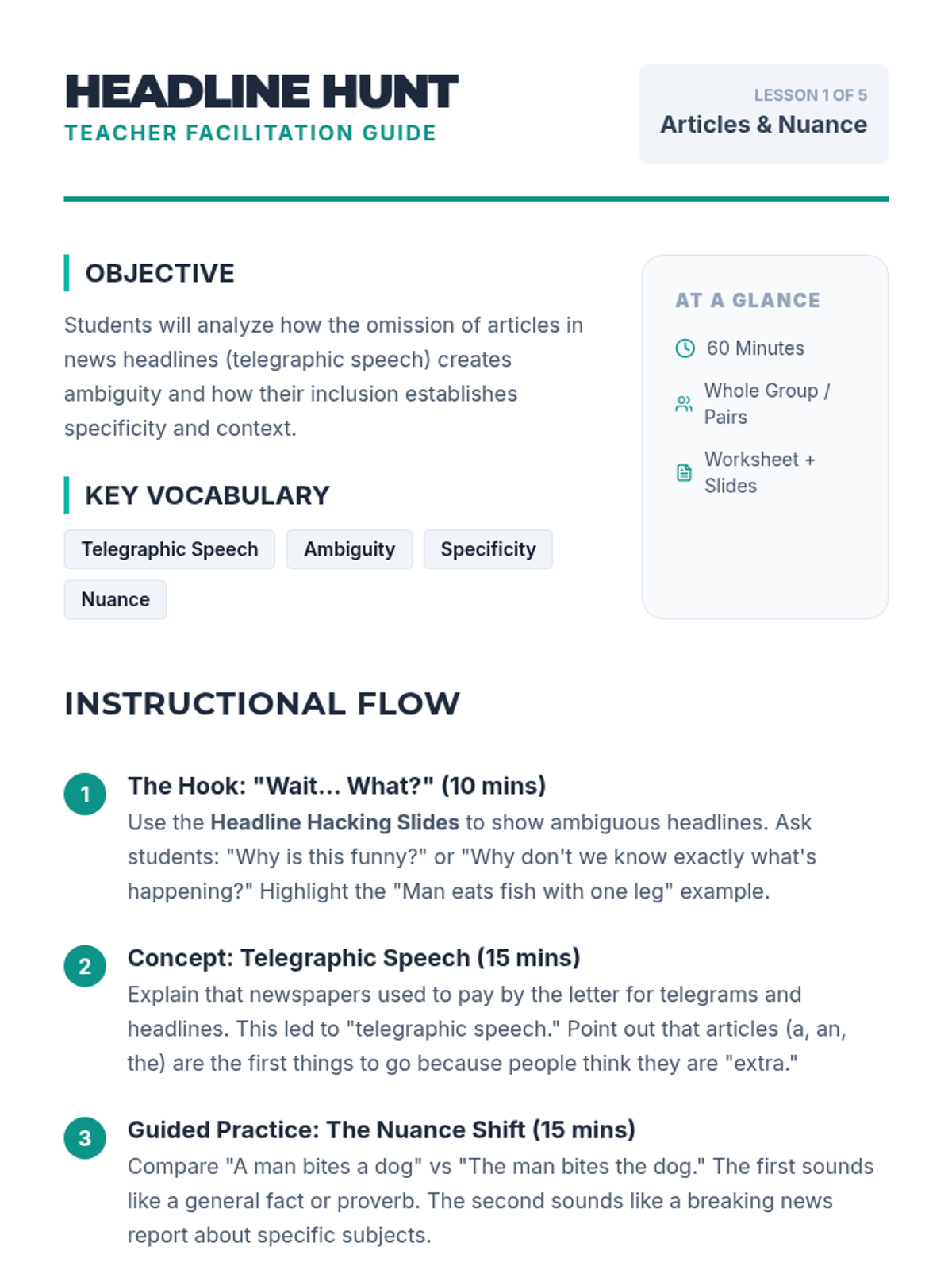
A 5th-grade ELA sequence exploring how the choice of articles (a, an, the) shifts meaning and tone in headlines, geography, science, and persuasion. Students move beyond simple grammar rules to analyze the semantic impact of these 'tiny' words.
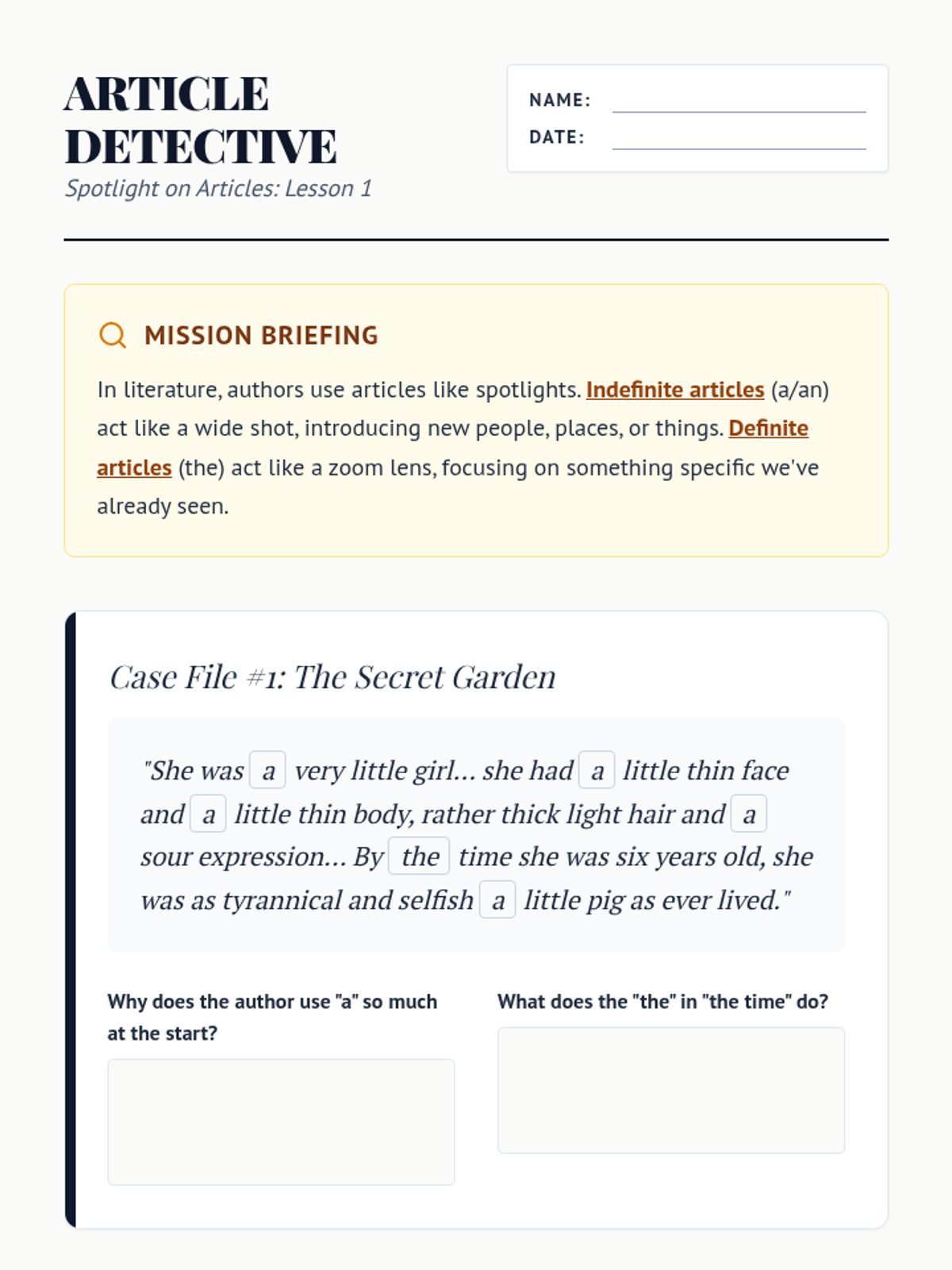
A workshop-style grammar sequence for 5th graders focusing on the stylistic power of articles (a, an, the). Students move from analyzing mentor texts to drafting and revising descriptive scenes, learning how articles control reader focus and specificity.
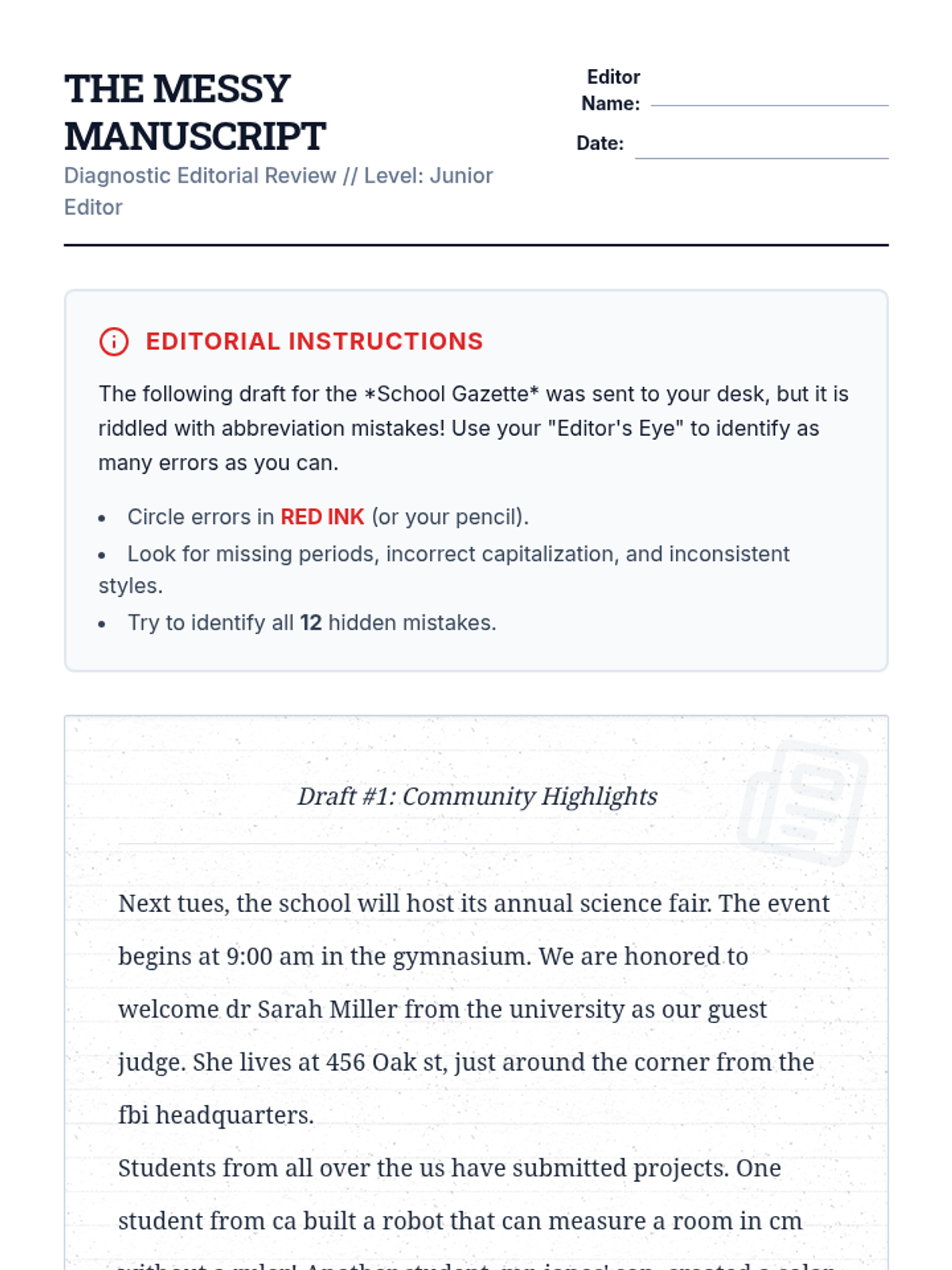
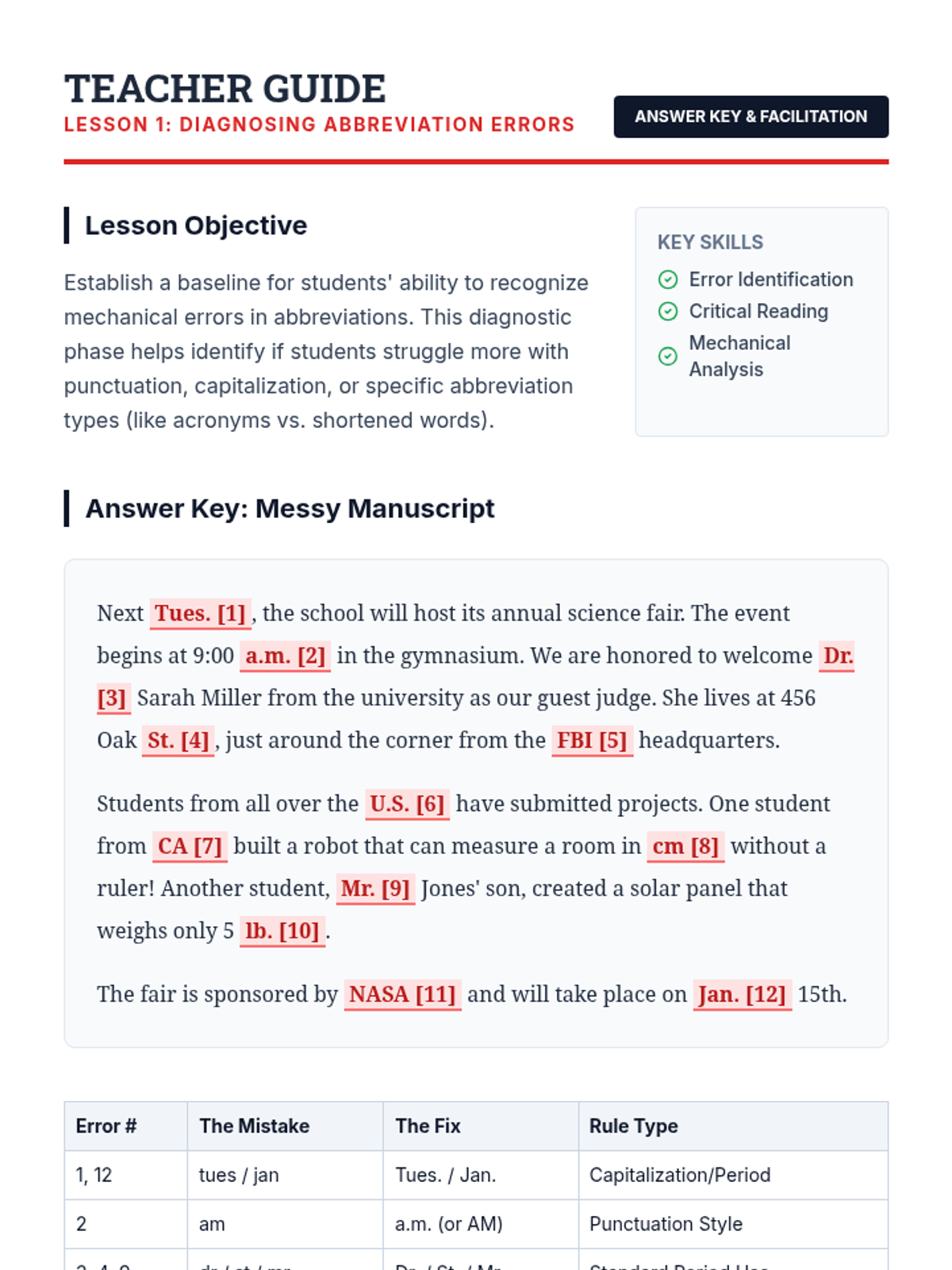
This mastery-based sequence teaches 5th-grade students the mechanics of editing and proofreading abbreviations, focusing on punctuation, capitalization, and style consistency through a newsroom-inspired 'editor's eye' lens.
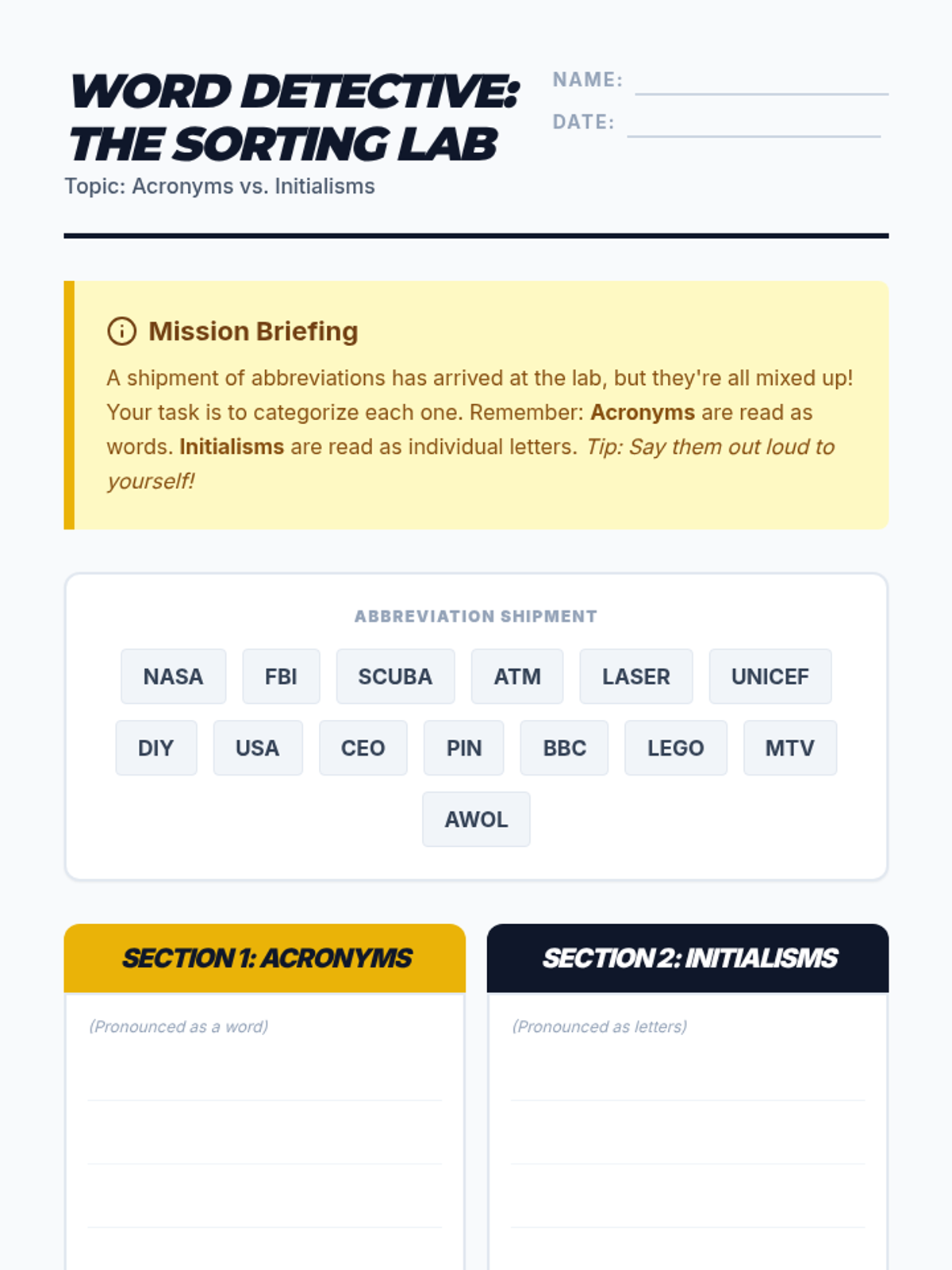
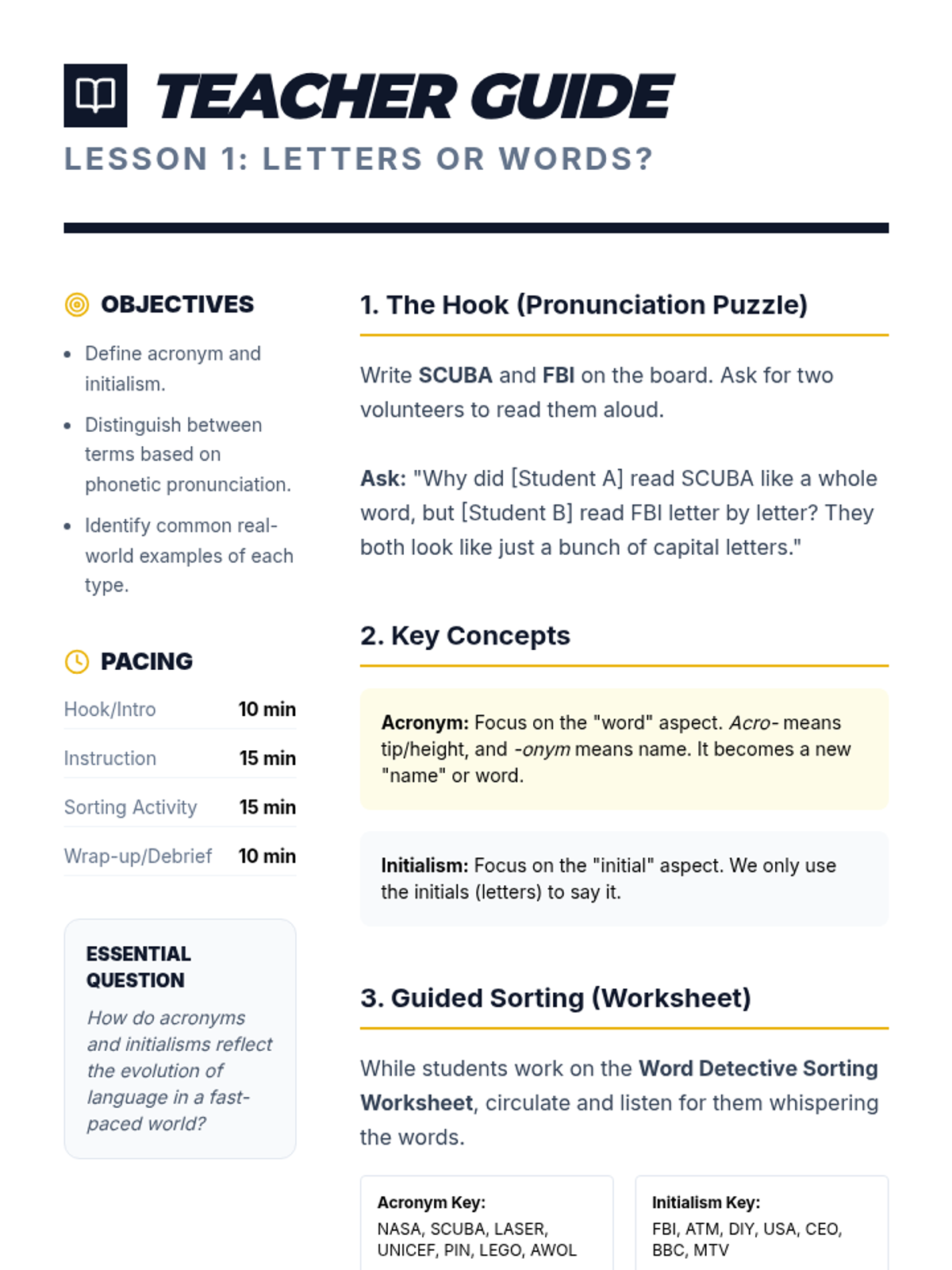
This inquiry-based sequence explores the nuances of acronyms, initialisms, and Latin-based abbreviations found in informational text. Students investigate the origins of these terms, distinguish between those pronounced as words versus individual letters, and produce an informational guide for their peers.
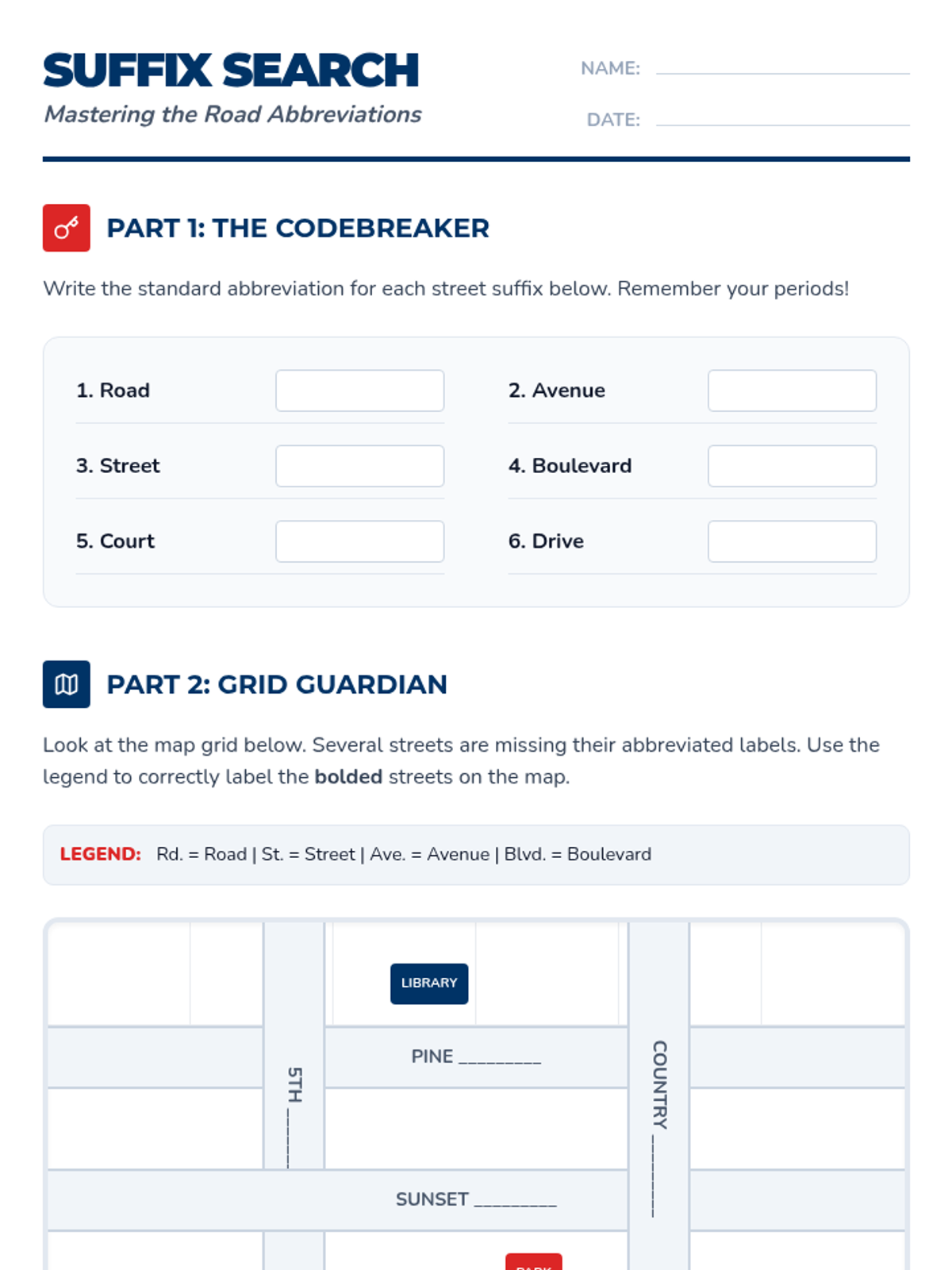
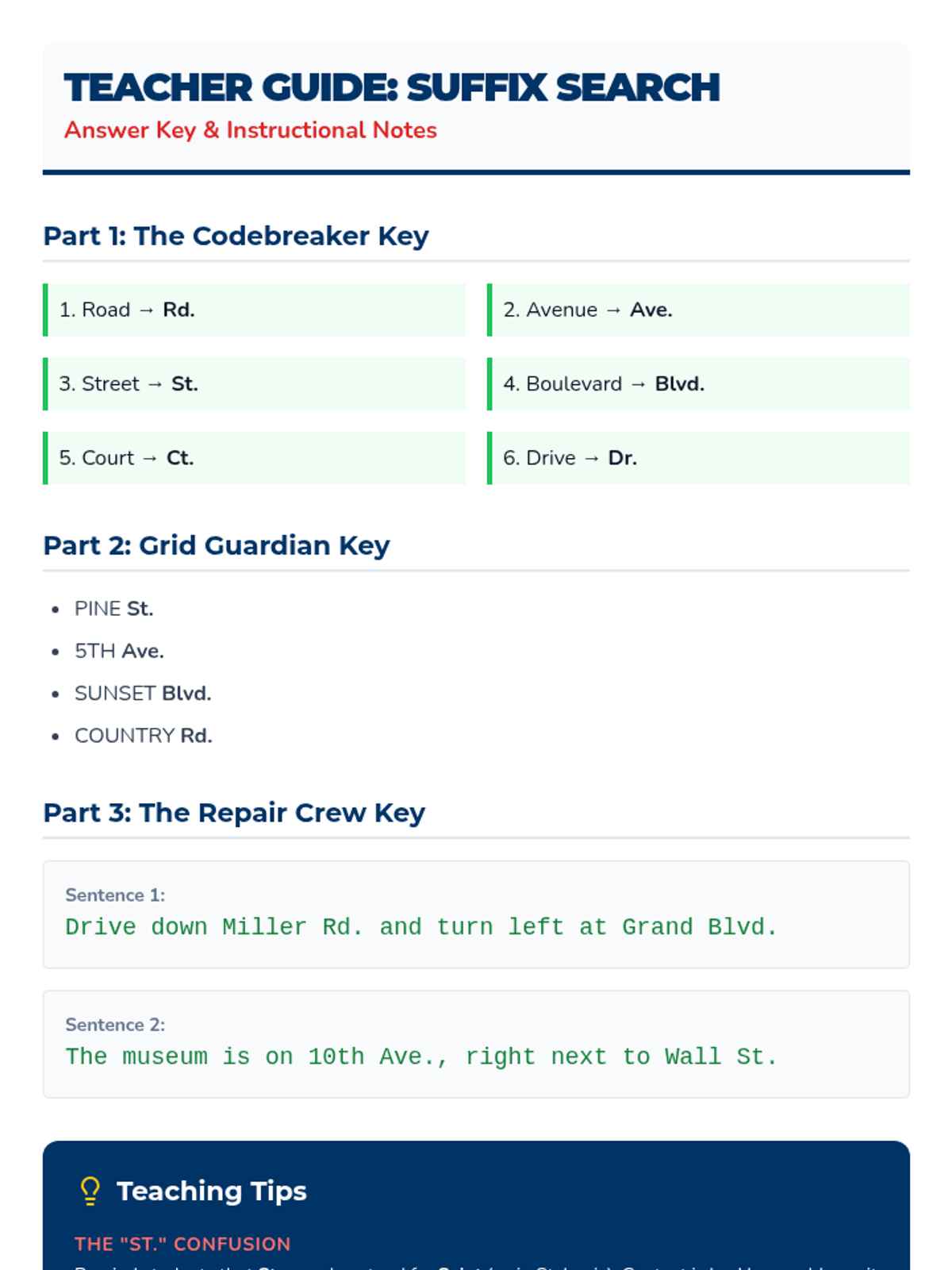
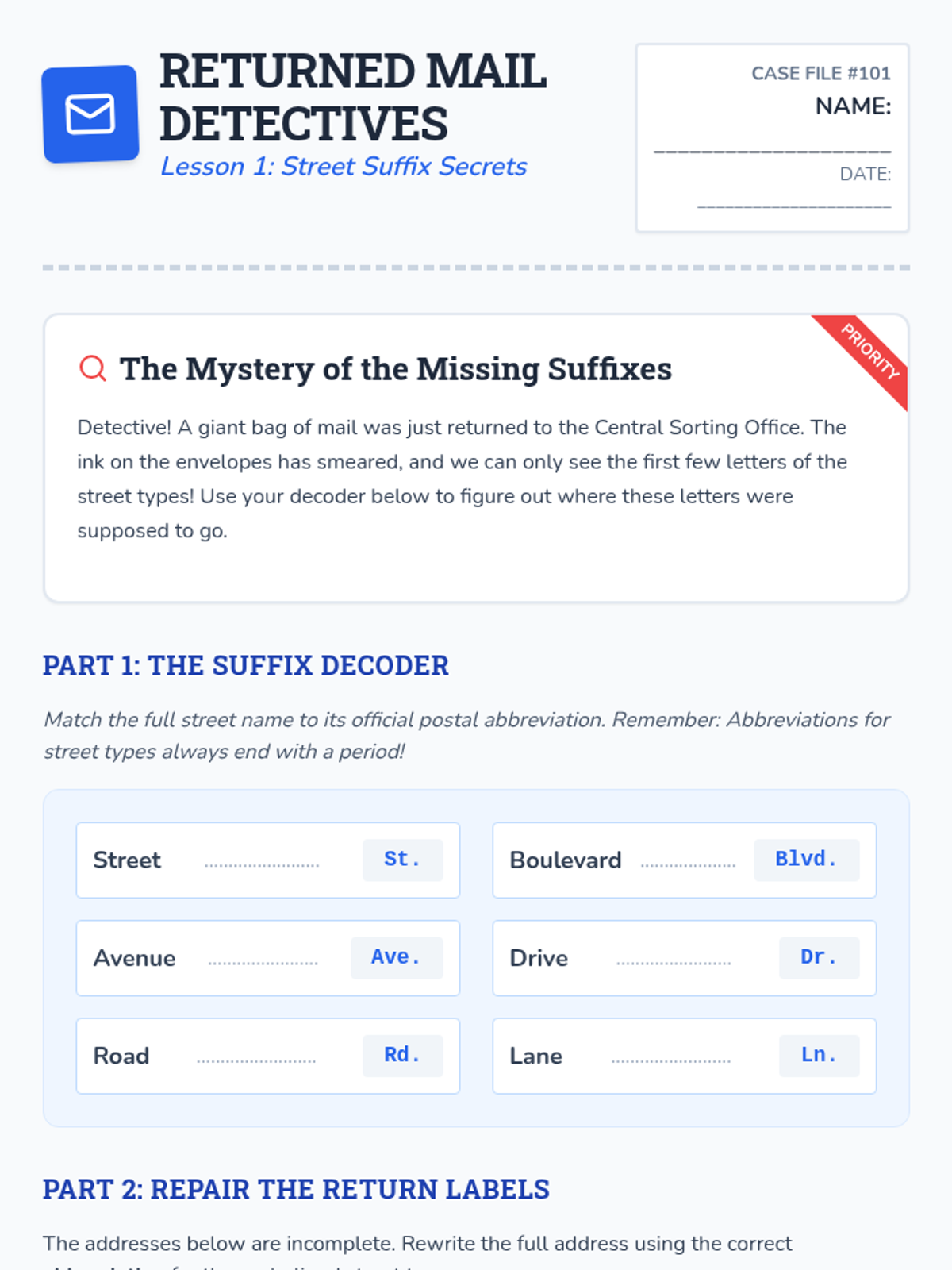
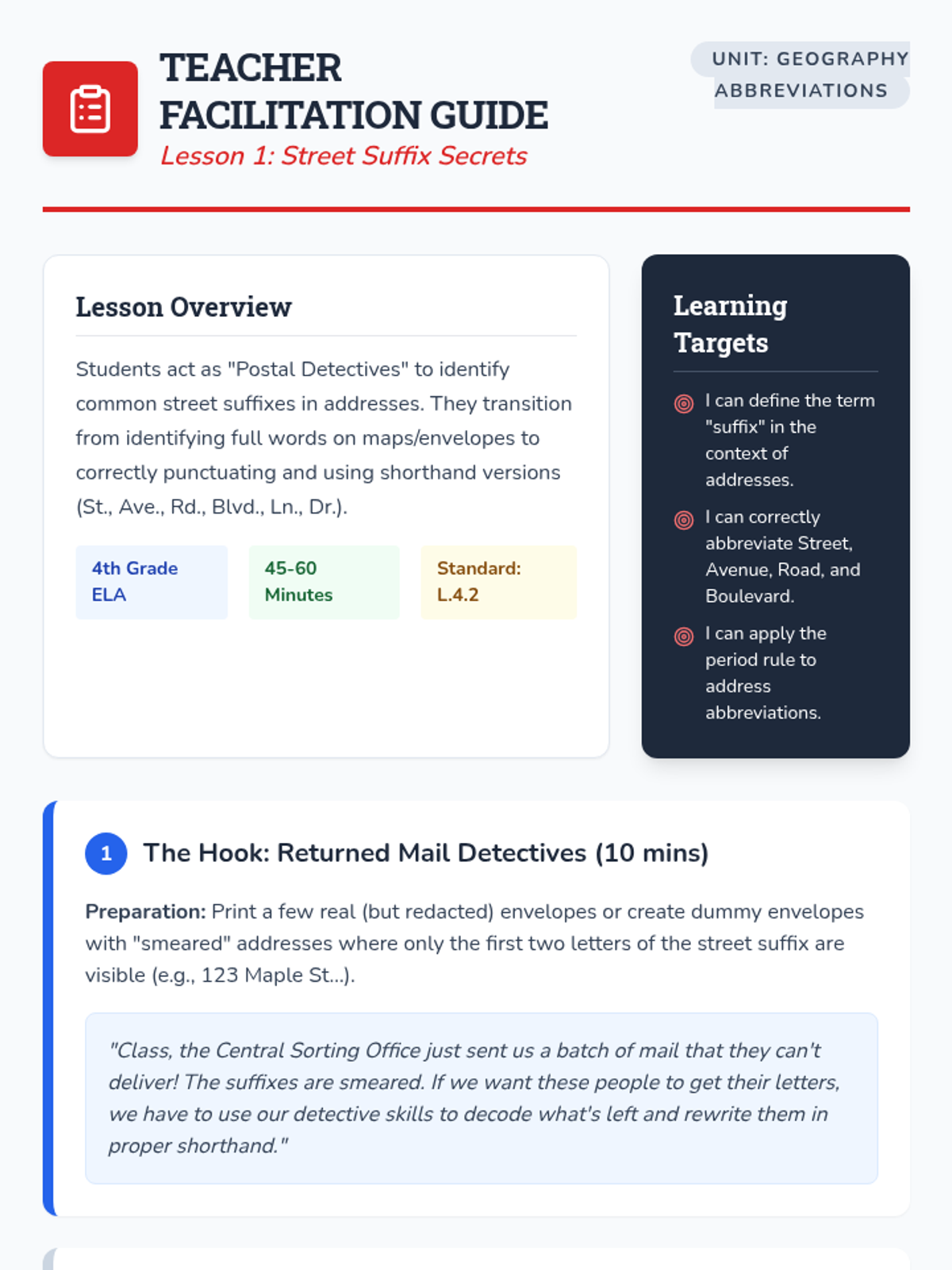
A 5th-grade grammar sequence focusing on the standardized abbreviations used in addresses, maps, and postal delivery. Students progress from learning street suffixes and compass directions to mastering state postal codes and formal envelope formatting, culminating in a community map design project.
A comprehensive 5th-grade sequence on abbreviations focusing on personal titles, days, months, and time indicators through a 'Grammar Detectives' theme.
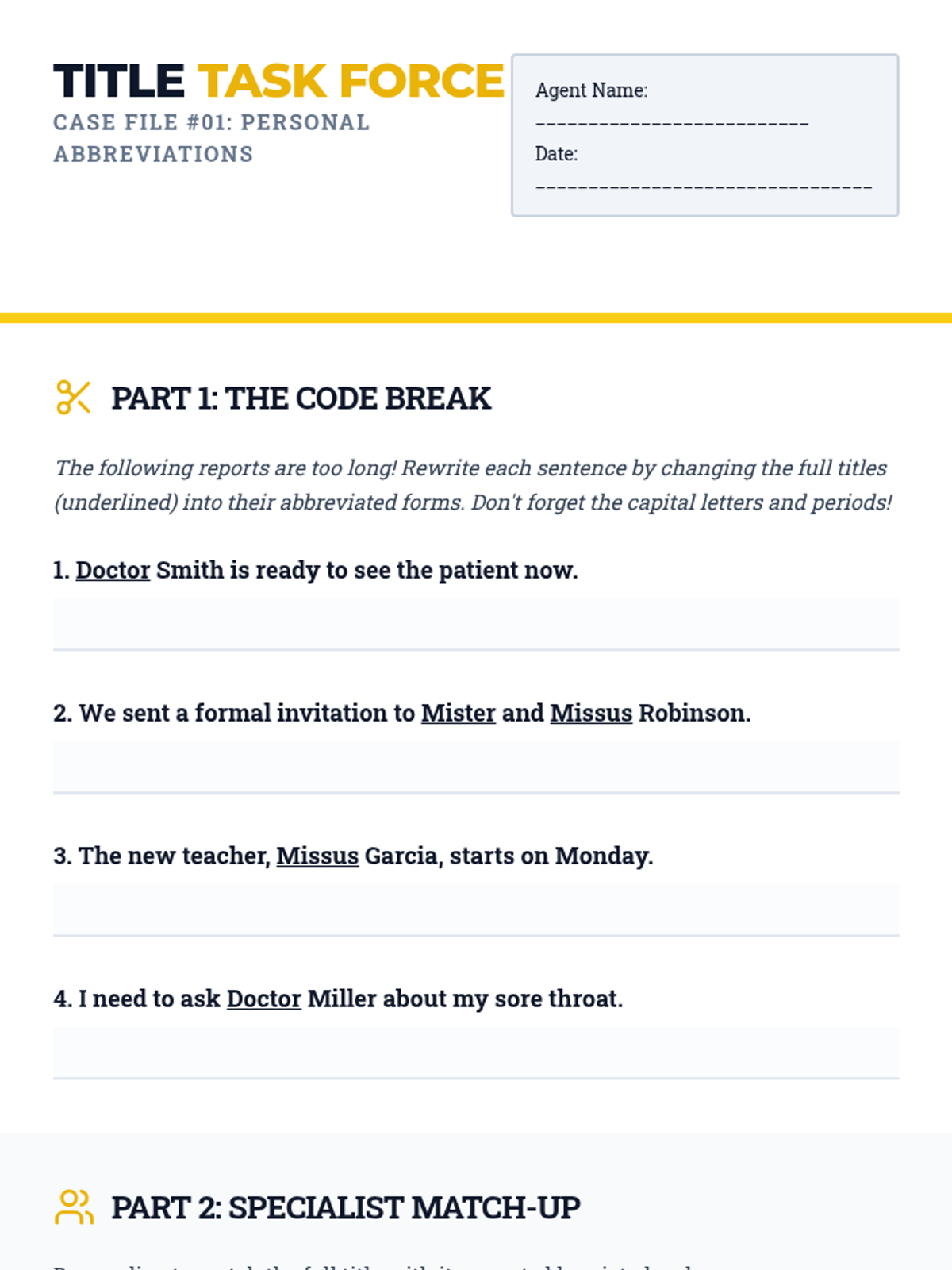
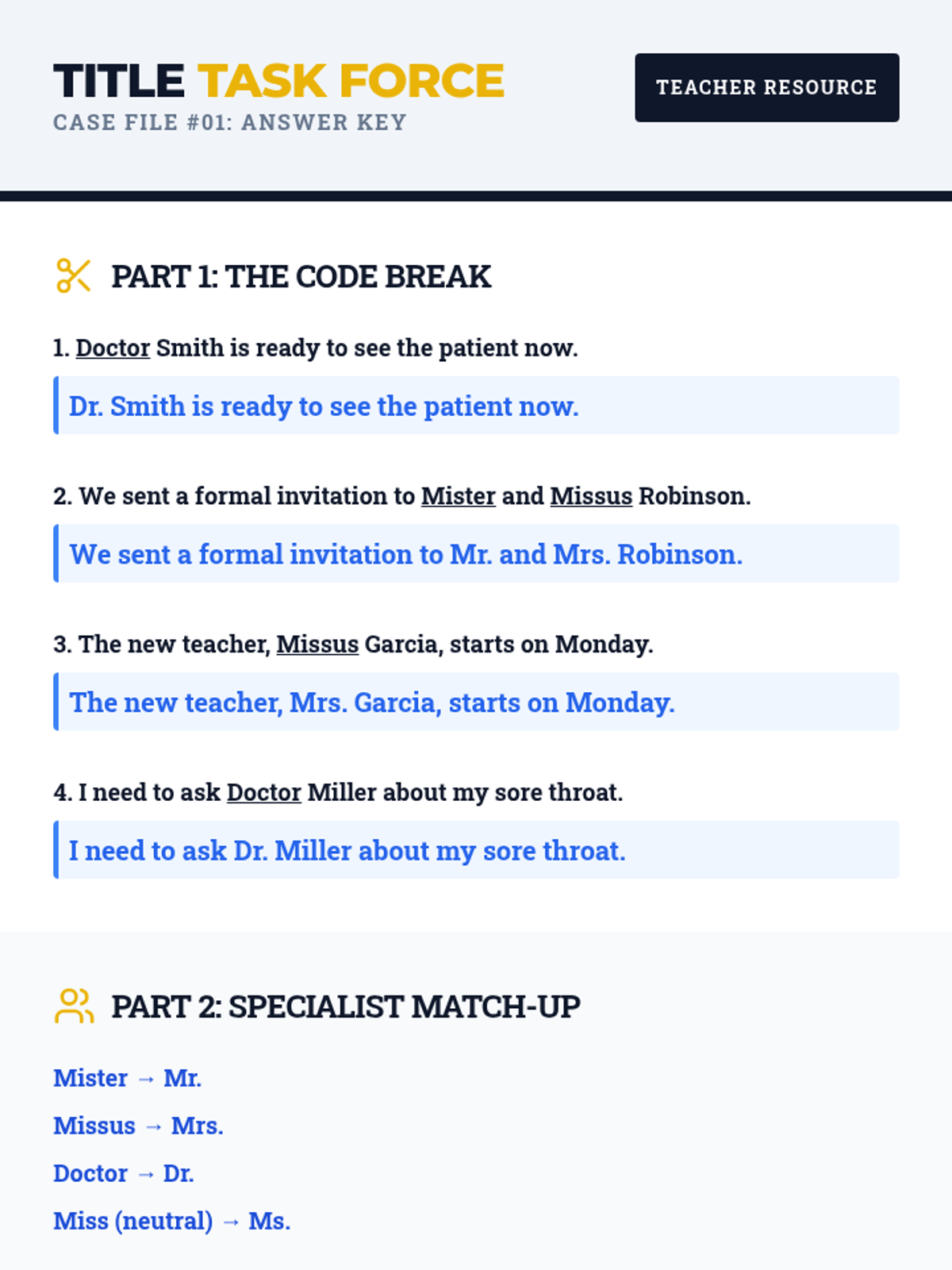
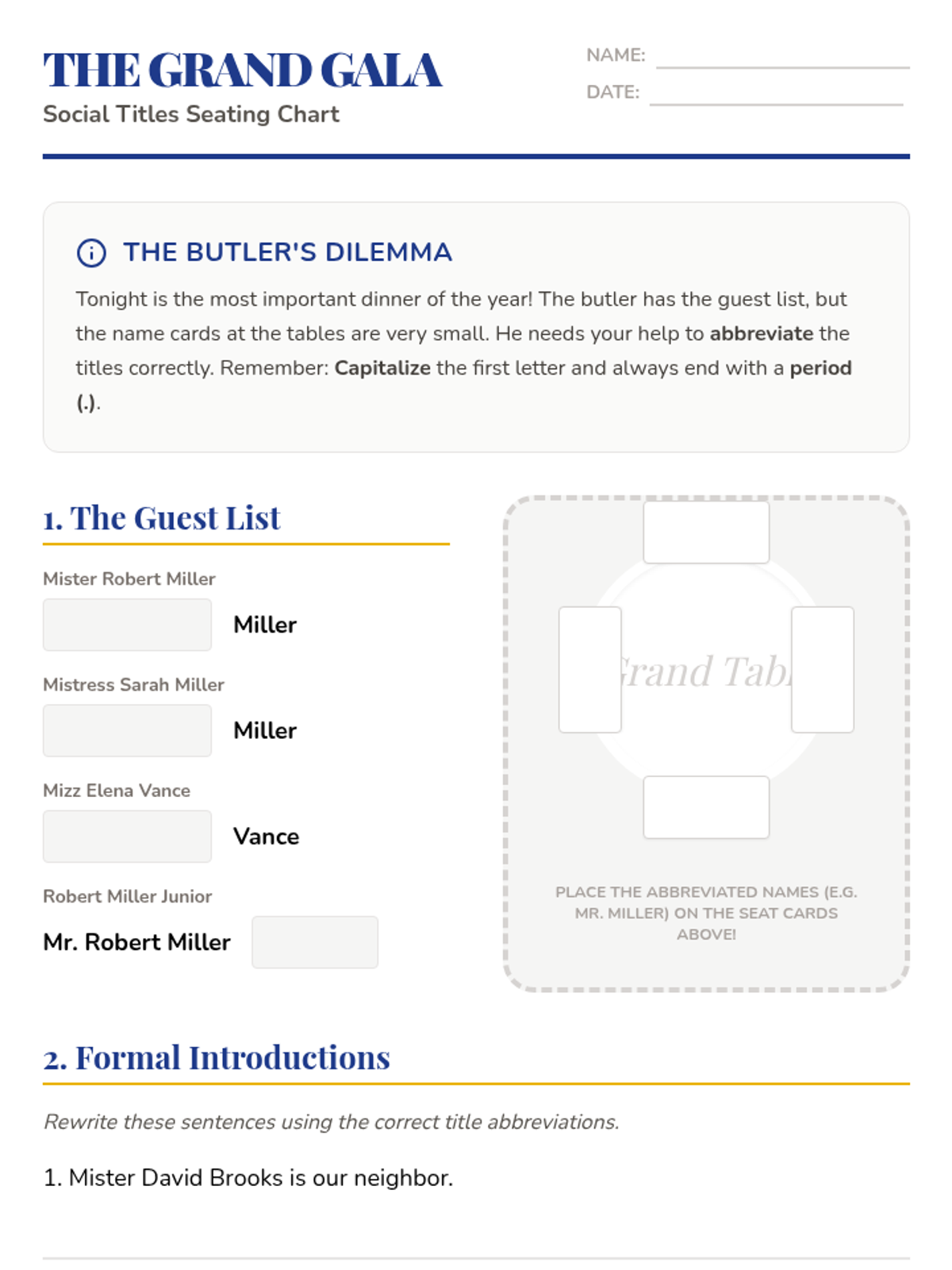
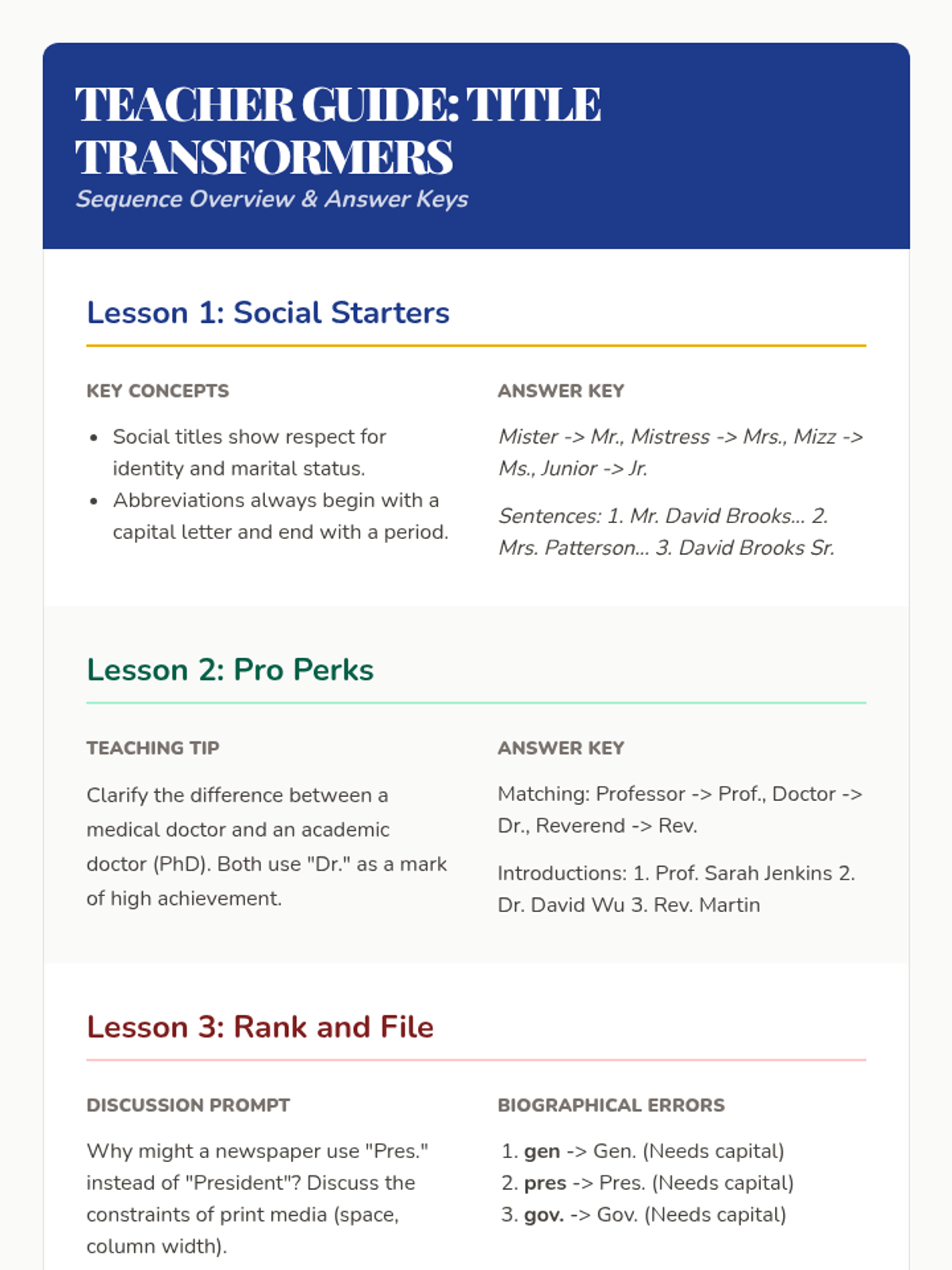
This sequence explores the social and formal rules of abbreviating titles for people. Using a case-study approach, students analyze formal letters, biographies, and business cards to understand how titles like Mr., Dr., and Gov. establish identity and respect. Students practice identifying these titles and writing them with proper capitalization and punctuation. The sequence concludes with students writing a formal letter to a community leader.
This sequence immerses students in the practical application of abbreviations related to geography, mailing addresses, and locations. Through a simulation of a classroom post office, students learn the specific conventions for street suffixes, state codes, and directional markers.
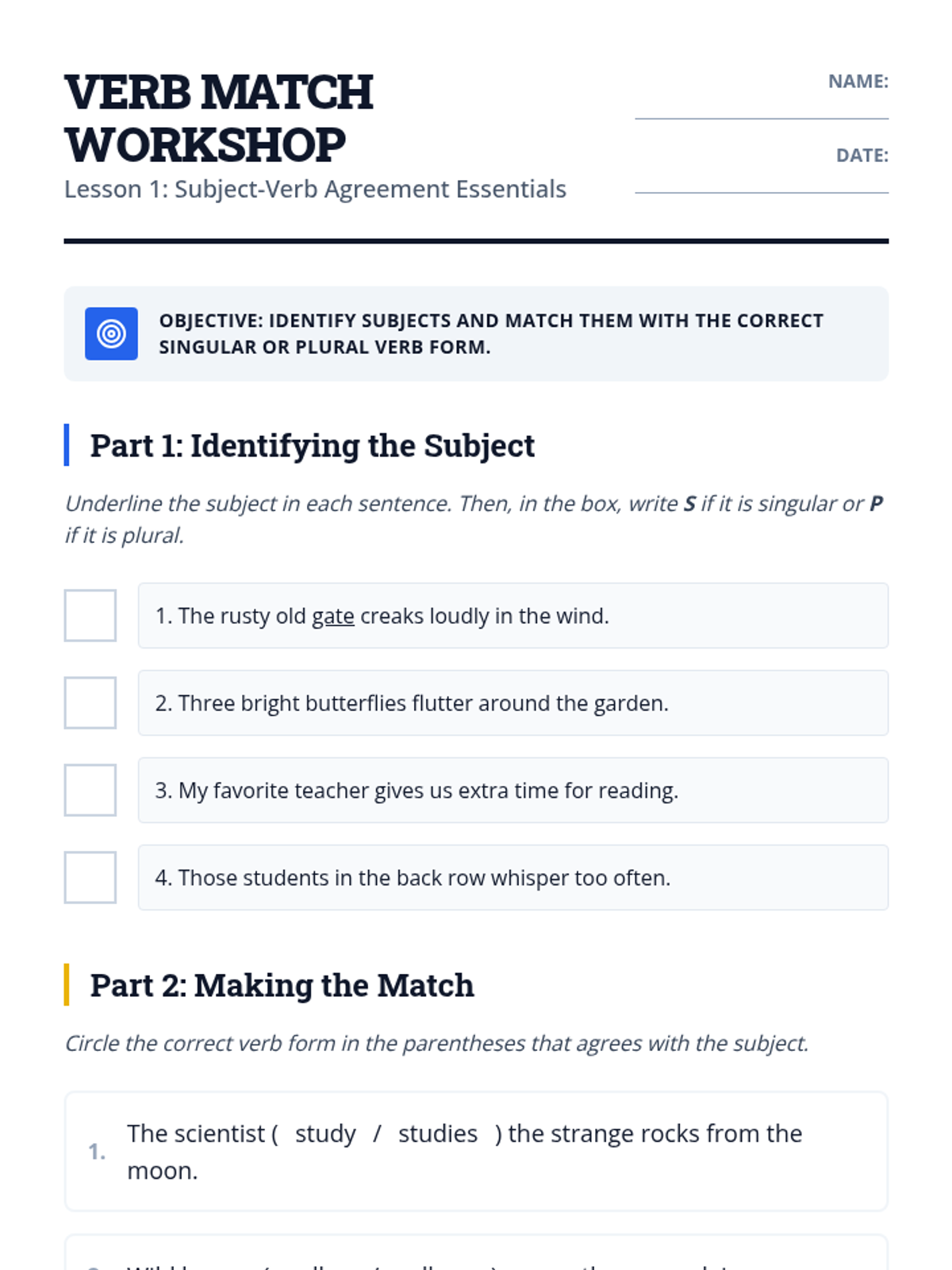
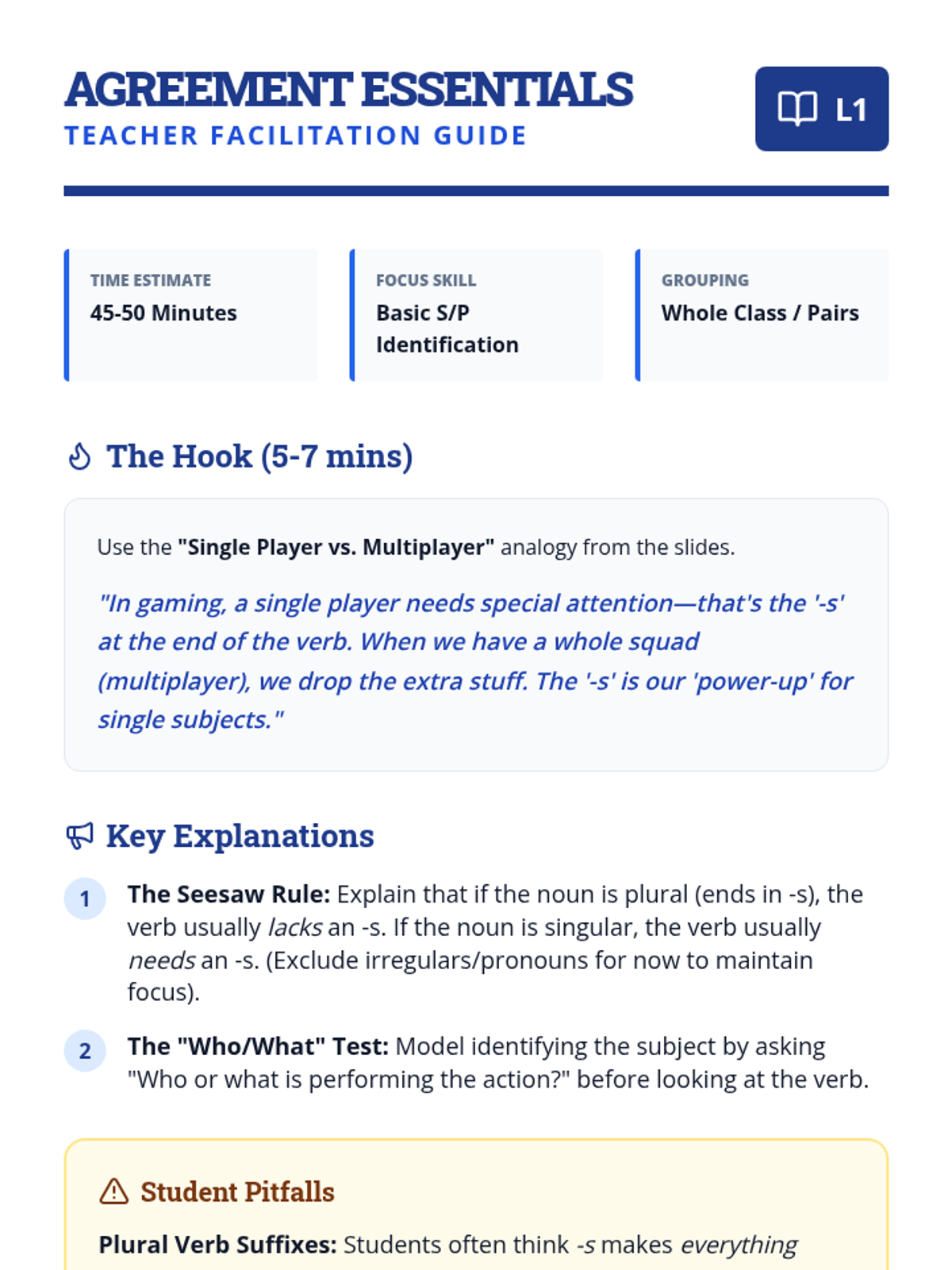
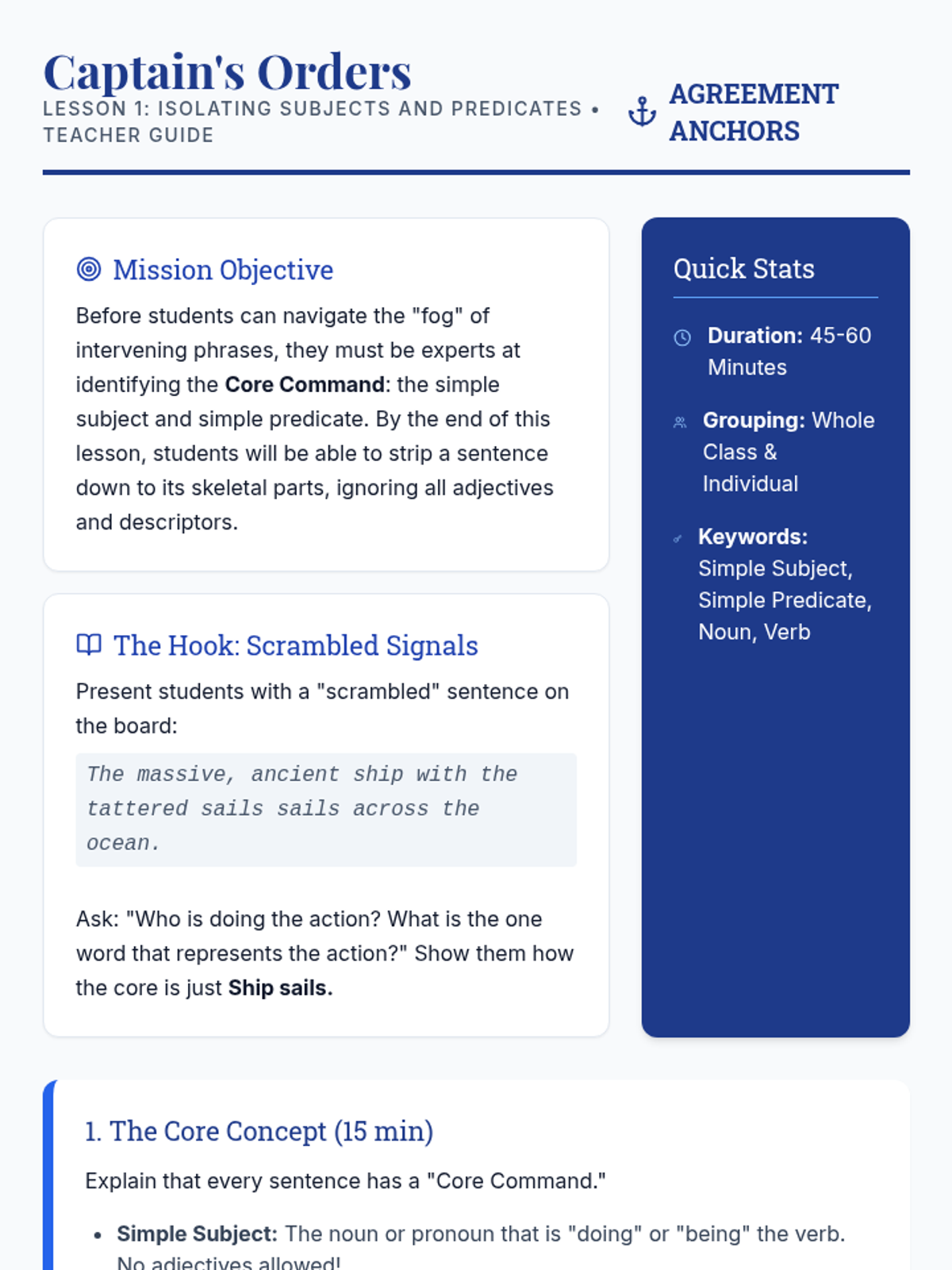
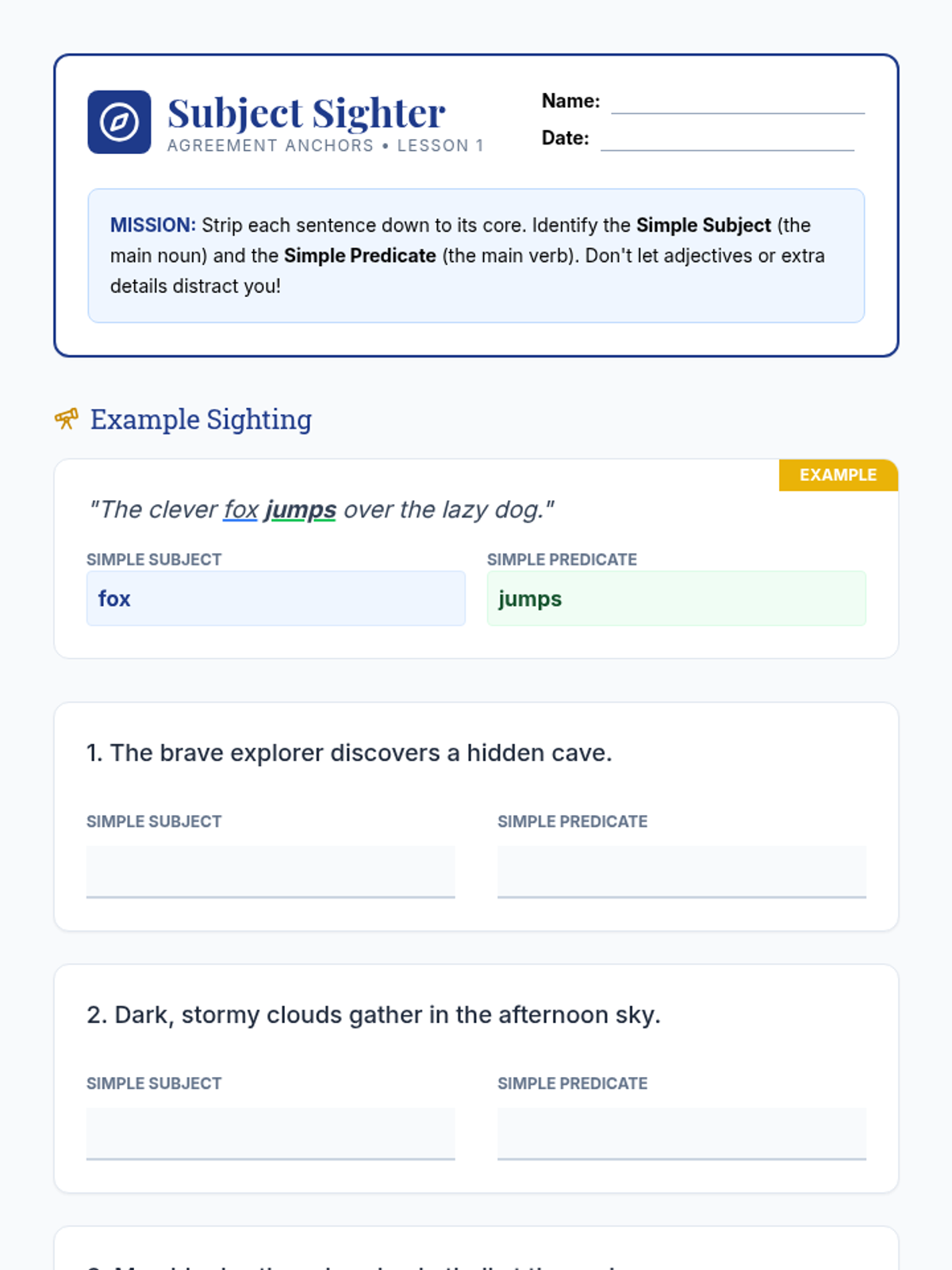
A comprehensive 6th-grade grammar sequence focusing on subject-verb agreement, particularly when subjects are separated from verbs by intervening prepositional phrases. Students progress from basic identification to complex editing and original construction.
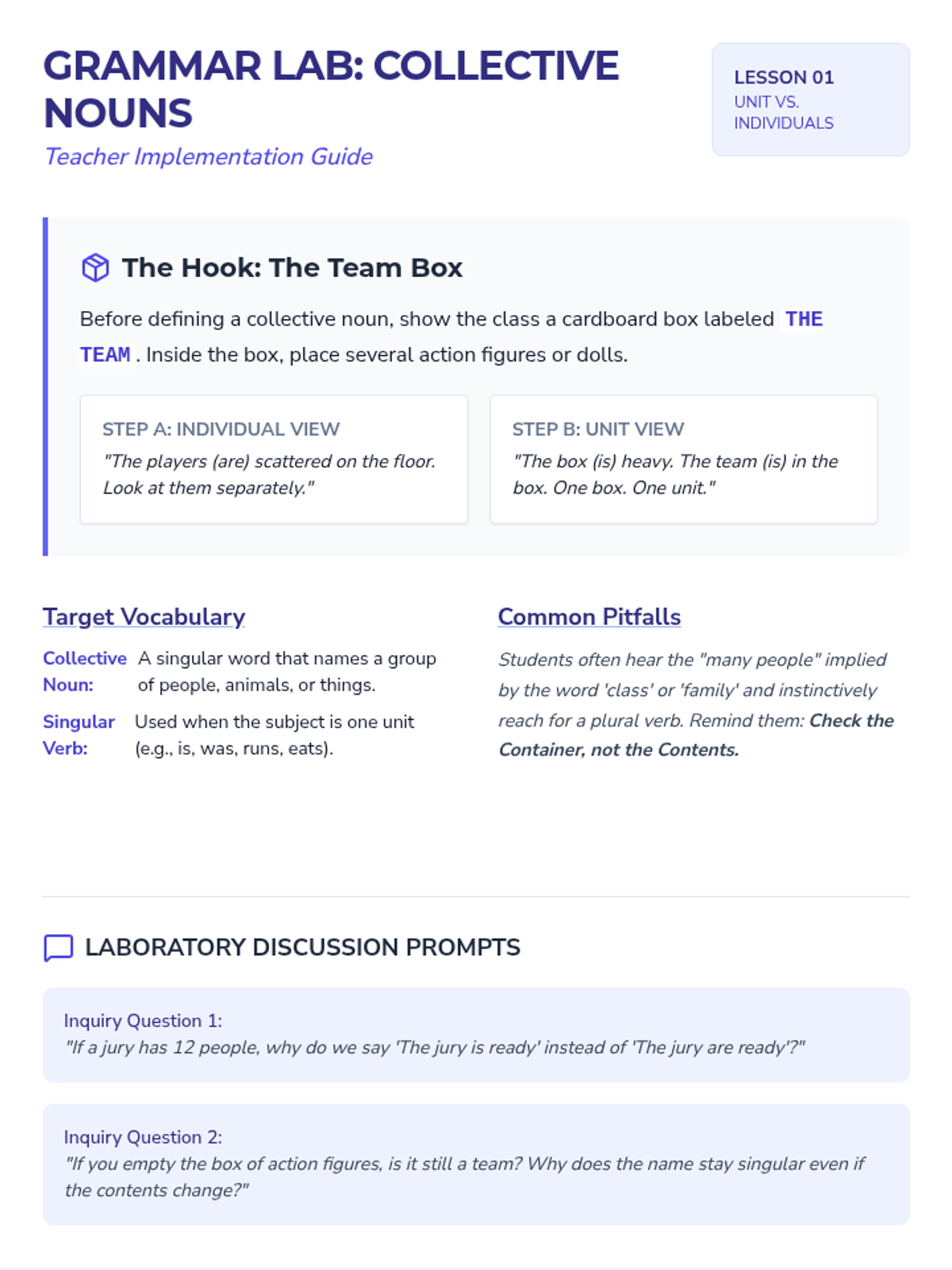
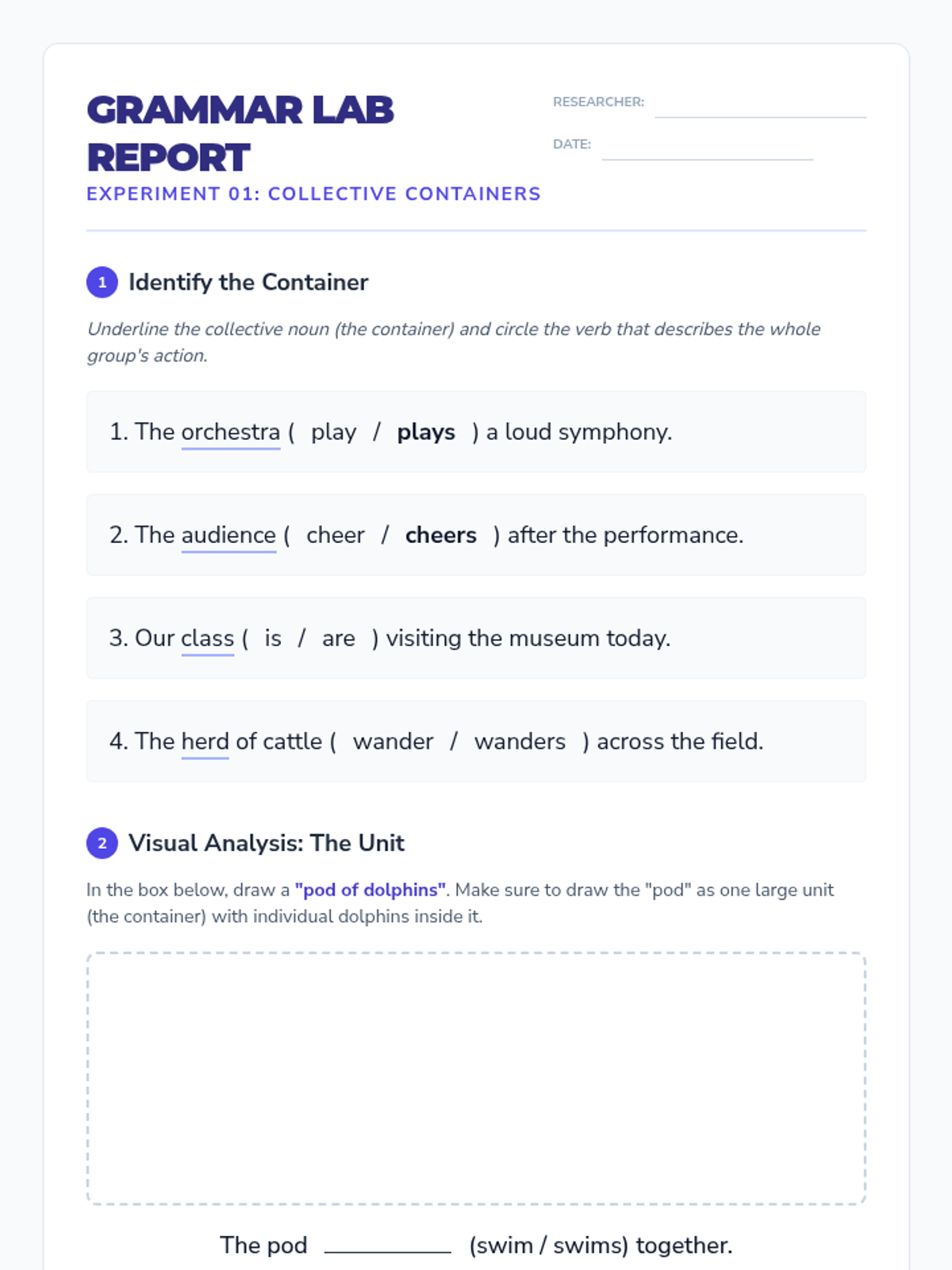
A 5th-grade grammar sequence focusing on the nuances of collective nouns and indefinite pronouns through a 'Grammar Lab' inquiry-based approach. Students investigate when groups act as a single unit and how various pronouns dictate verb agreement.
A comprehensive 5-lesson unit for 5th graders on subject-verb agreement, specifically focusing on sentences where prepositional phrases intervene between the subject and the verb. Students learn to navigate 'distractor' nouns and maintain grammatical accuracy using a 'mental bracketing' strategy.
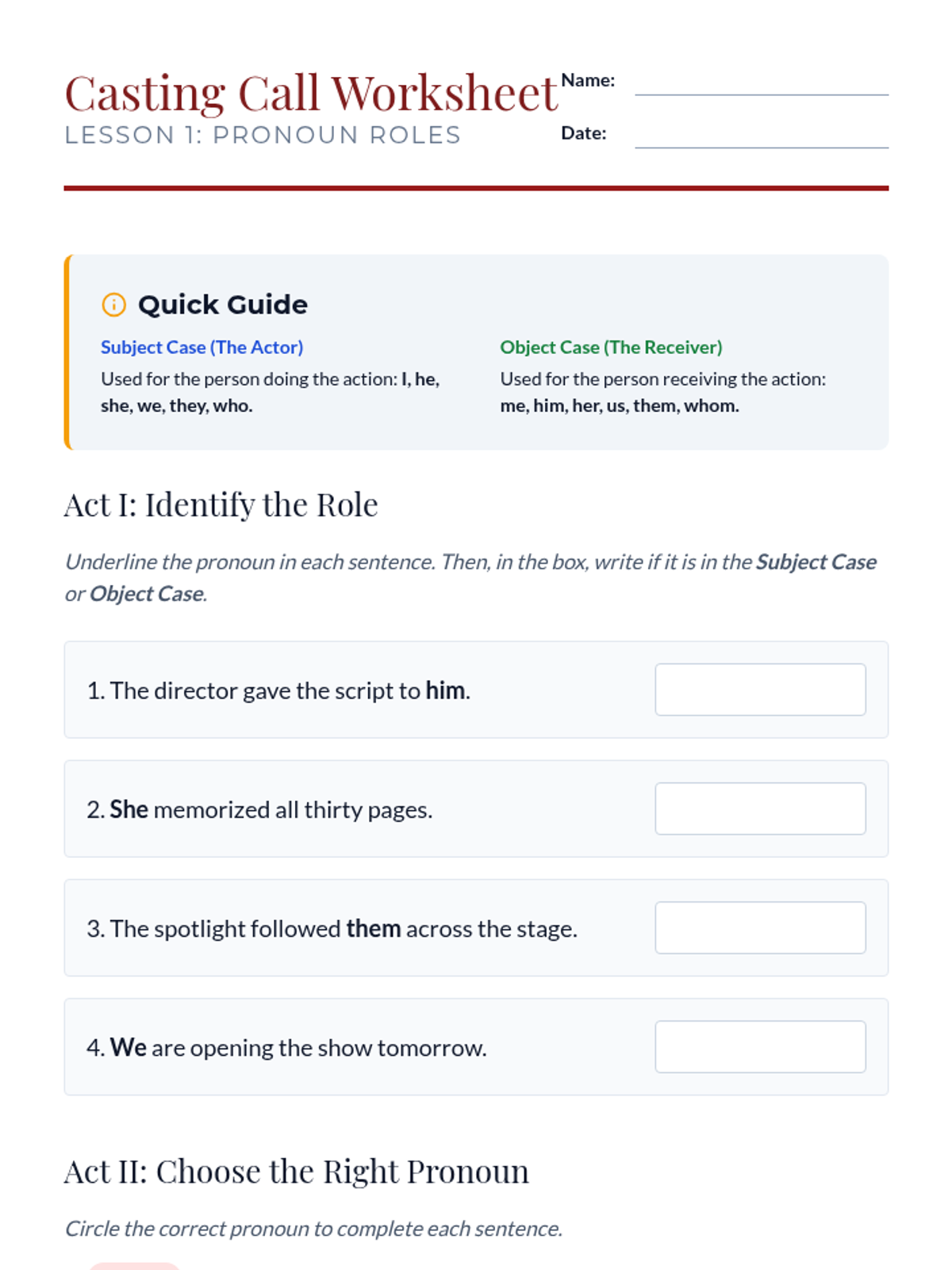
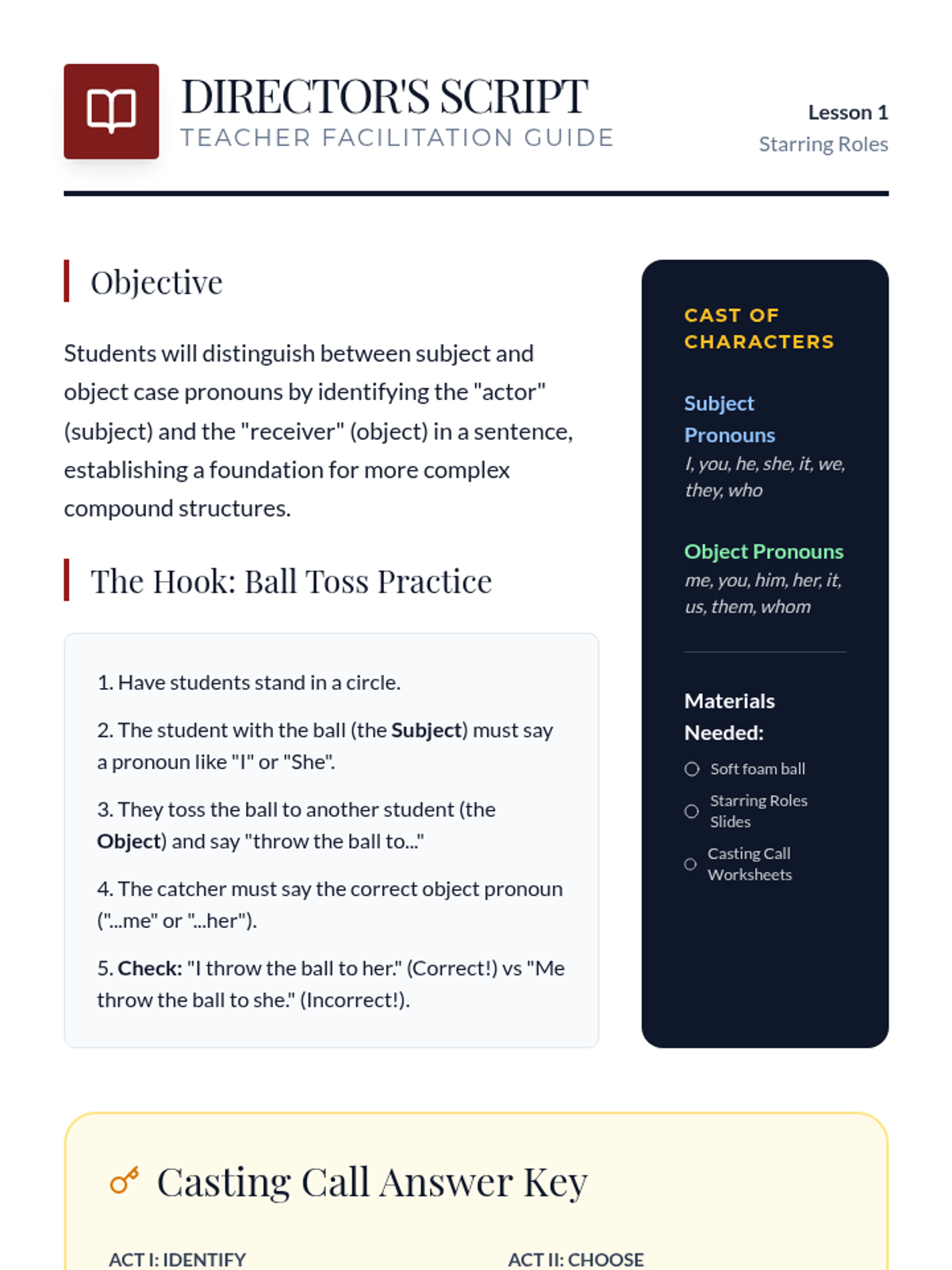
A comprehensive 5th-grade grammar unit focusing on the distinction between subject and object case pronouns, particularly in compound structures. Students progress from basic identification to complex troubleshooting and creative application in dialogue writing.
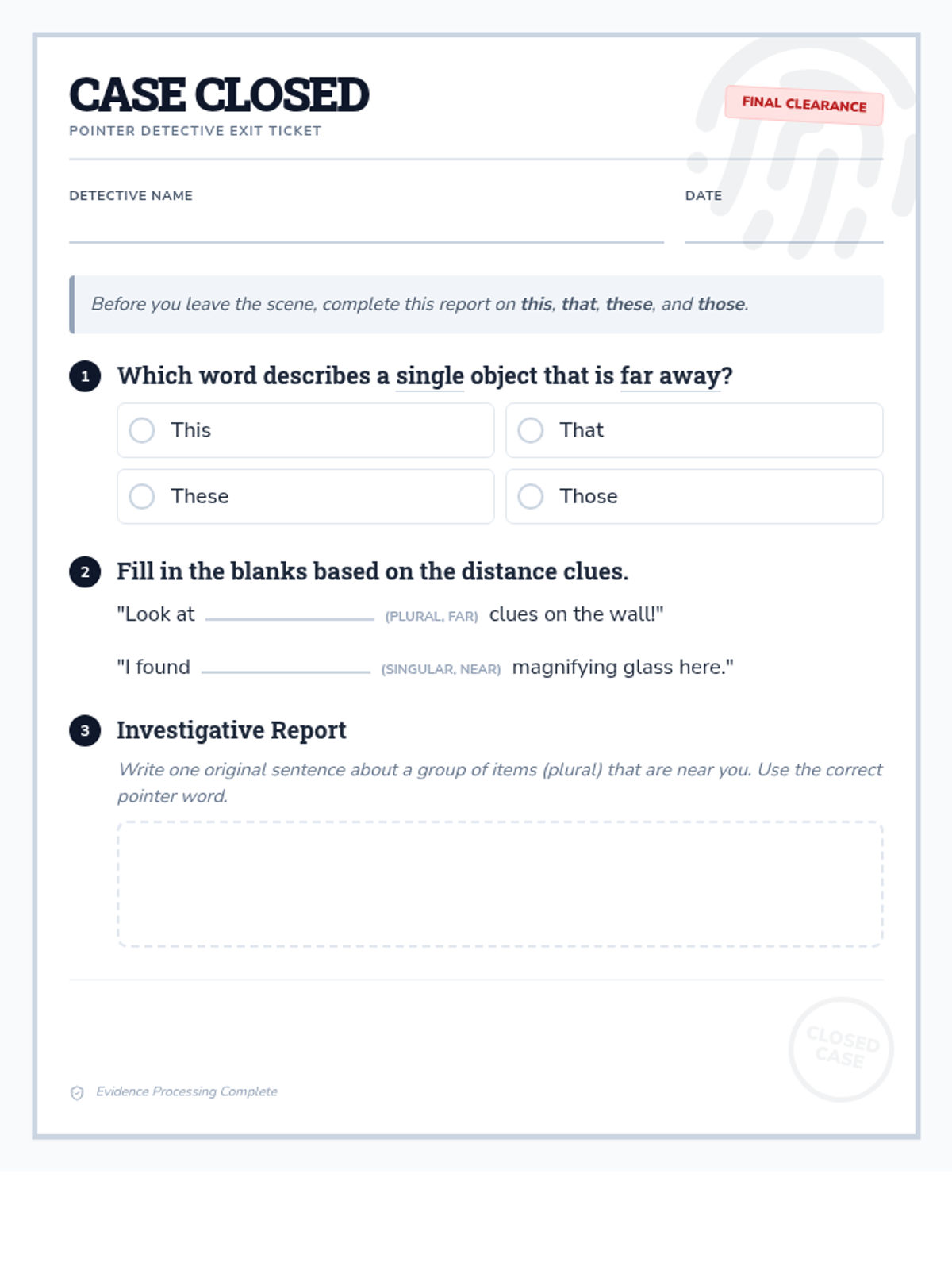
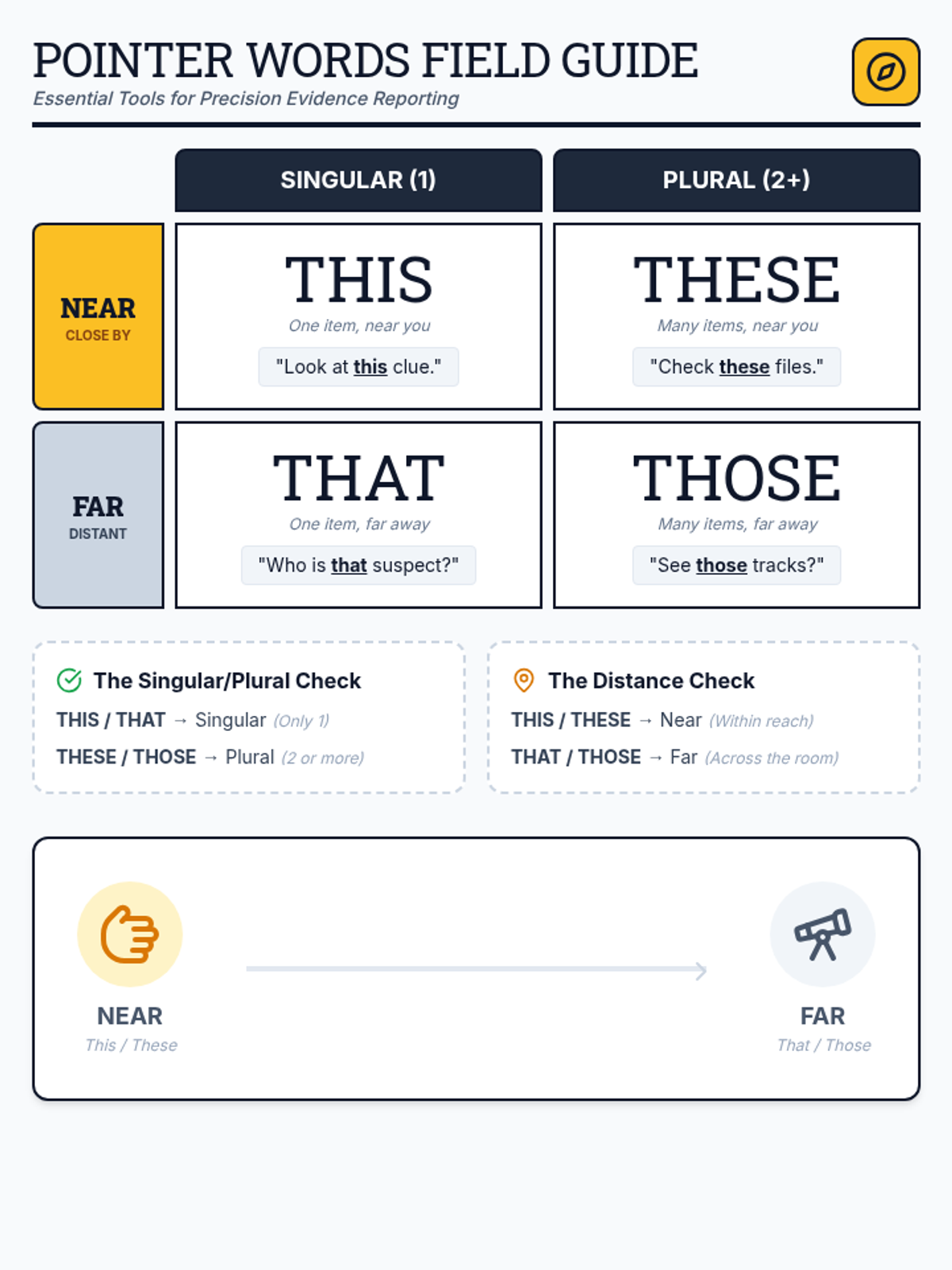
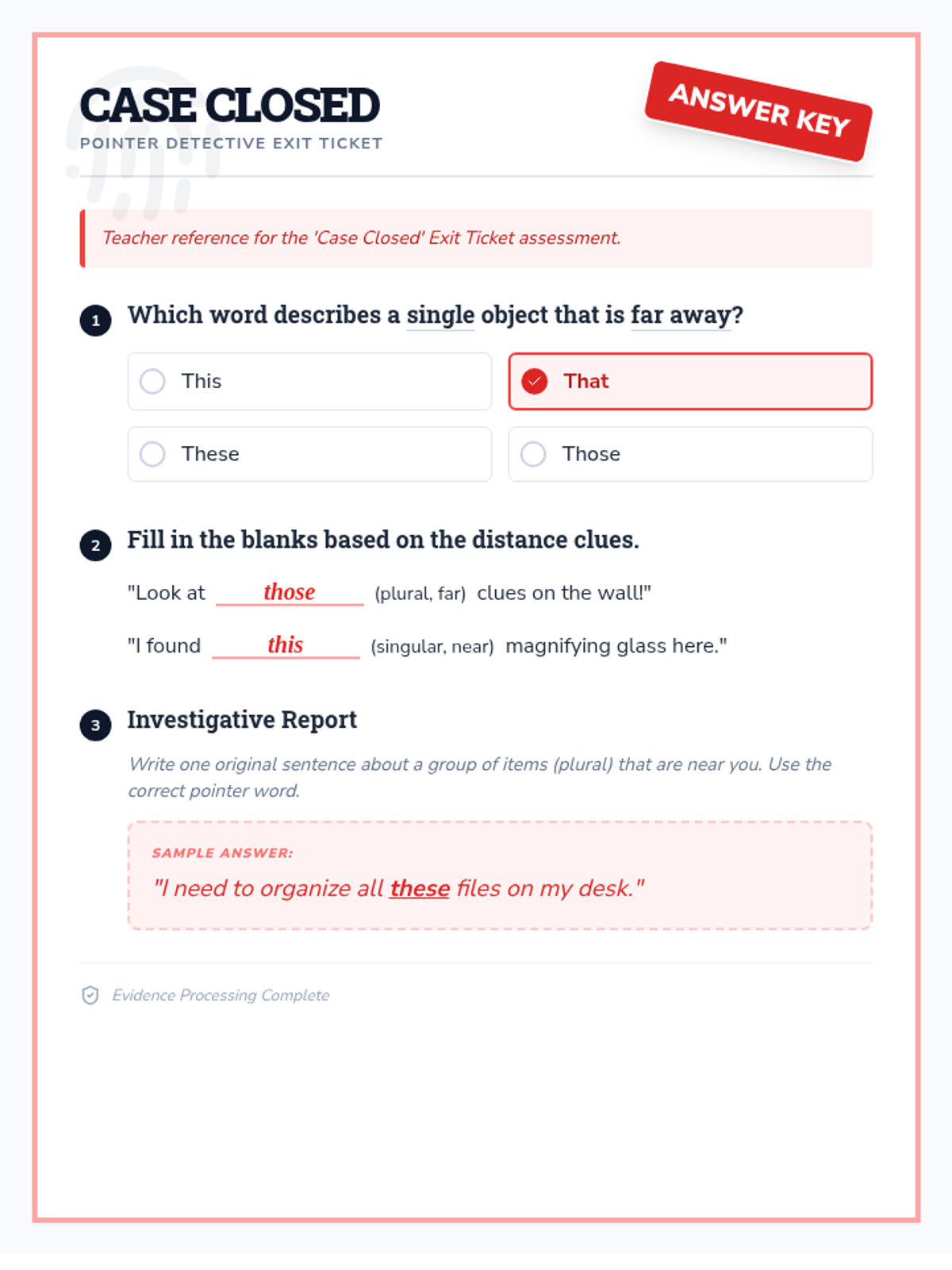
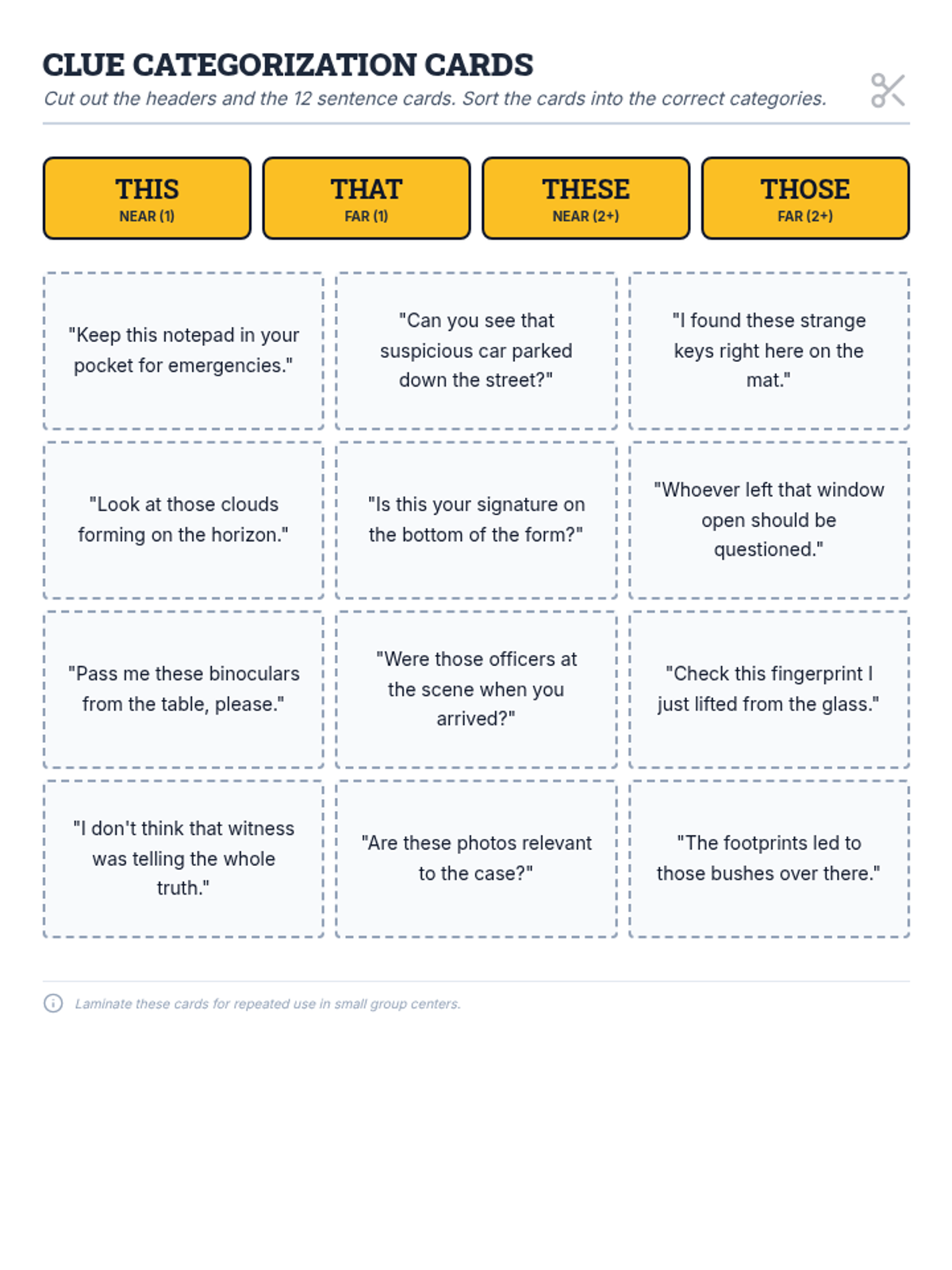
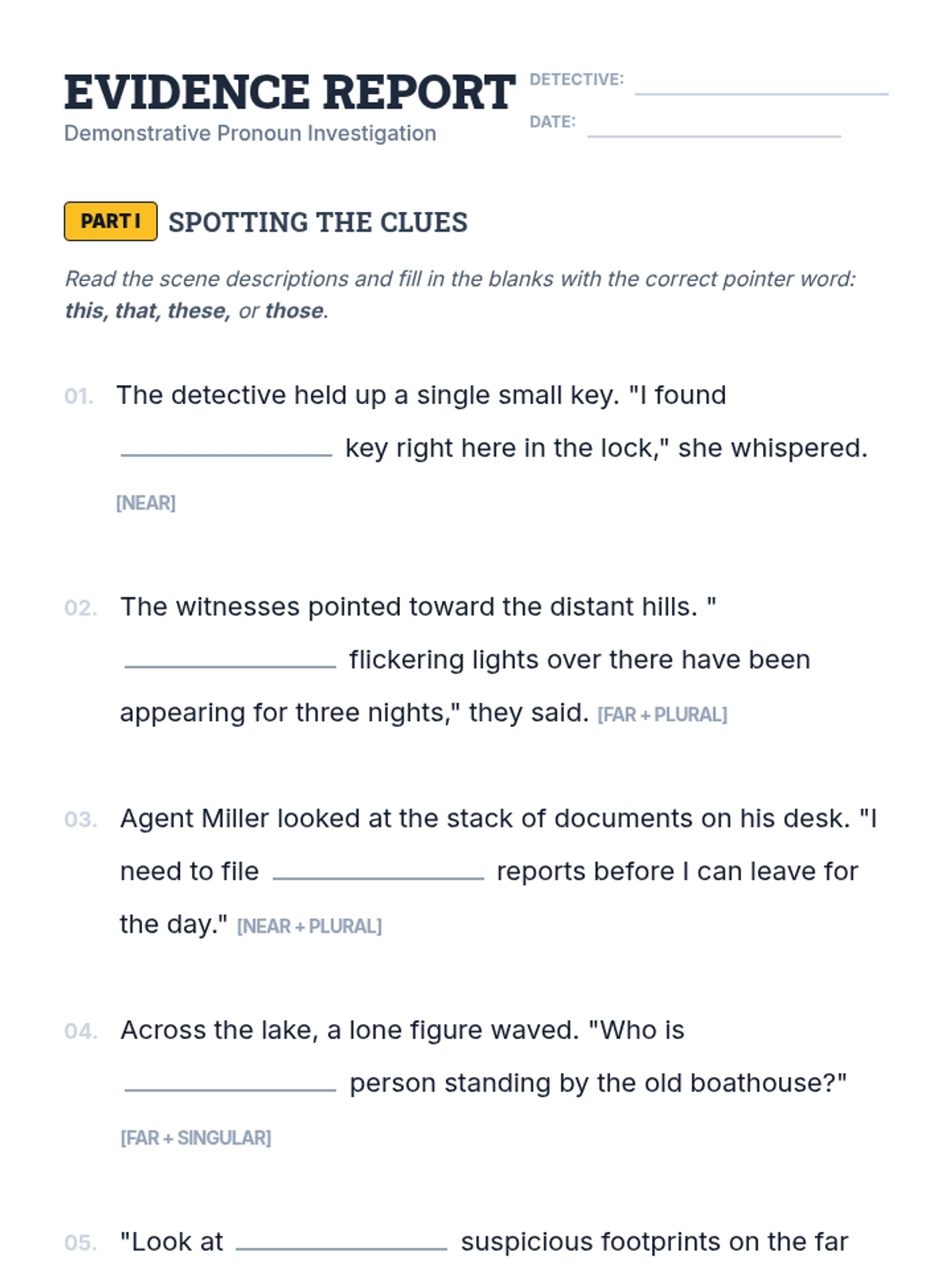
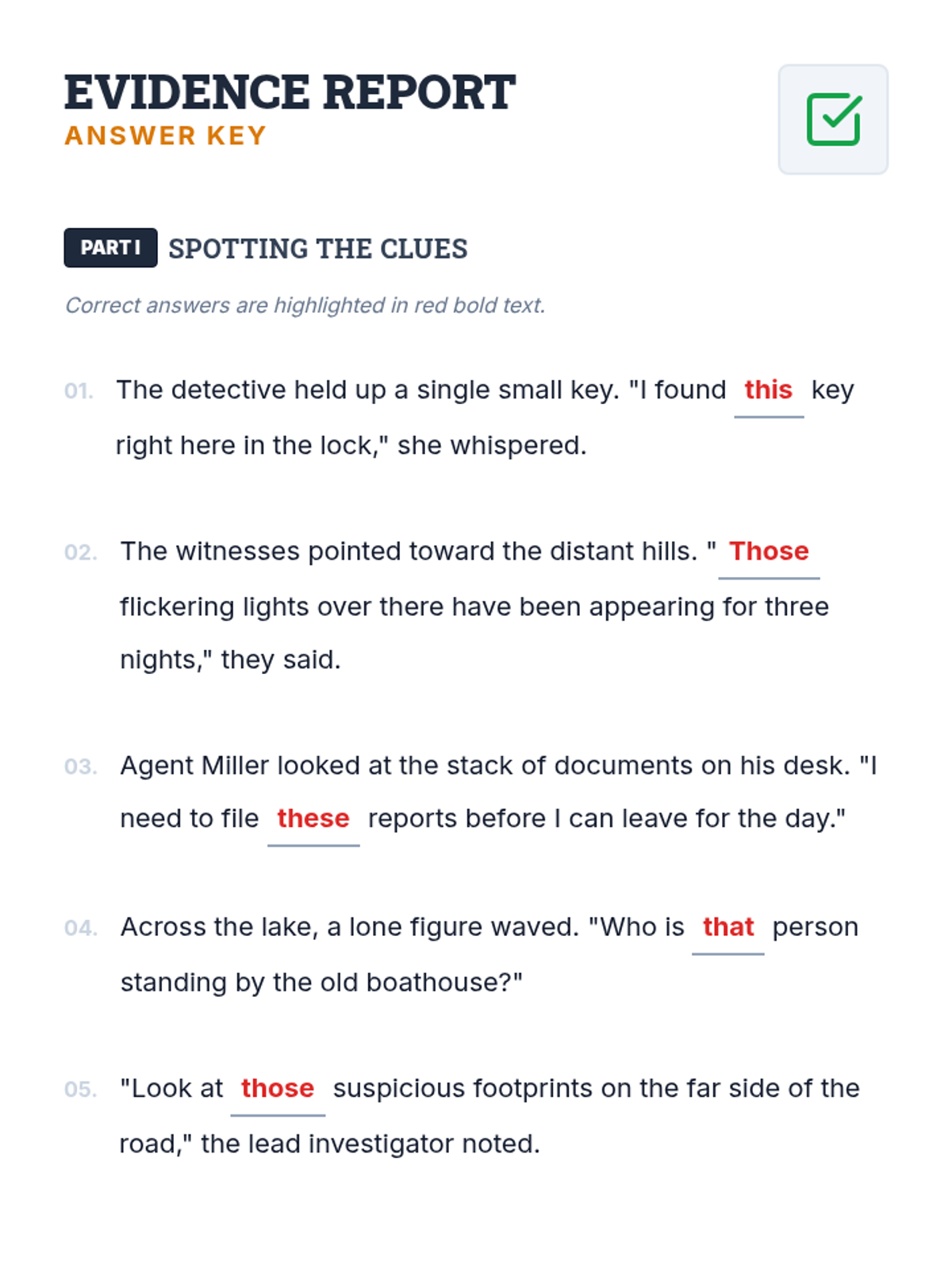
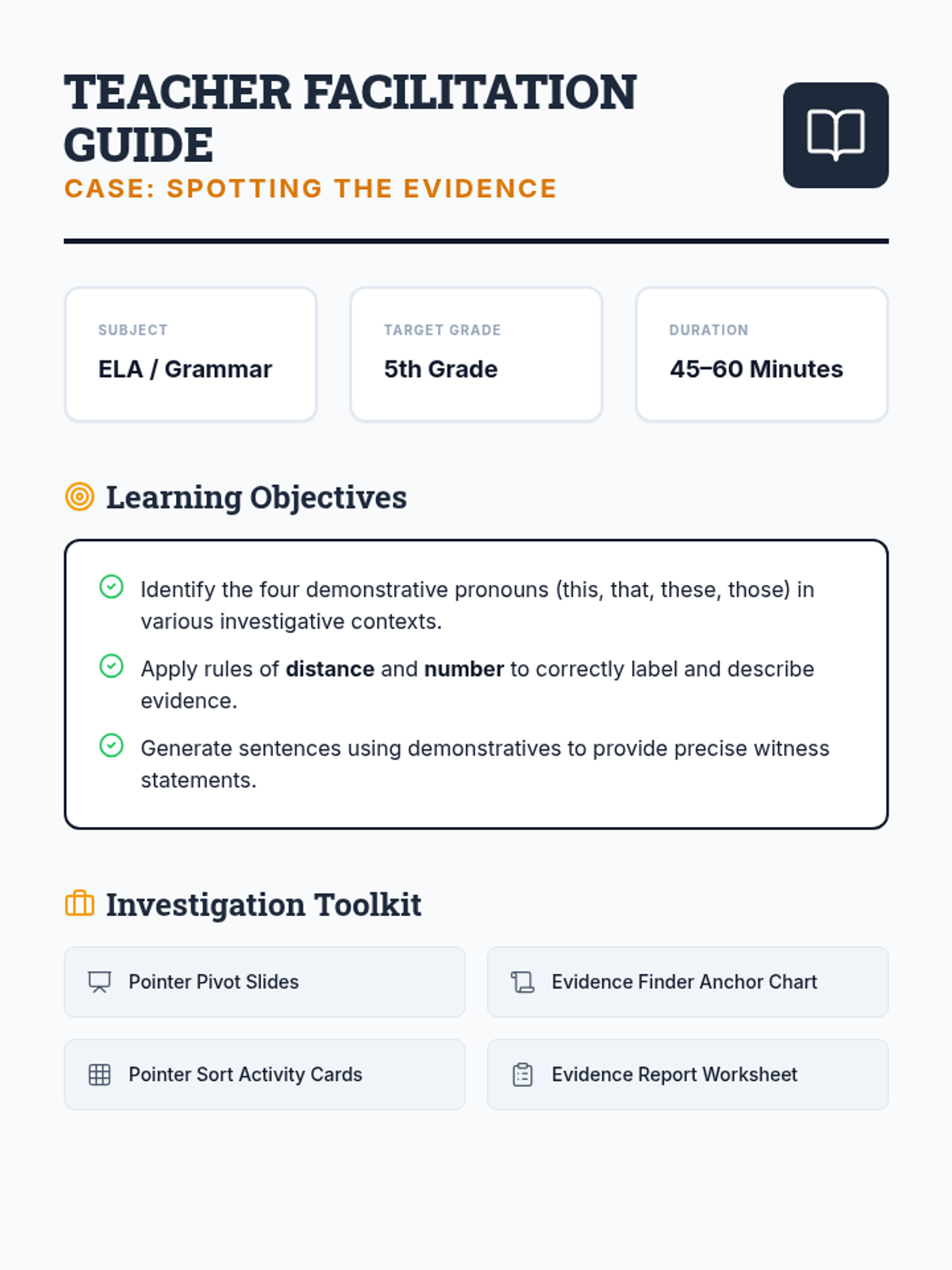
A unit focused on mastering pointer words (demonstratives) to help students describe location and quantity with precision in their writing and speech.
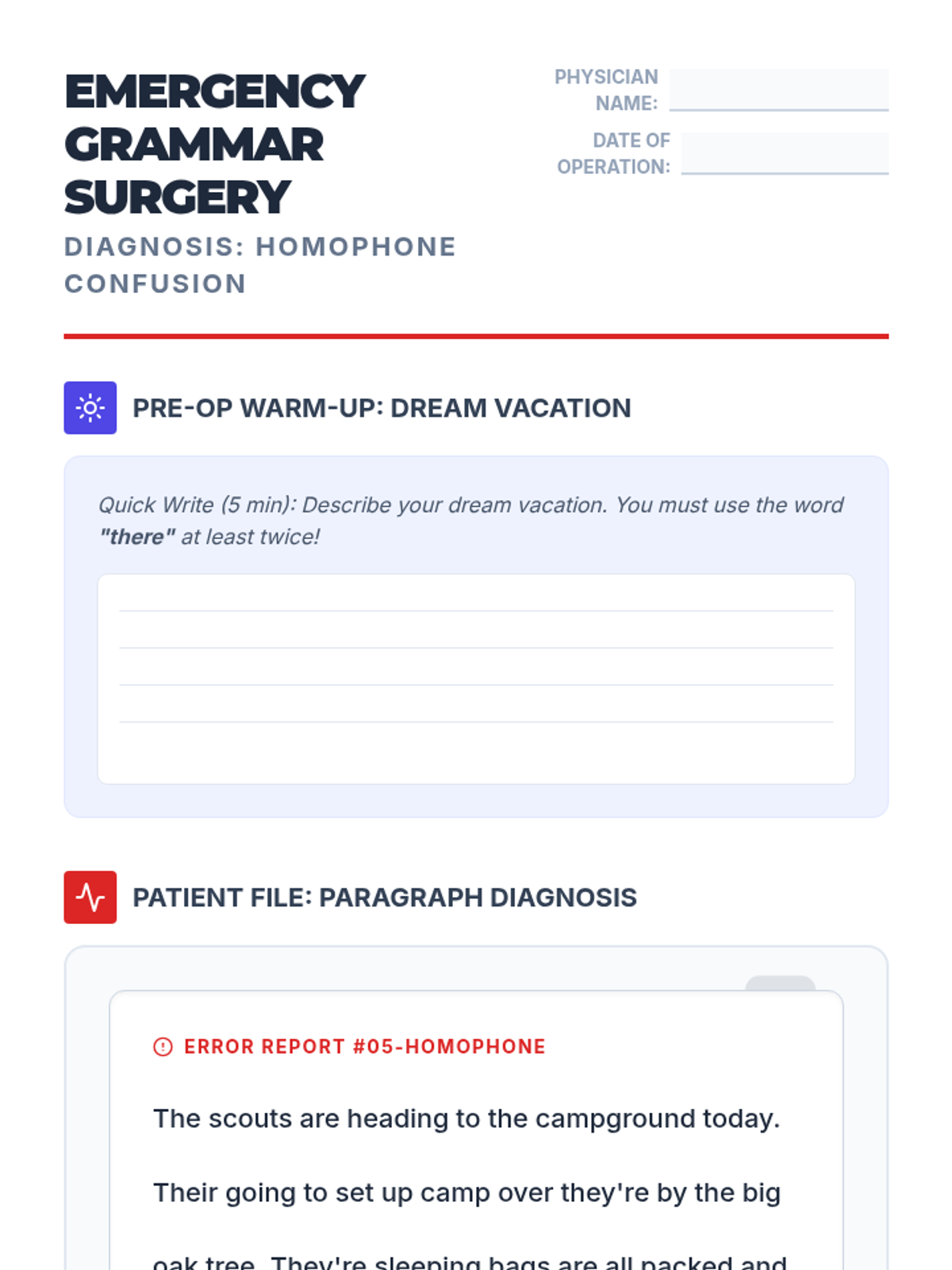
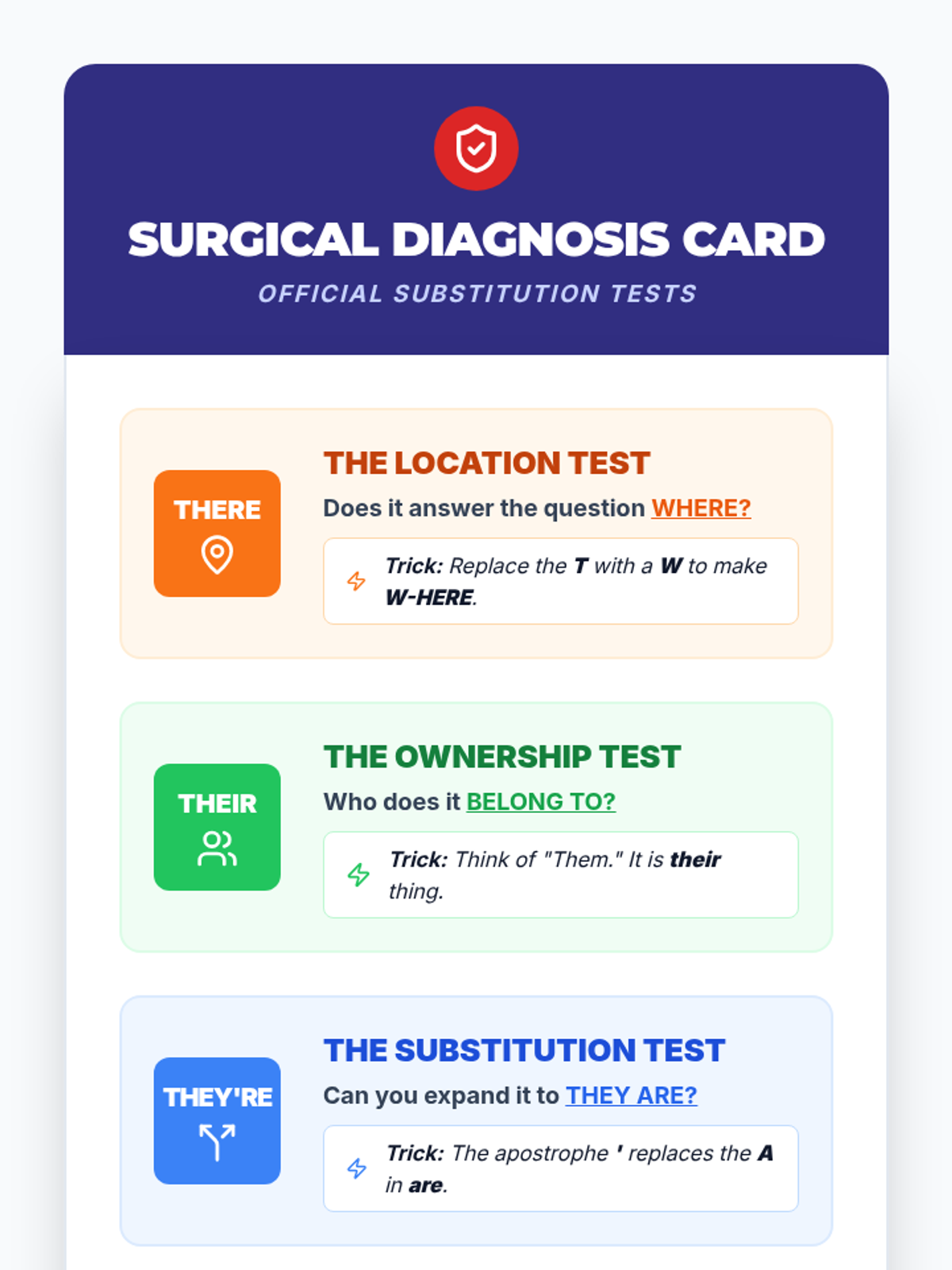
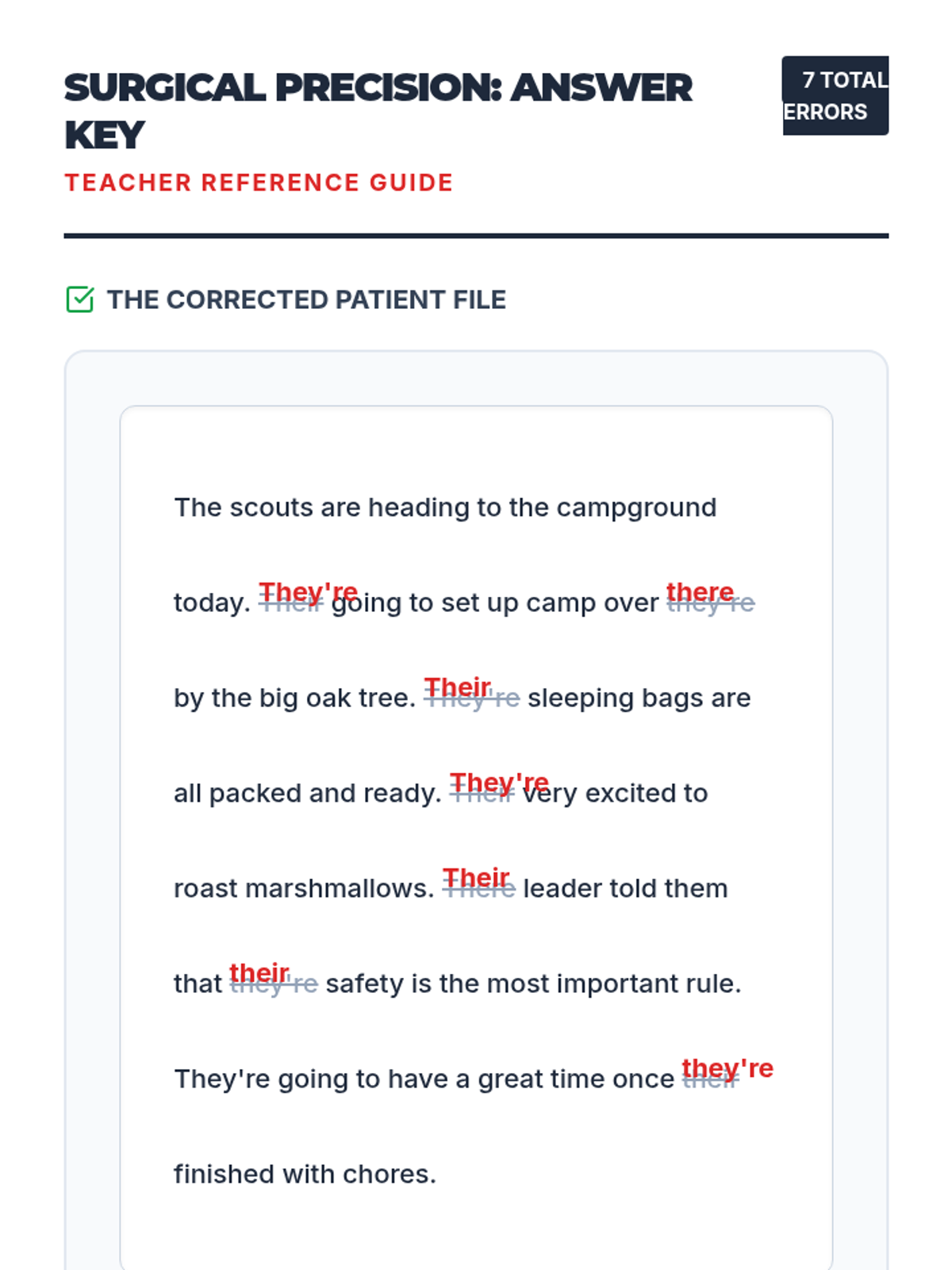
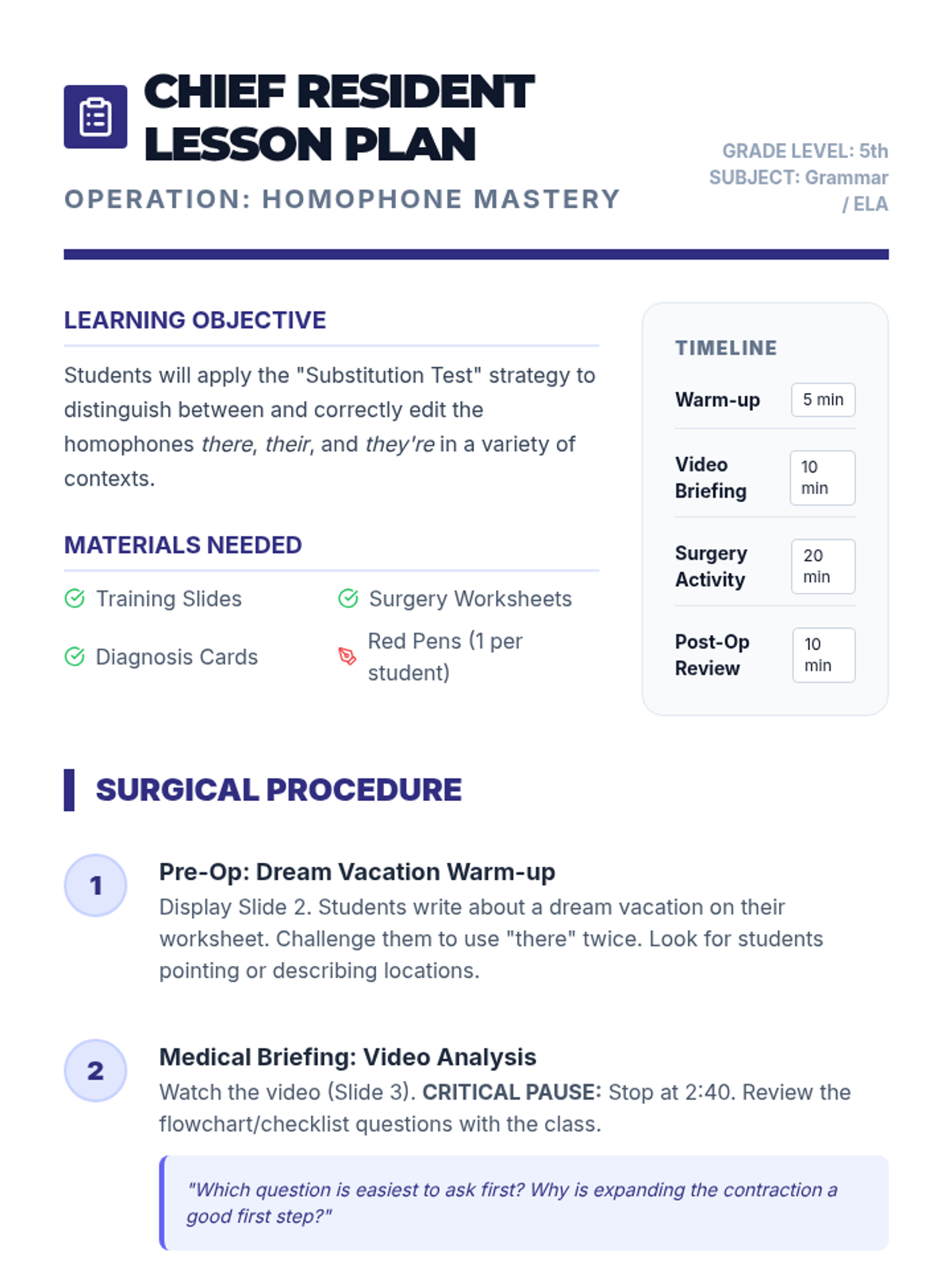
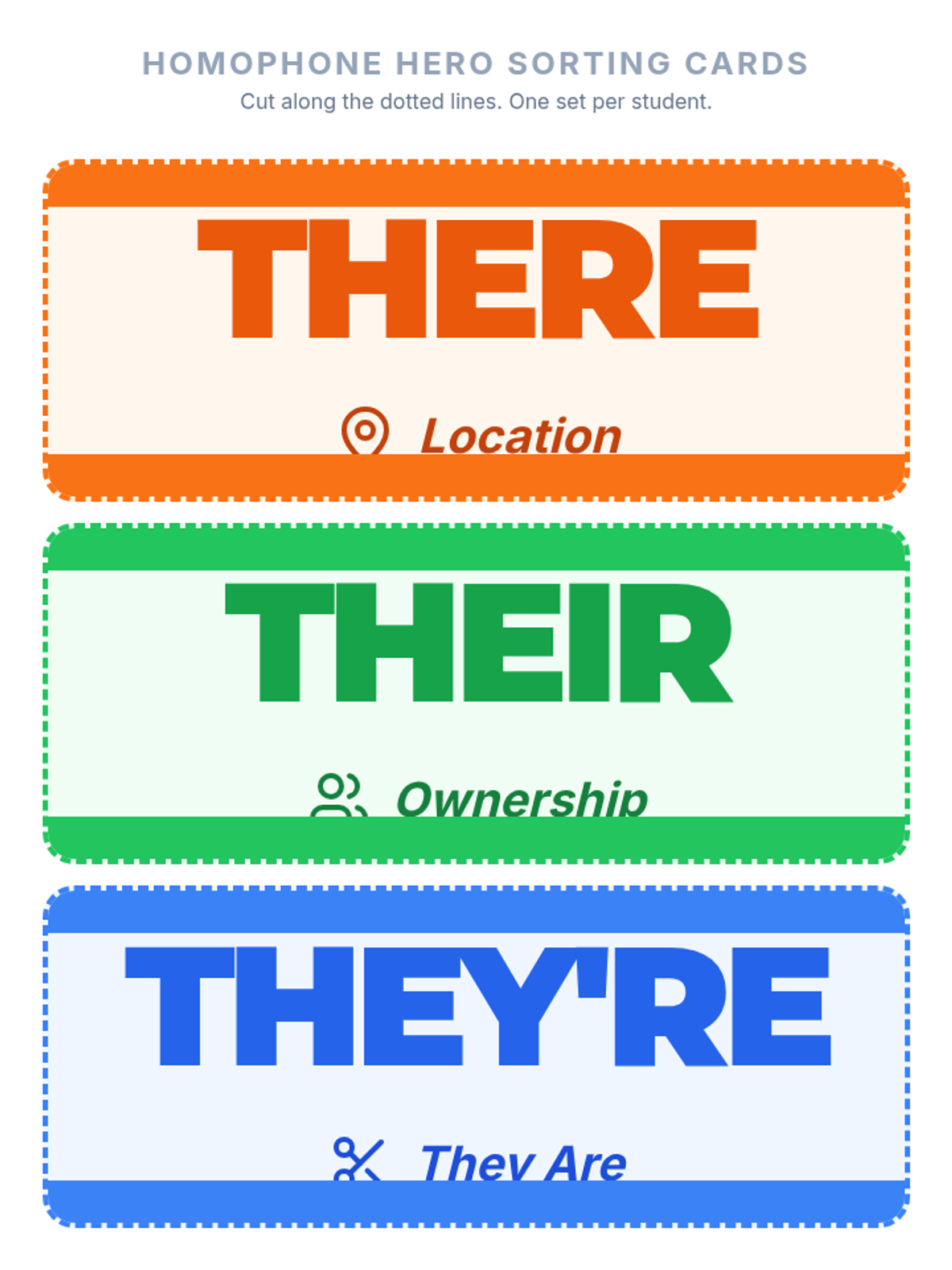
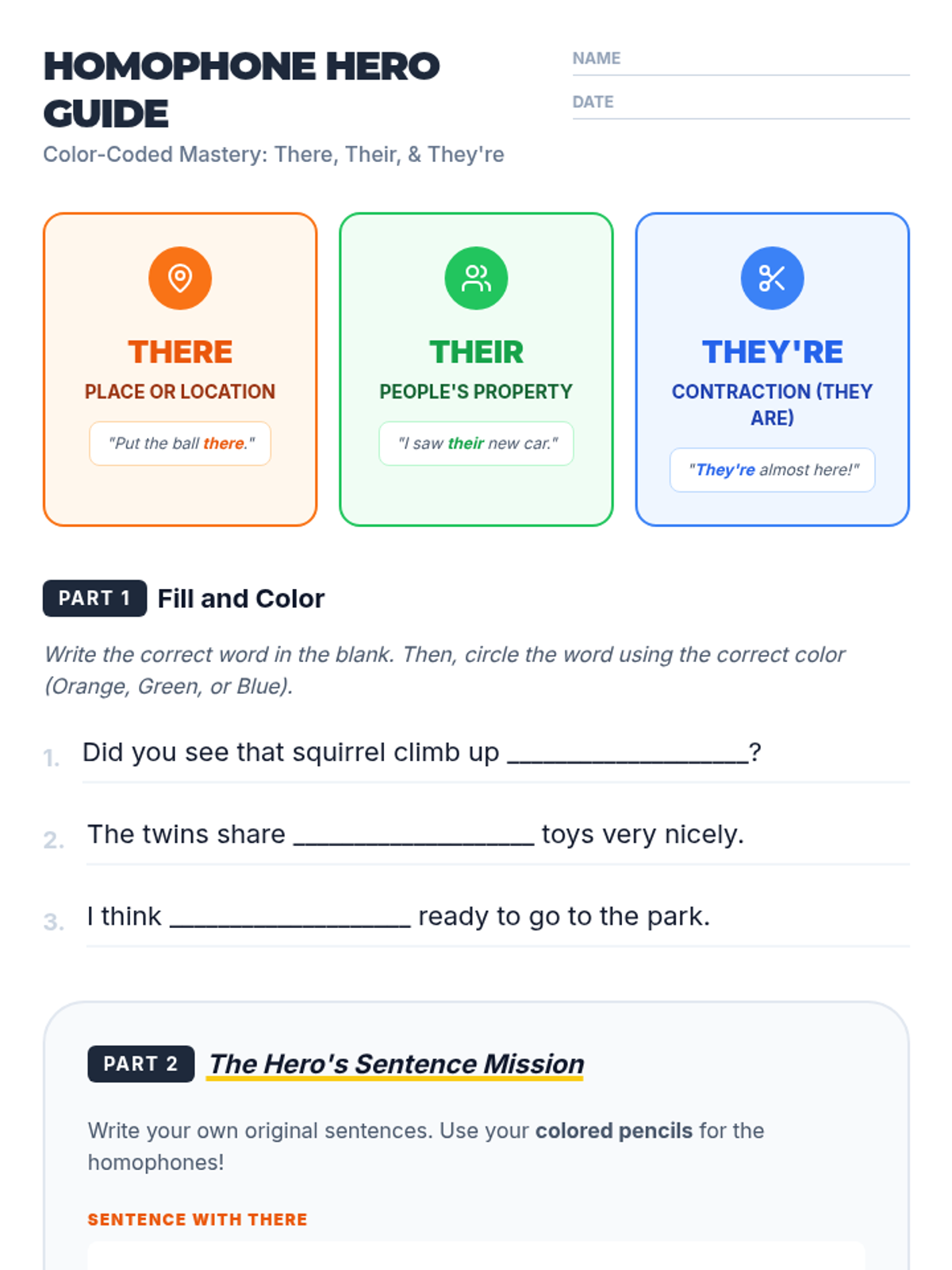
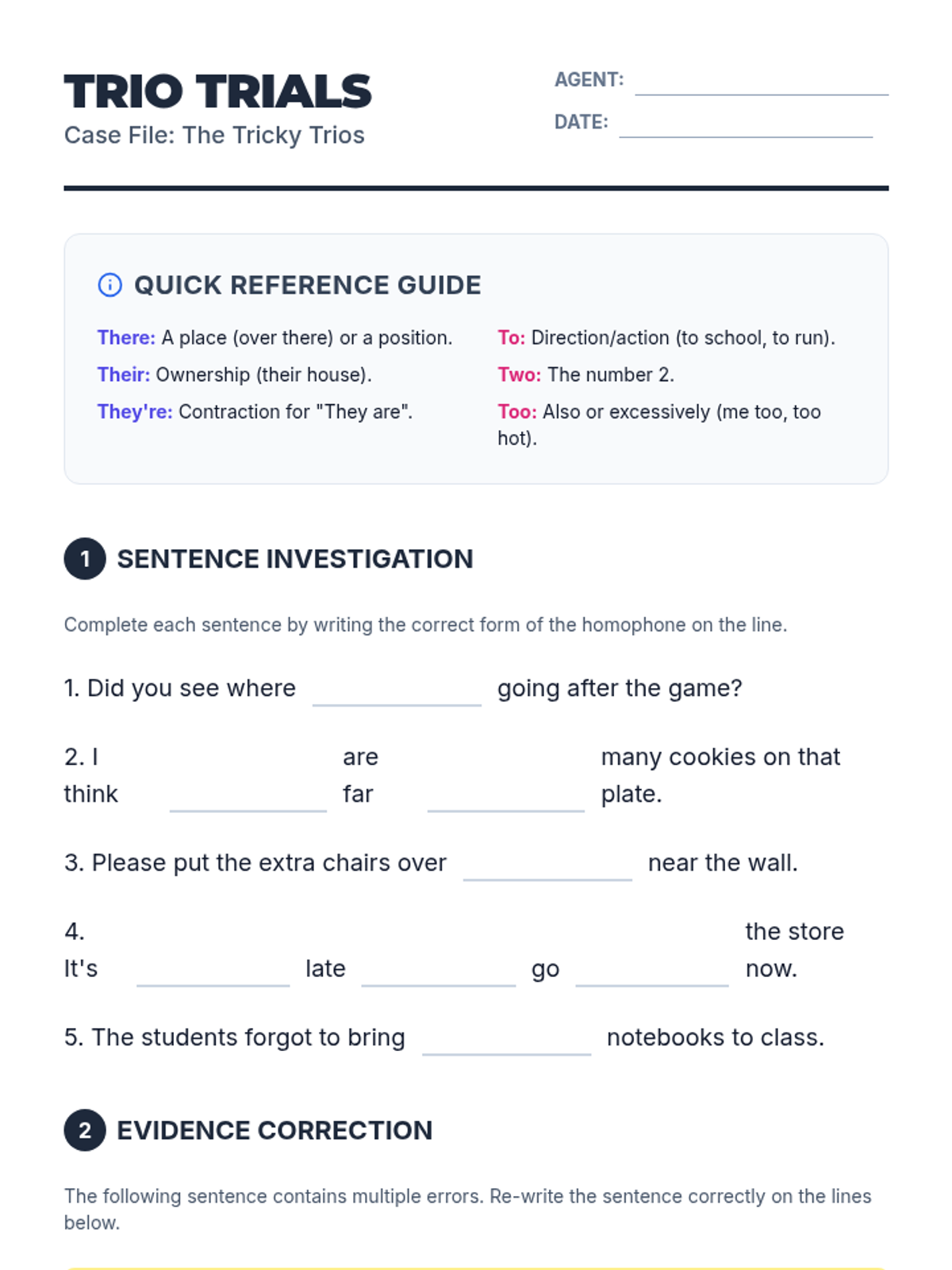
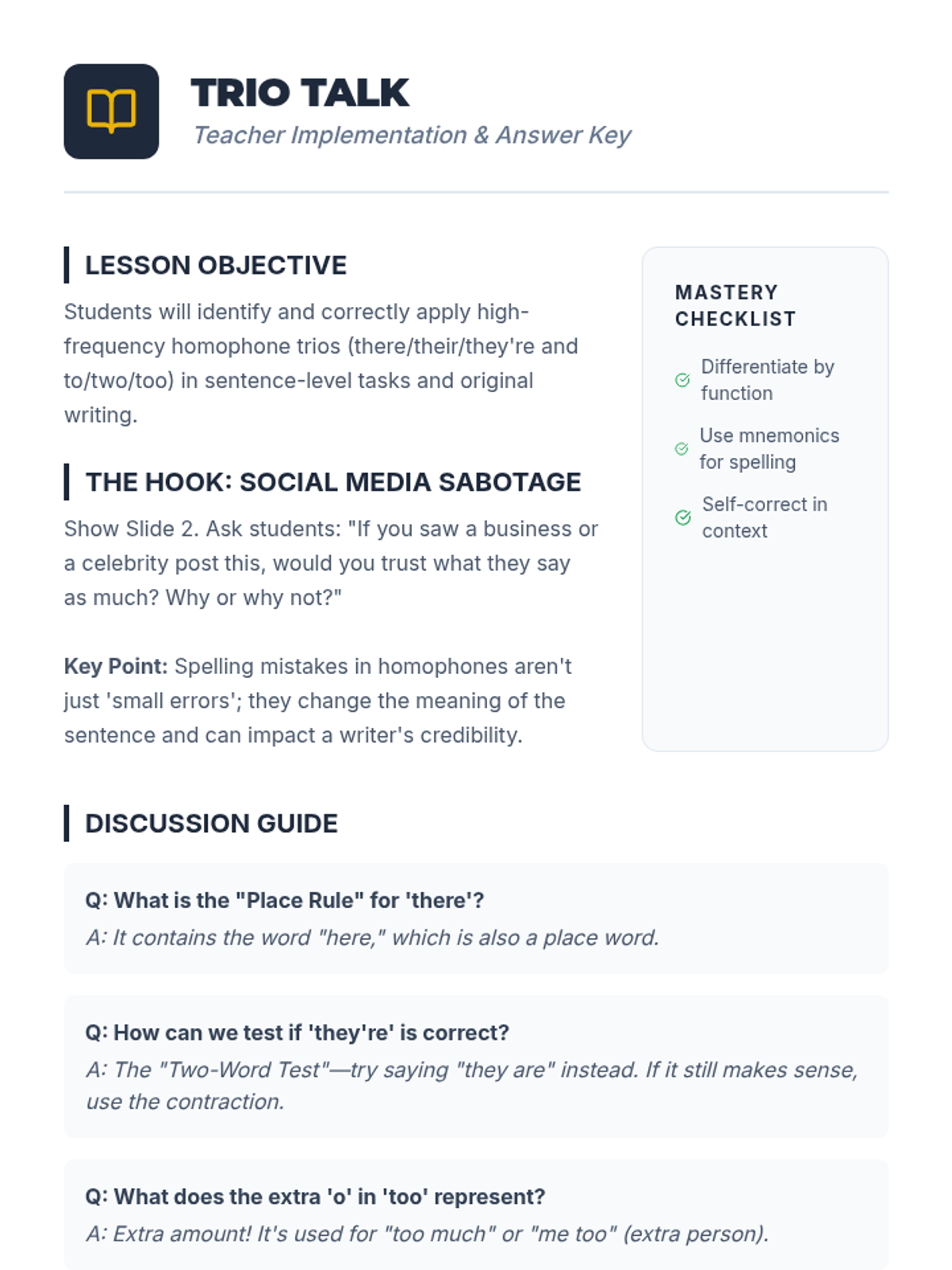
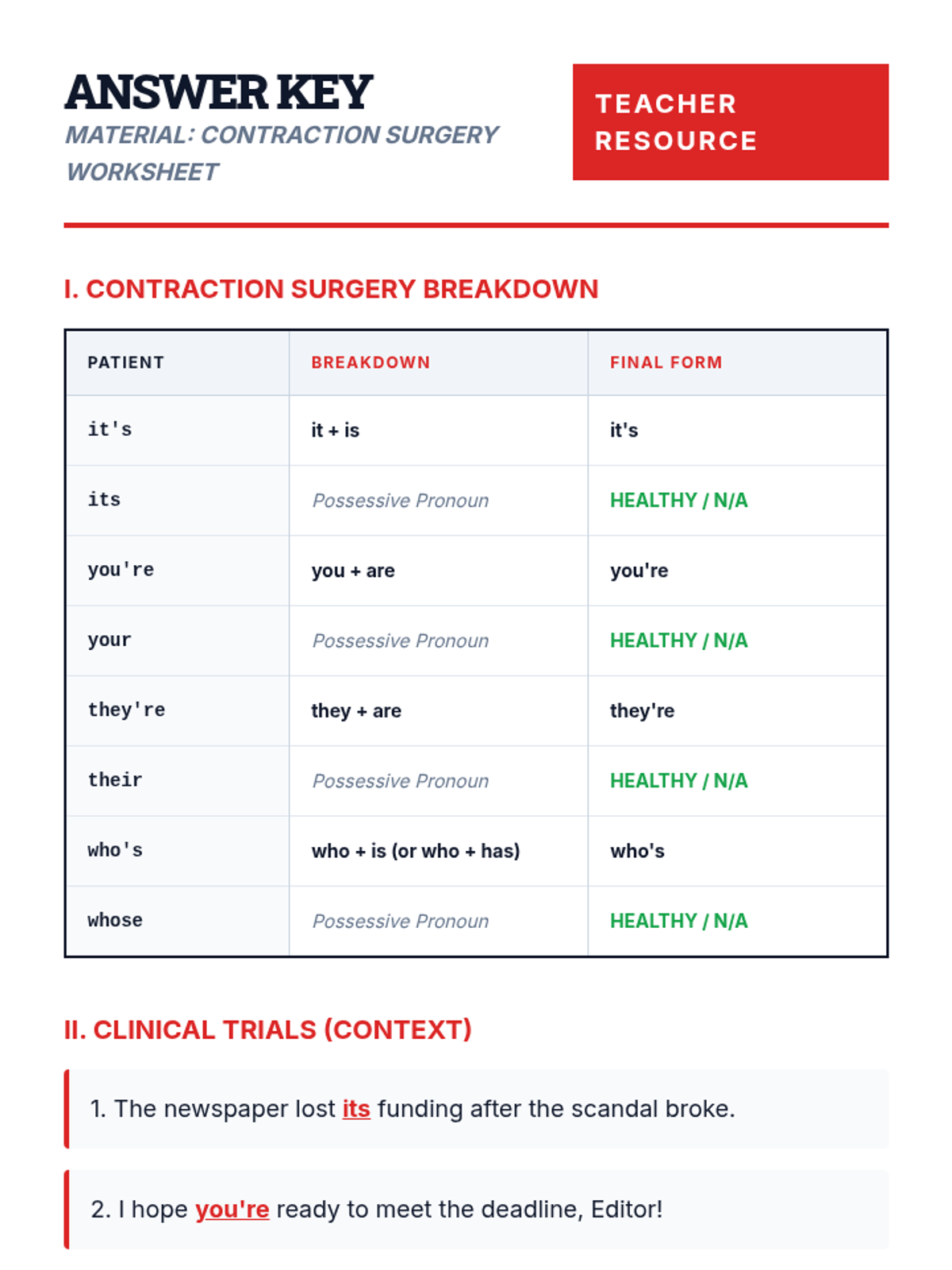
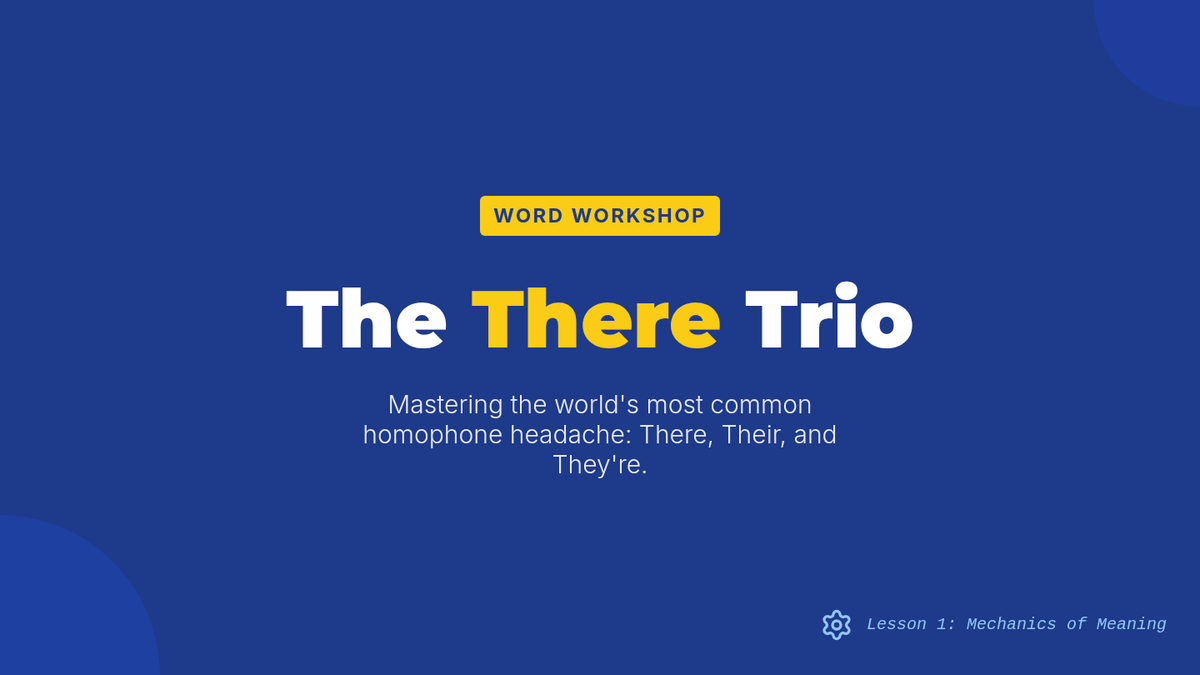
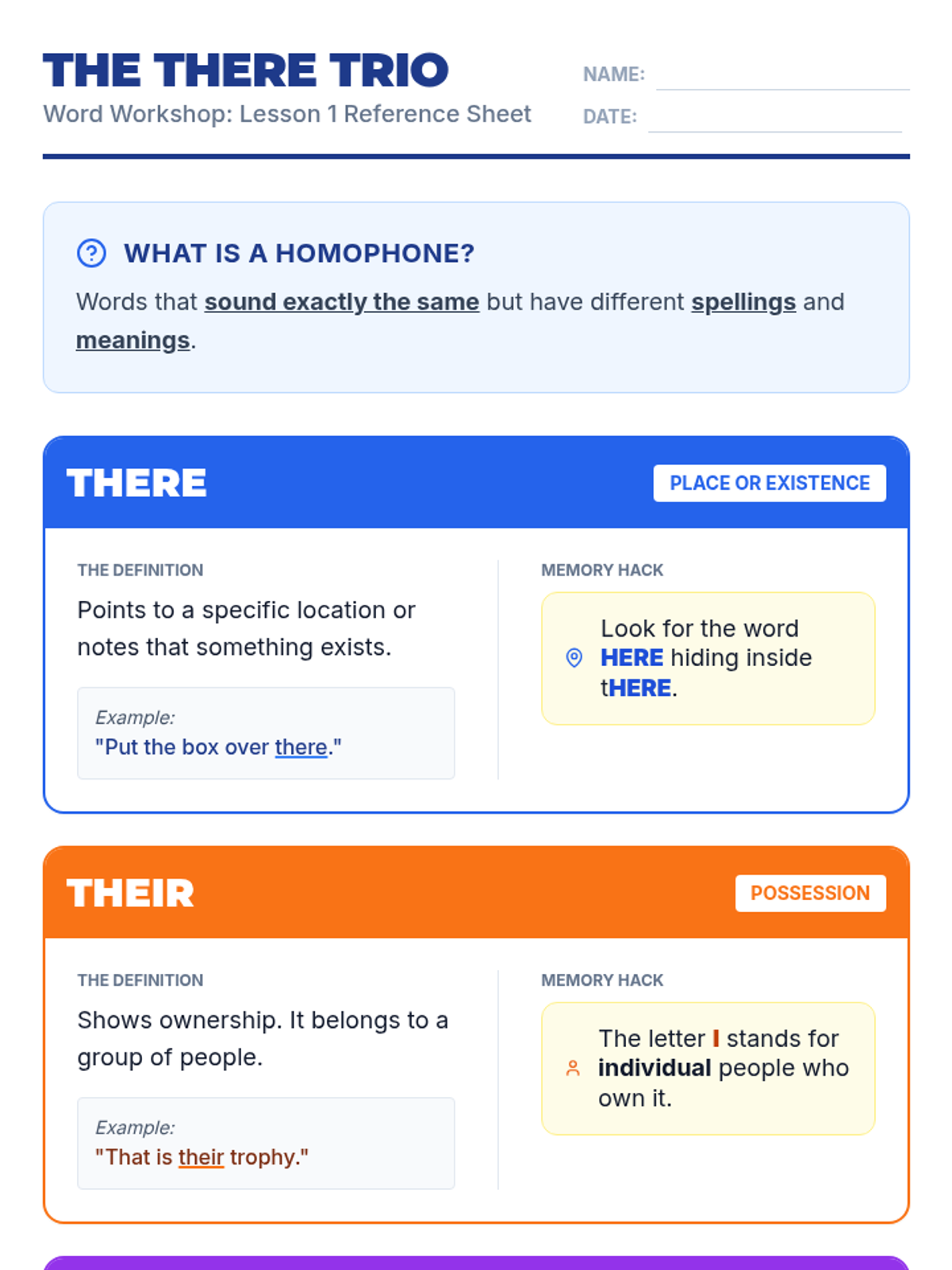
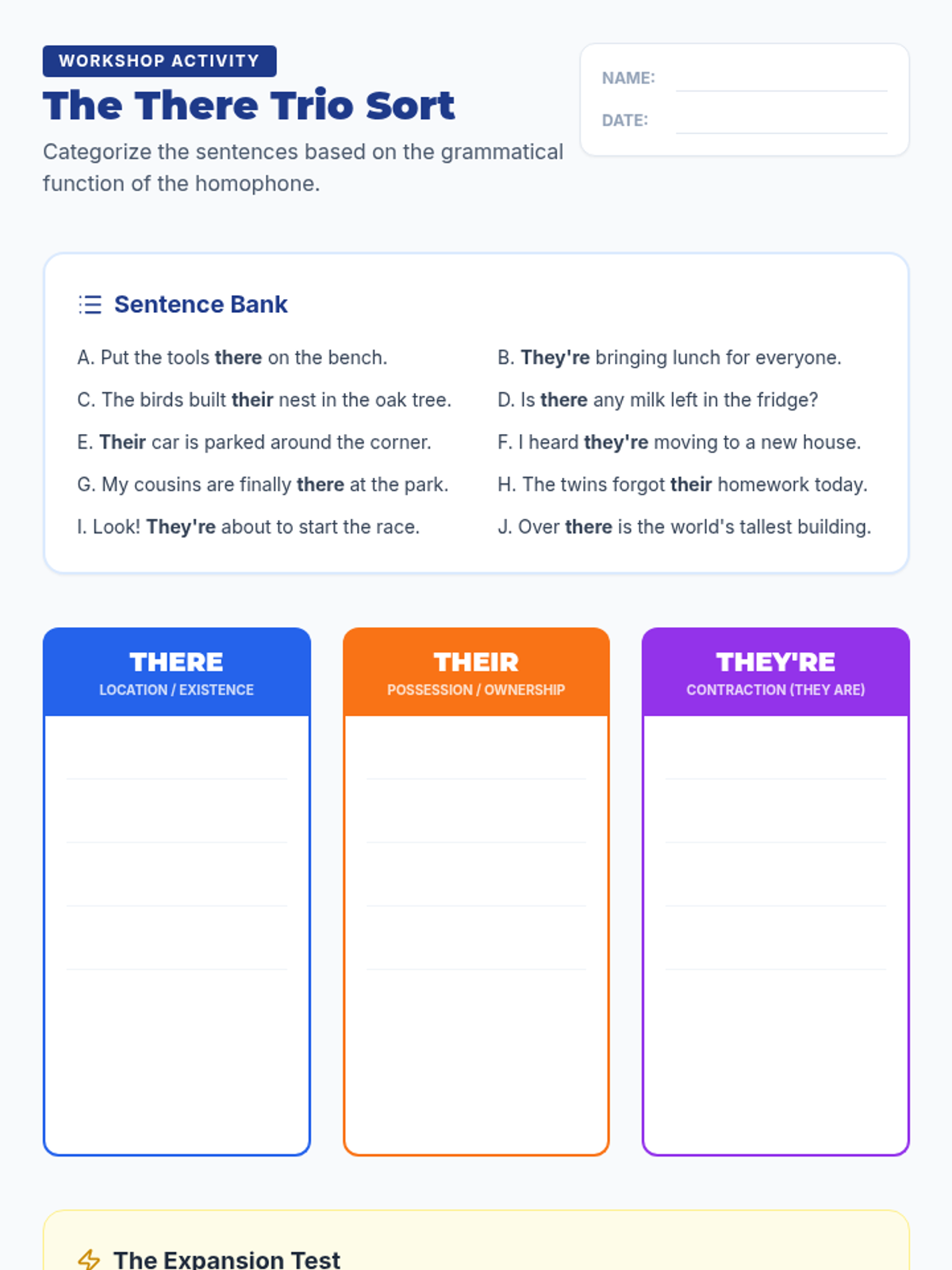
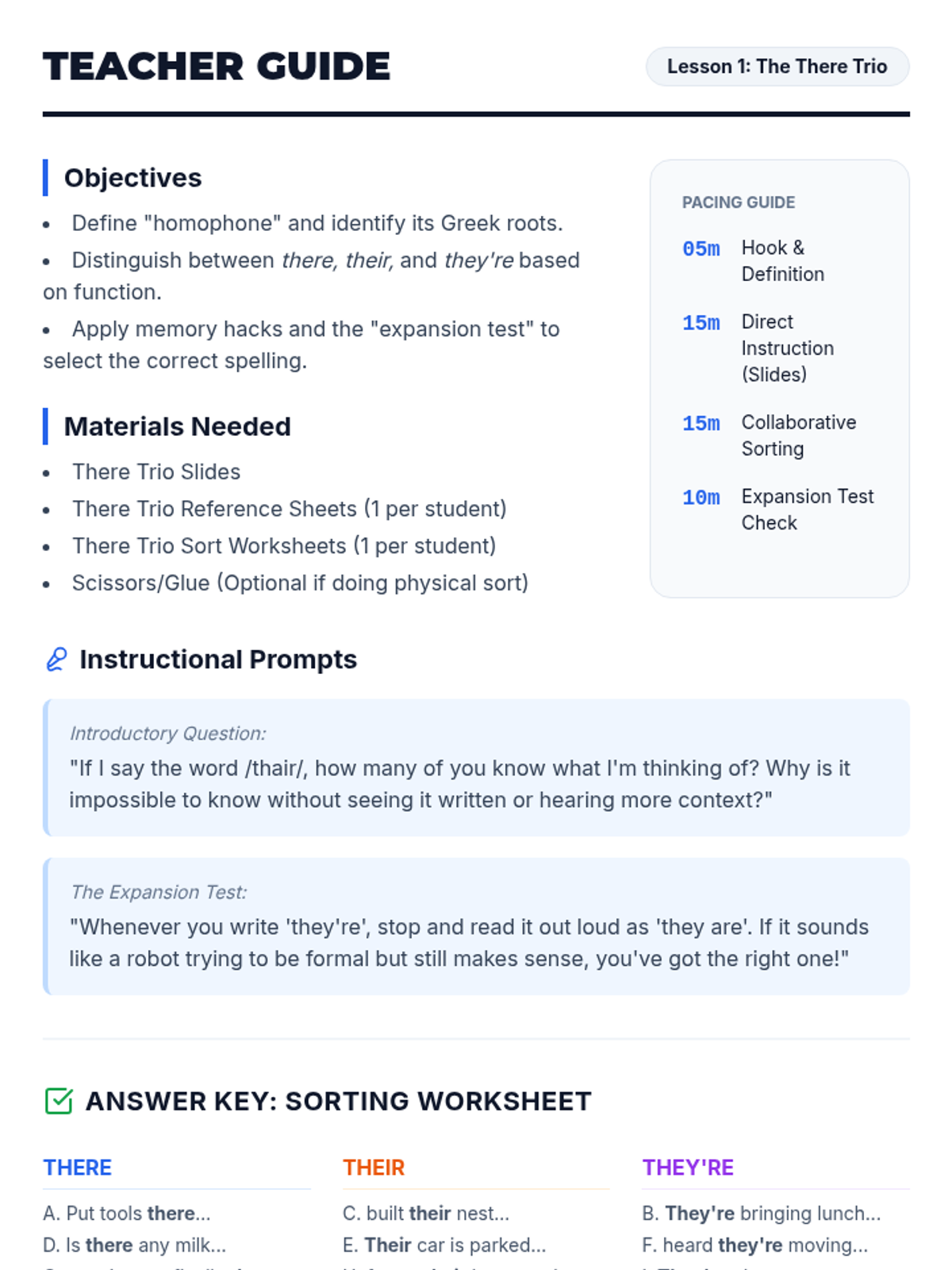
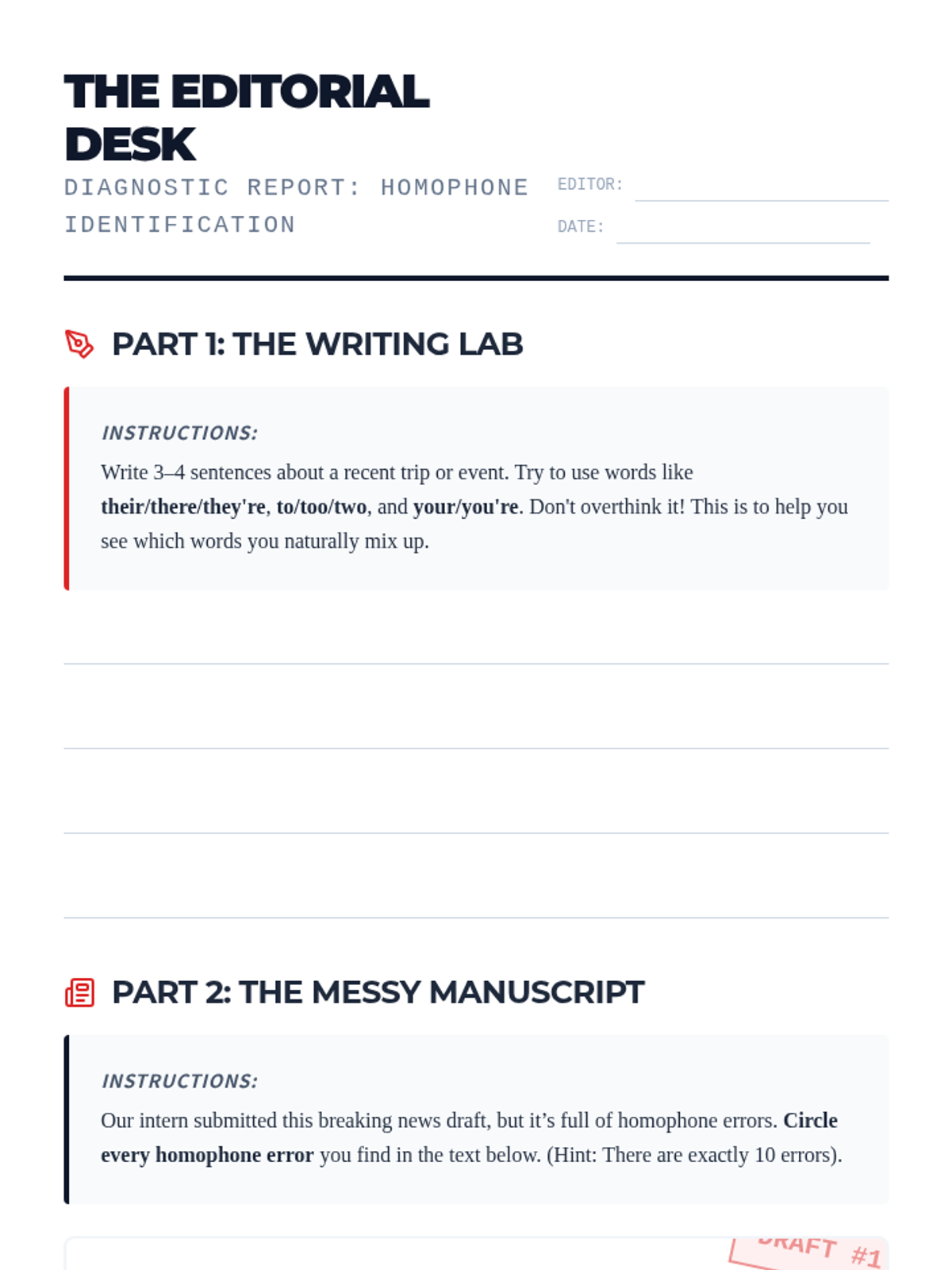
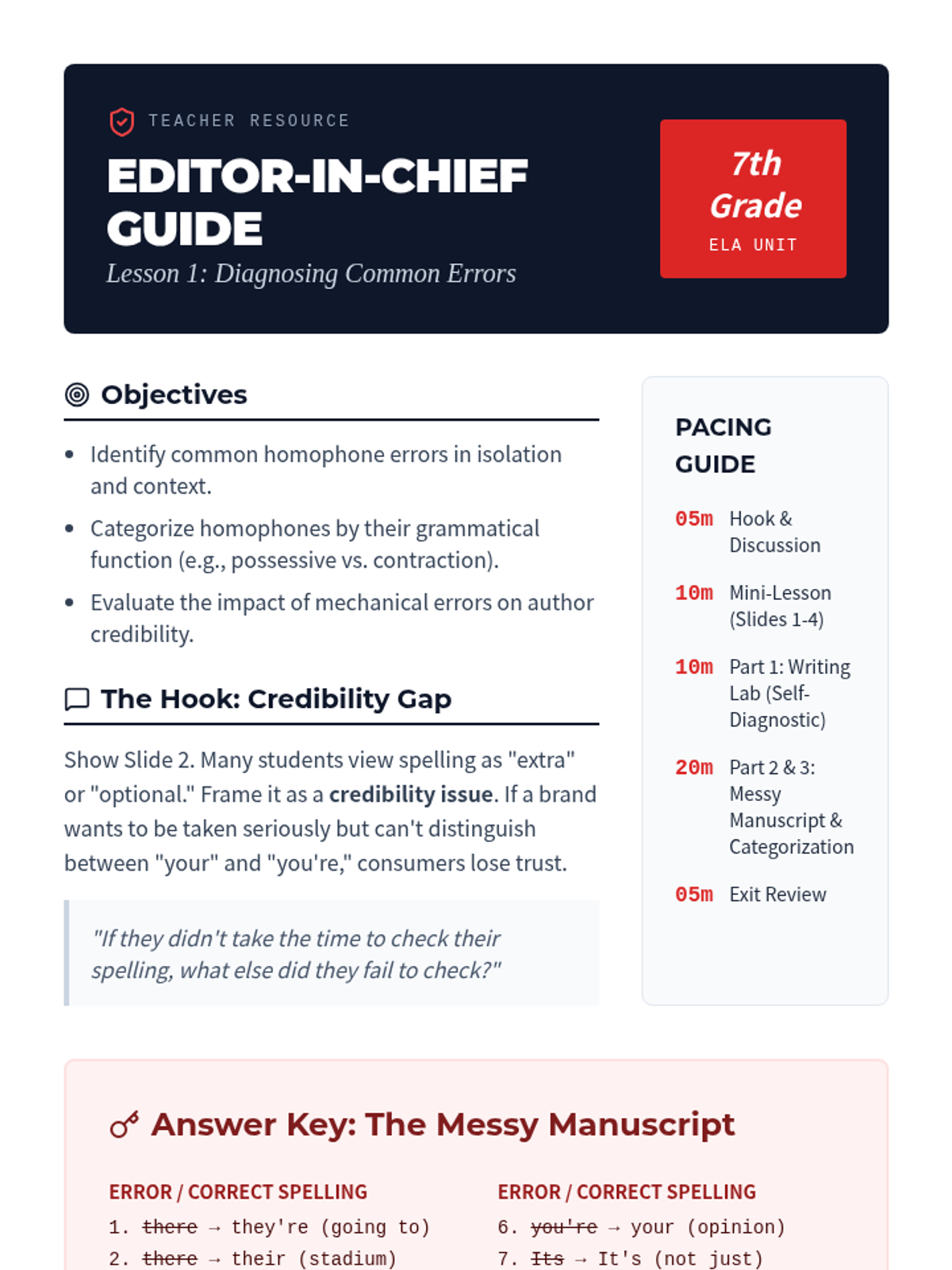
A comprehensive 5th-grade lesson on mastering 'there', 'their', and 'they're' using the Substitution Test strategy. Students role-play as 'Grammar Doctors' to diagnose and treat errors in text.
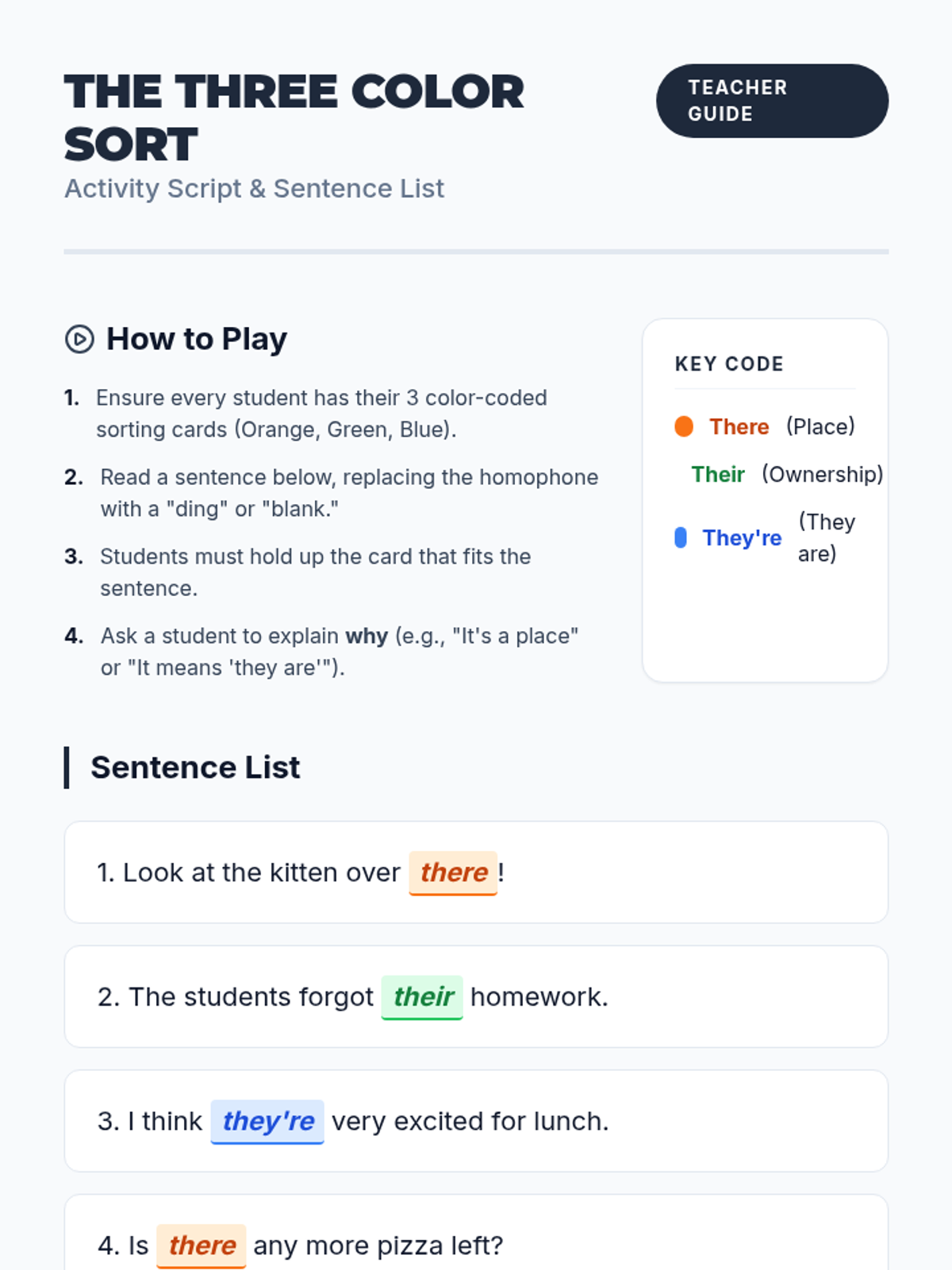
A series of lessons focused on mastering frequently confused homophones through visual color-coding and active participation.
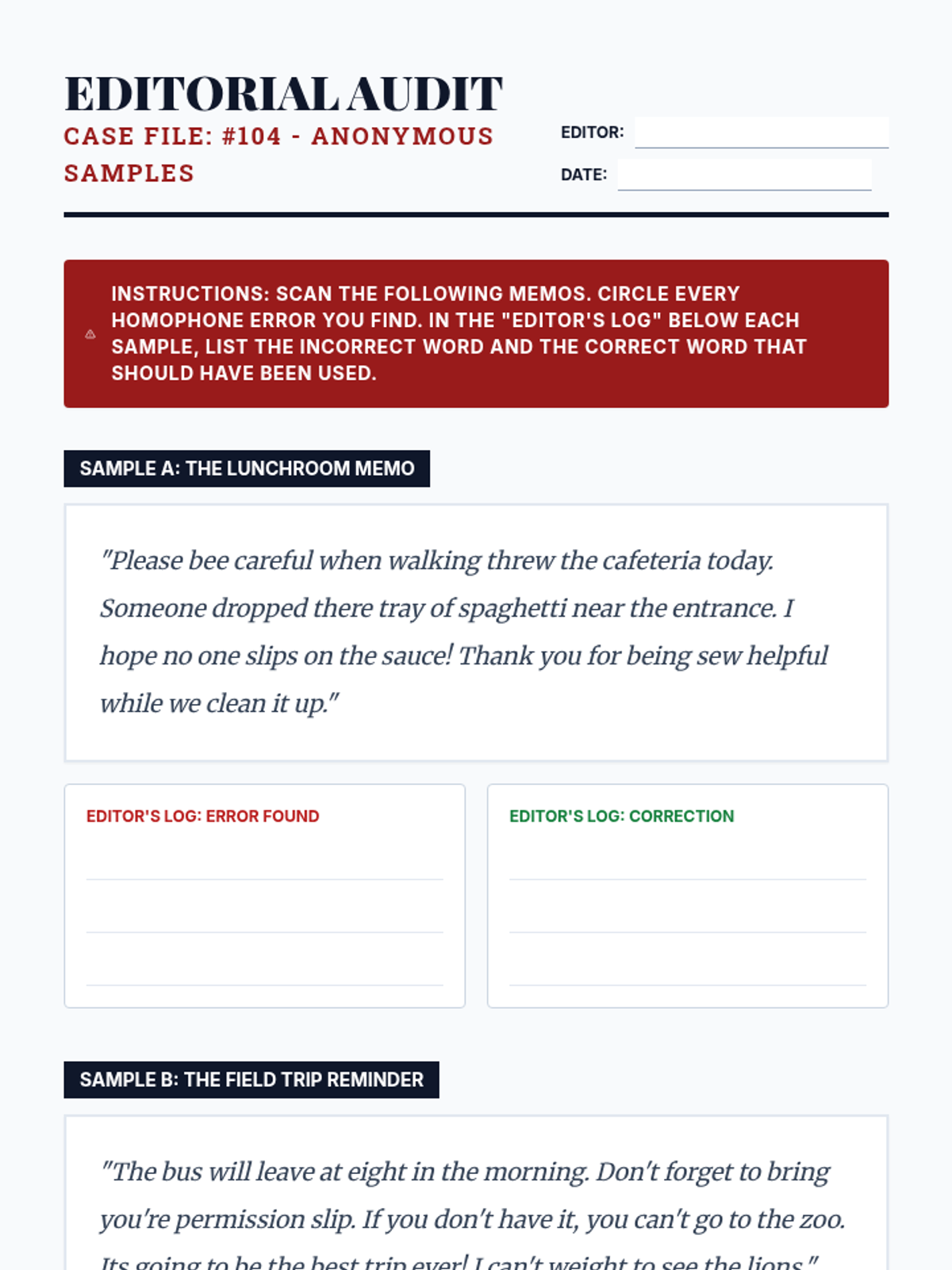
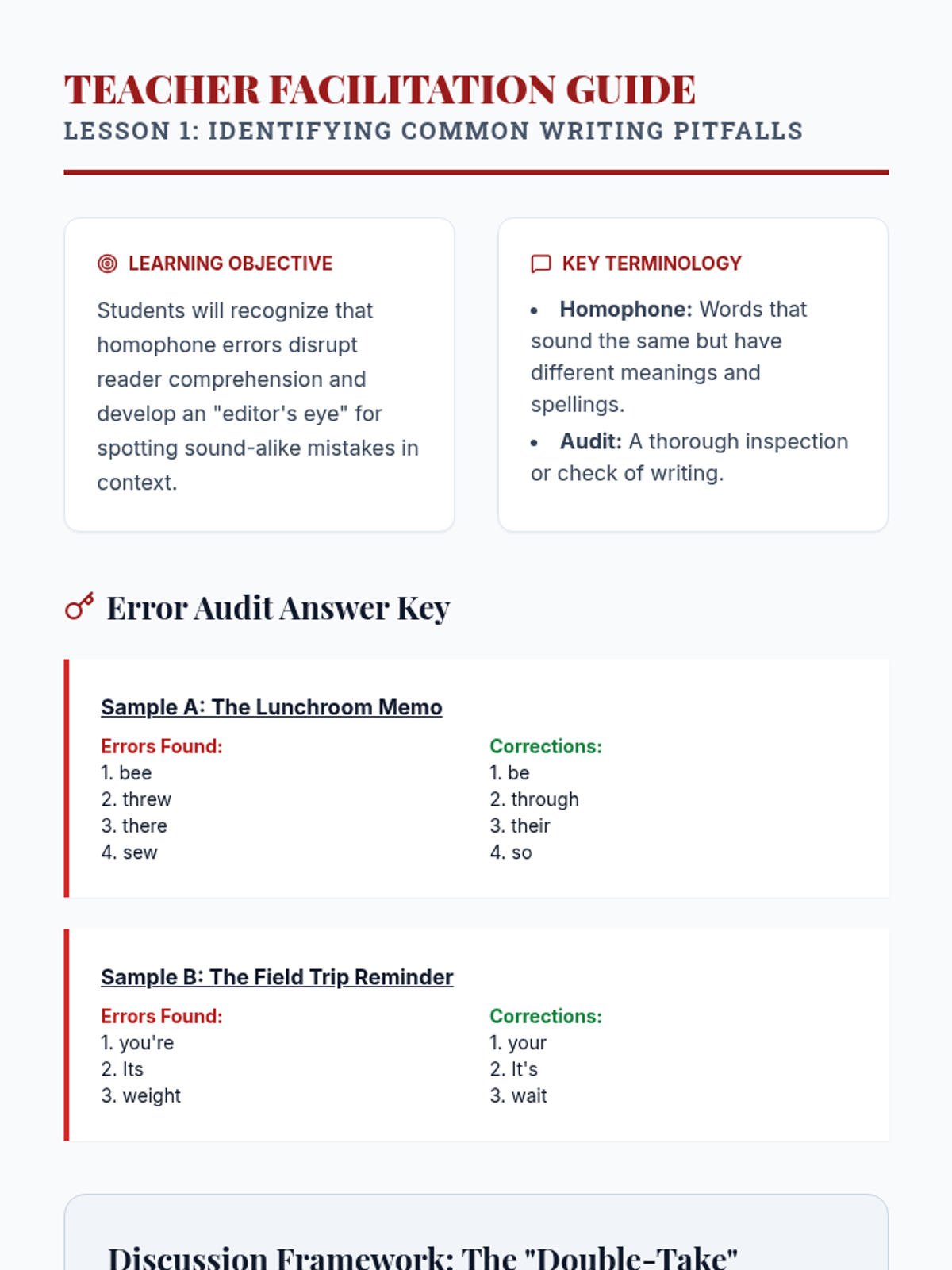
A writing workshop sequence focused on the practical application of homophones in composition. Students move from error identification in anonymous samples to mastering high-frequency homophones and performing peer edits, culminating in a comprehensive proofreading assessment.
A 5th-grade sequence focused on mastering frequently confused homophones and homonyms. Students progress from basic grammar functions to advanced academic vocabulary and proofreading skills, ending with a creative narrative assessment.
A rigorous writer's workshop sequence targeting homophone accuracy in formal writing. Students master common and advanced homophones through grammatical analysis and peer-editing cycles.
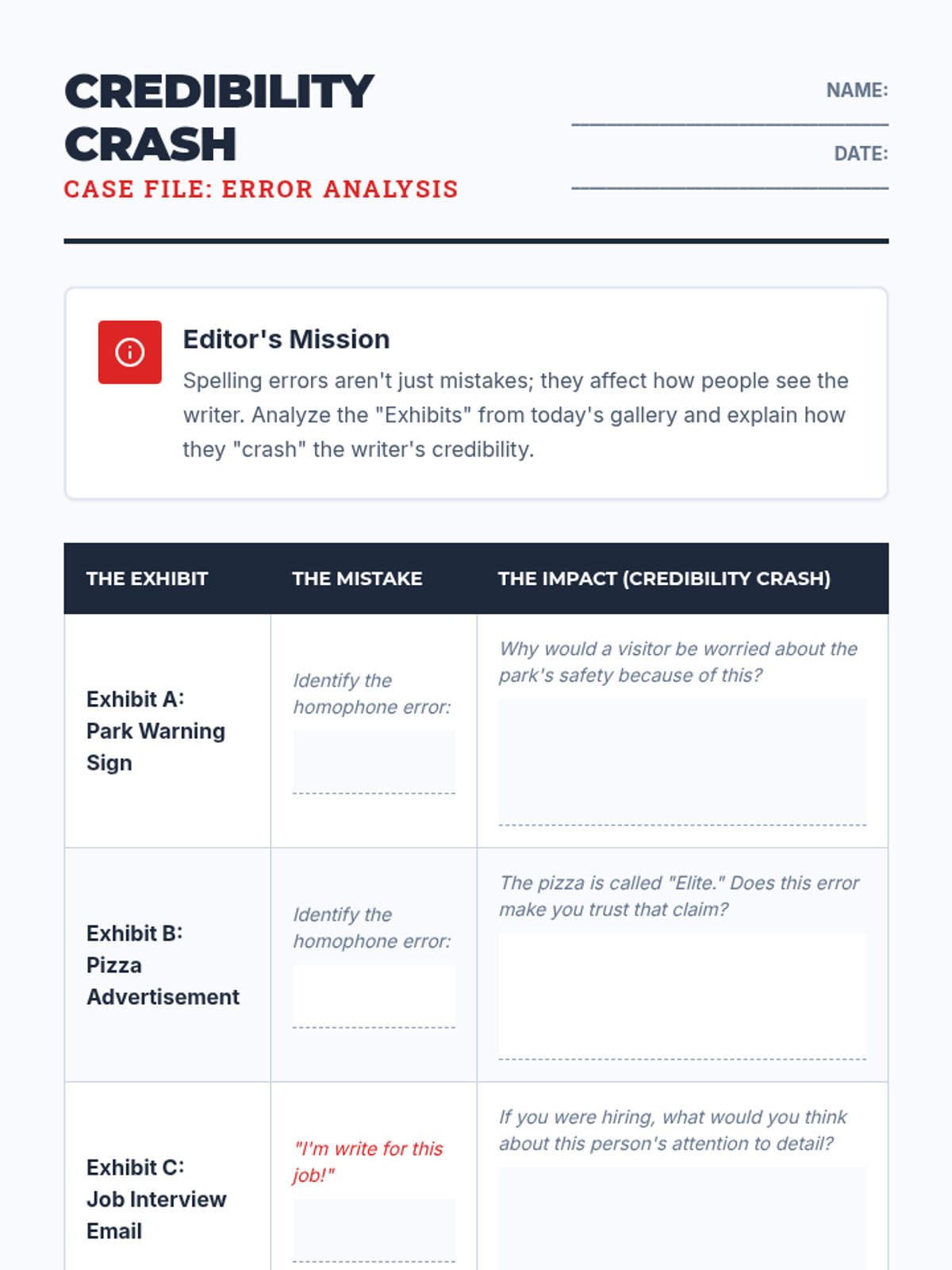
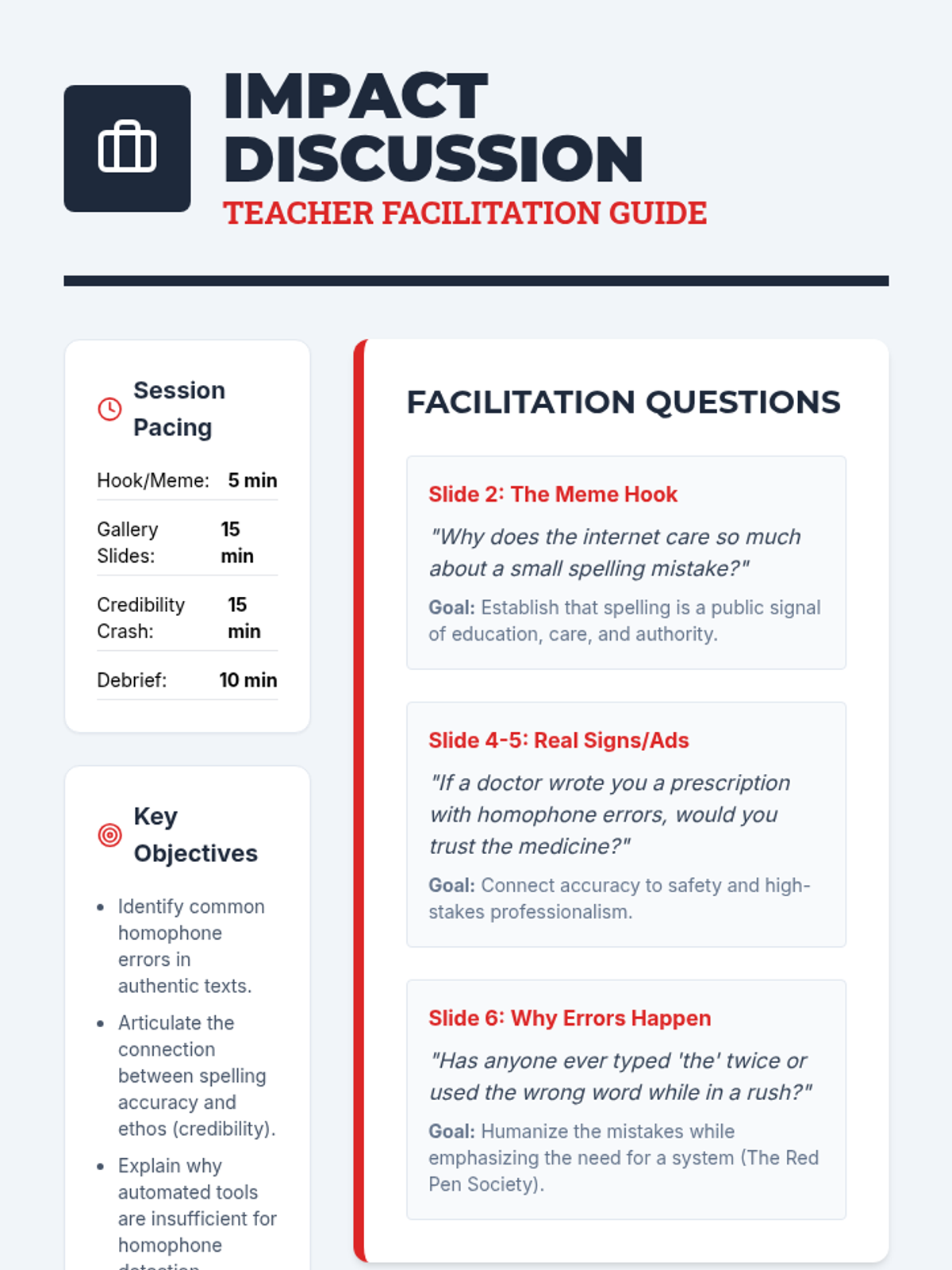
A 5th-grade sequence focused on the practical application of homophone knowledge through proofreading and editing. Students analyze real-world errors, create editing checklists, and engage in peer review to understand the importance of spelling precision for clear communication.
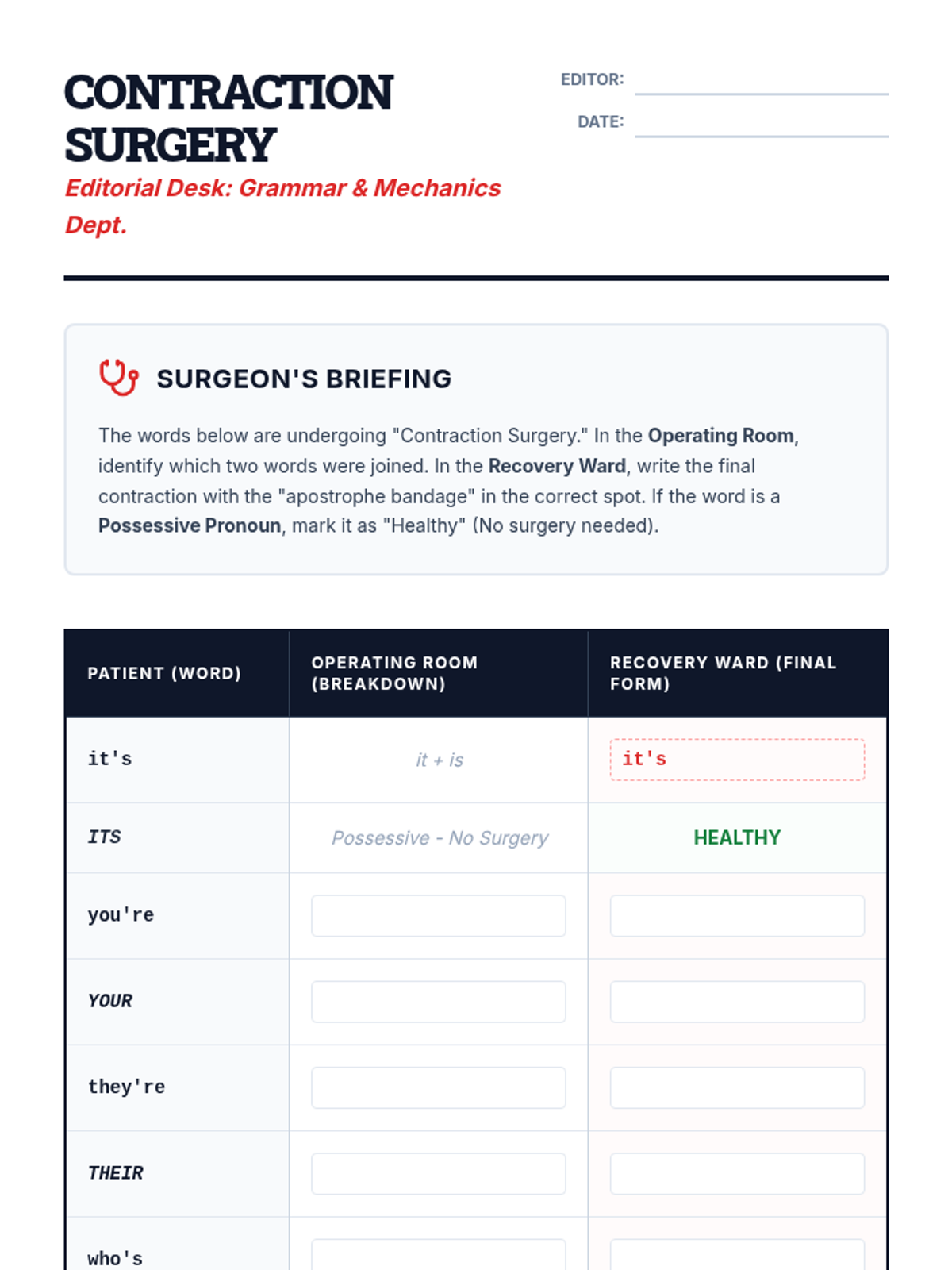
A systematic sequence for 5th-grade students to master high-frequency homophones including there/their/they're, to/too/two, and possessive vs. contraction pairs through direct instruction and writing application.
This sequence focuses on the practical application of homophone mastery through the lens of editing and professional communication. Students diagnose errors, master high-frequency triads, tackle advanced vocabulary, and apply their skills in real-world professional contexts before concluding with a peer-editing workshop.
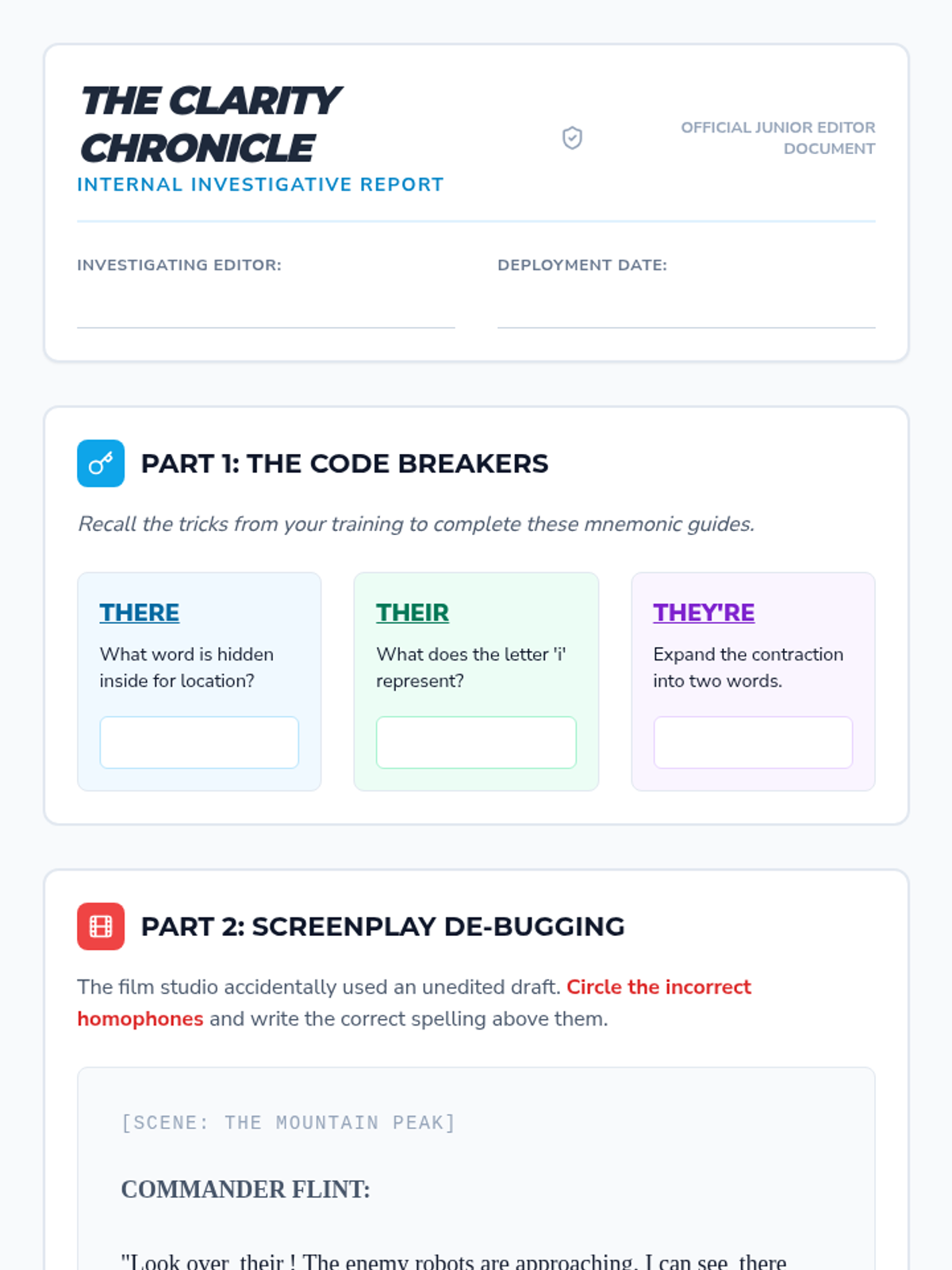
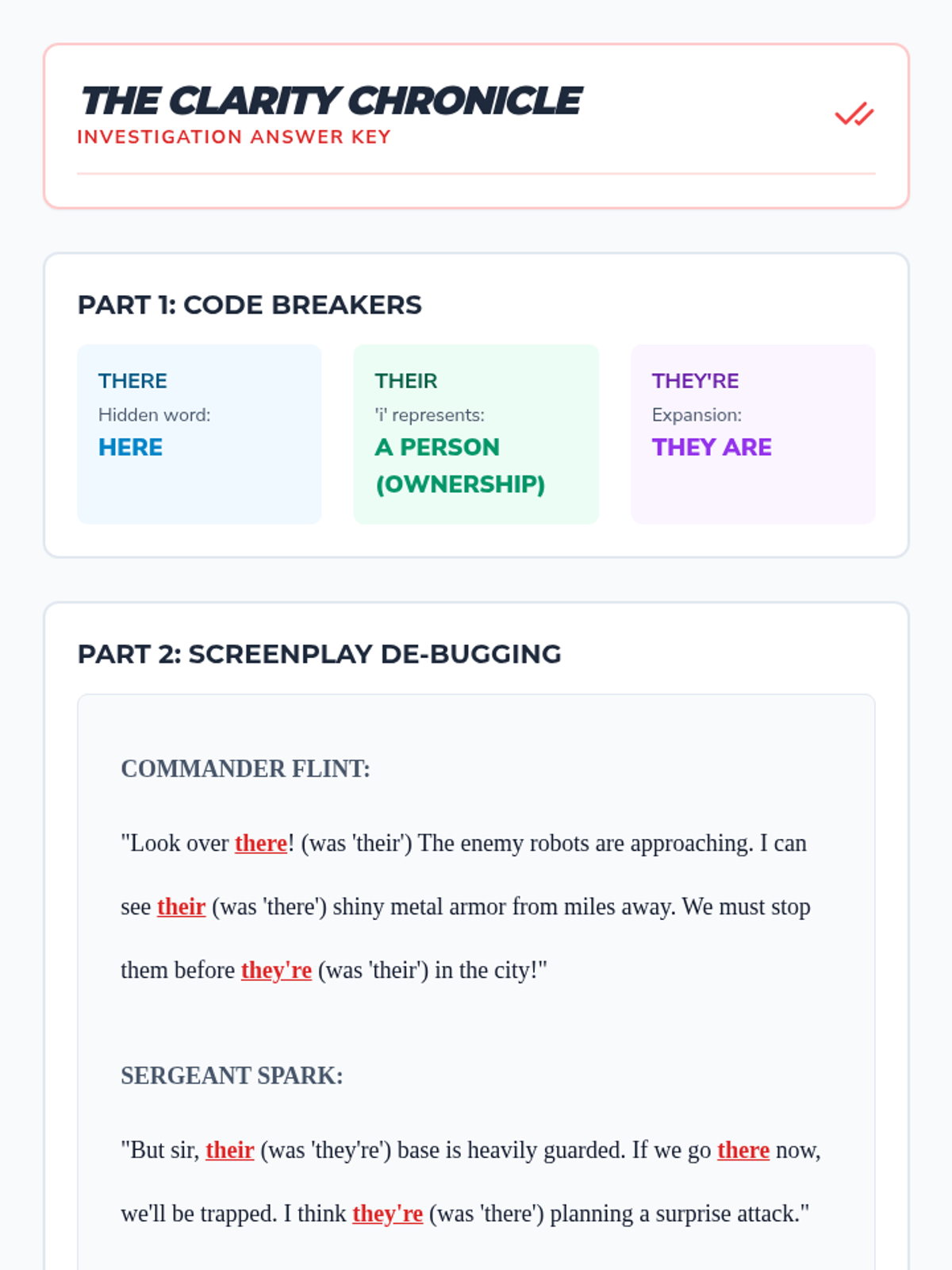
Students step into the role of professional editors at 'The Clarity Chronicle,' a top-tier editing agency. Over five lessons, they master the nuance of homophones and frequently confused words by analyzing context, creating mnemonics, and proofreading high-stakes documents to ensure semantic accuracy.
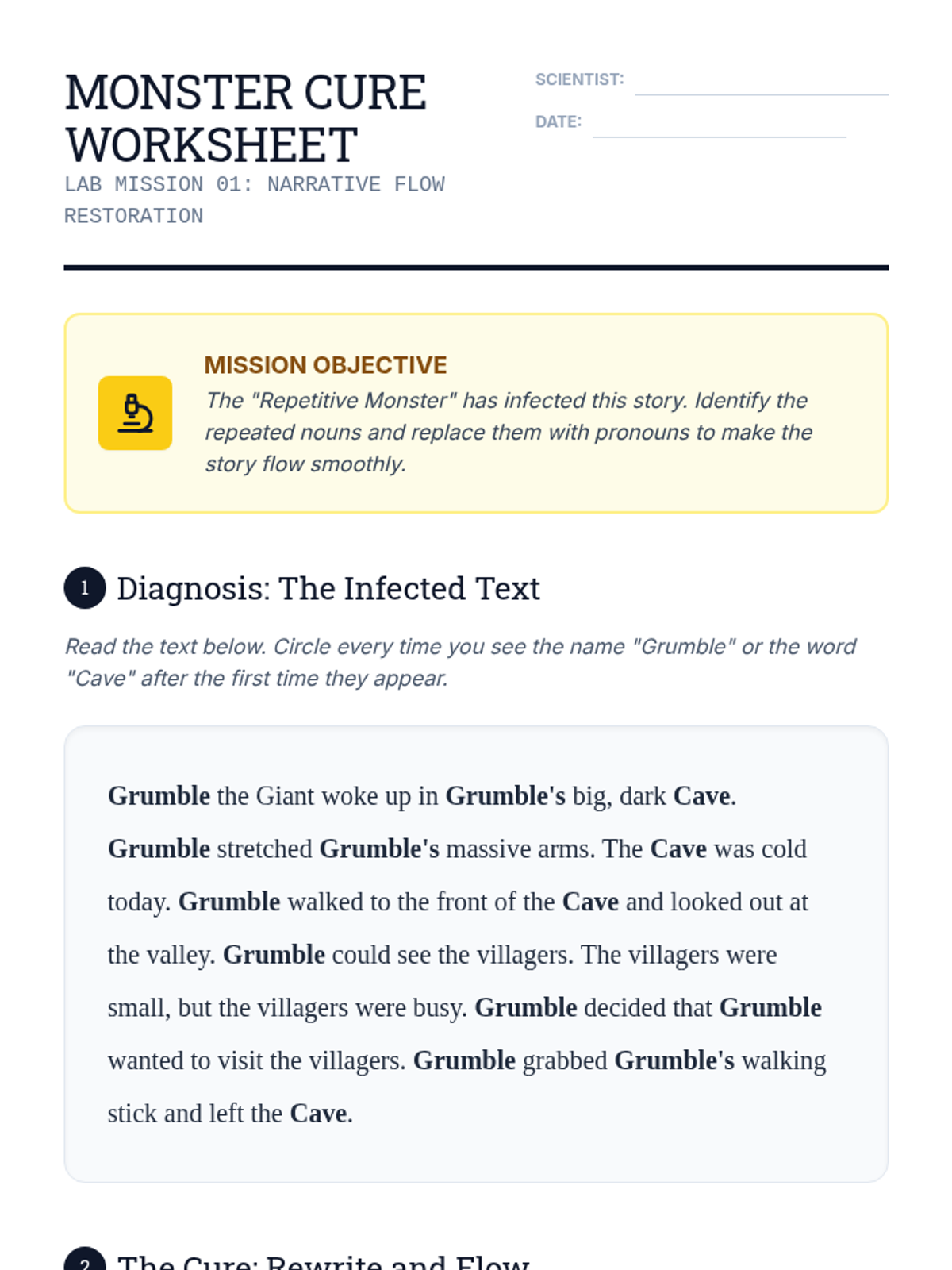
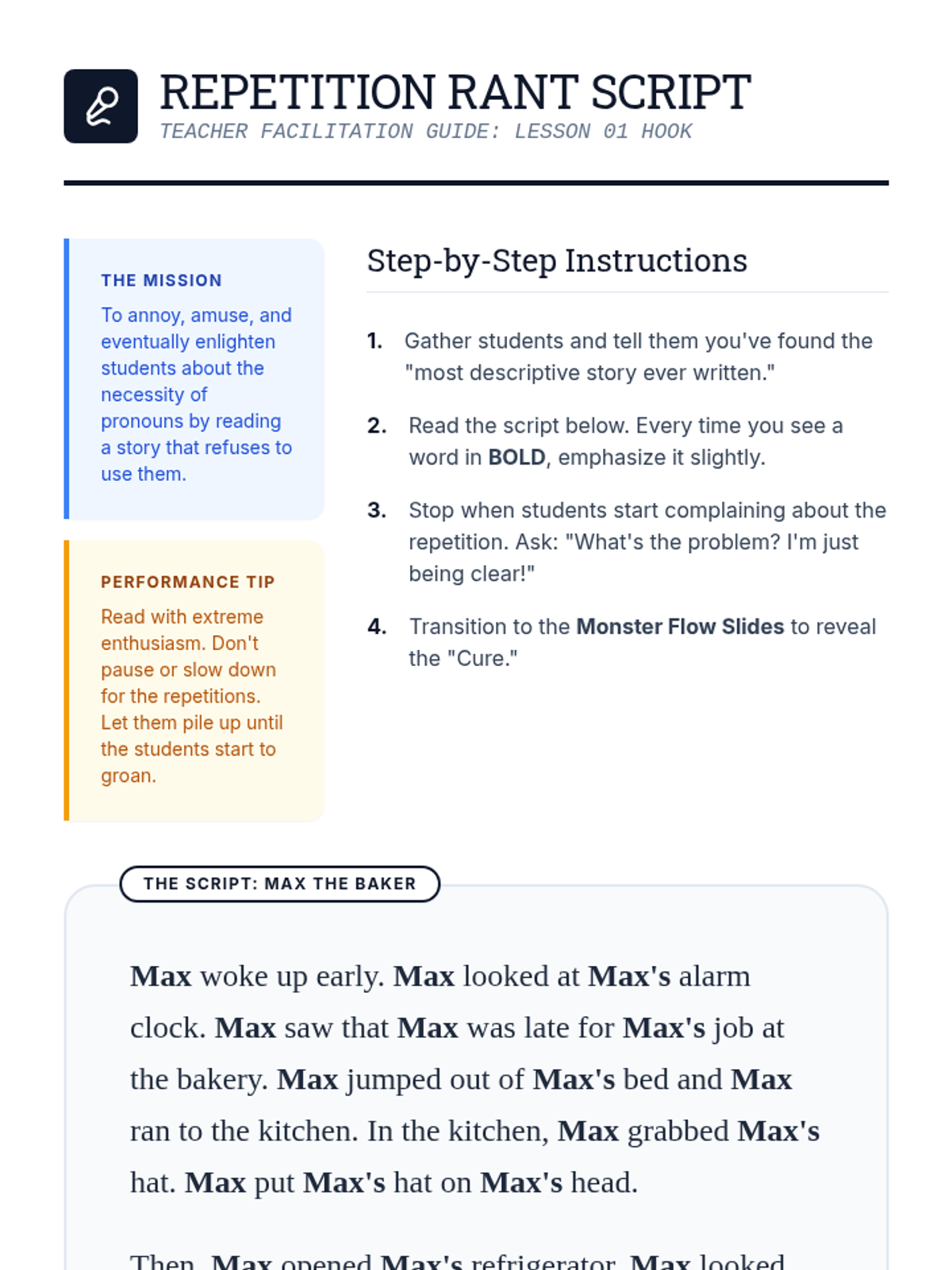
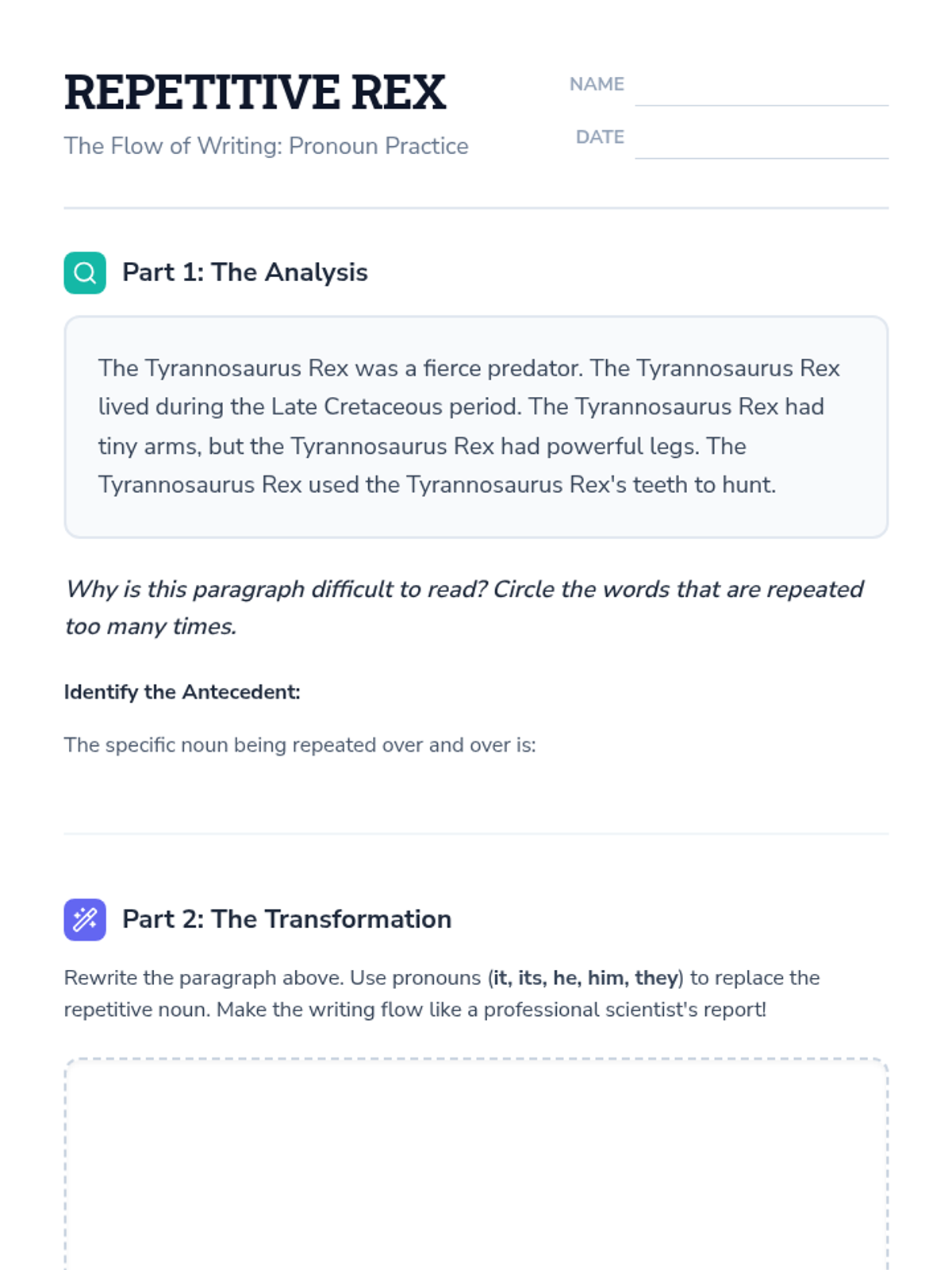
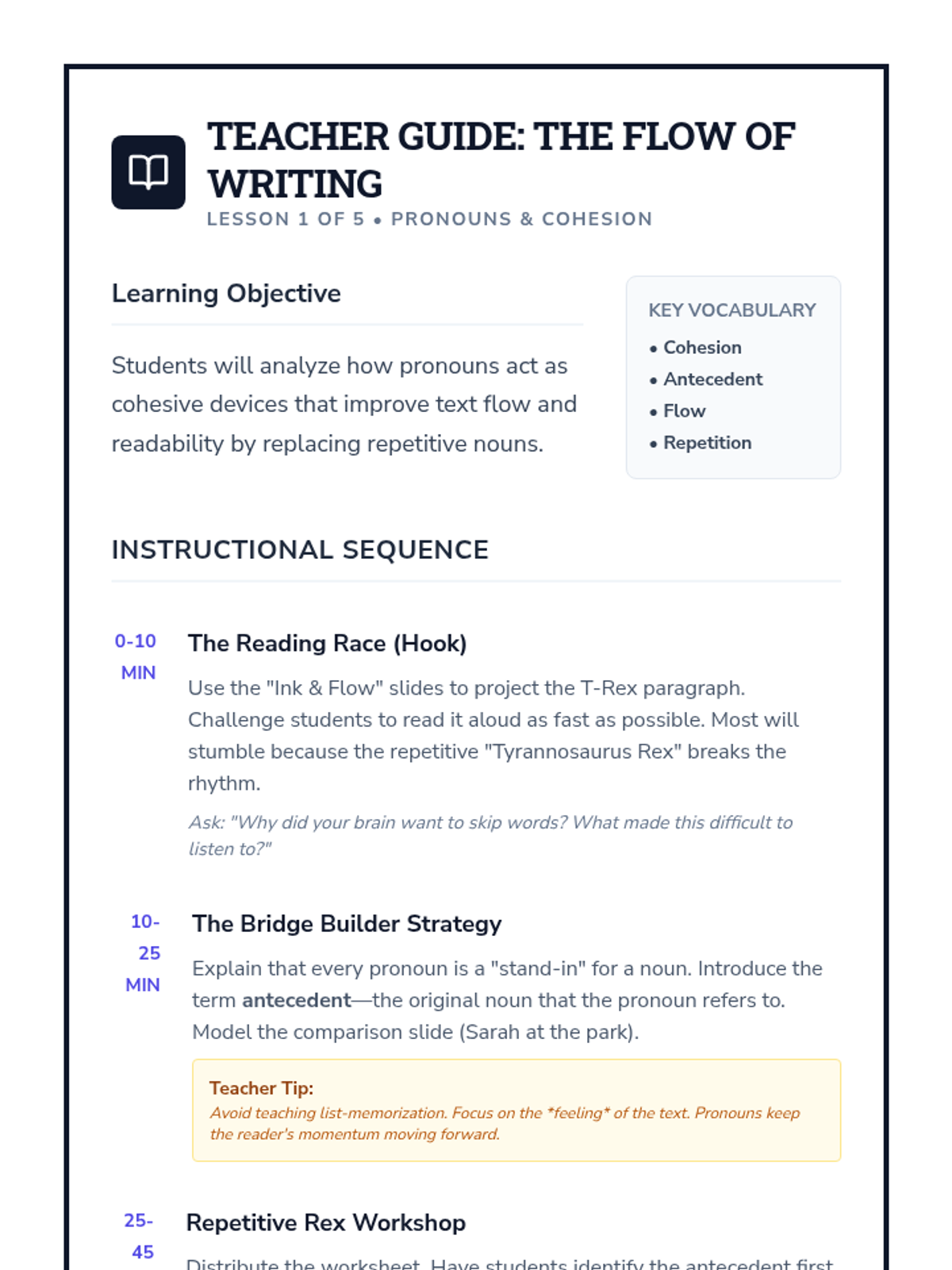
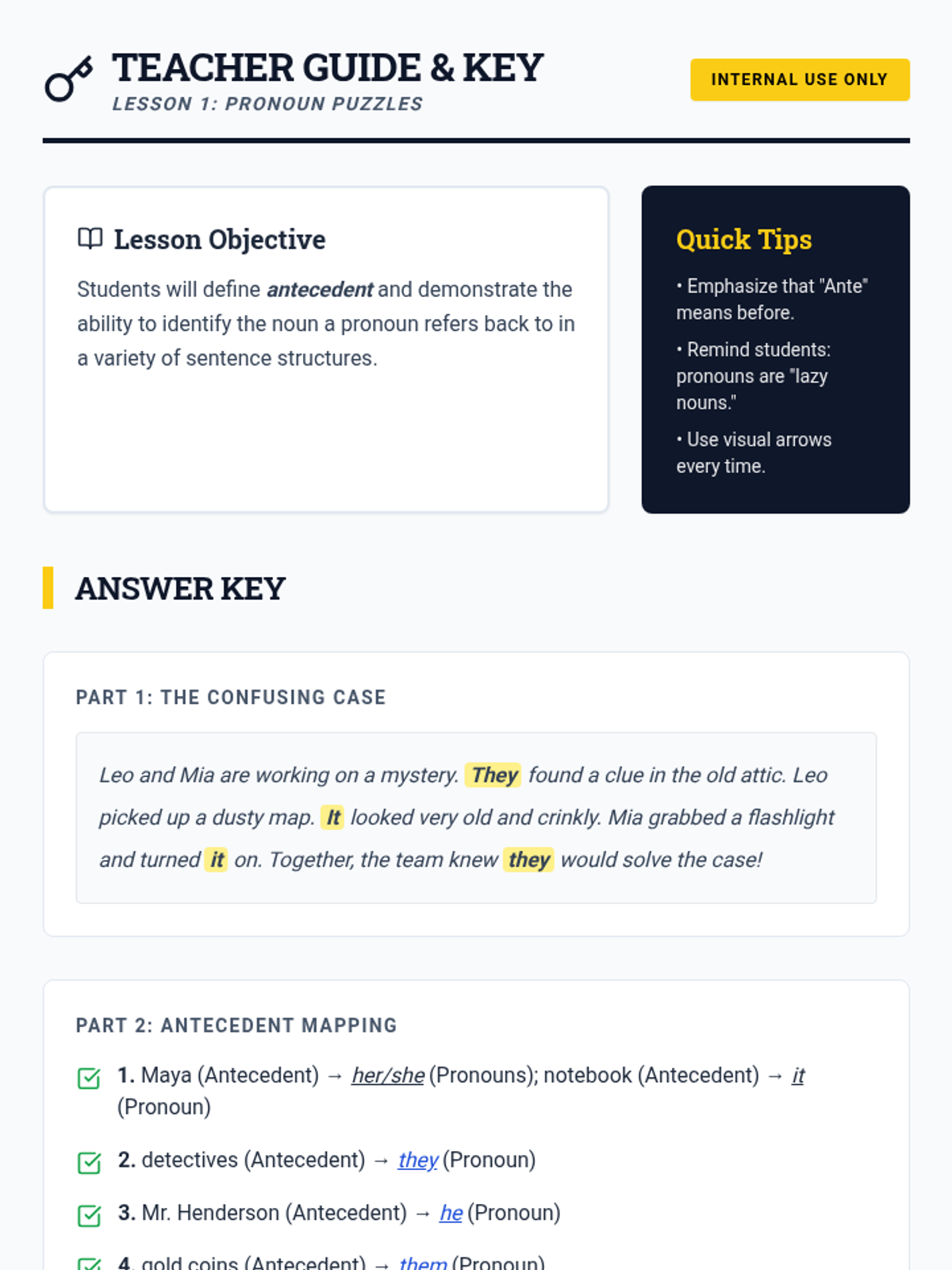
Students explore pronouns and antecedents as stylistic tools to improve narrative flow. They learn to replace repetitive nouns, manage multiple characters with clear pronoun references, and culminate in a polished character-driven story.
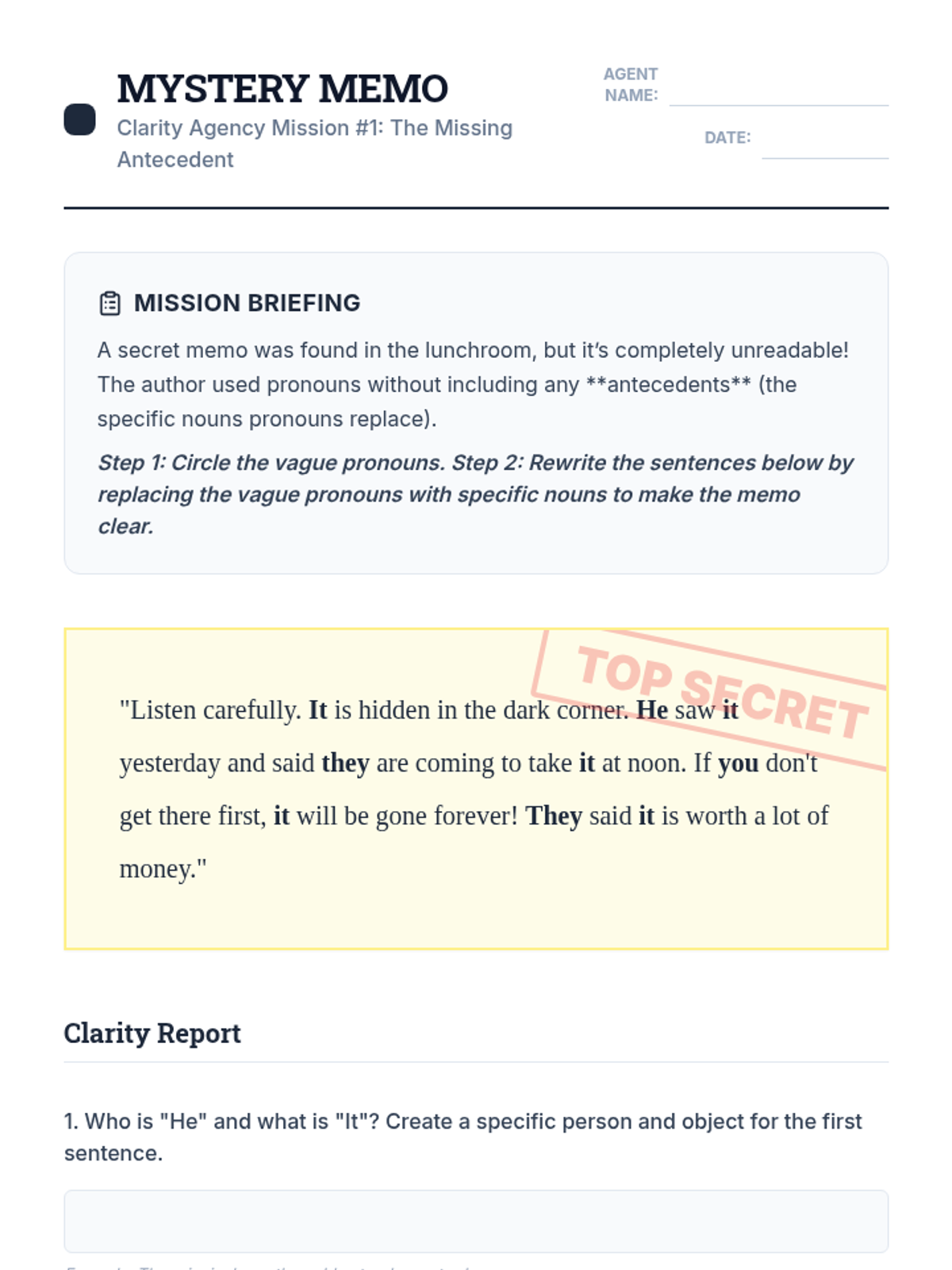
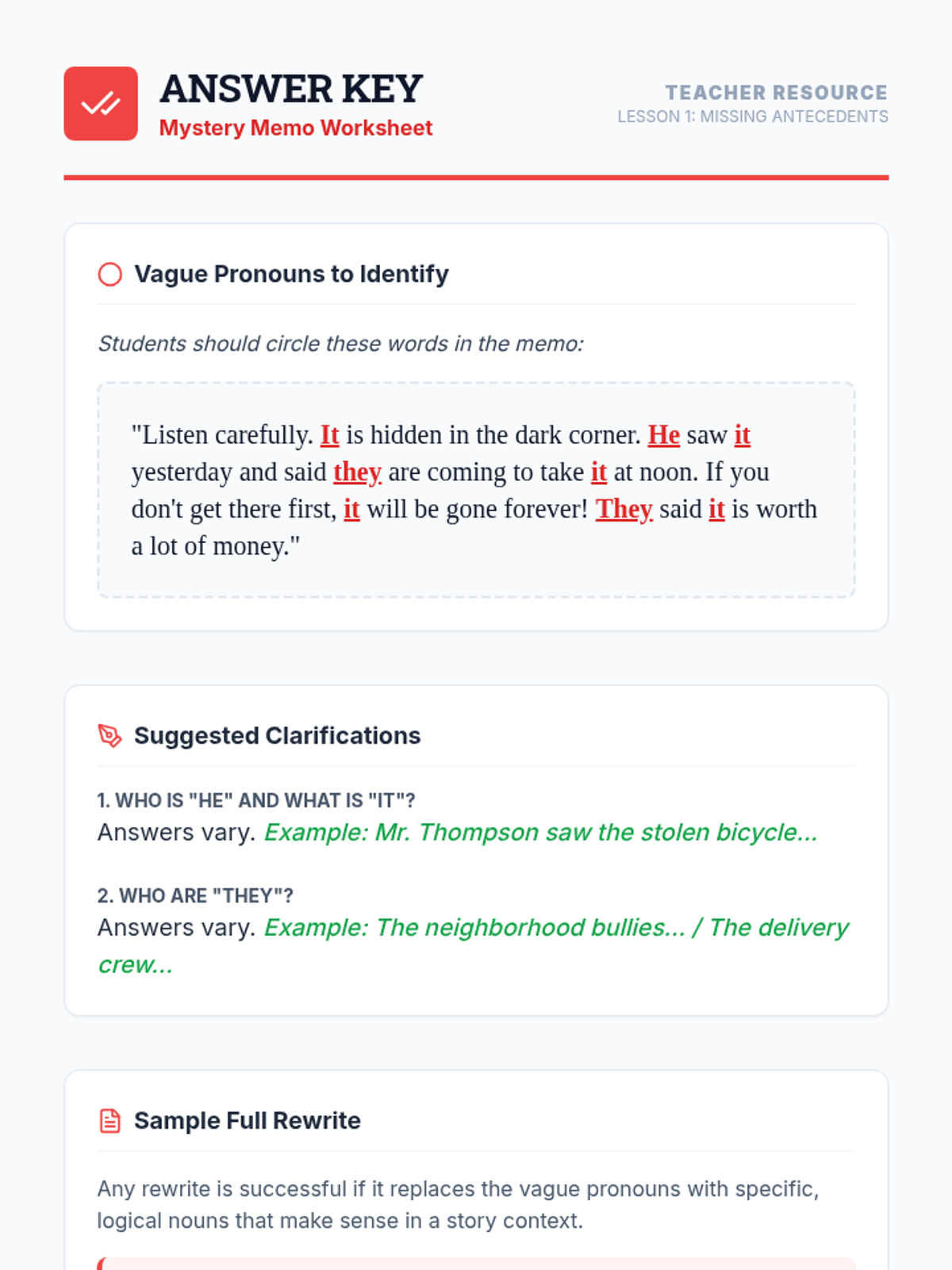
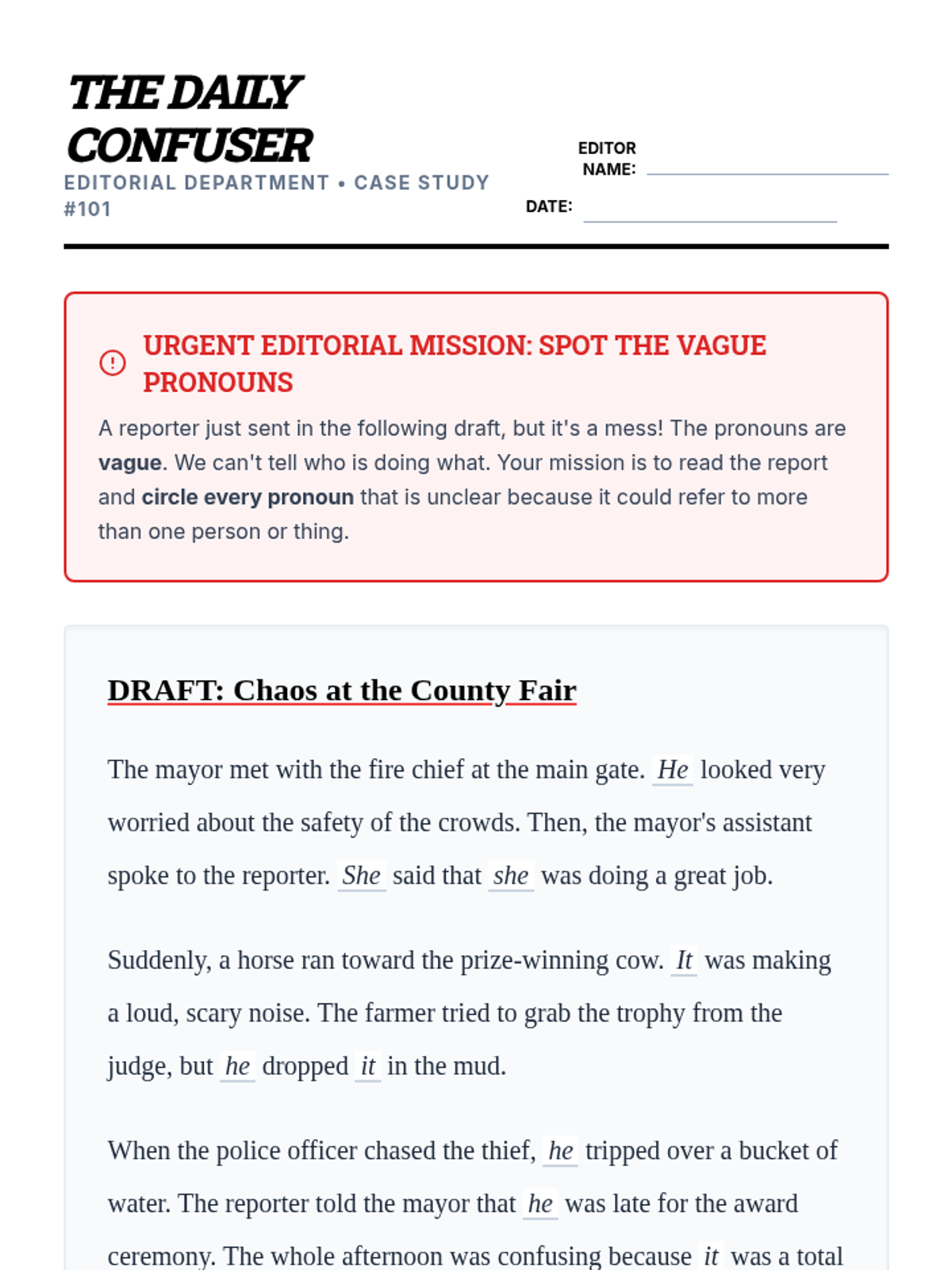
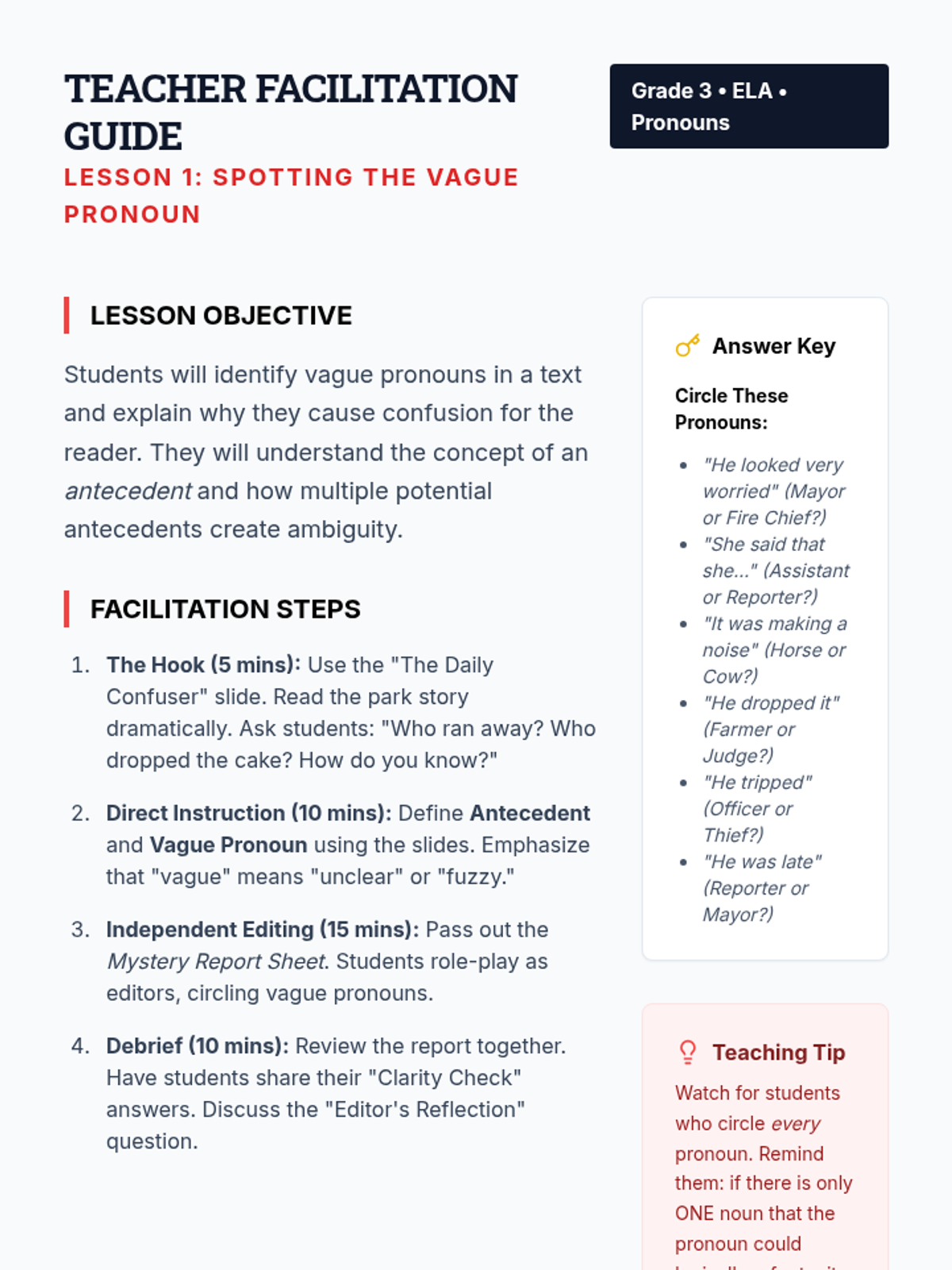
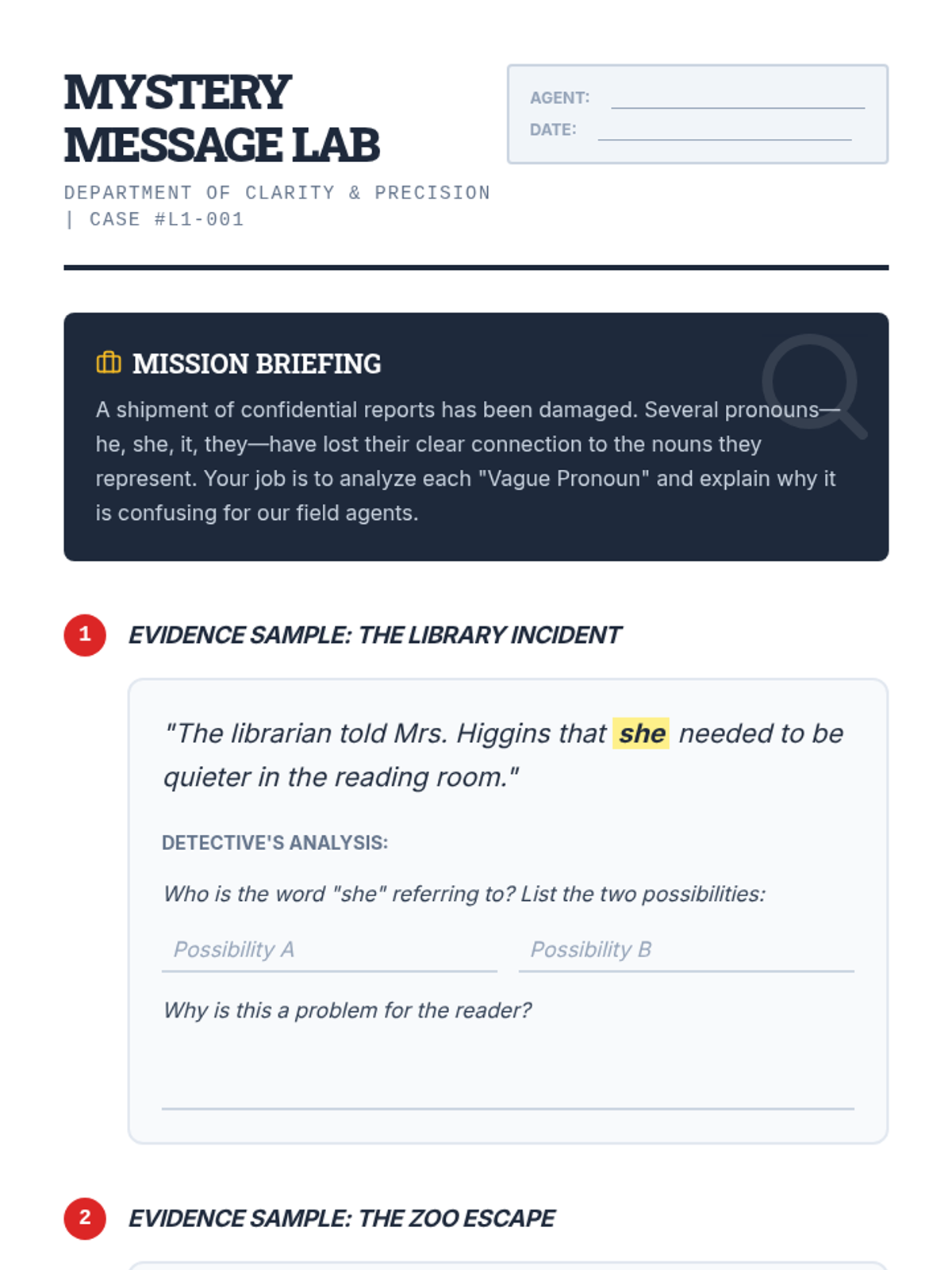
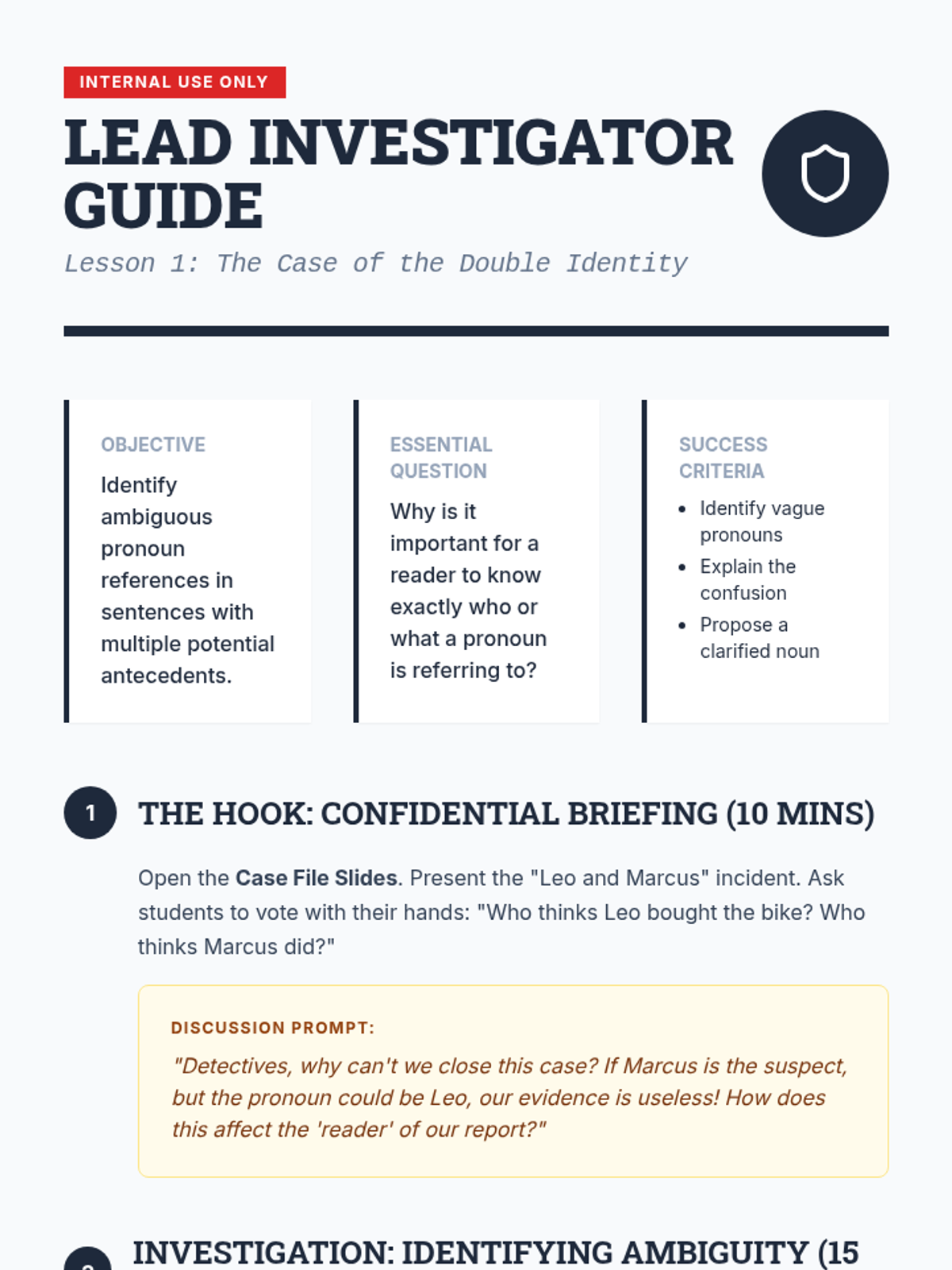
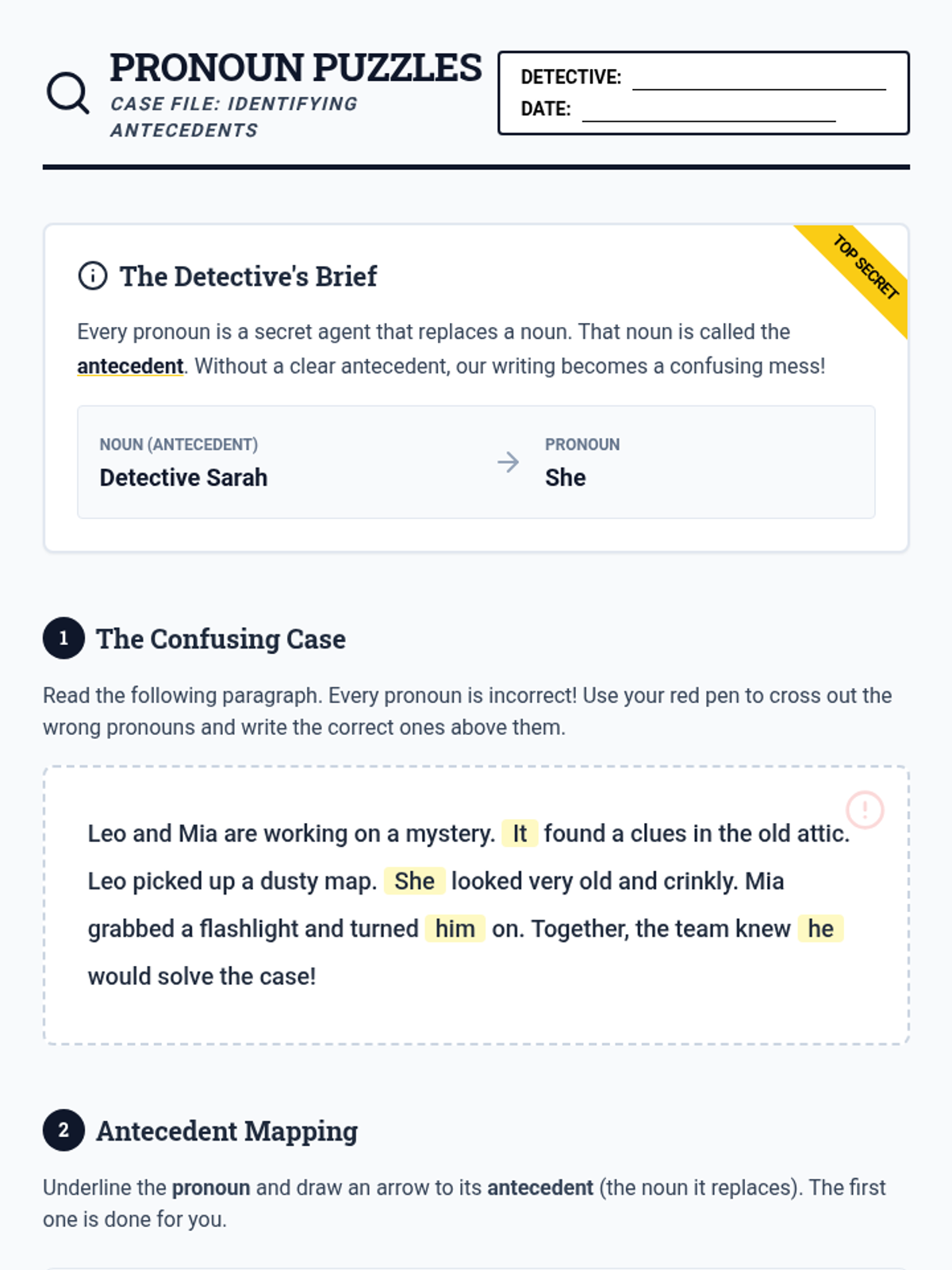
A detective-themed ELA sequence where students become 'Clarity Agents' to identify and fix vague or ambiguous pronoun references in their writing.
A 5th-grade ELA sequence focused on using pronouns and antecedents as tools for writing flow, consistency, and cohesion. Students move from analyzing repetitive texts to drafting and editing their own professional-quality prose.
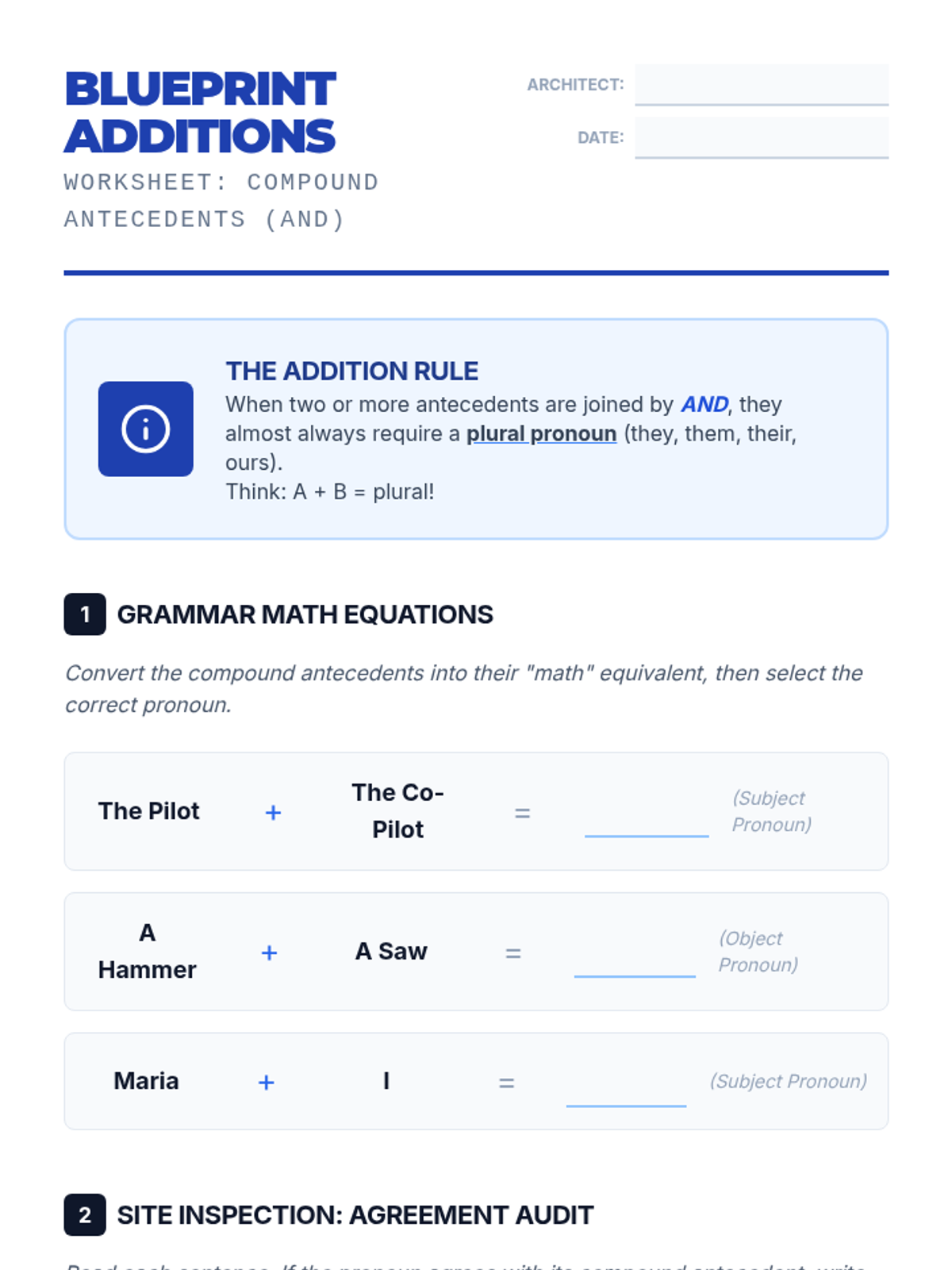
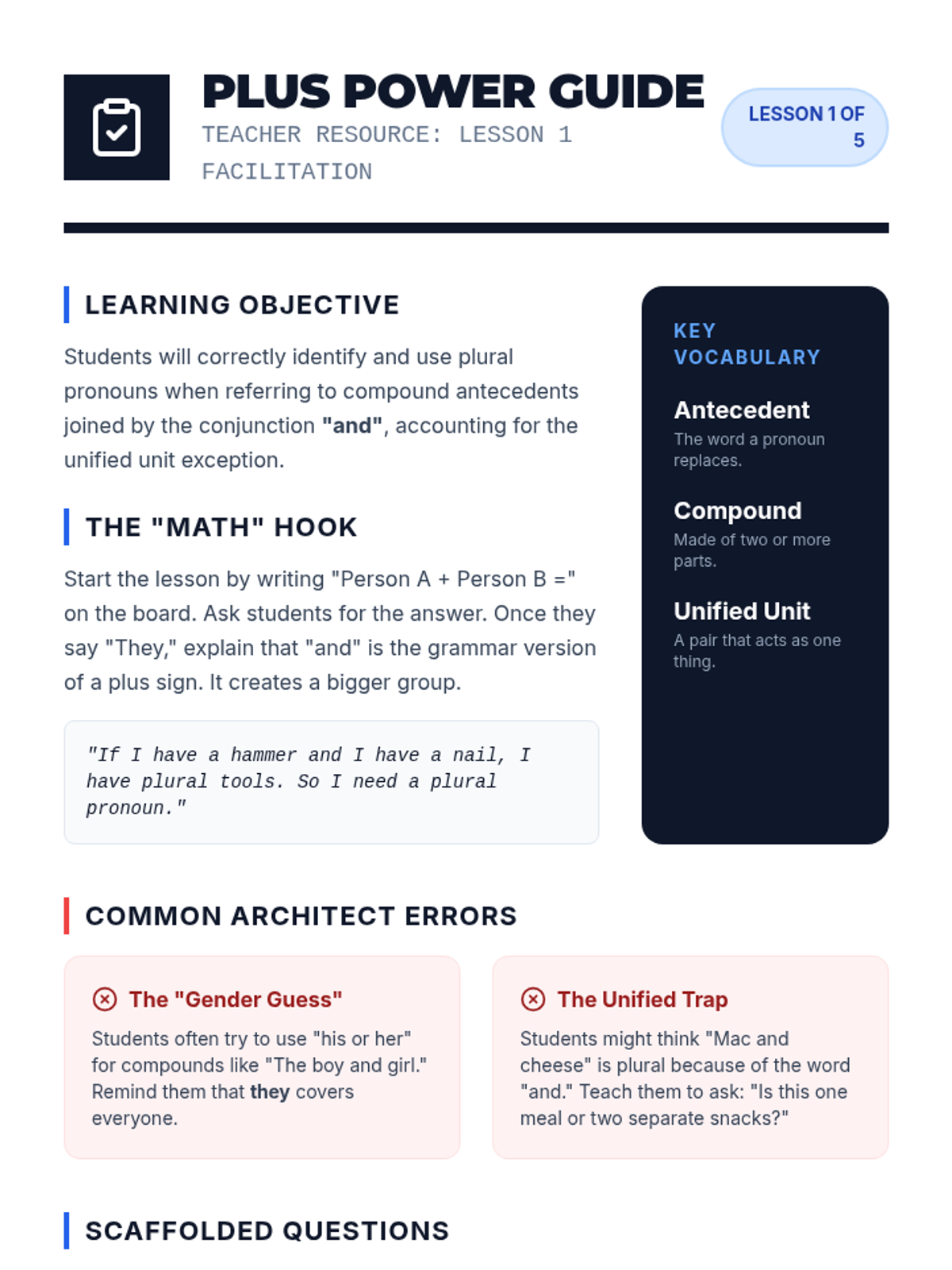
Students master the complexities of pronoun-antecedent agreement with compound subjects and collective nouns. Through an architectural lens, they learn to build stable sentences using the rules of 'And', 'Or/Nor', and the context of groups.
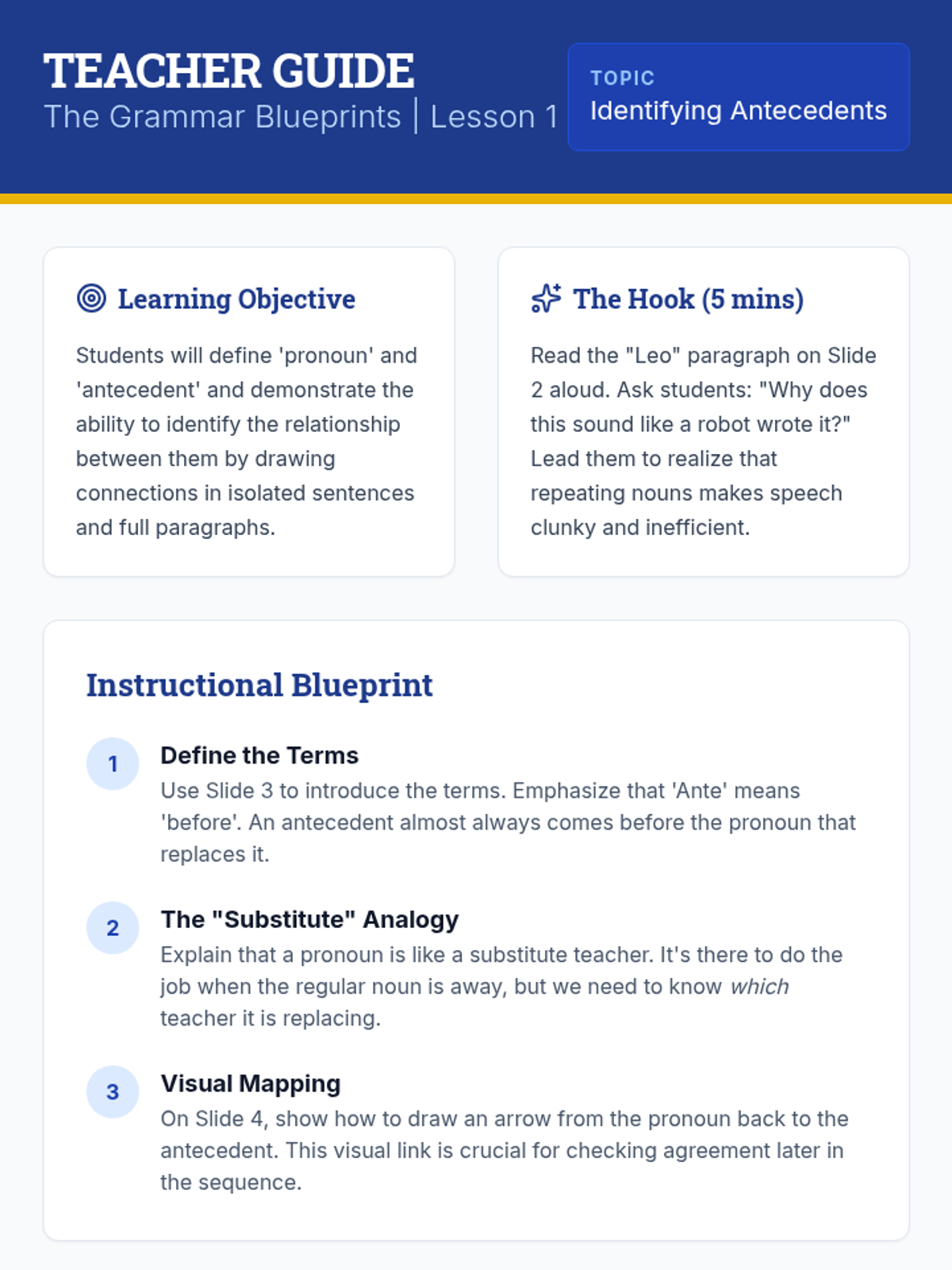
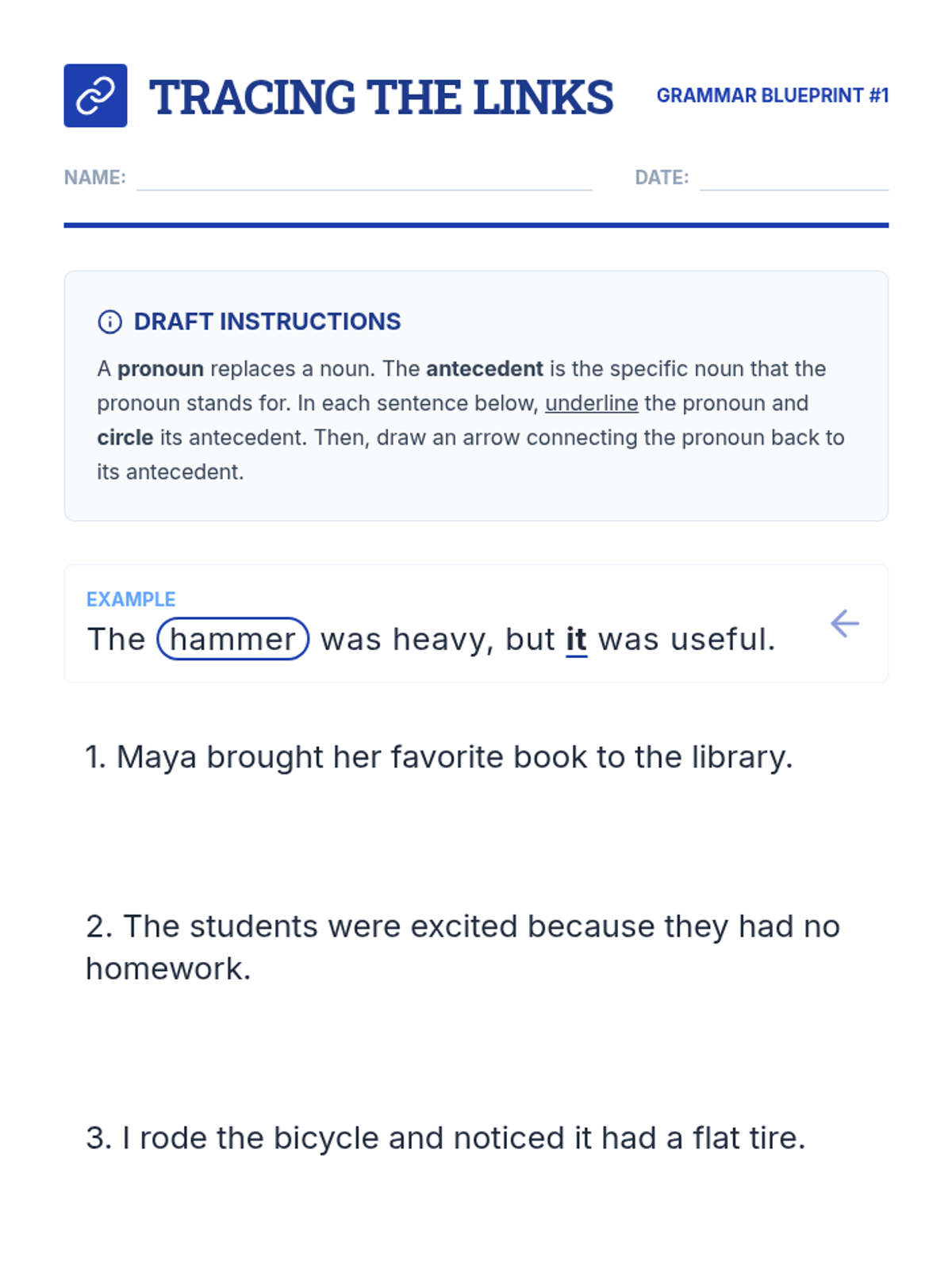
This sequence introduces 5th-grade students to the core mechanics of pronoun-antecedent agreement. Students move from basic identification to mastering agreement in number, gender, and person through hands-on 'grammar mechanics' activities.
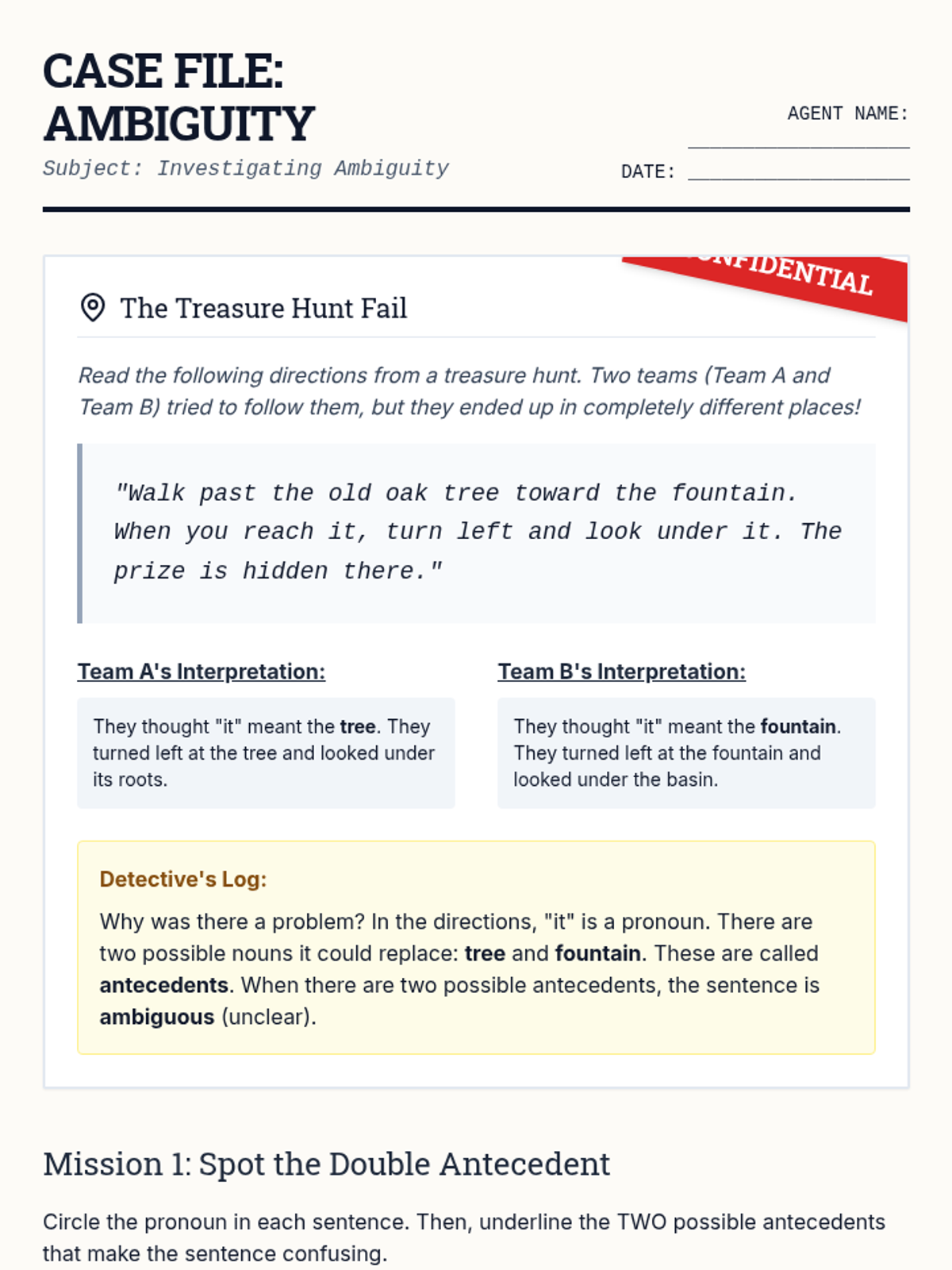
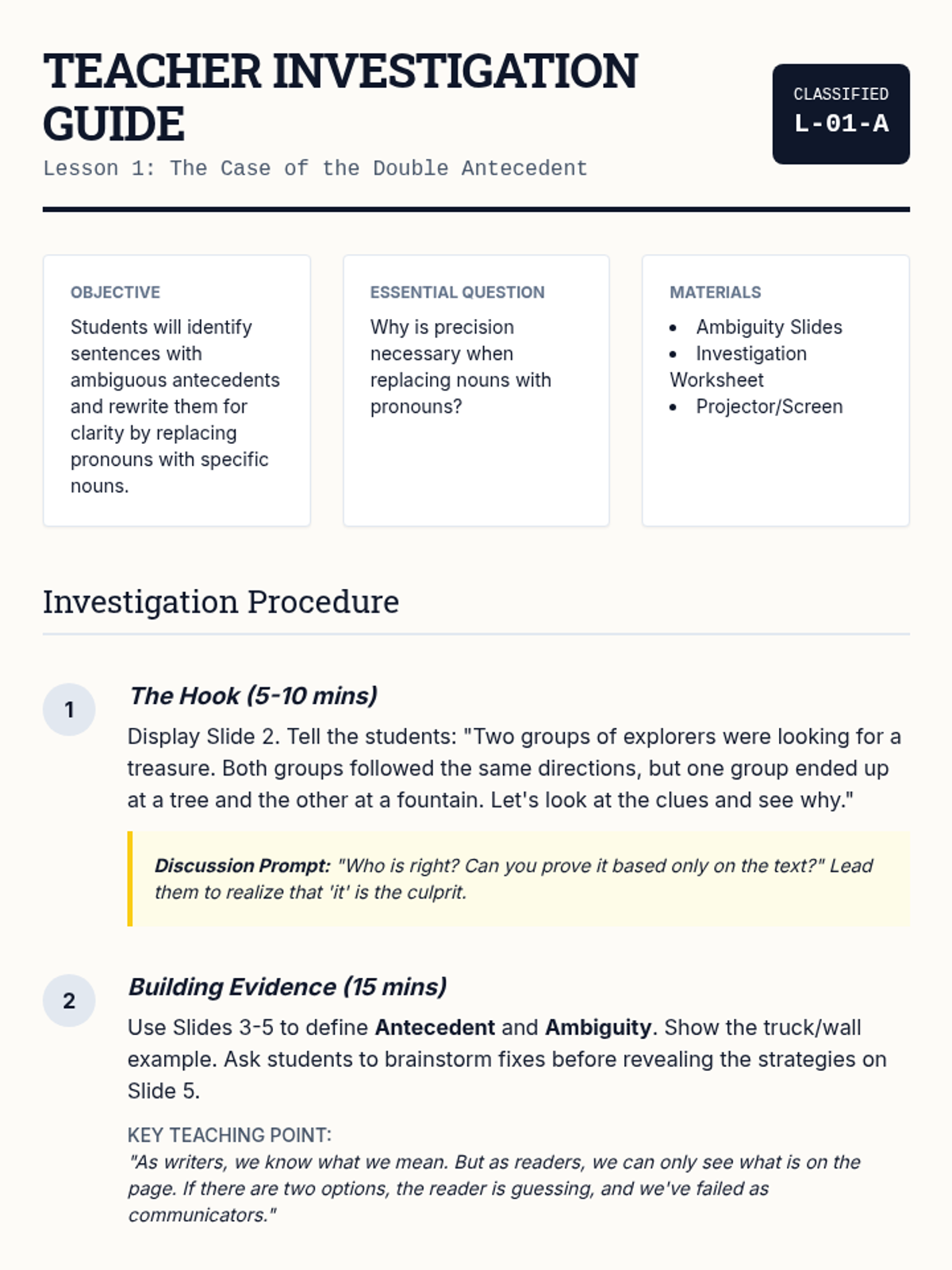
A 5th-grade ELA sequence focused on identifying and correcting vague pronoun references and ambiguous antecedents through an inquiry-based detective theme. Students move from identifying confusion to mastering precision in their writing.
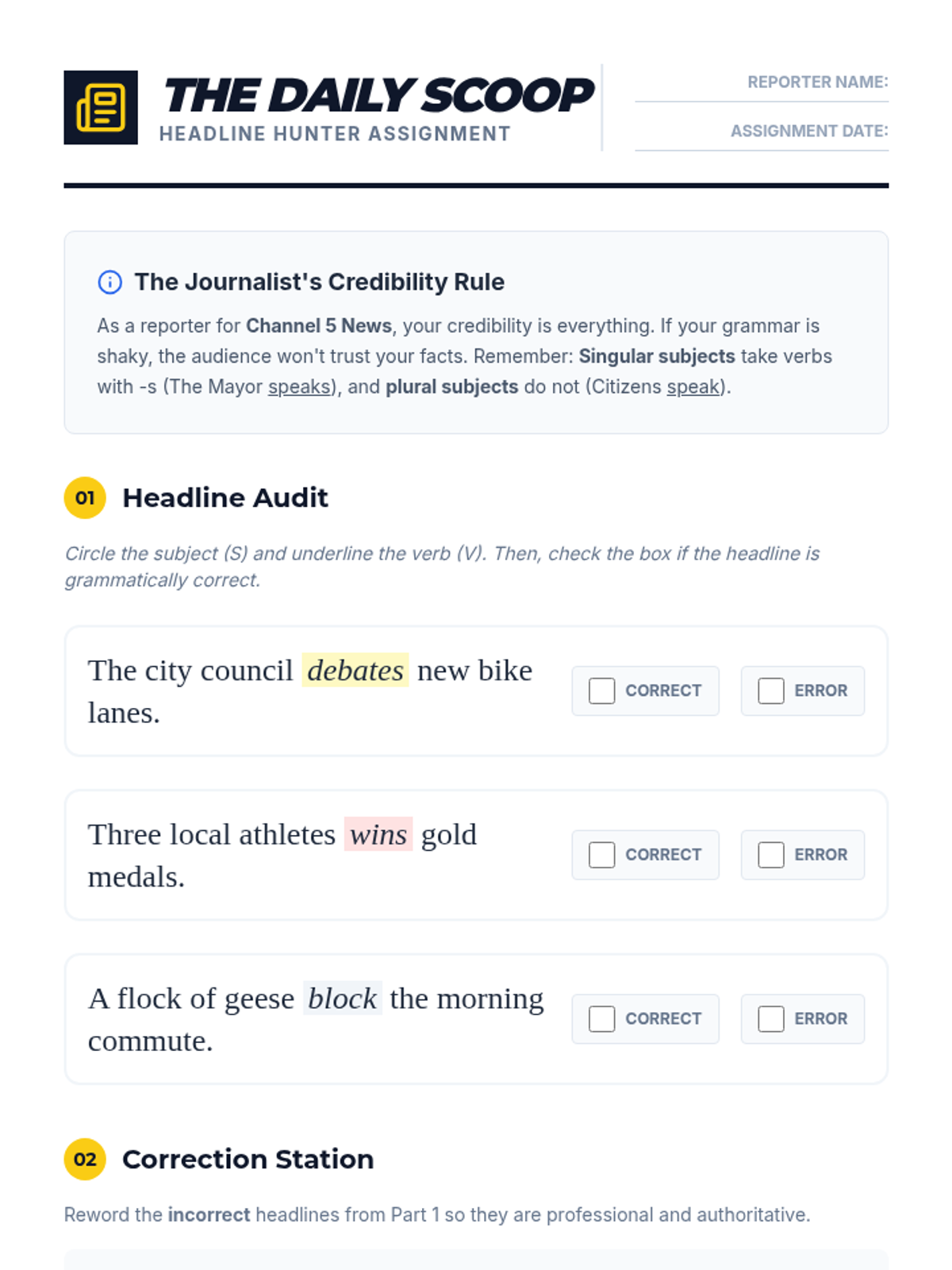
A project-based grammar sequence where 5th-grade students act as journalists to master subject-verb agreement. By drafting news scripts and conducting interviews, students learn that grammatical precision is the key to professional credibility.
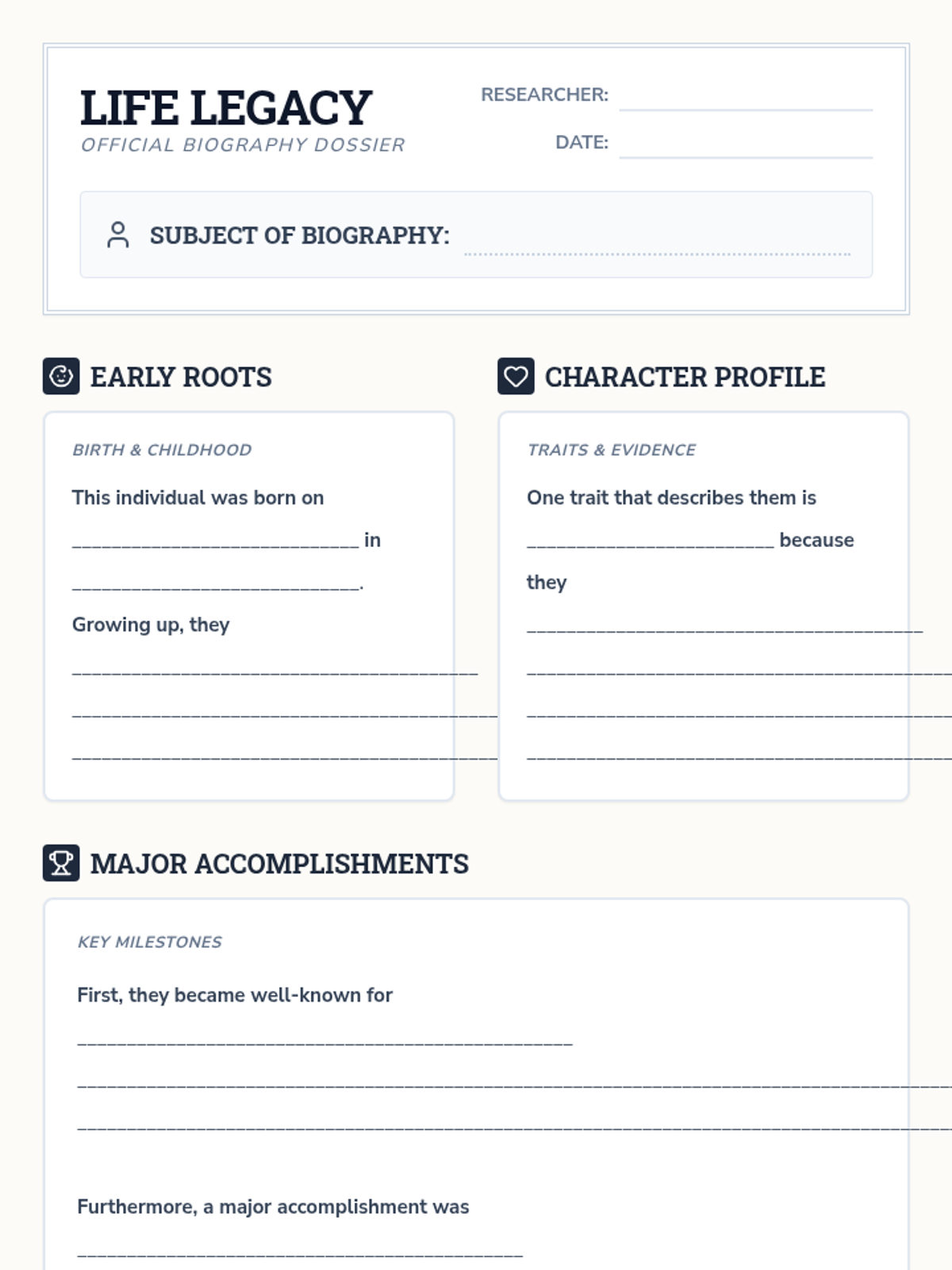
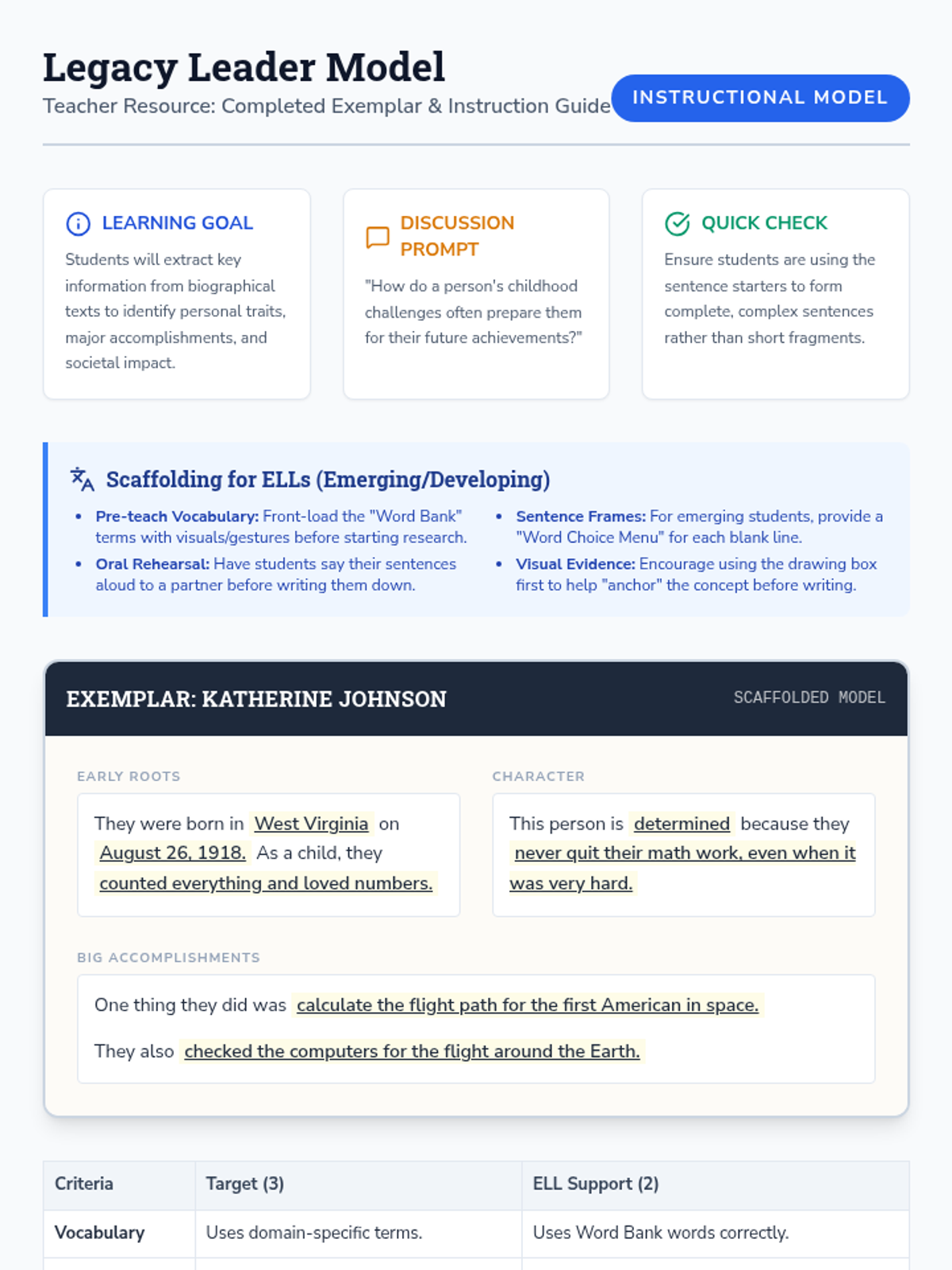
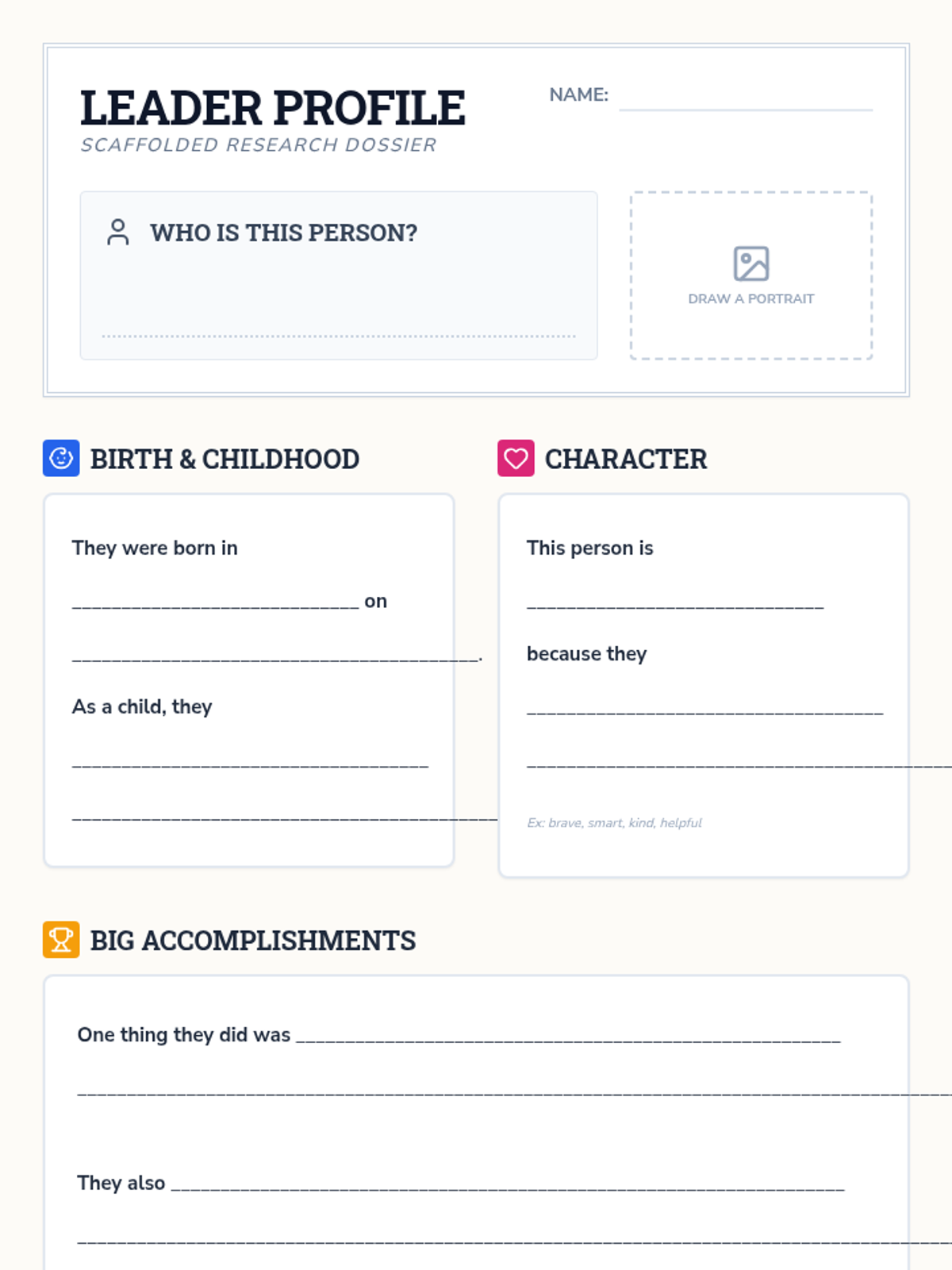
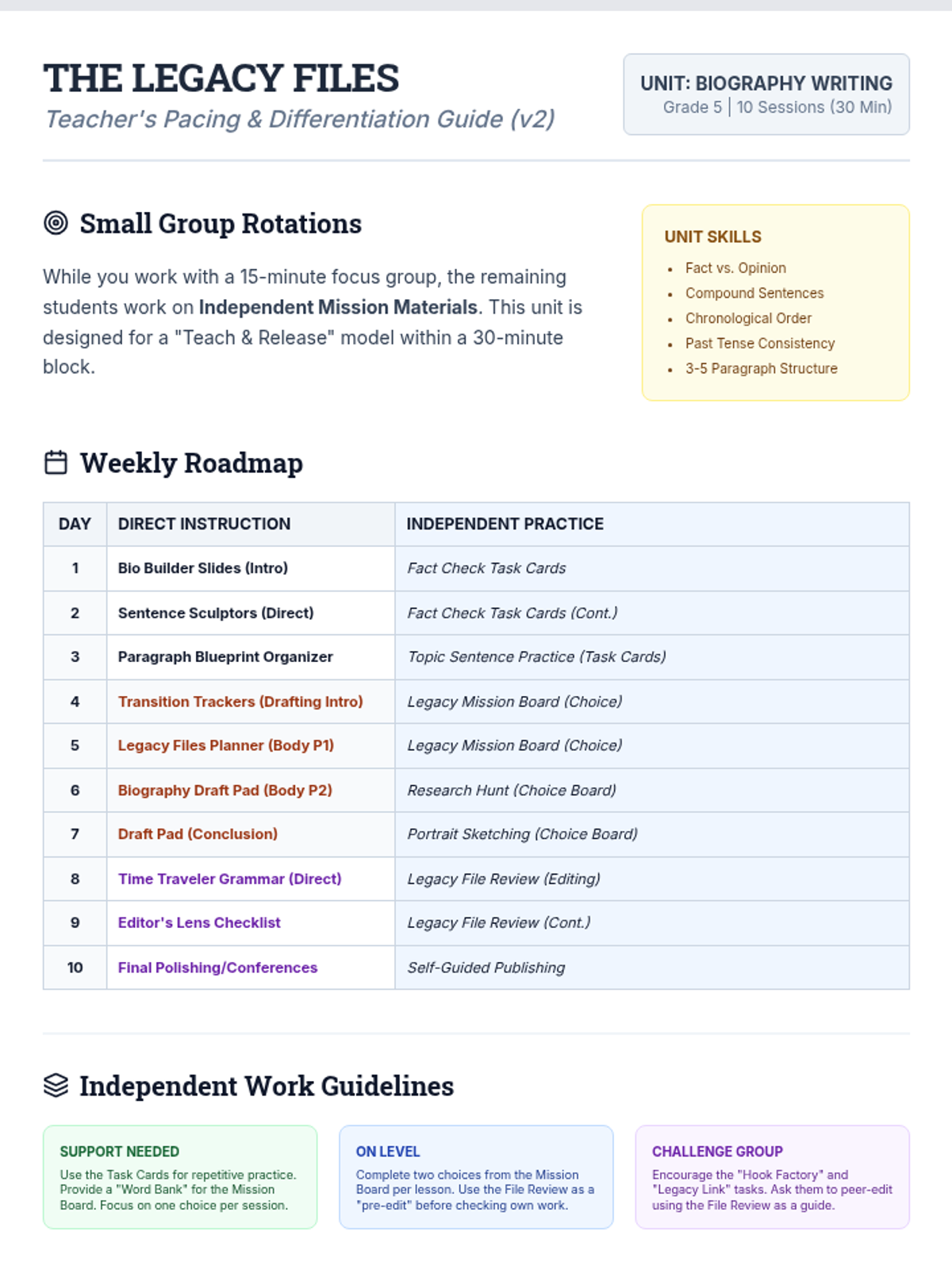
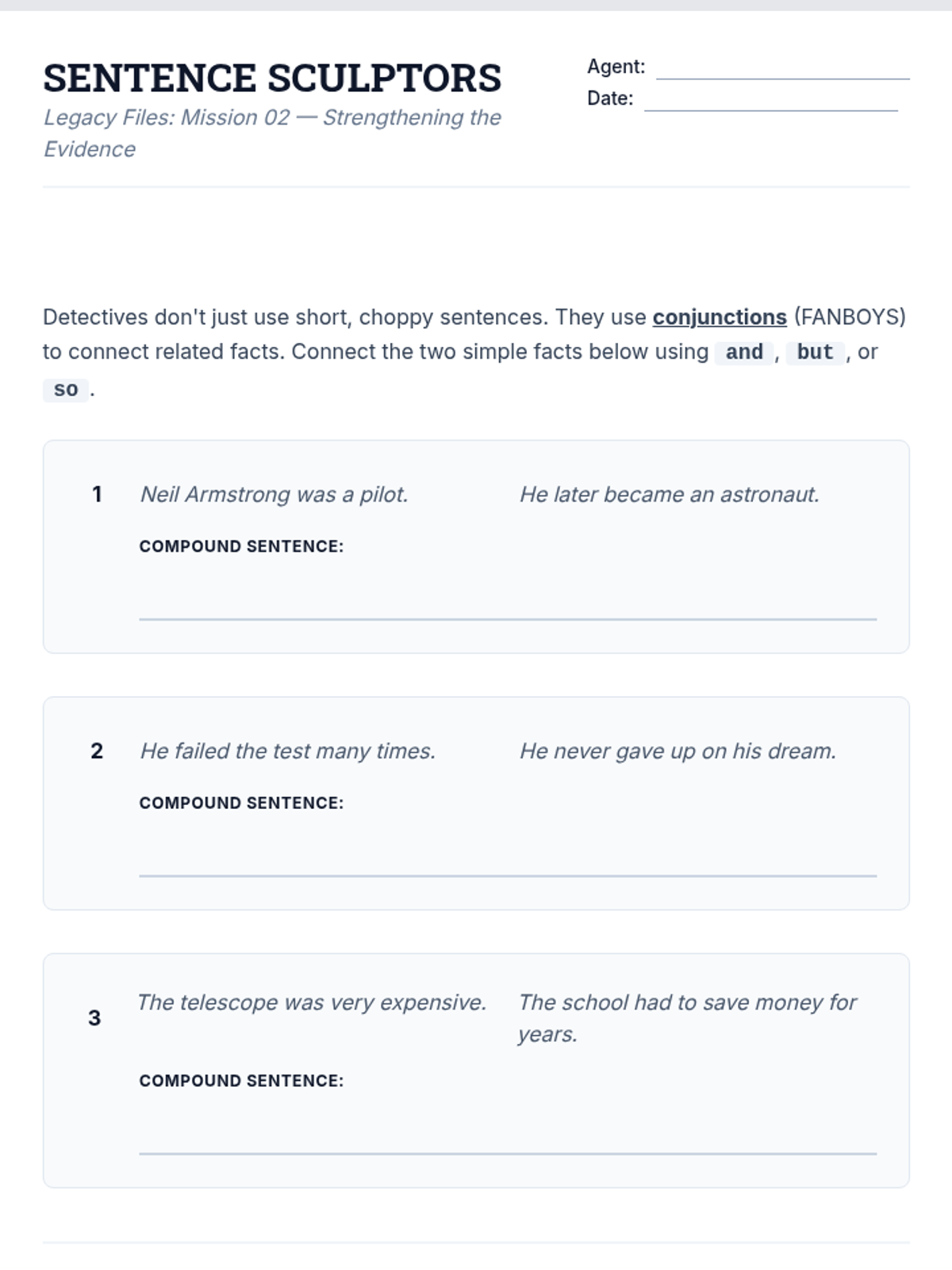
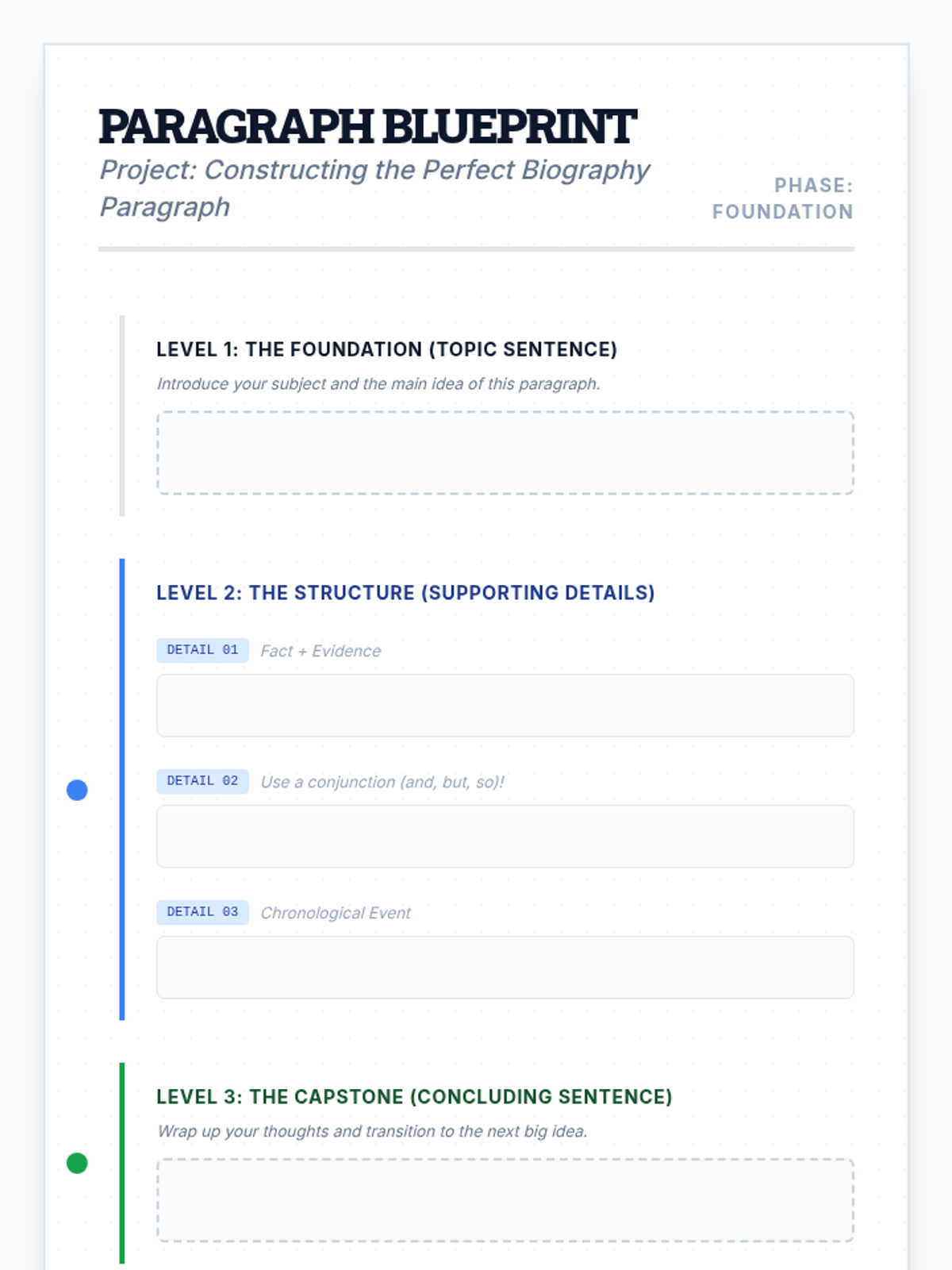
A 10-session unit for 5th graders focusing on the transition from paragraph to essay writing through the lens of biography. The unit covers sentence variety, chronological sequencing, paragraph structure, and grammar, tailored for small group instruction with differentiated support.
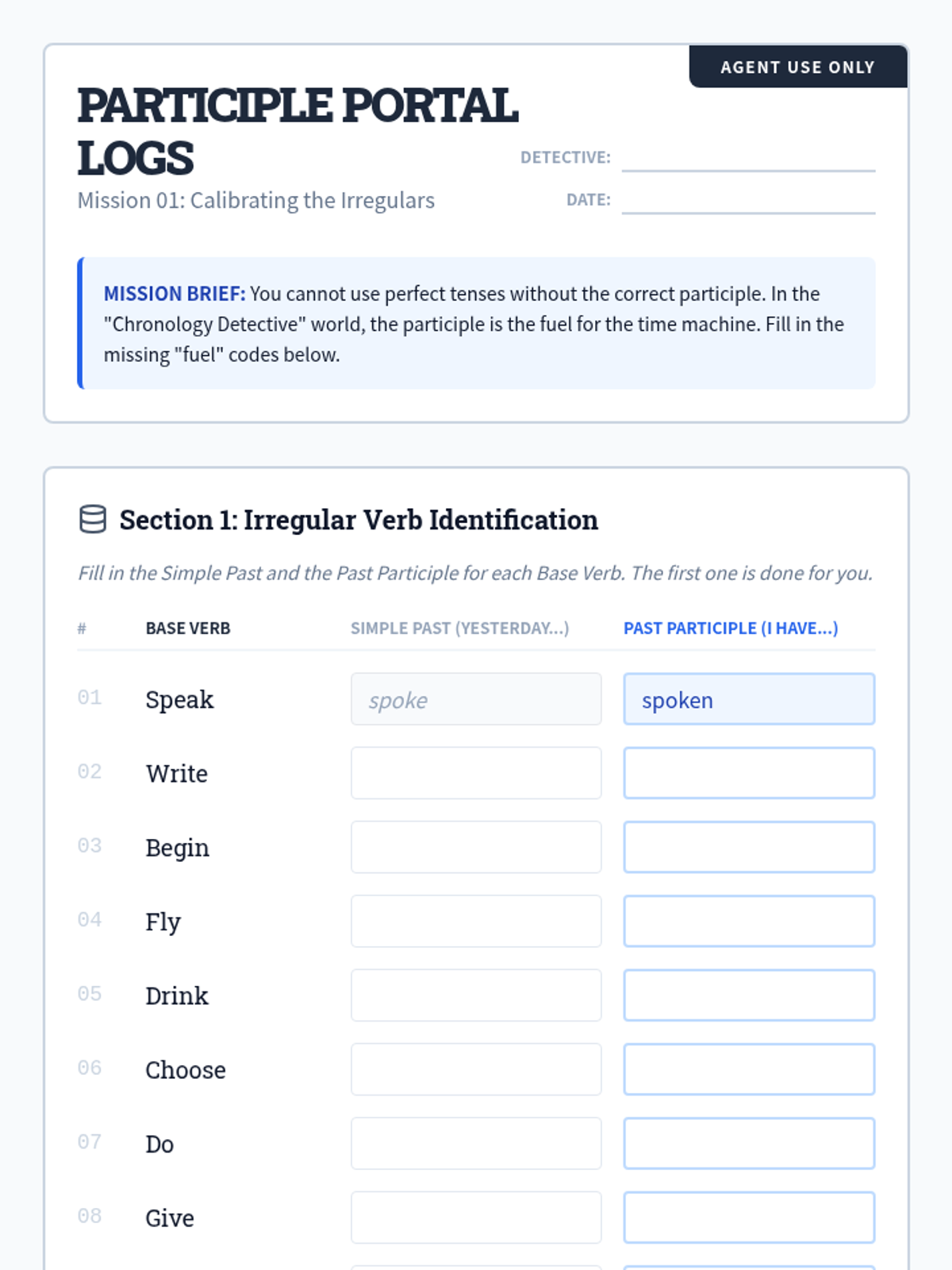
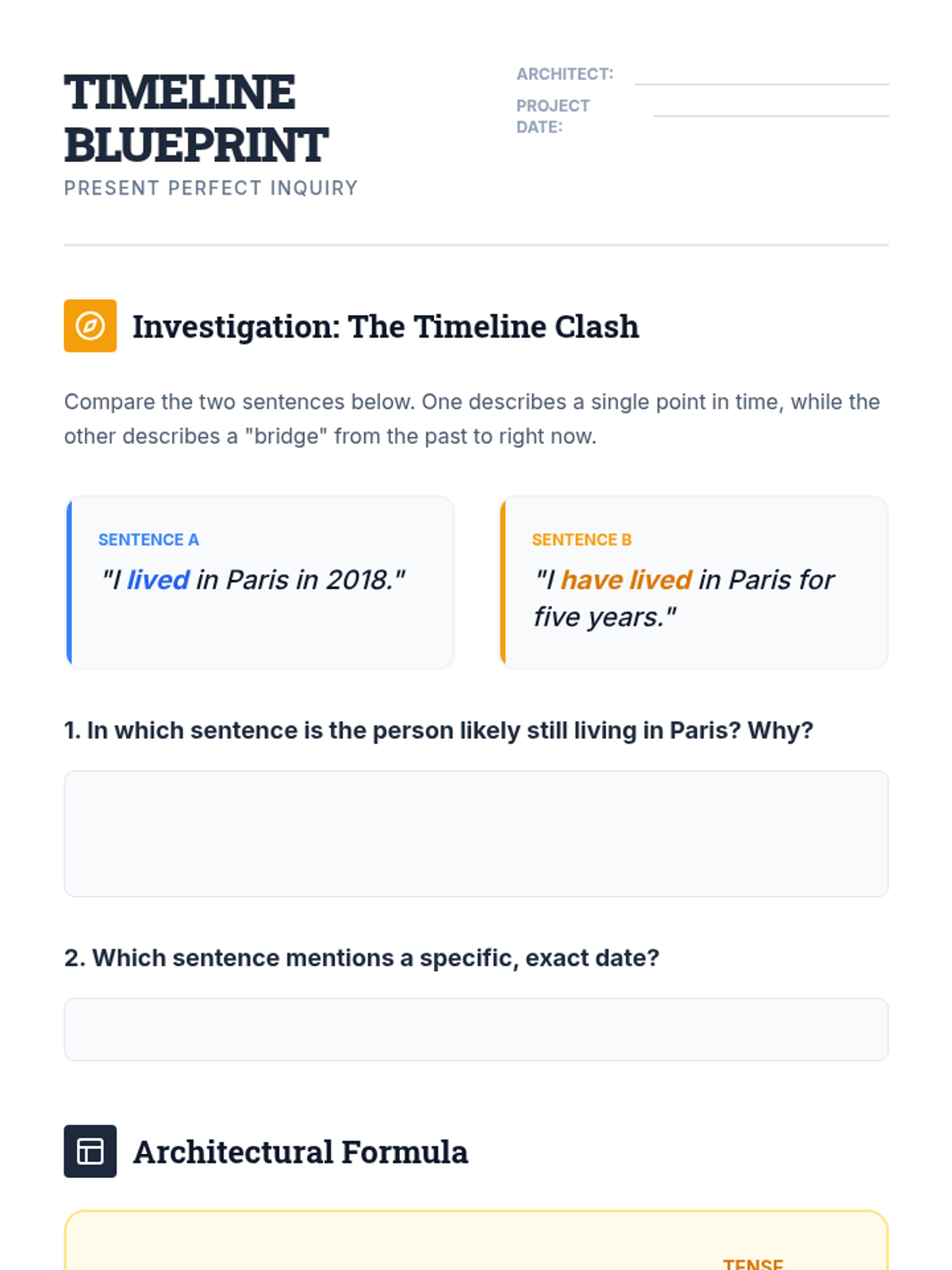
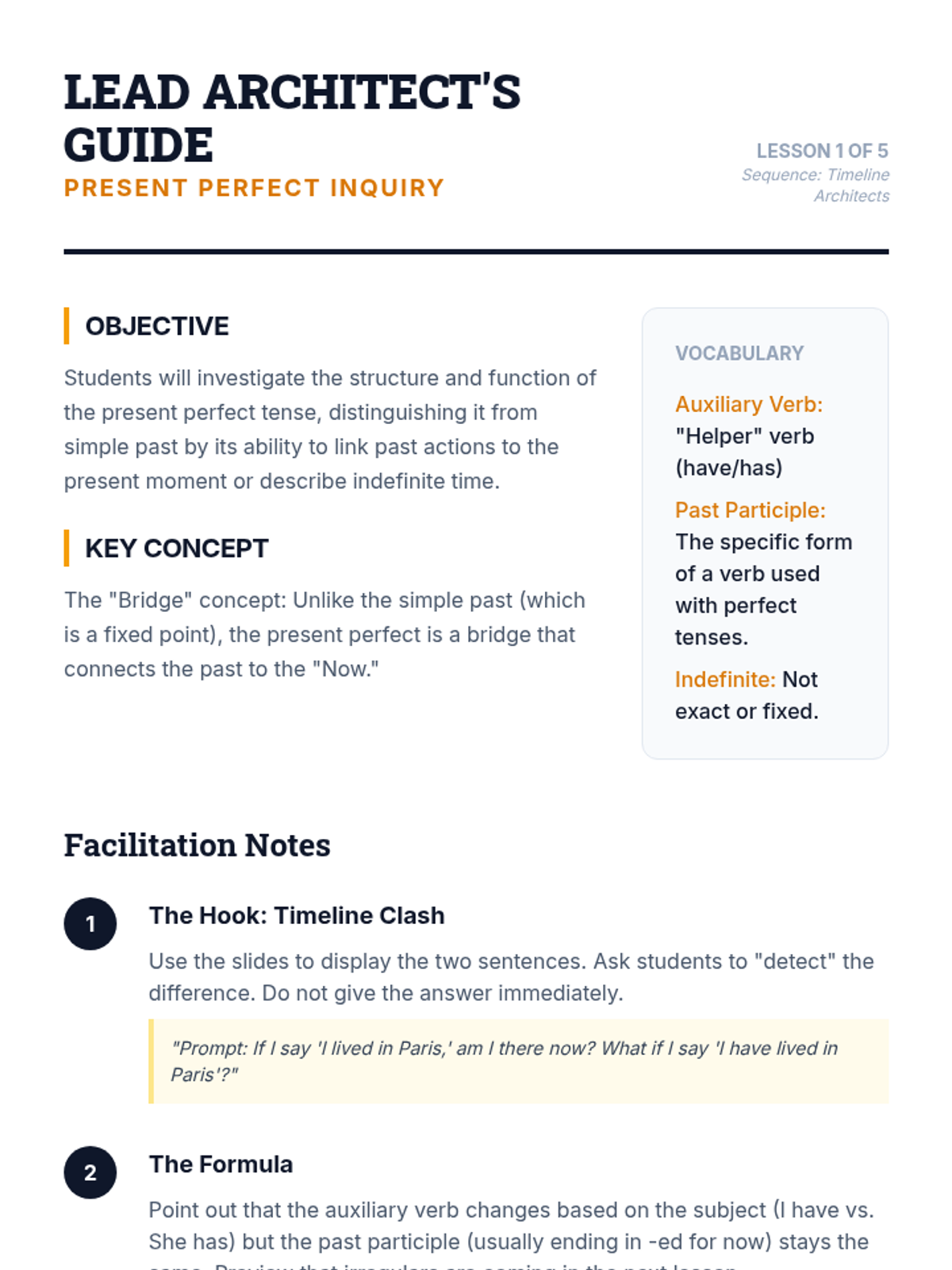
Students move from rote memorization of participles to deep analysis of timelines, understanding how perfect tenses link two points in time. The sequence uses logic puzzles and timeline mapping to demystify why and when to use 'have,' 'had,' and 'will have.'
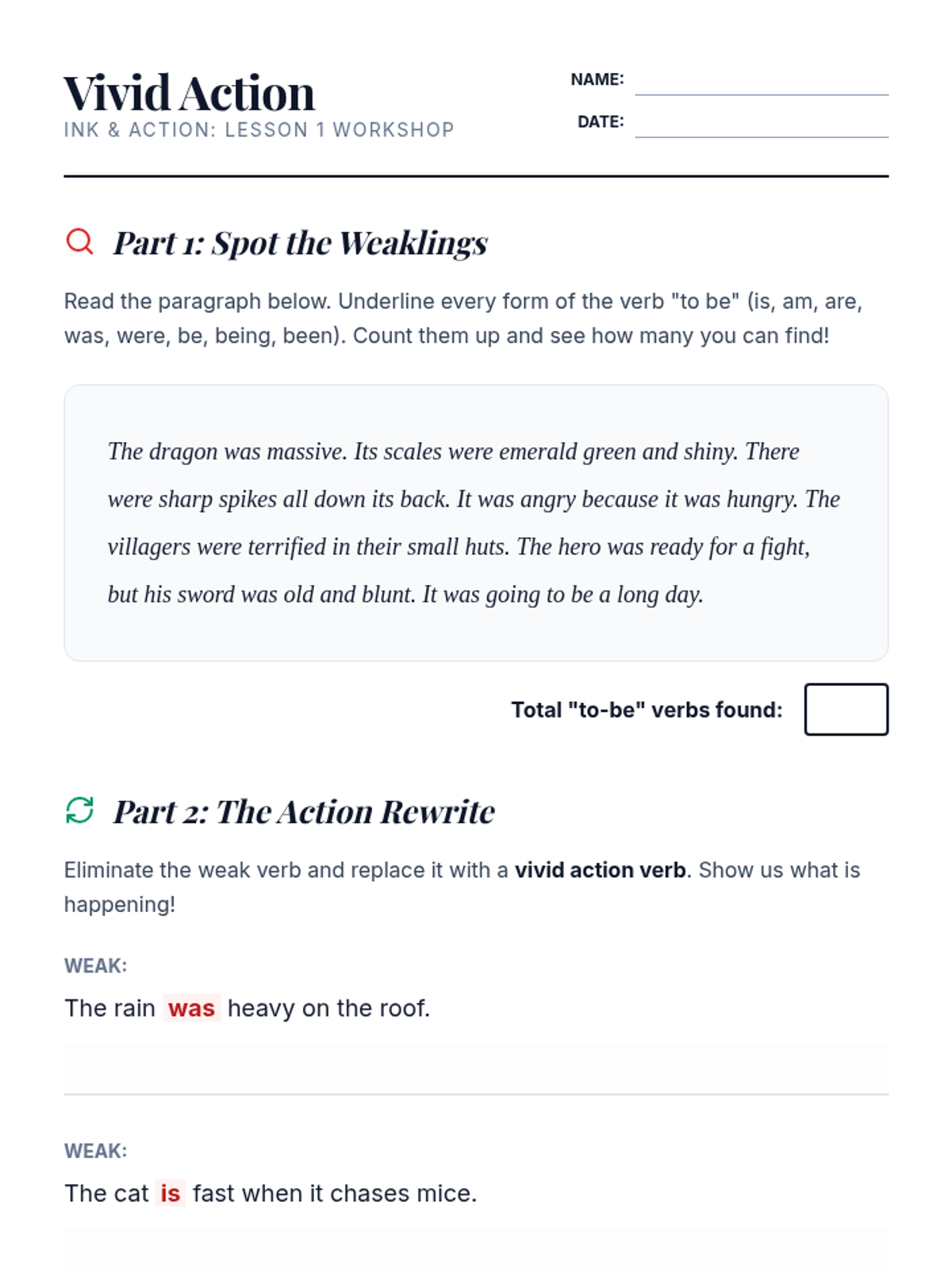
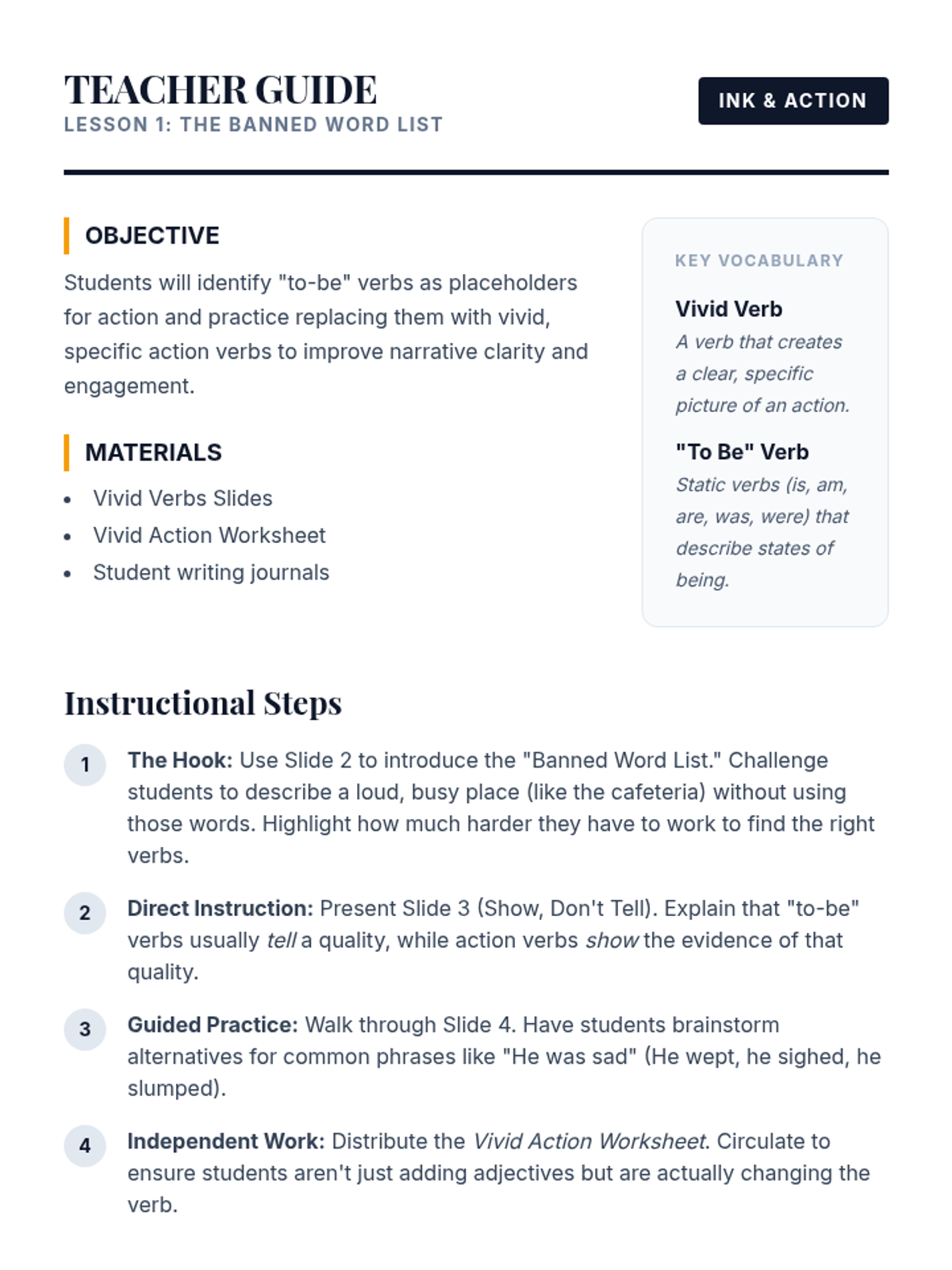
This project-based sequence applies verb knowledge to creative writing. Students focus on the stylistic impact of verbs, practicing how to shift tenses correctly within a narrative and how to replace weak 'to be' verbs with vivid action. The sequence culminates in a polished narrative piece that demonstrates mastery of tense consistency and strong verb choice.
A 5-lesson unit where 3rd-grade students become professional editors, mastering pronoun clarity, agreement, and consistency through real-world simulation and skill-building activities.
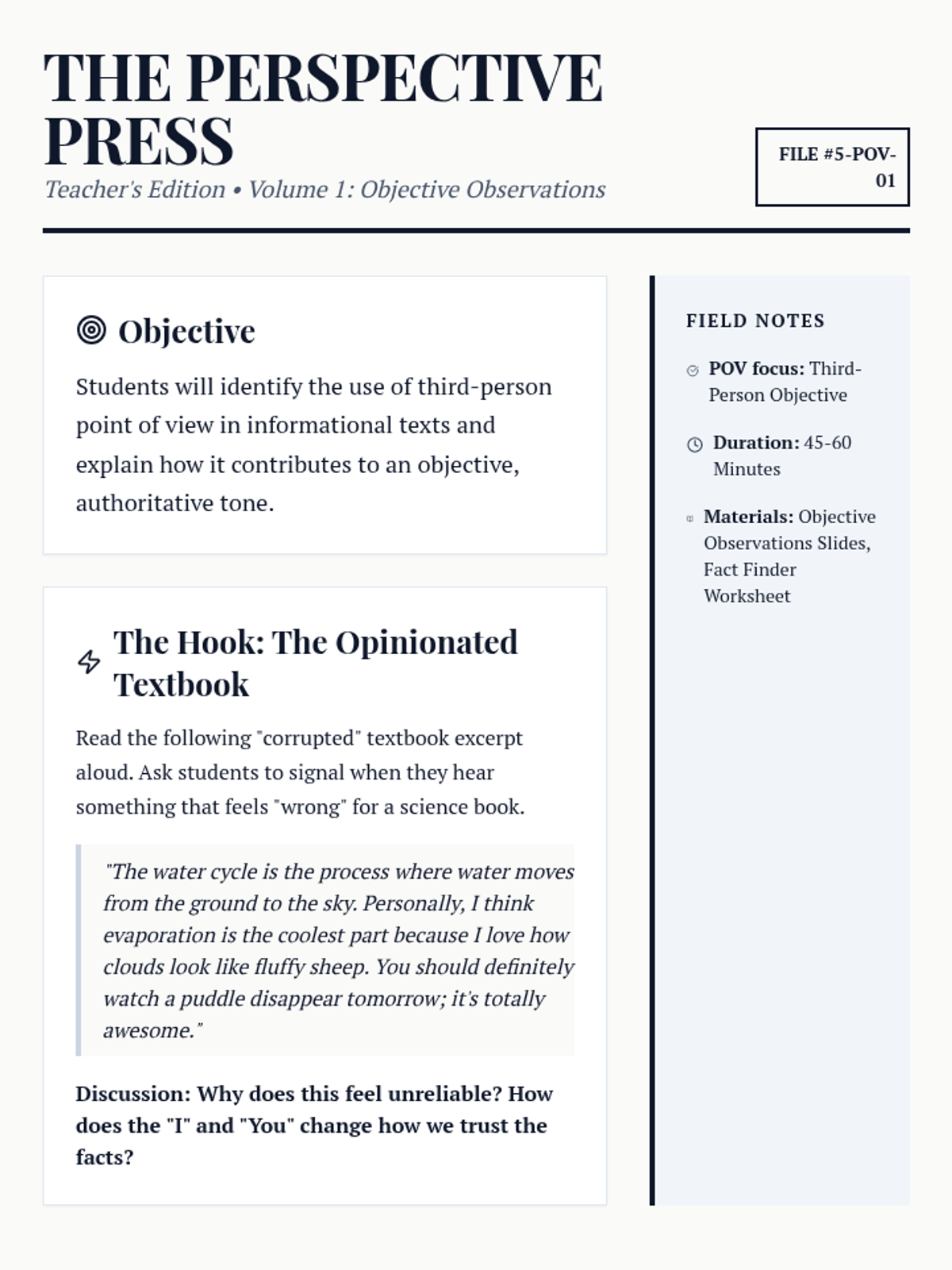
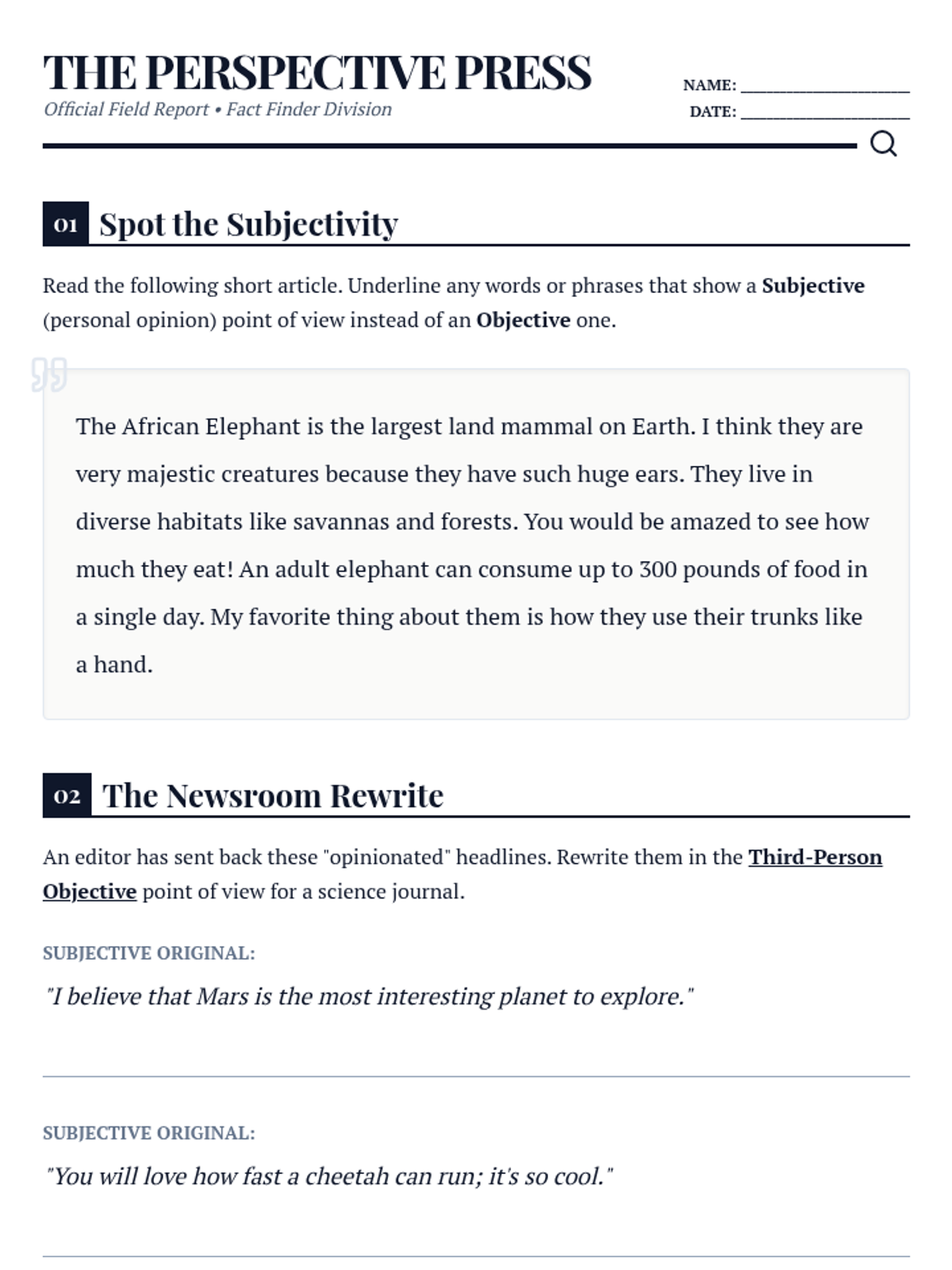
A 5th-grade ELA sequence exploring how point of view changes across different genres, from the objectivity of science articles to the direct address of technical guides and the personal intimacy of memoirs.
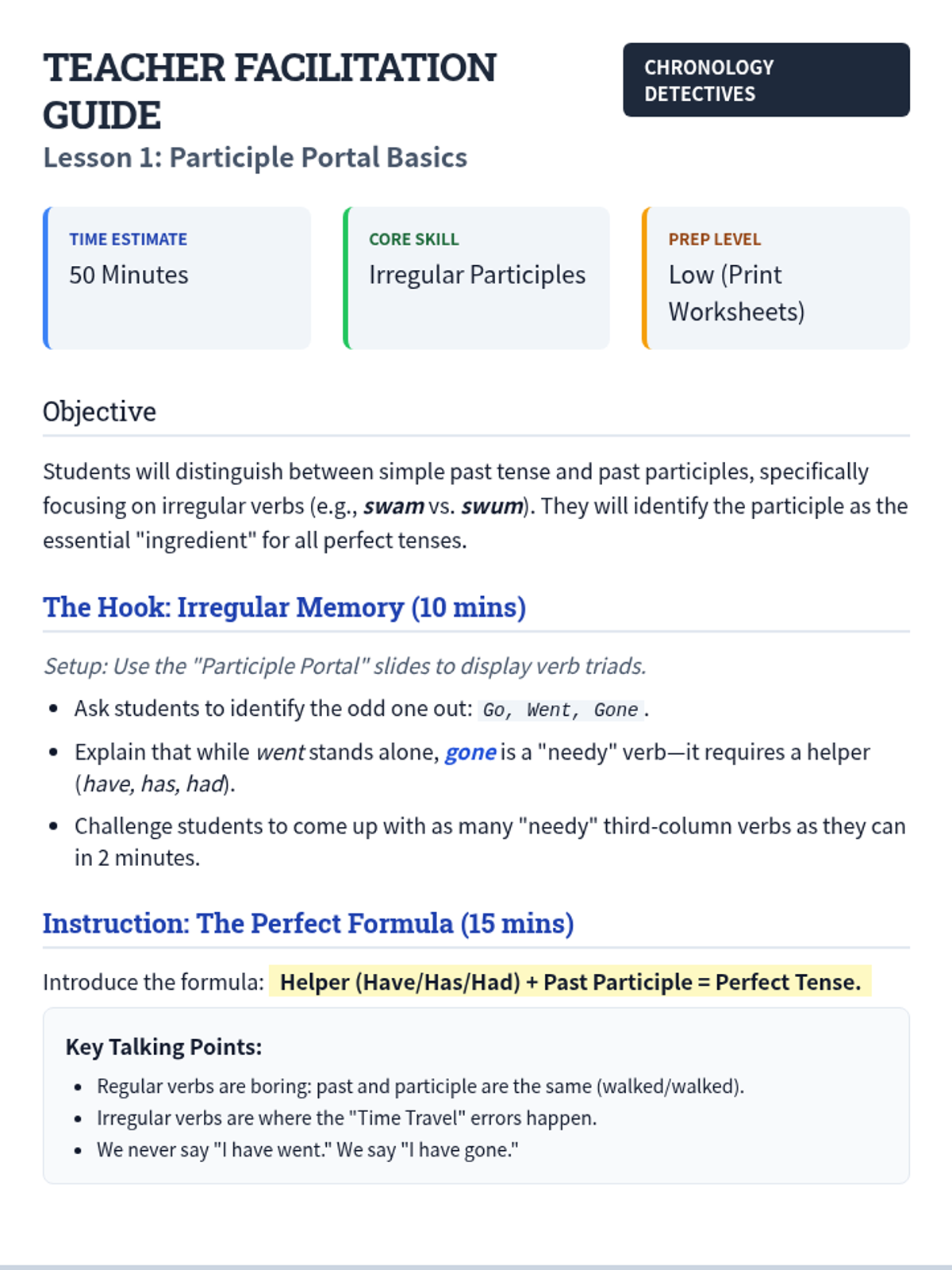
In this 5-lesson sequence, 5th-grade students investigate the perfect verb tenses (present, past, and future) through timeline analysis and inquiry. Students move from discovering the 'have/has/had + participle' pattern to applying these tenses to clarify complex sequences of events in their writing.
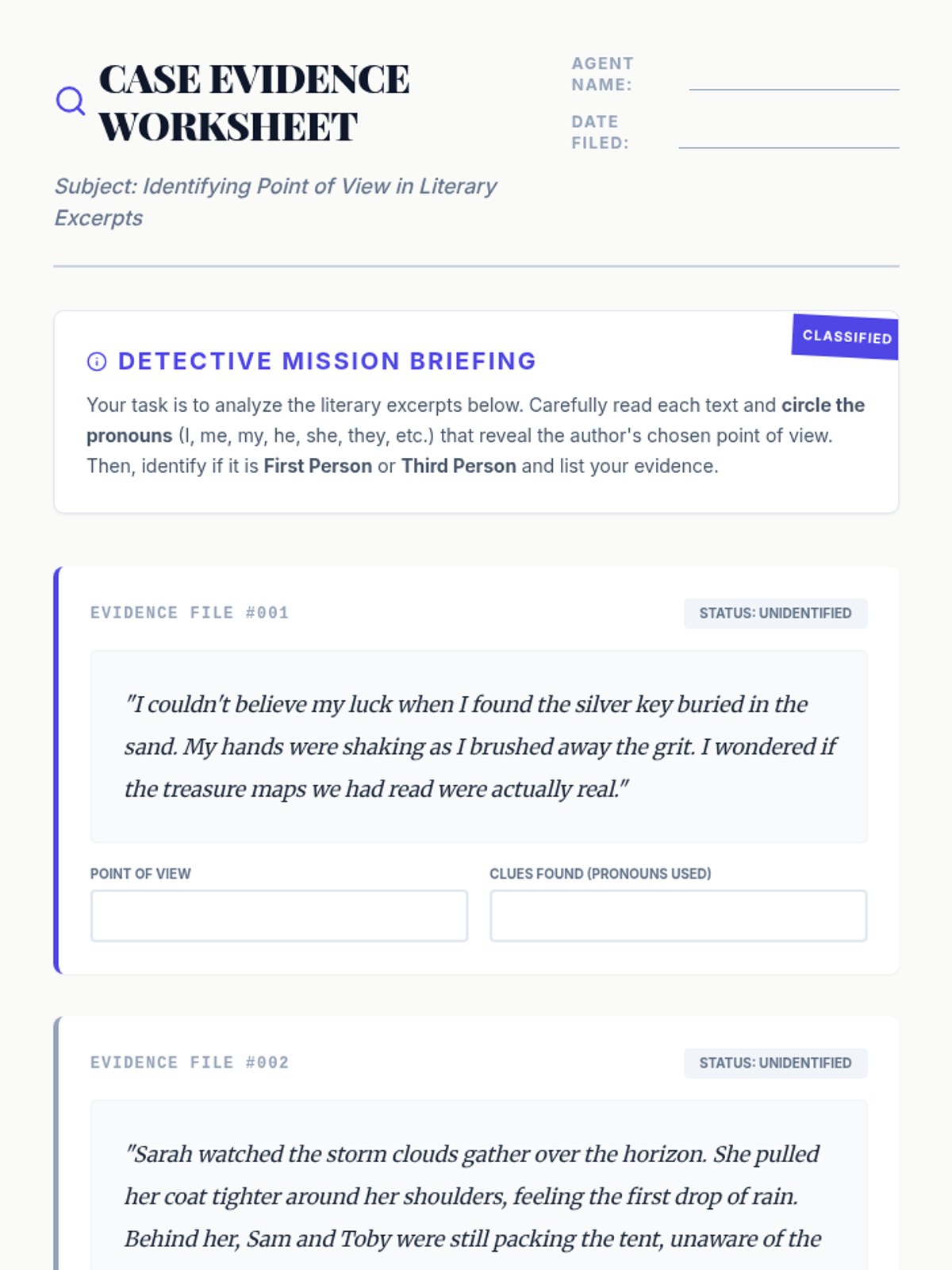
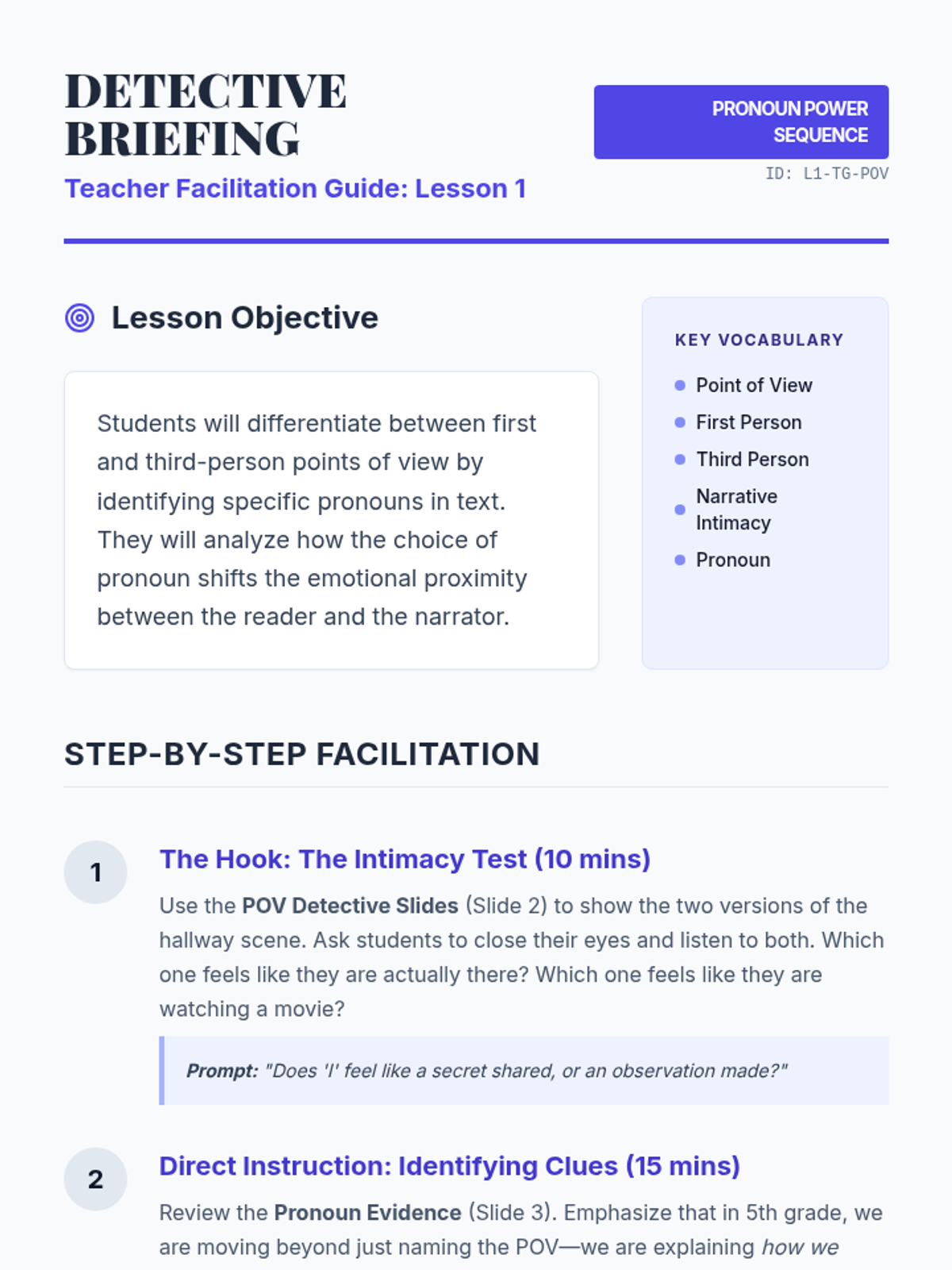
This sequence explores how authors use pronouns to establish point of view and voice in literature, moving from basic mechanics to literary analysis and creative rewriting.
A series of thematic handwriting programs designed to improve fine motor skills and penmanship through daily practice sessions centered around fascinating educational topics like biology and history.
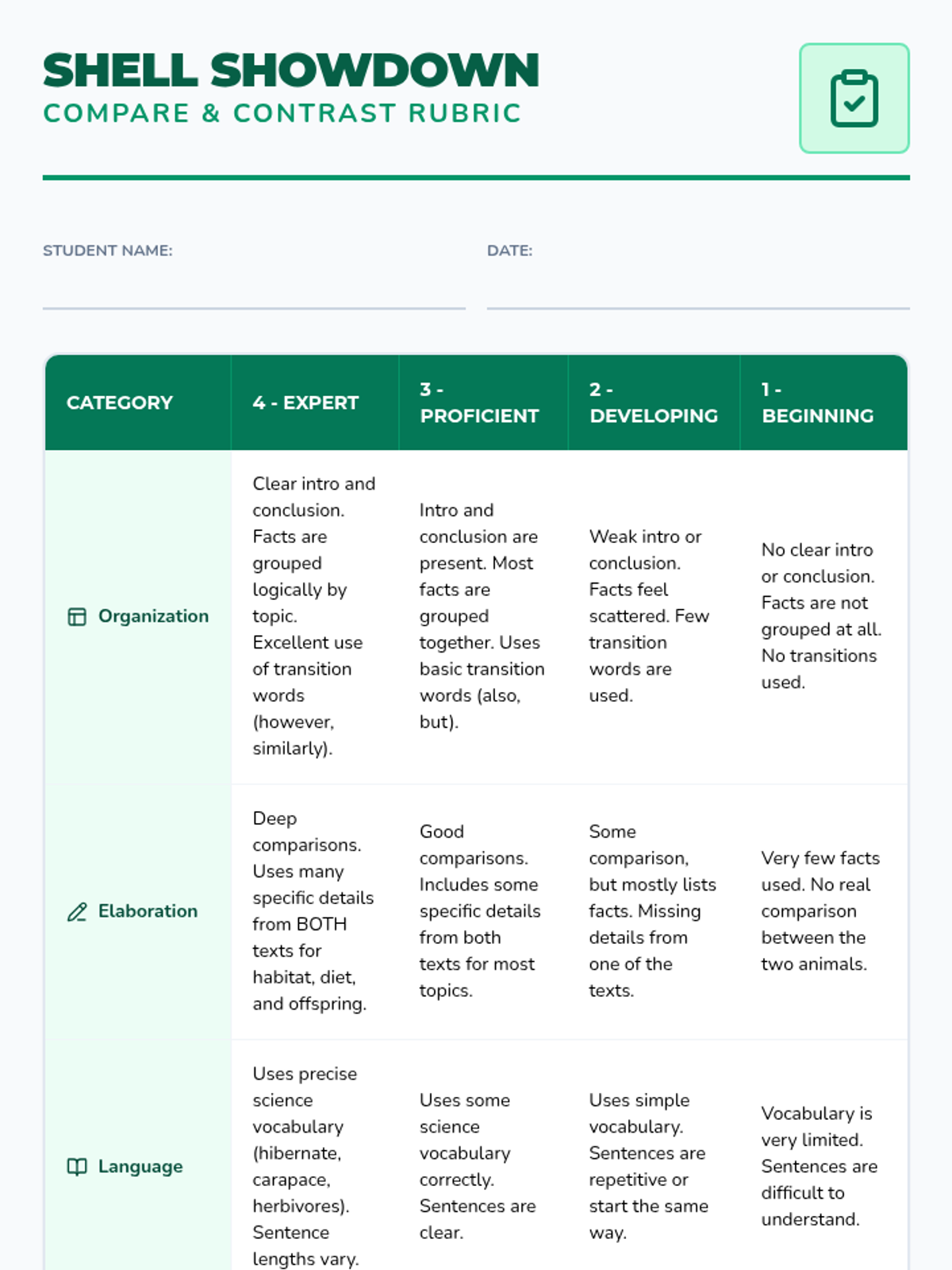
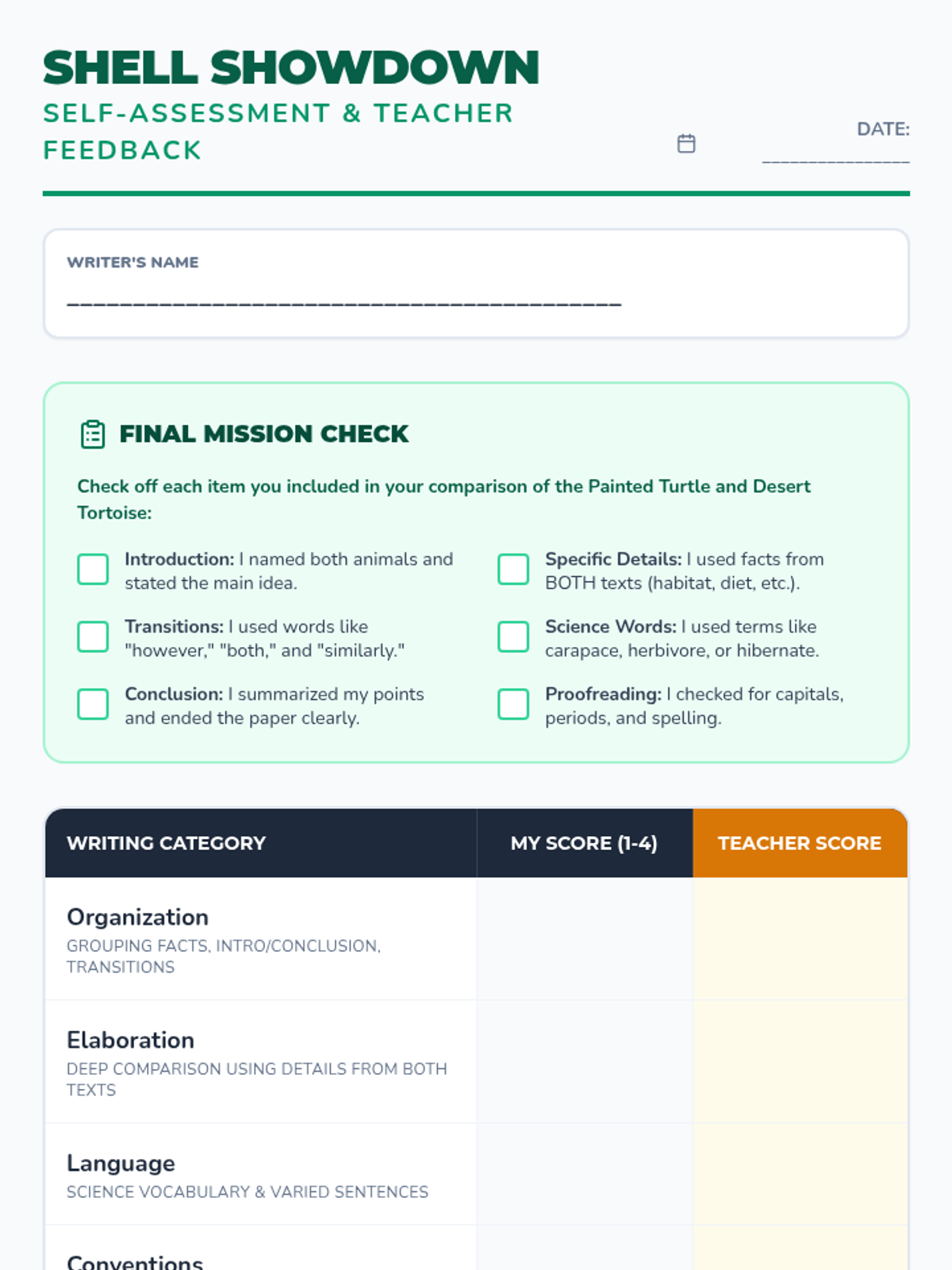
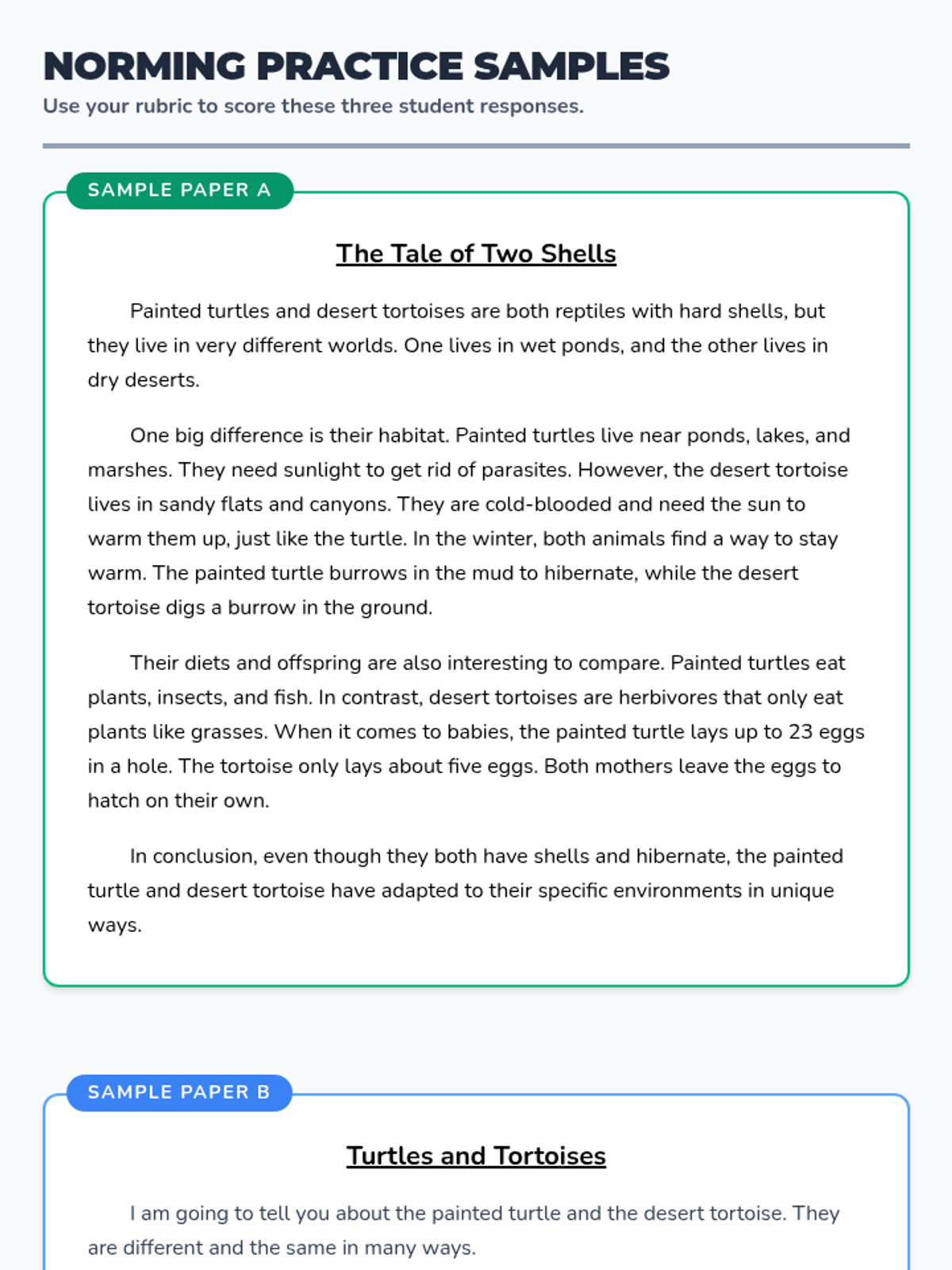
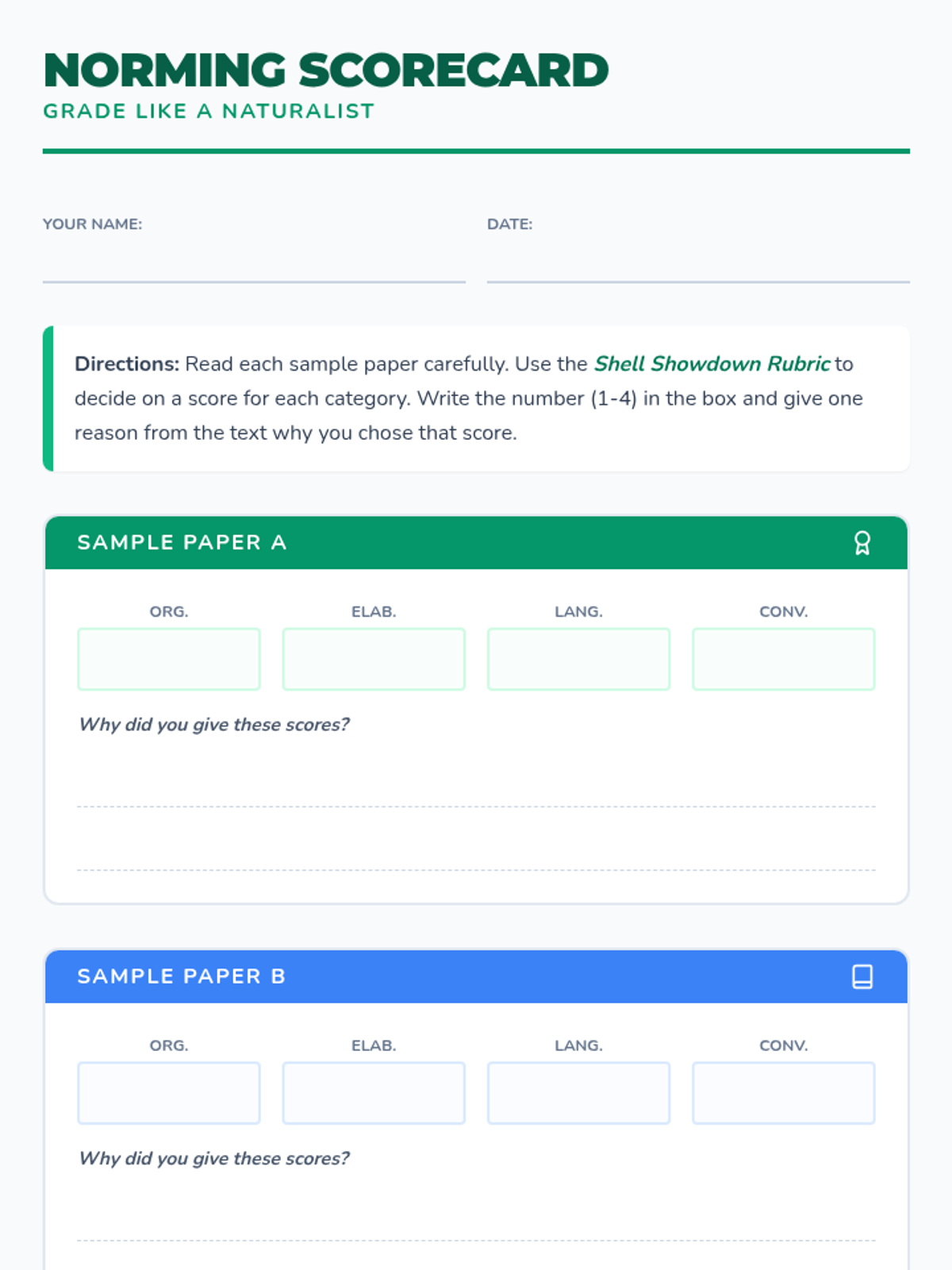
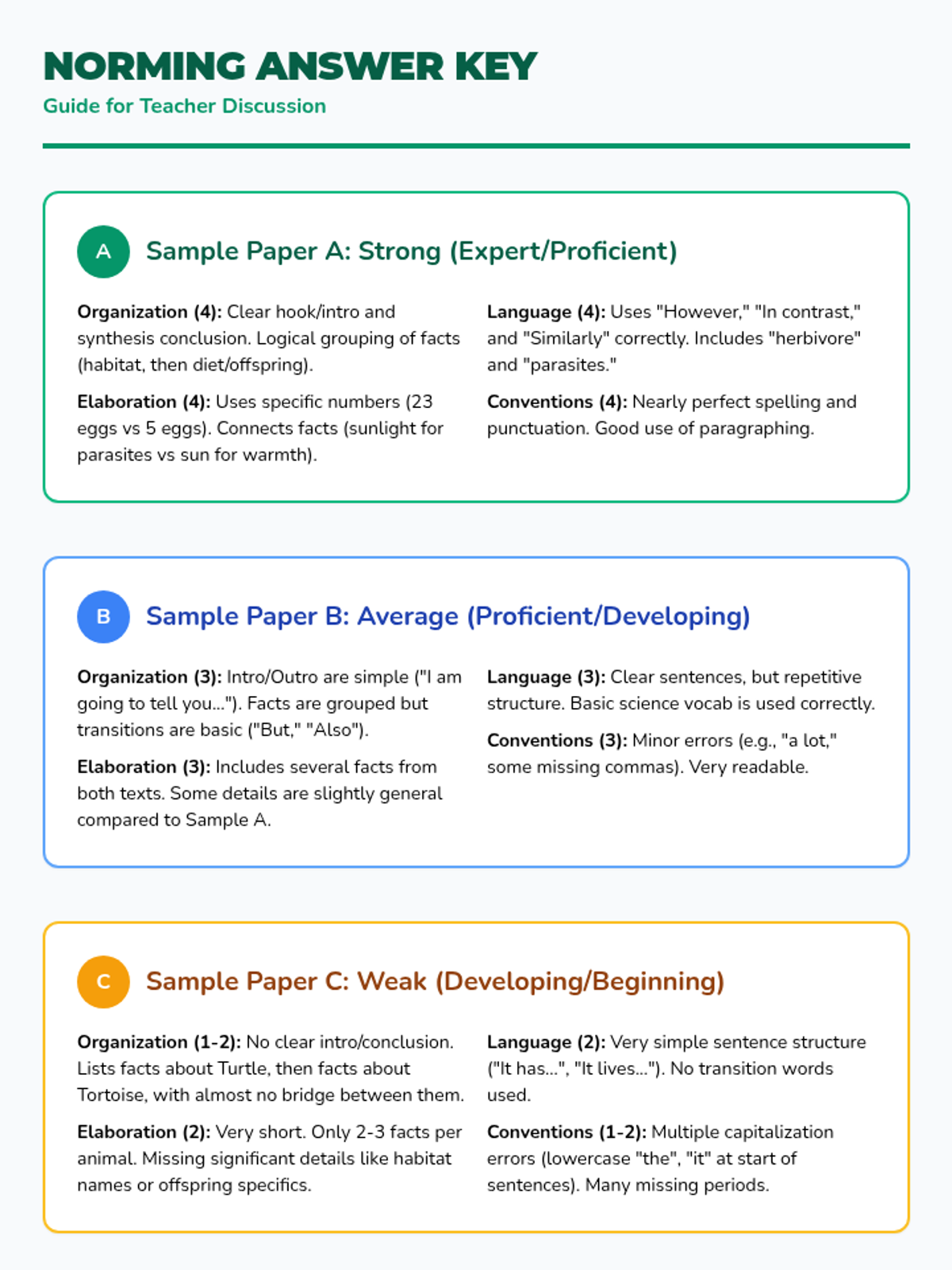
A comprehensive writing unit focusing on compare-and-contrast skills through animal research, norming exercises, and self-assessment.
A series of high-energy ELA lessons focusing on reading comprehension, summarizing, and word study to boost literacy skills.
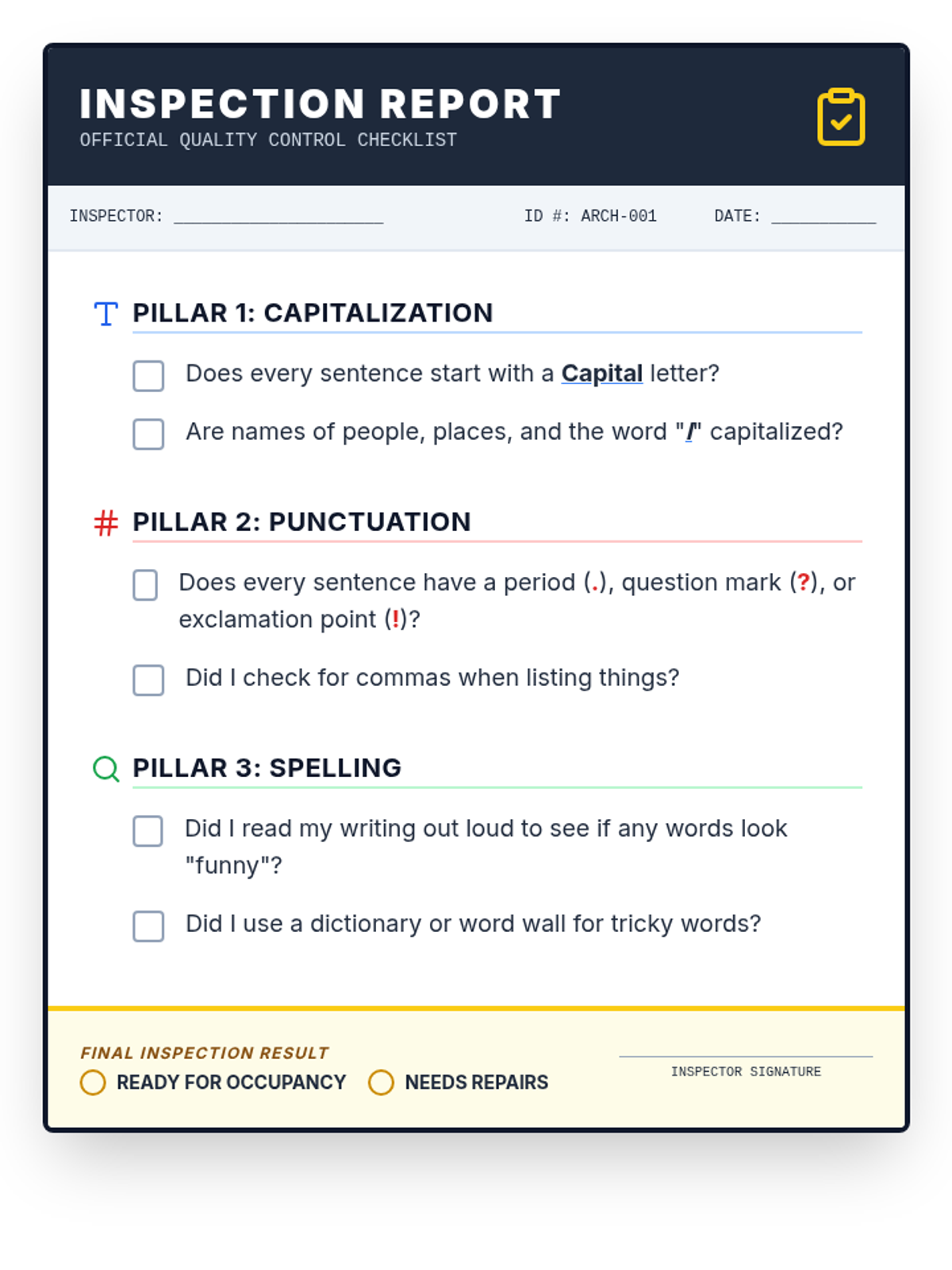
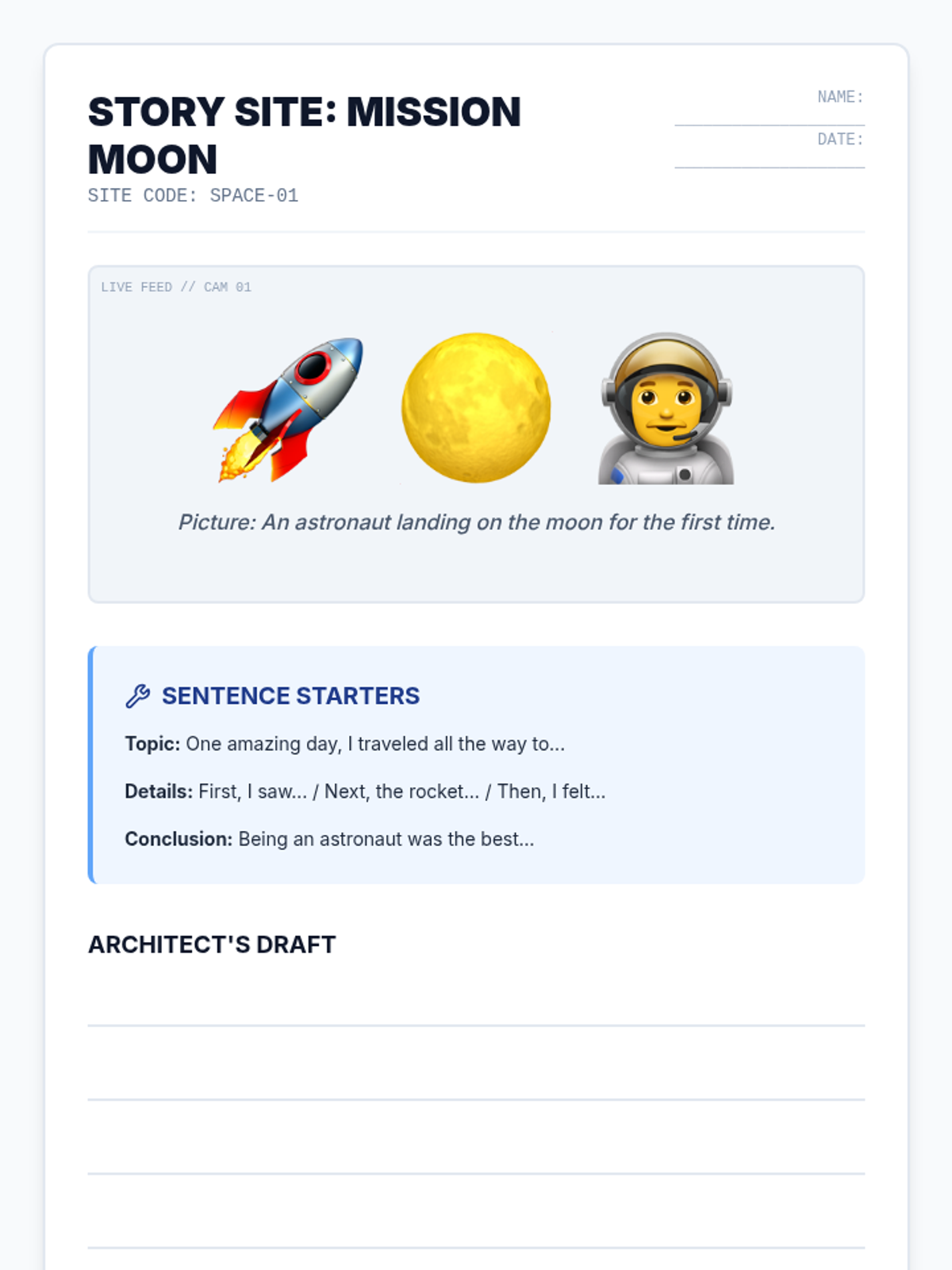
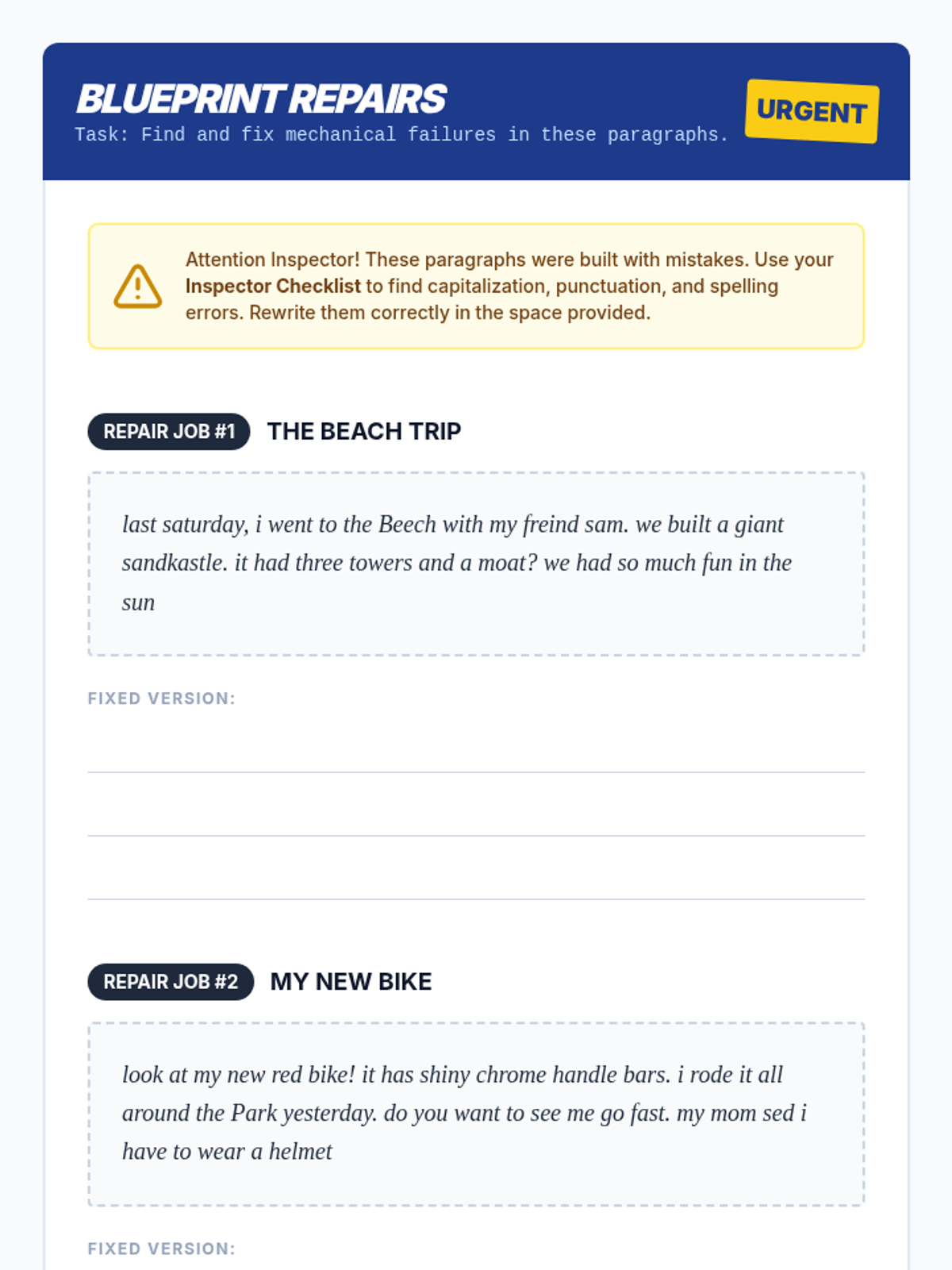
A series of materials designed to help Flint master paragraph structure and self-editing through the lens of a 'Narrative Architect', using blueprints and inspection checklists.
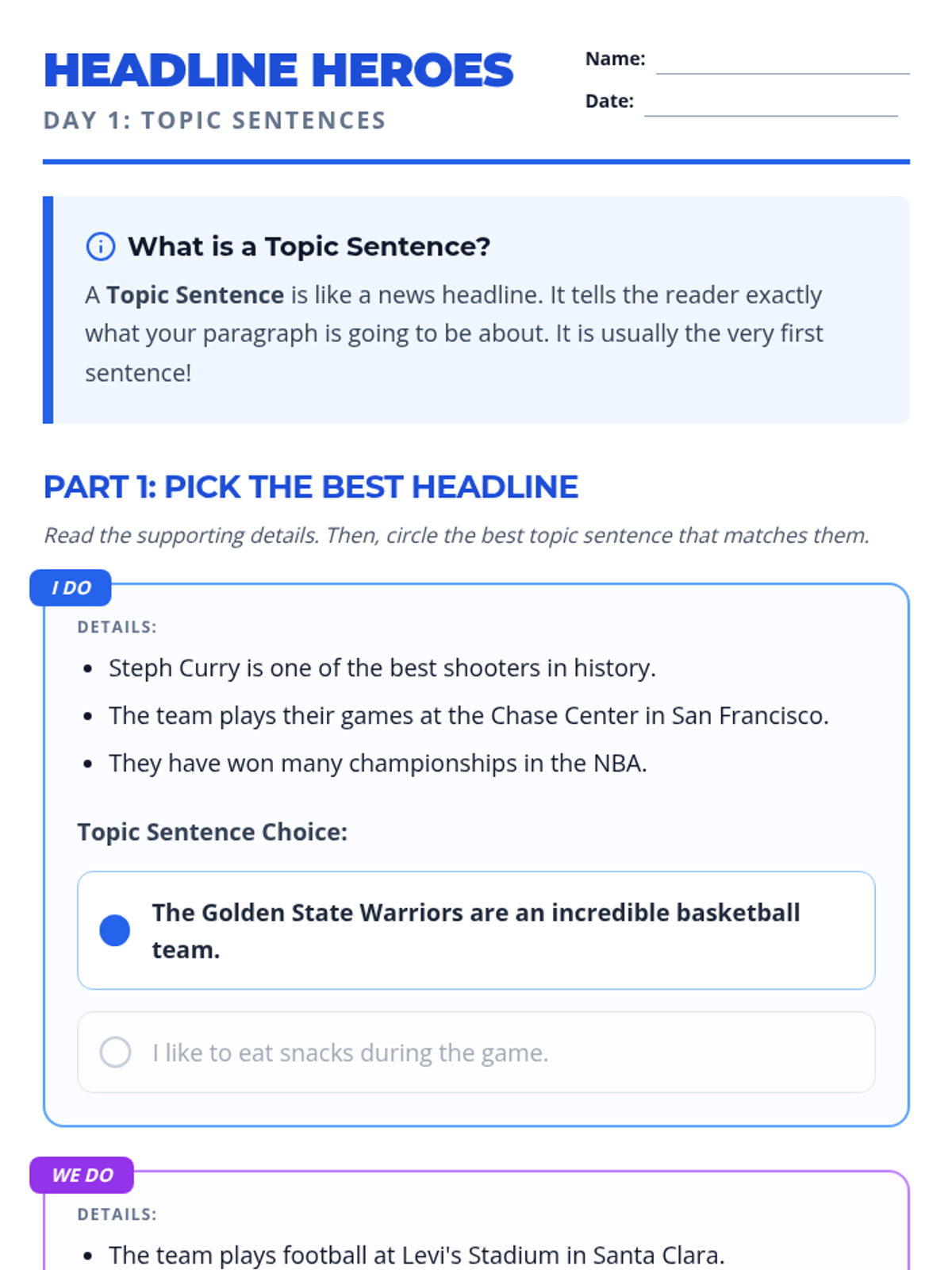
A 4-day instructional sequence focused on paragraph structure, specifically mastering topic sentences and supporting details using student-interest topics like sports, dragons, and favorite foods.
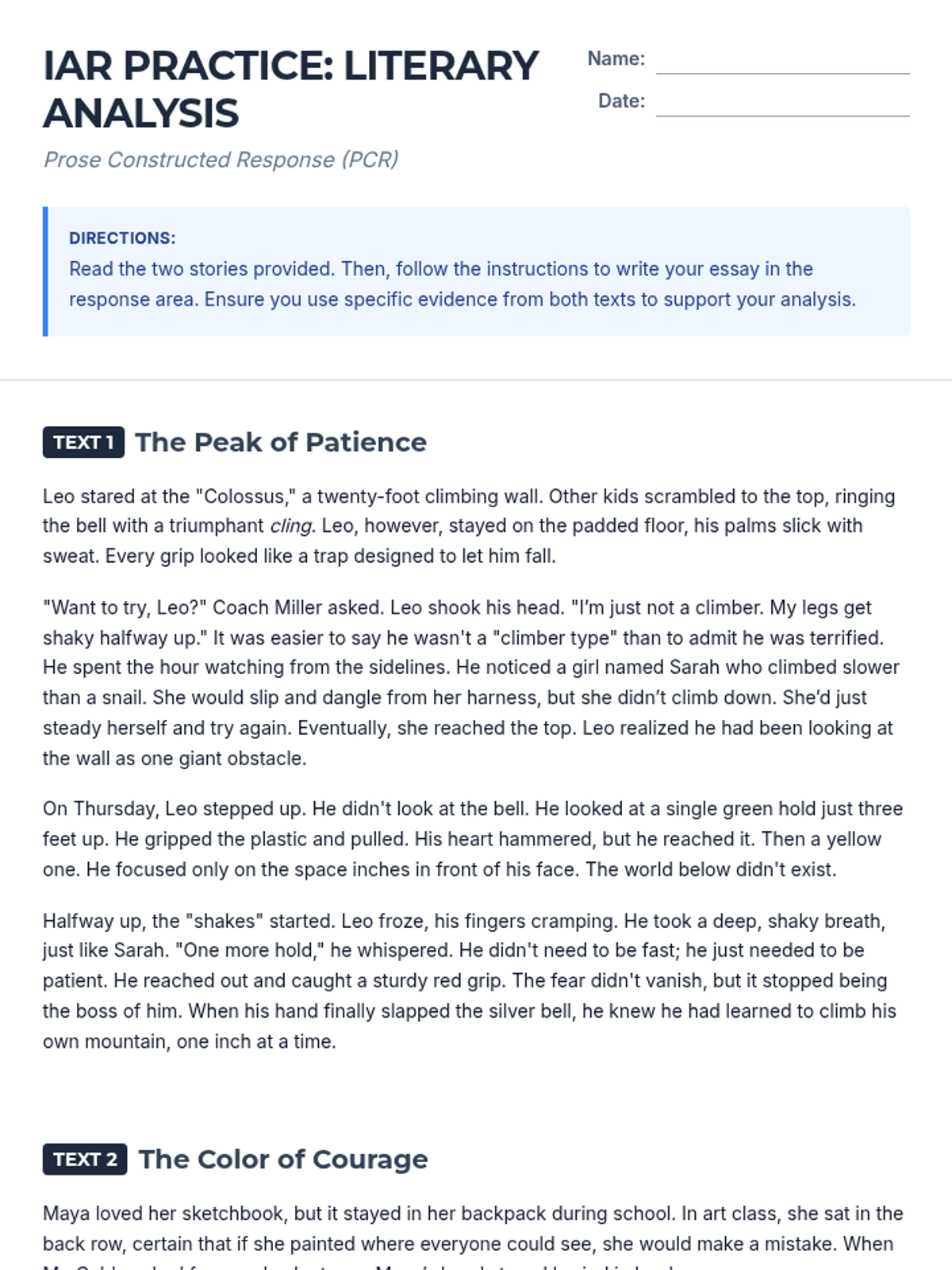
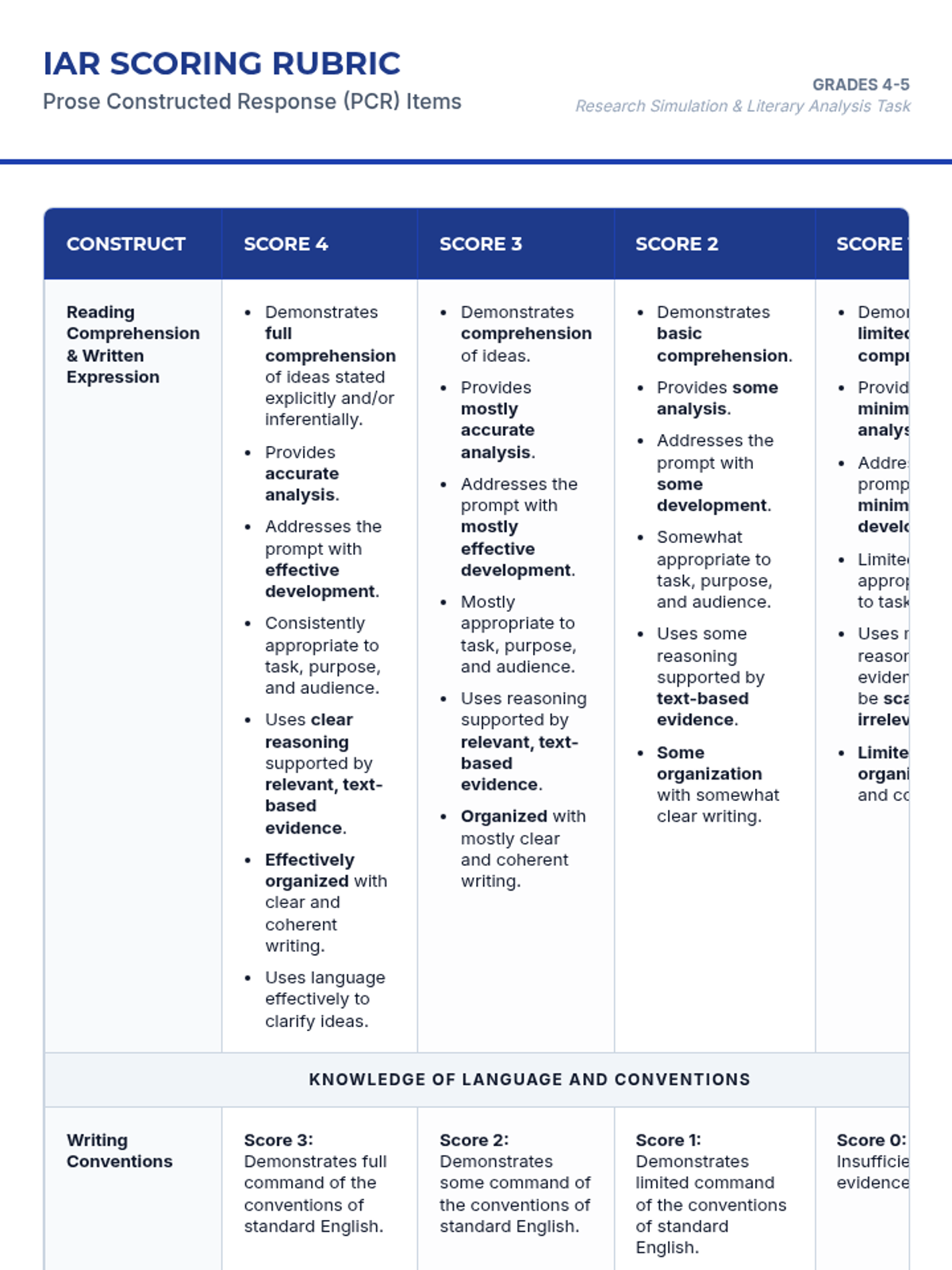
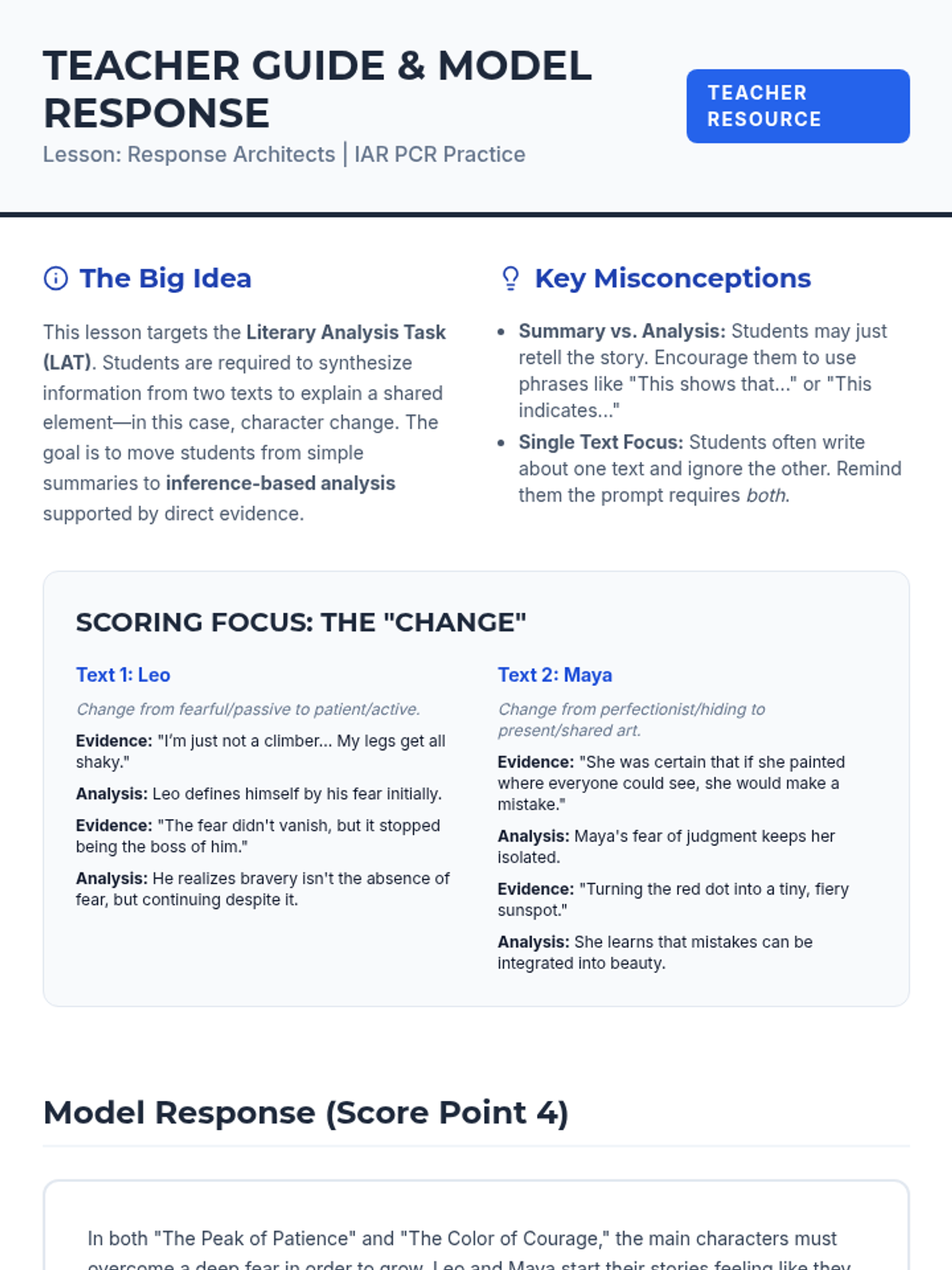
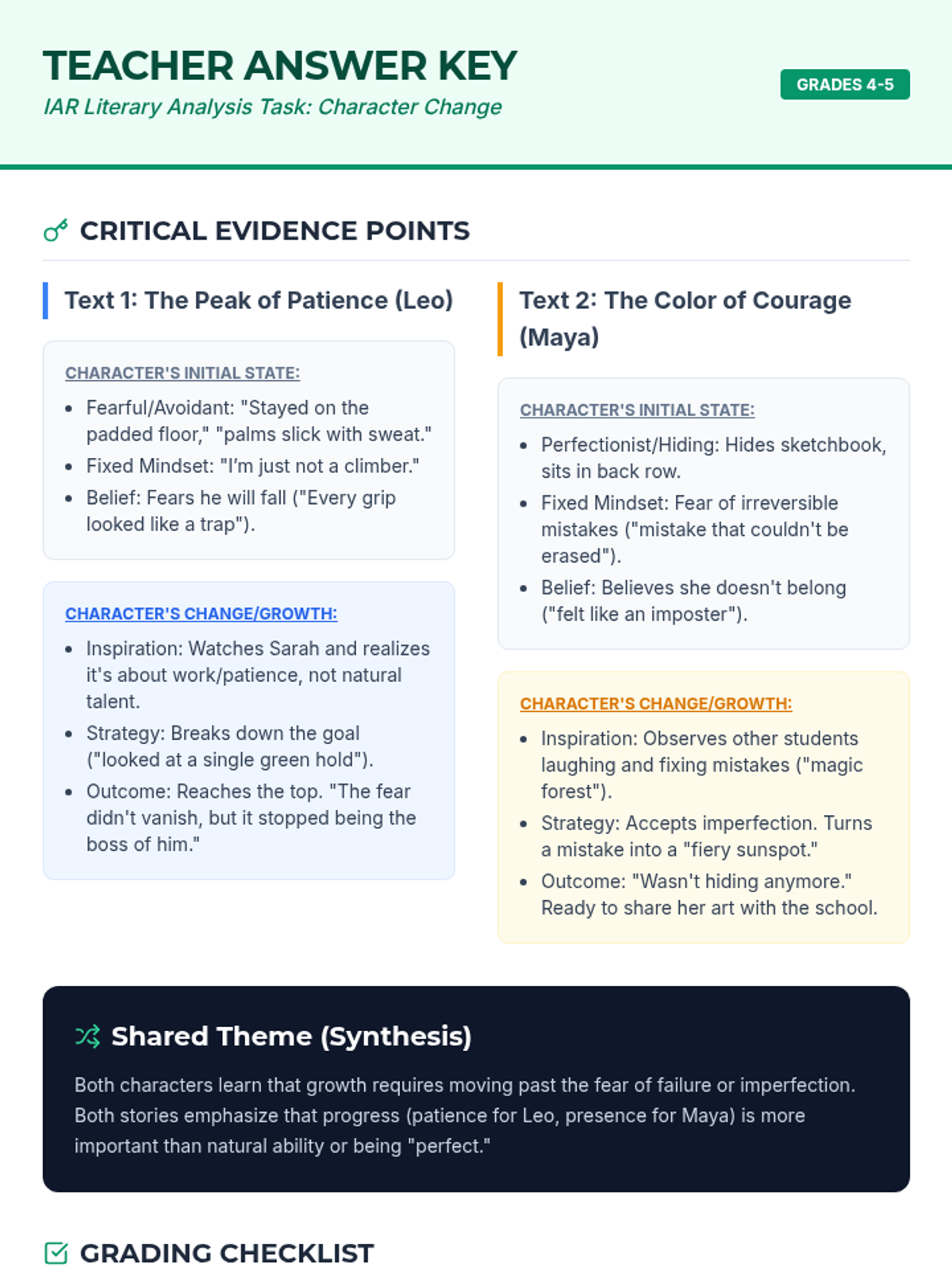
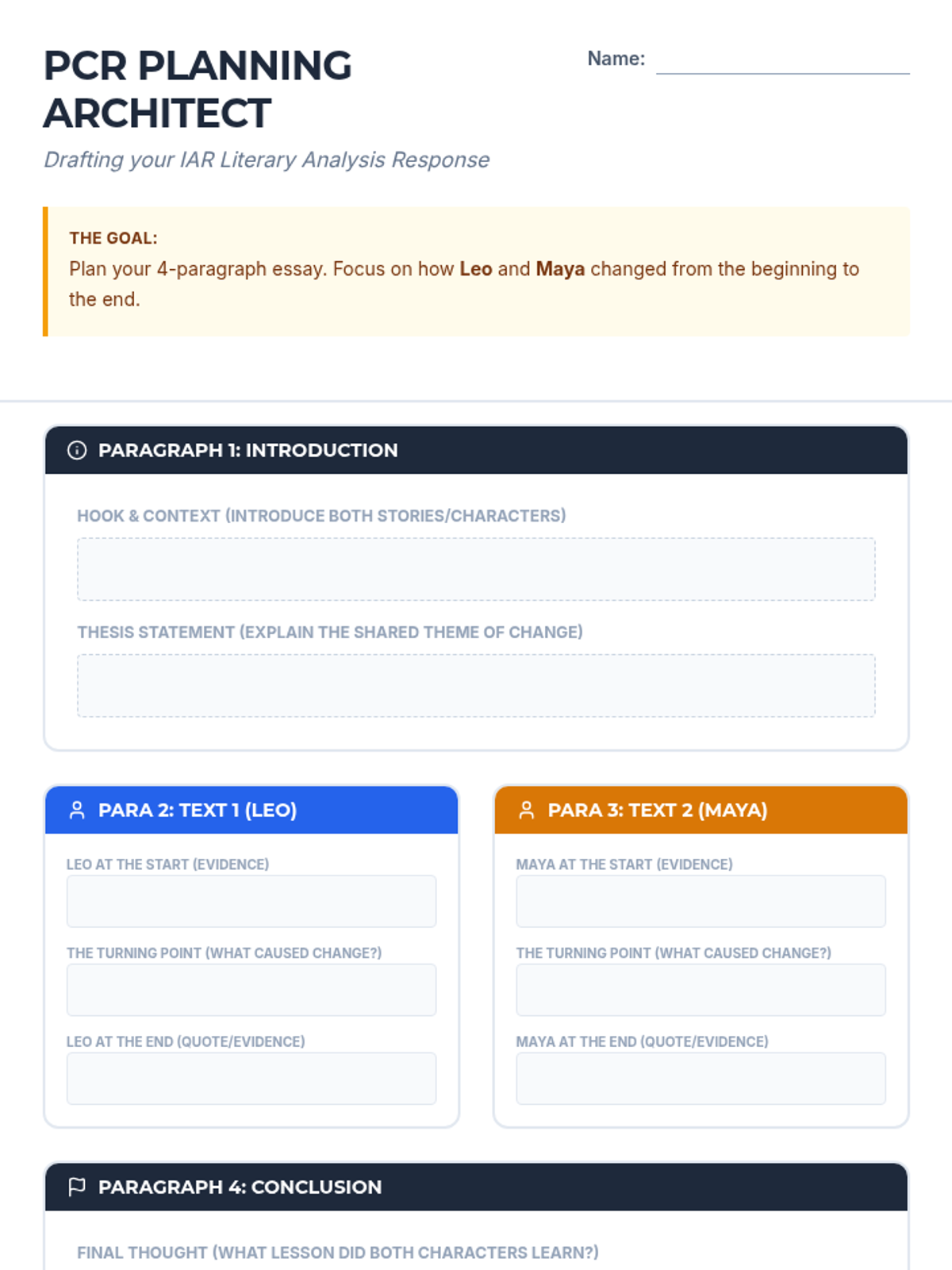
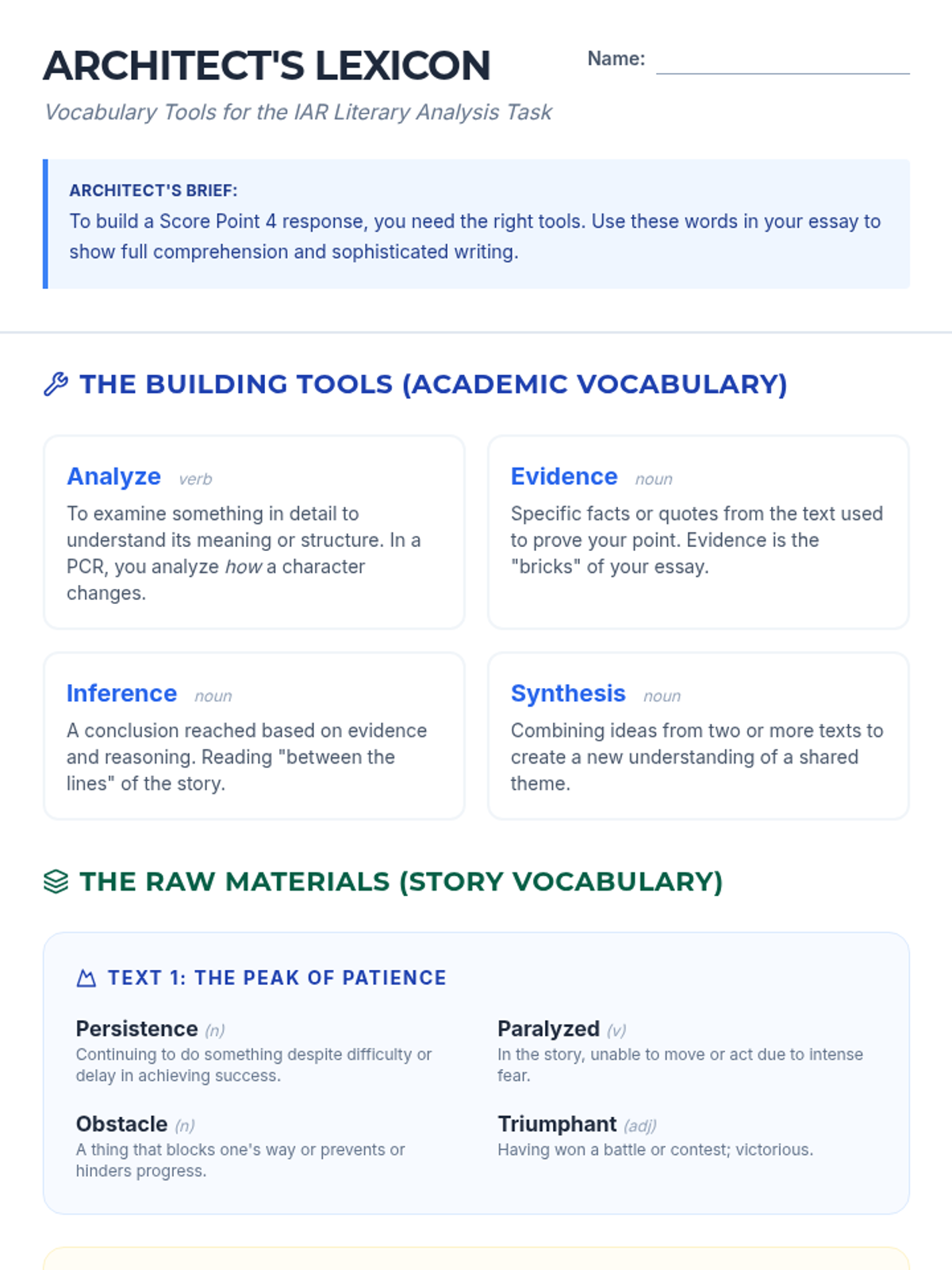
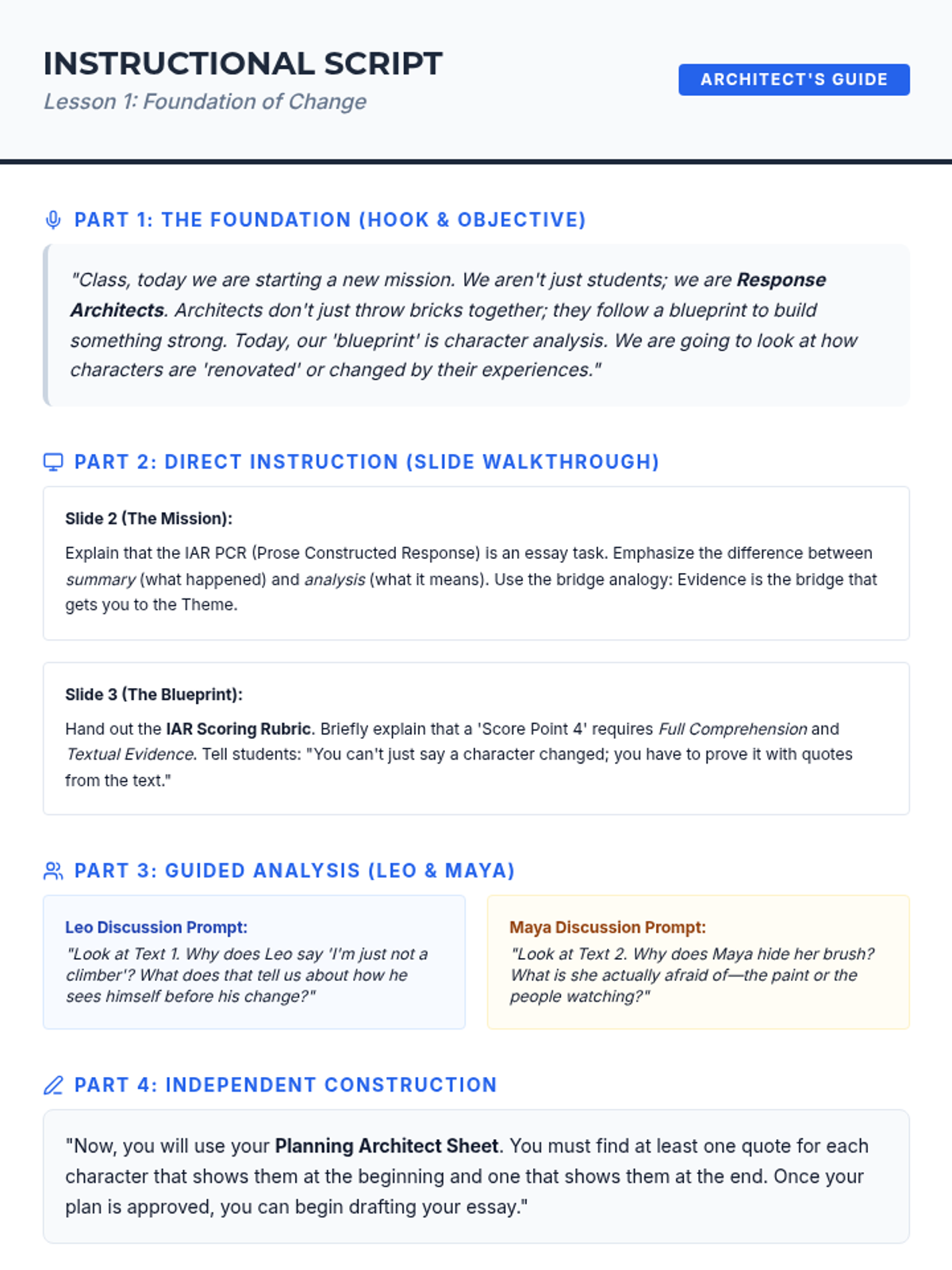
A 4-lesson intensive unit designed to prepare students for the IAR Prose Constructed Response (PCR). Each lesson focuses on a different aspect of character analysis and essay construction through paired texts and guided planning.
A comprehensive 5th-grade MCAS writing prep sequence covering Narrative, Informational, and Opinion writing through text-based prompts and analysis.
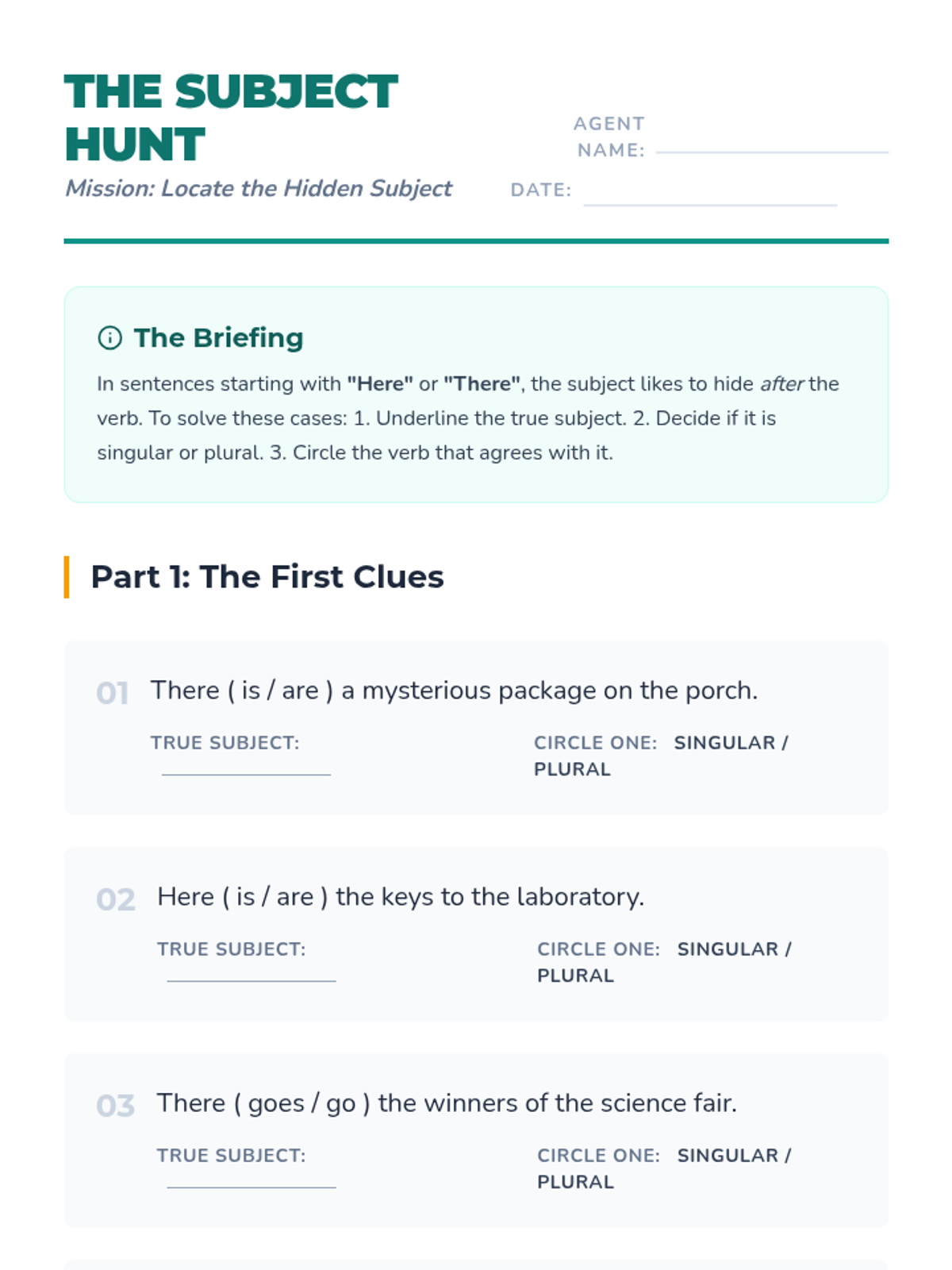
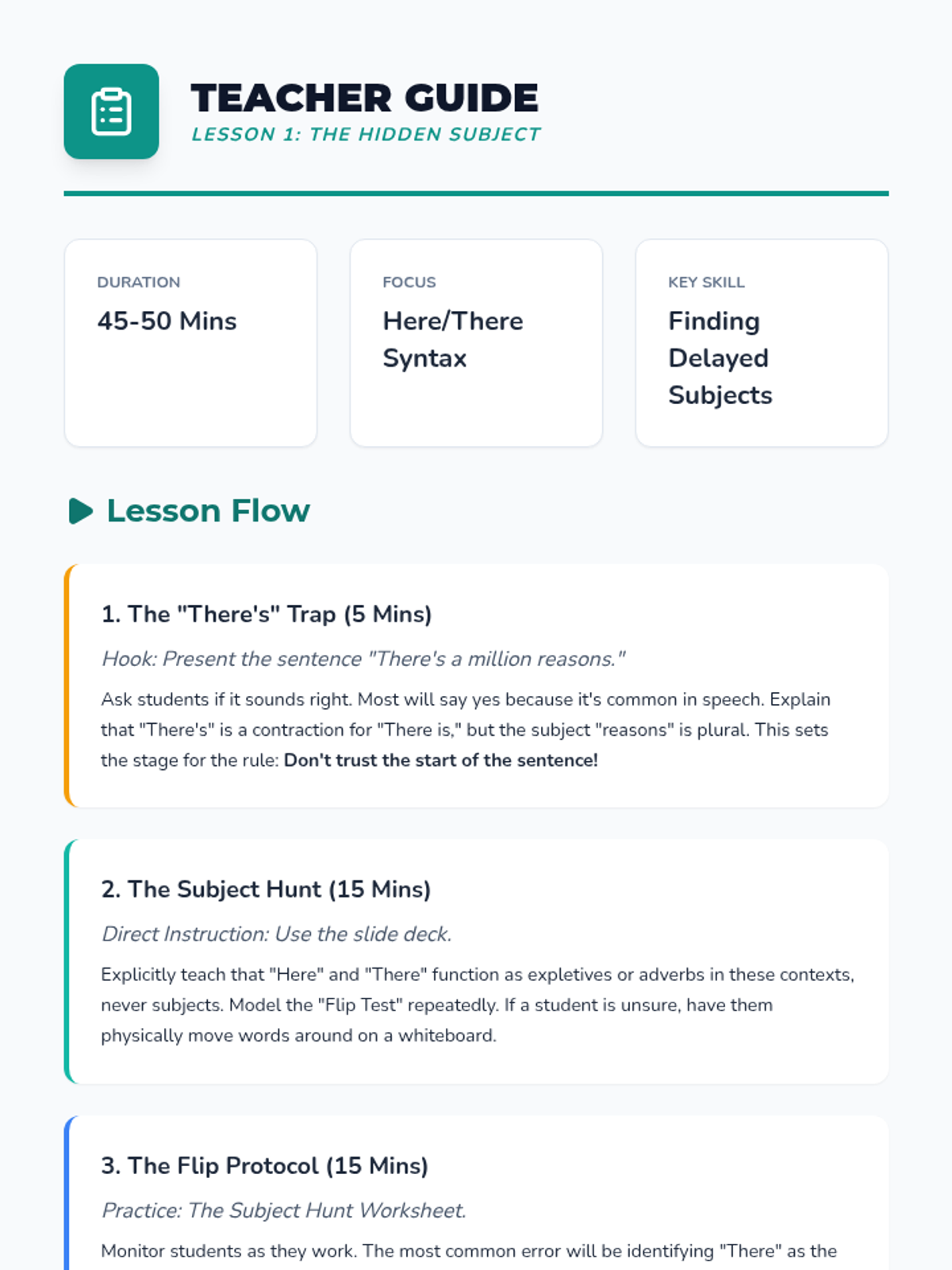
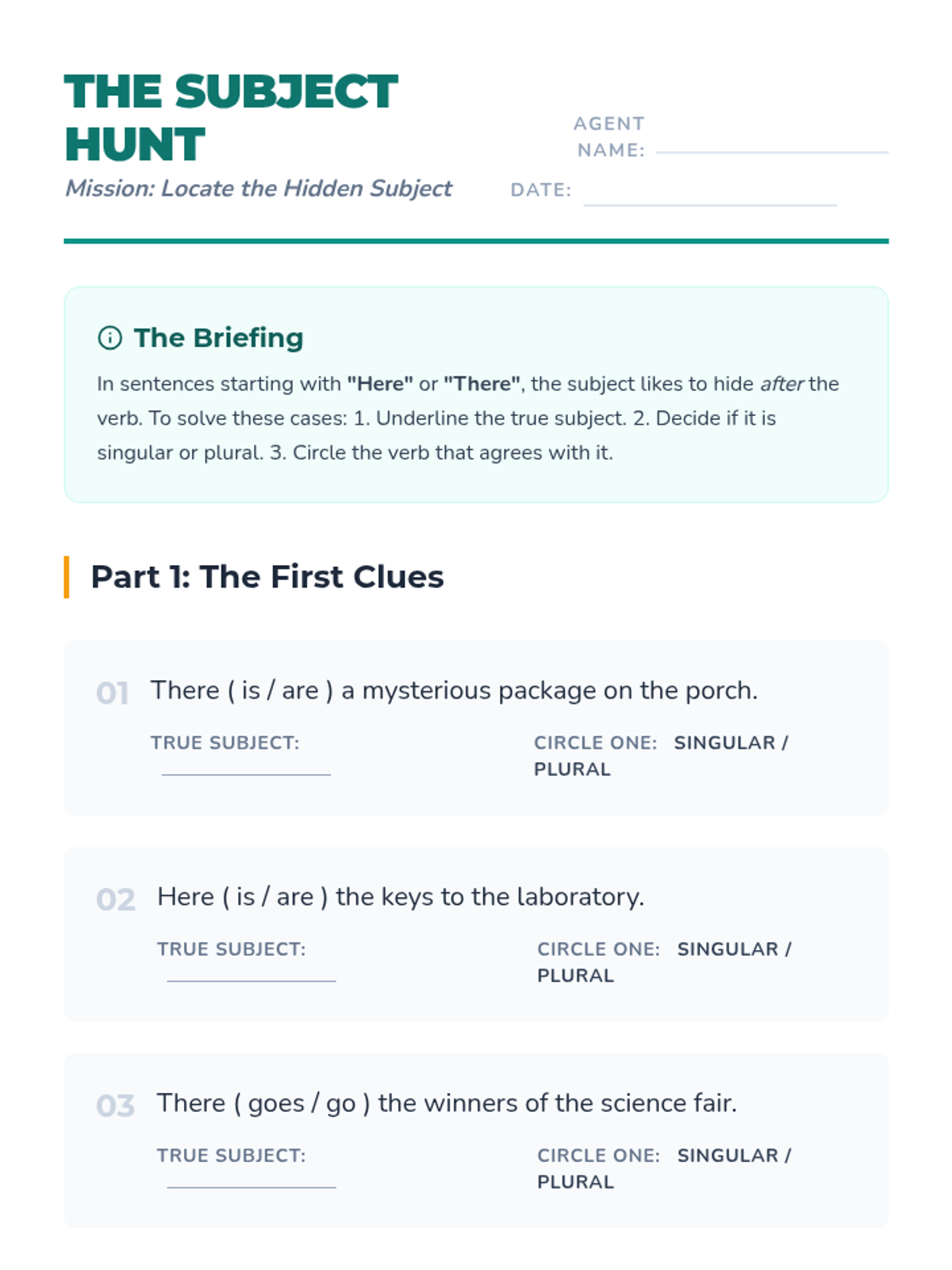
A comprehensive sequence for 5th-grade students focusing on subject-verb agreement in complex and inverted sentence structures. Students learn to navigate 'Here/There' starters, questions, and poetic word orders using the 'un-inverting' revision strategy.
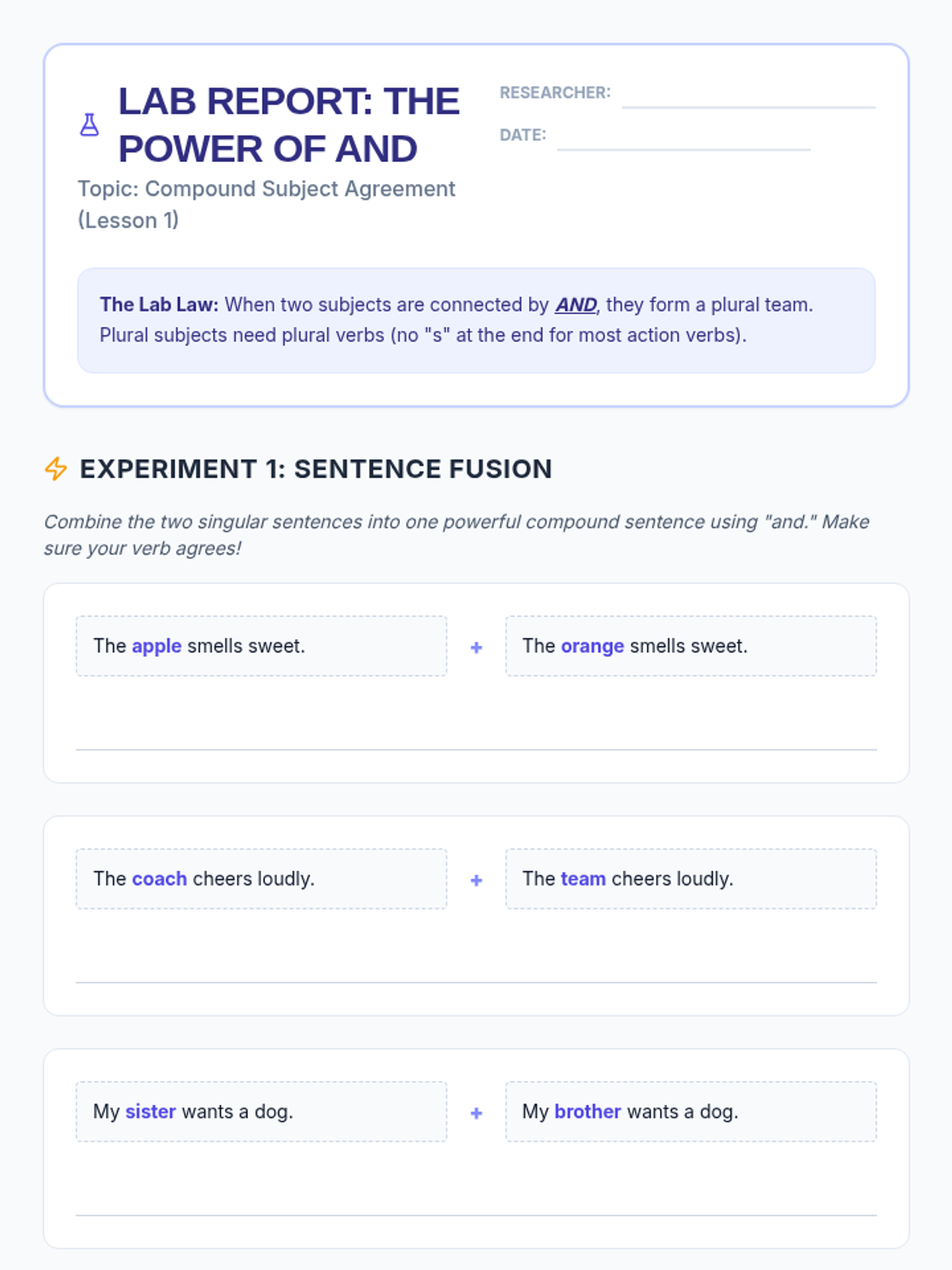
A comprehensive 5-lesson sequence for 5th-grade students focusing on the rules of compound subject agreement. Students learn the 'Power of And', the 'Proximity Rule' for 'or/nor', and defend their choices in a 'Grammar Court' simulation.
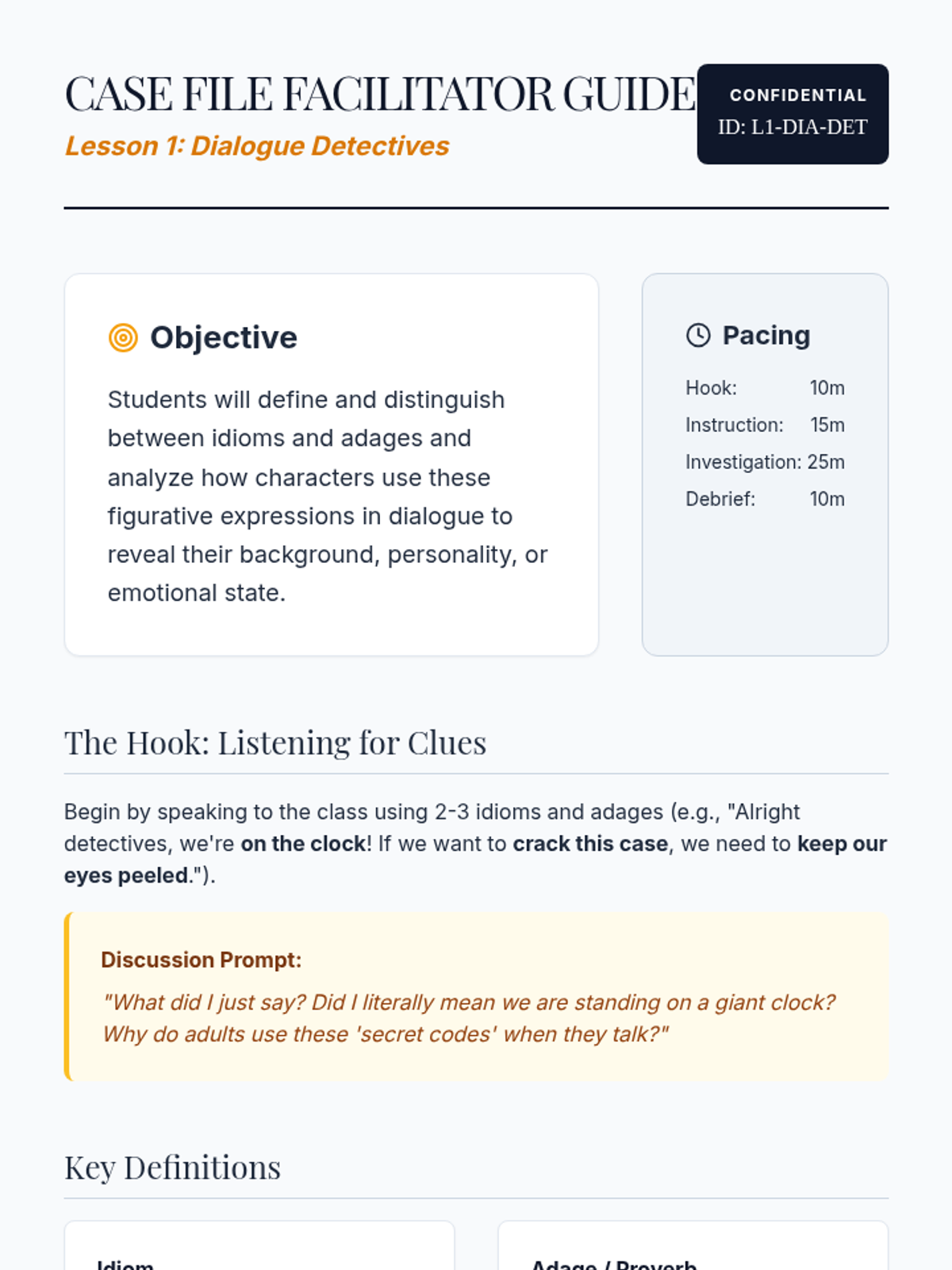
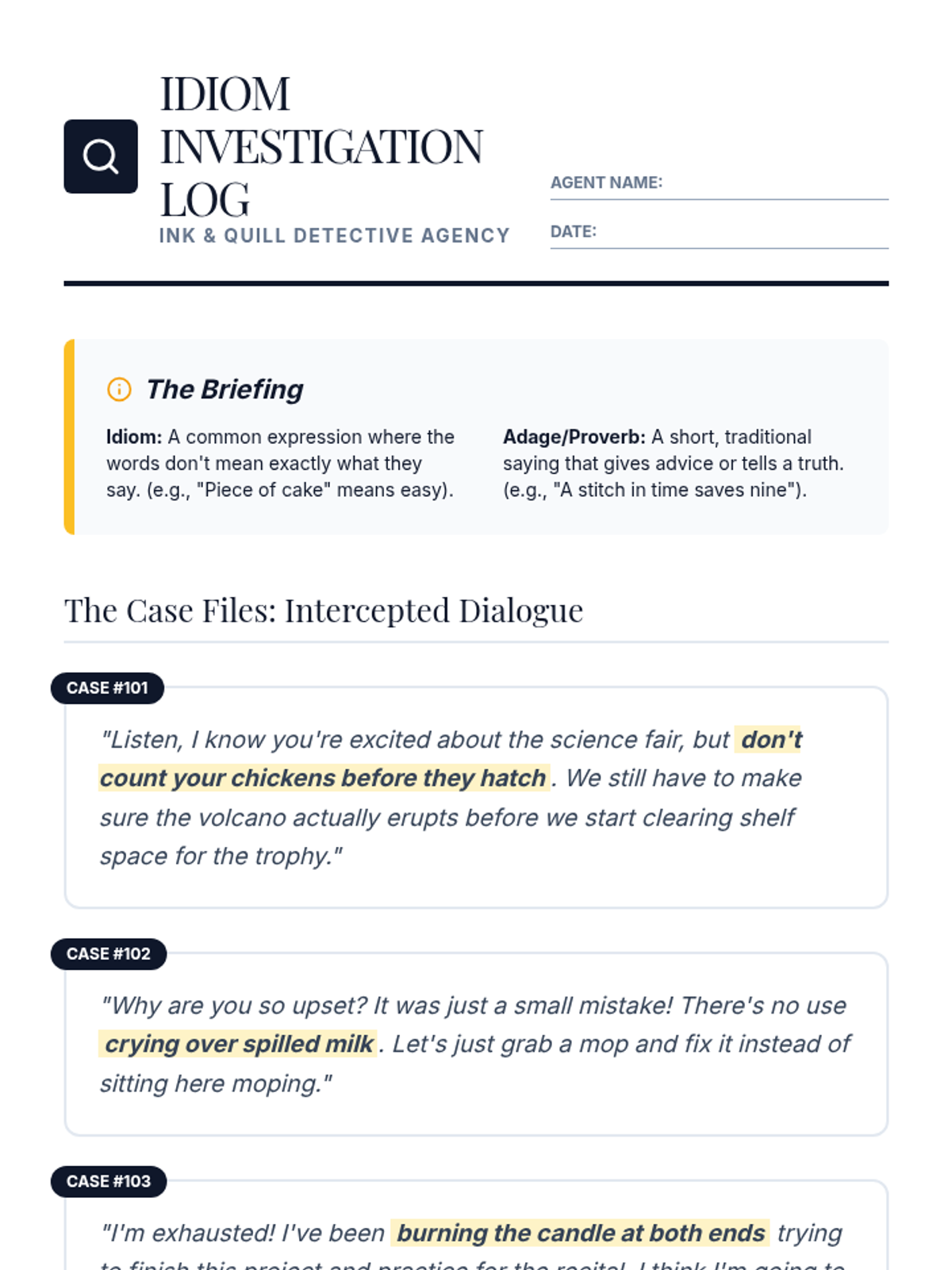
A 5th-grade ELA unit where students become 'language detectives' to investigate idioms and adages, eventually using them to craft vivid narrative dialogue and character voices.
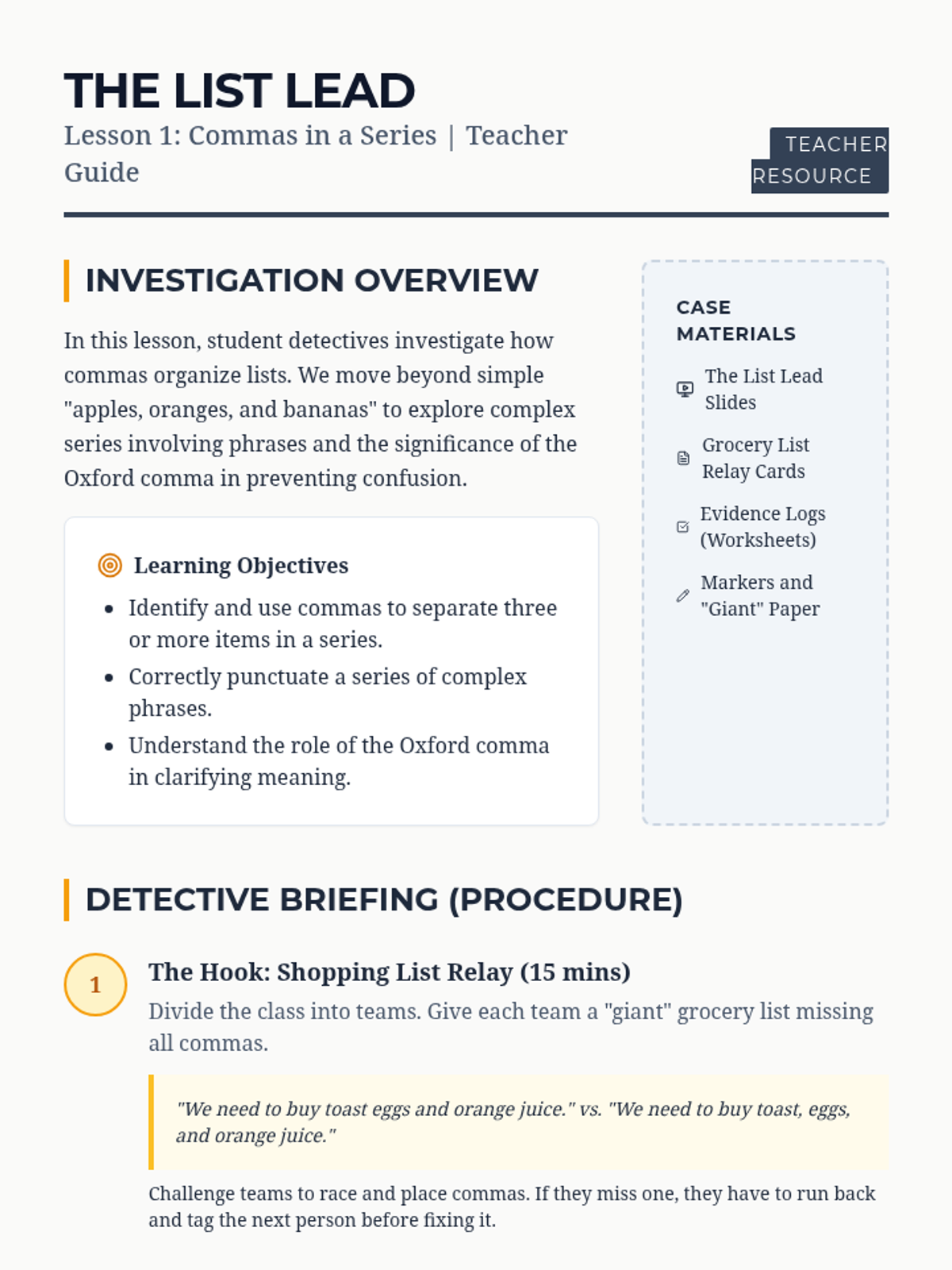
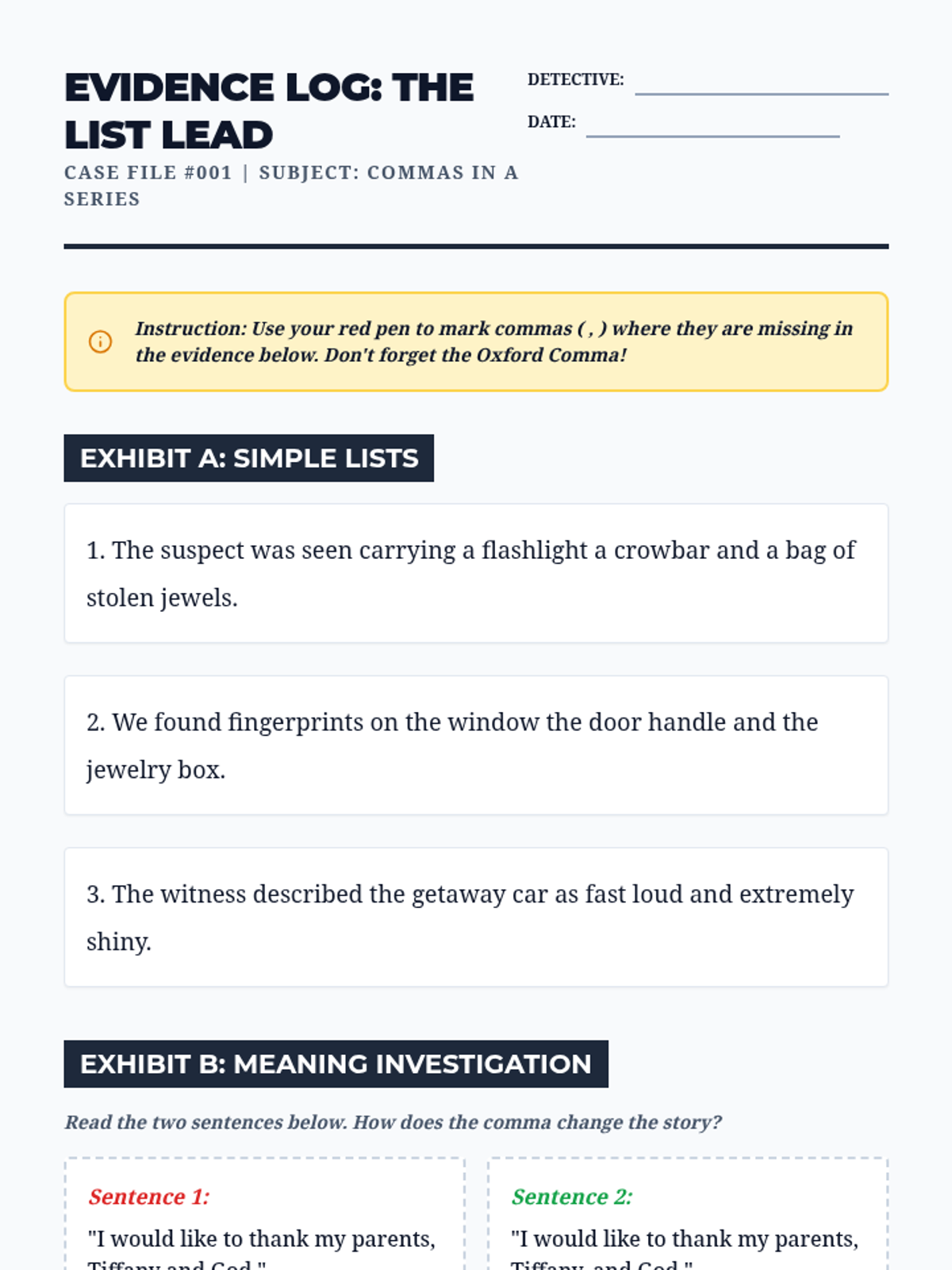
A detective-themed grammar unit where 5th graders solve 'Comma Case Files'. Students master advanced comma usage—including series, introductory elements, direct address, and compound sentences—through gamified challenges to create a final 'Comma Rulebook' for clear communication.
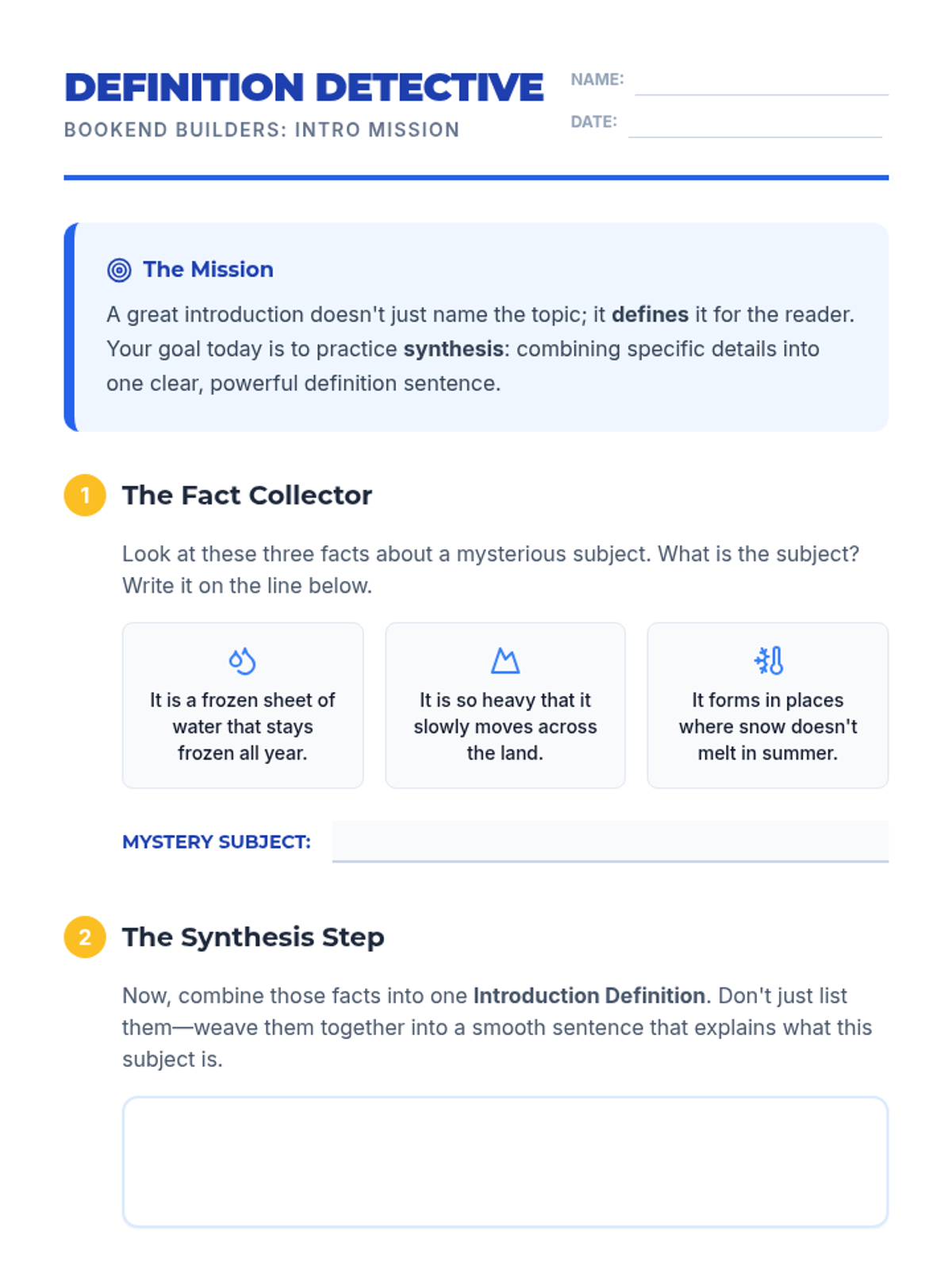
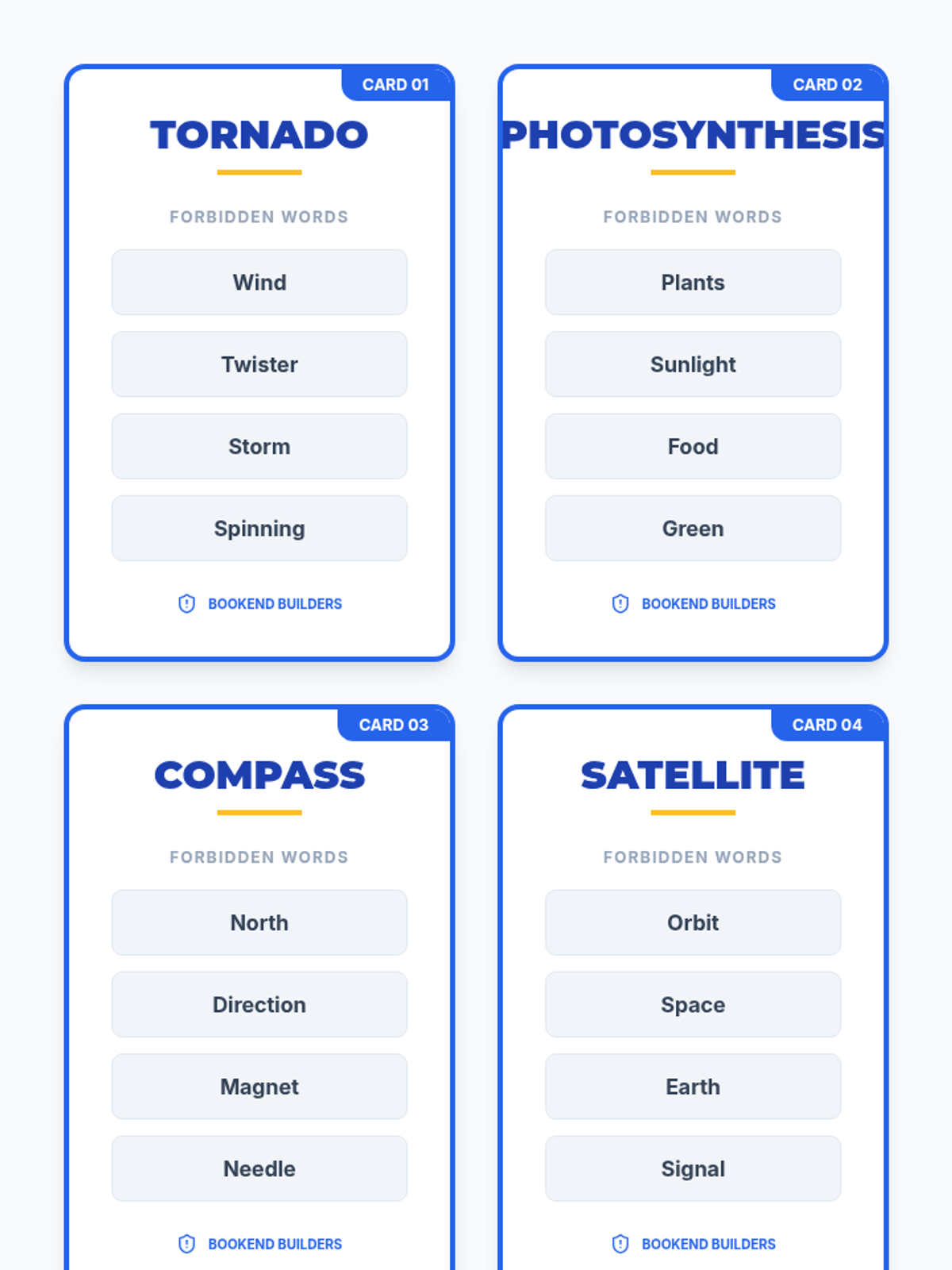
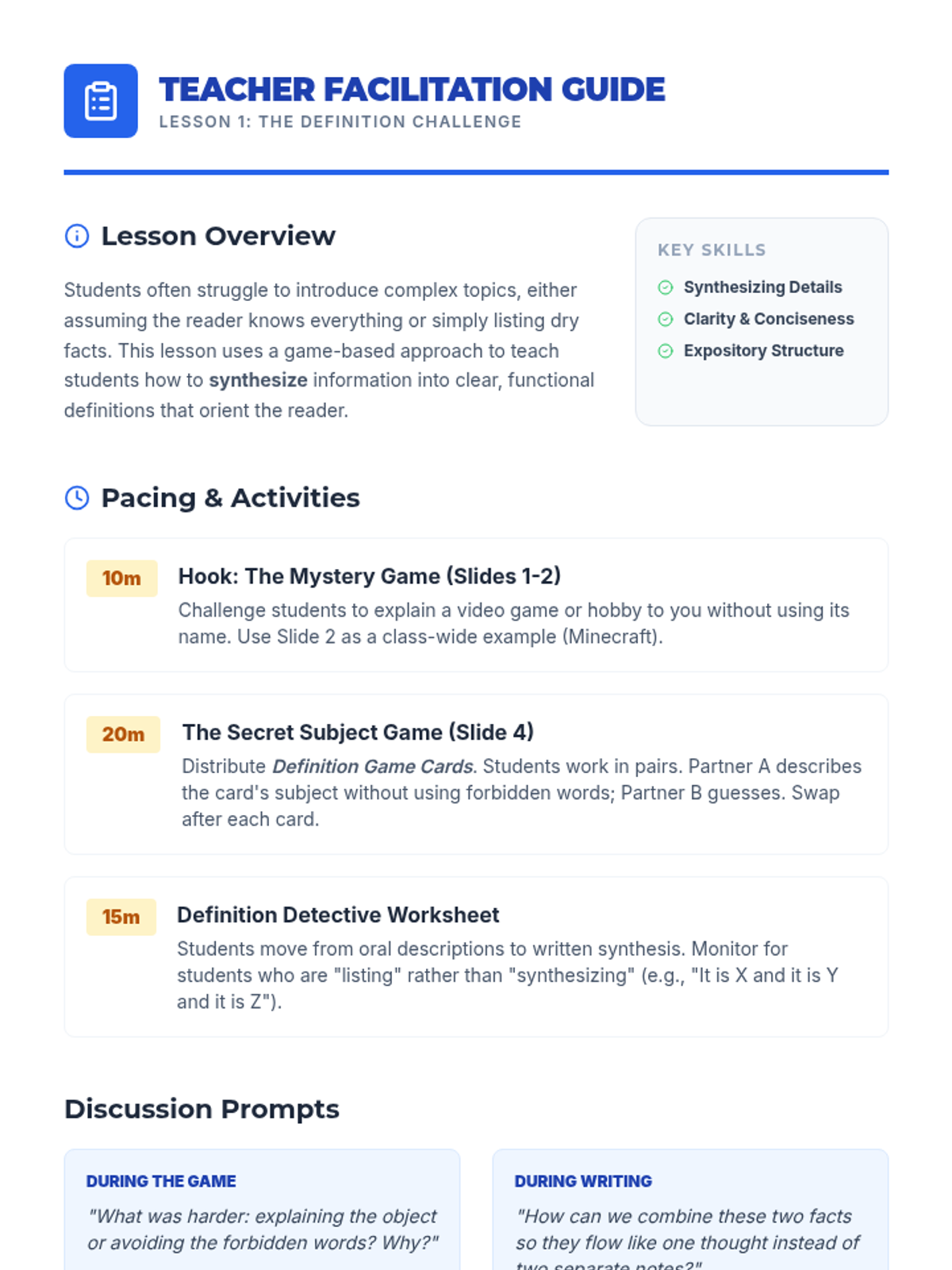
A game-based writing sequence for 5th graders focusing on the synthesis of information in expository introductions and conclusions. Students move from defining complex topics to answering the 'So What?' question through interactive challenges.
A 5th-grade grammar sequence focused on mastering relative pronouns (who, whose, whom, which, that) to build complex, descriptive sentences through an architectural/construction theme.
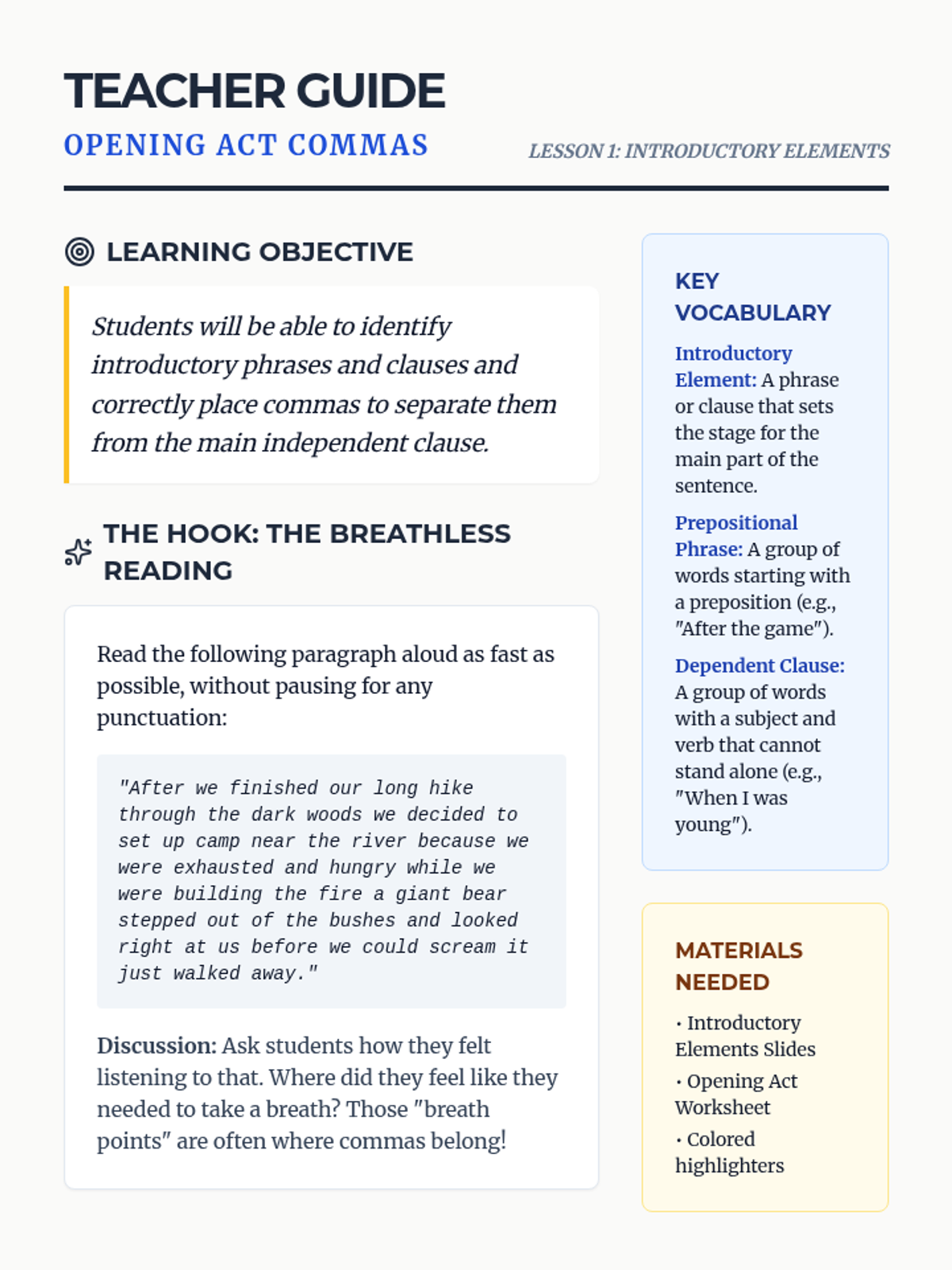
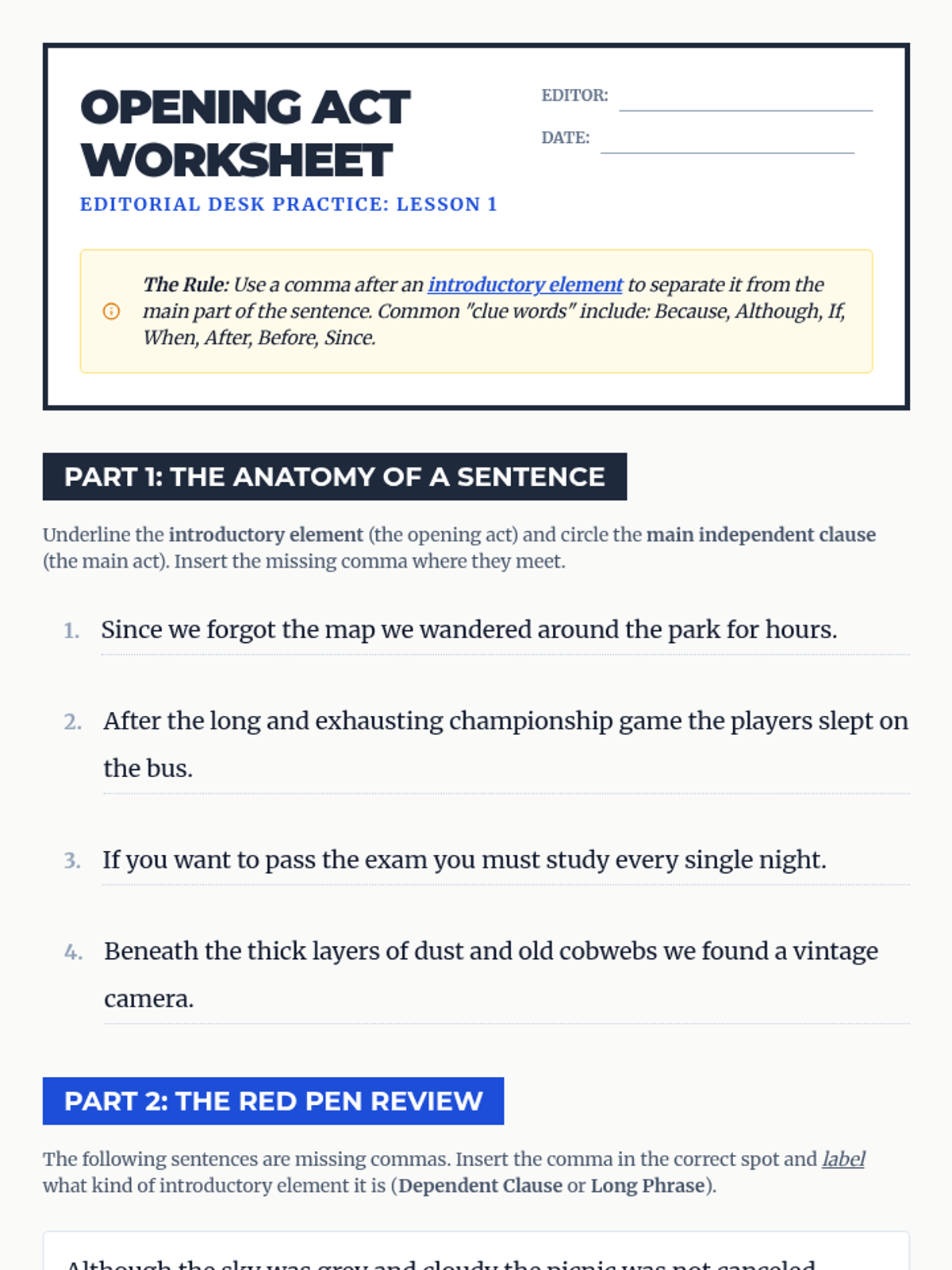
This sequence focuses on the critical role commas play in sentence structure and clarity, moving beyond simple listing. Students progress from introductory elements to compound structures and non-essential interrupters, culminating in a professional editing workshop.
A 6-session intervention sequence designed for small groups of students below grade level. This sequence uses a 'Building Blocks' metaphor to teach structured paragraph writing, starting with topic sentences and moving through evidence, explanation, and conclusions, progressively reducing scaffolding to build independence.
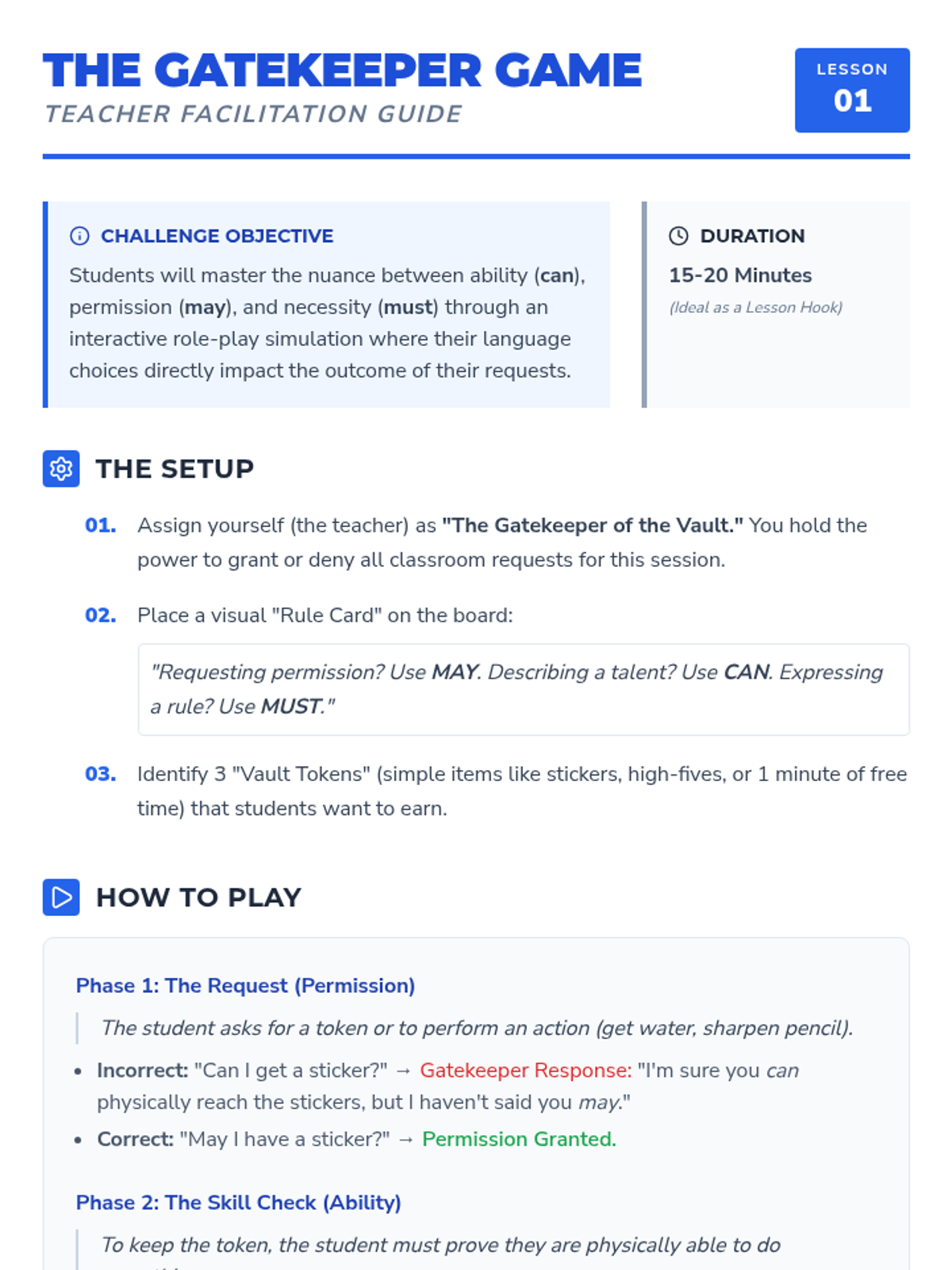
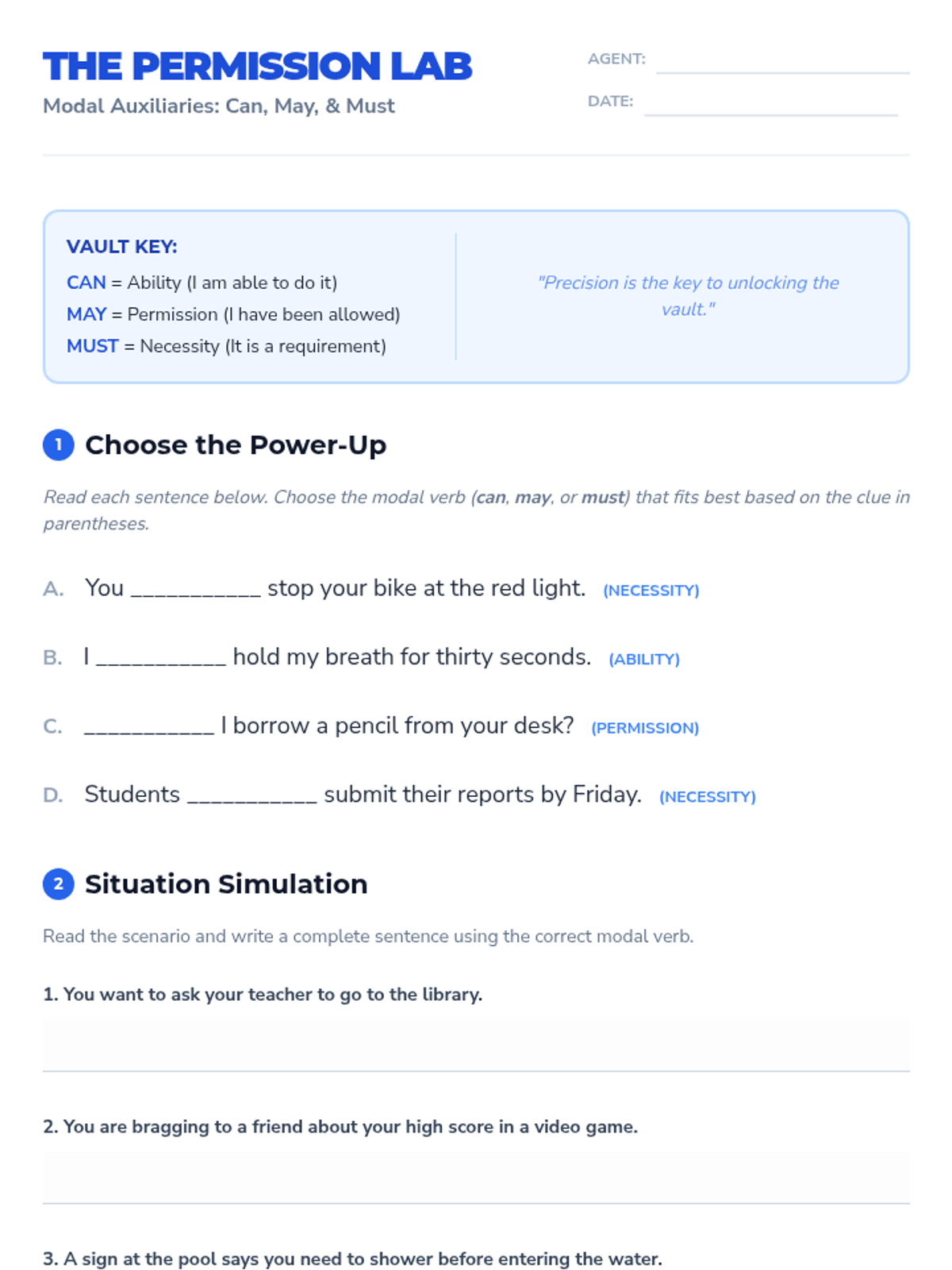
This sequence explores the mechanics of verbs through modal auxiliaries and the creative power of vivid verbs. Students move from understanding ability, permission, and probability to revising narratives for maximum impact by replacing bland verbs with precise alternatives.
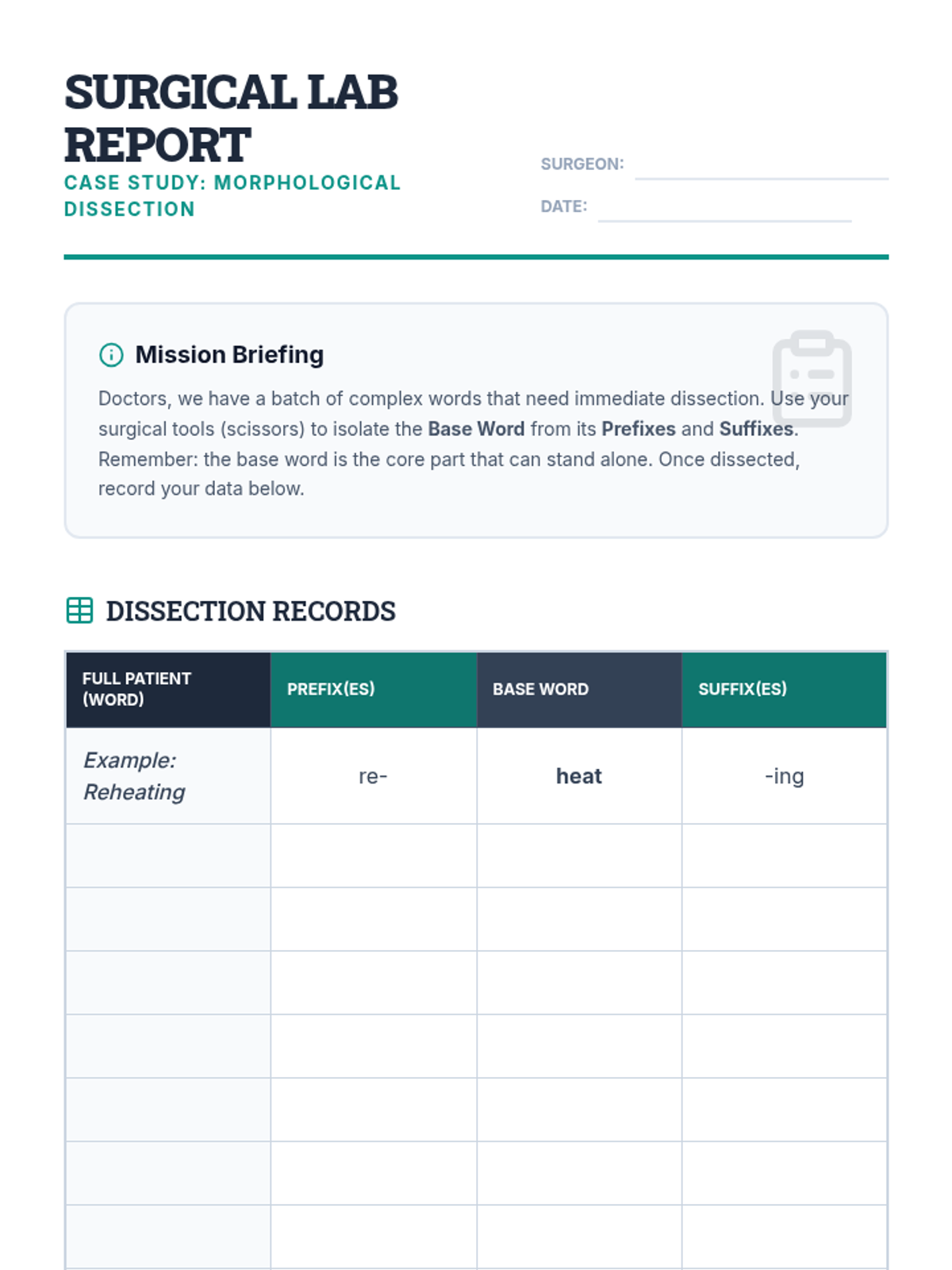
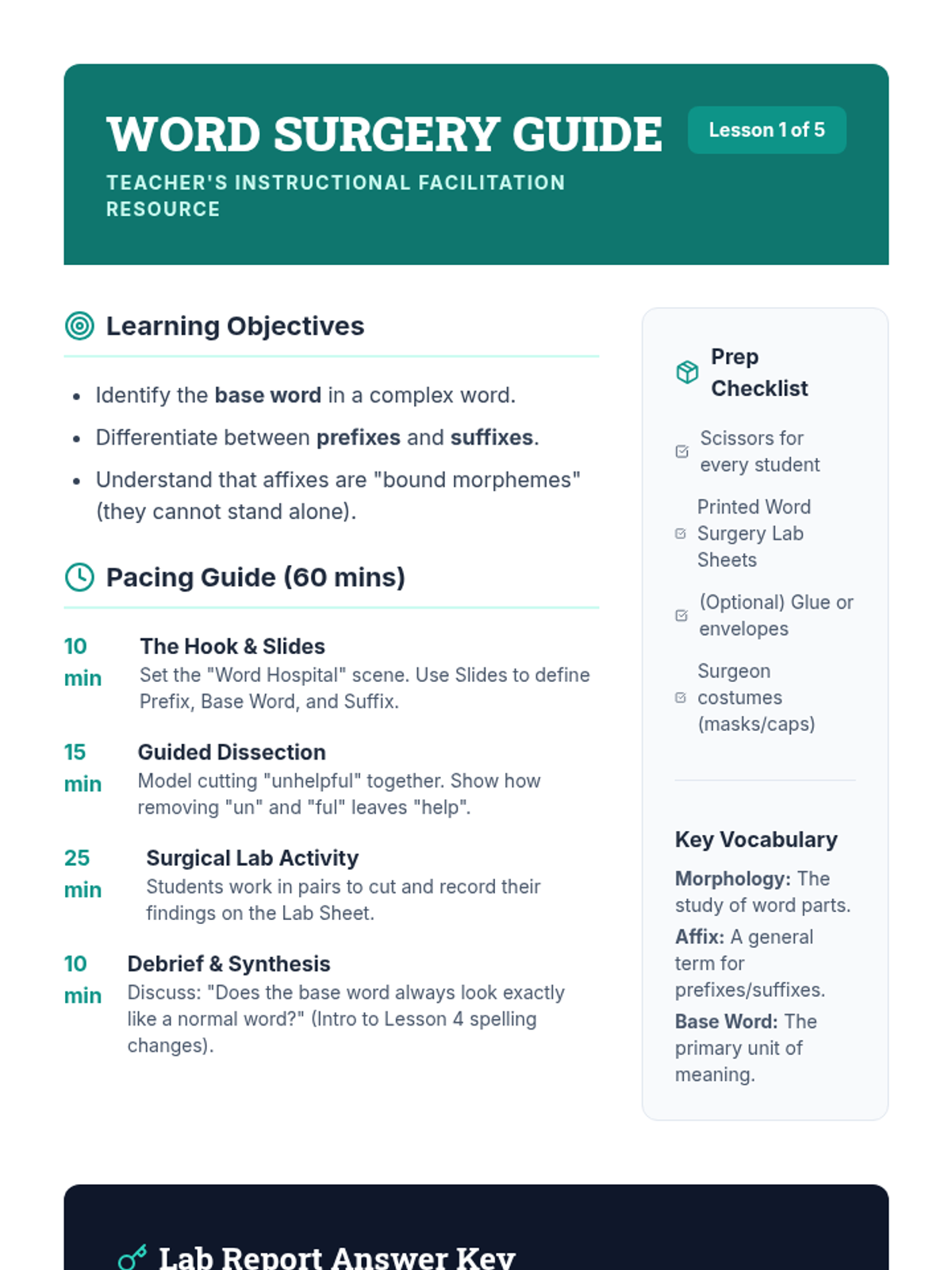
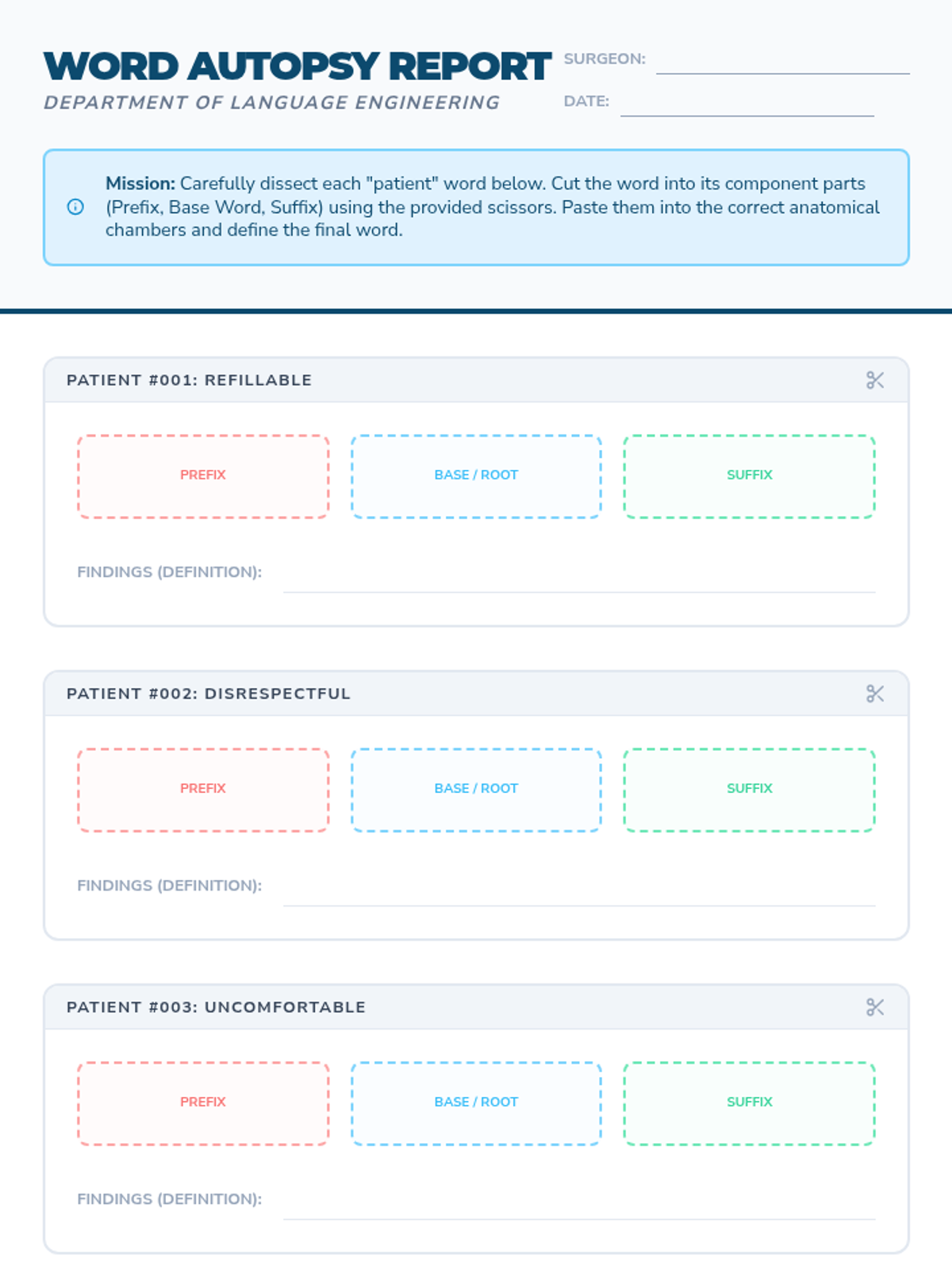
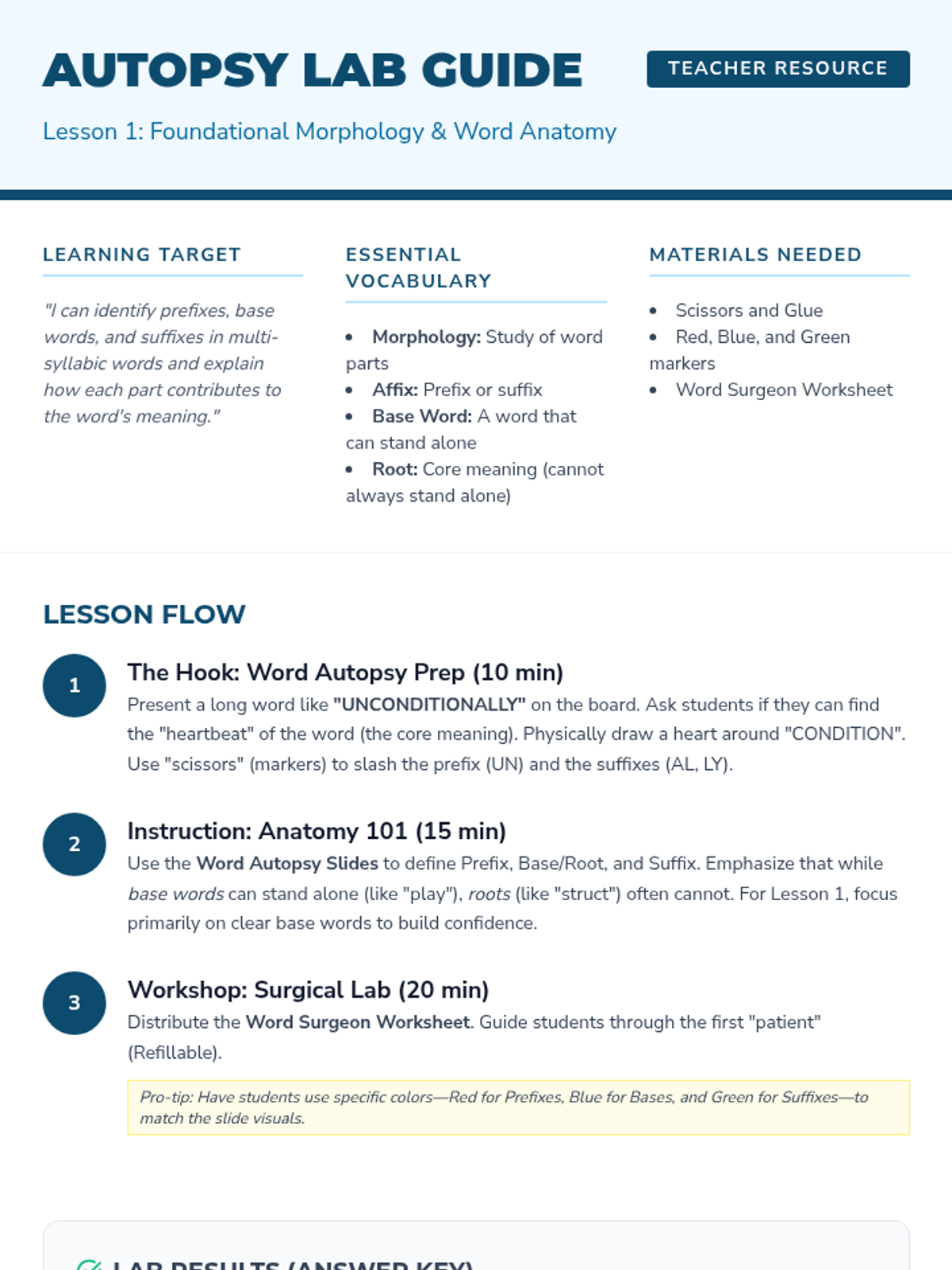
A comprehensive 5th-grade unit on morphology, focusing on how prefixes, suffixes, and roots function together to build word meaning and determine parts of speech. Students engage in hands-on activities like word autopsies and root trees to master structural analysis.
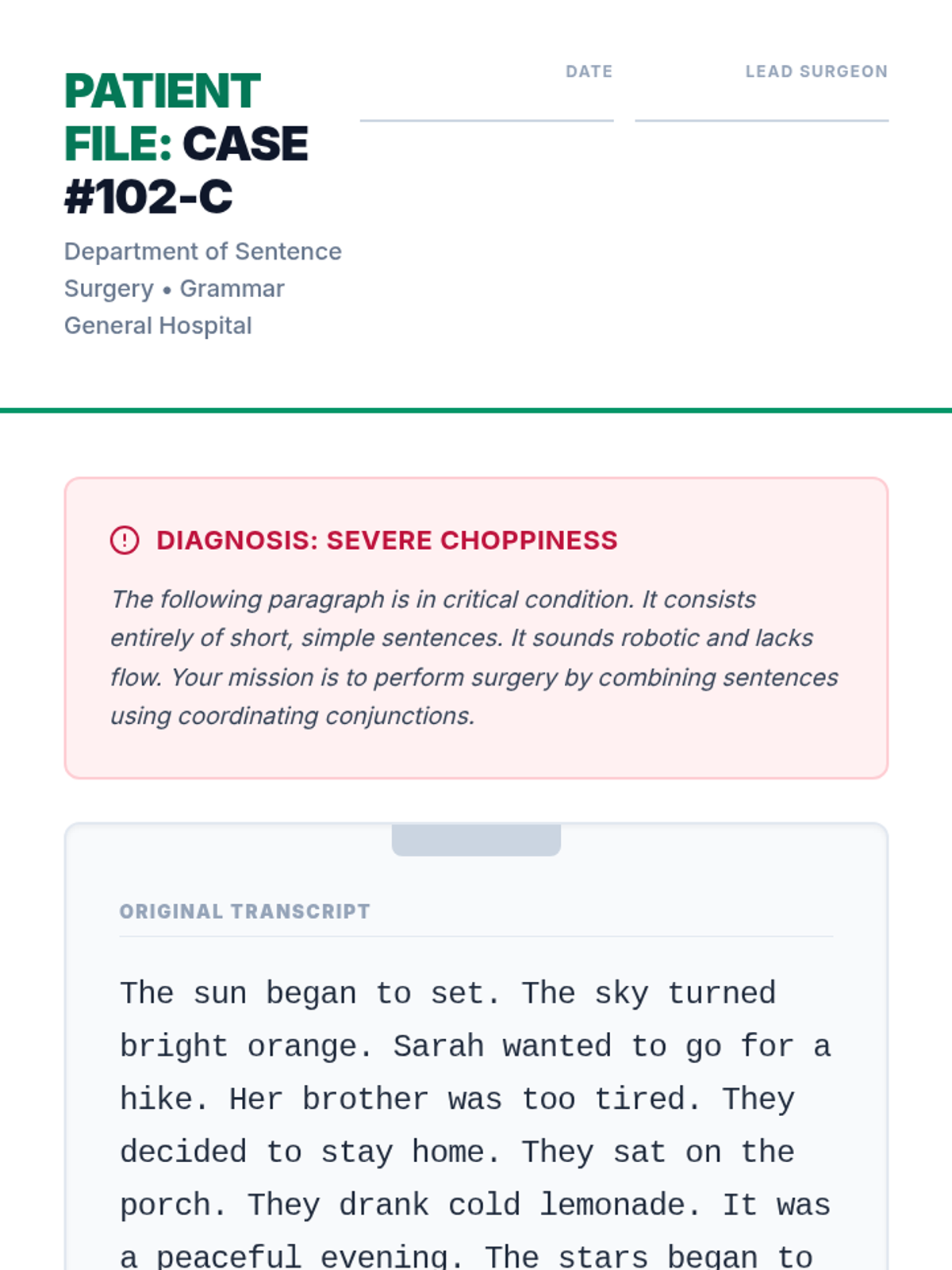
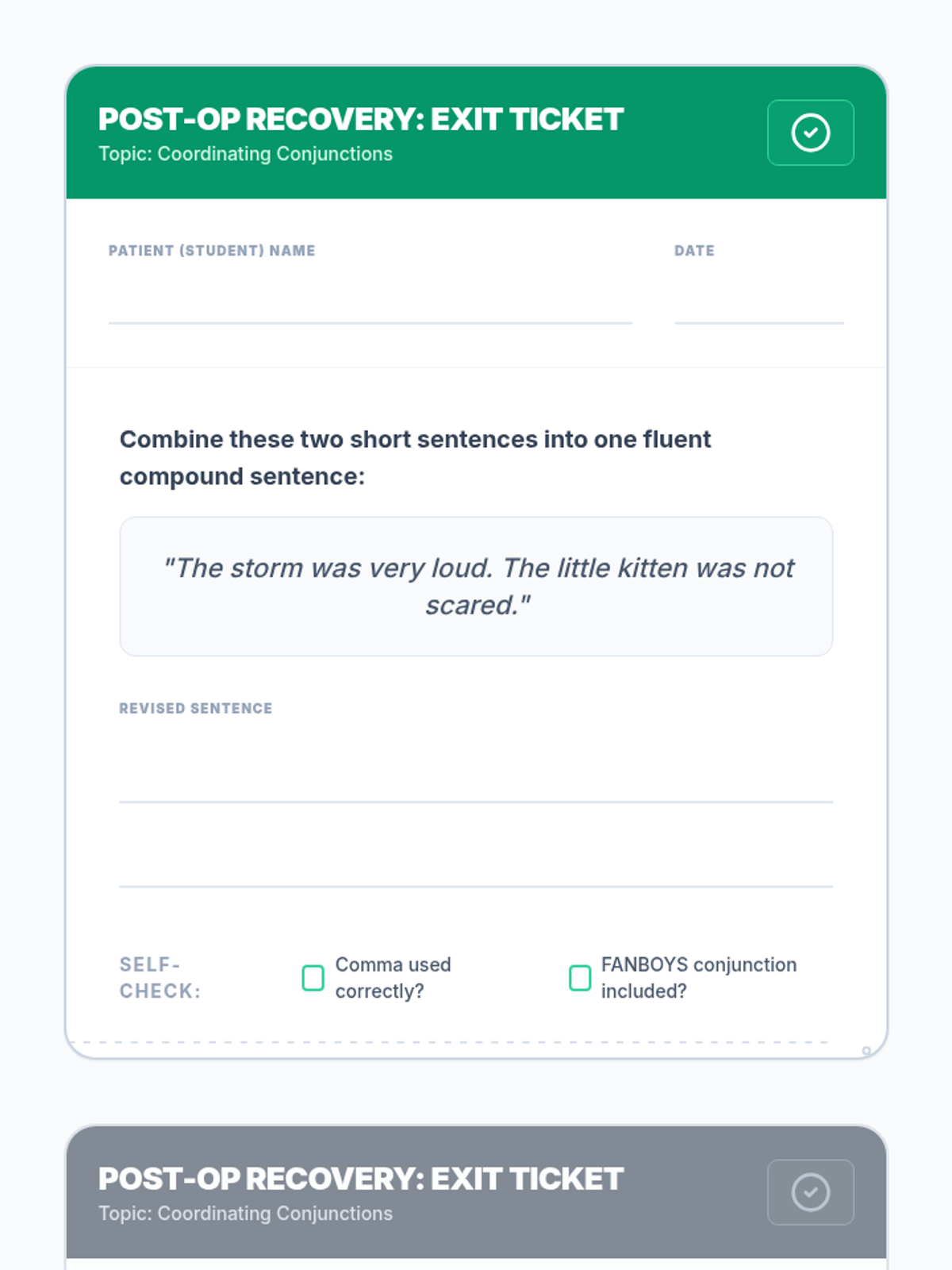
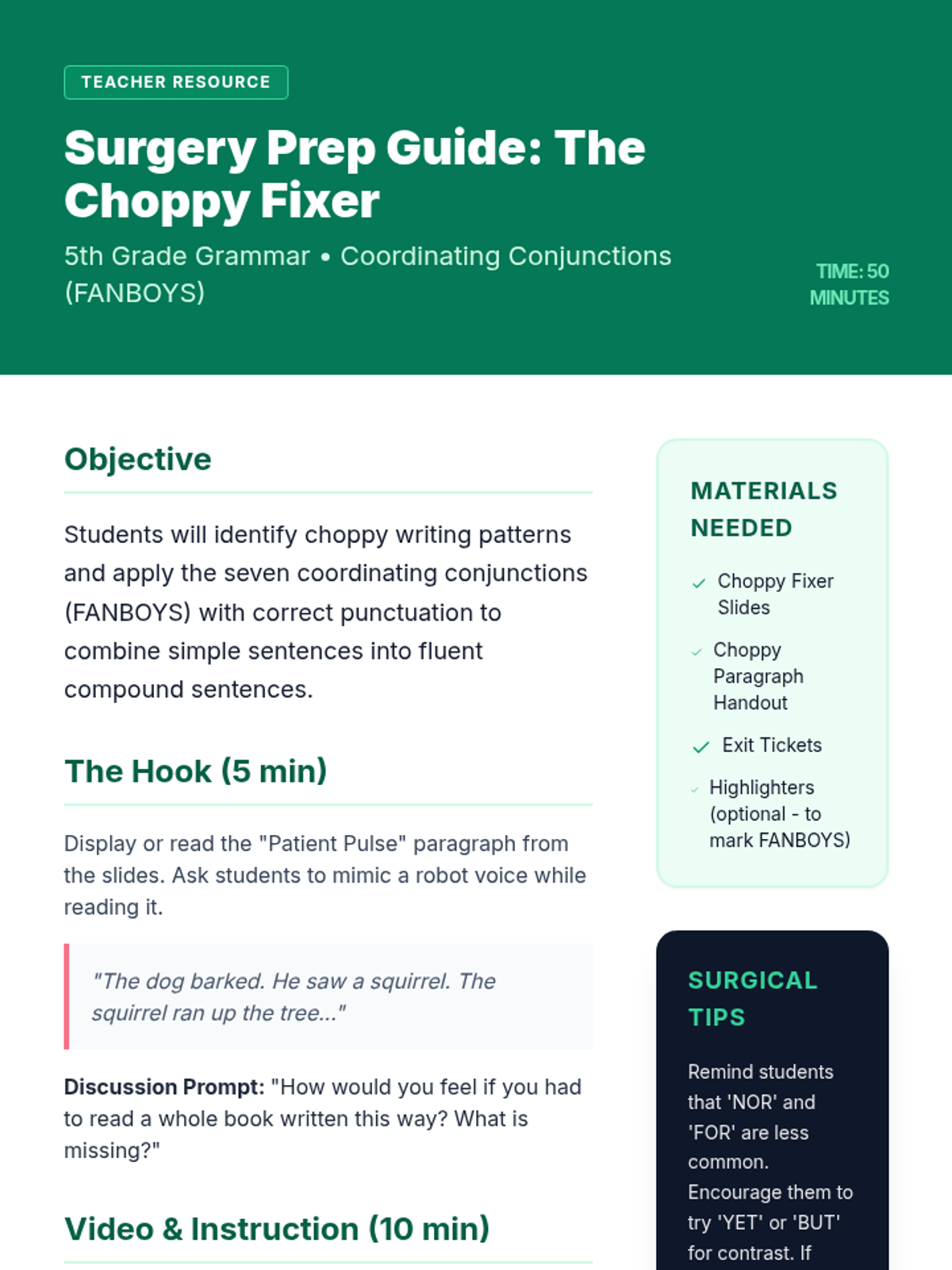
A lesson sequence focused on mastering coordinating conjunctions to improve writing flow and sentence variety. Students transition from short, choppy sentences to fluent compound sentences using the FANBOYS mnemonic.
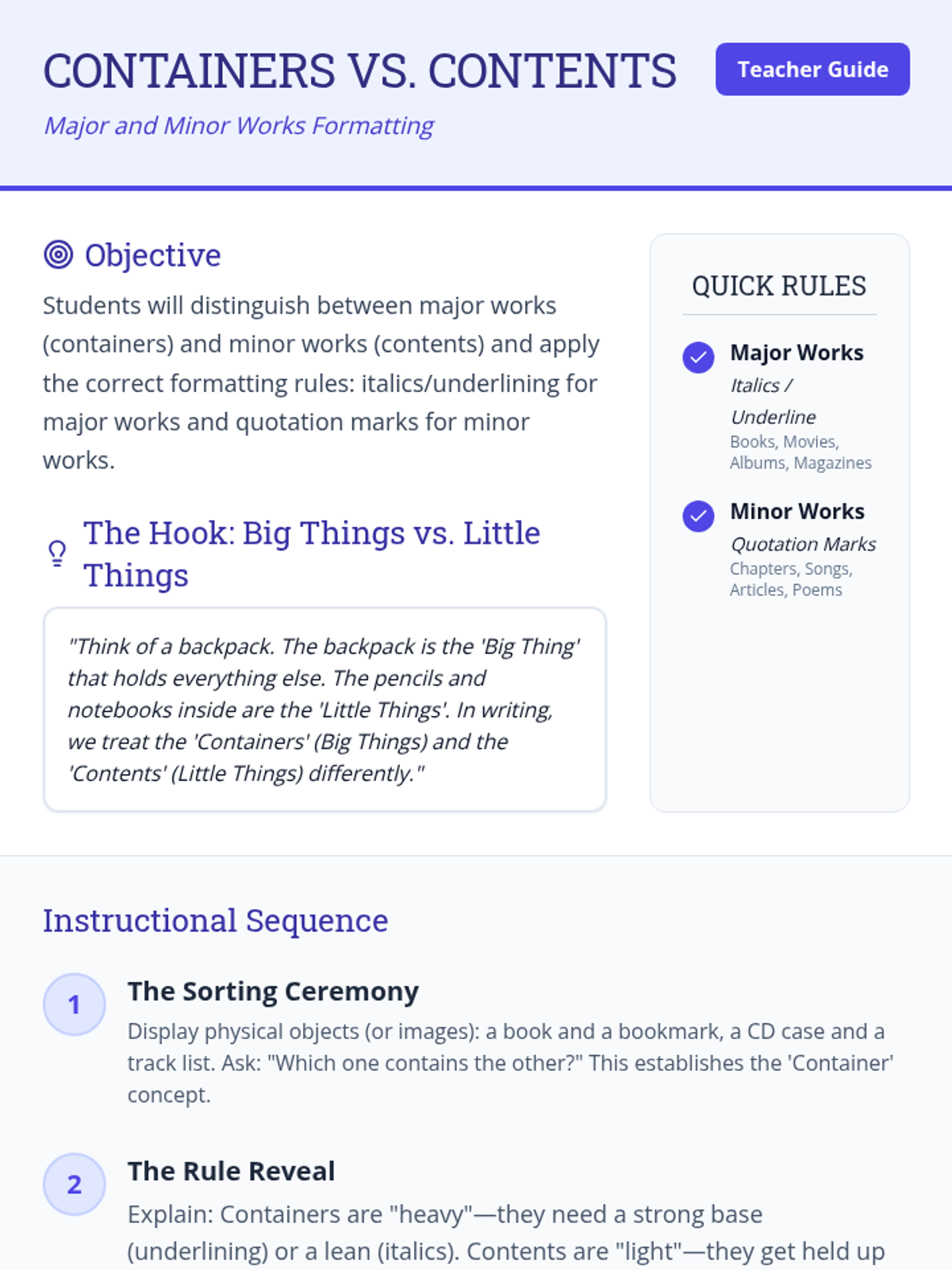
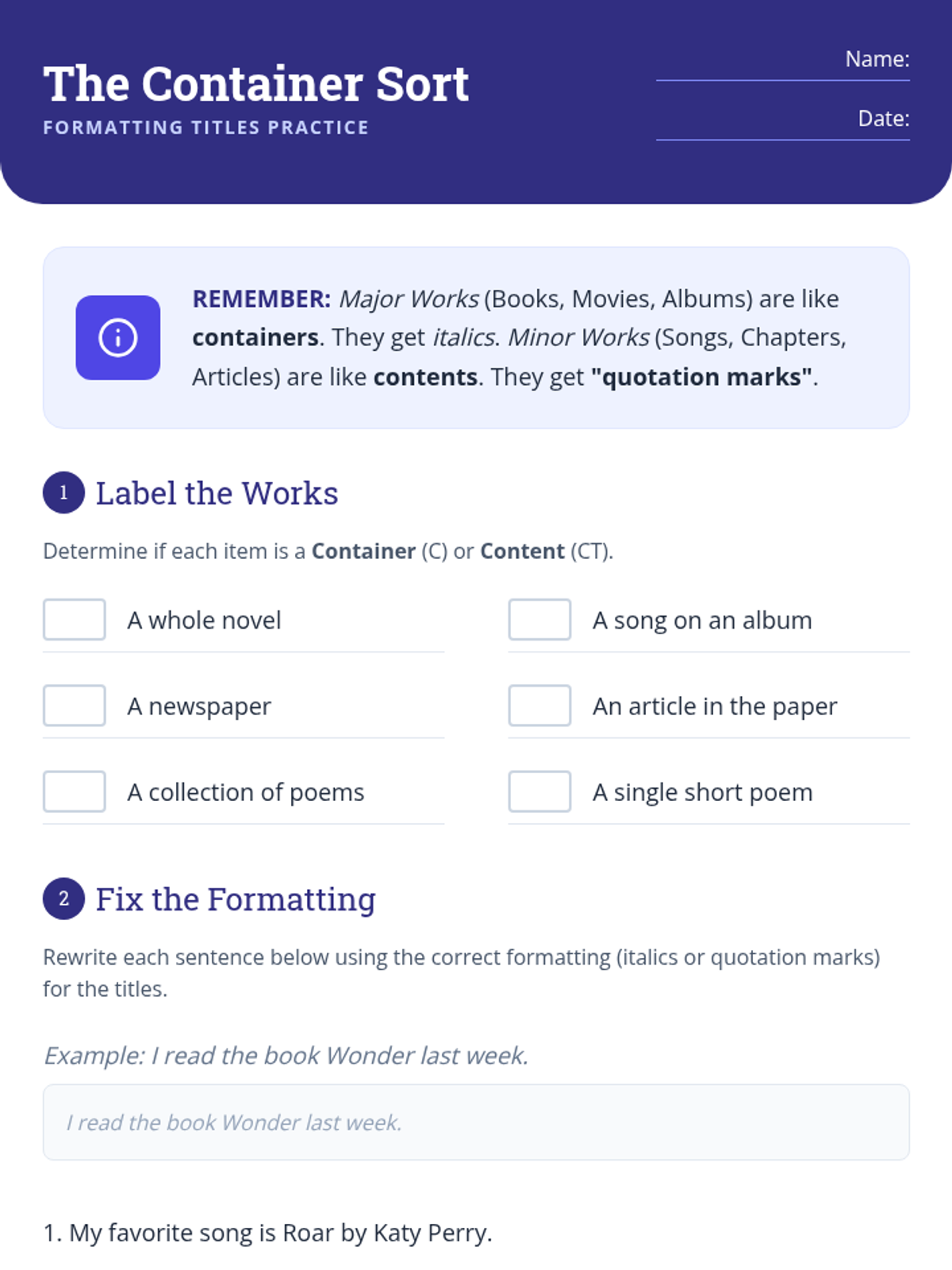
A comprehensive 5th-grade sequence on formatting titles and using typographical emphasis. Students learn to distinguish between major and minor works, navigate digital versus handwritten styles, and use bold and italics to convey tone and meaning.
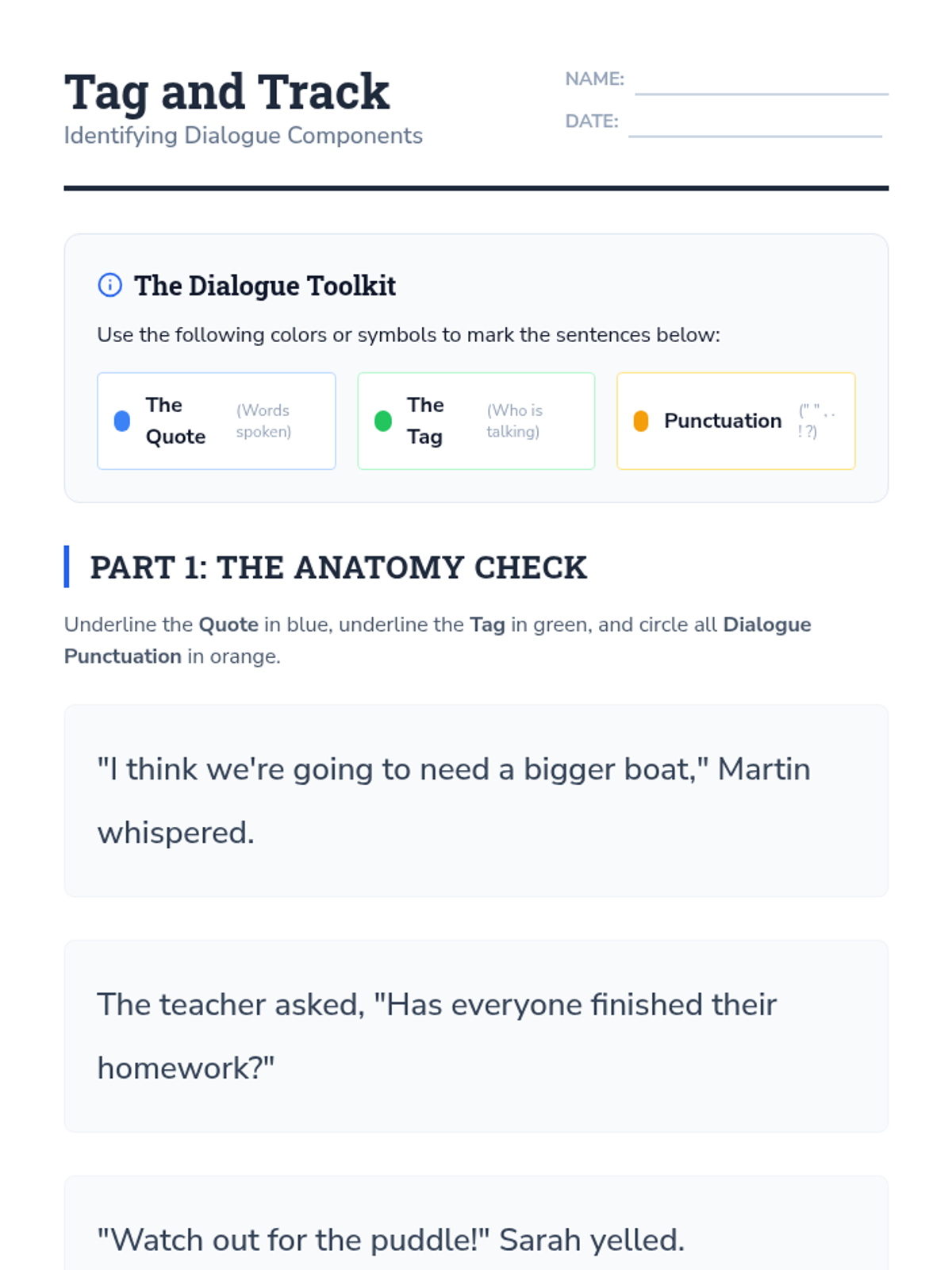
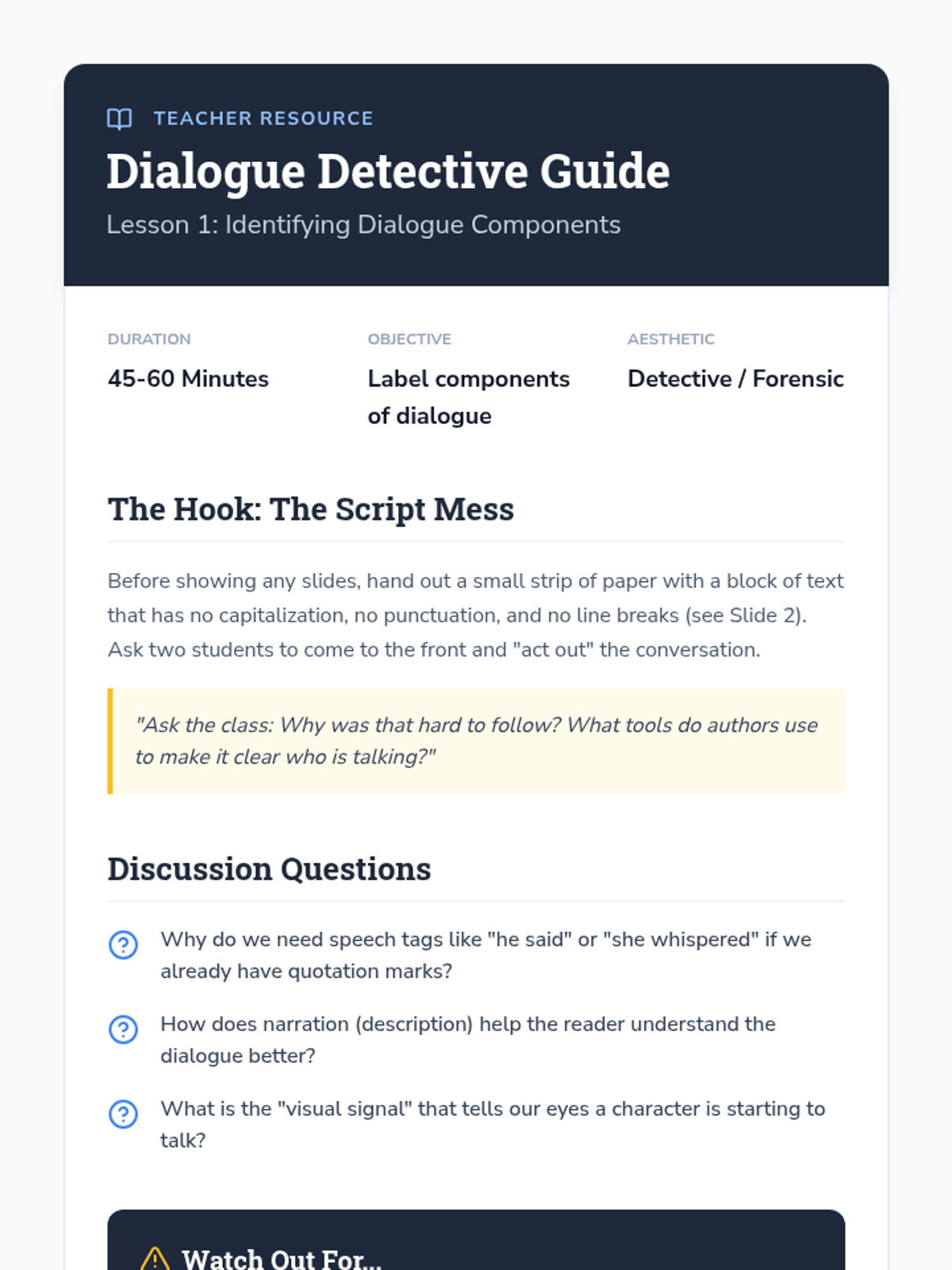
A comprehensive 5th-grade sequence on the mechanics of dialogue, covering identification of components, punctuation rules, paragraphing for new speakers, and interrupted speech. Students progress from analyzing professional texts to drafting their own formatted scenes.
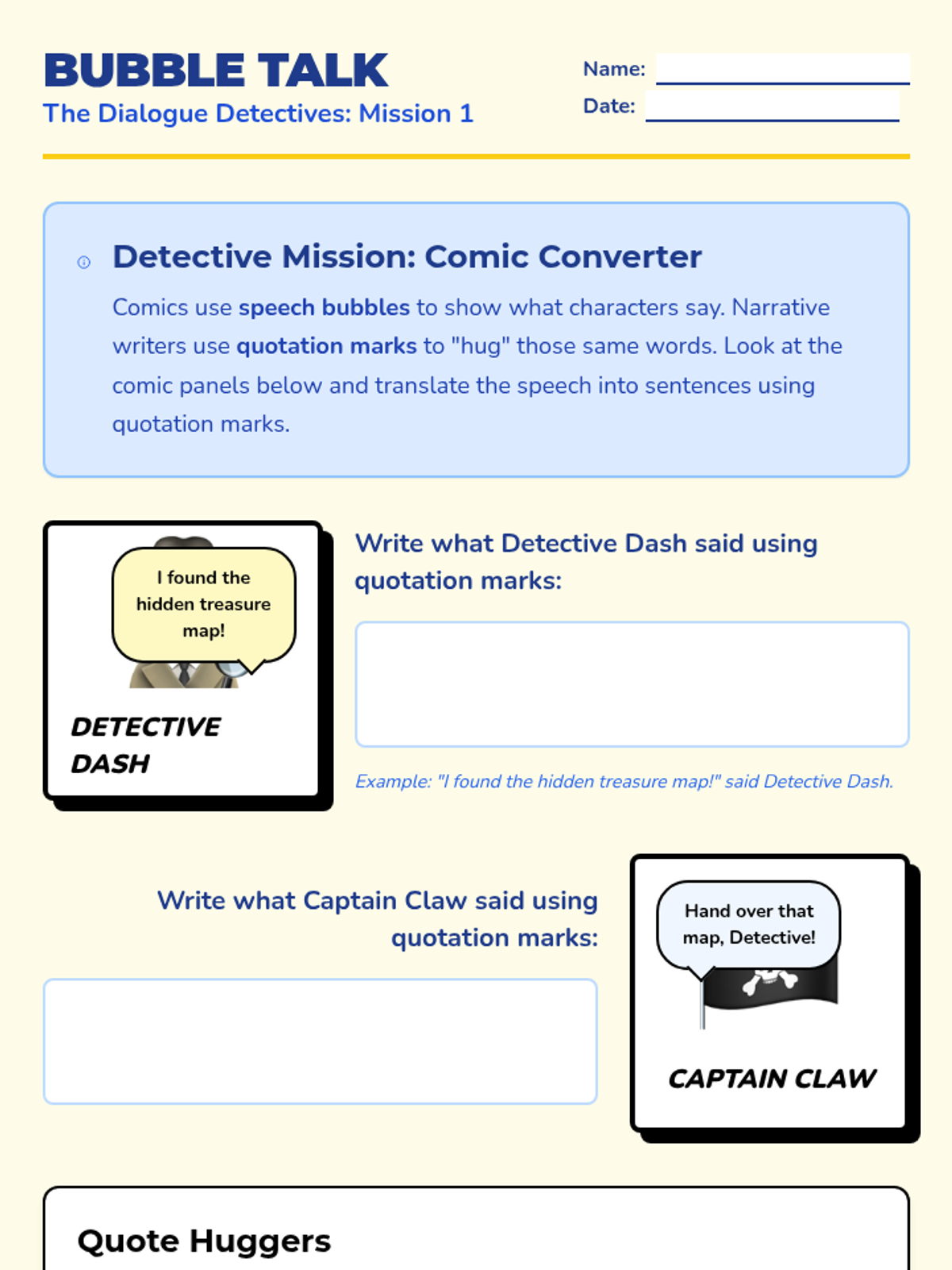
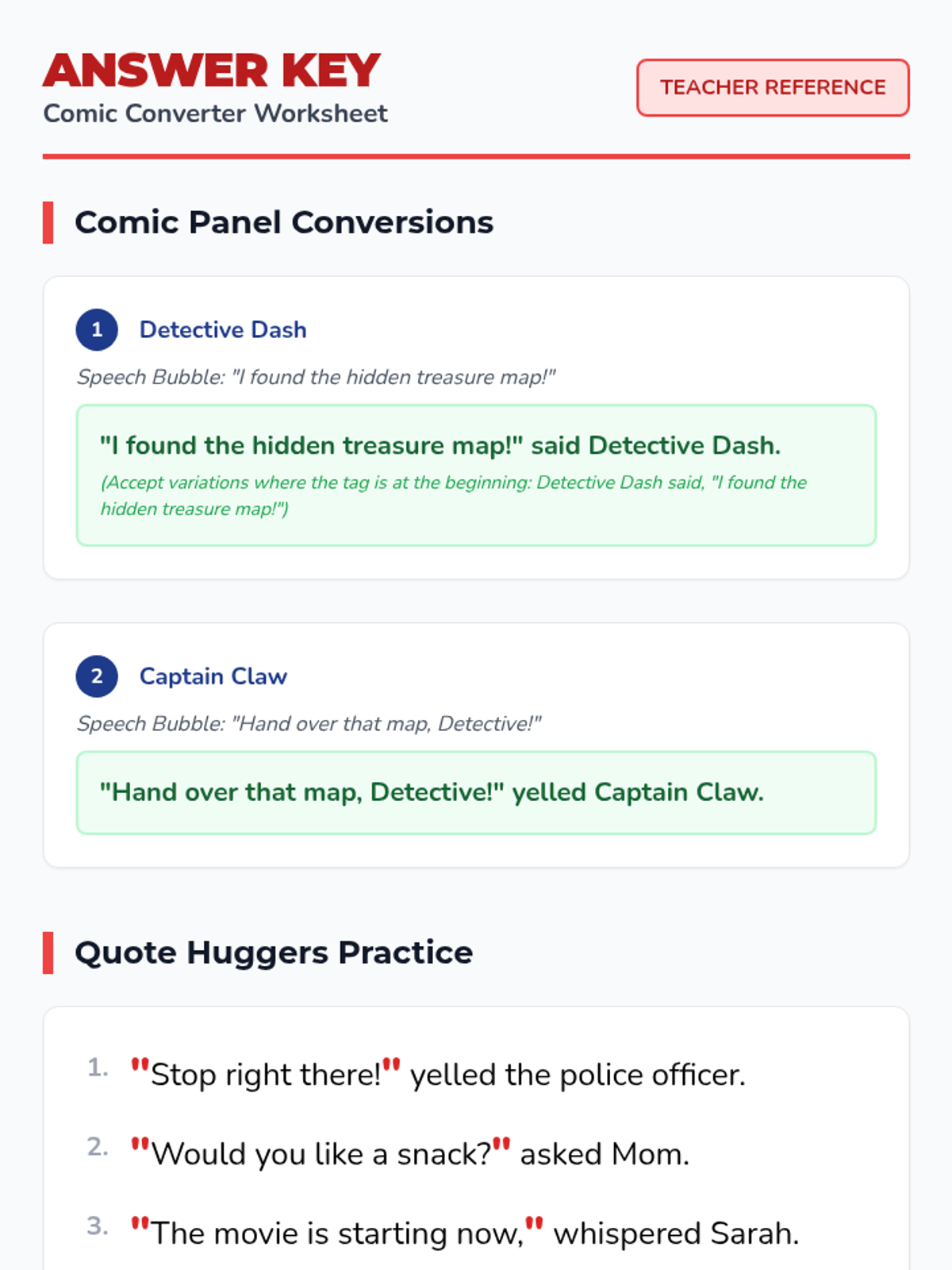
This sequence immerses students in the rules of formatting conversation within narrative writing. Starting with speech bubbles, students transition to quotation marks, commas, and capitalization. The learning arc emphasizes the visual rule of starting a new paragraph when a new speaker begins.
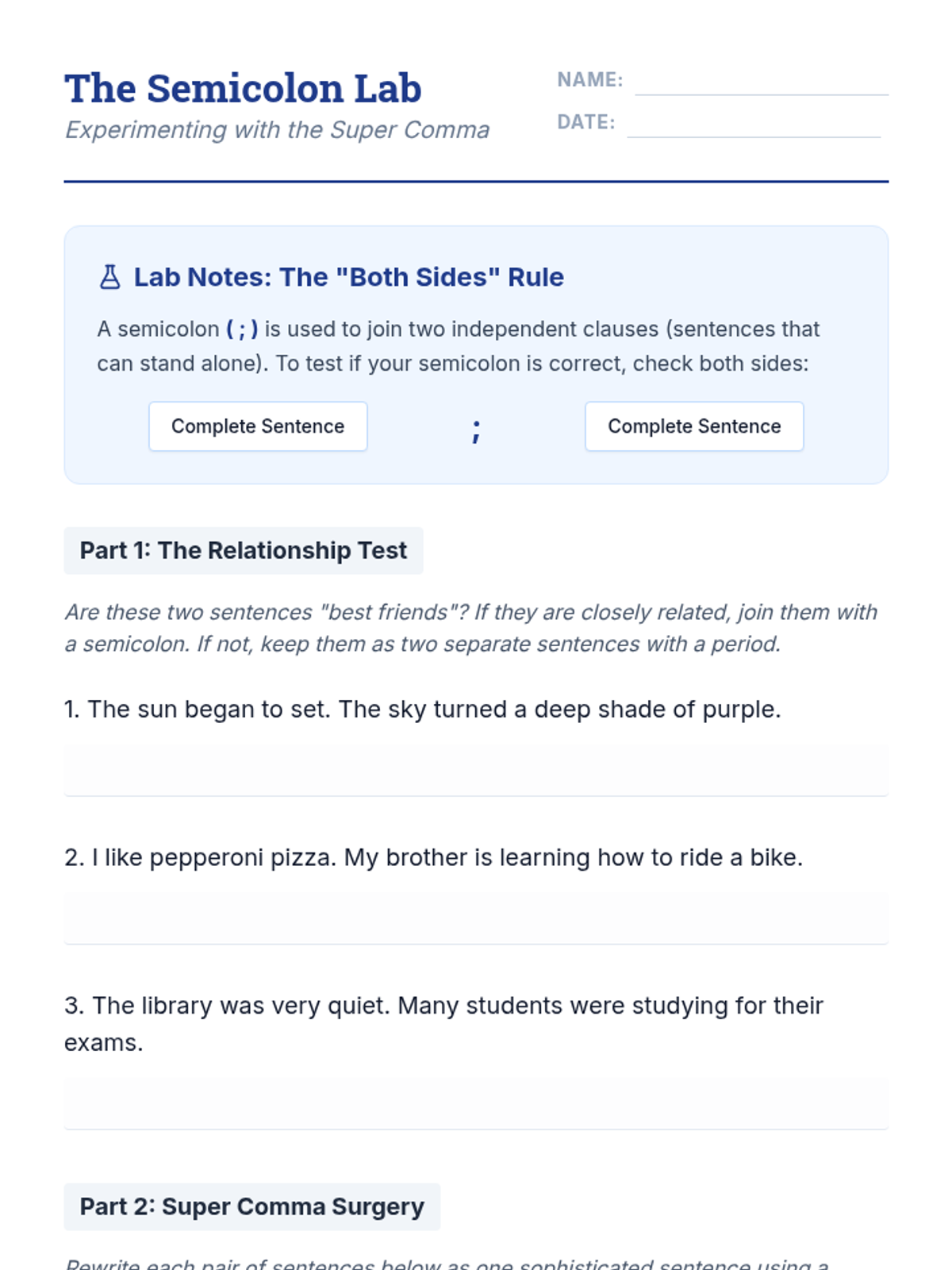
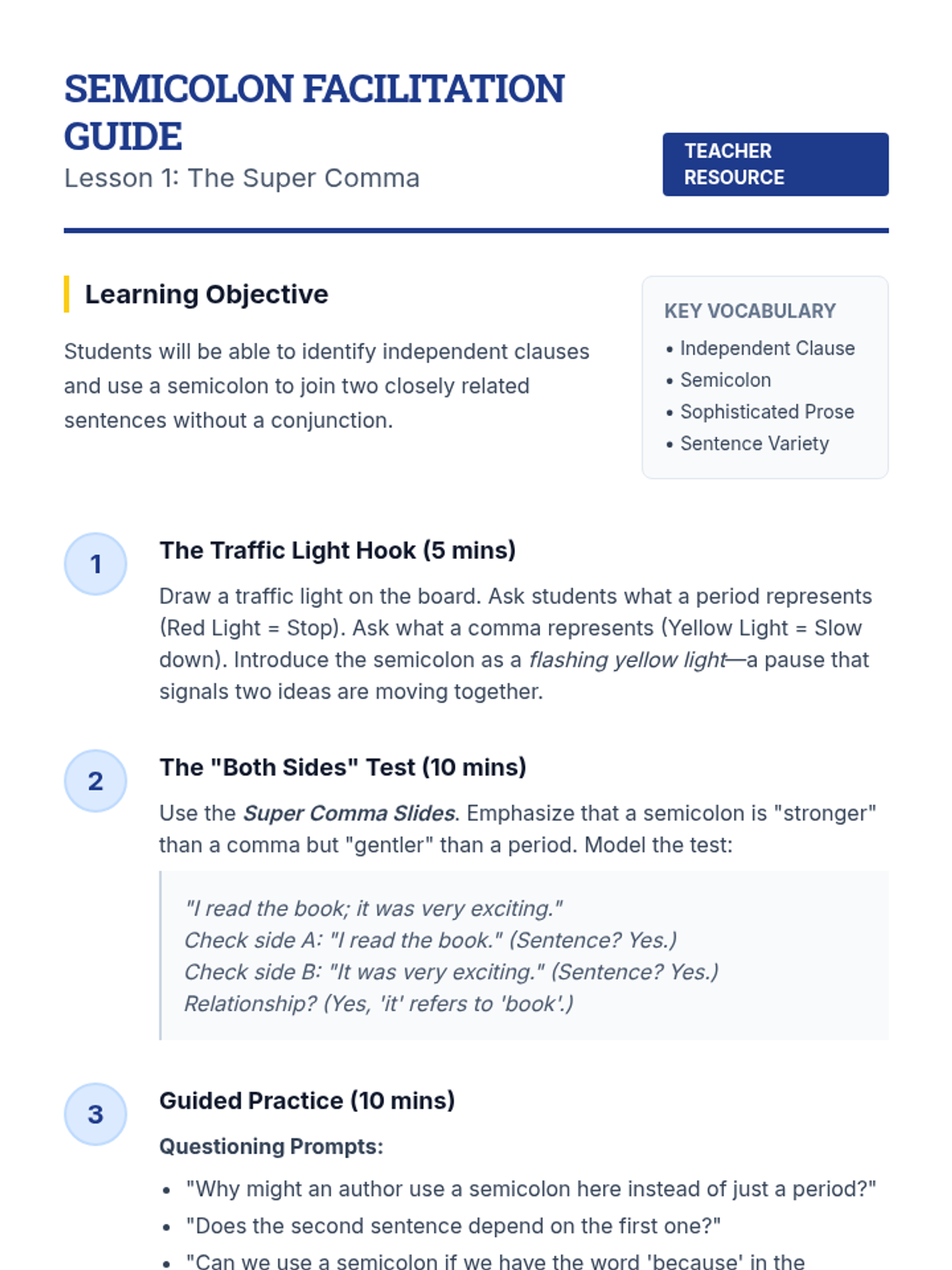
This sequence introduces 5th graders to semicolons and colons to improve sentence variety. Students learn to use semicolons to link independent clauses and colons to introduce lists, moving from identification to sophisticated revision.
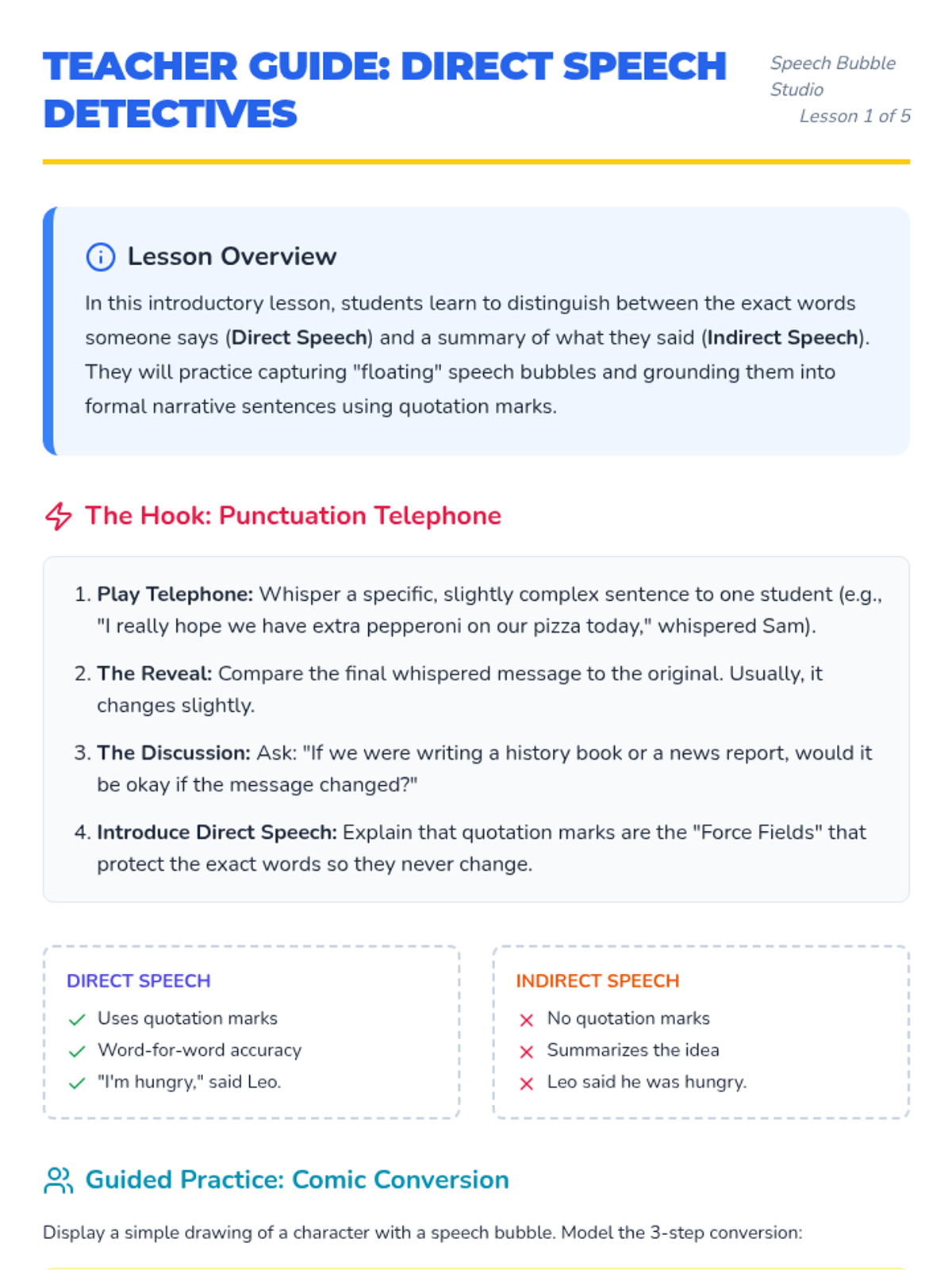
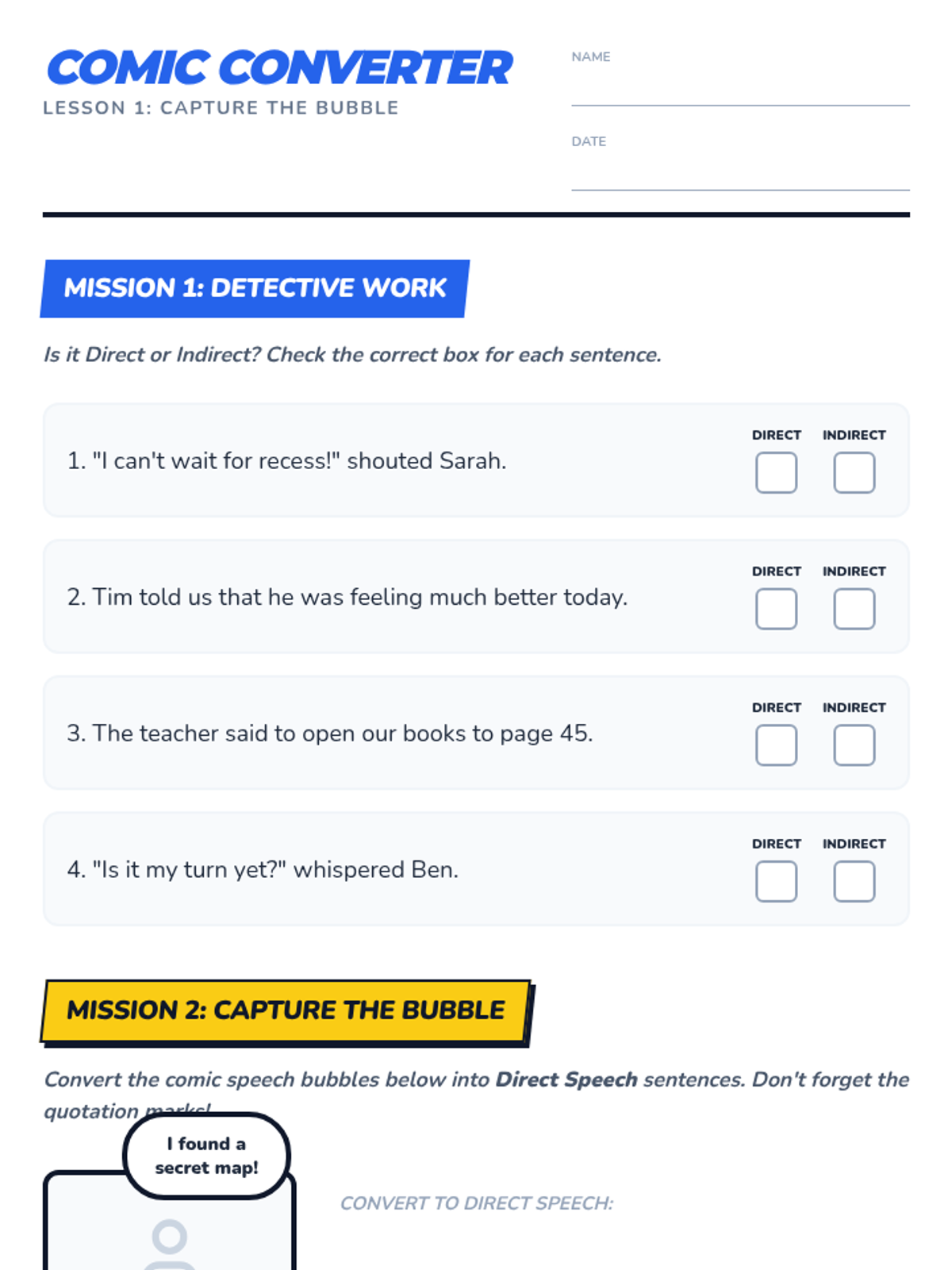
A comprehensive 5th-grade grammar sequence focusing on the mechanics of formatting dialogue and direct quotations through a comic-book inspired 'Speech Bubble Studio' theme. Students progress from identifying direct speech to mastering complex speaker tags and paragraphing rules, culminating in the creation of a polished narrative scene.
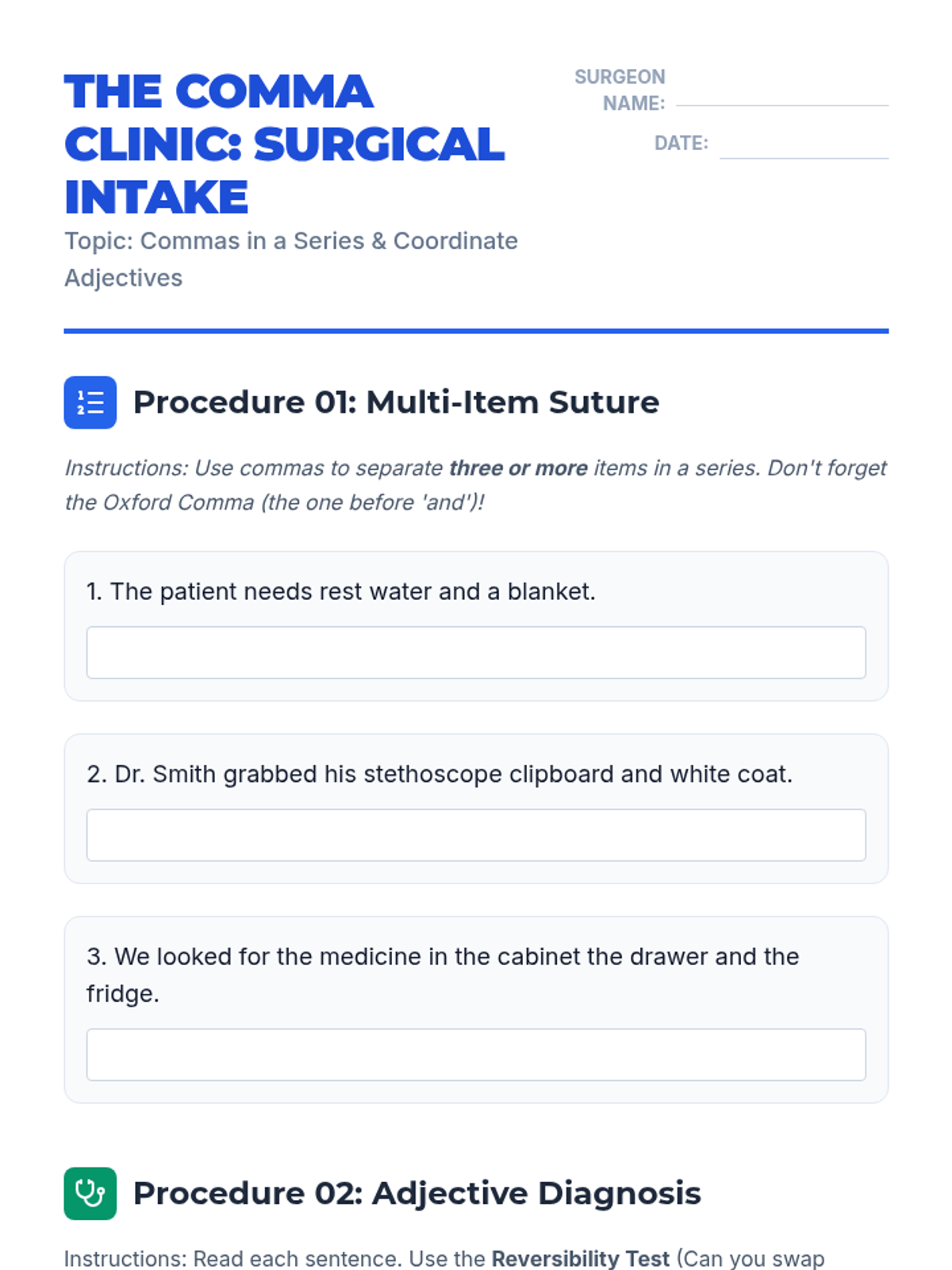
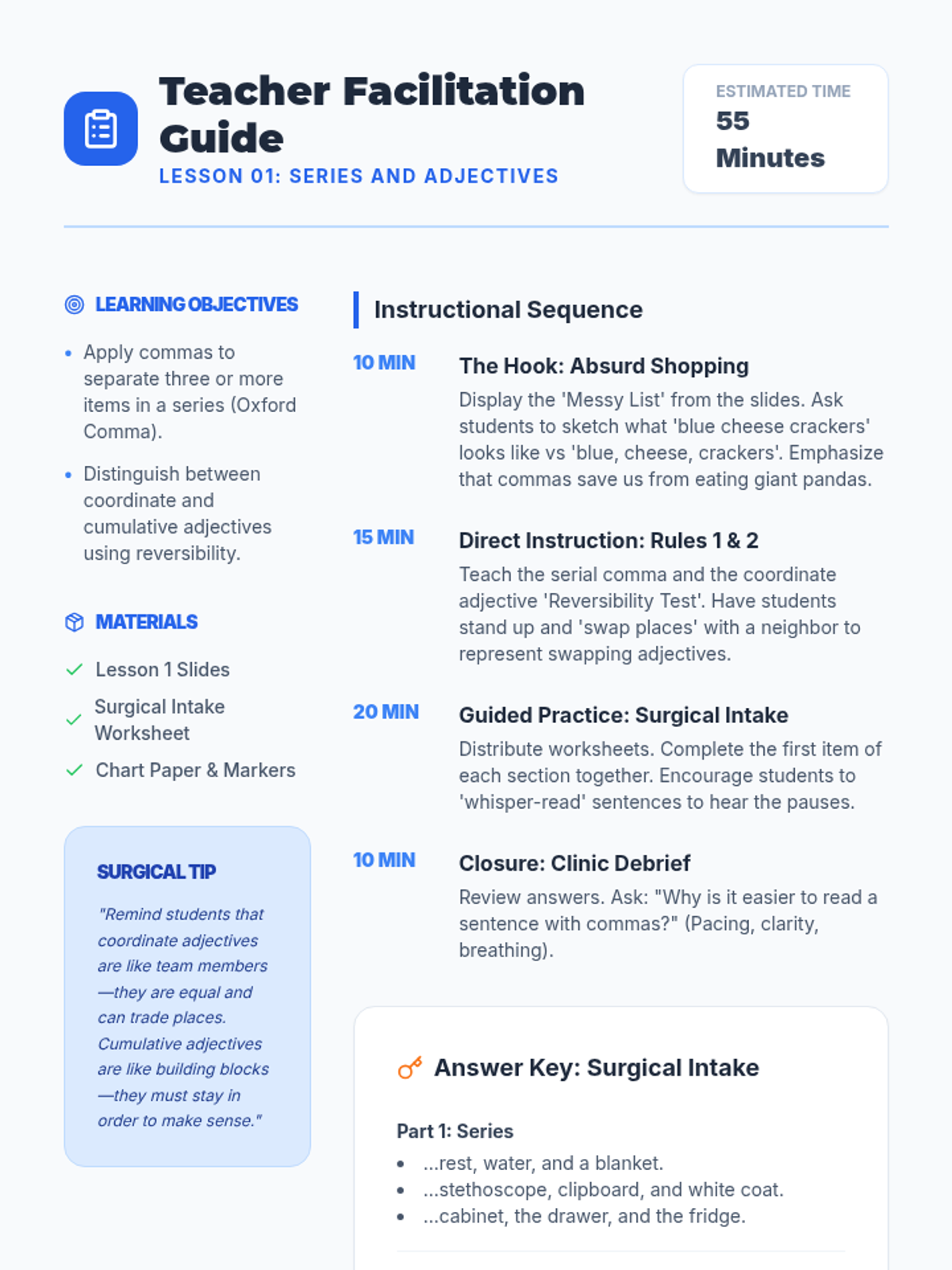
A comprehensive 5-lesson unit for 5th graders focusing on advanced comma usage, including items in a series, coordinate adjectives, introductory elements, compound sentences, direct address, and tag questions. The sequence uses a 'Comma Clinic' theme where students act as punctuation surgeons to improve sentence health and clarity.
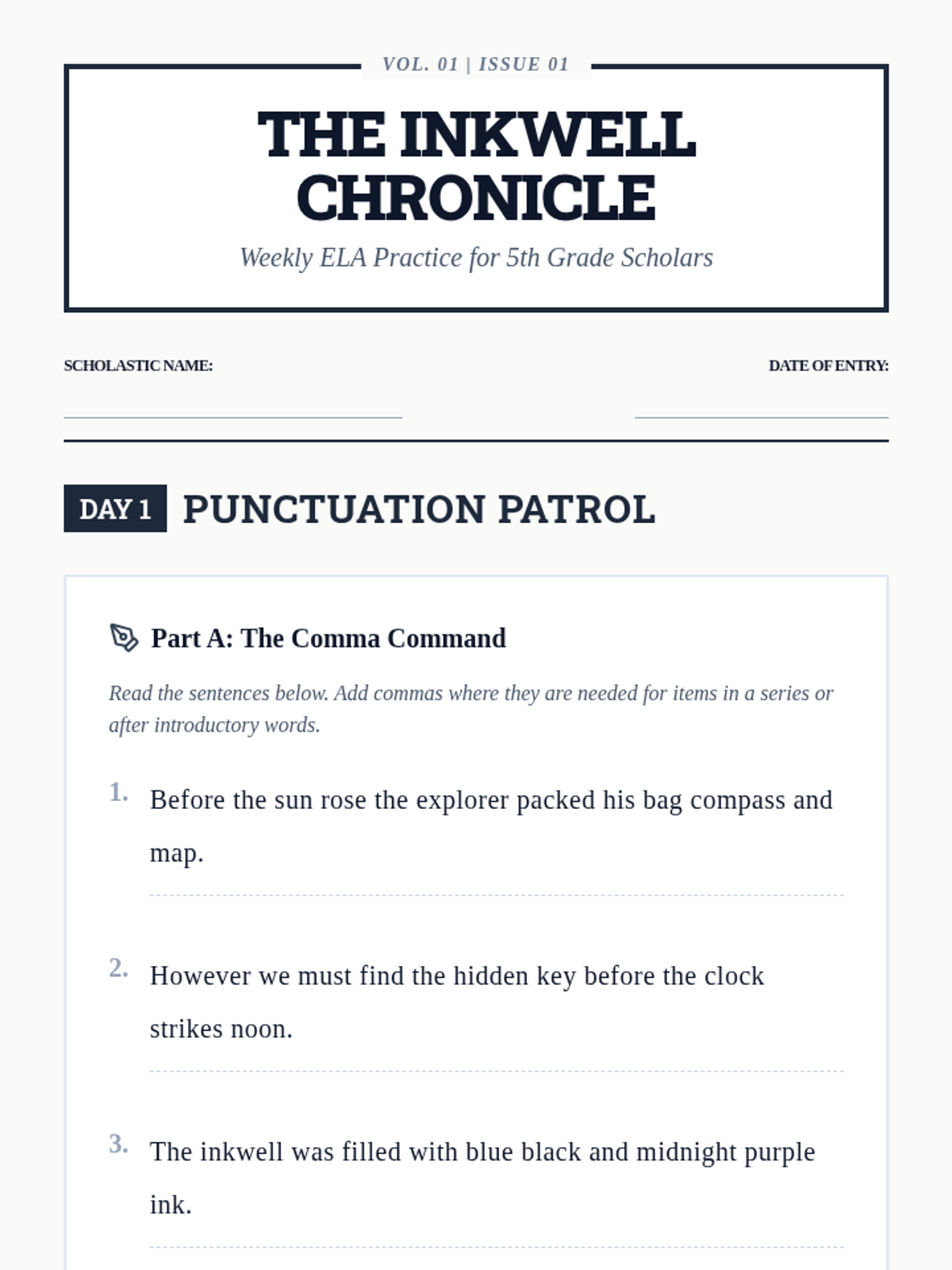
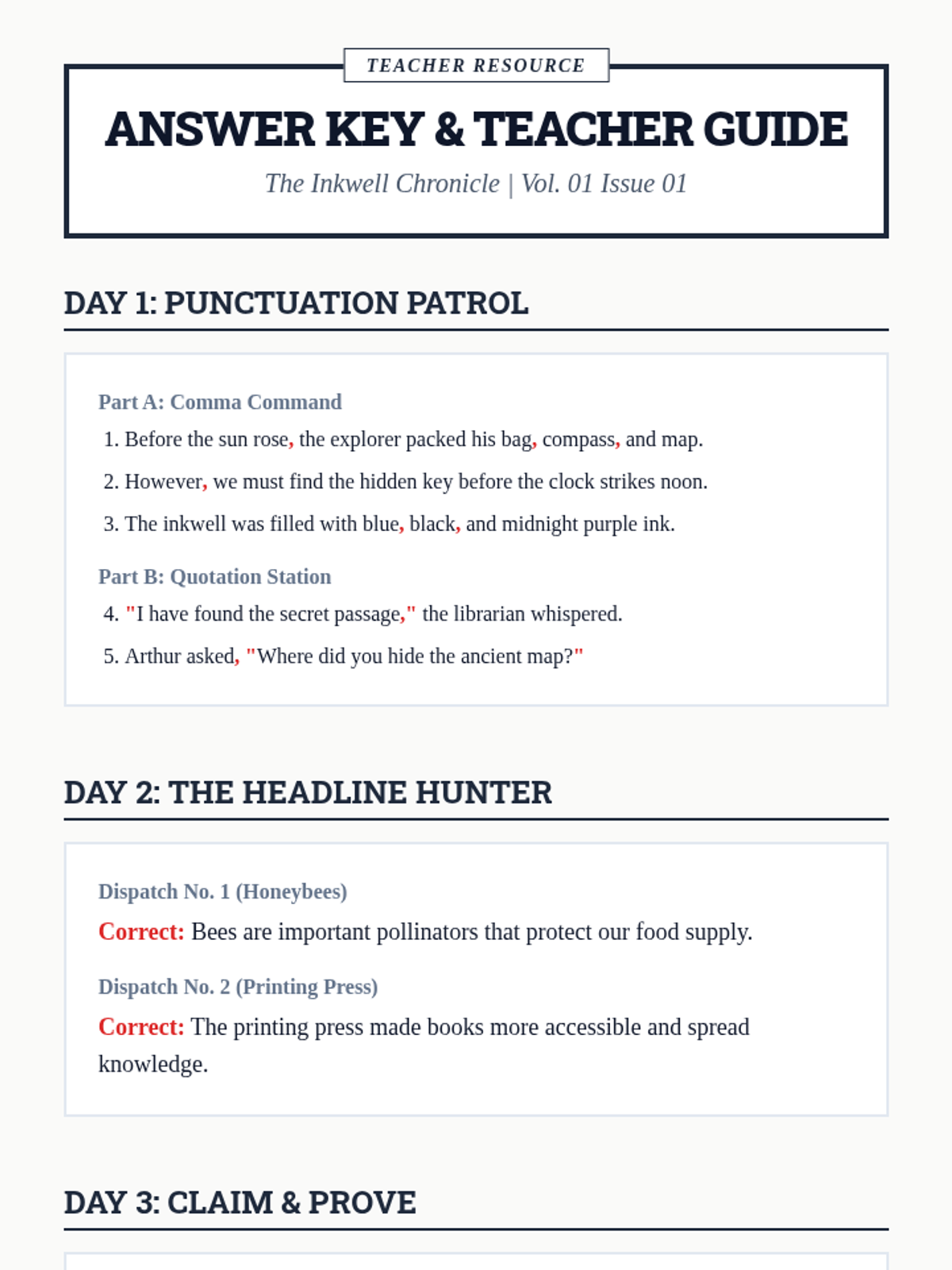
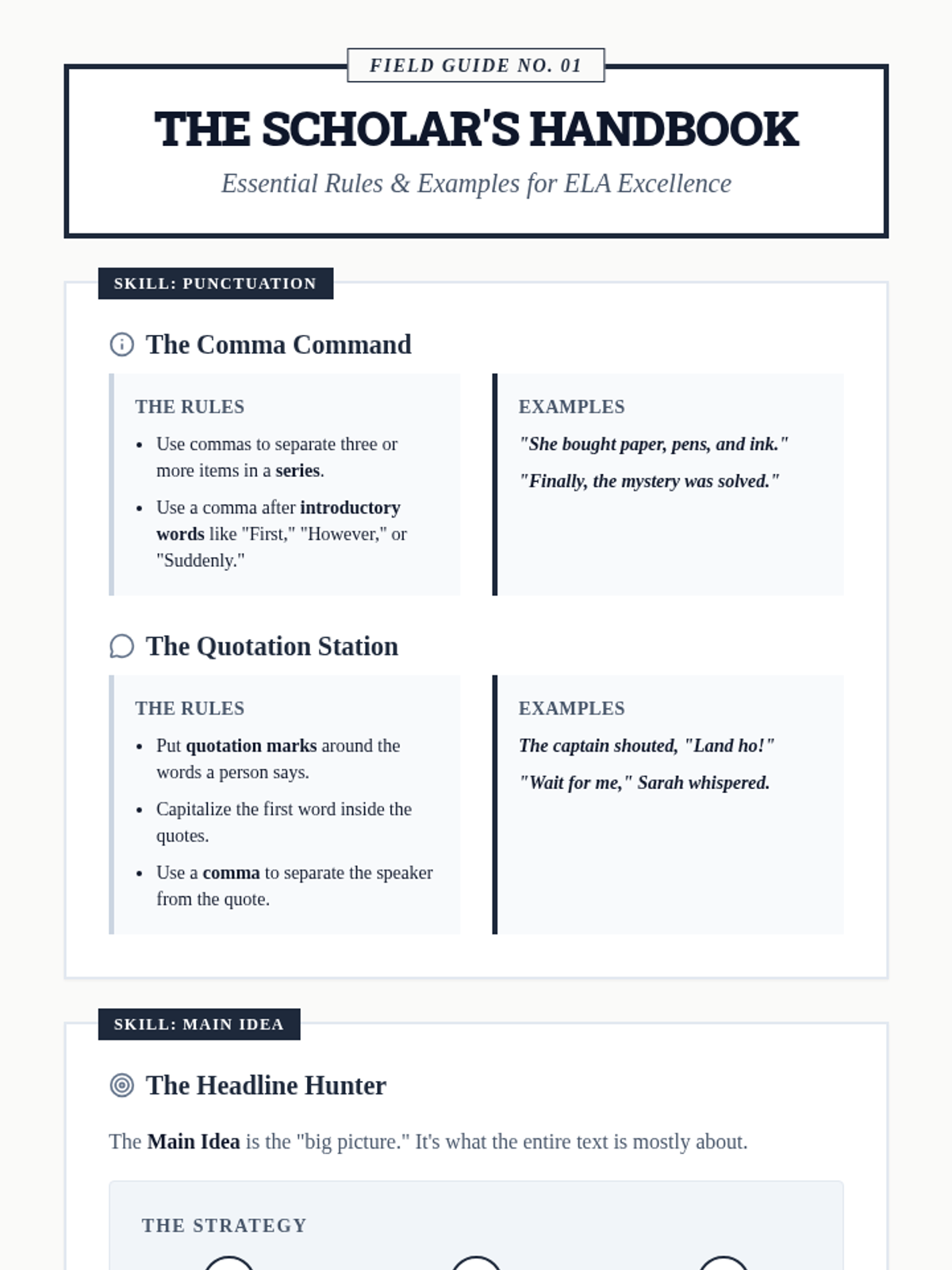
A weekly ELA practice sequence for 5th graders focusing on punctuation, main idea, and supporting claims with evidence, designed with a vintage literary journal theme.
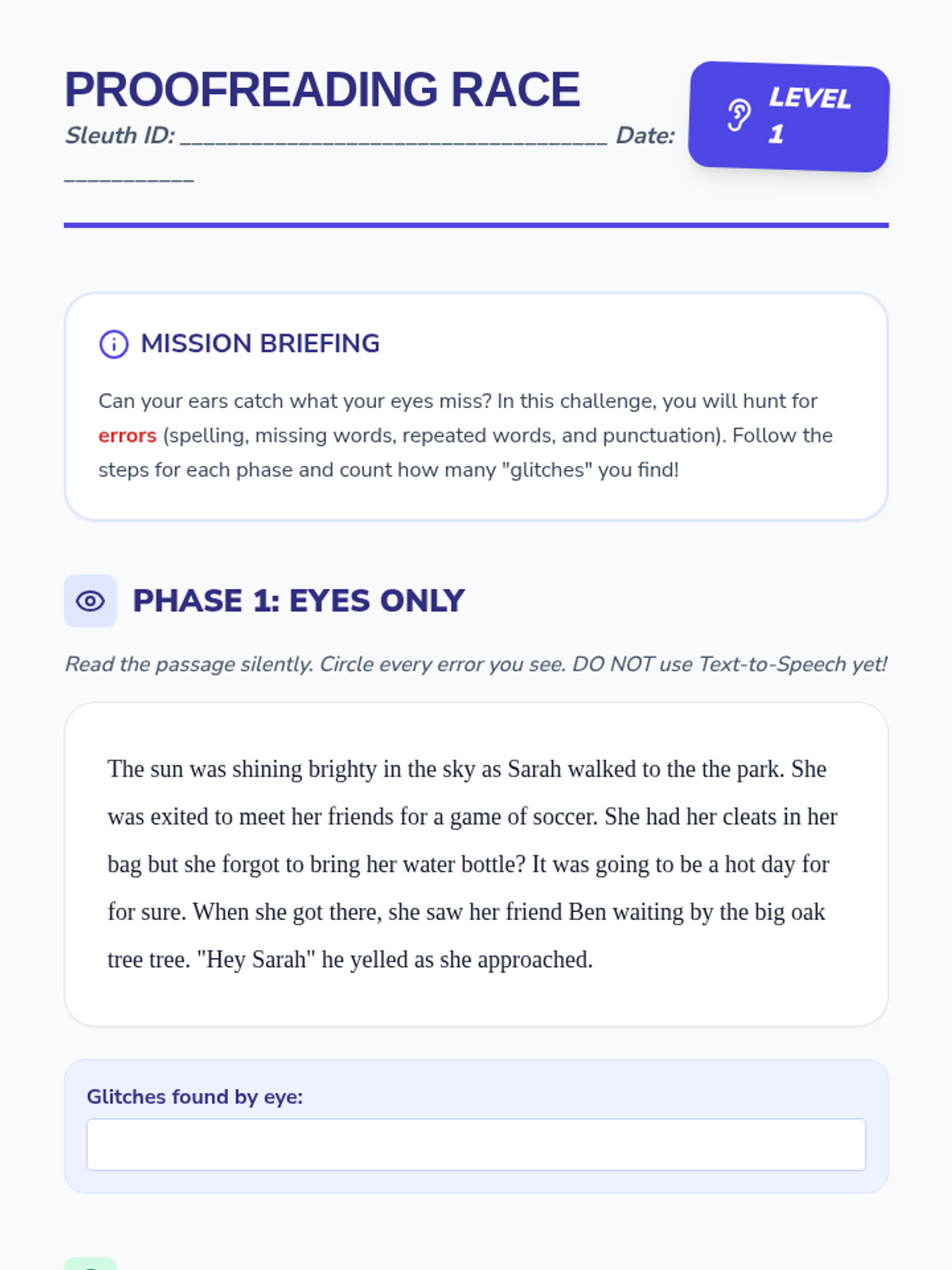
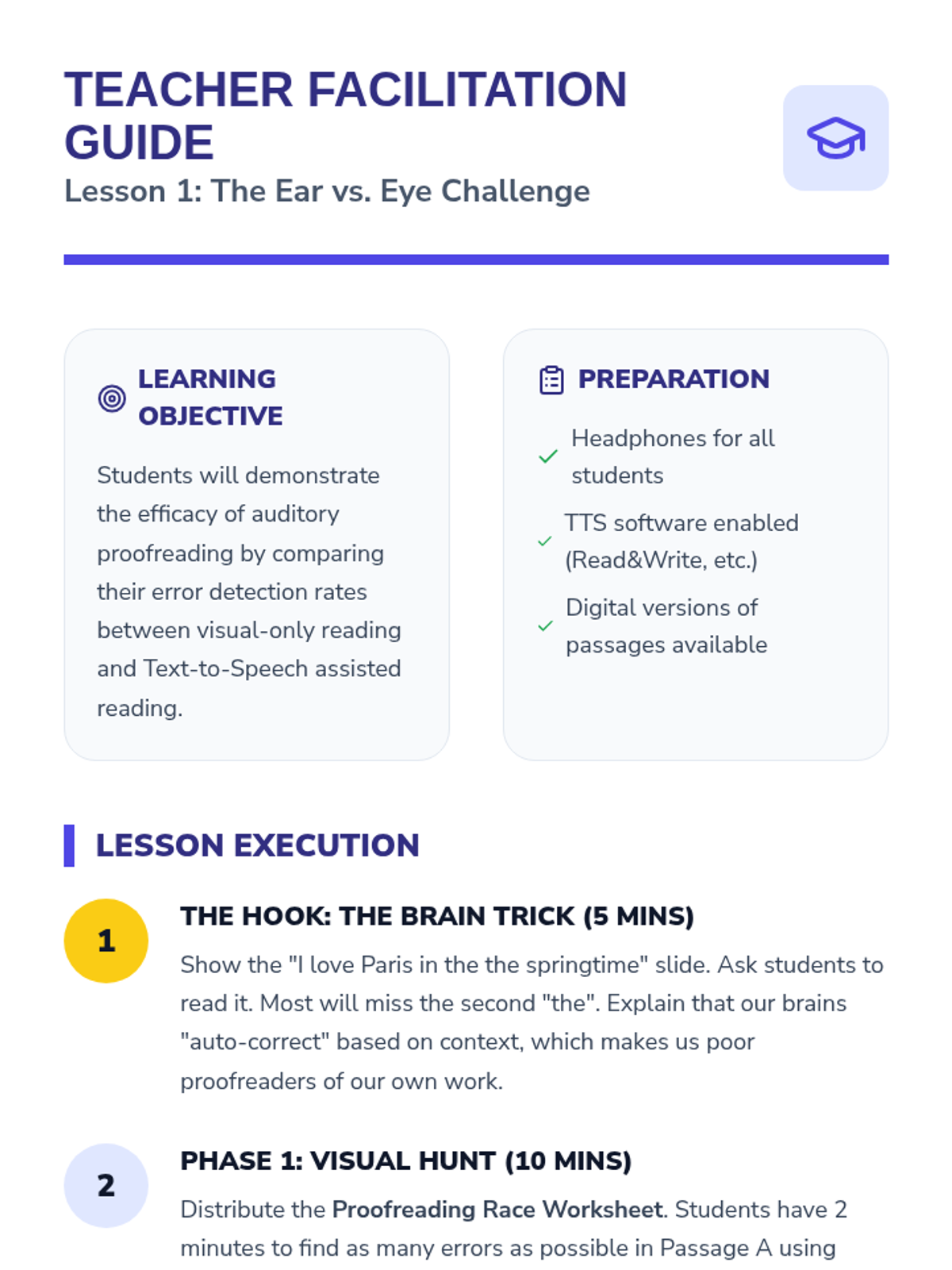
This sequence teaches 5th-grade students how to leverage Text-to-Speech (TTS) technology as a powerful revision and proofreading tool. Students transition from using TTS as a reading accommodation to using it as an active editing strategy, discovering how hearing their own writing helps identify errors that the eye often misses.
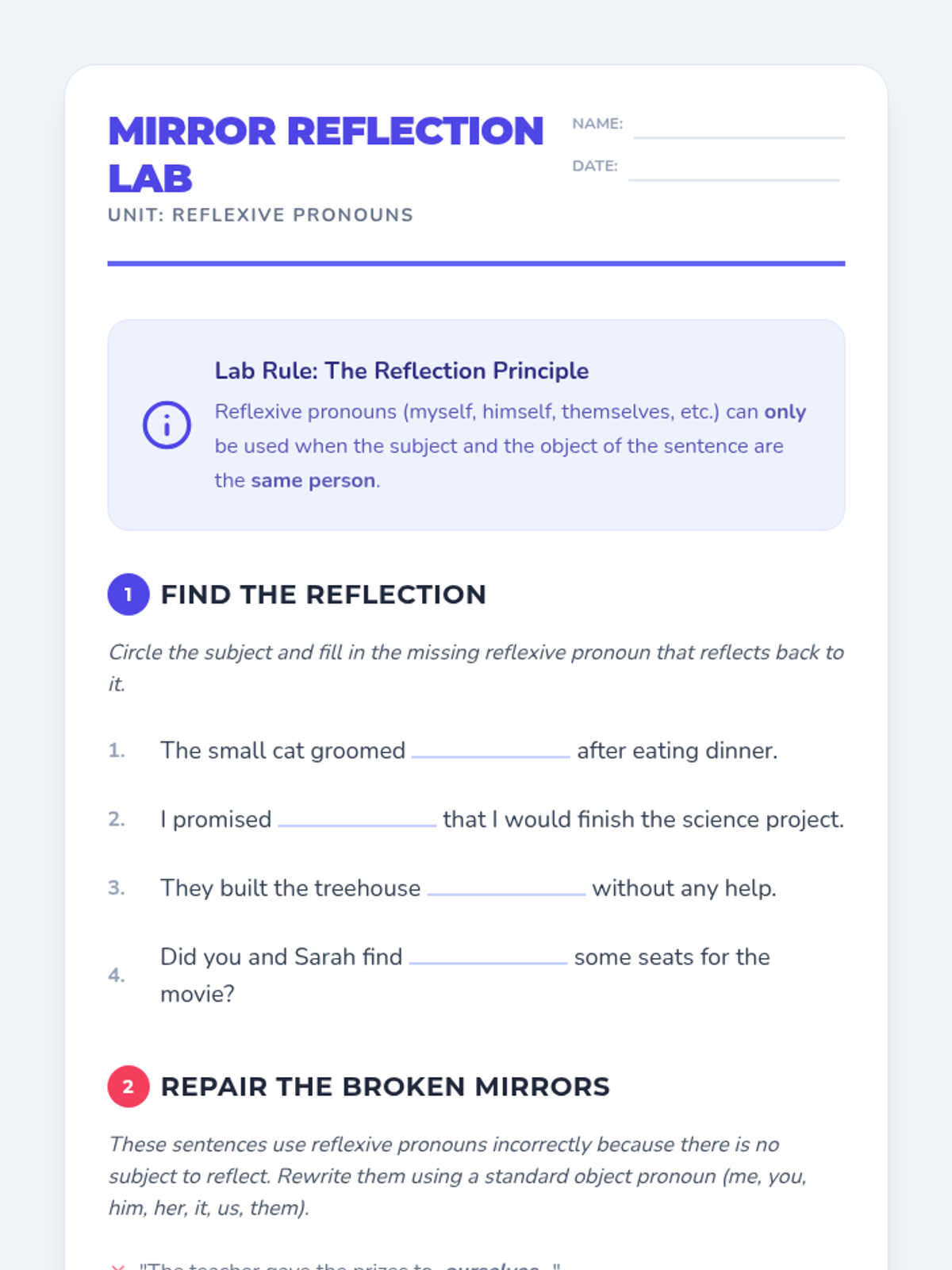
A 5th-grade grammar unit focusing on reflexive and intensive pronouns. Students explore the 'mirror effect' of reflexive pronouns, the 'power boost' of intensive pronouns, and learn to avoid common errors like 'hisself' or misusing 'myself' in compound subjects through a lab-themed investigation.
A 5th-grade ELA sequence where students act as 'Clarity Detectives' to identify and resolve vague pronoun references, moving from detection to advanced revision strategies.
A comprehensive 5th-grade ELA sequence focused on pronoun-antecedent agreement. Students progress from identifying pronouns and their antecedents to mastering complex cases involving indefinite pronouns and compound subjects, culminating in a proofreading mastery project.
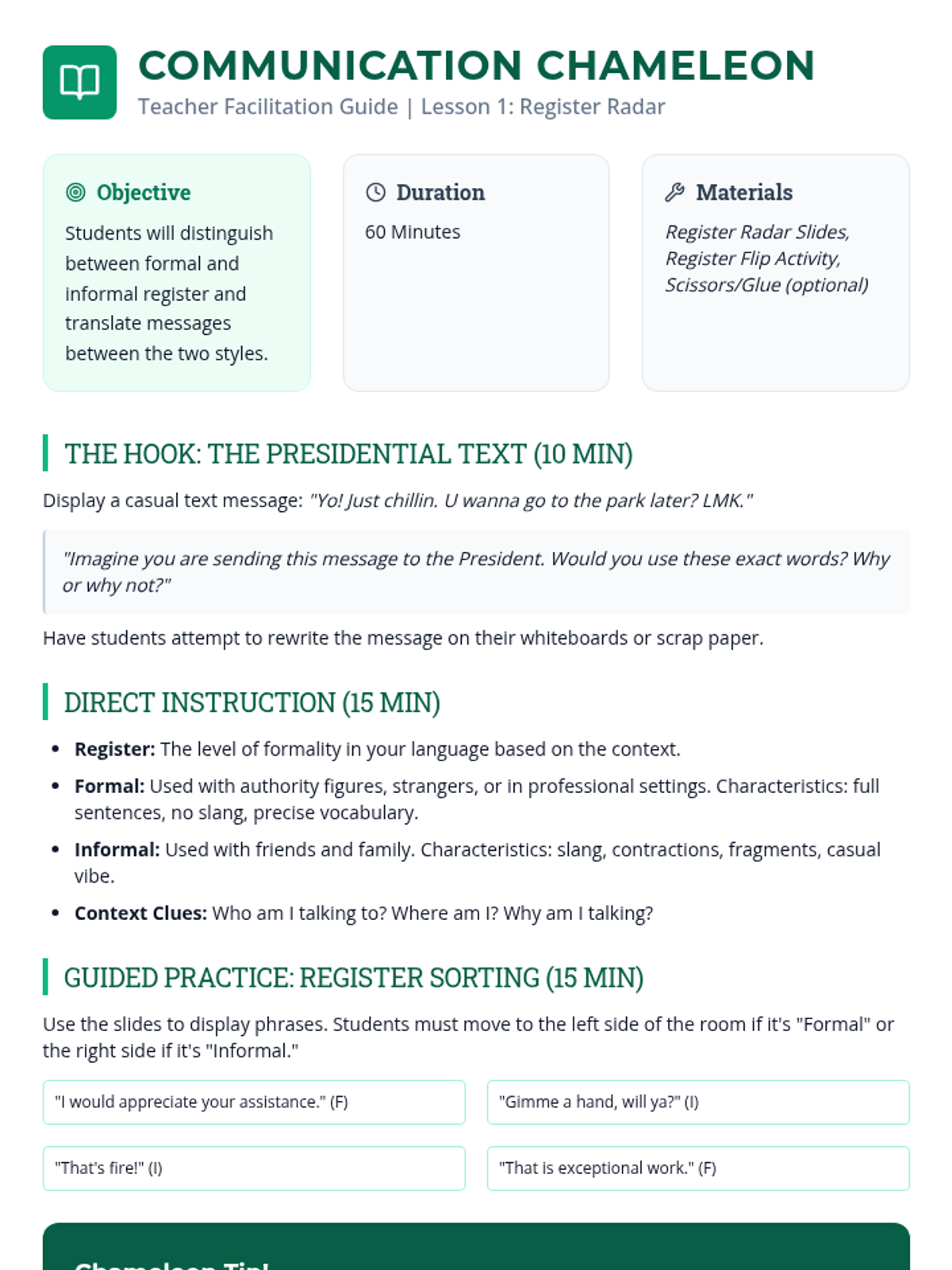
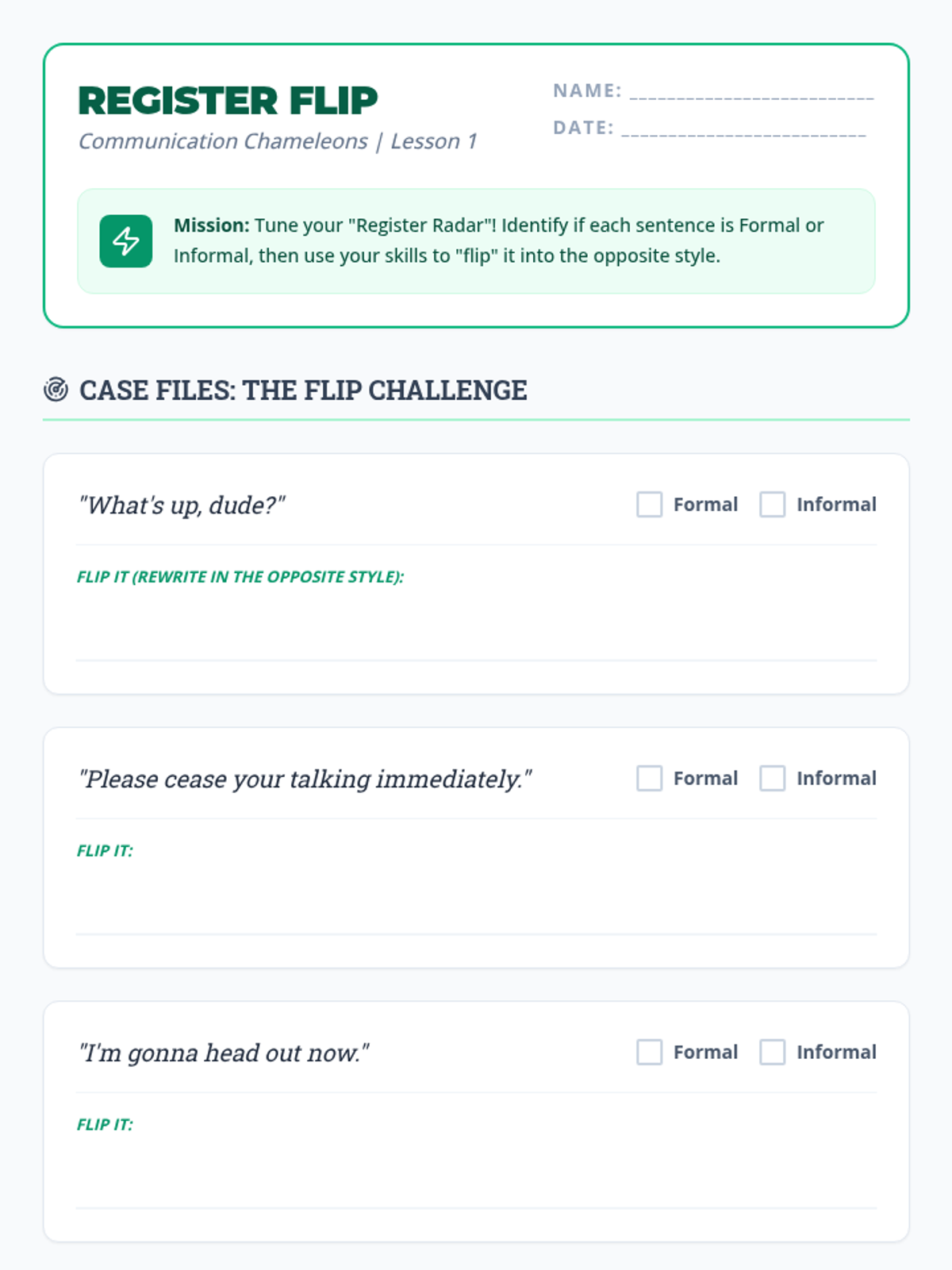
A workshop-style ELA sequence for 5th graders focused on adapting writing tone, purpose, and register for different audiences, from formal authorities to younger children.
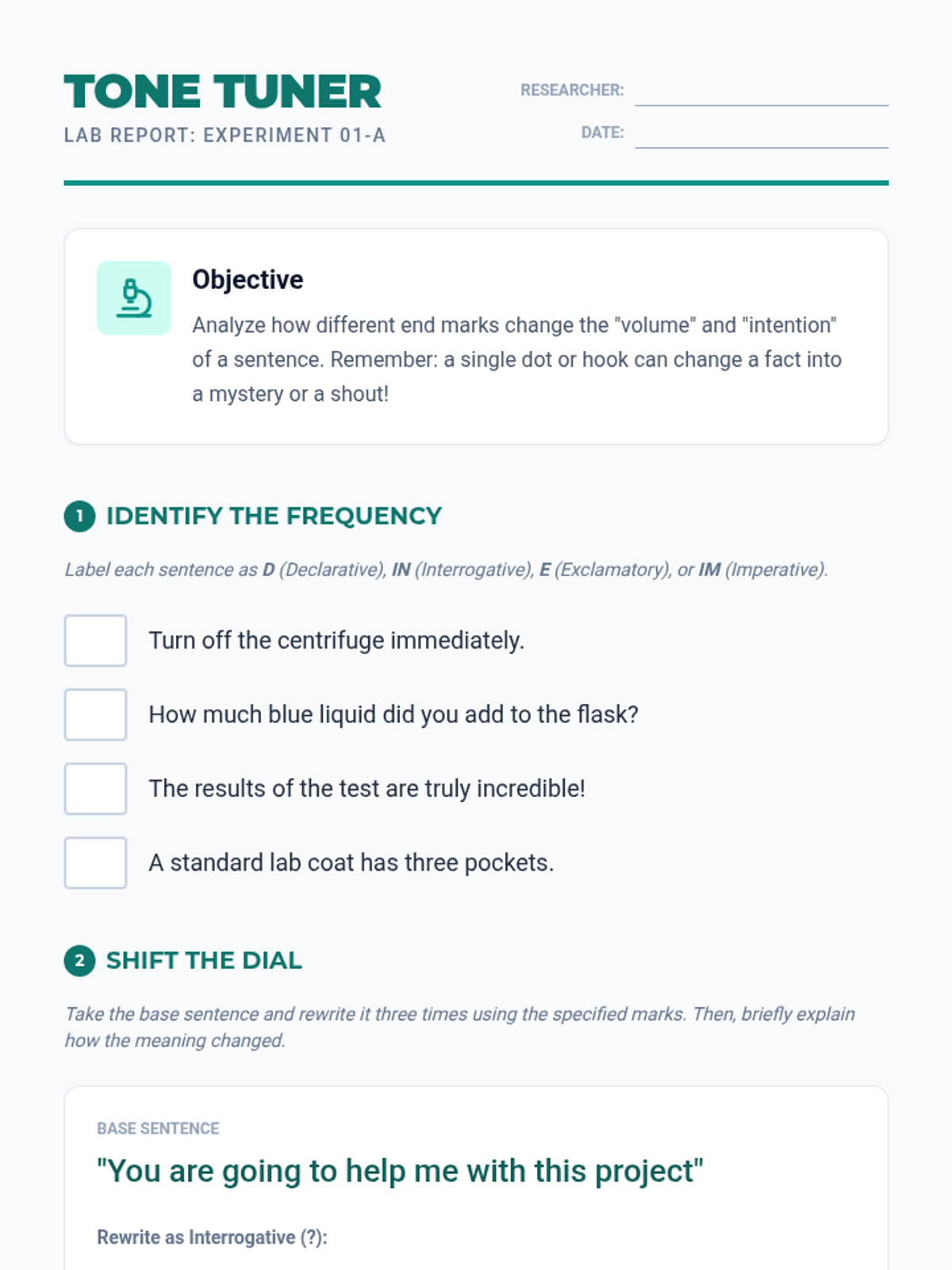
A 5th-grade mastery-based sequence focused on the role of punctuation in clarifying meaning and preventing ambiguity, covering end marks, run-ons, commas, and formatting.
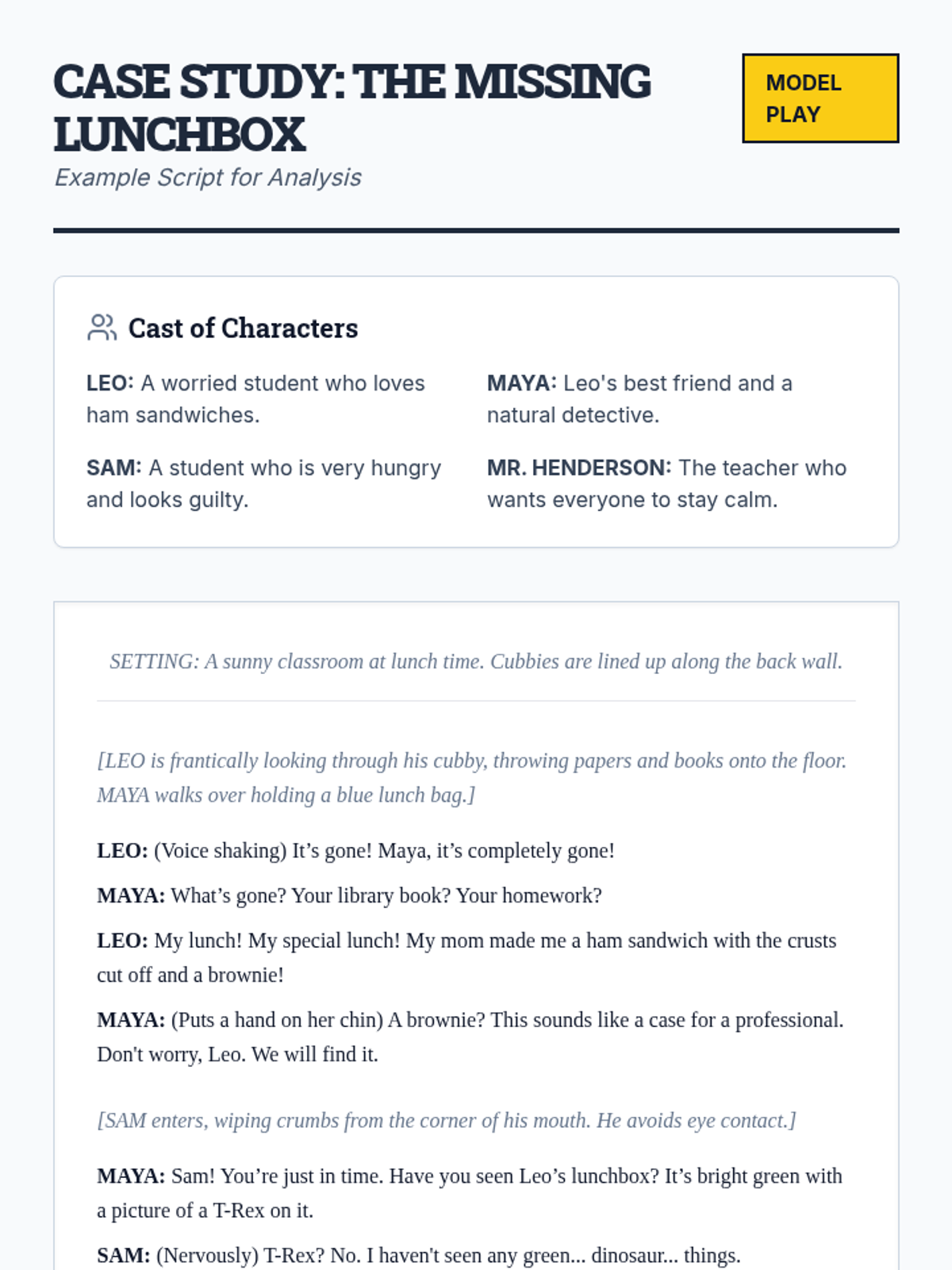
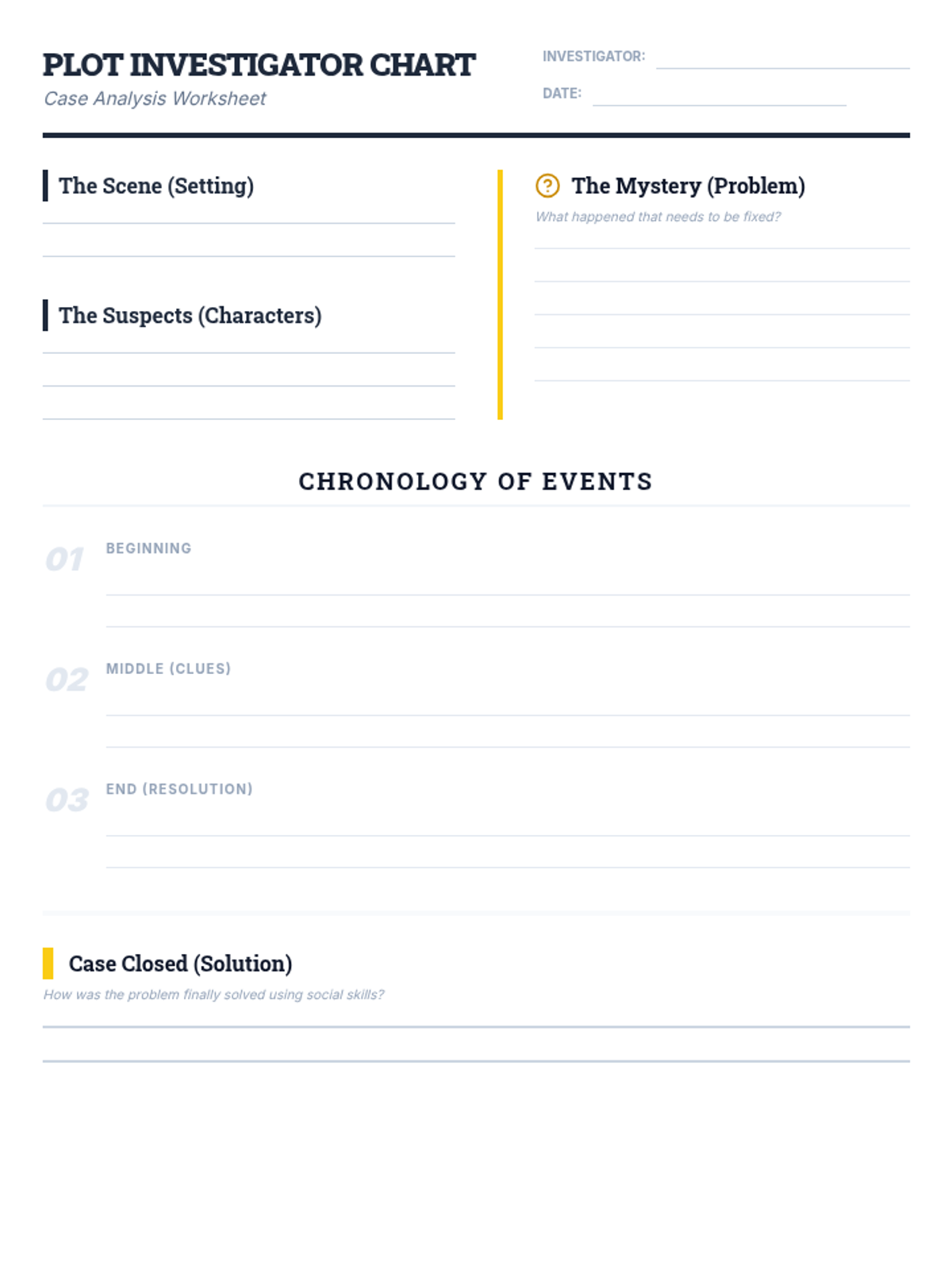
A unit focused on play structure, fluency, and social-emotional problem solving through mystery-themed scripts. Students analyze plot elements while practicing performance skills.
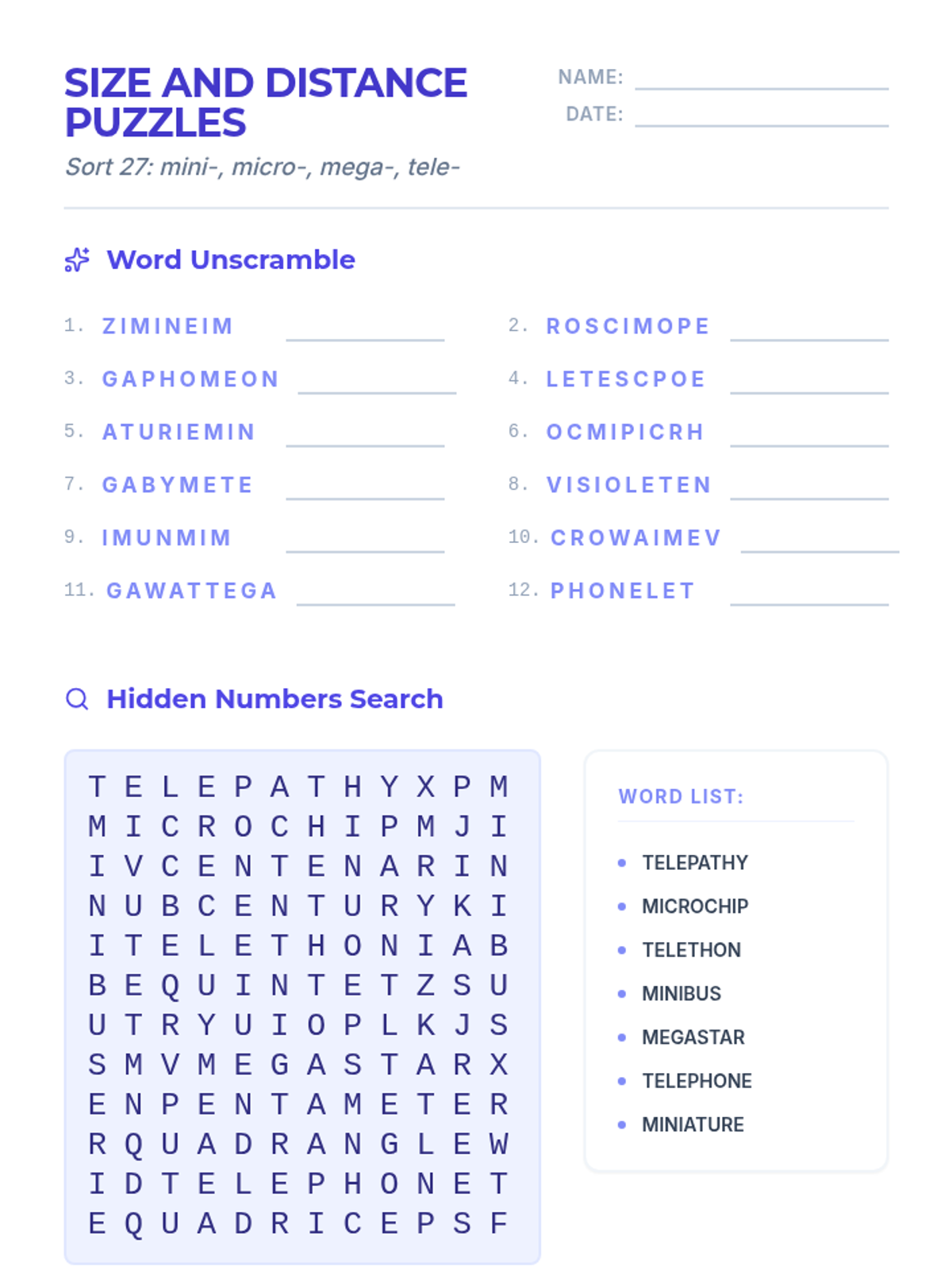
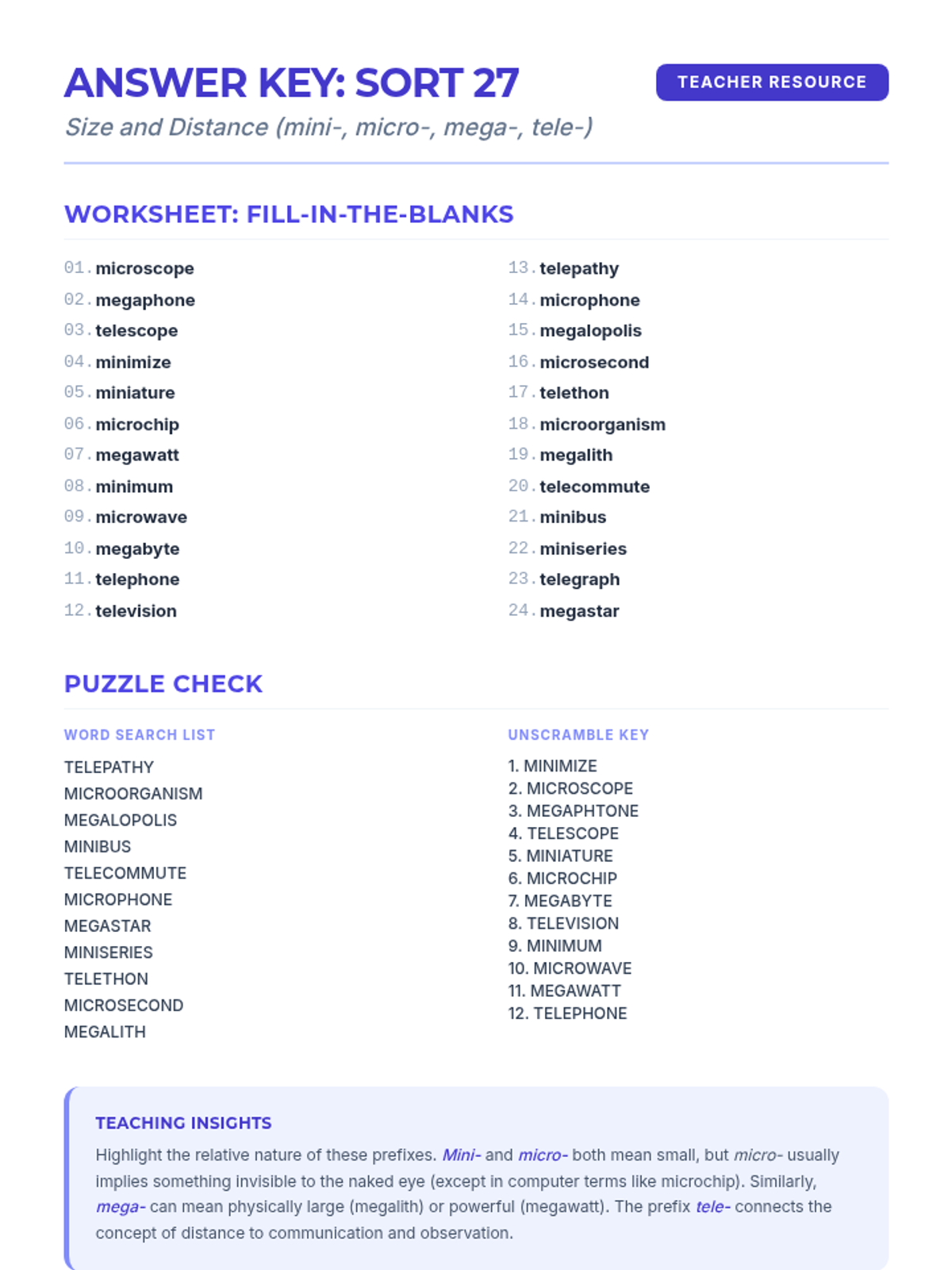
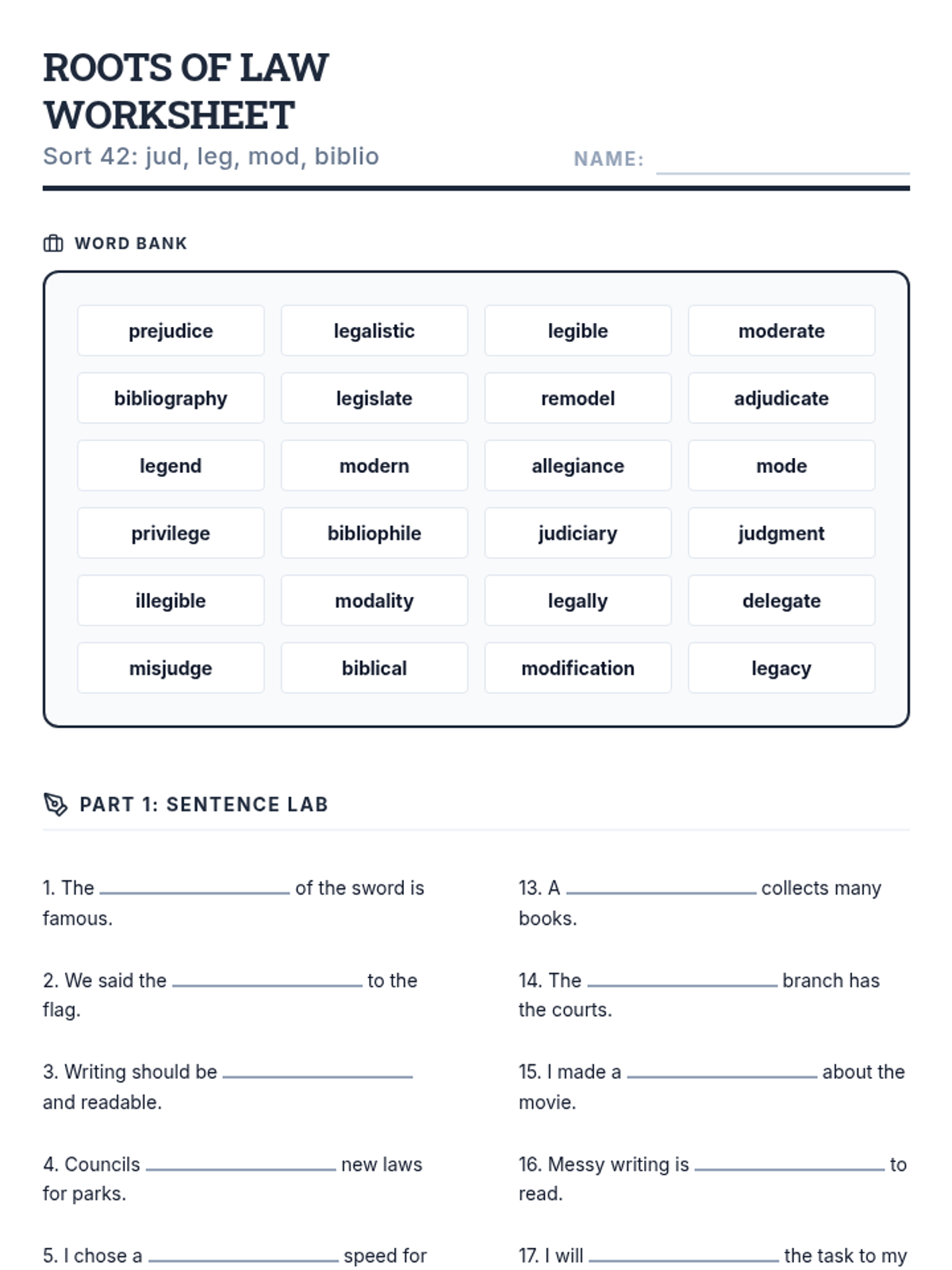
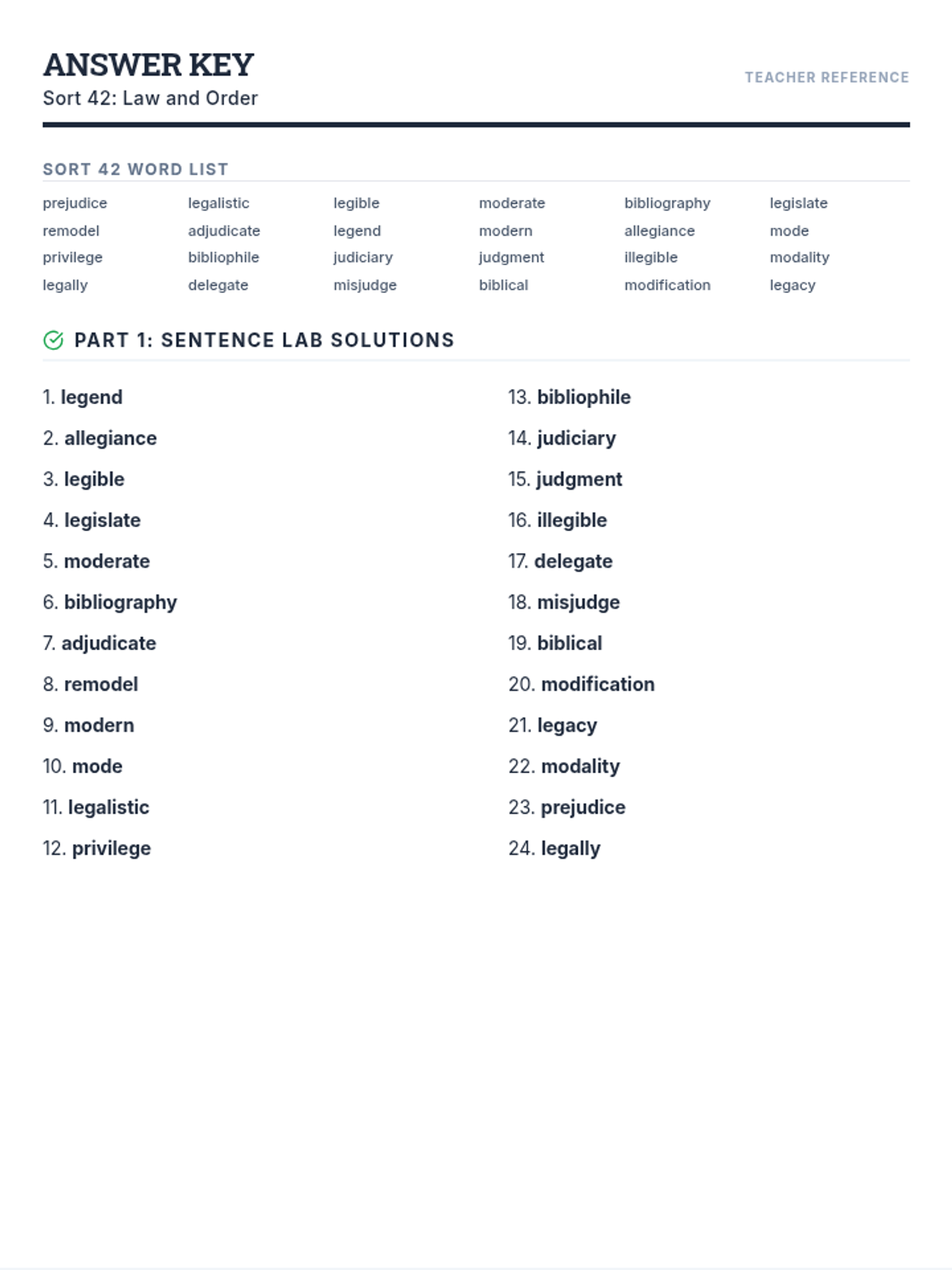
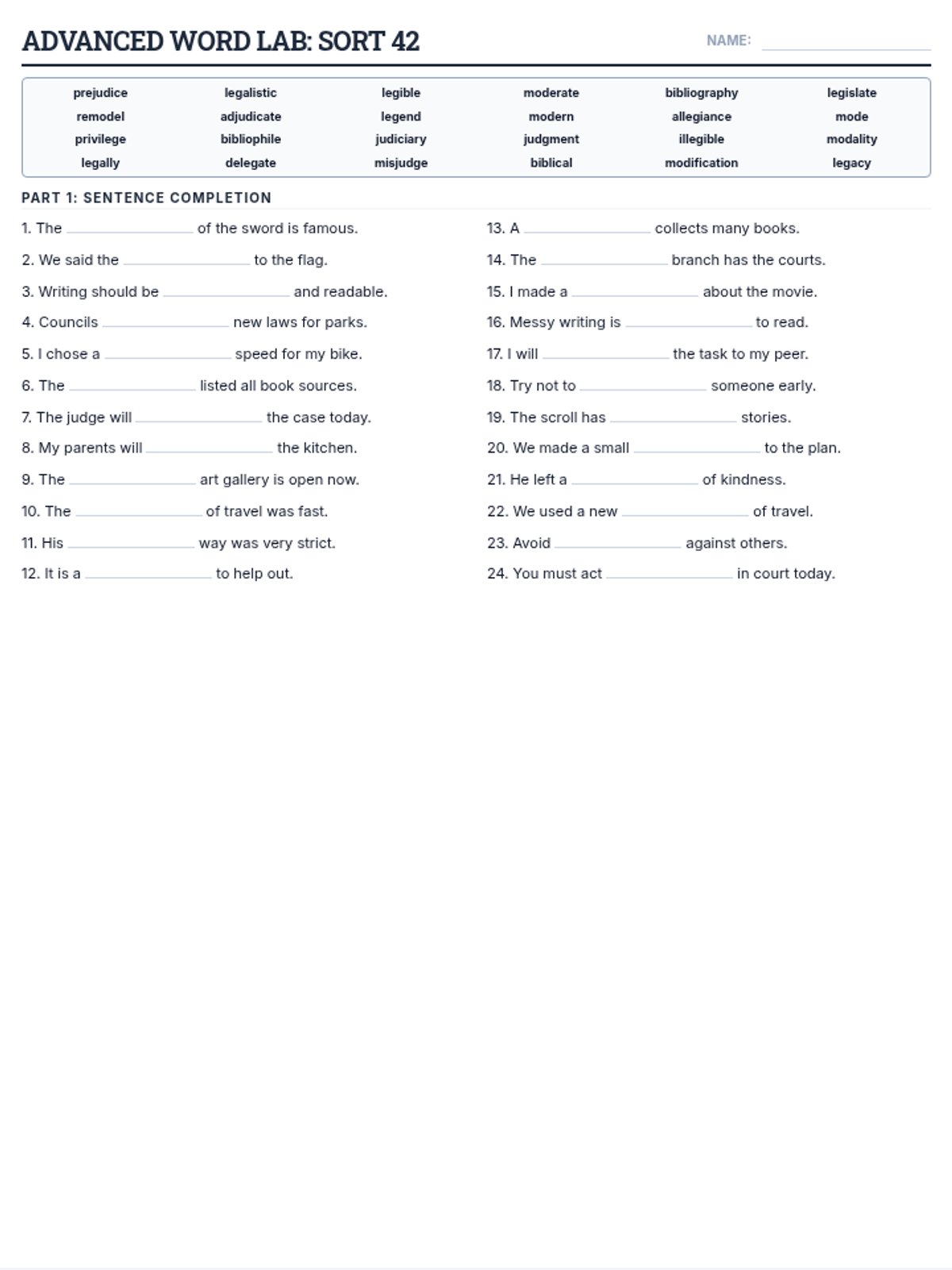
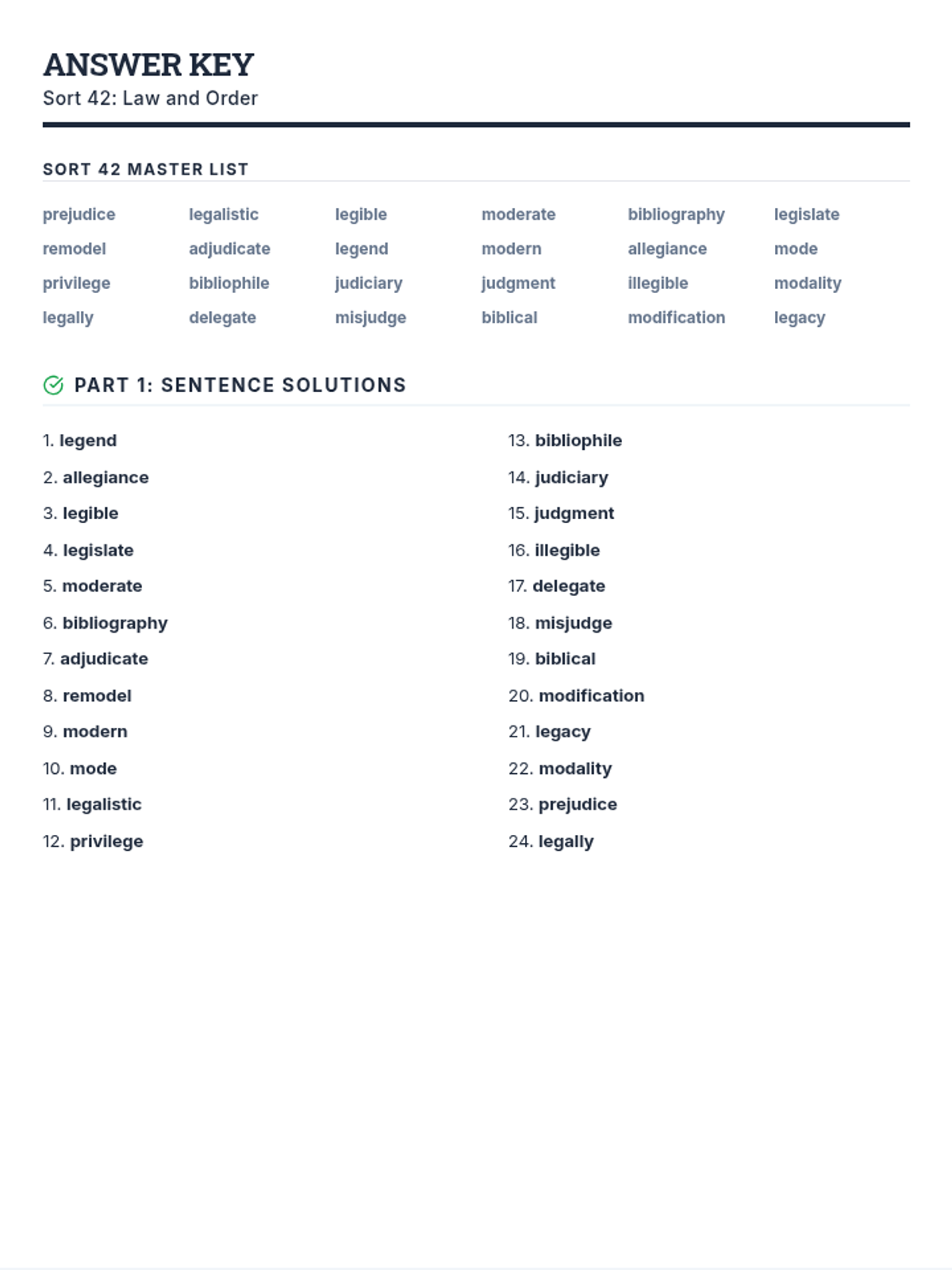
A comprehensive vocabulary and morphology curriculum covering prefixes, suffixes, Latin roots, and Greek roots through fill-in-the-blank exercises and engaging word puzzles.
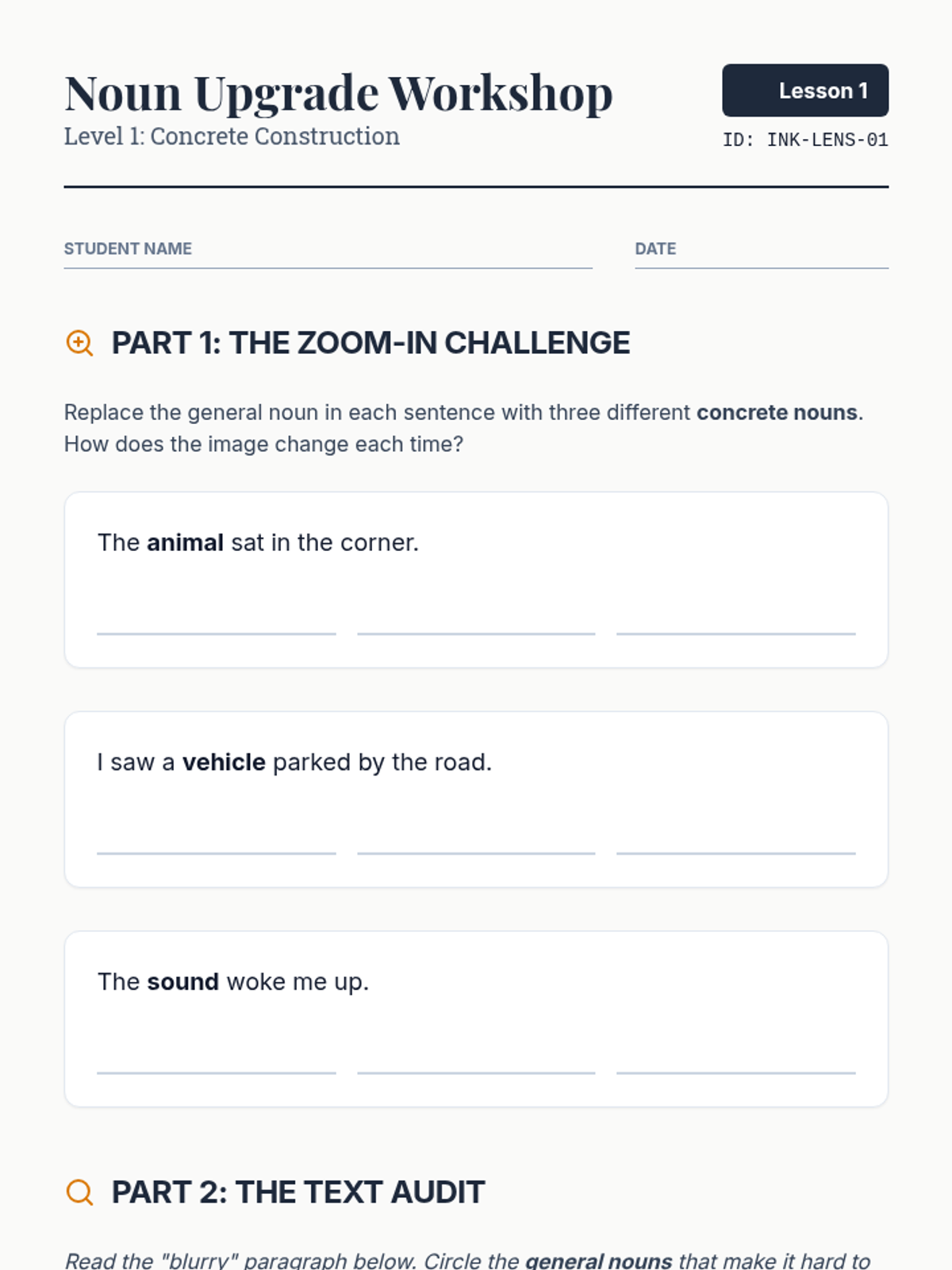
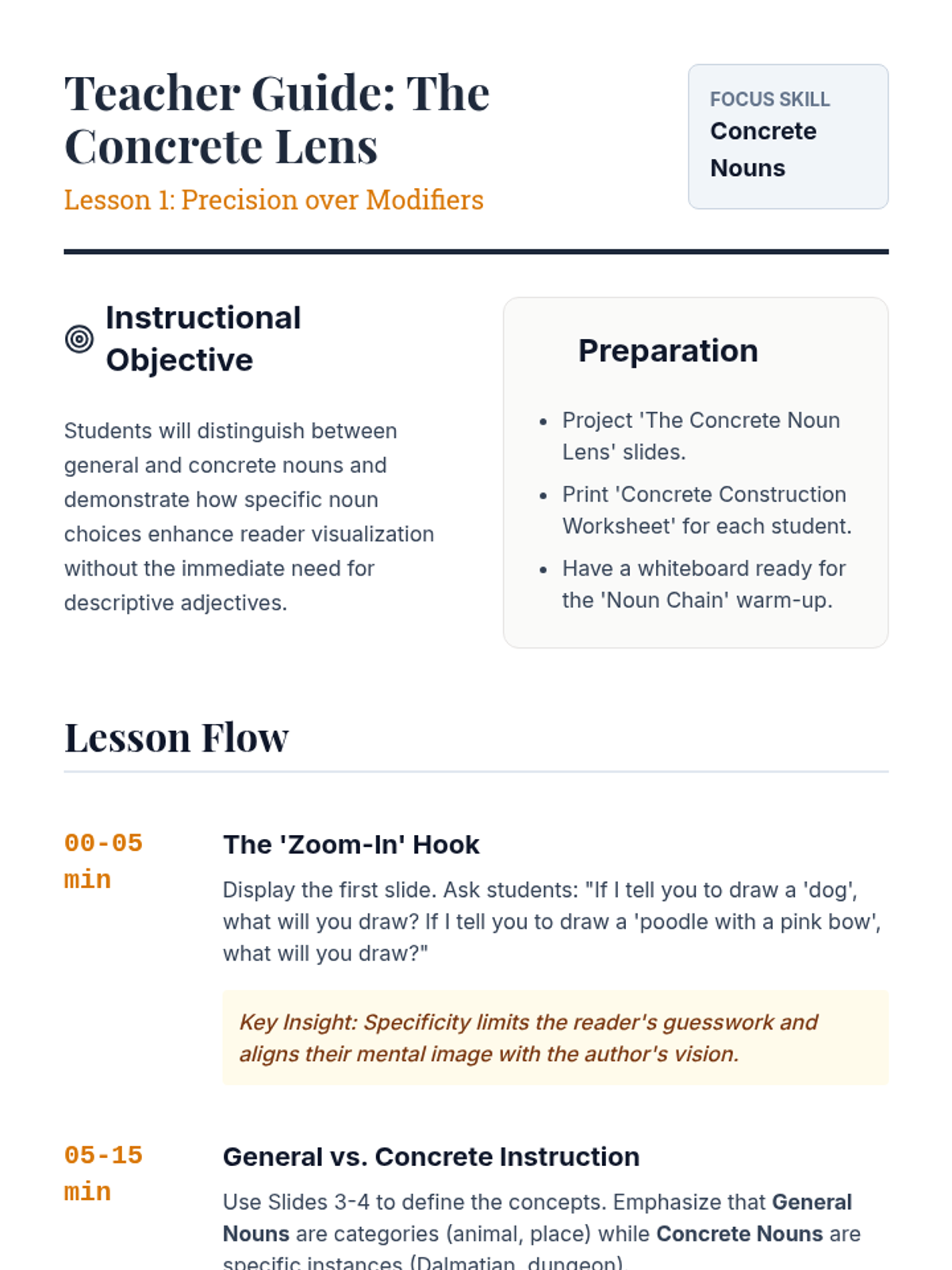
This writing workshop sequence moves students beyond basic identification of nouns and adjectives toward strategic application in narrative writing. Students practice replacing general nouns with concrete alternatives and weak adjectives with vivid modifiers to enhance reader visualization.
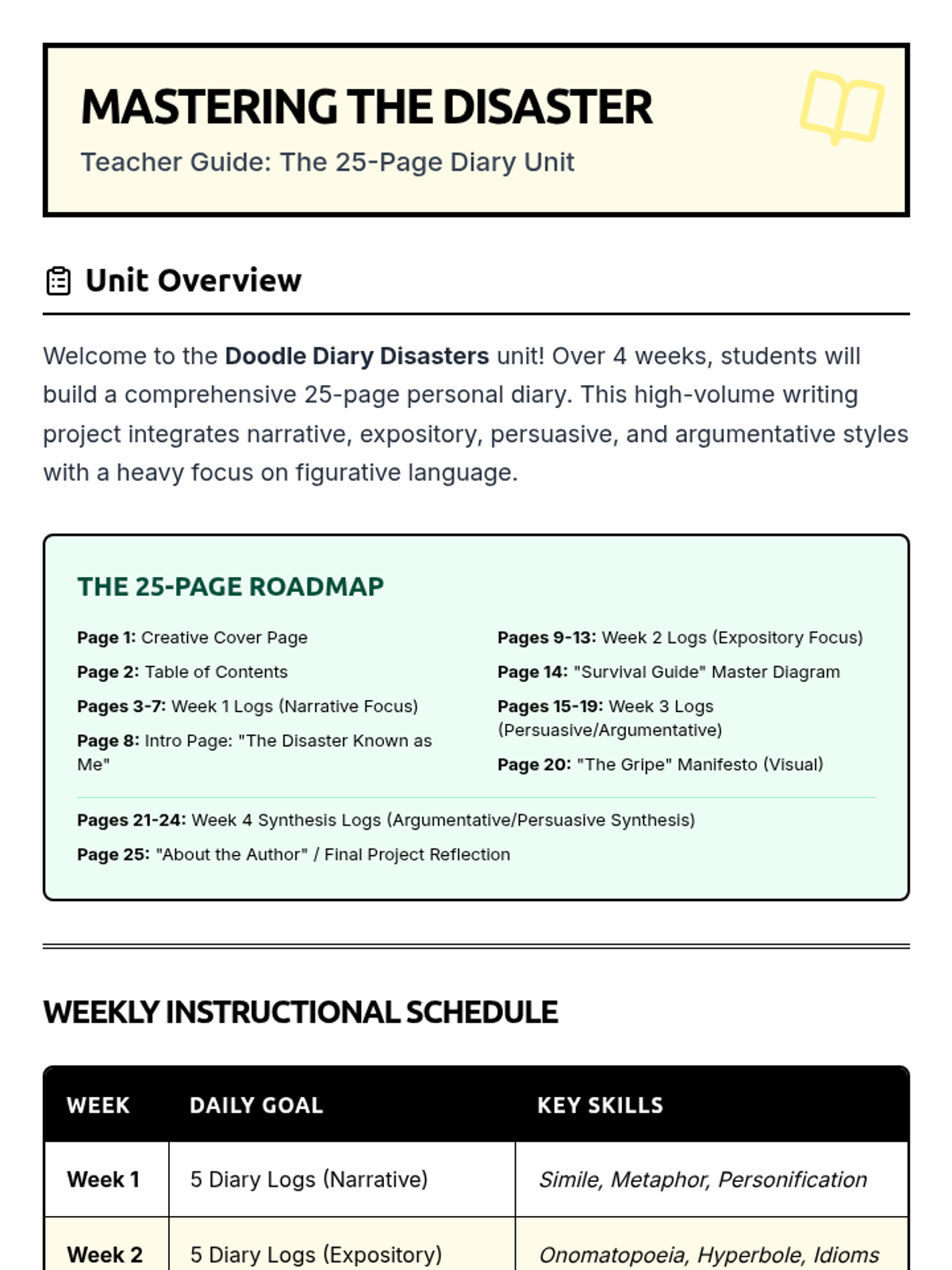
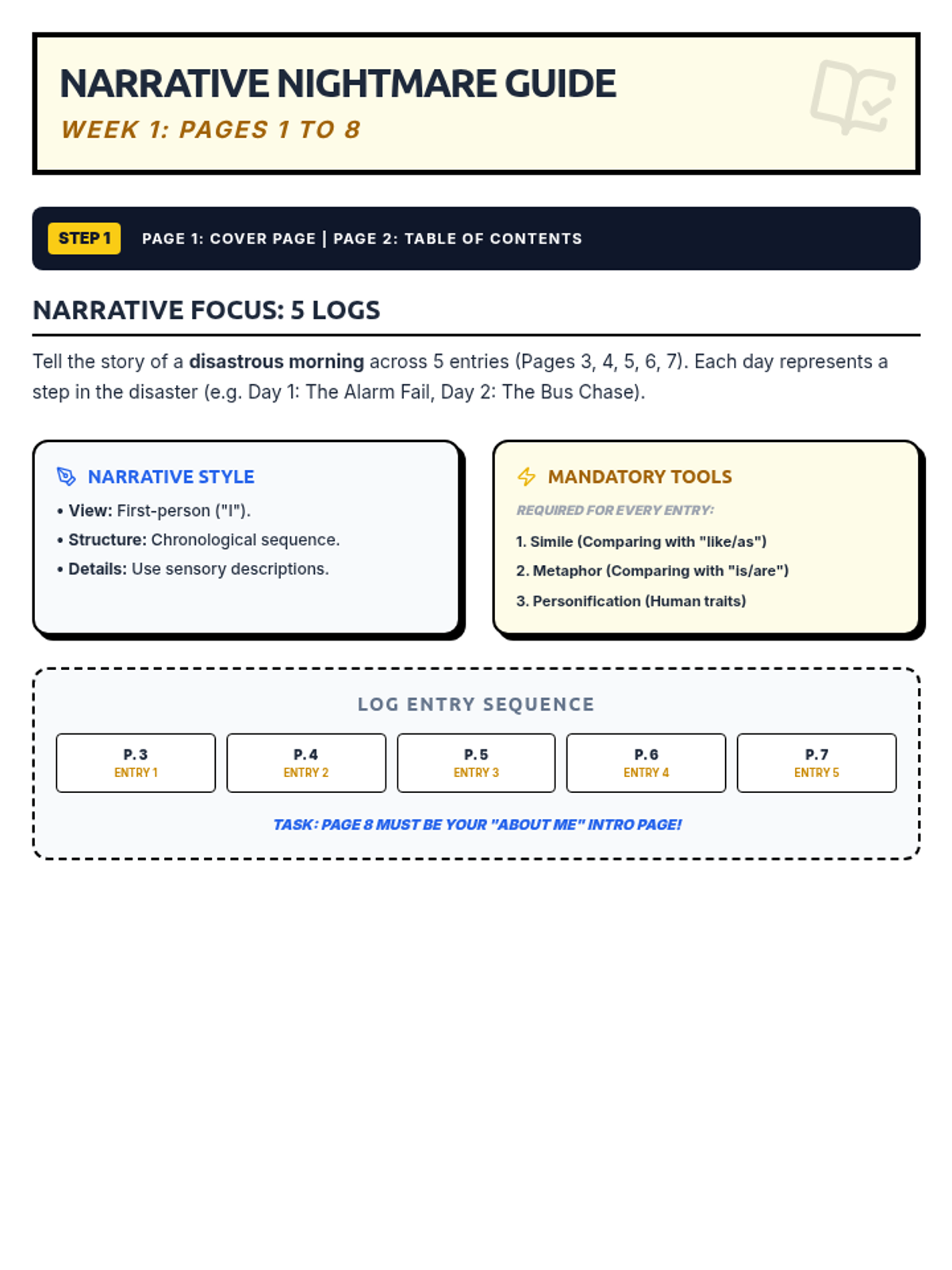
A 4-week writing unit where students create their own 'Wimpy Kid' style diary, exploring narrative, expository, argumentative, and persuasive writing alongside specific figurative language techniques.
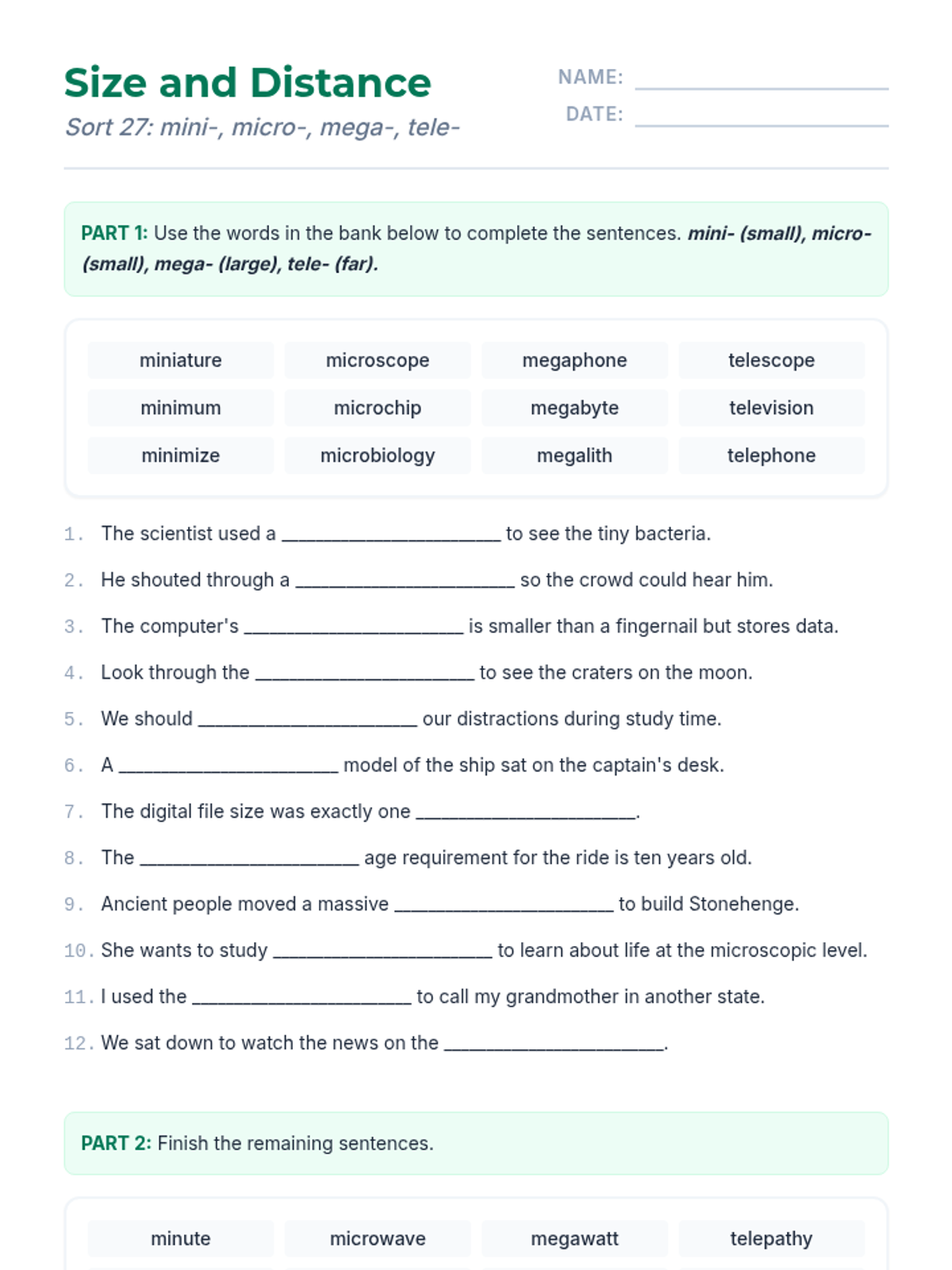
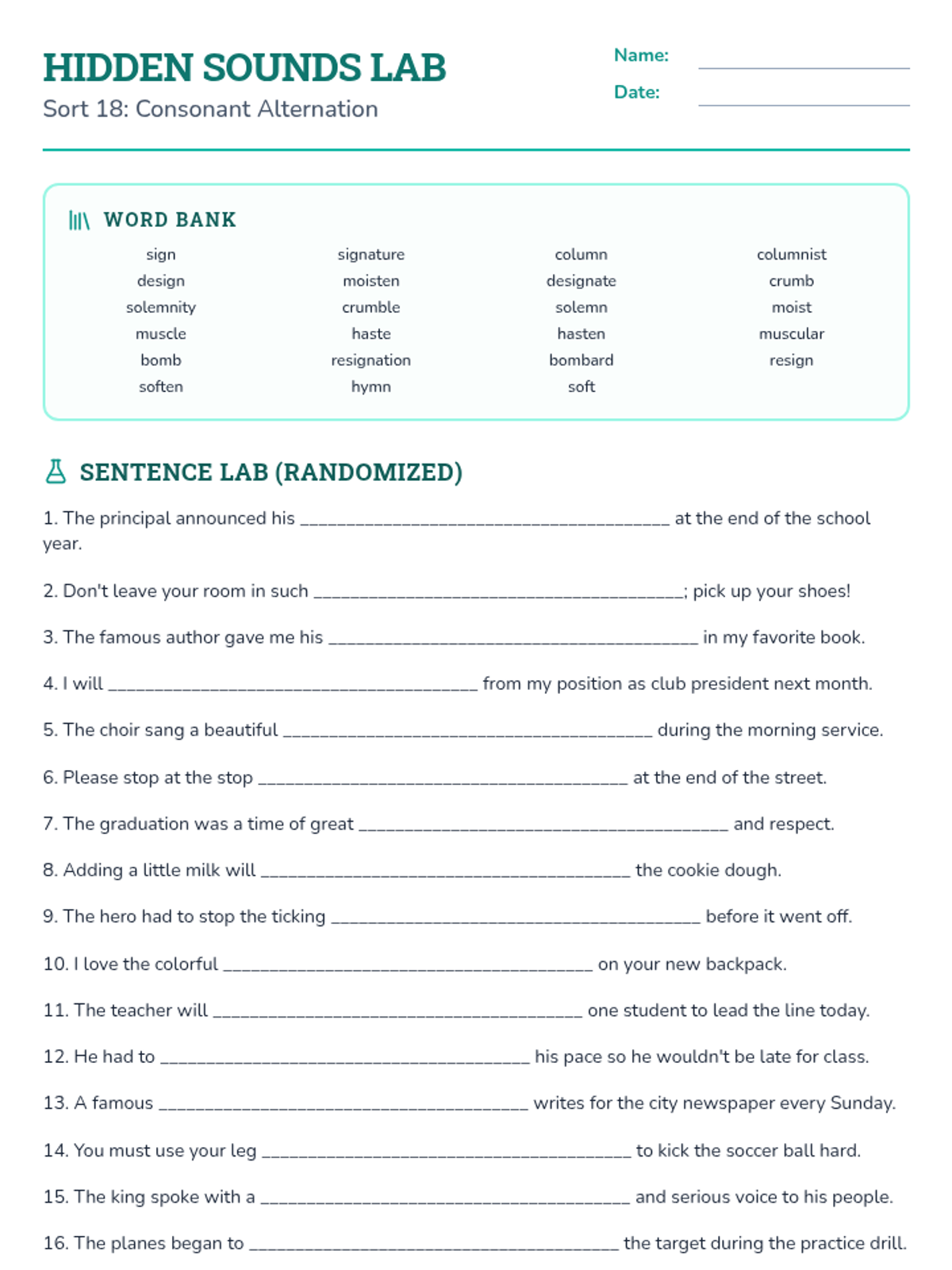
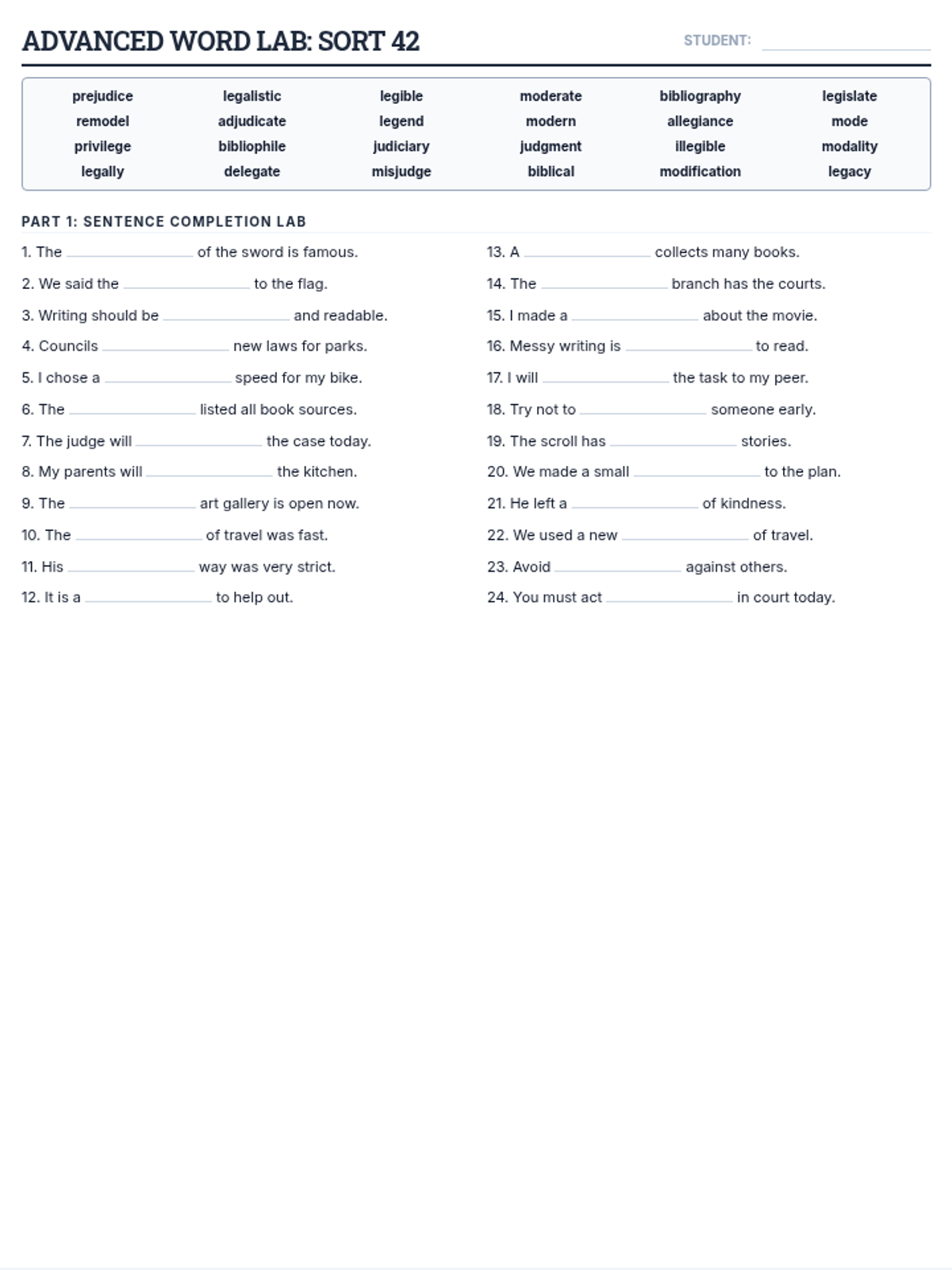
A comprehensive word study sequence for 4th-grade students covering spelling sorts 18 through 41, focusing on consonant and vowel alternations, suffixes, and Greek/Latin roots.
A mastery sequence for advanced word study, focusing on derivational roots, meaning-base spelling, and vocabulary expansion through puzzles and sentence application.
A series of lessons exploring complex spelling patterns including assimilated suffixes and chameleon prefixes to improve student decoding and spelling accuracy.
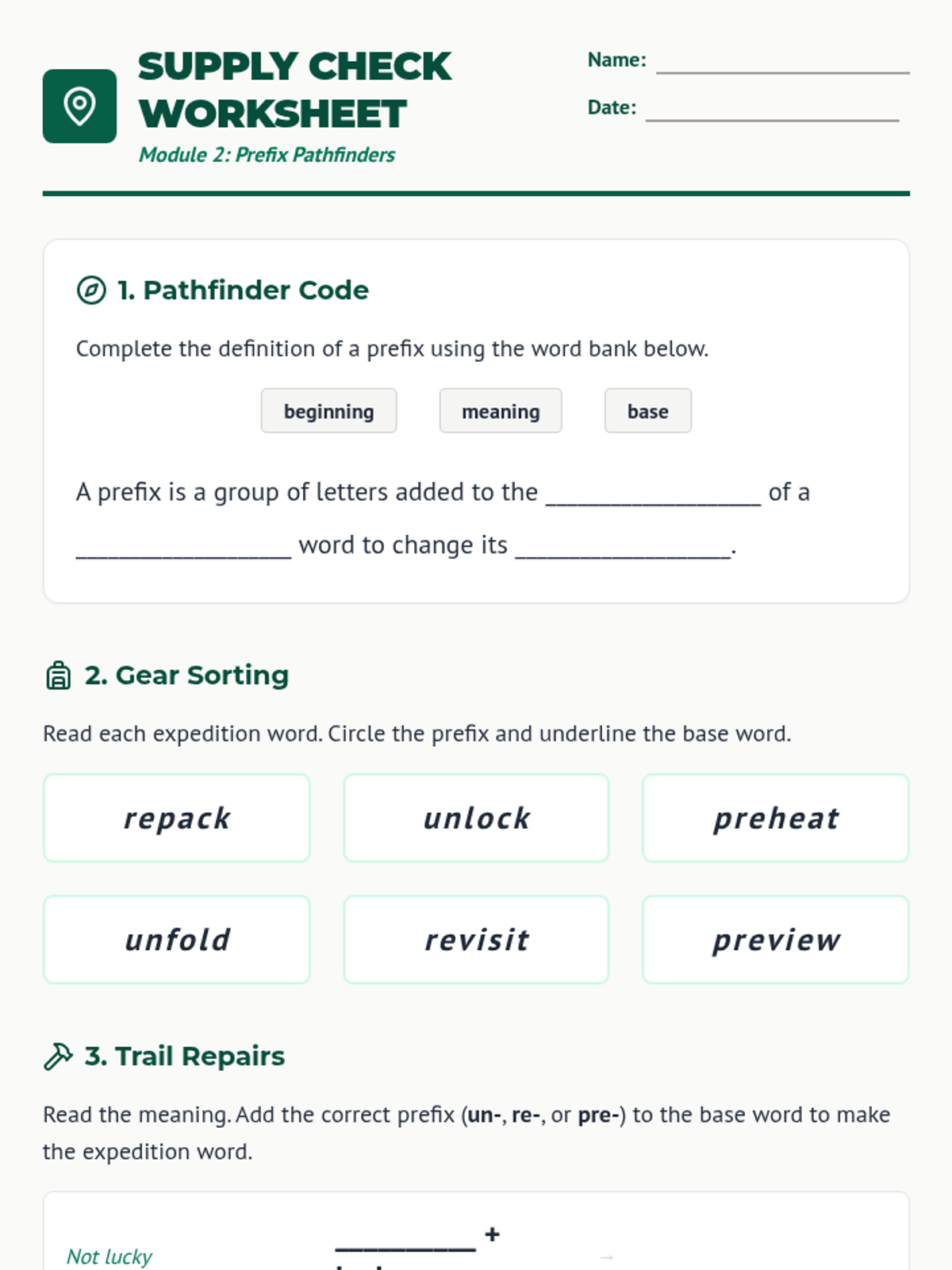
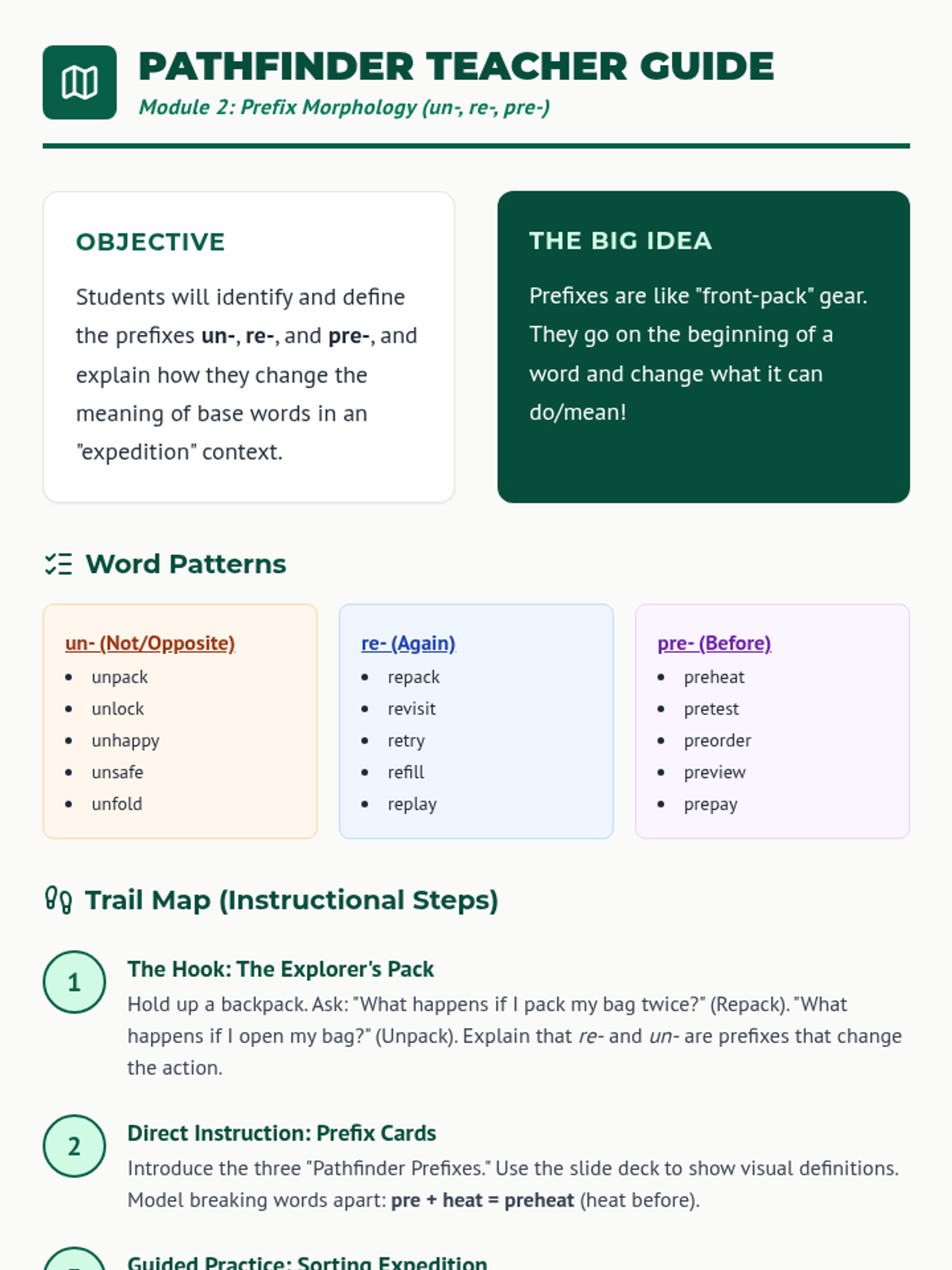
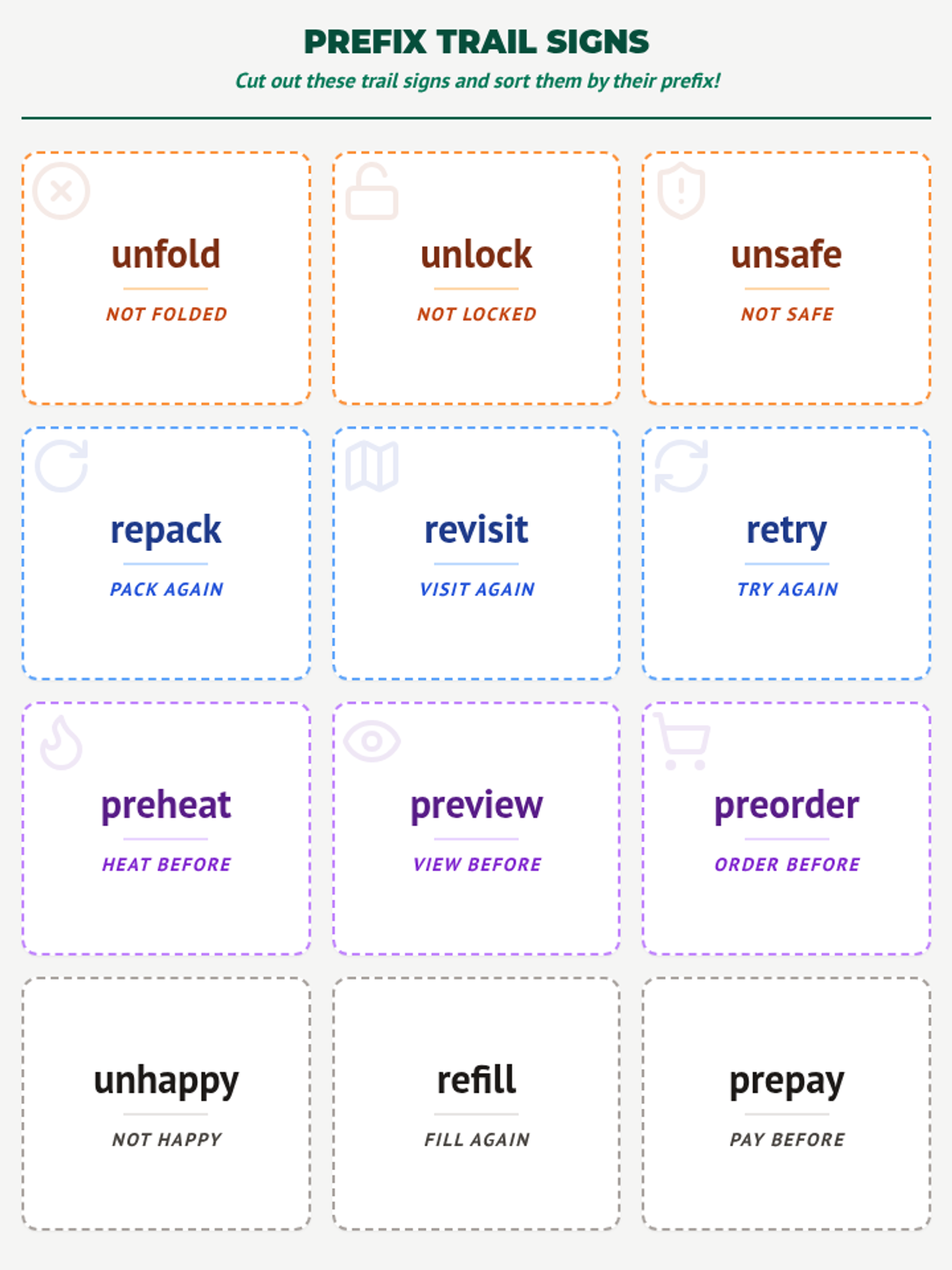
A travel-themed spelling and morphology unit where students explore advanced vowel patterns and word structures as 'World Word Explorers'.
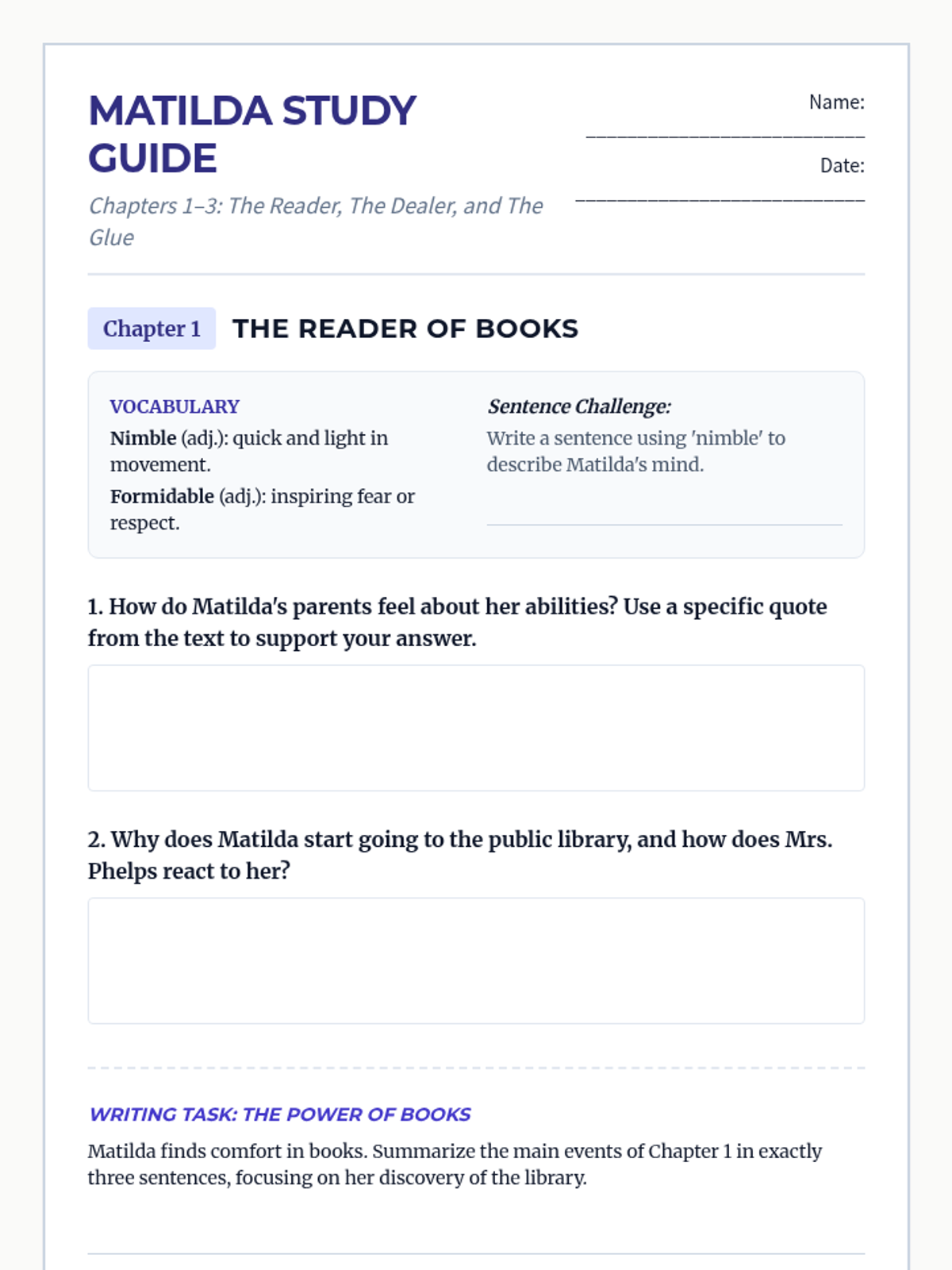
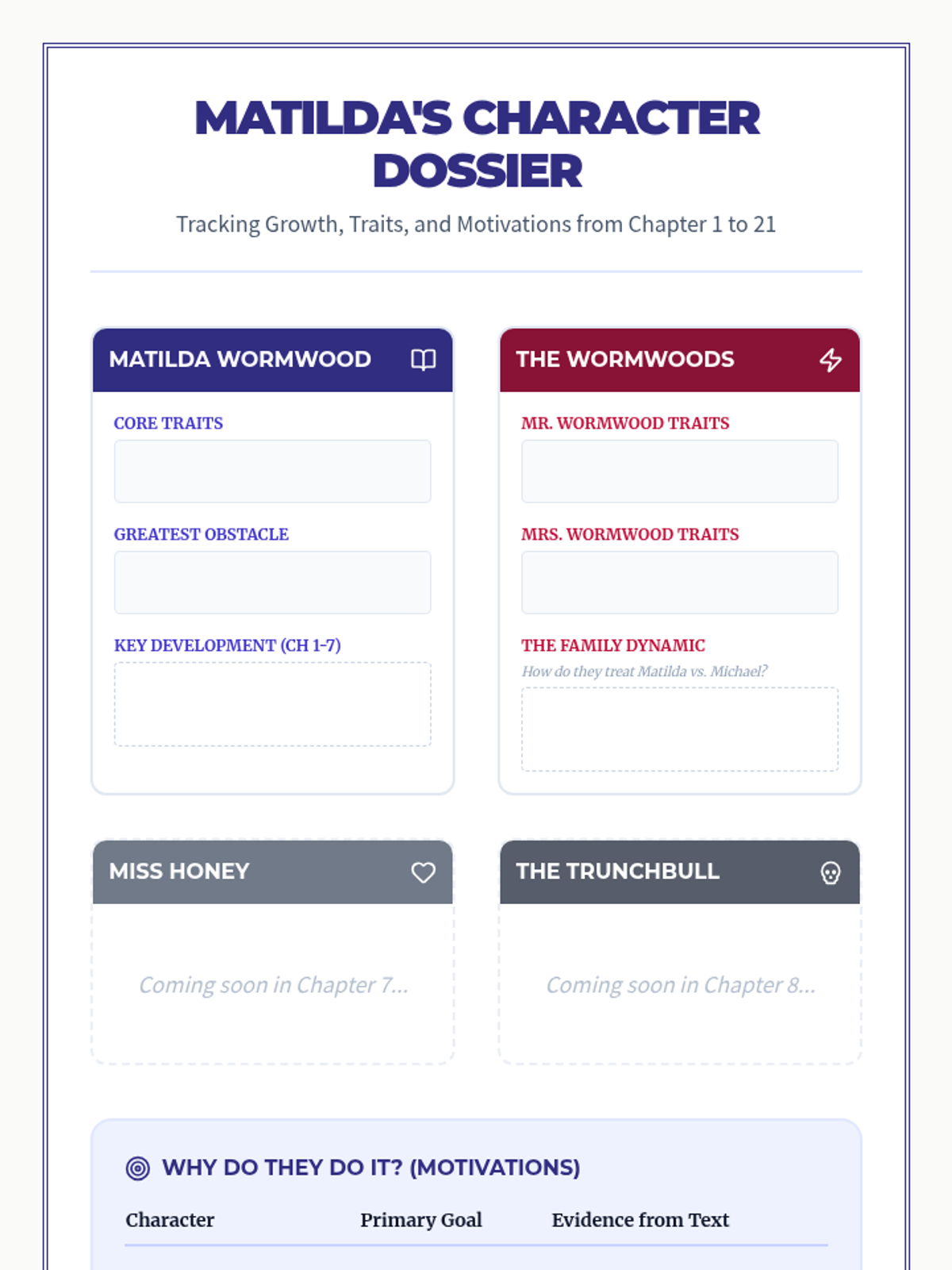
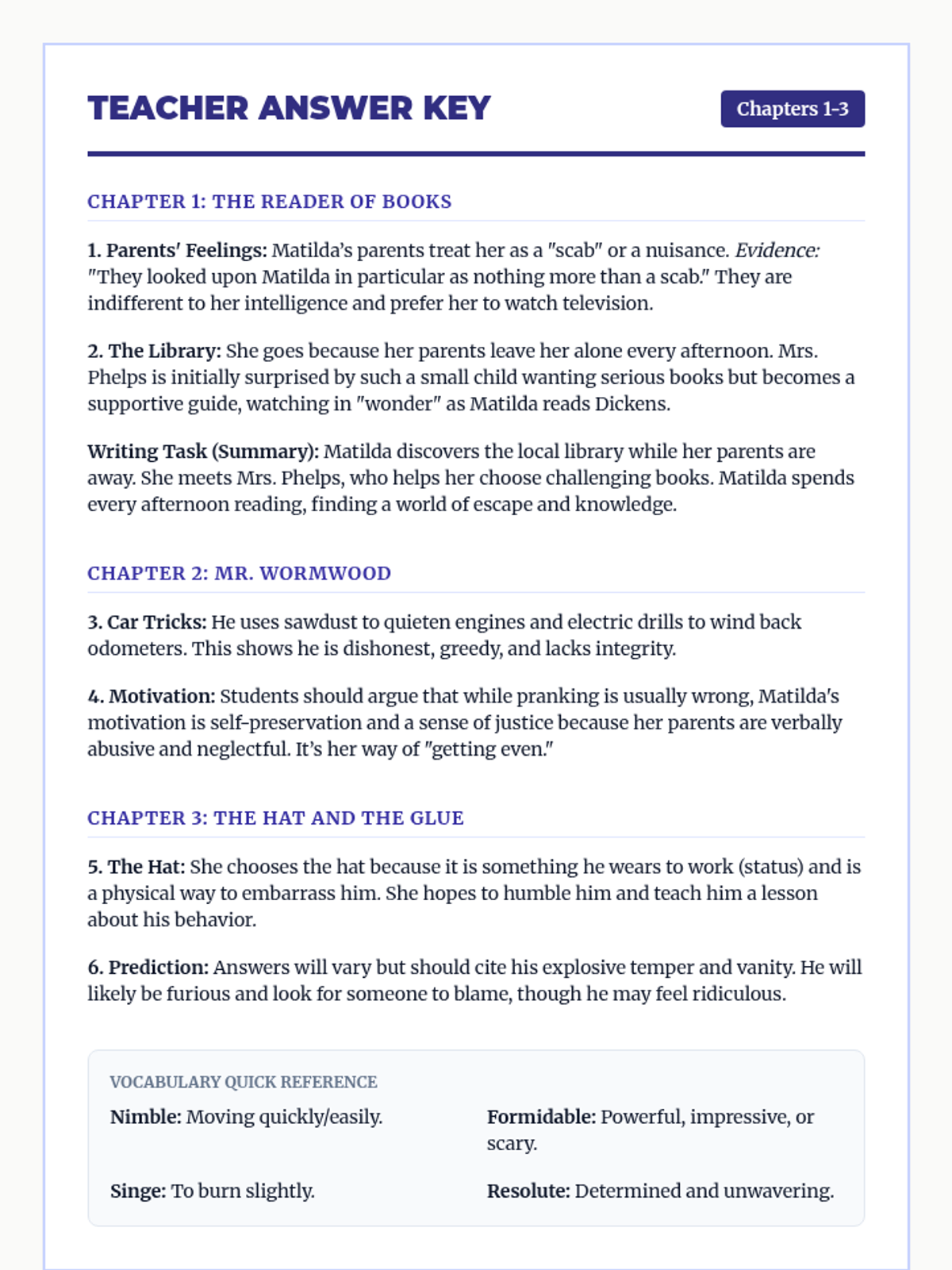
A comprehensive novel study for Roald Dahl's 'Matilda', focusing on character development, text evidence, and creative writing across 21 chapters.
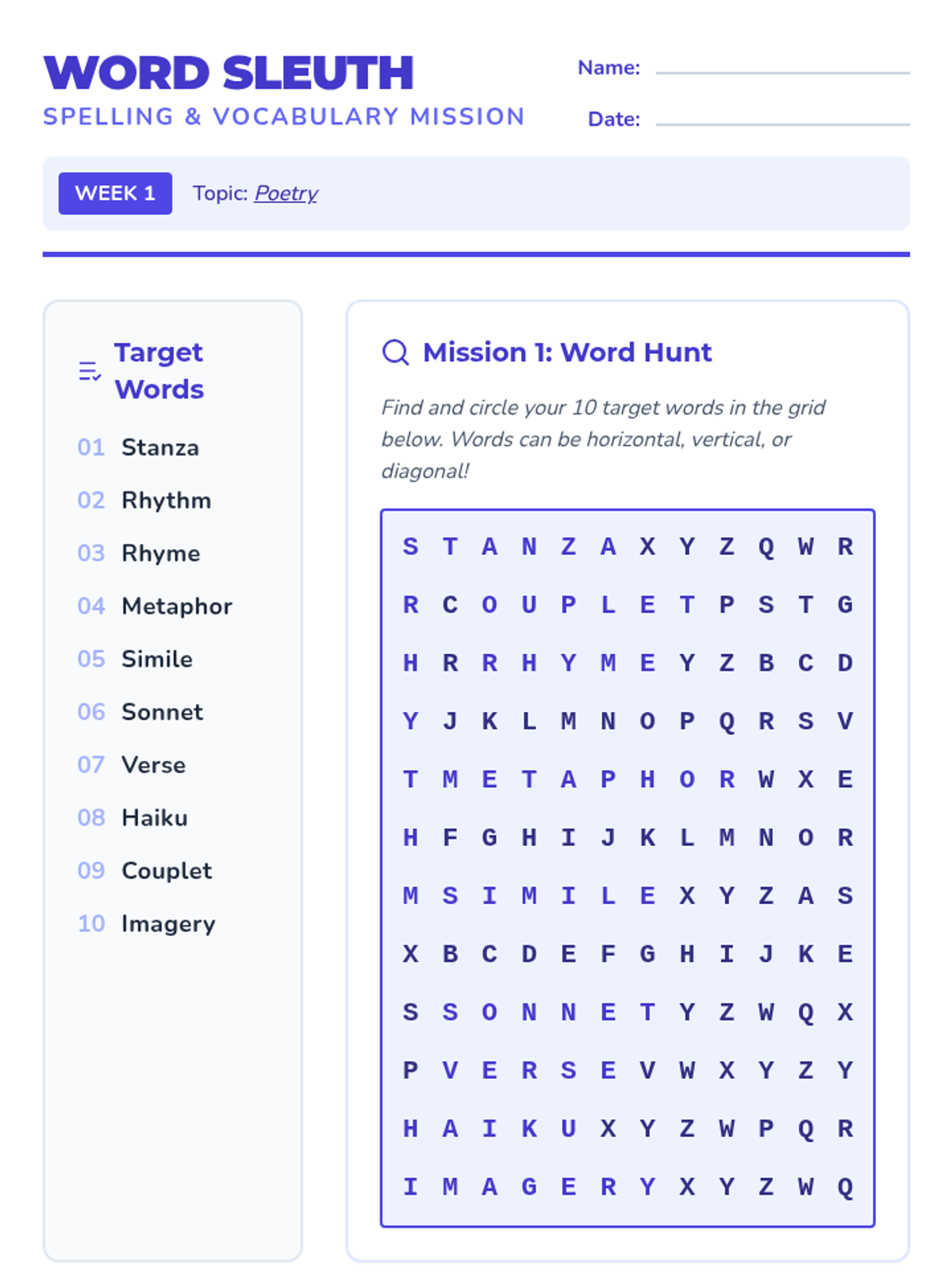
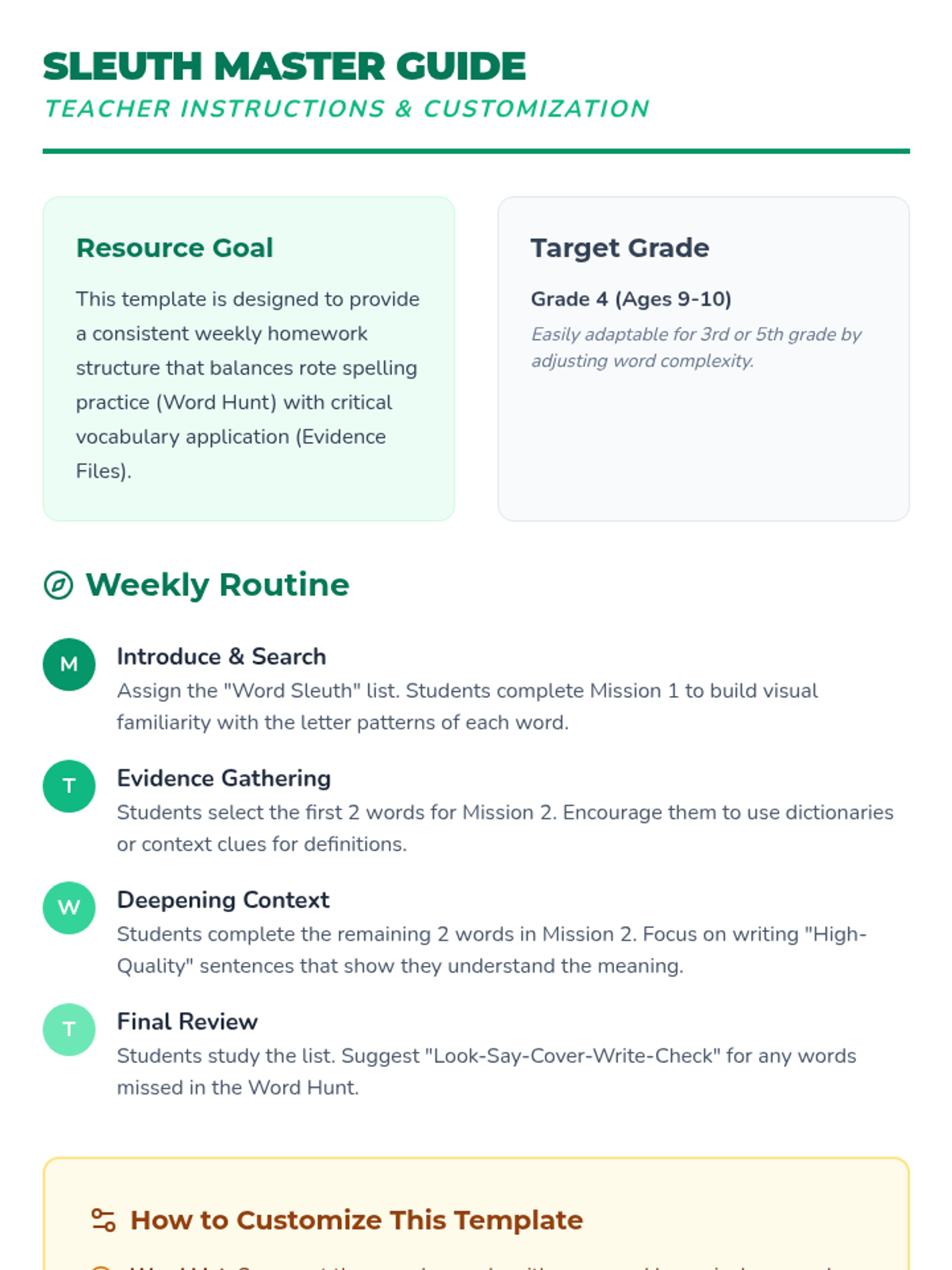
A comprehensive spelling program designed for 4th graders to master weekly word lists through engaging detective-themed activities and vocabulary practice.
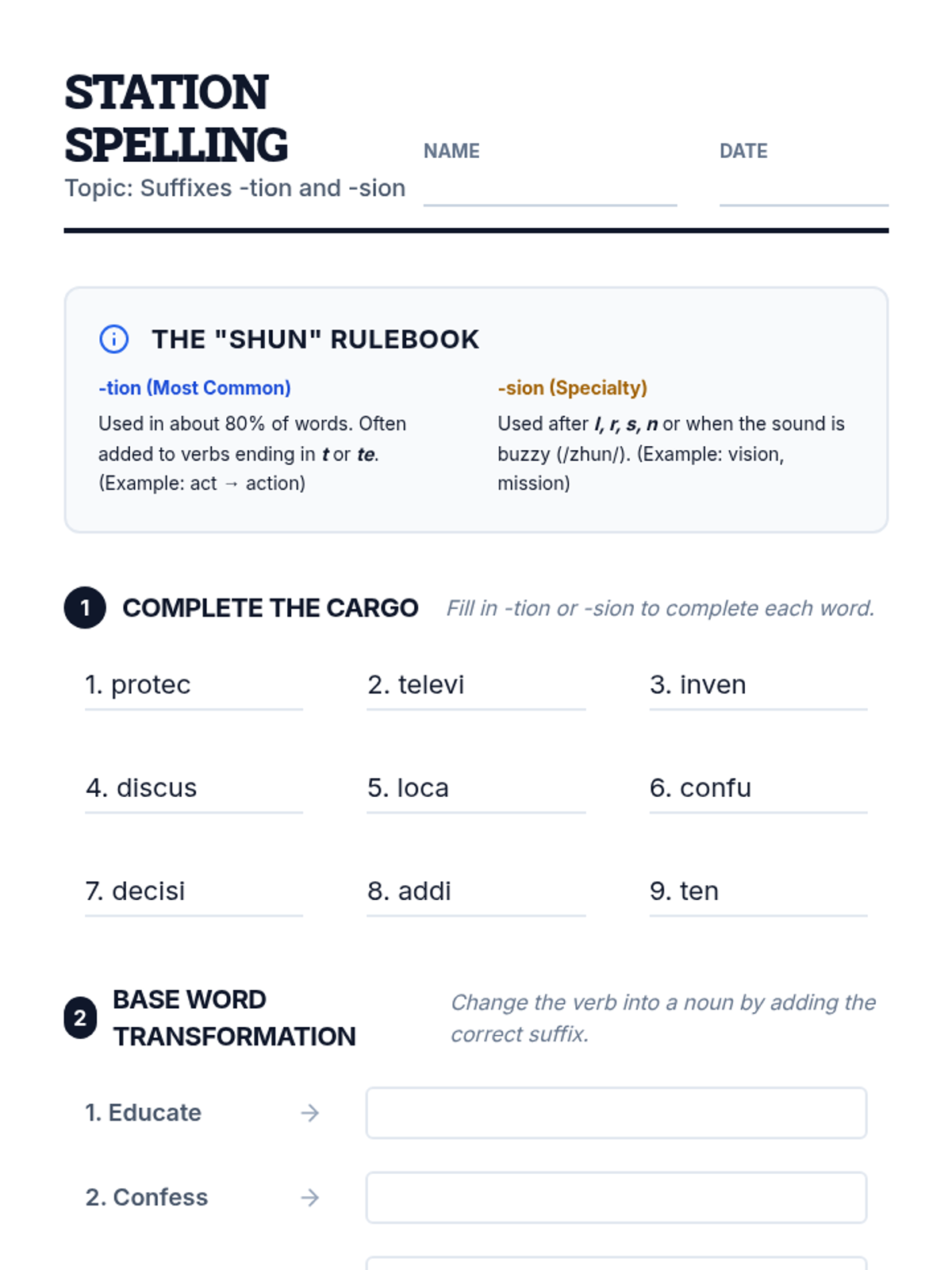
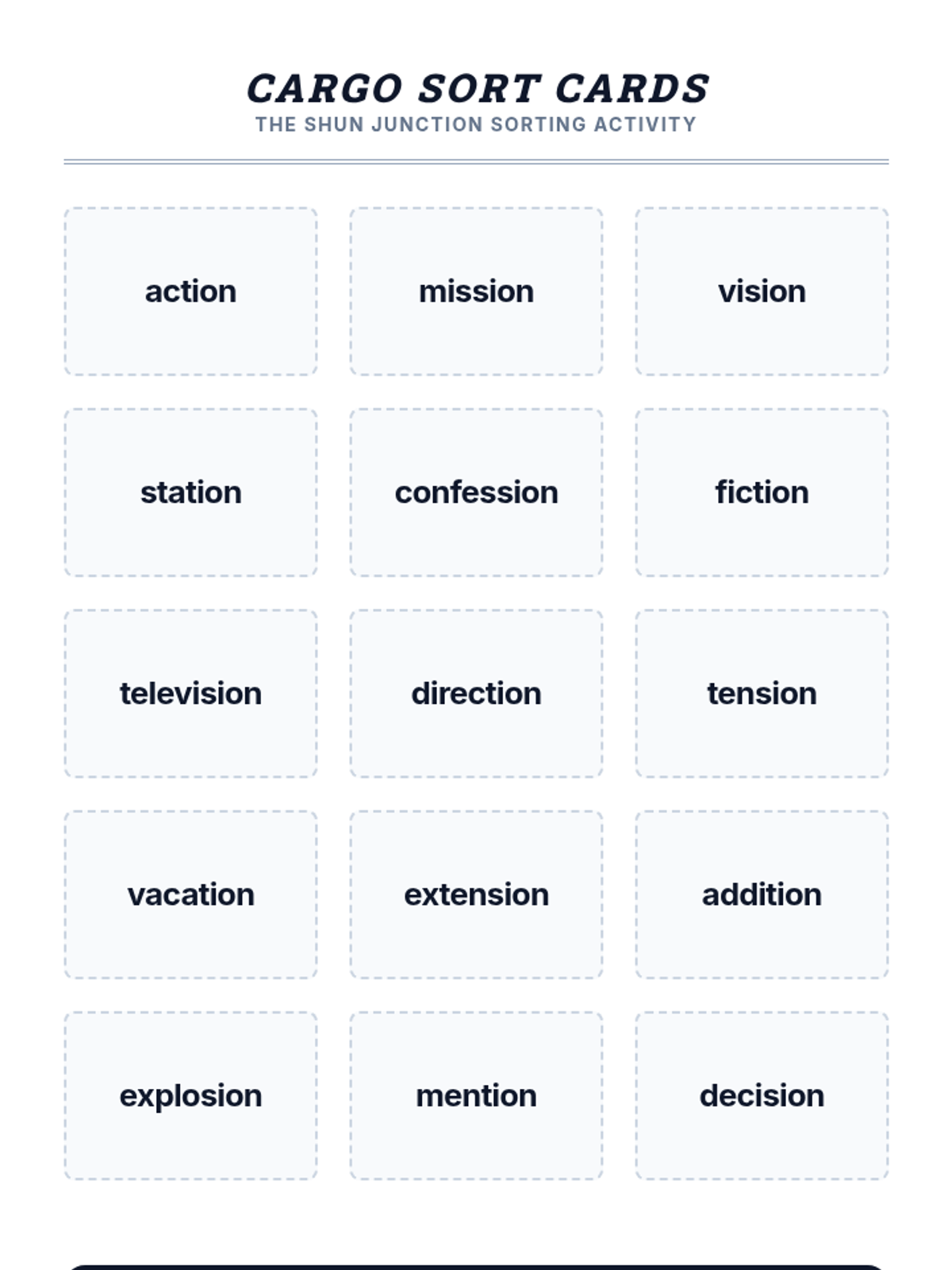
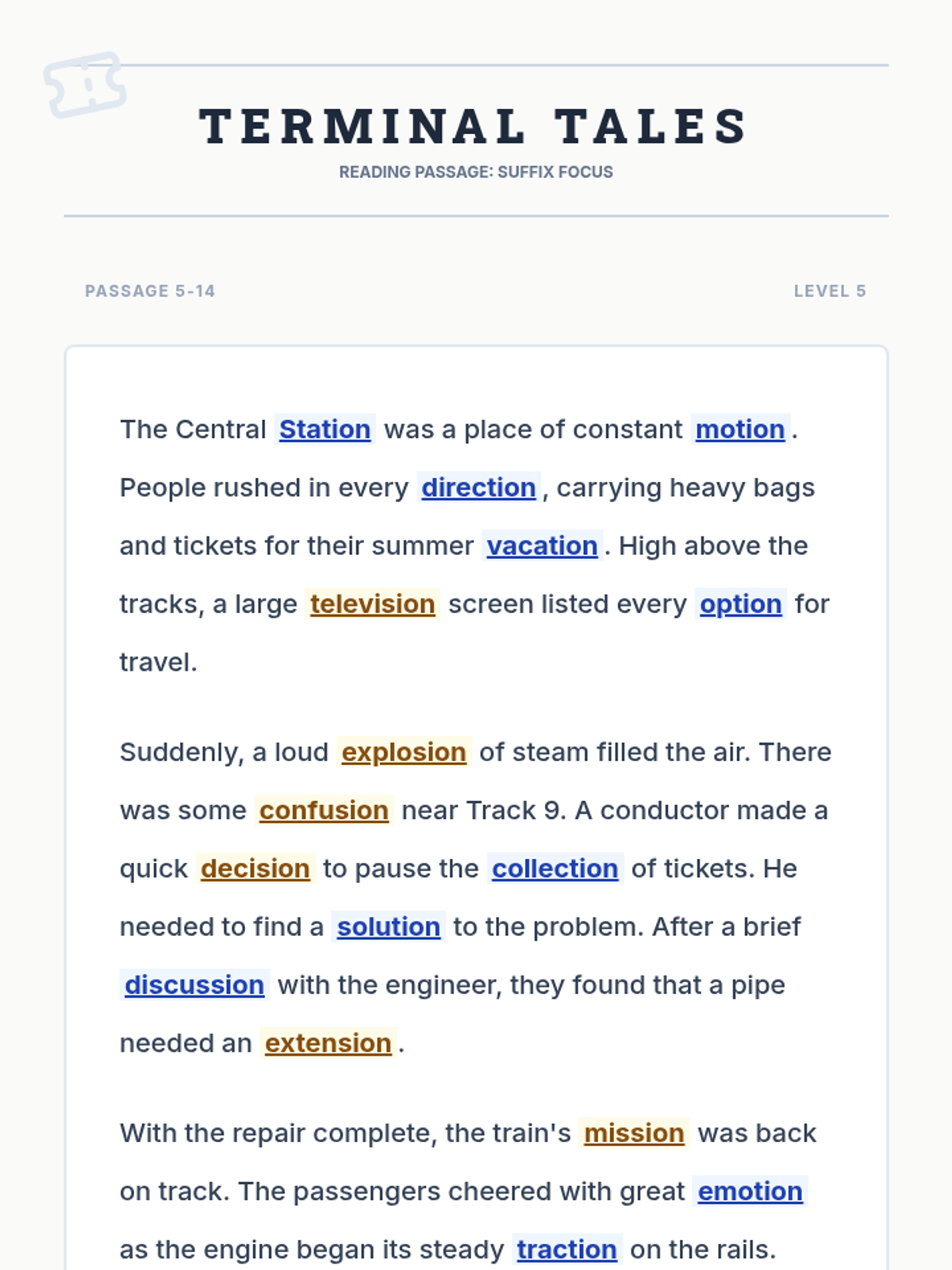
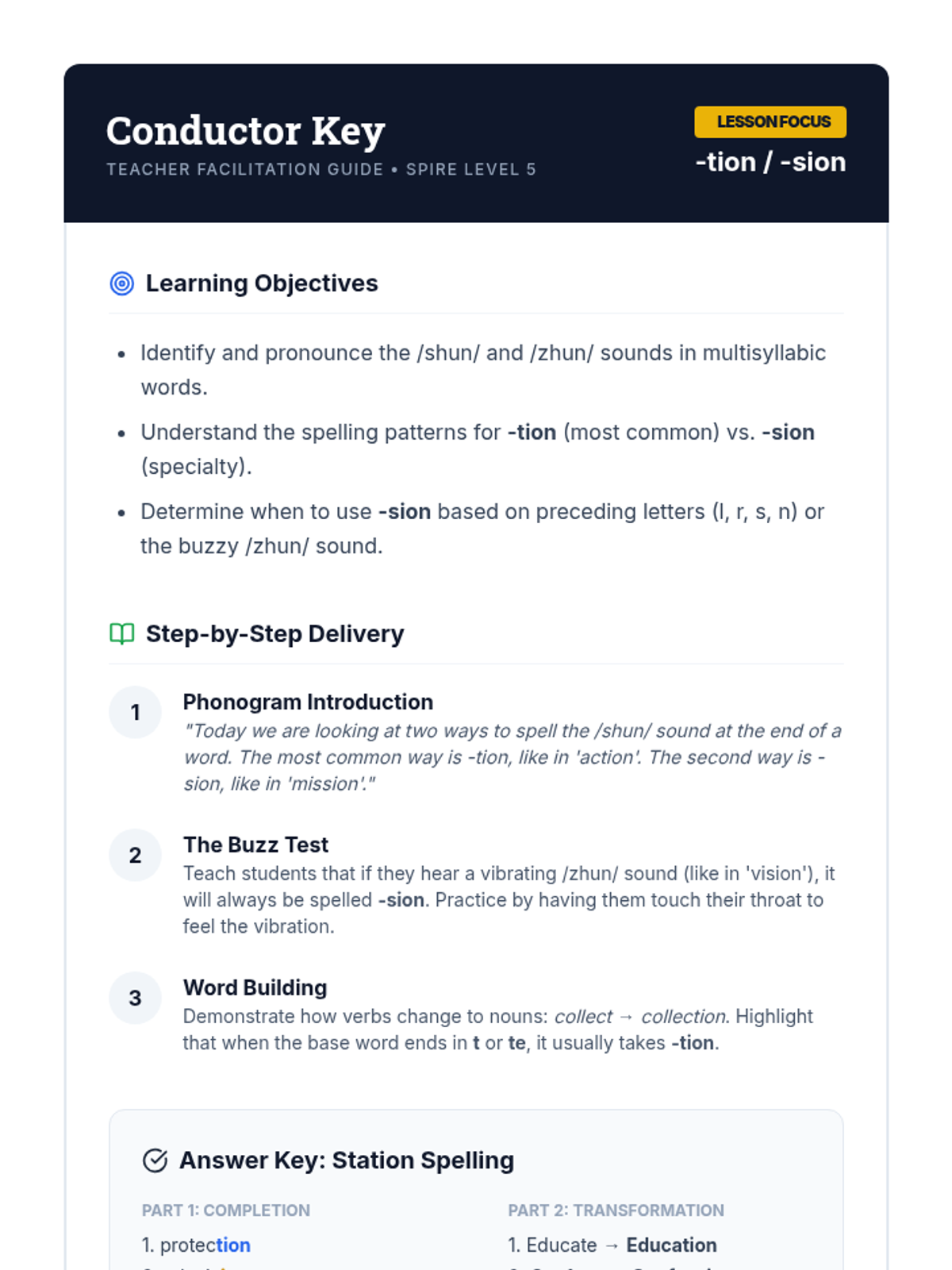
A comprehensive unit focusing on the complex suffixes -tion and -sion, following the SPIRE Level 5 curriculum. Students explore spelling patterns, pronunciation, and word meaning through a transit-themed instructional approach.