Syllogisms, deductive validity, and the principles of inductive probability for evaluating evidence-based claims. Targets common logical fallacies and the construction of sound, persuasive arguments.
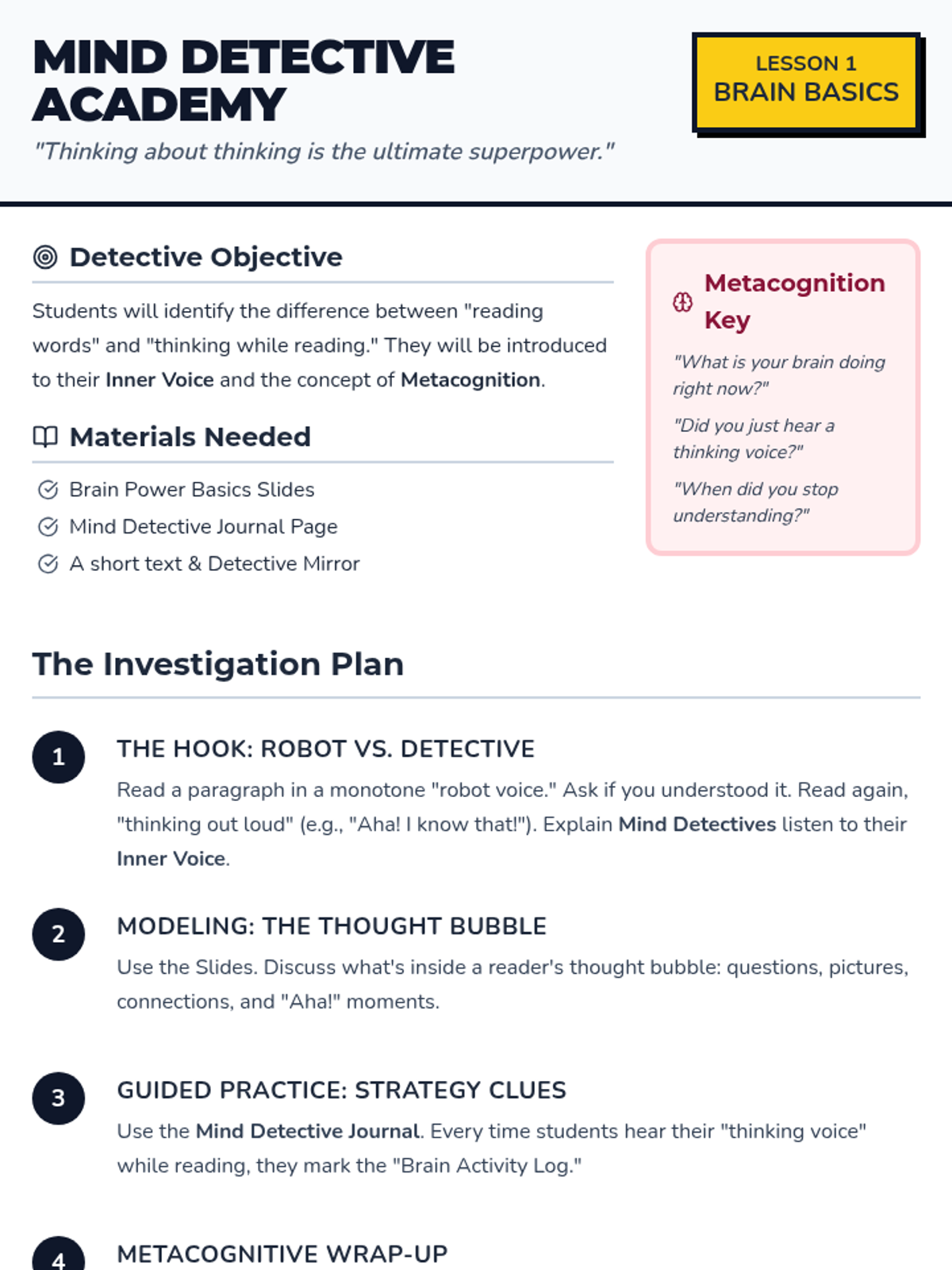
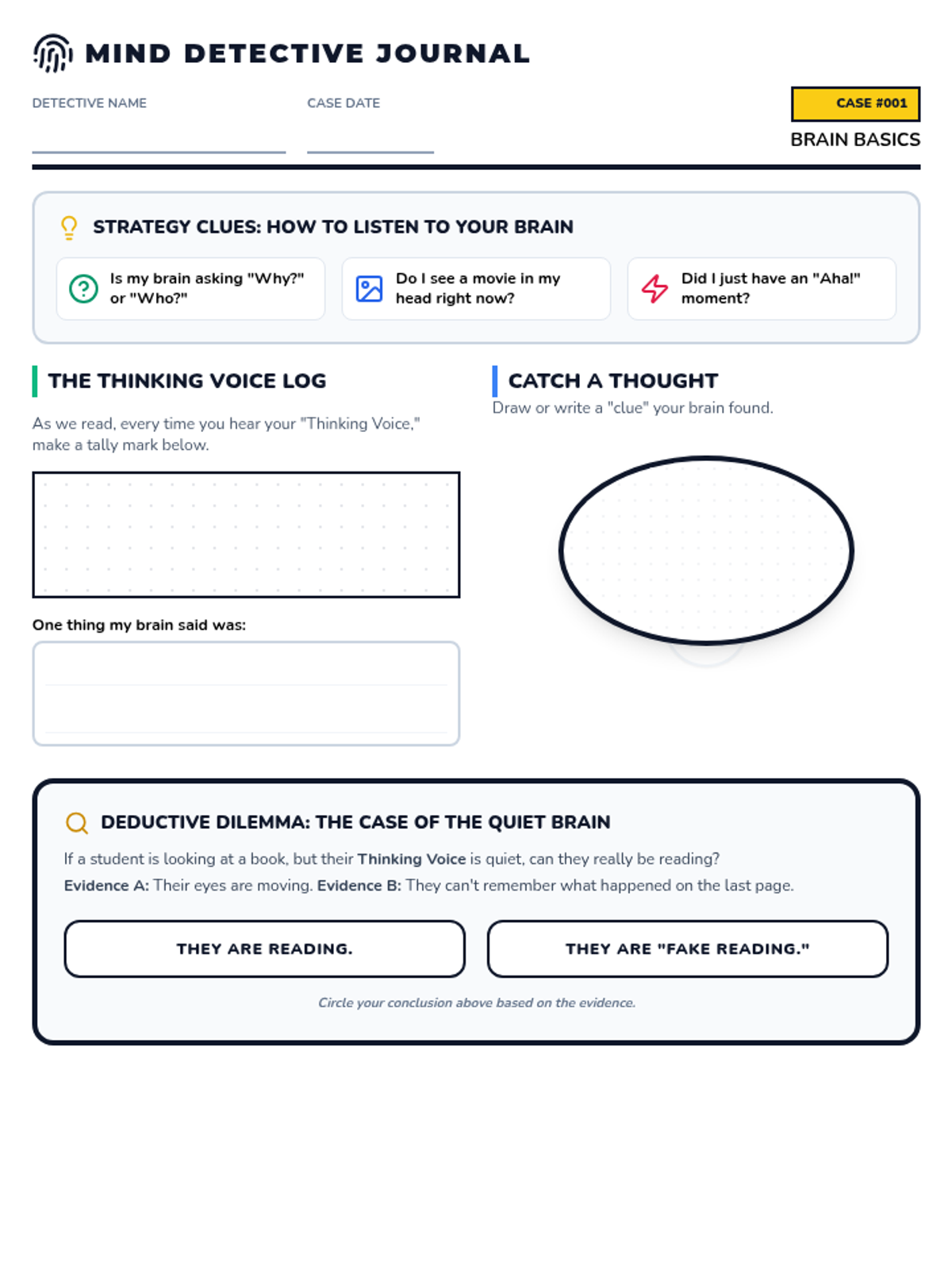
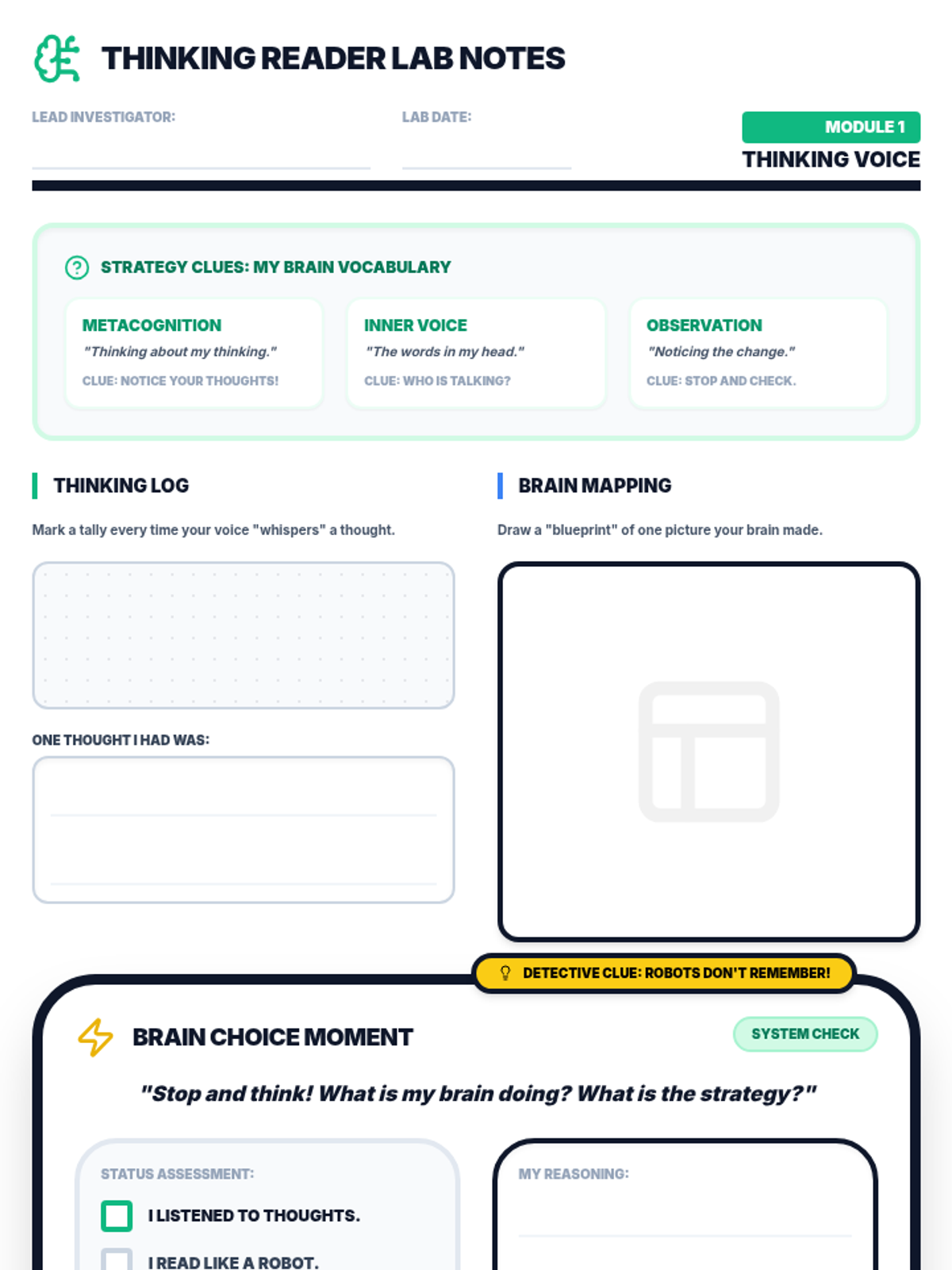
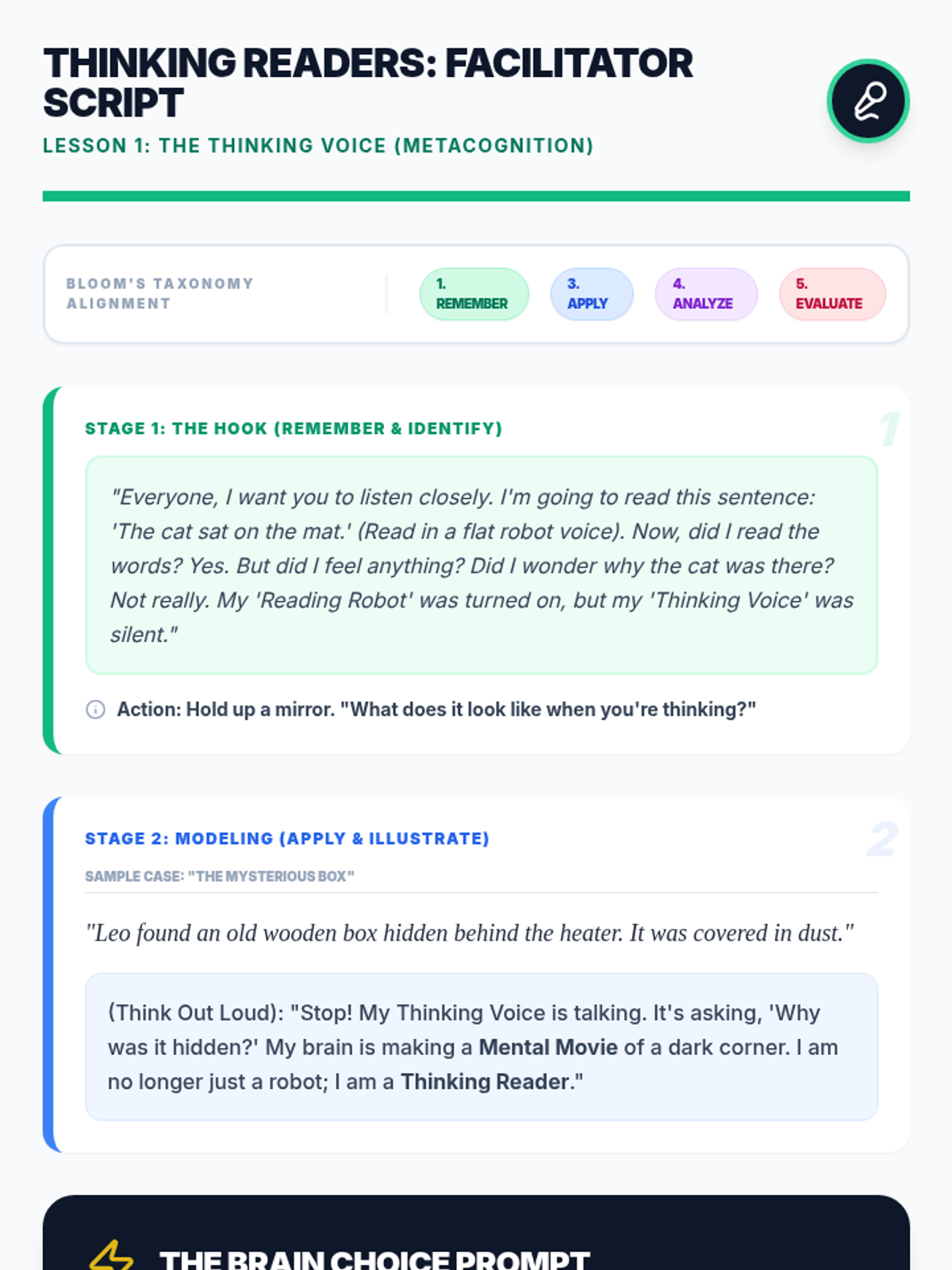
A 12-lesson comprehension mastery program focused on metacognition, reasoning, and evidence-based thinking. Students progress from basic thinking awareness to complex deductive reasoning and synthesis. Inspired by Reading Detective and Comprehension Connections.
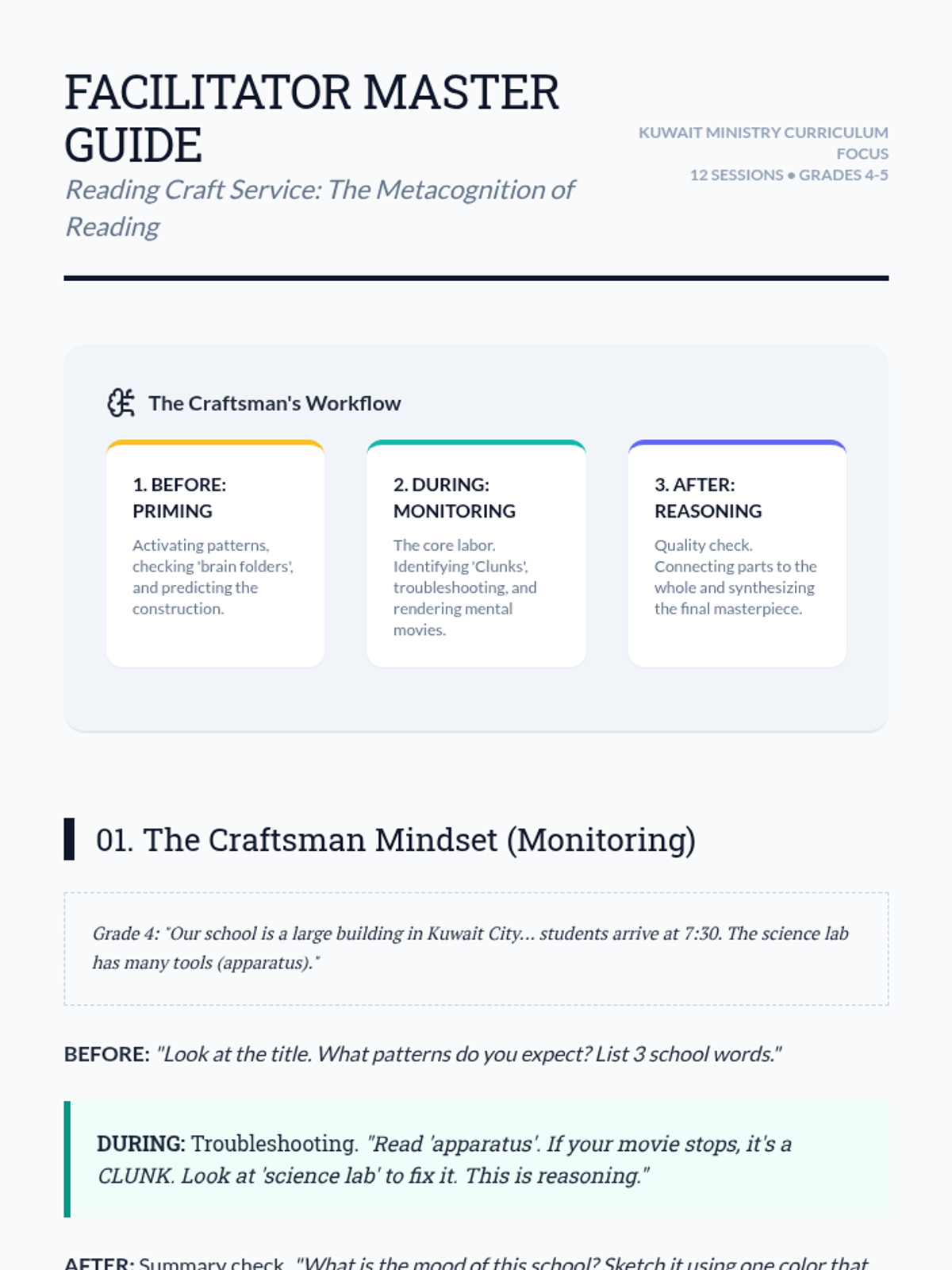
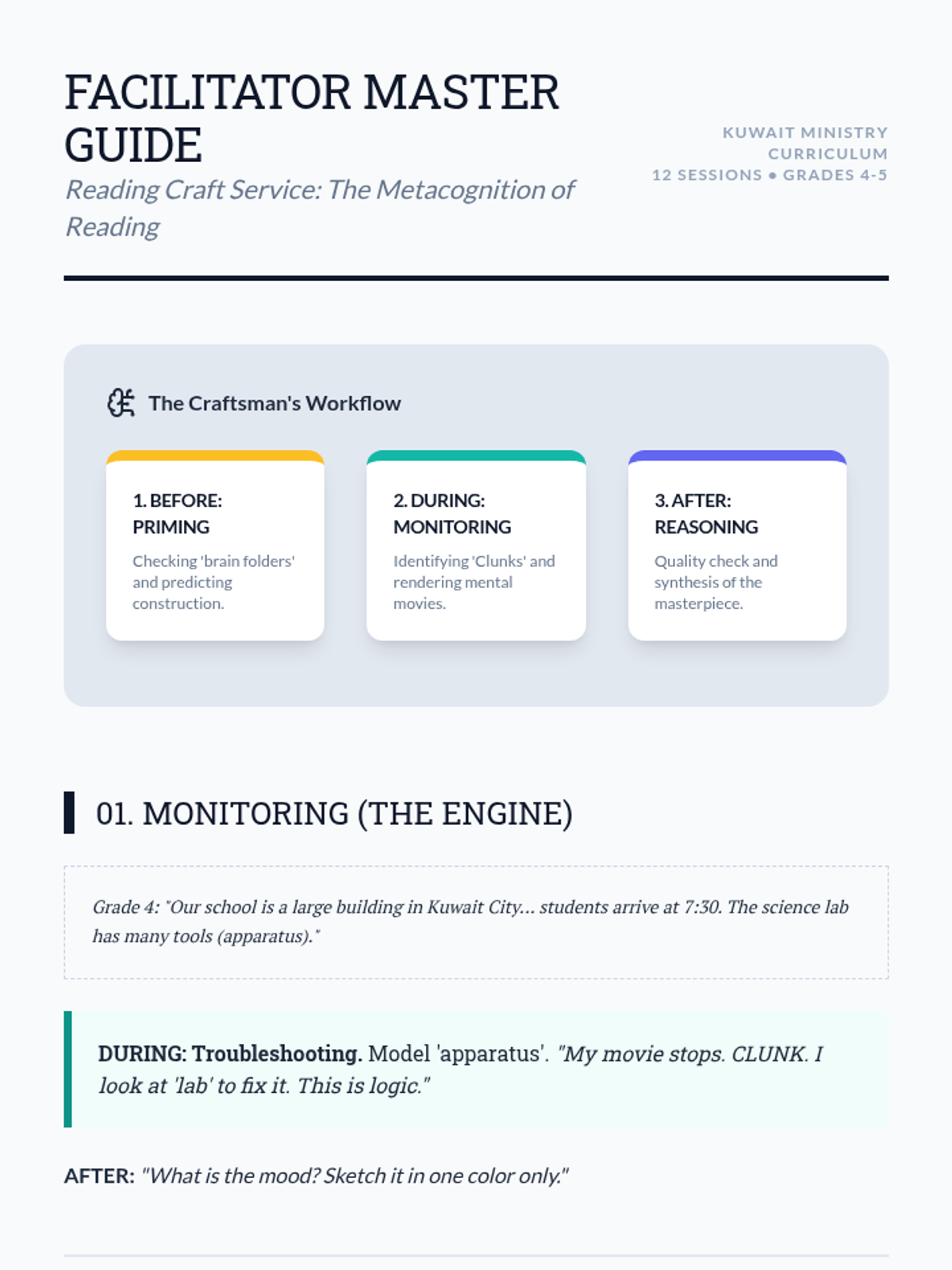
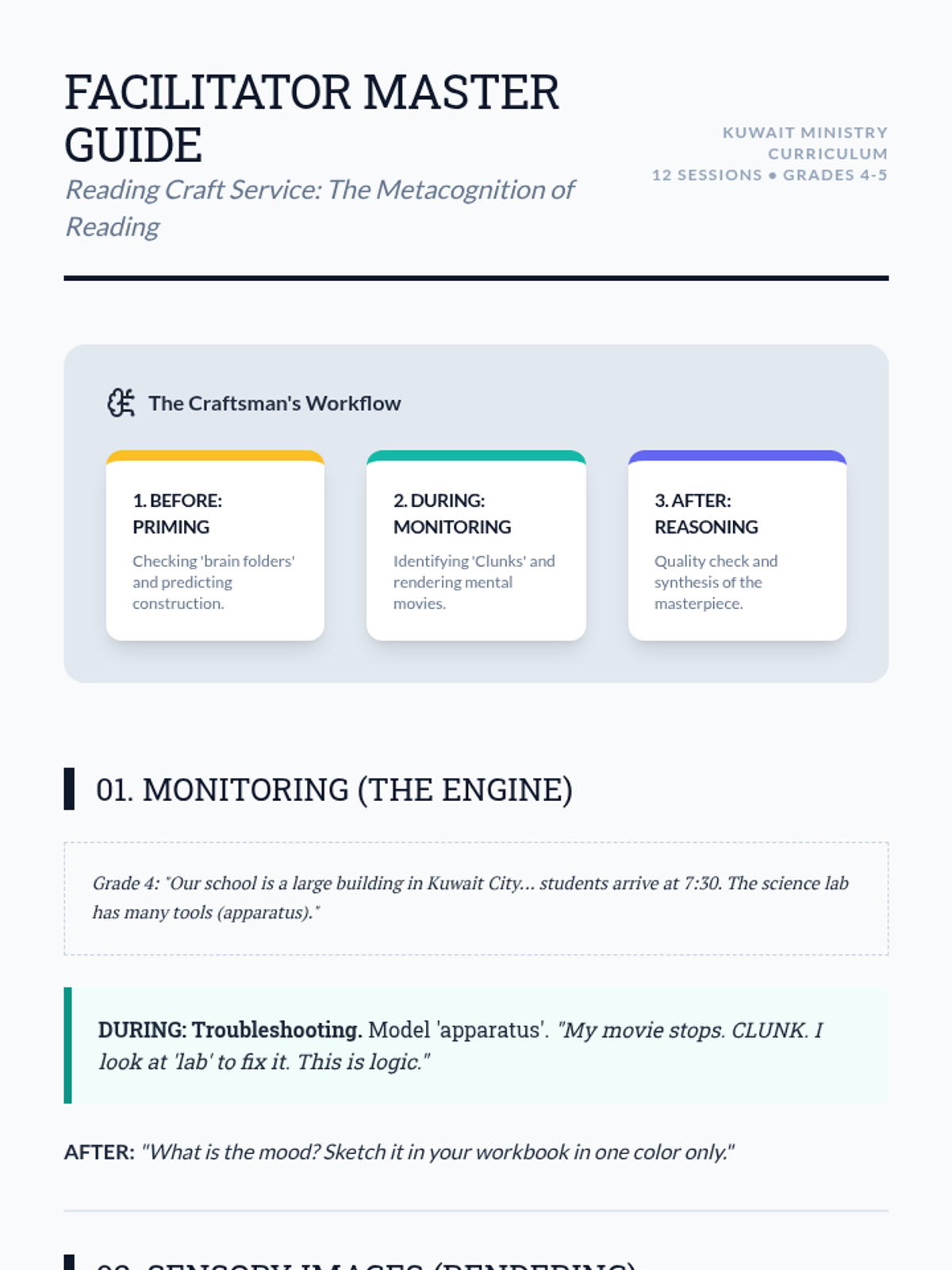
A 12-session intensive program for Kuwaiti 4th and 5th graders, focusing on the metacognition of reading. Uses Kuwaiti Ministry texts to teach the '7 Keys' and 'Art of Comprehension' through the lens of craft, patterns, and mental reasoning.
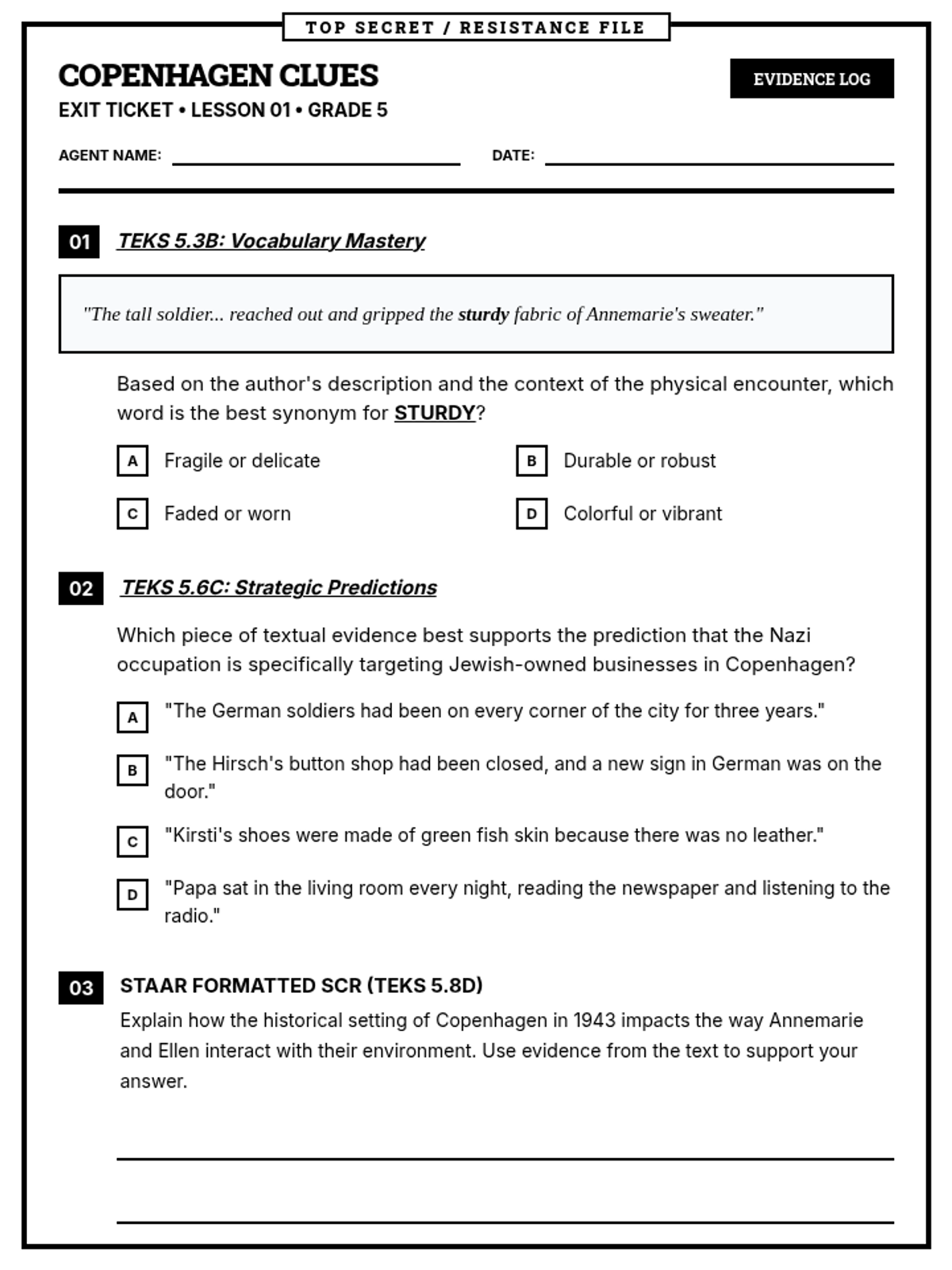
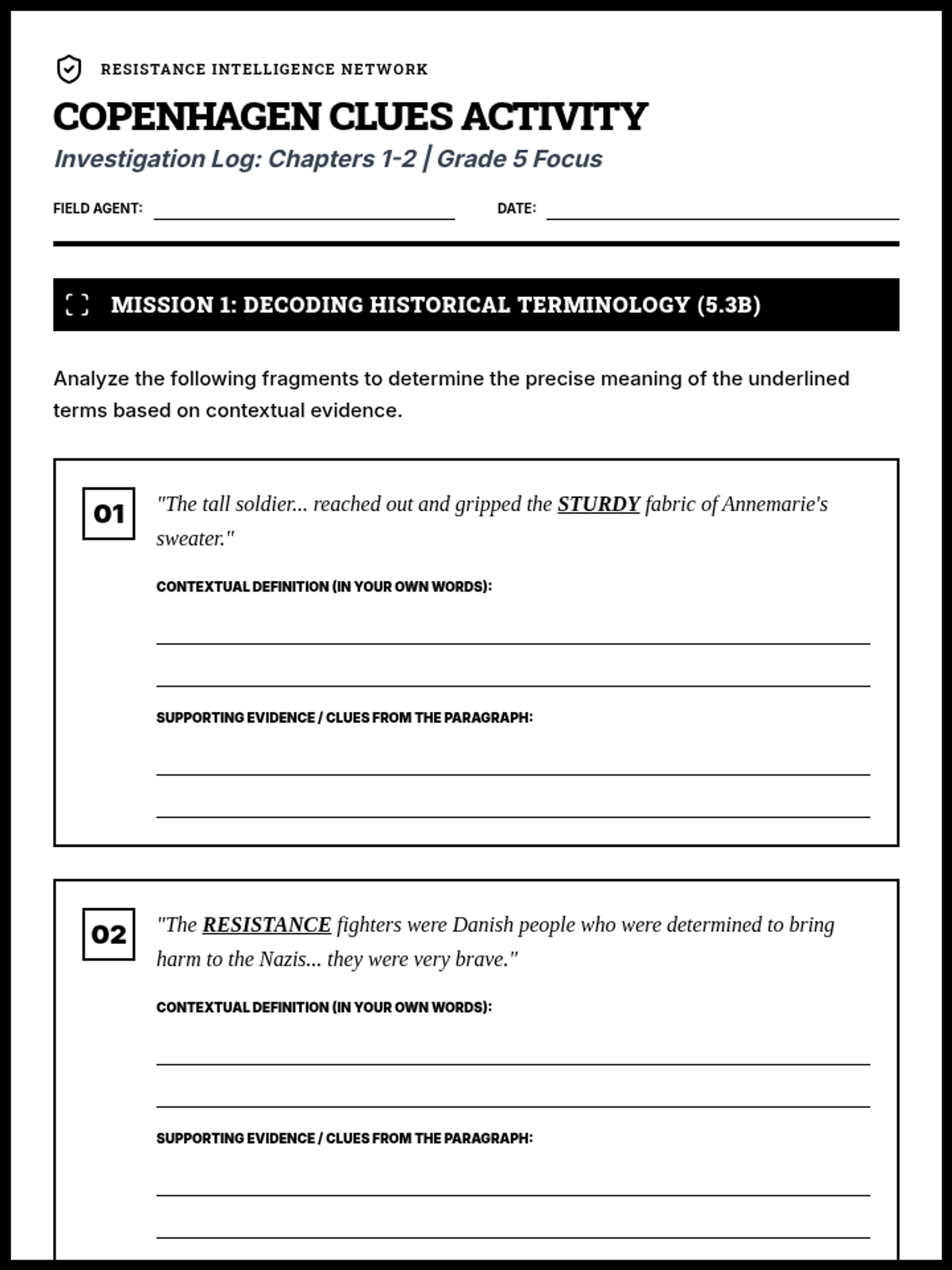
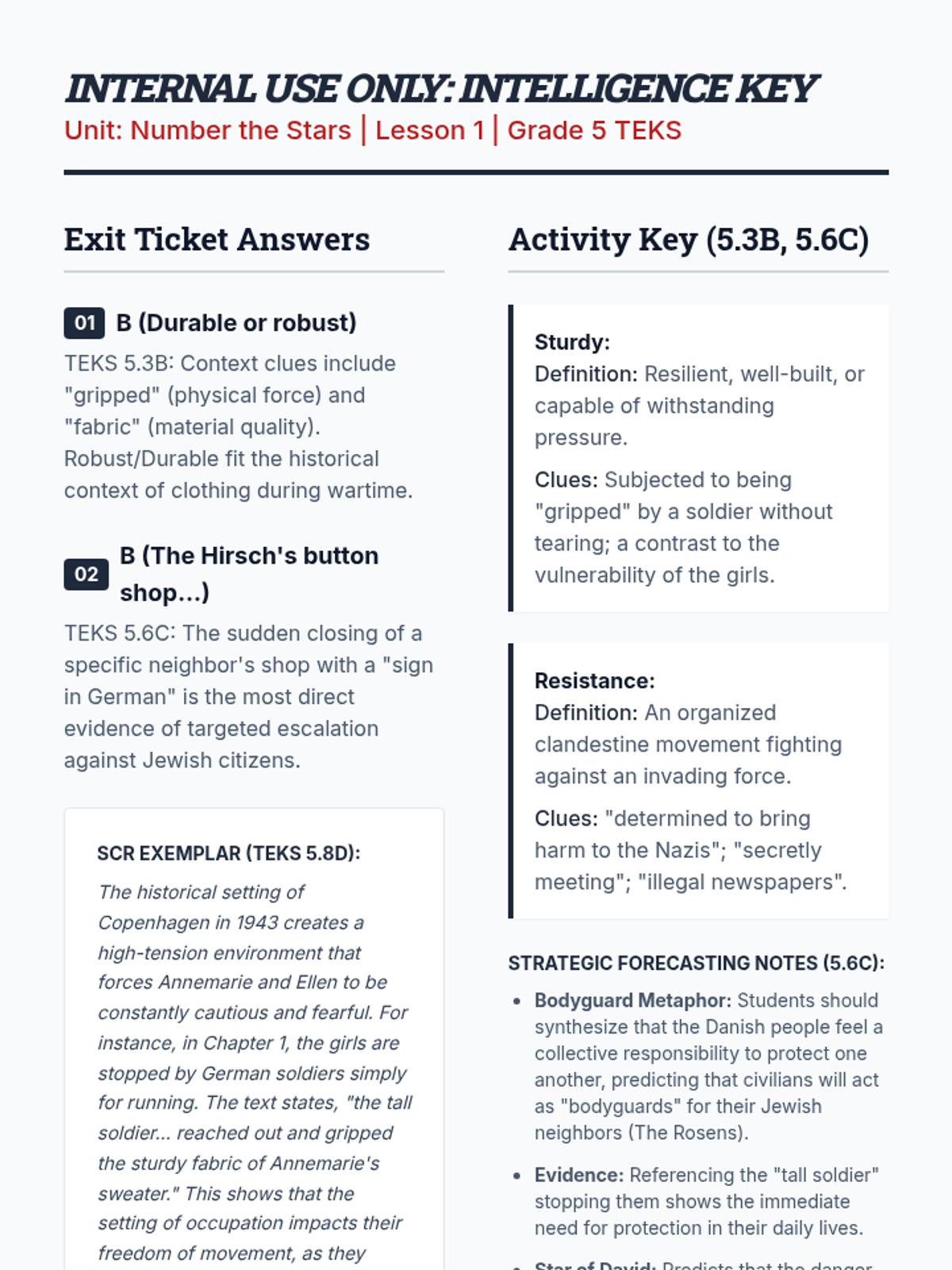
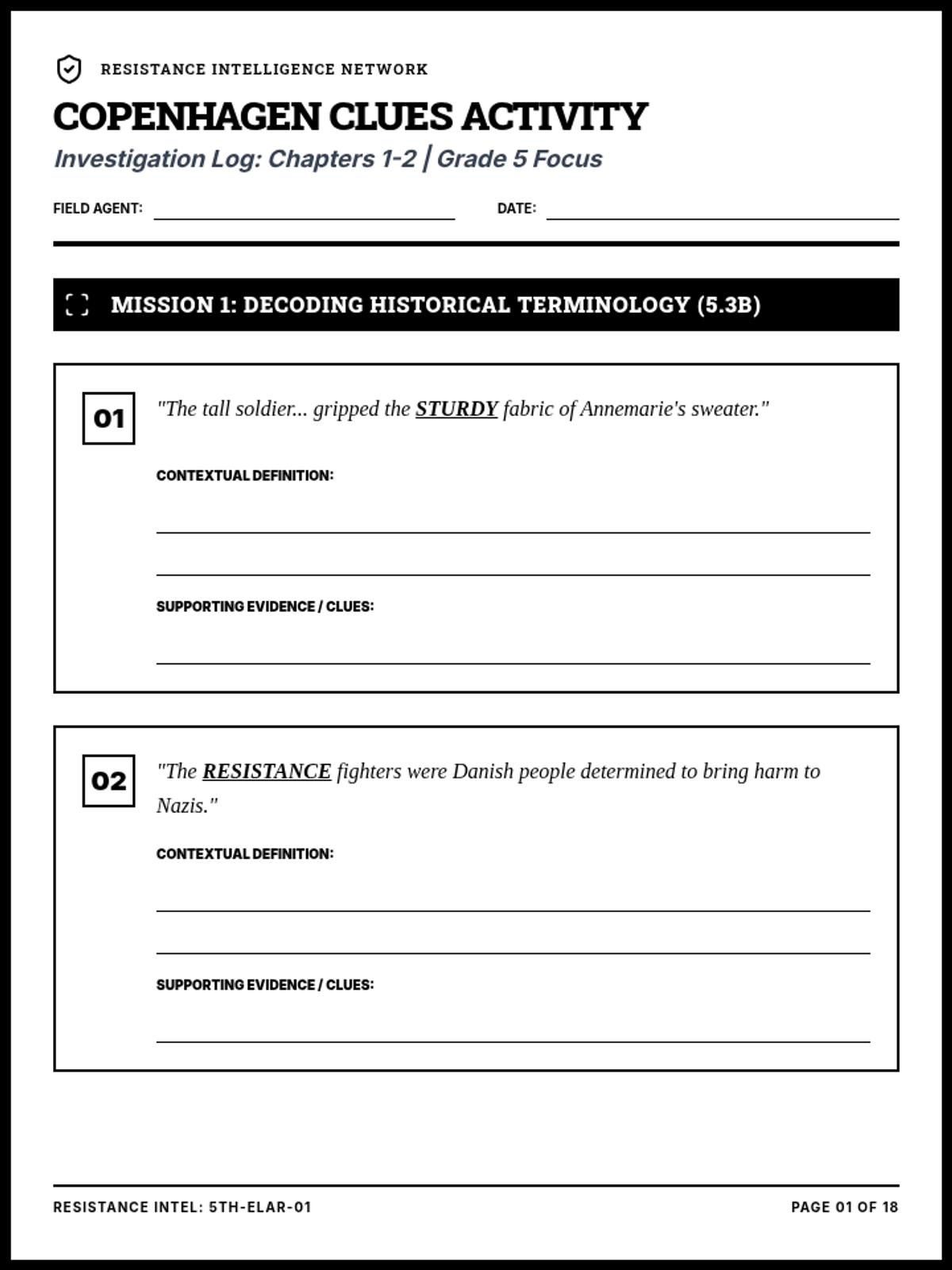
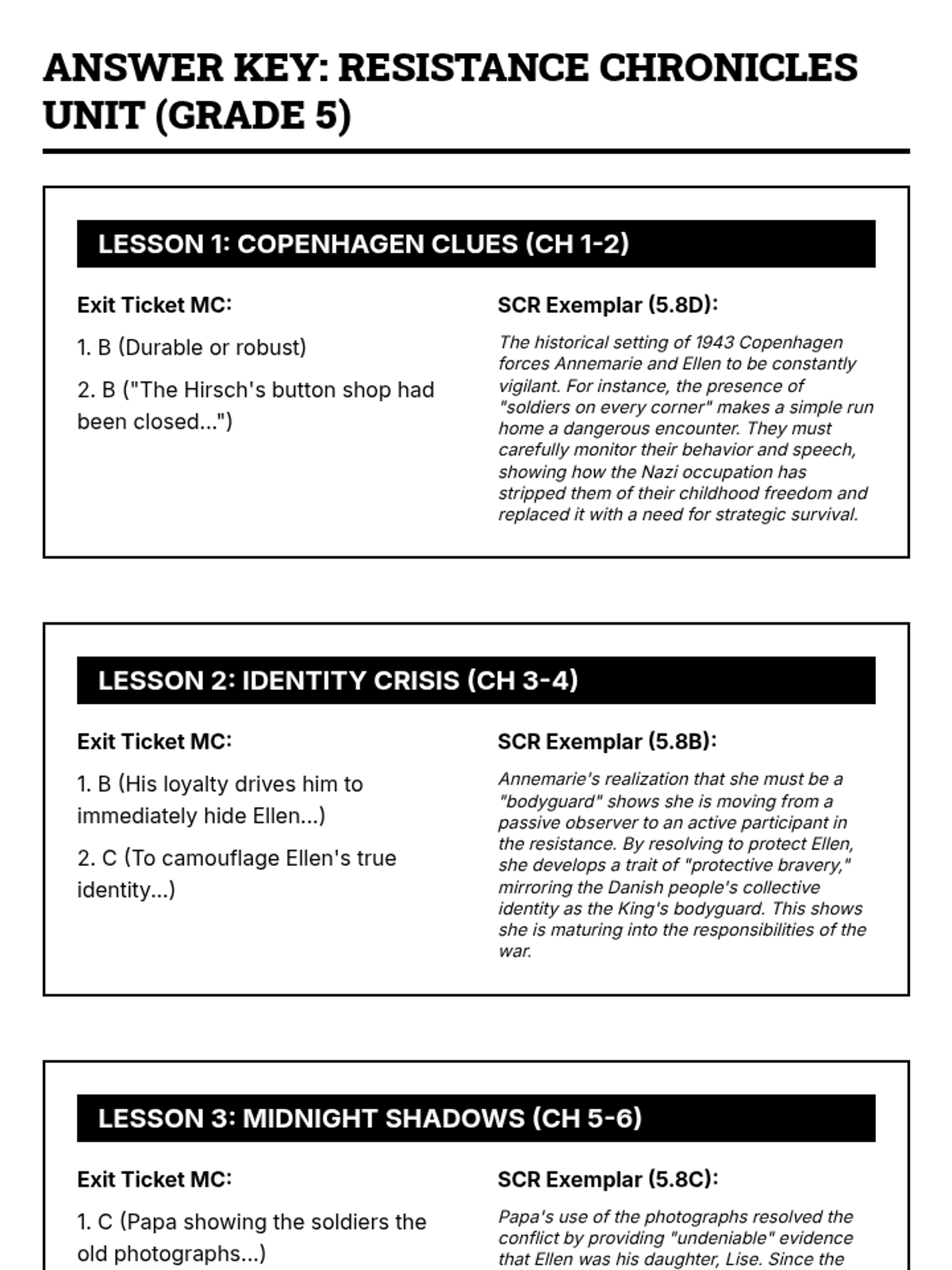
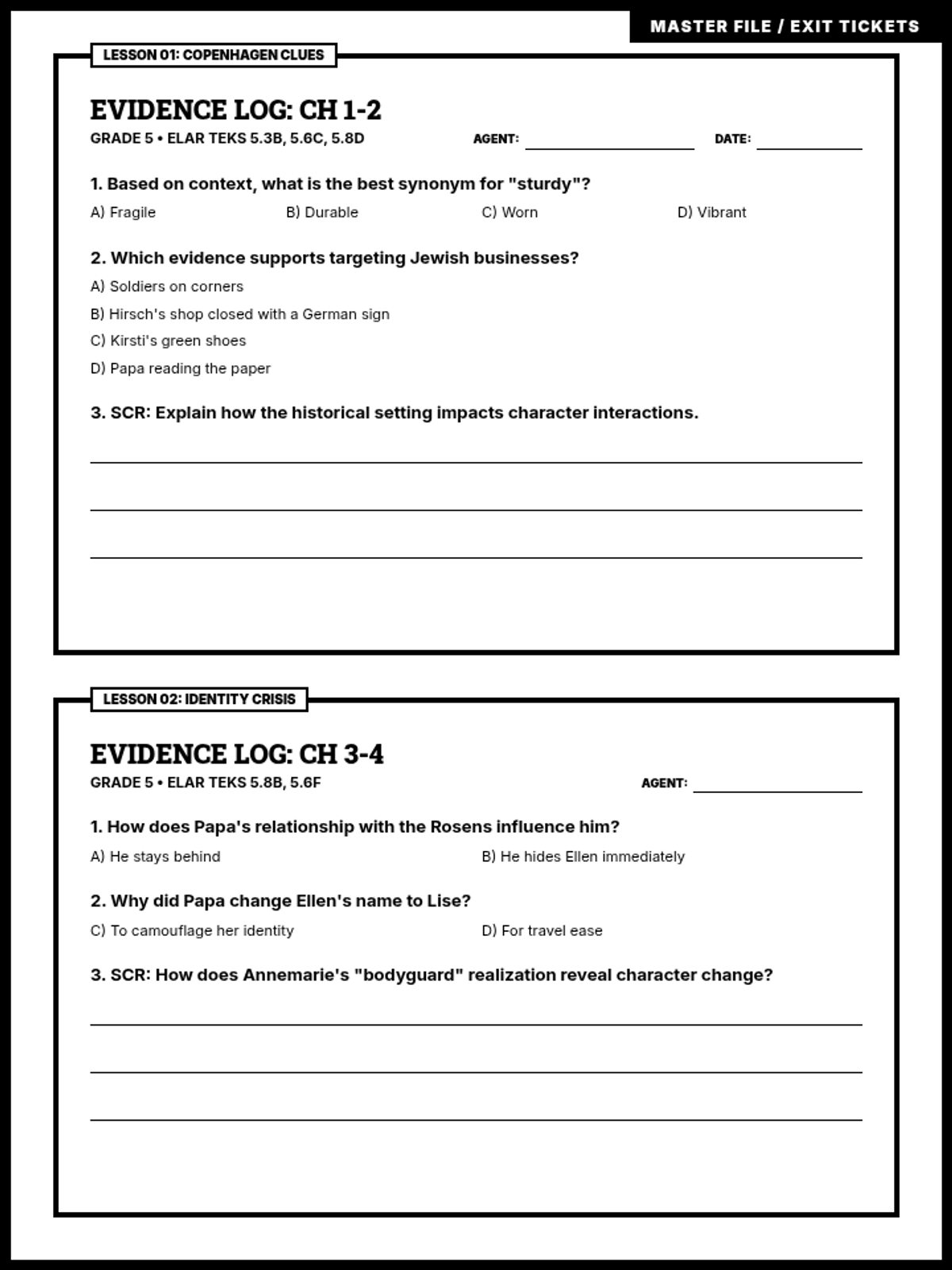
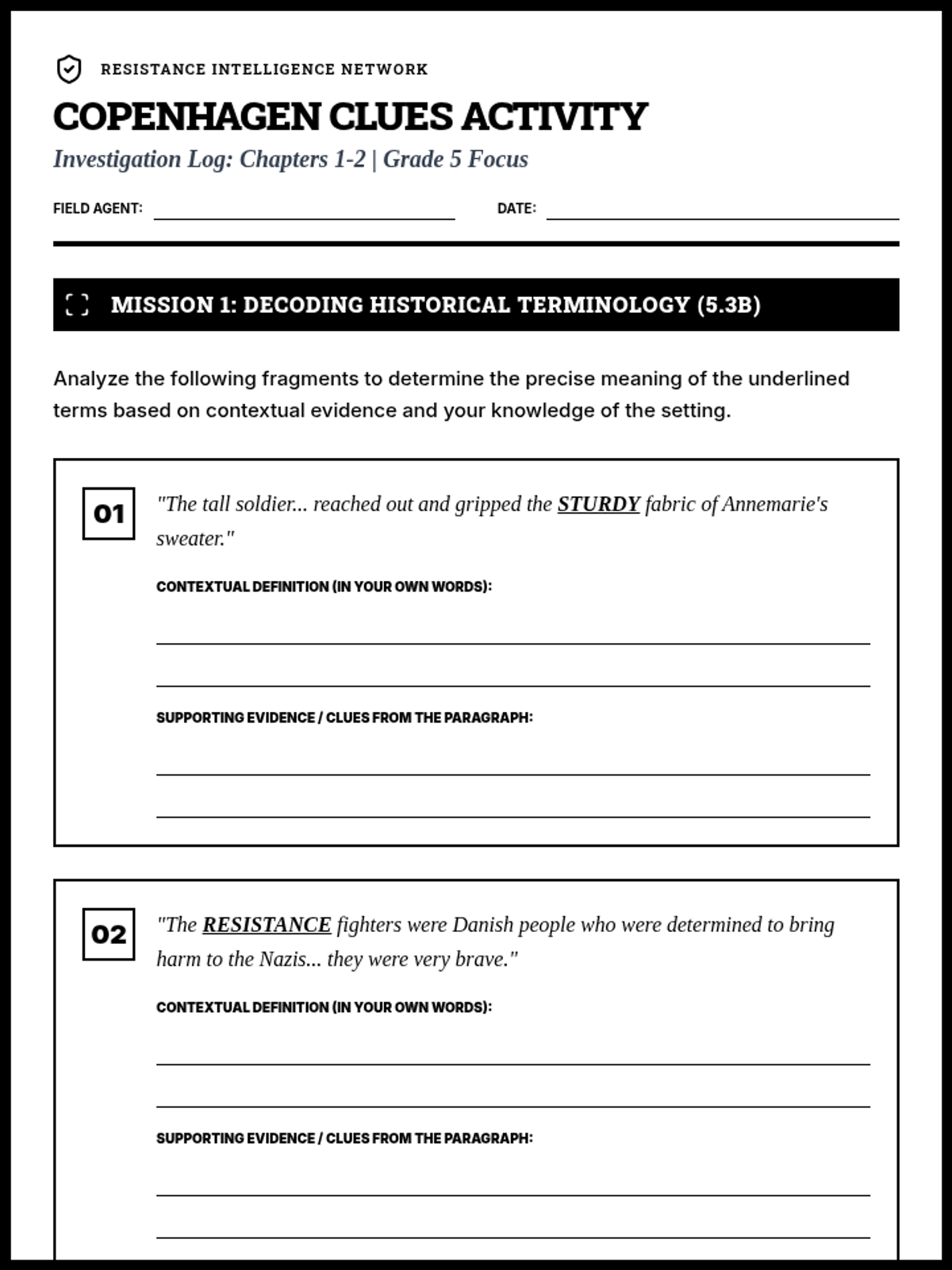
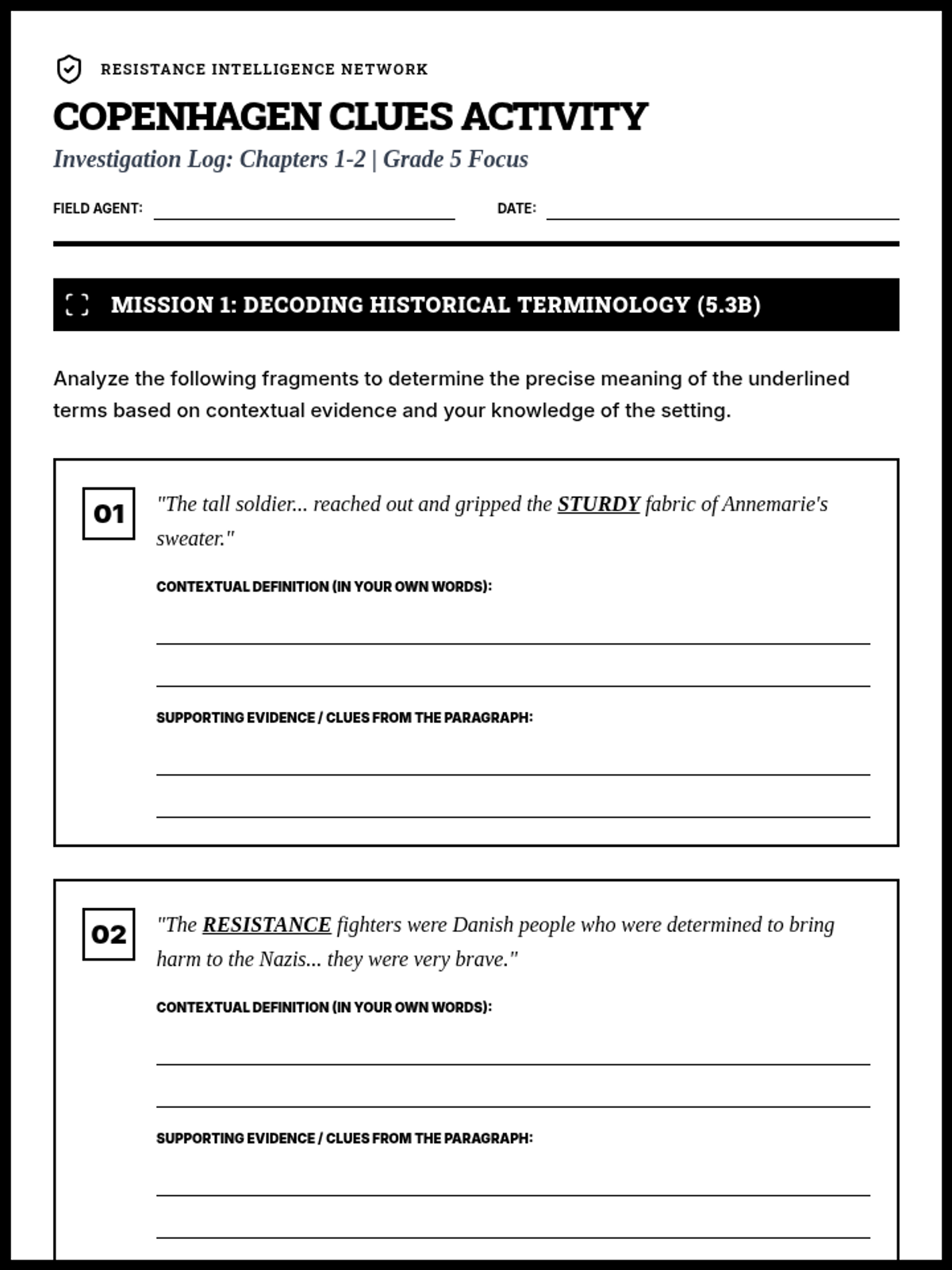
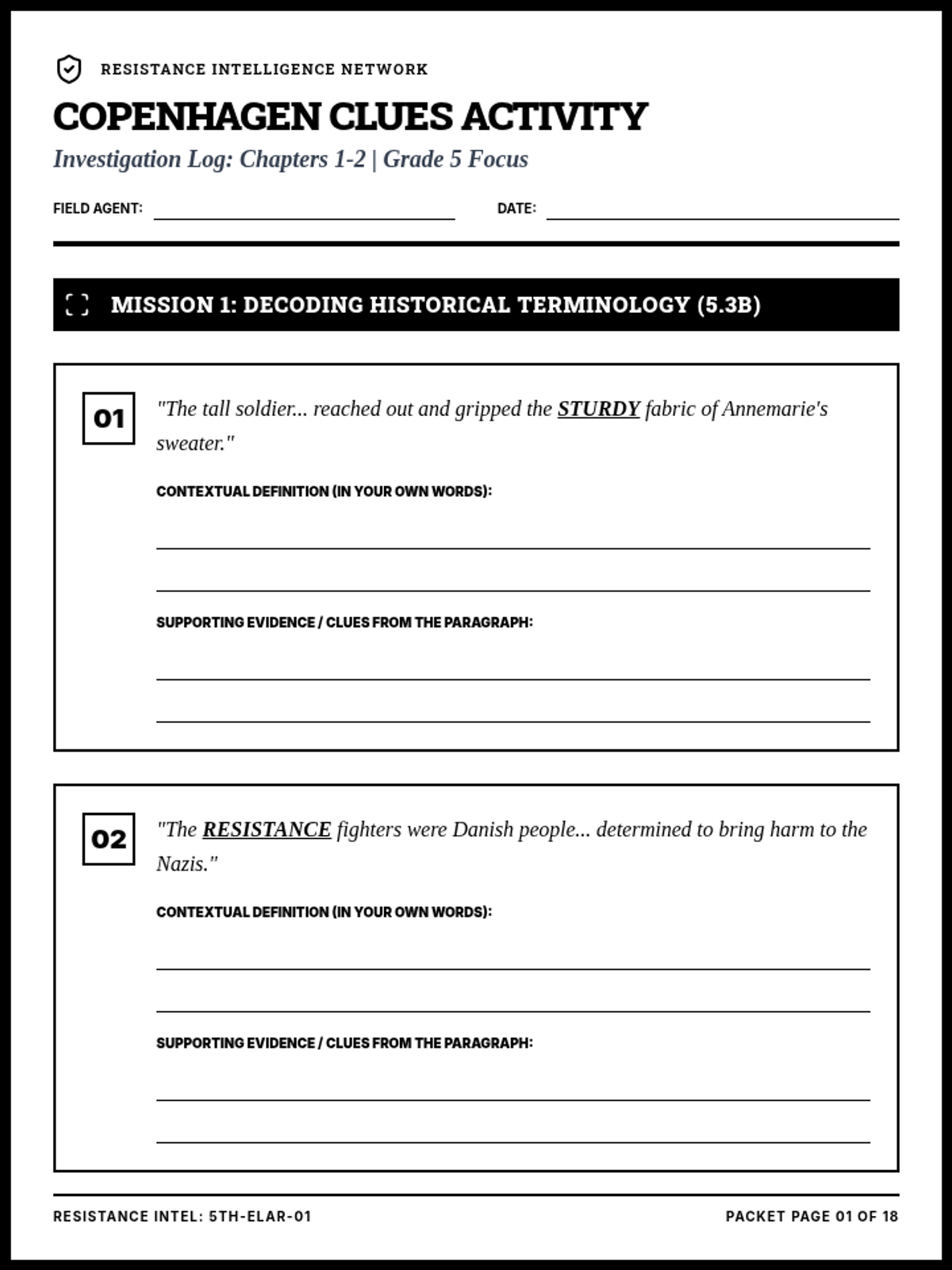
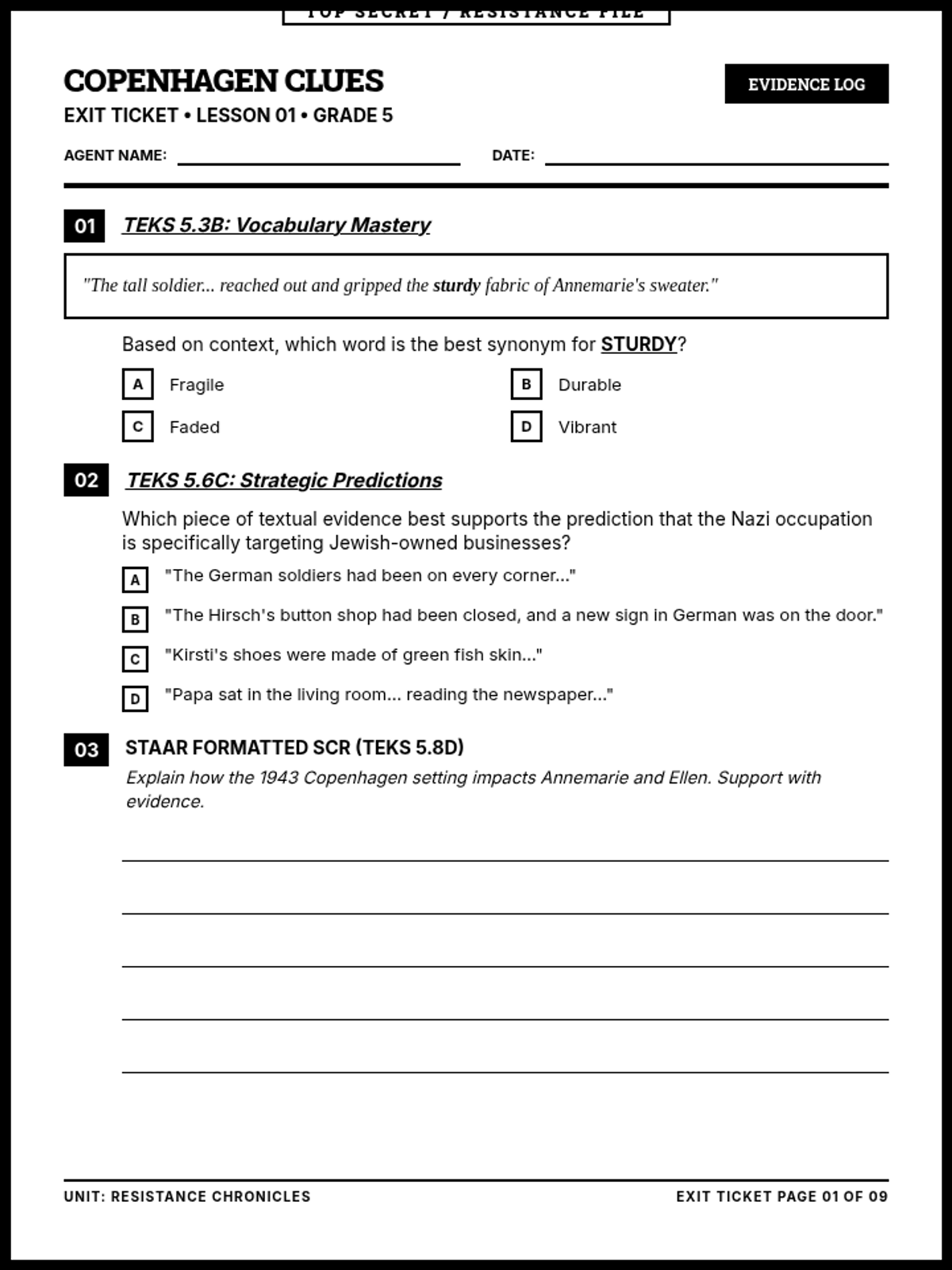
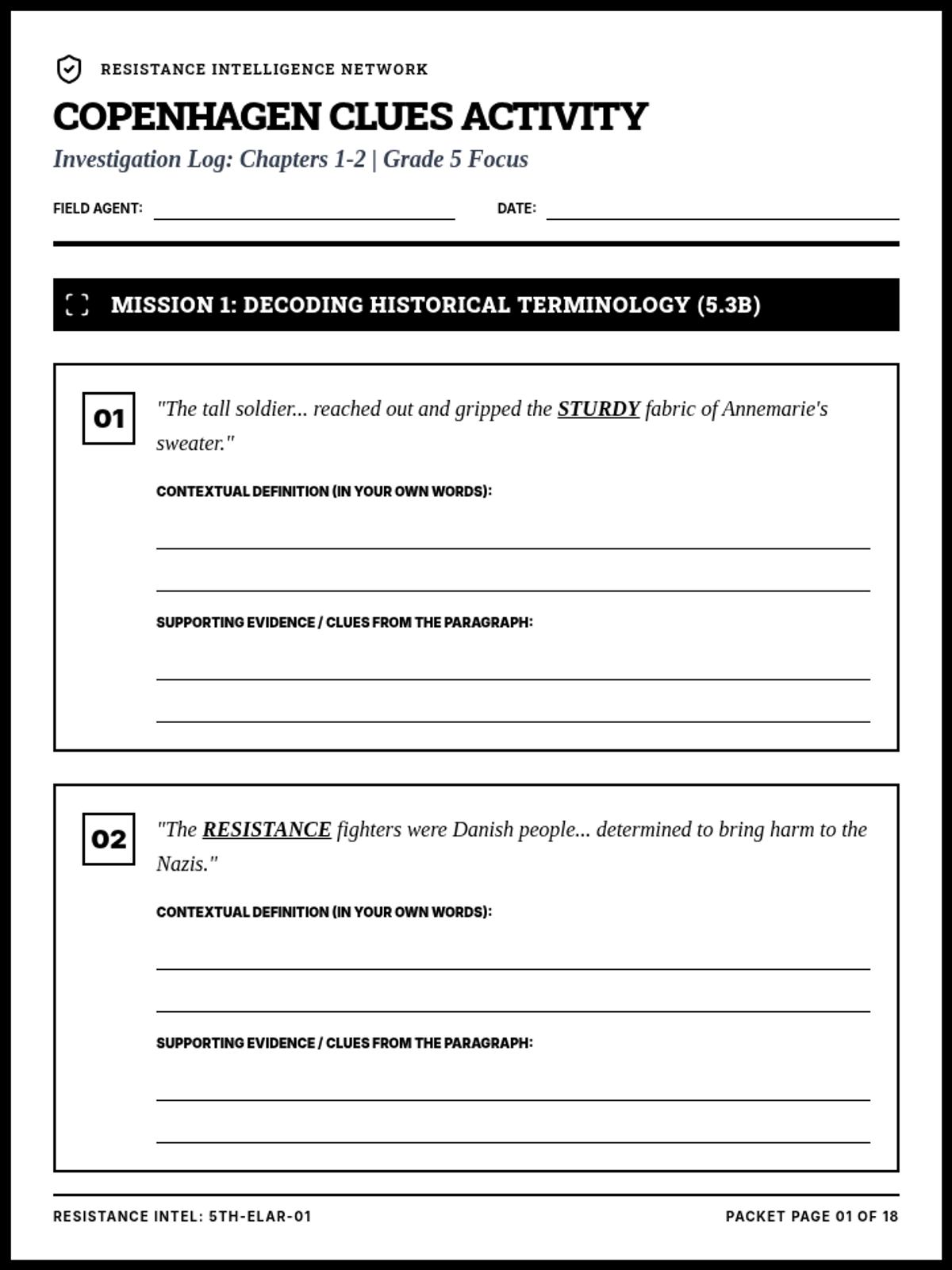
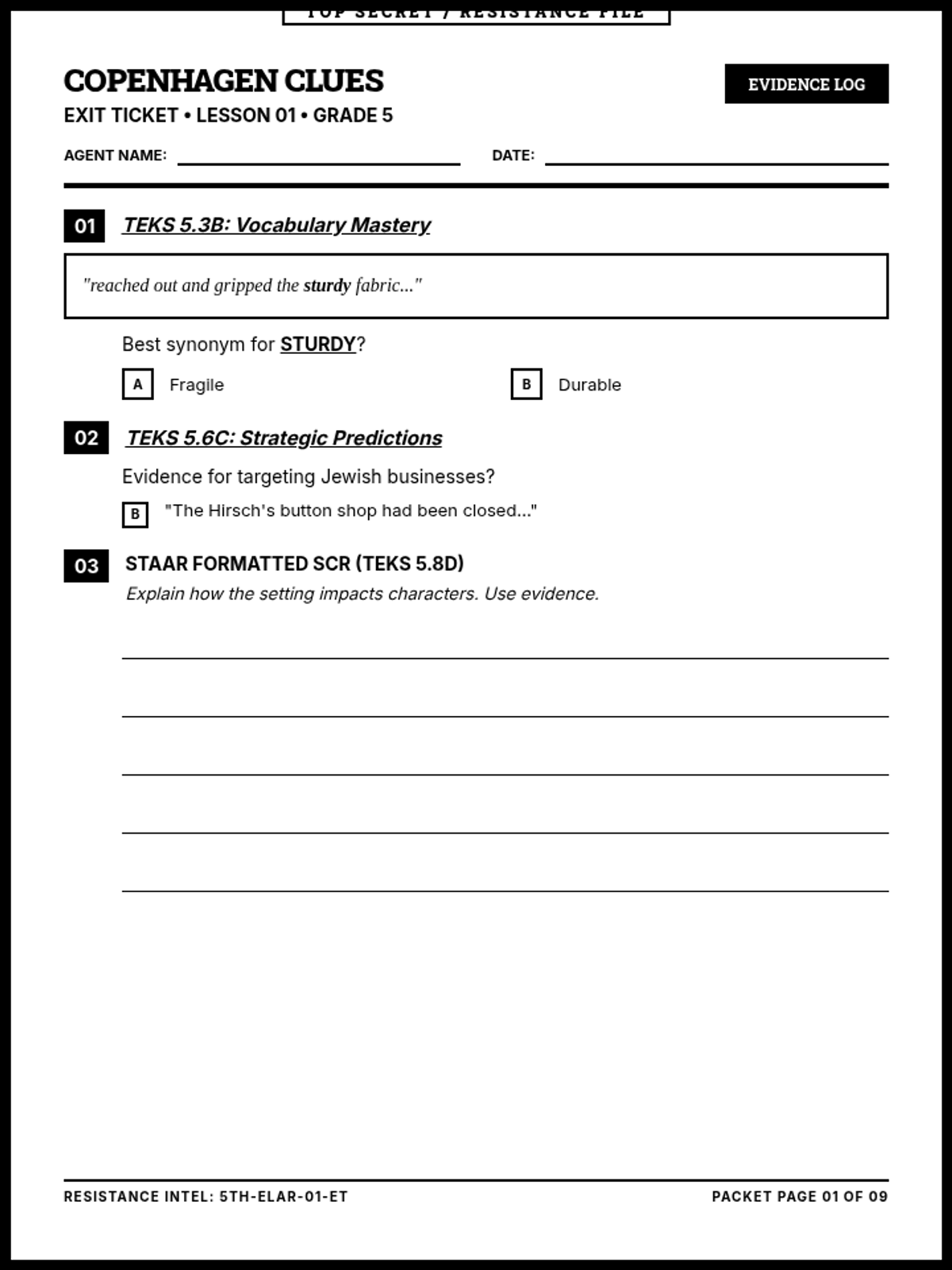
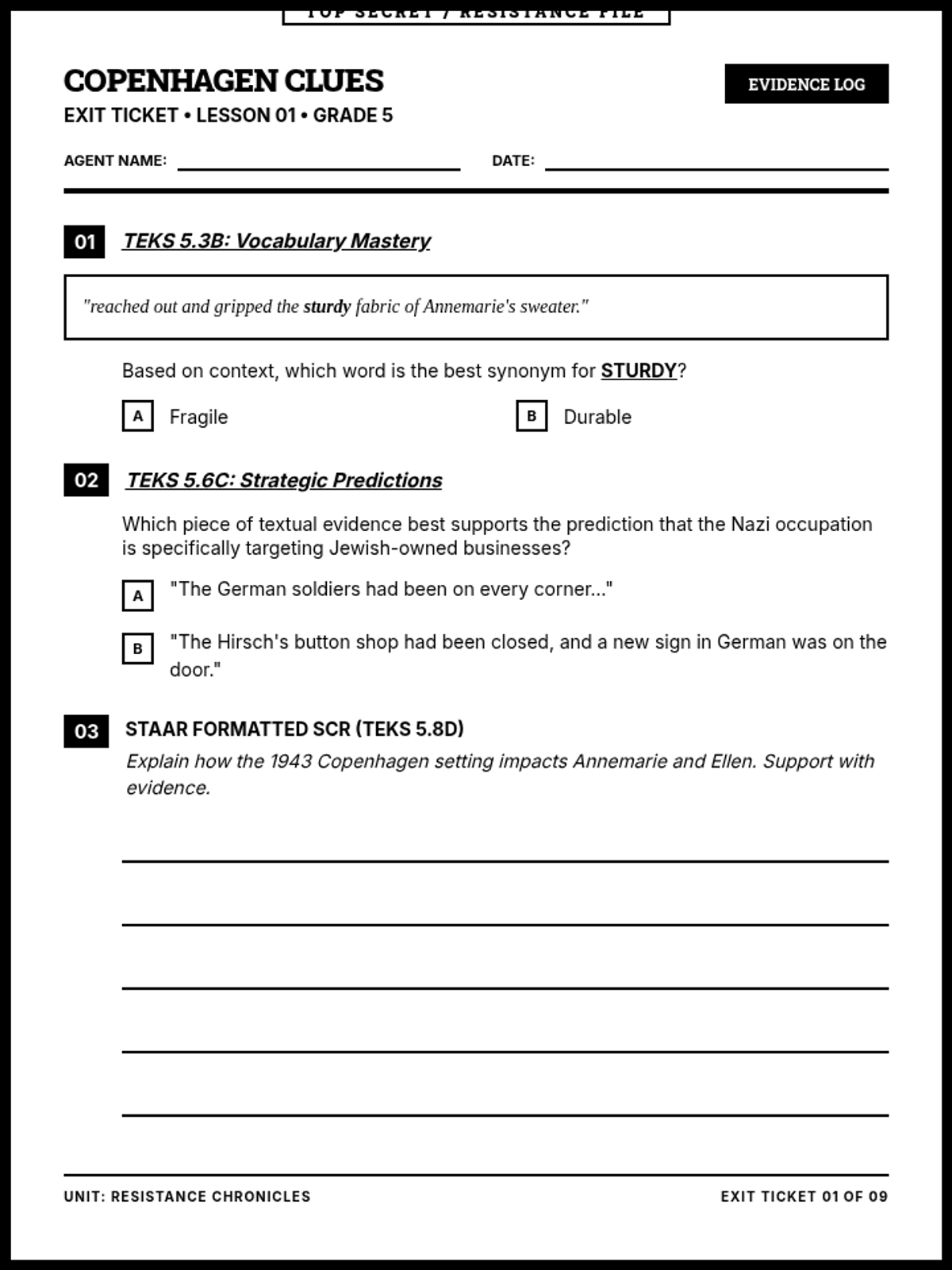
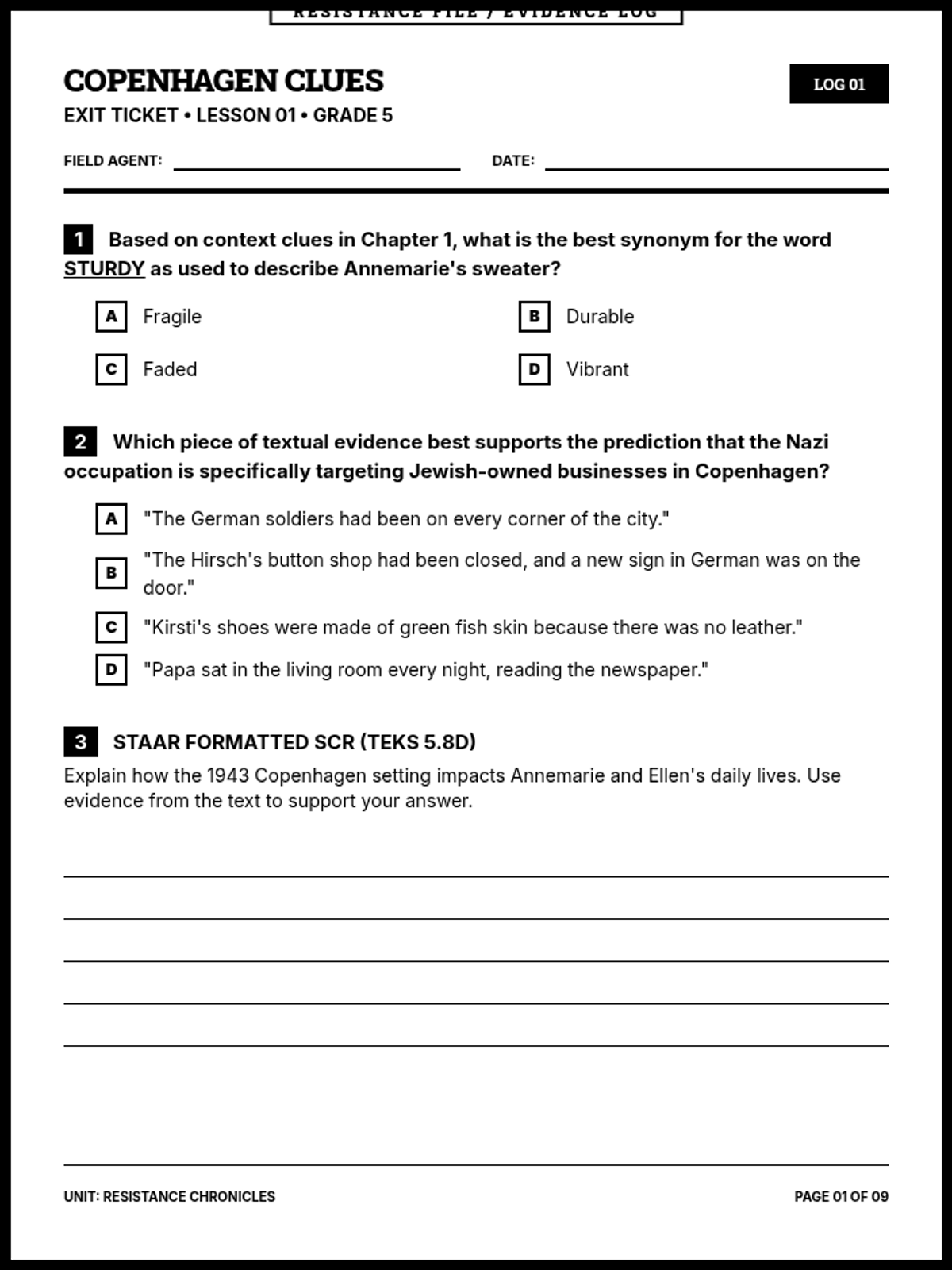
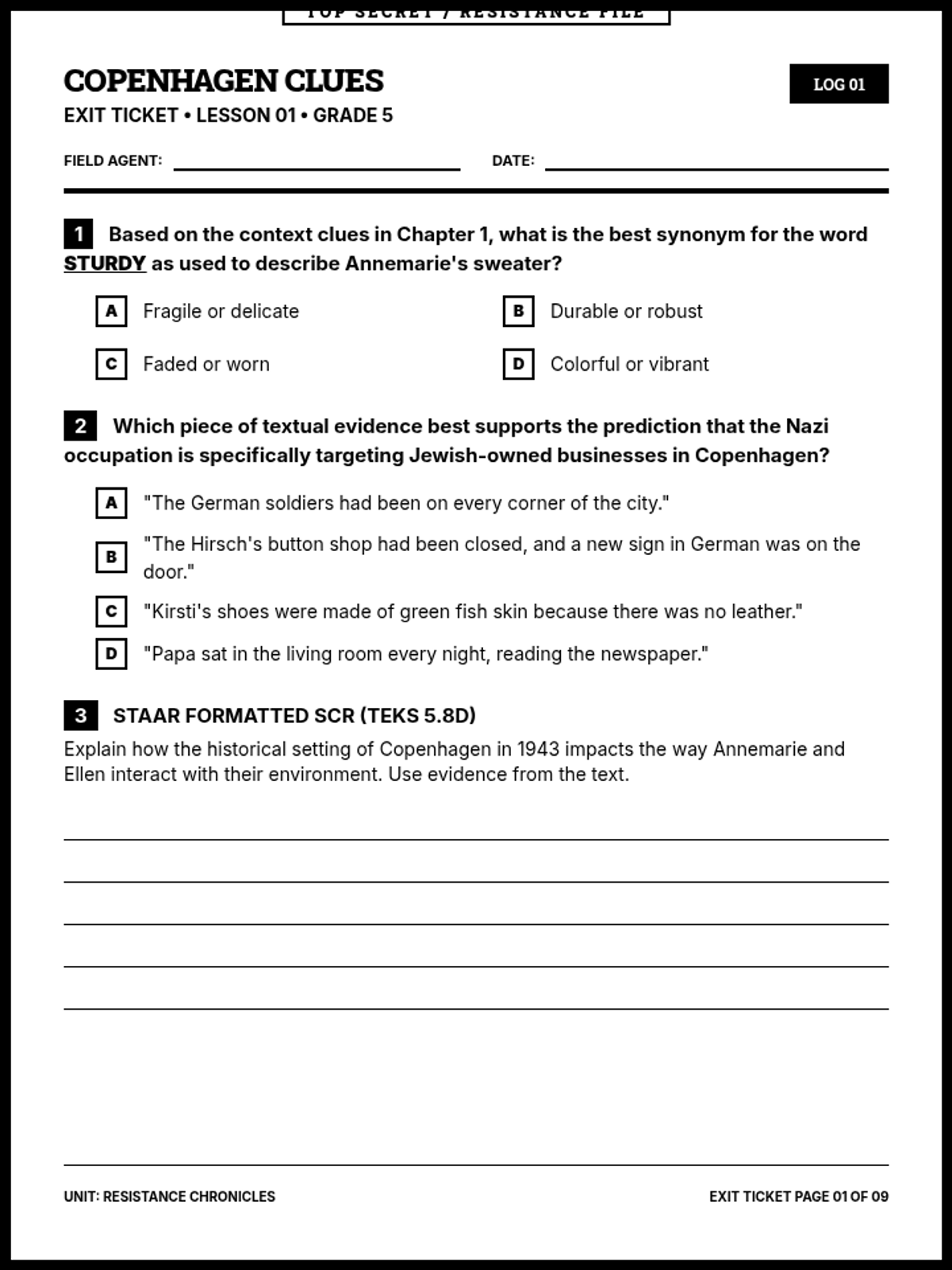
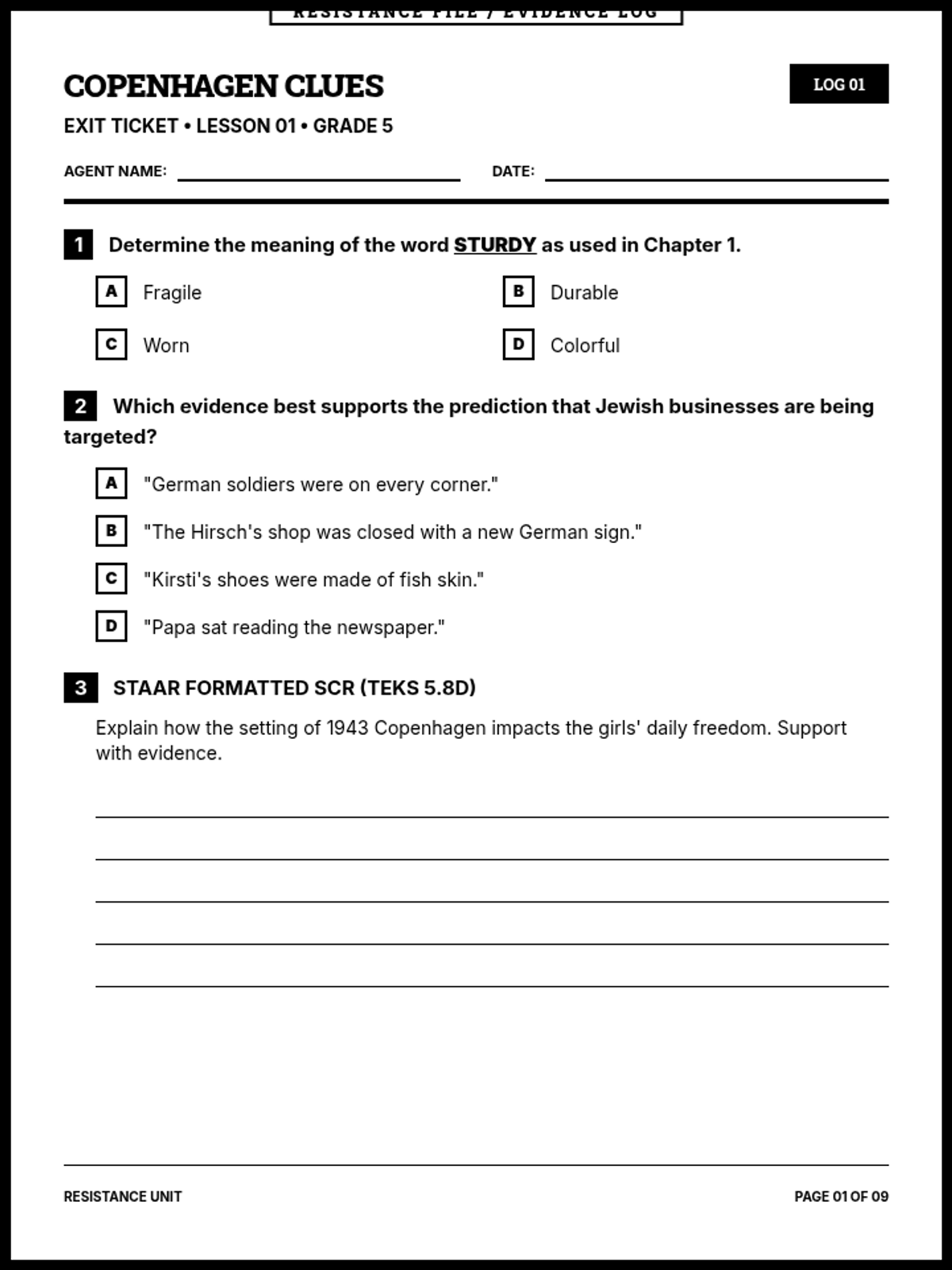
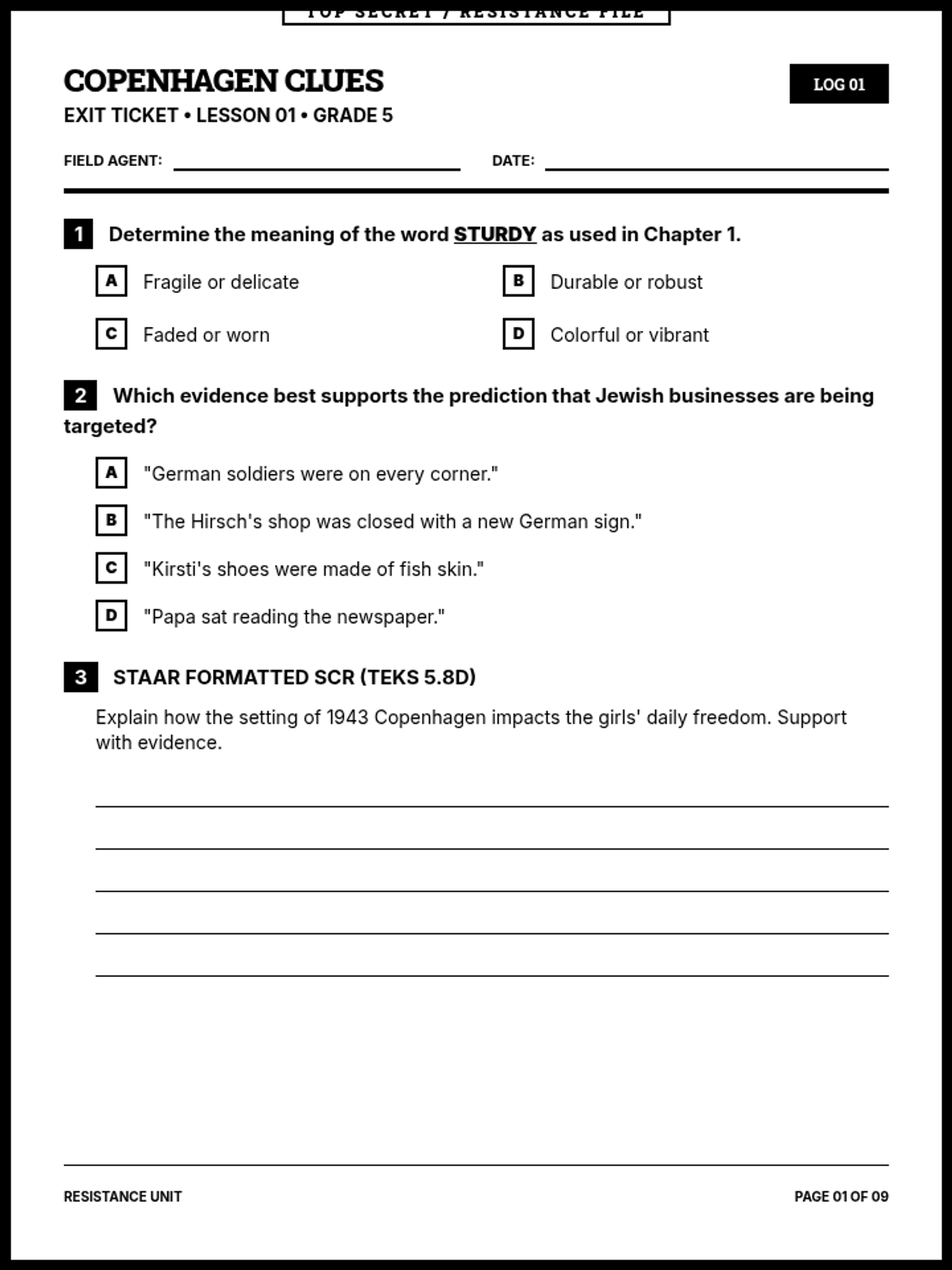
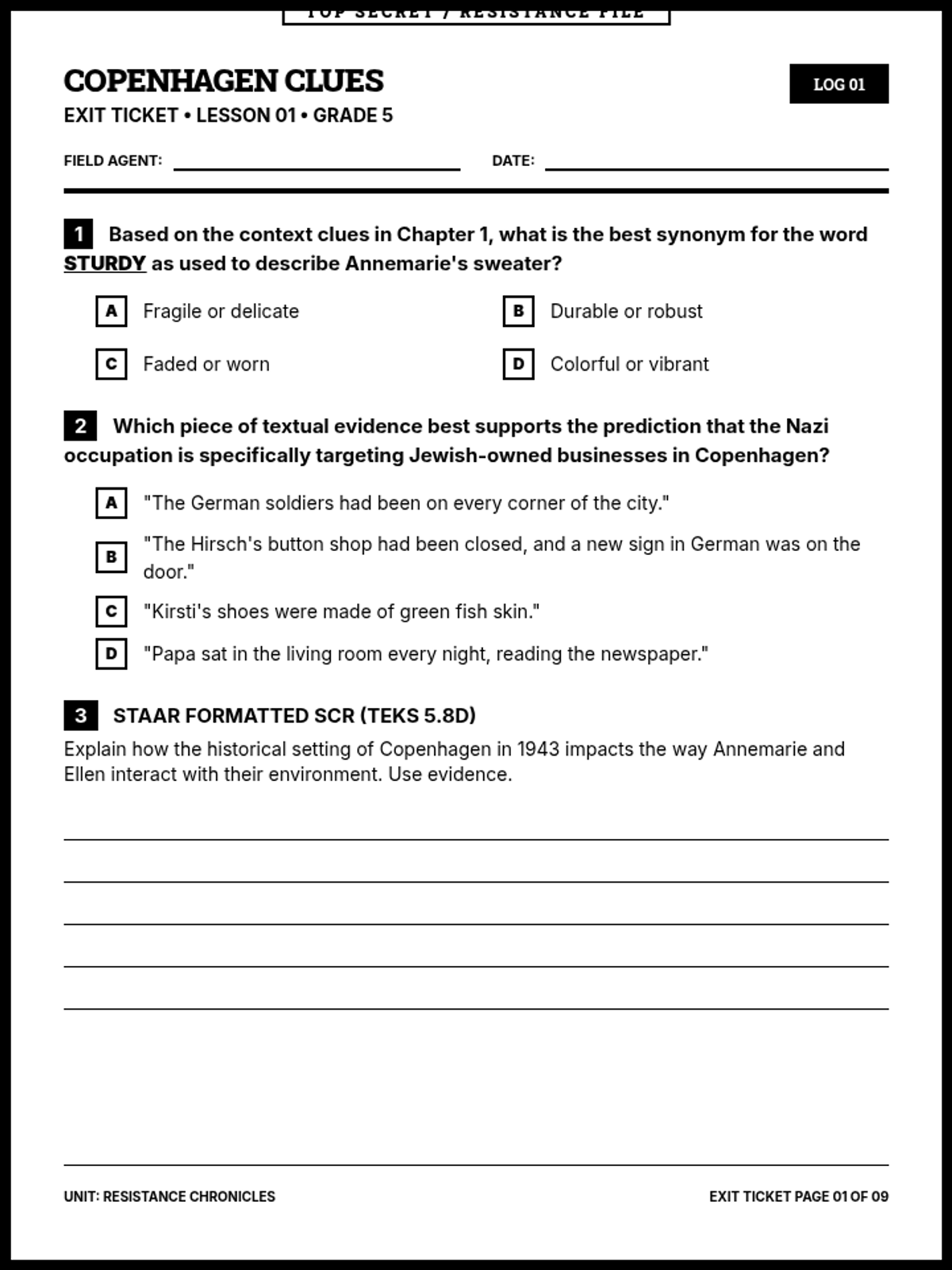
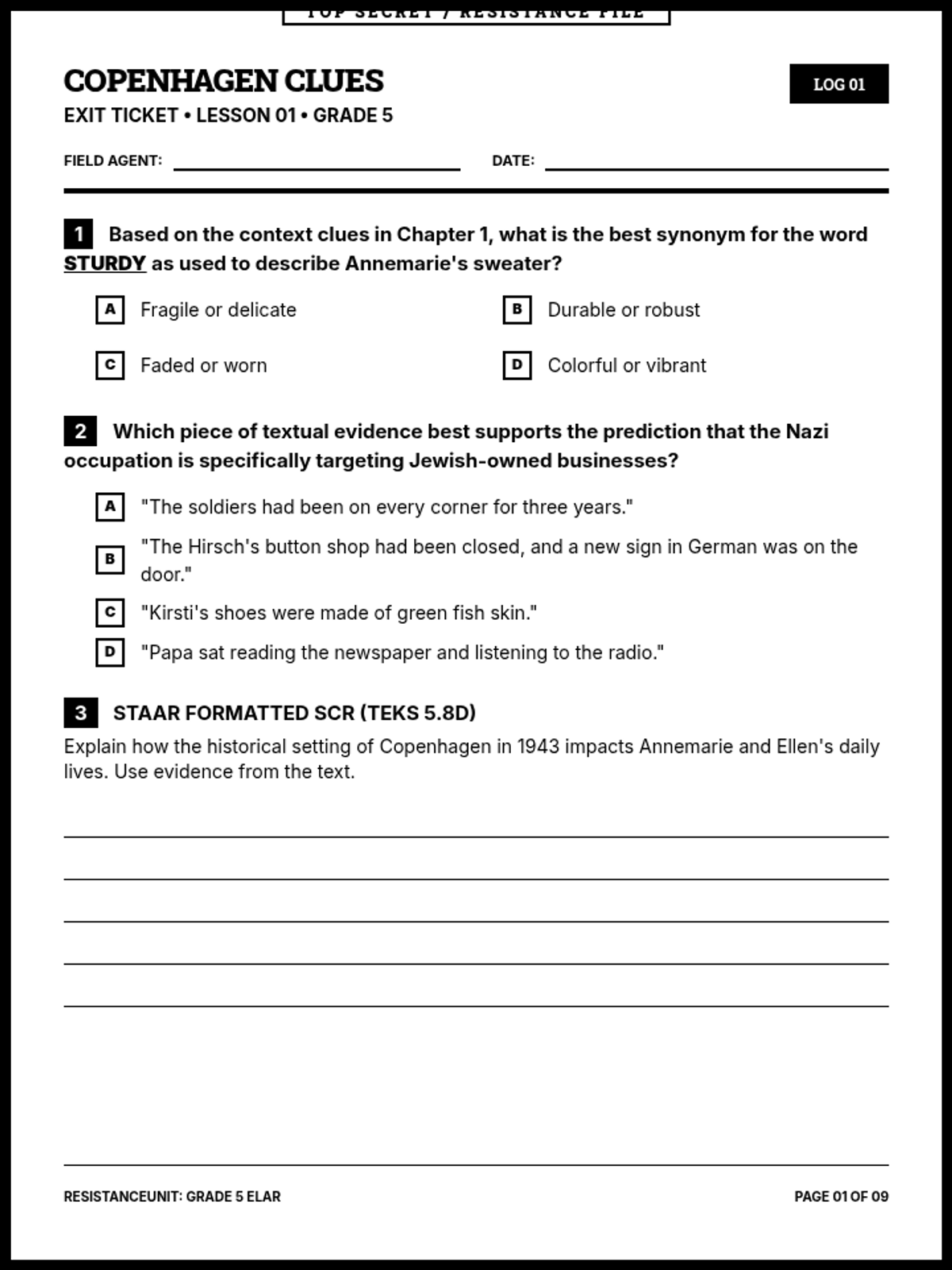
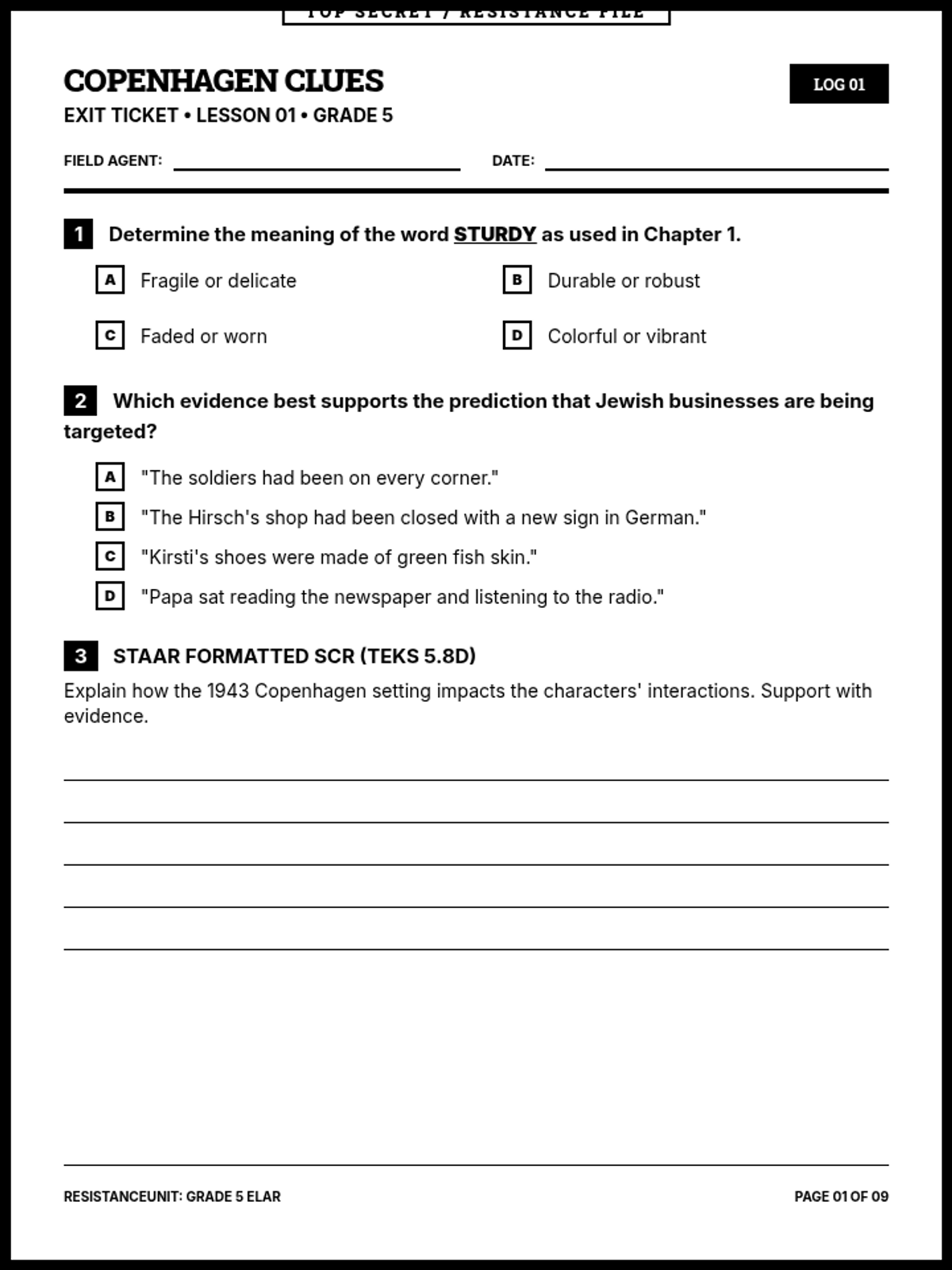
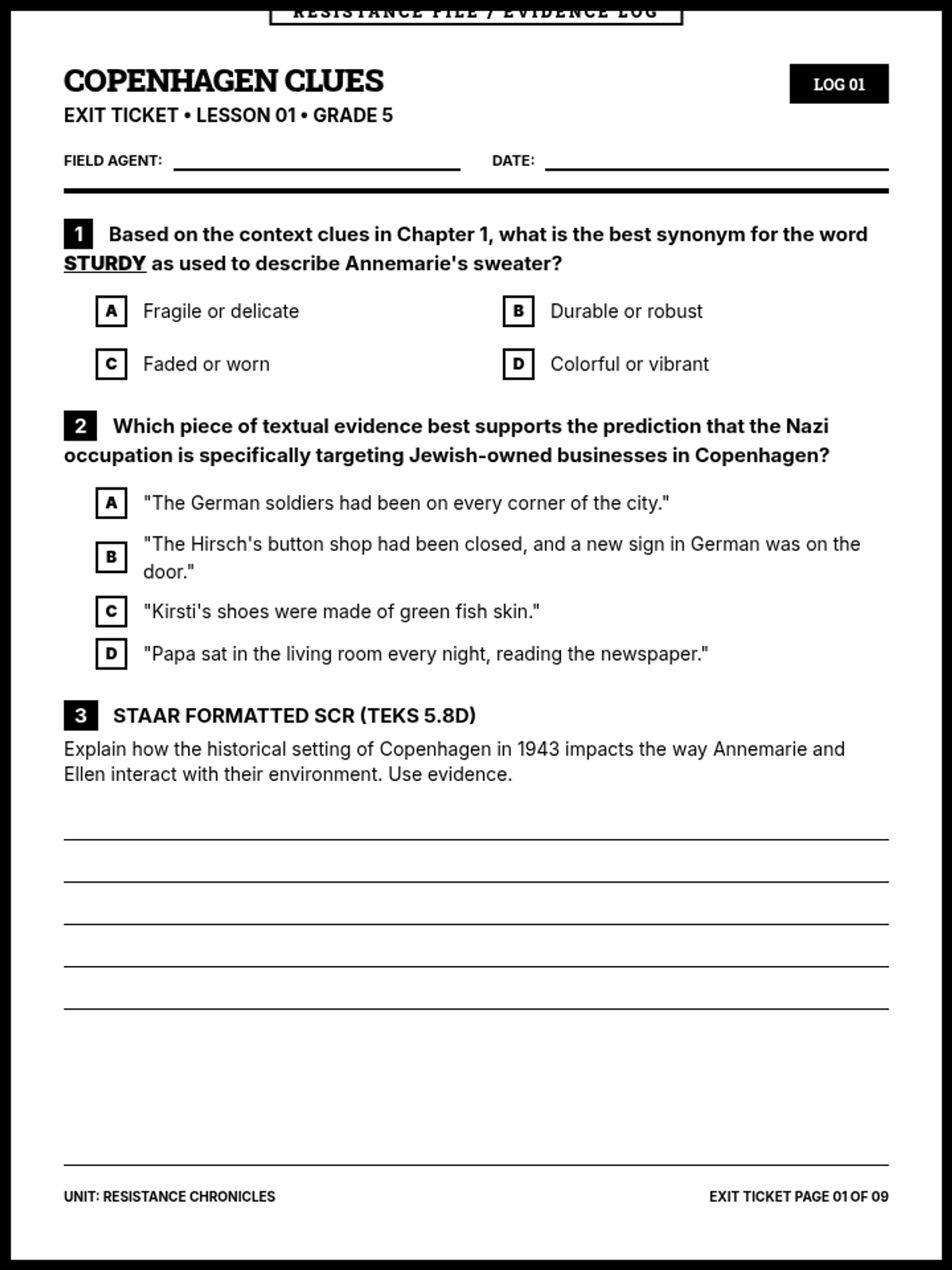
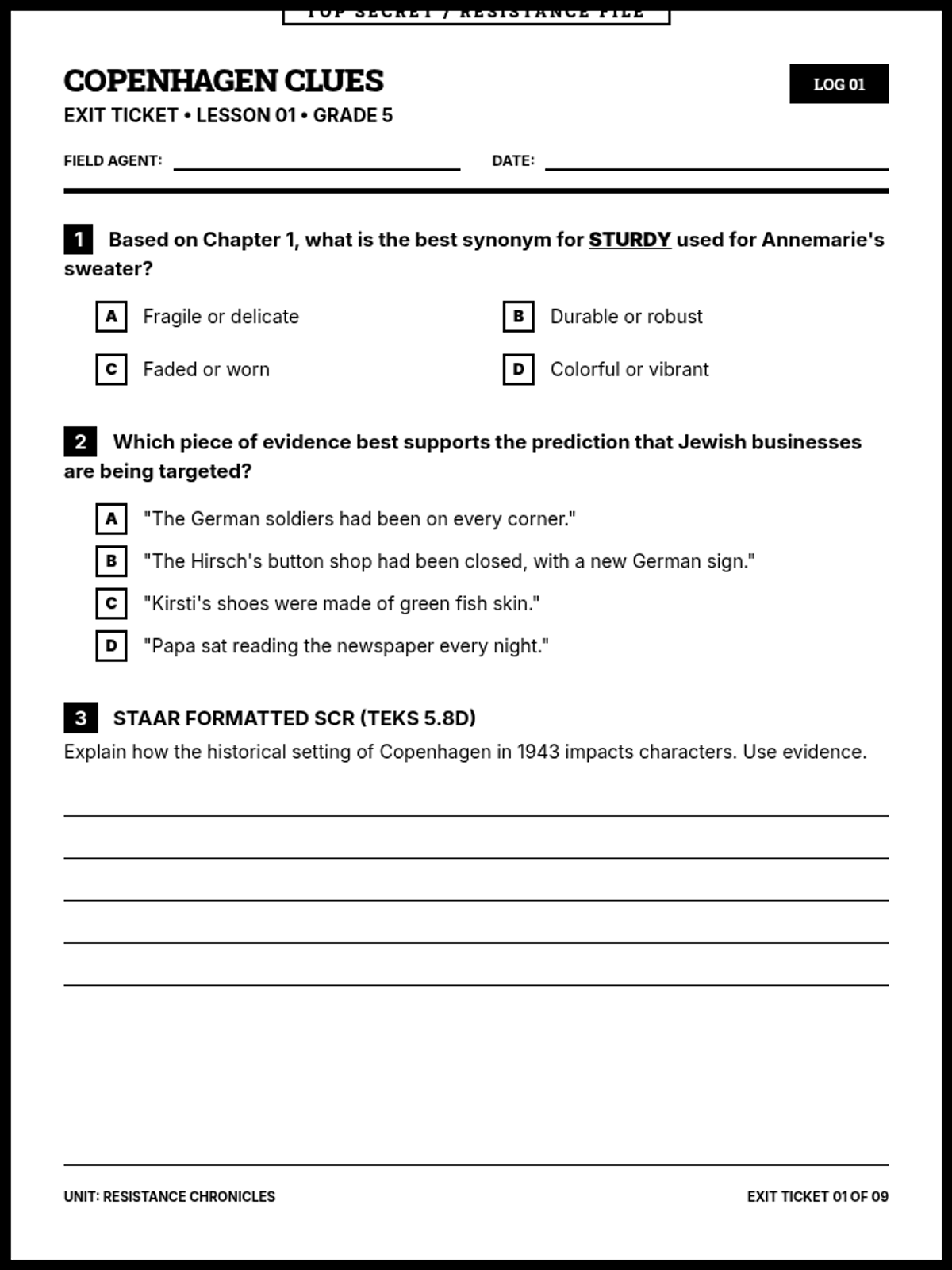
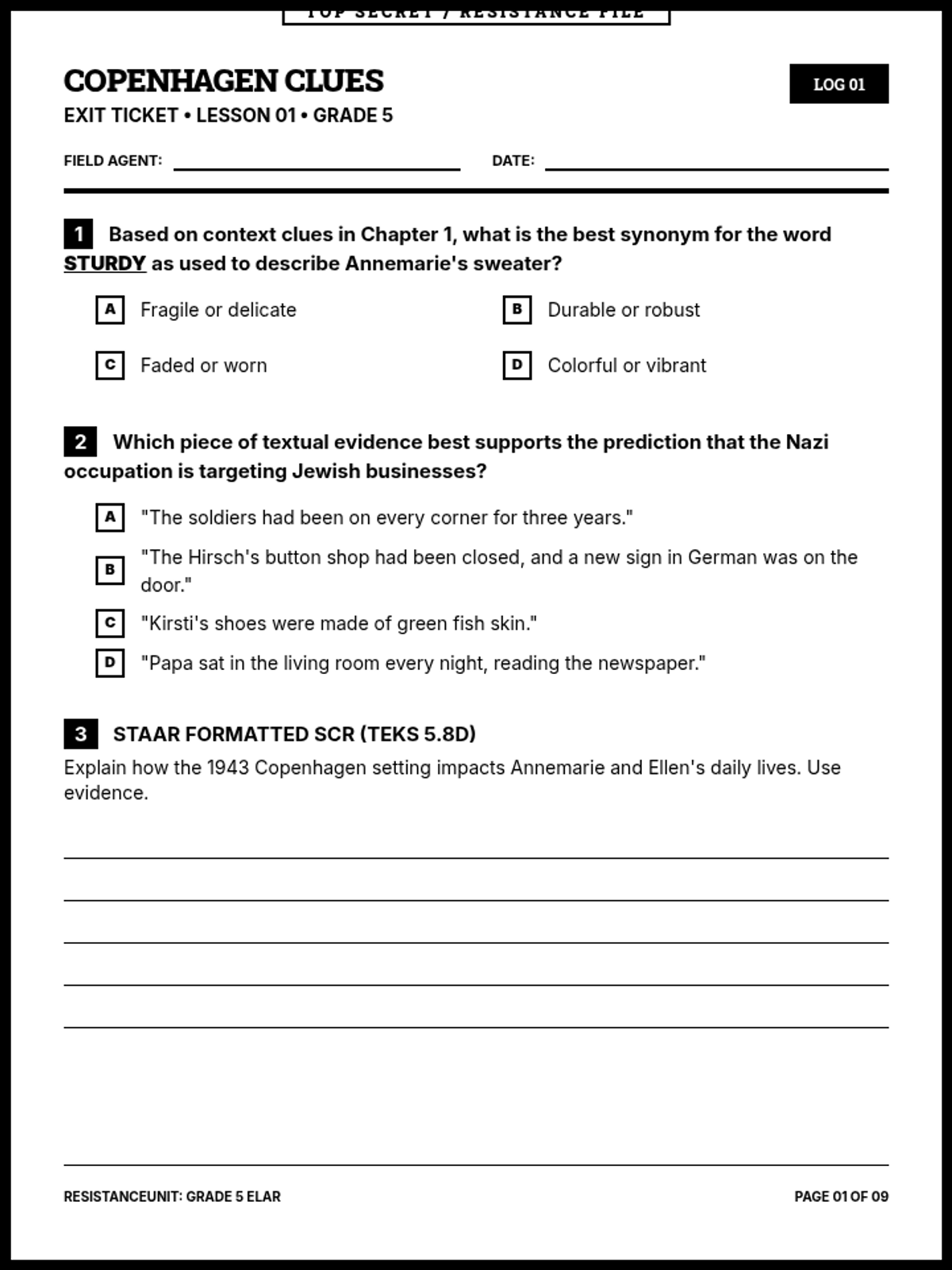
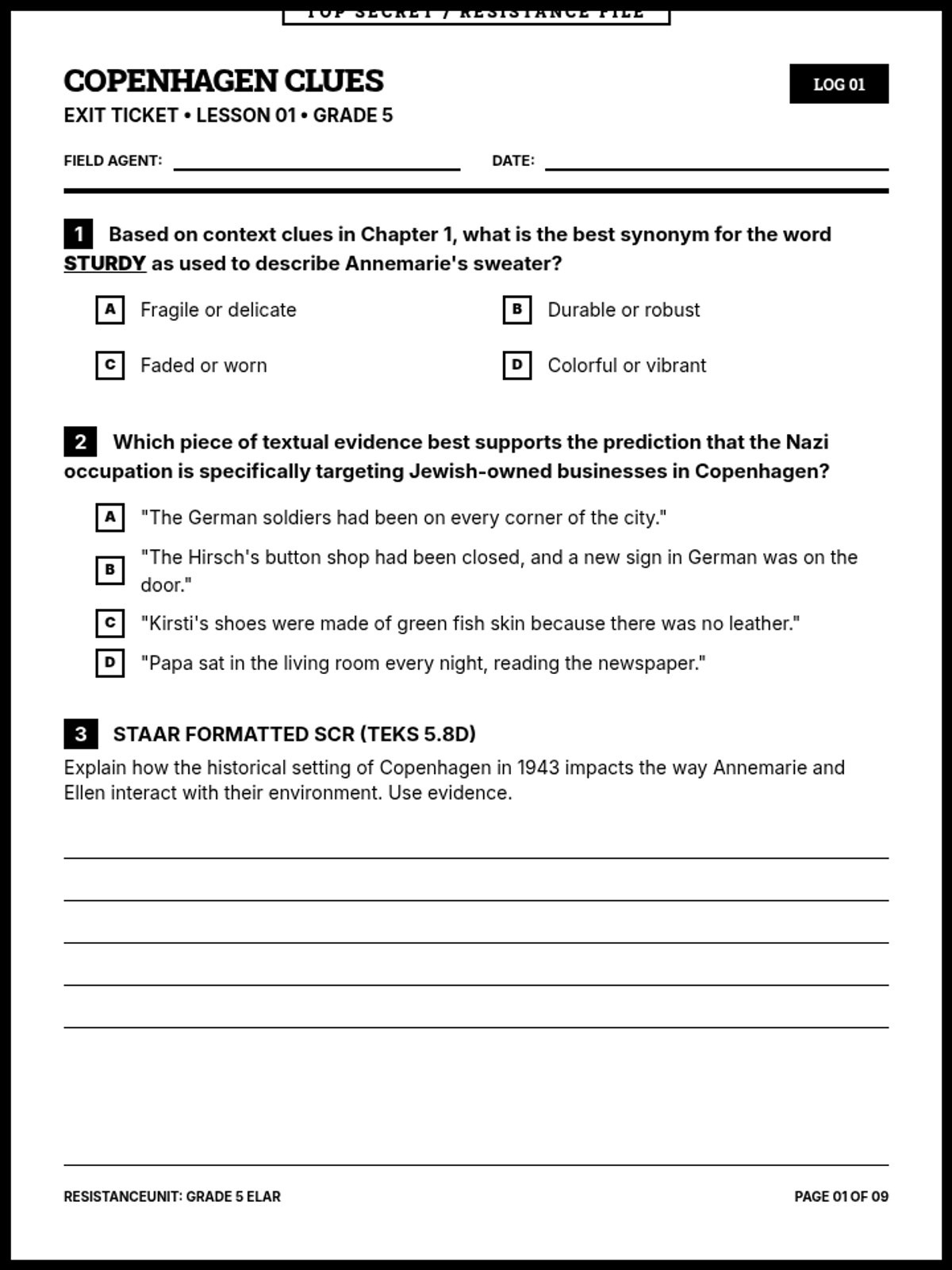
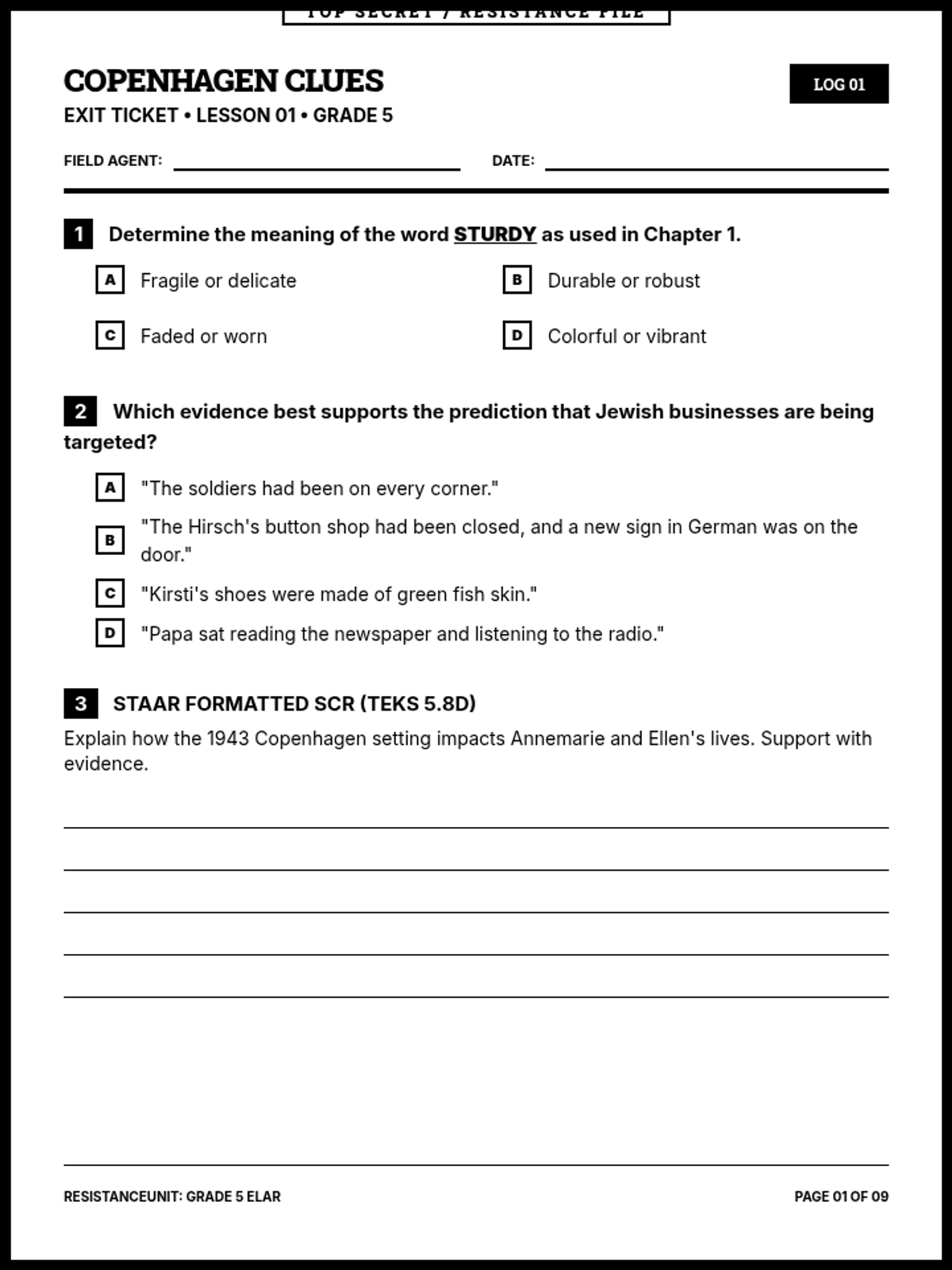
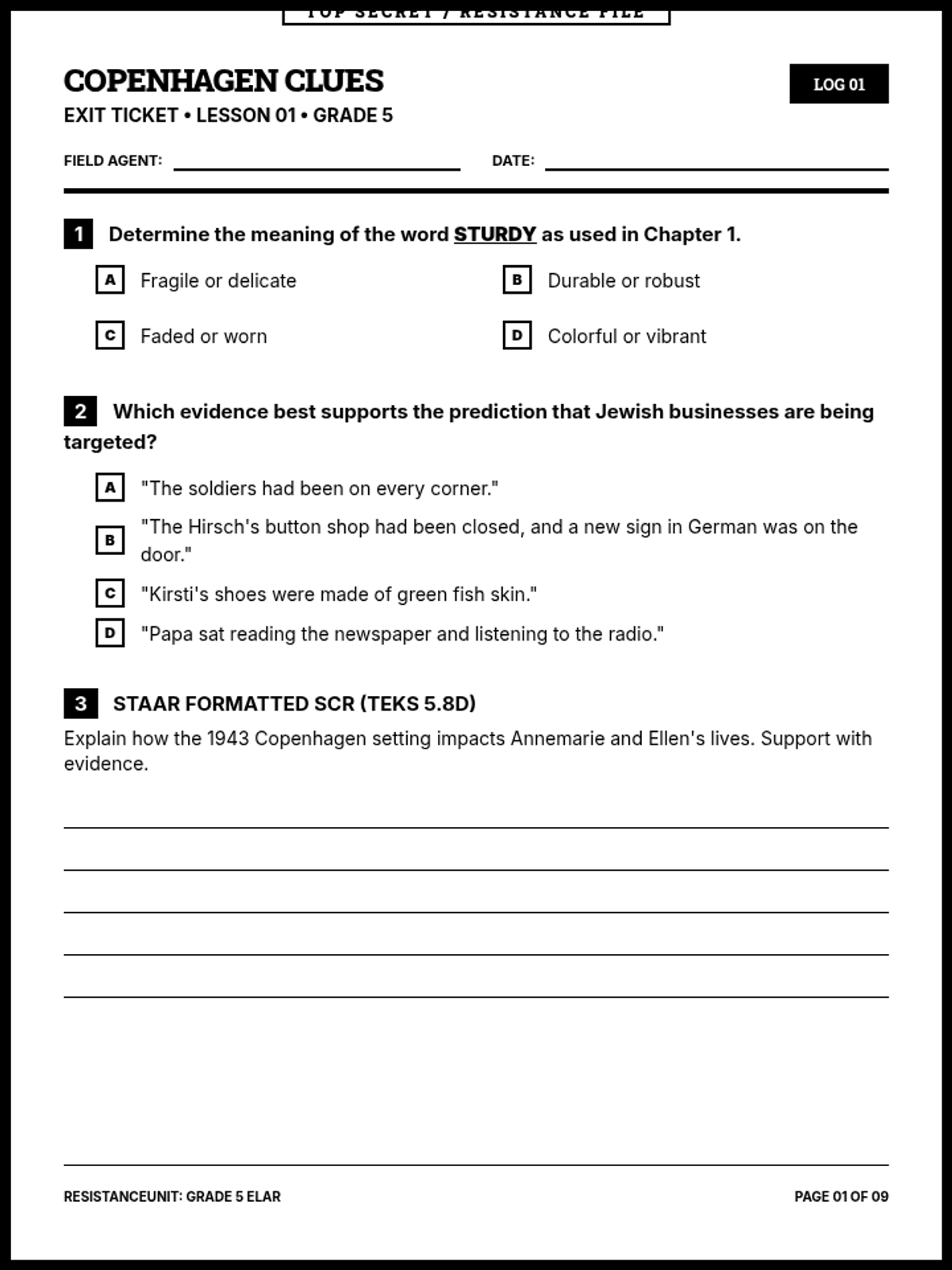
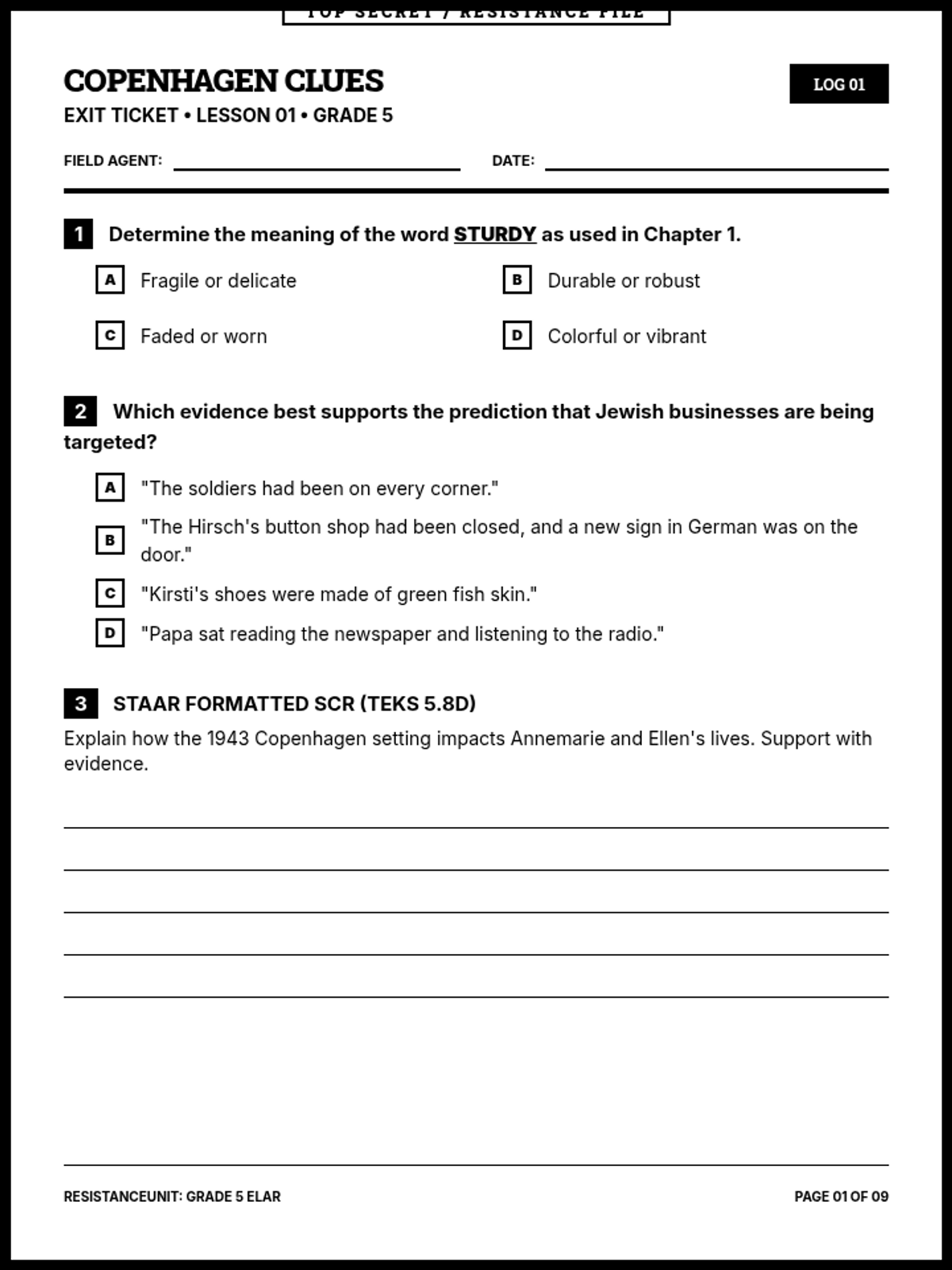
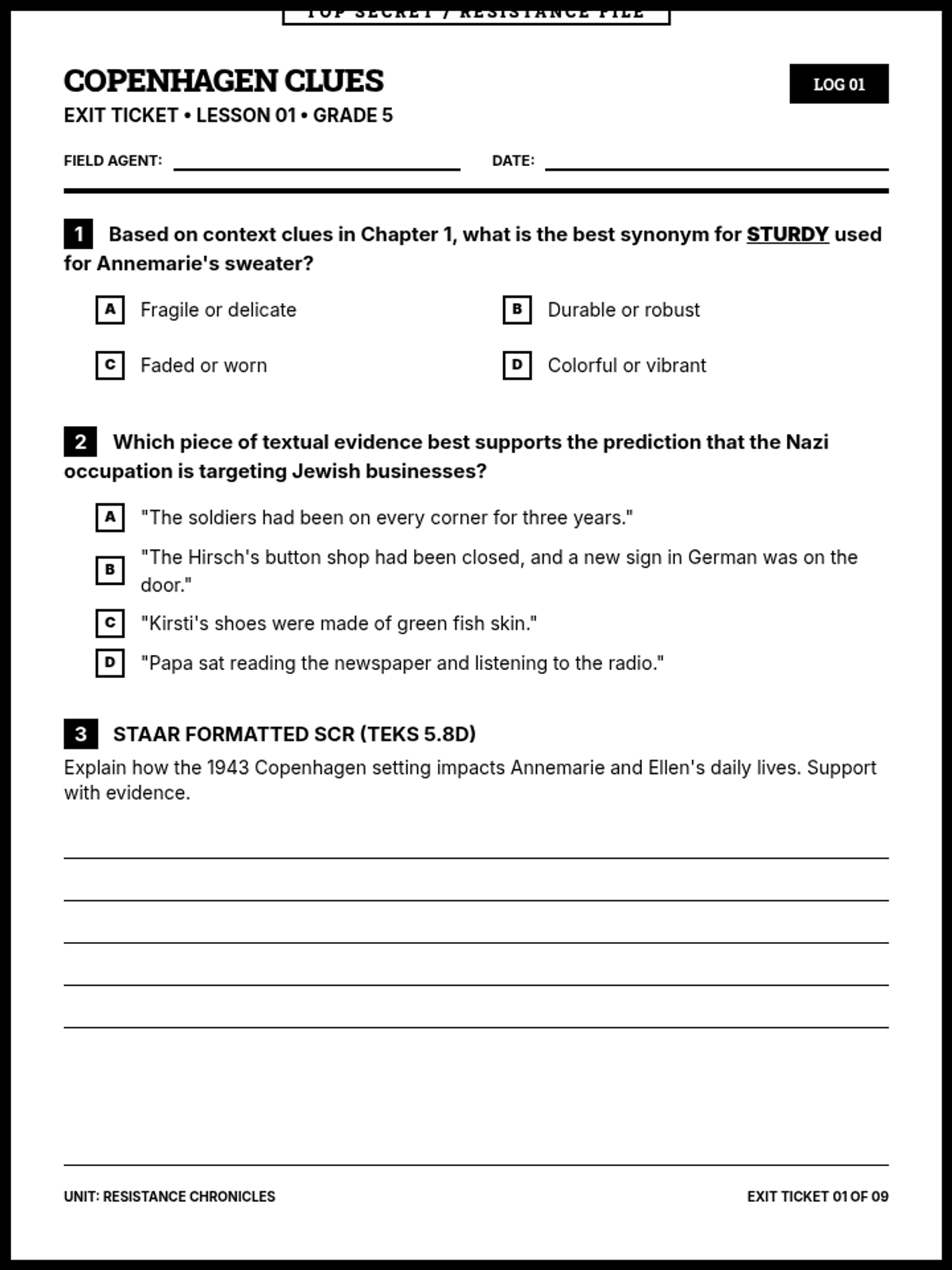
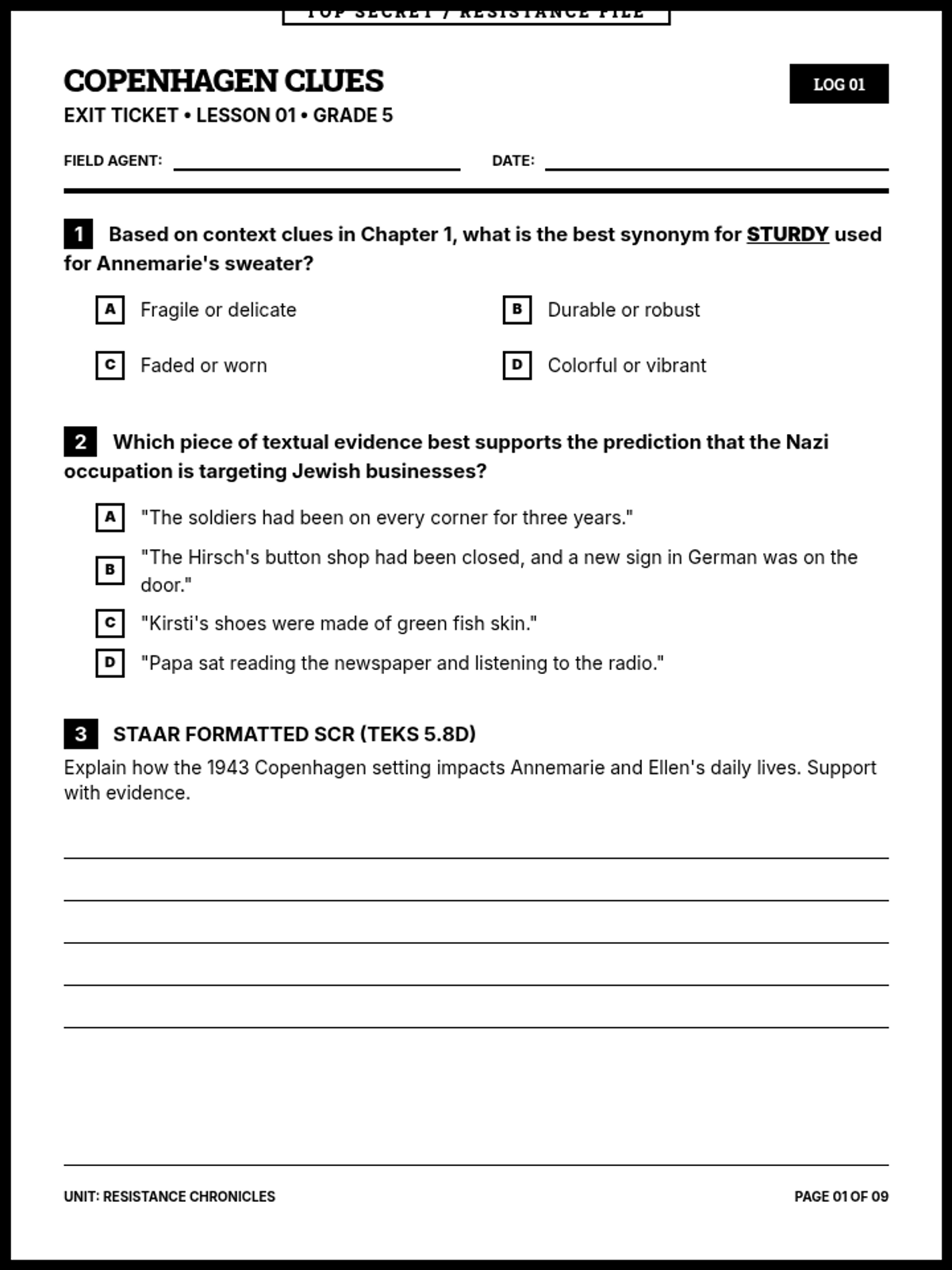
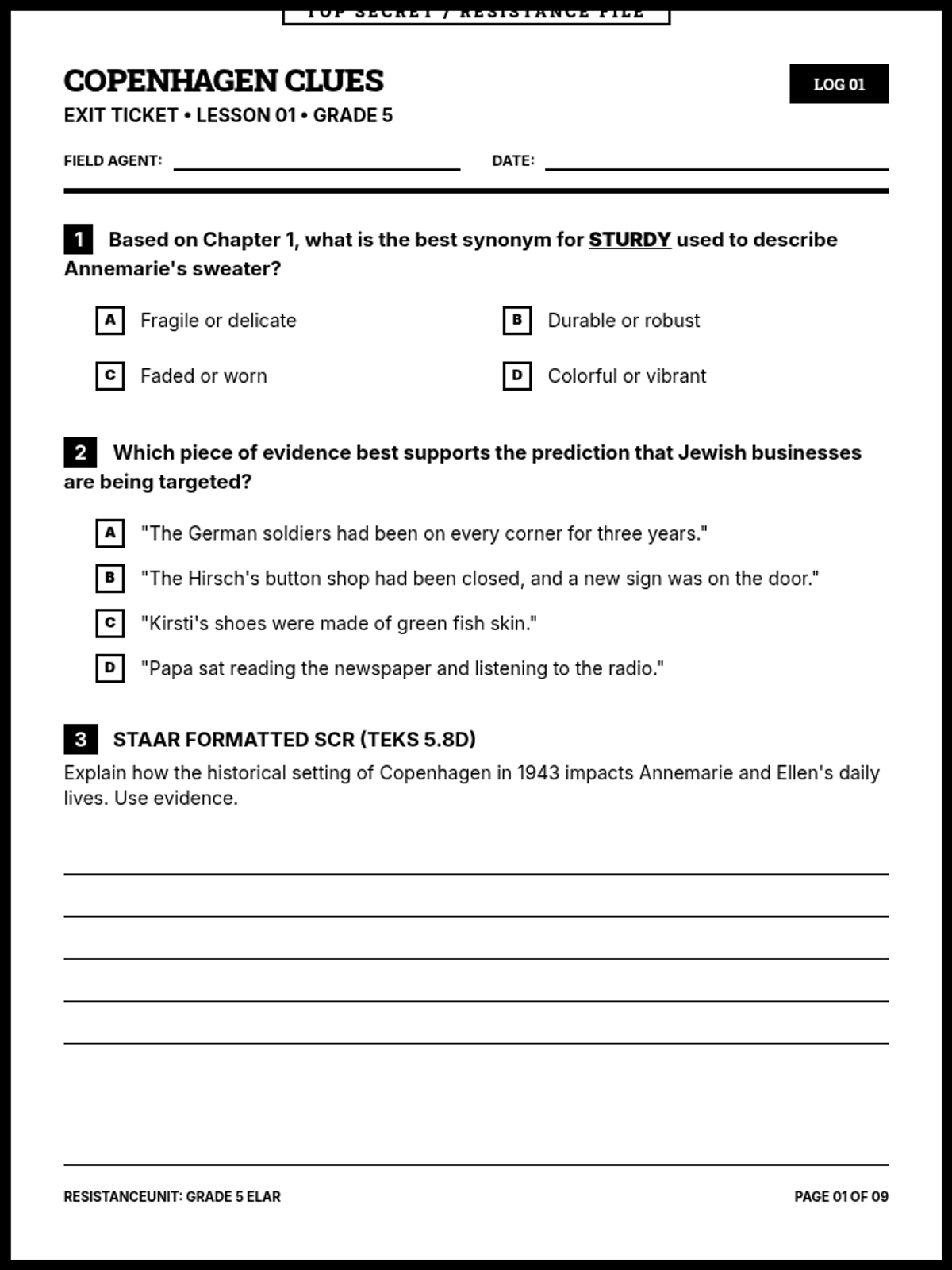
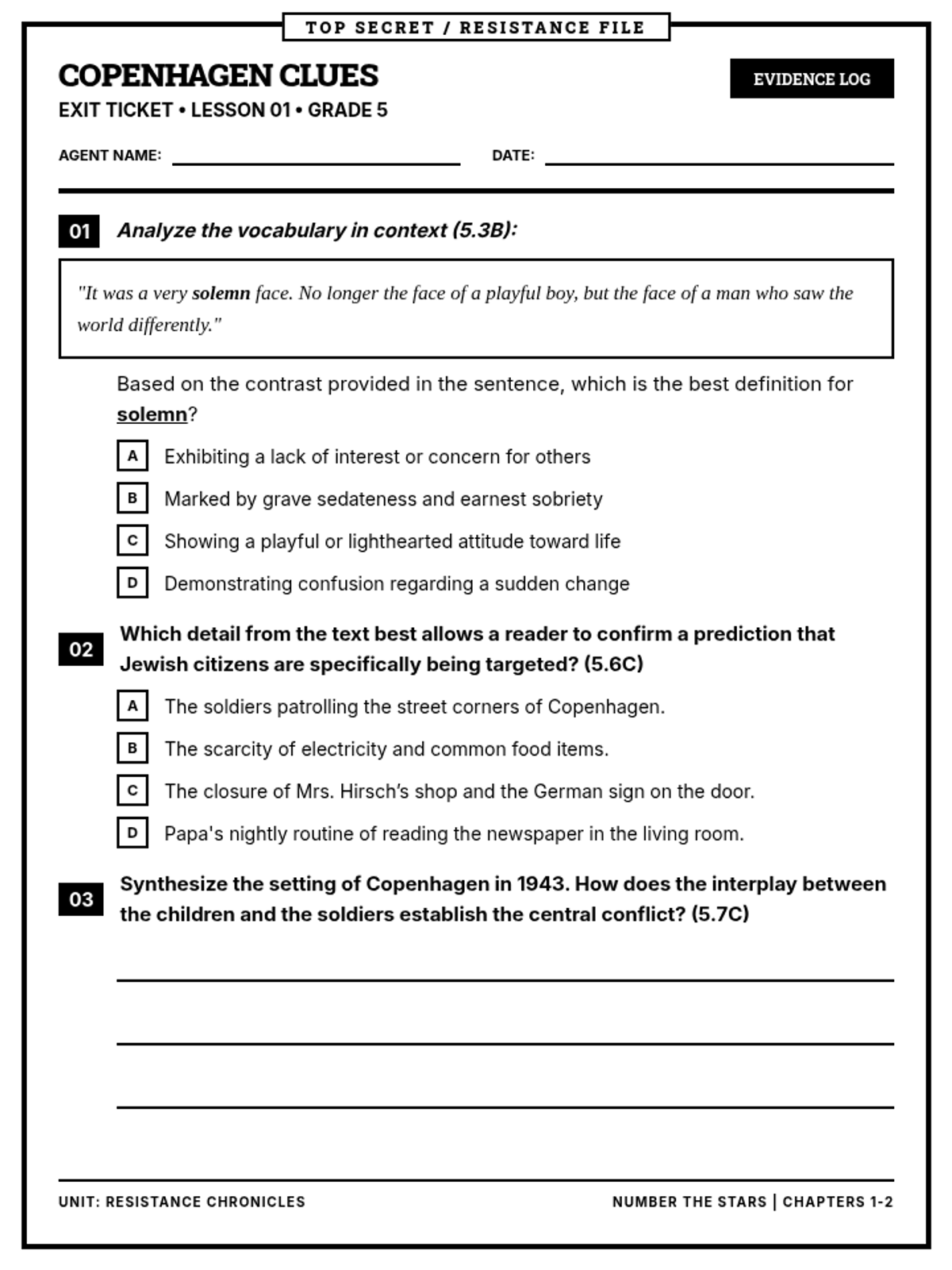
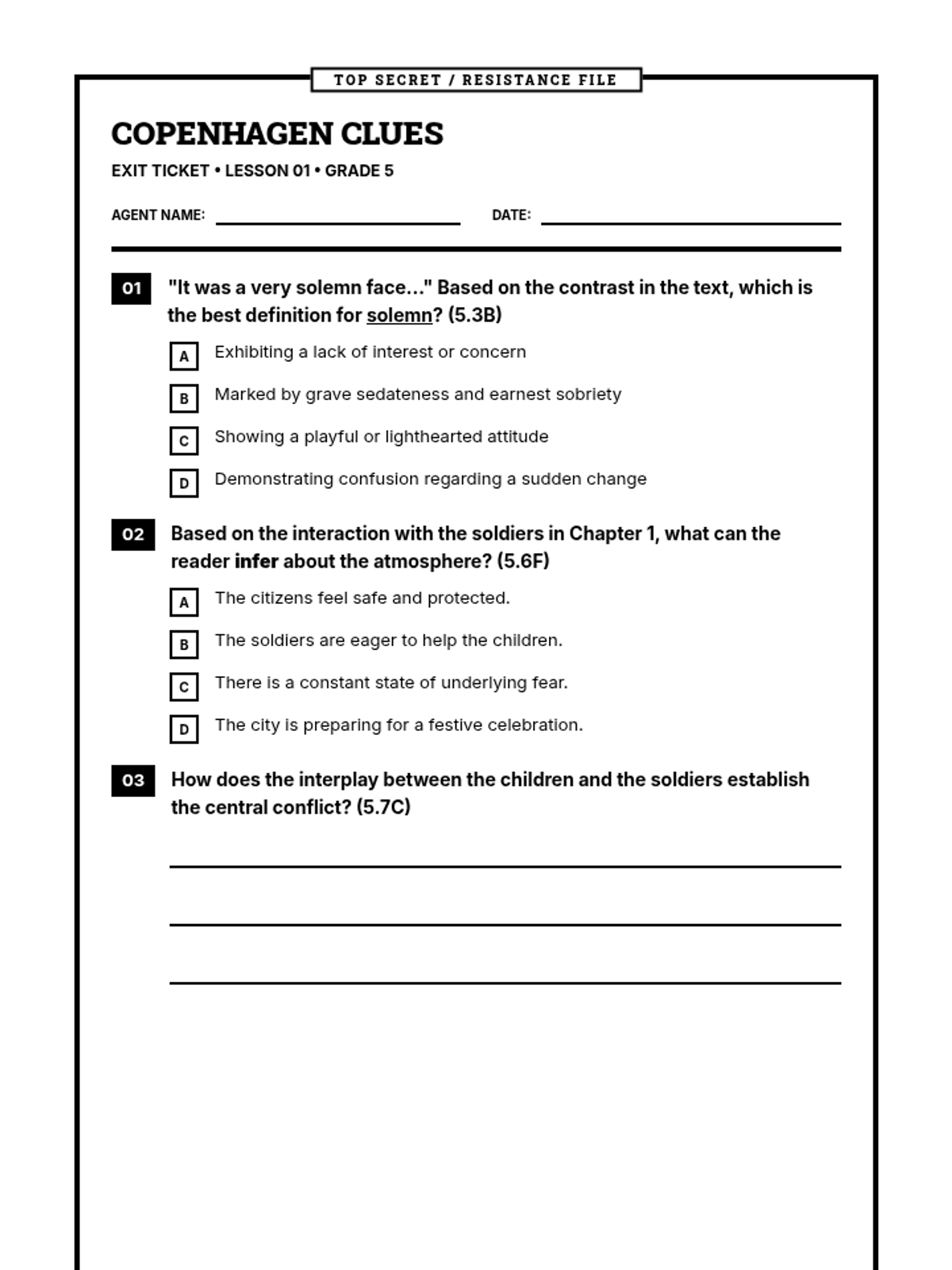
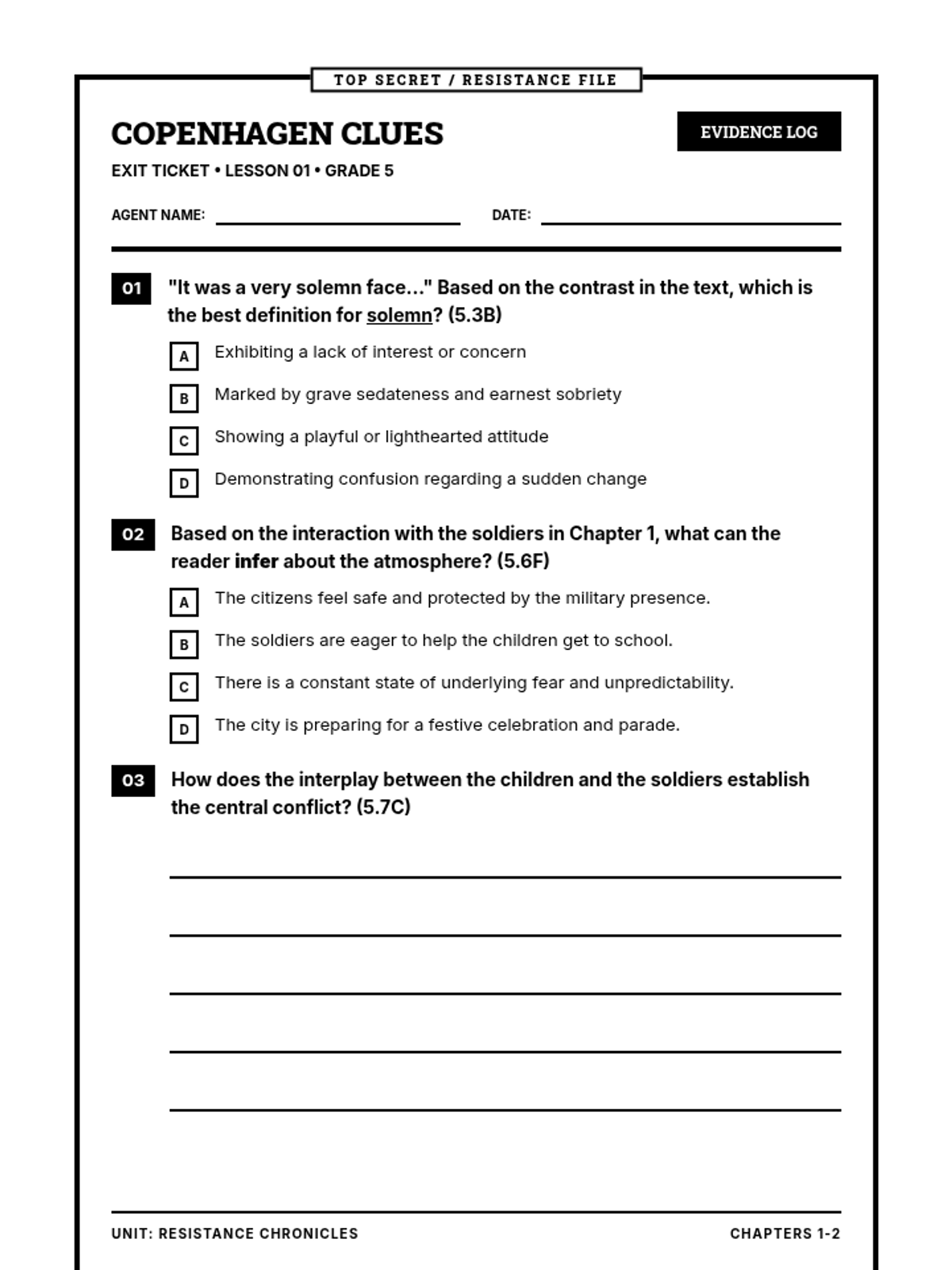
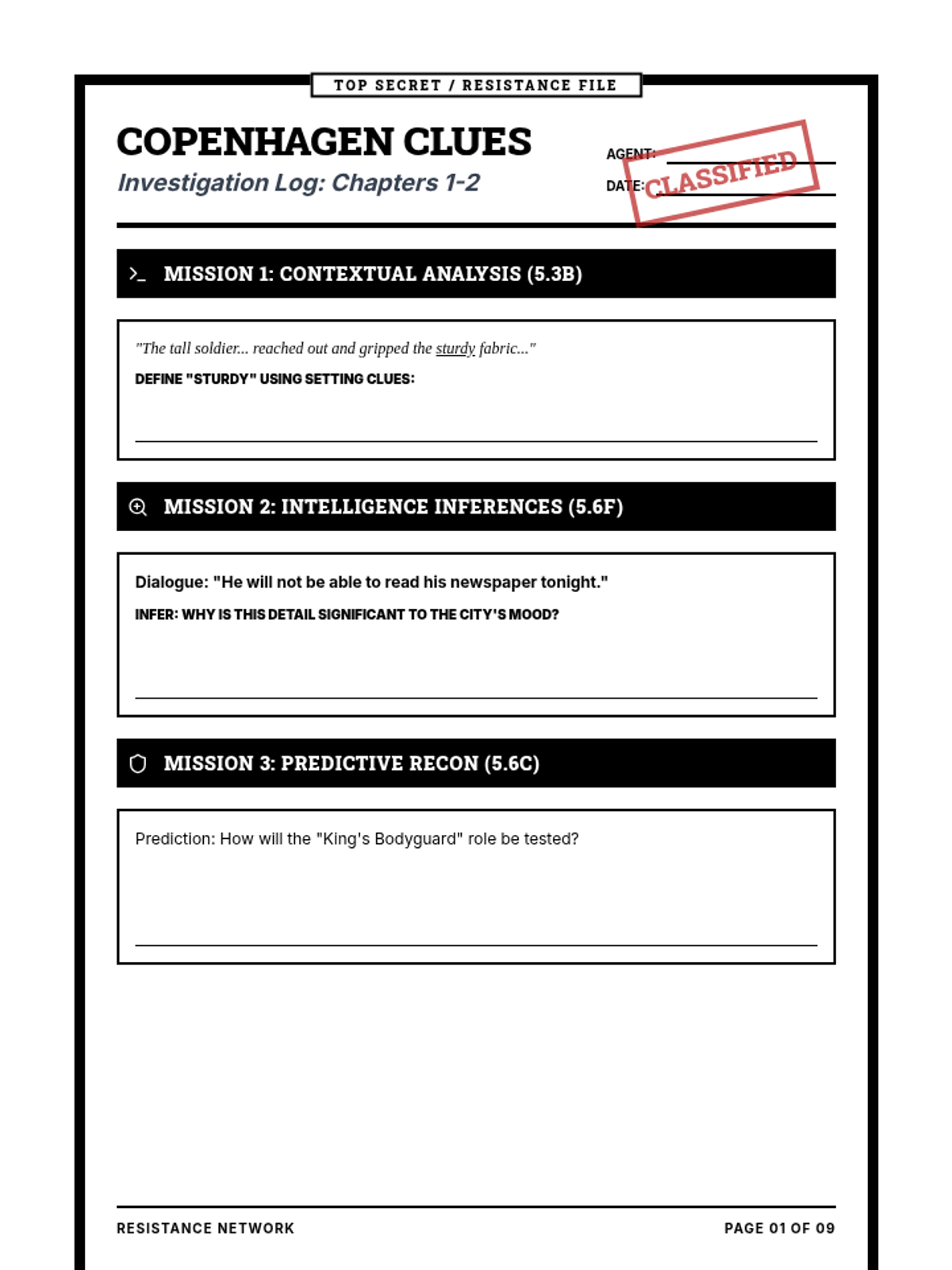
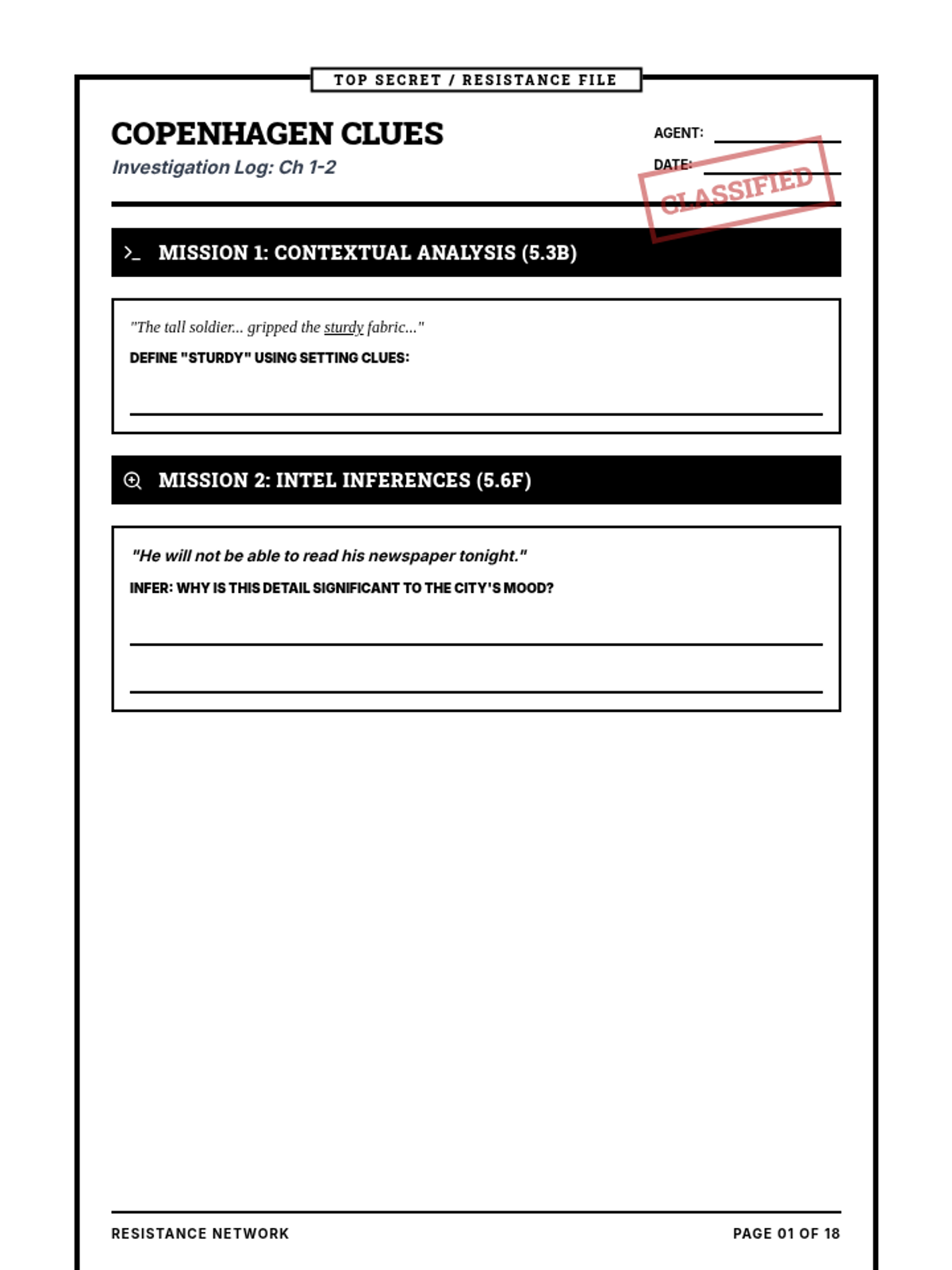
A 9-day novel study for Number the Stars centered on 5th Grade ELAR TEKS, focusing on character development, plot analysis, and historical context through the lens of a Resistance Secret File.
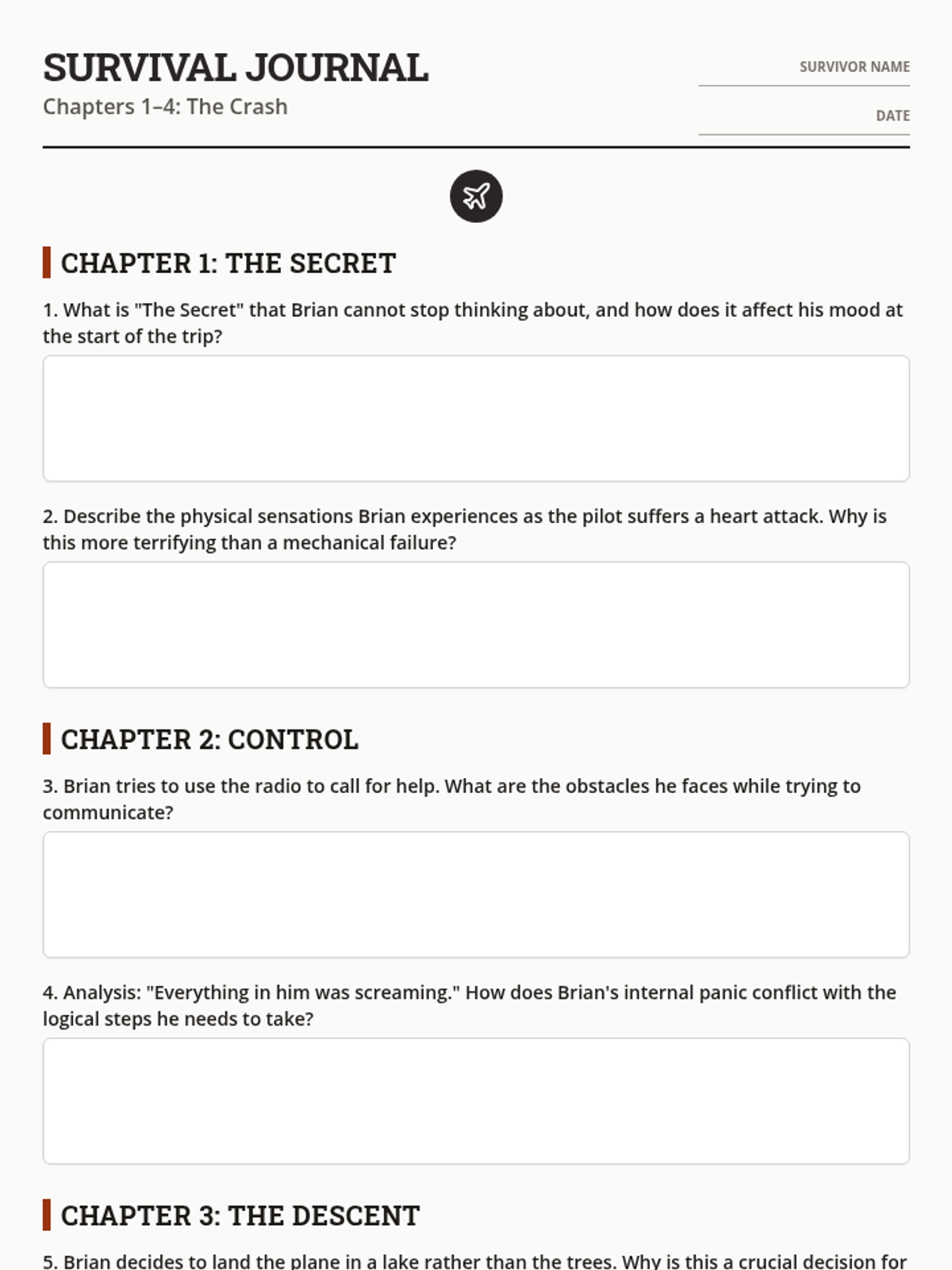
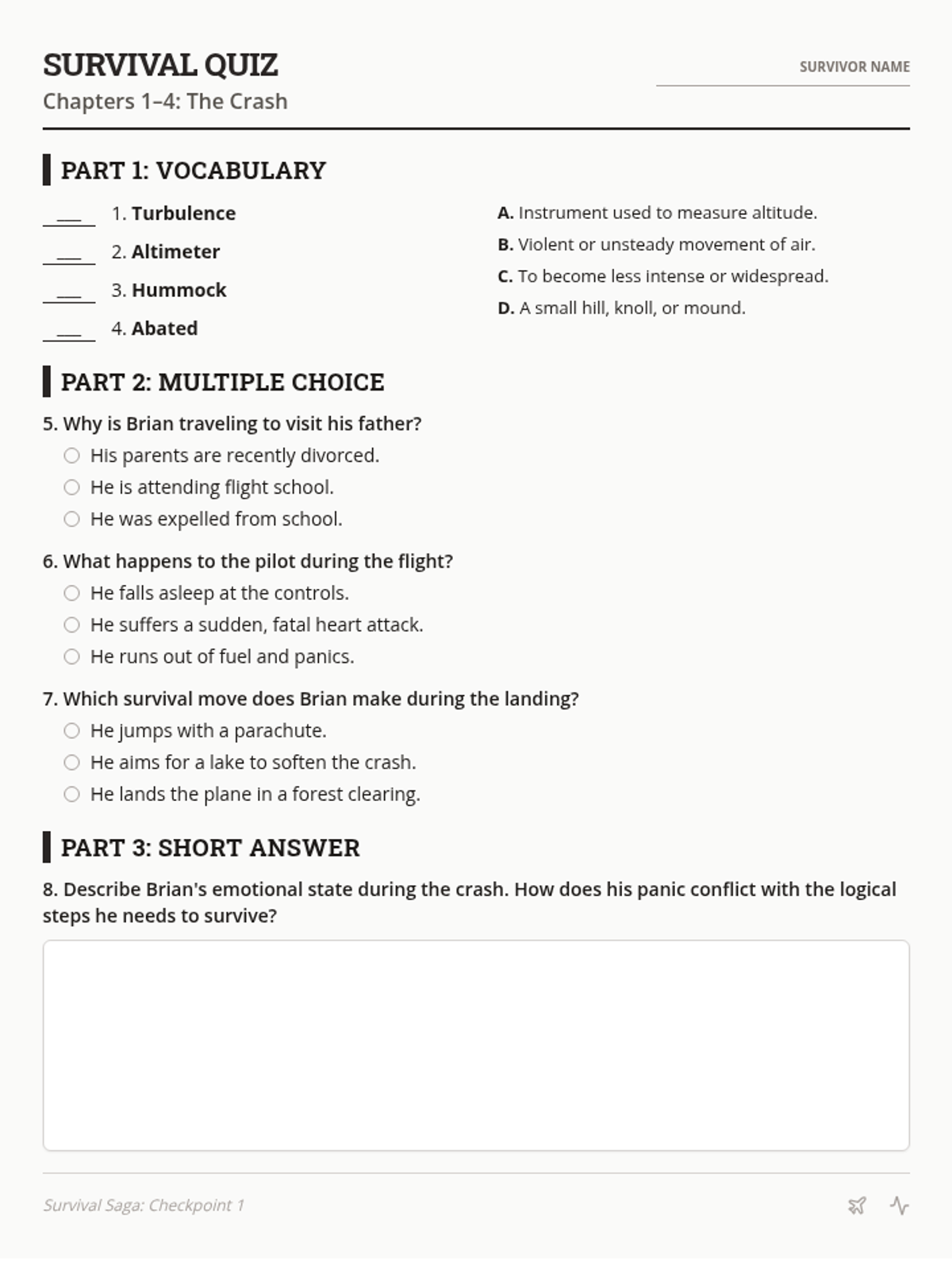
A comprehensive novel study for Gary Paulsen's Hatchet, focusing on Brian Robeson's survival journey. This sequence covers the entire book through five logical chapter groupings, providing recall and analysis questions to deepen student understanding of character development and survival themes.
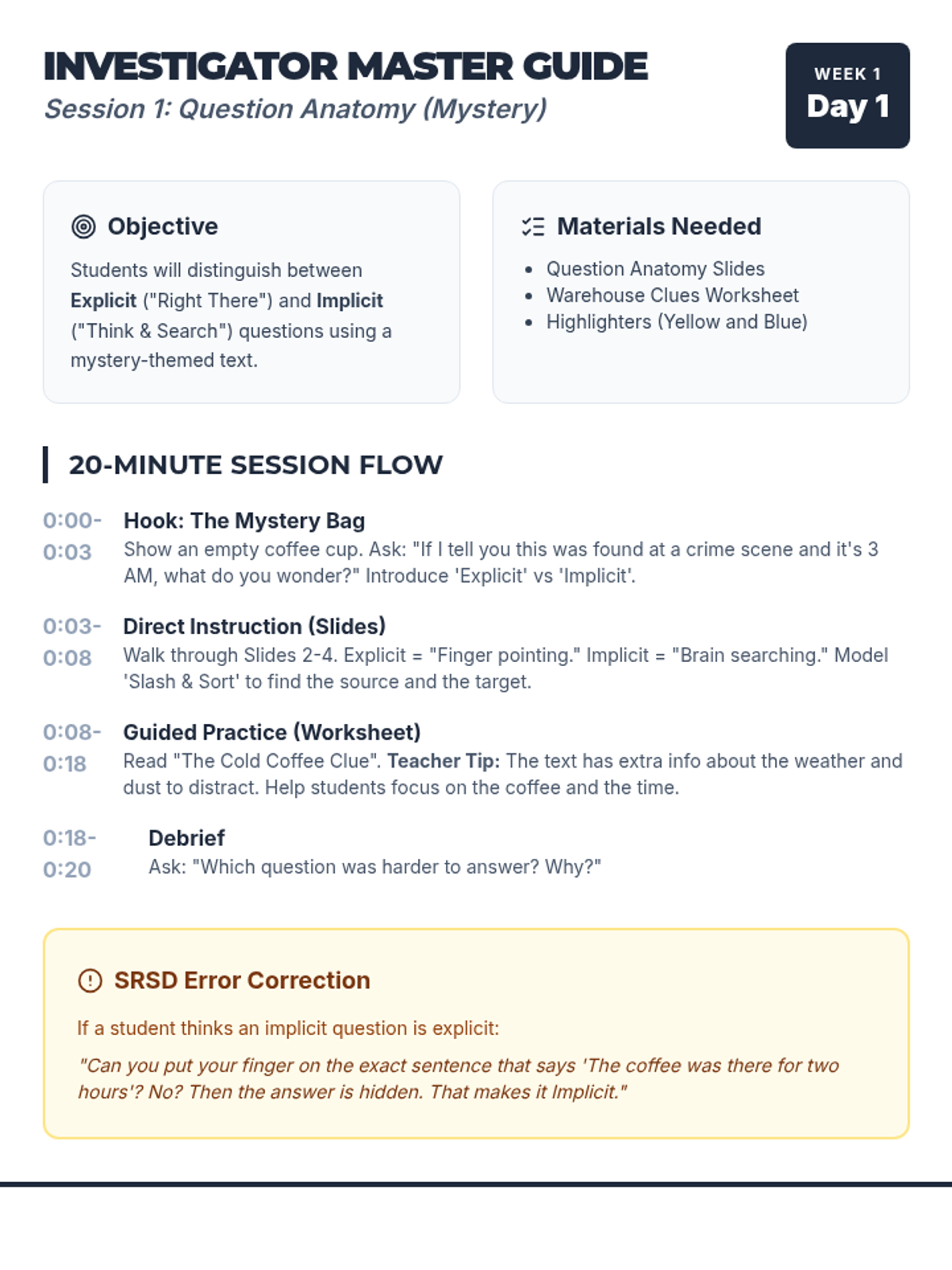
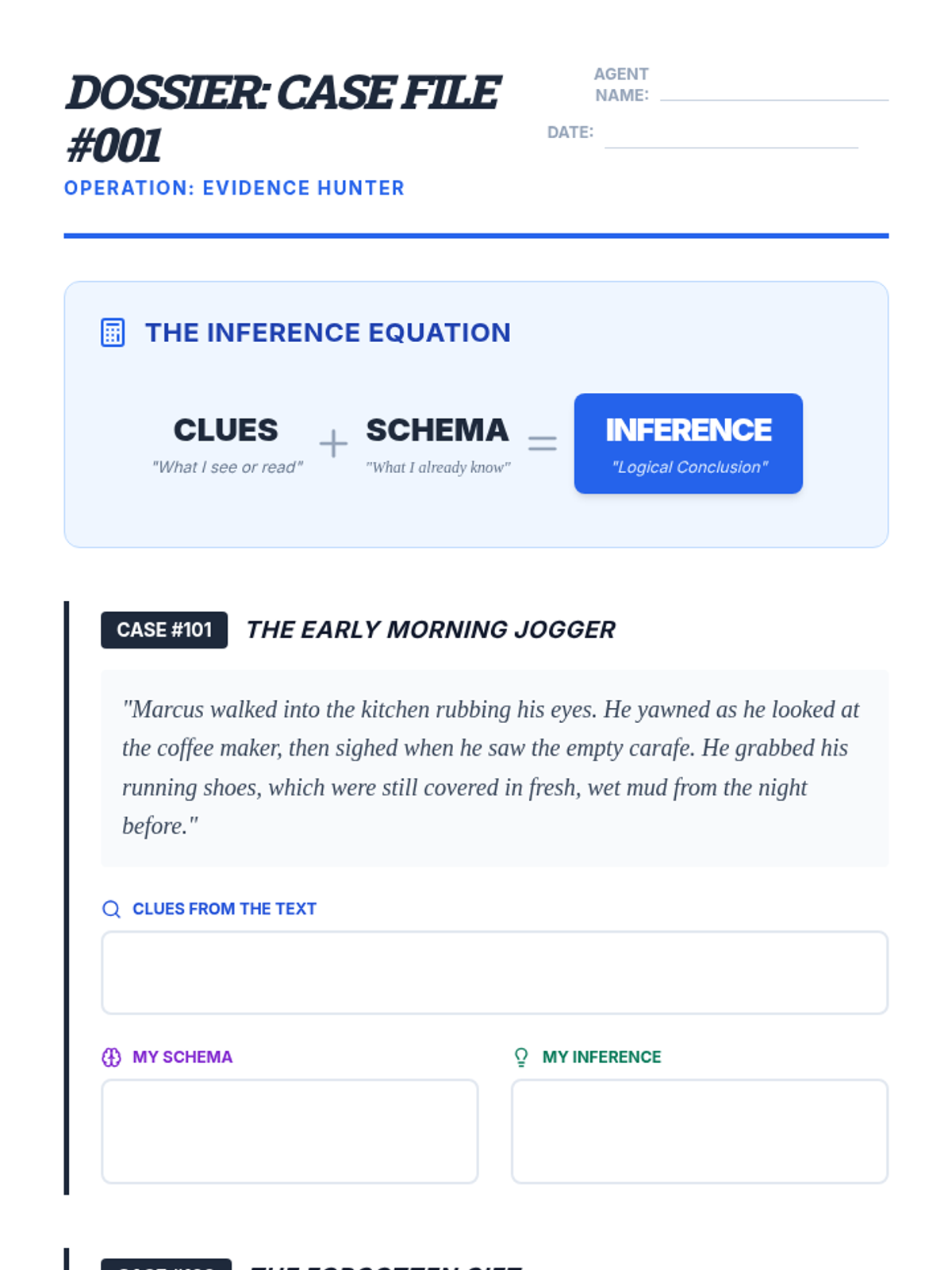
A 6-week reading intervention unit for 5th graders focused on making inferences, analyzing questions, and using text evidence. Themes include mysteries, sports (baseball and basketball), and dragons to engage high-interest readers.
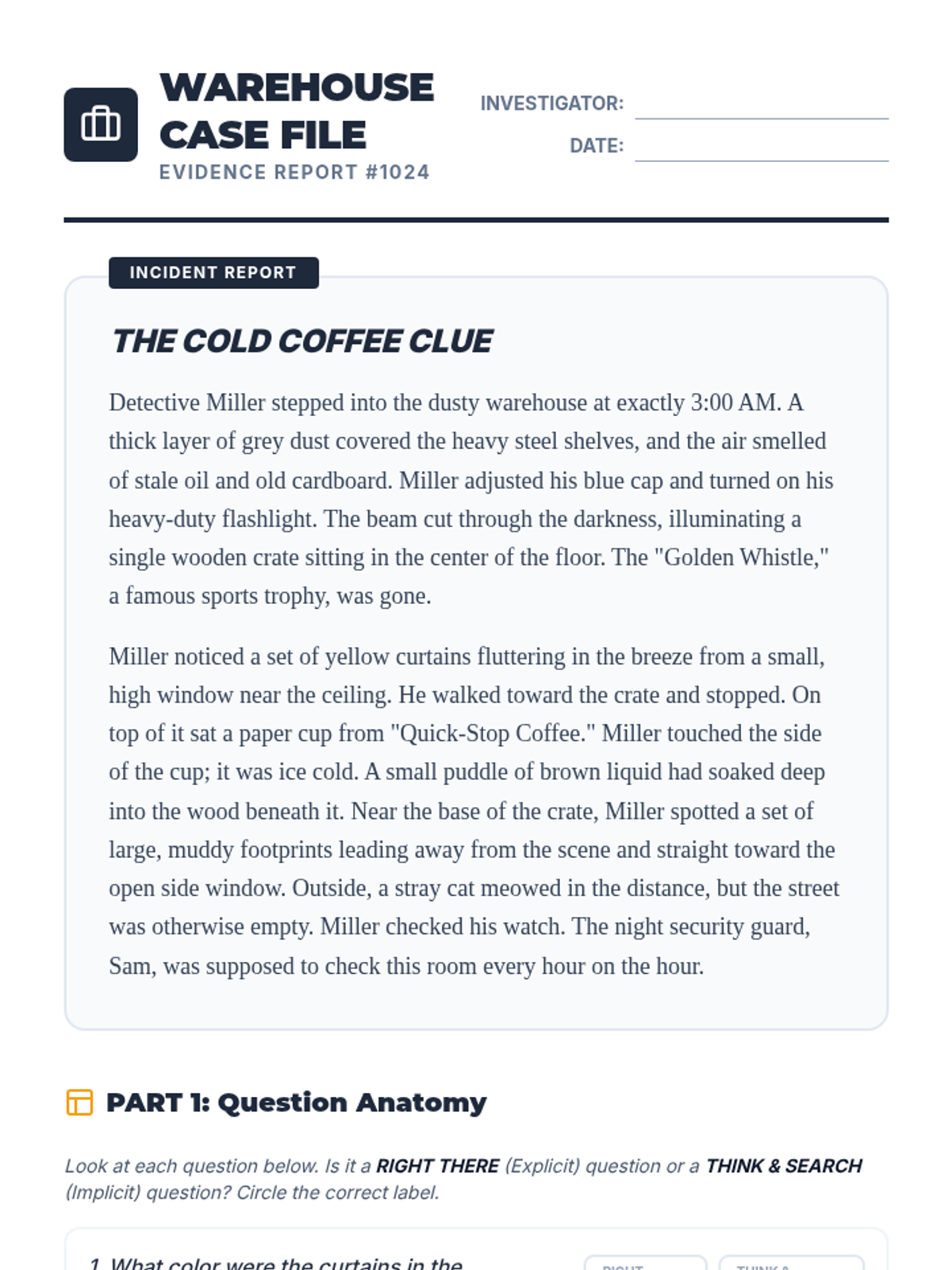
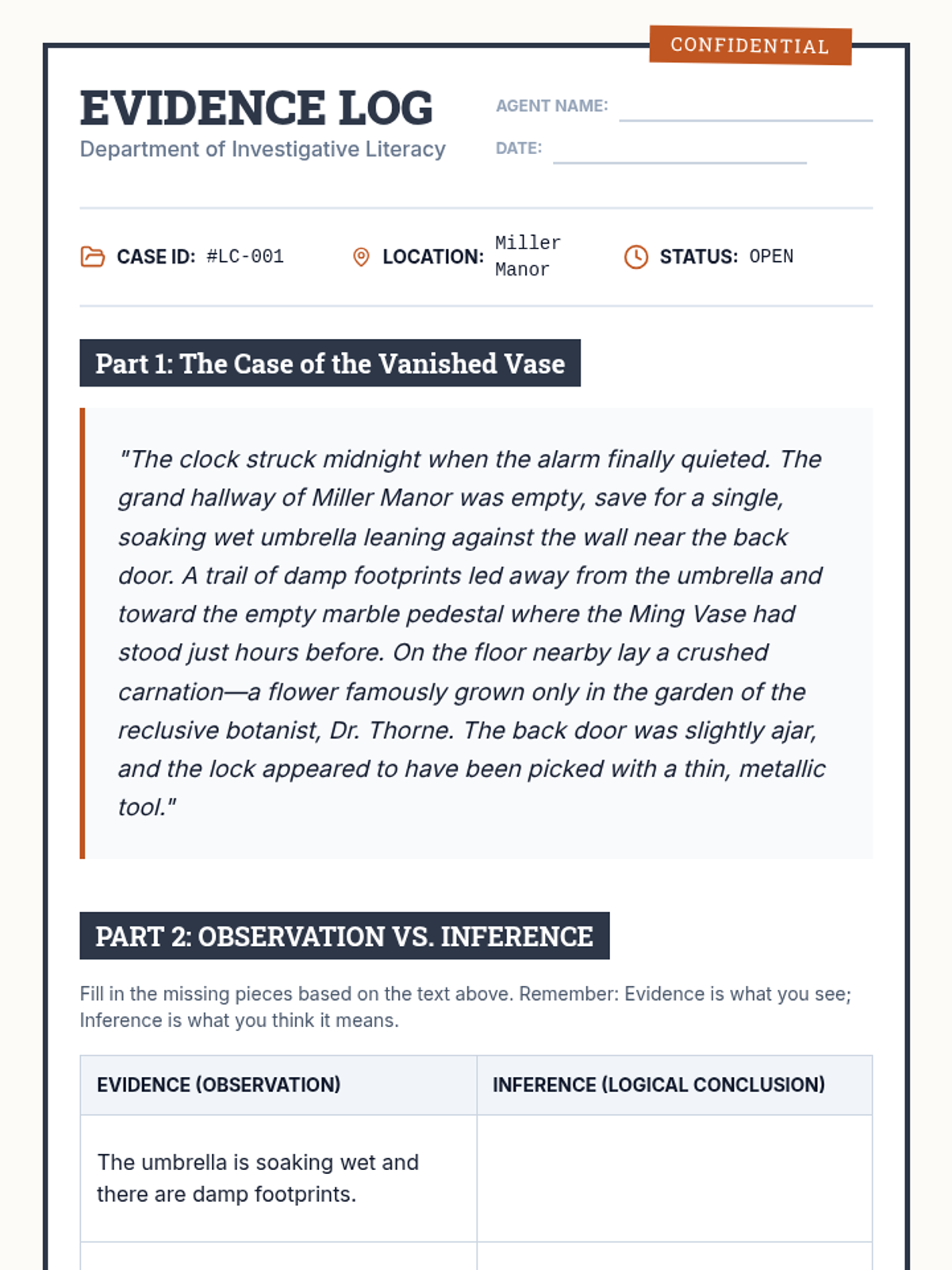
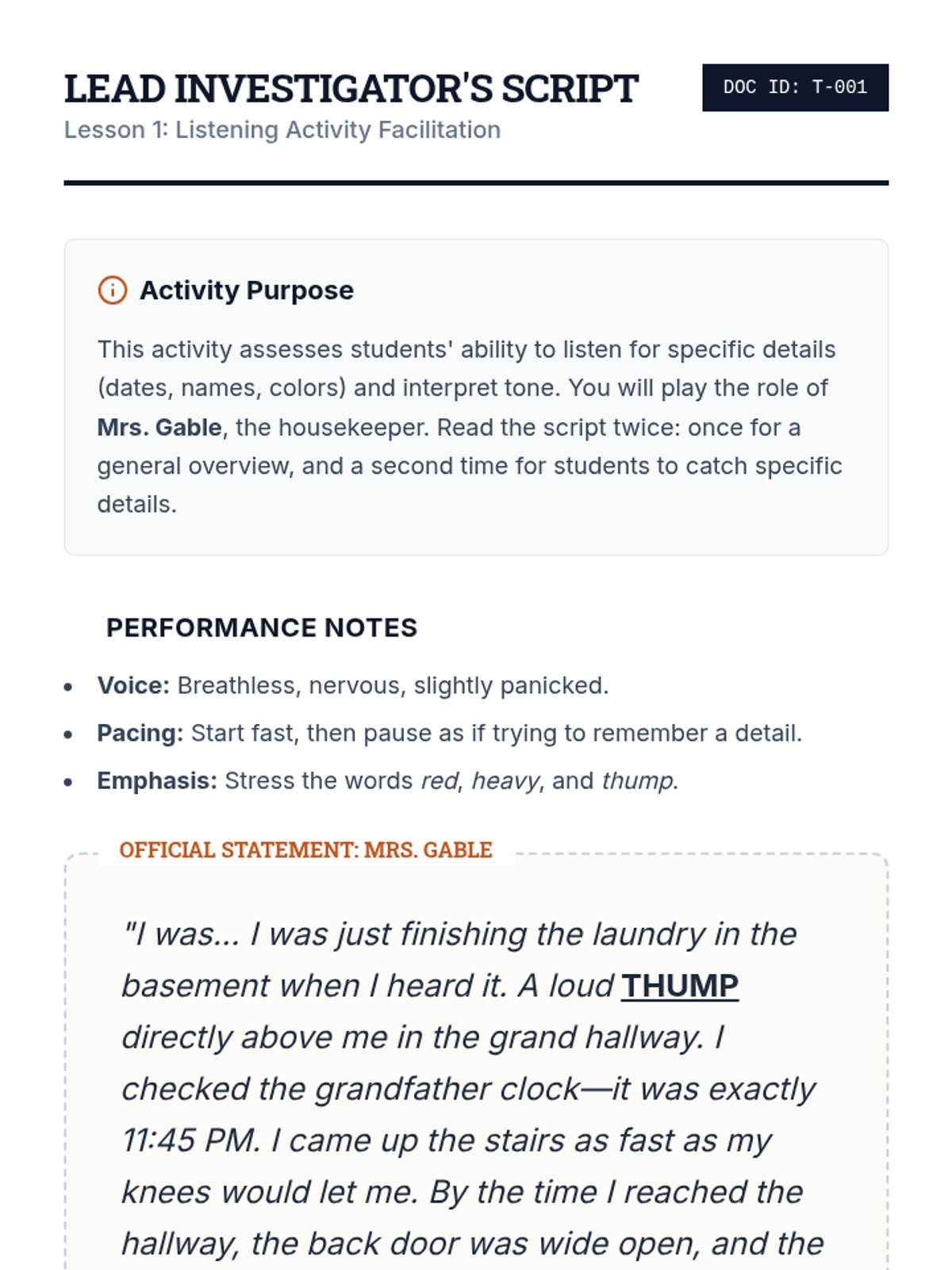
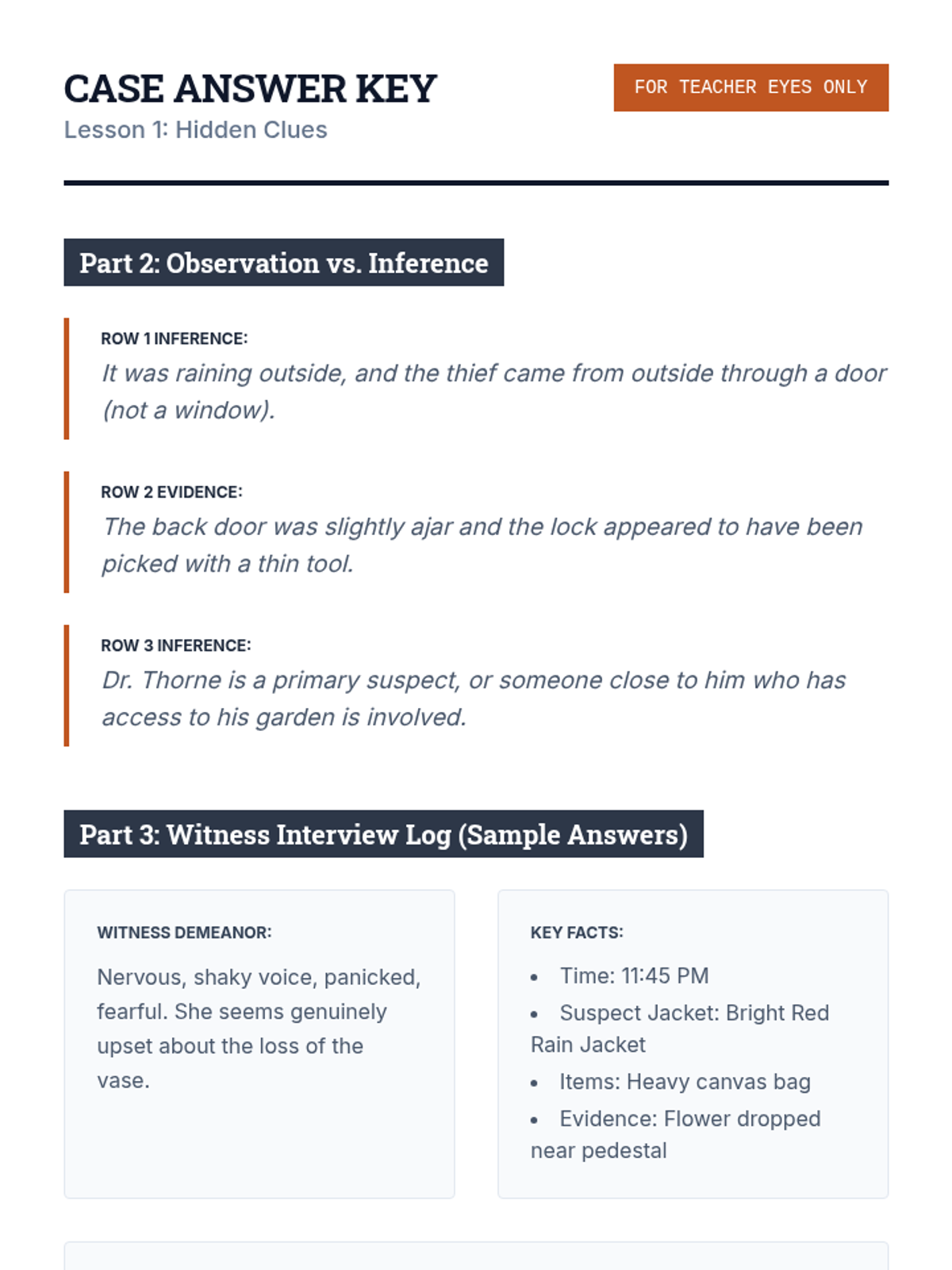
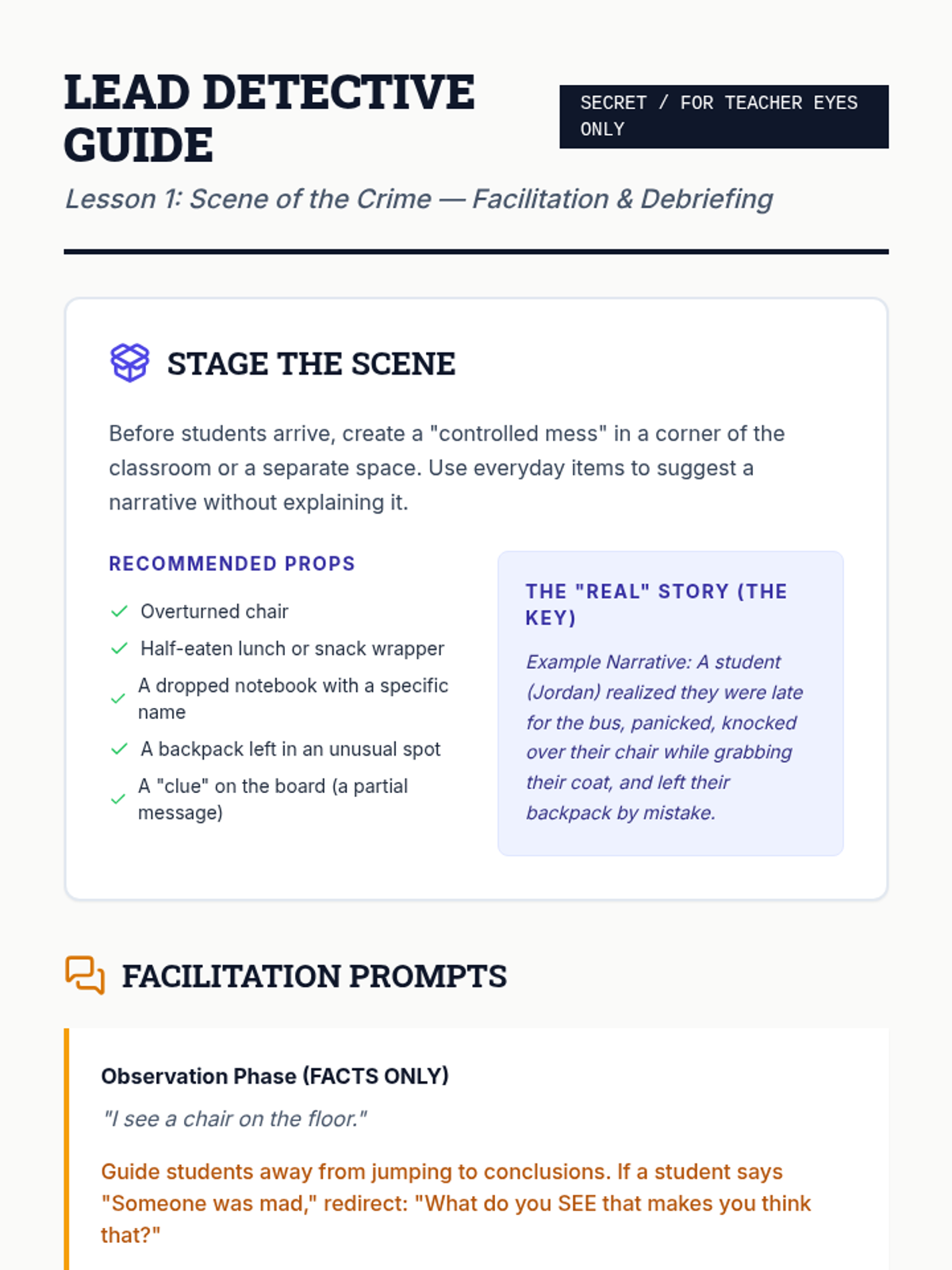
A comprehensive English Language Arts unit that uses a mystery-investigation theme to develop reading, writing, listening, and speaking skills. Students act as detectives to analyze evidence, interview witnesses, and present their final case.
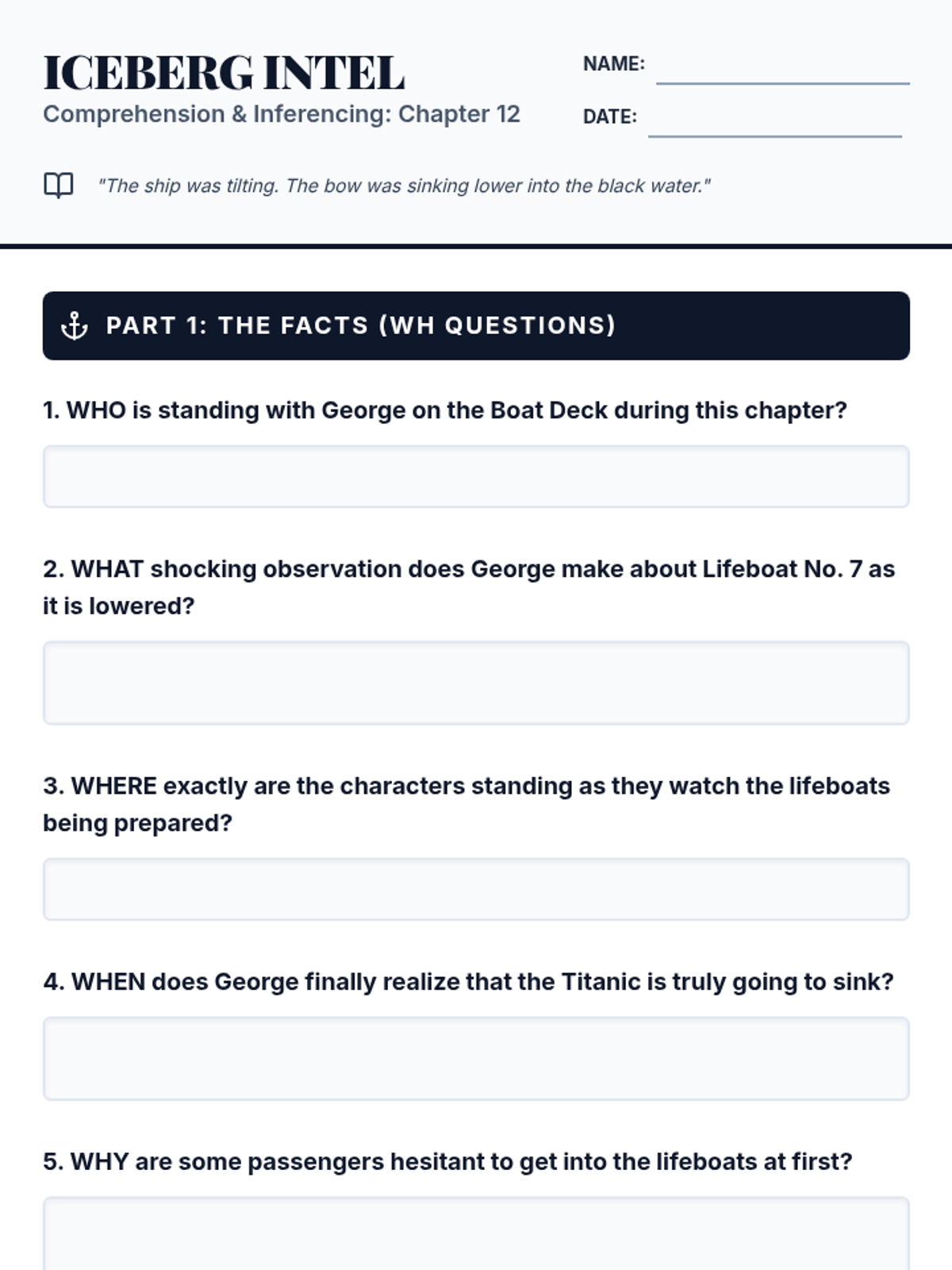
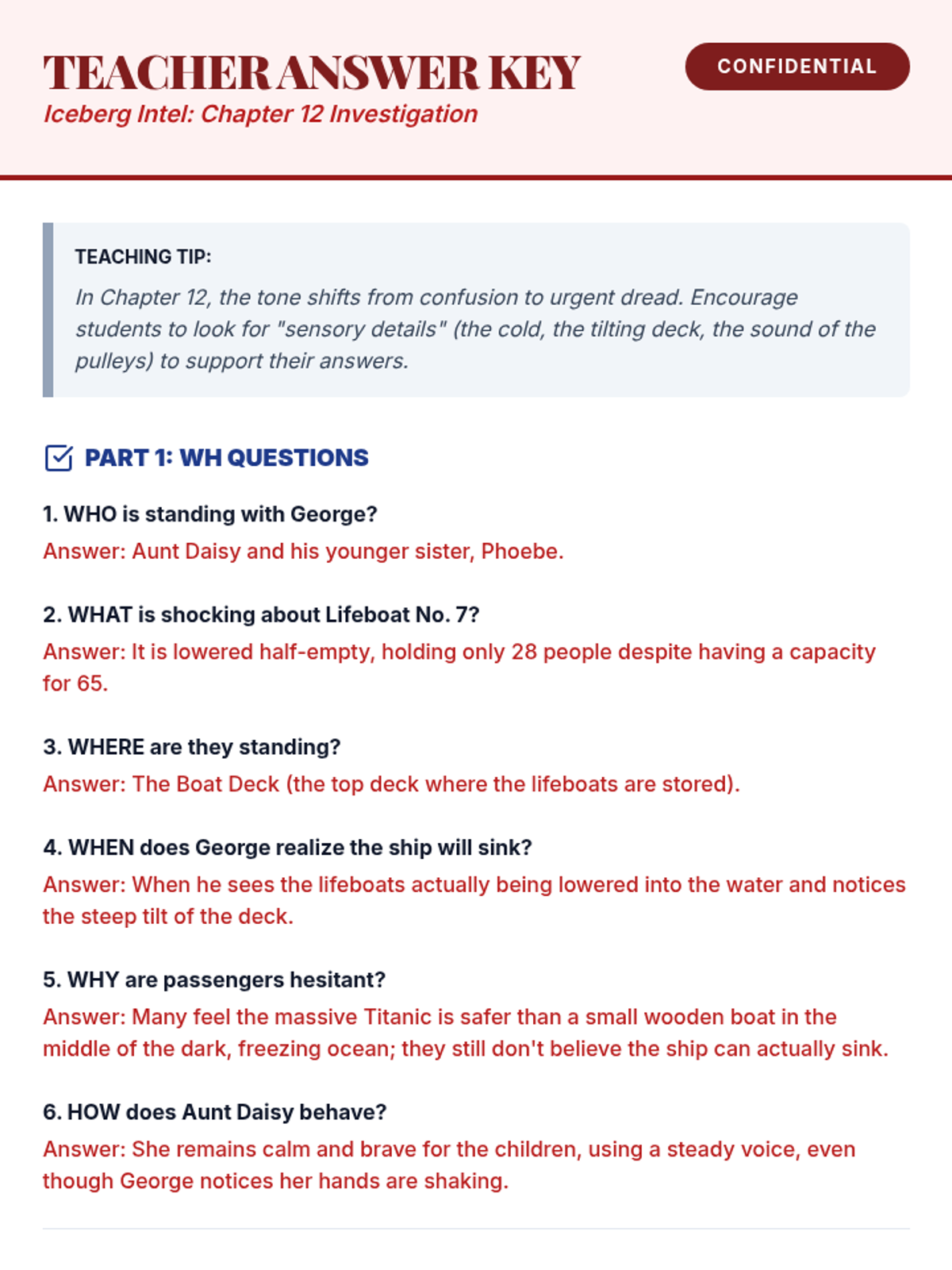
A collection of lessons exploring historical adventures and disasters through popular children's book series like 'I Survived' and 'Magic Tree House'.
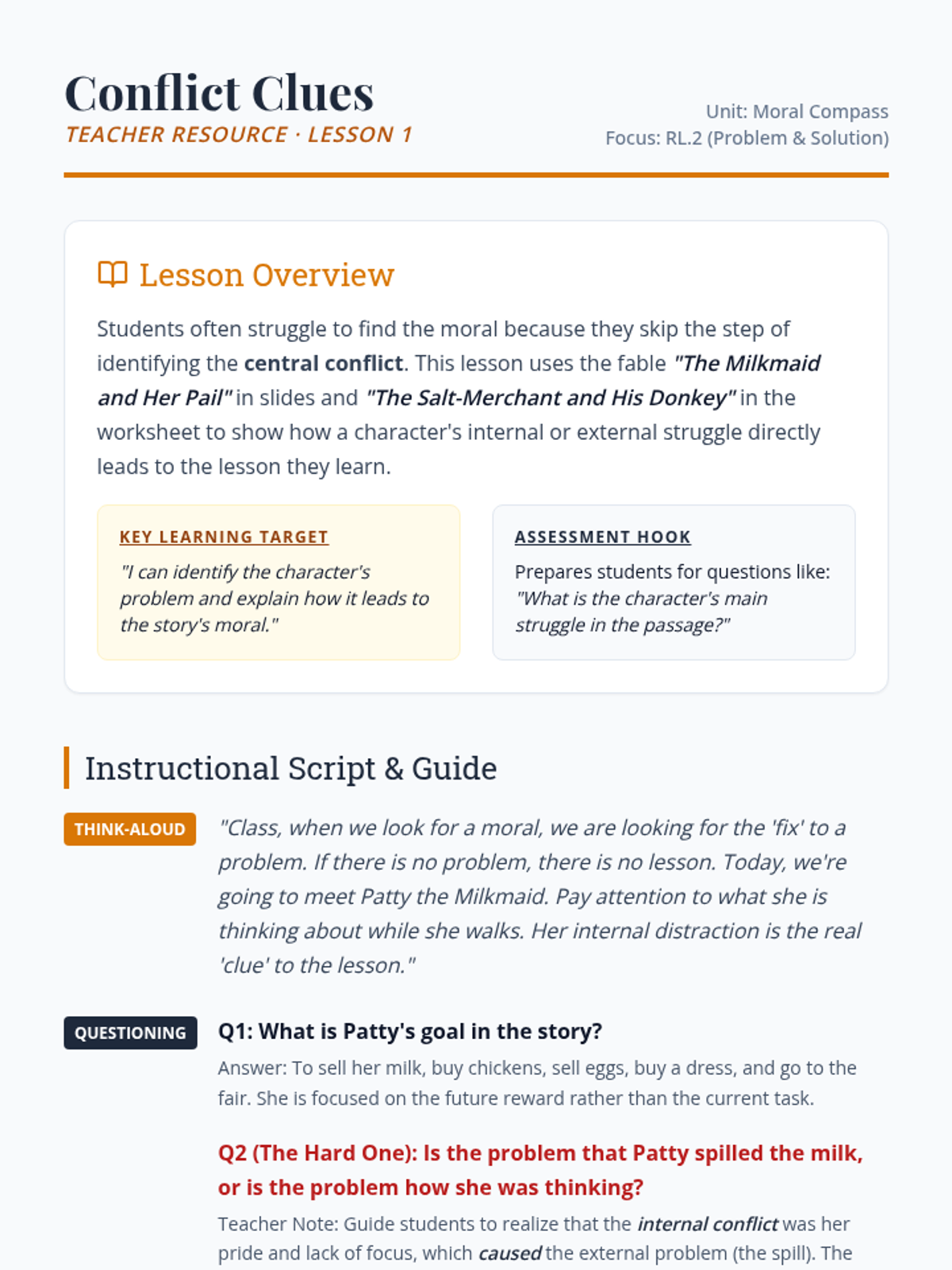
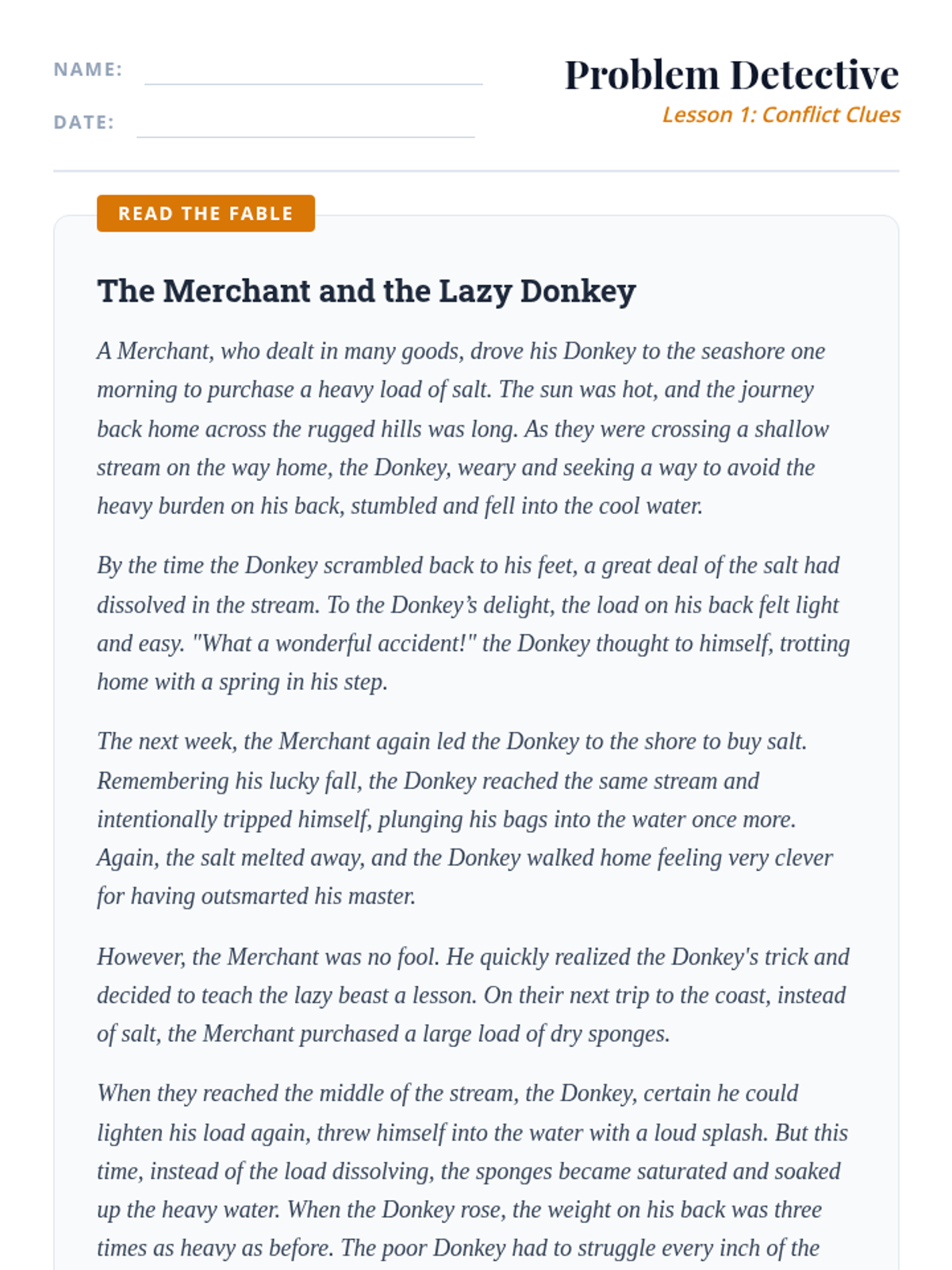
A comprehensive remediation unit designed to master RL.2 through fables and folktales. This sequence targets high-rigor question types, including Part A/Part B evidence questions, character motivation analysis, and proverb-based moral identification.
A multi-day literacy unit that transforms students into 'Information Detectives' to master complex comprehension skills like making inferences, distinguishing vital details, and identifying key ideas.
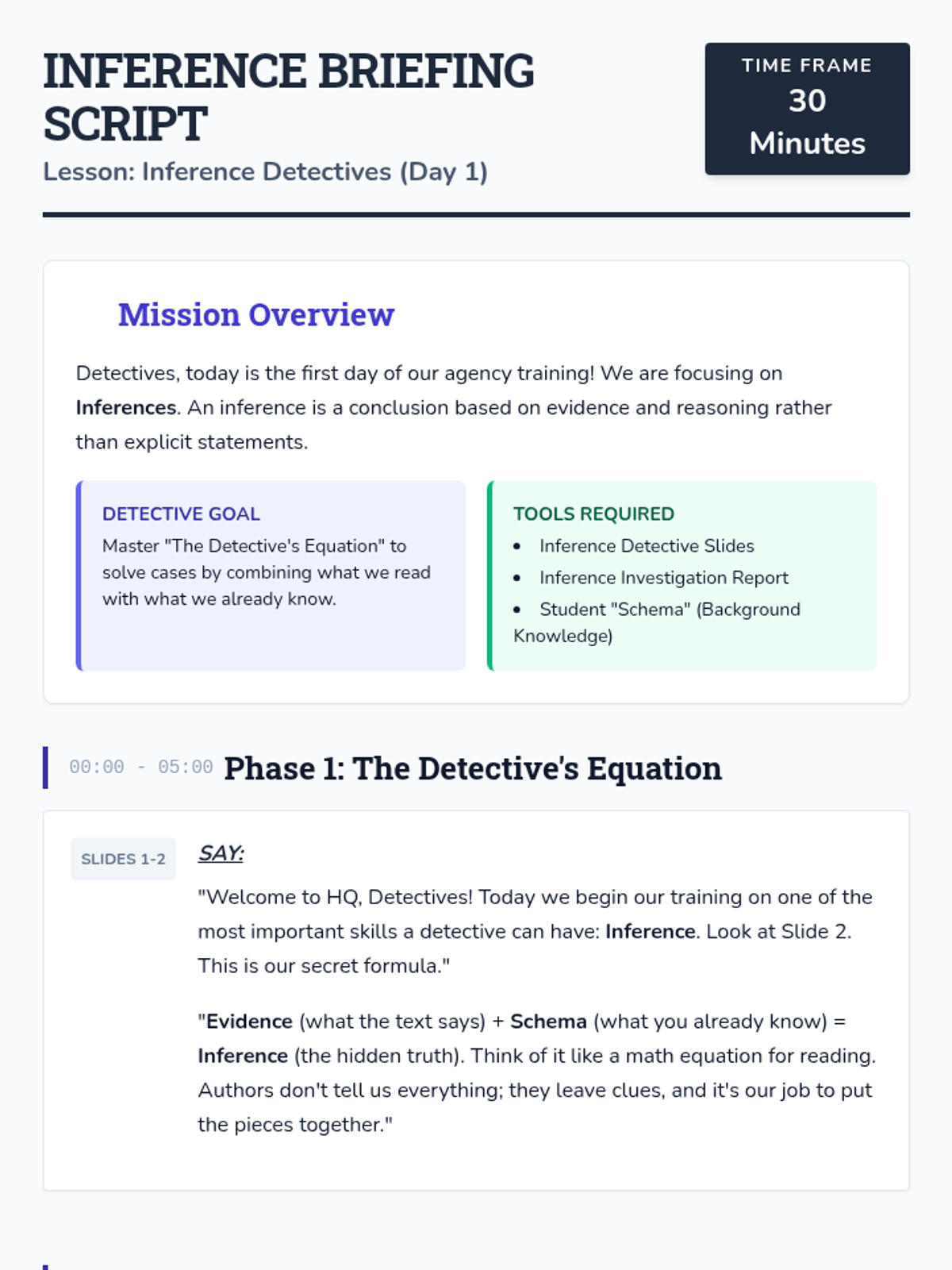
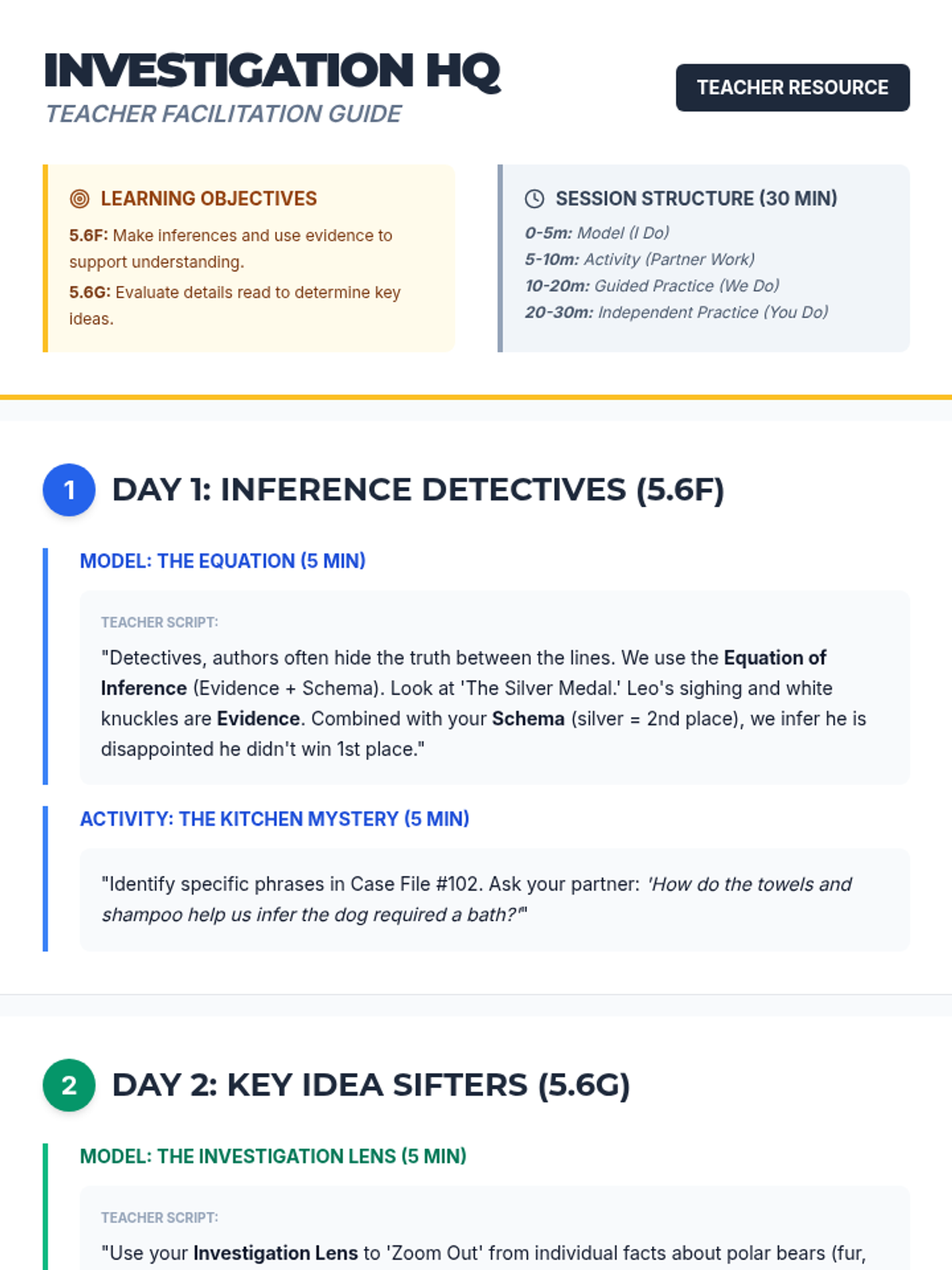
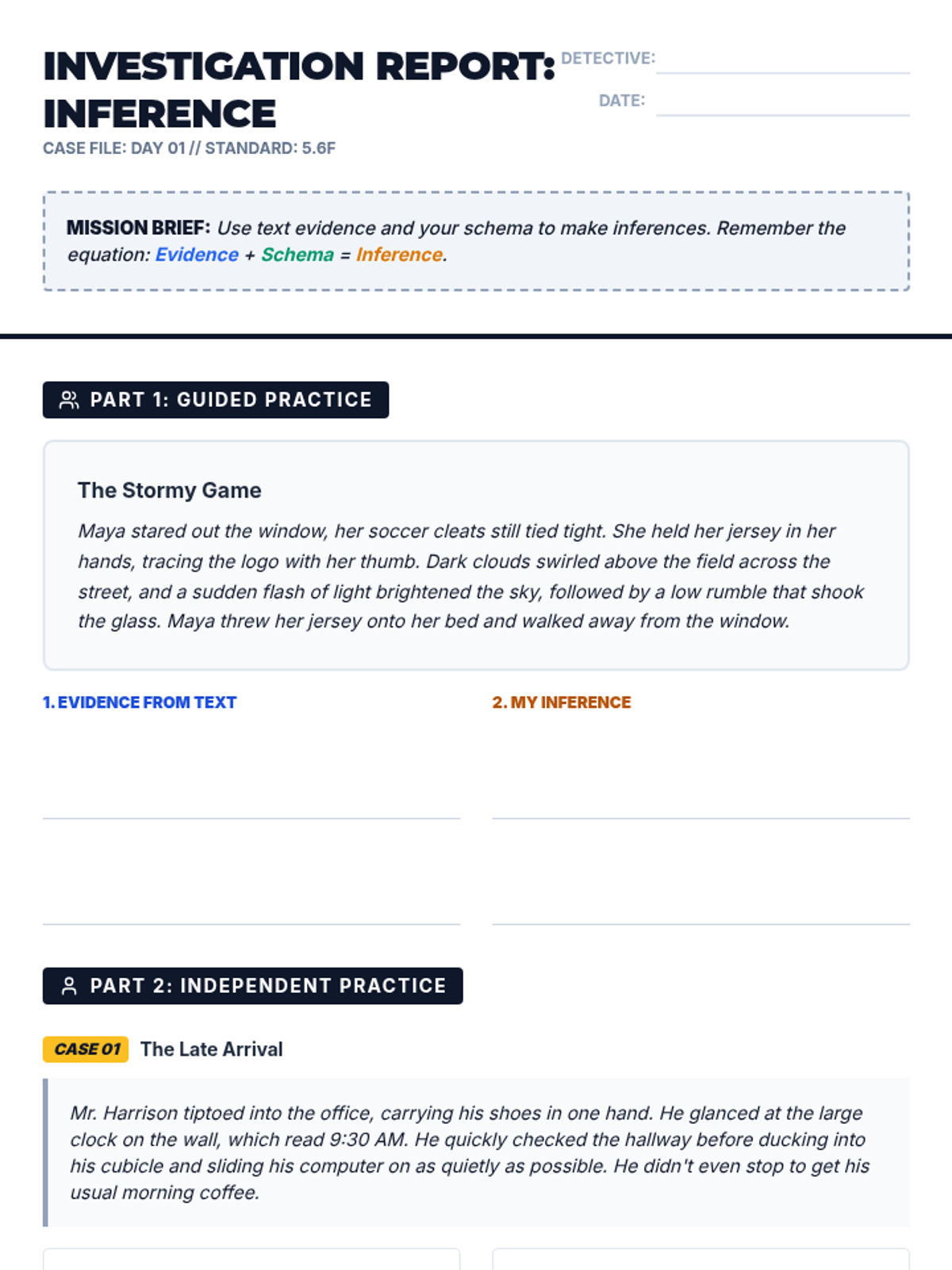
A 4-day intensive reteach sequence focusing on making inferences (5.6F) and evaluating key ideas (5.6G) through a detective-themed 'Investigation HQ' approach. Students will use evidence and critical details to solve textual mysteries and identify central themes.
A forensic-themed reading comprehension unit where students act as investigators to master predictions and inferences. Through case studies and evidence tracking, students learn to bridge literal text with deep narrative meaning.
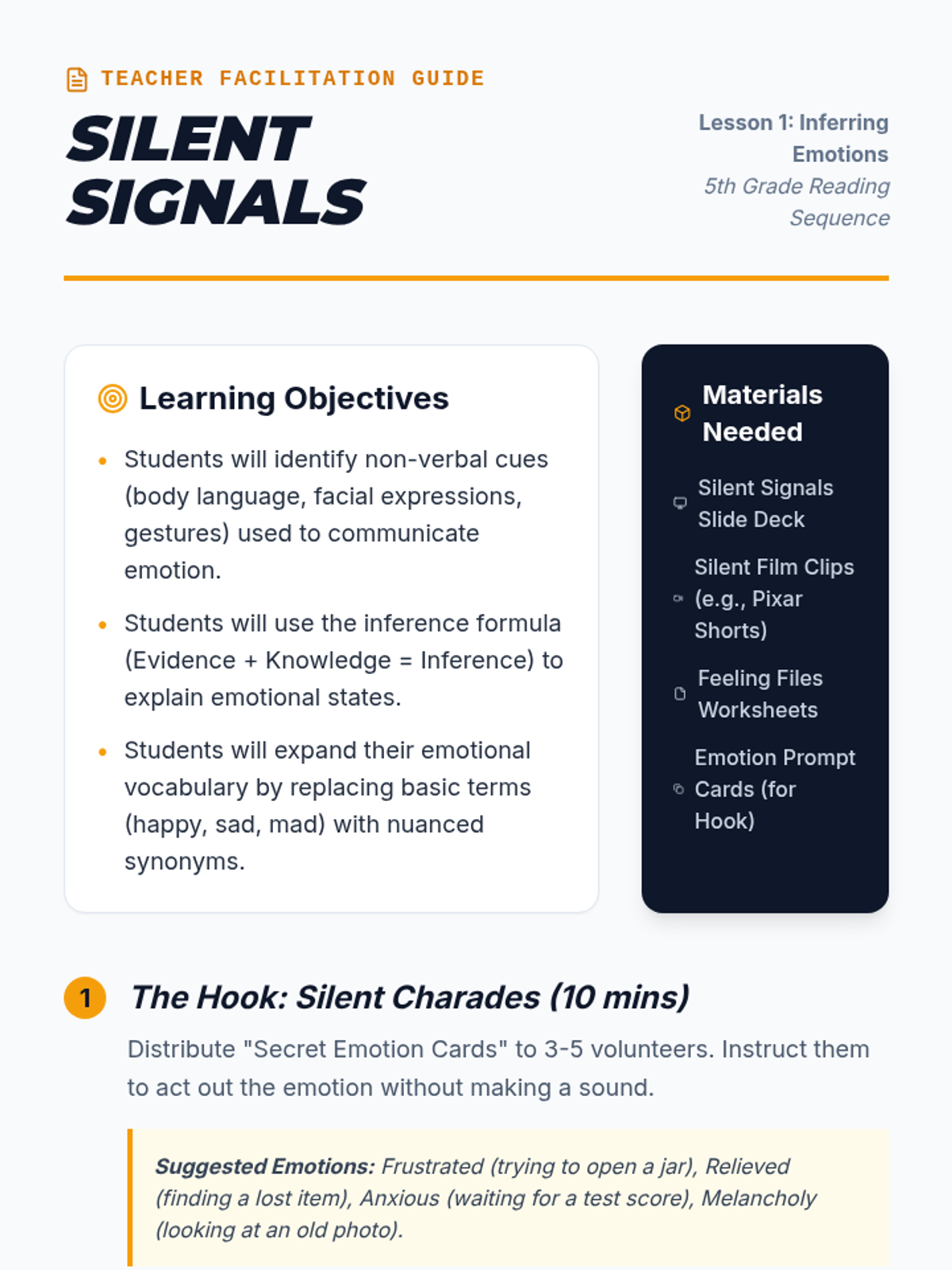
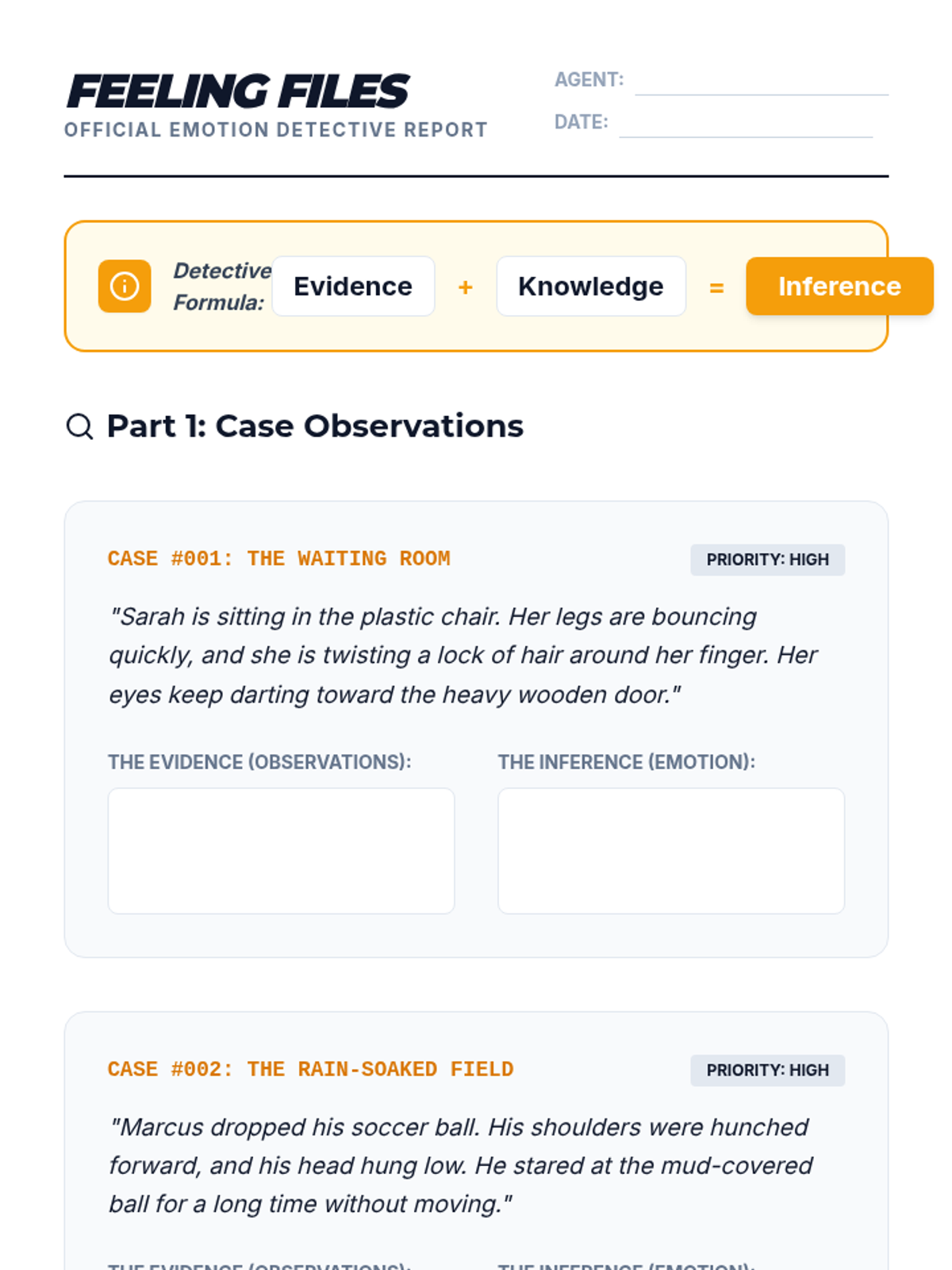
A 5th-grade sequence focused on building empathy and perspective-taking through reading inferences. Students progress from decoding non-verbal cues to predicting character actions and writing creatively from a character's perspective.
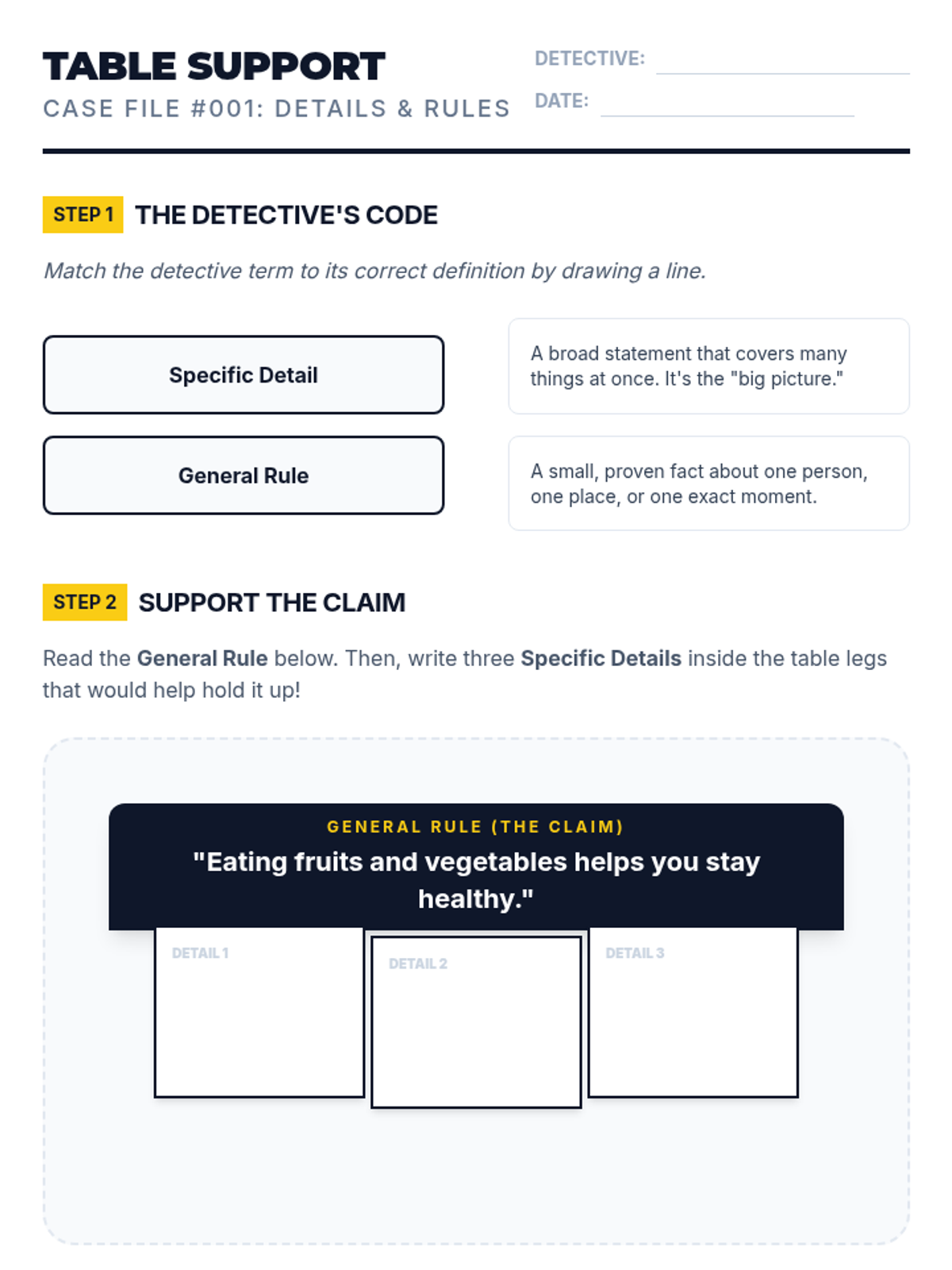
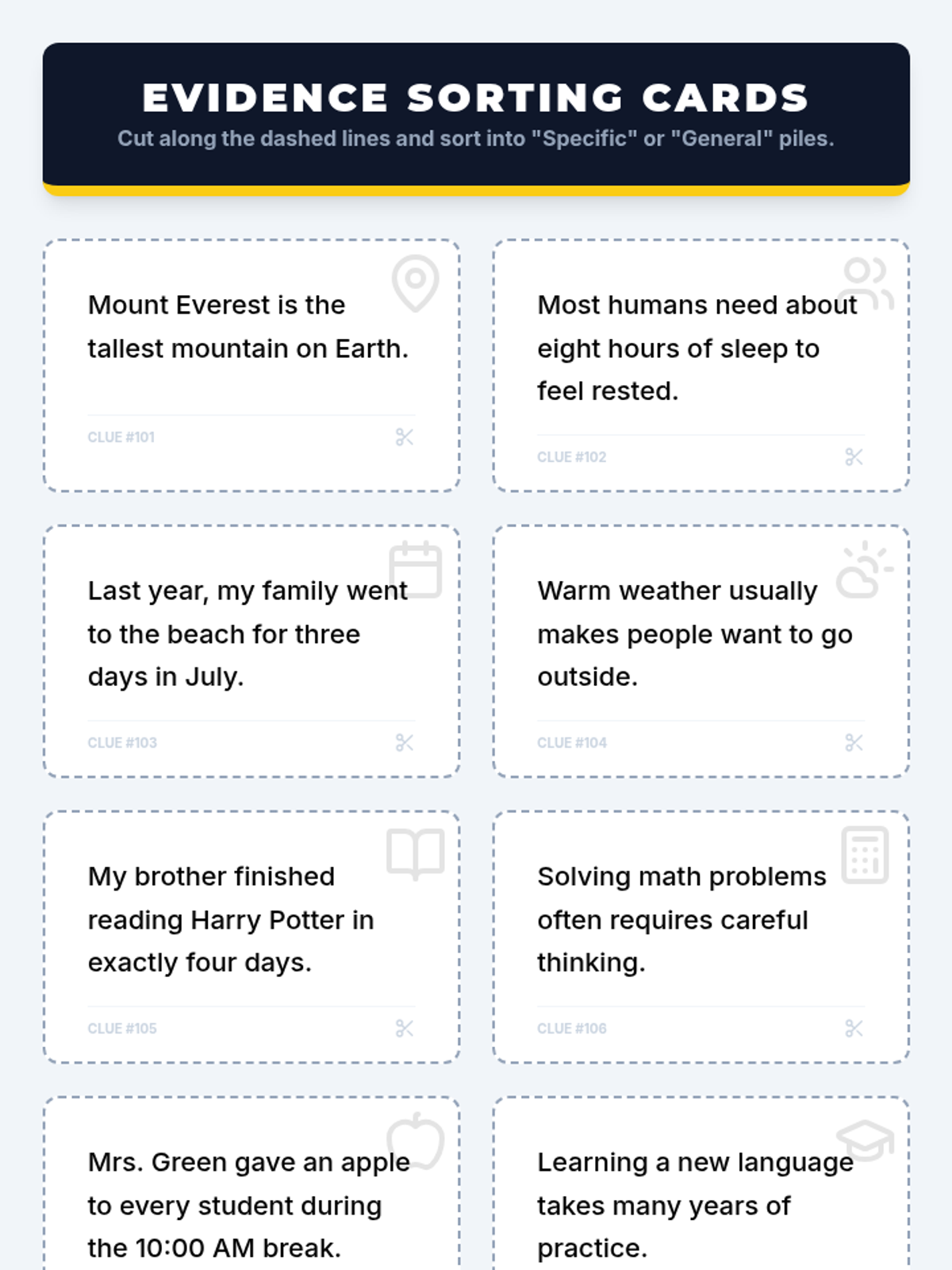
A 4th-grade ELA workshop focusing on inductive reasoning, teaching students to distinguish between strong evidence-based claims and weak overgeneralizations using a 'Pattern Detectives' theme.
A fifth-grade literacy sequence that transforms students into 'Theme Detectives,' moving from basic inference skills to defending abstract thematic statements using textual evidence and character analysis.
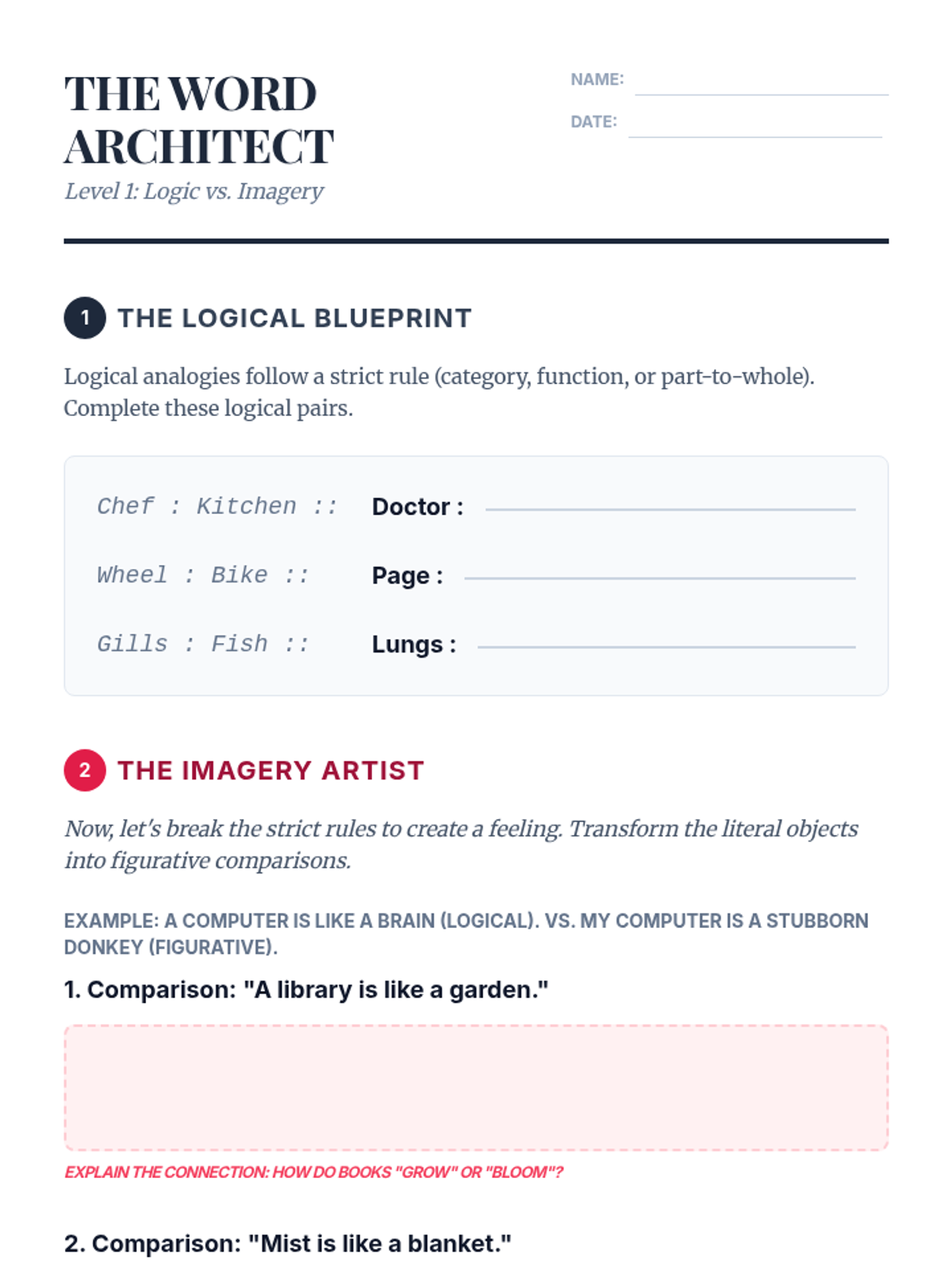
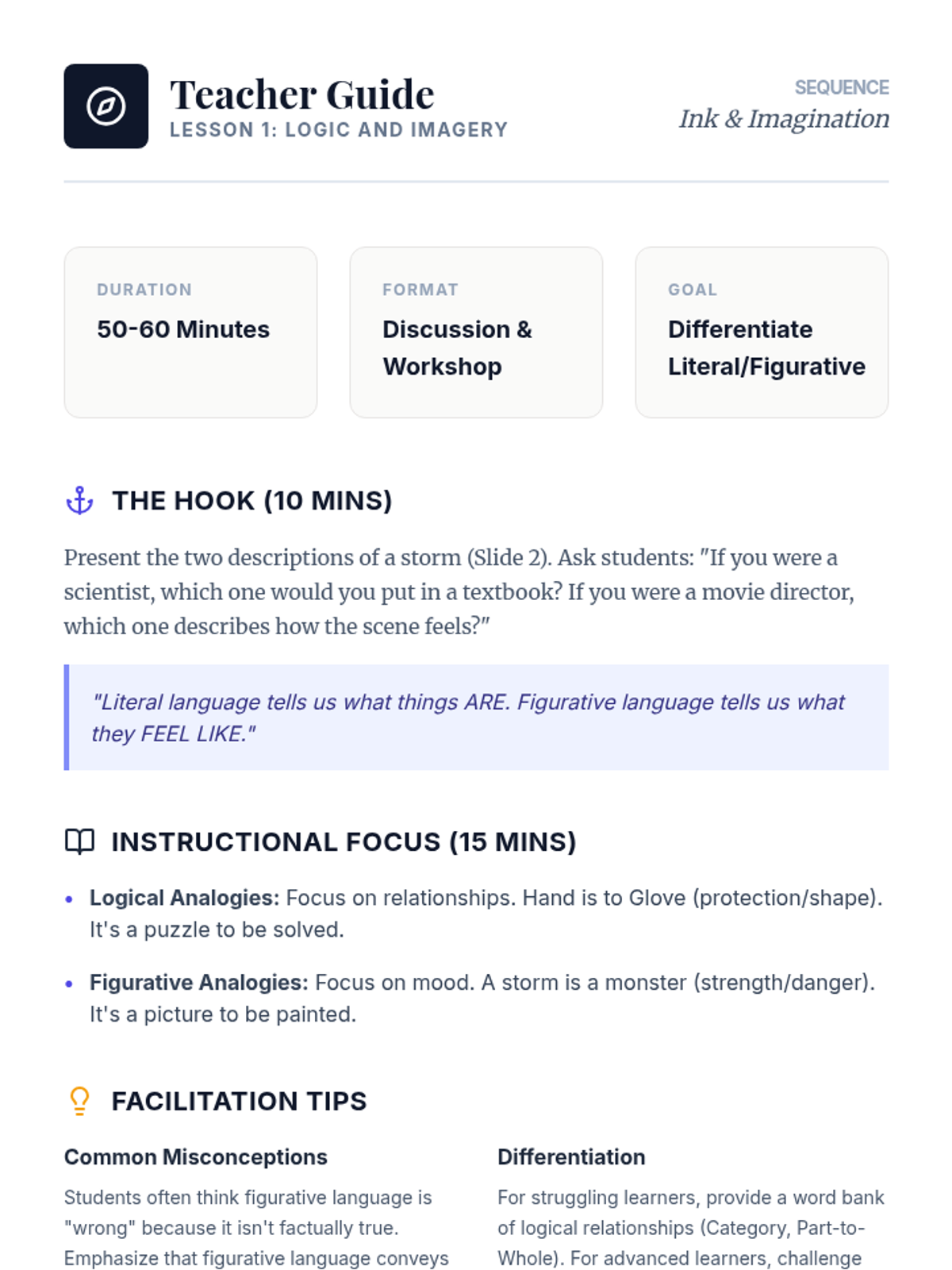
This 5th-grade sequence explores the transition from logical analogies to creative figurative comparisons (similes, metaphors, and extended analogies). Students will learn to use the logic of analogies to enhance their descriptive writing, character development, and setting descriptions.
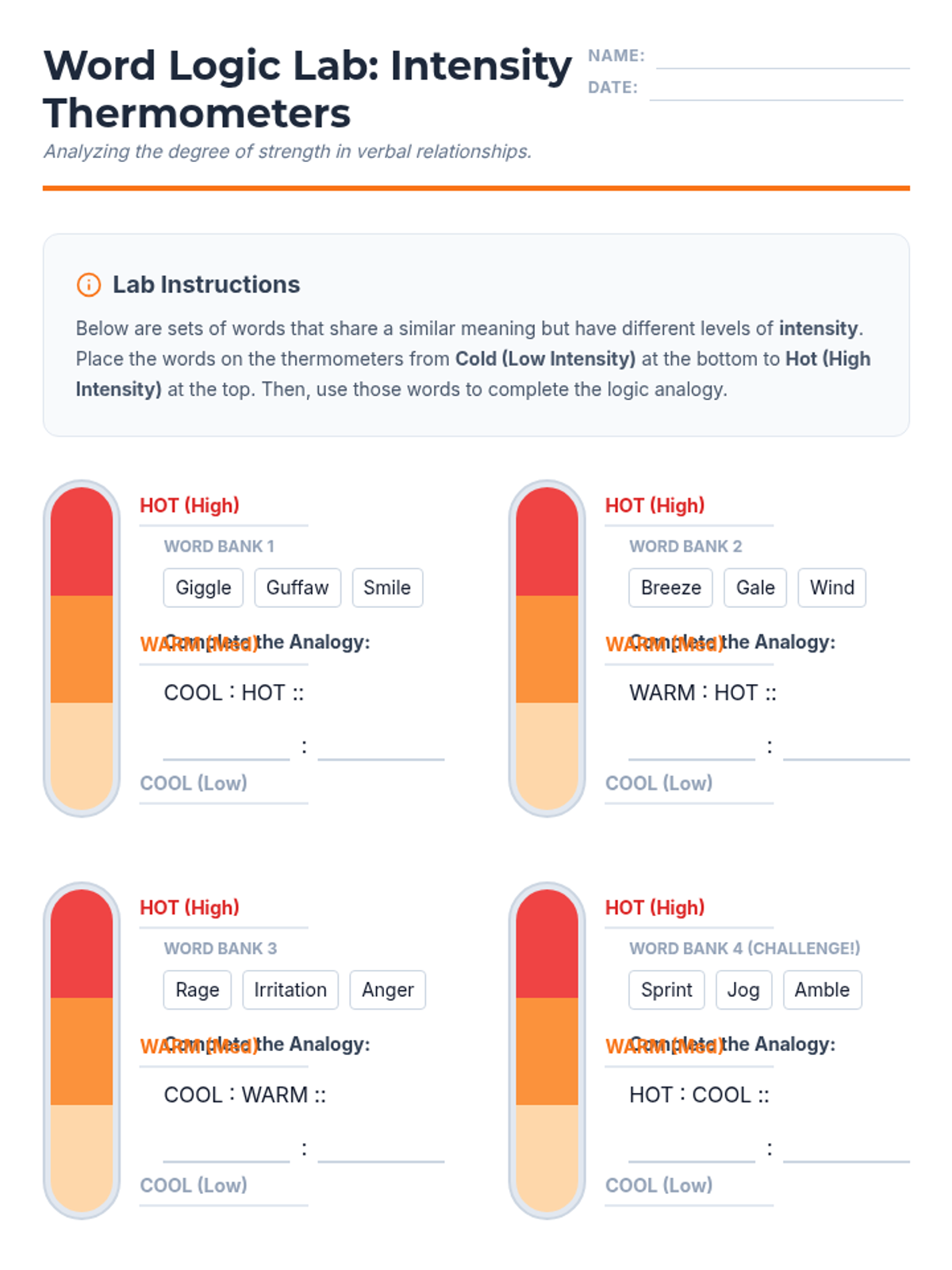
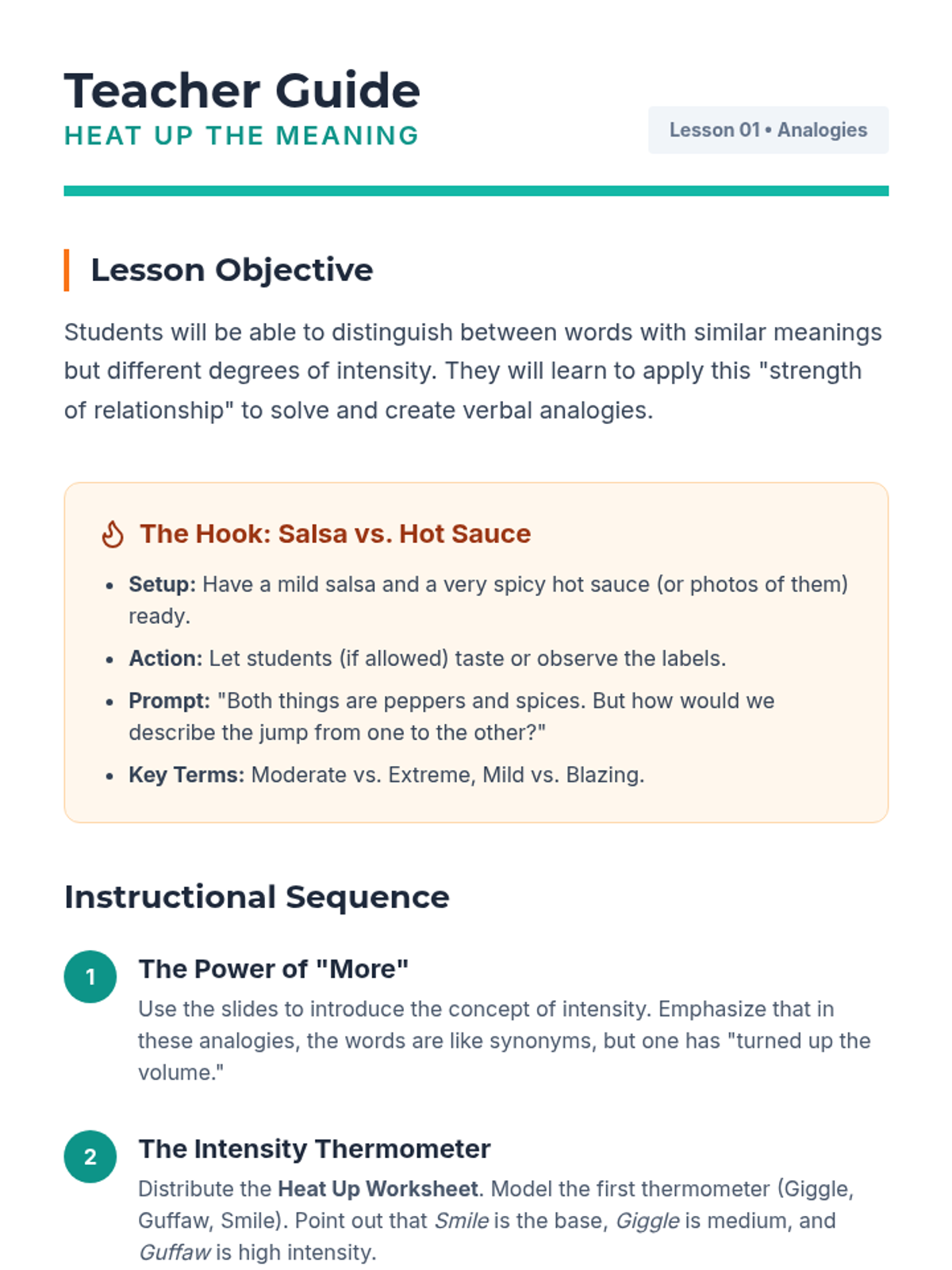
A 5th-grade English Language Arts sequence focused on the subtle nuances and varying degrees of intensity within verbal analogies. Students progress from basic word relationships to complex logical reasoning, culminating in the creation of their own analogy puzzles.
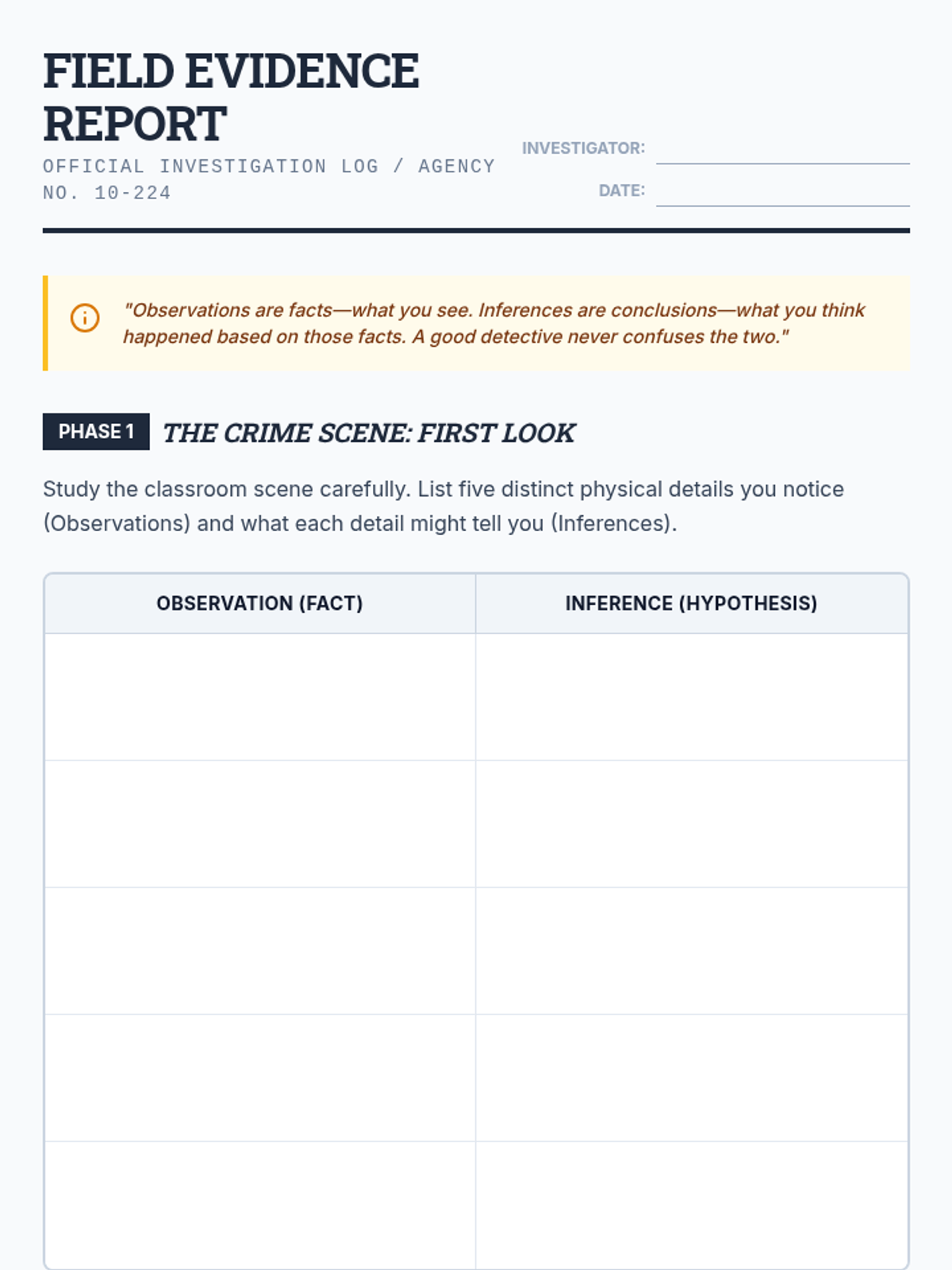
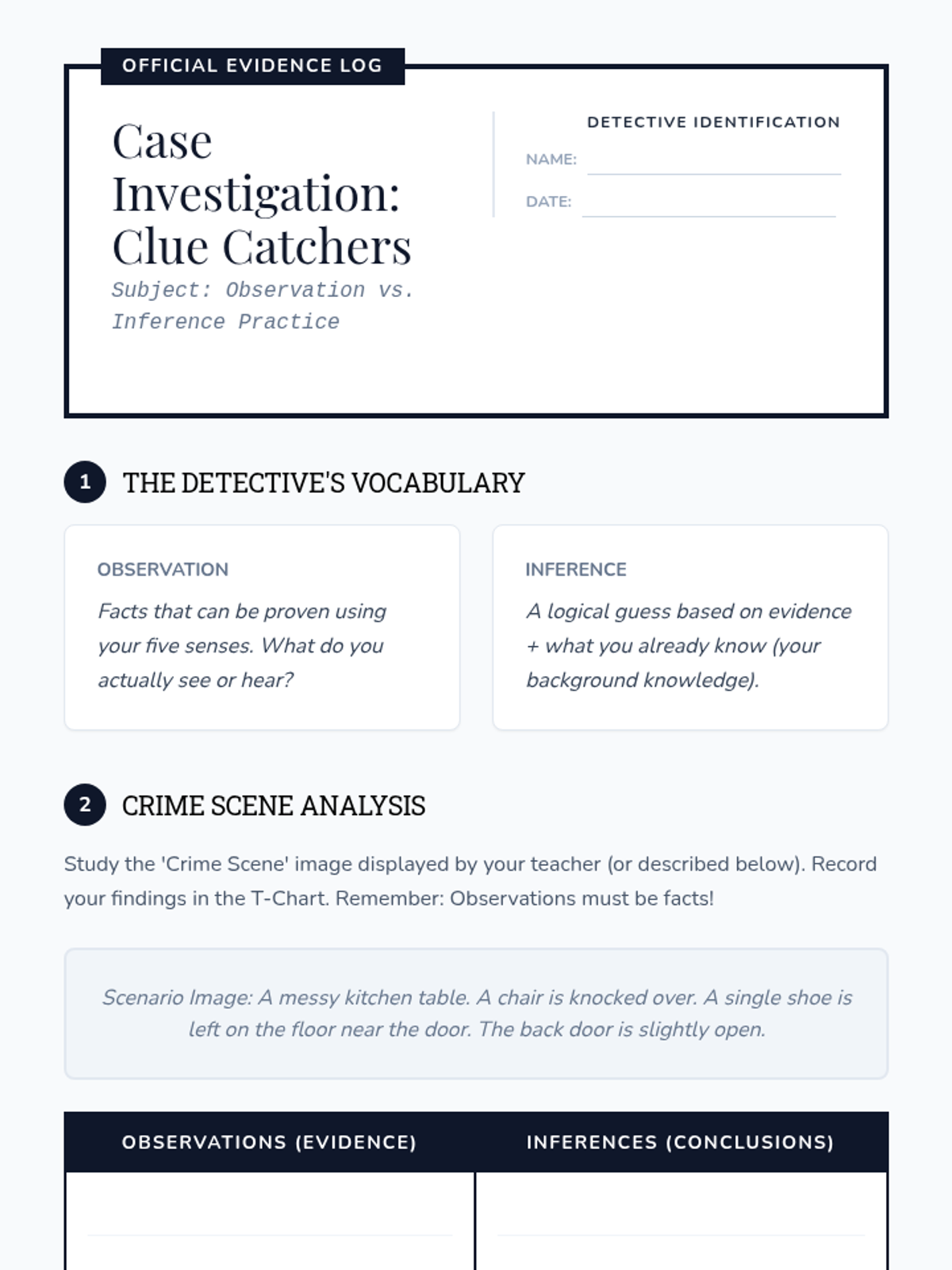
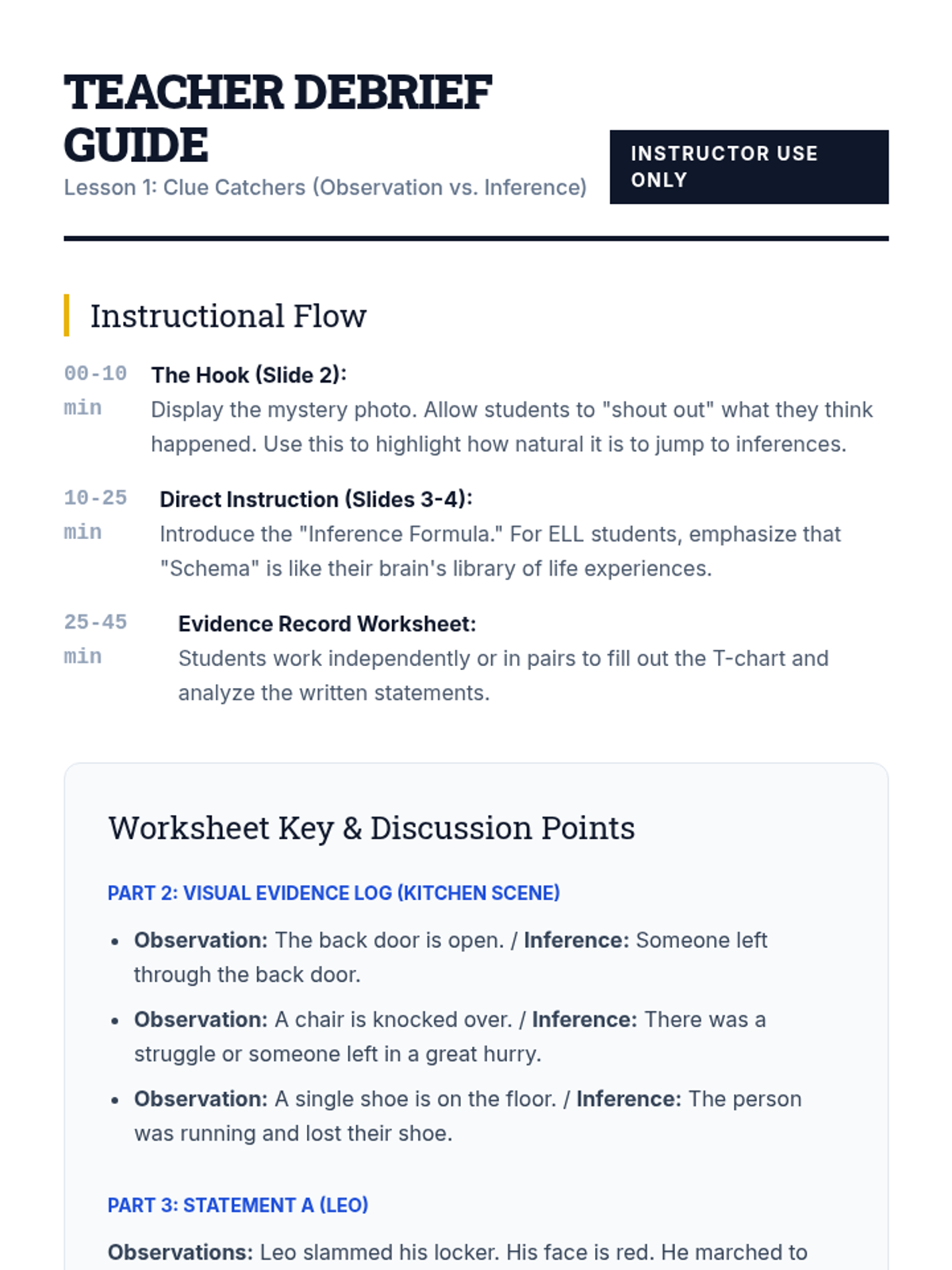
This sequence immerses students in the genre of mystery and suspense to develop critical inferencing skills, starting from visual observations and moving to complex textual analysis of dialogue, motivation, and reliability.
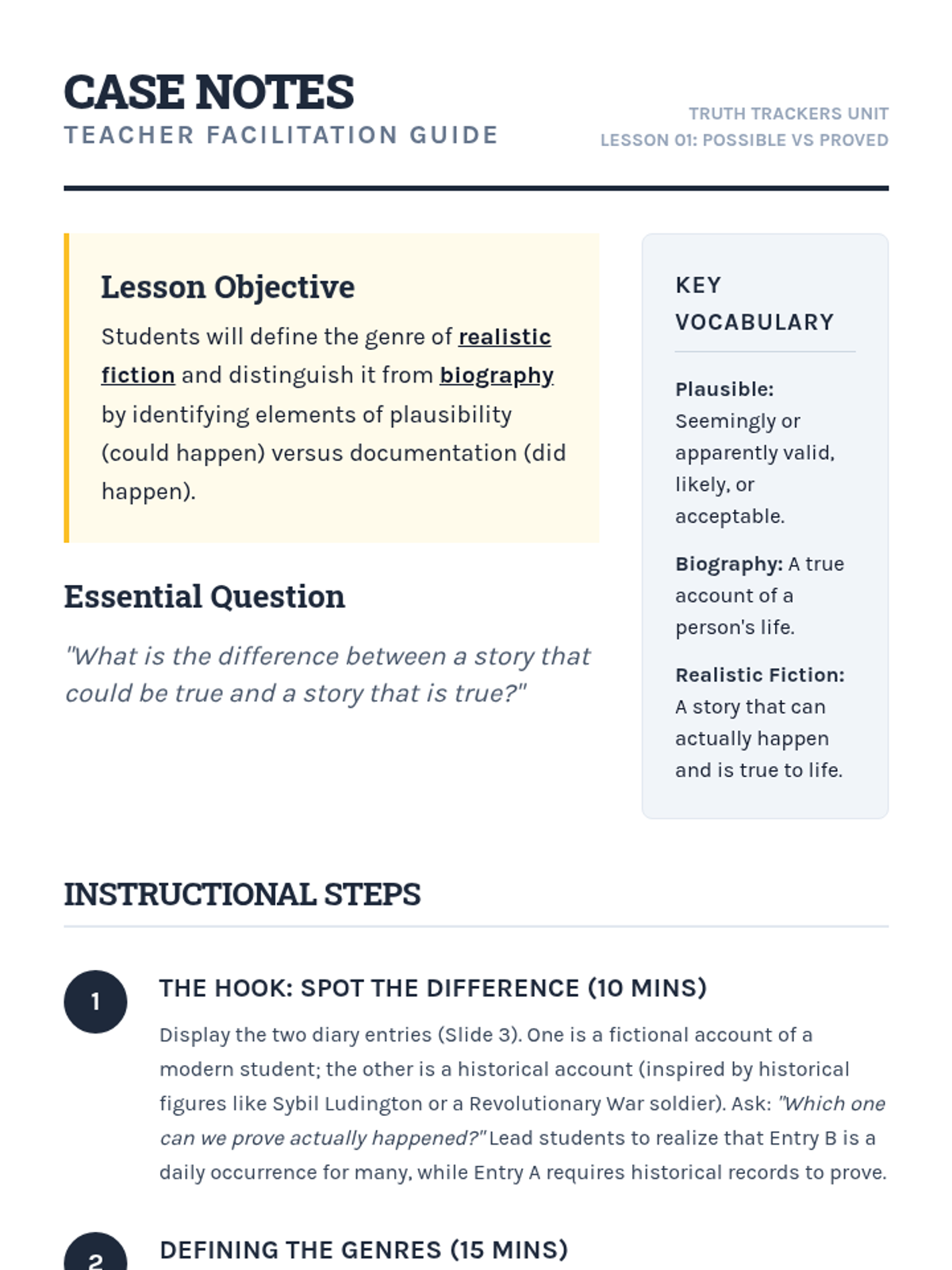
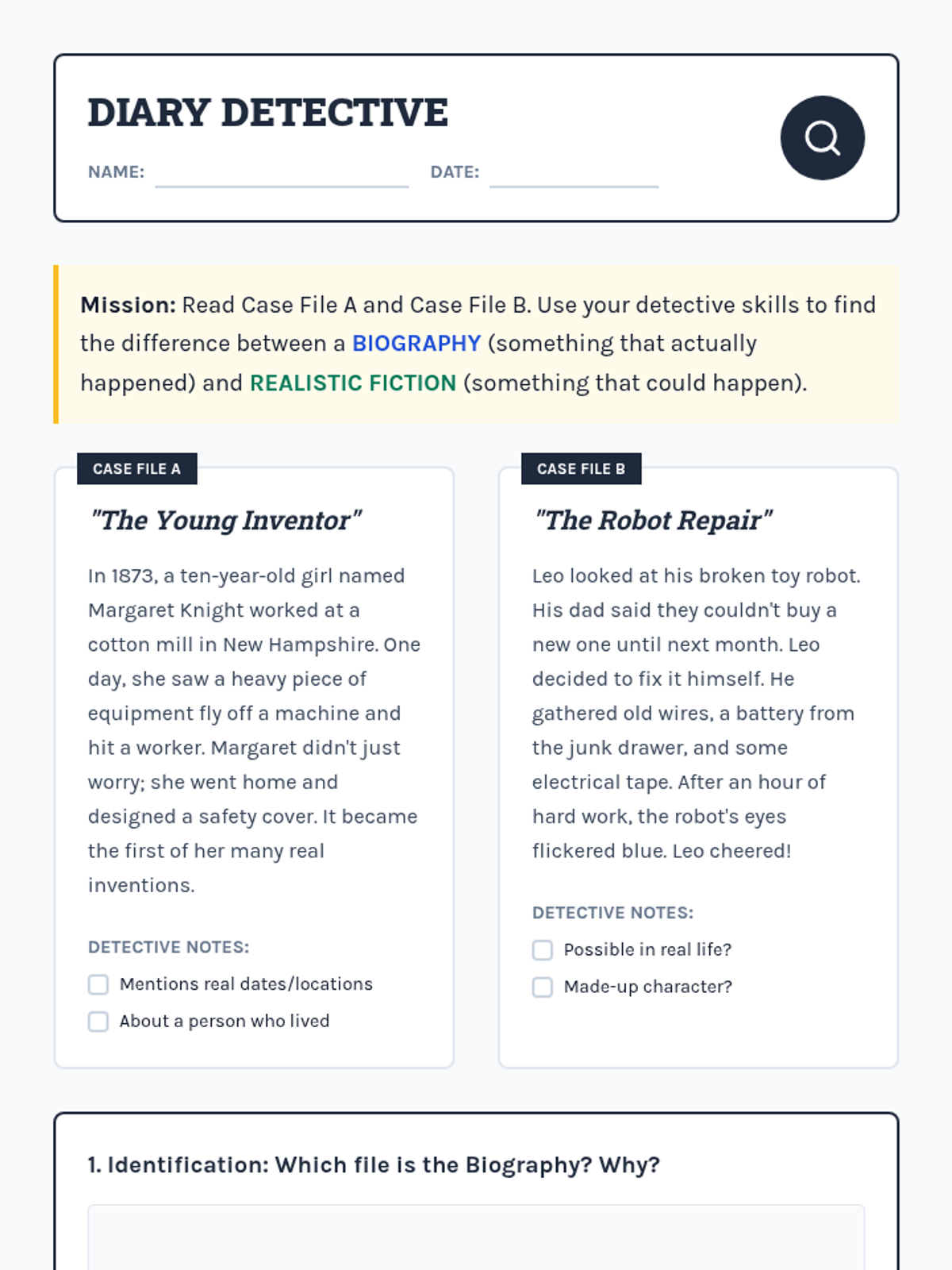
Students investigate the nuance between reality and realistic fiction, learning to distinguish between what actually happened and what could happen. They analyze characters, settings, and dialogue to develop critical reading skills.
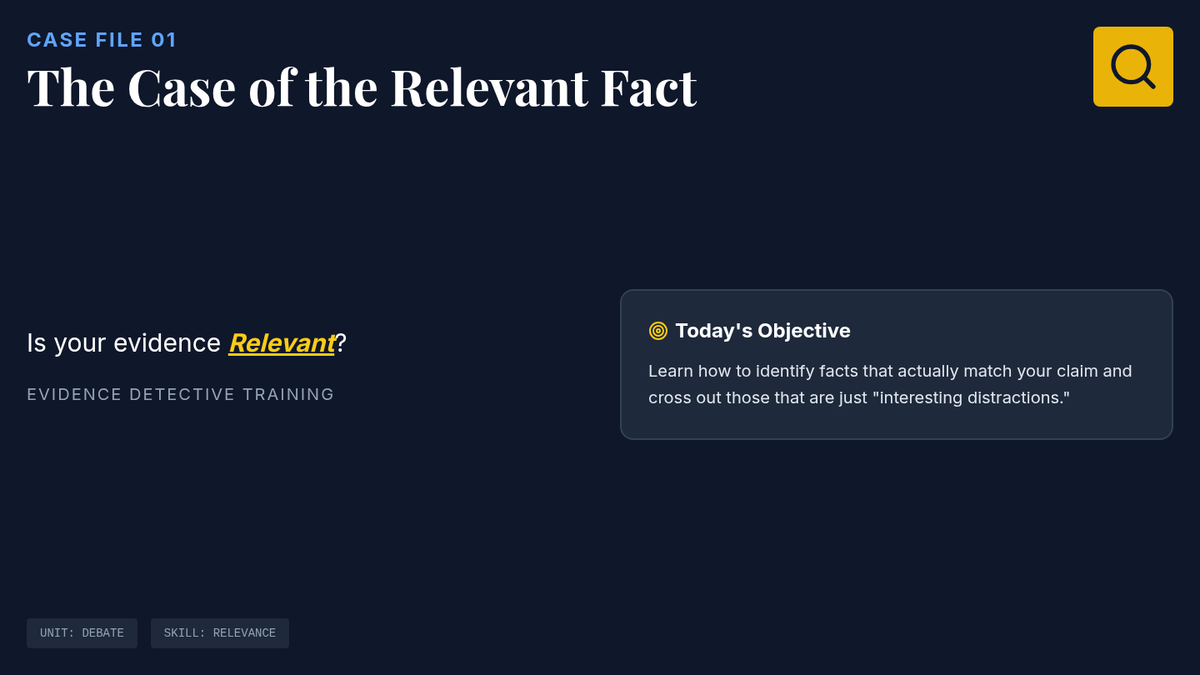
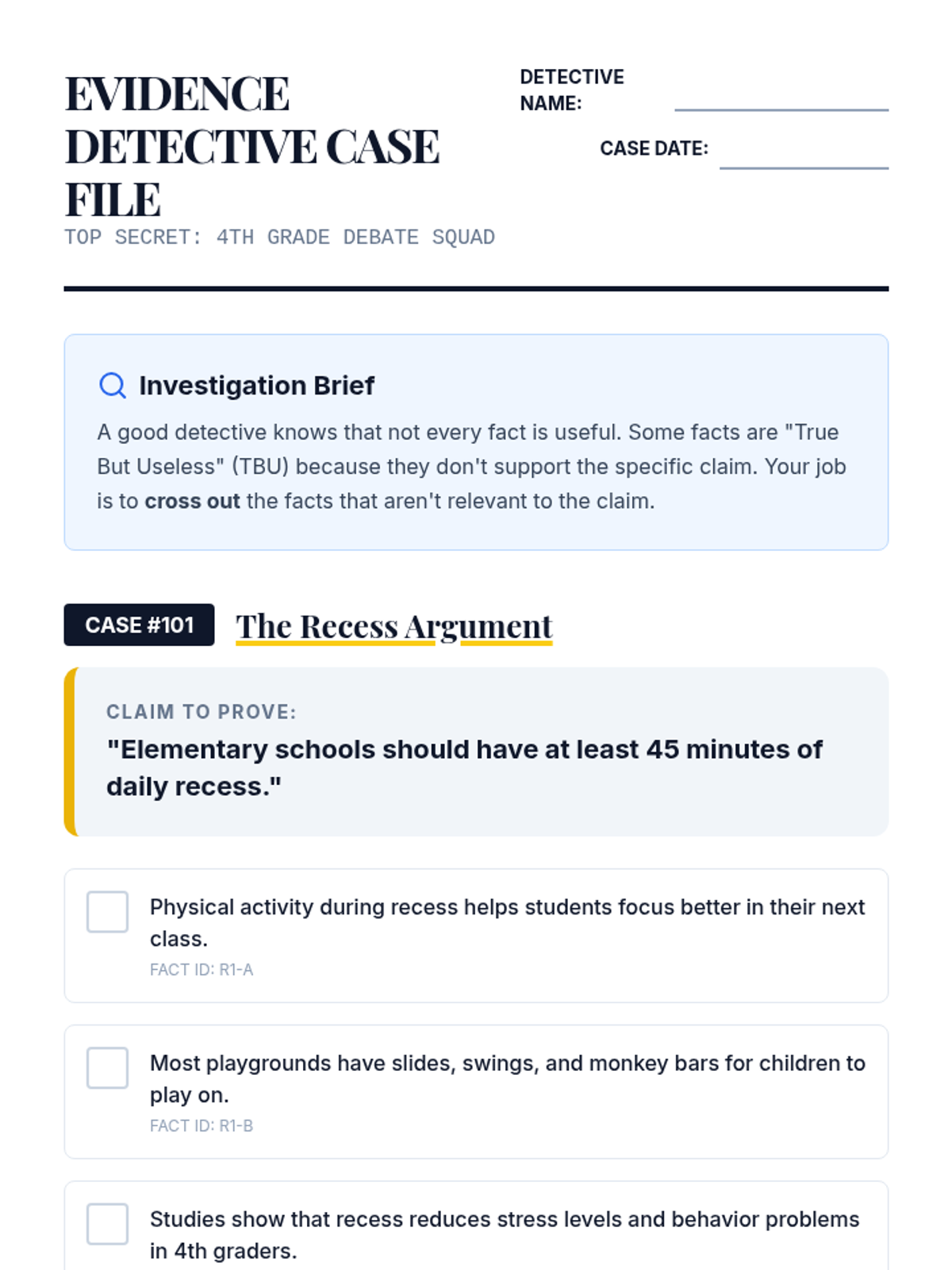
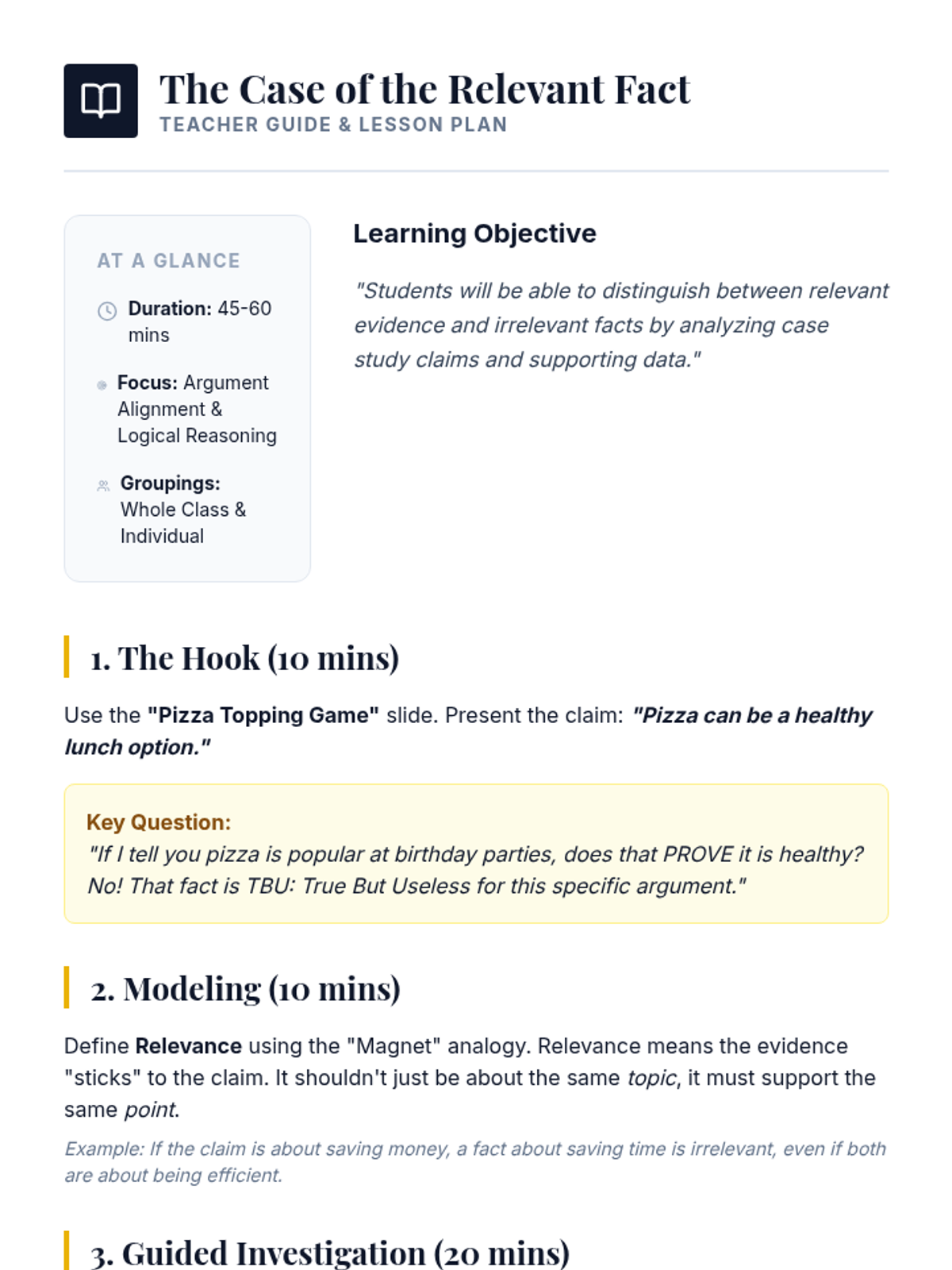
A detective-themed sequence where students become 'Evidence Detectives' to investigate, analyze, and rank the strength of research for debate. Through case studies and games, students learn to distinguish between relevant facts, anecdotes, and statistical data.