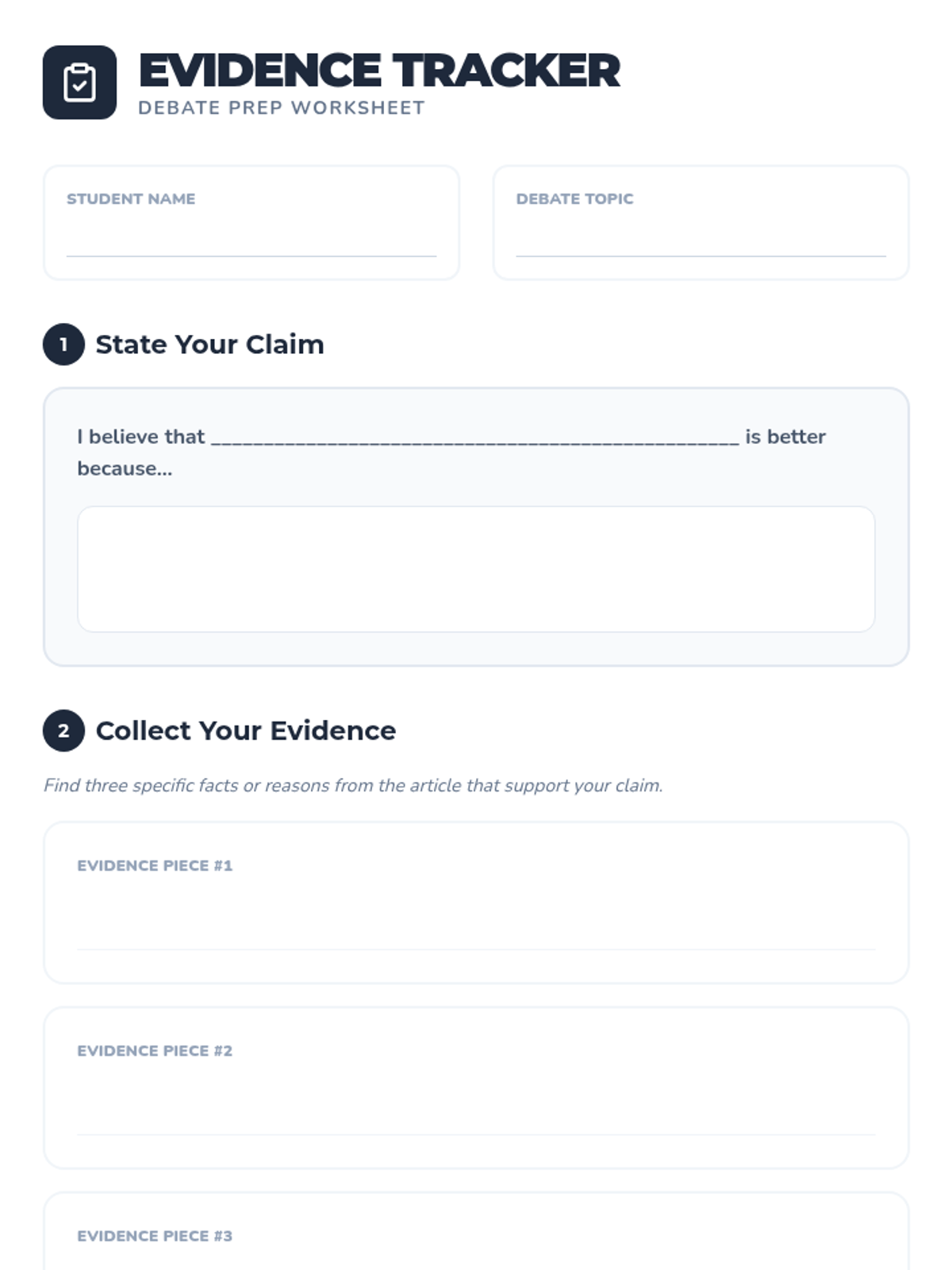
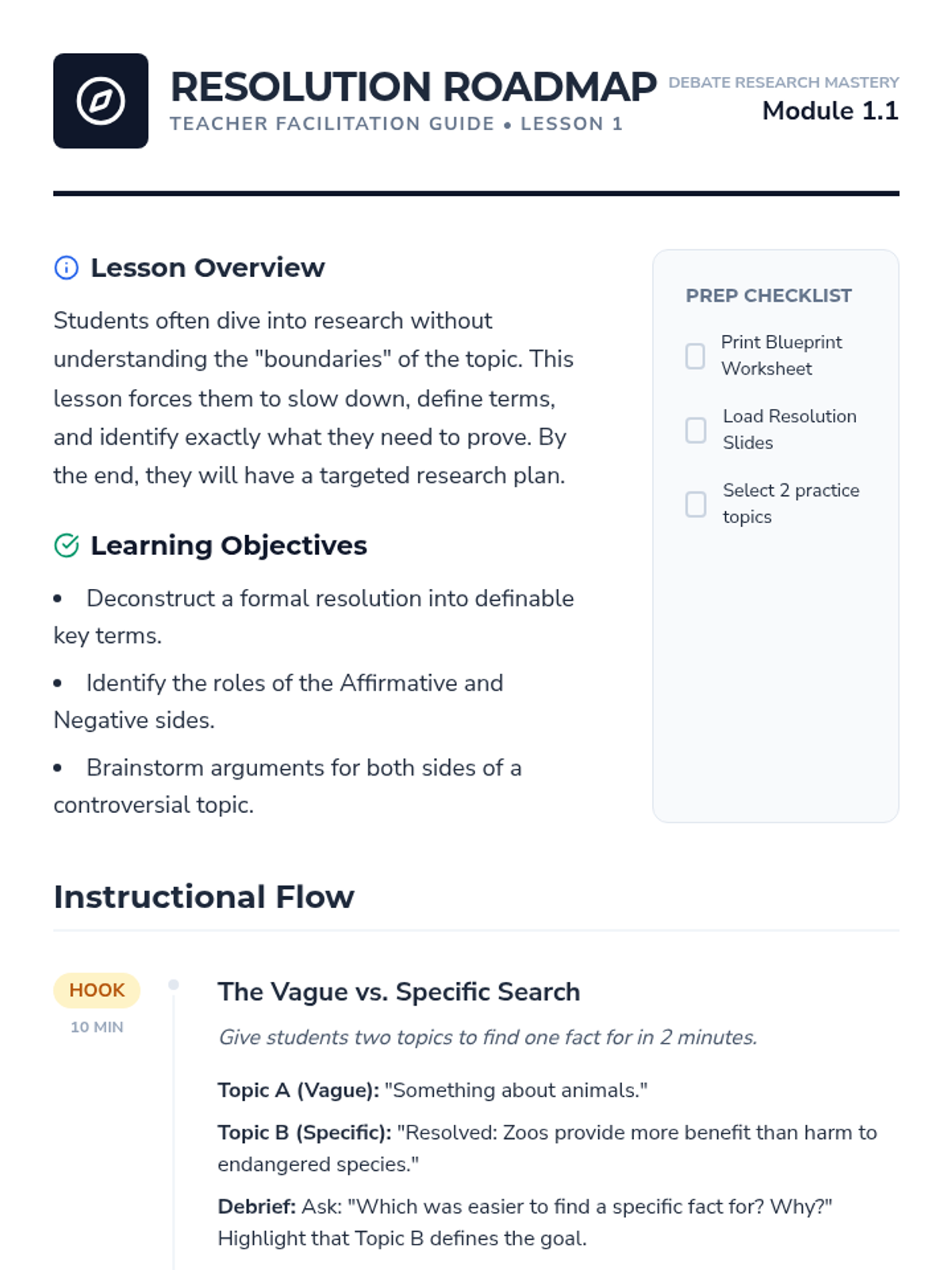
Systematic research, evidence evaluation, and logical reasoning skills for formal discourse. Equips speakers to organize persuasive arguments, identify fallacies, and execute strategic impact calculus during competitive engagement.
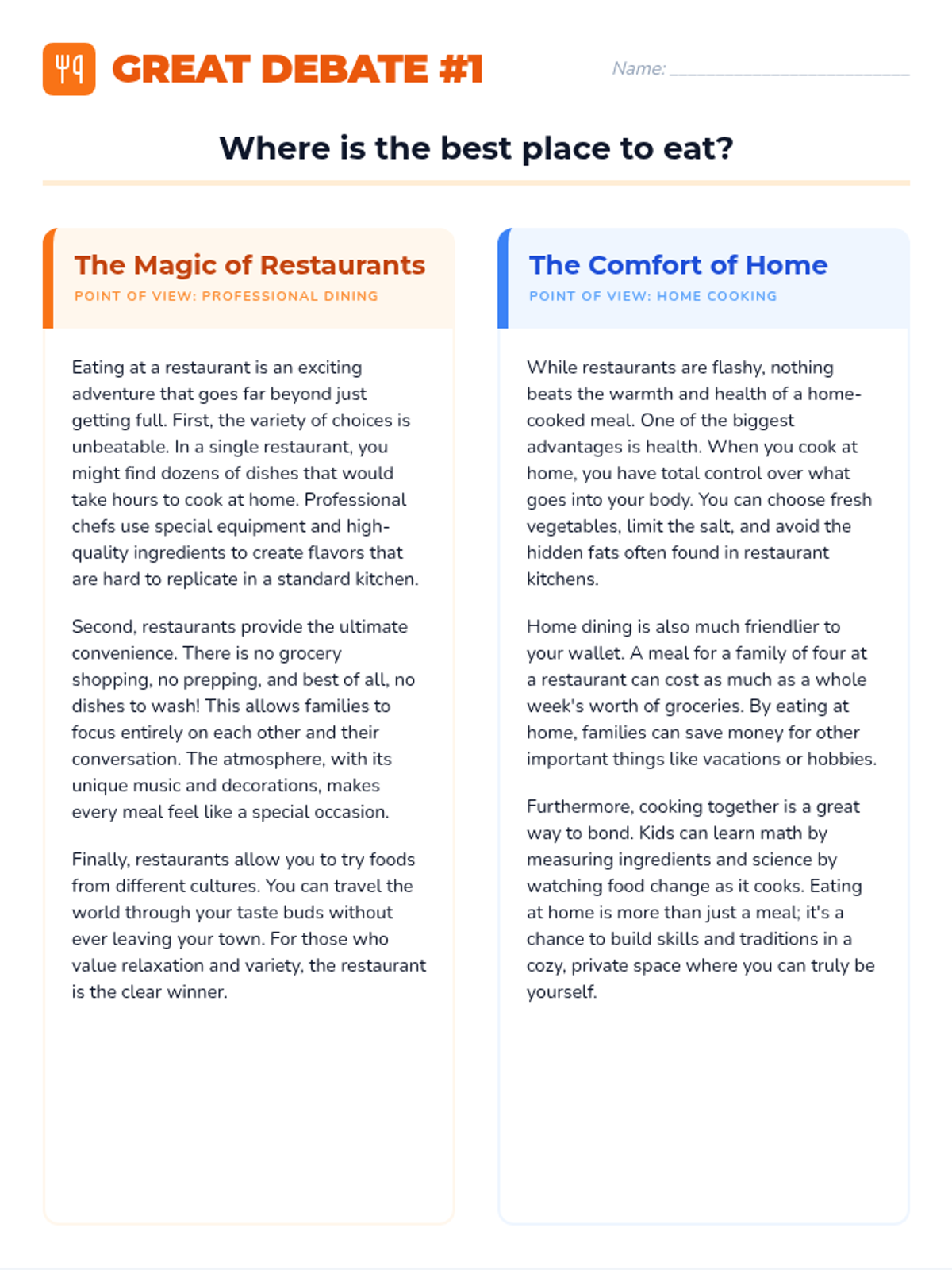
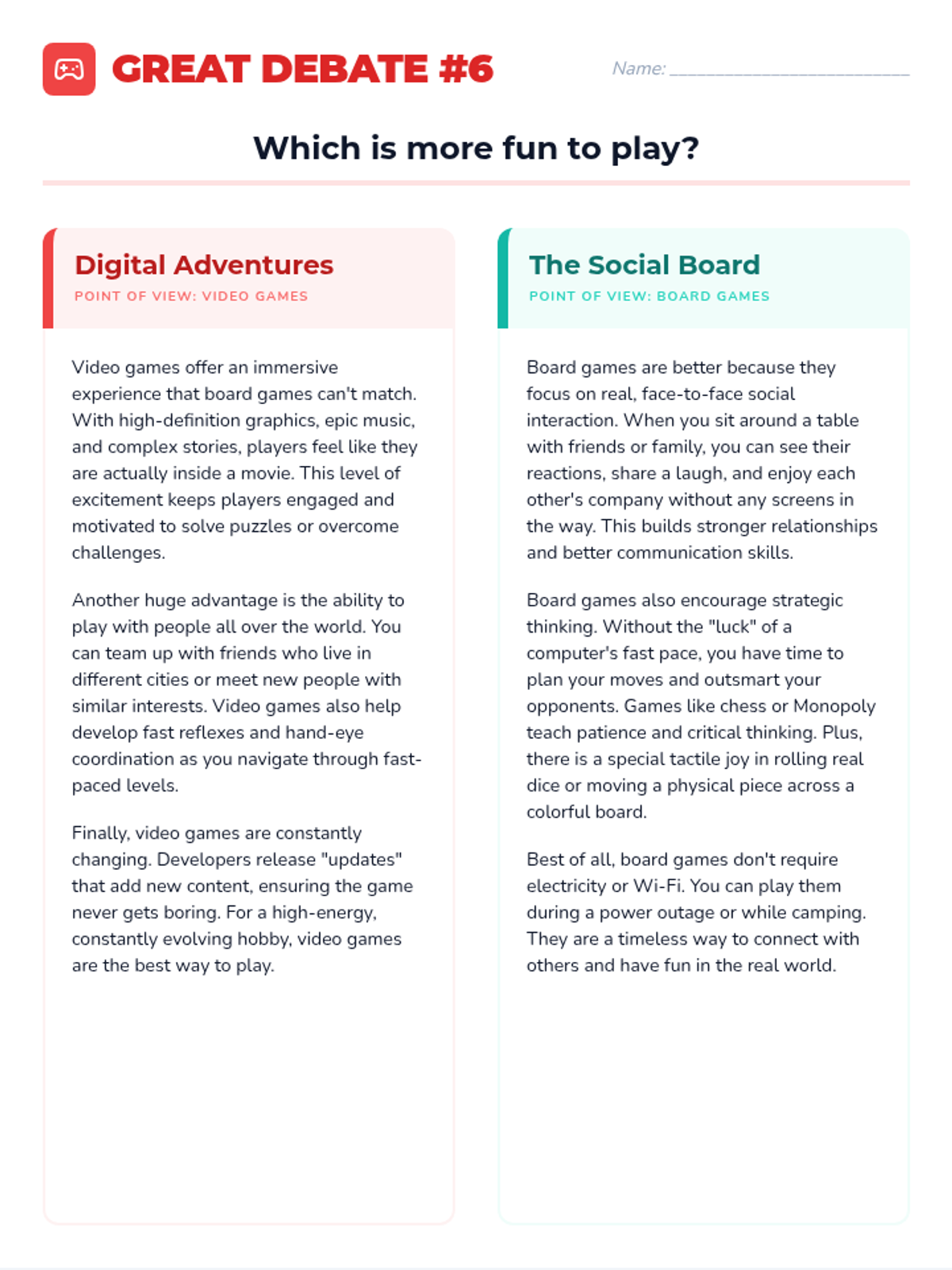
A comprehensive collection of short, paired articles designed for student debates. Each topic features two opposing viewpoints to help students practice identifying and using text evidence in their arguments.
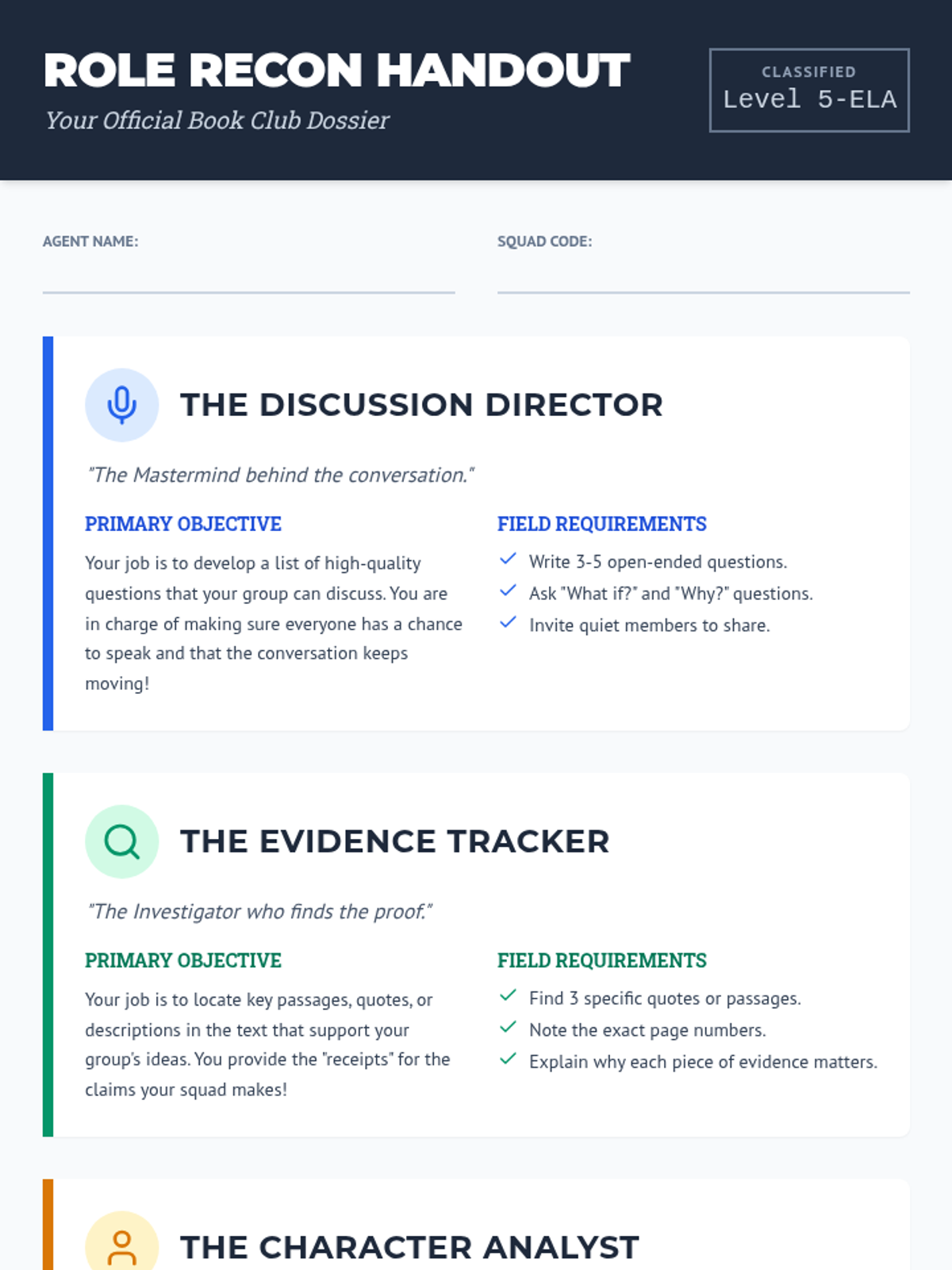
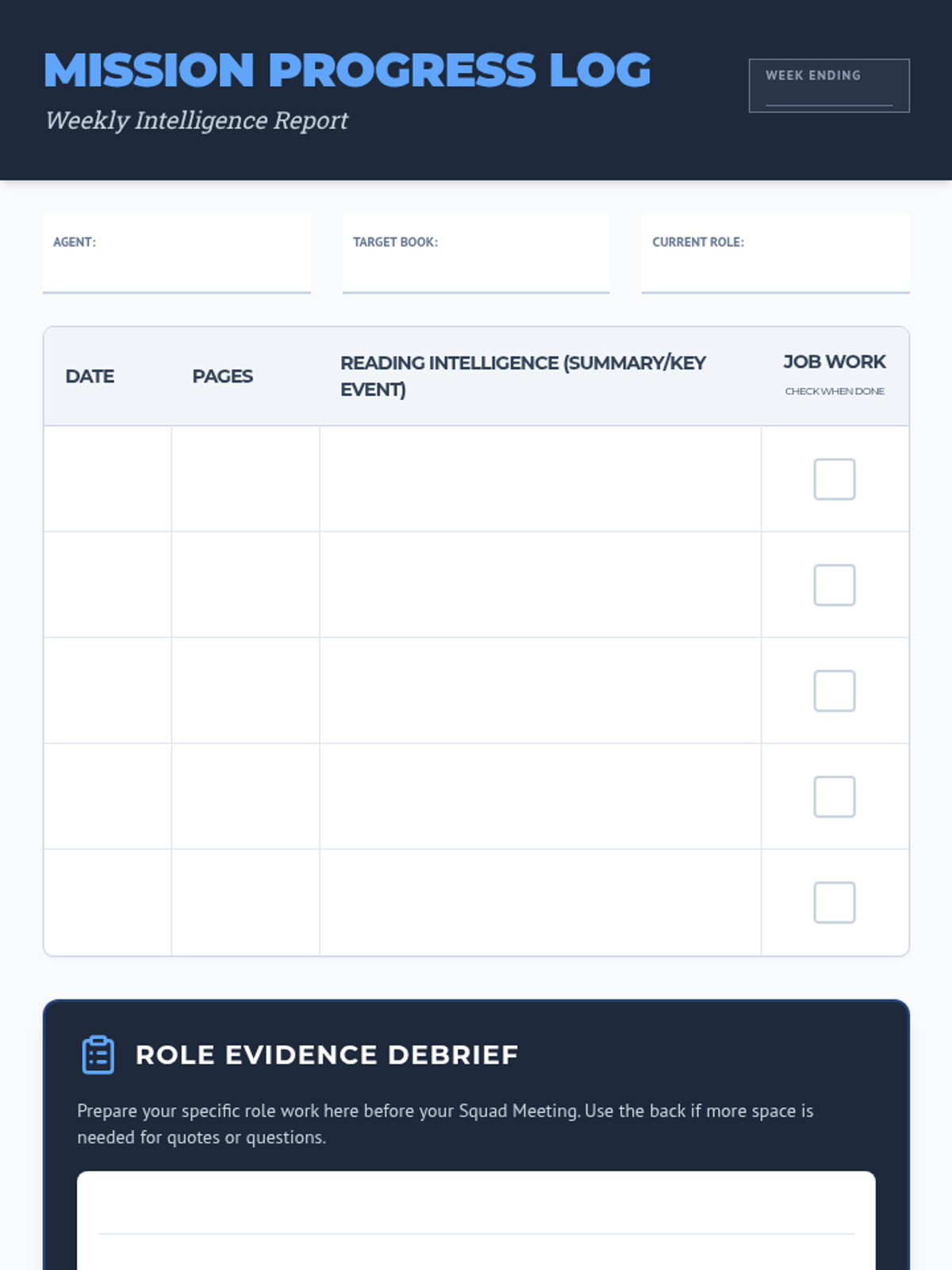
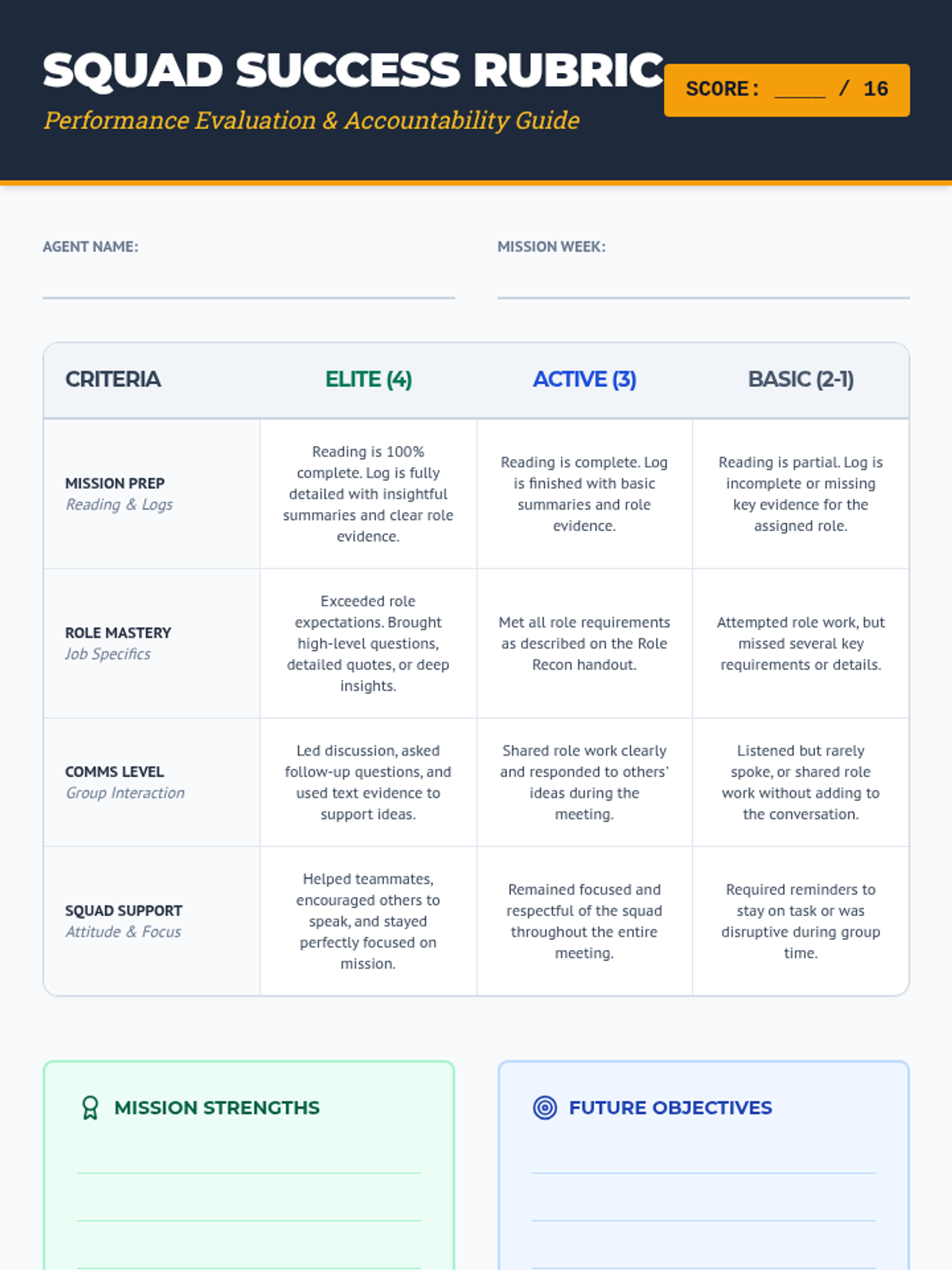
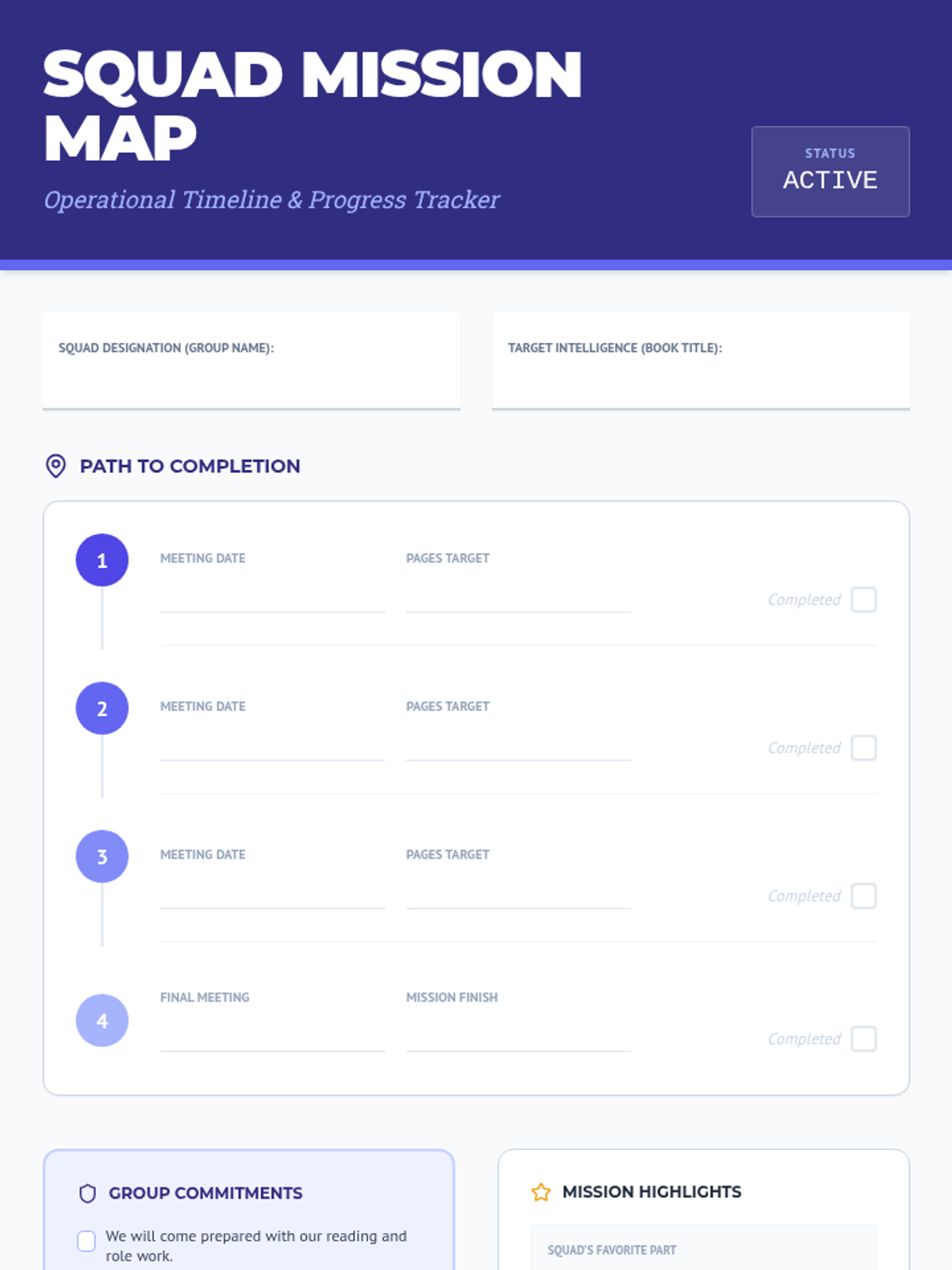
A comprehensive book club kit designed for 5th-grade students to foster accountability and deep literary analysis through specialized roles and progress tracking.
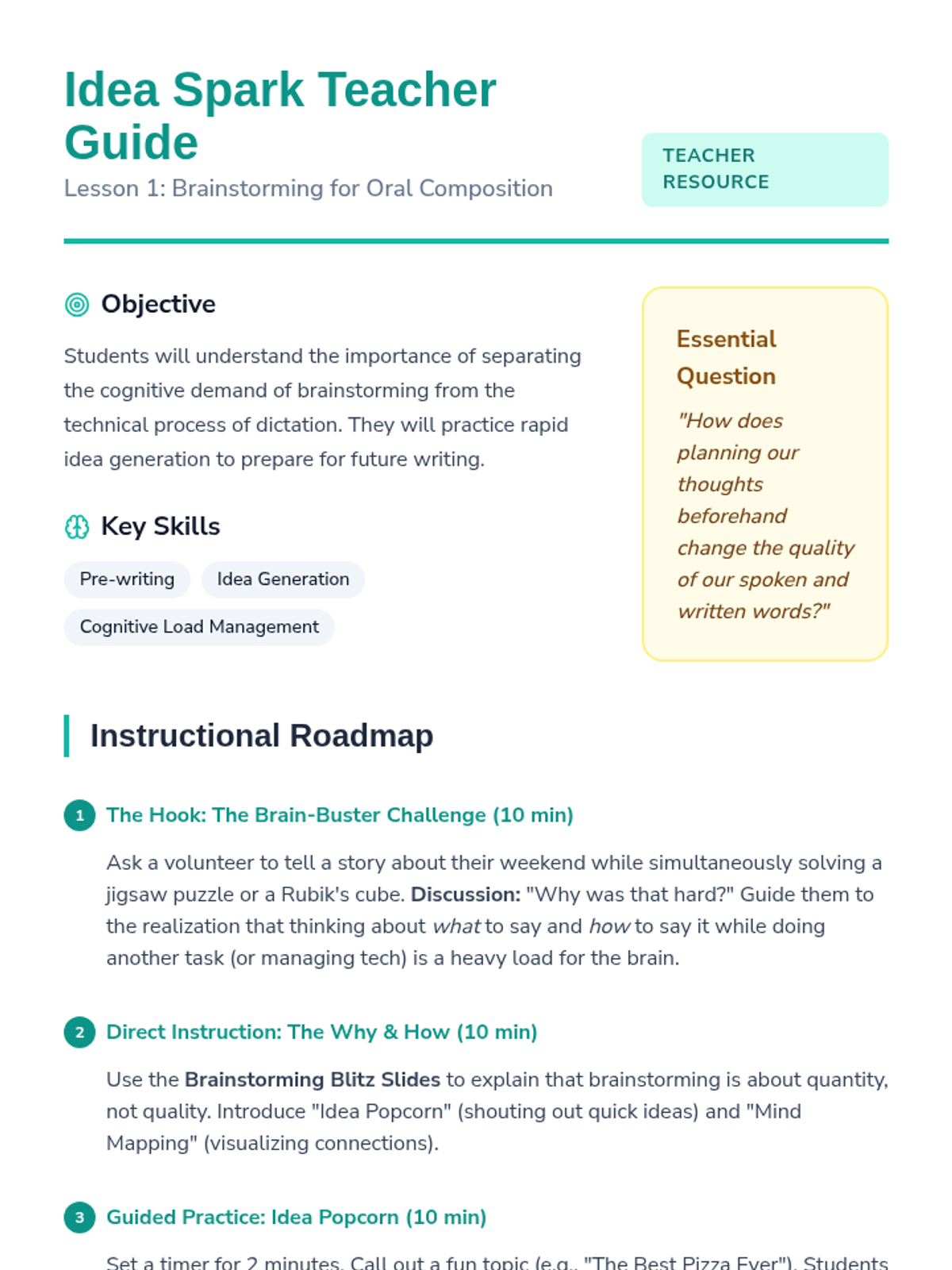
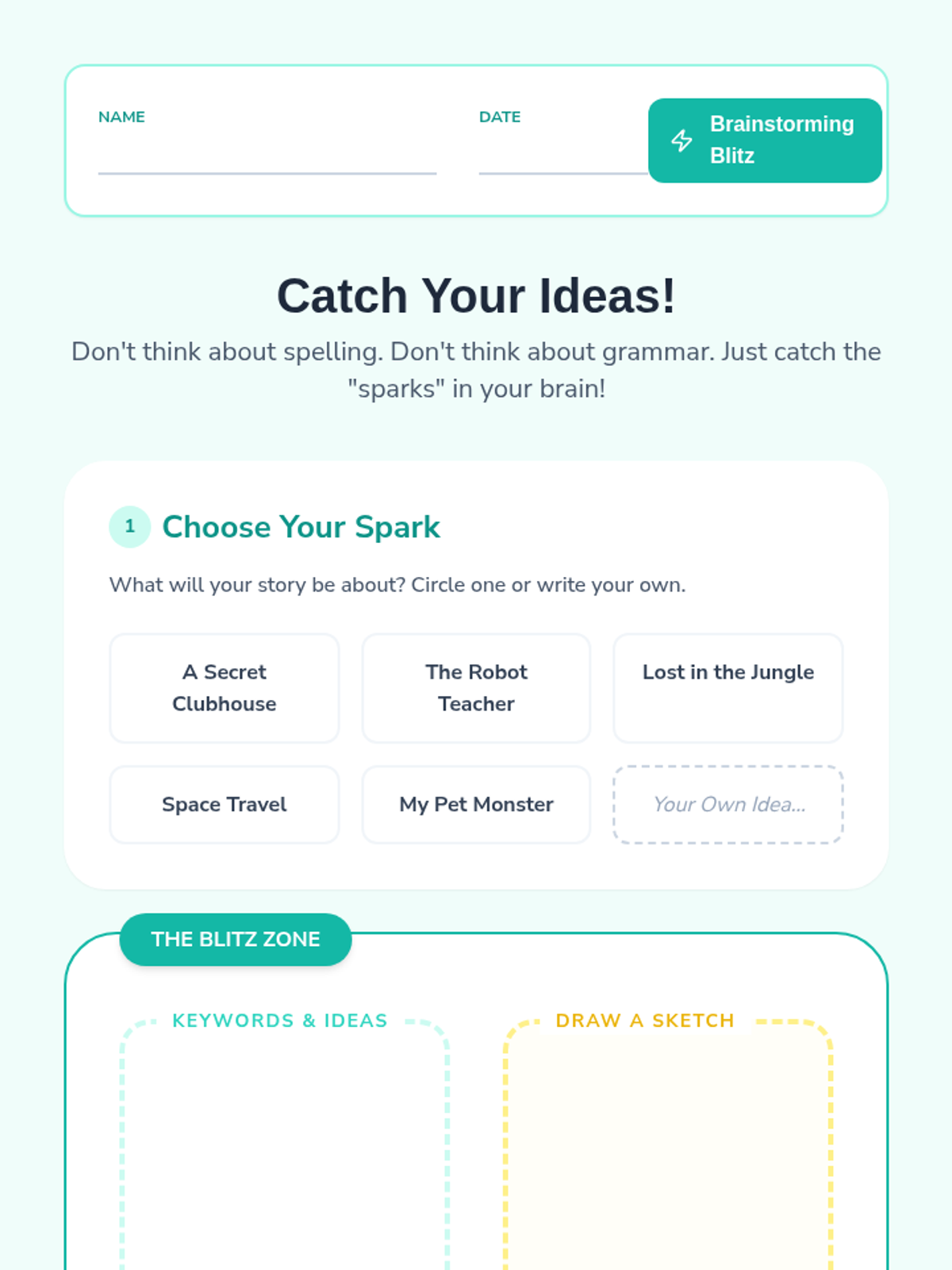
This sequence focuses on the cognitive planning required before activating the microphone, bridging the gap between thought and oral expression. Students explore how to organize their ideas using graphic organizers and bullet points to prevent rambling during dictation.
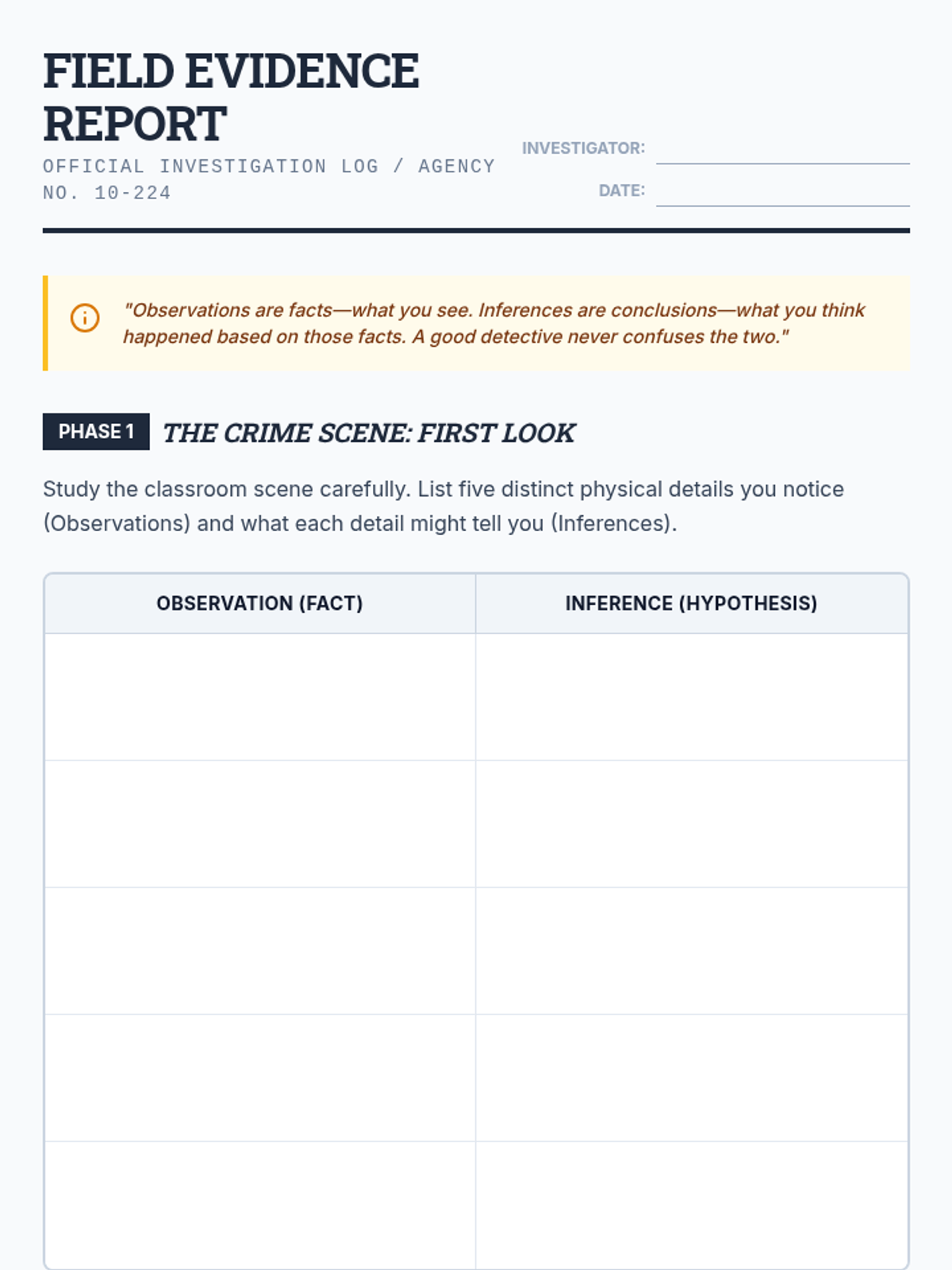
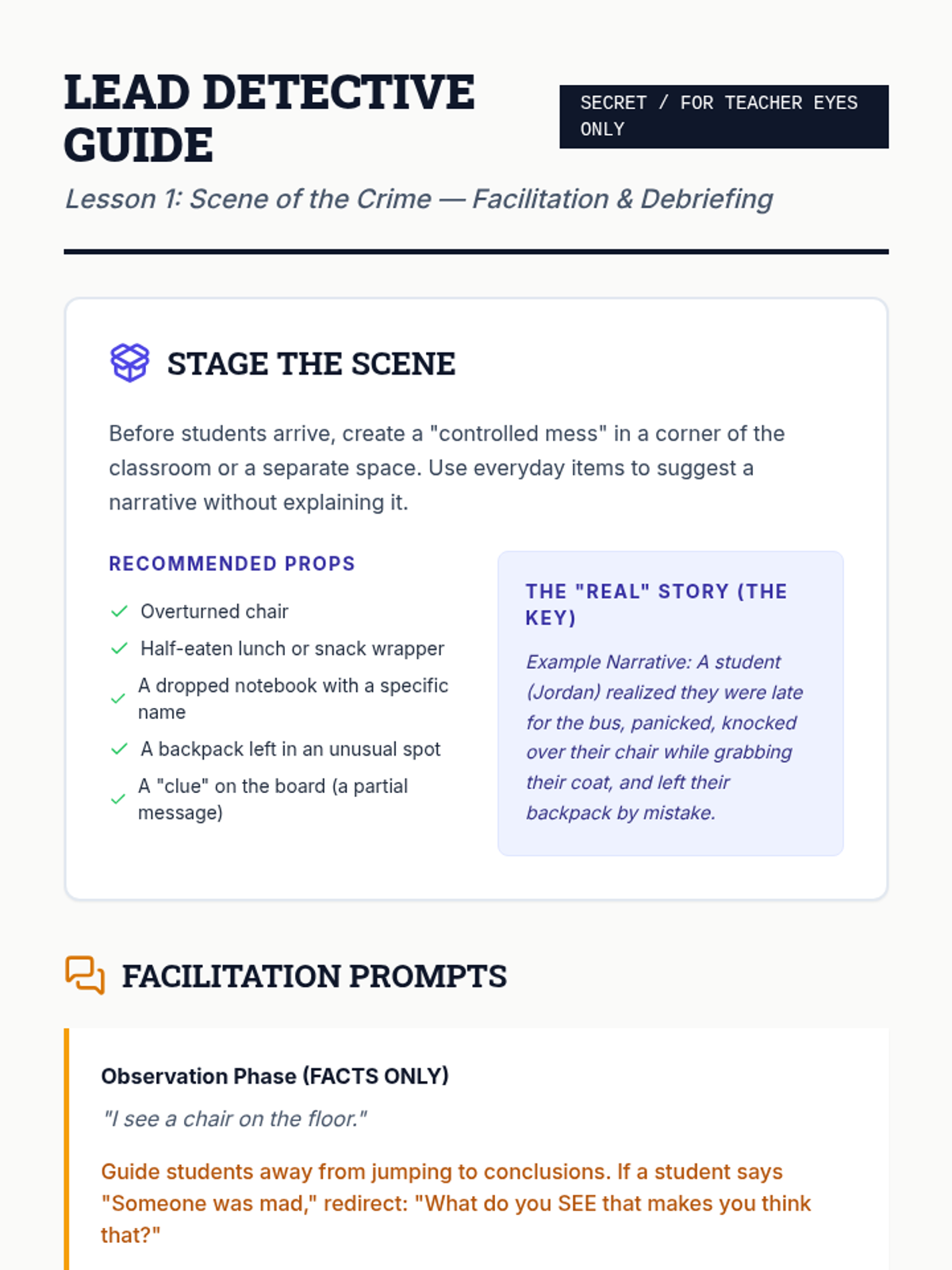
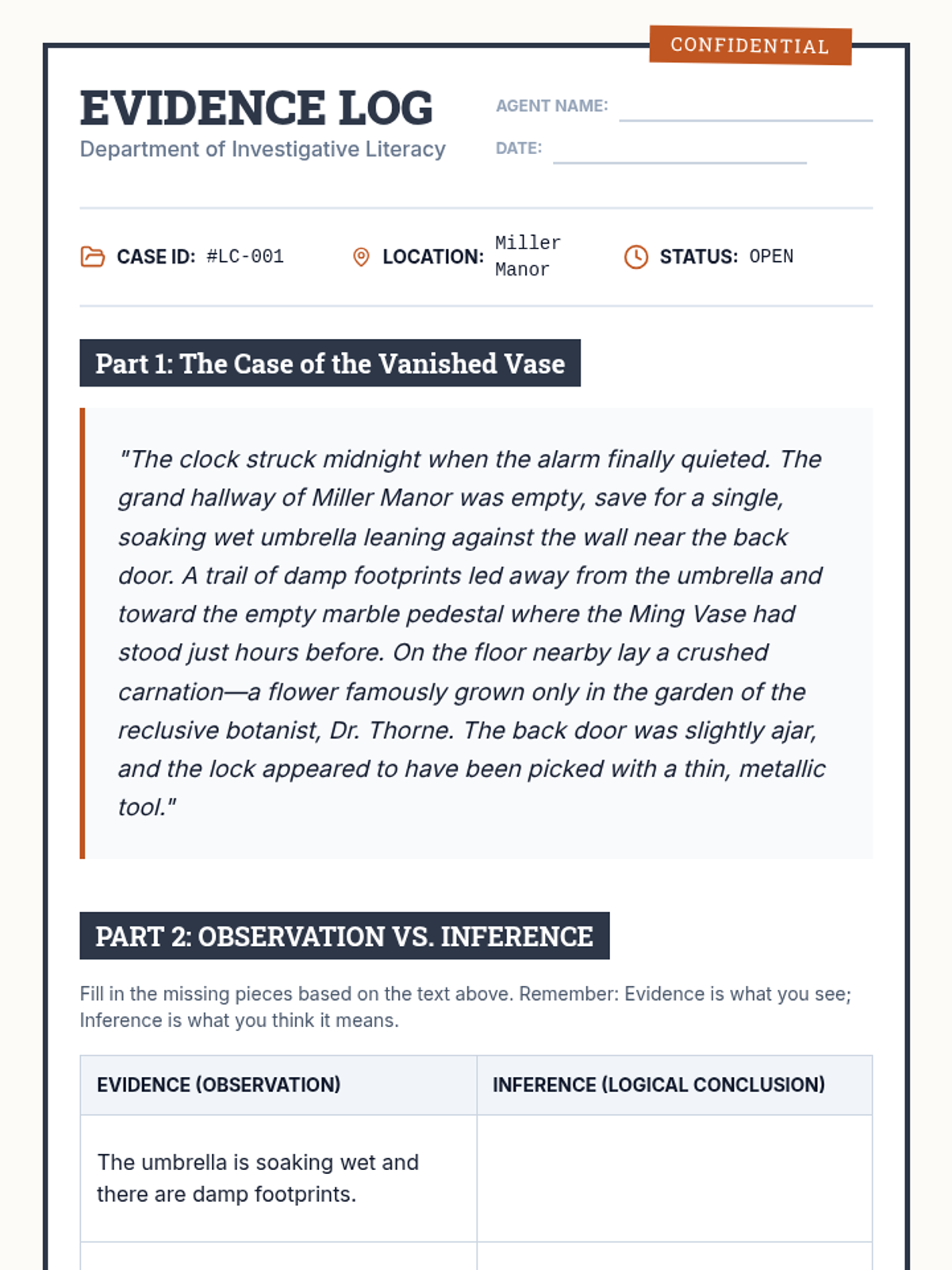
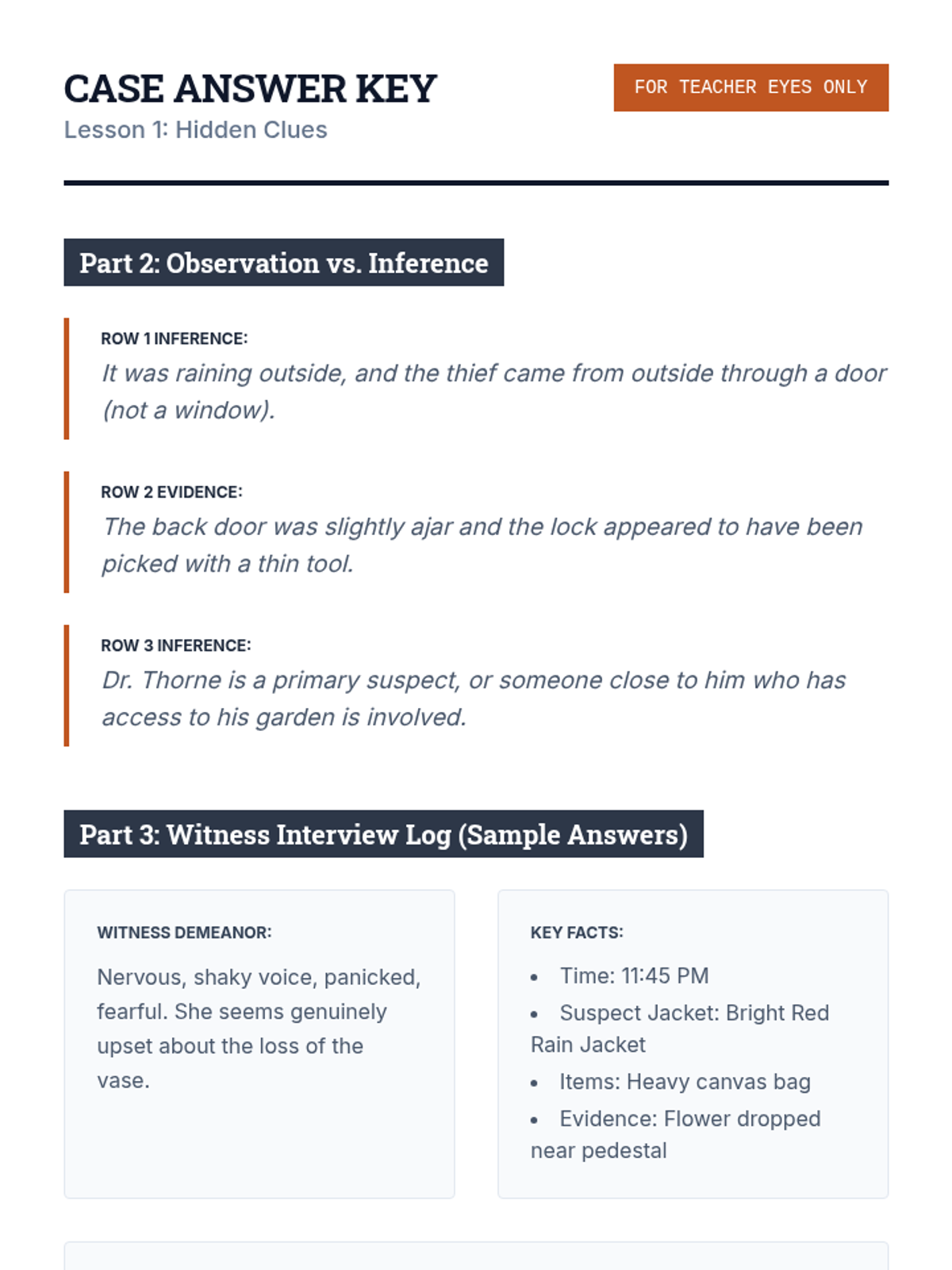
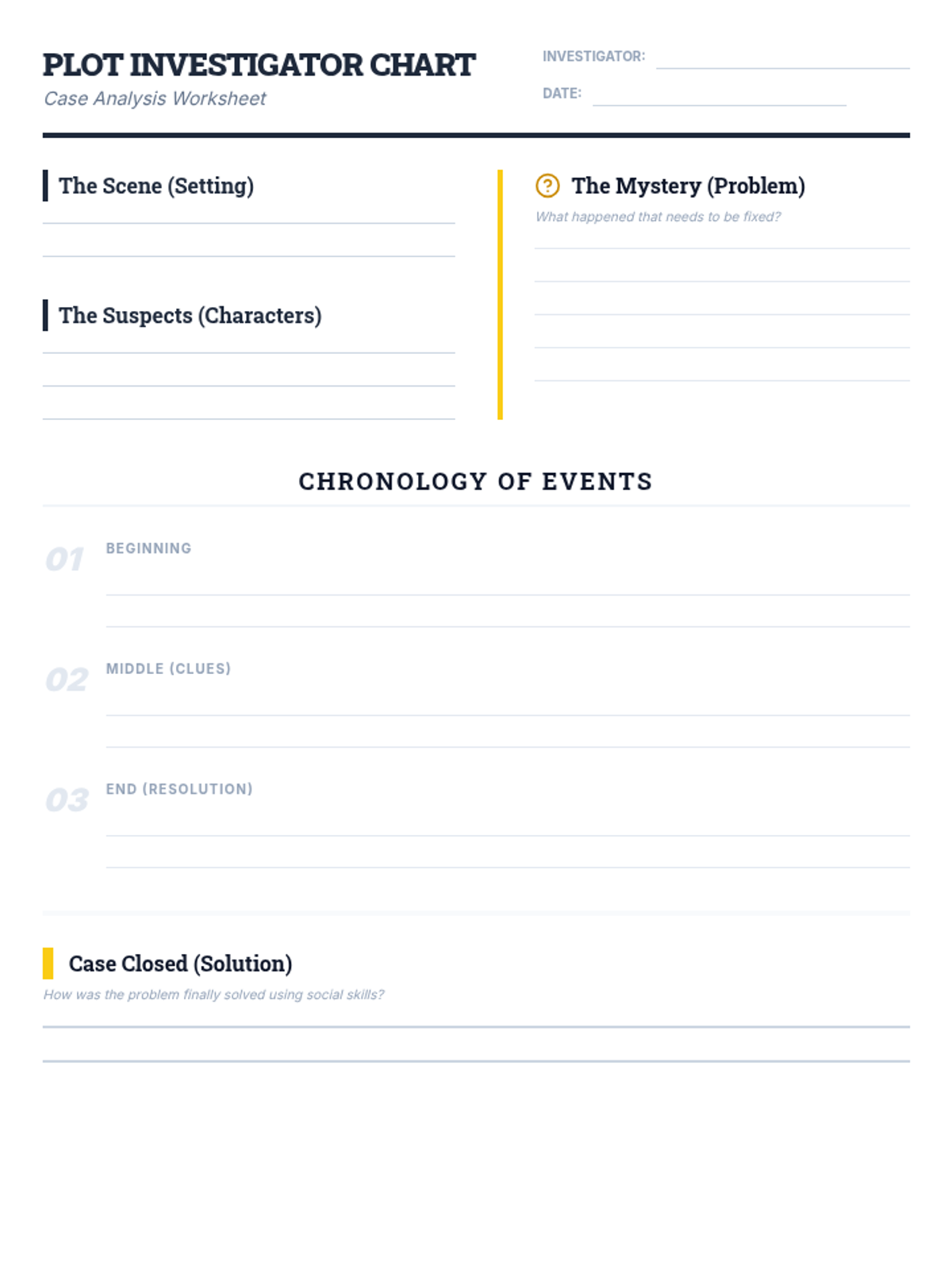
A forensic-themed reading comprehension unit where students act as investigators to master predictions and inferences. Through case studies and evidence tracking, students learn to bridge literal text with deep narrative meaning.
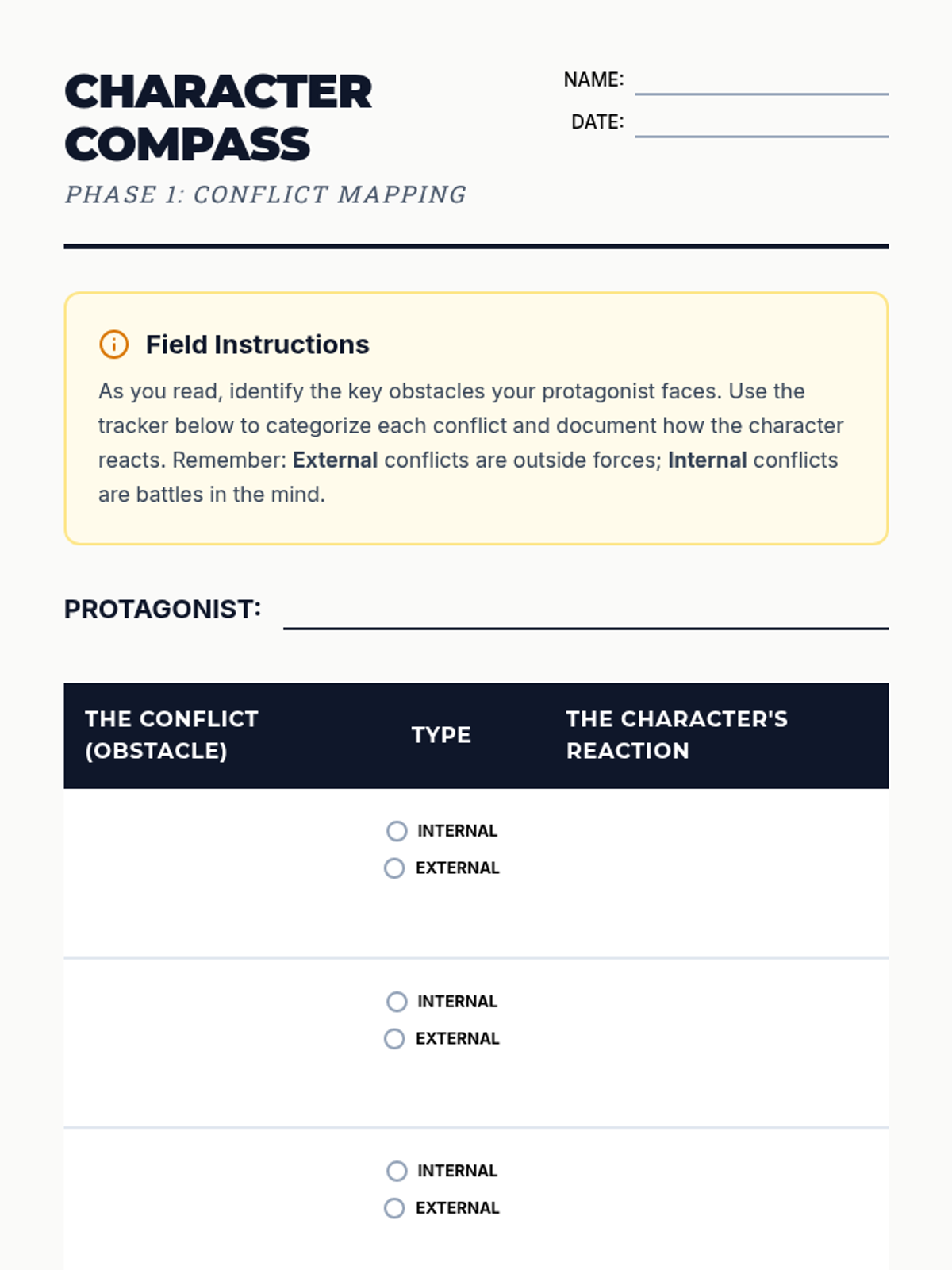
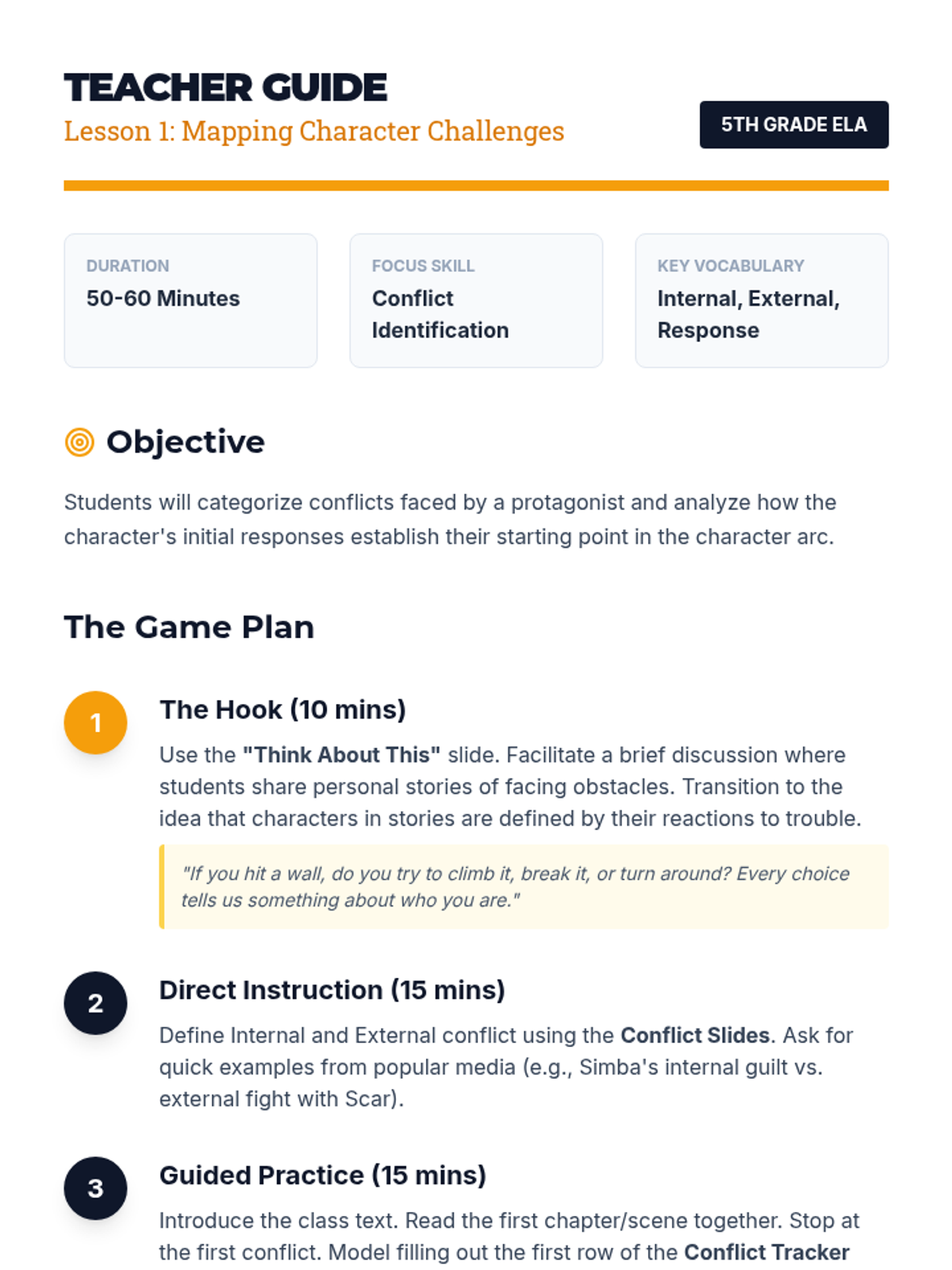
This inquiry-based sequence explores how character development reveals an author's theme. Students track a protagonist's journey through conflicts and choices to formulate and debate universal truths.
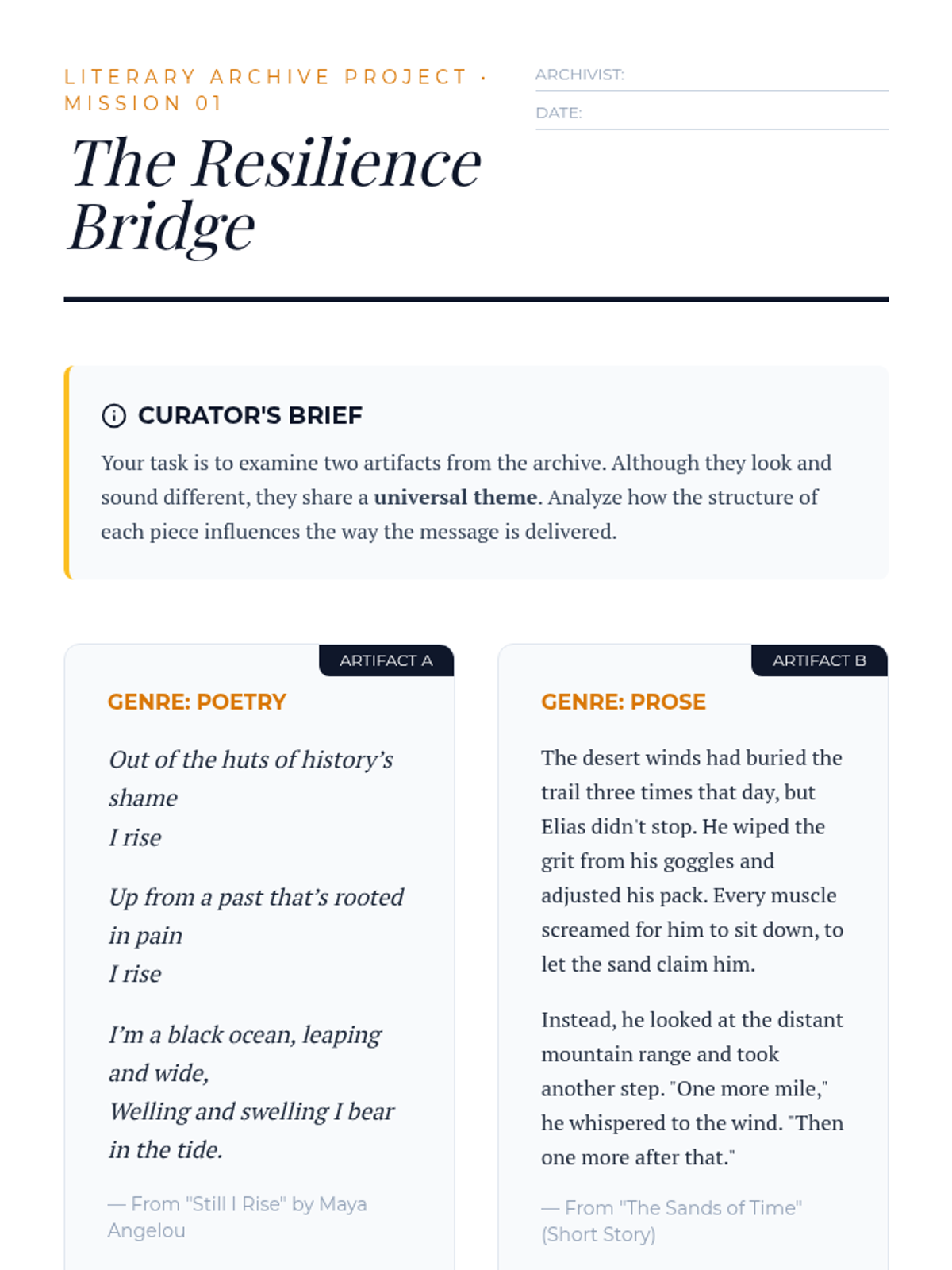
A project-based sequence where 5th-grade students act as literary curators, exploring how universal themes manifest across different genres and cultures to create a thematic anthology.
Students transition from reading for pleasure to reading for information. They will learn to ask complex questions, locate specific facts using text features, paraphrase to avoid plagiarism, and organize their findings into a visual project for a peer gallery walk.
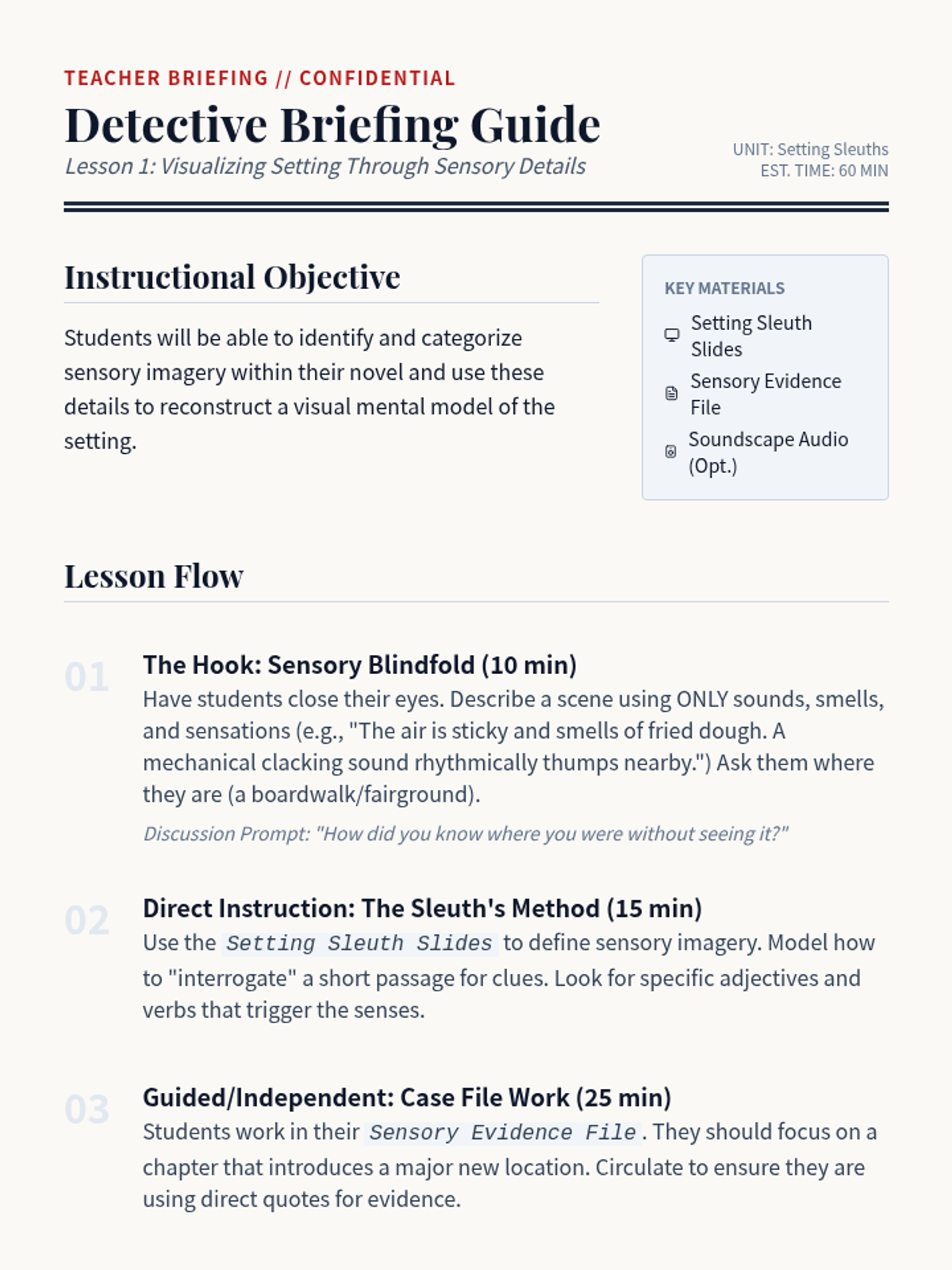
A project-based unit where students investigate how the setting of a novel (historical and geographical) acts as a crucial force in the story, culminating in the creation of a 'World Guide' presentation.
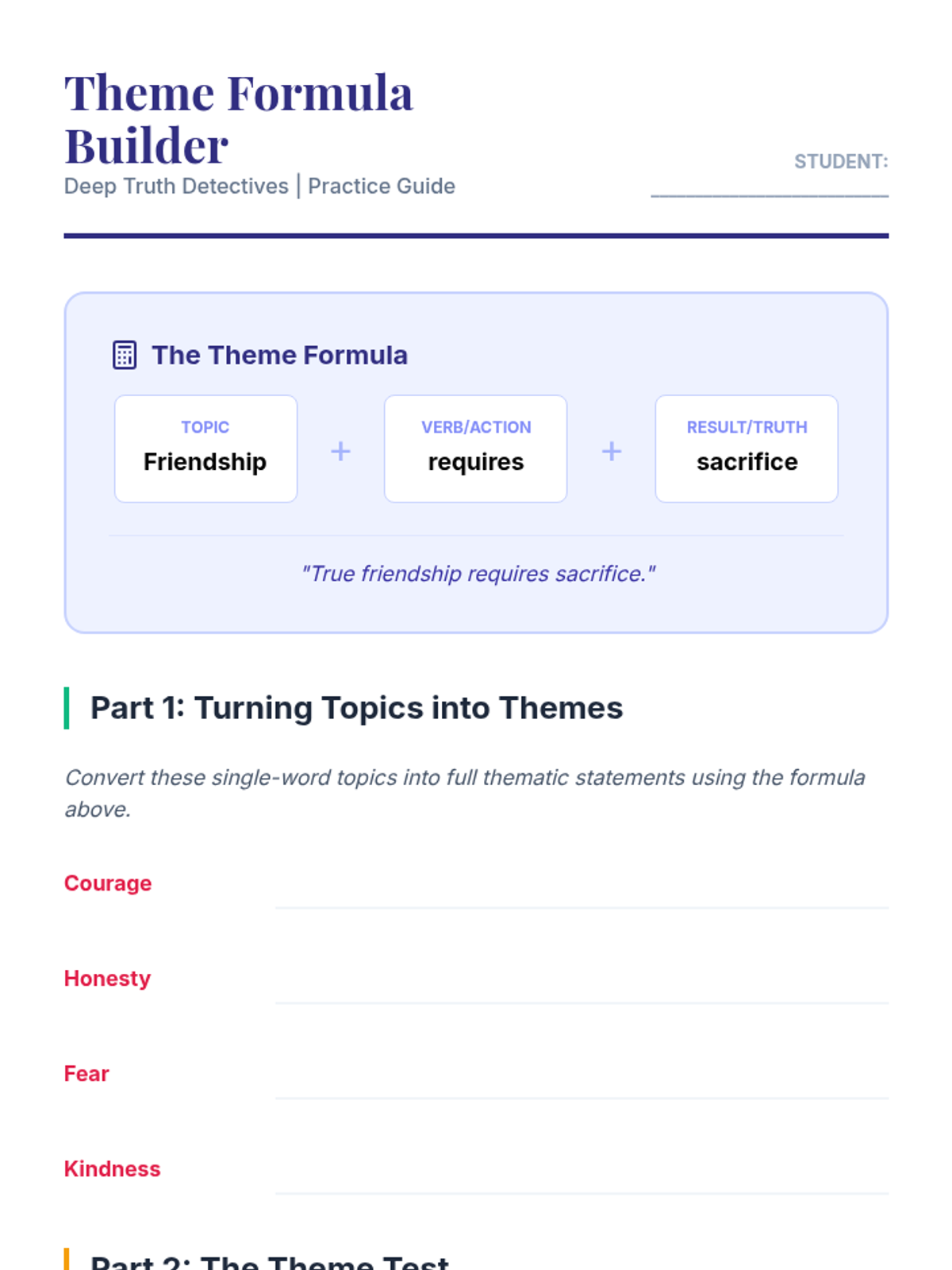
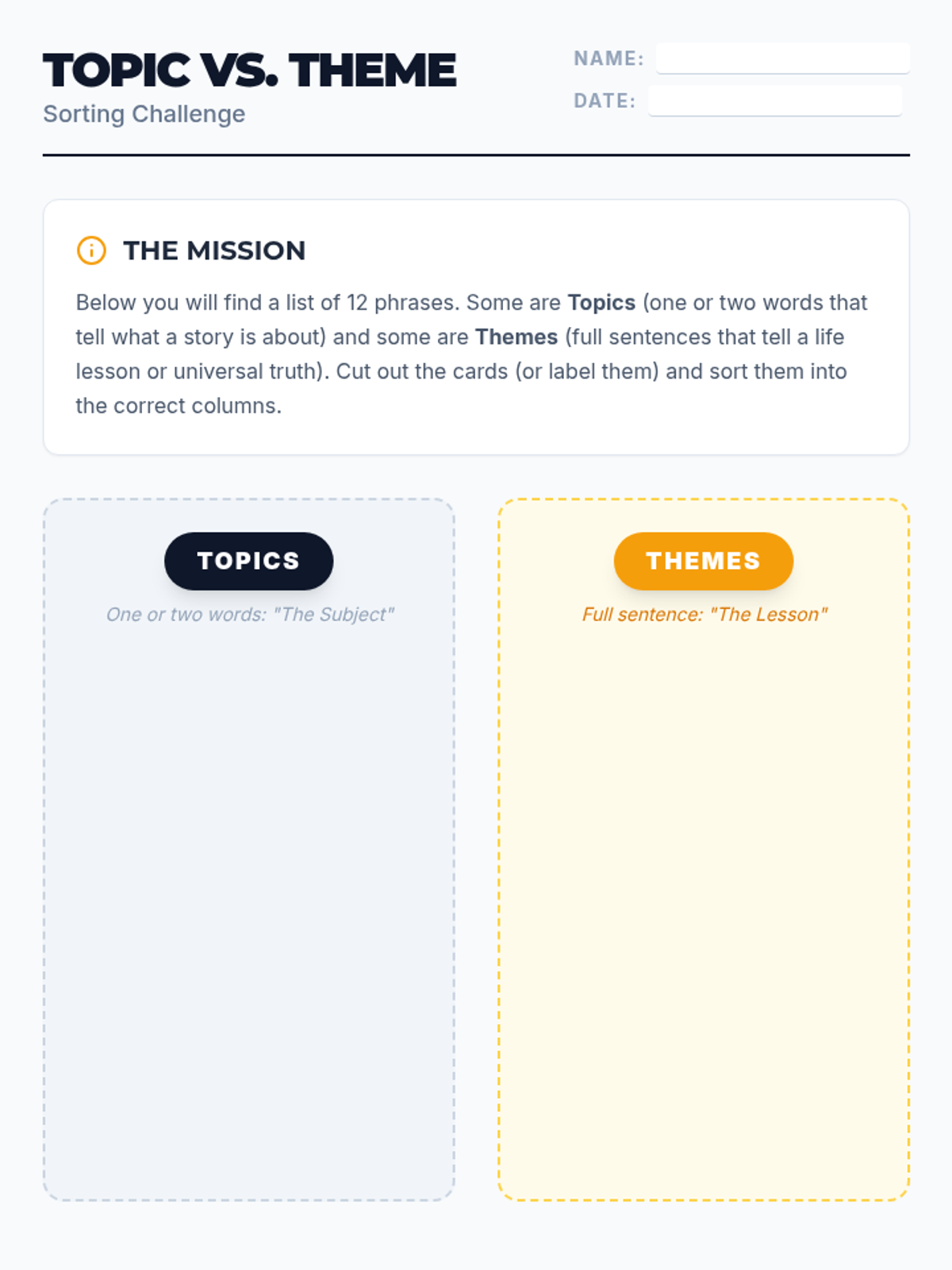
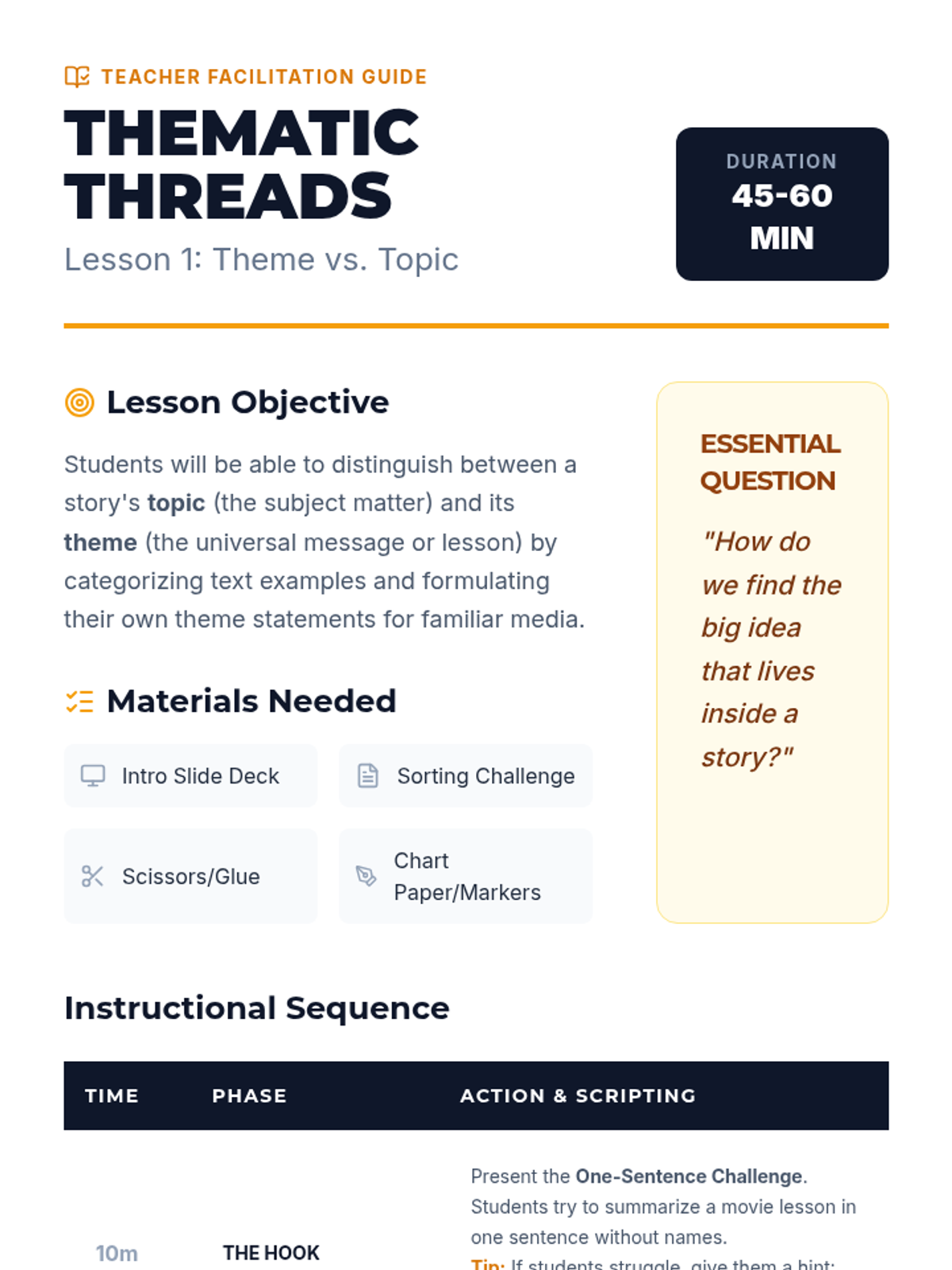
An inquiry-based 5th-grade novel study sequence focused on distinguishing topics from themes, tracking motifs, and analyzing character choices to defend thematic interpretations through Socratic seminars and writing.
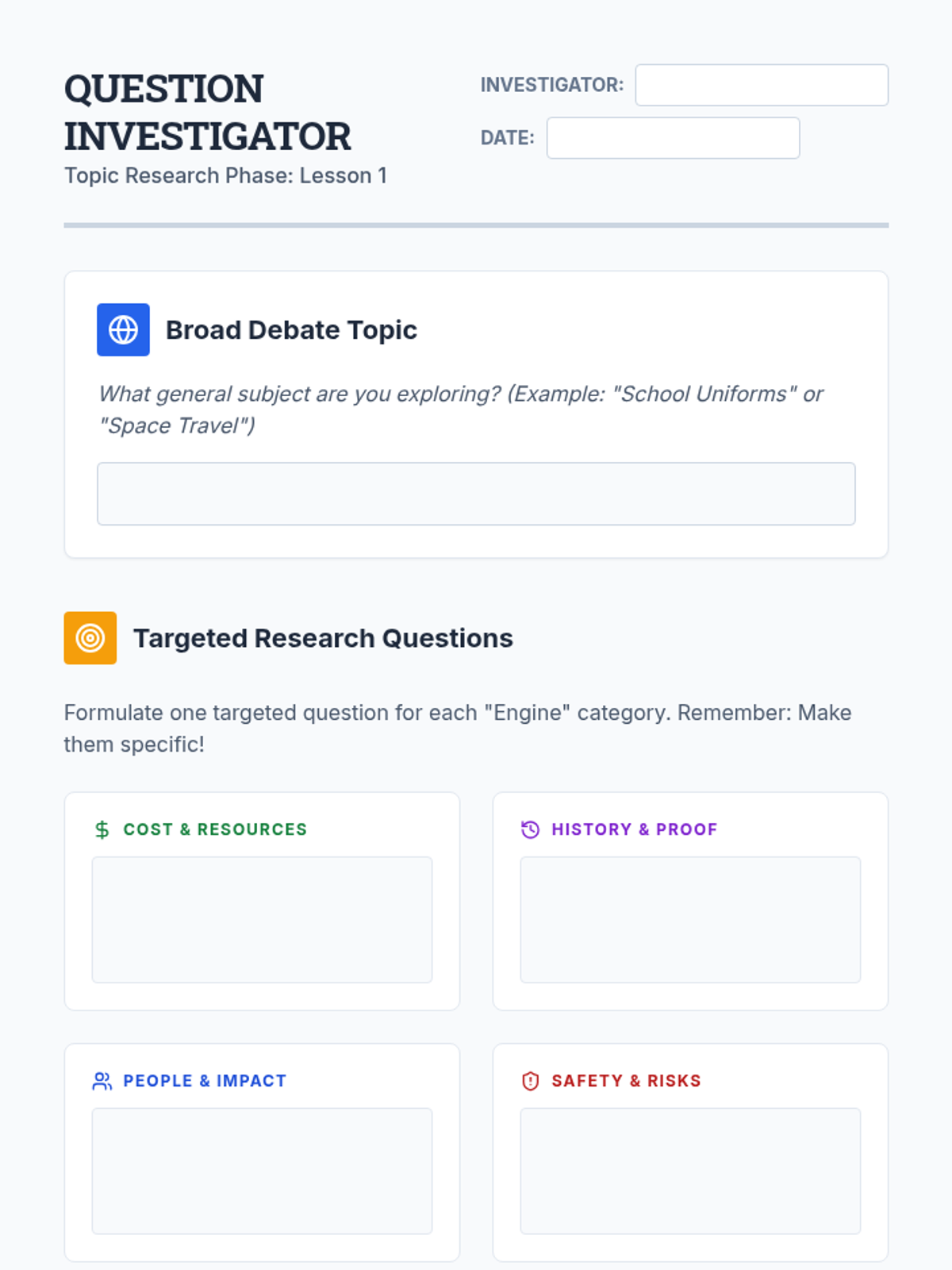
Students learn to research, synthesize, and organize evidence into a structured debate brief, moving from broad curiosity to targeted logical arguments.
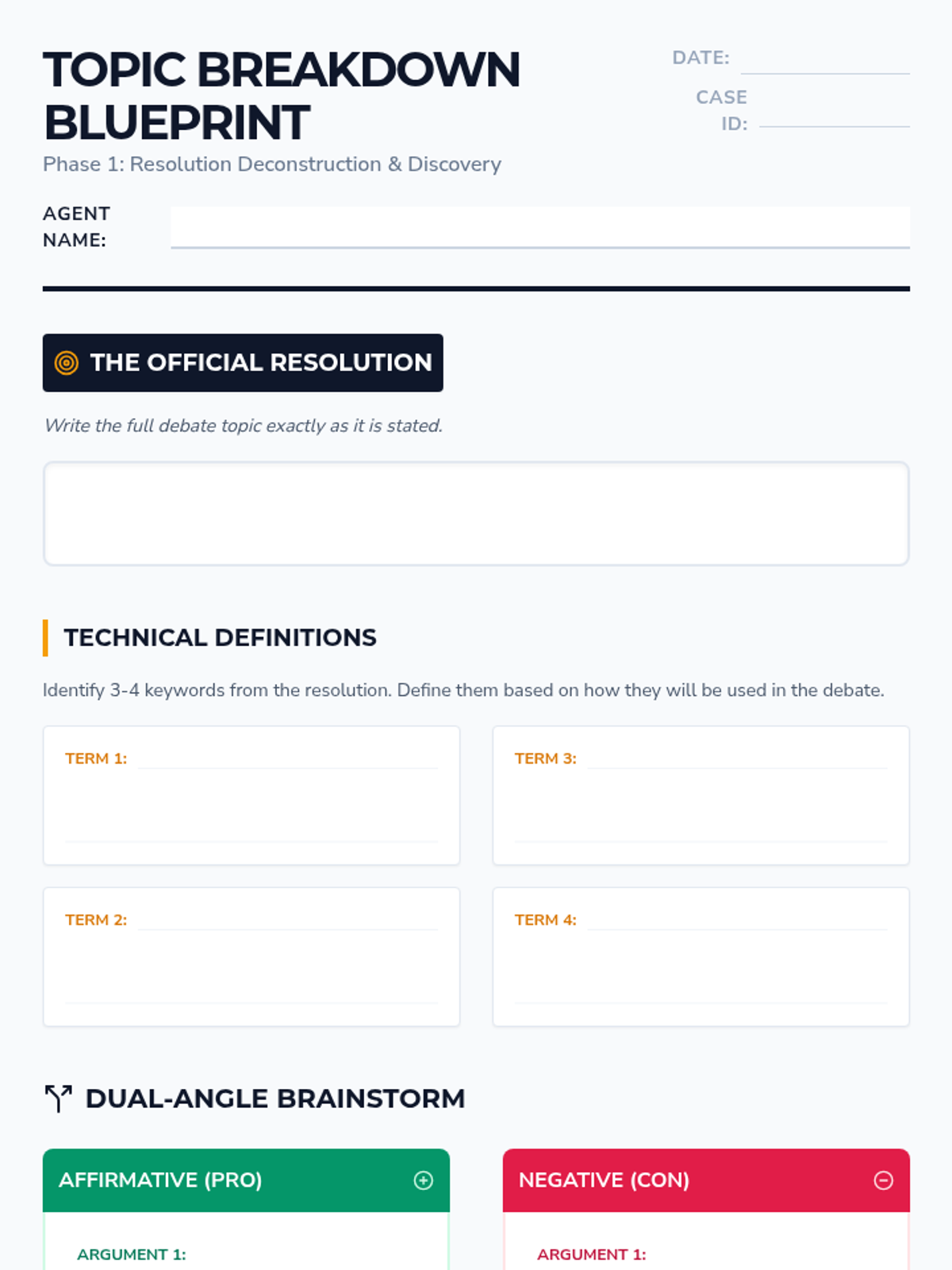
A comprehensive 5th-grade ELA sequence that guides students from analyzing a debate resolution to constructing a professional research brief. Students master the Claim-Warrant-Data framework and learn to organize evidence for effective oral advocacy.
Students move beyond finding sources to organizing scattered information into a structured debate brief. They learn to categorize evidence, rank its strength, and group facts into cohesive reasons to build a powerful argument.
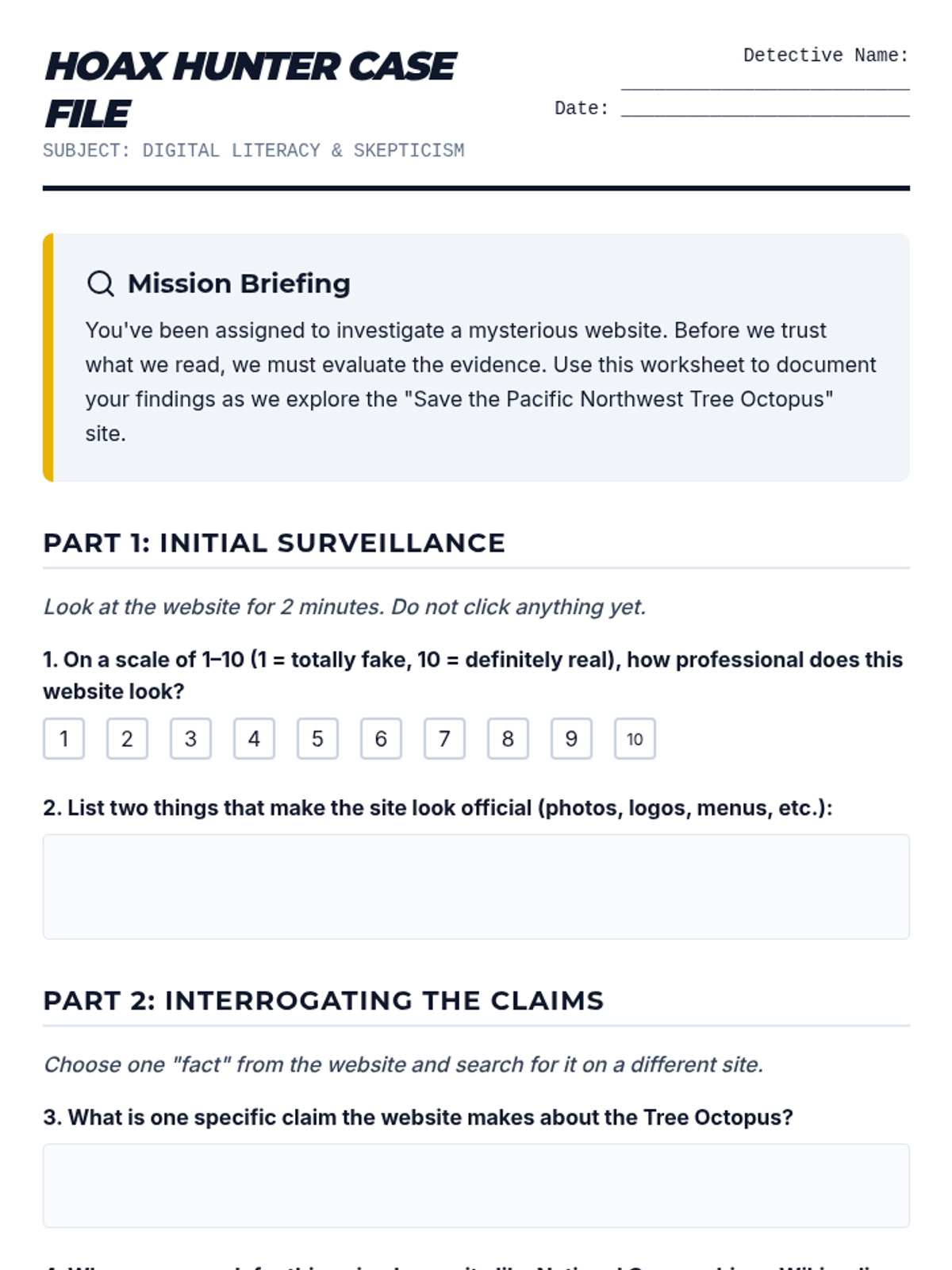
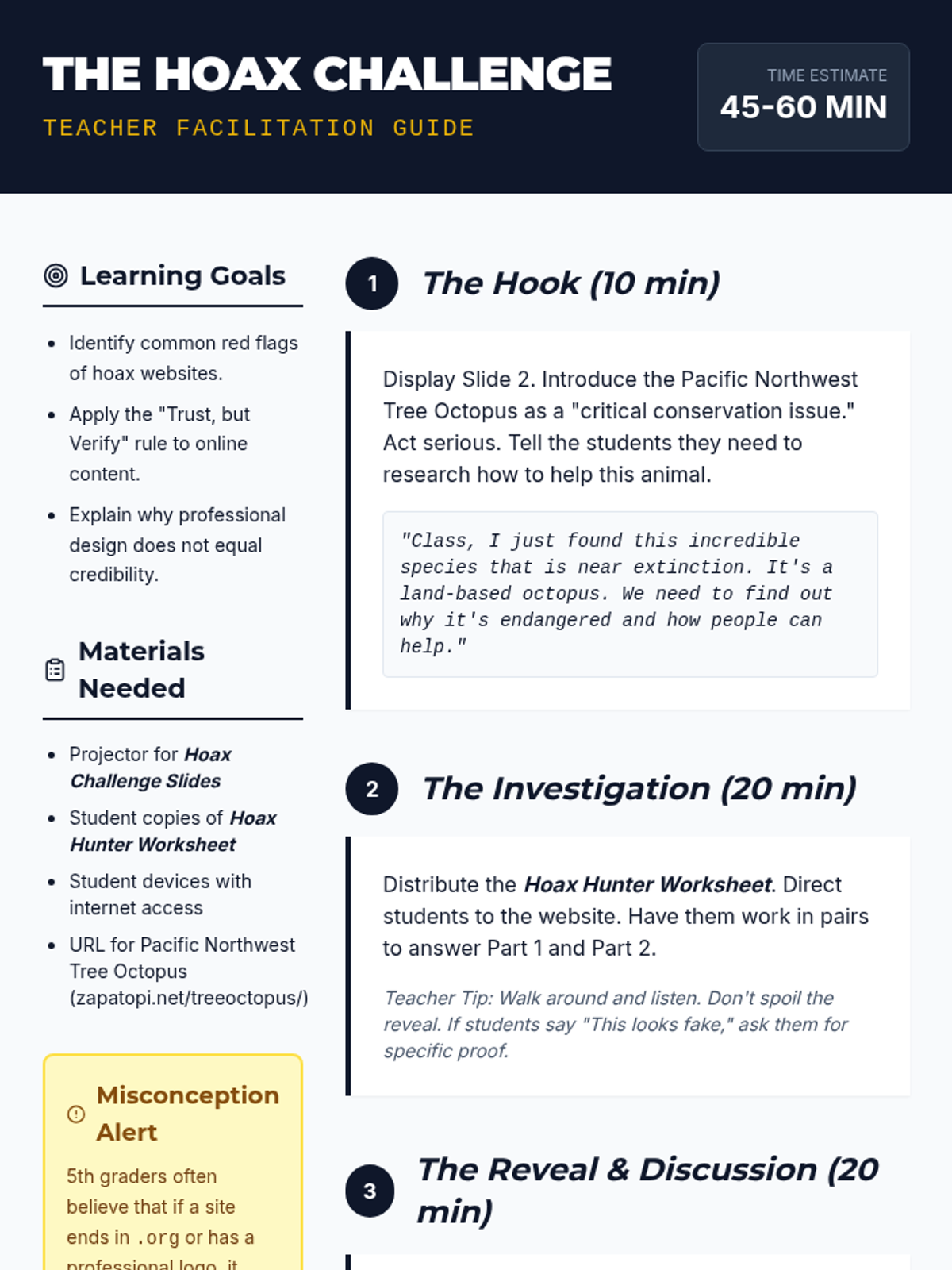
A 5-lesson inquiry-based sequence for 5th graders to master digital literacy and source evaluation for debate. Students transition from being easily fooled by hoaxes to becoming 'Digital Detectives' who can curate credible evidence using a rubric.
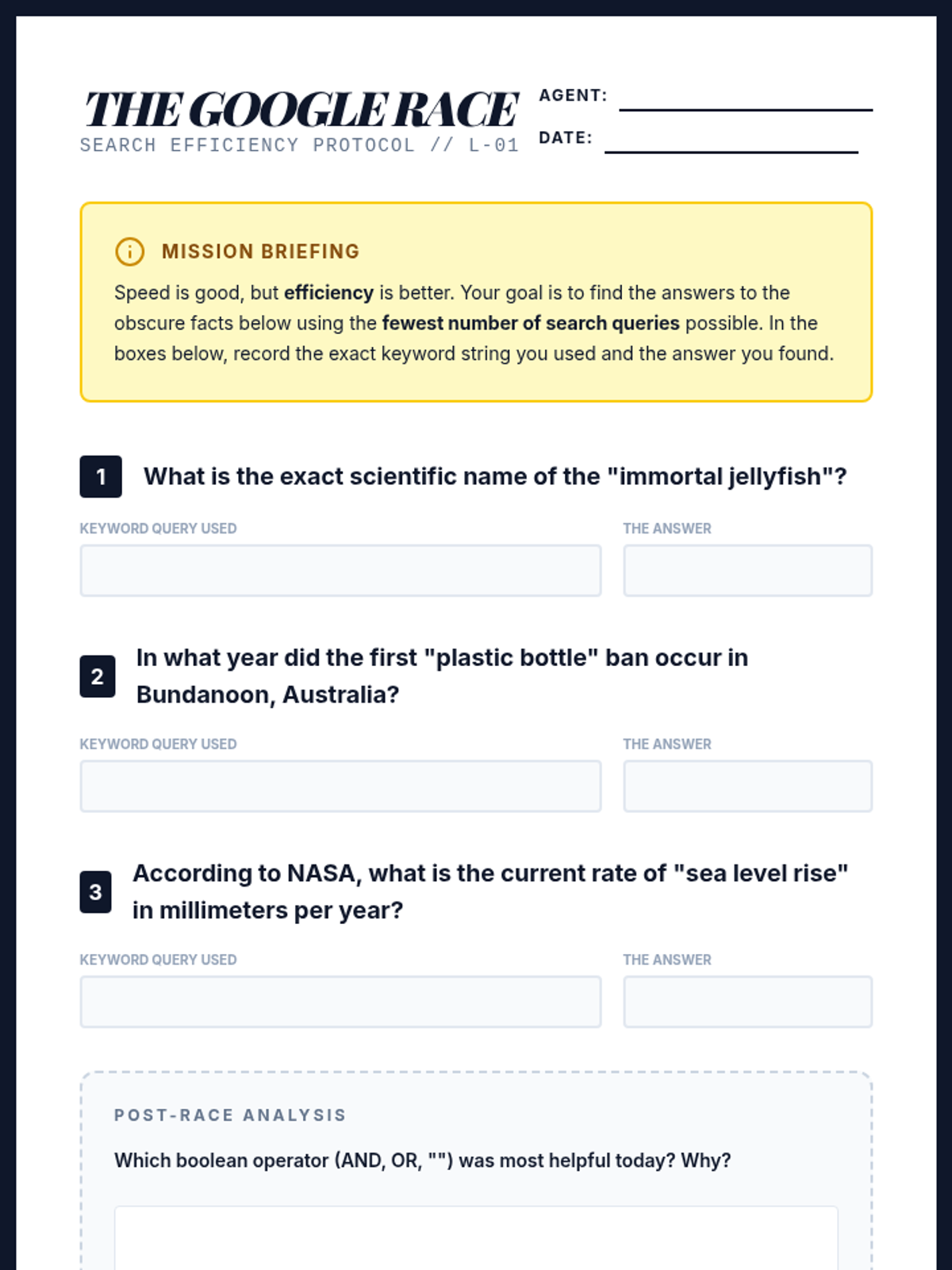
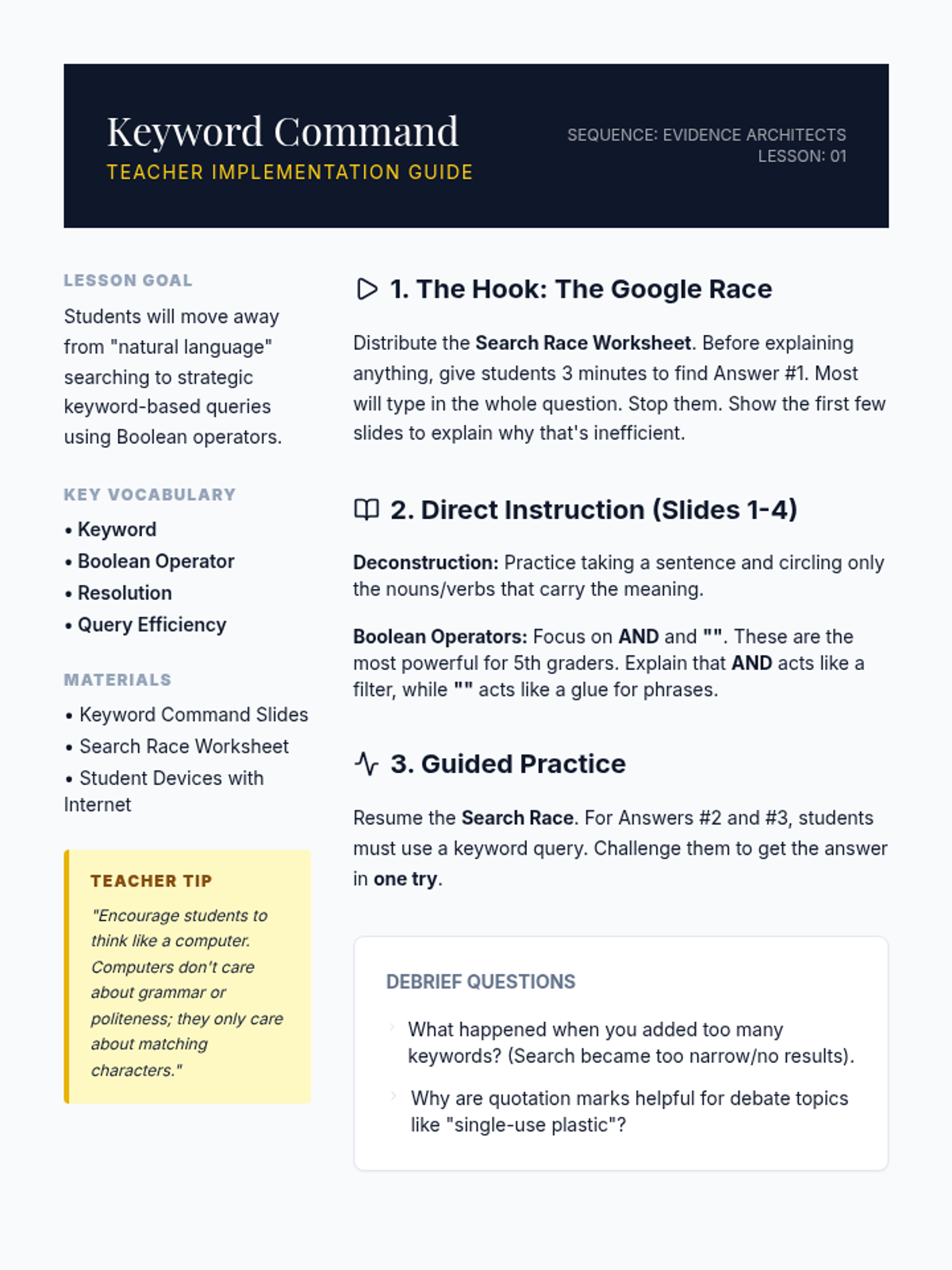
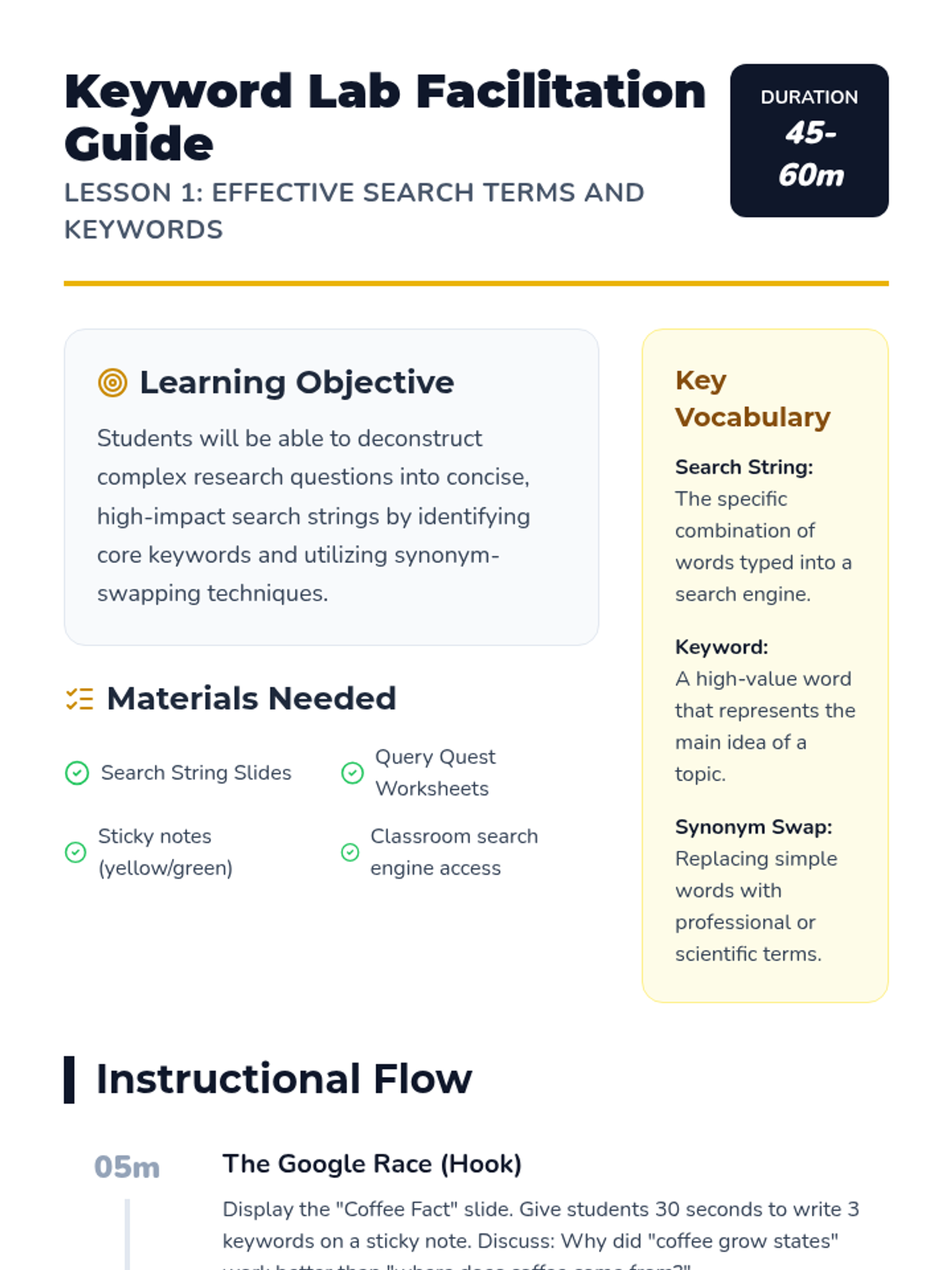
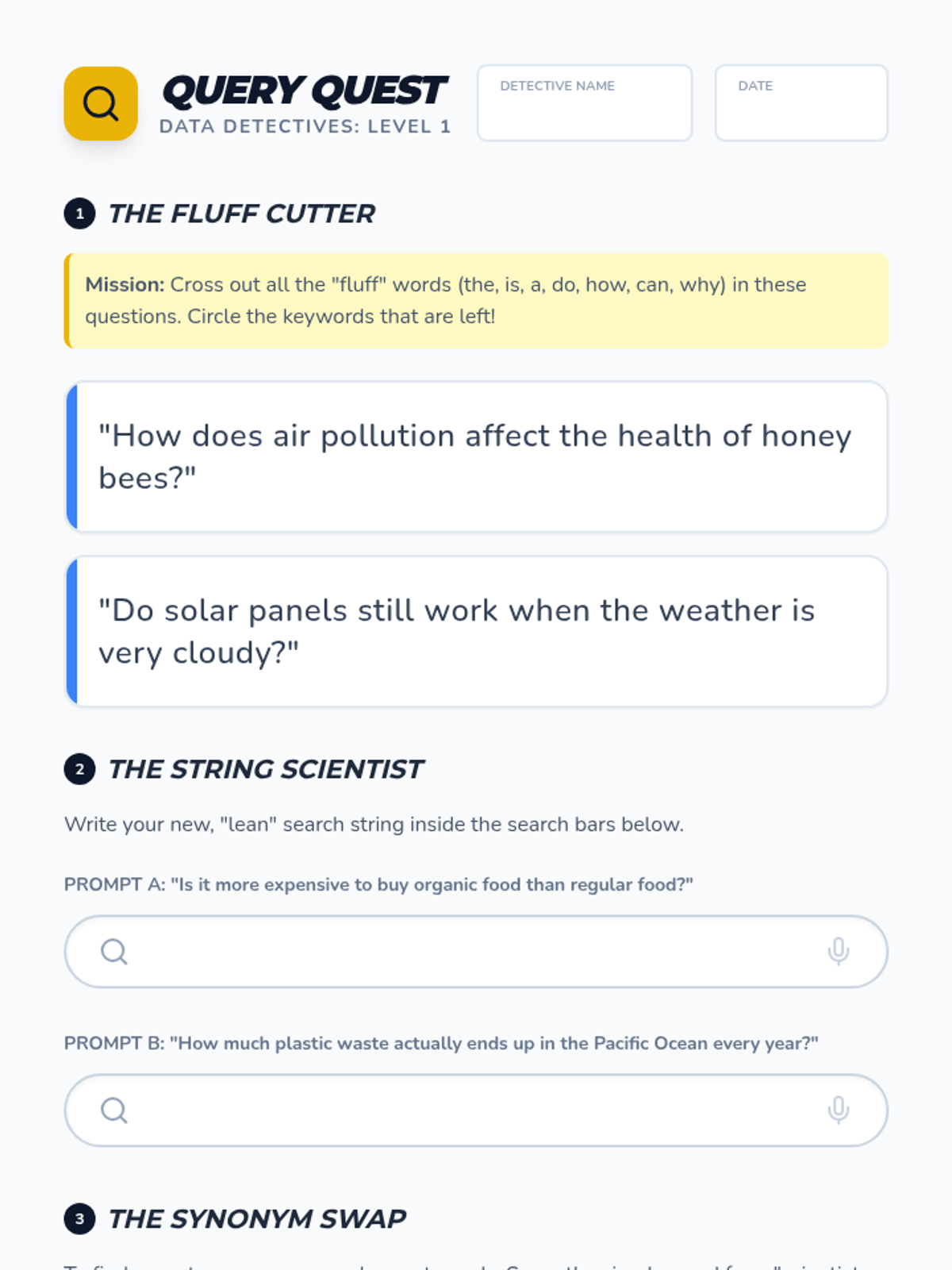
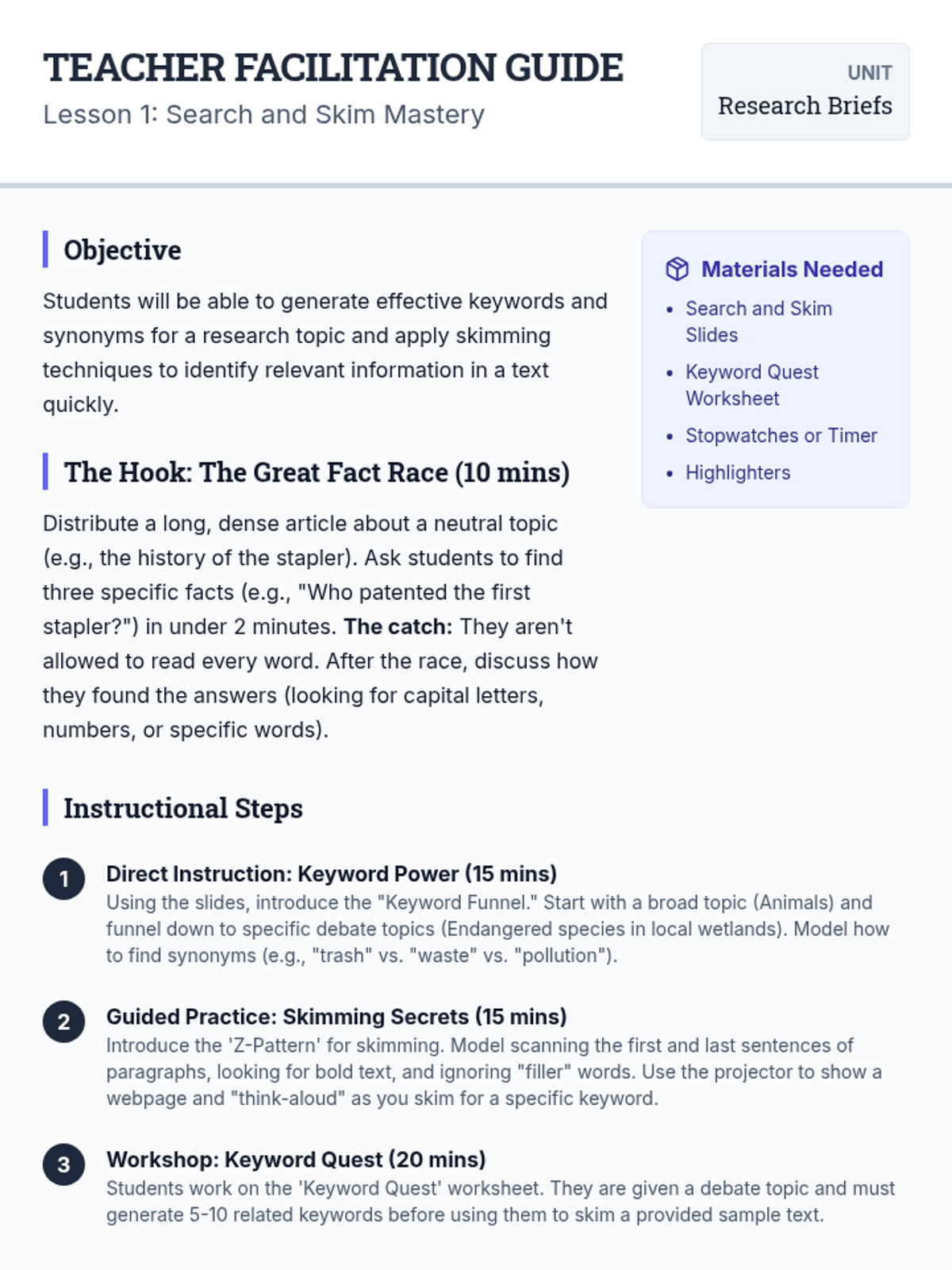
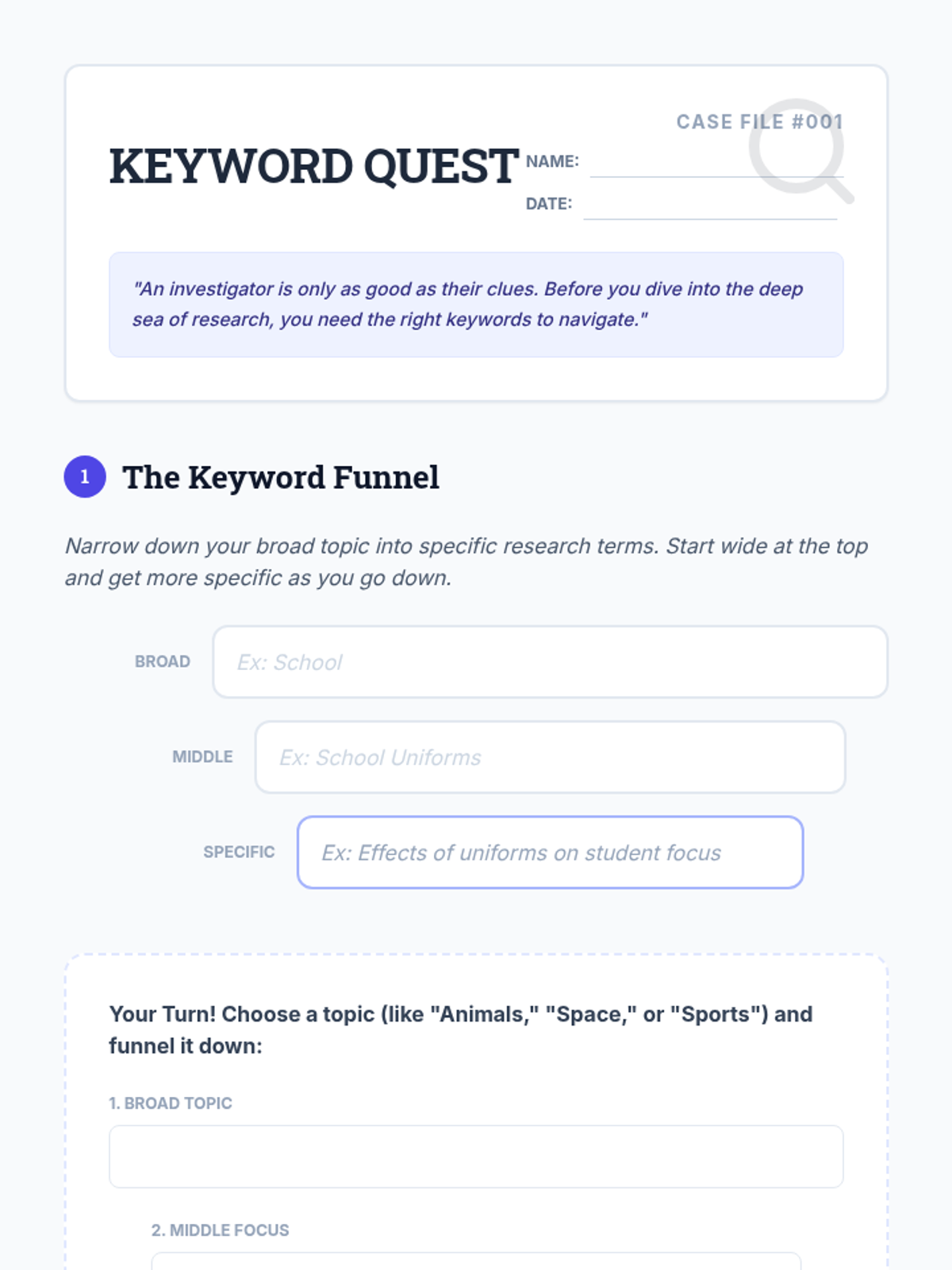
This workshop-style sequence moves 5th-grade students from basic information gathering to sophisticated research organization. Students learn to master keyword strategies, extract data through skimming and scanning, categorize evidence into thematic 'buckets', and synthesize findings into a professional Debate Brief.
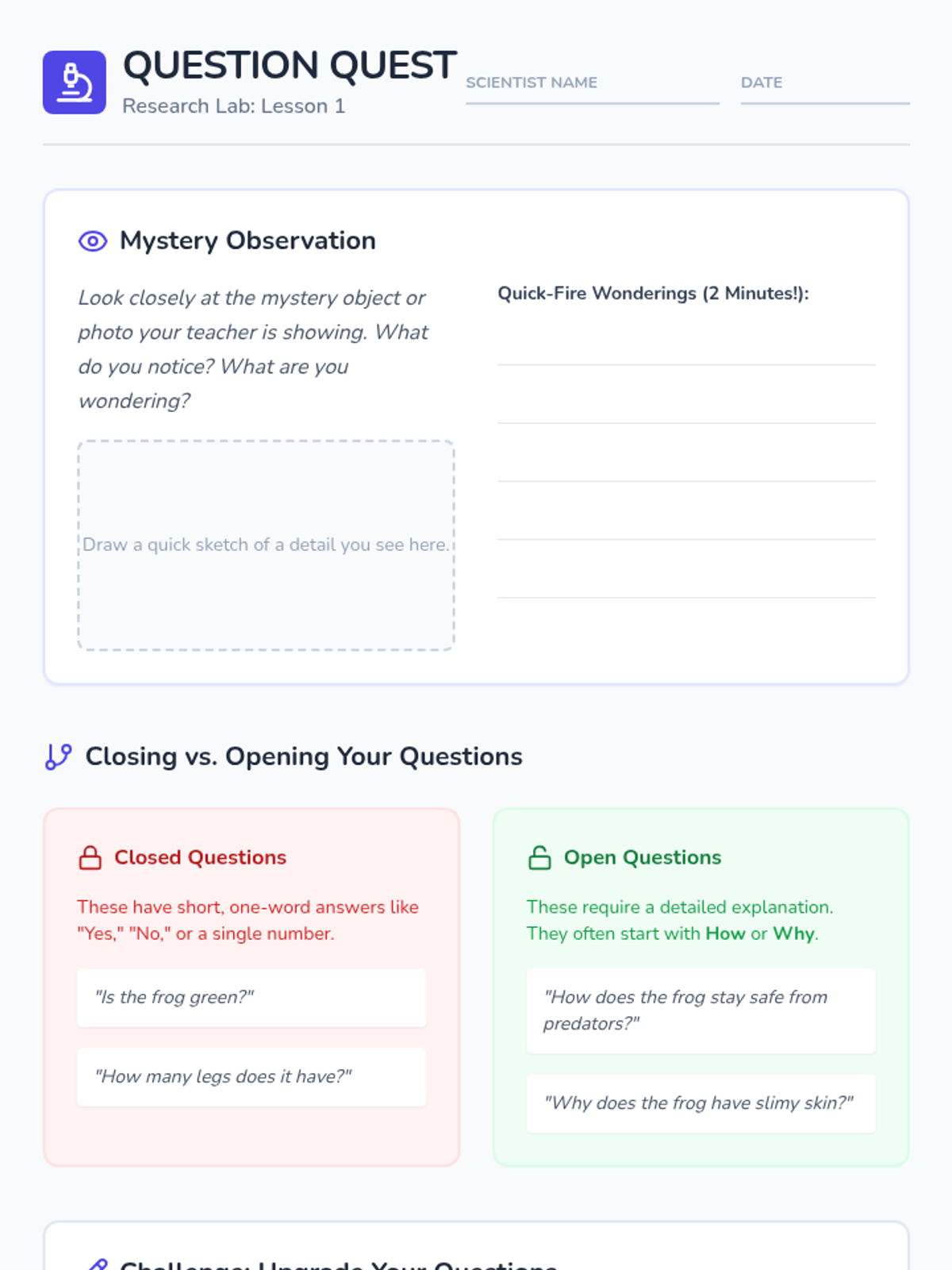
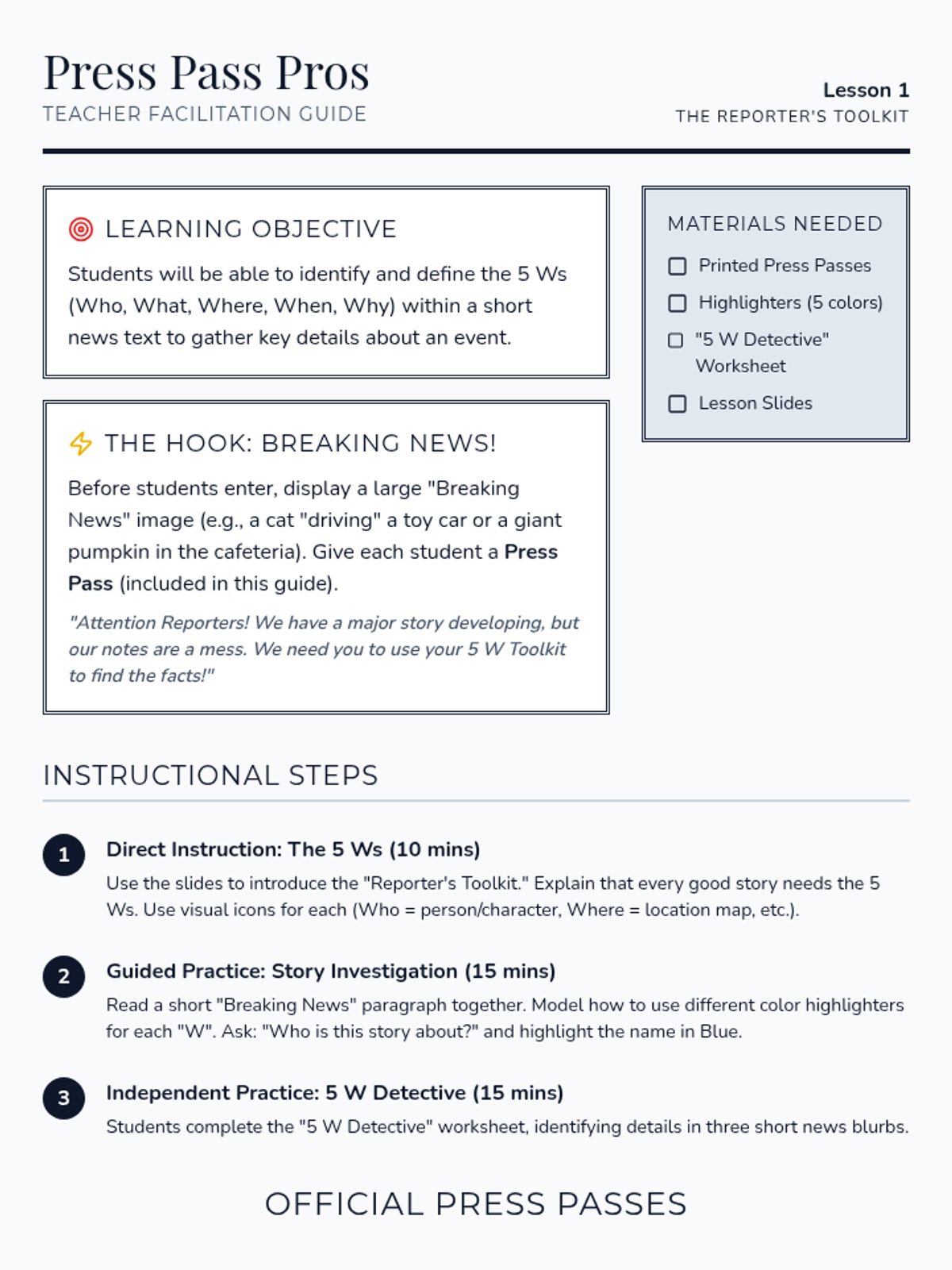
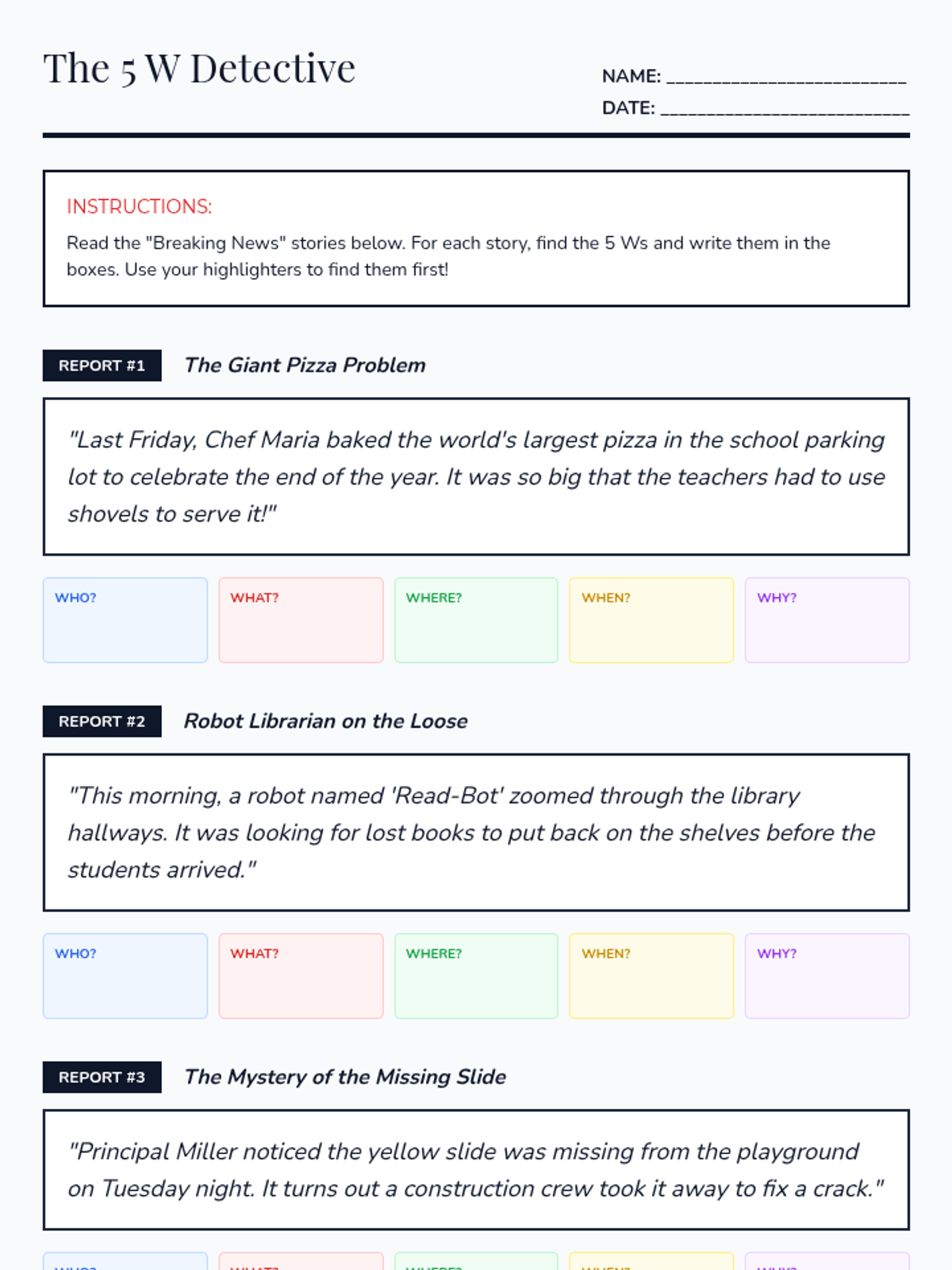
Students take on the role of junior reporters to master question words (Who, What, Where, When, Why, How). They move from analyzing news stories to conducting peer interviews and presenting a final news report, developing research, writing, and oral communication skills.
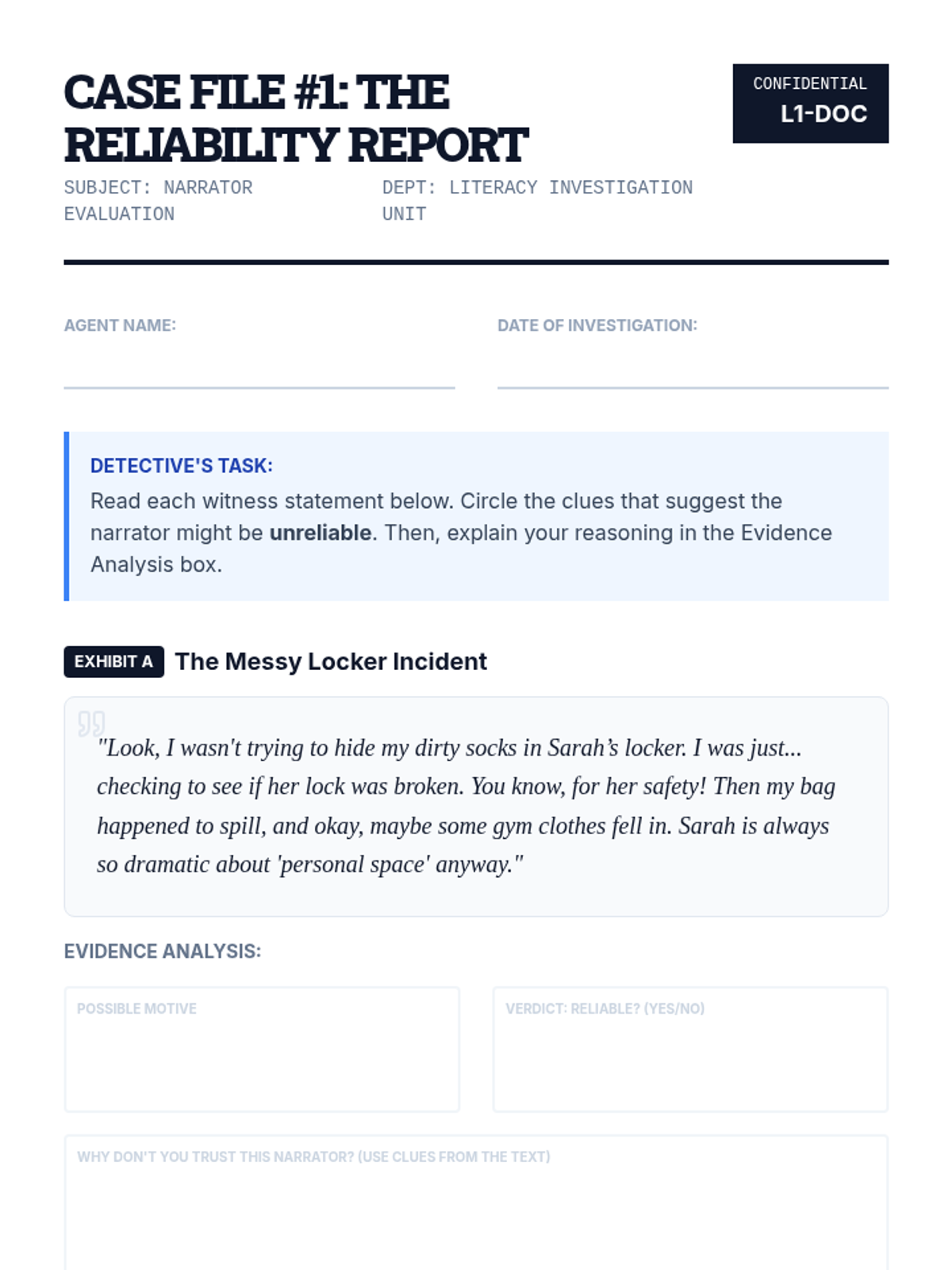
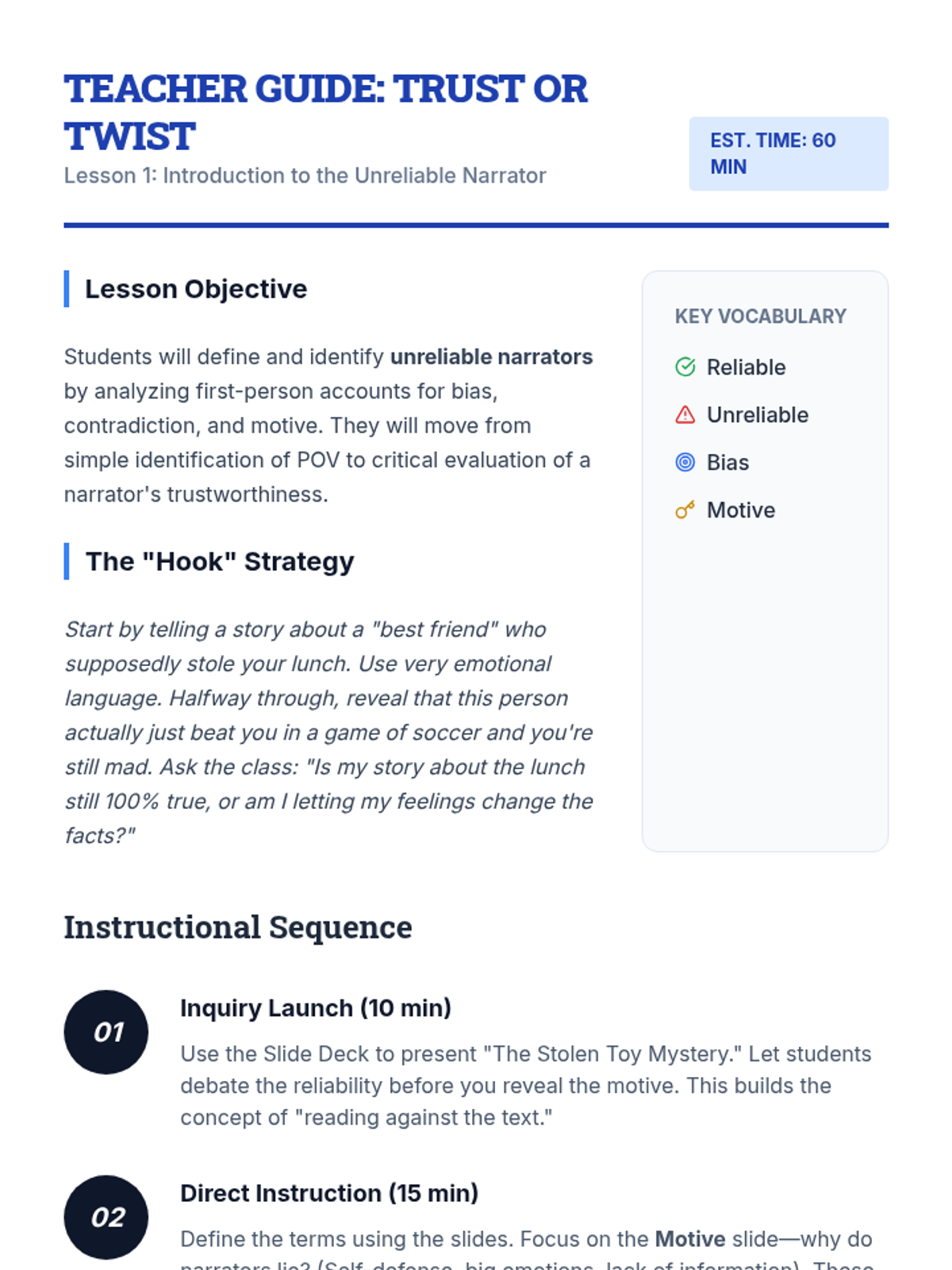
This inquiry-based sequence explores narrator reliability and bias, challenging 5th-grade students to evaluate who is telling a story and why. Through investigative activities and textual analysis, students learn to detect loaded language and synthesize conflicting viewpoints.
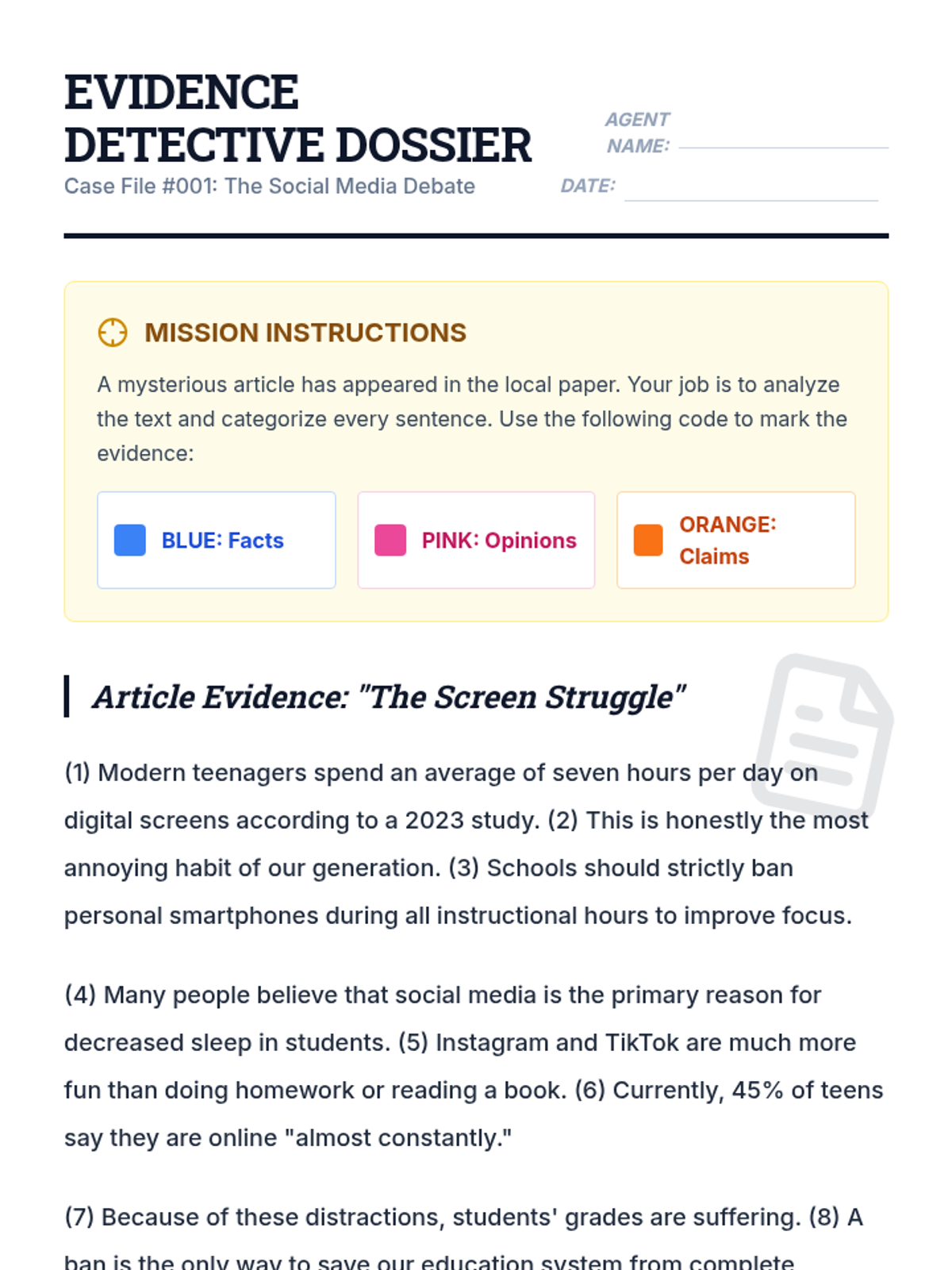
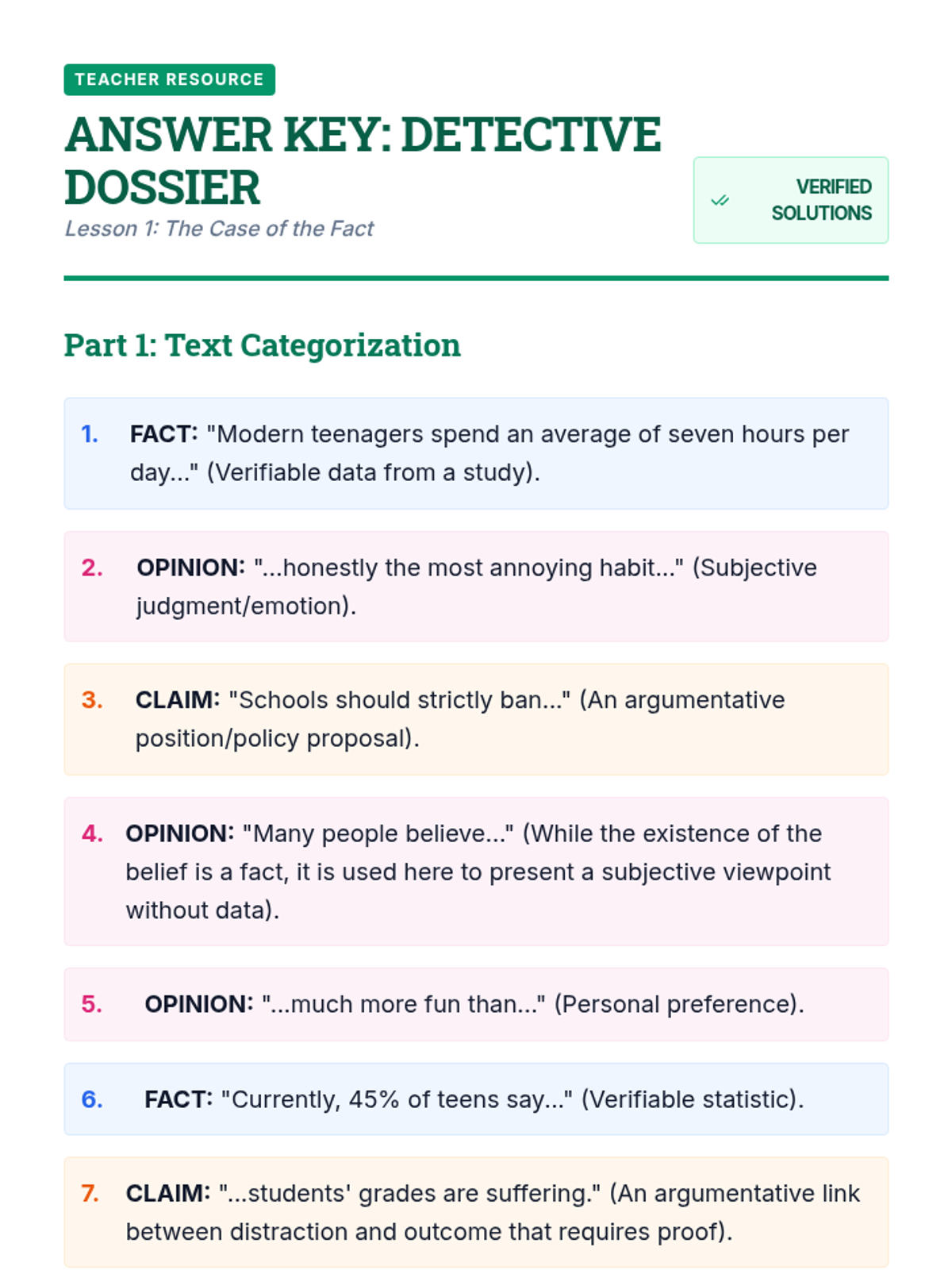
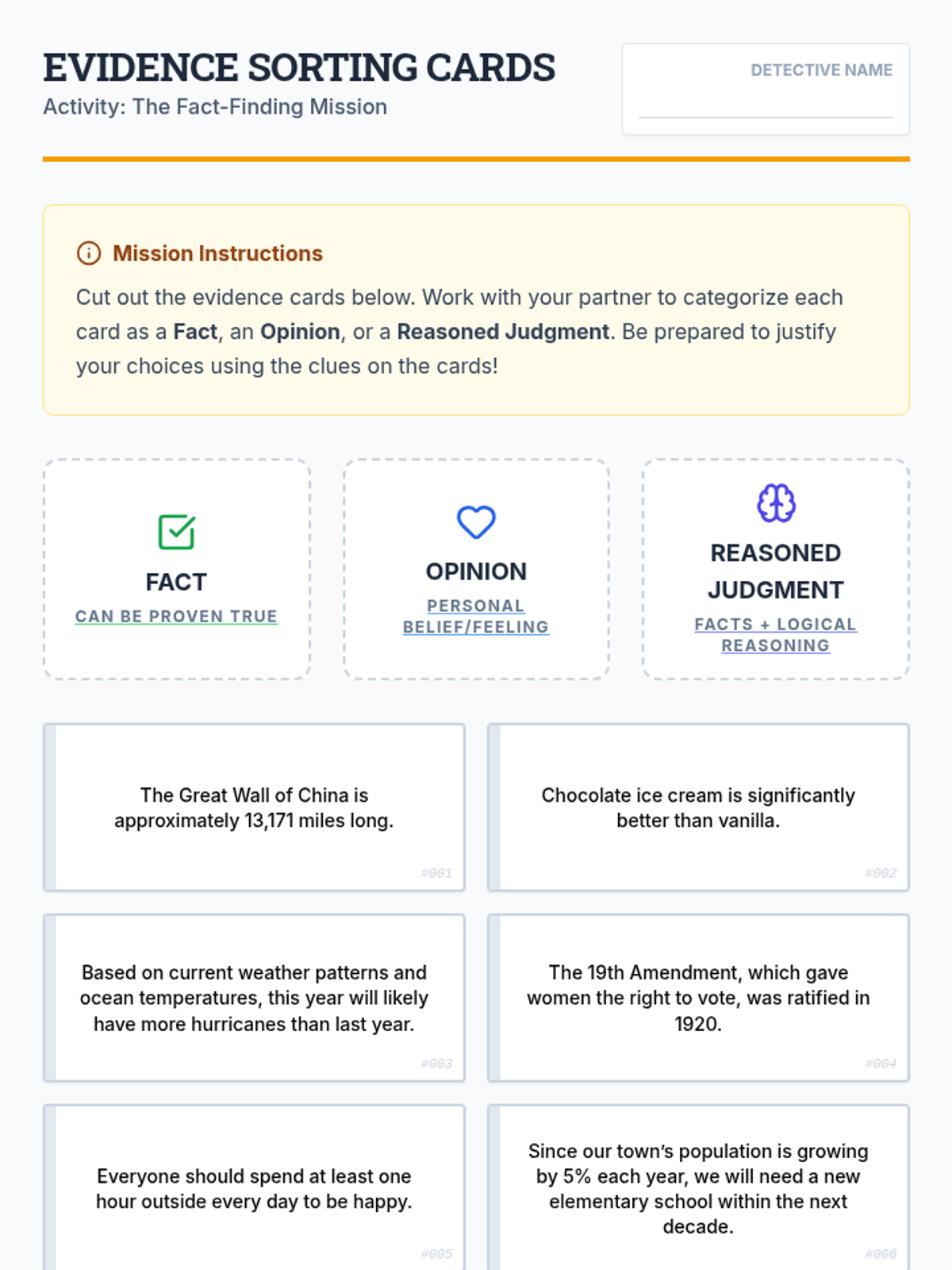
This sequence guides 6th-grade students through the process of identifying, categorizing, and evaluating evidence for debate. Students progress from distinguishing facts from opinions to masterfully ranking the quality of evidence based on authority, relevance, and recency.
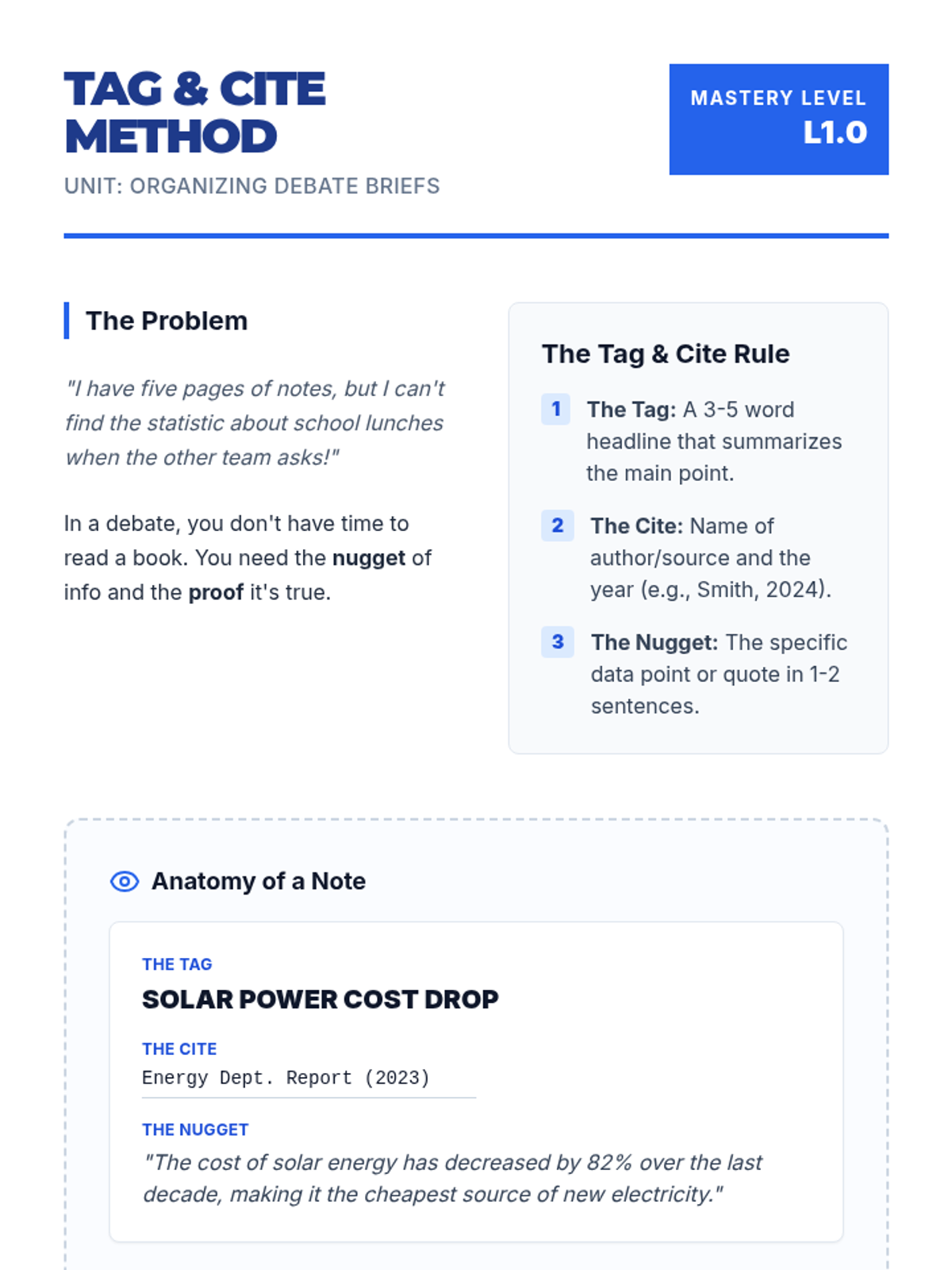
A sequence for 6th-grade students focused on transforming raw research into organized debate briefs using the 'Tag and Cite' method and the SEP categorization framework. Students learn to structure arguments through the Claim-Warrant-Data-Impact model and practice rapid information retrieval.
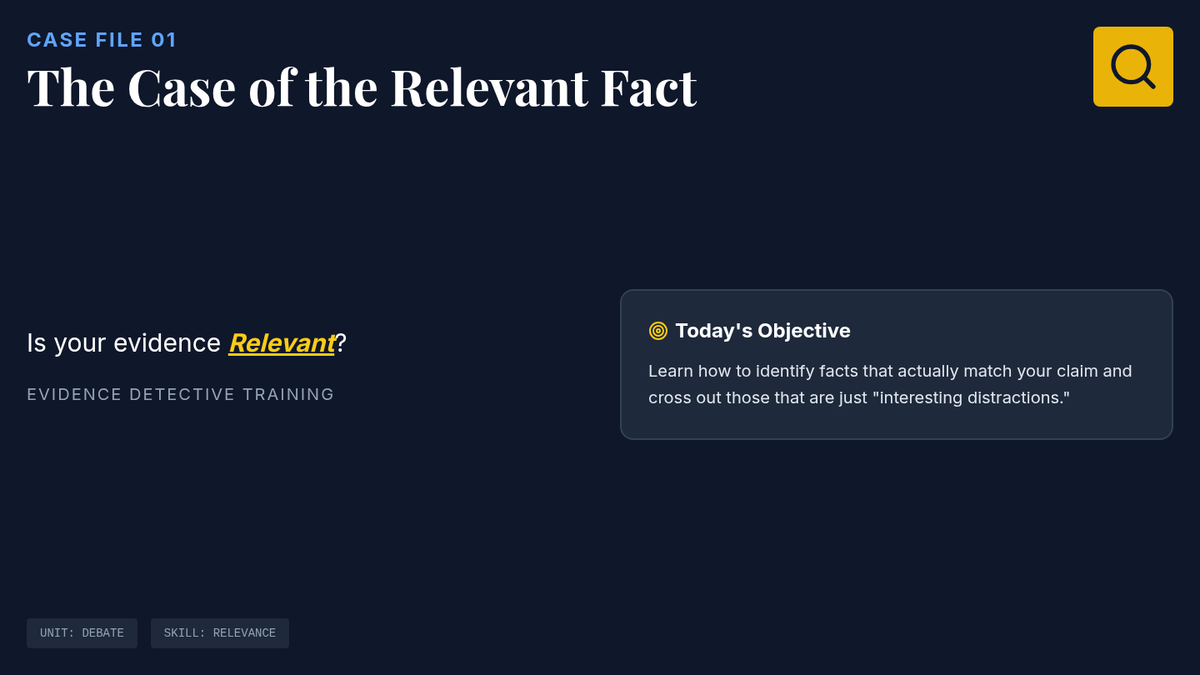
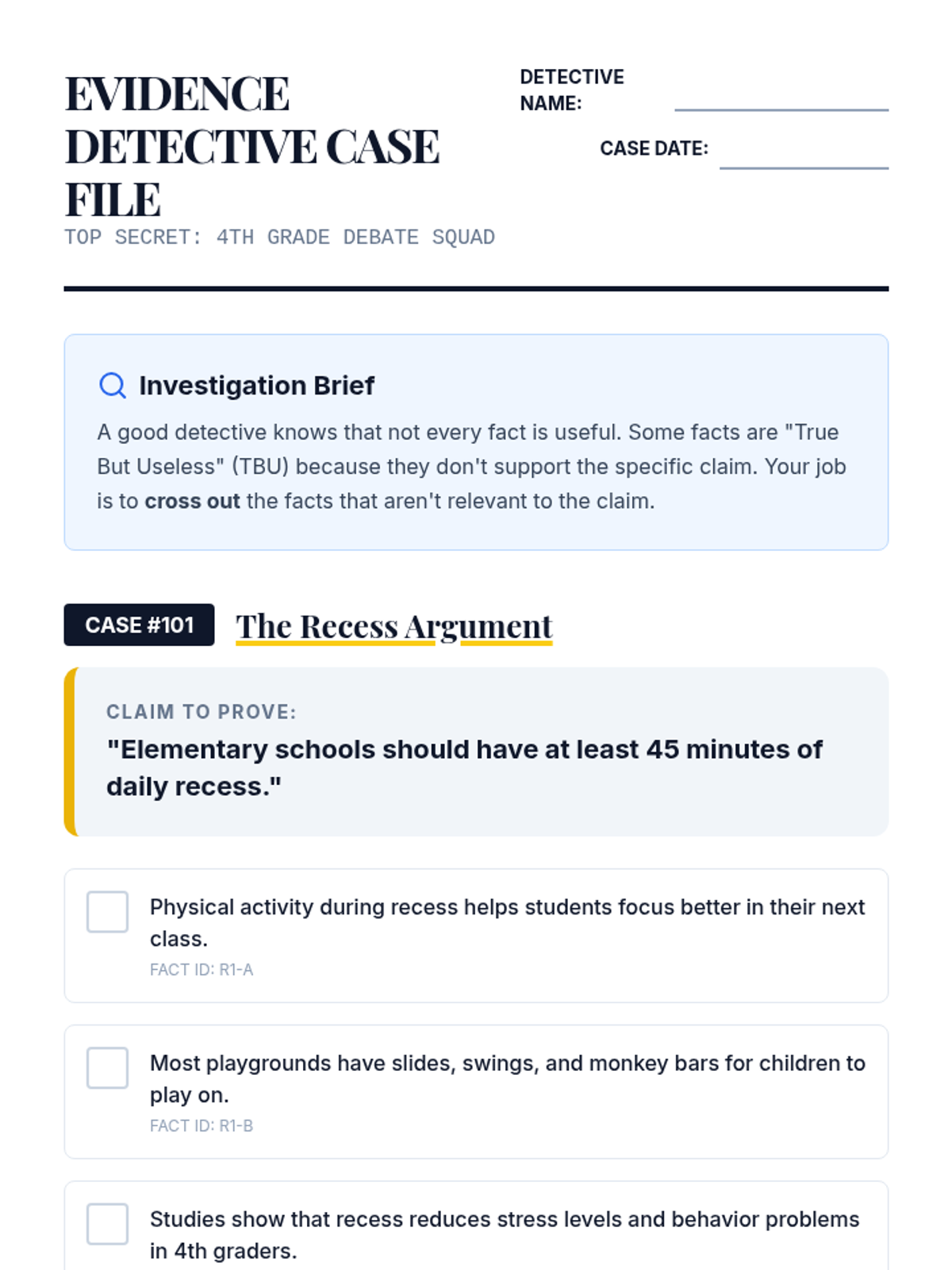
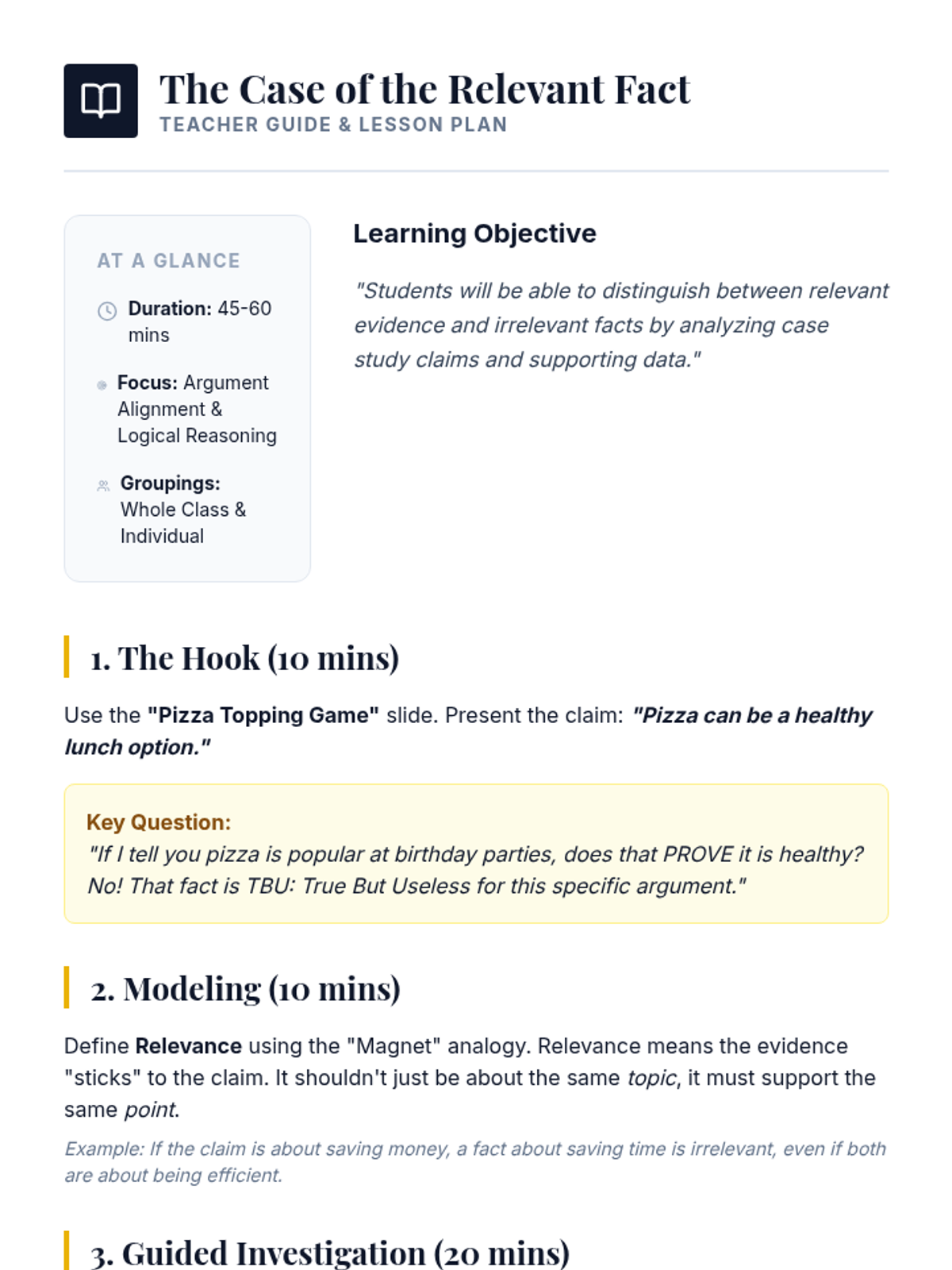
A detective-themed sequence where students become 'Evidence Detectives' to investigate, analyze, and rank the strength of research for debate. Through case studies and games, students learn to distinguish between relevant facts, anecdotes, and statistical data.
A comprehensive 4th-grade sequence on research mechanics for debate, covering search strategies, skimming, paraphrasing, quoting, and organization. Students move from raw data to 'clean', ready-to-use debate notes while maintaining academic integrity.
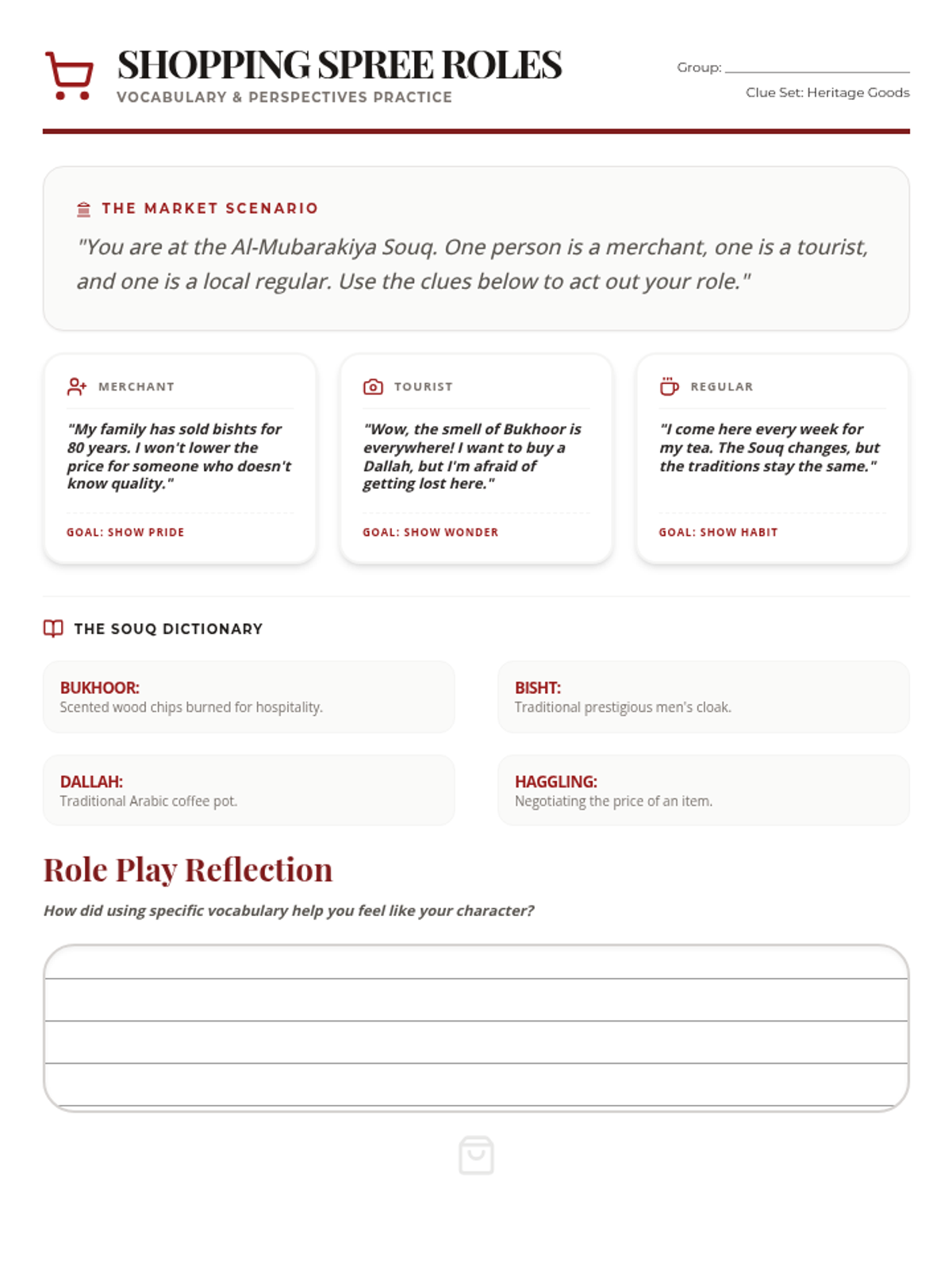
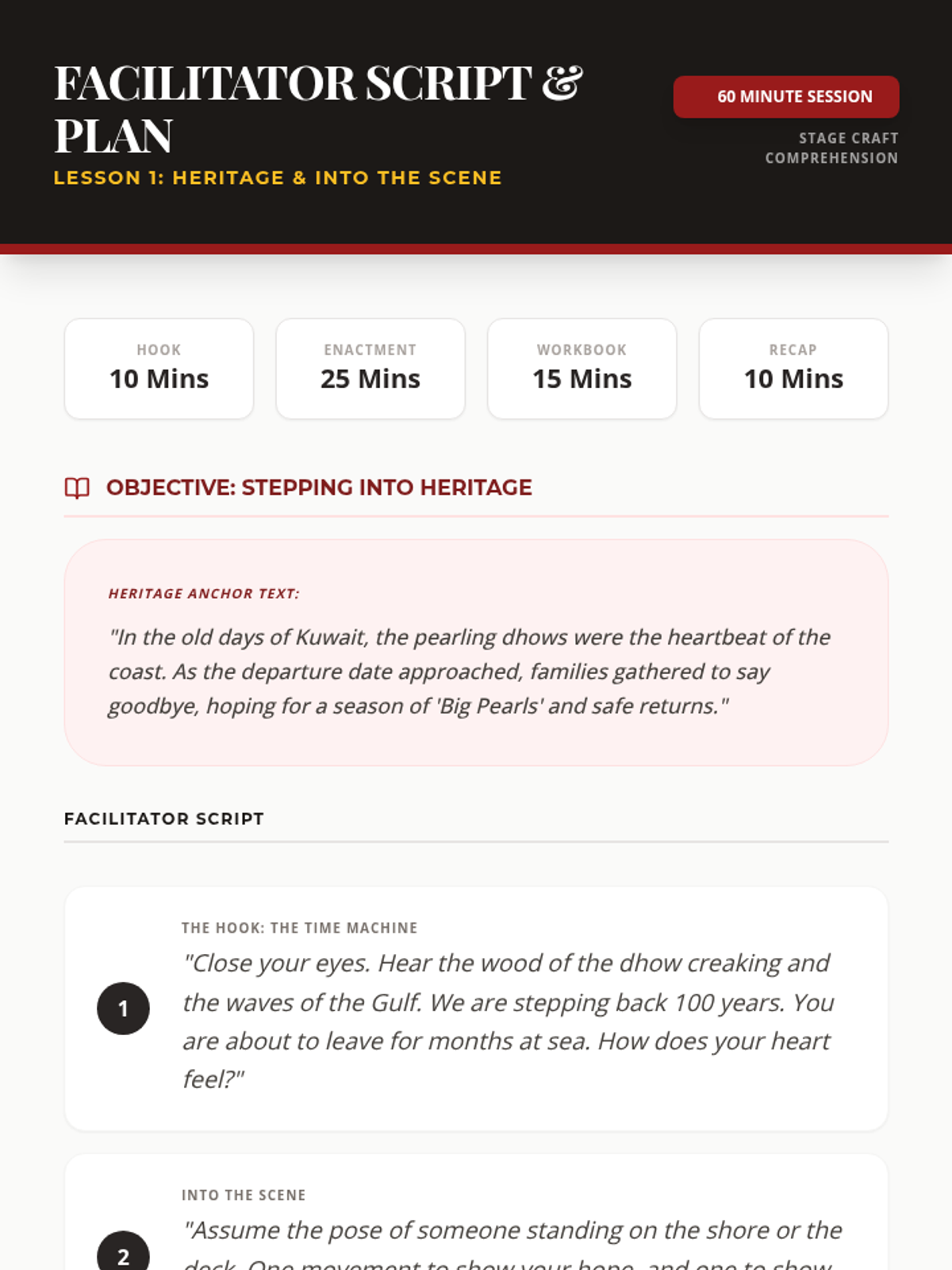
A 12-lesson unit utilizing drama and enactment techniques to deepen reading comprehension, themed around Kuwaiti heritage, global travel, healthy lifestyles, and environmental science for grades 3-8. Focused on skills in action across Before, During, and After reading phases.
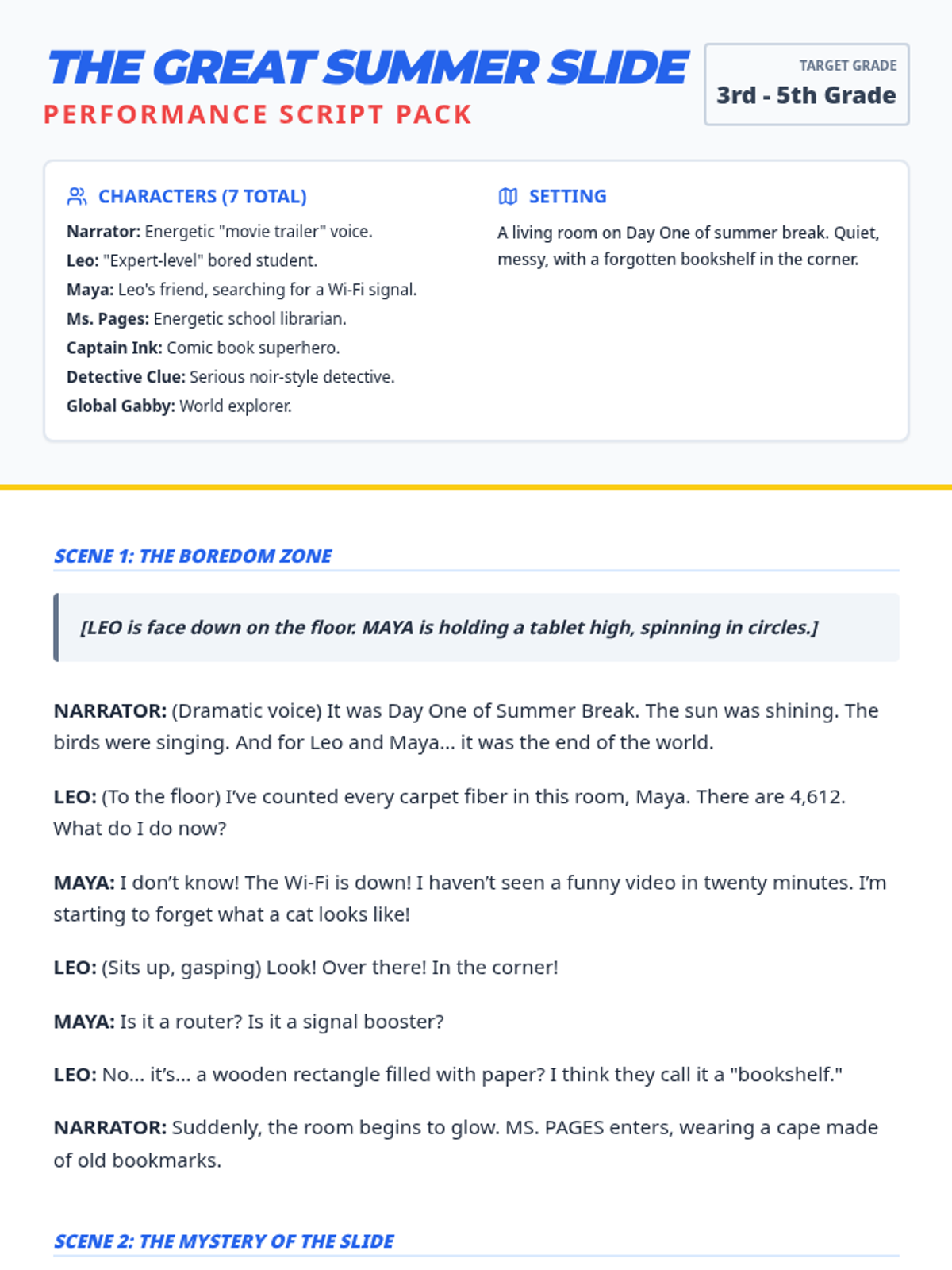
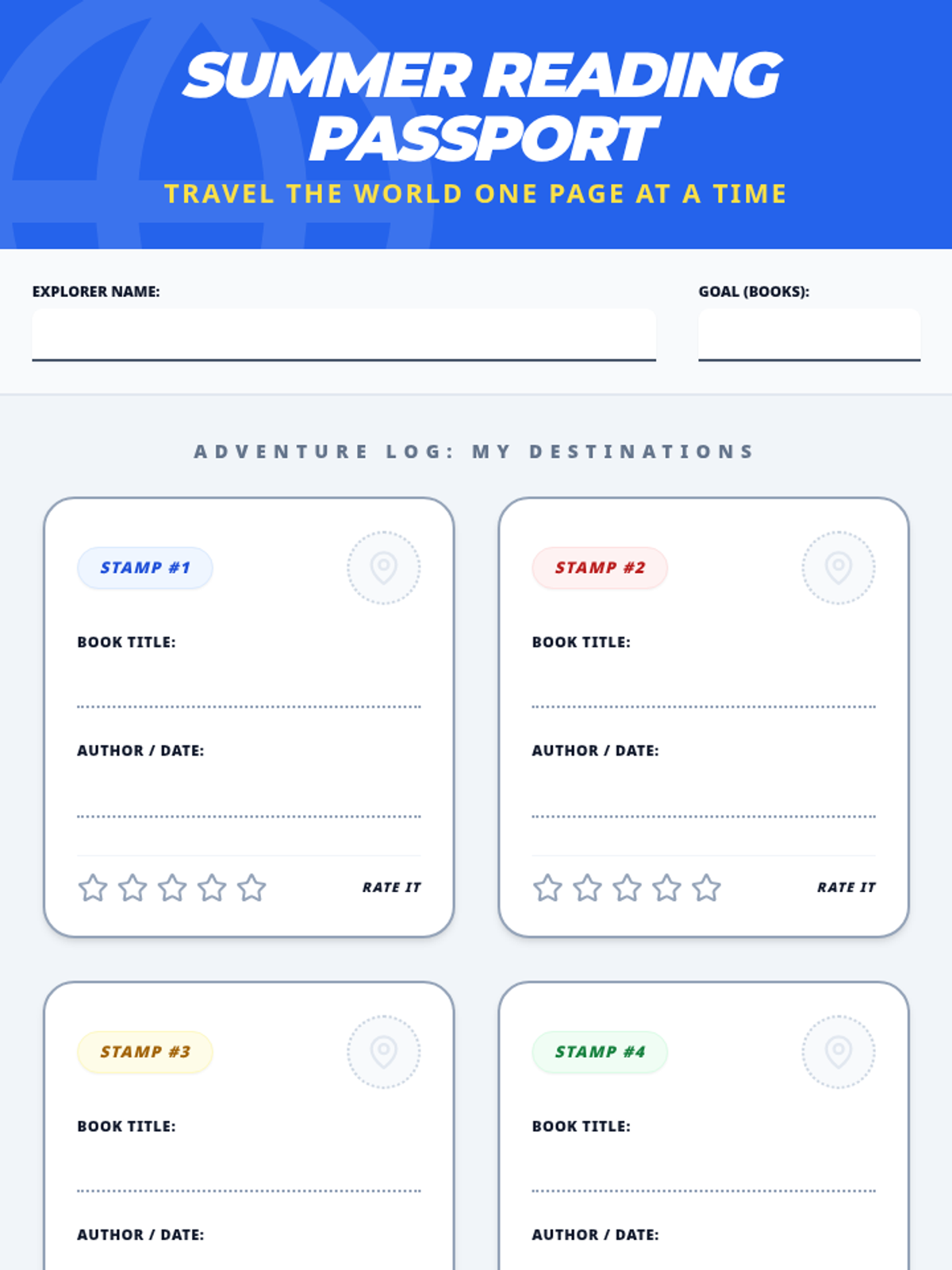
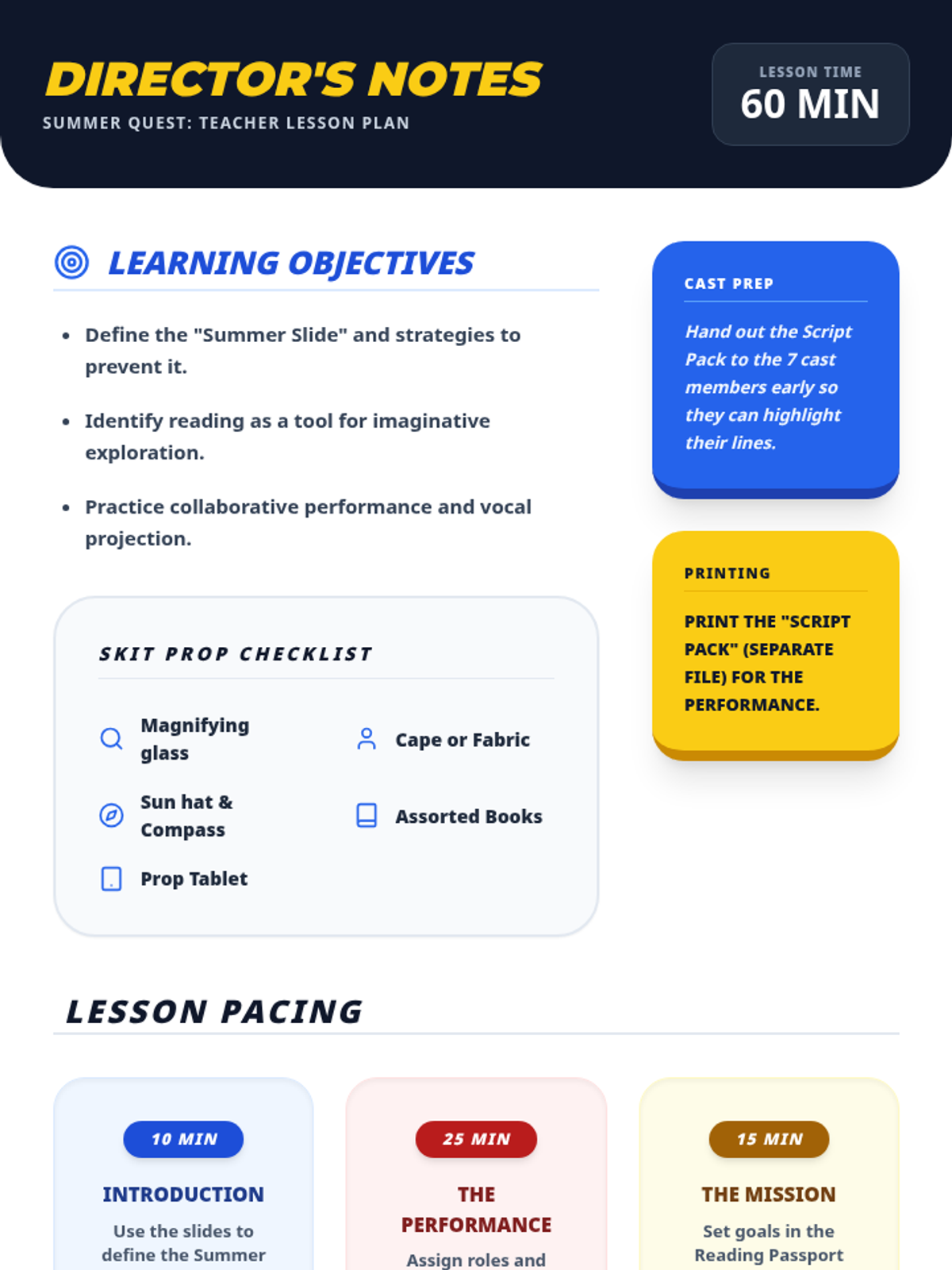
A high-energy educational sequence designed to motivate 3rd-5th grade students to maintain reading habits over summer break through drama, visual storytelling, and personal goal-setting.
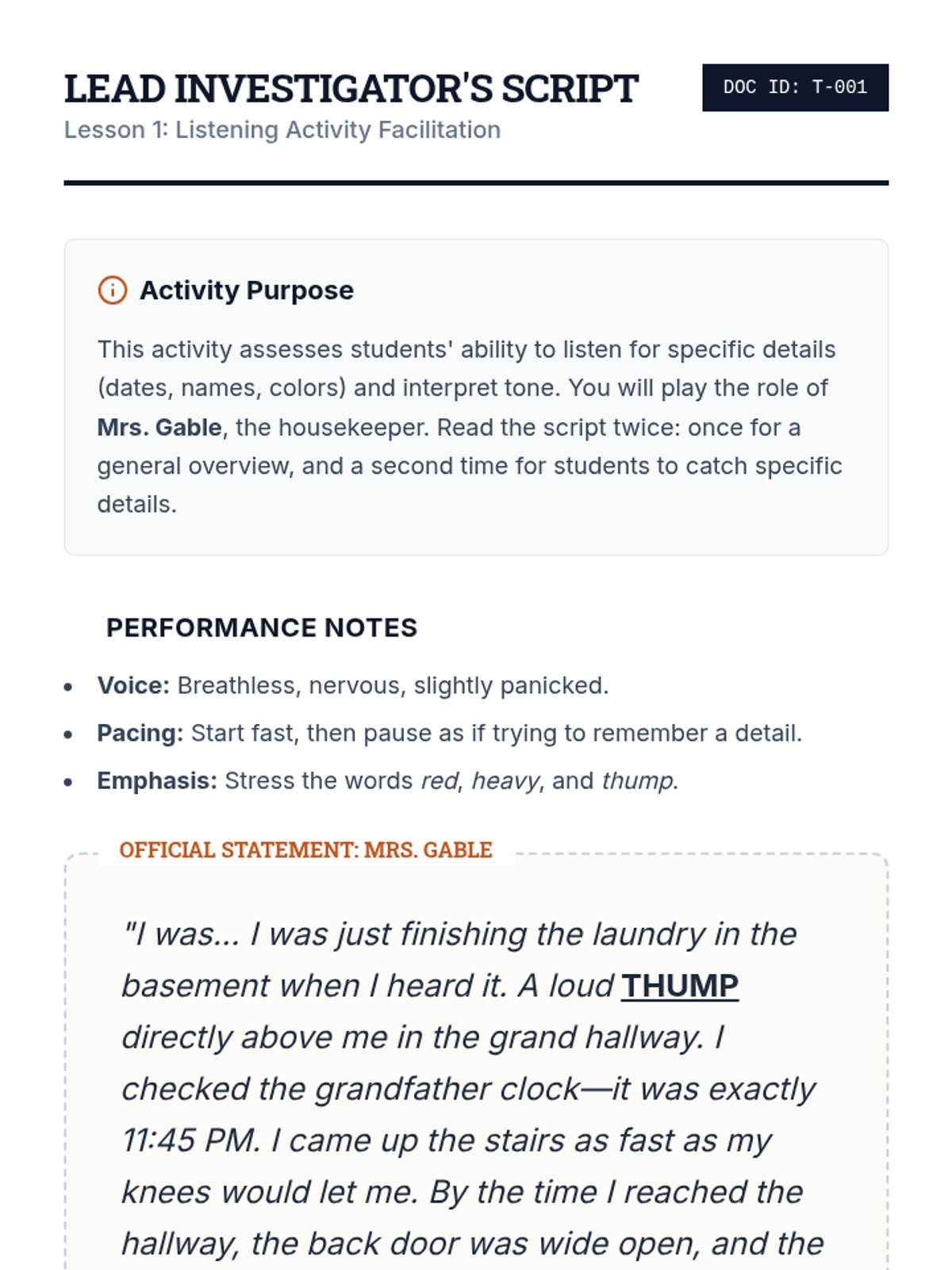
A comprehensive English Language Arts unit that uses a mystery-investigation theme to develop reading, writing, listening, and speaking skills. Students act as detectives to analyze evidence, interview witnesses, and present their final case.
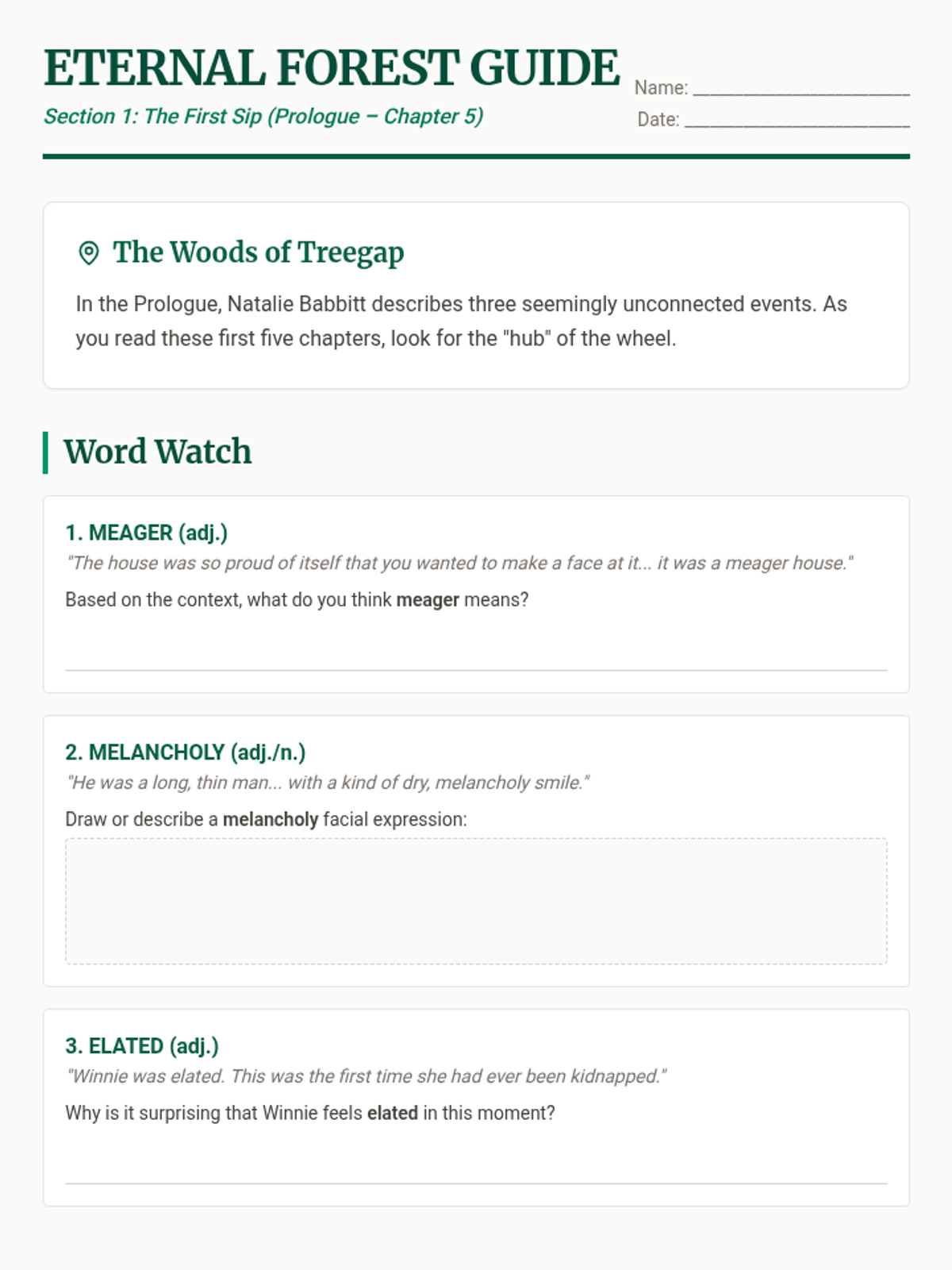
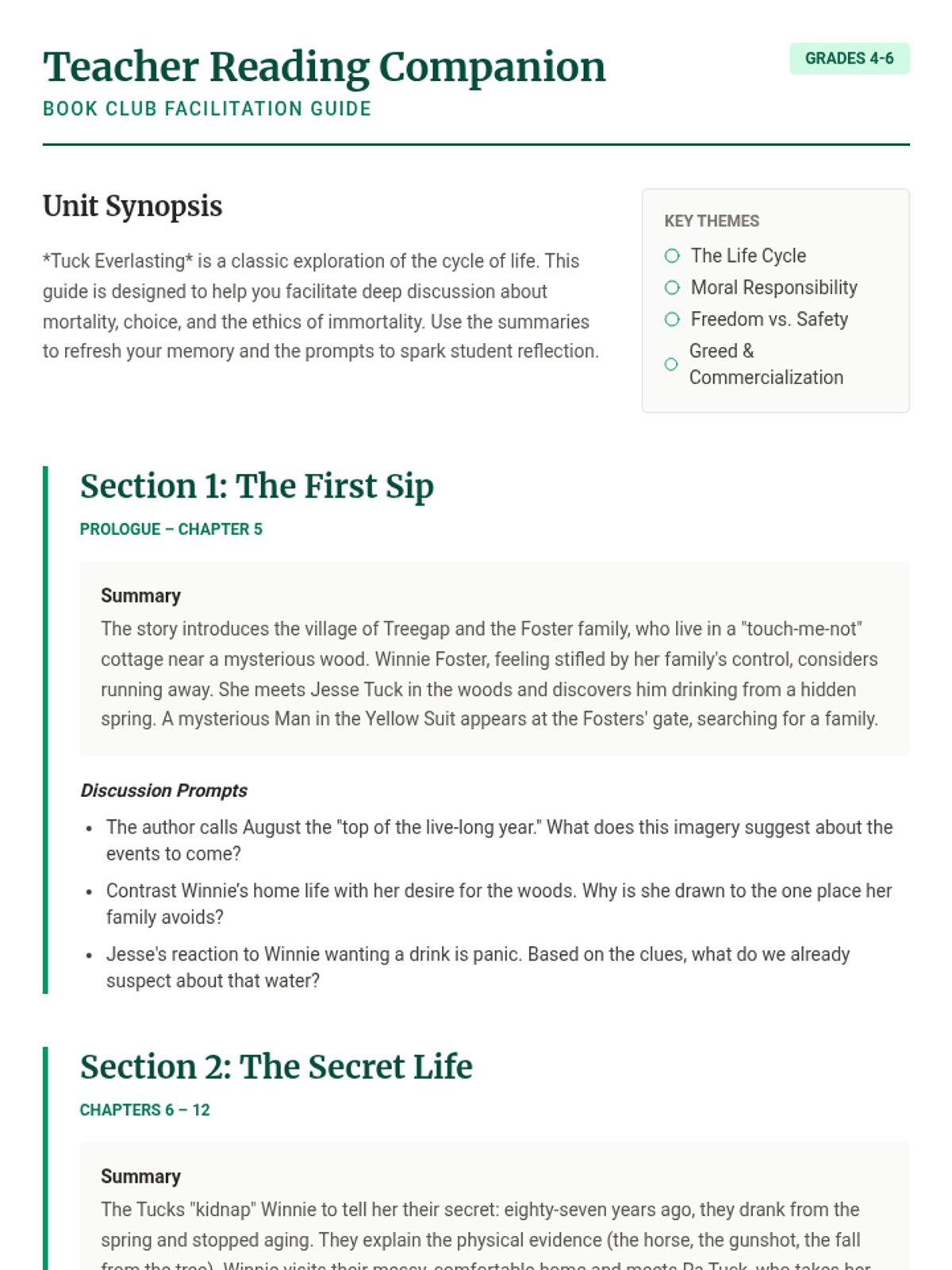
A comprehensive book club unit for Natalie Babbitt's *Tuck Everlasting*, exploring themes of immortality, nature's cycles, and moral choices through guided discussion, vocabulary expansion, and project-based learning.
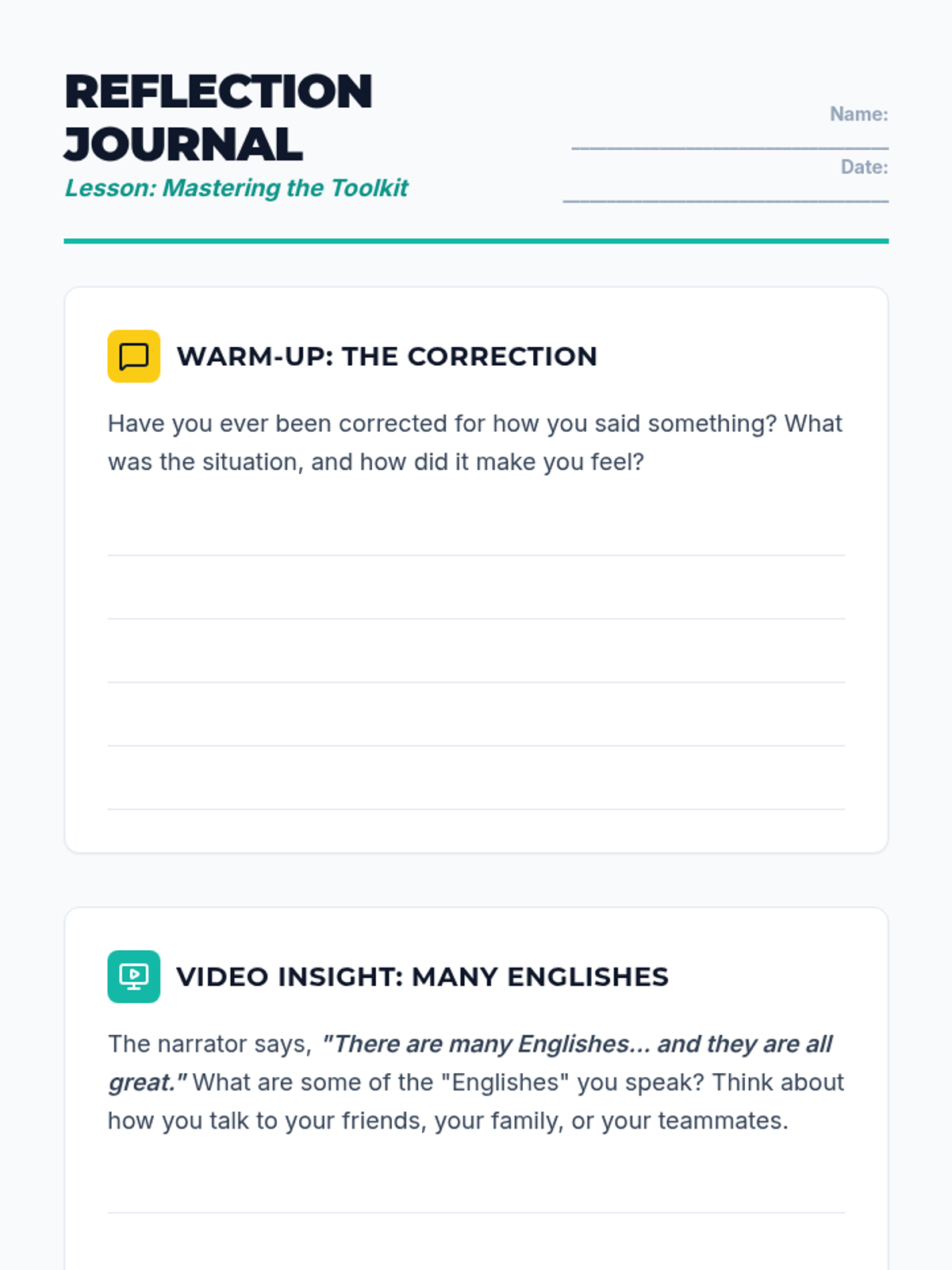
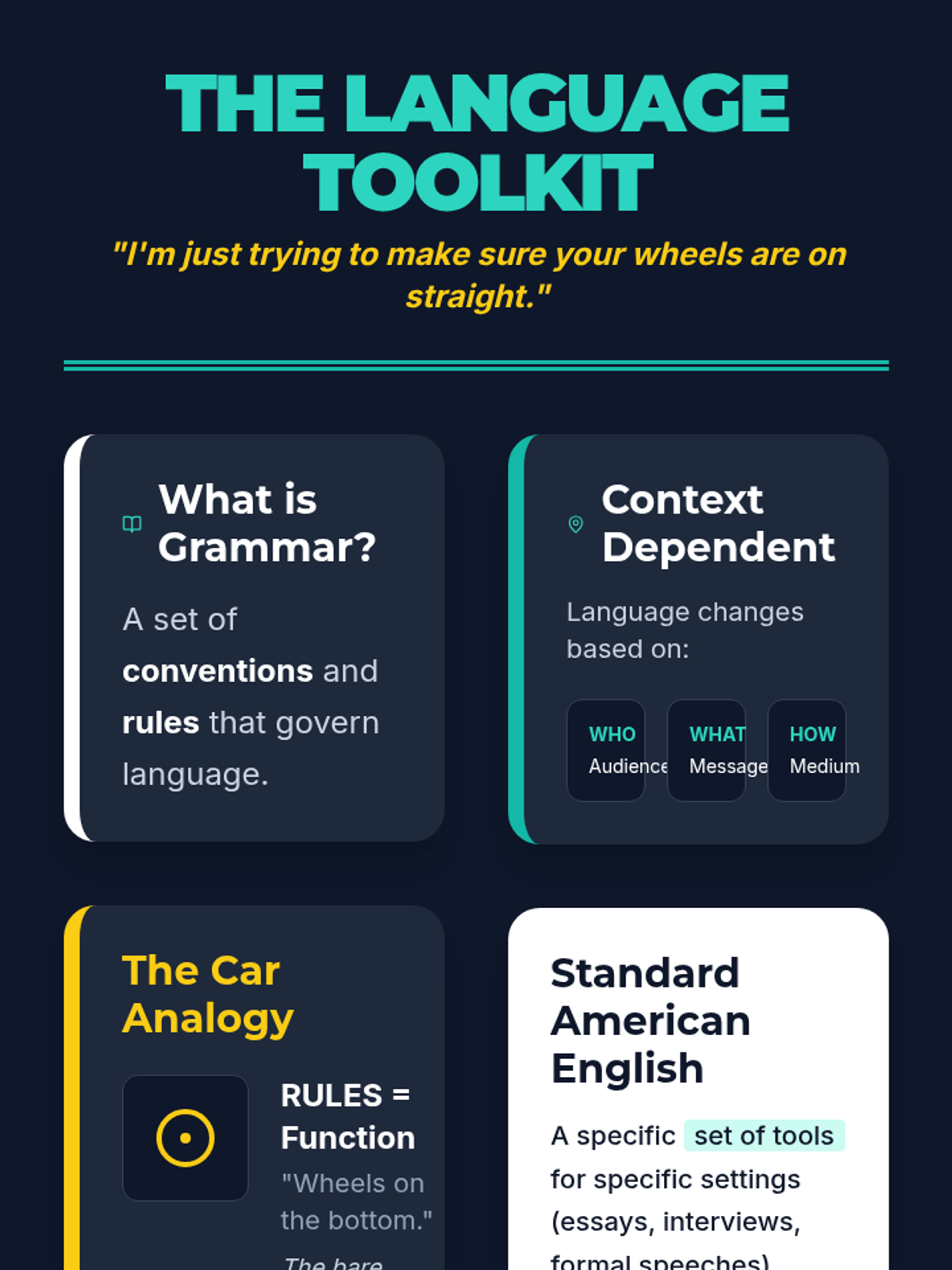
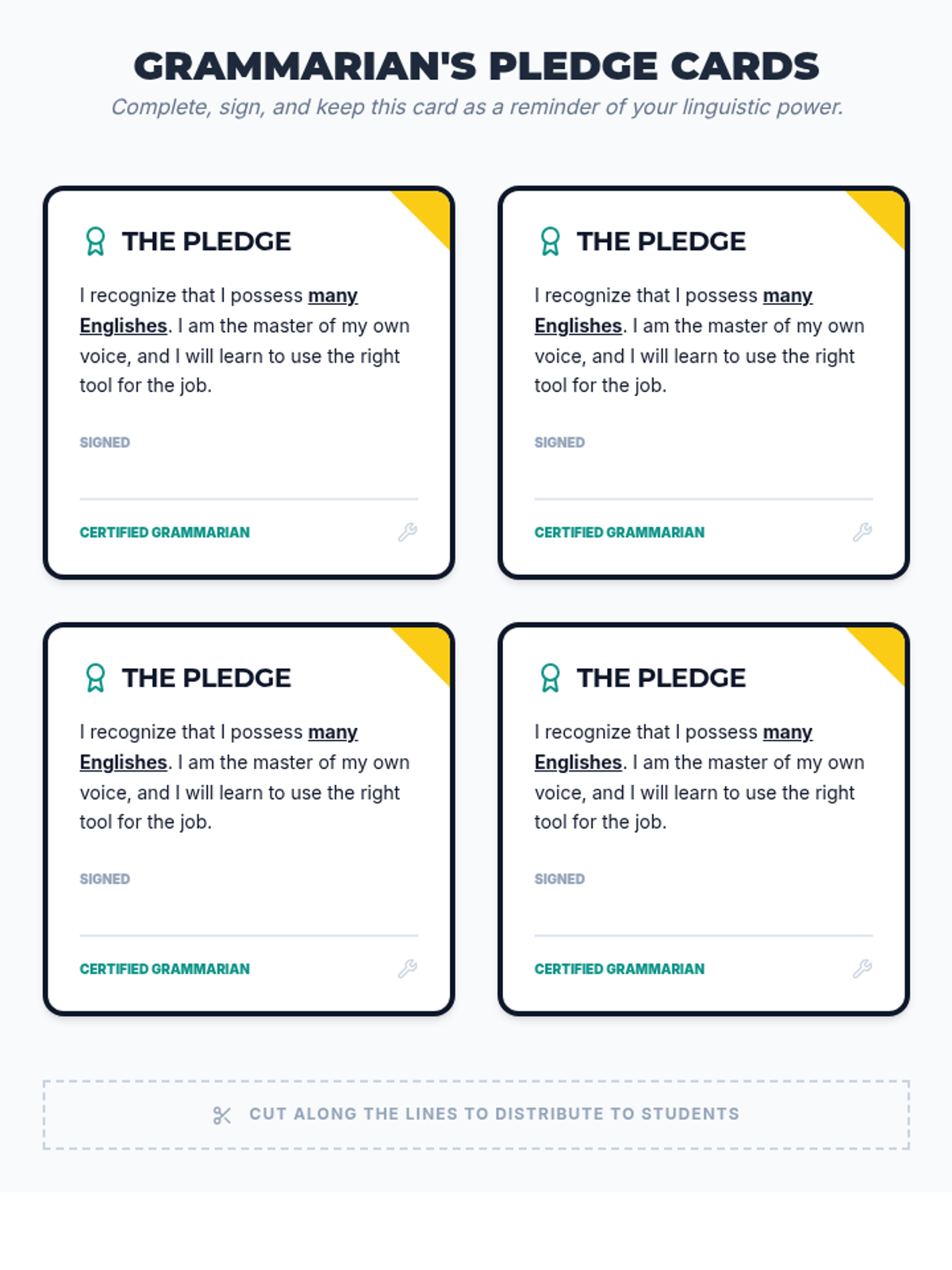
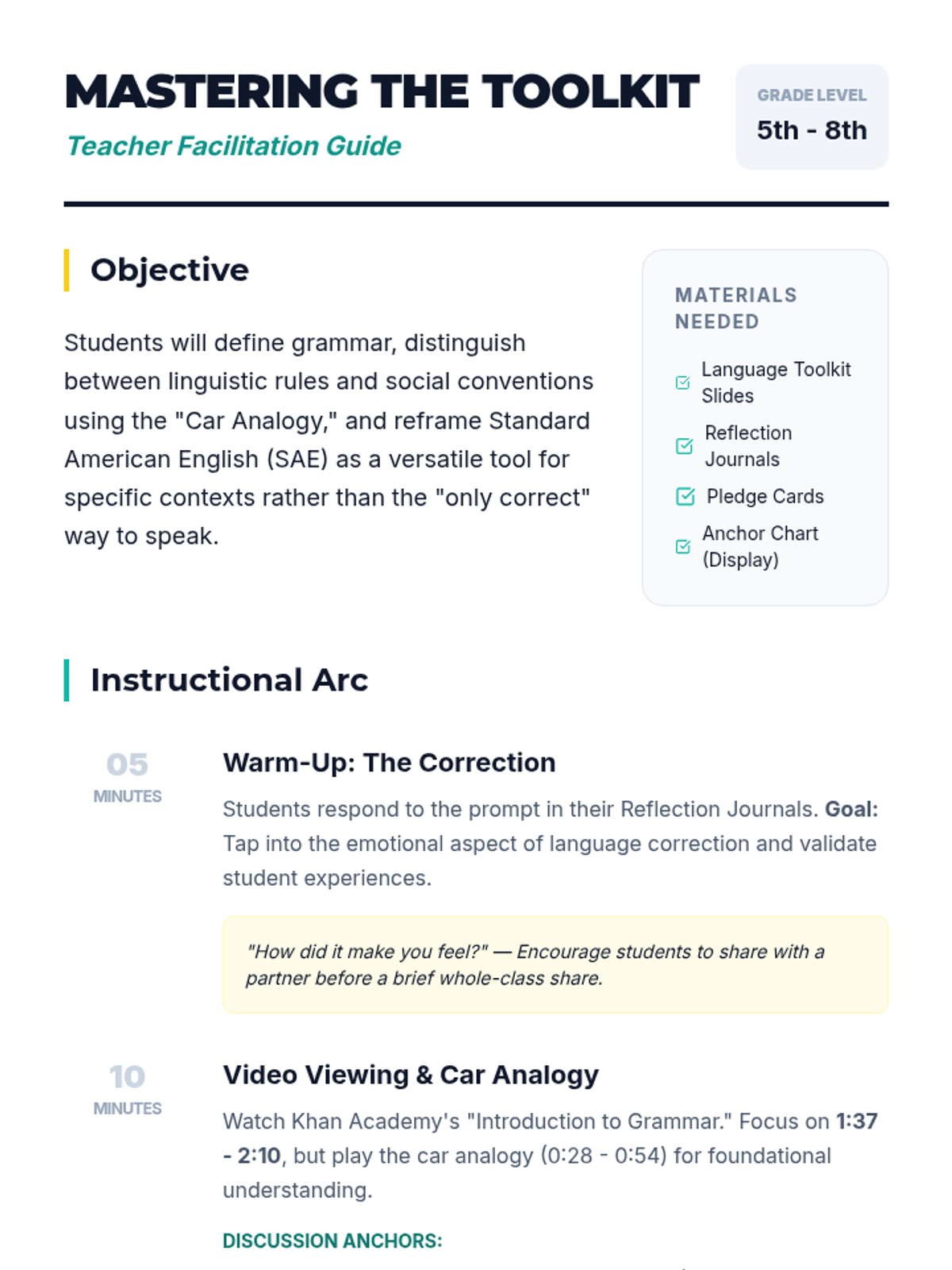
A lesson sequence exploring the concept of Standard American English as a versatile tool for communication, emphasizing that language varies by context and that all dialects are valid. Students analyze the 'car analogy' from Khan Academy to distinguish between fundamental grammar rules and social conventions.
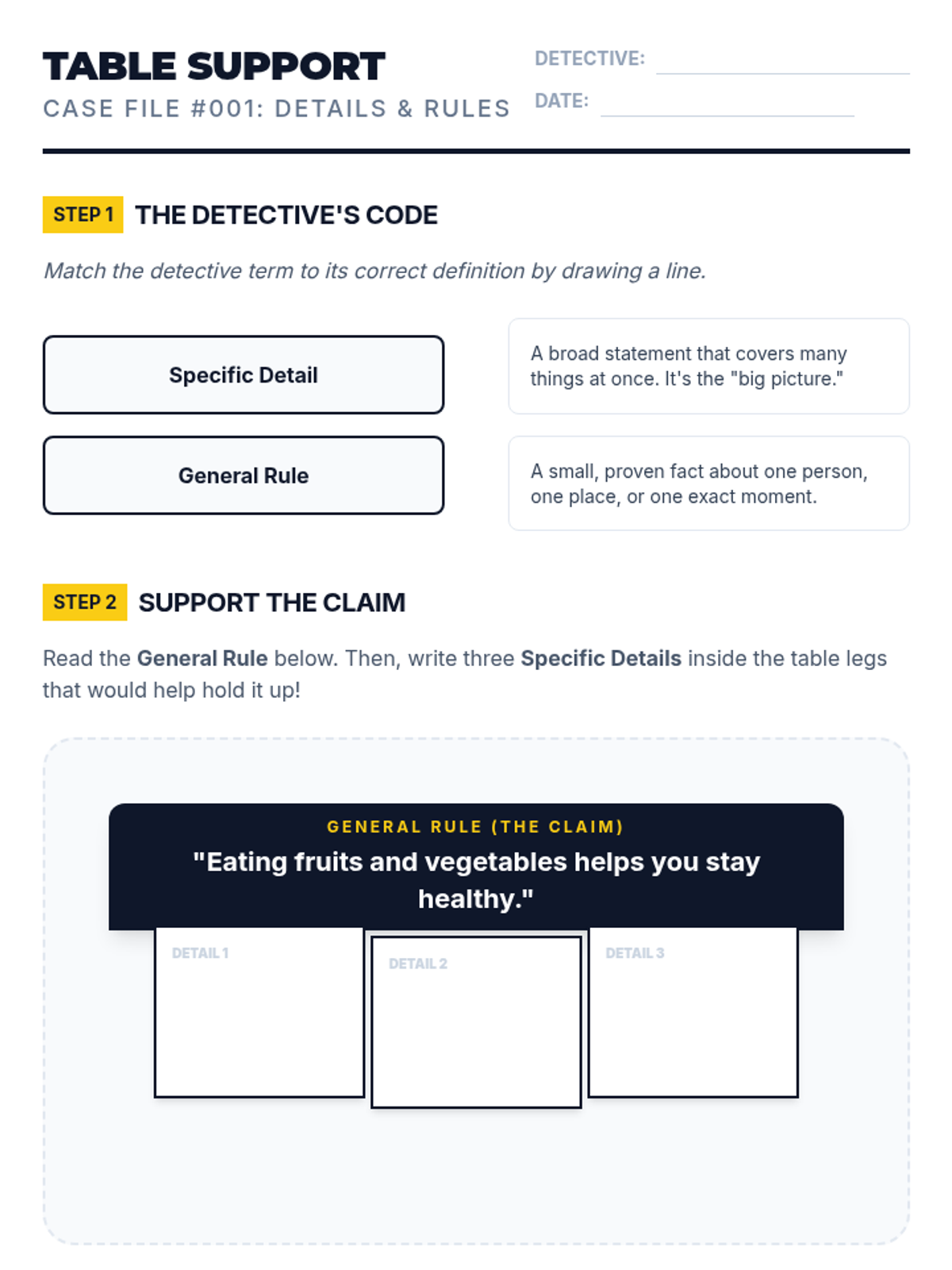
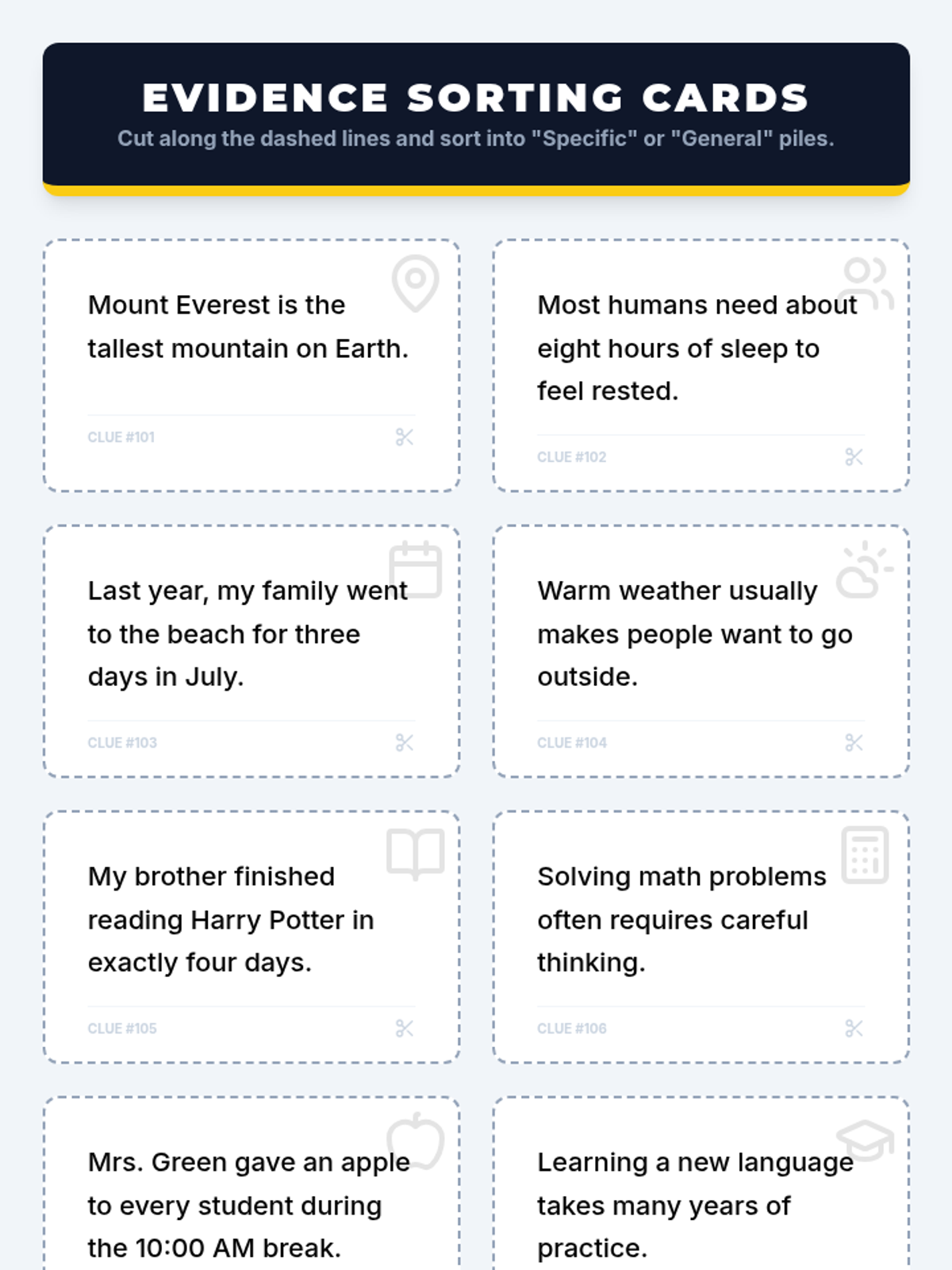
A 4th-grade ELA workshop focusing on inductive reasoning, teaching students to distinguish between strong evidence-based claims and weak overgeneralizations using a 'Pattern Detectives' theme.
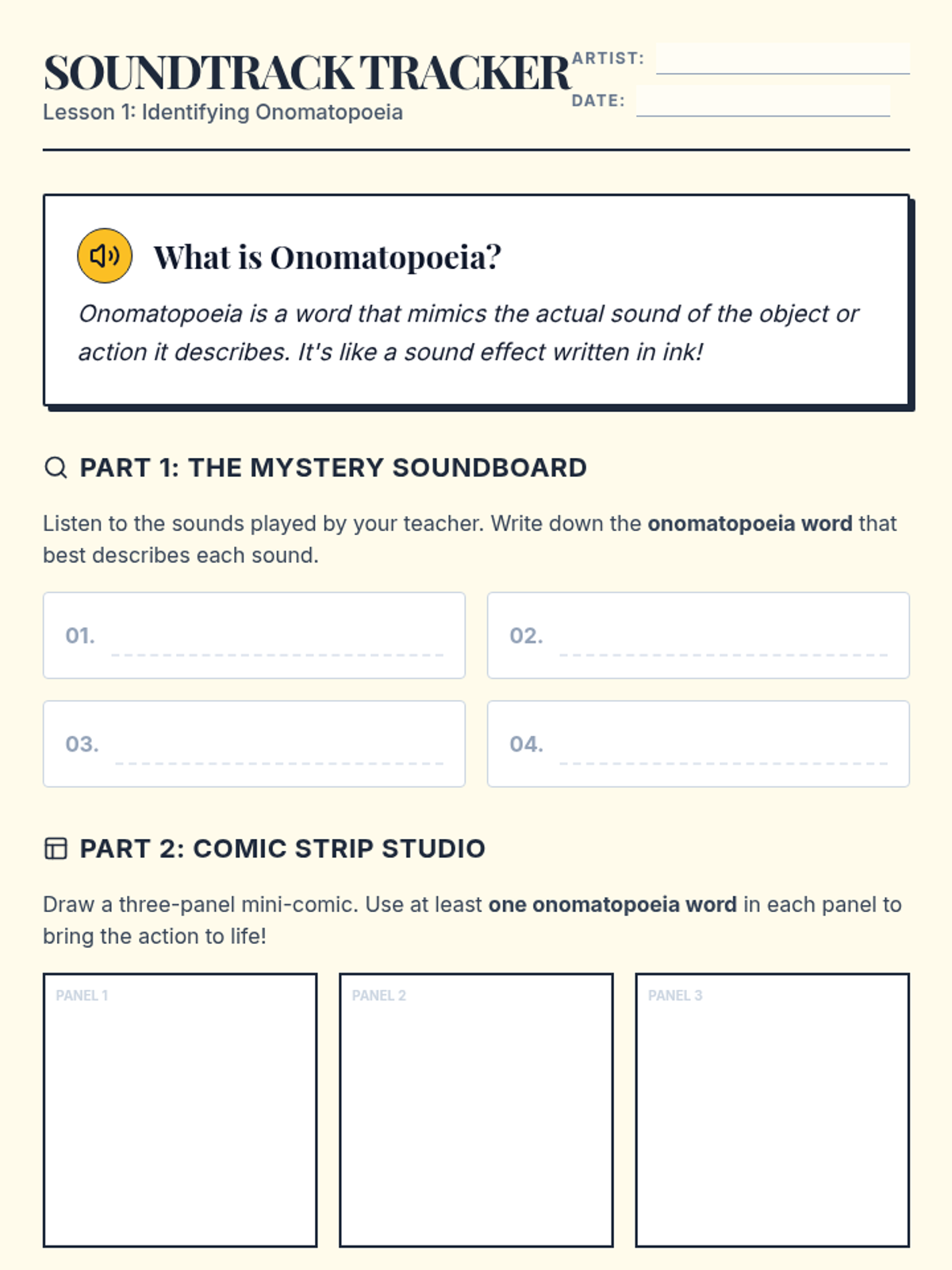
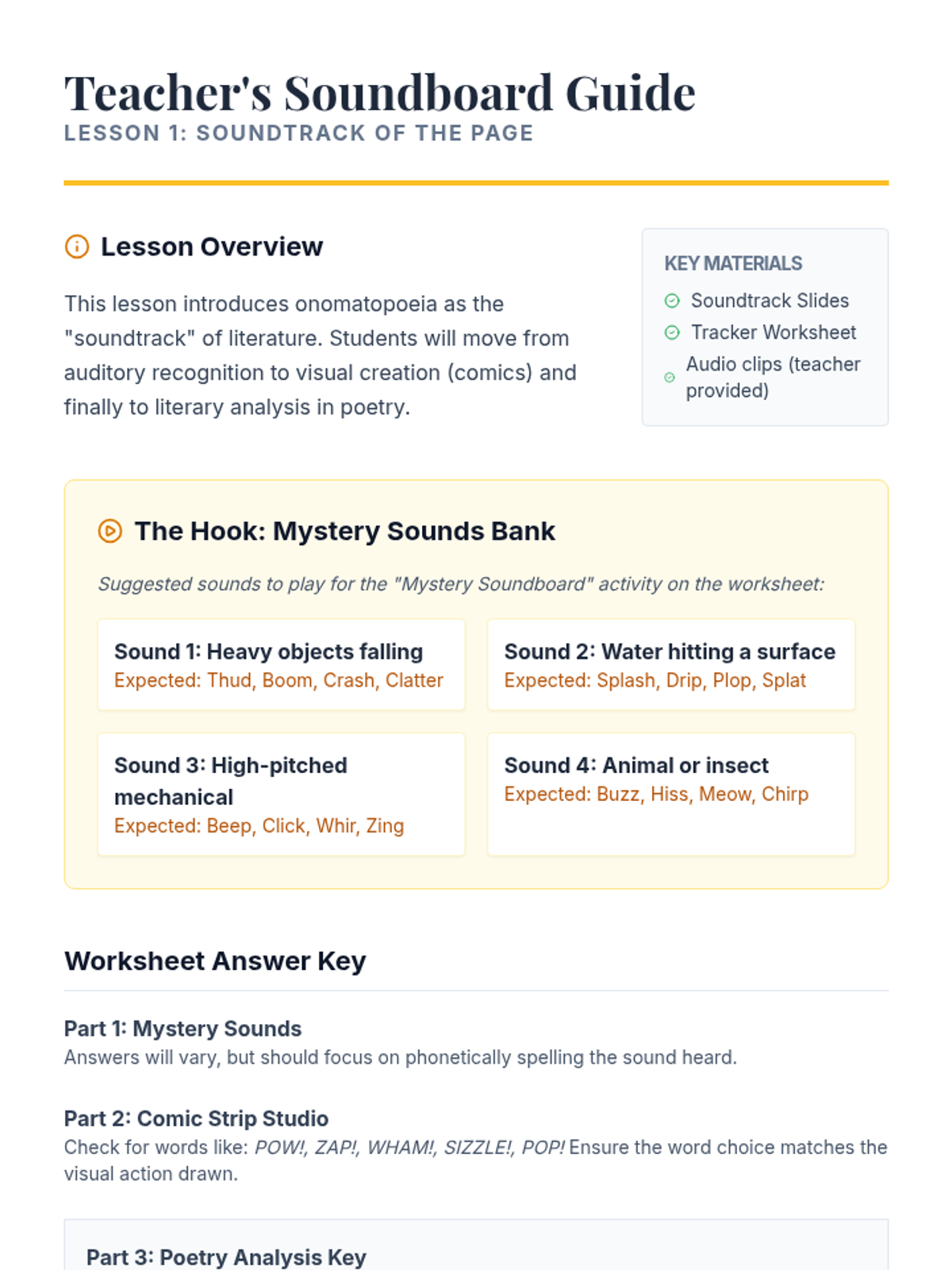
This immersive sequence focuses on the auditory experience of poetry, emphasizing that poems are meant to be heard. Students investigate sound devices like onomatopoeia, alliteration, and consonance to understand how sound creates mood and prepares them for oral performance.
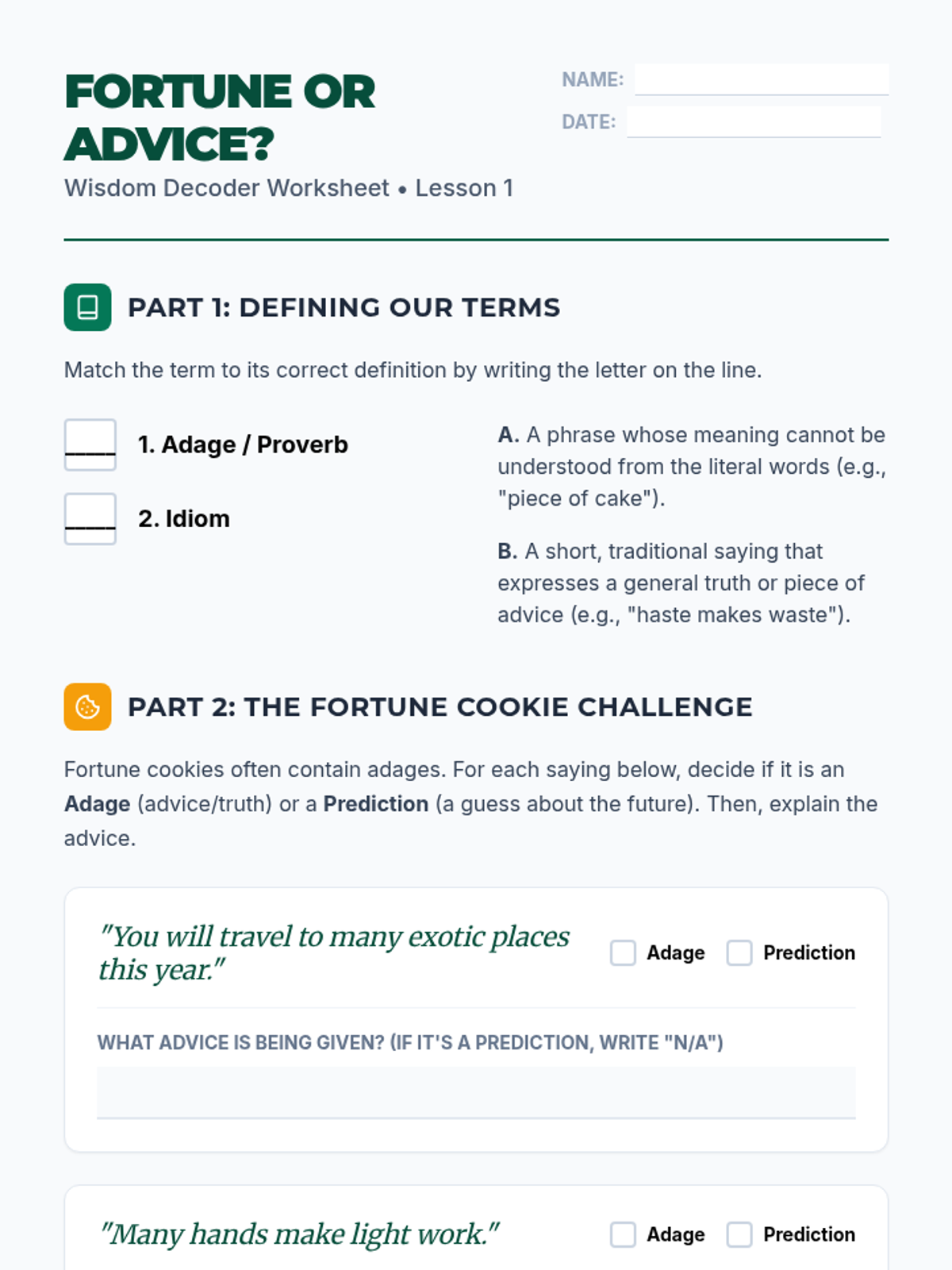
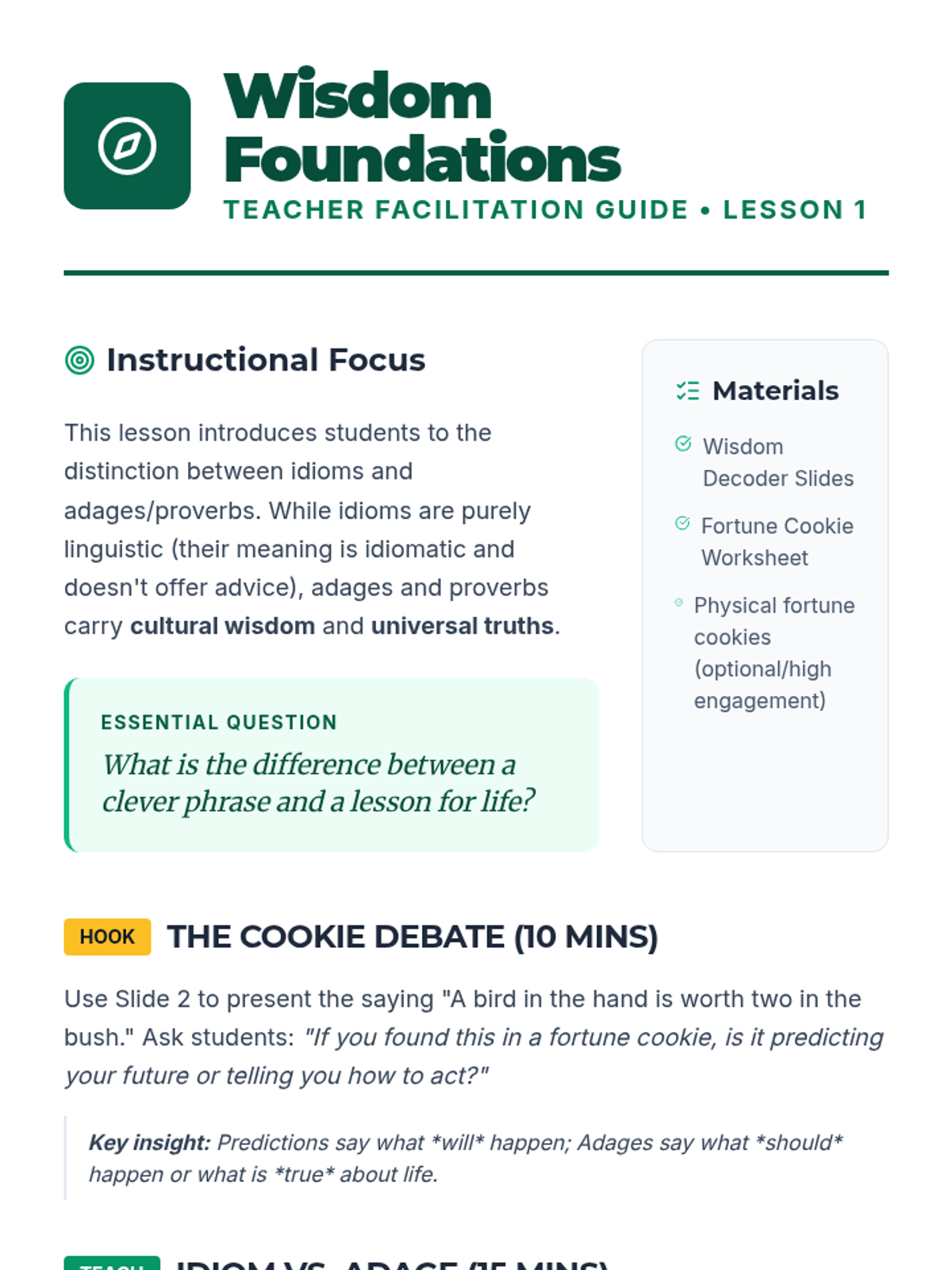
This sequence explores adages and proverbs as cultural artifacts that convey values and wisdom. Students distinguish them from idioms, compare global examples, connect them to fables, apply them to modern life, and debate their nuances in a Socratic Seminar.
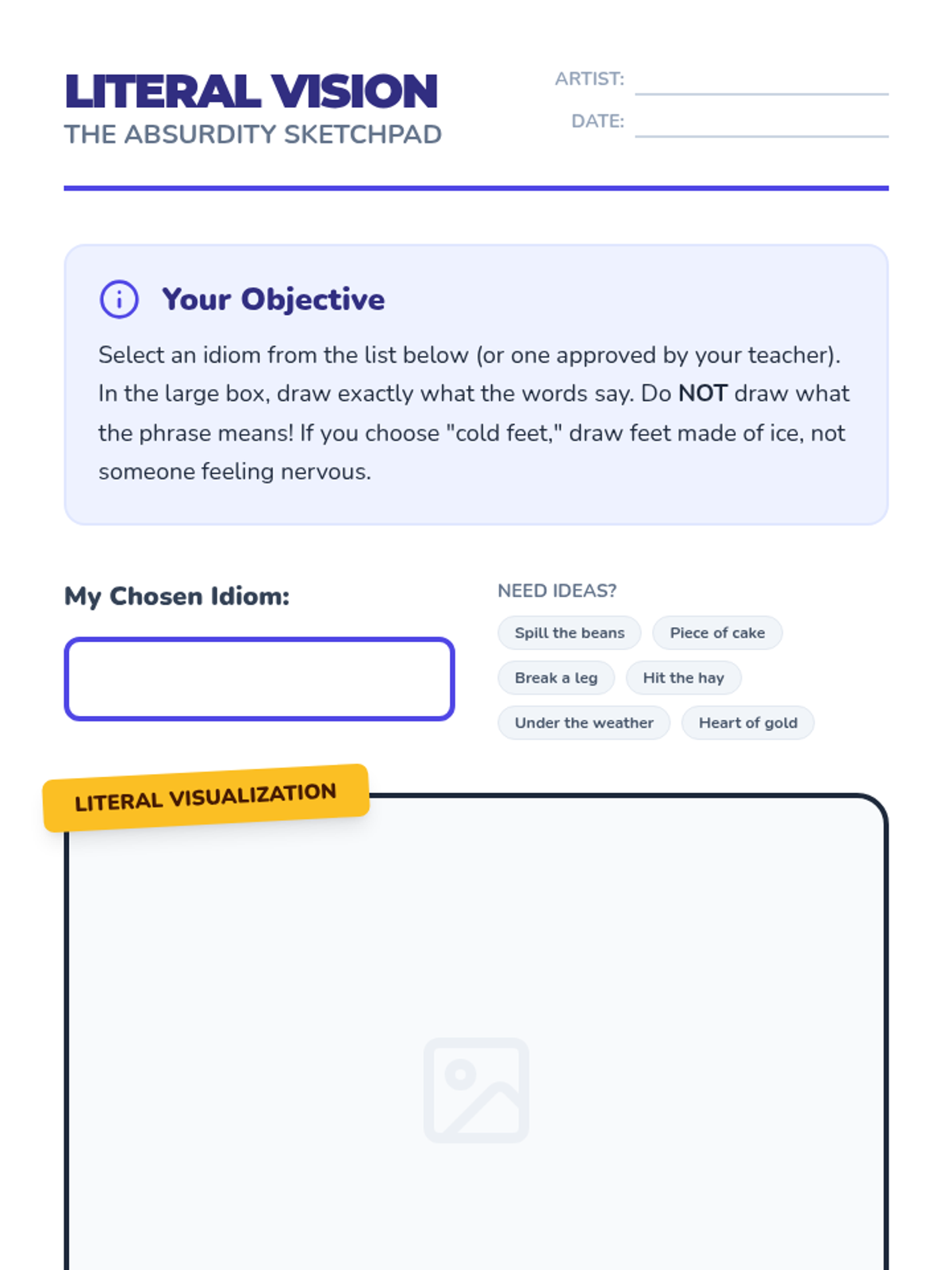
A 5th-grade project-based sequence where students explore idioms and adages by contrasting literal illustrations with figurative meanings, culminating in a class 'Idiom Dictionary'.
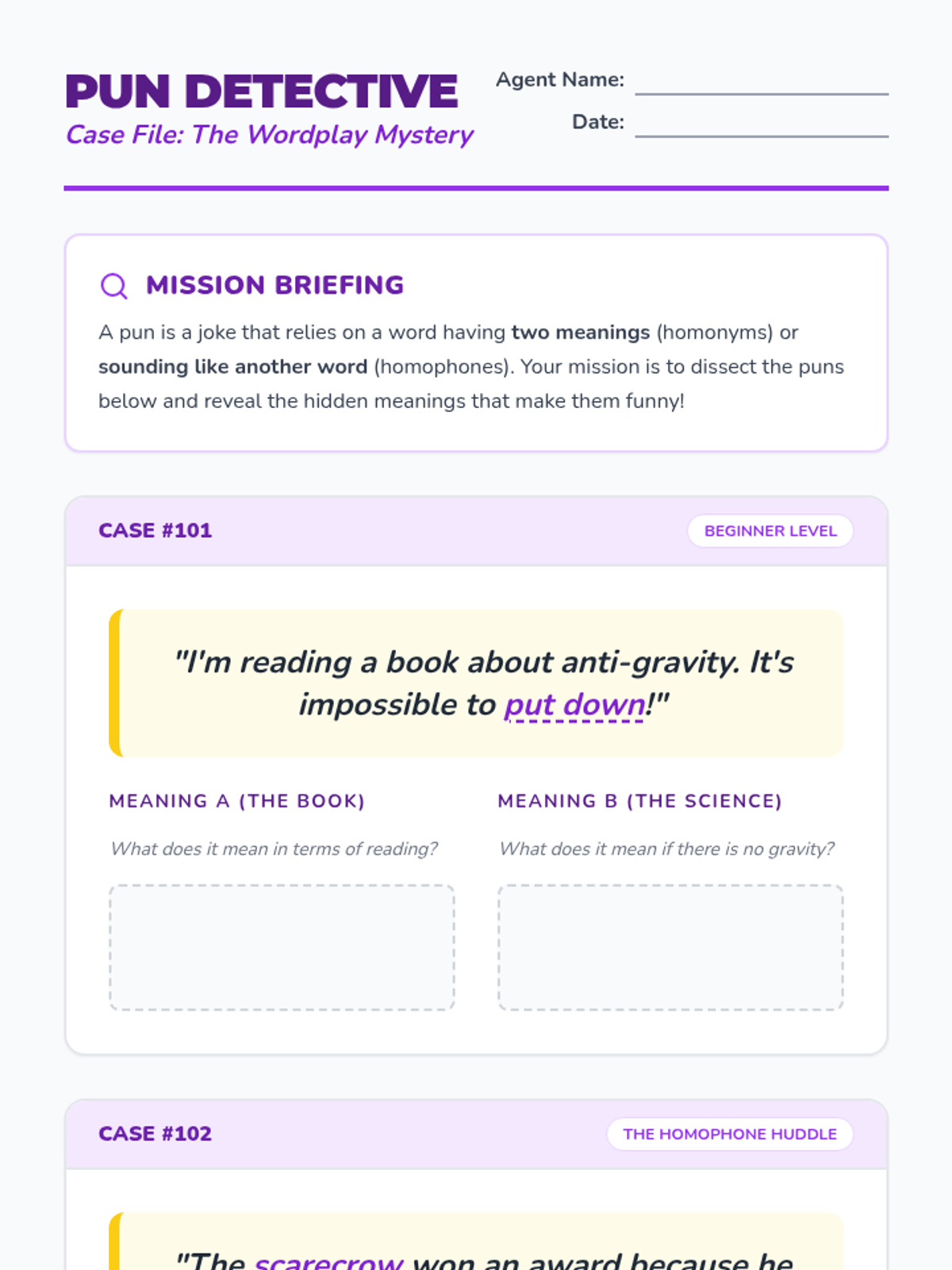
This sequence explores the creative and literary side of homophones and homonyms through puns, riddles, and advertising. Students move from deconstructing humor to creating their own intentional wordplay, culminating in a showcase of their comedic and creative linguistic skills.
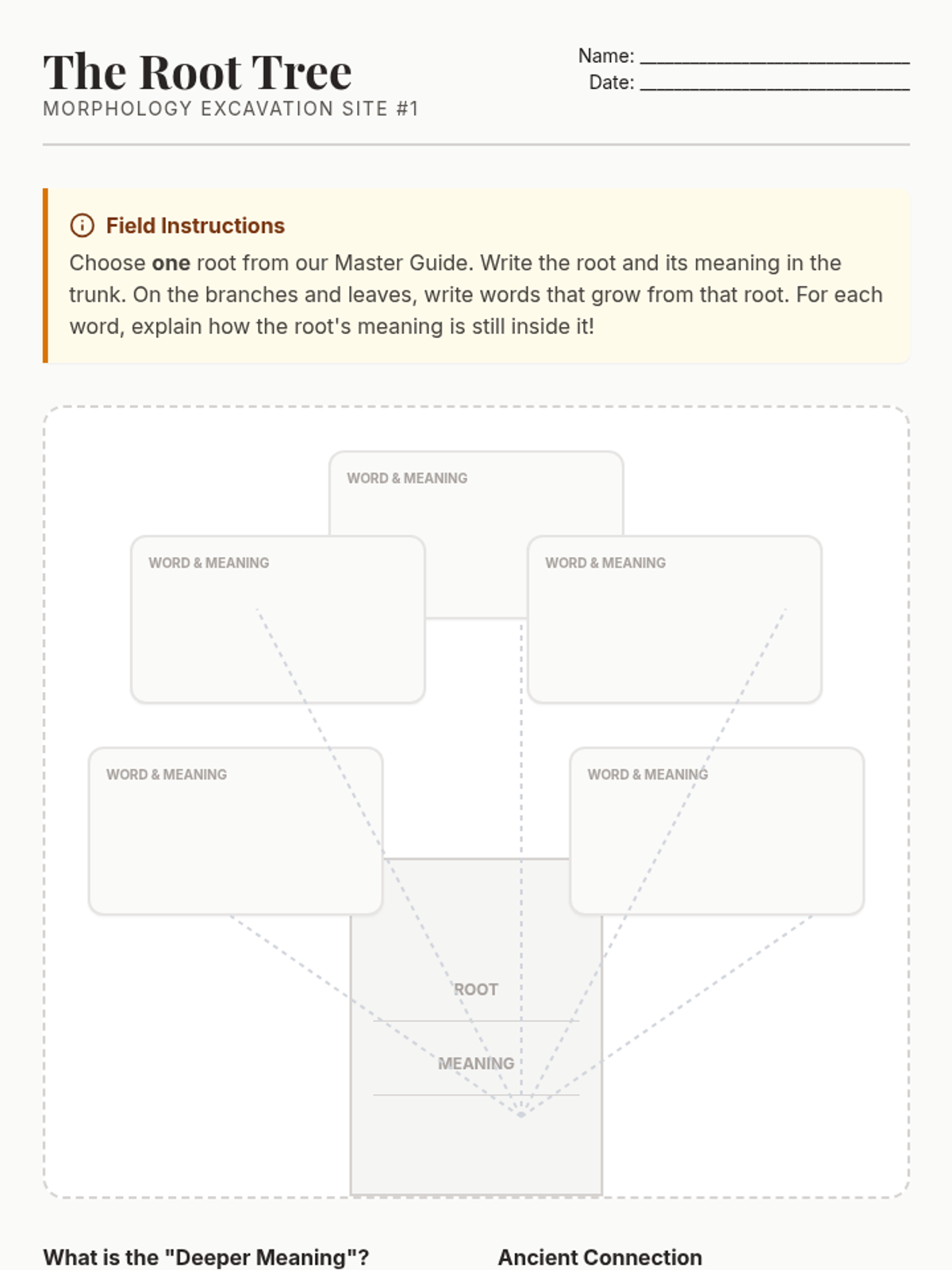
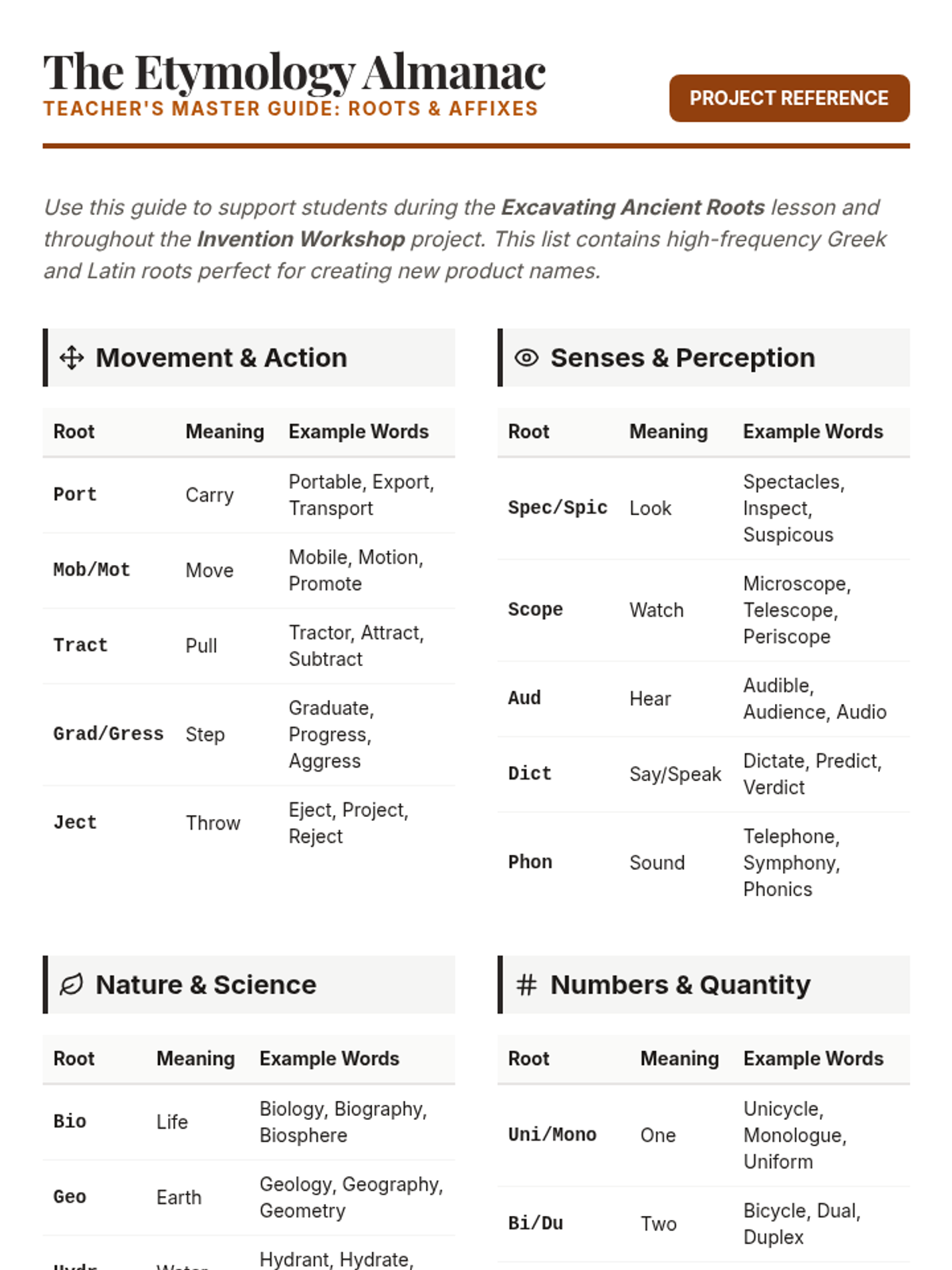
A project-based ELA sequence where 5th-grade students invent new products and name them using Greek and Latin roots, prefixes, and suffixes, culminating in a Shark Tank-style pitch.
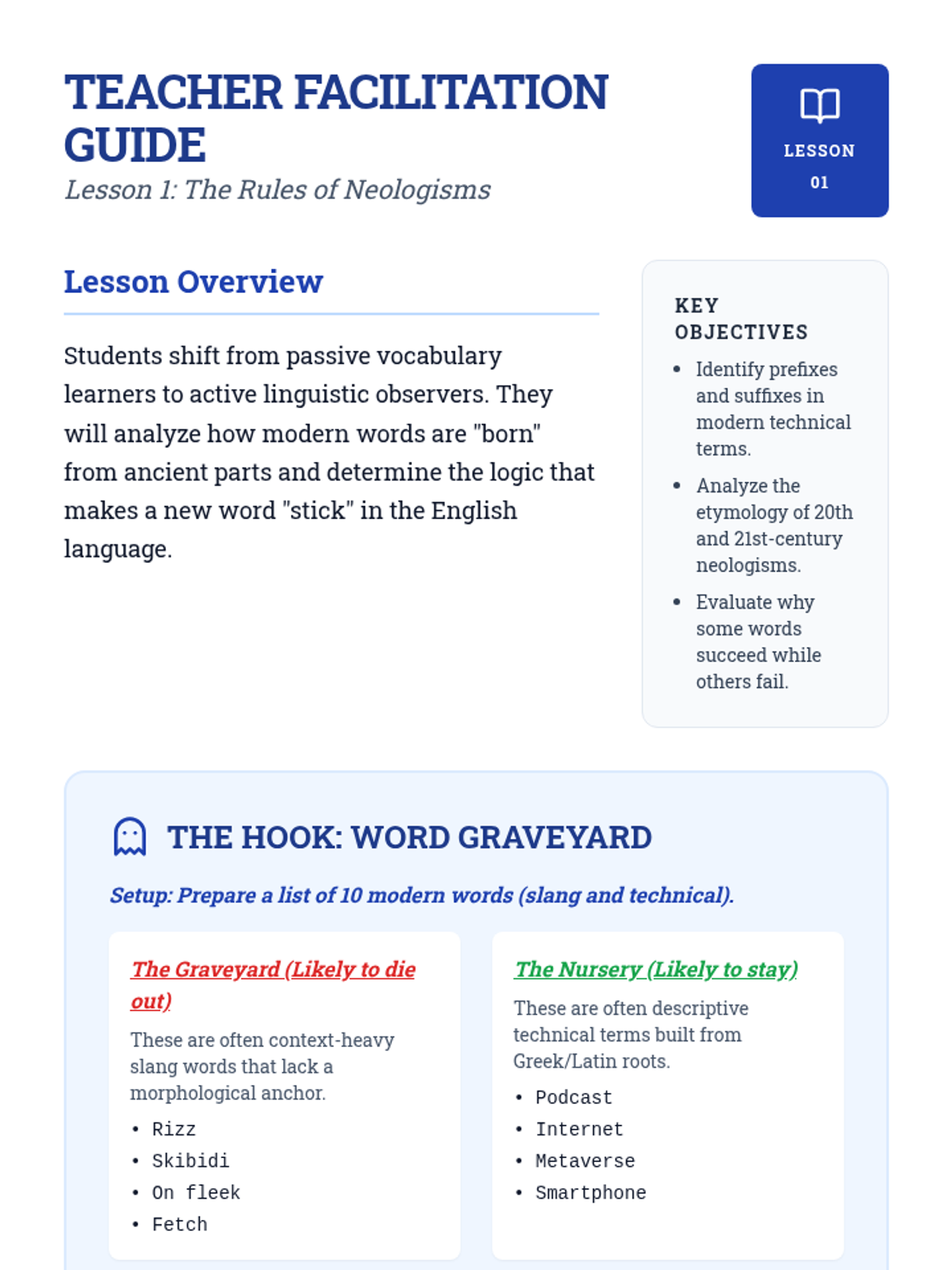
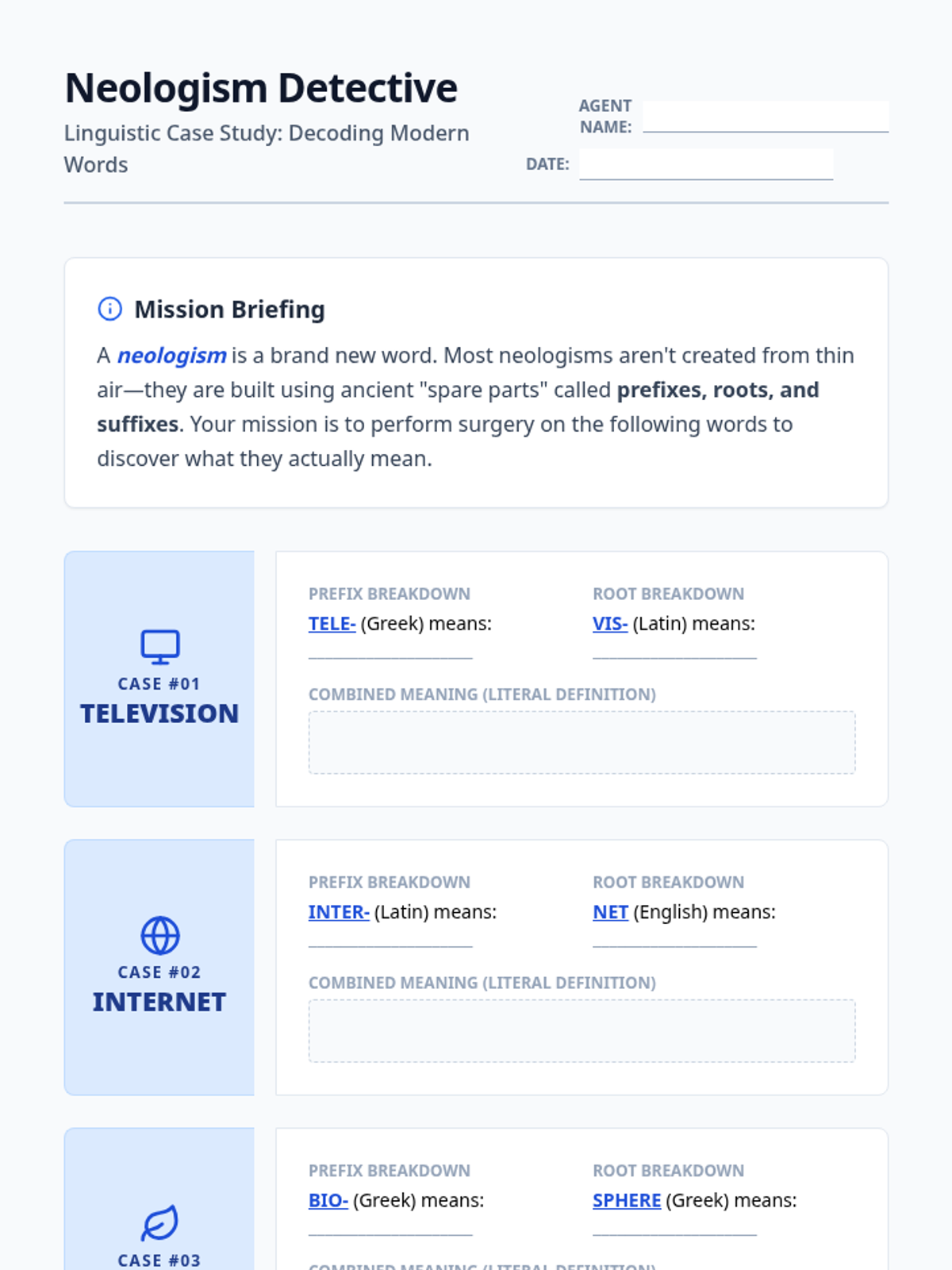
A project-based ELA sequence where 6th-grade students analyze the morphology of English, use affixes to create neologisms, and pitch inventions named using linguistic rules.
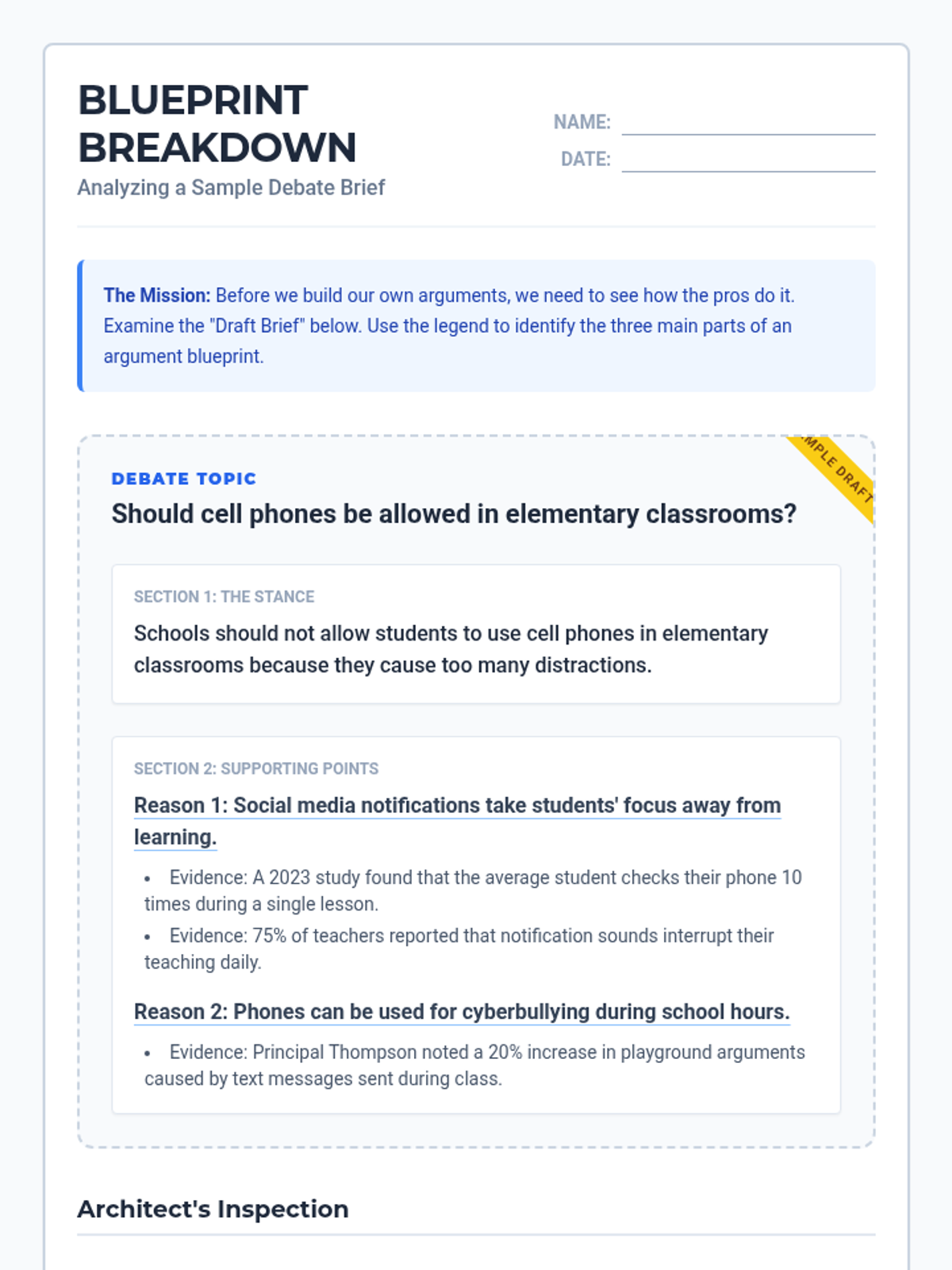
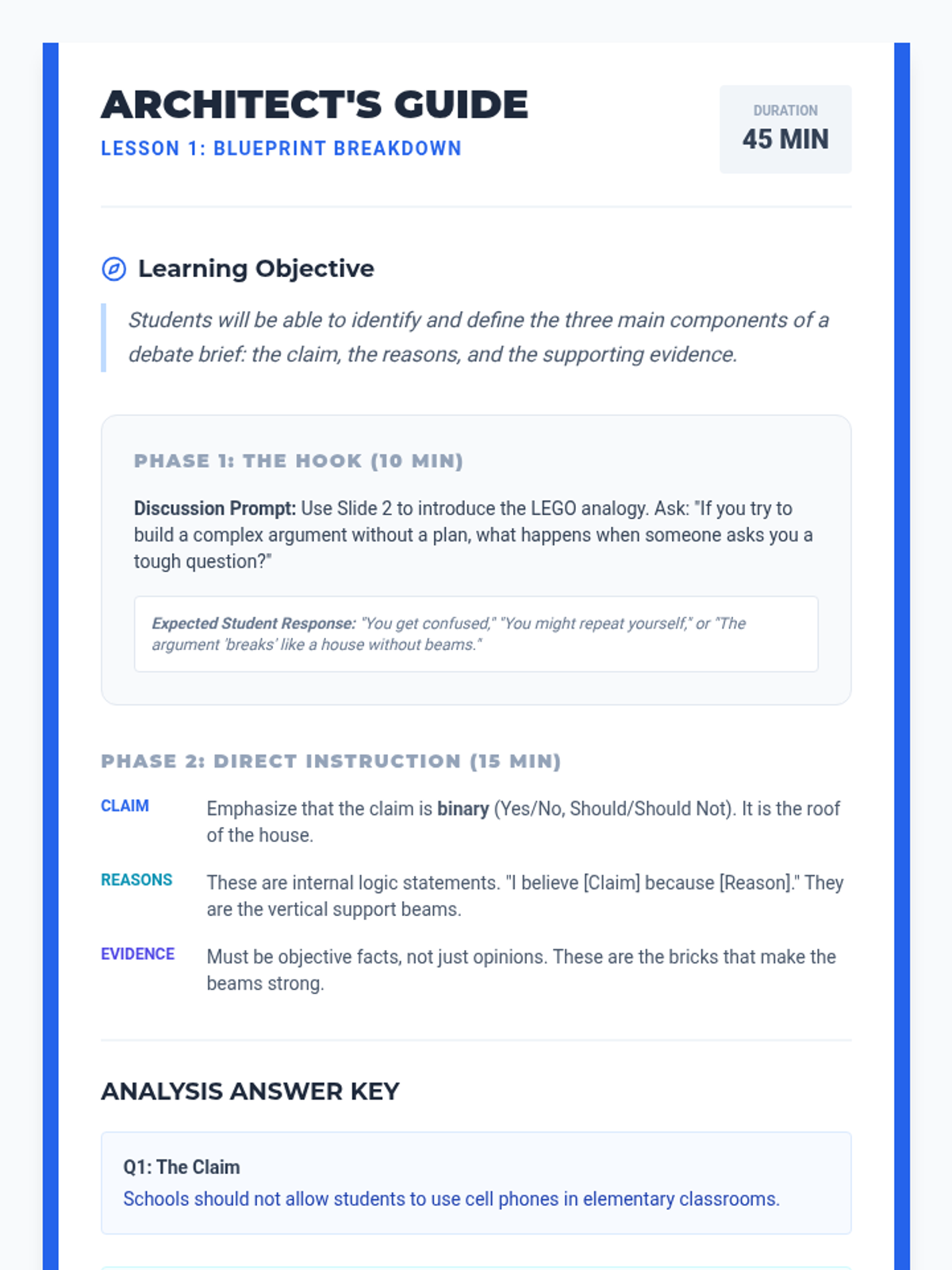
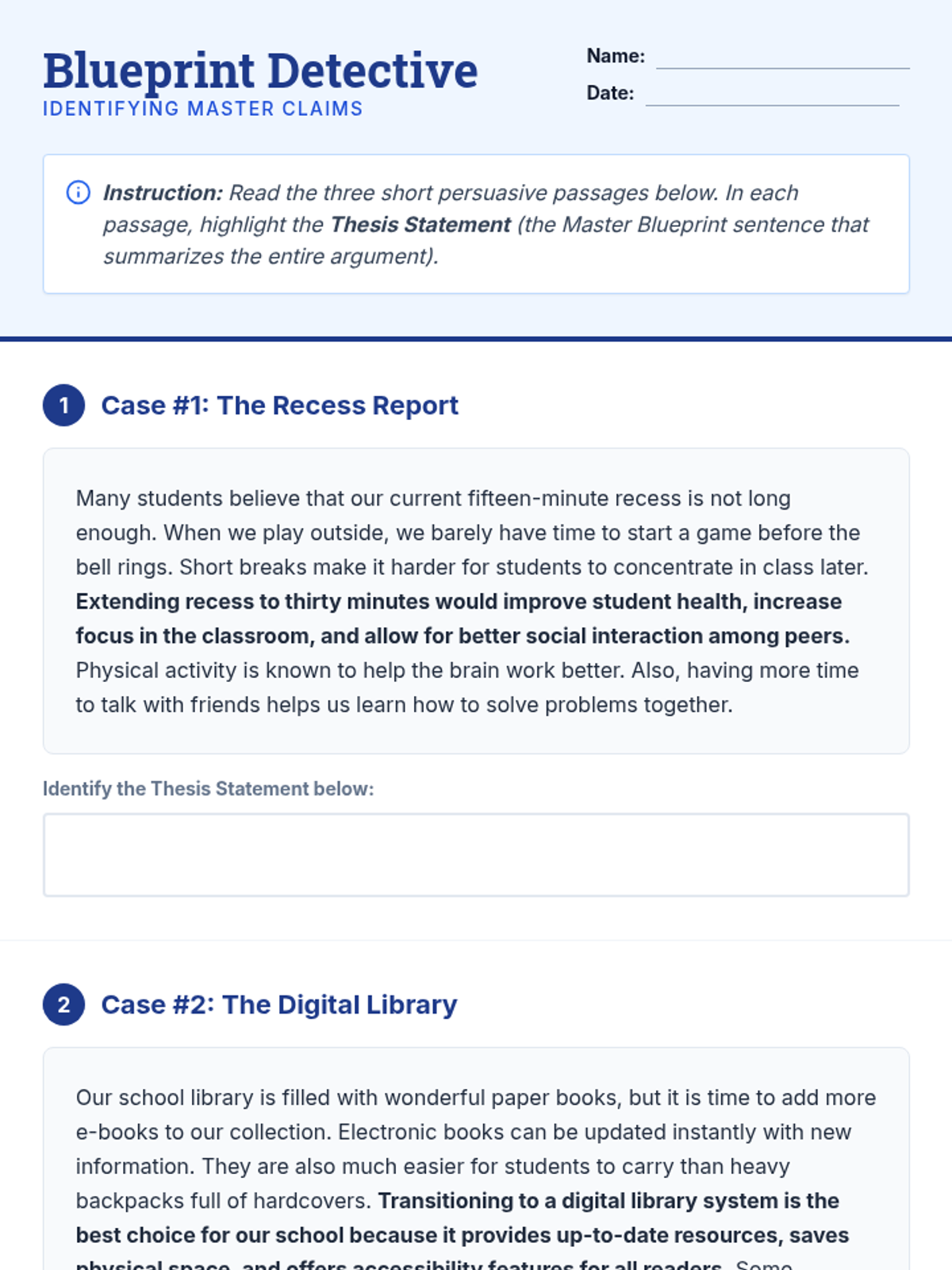
A comprehensive 5-lesson unit for 5th graders transitioning from single paragraphs to structured multi-paragraph essays. Students will master identifying, crafting, and aligning thesis statements with topic sentences using an architectural 'blueprint' theme.
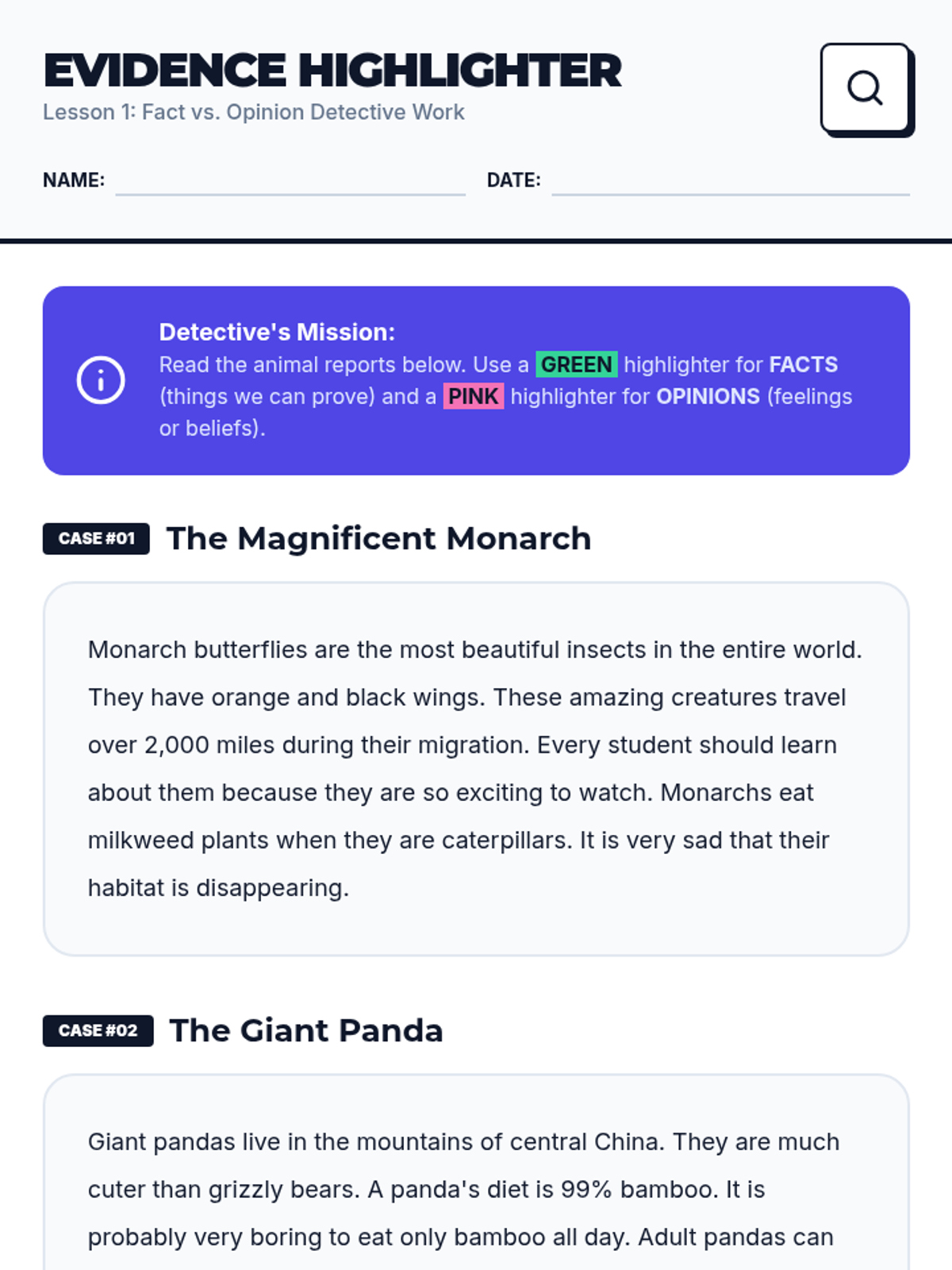
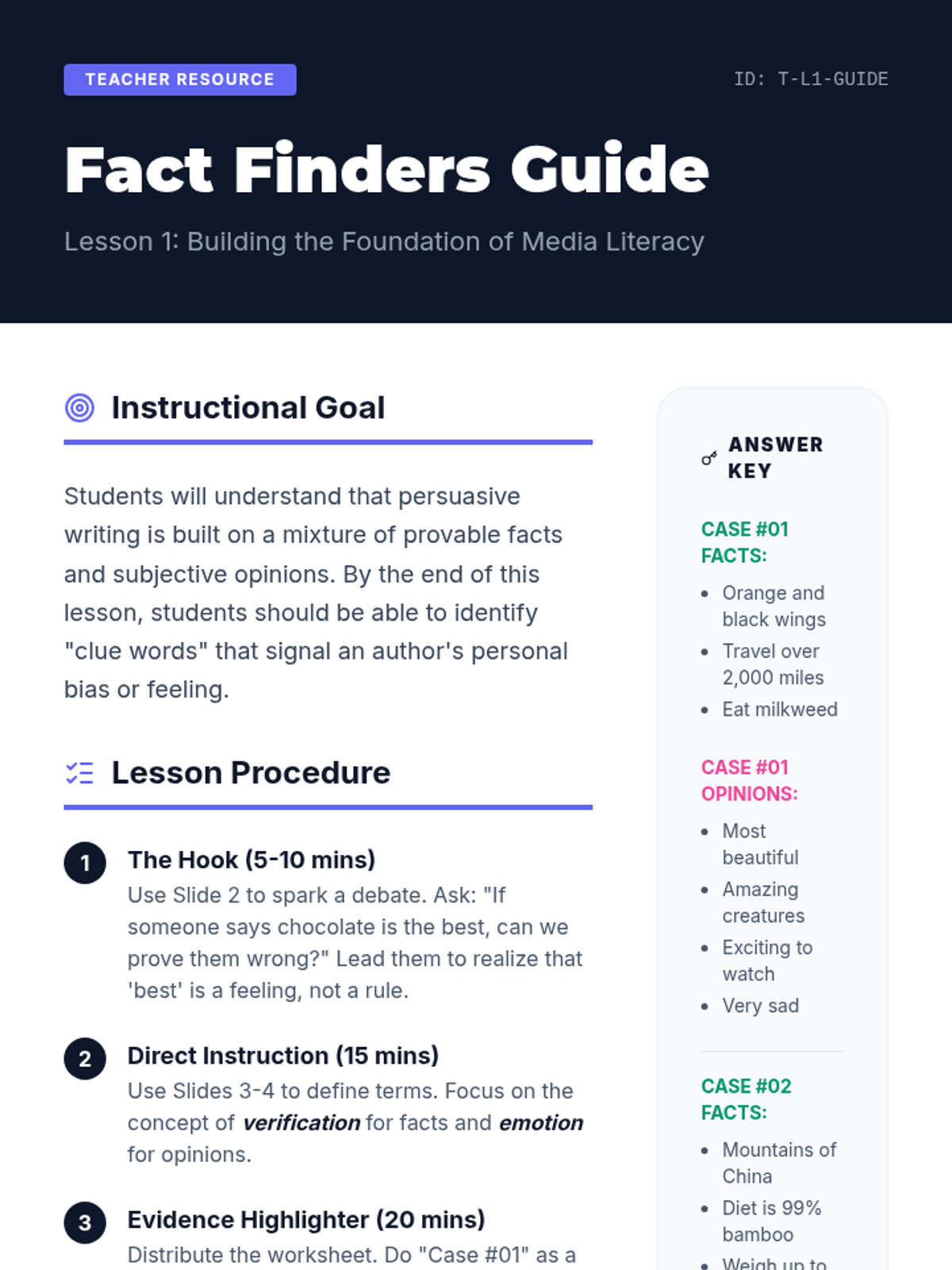
A 3rd-grade ELA sequence focused on decoding persuasive strategies, recognizing bias, and understanding how authors use tone and facts to influence readers. Students move from identifying basic facts and opinions to creating their own persuasive advertisements.
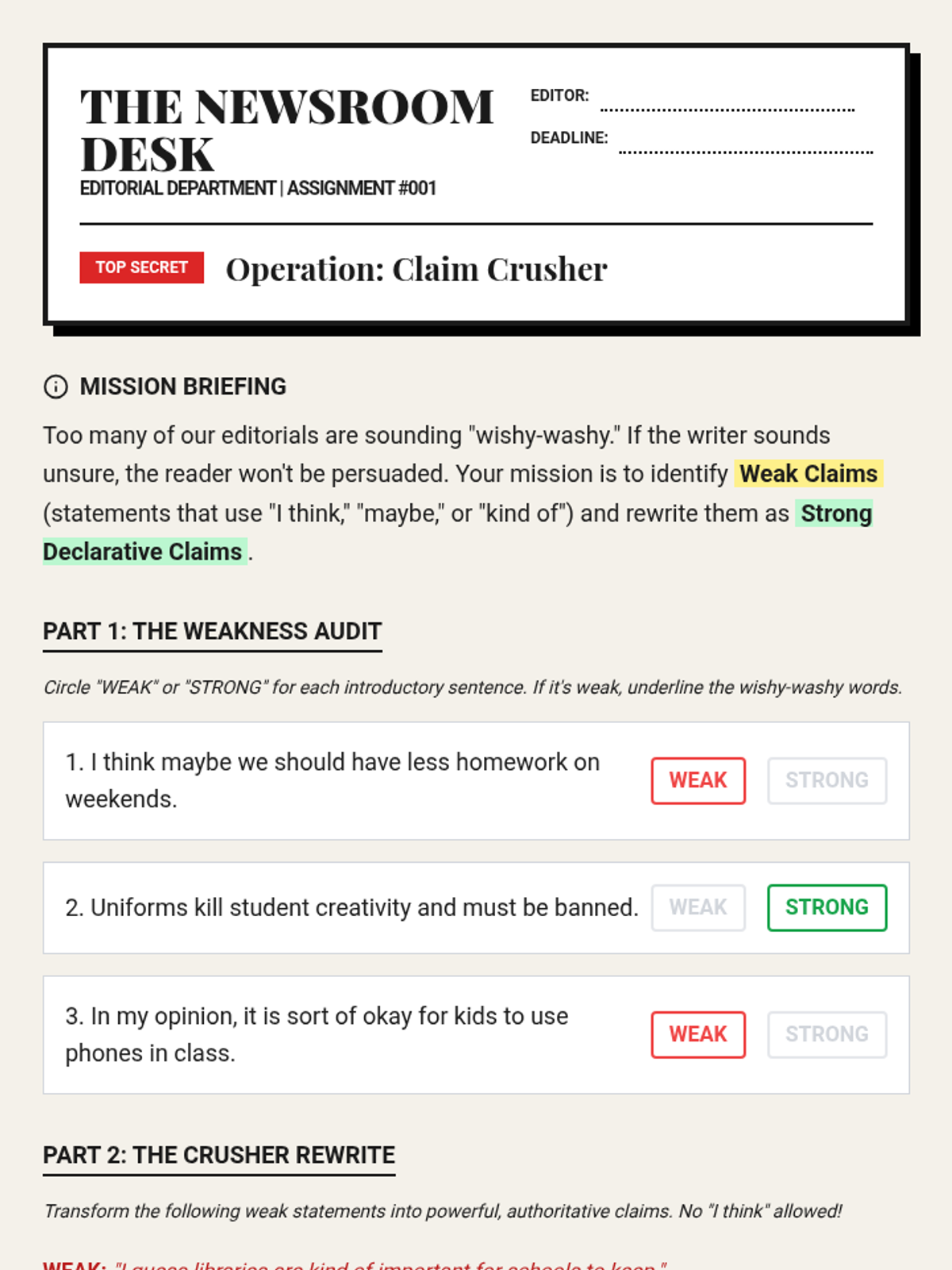
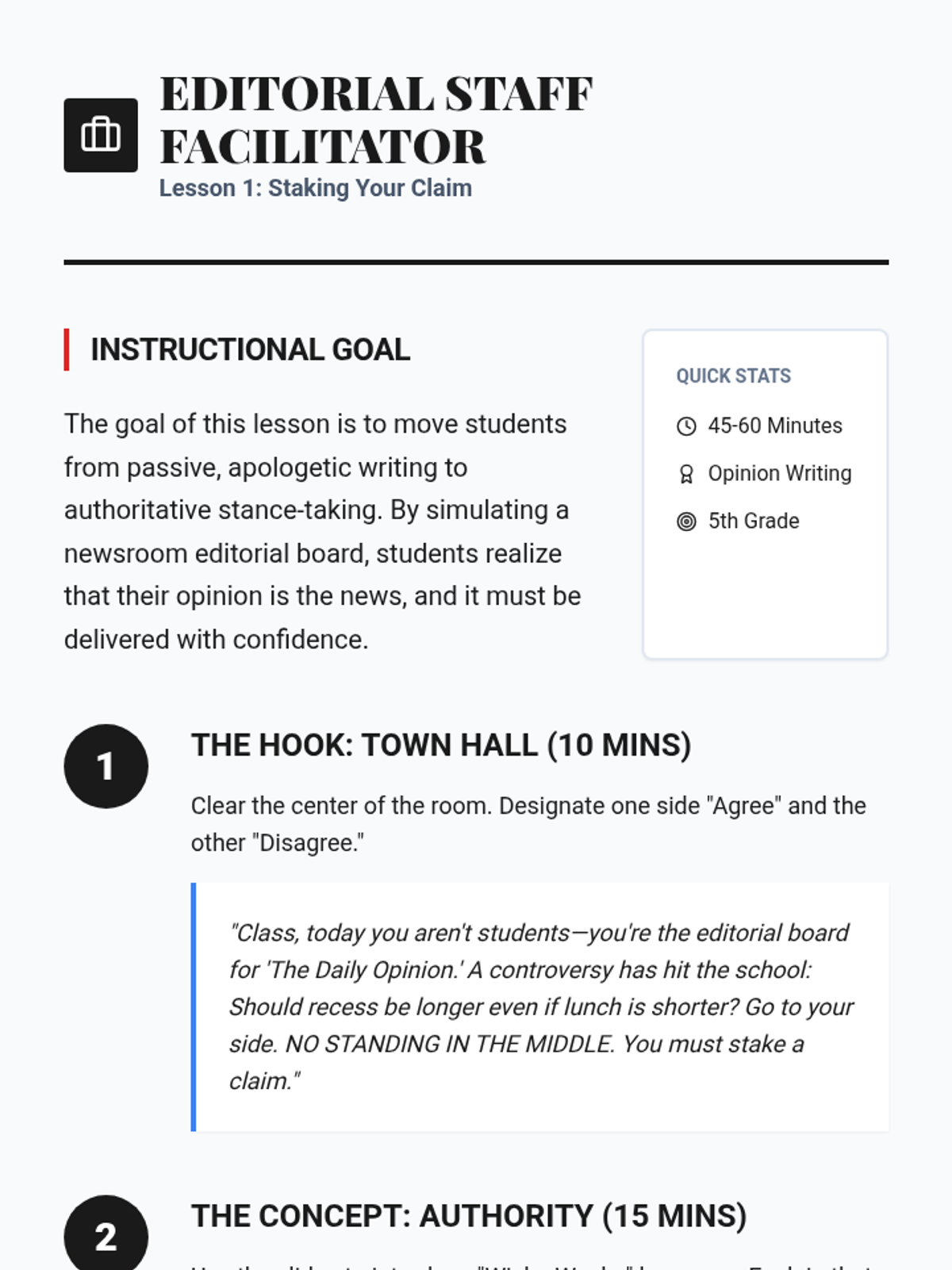
A 5th-grade writing sequence where students act as editorial writers to master persuasive introductions and 'Call to Action' conclusions. Students learn to stake strong claims, use emotional appeals, and craft future-oriented warnings to move their audience.
A project-based sequence where 5th-grade students analyze how meaning is preserved or altered when a text is adapted into a visual format. Students compare descriptive language in literature to visual techniques in film and graphic novels, culminating in a written comparative review.
A 5-lesson unit where 5th-grade students explore how universal themes transcend genres, specifically comparing a classic fable and a contemporary realistic fiction story to see how they convey the same moral lesson.
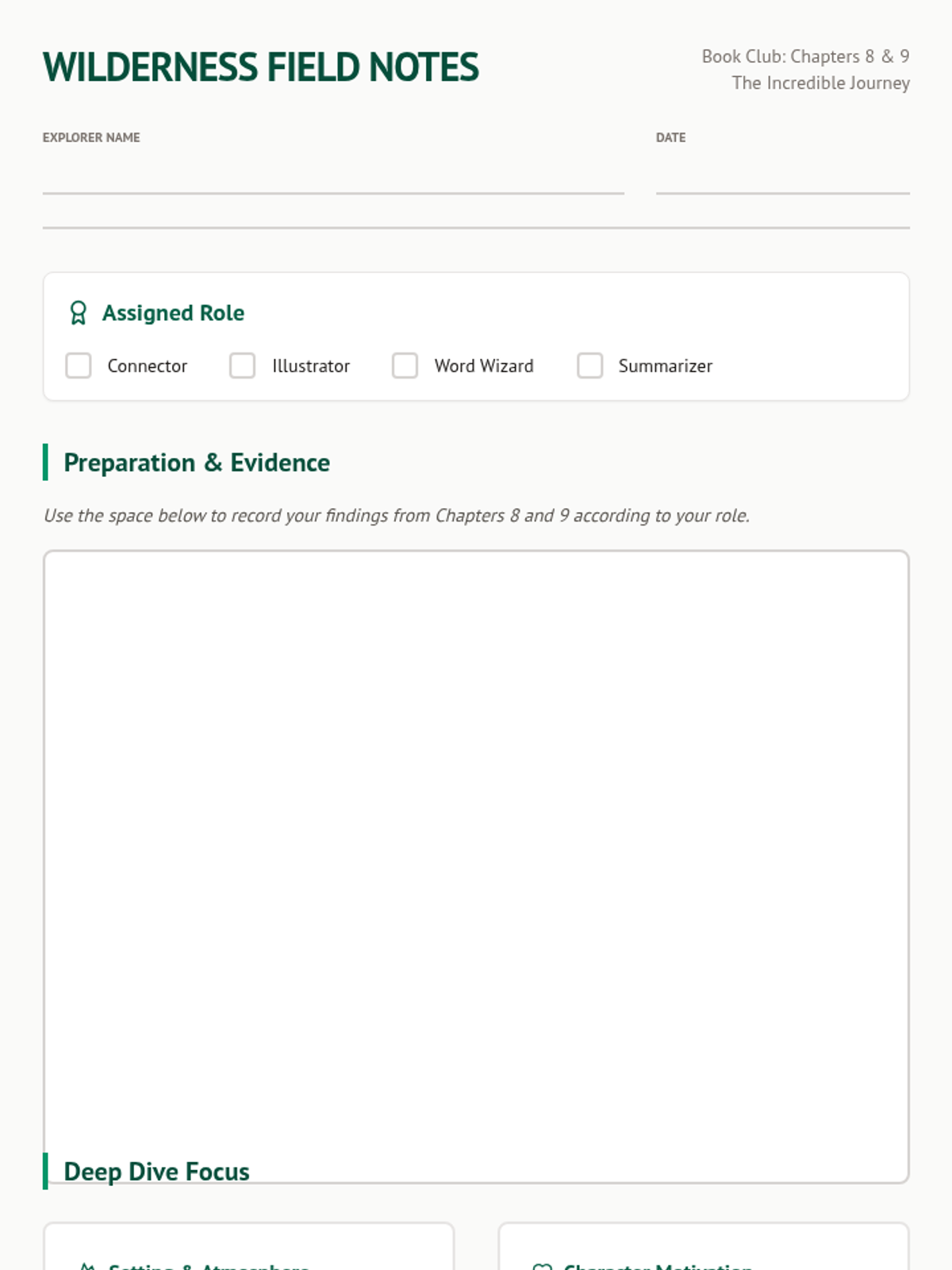
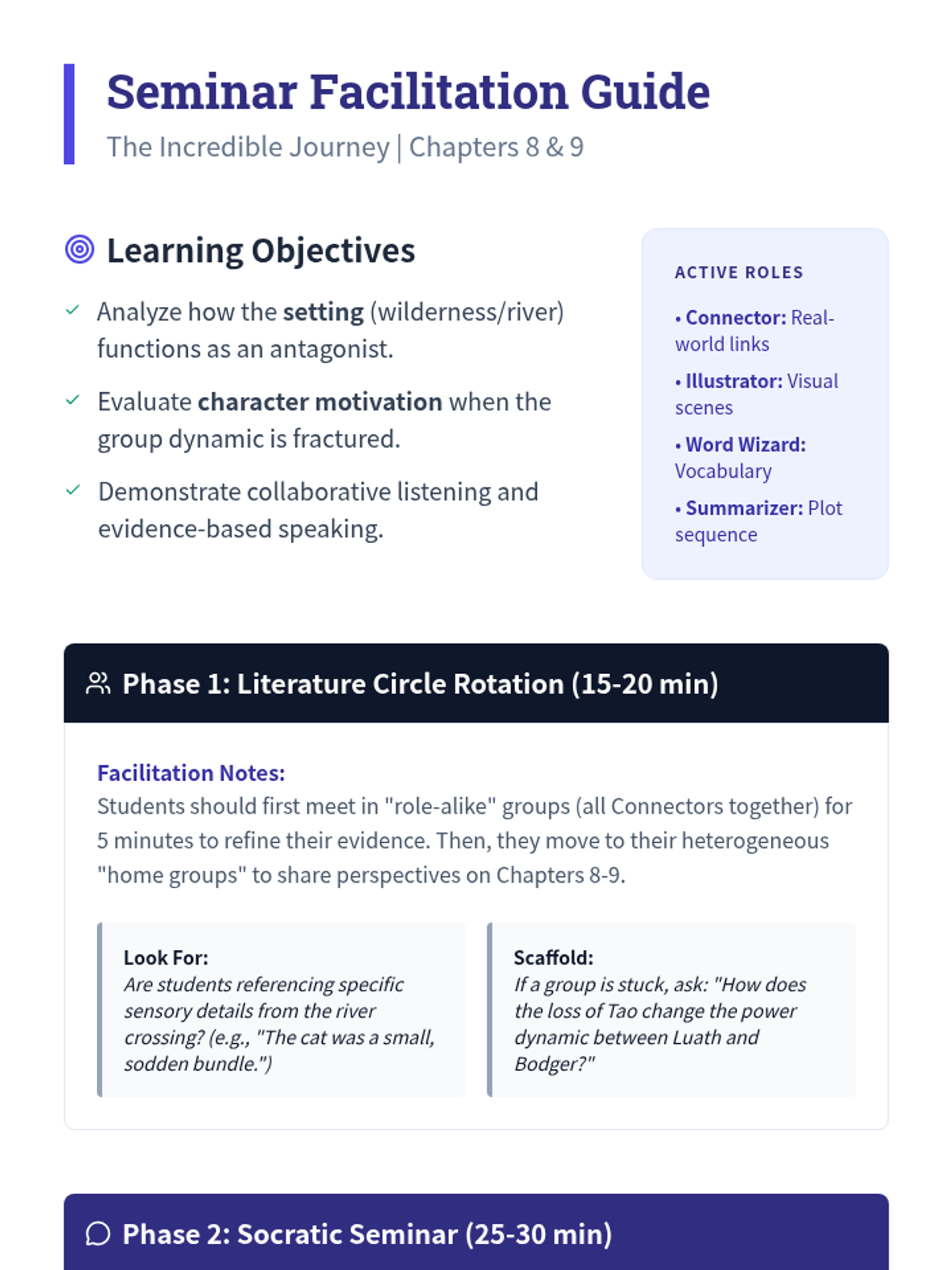
A literary exploration of survival stories and the bonds between animals and humans, centered on 'The Incredible Journey'. This unit emphasizes literary analysis through collaborative discussion and role-based inquiry.
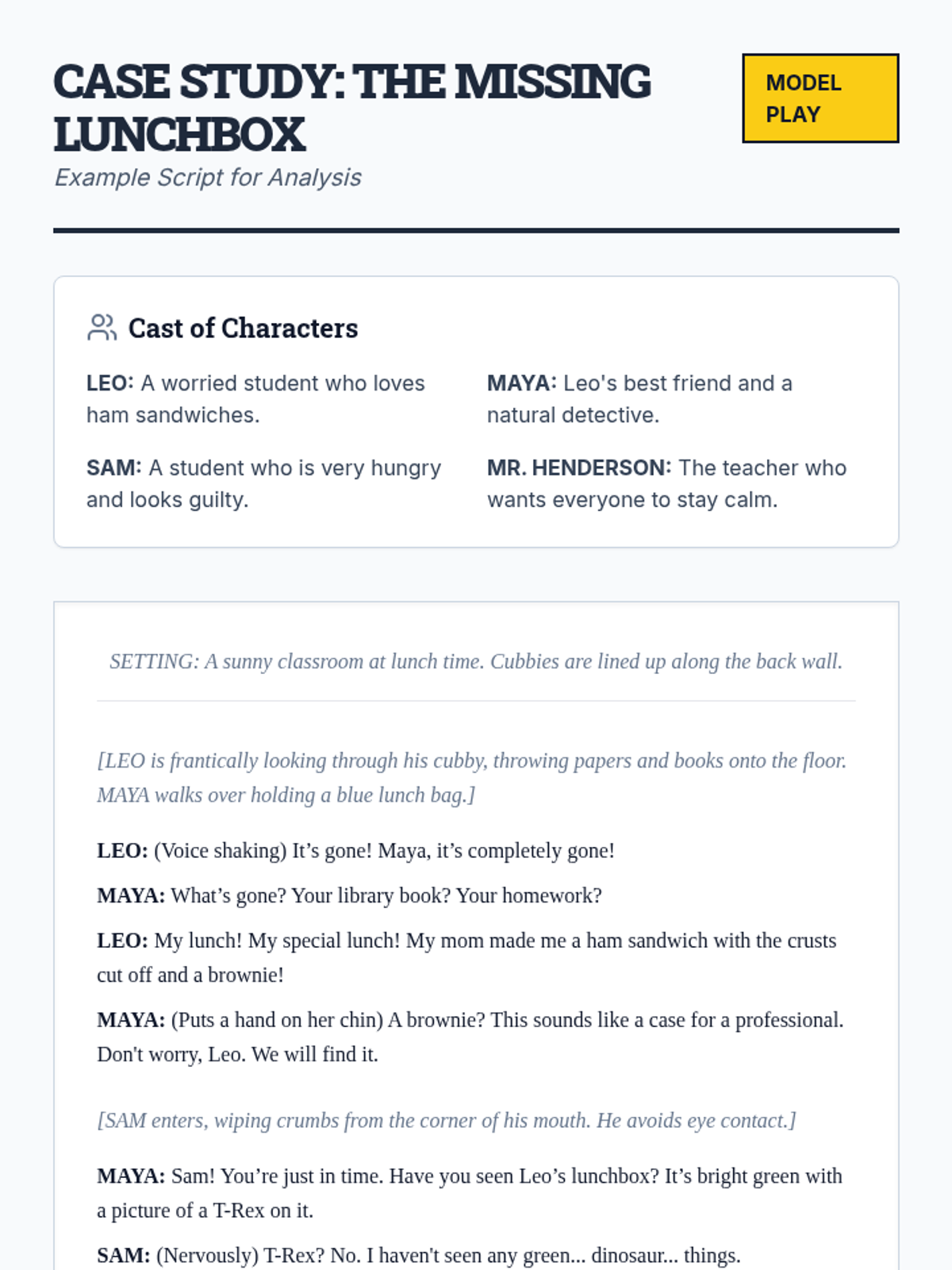
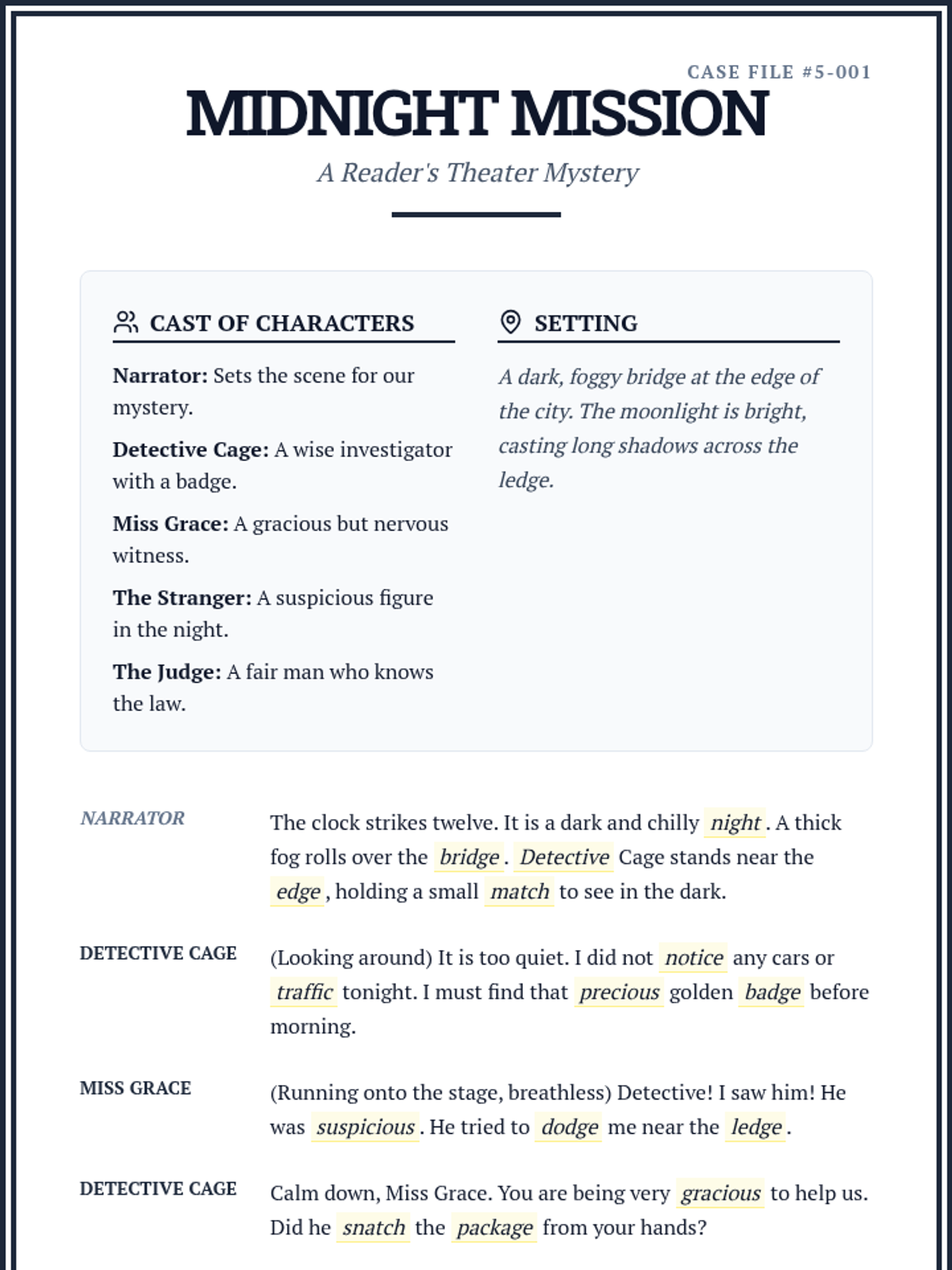
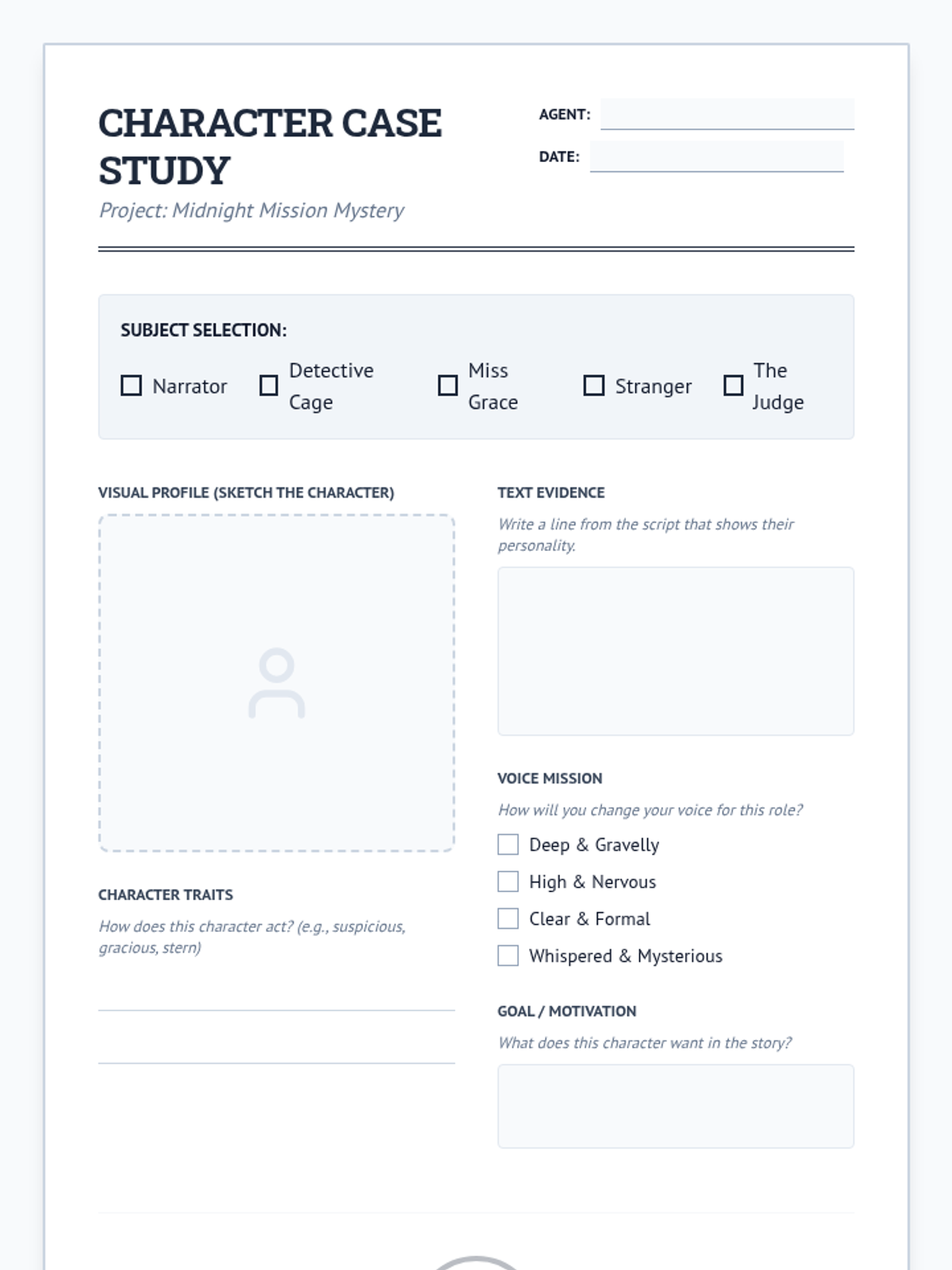
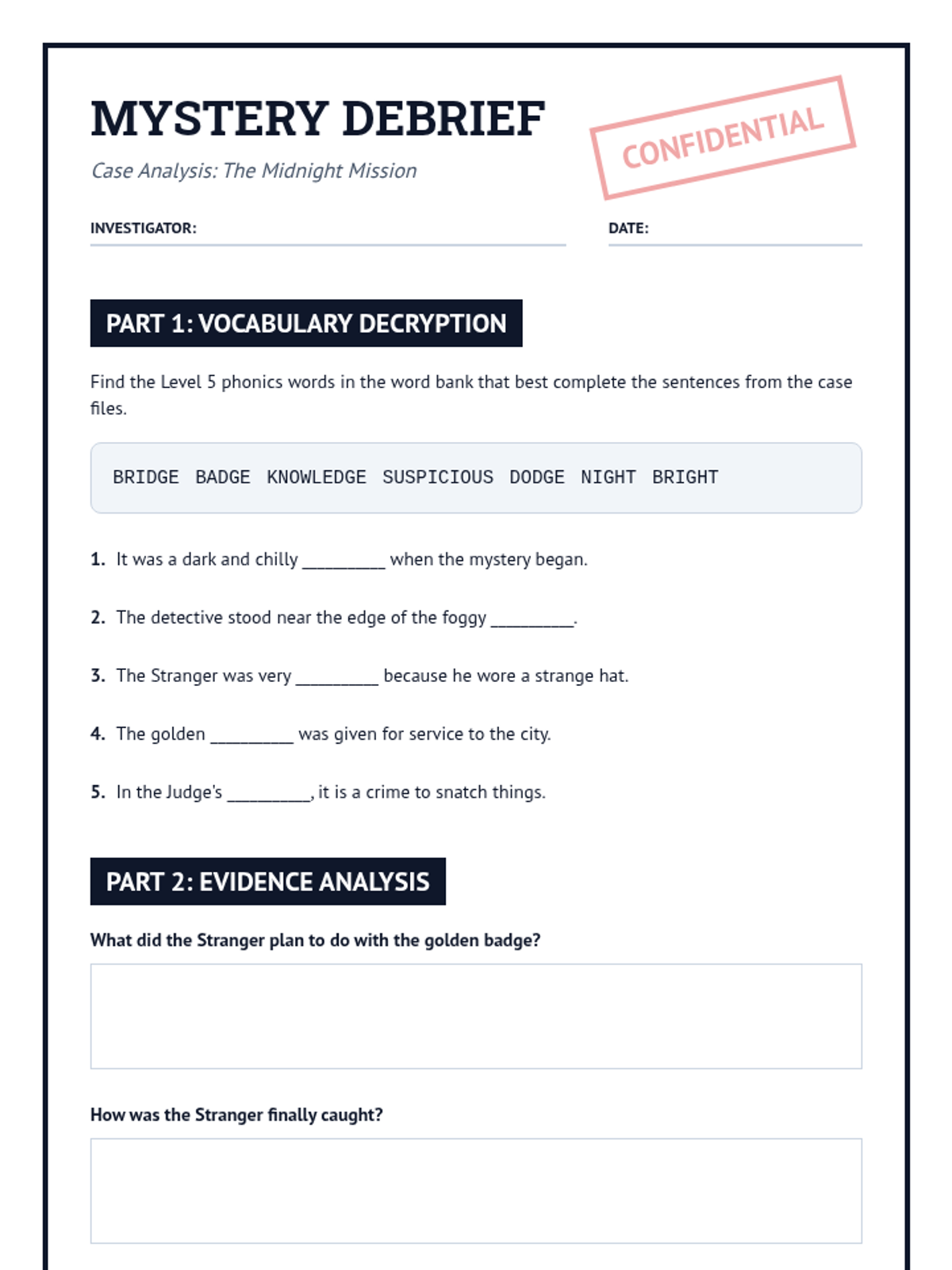
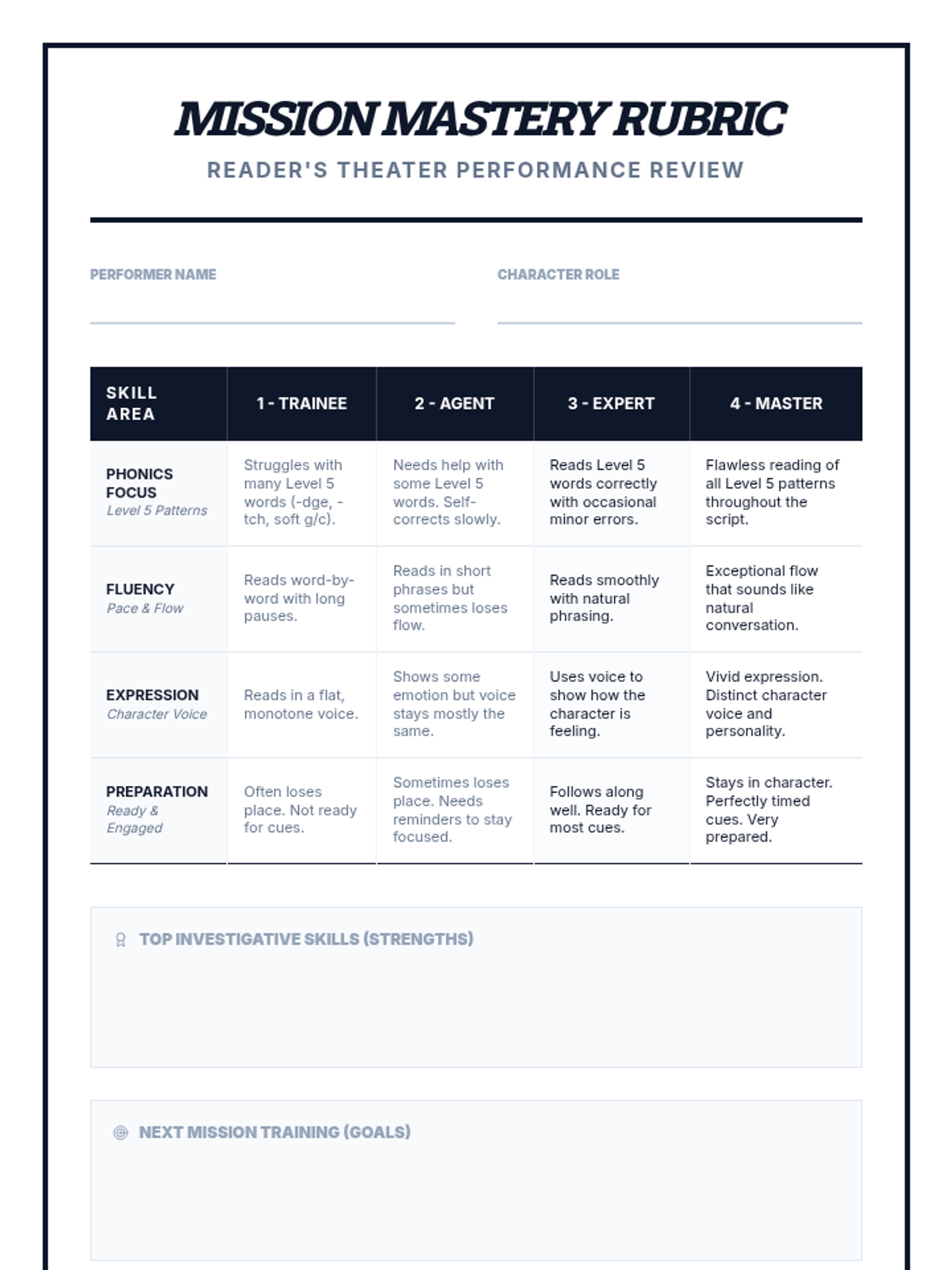
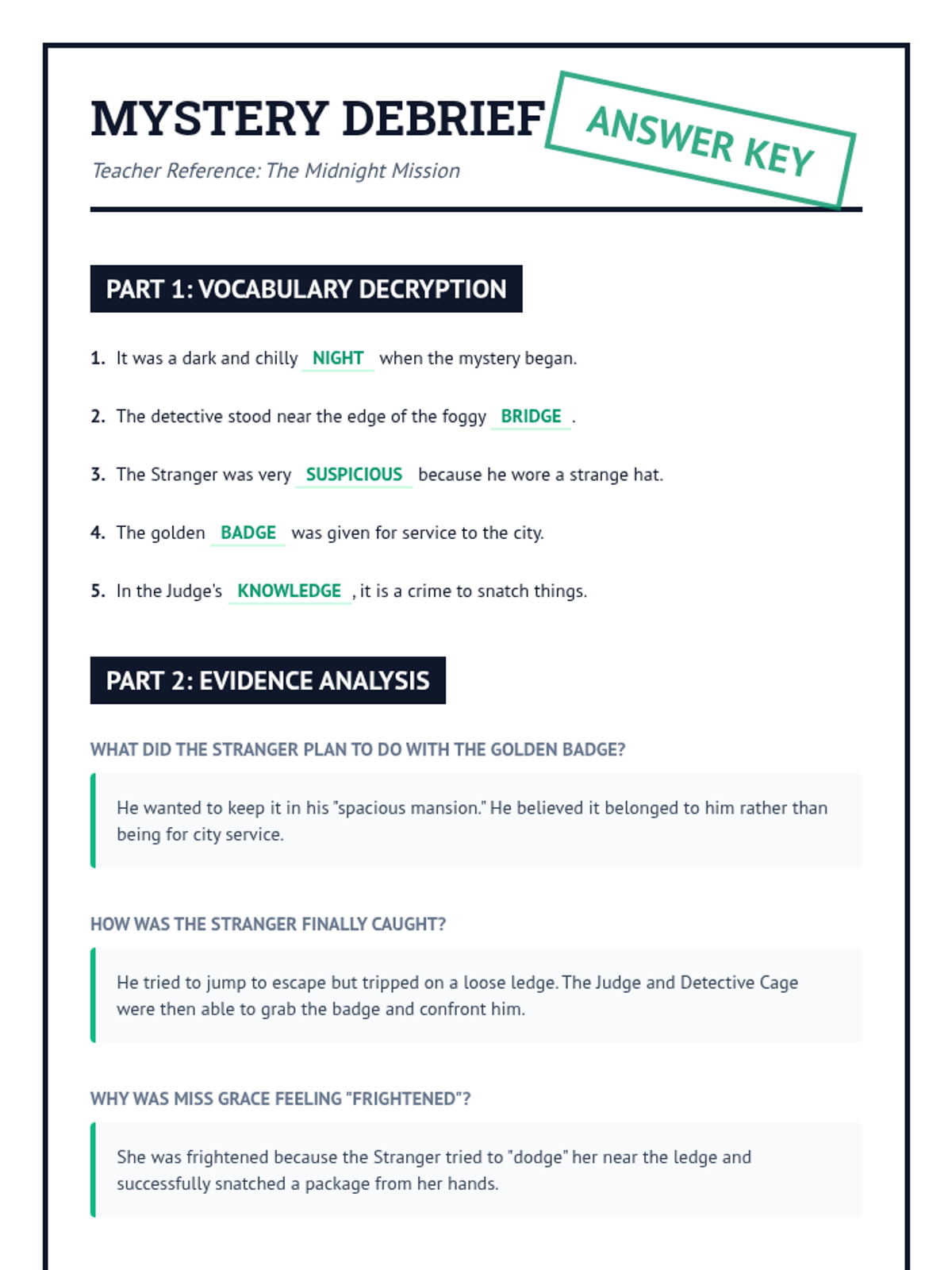
A unit focused on play structure, fluency, and social-emotional problem solving through mystery-themed scripts. Students analyze plot elements while practicing performance skills.
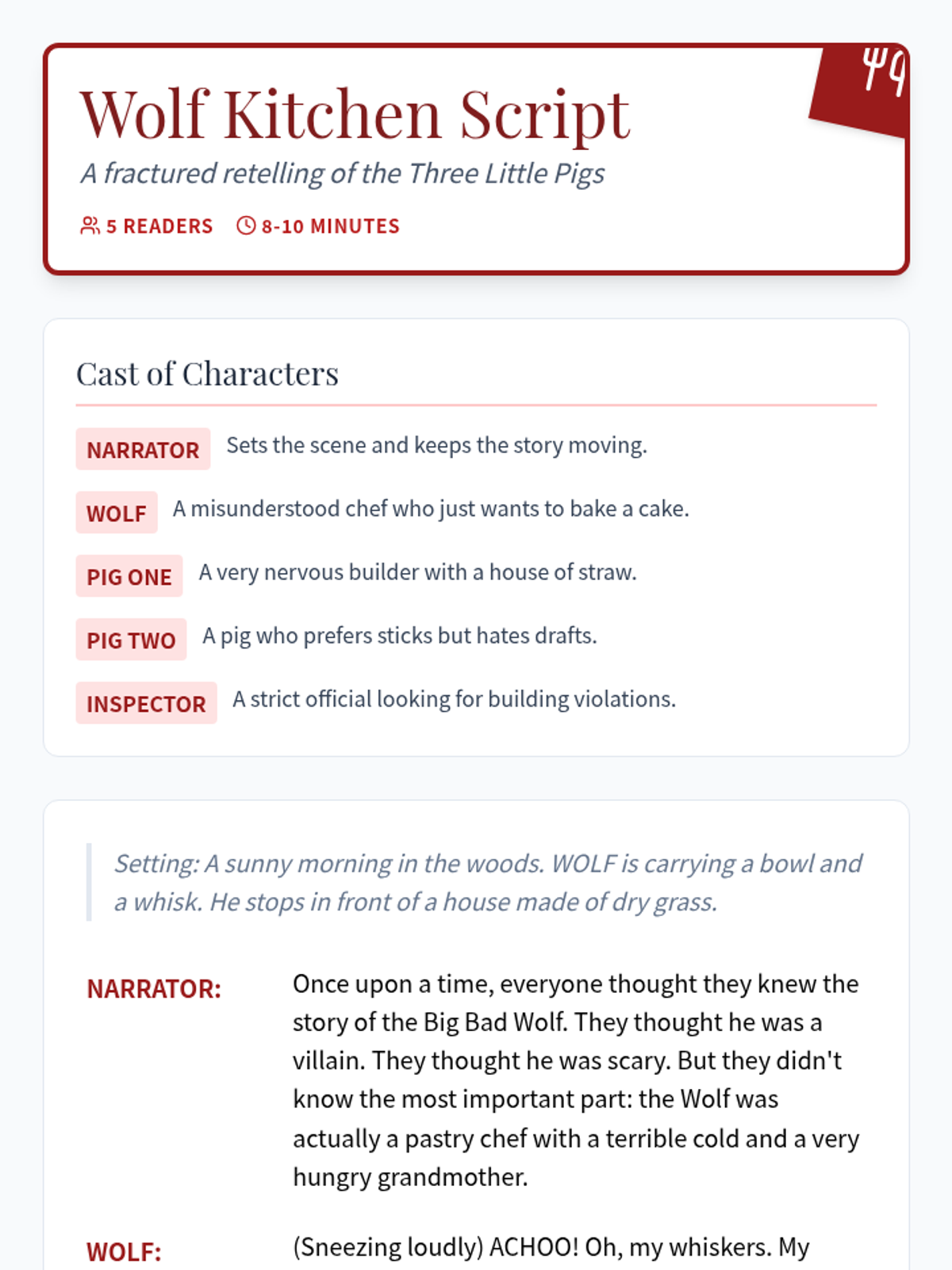
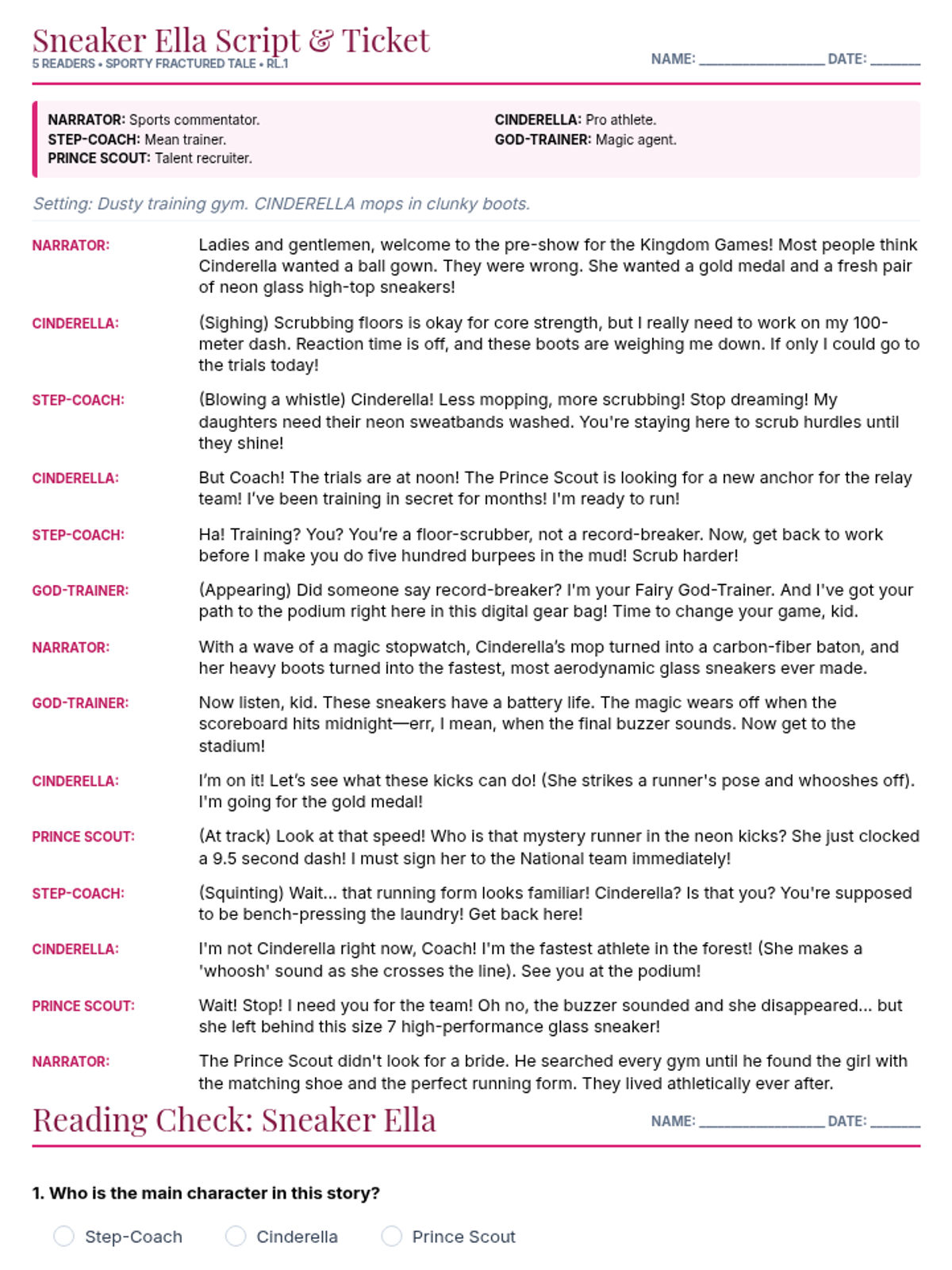
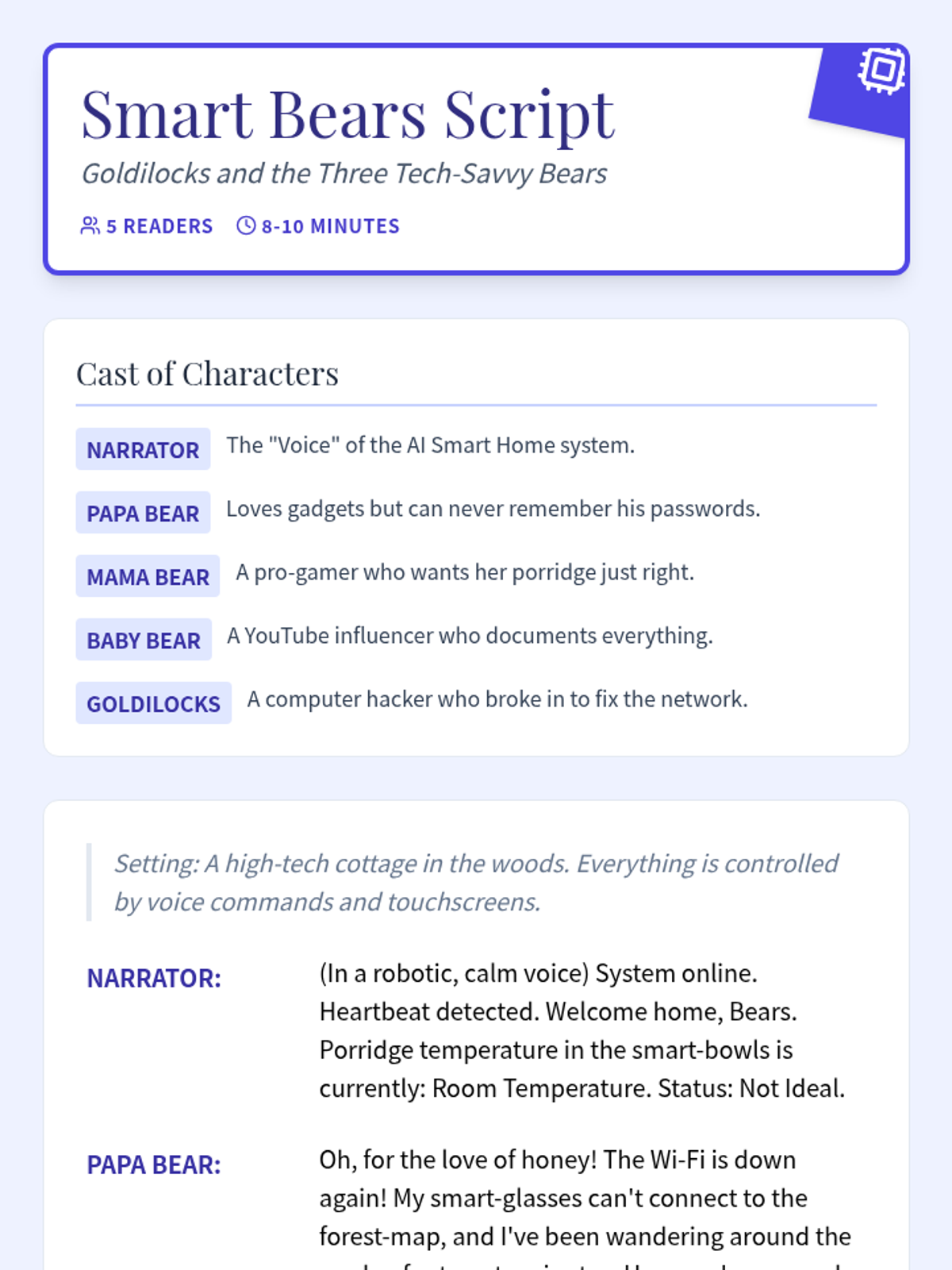
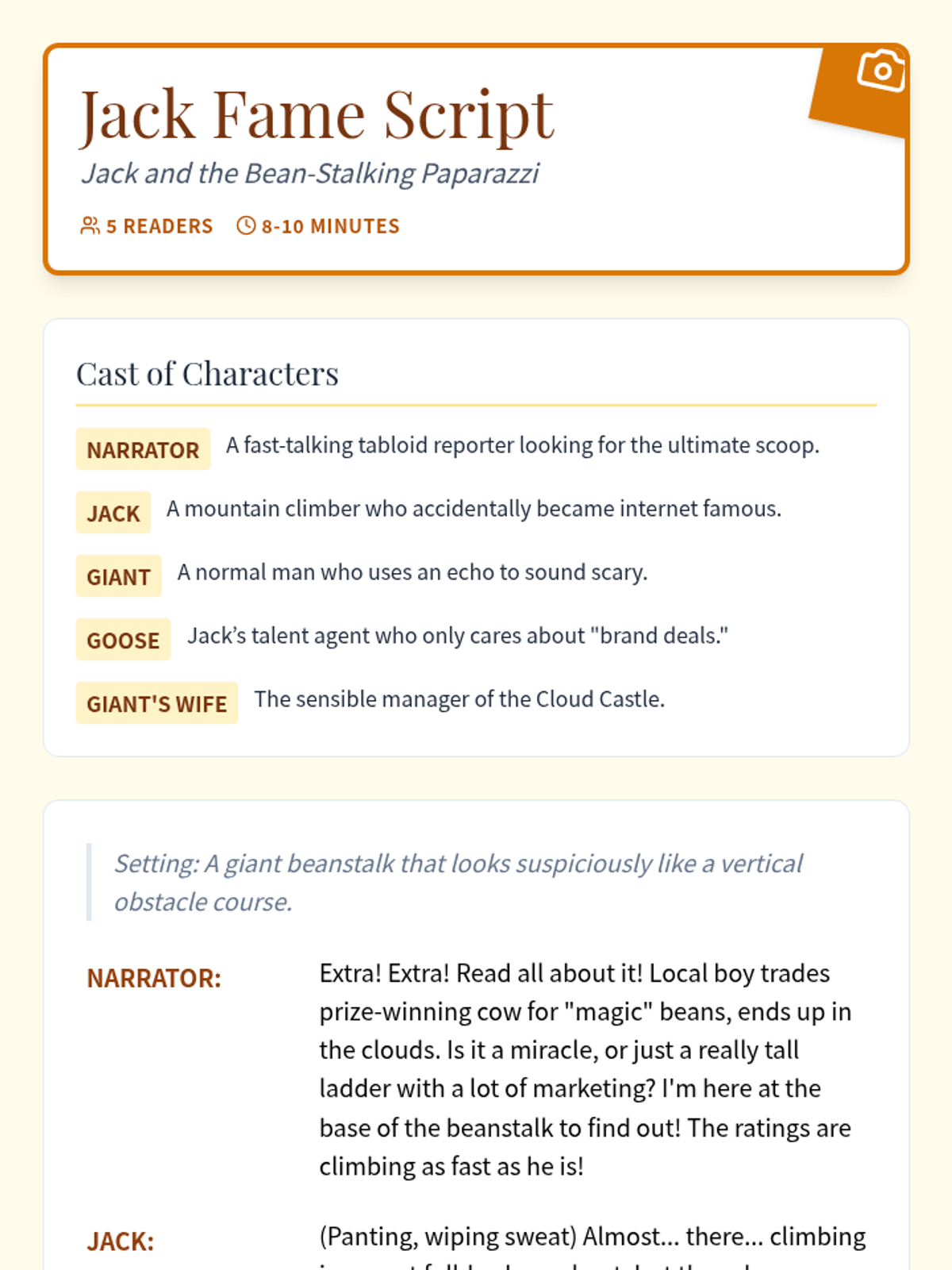
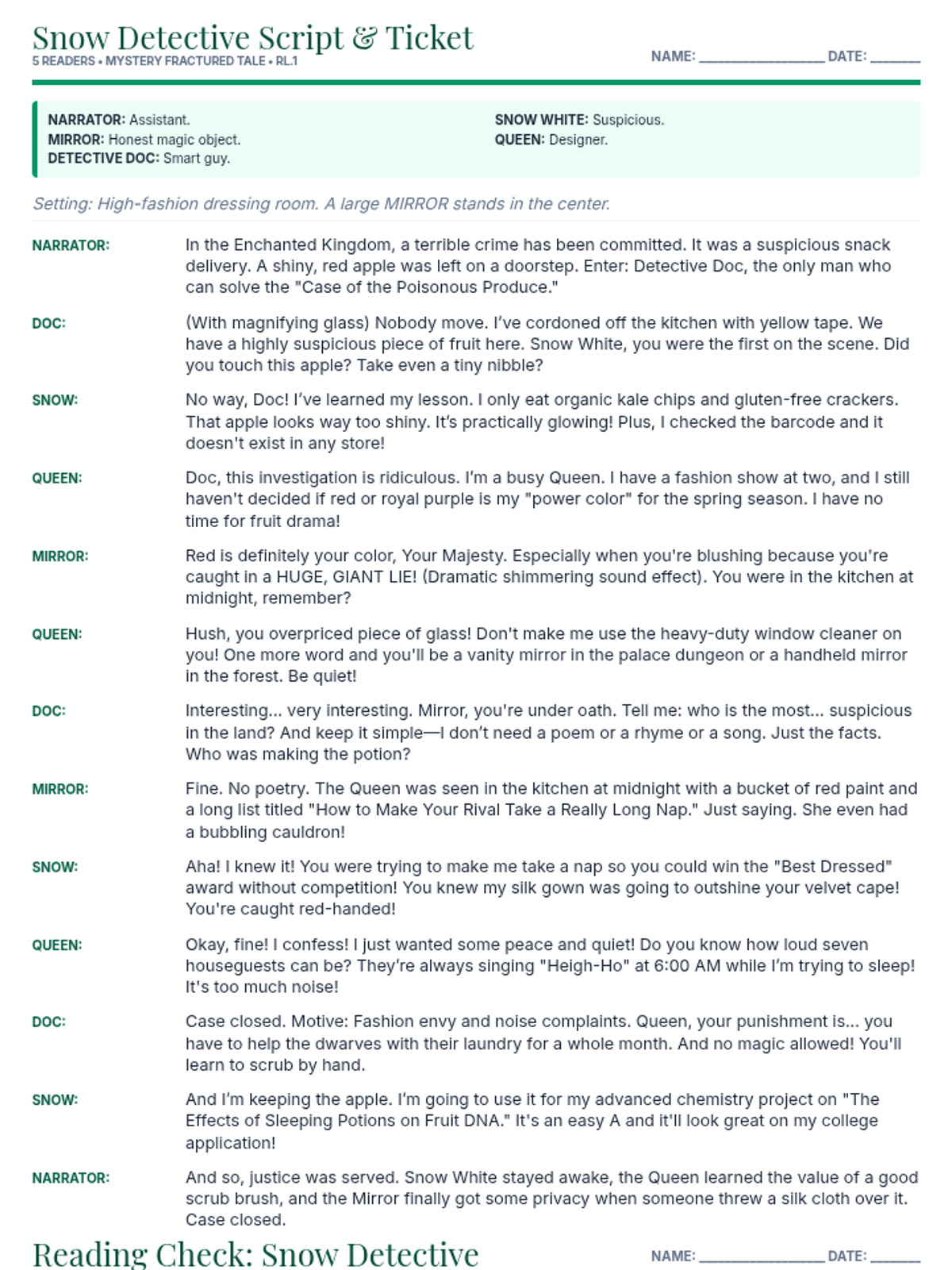
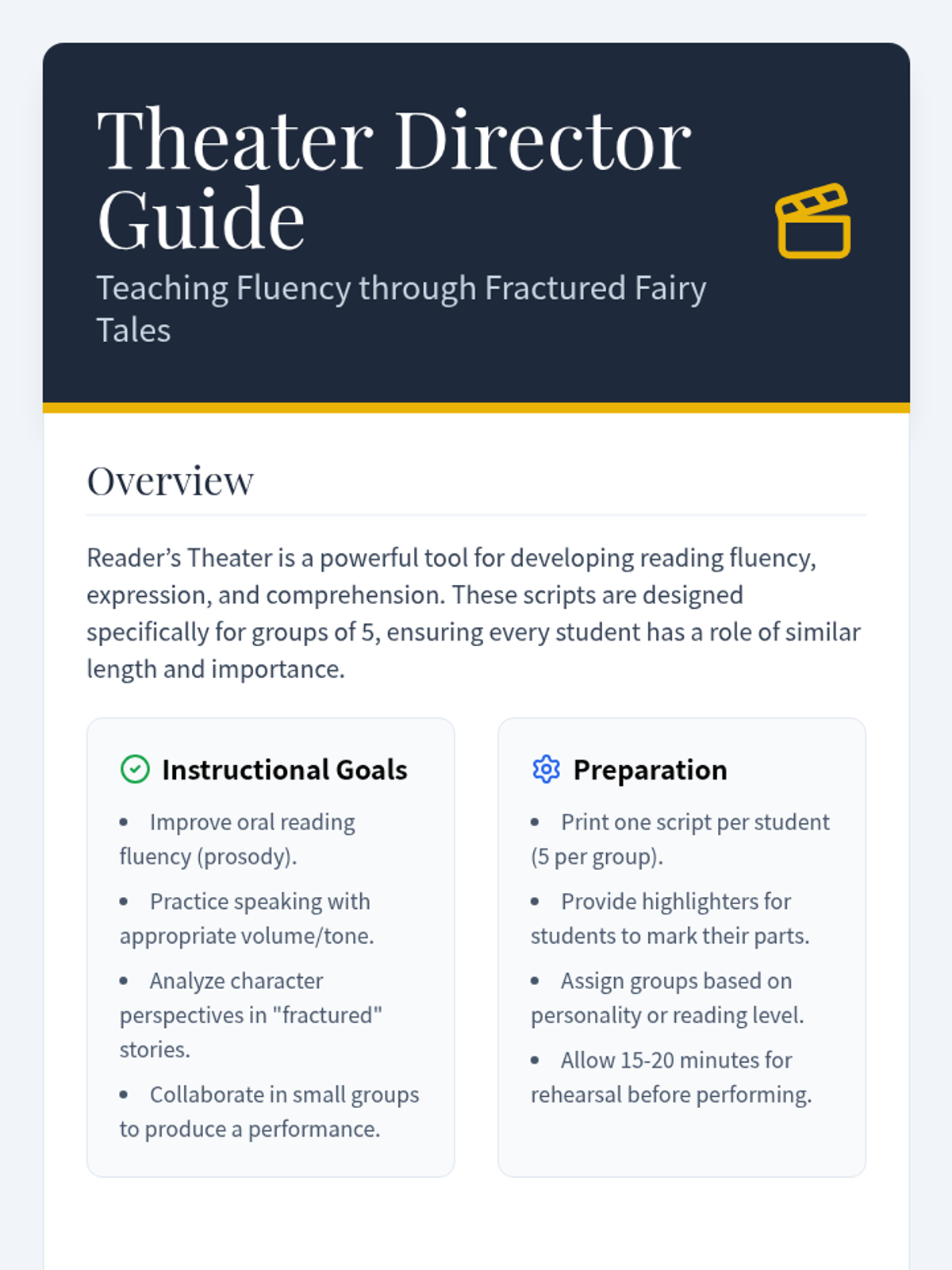
A collection of five fractured fairy tale reader's theater scripts designed for groups of five students, focusing on fluency, expression, and creative retelling.
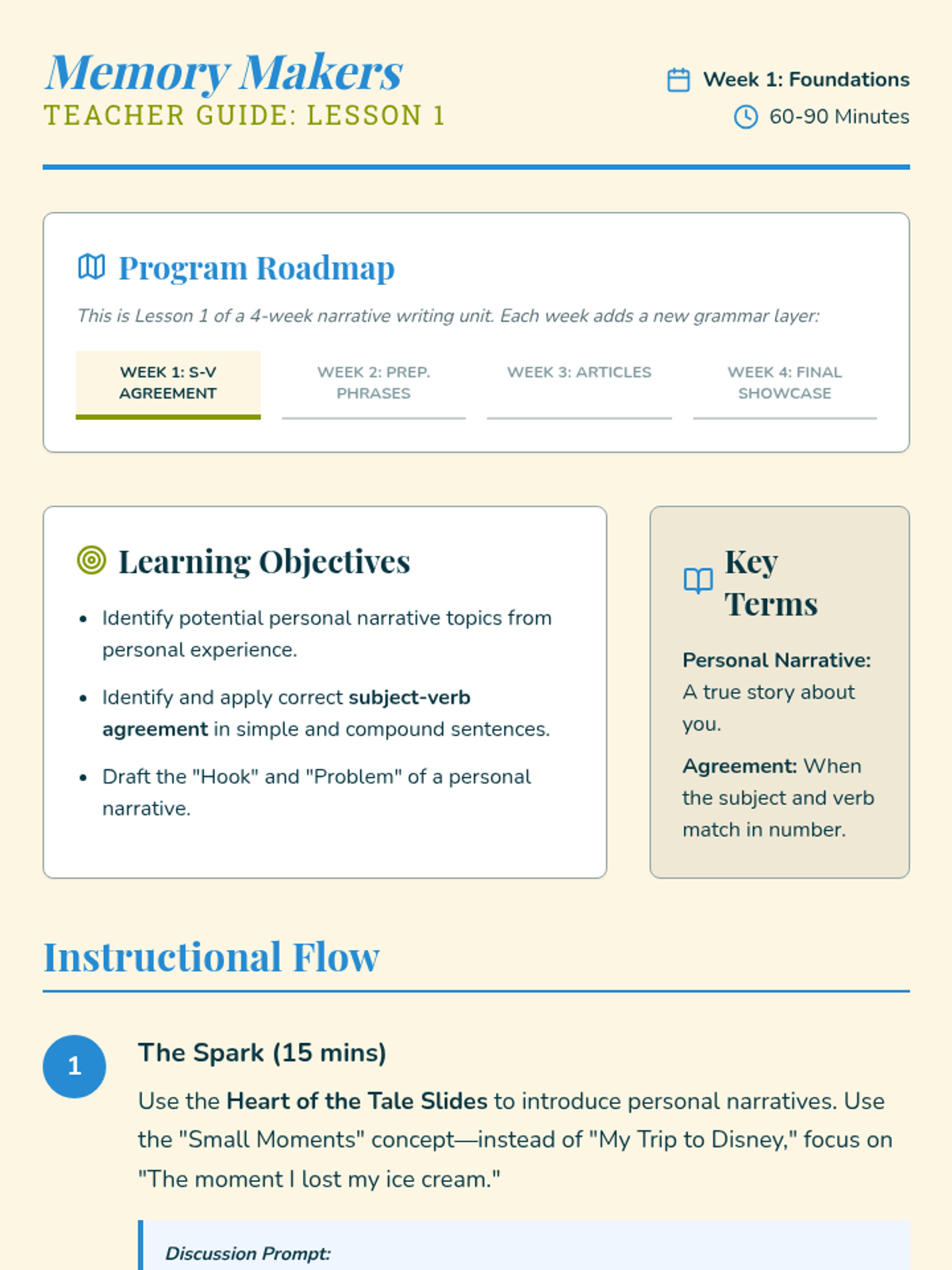
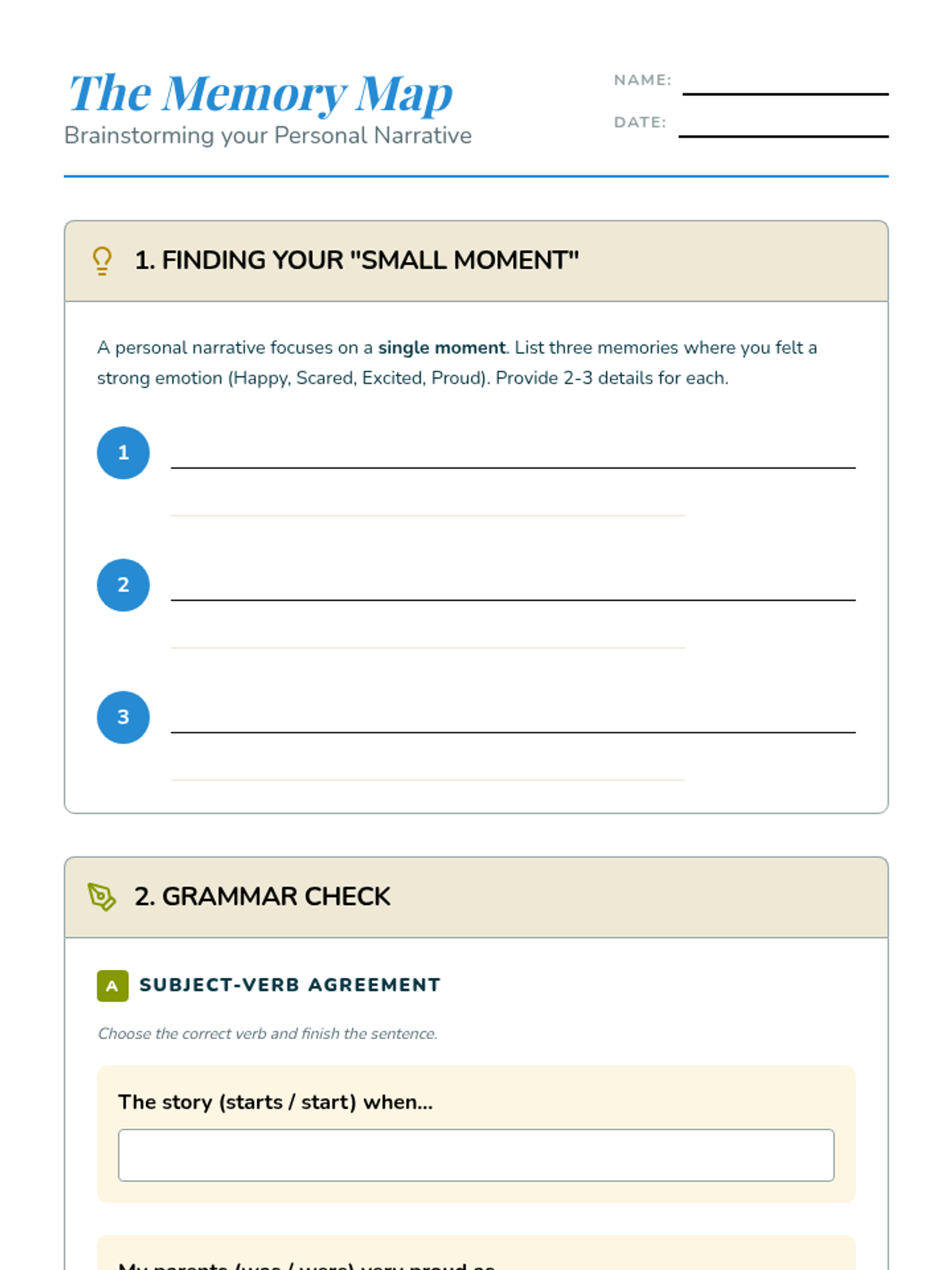
A 4-week program focused on personal narrative writing and oral presentation skills, with a heavy emphasis on subject-verb agreement, prepositional phrases, and the correct use of articles.
A collection of Reader's Theater mysteries and activities designed to reinforce S.P.I.R.E. Level 5 phonics patterns through fluency and performance.
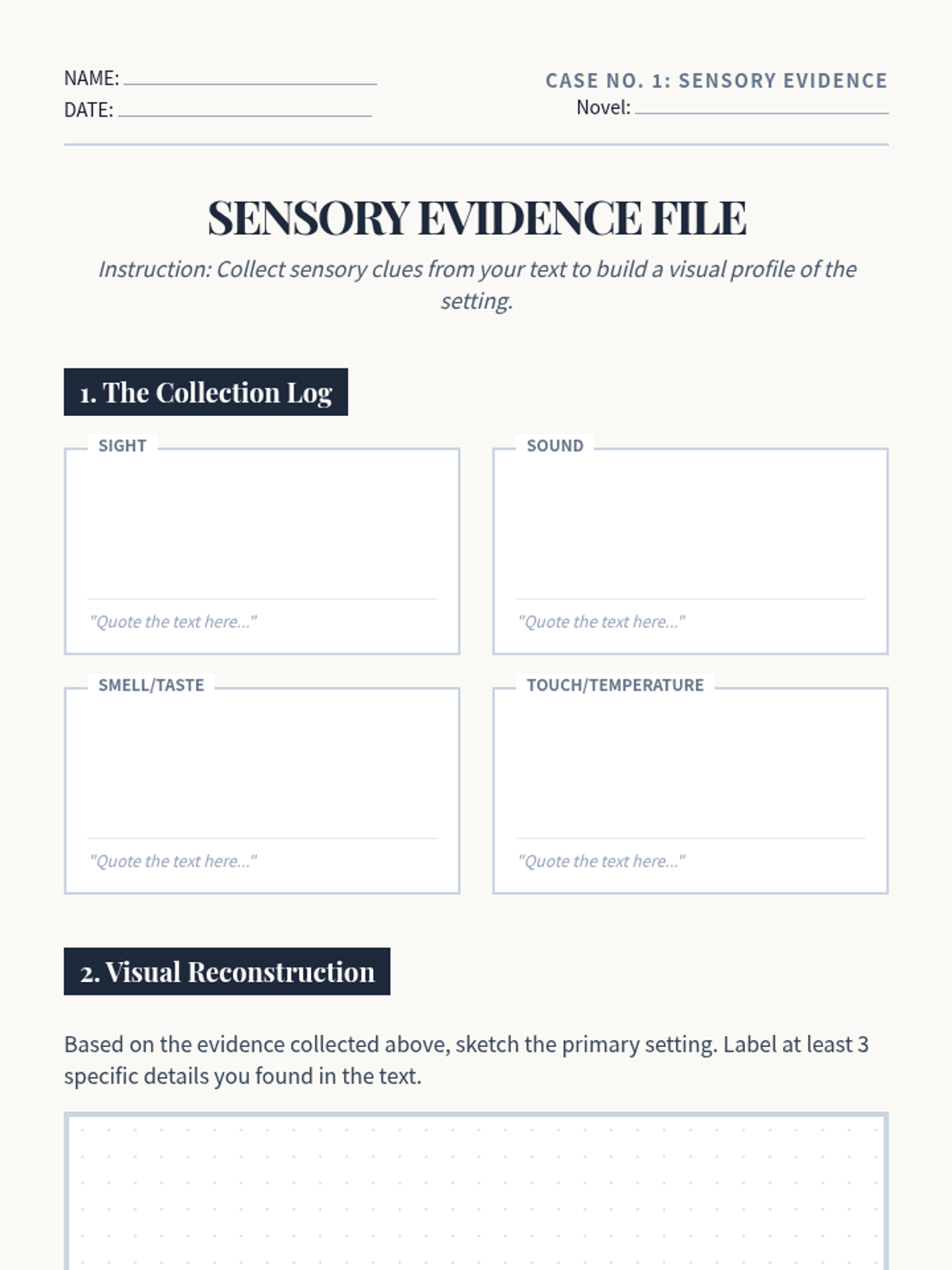
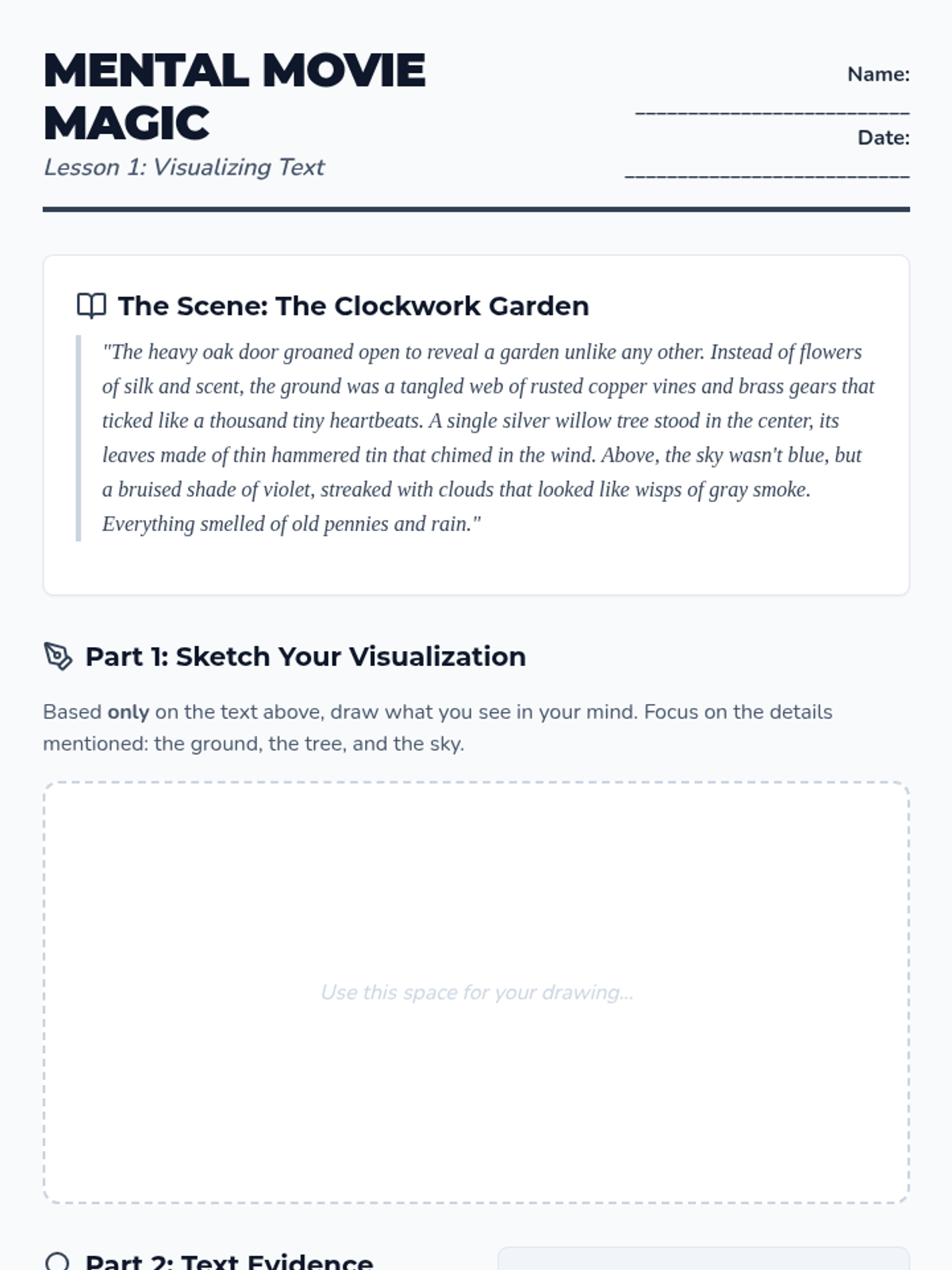
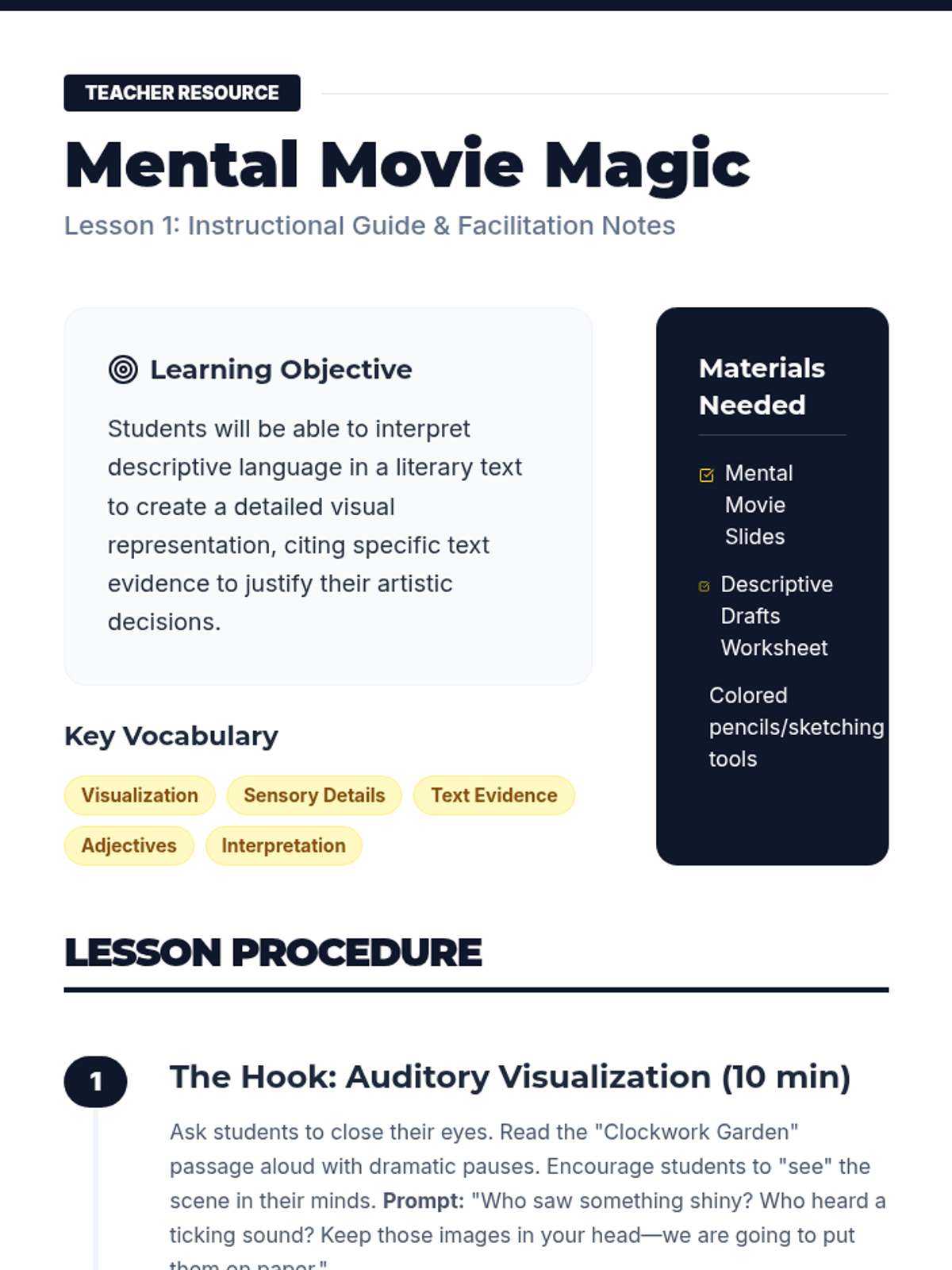
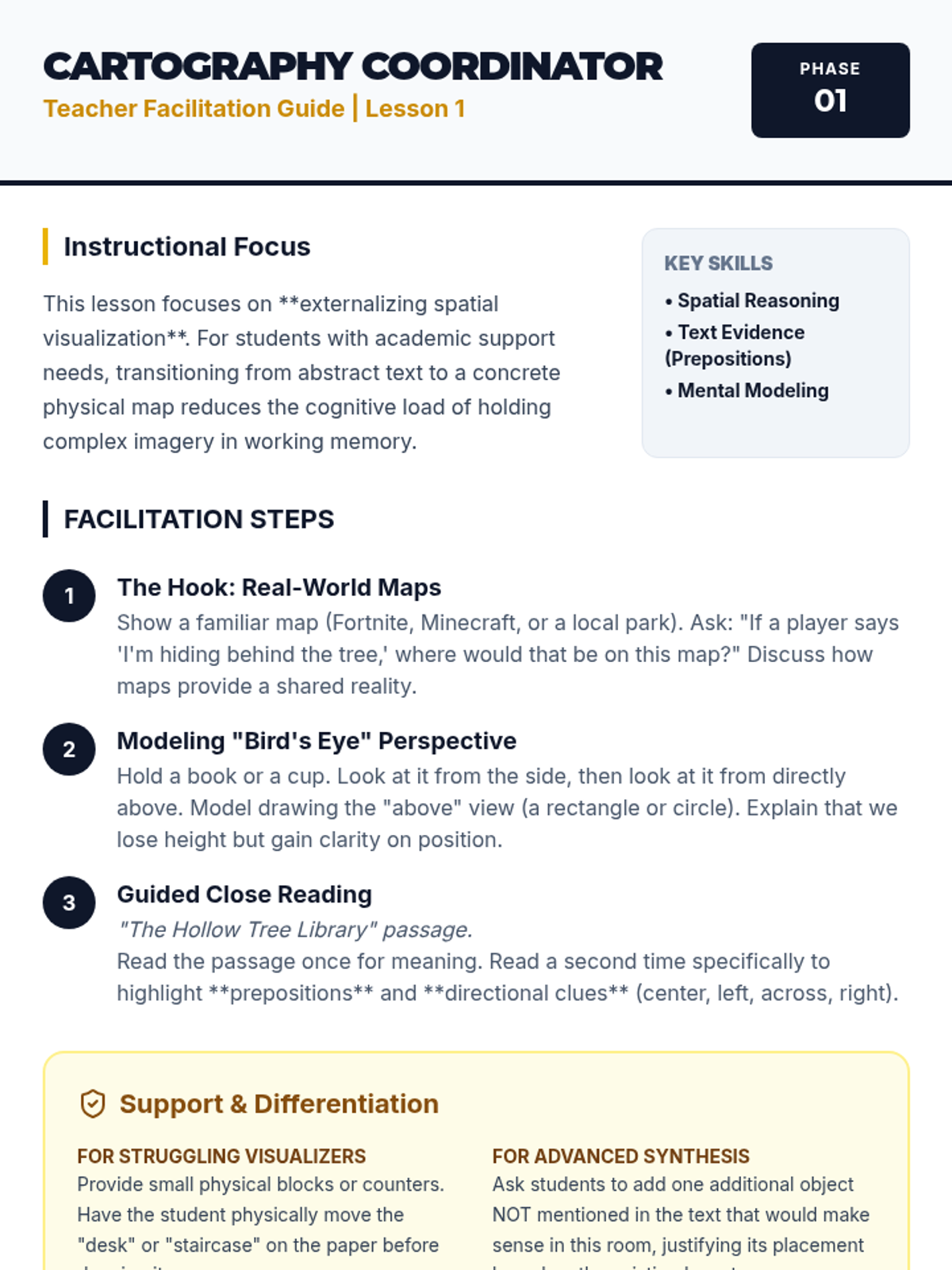
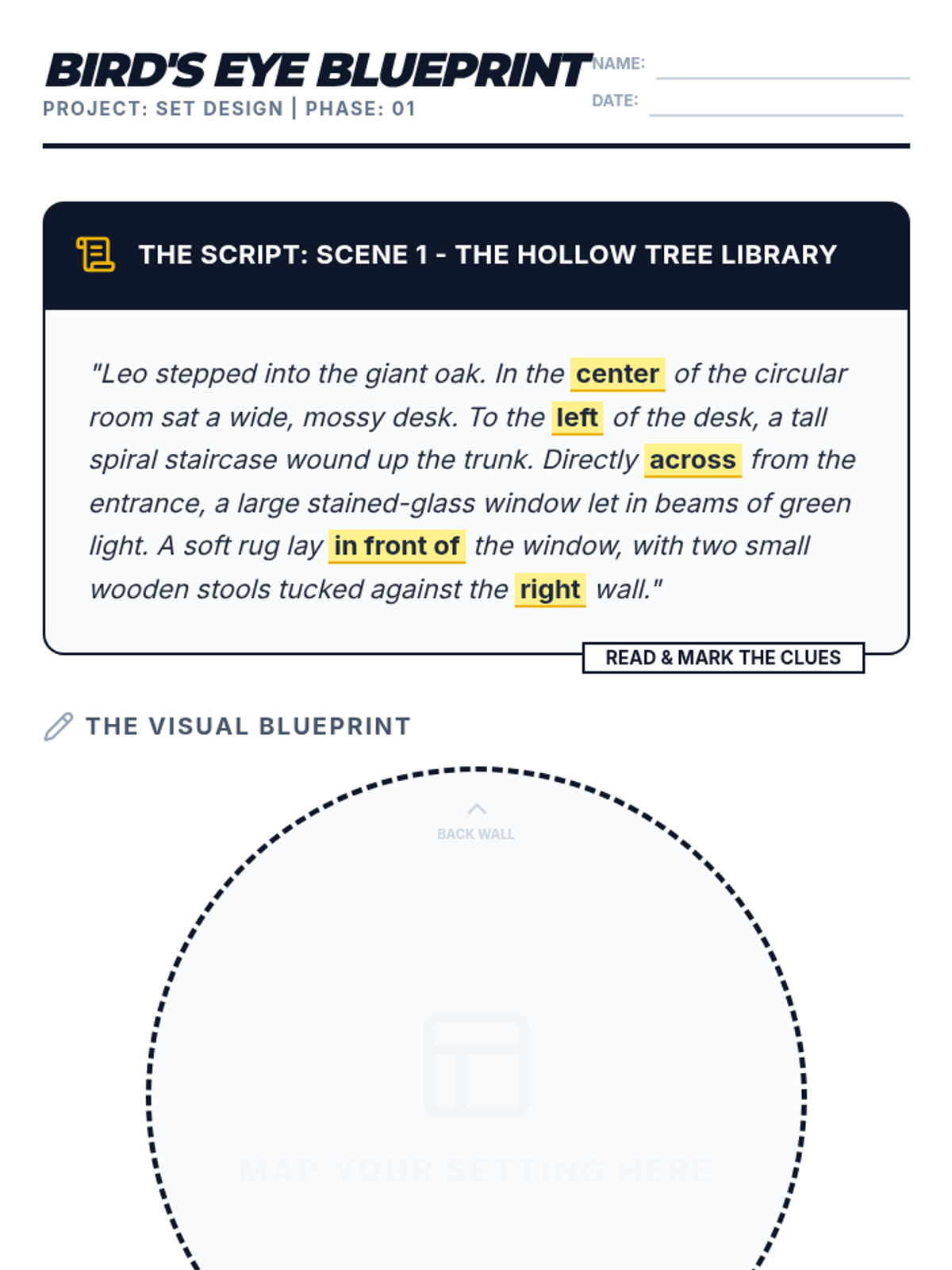
A project-based sequence for 5th-grade academic support focused on externalizing visualization through mapping, storyboarding, and mood analysis to deepen narrative comprehension.
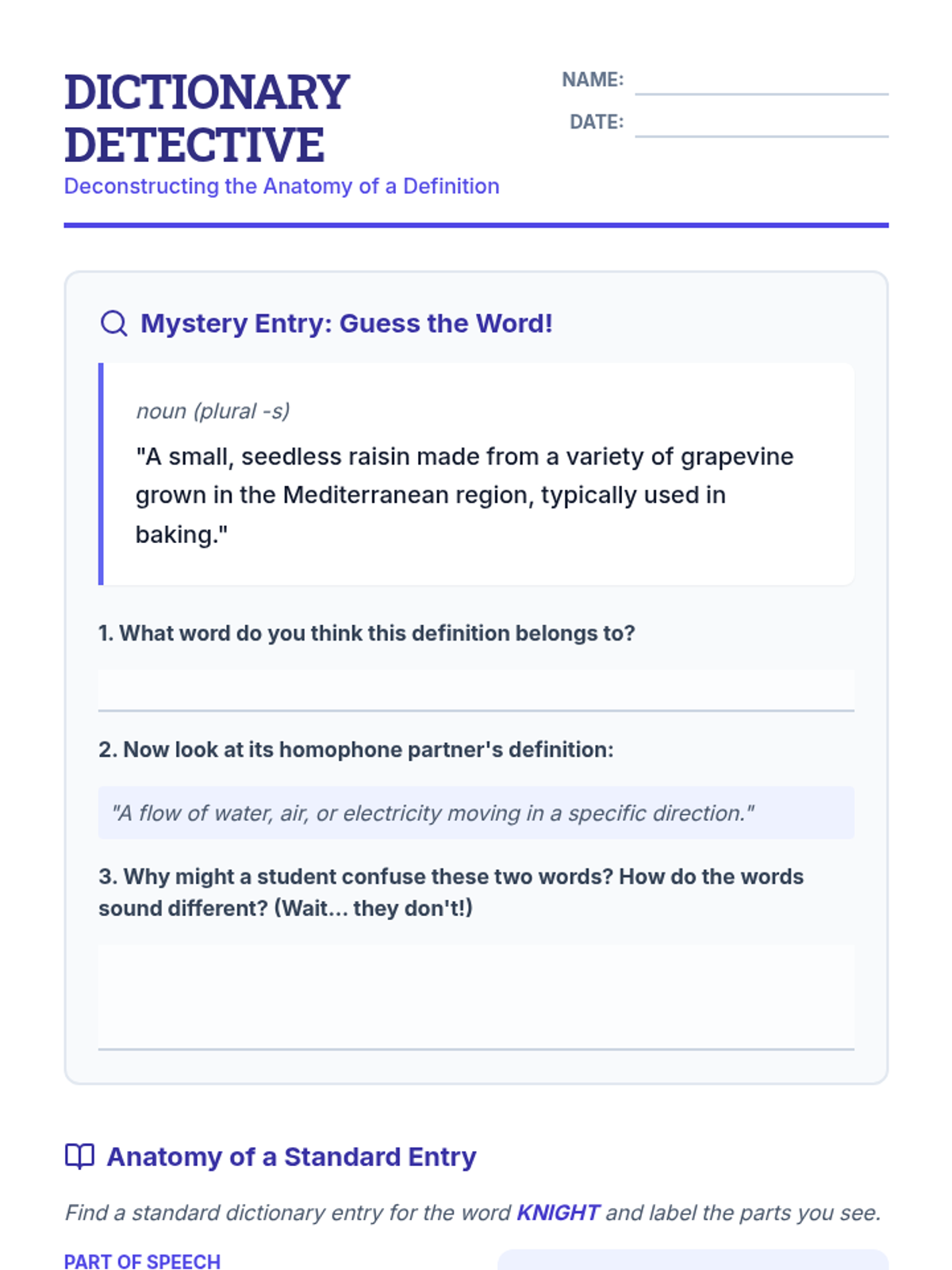
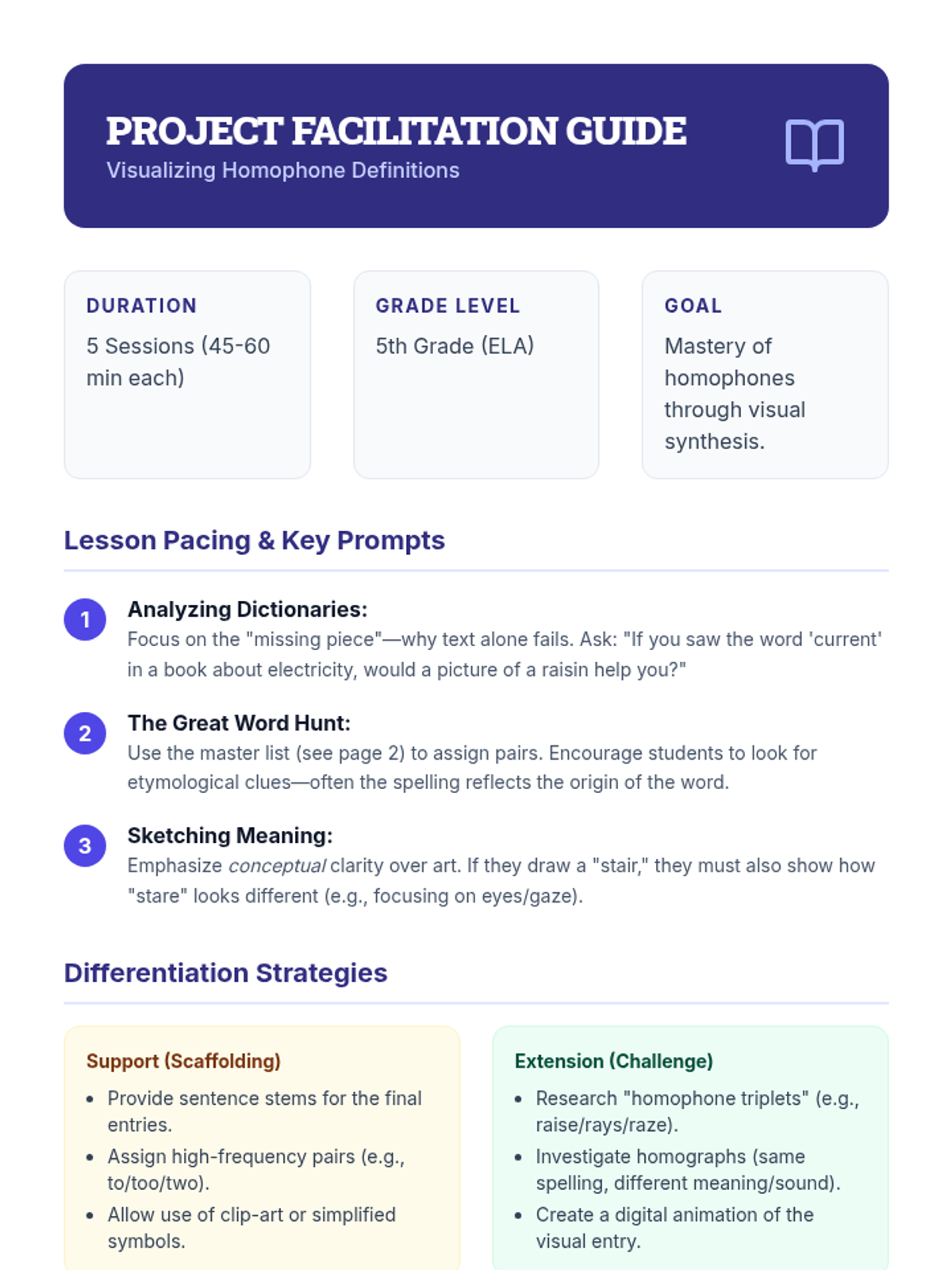
A 5th-grade ELA project where students research, illustrate, and publish a visual dictionary of homophones to master word nuances through visual imagery.
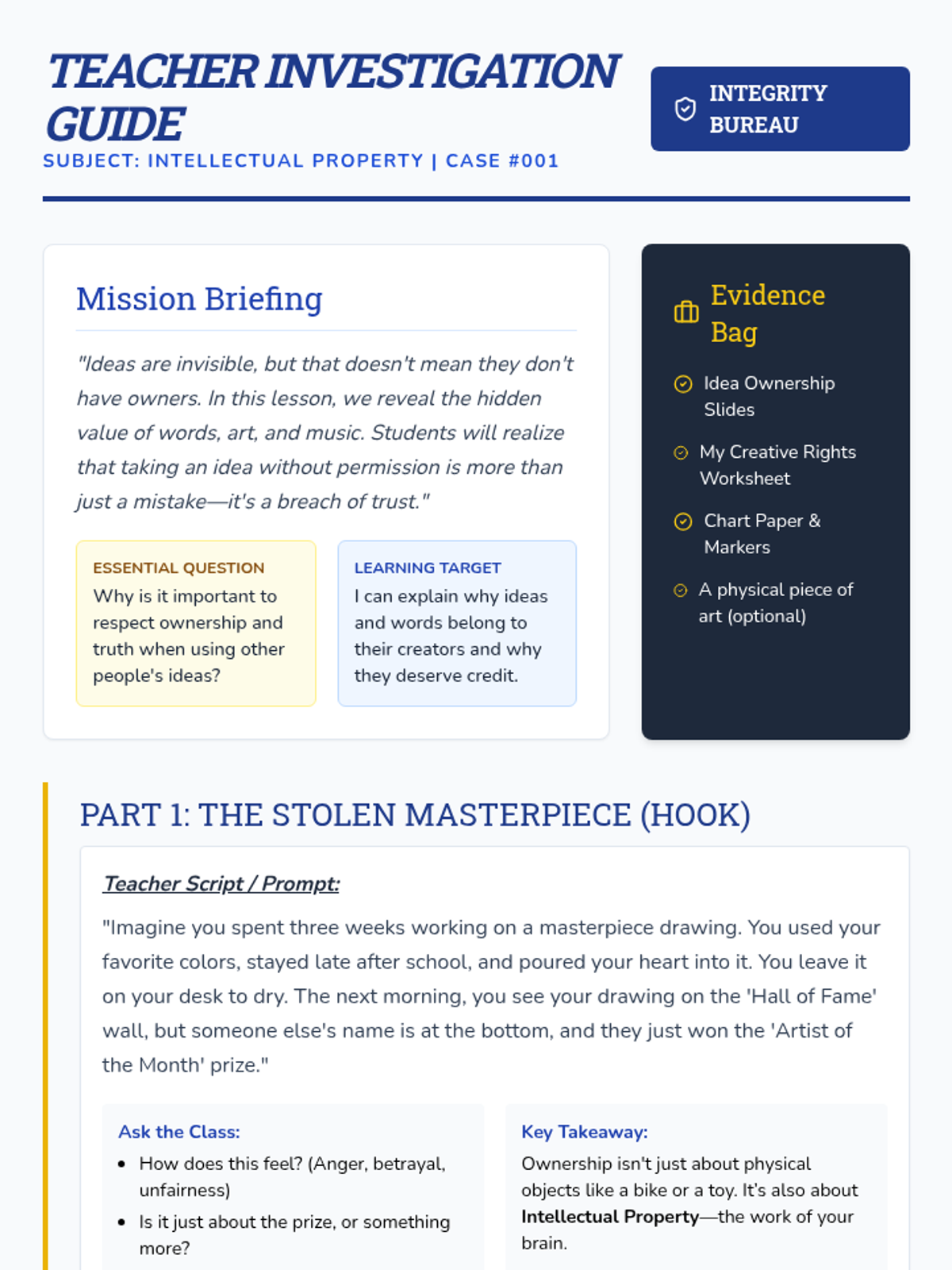
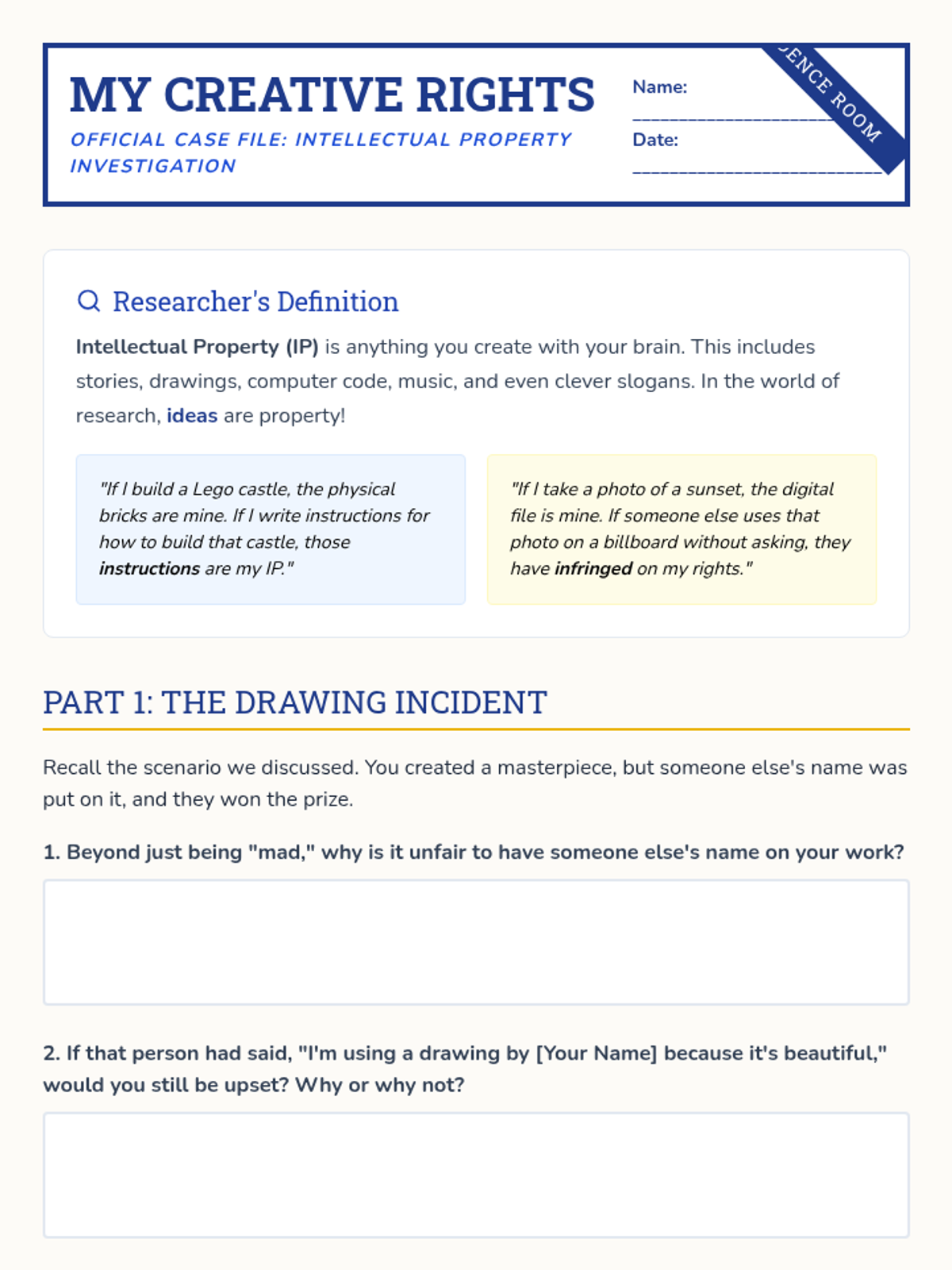
This sequence guides 5th-grade students through the ethics of information use, focusing on intellectual property, plagiarism, quoting, and citation. Students learn to respect ownership and truth as they prepare research for their debates.
A comprehensive 5-lesson unit for 5th-grade students to master the art of debate research. Students progress from basic keyword searching and skimming to sophisticated paraphrasing, evidence categorization, and the final synthesis of a professional debate brief.
A 5th-grade ELA sequence focused on distinguishing between strong and weak evidence for debate. Students learn to categorize information, evaluate statistics, compare anecdotal and empirical data, identify logical fallacies, and select 'gold standard' evidence.