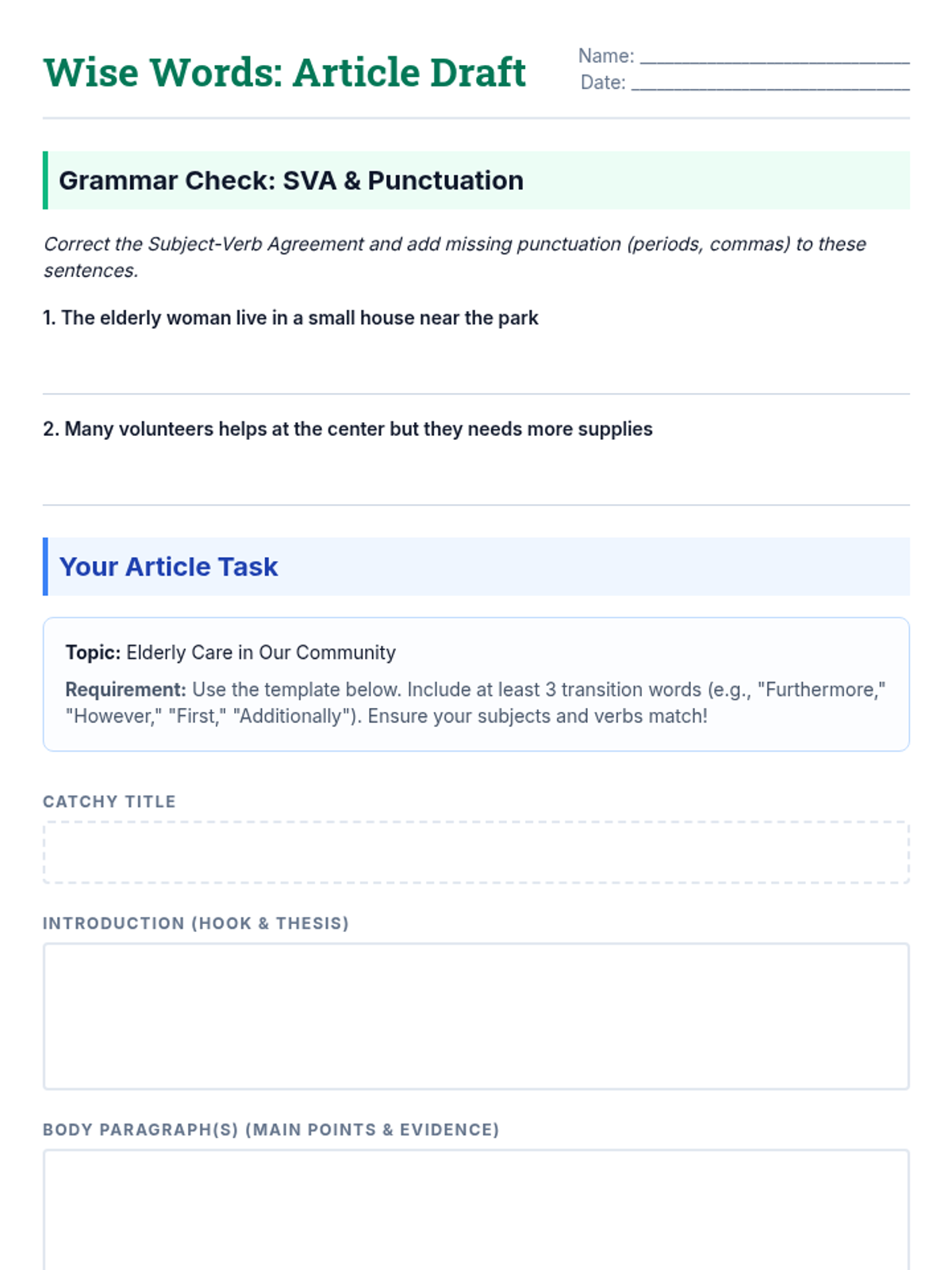
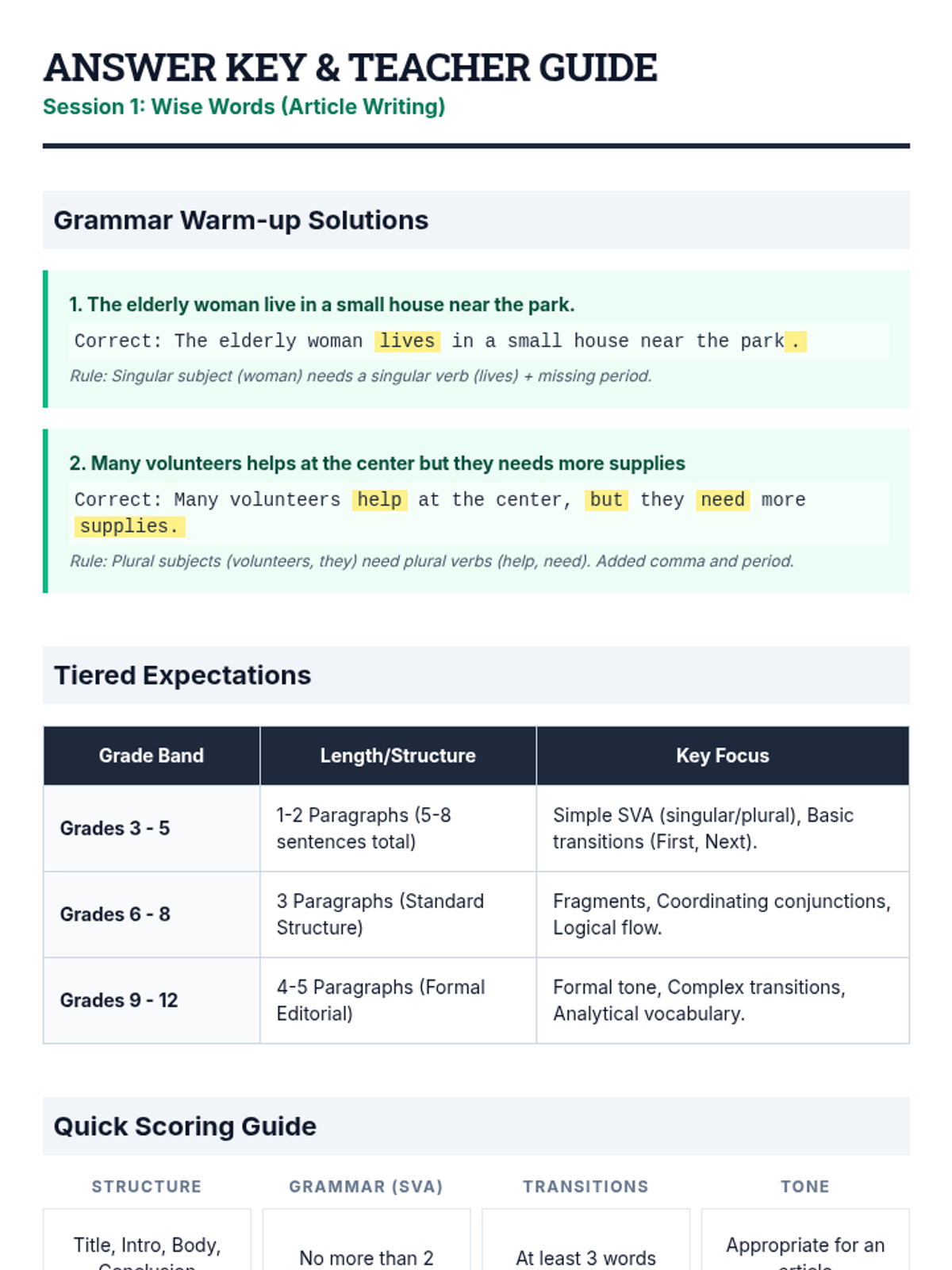
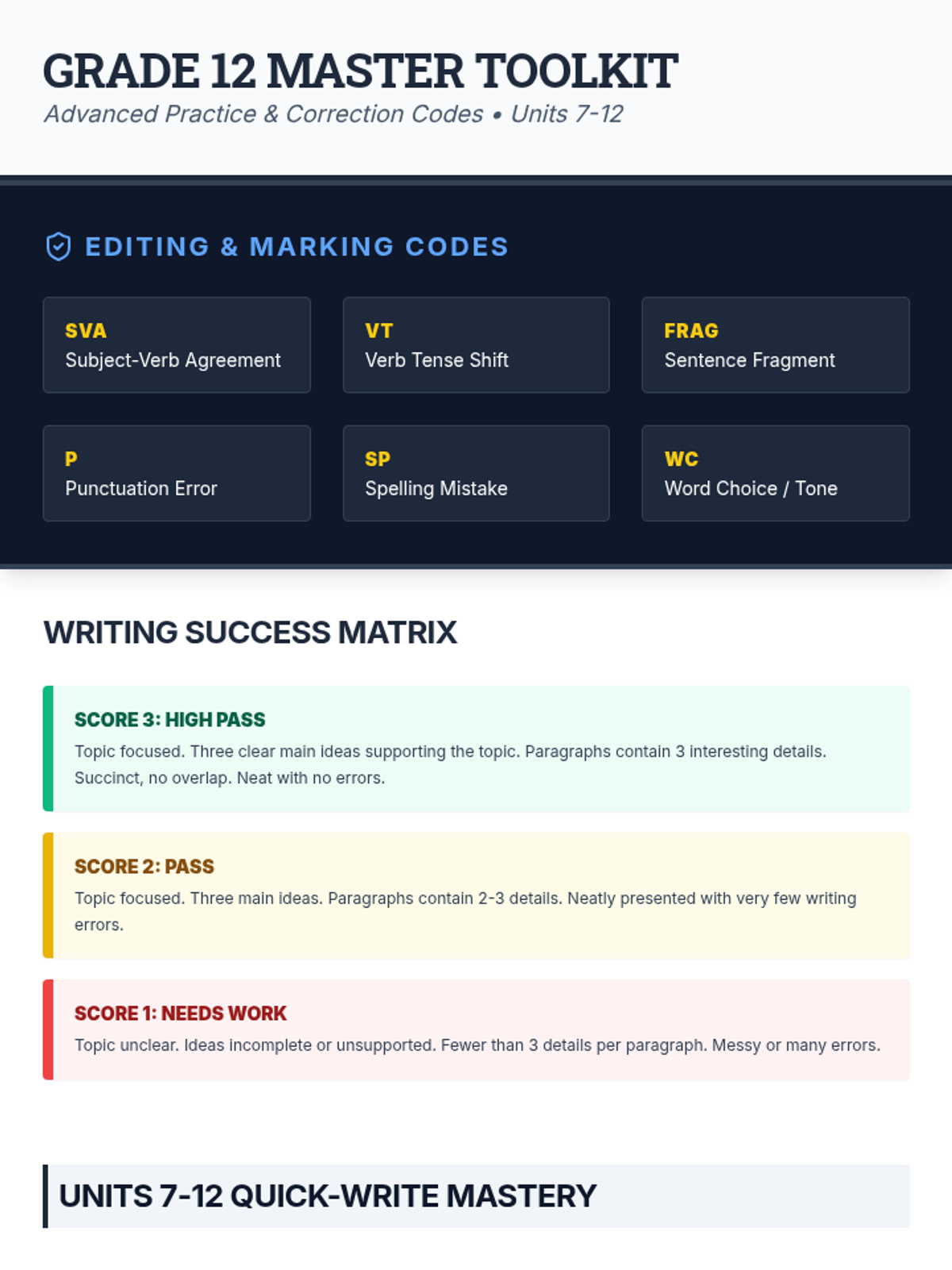
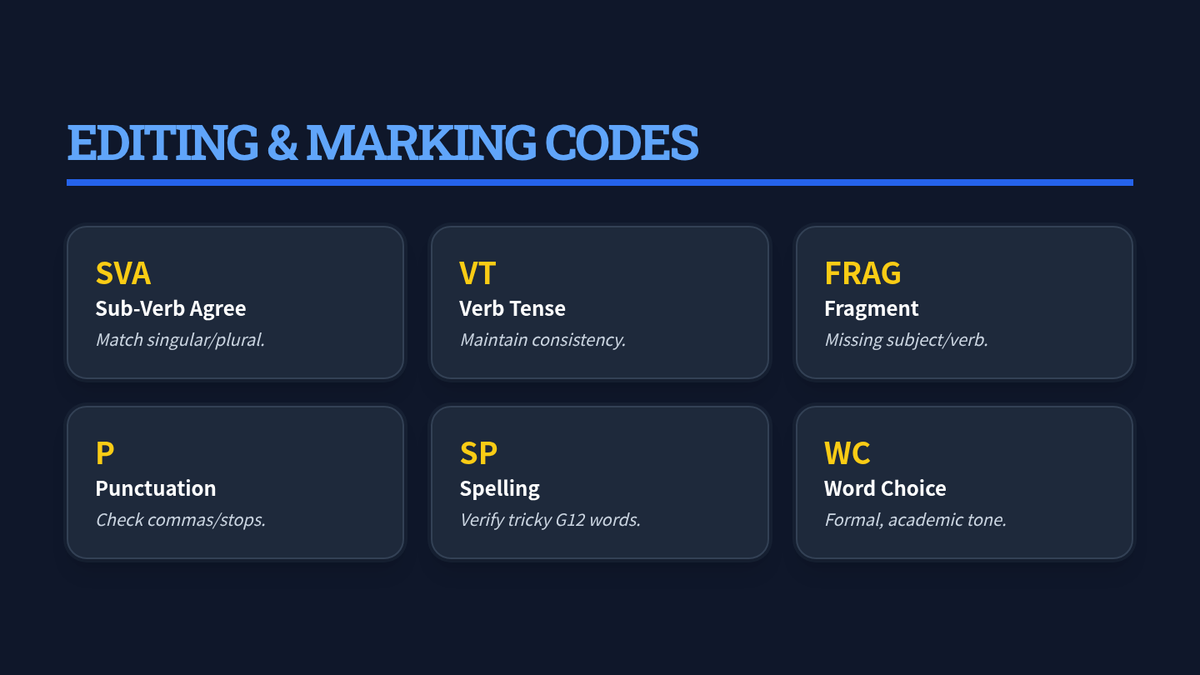
Sentence structure fundamentals, subject-verb agreement, and precise usage of parts of speech including pronouns, conjunctions, and adjectives. Targets technical accuracy through mastery of capitalization, punctuation, spelling, and verb mood.
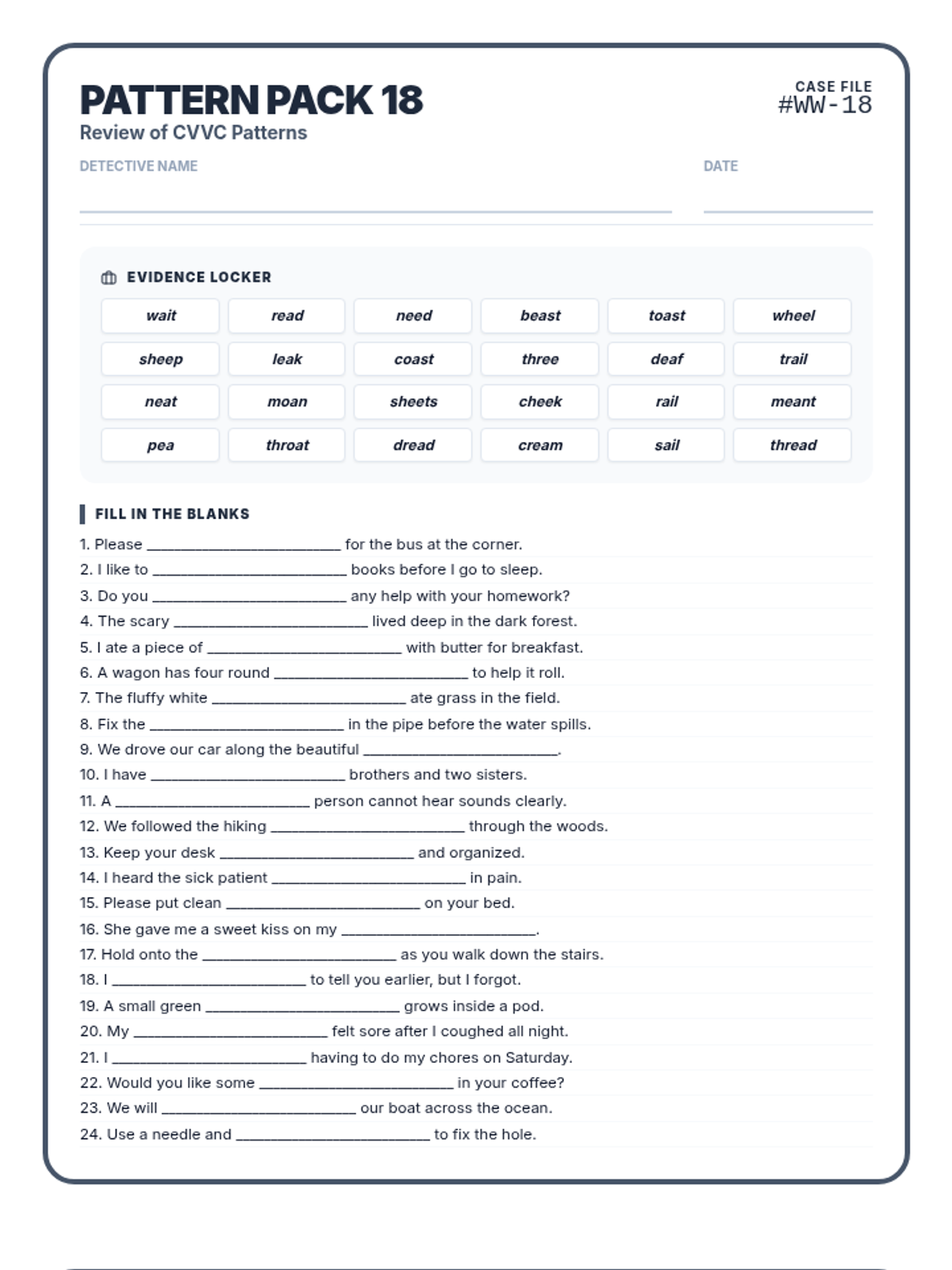
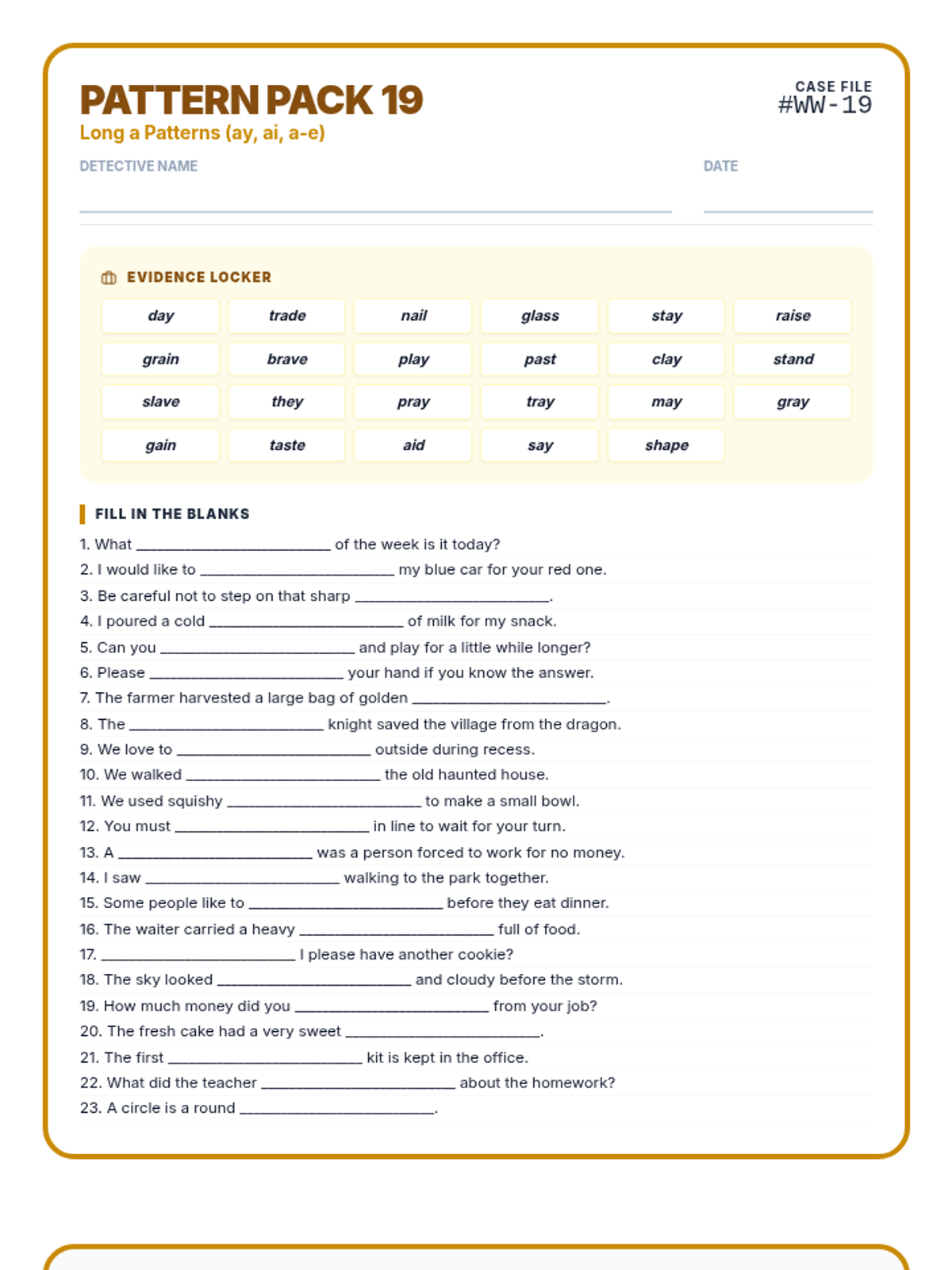
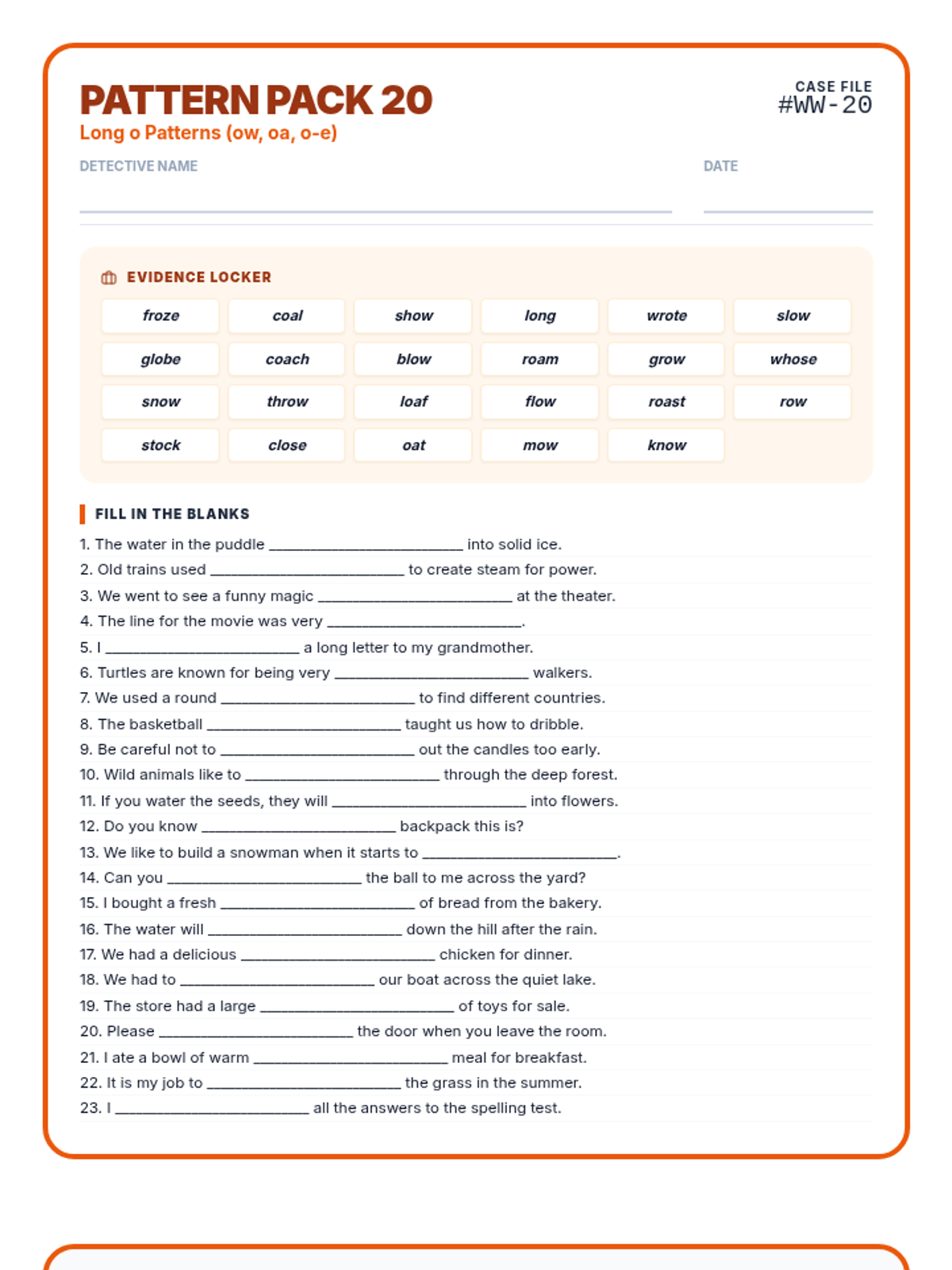
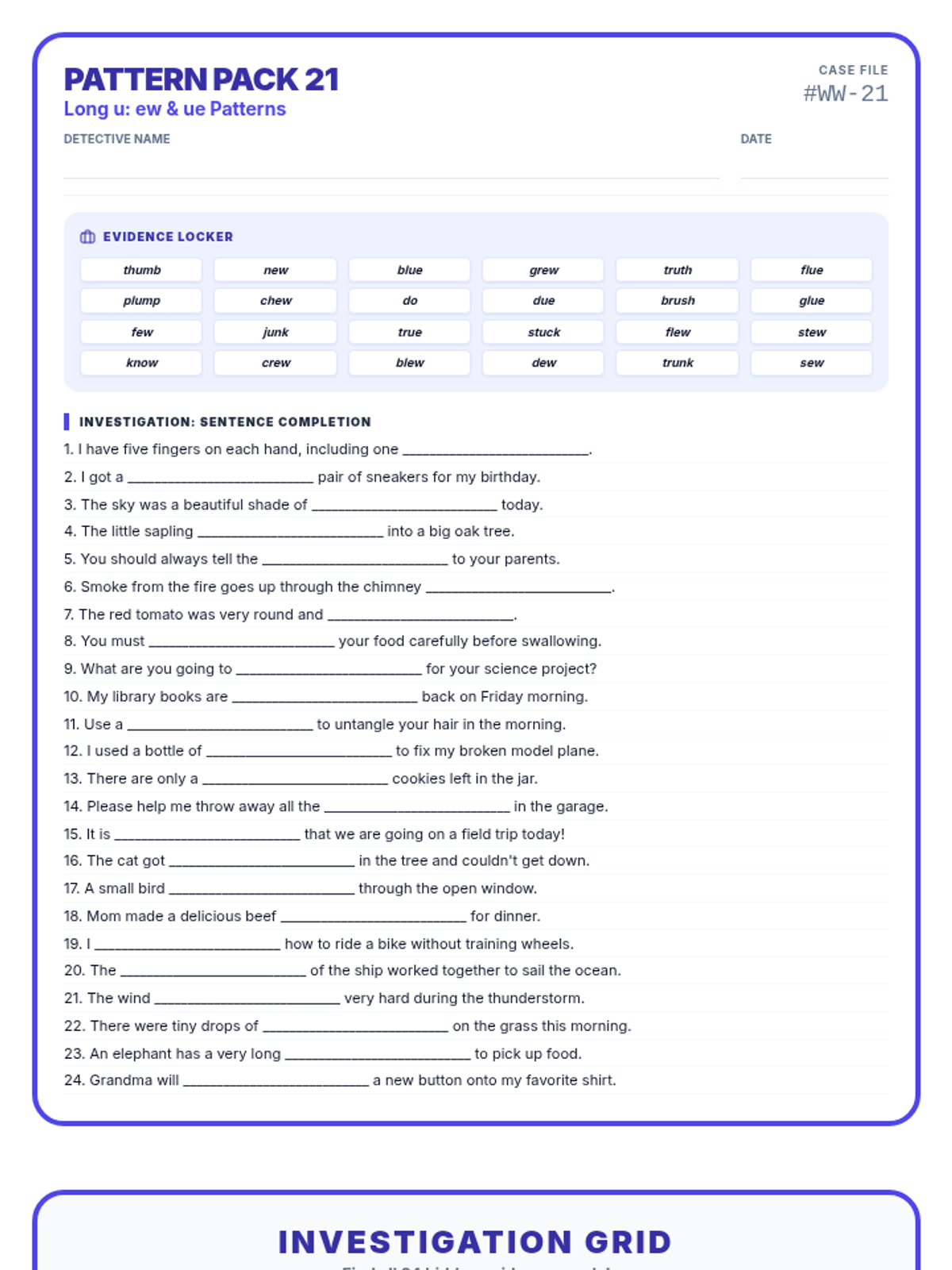
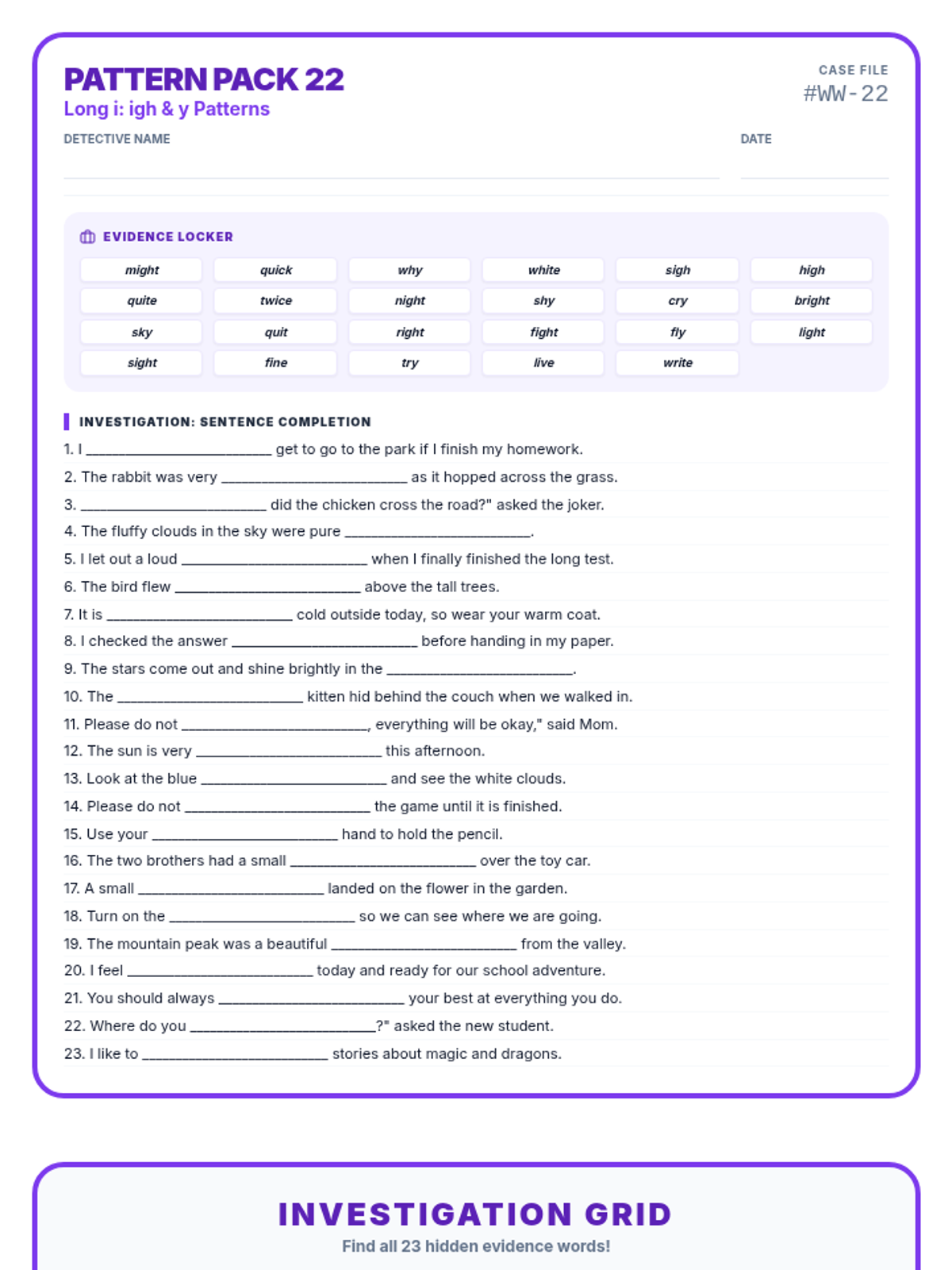
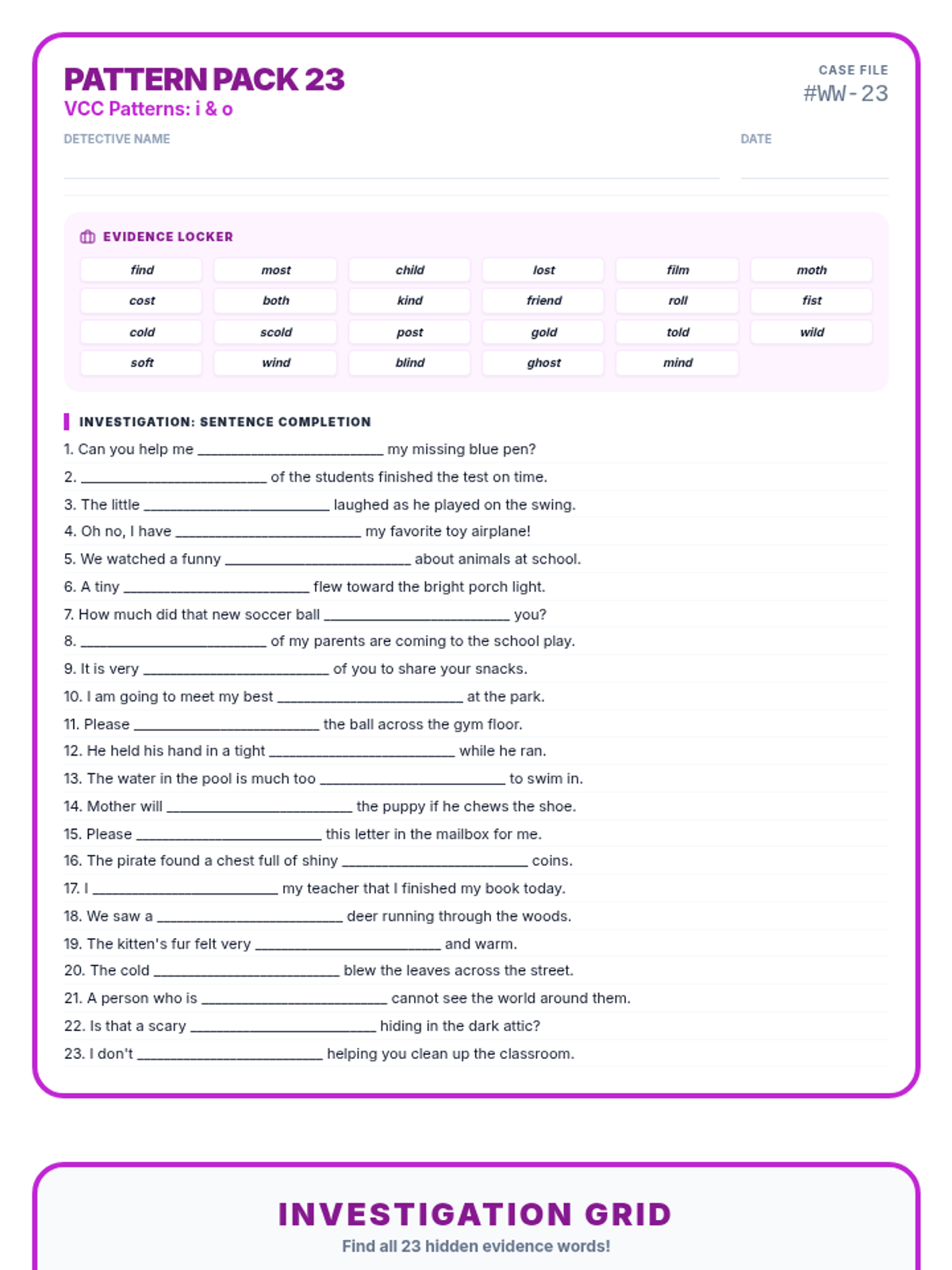
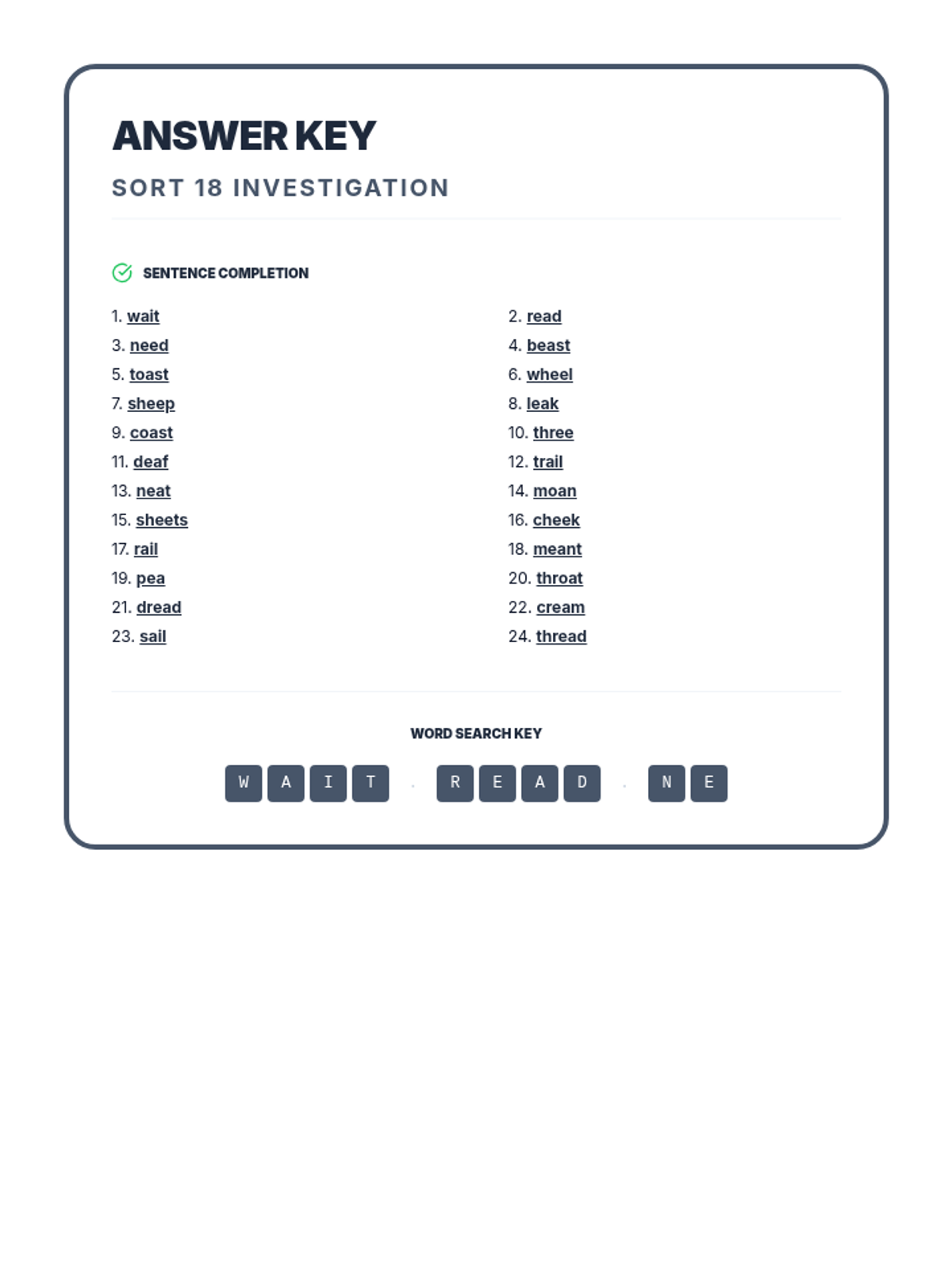
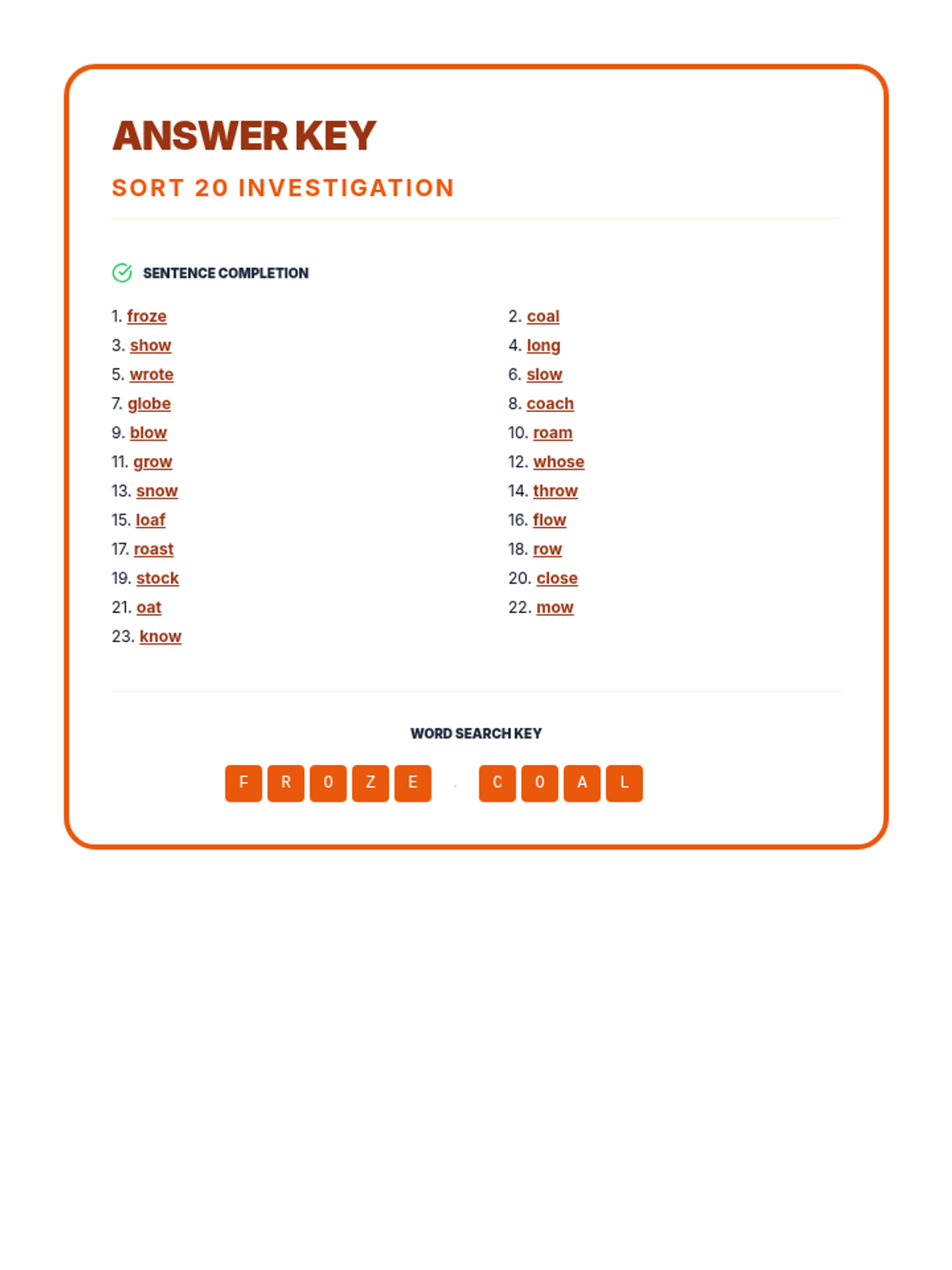
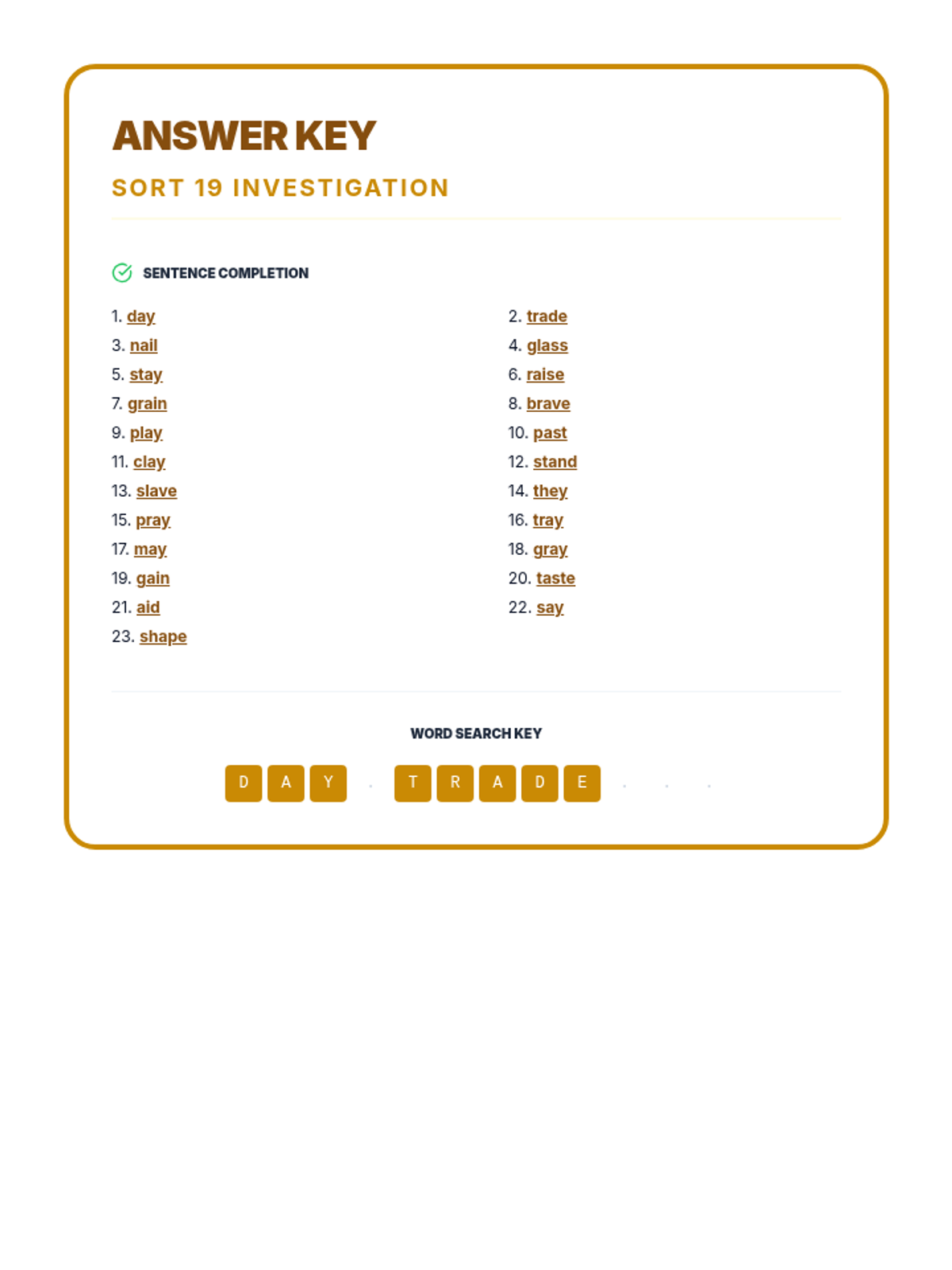
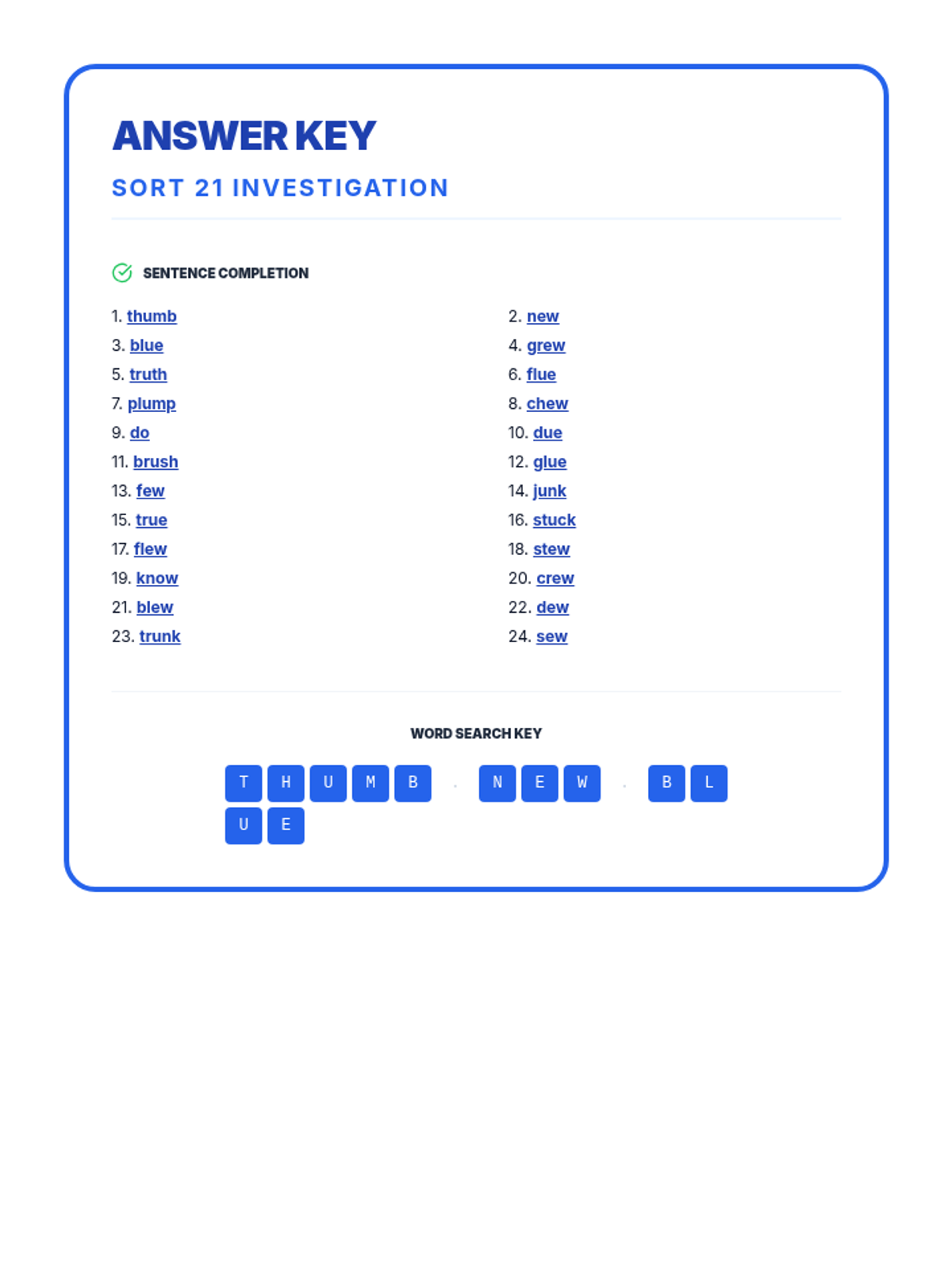
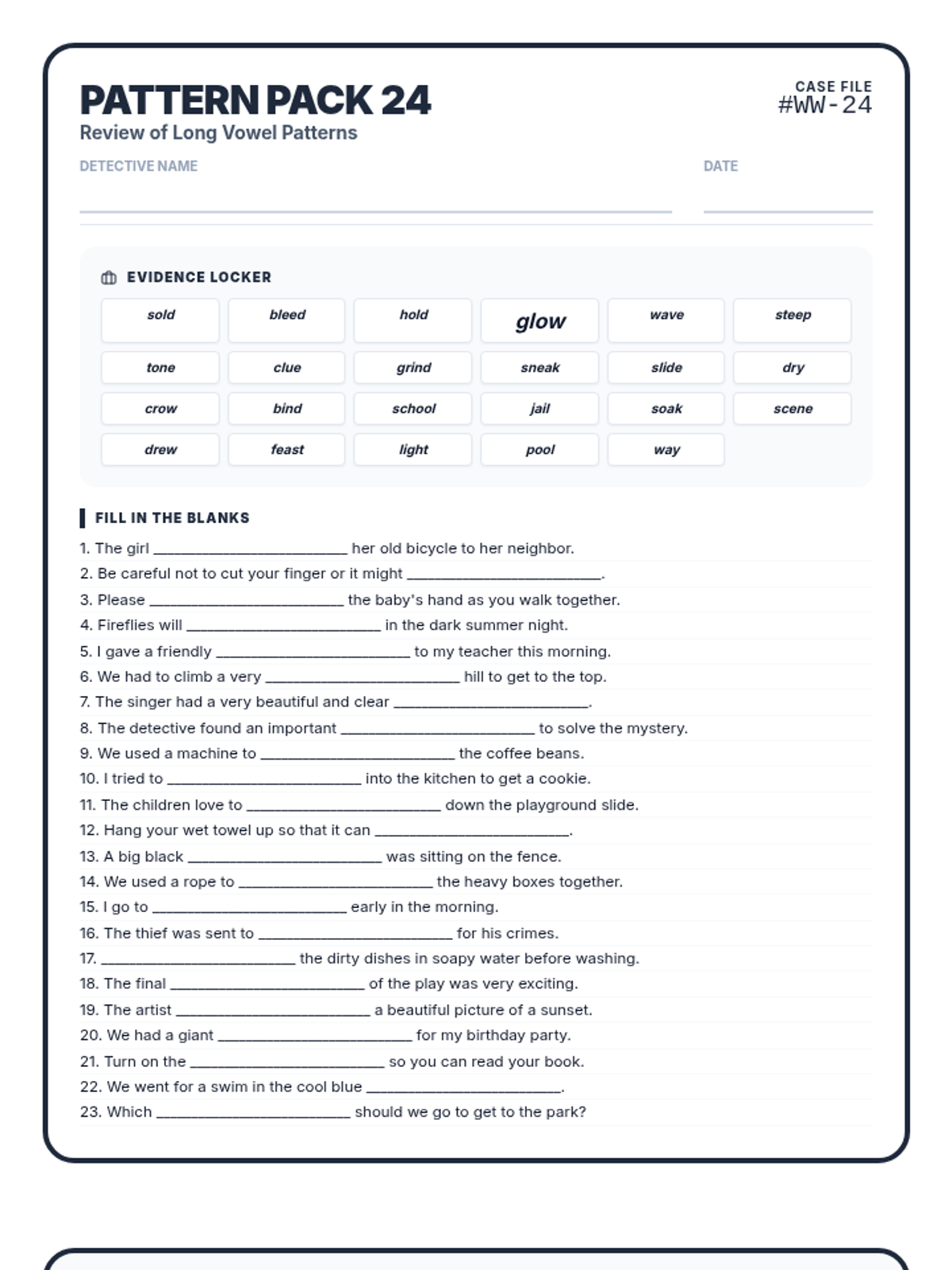
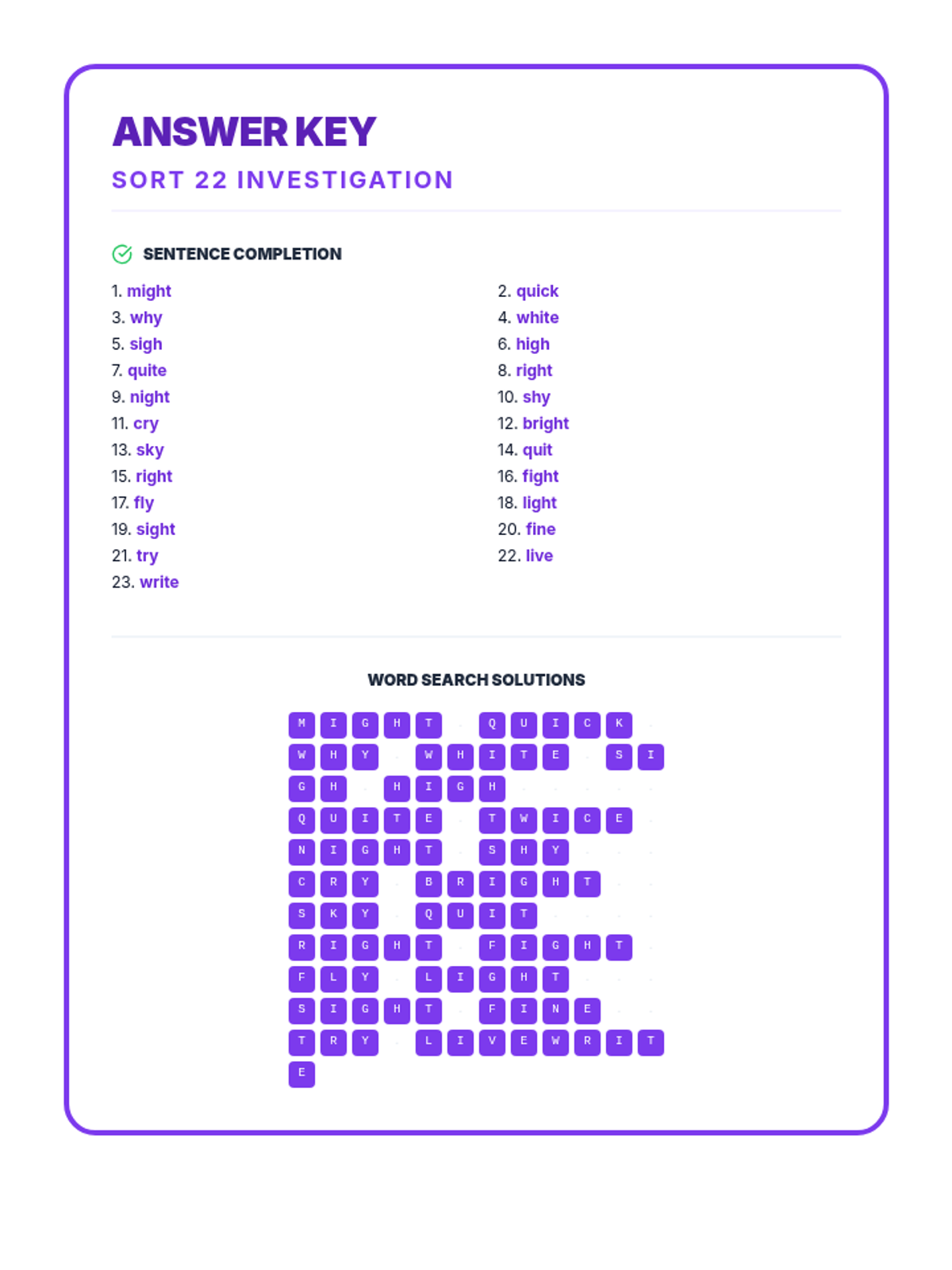
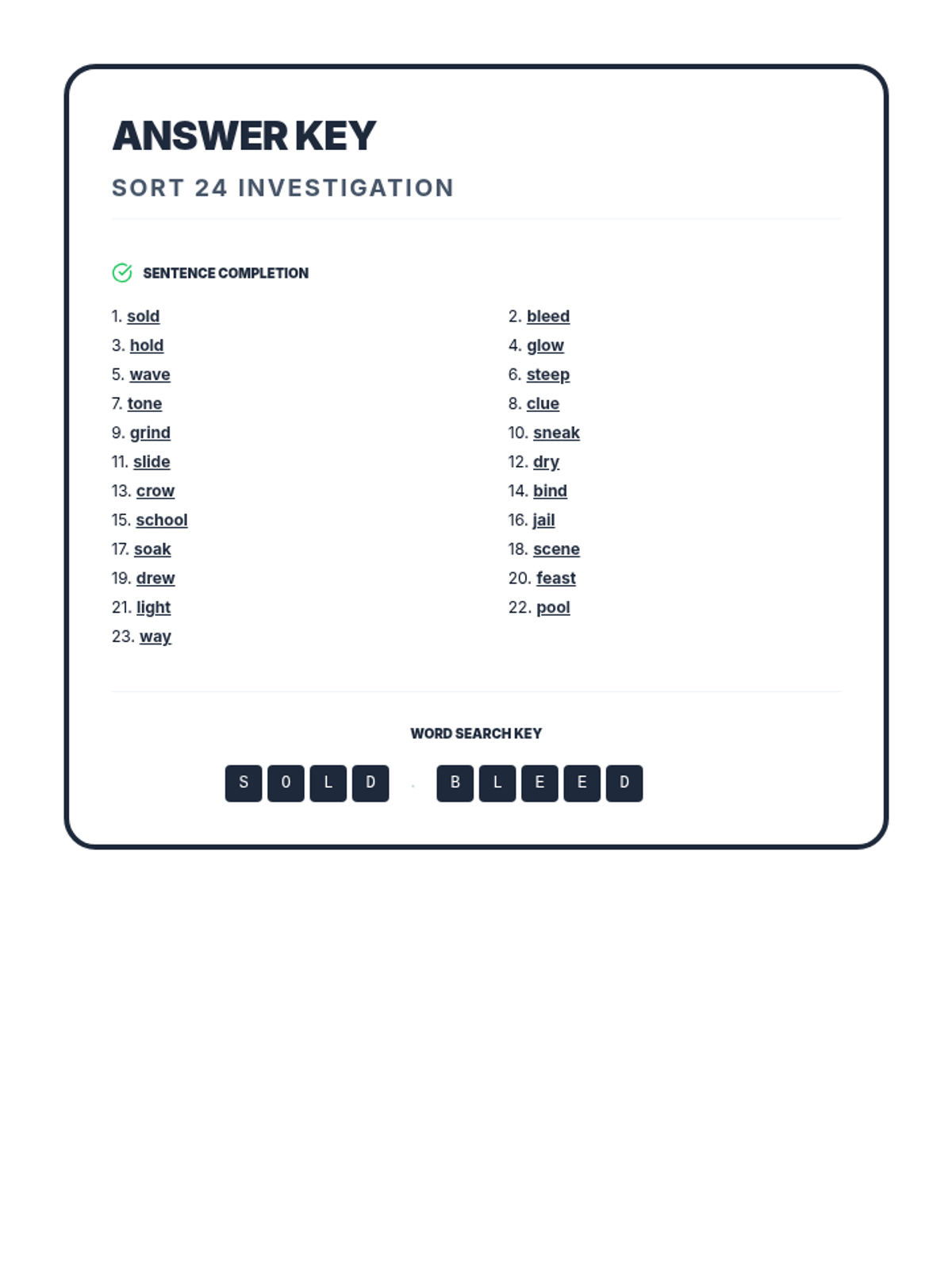
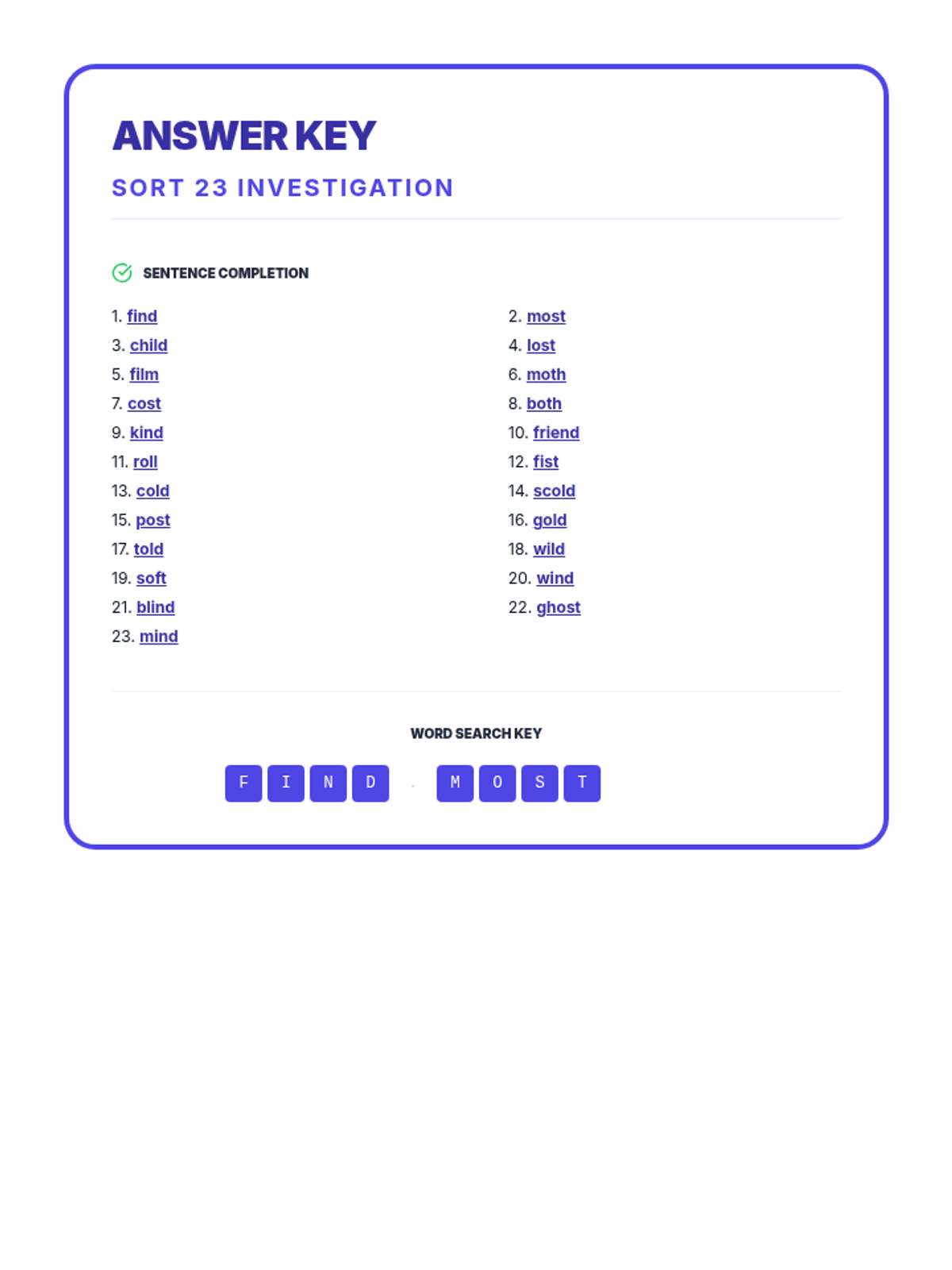
A comprehensive collection of practice materials for the 'Within Word Pattern' stage of word study, featuring sentence completion and word search activities for sorts 13 through 50.
An inquiry-based science and literacy curriculum for grades 1-3 that combines foundational scientific concepts with high-frequency sight word mastery and precision handwriting practice.
Une série de modules de formation destinés aux conseillers pédagogiques pour renforcer leur expertise en ingénierie de formation continue, spécifiquement appliquée à l'enseignement du français à l'école primaire.
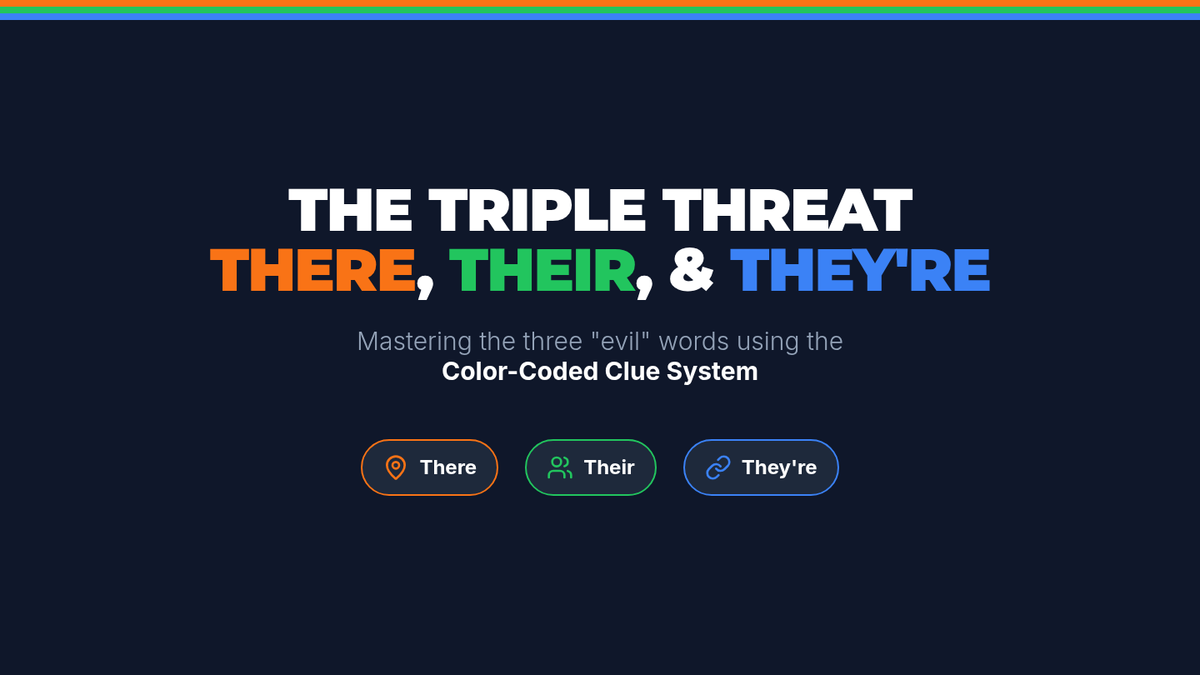
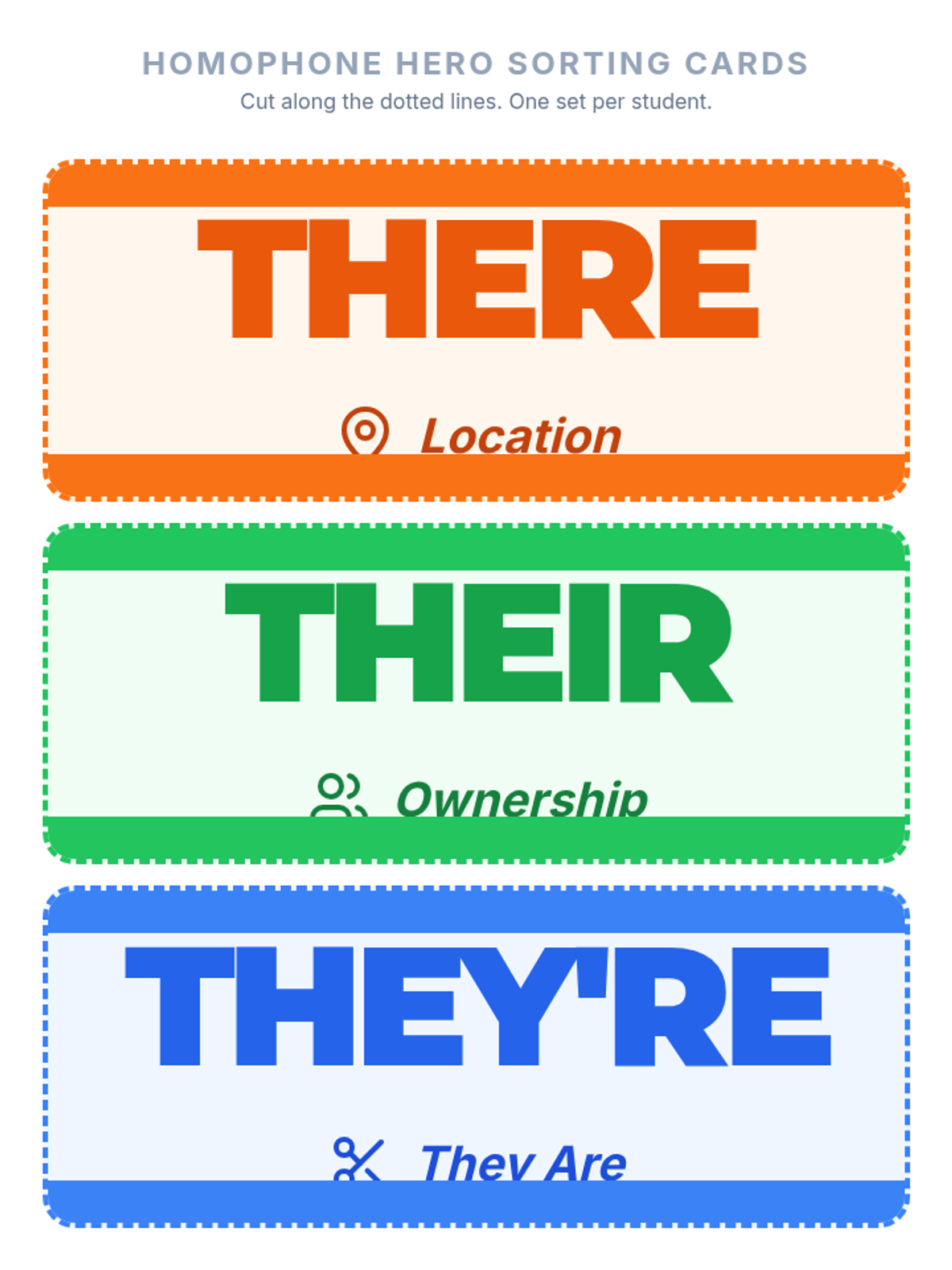
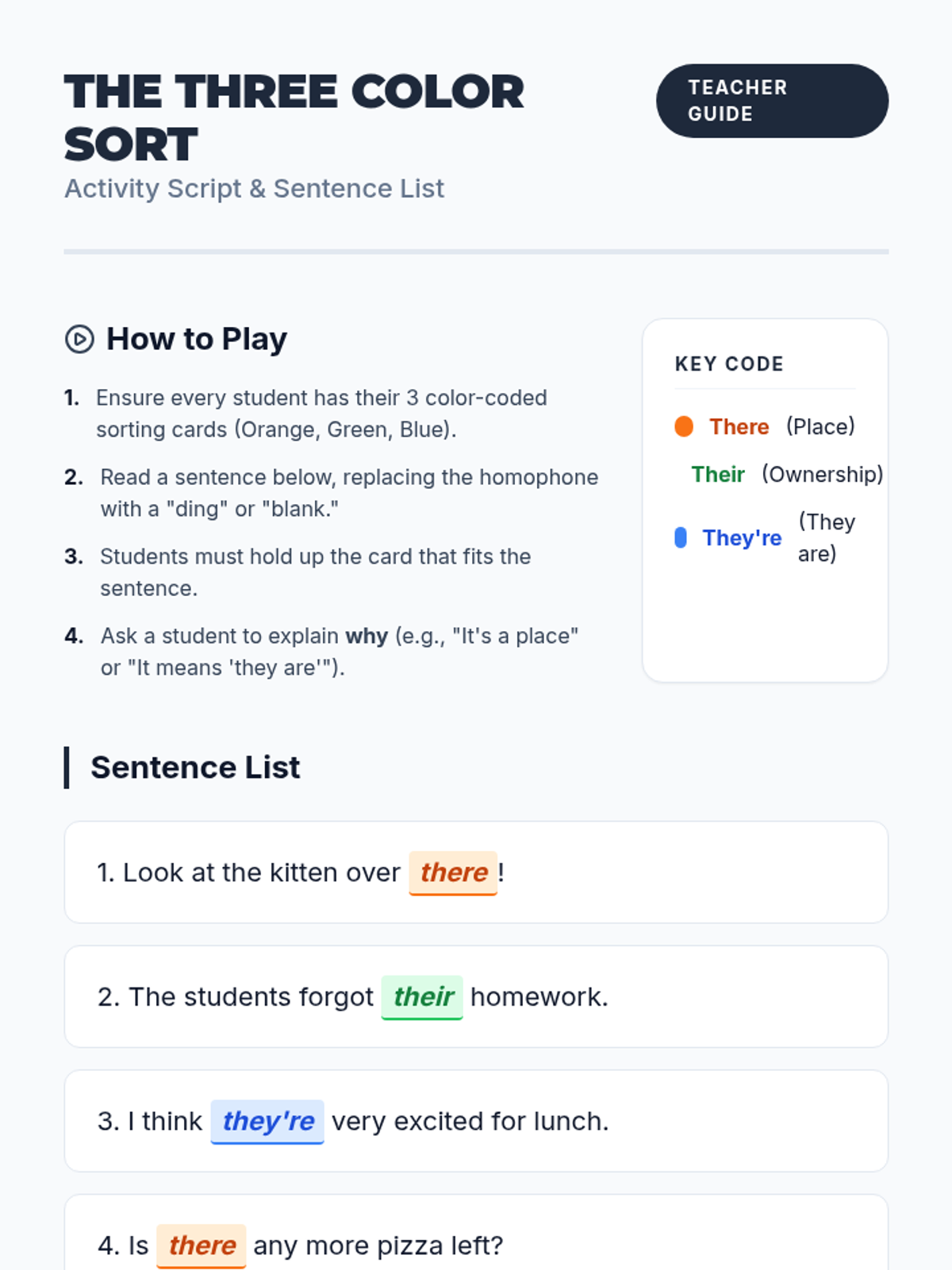
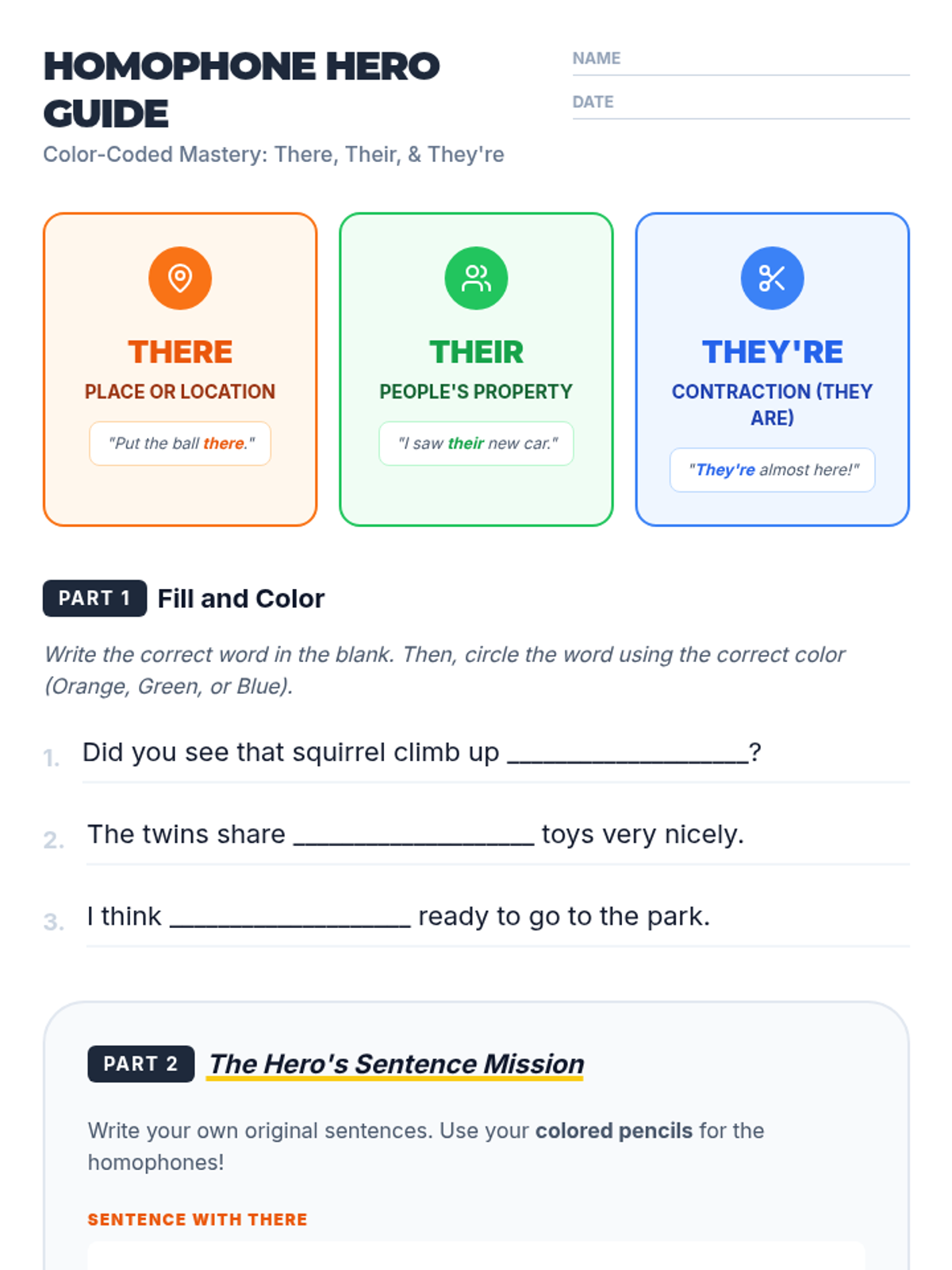
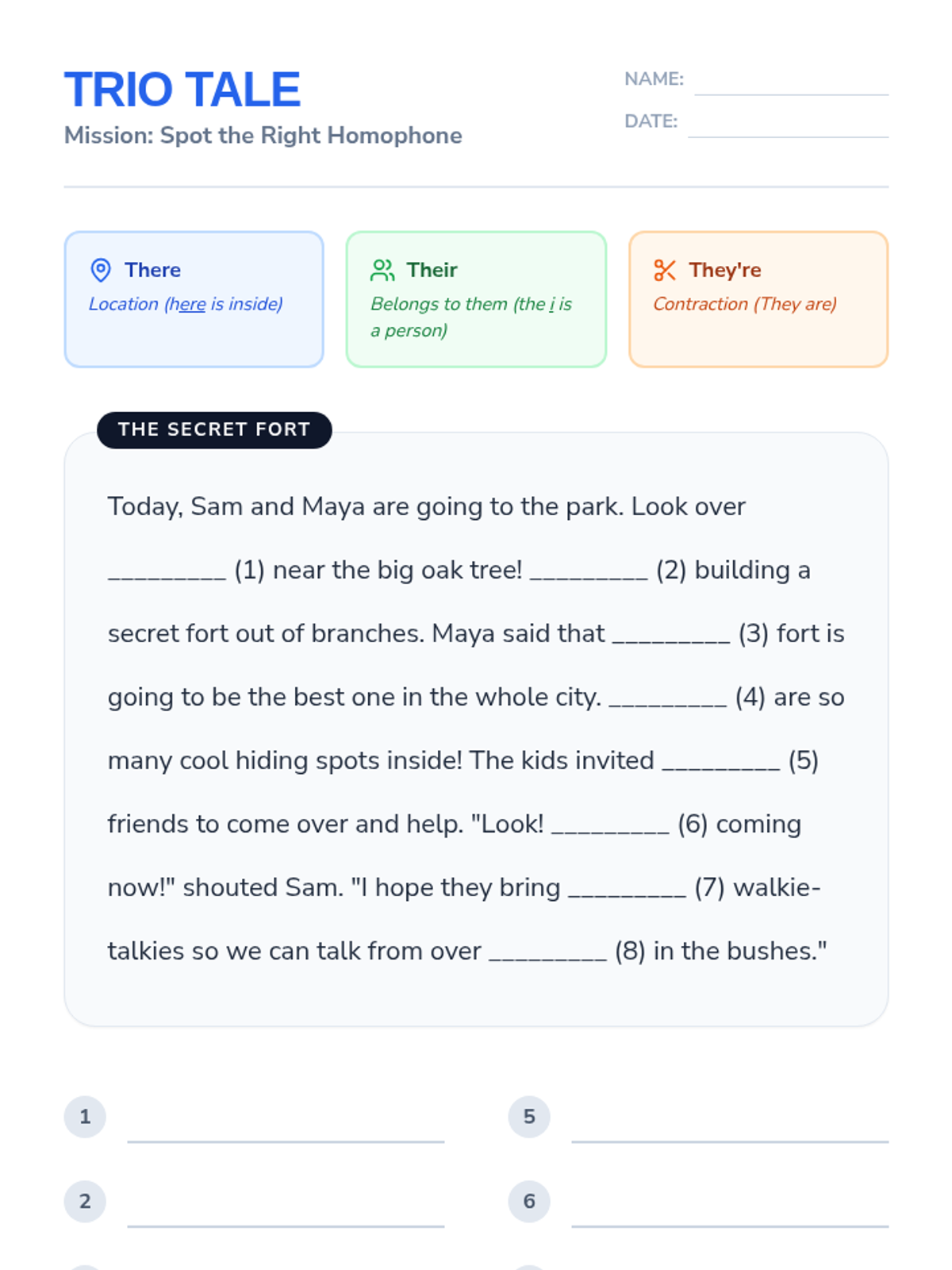
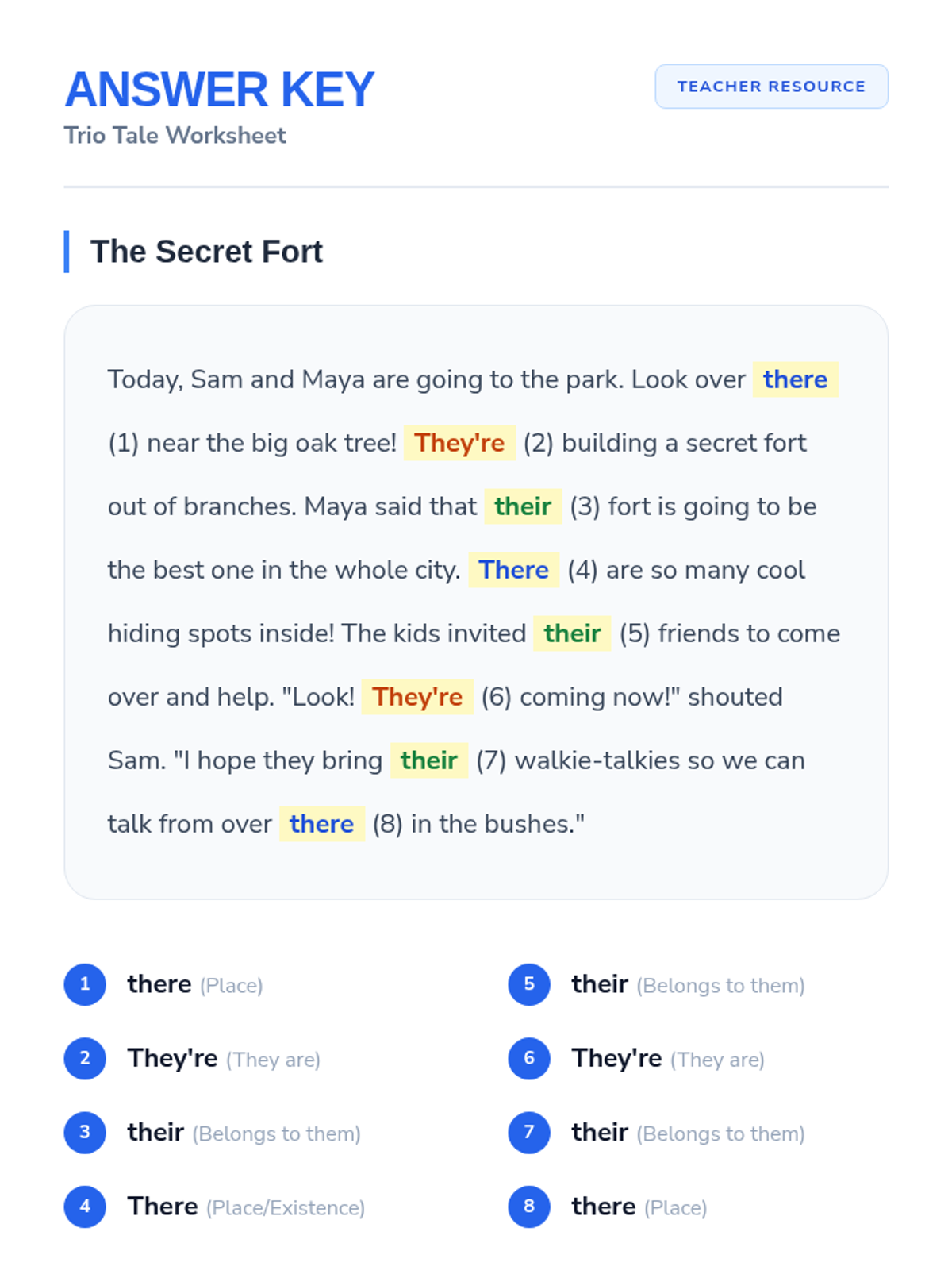
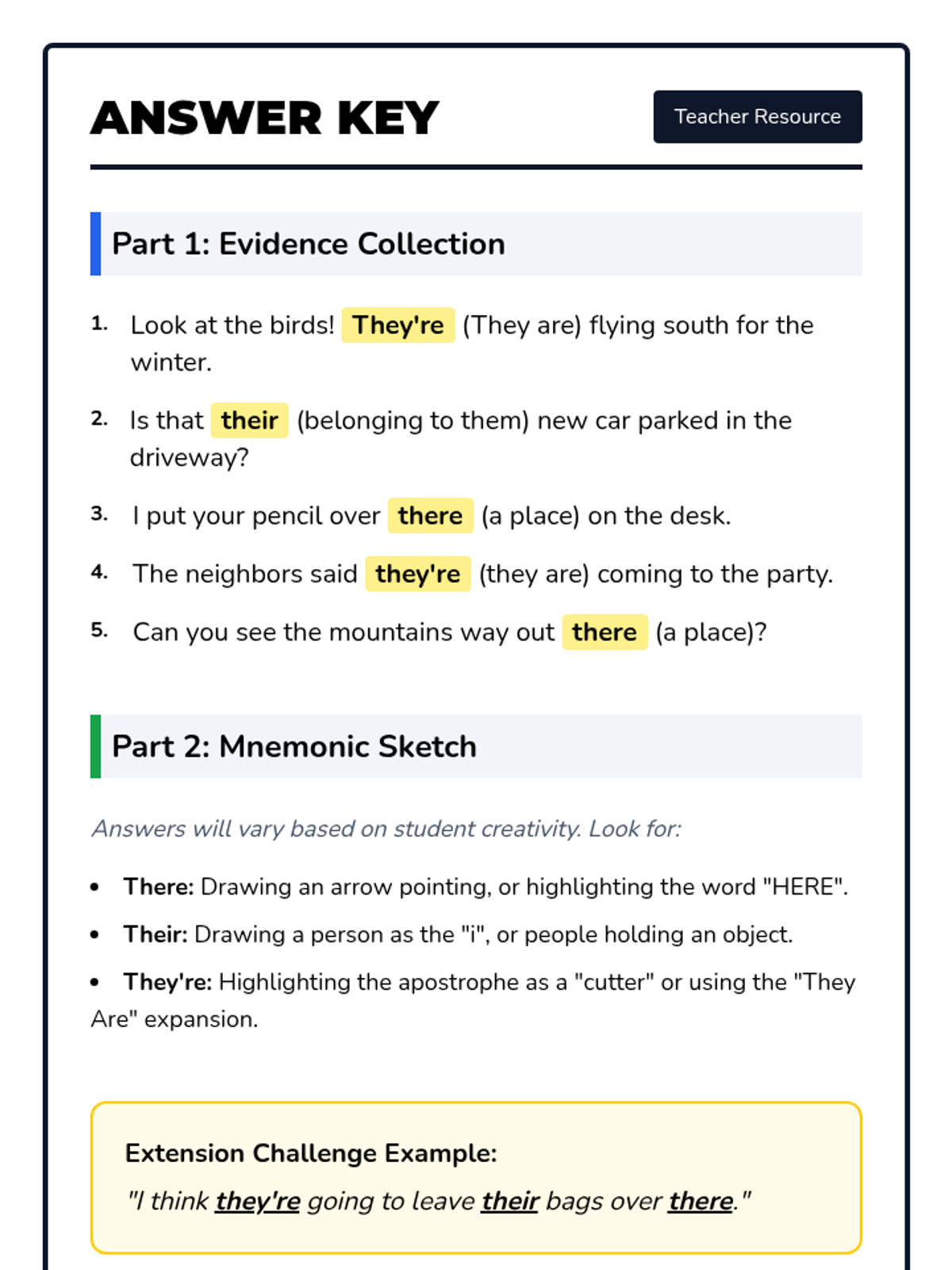
A series of lessons focused on mastering frequently confused homophones through visual color-coding and active participation.
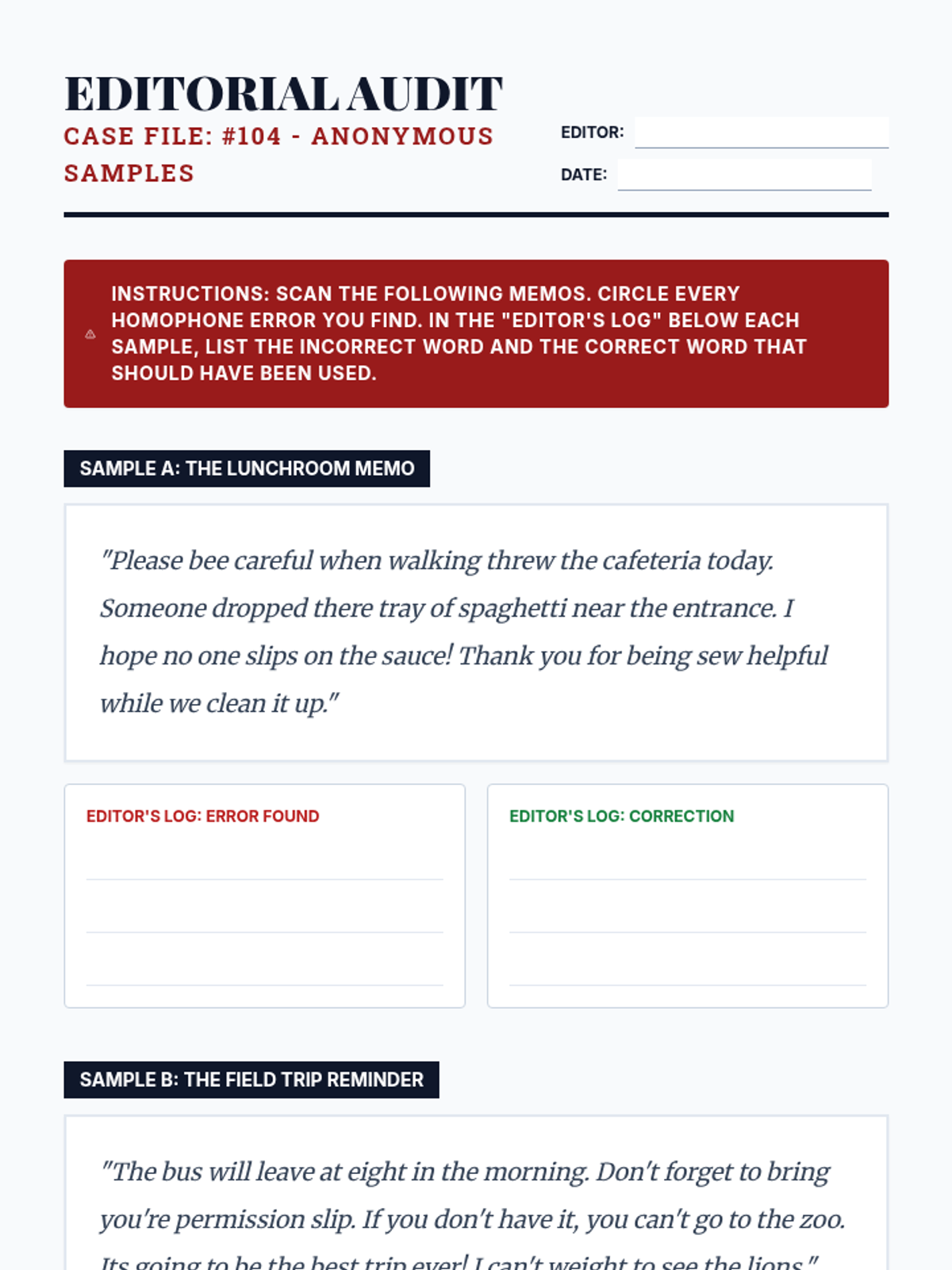
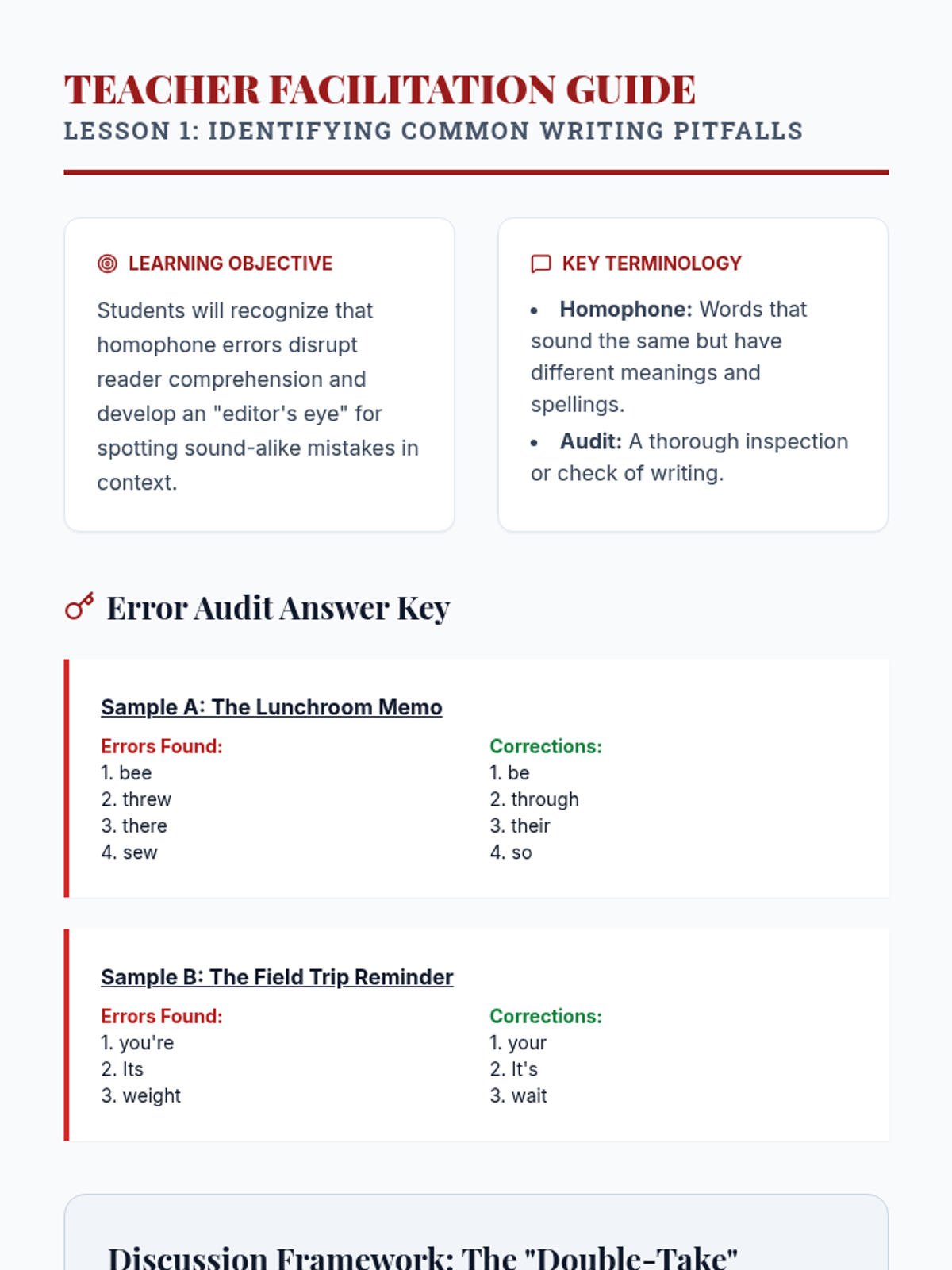
A writing workshop sequence focused on the practical application of homophones in composition. Students move from error identification in anonymous samples to mastering high-frequency homophones and performing peer edits, culminating in a comprehensive proofreading assessment.
A comprehensive 3rd-grade sequence focused on mastering the most common homophones (there/their/they're, to/too/two, and its/it's) through a workshop and case-study approach. Students move from rule acquisition to professional-level editing and original sentence construction.
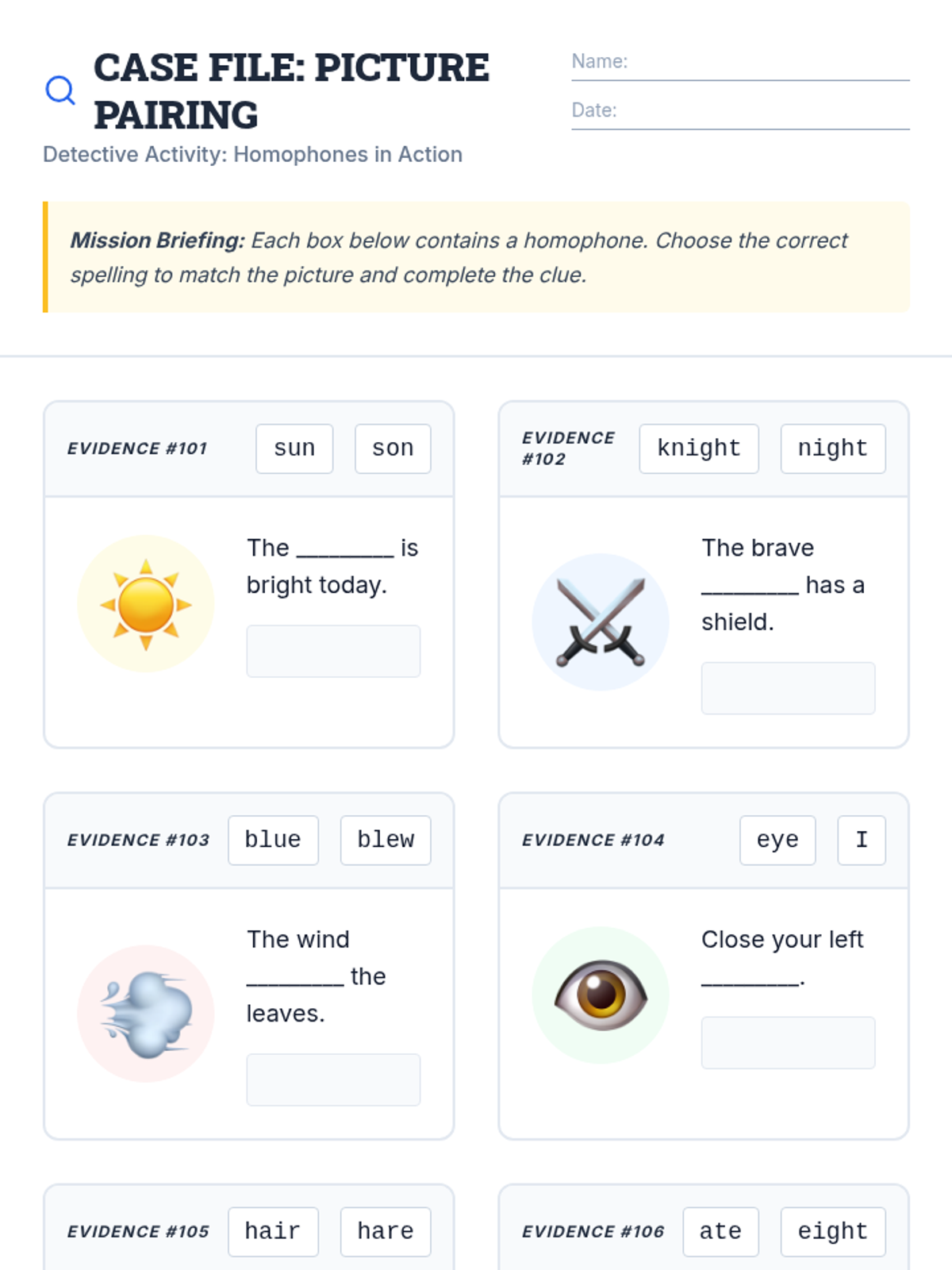
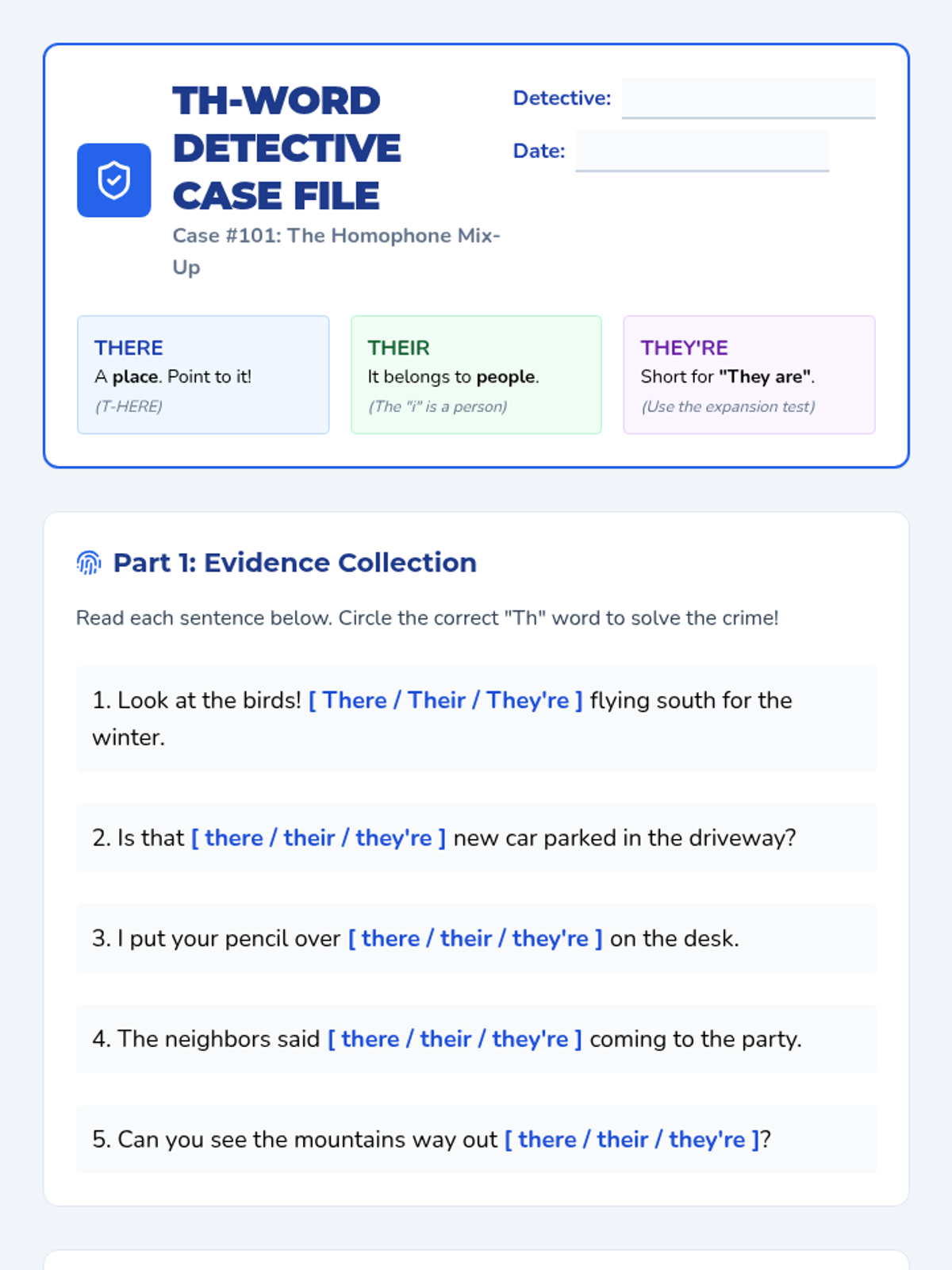
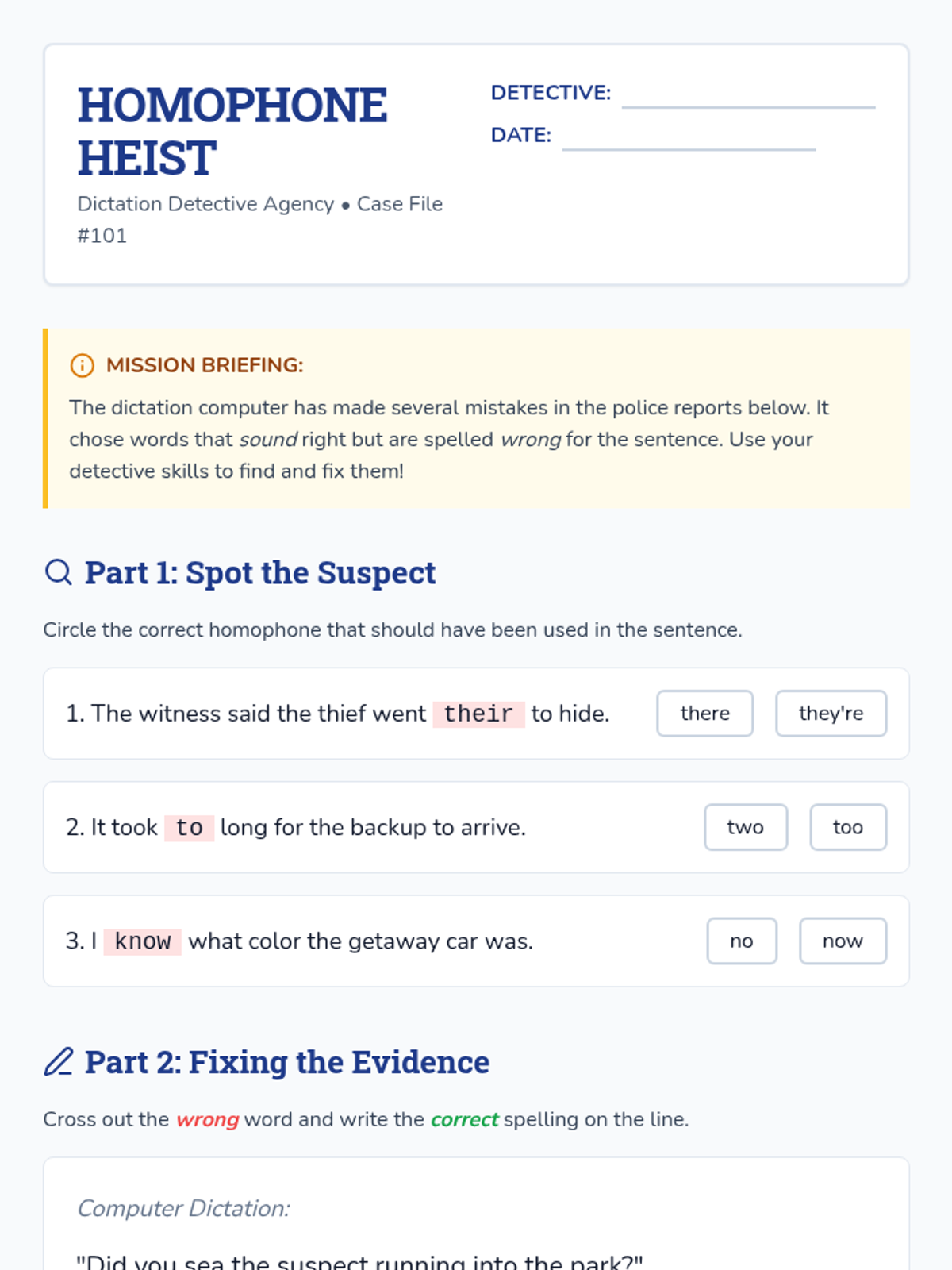
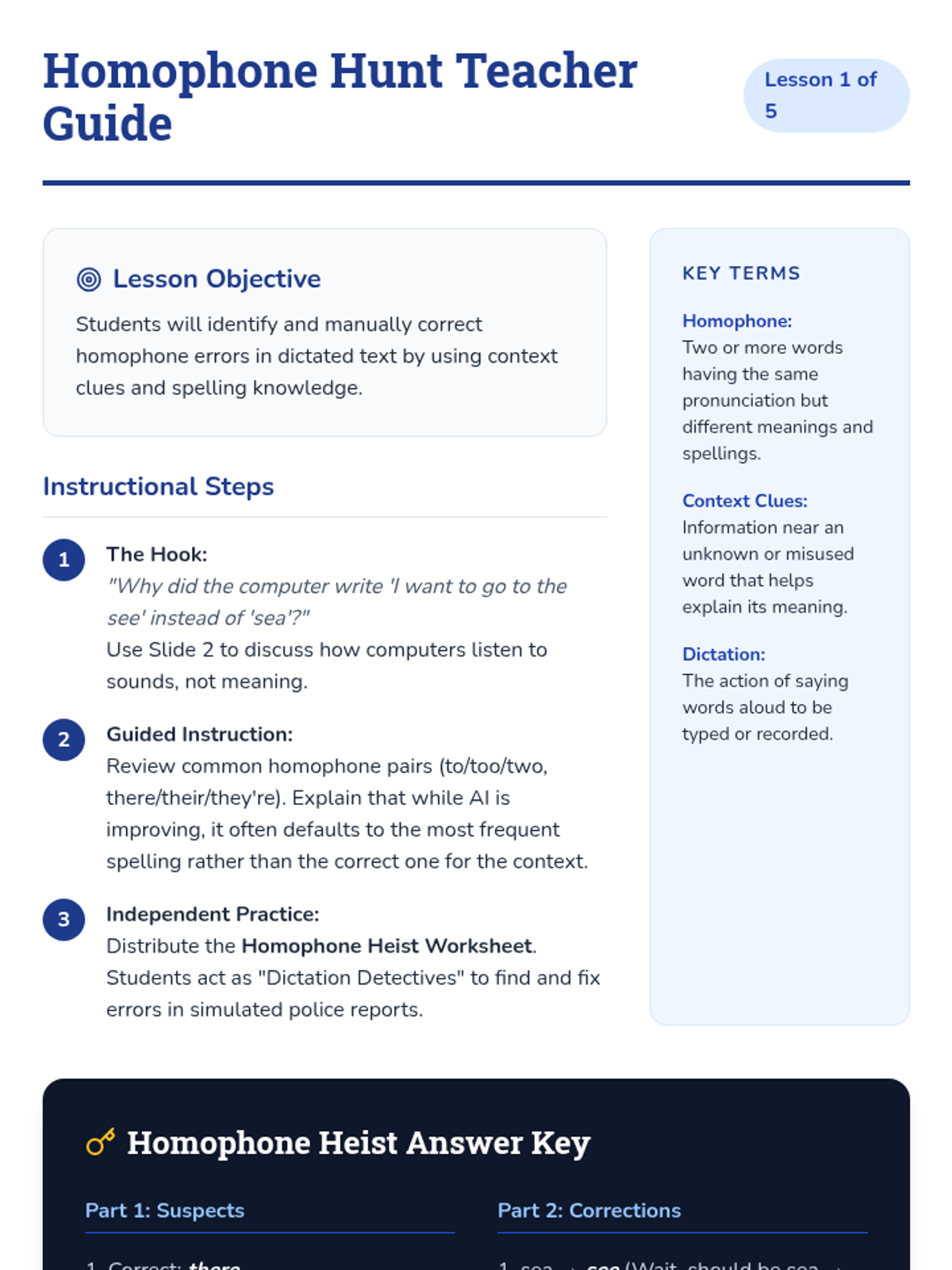
A comprehensive 3rd-grade sequence focused on mastering homophones through detective-themed investigation, contextual analysis, and proofreading practice. Students progress from simple pairs to high-frequency triplets, culminating in a creative writing project.
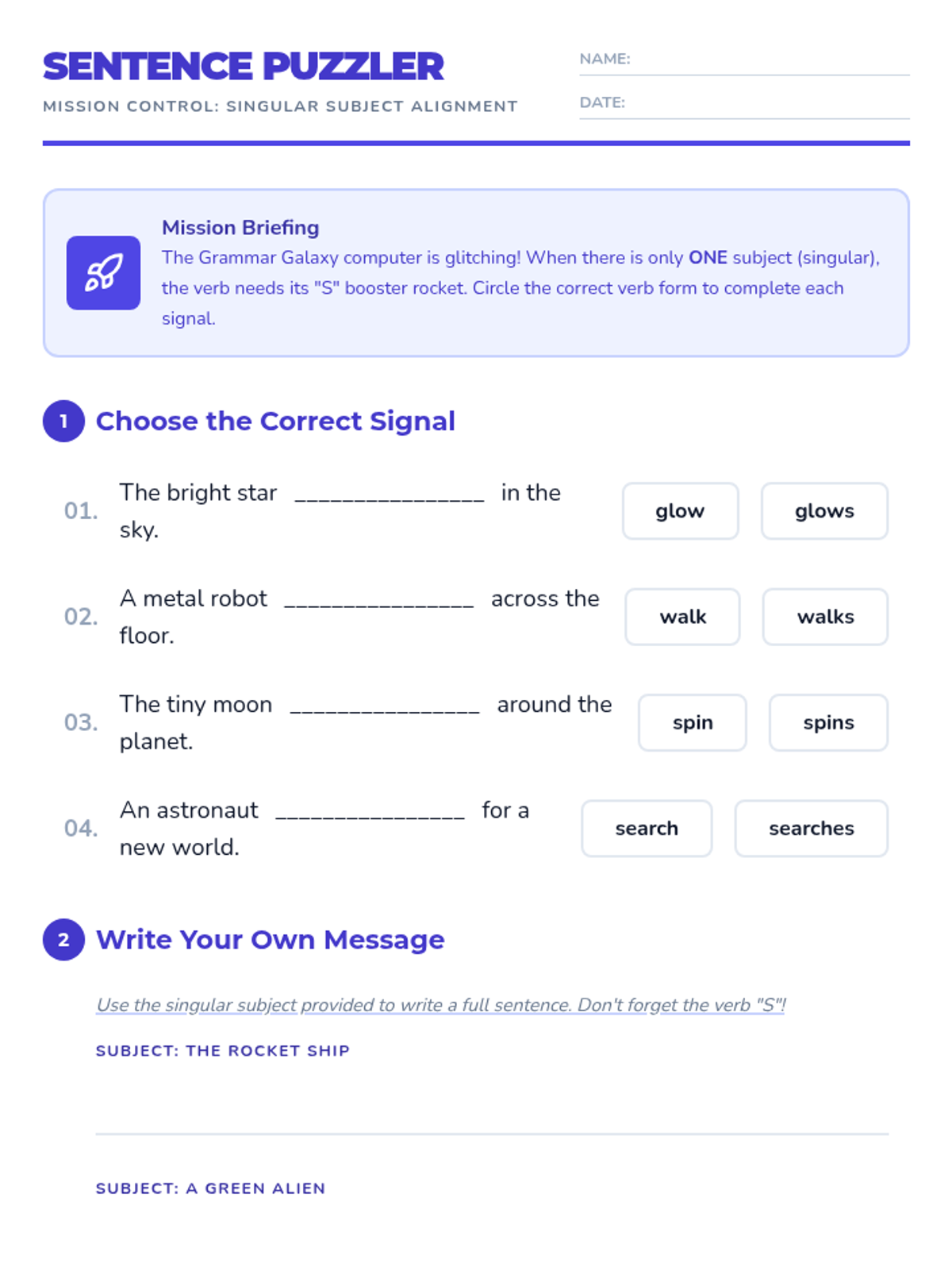
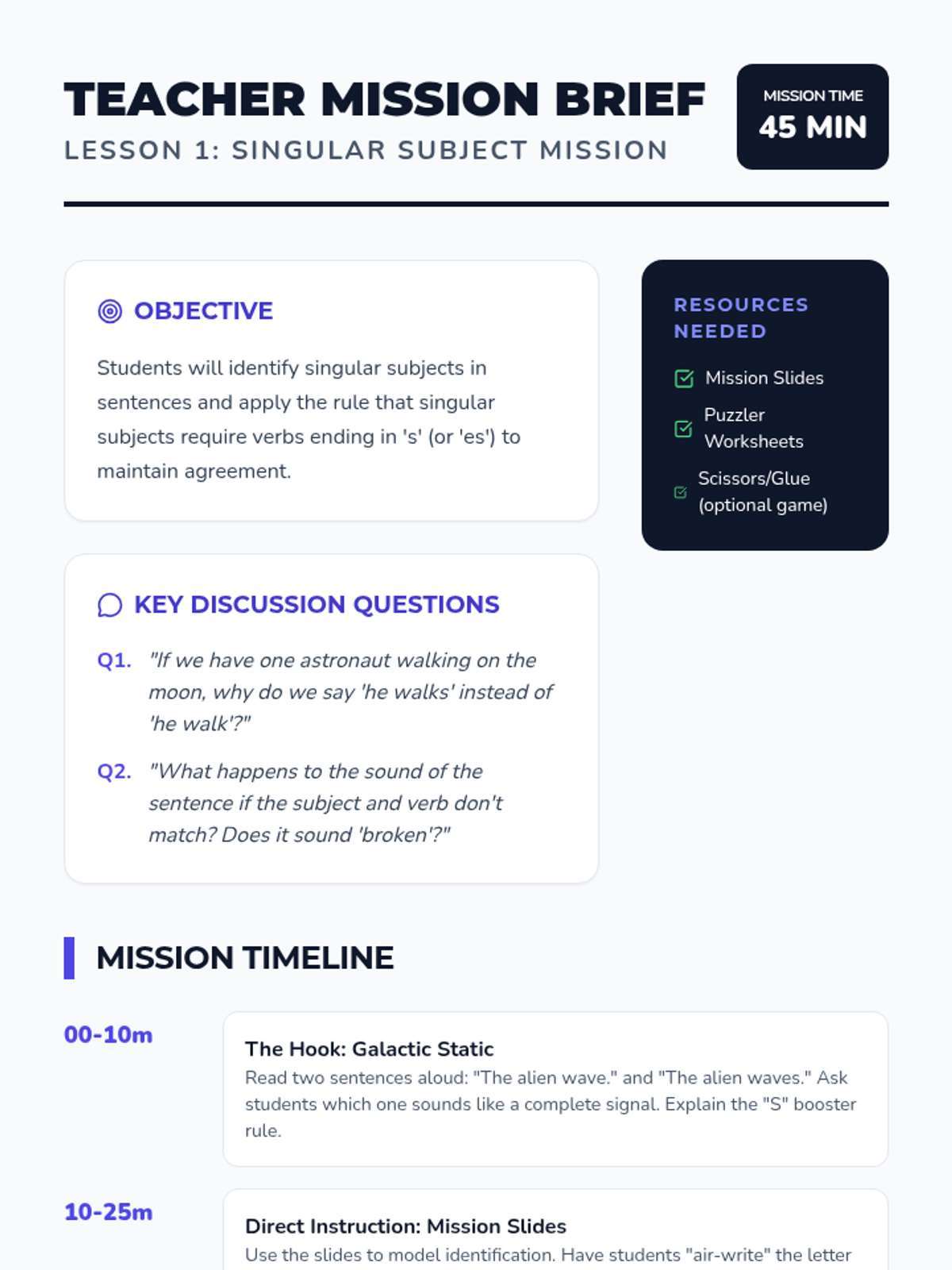
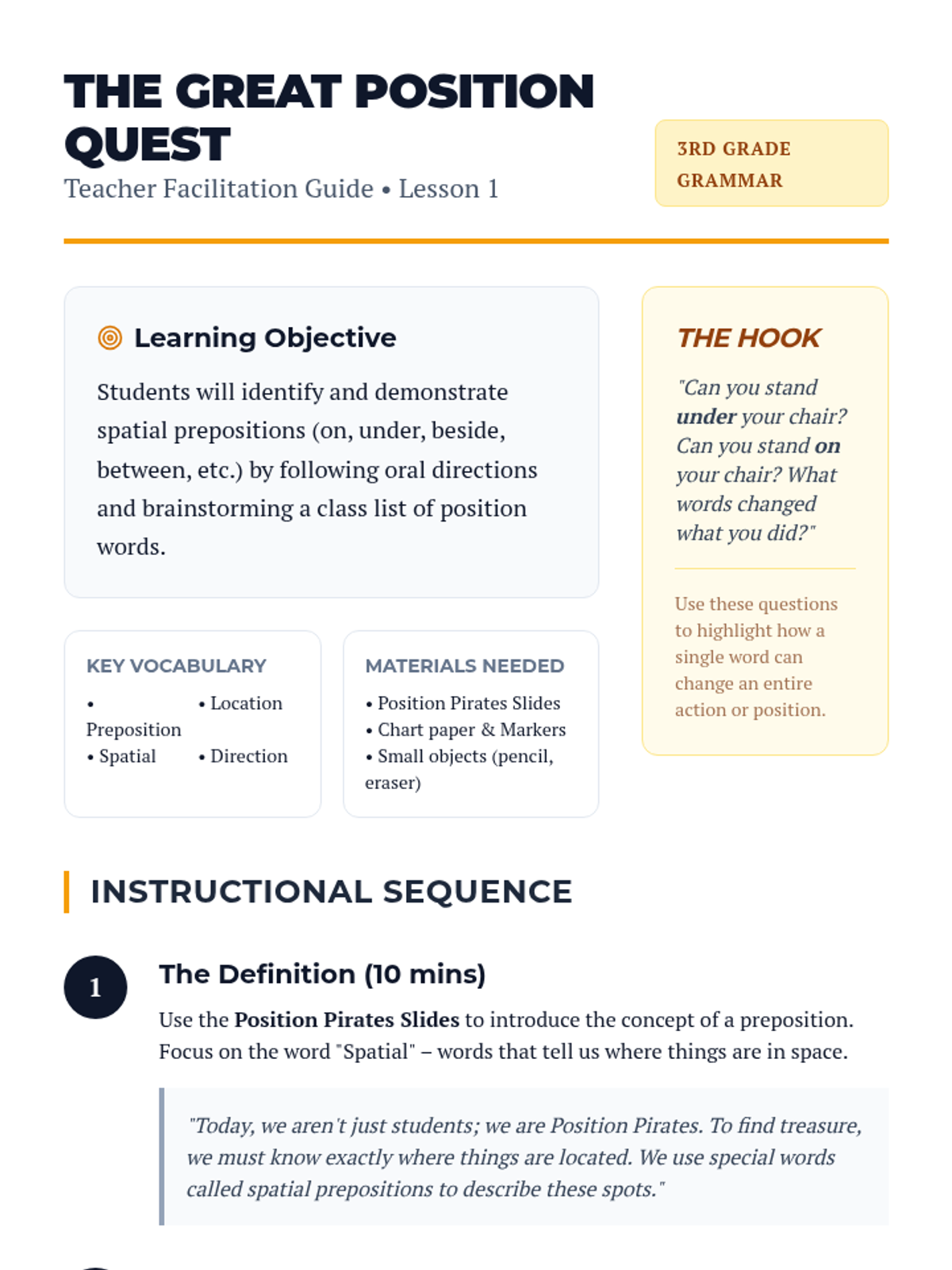
A 5-lesson sequence for 3rd graders on subject-verb agreement, using a space-themed 'Grammar Galaxy' motif to make grammar rules engaging and memorable. Students progress from singular and plural subjects to pronouns and compound subjects, ending in a mastery challenge.
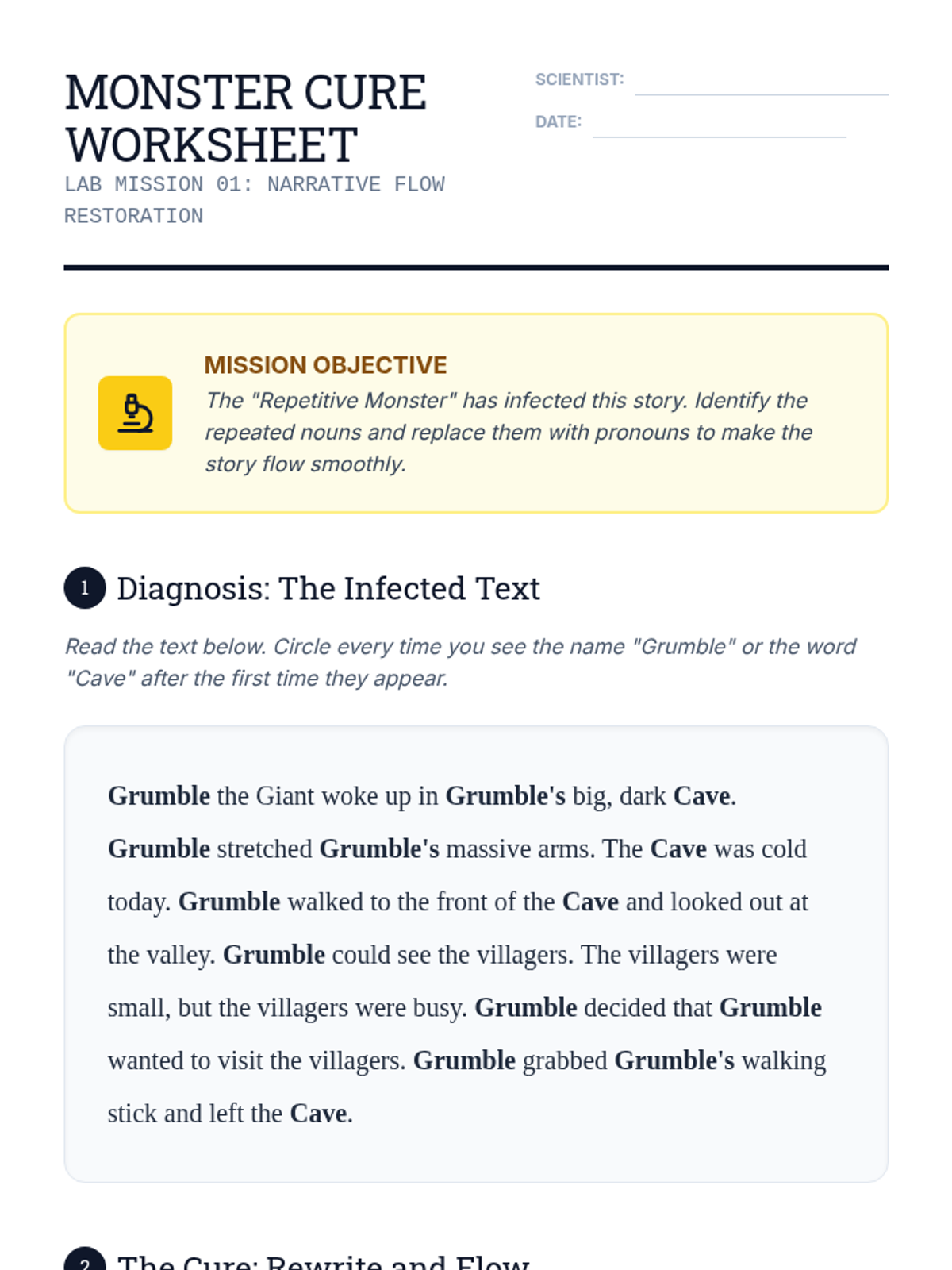
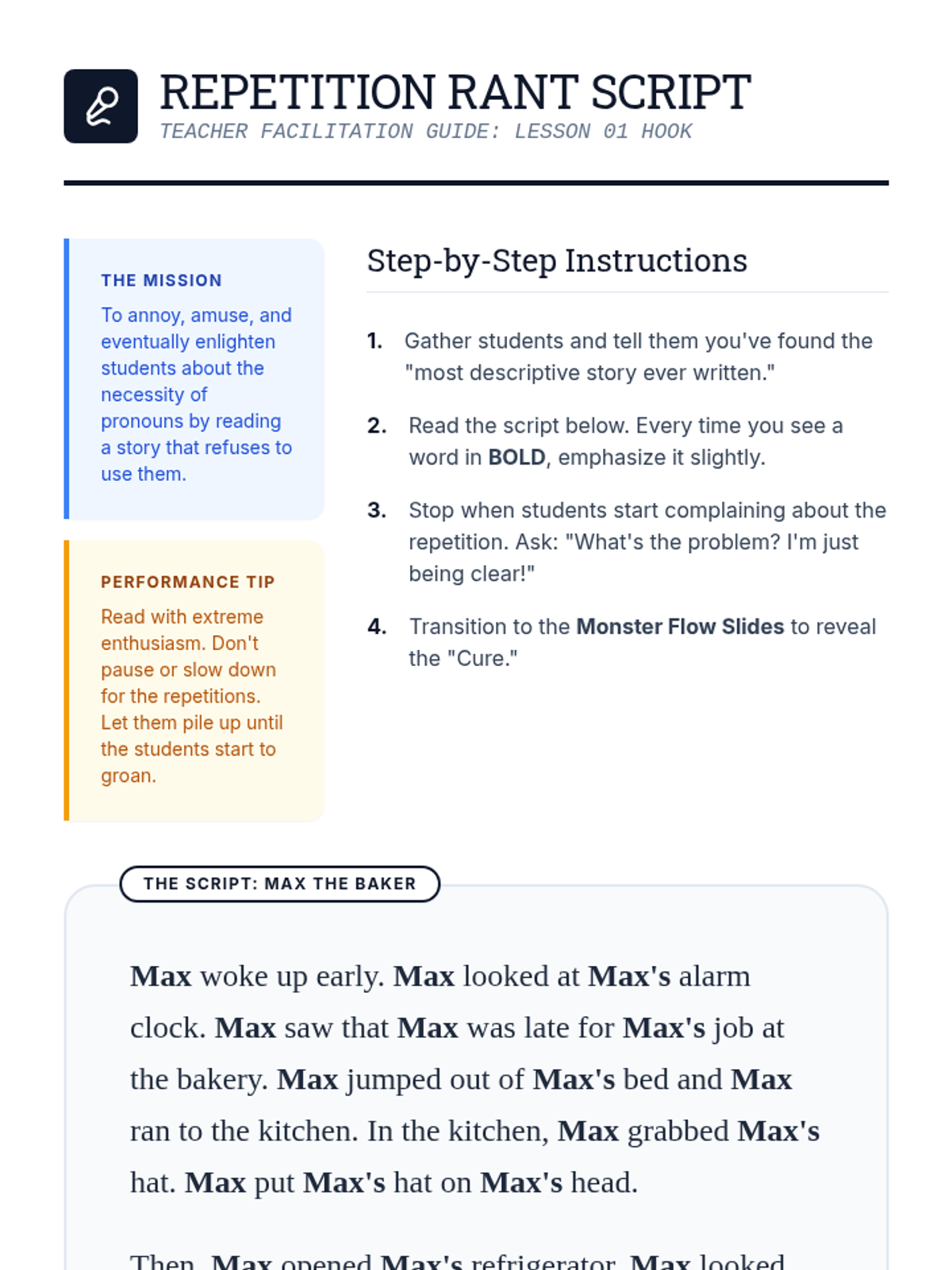
Students explore pronouns and antecedents as stylistic tools to improve narrative flow. They learn to replace repetitive nouns, manage multiple characters with clear pronoun references, and culminate in a polished character-driven story.
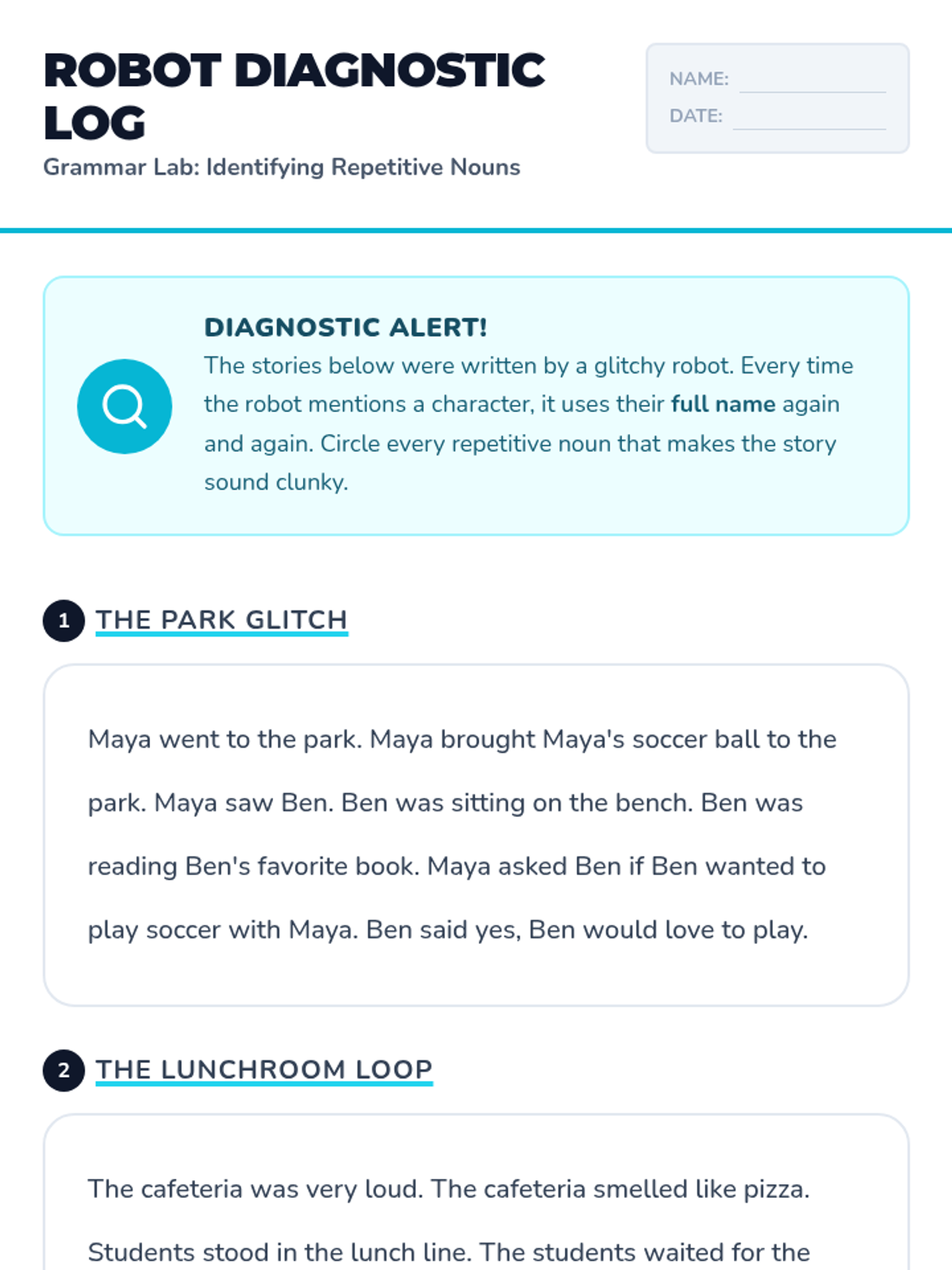
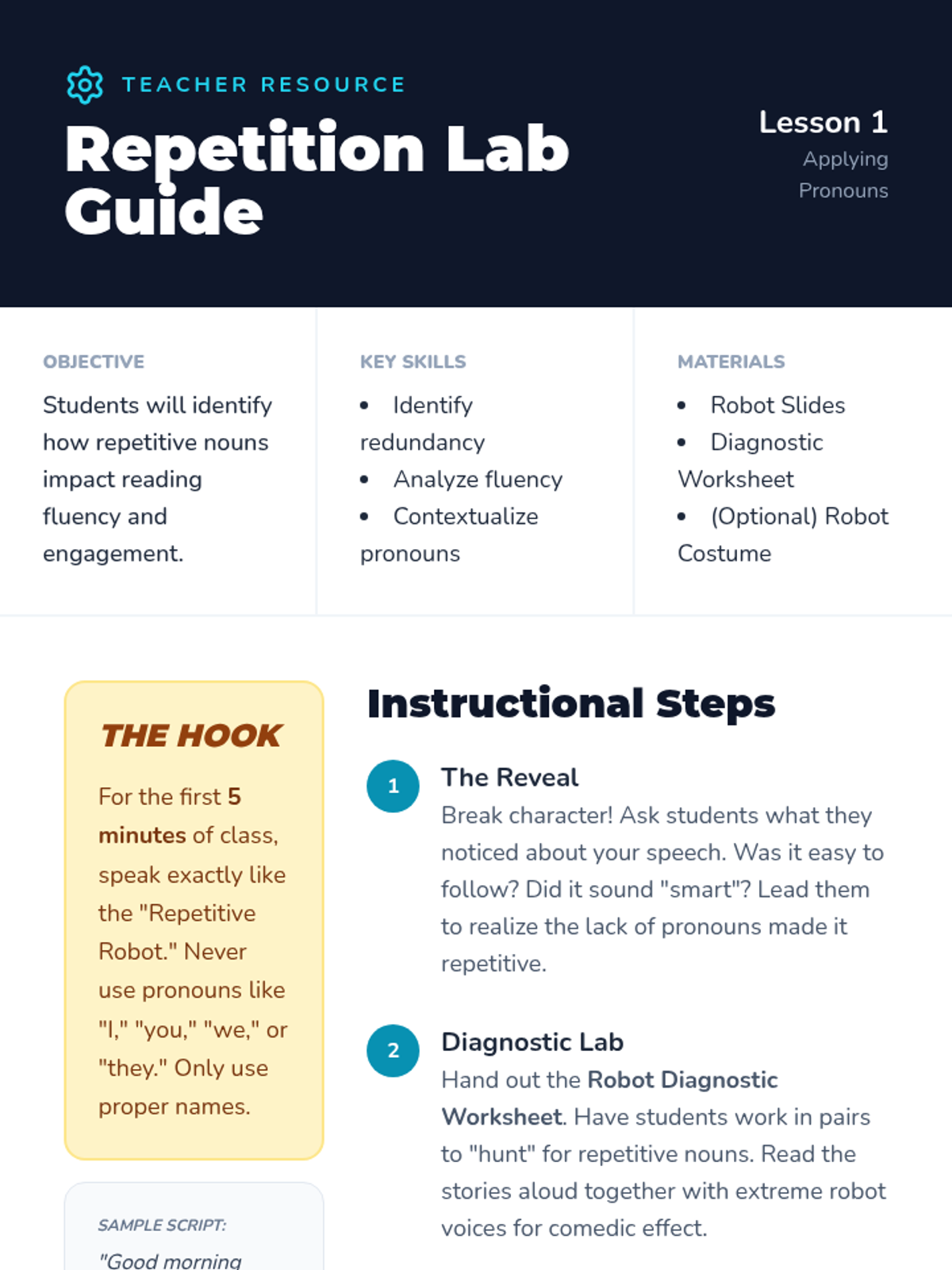
A 3rd-grade grammar project focusing on the stylistic power of pronouns. Students analyze clunky, repetitive 'robot' speech and transform it into smooth, professional narrative writing while mastering pronoun-antecedent agreement.
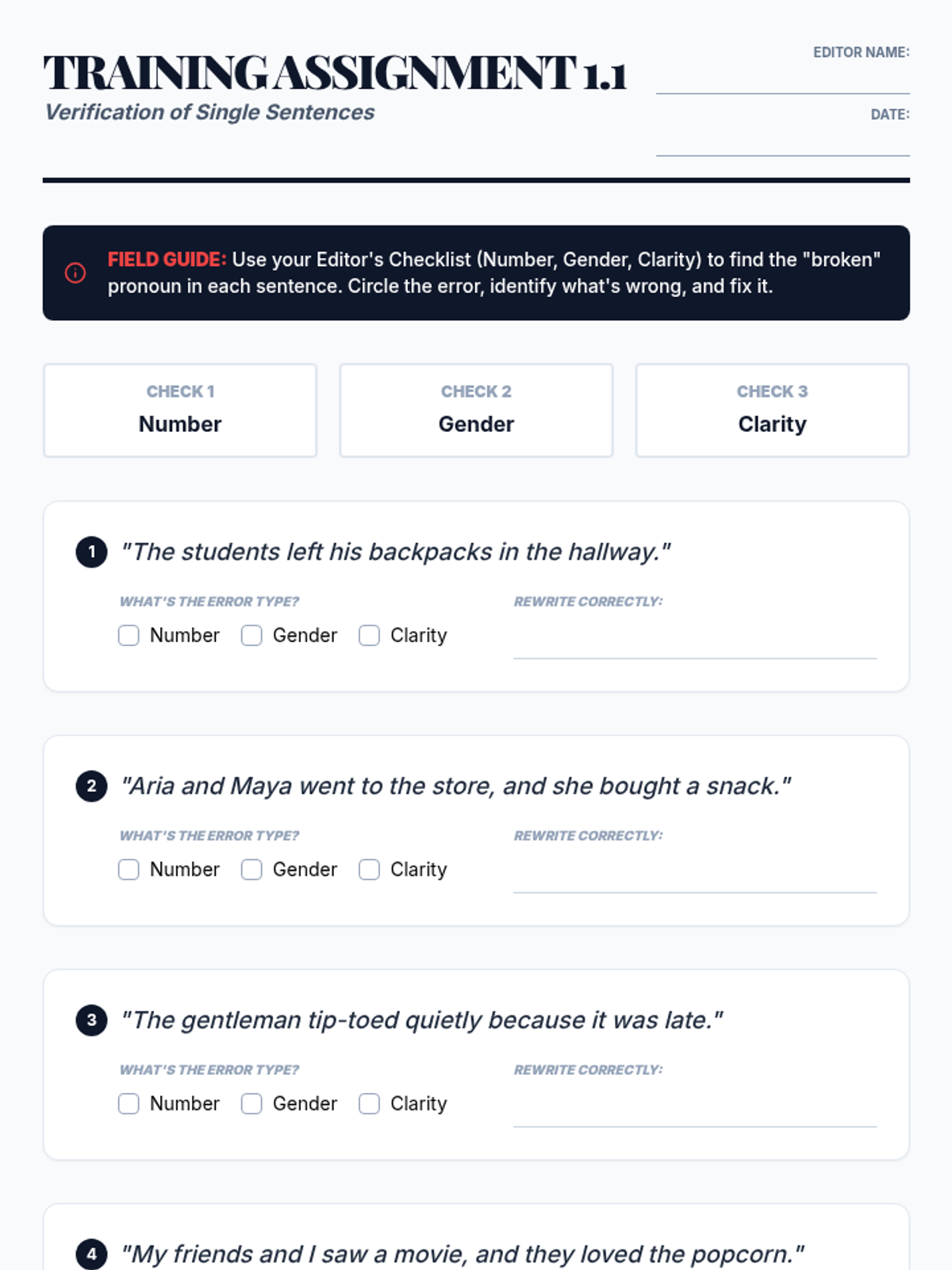
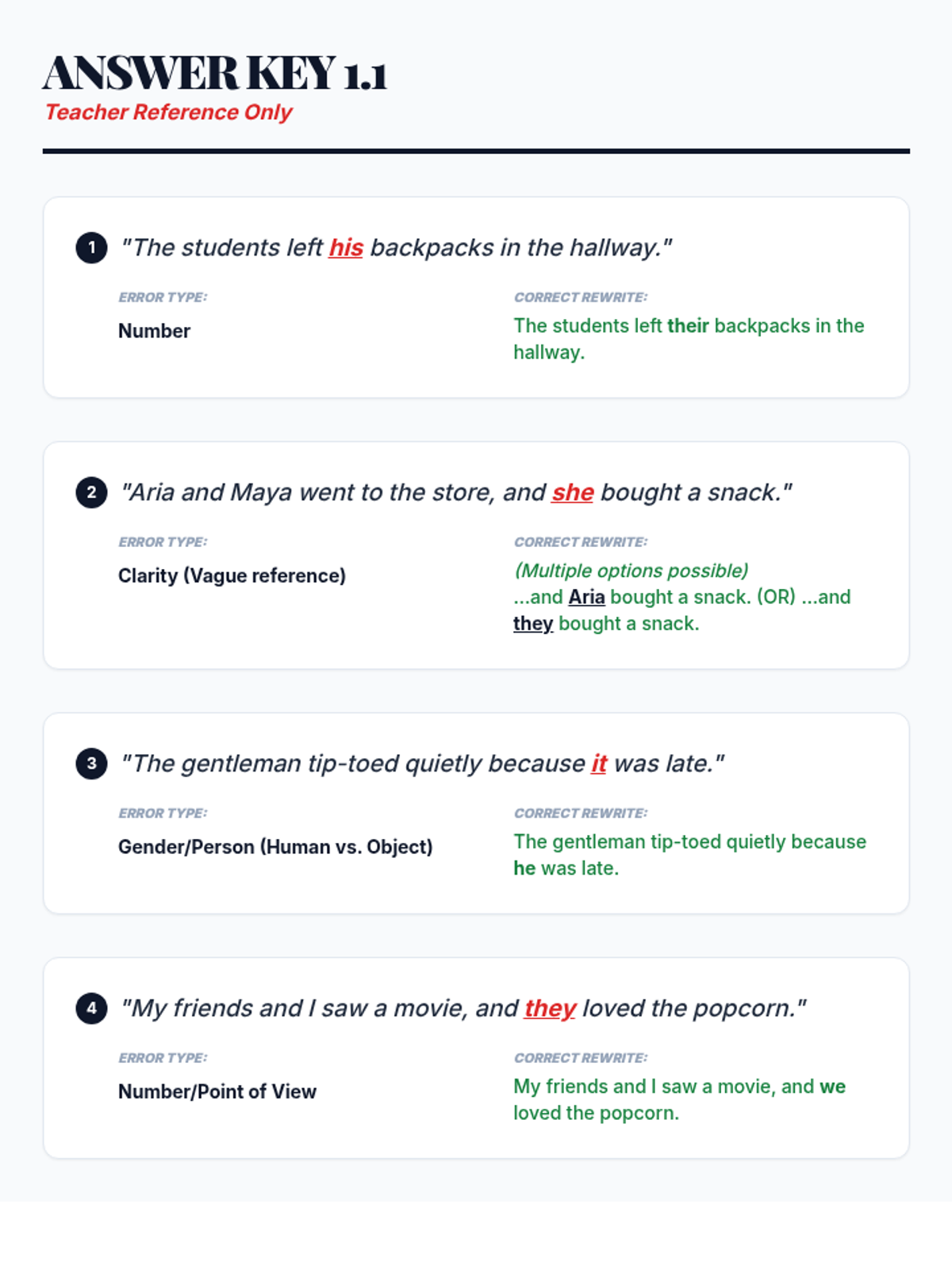
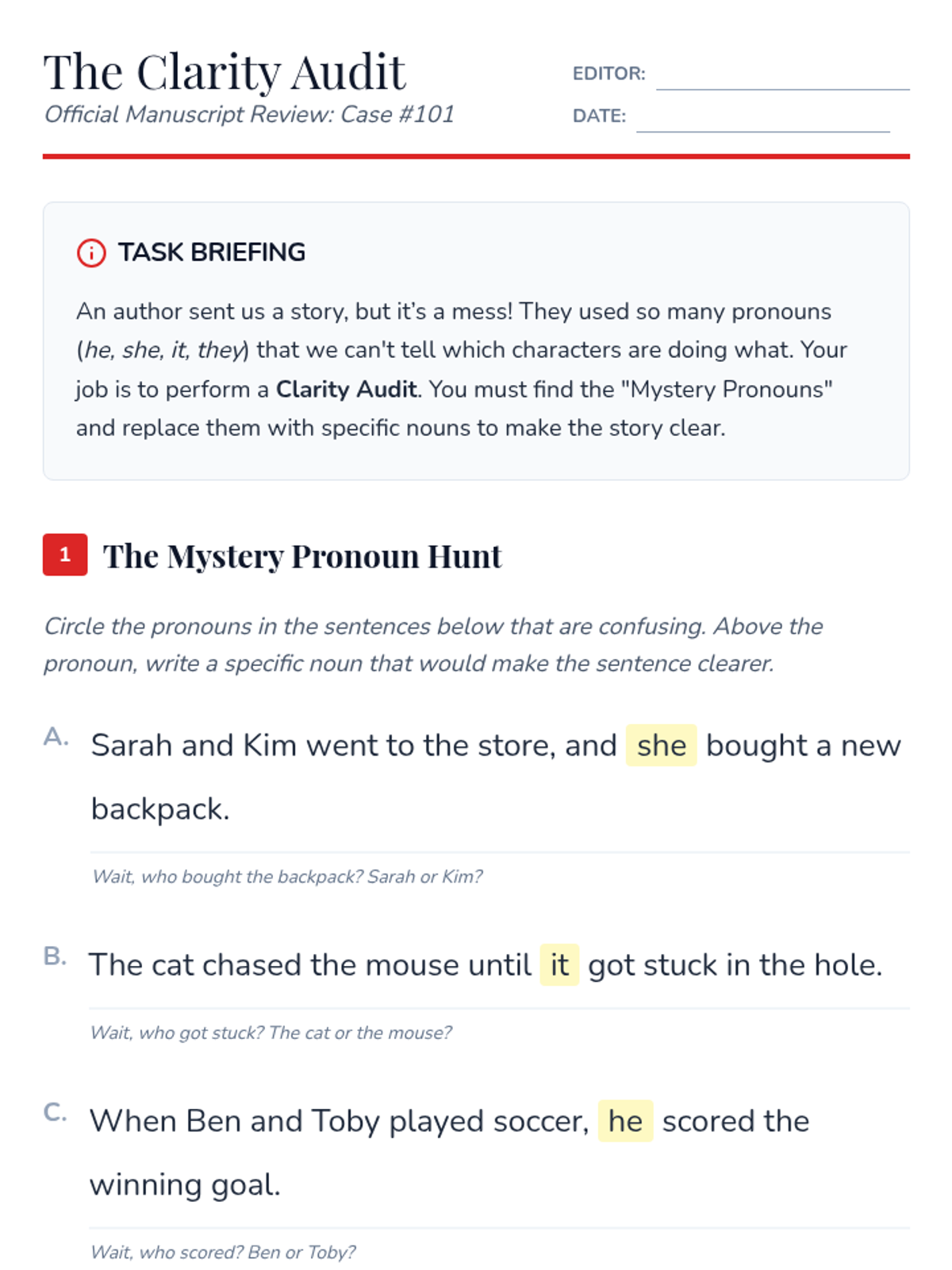
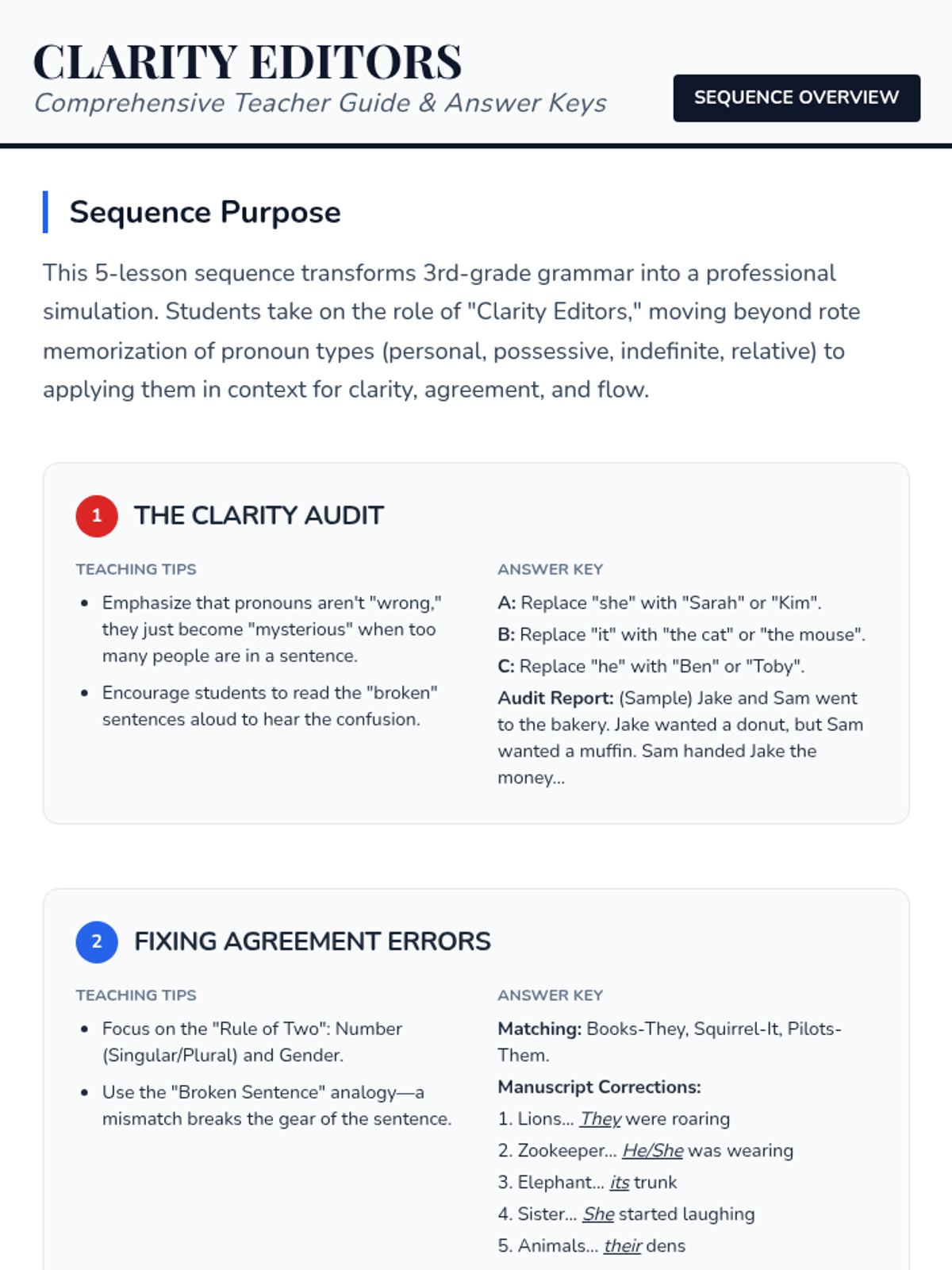
A 3rd-grade ELA sequence where students take on the role of professional editors to master pronoun-antecedent agreement. Through simulations and collaborative challenges, students learn to identify and correct errors in number, gender, and clarity.
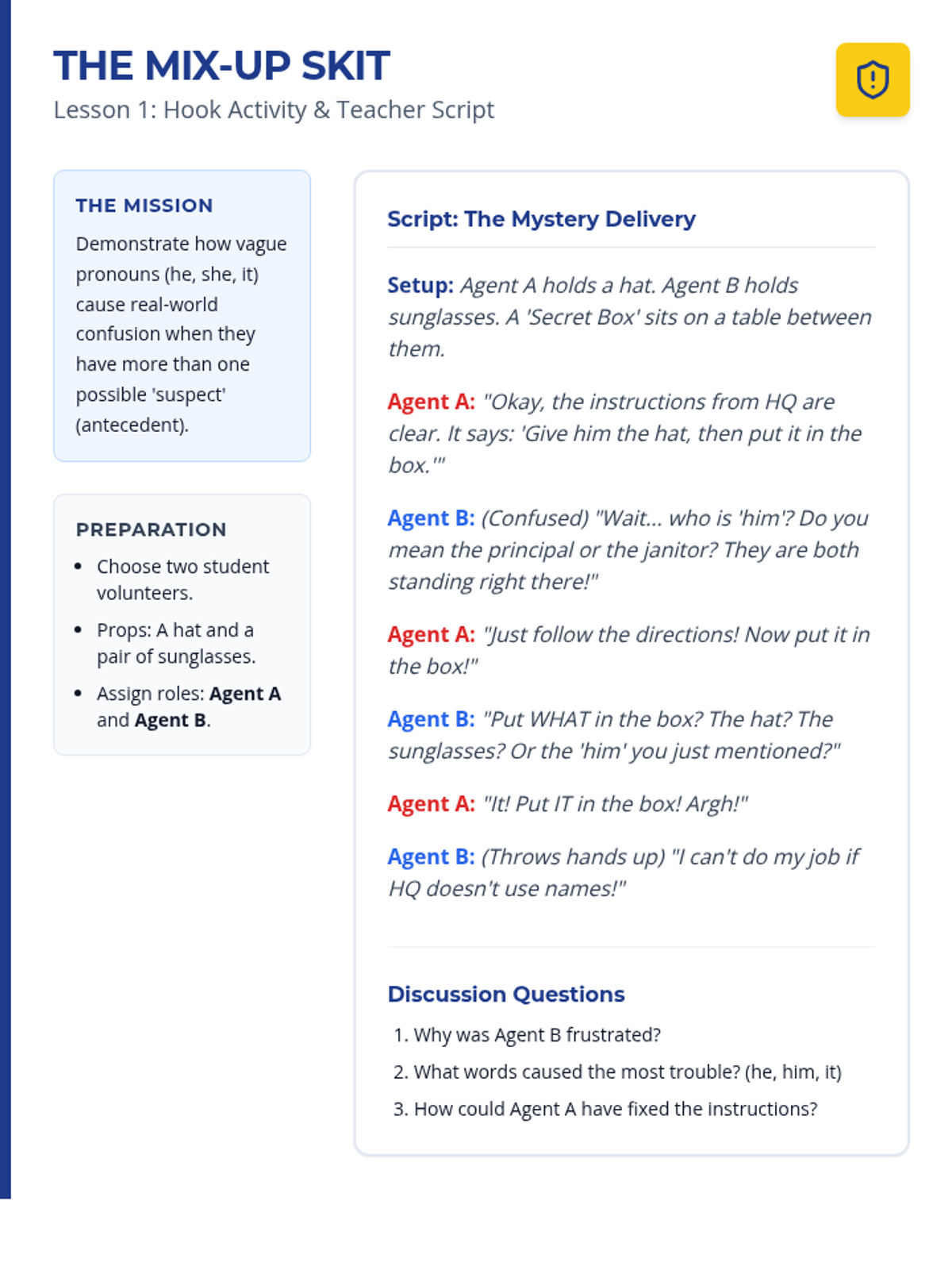
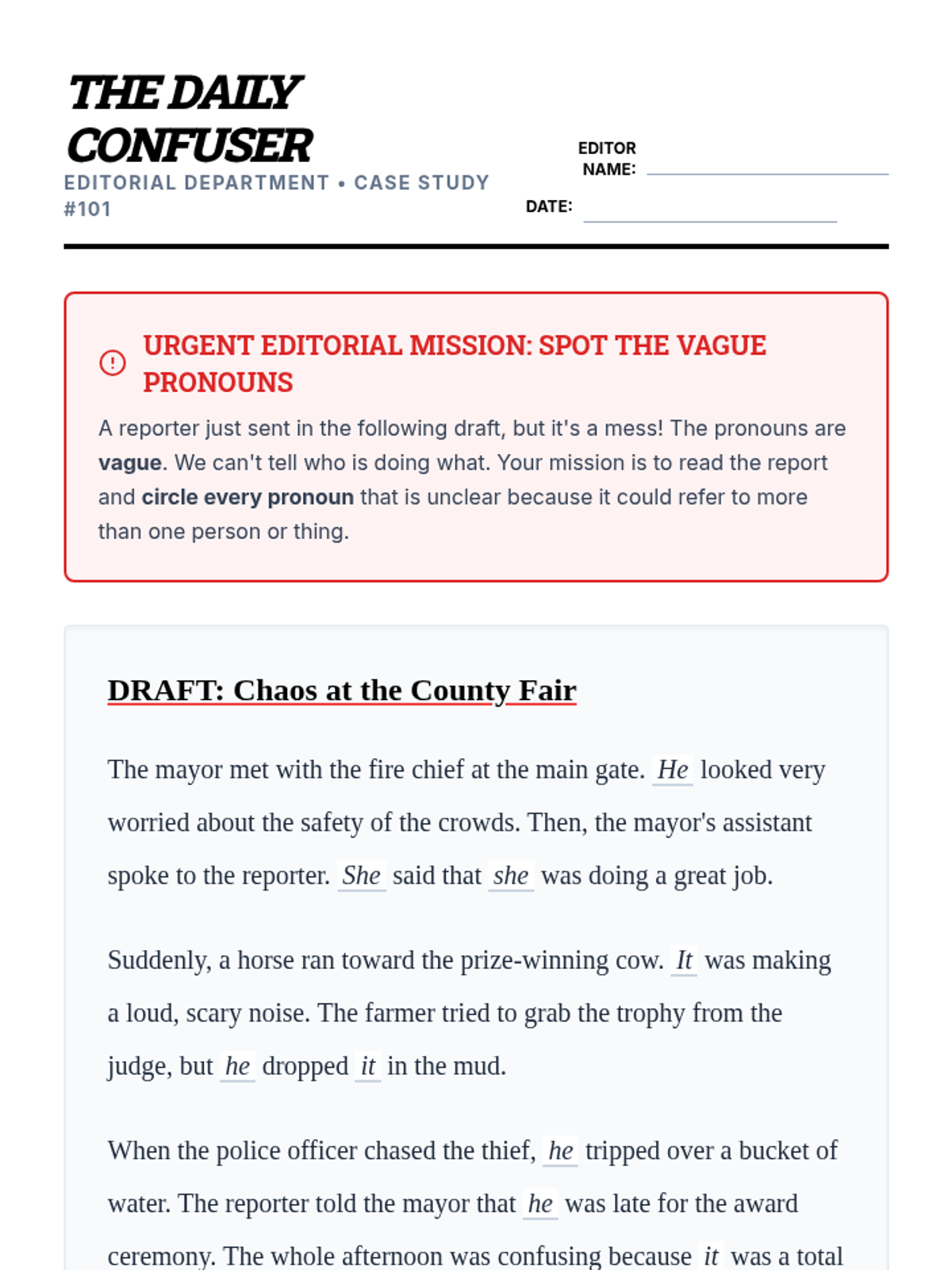
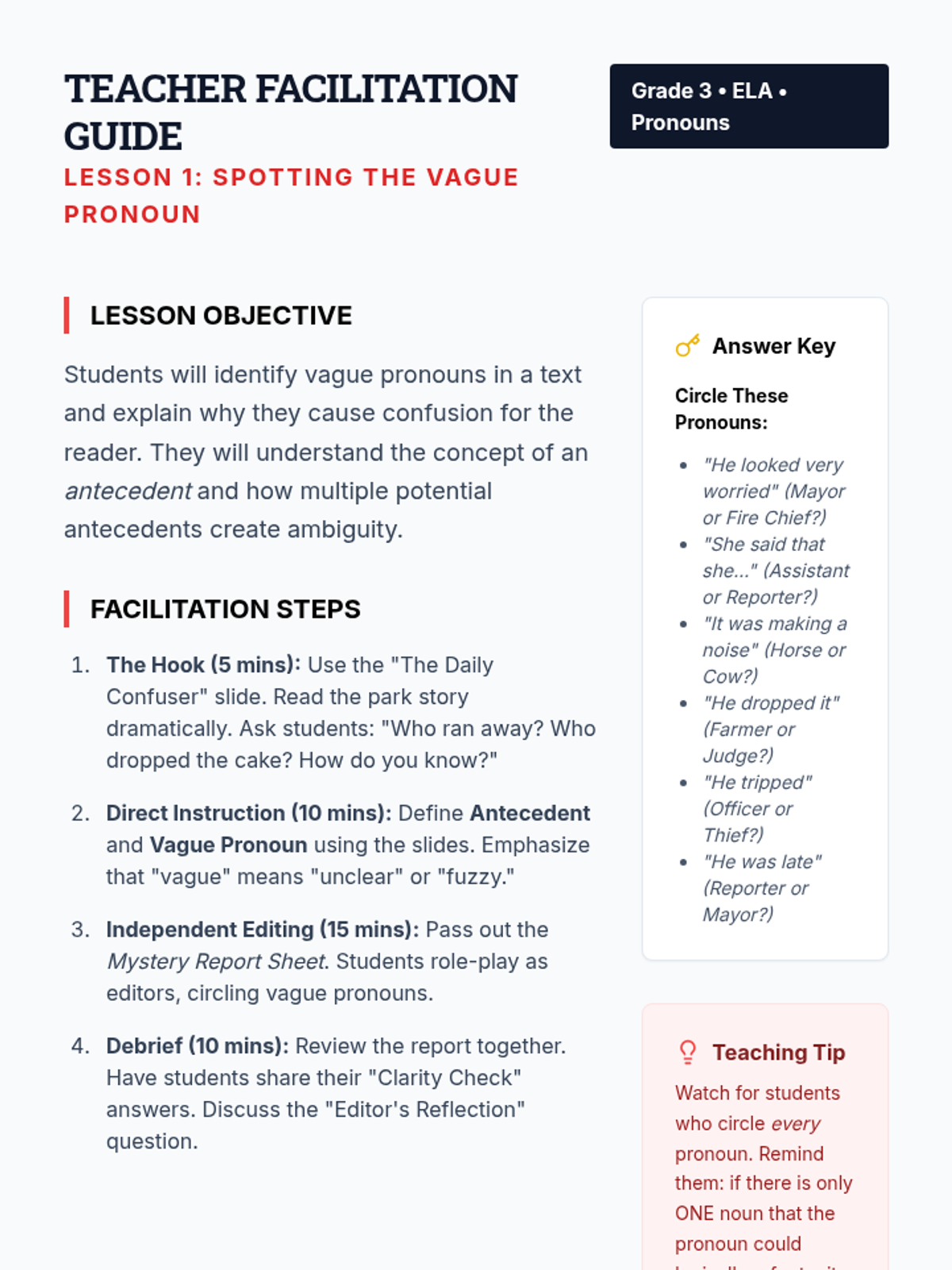
A 5-lesson grammar sequence for 3rd grade focusing on pronoun clarity. Students learn to identify and fix vague or ambiguous pronoun references through a fun 'Pronoun Patrol' detective theme.
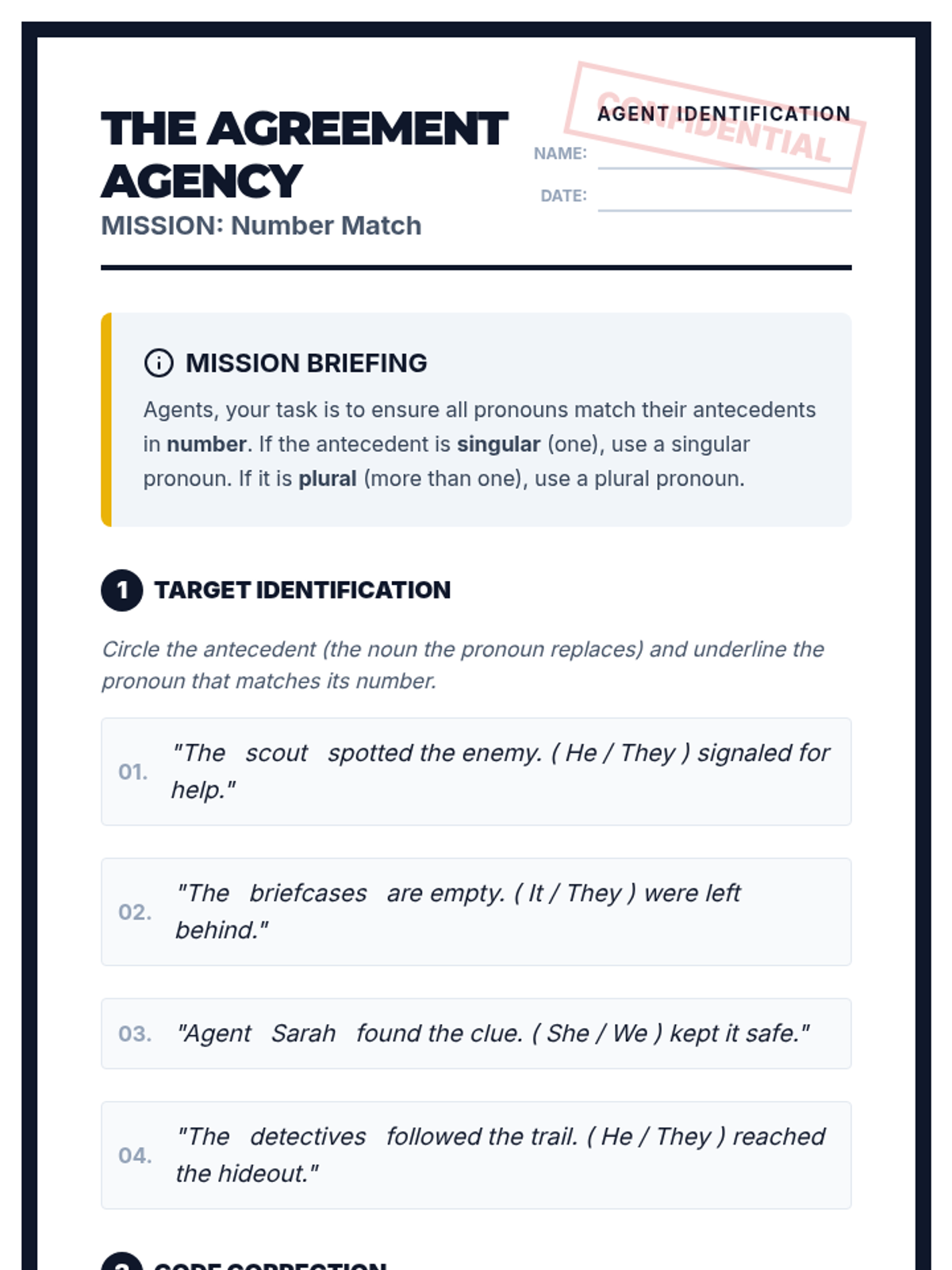
This 5-lesson sequence transforms 3rd-grade students into 'Grammar Agents' who investigate and correct pronoun-antecedent agreement errors. Students master matching pronouns to their antecedents in both number (singular/plural) and gender (masculine, feminine, neutral) through inquiry, games, and writing workshops.
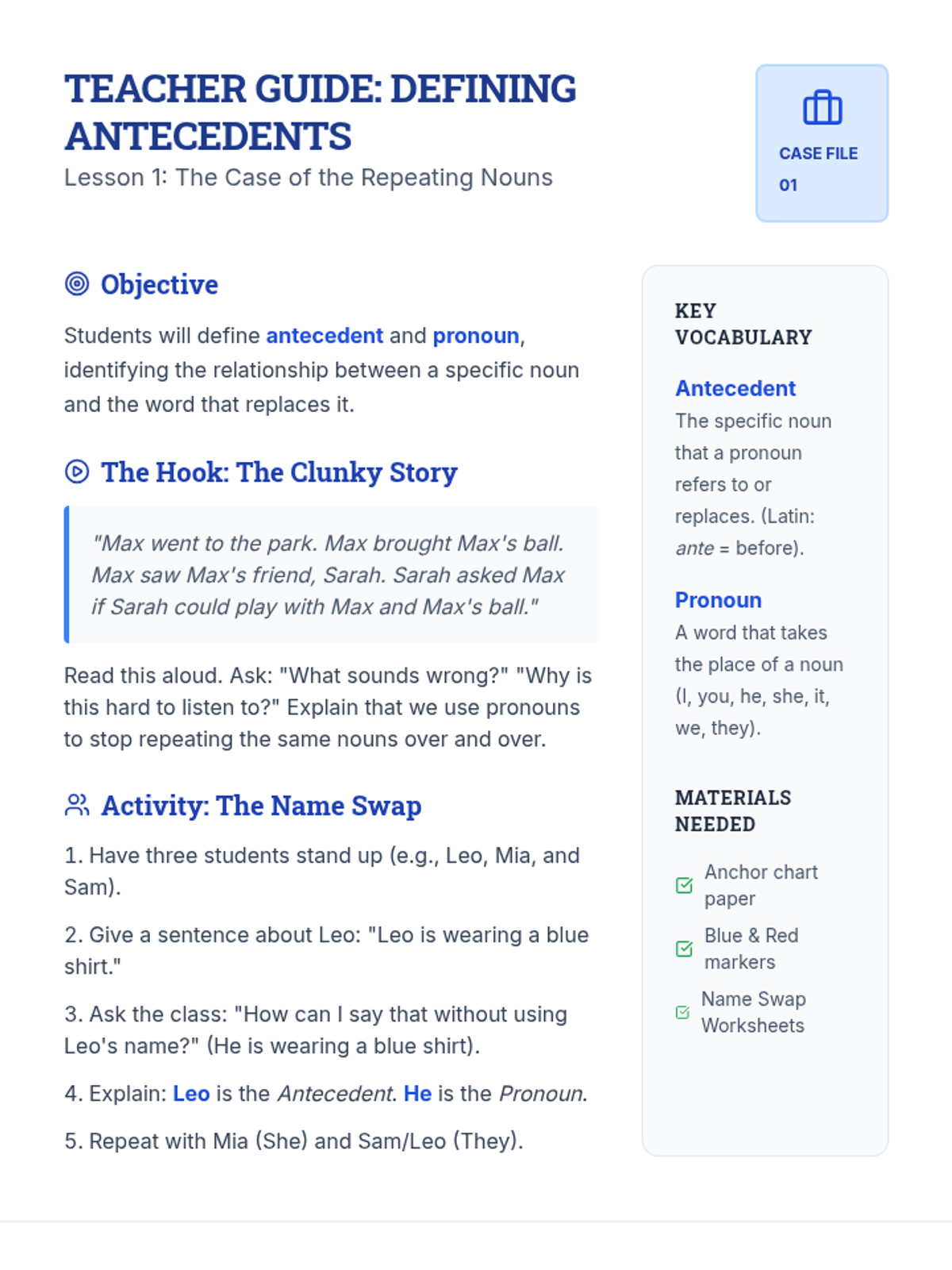
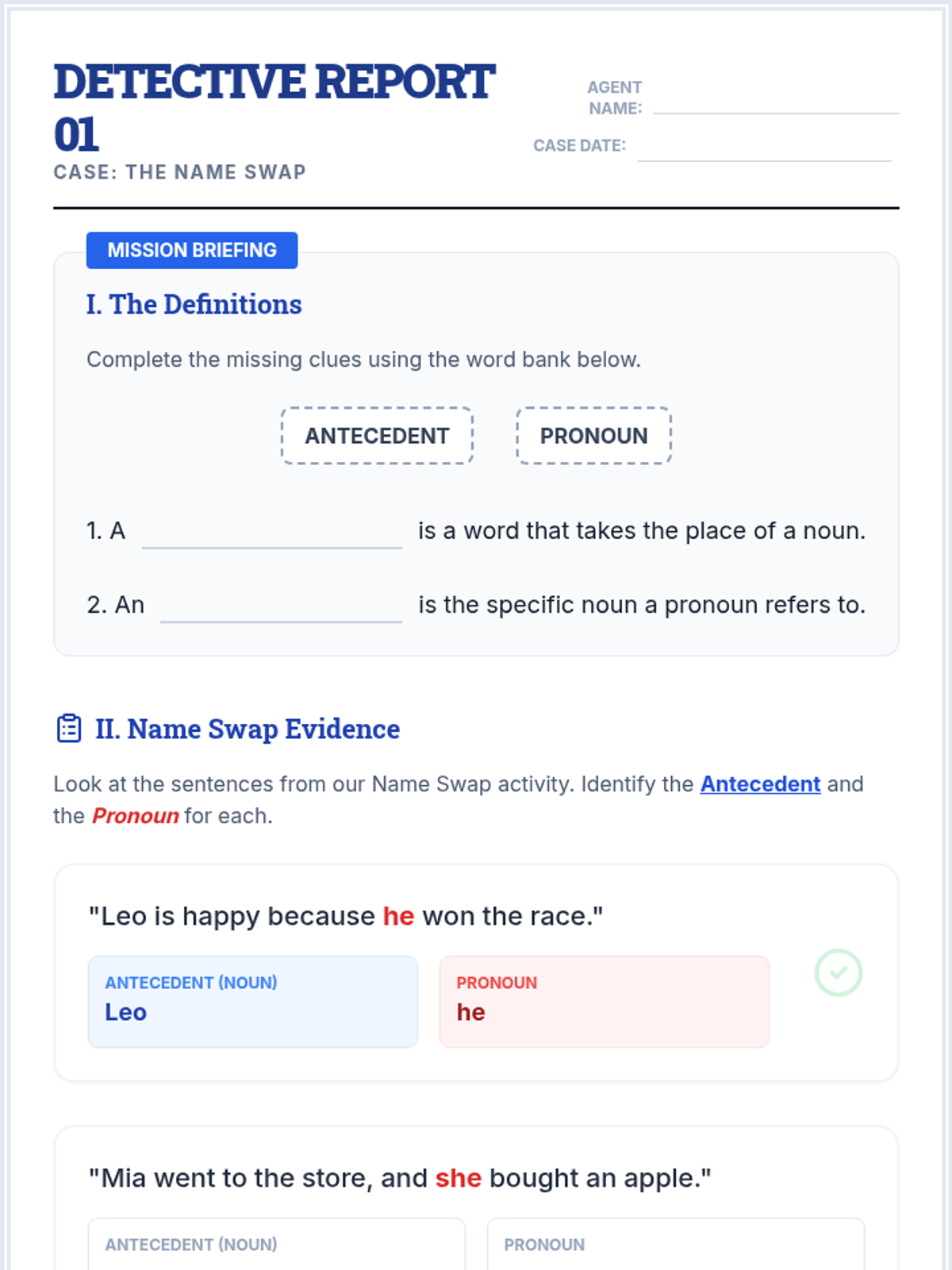
A comprehensive introduction to pronouns and antecedents for 3rd graders, following a 'Pronoun Detective' theme. Students progress from defining terms to identifying connections within and across sentences, concluding with clear sentence construction.
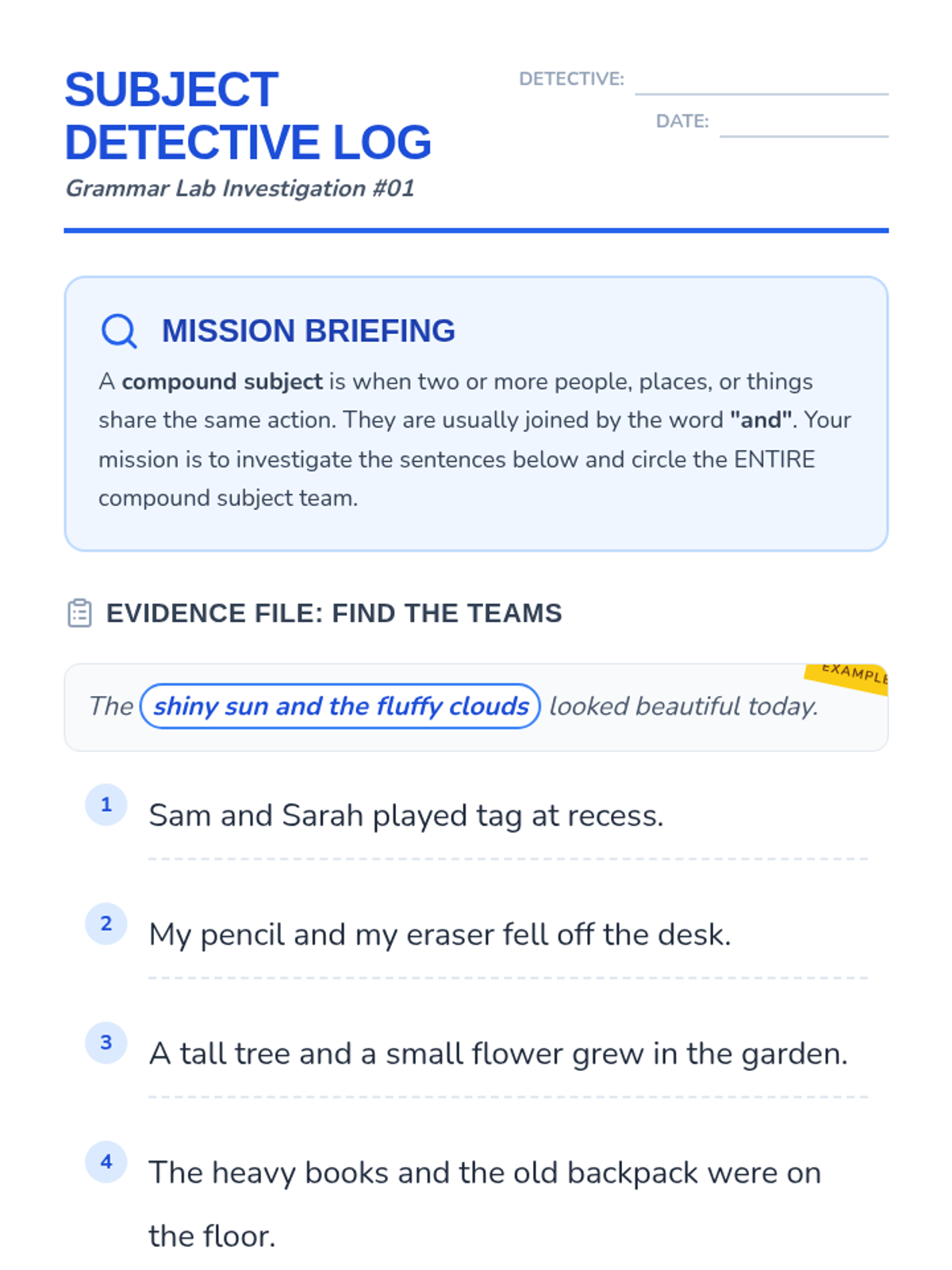
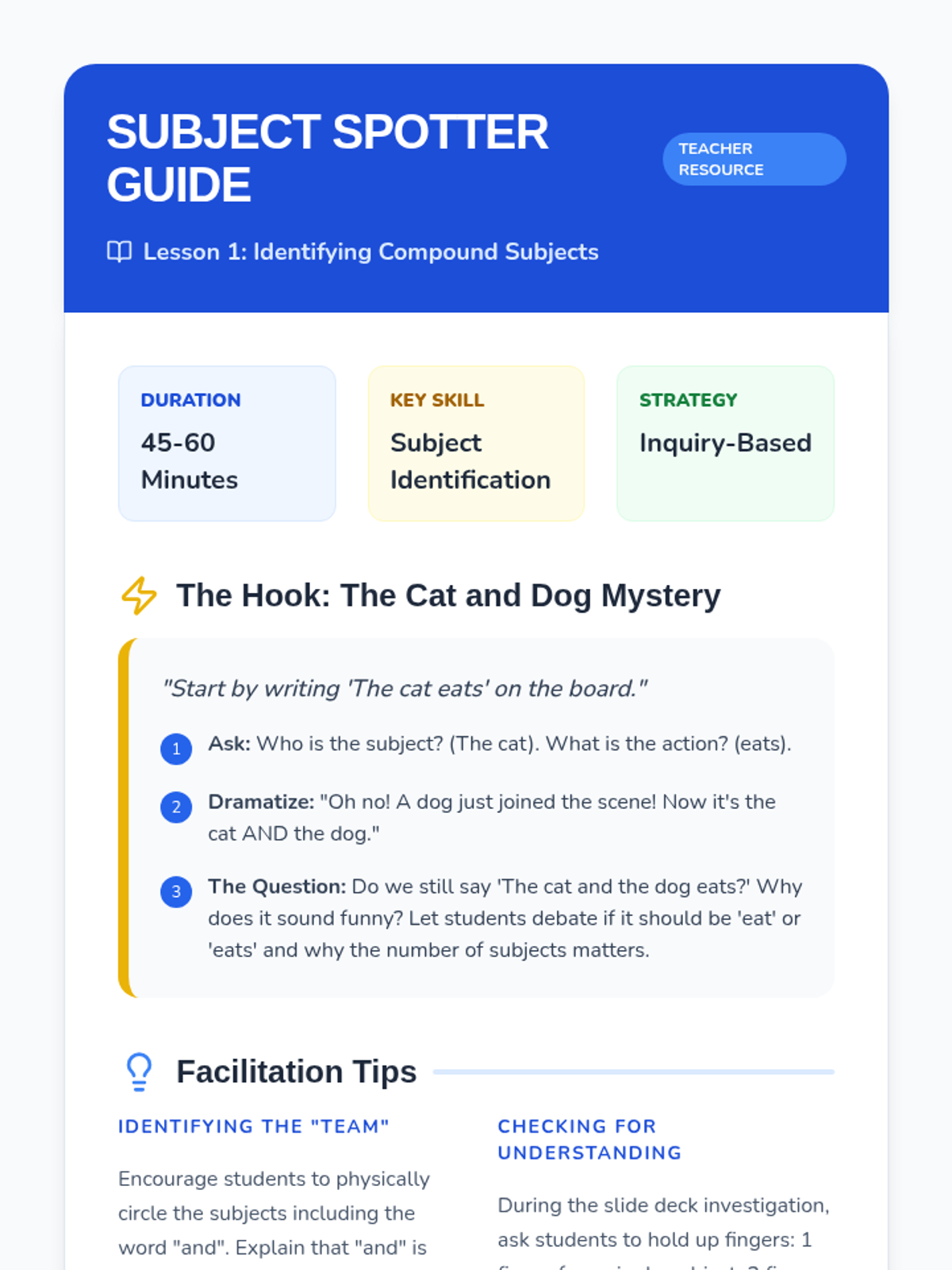
A 5-lesson inquiry-based sequence for 3rd graders to master subject-verb agreement with compound subjects, using the logic of 'Grammar Math' and 'Sentence Surgery'.
A 5-lesson unit where 3rd-grade students become professional editors, mastering pronoun clarity, agreement, and consistency through real-world simulation and skill-building activities.
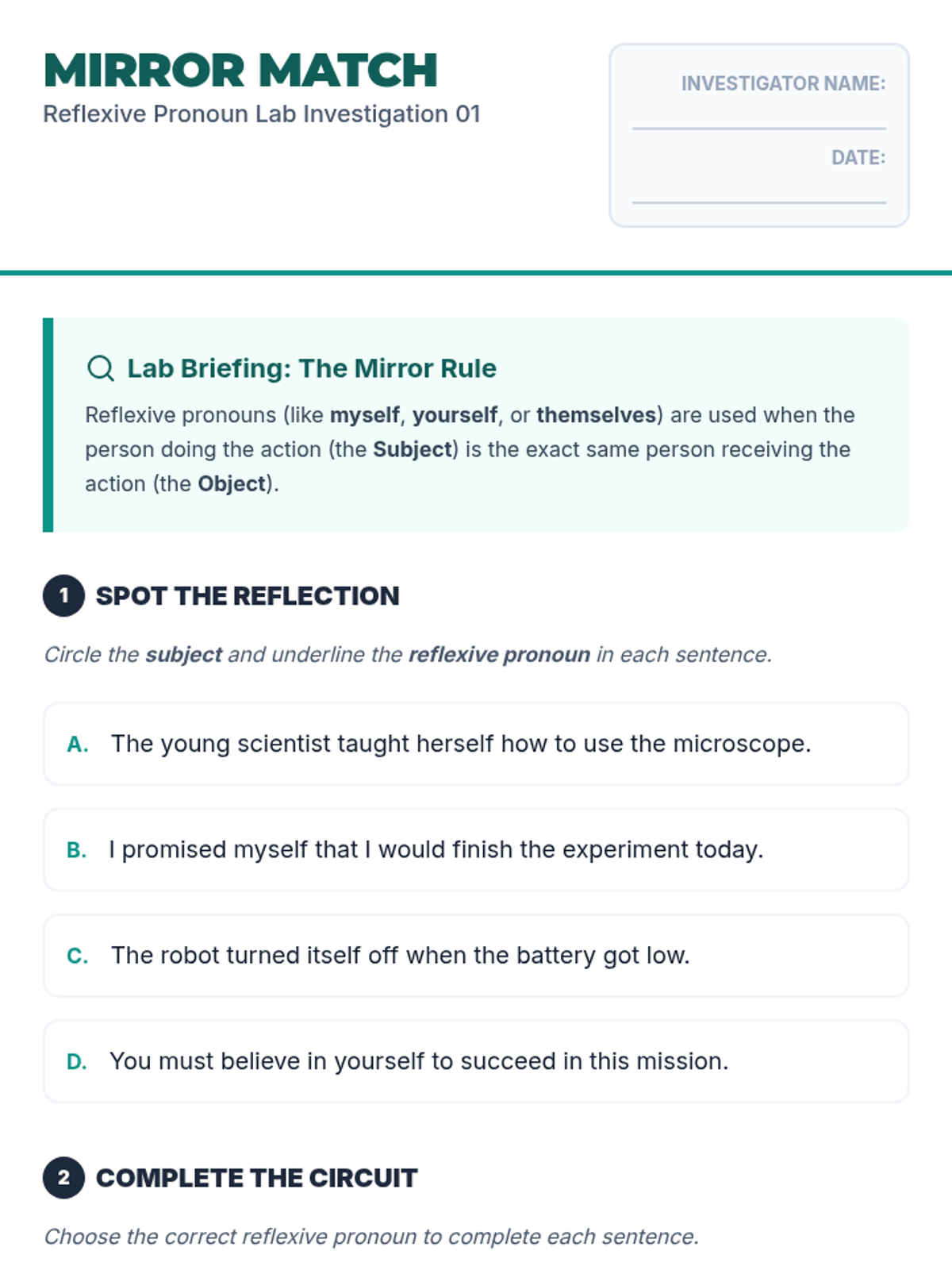
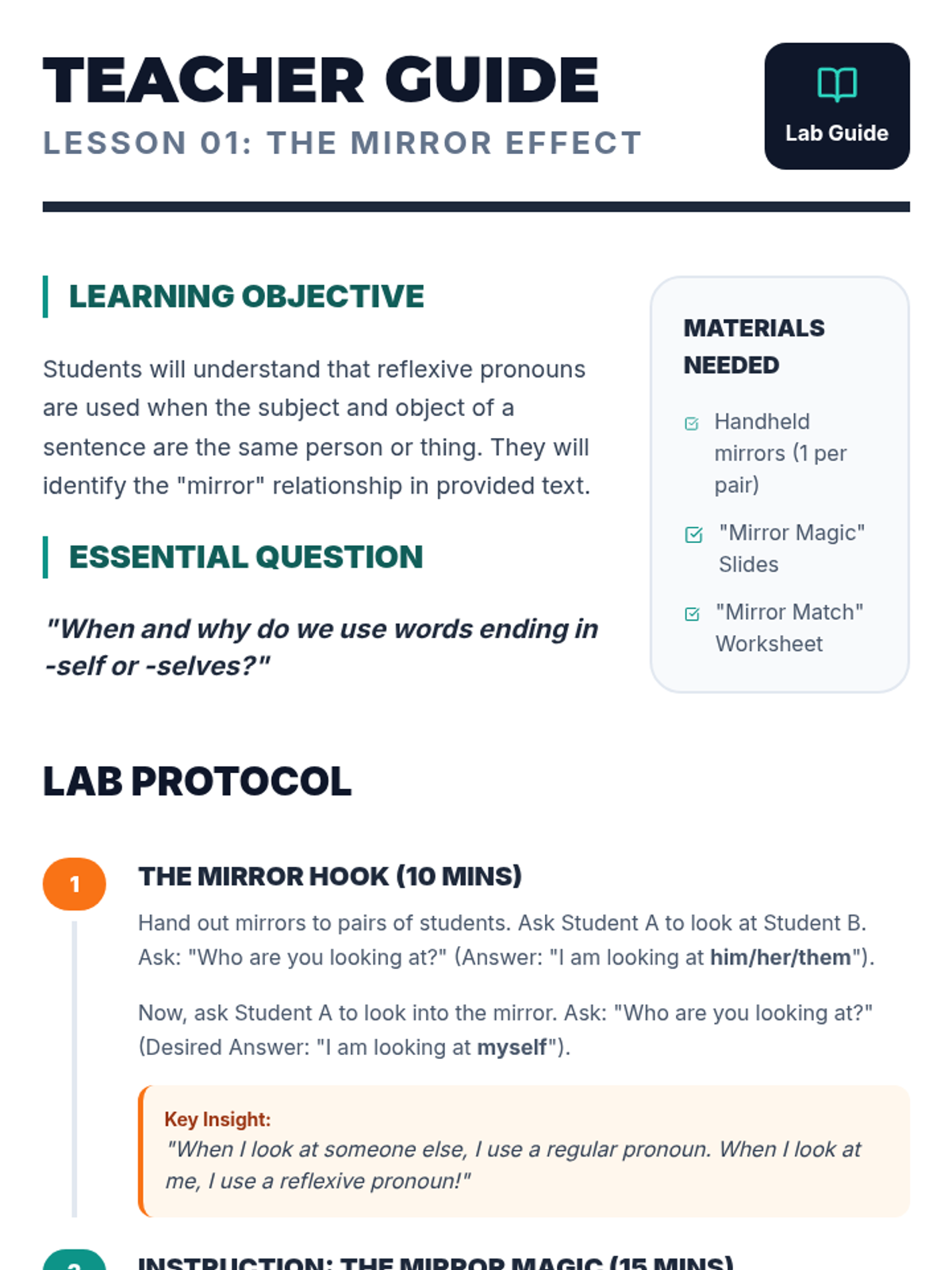
An inquiry-based exploration of reflexive pronouns for 3rd-grade students, focusing on the 'mirror' effect of subject-object identity, singular/plural endings, and correcting common non-standard forms.
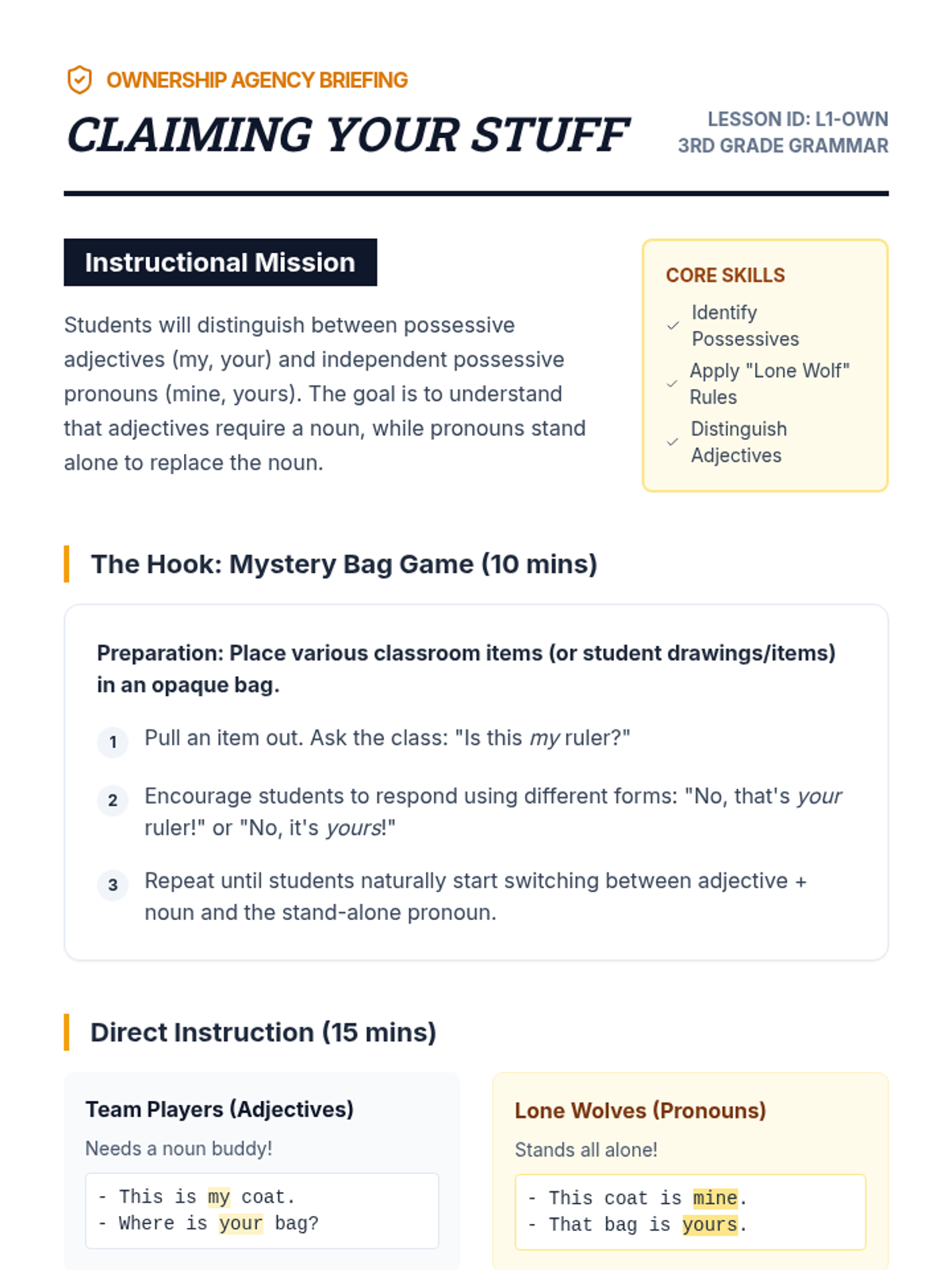
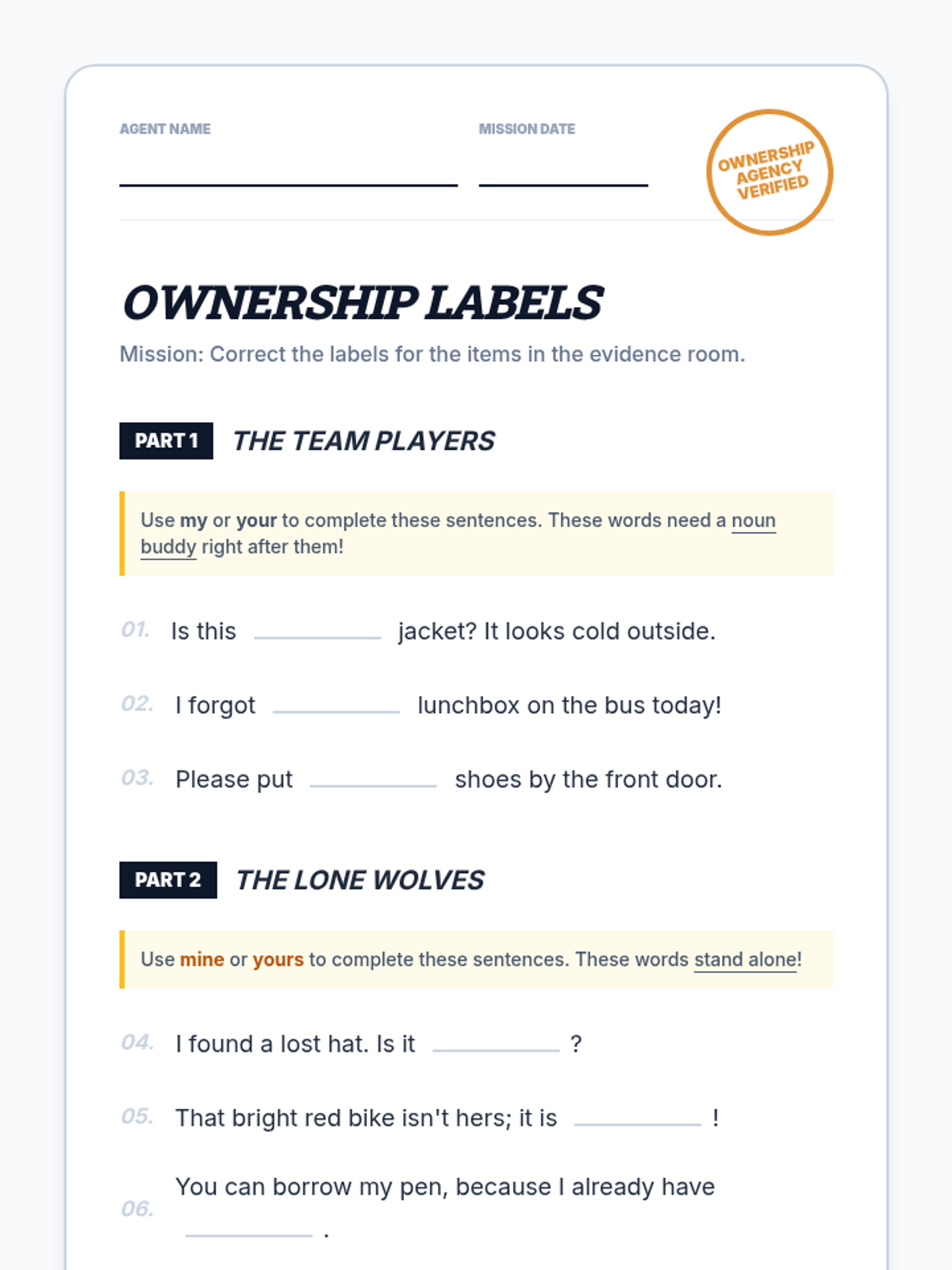
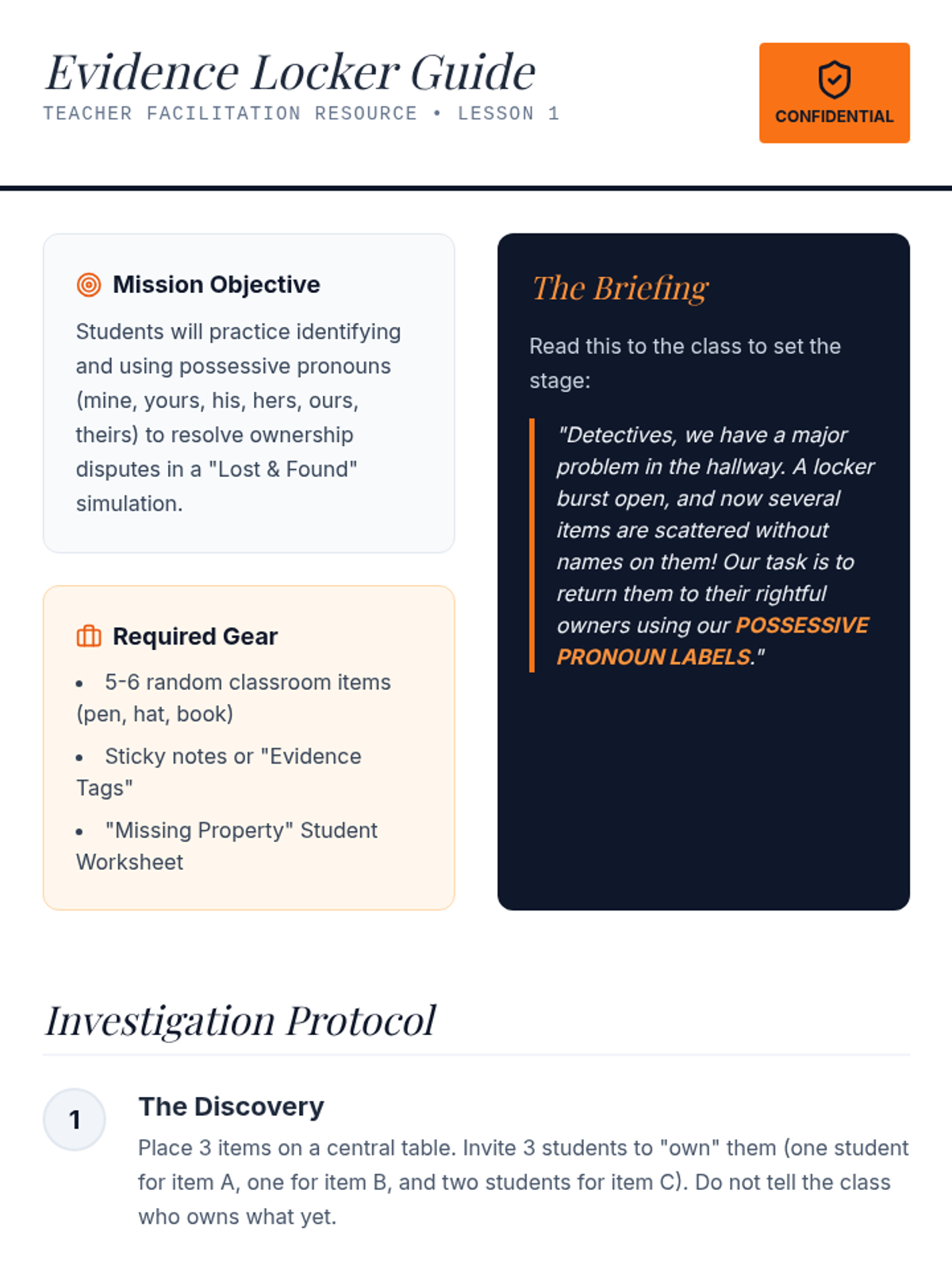
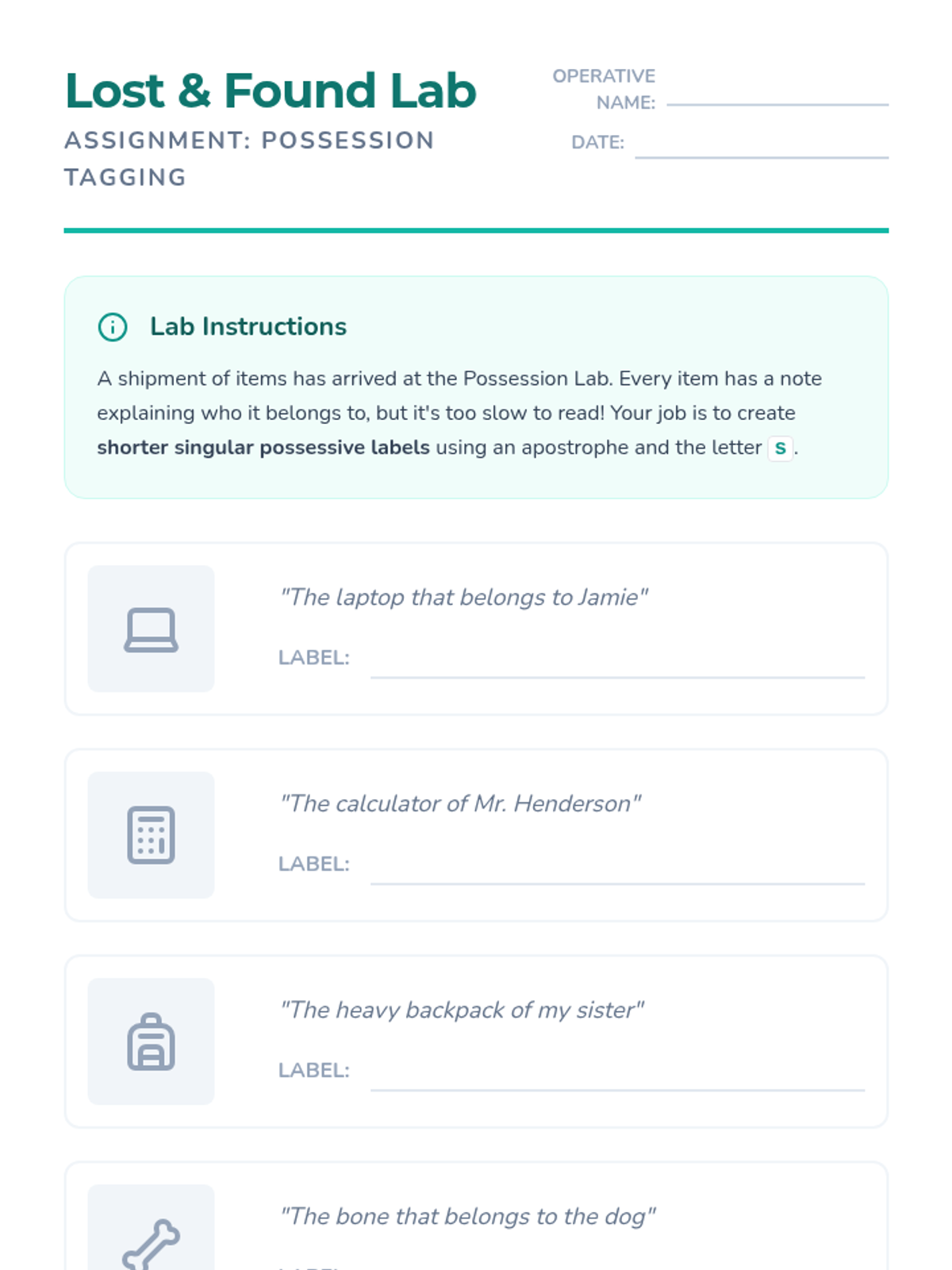
A comprehensive 3rd-grade grammar sequence exploring possessive pronouns and adjectives. Students learn to show ownership, distinguish possessives from contractions, and apply their knowledge in a creative 'Lost and Found' catalog project.
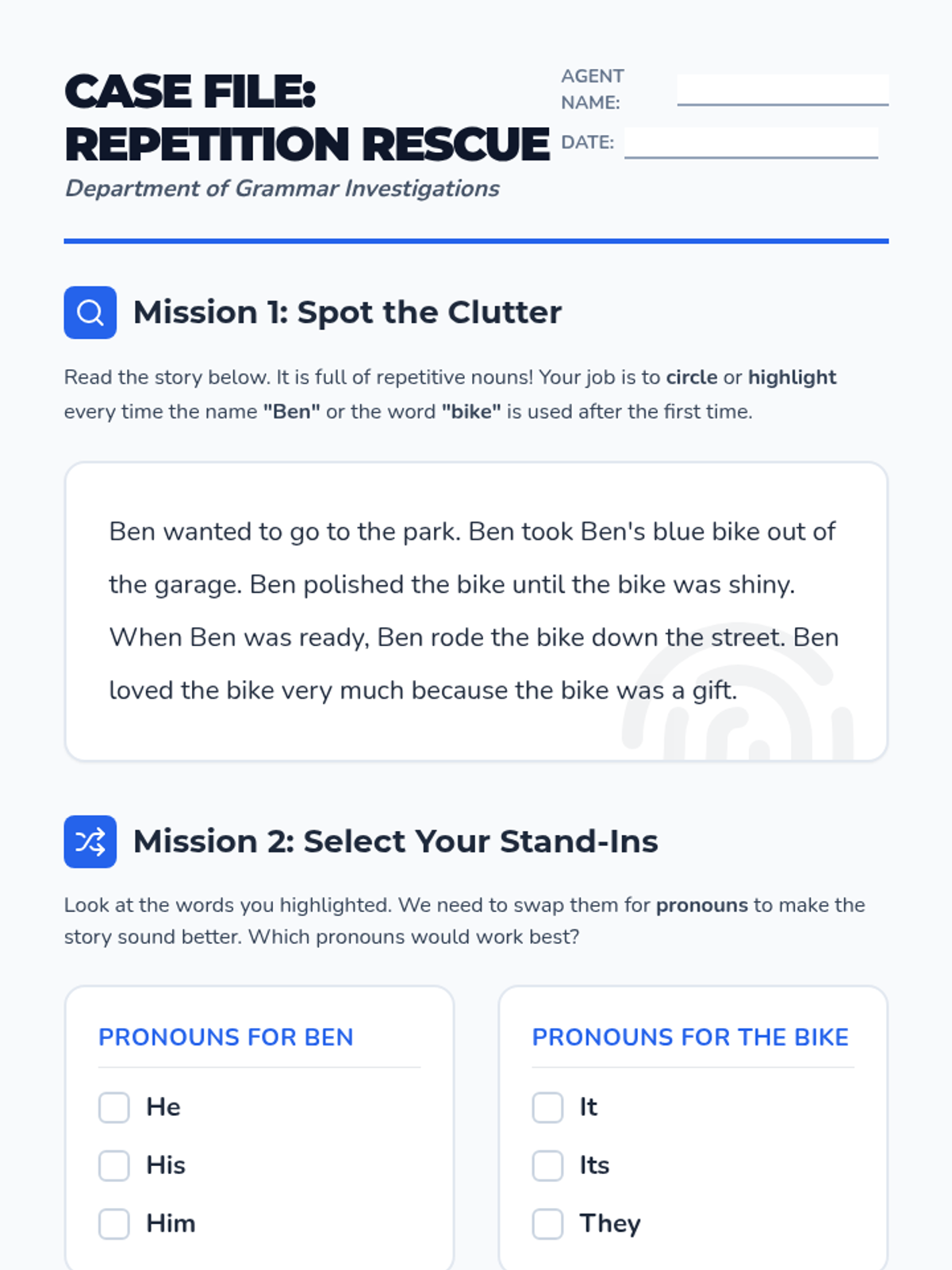
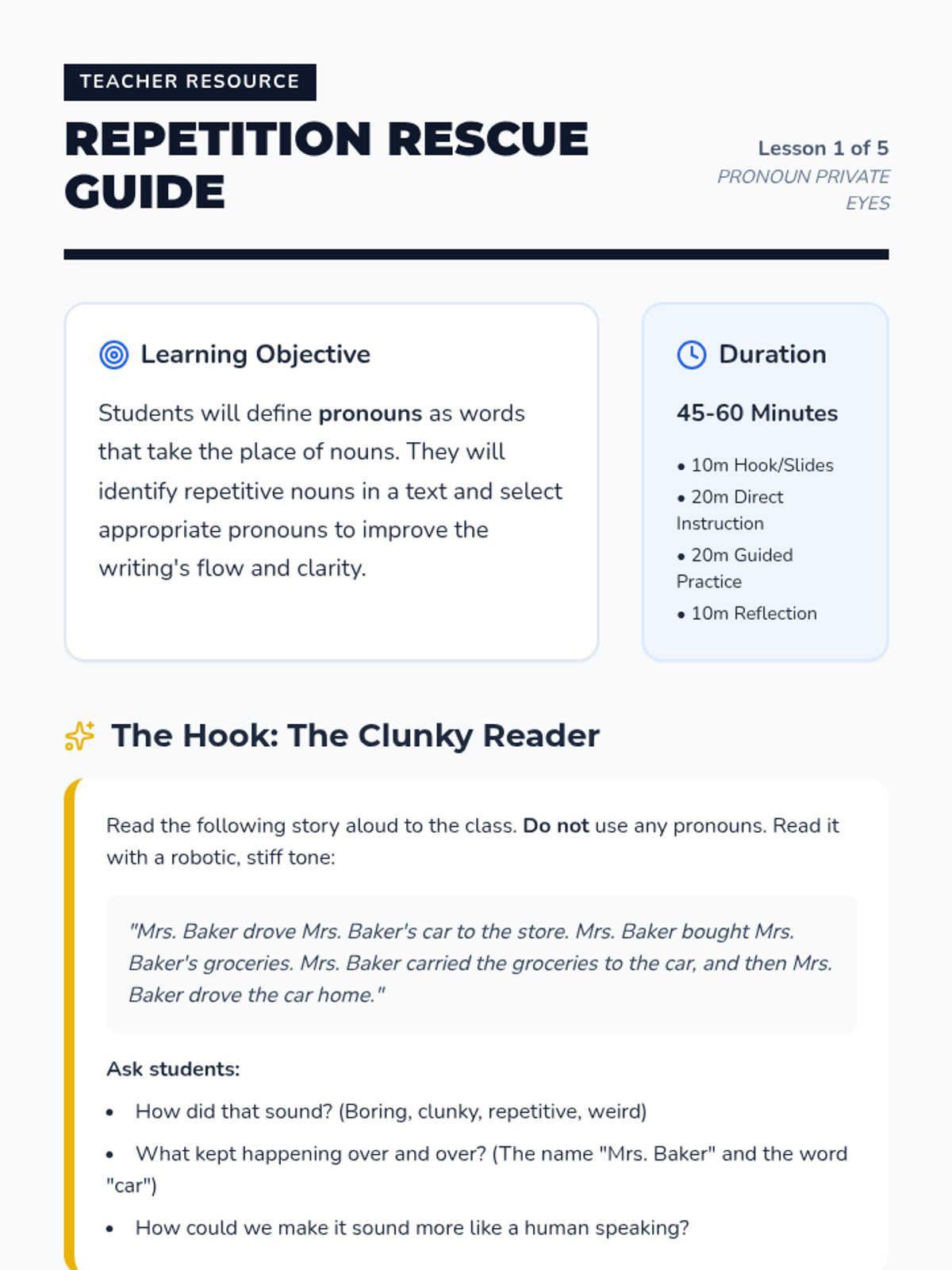
A comprehensive 3rd Grade grammar sequence focusing on pronoun-antecedent agreement. Students become 'Pronoun Private Eyes' to solve the mystery of repetitive writing, learning how pronouns act as essential substitutes for nouns to improve flow and clarity.
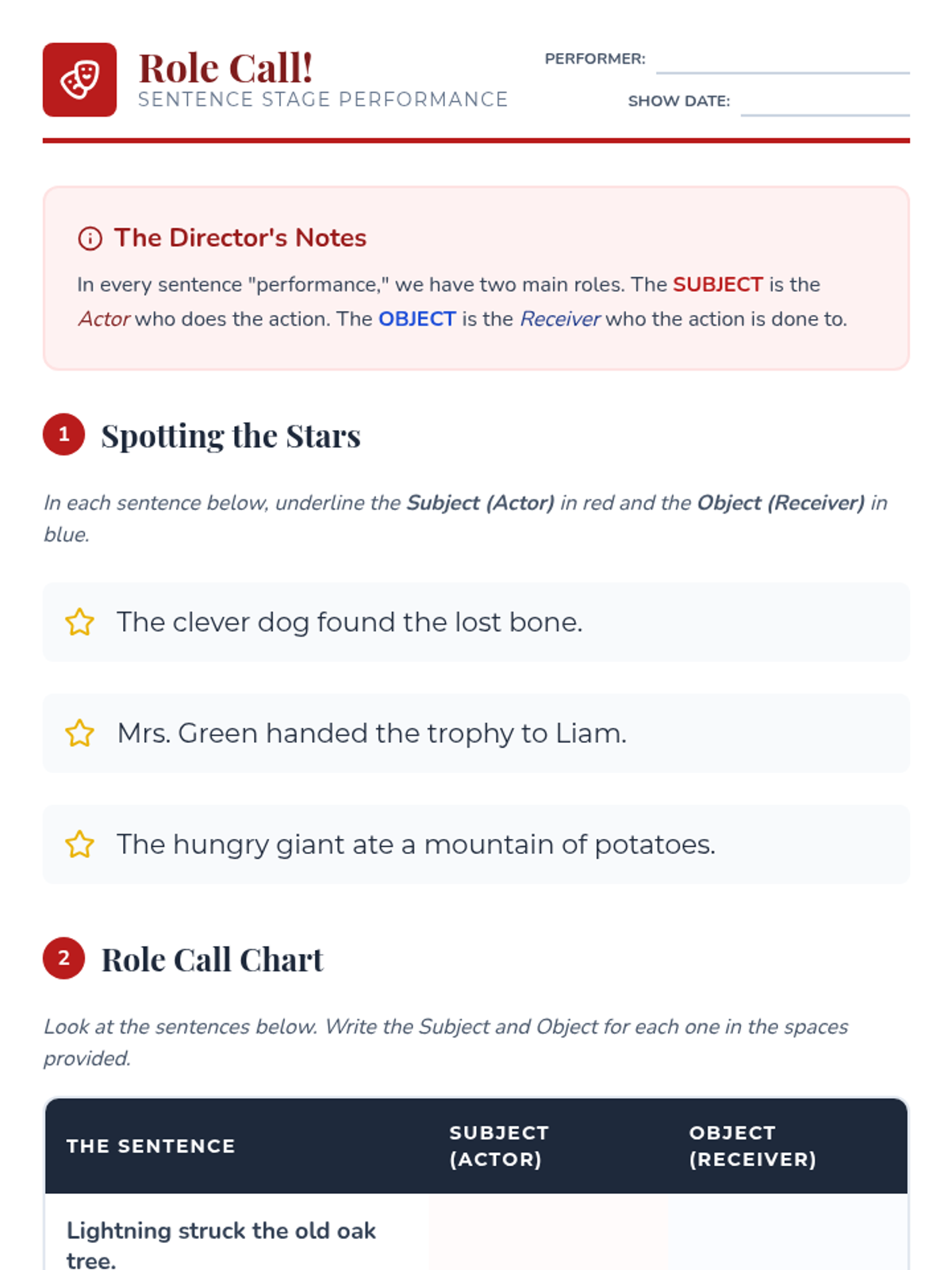
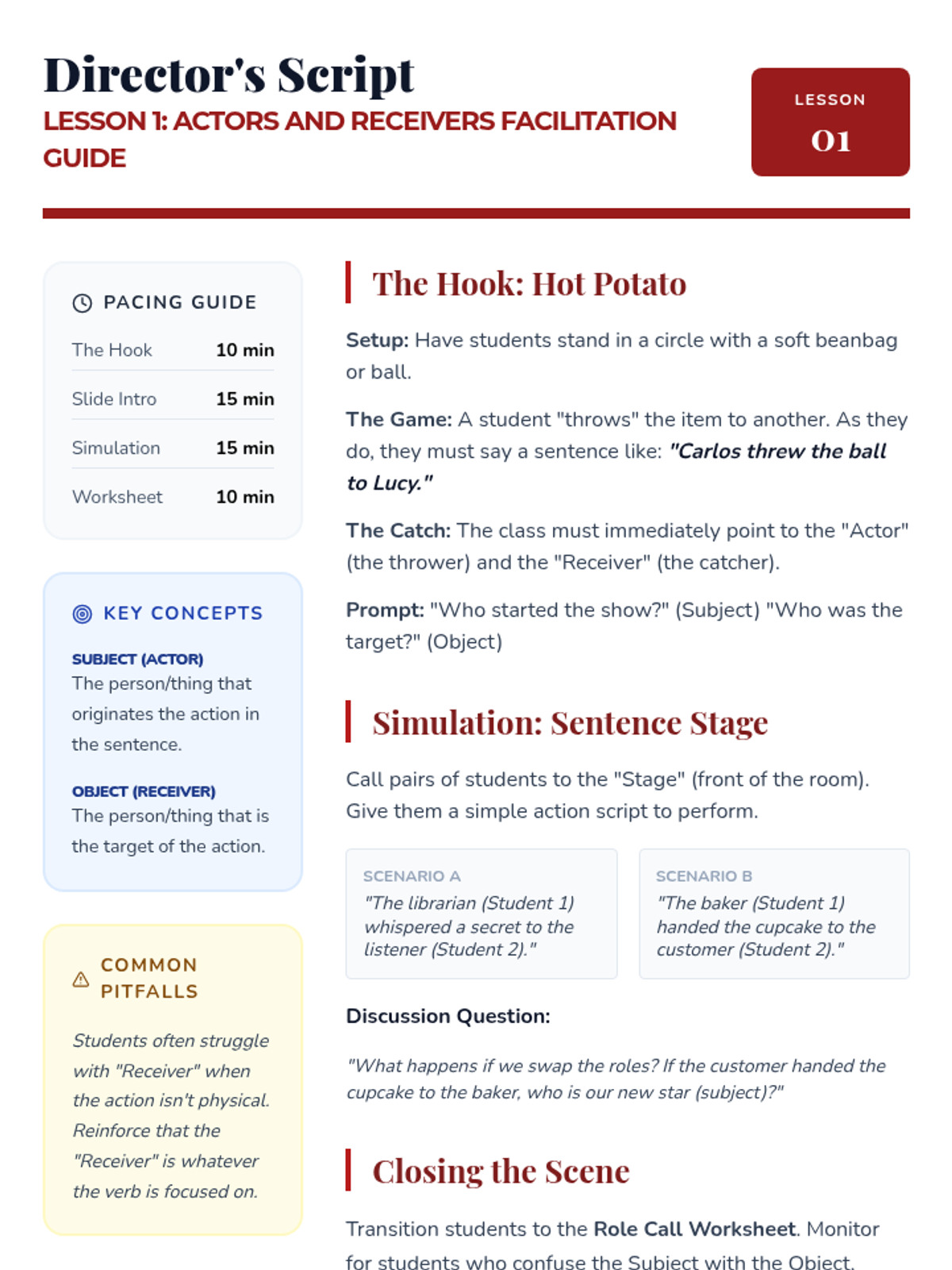
A 5-lesson sequence for 3rd graders focused on distinguishing between subject and object pronouns through a theater-inspired 'Actors vs. Receivers' framework. Students move from physical role-playing to mastering complex compound subjects and case proficiency.
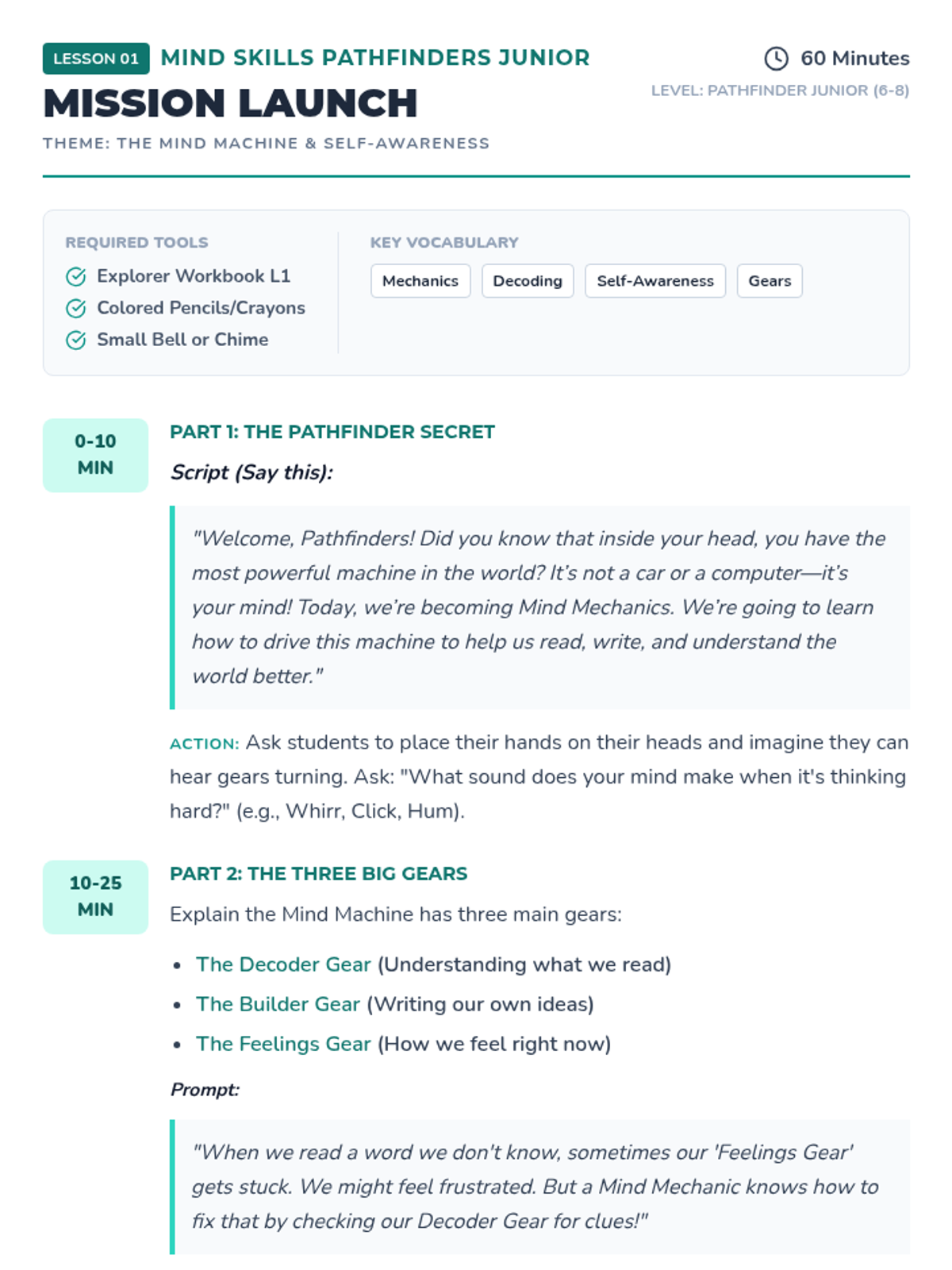
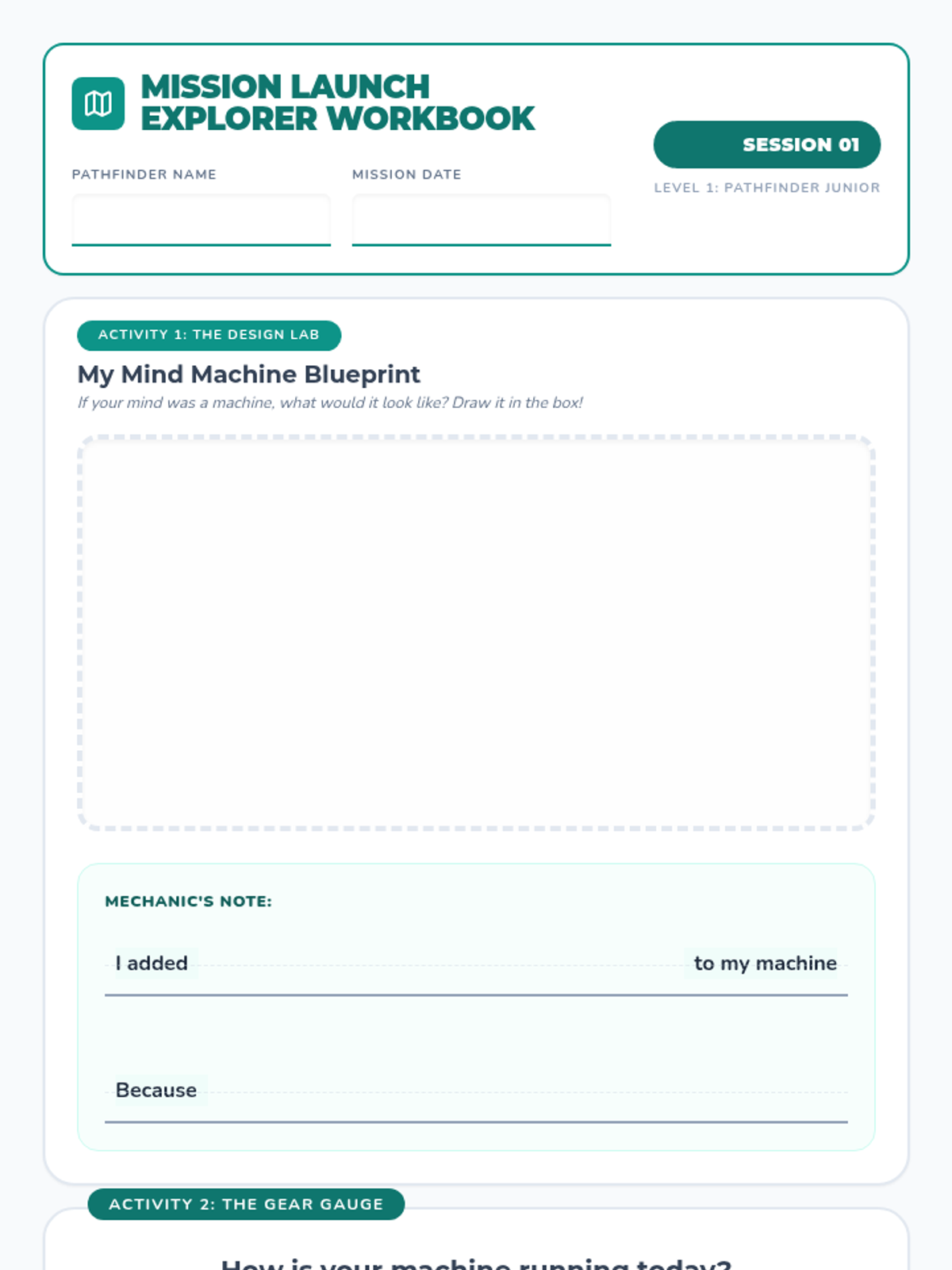
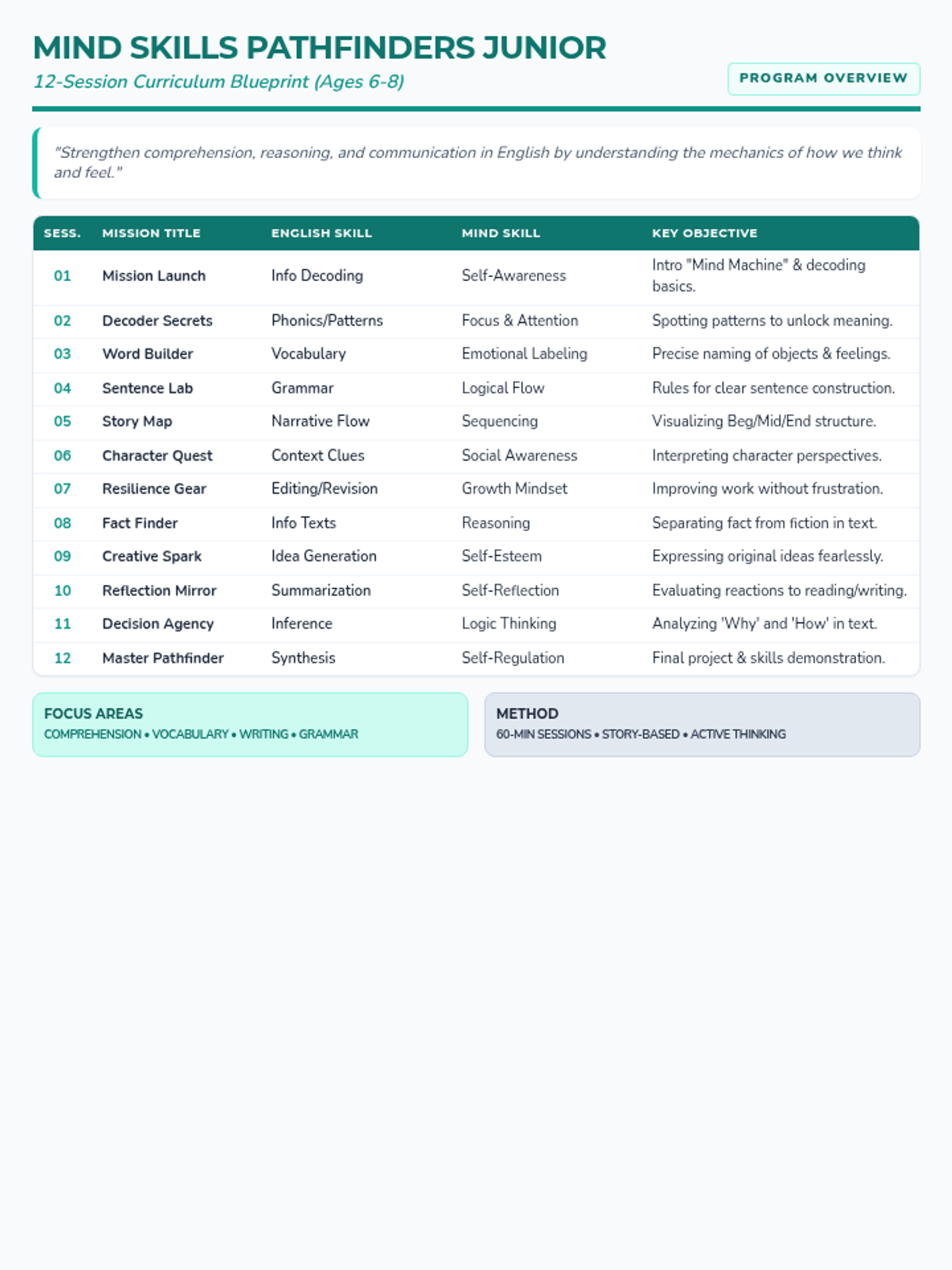
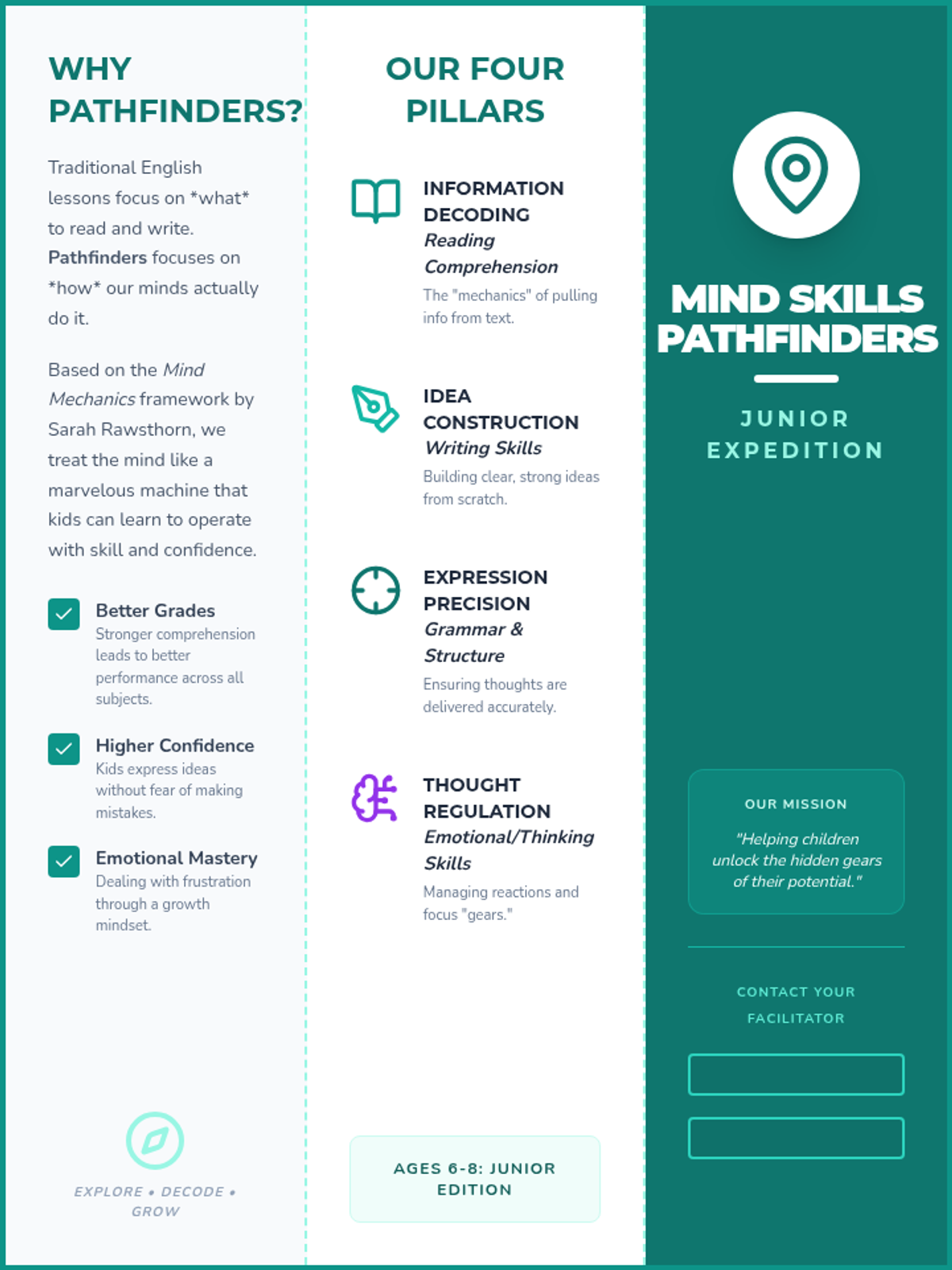
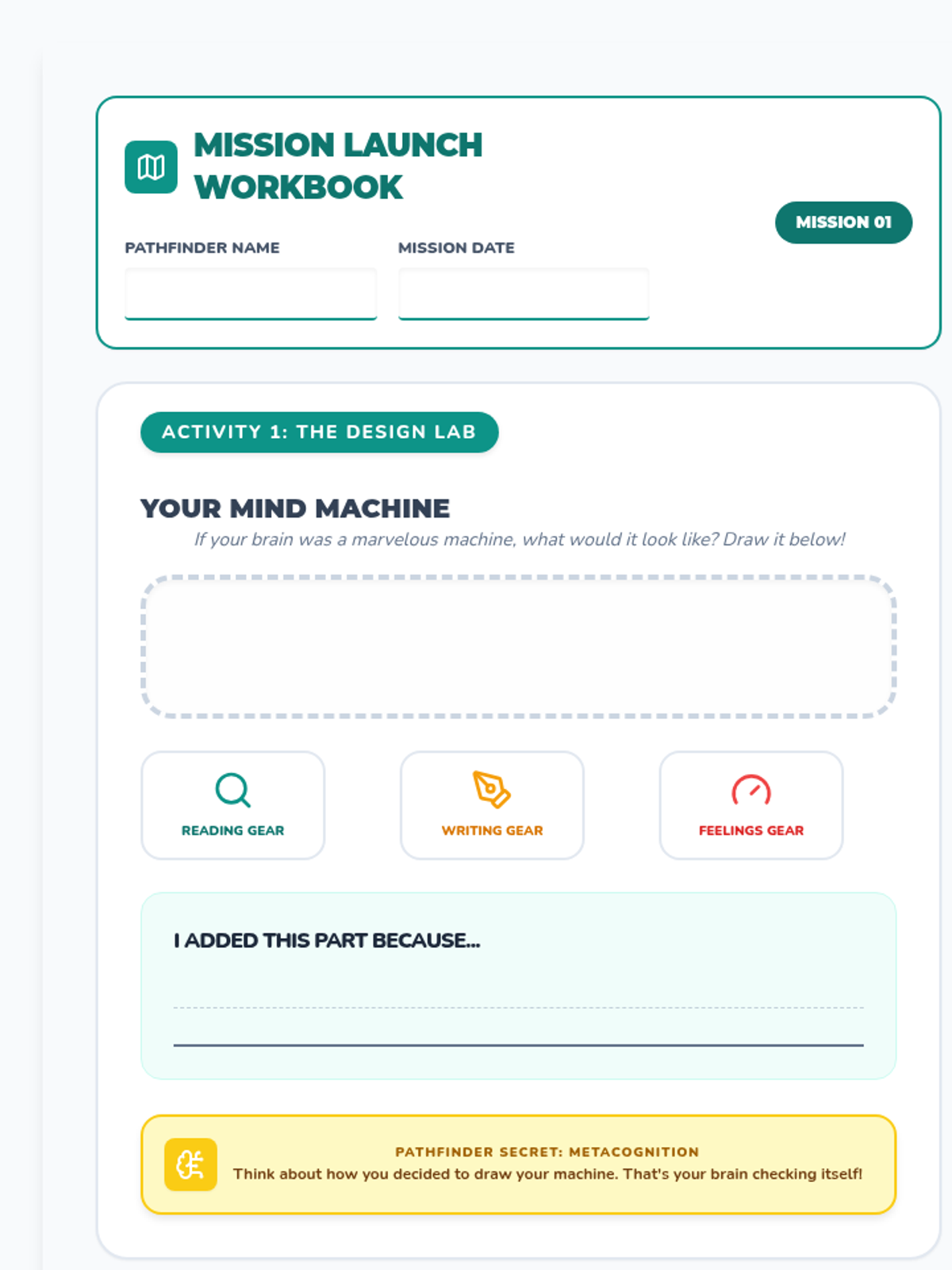
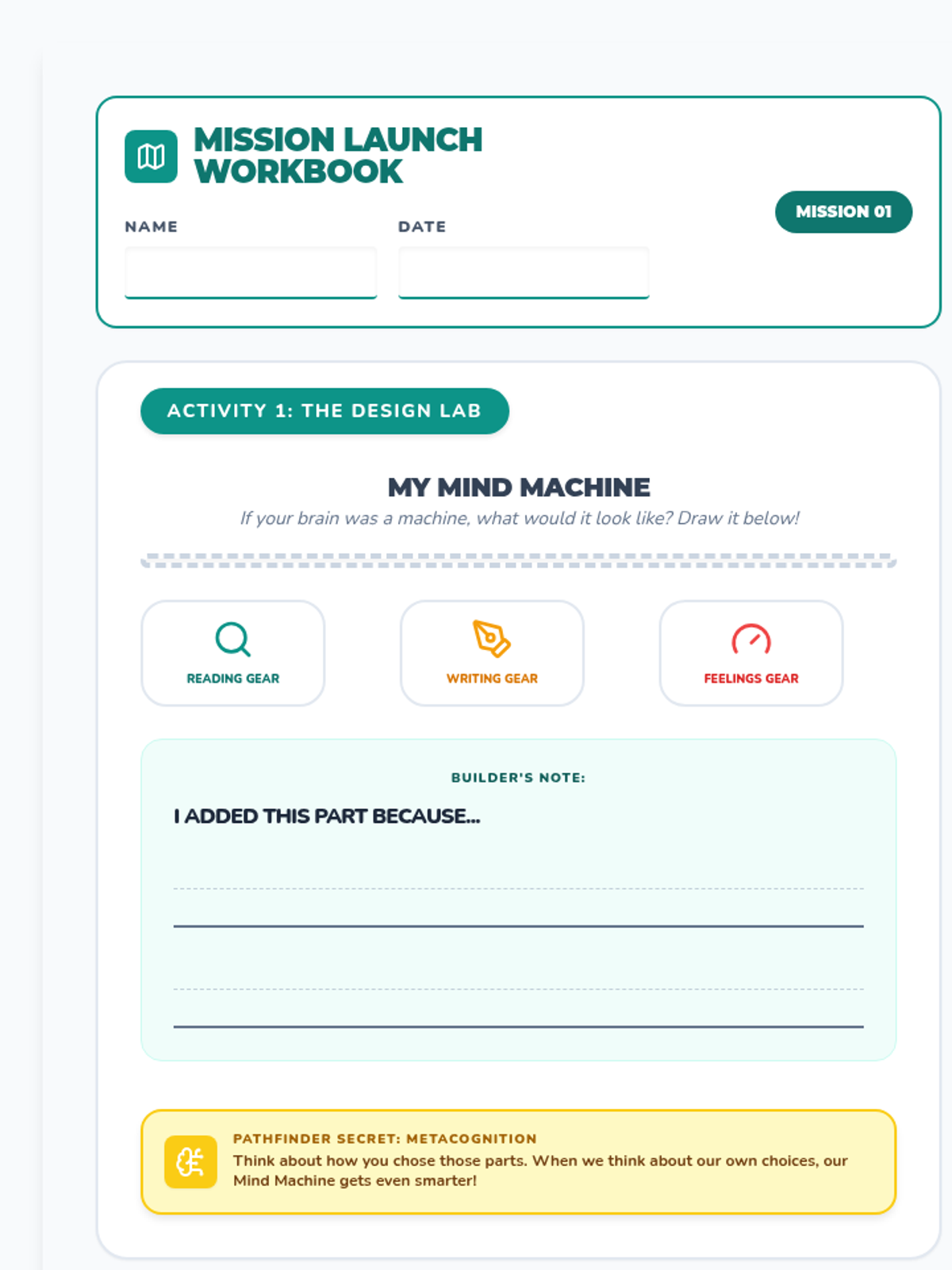
A 12-session journey for children aged 6-8 that integrates English literacy skills (comprehension, writing, grammar) with essential emotional and thinking skills using the 'Mind Mechanics' framework. Students learn to decode information, construct ideas precisely, and regulate their thoughts and responses for better school performance and well-being.
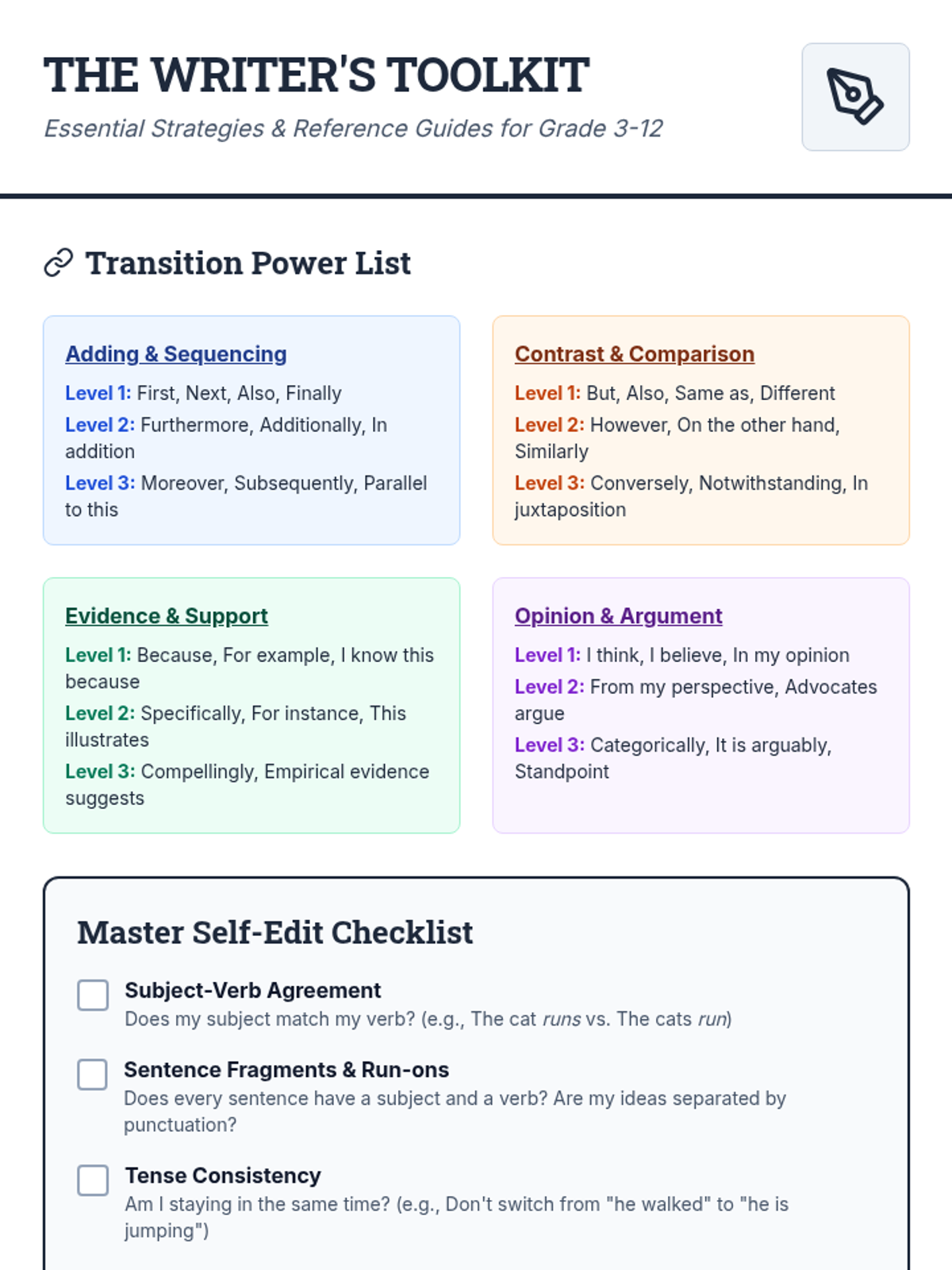
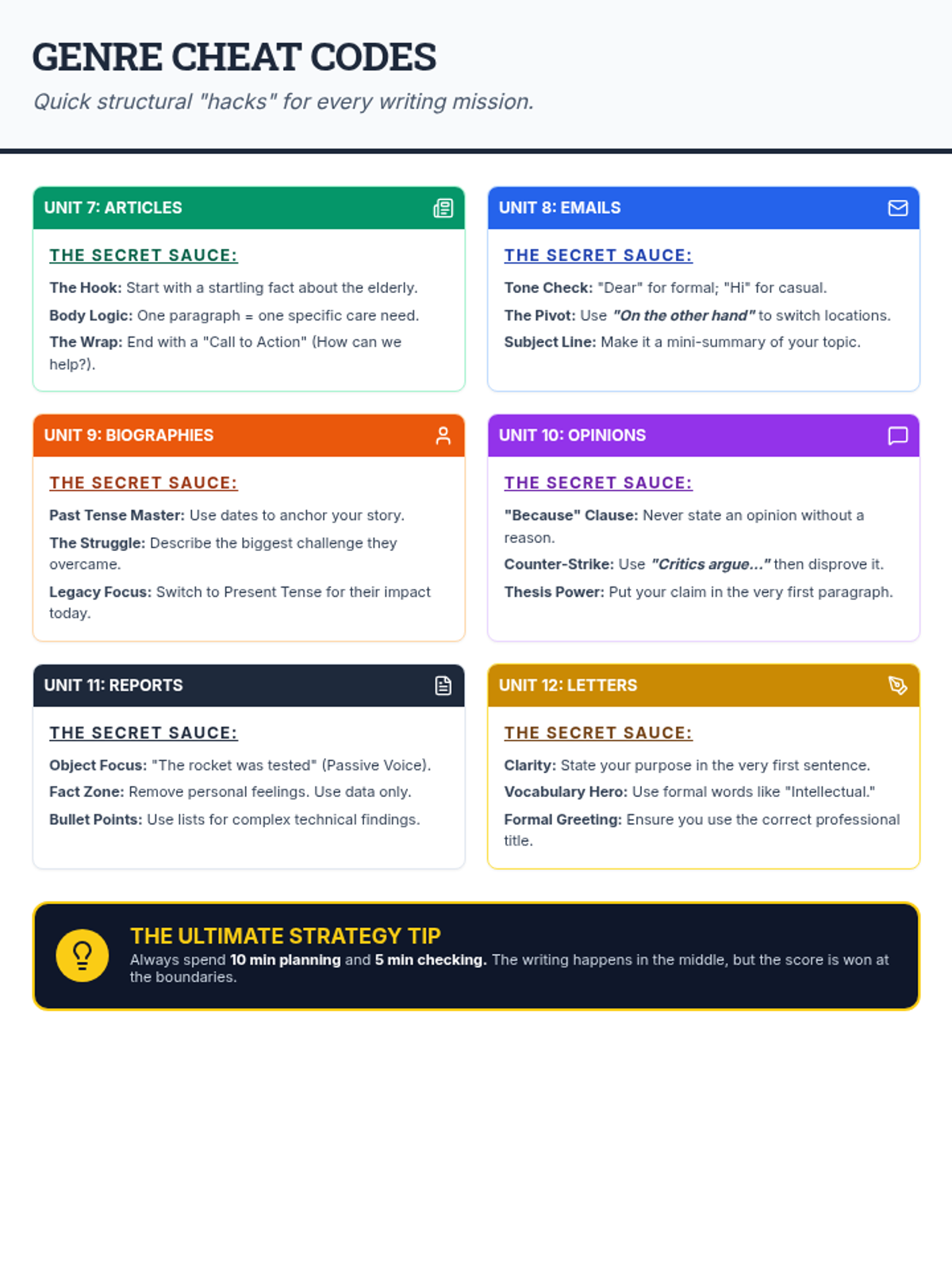
A comprehensive writing program for grades 3-12 focused on sentence and paragraph composition across six different genres, culminating in exam preparation and final assessments. The curriculum balances grammar foundations with creative and formal writing structures.
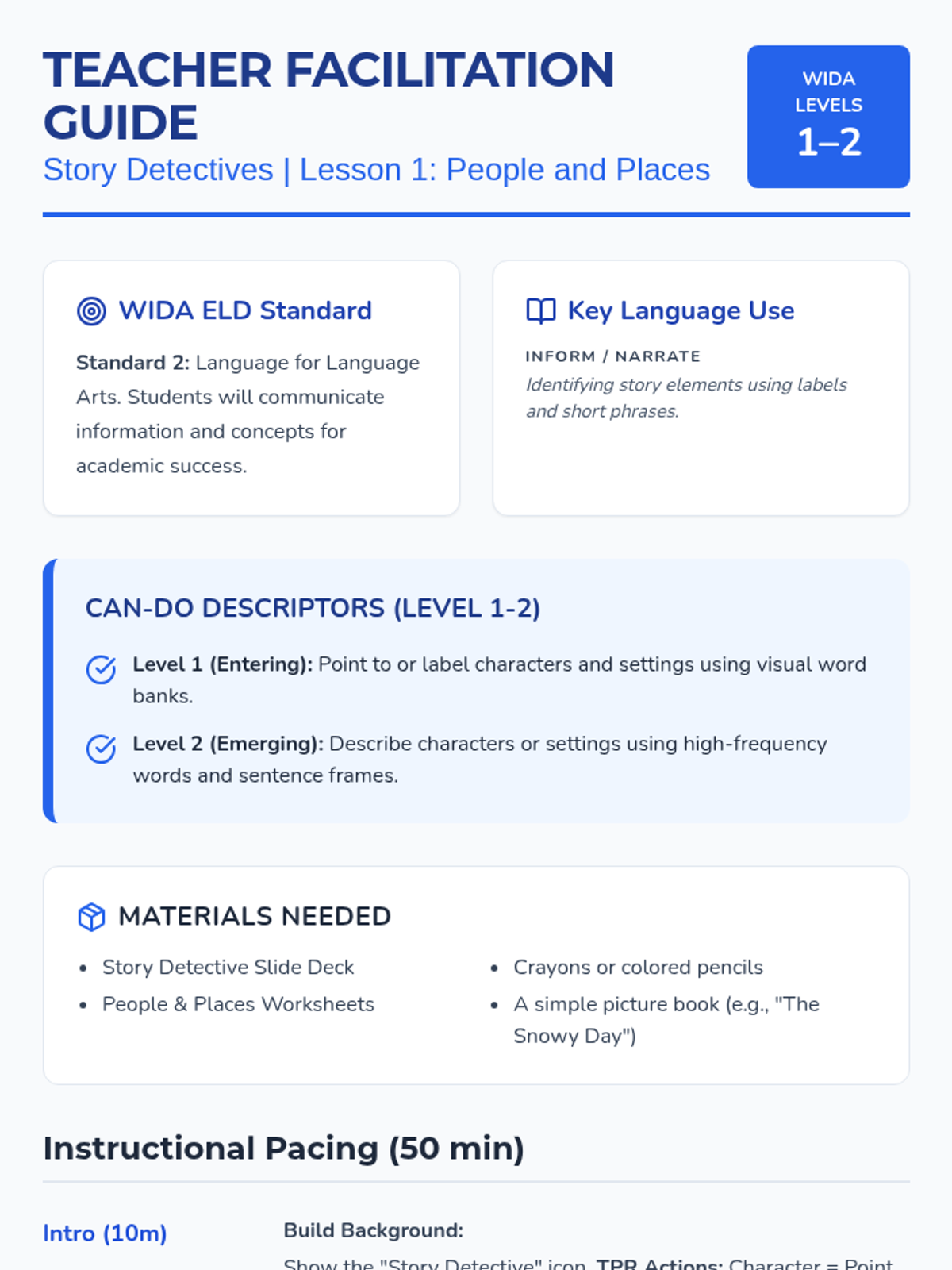
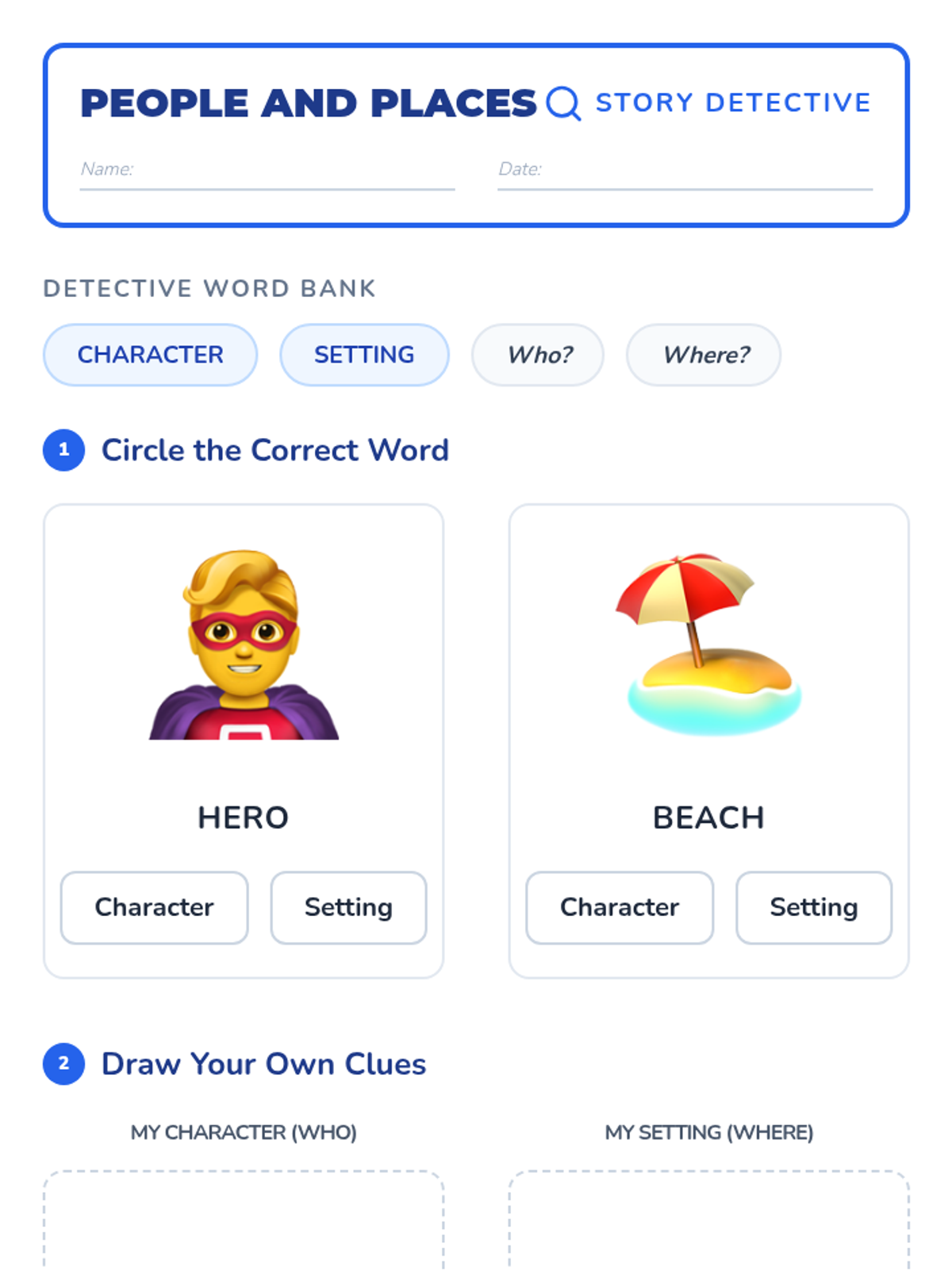
A sequence designed for WIDA Levels 1-2 (Entering/Emerging) focused on the Language of Language Arts. Students learn to identify and describe characters, settings, and story sequences using high-visual support and scaffolded sentence frames.
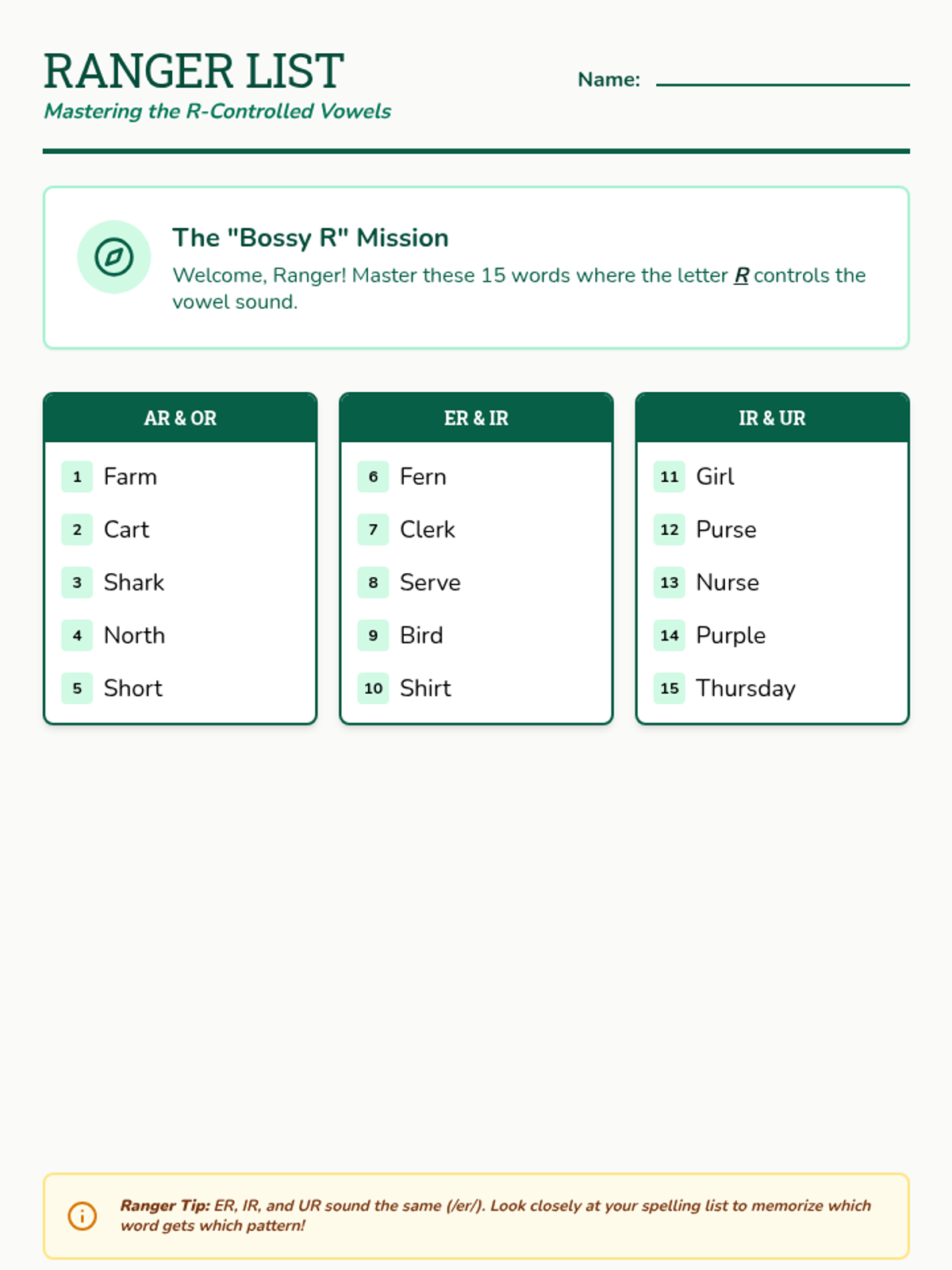
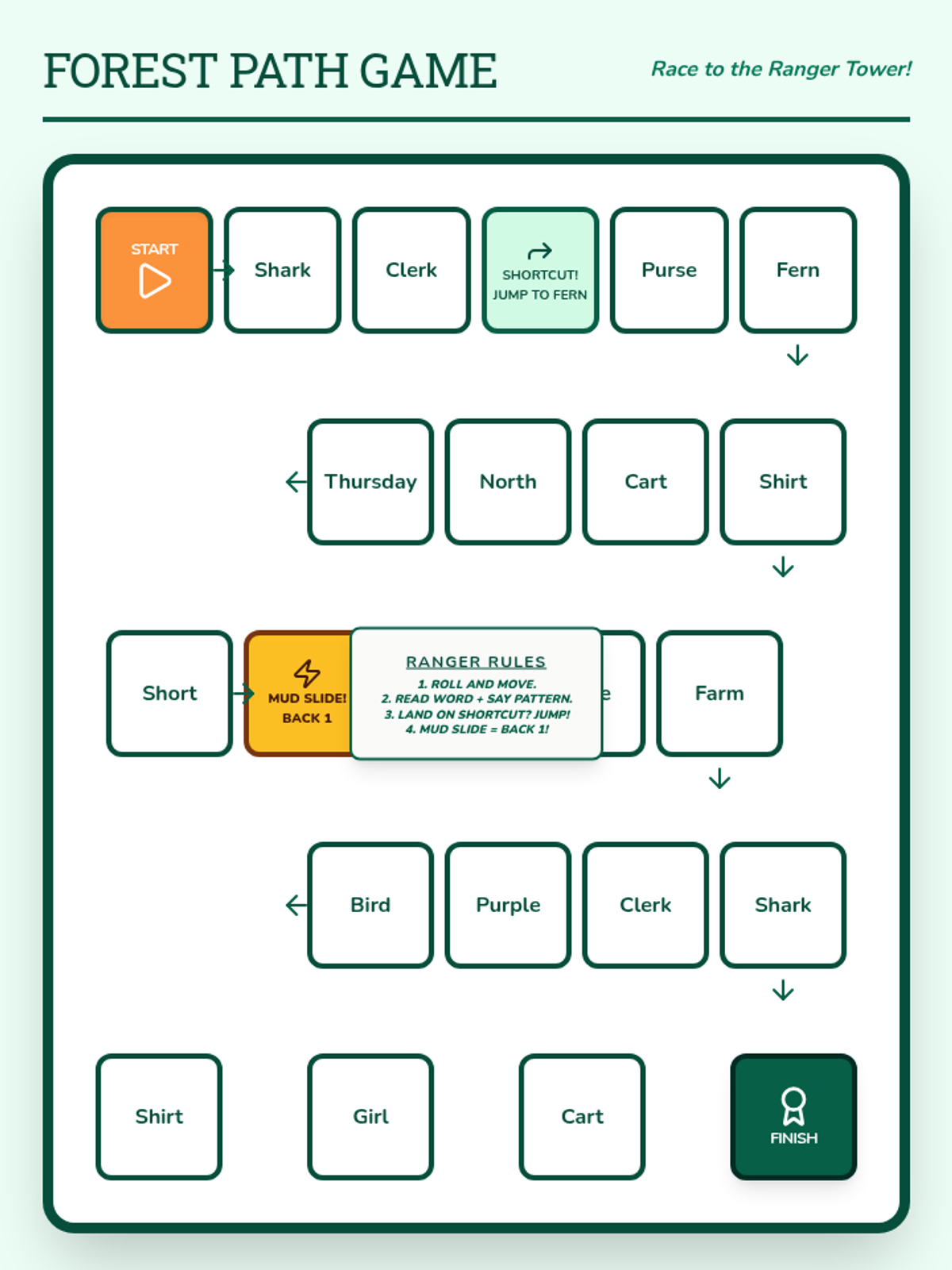
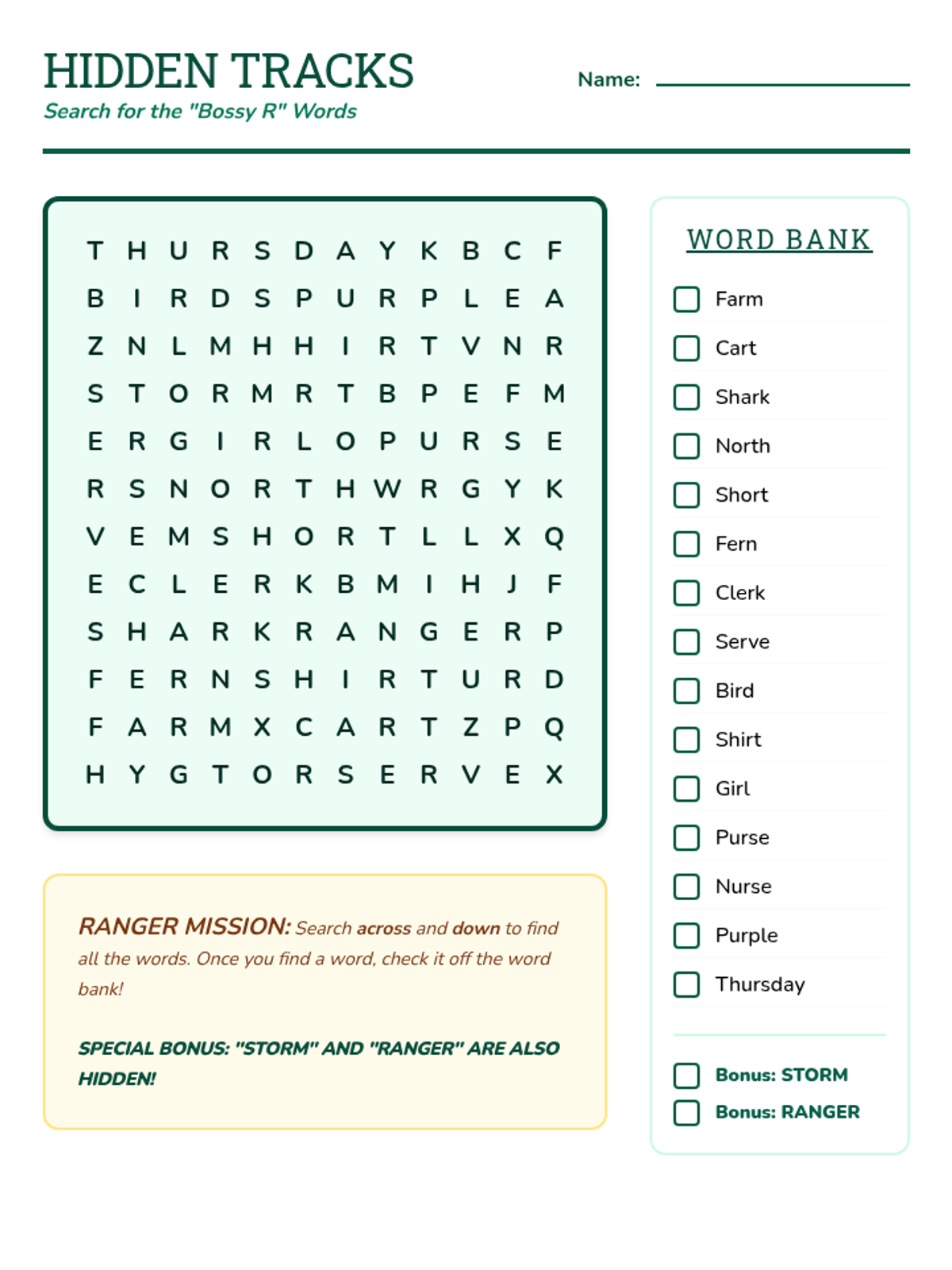
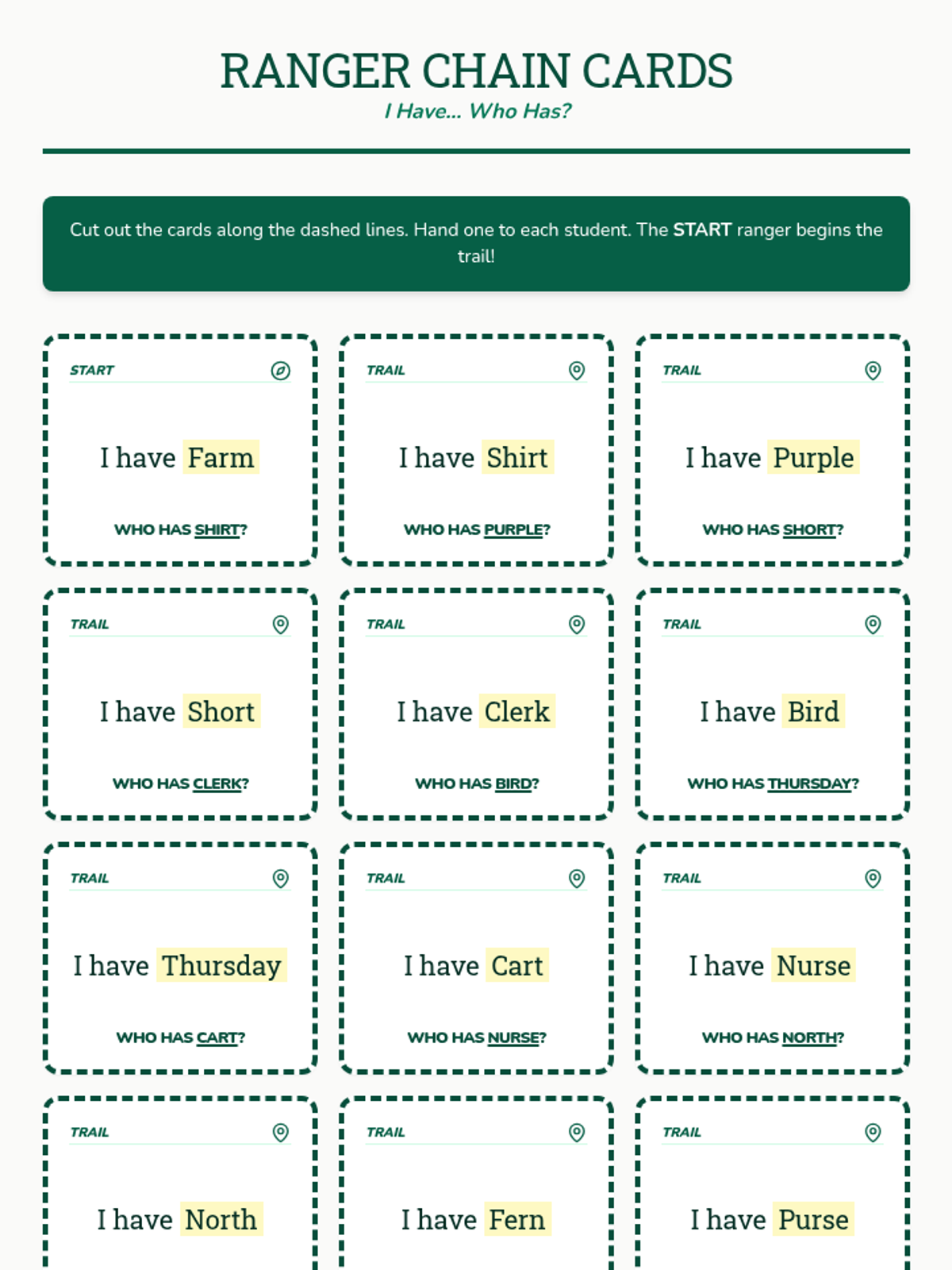
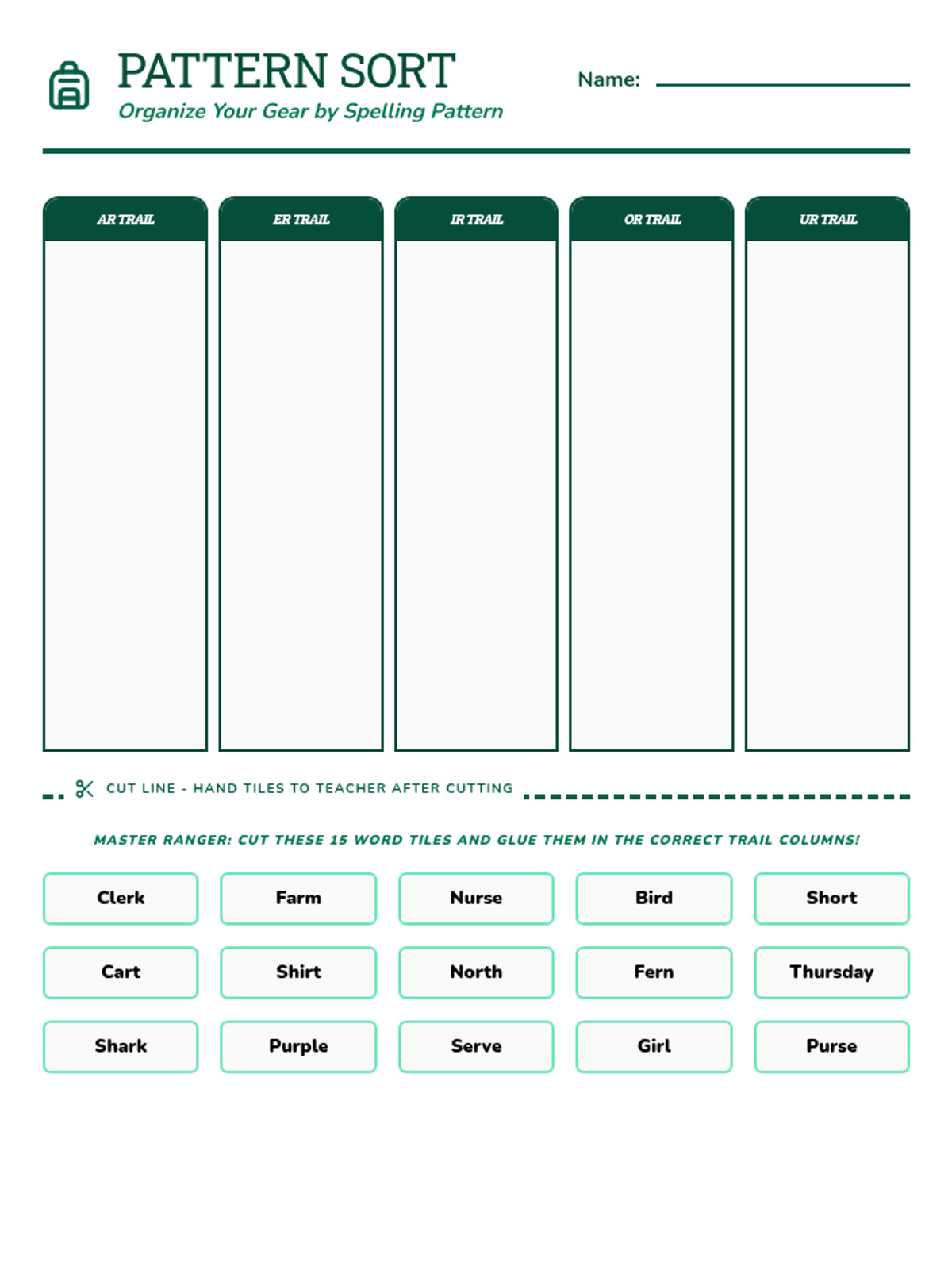
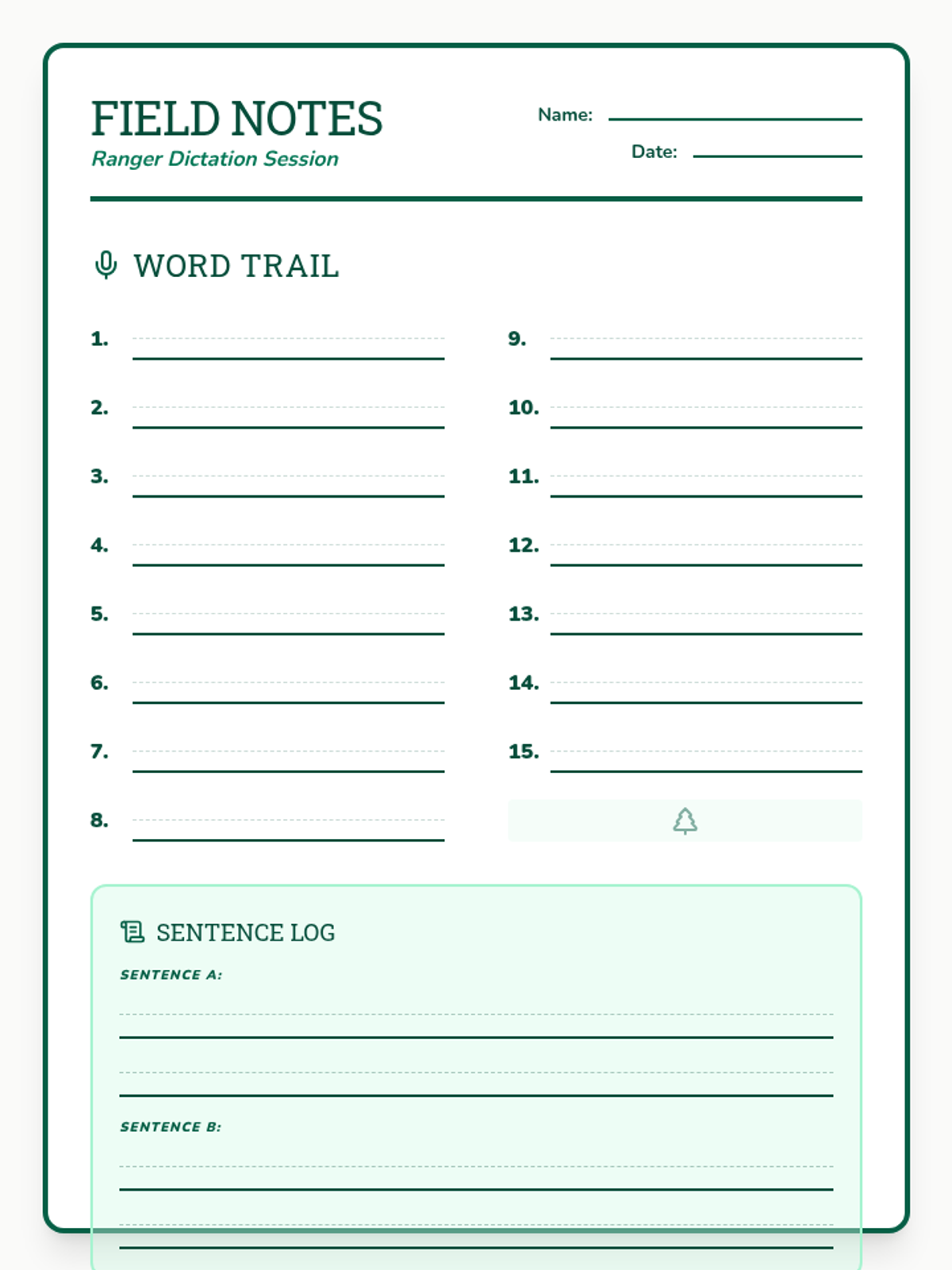
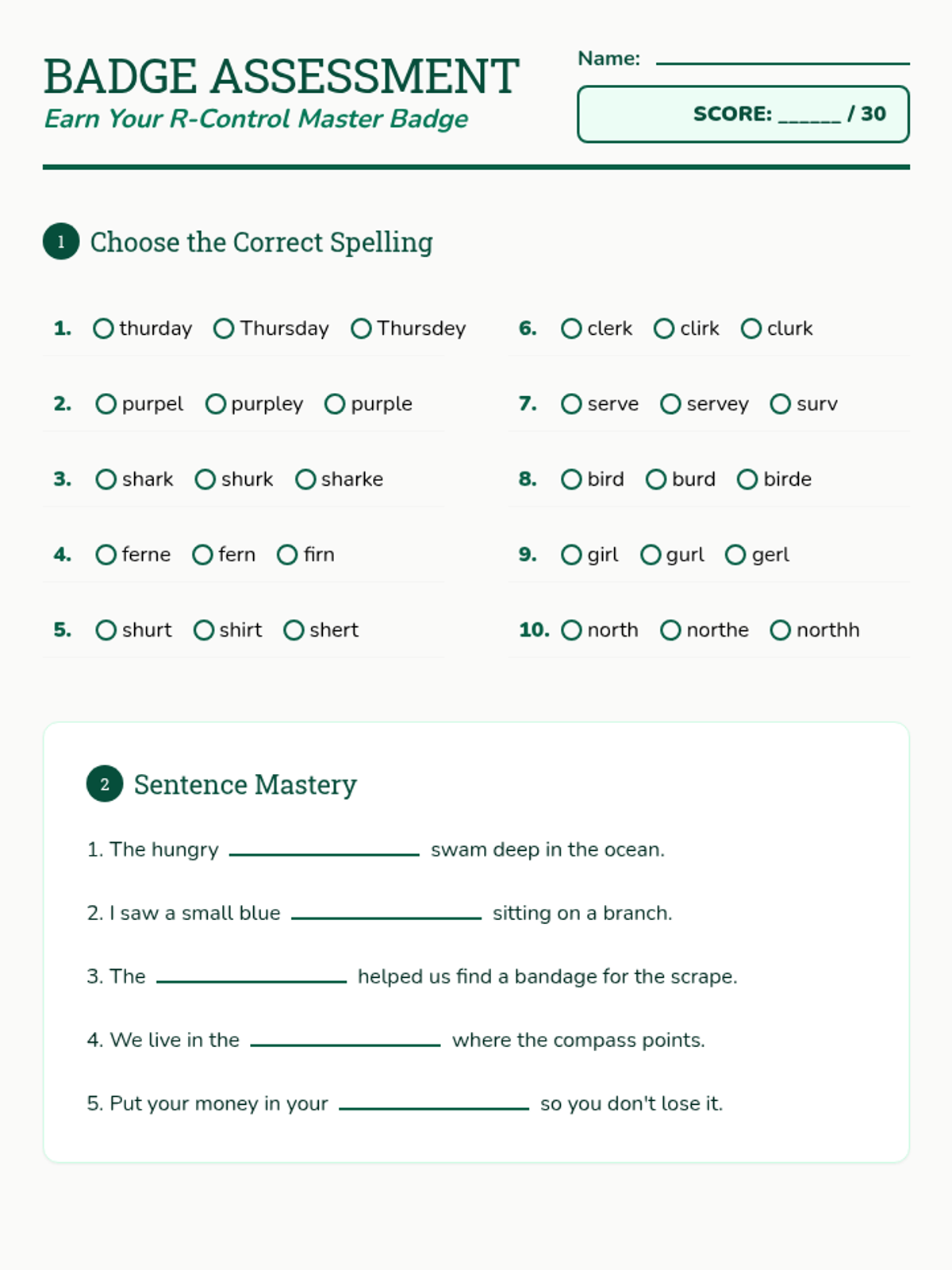
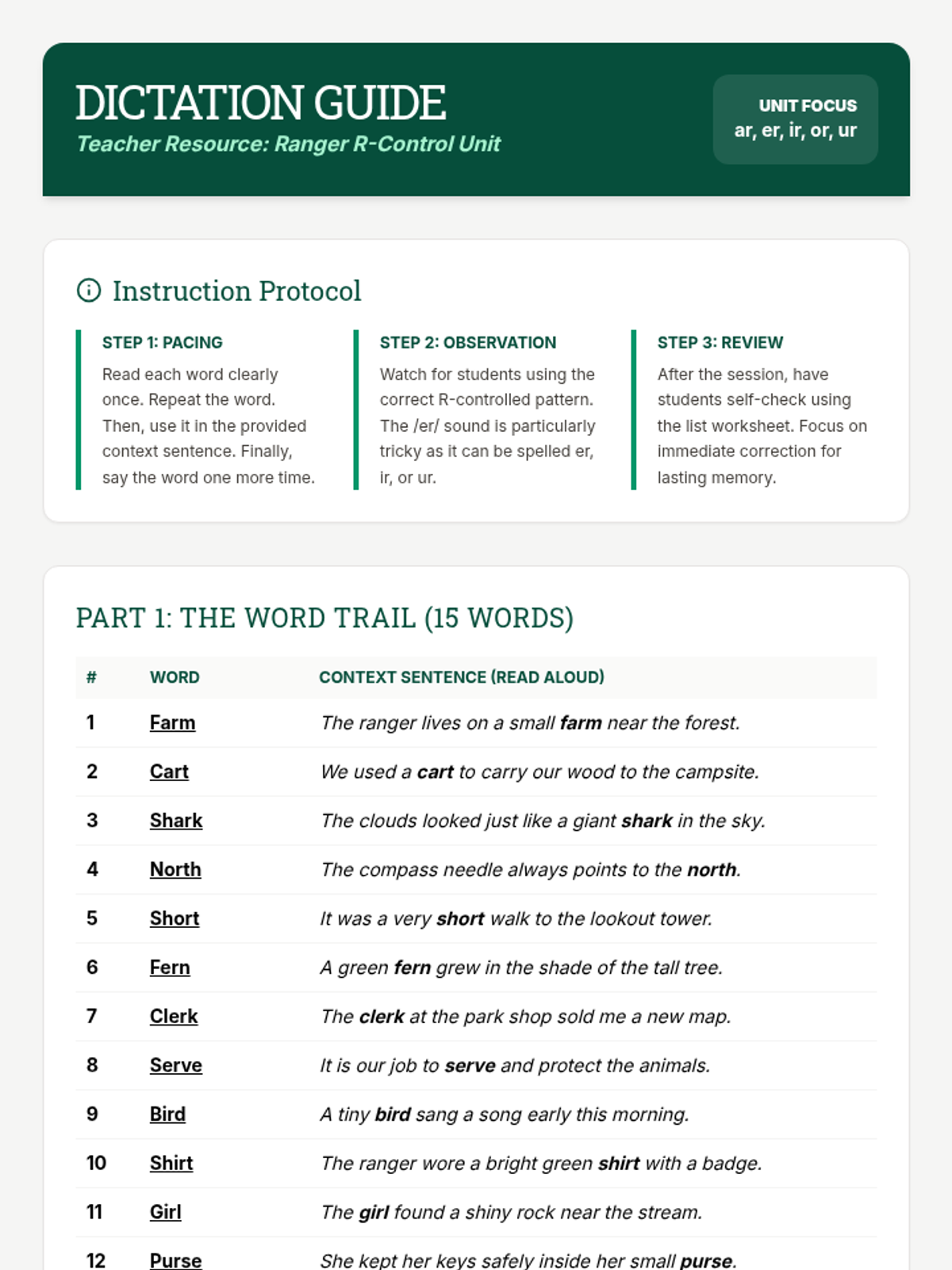
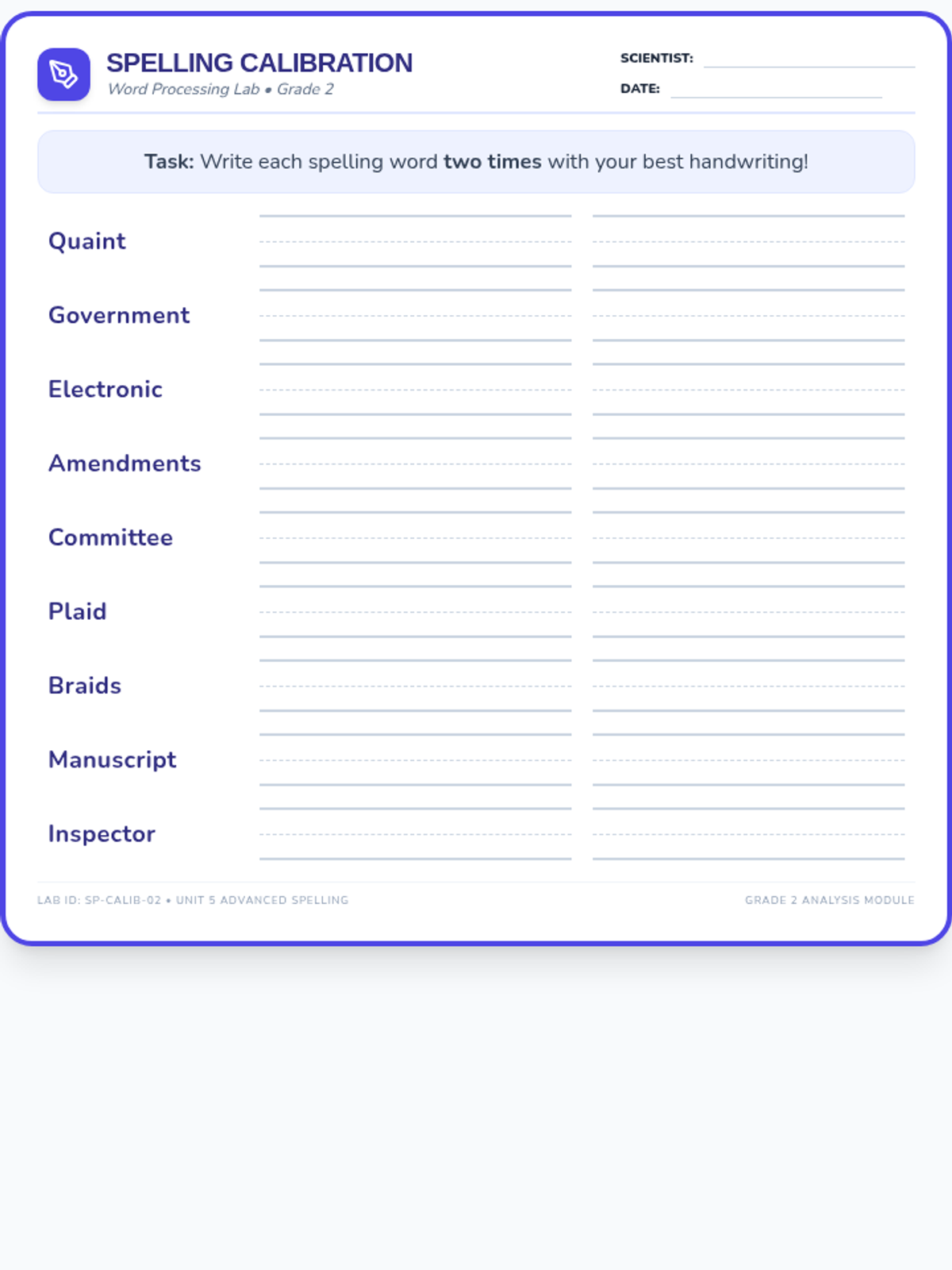
A multi-unit spelling series with a Forest Ranger theme, covering complex phonics patterns including R-controlled vowels and silent letter combinations.
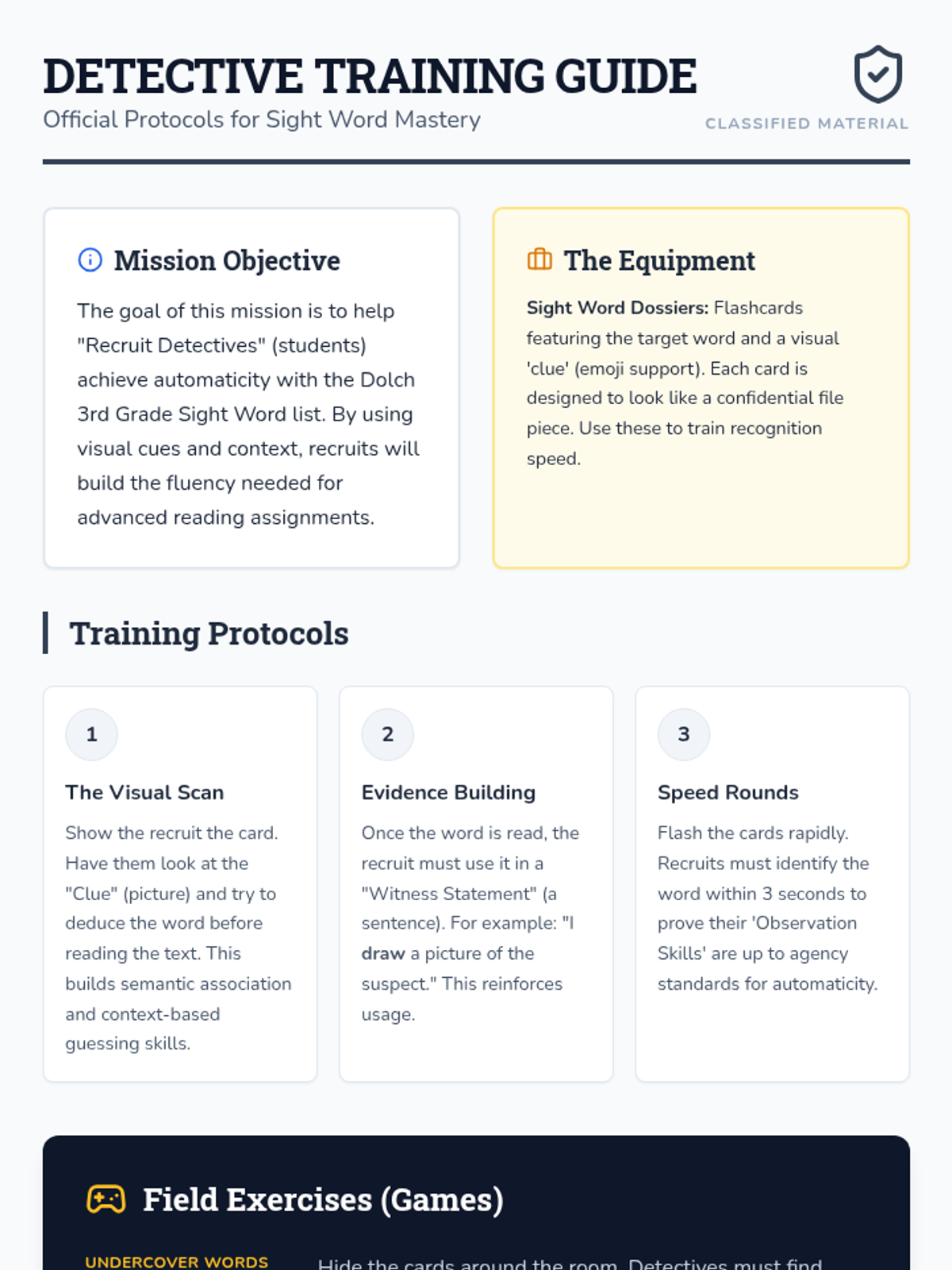
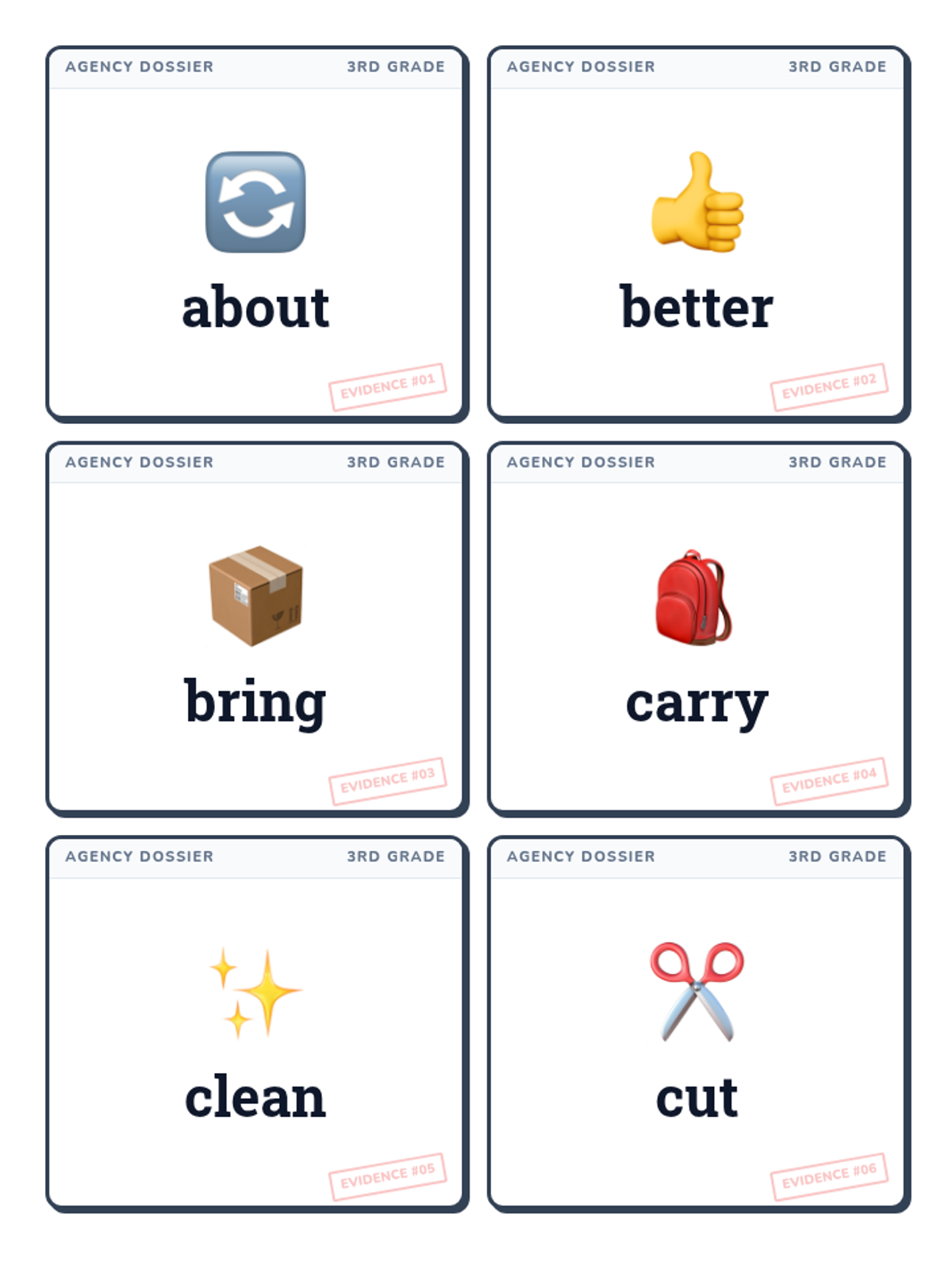
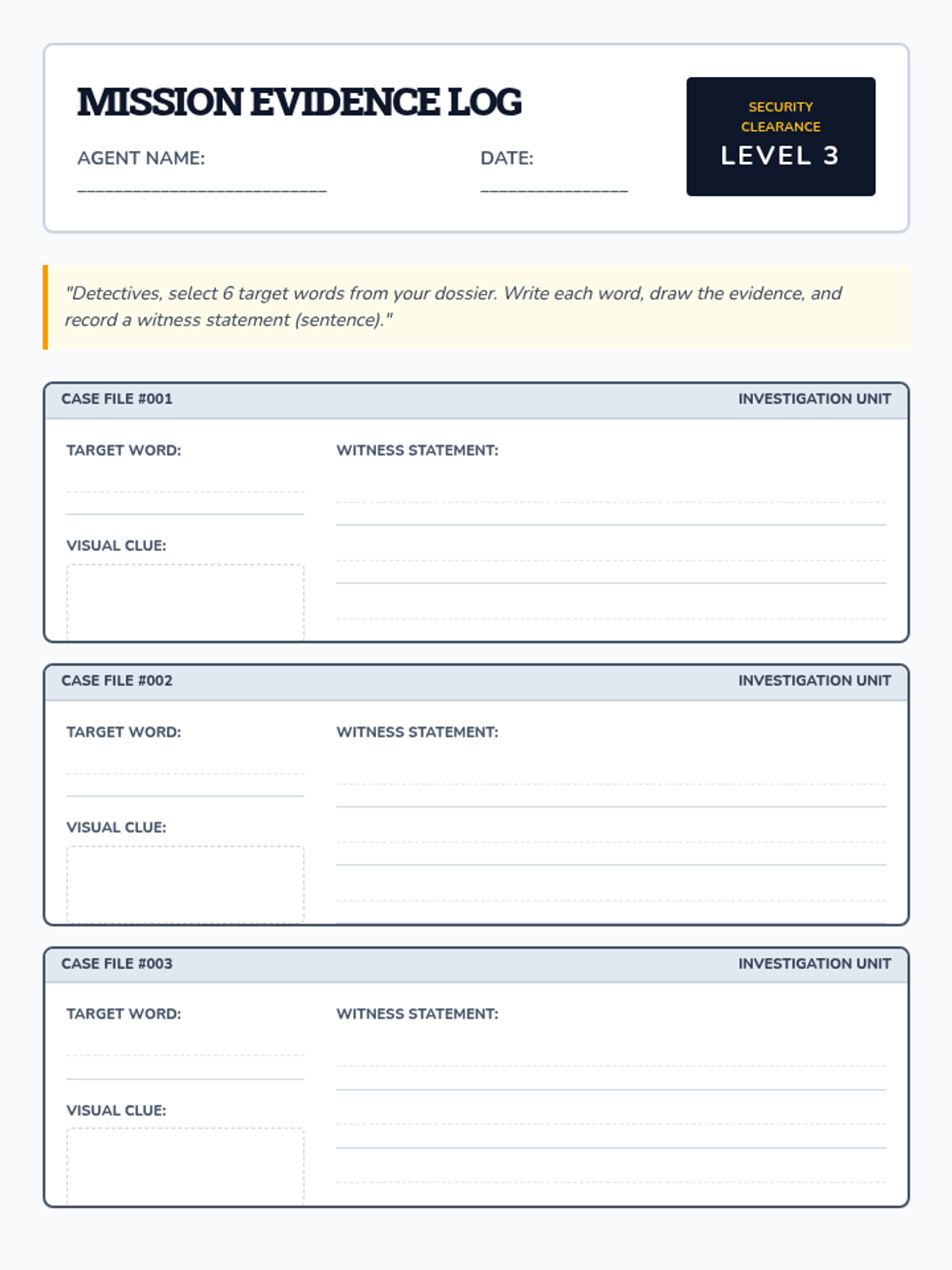
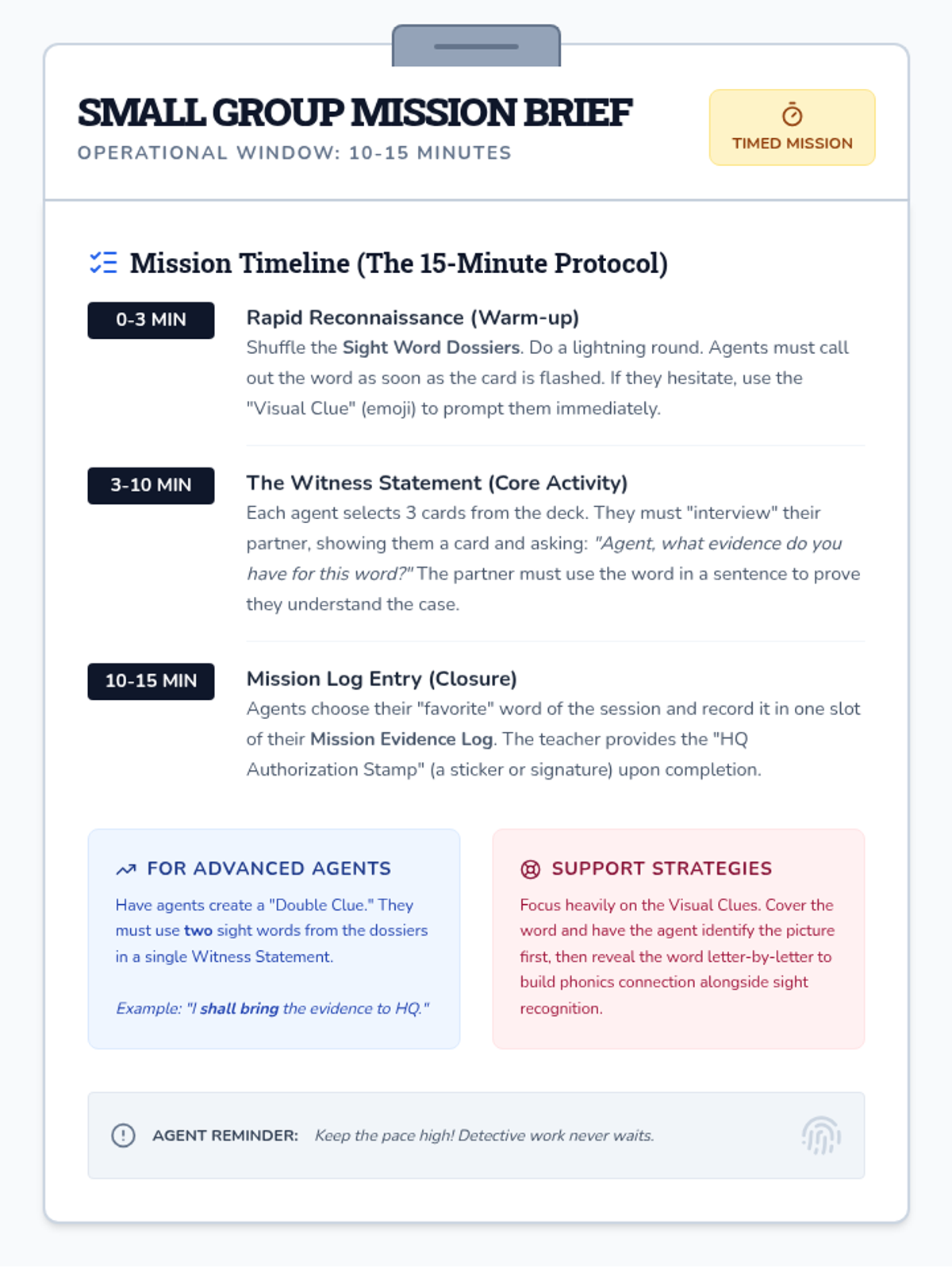
A comprehensive 3rd-grade literacy unit themed around a secret detective agency. Students build foundational skills like sight word recognition and transition into high-stakes state test preparation through engaging, investigative missions.
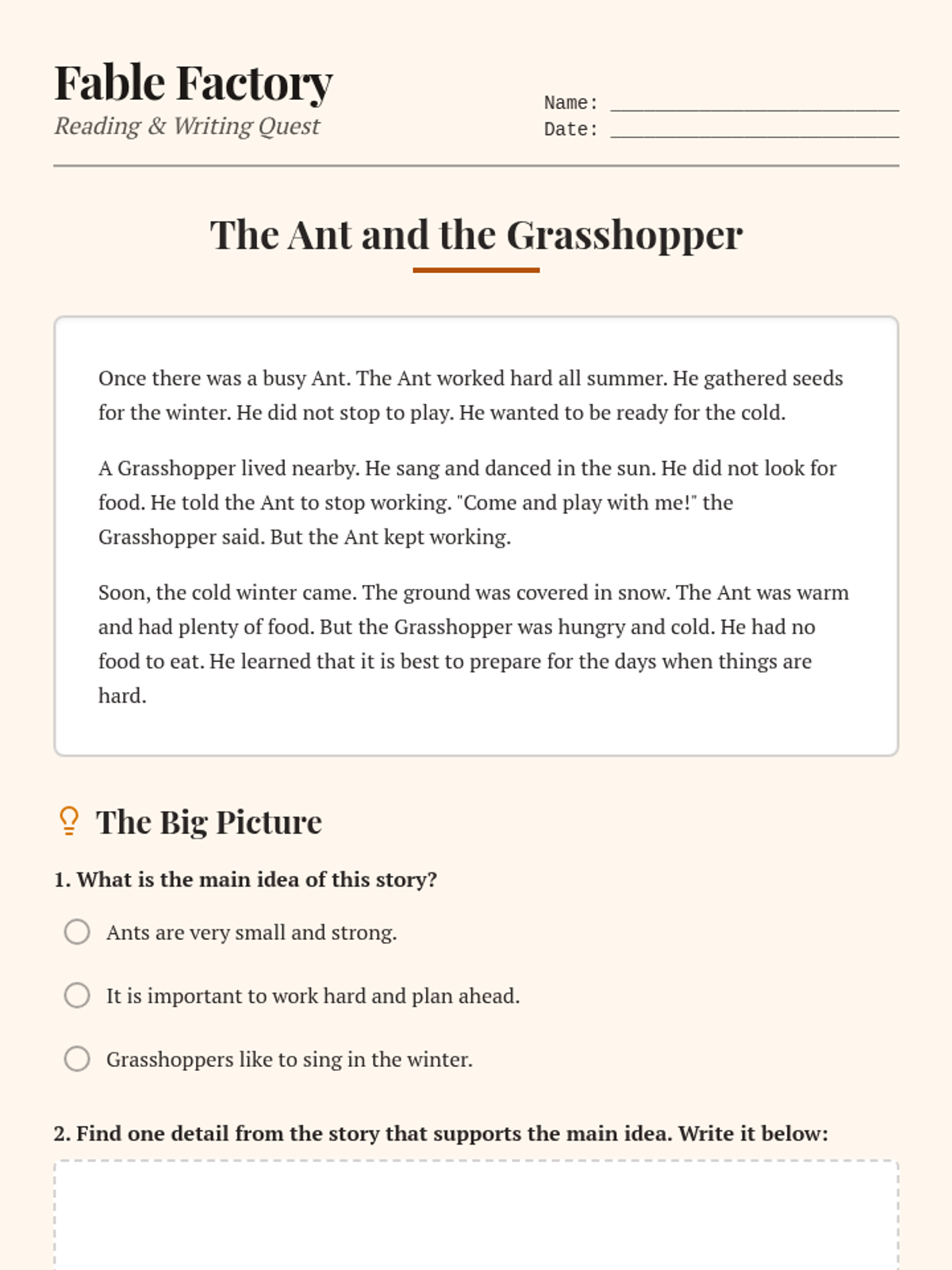
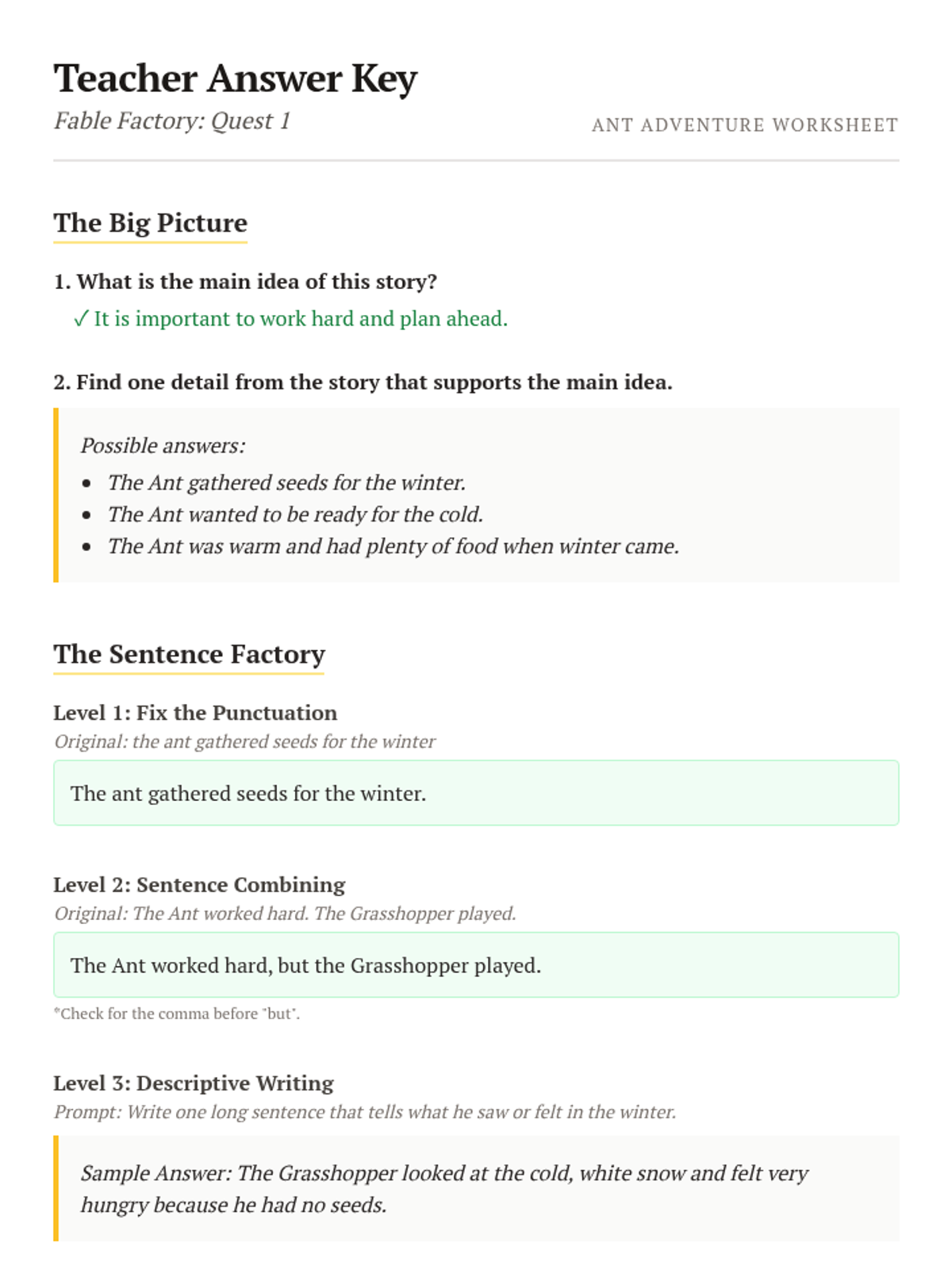
A series of reading and writing lessons using classic fables to teach main idea, supporting details, and proper sentence structure to 4th-grade students reading at a 3rd-grade level.
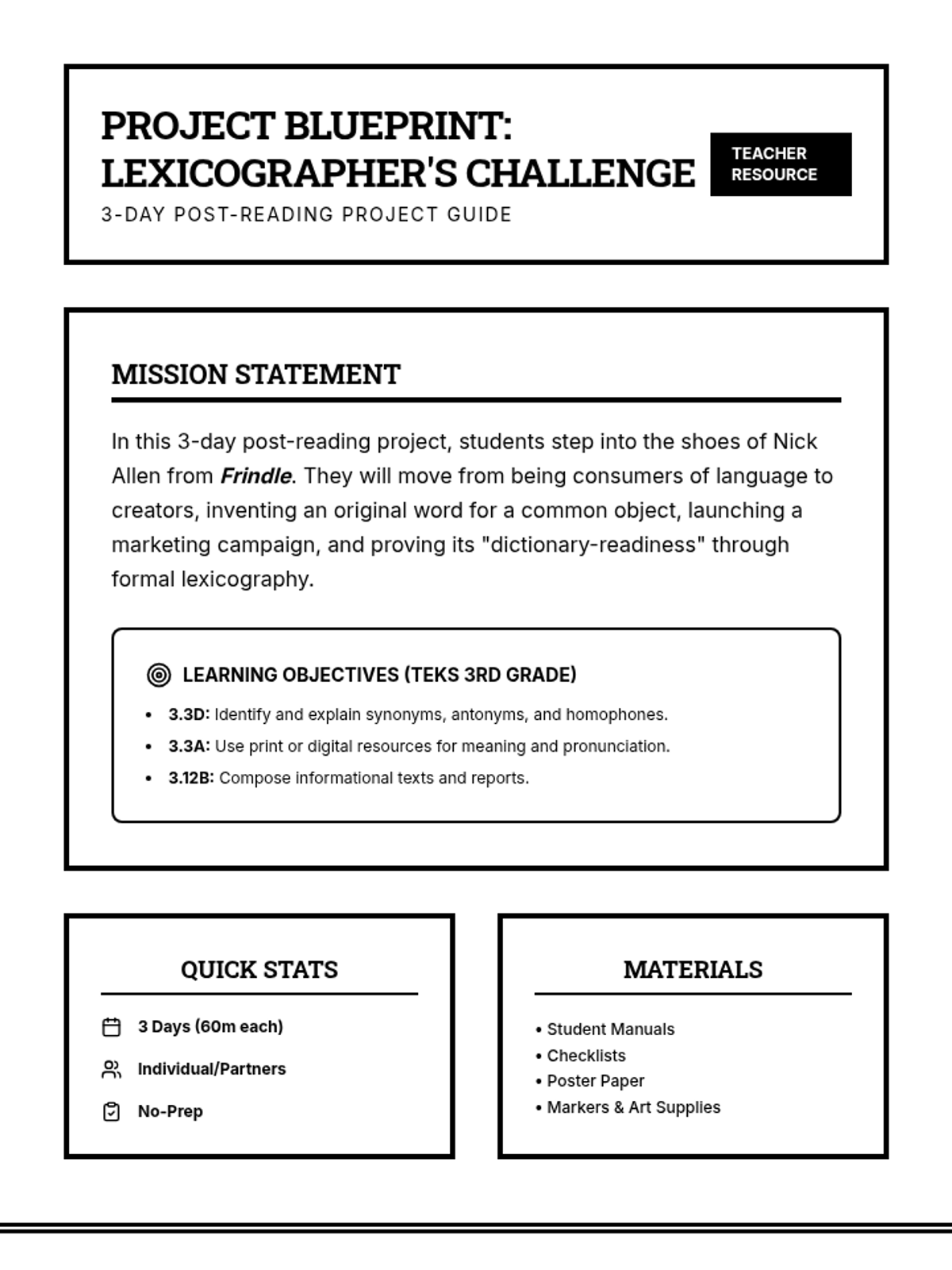
A 9-day novel study for 'Frindle' by Andrew Clements, aligned to 3rd Grade ELAR TEKS, focusing on character development, vocabulary, and plot analysis.
A collection of literacy and phonics resources for elementary students, covering assessment and targeted skill building.
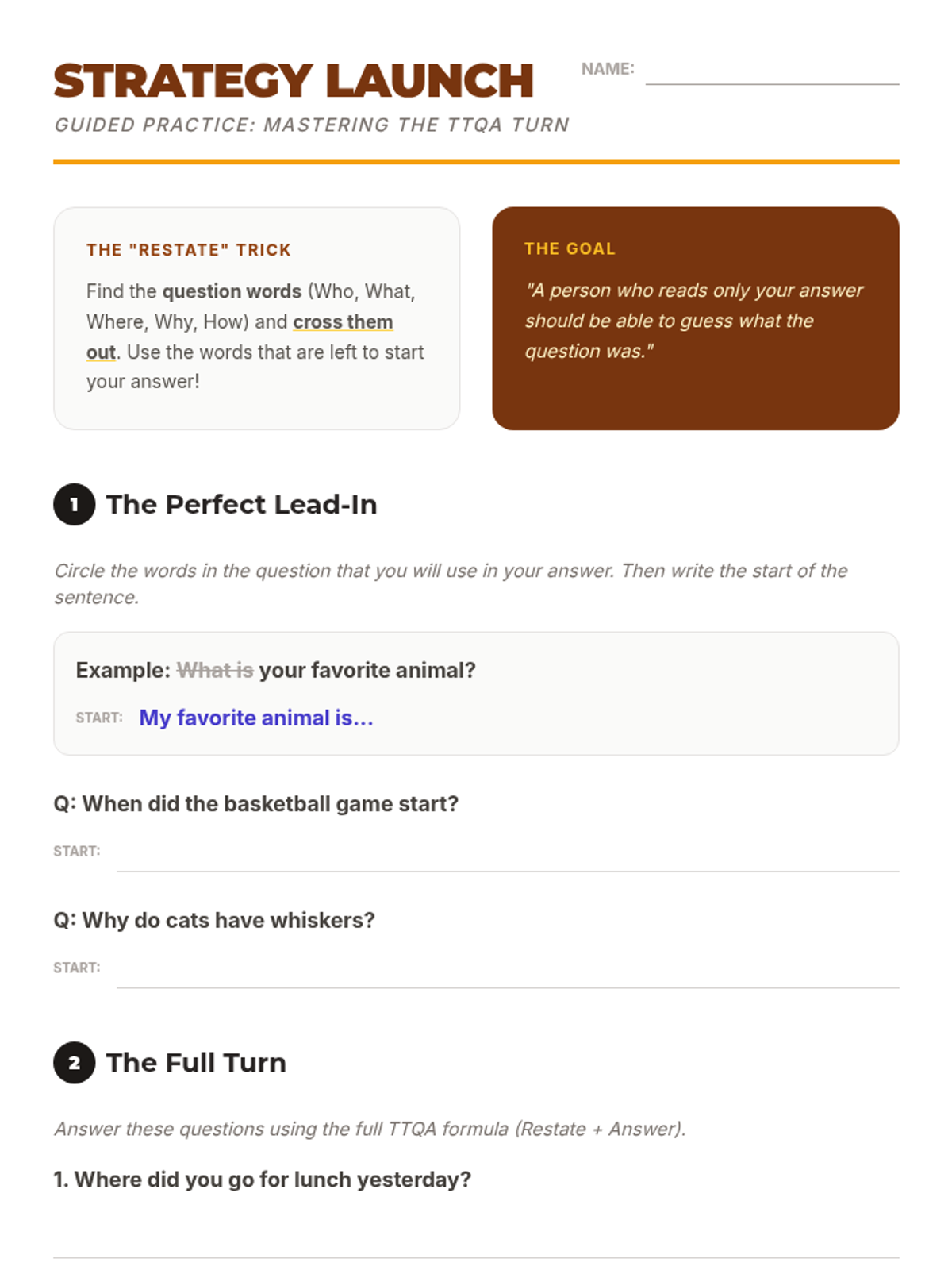
A multi-level collection of reading comprehension materials designed to teach students how to 'Turn The Question Around' (TTQA). Includes high-interest nonfiction passages differentiated for 2nd, 3rd, and 4th grade levels.
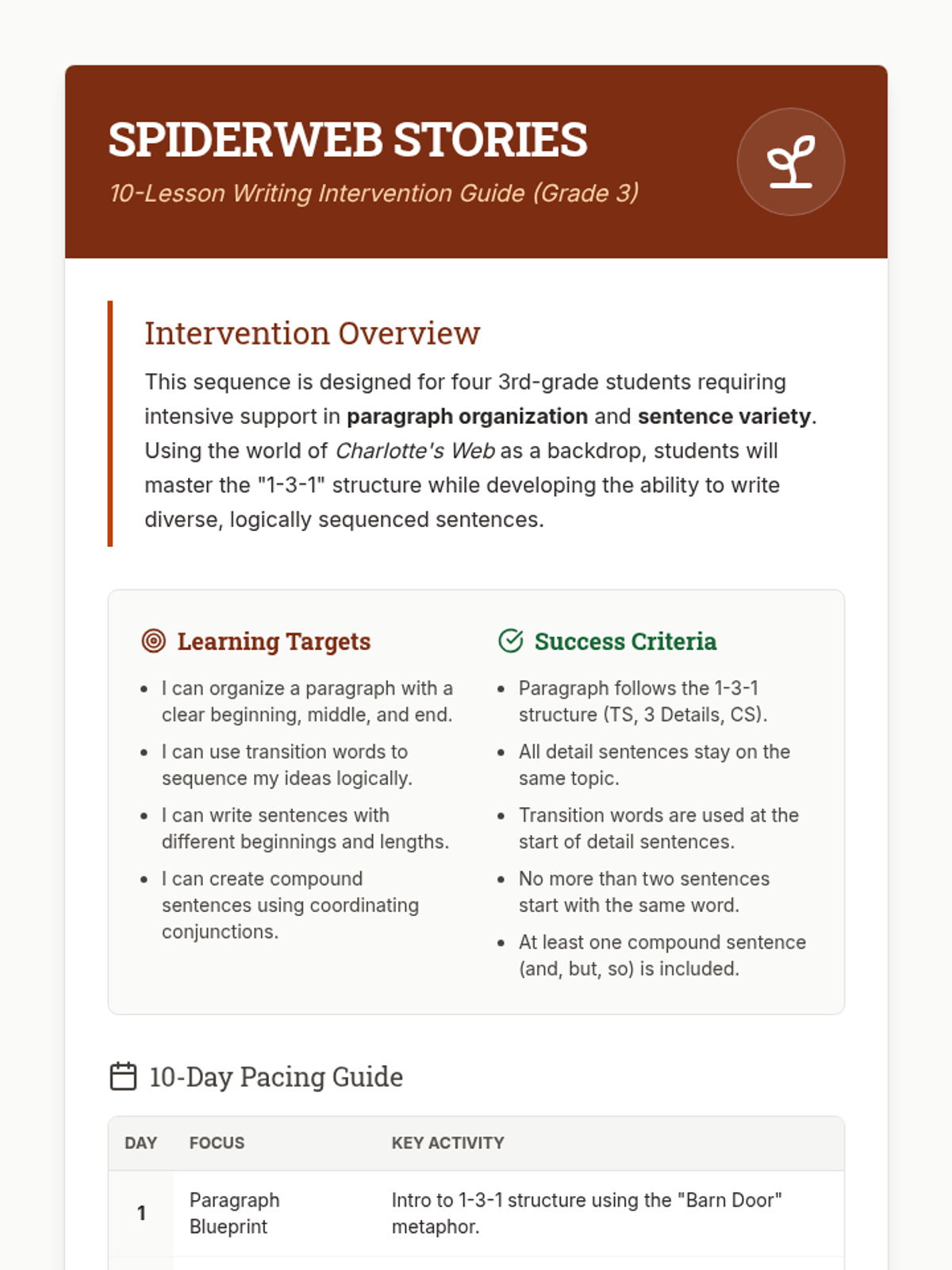
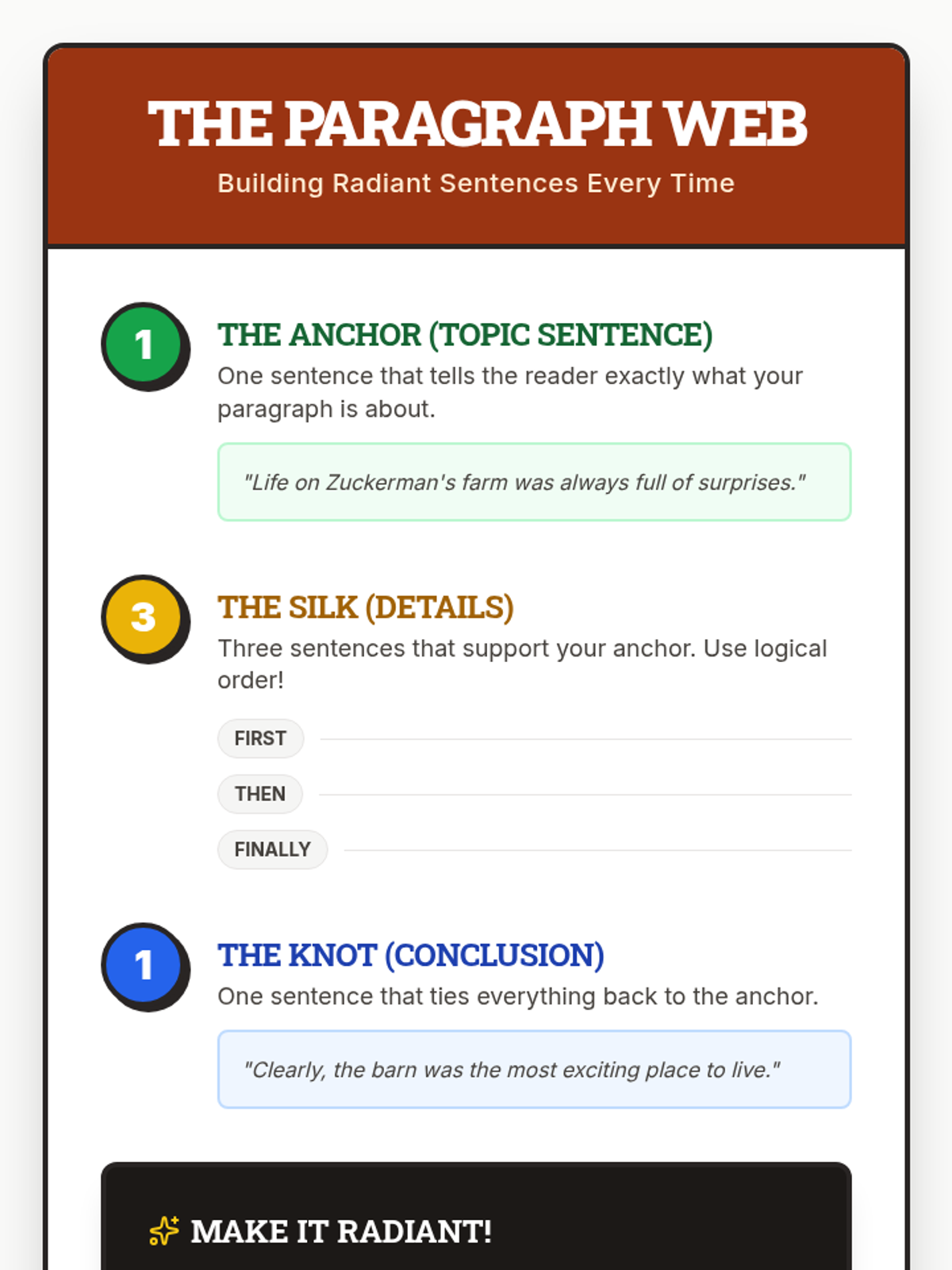
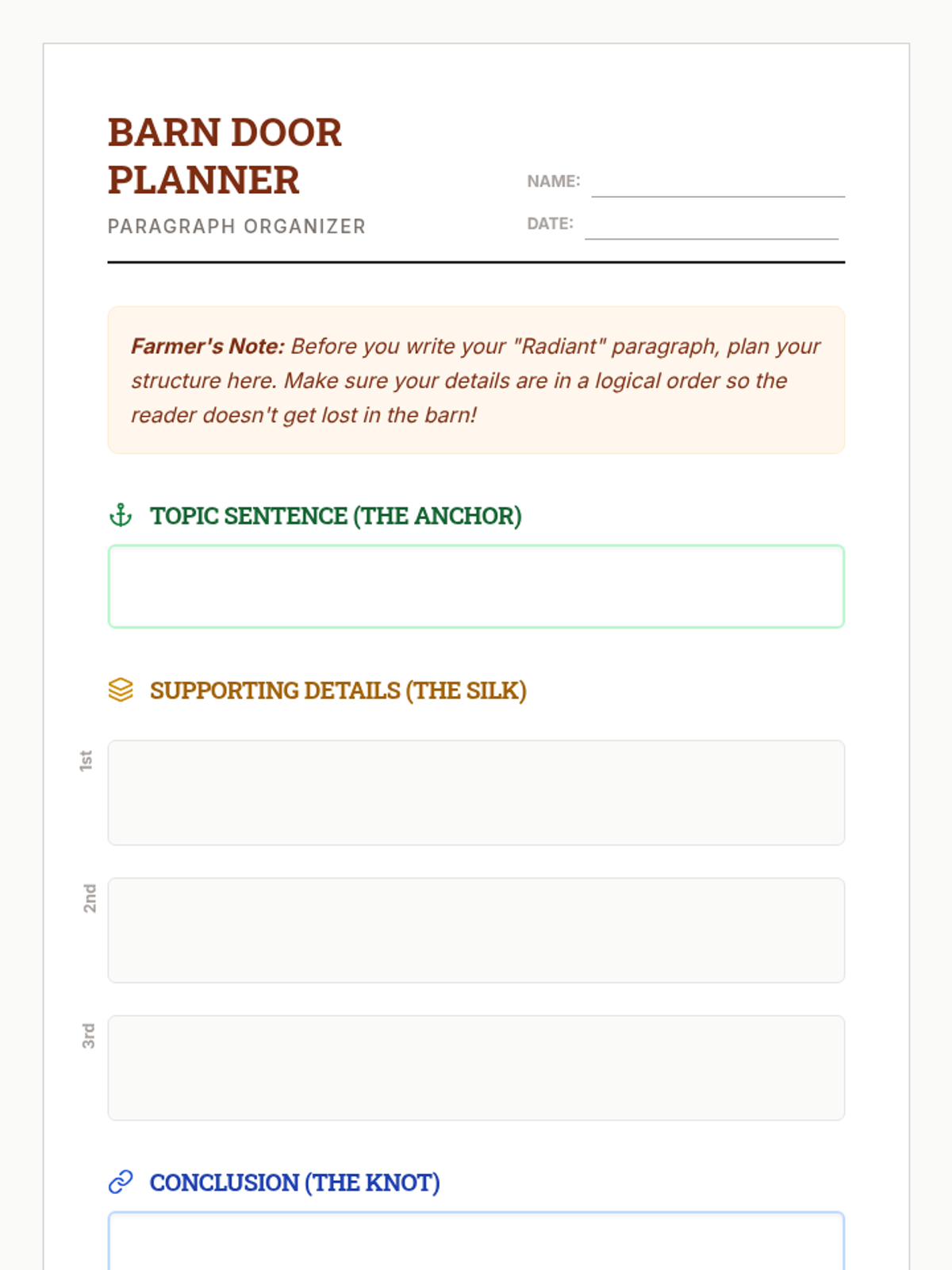
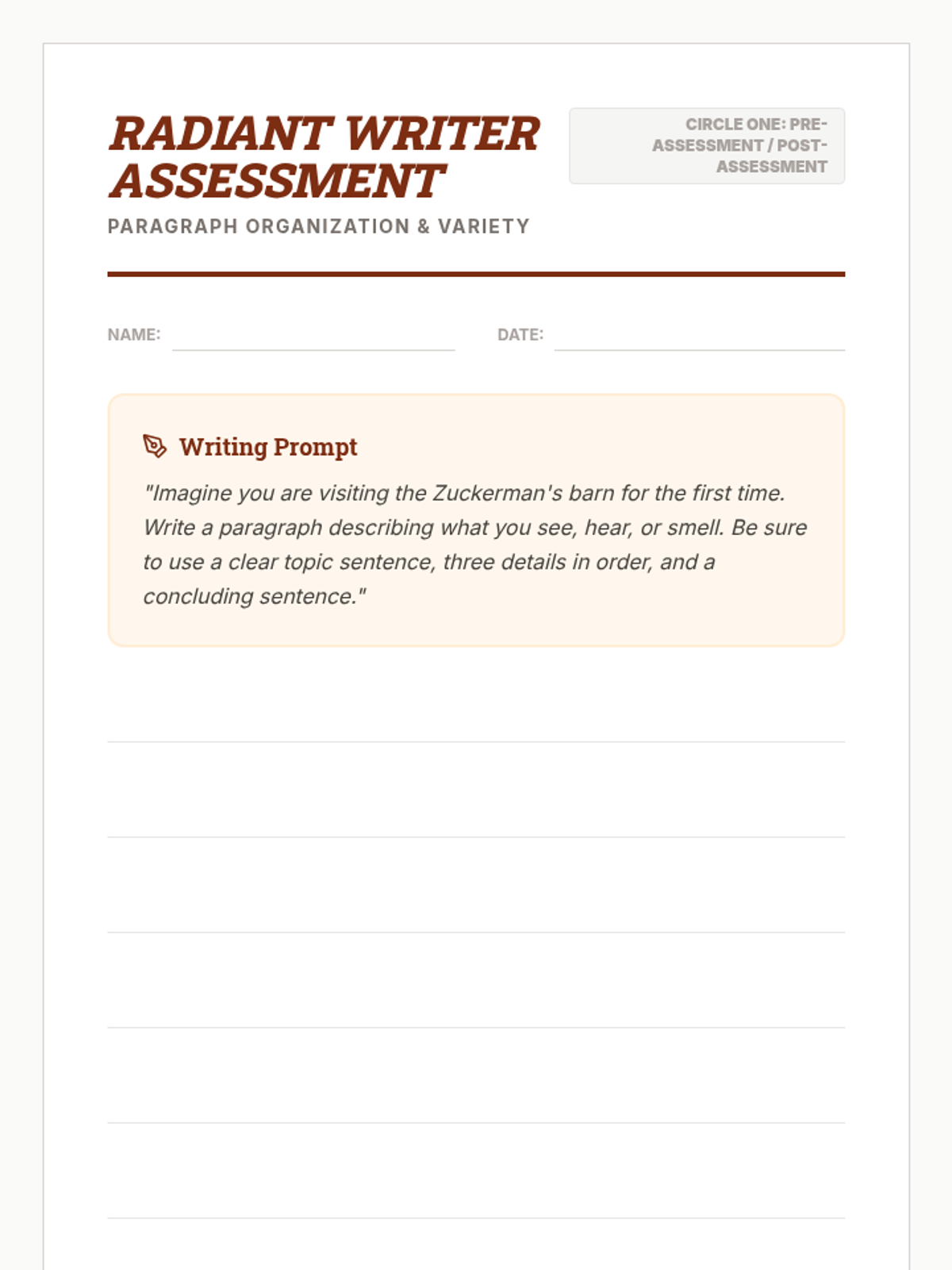
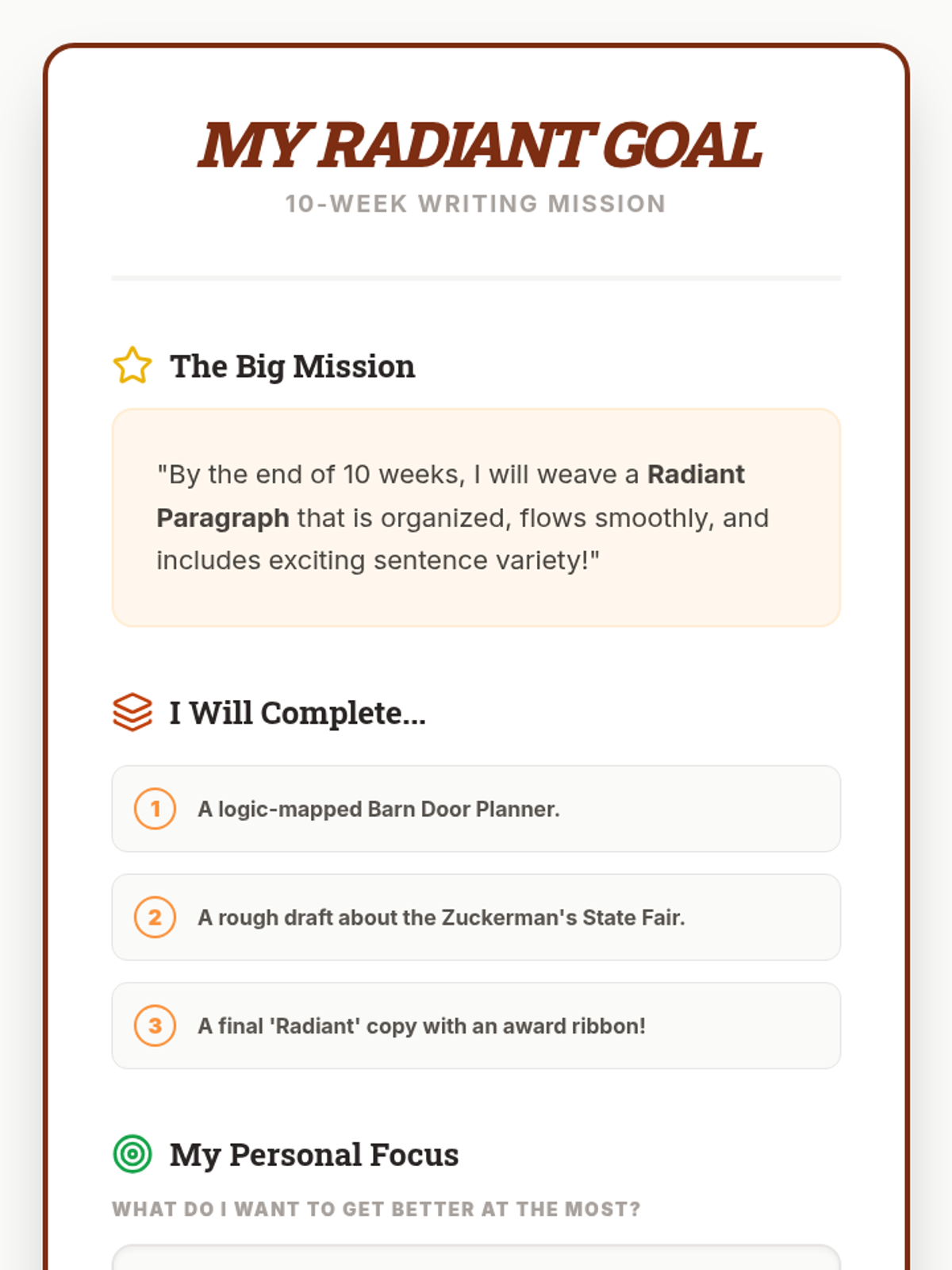
A 10-lesson writing intervention focused on paragraph organization, sequencing, and sentence variety, themed around the classic story Charlotte's Web. Students learn to construct 'radiant' paragraphs with a clear structure and diverse sentence types.
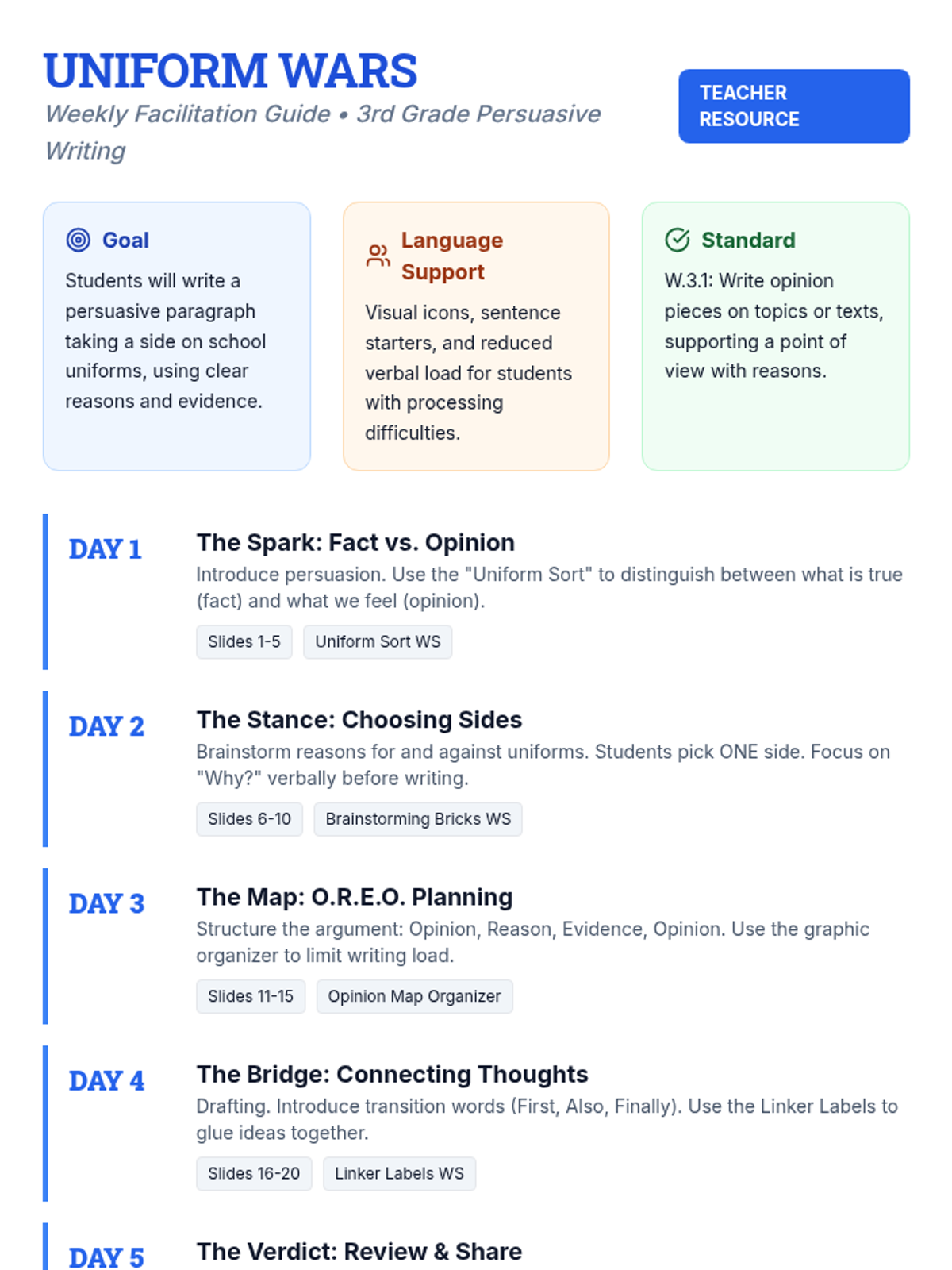
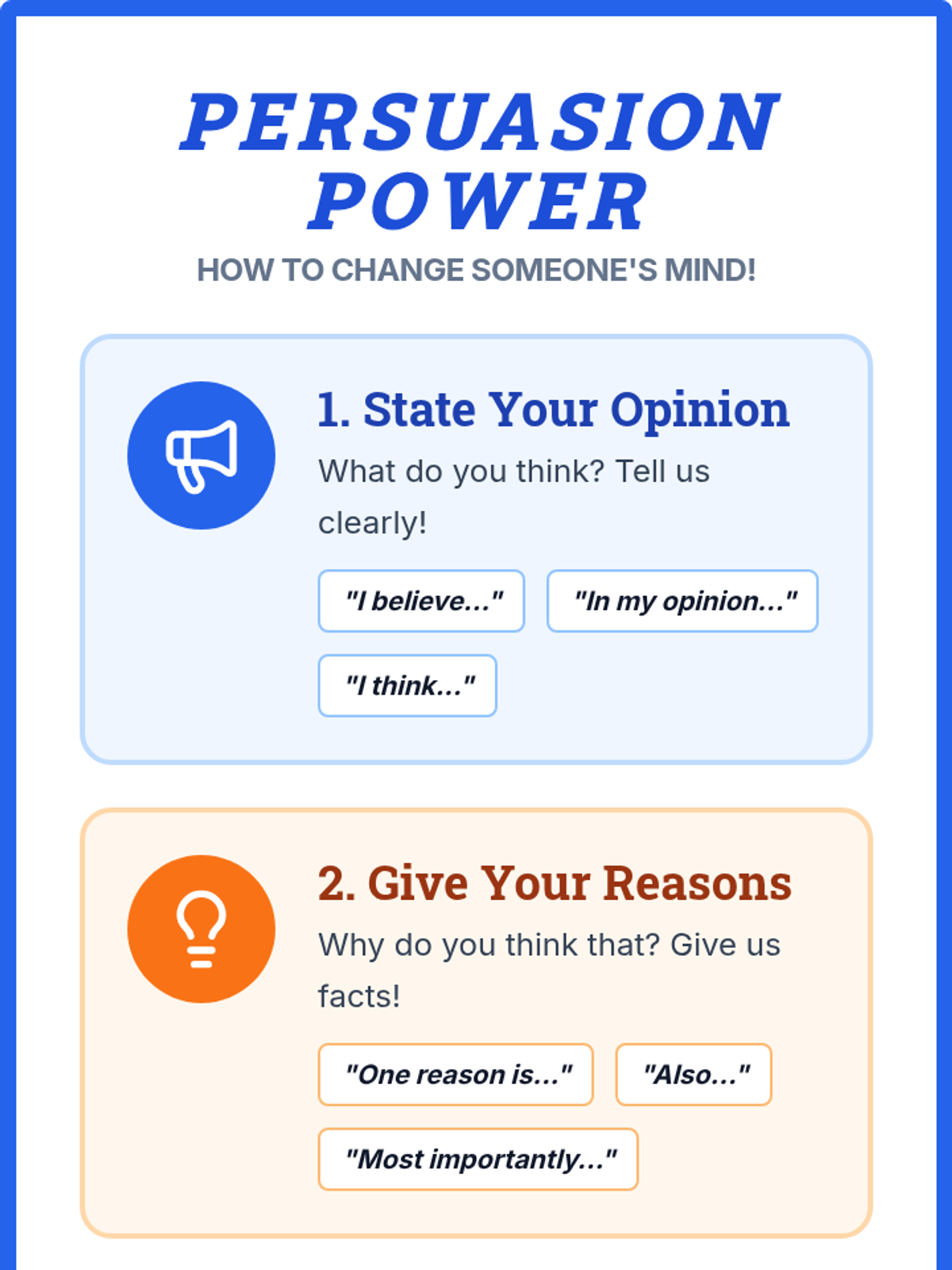
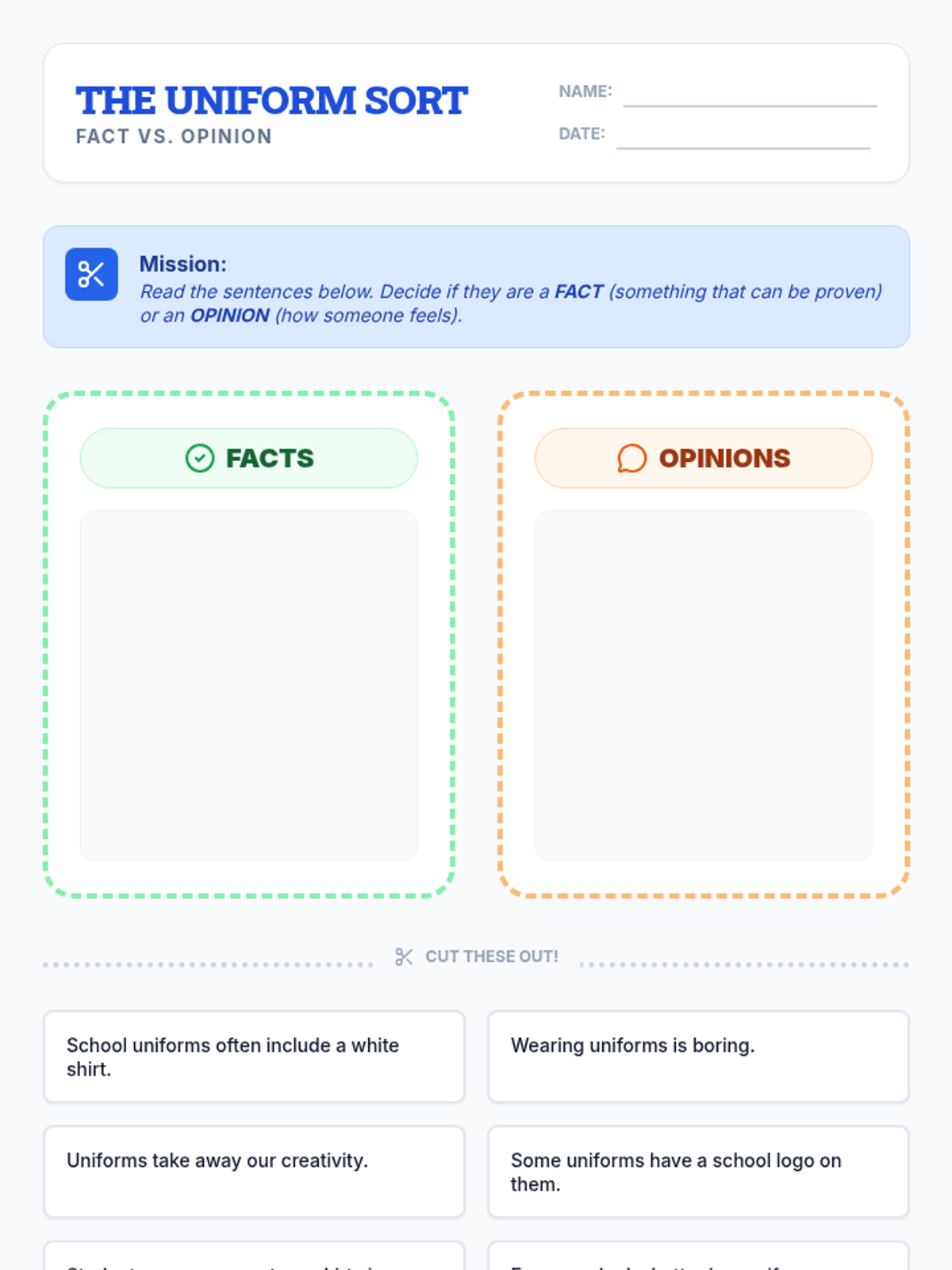
A comprehensive one-week writing unit for 3rd grade centered on the school uniform debate. This sequence is designed with heavy visual supports and structured templates to assist students with oral language processing difficulties.
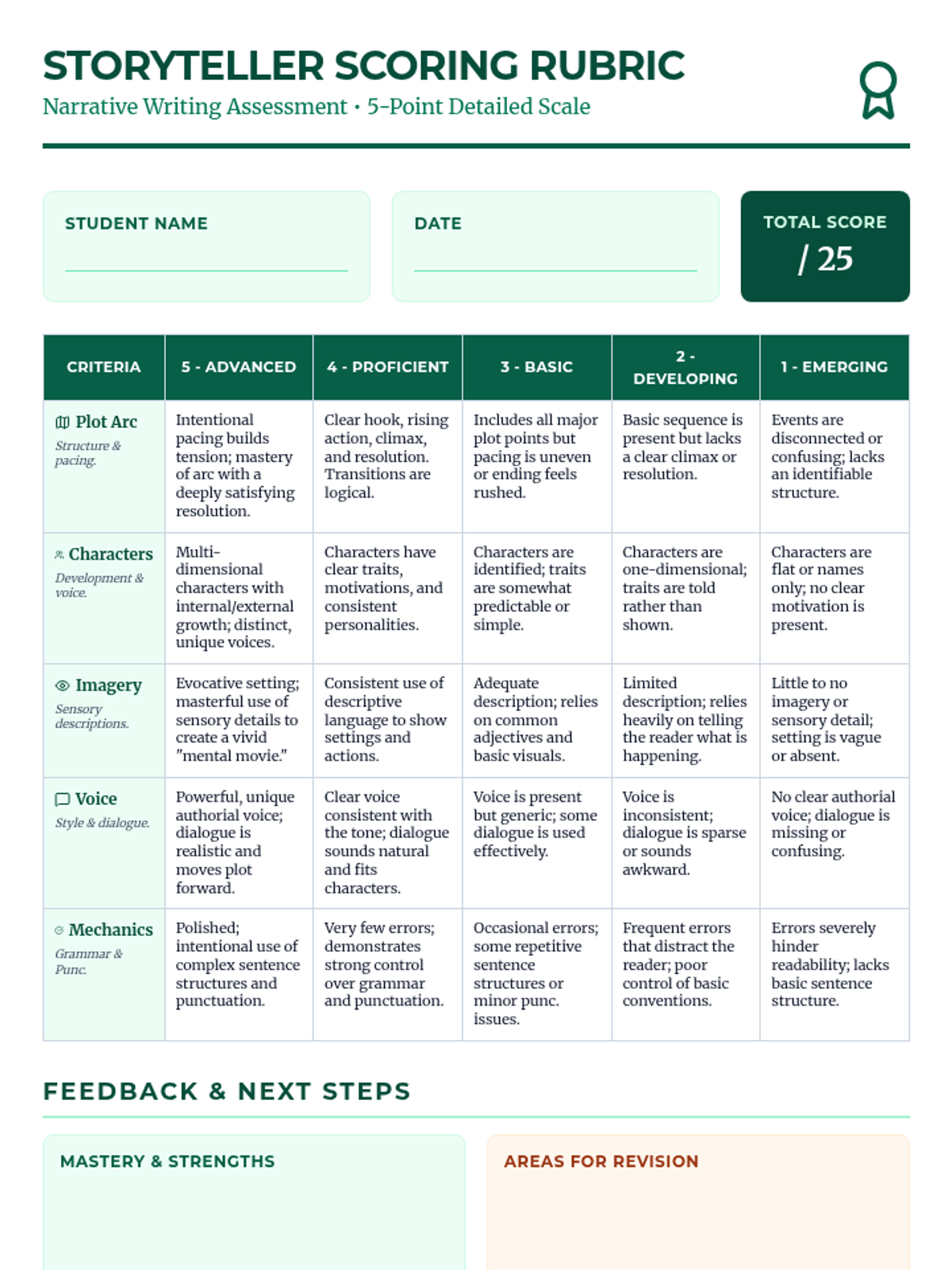
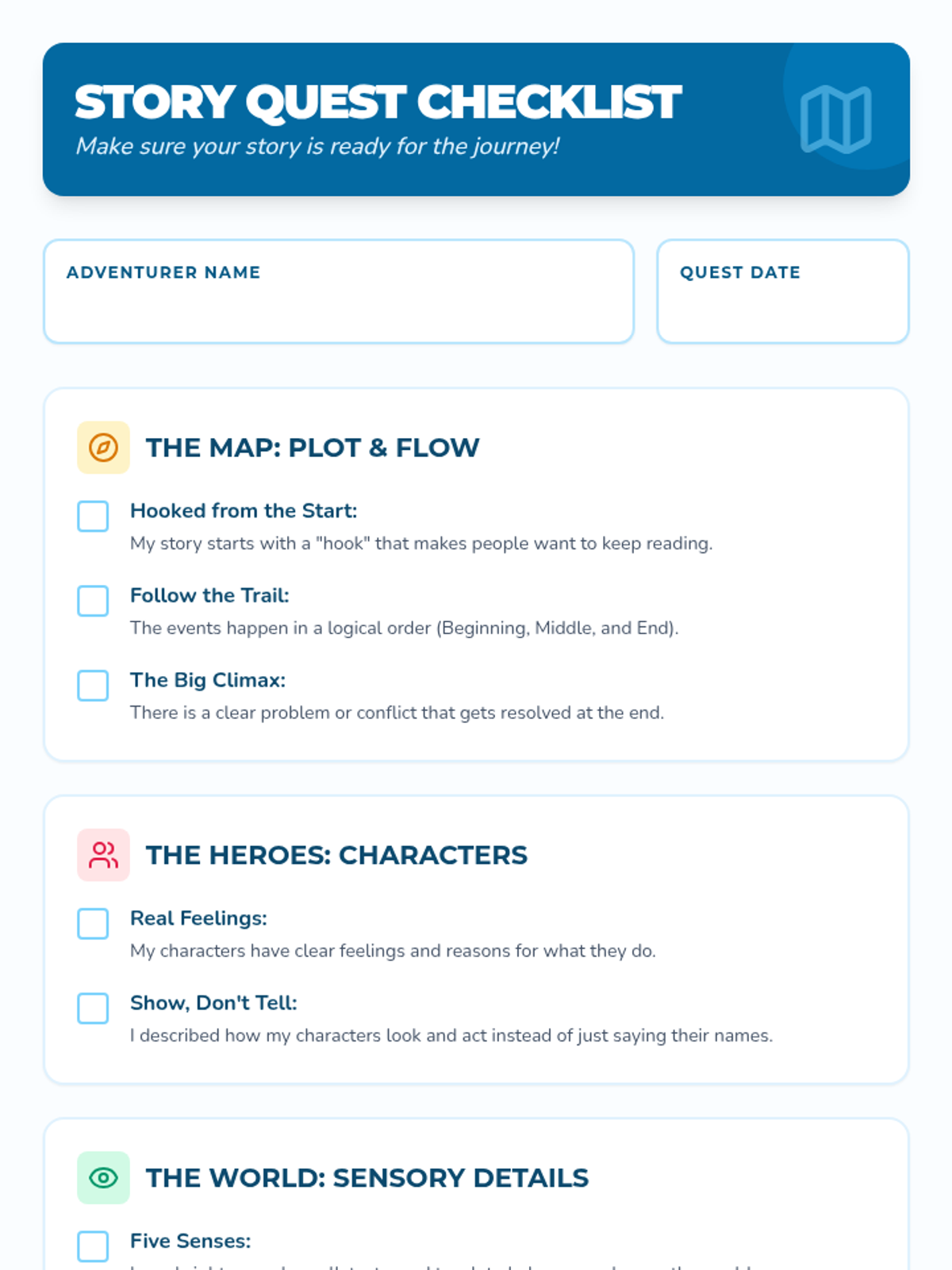
A comprehensive set of writing tools and rubrics across different genres to help students master various styles of storytelling and analysis.
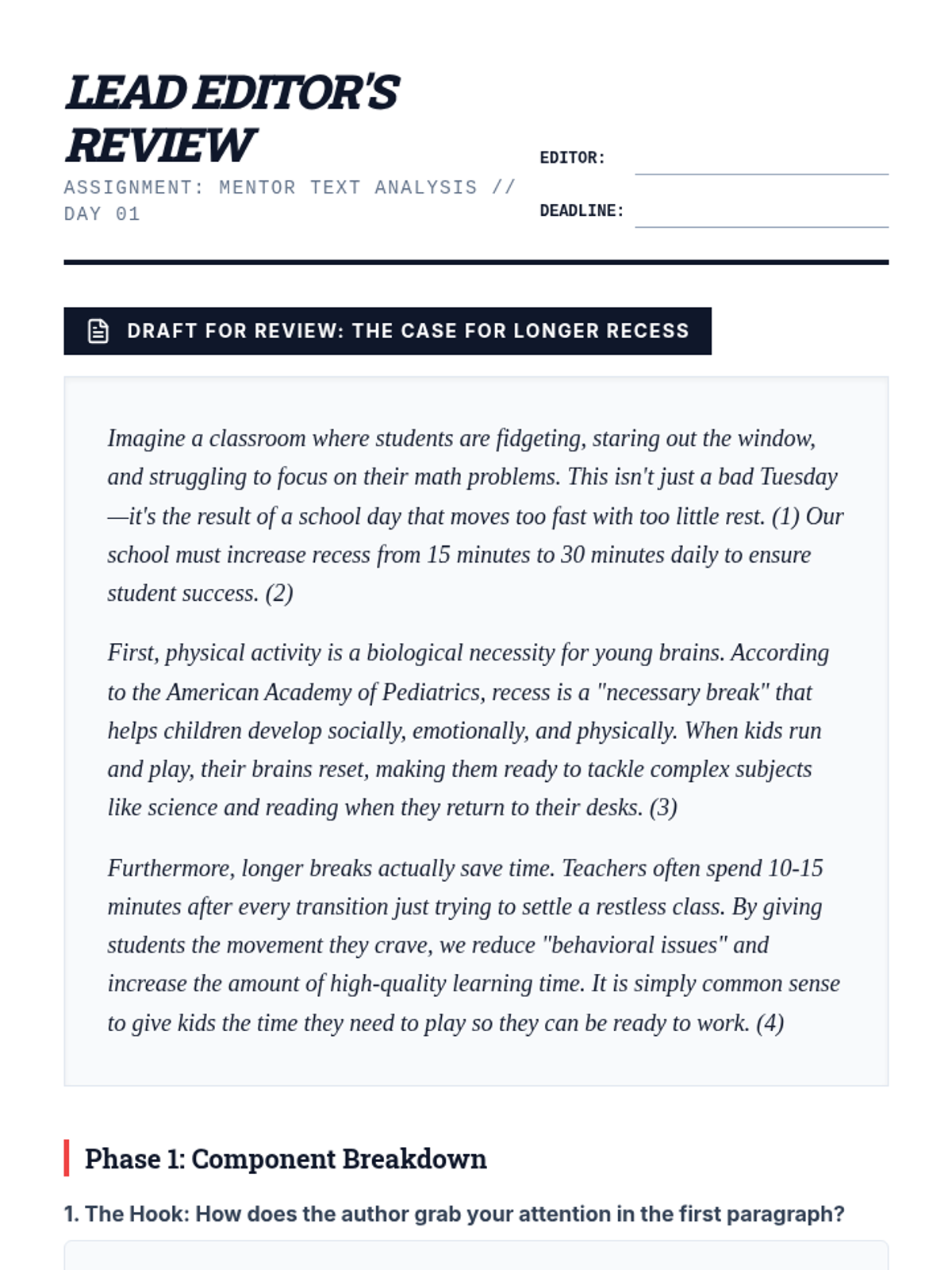
A comprehensive 5-day unit designed to take students from analyzing mentor texts to drafting and polishing their own persuasive essays. The unit uses a professional 'Editorial Office' theme to engage students as 'Lead Editors' of their own arguments.
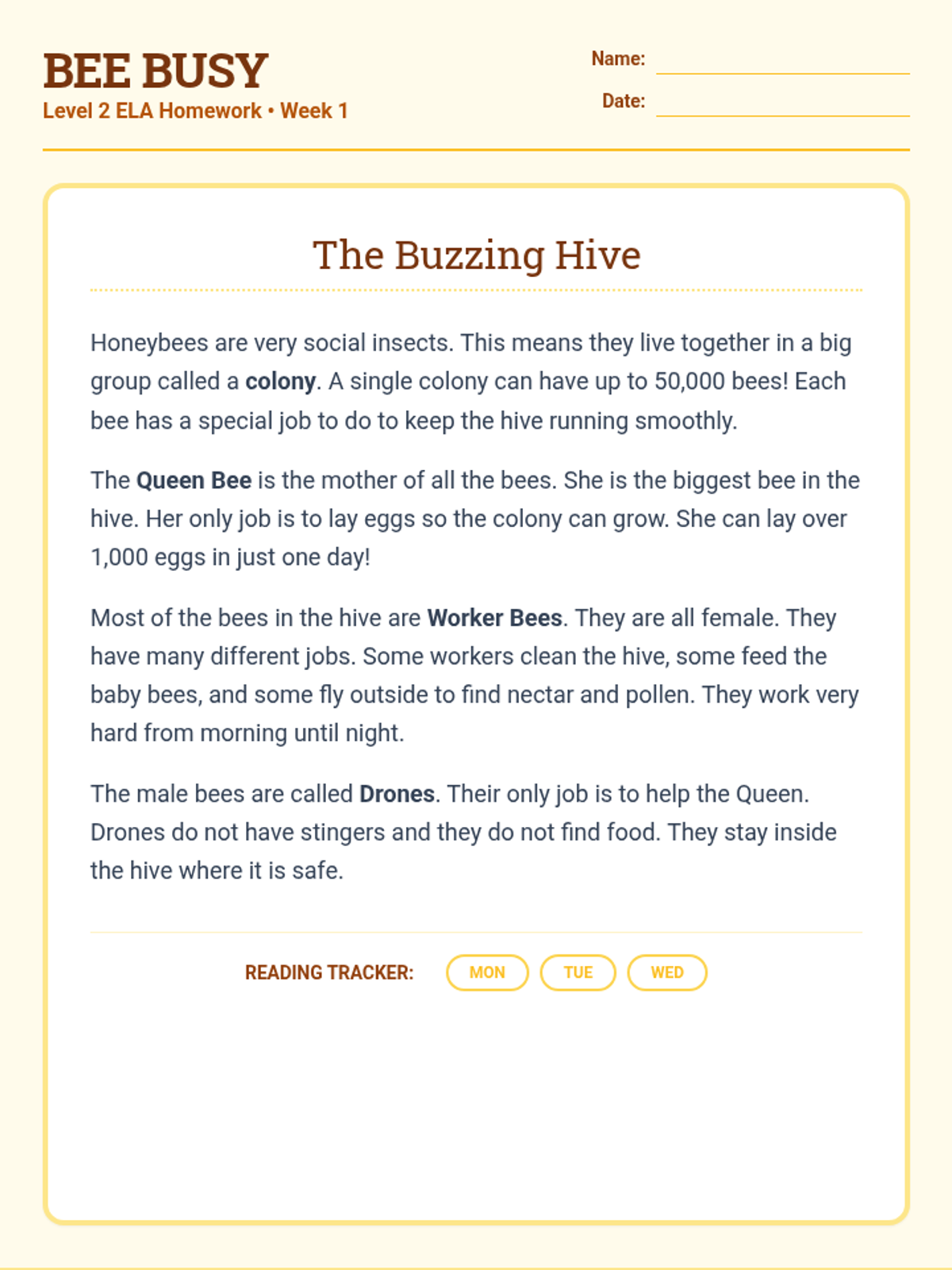
Differentiated ELA homework packets centered on the lives and importance of honeybees, organized by complexity levels.
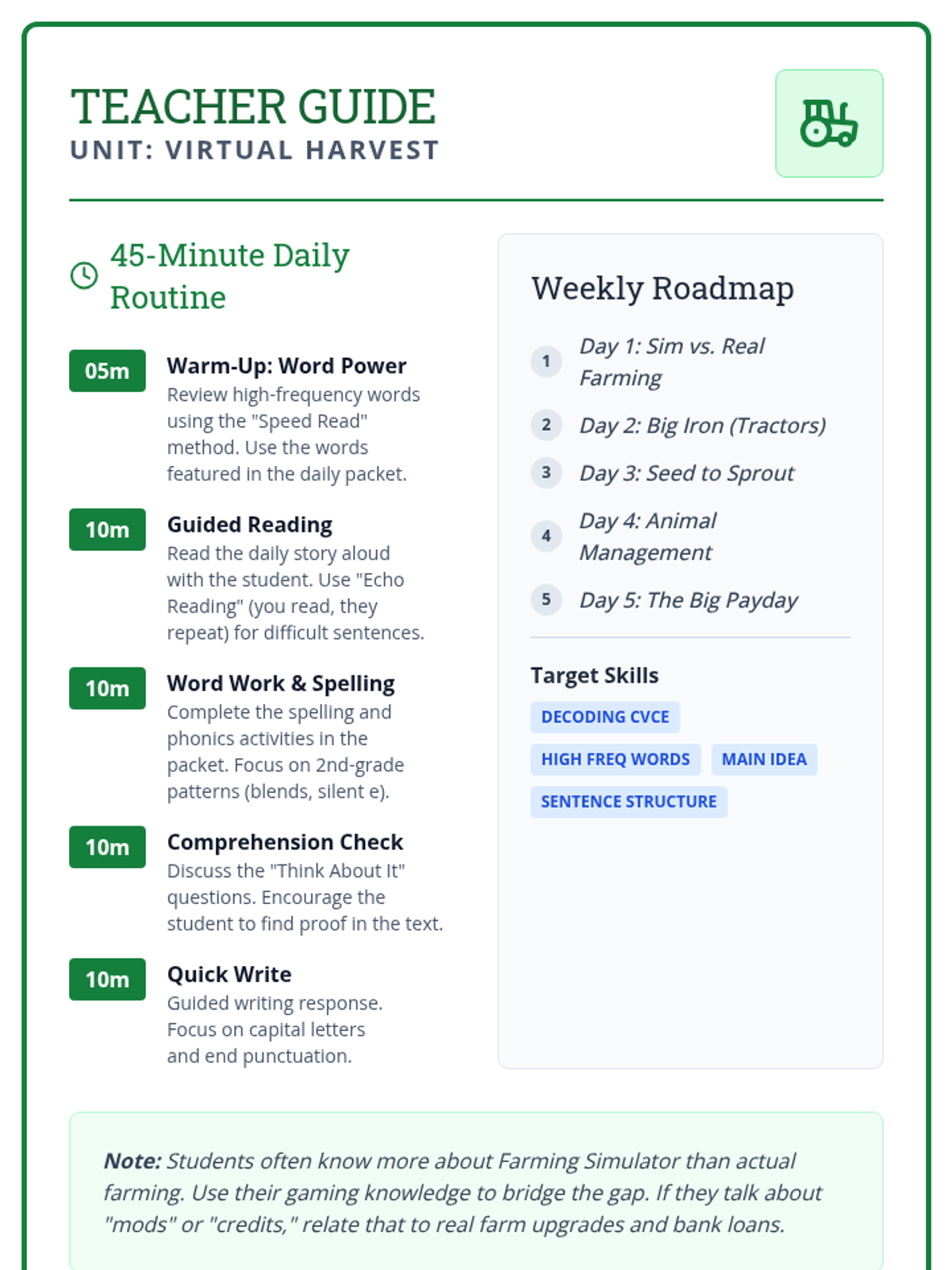
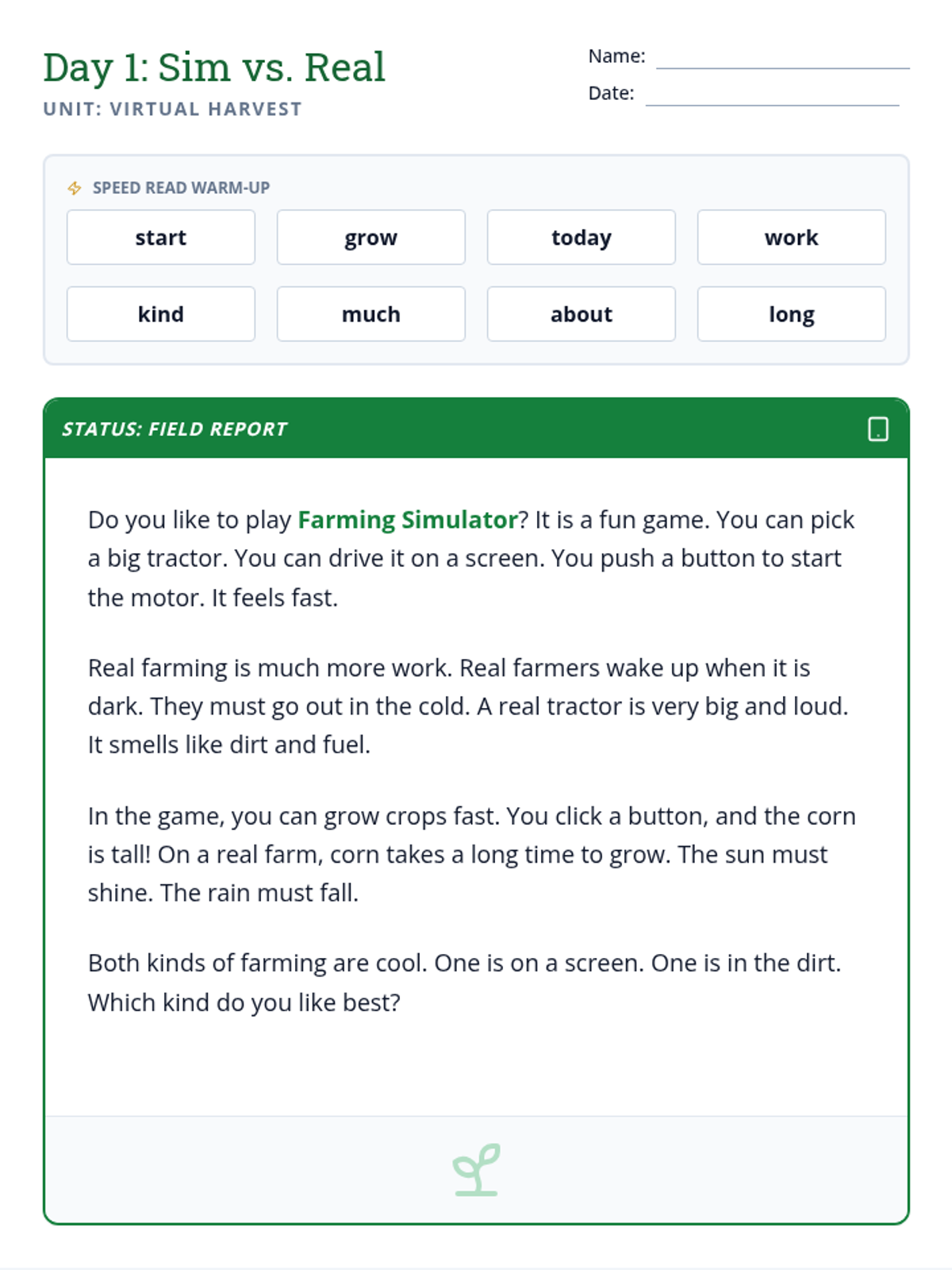
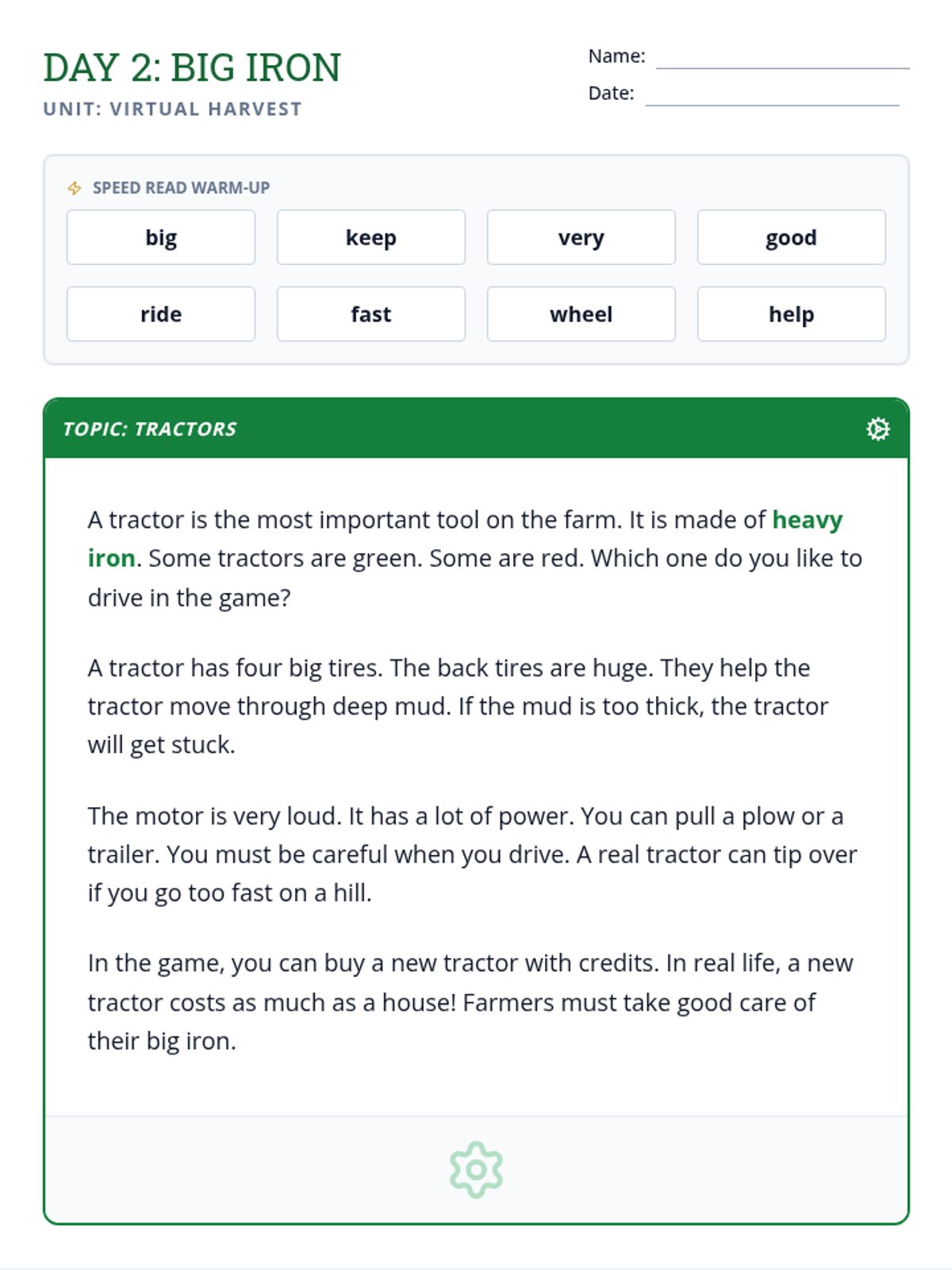
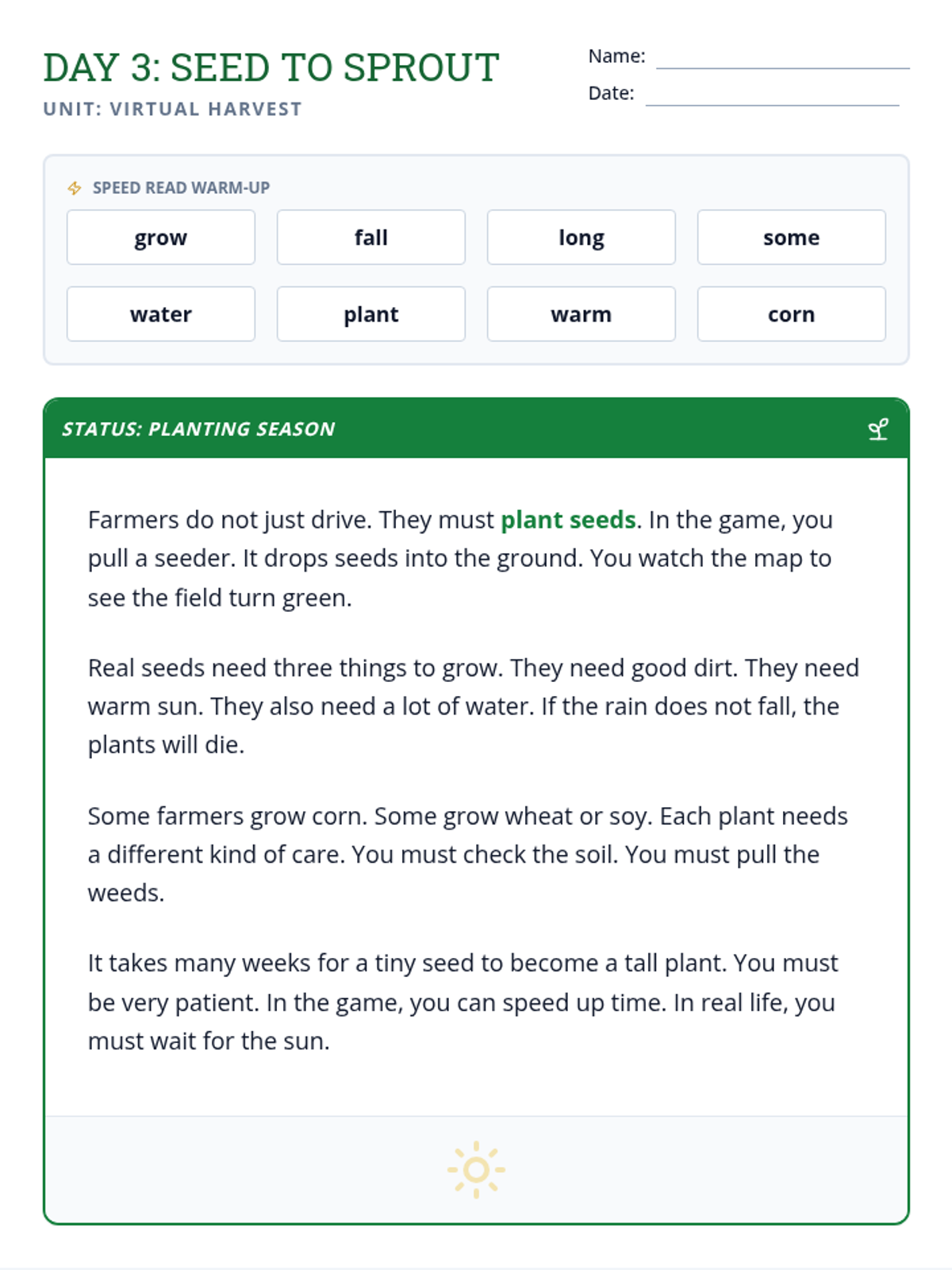
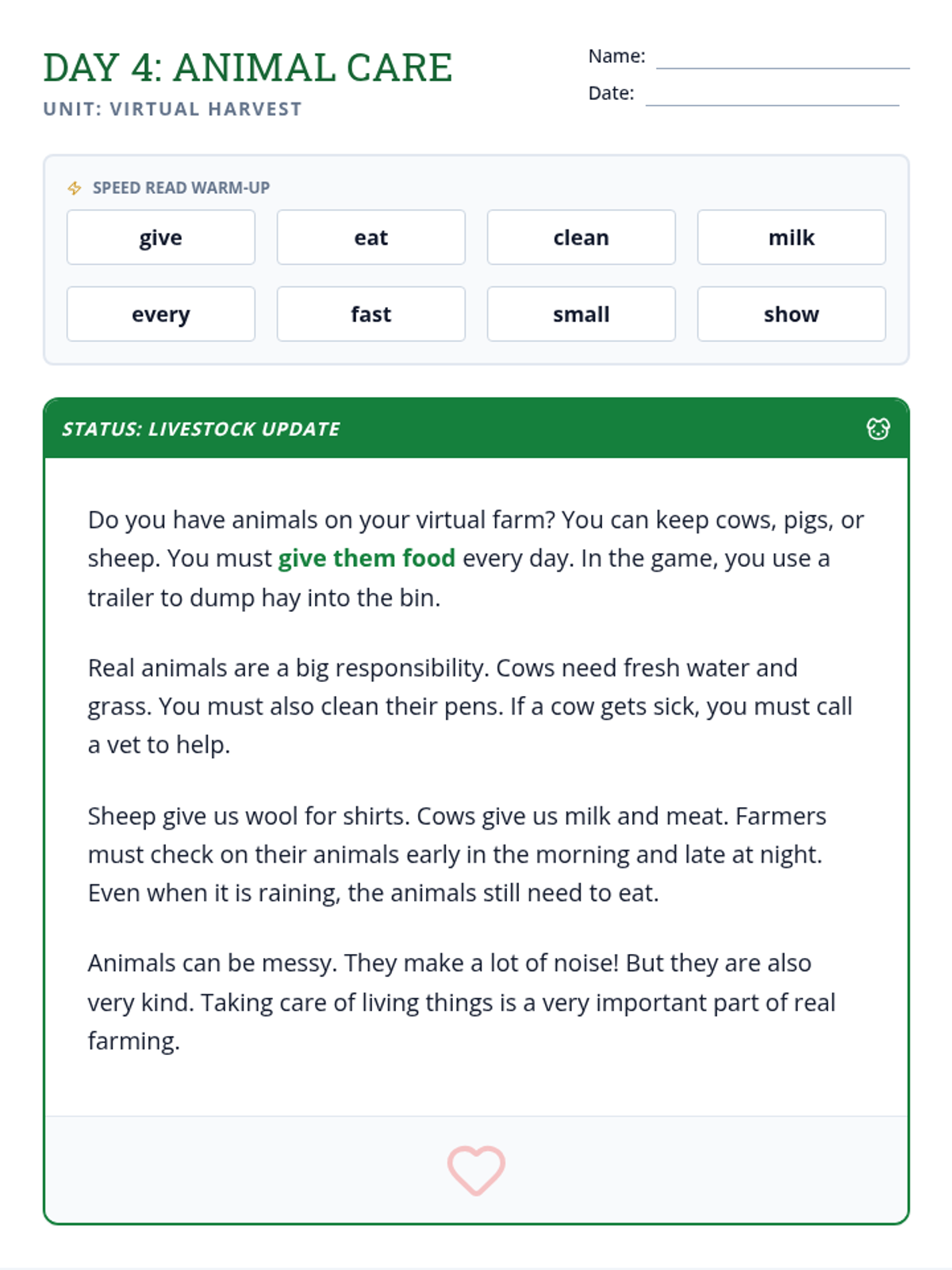
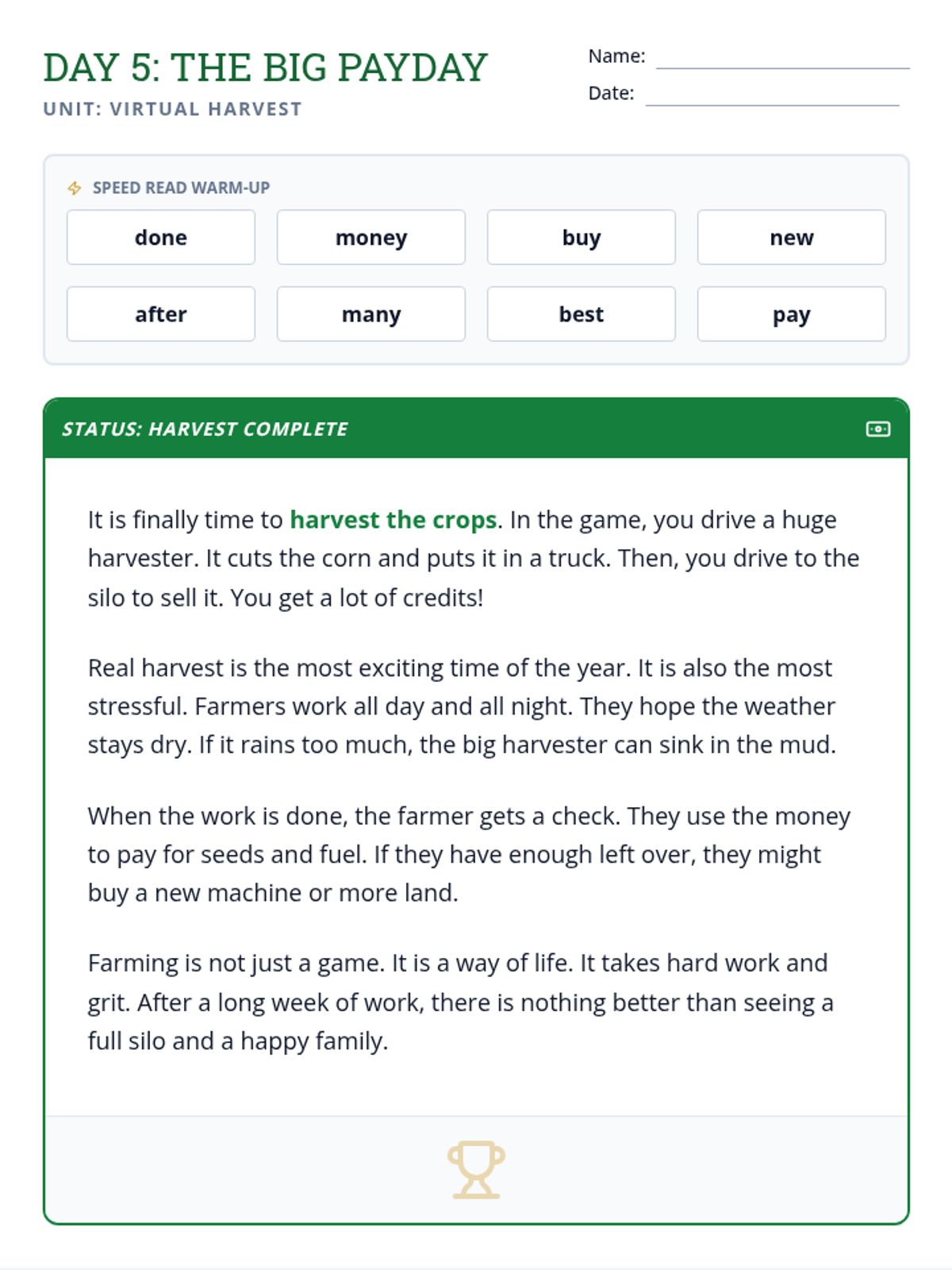
A 5-day reading comprehension and writing unit for struggling readers, blending the world of Farming Simulator with real-world agriculture. Focuses on 2nd-grade level literacy skills within a high-interest 5th-grade context.
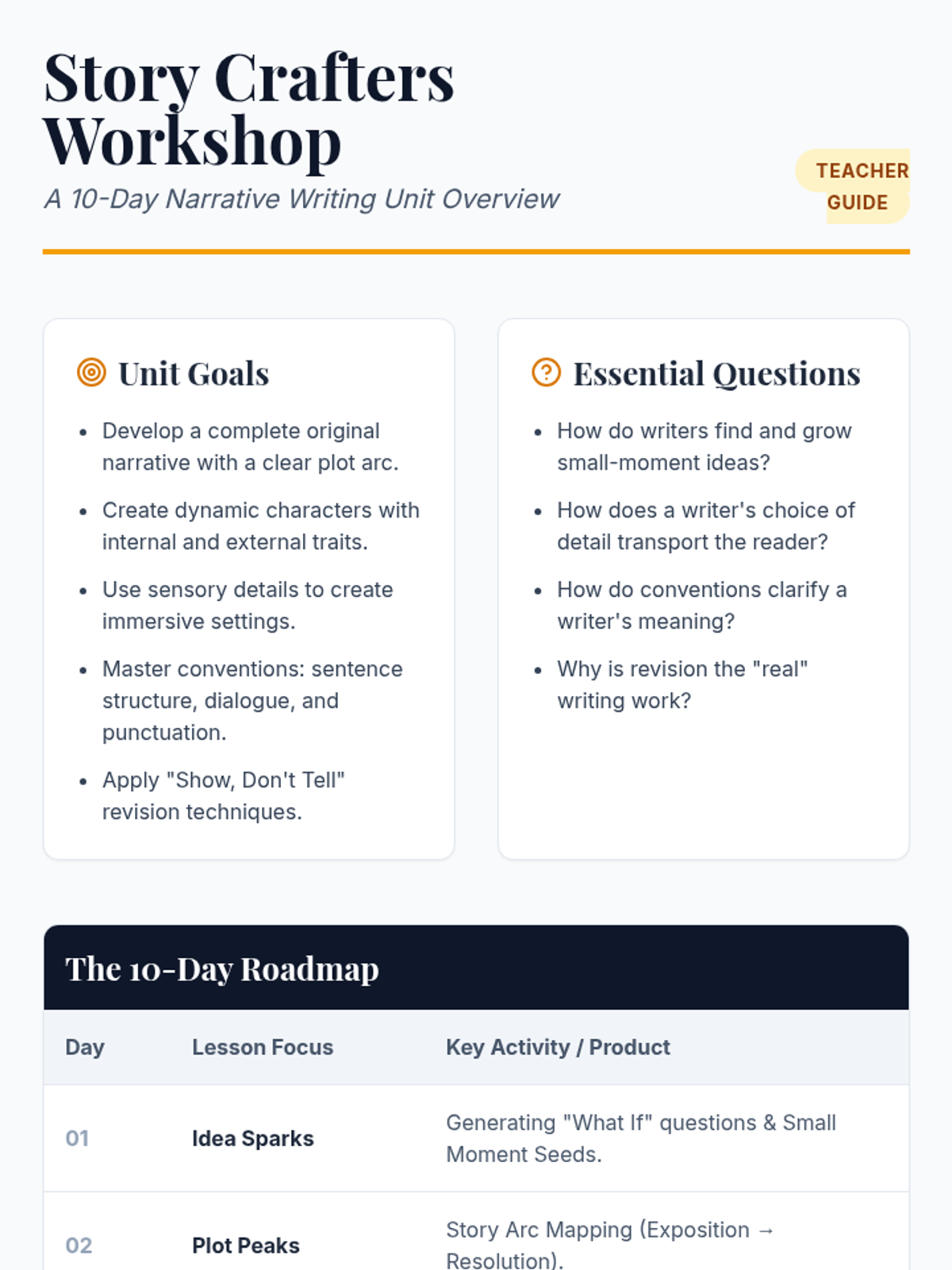
A 10-day immersion into narrative writing for upper elementary students, focusing on craft, structure, and grammar conventions.
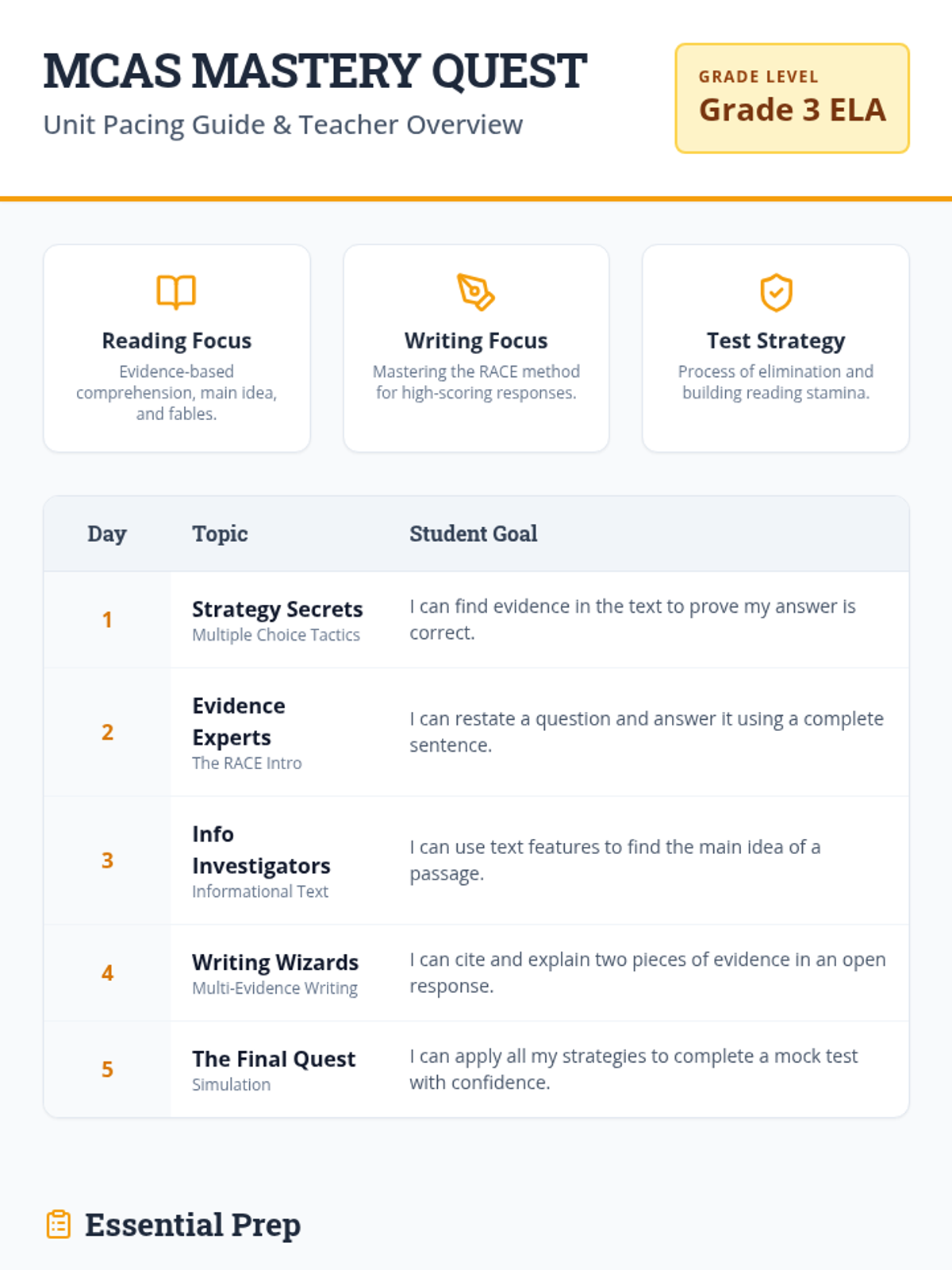
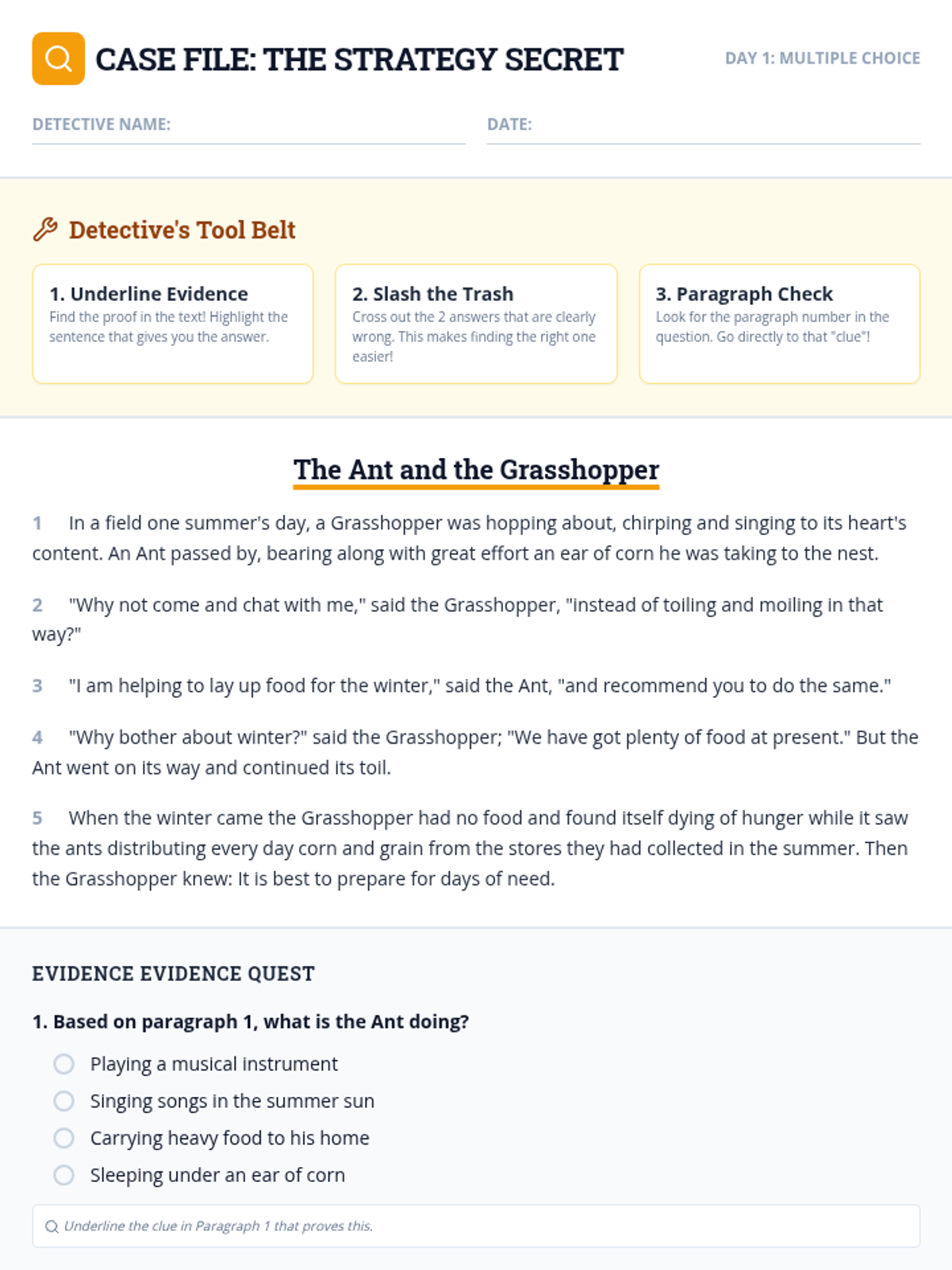
A comprehensive 5-day MCAS prep unit for Grade 3 ELA, focusing on reading comprehension strategies and structured open responses using a detective-themed 'Case File' approach.
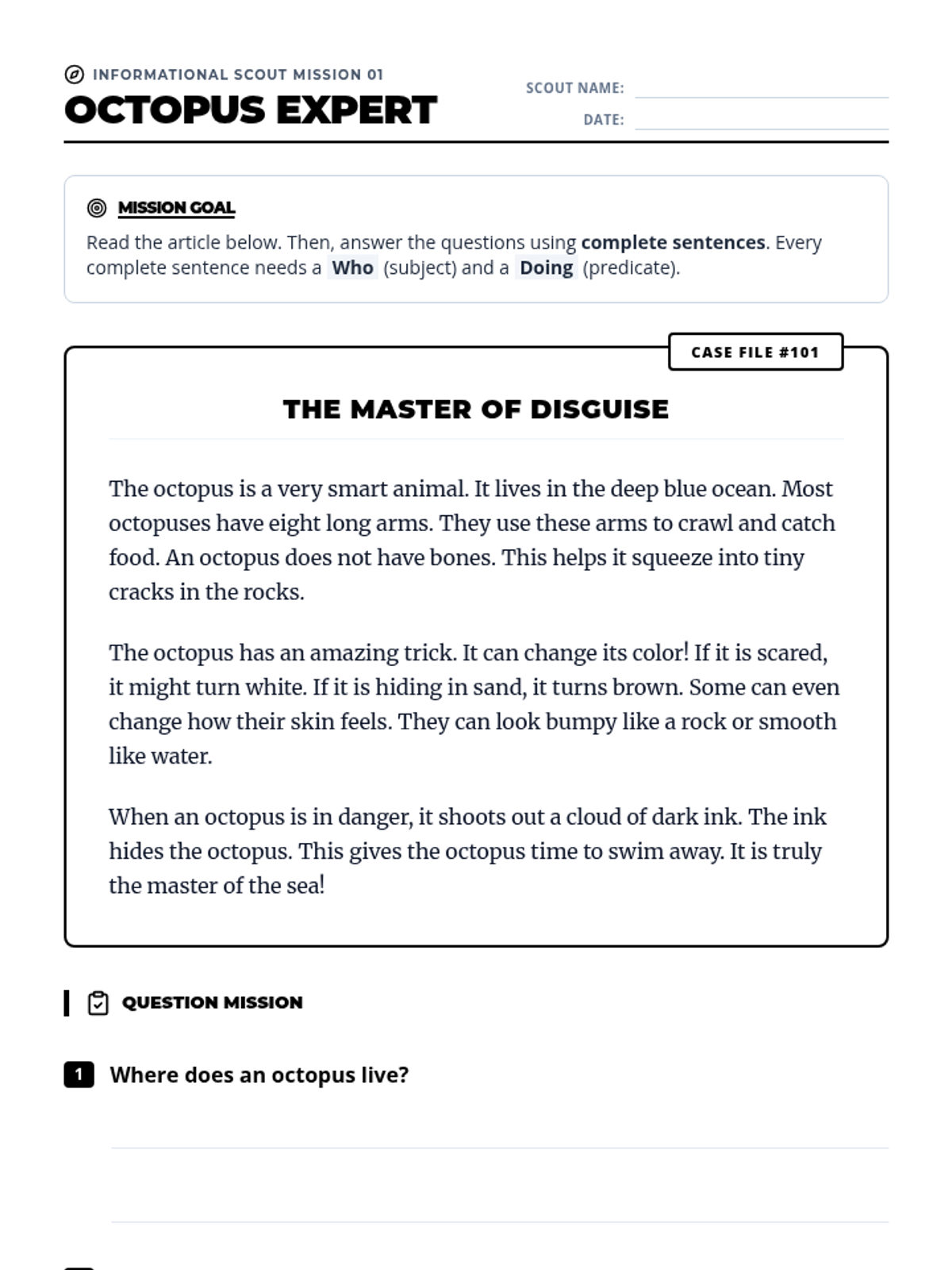
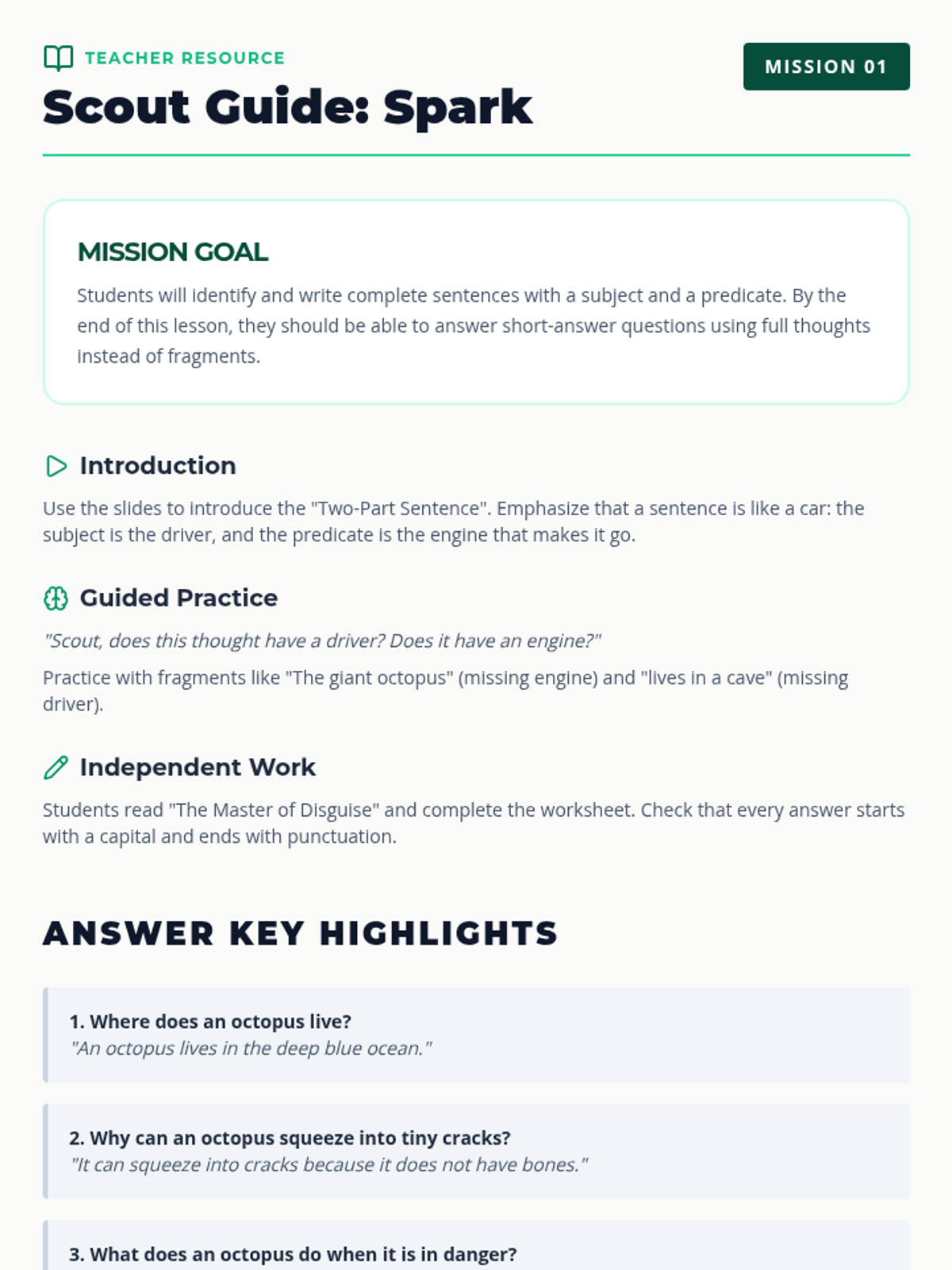
A comprehensive informational writing unit designed for 4th-grade students reading at a 3rd-grade level. This sequence scaffolds writing skills from basic complete sentences to evidence-based informational paragraphs using science, history, and fiction texts.
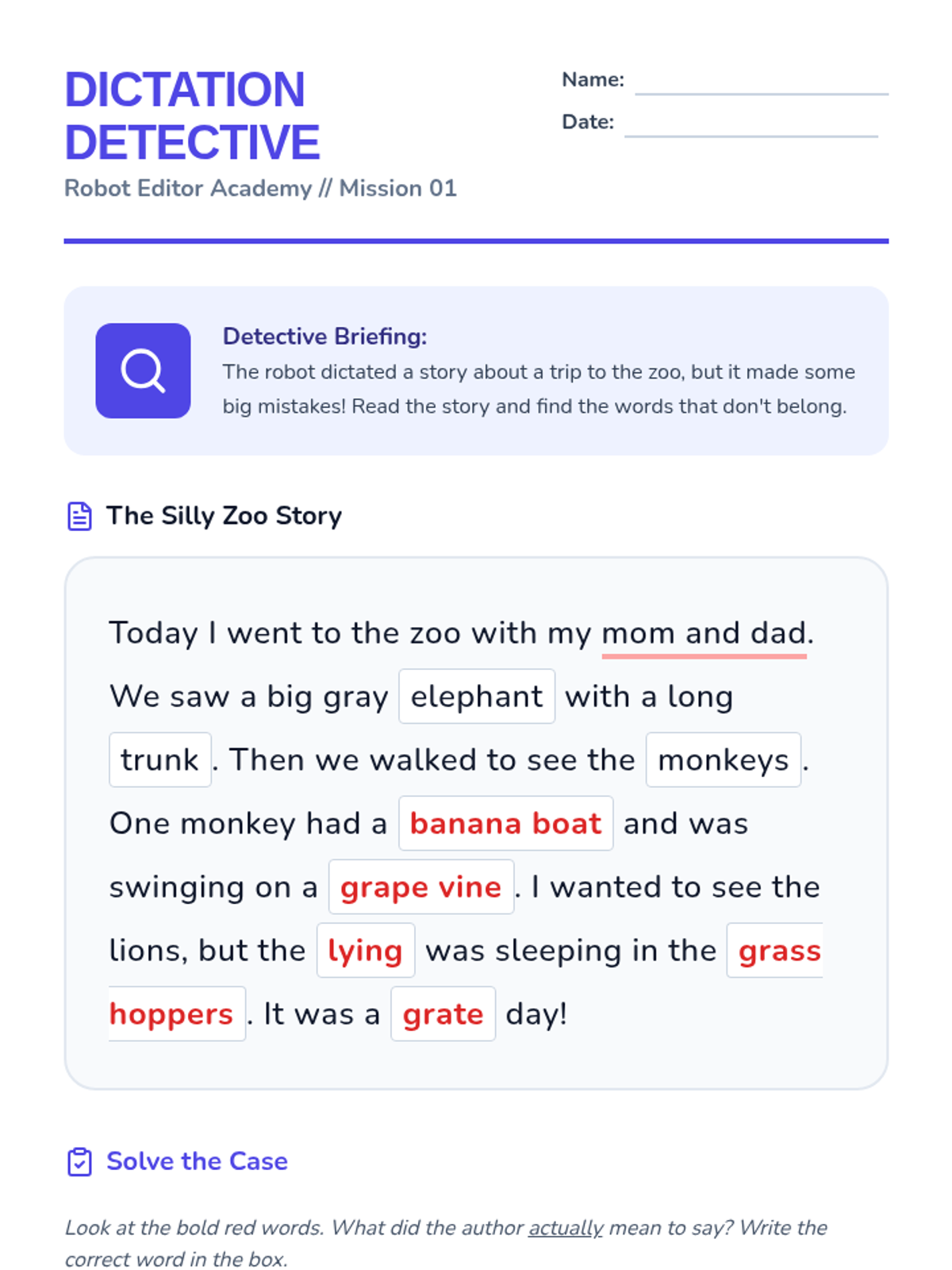
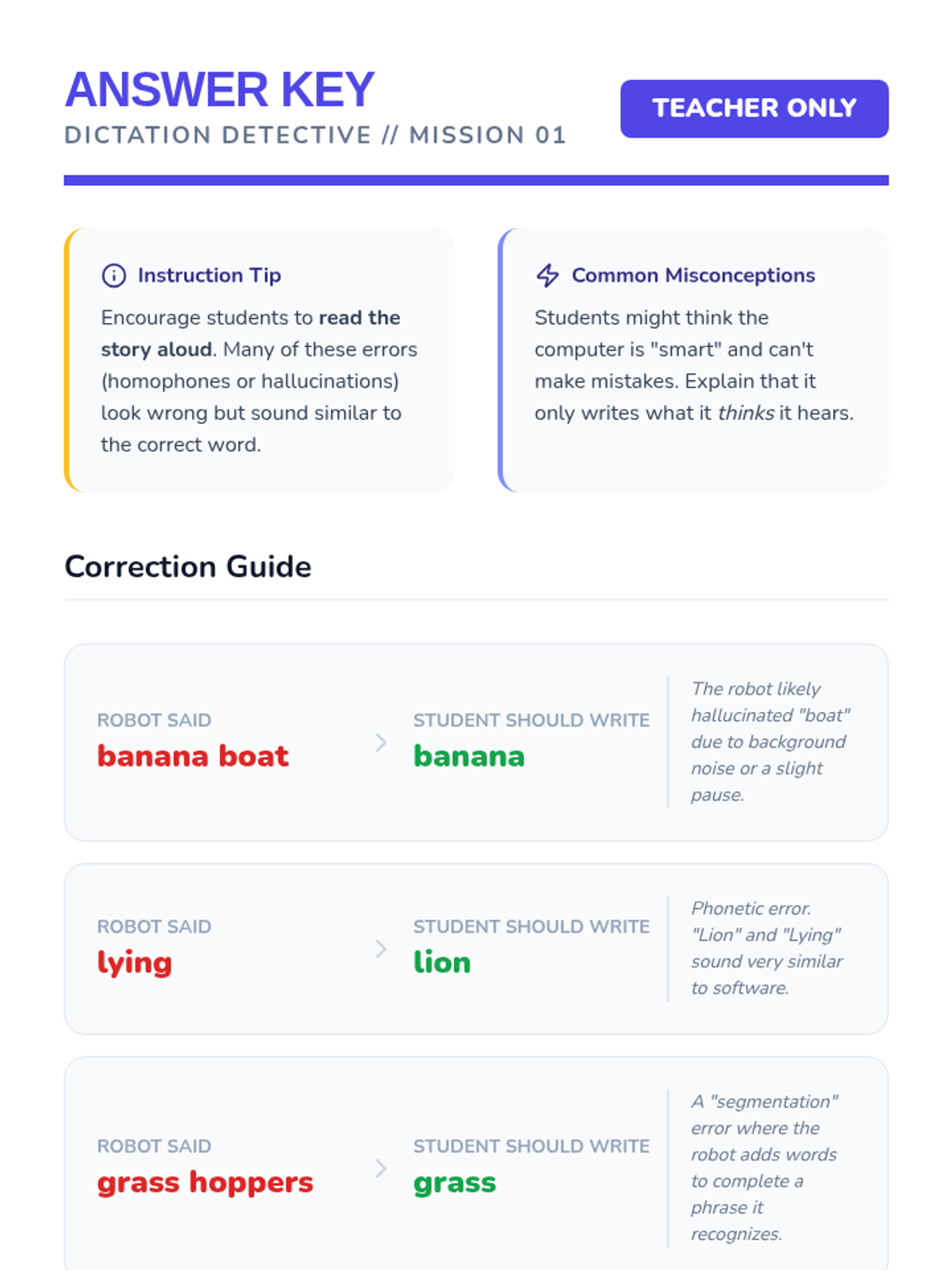
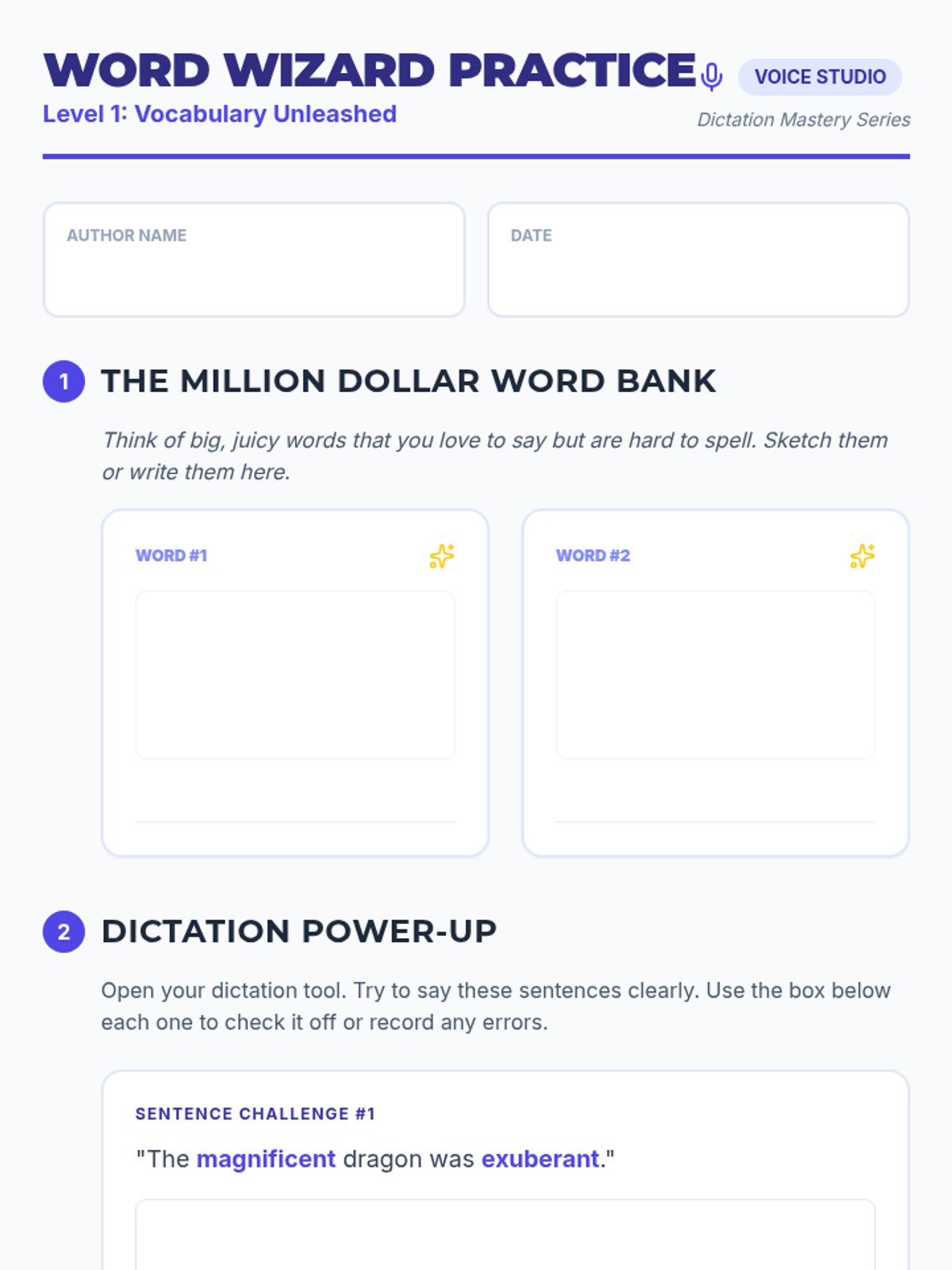
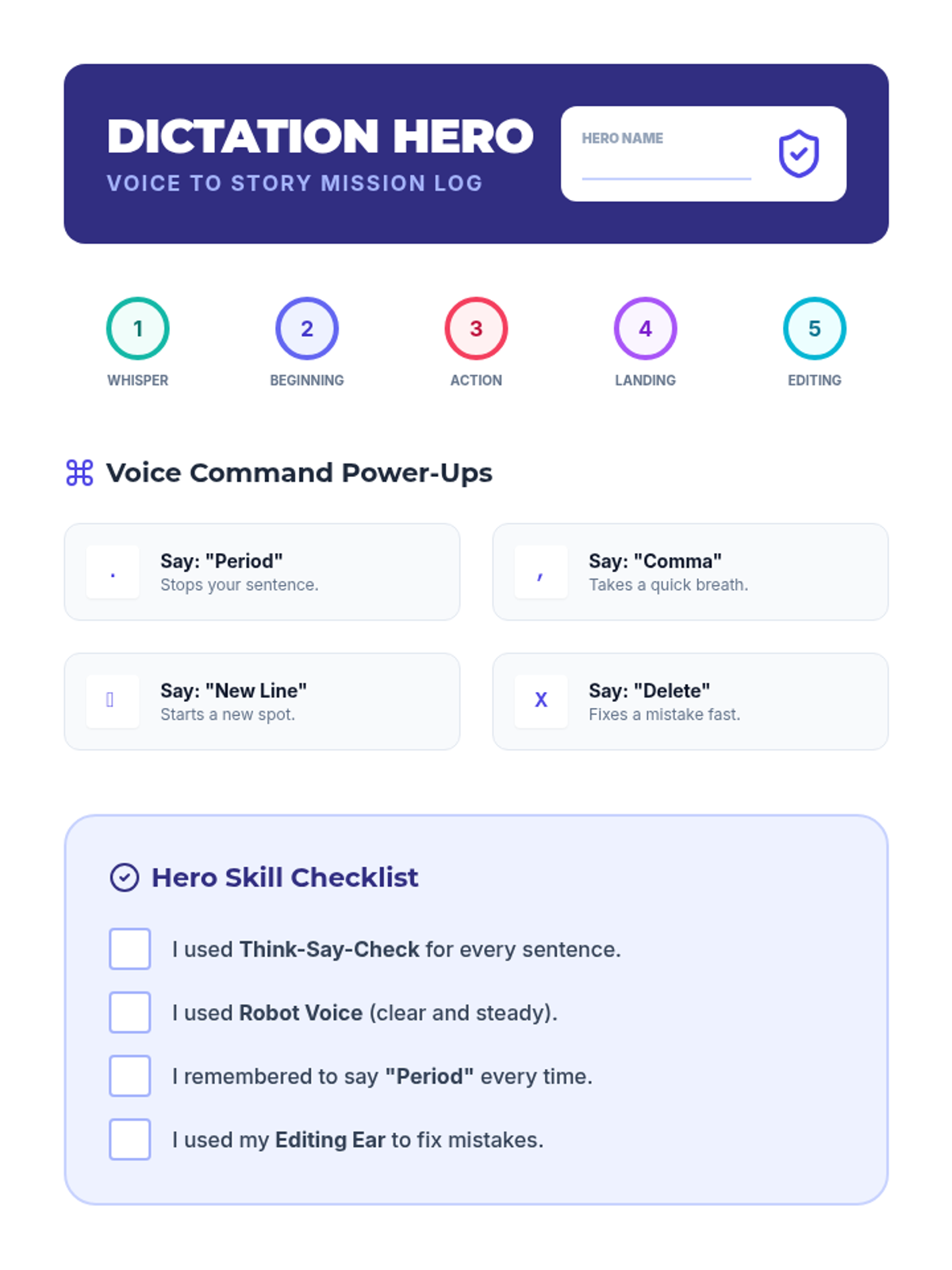
A 5-lesson sequence for 3rd graders on editing and refining speech-to-text dictation. Students take on the role of 'Robot Editors' to detect errors, fix homophones, and apply punctuation to dictated drafts.
A comprehensive 3rd-grade sequence focused on mastering homophones (there/their/they're, to/too/two), distinguishing contractions from possessives, and memorizing irregular high-frequency words through an editor-themed simulation.
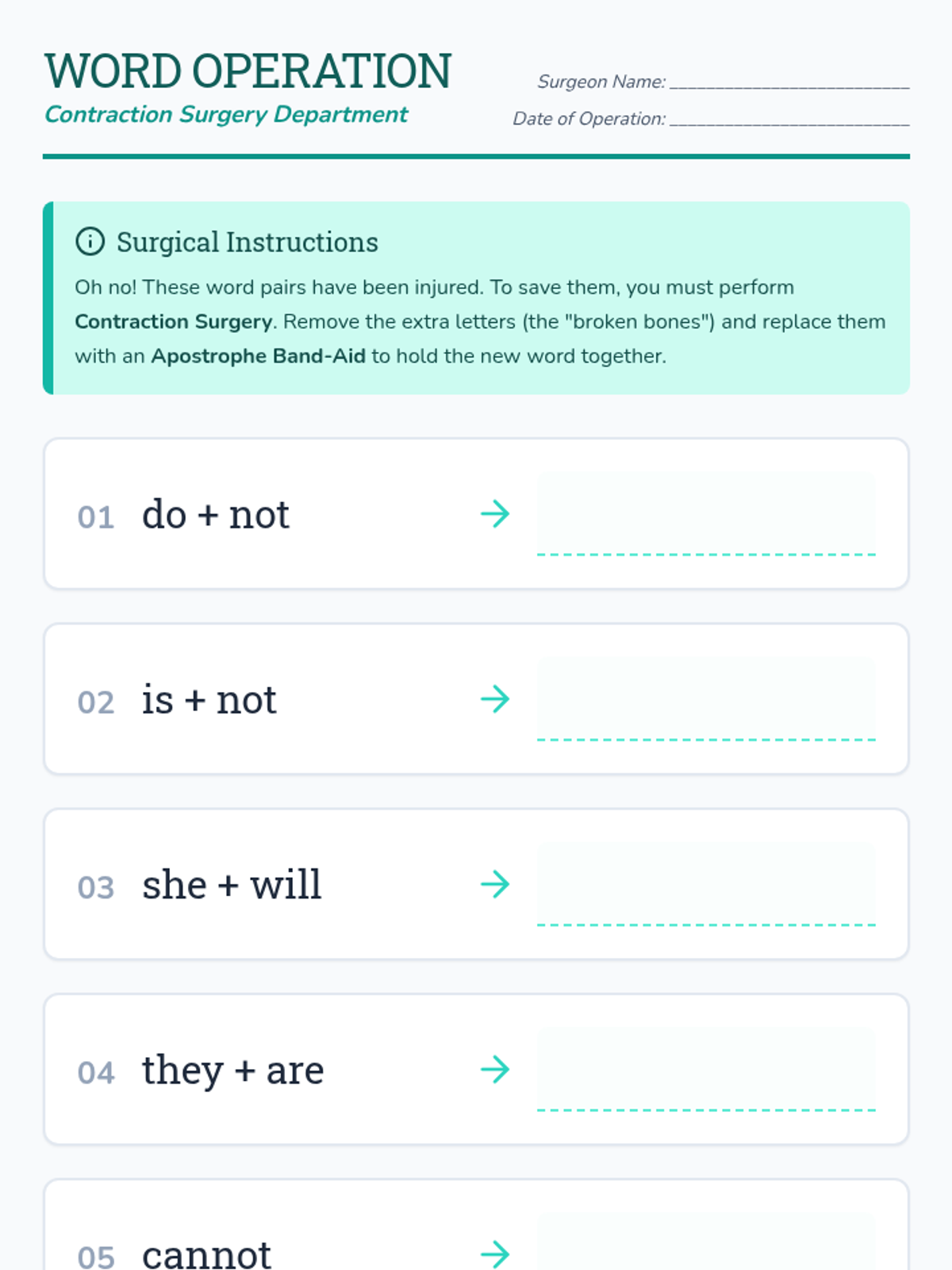
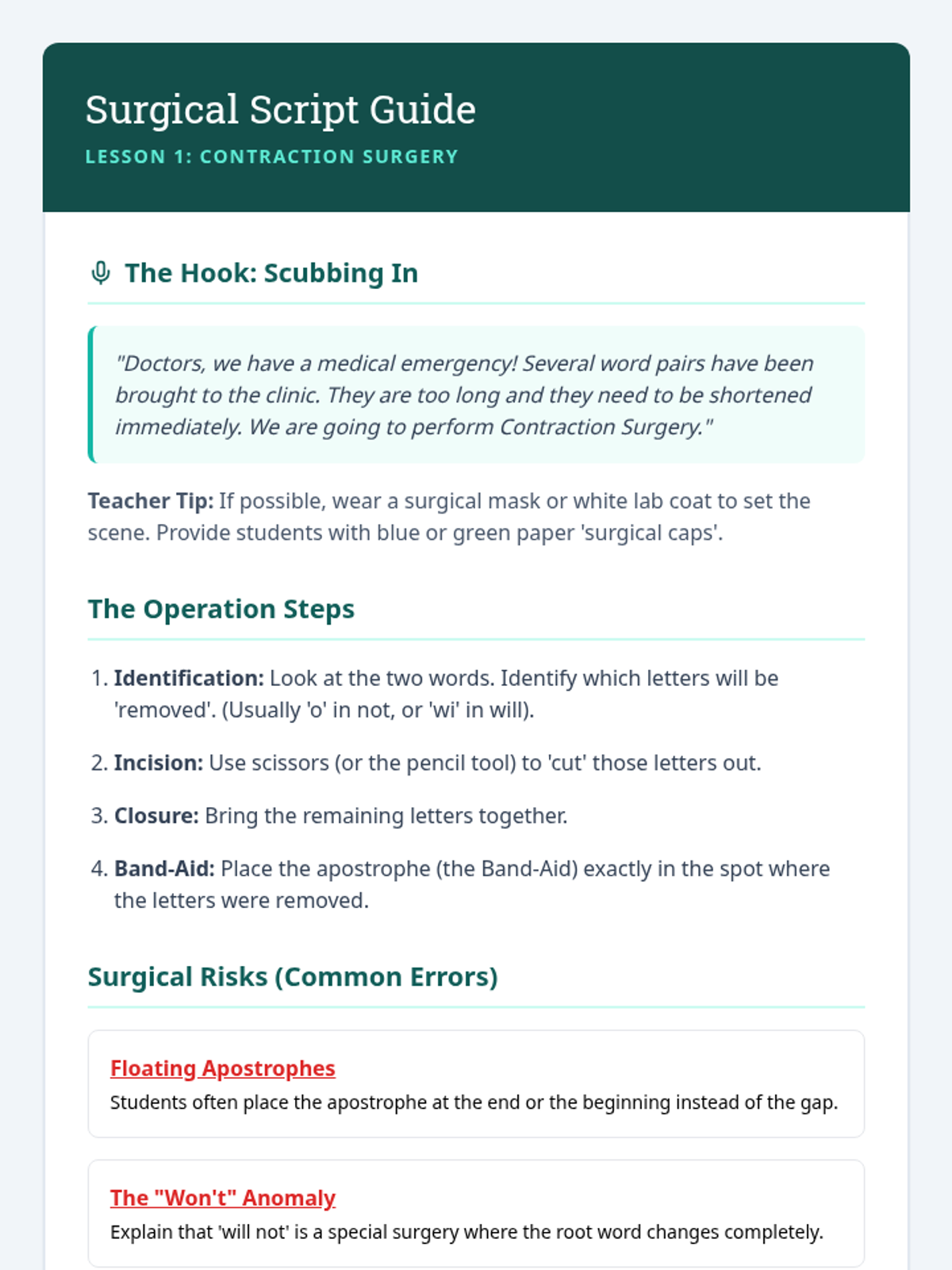
A 5-lesson sequence for 3rd graders focused on mastering apostrophes (contractions and possessives) and end punctuation. Students act as 'Punctuation Surgeons' and 'Grammar Detectives' to identify and fix mechanical errors in text.
A 3rd-grade grammar sequence where students act as editors to master pronoun usage, focusing on clarity, agreement, possessives, and sentence flow through hands-on editing challenges.
Students explore how to show ownership through language, focusing on possessive adjectives and pronouns while mastering the distinction between 'its' and 'it's'. The sequence uses a 'Lost & Found Detective' theme to engage 3rd graders in identifying and applying possessive forms.
An inquiry-based exploration of apostrophes, covering singular and plural possessives, contractions, and tricky homophones through the lens of 'word surgery' and 'punctuation investigations.'
A comprehensive 5-lesson sequence where students act as "word surgeons" and "grammar detectives" to master the distinct roles of the apostrophe in possessive nouns and contractions.
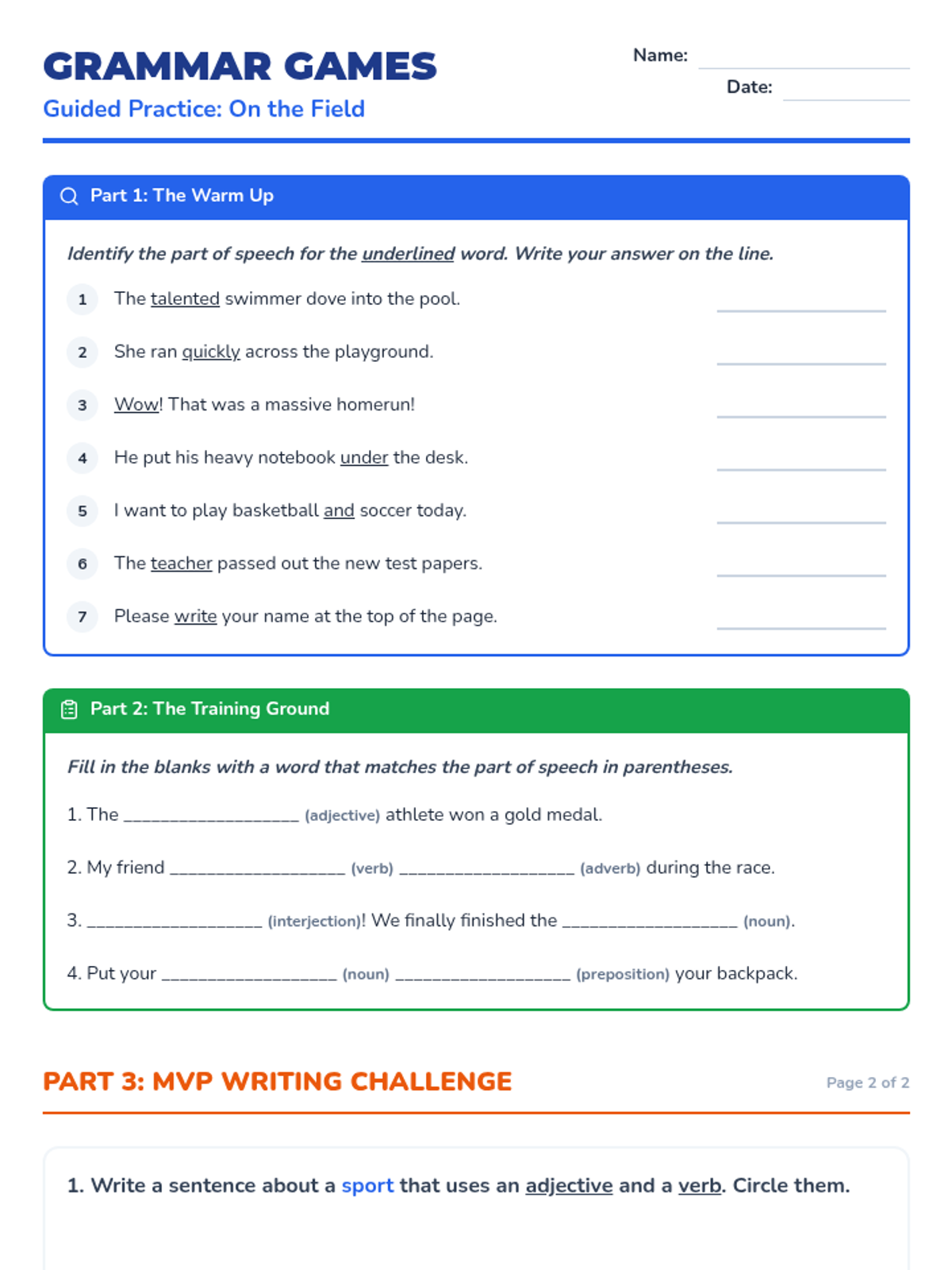
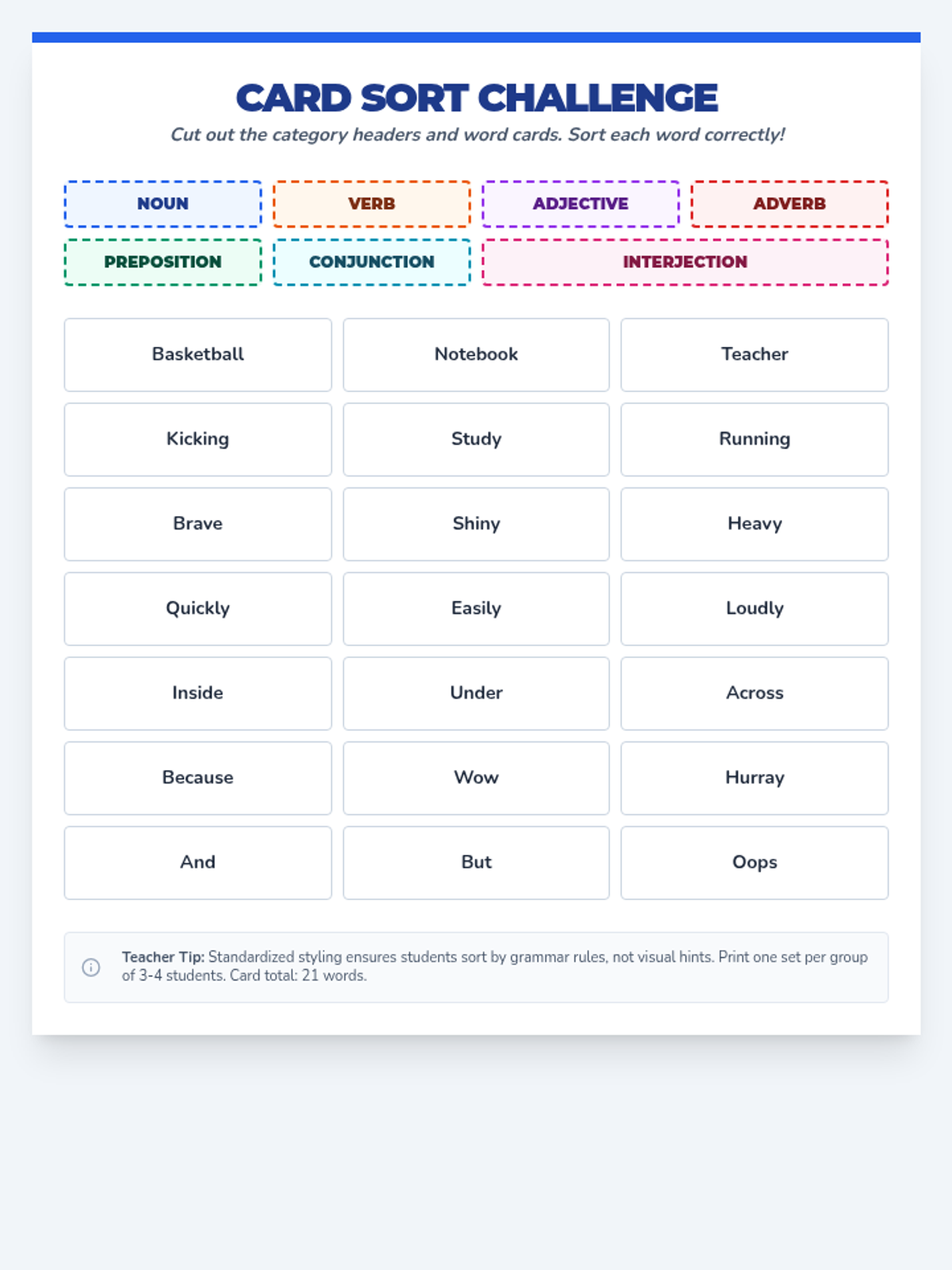
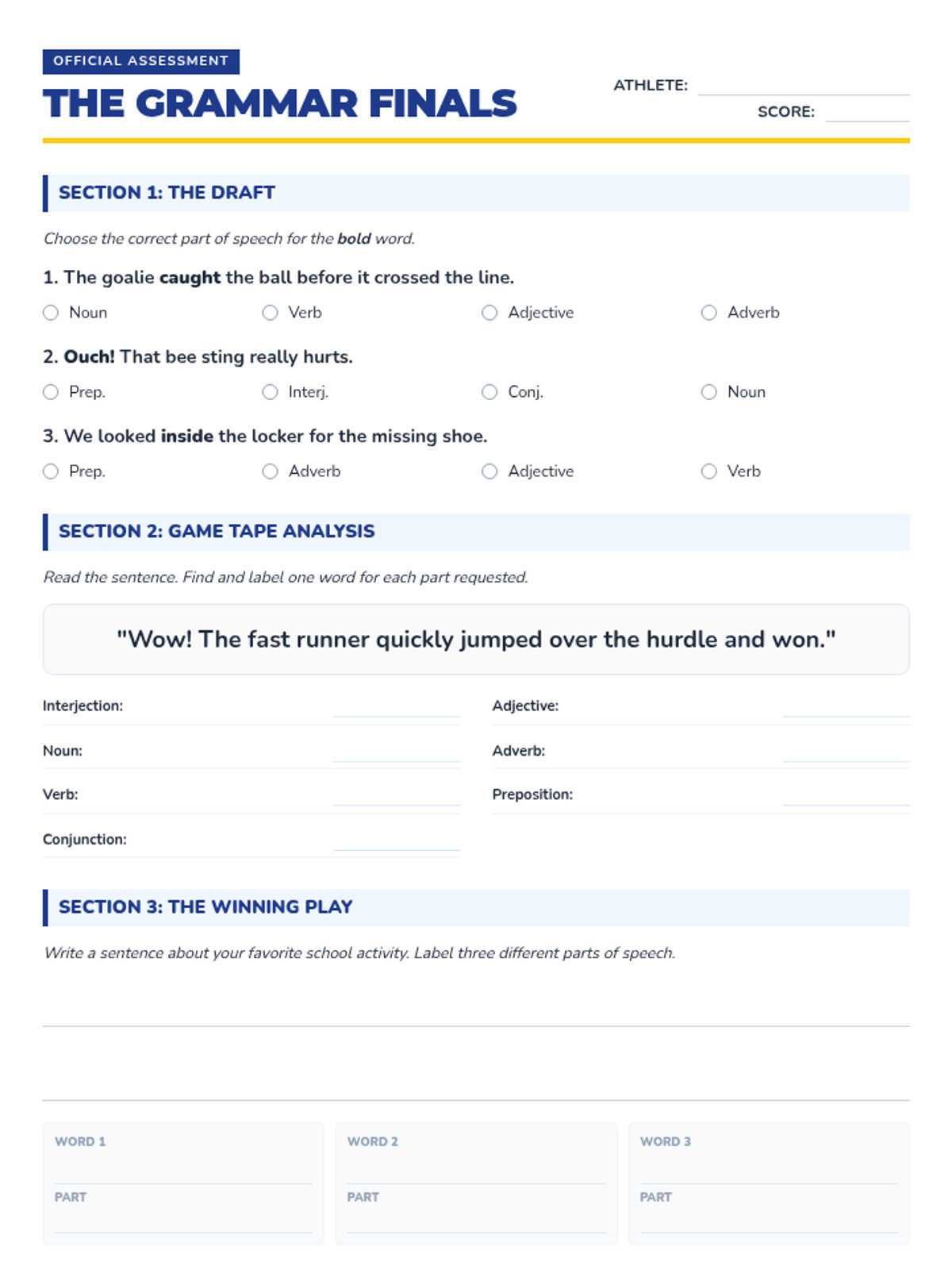
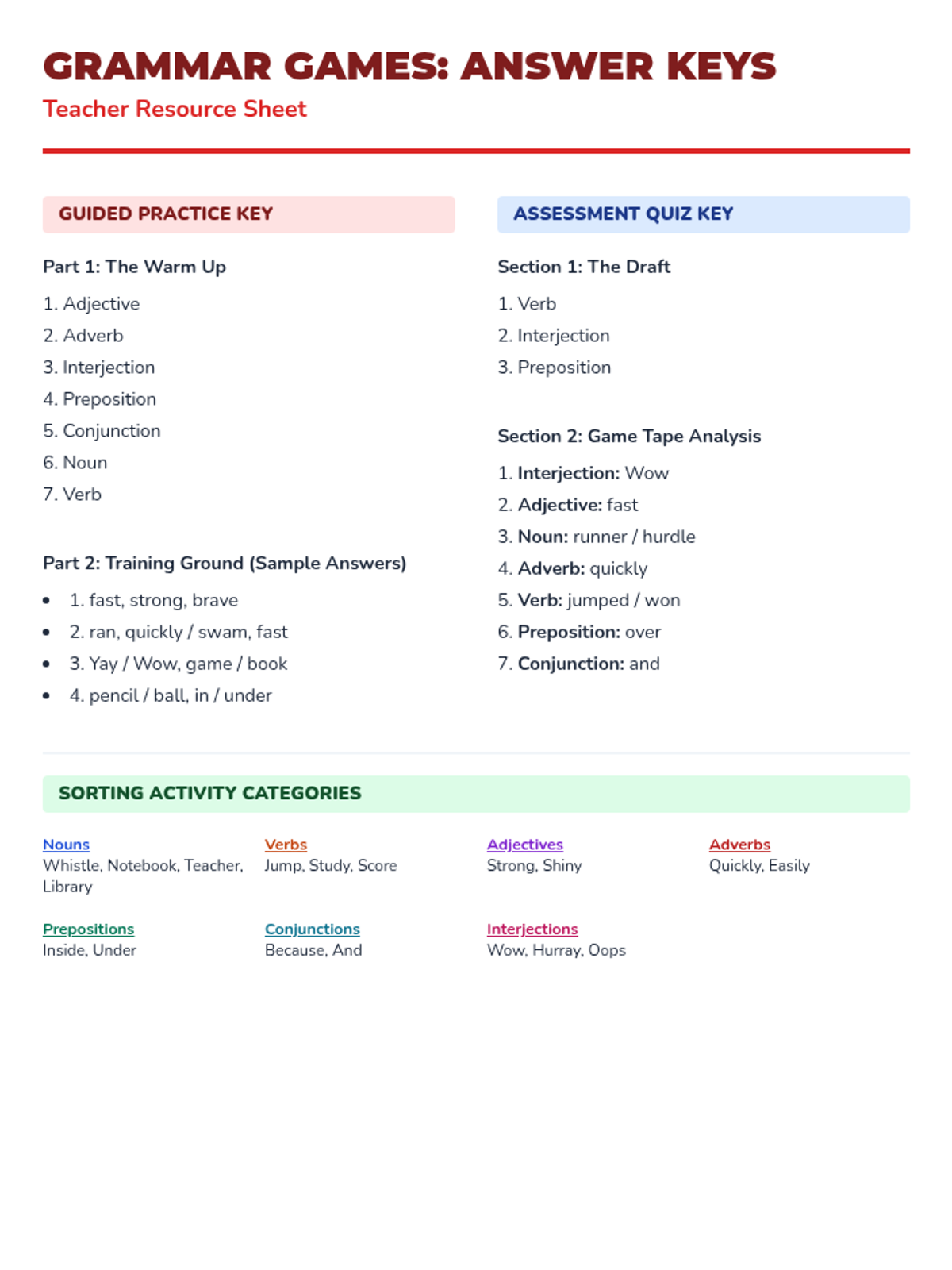
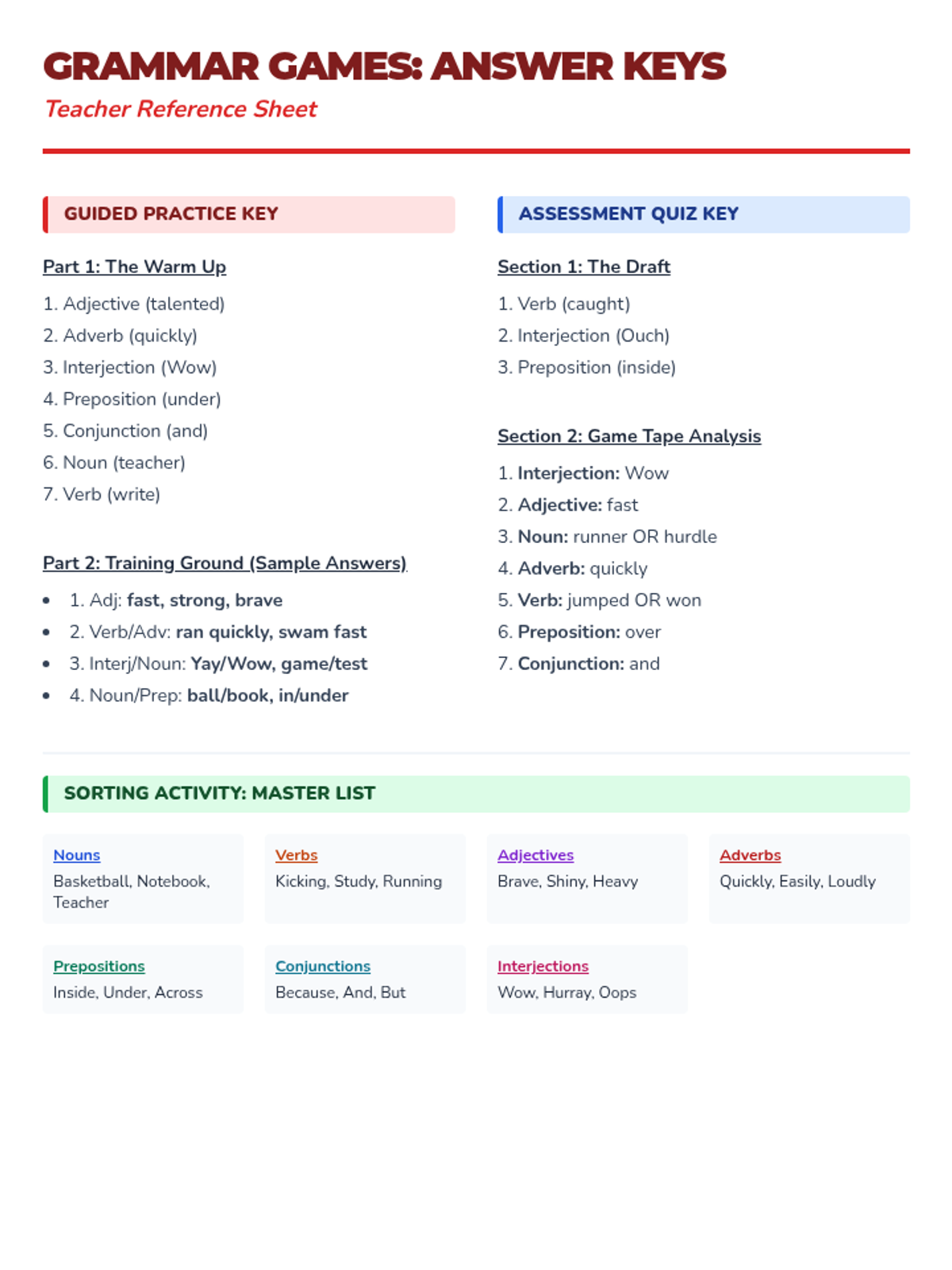
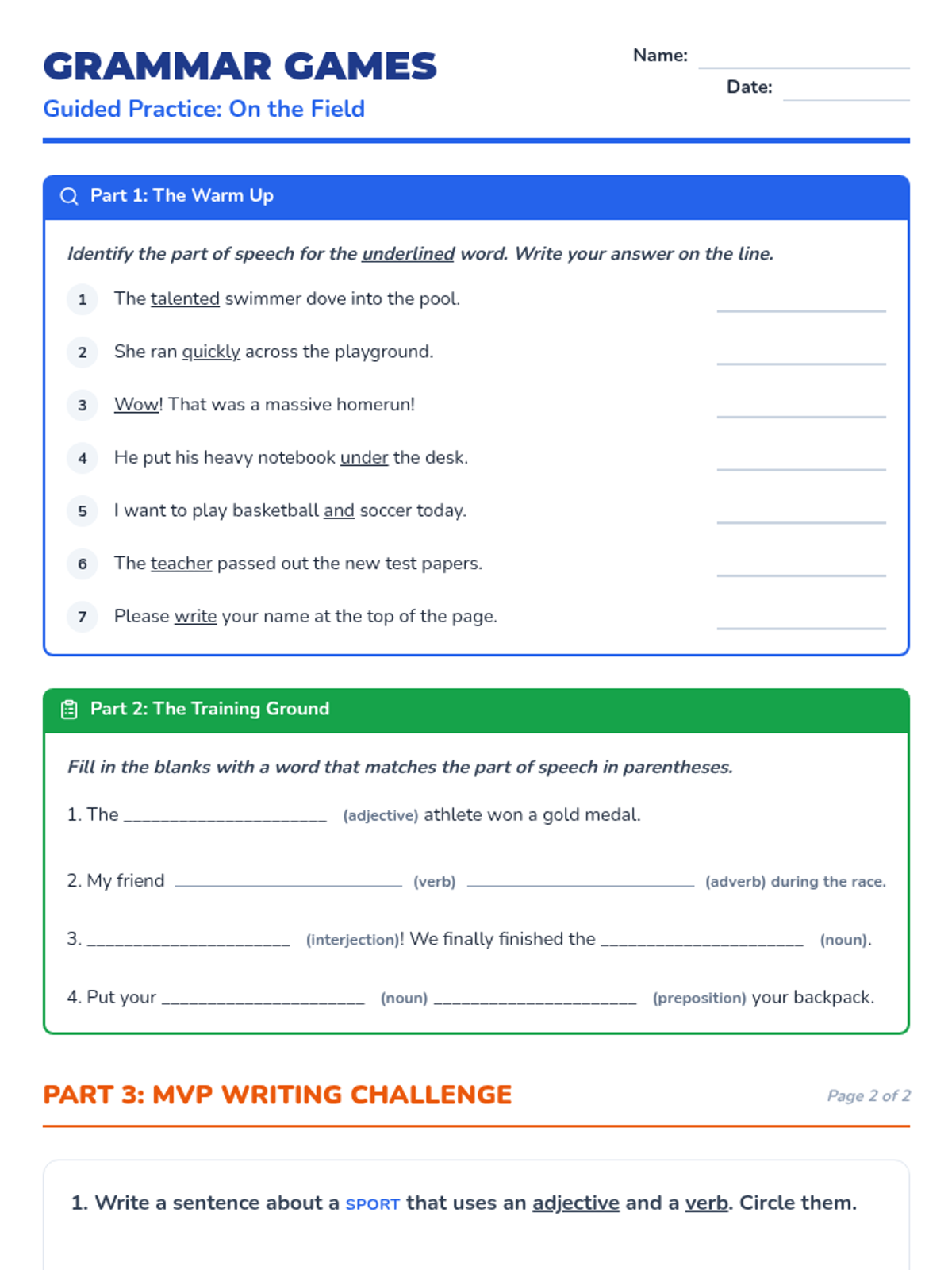
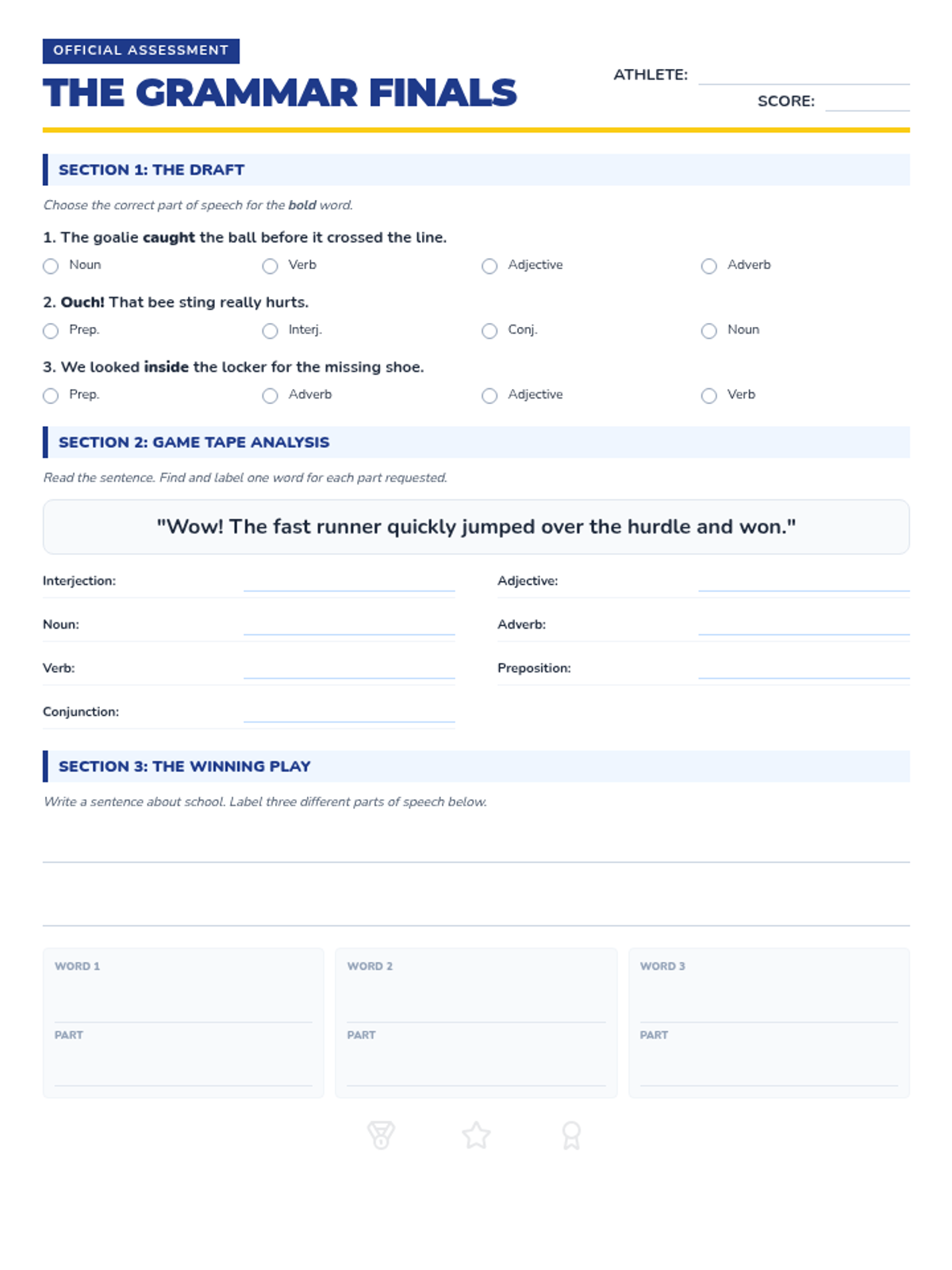
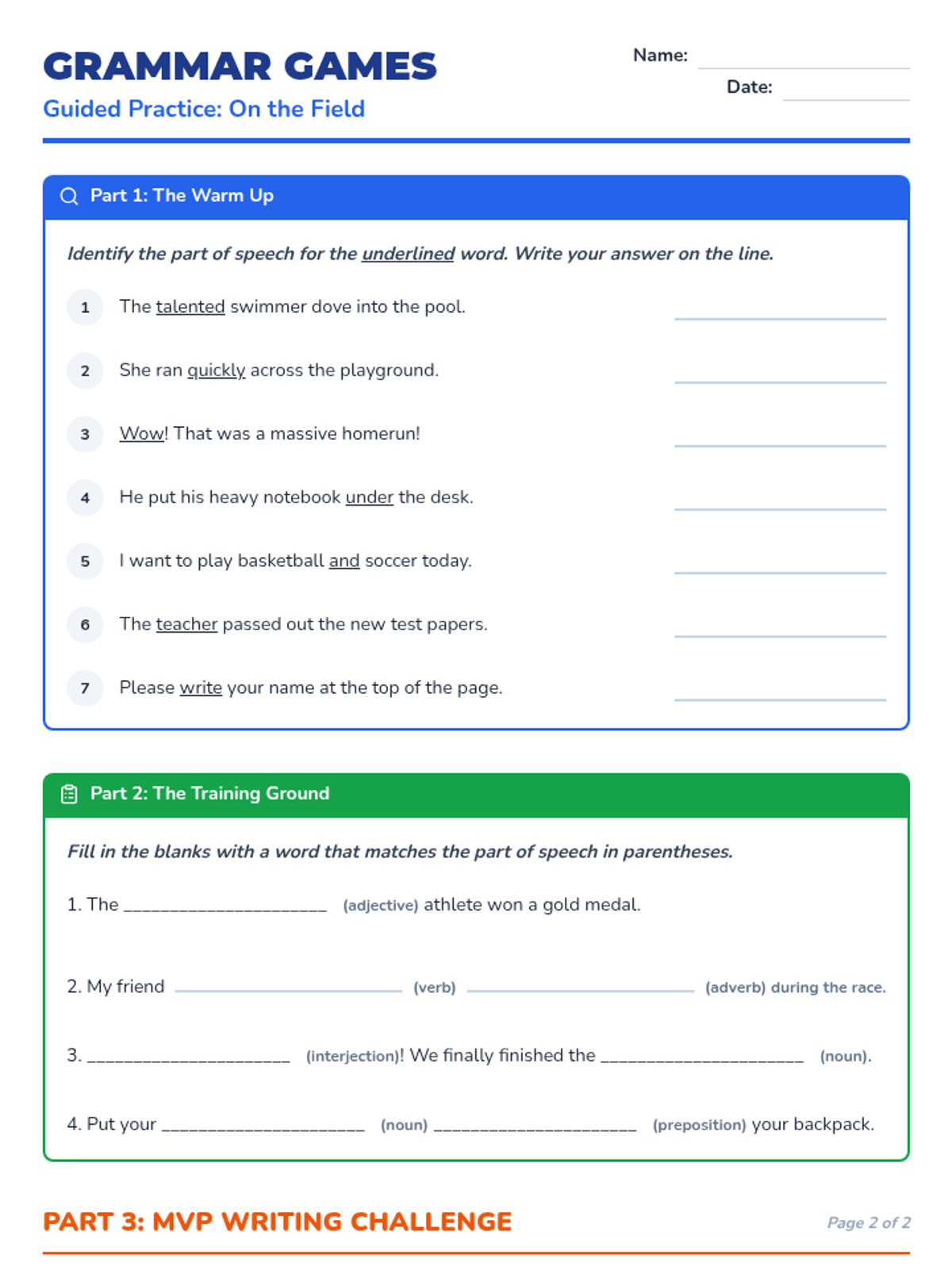
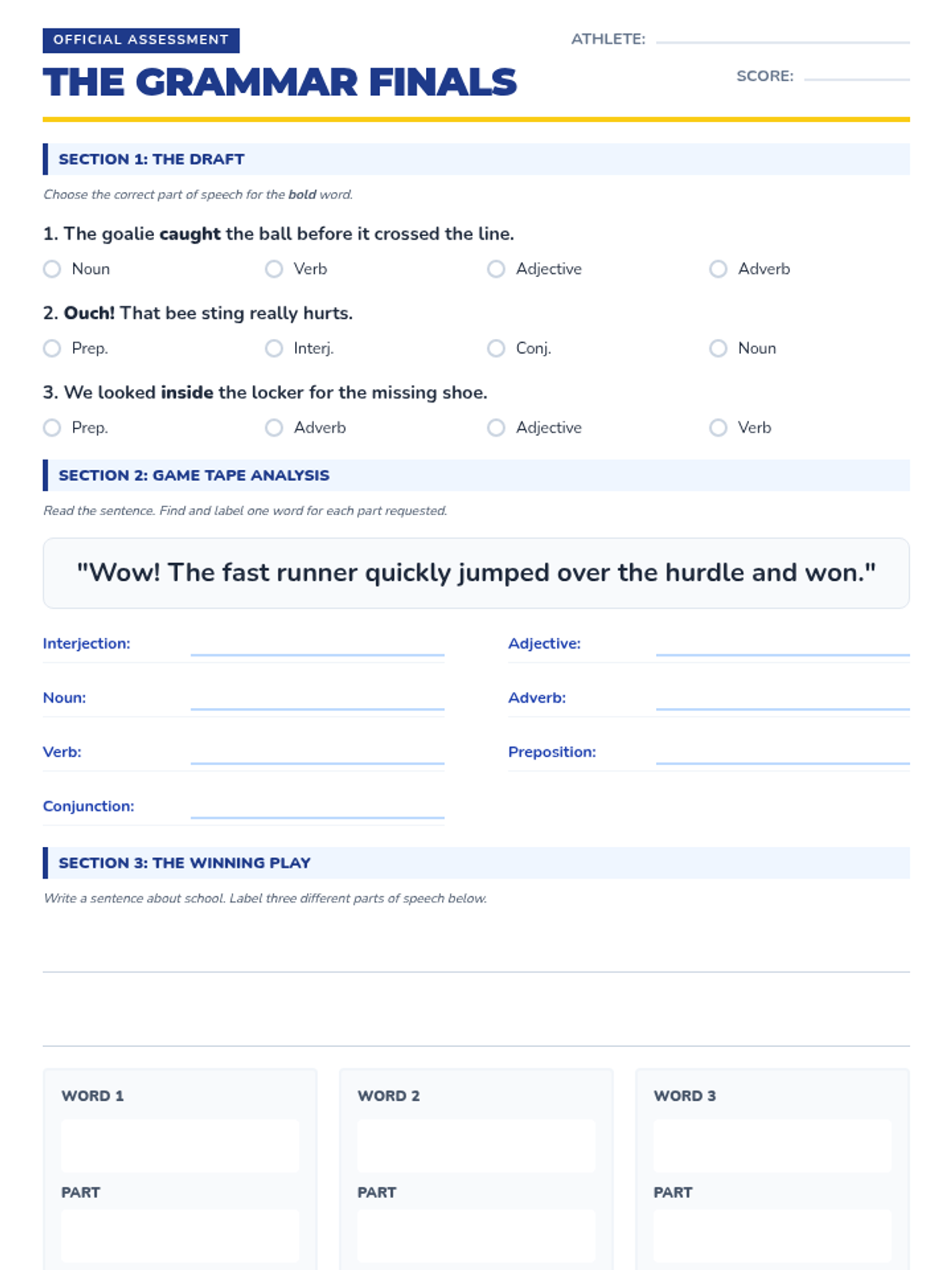
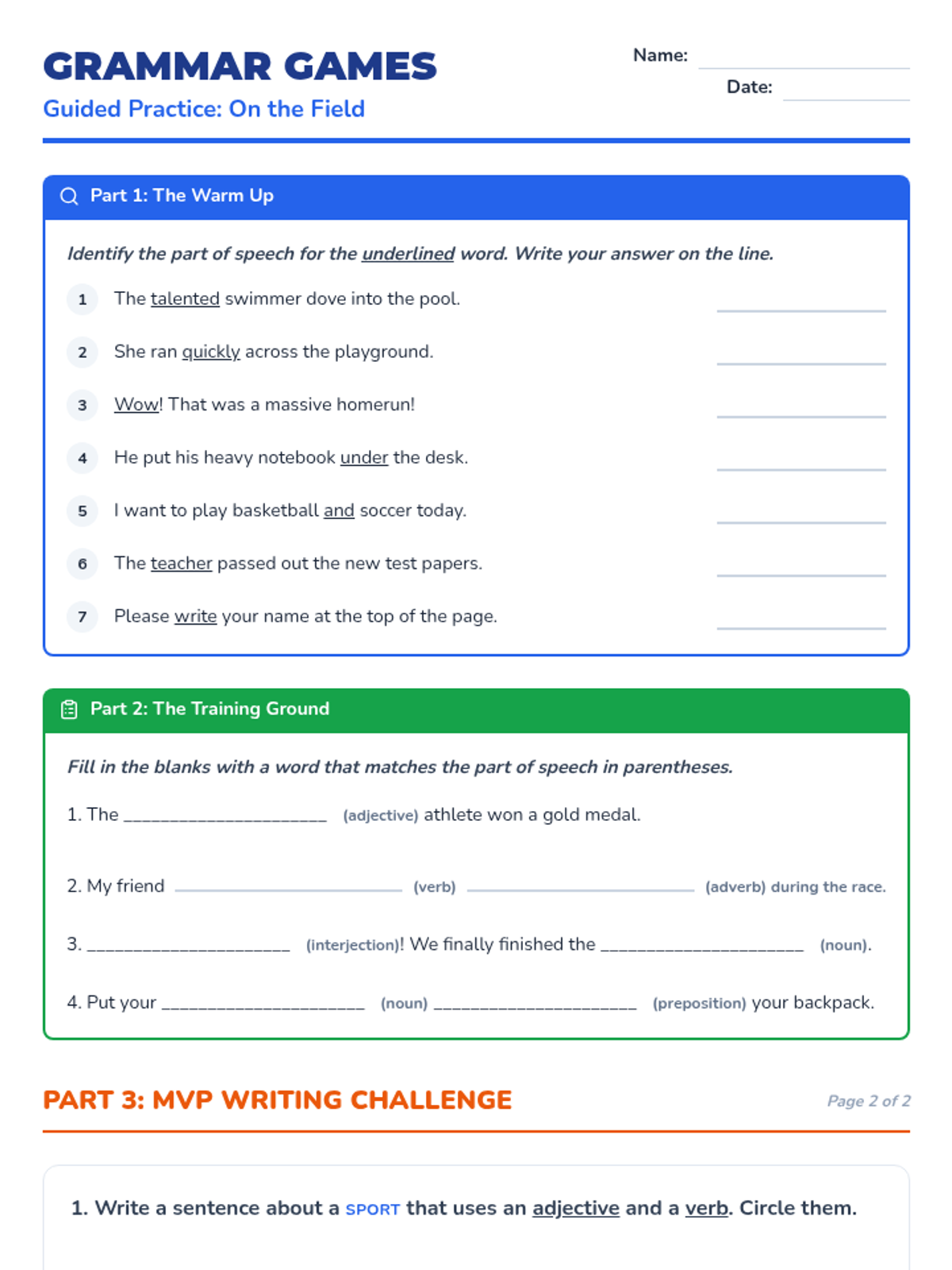
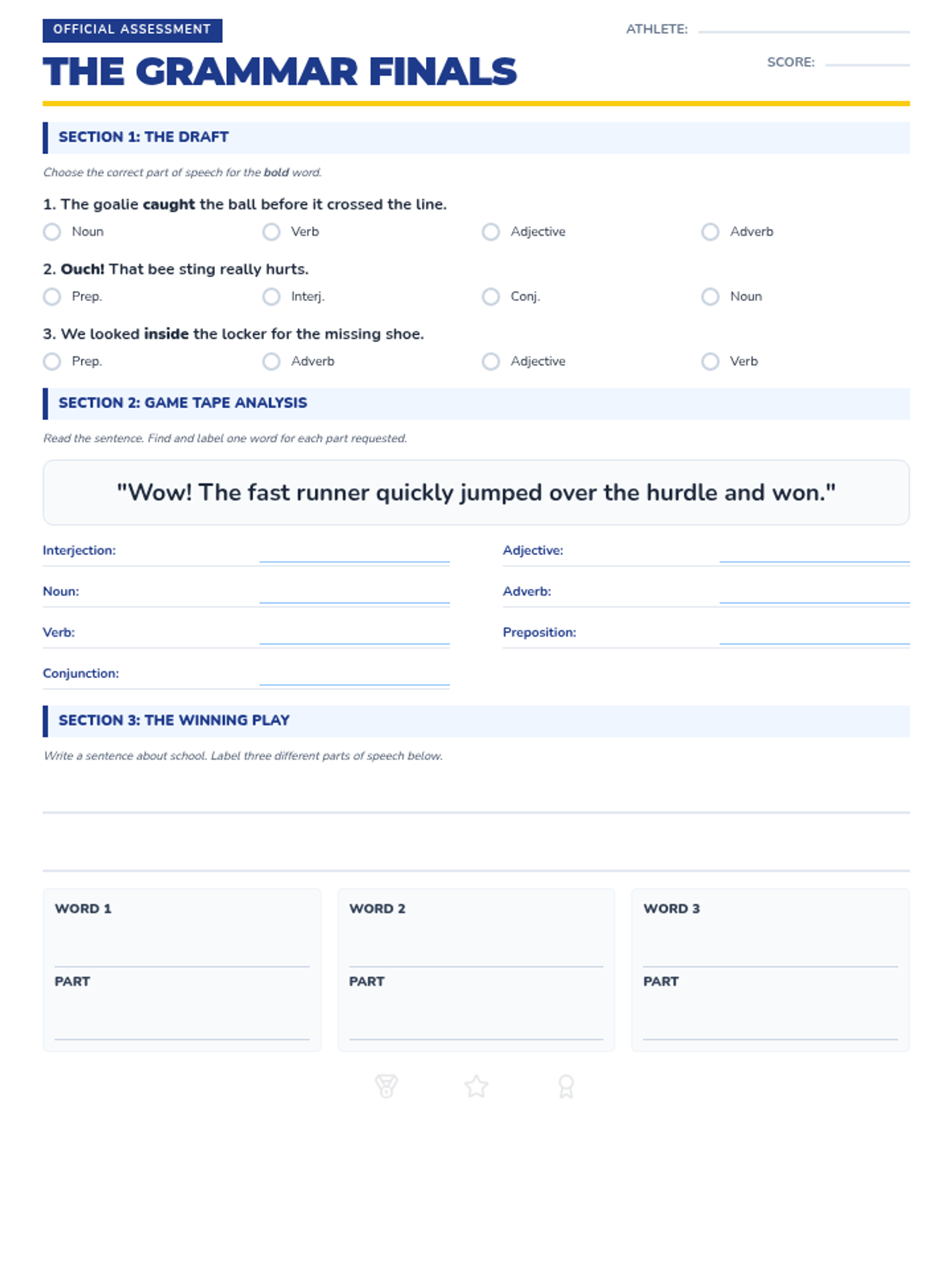
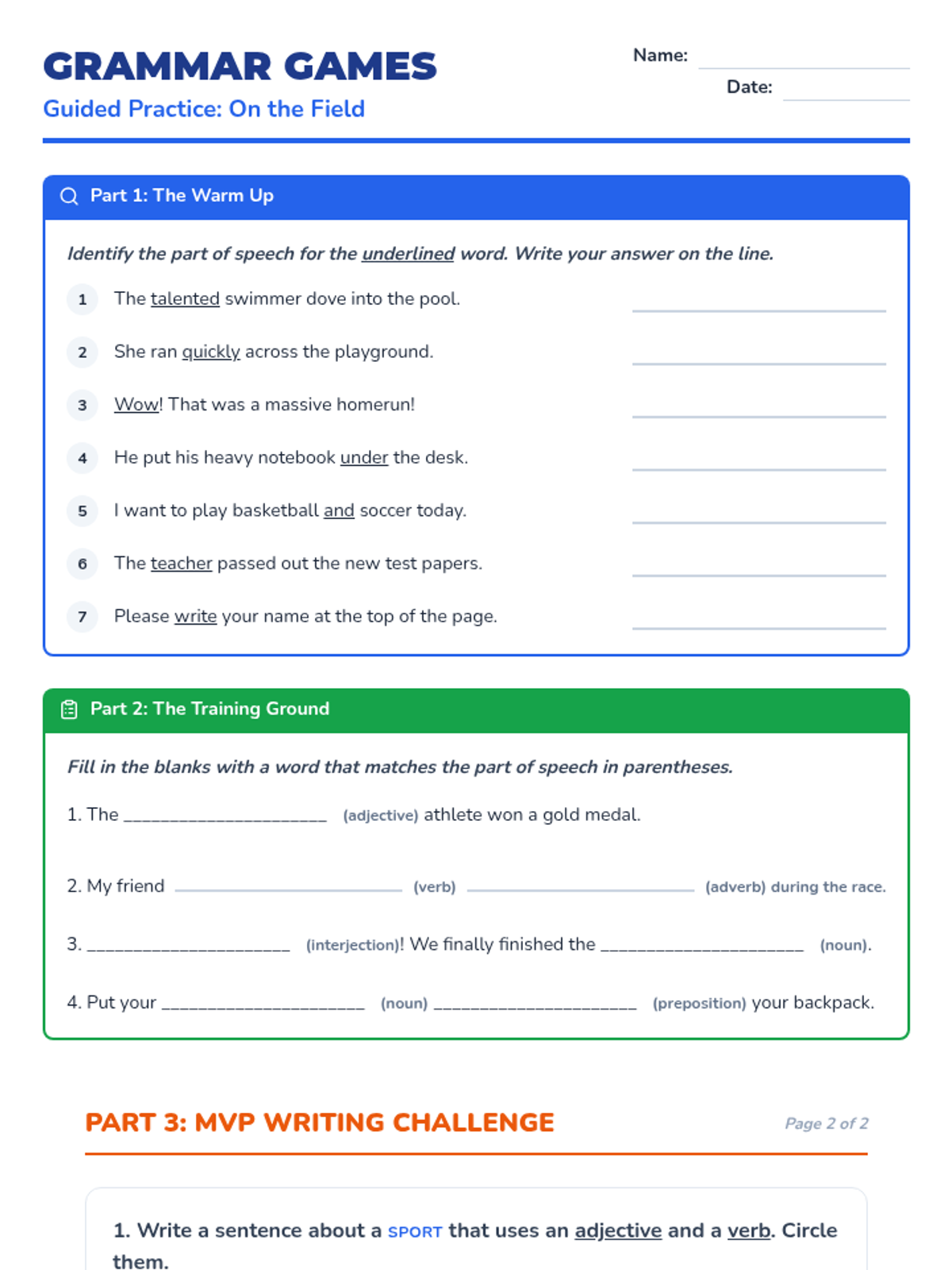
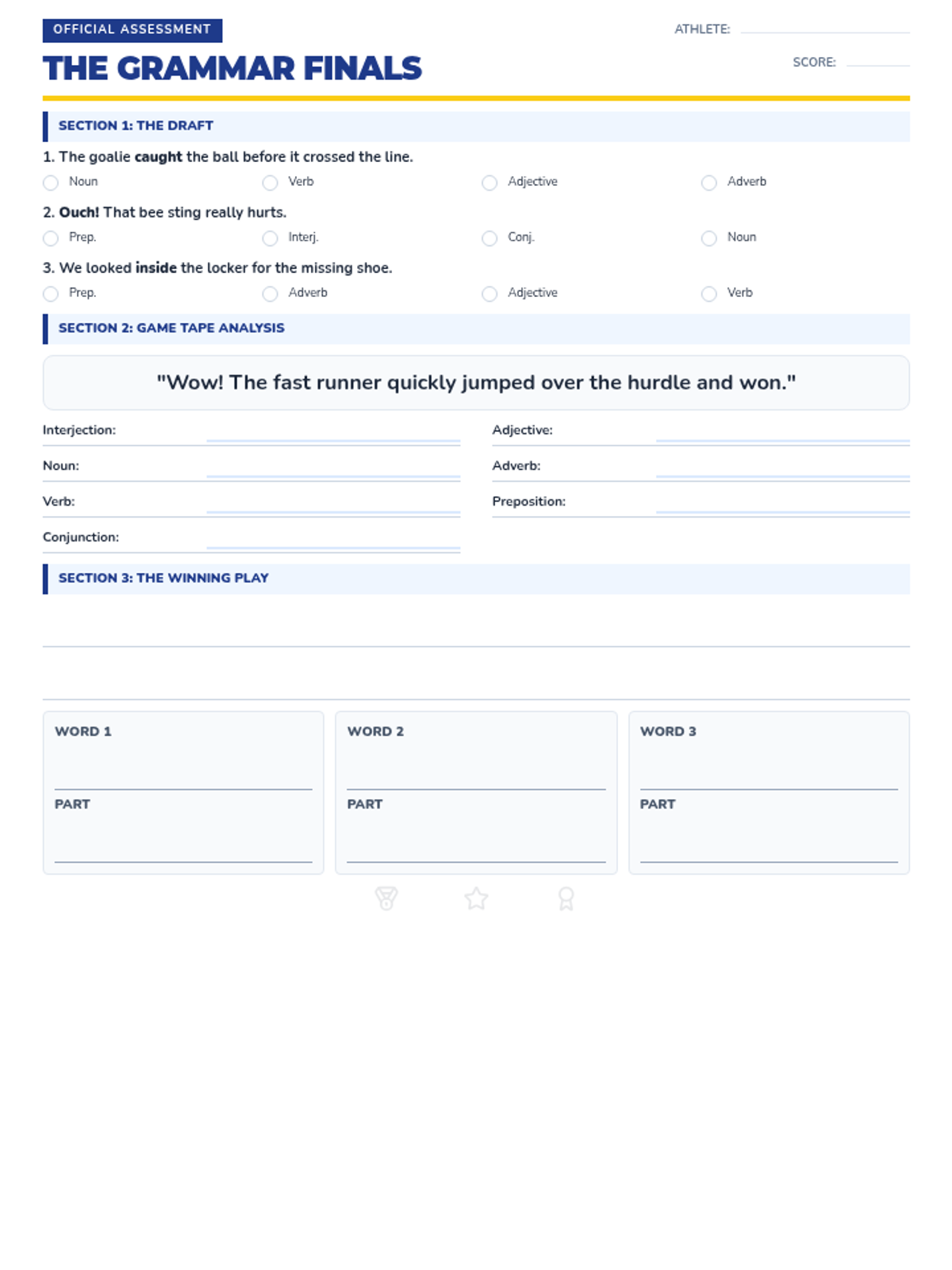
A comprehensive unit on identifying and using the seven primary parts of speech through the lens of sports, hobbies, and school life. Students progress from basic identification to complex sentence construction.
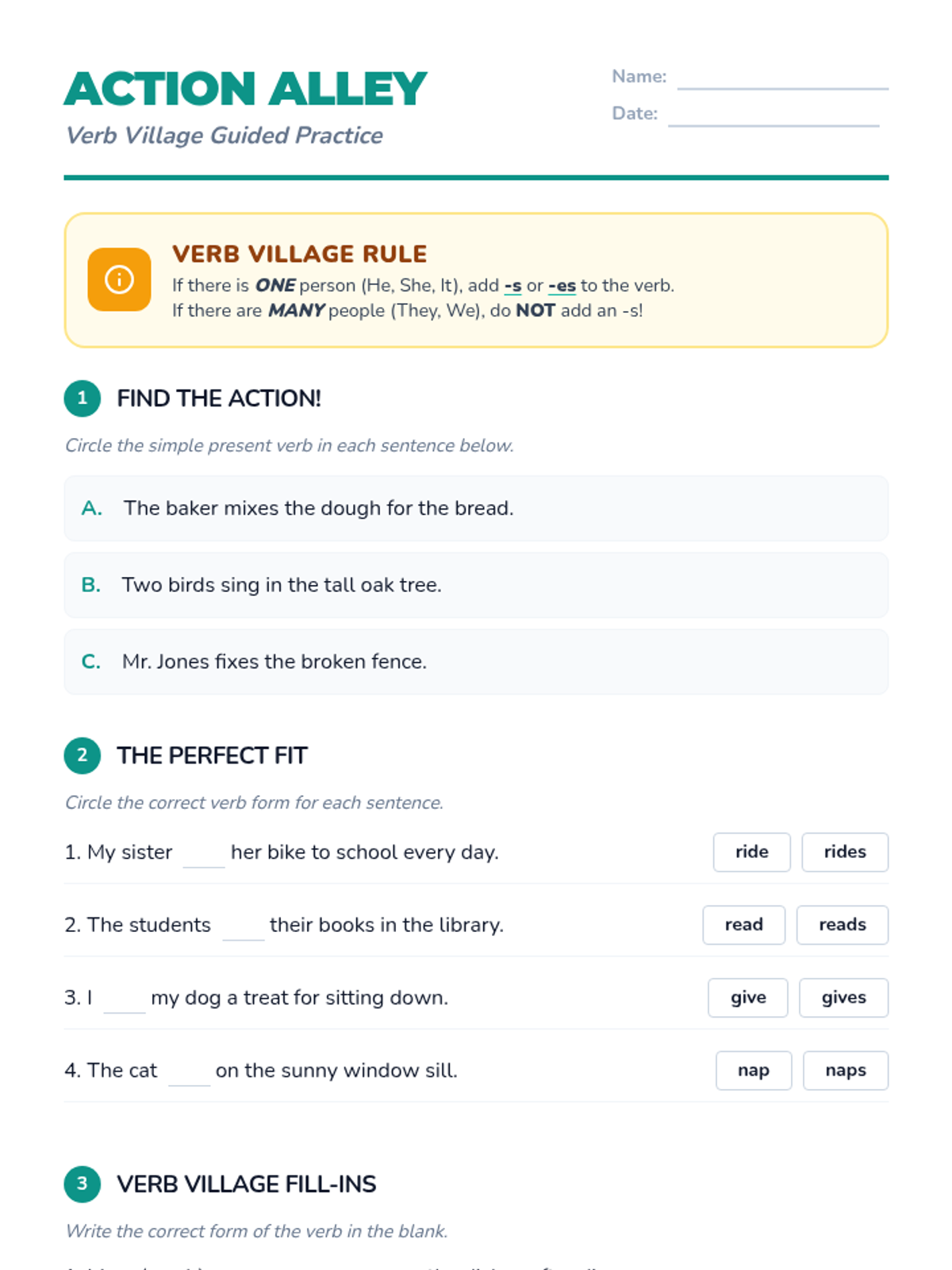
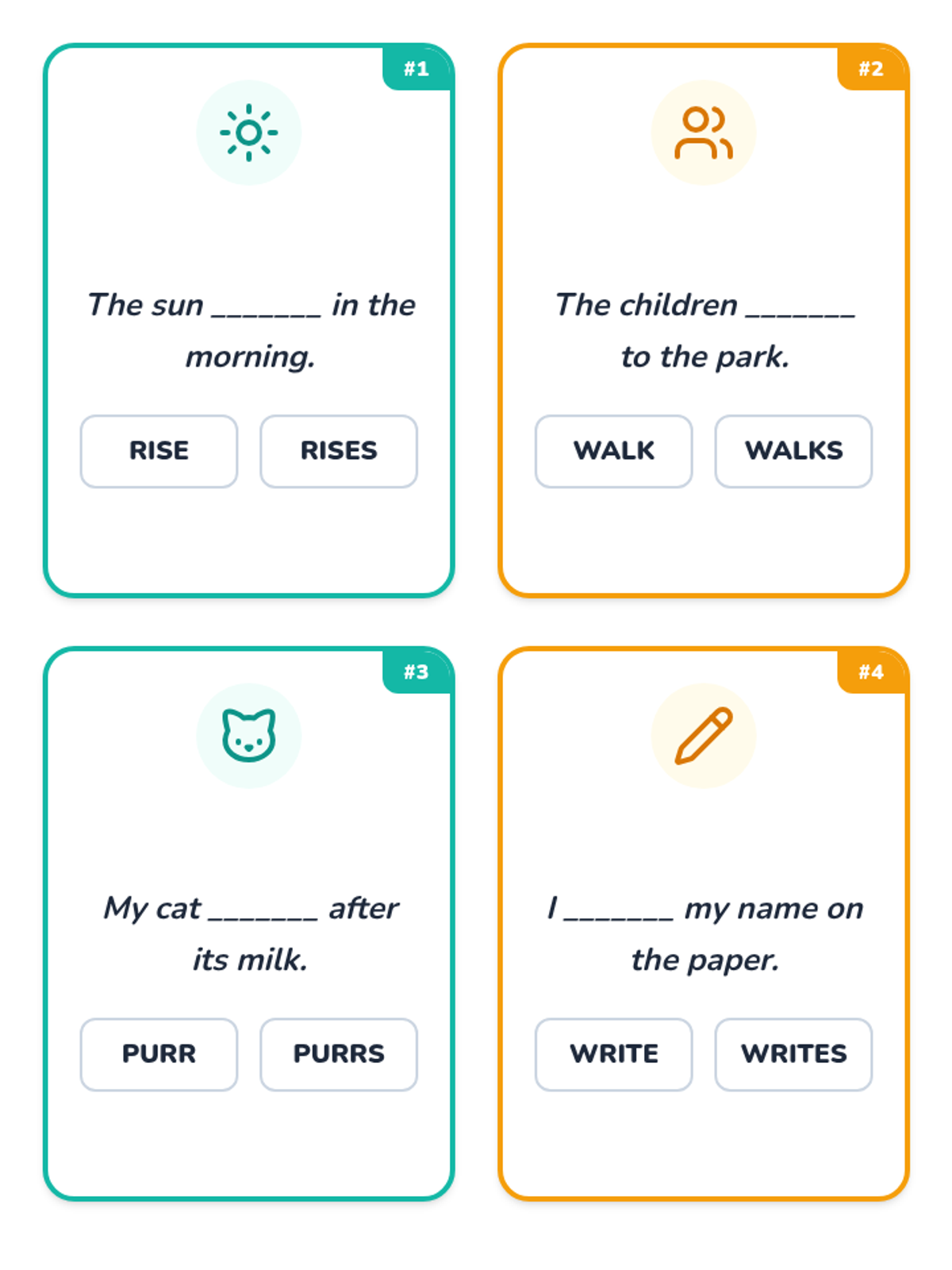
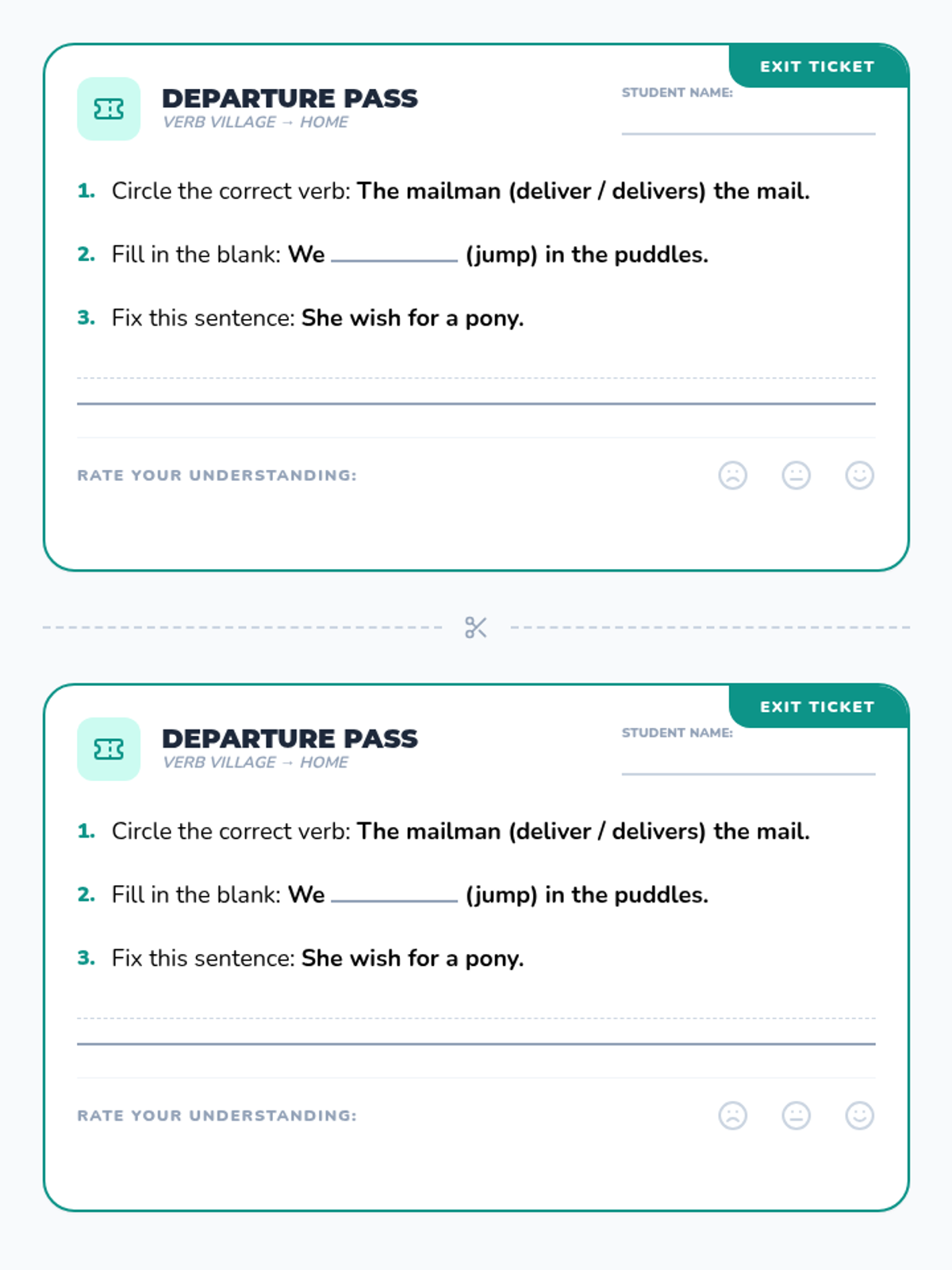
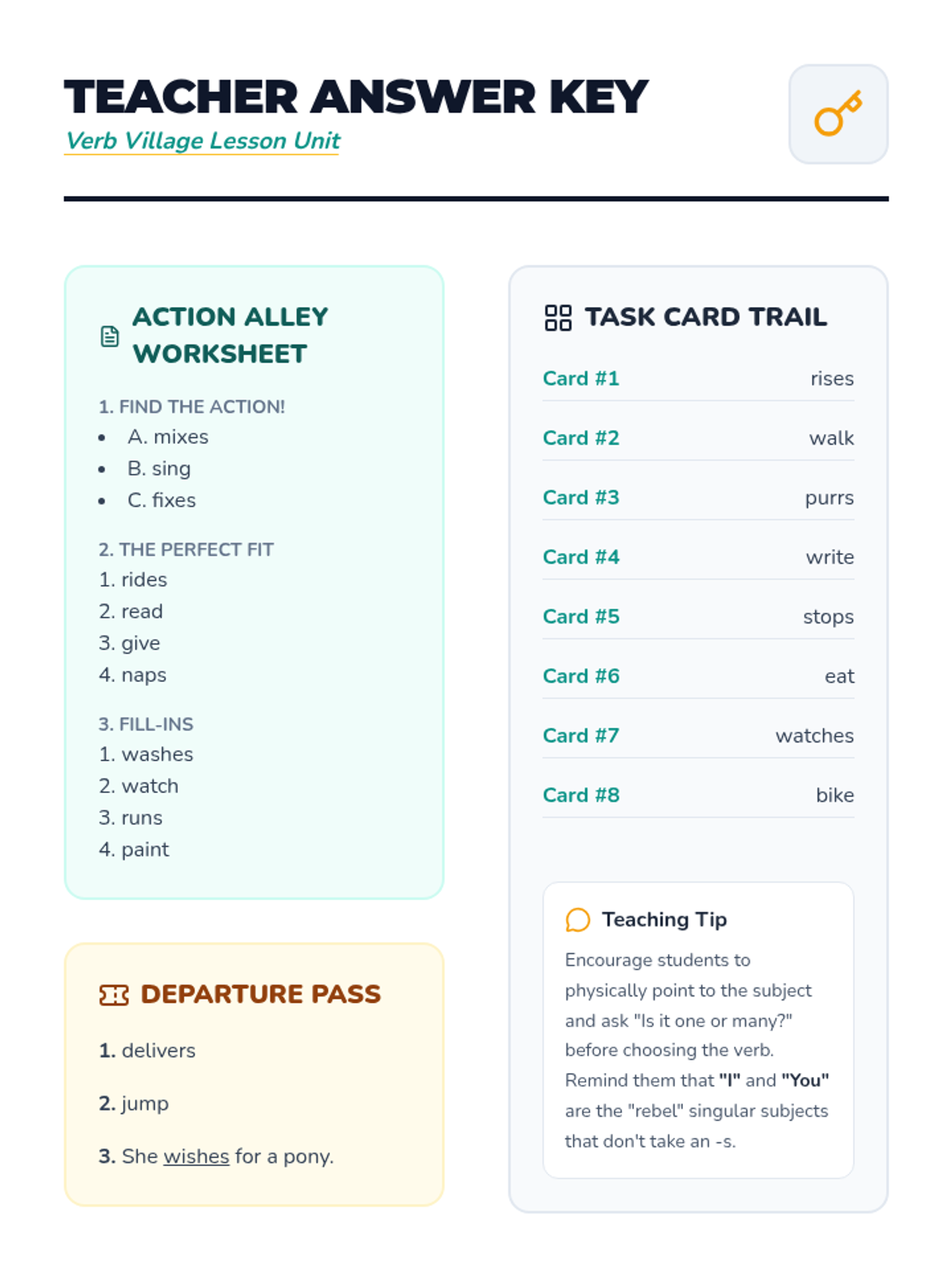
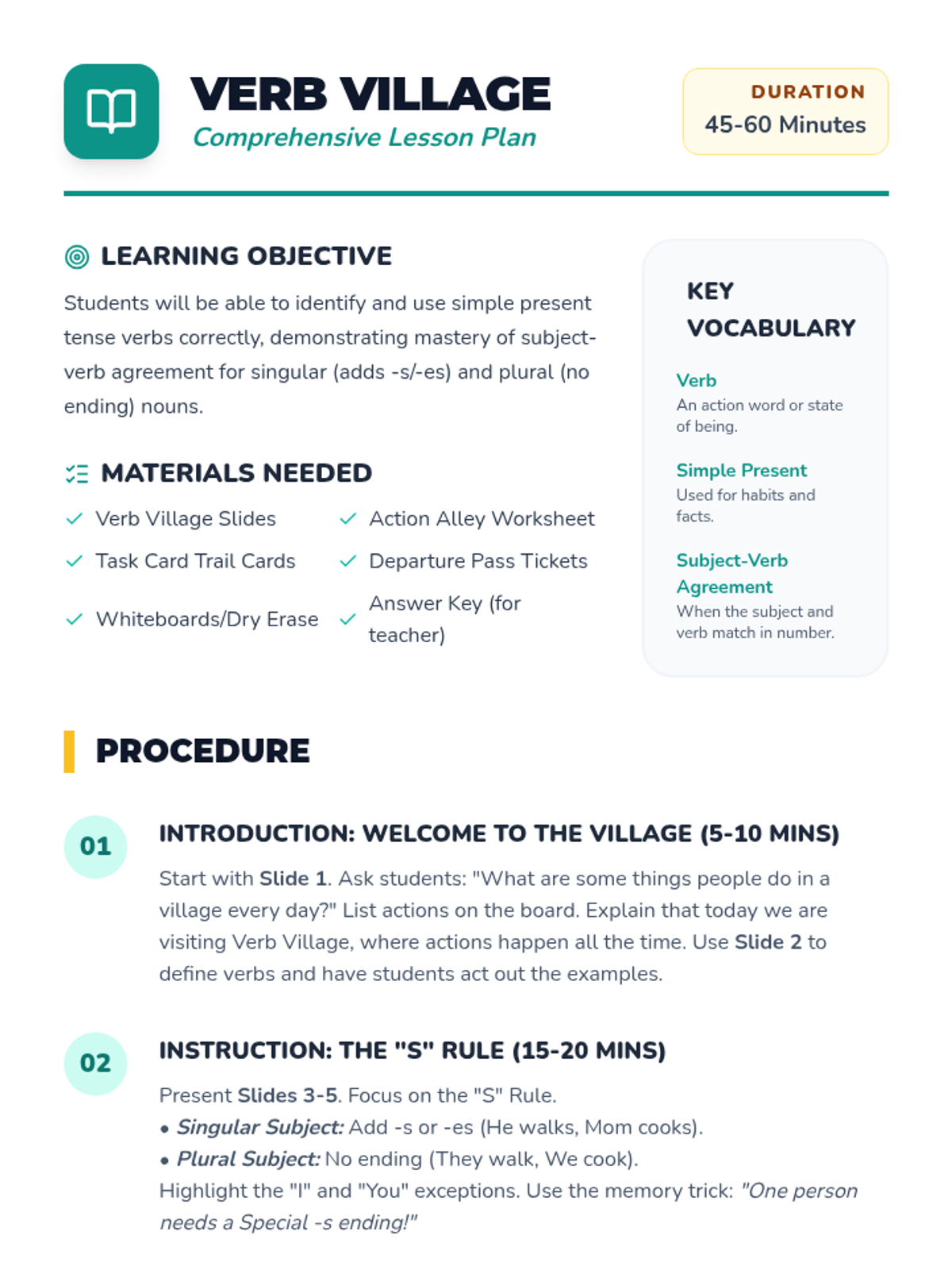
A comprehensive grammar unit focusing on foundational parts of speech and sentence structure, starting with the vibrant world of simple present verbs.
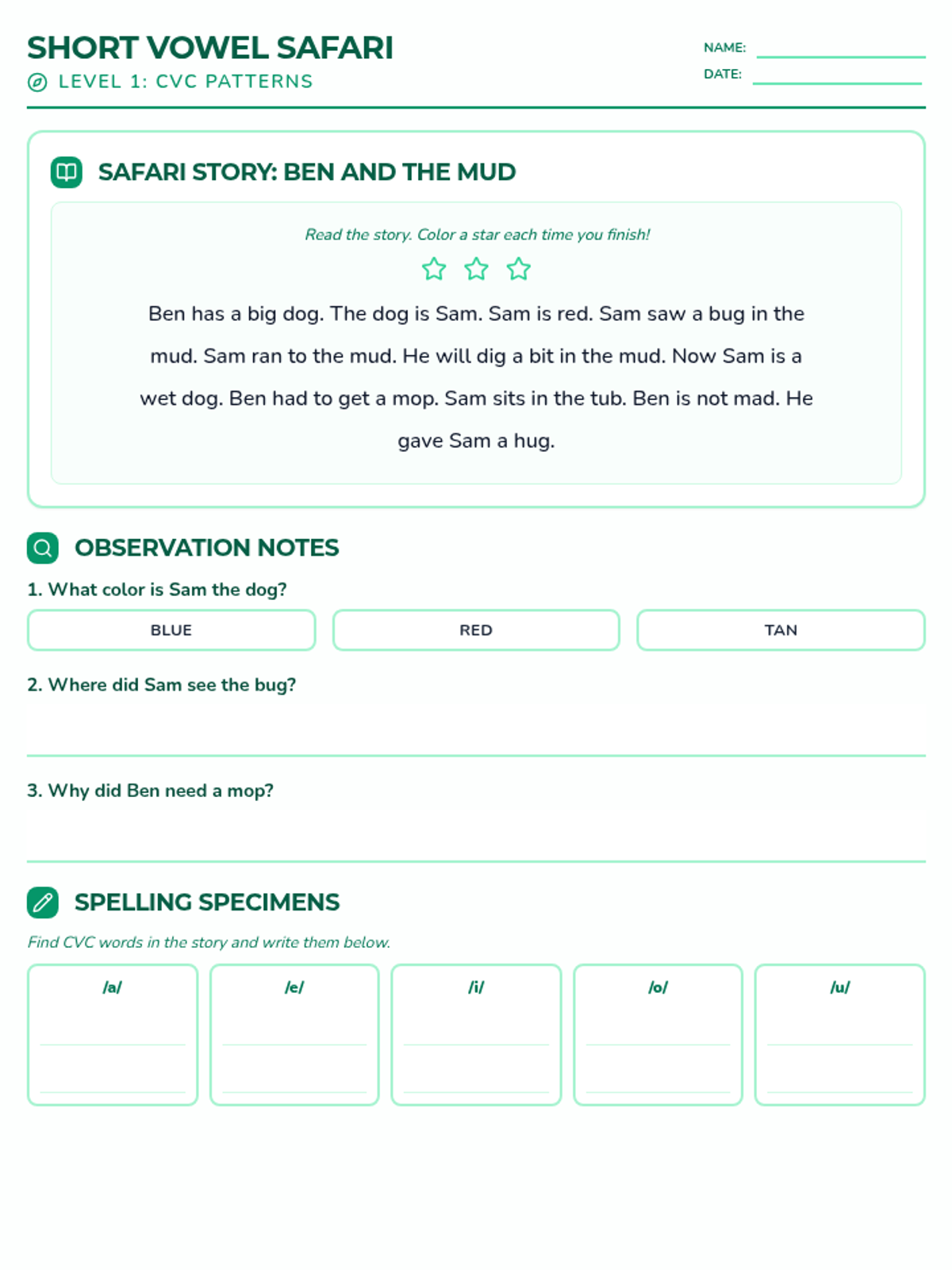
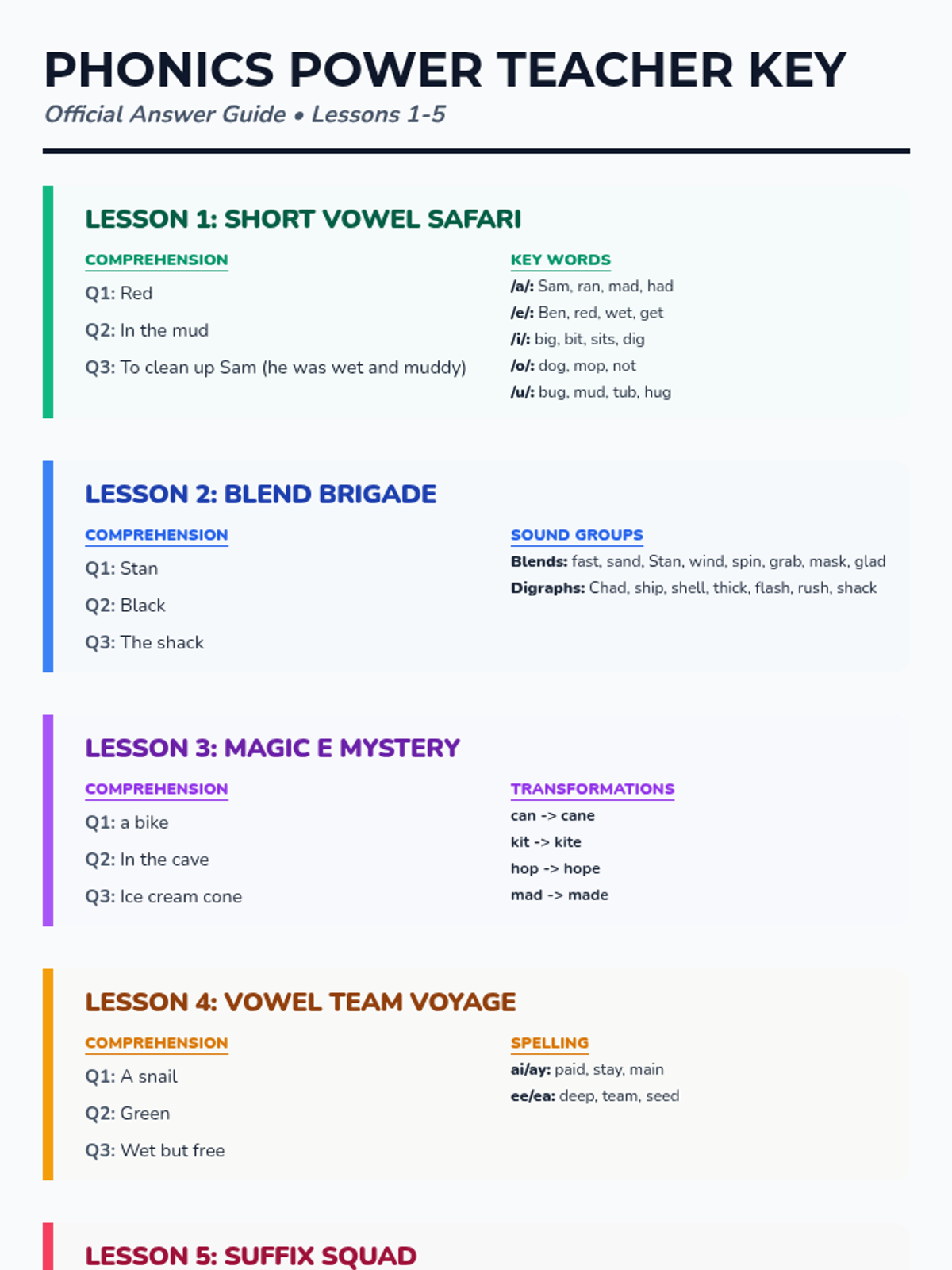
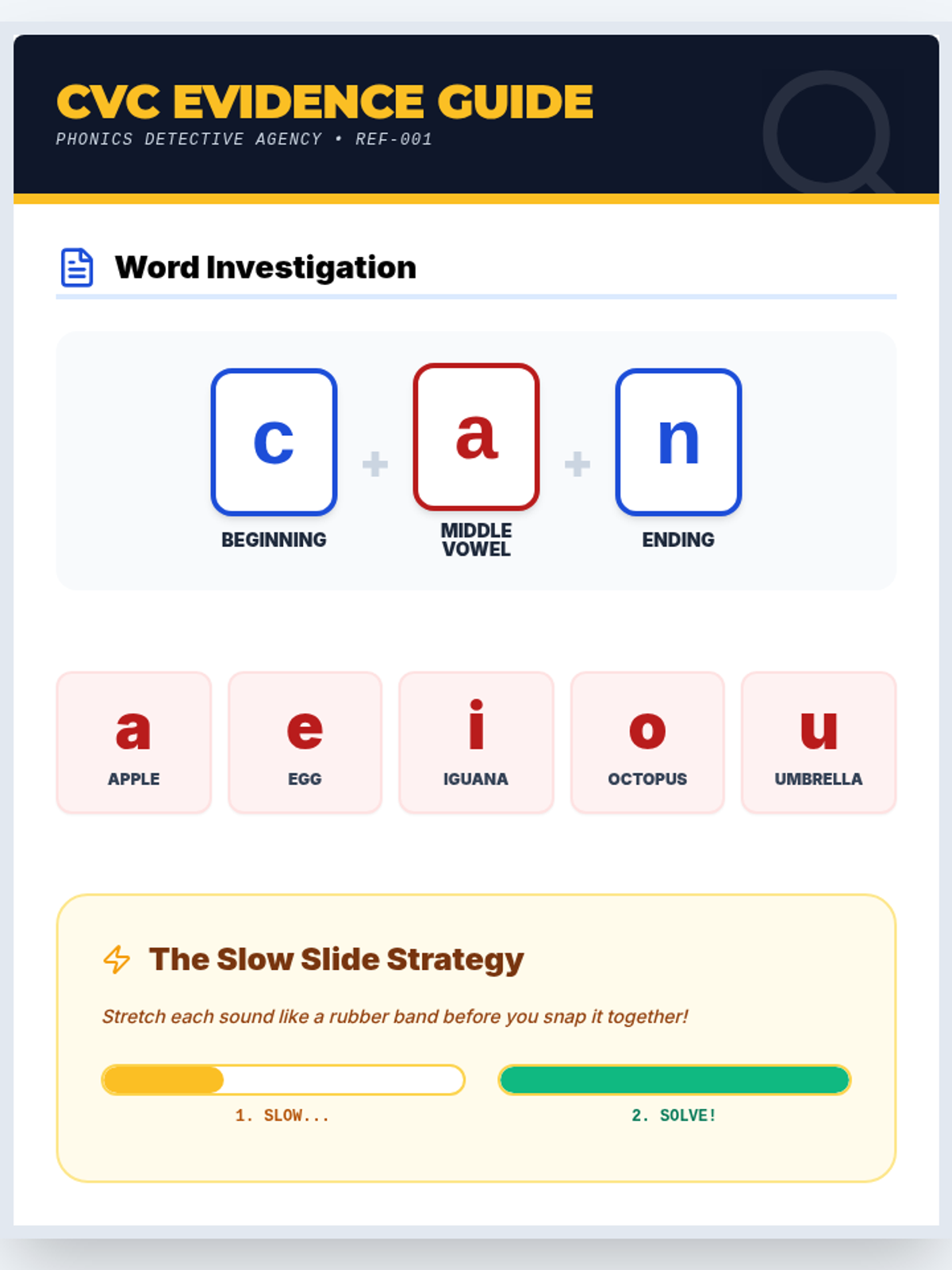
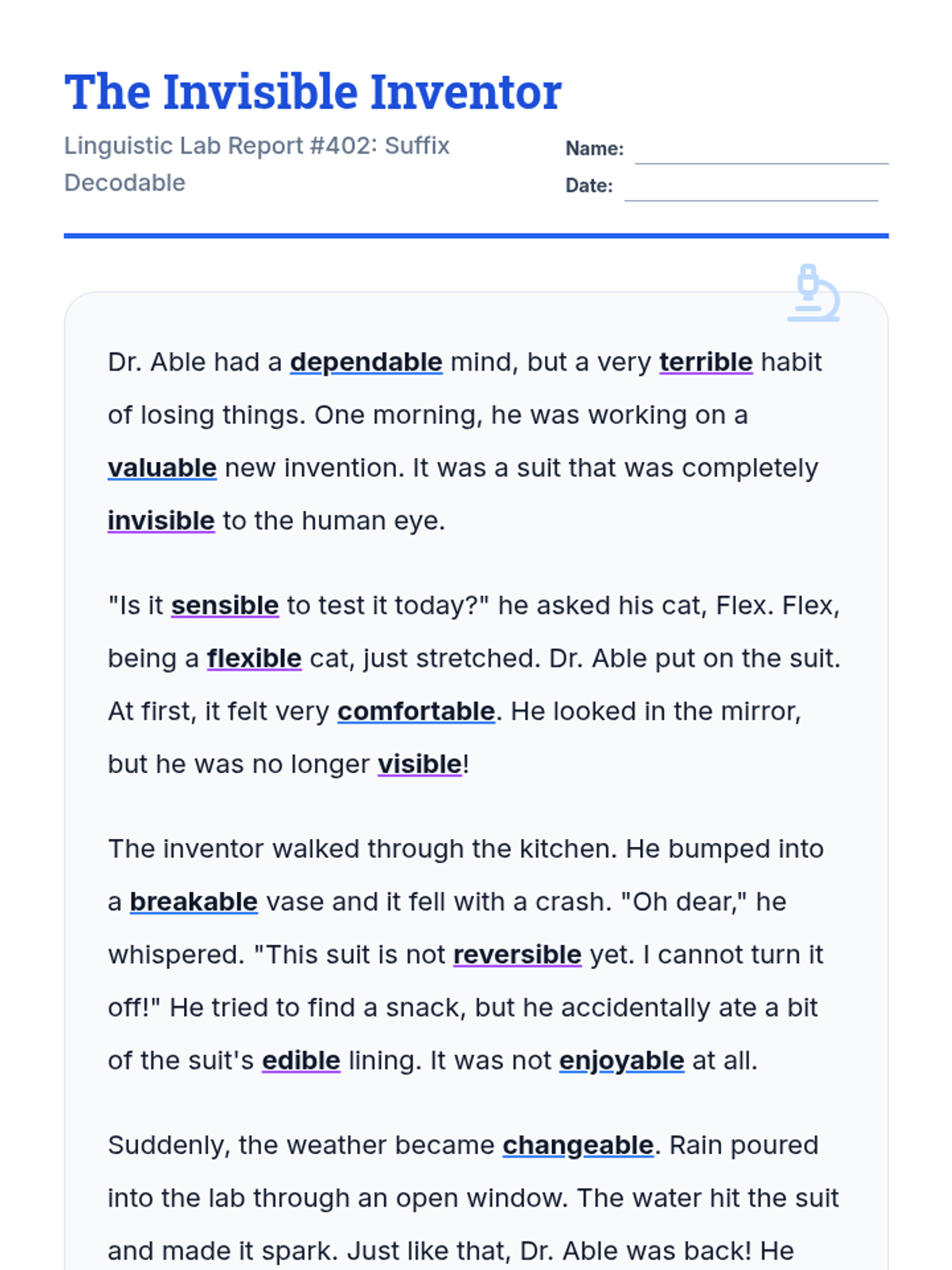
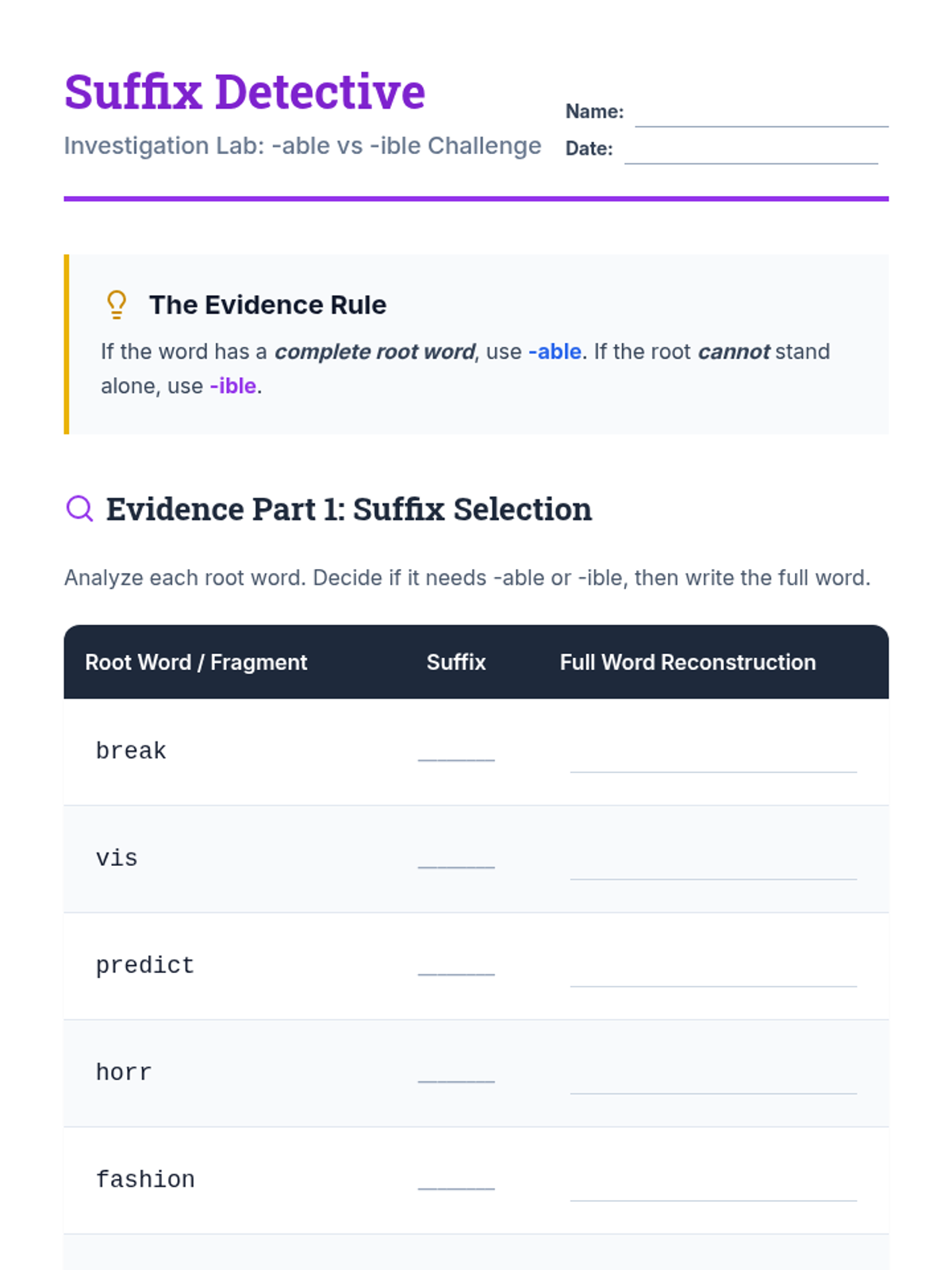
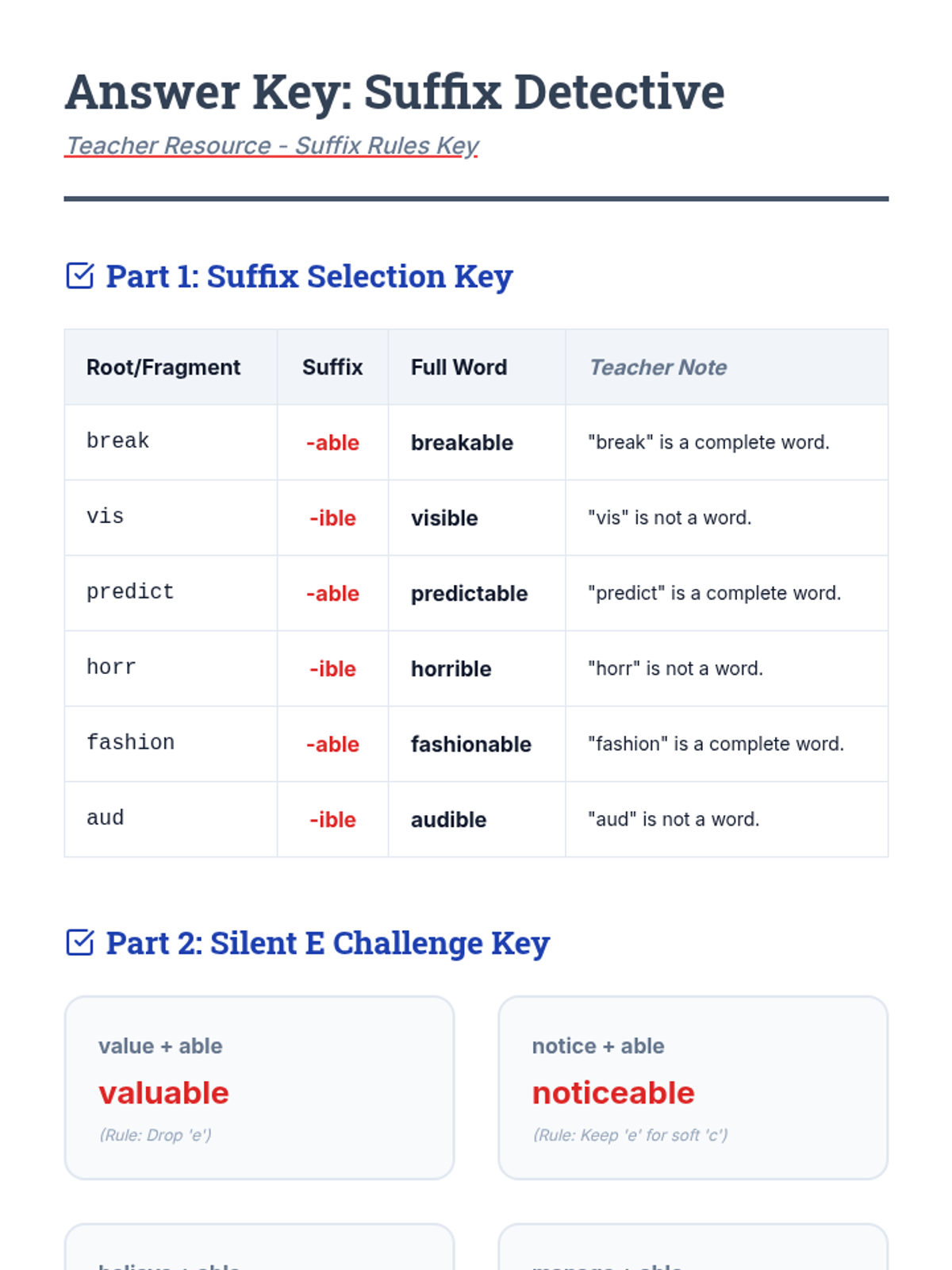
A comprehensive phonics sequence covering fundamental reading and spelling patterns from CVC words to complex vowel teams and suffixes. Each lesson includes instructional slides, decodable reading passages, comprehension activities, and targeted spelling practice.
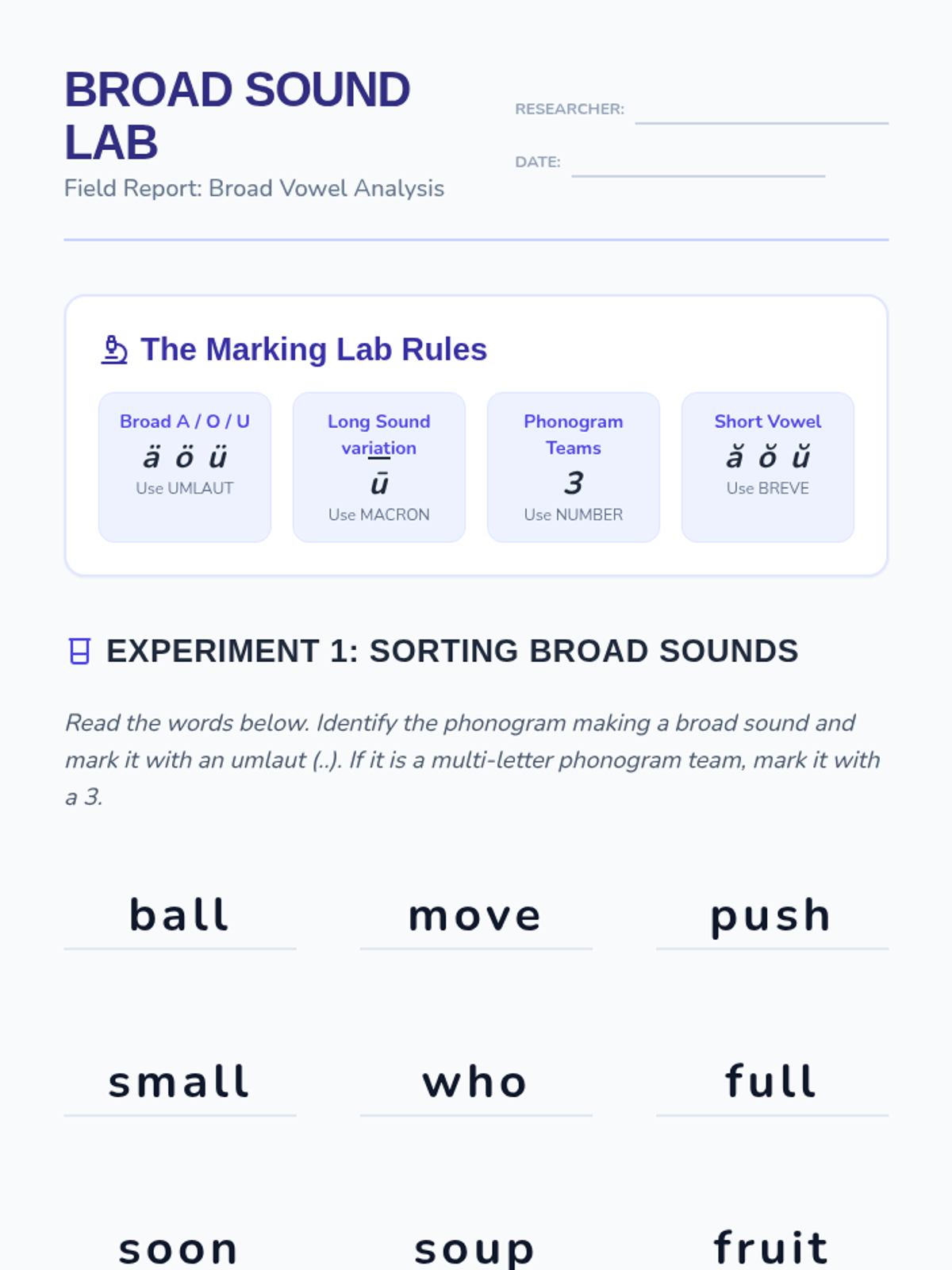
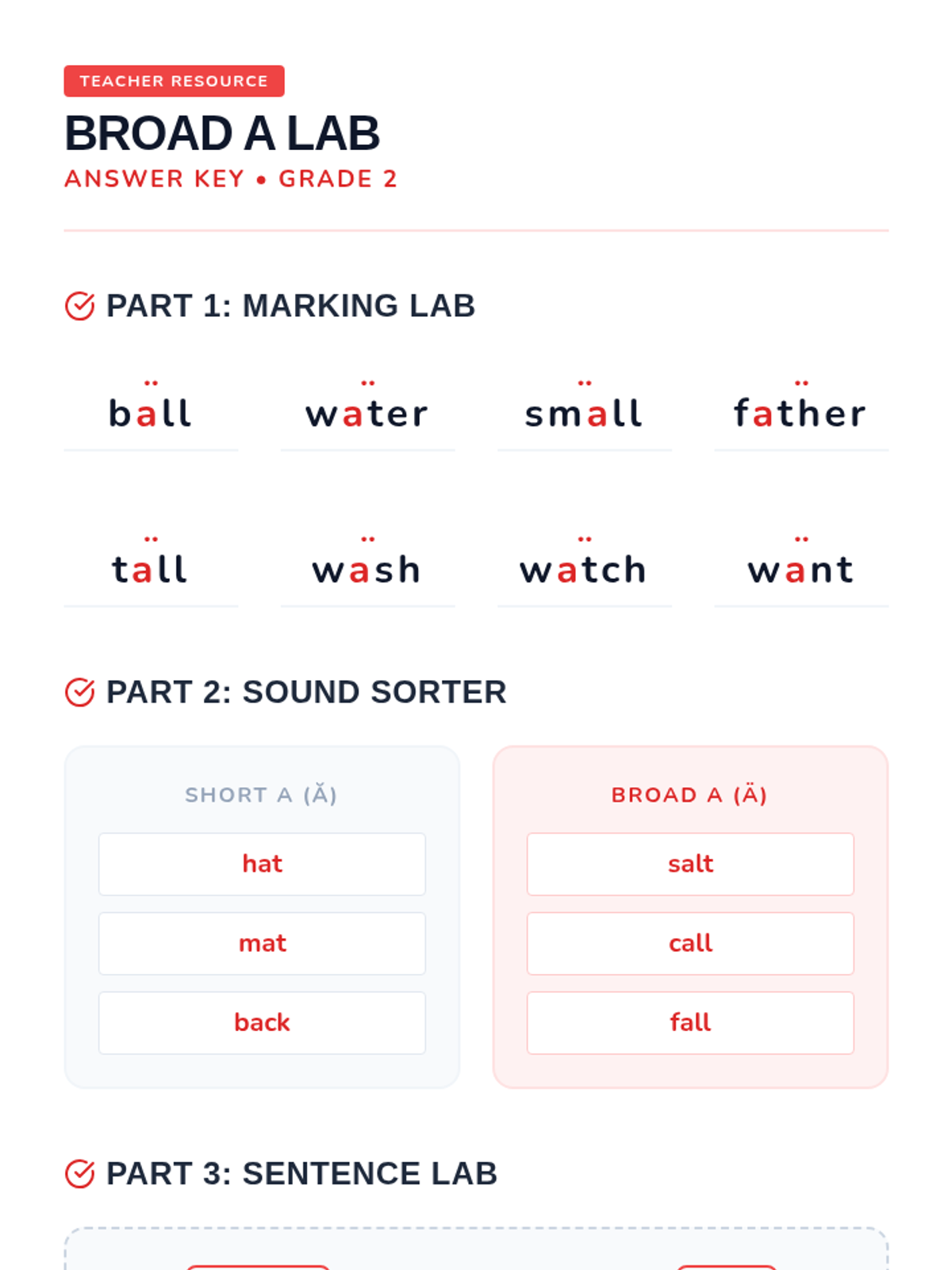
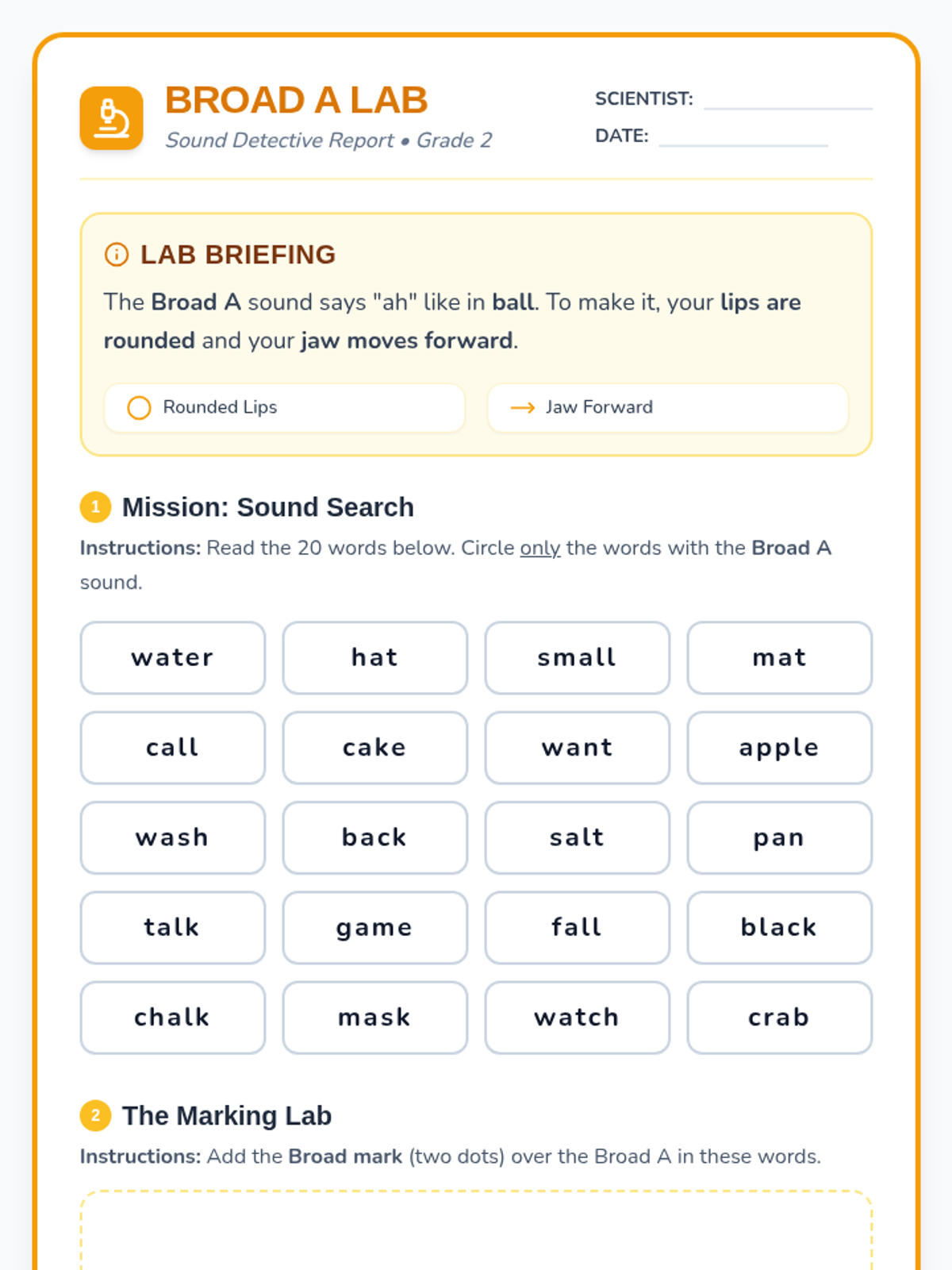
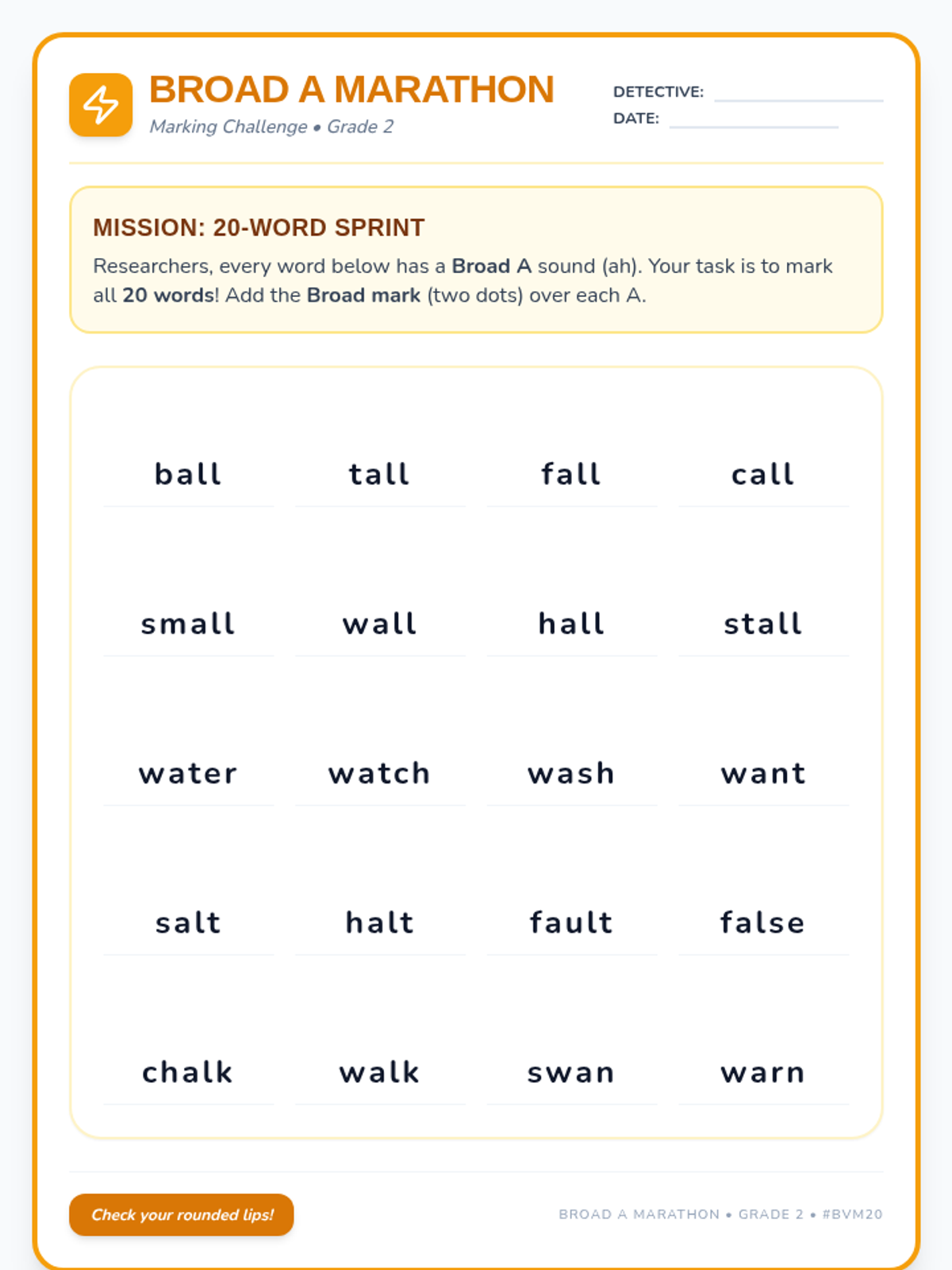
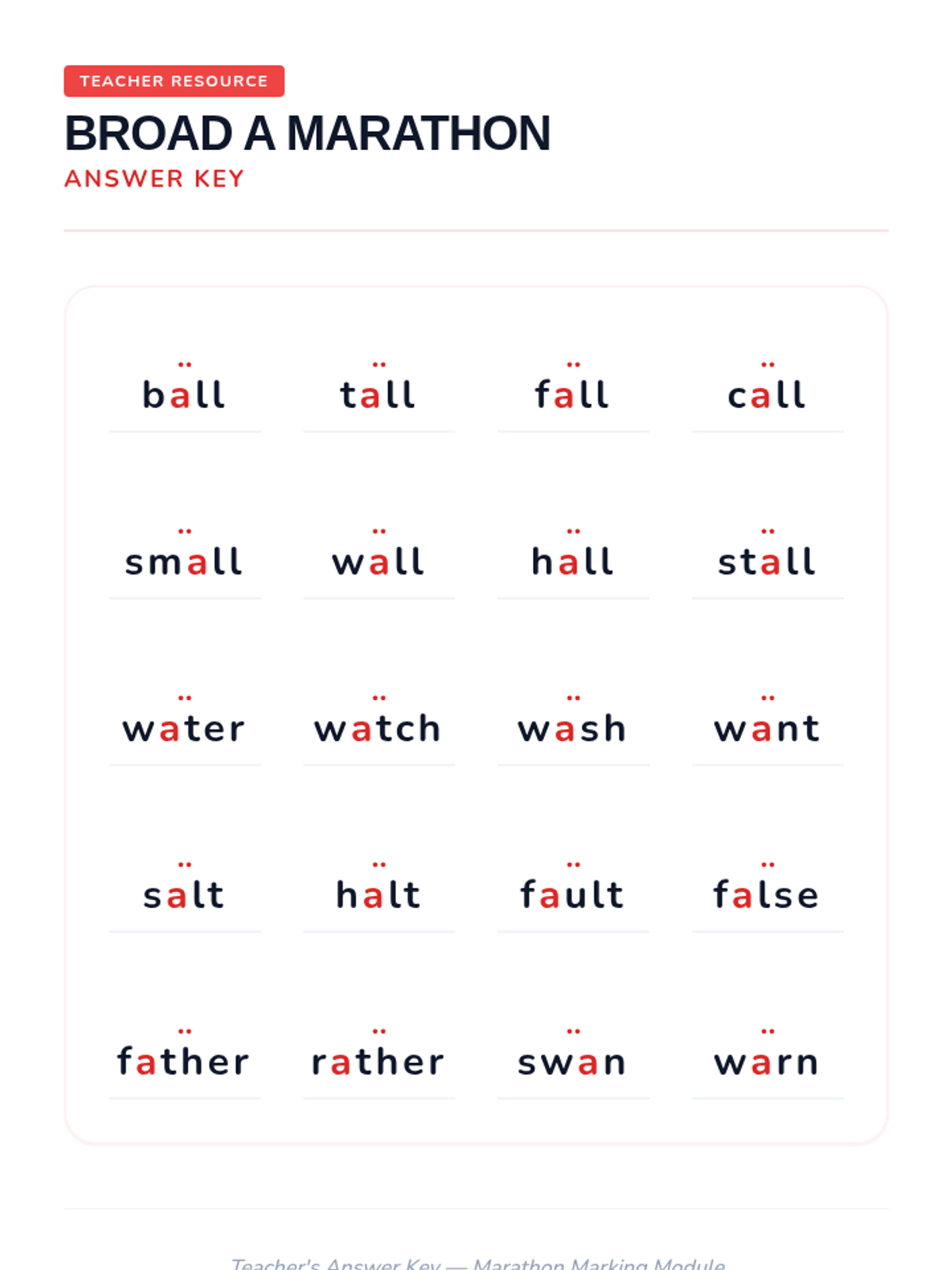
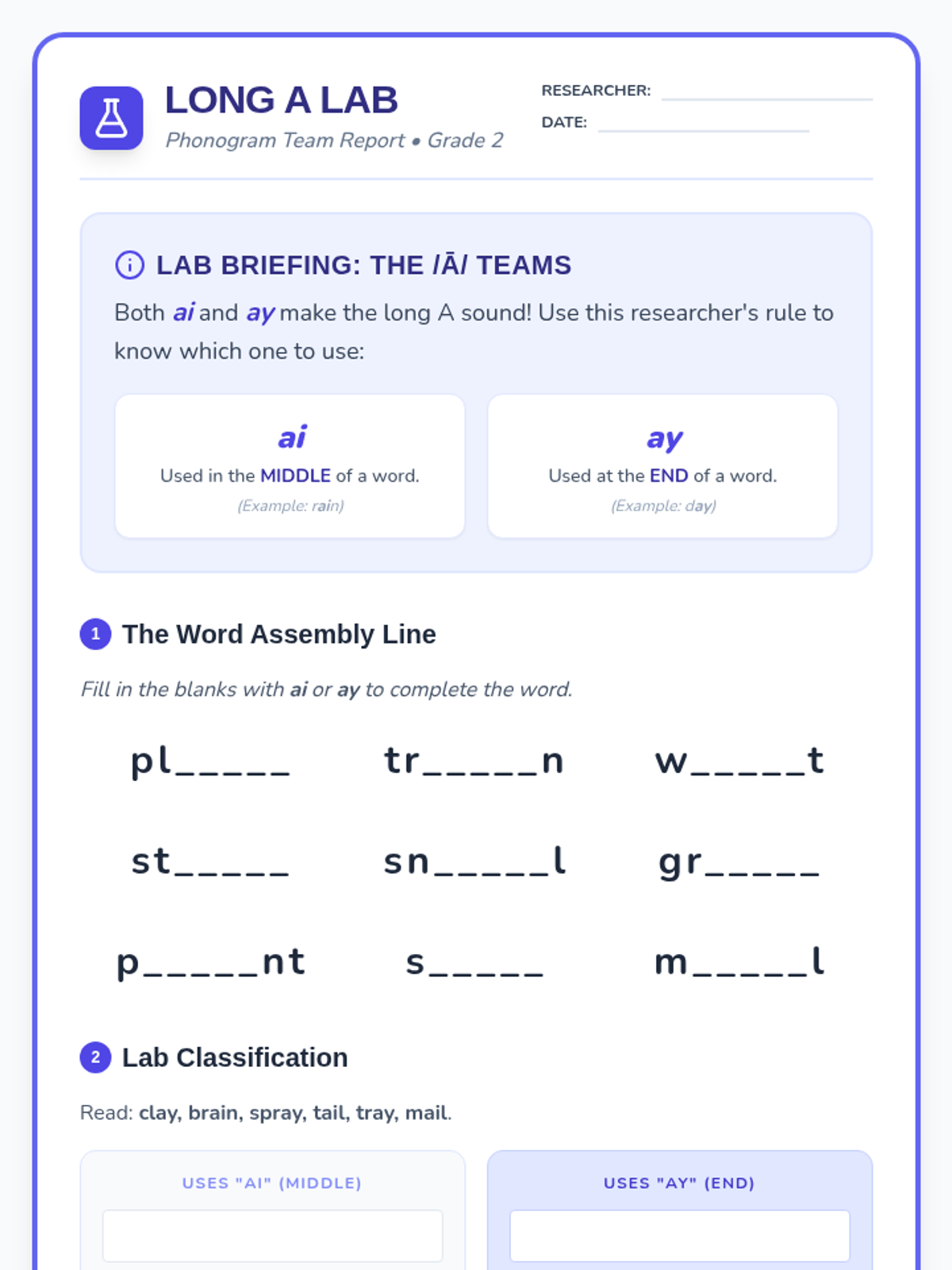
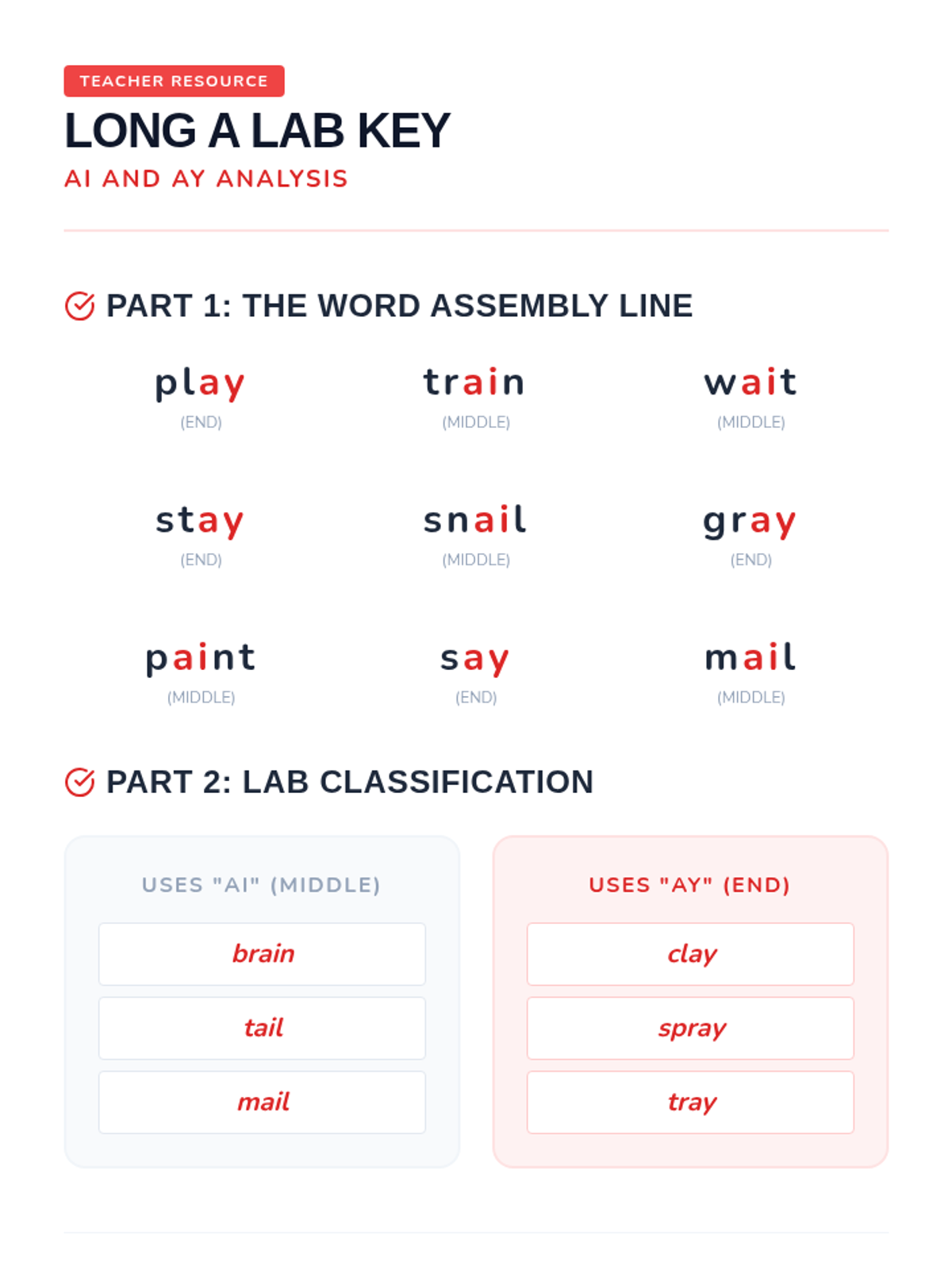
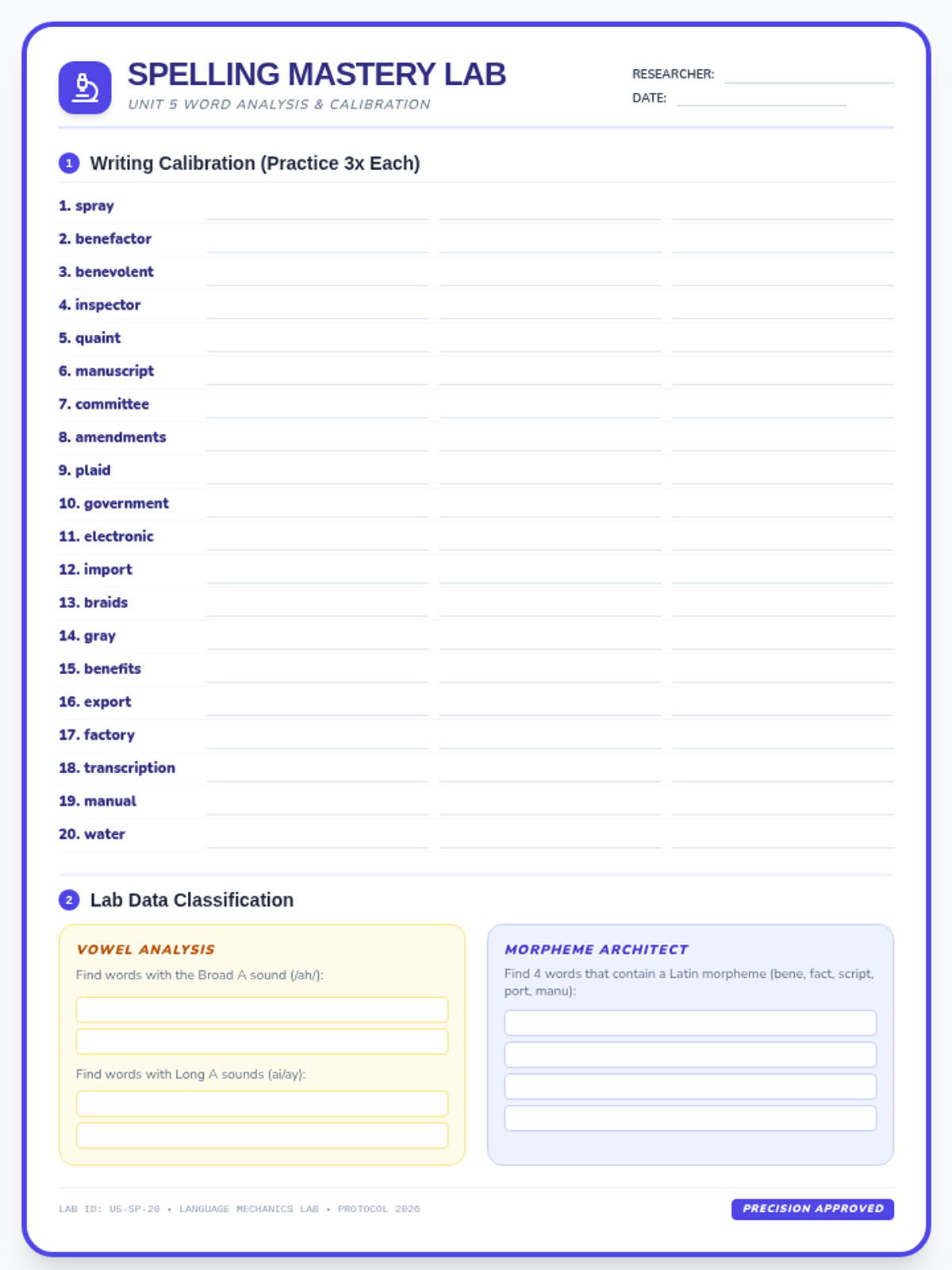
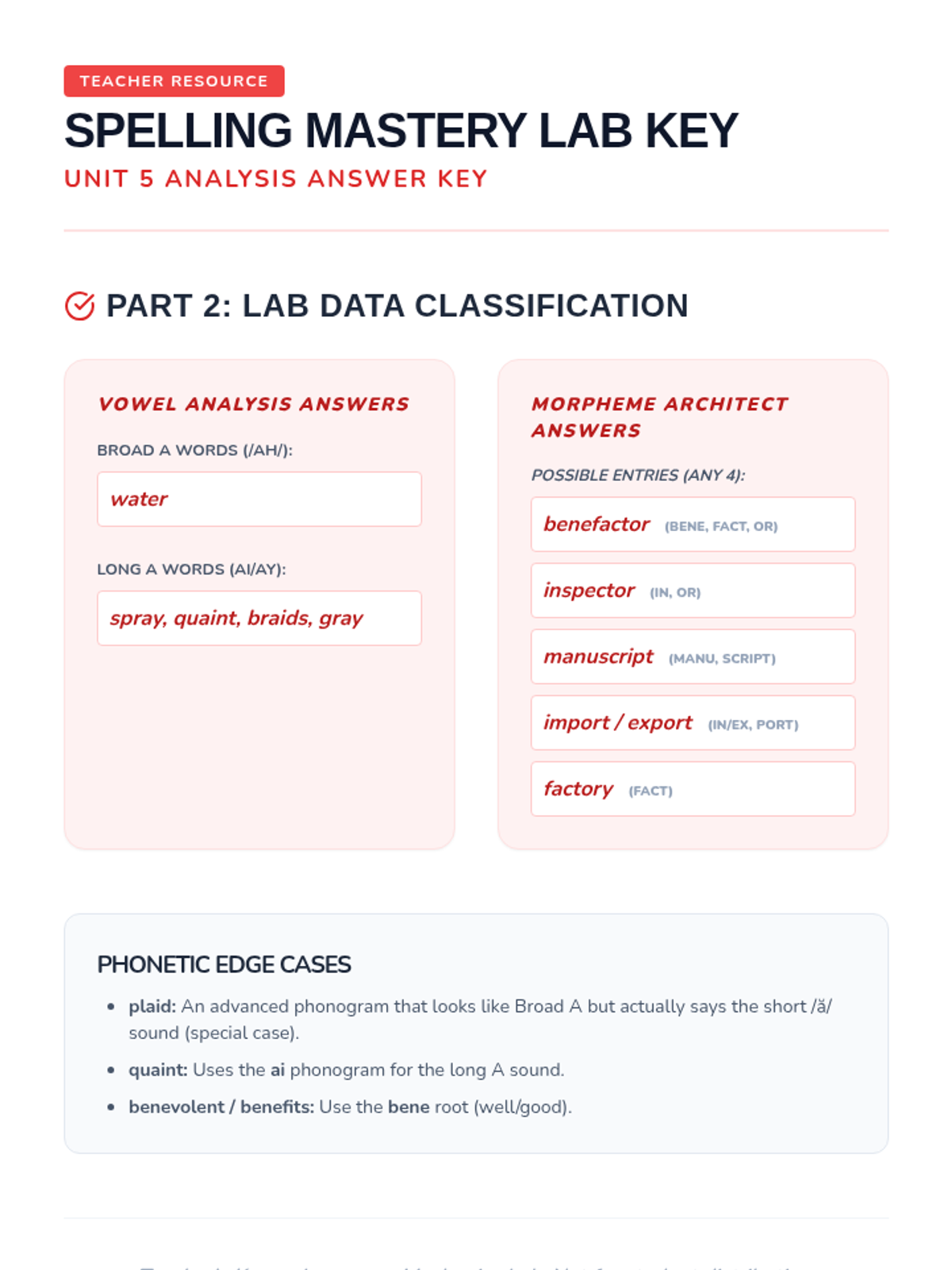
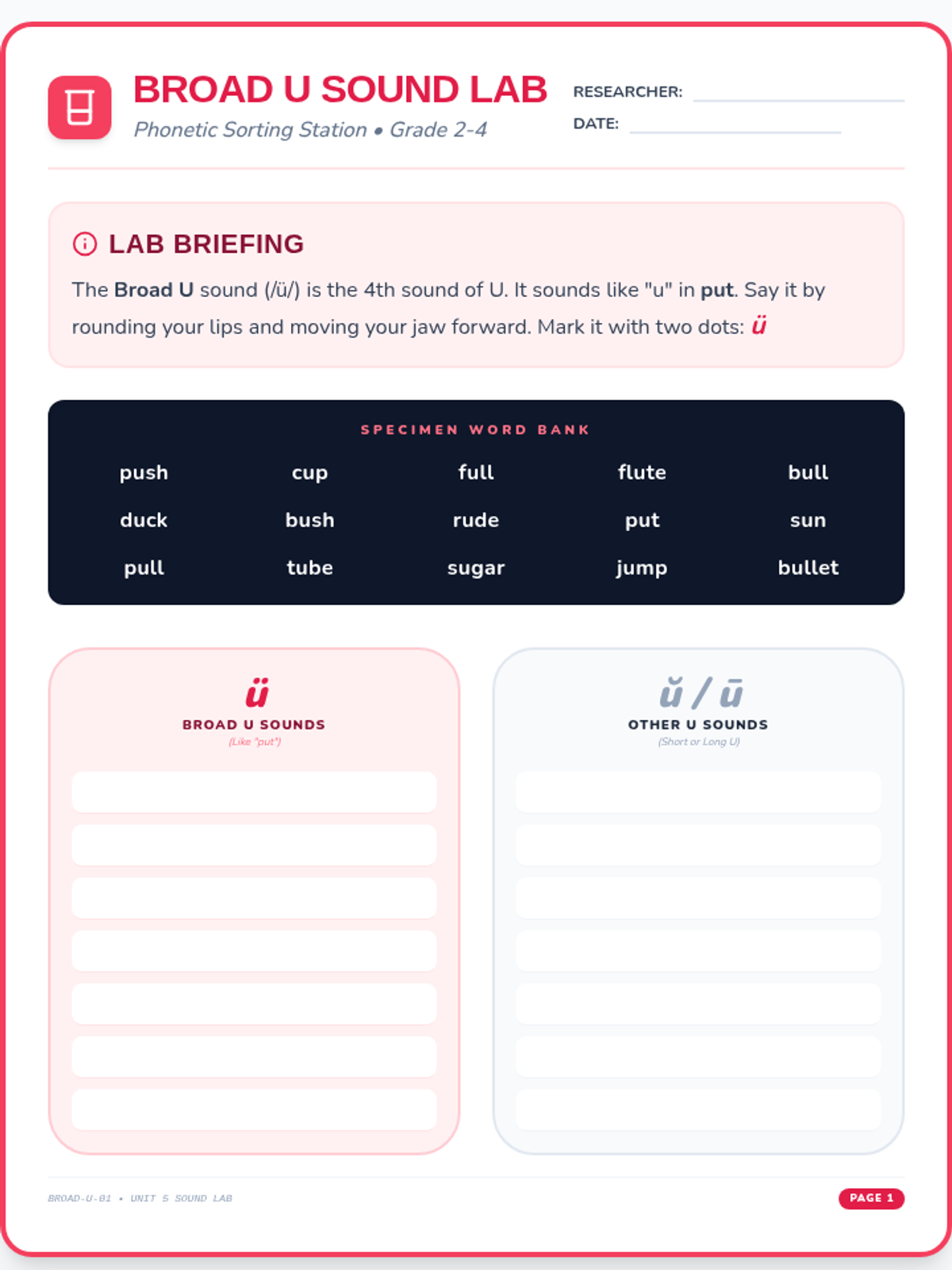
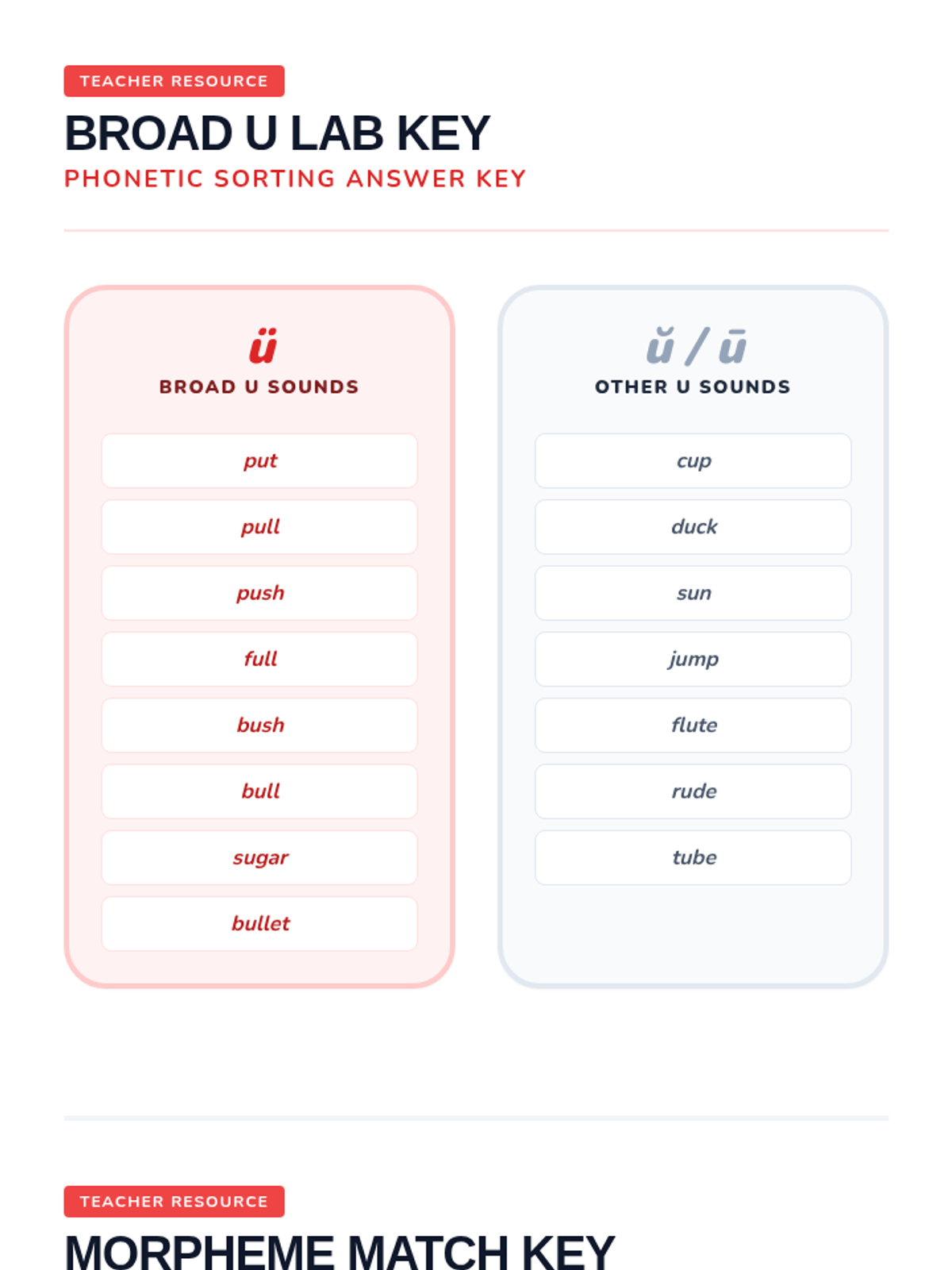
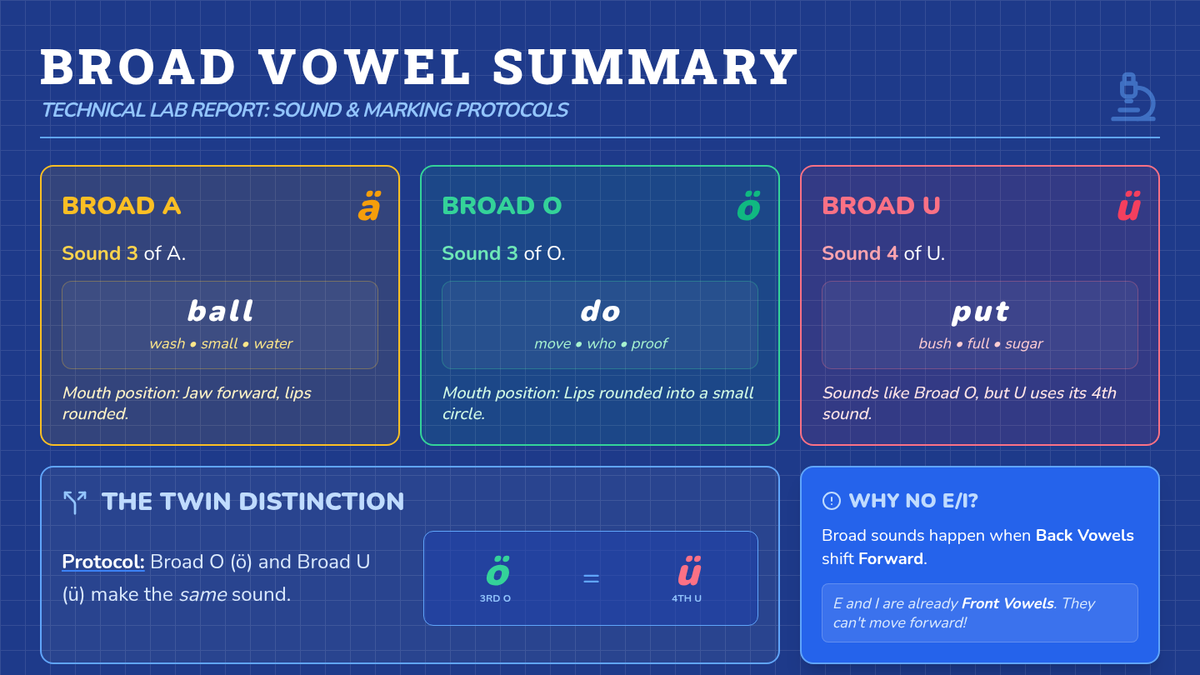
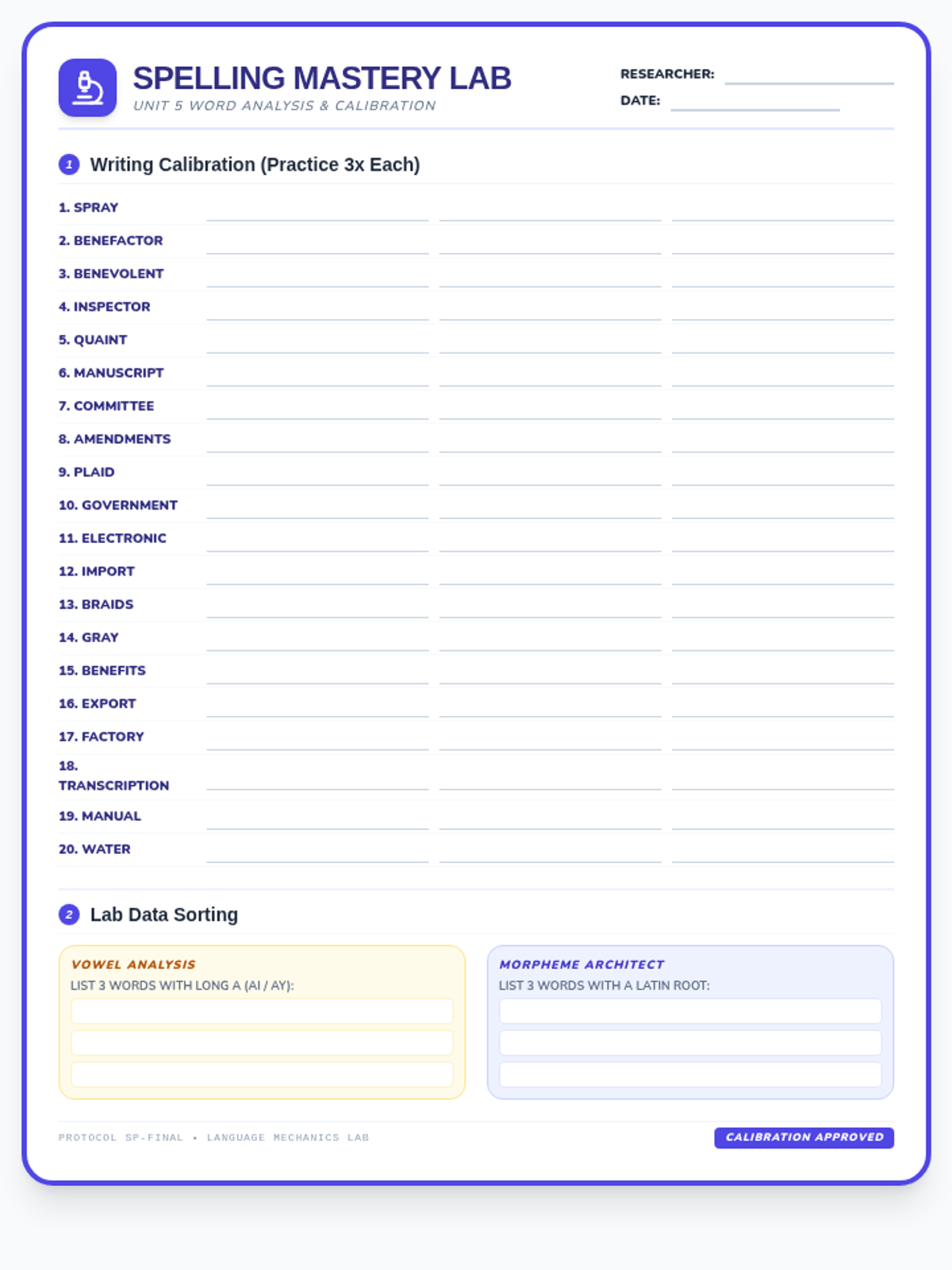
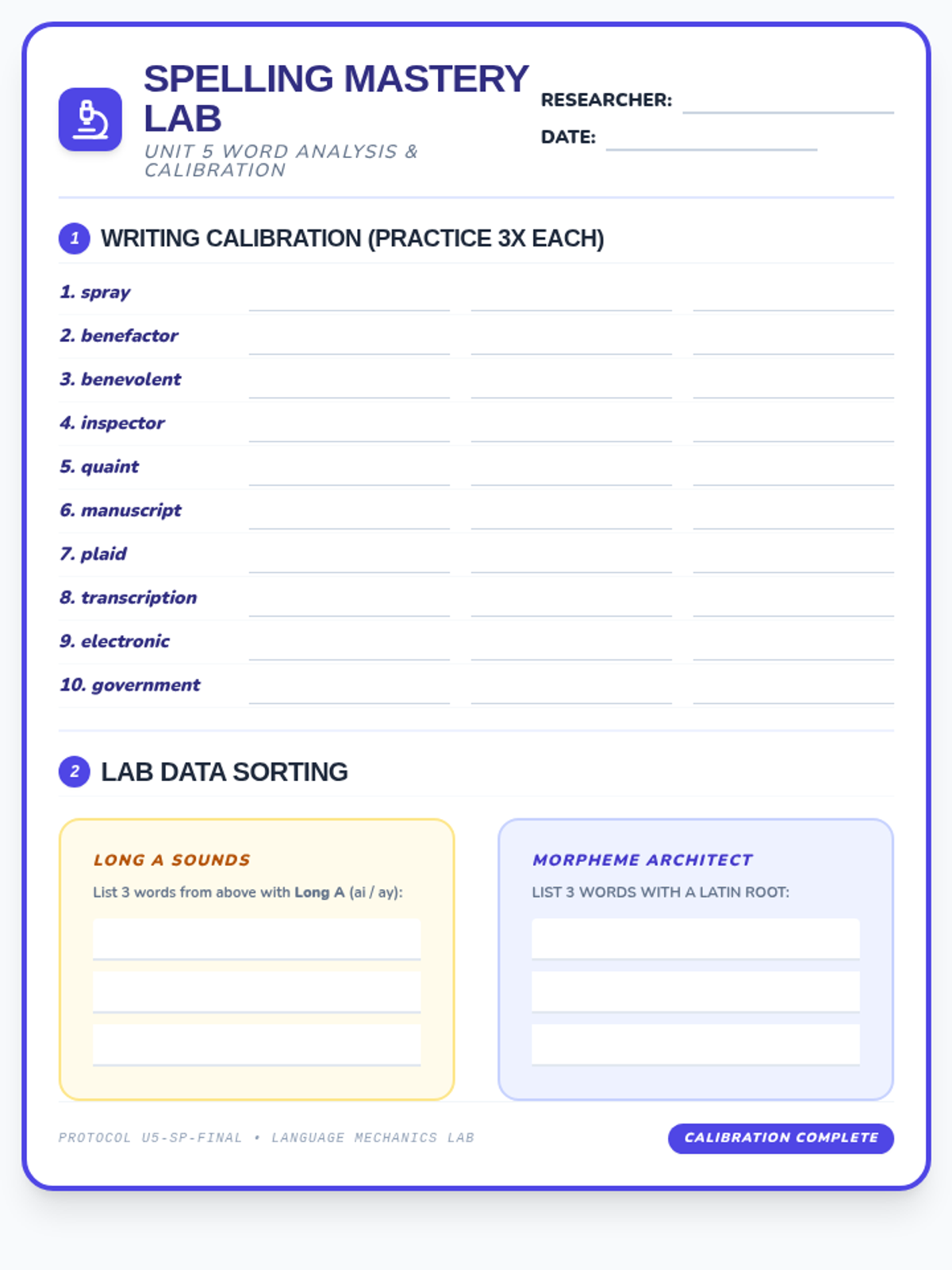
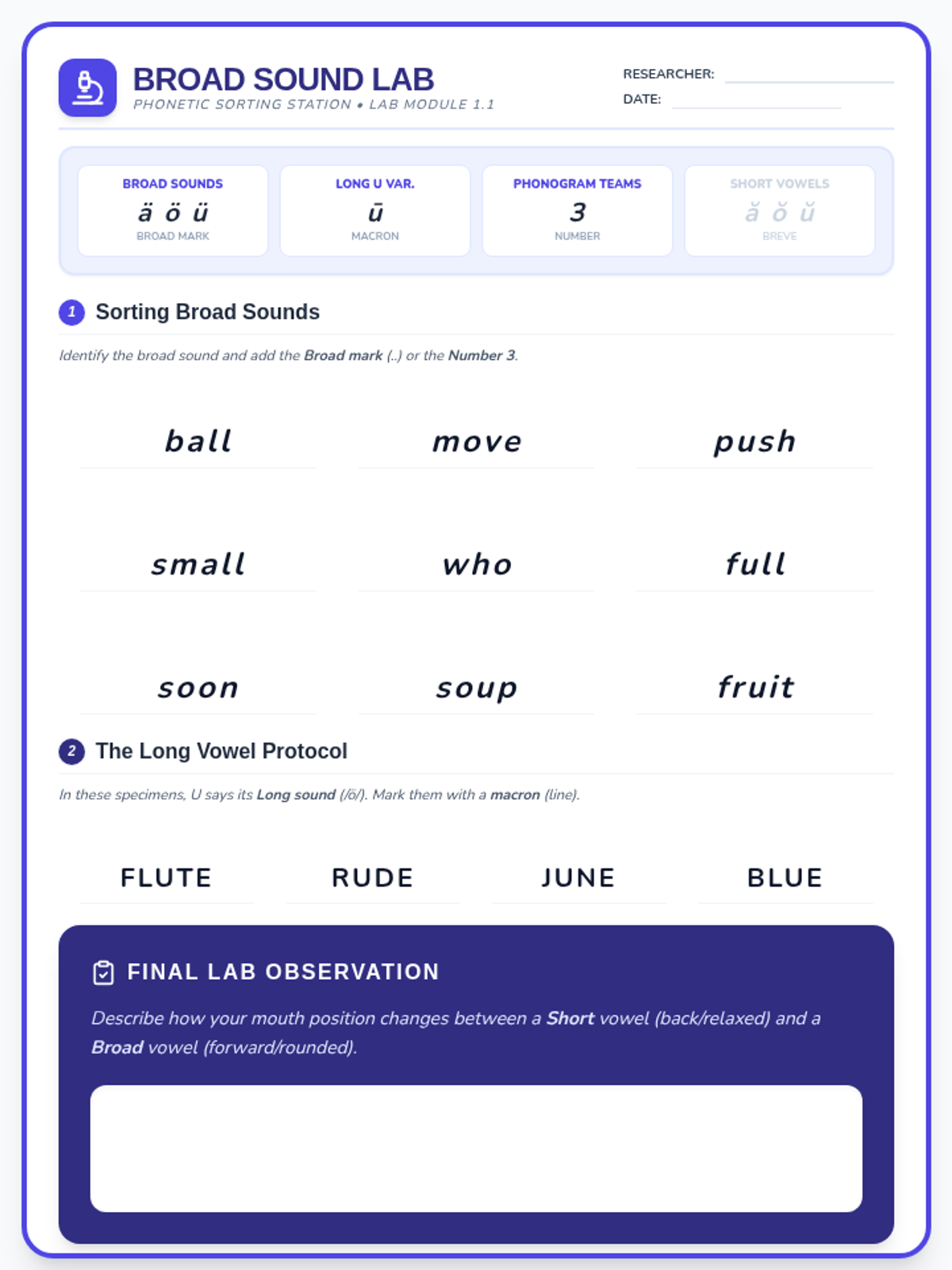
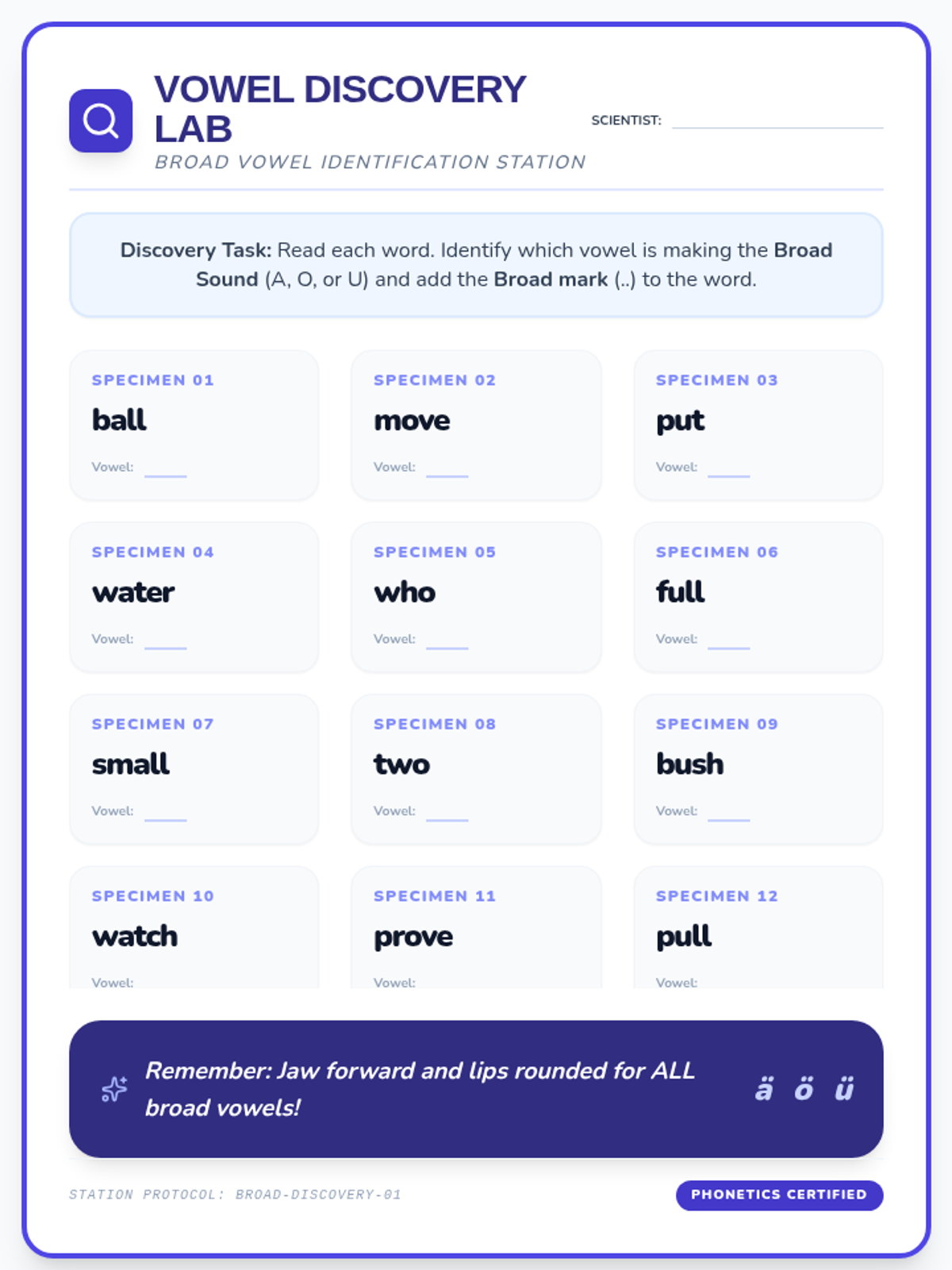
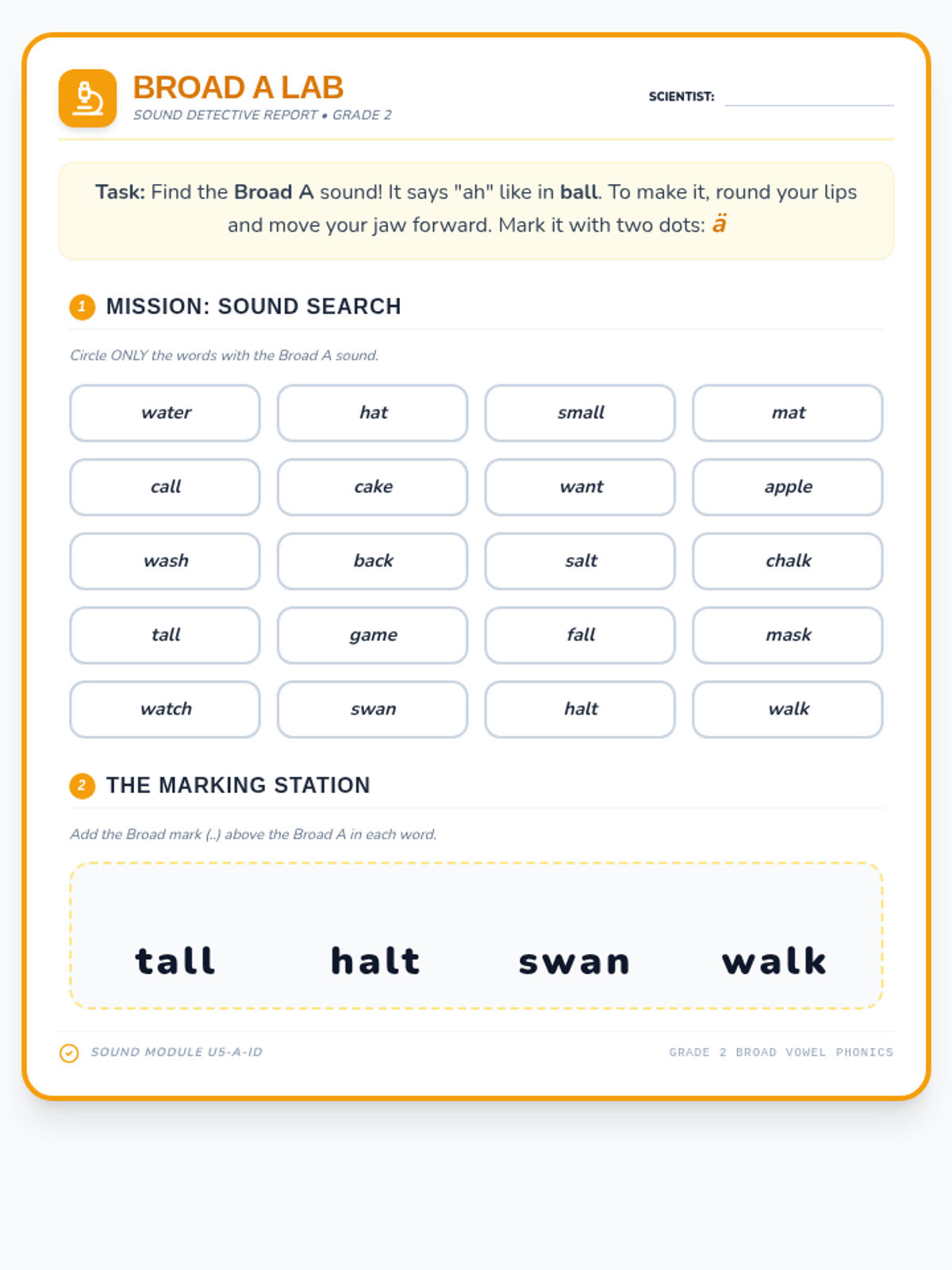
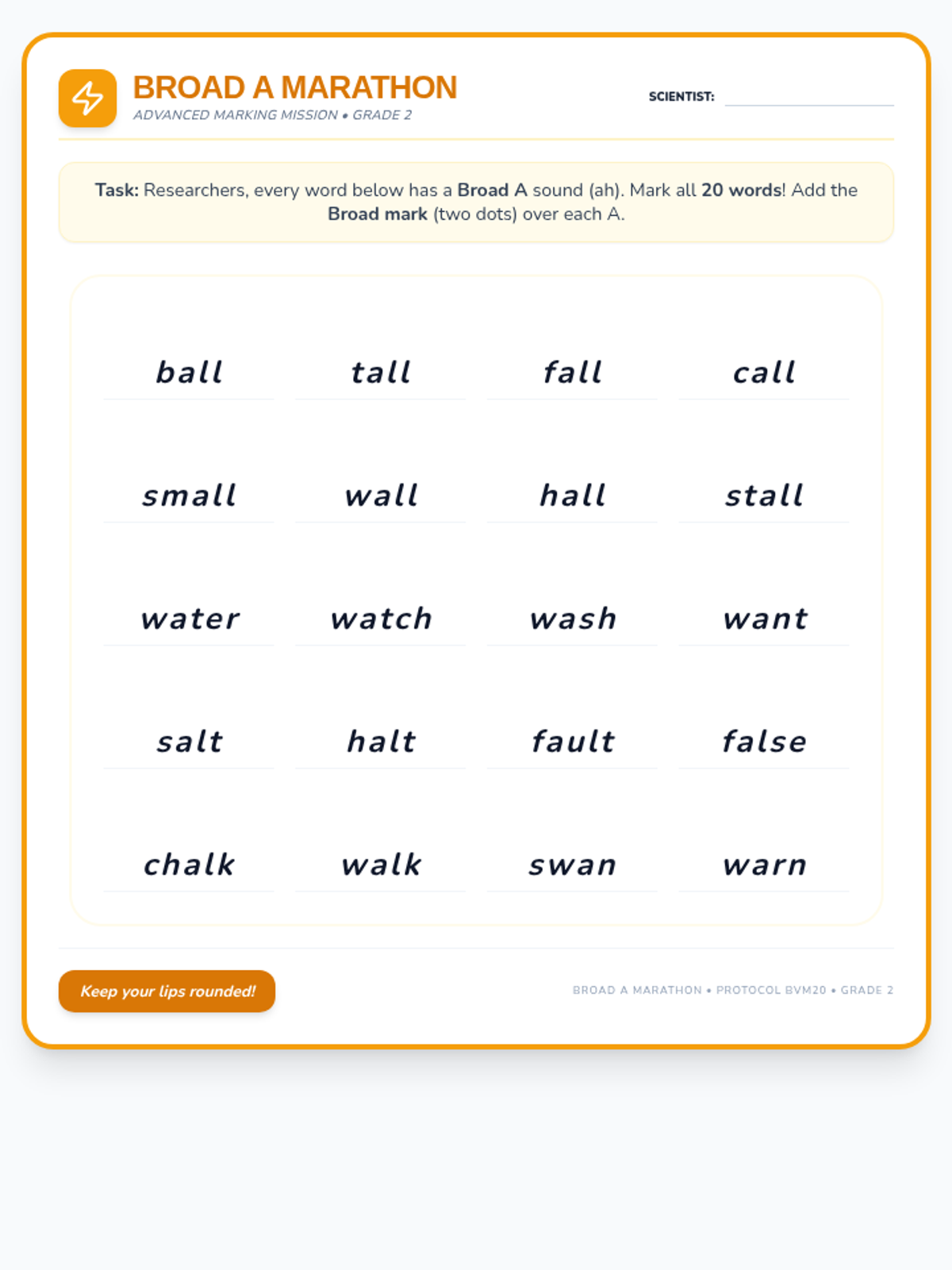
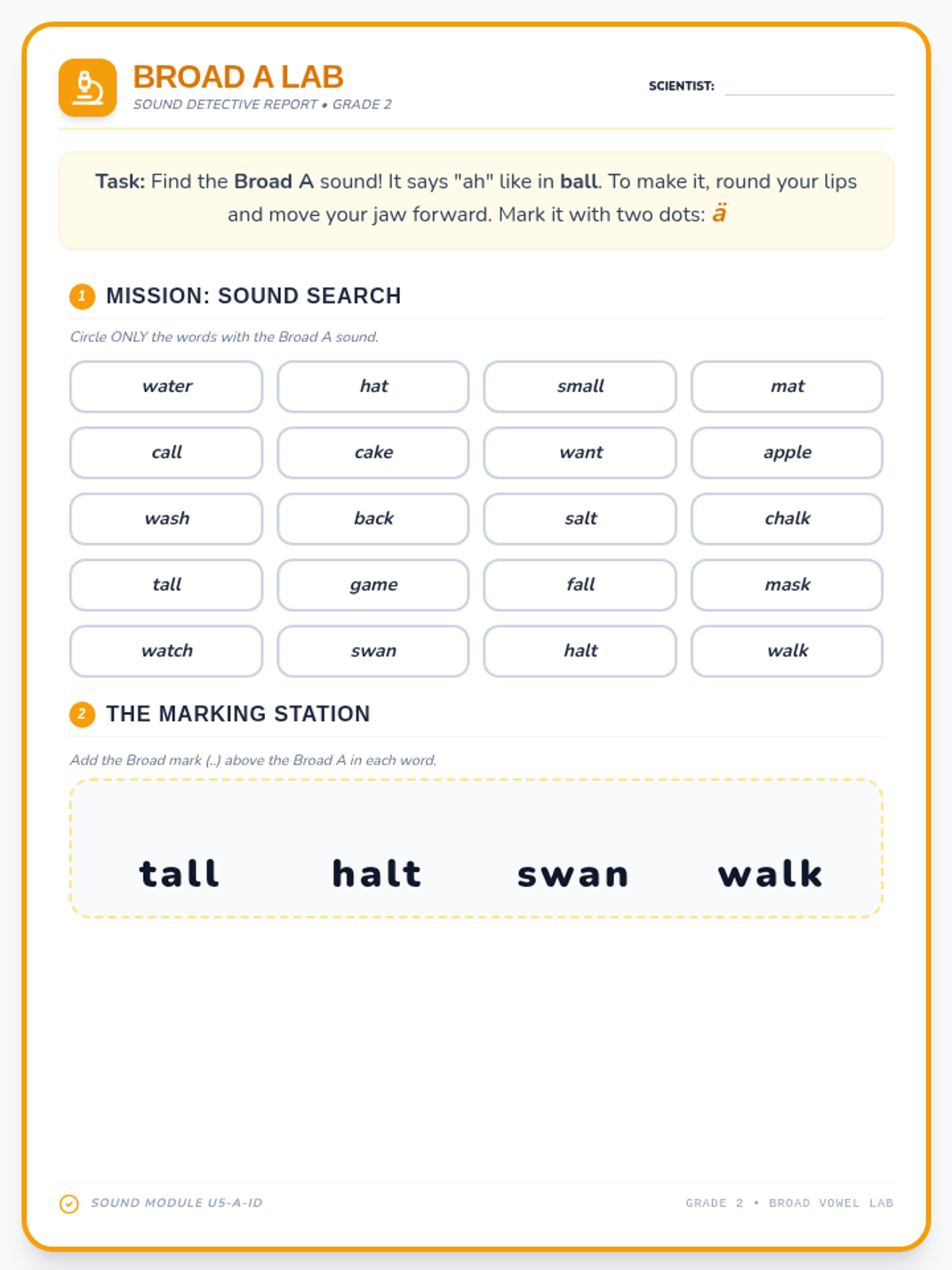
A comprehensive sequence on language mechanics, from phonetic marking of complex vowel sounds to the morphological analysis of Latin roots and affixes. Students develop deep decoding and encoding skills by investigating the building blocks of words.
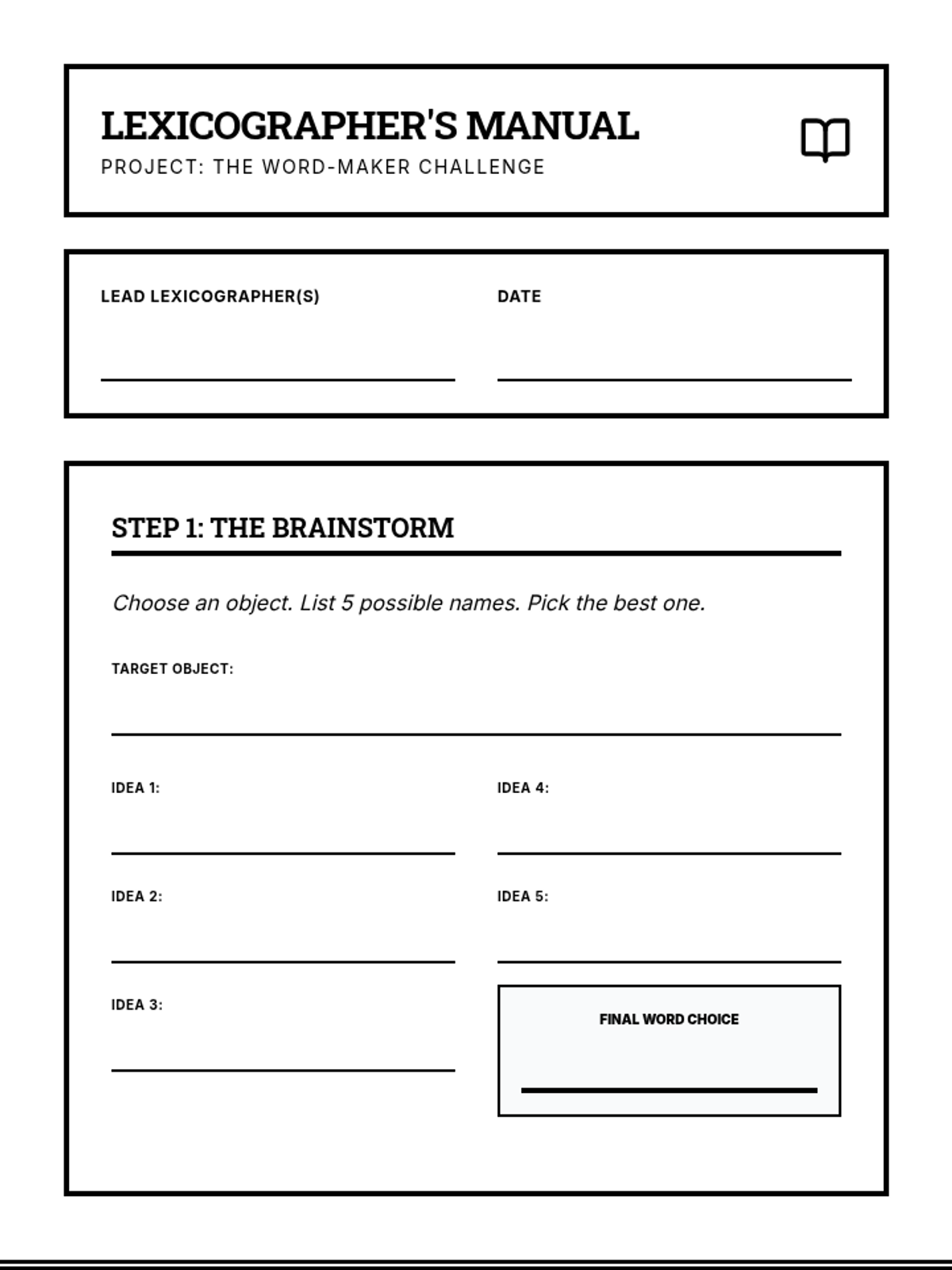
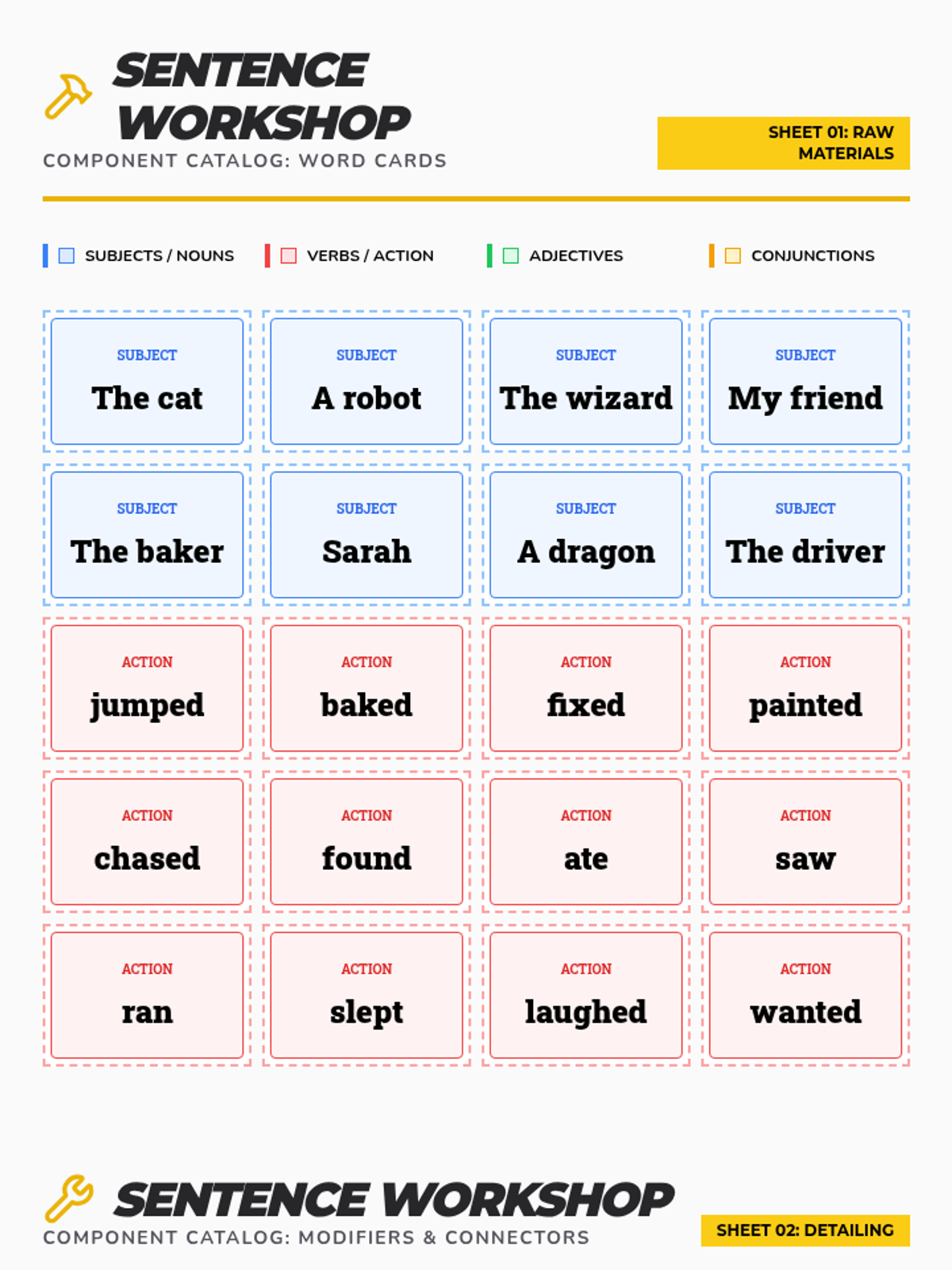
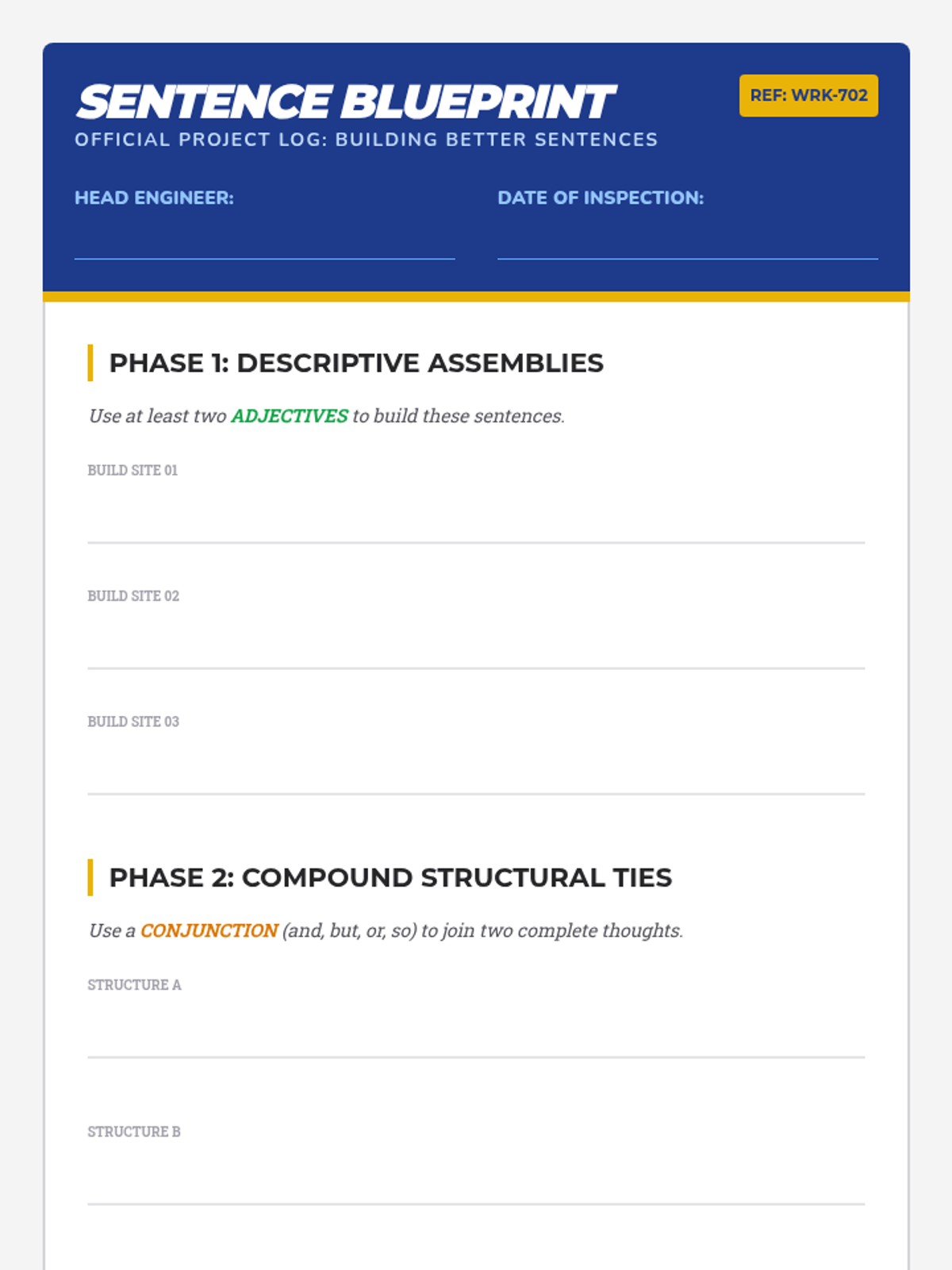
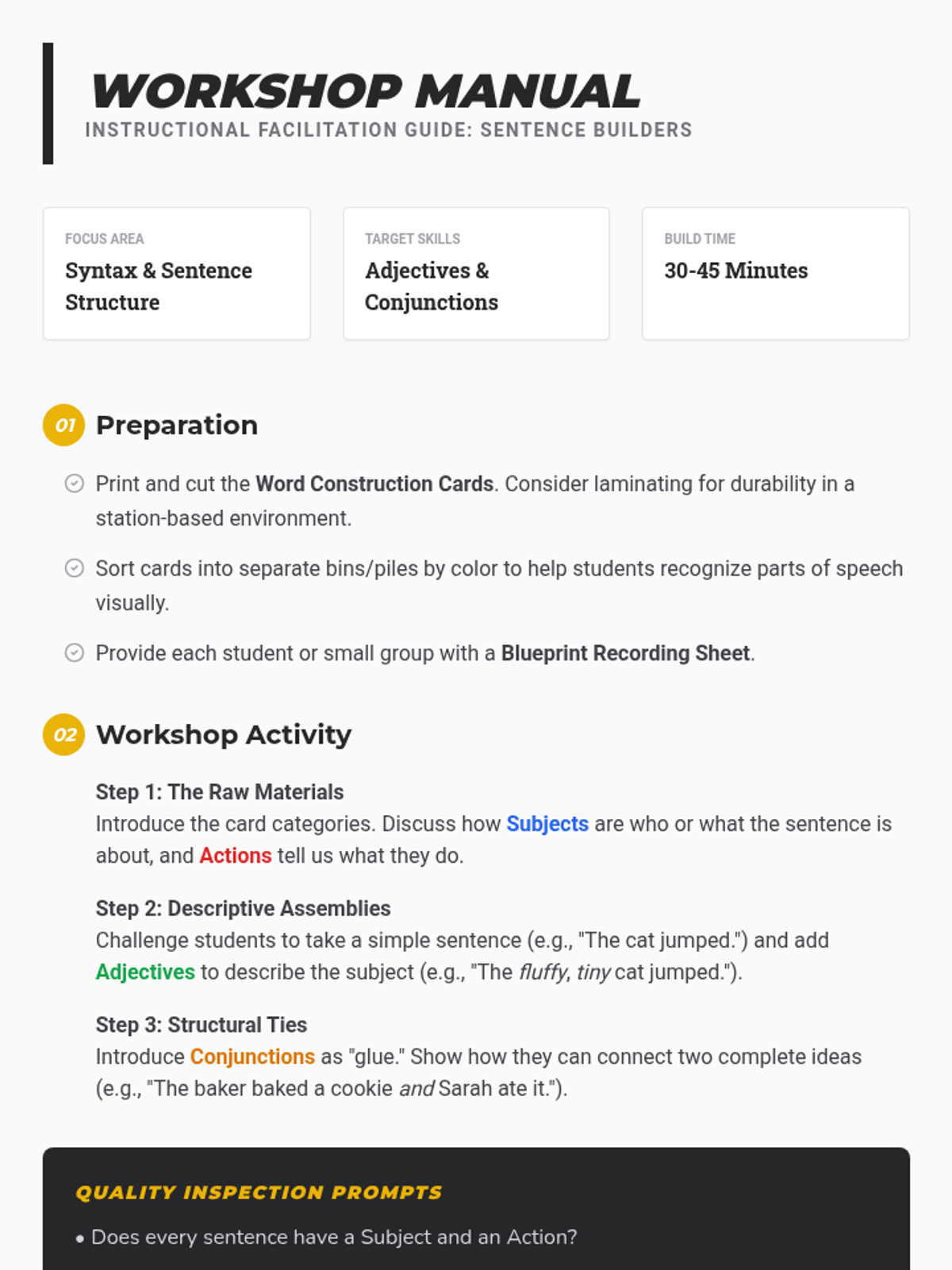
A series of hands-on workshops where students act as "sentence engineers," using word components to master syntax, sentence variety, and descriptive writing.
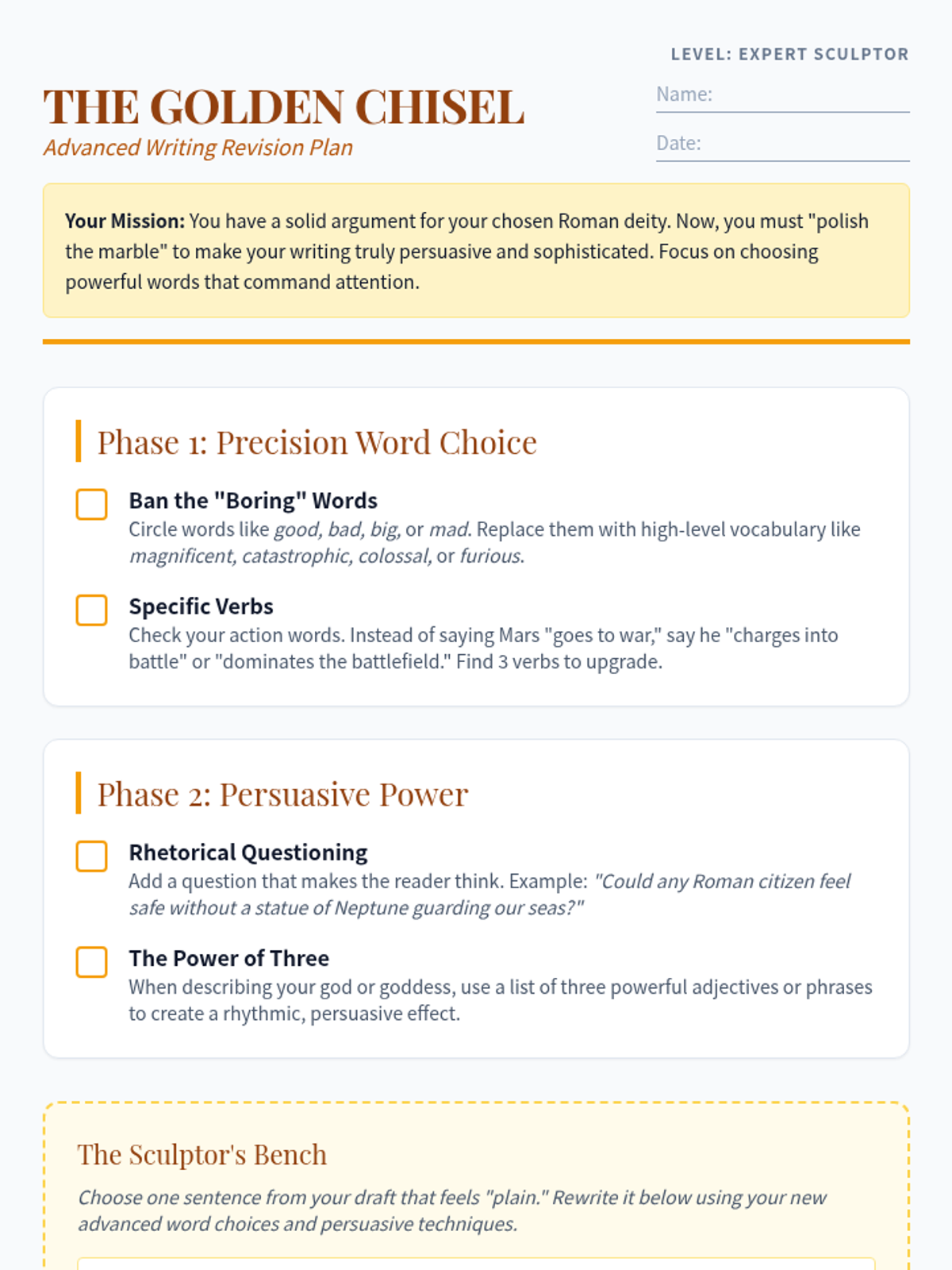
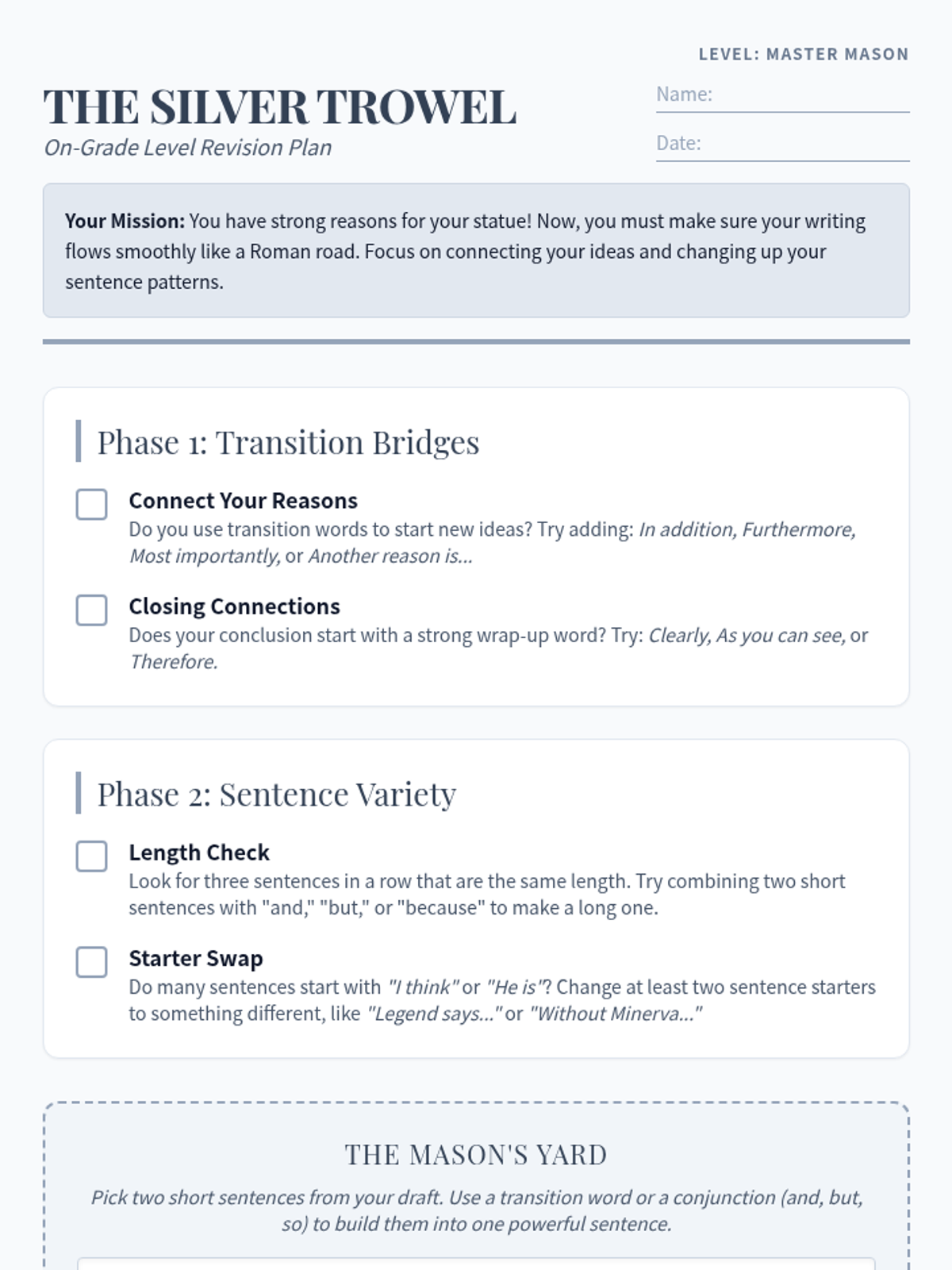
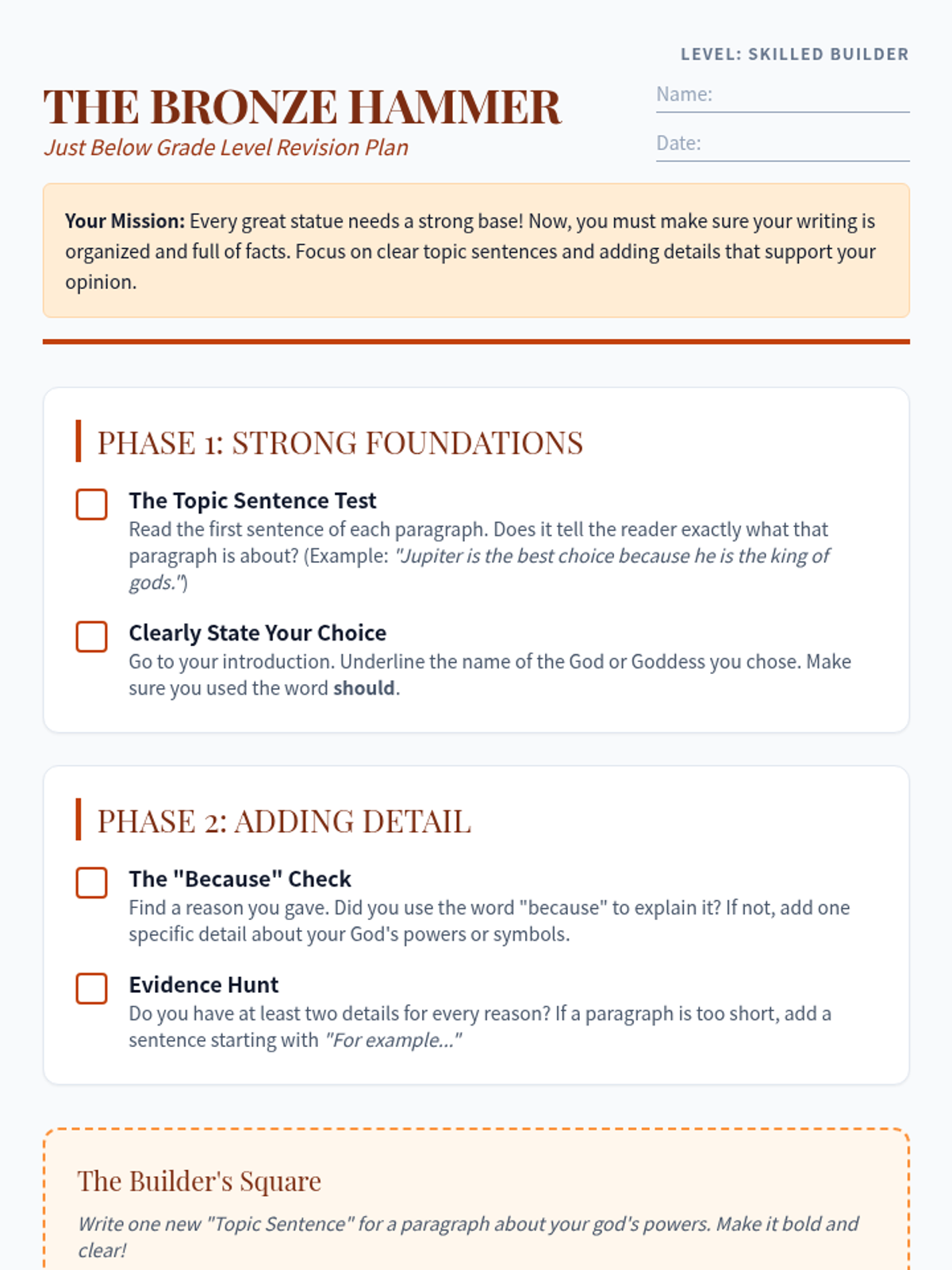
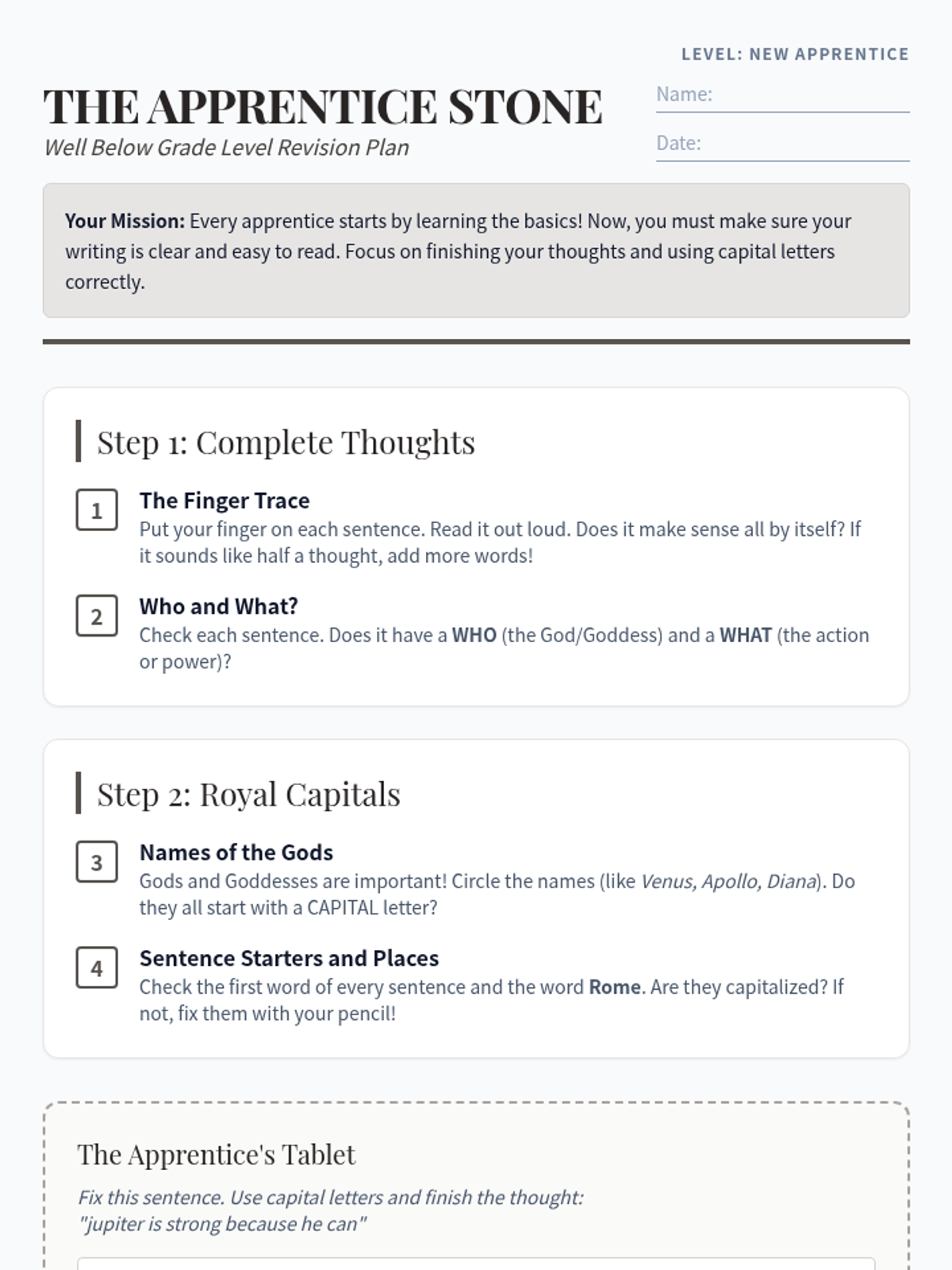
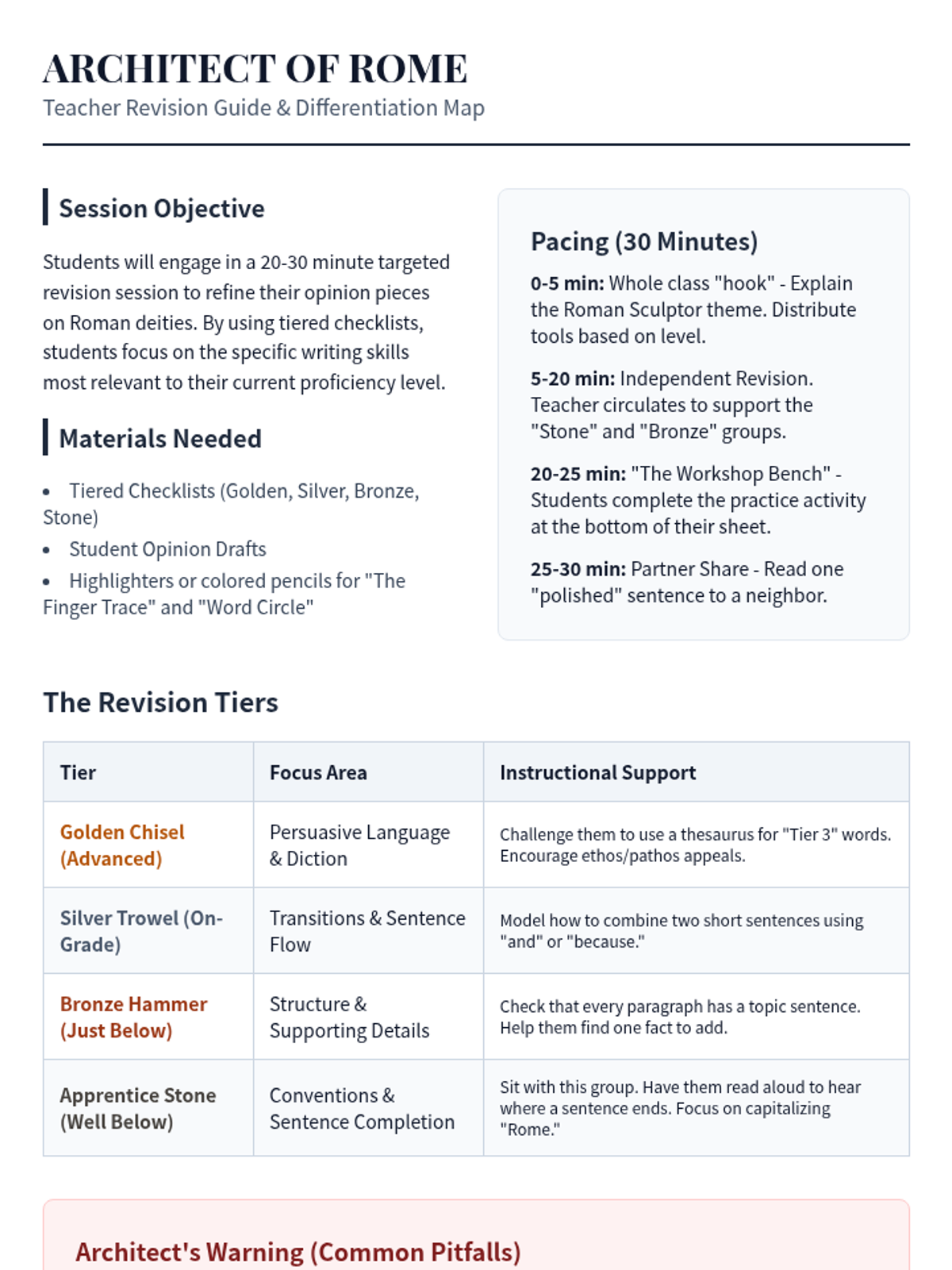
A writing unit focused on opinion pieces regarding Ancient Roman mythology, emphasizing targeted revision strategies for diverse learners.
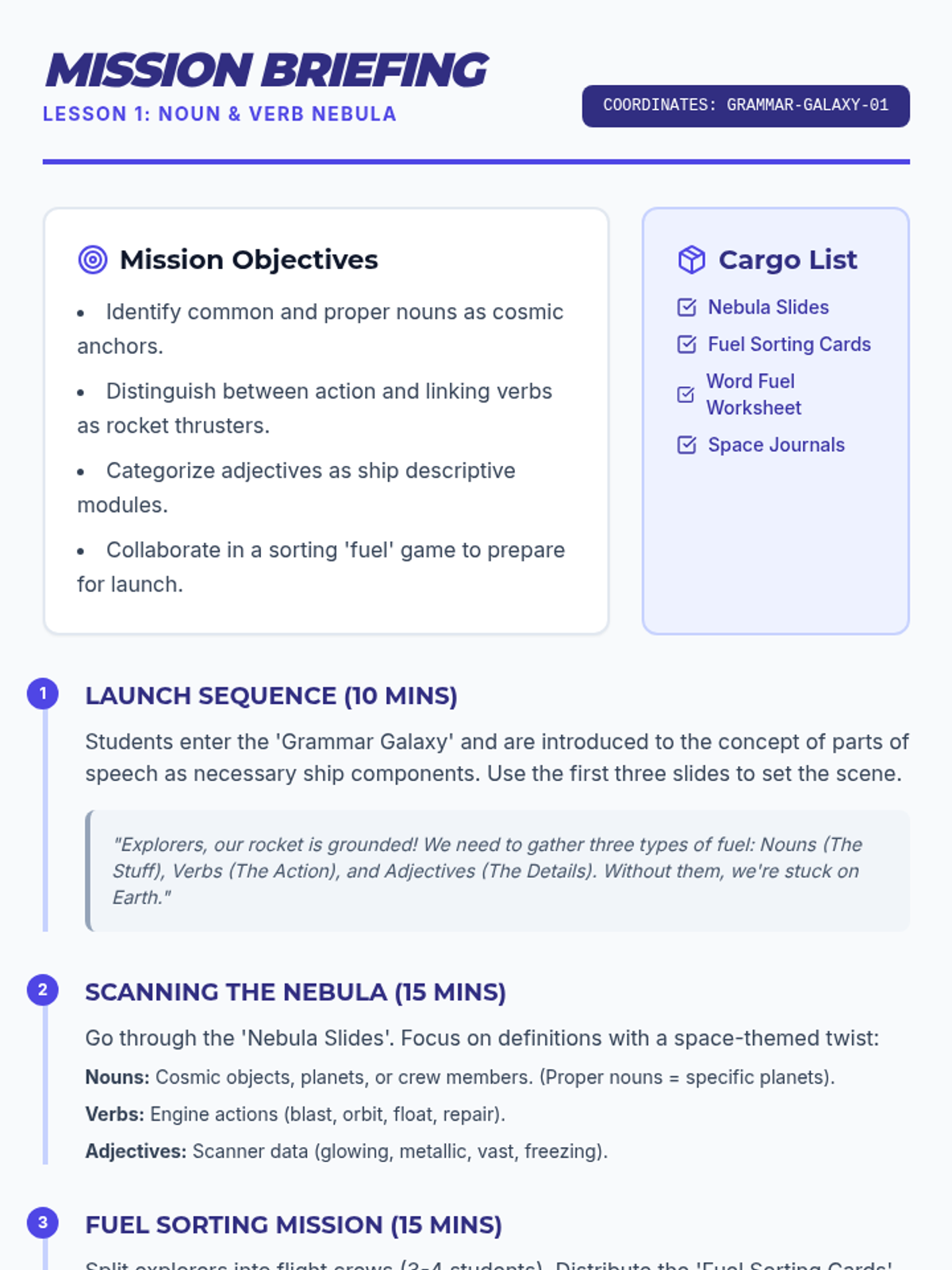
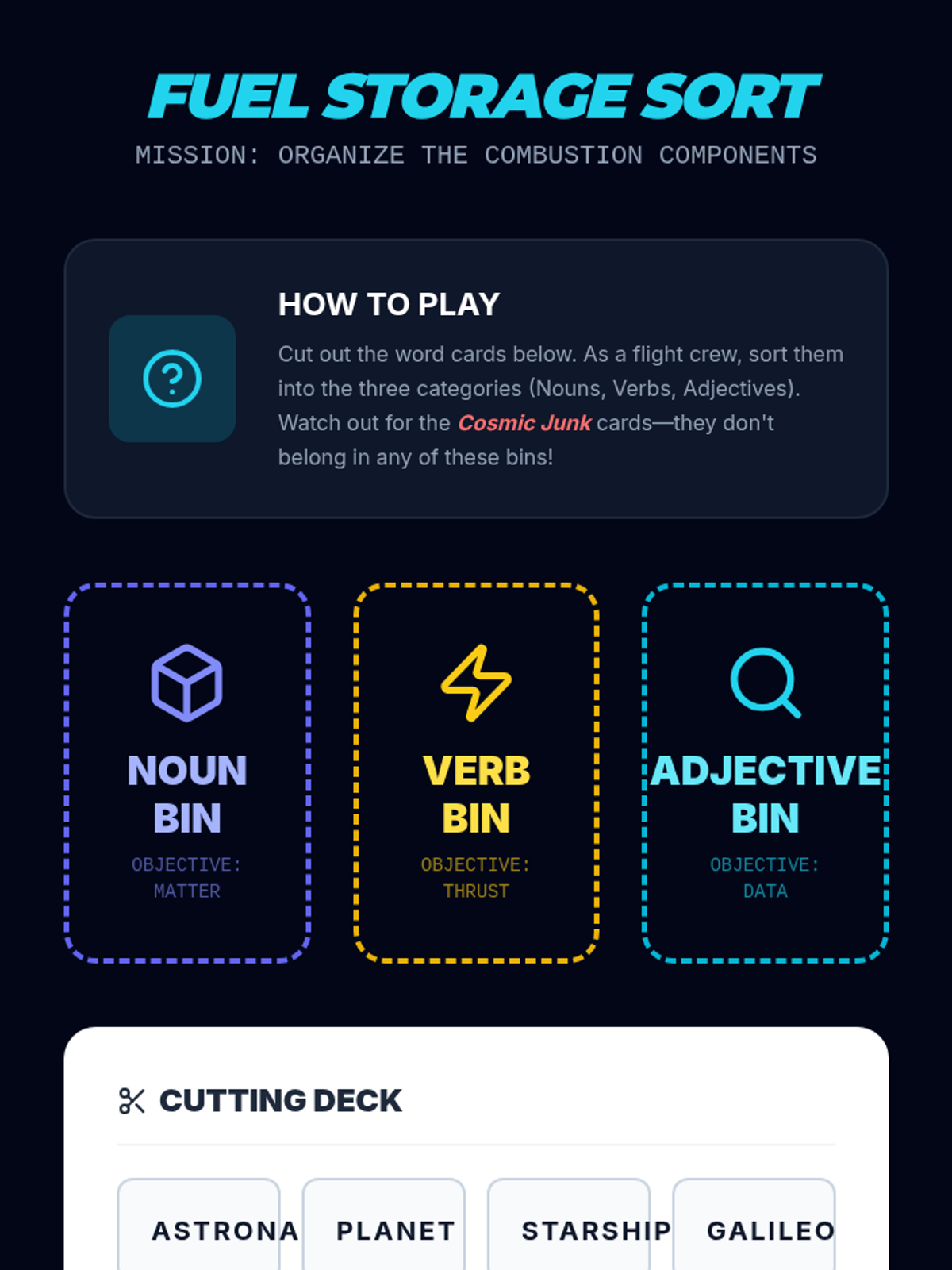
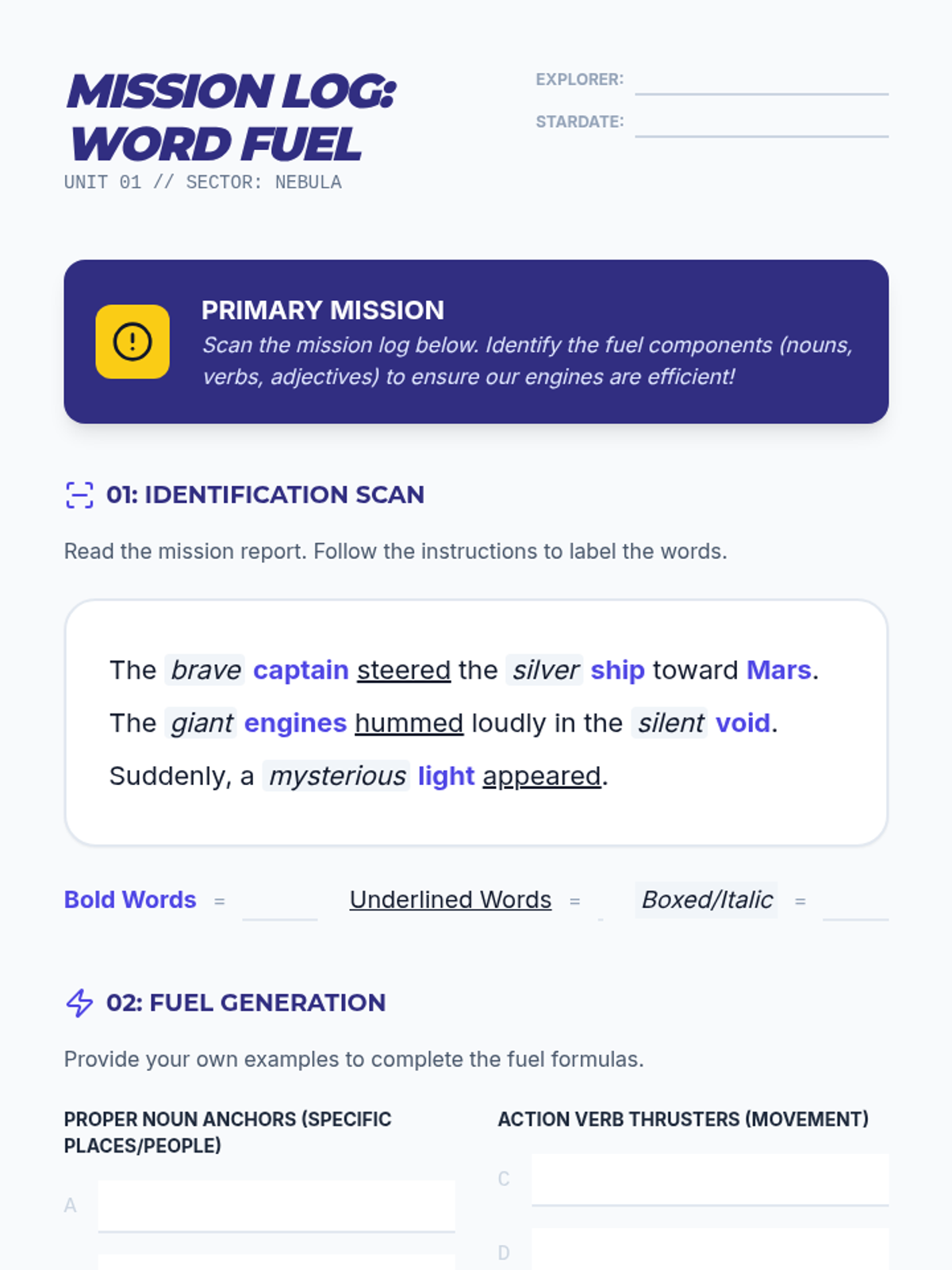
An interstellar grammar unit for grades 3-5, where students become space explorers to master parts of speech, sentence structure, and punctuation through missions and rocket-building challenges.
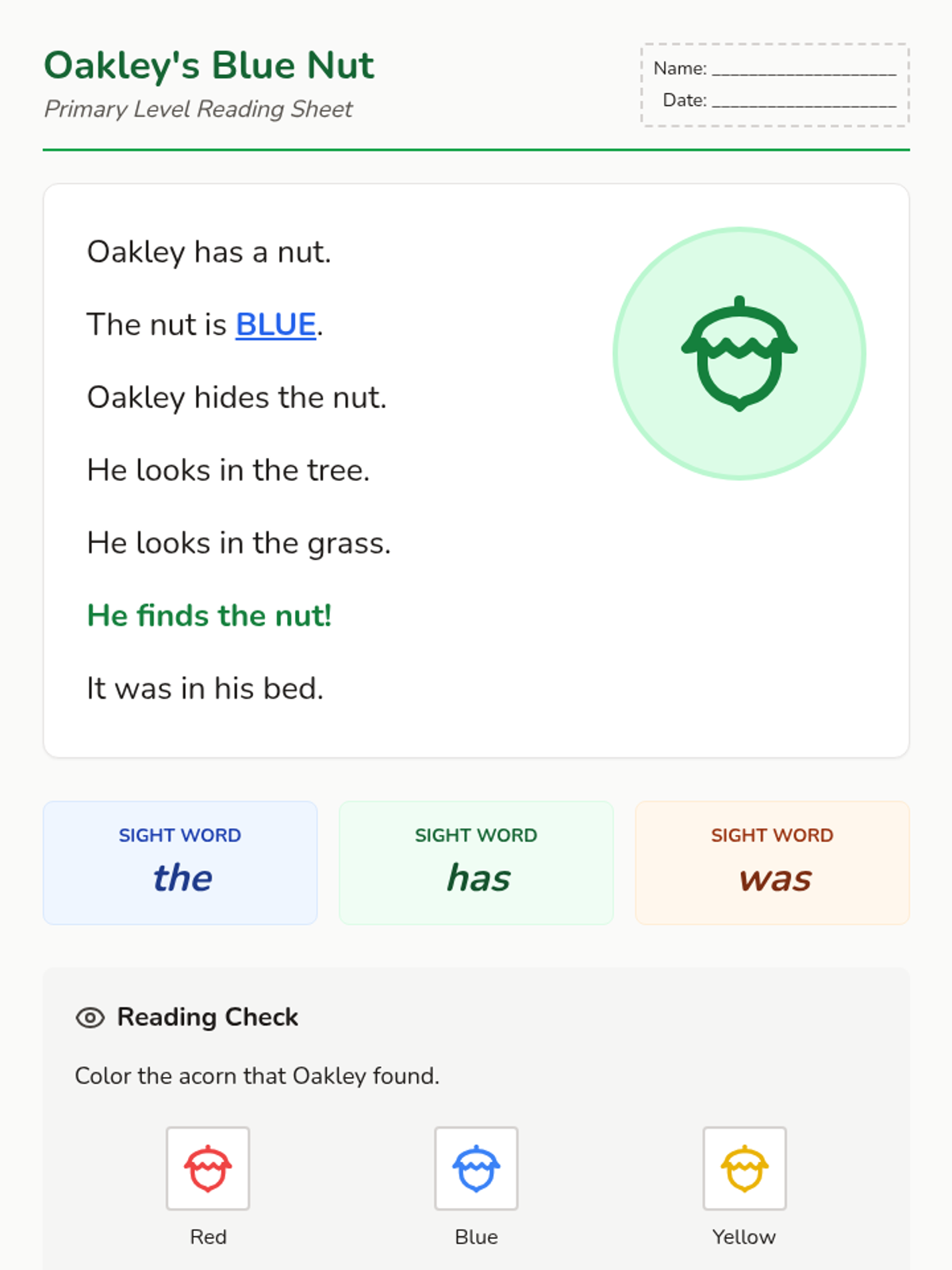
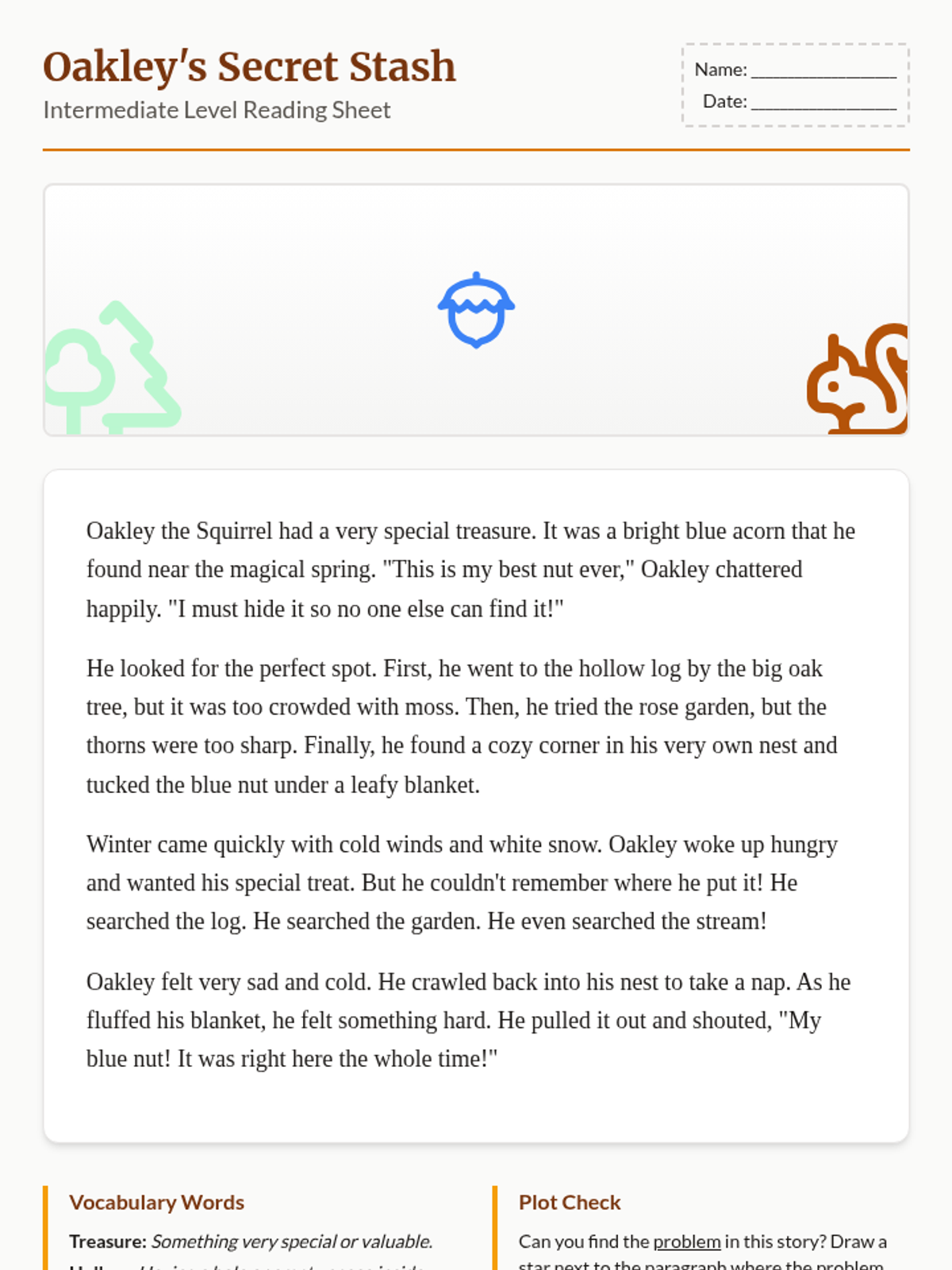
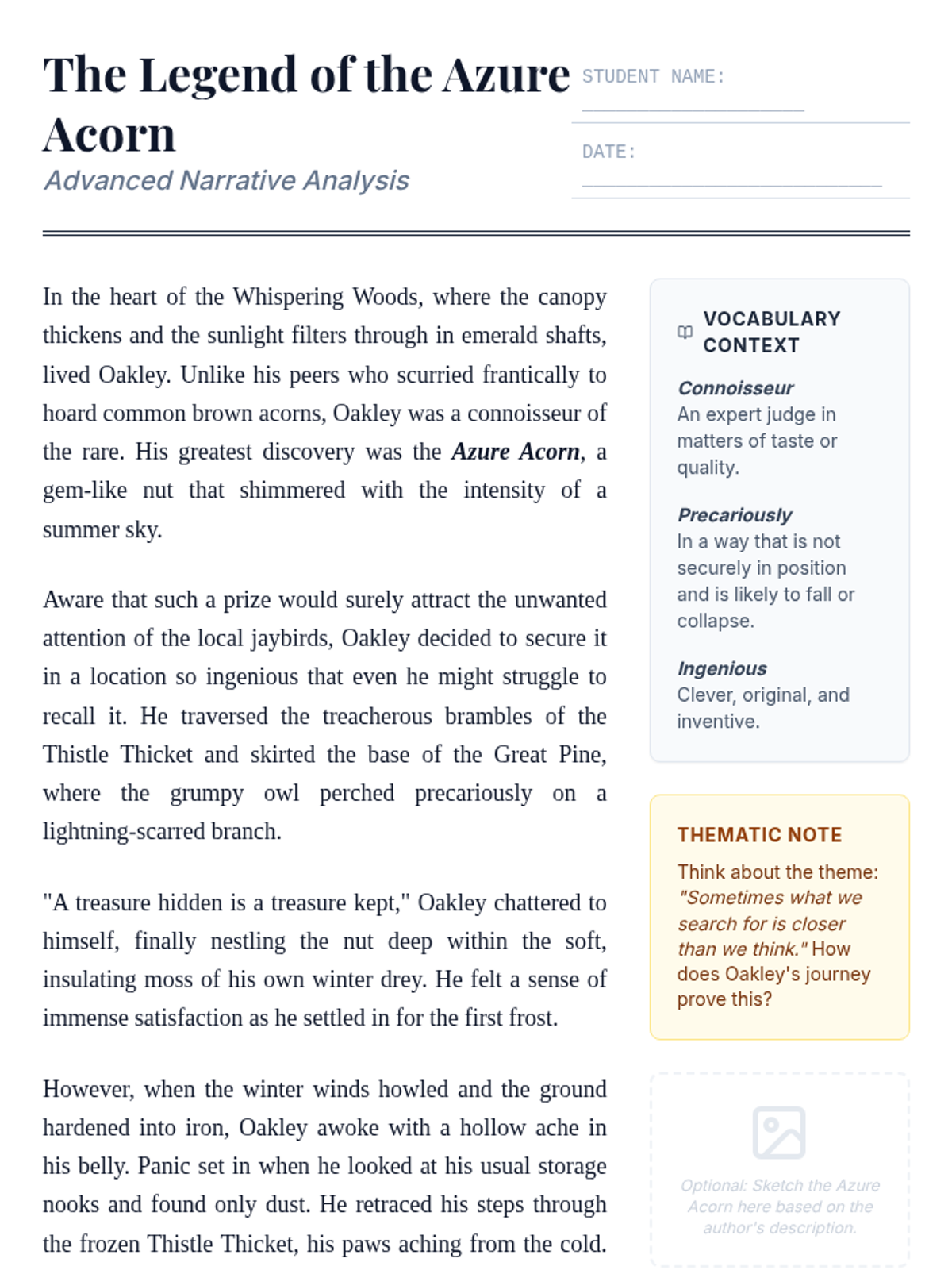
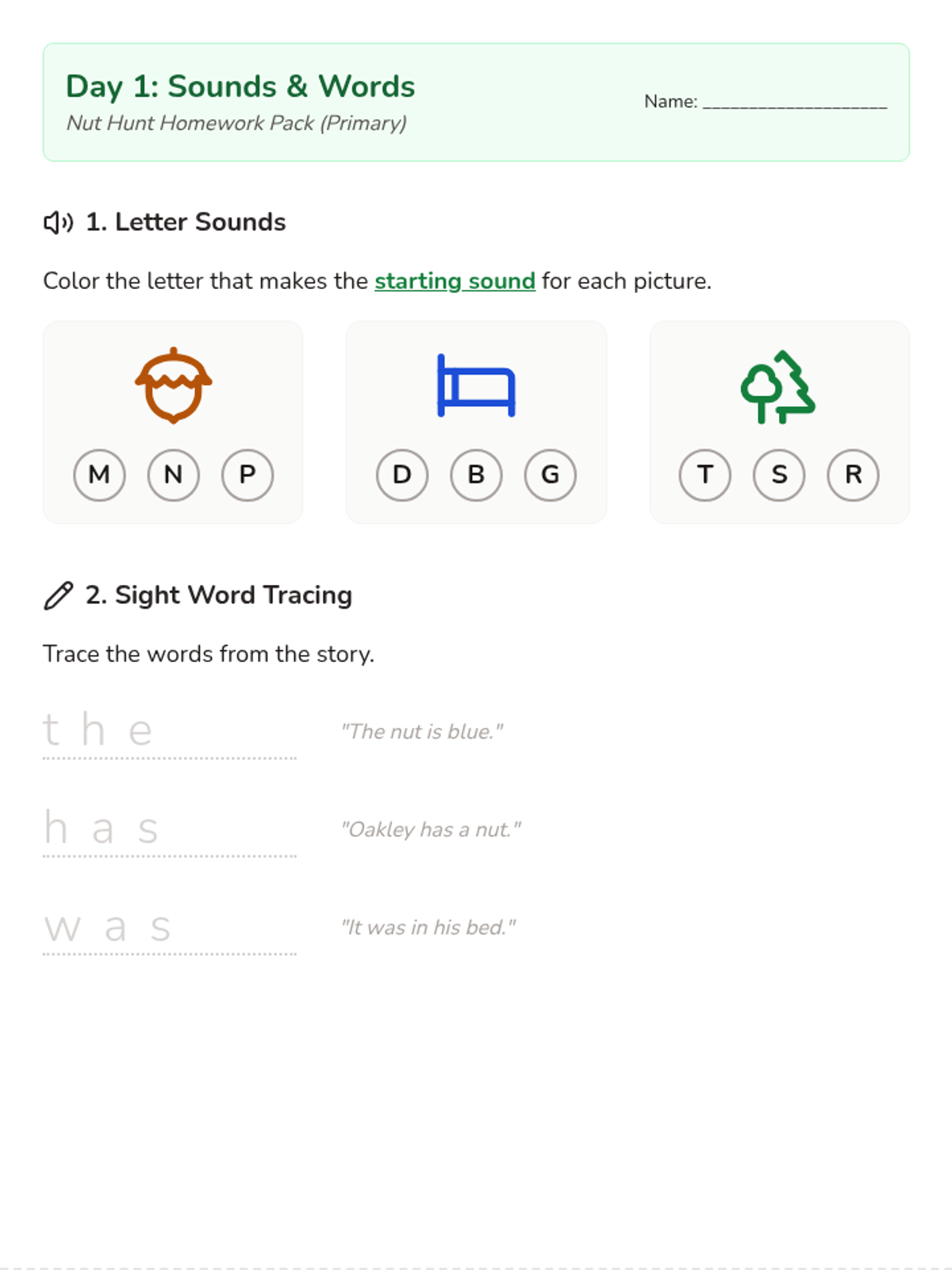
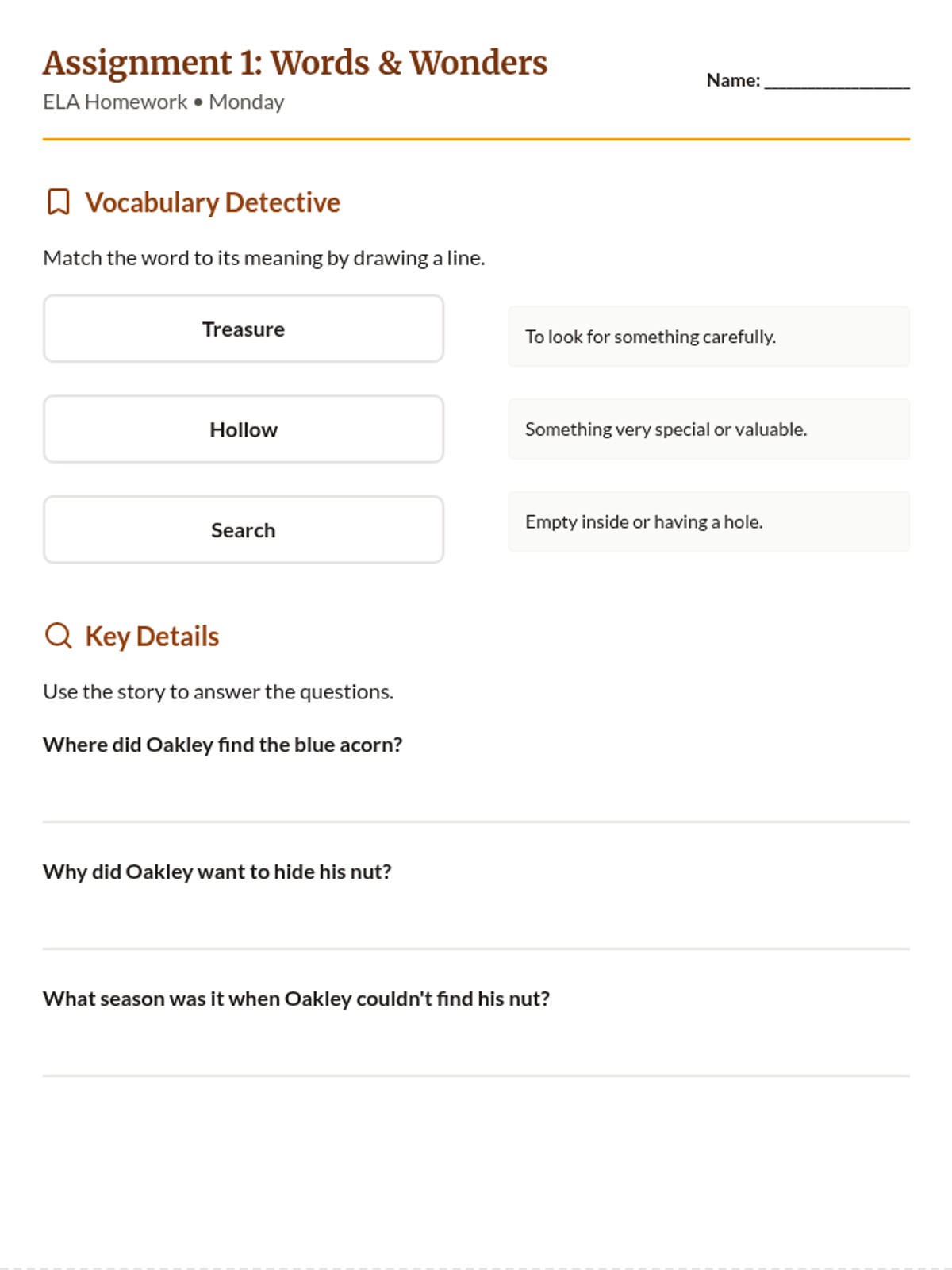
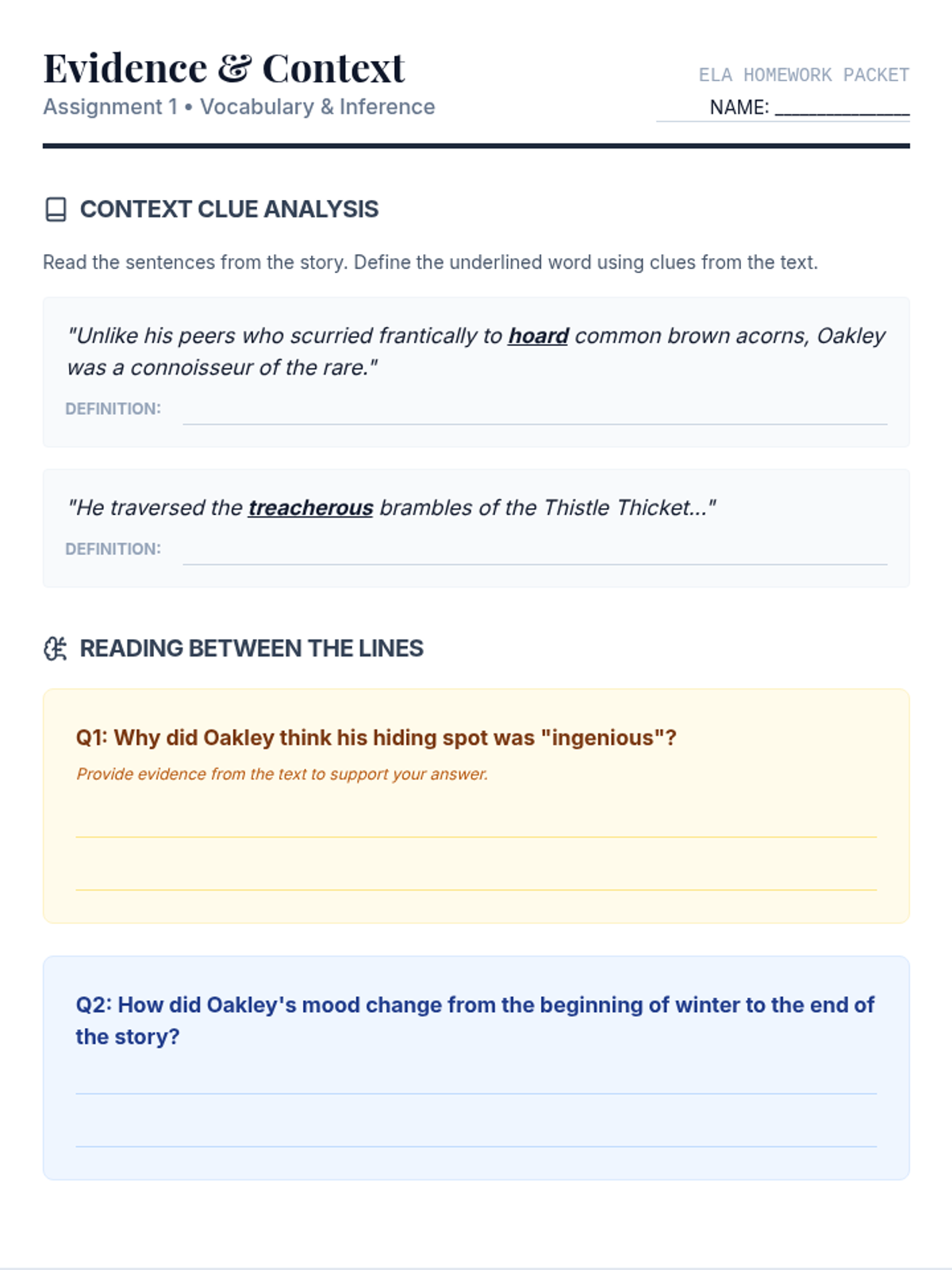
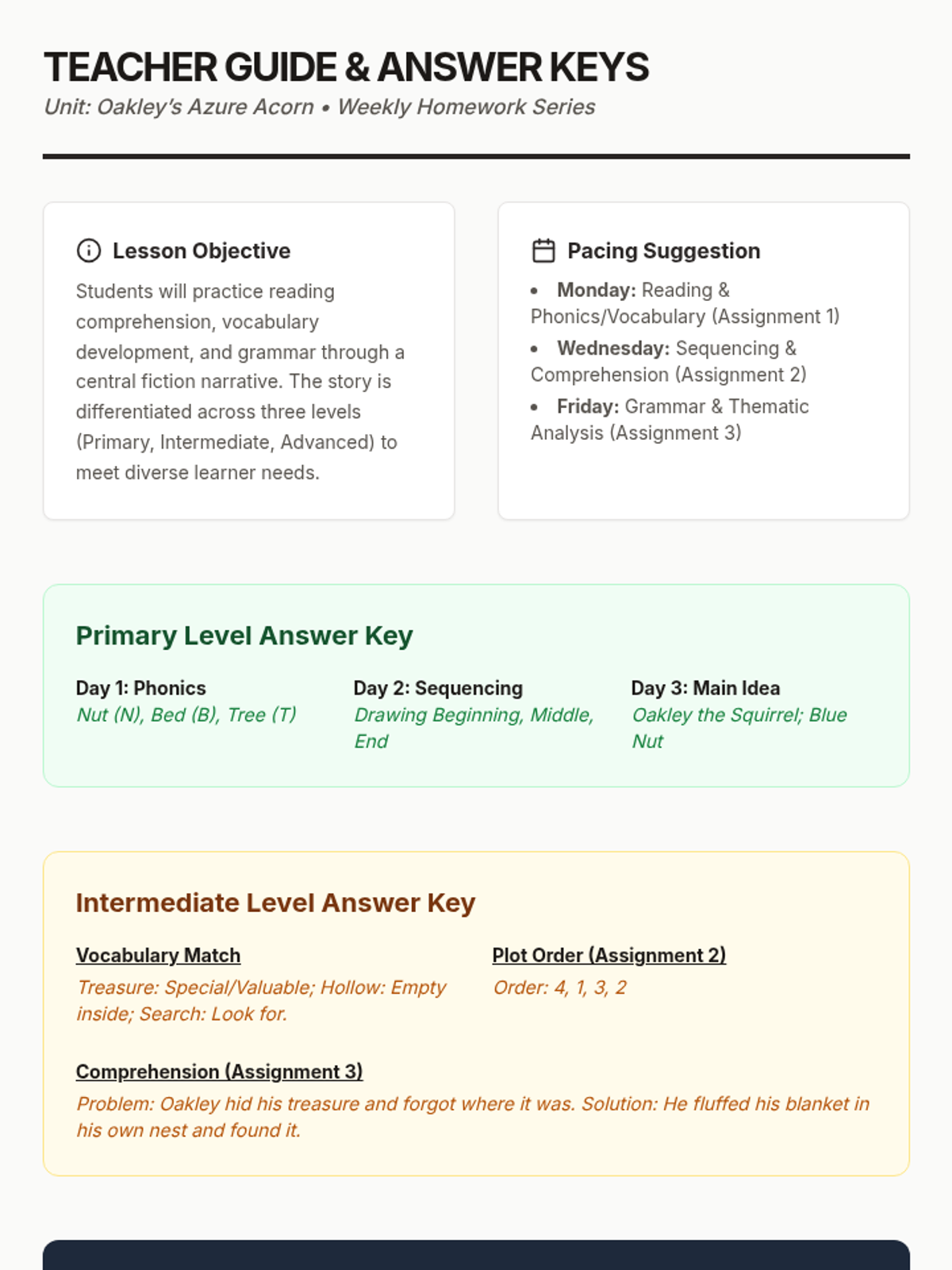
A week-long ELA homework series centered around a narrative about a squirrel's search for a rare acorn. The materials are differentiated for Kindergarten, 2nd Grade, and 4th Grade learners.
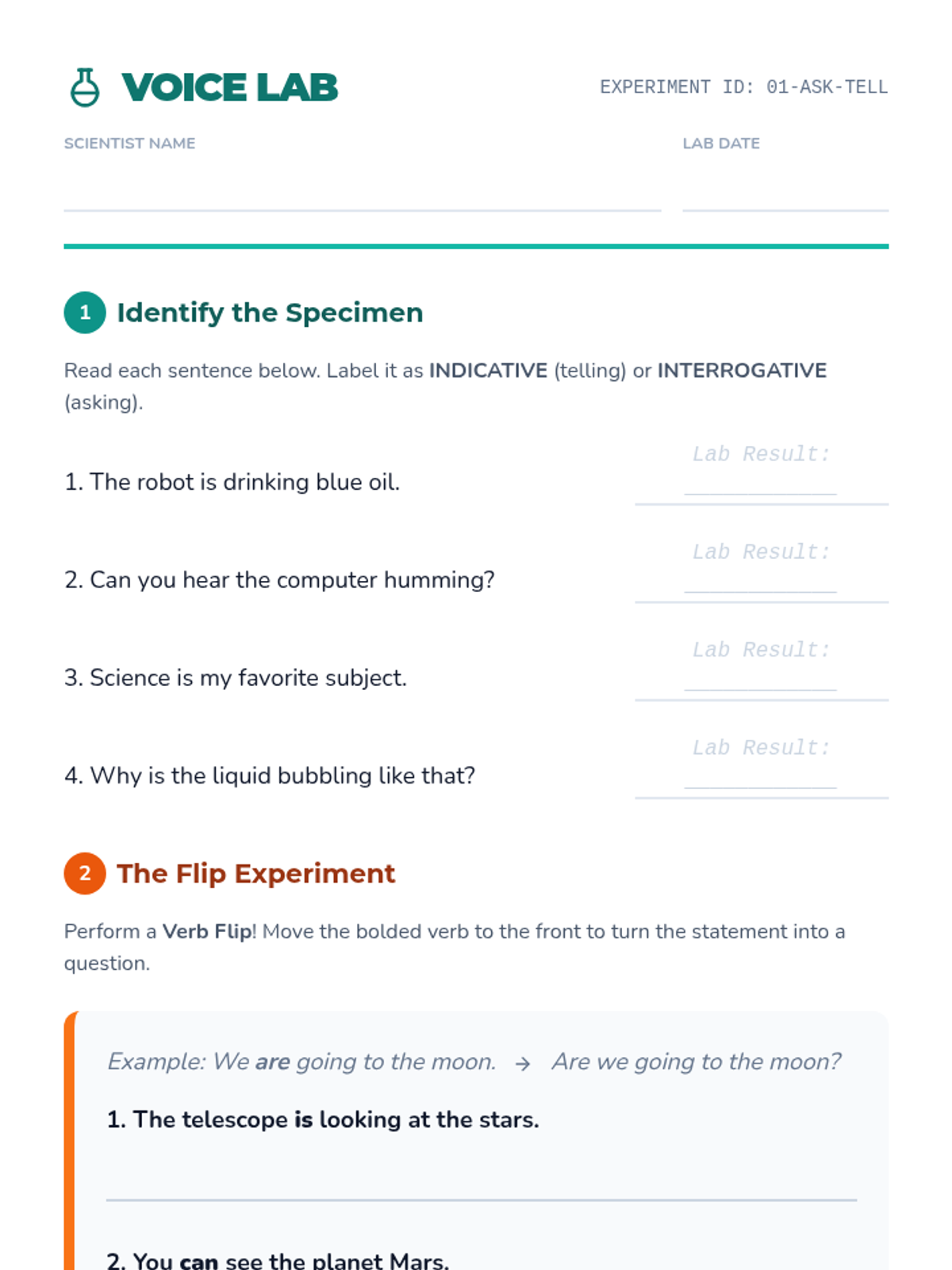
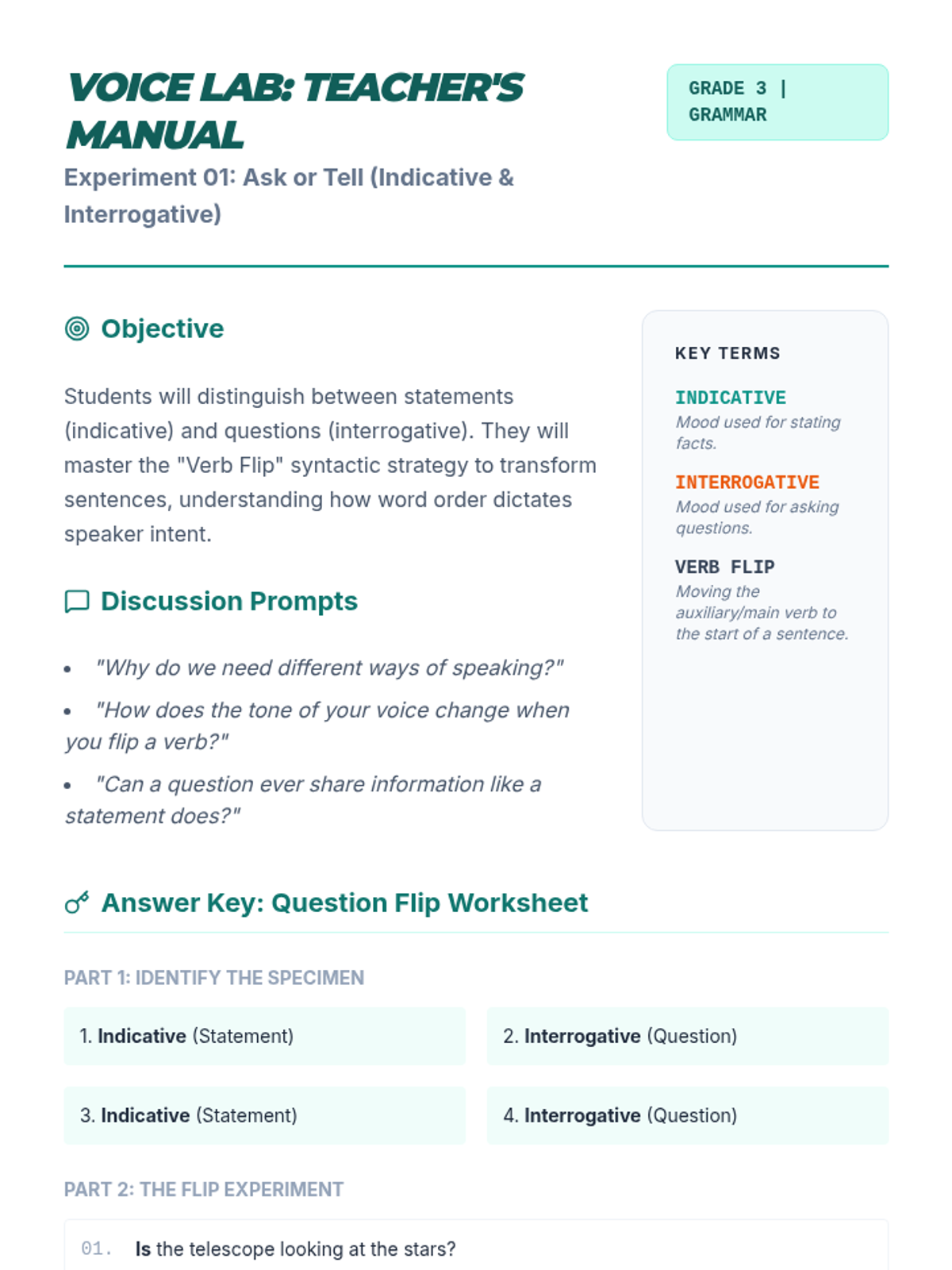
A 3rd-grade grammar sequence focusing on the indicative, interrogative, and imperative moods. Students become 'Voice Scientists' in a lab setting, experimenting with how verb placement and punctuation change the intent of a sentence.
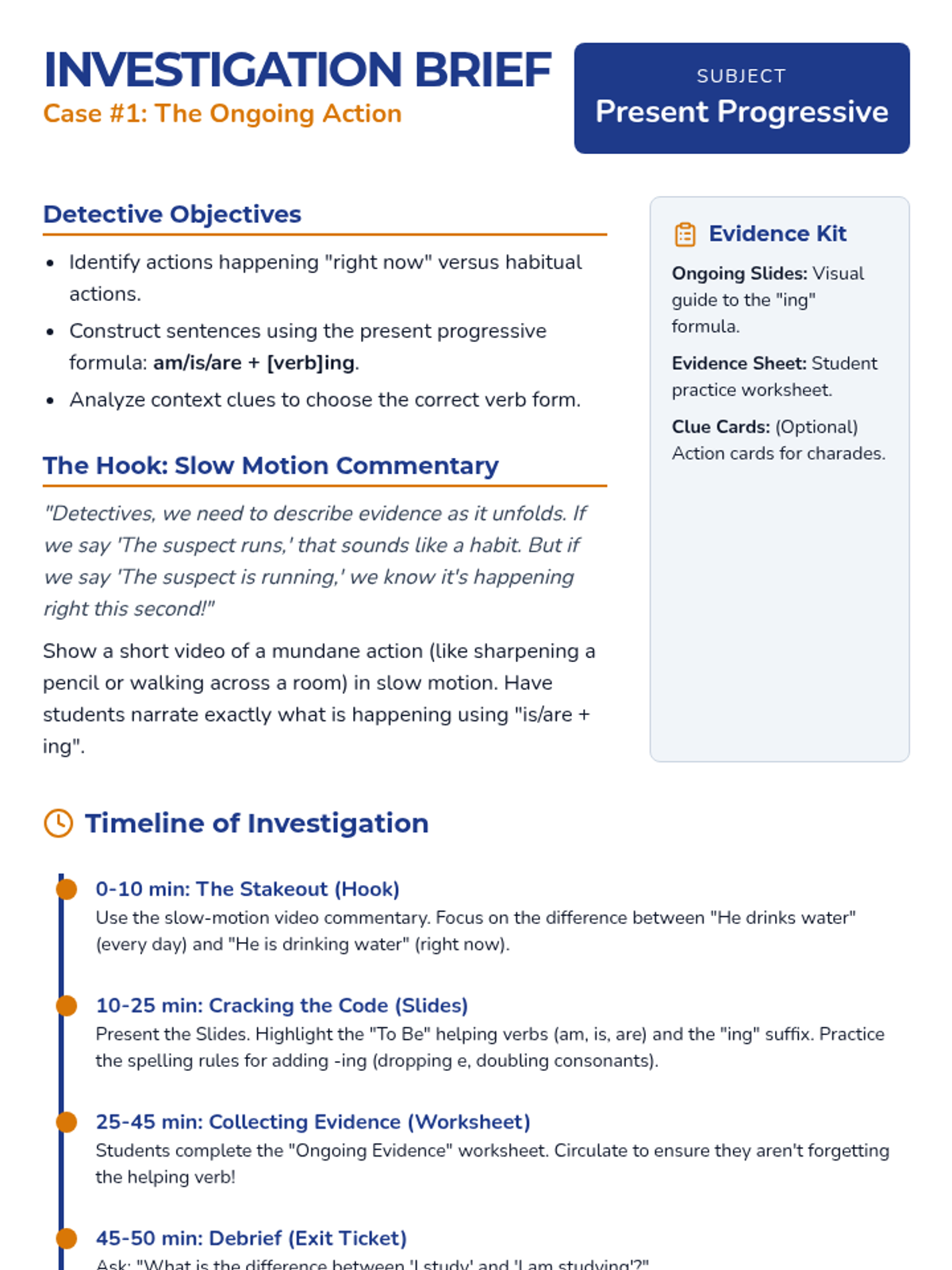
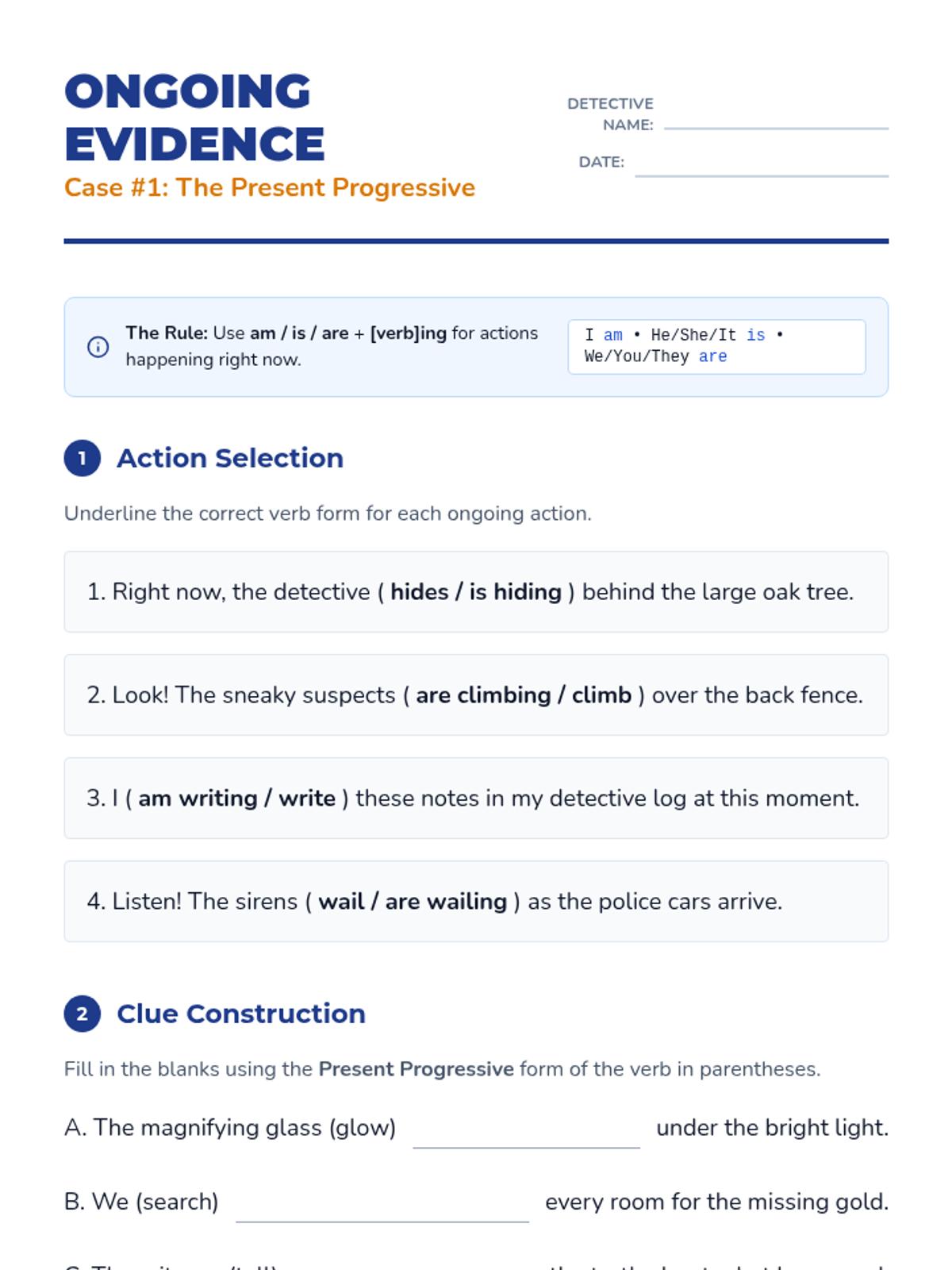
A 5-lesson unit for 3rd grade students introducing progressive and perfect verb tenses using a 'Time Detective' theme. Students learn to distinguish between ongoing, interrupted, and completed actions to improve their writing precision.
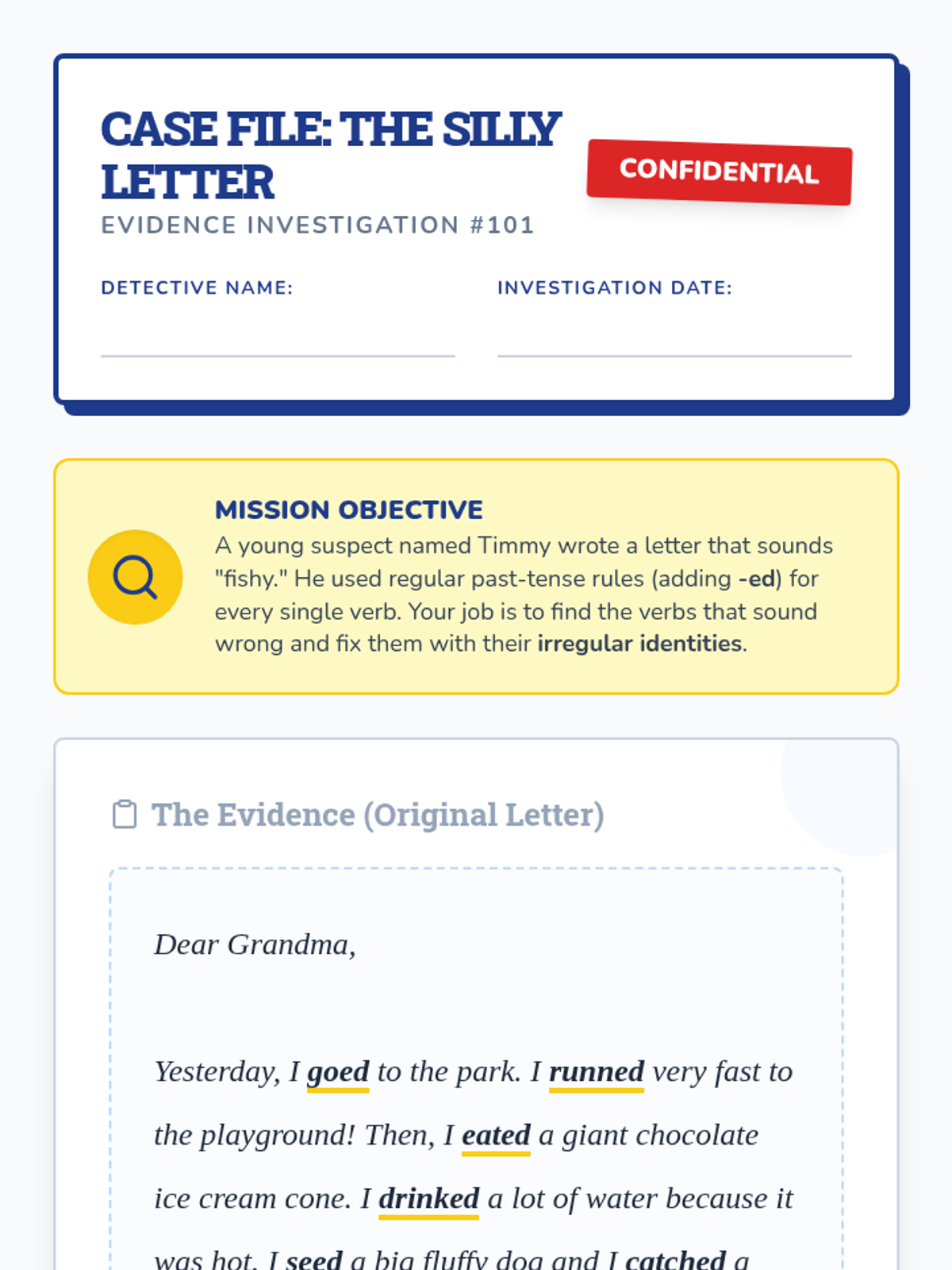
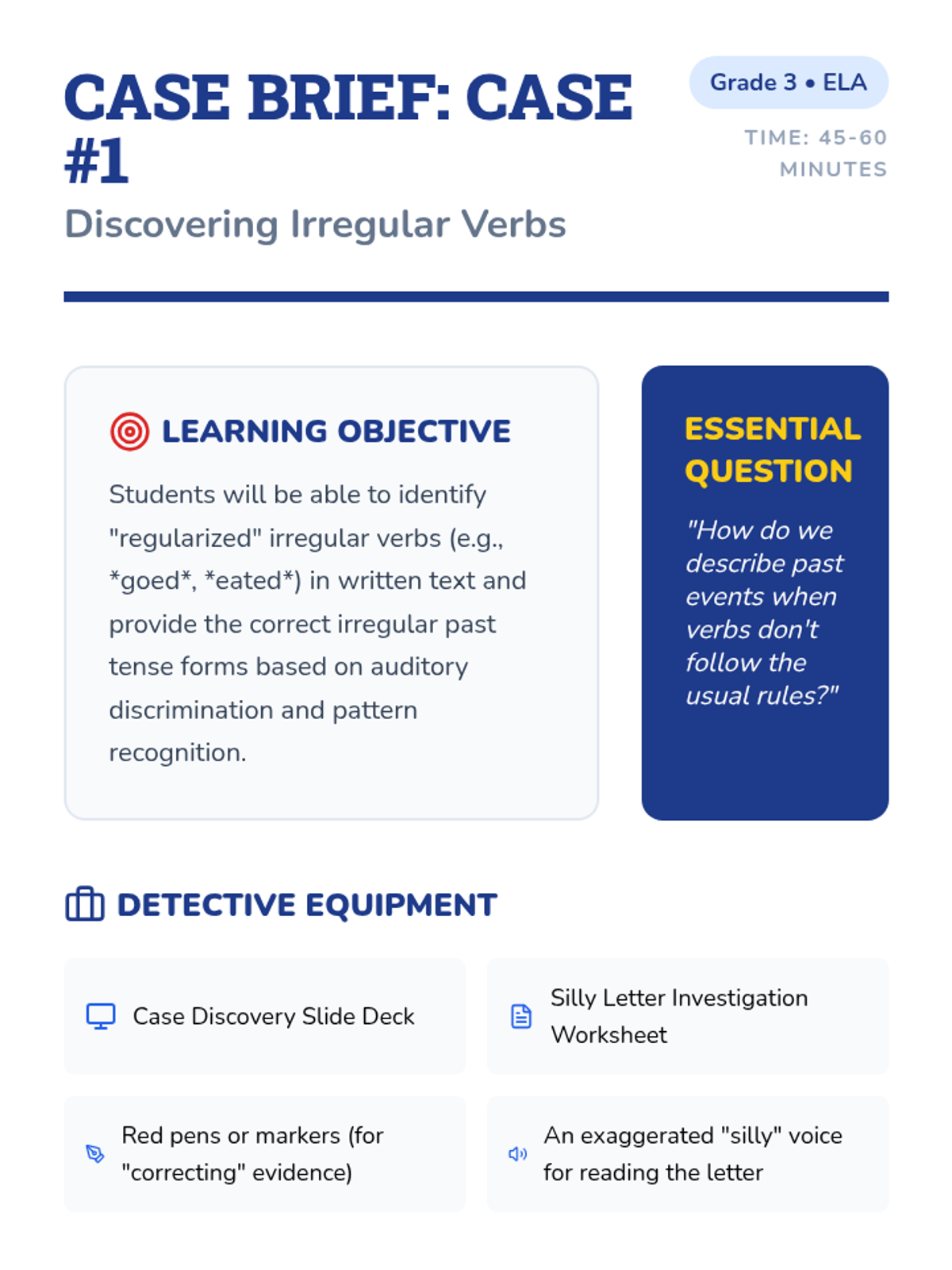
This sequence guides 3rd-grade students through the world of irregular past tense verbs using a 'Grammar Detective' theme. Students identify, categorize, and apply irregular verbs through investigative activities, culminating in a personal narrative project.
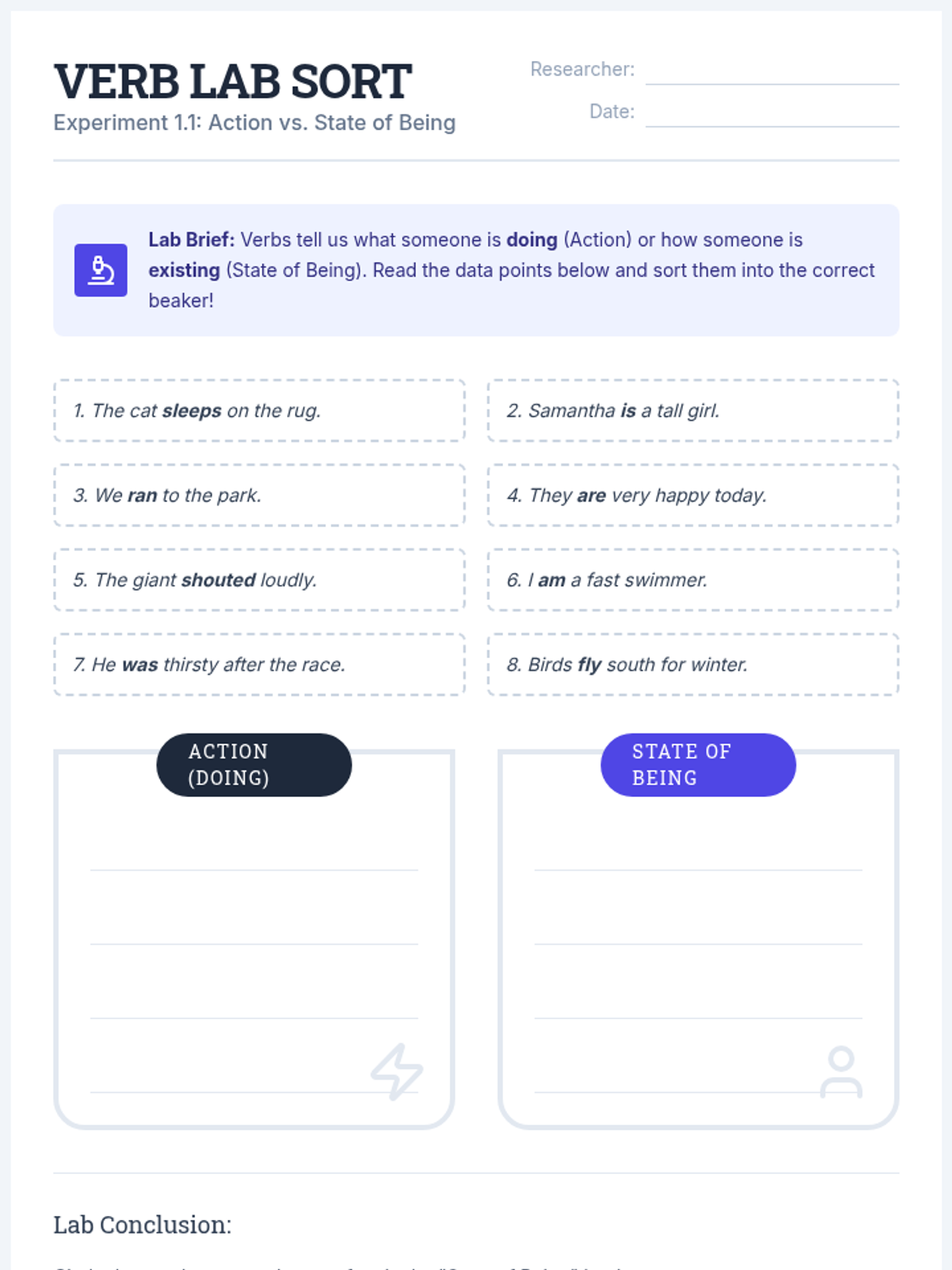
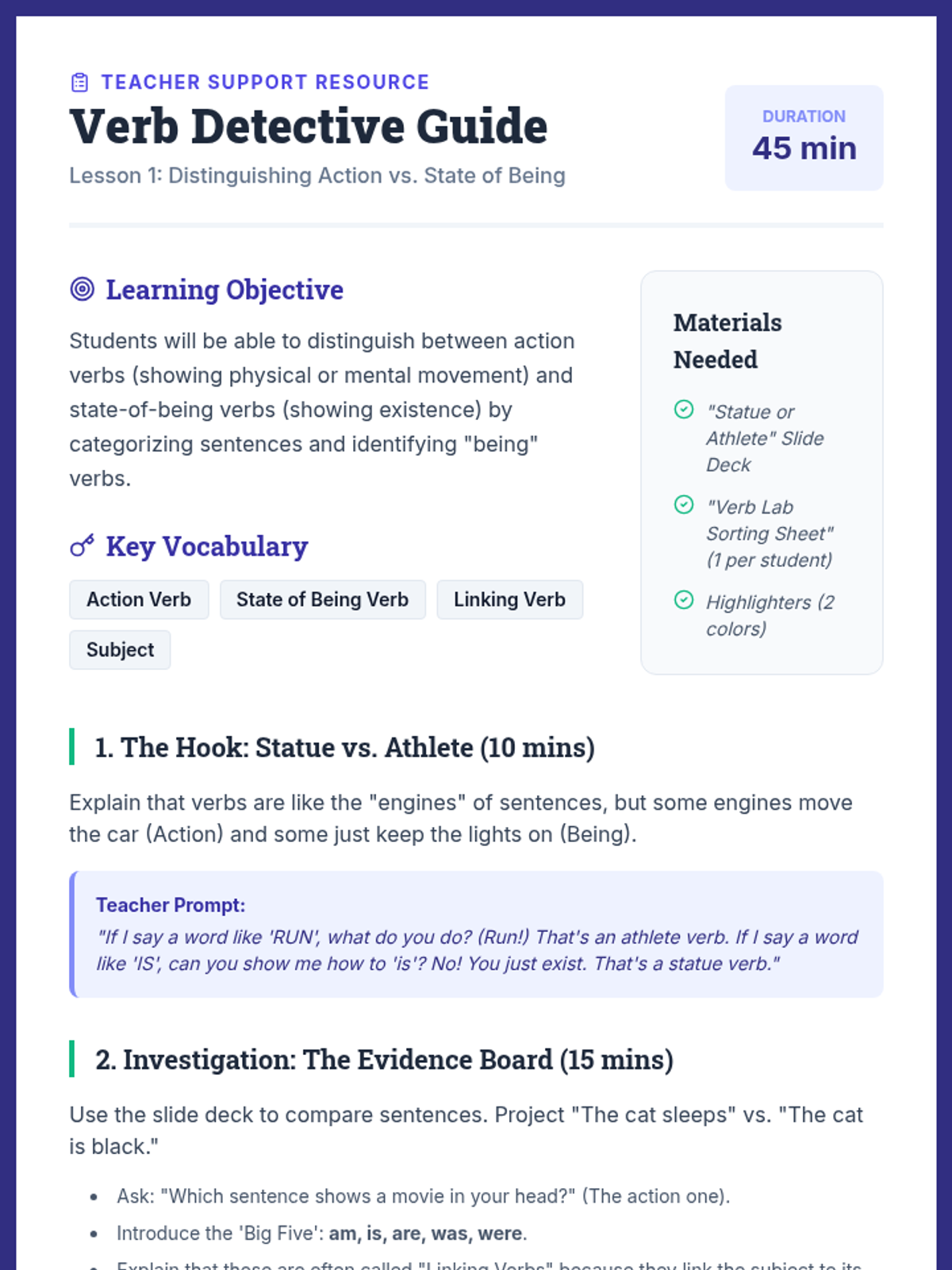
An inquiry-based exploration of linking and helping verbs for 3rd-grade students. This unit moves from distinguishing action from state-of-being to constructing complex verb phrases and applying them to creative writing.
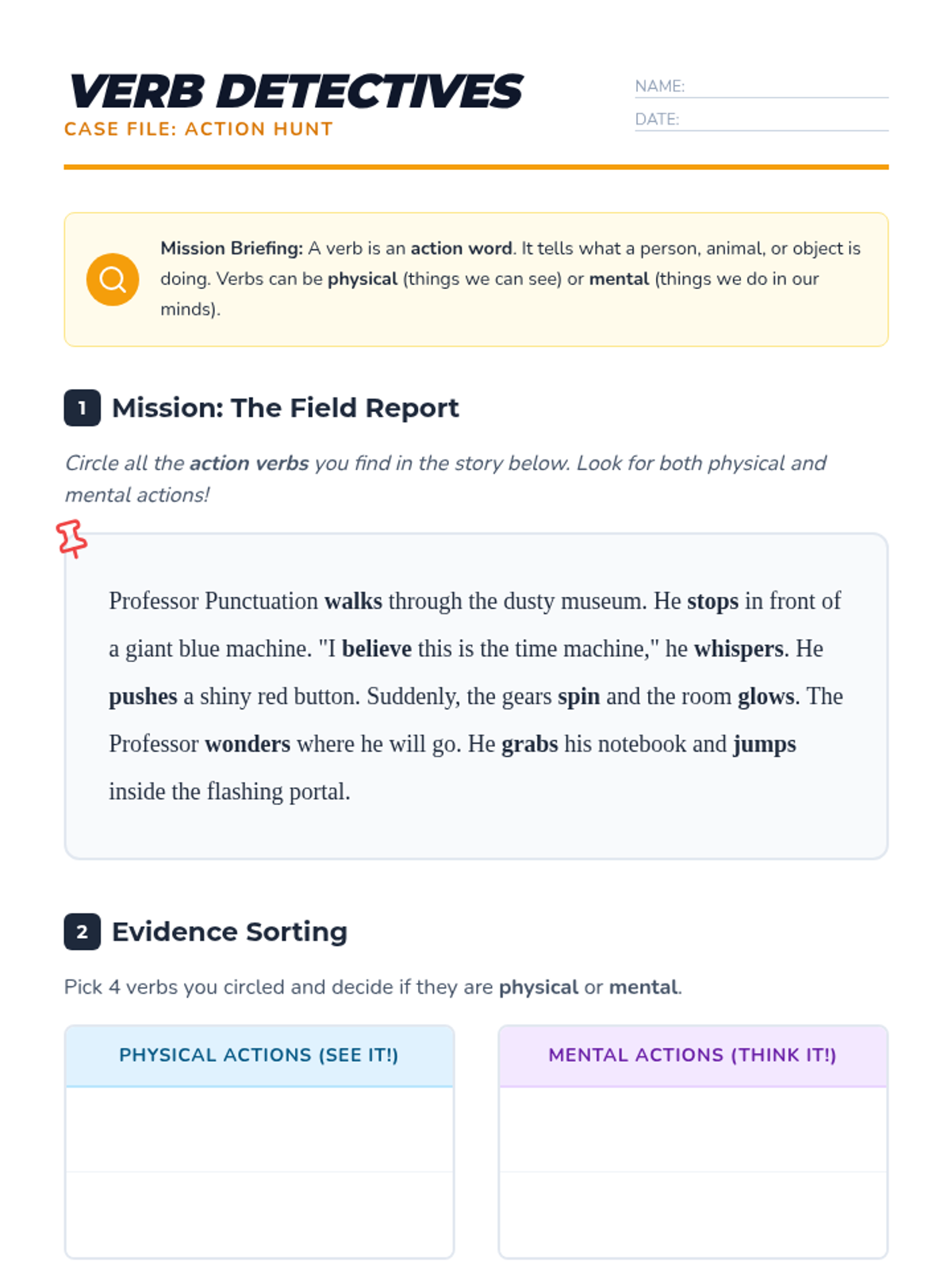
A comprehensive 3rd-grade grammar unit focusing on action verbs and the three simple tenses (past, present, and future) through the lens of a "Time Traveler" adventure. Students learn to identify actions, conjugate regular verbs, and maintain tense consistency in their writing.
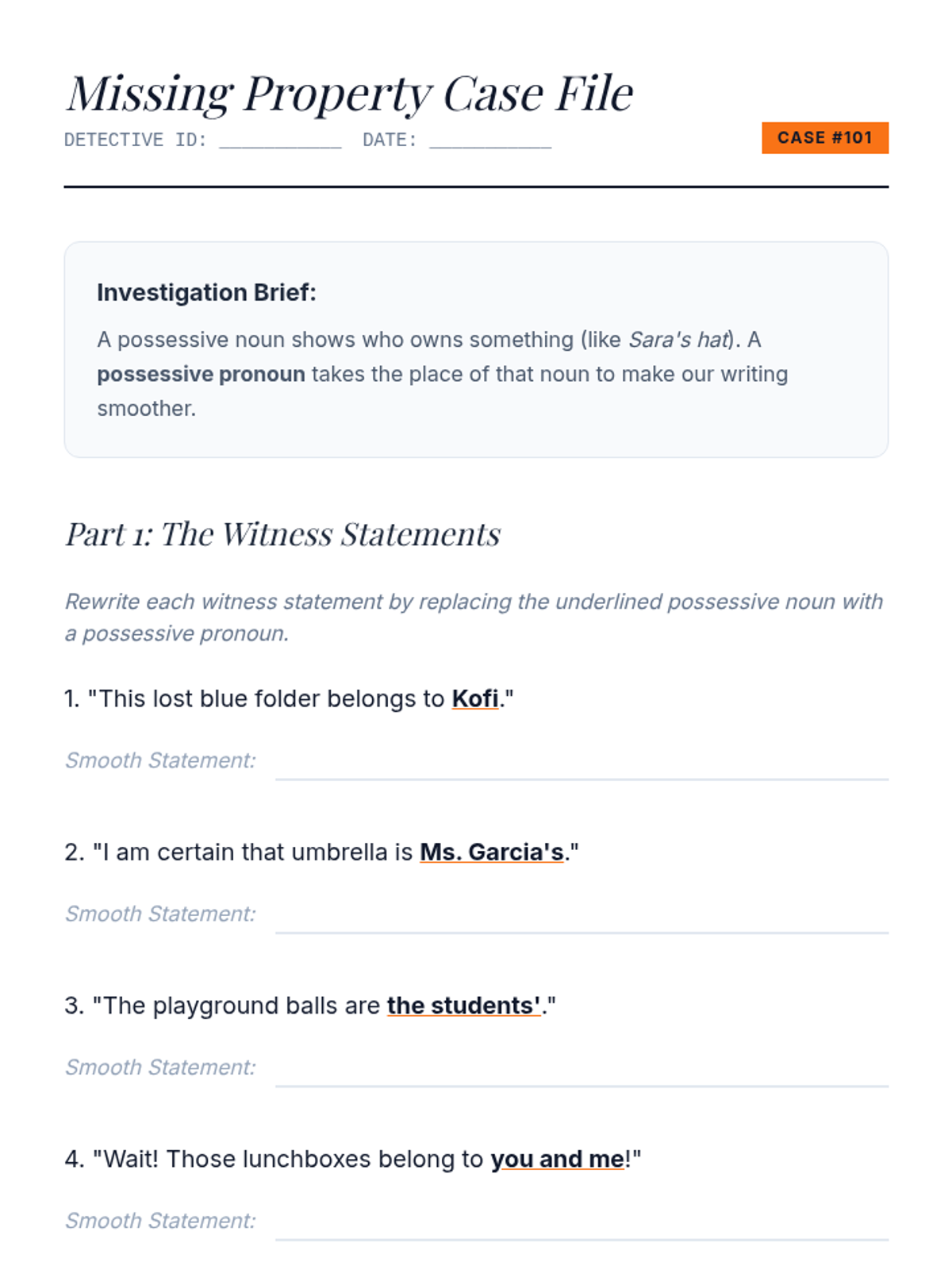
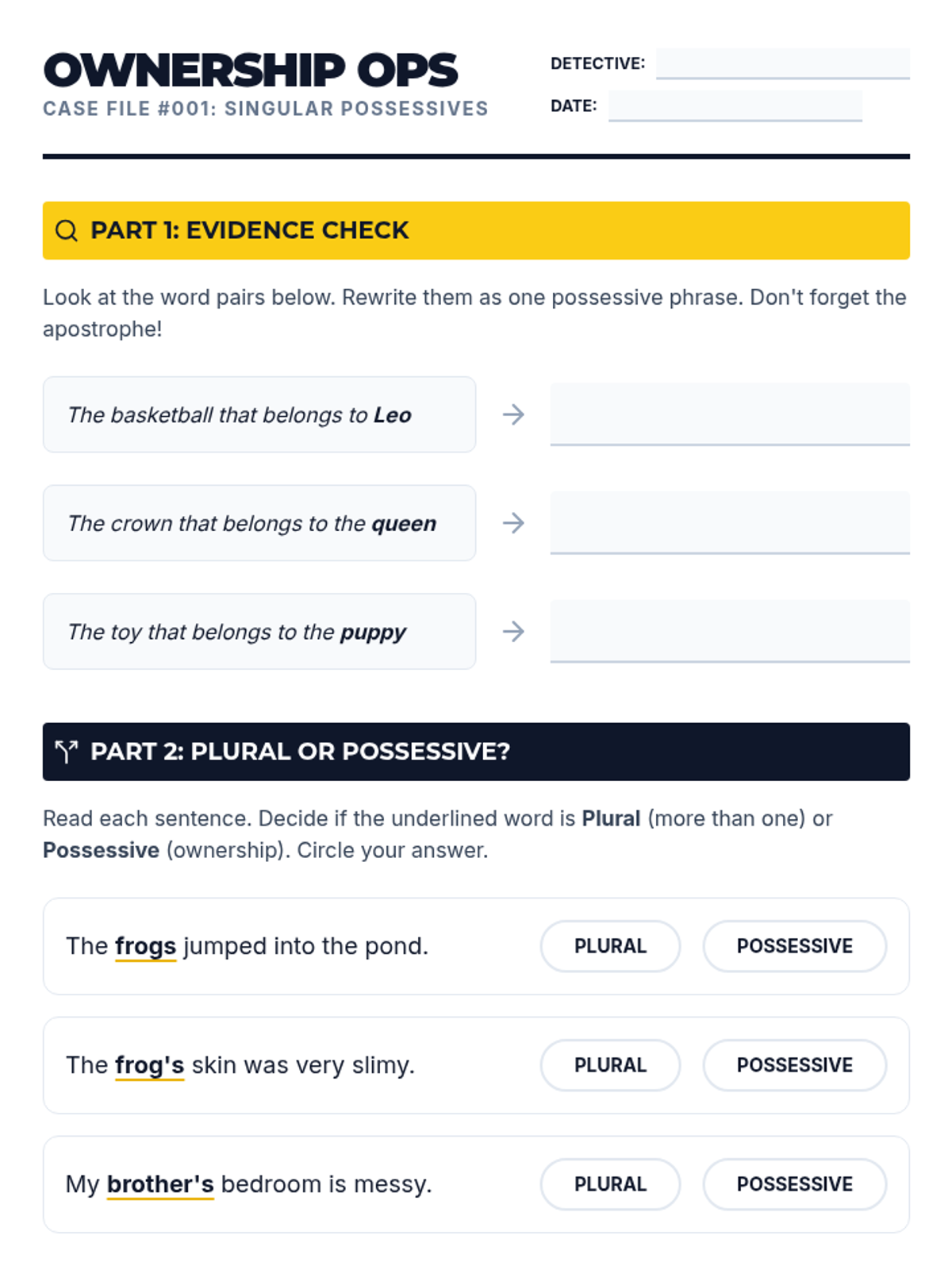
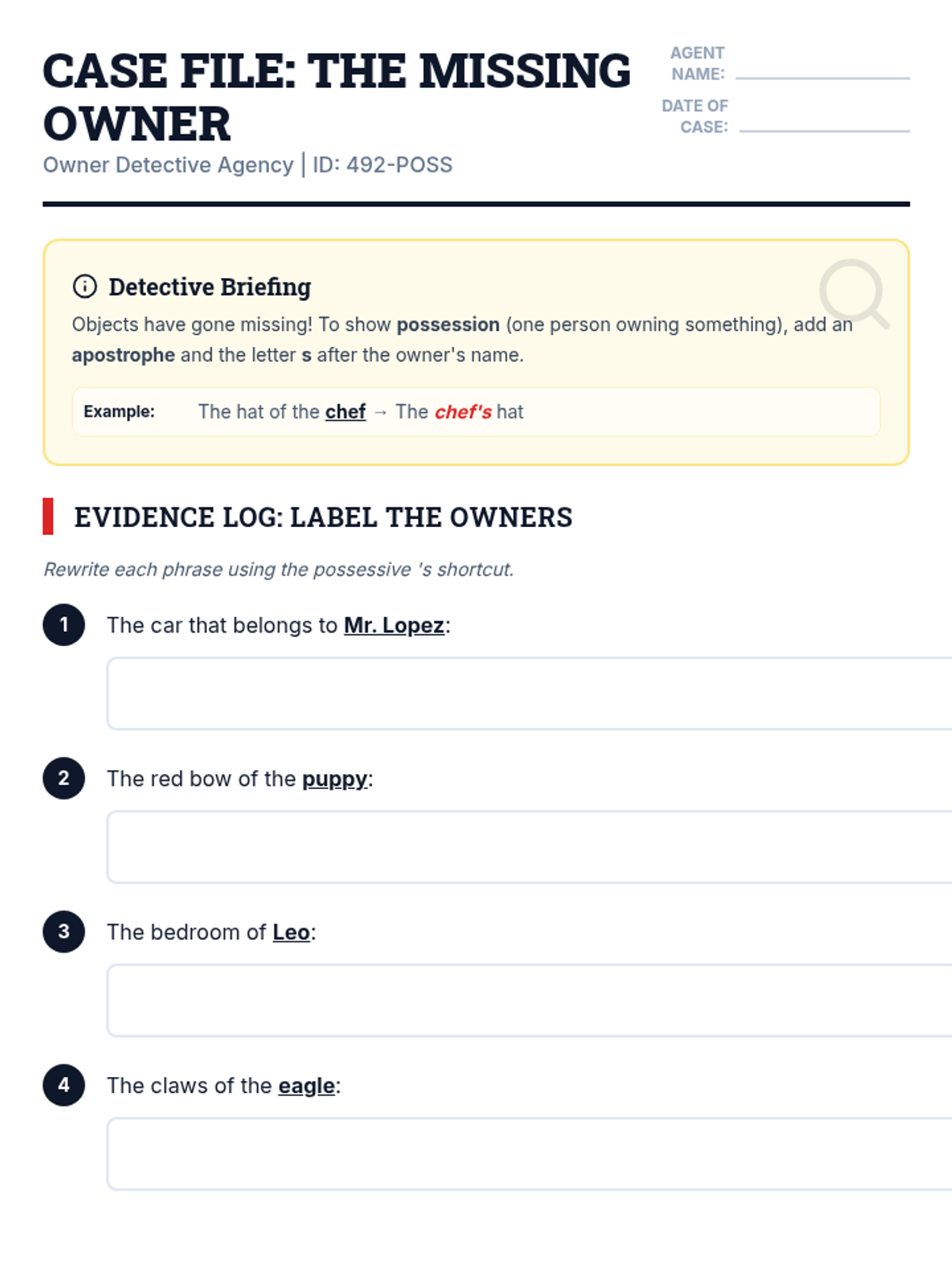
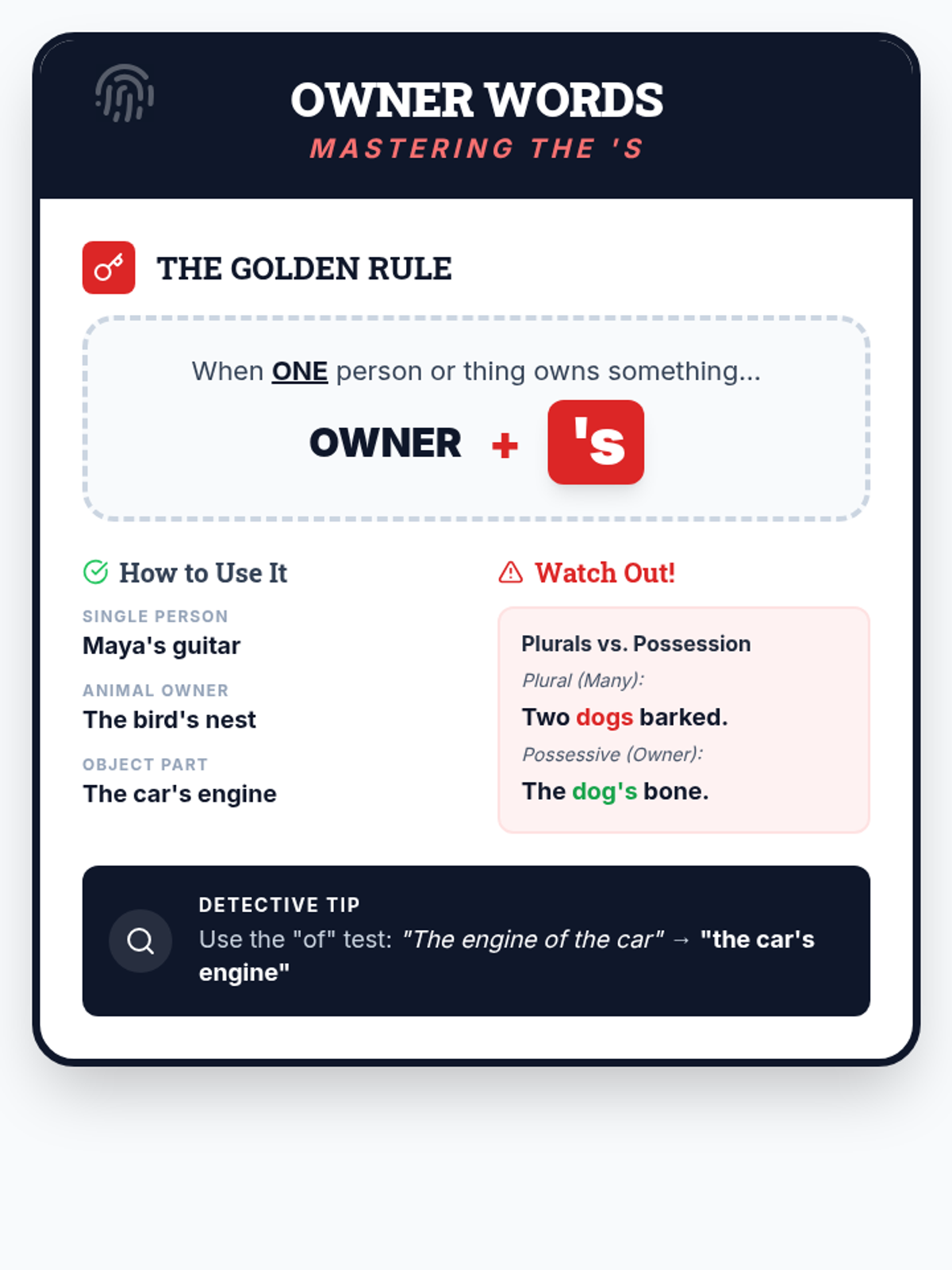
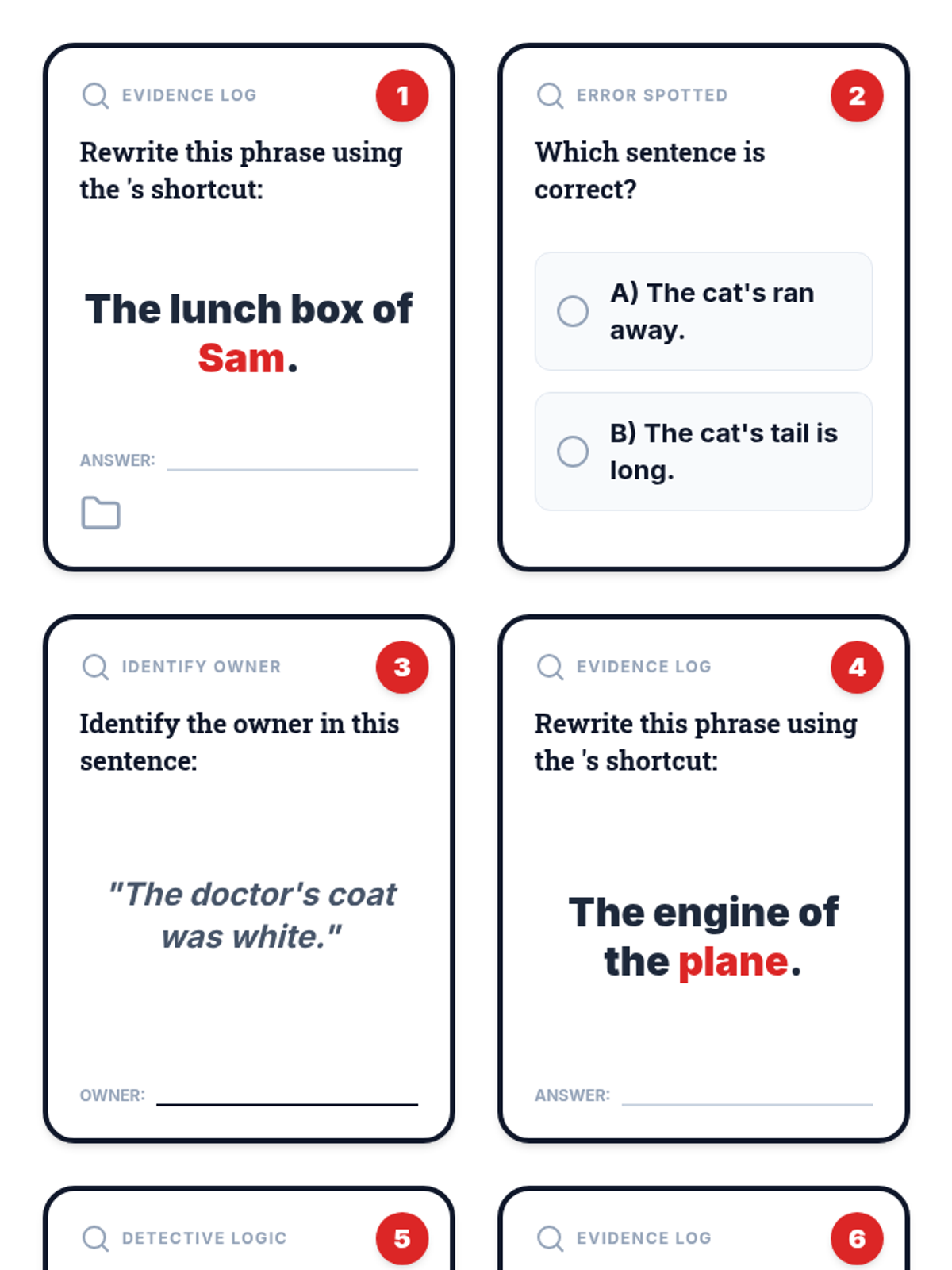
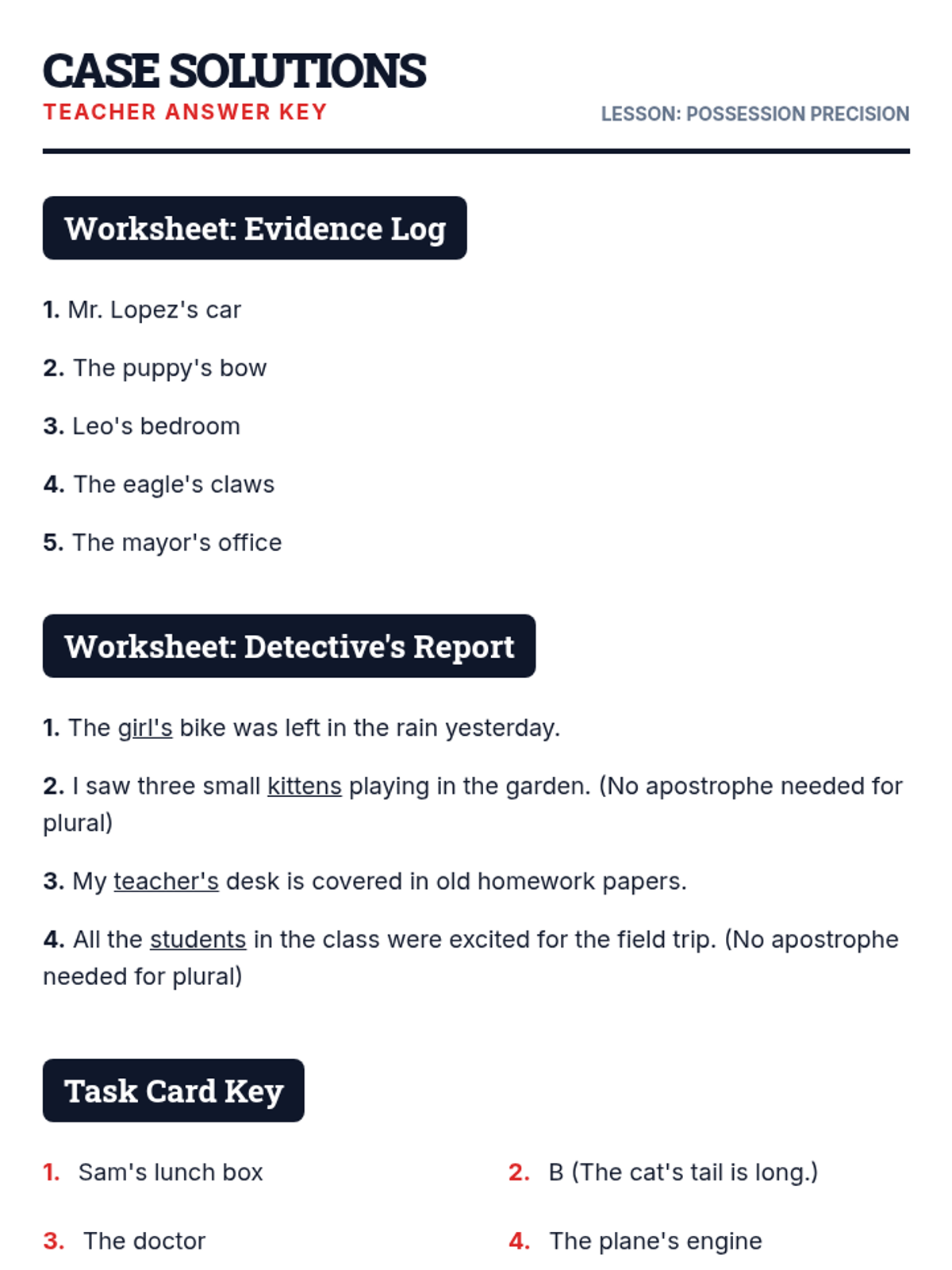
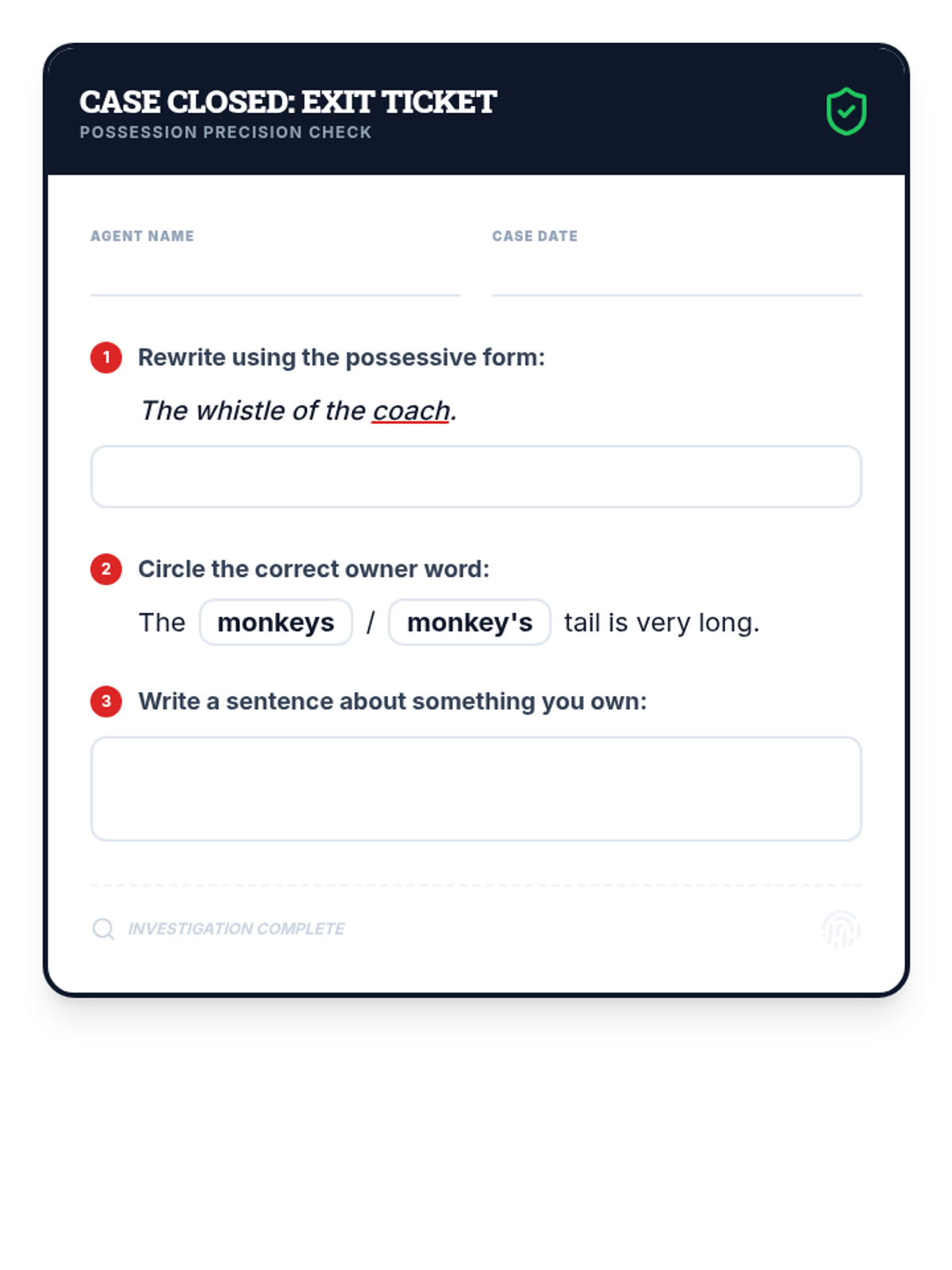
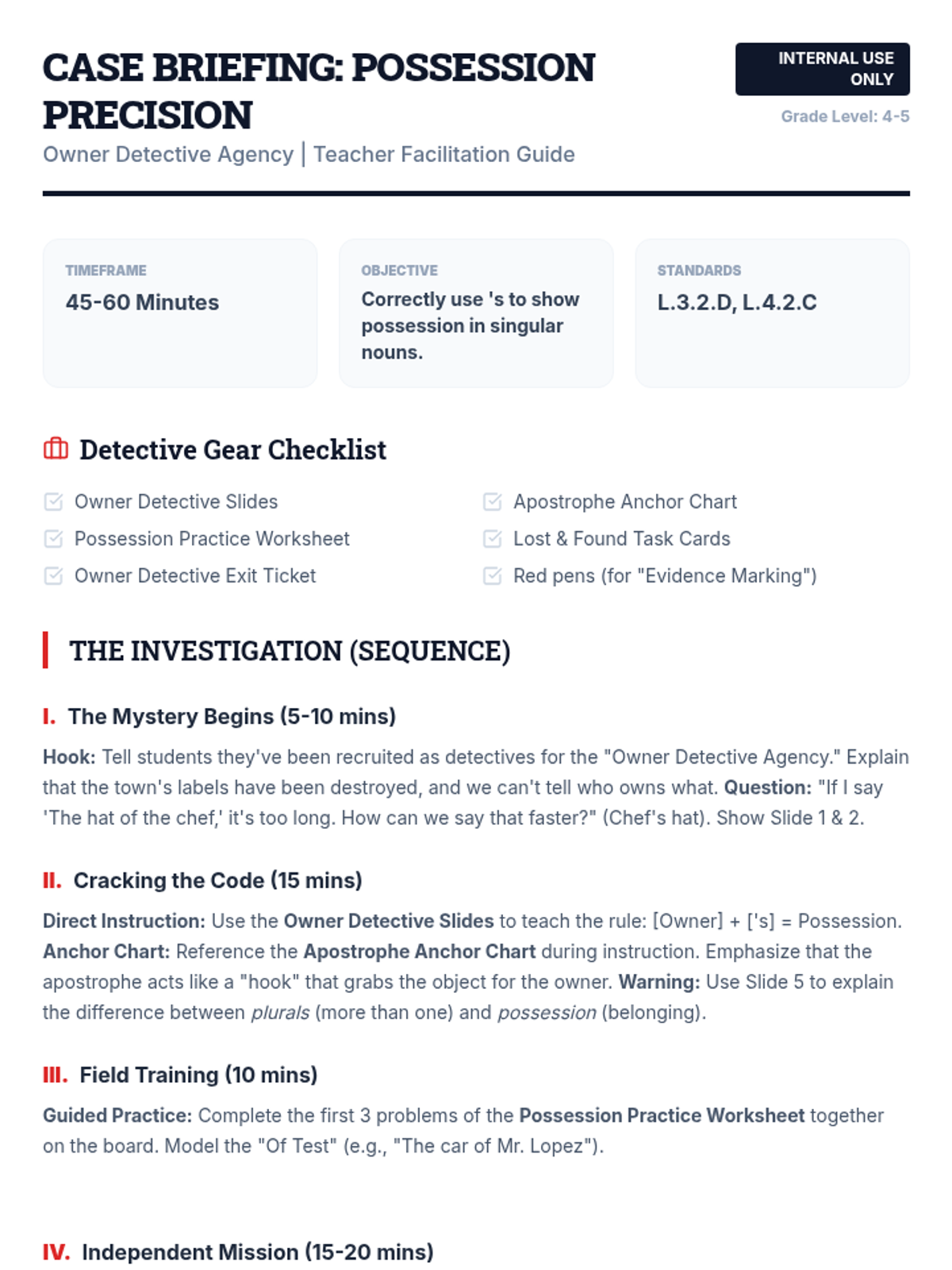
A unit focused on mastering possessive nouns through a detective-themed exploration of 'owner words' and the proper placement of apostrophes.
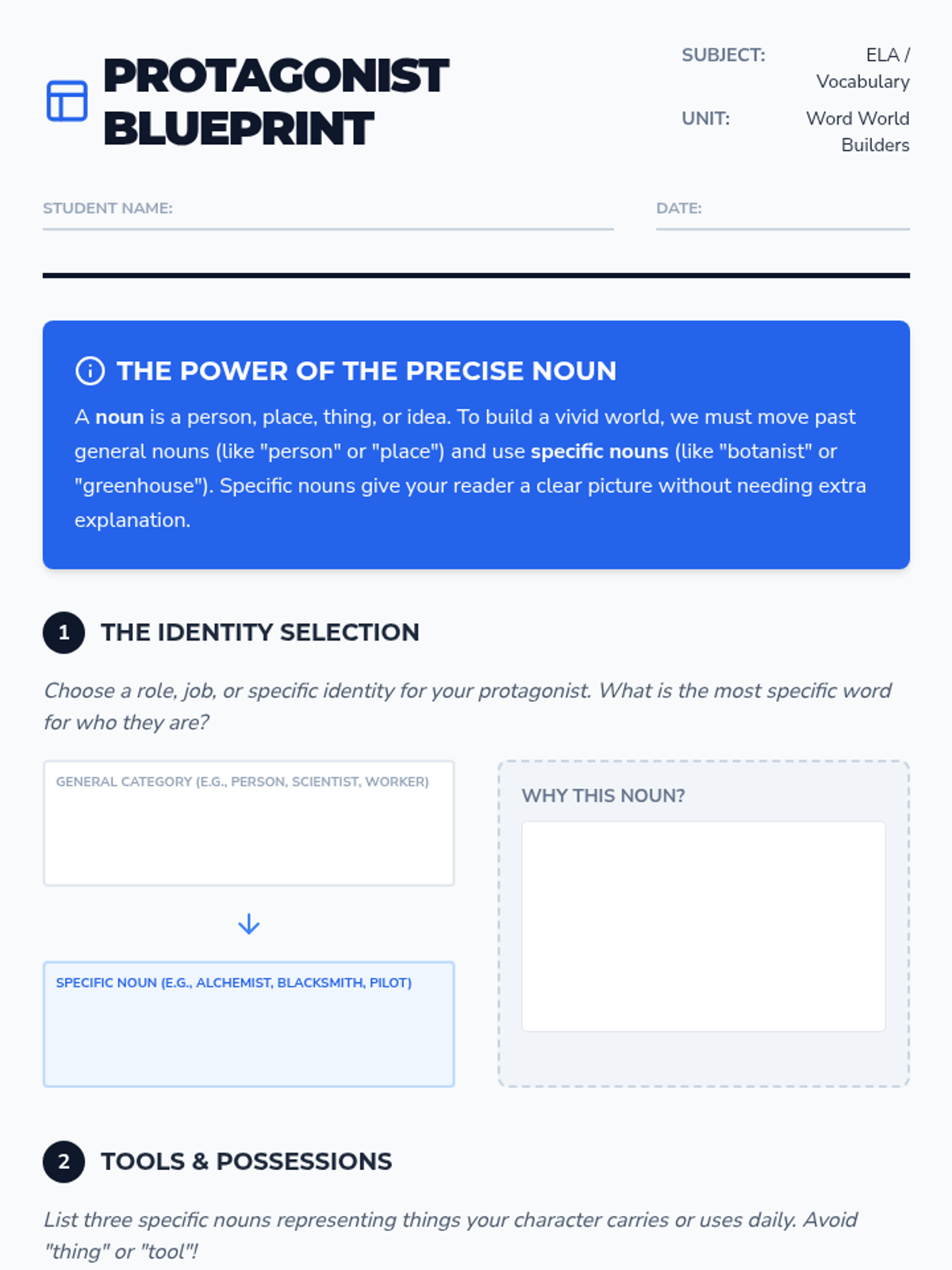
Students embark on a journey of fictional world-building, using precise nouns and vivid adjectives as their primary tools. They move from character identity to atmospheric settings, eventually crafting a polished narrative passage that demonstrates the power of descriptive imagery.
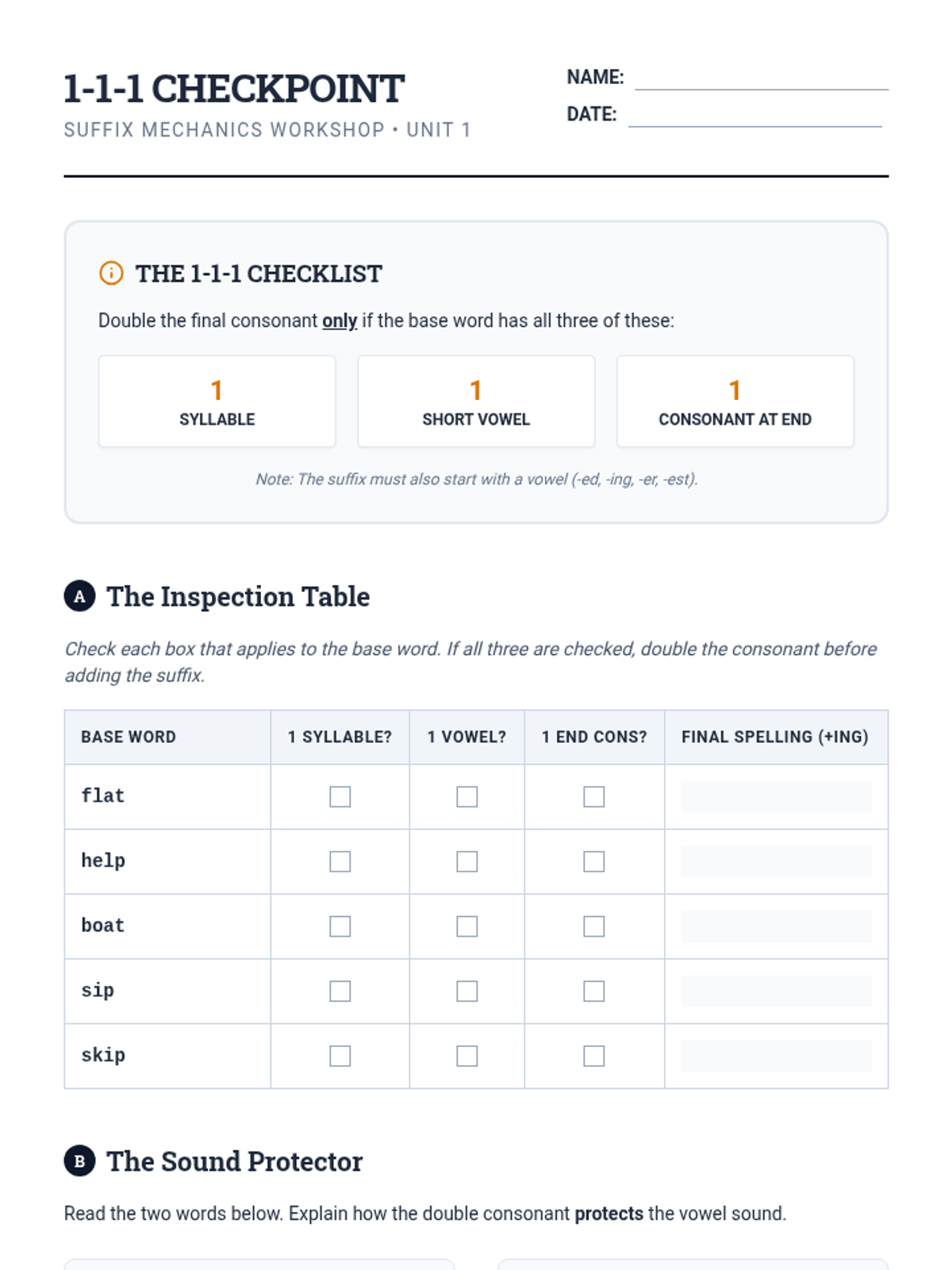
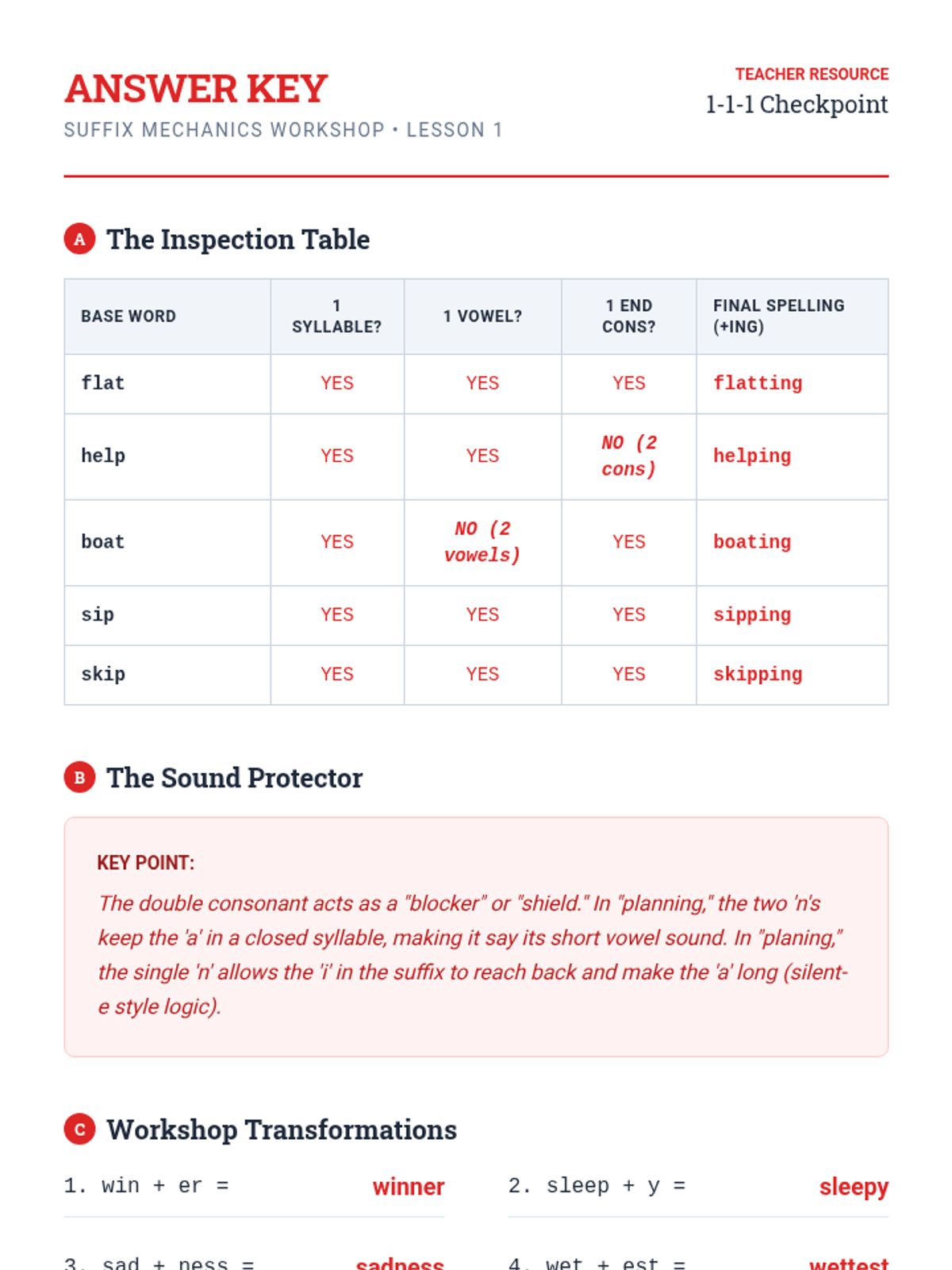
A systematic study of suffix orthography rules including the 1-1-1 rule, silent e, changing y to i, and irregular plurals. Students learn the logic behind spelling changes to preserve vowel sounds and apply these rules in a final workshop.
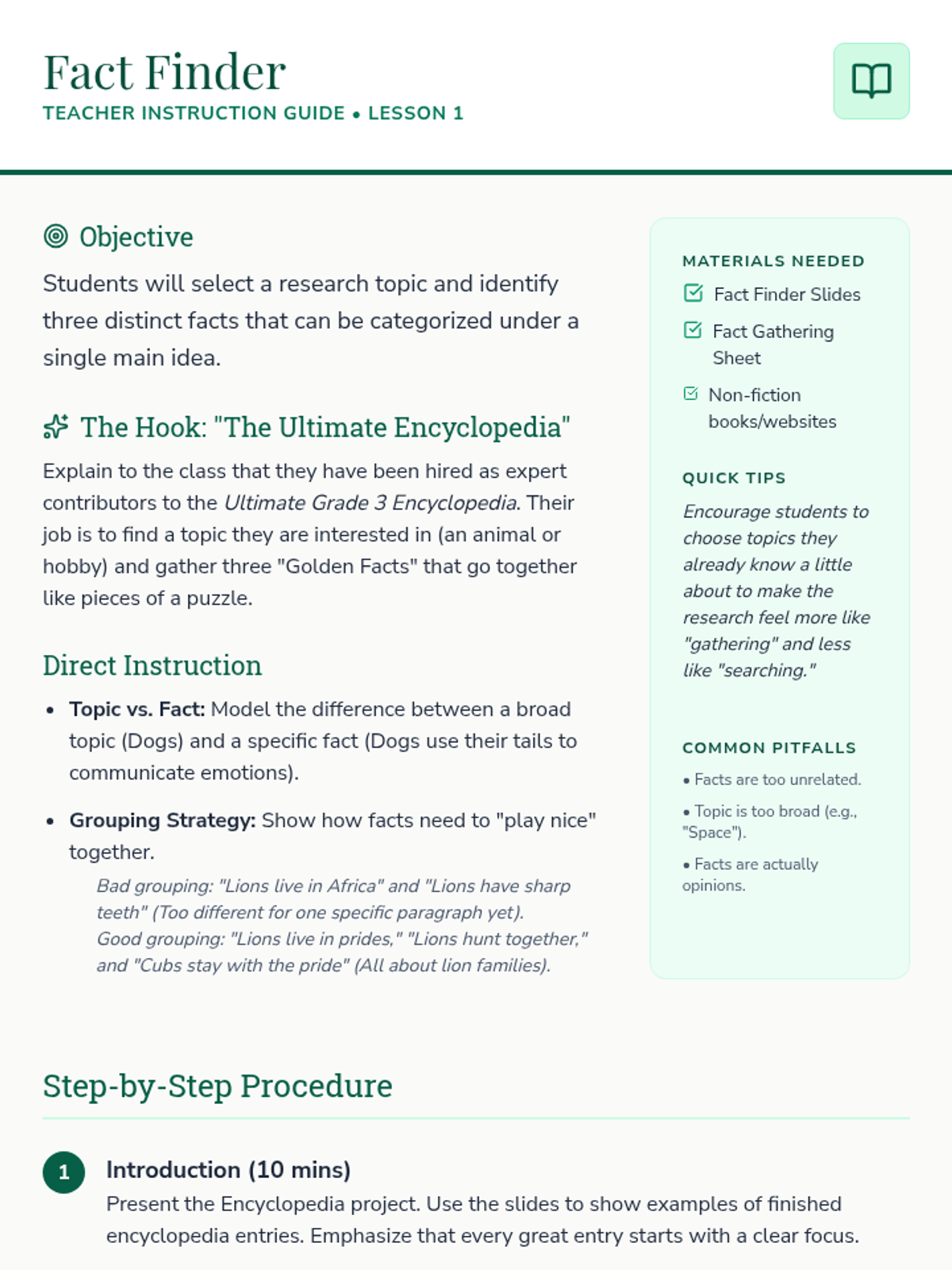
A project-based writing sequence where 3rd grade students create a 'Classroom Encyclopedia.' Students learn to research facts and craft effective topic sentences that categorize their information, culminating in a published encyclopedia entry and class presentation.
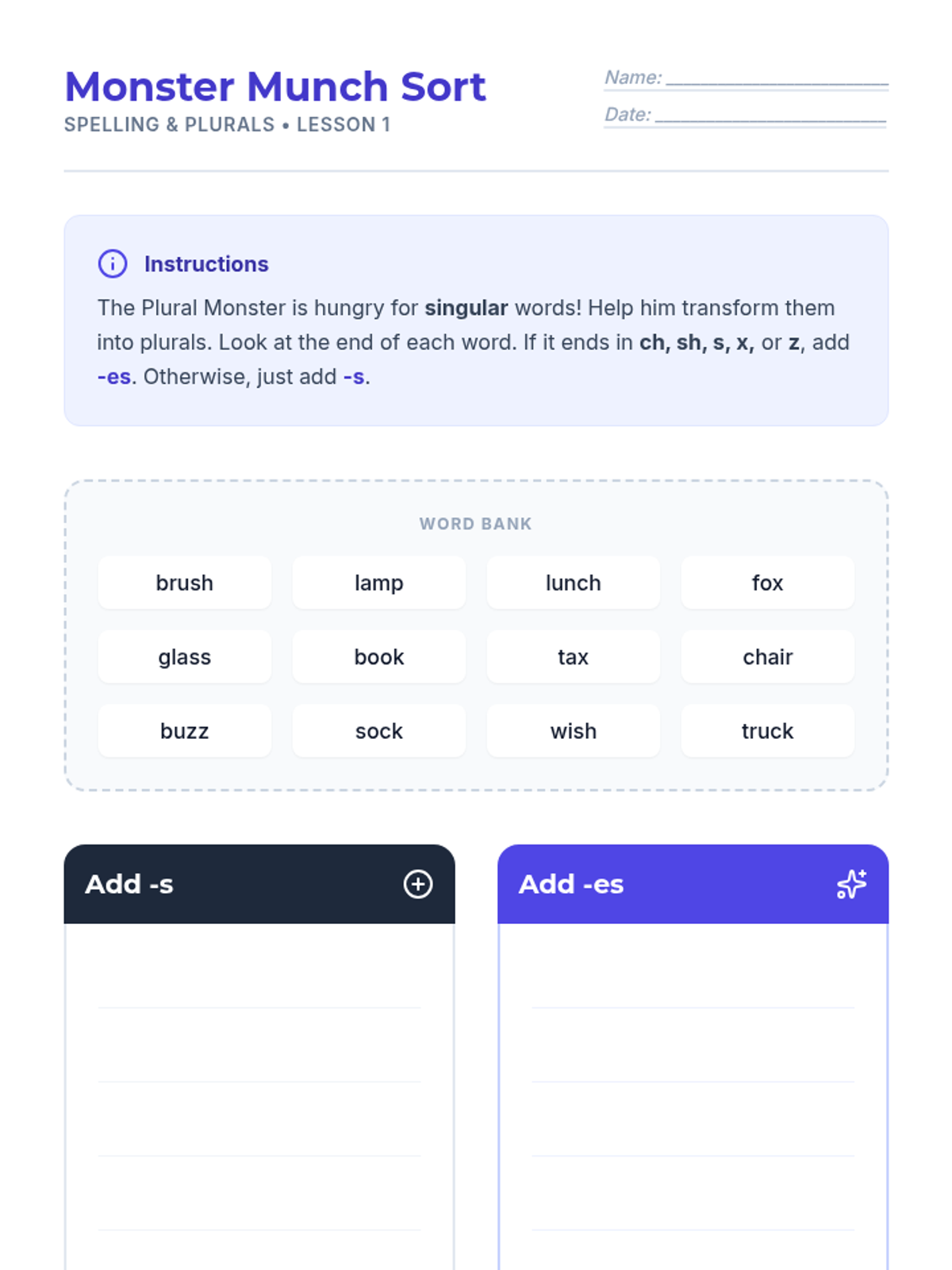
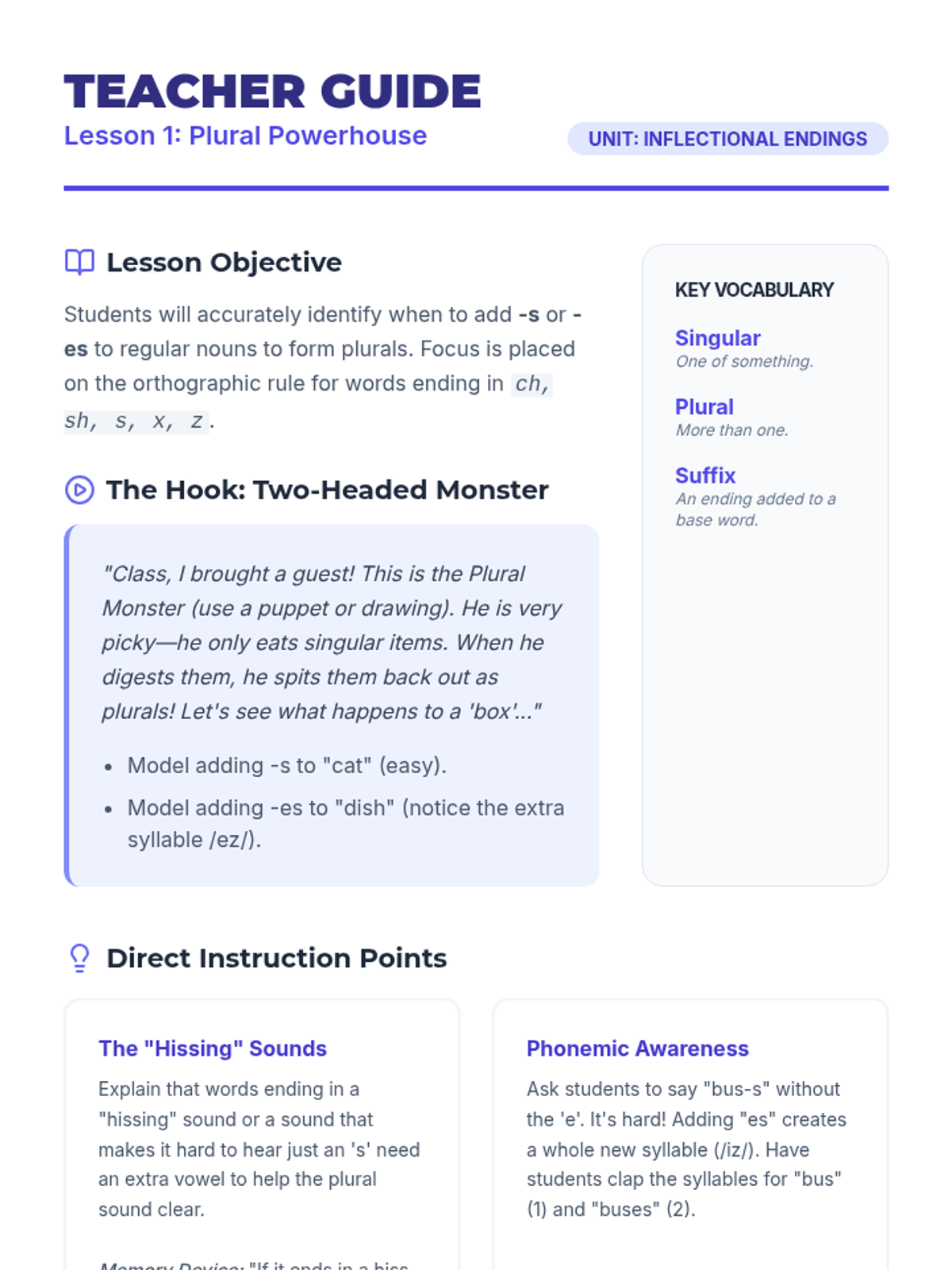
This sequence systematically addresses how base words change when suffixes are added, a critical morphological skill for second graders. Students will explore rules for pluralization and past tense, specifically focusing on the 'doubling rule' and 'dropping the silent e'. By the end, students will demonstrate the ability to modify base words correctly before adding endings like -ed, -ing, -s, and -es.
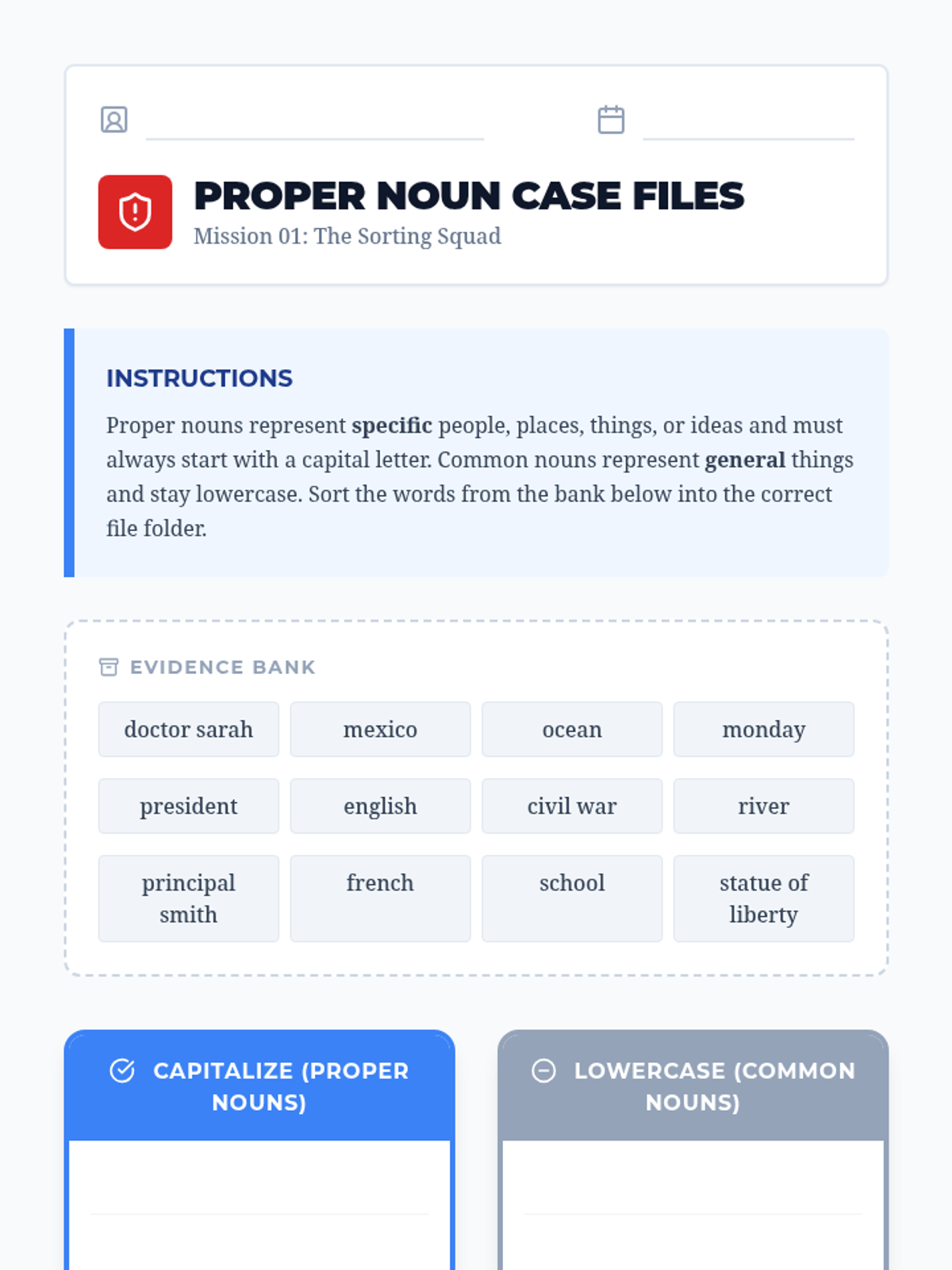
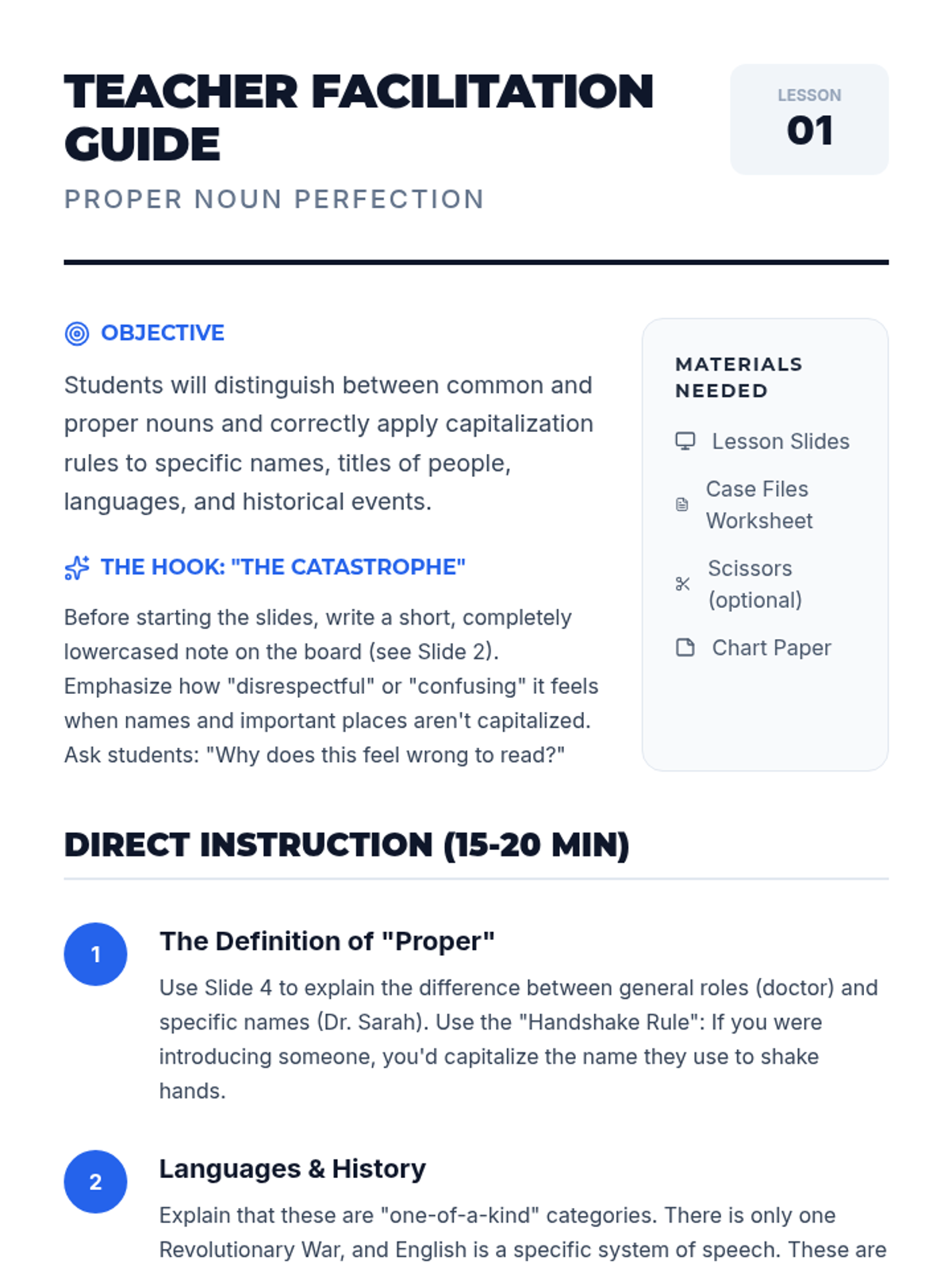
Students explore the rules of capitalization for proper nouns and formatting conventions for titles of long and short works through inquiry-based challenges and project-based learning.
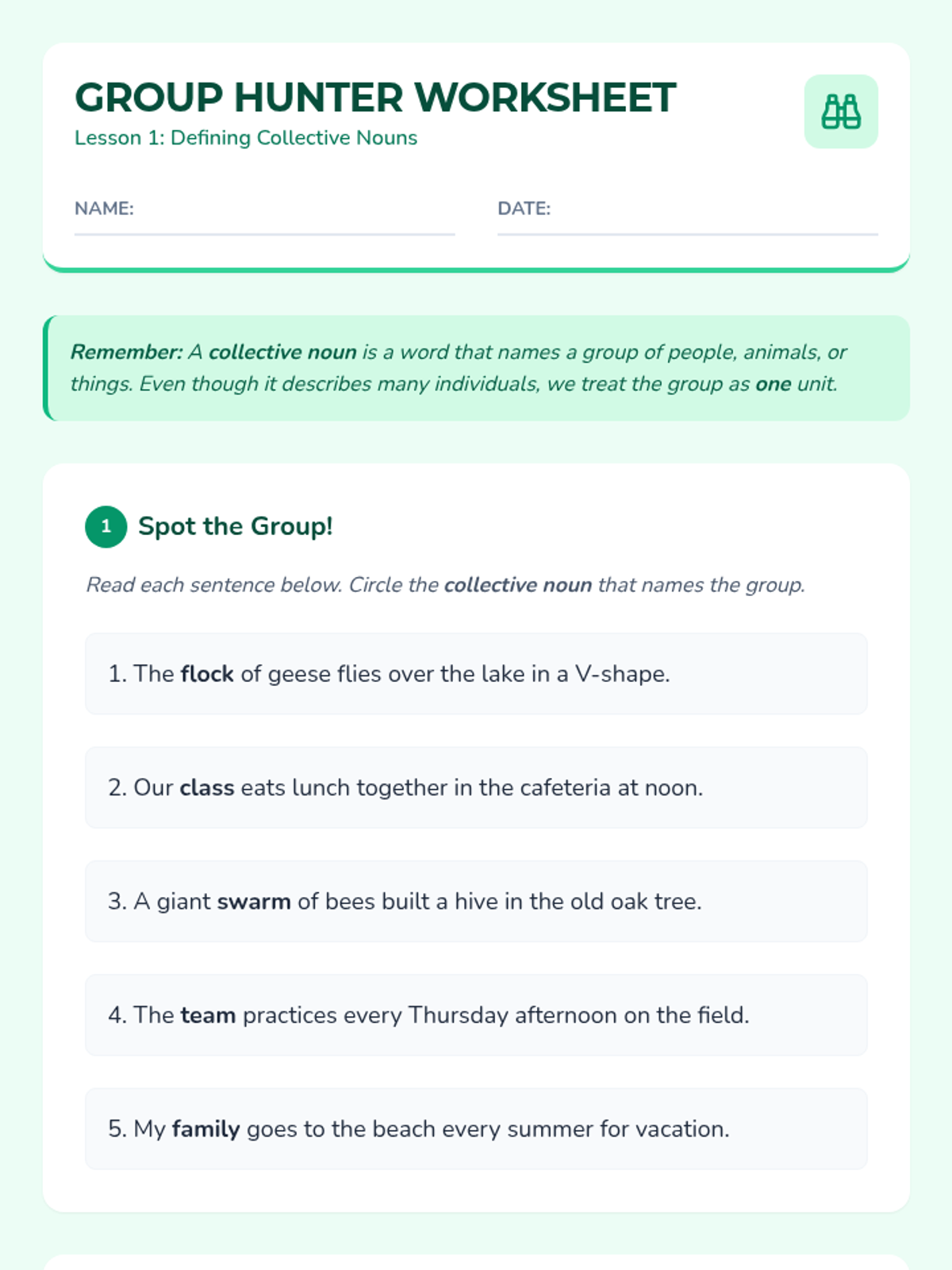
This sequence guides 3rd-grade students through the concept of collective nouns and subject-verb agreement. Students explore how groups can act as single units, master specific animal group vocabulary, and apply grammar rules to describe community actions.
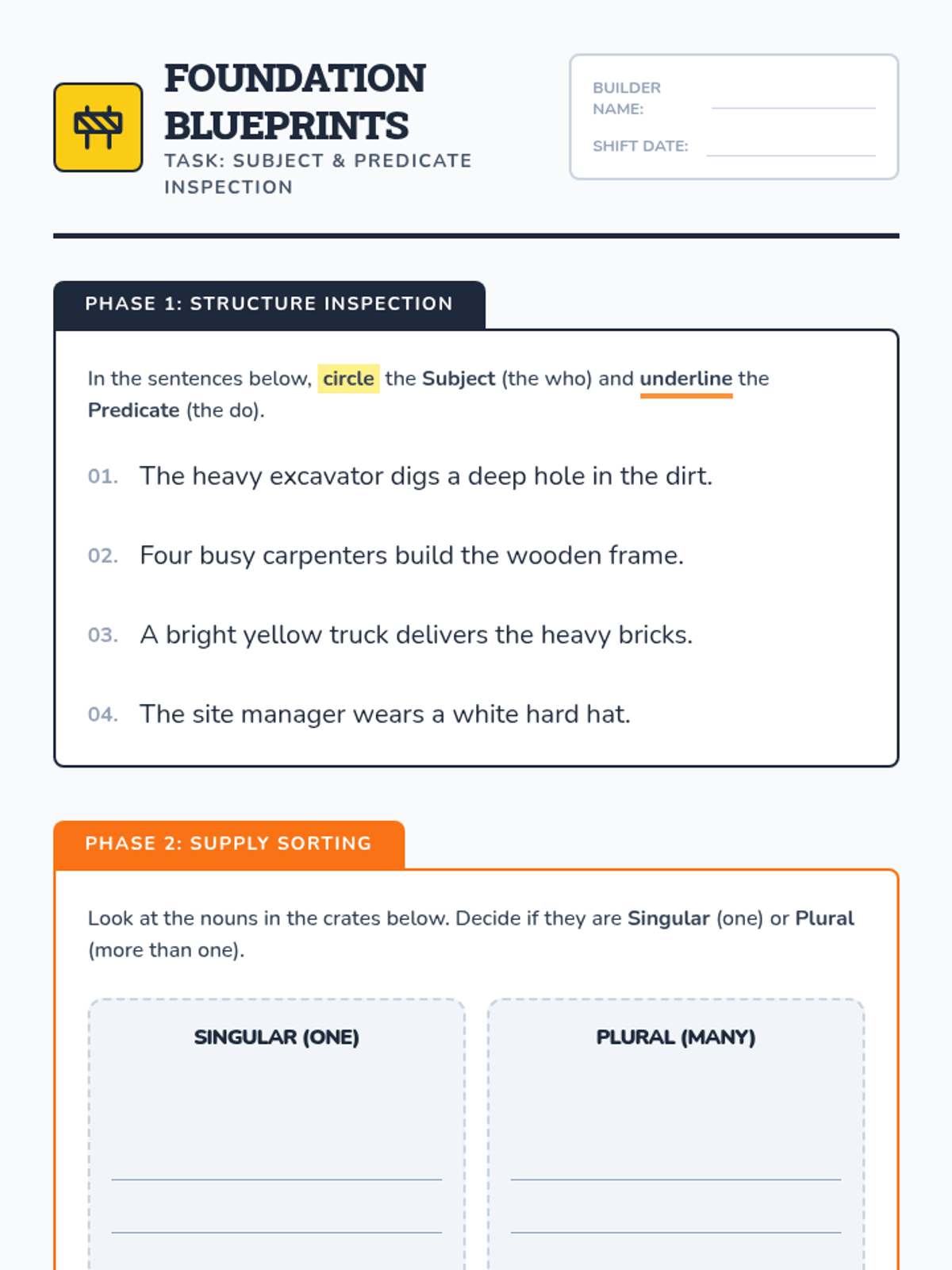
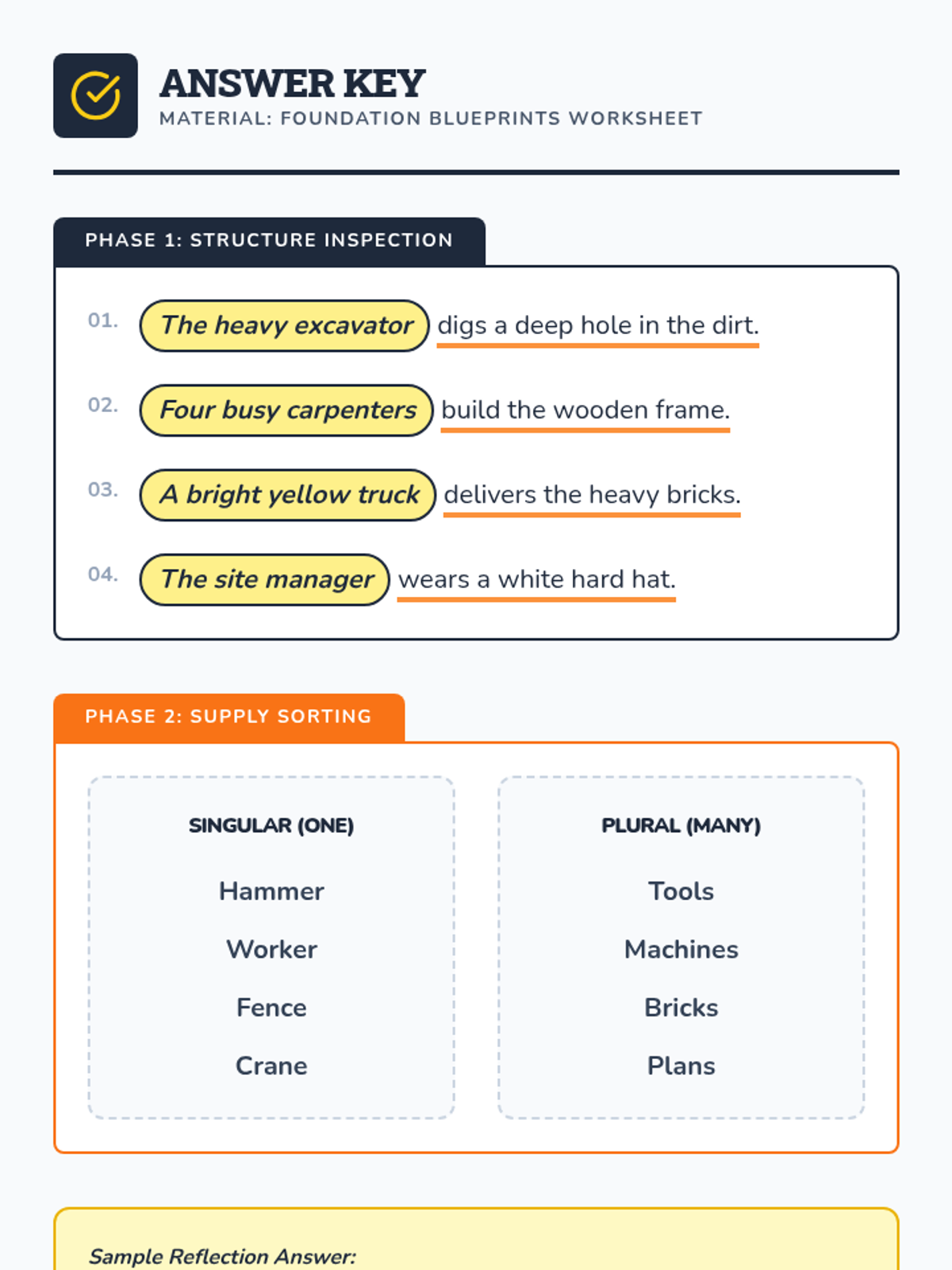
This sequence introduces 3rd-grade students to the core concepts of subject-verb agreement. It covers identifying sentence parts, the singular subject '-s' rule, plural subject patterns, and culminates in students writing and self-editing their own grammatically correct sentences using a construction-themed approach.
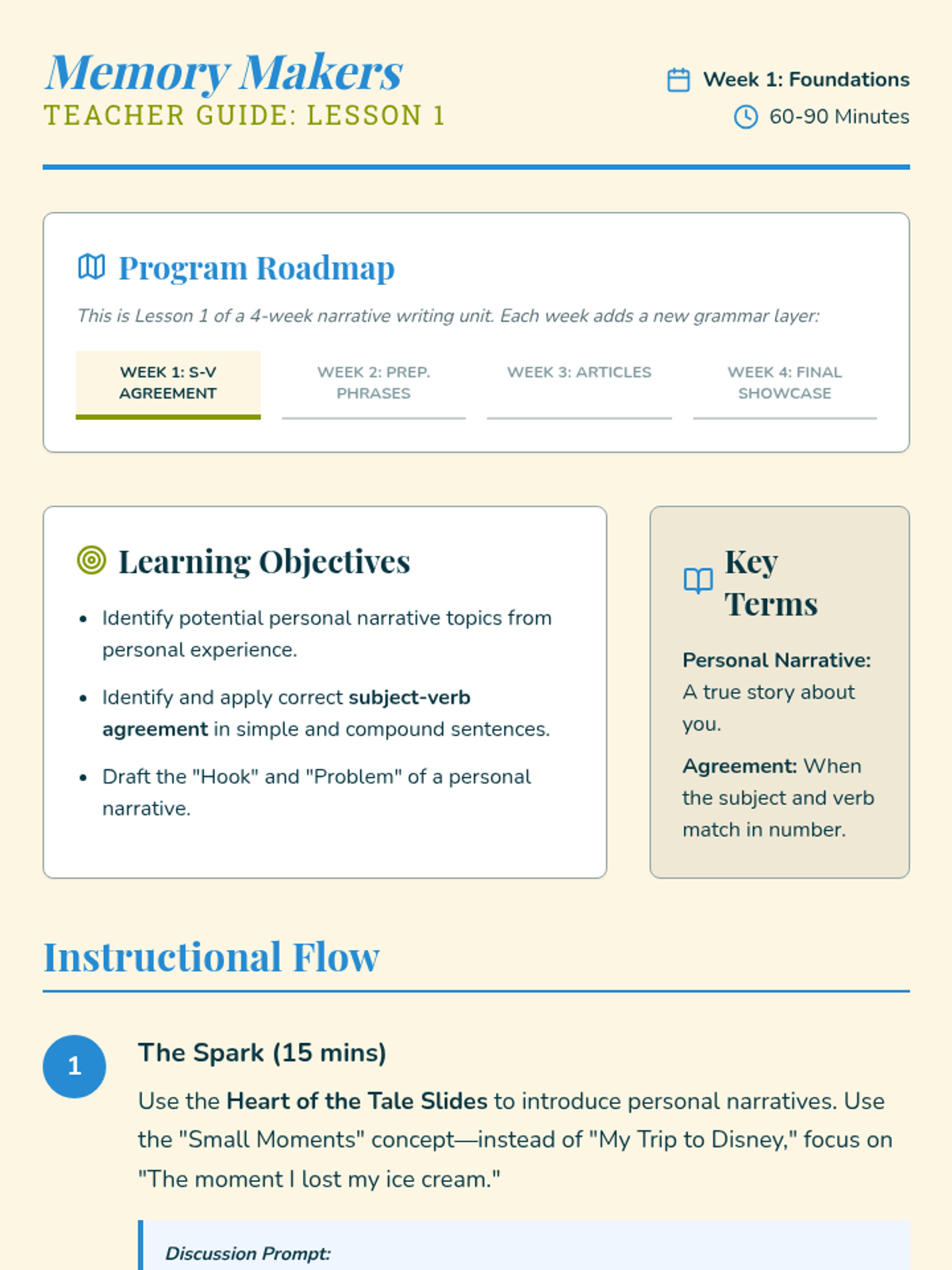
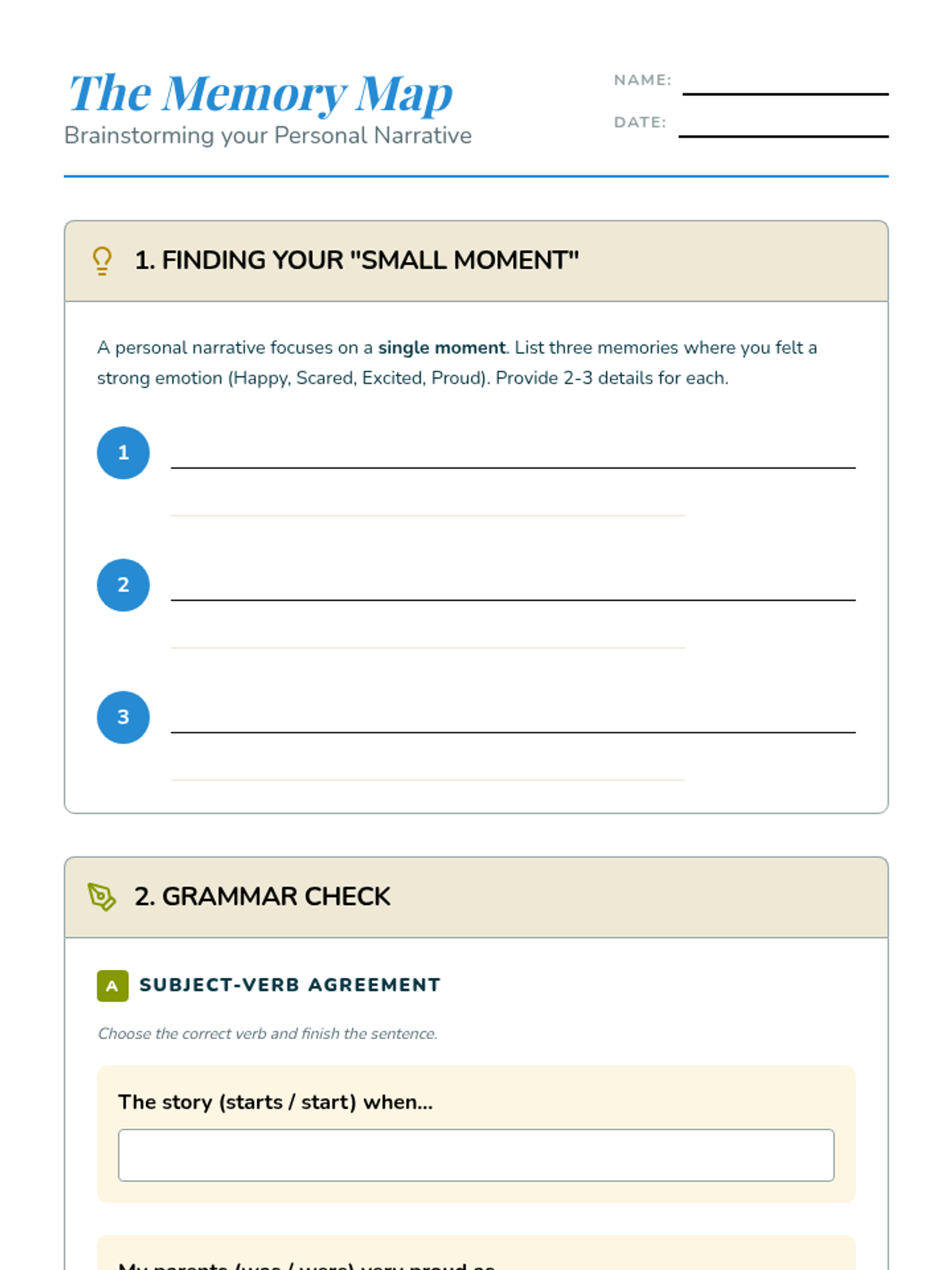
A 4-week program focused on personal narrative writing and oral presentation skills, with a heavy emphasis on subject-verb agreement, prepositional phrases, and the correct use of articles.
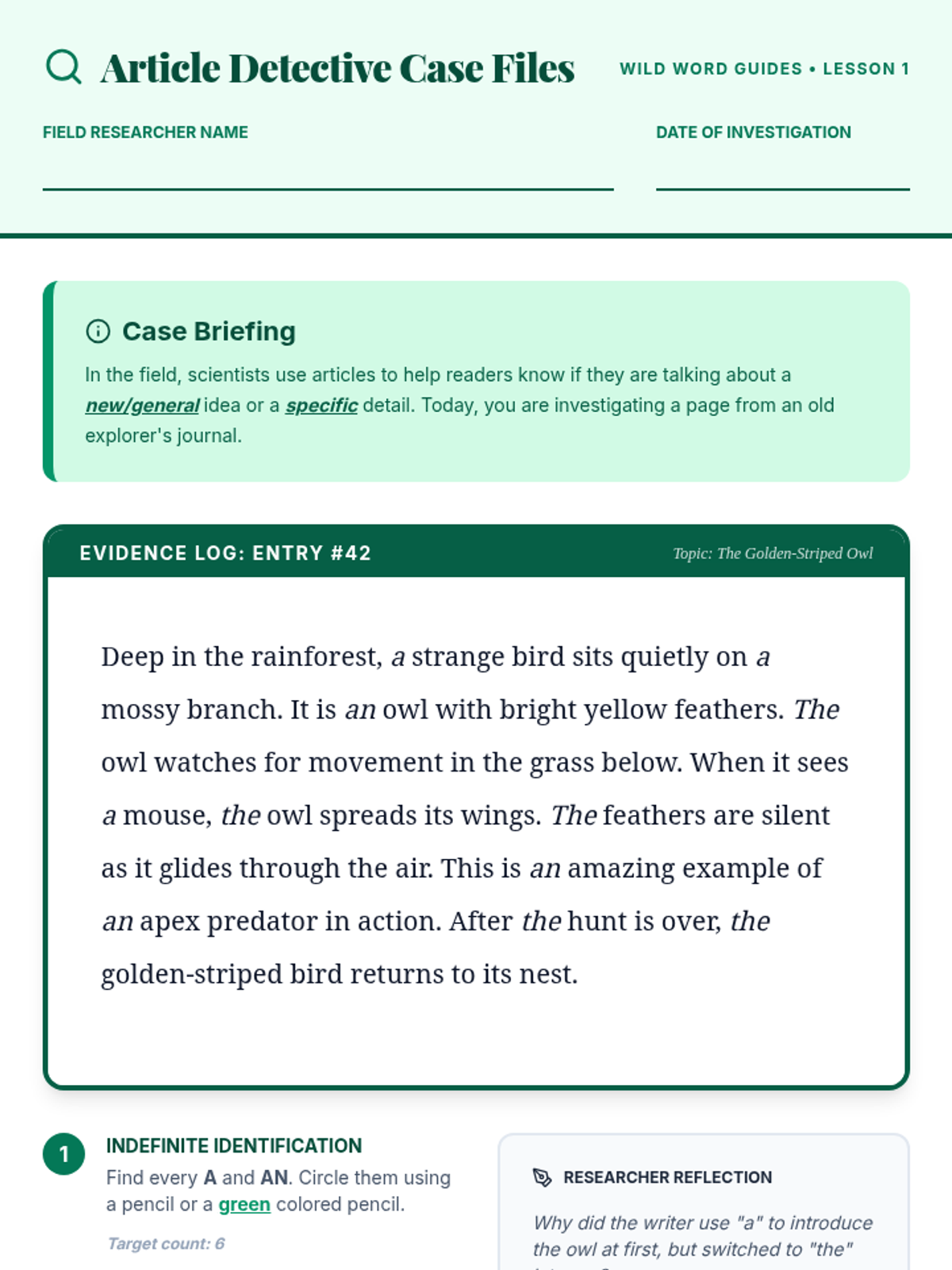
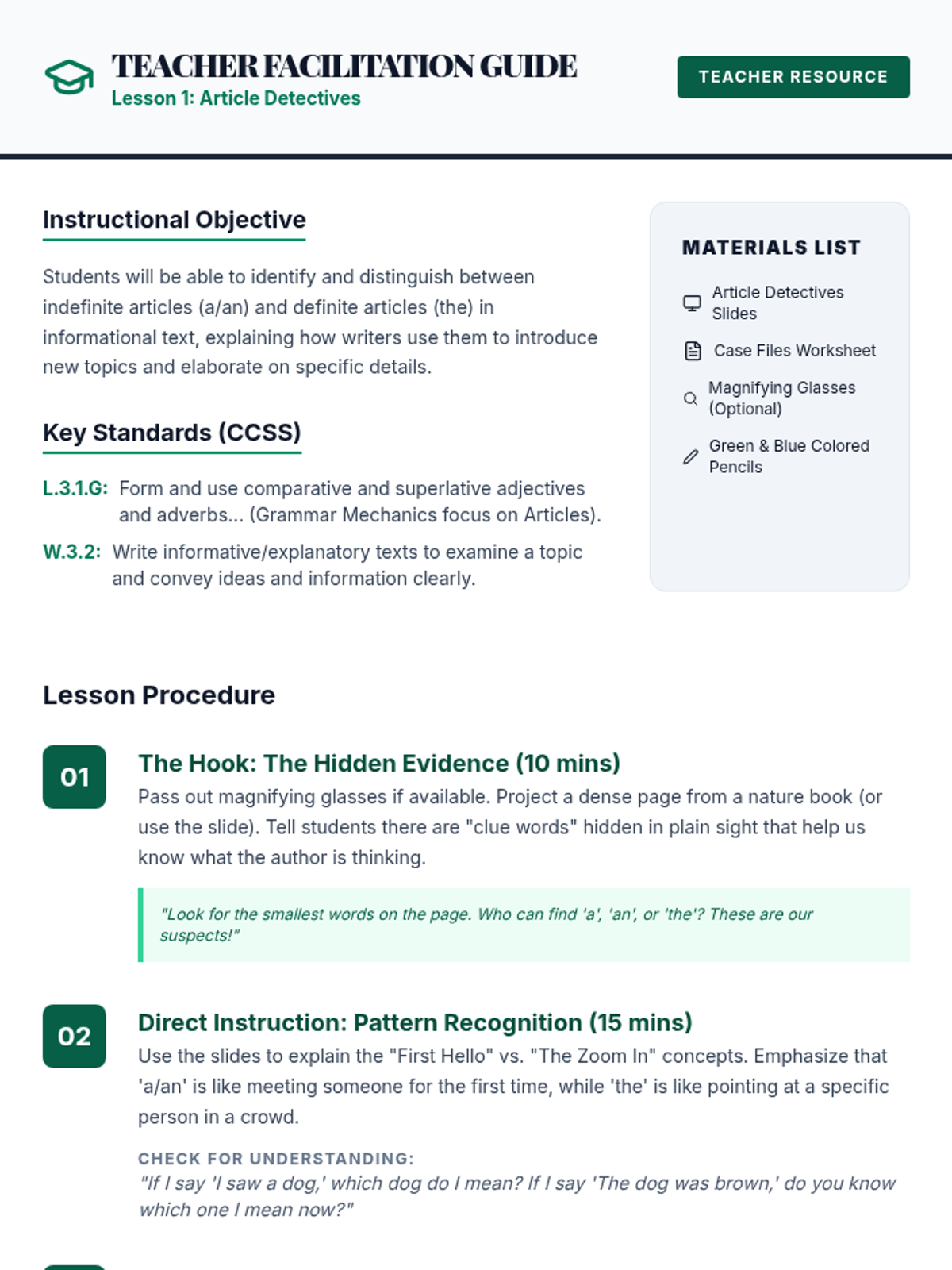
A project-based unit where 3rd-grade students master the use of articles (a, an, the) through the creation of a 'Field Guide to Strange Creatures'. Students analyze how articles introduce and specify subjects in informational texts, culminating in a professional-grade descriptive writing project.
A 5-lesson sequence for 3rd graders focusing on the phonetic rules of indefinite articles 'a' and 'an', moving from sound identification to mastery in complex sentences.
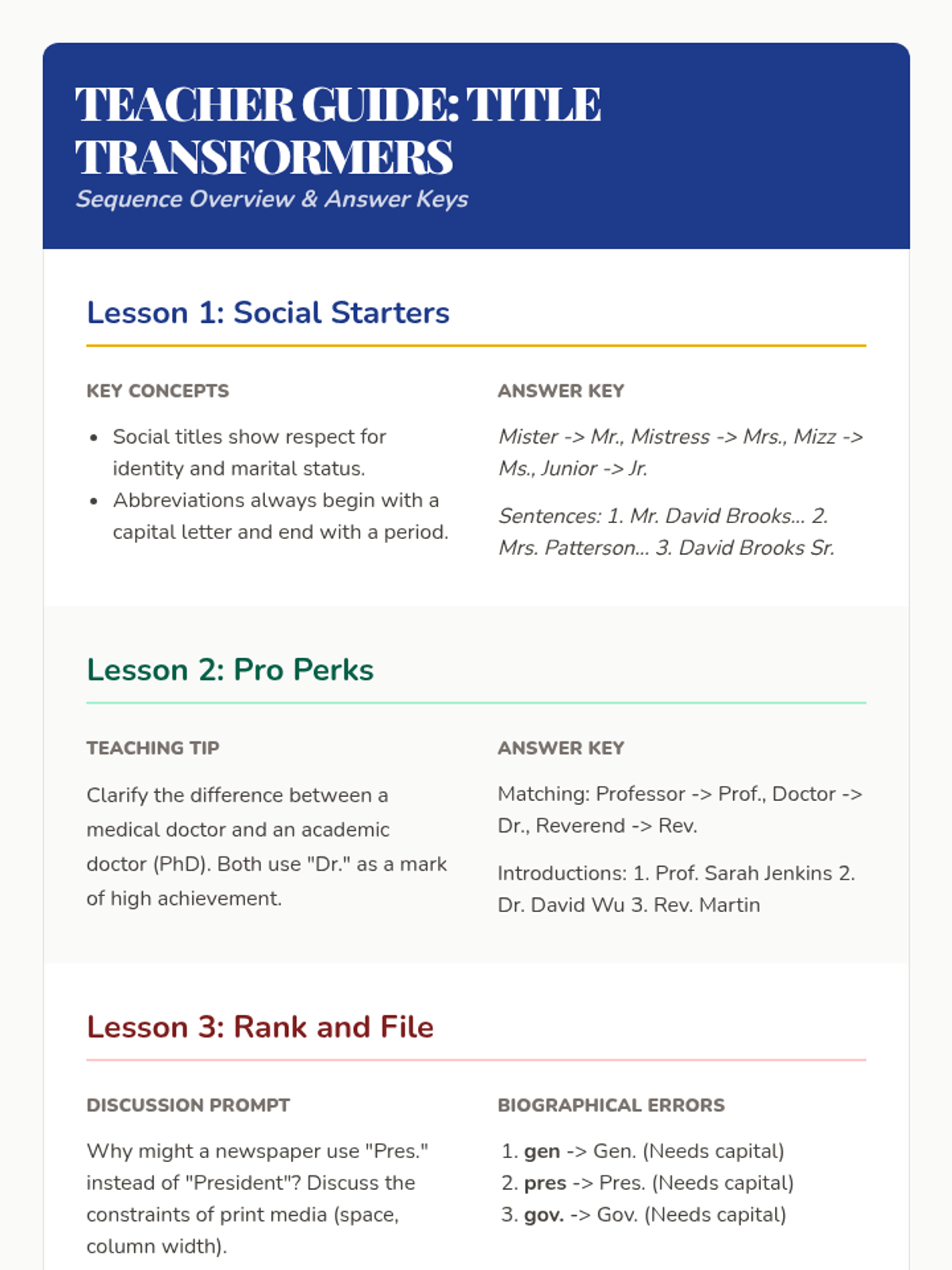
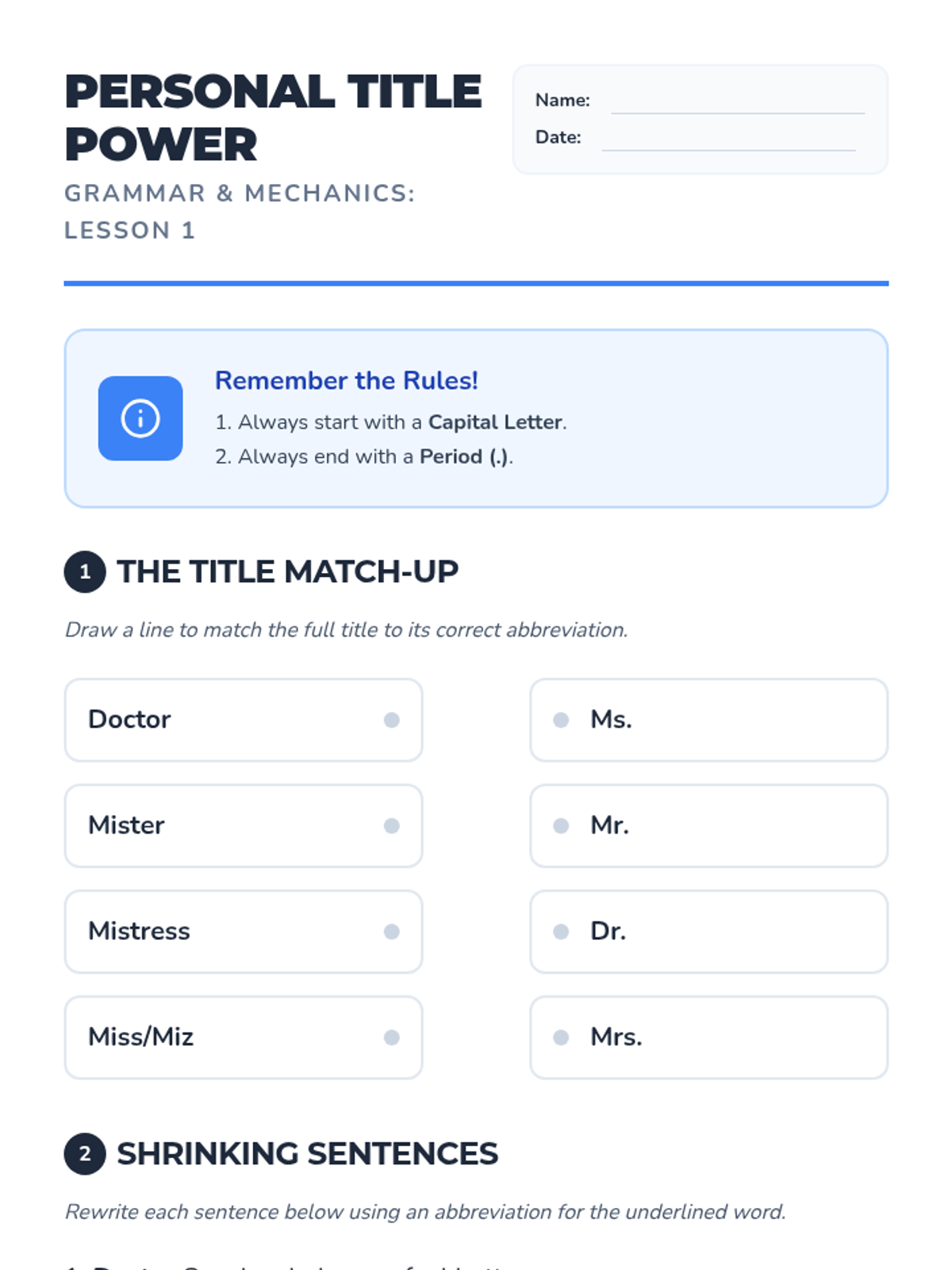
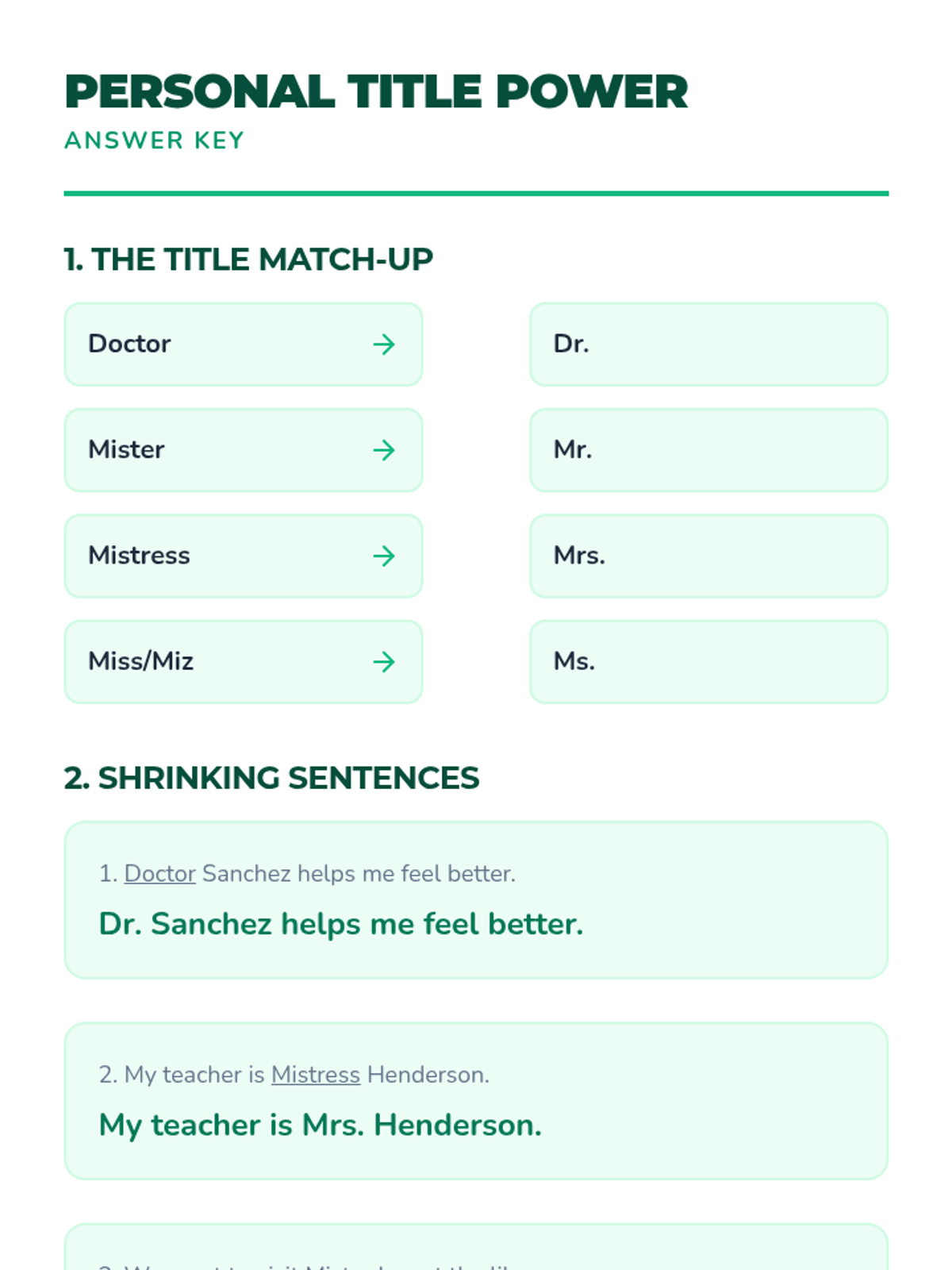
This sequence explores the social and formal rules of abbreviating titles for people. Using a case-study approach, students analyze formal letters, biographies, and business cards to understand how titles like Mr., Dr., and Gov. establish identity and respect. Students practice identifying these titles and writing them with proper capitalization and punctuation. The sequence concludes with students writing a formal letter to a community leader.
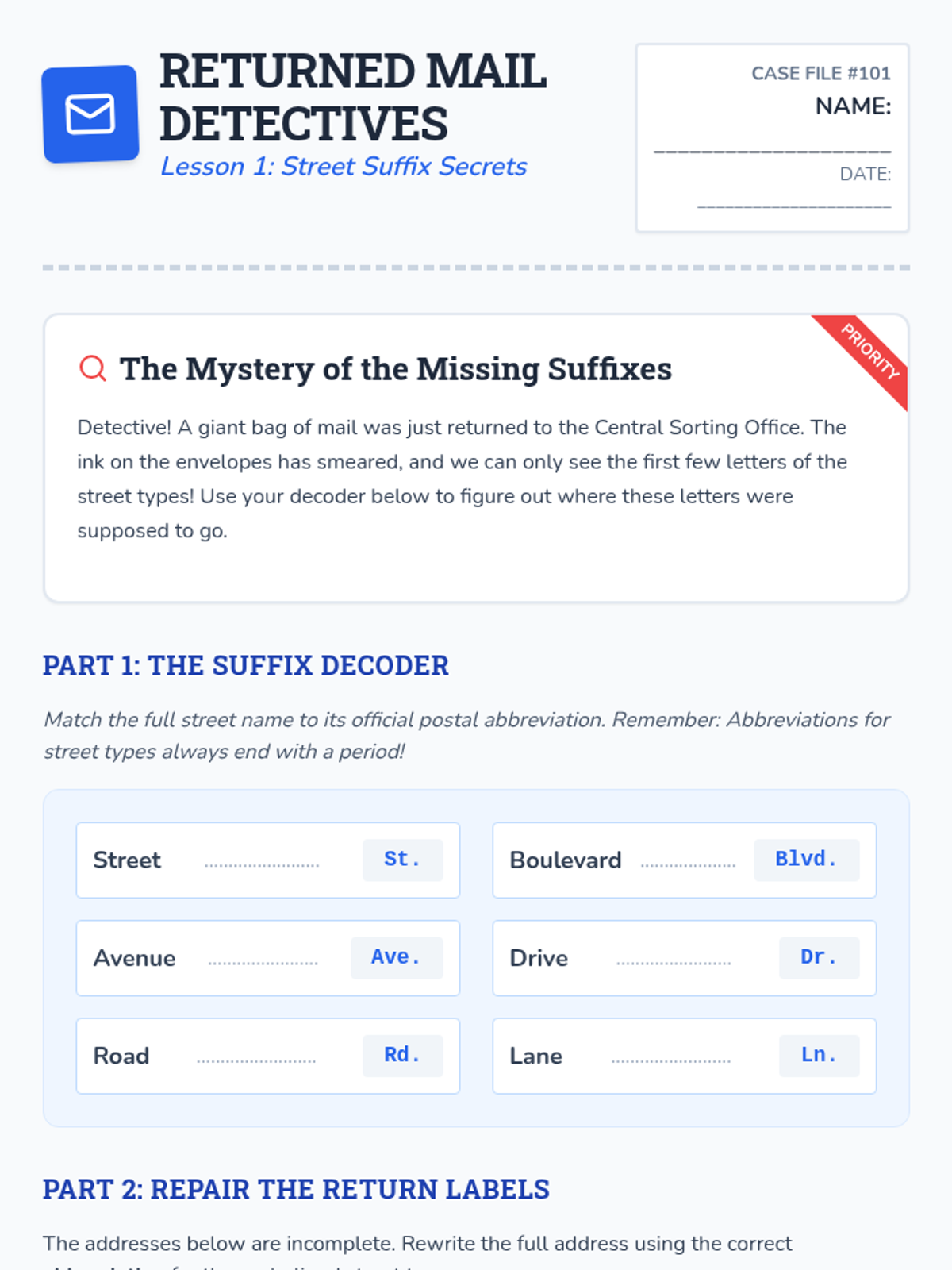
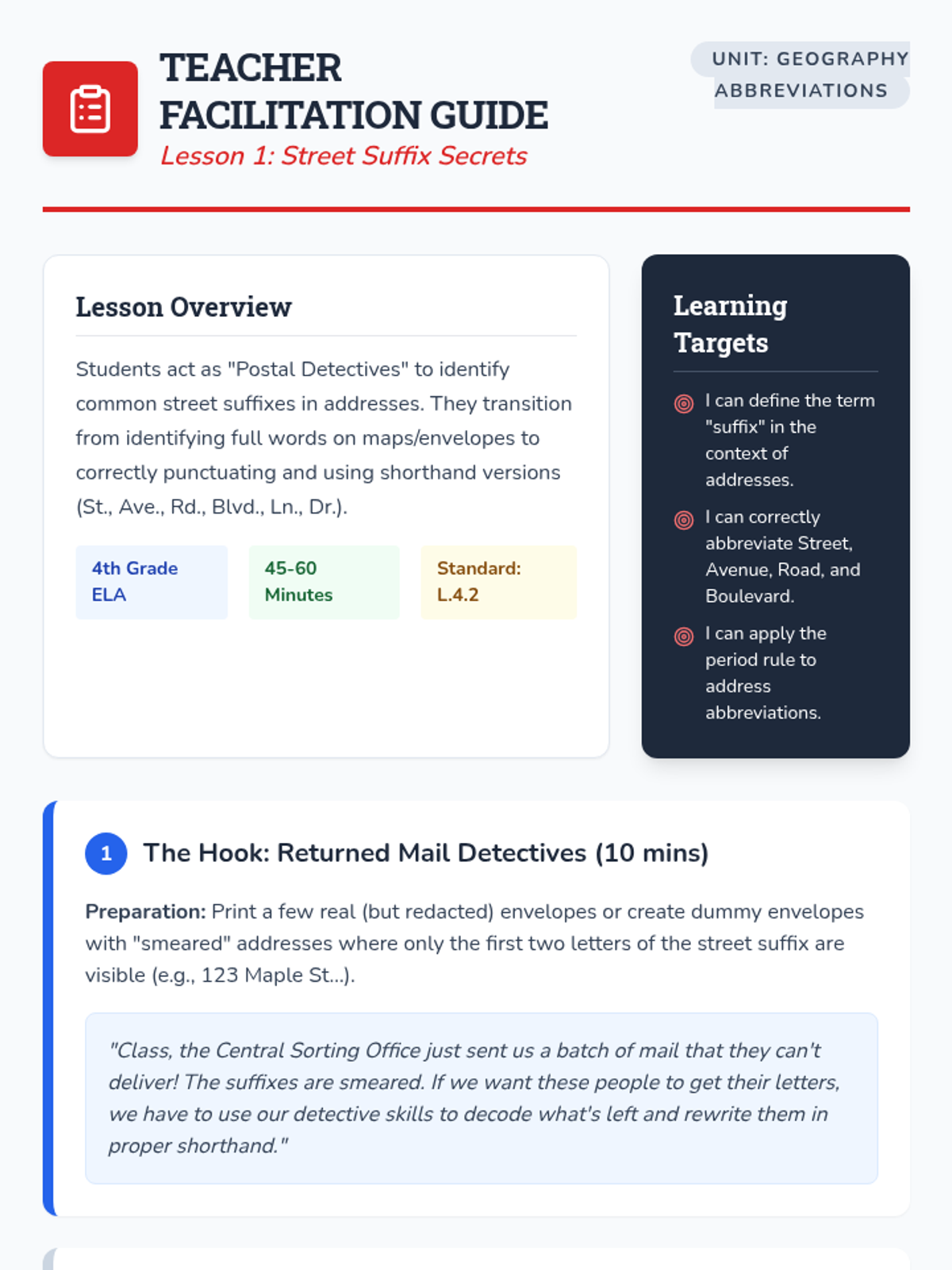
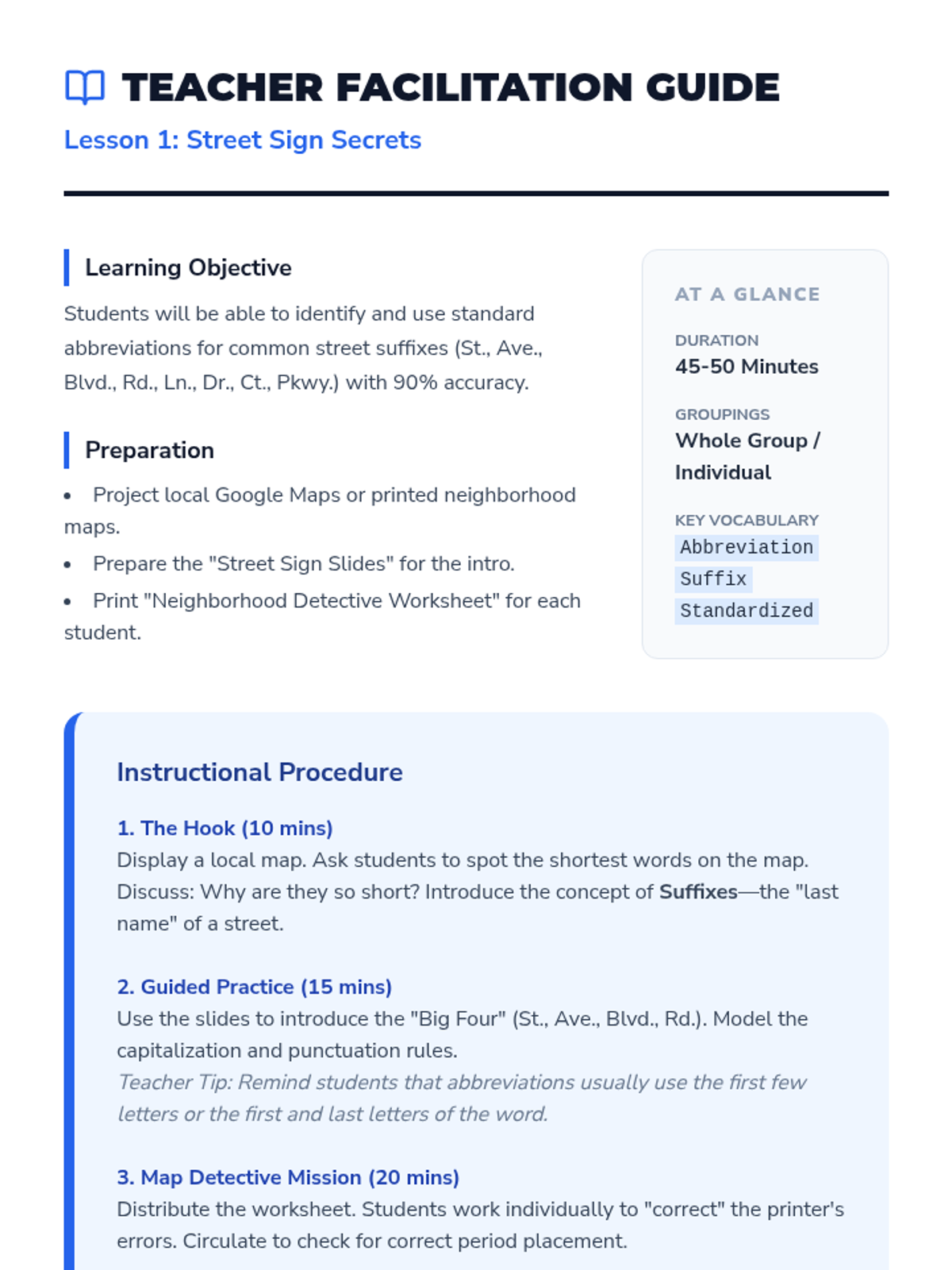
This sequence immerses students in the practical application of abbreviations related to geography, mailing addresses, and locations. Through a simulation of a classroom post office, students learn the specific conventions for street suffixes, state codes, and directional markers.
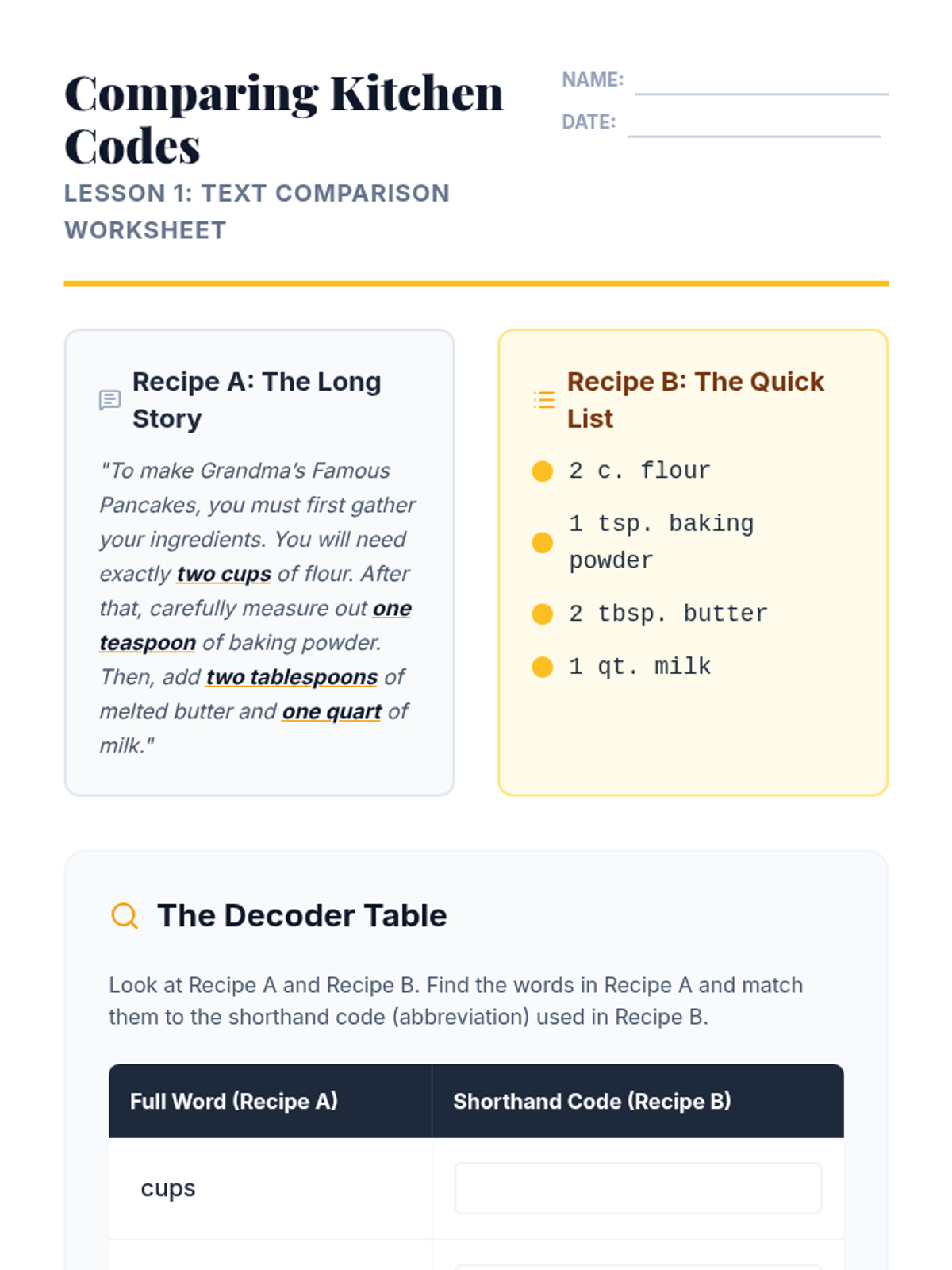
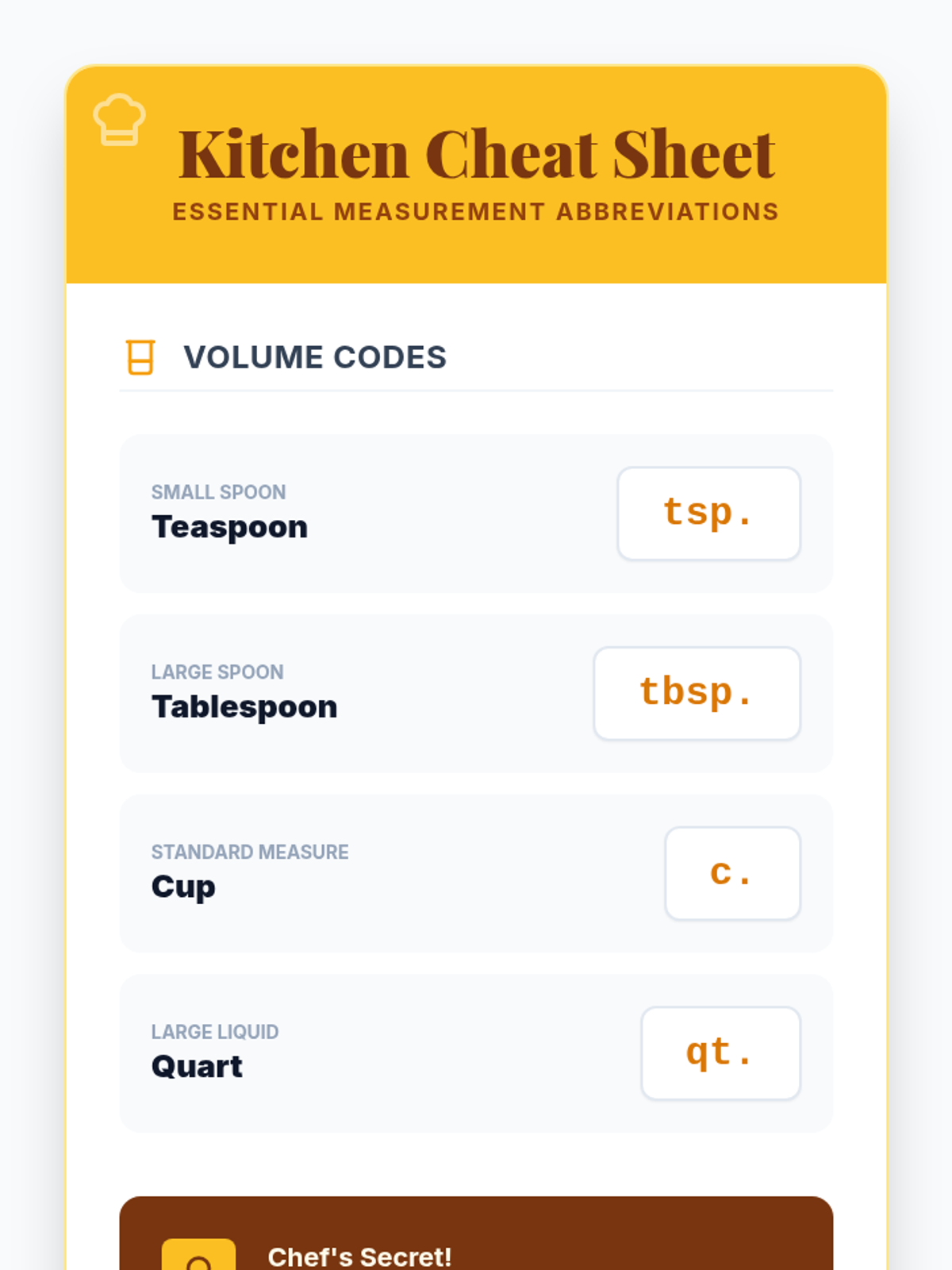
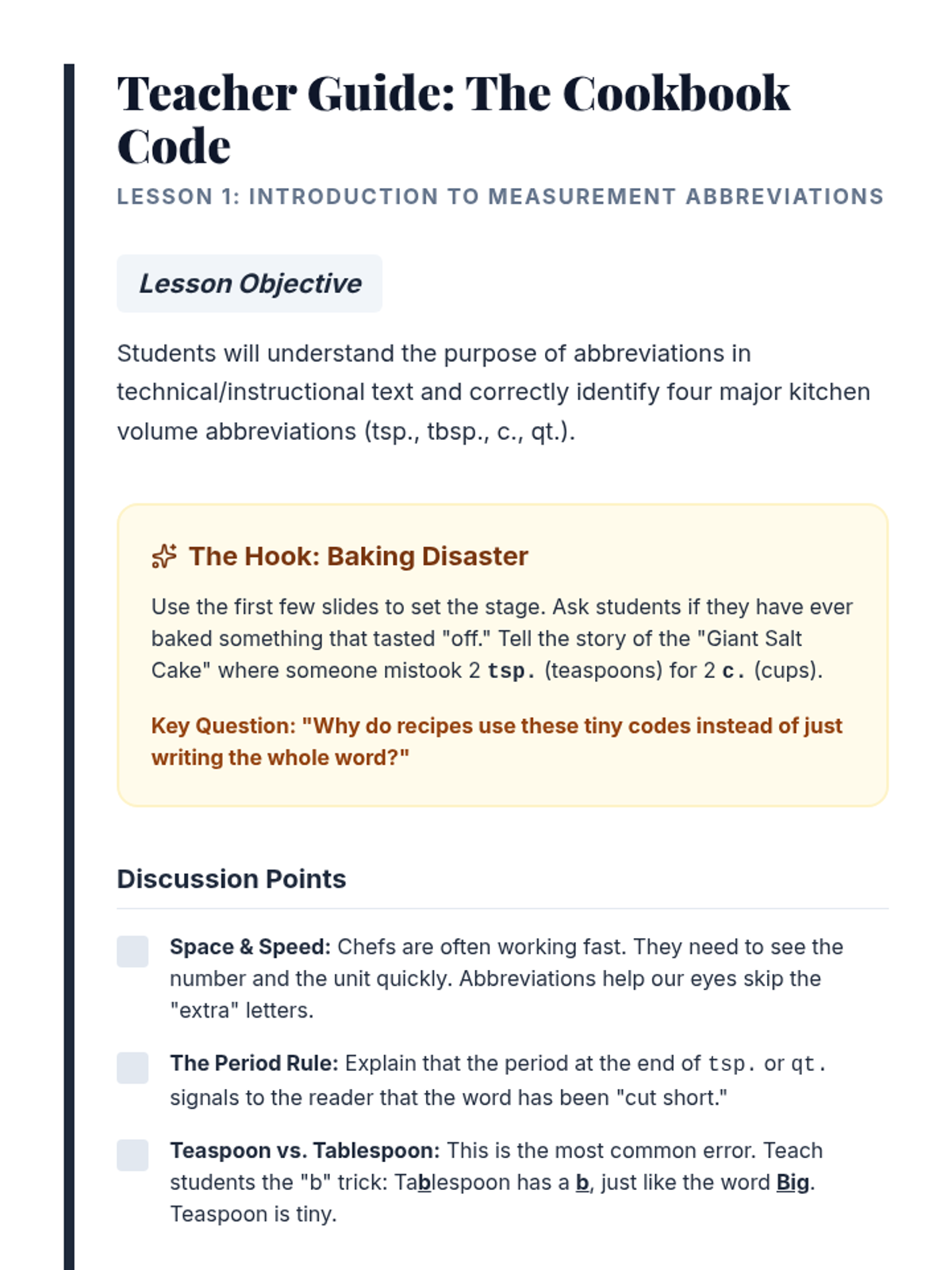
A 5-lesson ELA sequence for 3rd graders focused on identifying and using measurement abbreviations in recipes and technical instructions. Students bridge ELA and math by learning how precision in shorthand (tsp., tbsp., oz., in., etc.) prevents 'baking disasters' and construction errors.
A 3rd-grade grammar sequence that uses a 'Secret Agent' theme to master common abbreviations through game-based learning. Students move from recognition and categorization to punctuation mastery and text expansion.
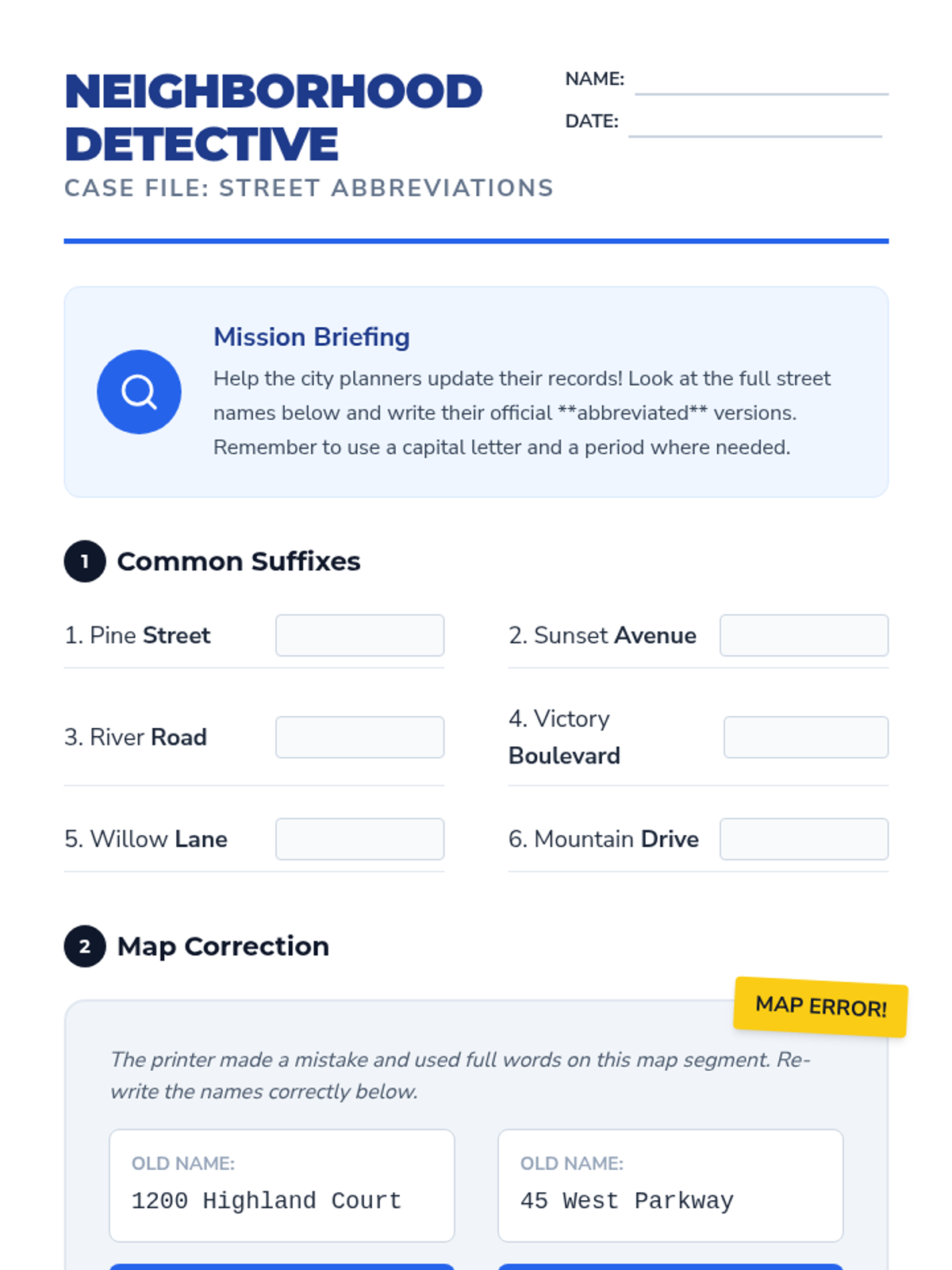
A 3rd-grade grammar sequence focusing on the use of abbreviations in addresses and formal correspondence. Students transition from identifying street suffixes to managing state codes and directional indicators, culminating in a classroom post office simulation.
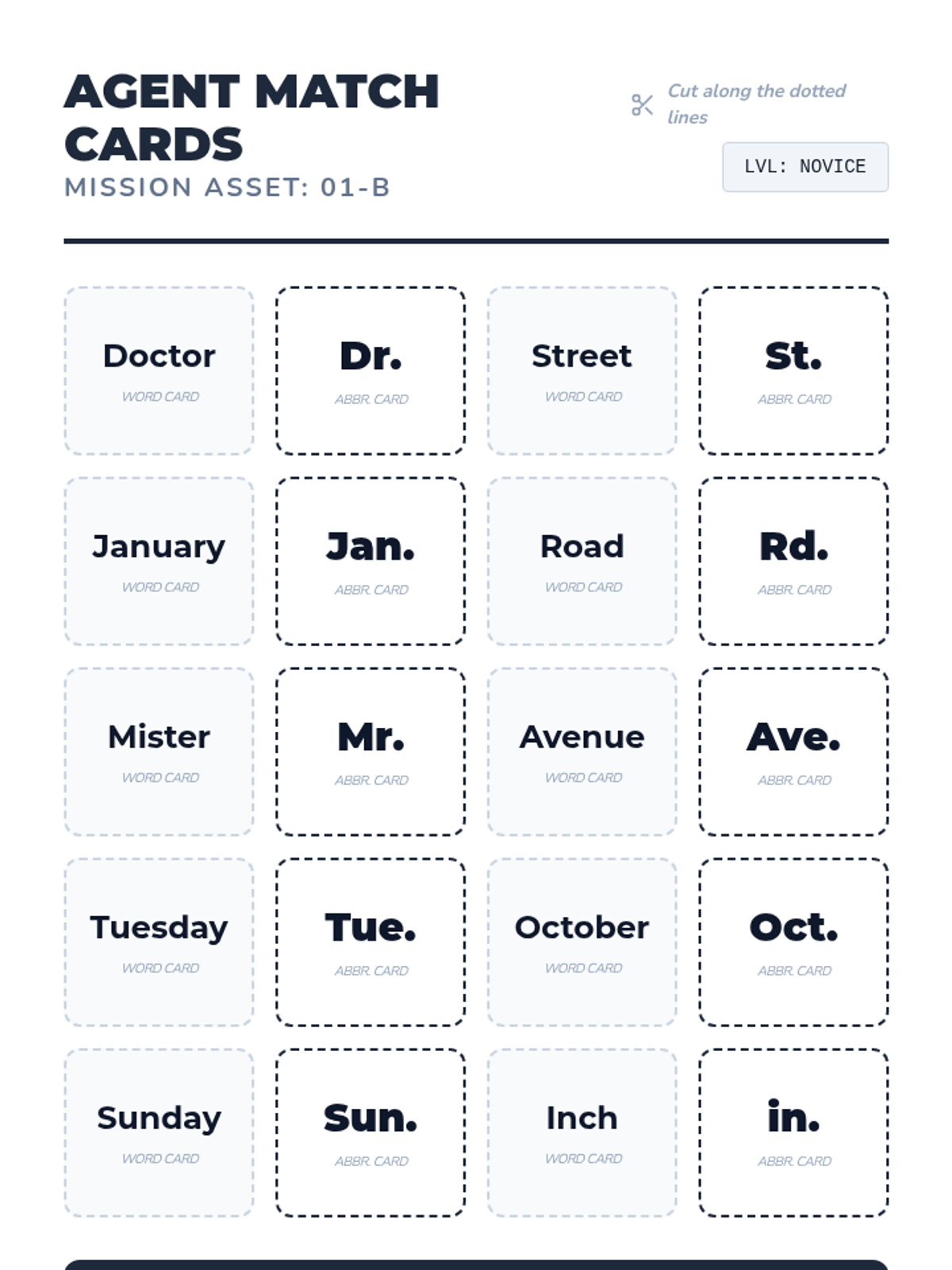
A 5-lesson sequence for 3rd graders on abbreviating personal titles, days of the week, and months of the year, focusing on capitalization and period placement.
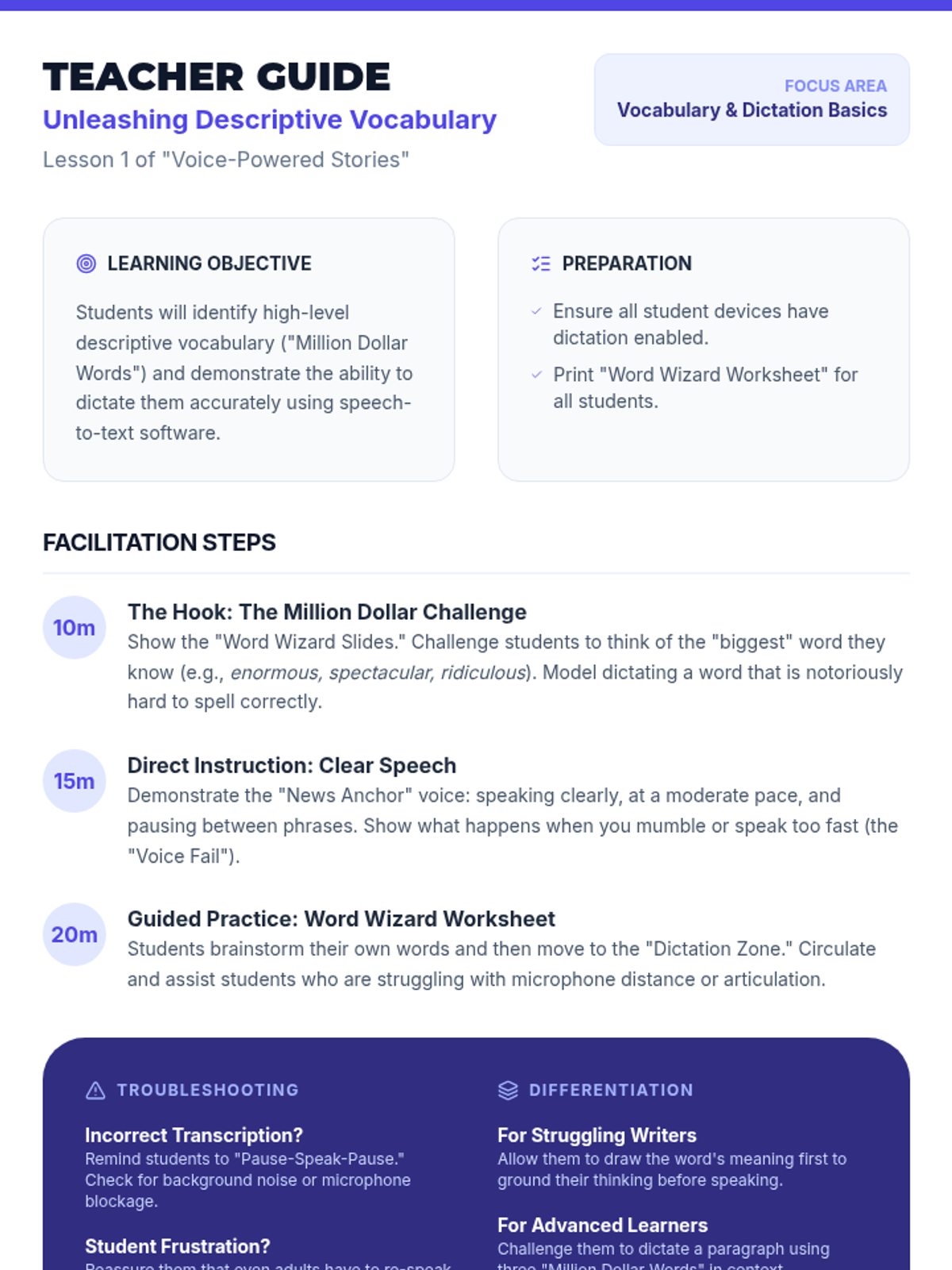
A 3rd-grade project-based sequence where students use speech-to-text assistive technology to draft, develop, and publish a creative narrative. This sequence focuses on overcoming writing barriers and expanding expressive vocabulary through dictation.
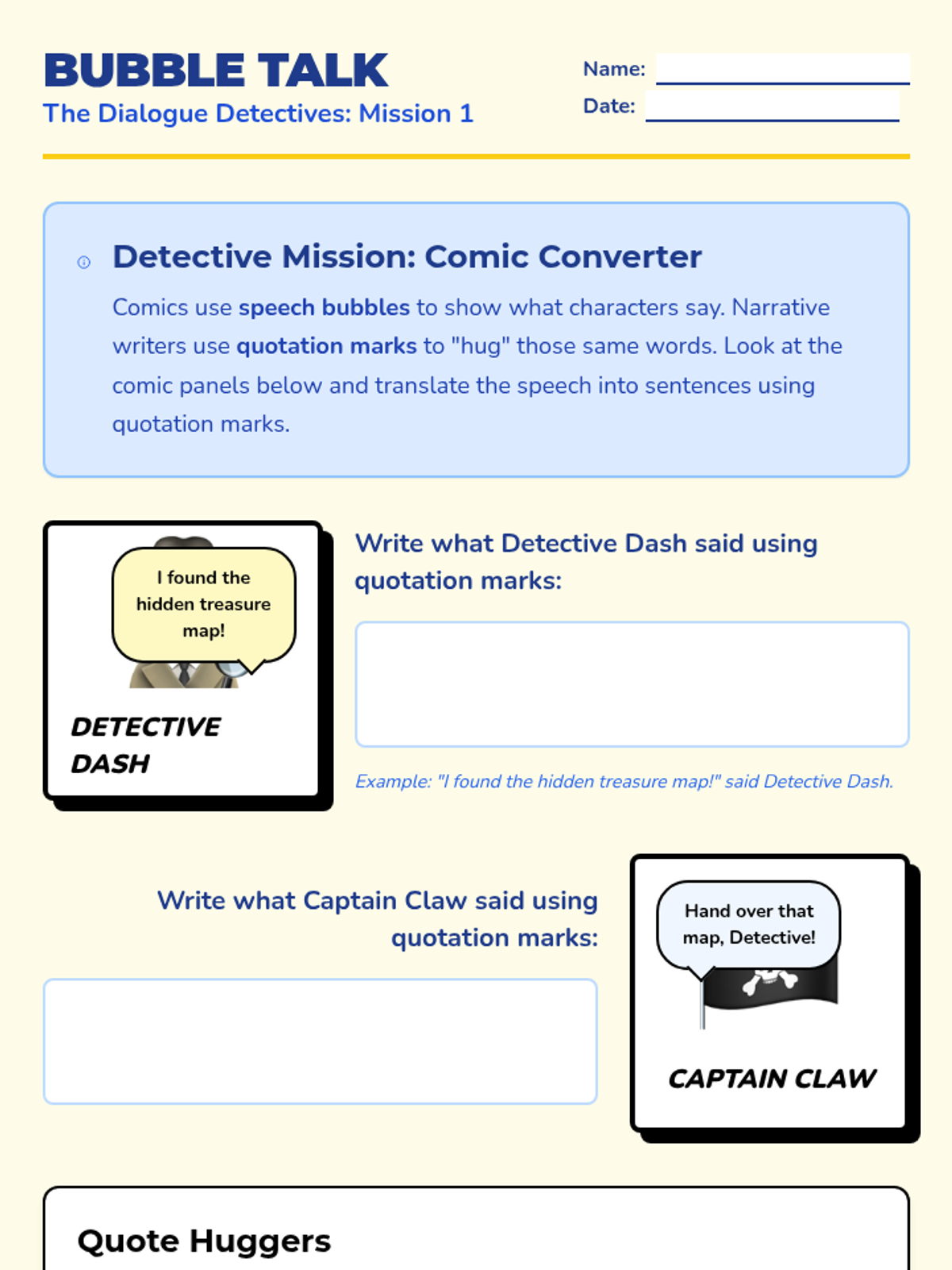
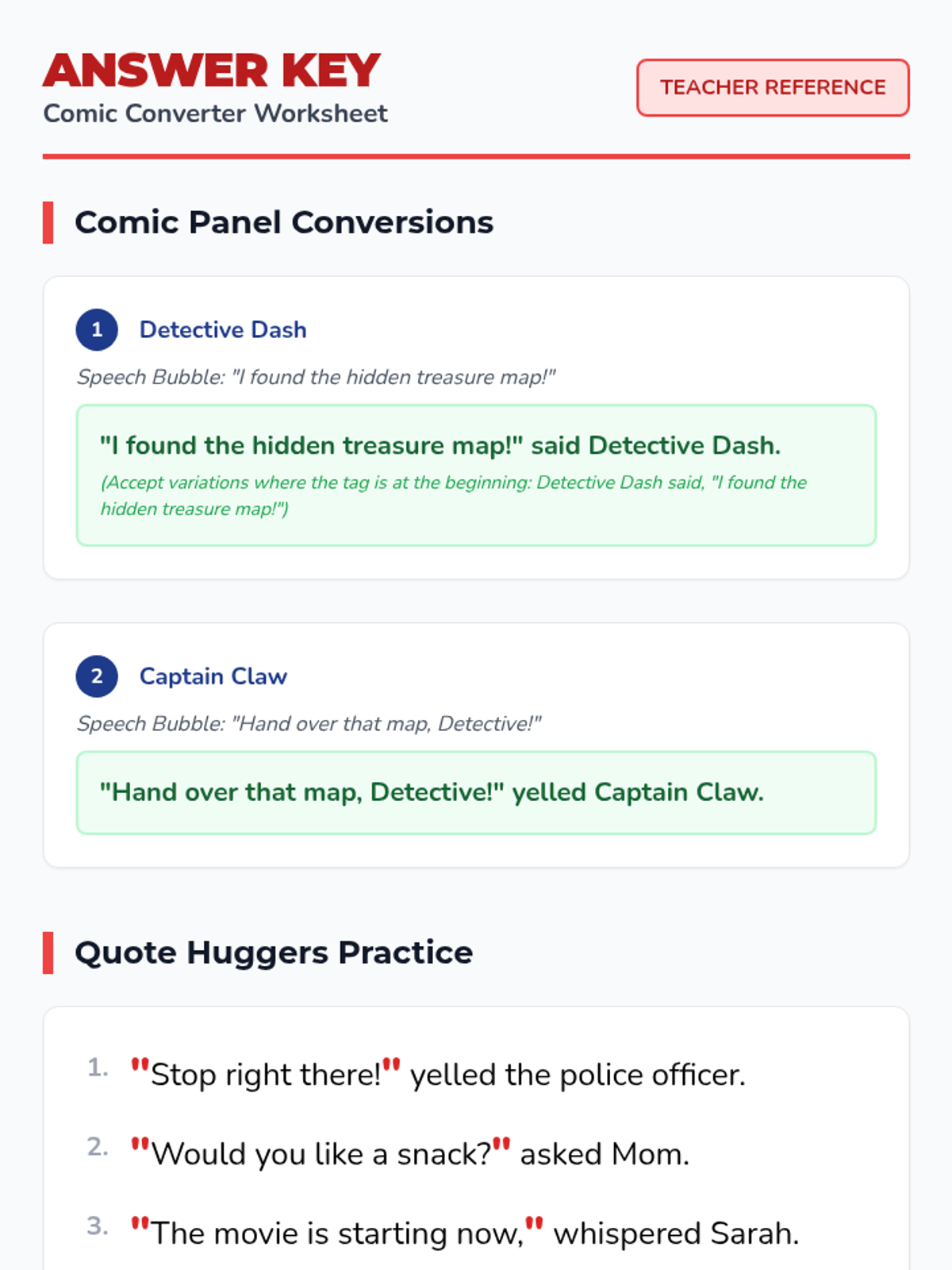
This sequence immerses students in the rules of formatting conversation within narrative writing. Starting with speech bubbles, students transition to quotation marks, commas, and capitalization. The learning arc emphasizes the visual rule of starting a new paragraph when a new speaker begins.
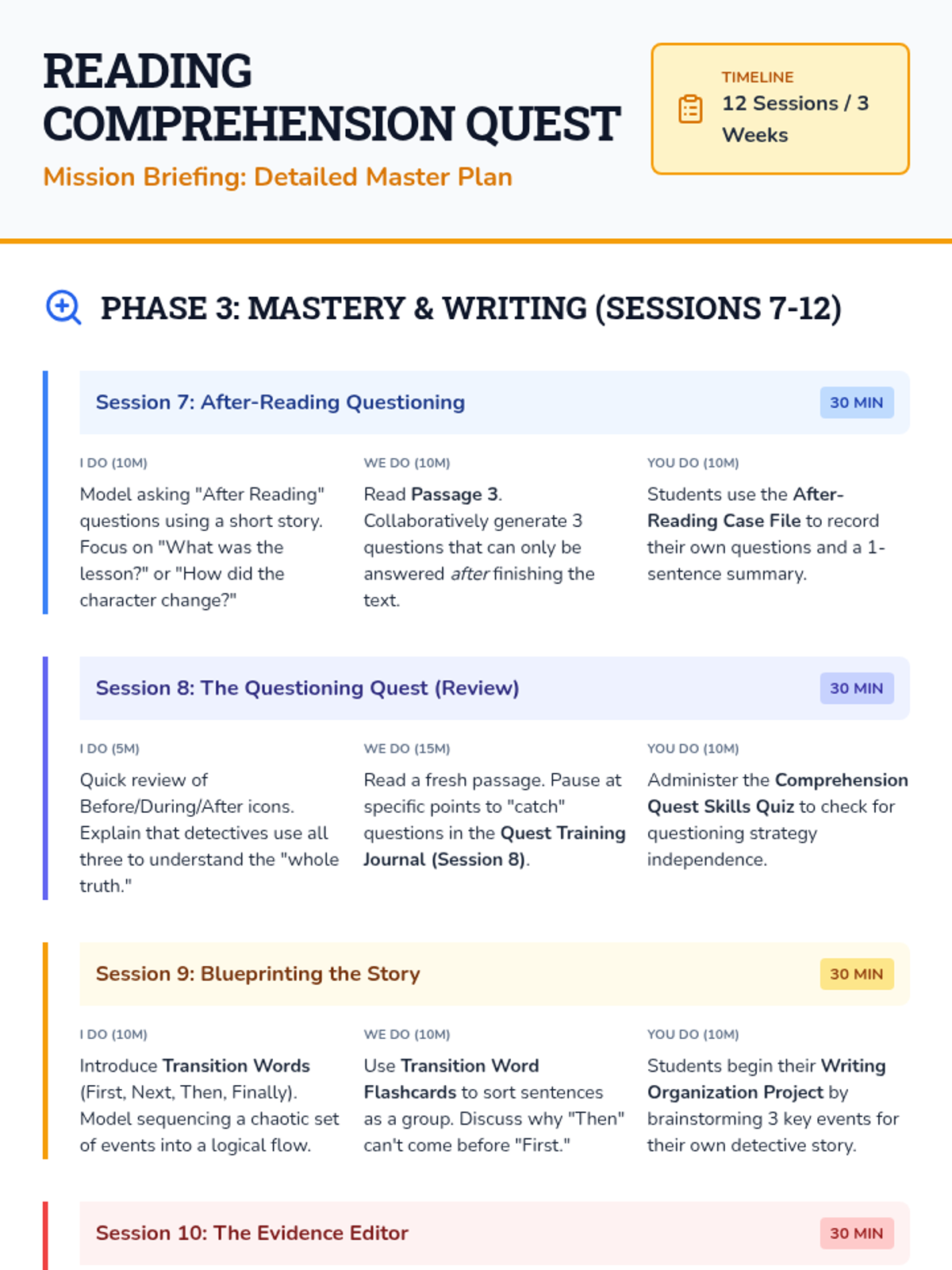
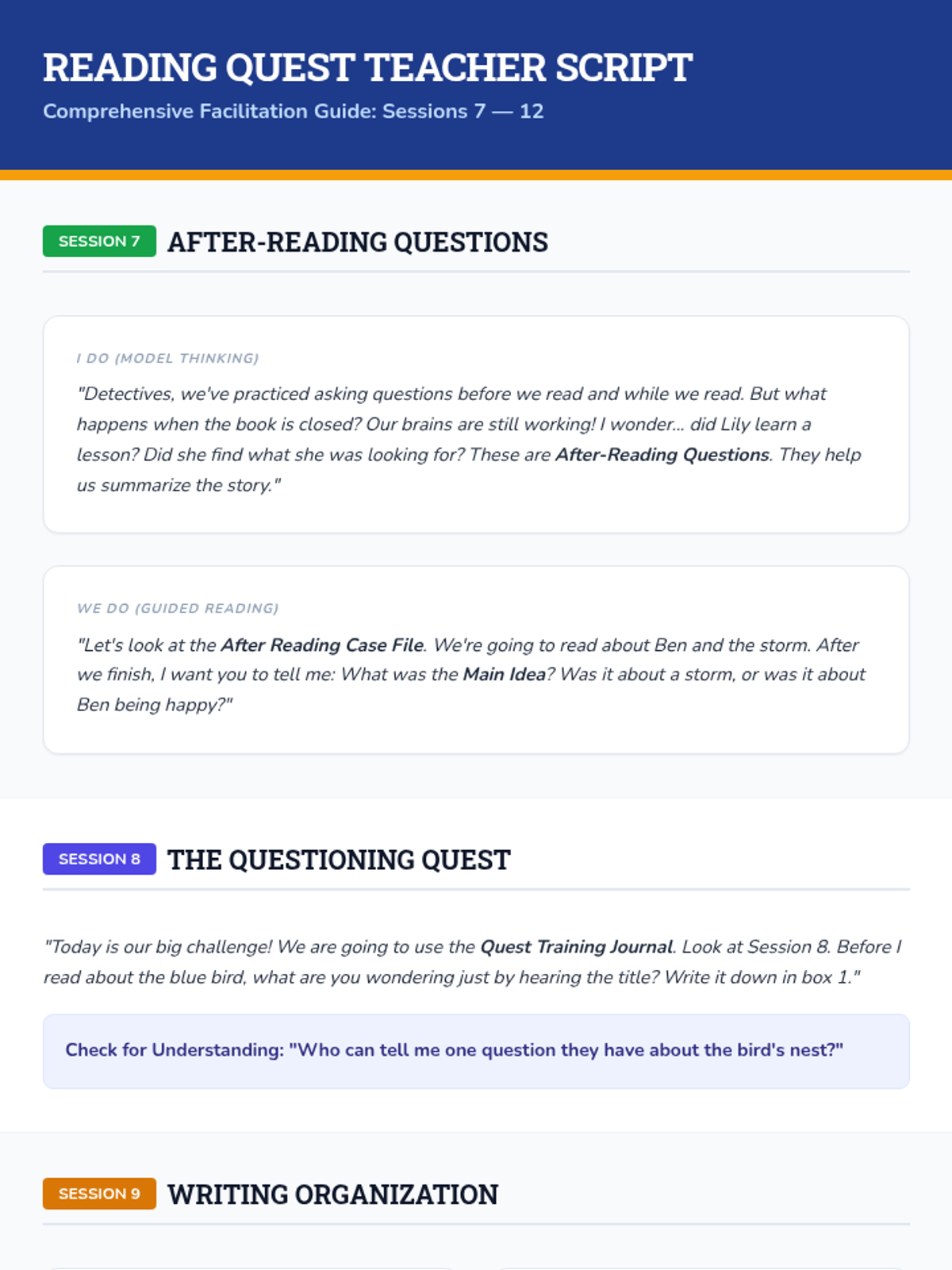
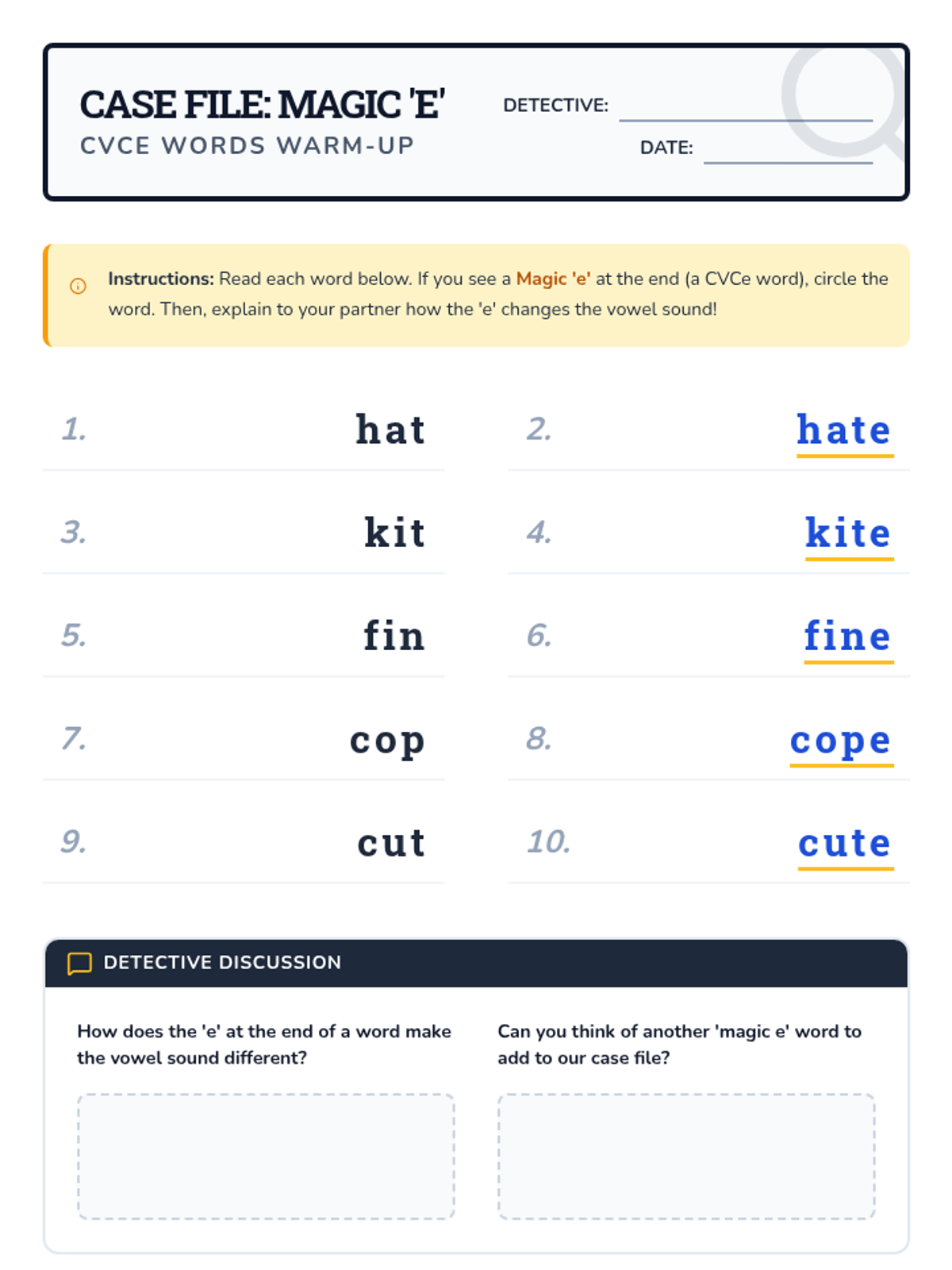
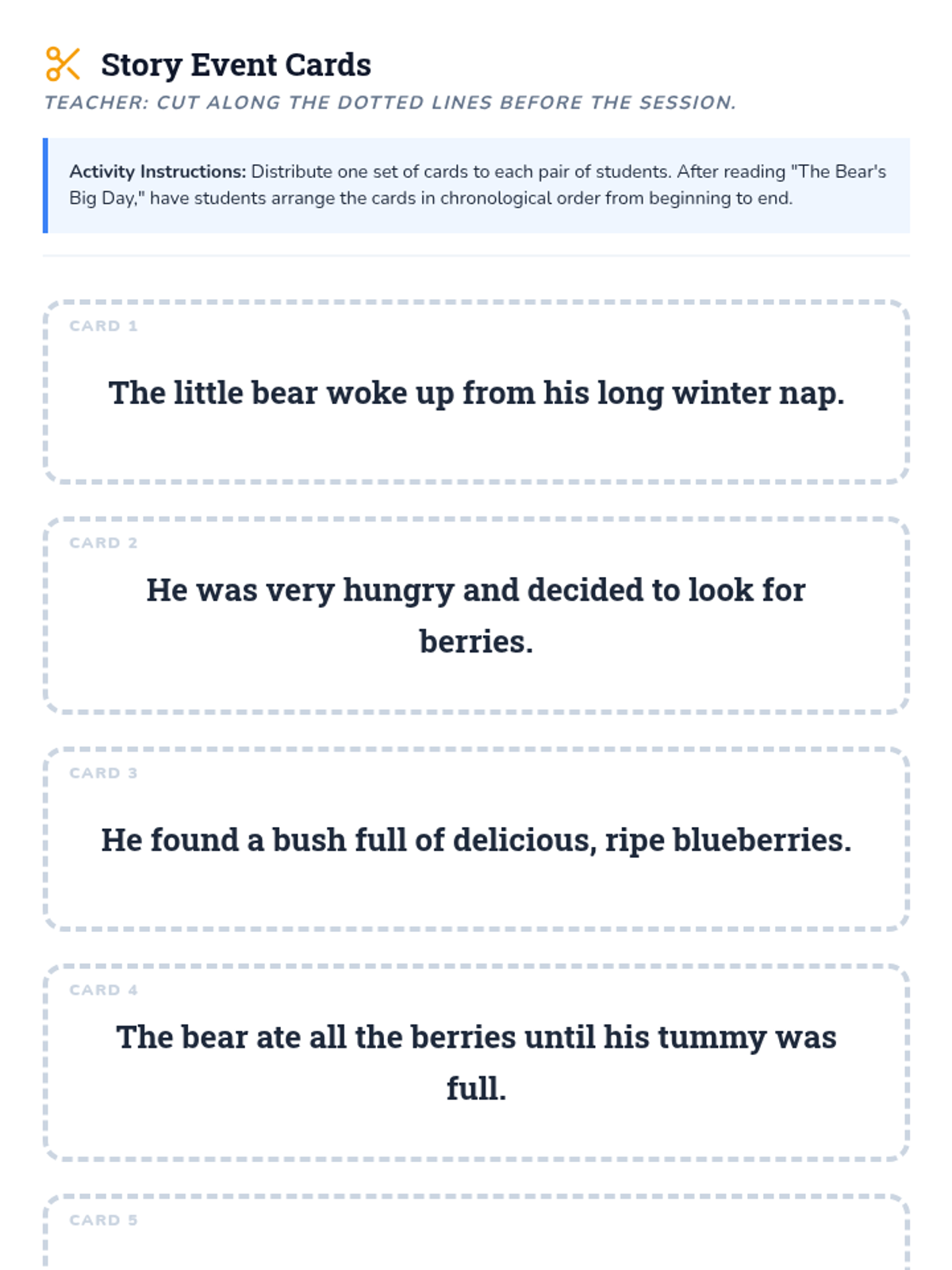
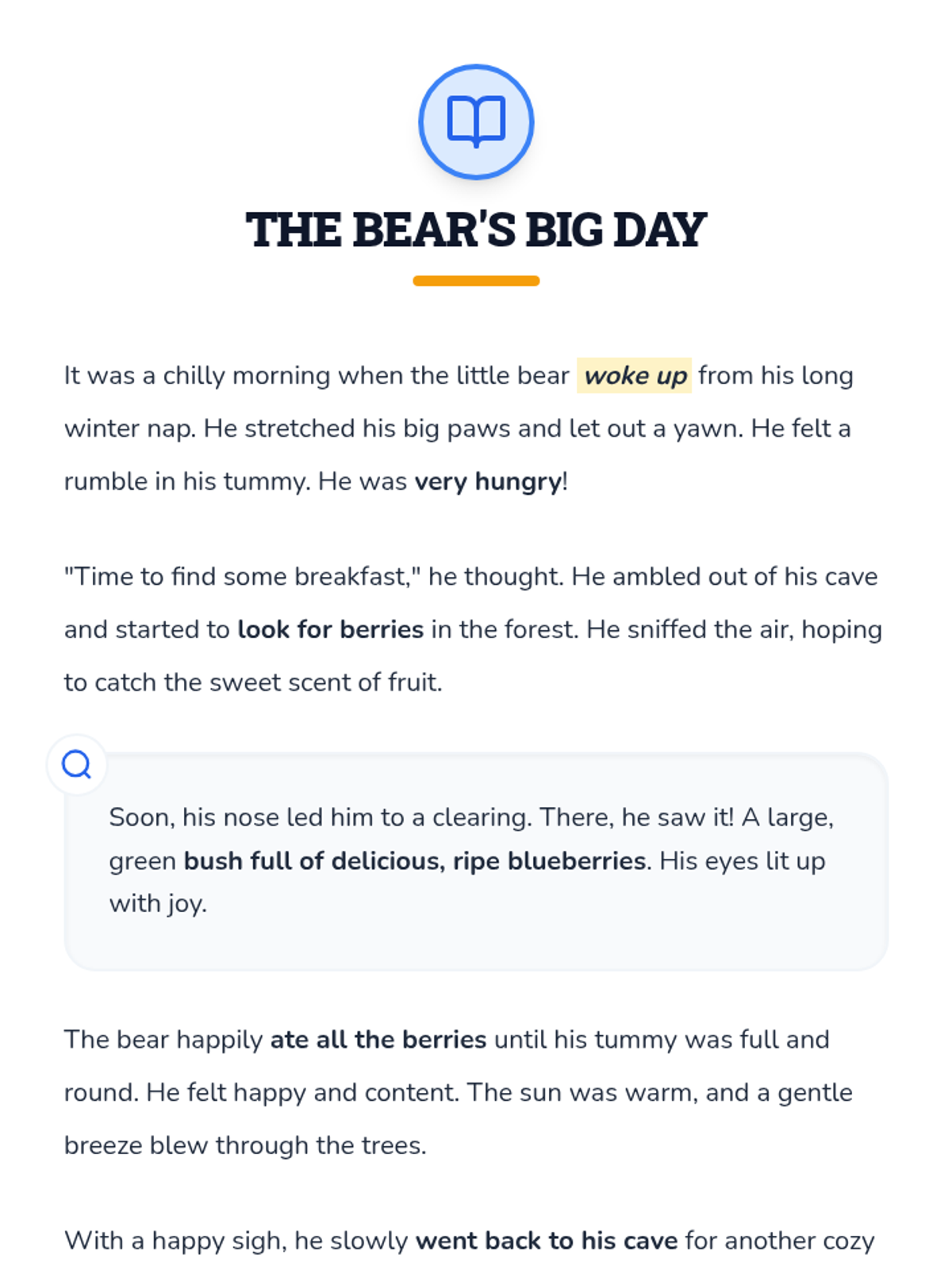
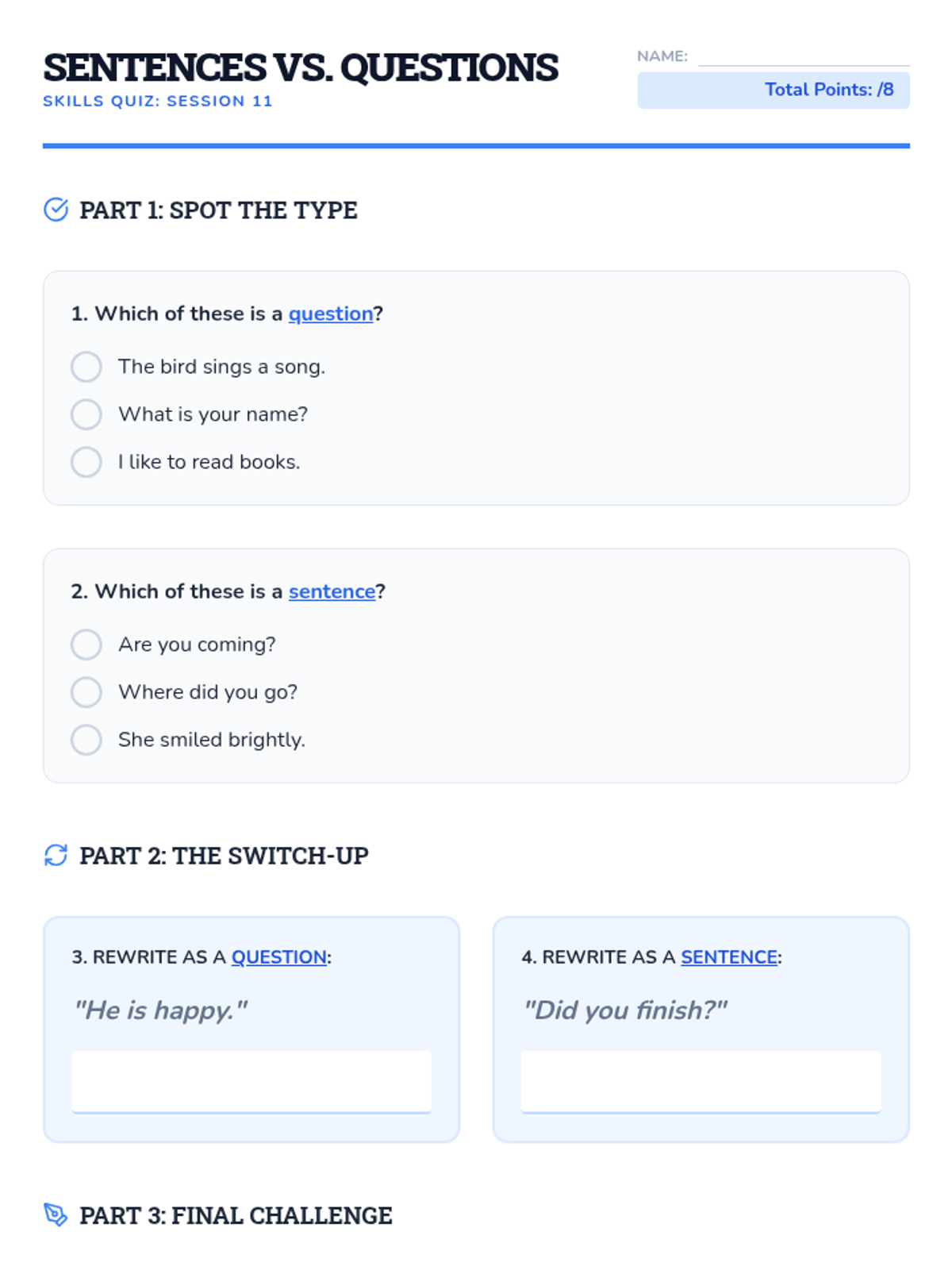
A 3-week, 12-session reading and writing curriculum designed for Tier 2 small groups, focusing on CVCe words, sequencing, questioning, and writing organization with a detective-themed 'Quest' aesthetic.
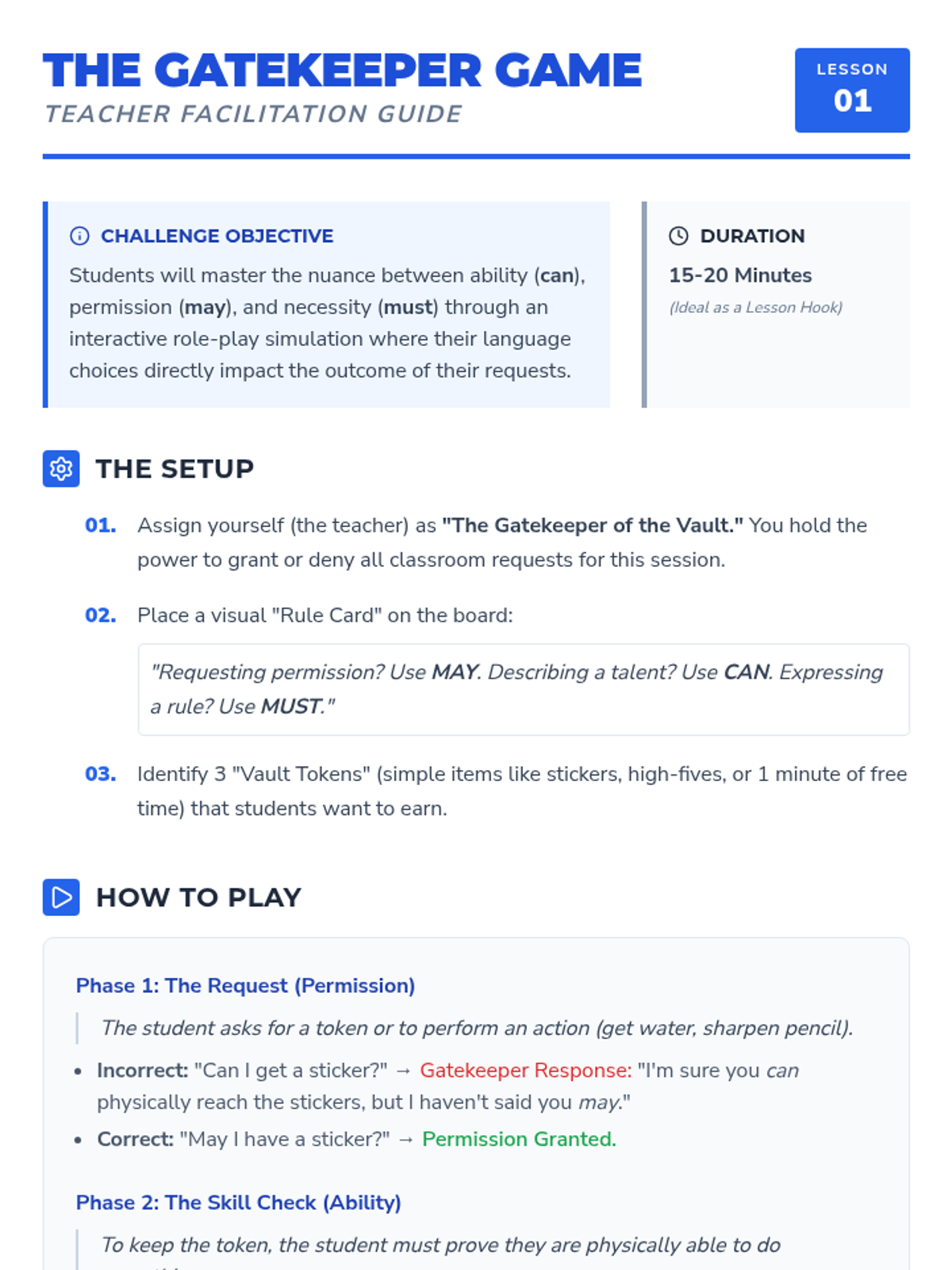
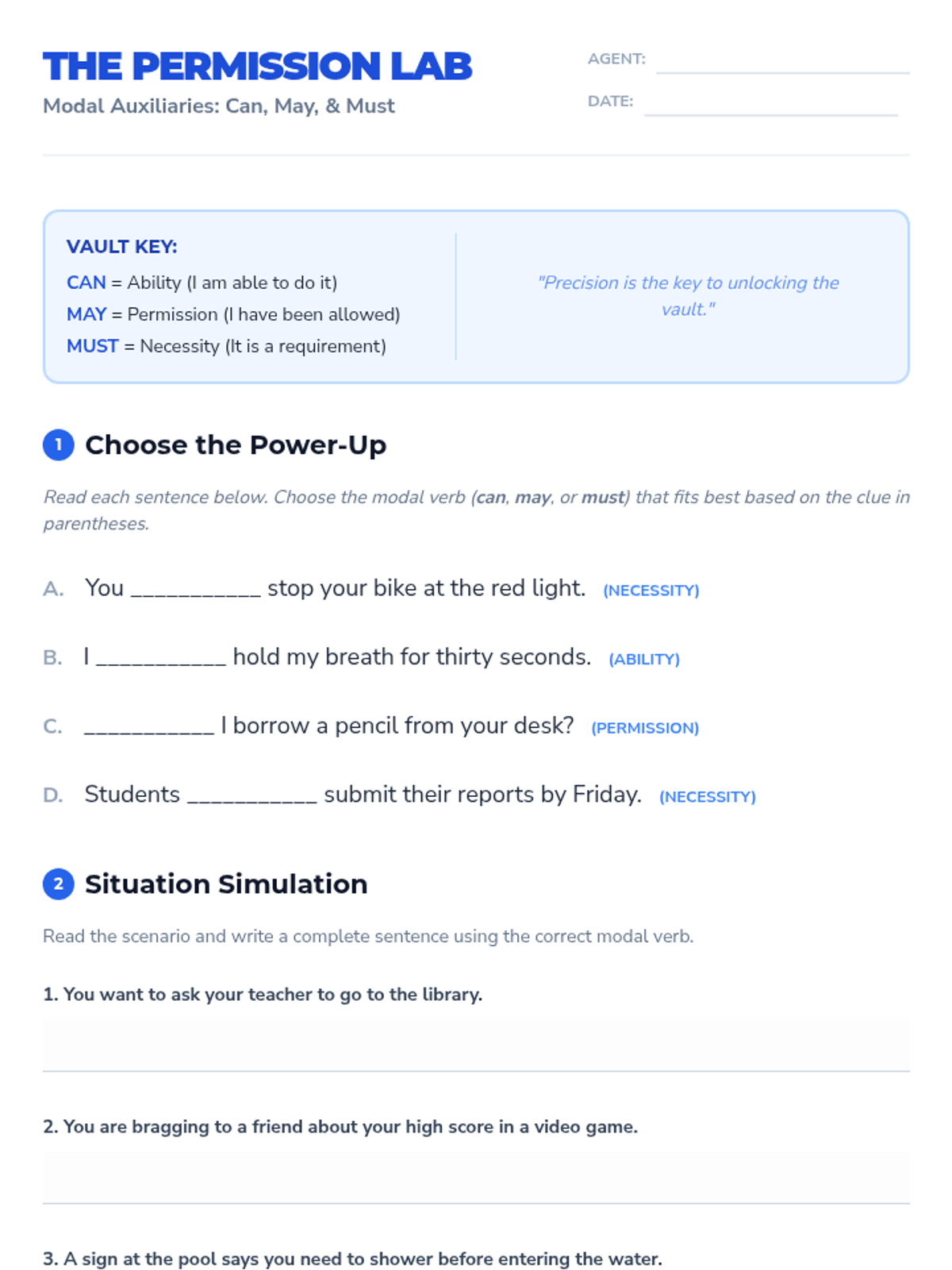
This sequence explores the mechanics of verbs through modal auxiliaries and the creative power of vivid verbs. Students move from understanding ability, permission, and probability to revising narratives for maximum impact by replacing bland verbs with precise alternatives.
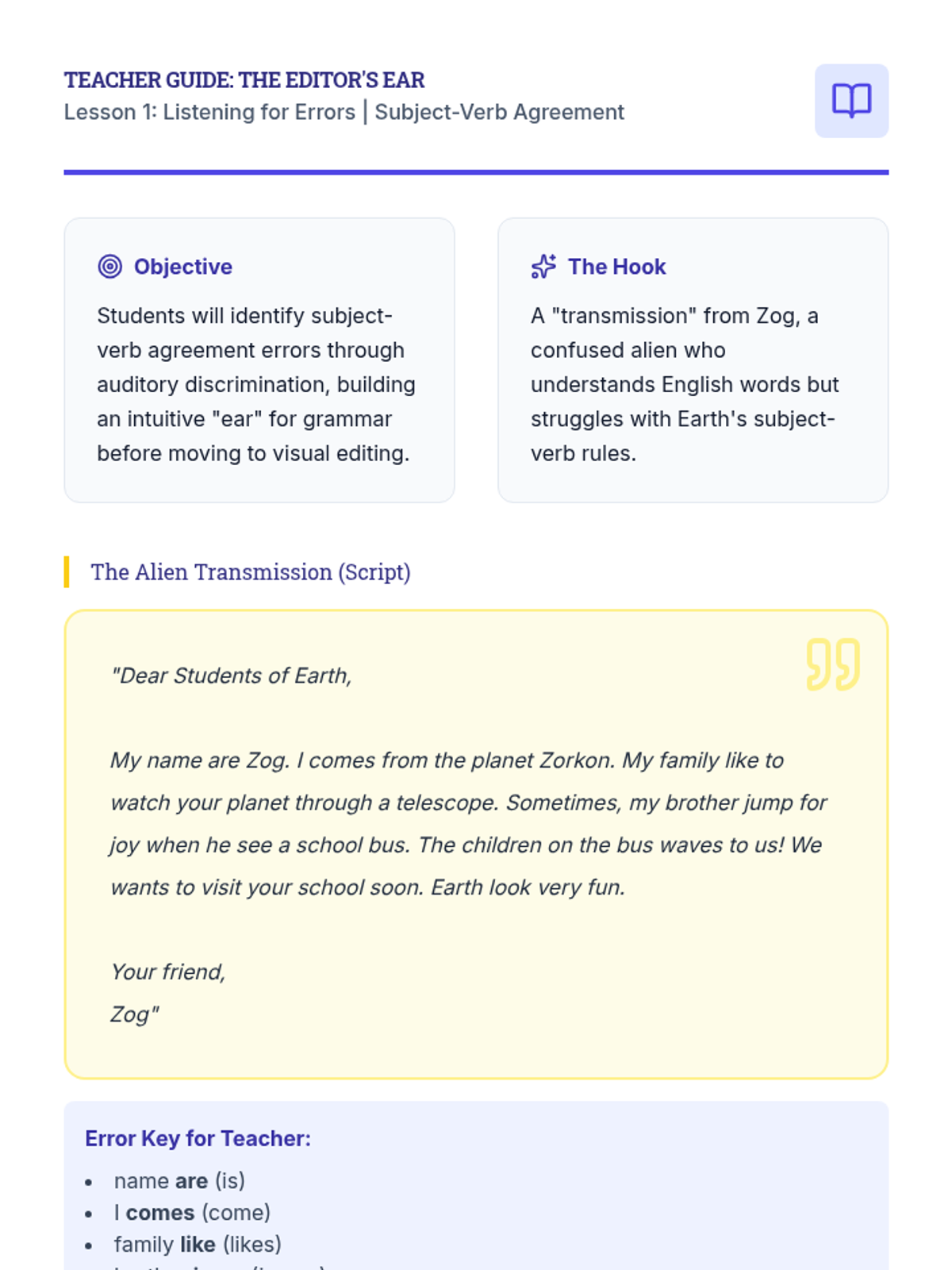
This 5-lesson sequence guides 3rd-grade students through the process of identifying and correcting subject-verb agreement errors. Moving from auditory discrimination to specific proofreading strategies and finally to authentic revision of their own work, students build the skills needed to ensure clarity in their writing.
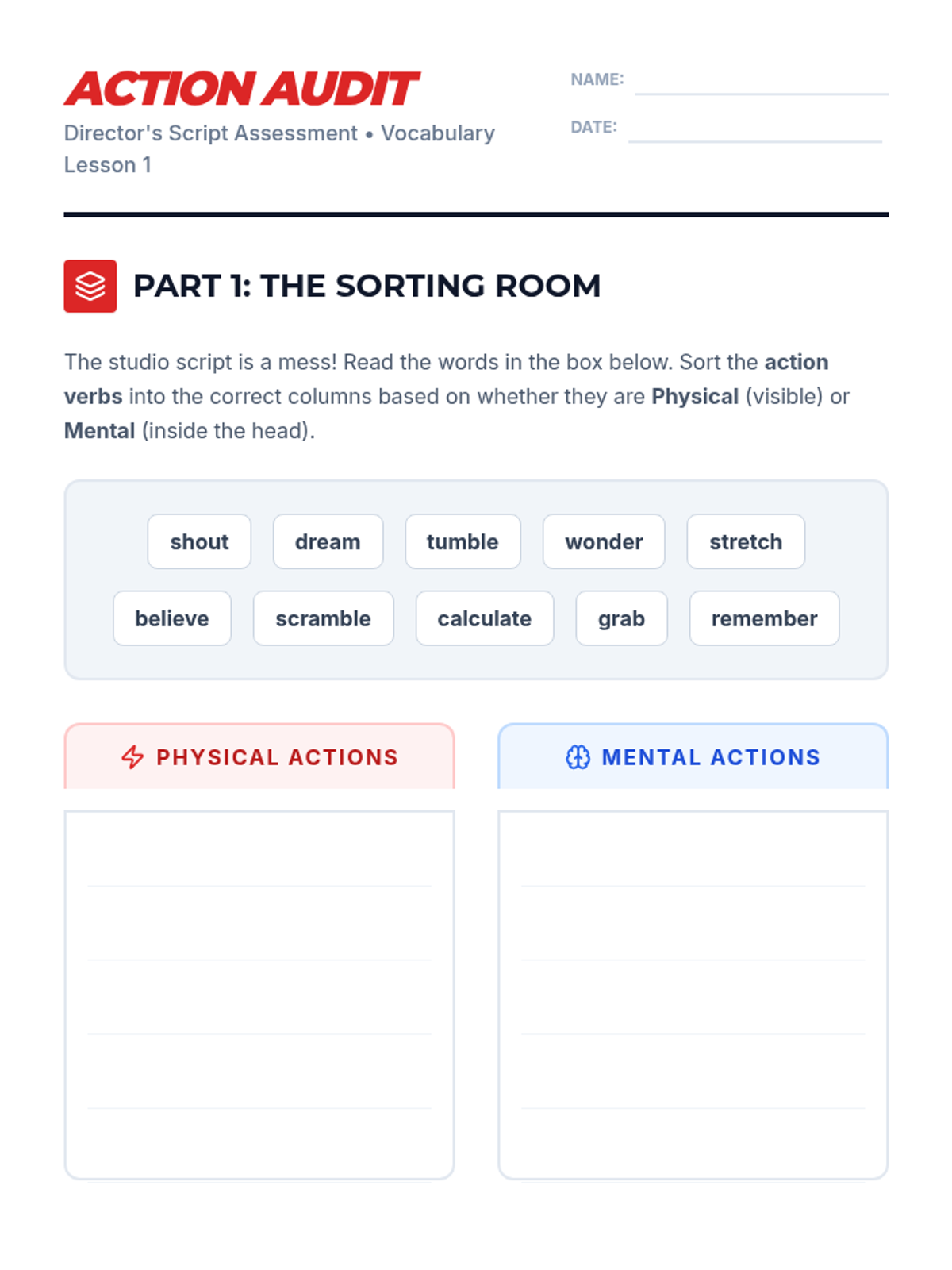
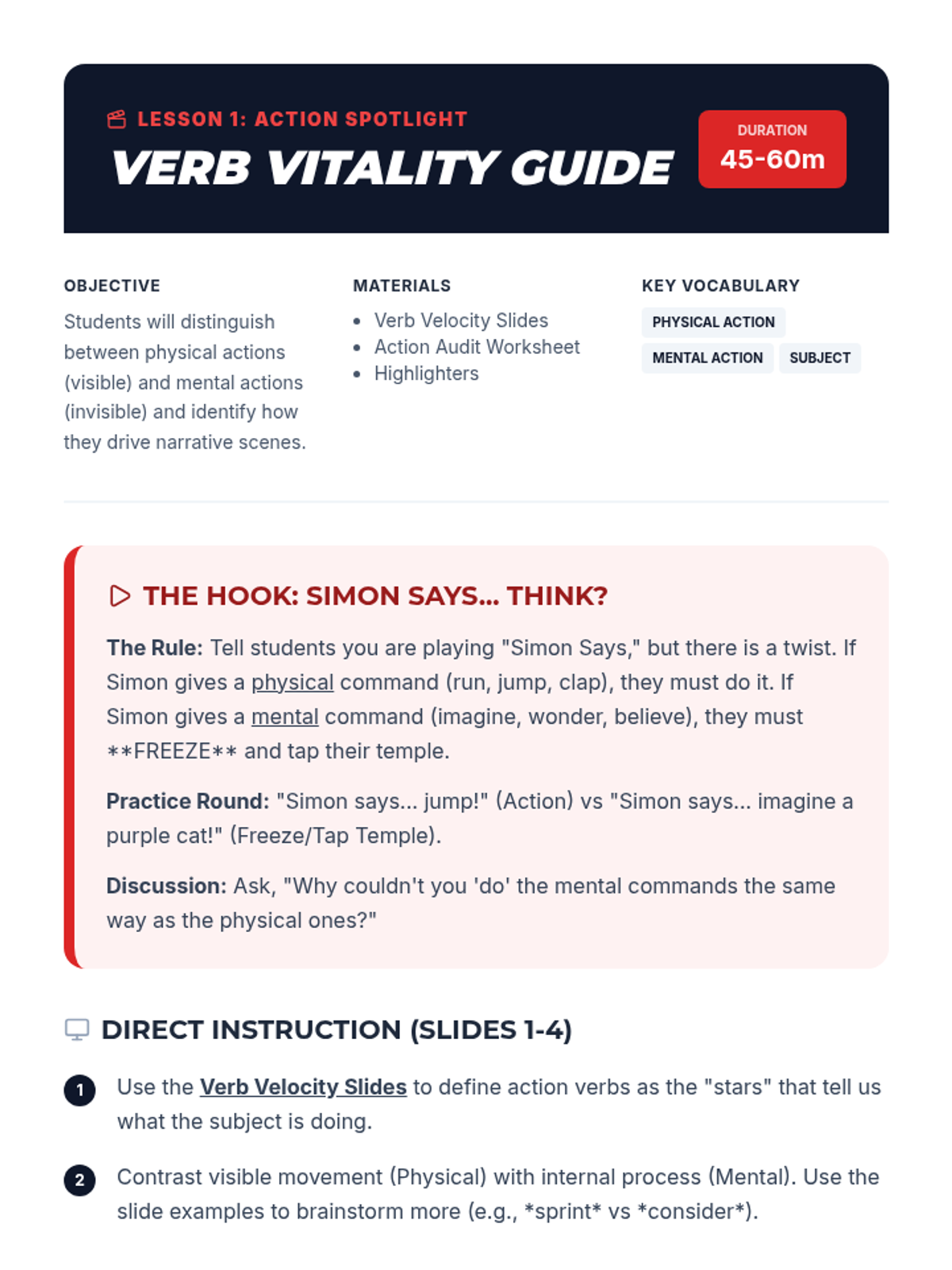
A 5-lesson unit for 3rd graders focused on identifying, refining, and applying vivid action verbs to enhance narrative writing. Students progress from basic identification to understanding shades of meaning and mastering subject-verb agreement.
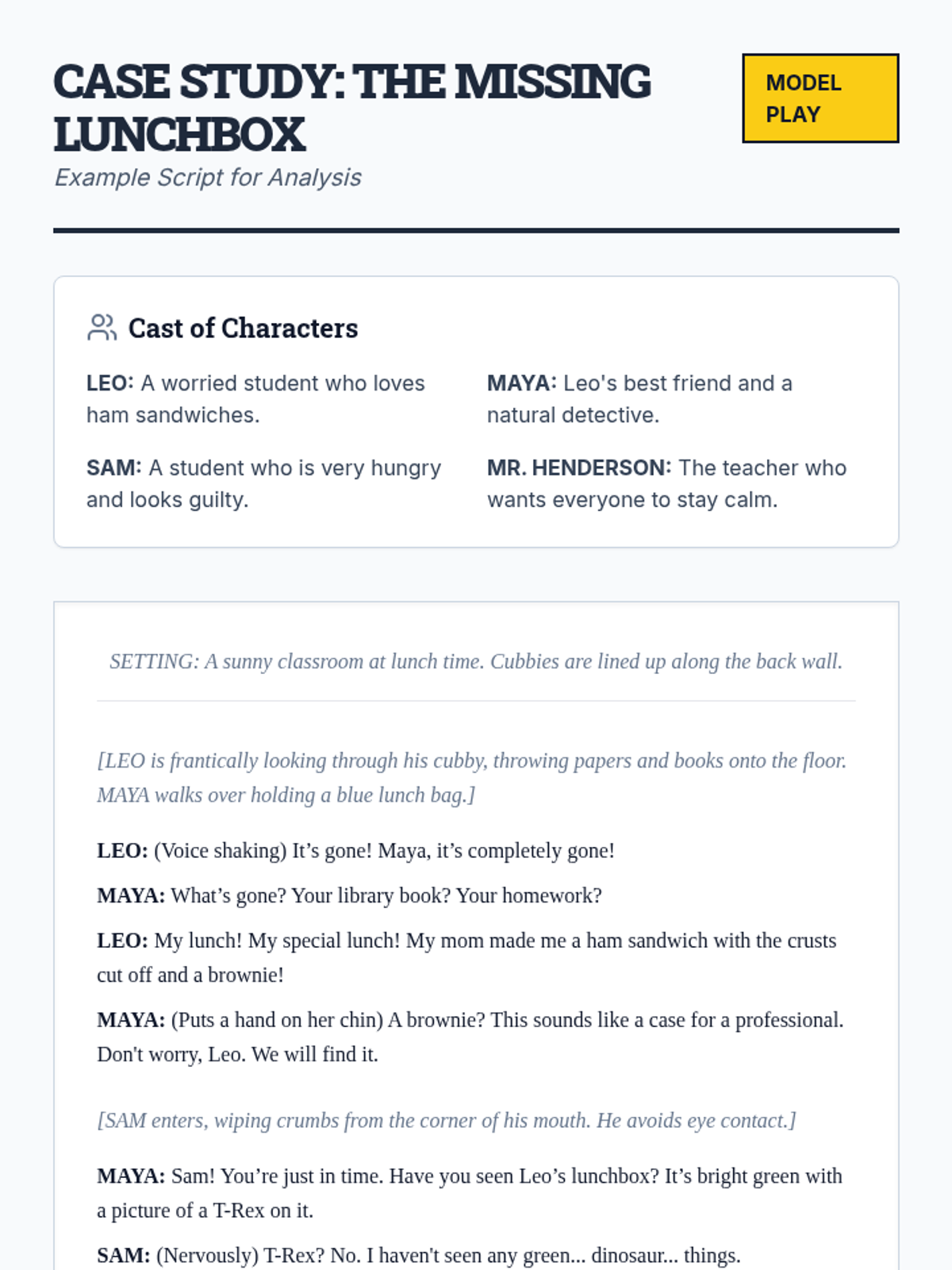
A unit focused on play structure, fluency, and social-emotional problem solving through mystery-themed scripts. Students analyze plot elements while practicing performance skills.
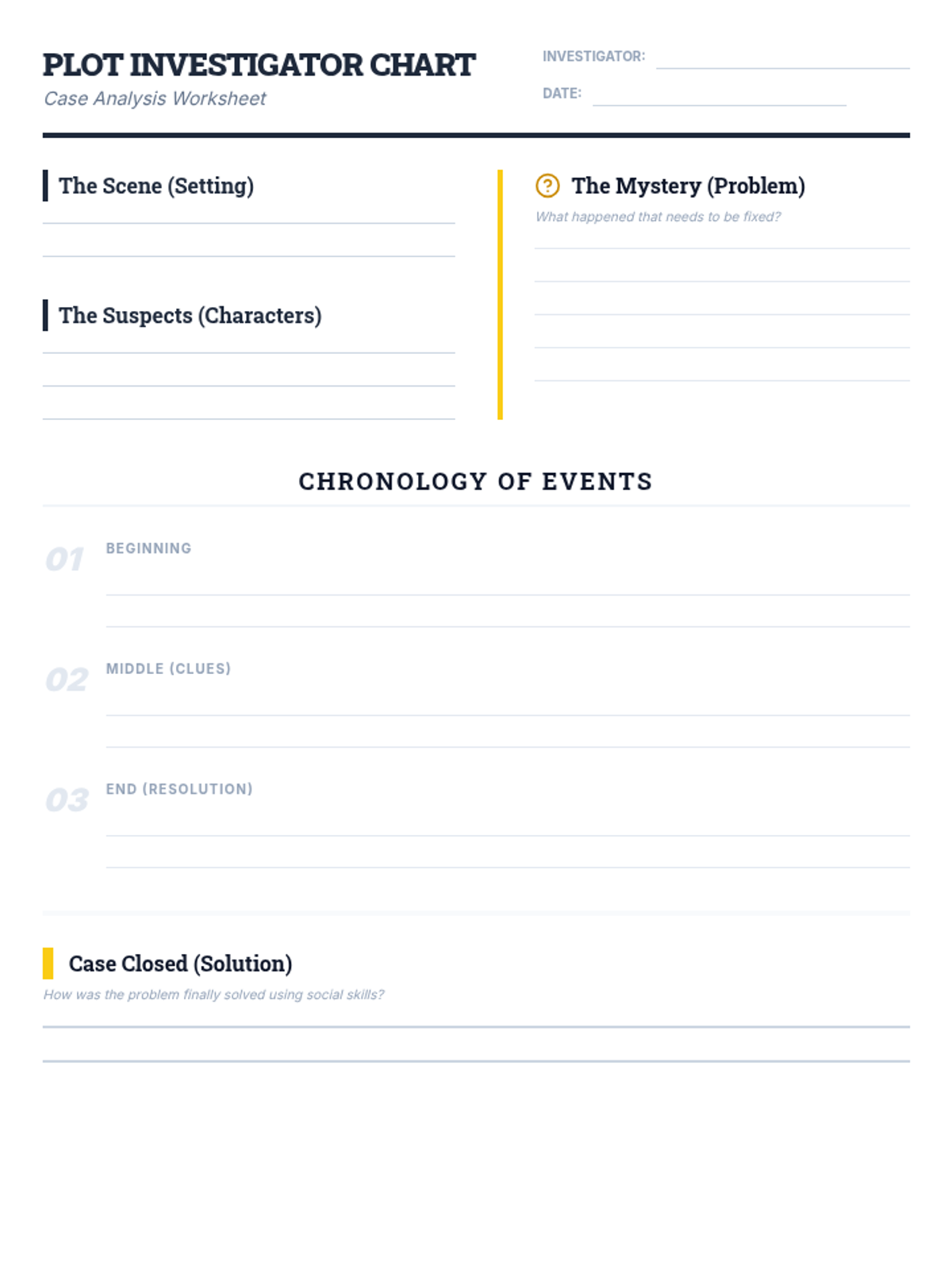
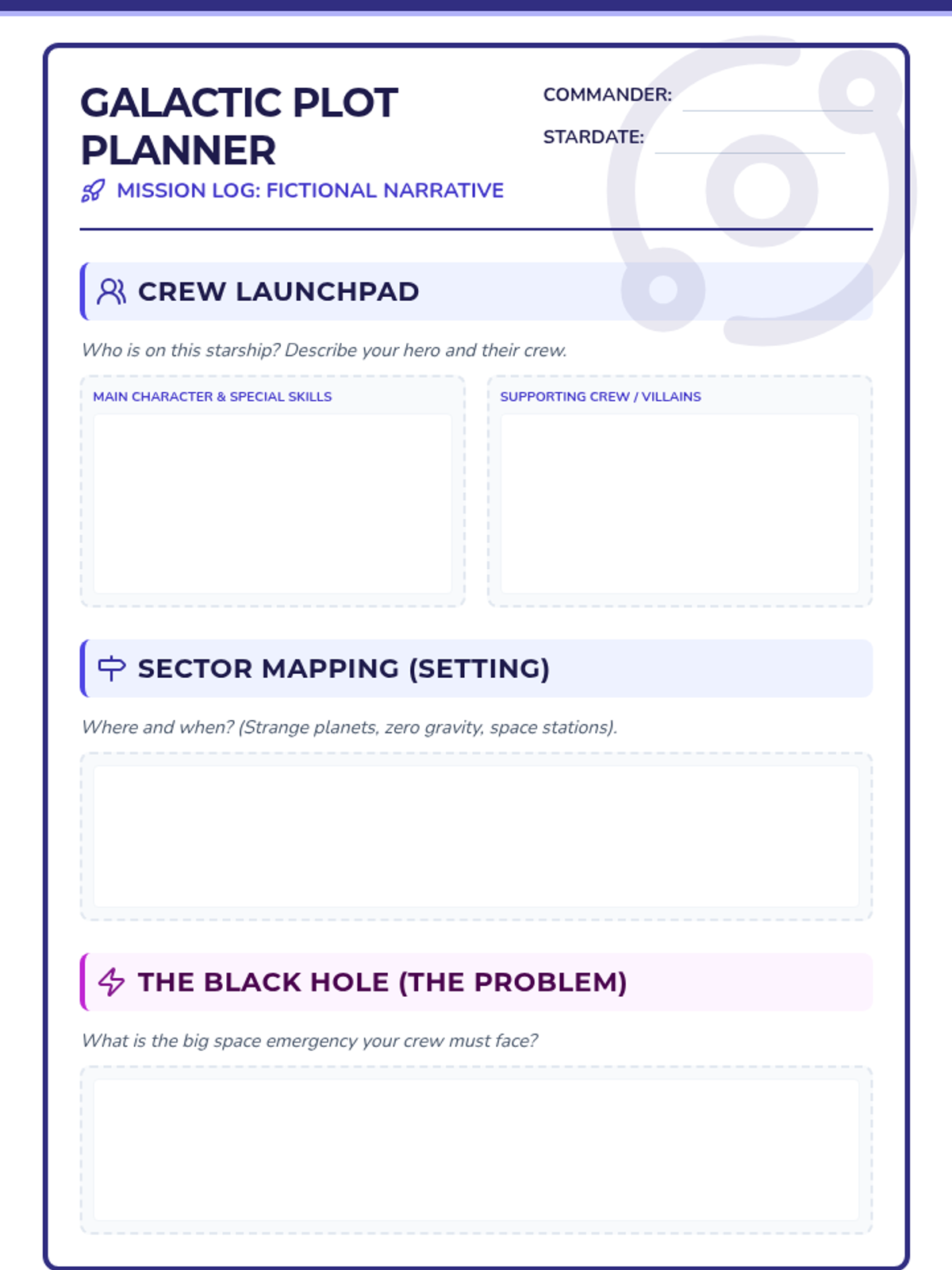
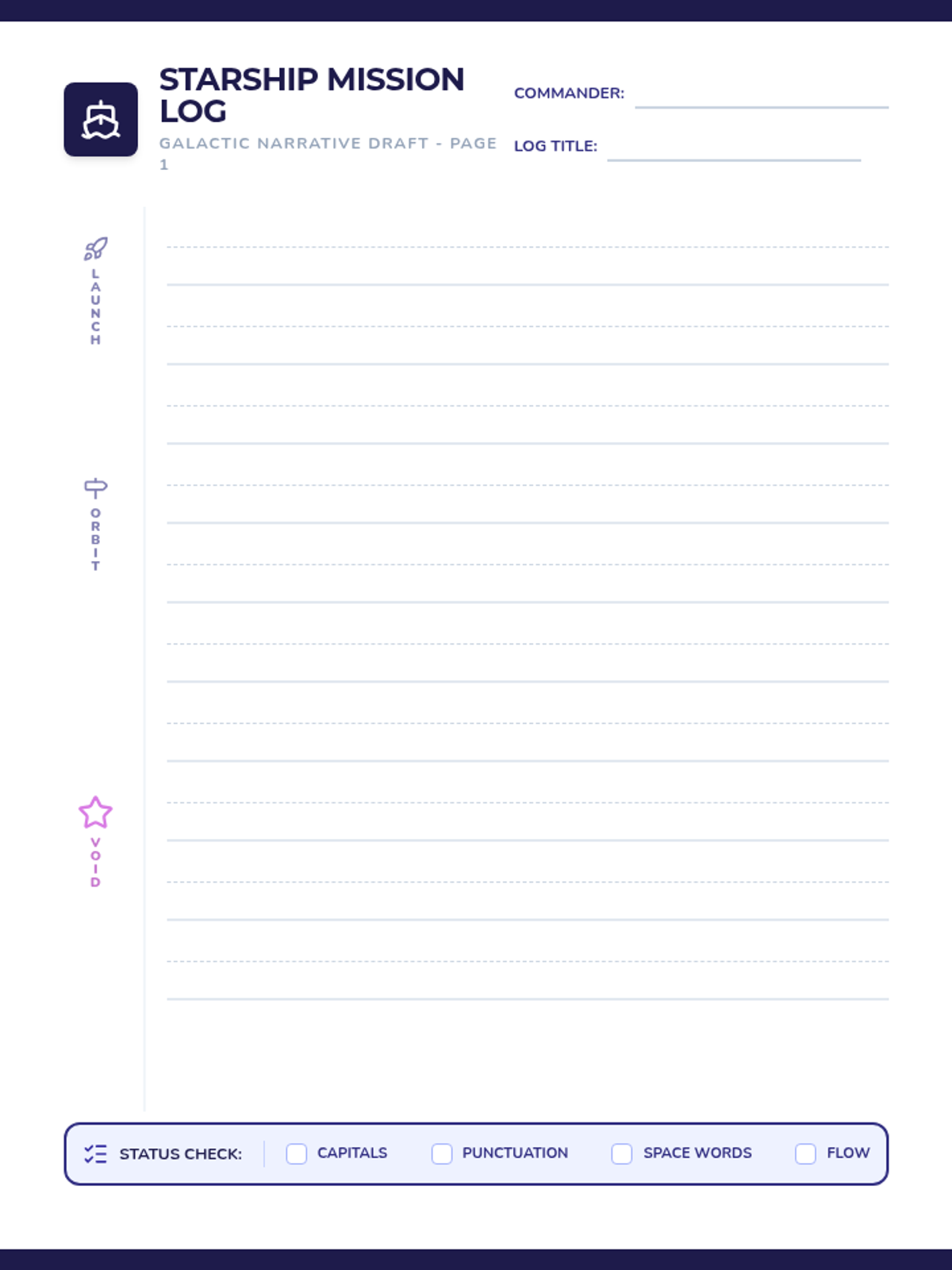
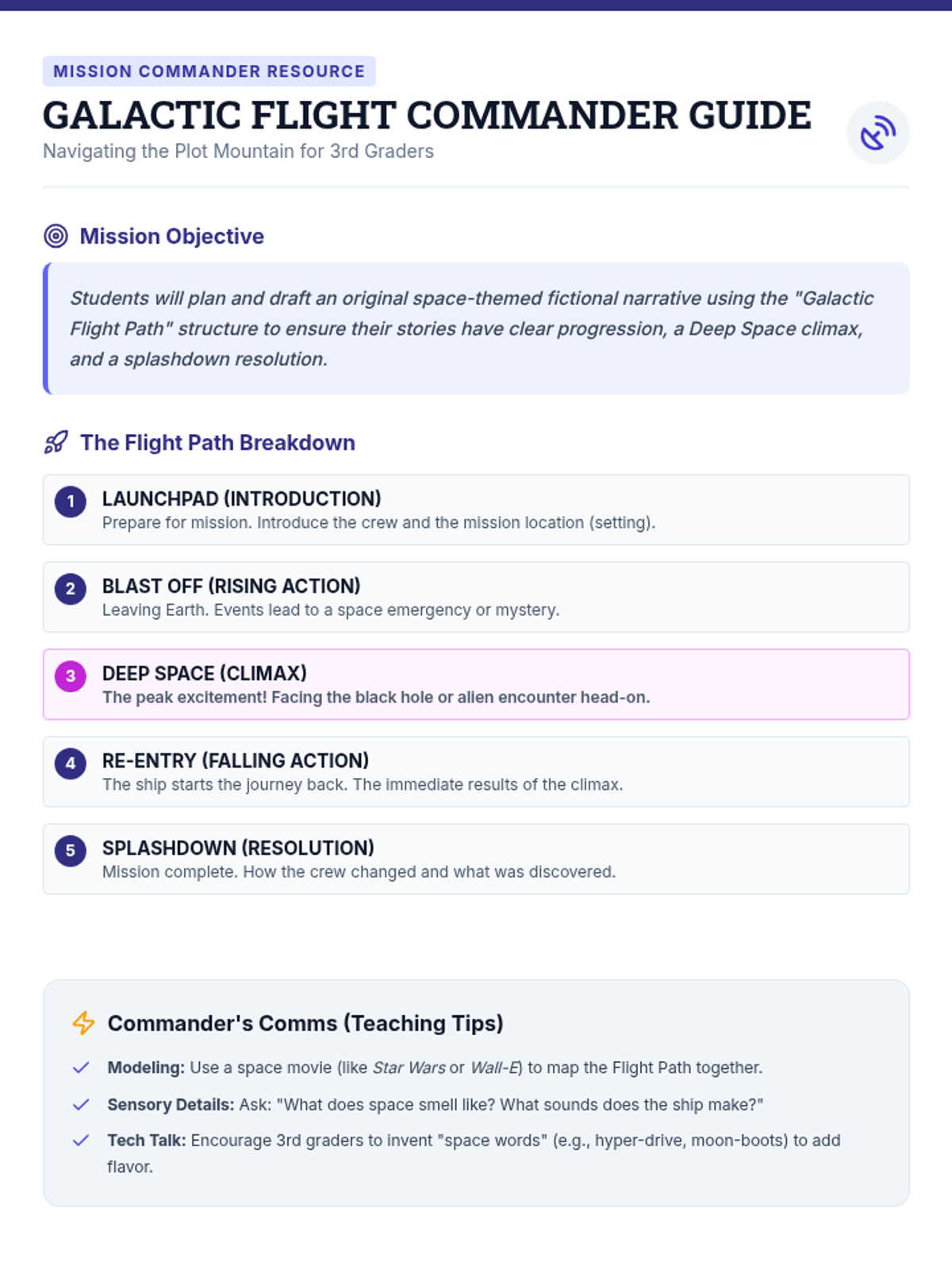
A narrative writing unit for 3rd grade students centered on fictional storytelling using the Plot Mountain structure, reimagined as a galactic mission through the stars.
A series of thematic handwriting programs designed to improve fine motor skills and penmanship through daily practice sessions centered around fascinating educational topics like biology and history.
A 5-lesson unit for 3rd graders on identifying and correcting speech-to-text recognition errors. Students learn to spot homophones, enunciation errors, missing words, and context-based mistakes to become expert editors of their own dictated work.
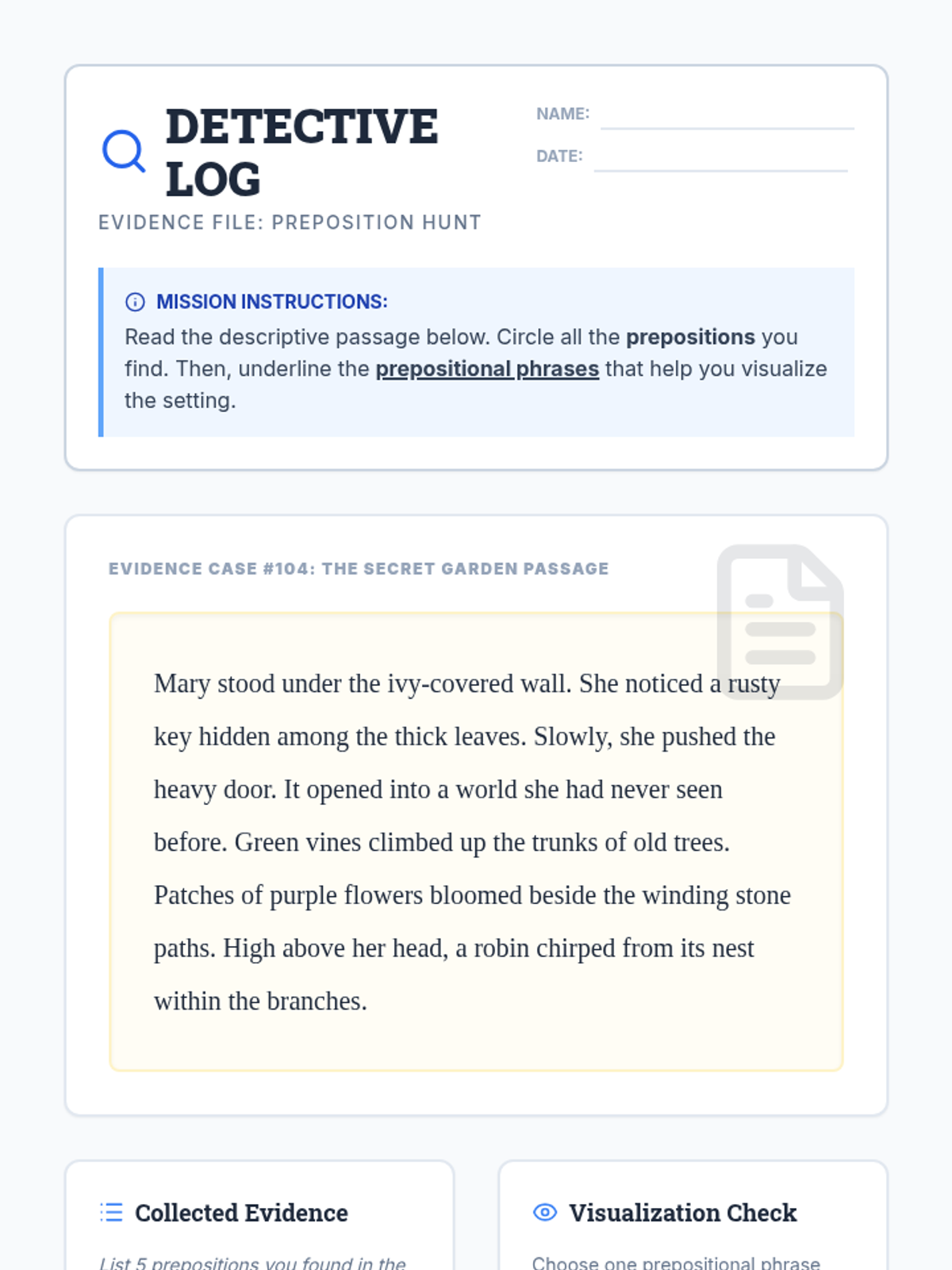
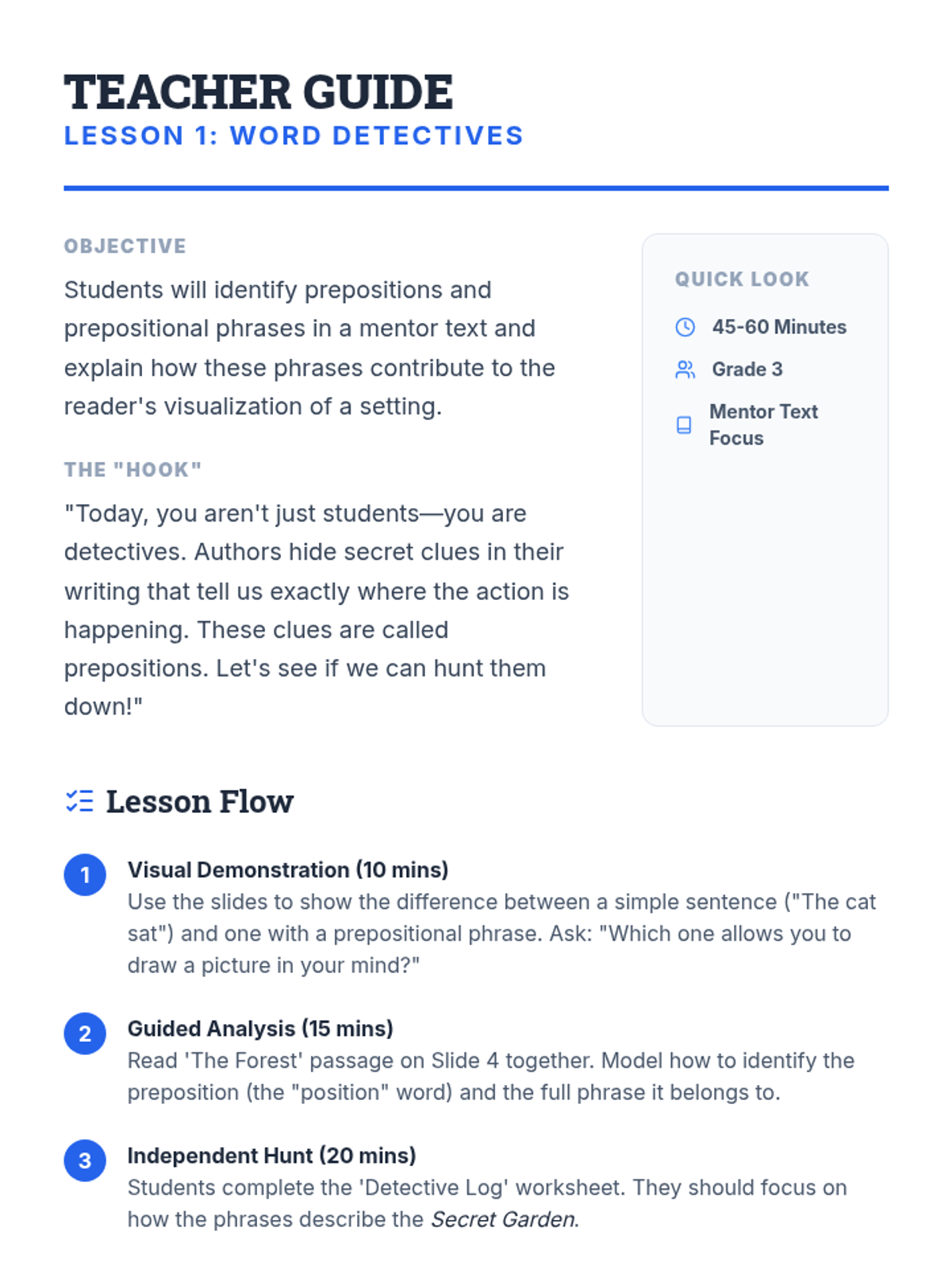
Students move beyond simple preposition identification to understanding how these words enhance descriptive writing. They analyze mentor texts, use sensory cues, and master sentence variety to paint vivid pictures for their readers.
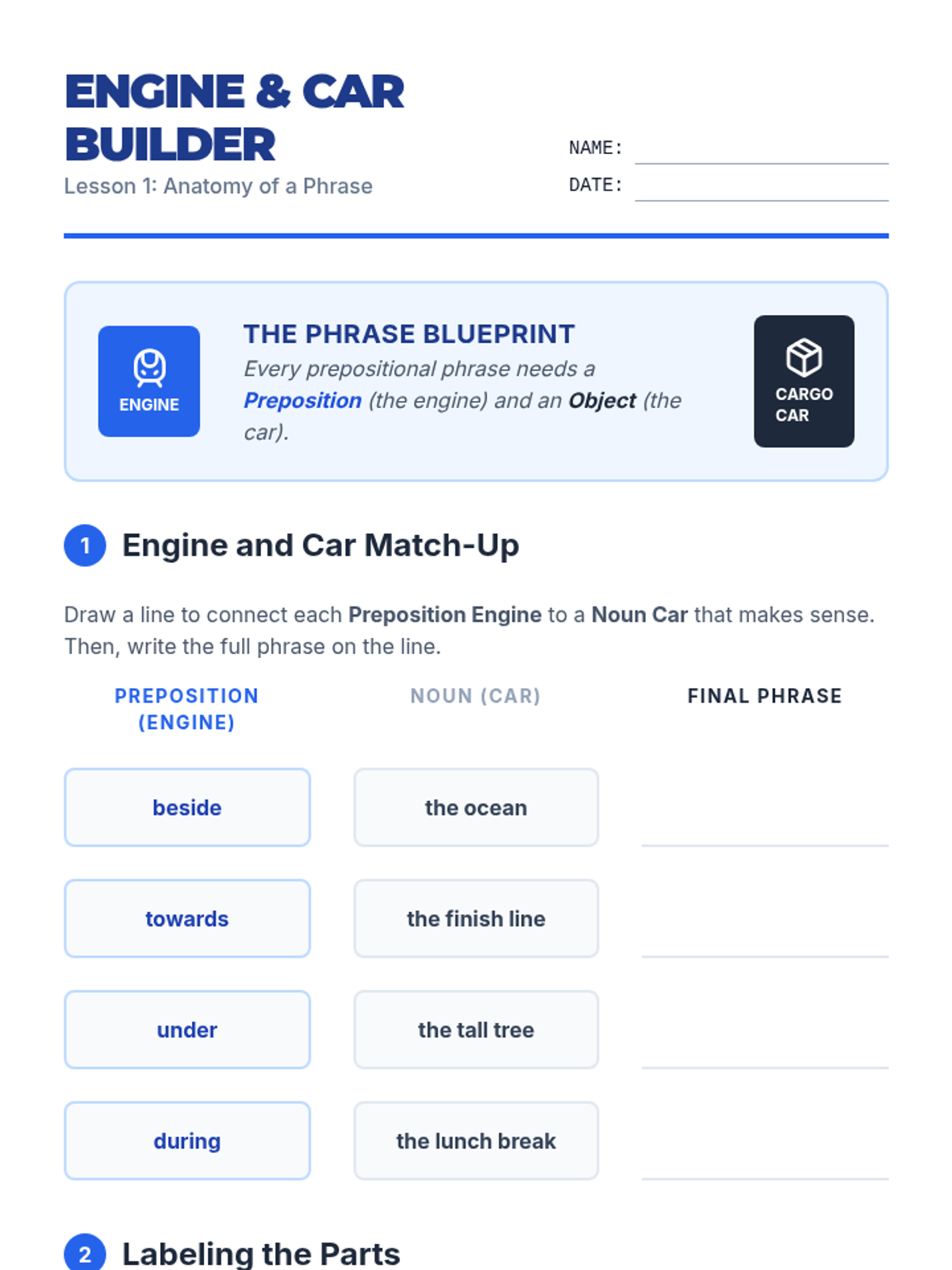
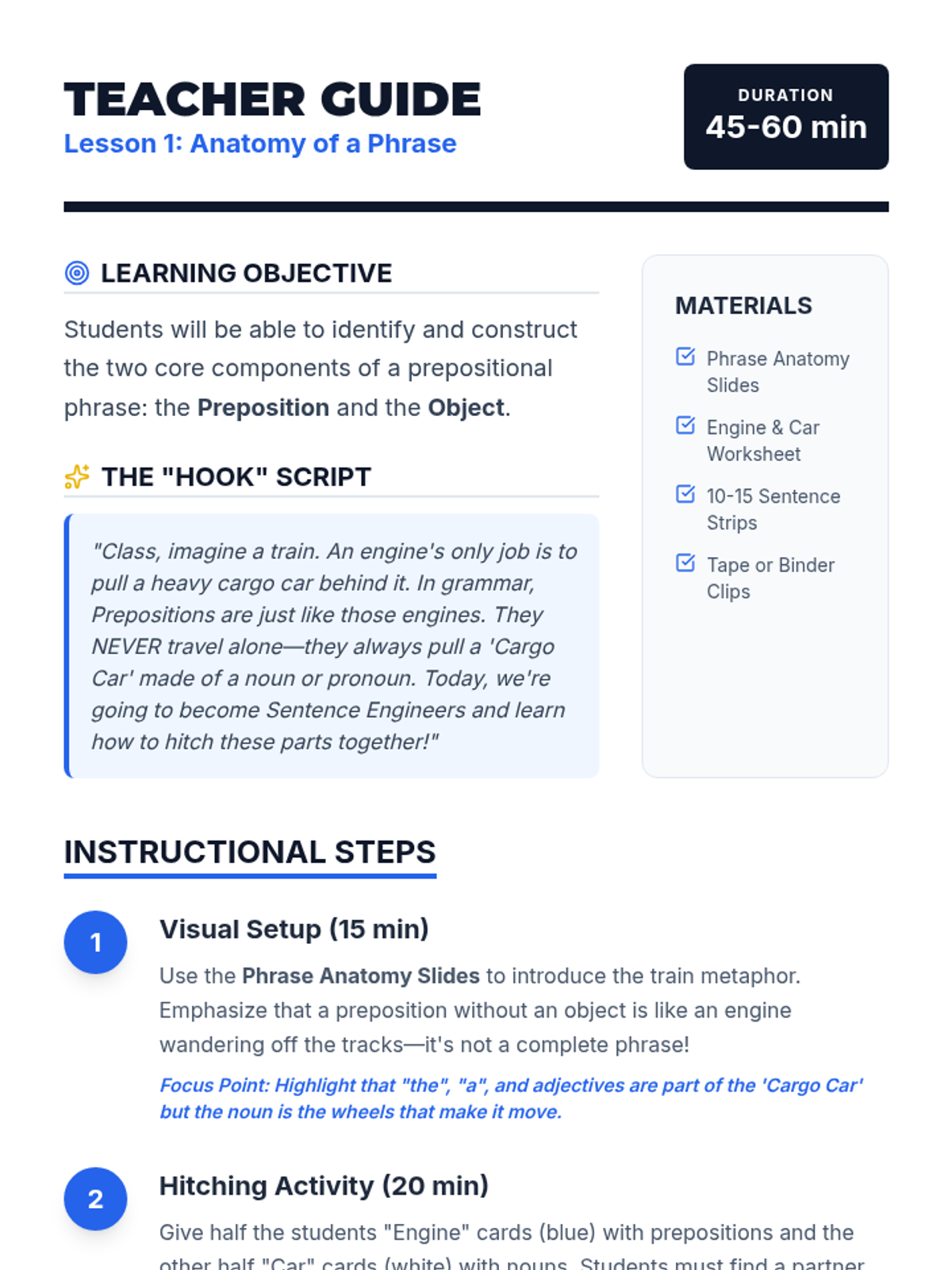
A comprehensive 3rd-grade grammar sequence focusing on the structure and function of prepositional phrases. Students move from identifying the 'formula' (Preposition + Object) to using phrases for sentence expansion and navigating subject-verb agreement challenges.
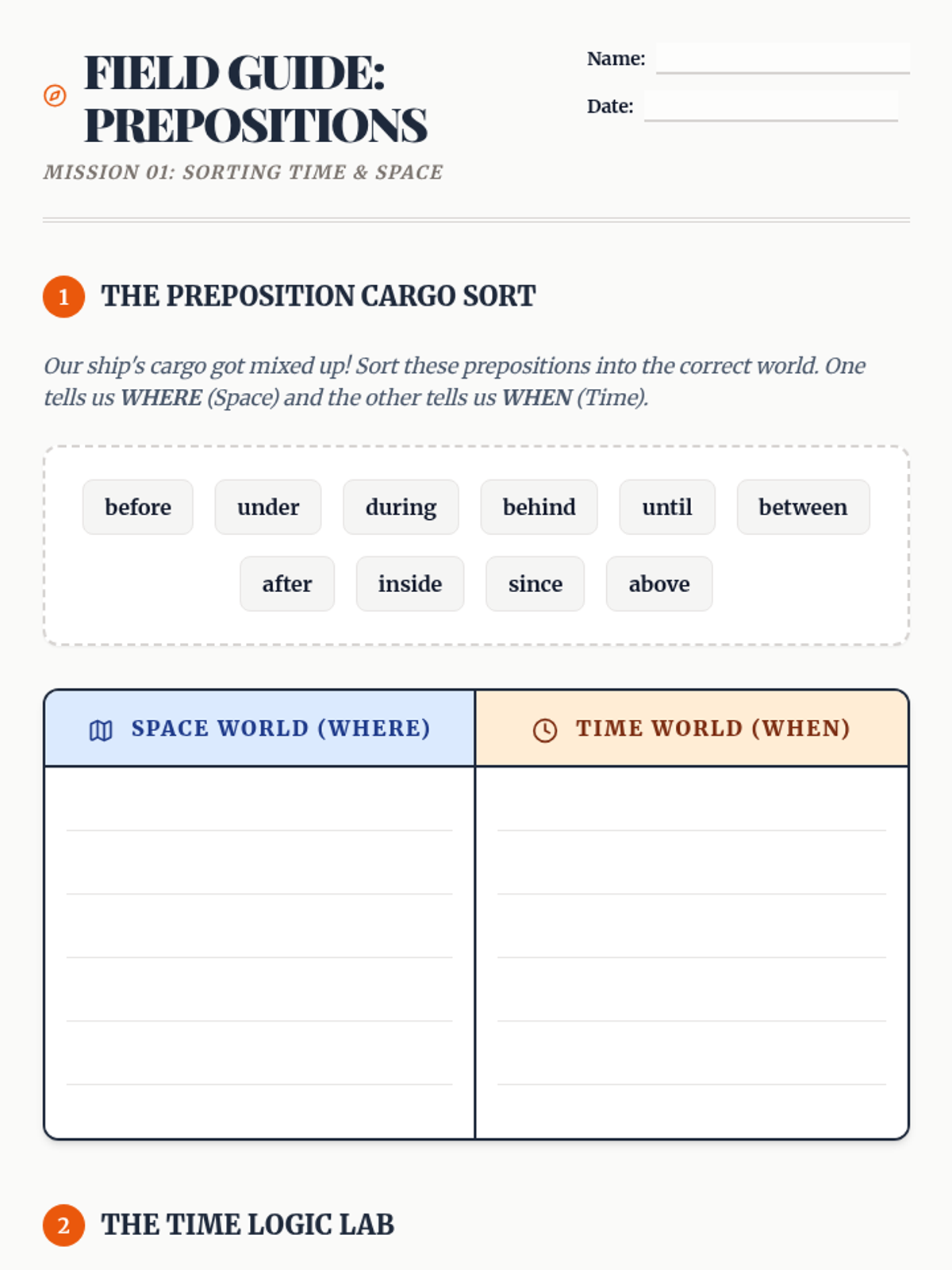
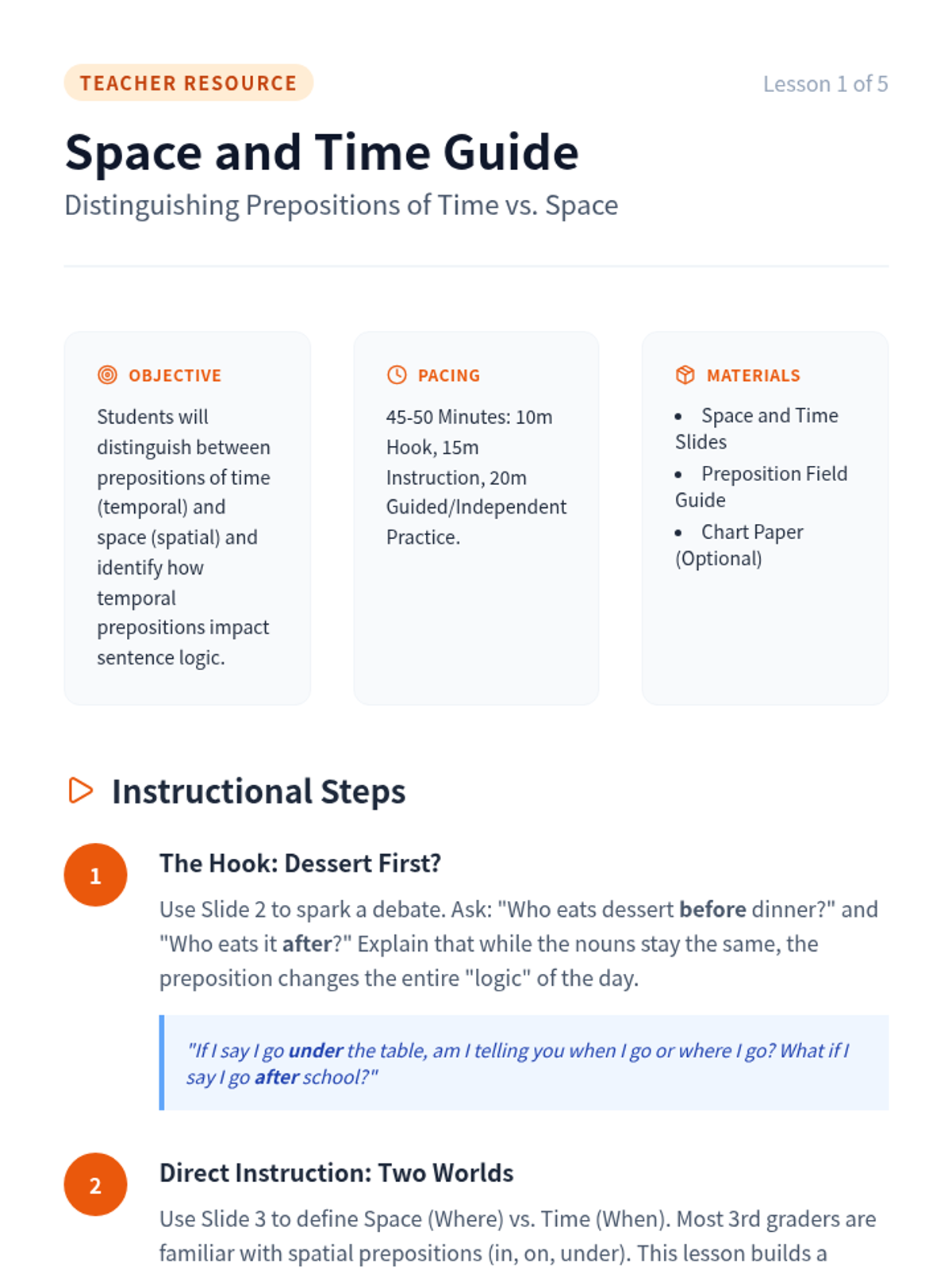
A 3rd-grade grammar sequence focusing on temporal prepositions (before, after, during, until, etc.) to help students order events in narratives and instructions. Students progress from distinguishing time vs. space prepositions to applying them in their own procedural and narrative writing.
A 5-lesson 3rd-grade grammar sequence focused on spatial prepositions. Students progress from kinesthetic movement to visual mapping and descriptive writing, mastering words that describe where objects are located relative to one another.
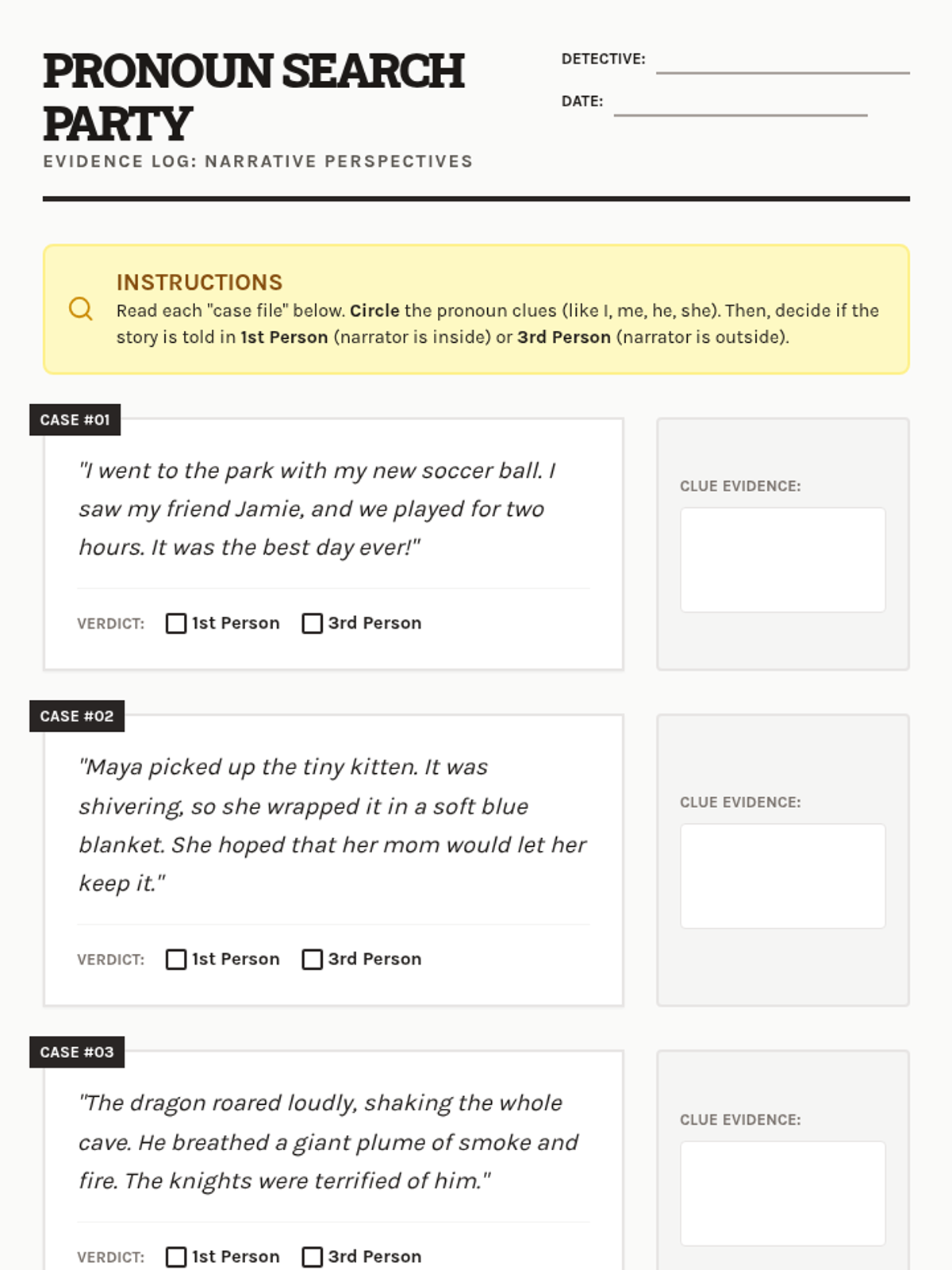
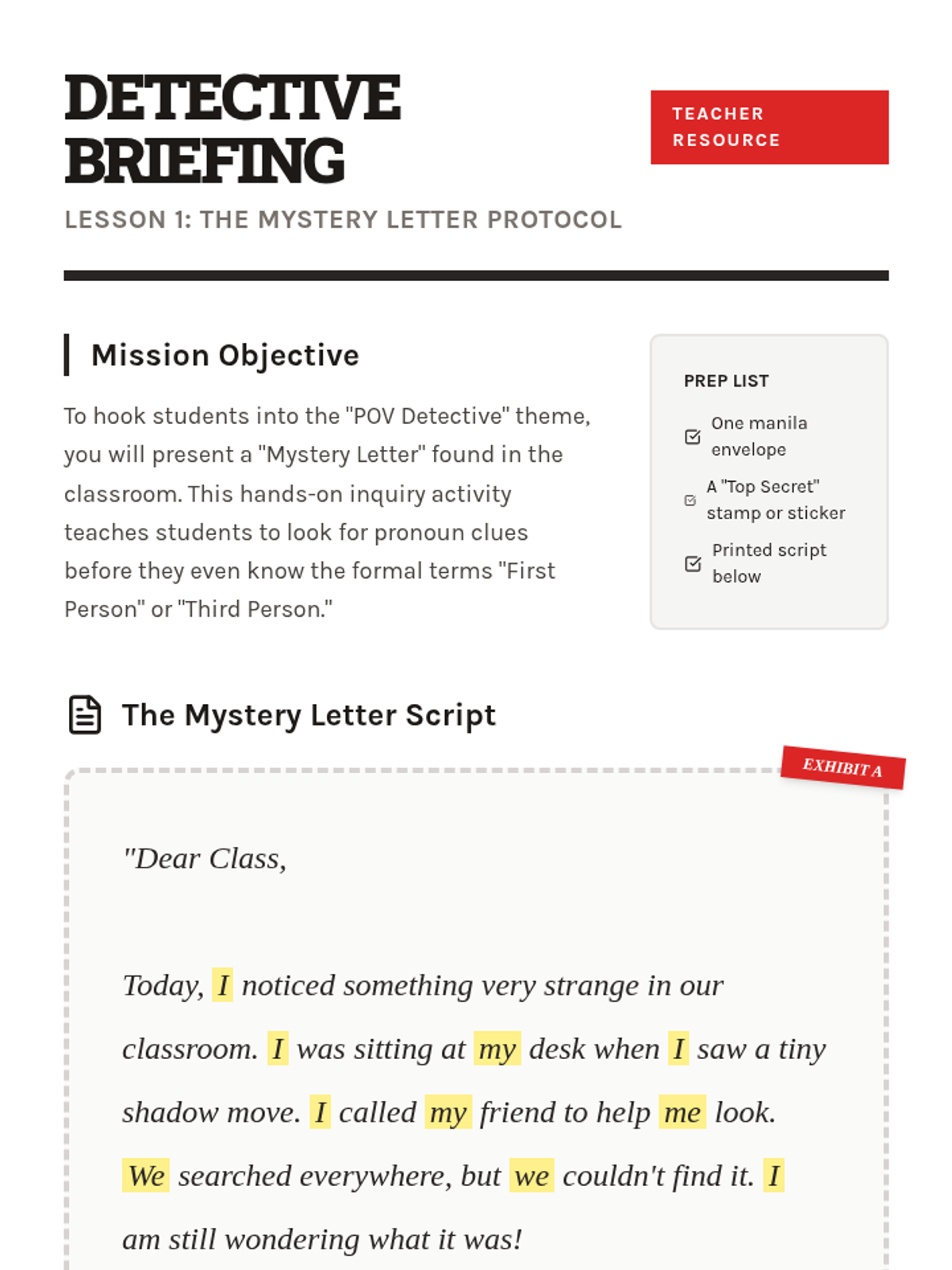
A 3rd Grade ELA sequence where students become 'Text Detectives' to master first and third-person points of view. Through inquiry and hands-on activities, students learn to identify pronoun clues and understand the narrator's role in a story.
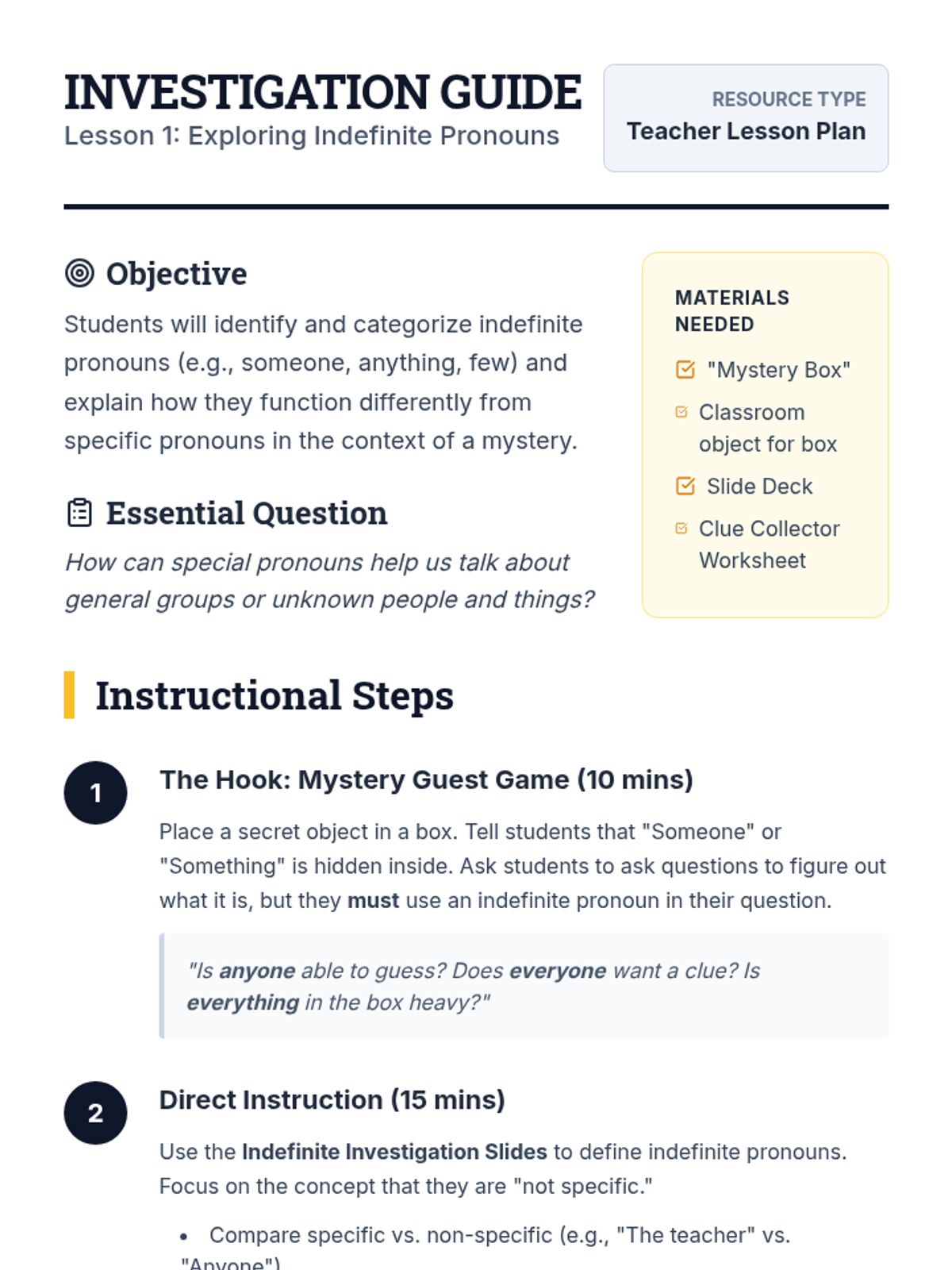
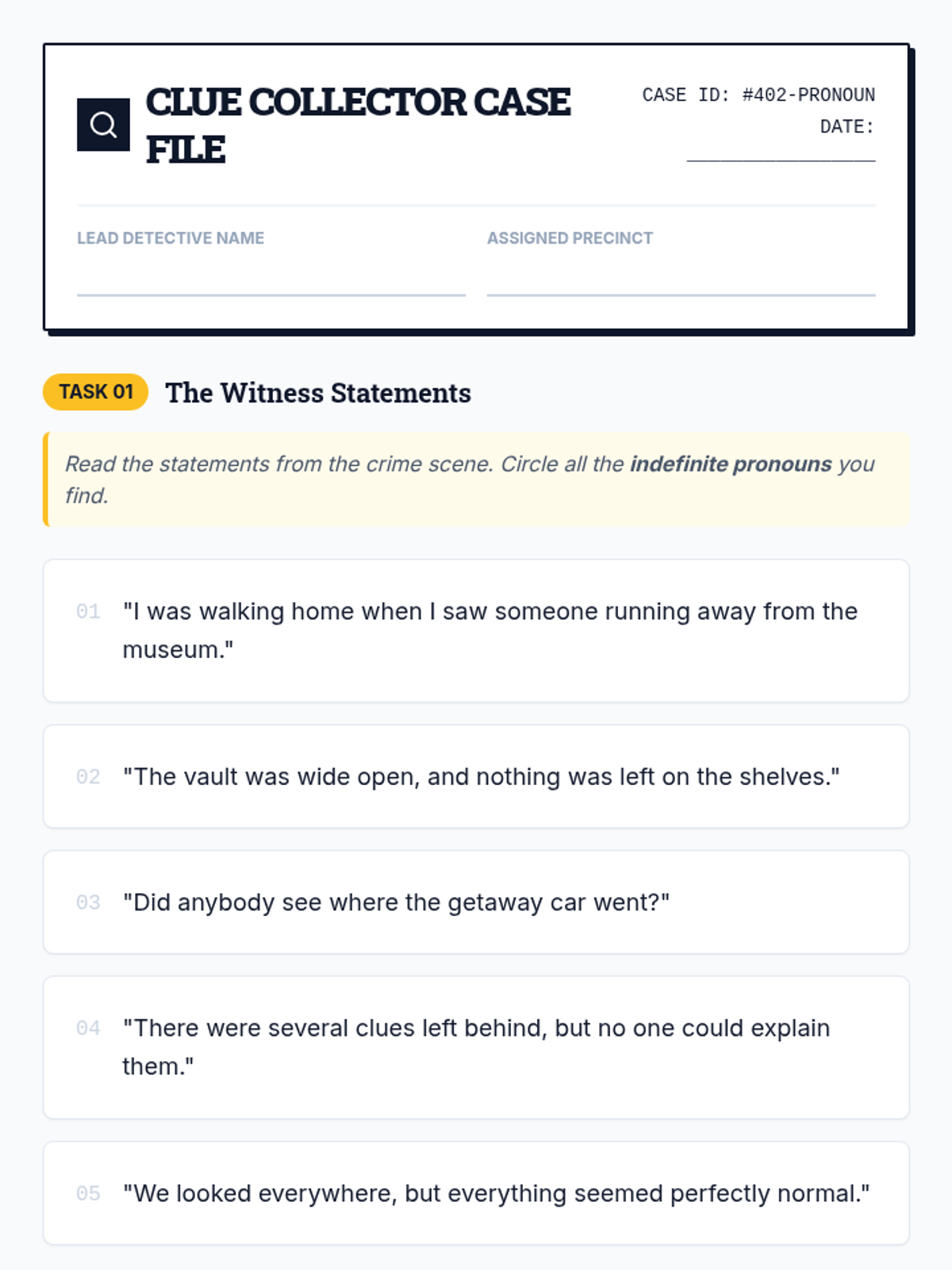
A 3rd-grade grammar unit exploring indefinite and relative pronouns through a detective-themed investigation. Students learn to use these pronouns to create more sophisticated and fluid sentences.
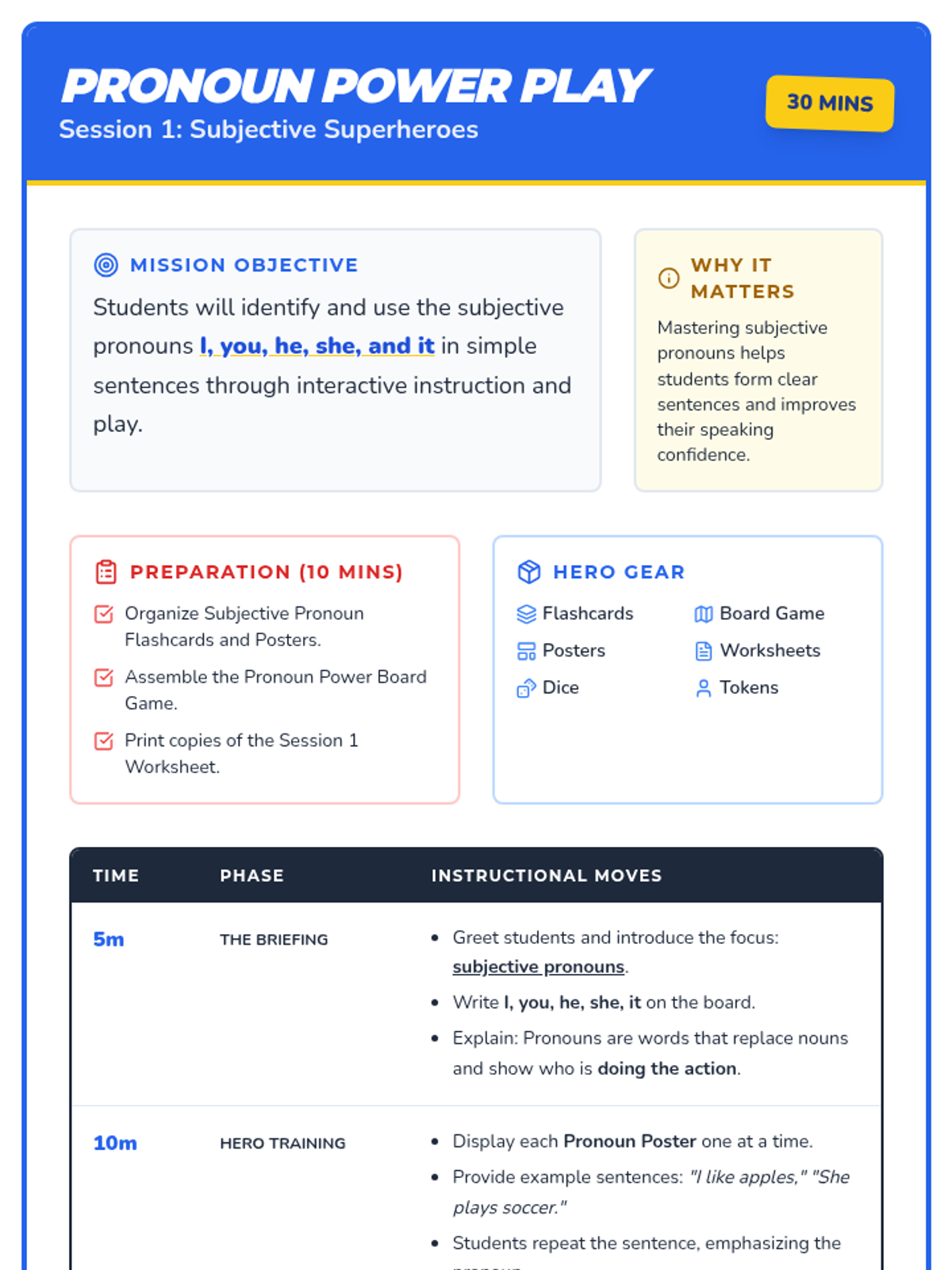
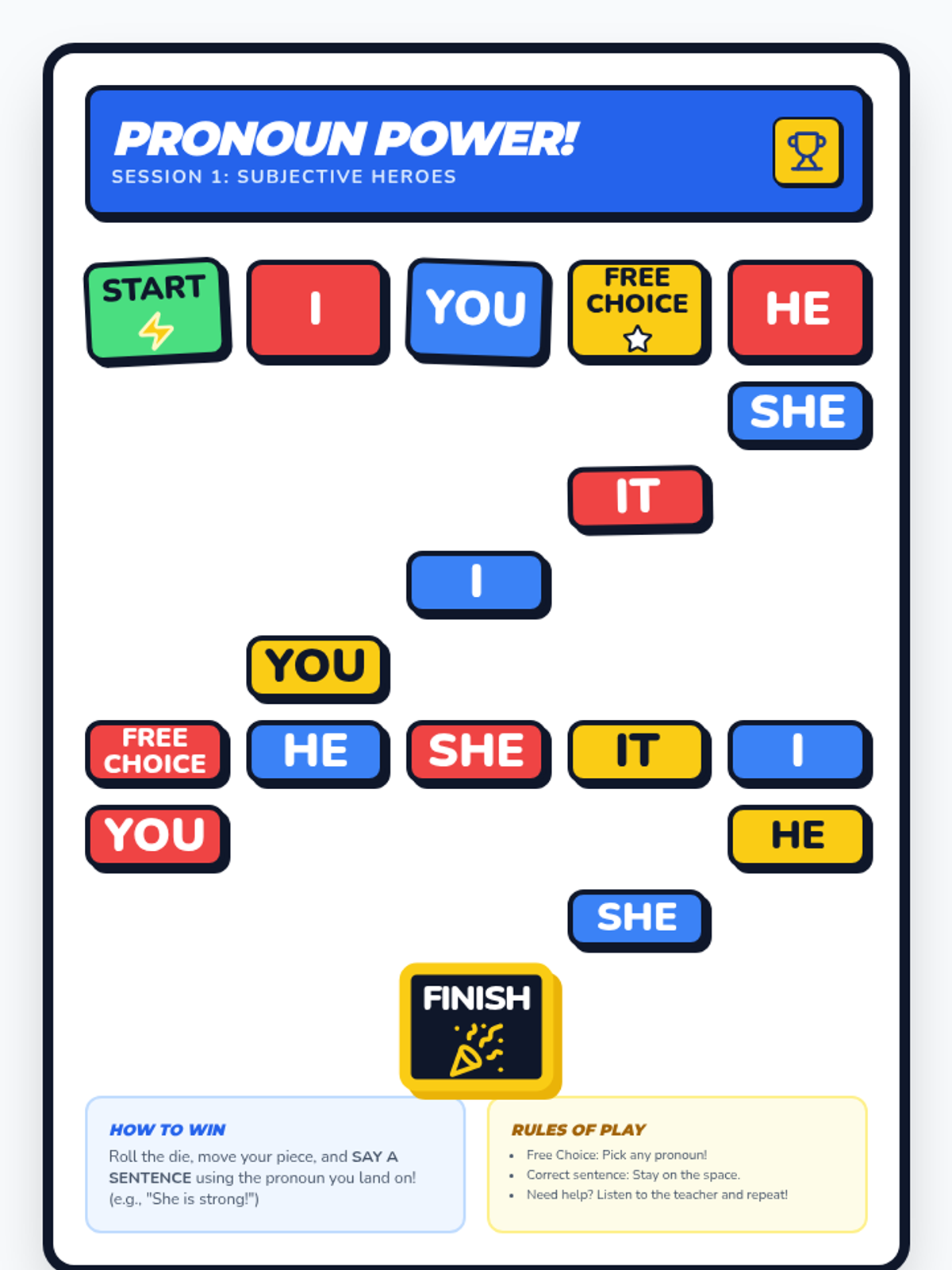
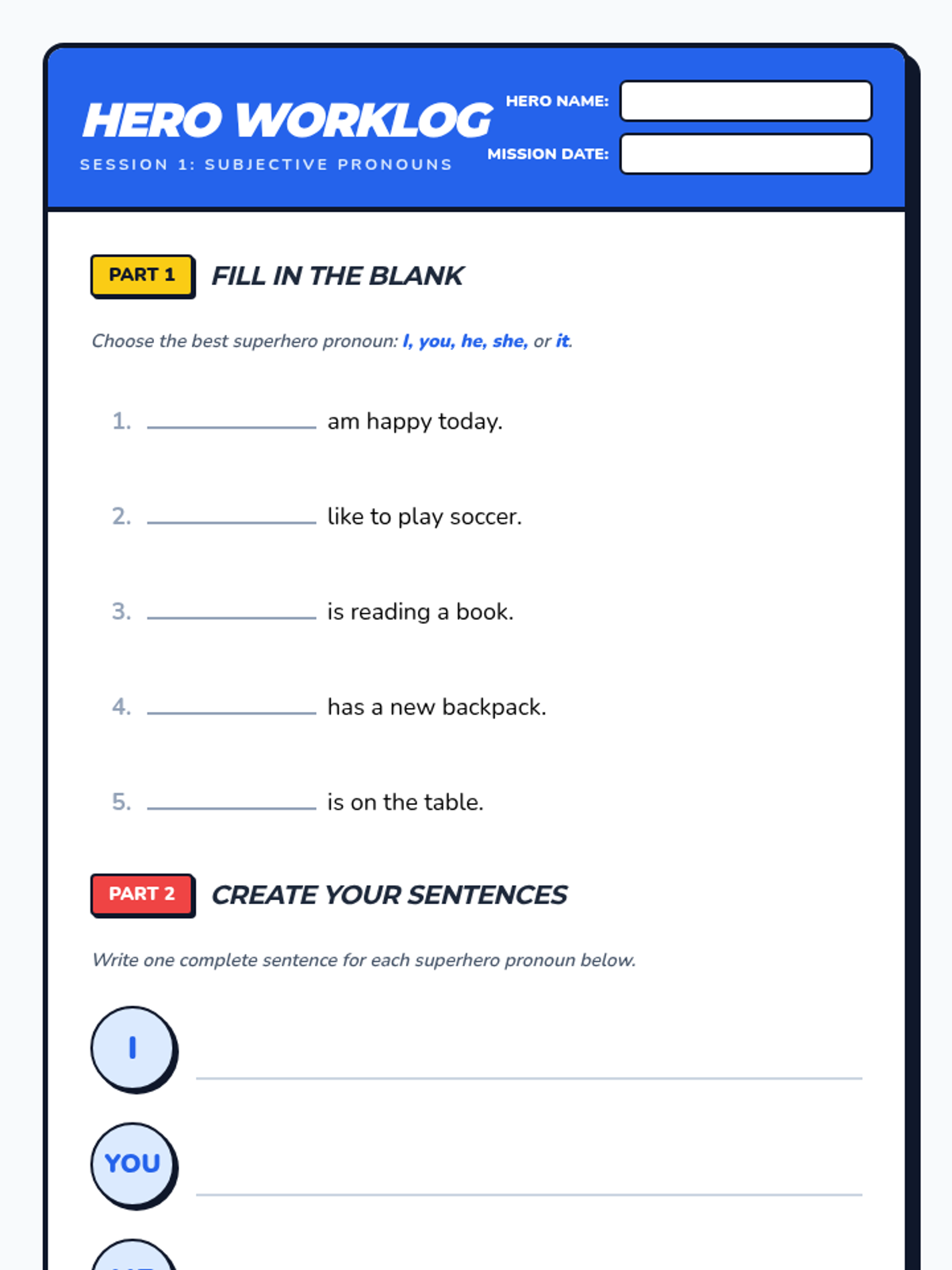
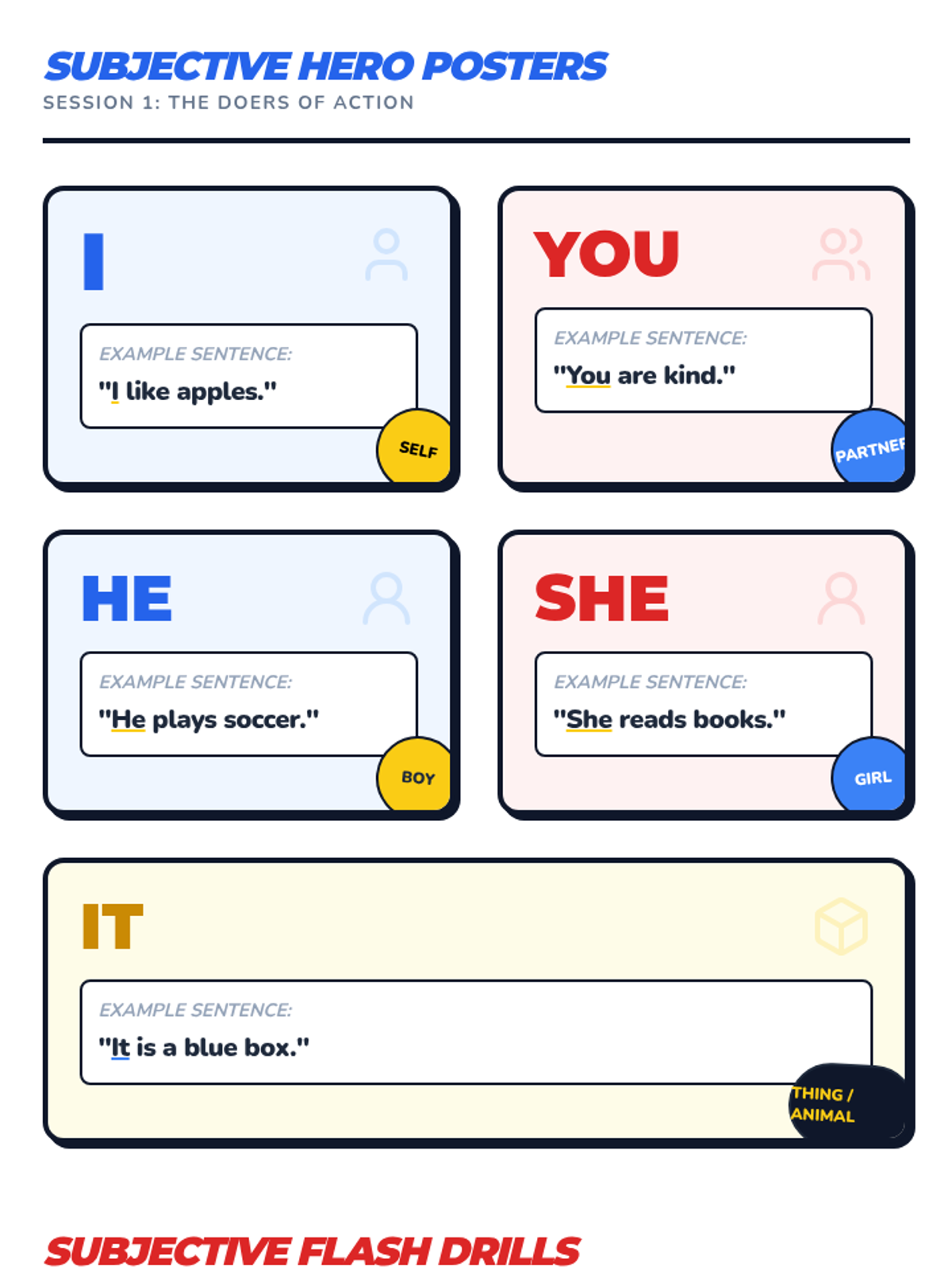
A 3-session unit designed for elementary speech-language students to master subjective, objective, and possessive pronouns through superhero-themed interactive games and activities.
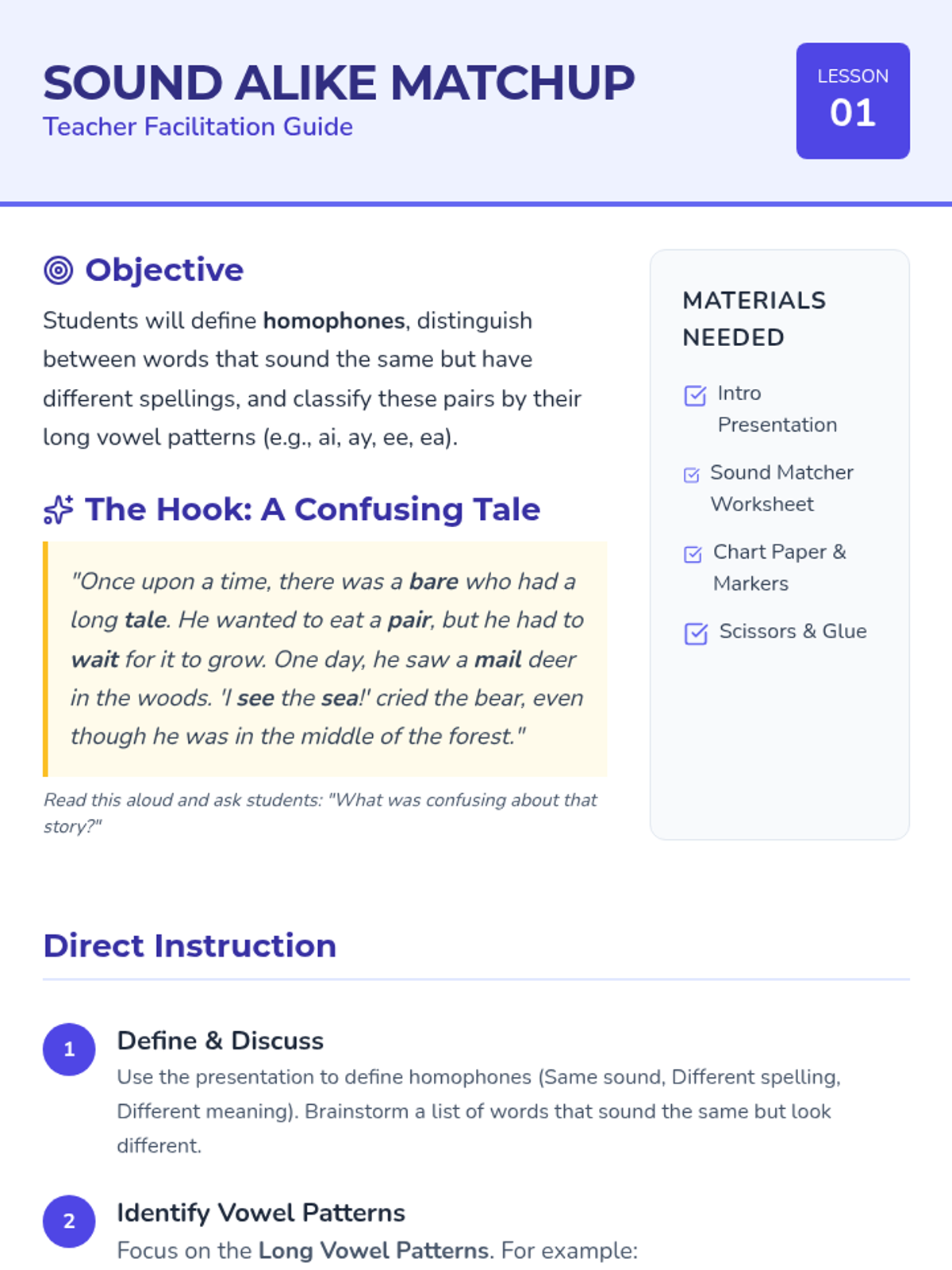
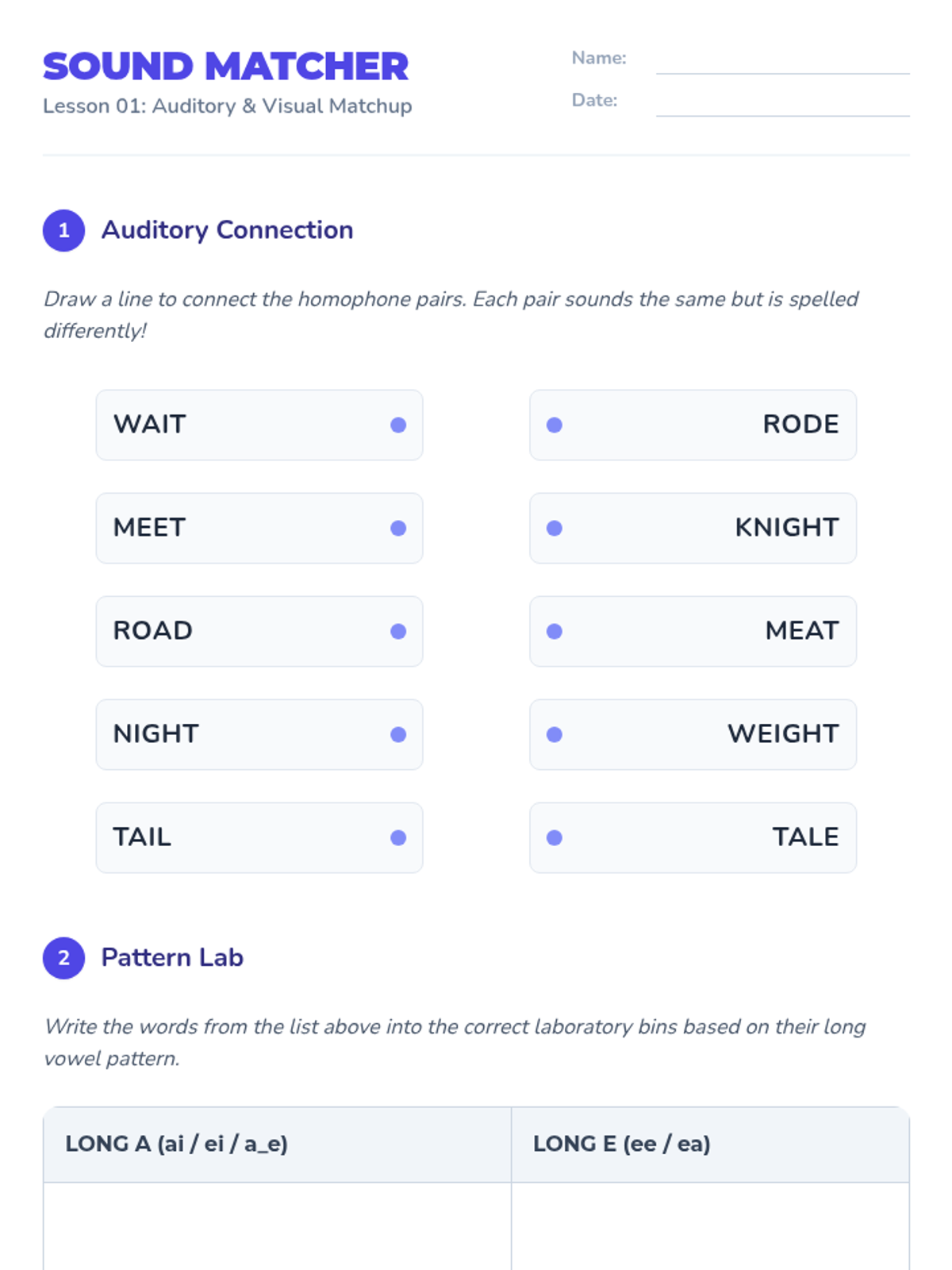
A 3rd-grade sequence exploring how different long vowel spellings create homophones with distinct meanings. Students progress from auditory matching to creative comic production.
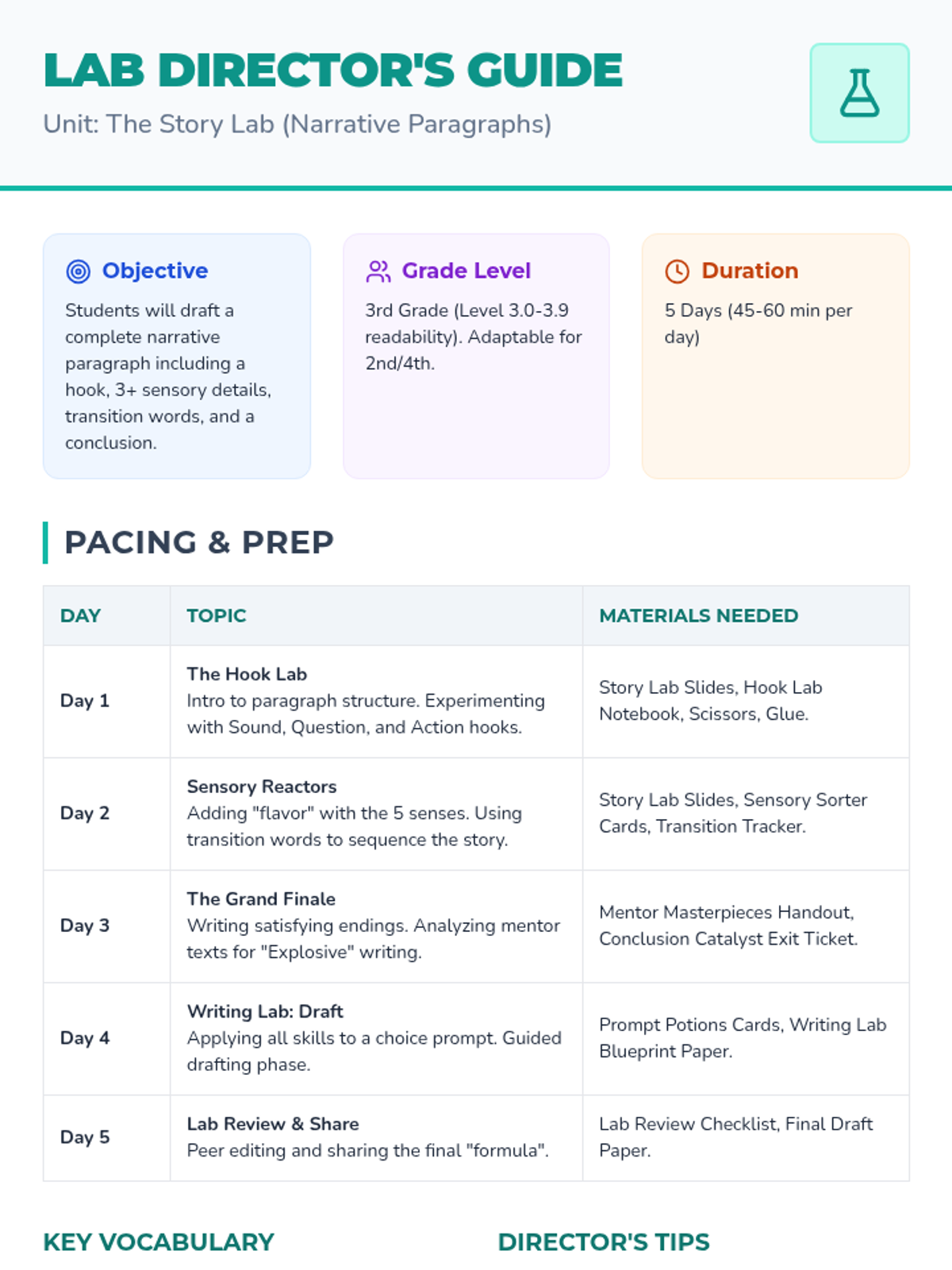
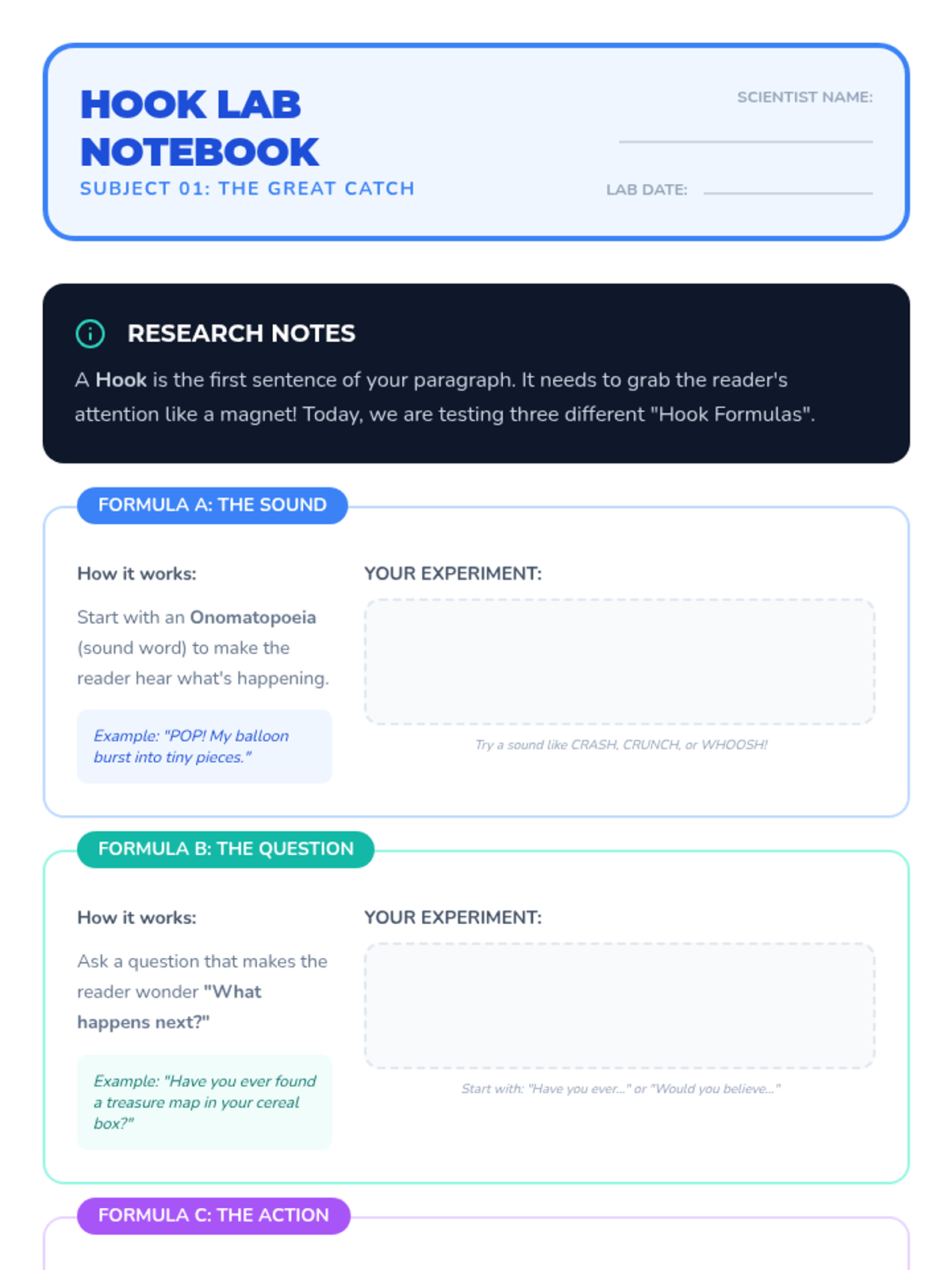
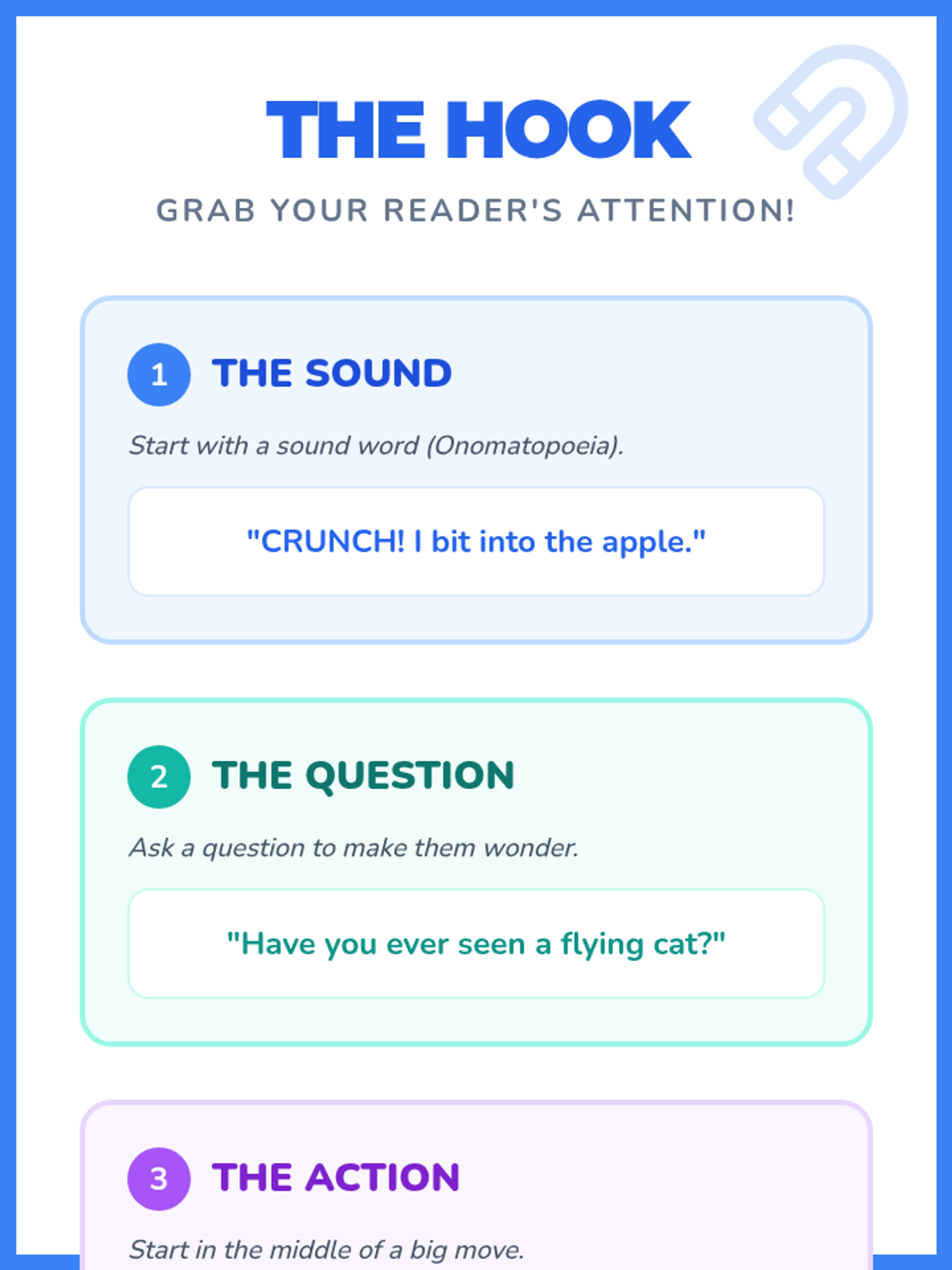
A 5-day narrative writing unit for 3rd graders focused on paragraph structure. Students act as 'Story Scientists' in a lab to engineer hooks, sensory details, and satisfying conclusions.
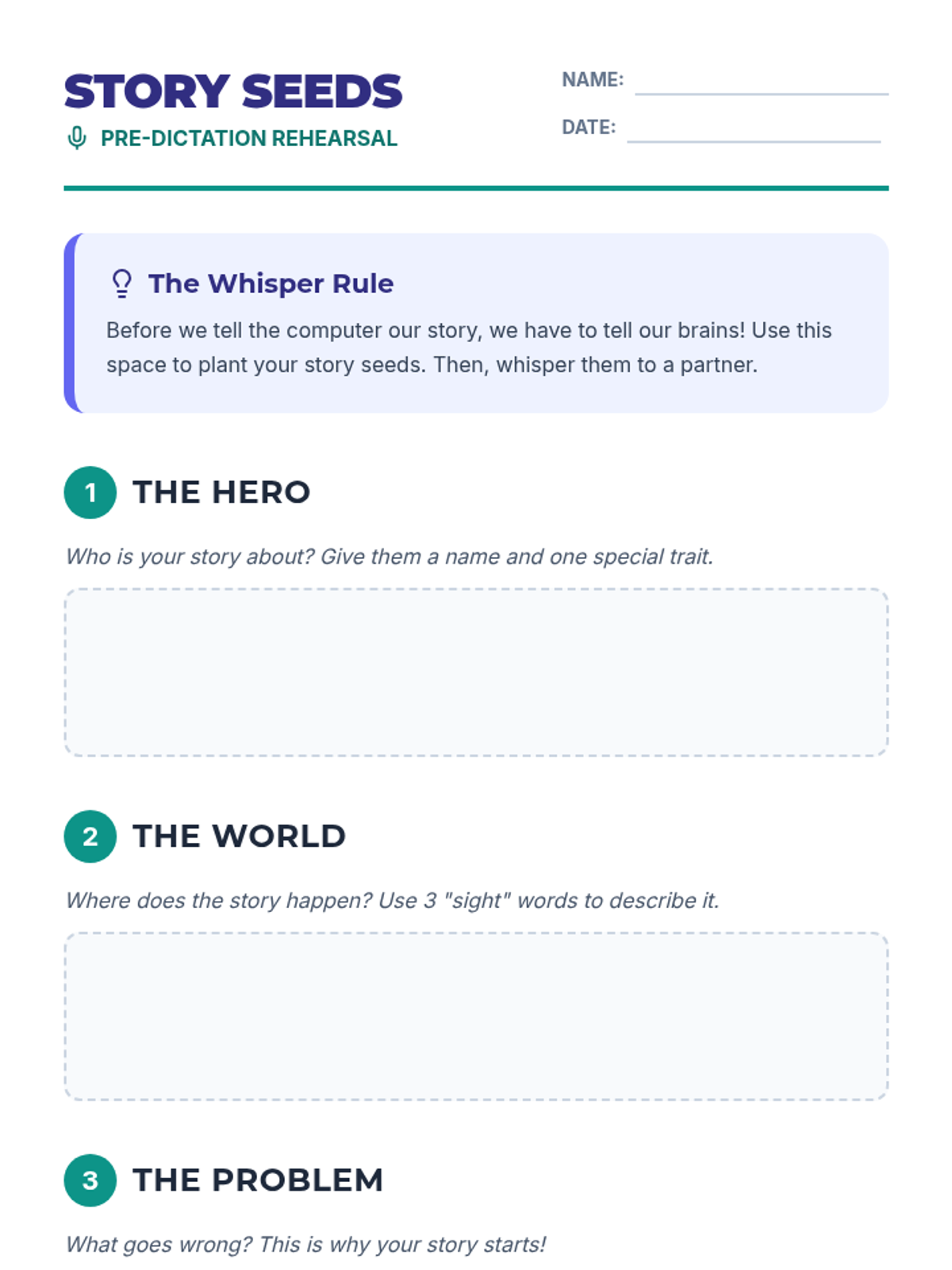
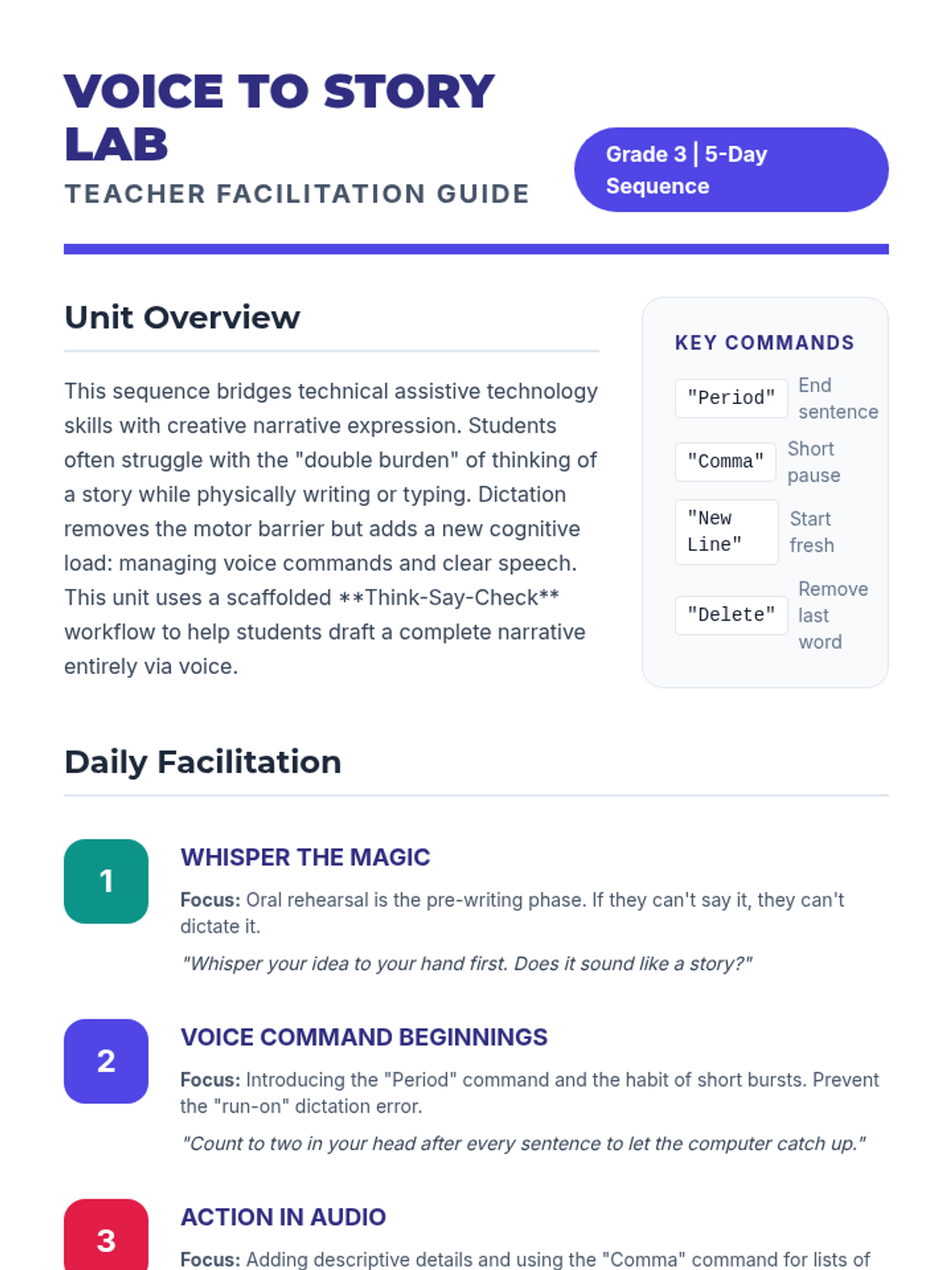
This sequence guides 3rd-grade students through the process of using dictation (speech-to-text) to compose narrative stories. It focuses on the 'Think-Say-Check' workflow to manage the cognitive load of drafting verbally, moving from oral rehearsal to full narrative production and auditory editing.
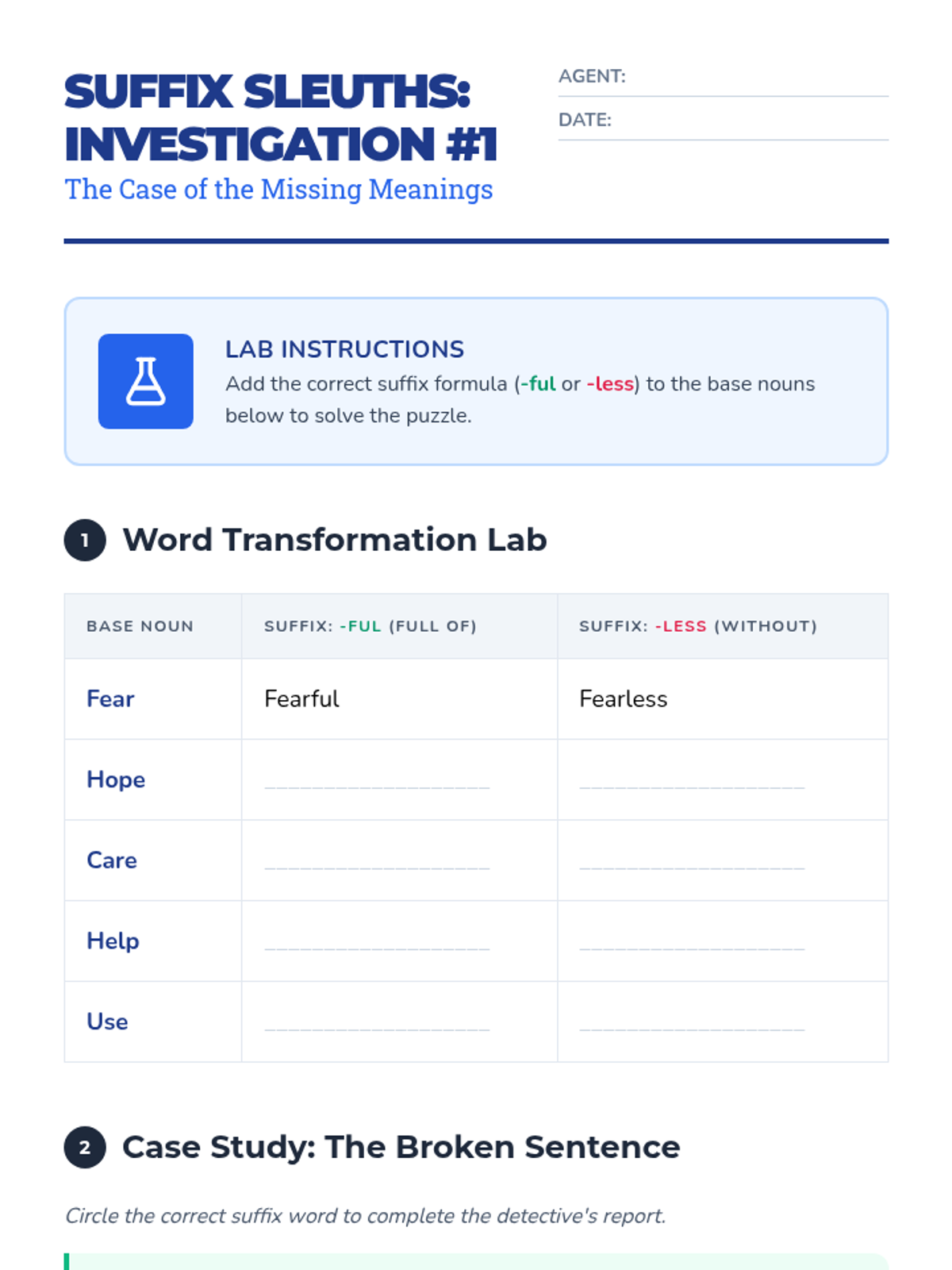
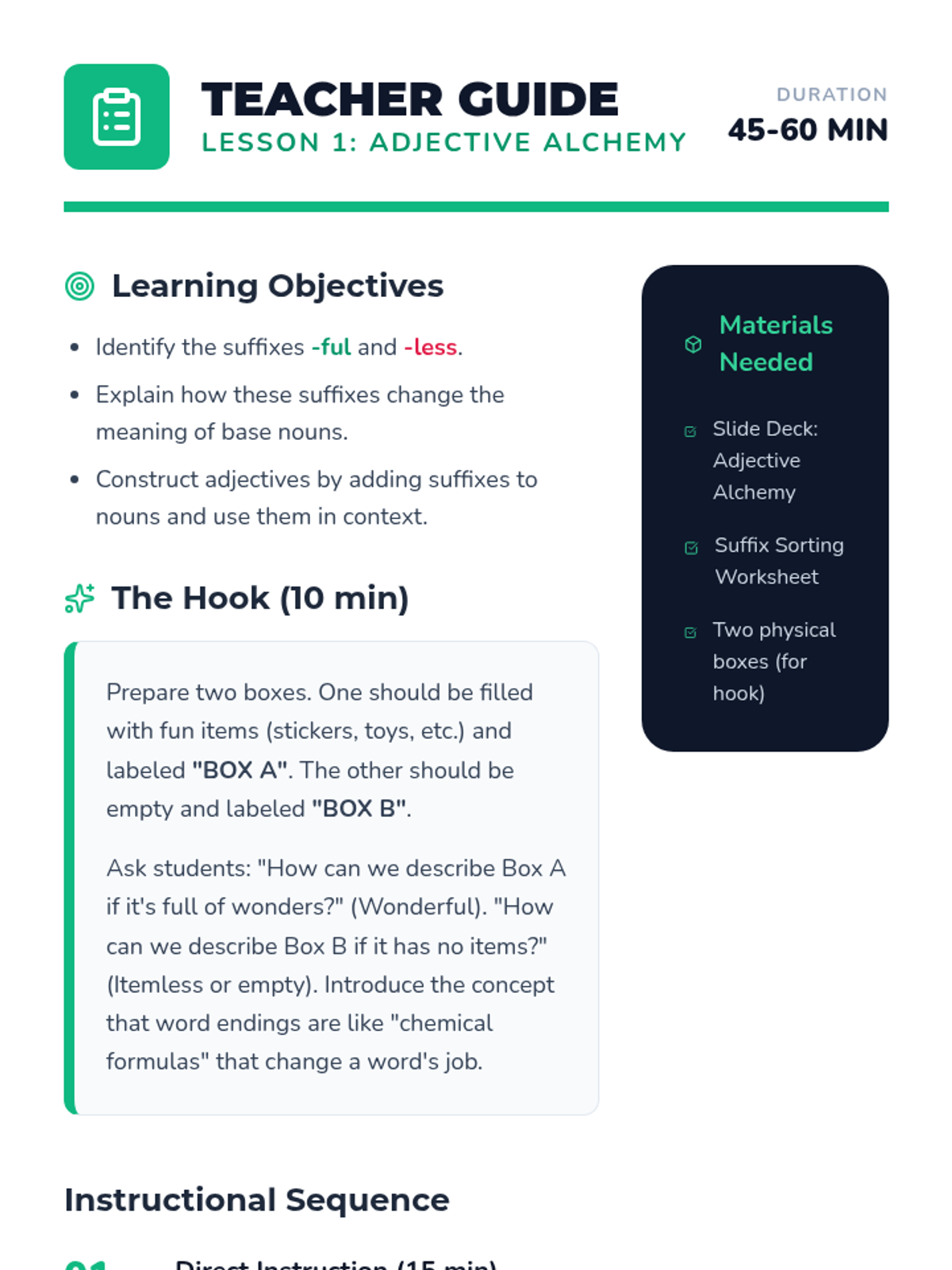
Students investigate how suffixes (-ful, -less, -ly, -er, -est) change word meanings and parts of speech. Using a 'Word Lab' detective theme, students analyze patterns, play games, and master spelling rules for word modification.
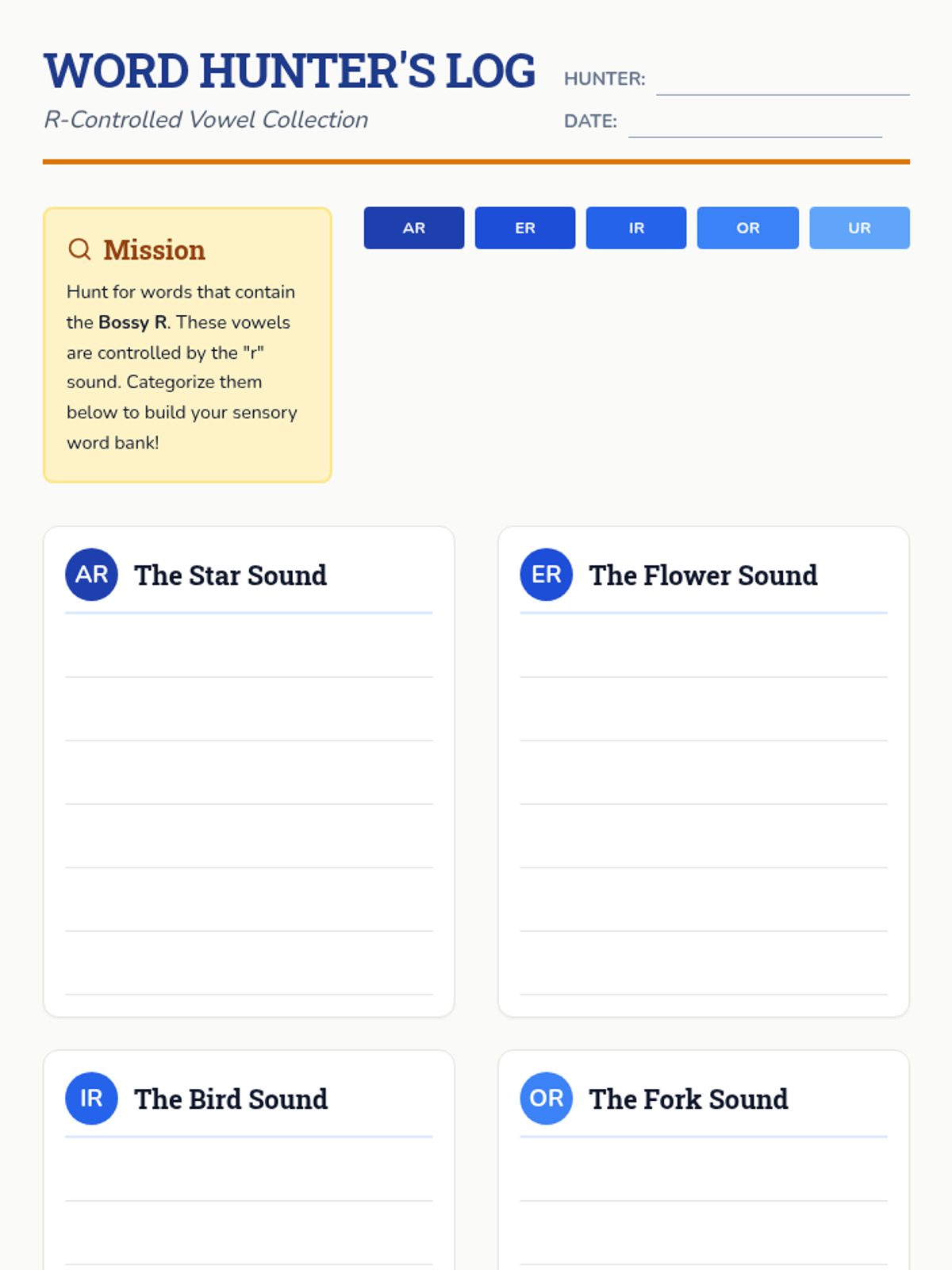
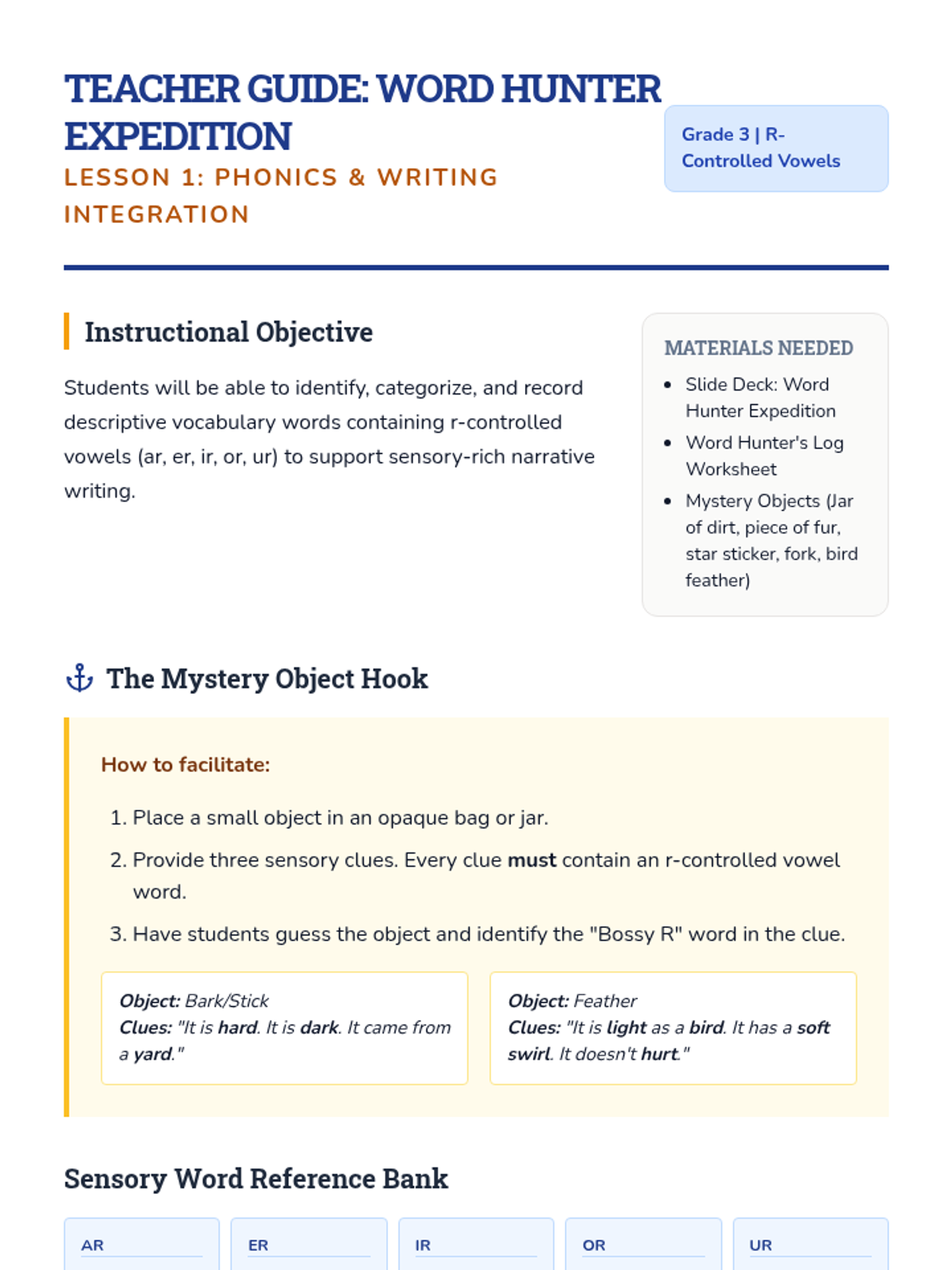
This workshop-style sequence bridges the gap between phonics and creative writing, focusing on R-controlled vowels (ar, er, ir, or, ur). Students build sensory word banks, construct descriptive sentences, draft narrative paragraphs, and engage in peer editing to publish a phonics-focused writing portfolio.
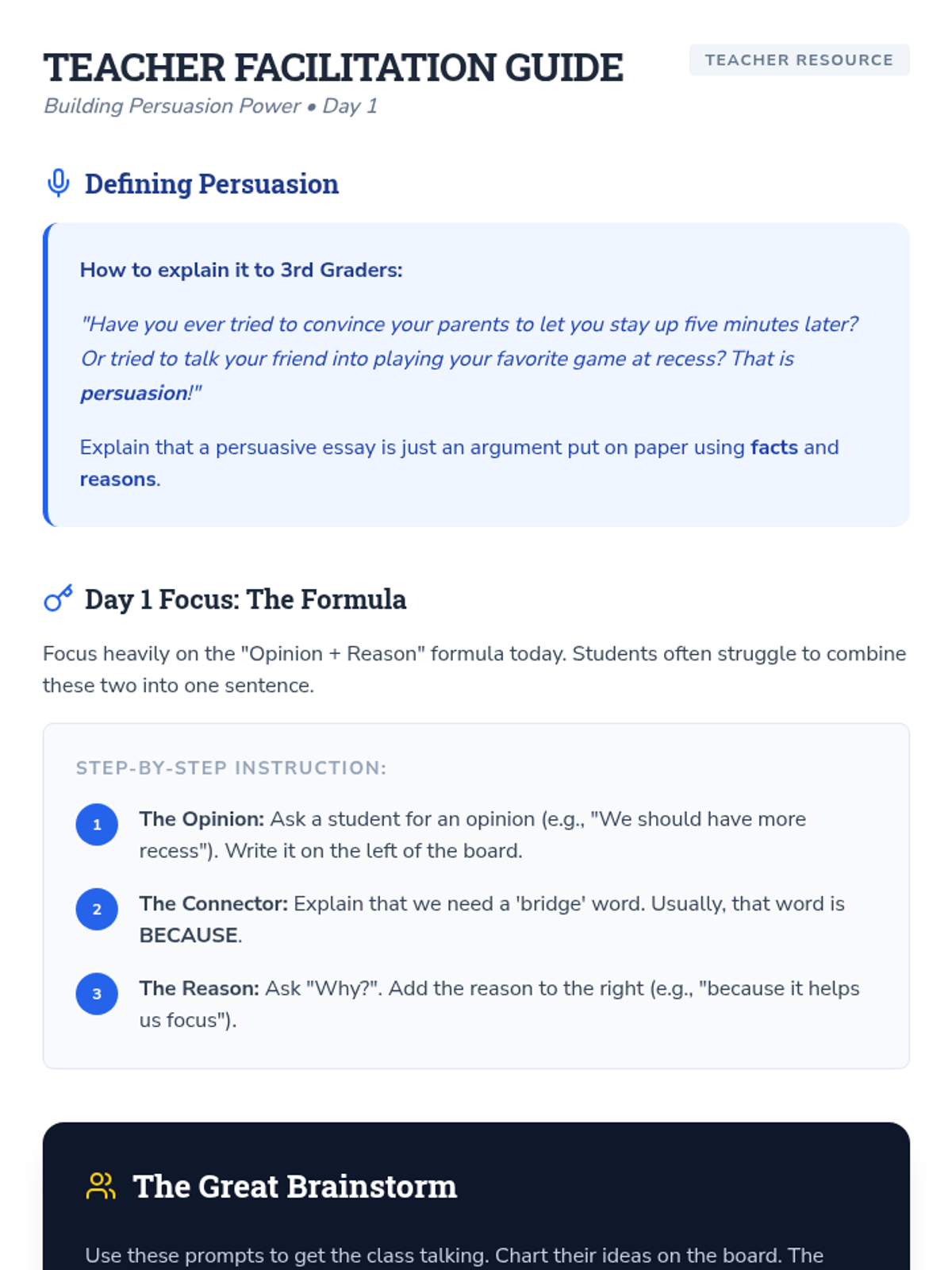
A five-day intensive sequence focused on mastering the structure of a persuasive essay, from crafting compelling topic sentences to drafting a complete, evidence-based argument.
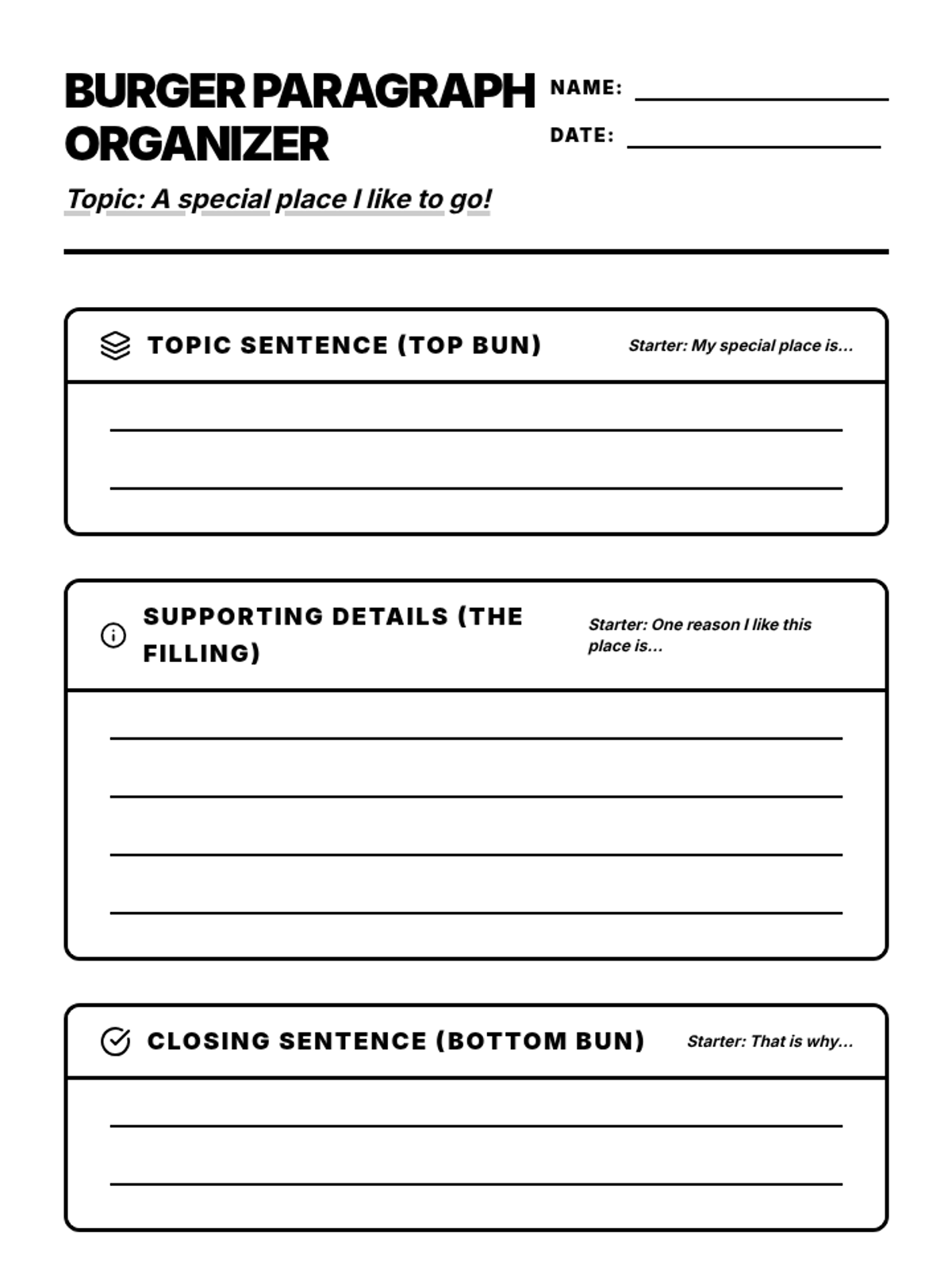
A comprehensive writing sequence designed for early writers and SpEd students to master paragraph structure through narrative, opinion, and journal writing with heavy visual scaffolding.
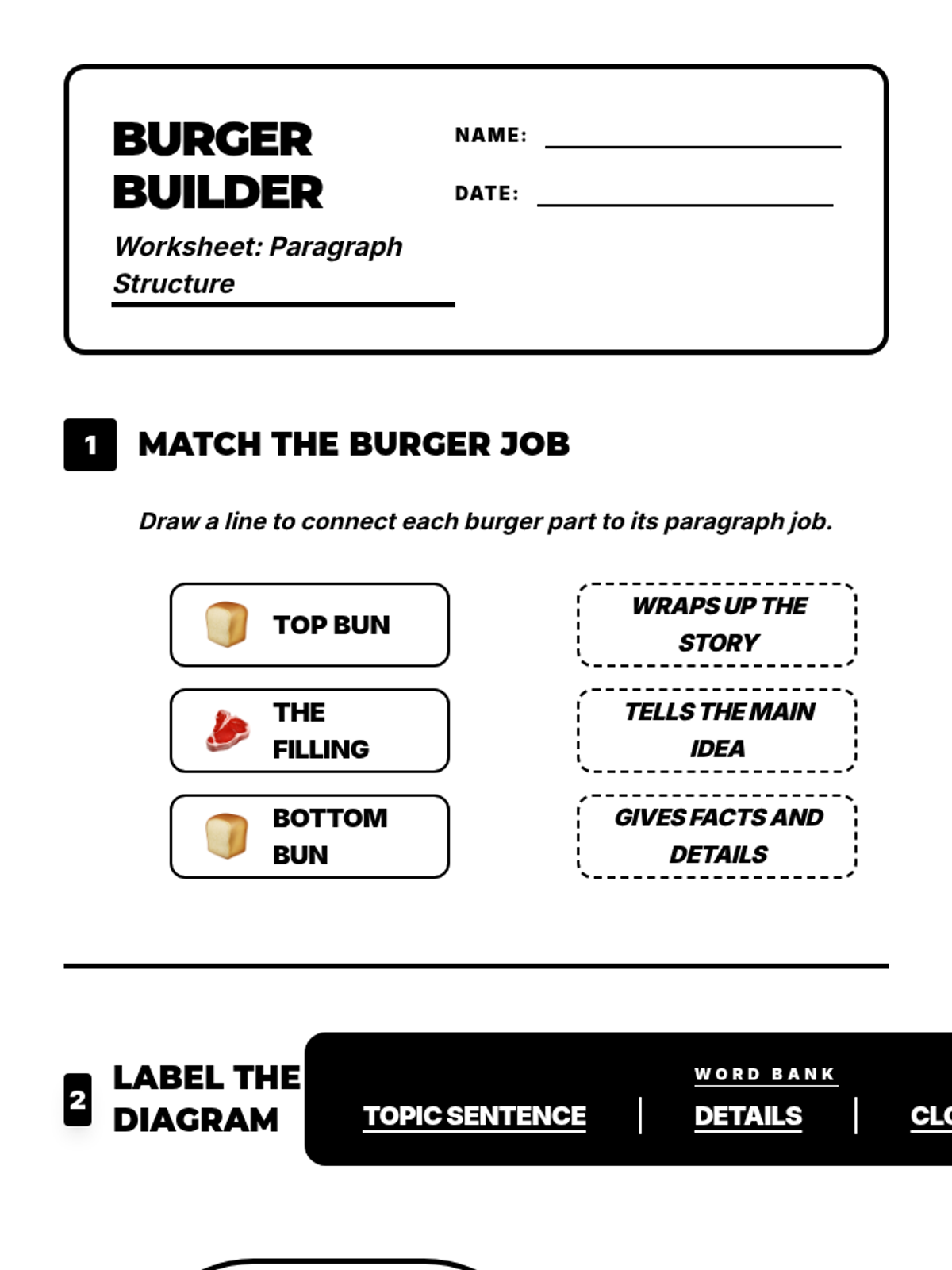
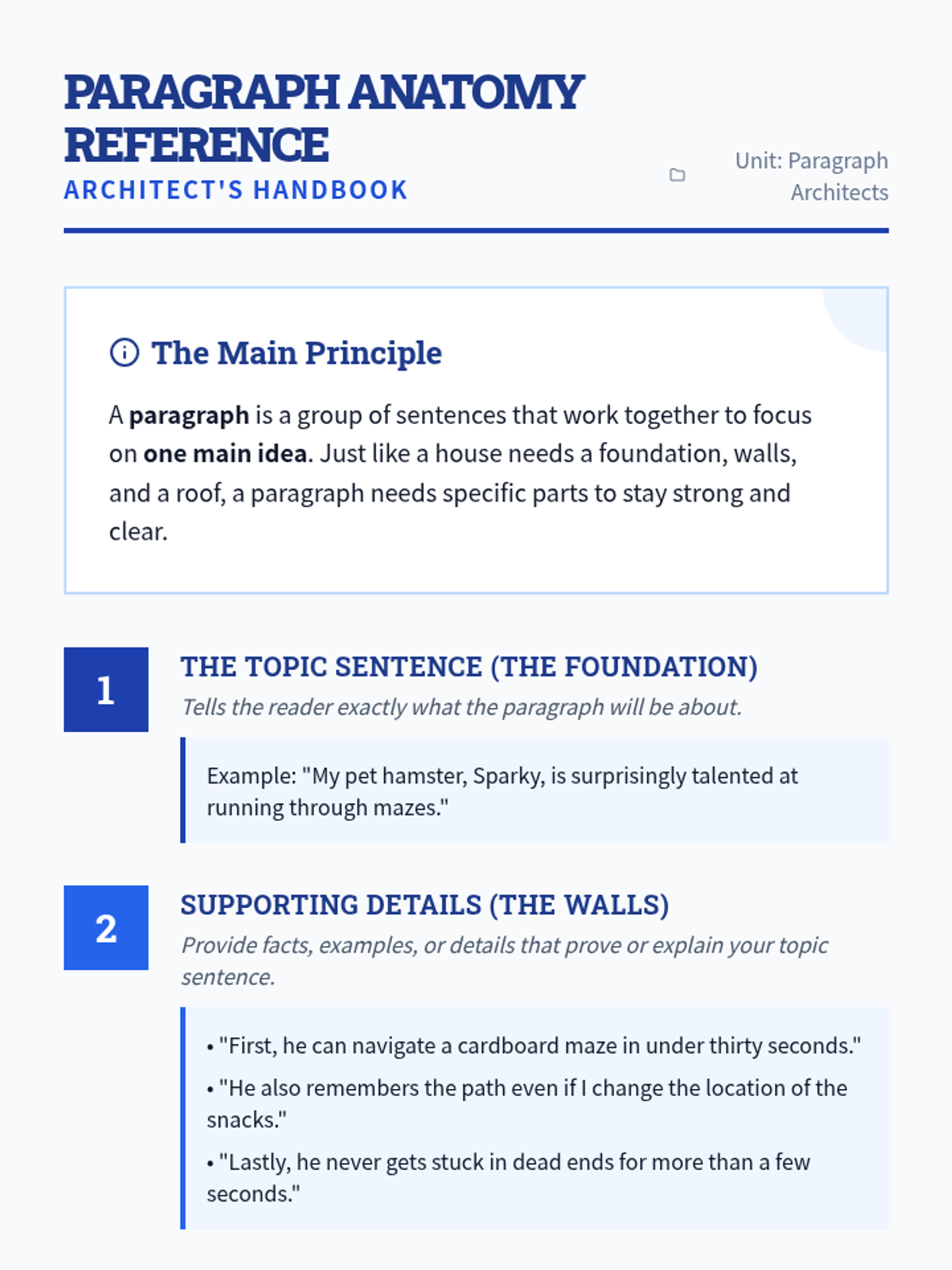
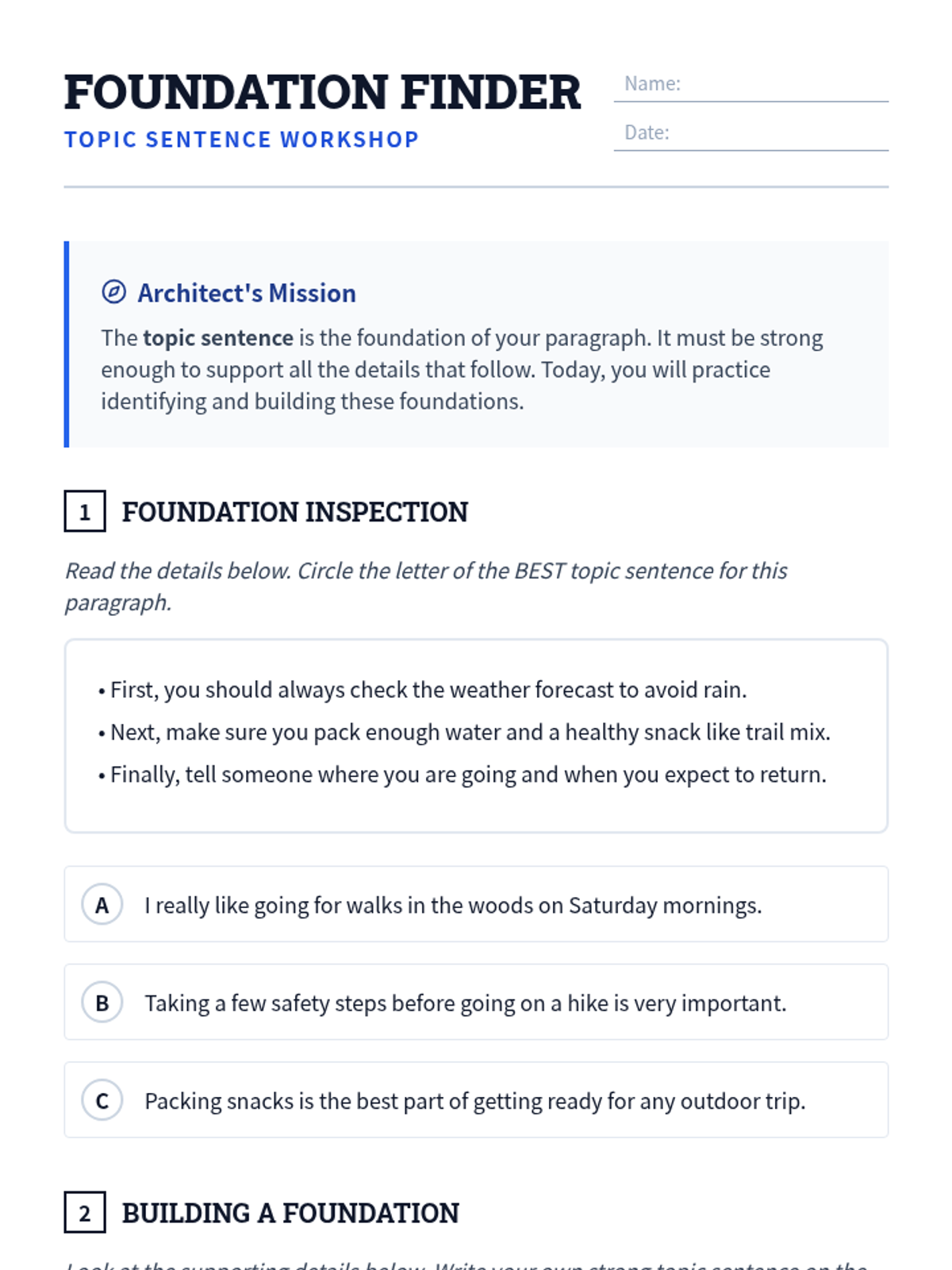
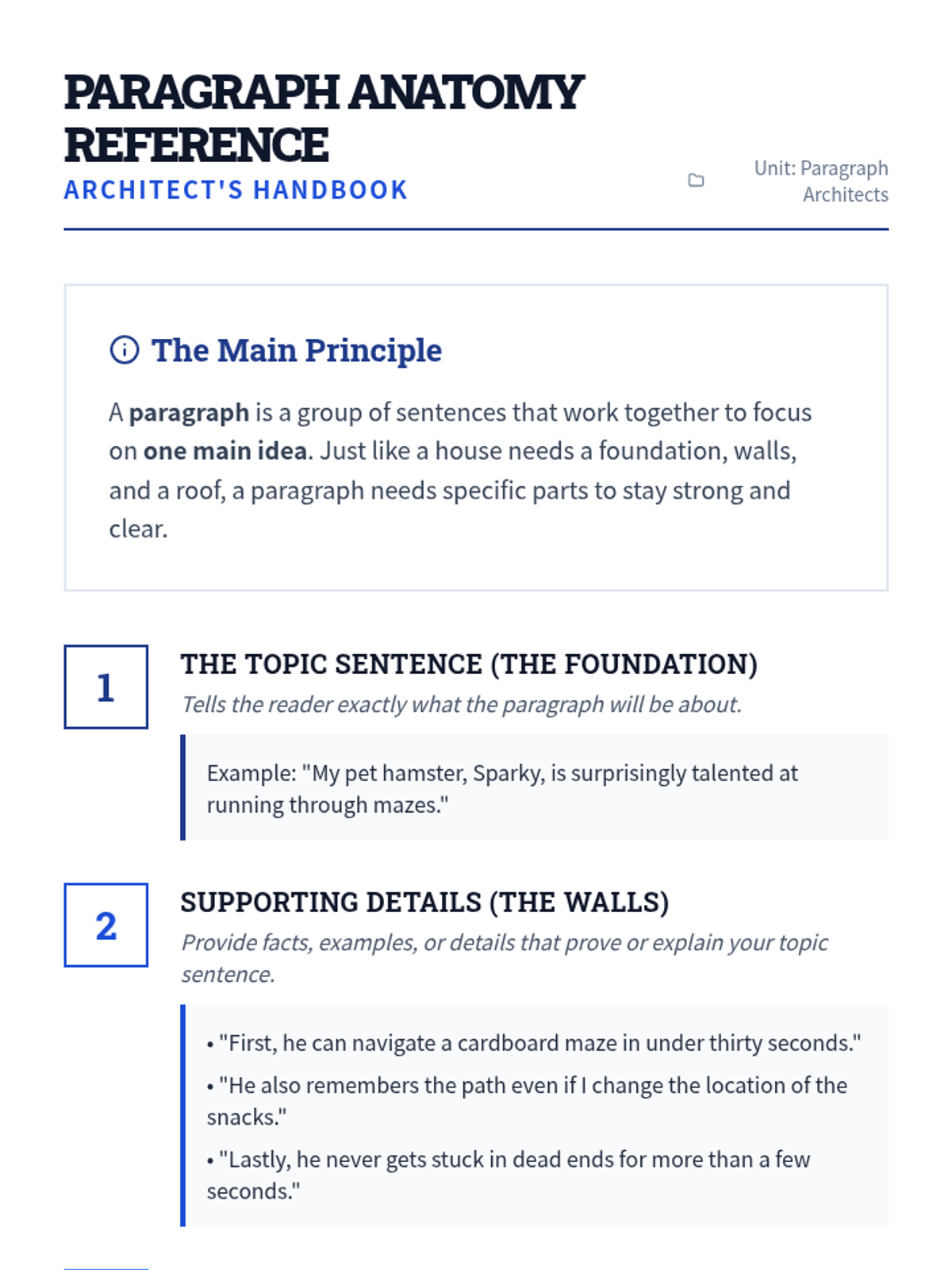
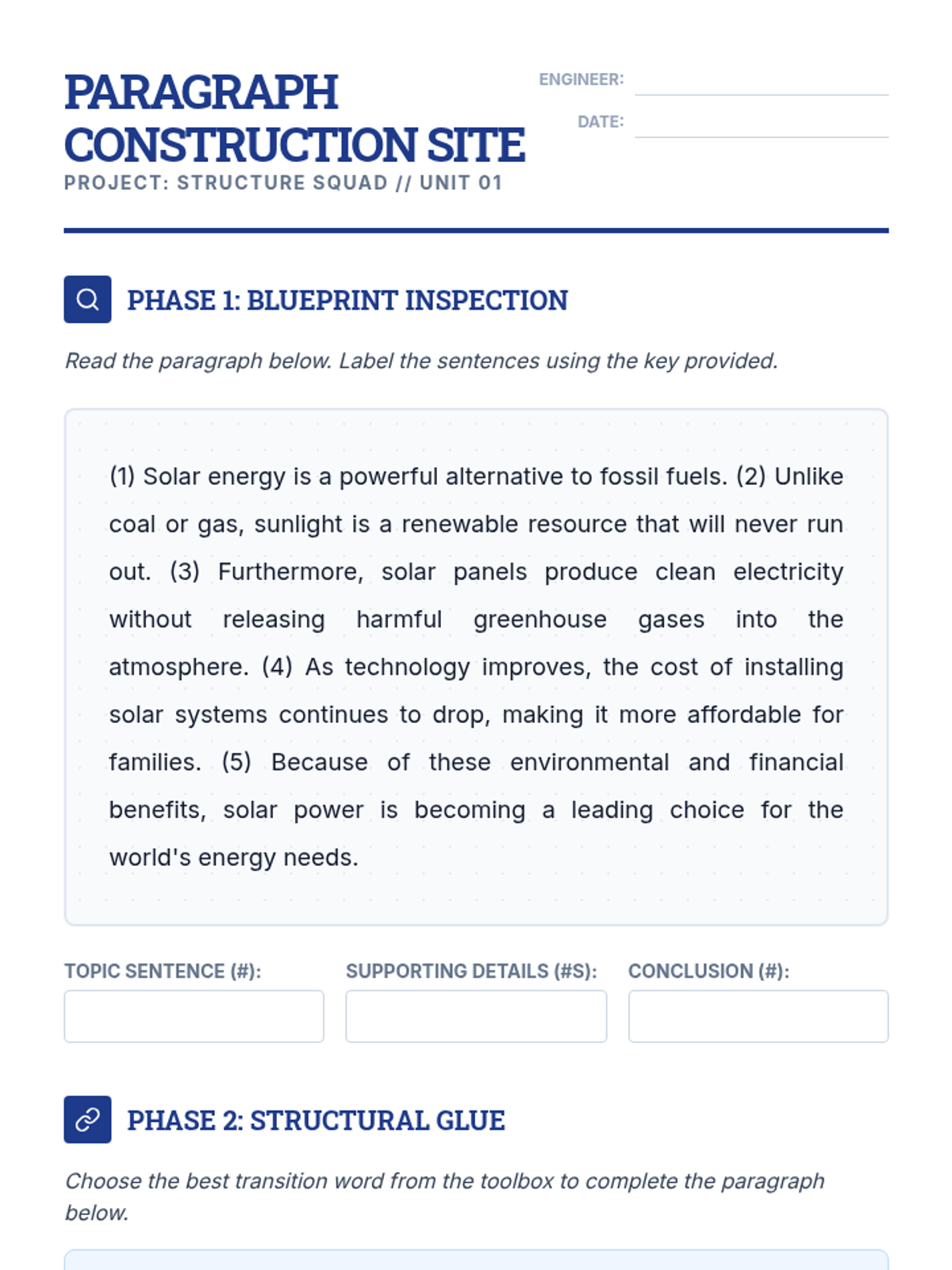
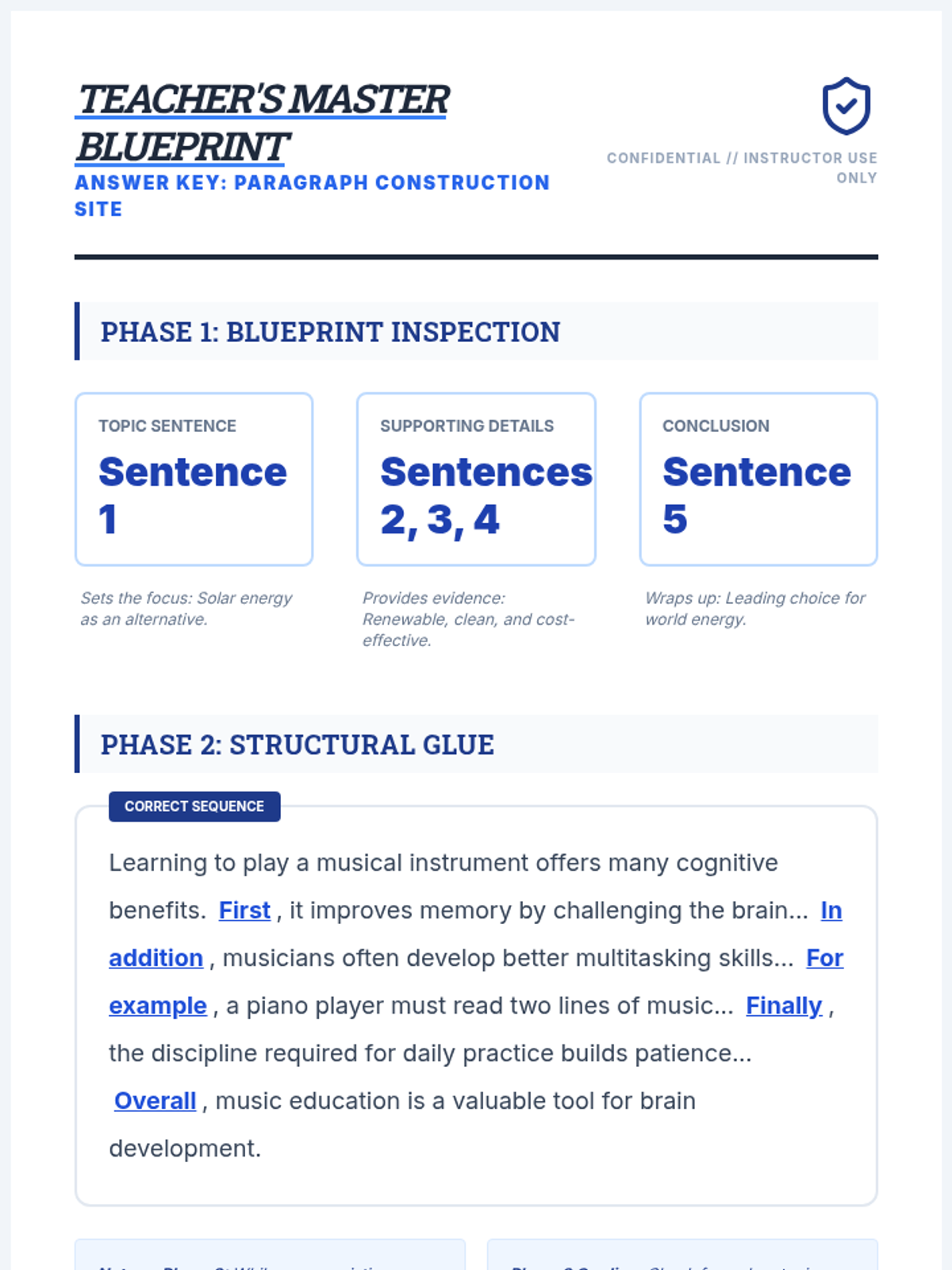
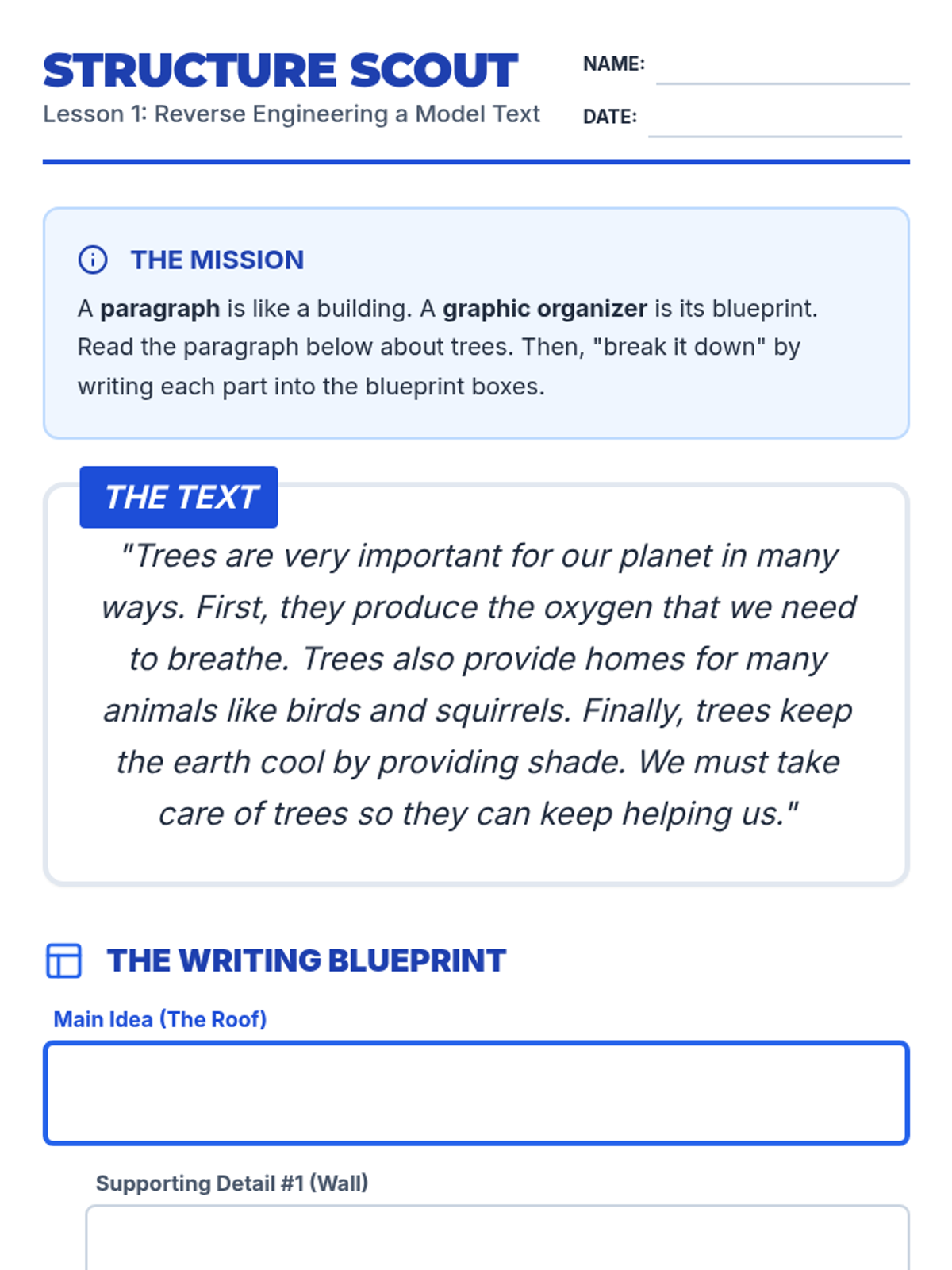
A comprehensive 2-week unit introducing students to the core components of paragraph writing, from topic sentences to concluding statements and transitions. The unit uses an architectural 'blueprint' theme to help students visualize the structure of their writing.
A comprehensive writing unit that breaks down complex structures into manageable building blocks, from individual paragraphs to complete narrative arcs and multi-paragraph essays. Students learn to use blueprints to construct clear, logical, and engaging pieces of writing.
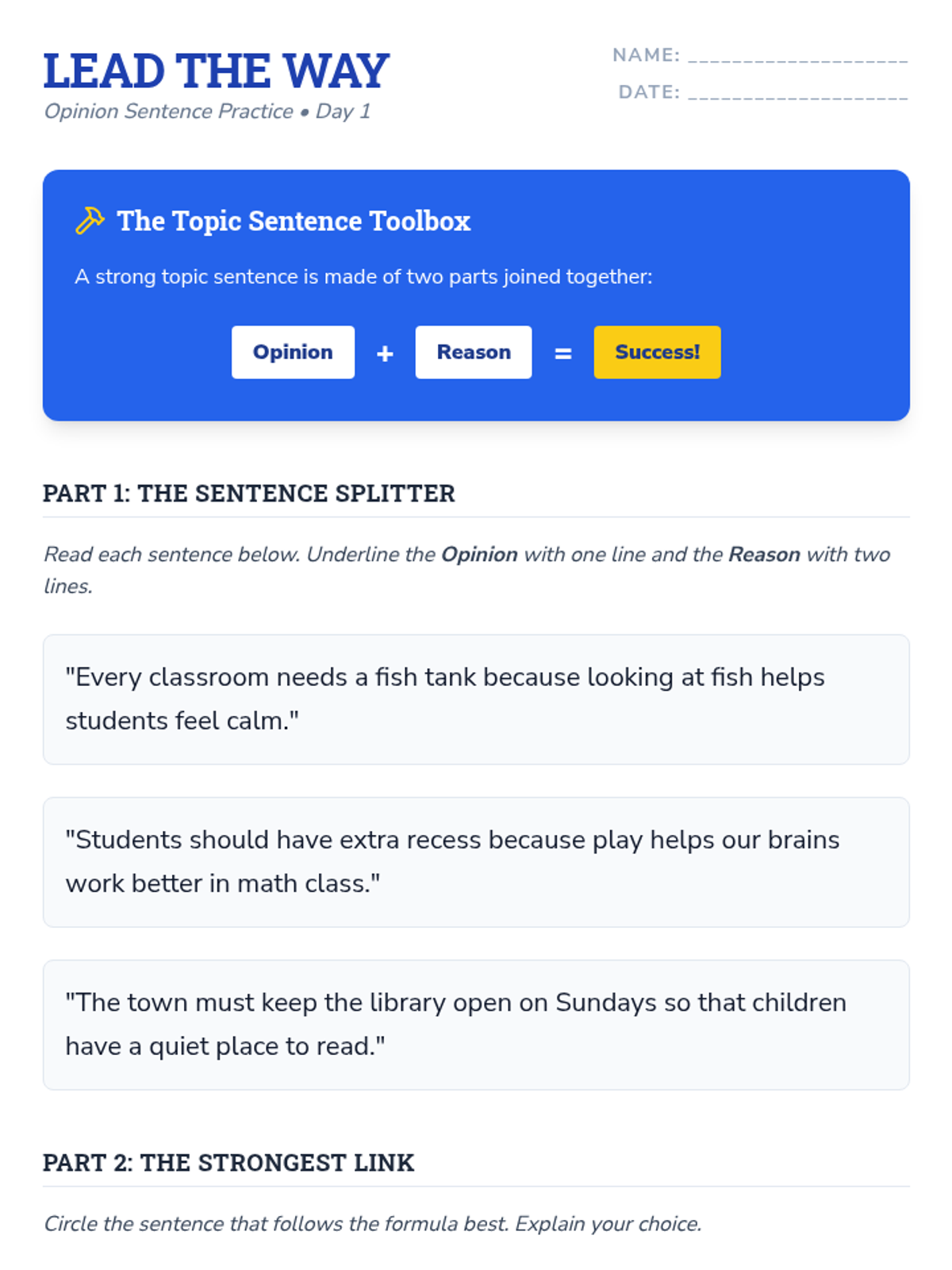
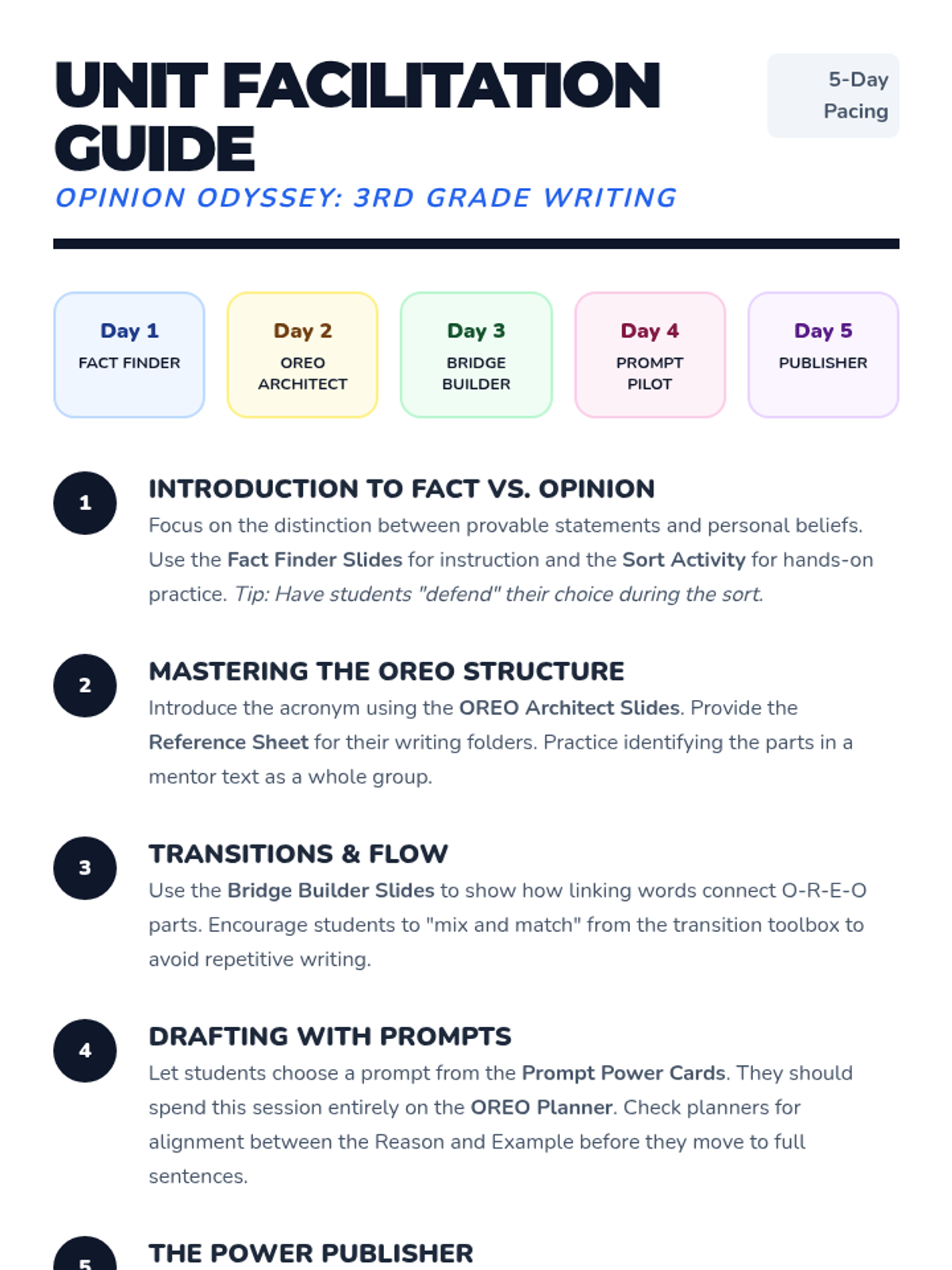
A comprehensive 5-day unit for 3rd graders to master opinion paragraph writing using the OREO structure, featuring interactive slides, hands-on activities, and structured drafting tools.
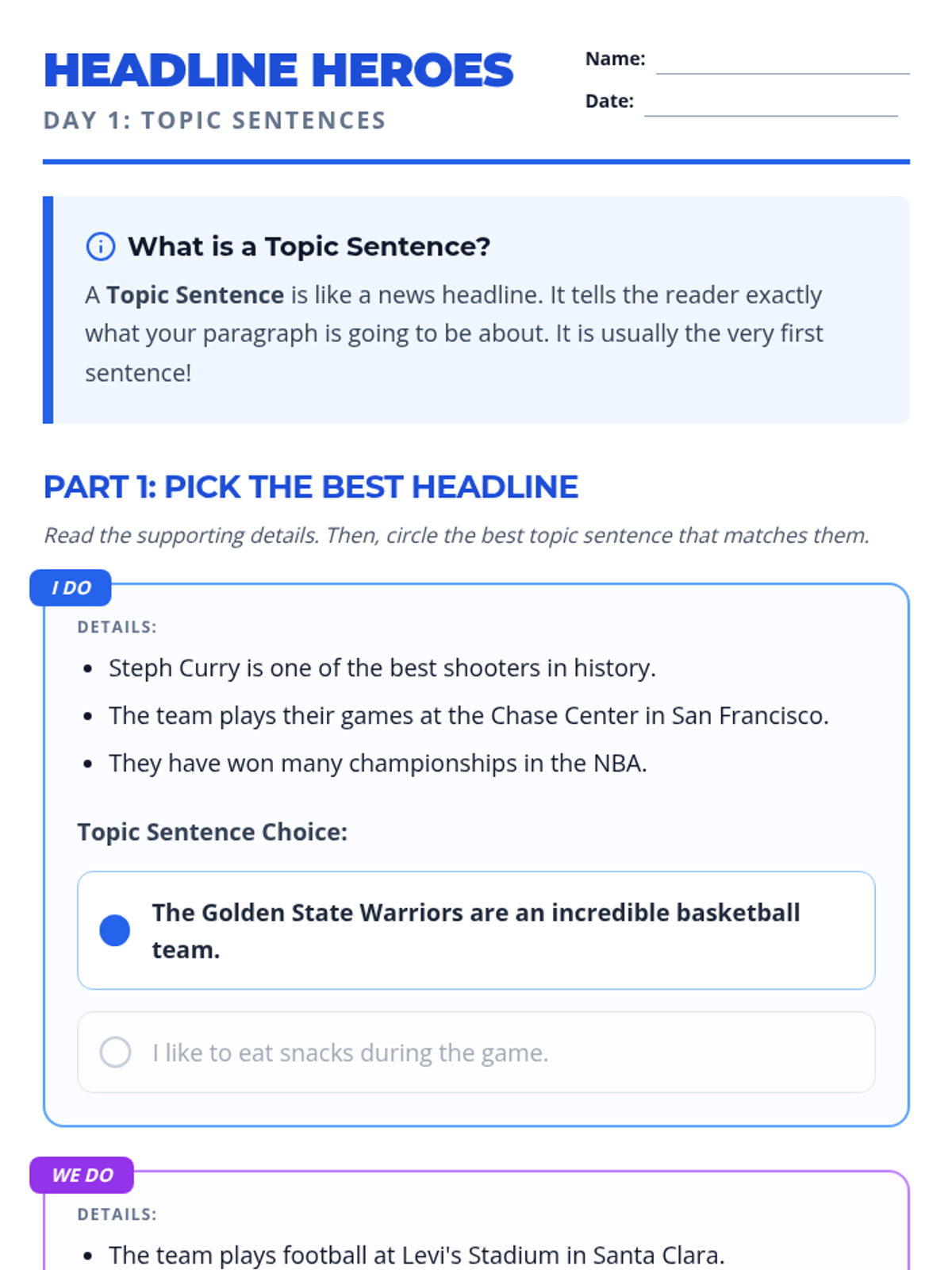
A 4-day instructional sequence focused on paragraph structure, specifically mastering topic sentences and supporting details using student-interest topics like sports, dragons, and favorite foods.
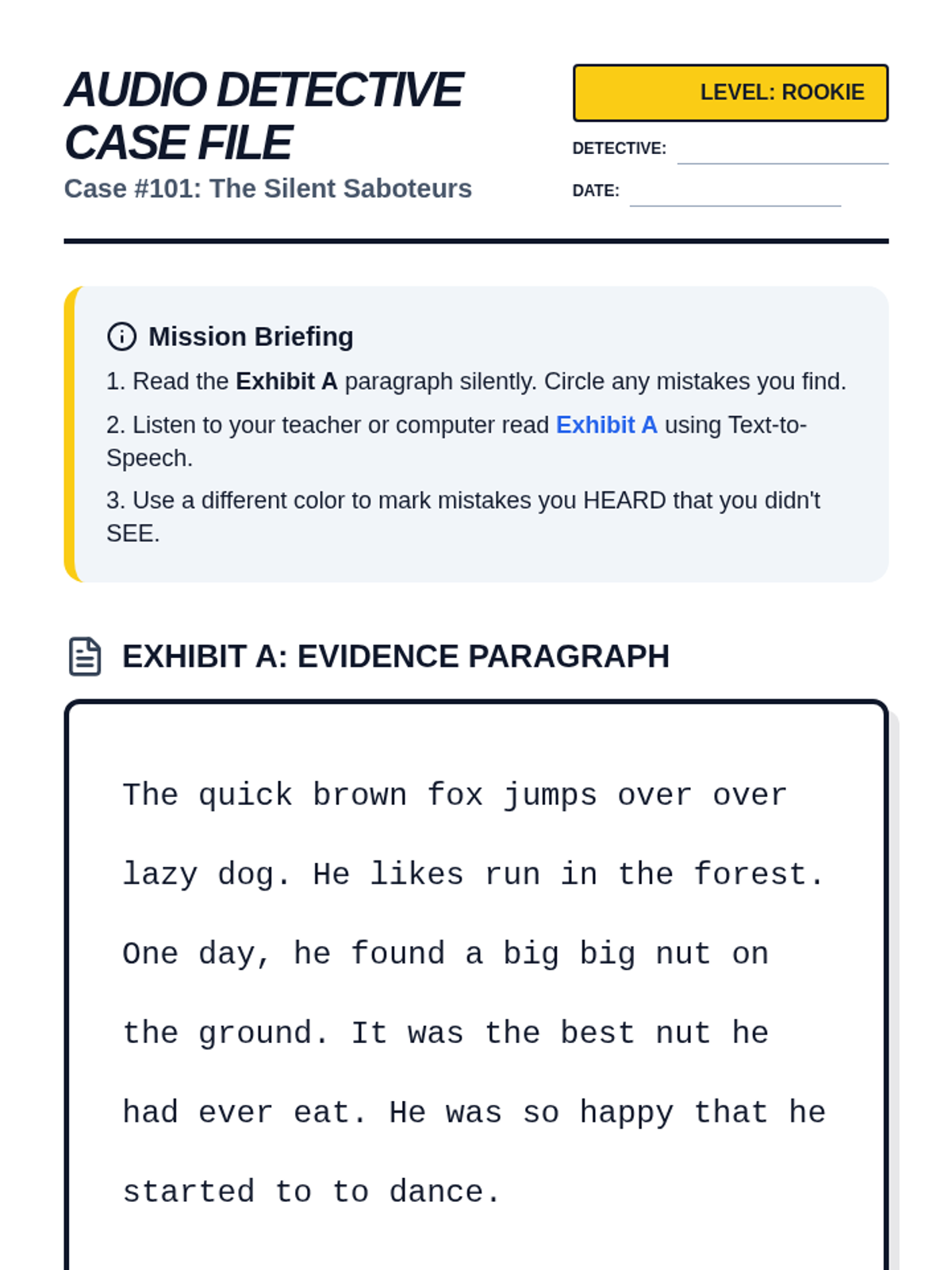
This sequence teaches 3rd-grade students how to use Text-to-Speech (TTS) as a powerful proofreading tool. Students transition from identifying errors in provided texts to applying auditory feedback strategies to their own writing, focusing on missing words, sentence flow, and homophones.
This sequence supports 3rd-grade students in the pre-writing and drafting process using text structure graphic organizers. Students learn to deconstruct model texts, brainstorm using topic webs, and plan sequential paragraphs before drafting their final pieces.
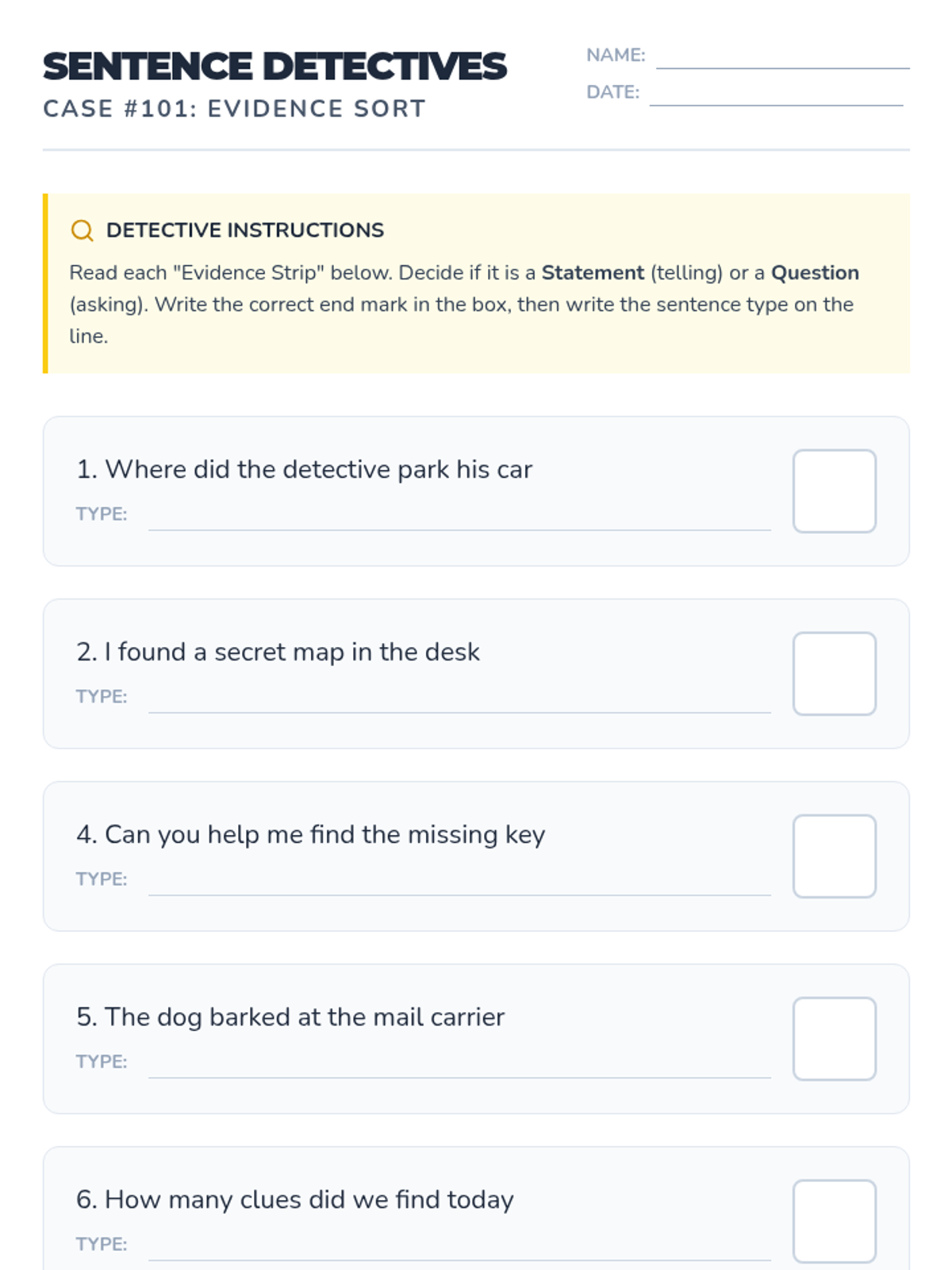
Students become 'Sentence Detectives' to master the four types of sentences and their end punctuation. They explore statements, questions, commands, and exclamations through interactive activities, editing challenges, and creative comic design.
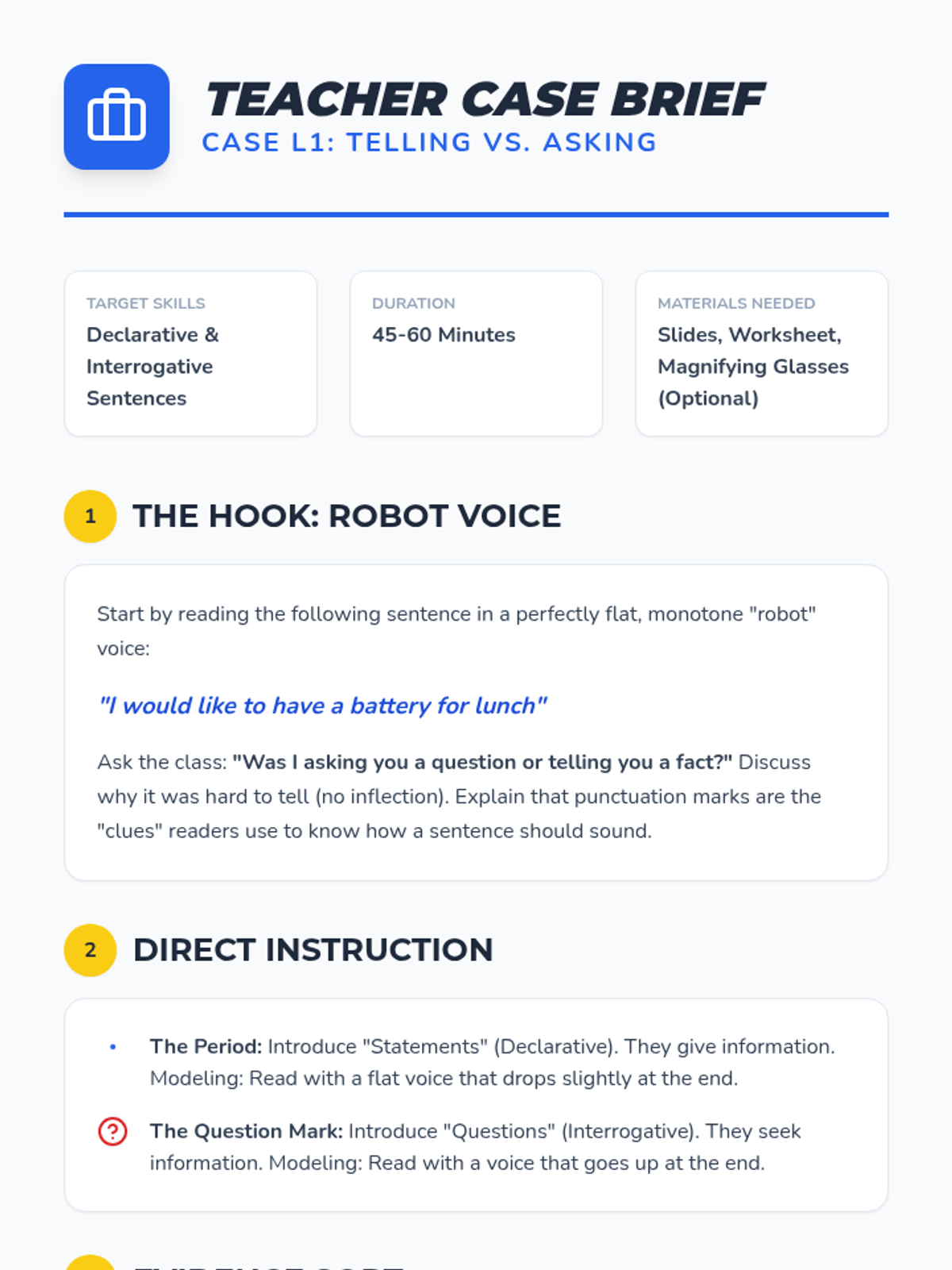
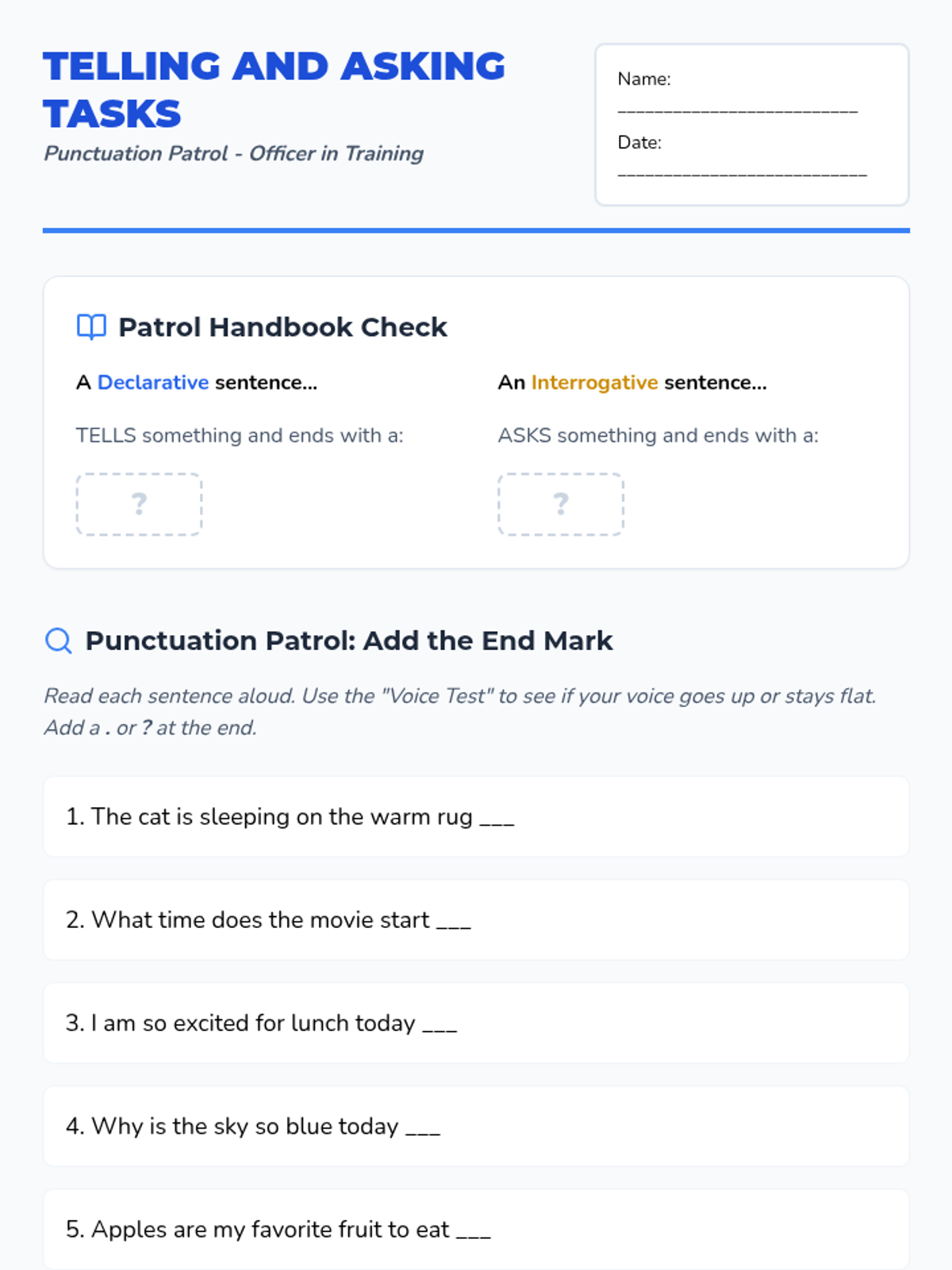
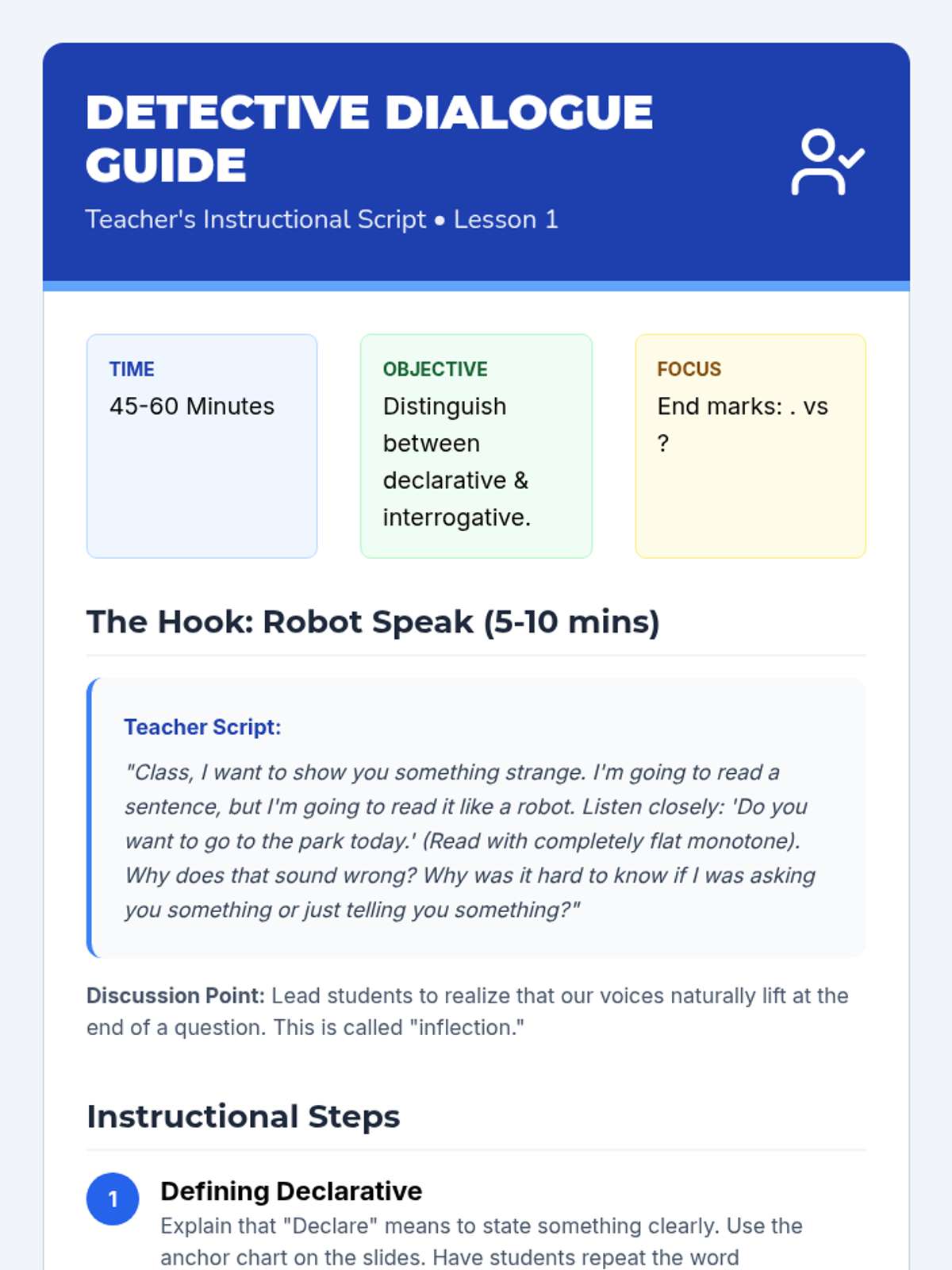
A 5-lesson sequence for 3rd grade students focusing on sentence types (declarative, interrogative, imperative, exclamatory), fixing run-ons and fragments, and applying correct end punctuation in creative writing. Students become 'Punctuation Patrol' officers to master the art of the stop sign.
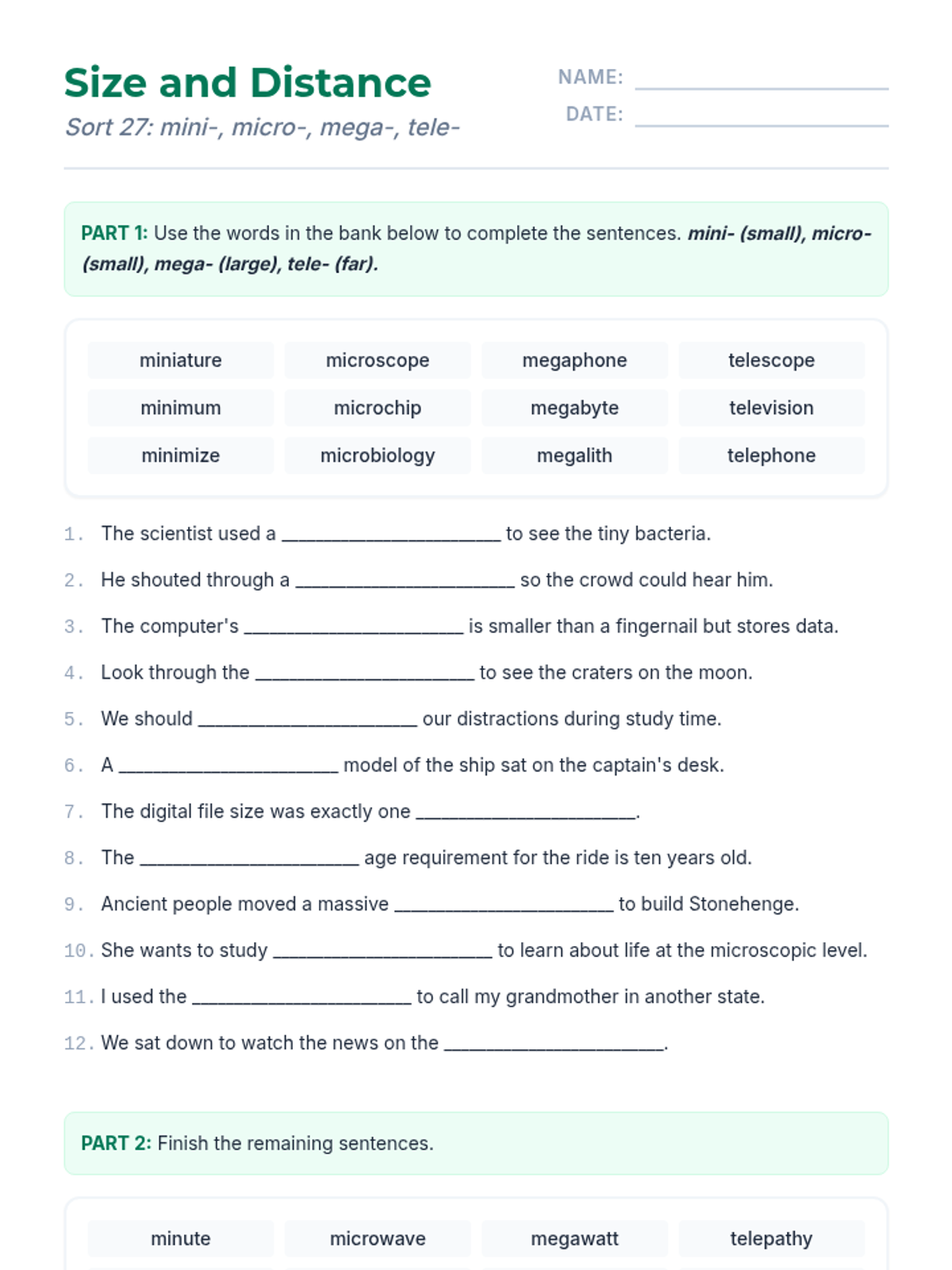
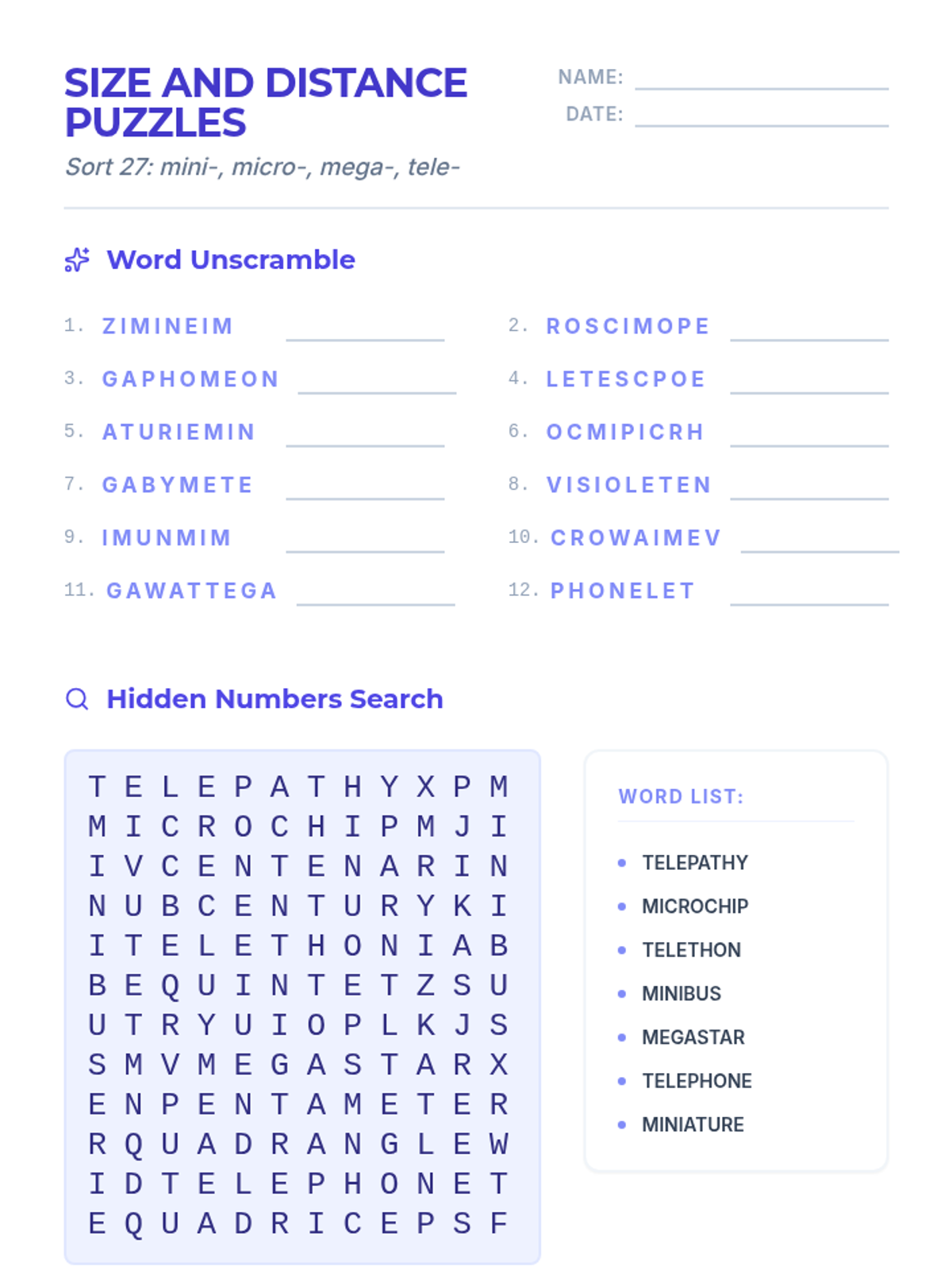
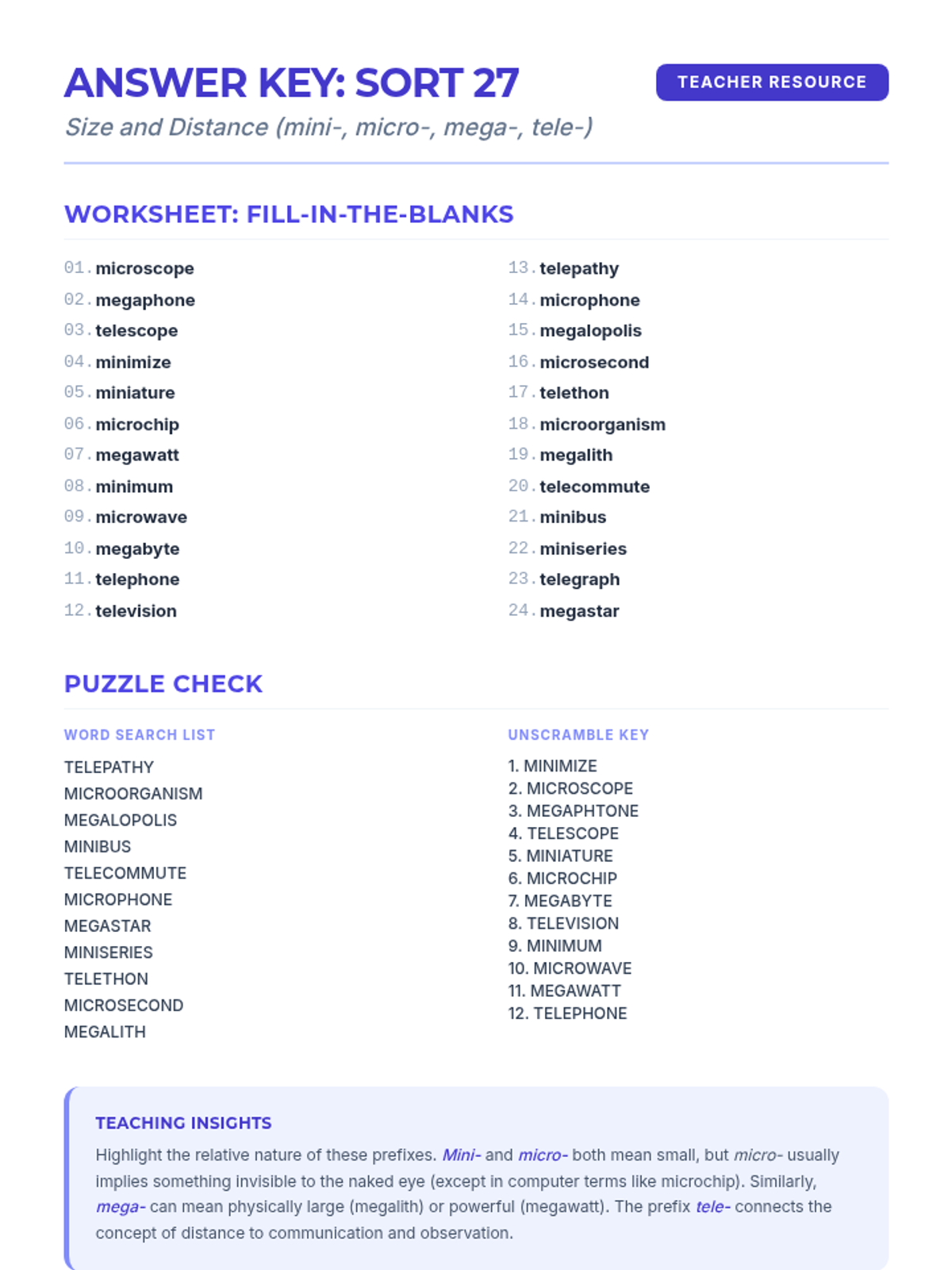
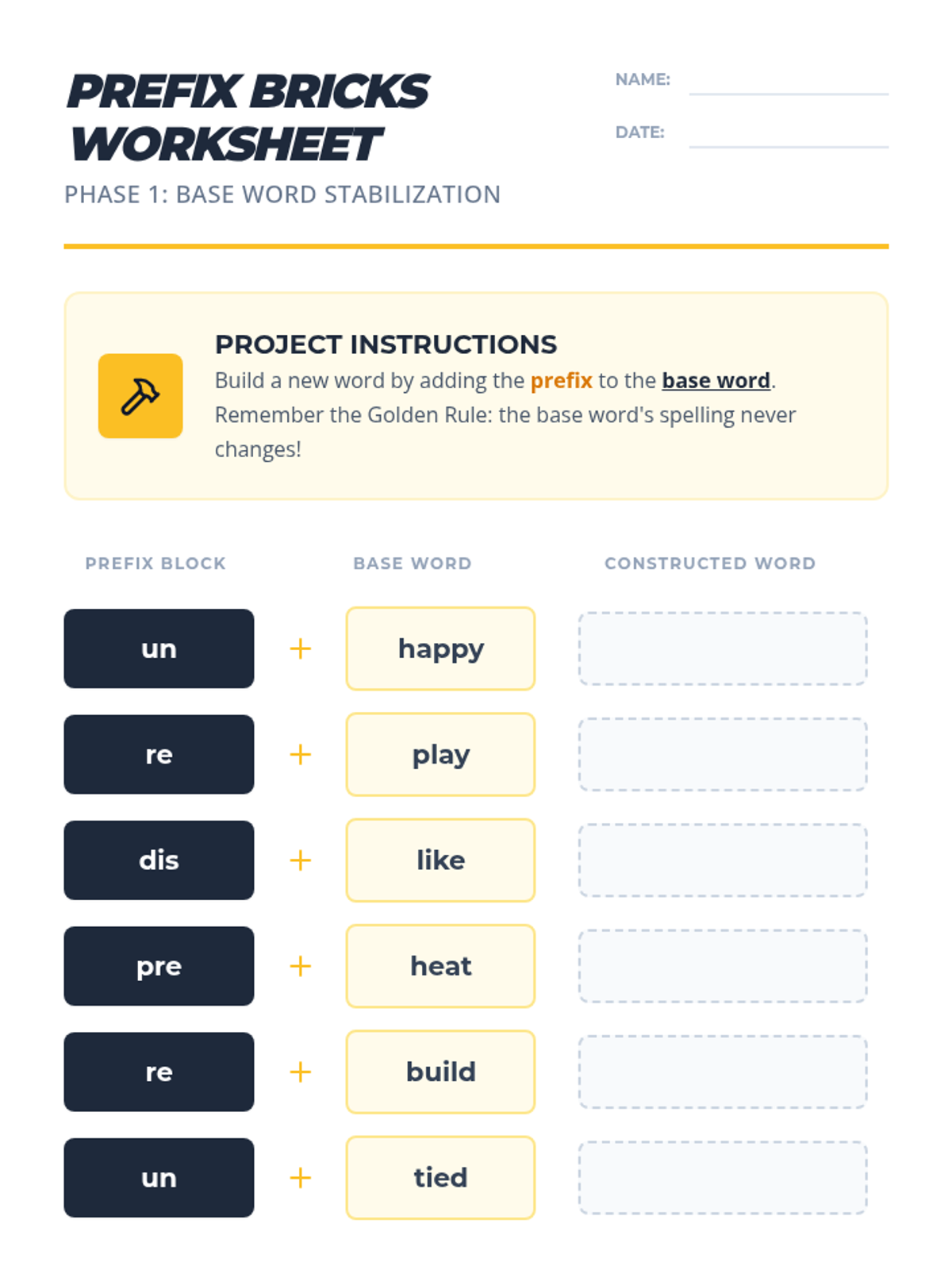
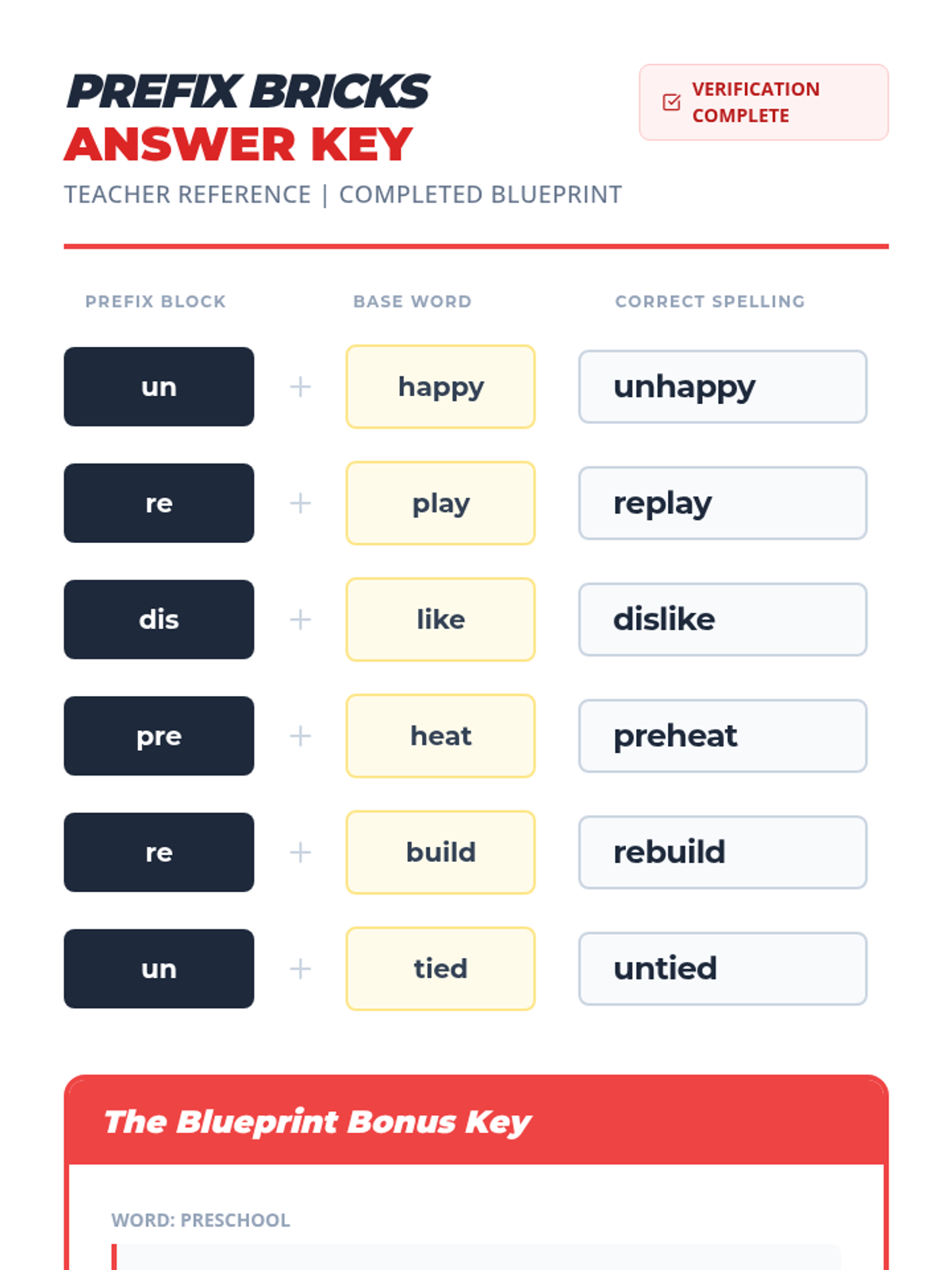
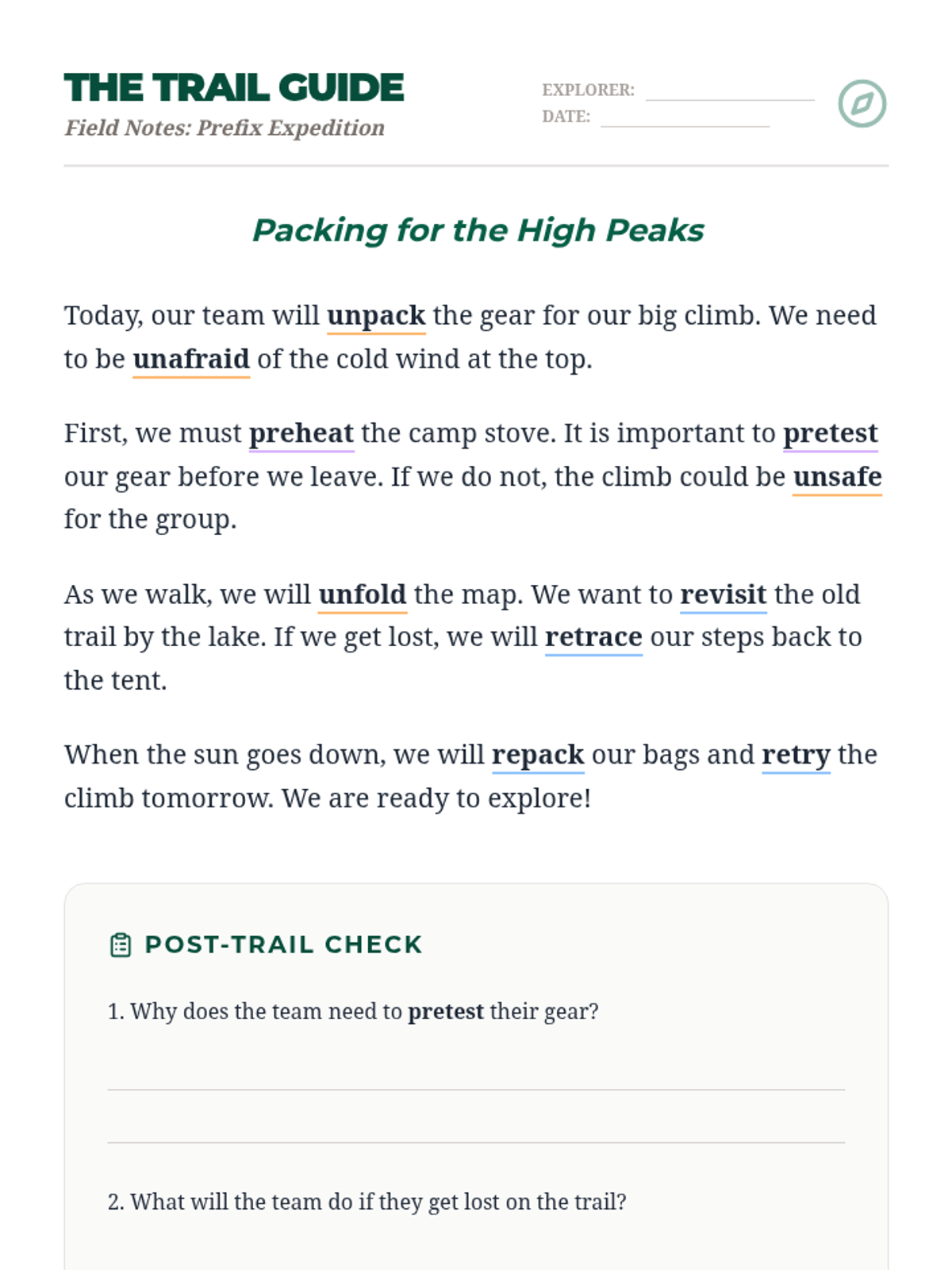
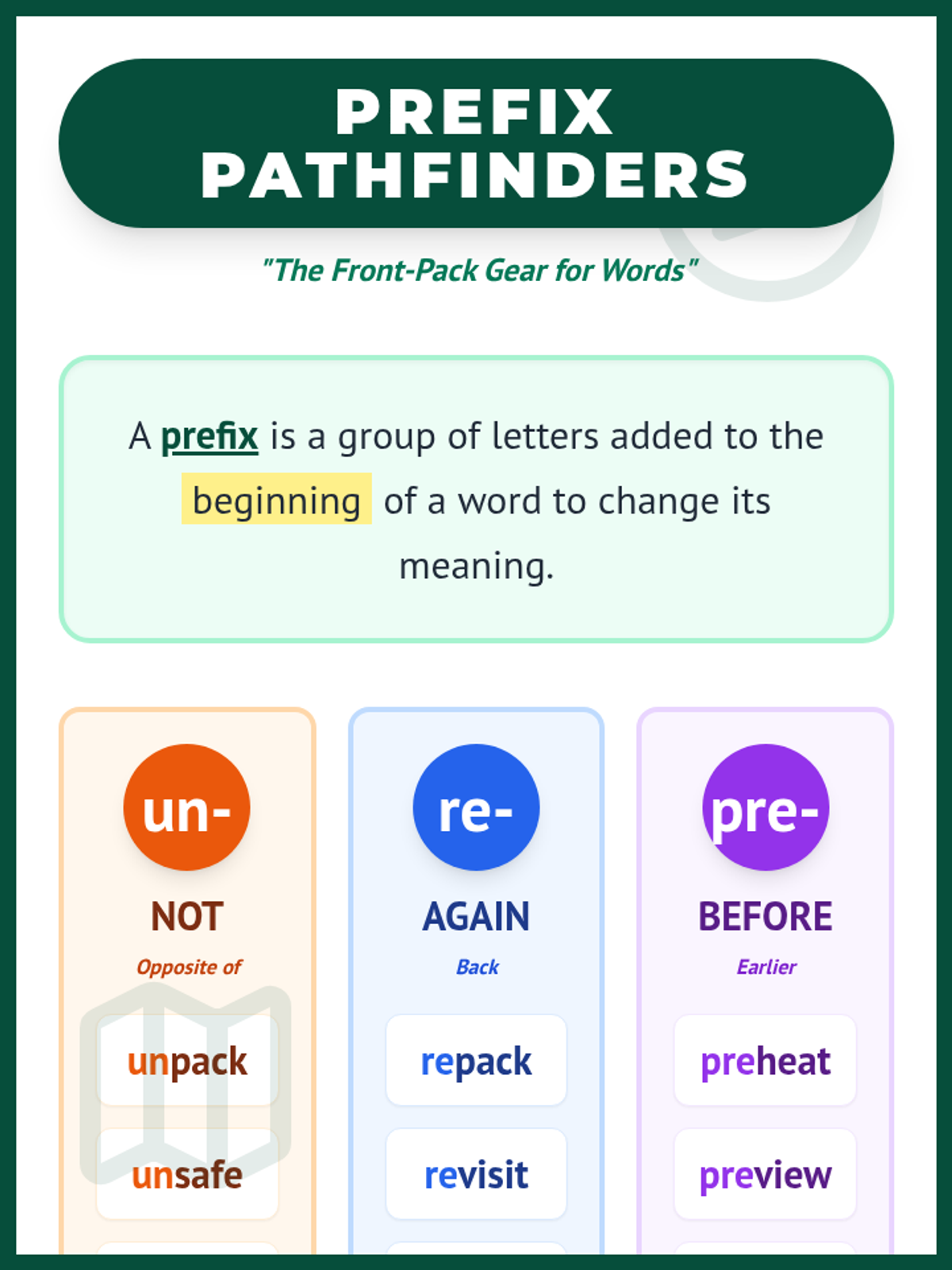
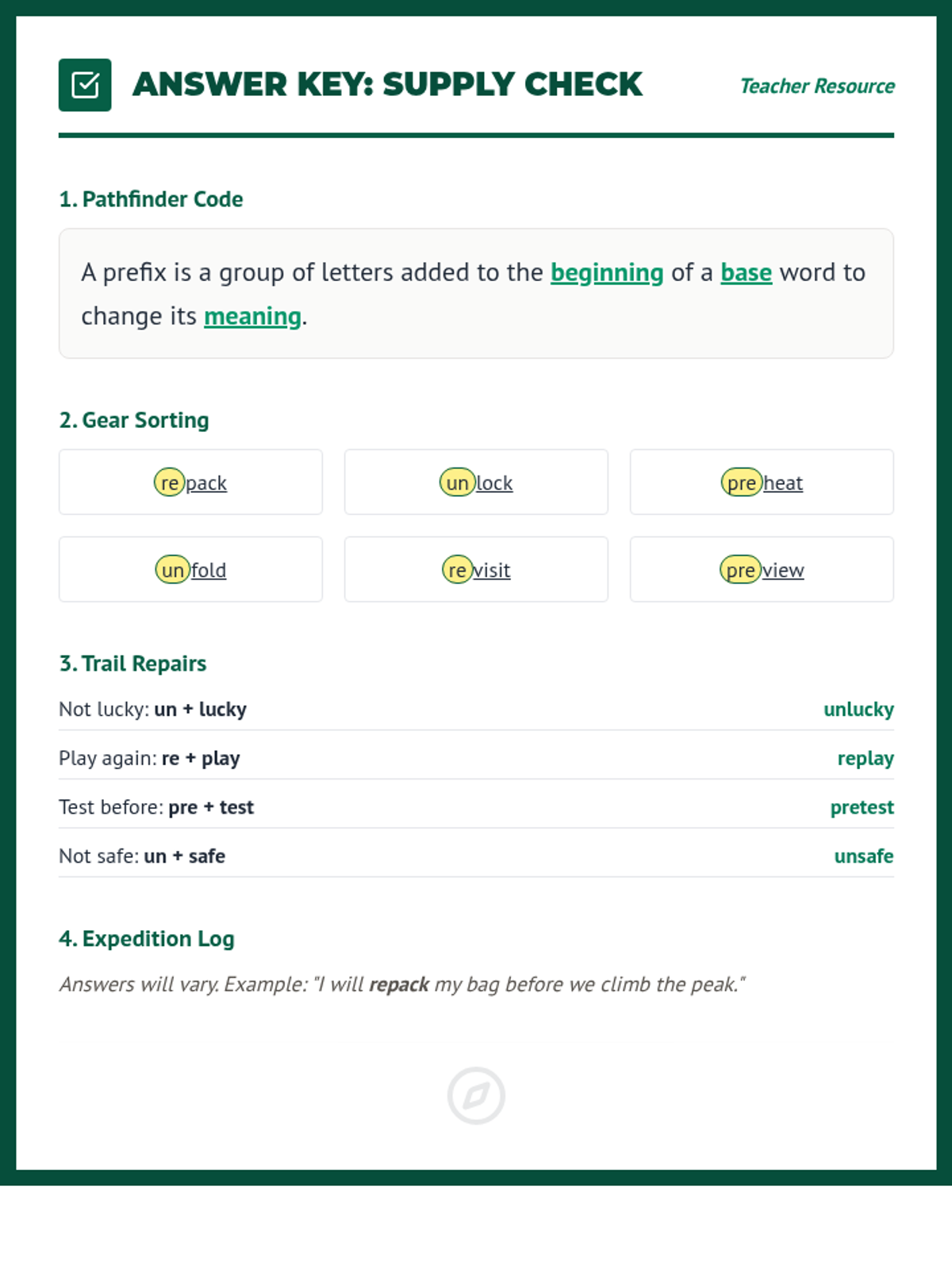
A comprehensive vocabulary and morphology curriculum covering prefixes, suffixes, Latin roots, and Greek roots through fill-in-the-blank exercises and engaging word puzzles.
A comprehensive 3rd Grade spelling sequence focused on structural analysis. Students learn to build and deconstruct words using prefixes, suffixes, roots, and compound word strategies to improve spelling accuracy and vocabulary depth.
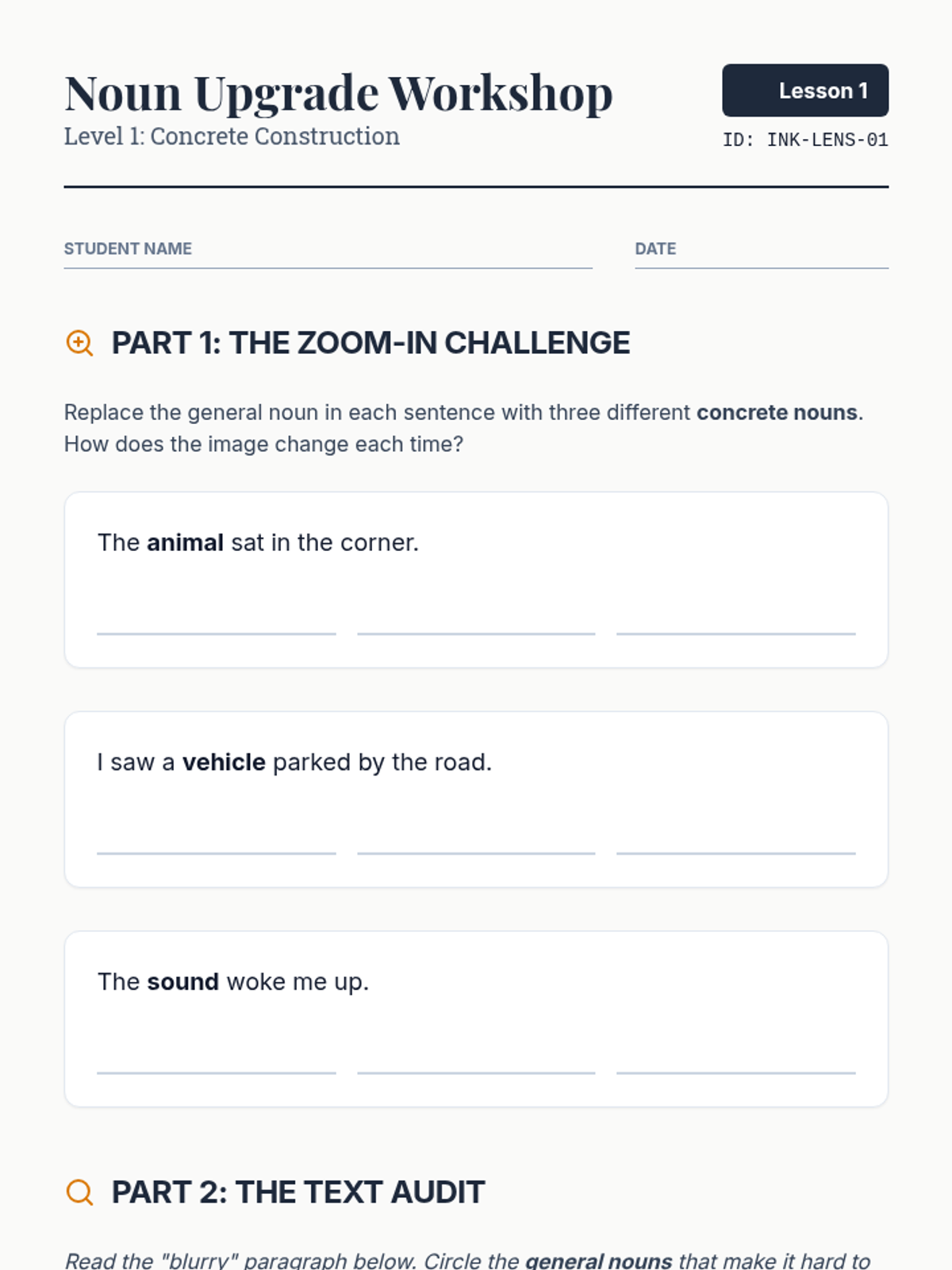
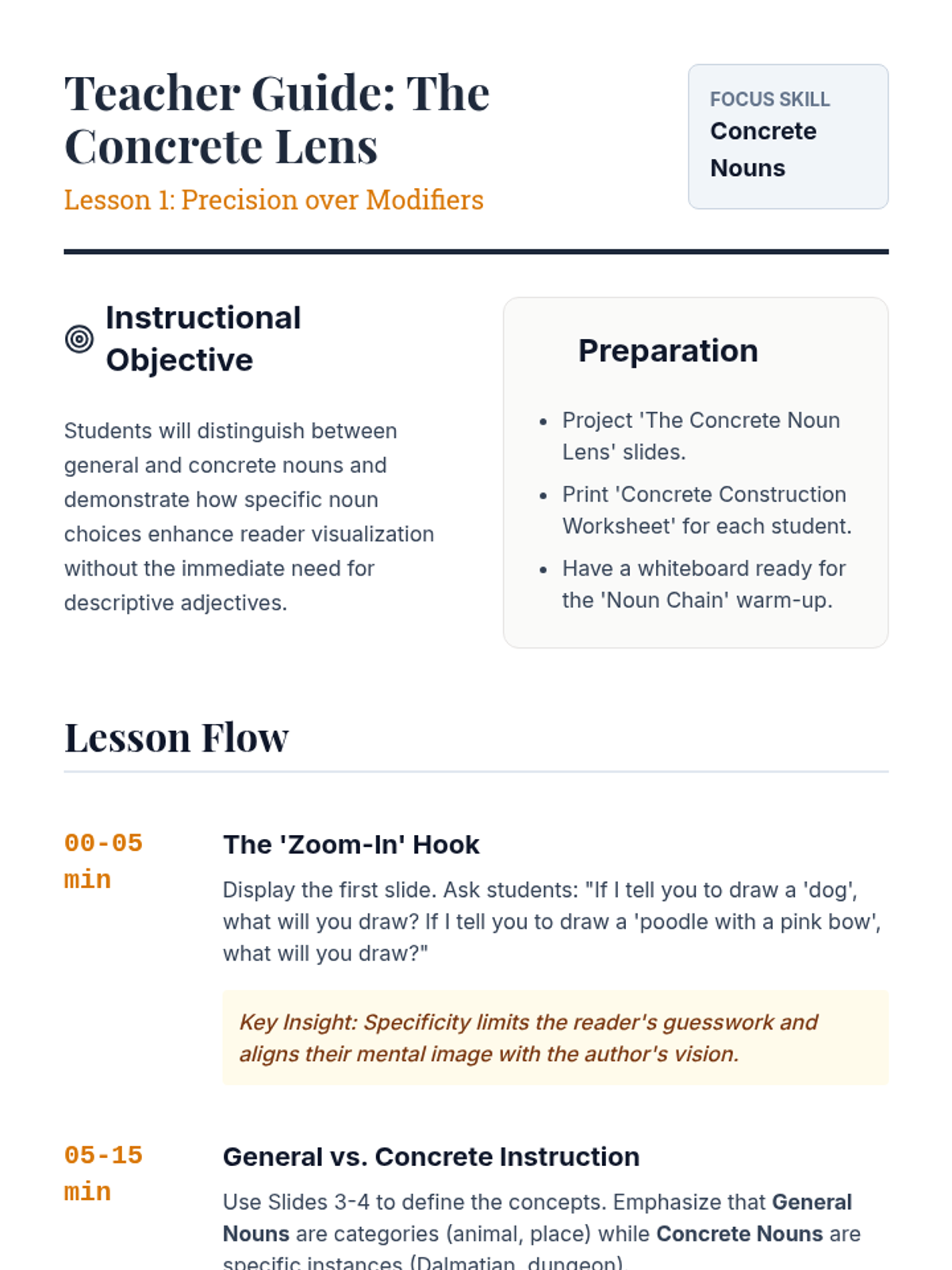
This writing workshop sequence moves students beyond basic identification of nouns and adjectives toward strategic application in narrative writing. Students practice replacing general nouns with concrete alternatives and weak adjectives with vivid modifiers to enhance reader visualization.
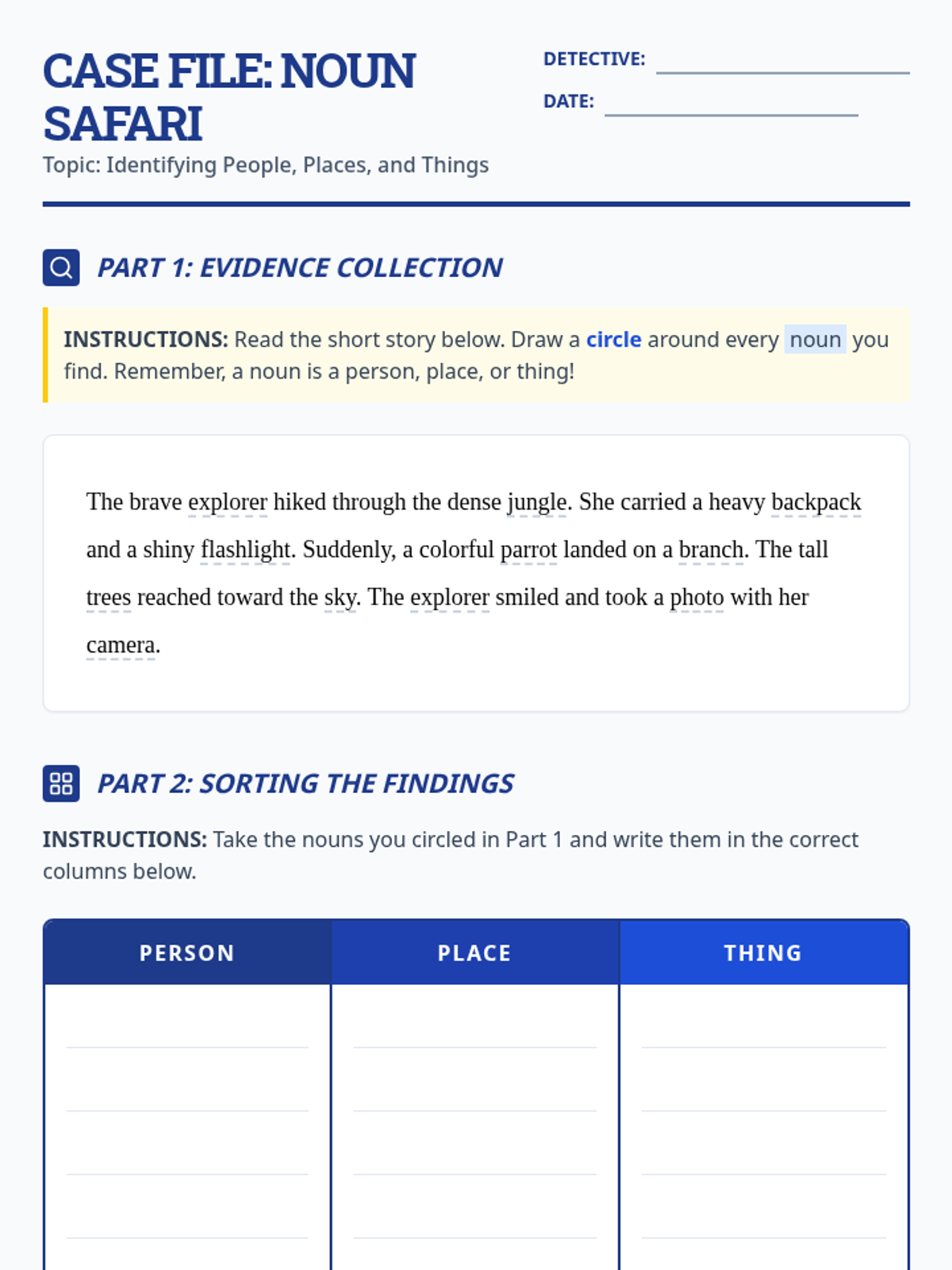
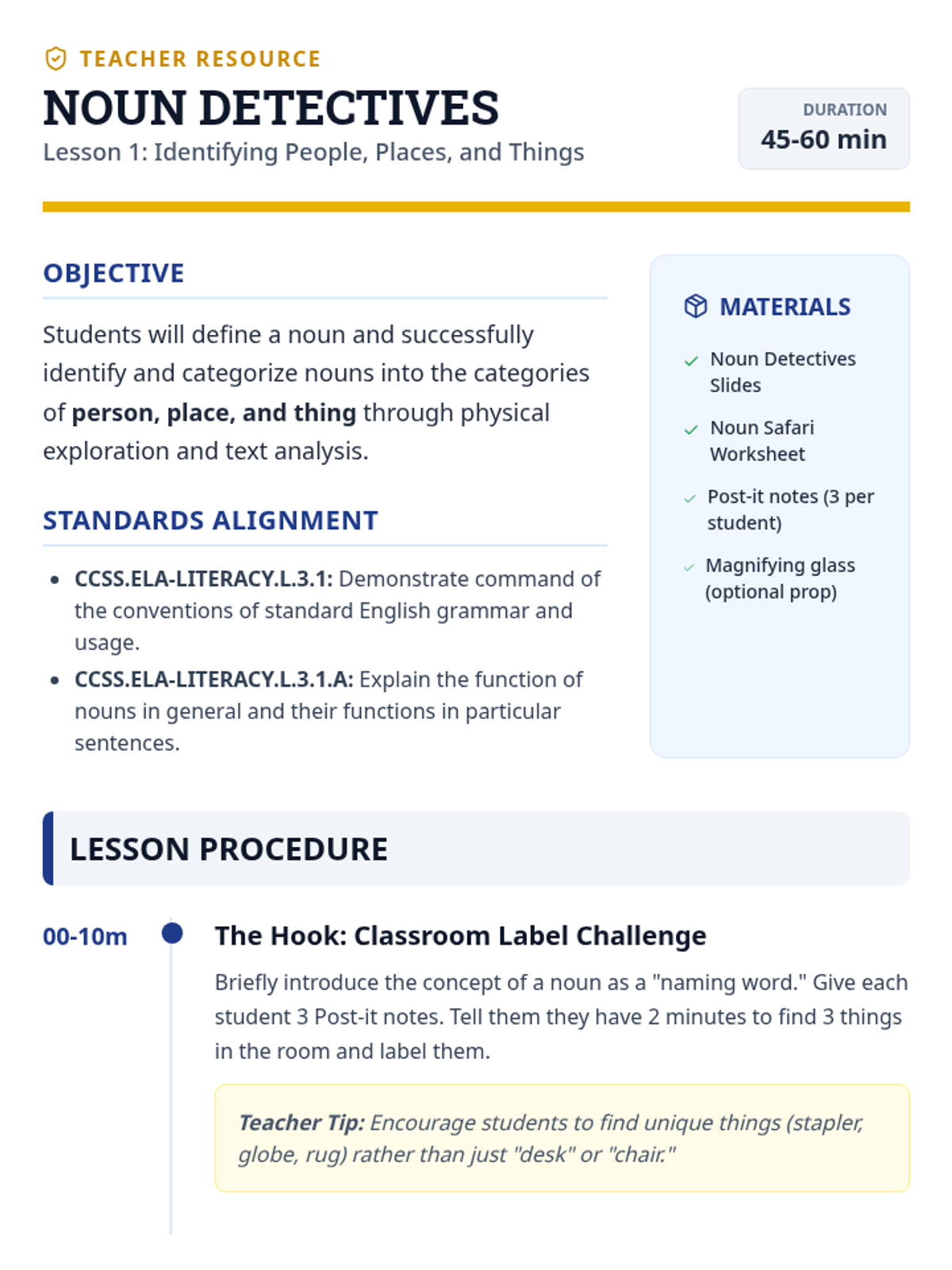
A comprehensive sequence for 3rd-grade students to master nouns and adjectives, moving from basic identification to the creation of vivid, descriptive paragraphs using sensory details and specific vocabulary.
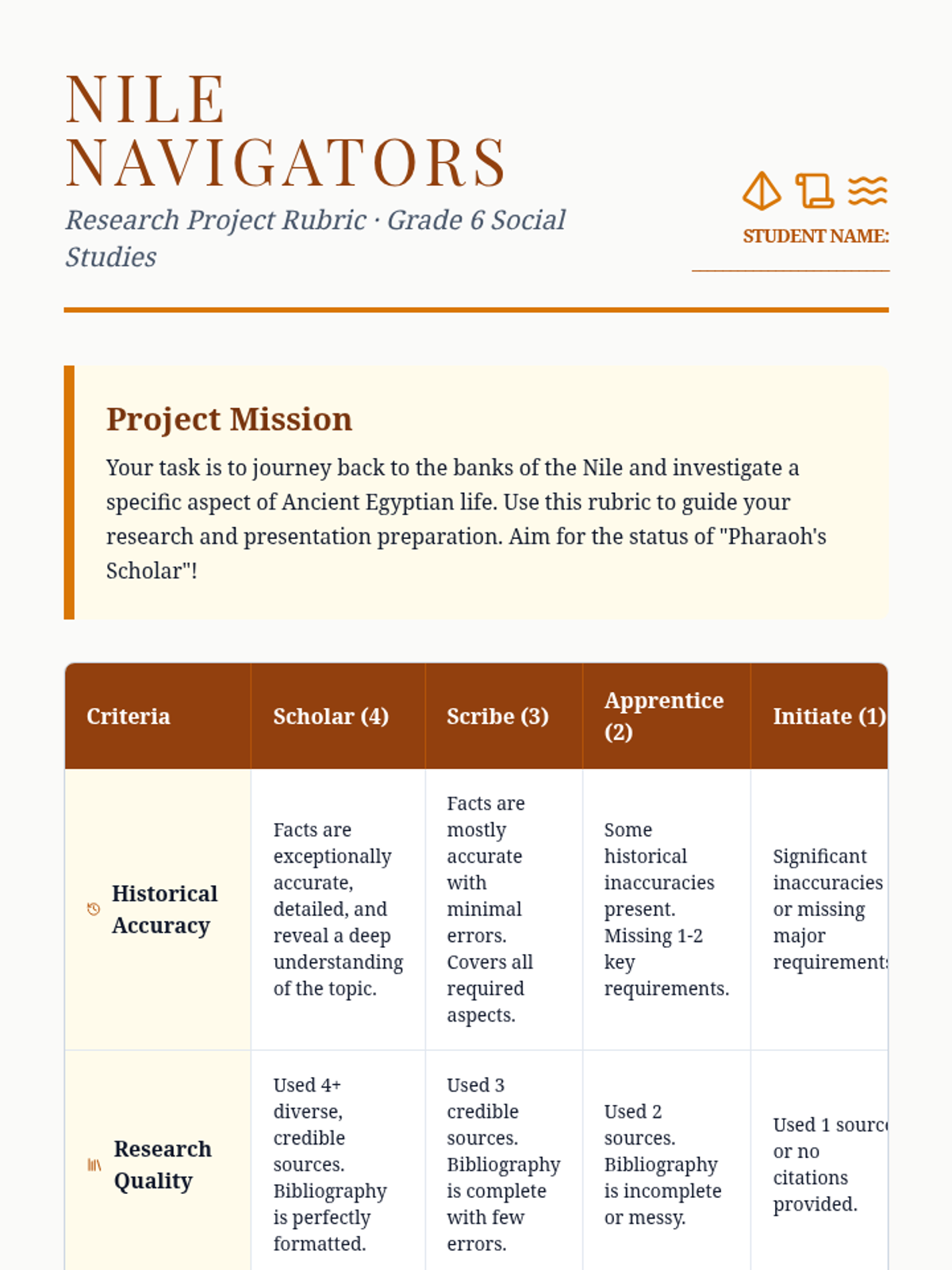
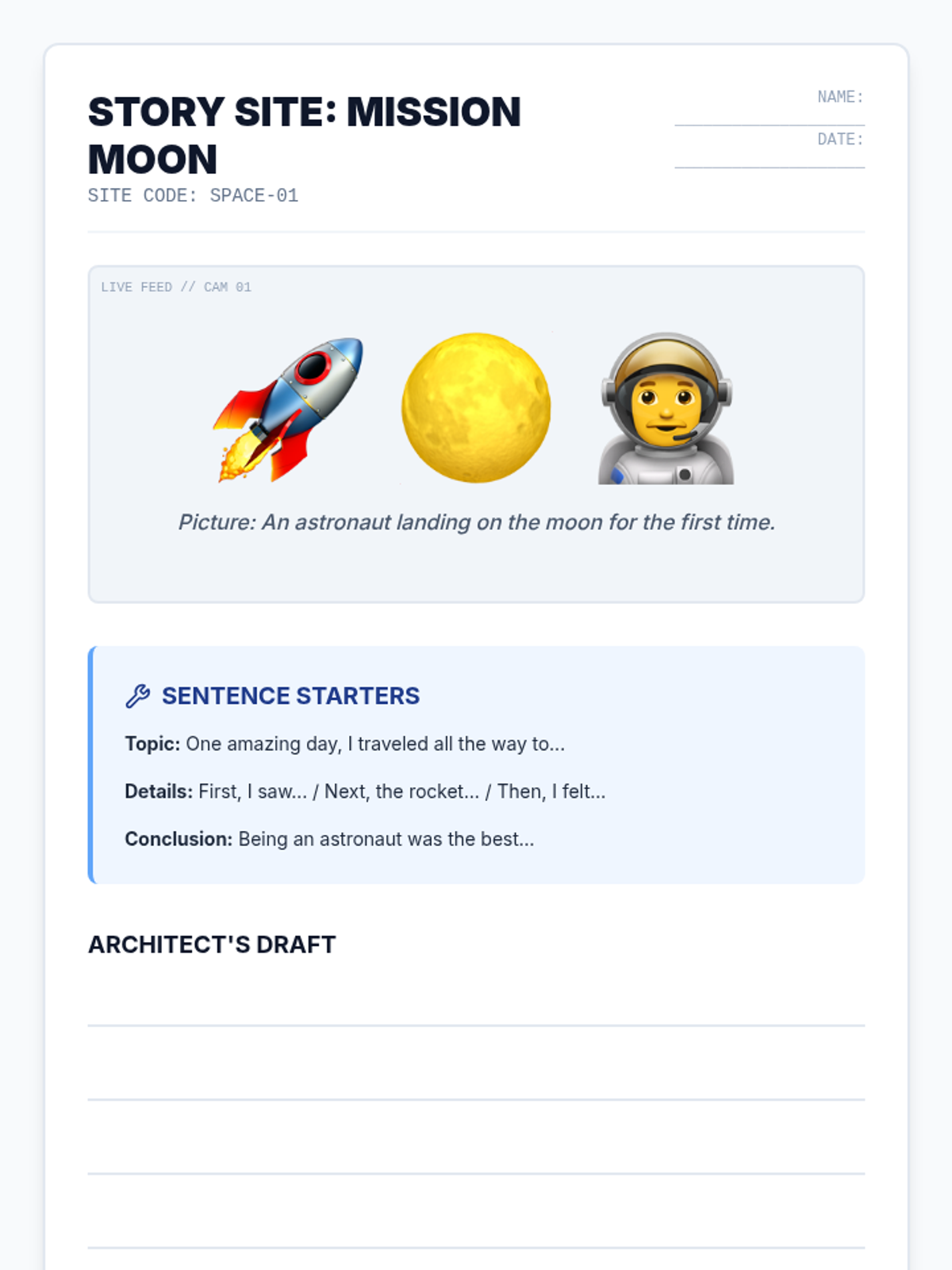
A collection of diverse educational resources across multiple grade levels and subjects, including social studies projects, science safety, early literacy, and writing assessment.
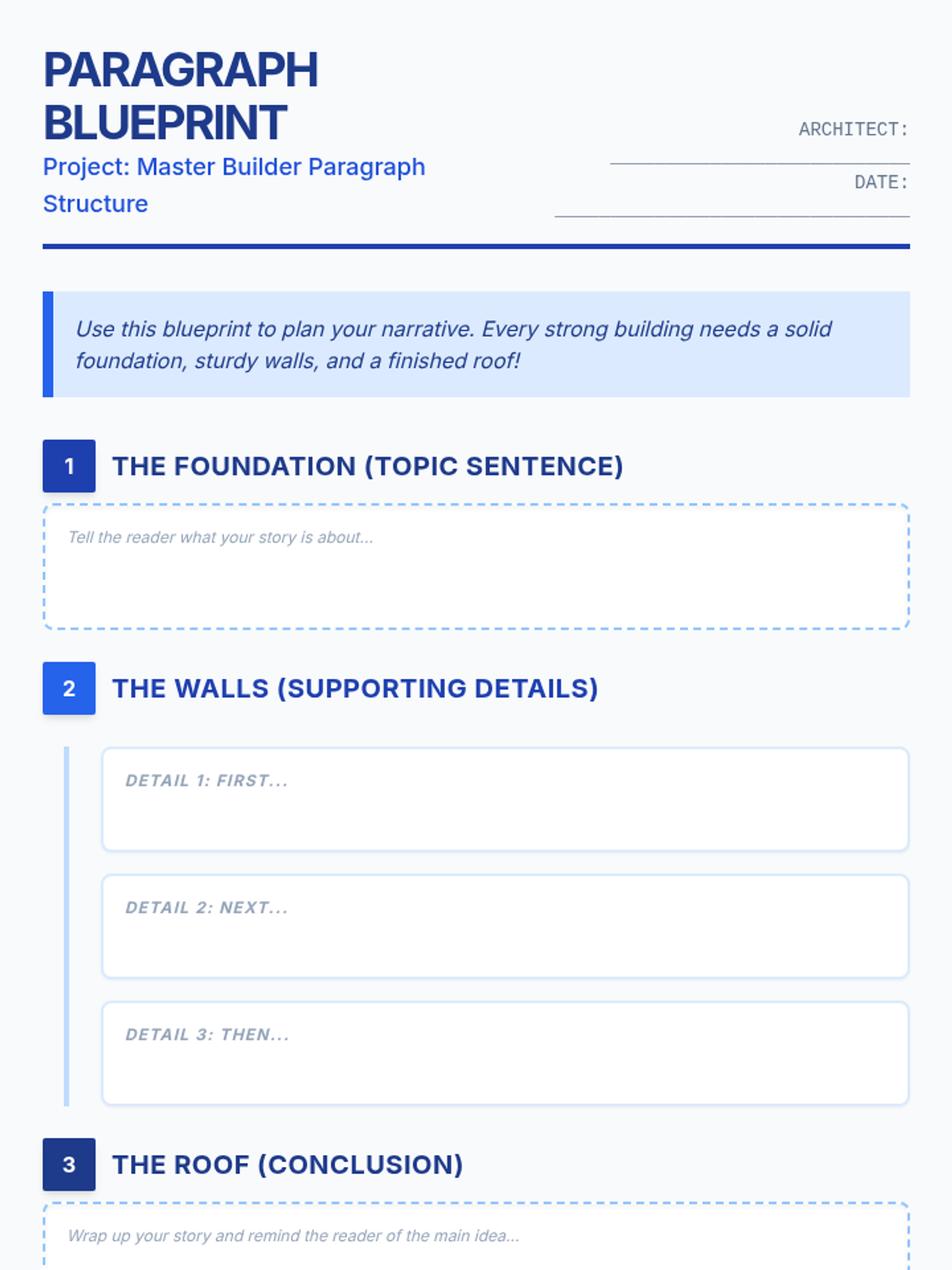
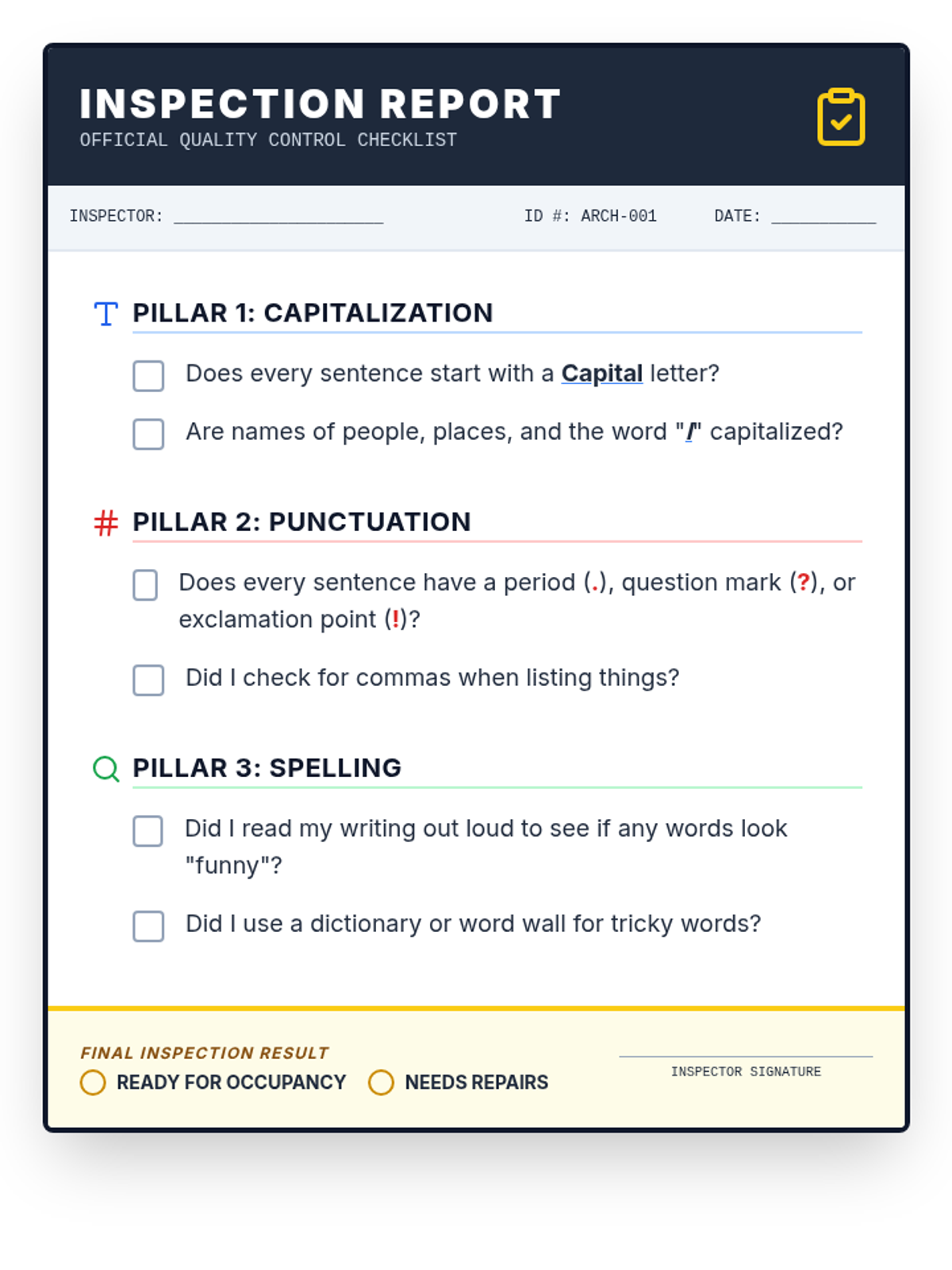
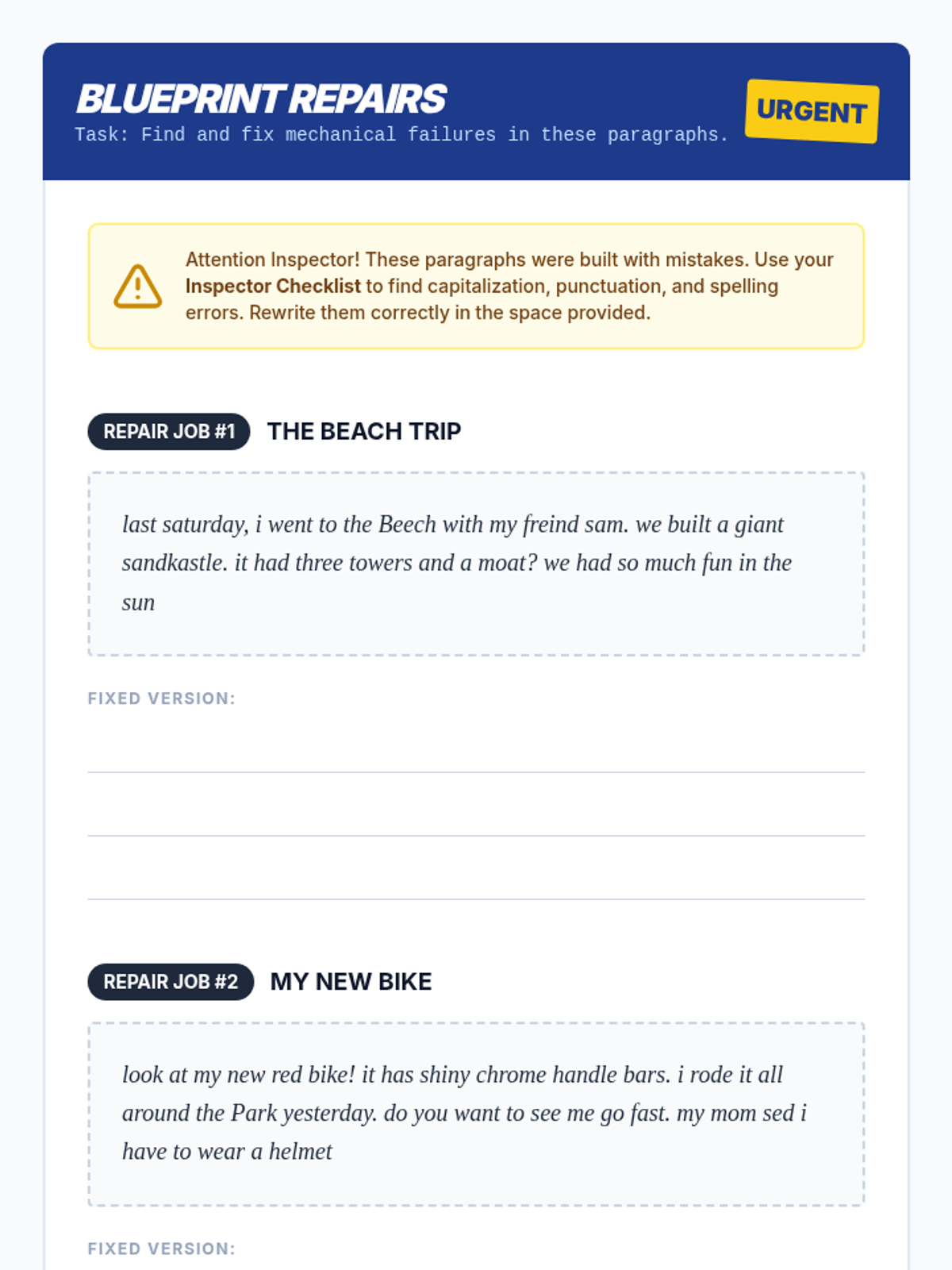
A series of materials designed to help Flint master paragraph structure and self-editing through the lens of a 'Narrative Architect', using blueprints and inspection checklists.
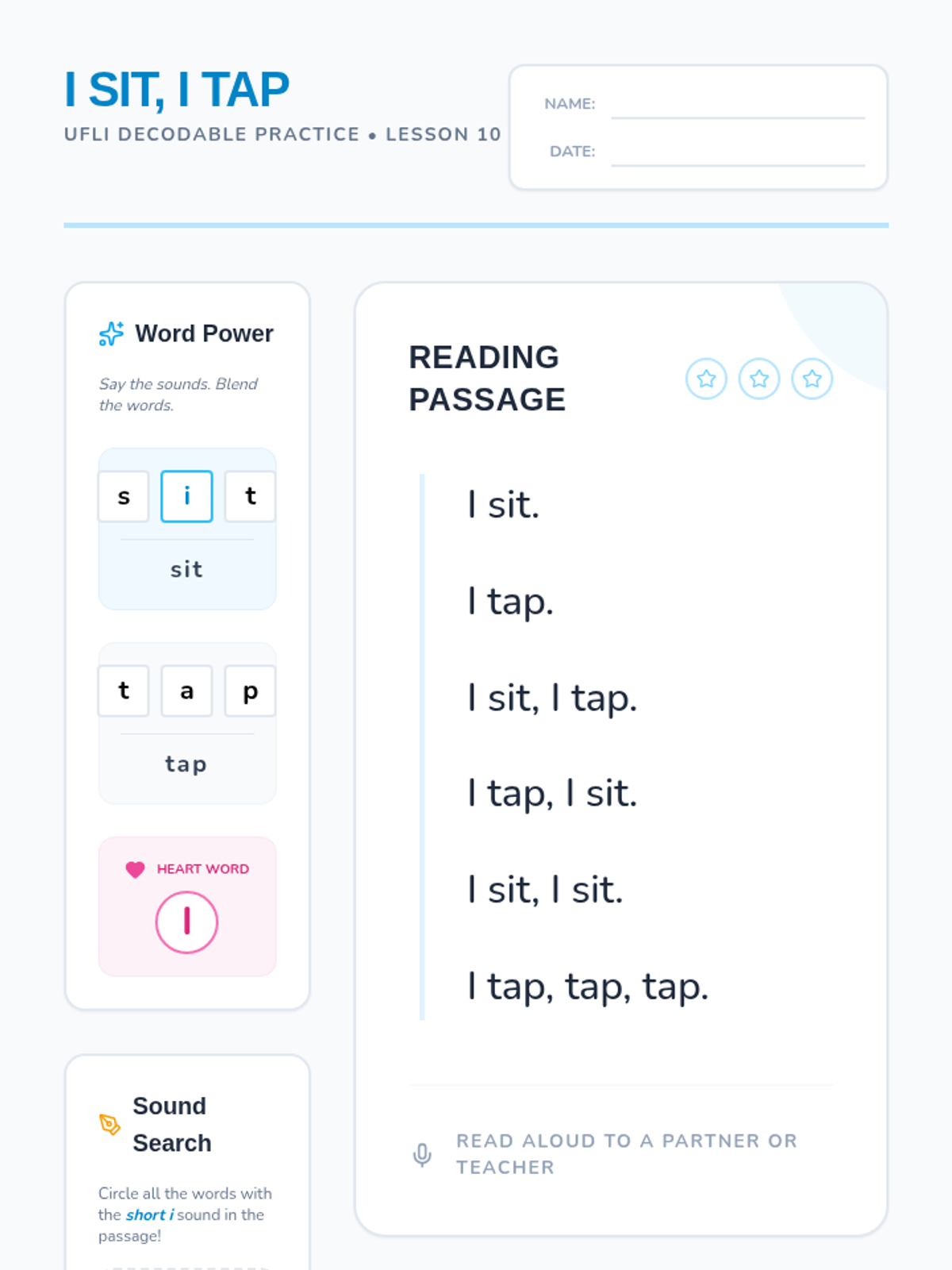
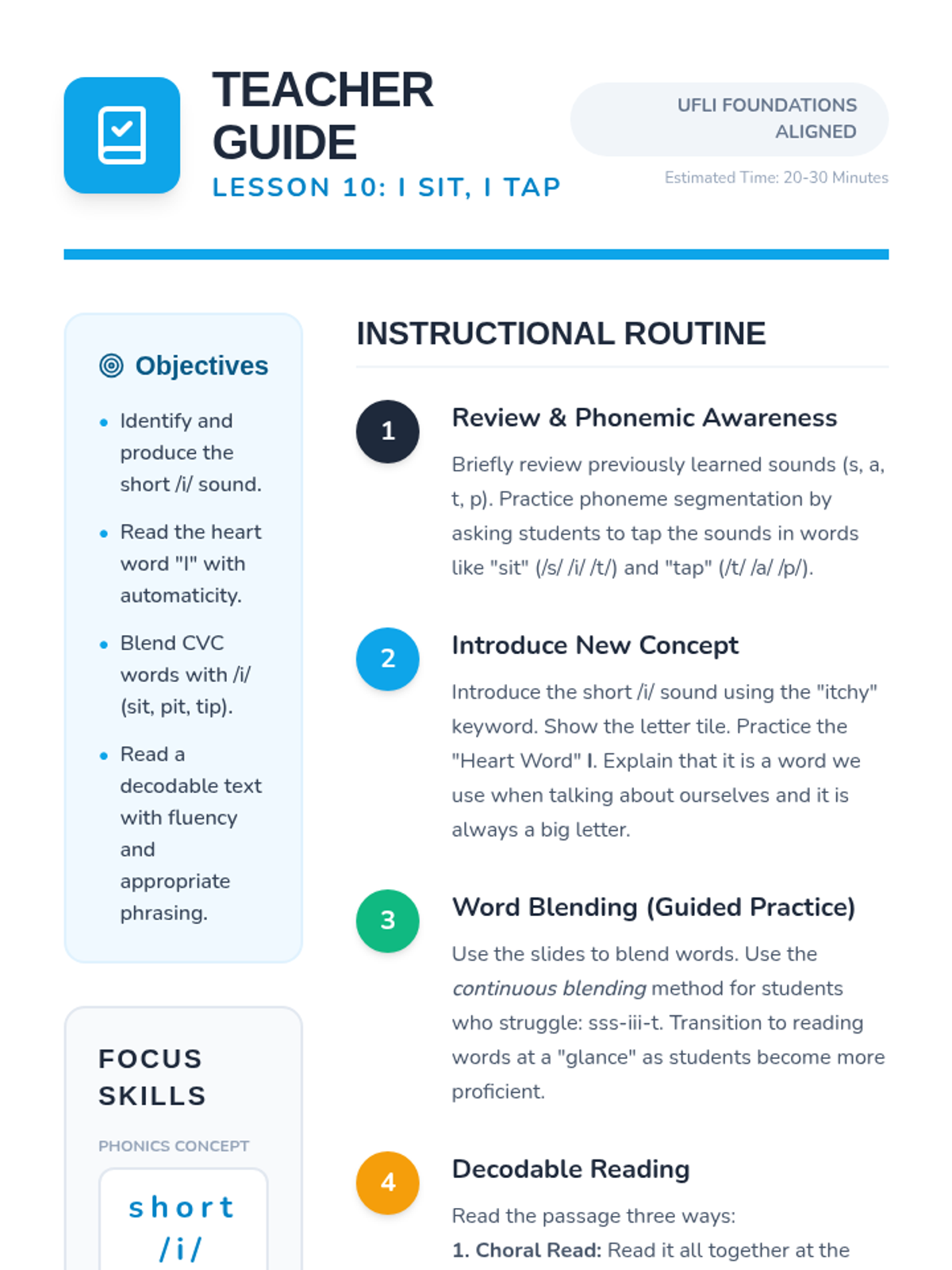
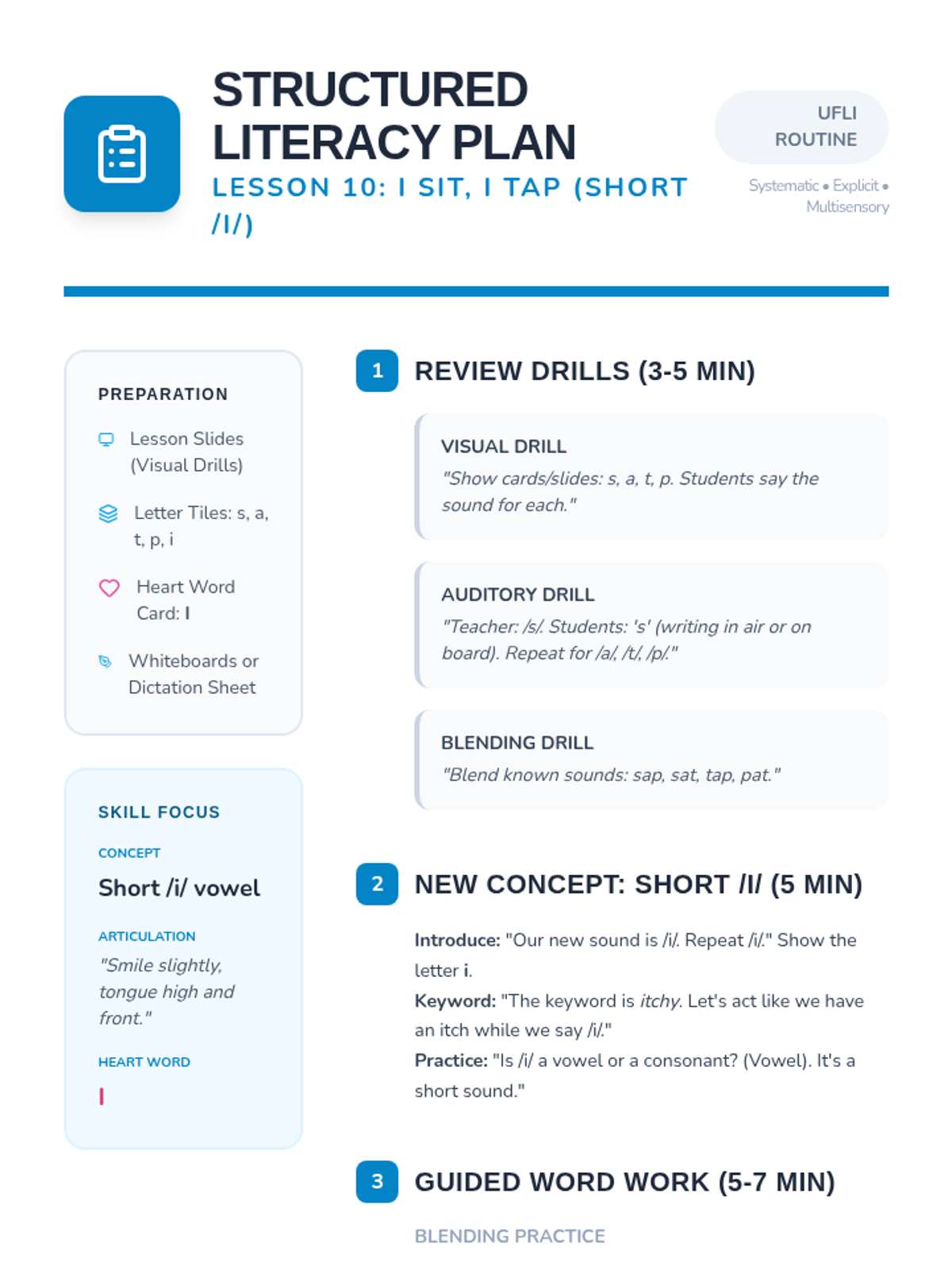
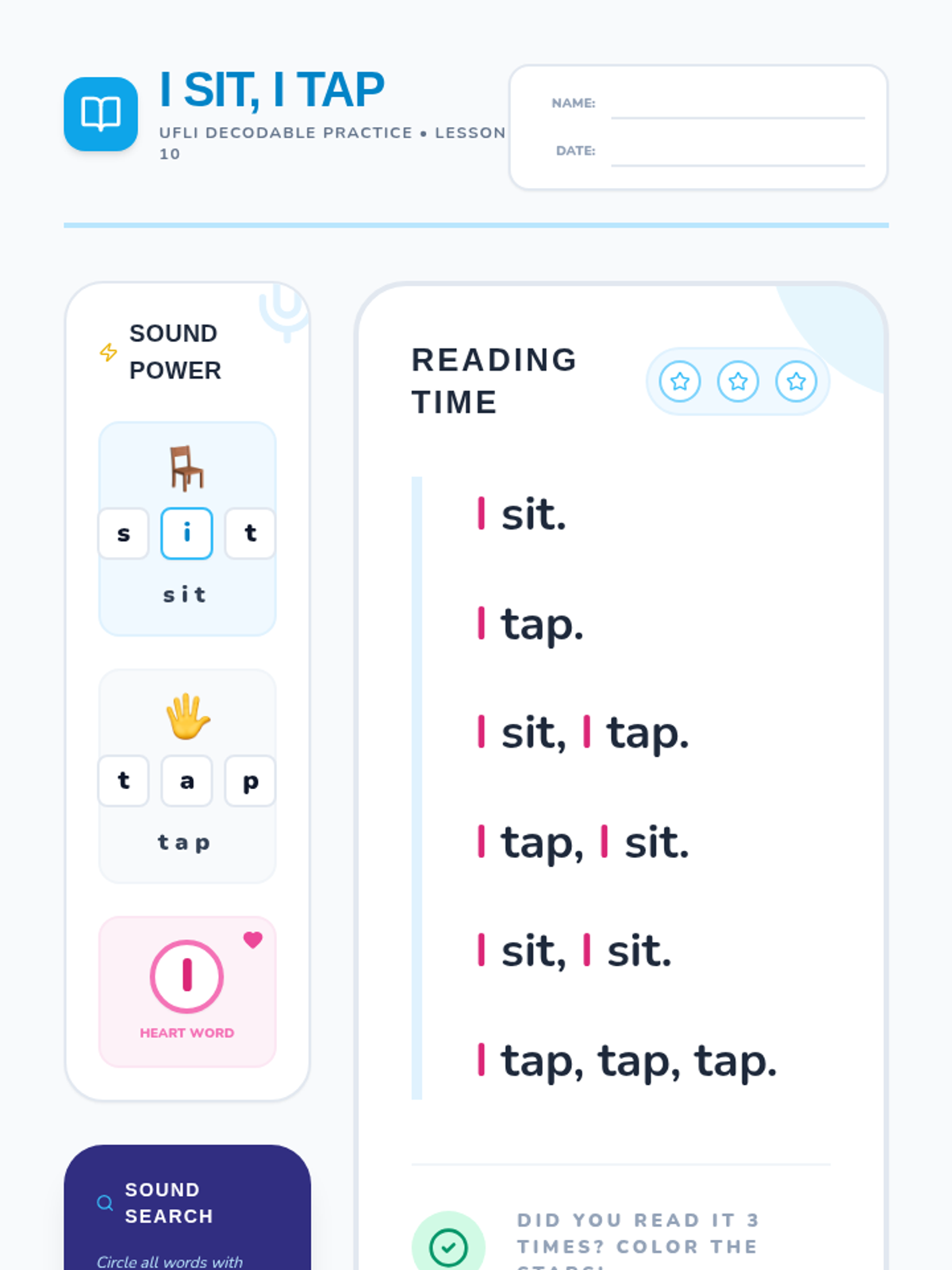
A collection of decodable passages and activities aligned with UFLI Foundations, focusing on systematic phonics and heart word acquisition. Each lesson centers on a specific phonics skill and accompanying "heart words" to build reading fluency.
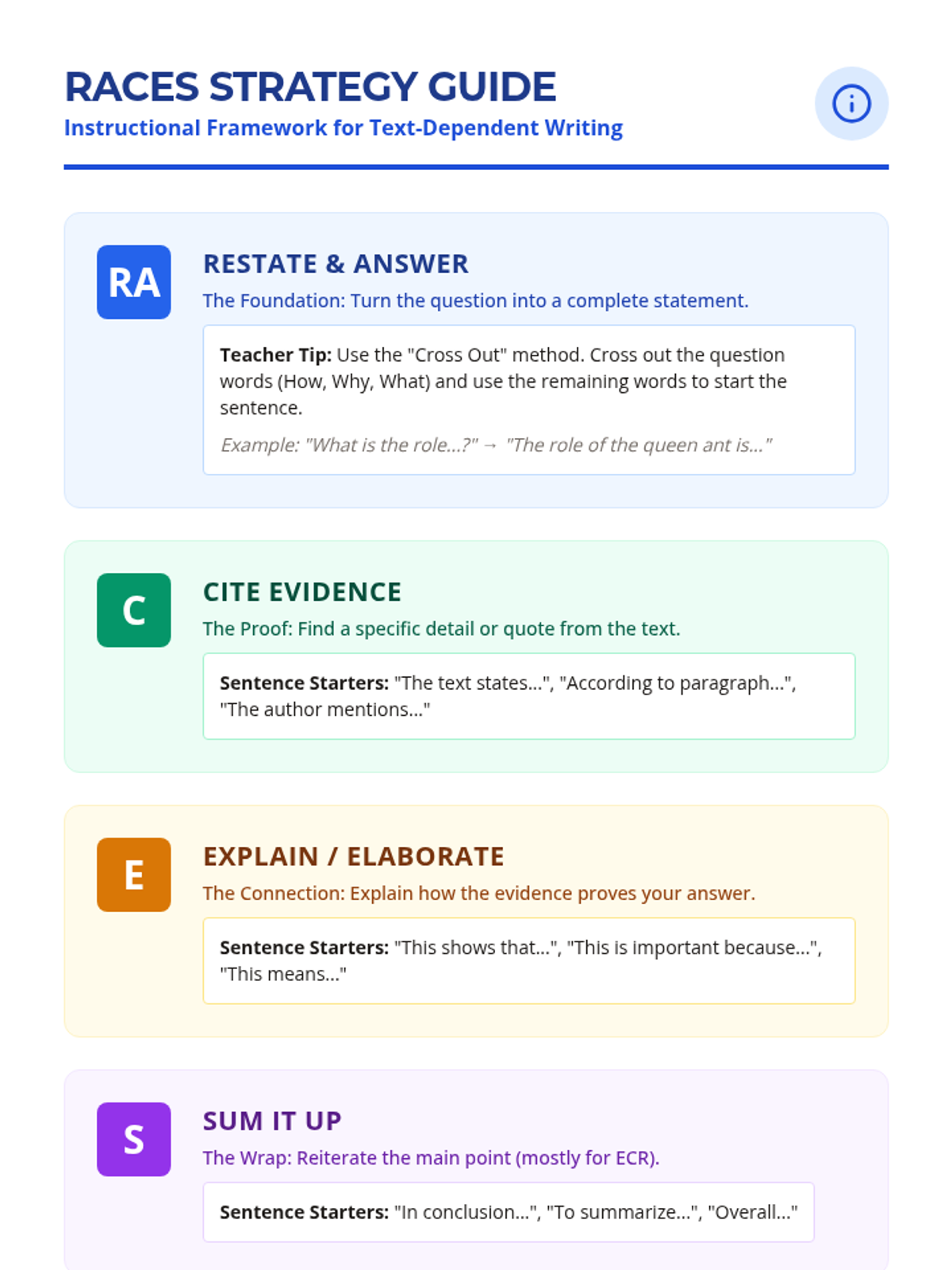
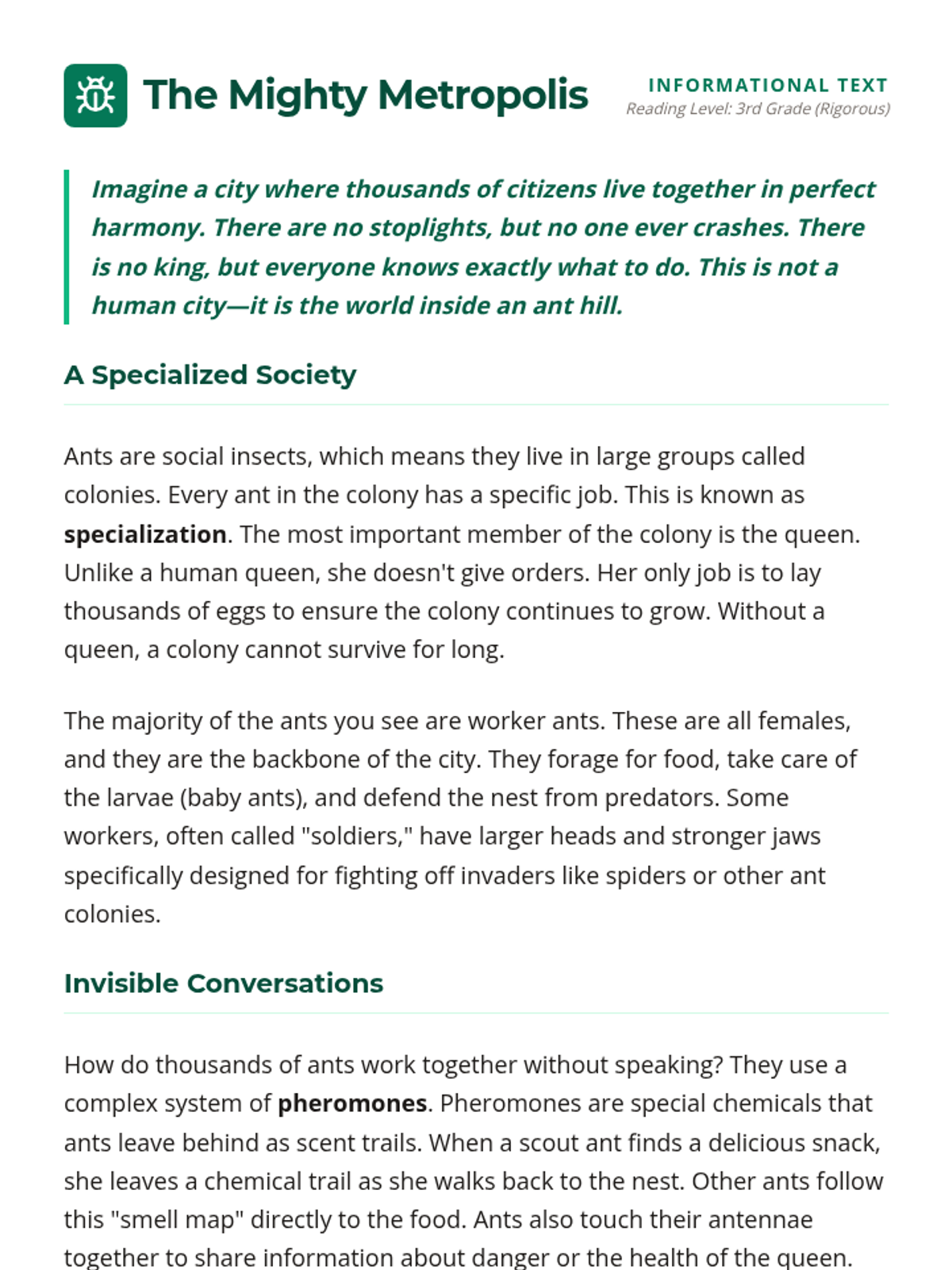
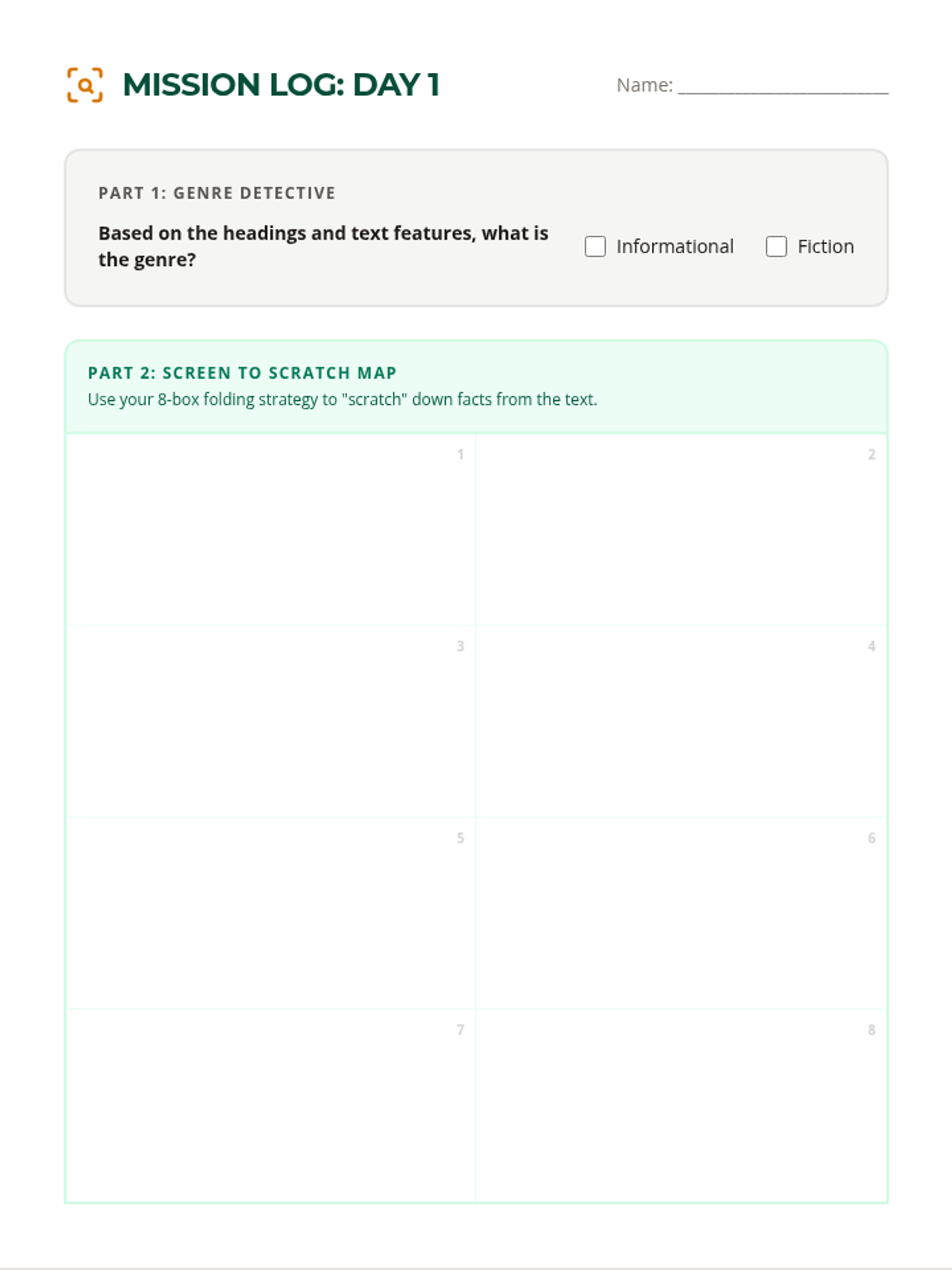
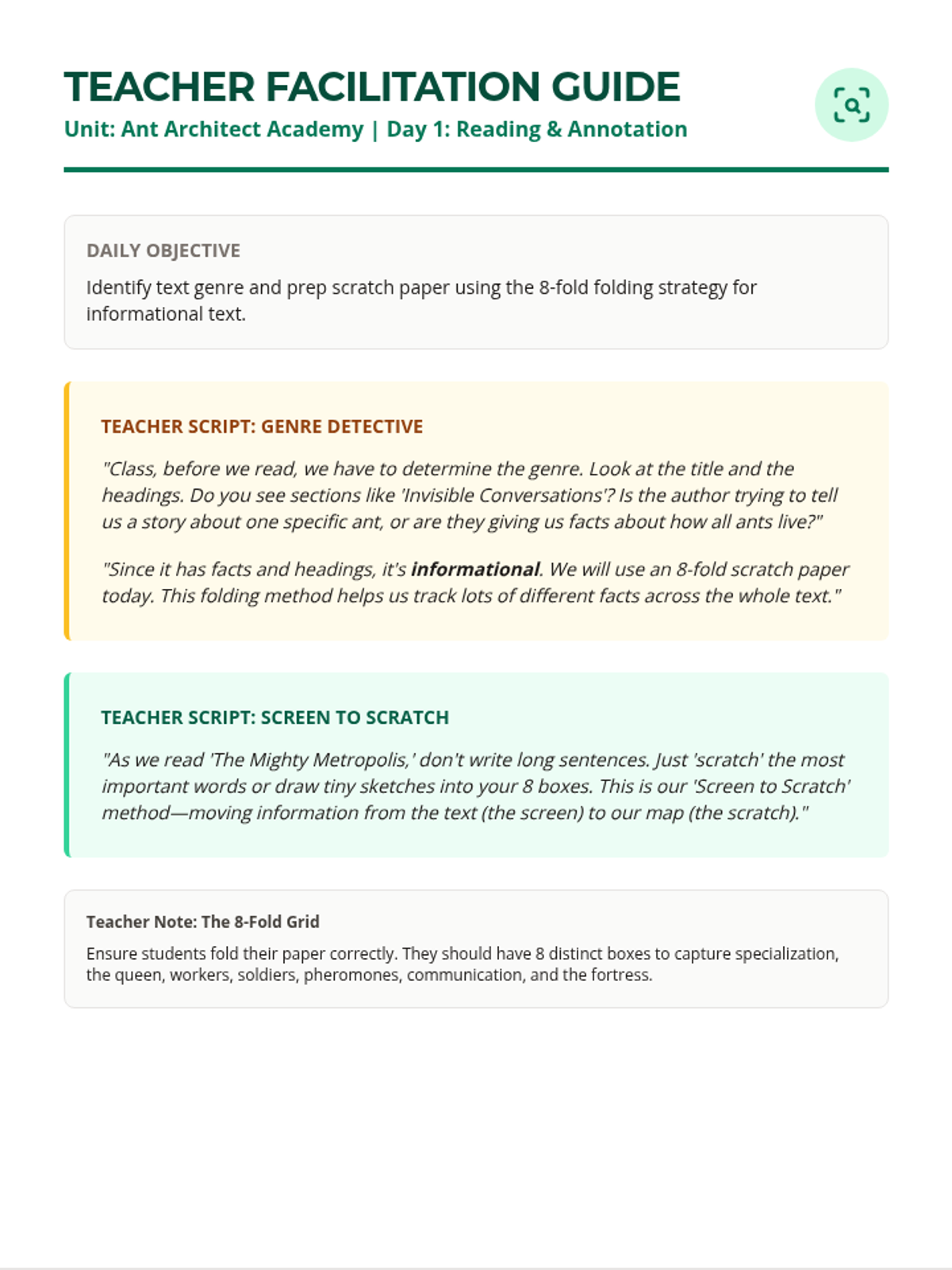
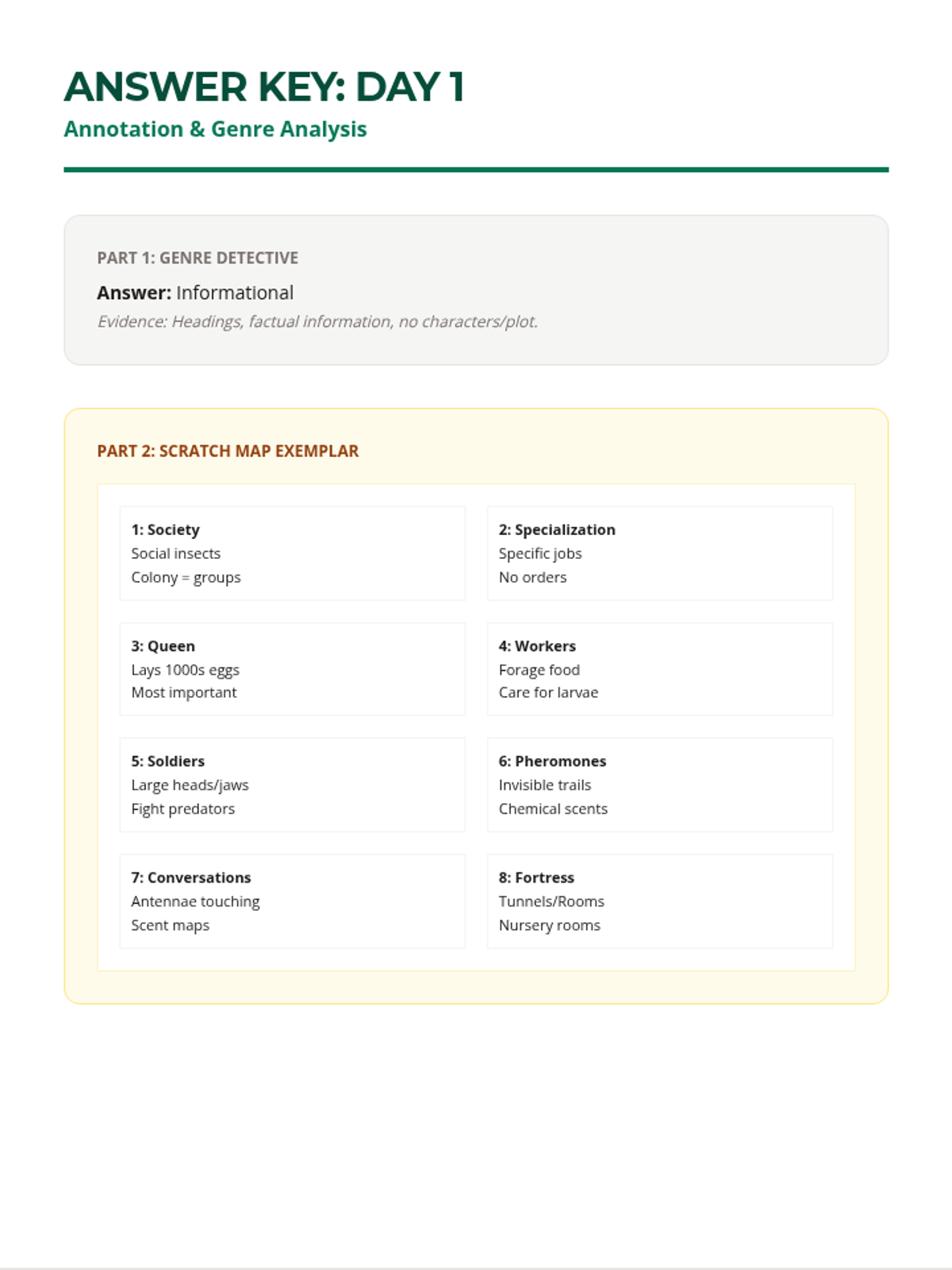
A comprehensive literacy unit designed for 3rd-grade students to master text-dependent writing. Using a rigorous informational text about ant colonies, students move from daily short constructed responses to a final extended constructed response, all while utilizing the RACES writing strategy in a 4-day format.
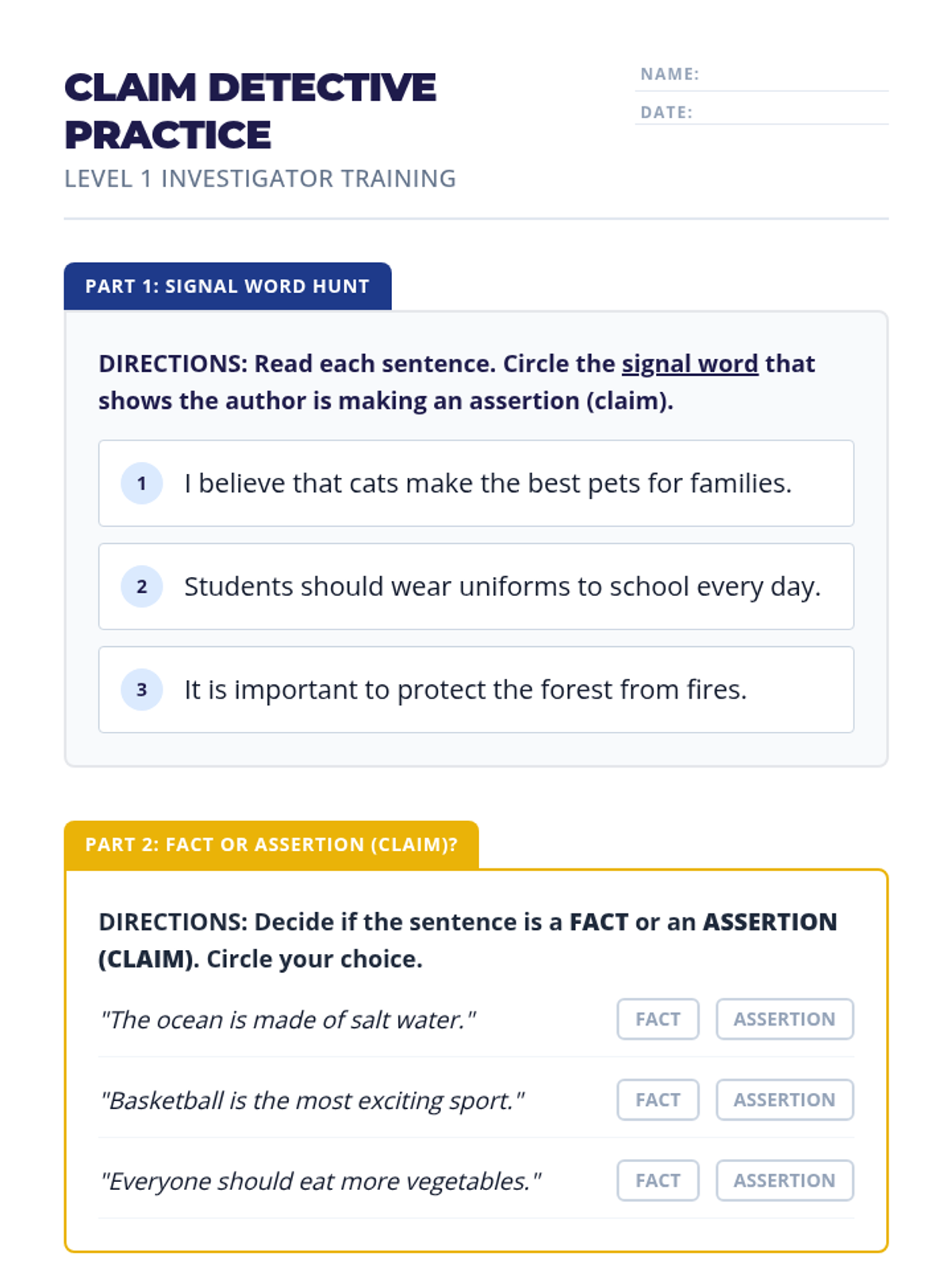
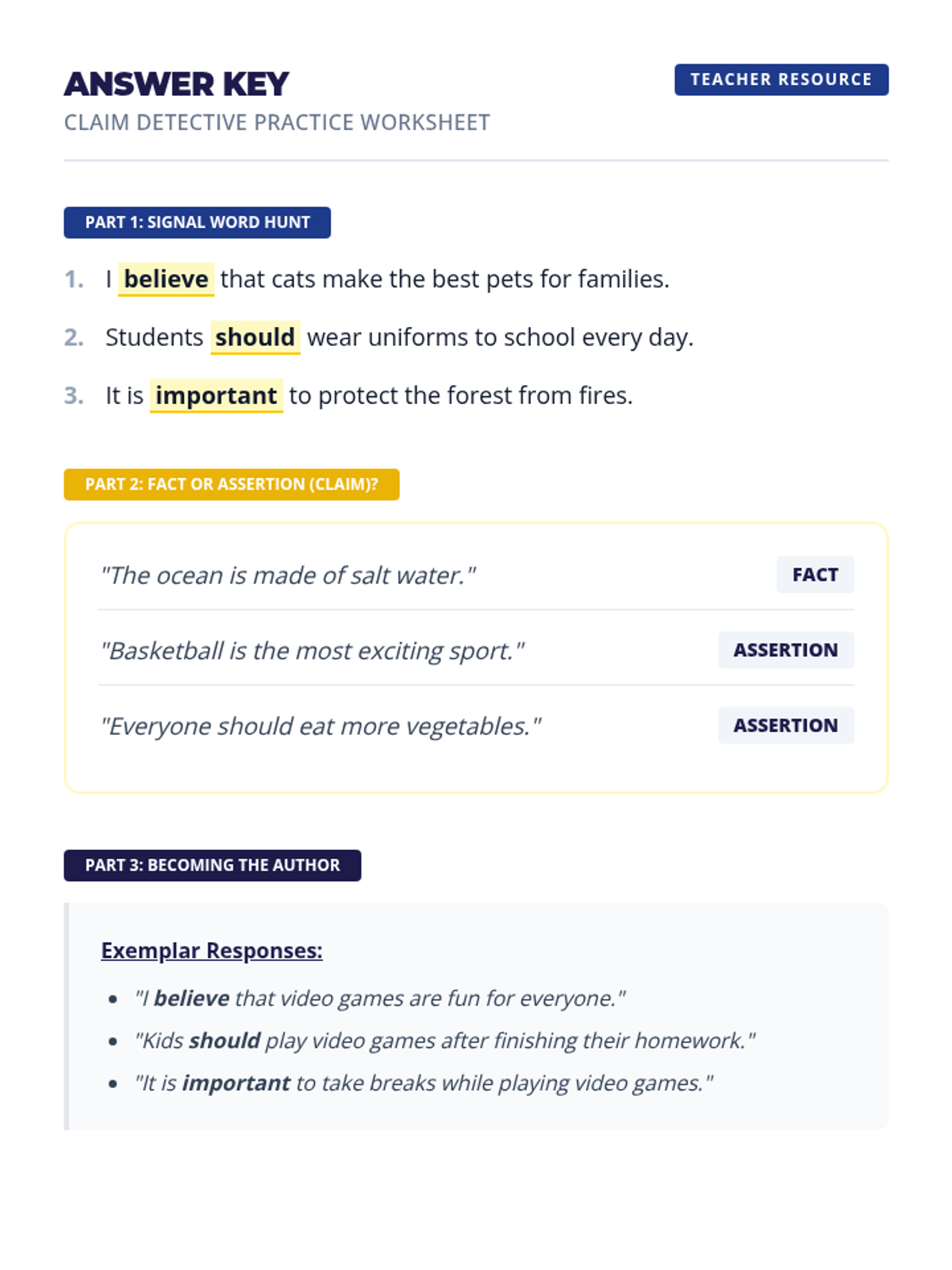
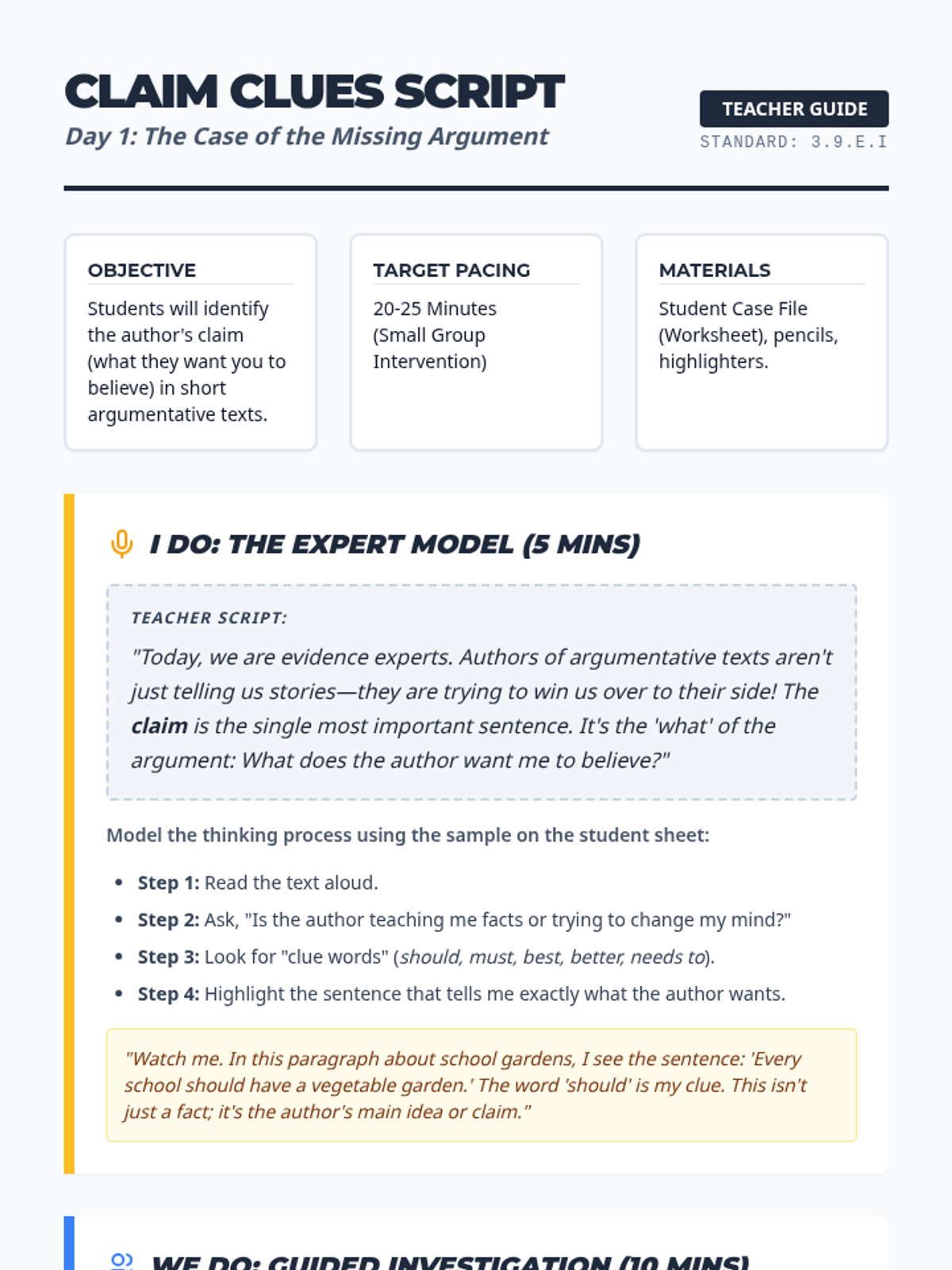
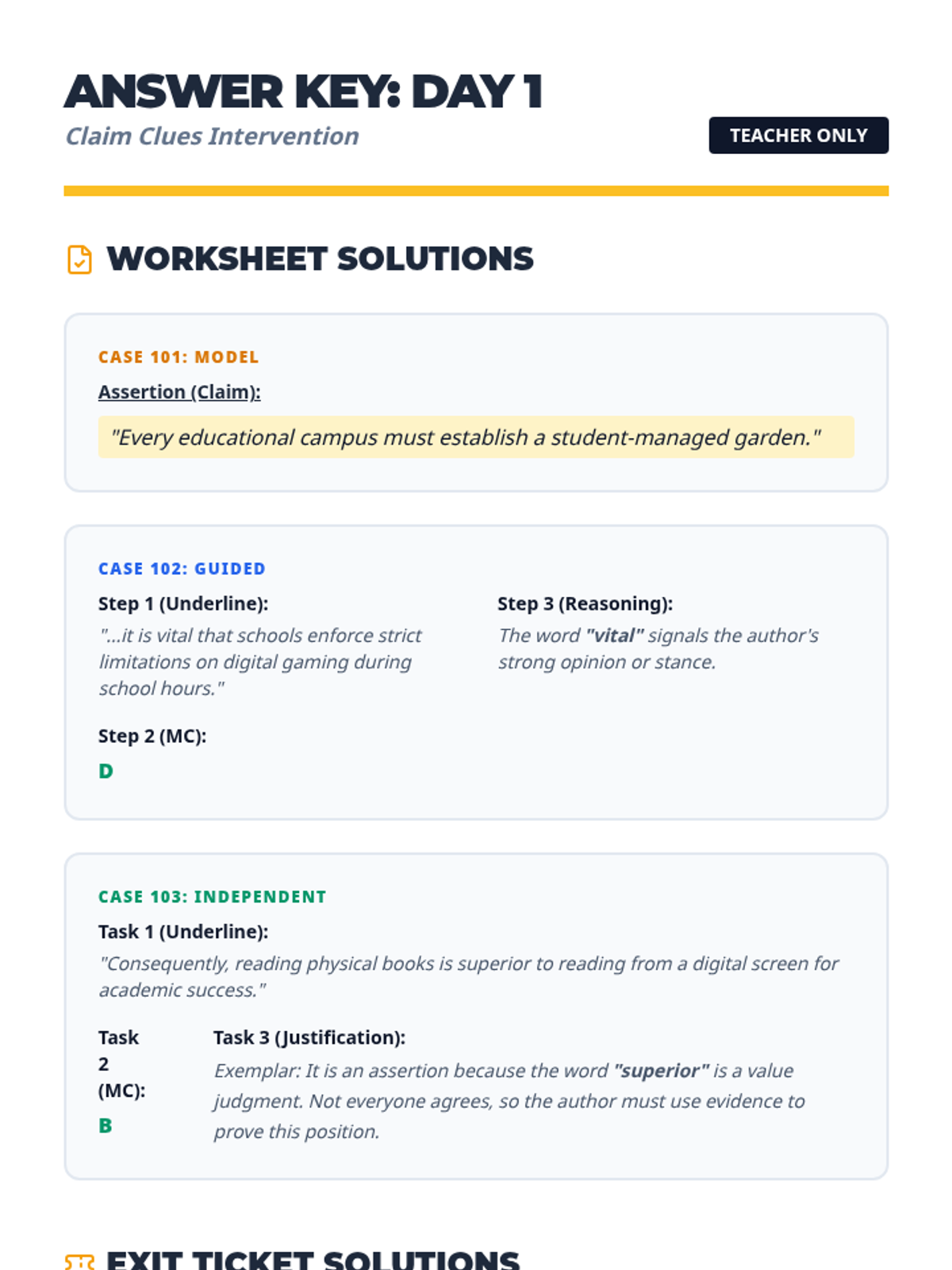
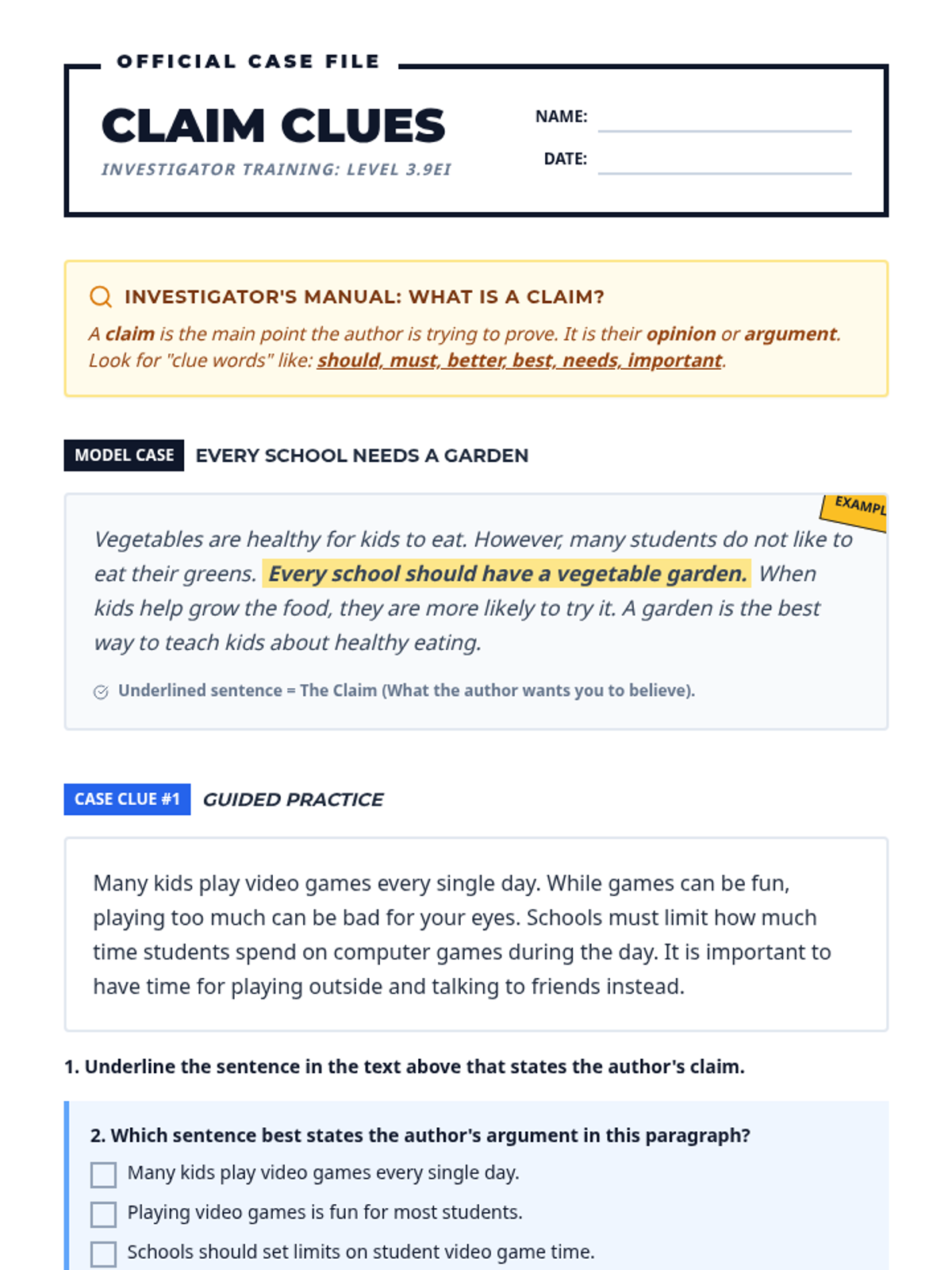
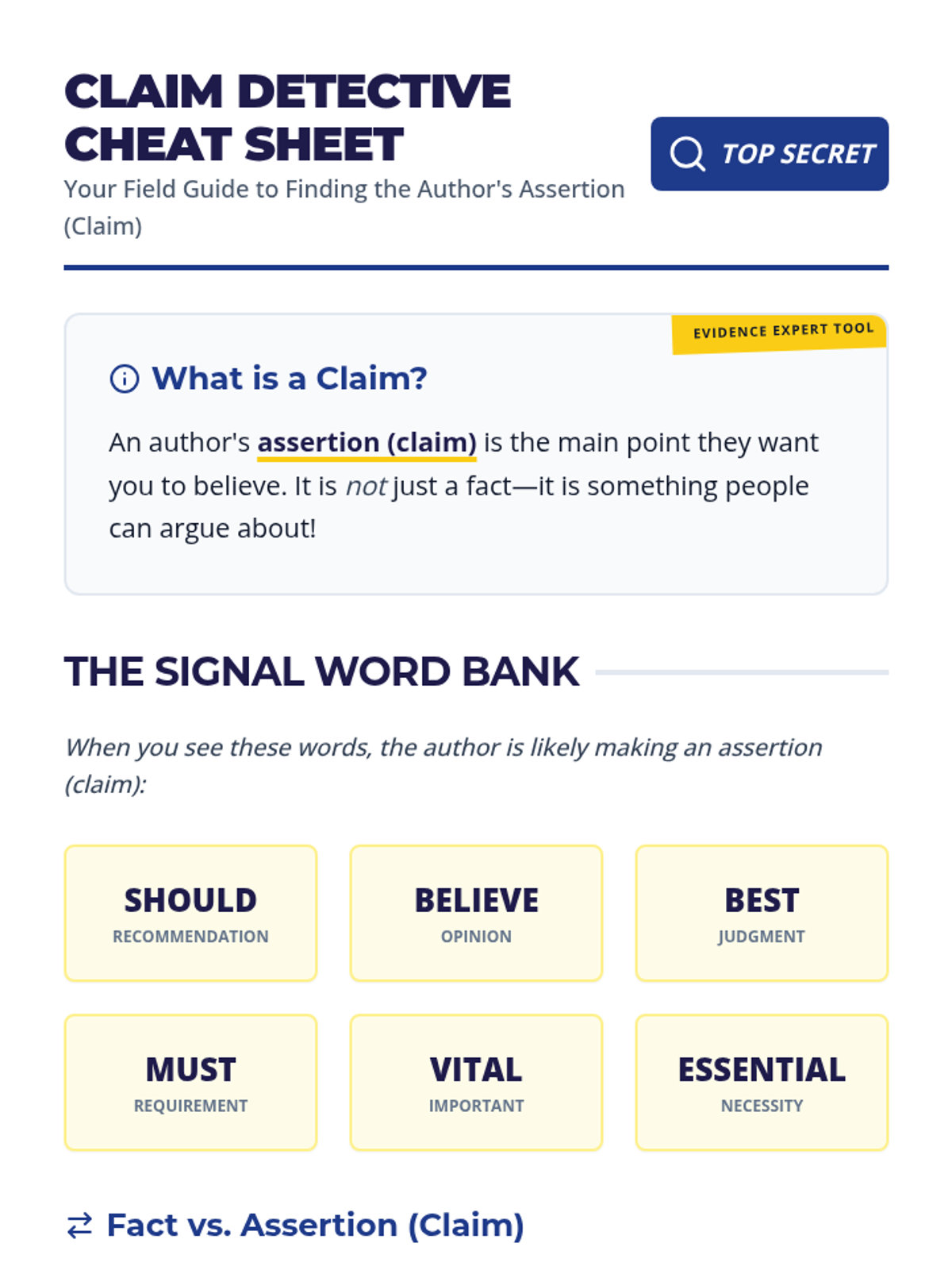
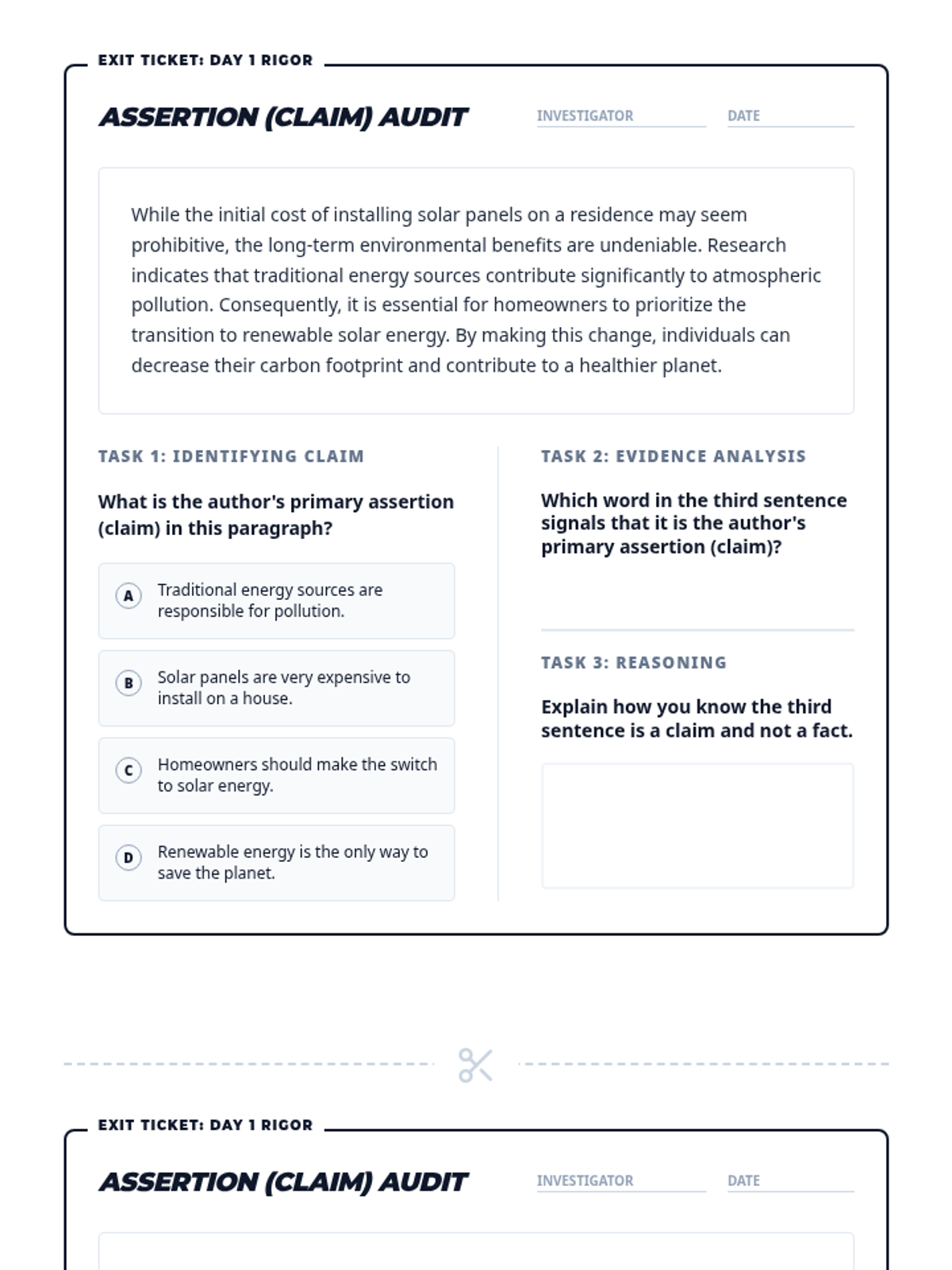
A comprehensive 5-day intervention sequence for 3rd grade literacy focusing on claim identification (3.9Ei) and print/graphic feature analysis (3.10C) with rigorous, STAAR-aligned materials.
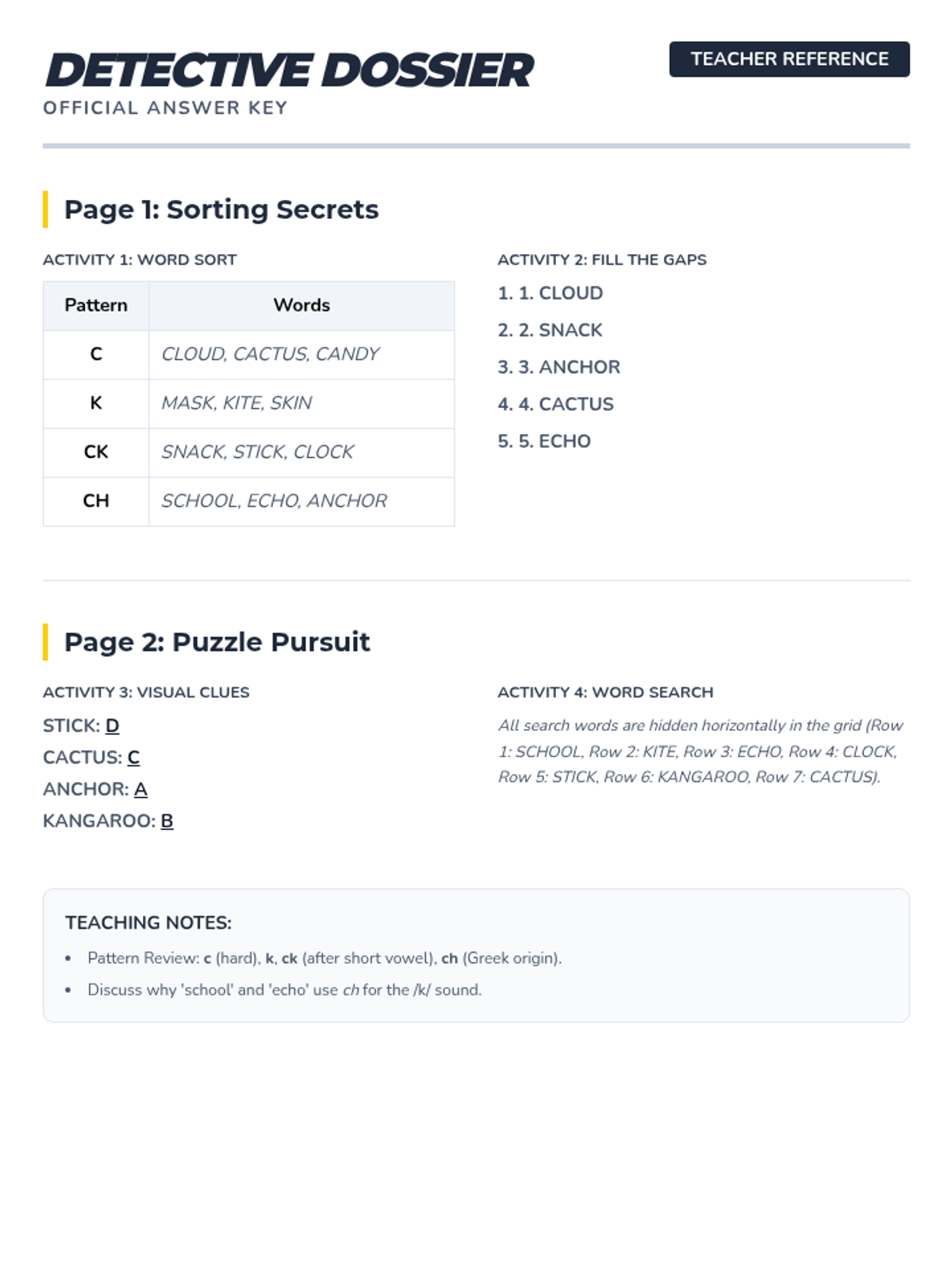
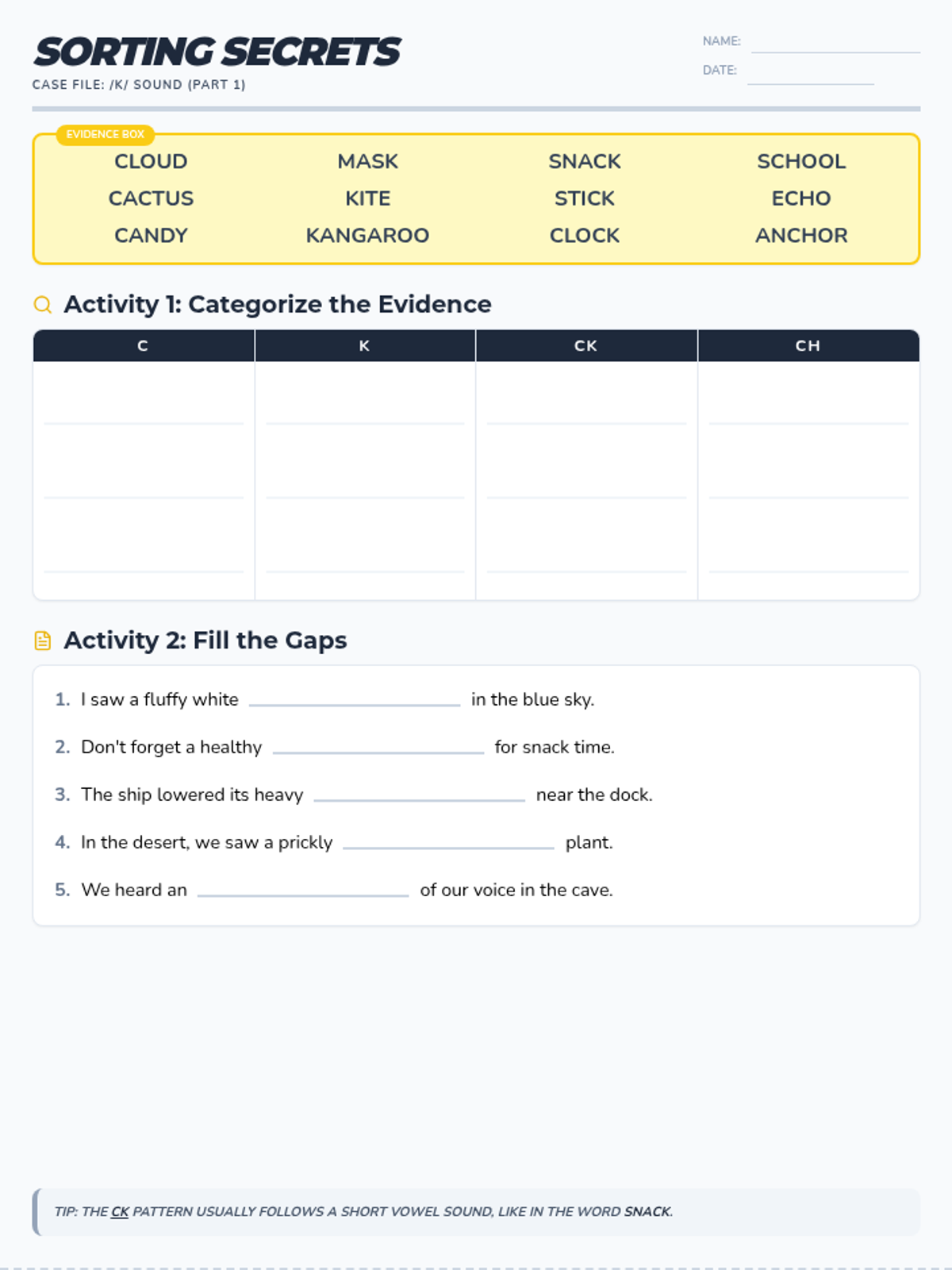
A spelling sequence focused on identifying and using the /k/ sound in its various forms: c, k, ck, and ch. Students practice through sorting, context clues, and visual puzzles.
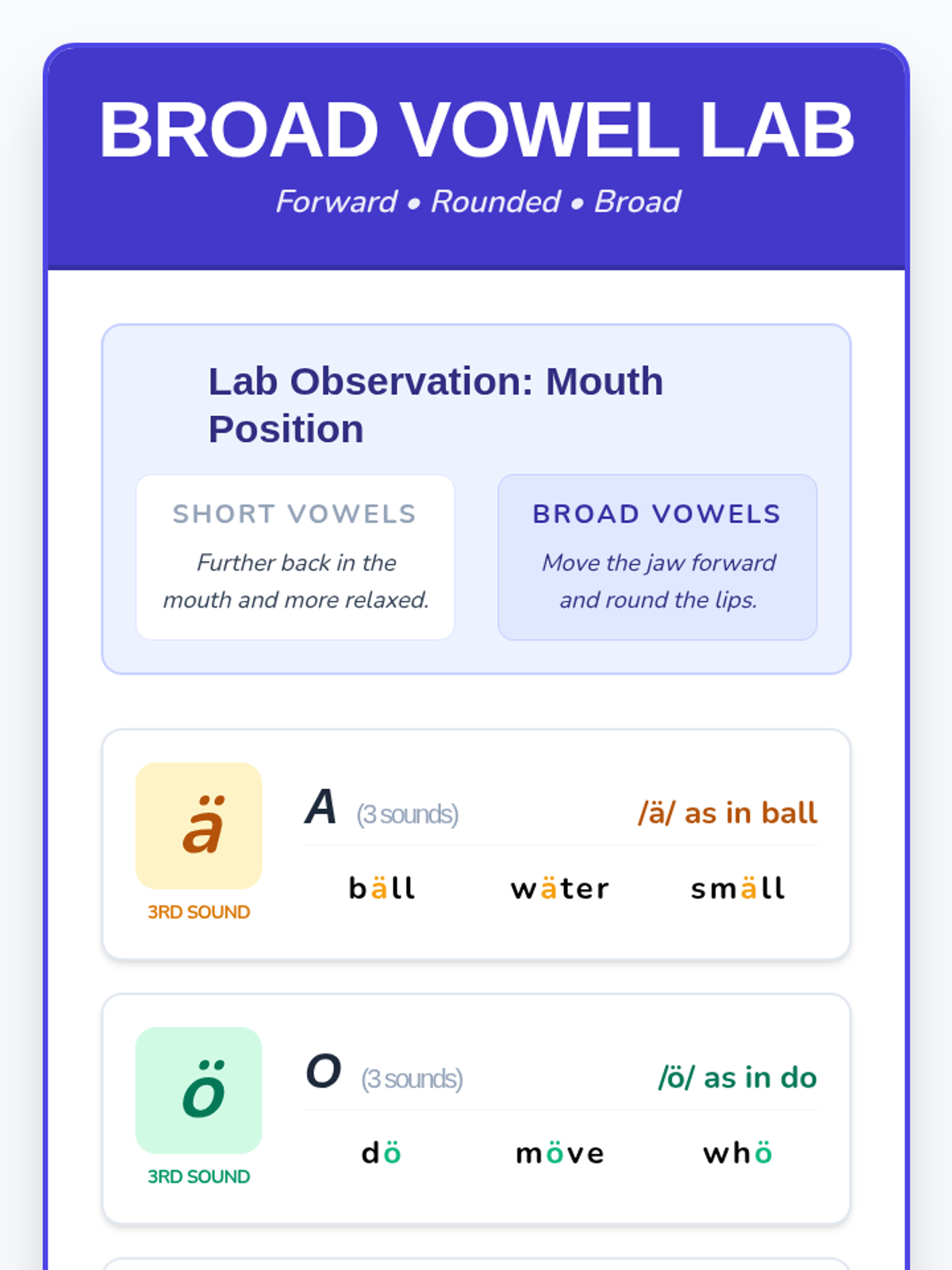
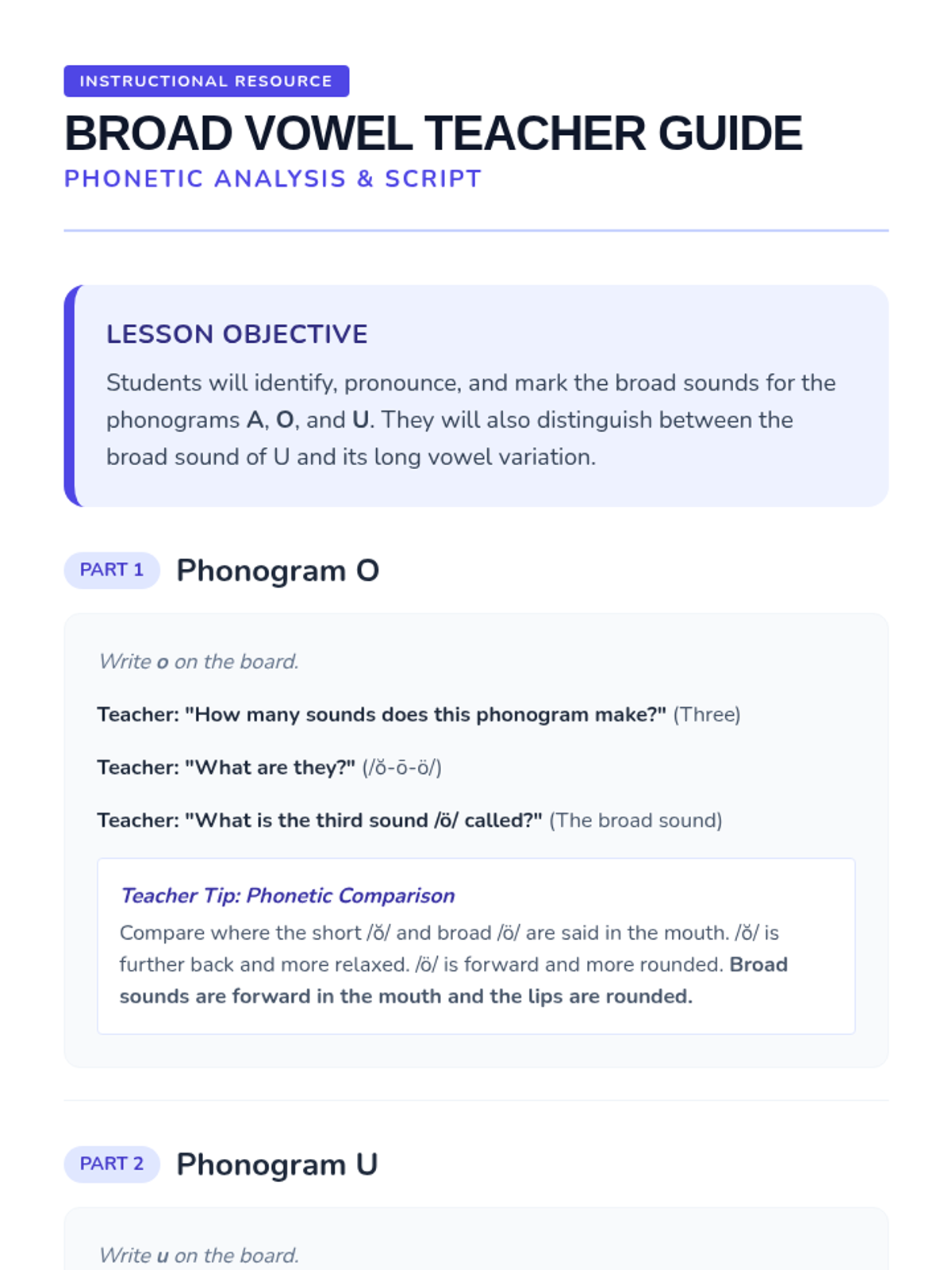
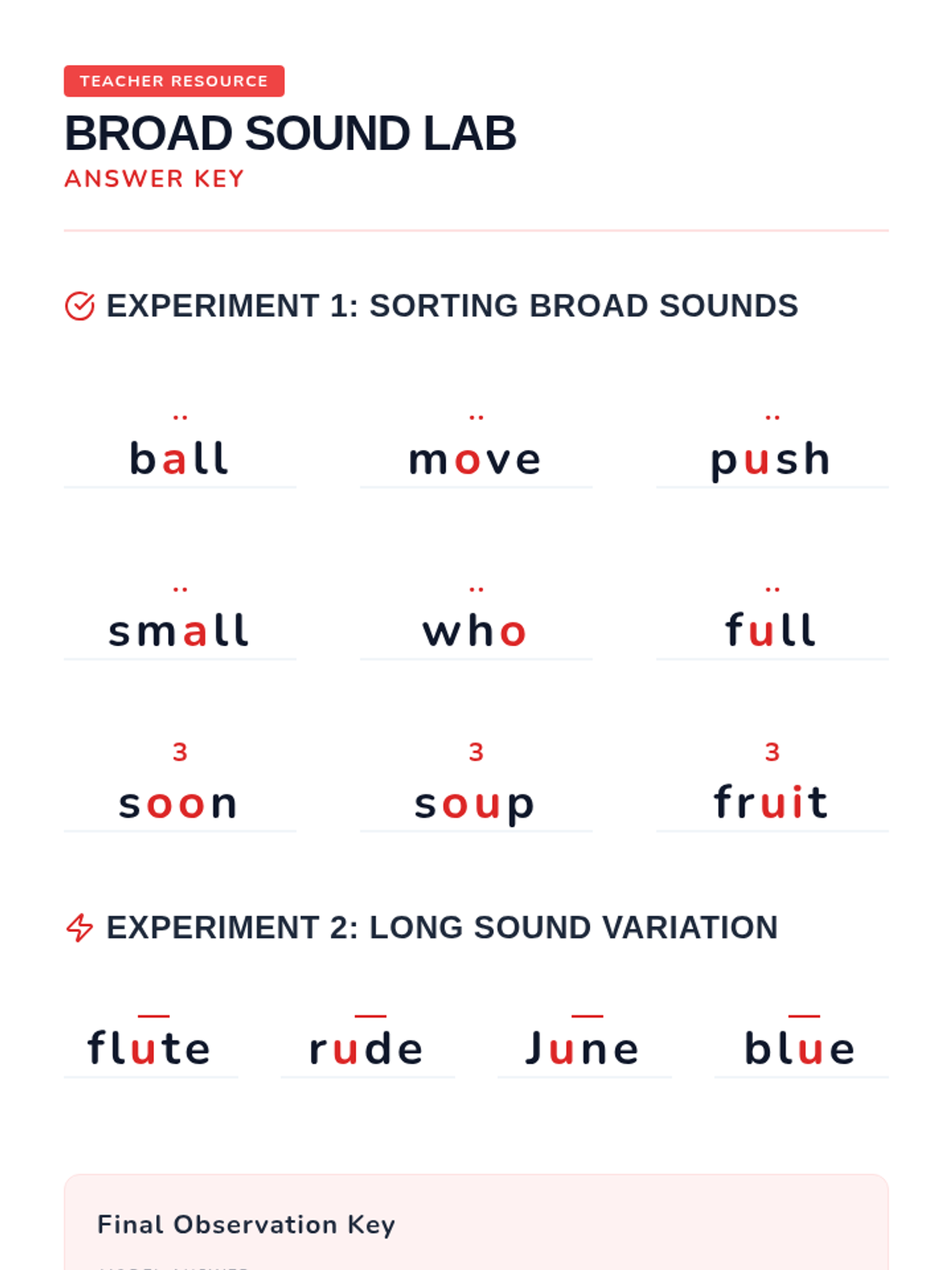
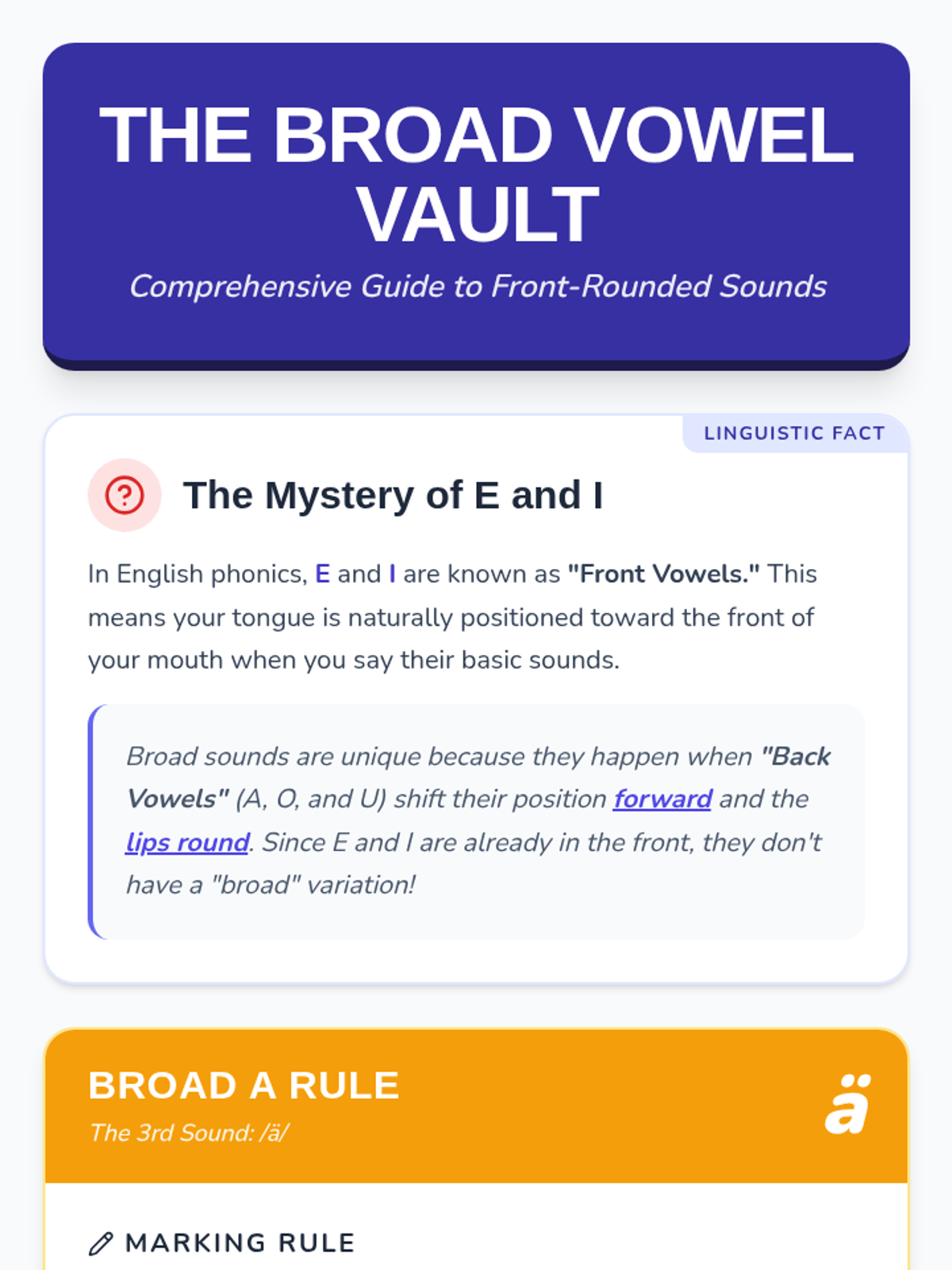
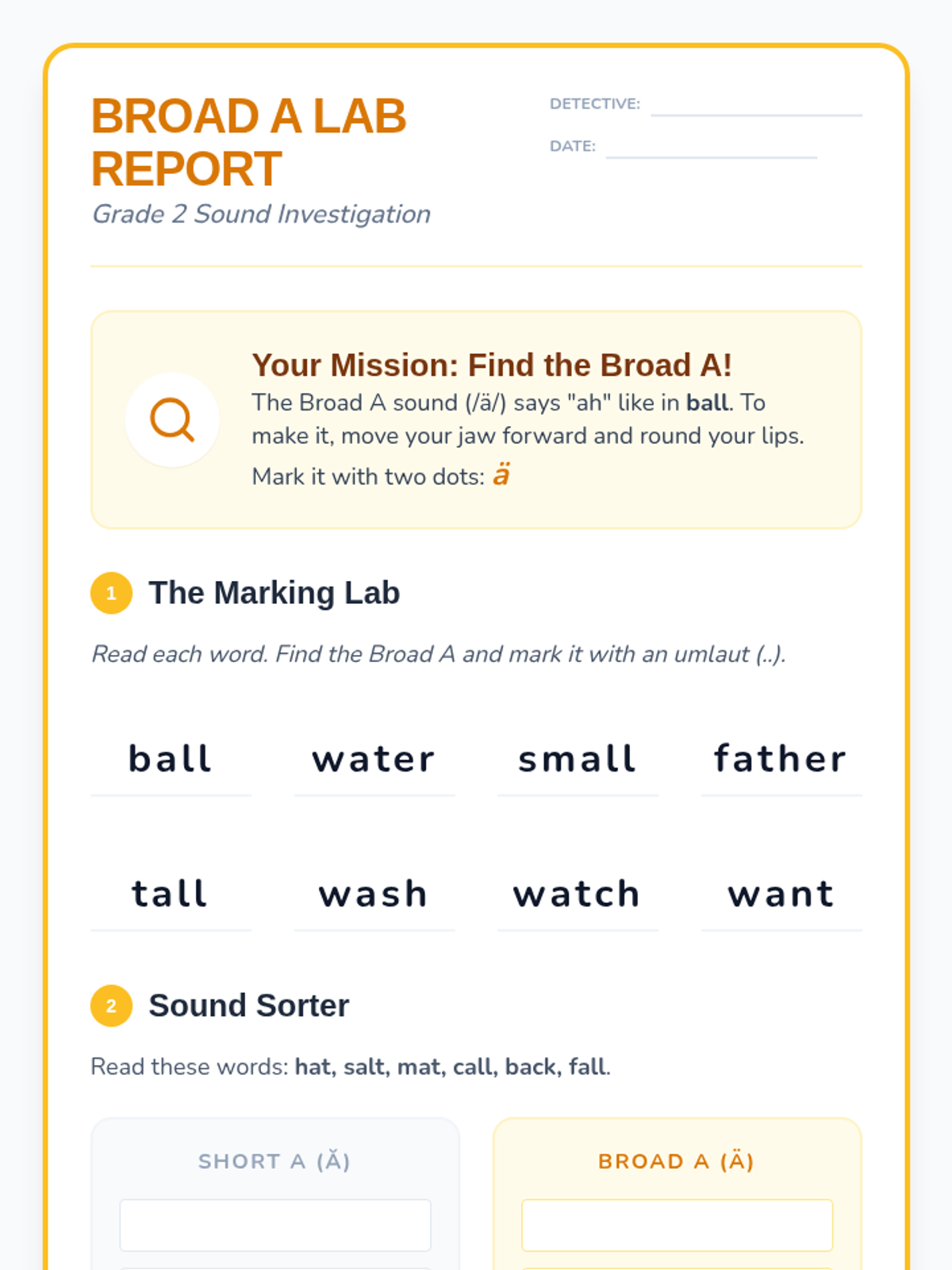
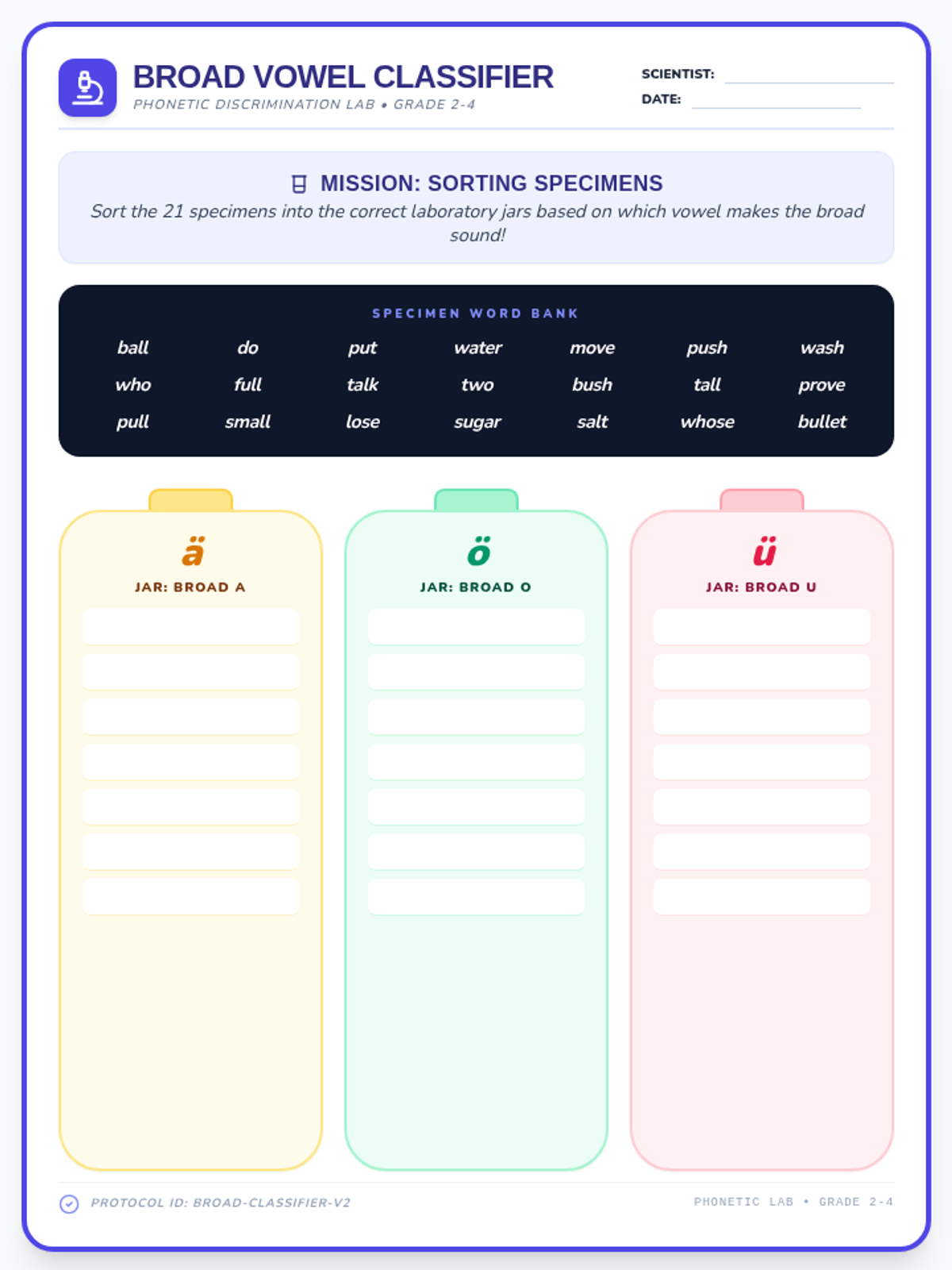
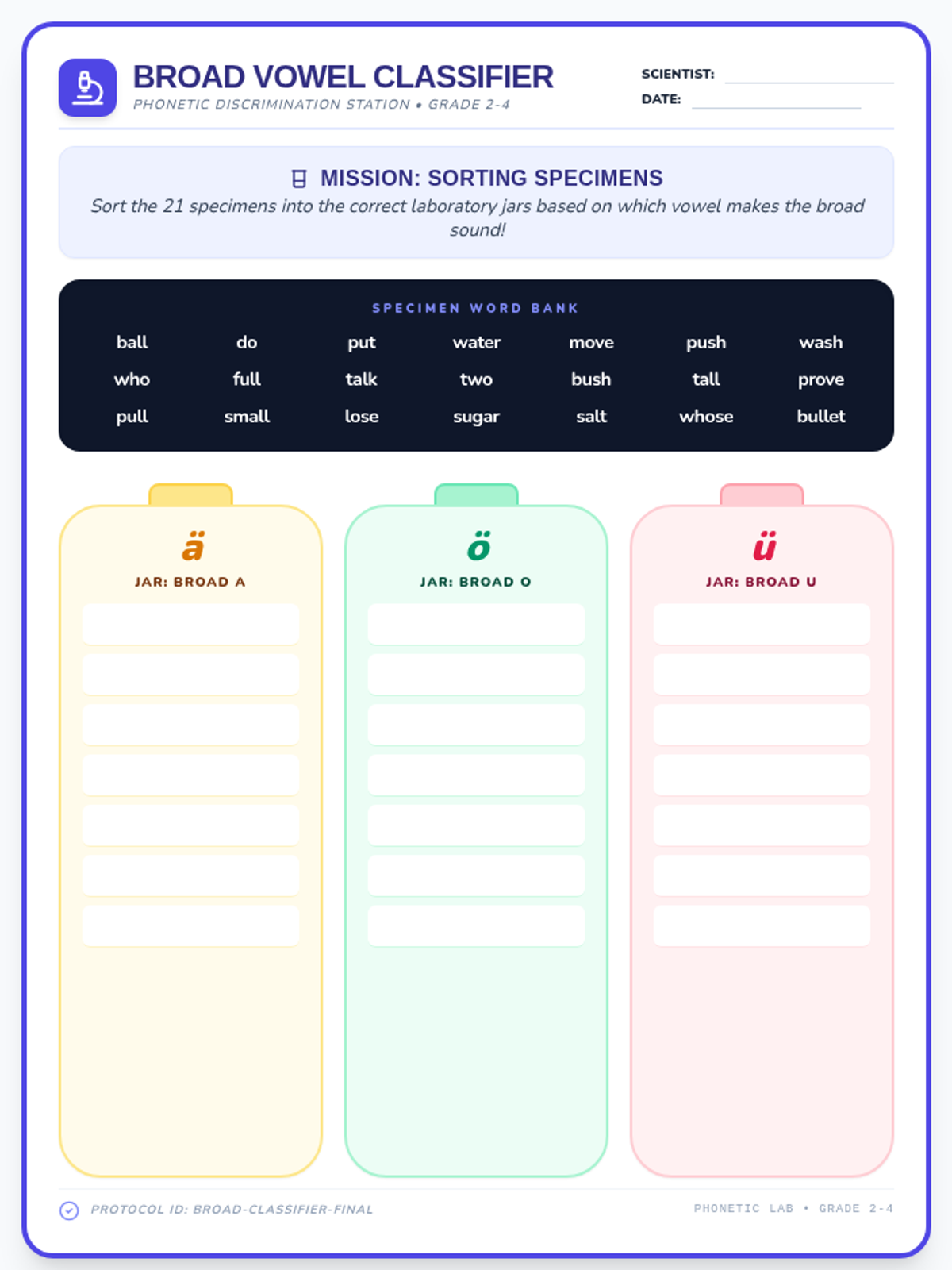
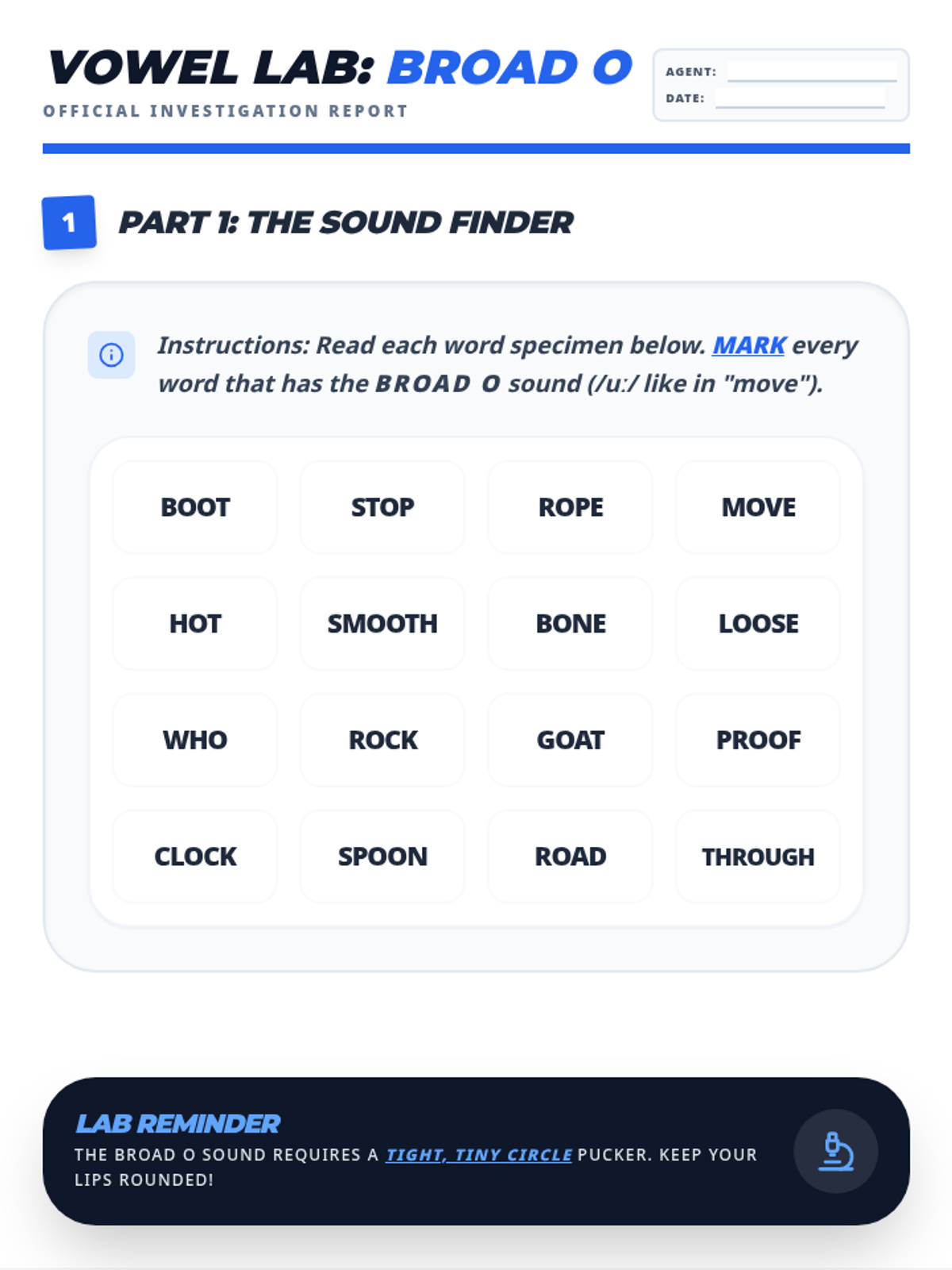
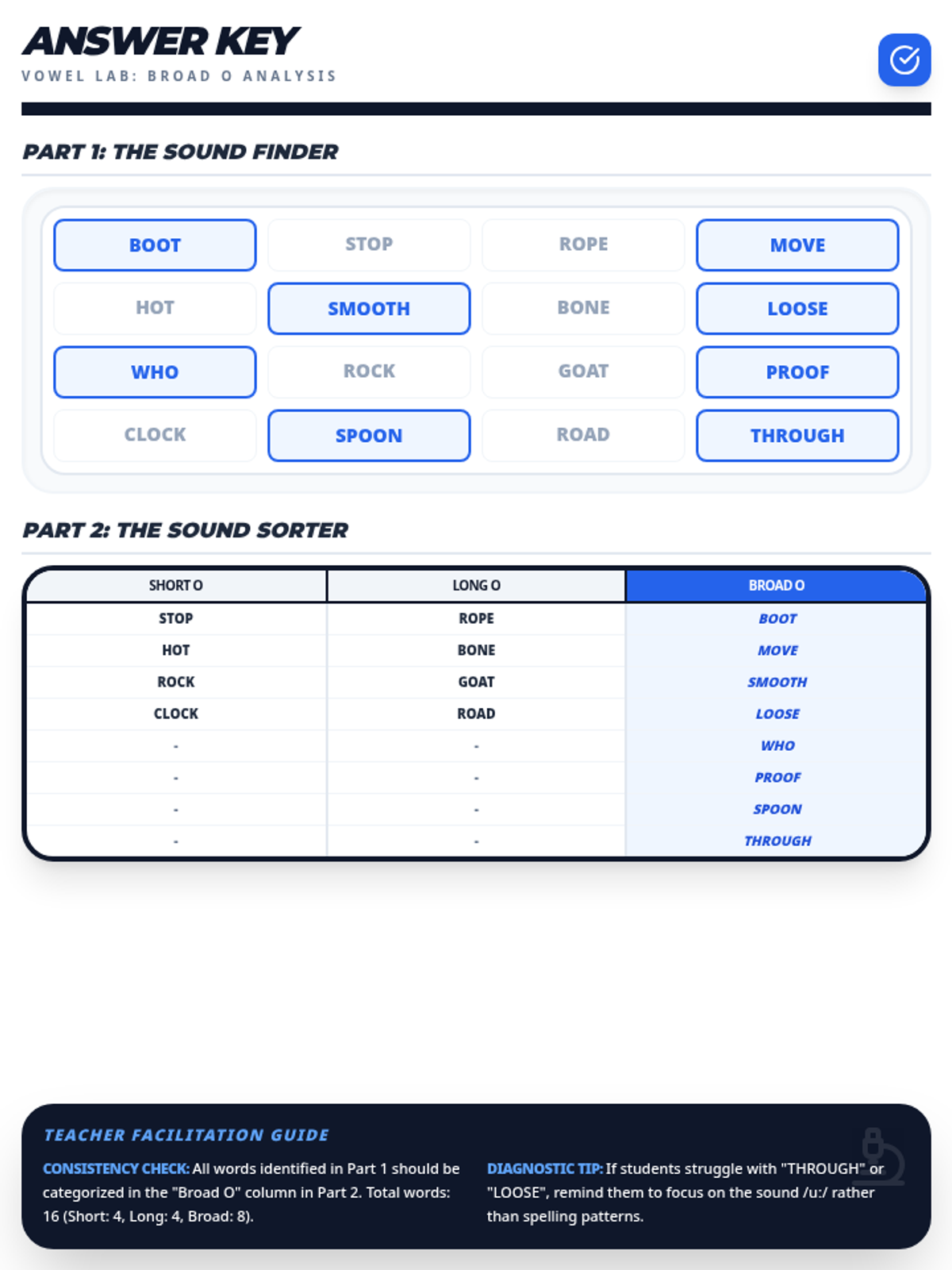
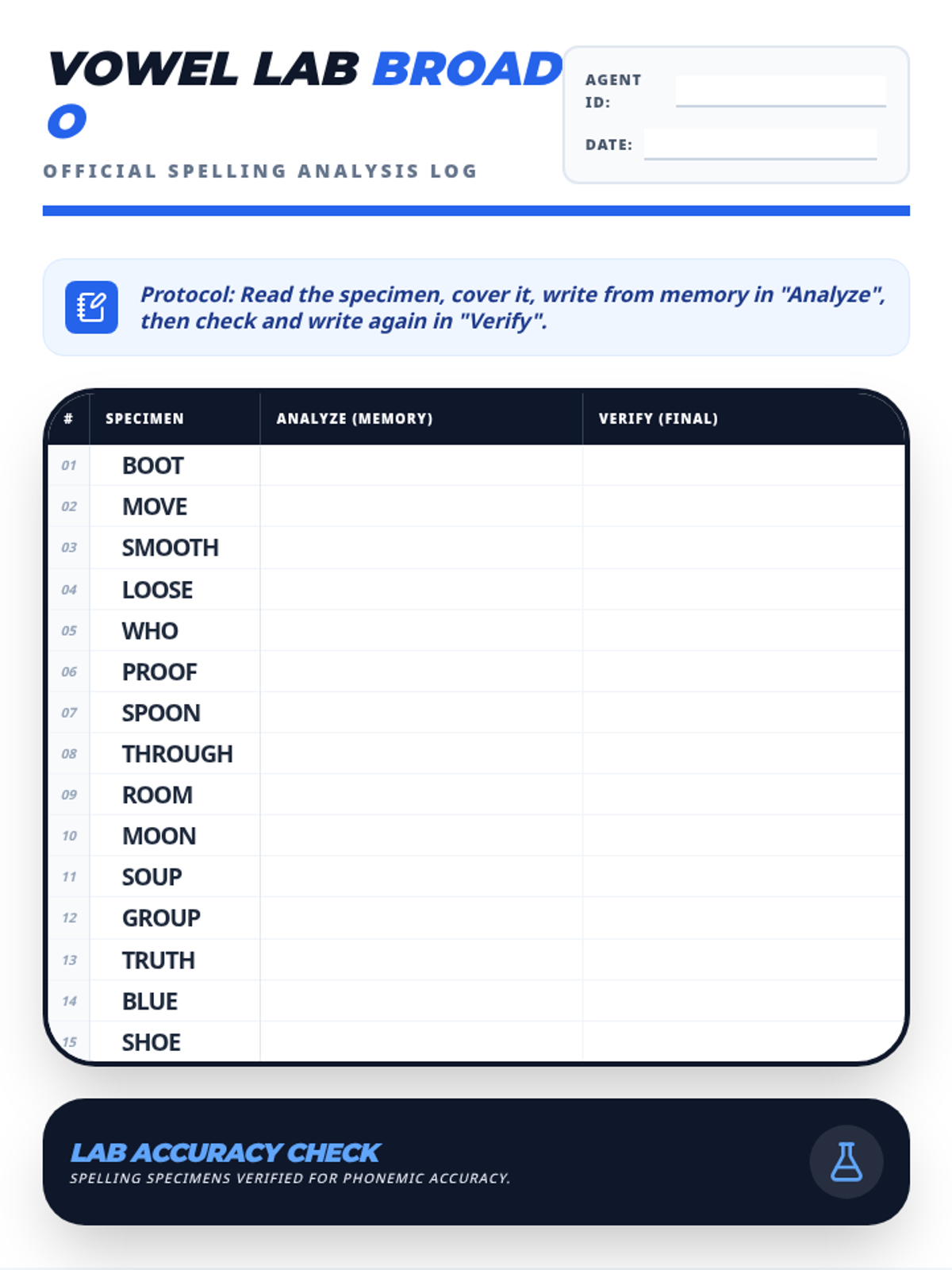
A series of phonics lessons focused on identifying and distinguishing various vowel sounds, specifically focusing on broad vowel variations and their mouth mechanics.
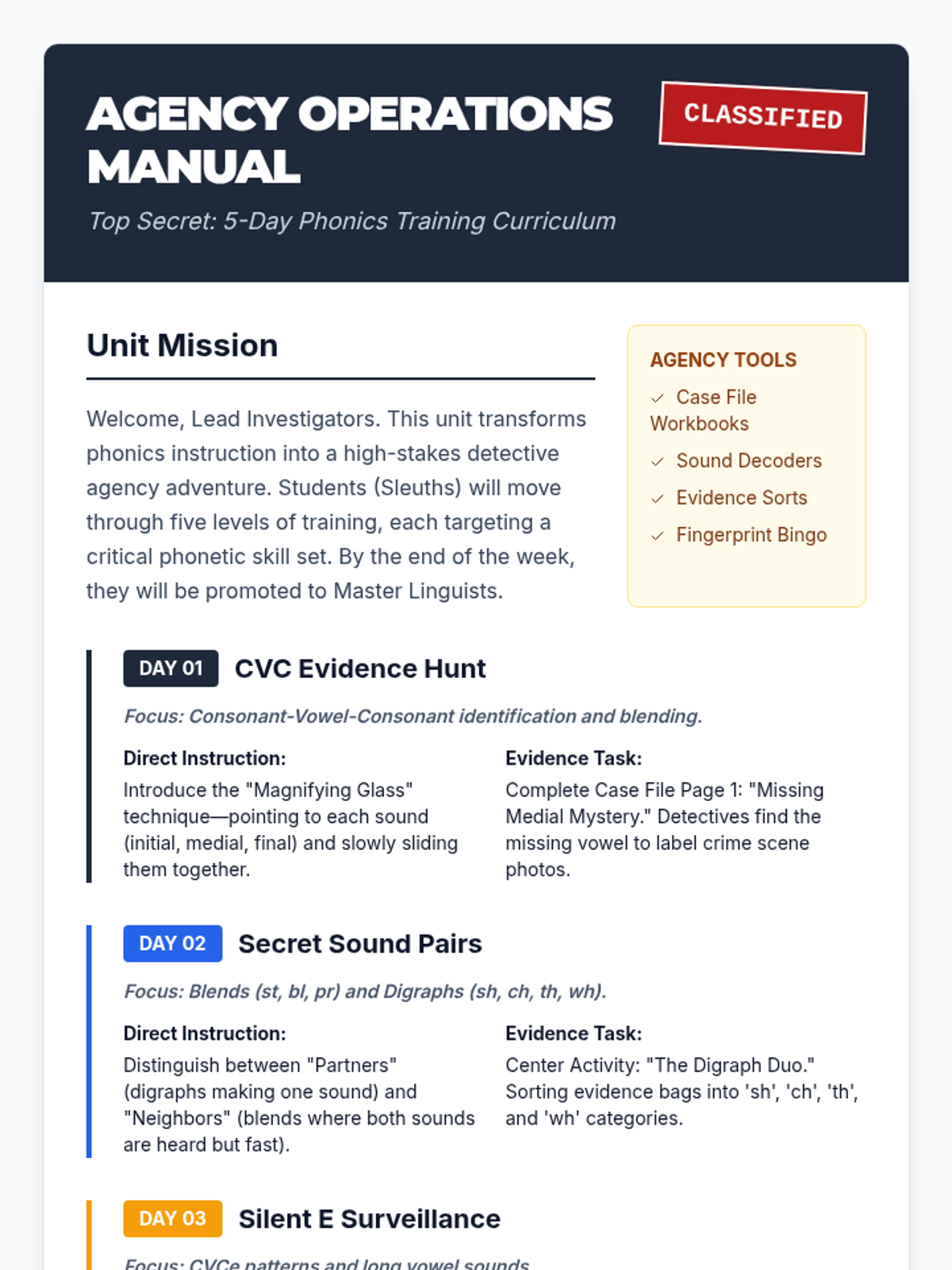
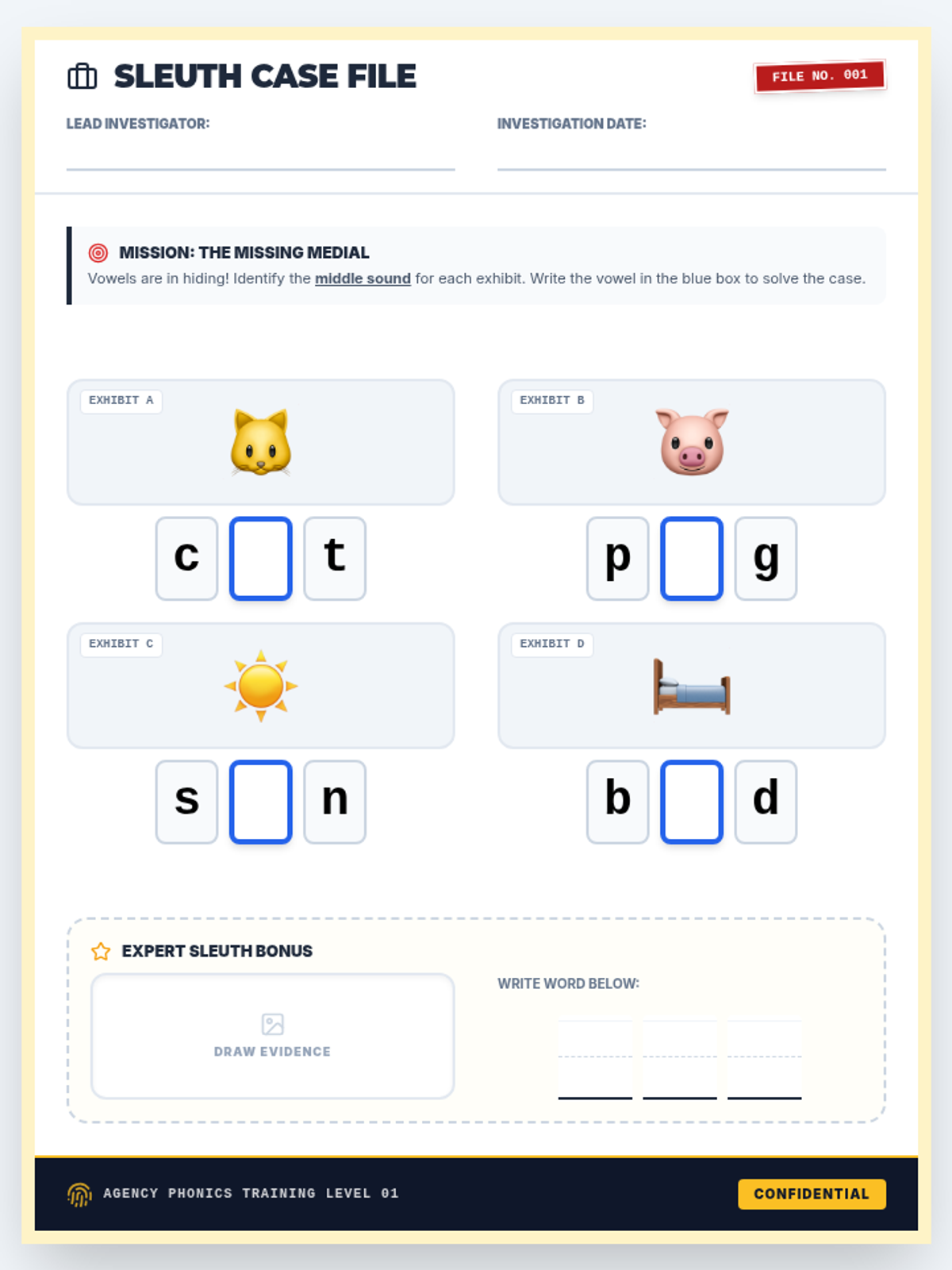
A comprehensive 5-day phonics curriculum for grades K-3 using a detective agency theme. Students progress from sound sleuths to master linguists, uncovering the secrets of CVC words, blends, digraphs, silent e, vowel teams, and multi-syllabic words through investigative play and structured practice.
A series of lessons exploring complex spelling patterns including assimilated suffixes and chameleon prefixes to improve student decoding and spelling accuracy.
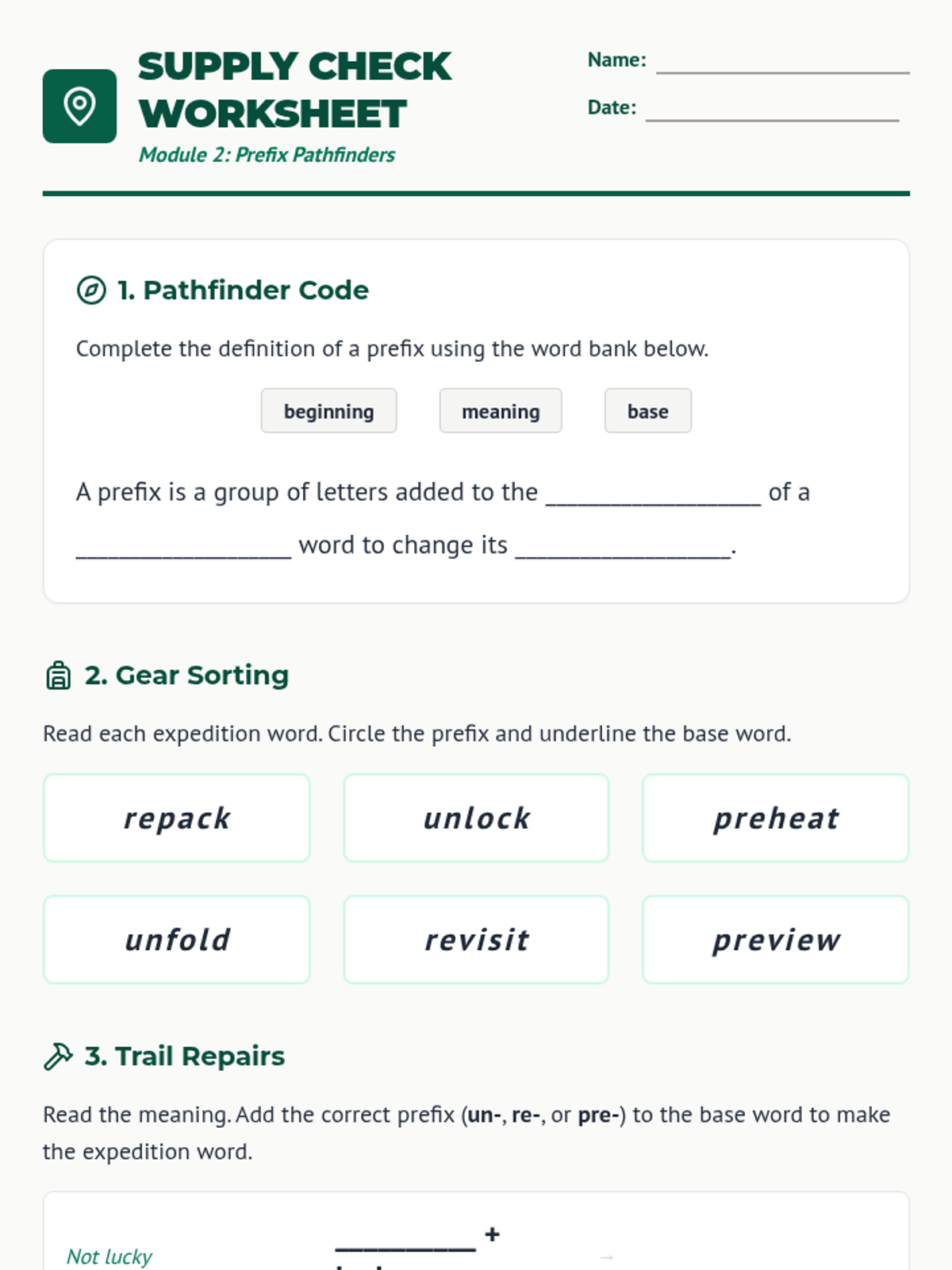
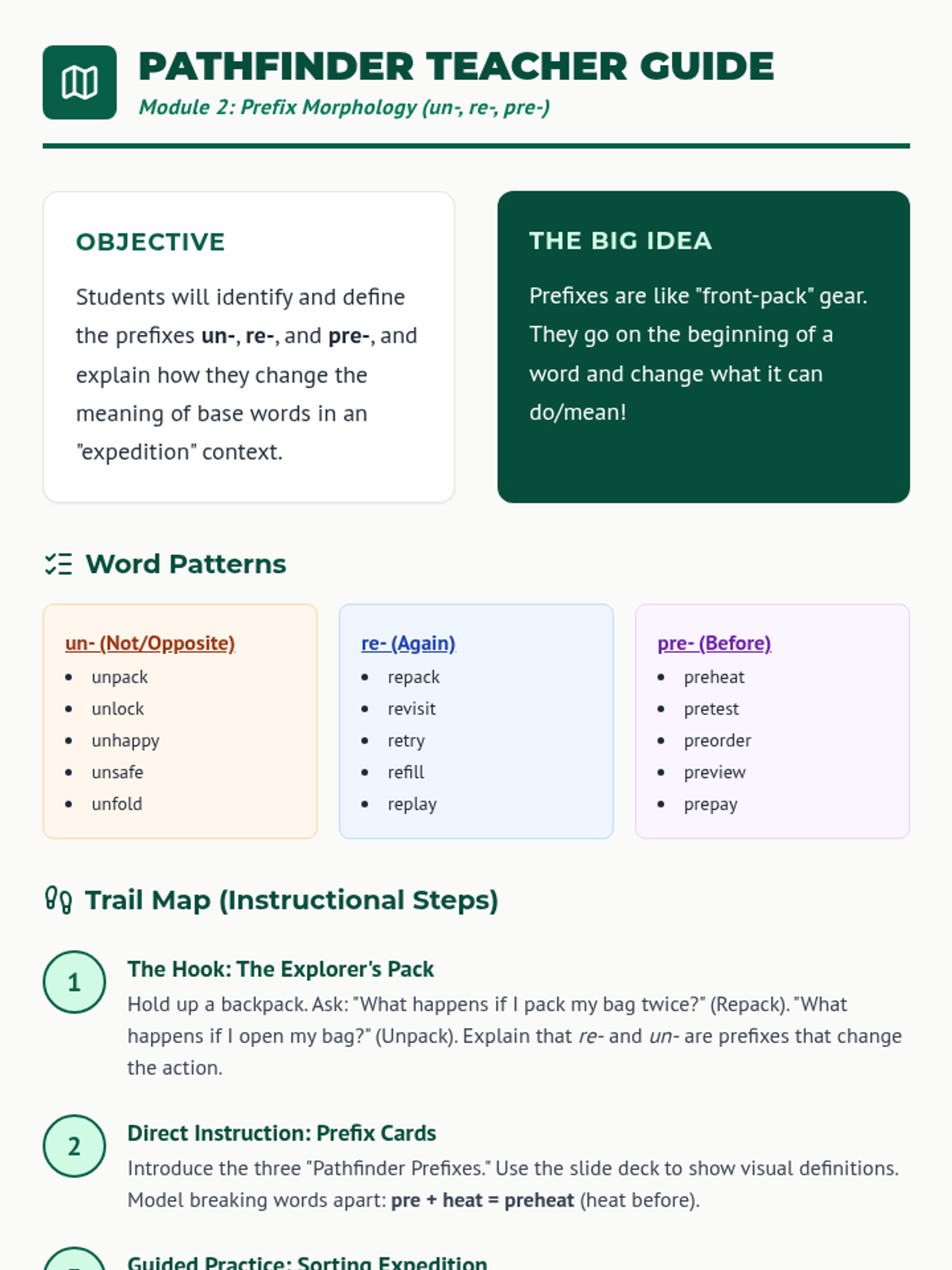
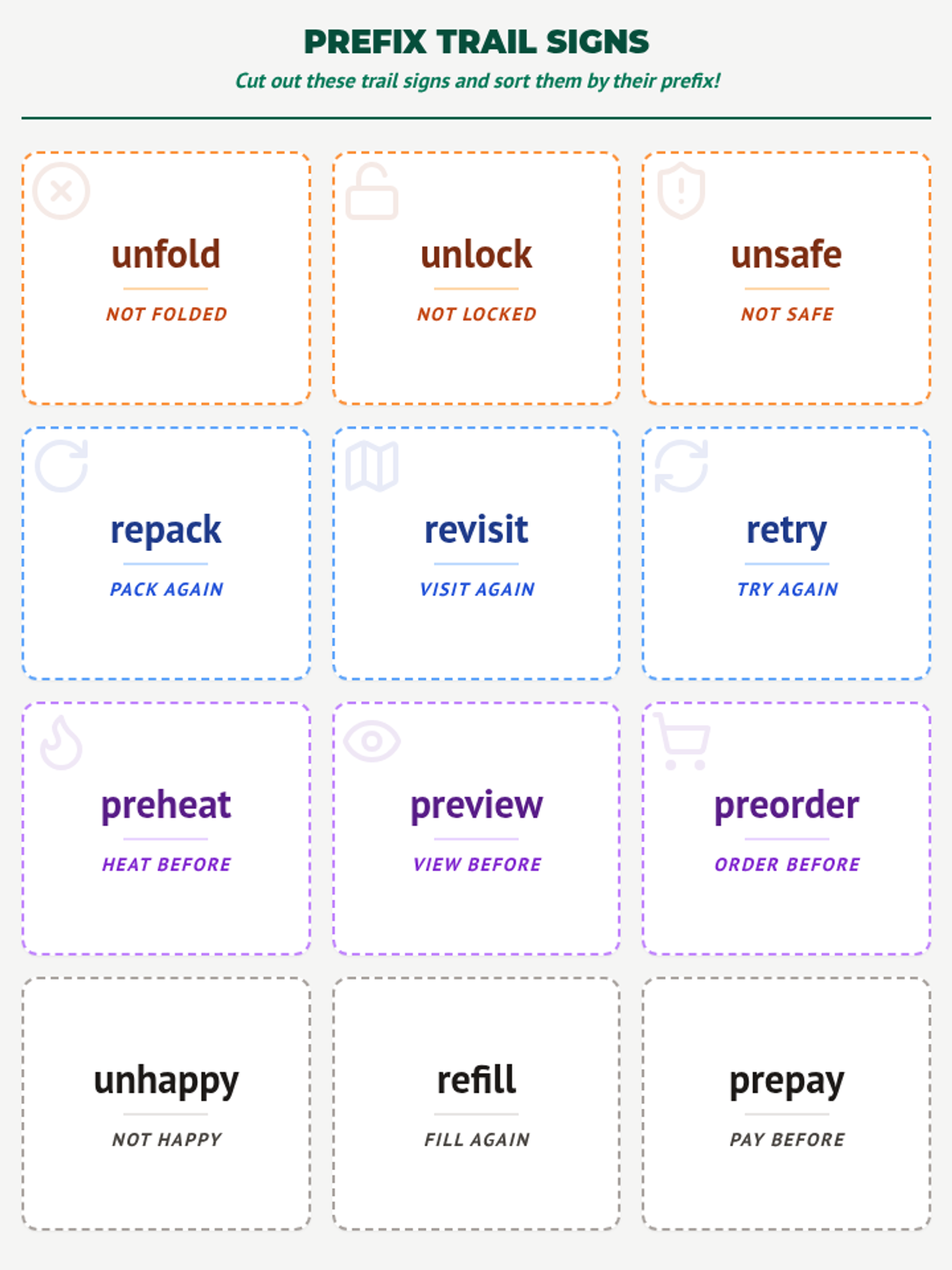
A travel-themed spelling and morphology unit where students explore advanced vowel patterns and word structures as 'World Word Explorers'.