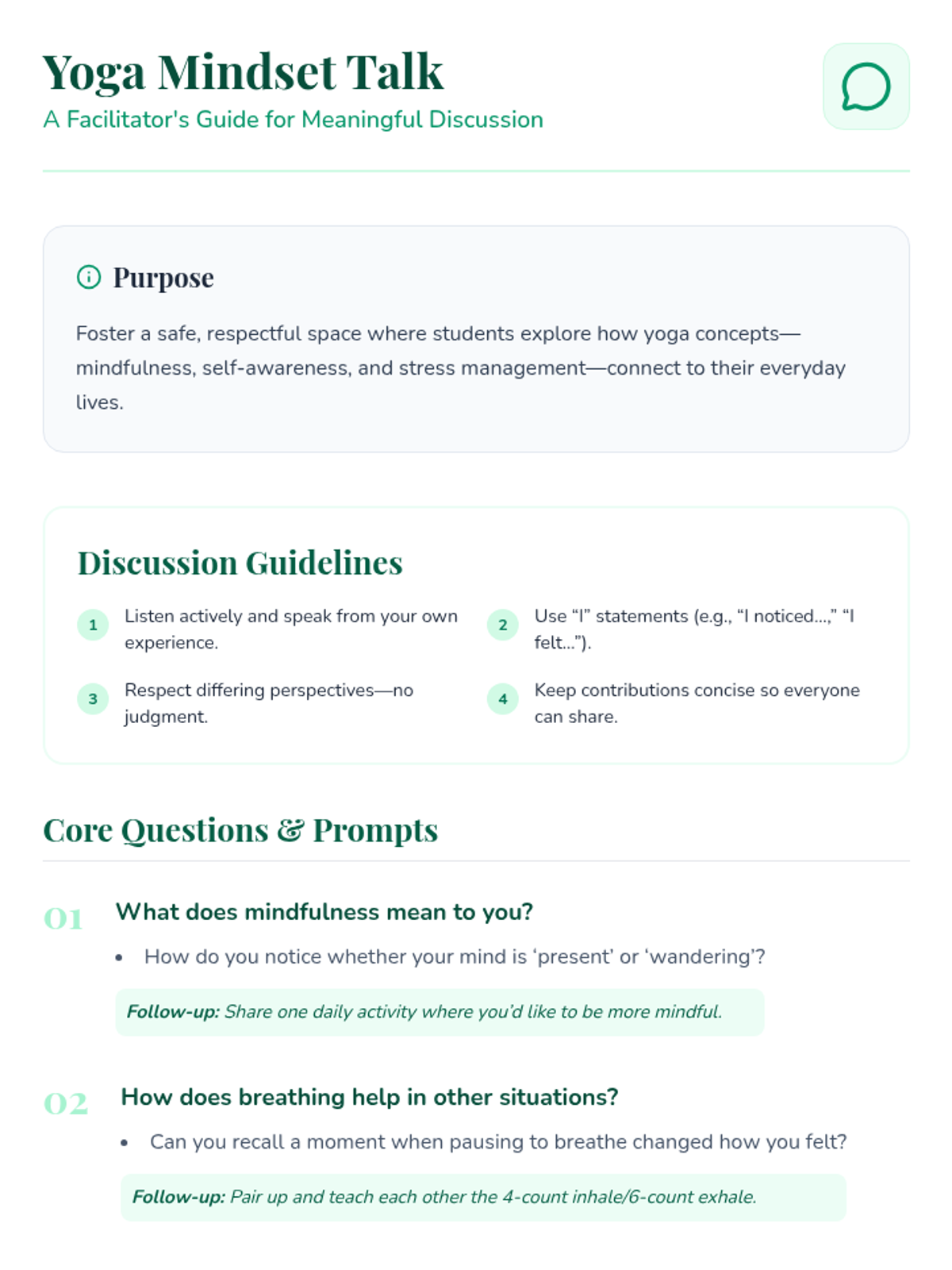
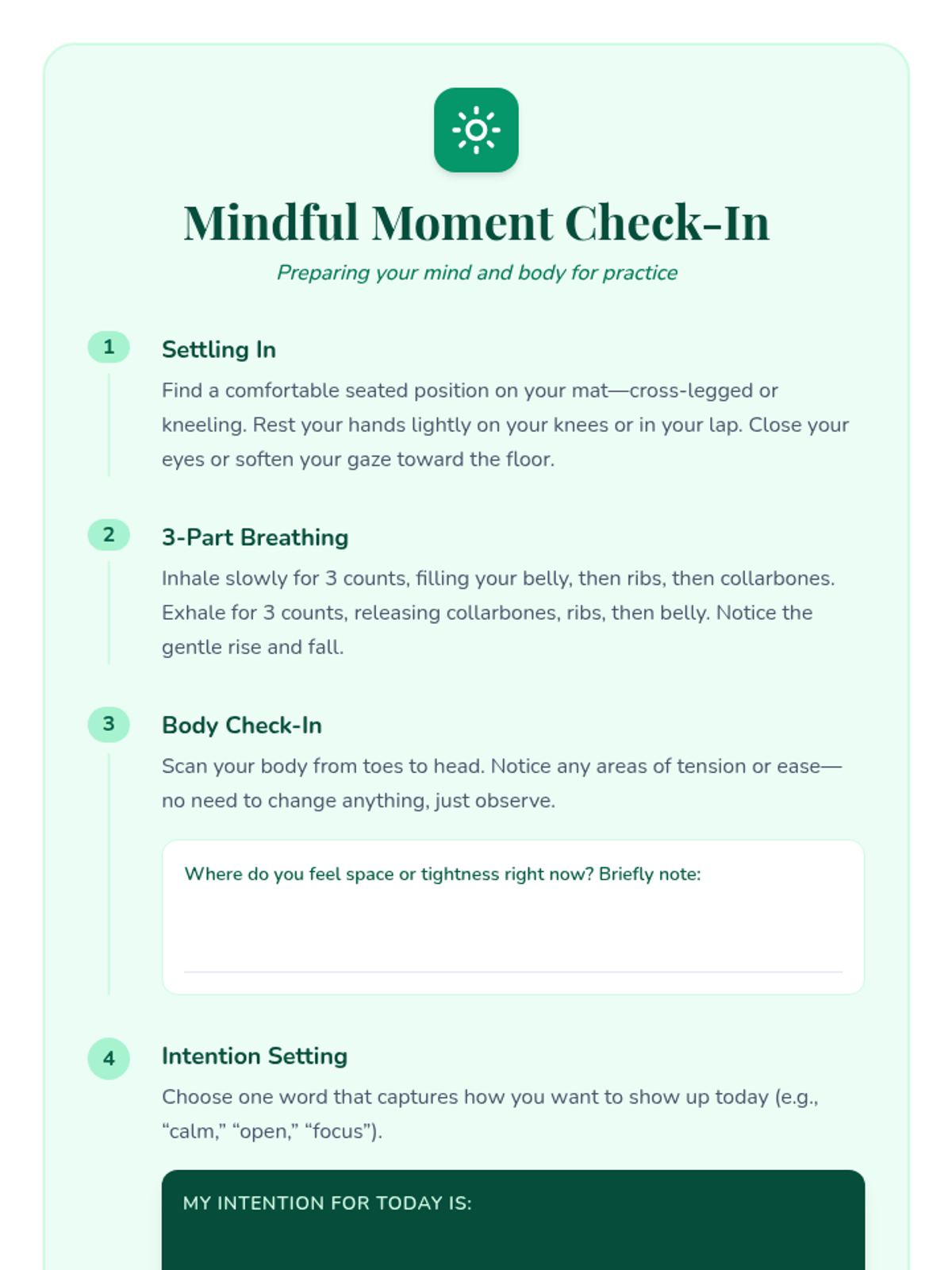
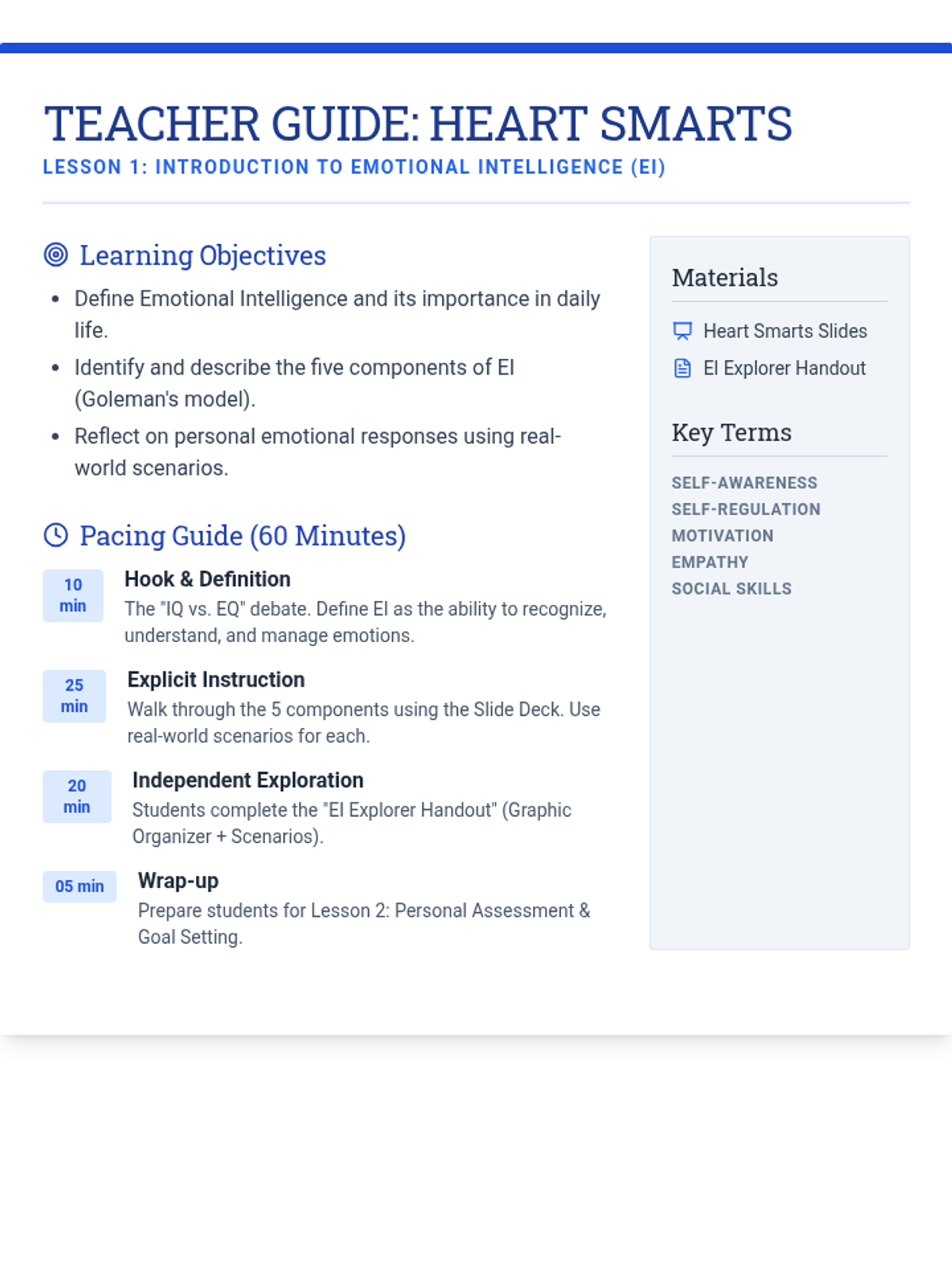
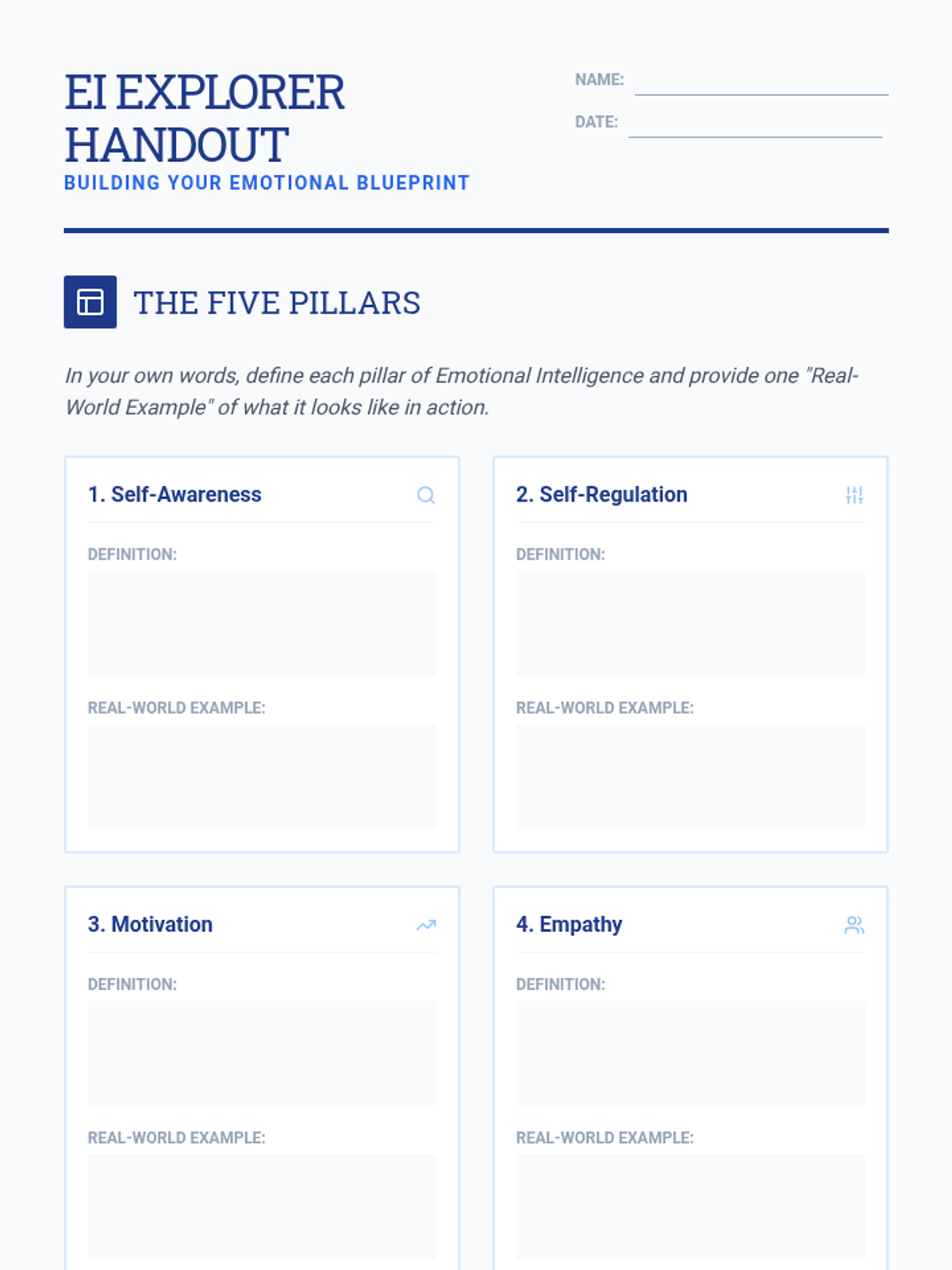
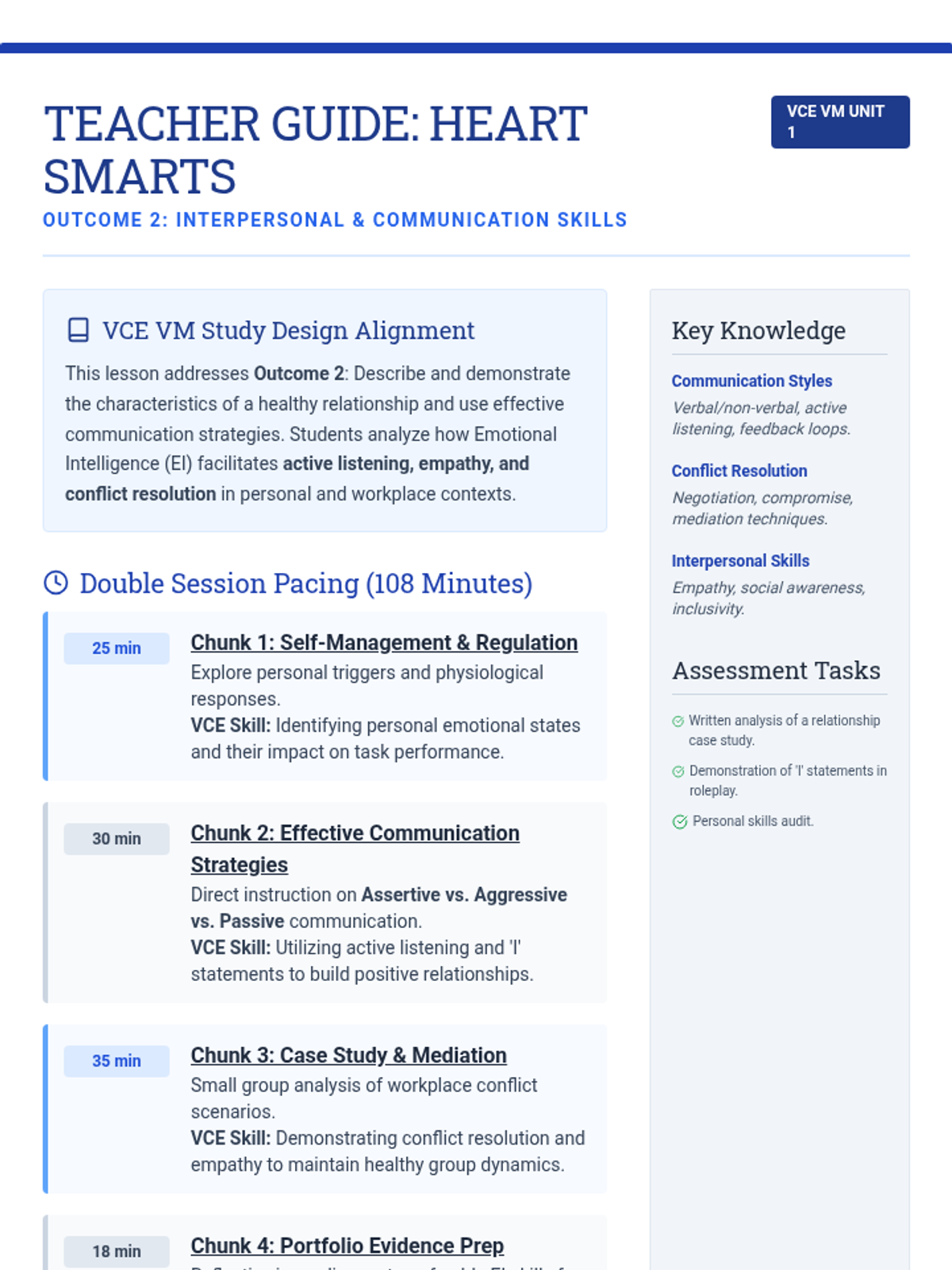
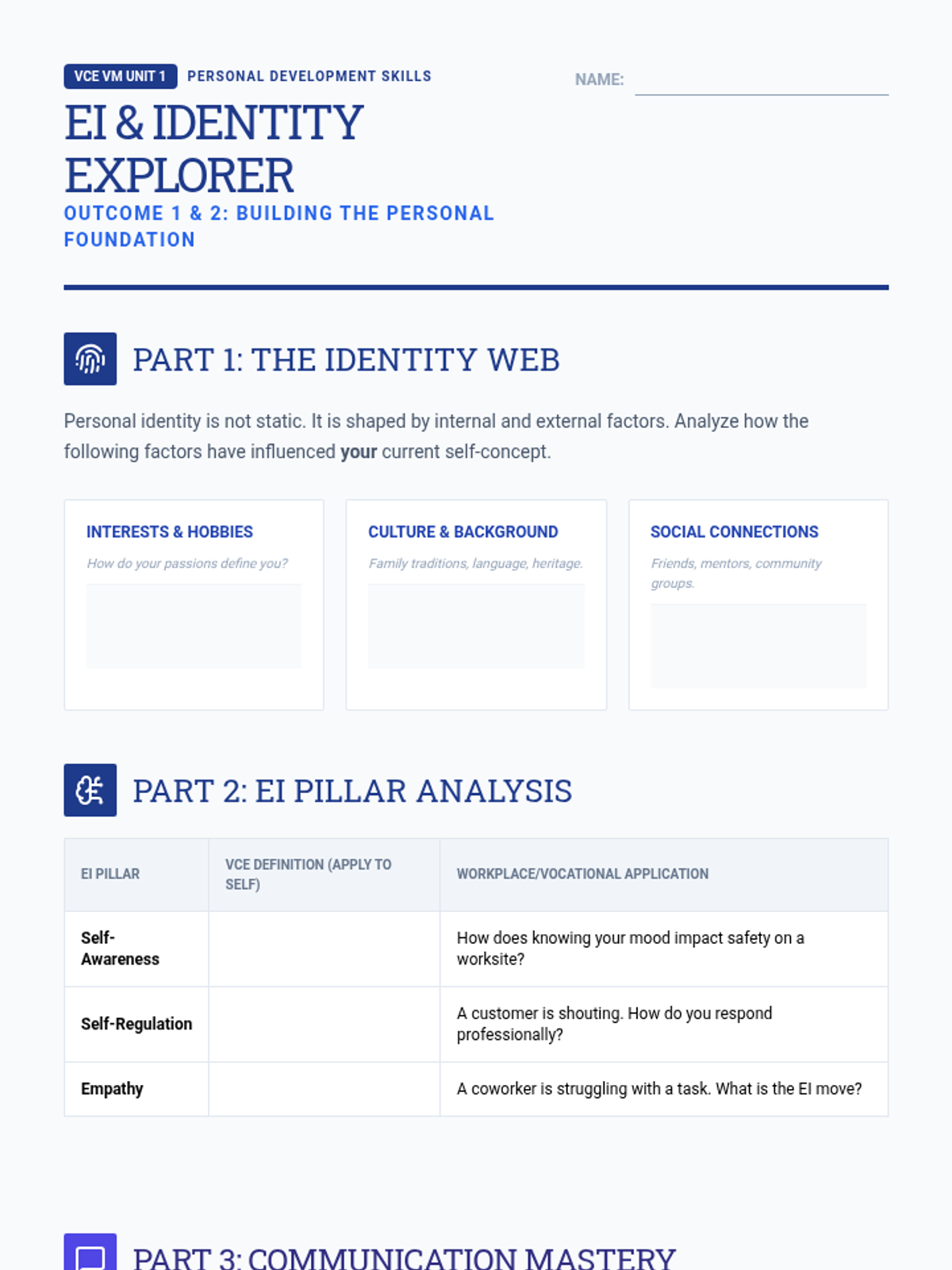
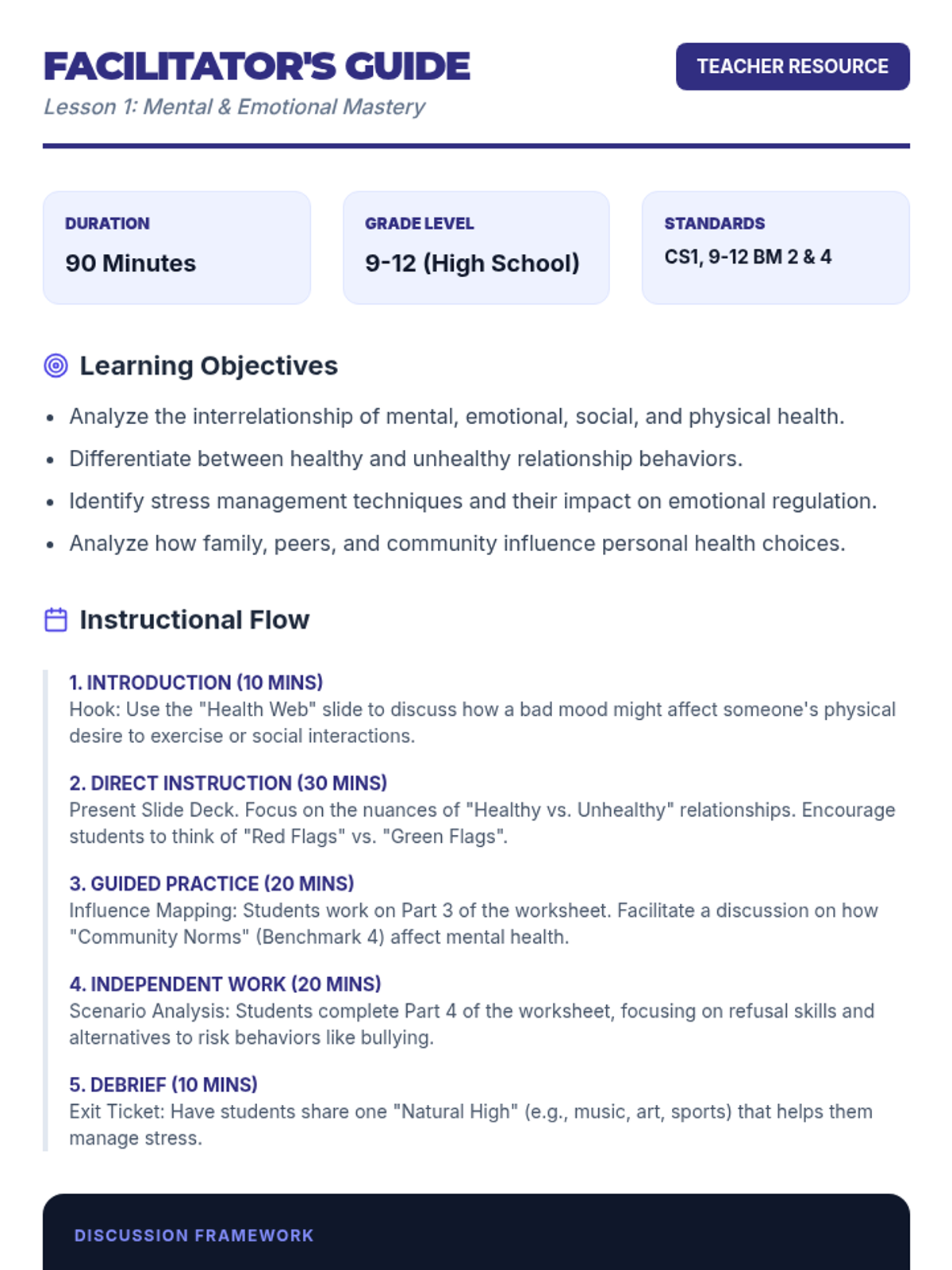
Fundamental concepts of emotional intelligence, stress reduction, and relaxation exercises. Develops skills for healthy relationships, digital balance, and resilience while establishing pathways for help-seeking and support systems.
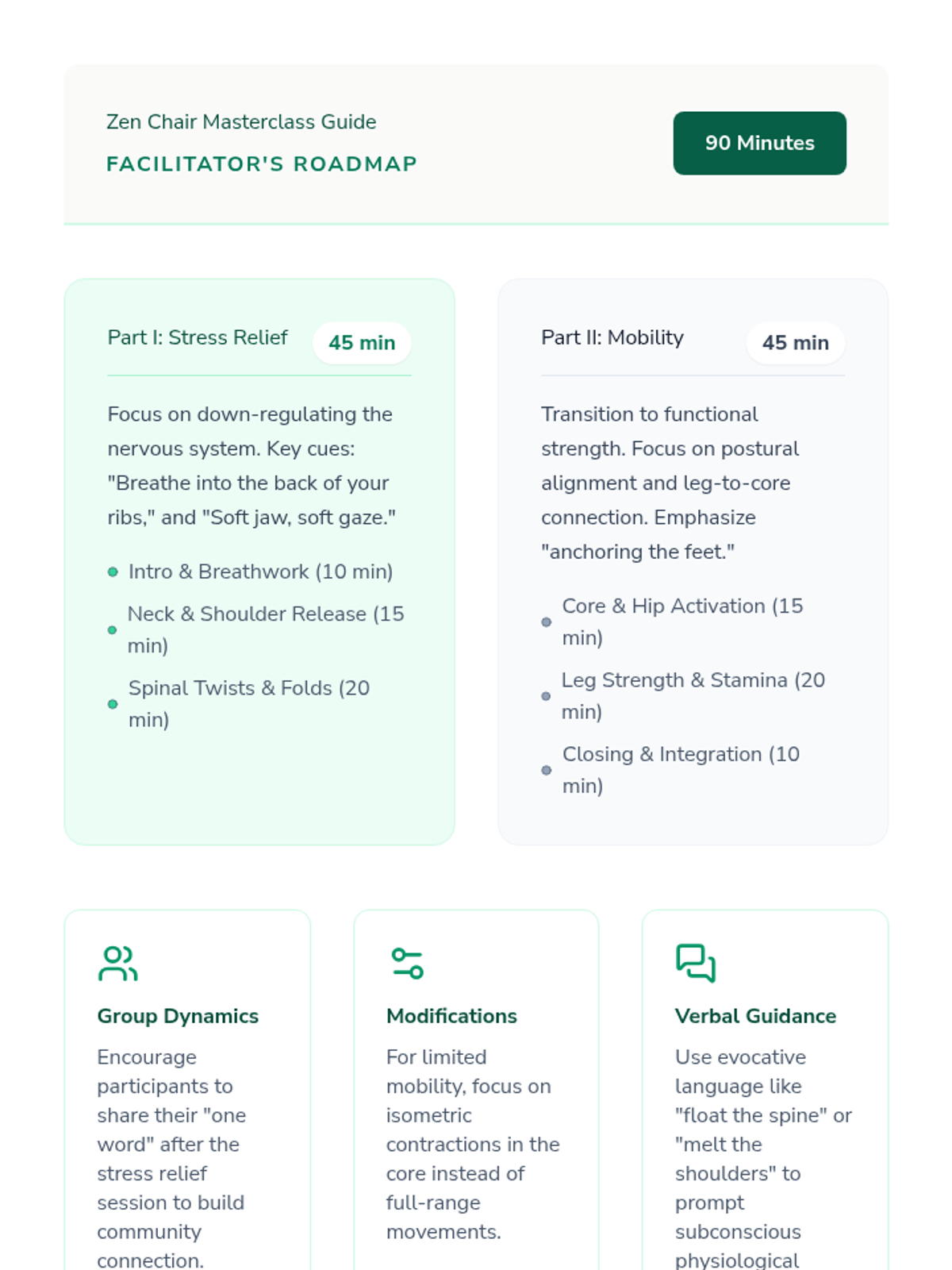
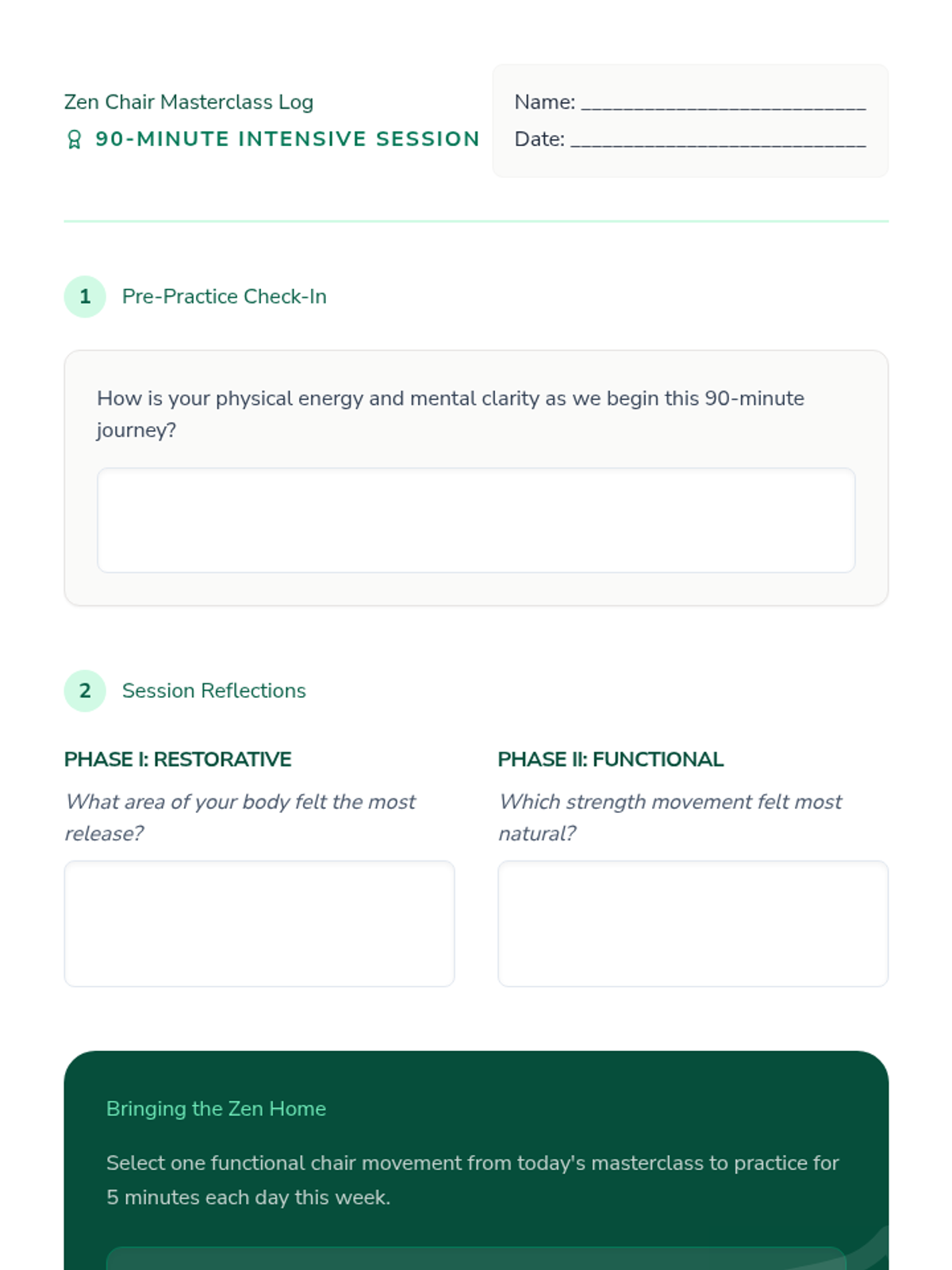
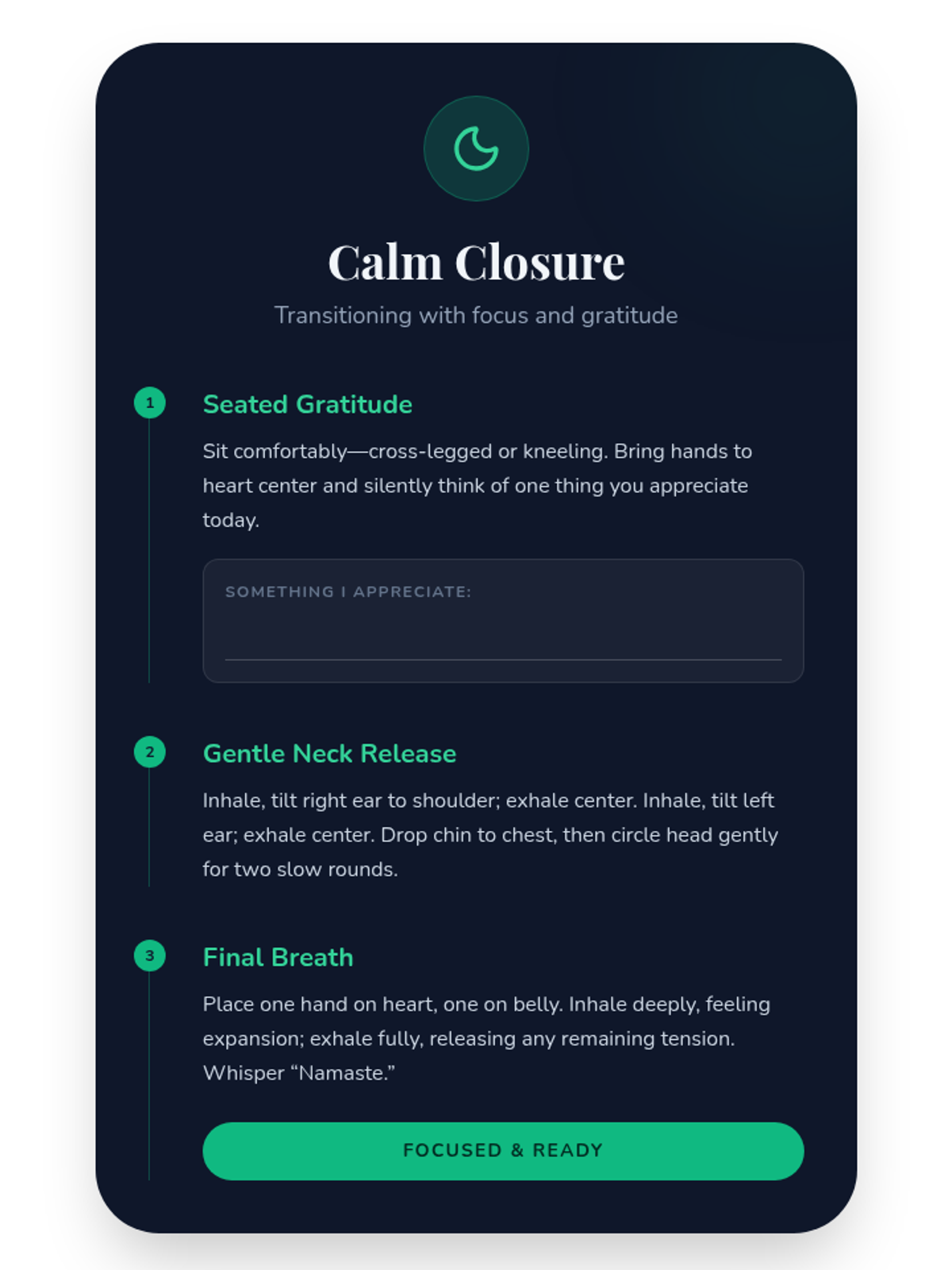
A comprehensive yoga series featuring a deep-dive chair yoga masterclass with guided videos and a follow-up standing flow session for beginners. Designed to build both mental calm and physical strength.
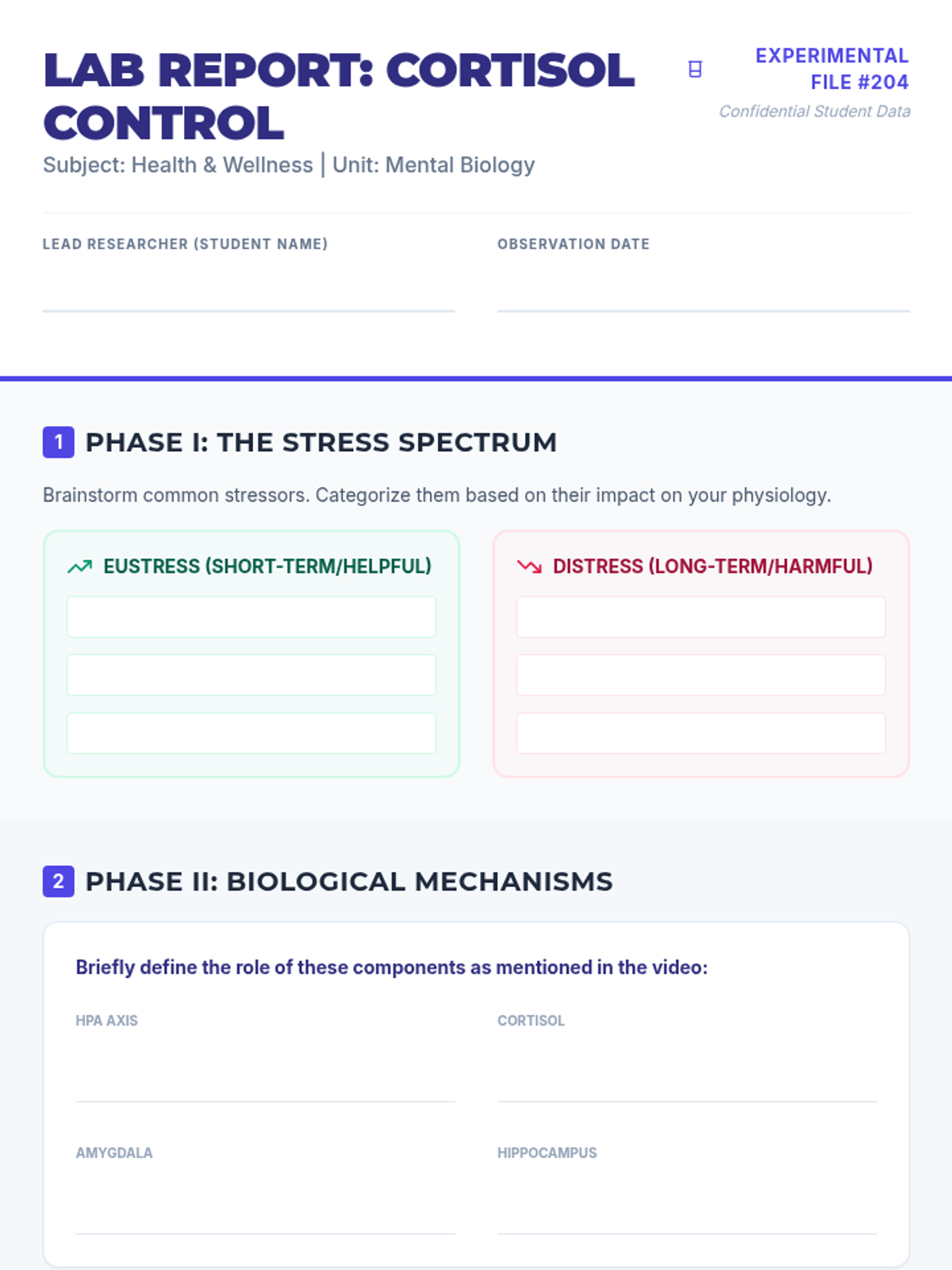
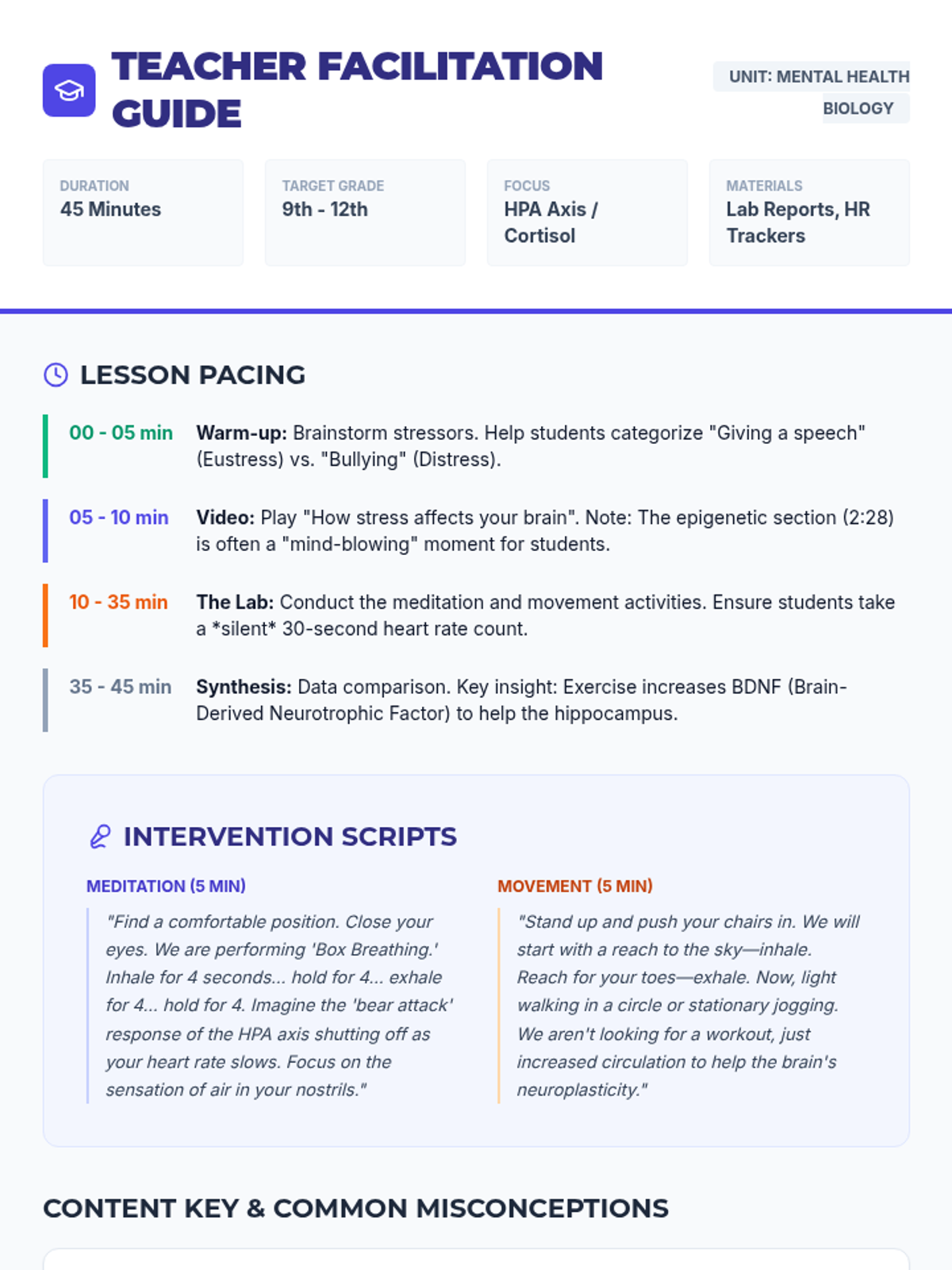
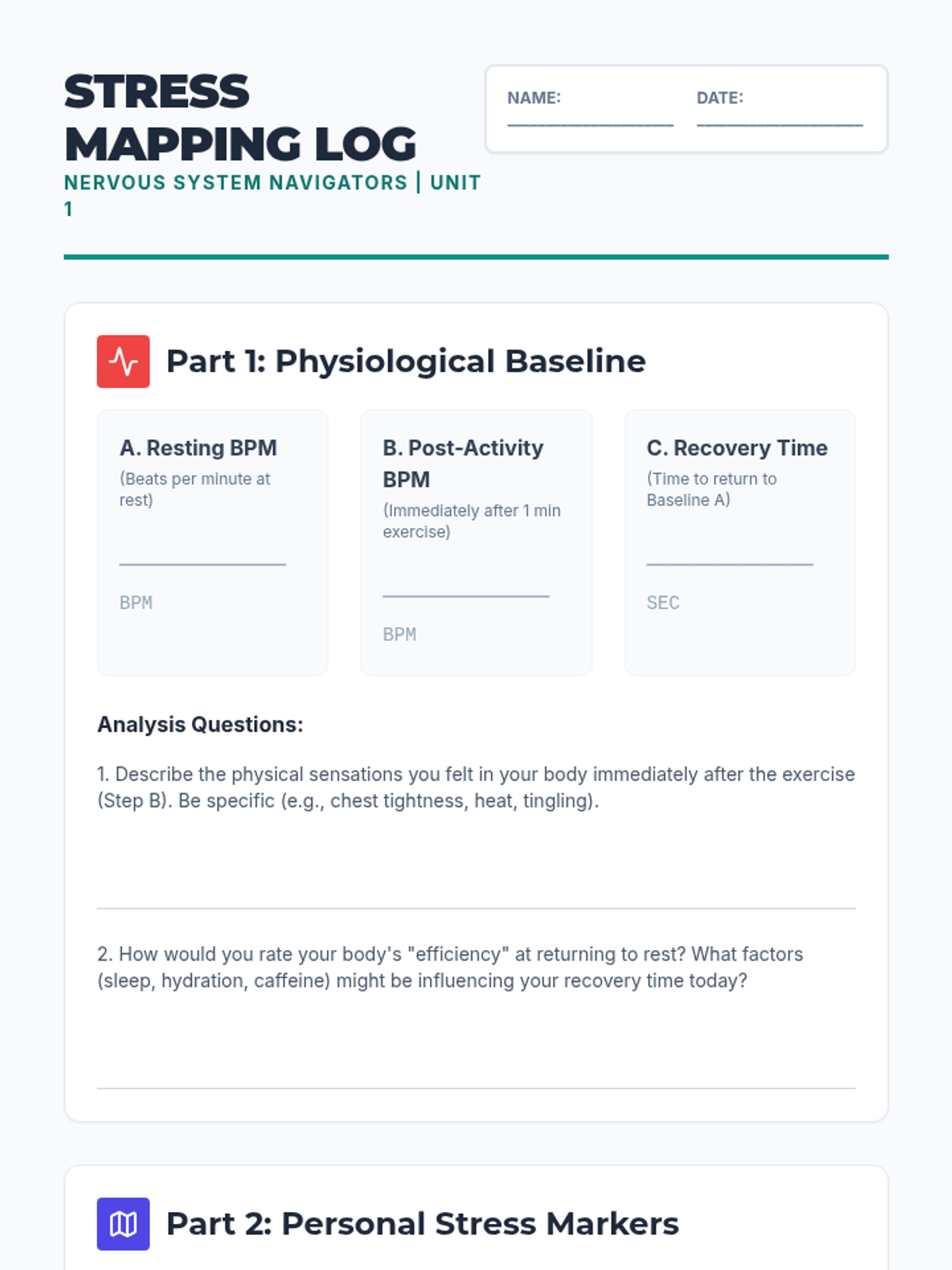
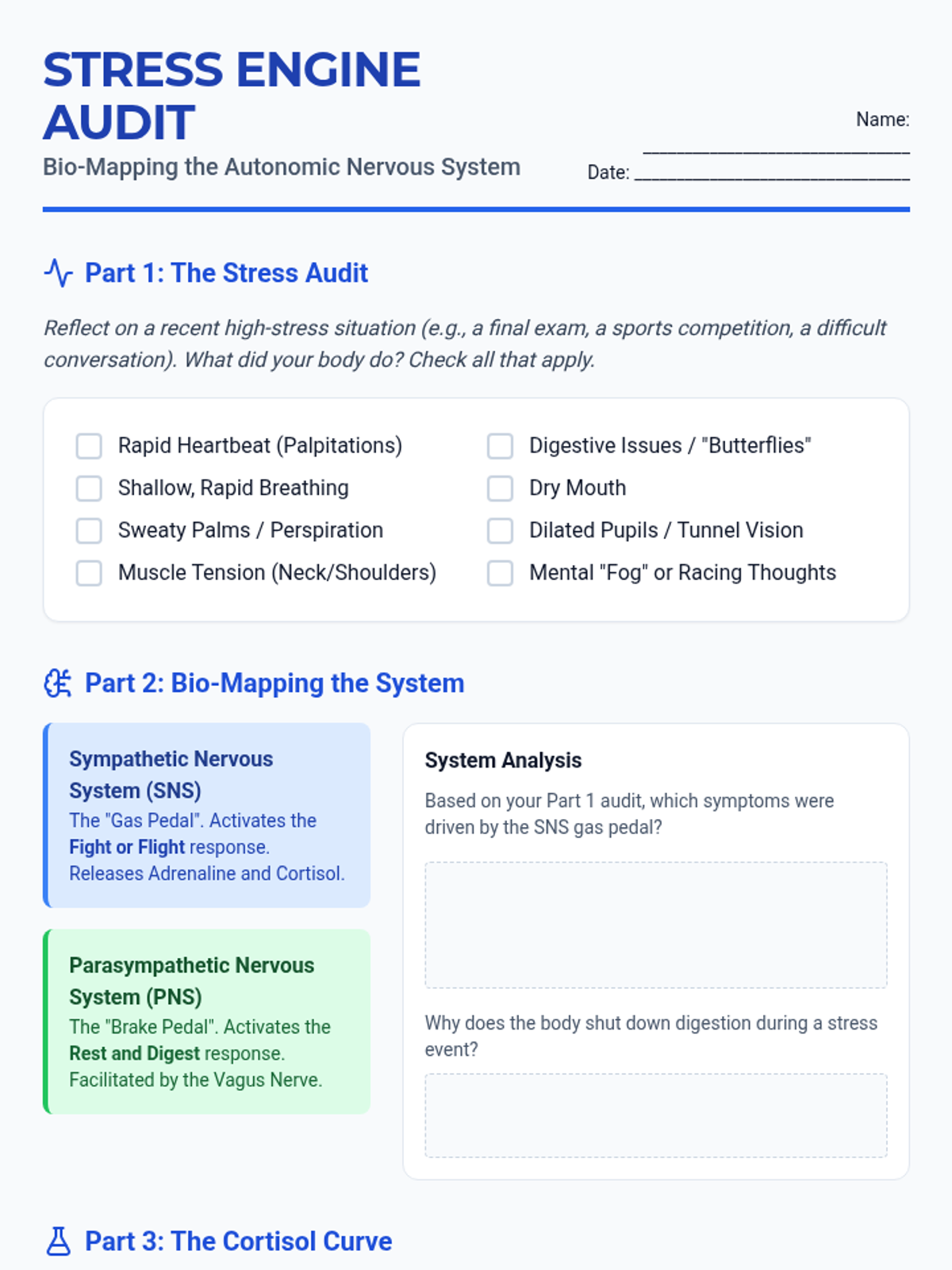
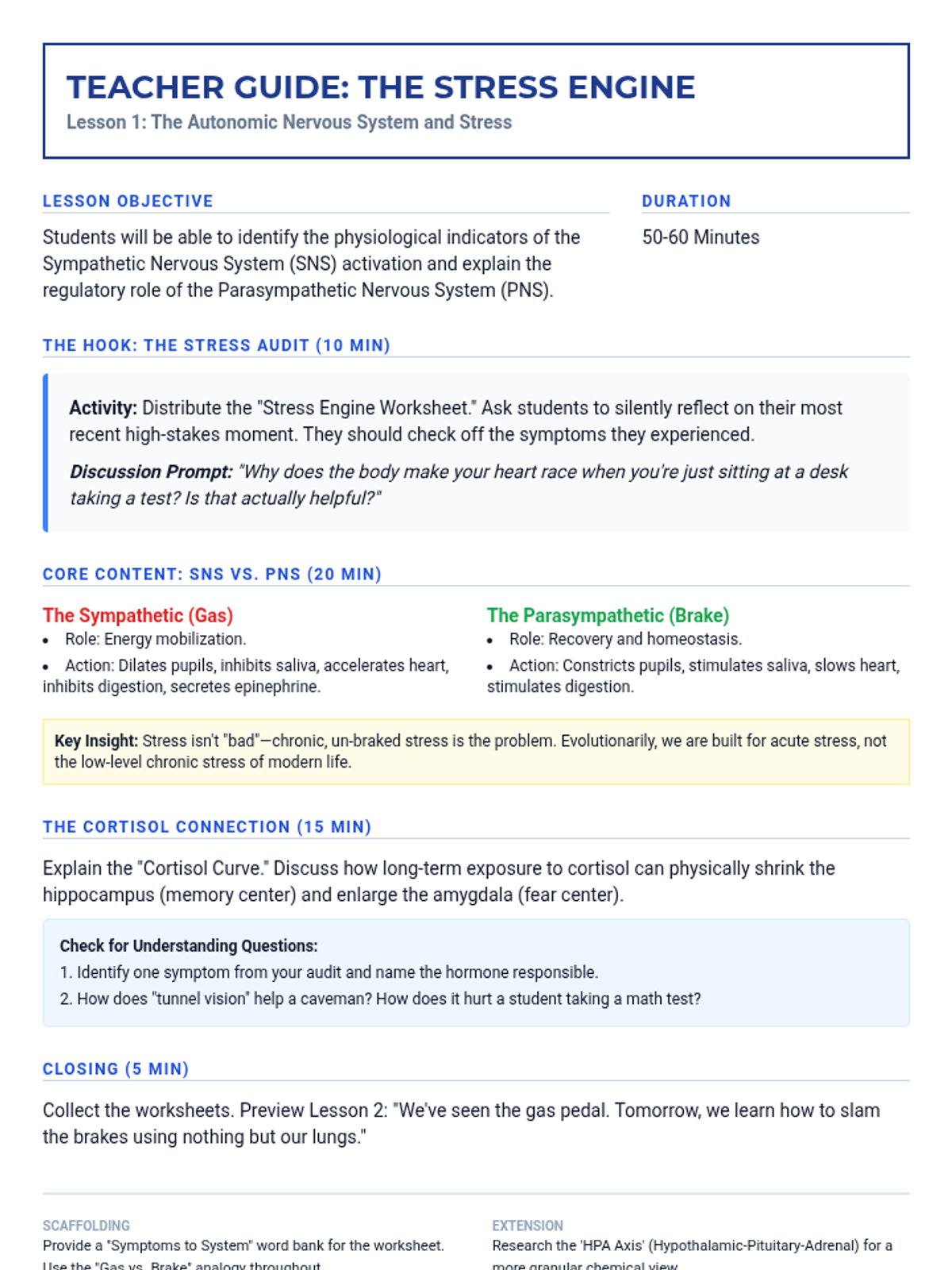
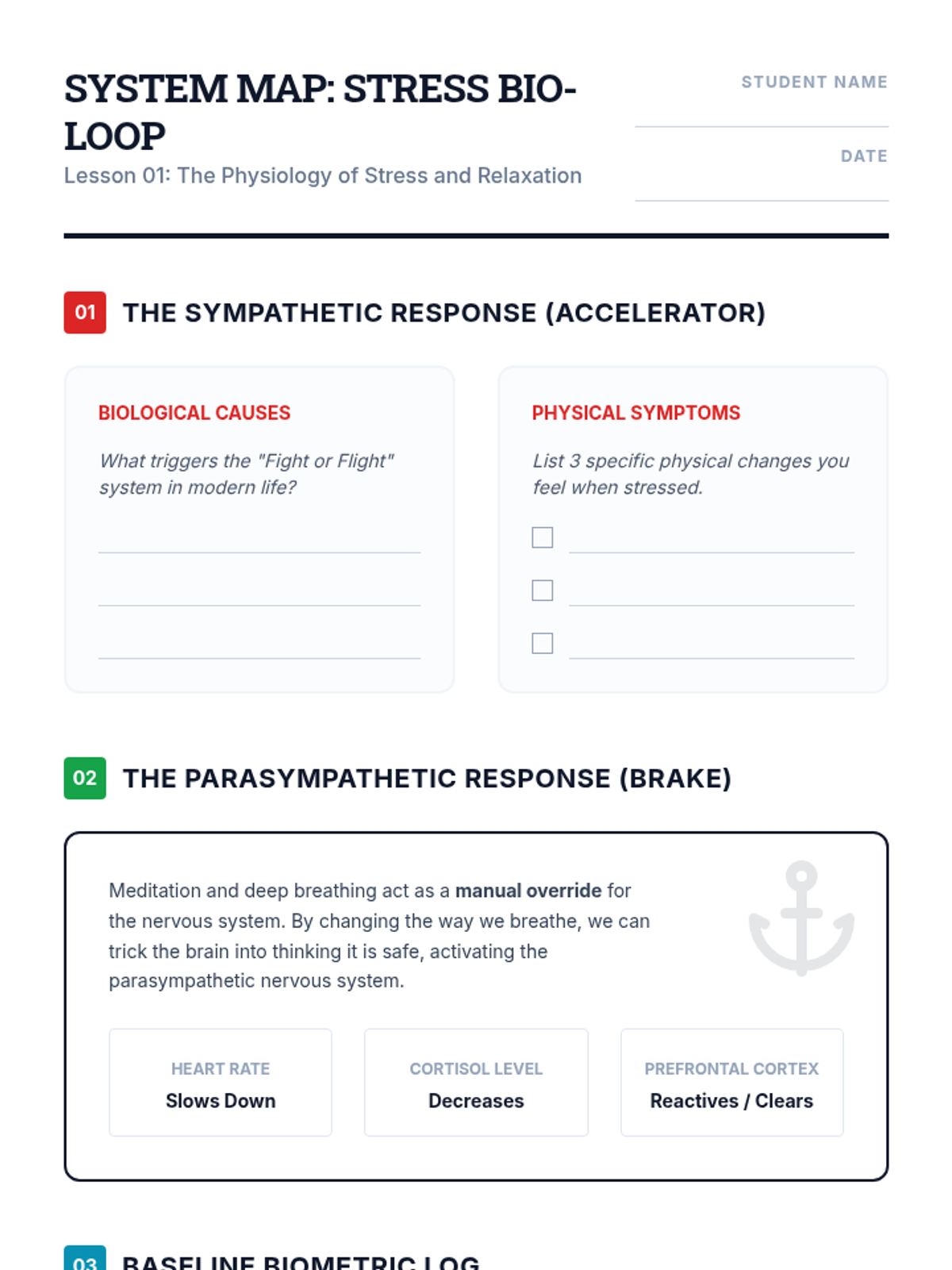
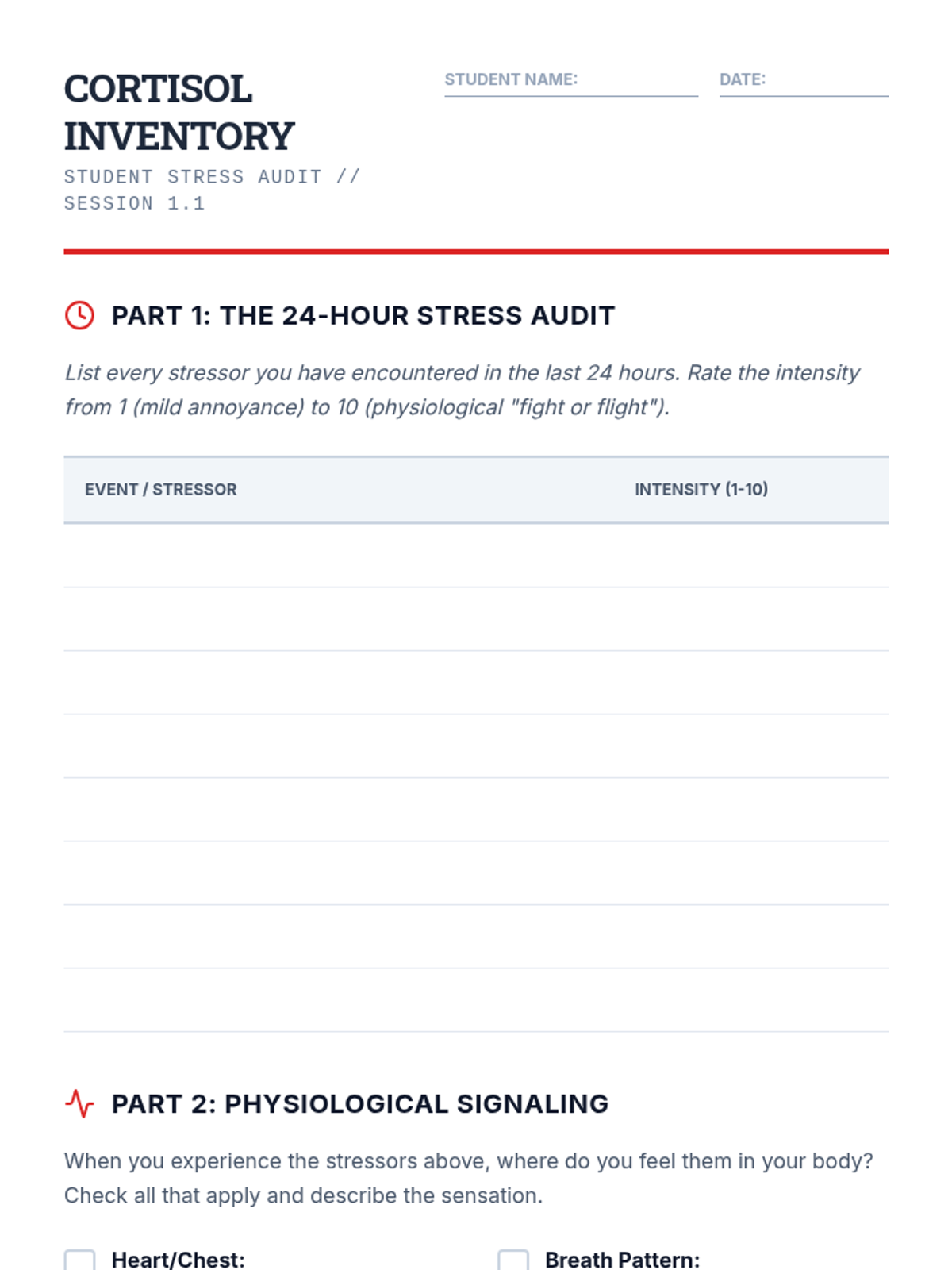
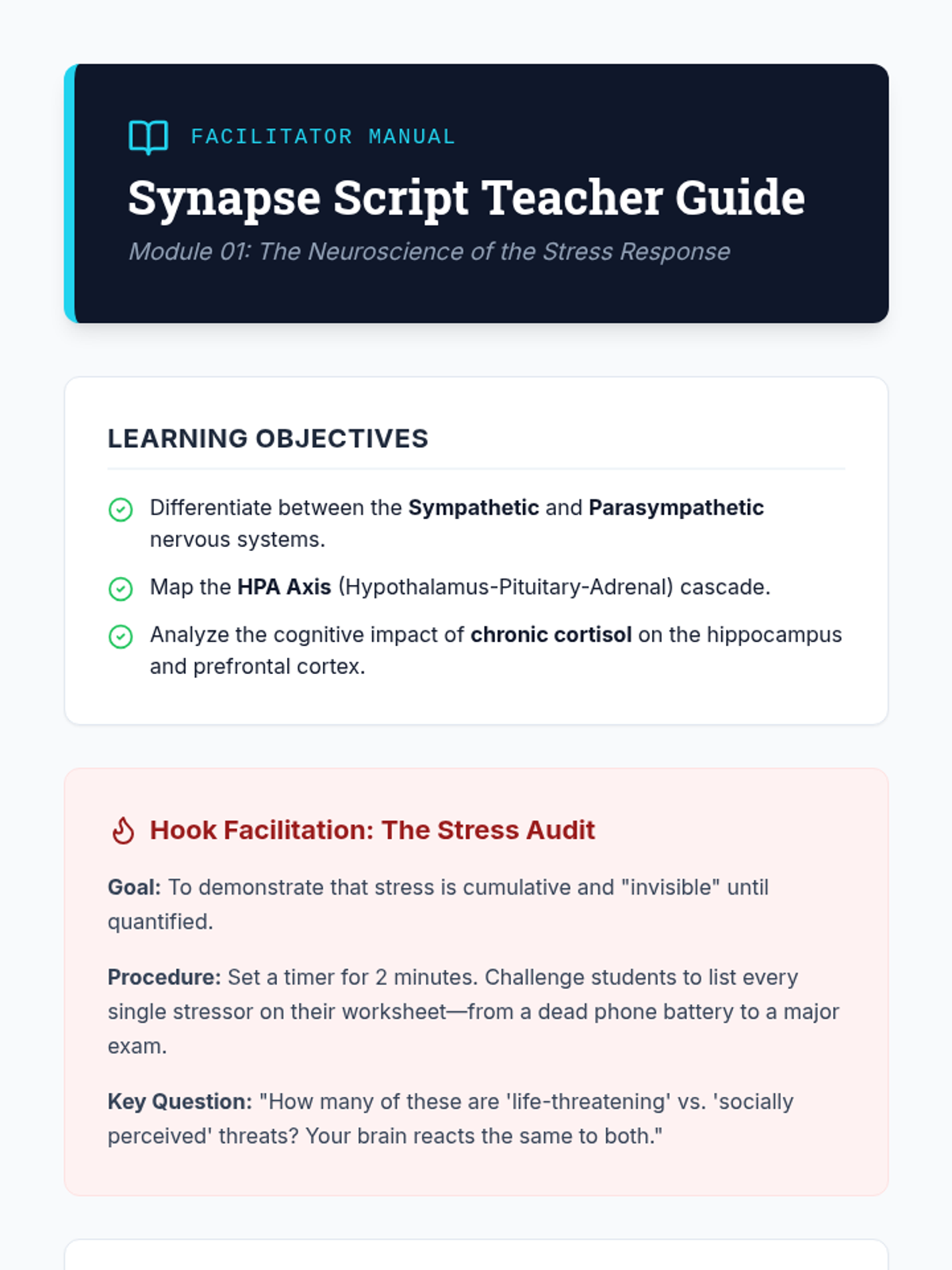
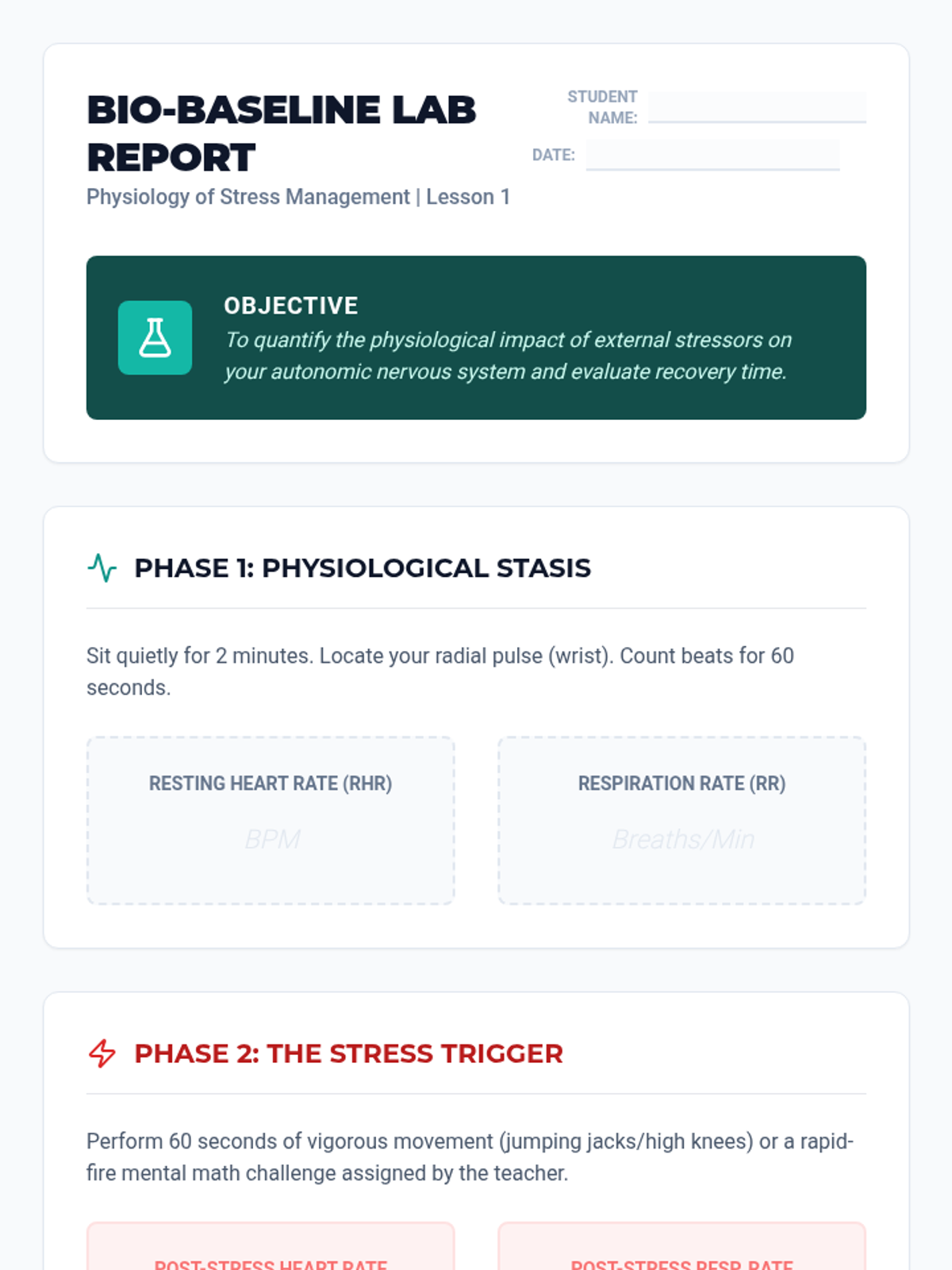
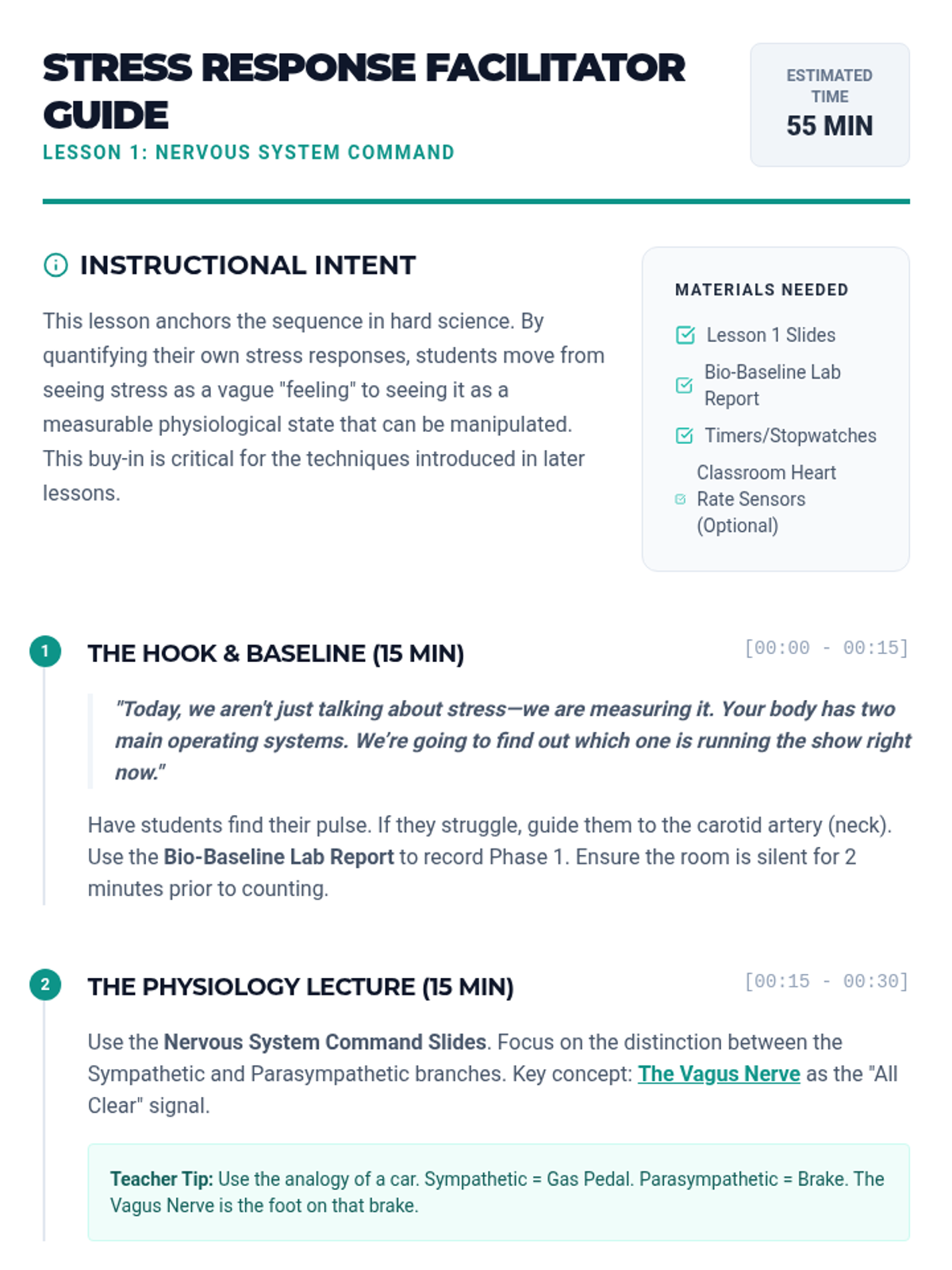
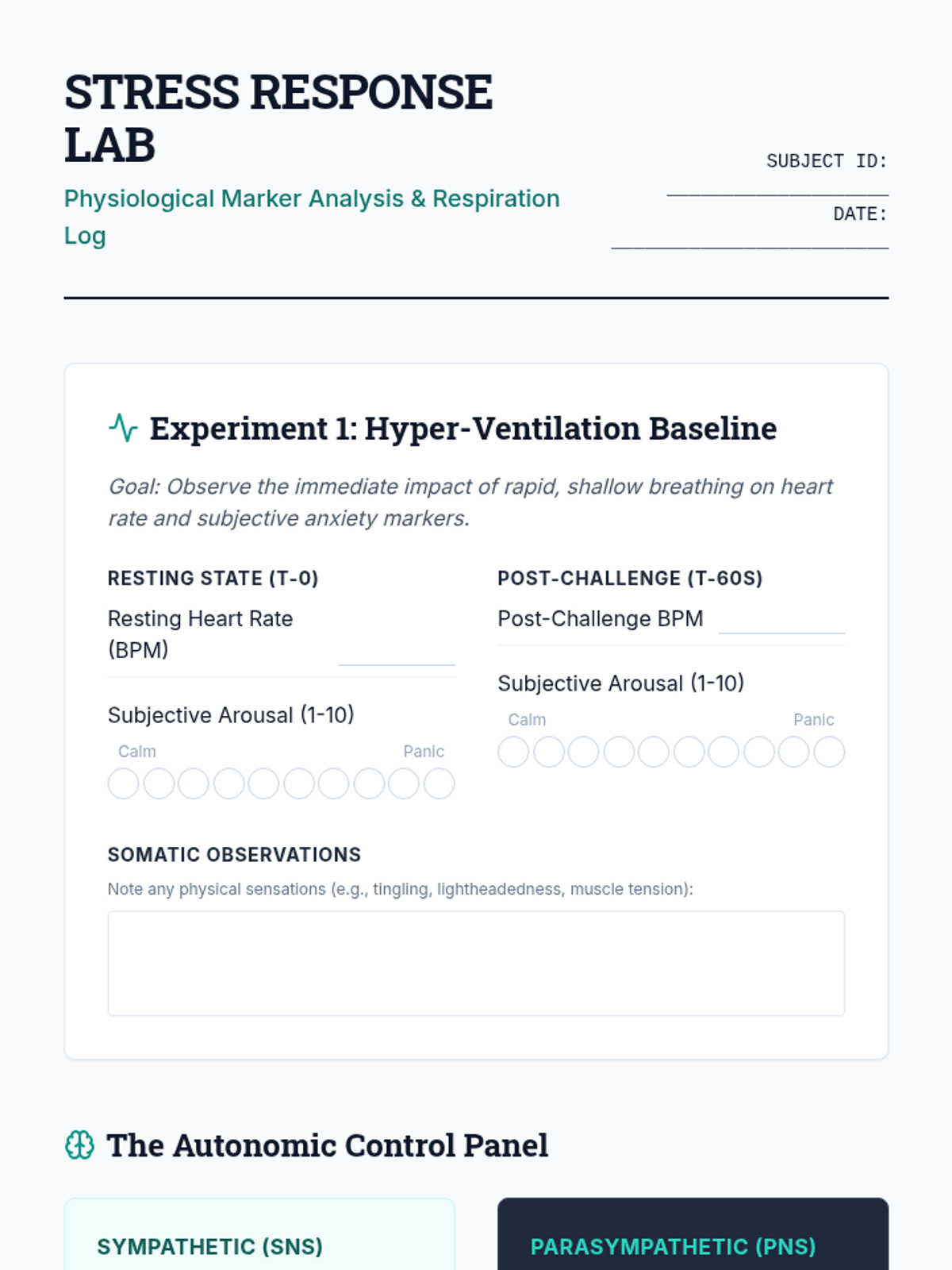
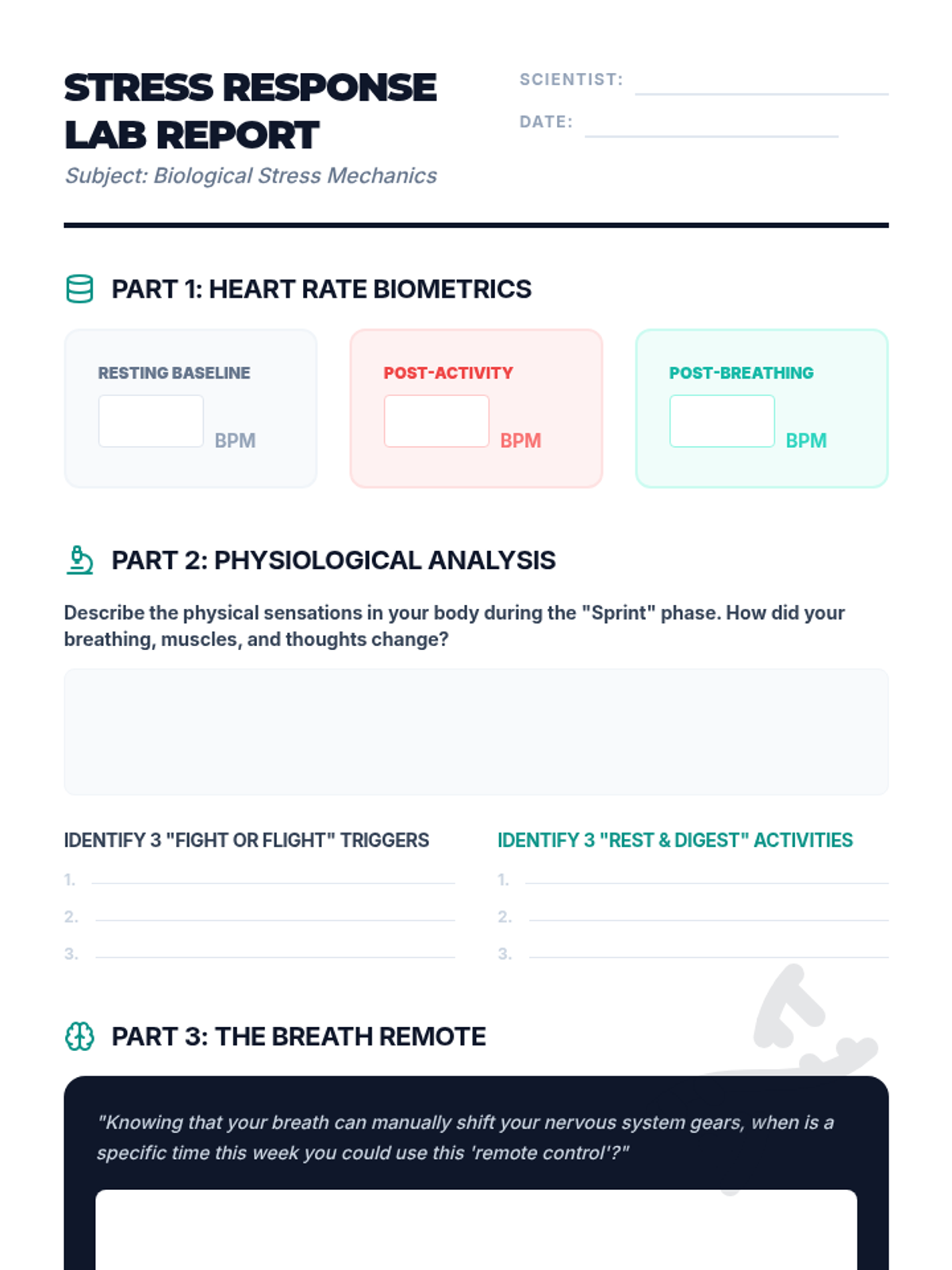
A high school health lesson focused on the physiological effects of stress, specifically cortisol's impact on the brain, and practical laboratory testing of stress-reduction techniques. Students explore eustress versus distress and measure their own heart rate and stress levels during guided interventions.
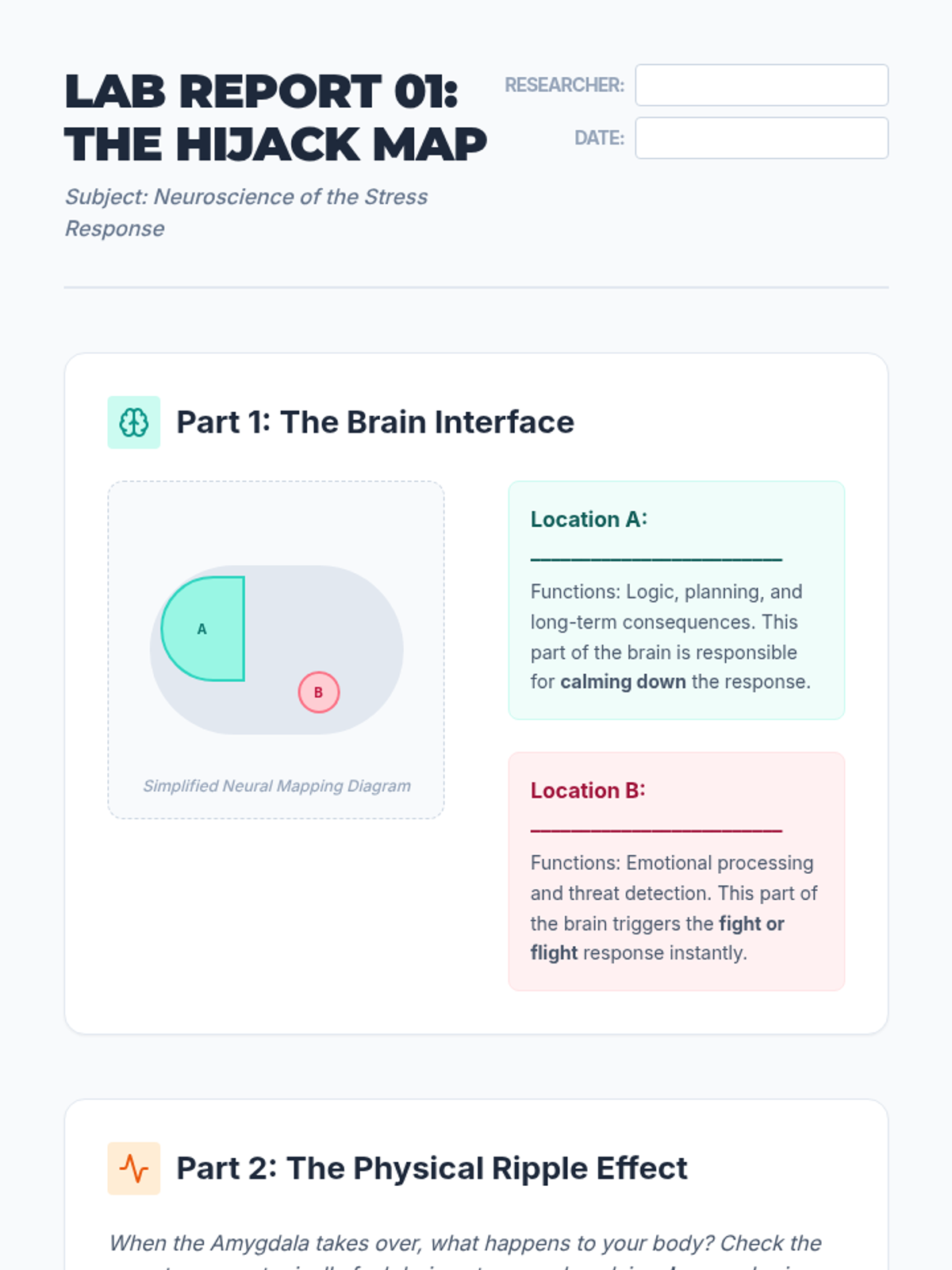
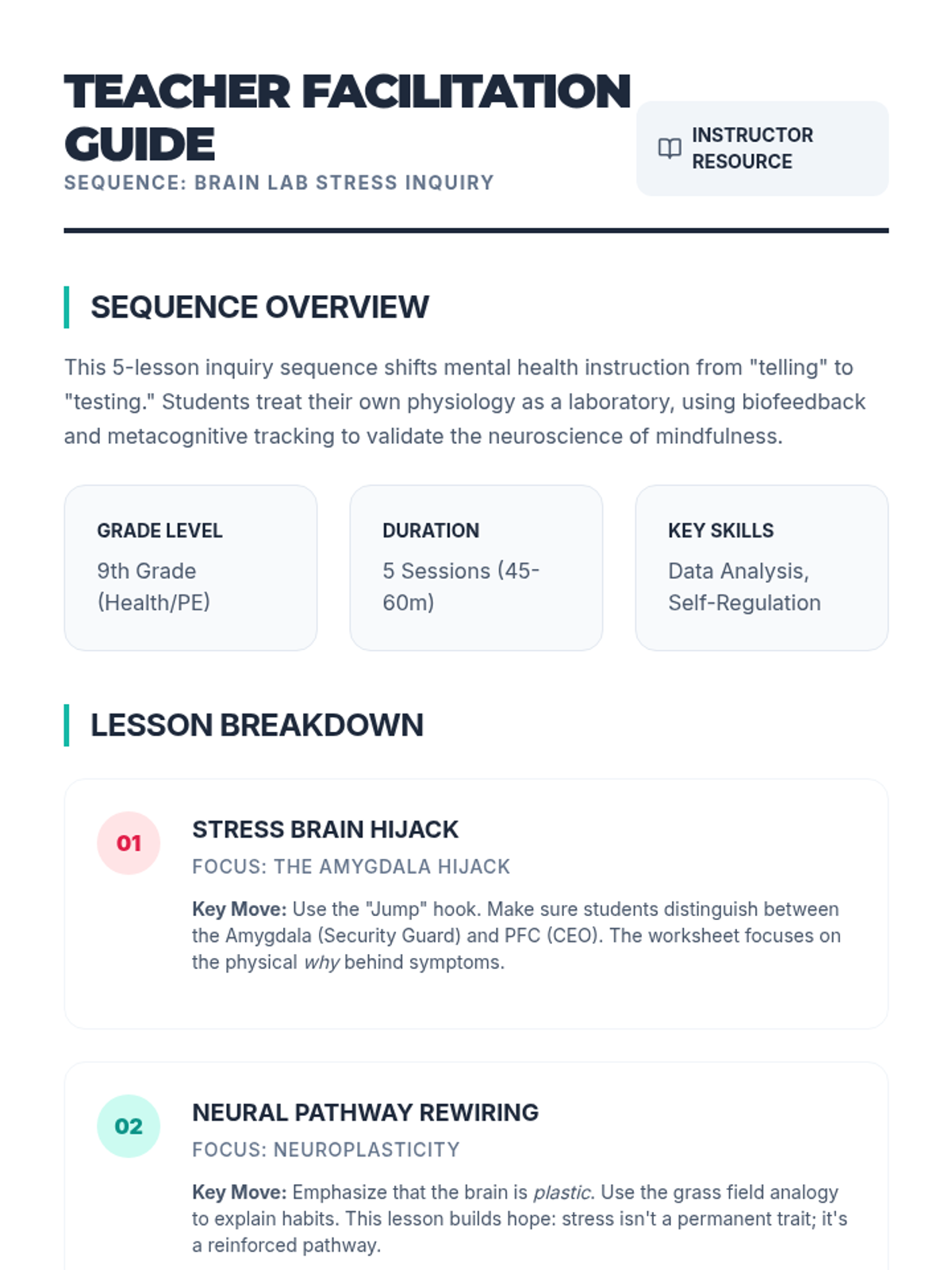
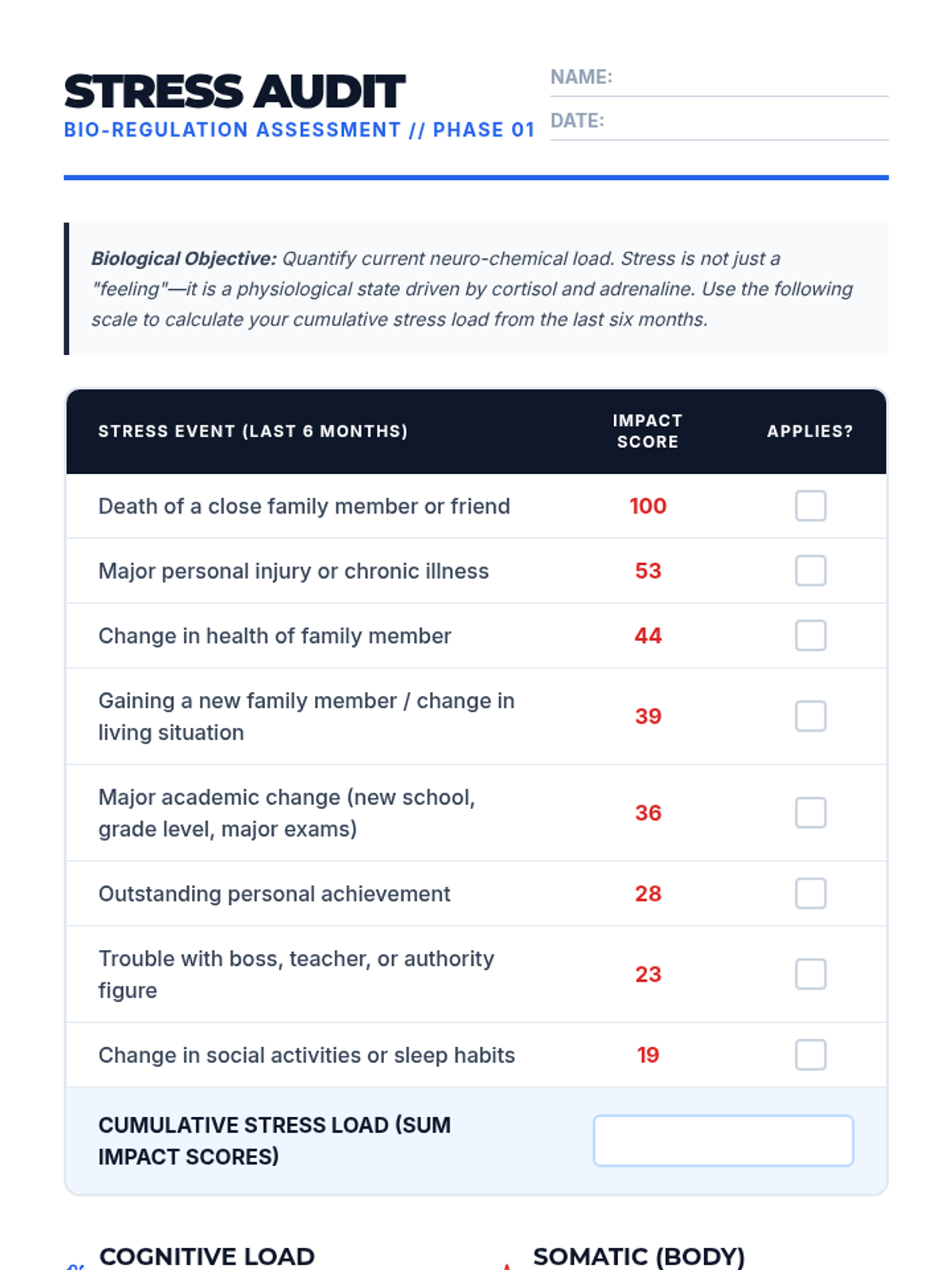
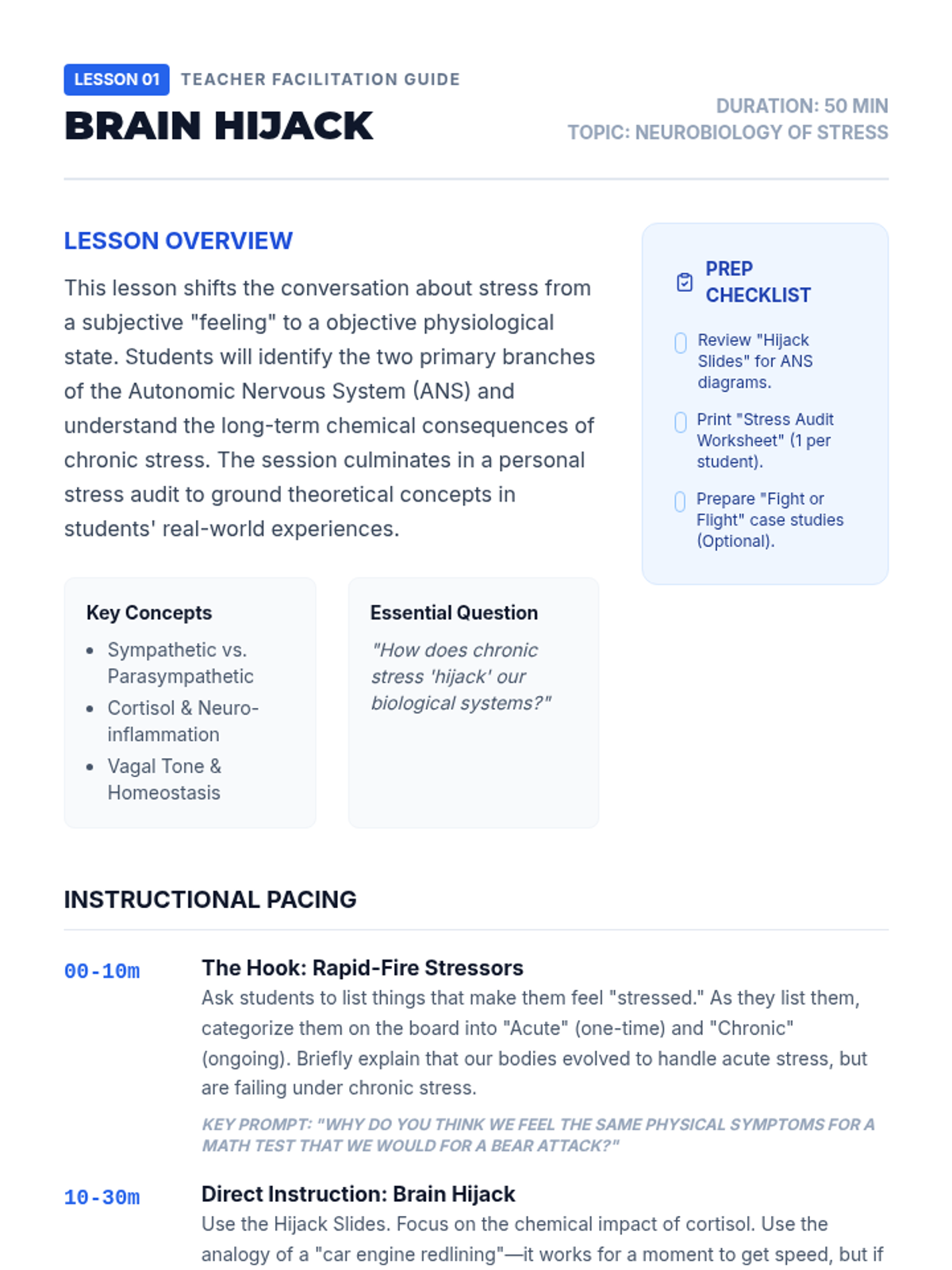
A 5-lesson inquiry-driven sequence where students investigate the neuroscience of stress and the physiological impacts of meditation through self-experimentation and data analysis.
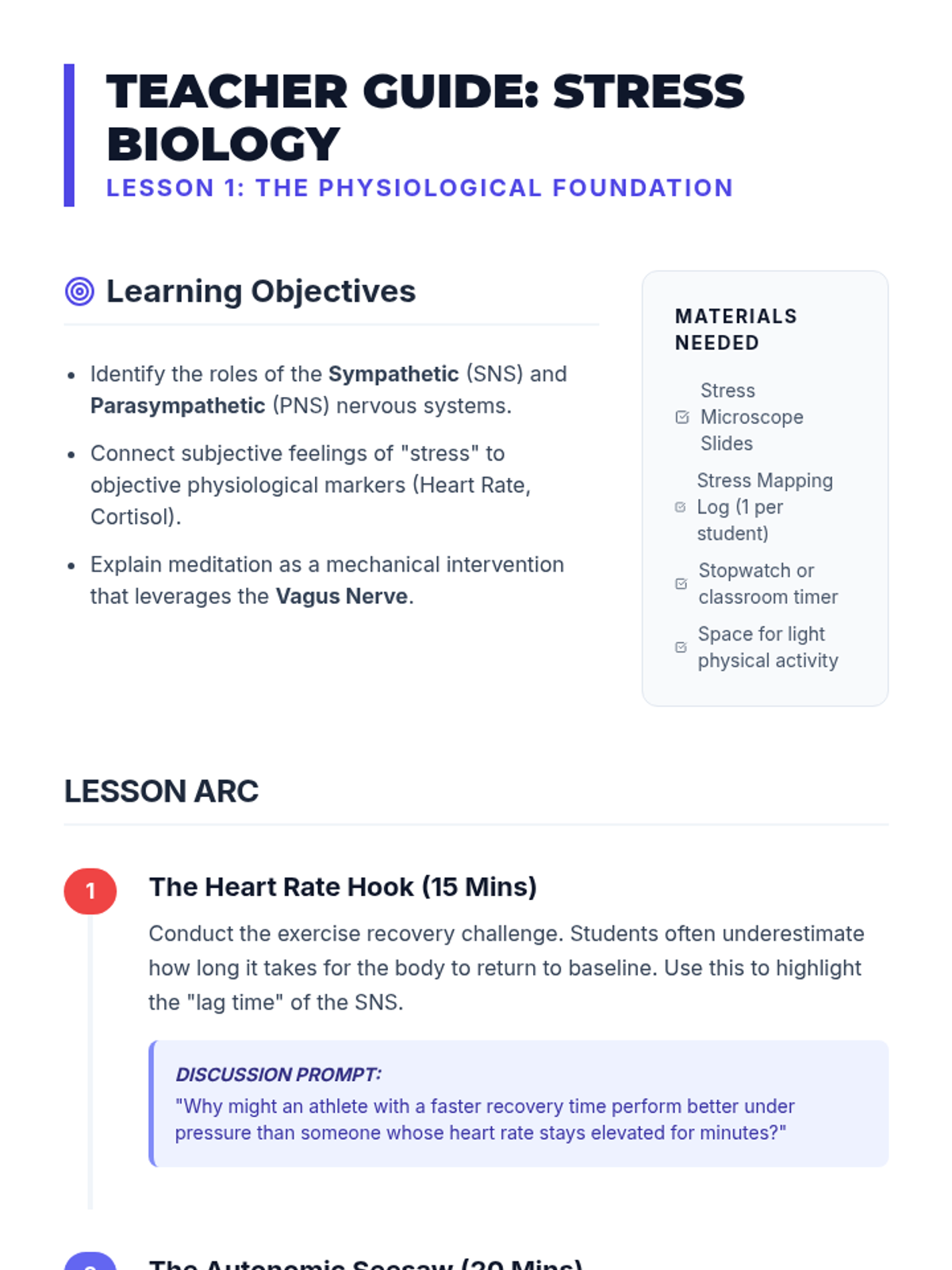
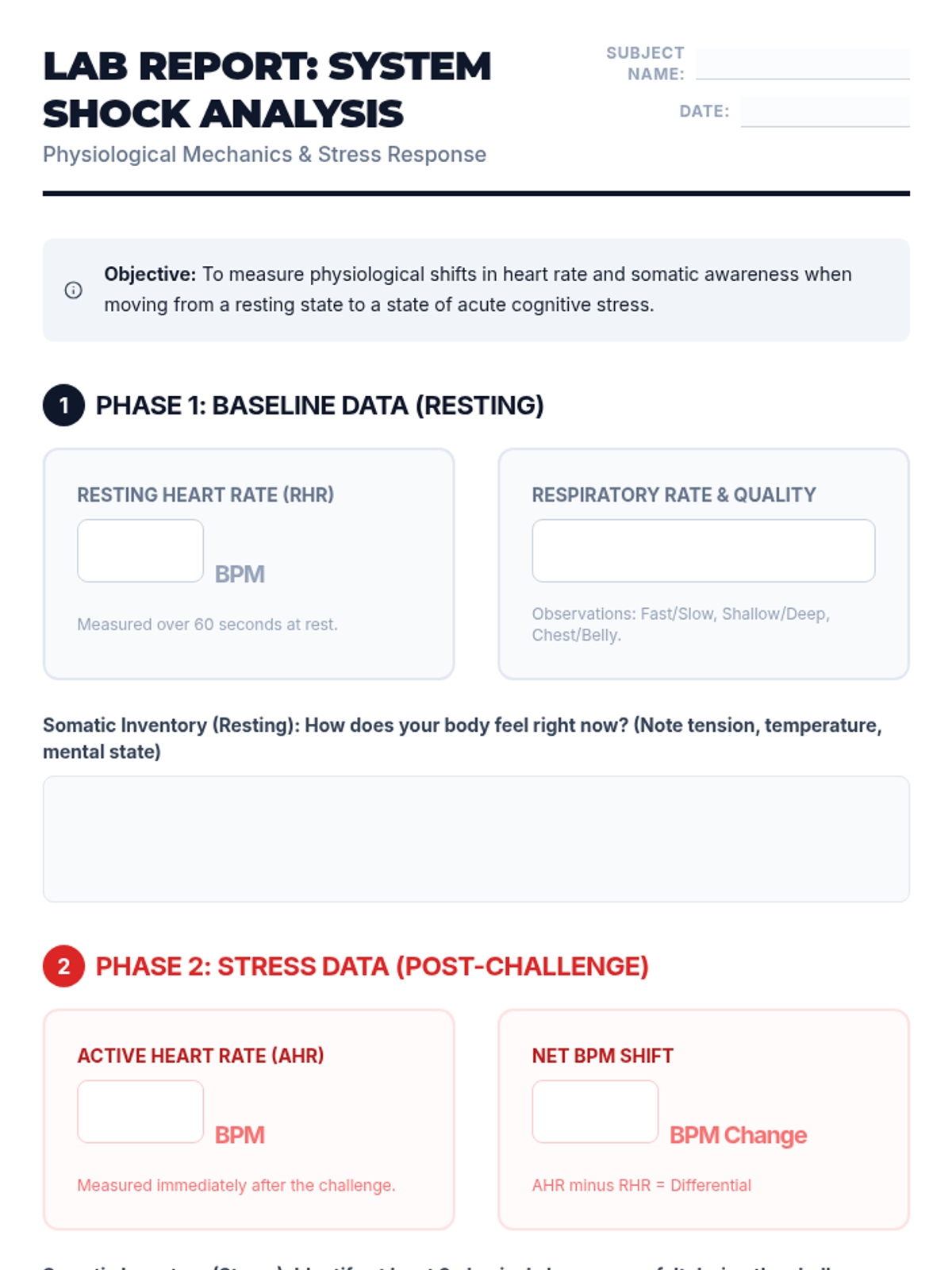
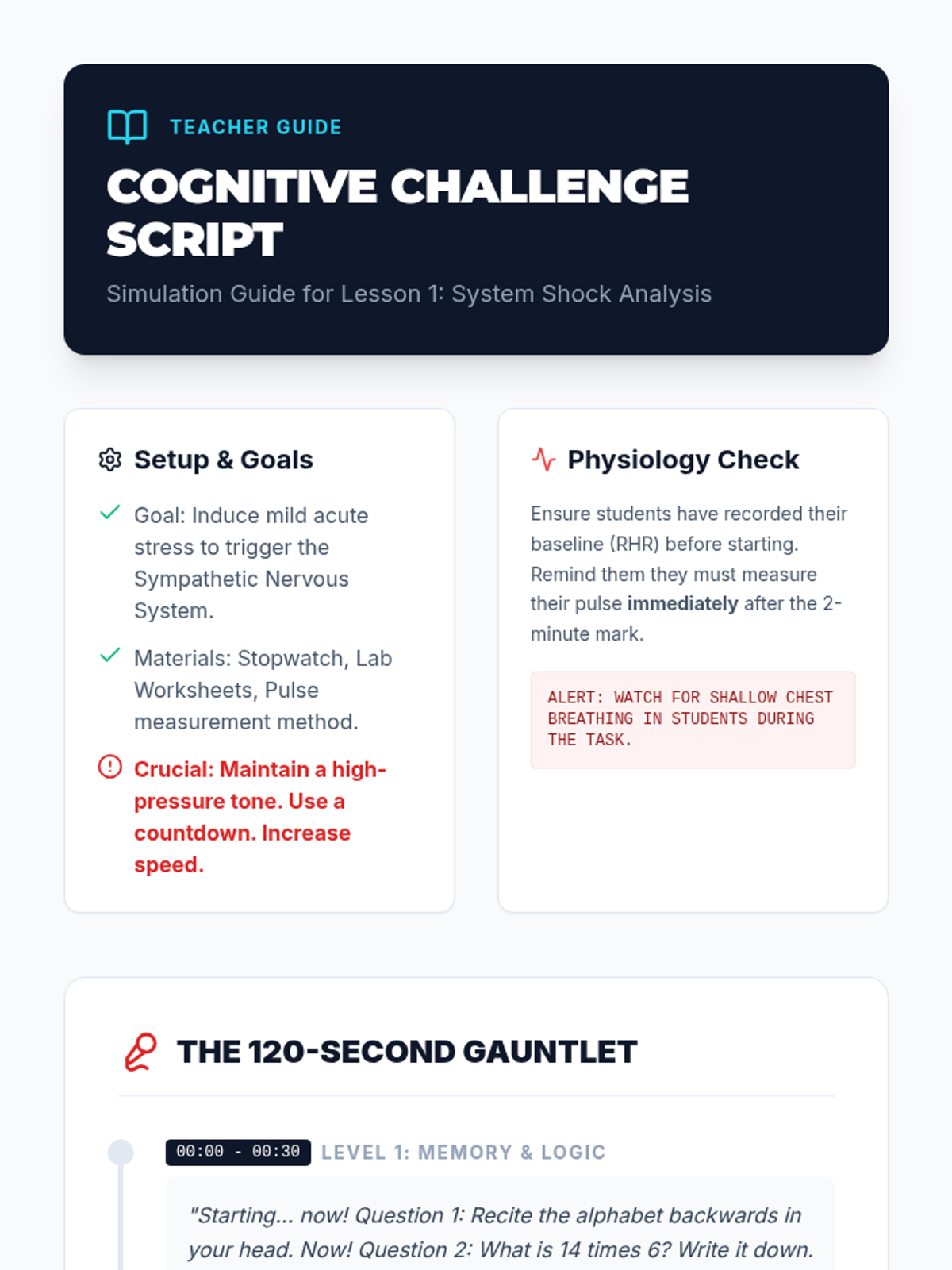
This 12th-grade sequence explores the physiological mechanics of stress and meditation, framing techniques as 'bio-hacks' to regulate the autonomic nervous system. Students move from understanding the neurobiology of the 'fight or flight' response to mastering tactical breathing and somatic awareness for mental performance.
This sequence grounds meditation practice in scientific principles, focusing on the physiological connection between respiration and the nervous system. Students explore the biology of stress, learn diaphragmatic breathing, practice rhythmic protocols like box breathing, and apply these tools to manage performance anxiety.
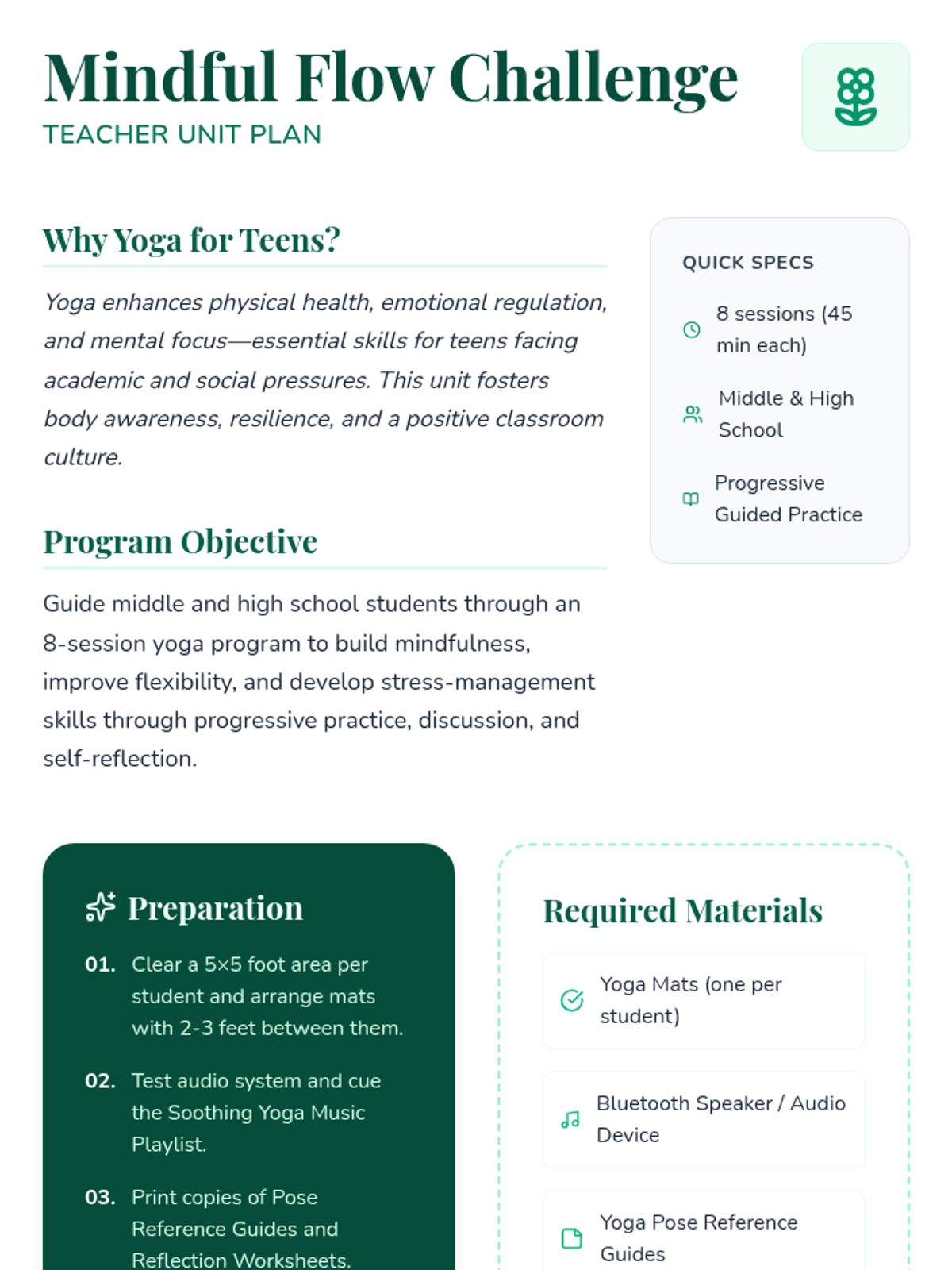
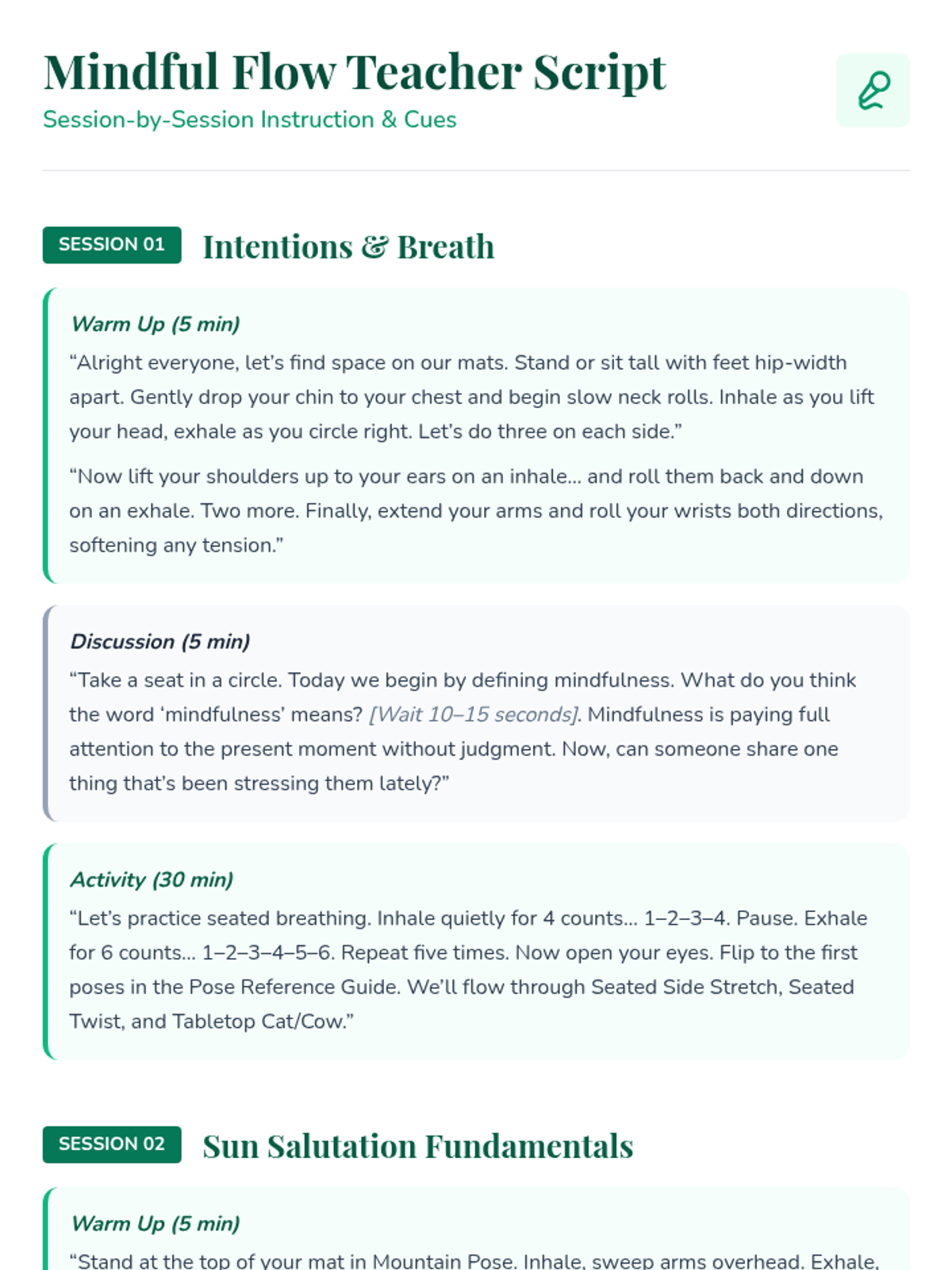
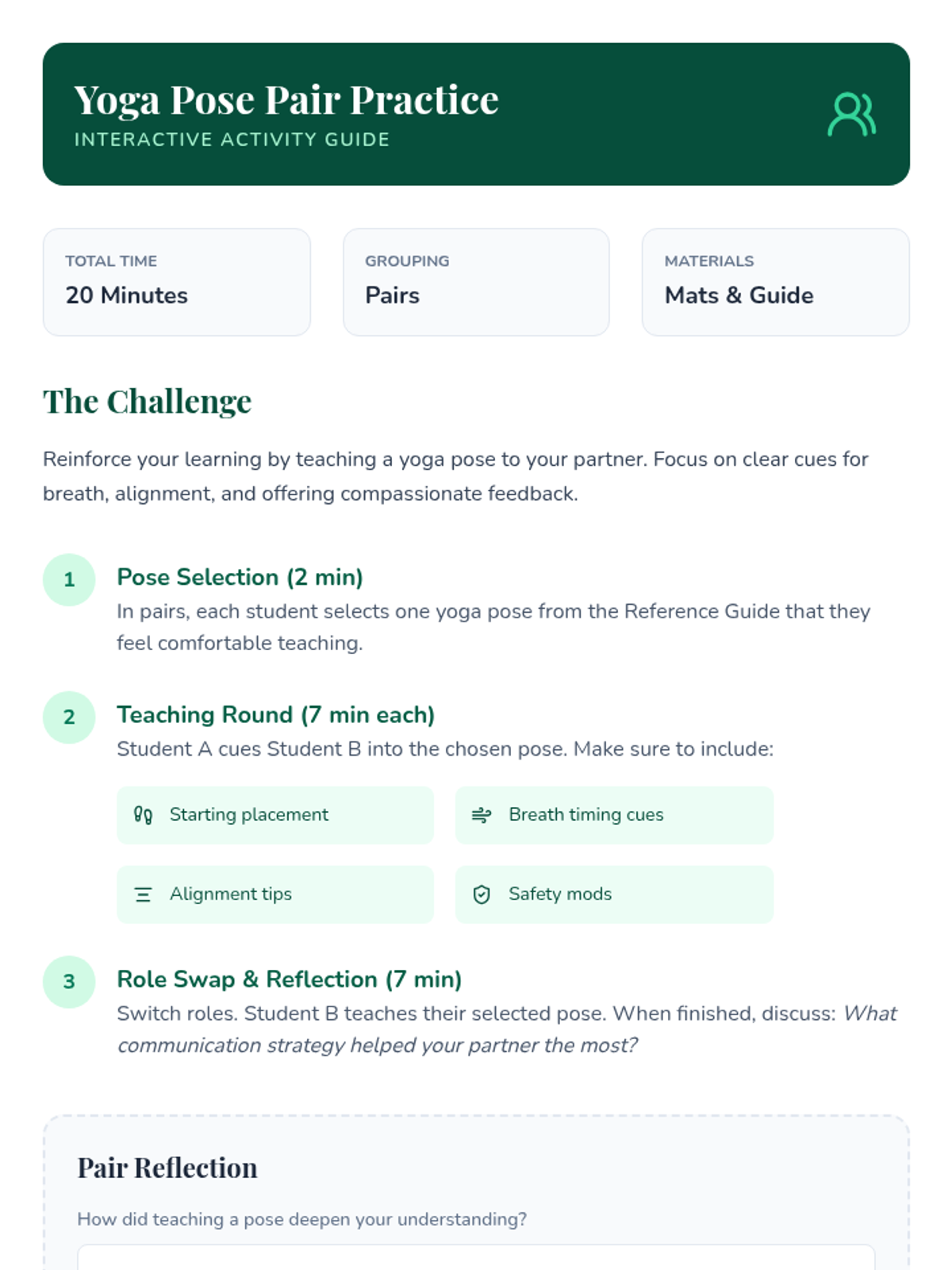
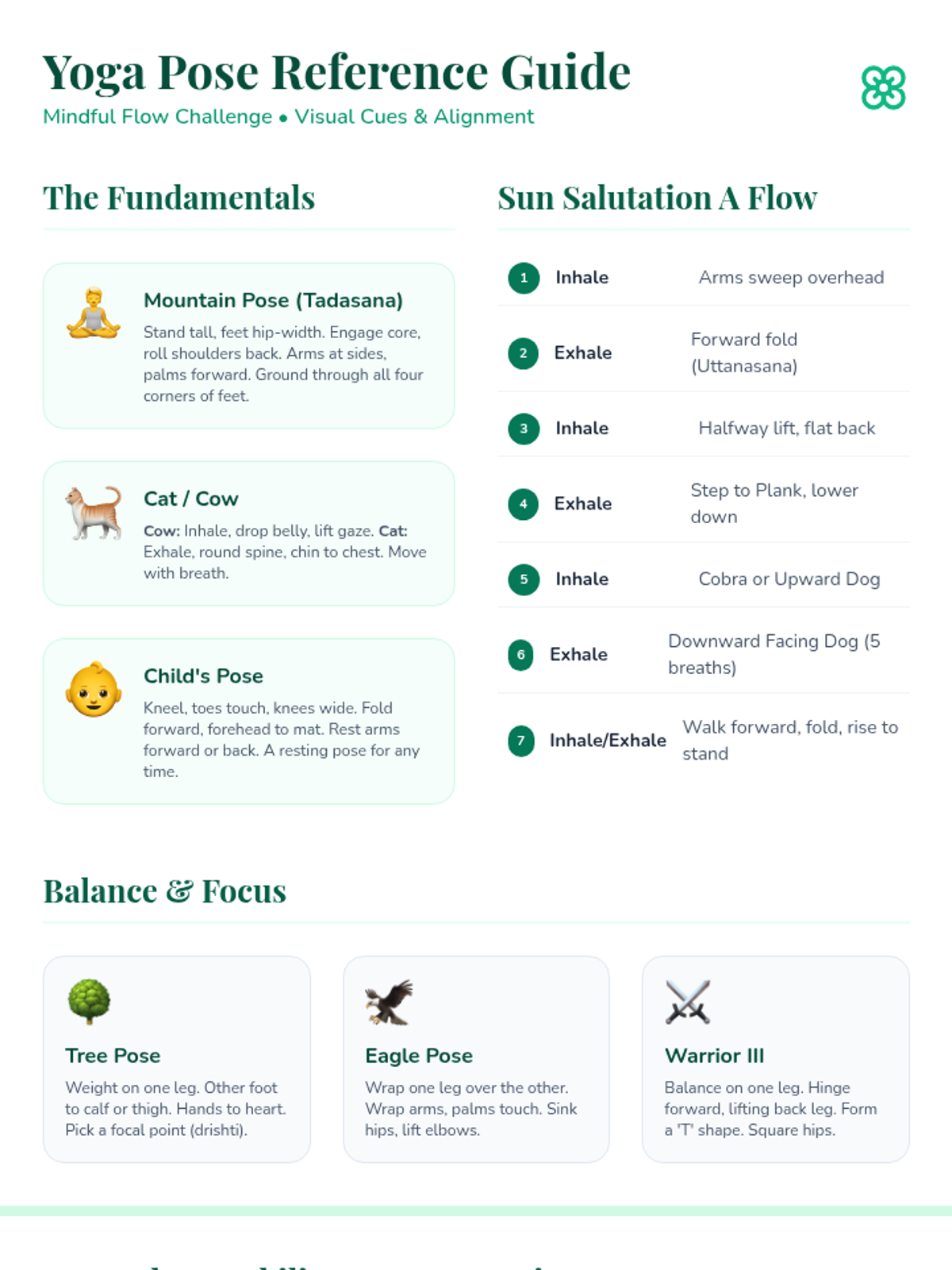
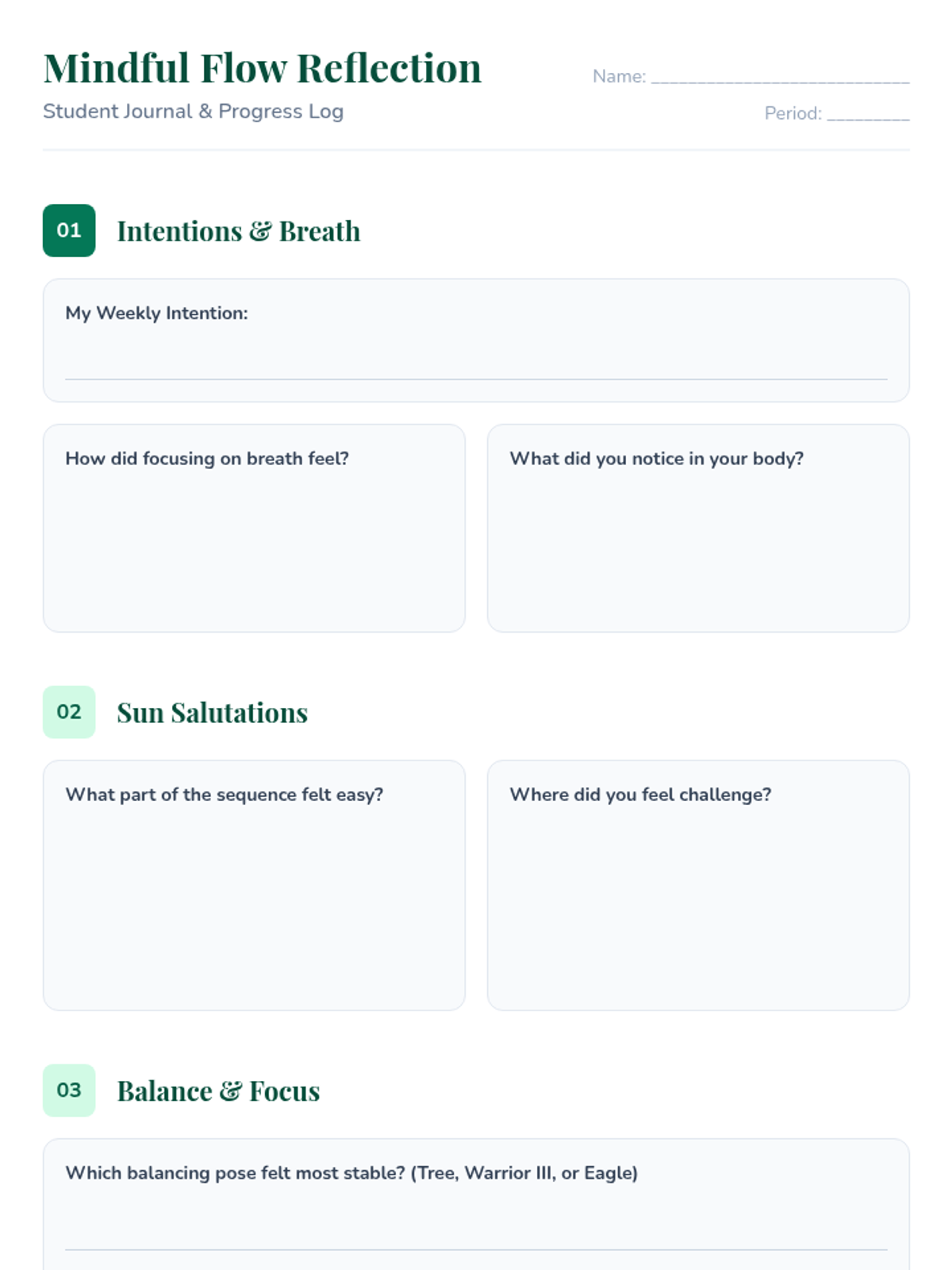
An 8-session introductory yoga program designed for middle and high school students, focusing on mindfulness, physical flexibility, and stress management techniques.
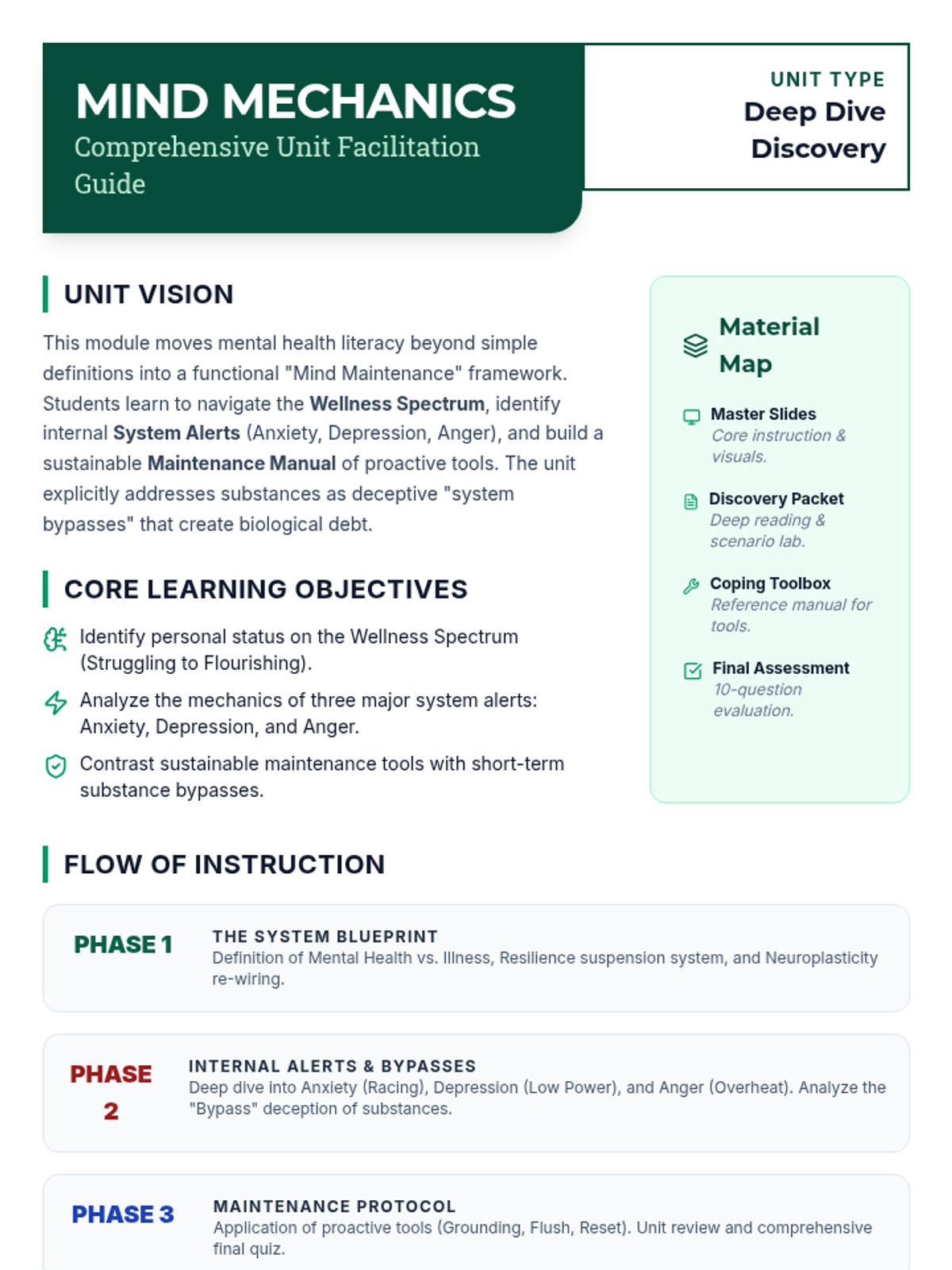
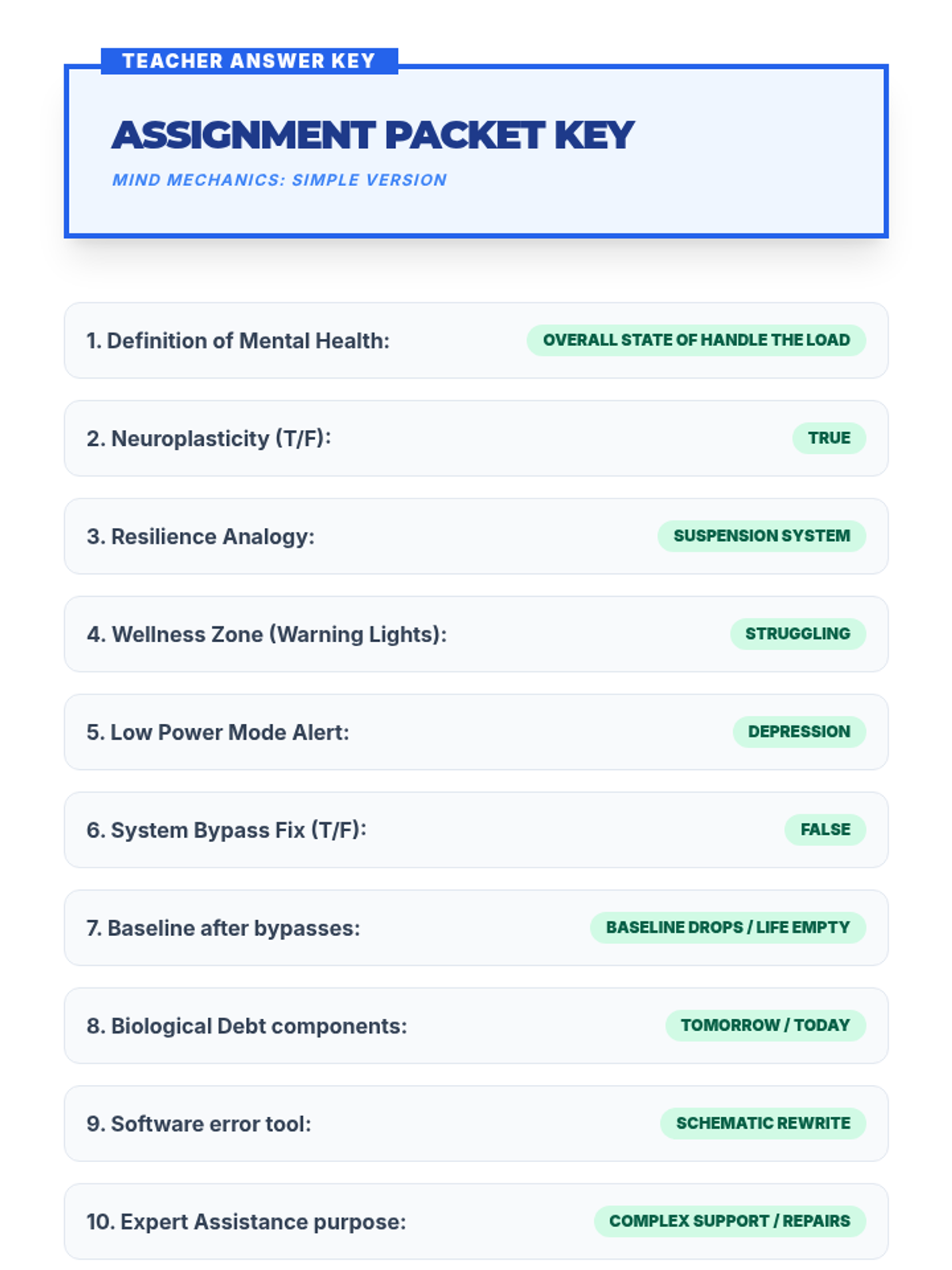
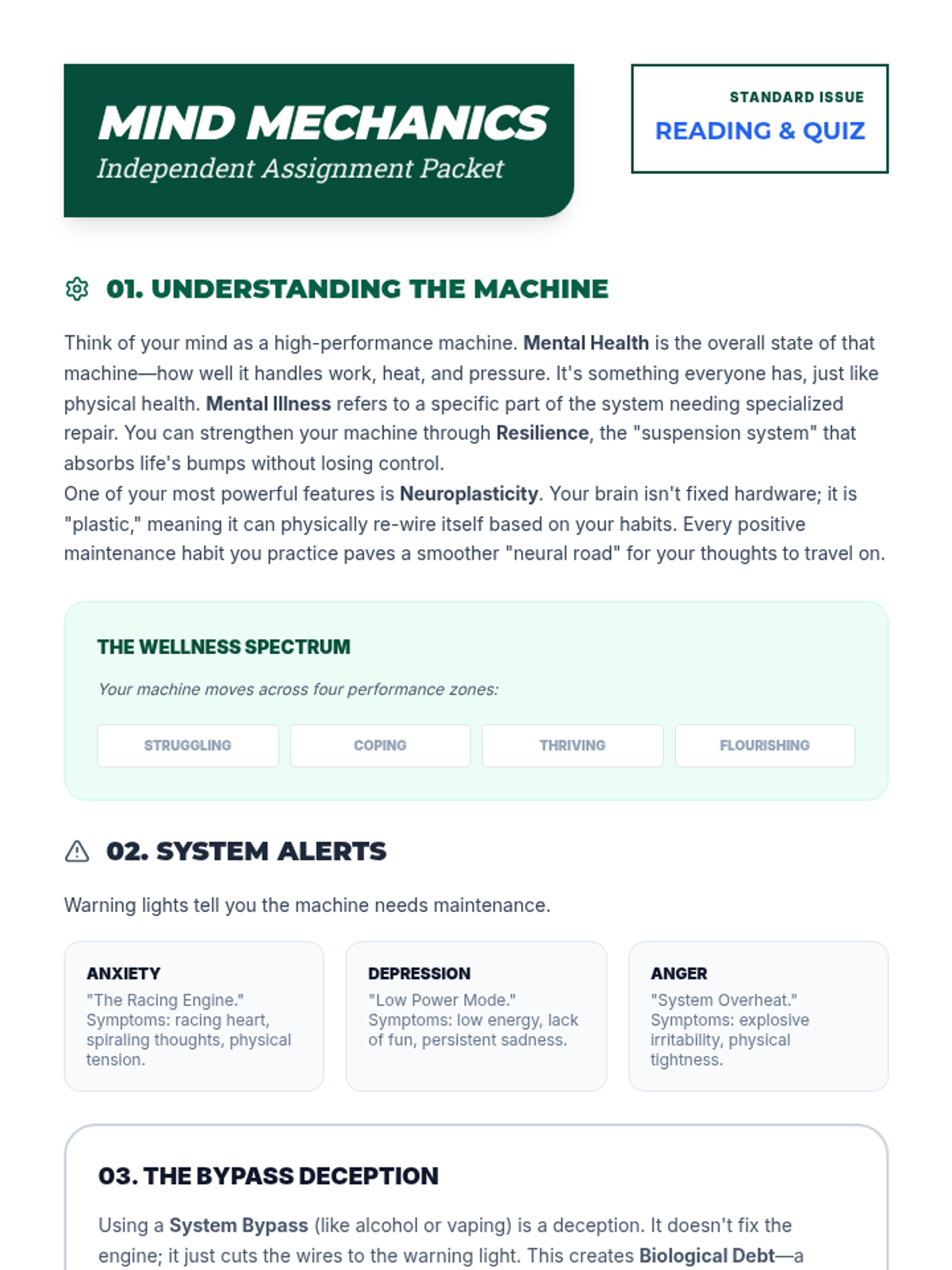
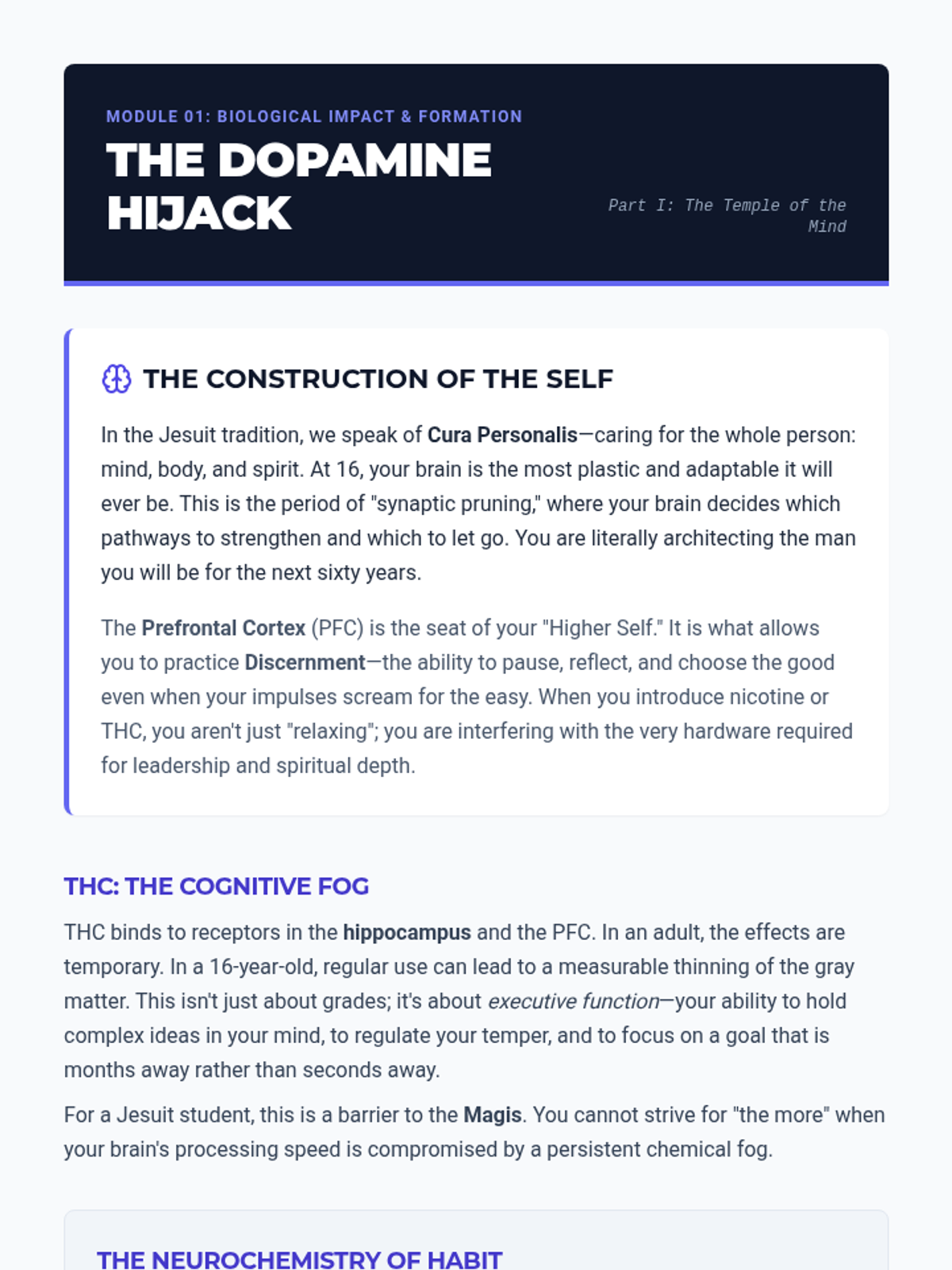
A multi-lesson unit designed to build mental health literacy, identify internal system alerts (Anxiety, Depression, Anger), and develop a sustainable toolkit of coping strategies. Students explore the 'Wellness Spectrum', 'Neuroplasticity', and the deceptive nature of 'System Bypasses' like substances.
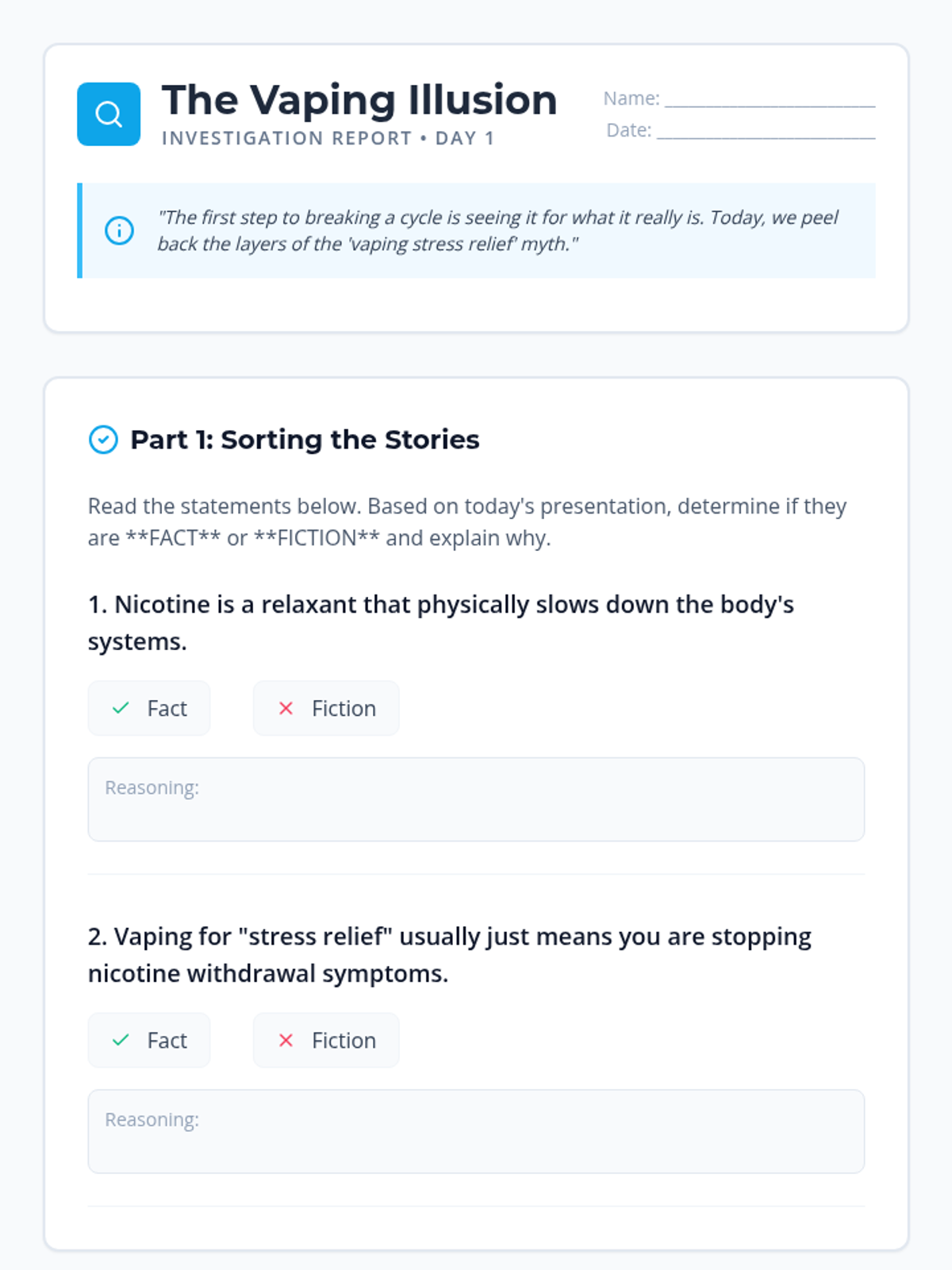
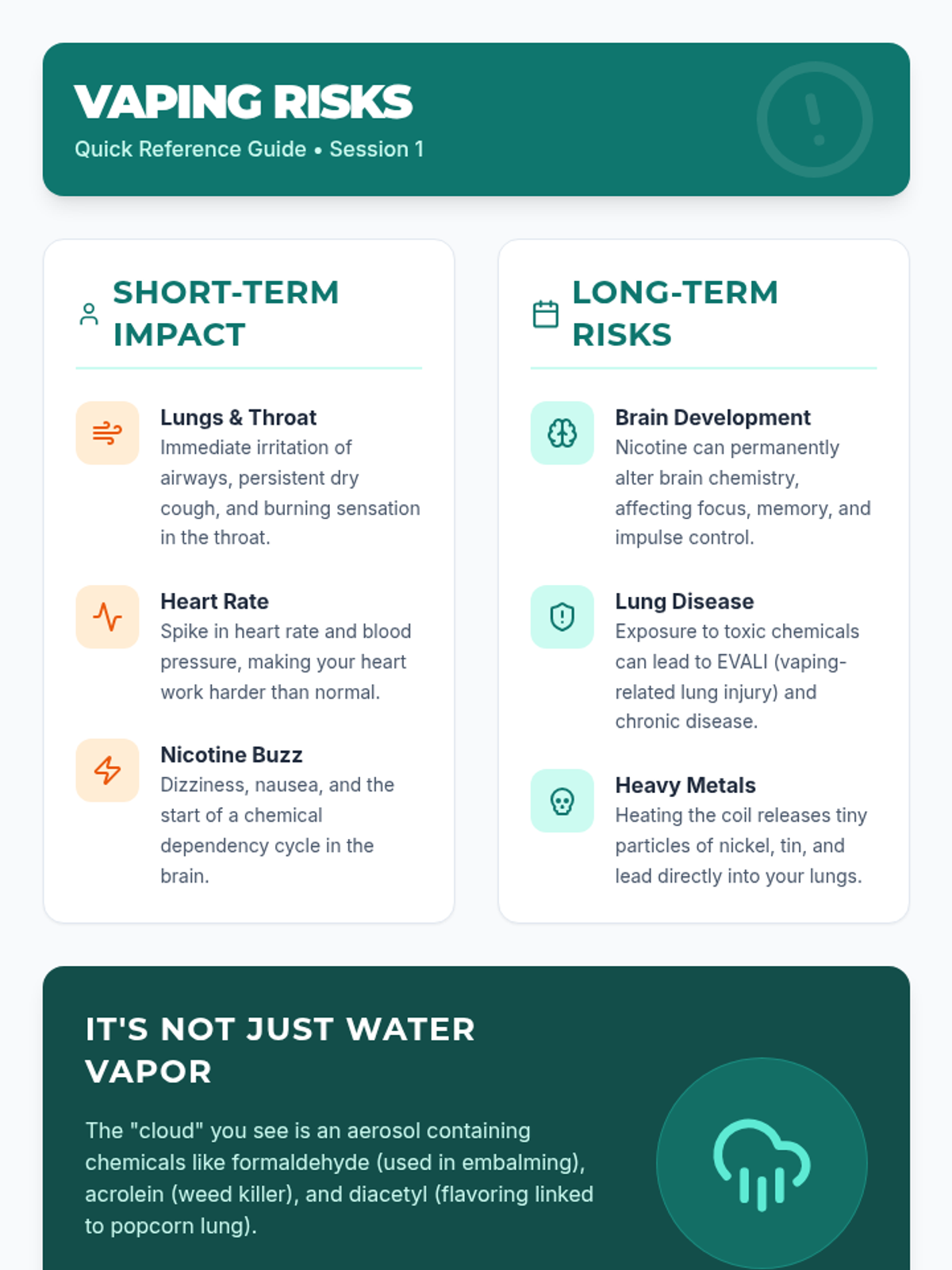
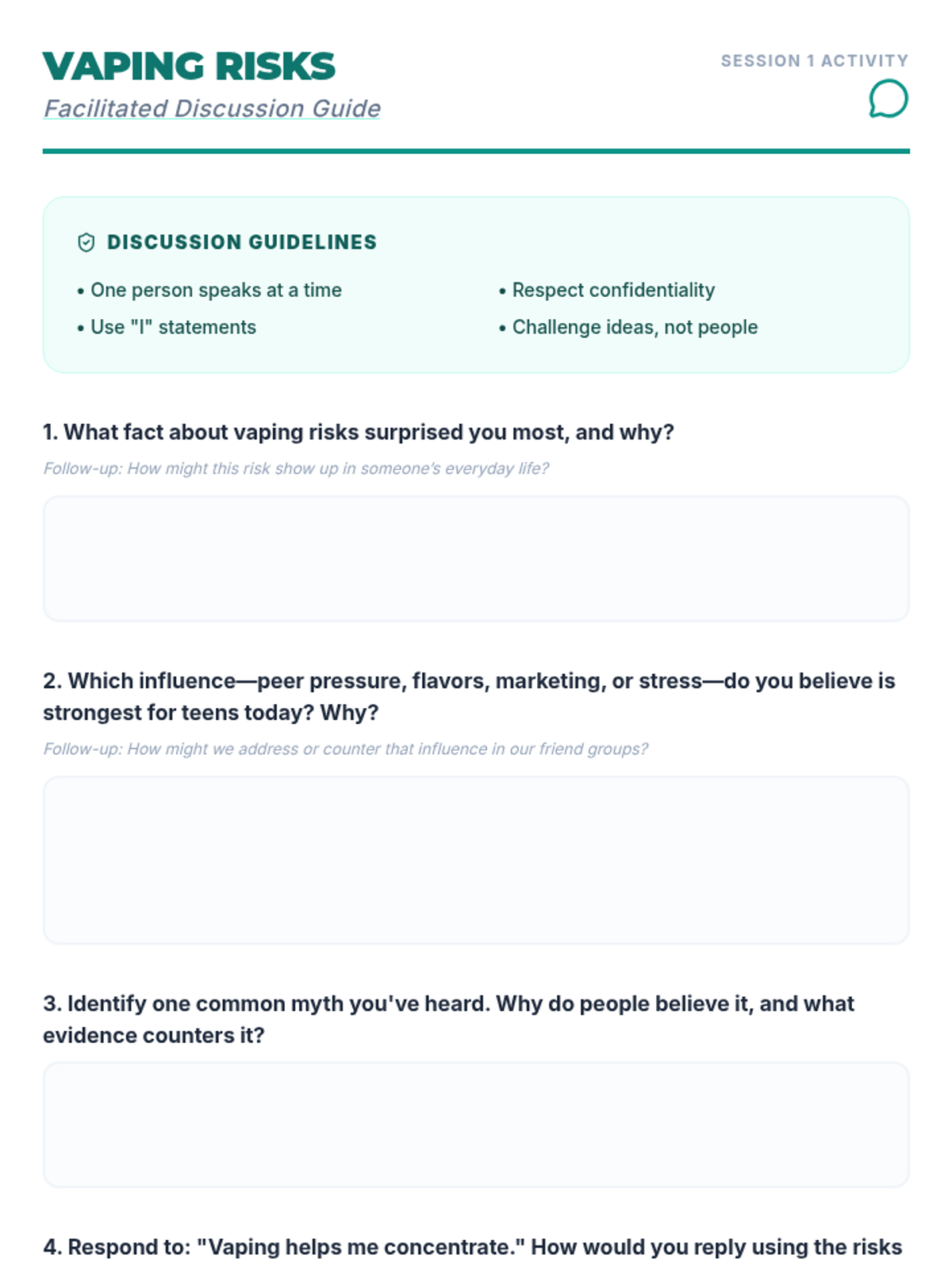
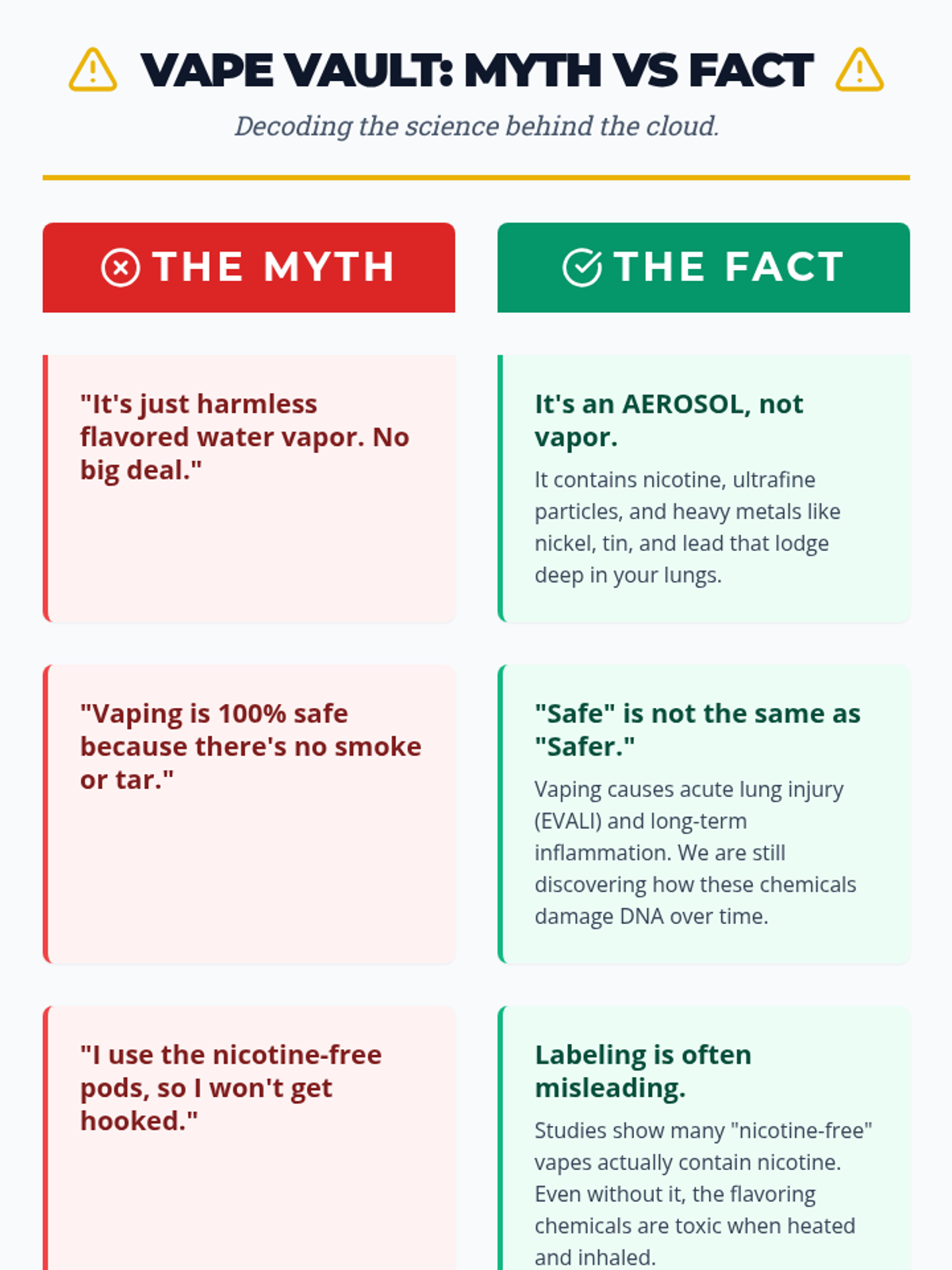
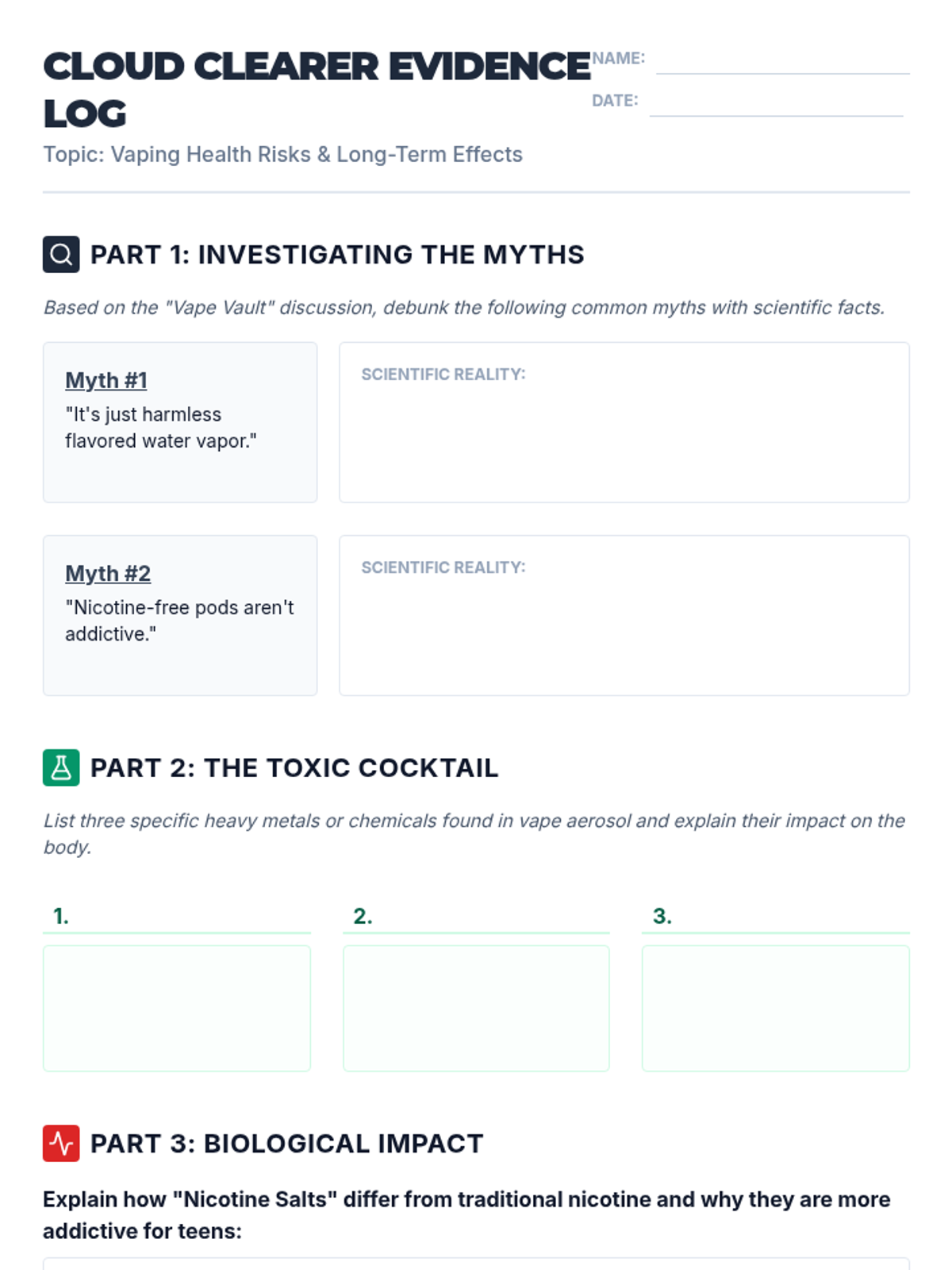
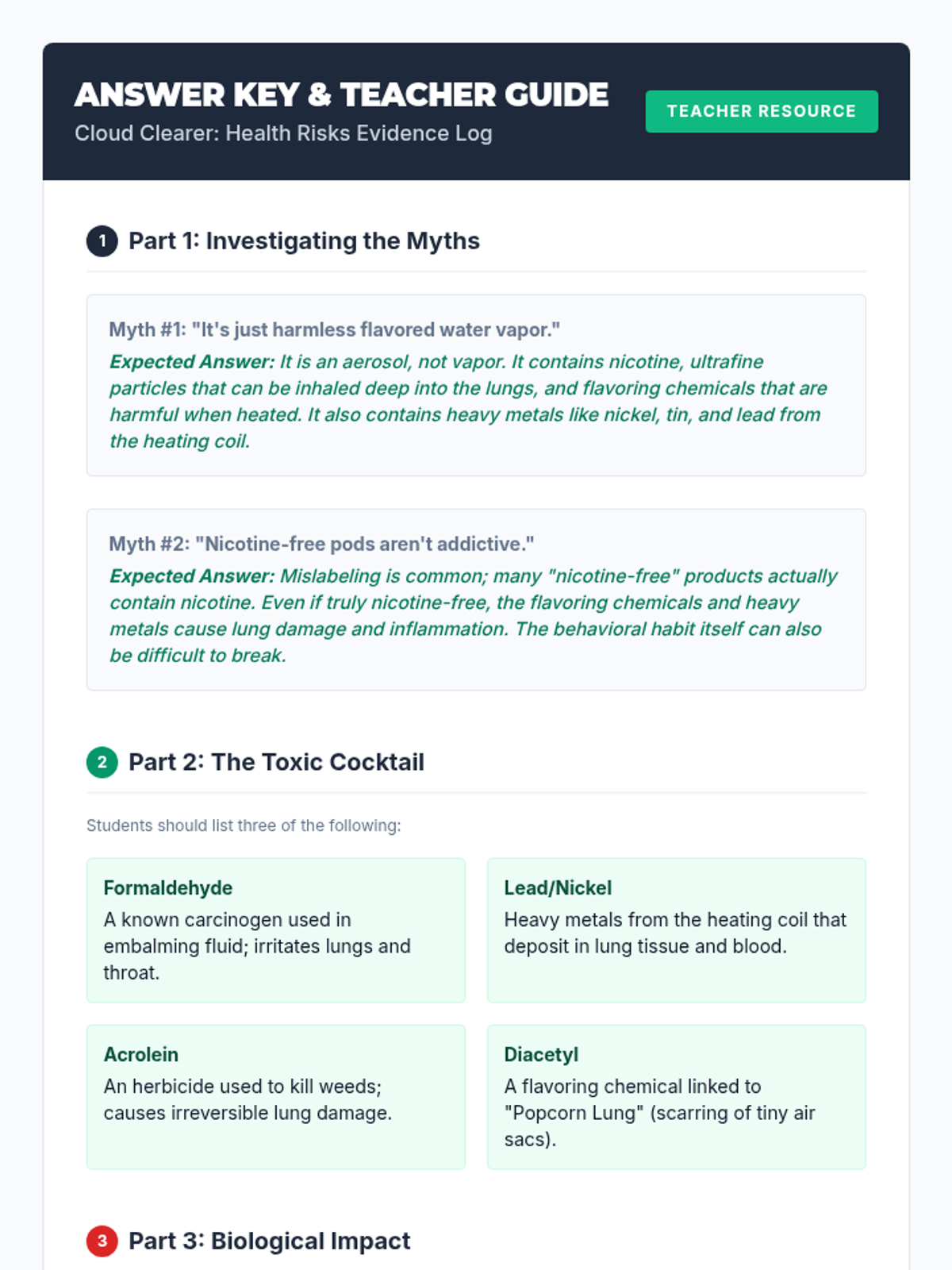
A comprehensive 5-day unit designed to educate students on the physiological effects of vaping and provide actionable, healthy coping mechanisms like deep breathing and mindfulness.
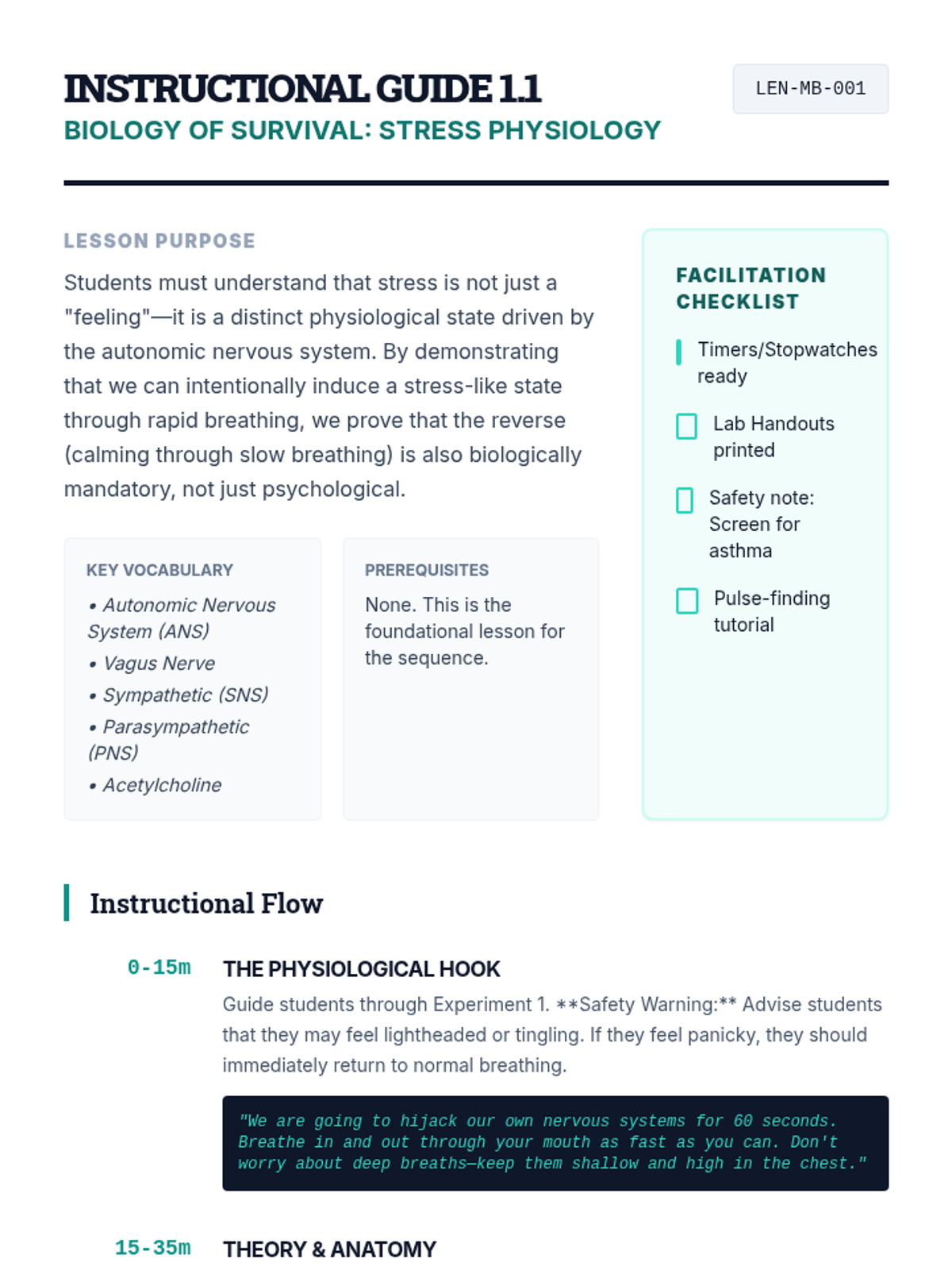
A 12th-grade health sequence exploring the biological mechanisms of the stress response and how breathing techniques can mechanically trigger the parasympathetic nervous system. Students move from physiological theory to mastering concrete, bio-mechanical interventions for stress.
A high school health sequence exploring the biological and neurological foundations of stress and meditation. Students analyze the autonomic nervous system, measure physiological responses to breathing techniques, and understand how neuroplasticity allows for long-term stress regulation.
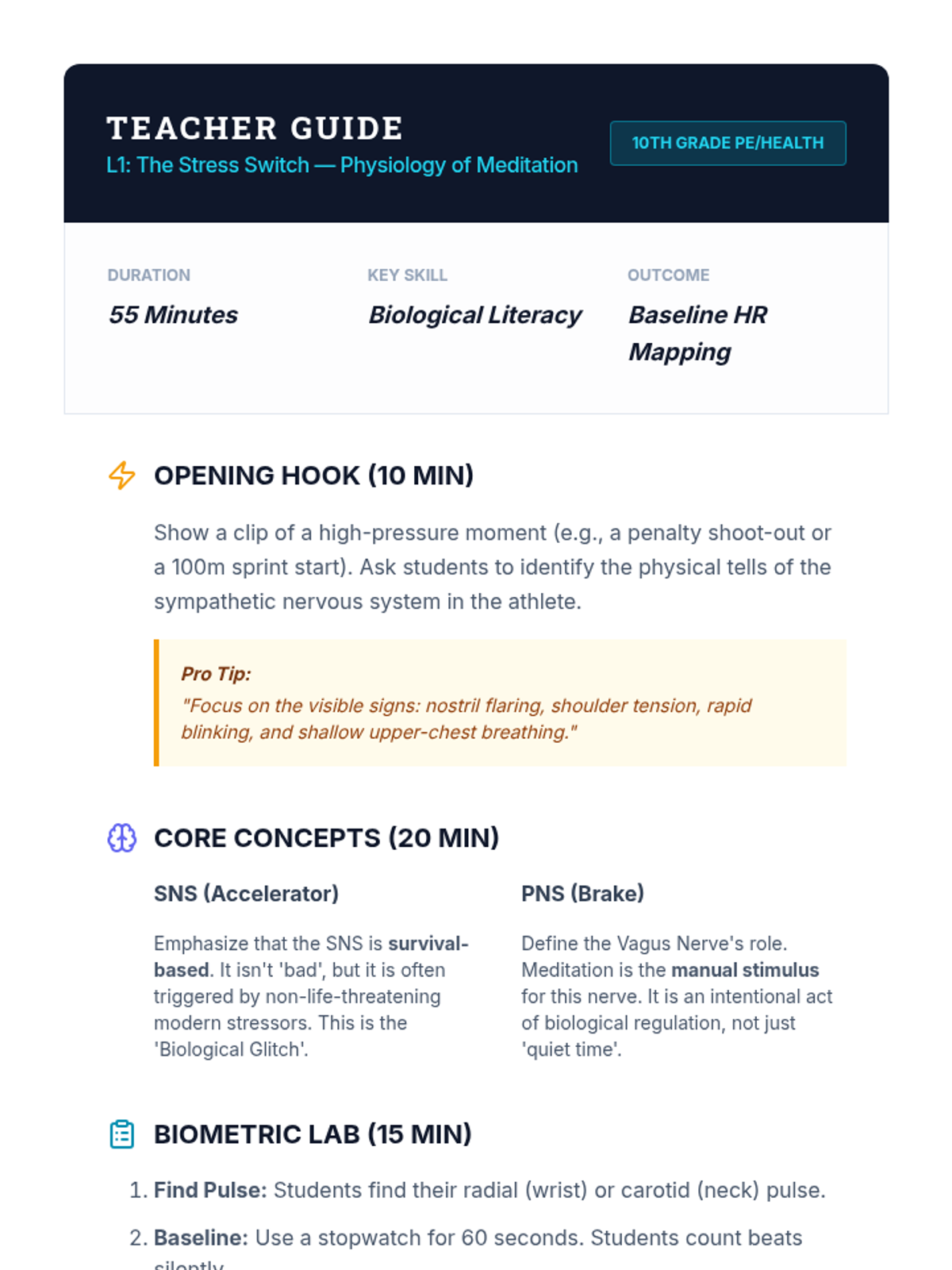
A 10th-grade Health & Physical Education sequence that grounds meditation in biology, focusing on the autonomic nervous system, breathing protocols, and biometric analysis to manage stress.
A high-school level exploration of stress through the lens of neuroscience and physiology. Students learn to manipulate their autonomic nervous system using specific breathing and relaxation techniques to optimize performance and well-being.
A high school health sequence bridging biological understanding of the autonomic nervous system with practical stress-regulation protocols like Box Breathing and Progressive Muscle Relaxation. Students move from scientific inquiry to the creation of a personalized bio-regulation plan for high-stakes scenarios.
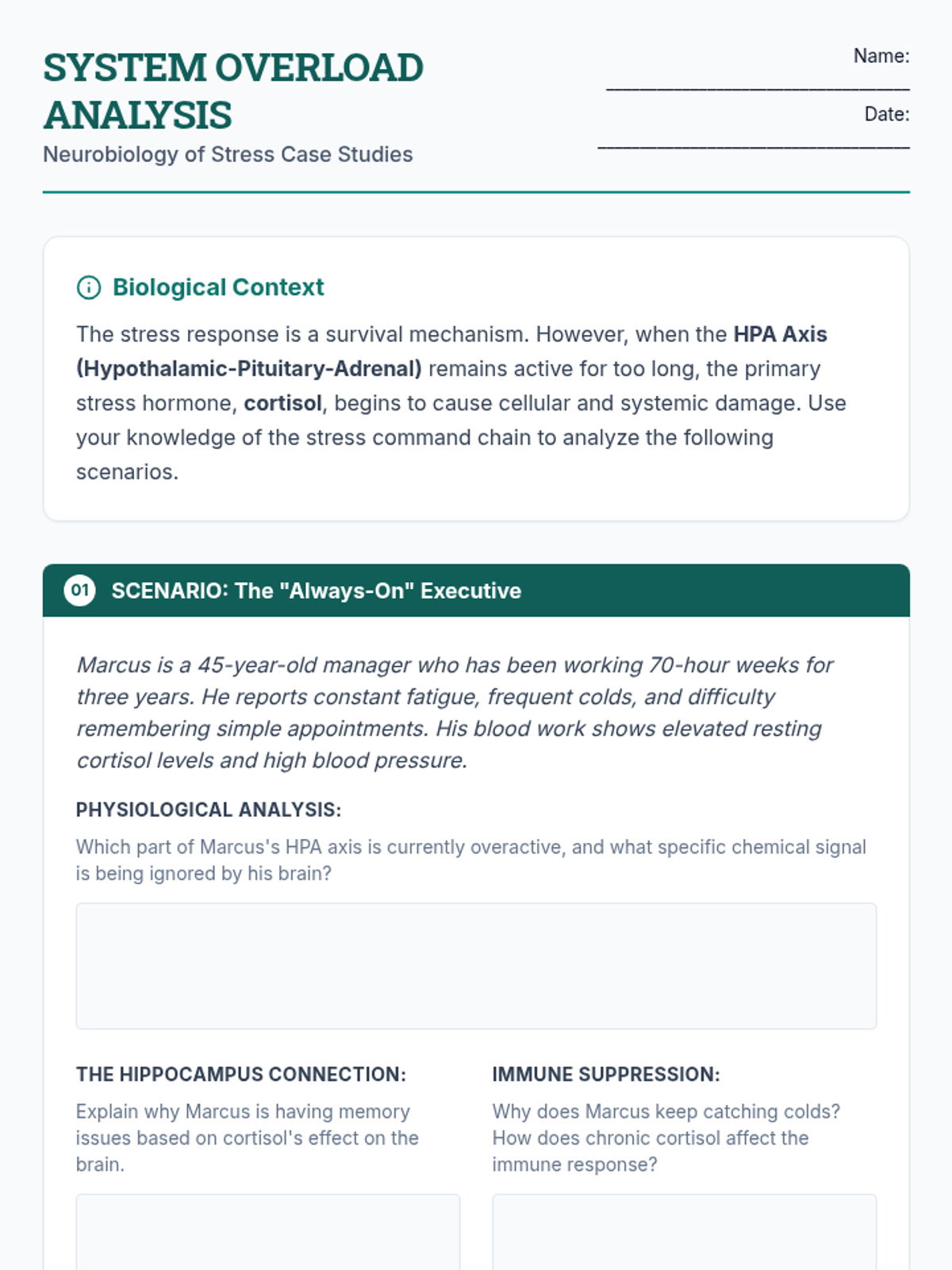
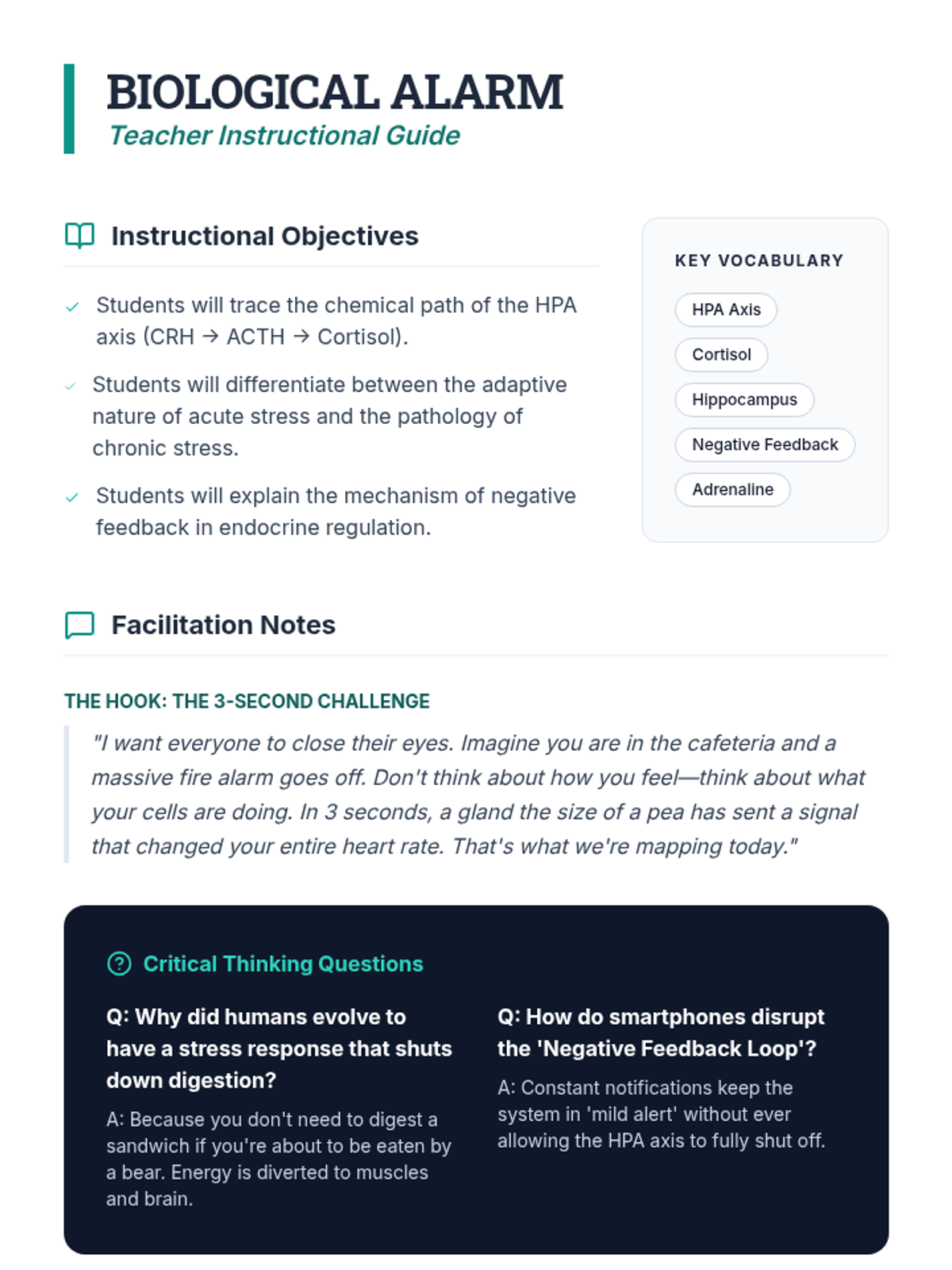
A high school health sequence that explores the neurobiological foundations of stress, focusing on the HPA axis, physiological symptom recognition, biofeedback techniques, and cognitive reframing to create a personalized stress regulation protocol.
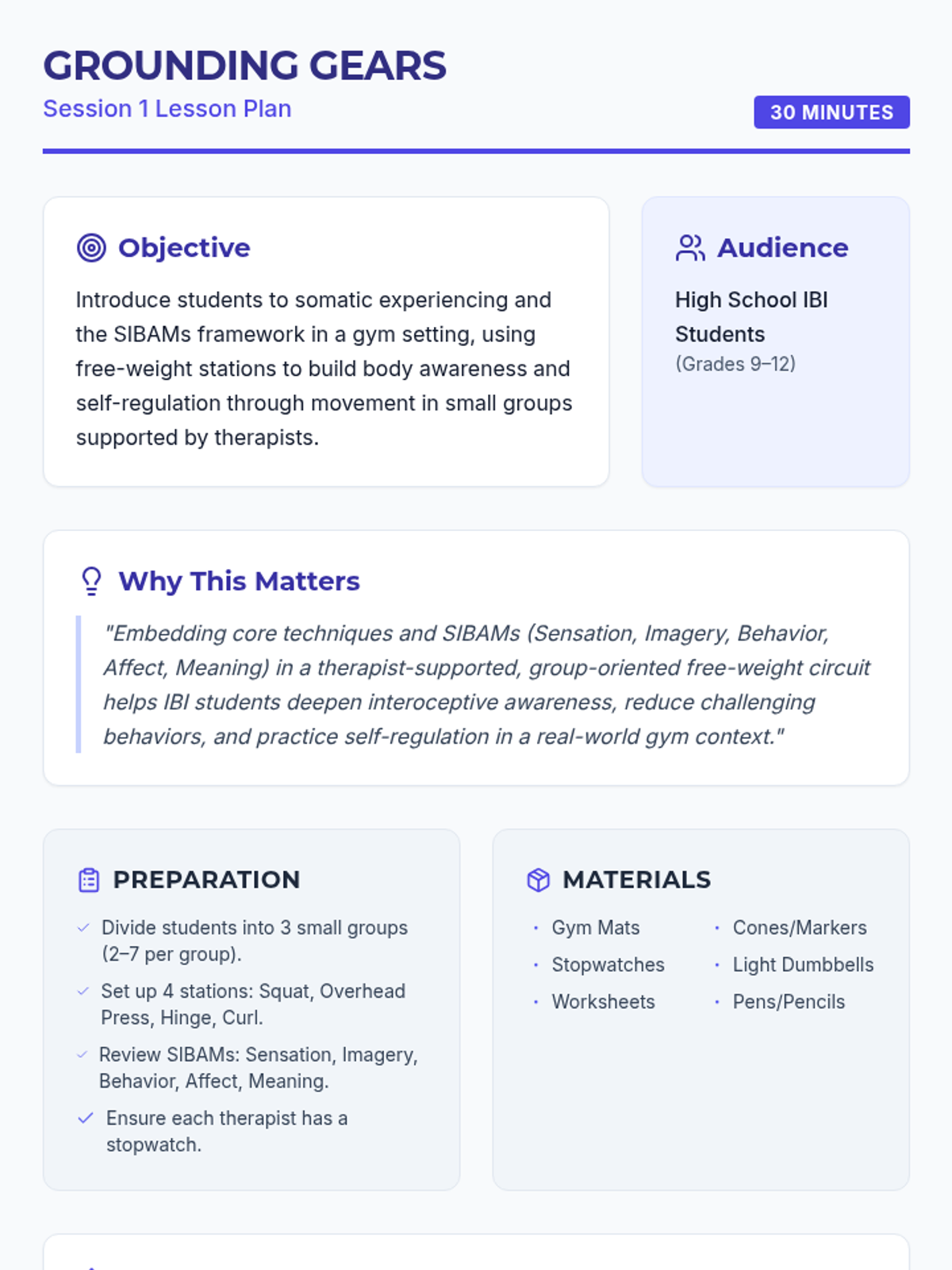
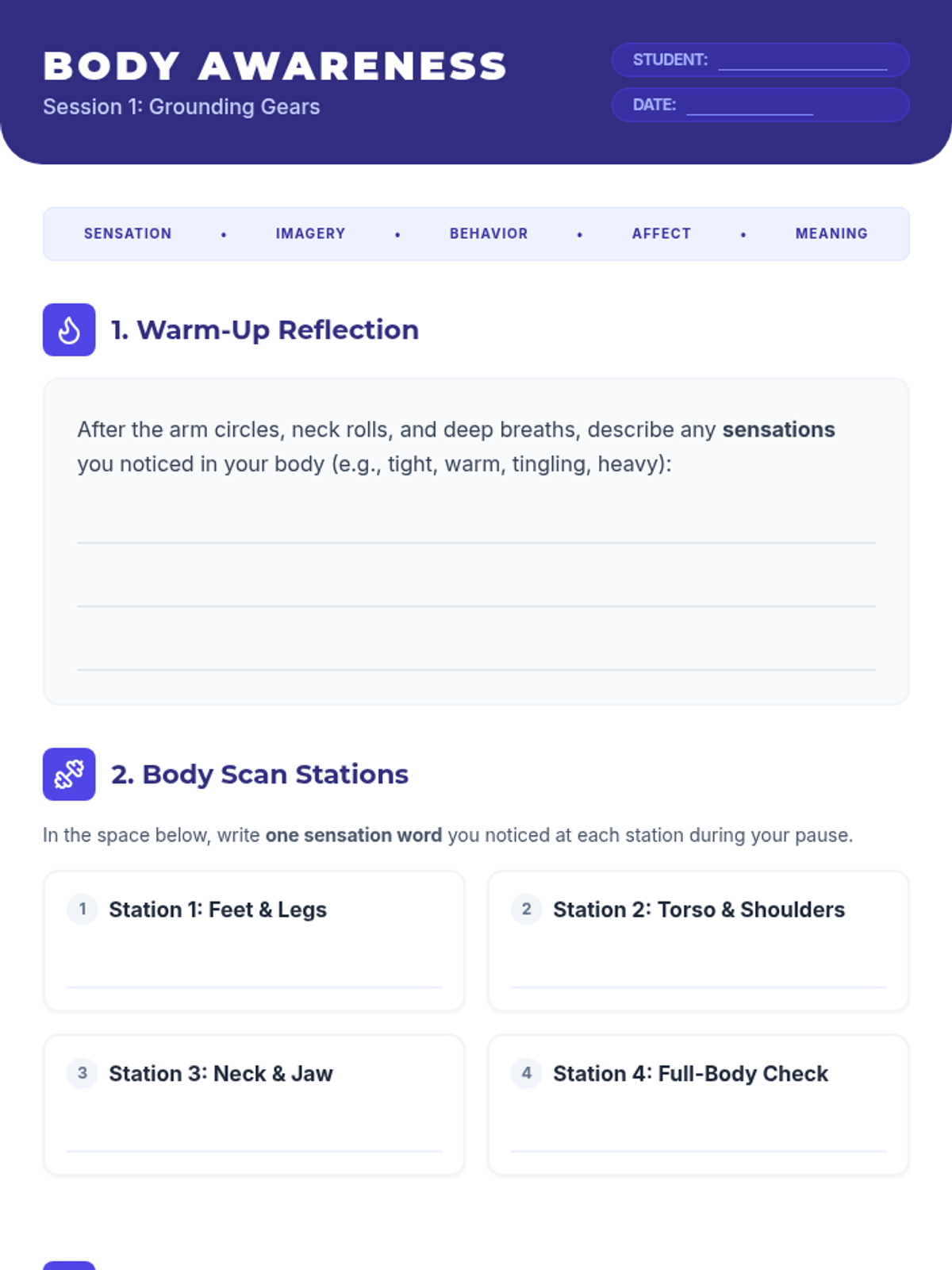
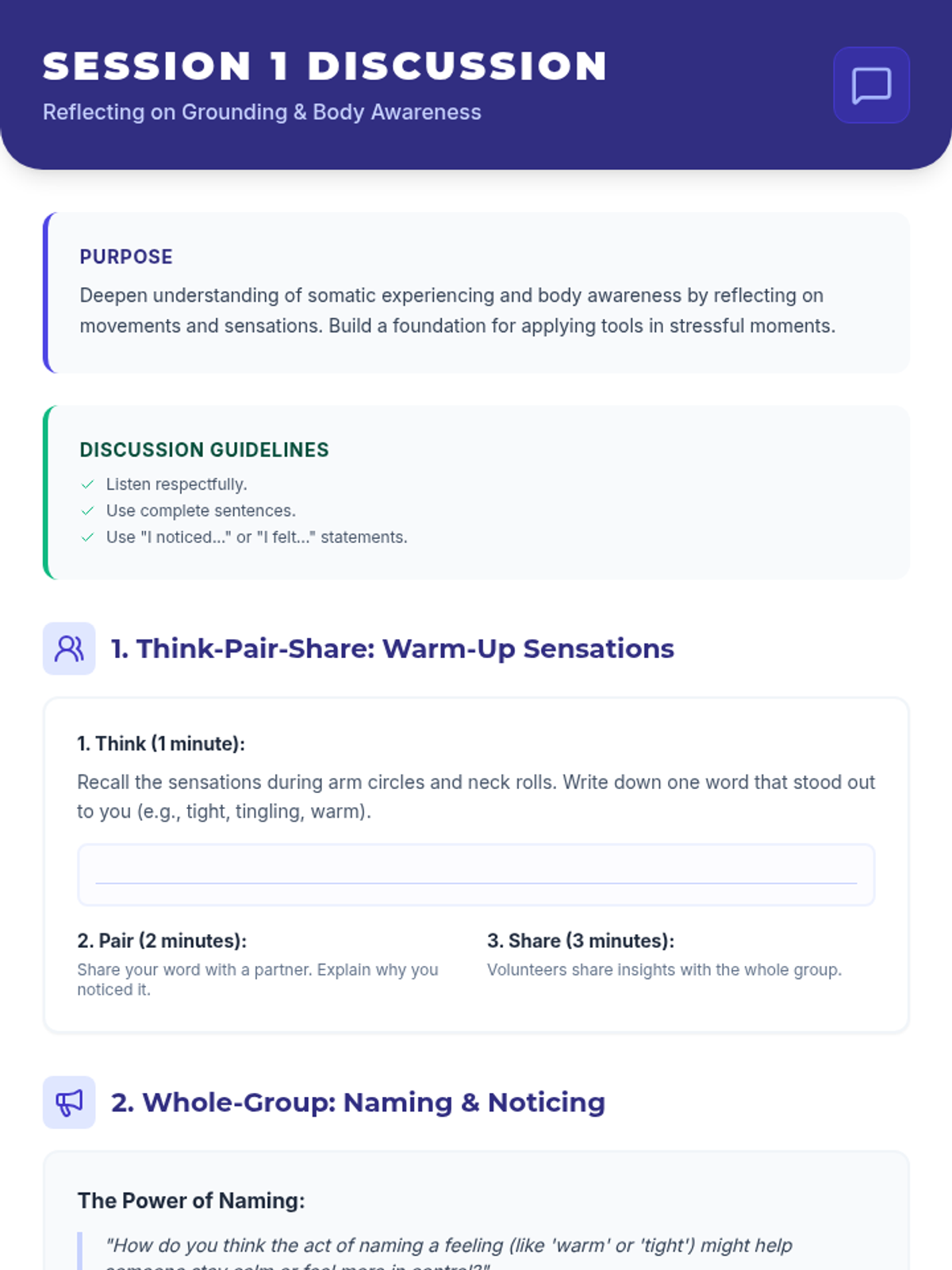
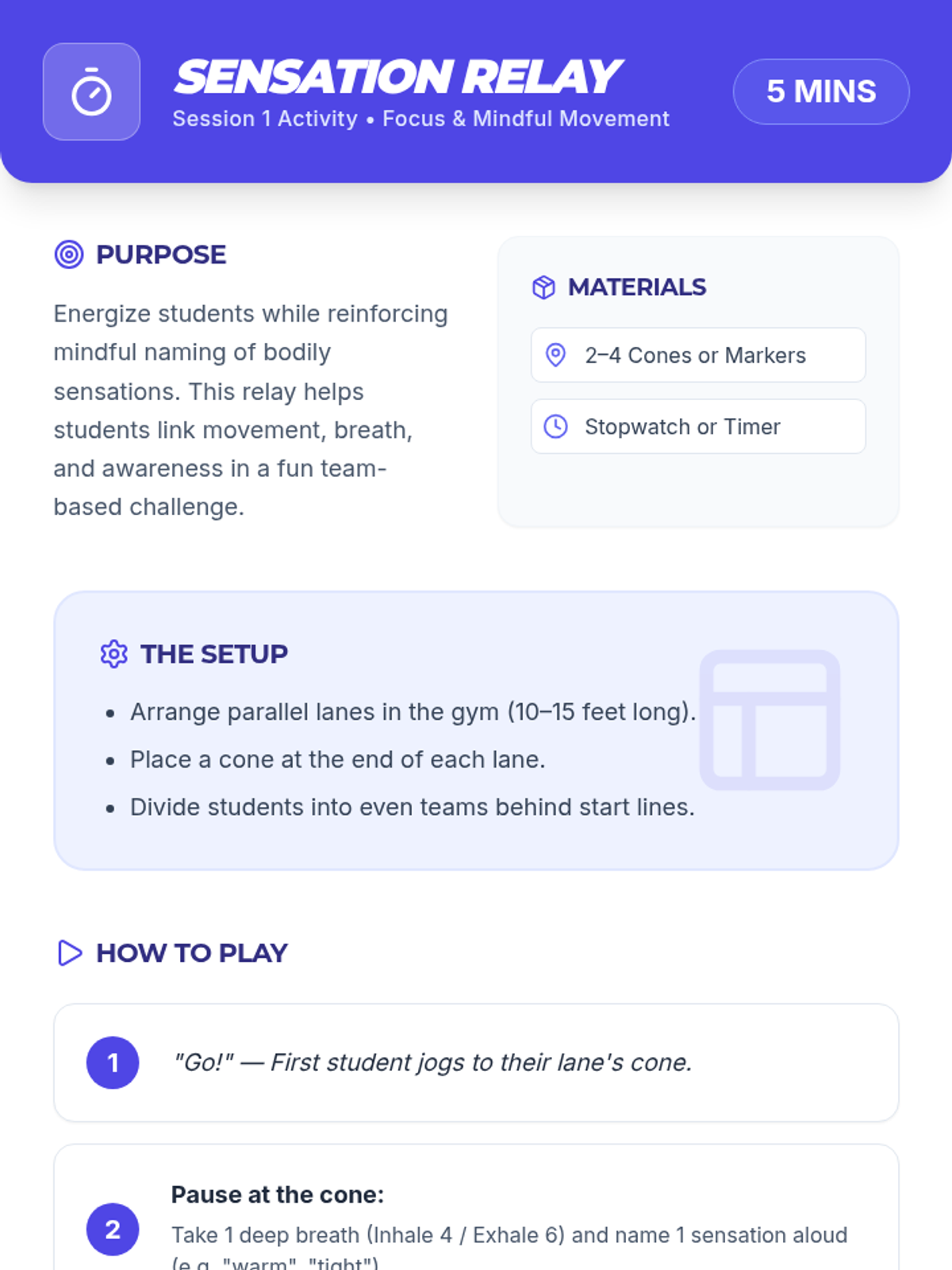
A 14-session series for high school IBI students that integrates somatic experiencing techniques (SIBAMs) into gym-based workouts to improve self-regulation and reduce challenging behaviors.
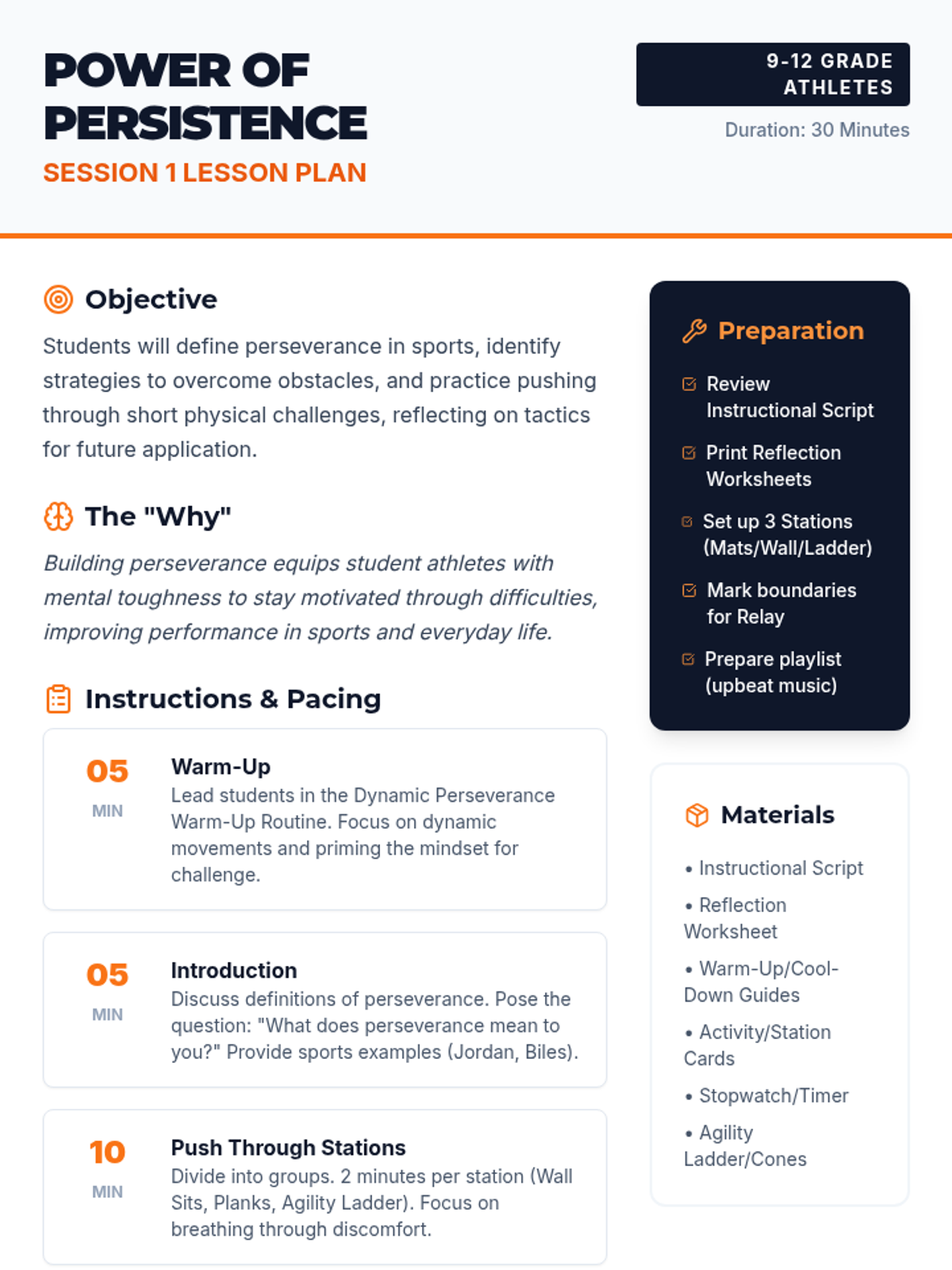
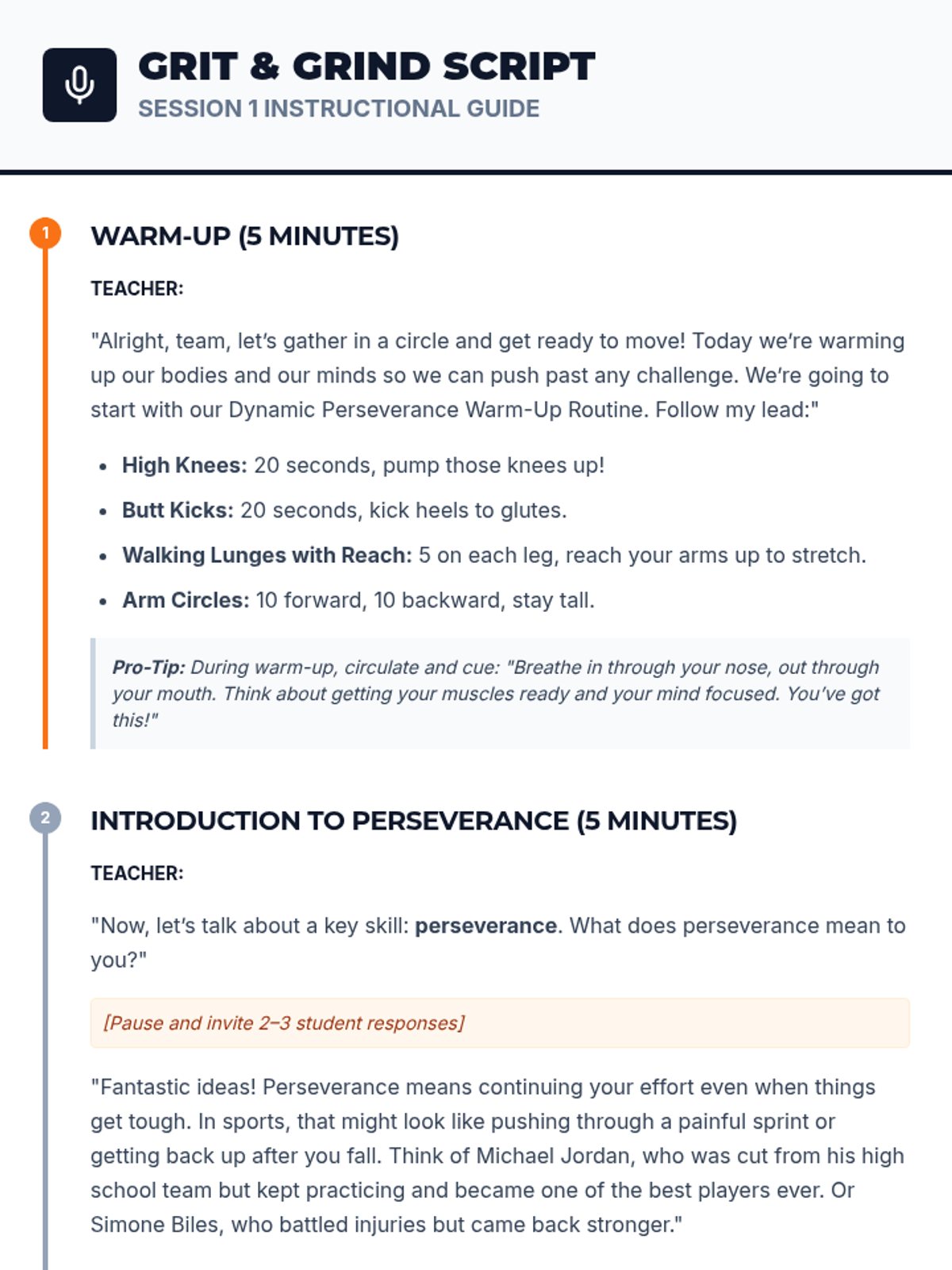
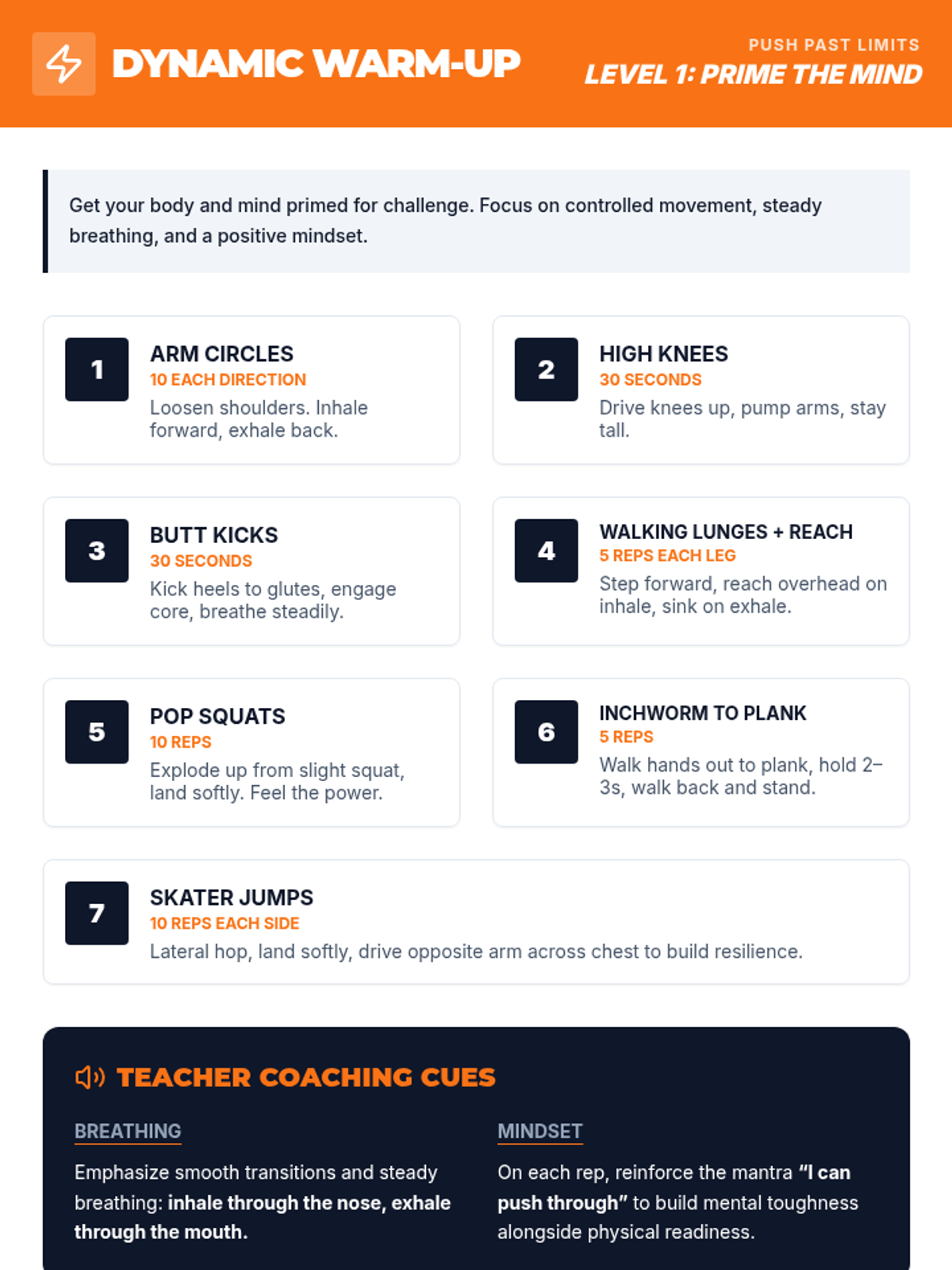
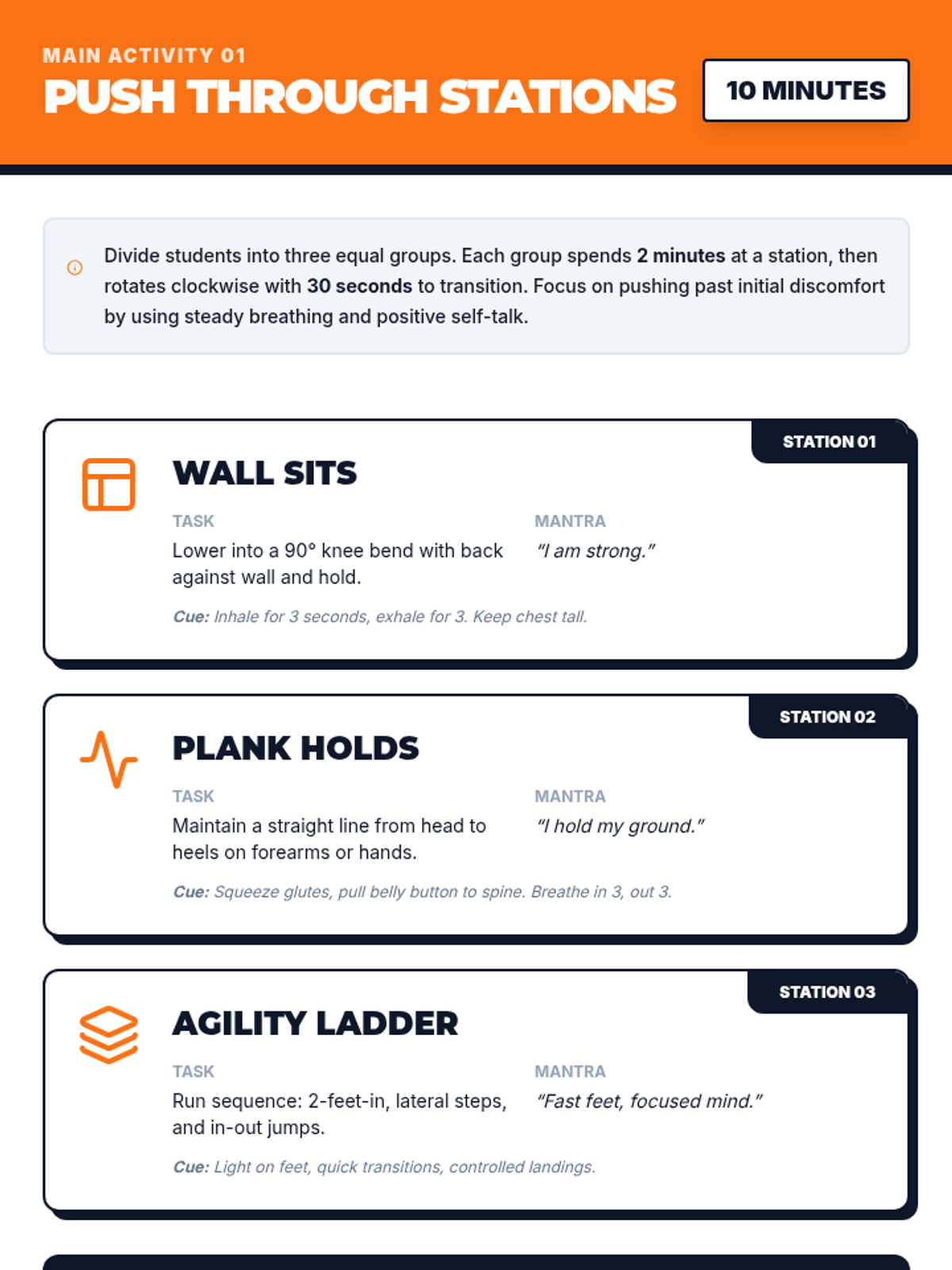
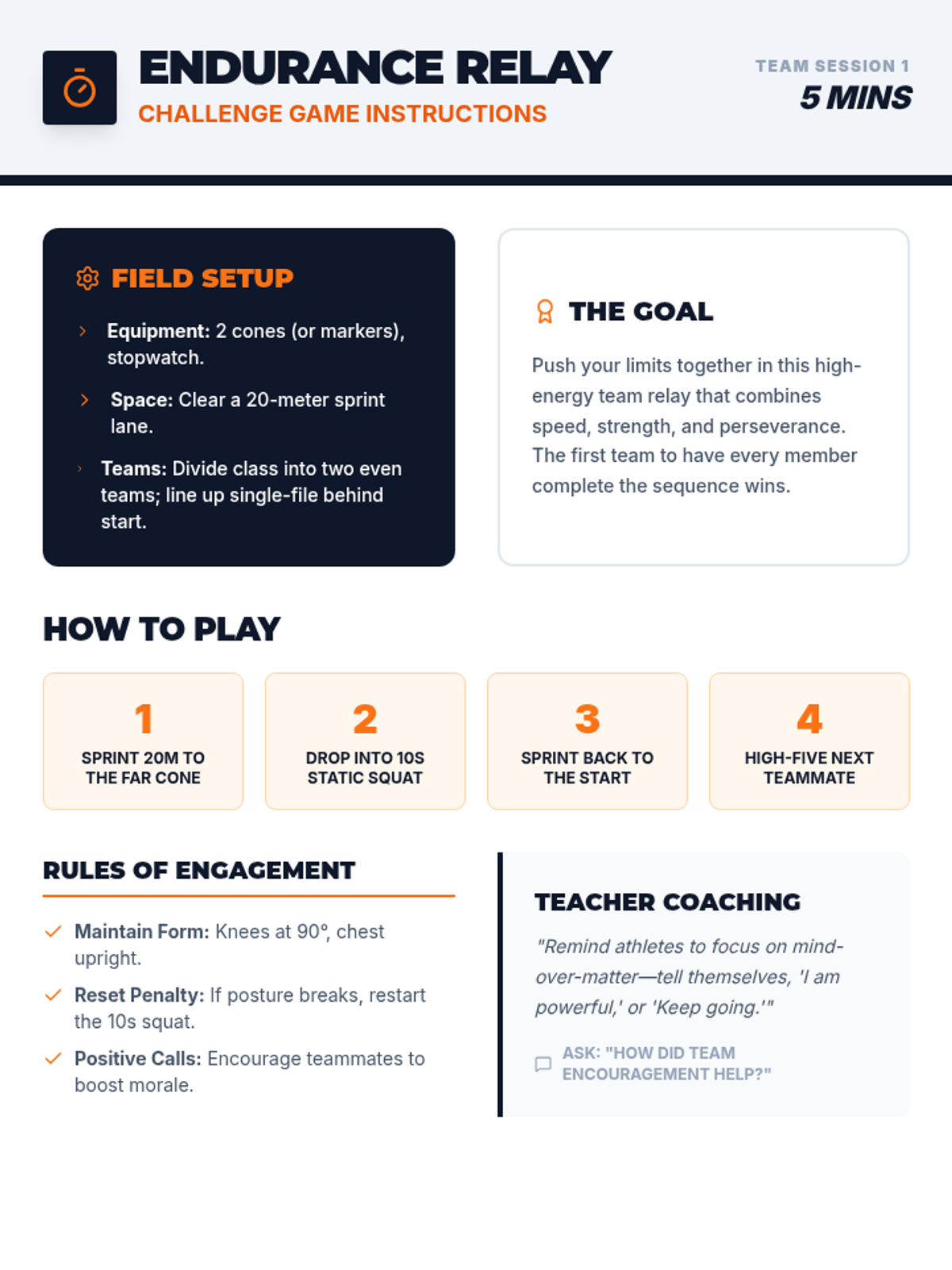
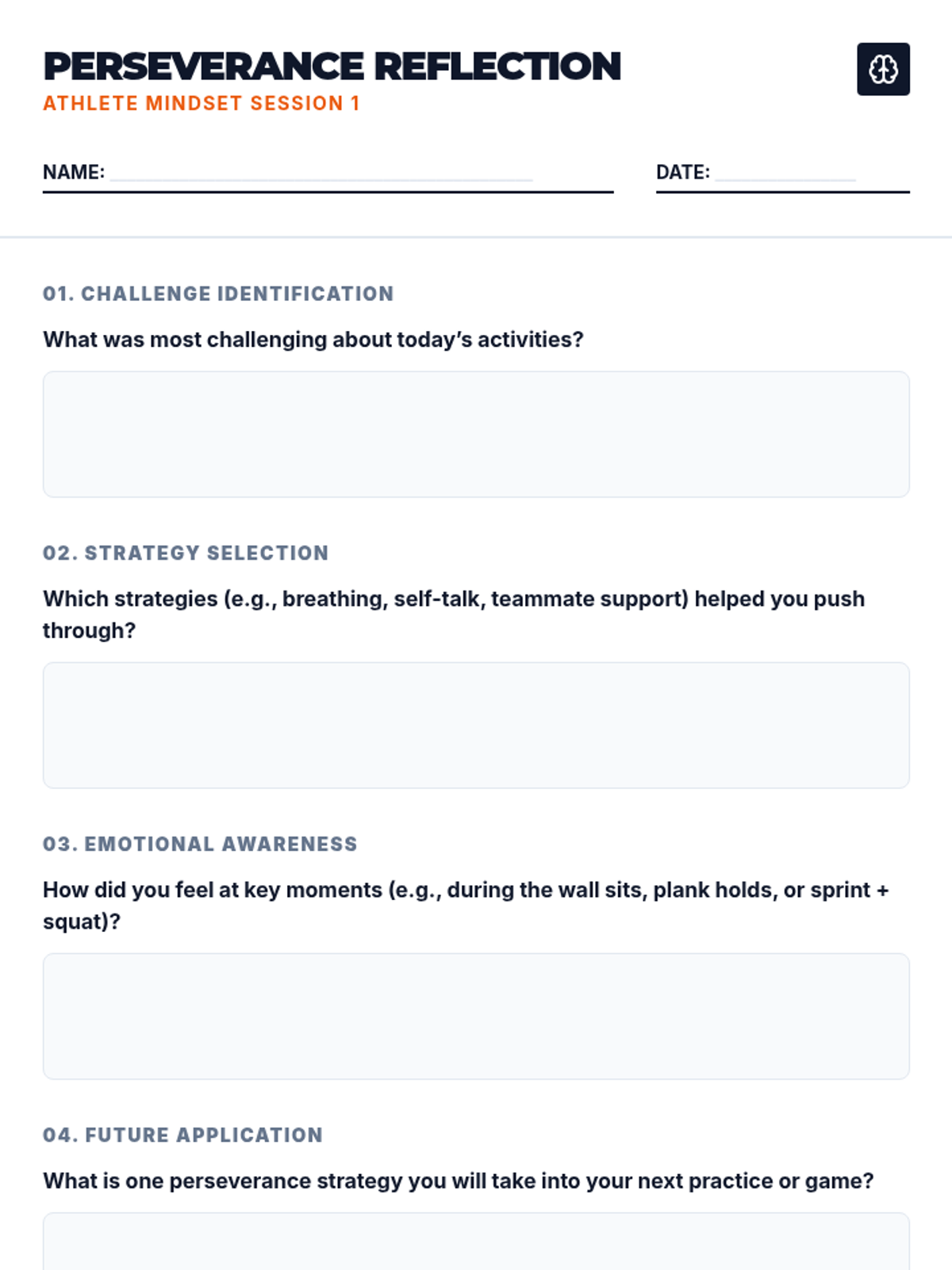
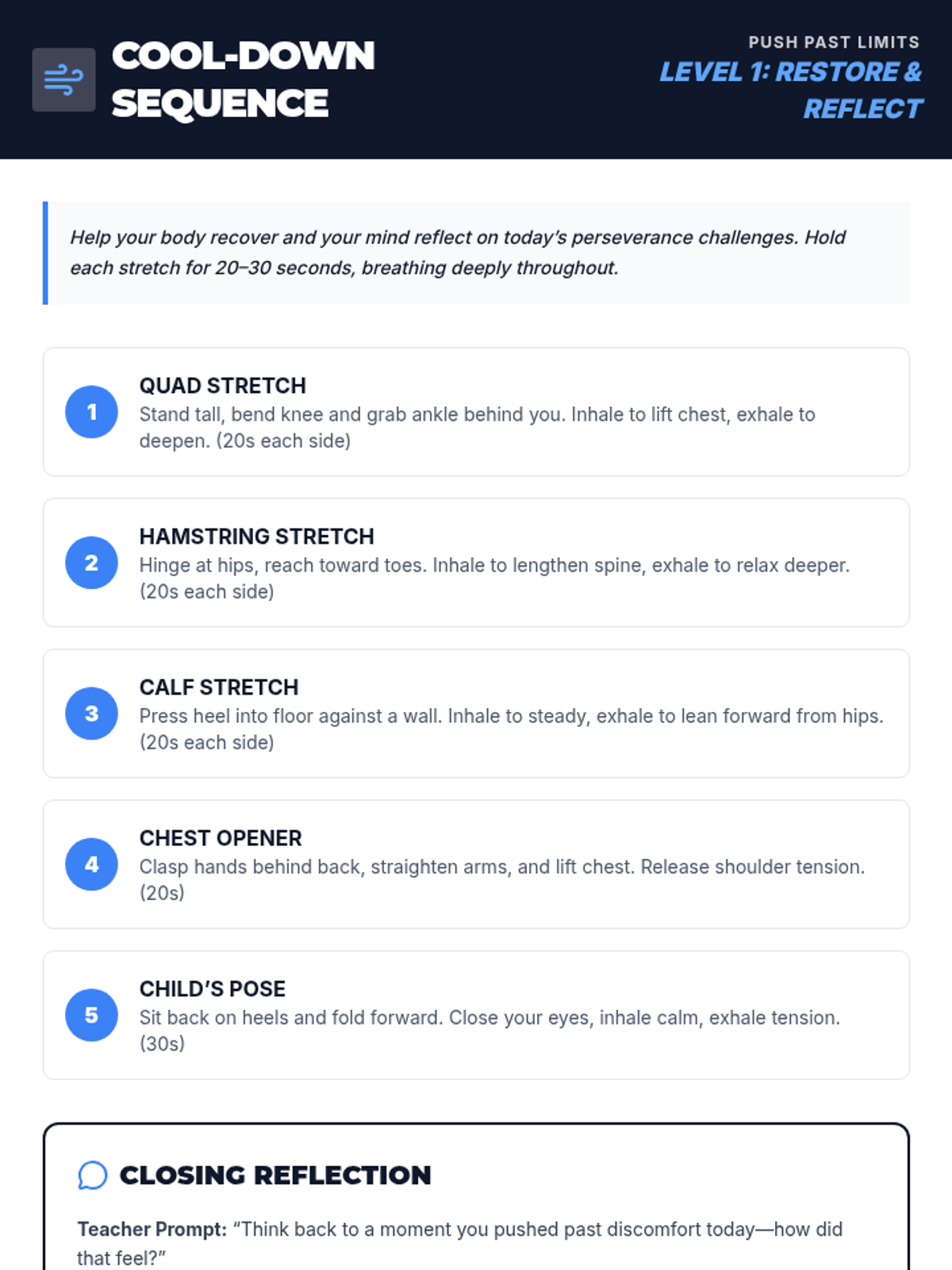
A two-session unit for 9-12 grade student athletes to develop perseverance and grit through physical challenges, collaborative games, and reflective goal-setting.
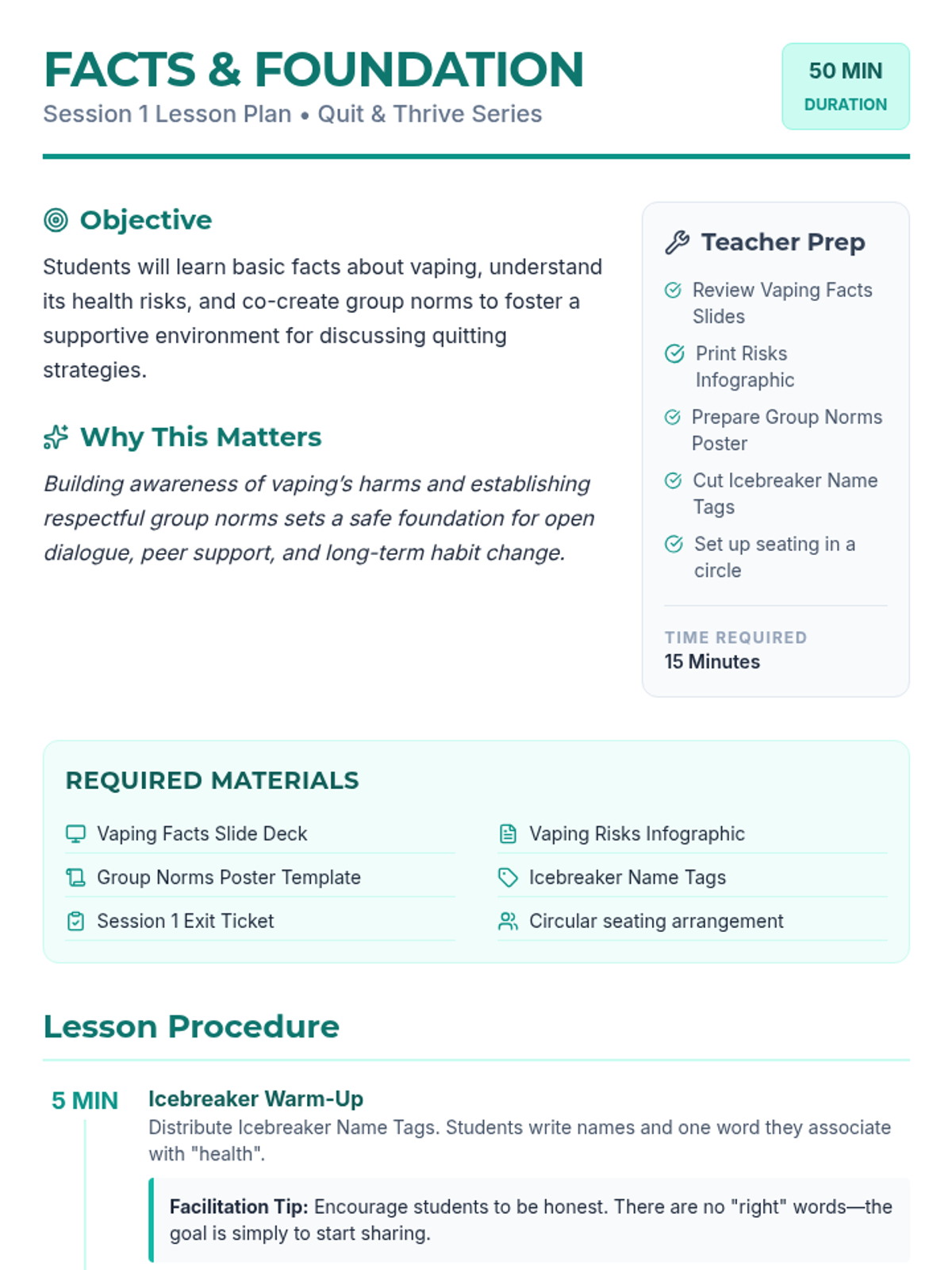
A 4-session Tier 2 intervention for high school students focused on vaping cessation, quitting strategies, and building healthy replacement habits through peer support and interactive activities.
A comprehensive health education sequence for high school students focusing on adolescent development, gender identity, and health outcomes based on Massachusetts standards.
A comprehensive vaping prevention unit that covers health risks, the science of nicotine addiction, and social refusal strategies for middle and high school students.
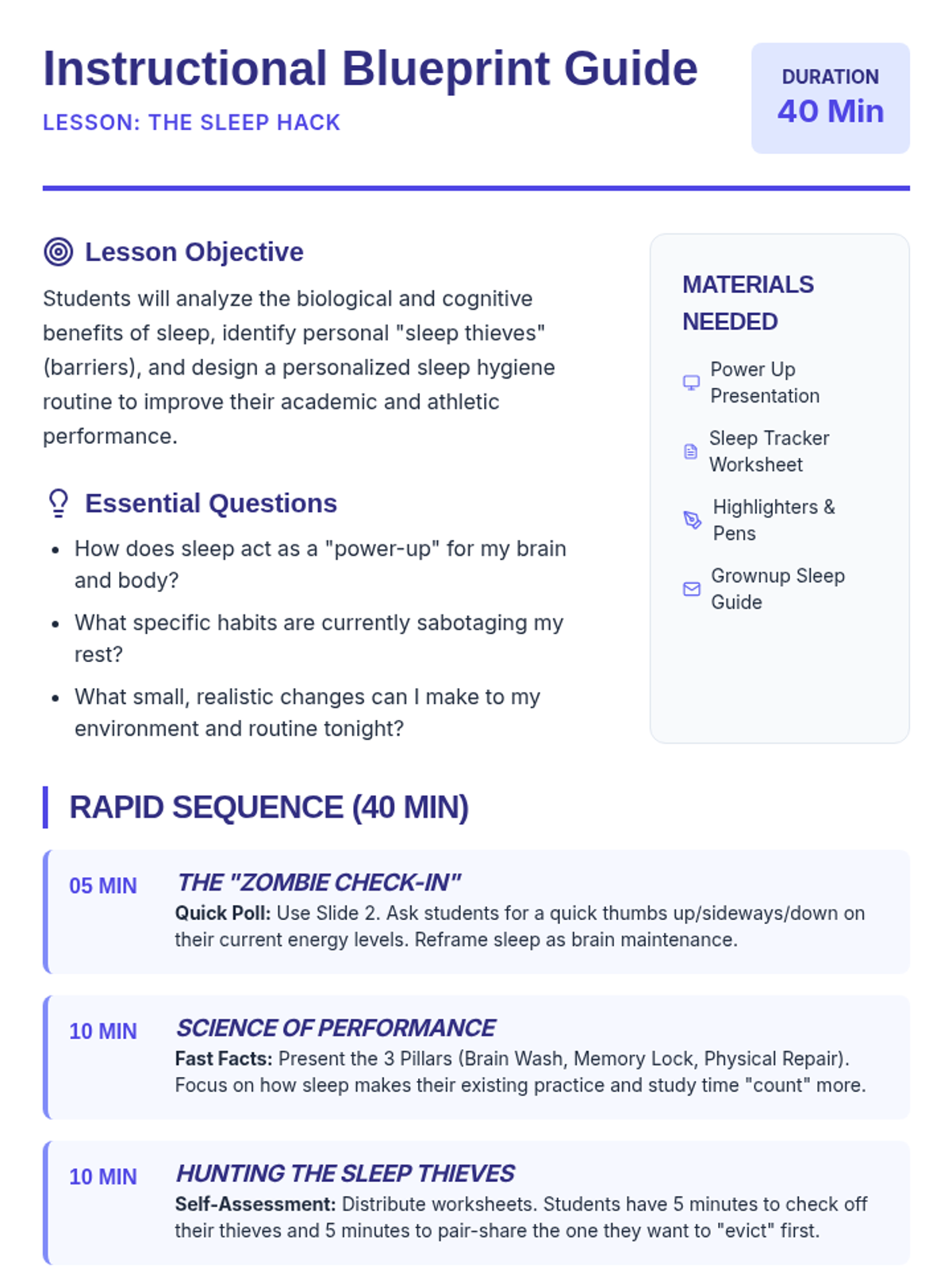
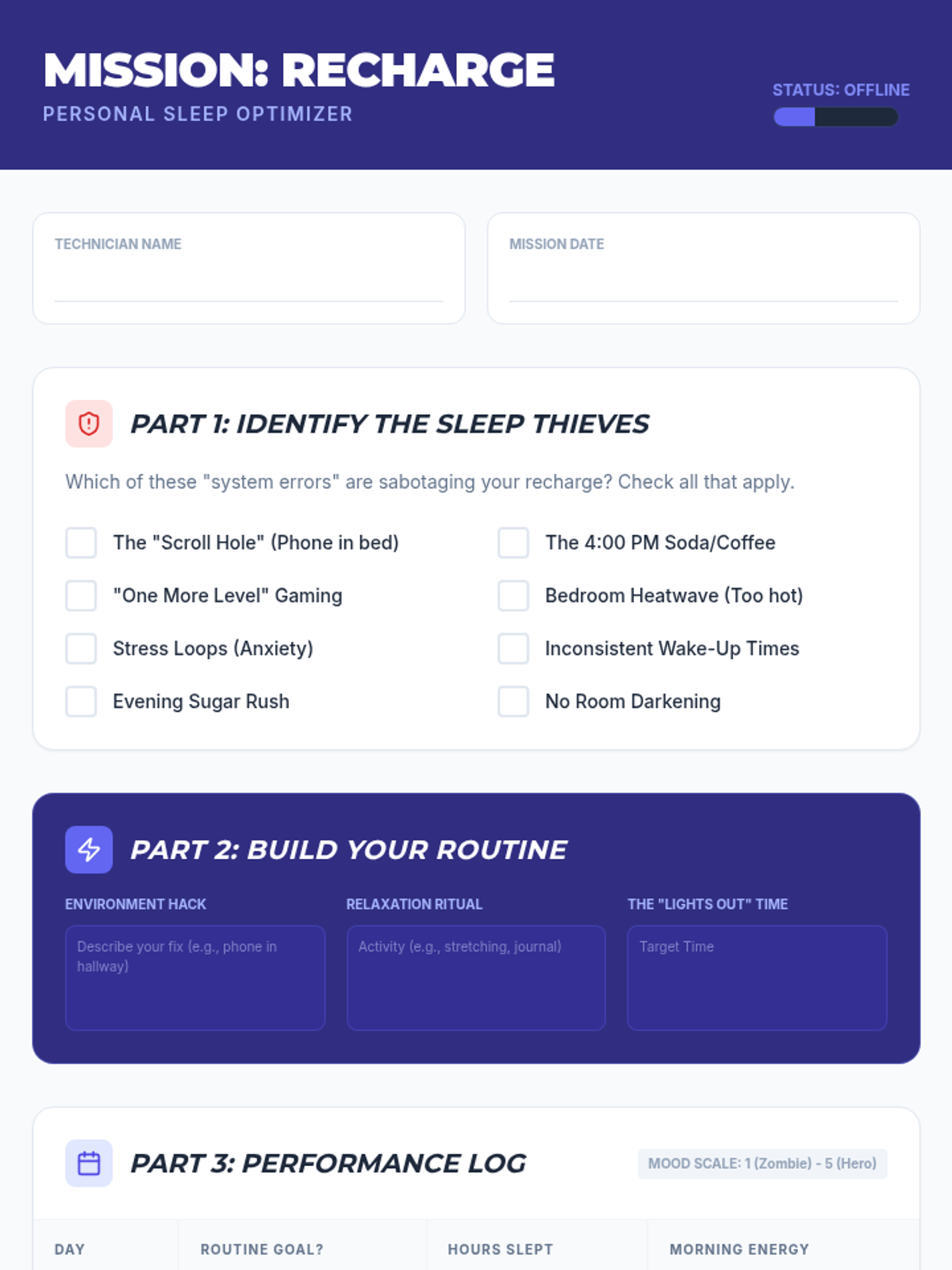
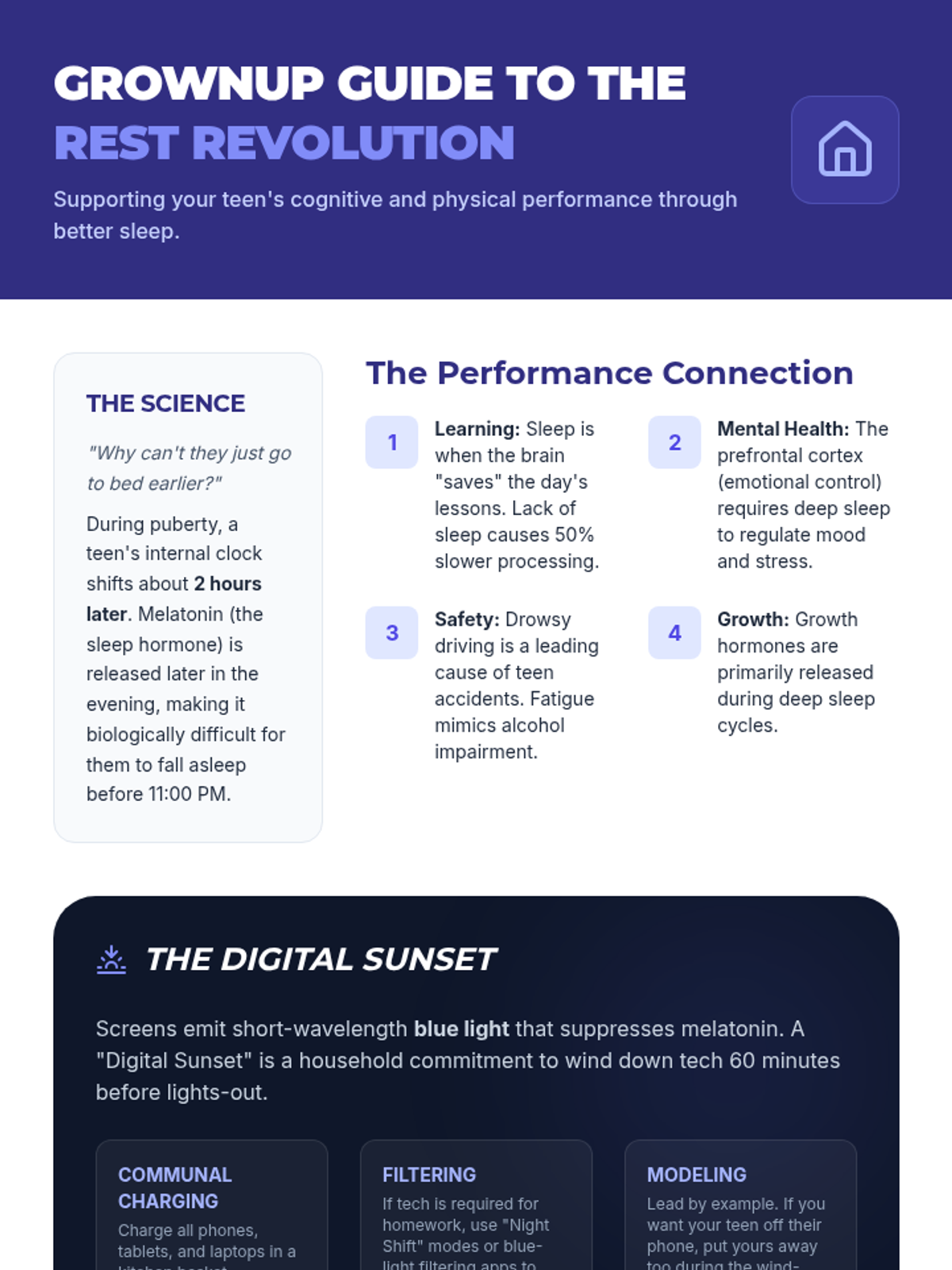
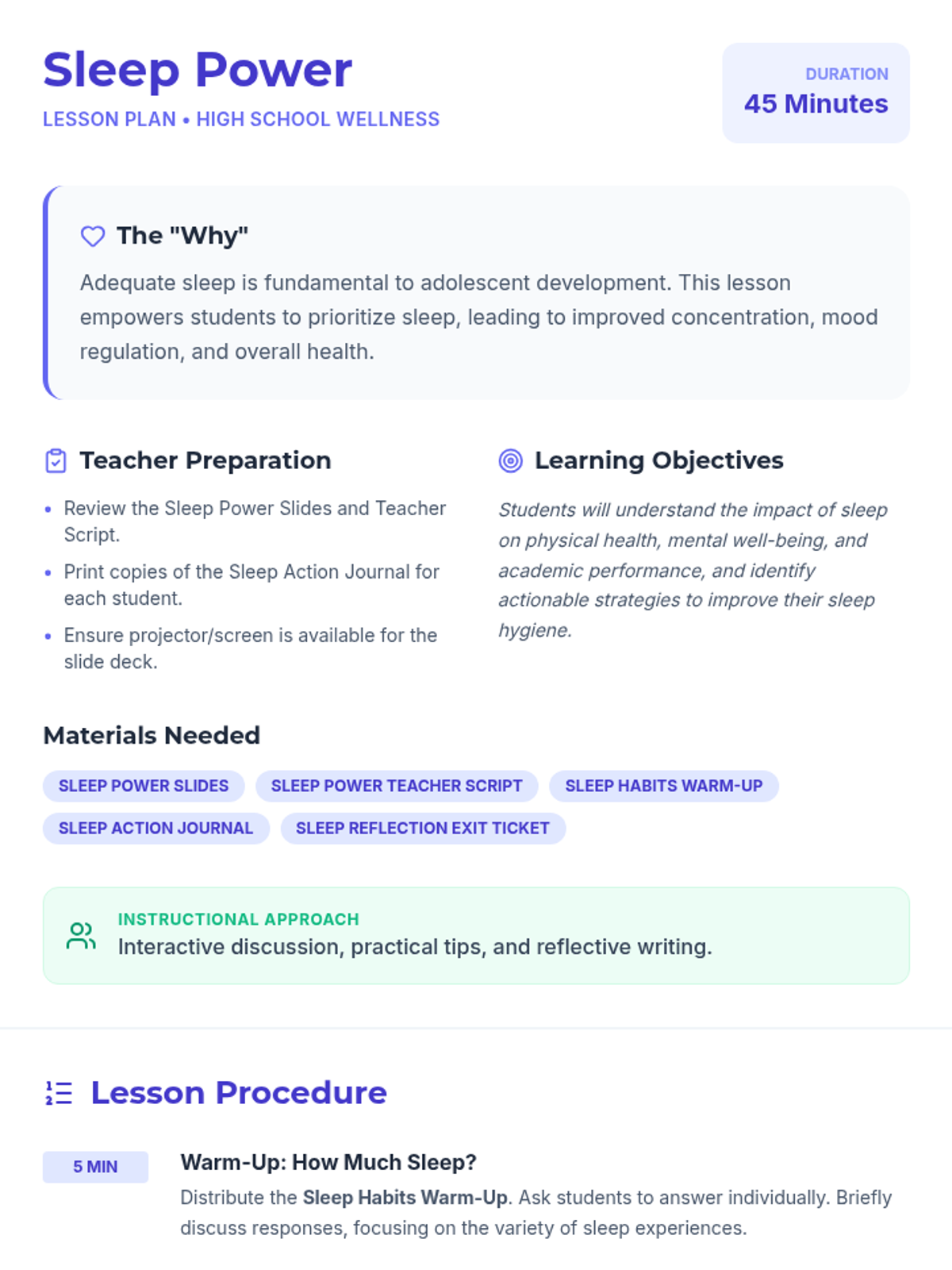
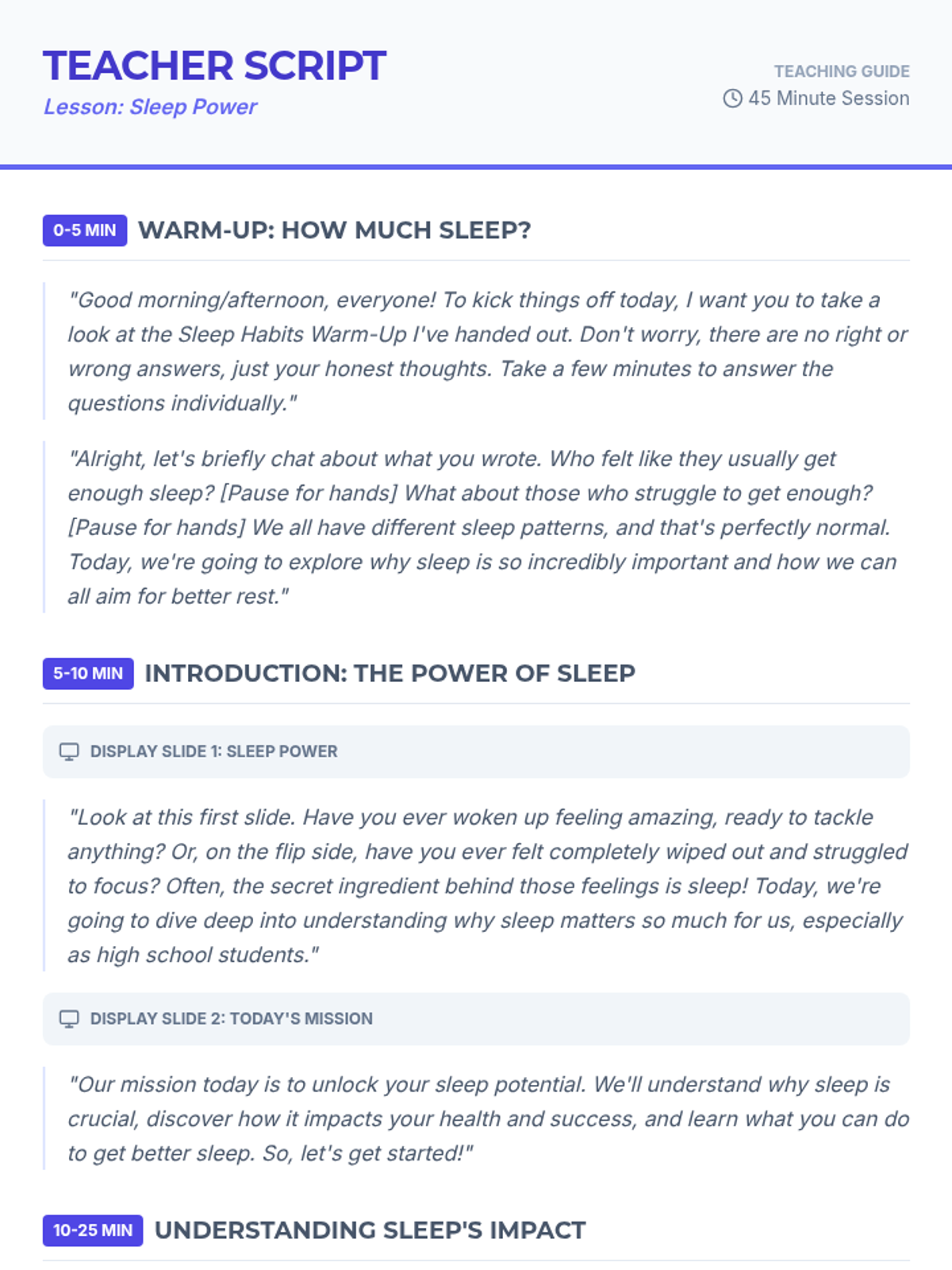
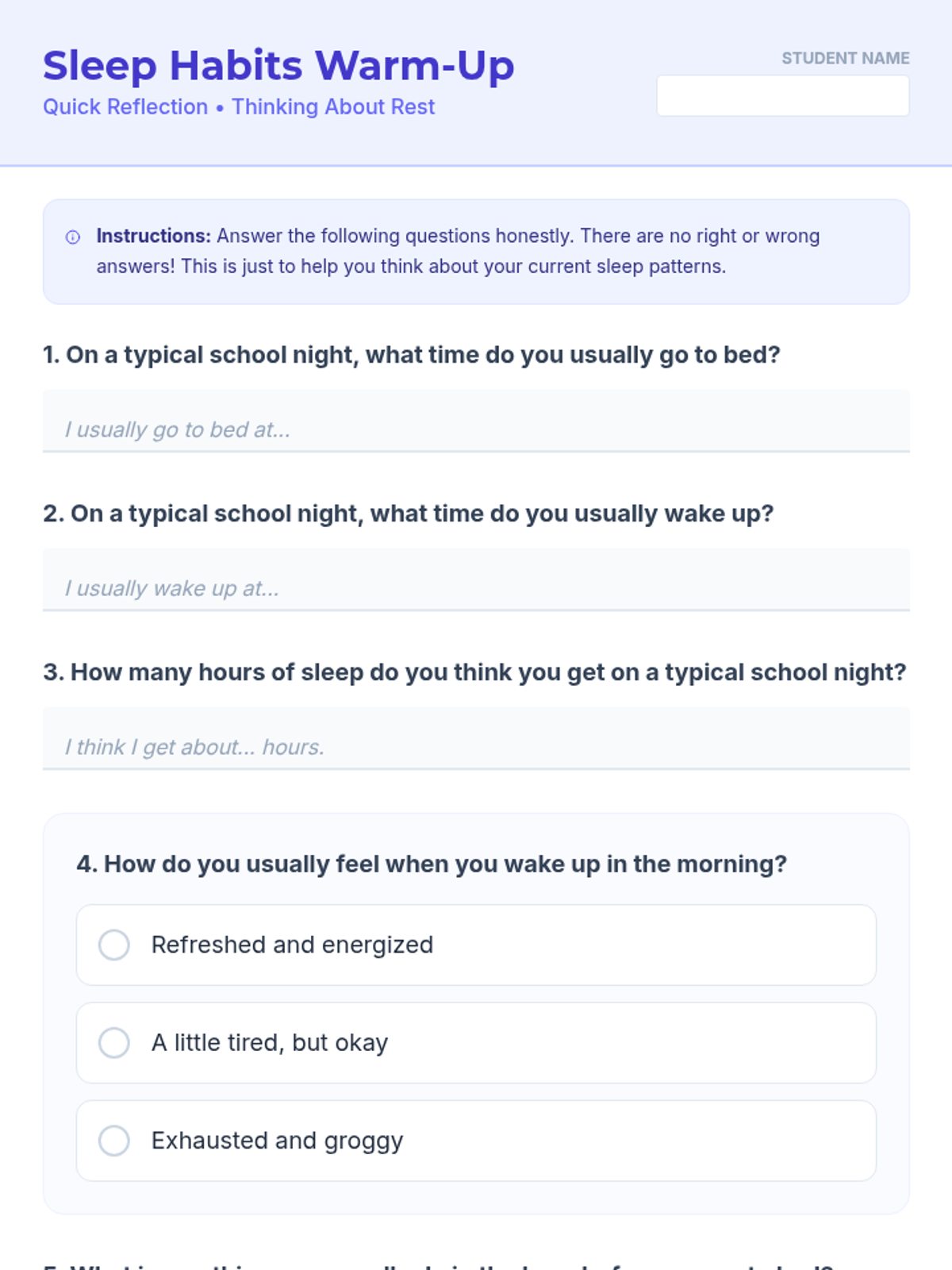
A comprehensive unit designed to help students understand the science of sleep, identify personal sleep barriers, and implement effective sleep hygiene habits for better physical and mental well-being.
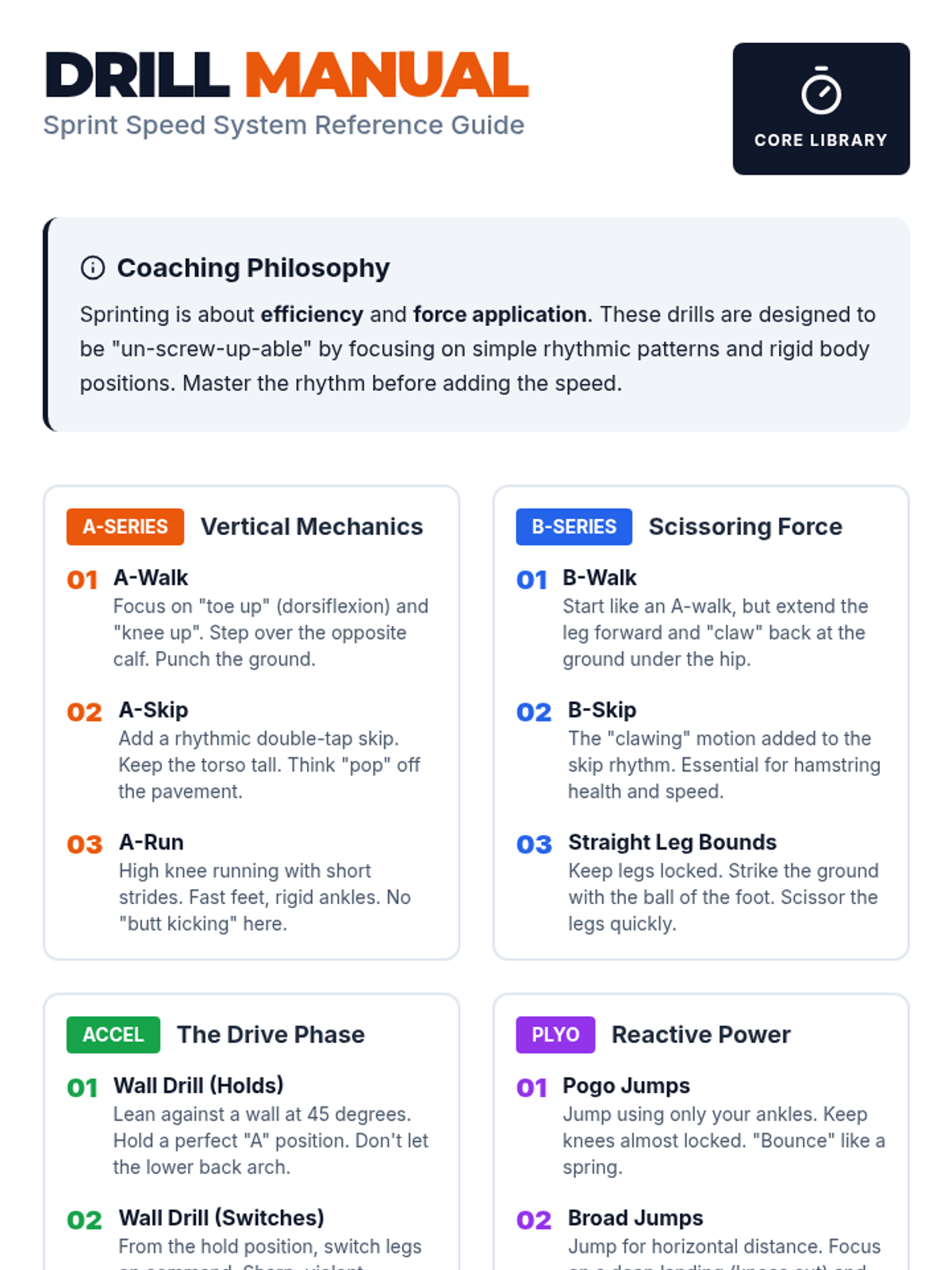
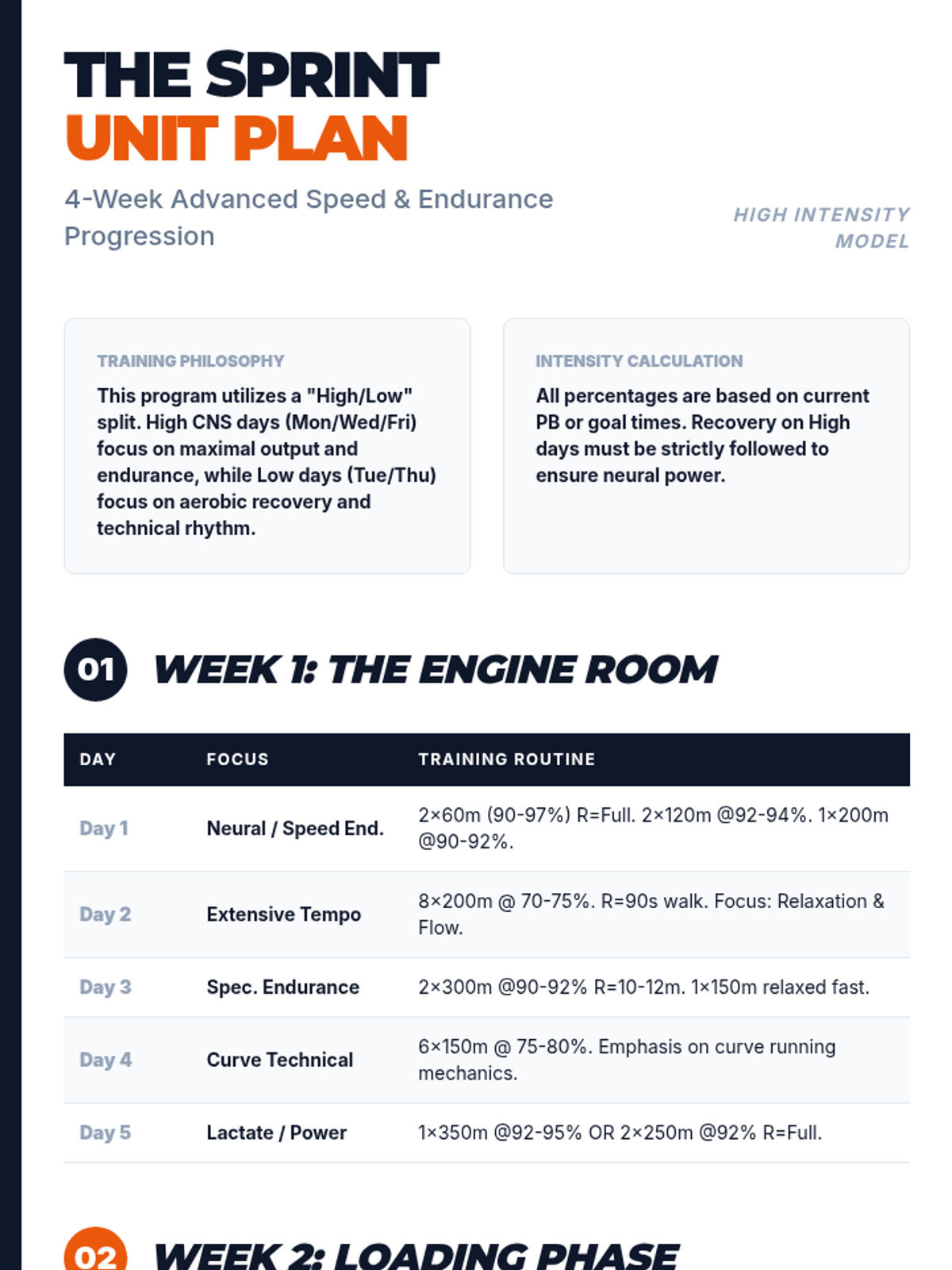
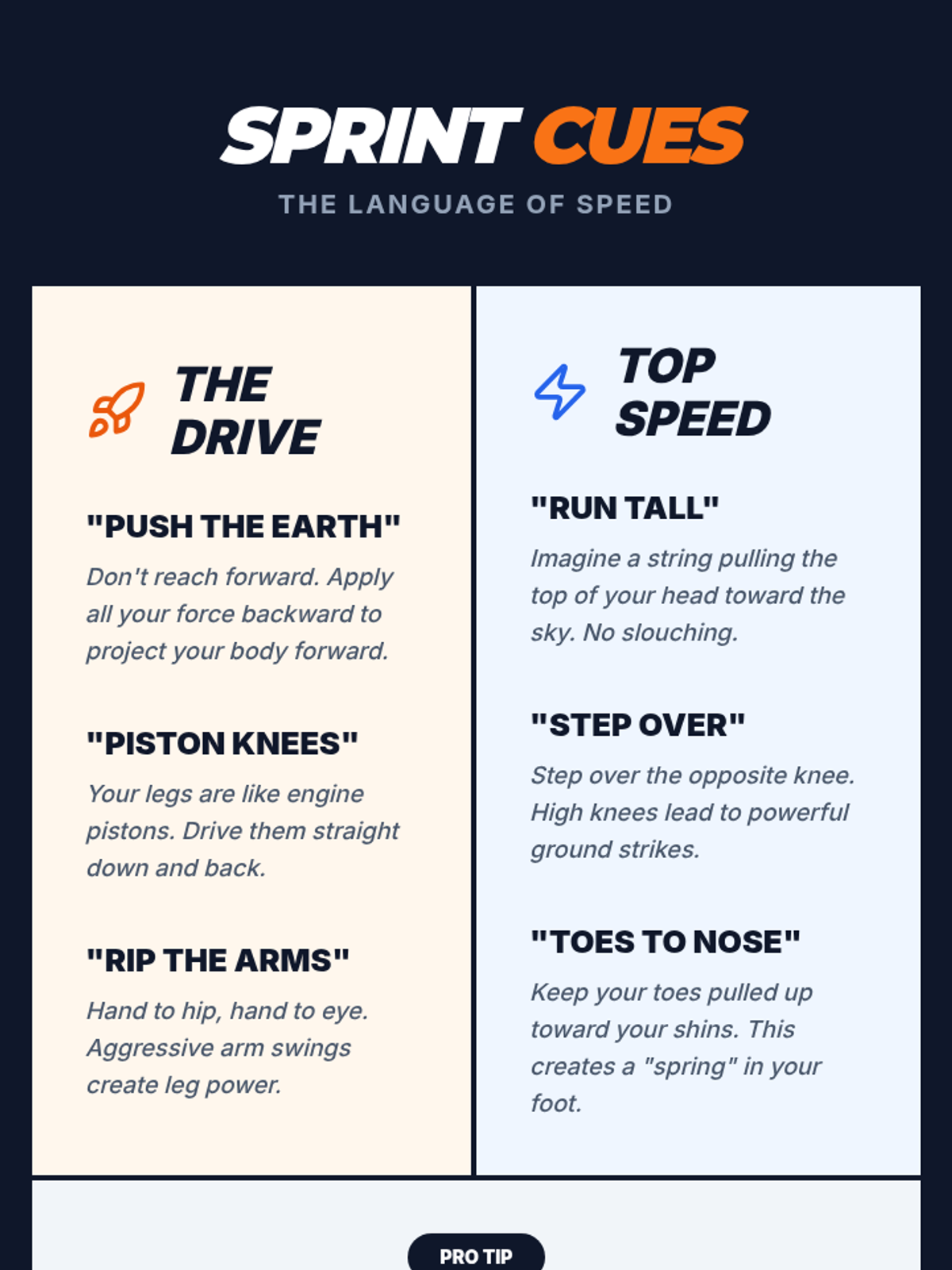
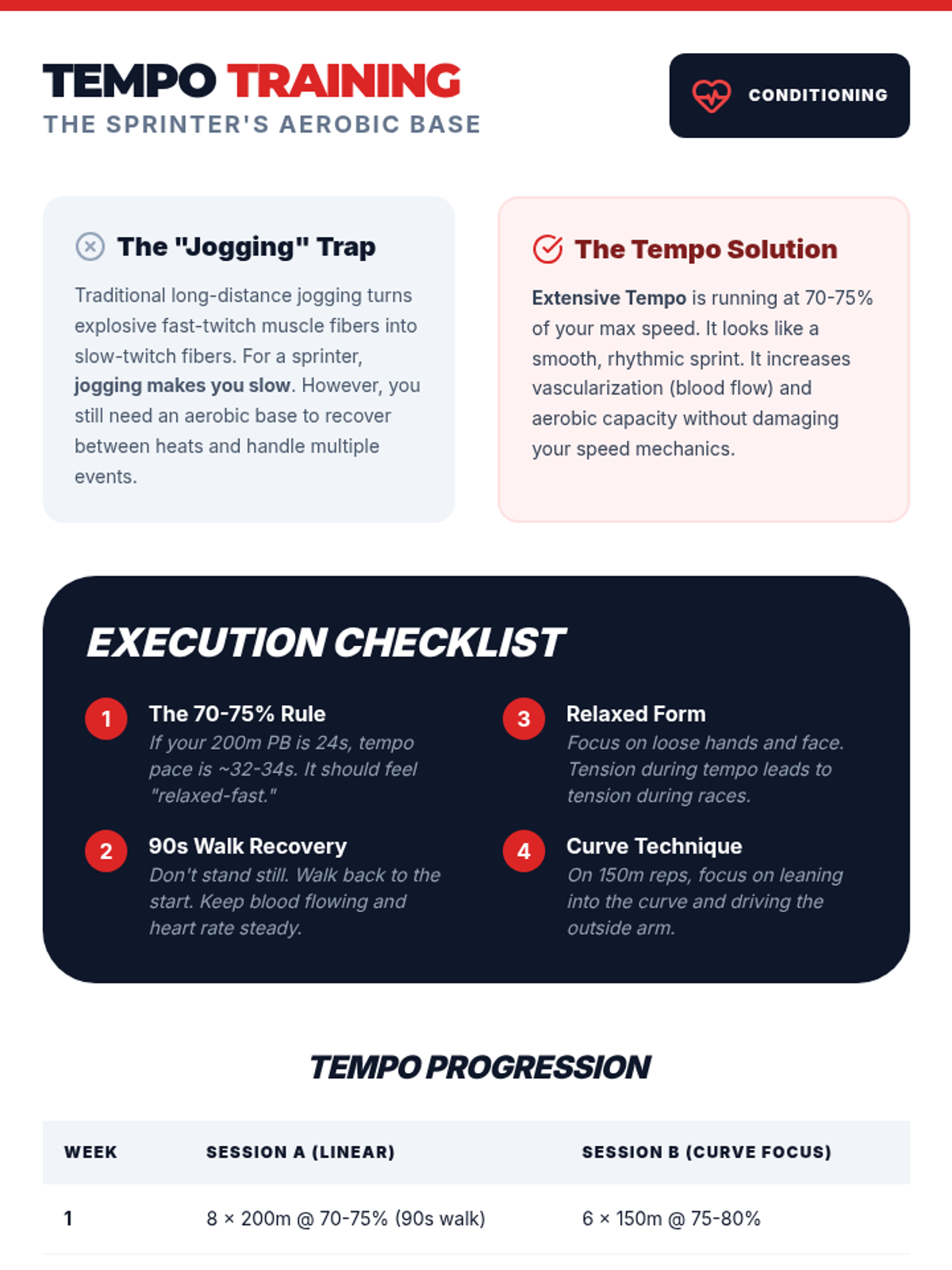
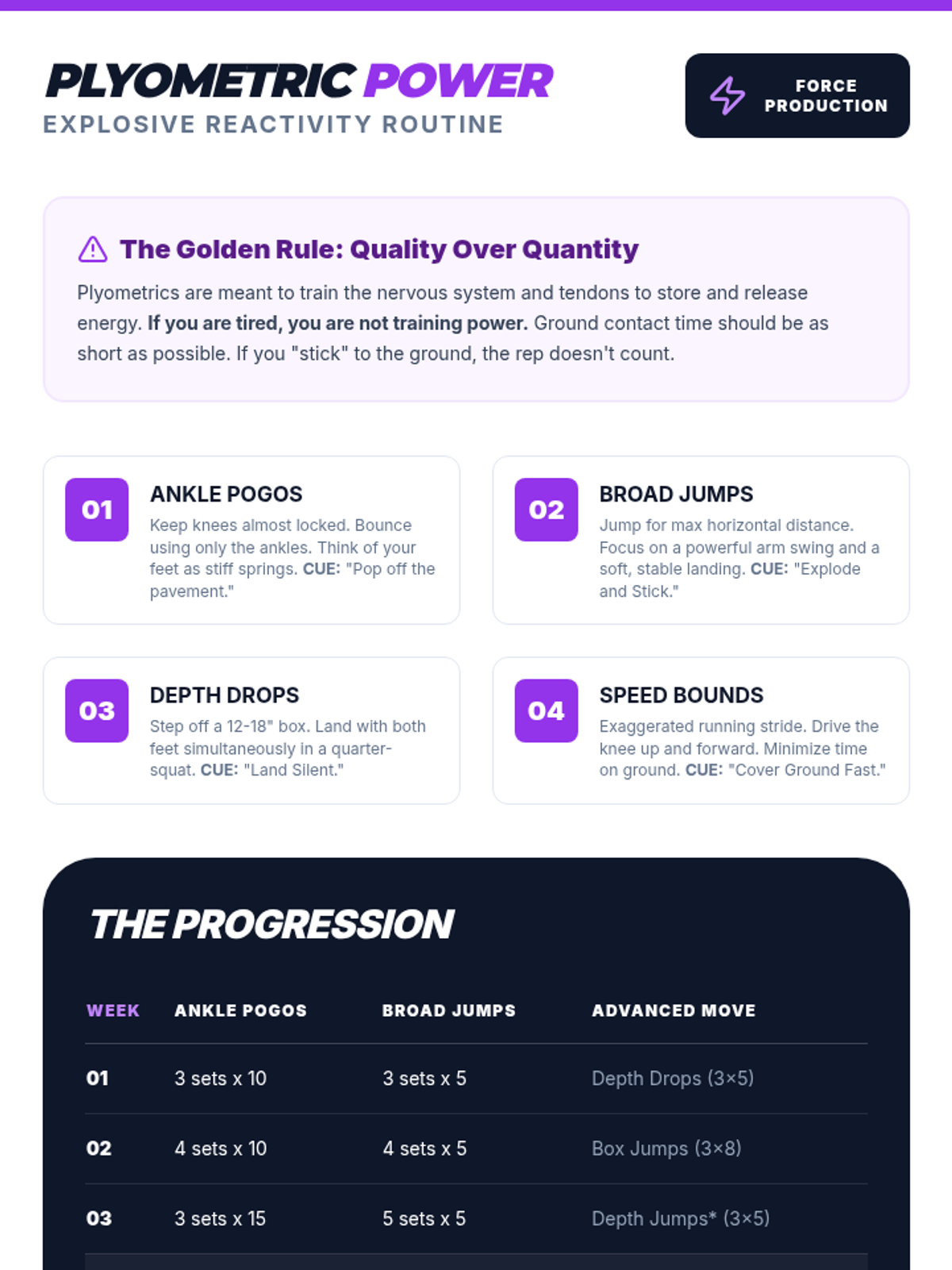
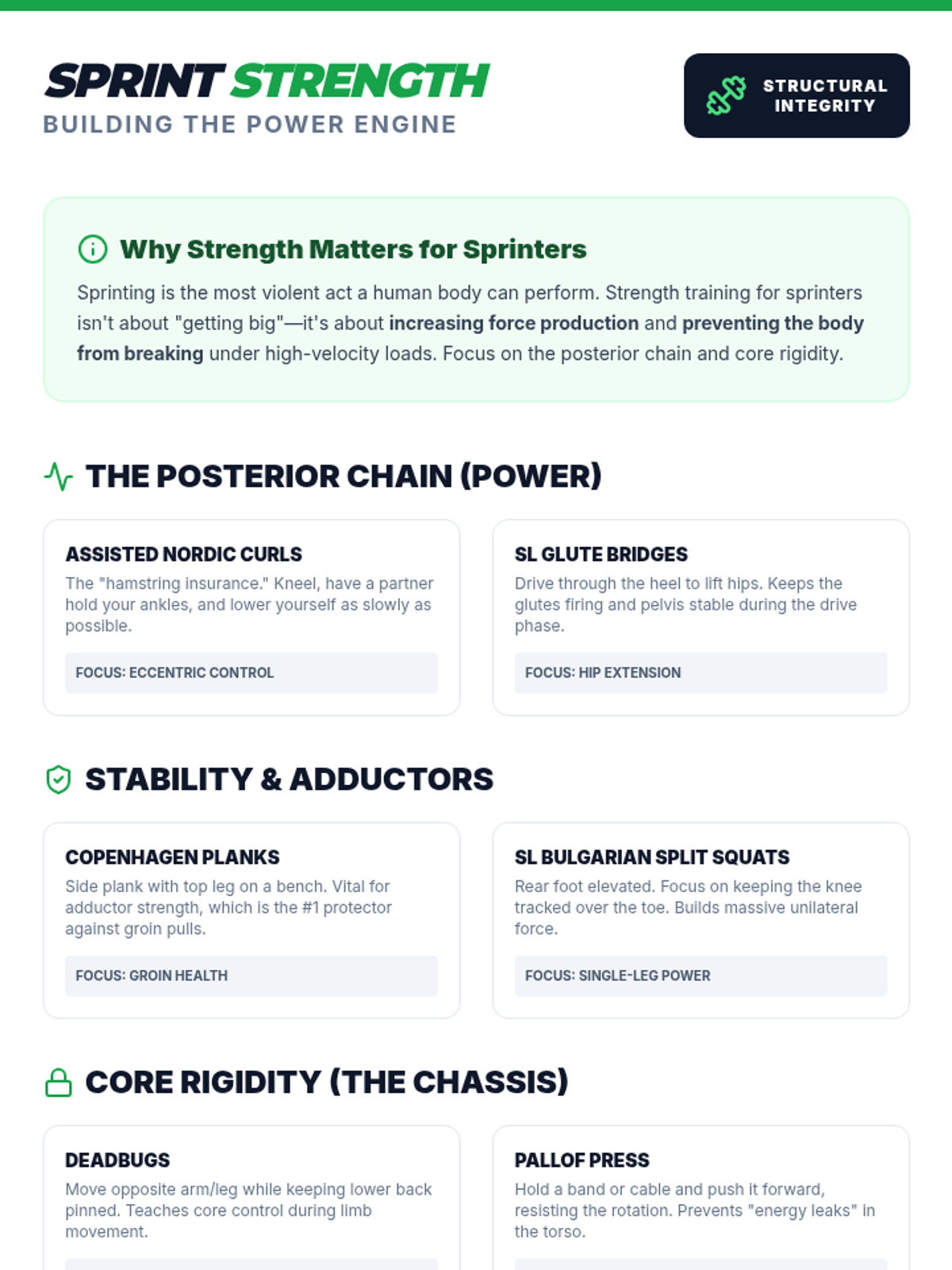
A comprehensive 4-week introductory sprinting program focused on mechanics, power, and injury prevention for outdoor track athletes.
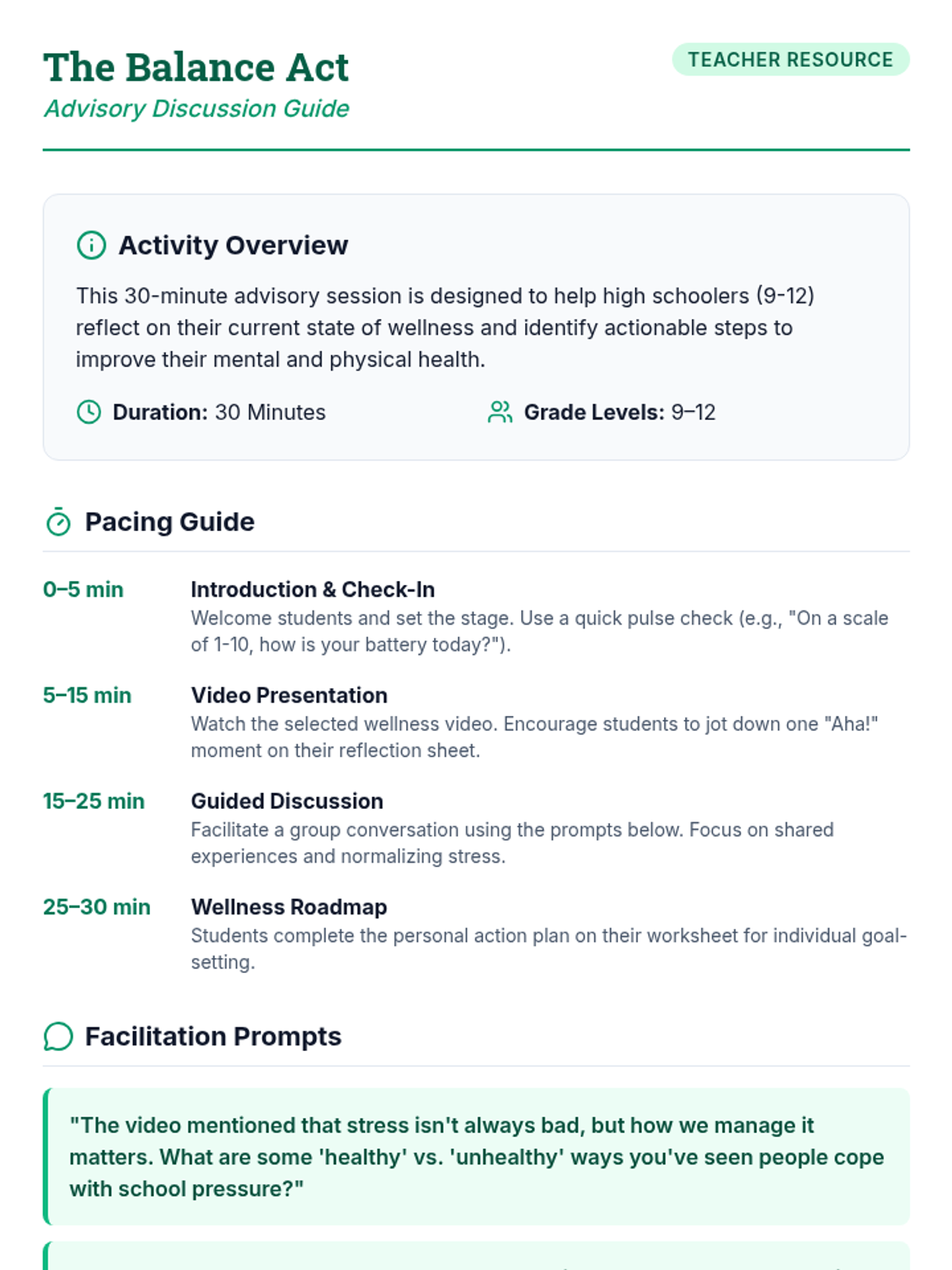
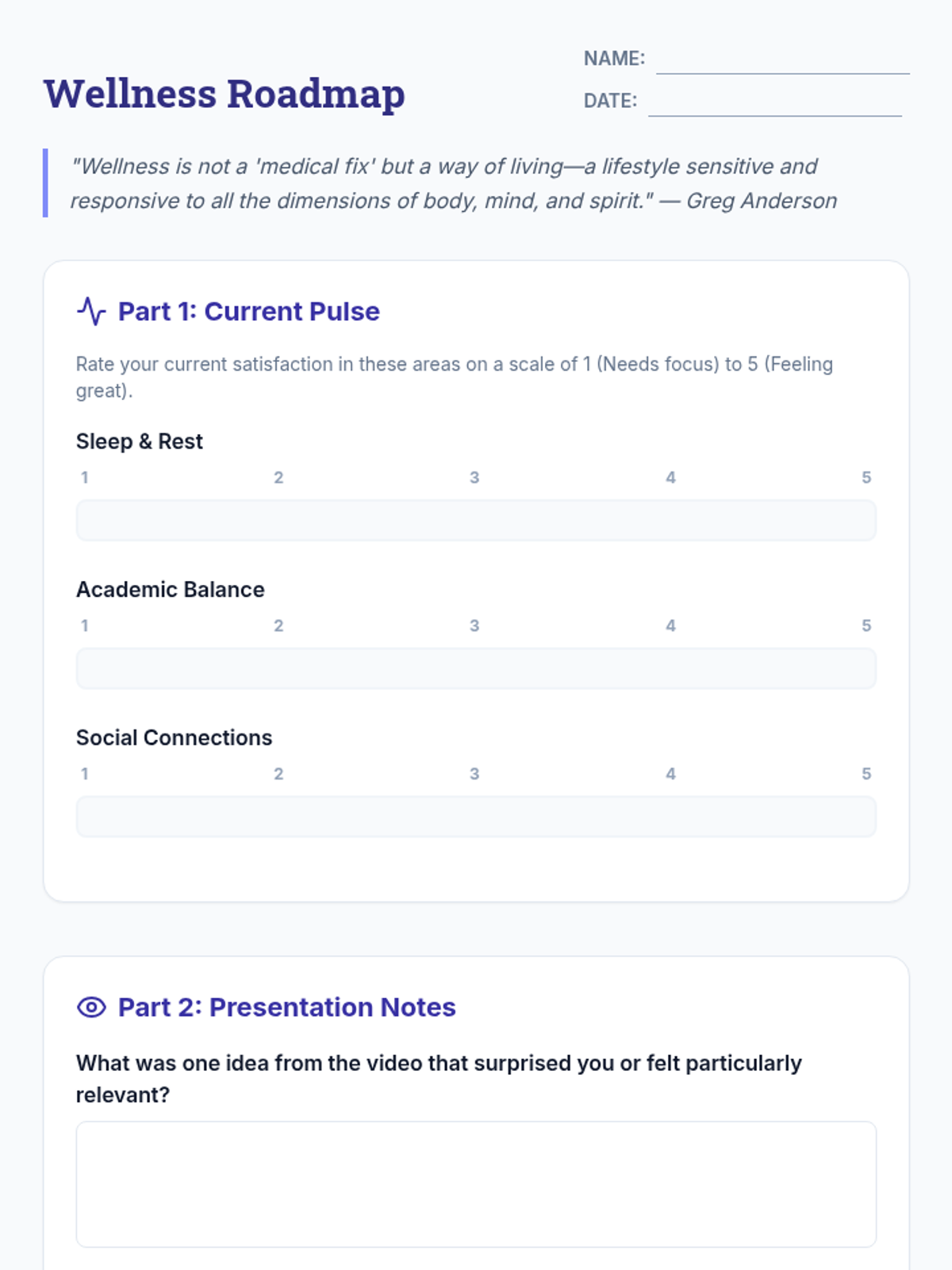
A wellness-focused advisory program designed for high school students to explore mental health, stress management, and self-care strategies.
A three-part developmental series exploring Emotional Intelligence and its role within the four dimensions of holistic health: physical, emotional, social, and spiritual.
An exploration of personal health and wellness, moving from defining health to implementing sustainable healthy habits.
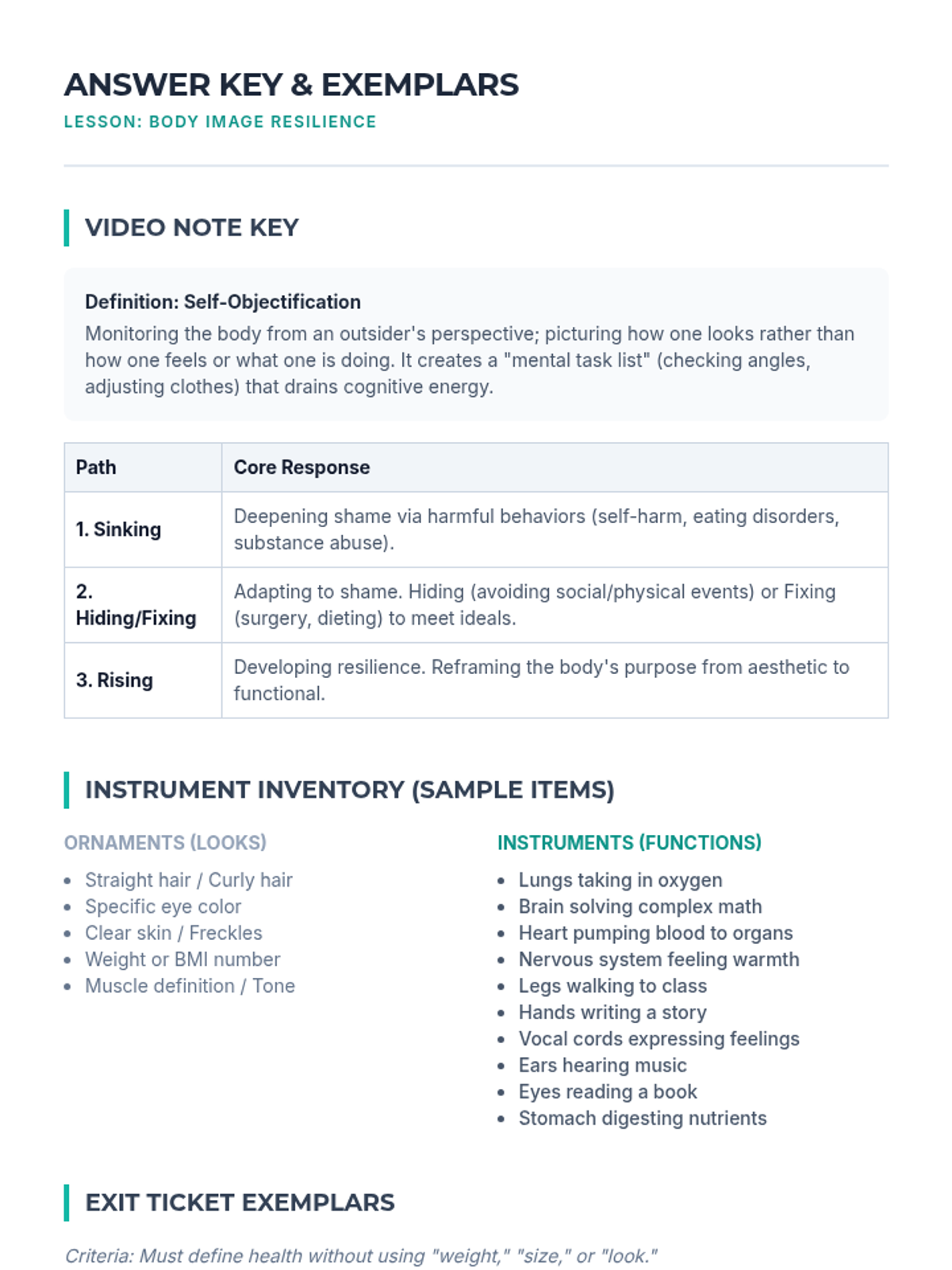
A series of health and wellness lessons for high school students focused on developing psychological resilience, critical media literacy, and a functional approach to self-perception.
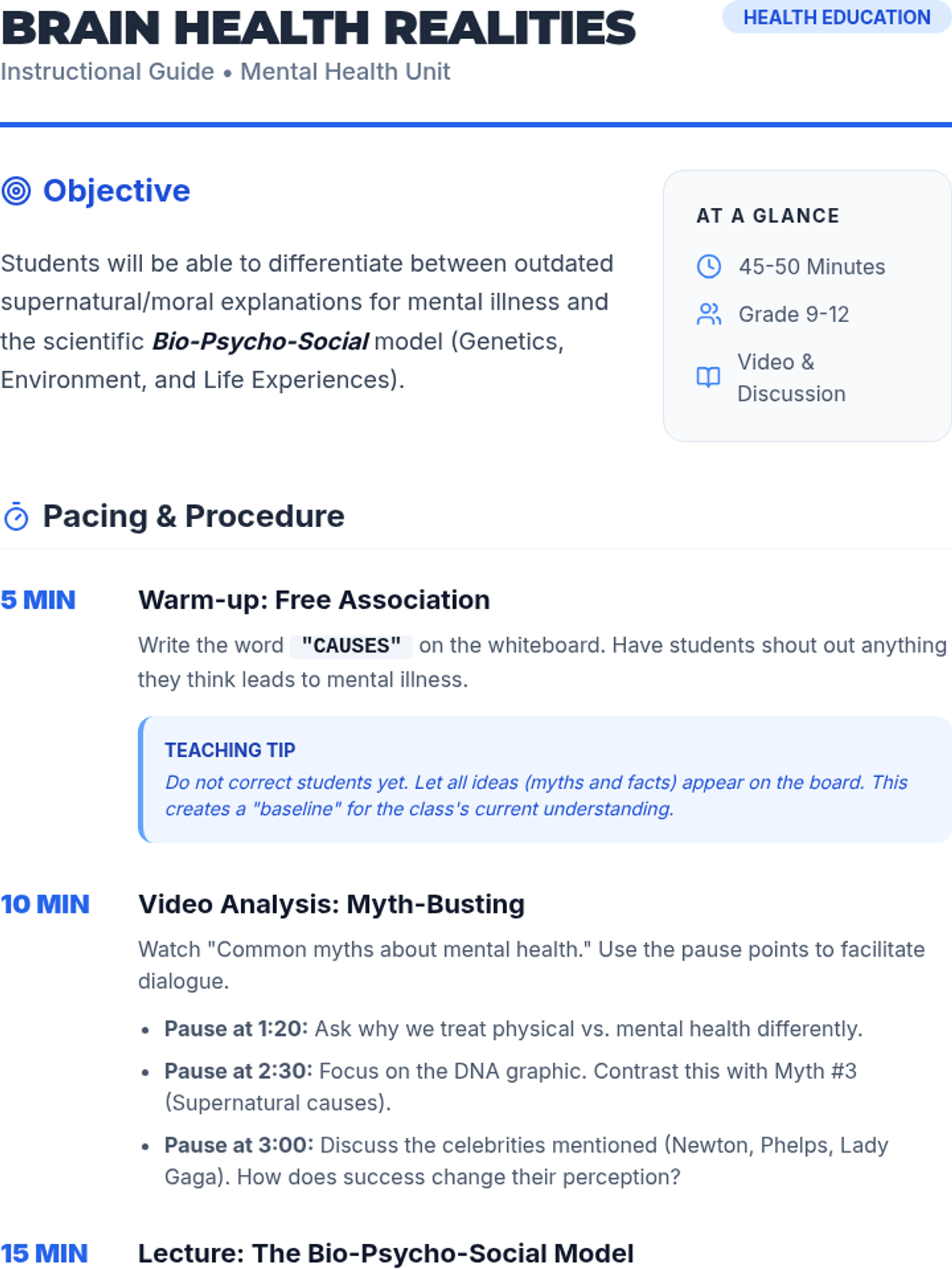
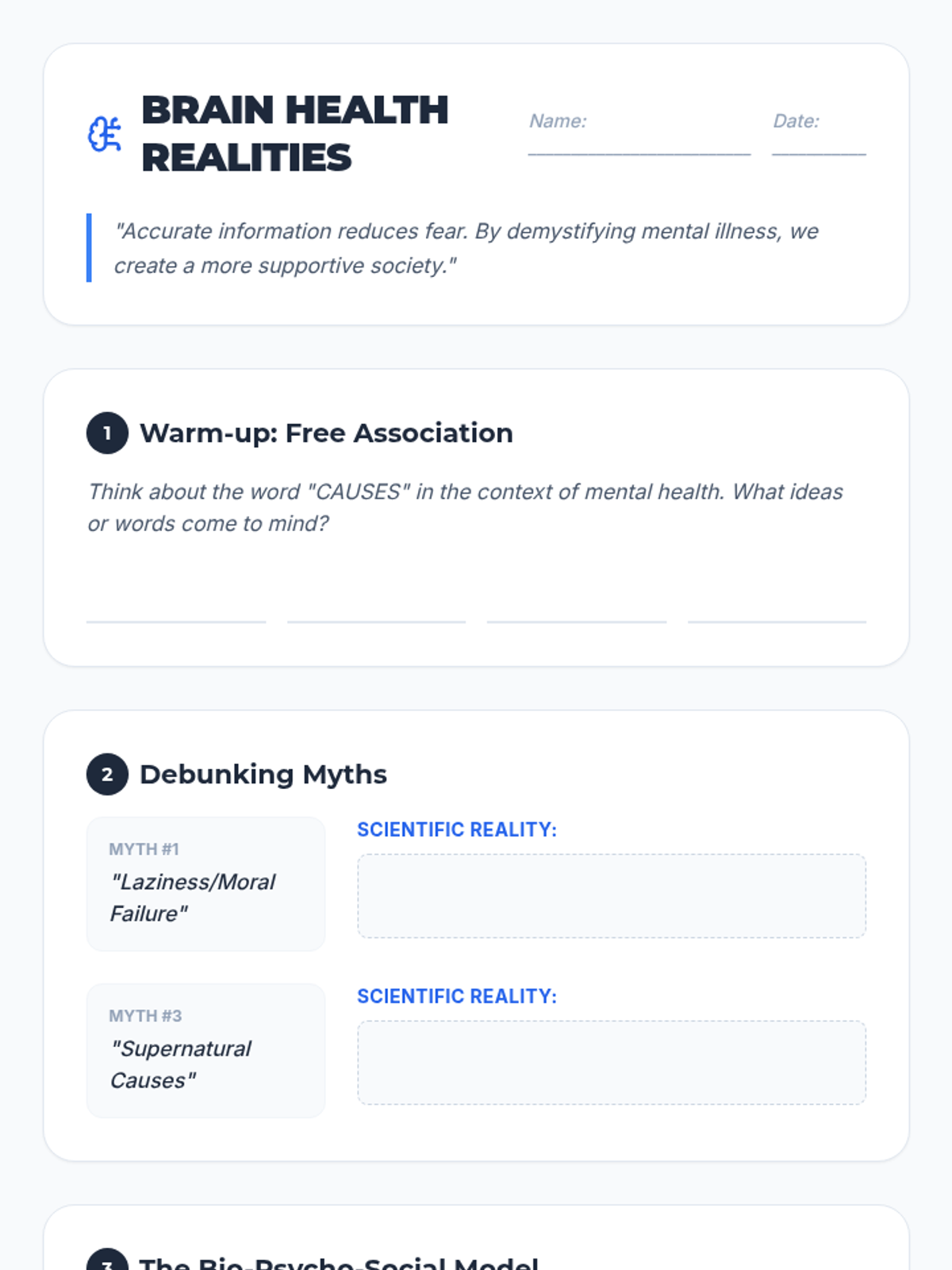
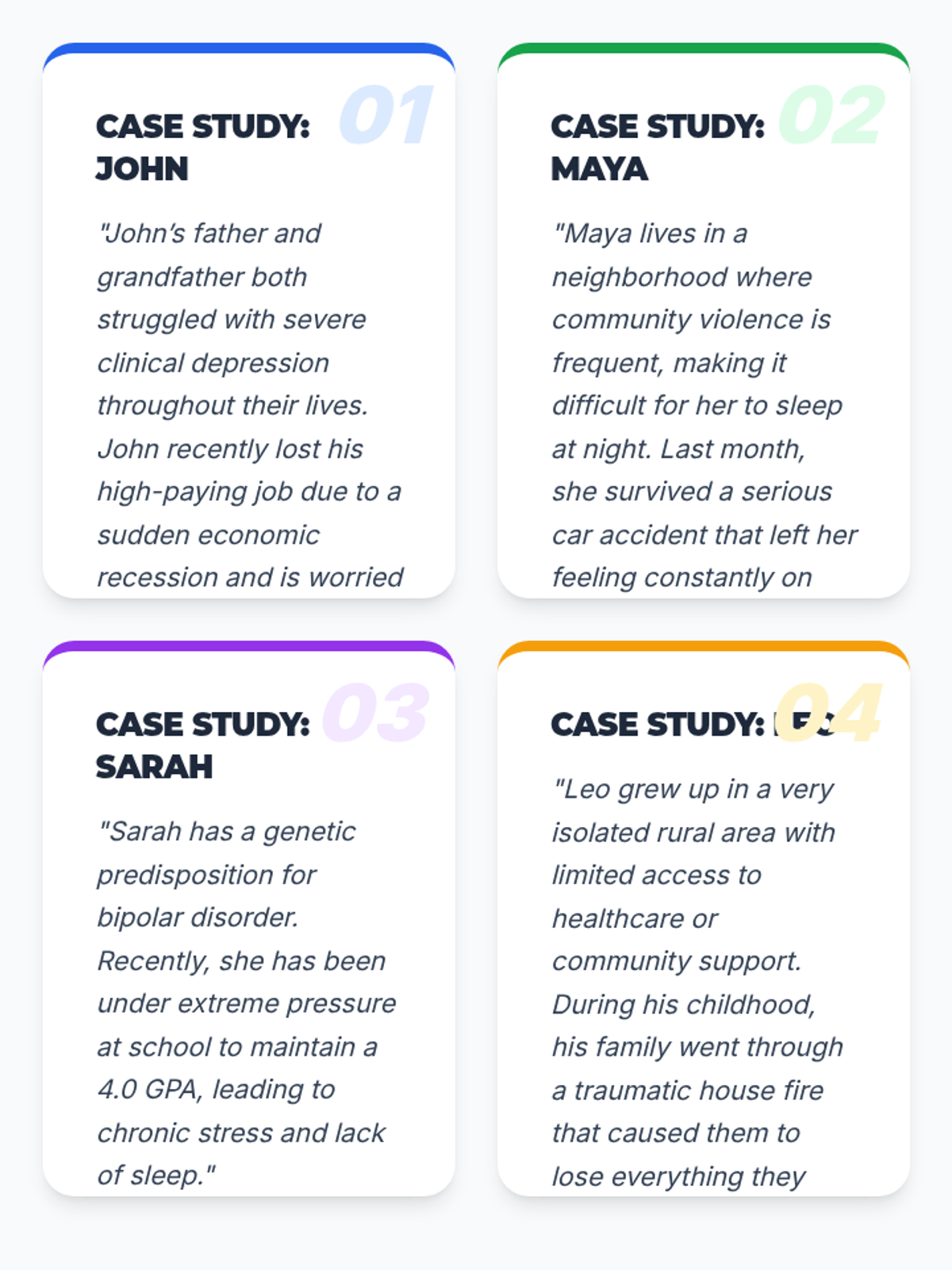
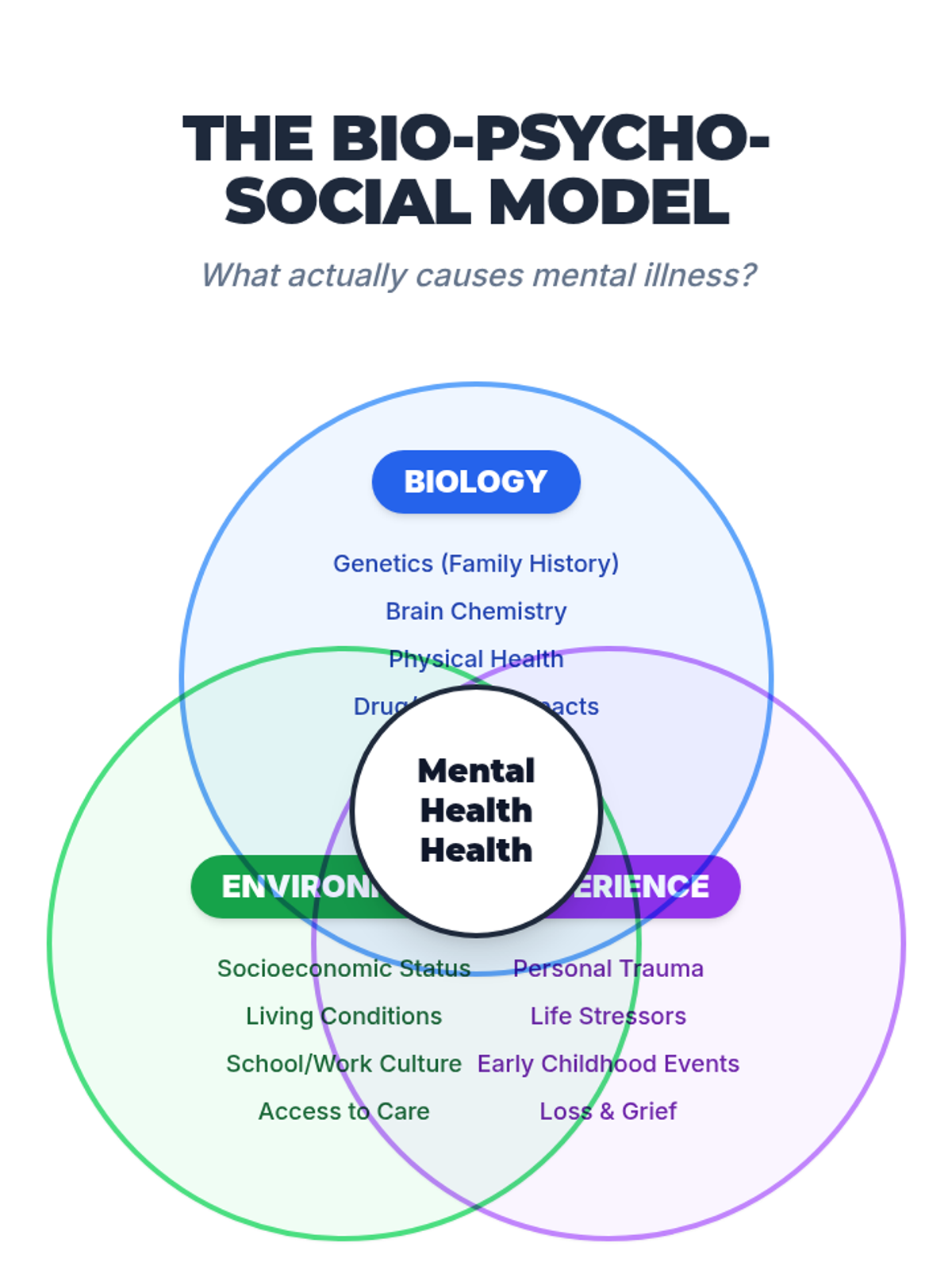
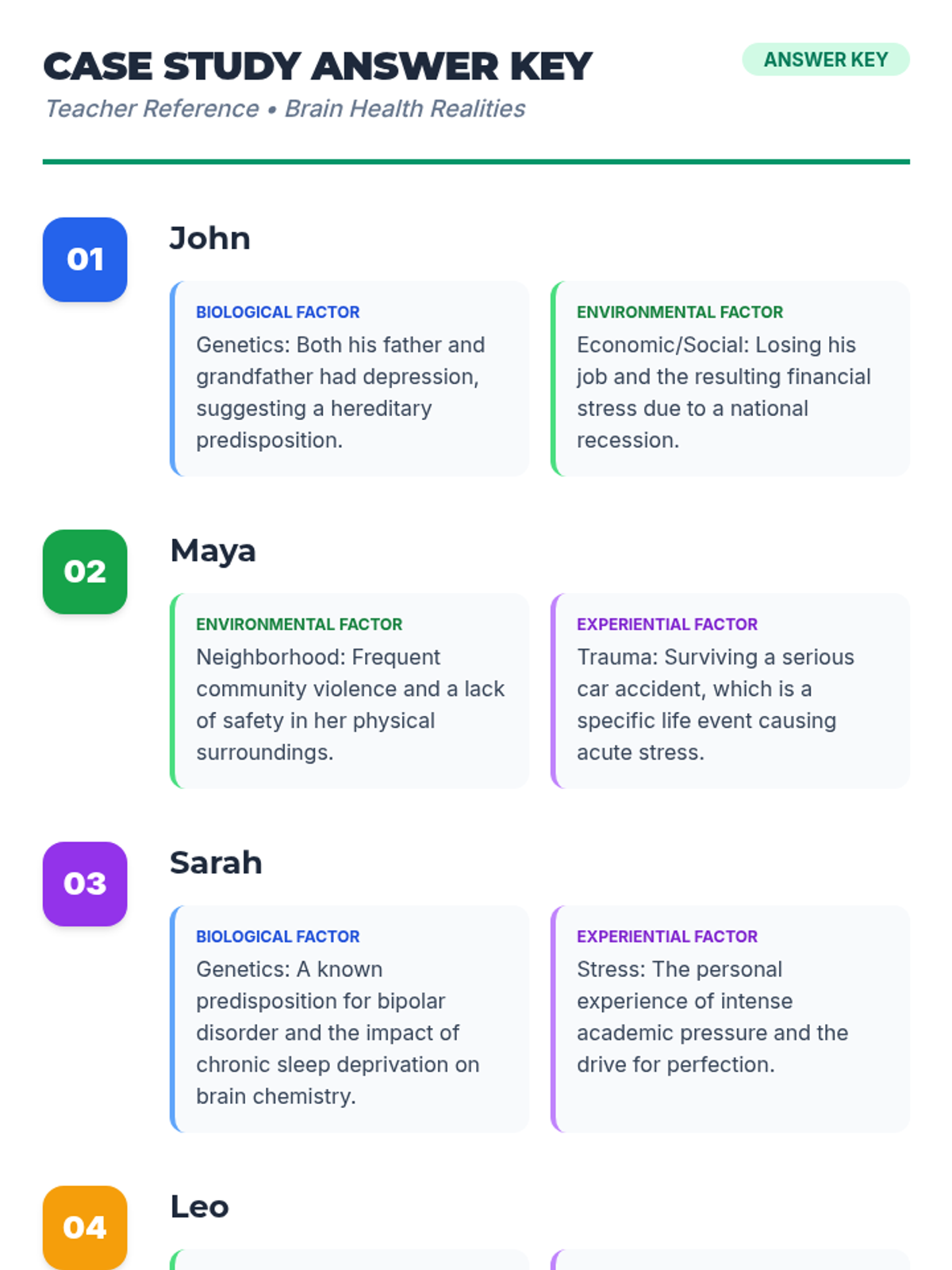
A comprehensive unit focused on debunking mental health myths and establishing a scientific understanding of mental illness through the Bio-Psycho-Social model.
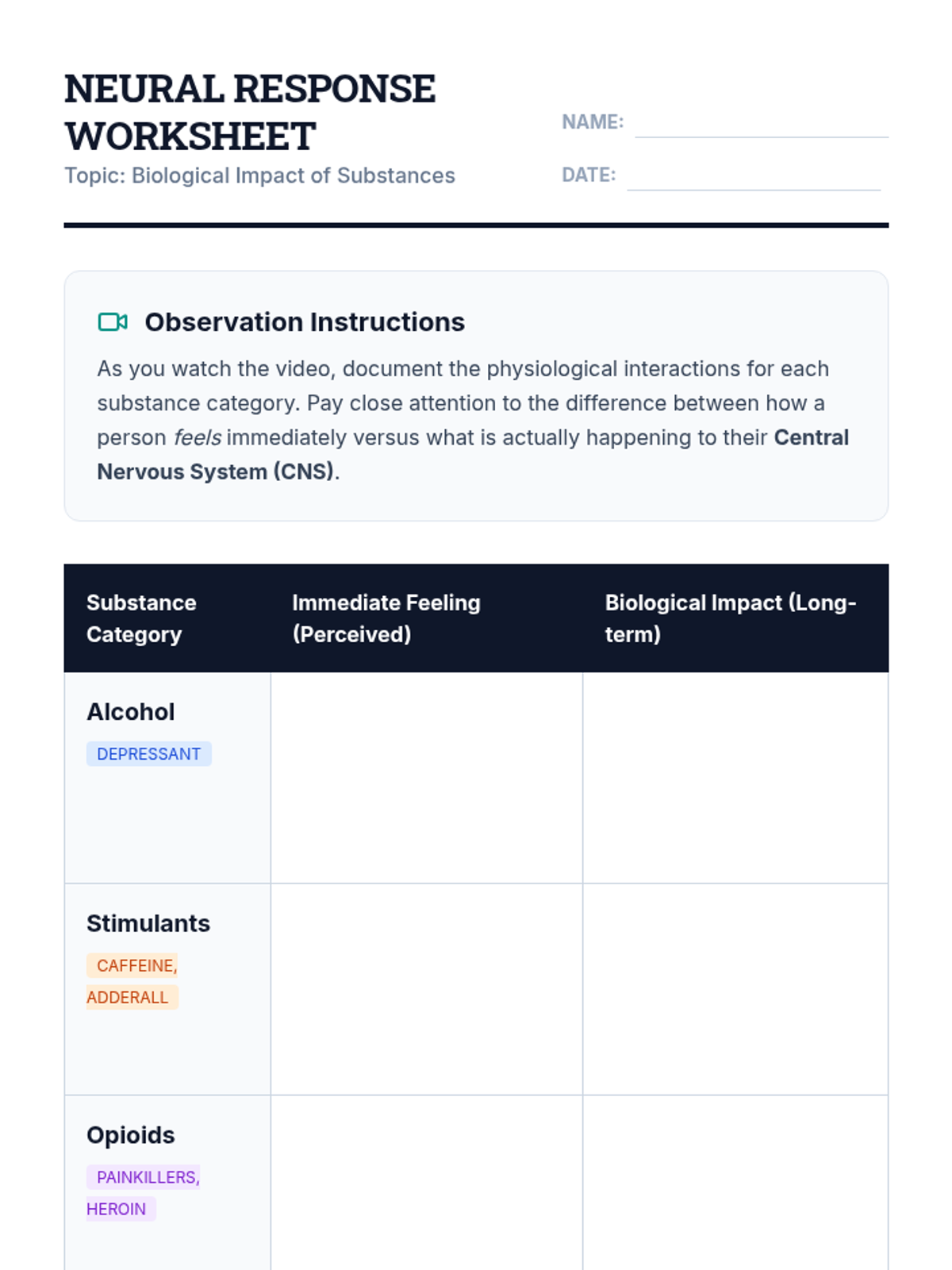
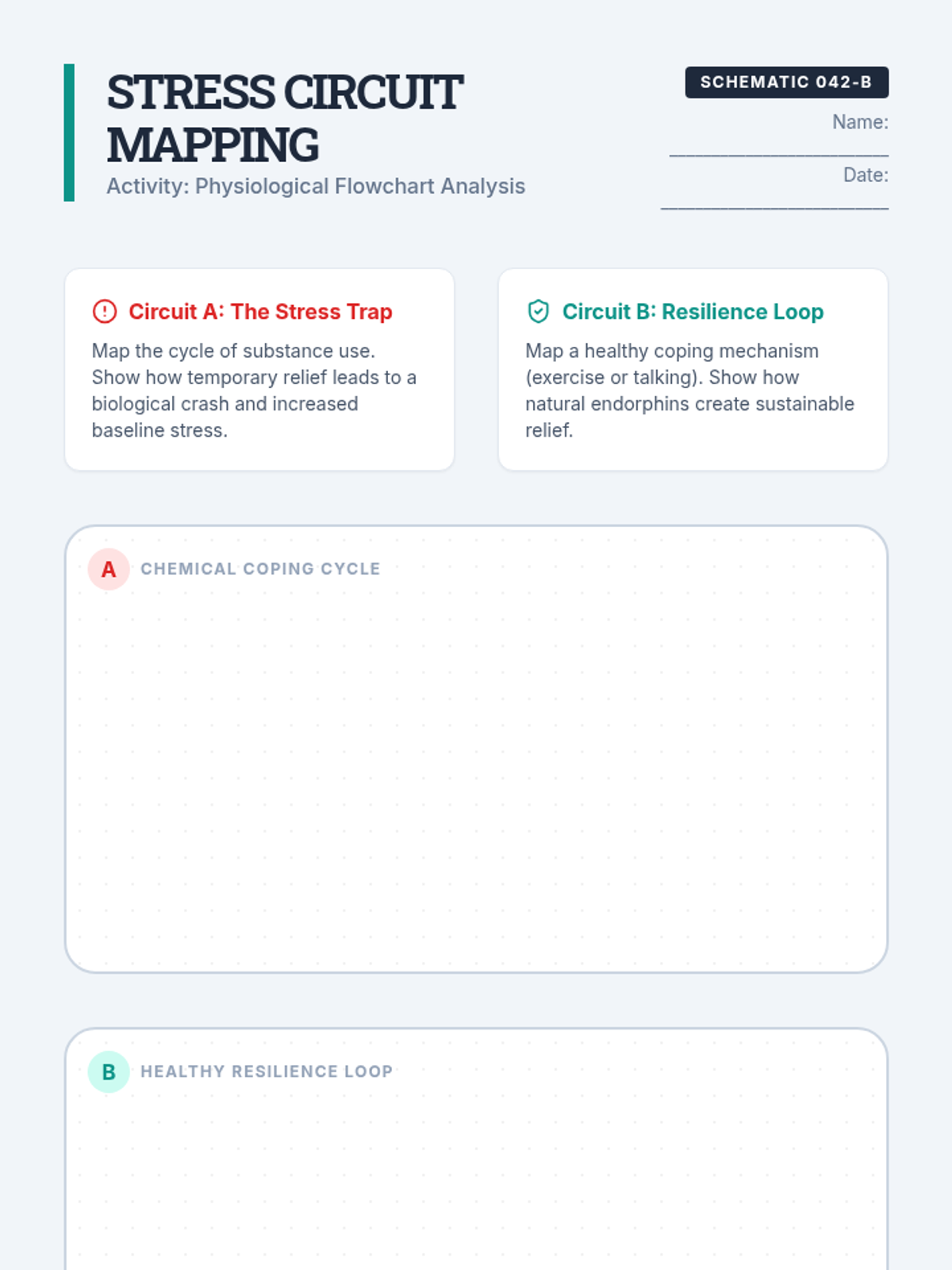
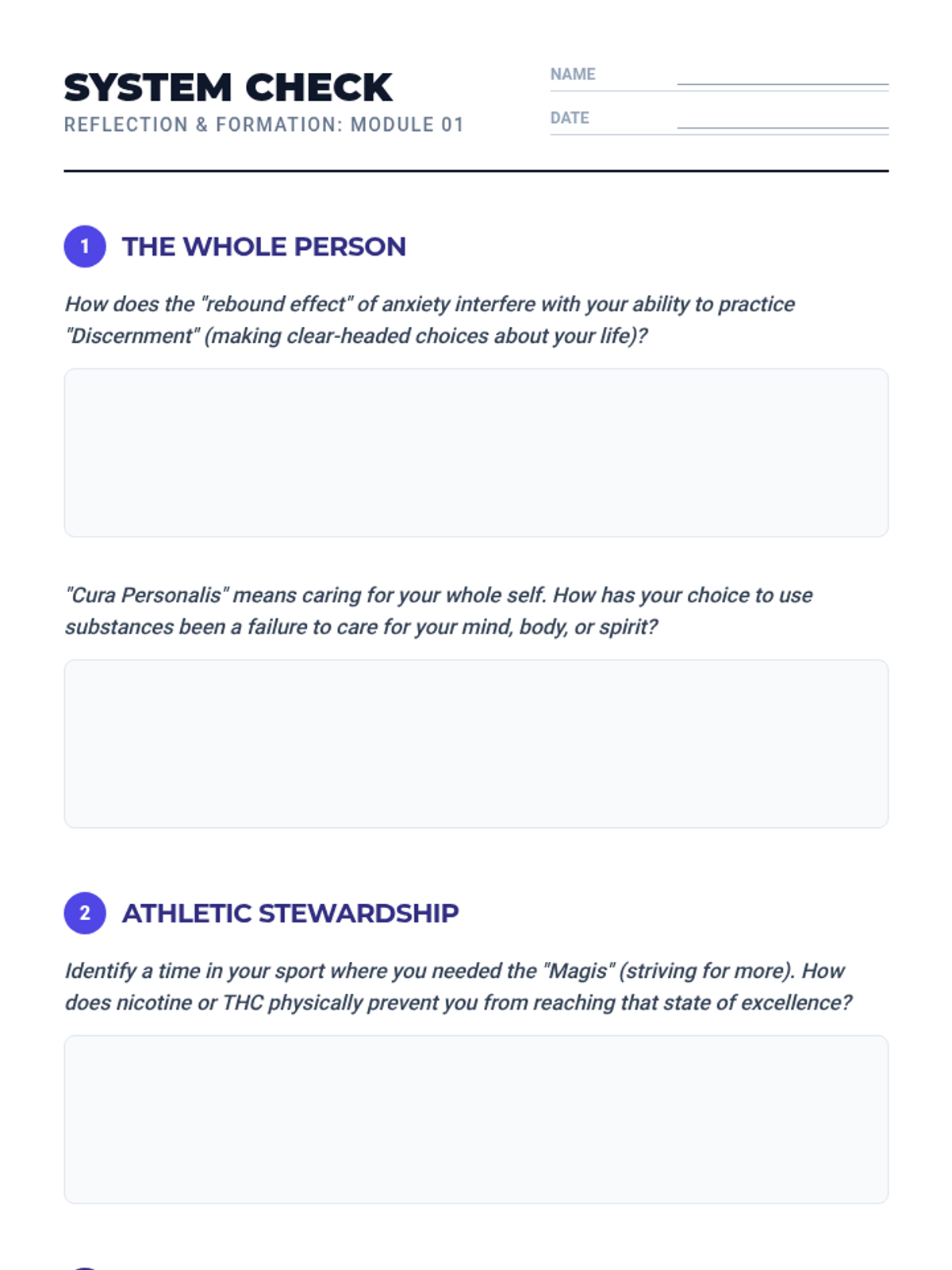
A high school health lesson analyzing the physiological effects of stimulants and depressants on the nervous system and the 'rebound effect' of using substances to cope with stress.
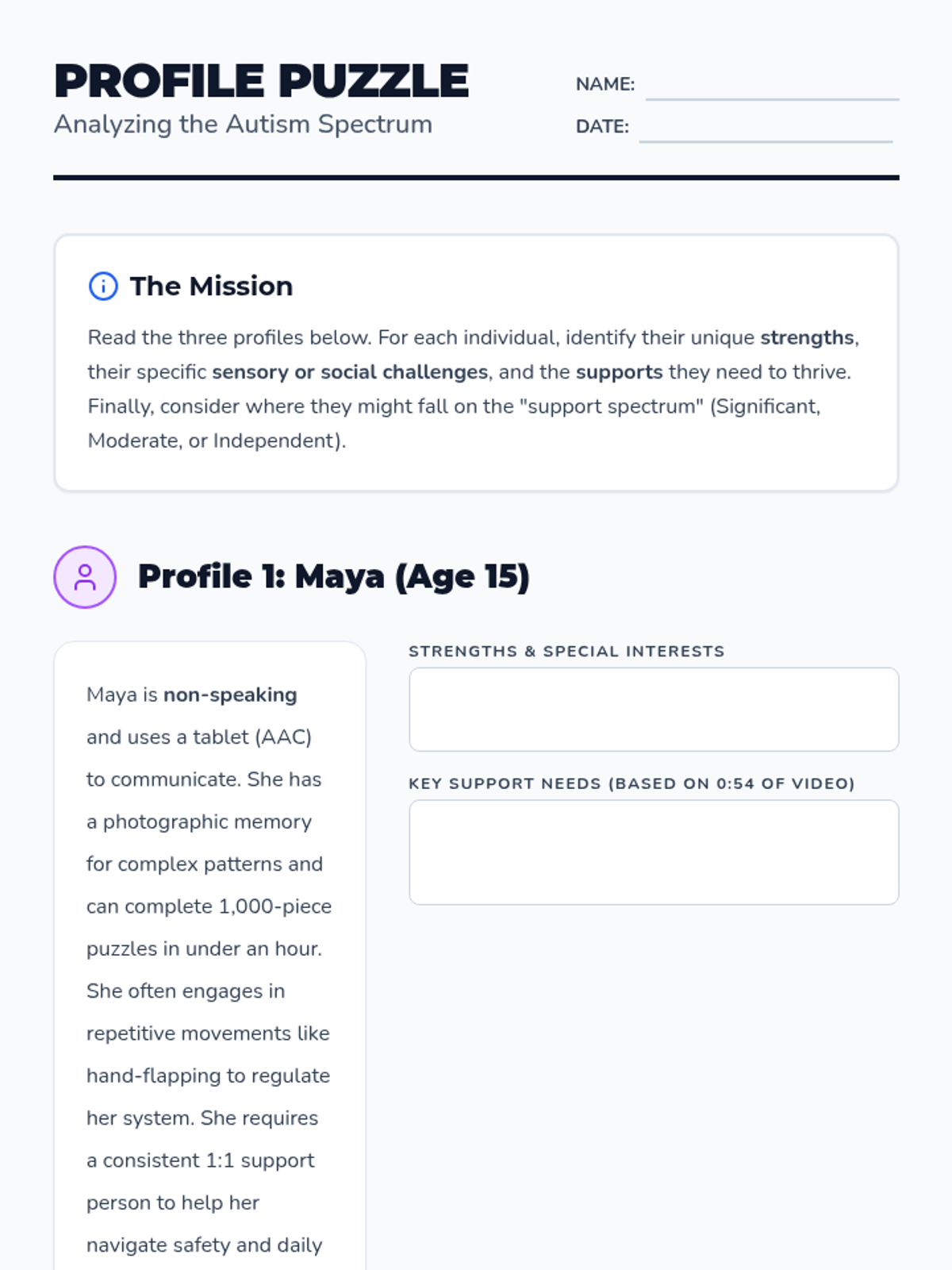
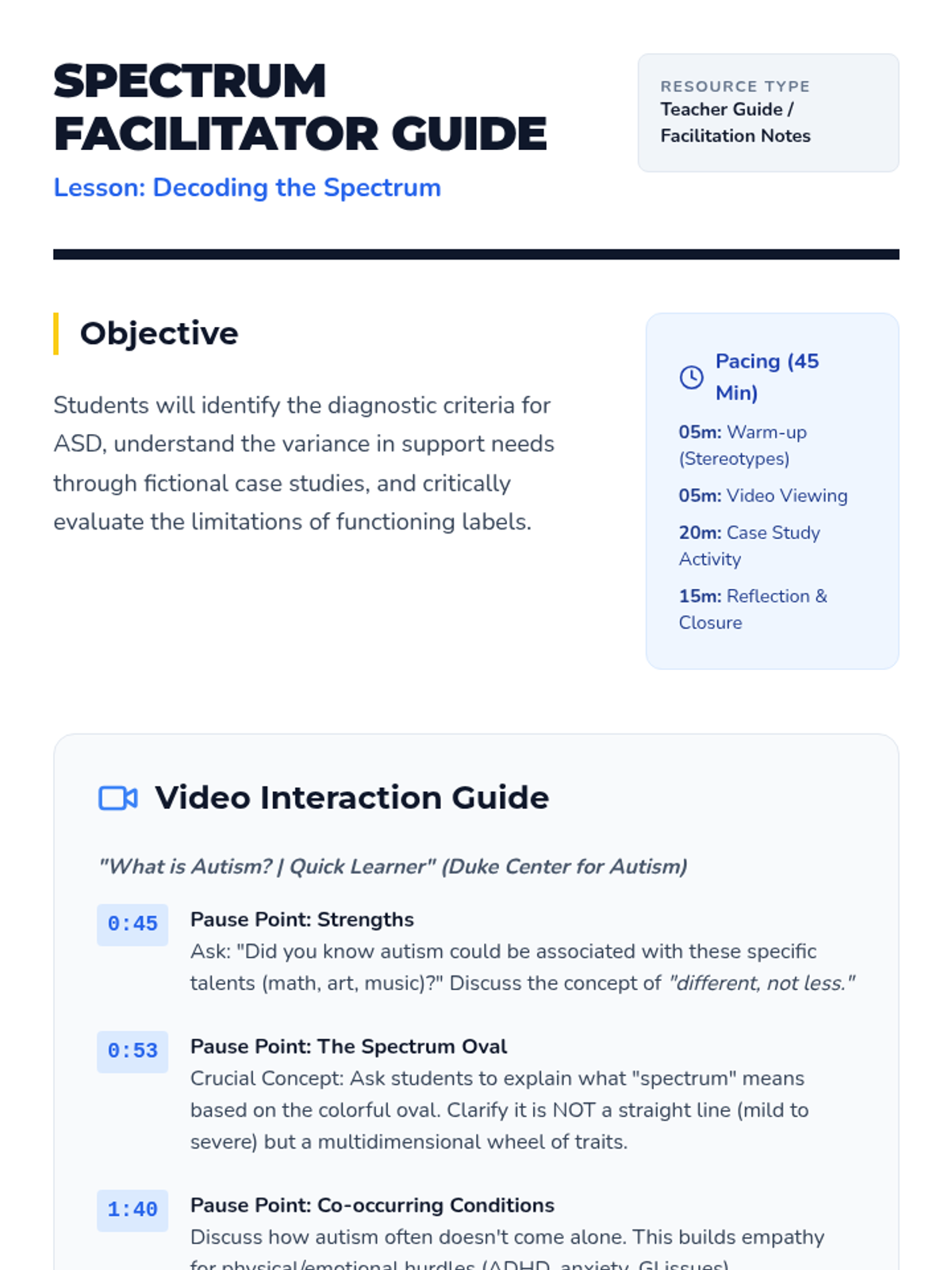
A high school health and psychology unit exploring neurodiversity, focusing on the diagnostic criteria, support needs, and lived experiences of individuals on the autism spectrum.
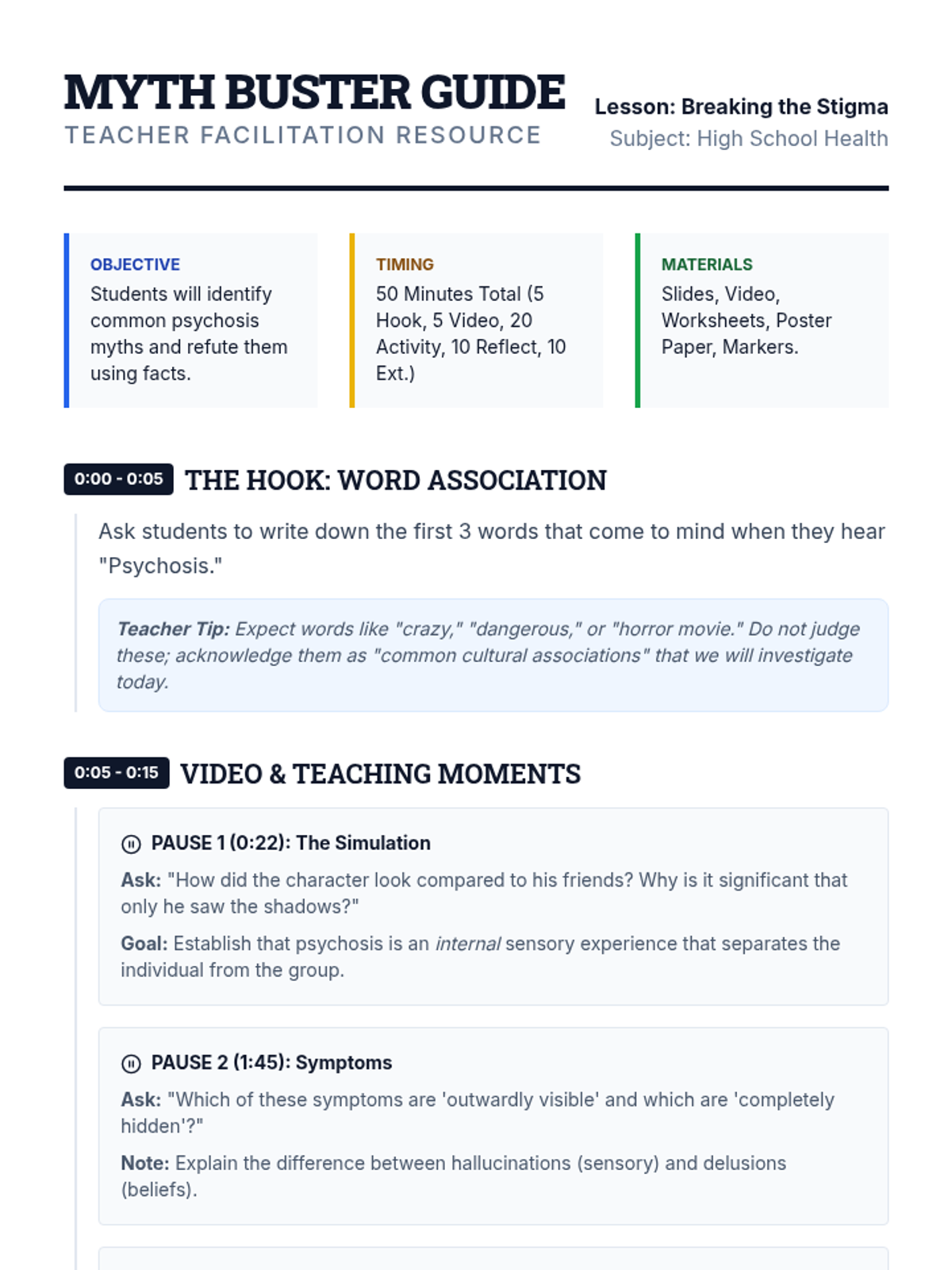
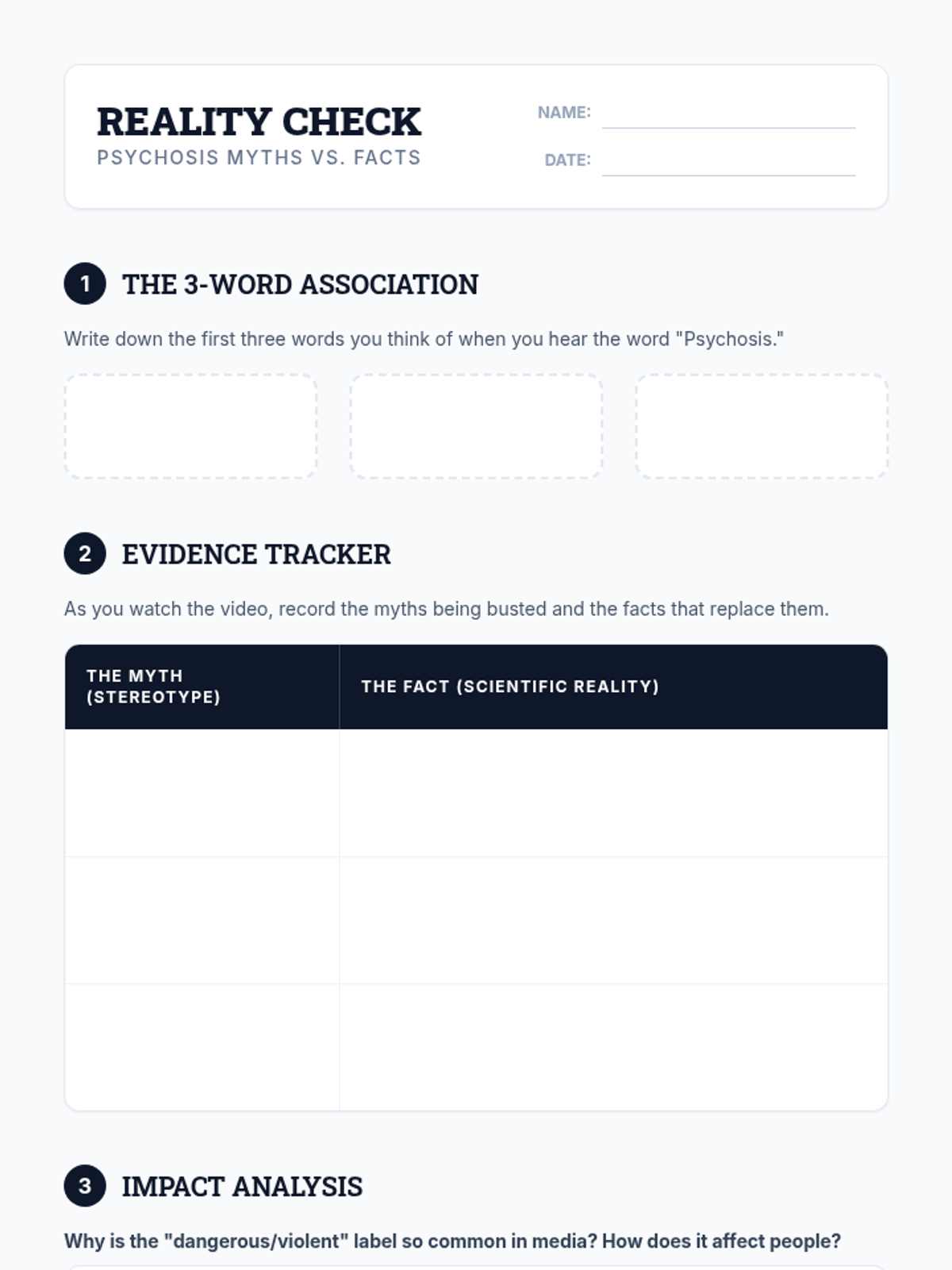
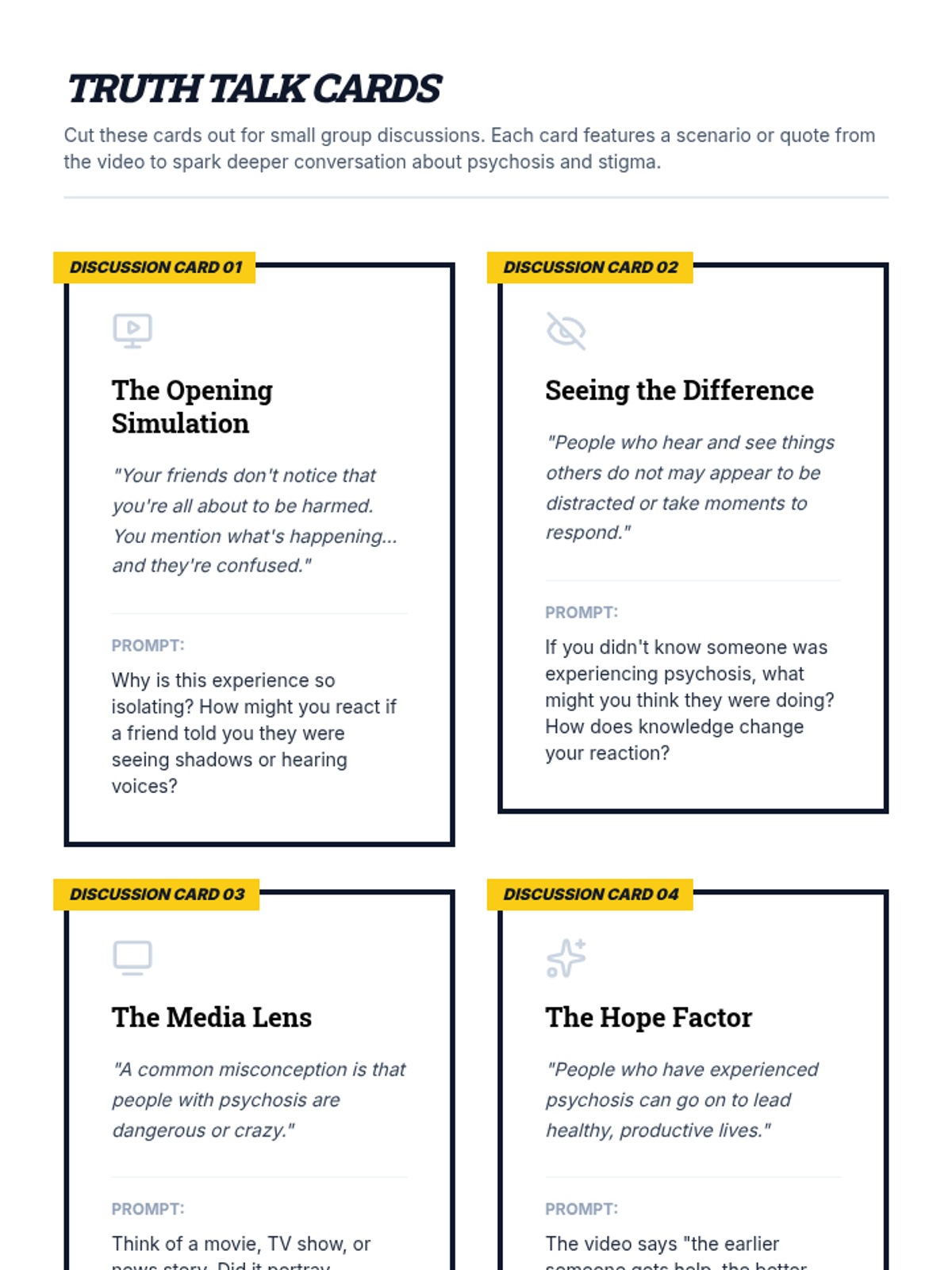
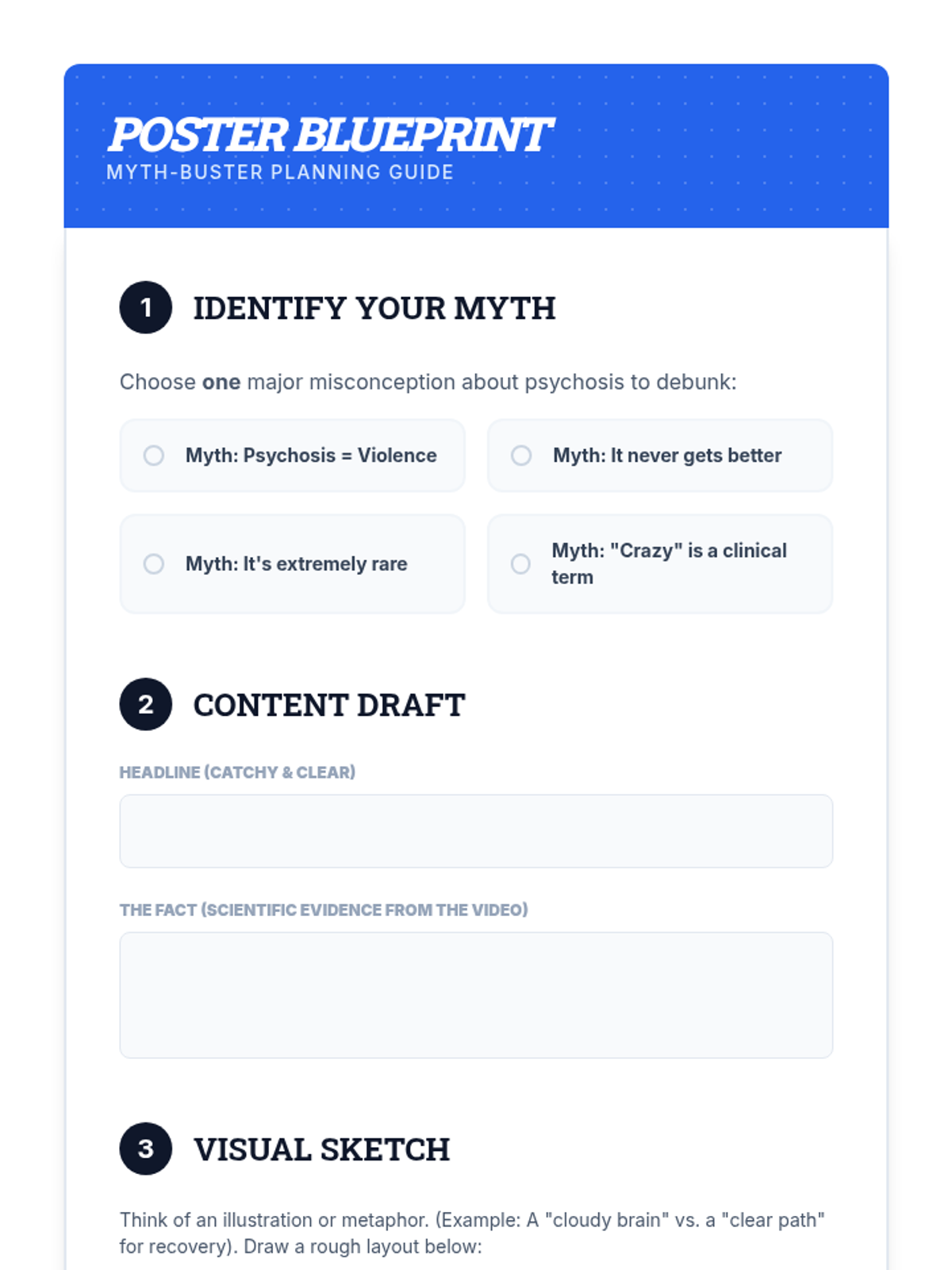
A high school health lesson focused on debunking common myths about psychosis, understanding its clinical definition and symptoms, and exploring the impact of social stigma on recovery.
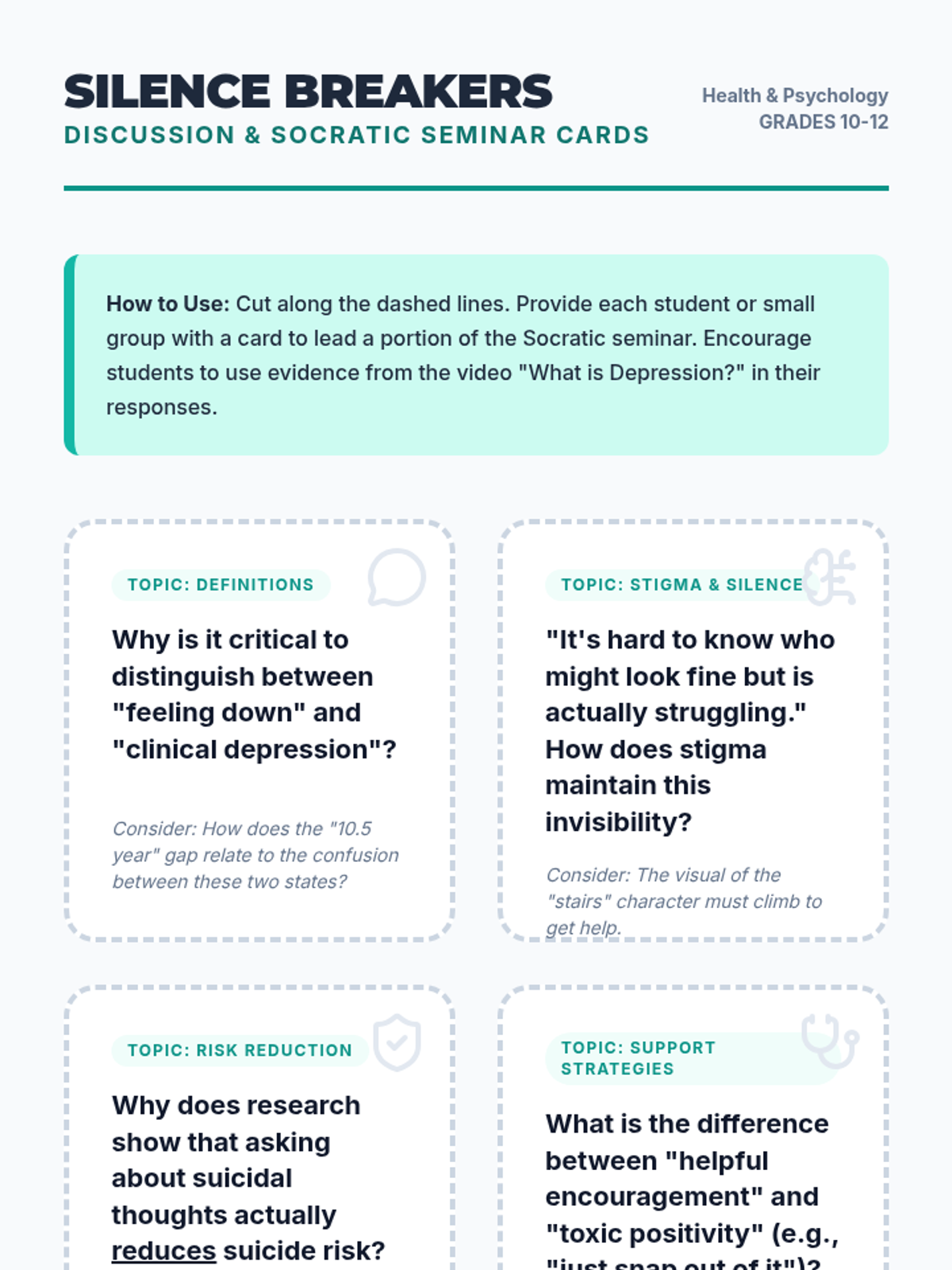
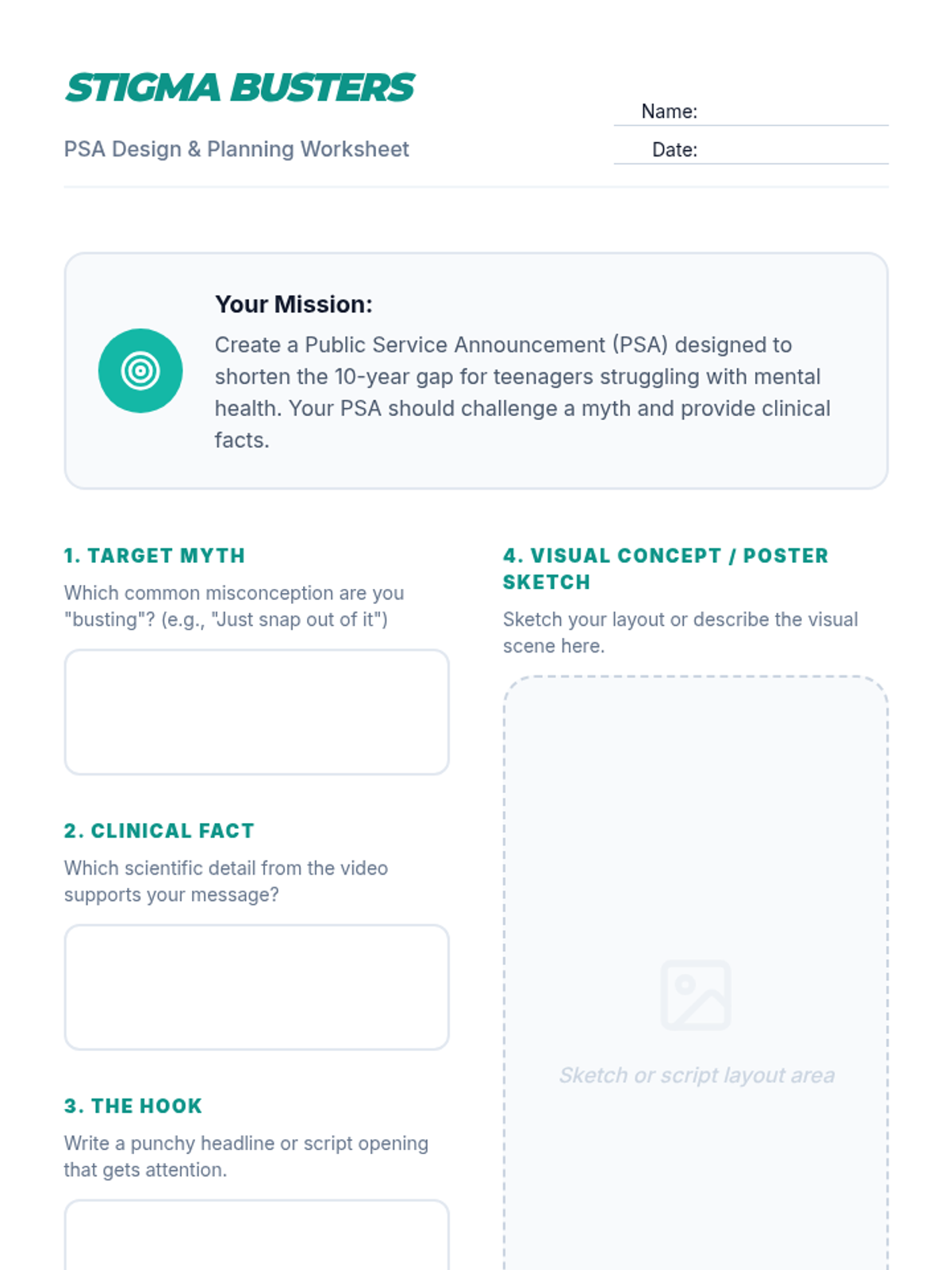
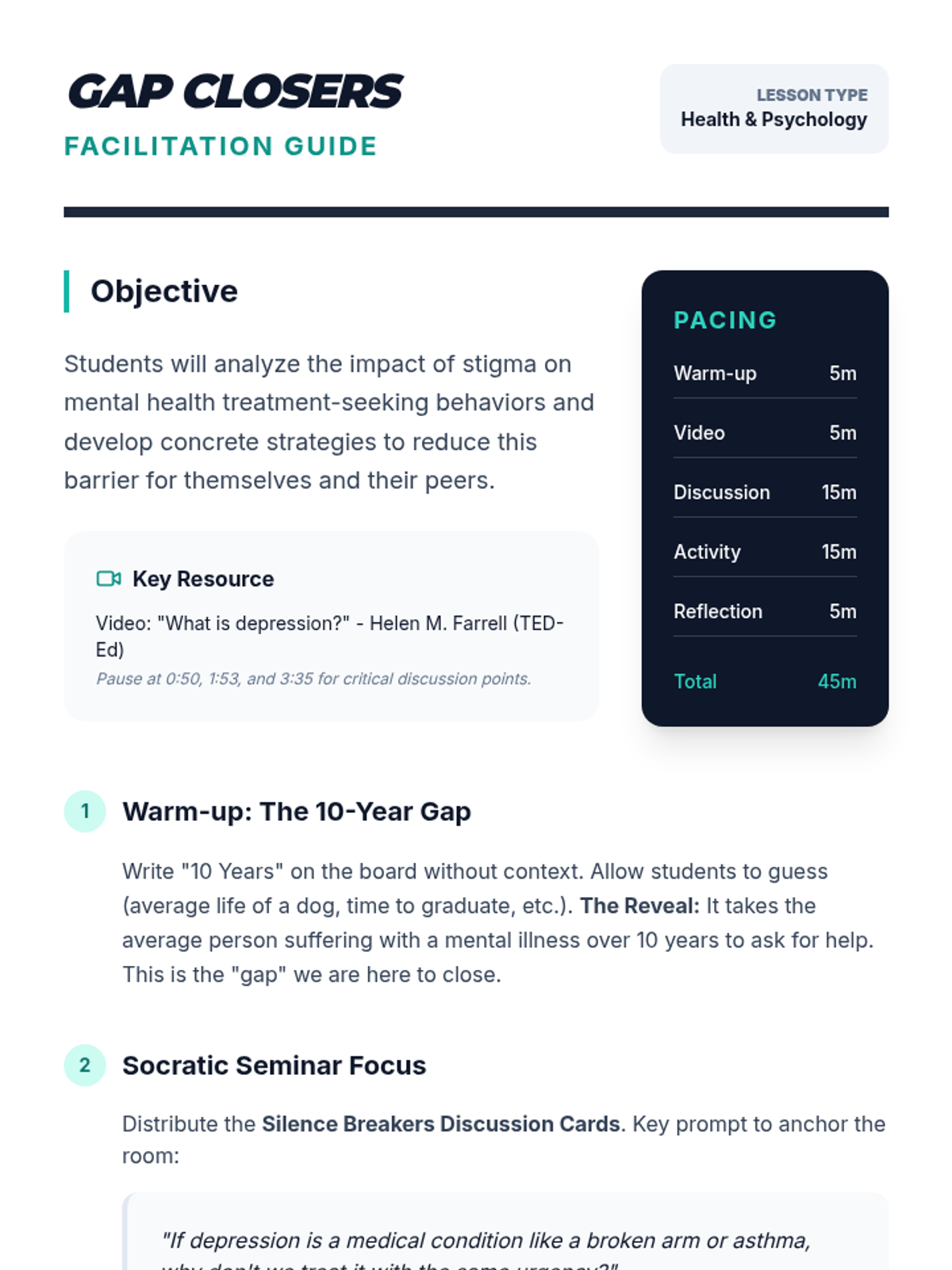
A comprehensive lesson sequence for High School Health/Psychology focused on understanding clinical depression, the biological basis of mental health, and strategies to overcome societal stigma.
A restorative learning program designed for high school students to reflect on the impact of substance use and prepare for a positive return to their school community. The program balances scientific facts with deep personal reflection.
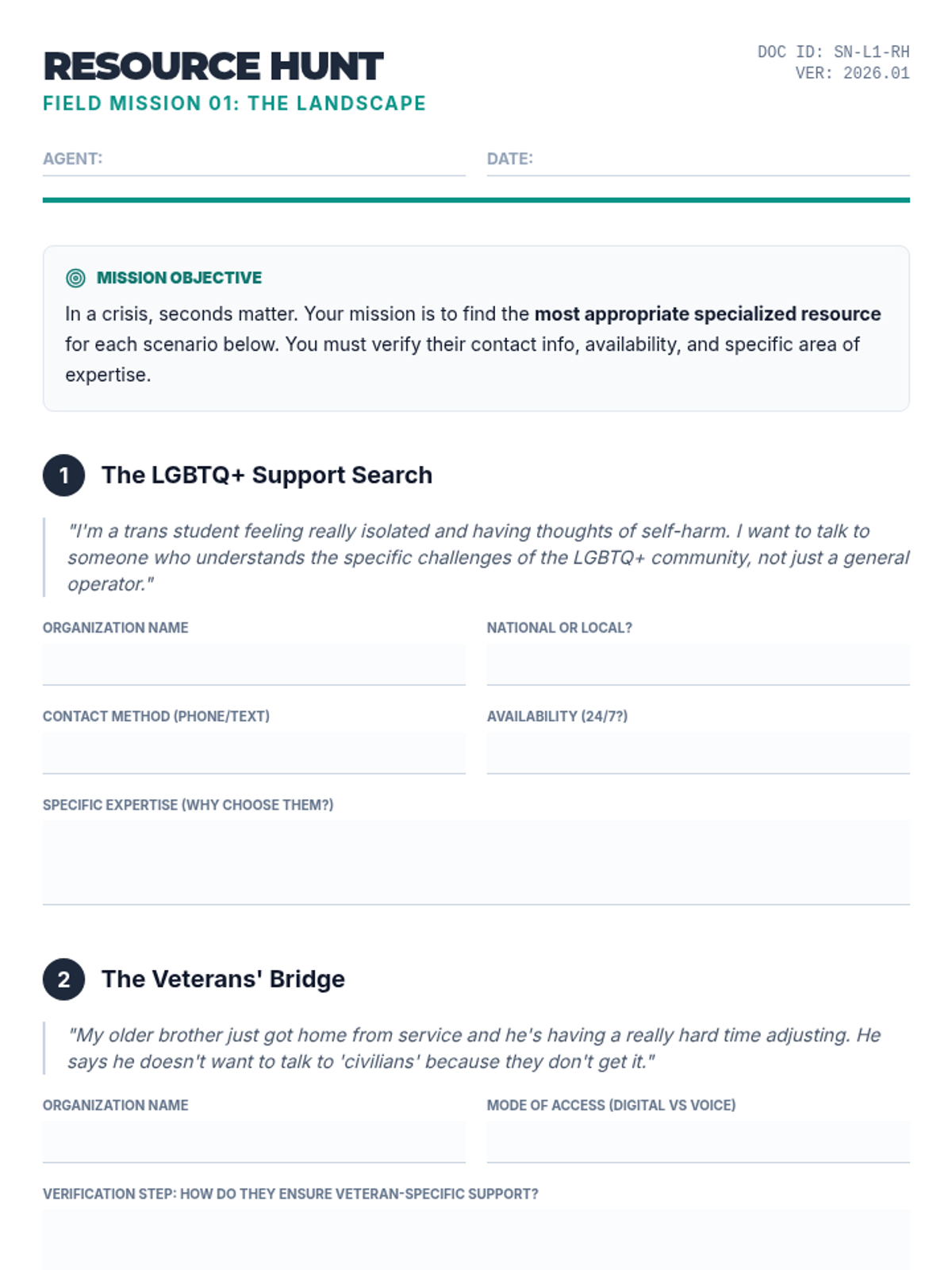
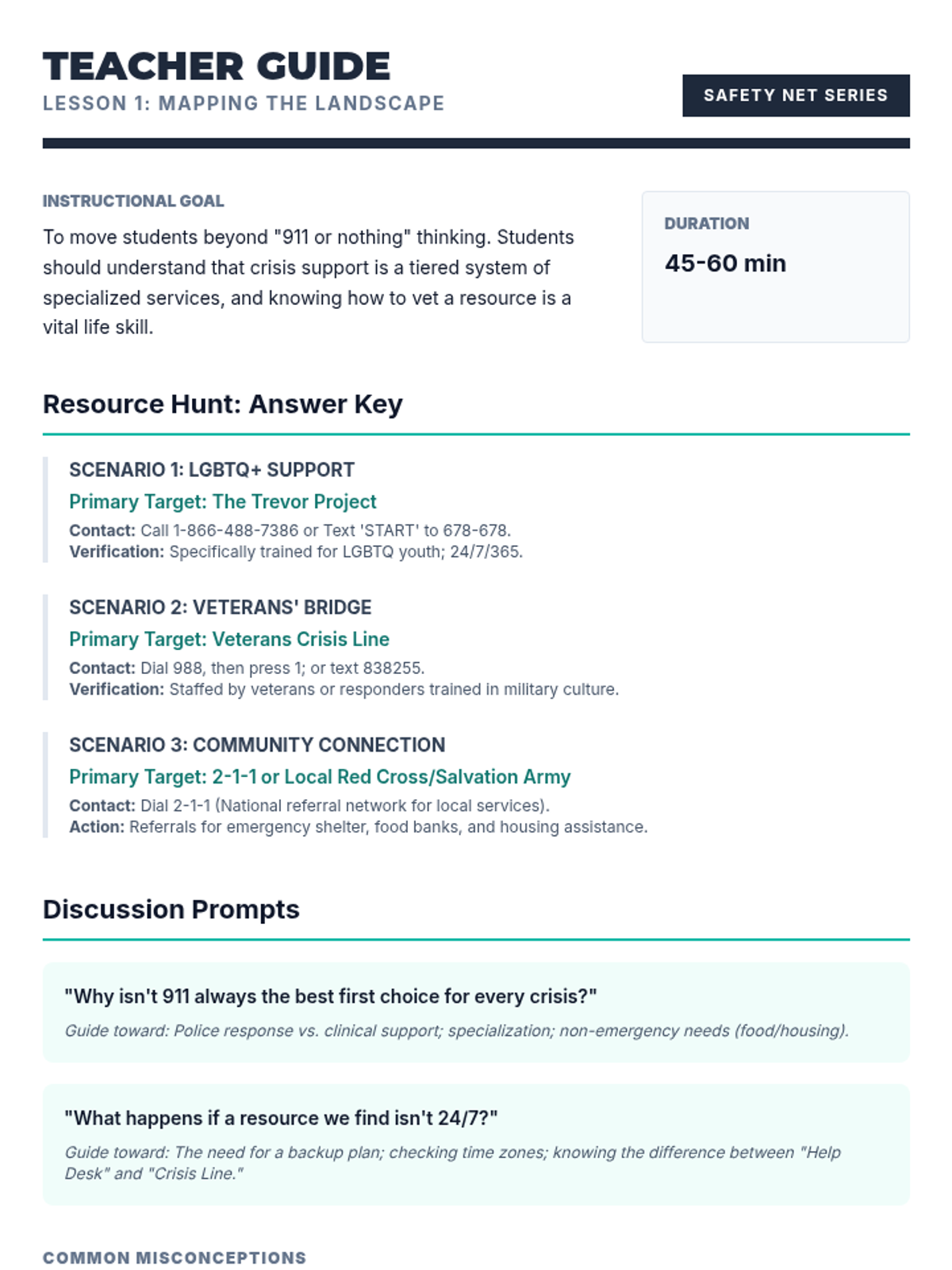
A research-focused sequence for 9th-grade students to map, evaluate, and access specialized crisis resources. Students learn to distinguish between general and specialized support, evaluate the credibility of services, and develop a personalized safety resource plan.
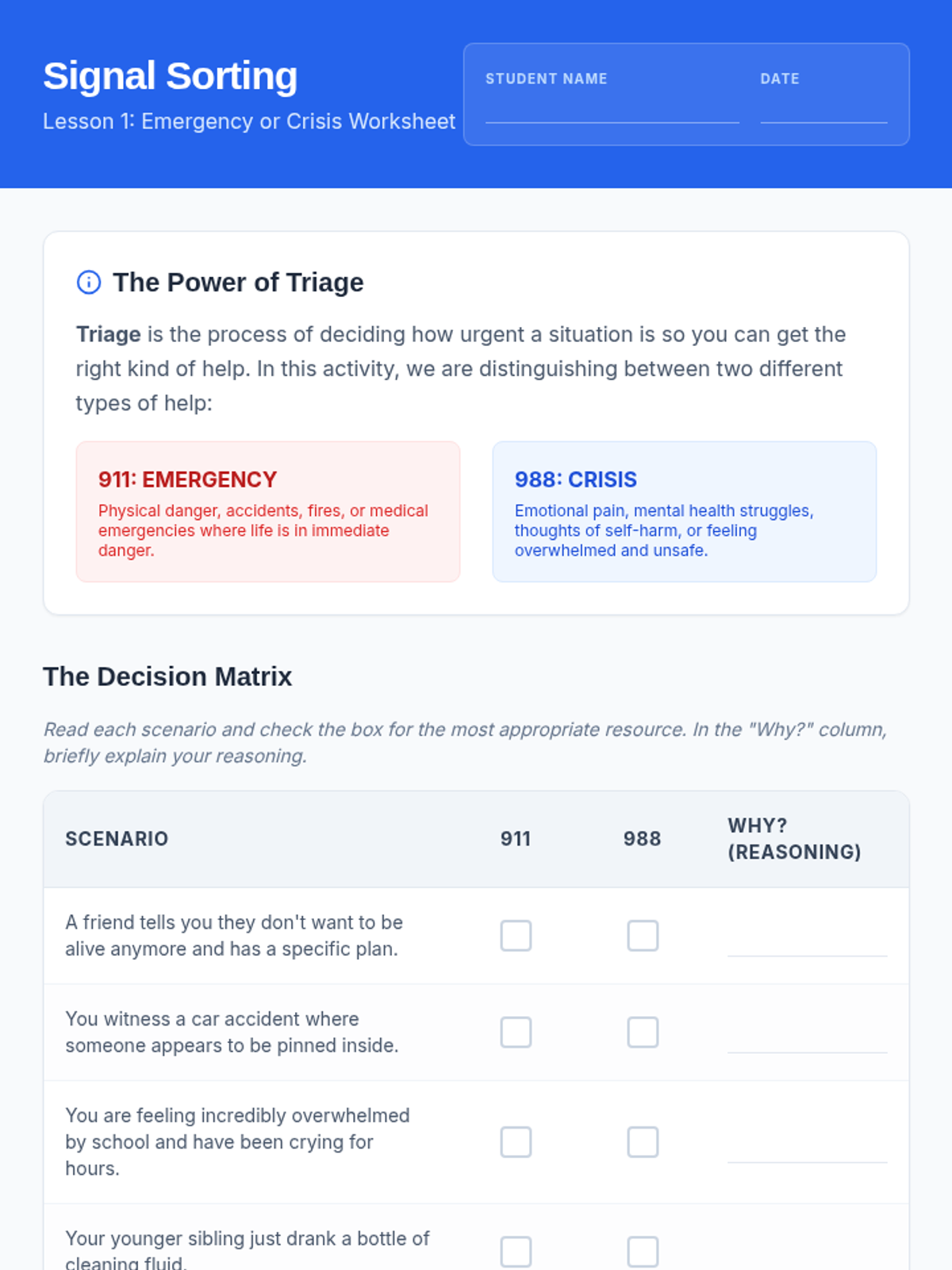
This sequence demystifies the process of accessing crisis support by breaking down the mechanics of hotlines and text lines. Students learn to distinguish between emergency services (911) and crisis hotlines (988), understand the experience of reaching out, and create personal resource tools for future use.
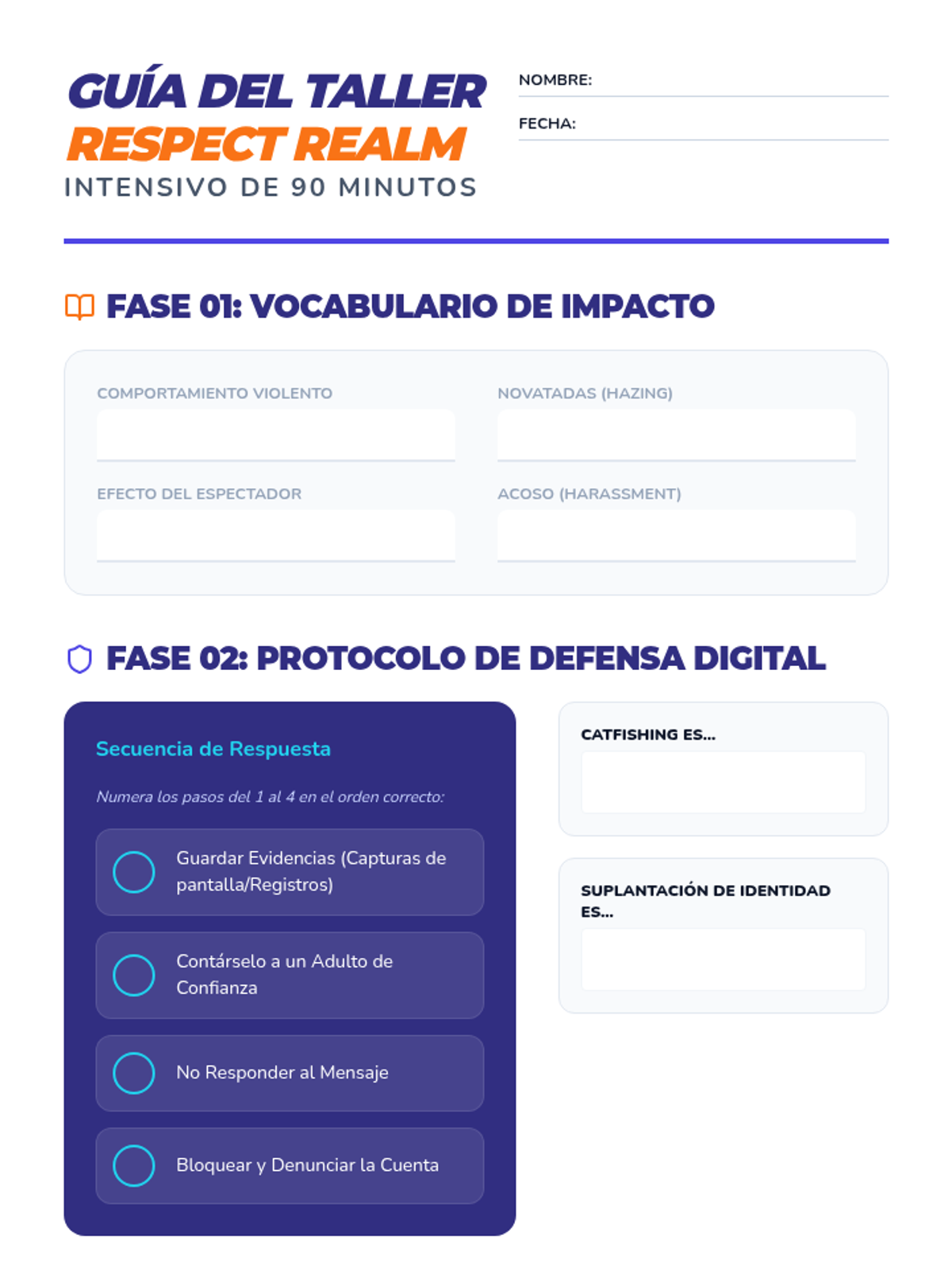
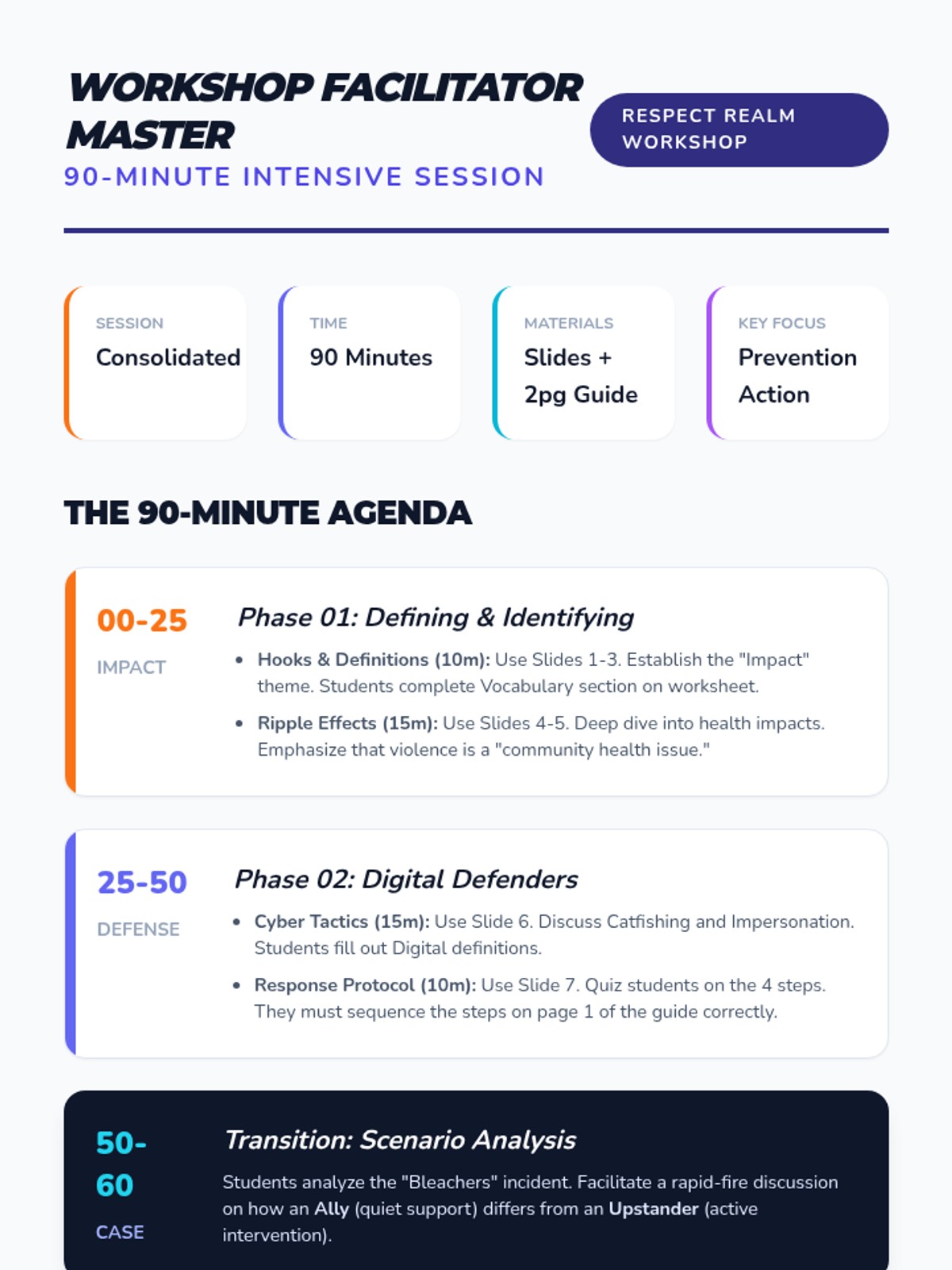
A comprehensive two-part unit focused on identifying violent behavior, understanding the mechanics of bullying and cyberbullying, and empowering students to become active upstanders.
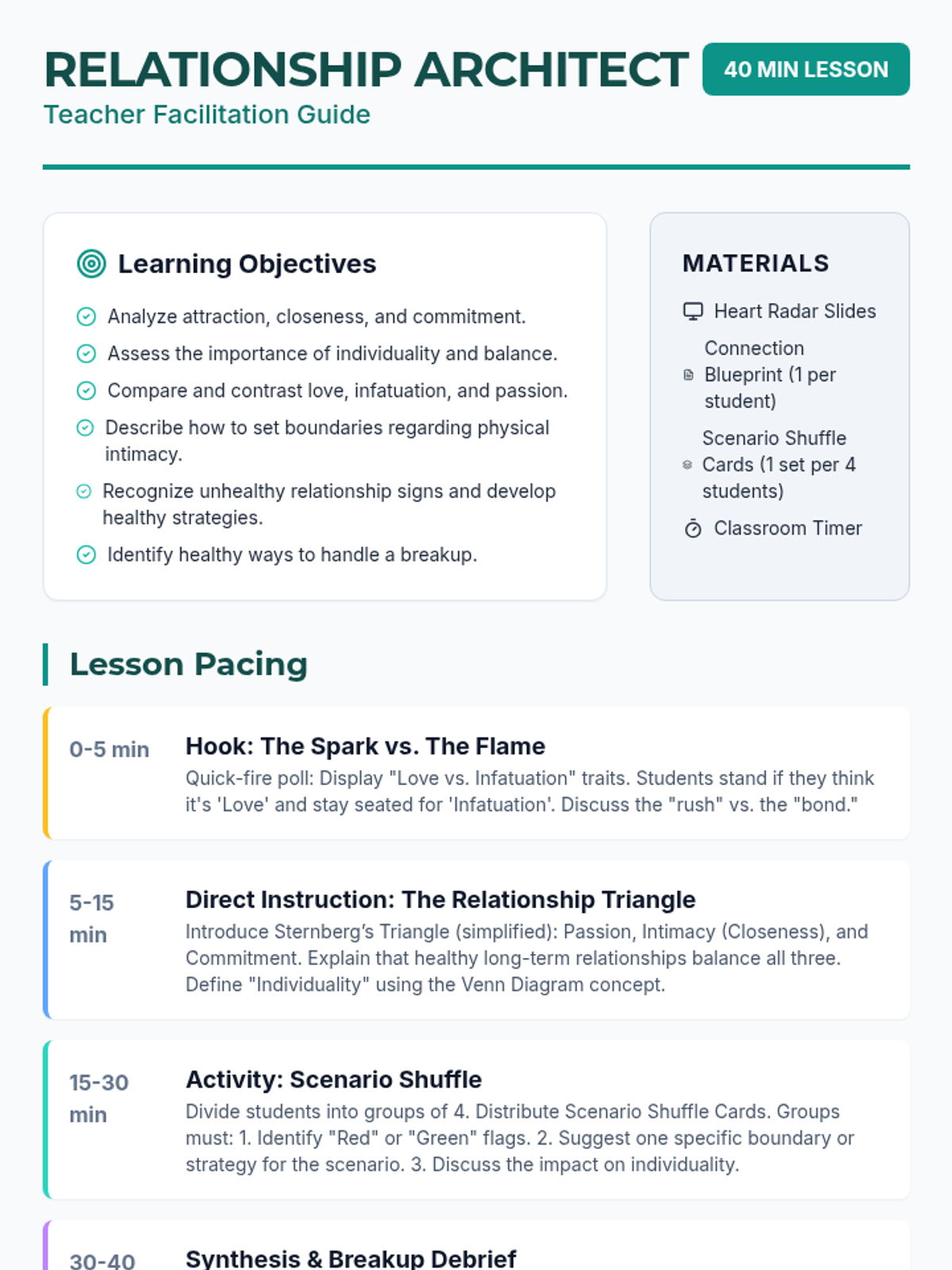
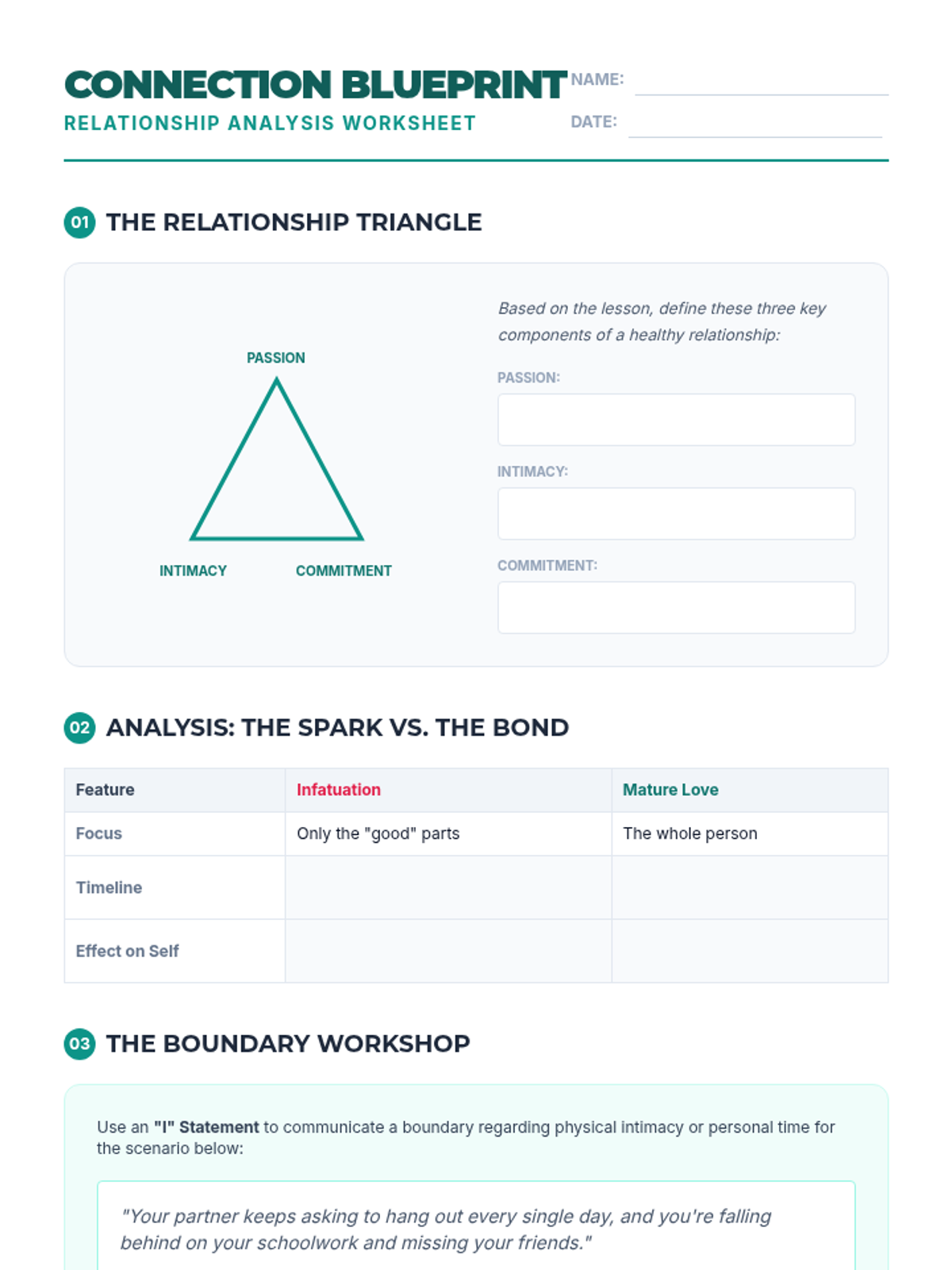
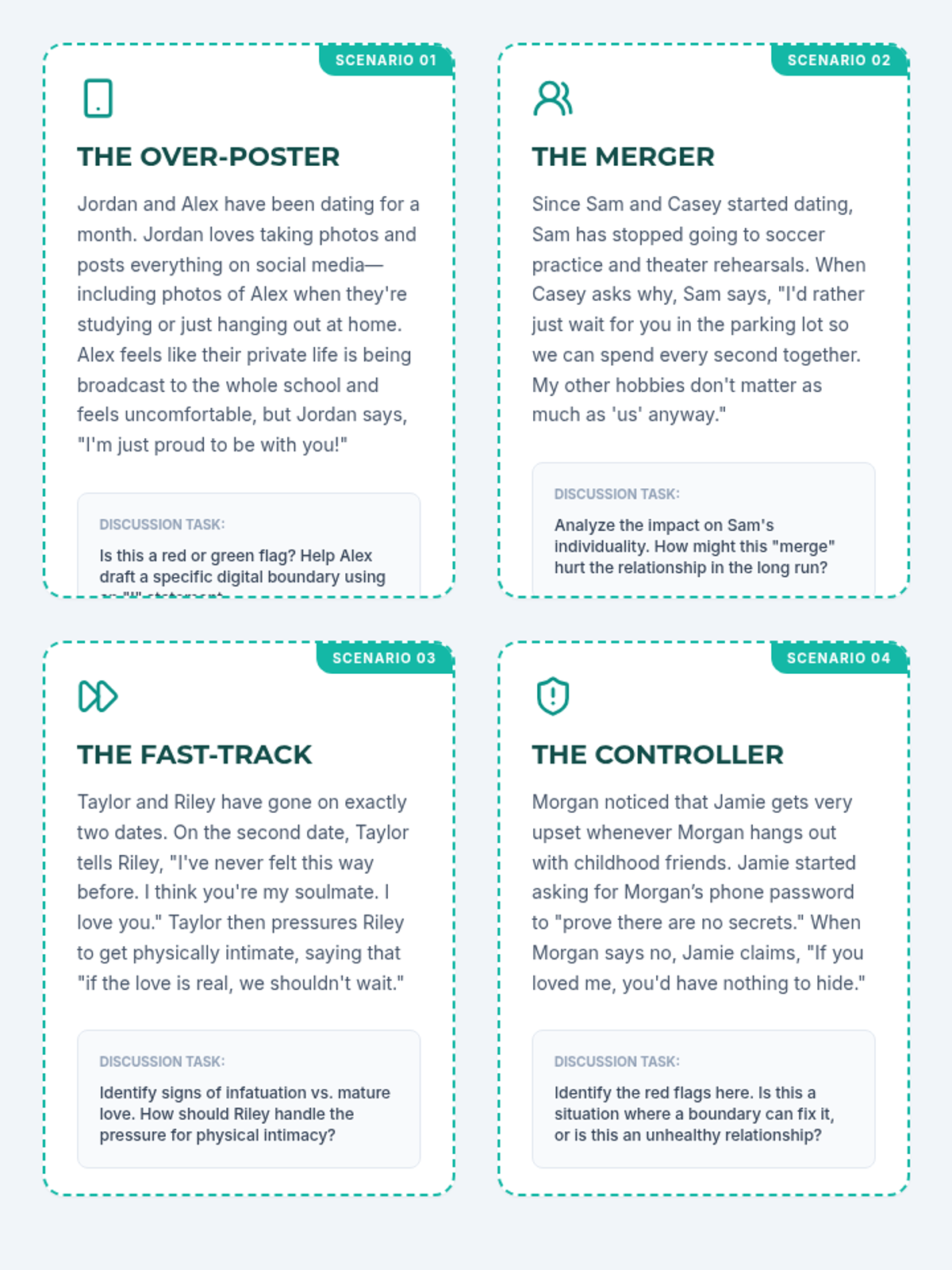
A comprehensive health education unit focused on navigating the complexities of teenage romantic relationships, from initial attraction to healthy boundaries and handling breakups.
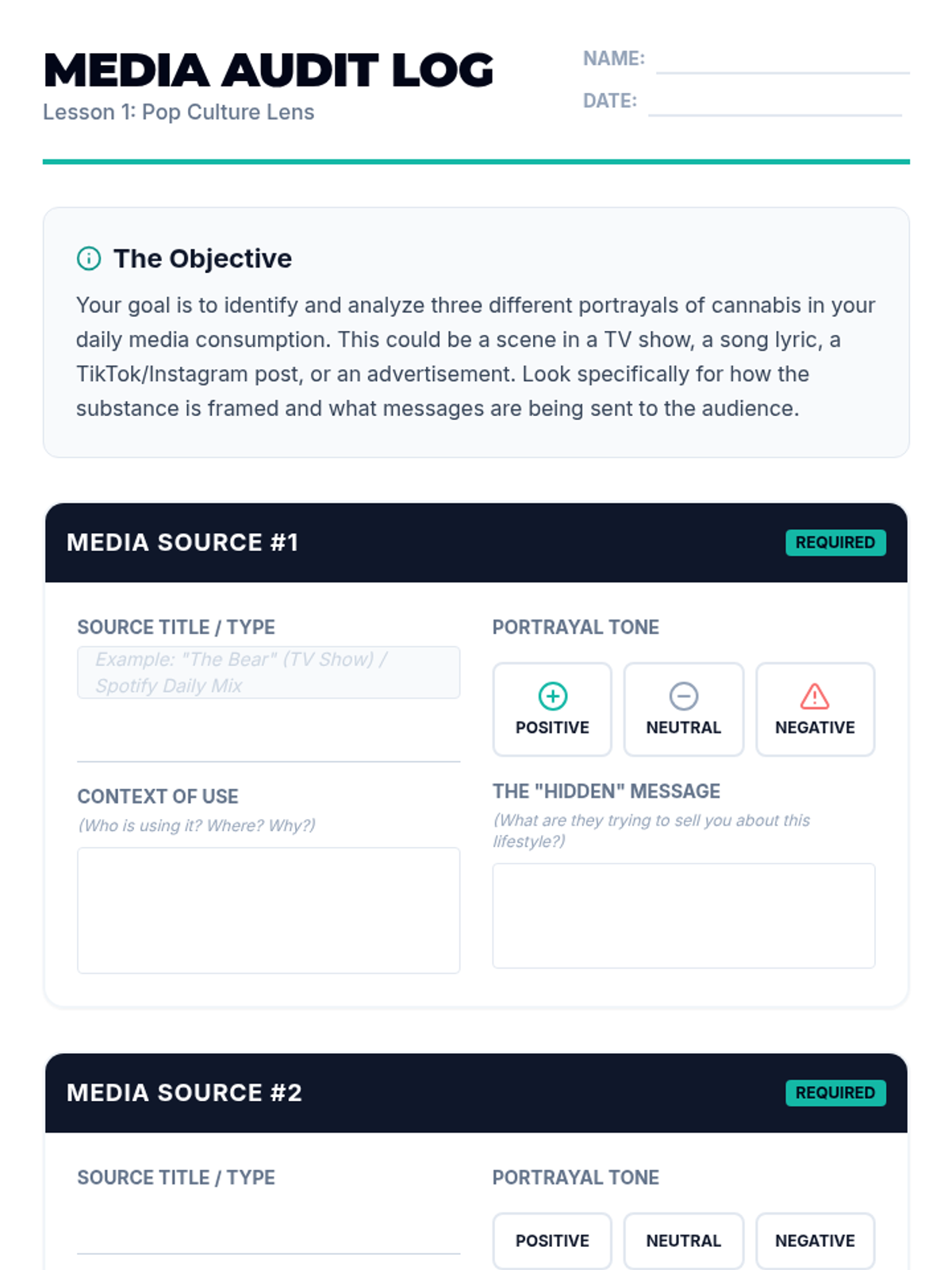
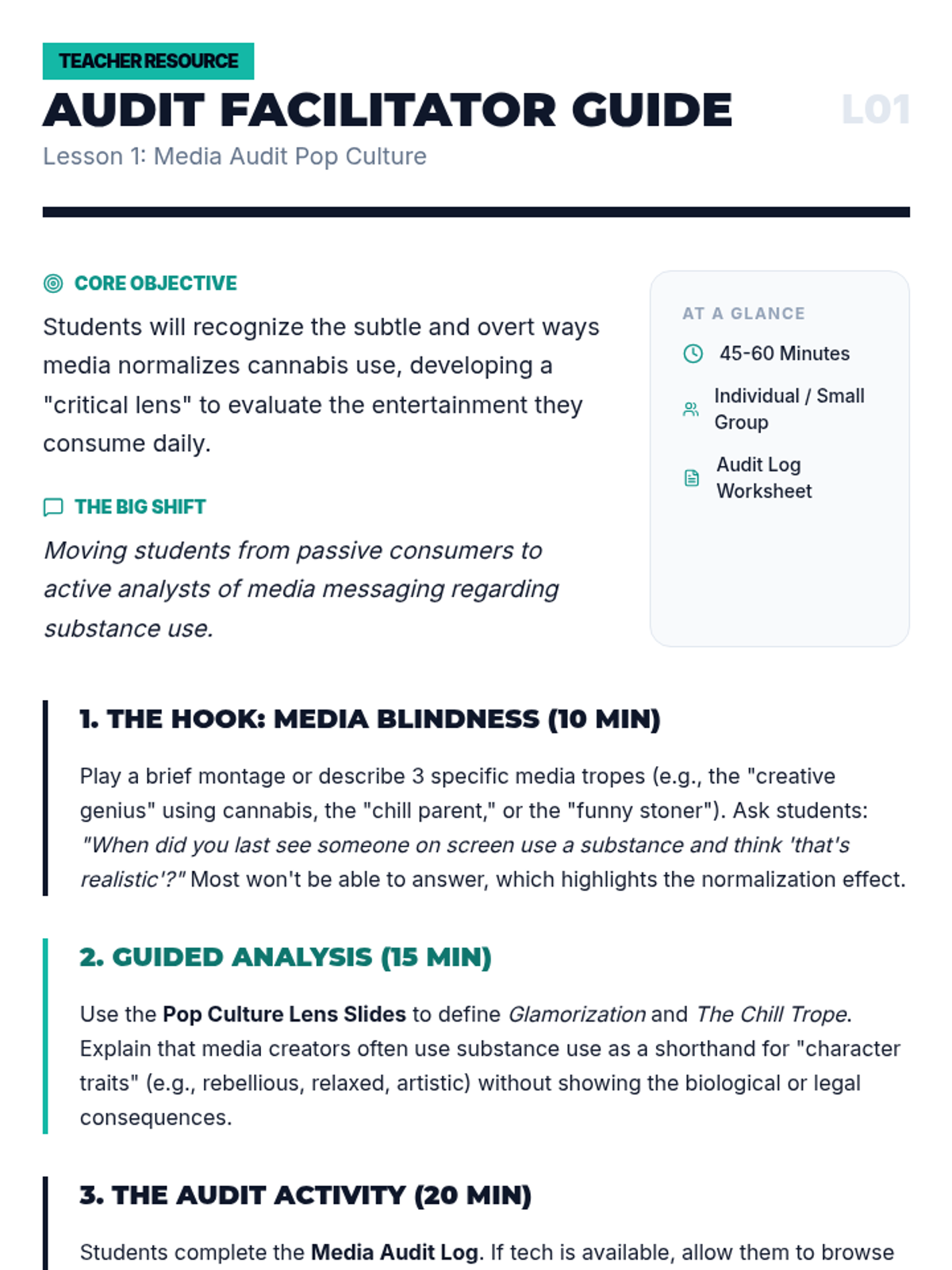
This sequence explores the intersection of substance awareness and media literacy. Students analyze how cannabis is portrayed in popular culture, learn to distinguish between influencer marketing and scientific evidence, investigate the role of social media algorithms in normalizing substance use, and create their own fact-based advocacy campaigns.
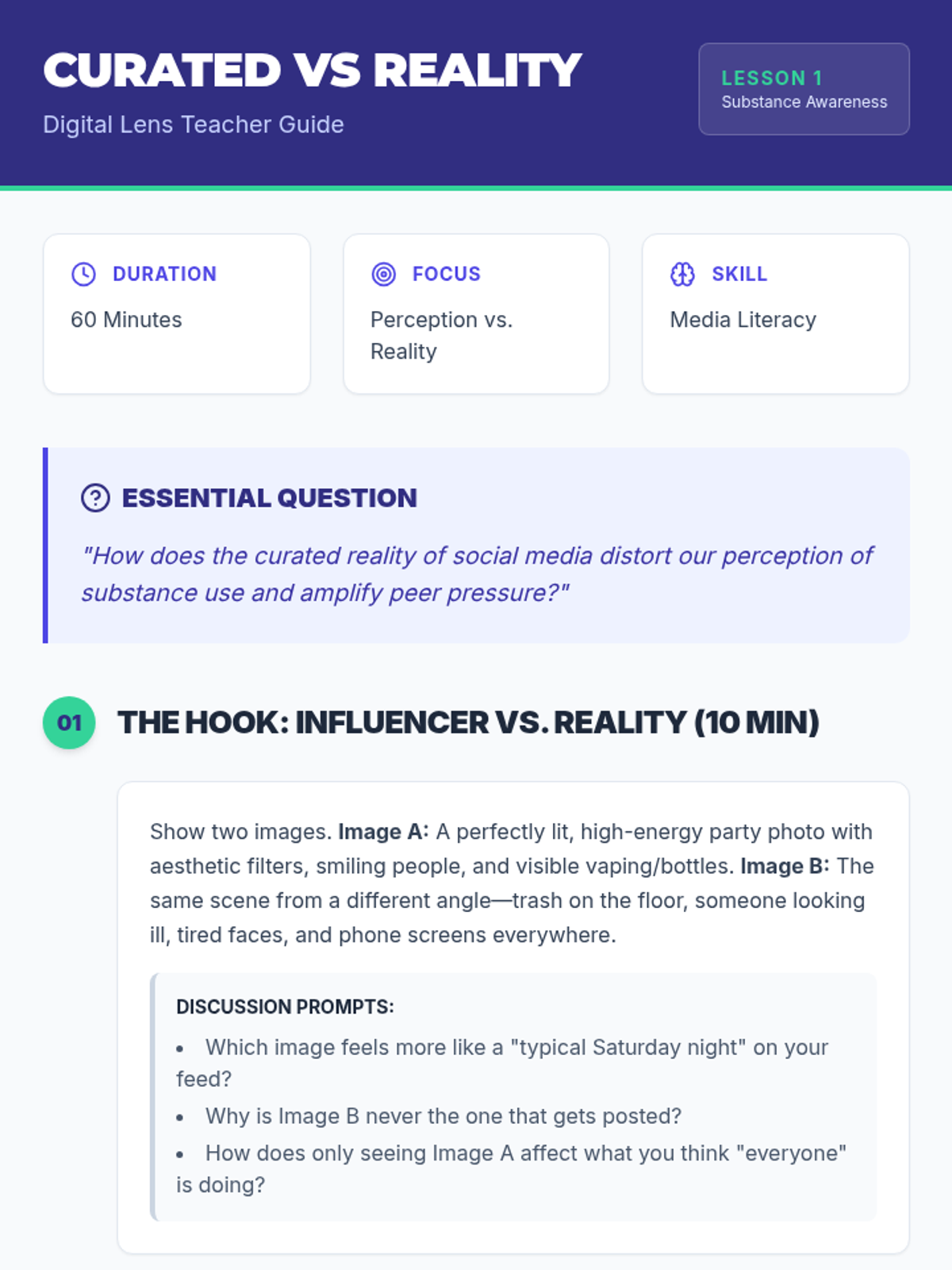
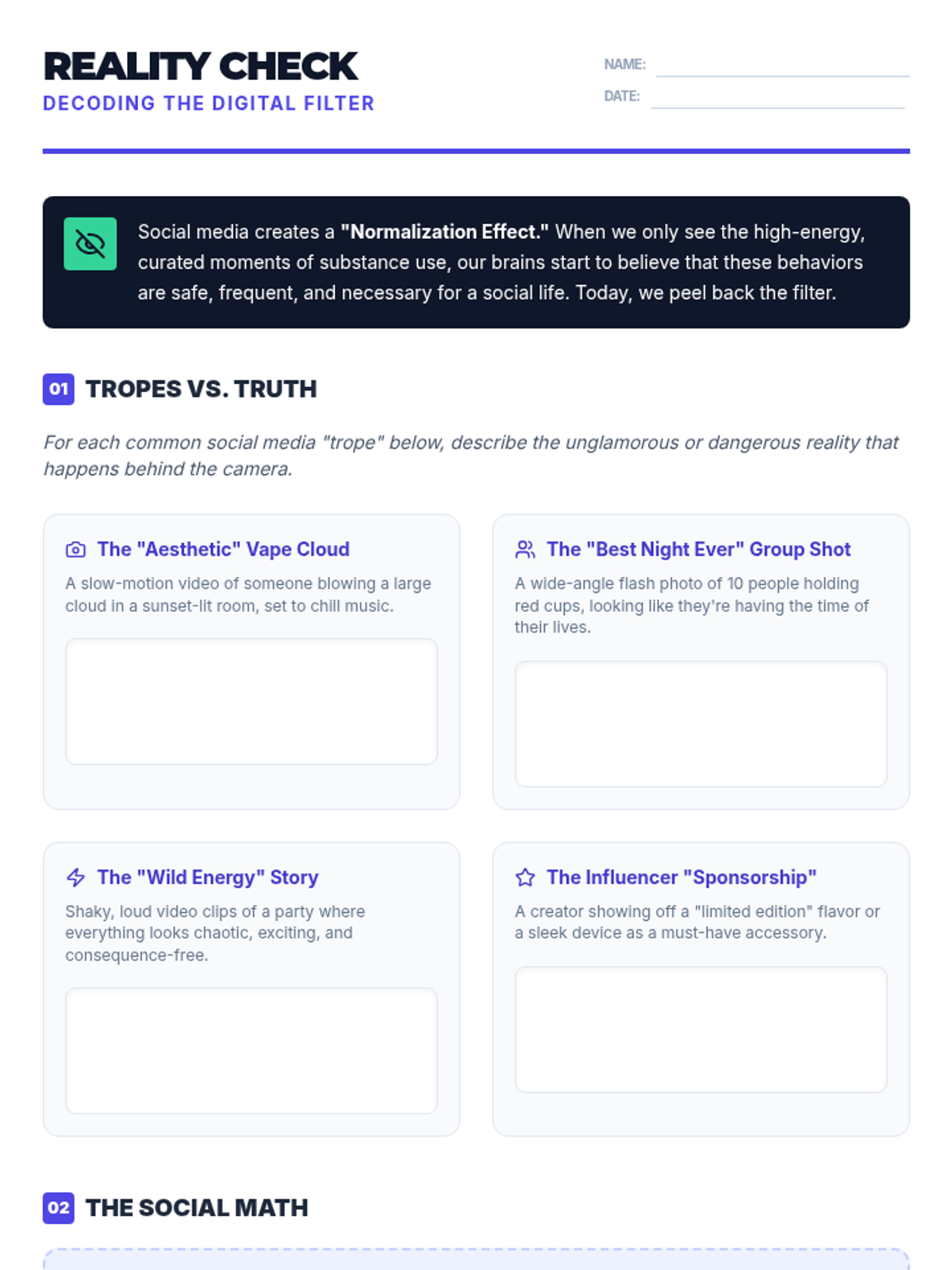
This sequence explores how social media distortions fuel peer pressure regarding substance use. Students will develop media literacy skills to decode influencer culture, analyze digital footprints, and create their own advocacy content to empower their peers.
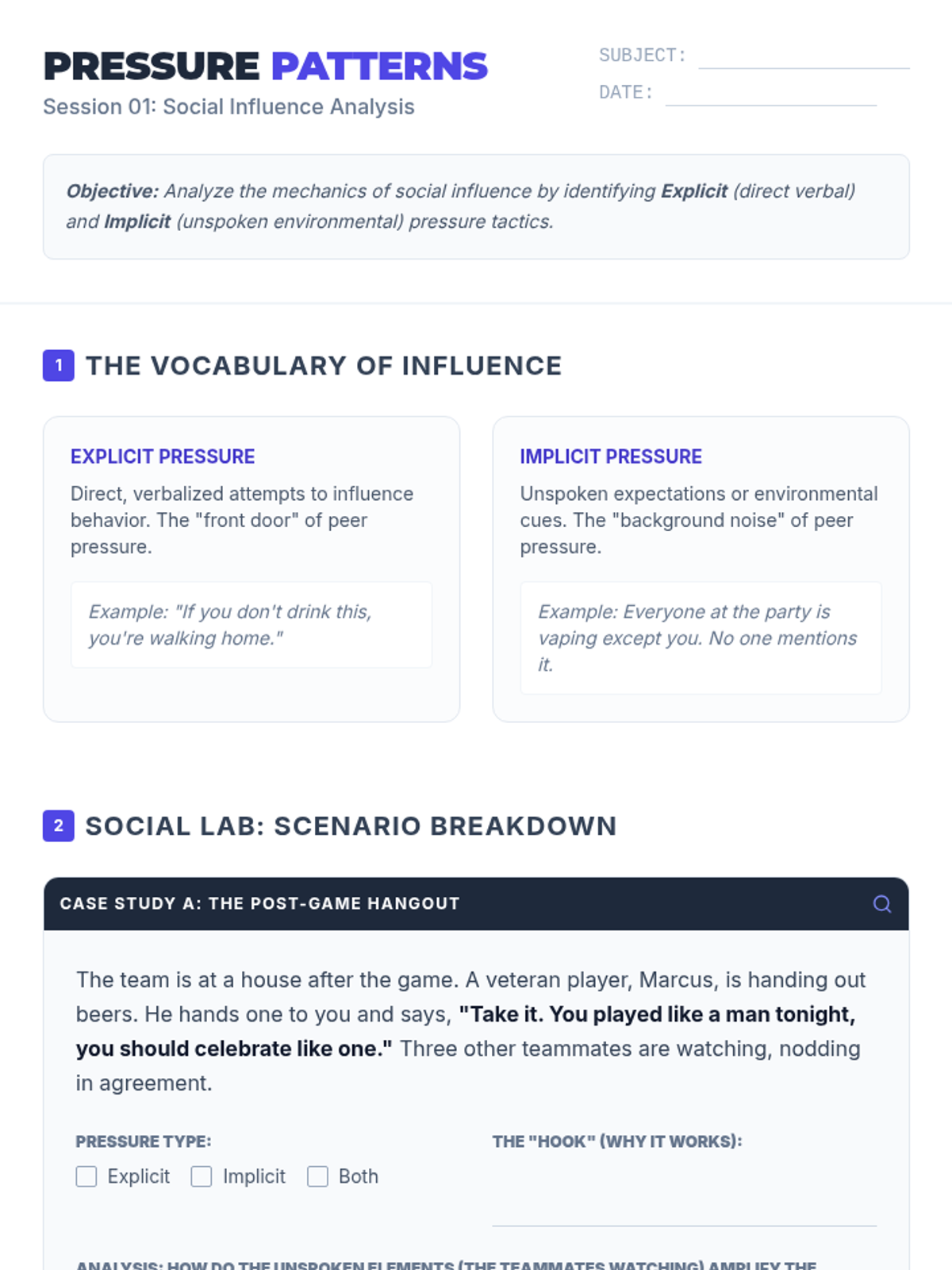
This 11th-grade health sequence investigates the psychological mechanisms of peer influence, focusing on subtle manipulation tactics like groupthink, gaslighting, and digital FOMO. Students move from identifying these tactics to deconstructing how they target belonging and status, ultimately learning to diagnose and navigate manipulative social dynamics before they lead to risky substance use decisions.
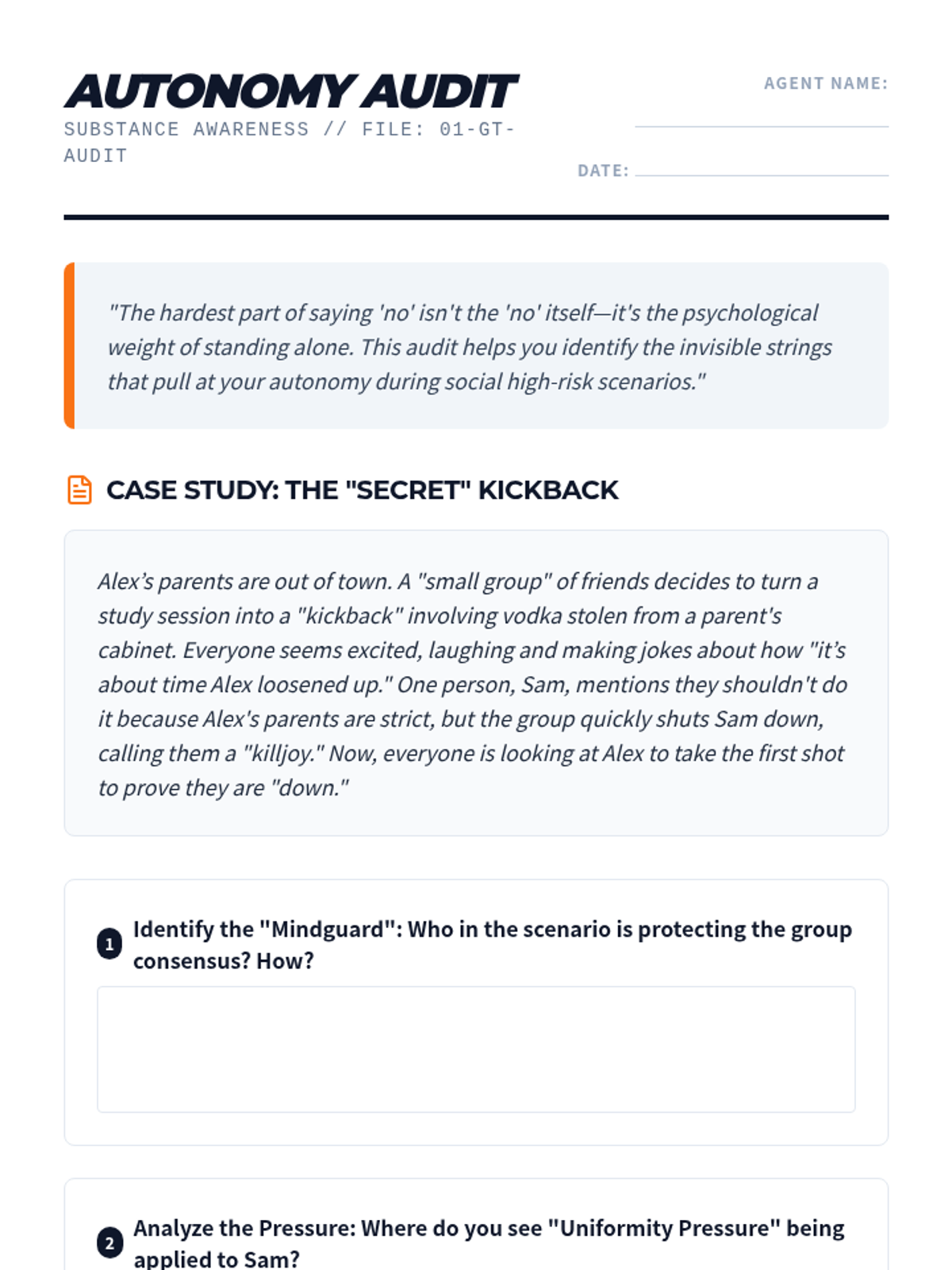
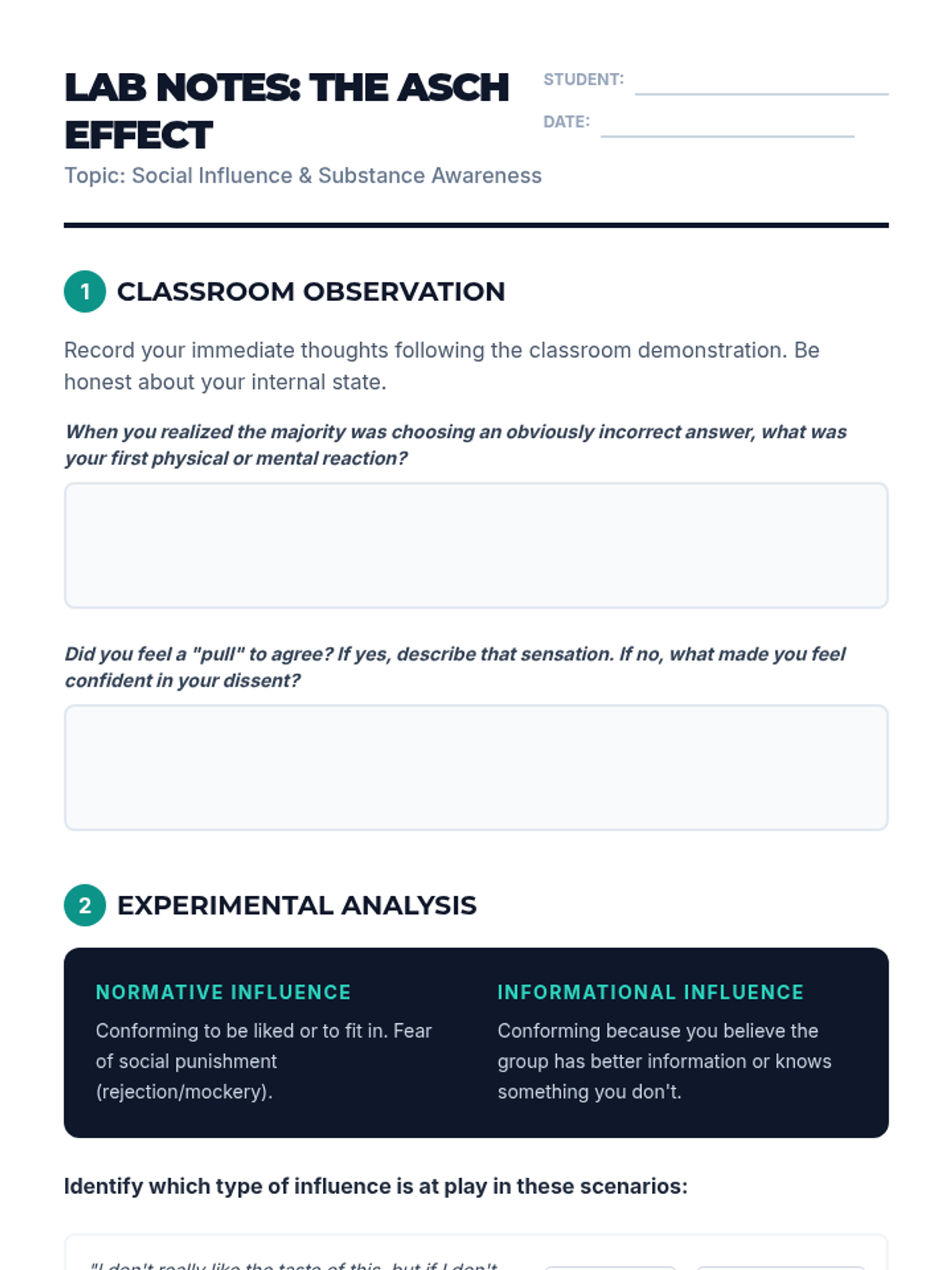
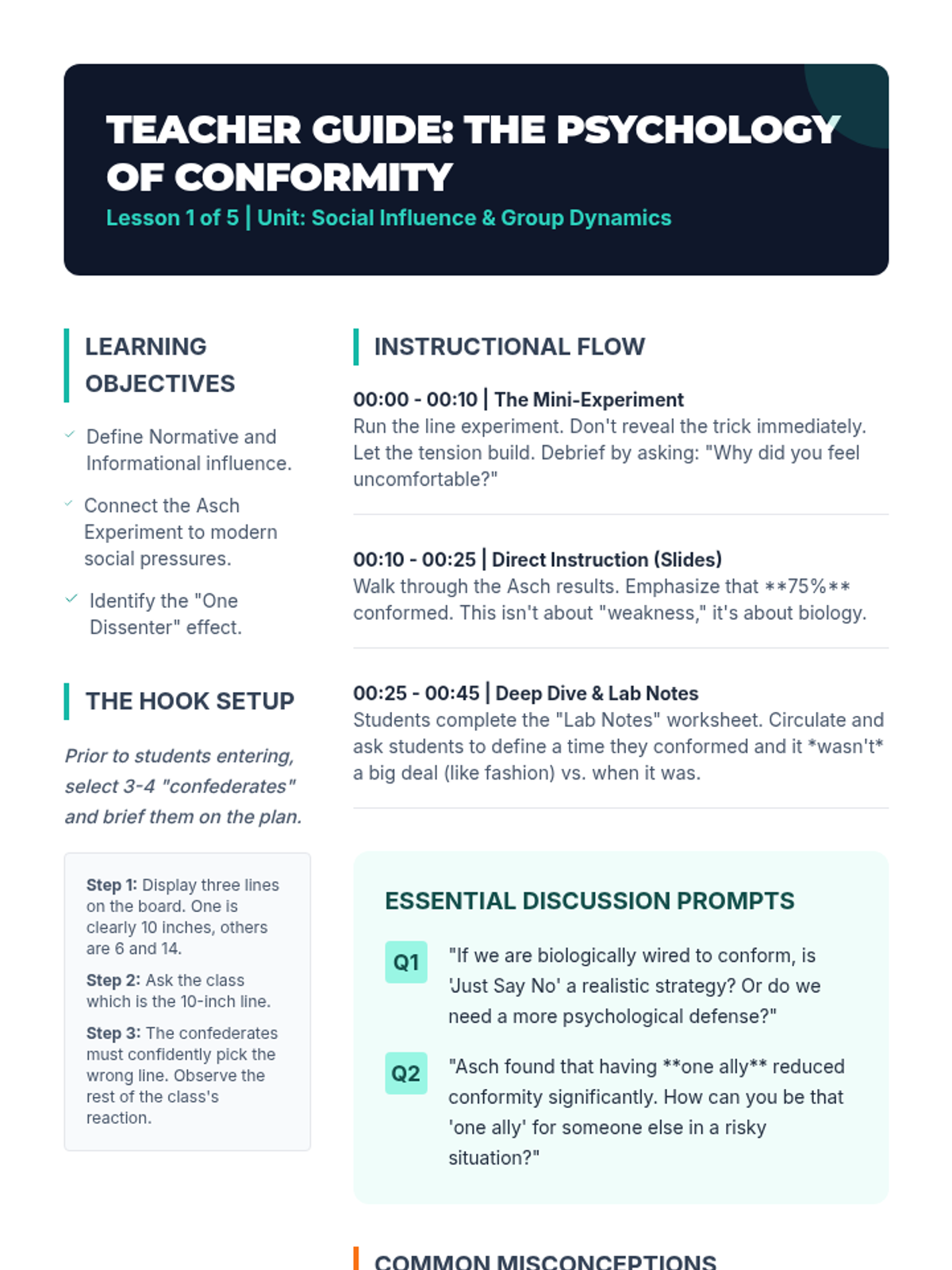
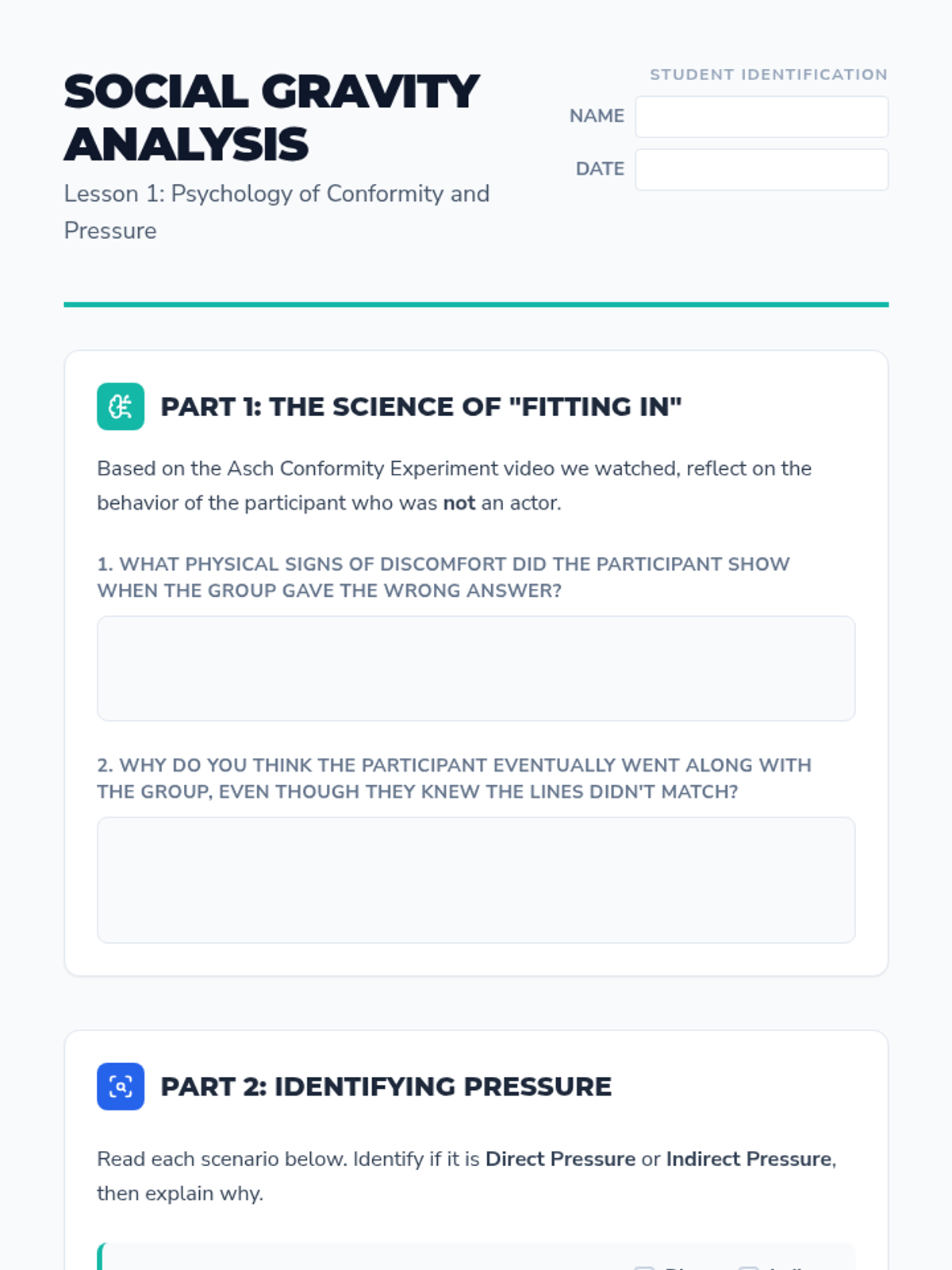
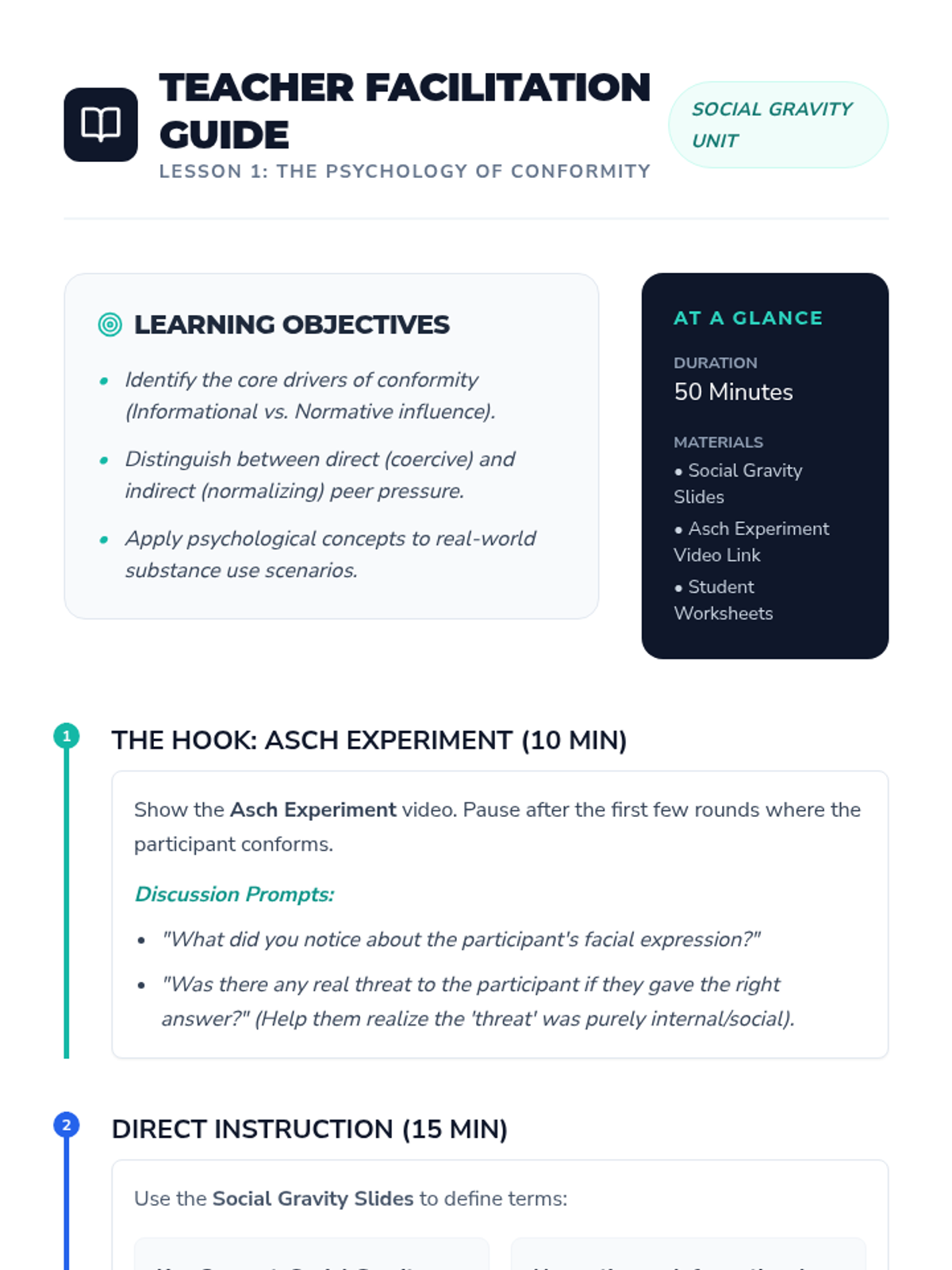
This sequence explores the psychological and social mechanisms behind peer pressure and substance use for 12th-grade students. By analyzing classic conformity experiments, manipulation tactics, digital influence, and groupthink, students develop a high-level cognitive framework for maintaining individual autonomy.
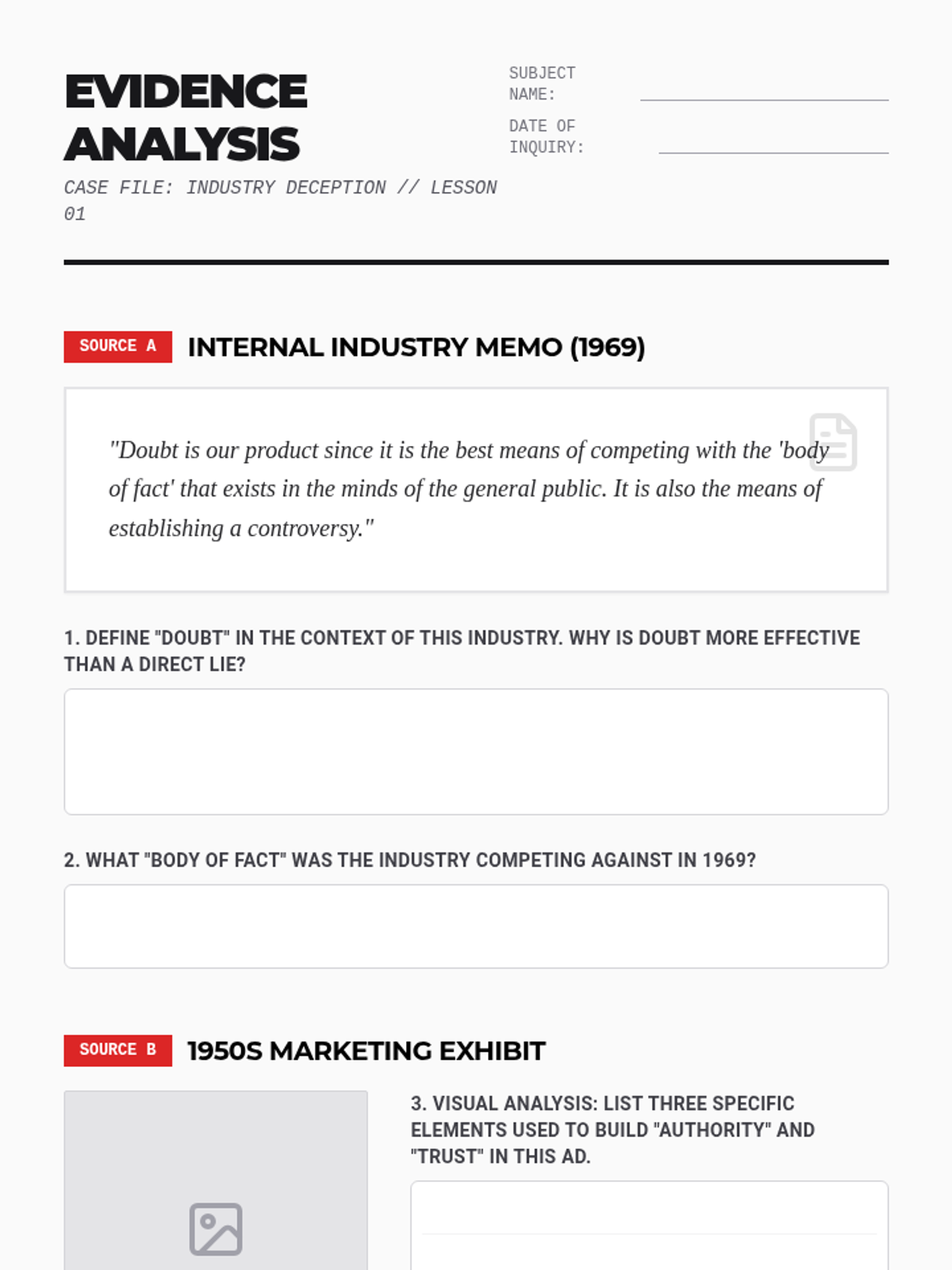
High school students examine the tobacco industry's historical and modern marketing tactics. They deconstruct how corporate strategies manipulate youth perception and culminate in a student-led counter-marketing campaign.
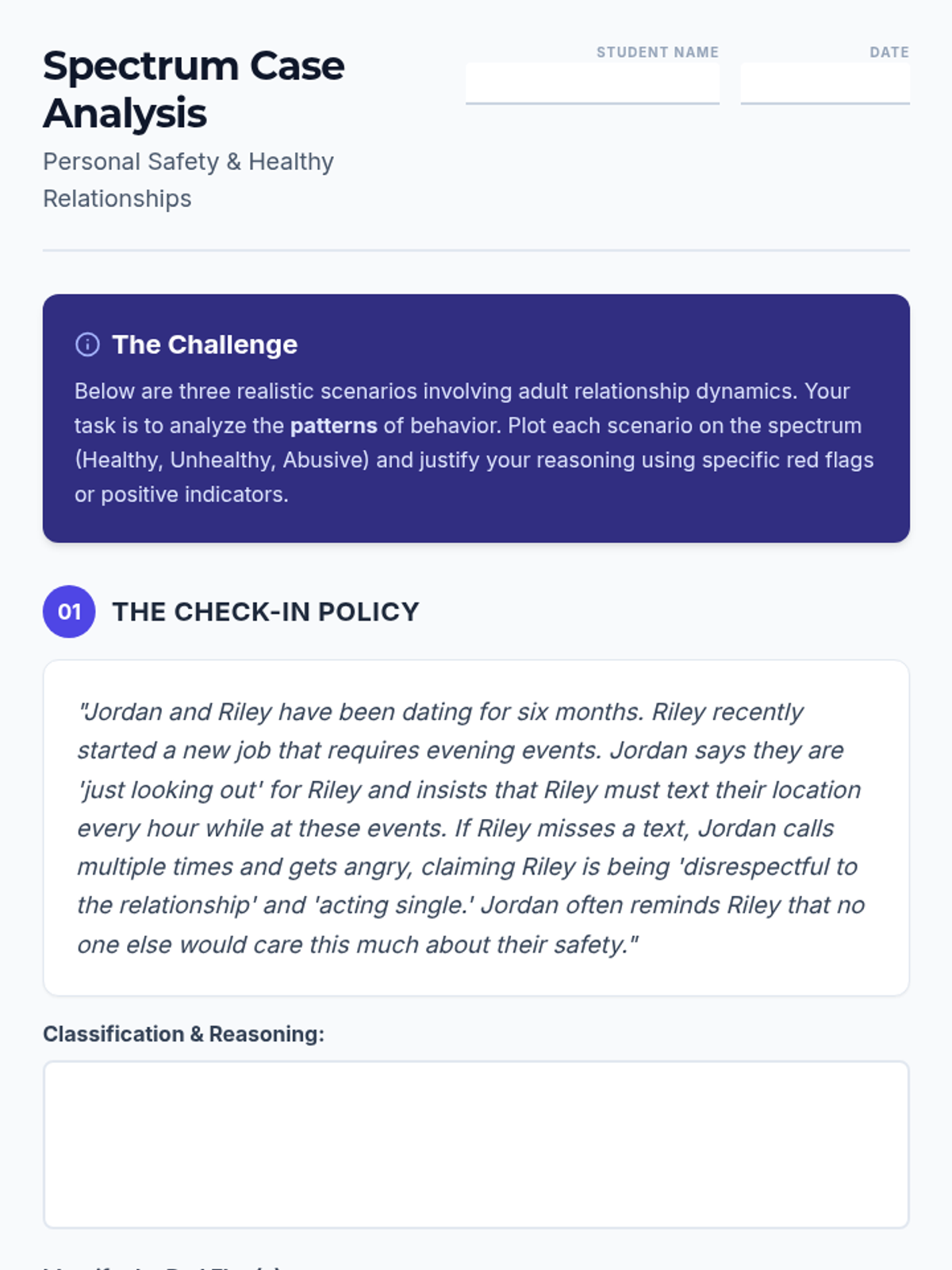
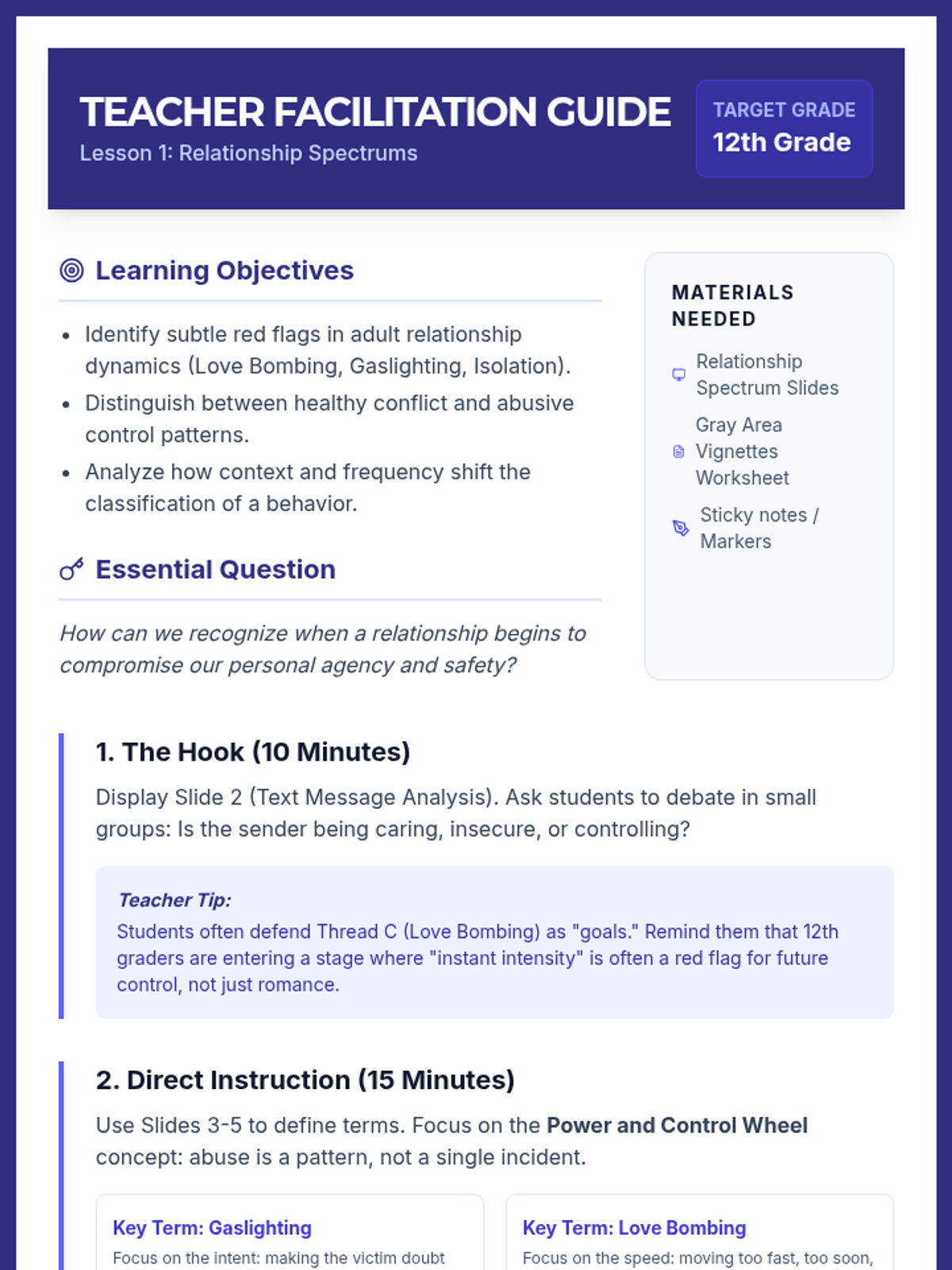
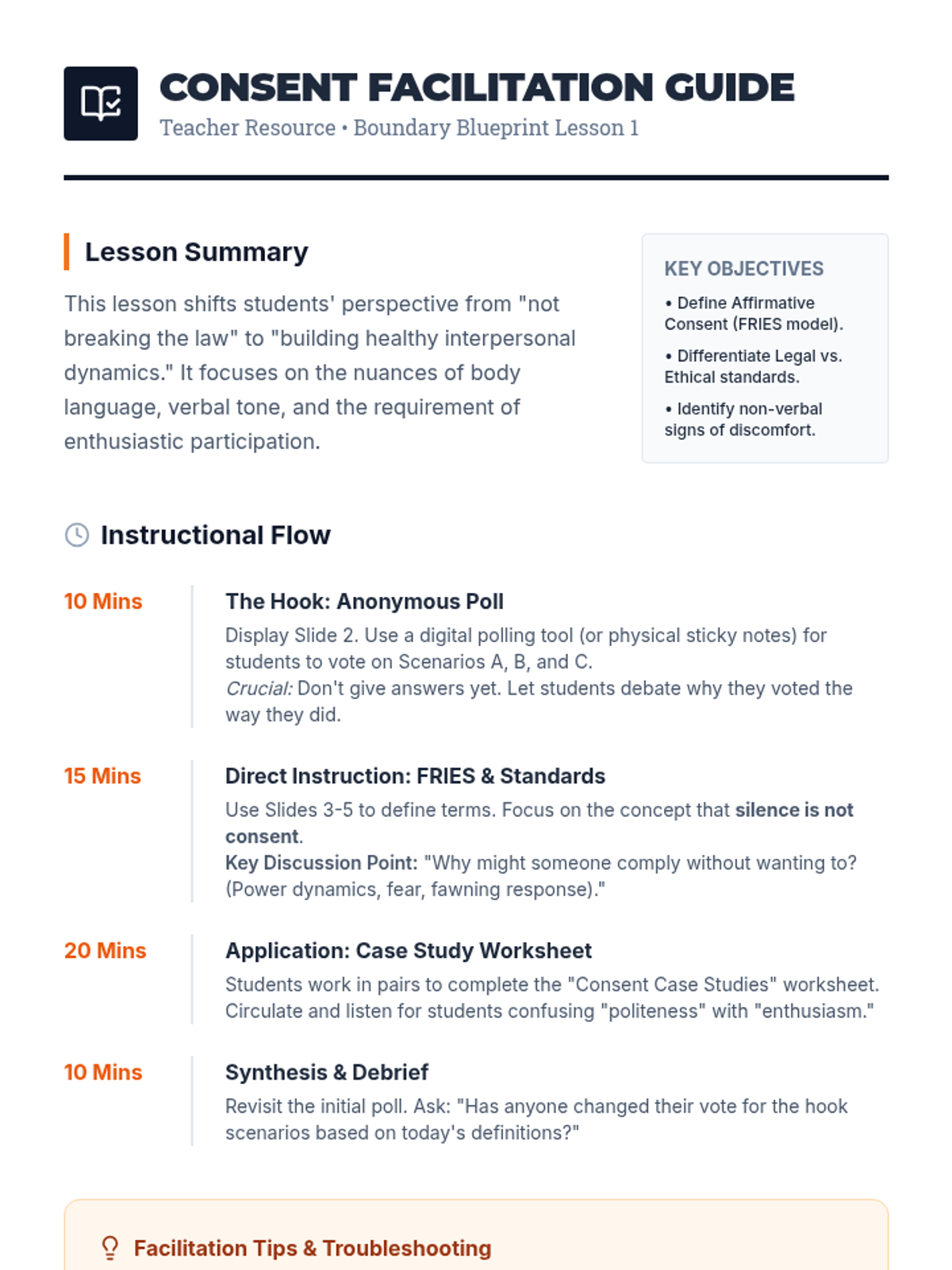
A comprehensive sequence for 12th-grade students focused on analyzing relationship dynamics, understanding the nuances of consent and power, managing digital boundaries, and developing assertive communication skills for personal safety in adult environments.
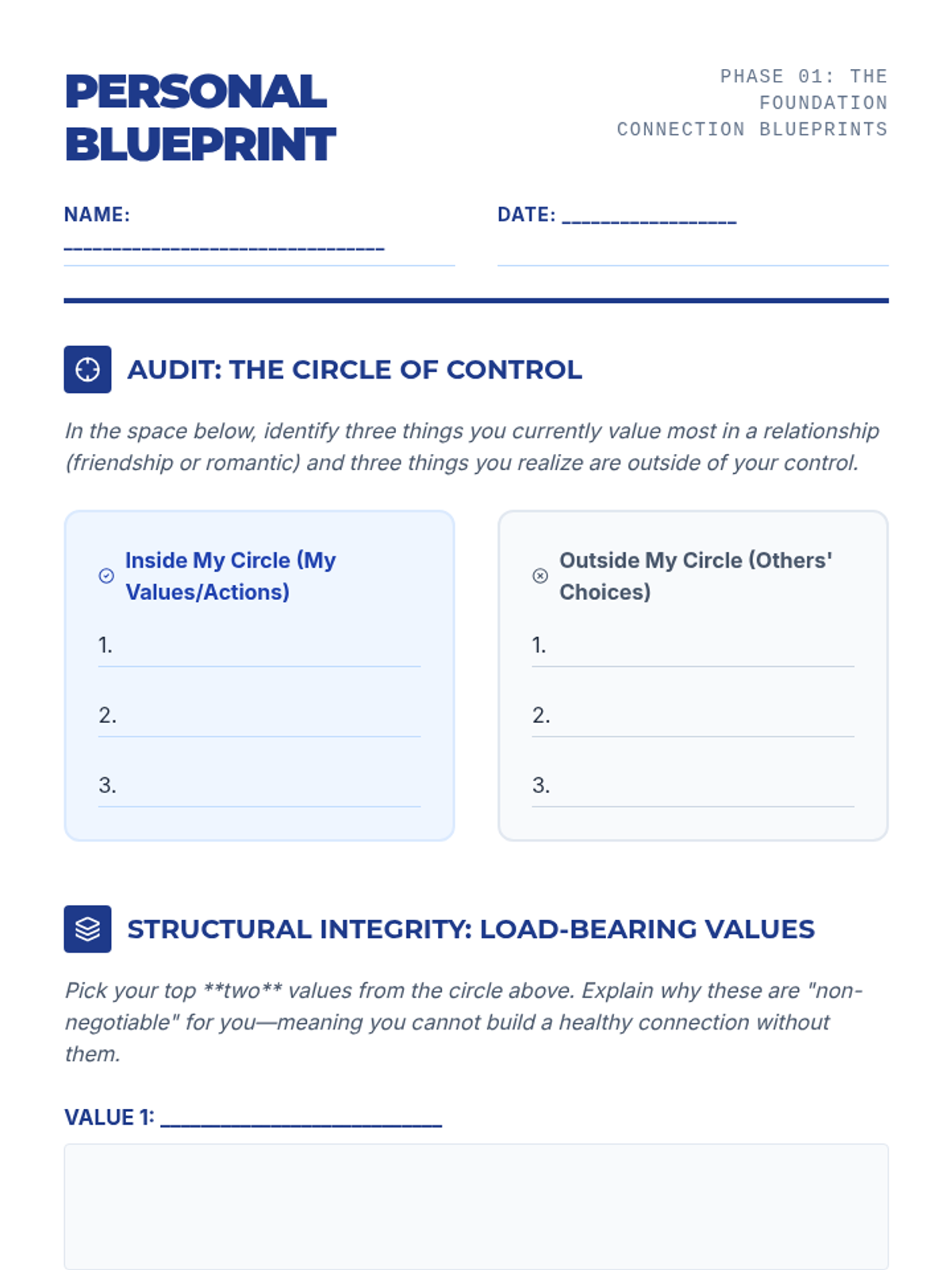
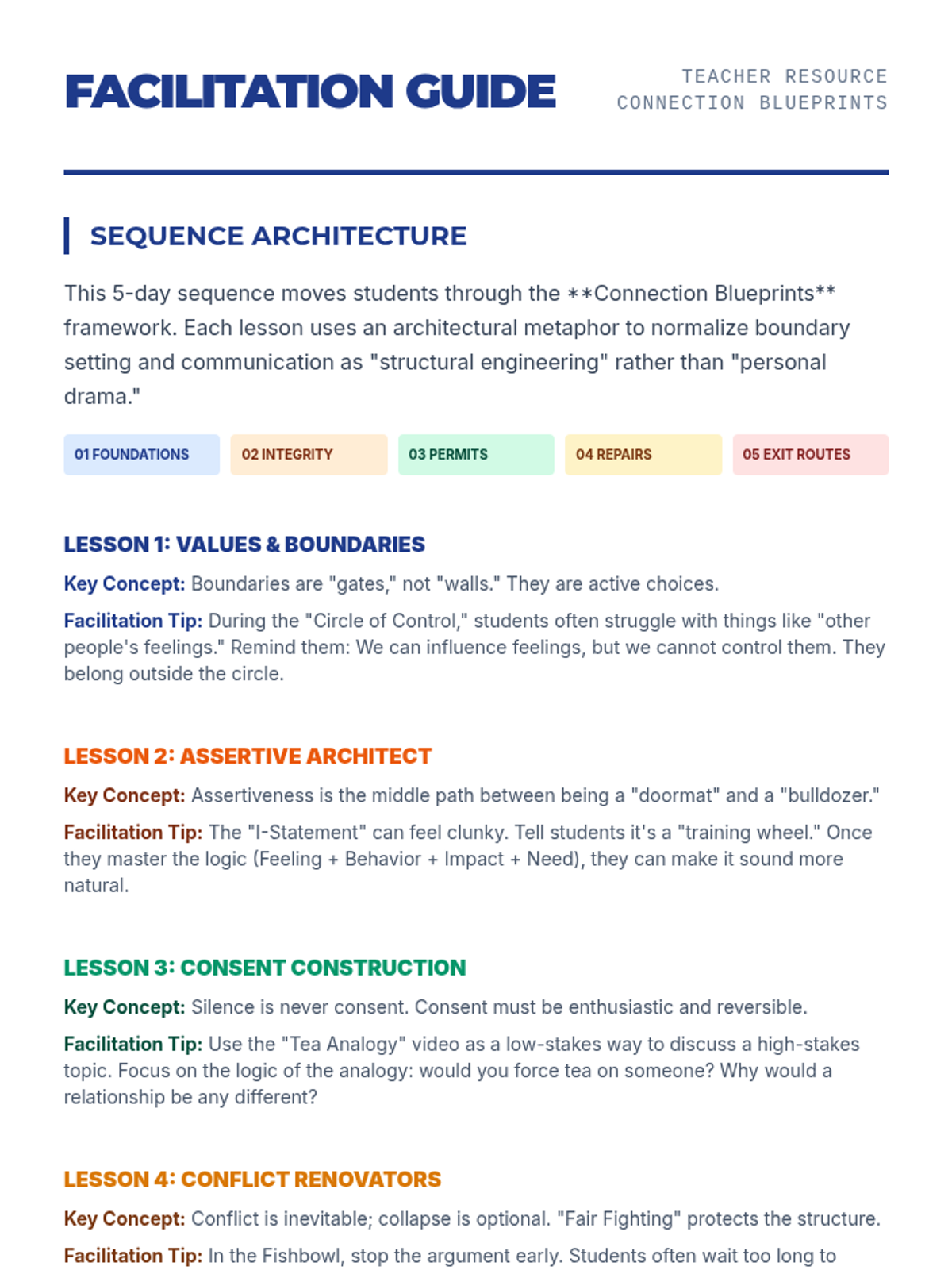
A 9th-grade health sequence focused on practical interpersonal skills, moving from internal value identification to external communication strategies, consent negotiation, and boundary maintenance. Students will develop a personal toolkit for navigating complex social dynamics with respect and clarity.
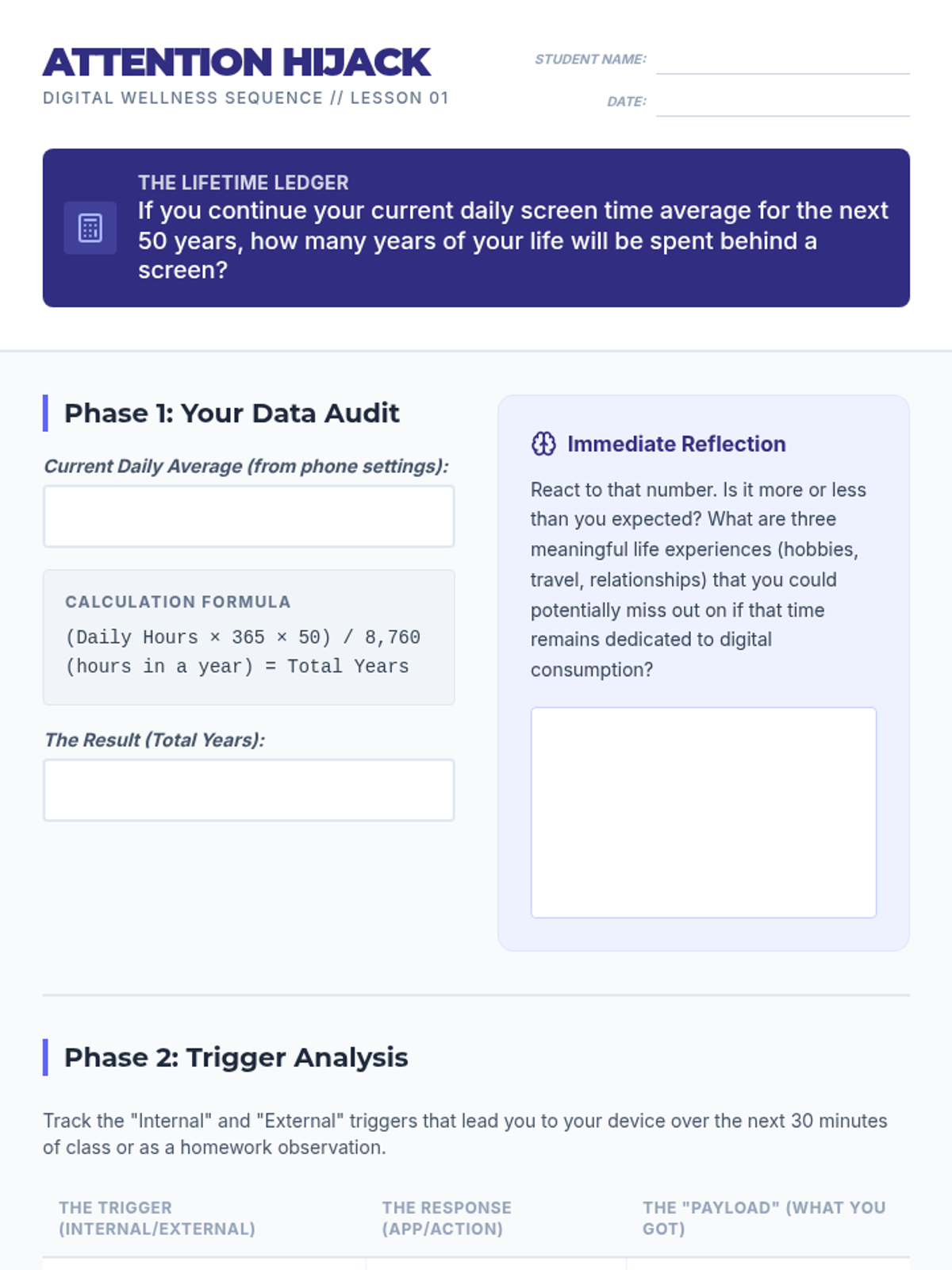
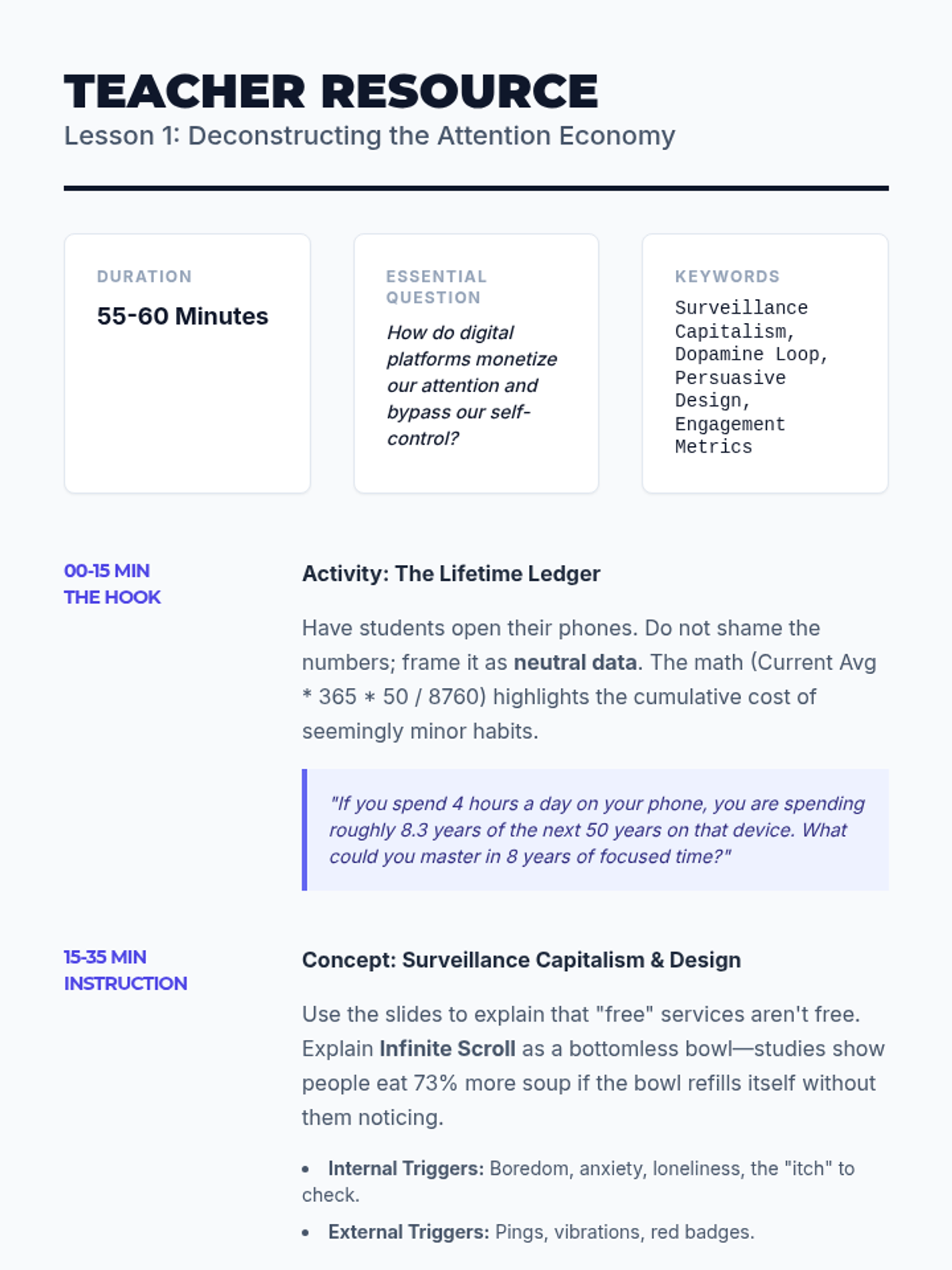
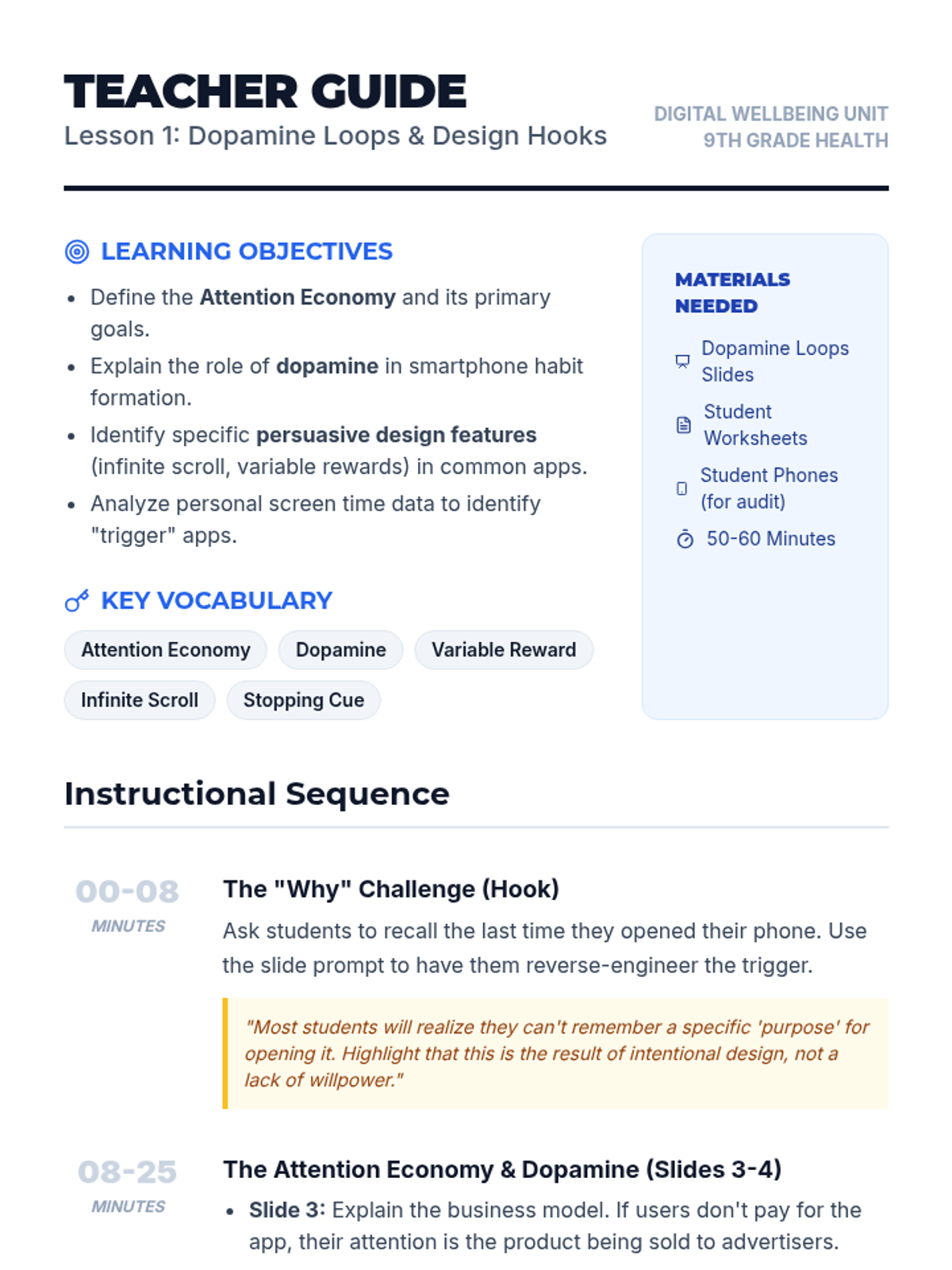
An advanced digital literacy and mental health sequence for 12th graders, focusing on tech ethics, algorithmic influence, and personal agency in the attention economy.
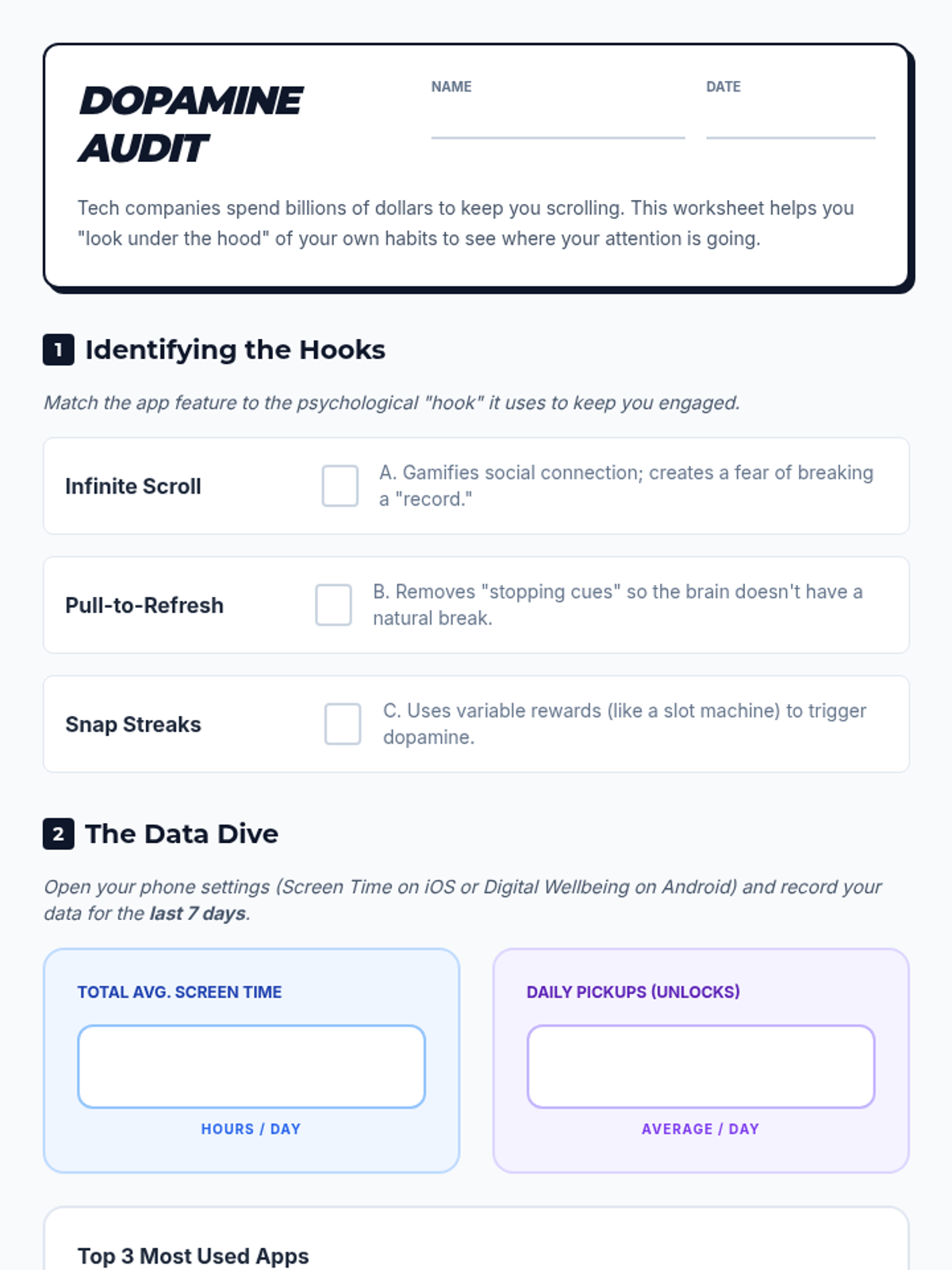
A comprehensive 9th-grade health sequence exploring the psychological impact of digital technology, the mechanics of the attention economy, and strategies for maintaining mental wellbeing in a connected world. Students will analyze social media design, the 'curated self', cyberbullying, and physical health impacts to develop a personalized digital wellness plan.
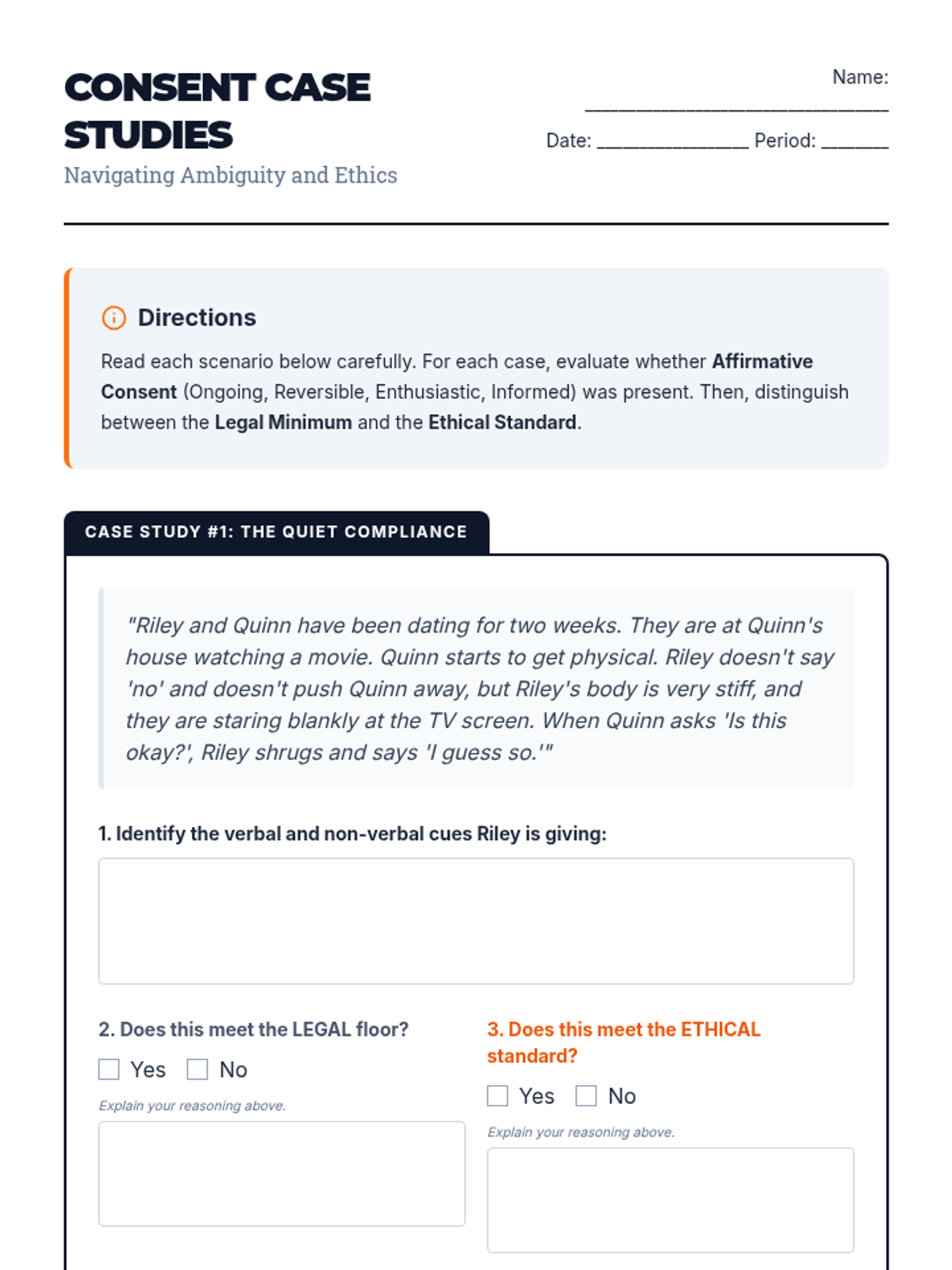
A comprehensive unit for 12th graders exploring consent, assertive communication, digital privacy, and bystander intervention to prepare them for adult relationships. Students will move from theoretical understanding to practical application through role-plays and case studies.
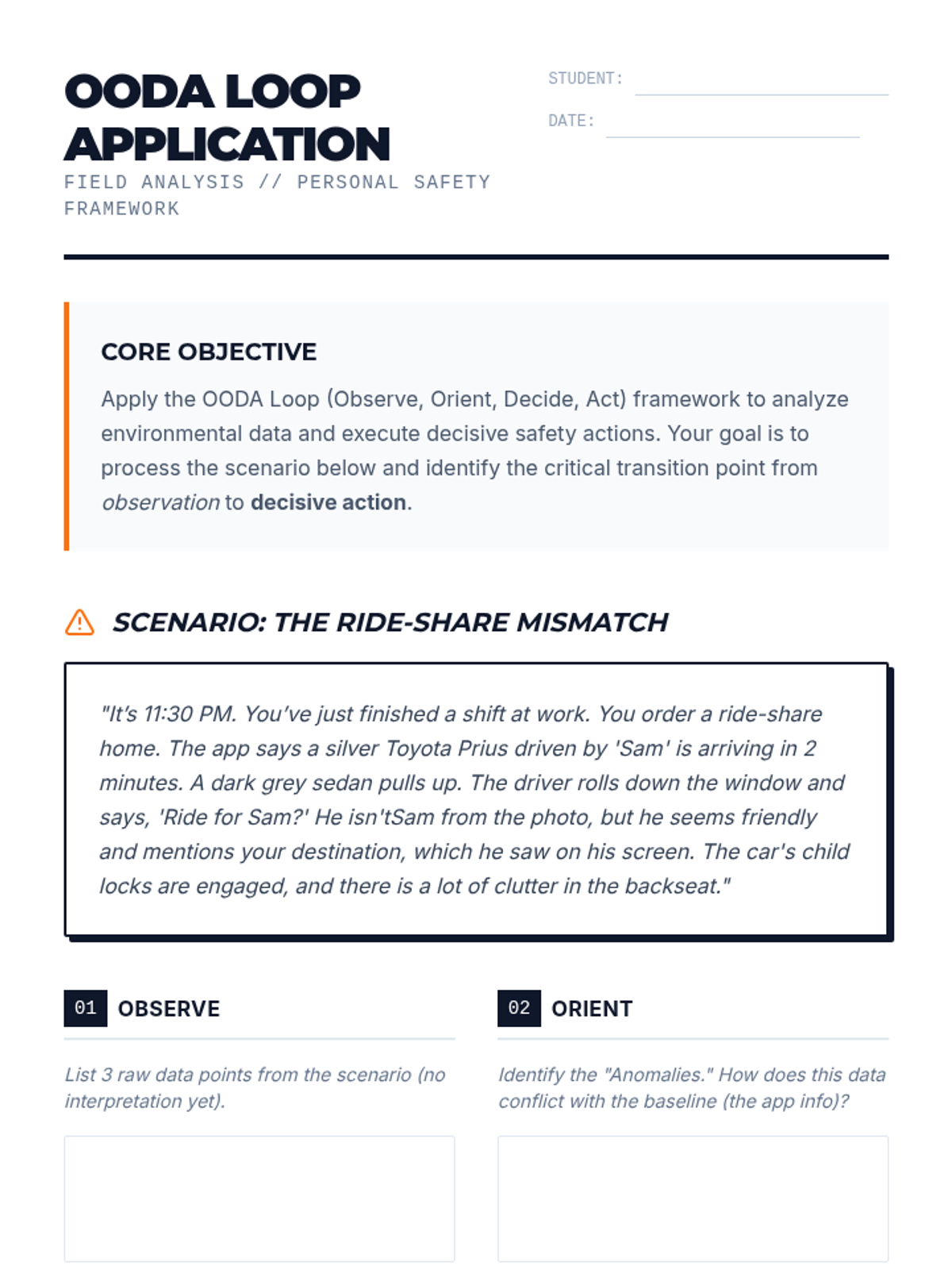
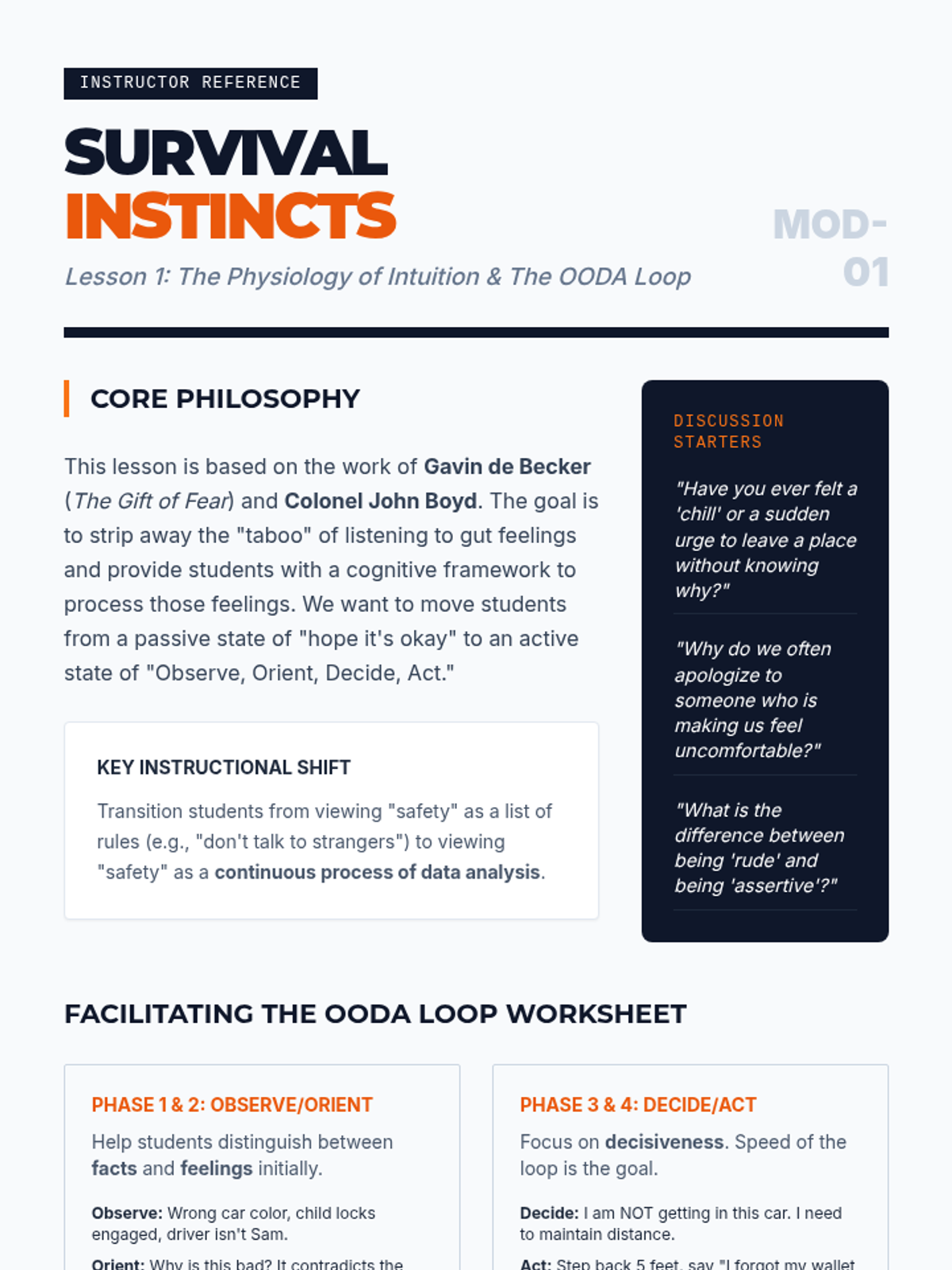
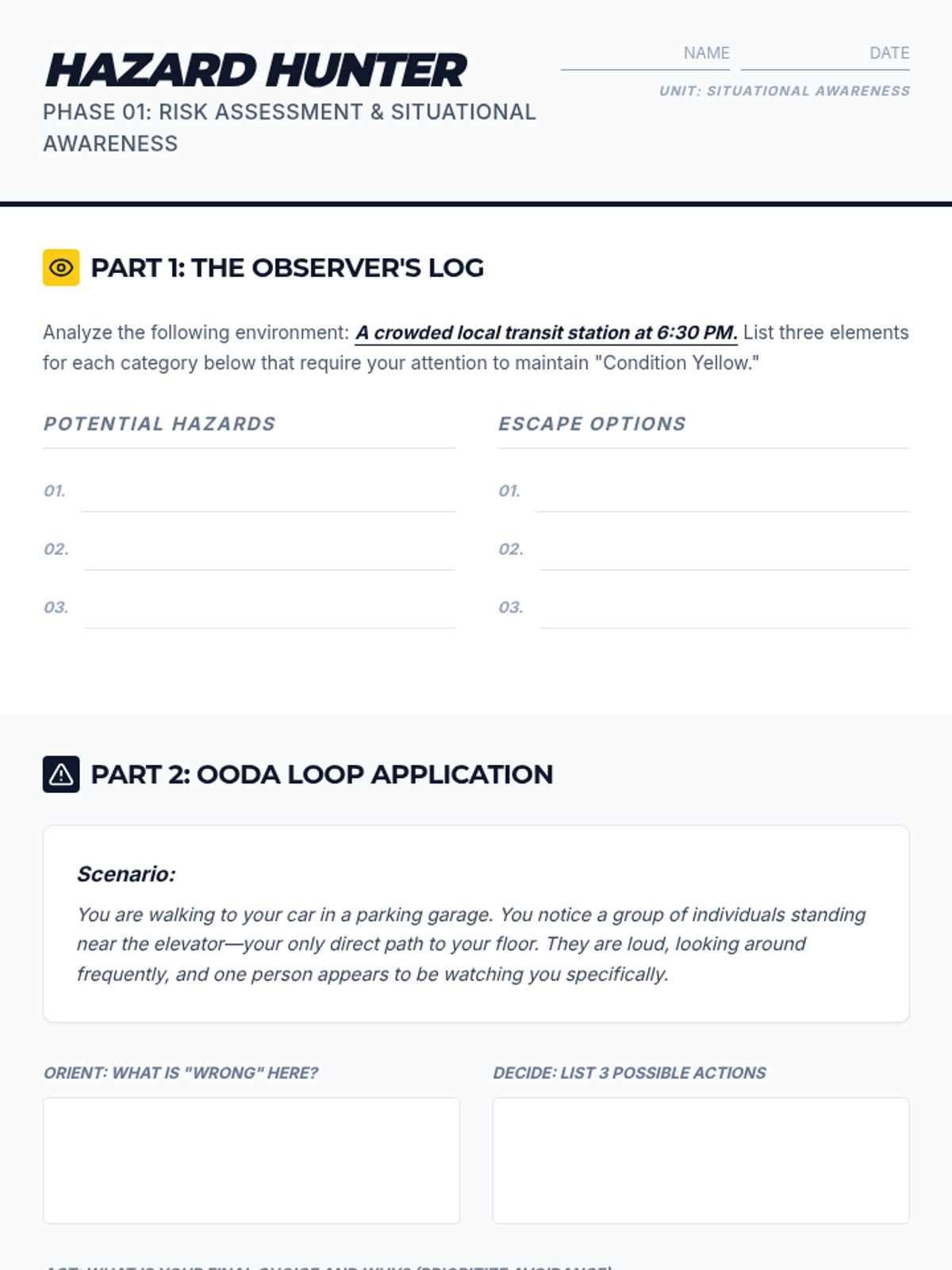
A comprehensive safety sequence for graduating seniors focusing on situational awareness, the OODA loop framework, and recognizing predatory social behaviors in physical and digital spaces.
A series of lessons focused on essential wellness and safety topics for middle and high school students, covering sleep hygiene and digital citizenship.
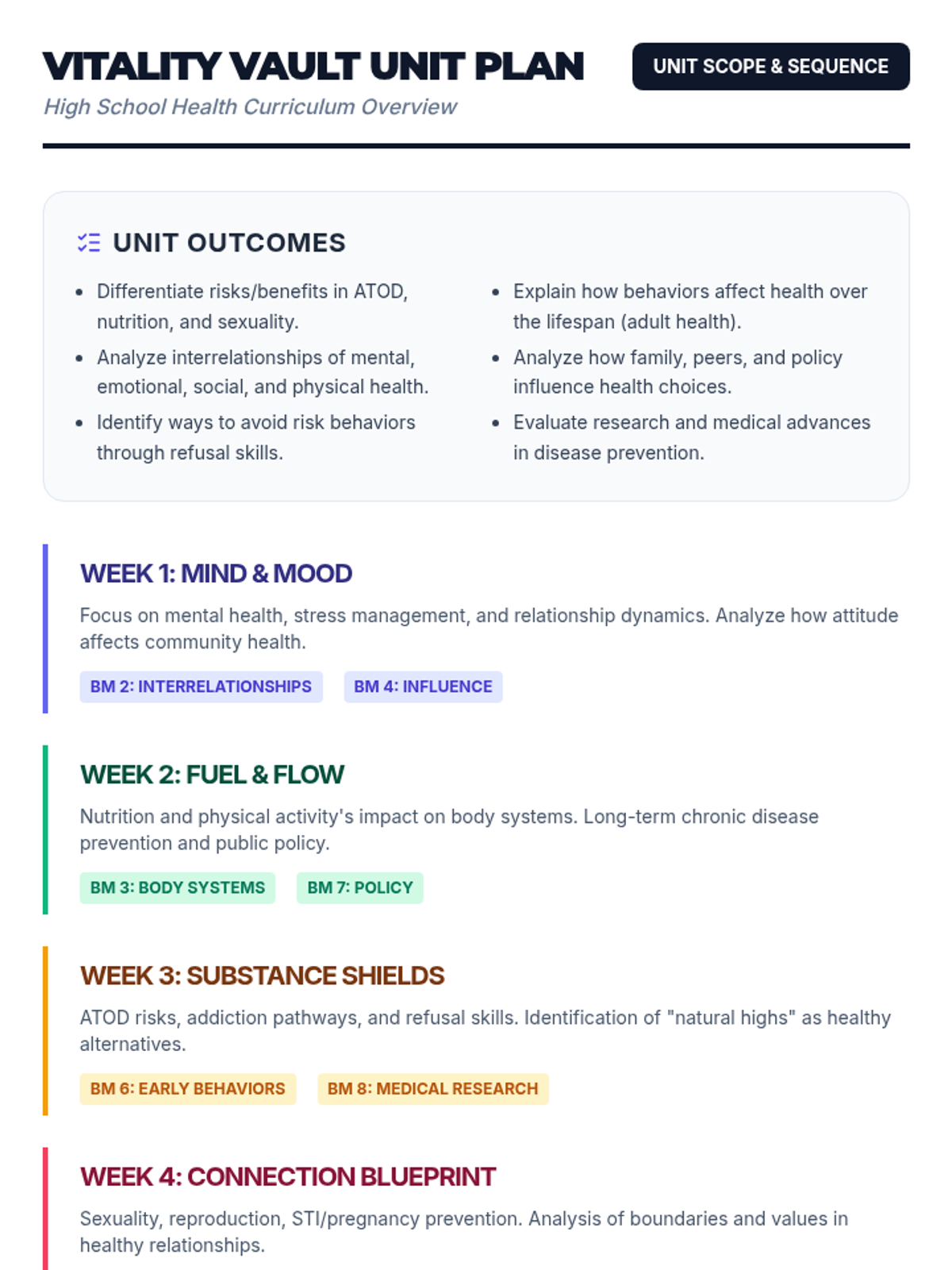
A comprehensive 4-week high school health unit covering mental health, nutrition, substance use, and sexual health. Students analyze health behaviors, influence, and prevention strategies to promote lifelong well-being.
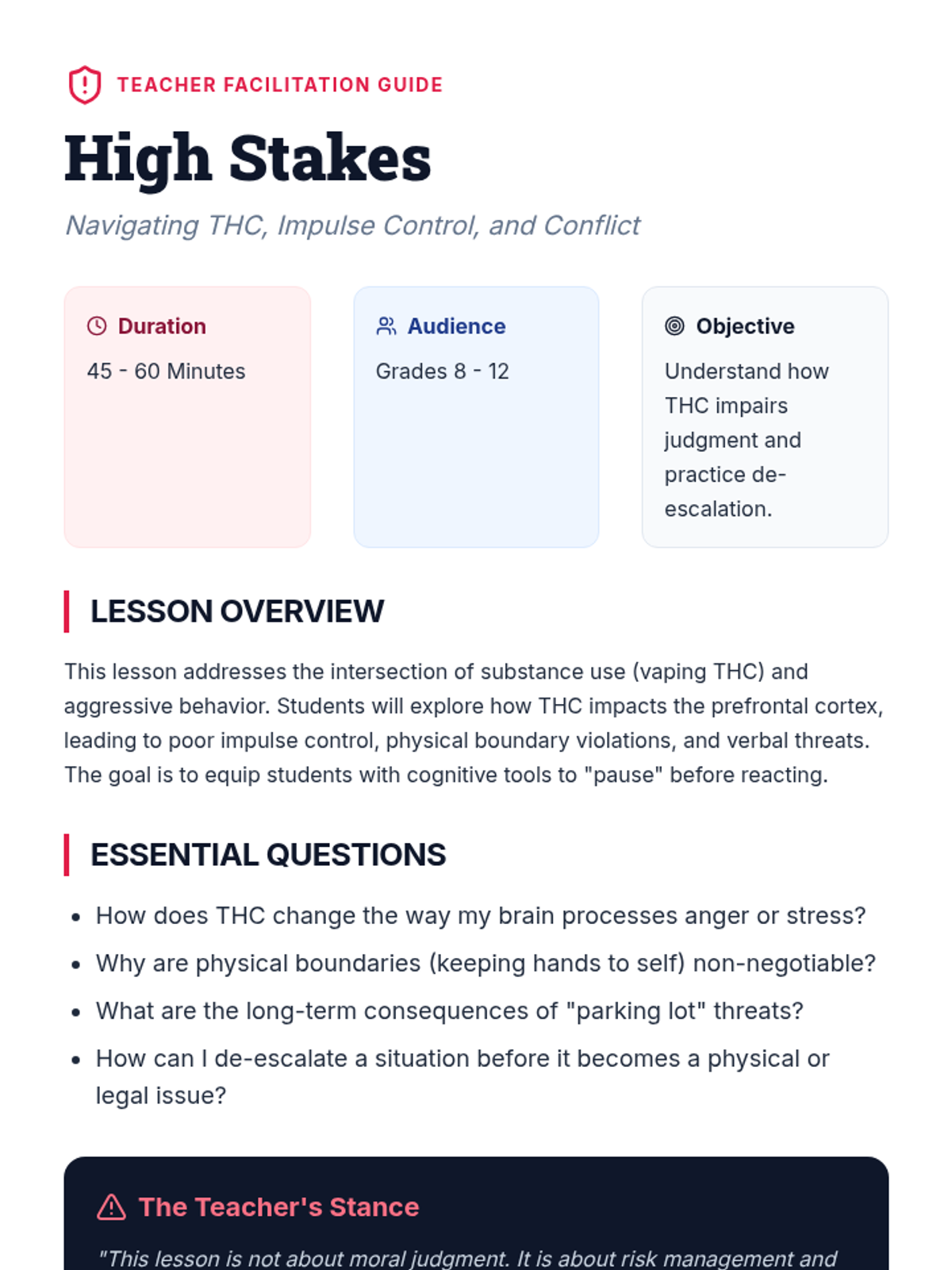
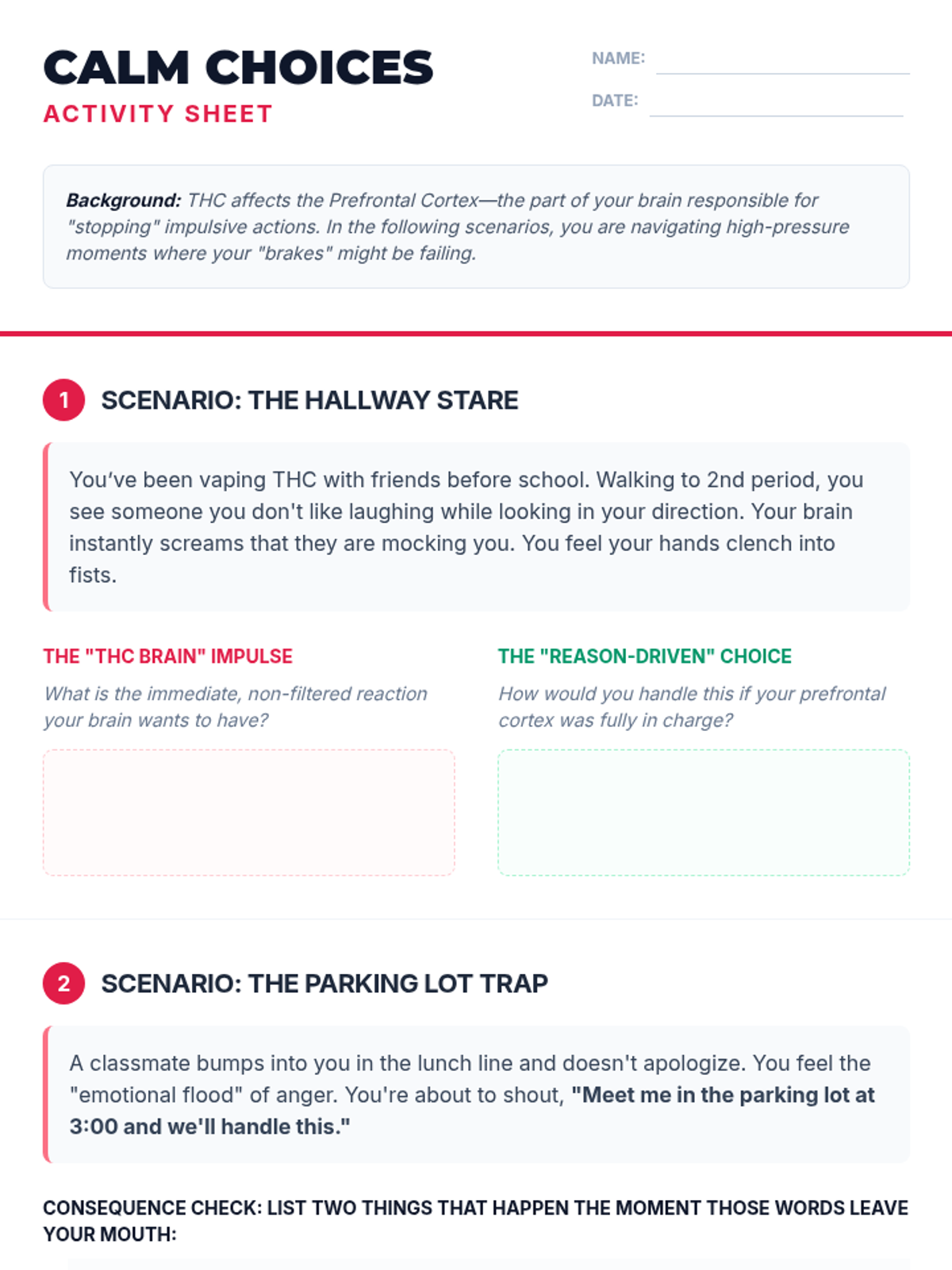
A series of lessons designed to help students navigate high-pressure situations, understand the impact of substances on decision-making, and develop healthy conflict resolution skills.
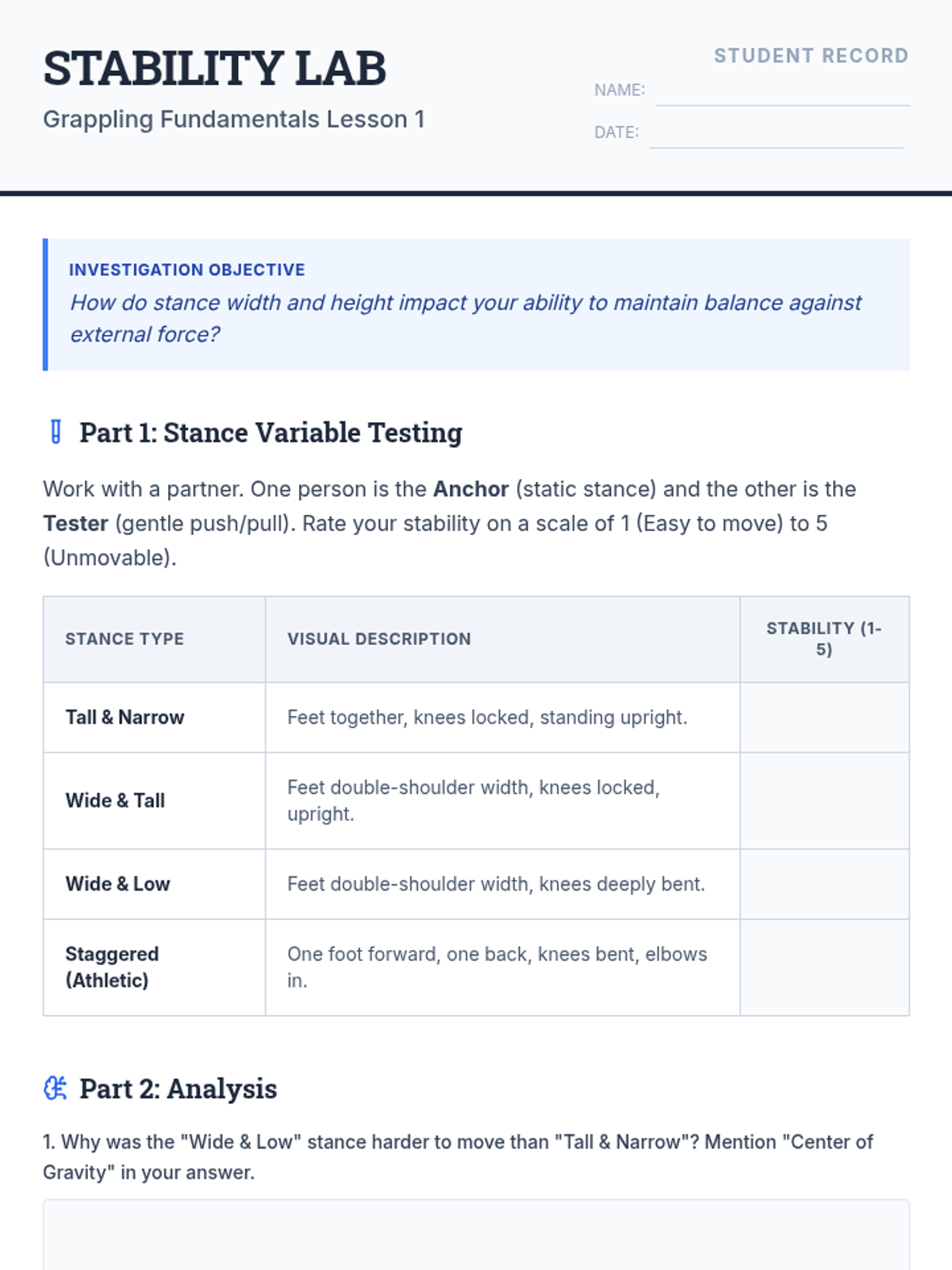
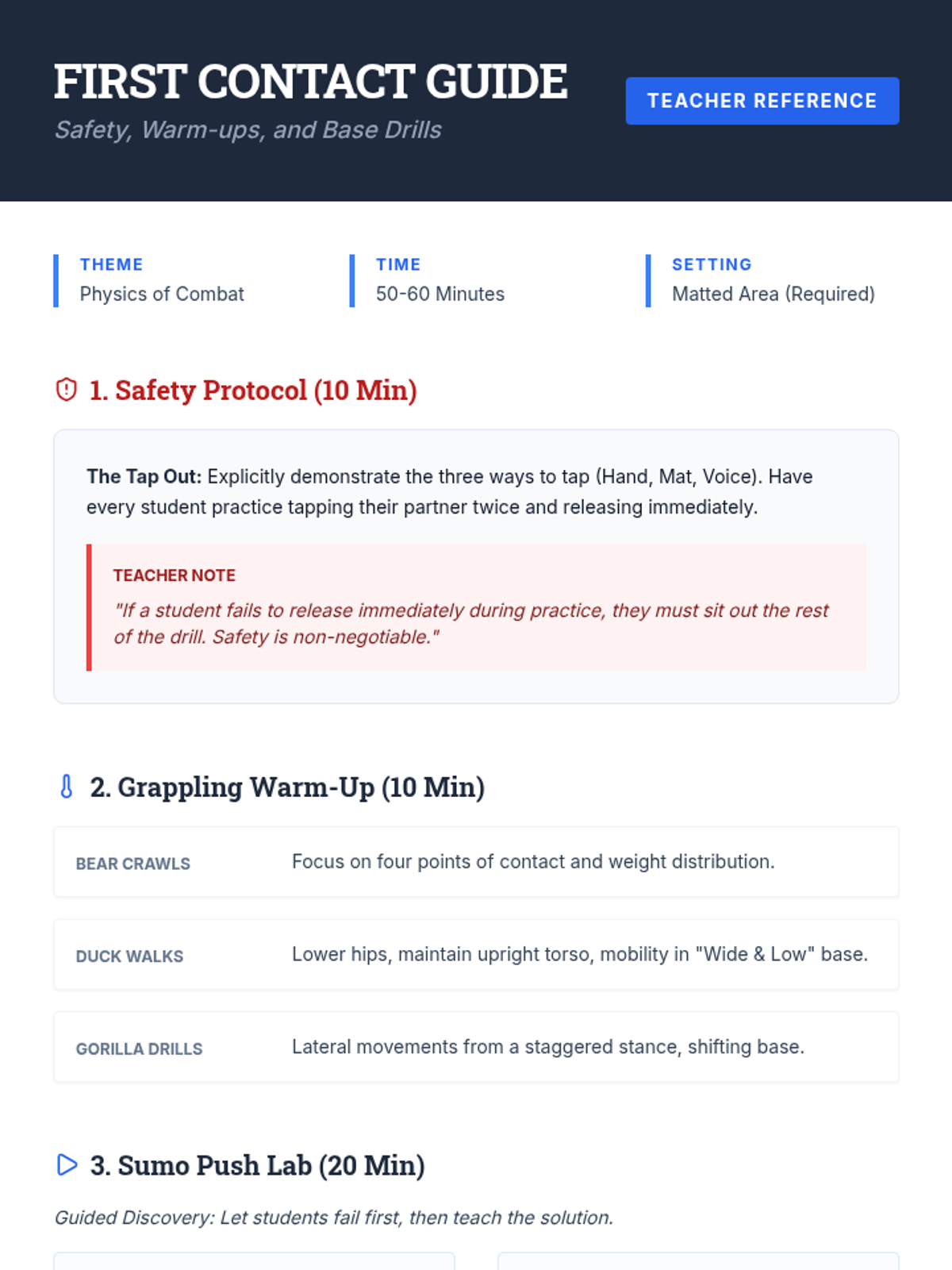
A comprehensive introduction to grappling for 8th graders, focusing on leverage, balance, and positional control. Students learn to use their center of gravity and mechanical advantage to manage physical encounters safely and effectively.
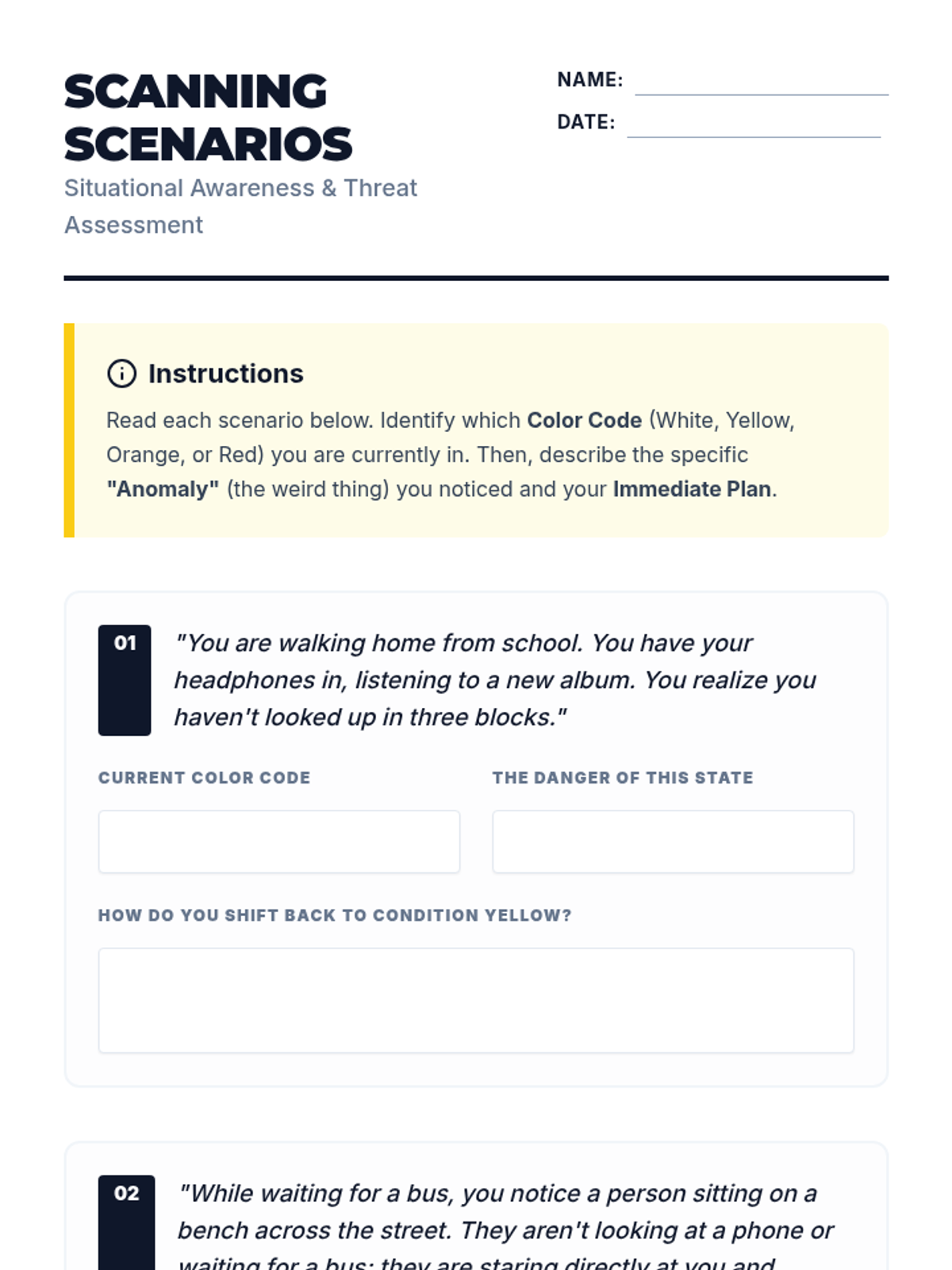
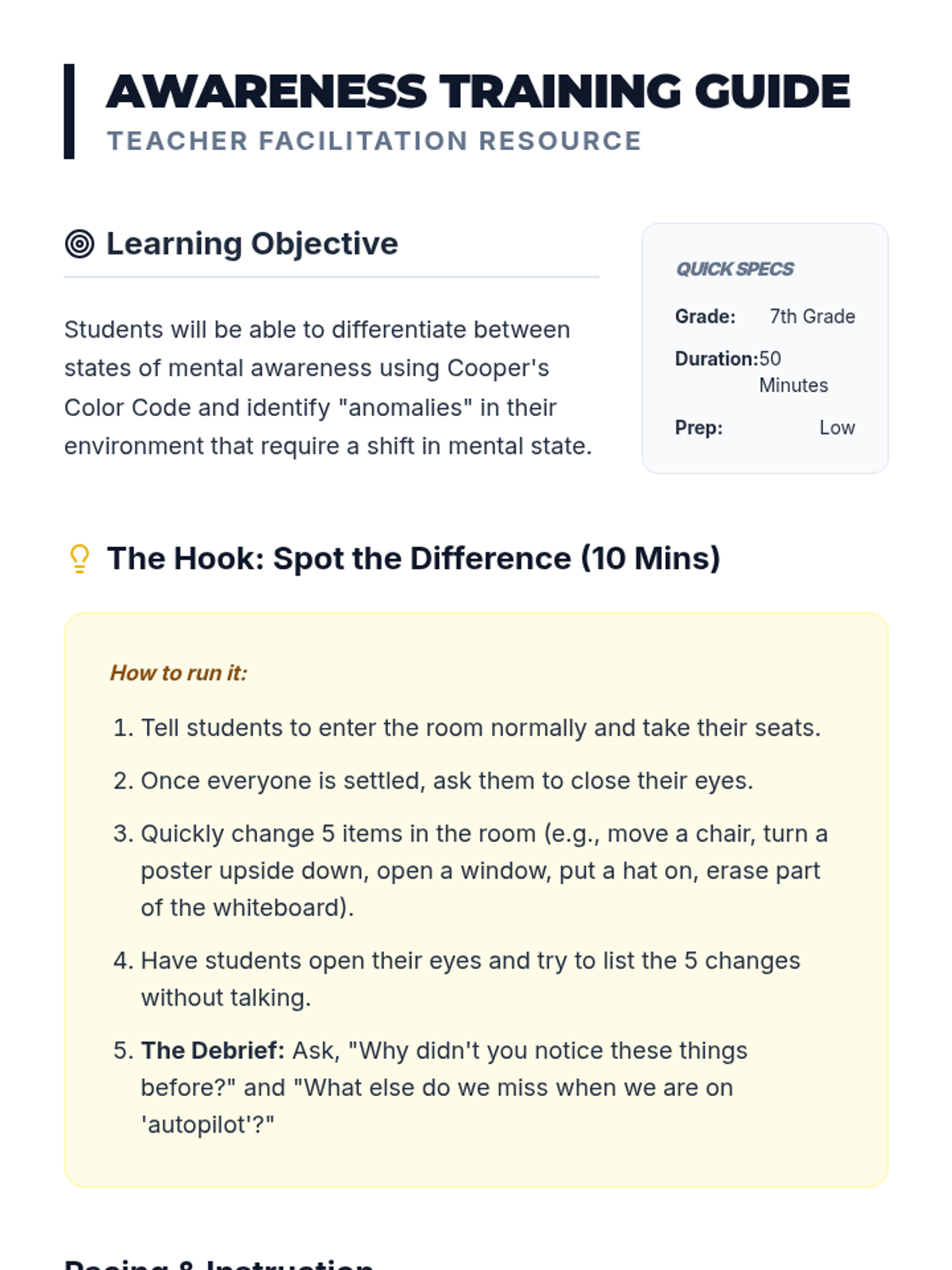
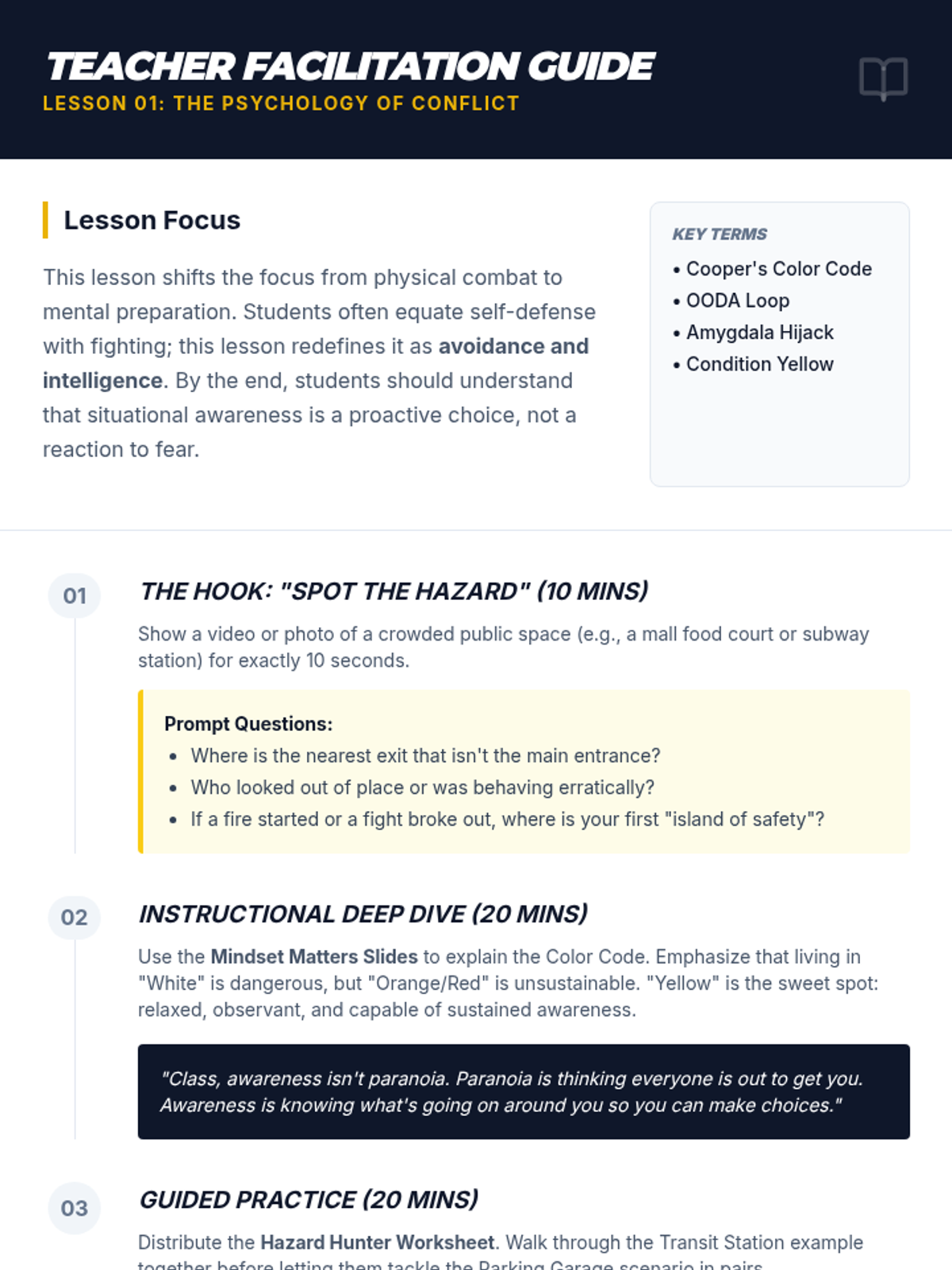
This sequence shifts focus from physical combat to the mental and verbal aspects of self-defense, prioritizing conflict avoidance. Students learn threat assessment, assertive communication, and environmental scanning through Cooper's Color Code and role-playing scenarios.
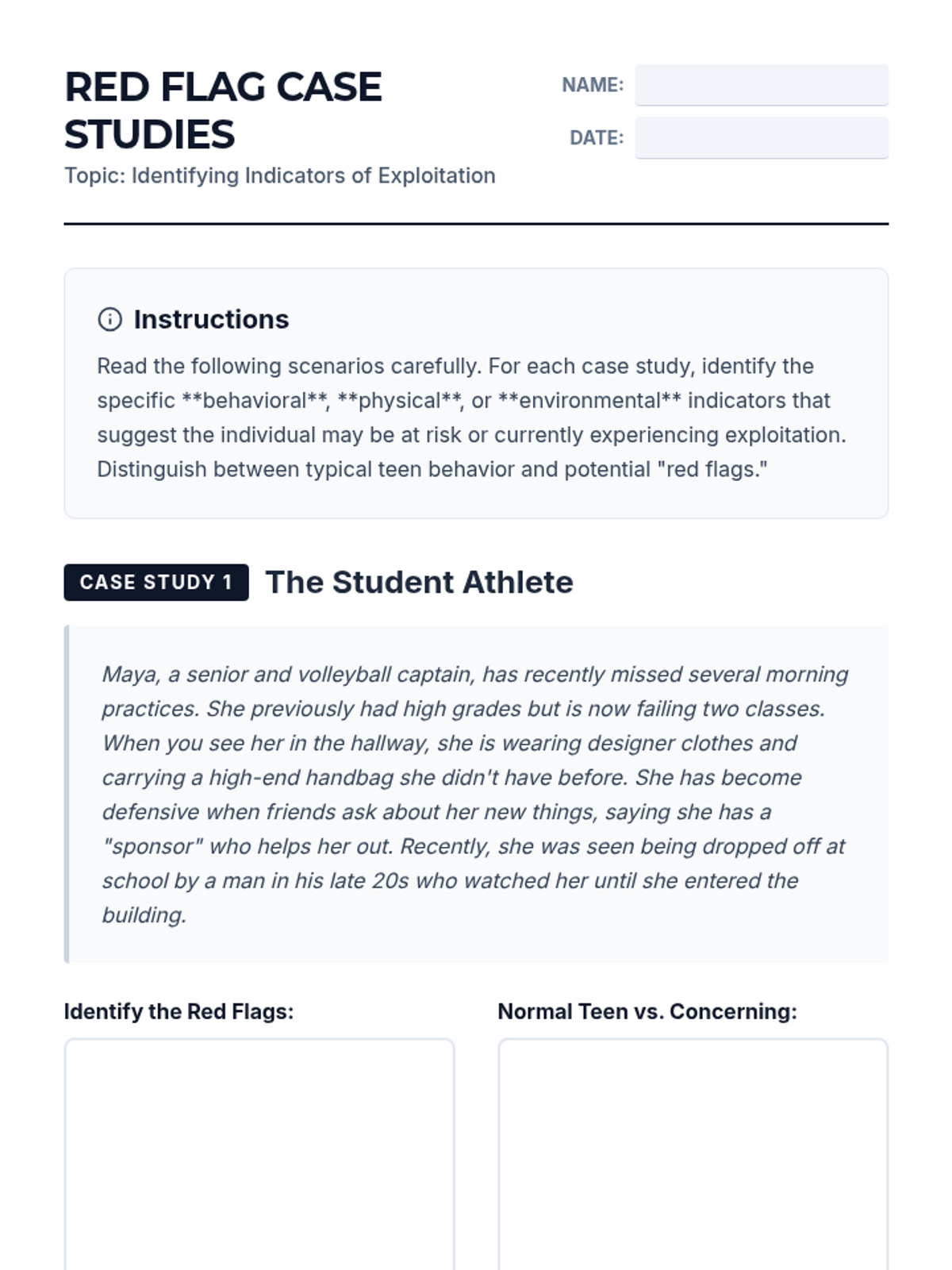
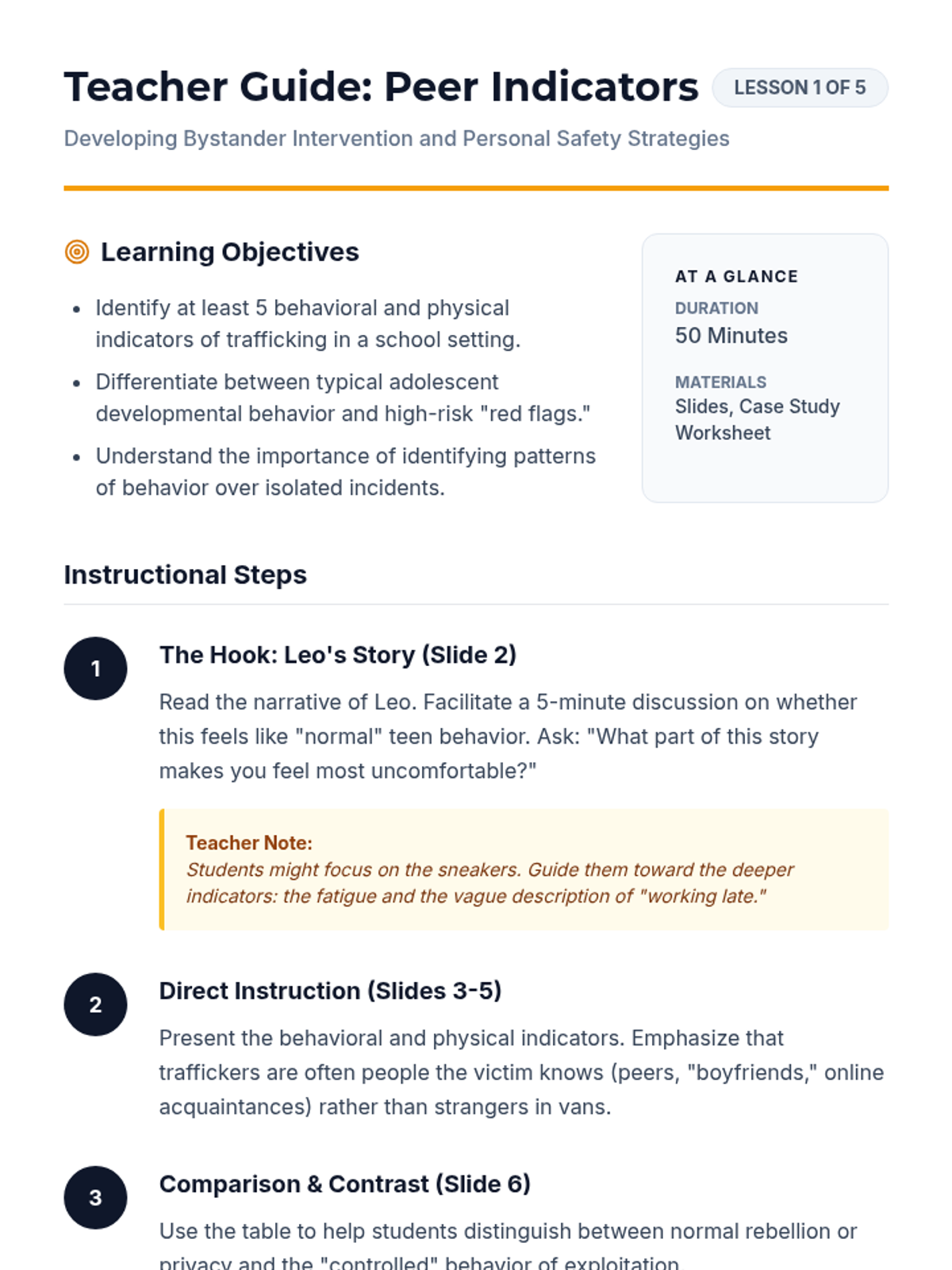
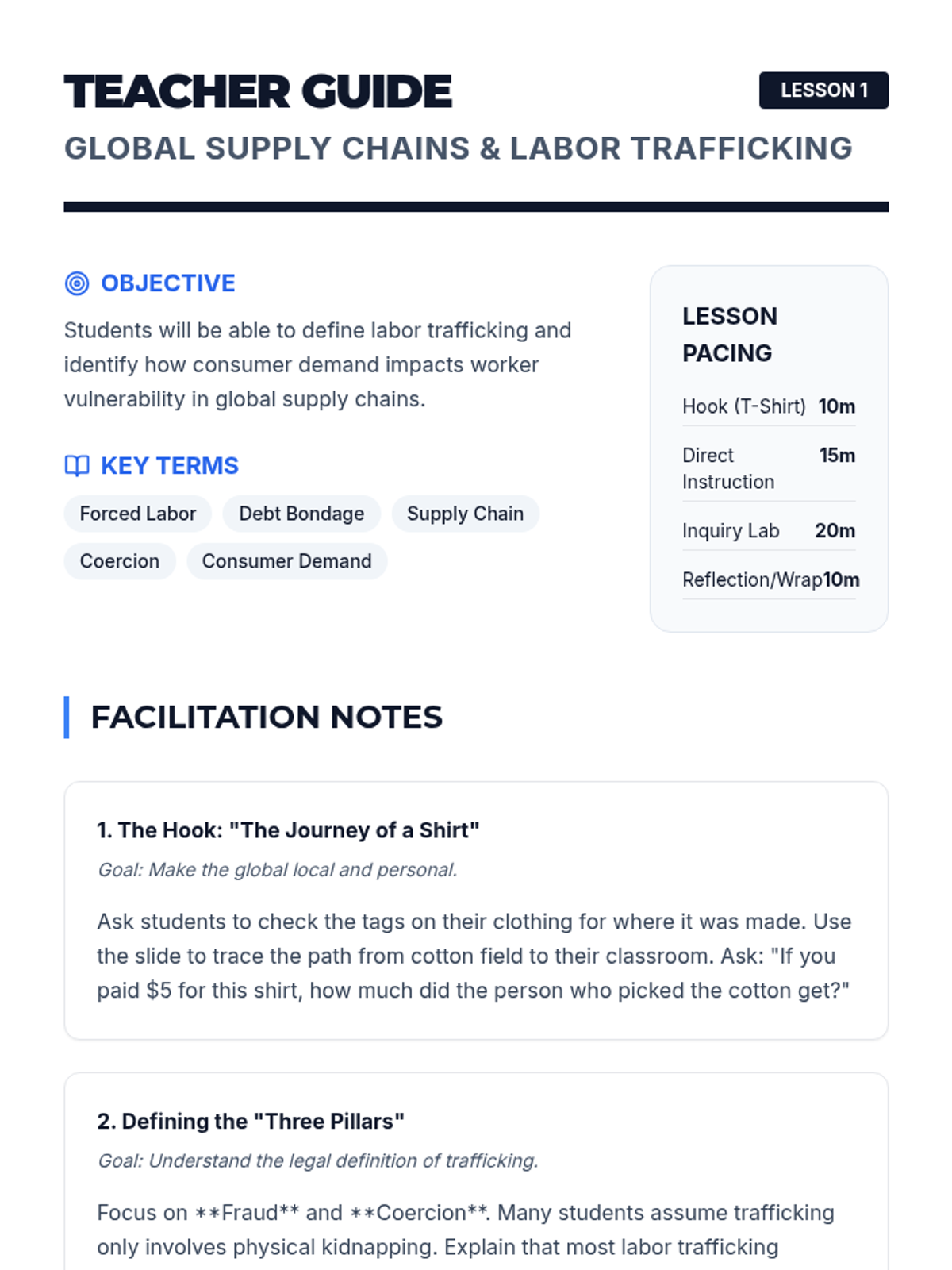
This sequence equips 12th-grade students with actionable strategies for personal safety and bystander intervention regarding human trafficking. It covers recognizing indicators in peers, travel safety for independent living, the ethics of reporting, and mapping community resources.
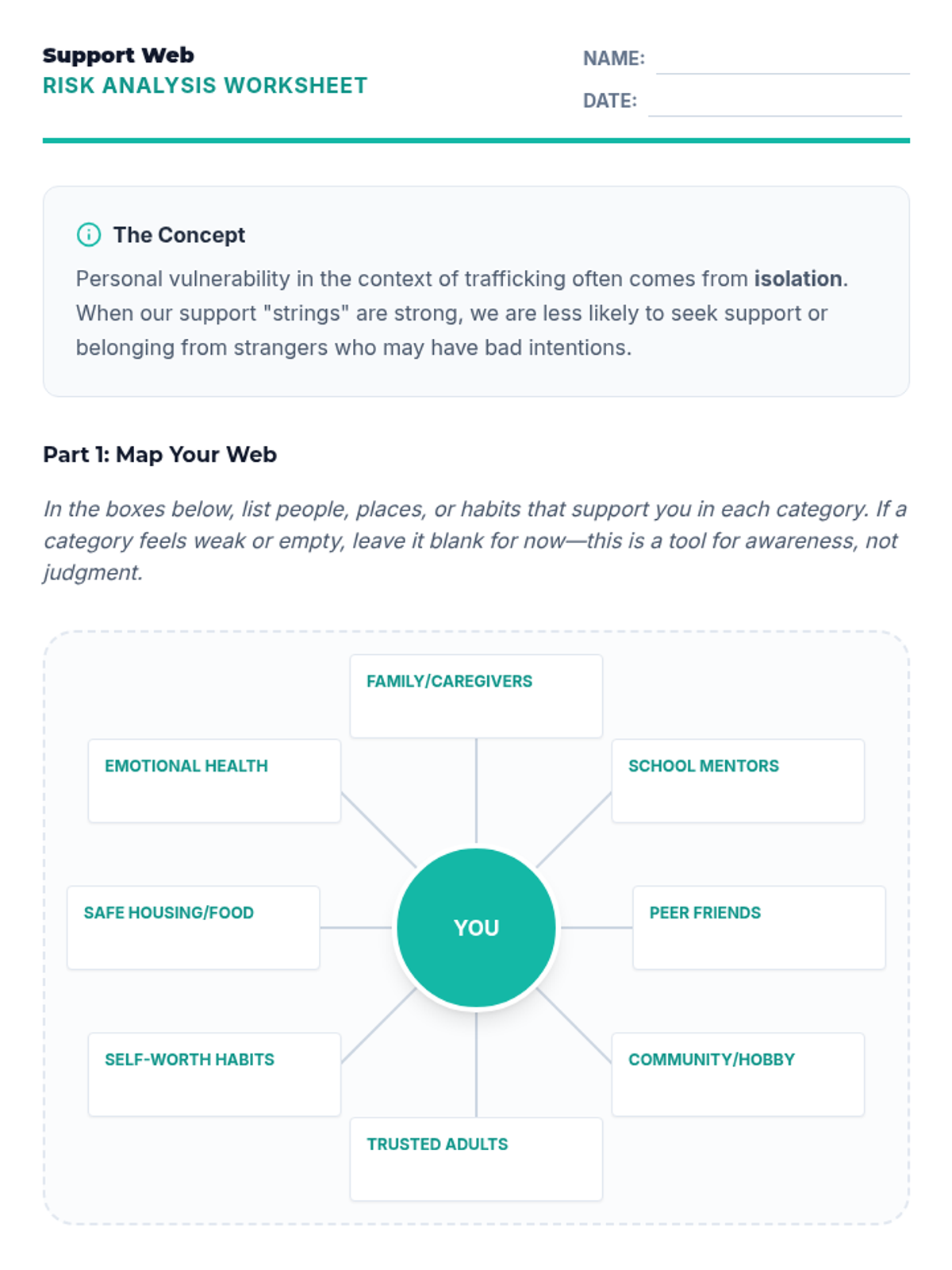
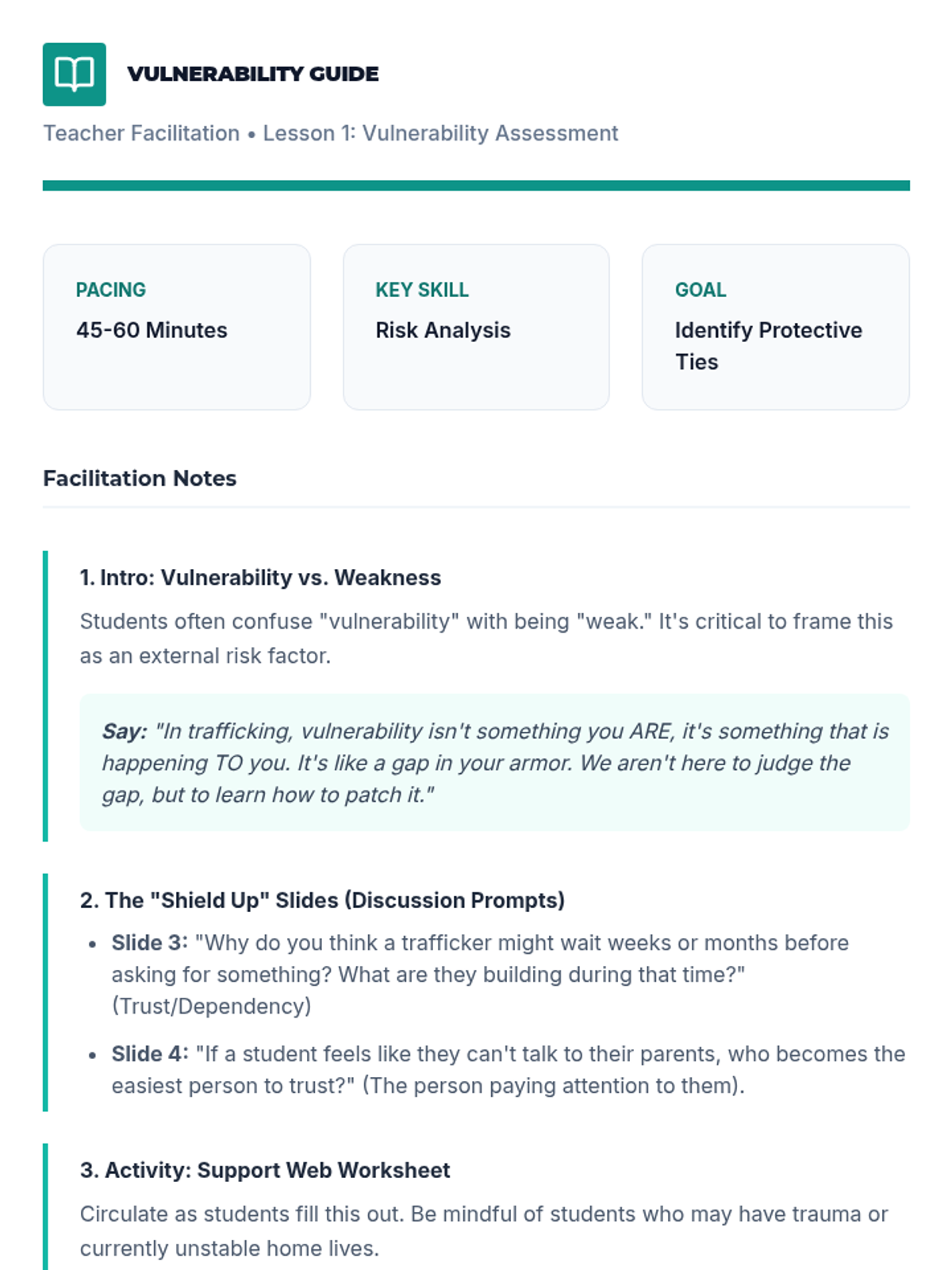
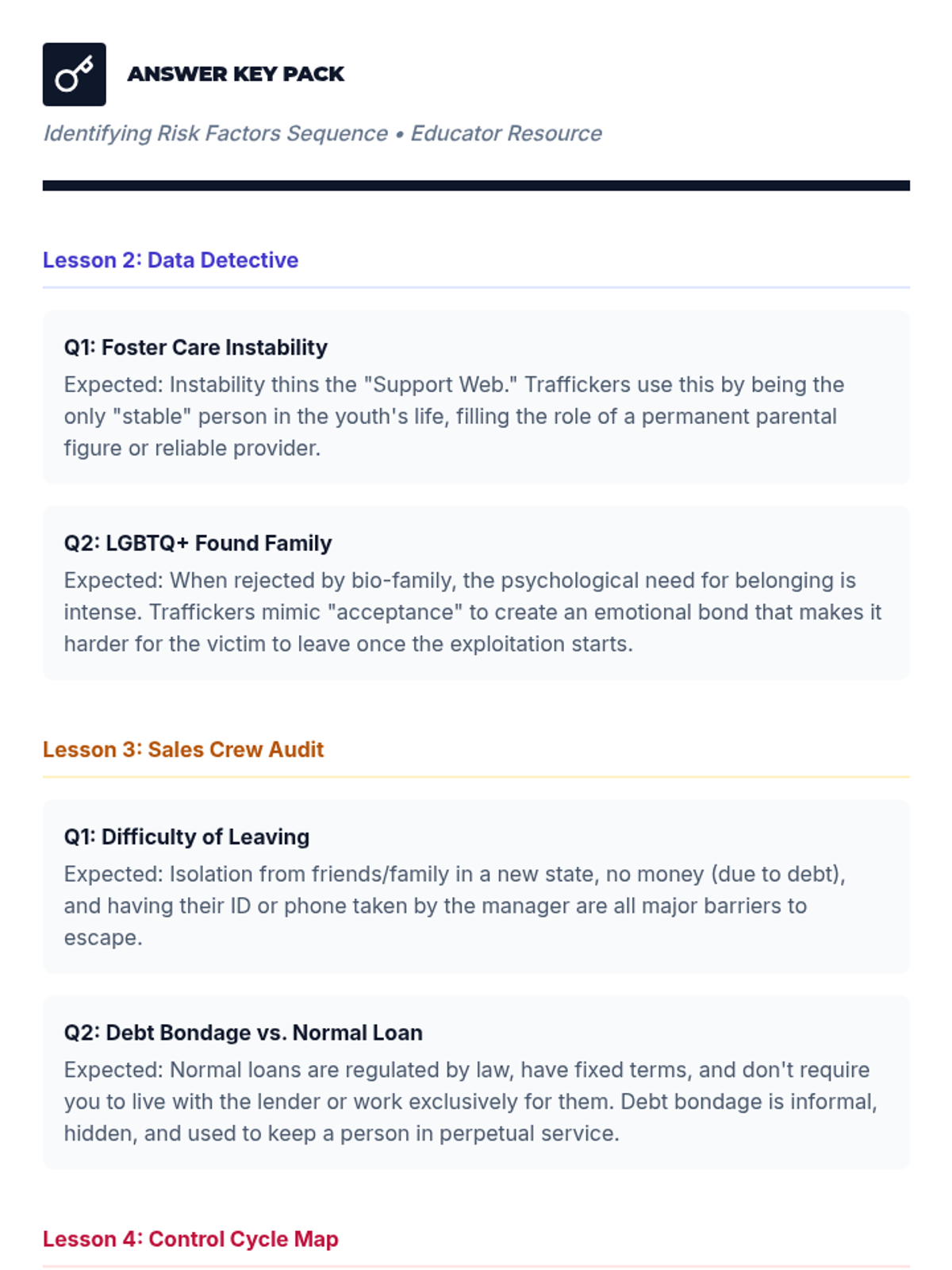
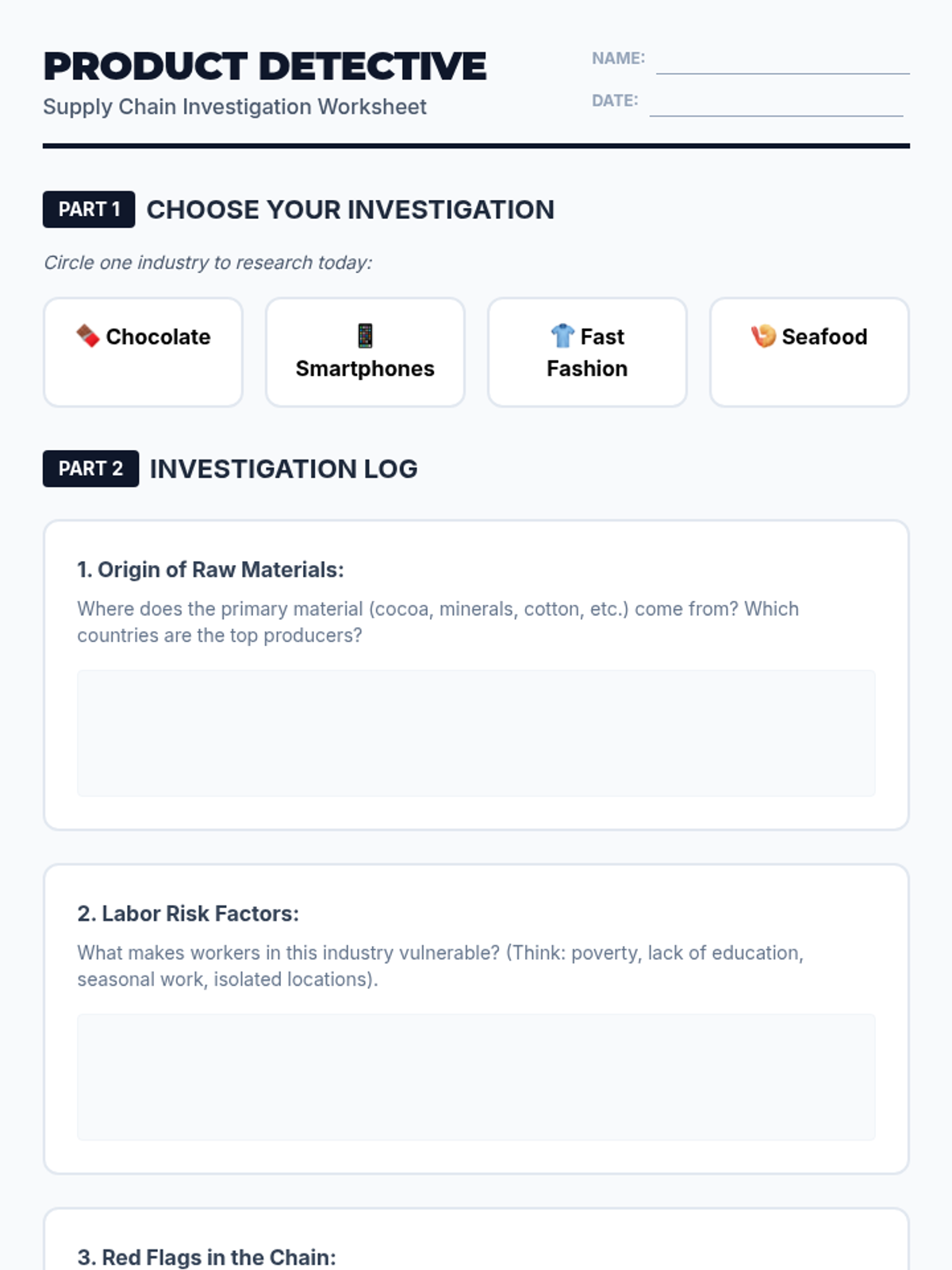
This 9th-grade Health sequence investigates the systemic and individual factors that increase susceptibility to trafficking. Students explore vulnerability, high-risk populations, labor trafficking, substance abuse as control, and resilience building.
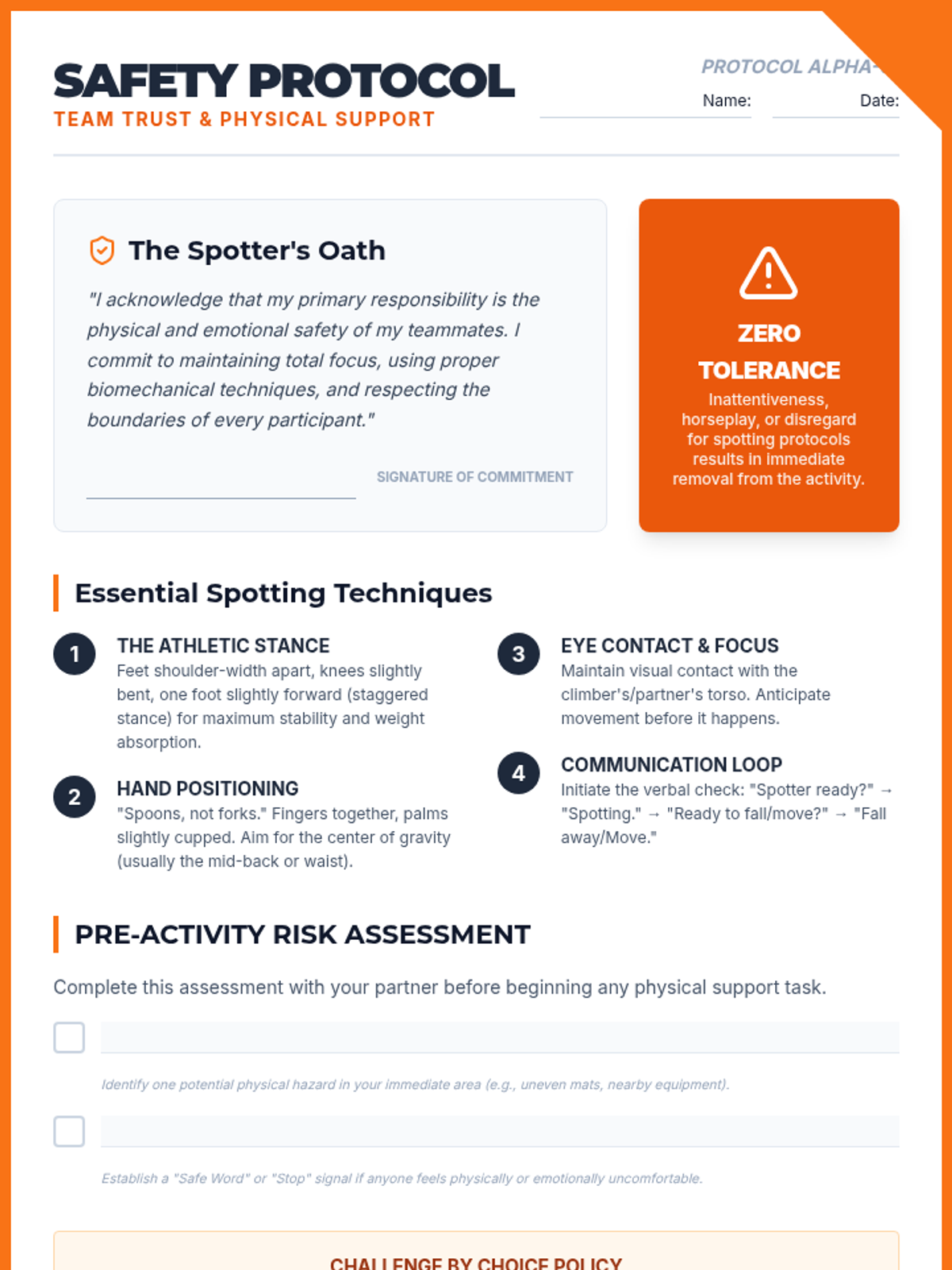
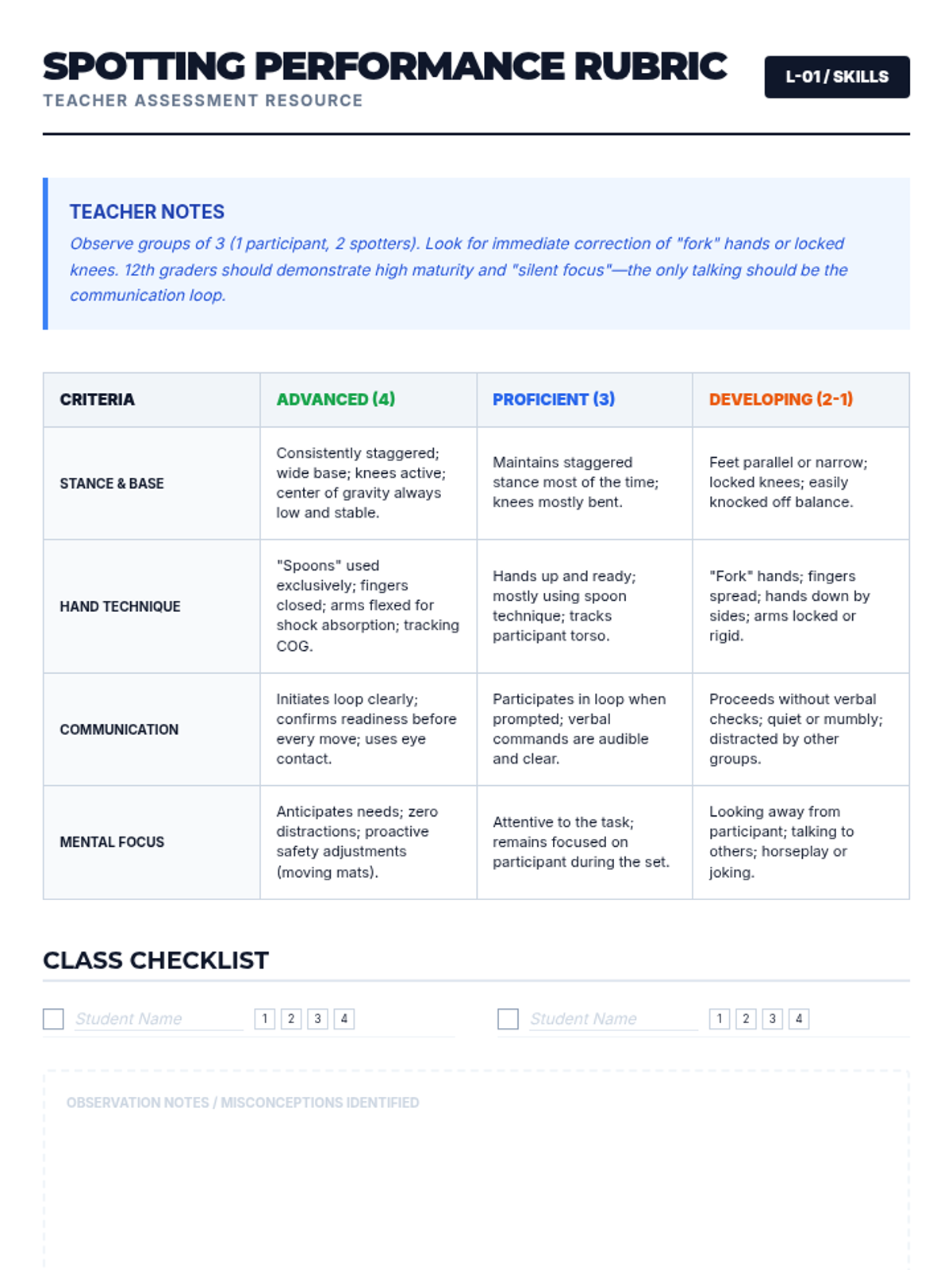
This sequence focuses on the psychological and physical aspects of trust, safety, and support within a team environment. Students progress from basic weight-sharing activities to high-stakes simulated risks that require absolute reliance on peers, emphasizing safety protocols and collective responsibility.
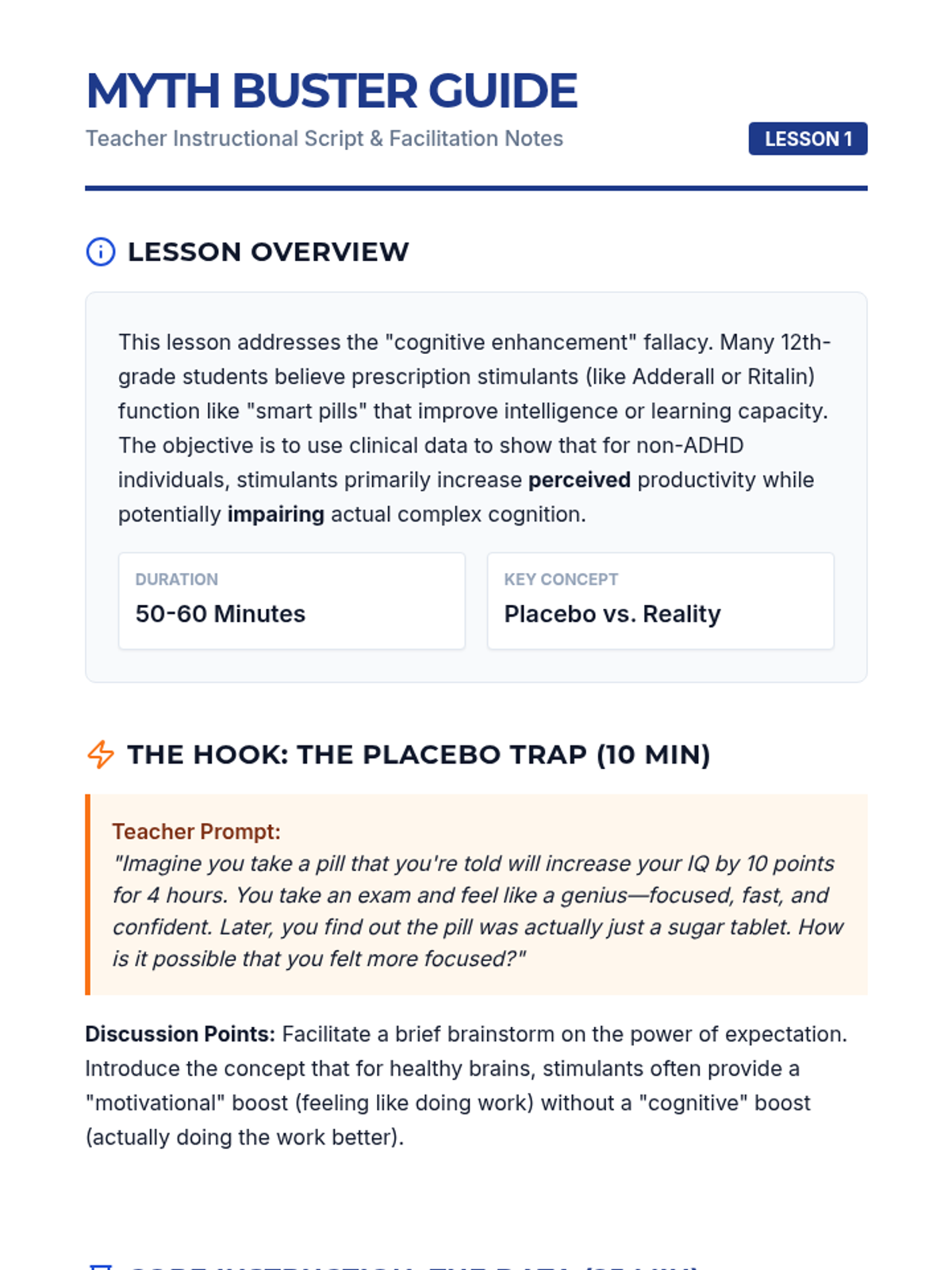
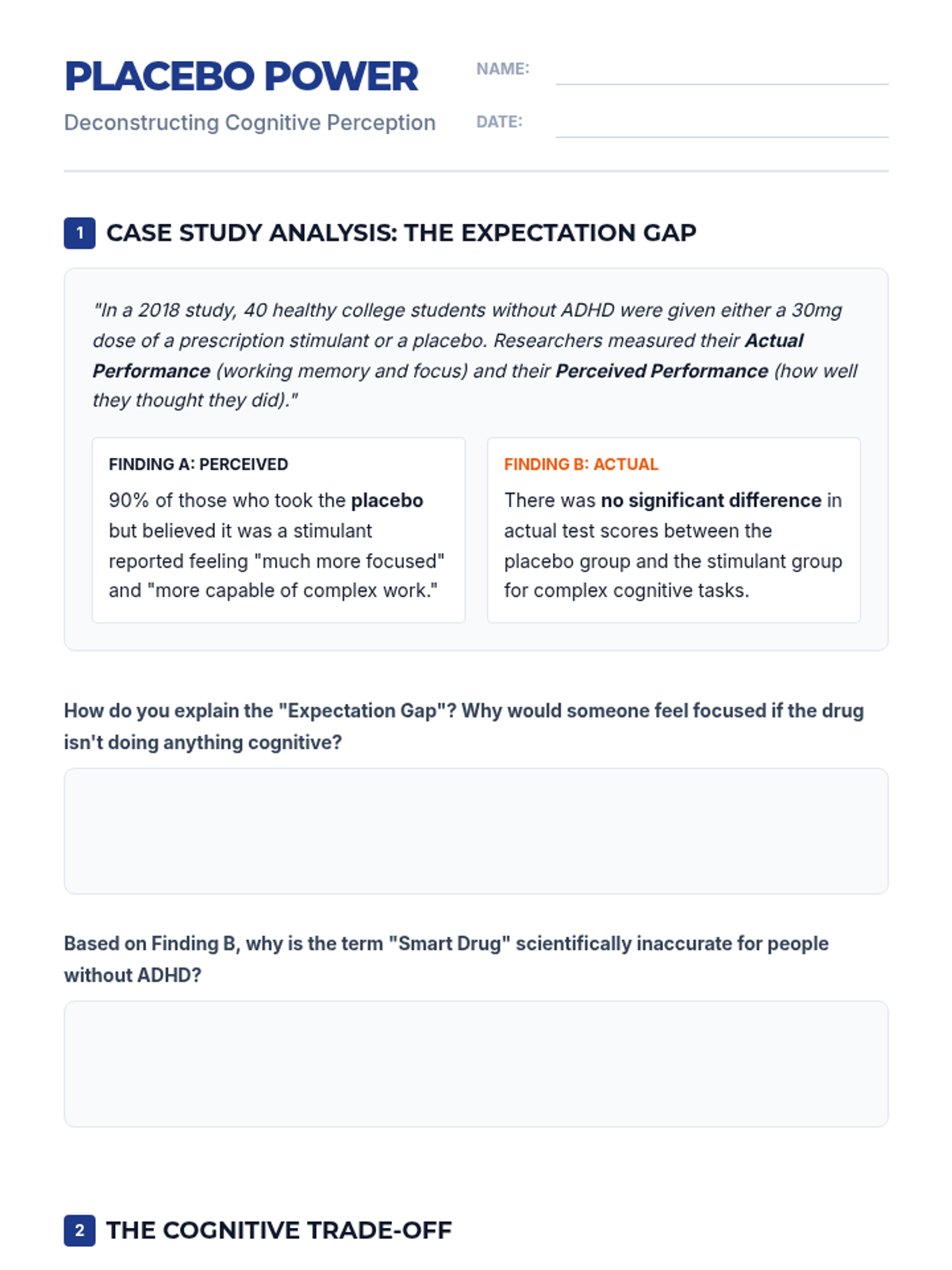
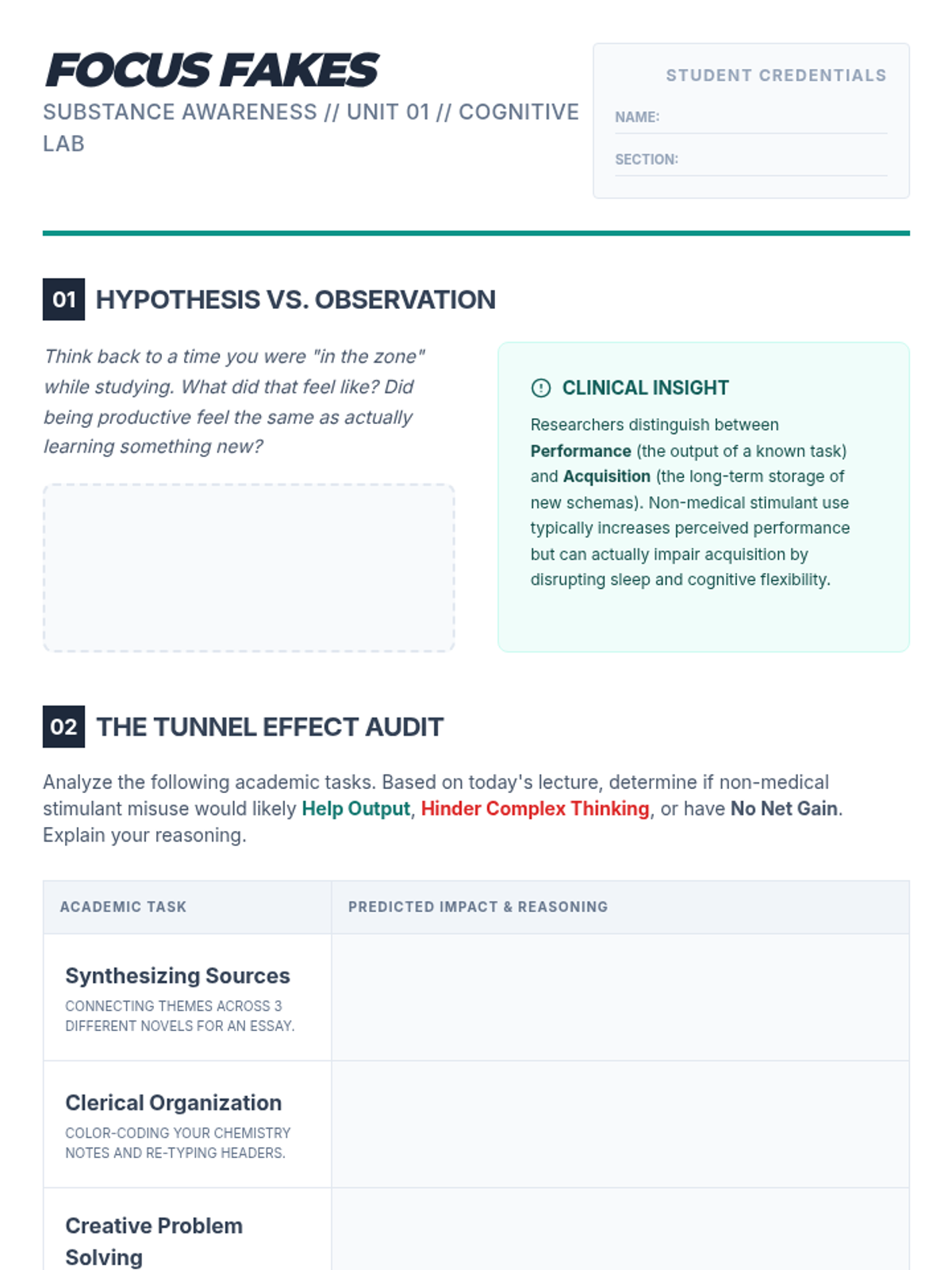
This comprehensive unit for 12th-grade students explores the physiological, psychological, and legal realities of prescription stimulant misuse. It deconstructs the 'study drug' myth, analyzes the risks of Schedule II substances, and equips students with practical stress management and refusal skills.
A high-level psychological and sociological exploration of peer influence, group dynamics, and the neuroscience of adolescent decision-making. Students move beyond refusal scripts to analyze the mechanics of manipulation and groupthink, culminating in a personalized resistance strategy.
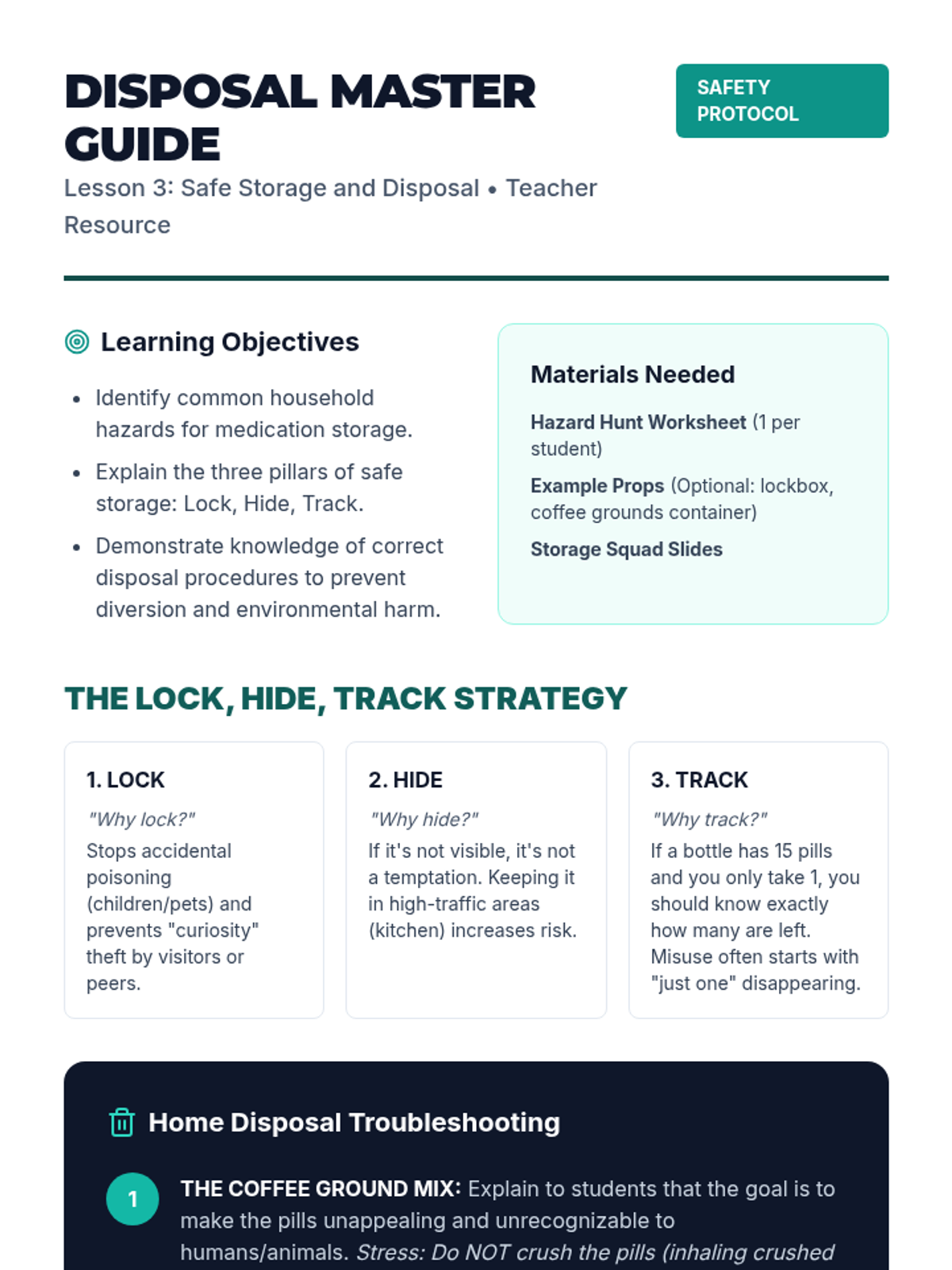
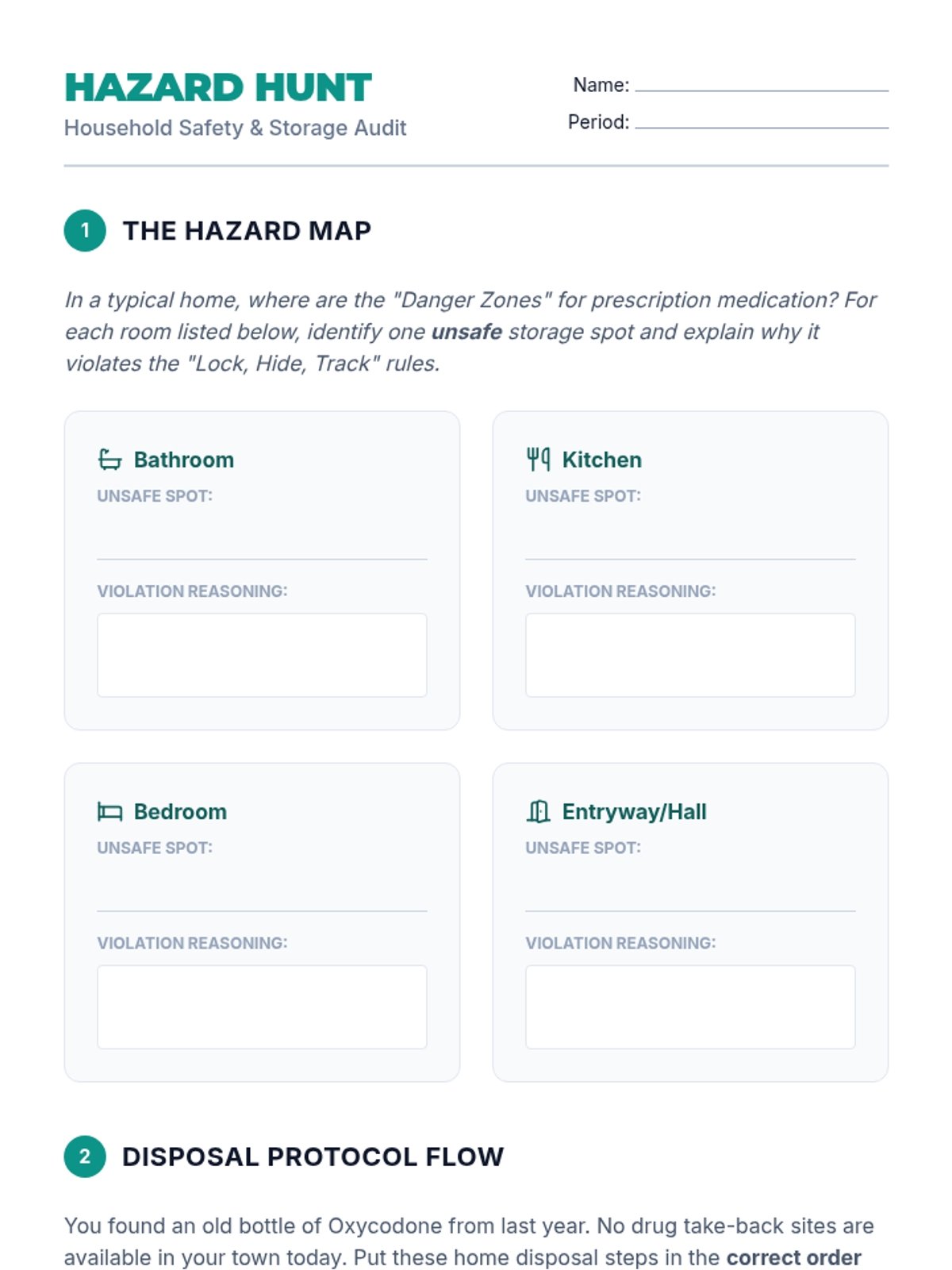
This unit explores the critical distinction between safe medical use and the misuse of prescription opioids, emphasizing health literacy, risk assessment, and refusal skills. Students analyze medication lifecycle, storage protocols, and social pressures to develop a comprehensive medication safety plan.
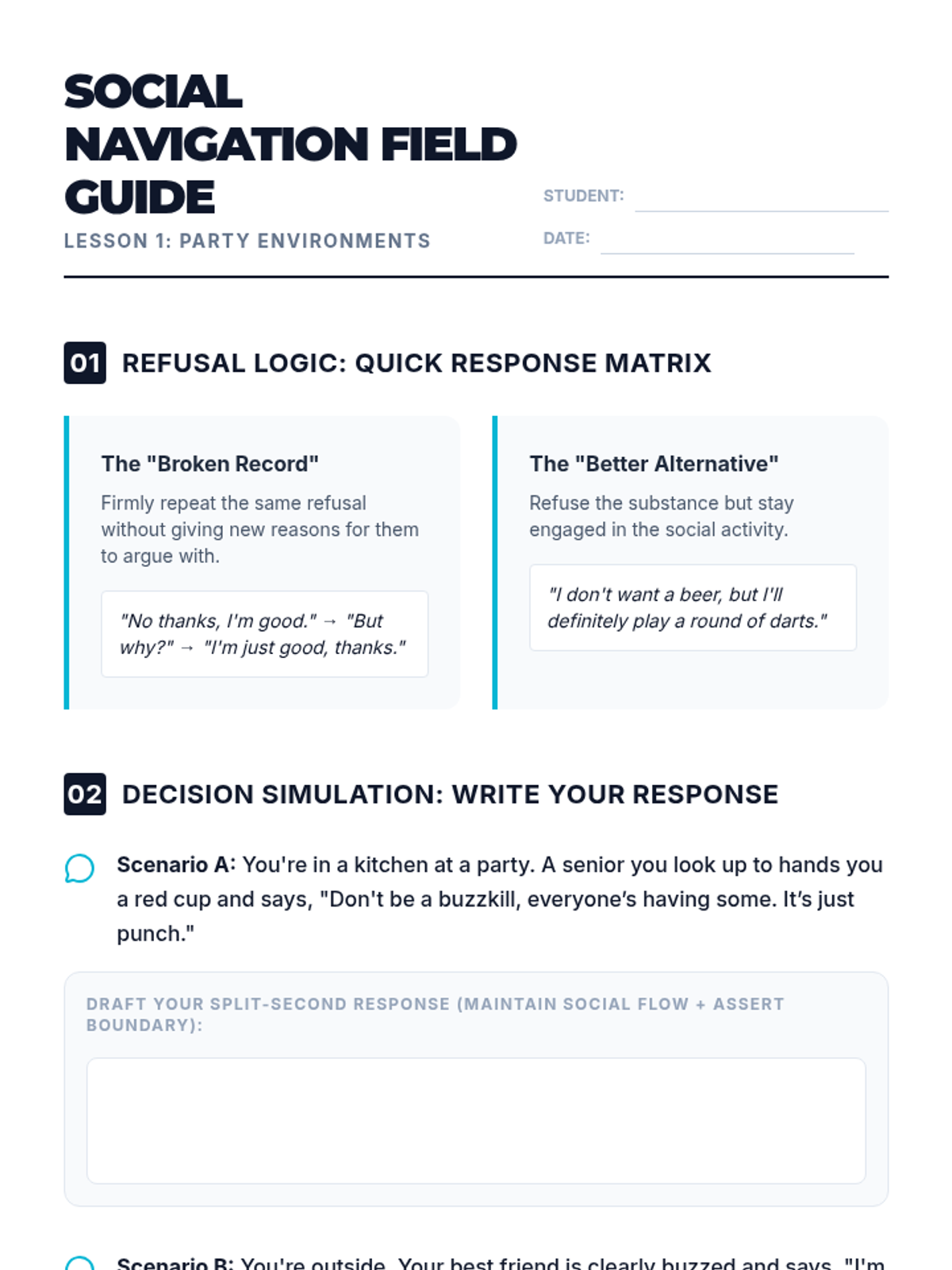
This sequence uses immersive simulations to help 11th-grade students master refusal skills in realistic, high-stakes environments like parties, vehicles, and intimate relationships. Students move from theoretical knowledge to practical application, analyzing risks and practicing assertive communication in split-second decision-making scenarios.
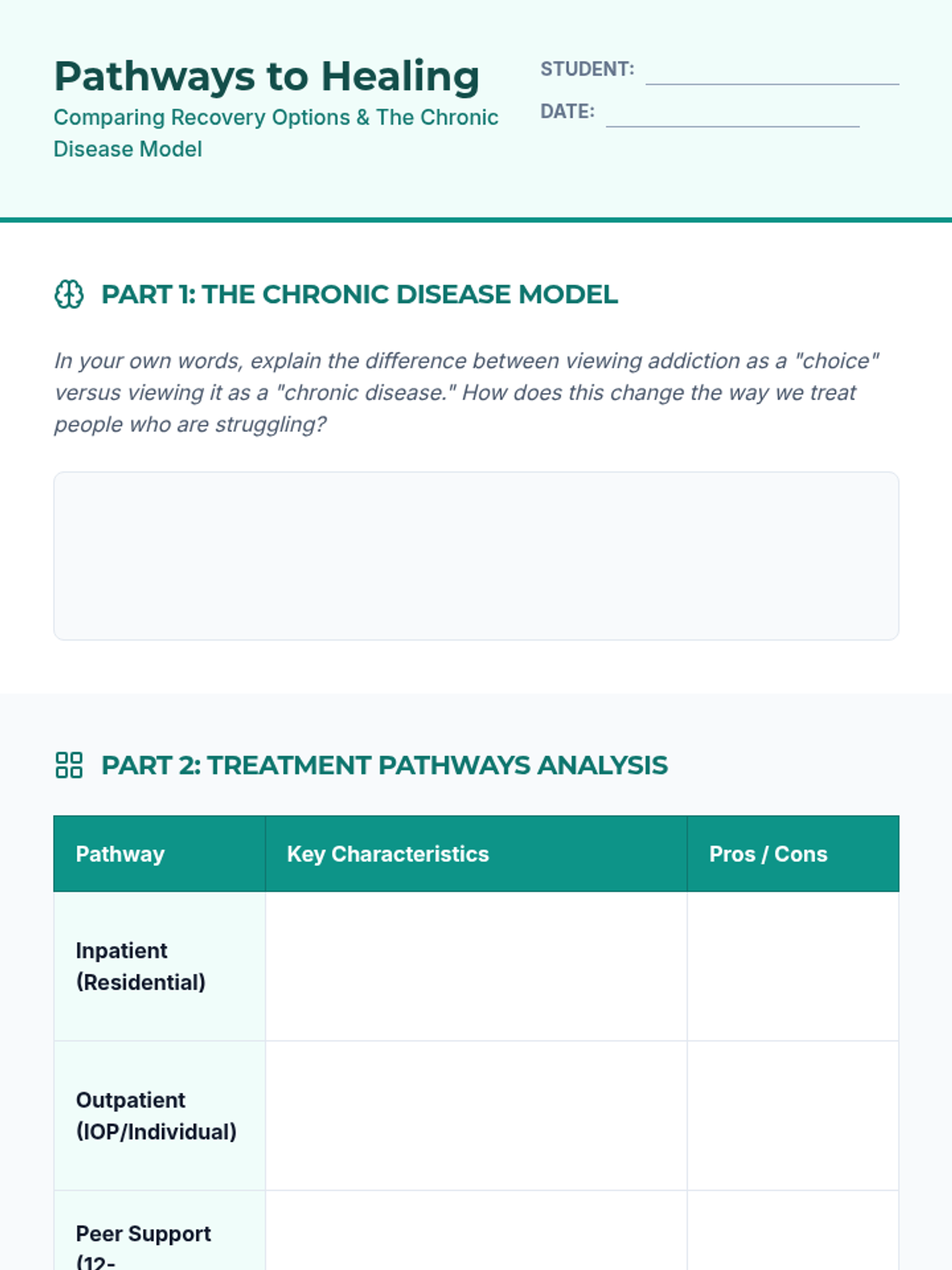
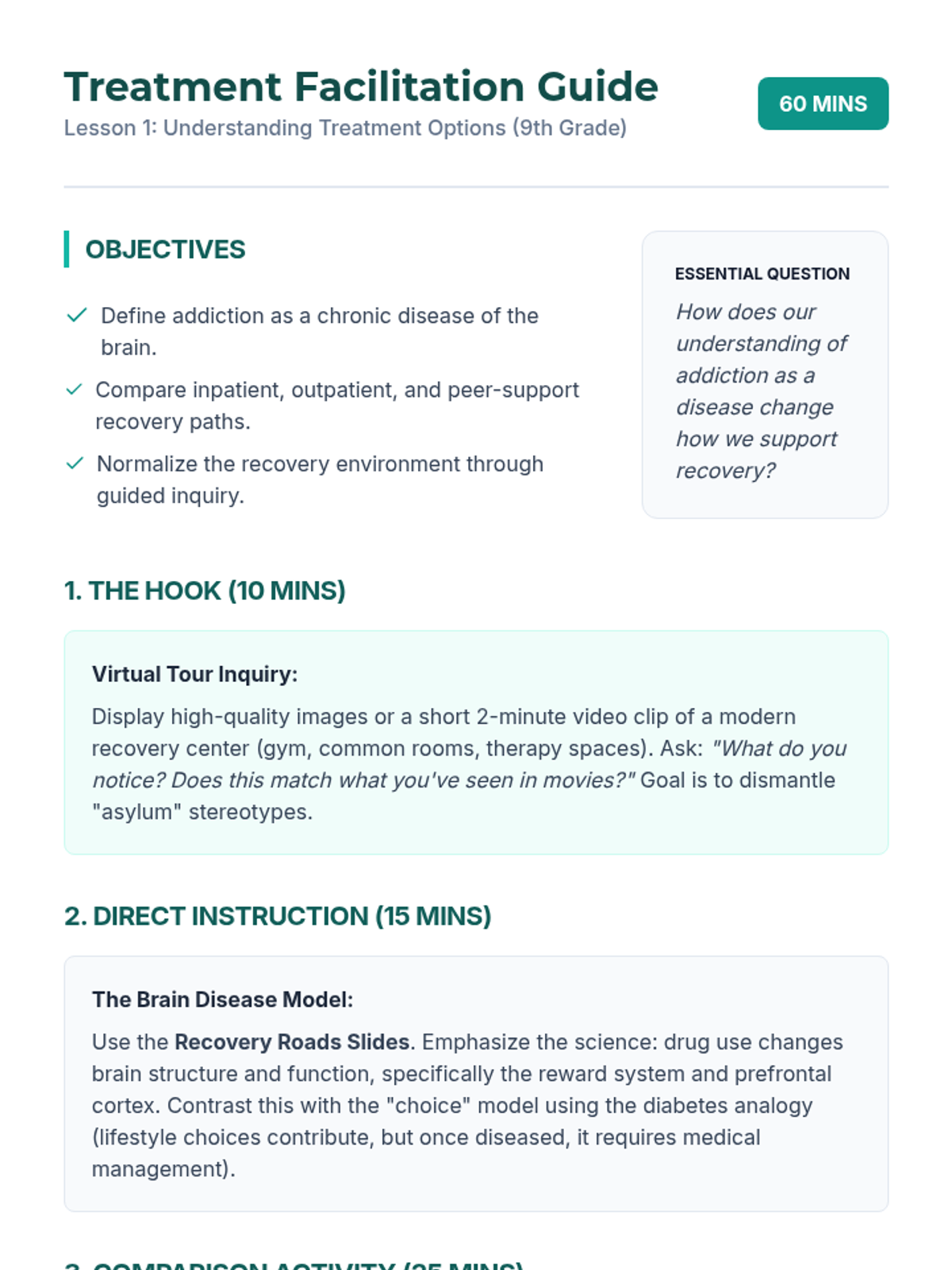
A comprehensive high school unit focusing on the science and community aspects of opioid recovery, treatment modalities, and supporting others. Students explore the chronic disease model of addiction, demystify MAT, and create practical resource maps.
A 5-lesson health unit for 9th graders focused on the social-emotional skills needed to refuse tobacco and vaping. Students explore conformity psychology, master specific refusal techniques, practice high-stakes role-playing, learn bystander intervention, and connect refusal to their future goals.
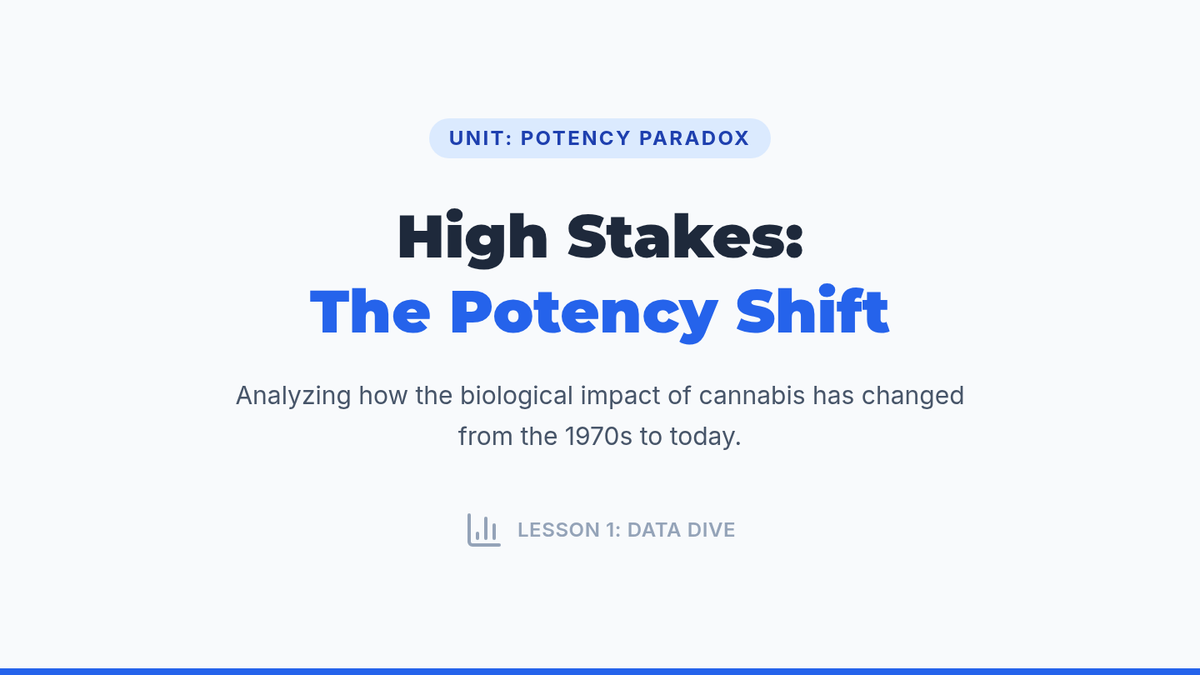
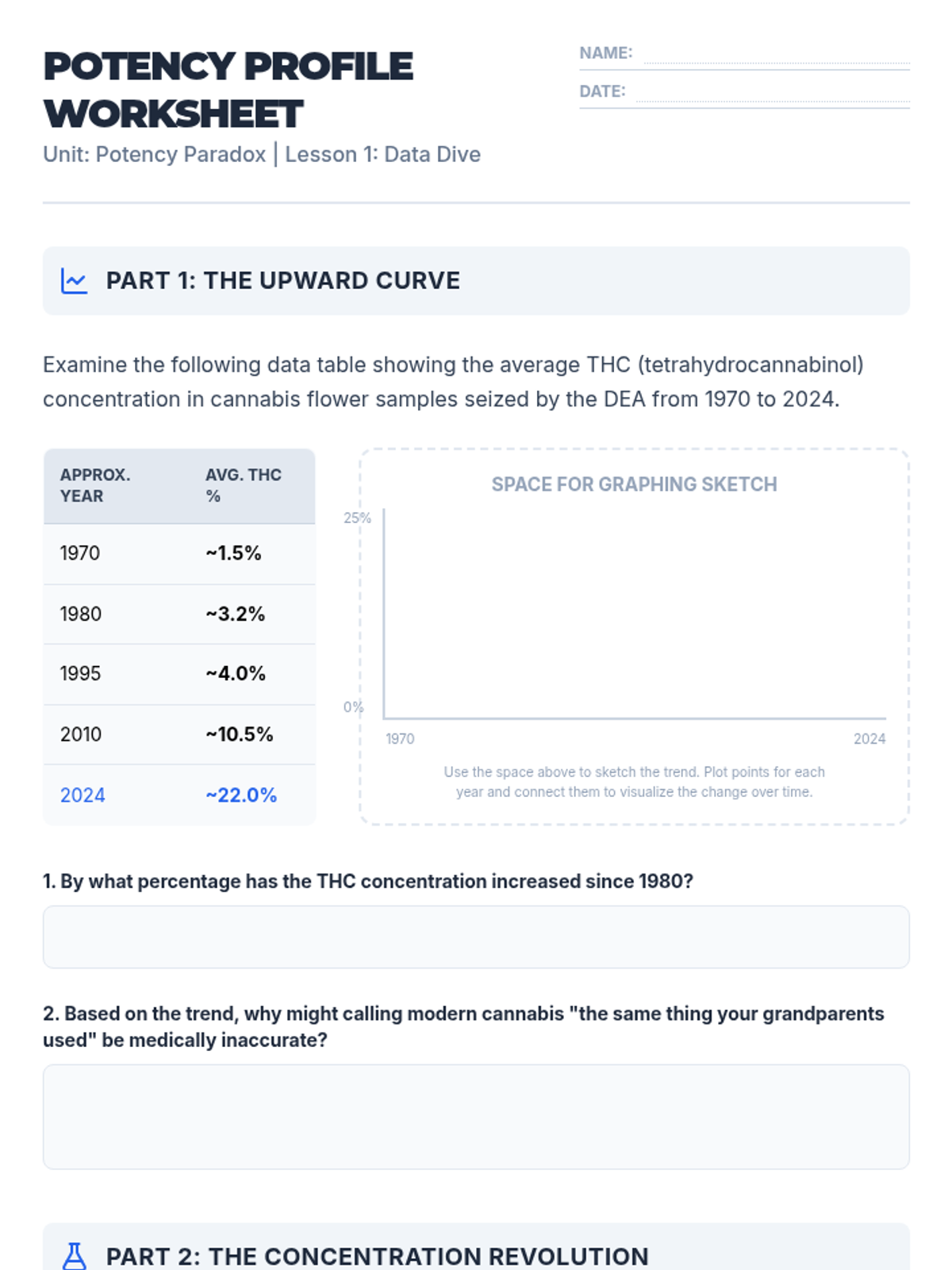
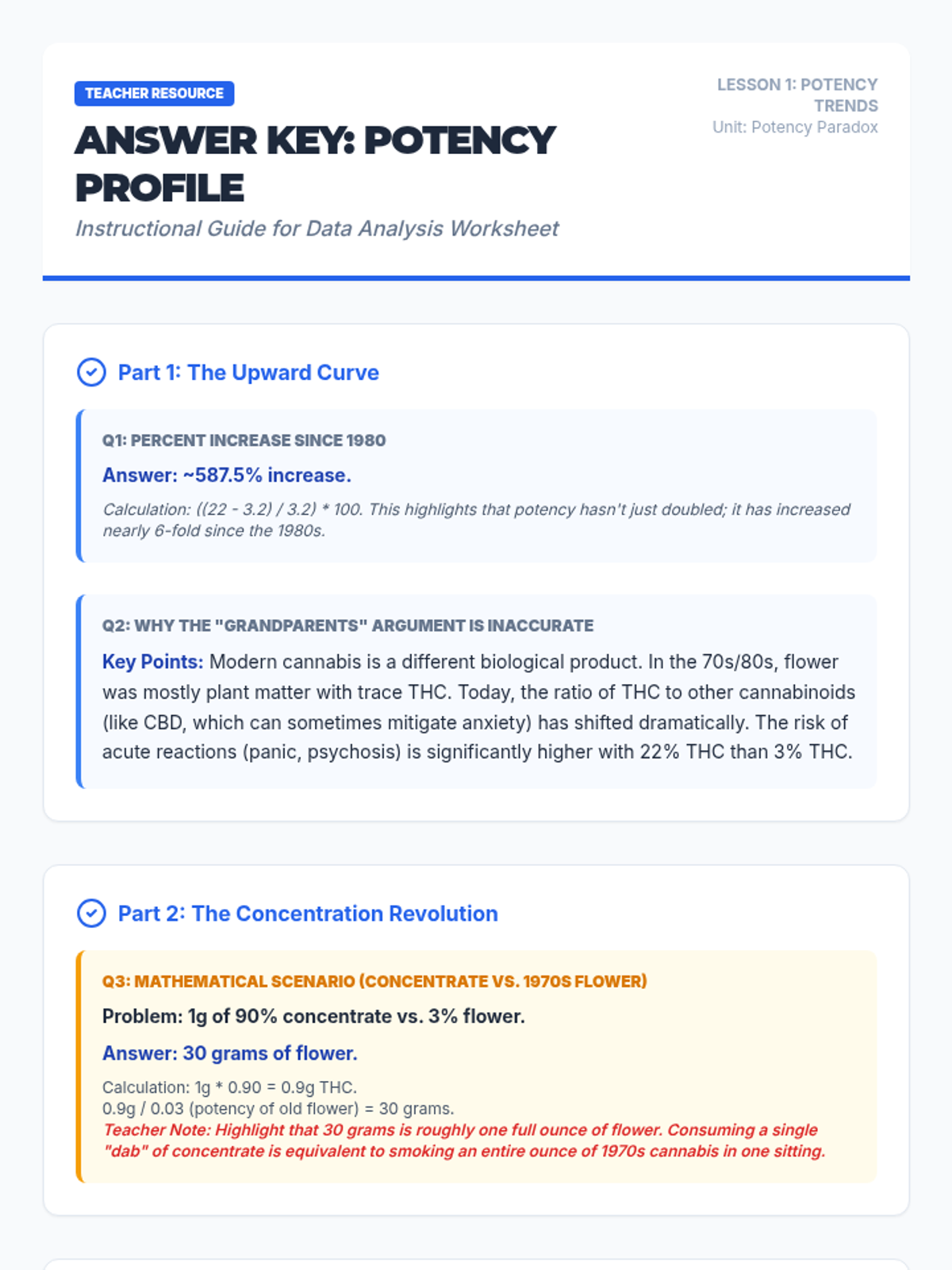
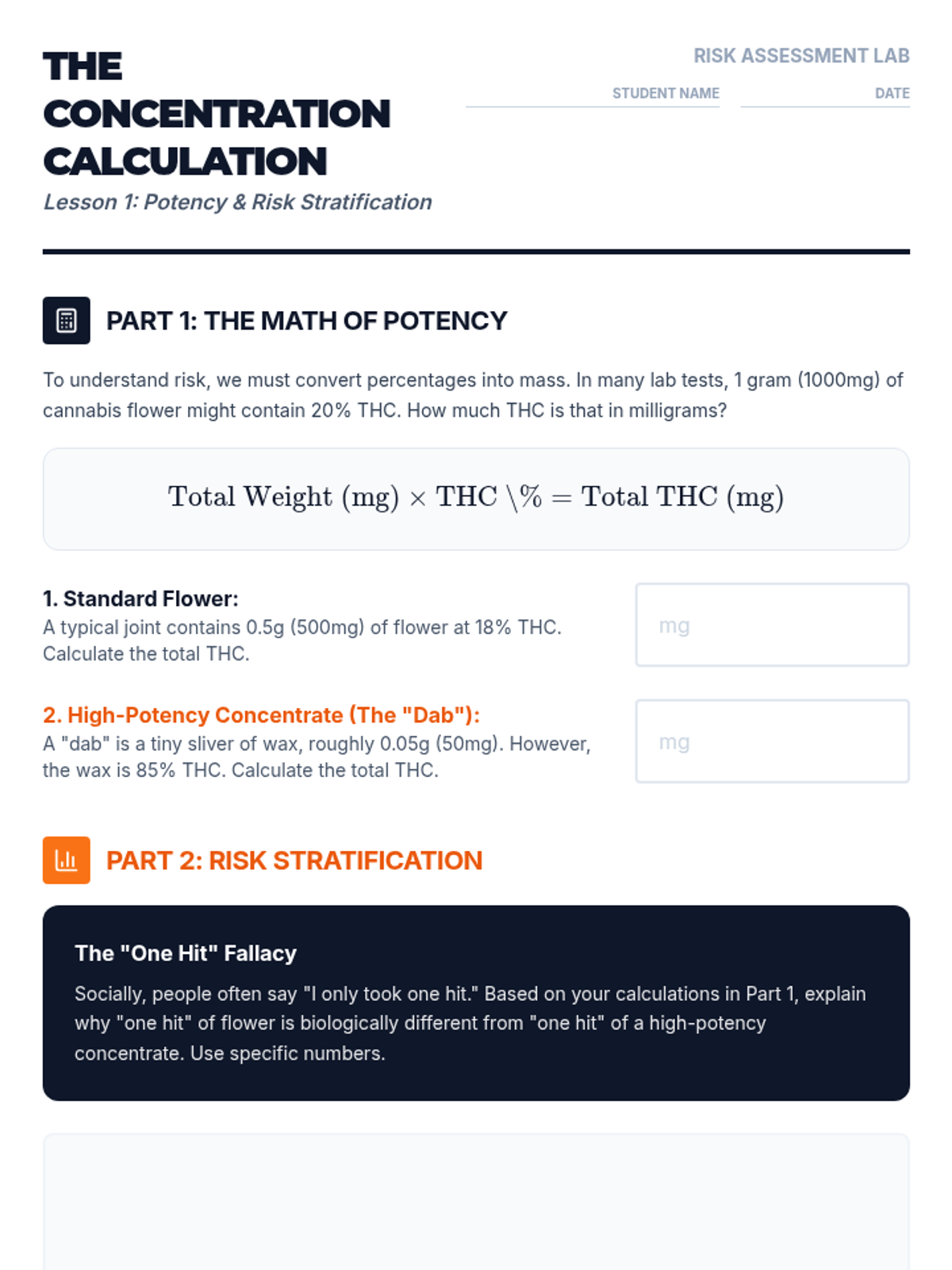
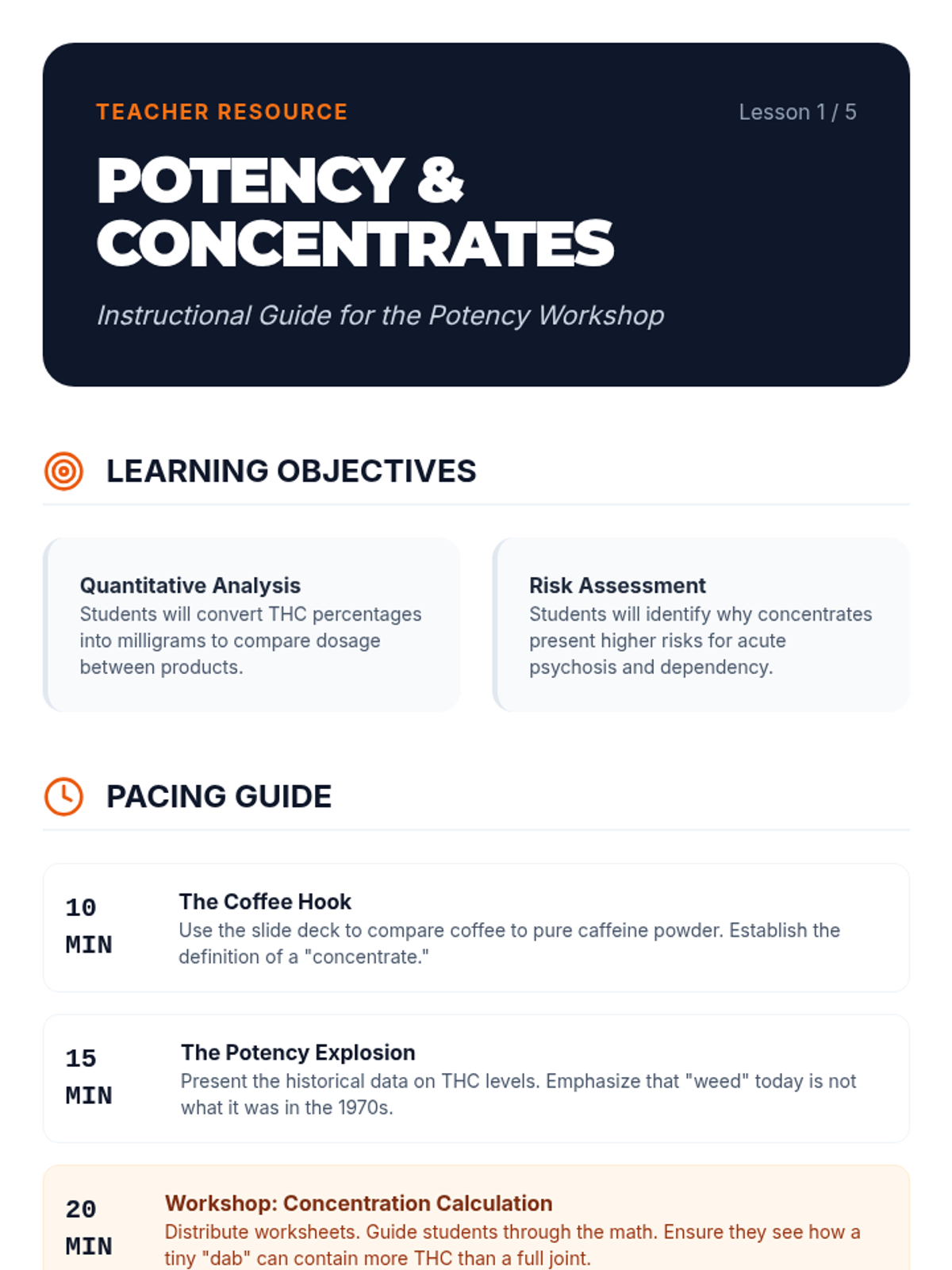
This sequence explores the evolving landscape of cannabis, focusing on the significant shift in THC potency and its impact on adolescent health. Students analyze data, medical evidence, and psychological studies to understand the risks associated with modern cannabis products.
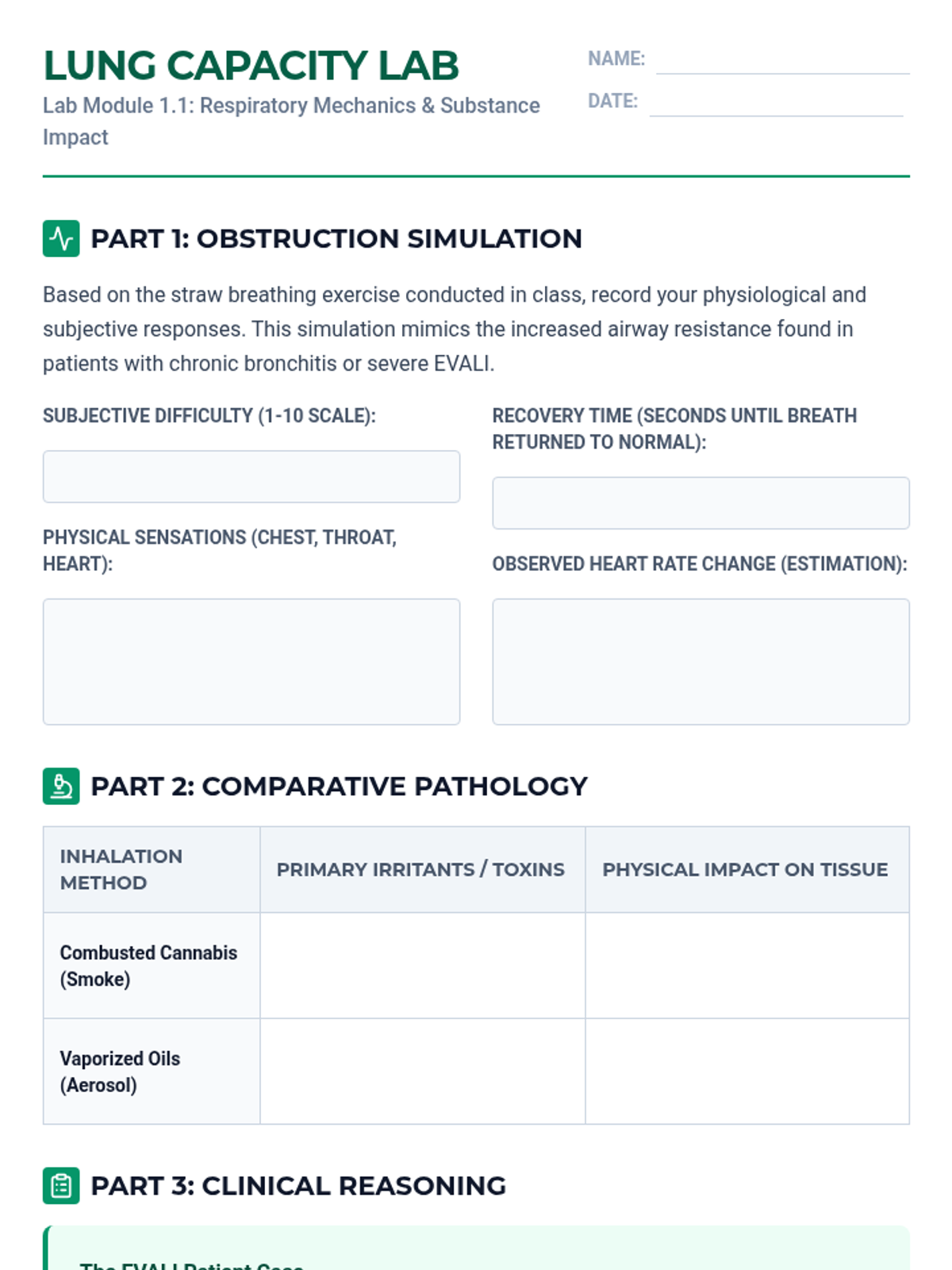
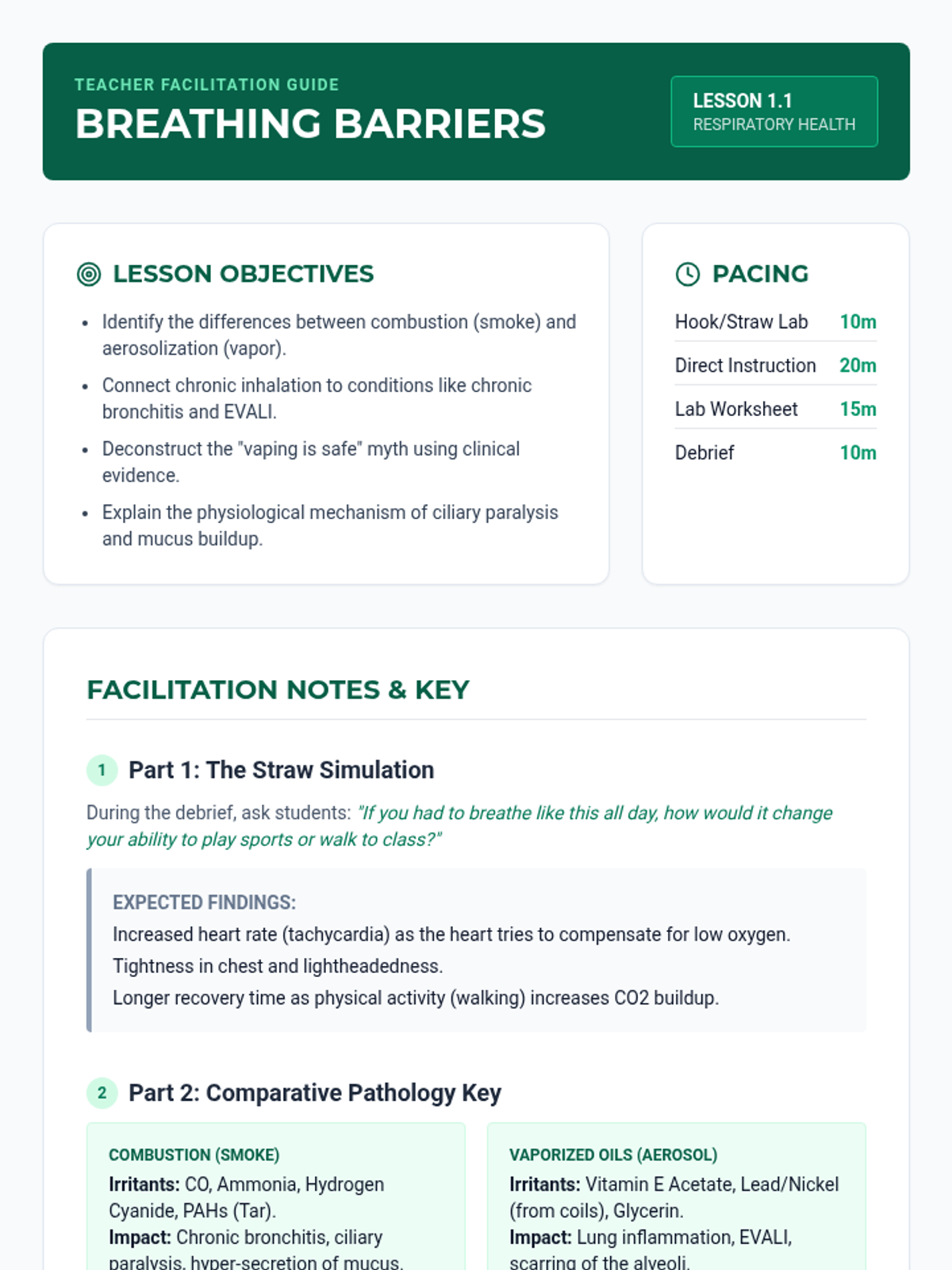
An evidence-based exploration of the physical and mental health impacts of cannabis use for 11th-grade students. This sequence uses a clinical research perspective to investigate respiratory health, mental health disorders, addiction science, acute toxicity, and cognitive performance.
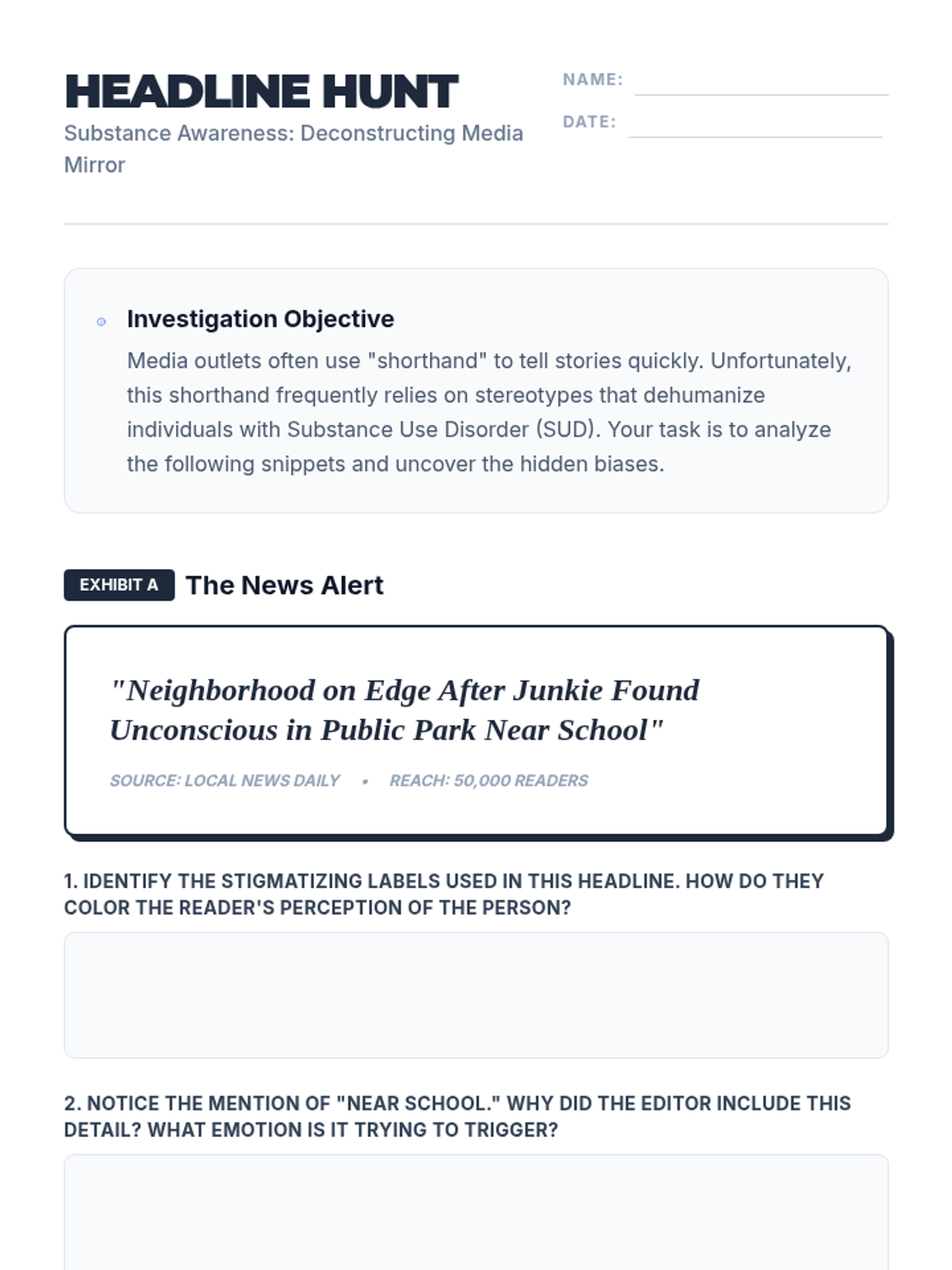
A 9th-grade Health sequence focused on reducing stigma around opioid use disorder. Students analyze media portrayals, master person-first language, understand the psychological cycle of shame, identify barriers to treatment, and create their own advocacy campaigns.
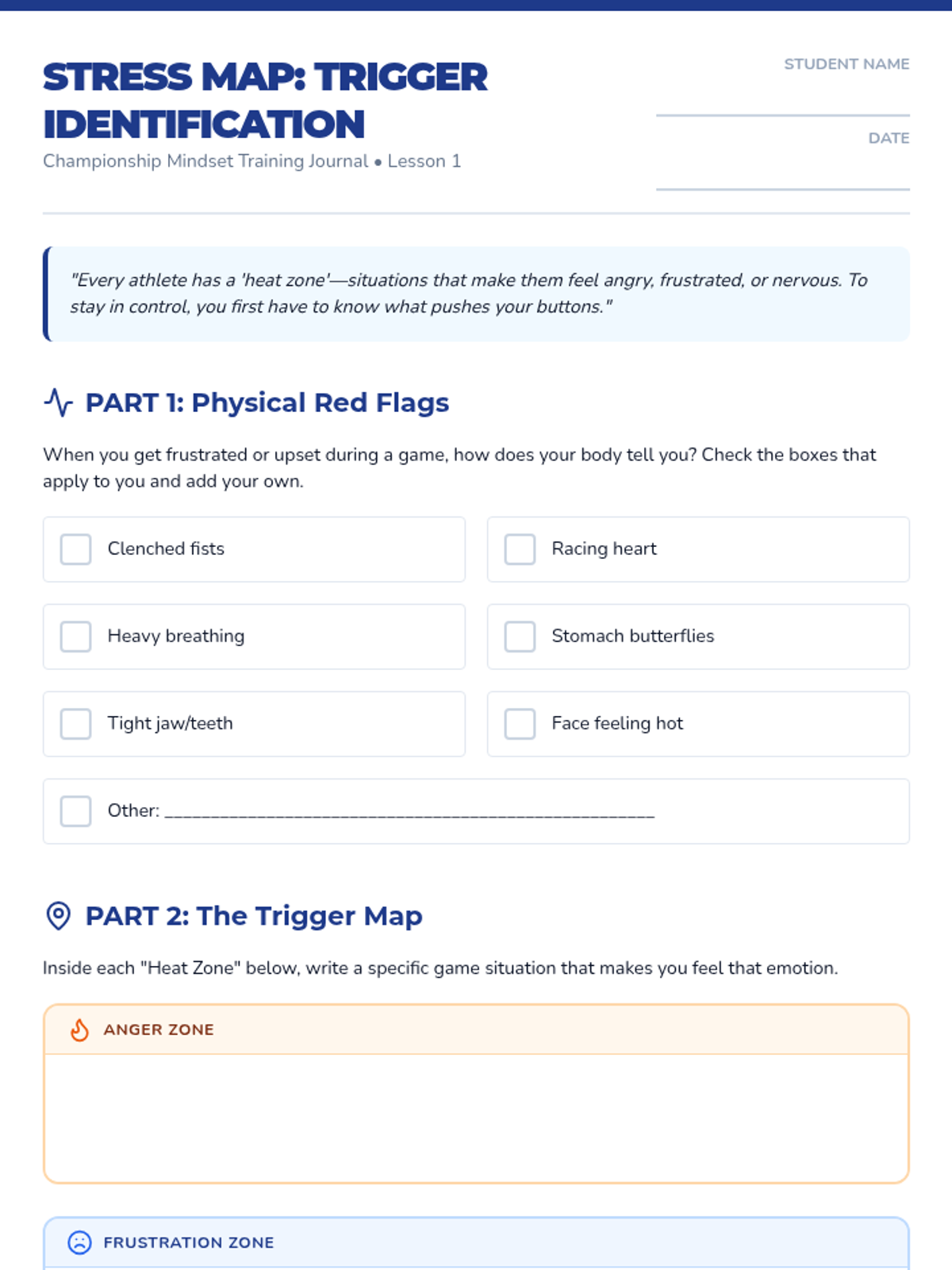
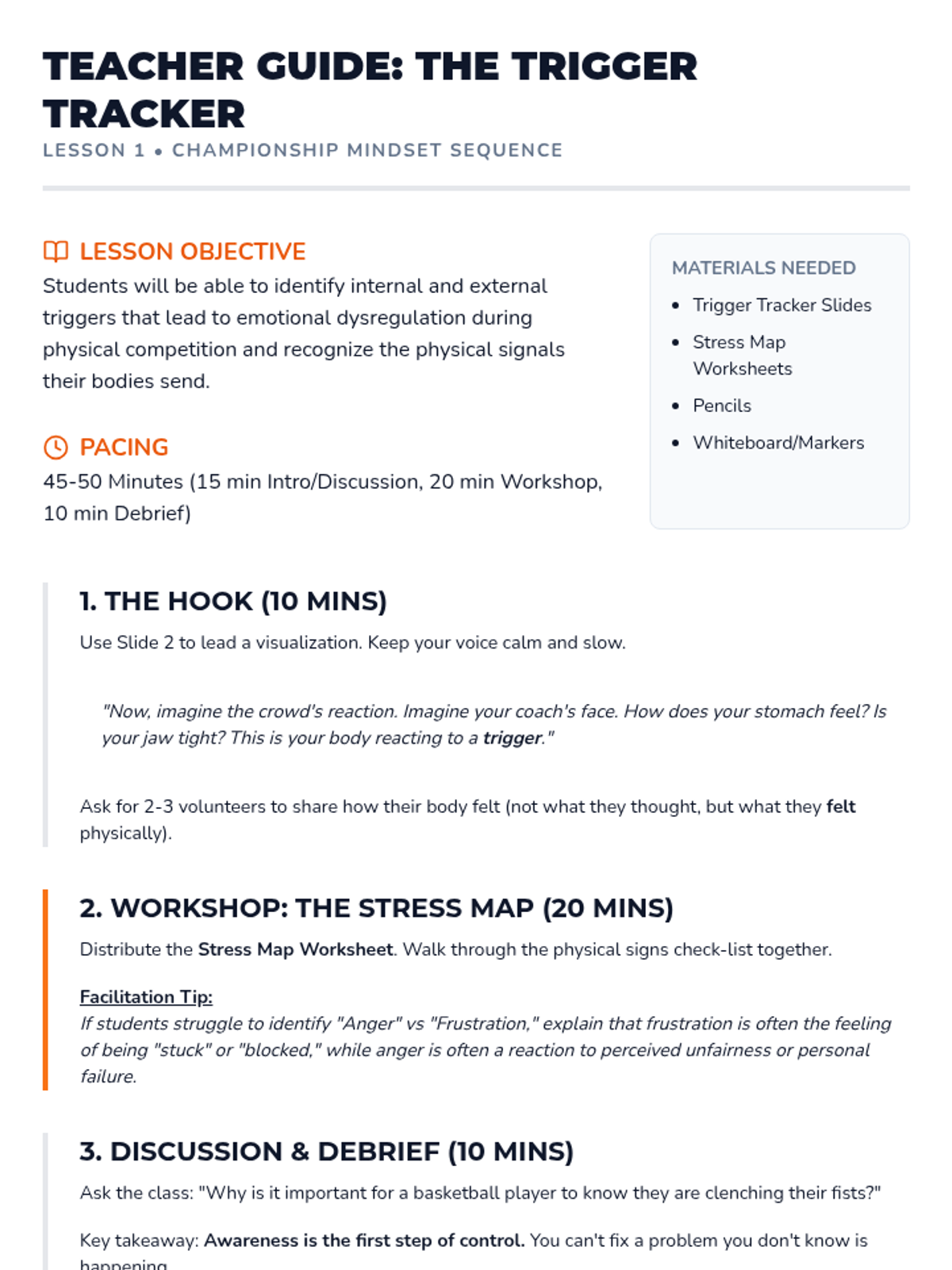
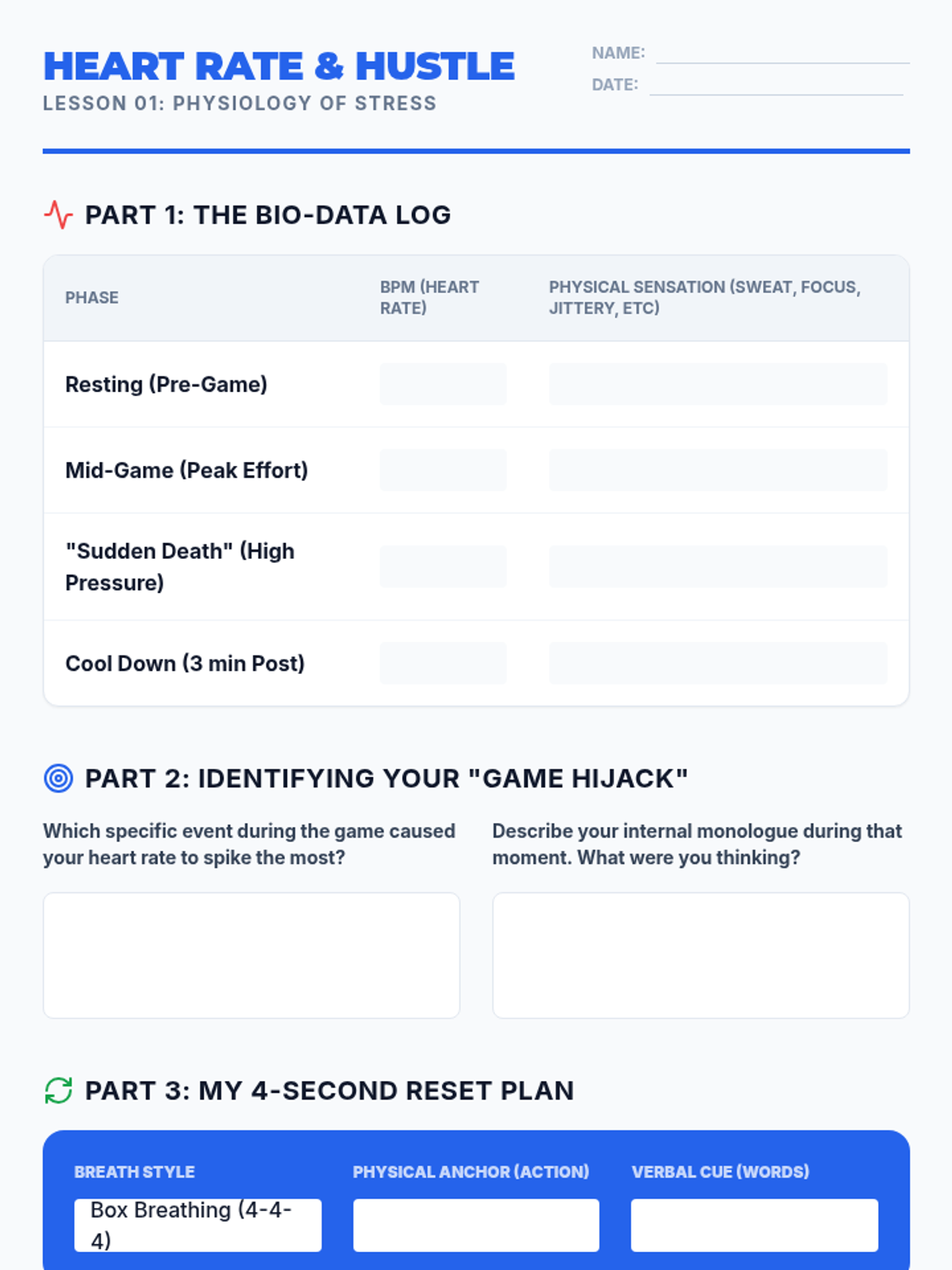
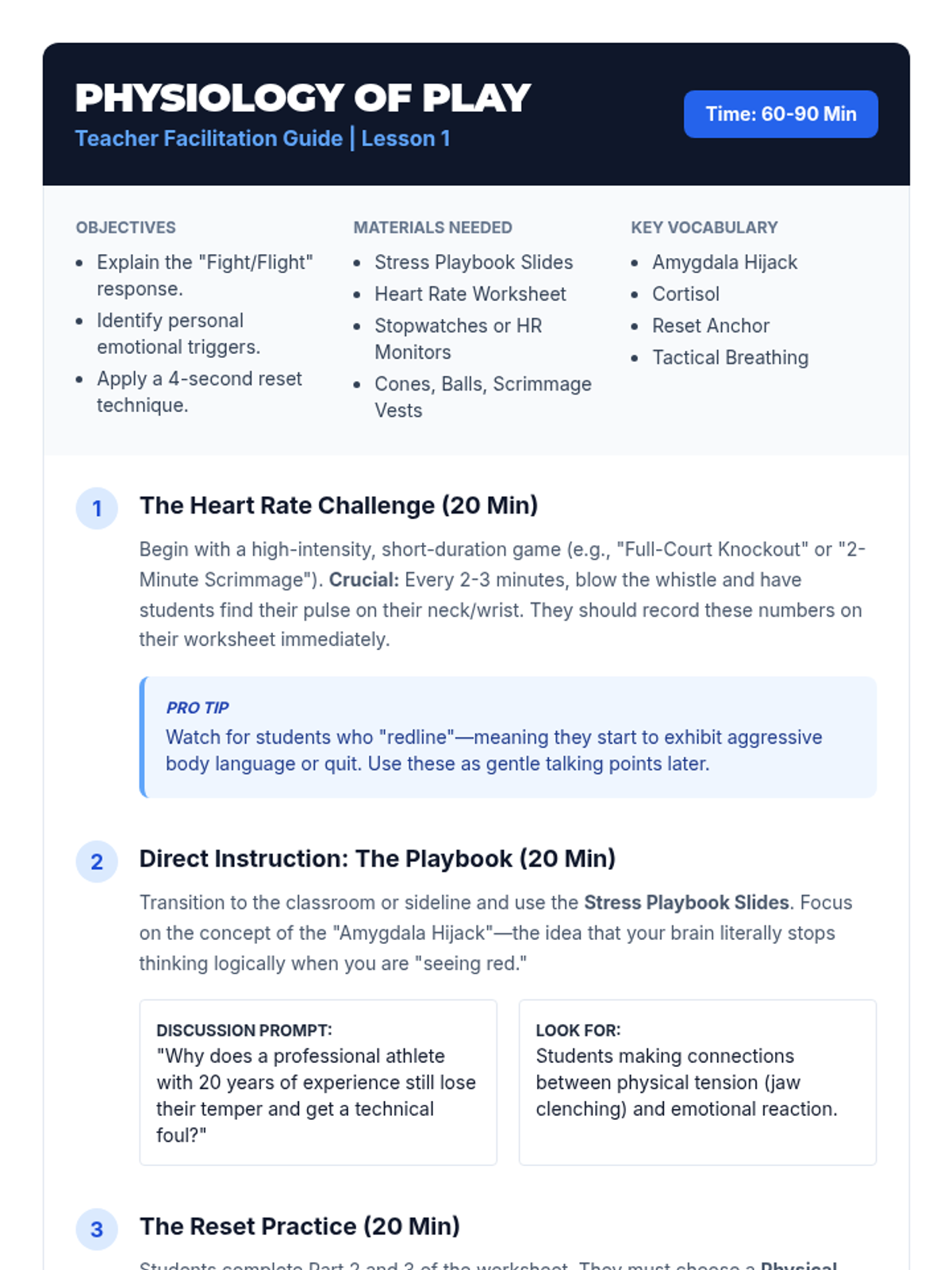
This sequence focuses on the internal aspect of sportsmanship: emotional regulation. Students learn concrete strategies for managing frustration, anger, and excitement during competitive play, progressing from identifying triggers to applying coping mechanisms in real-time games.
A 5-lesson sequence focused on building emotional regulation and conflict resolution skills through active gameplay and simulations in physical education.
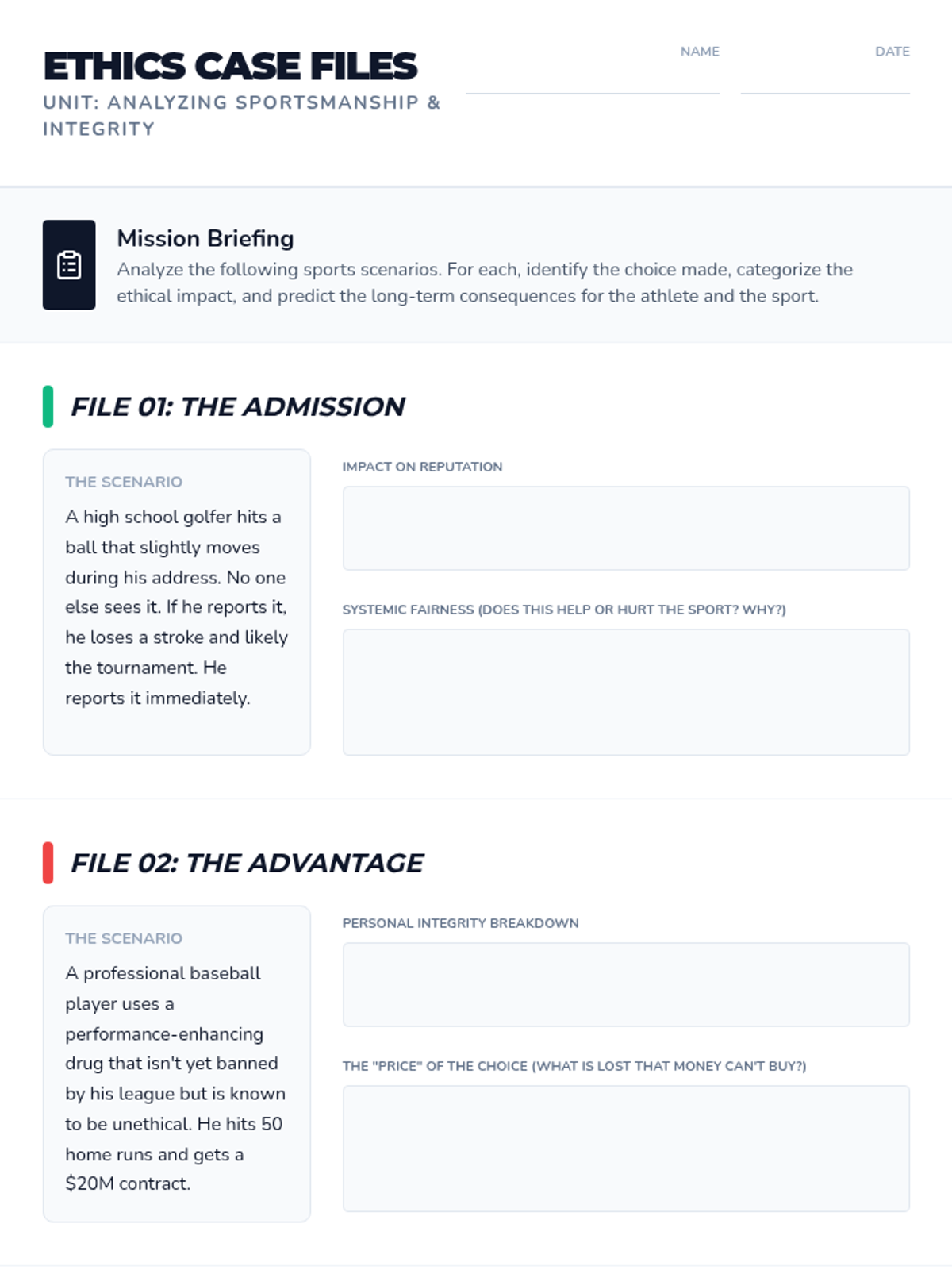
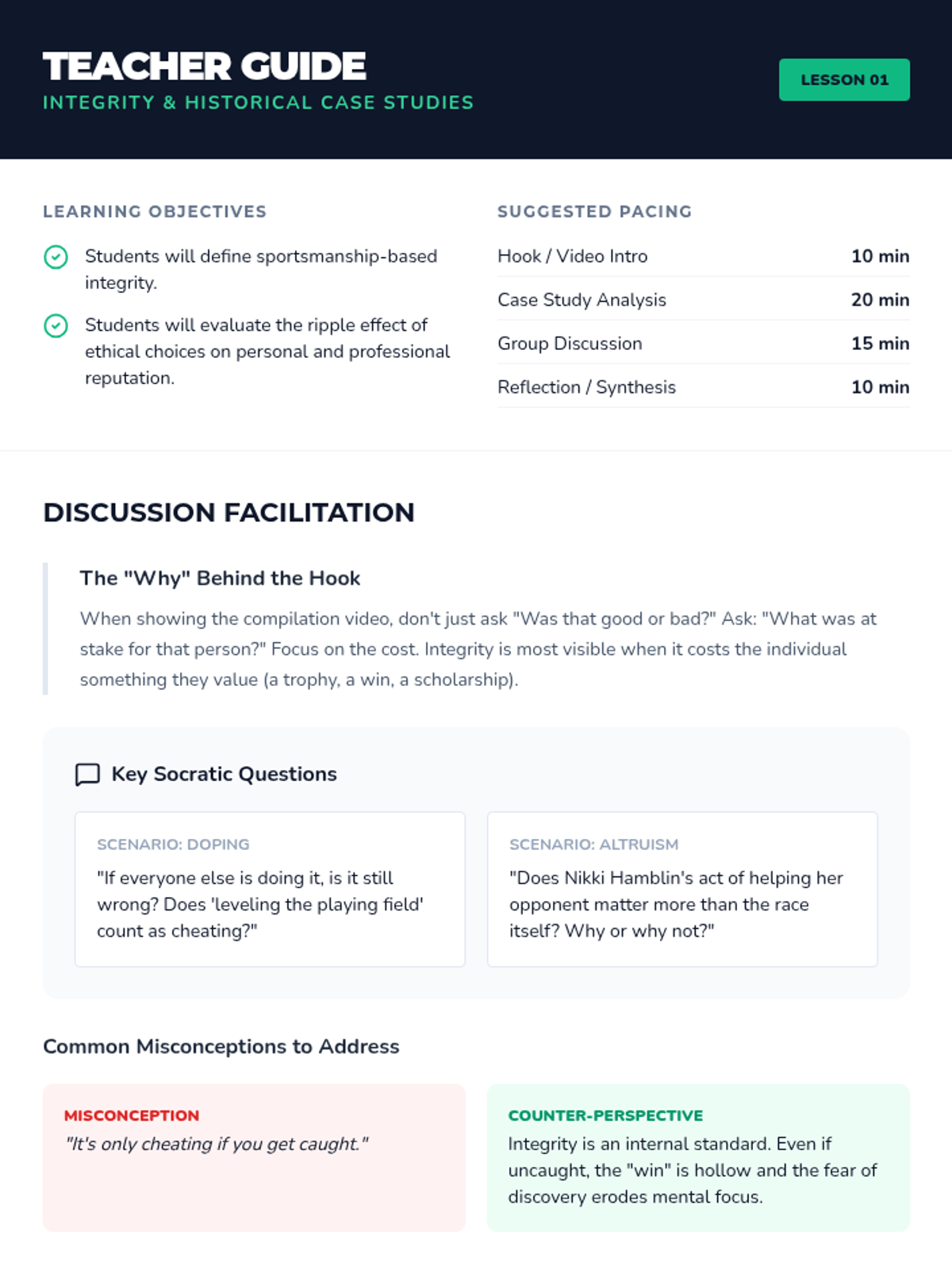
This sequence challenges 9th-grade students to analyze ethical dilemmas in sports, from doping to altruism. Students examine the pressures of competition, empathy for officials, and the boundary between competitive banter and verbal abuse, culminating in the creation of a personal 'Athlete's Code of Ethics'.
A 12th-grade sequence exploring the psychological and interpersonal aspects of sportsmanship. Students learn about emotional intelligence, self-regulation, conflict mediation, and building a positive team culture within high-stakes athletic competition.
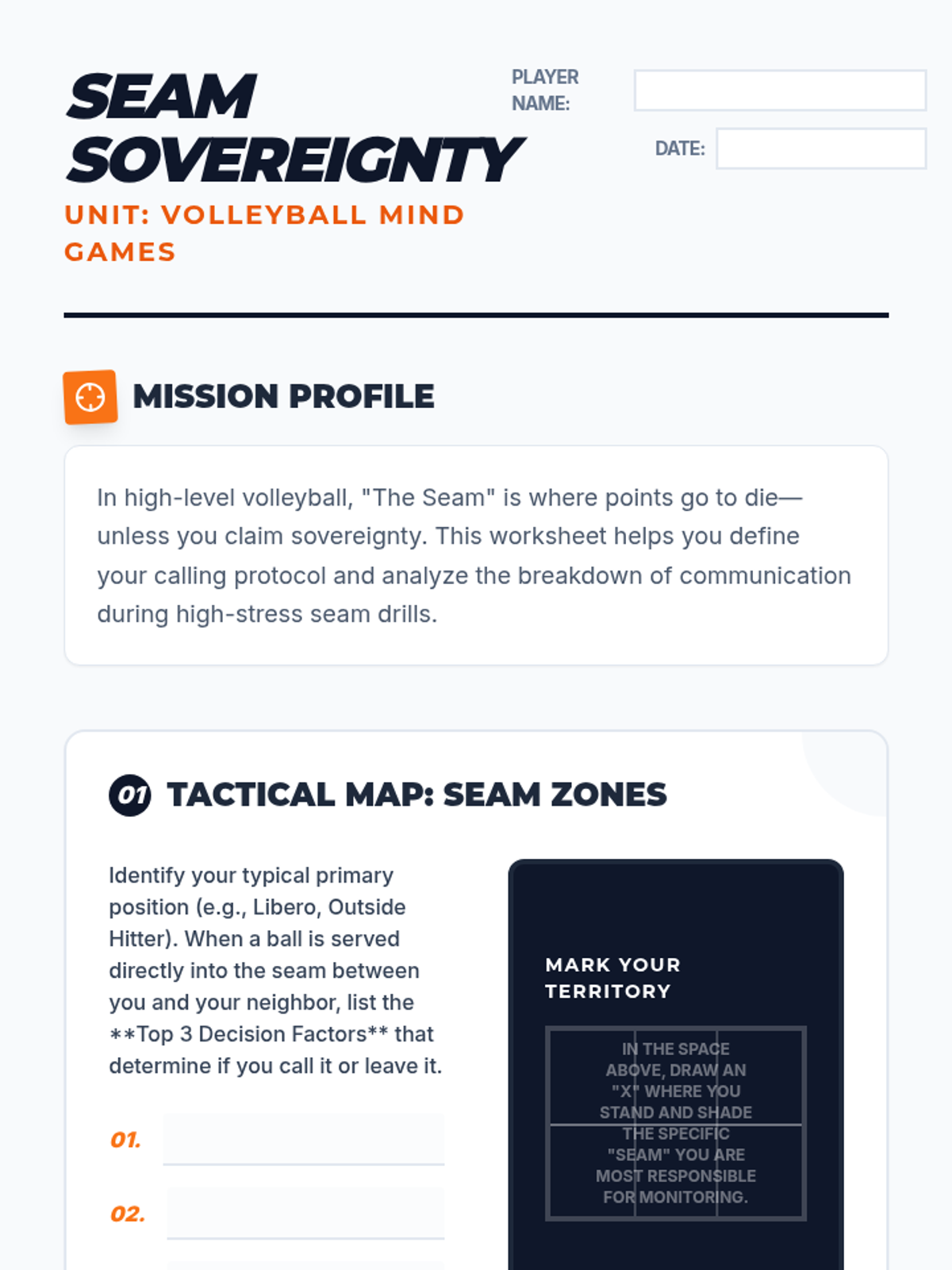
A 12th-grade physical education unit focused on the cognitive and interpersonal aspects of volleyball, including non-verbal communication, psychological resilience, momentum management, and leadership.
A comprehensive 12th-grade sequence focused on the psychological, verbal, and legal aspects of self-defense, moving beyond physical techniques to emphasize situational awareness and conflict de-escalation.
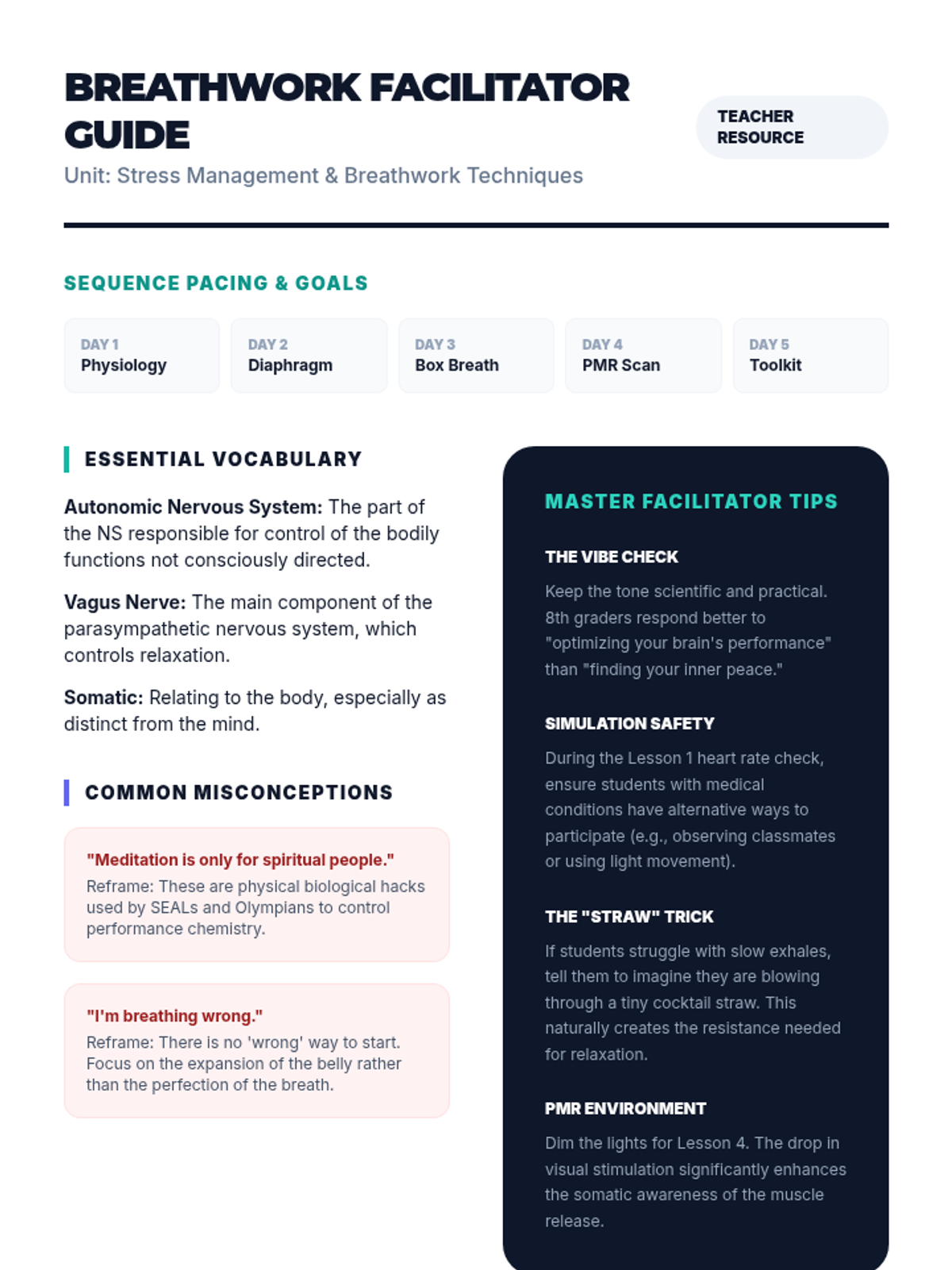
This sequence explores the physiological mechanics of stress and the autonomic nervous system. Students learn how respiratory patterns influence the vagus nerve and amygdala, mastering specific breathwork protocols like diaphragmatic breathing, box breathing, and 4-7-8 for state regulation.
This sequence explores the misuse of prescription stimulants as 'study drugs' in high-pressure academic environments. Students will debunk cognitive myths, analyze the legal and ethical consequences of drug diversion, map the physiological burnout cycle, and master natural executive function strategies to achieve authentic success.
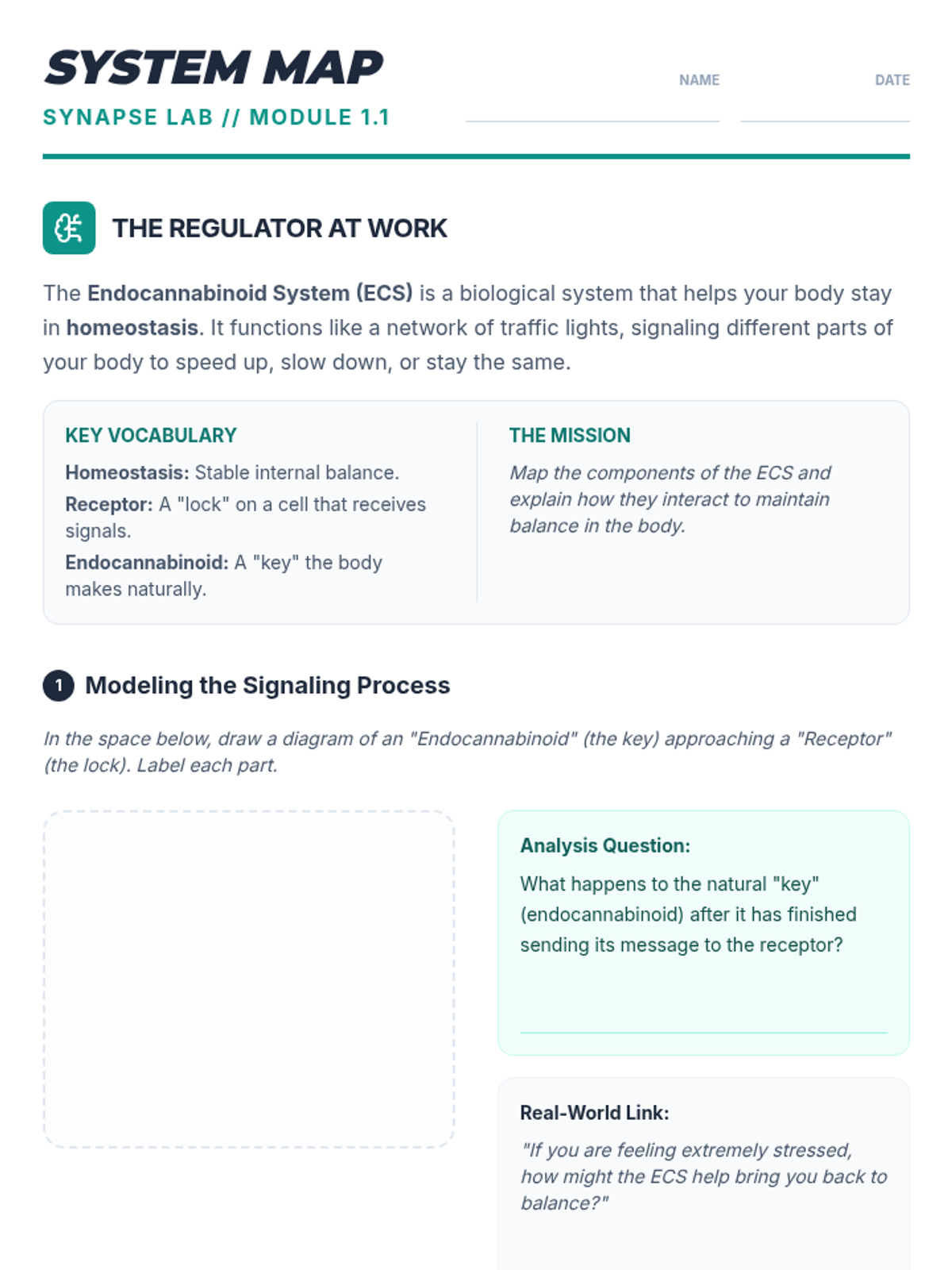
An inquiry-based exploration of the endocannabinoid system and the specific physiological impacts of cannabis on the developing adolescent brain. Students transition from understanding natural homeostasis to analyzing how external cannabinoids like THC disrupt memory, motivation, and executive function.
This project-based sequence shifts focus to community awareness, reporting protocols, and systemic understanding of human trafficking. Students investigate labor trafficking, recognize signs in peers, learn professional reporting protocols, and develop bystander intervention skills, culminating in a peer-led awareness campaign.
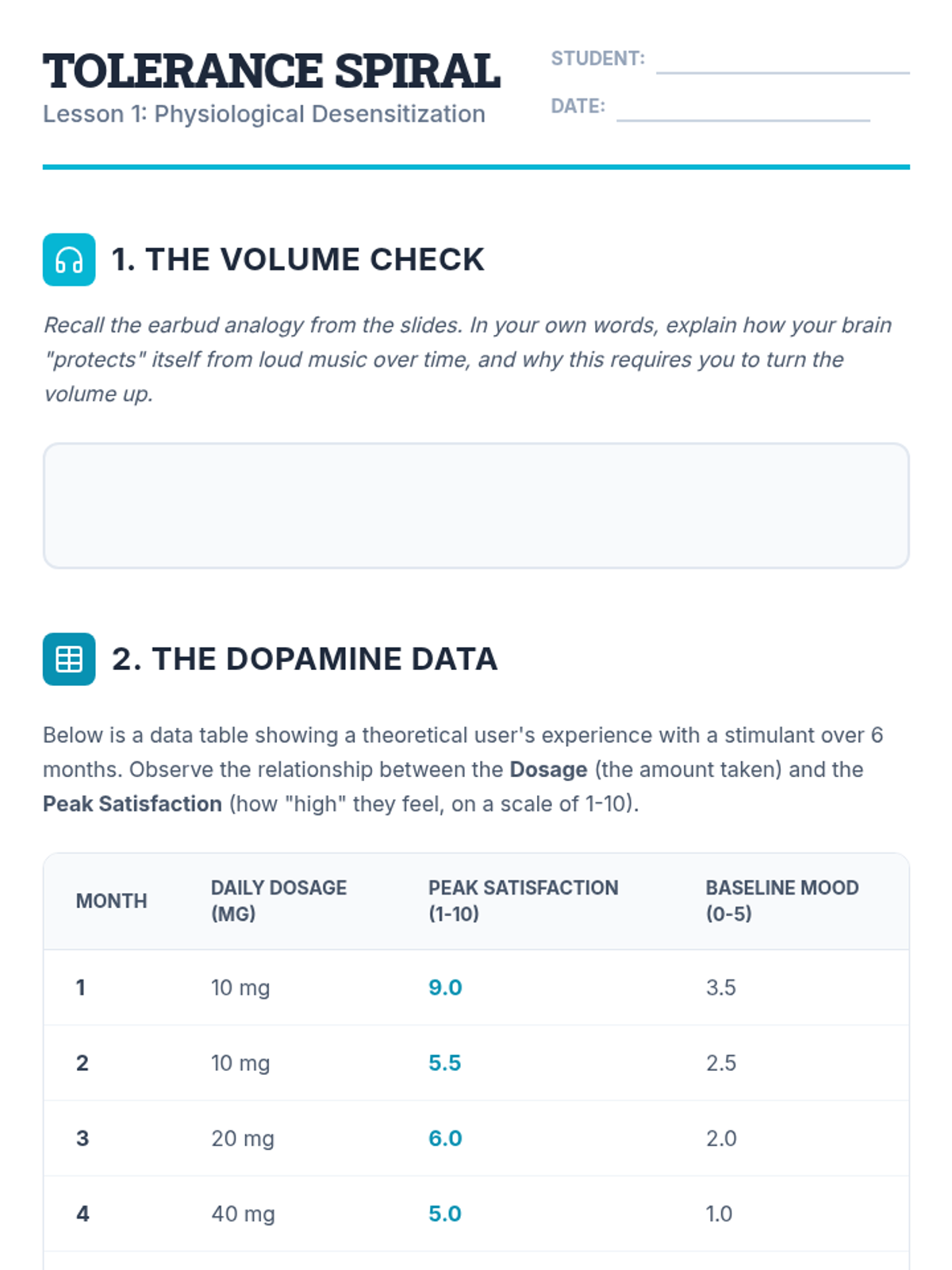
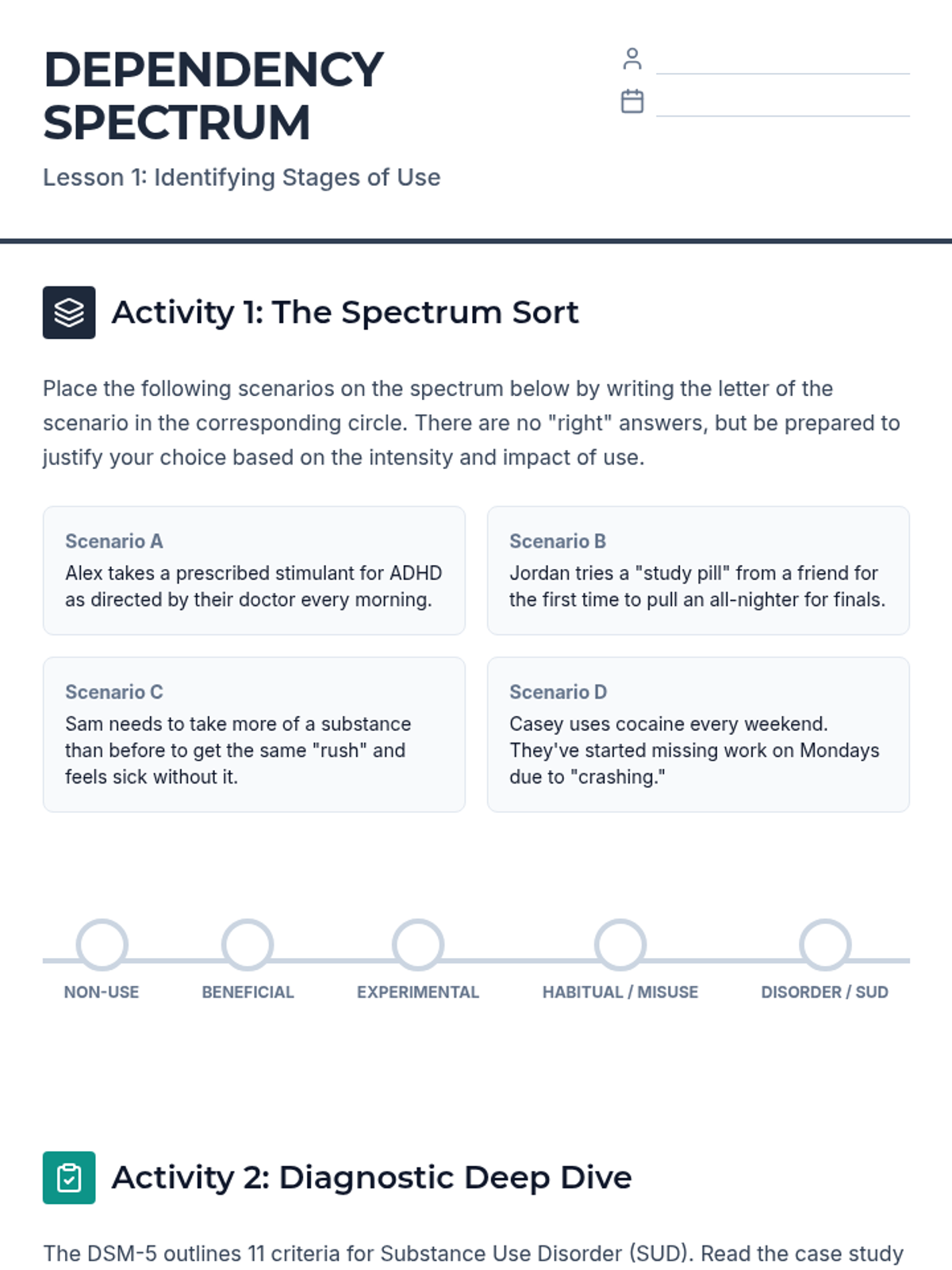
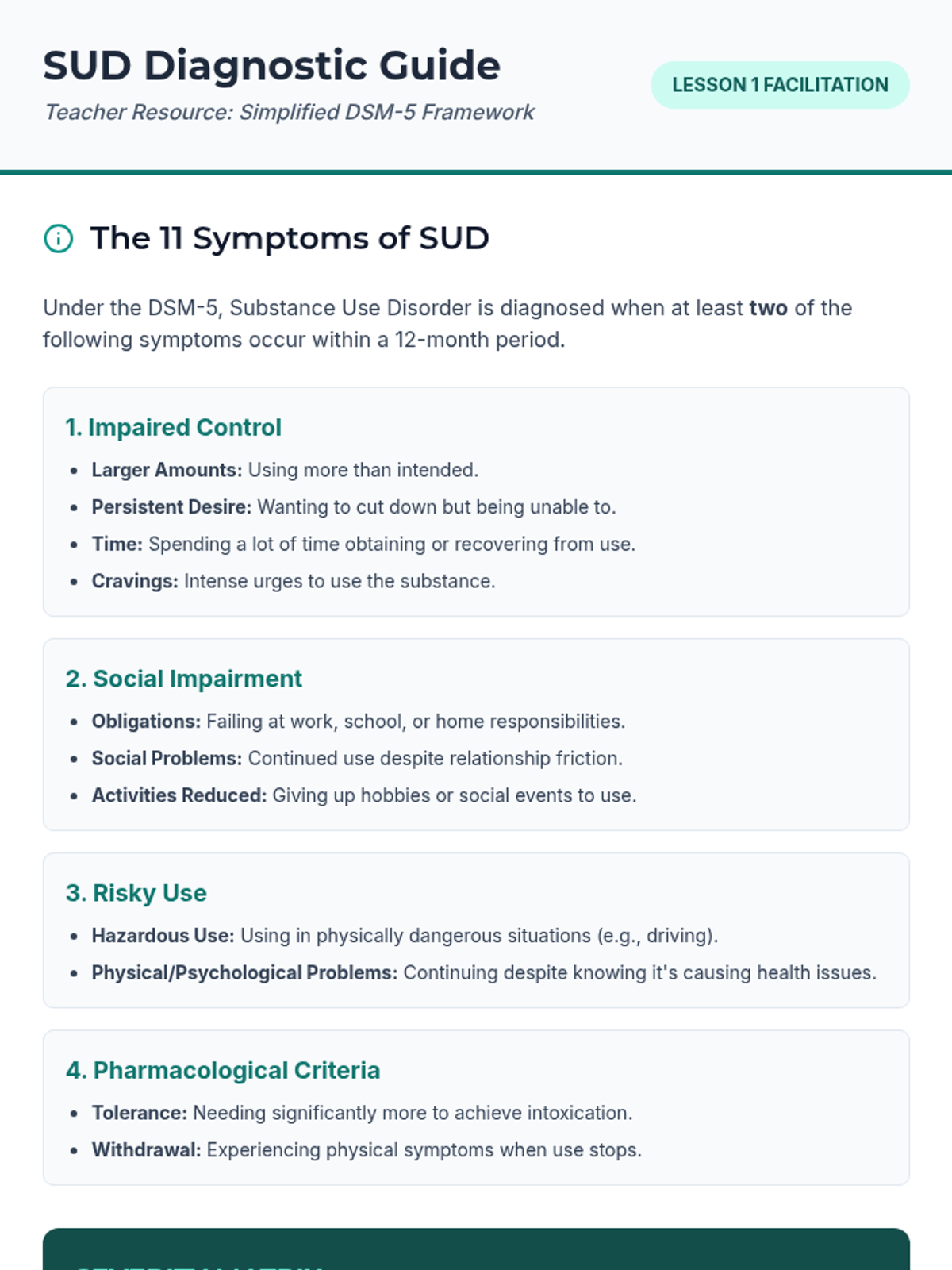
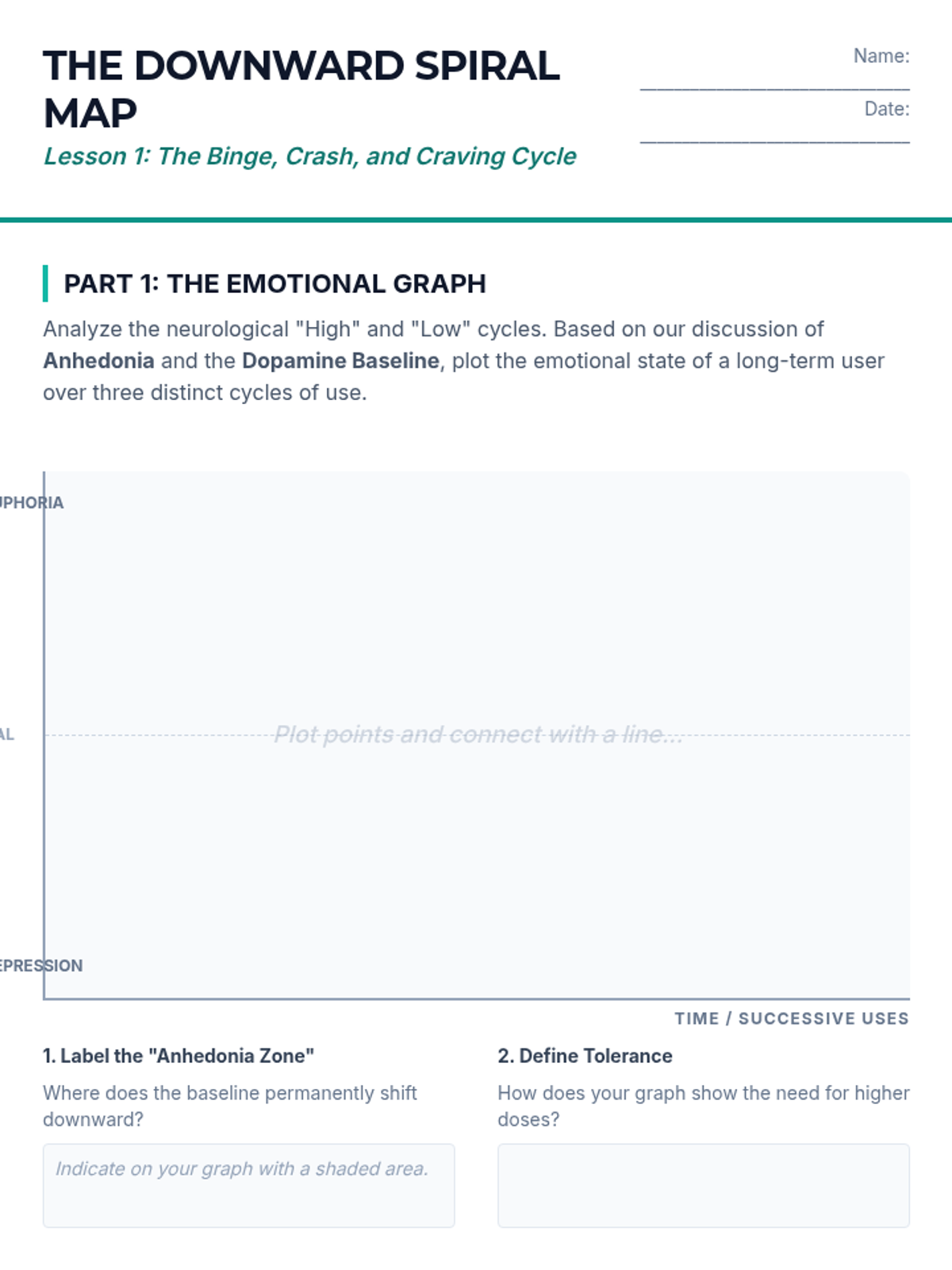
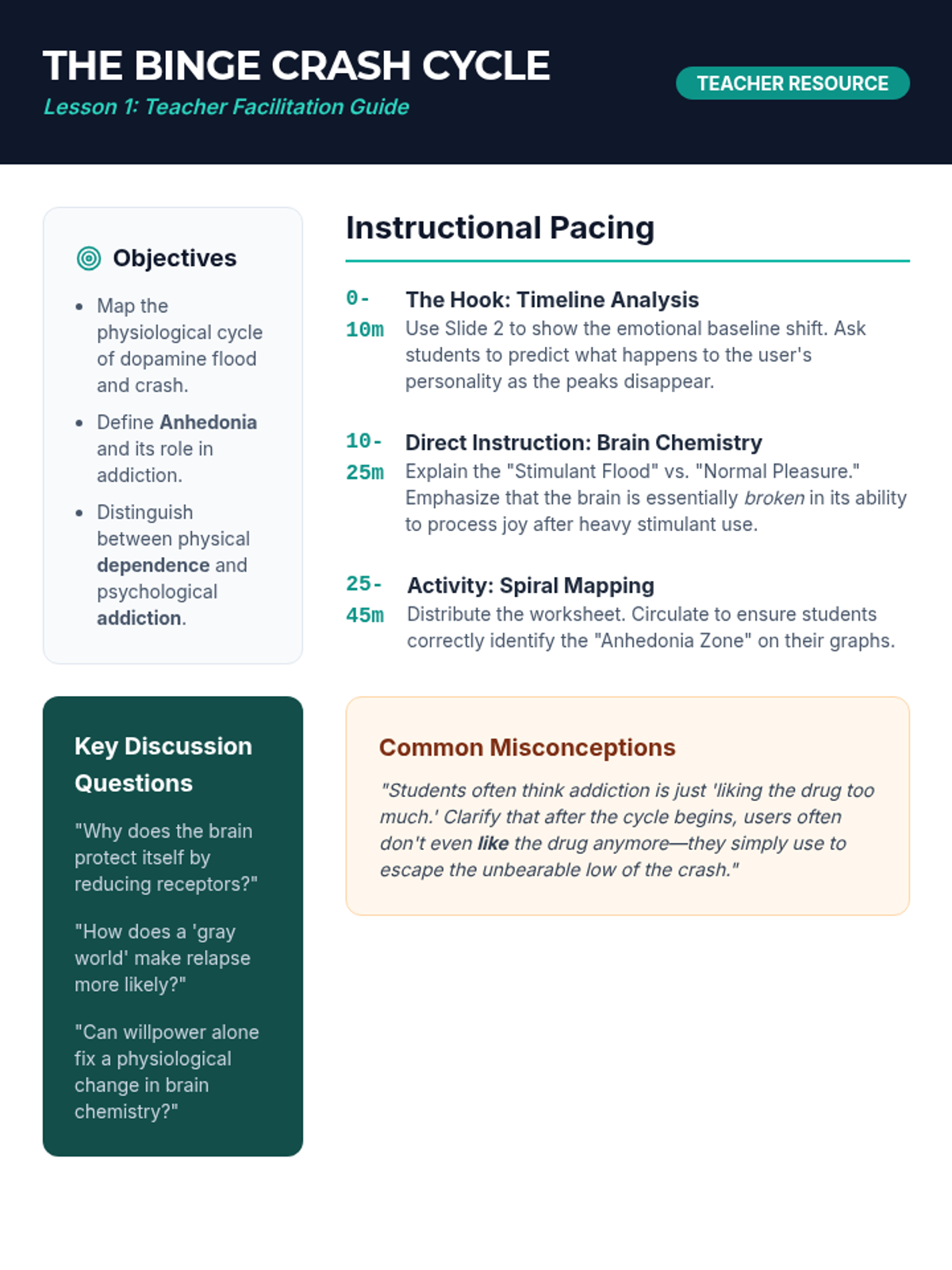
This mastery-based sequence focuses on the physiological and psychological mechanisms of stimulant dependency, the challenges of withdrawal, and the navigation of support systems. Students analyze the cycle of addiction through a medical lens to reduce stigma and identify practical pathways to recovery.
A comprehensive sequence for 11th-grade students focusing on stimulant dependency, the fentanyl crisis, harm reduction, and emergency response. This sequence uses a public health lens to equip students with the tools to recognize addiction, mitigate risks, and save lives in crisis situations.
A comprehensive 12th-grade health sequence focused on stimulant awareness, the cycle of addiction, and evidence-based harm reduction strategies to support community health and recovery.
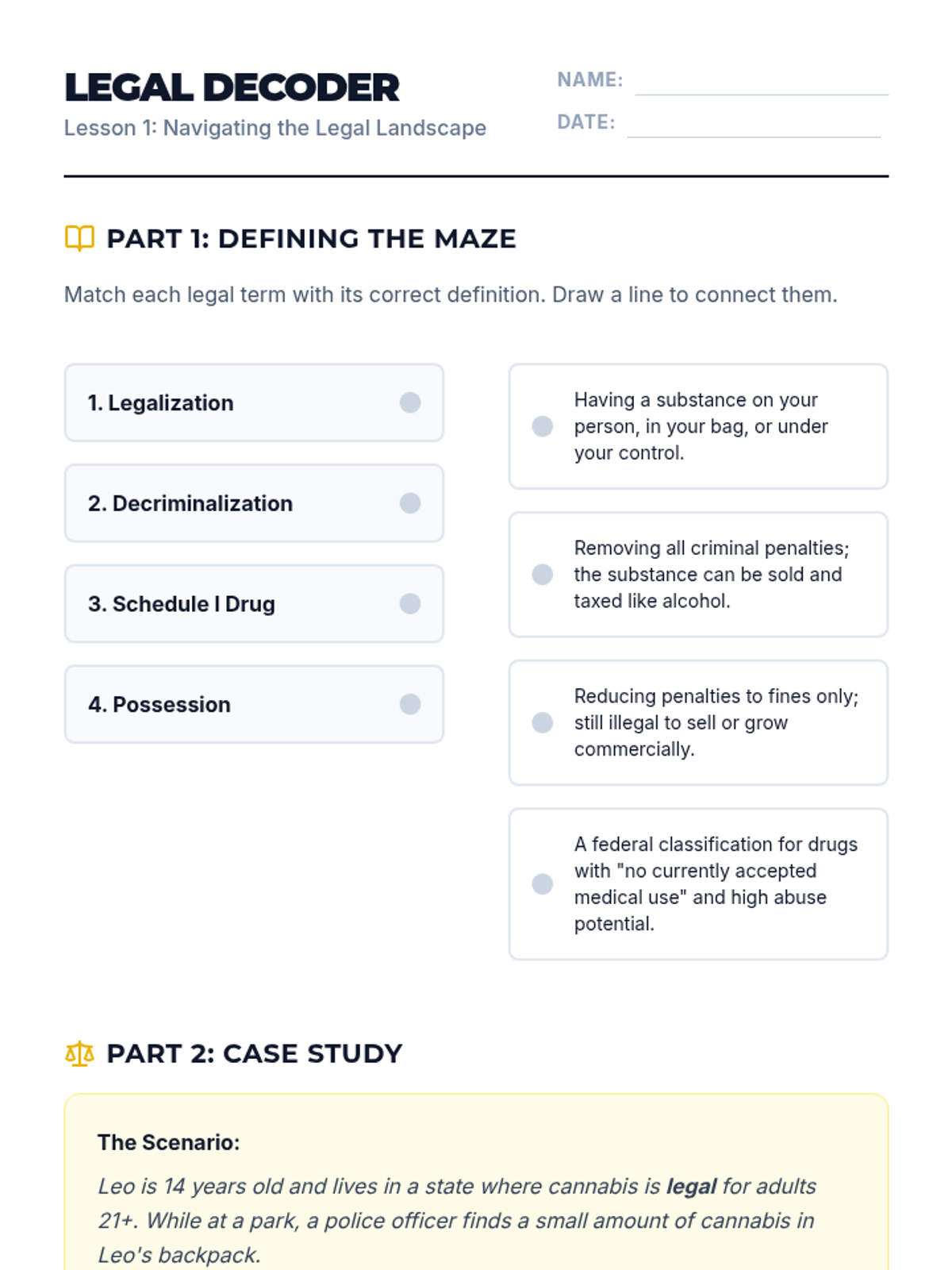
A comprehensive 5-lesson unit for 7th-grade students exploring the legal, physical, and safety implications of cannabis use, focusing on harm reduction and health literacy.
A comprehensive 12th-grade sequence focused on harm reduction, risk assessment, and safety strategies regarding cannabis use. Students explore potency, metabolism, addiction criteria, impaired driving, and peer intervention skills.
This sequence explores the physiological connection between breath, the nervous system, and stress management. Students learn to transition from 'fight or flight' to the 'rest and digest' state through evidence-based techniques like diaphragmatic breathing, box breathing, and progressive muscle relaxation, ultimately building a personalized self-regulation toolkit.
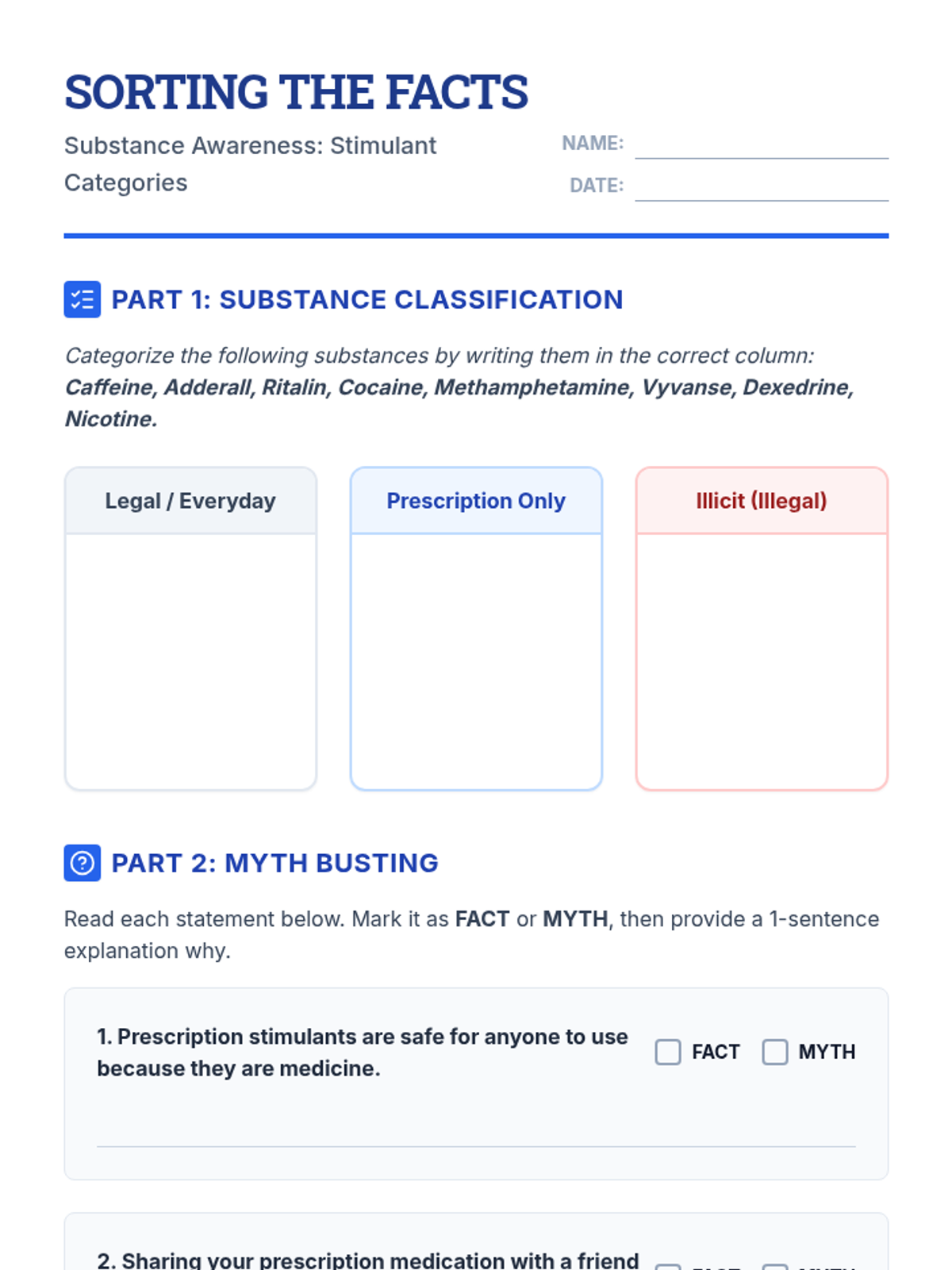
This sequence explores the critical distinction between therapeutic use and illicit misuse of prescription stimulants. Students analyze case studies, legal ramifications, and ethical implications while developing healthy alternatives for academic focus and stress management.
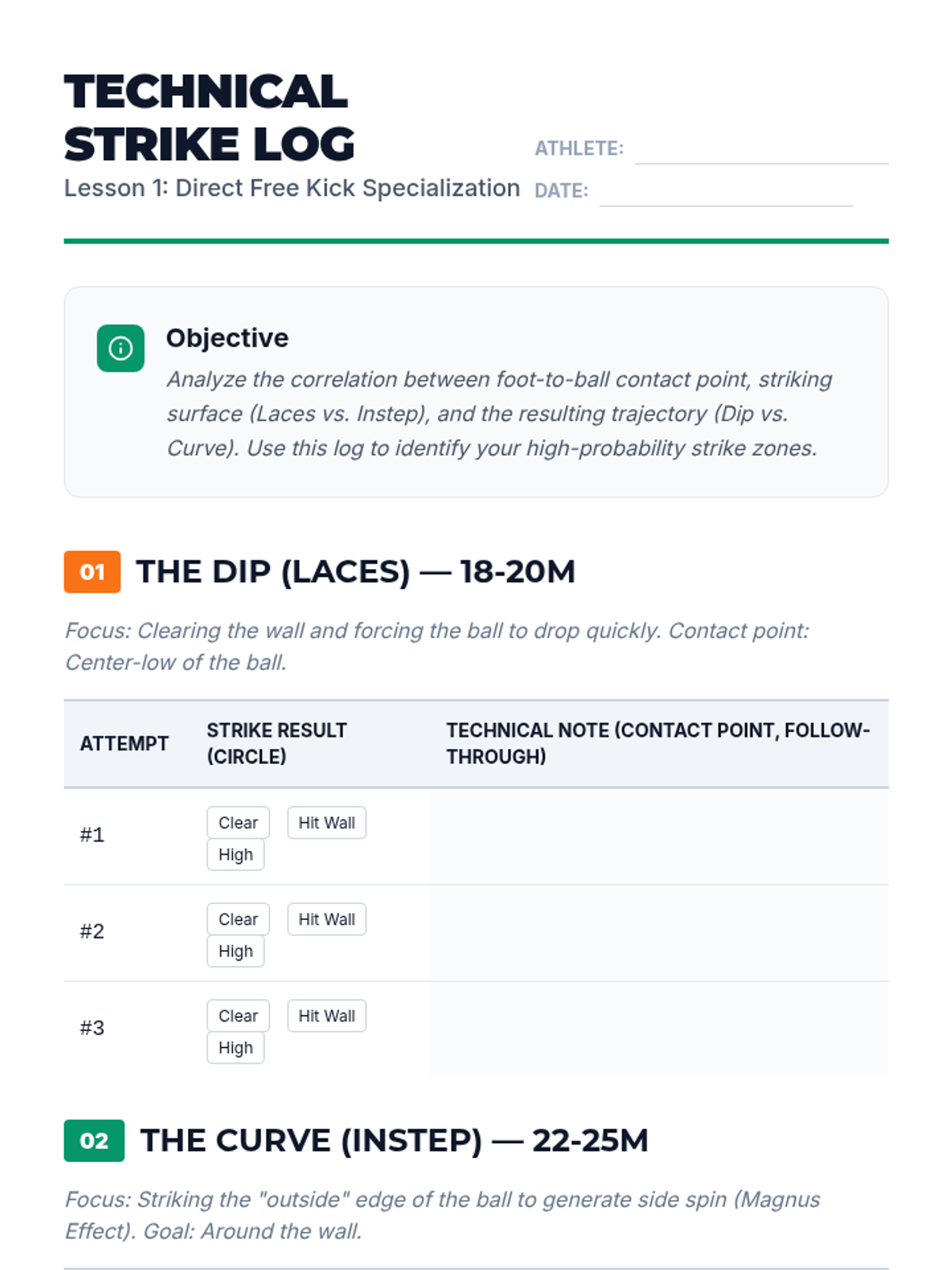
A high-performance football unit for 12th graders focusing on the tactical and technical mastery of set pieces. Students move from technical skill-building to strategic choreography, culminating in a 'Dead Ball Playbook' used in a competitive derby.