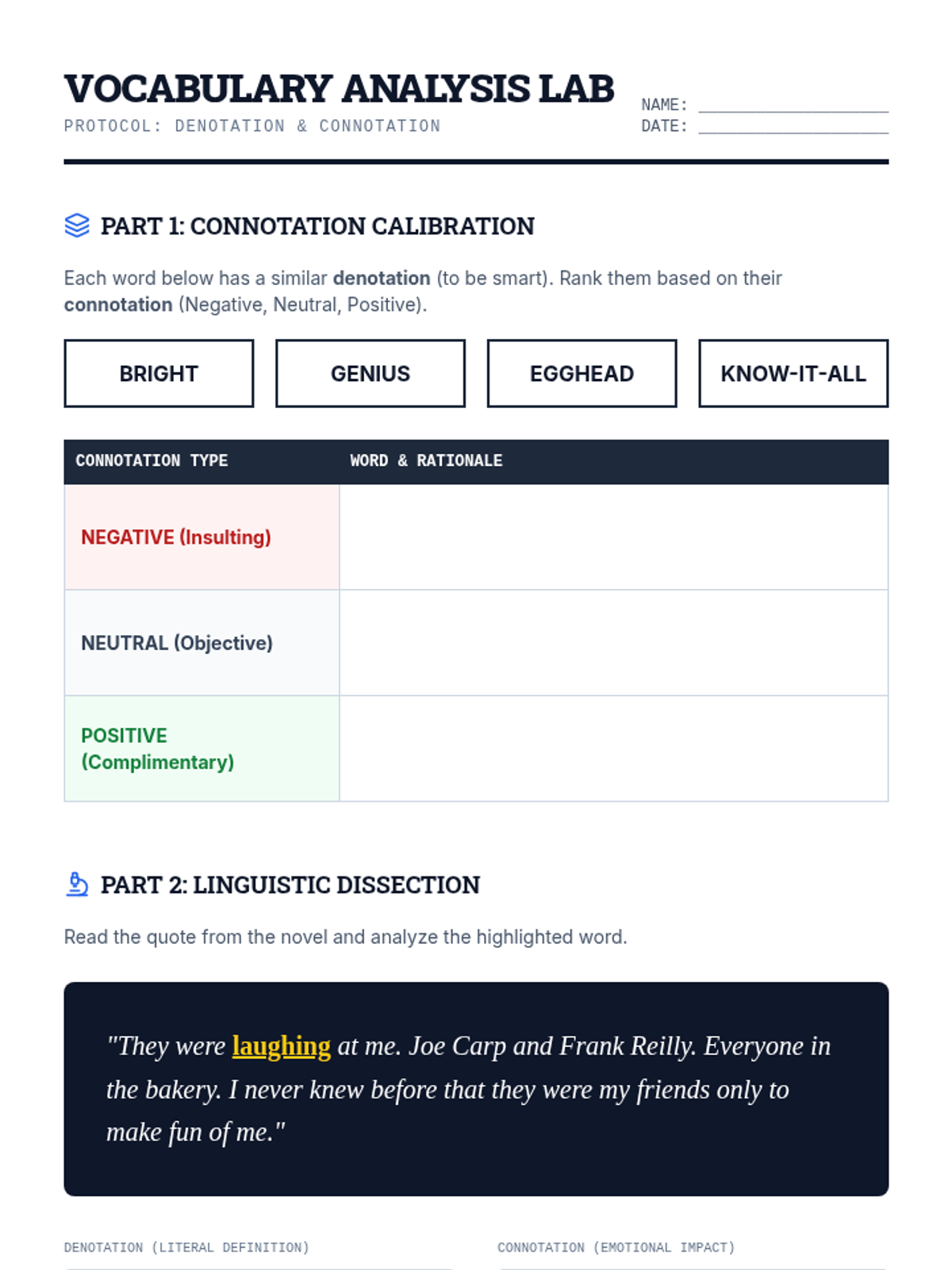
Builds word mastery through parts of speech, Greek and Latin roots, and morphological analysis of prefixes and suffixes. Develops nuanced comprehension using context clues, shades of meaning, and idiomatic expressions.
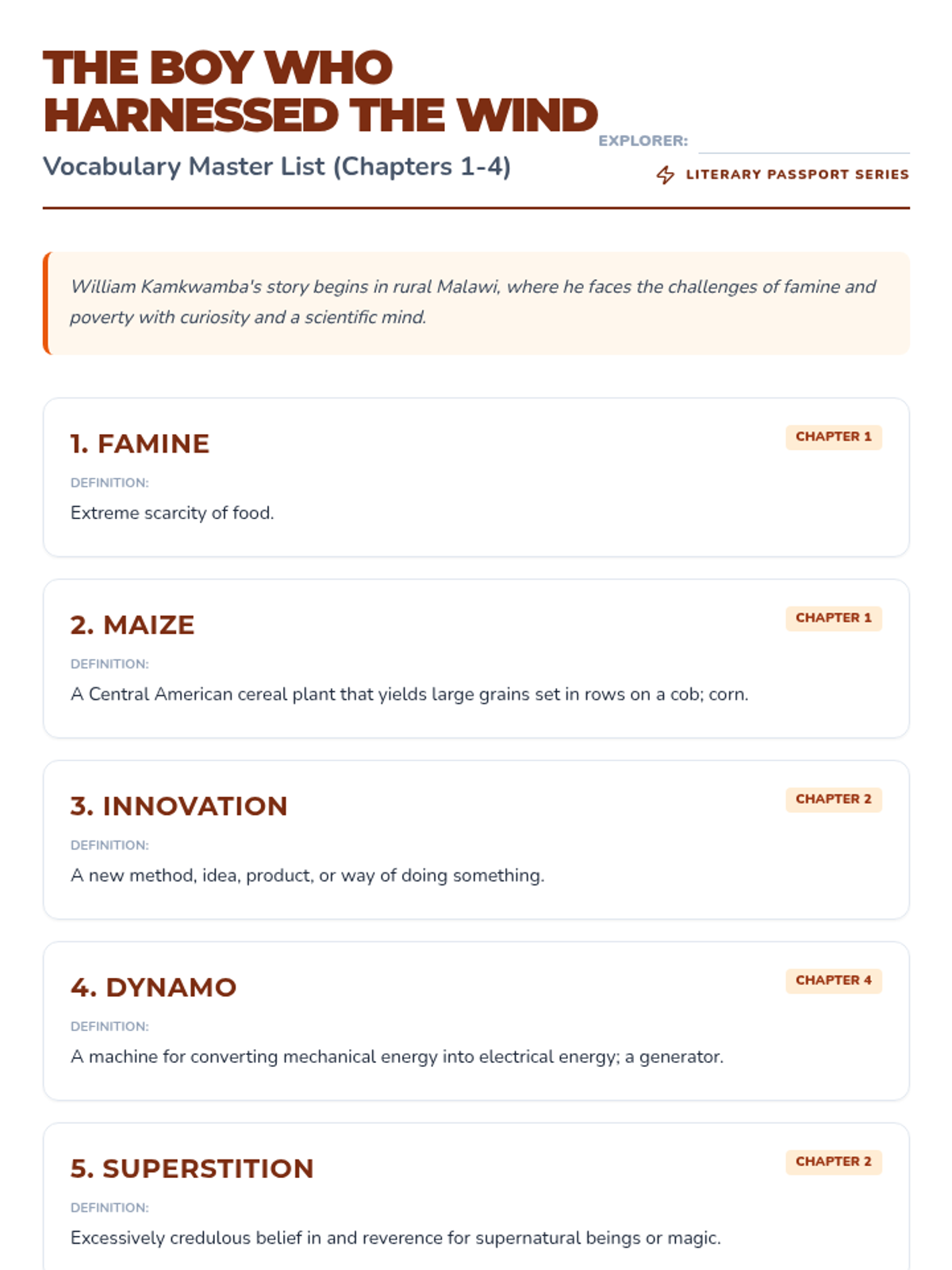
Vocabulary study for the first four chapters of William Kamkwamba's memoir about building a windmill in Malawi.
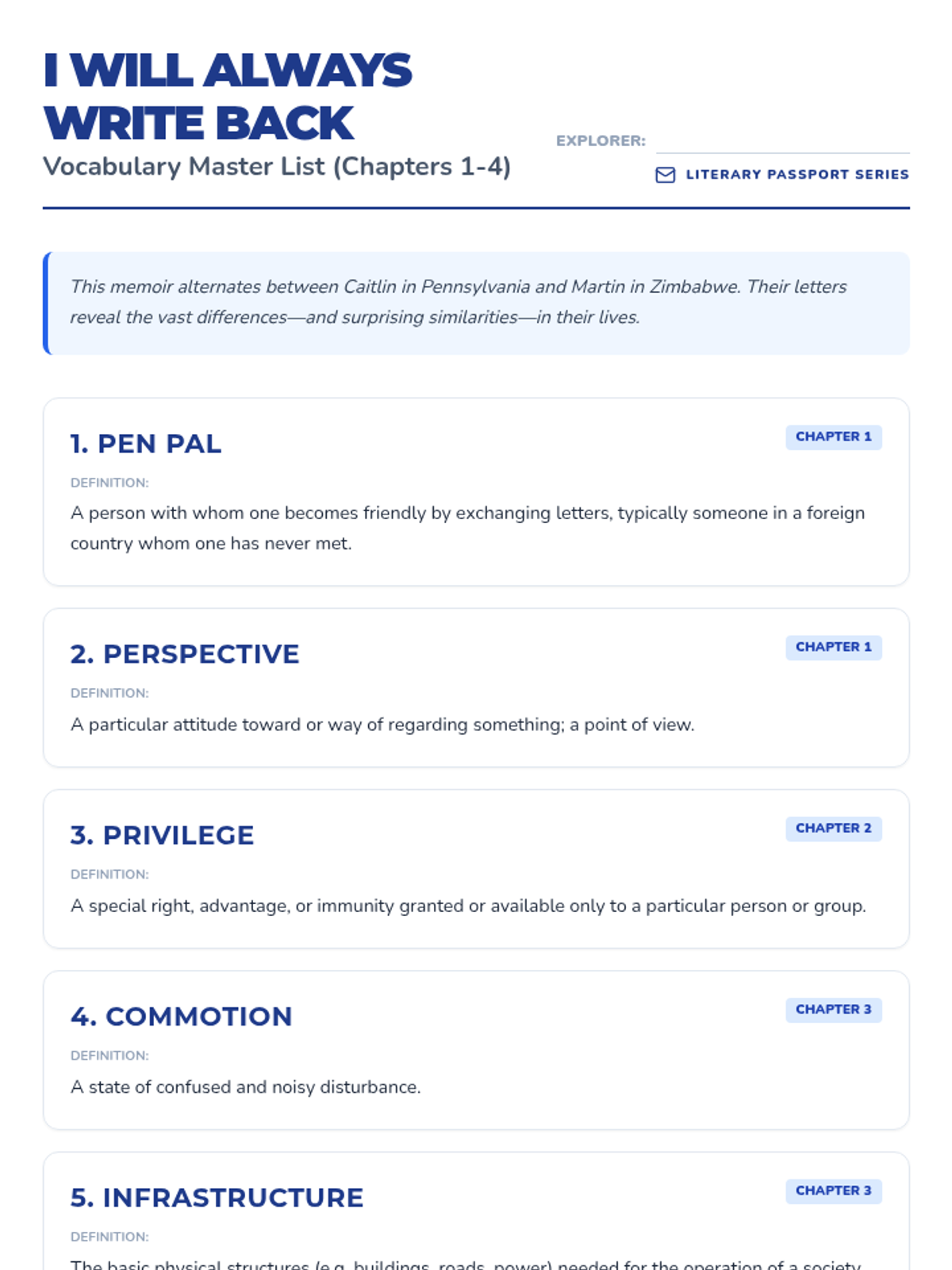
Vocabulary study for the first four chapters of the dual-narrative memoir about a life-changing pen pal relationship.
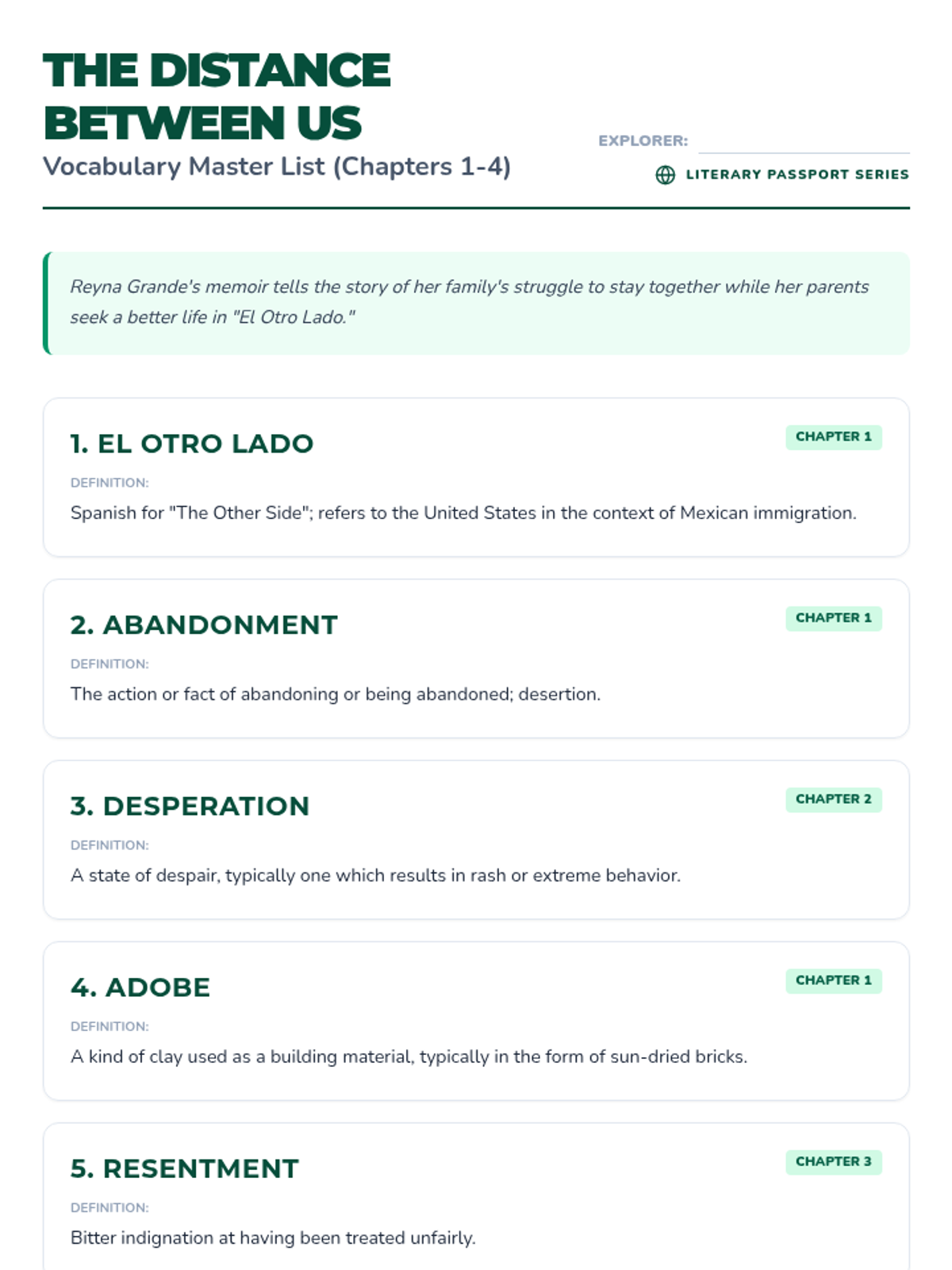
Vocabulary study for the first four chapters of Reyna Grande's memoir about her journey from Mexico to the United States.
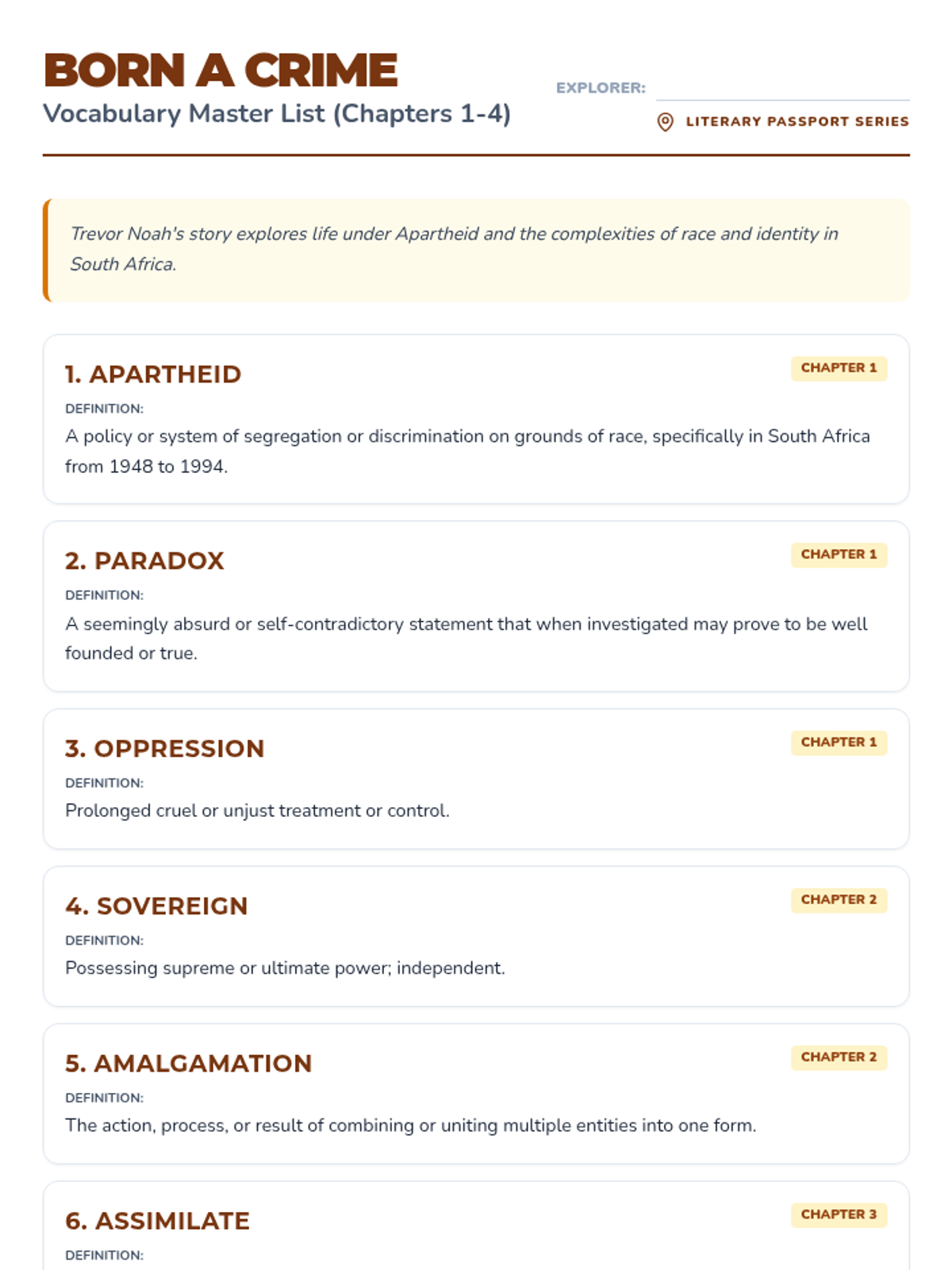
Vocabulary study for the first four chapters of Trevor Noah's memoir about growing up in apartheid-era South Africa.
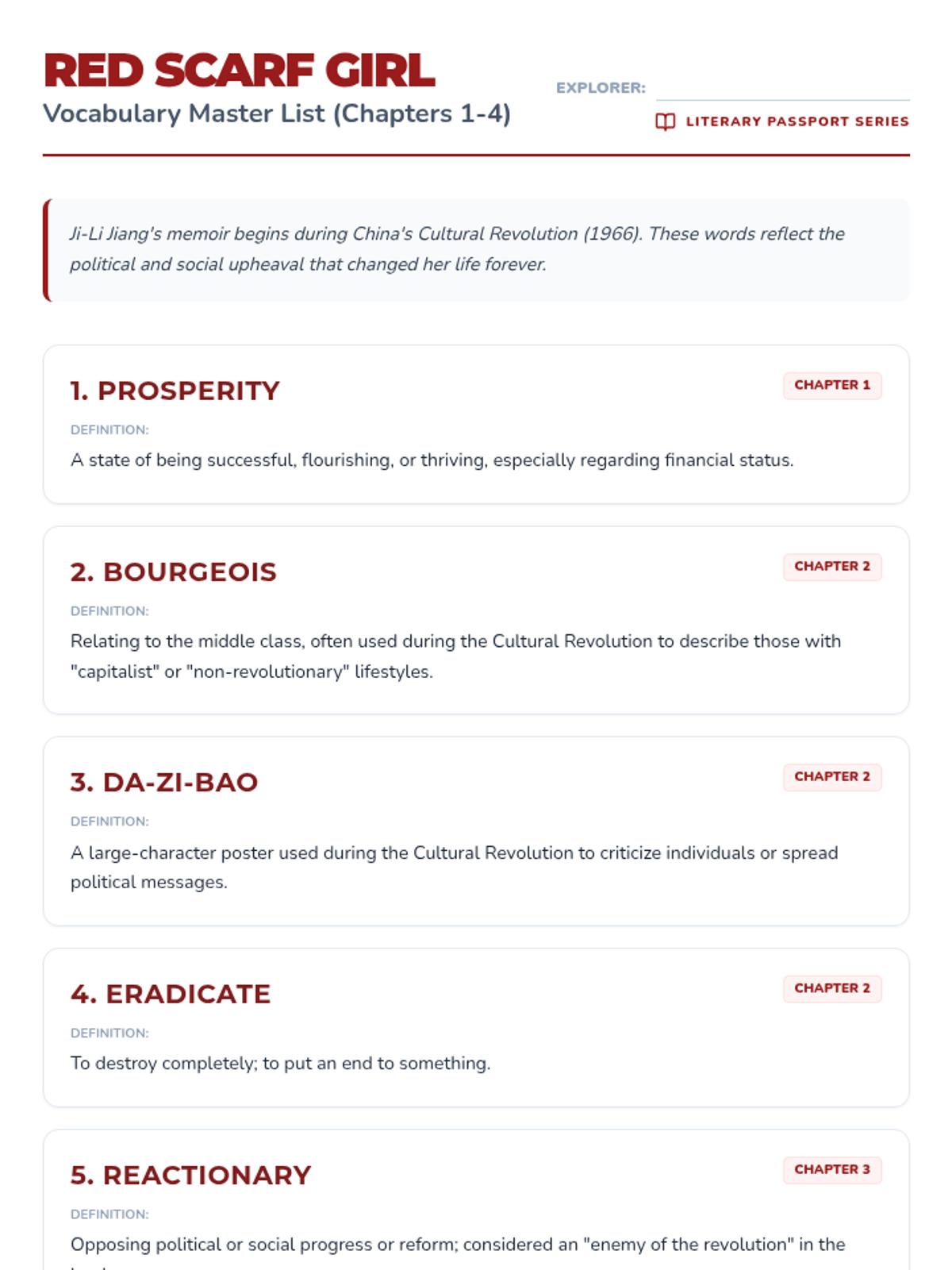
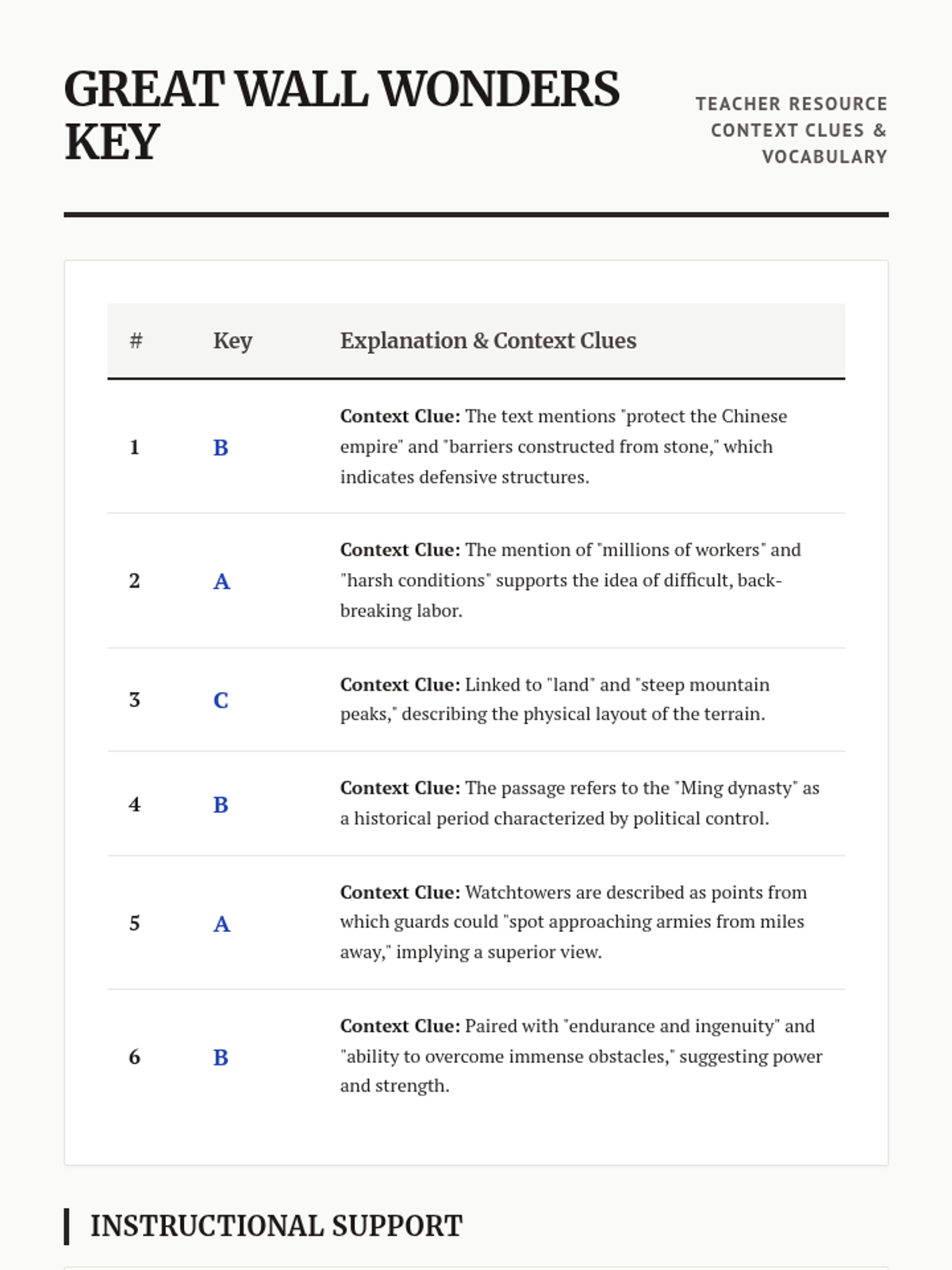
Vocabulary study for the first four chapters of Ji-Li Jiang's memoir about the Cultural Revolution in China.
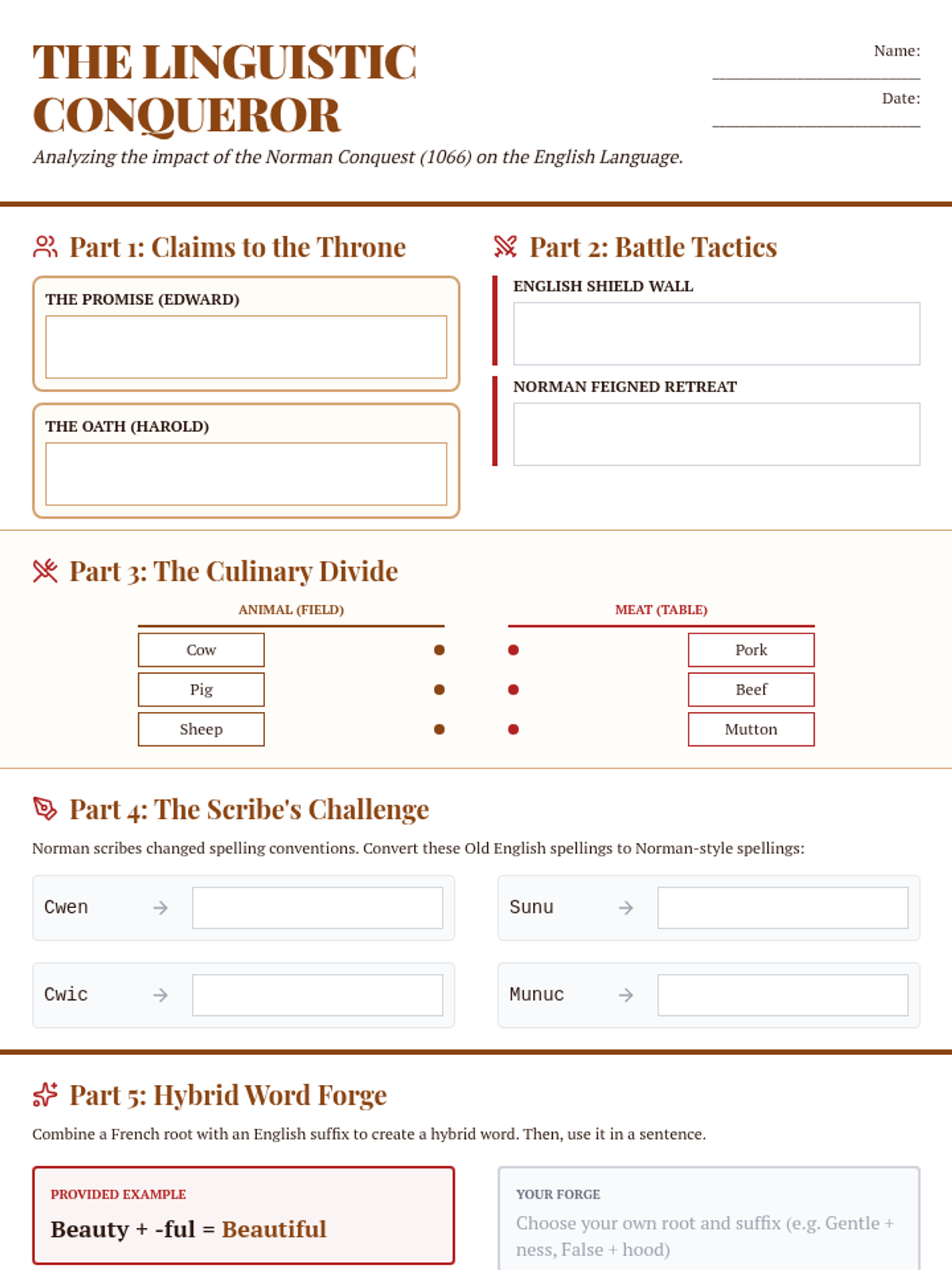
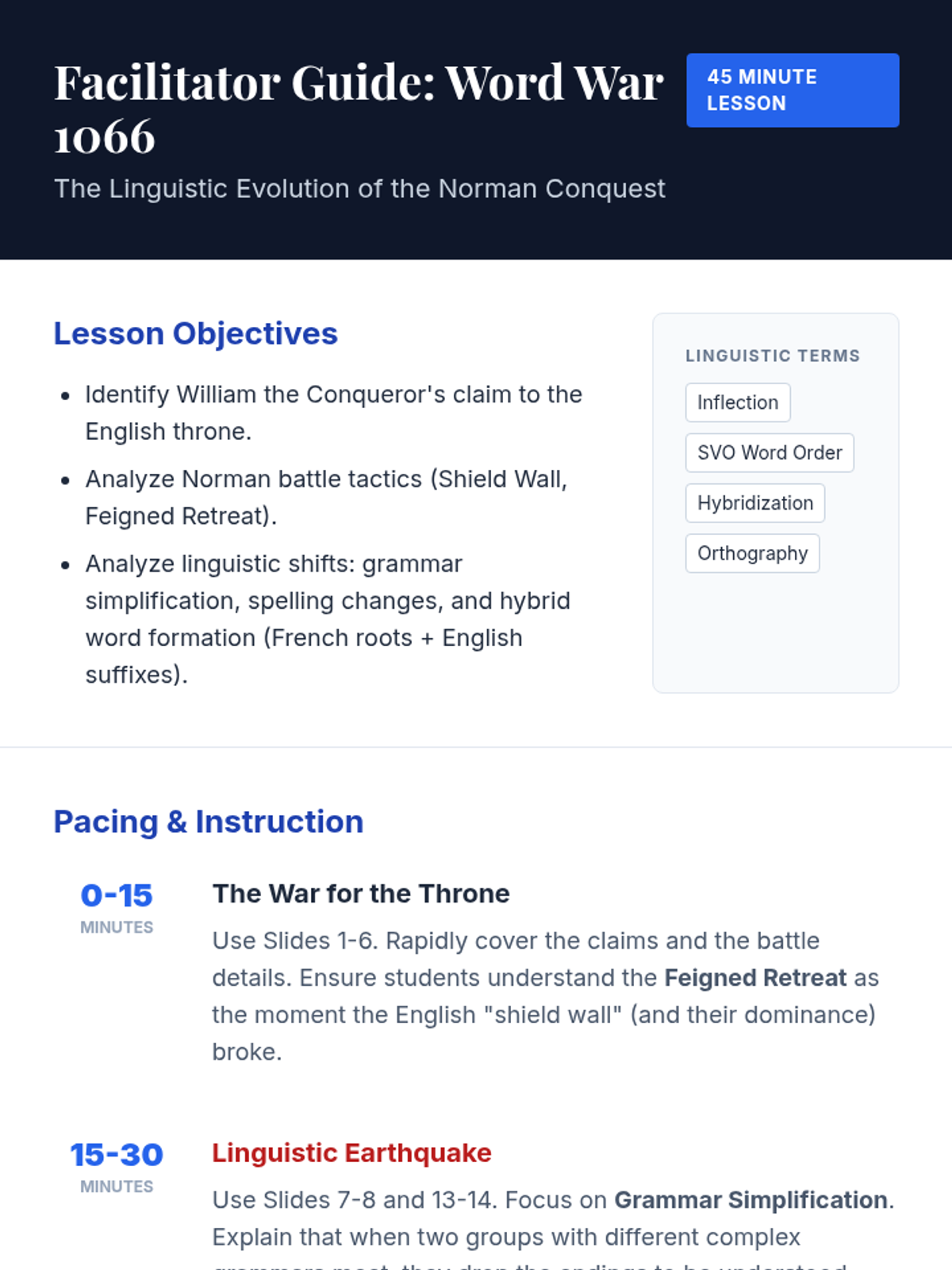
A lesson exploring the Battle of Hastings and its profound impact on the English language, tracing how the Norman Conquest introduced French vocabulary and transformed Old English into the ancestor of modern English.
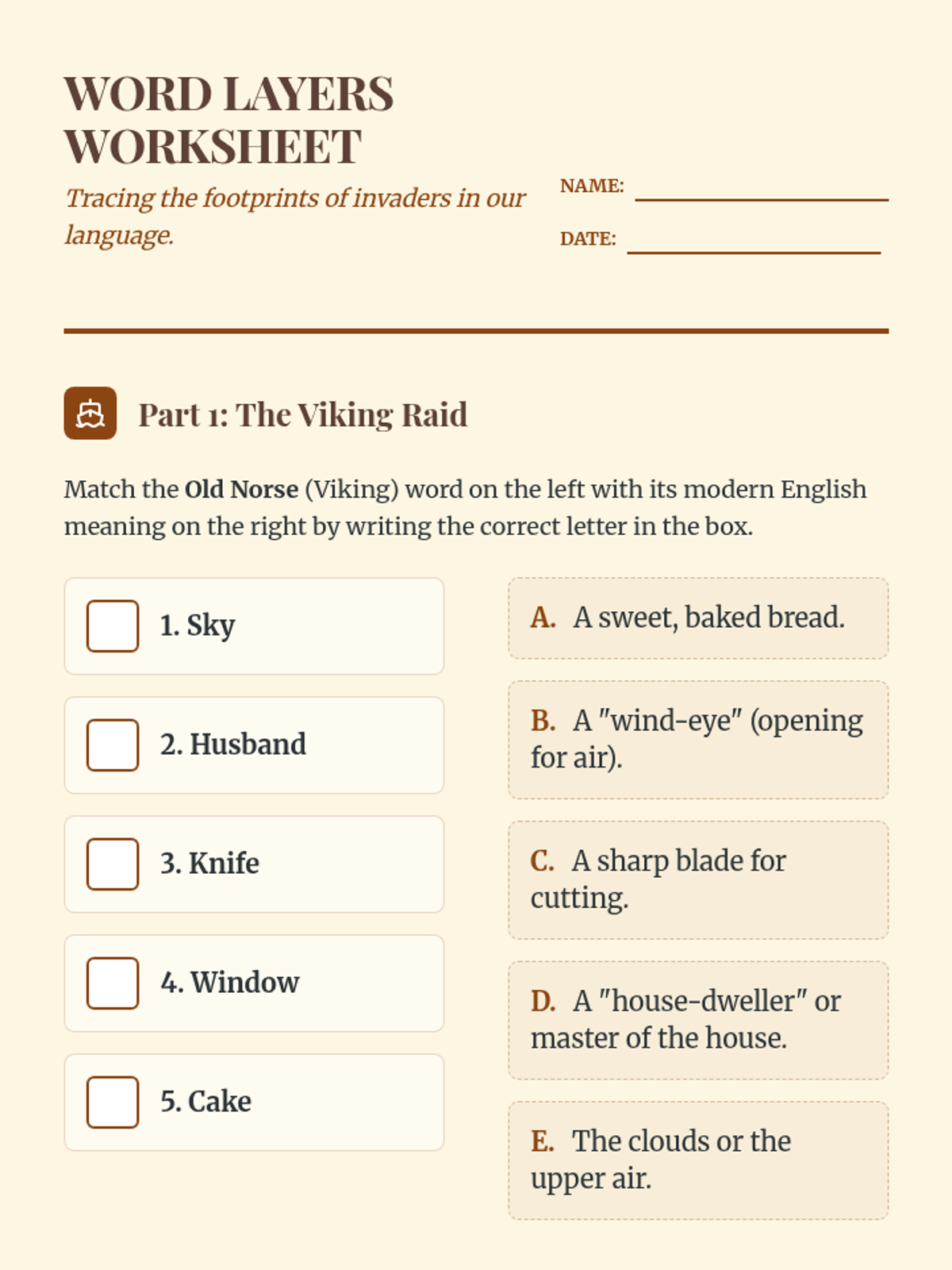
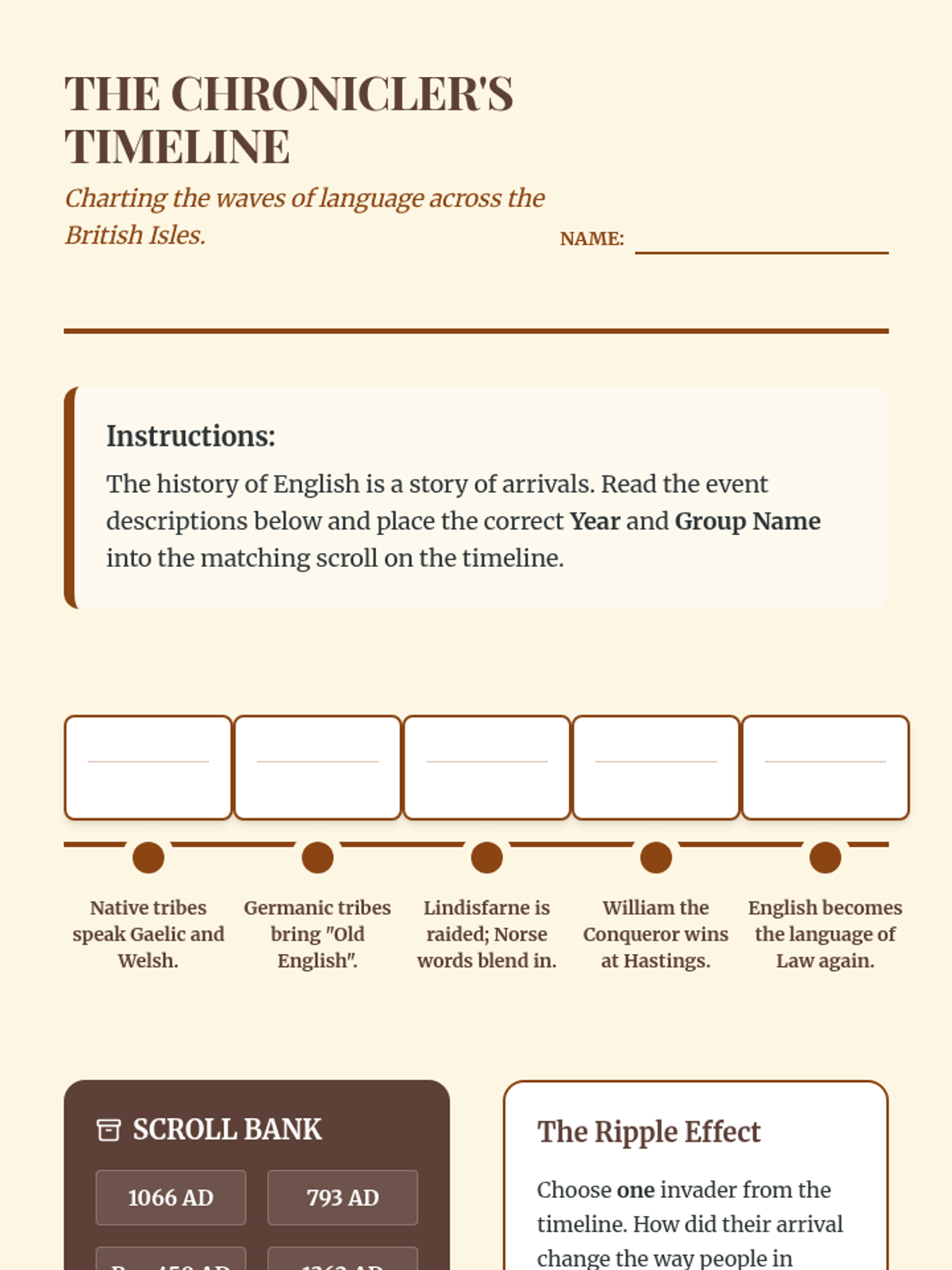
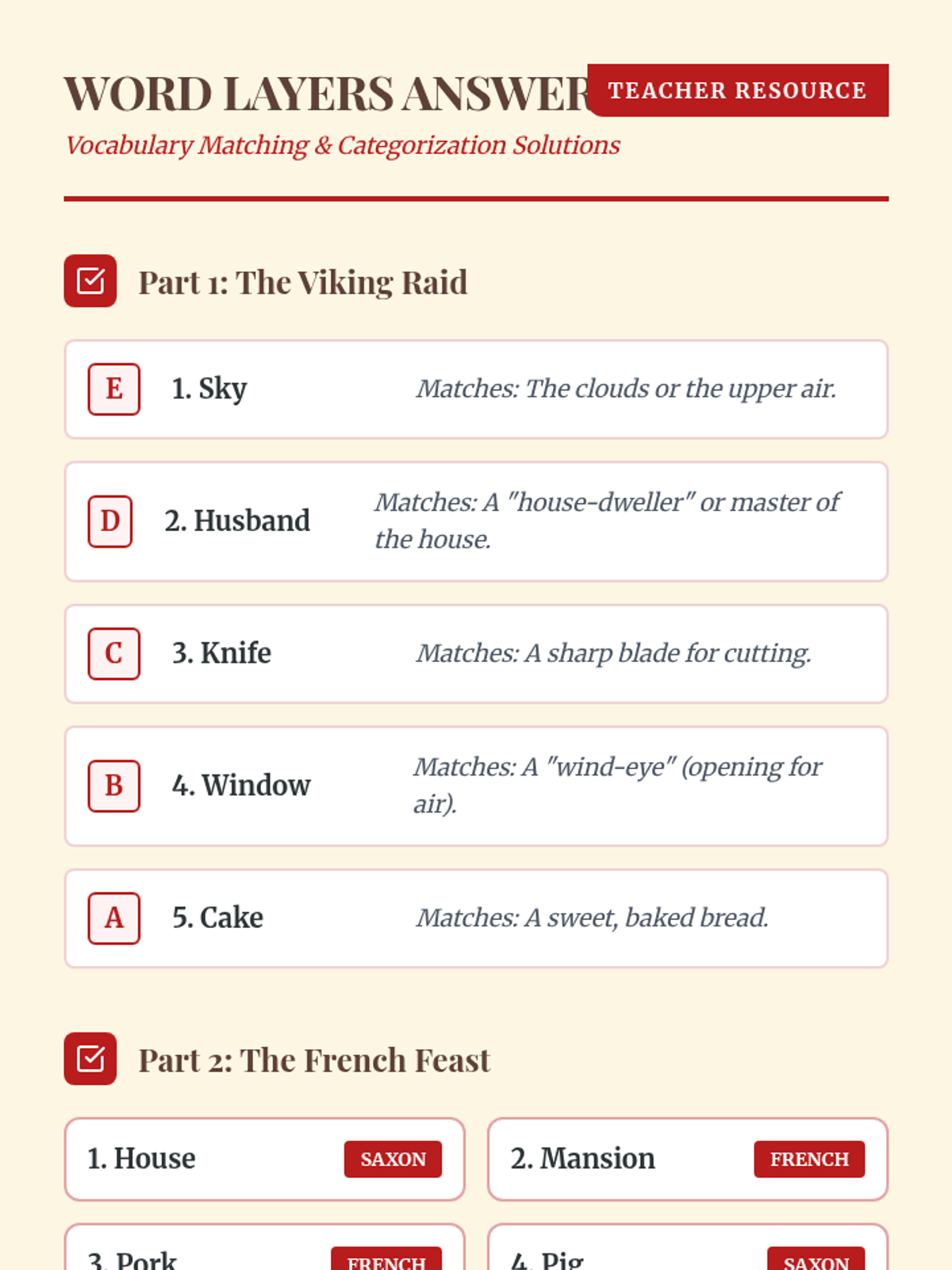
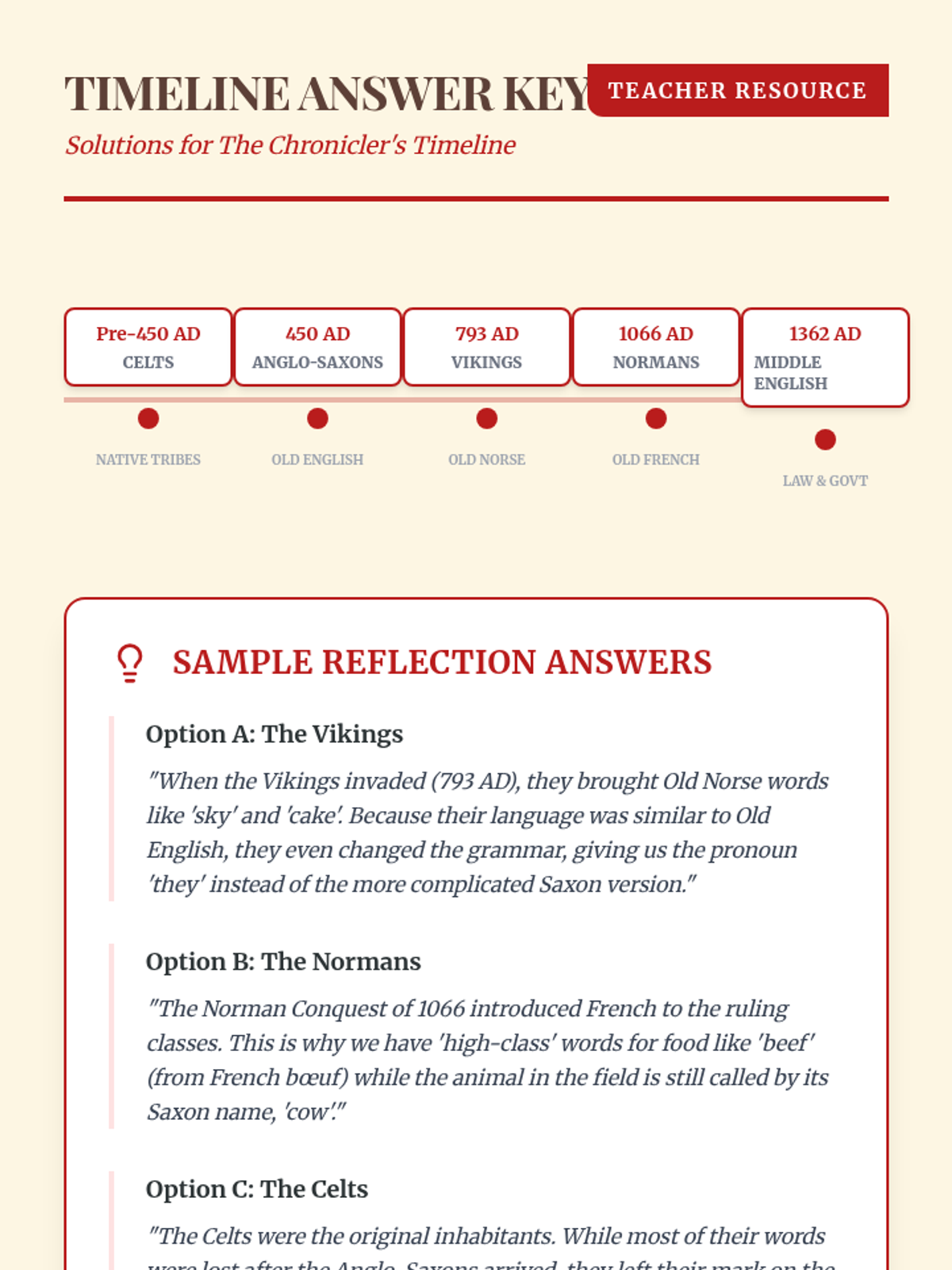
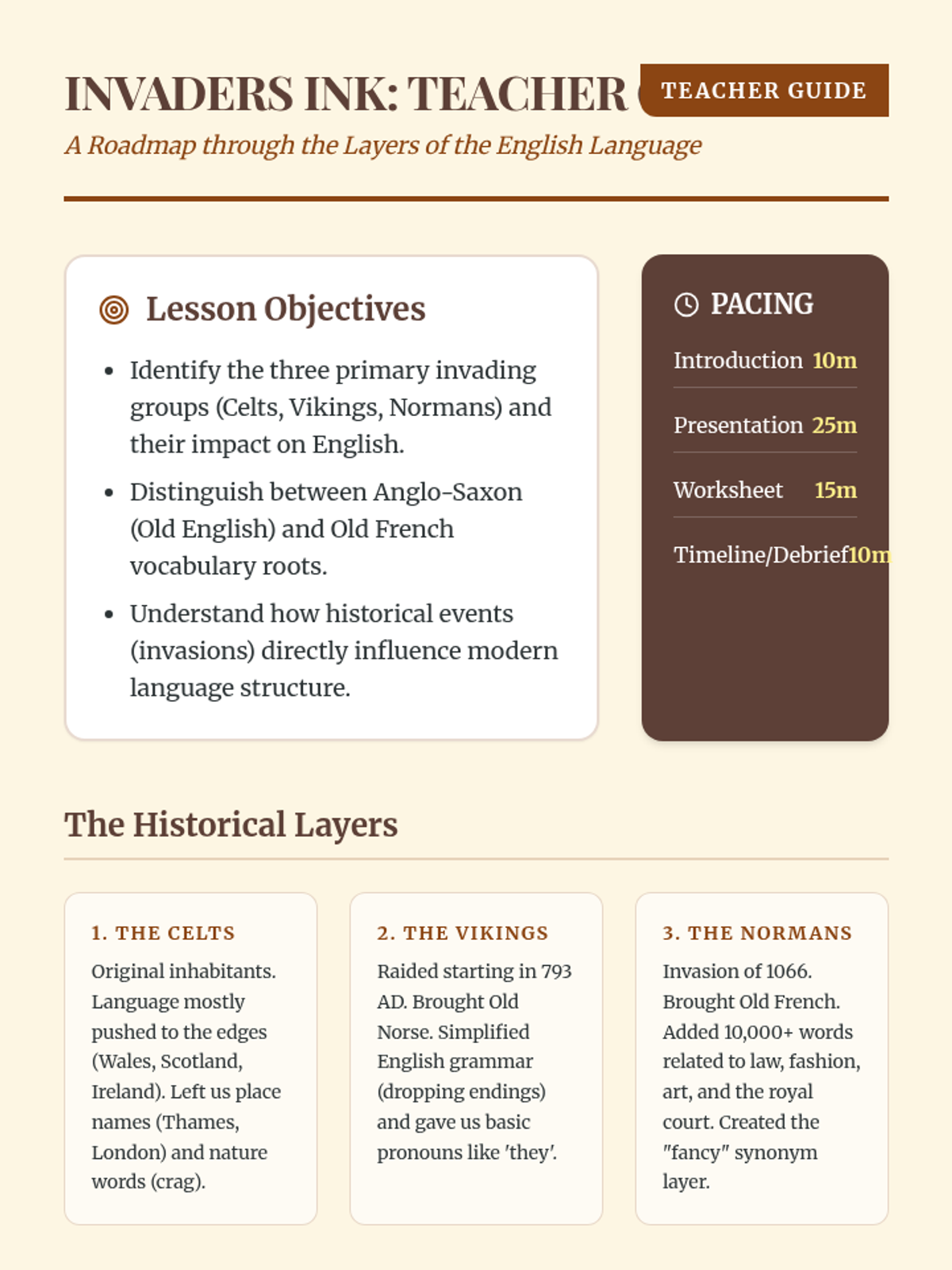
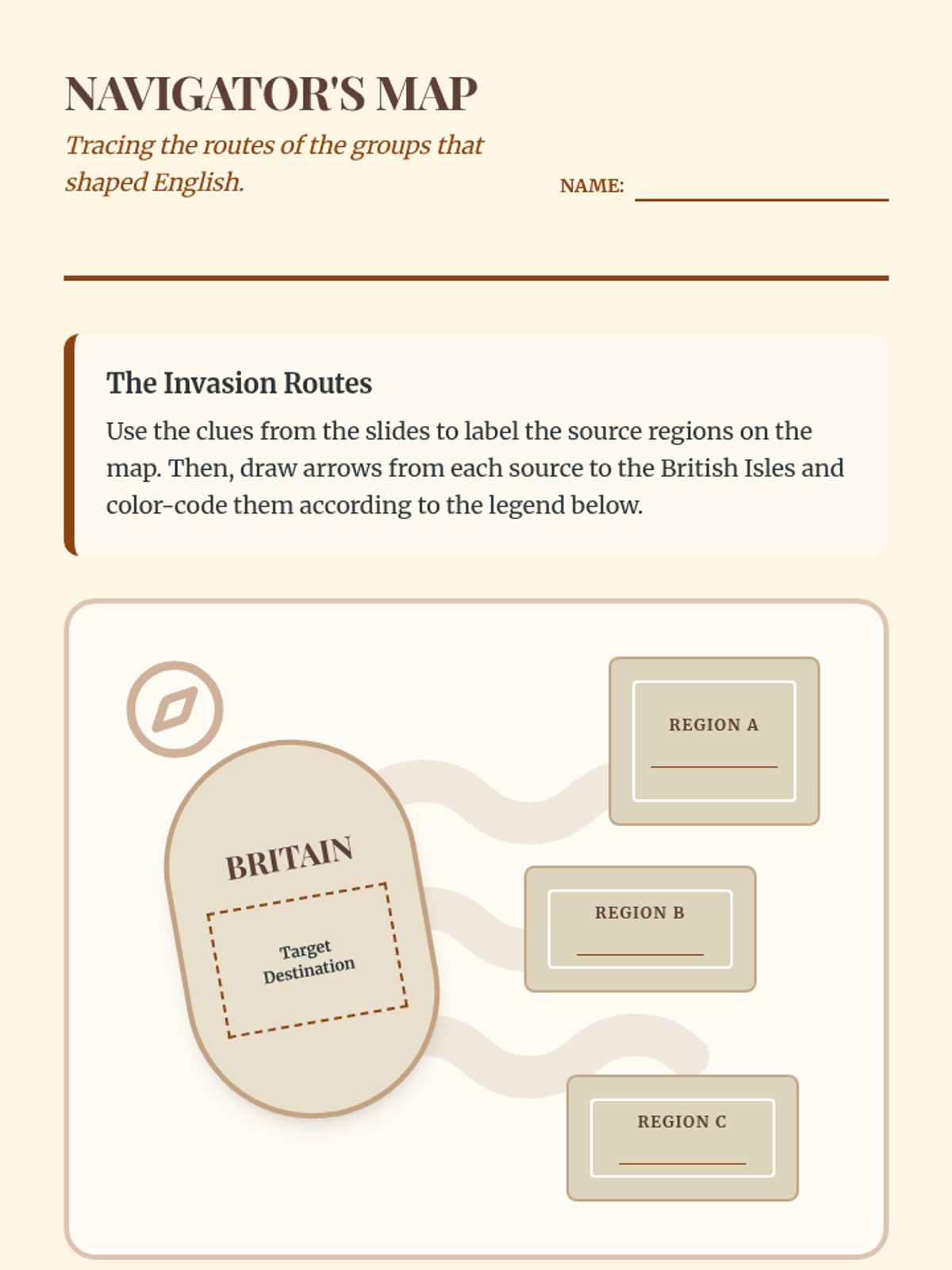
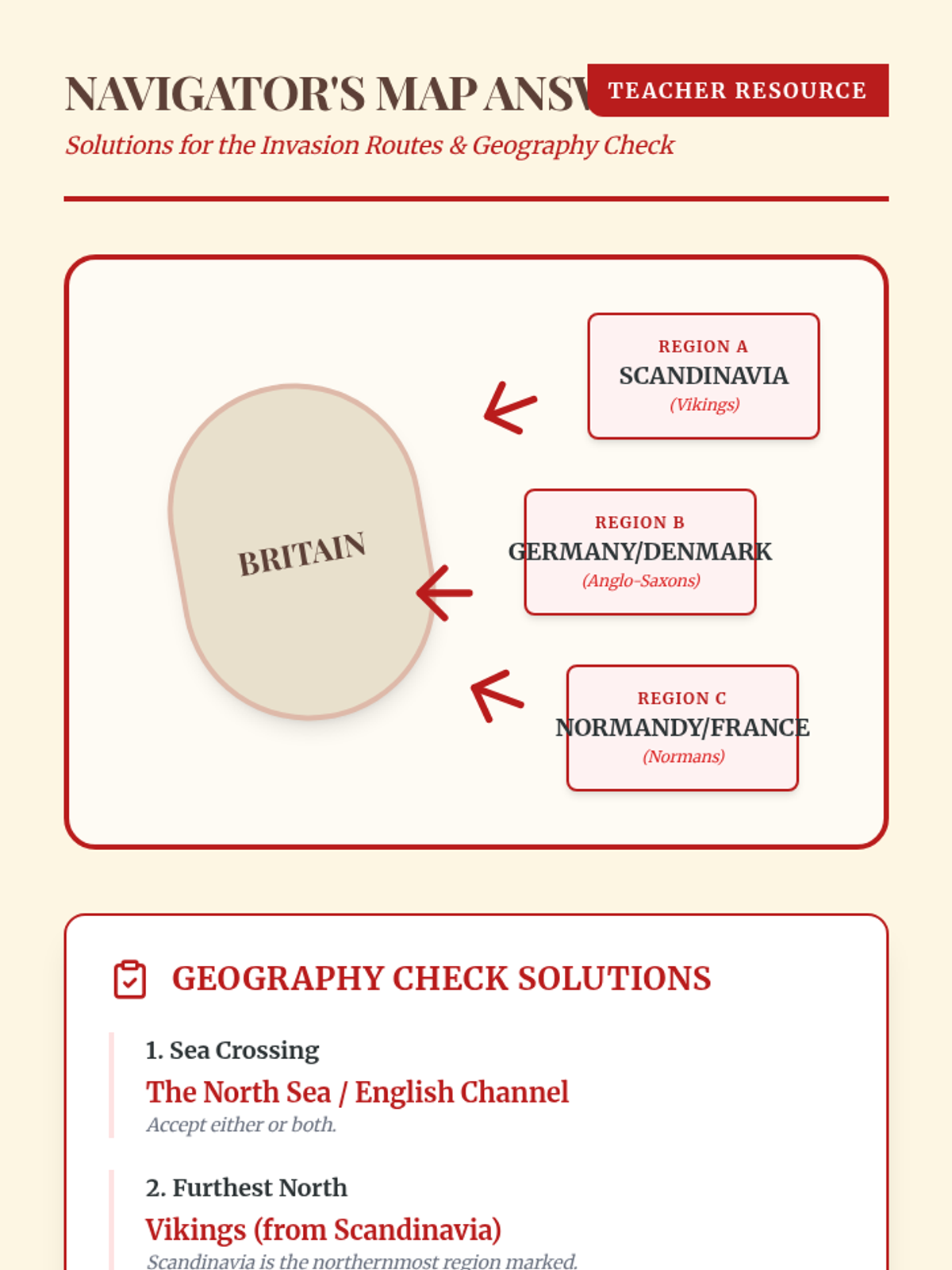
This lesson explores the historical layers of the English language, focusing on how invasions by the Celts, Vikings, and French shaped the vocabulary and grammar we use today. Students will trace the timeline from Old English to the Norman Conquest.
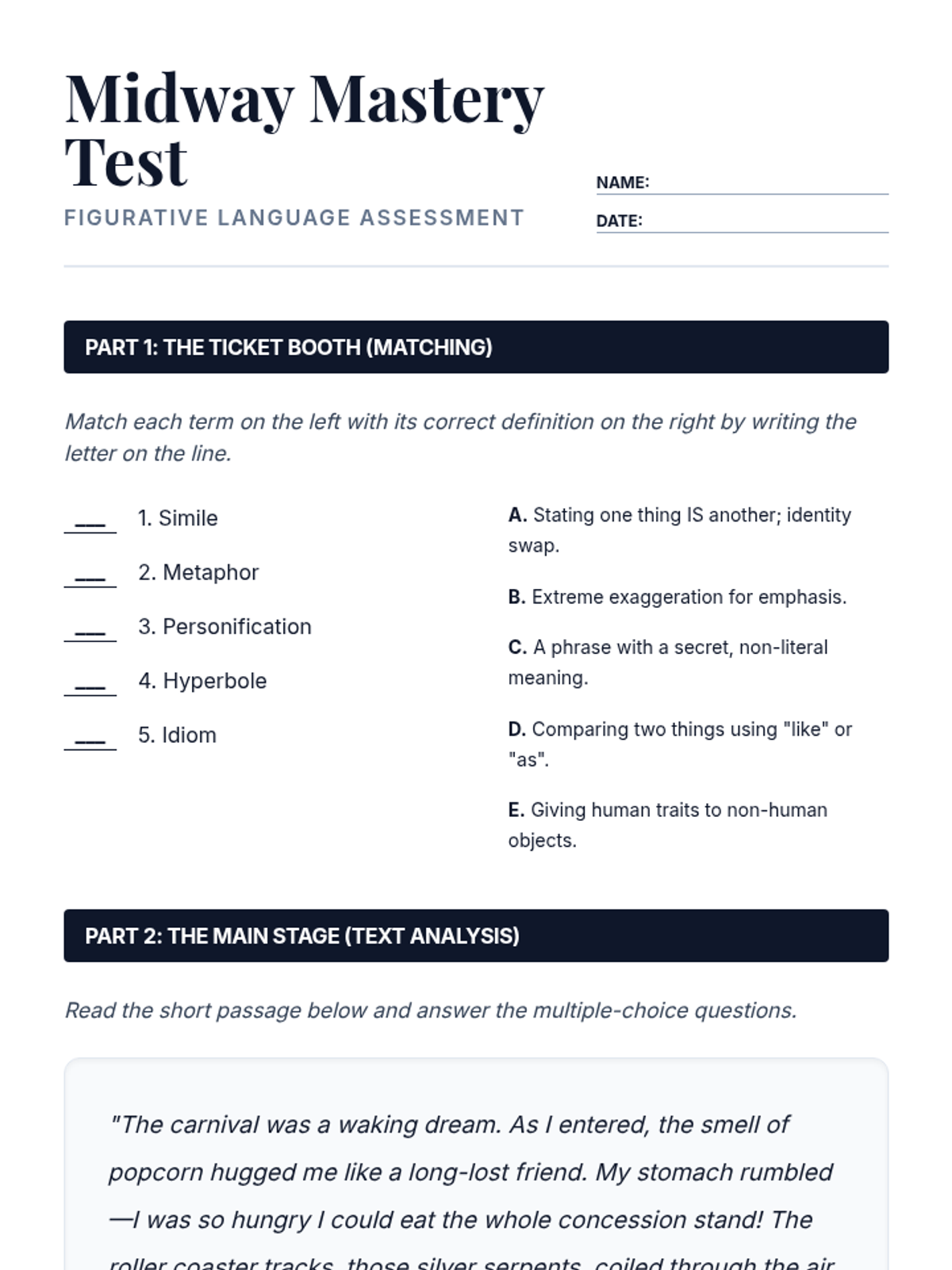
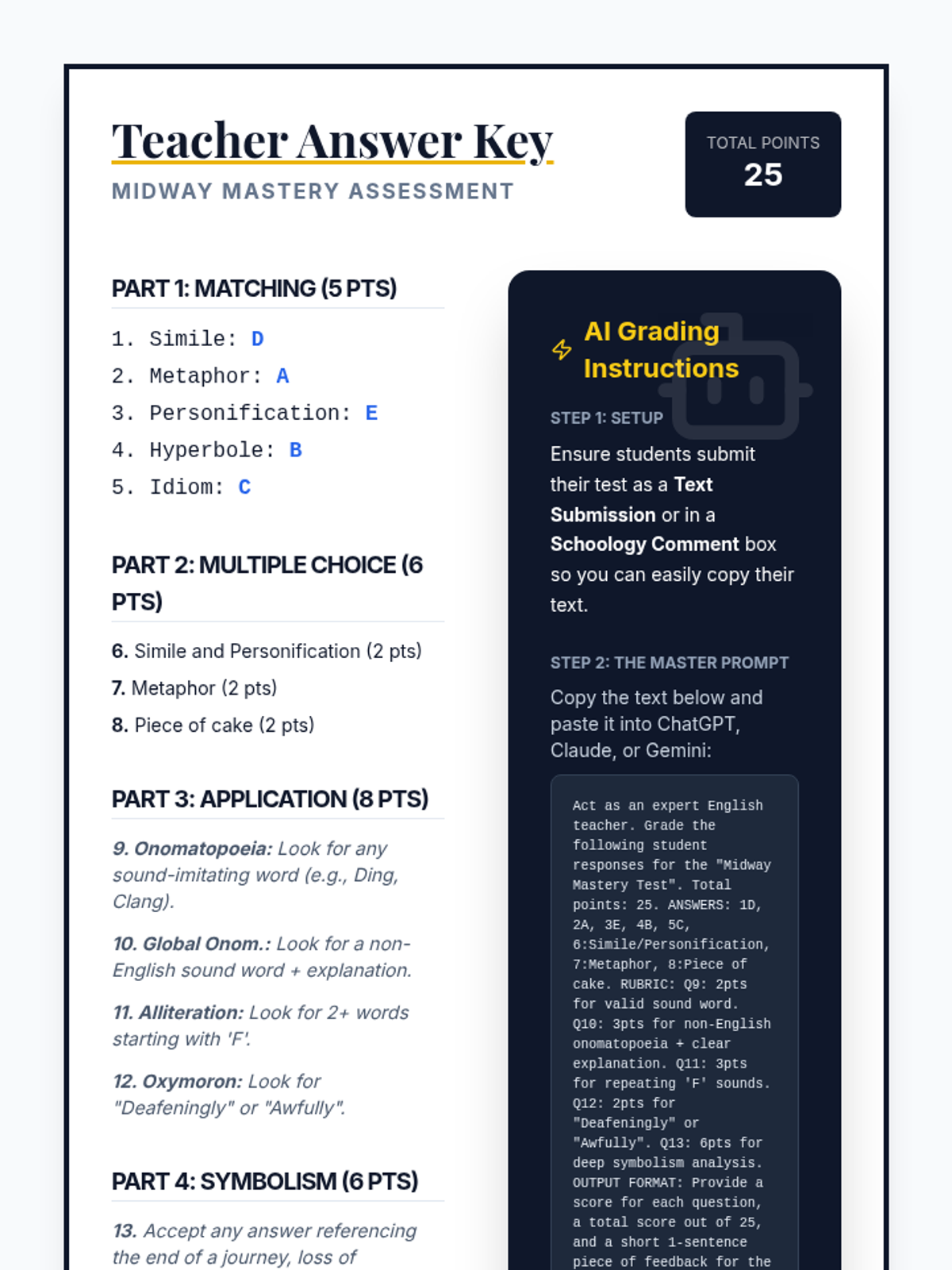
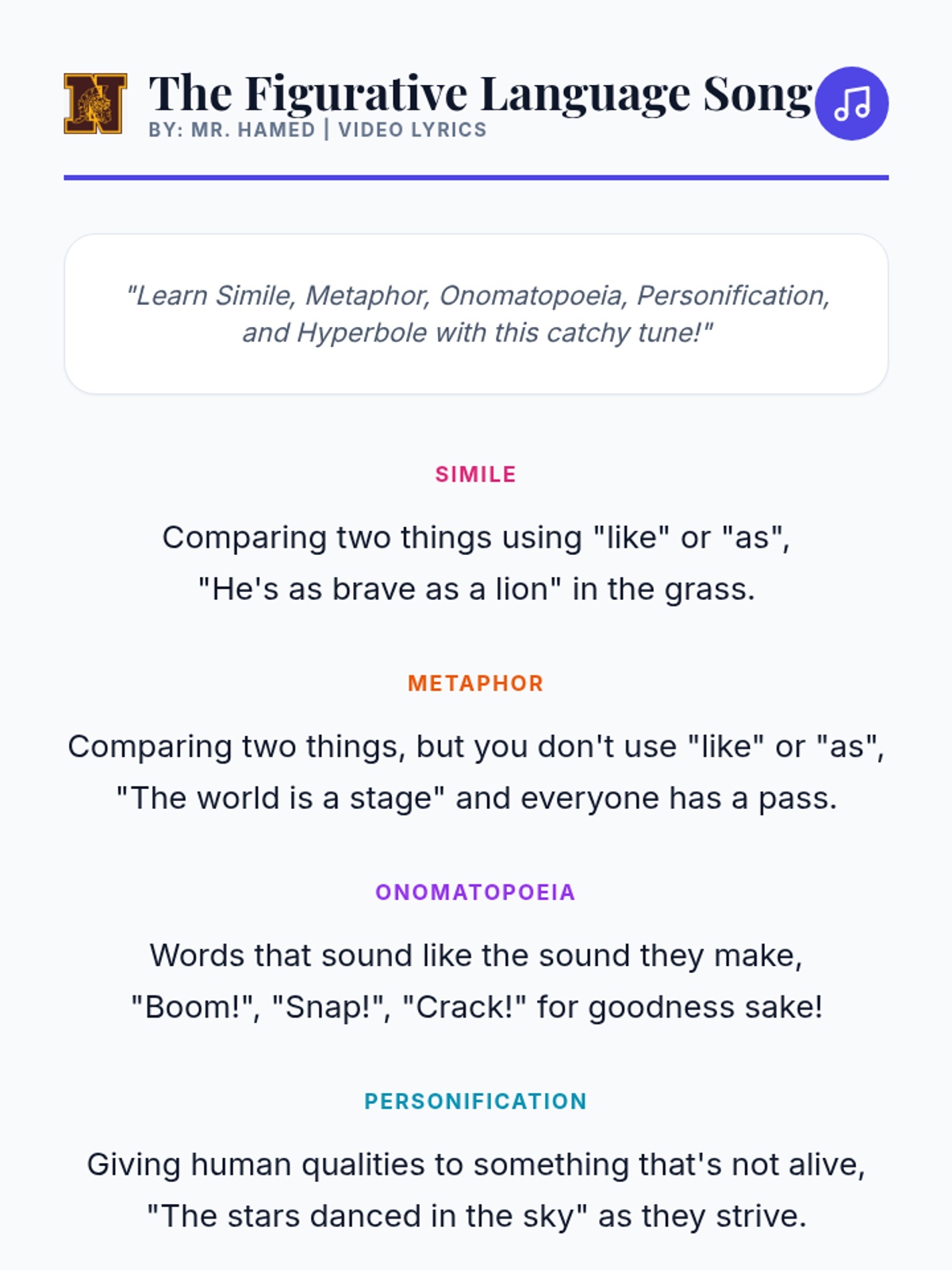
A complete lesson covering similes, metaphors, idioms, personification, hyperbole, onomatopoeia, alliteration, oxymoron, and symbolism through direct instruction and guided practice.
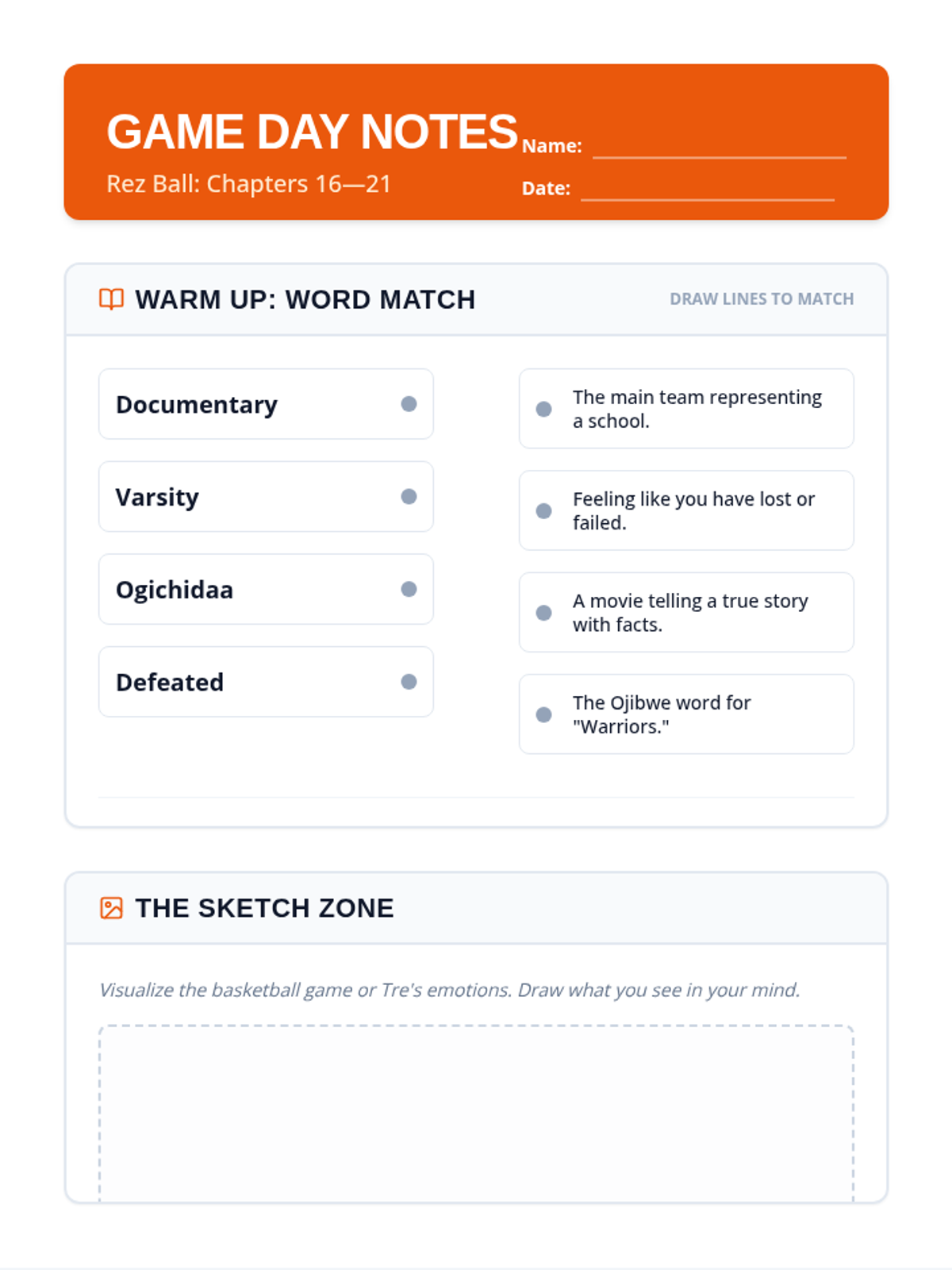
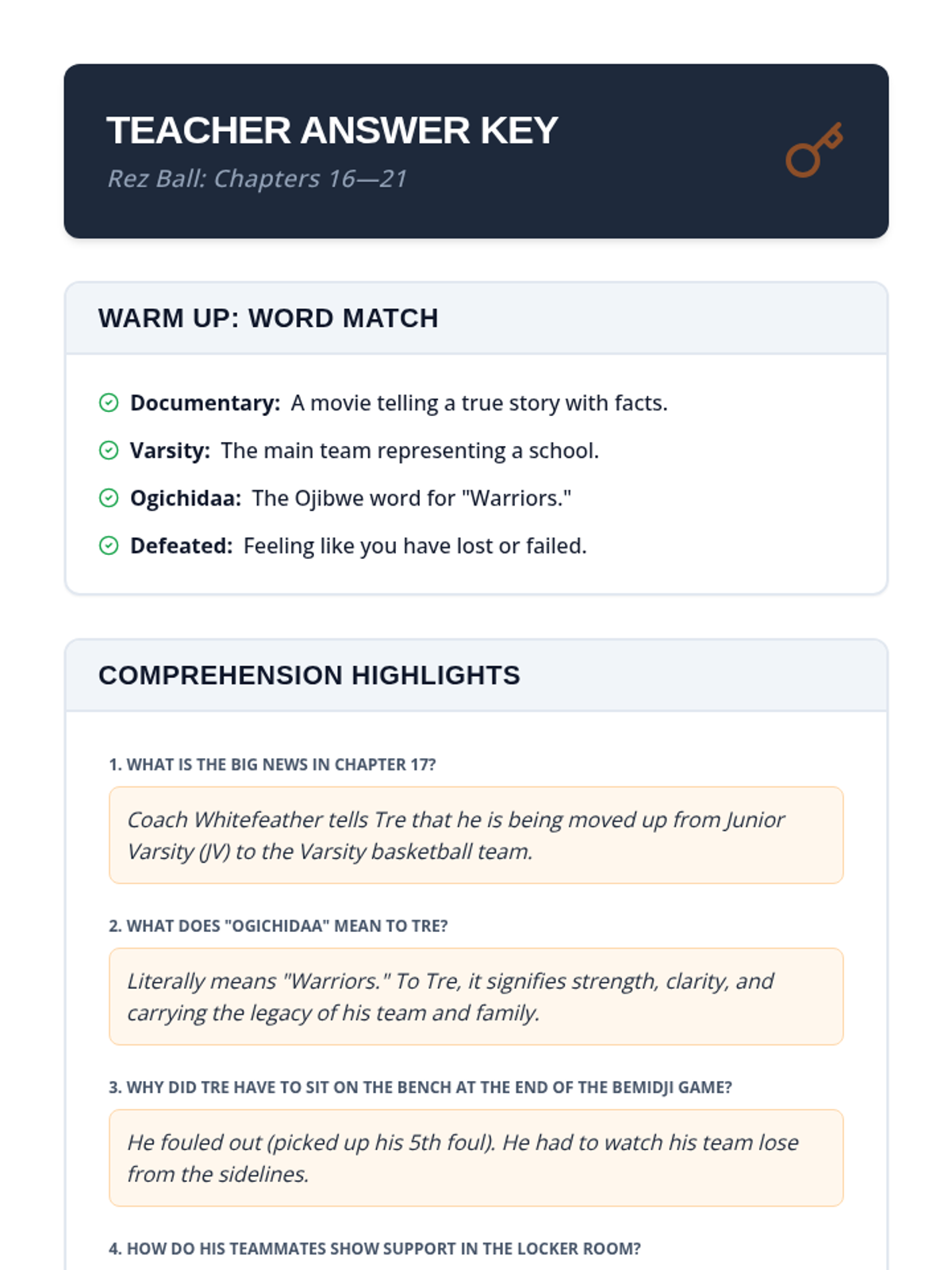
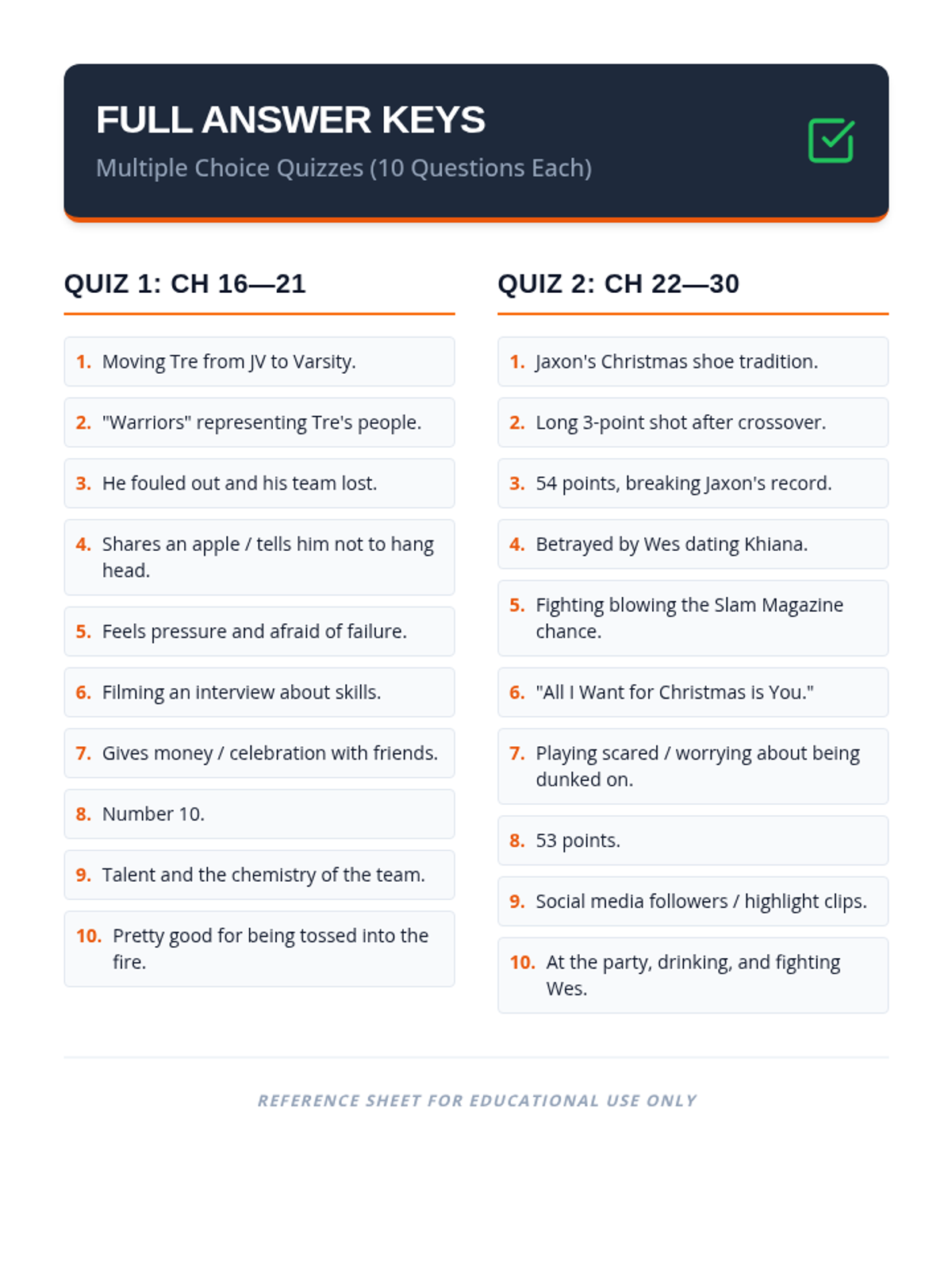
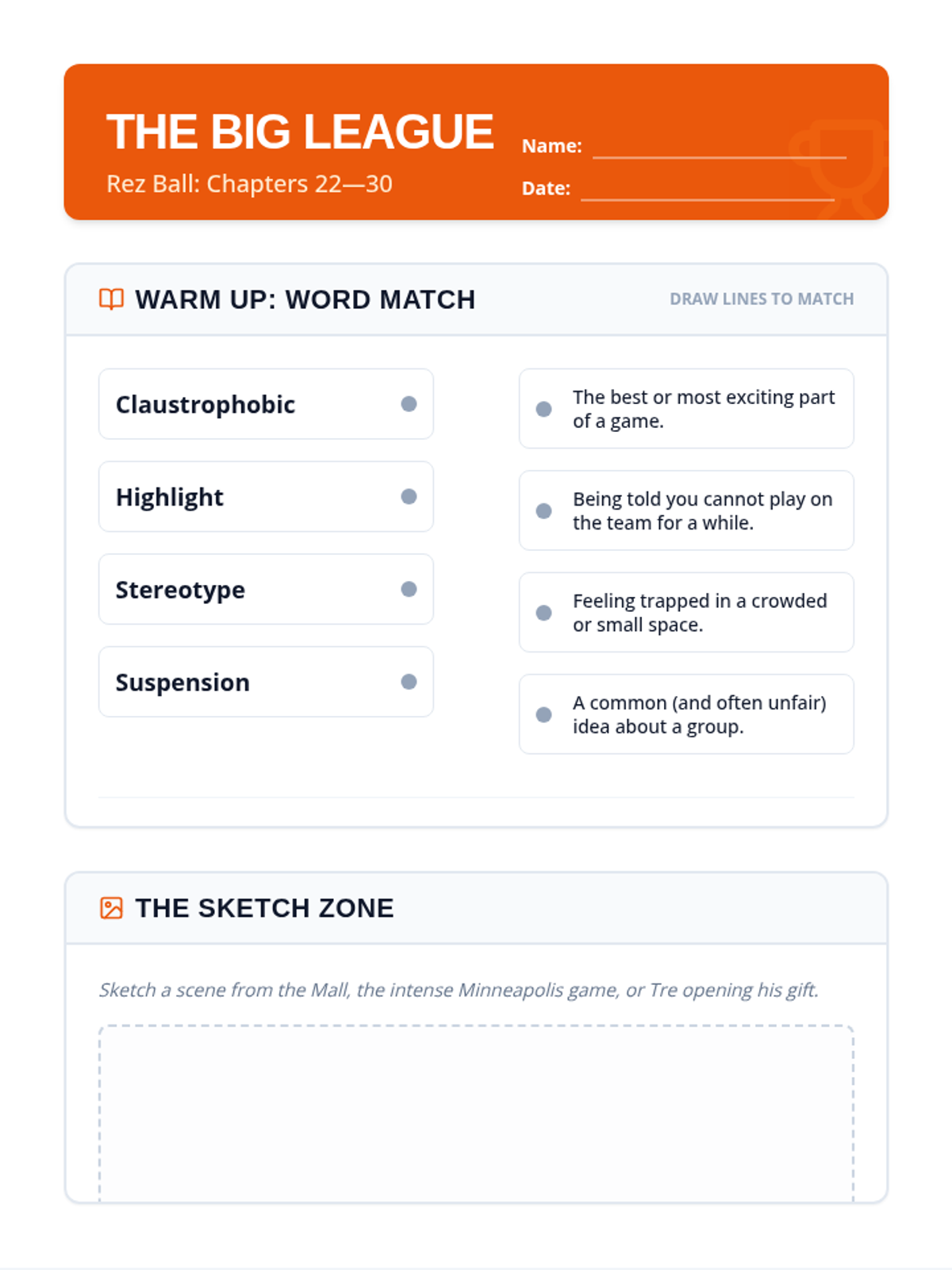
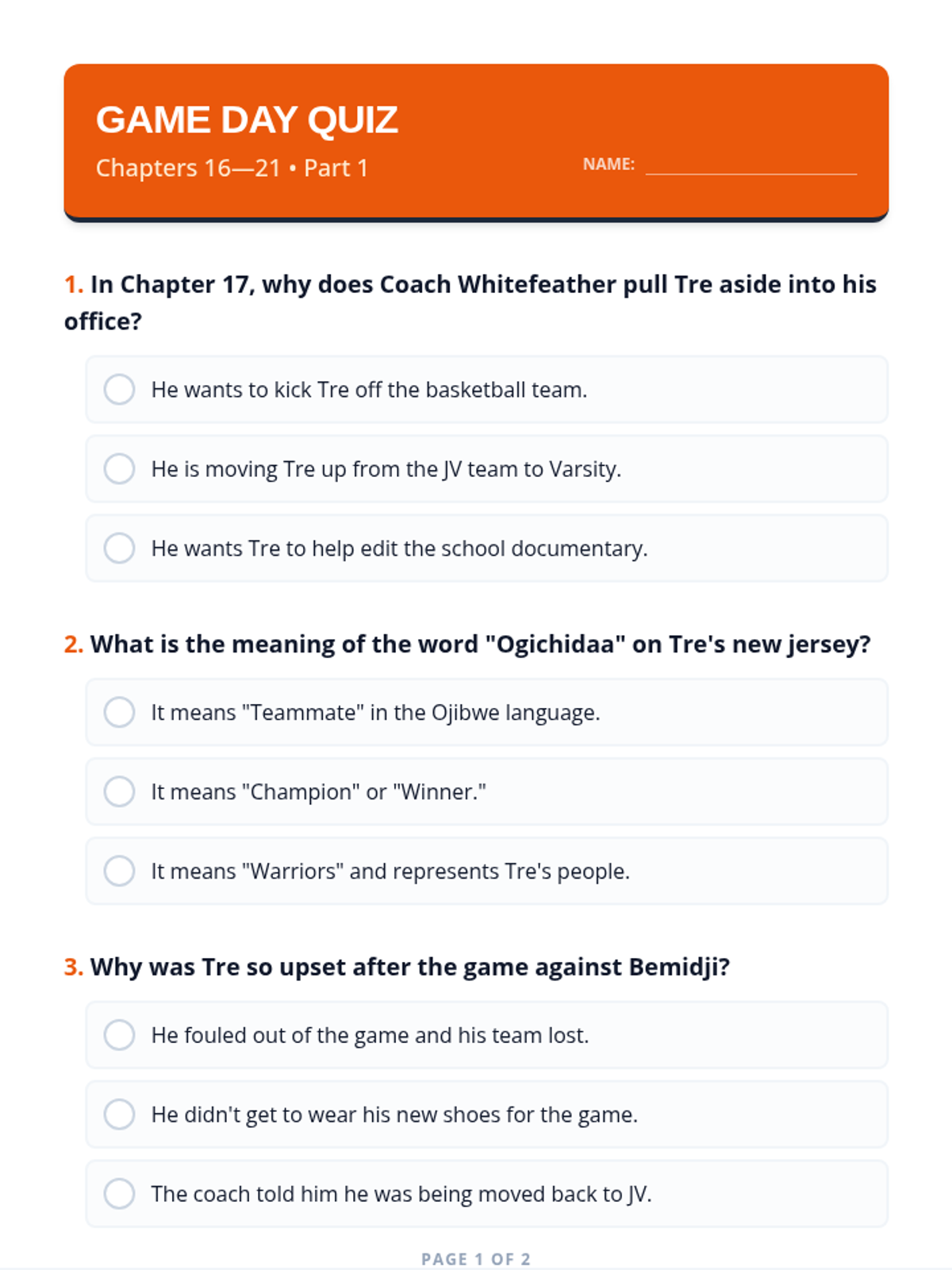
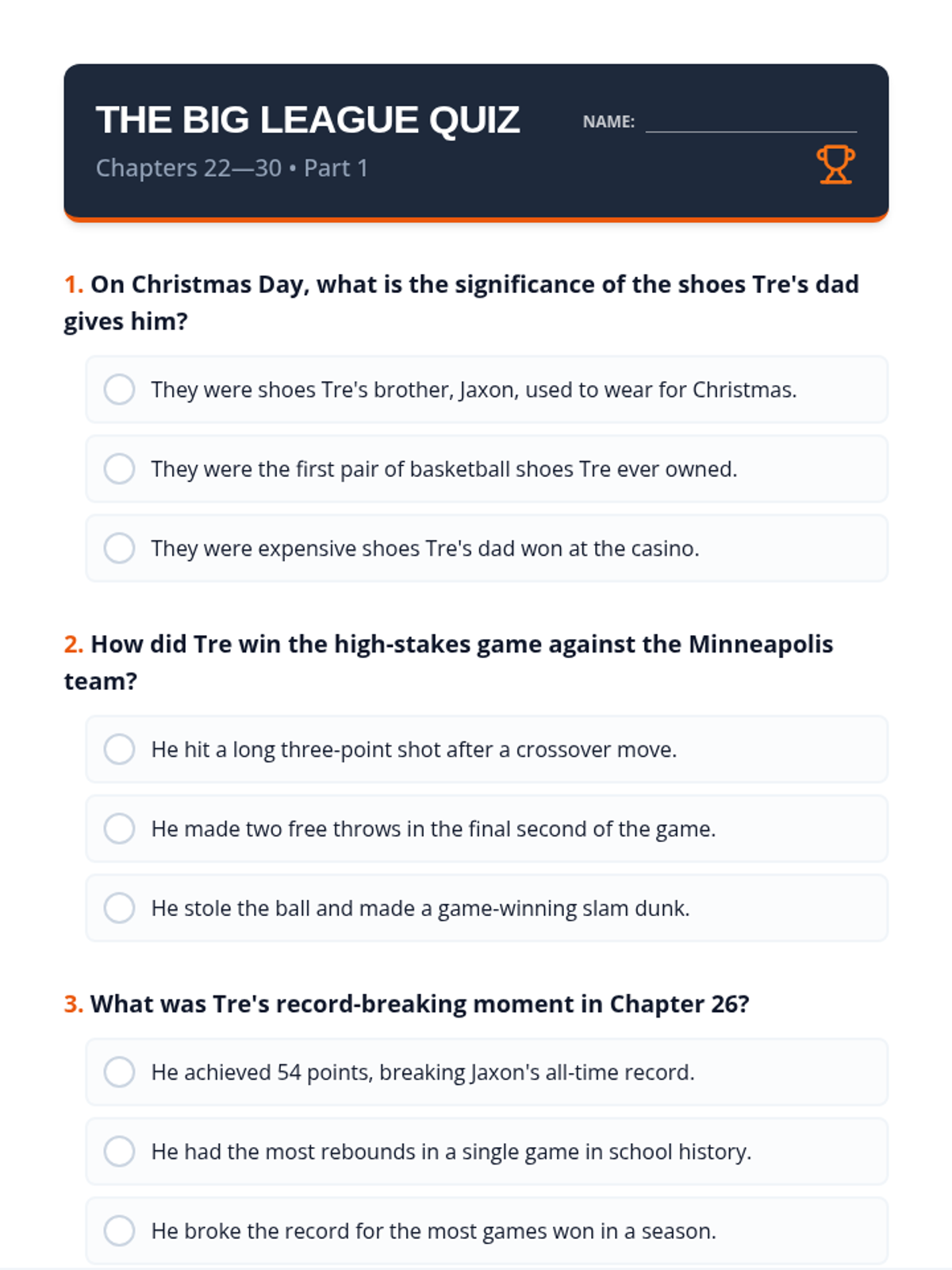
A reading guide and comprehension worksheet for Chapters 16-21 of 'Rez Ball', designed for 7th-grade Resource Room students to use during a class read-aloud.
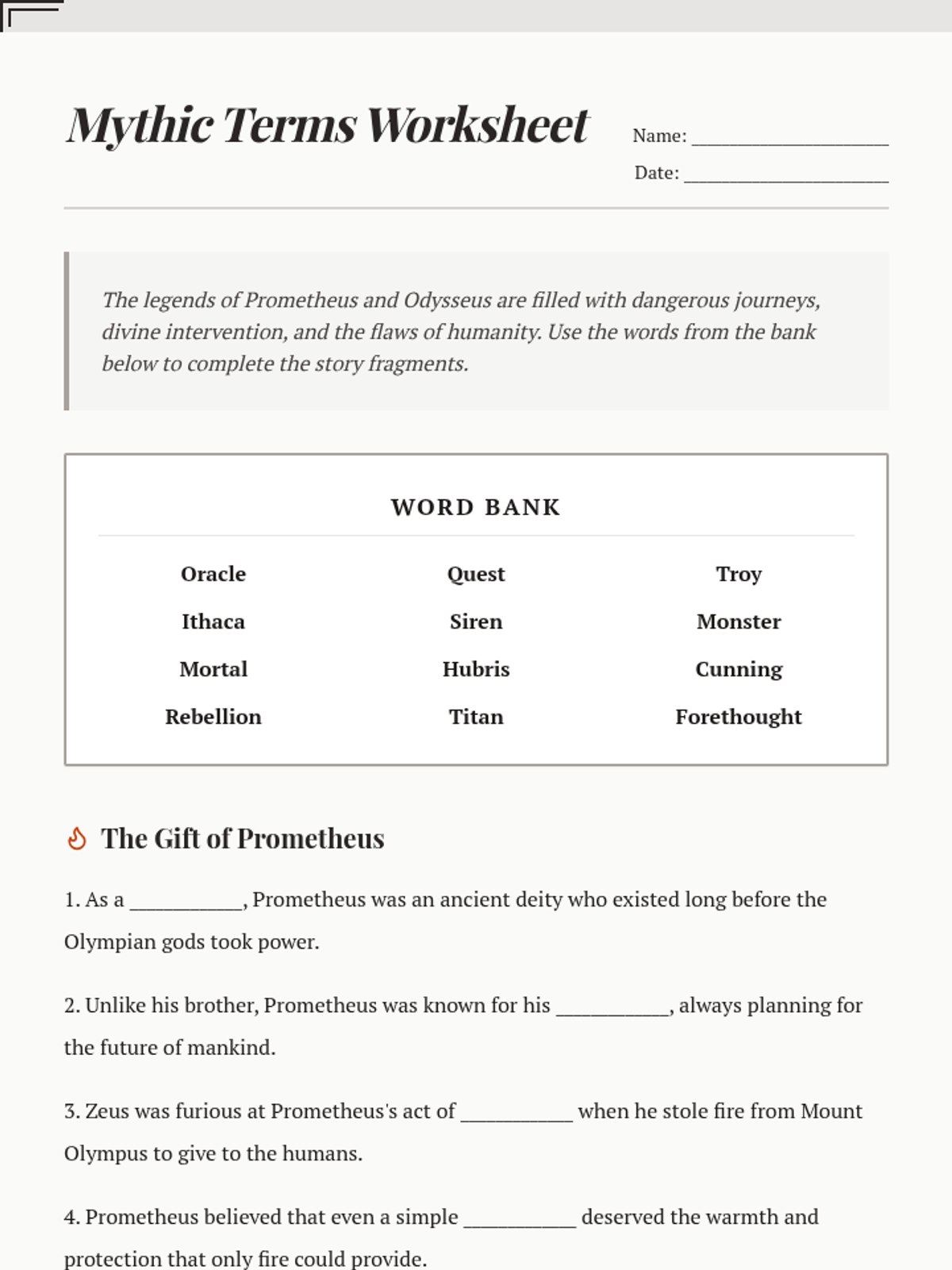
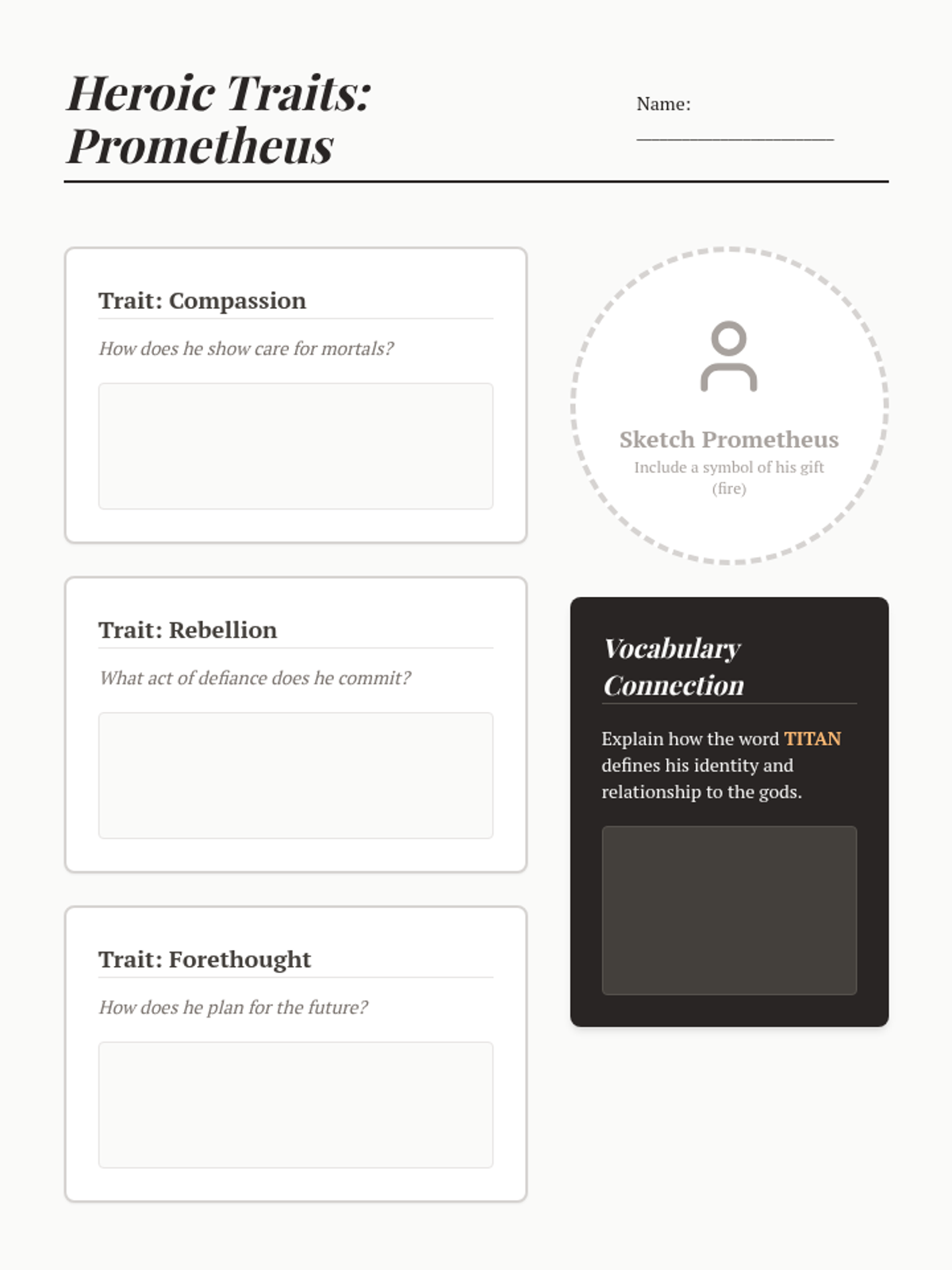
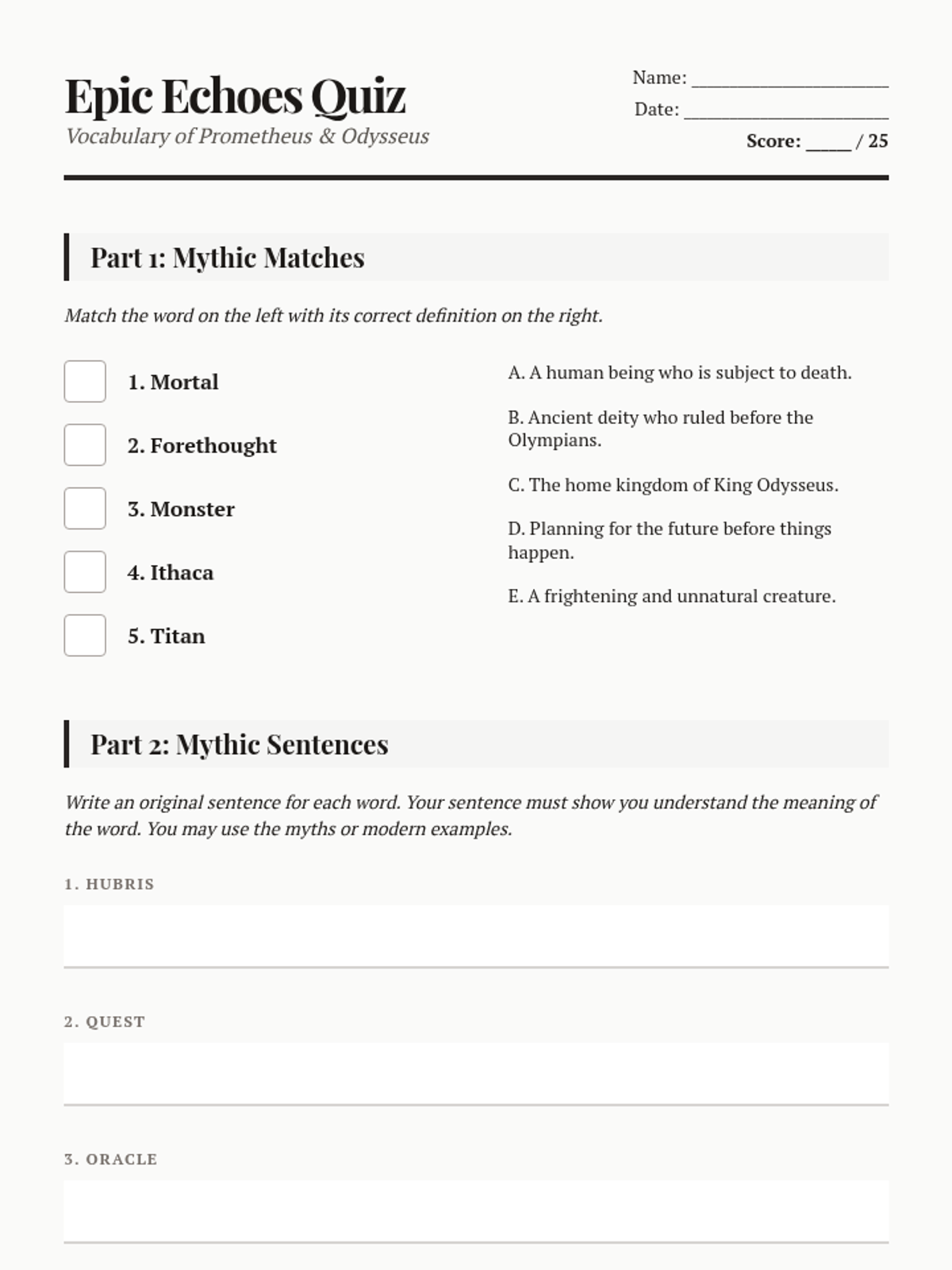
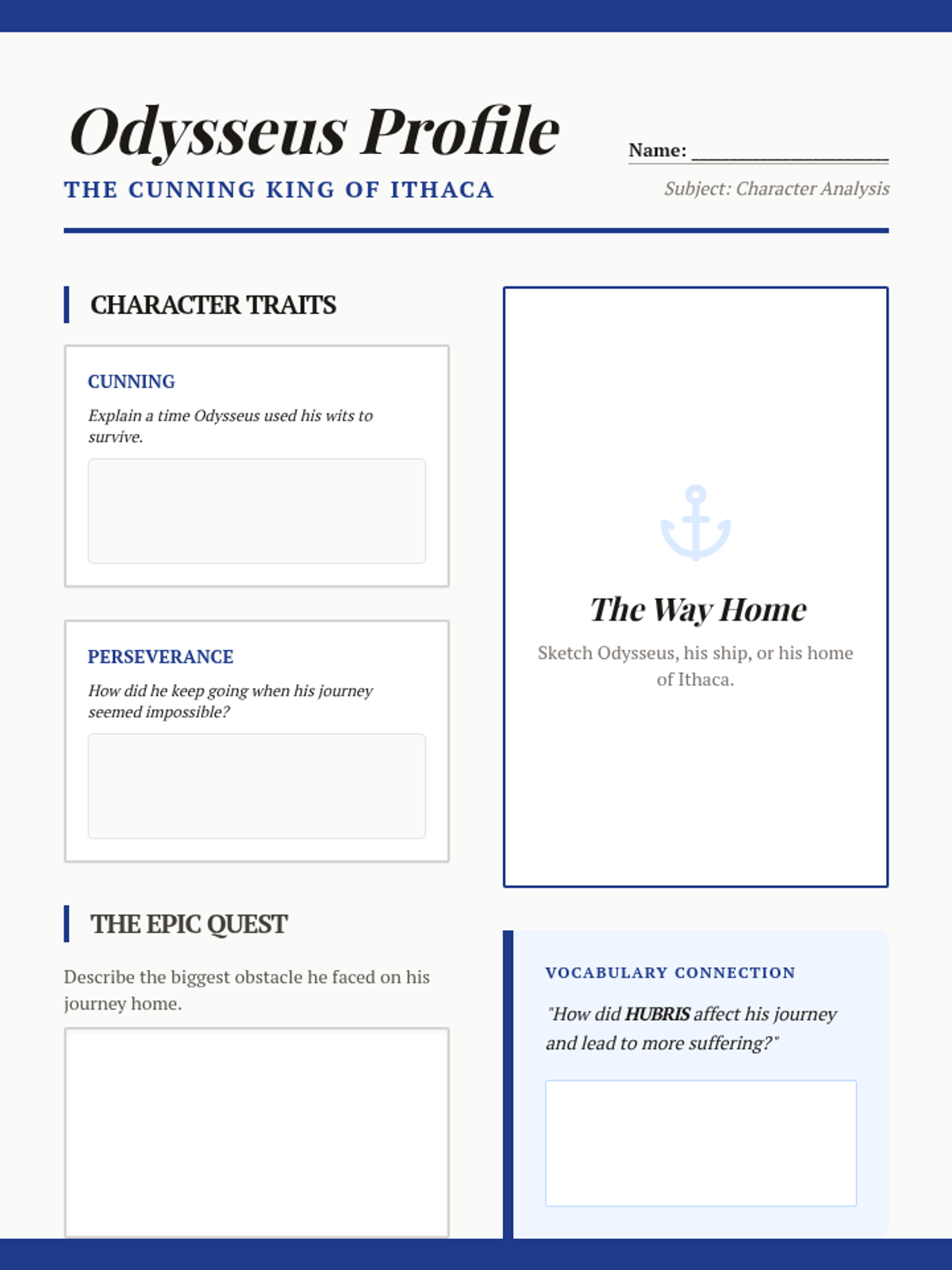
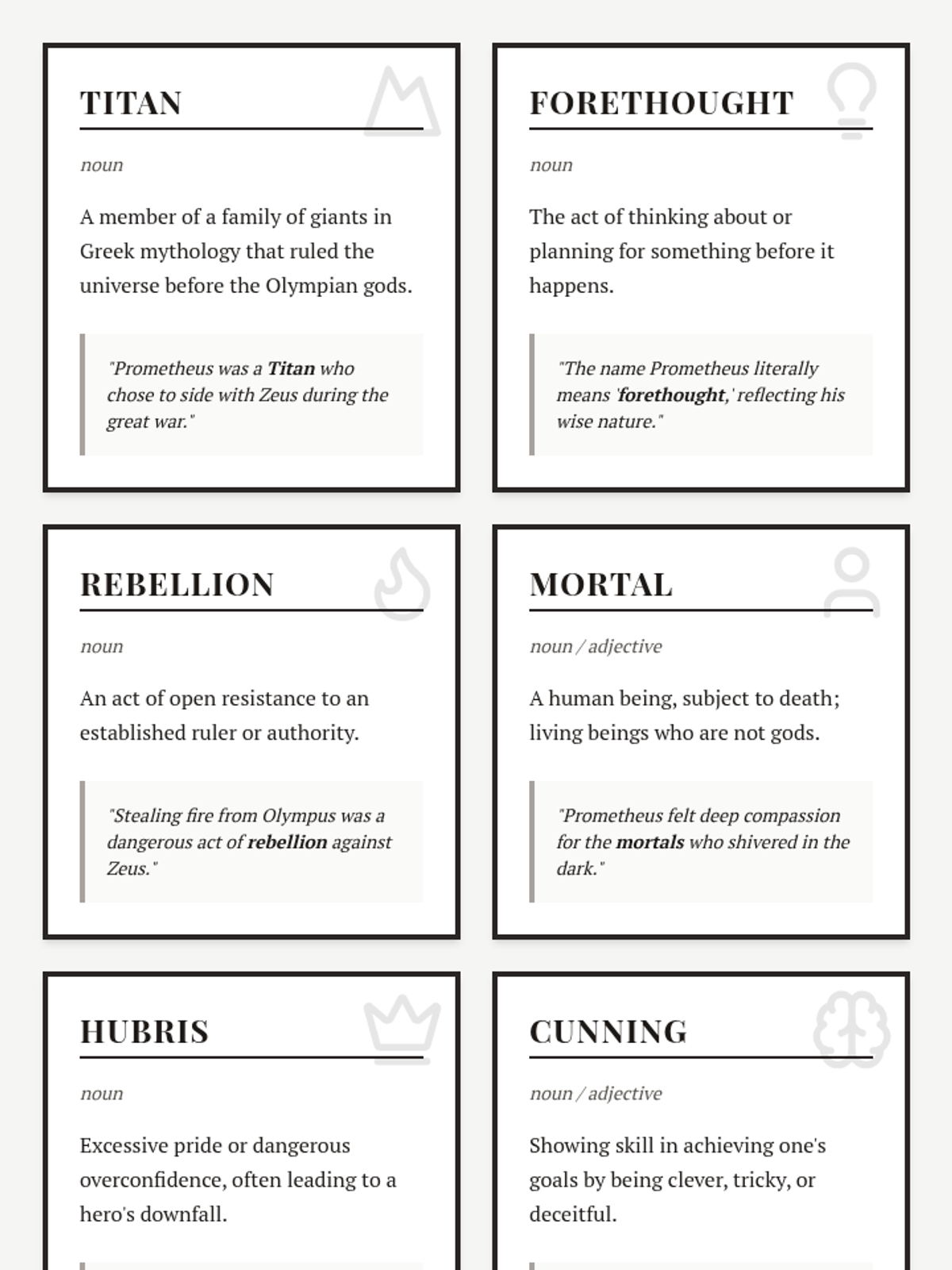
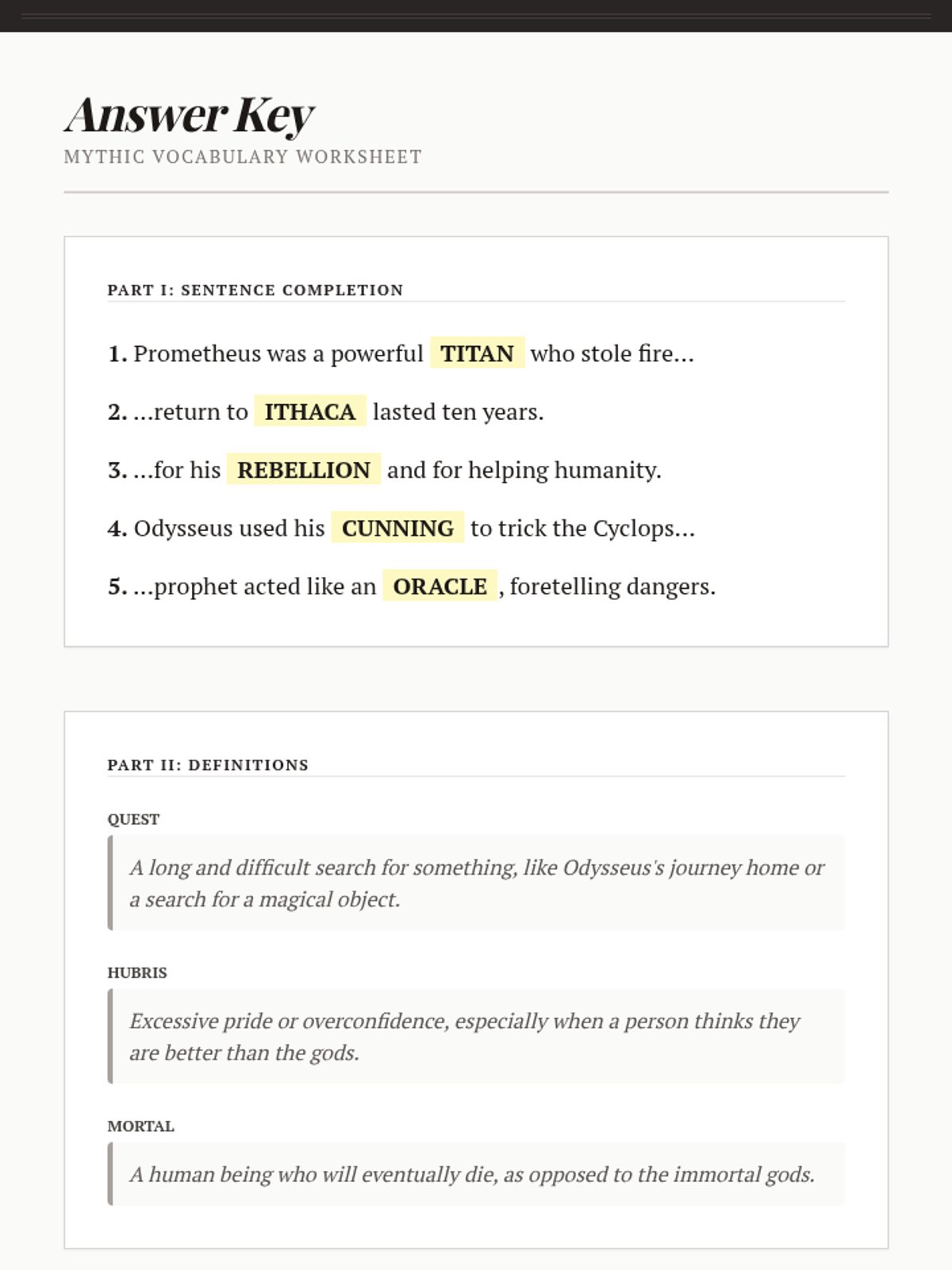
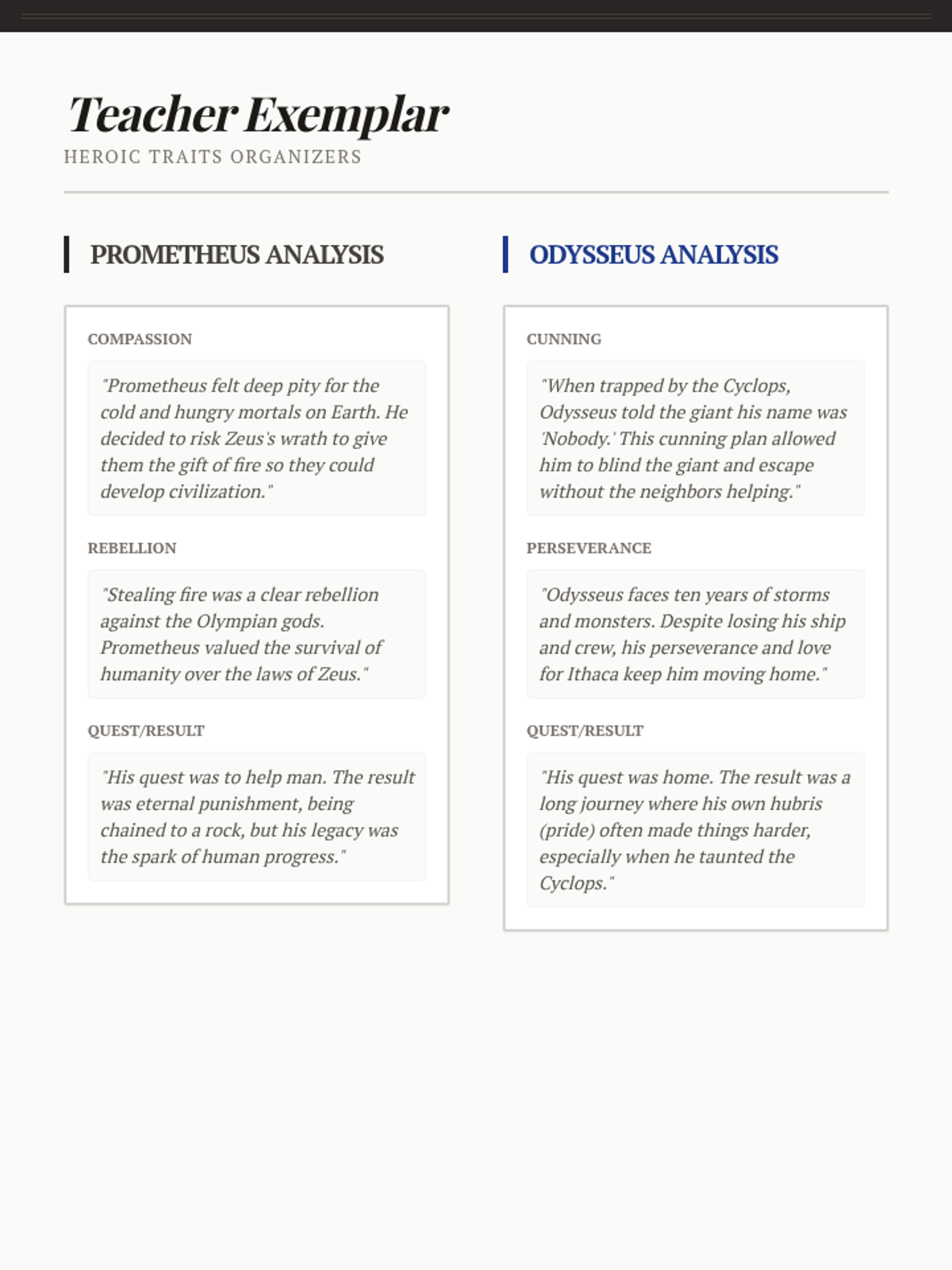
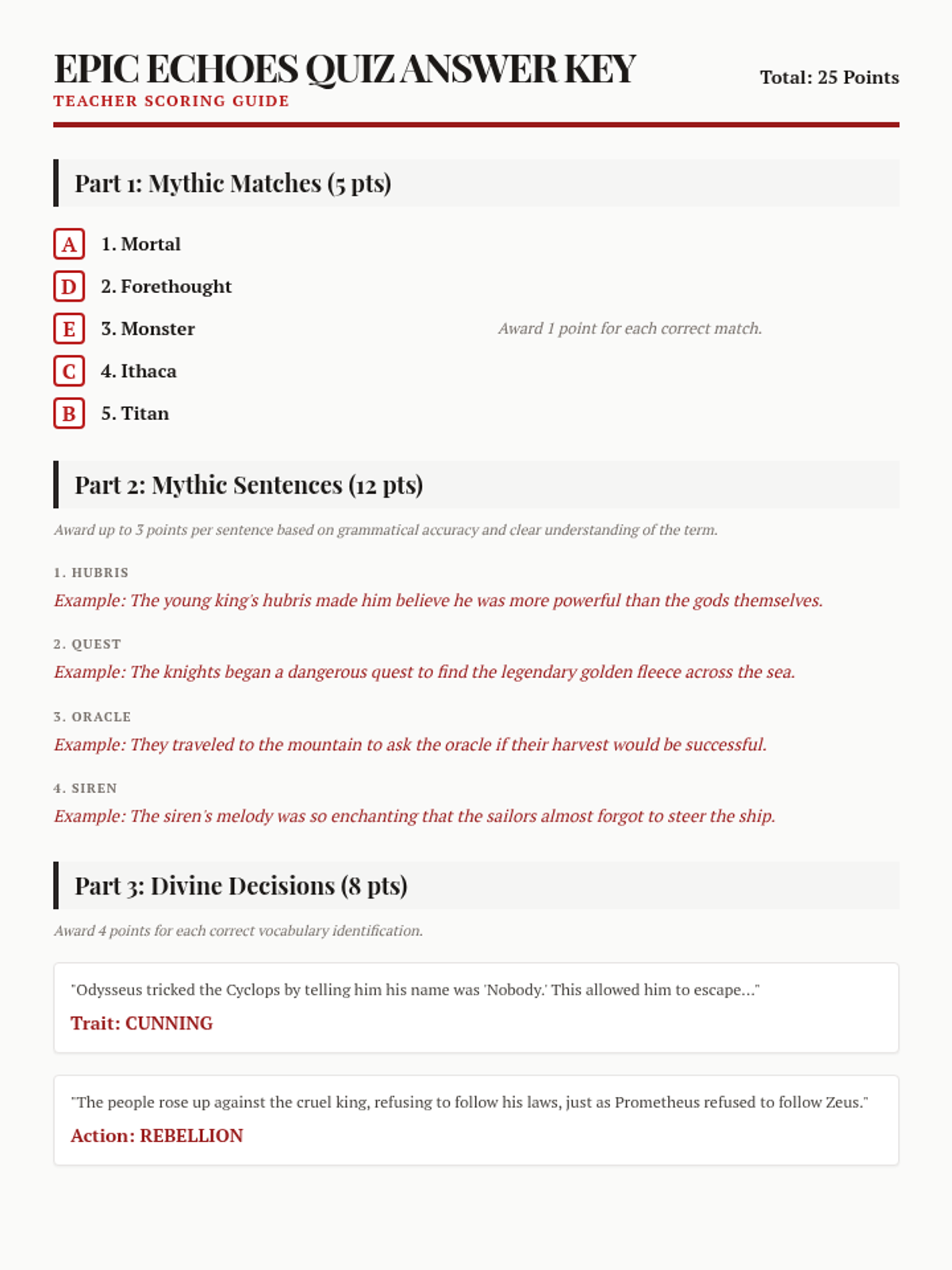
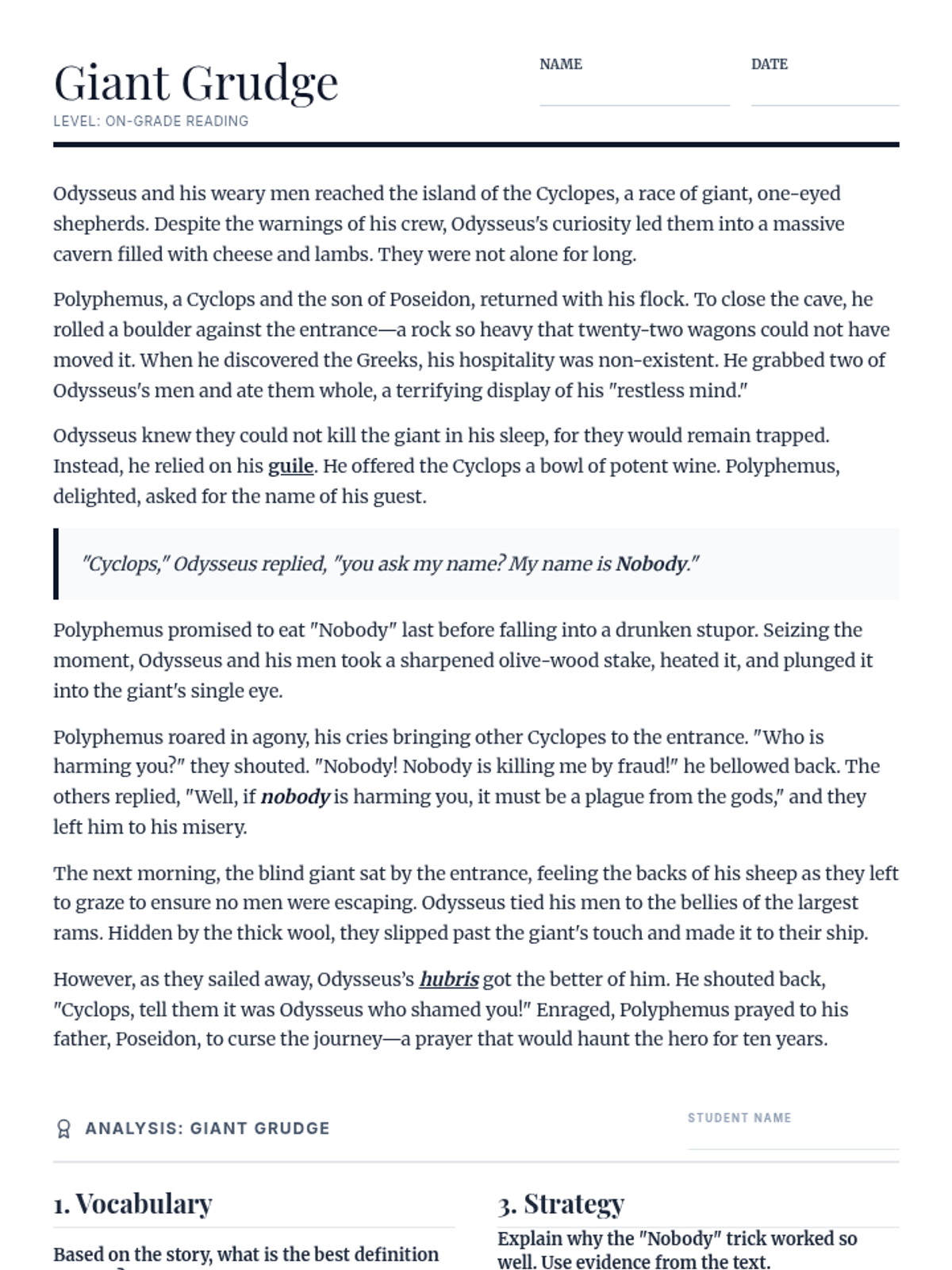
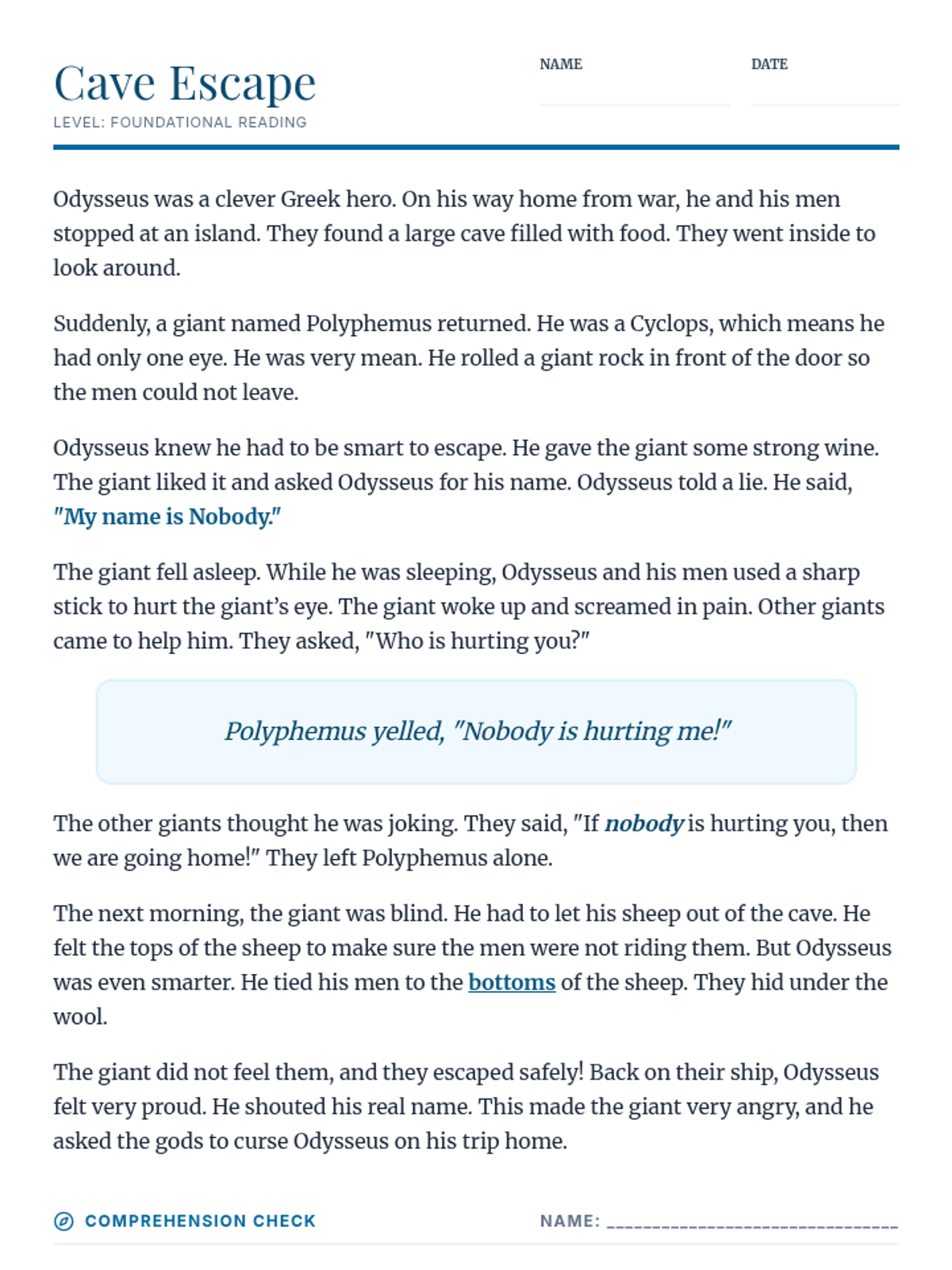
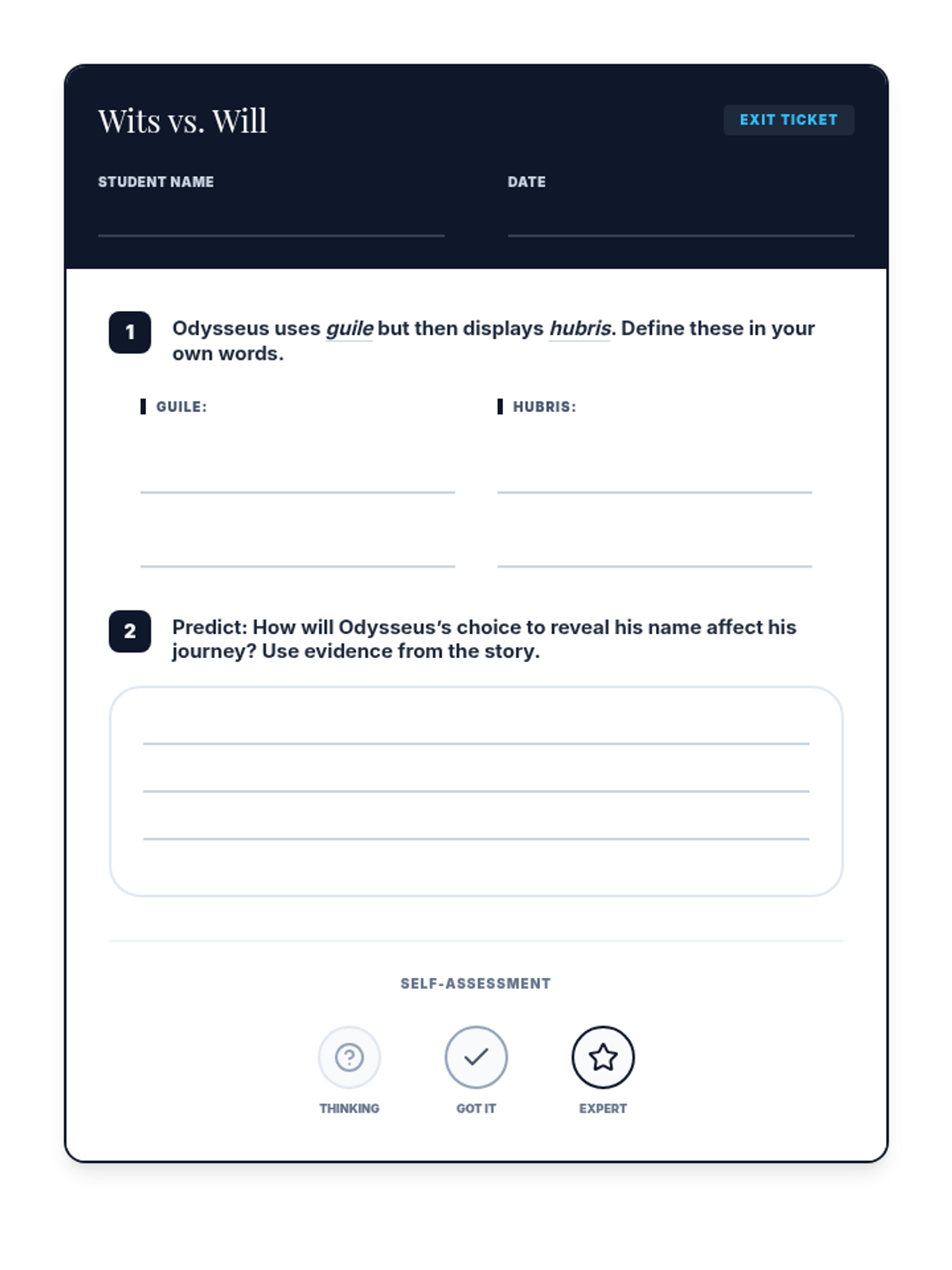
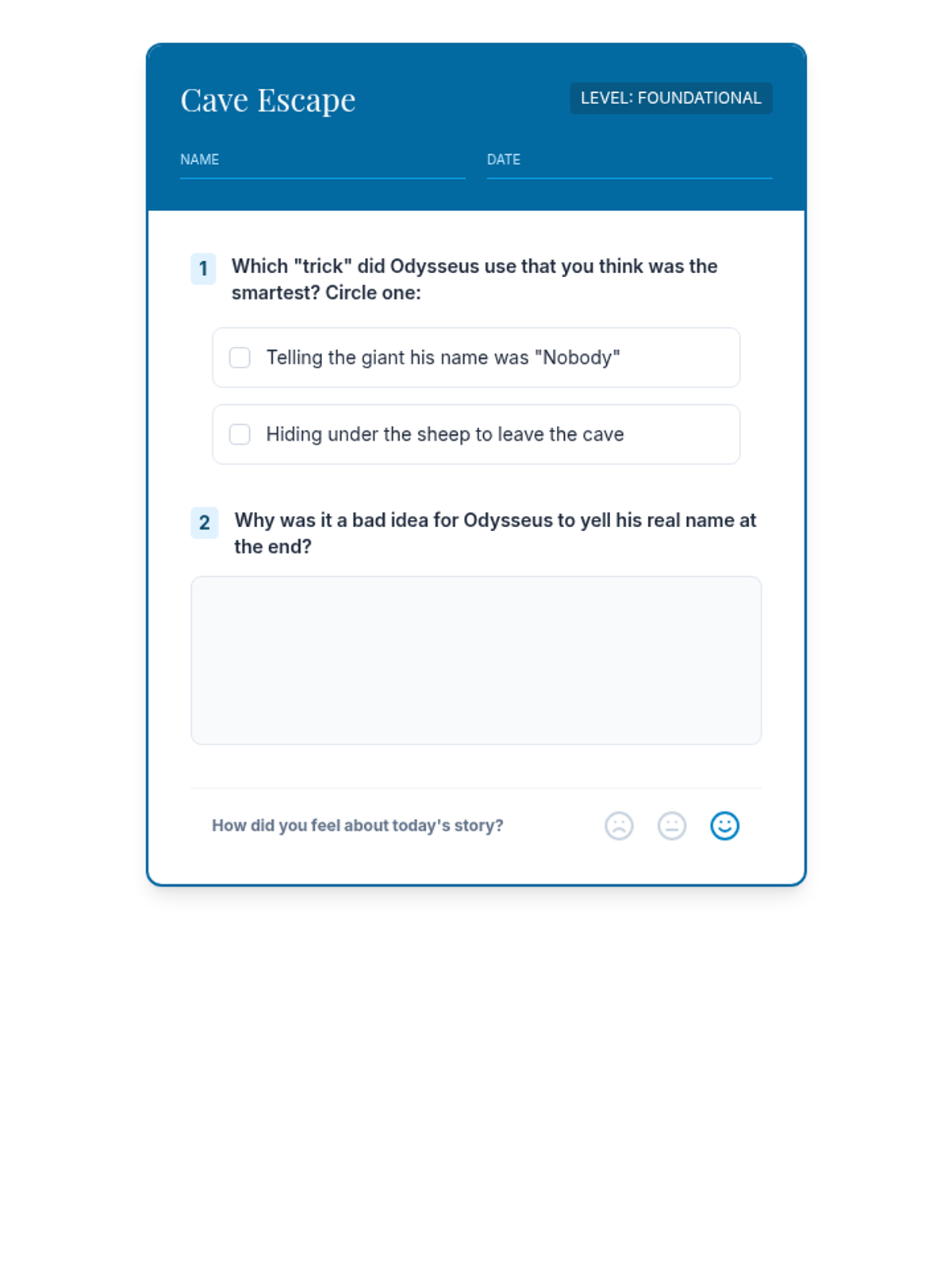
Students explore the stories of Prometheus's rebellion and Odysseus's long journey home, building vocabulary related to Greek mythology, character traits, and epic quests.
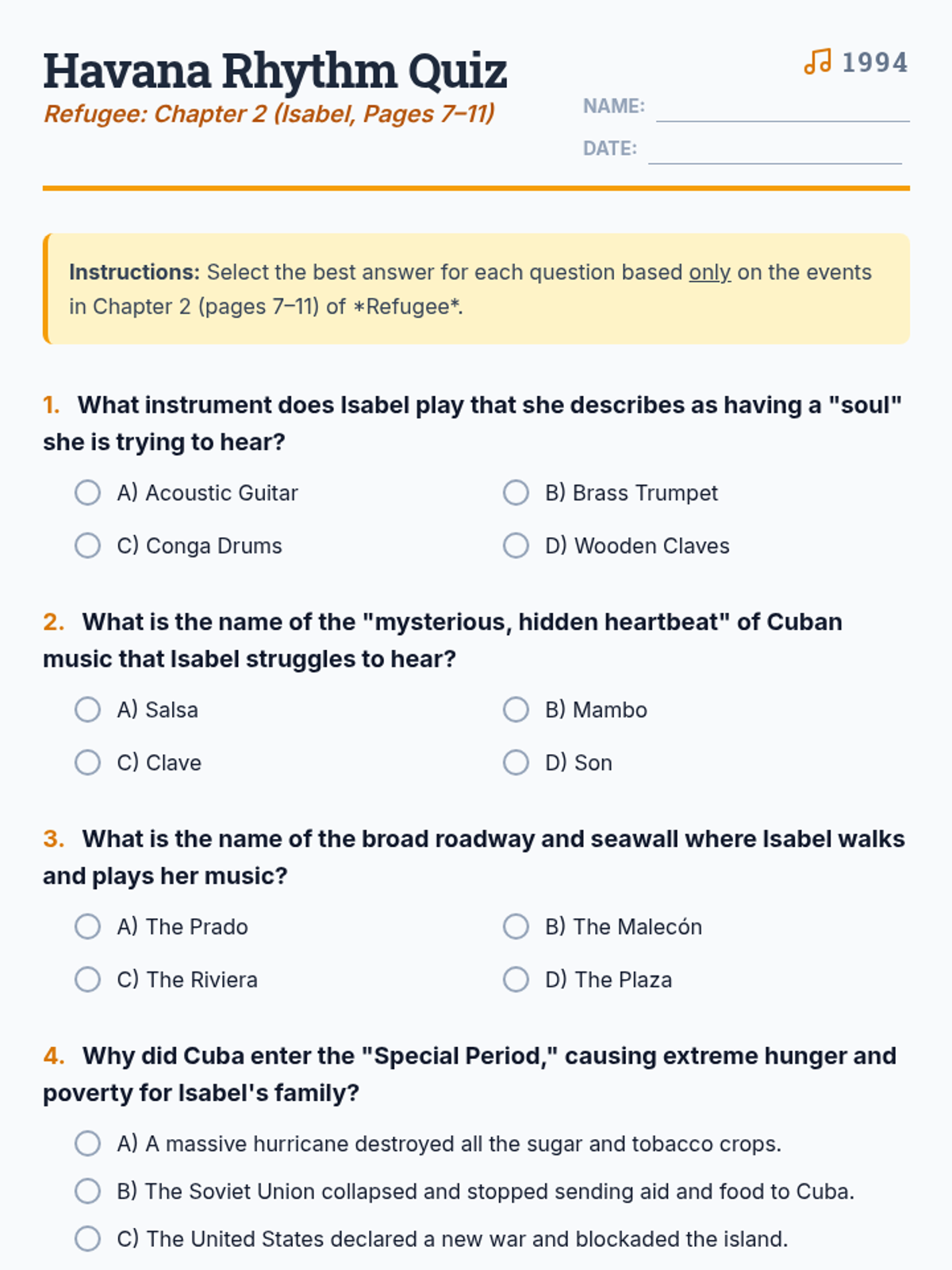
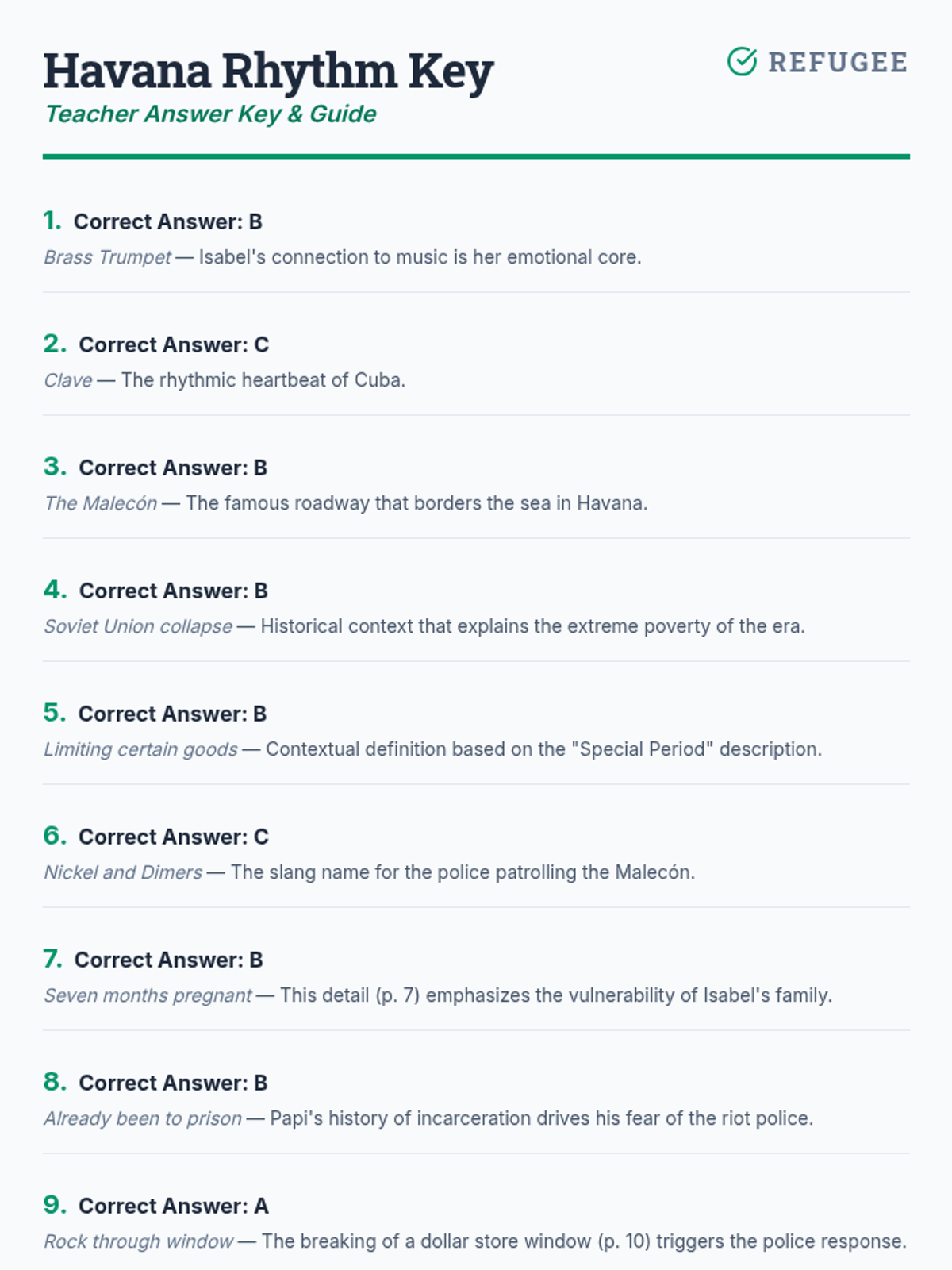
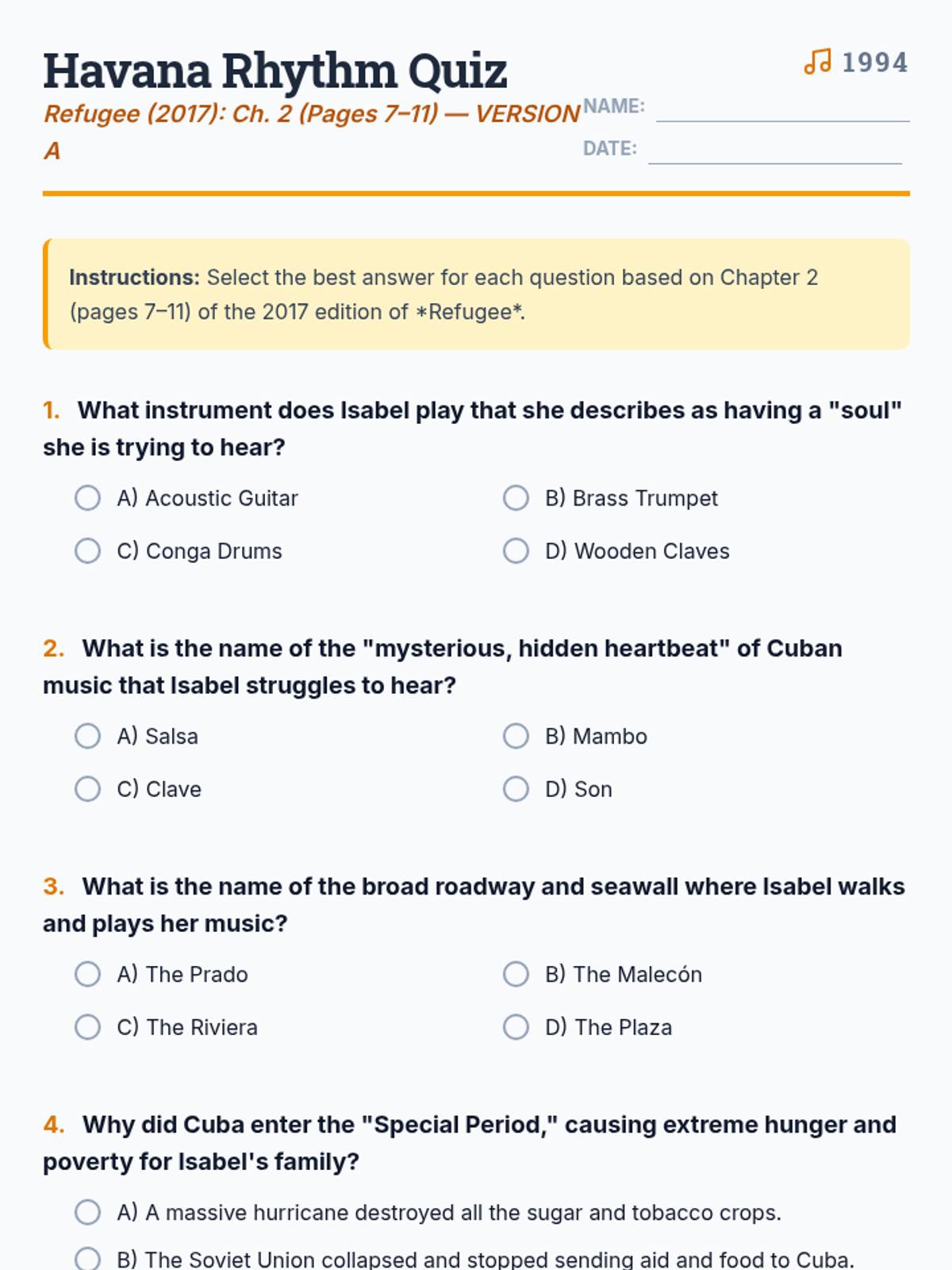
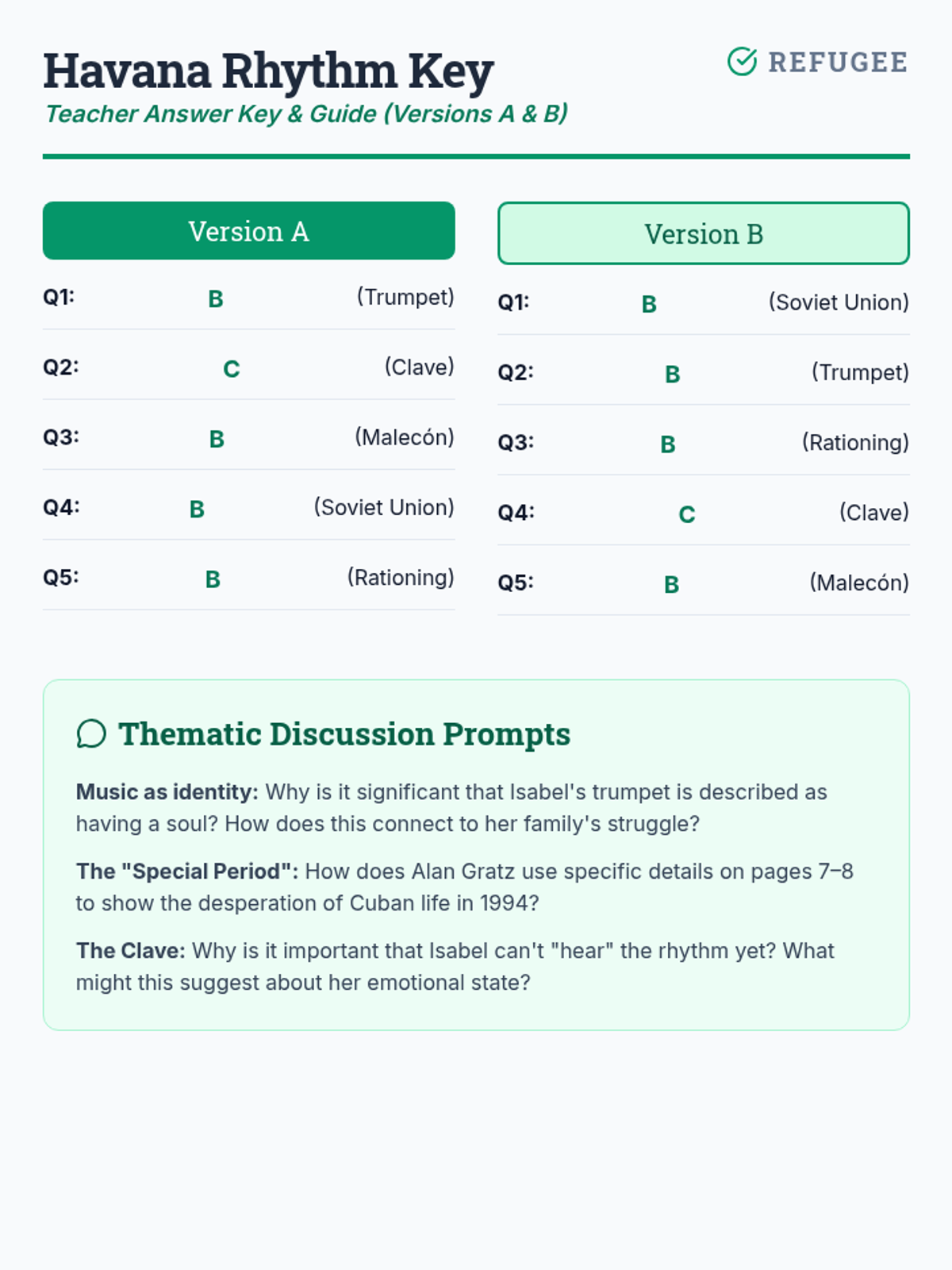
A focused study on Isabel's introduction in Alan Gratz's 'Refugee', exploring the setting of 1994 Cuba and the rising tensions in Havana.
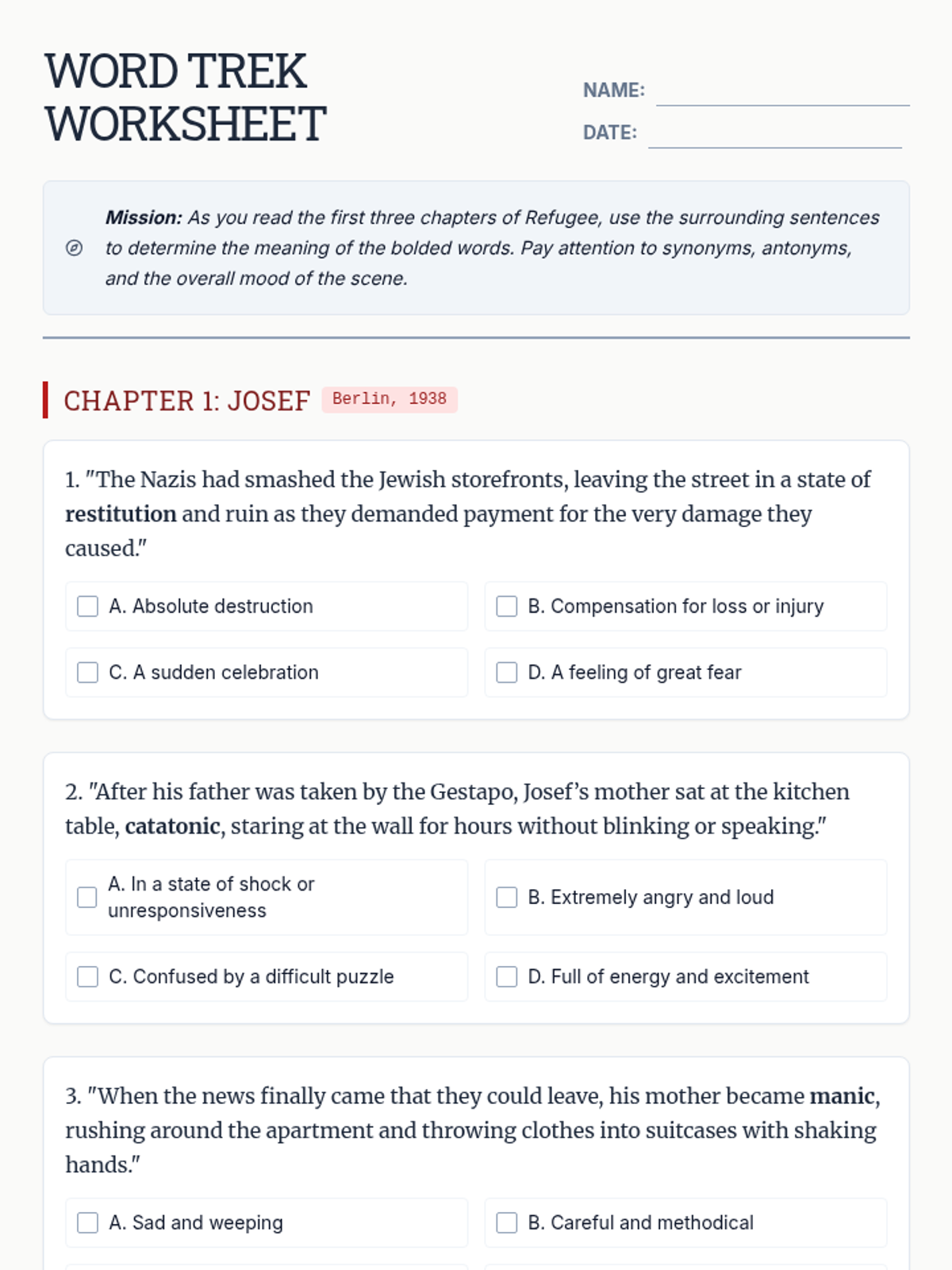
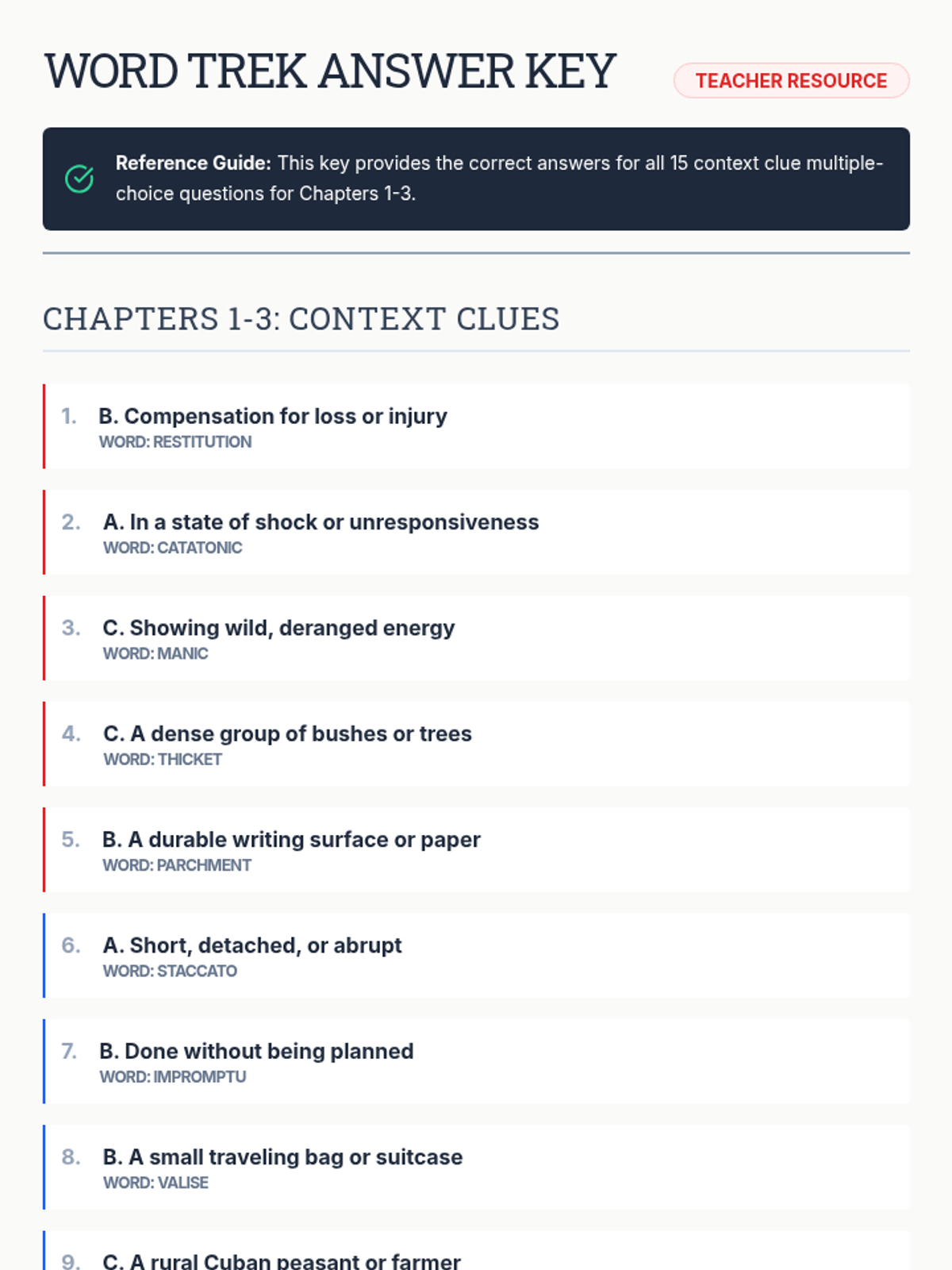
Focusing on vocabulary from the opening chapters of Alan Gratz's Refugee, students use context clues to determine the meaning of key words and apply them in their own writing.
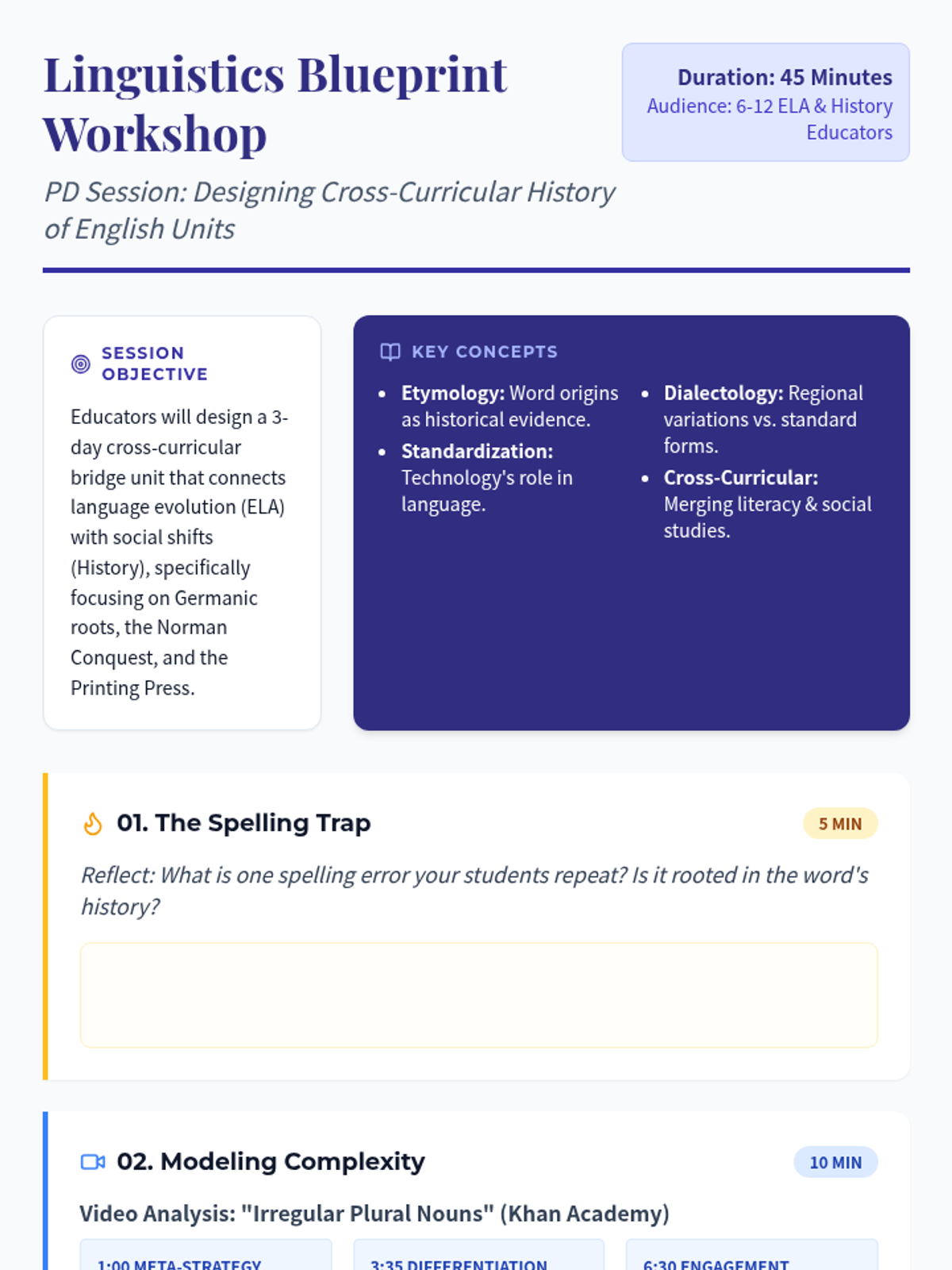
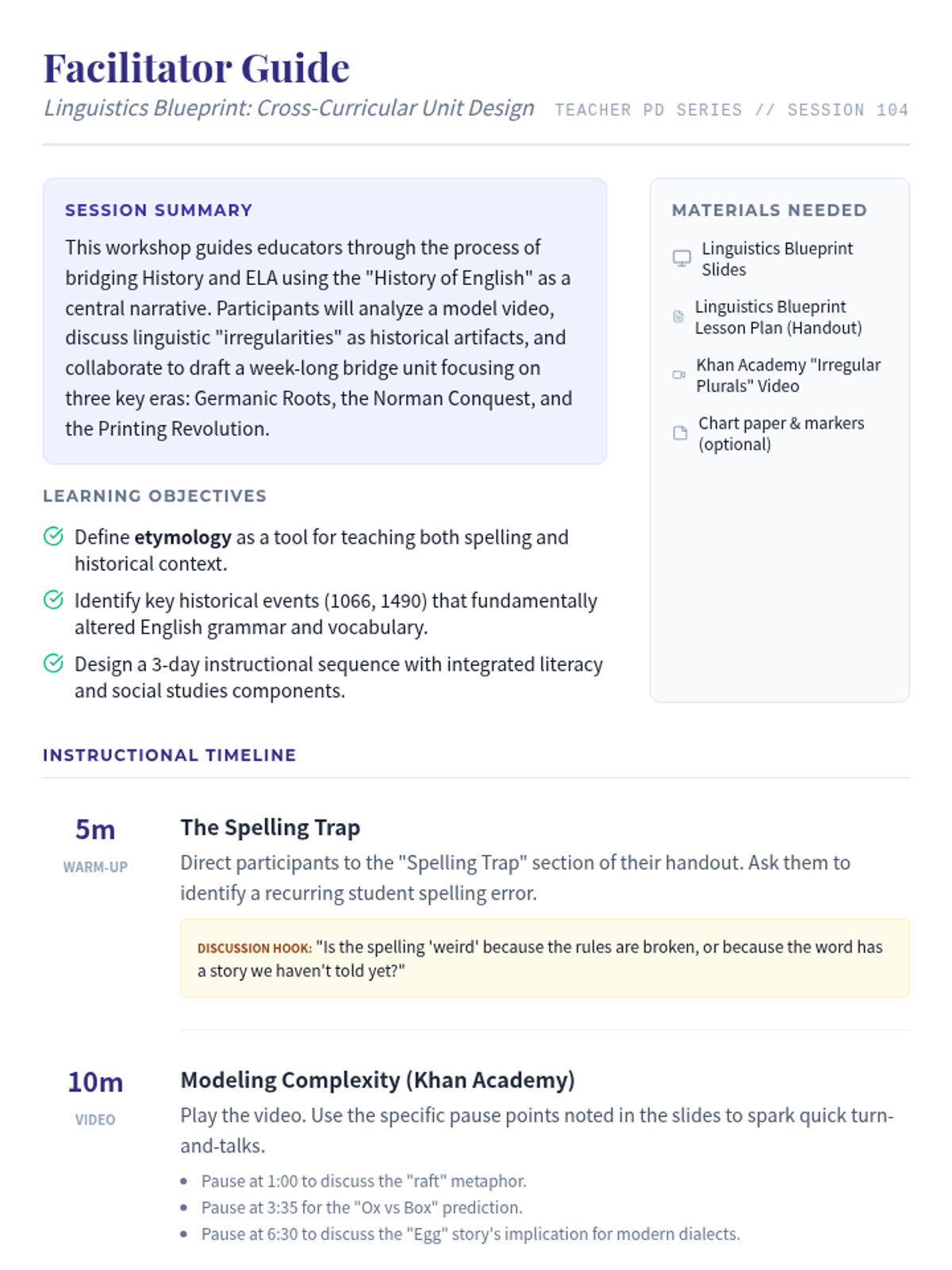
A professional development workshop for educators to design a cross-curricular unit connecting Language Arts and History through the evolution of the English language.
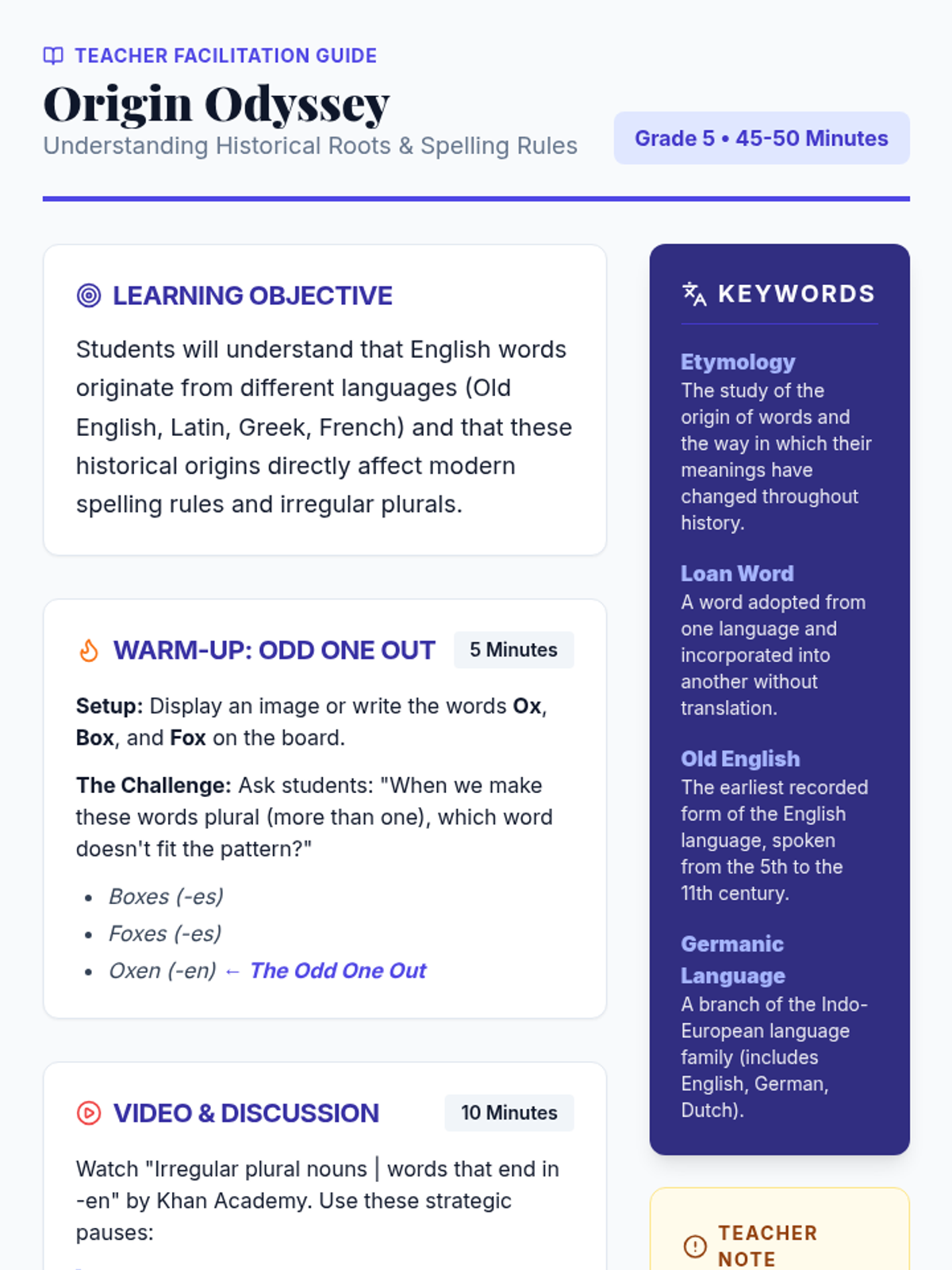
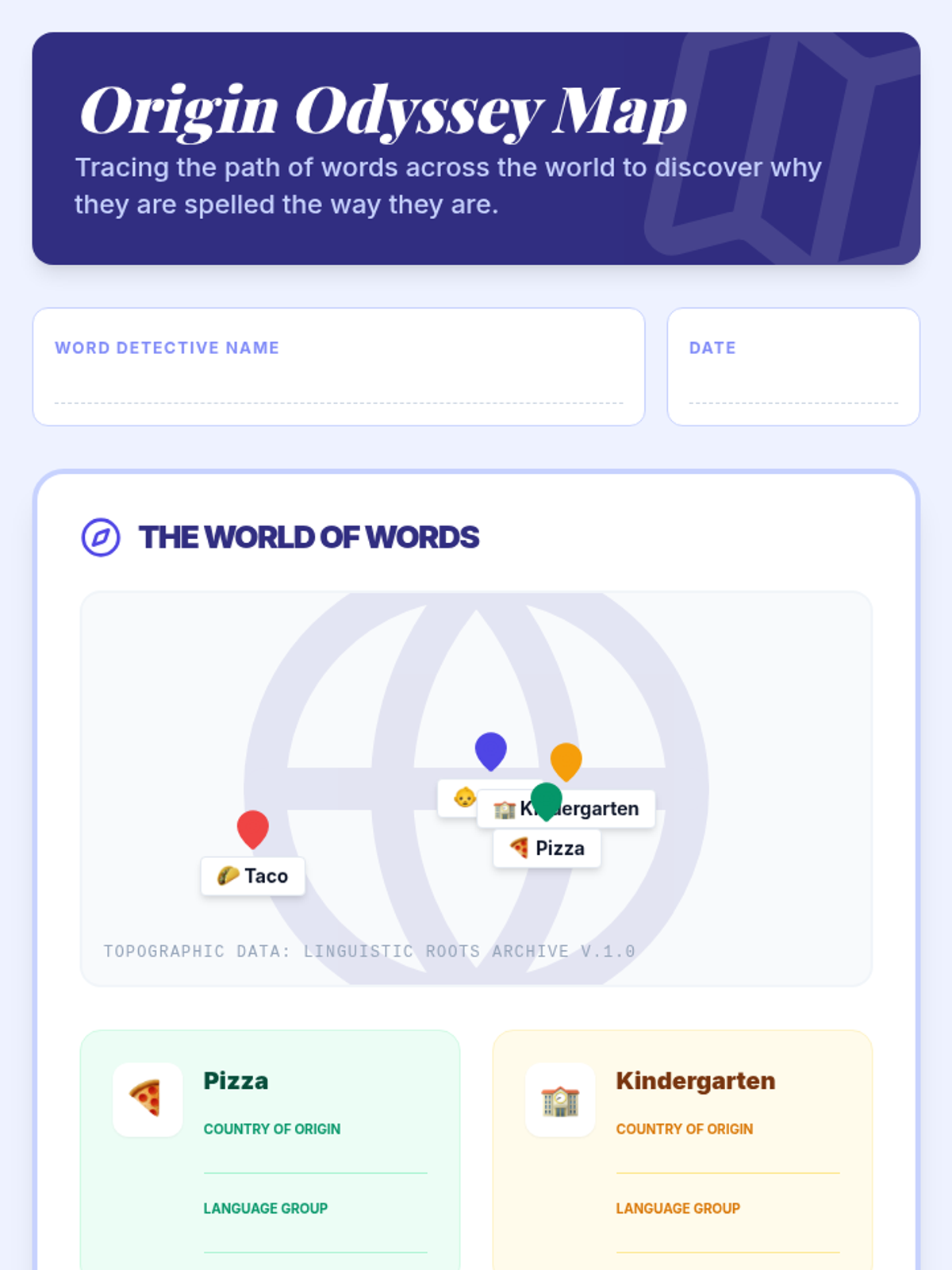
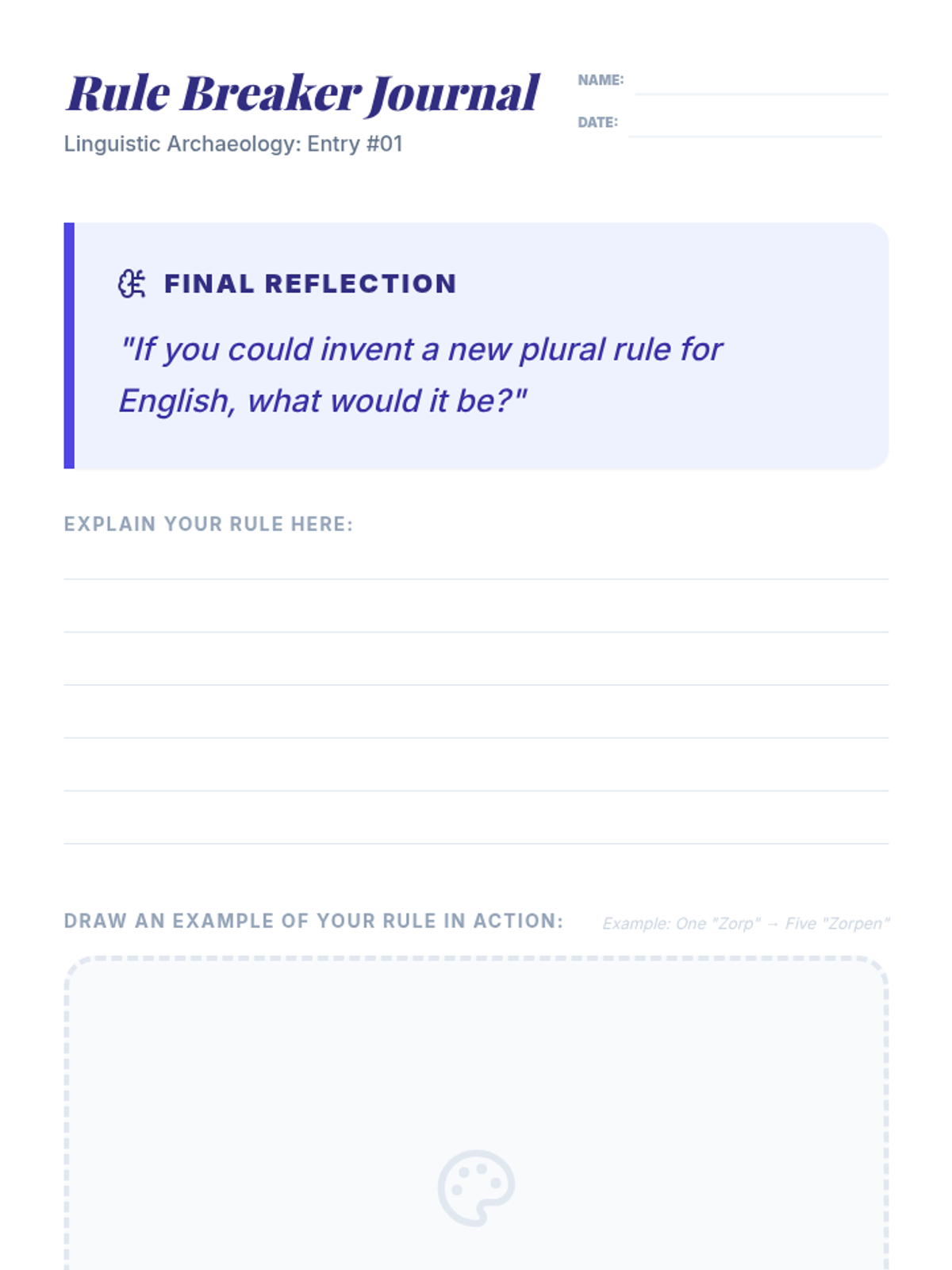
This lesson explores the historical roots of English spelling, focusing on irregular plurals like 'children' and 'oxen'. Students investigate word origins (etymology) to understand why English rules aren't always predictable and how history shaped the modern language.
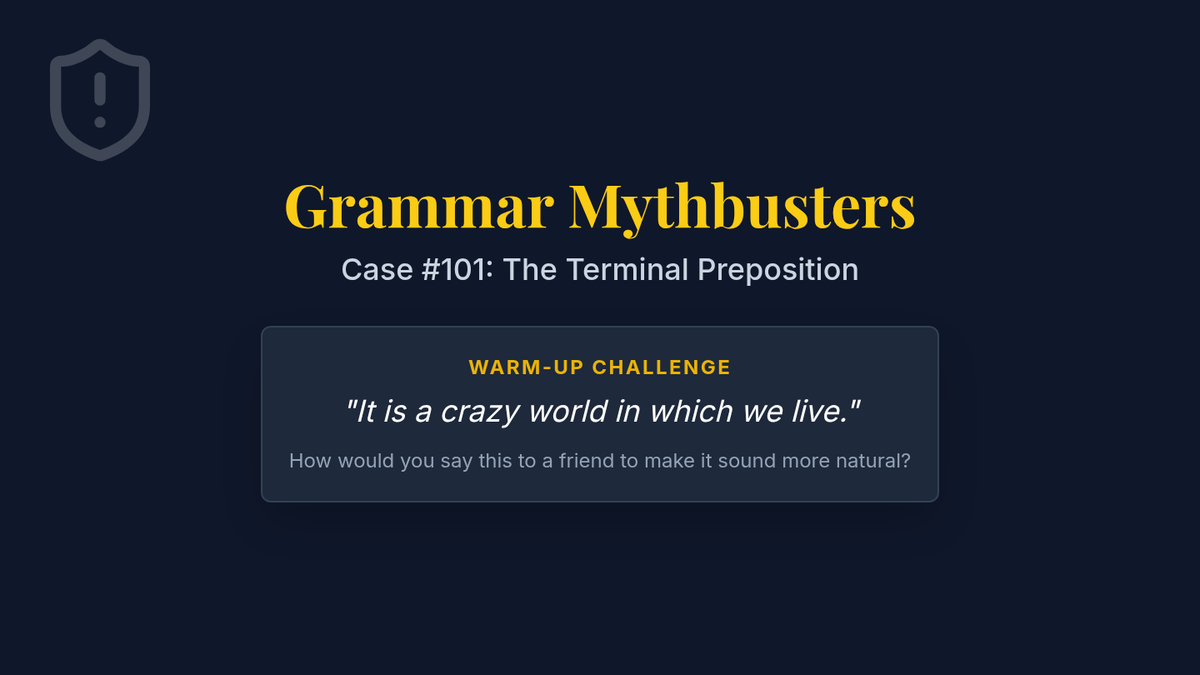
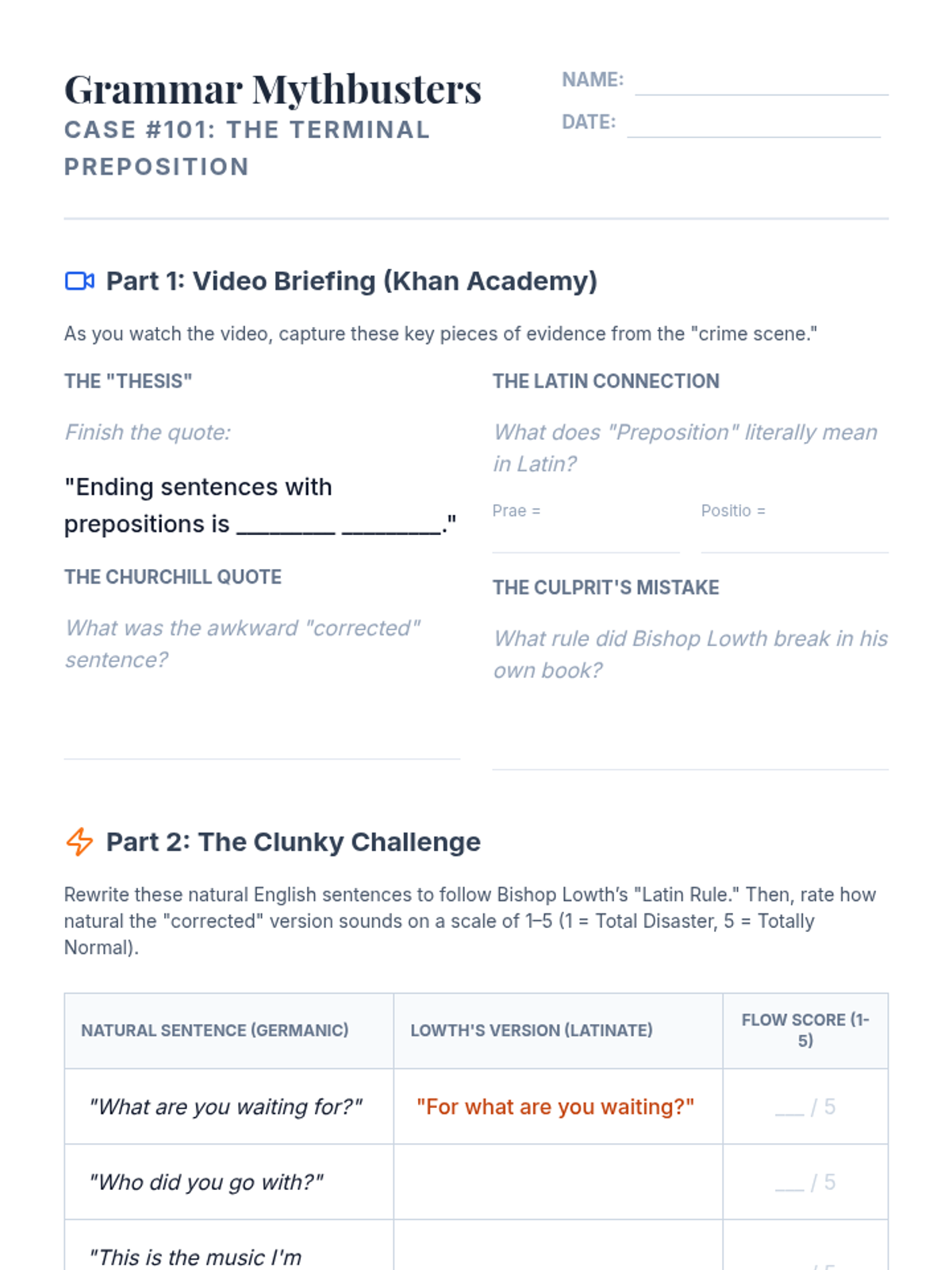
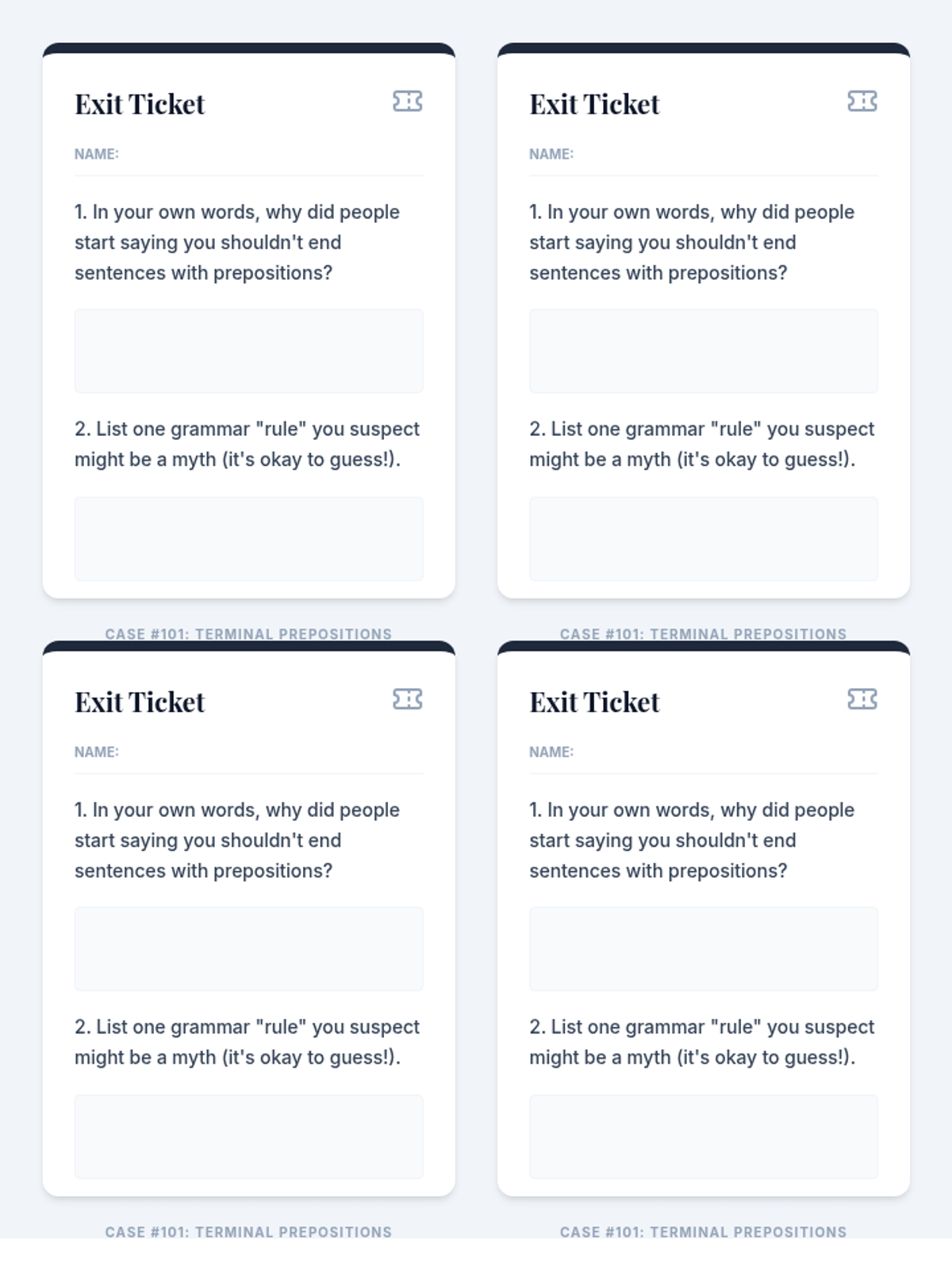
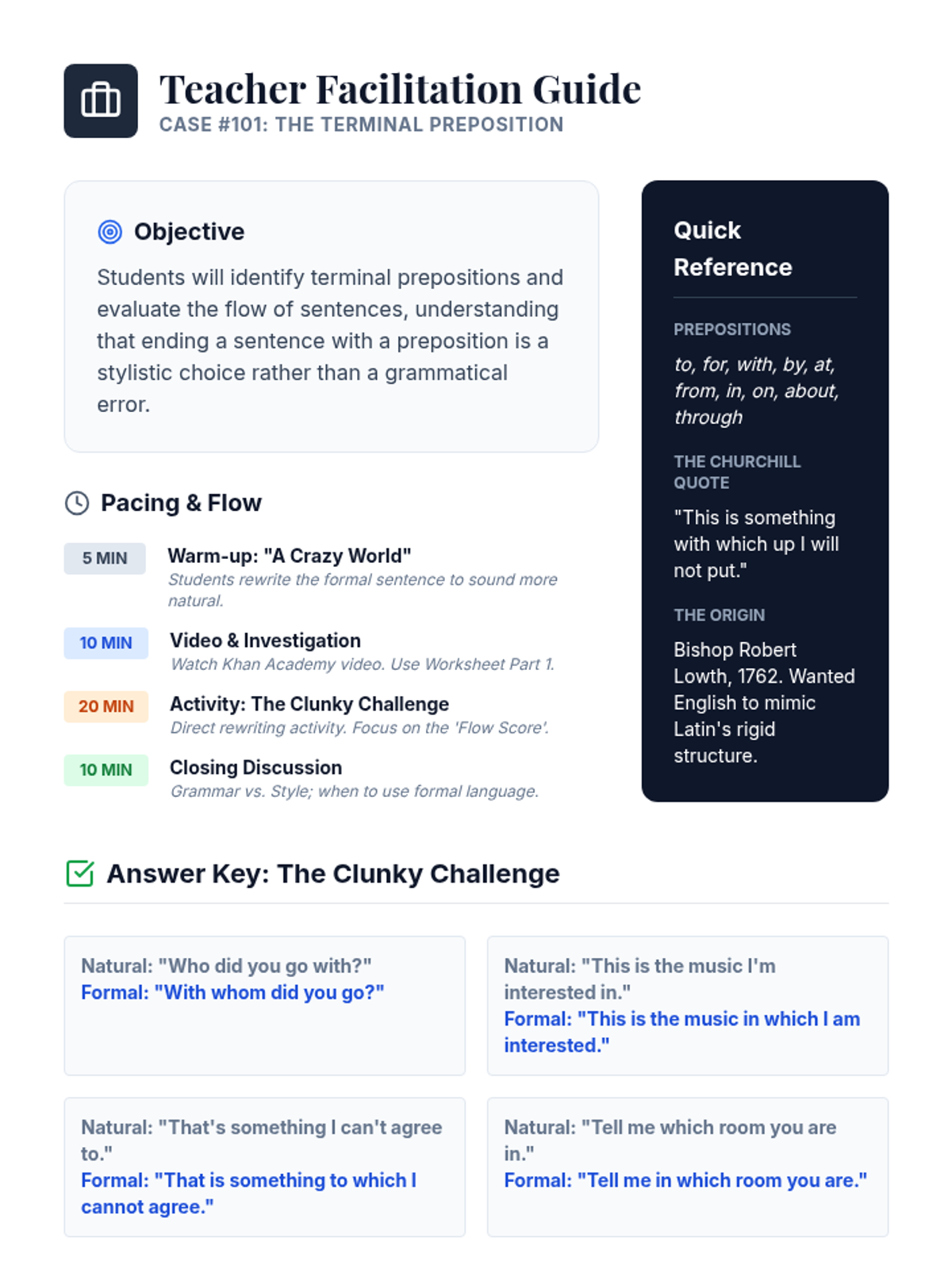
A middle school grammar lesson that deconstructs the myth of the terminal preposition, exploring its Latin origins and the difference between formal style and natural English flow.
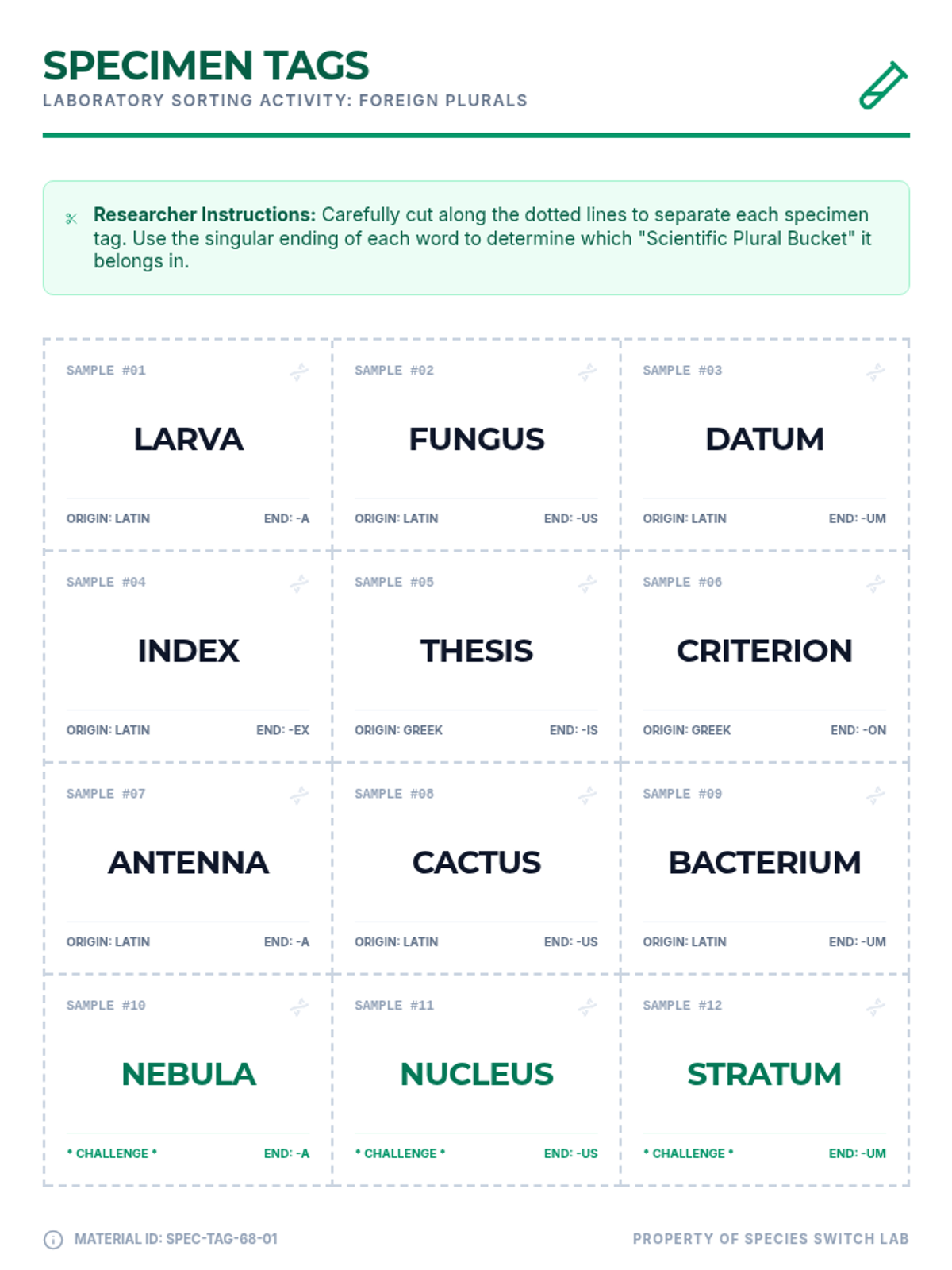
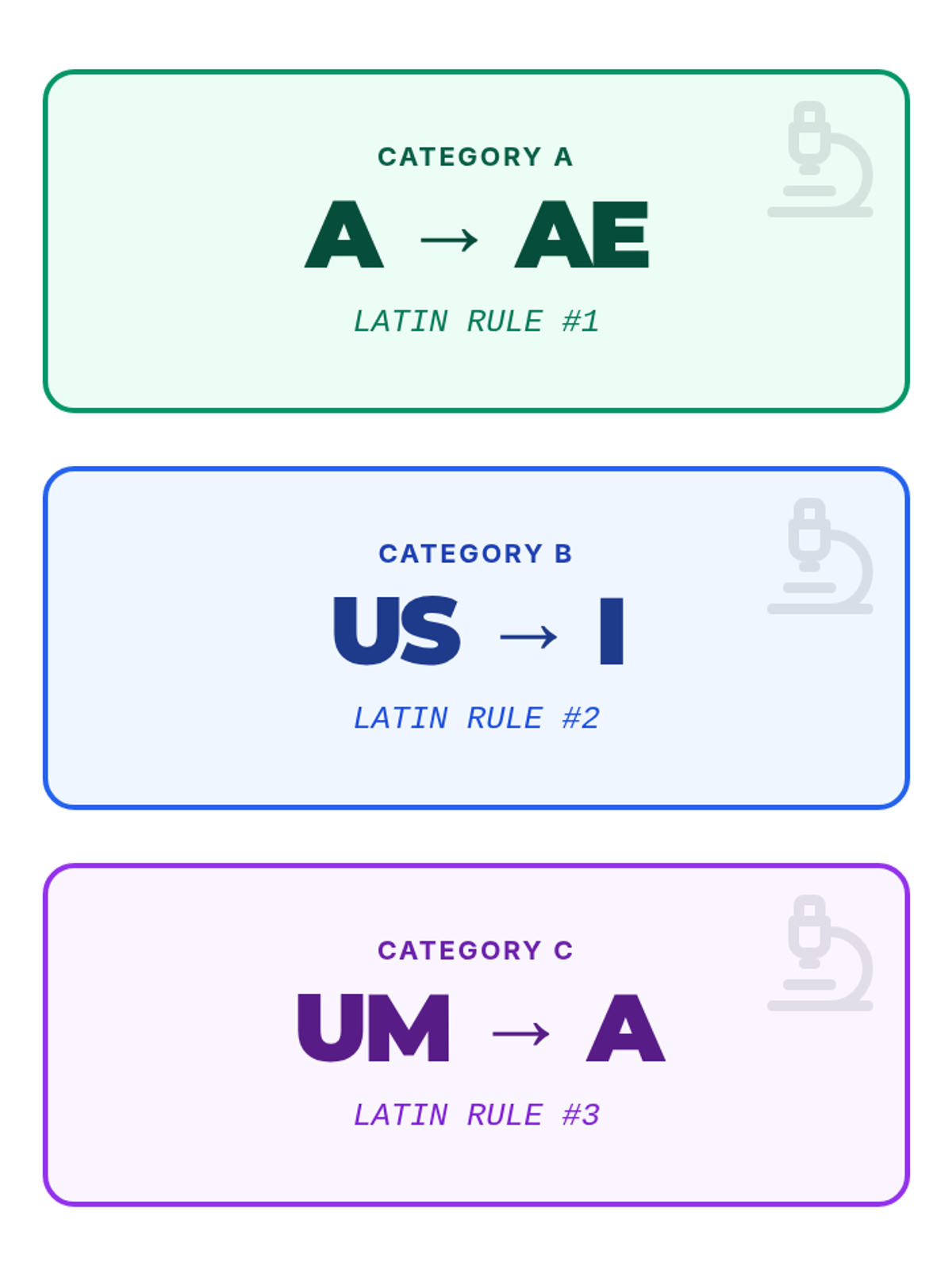
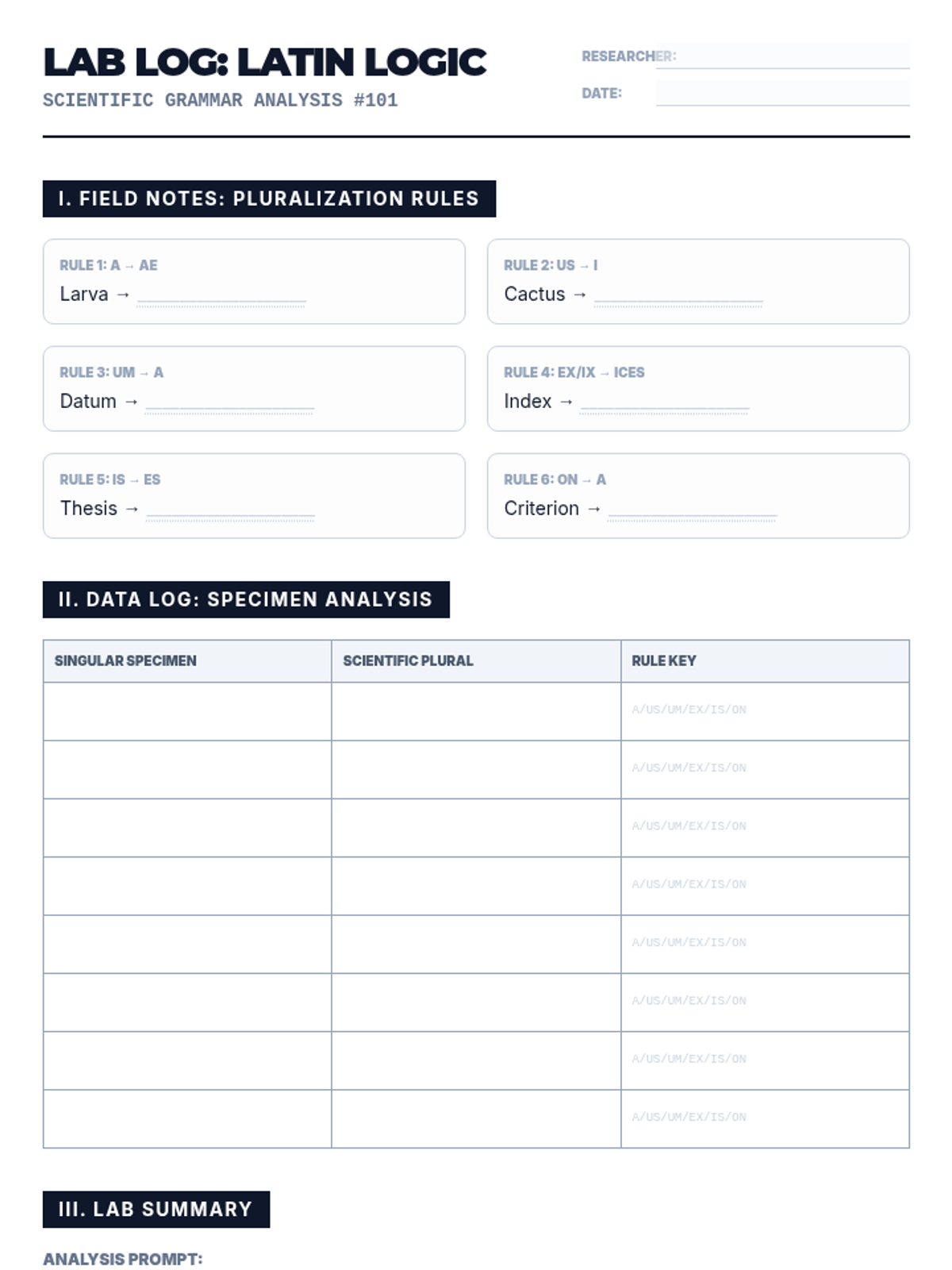
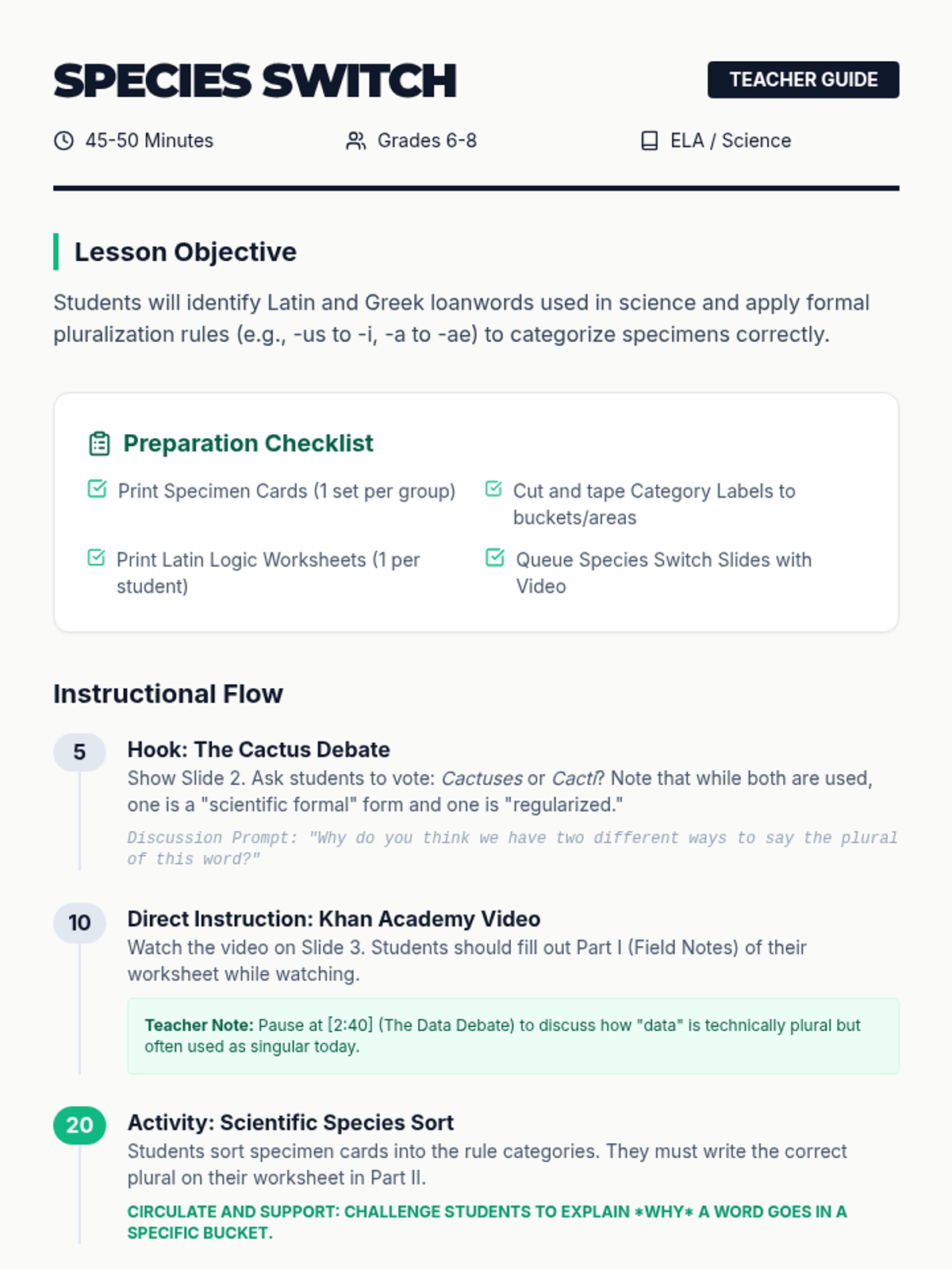
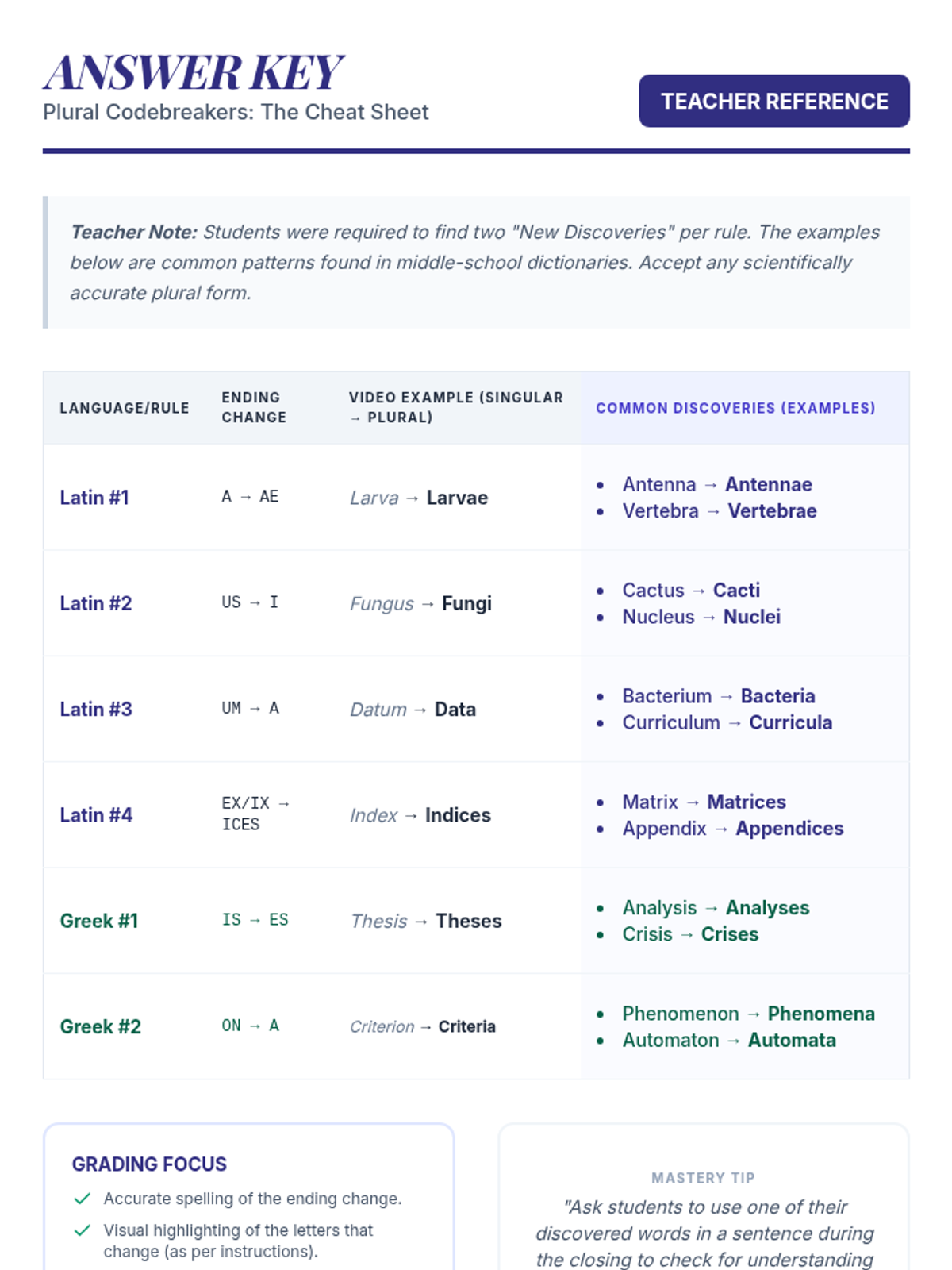
A middle school grammar and science lesson where students learn to pluralize scientific loanwords from Latin and Greek. Students identify rules for ending changes and sort species names into categories.
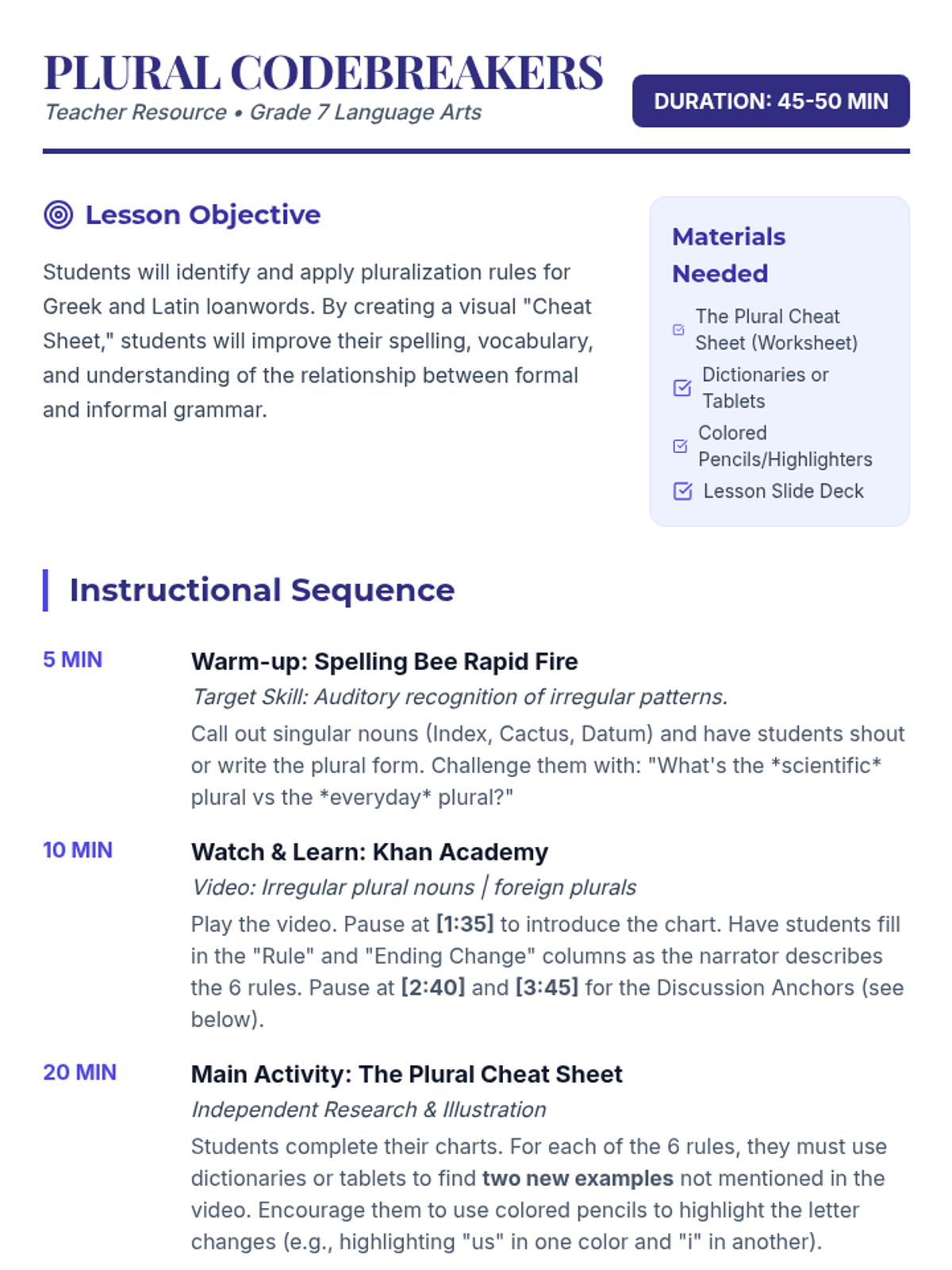
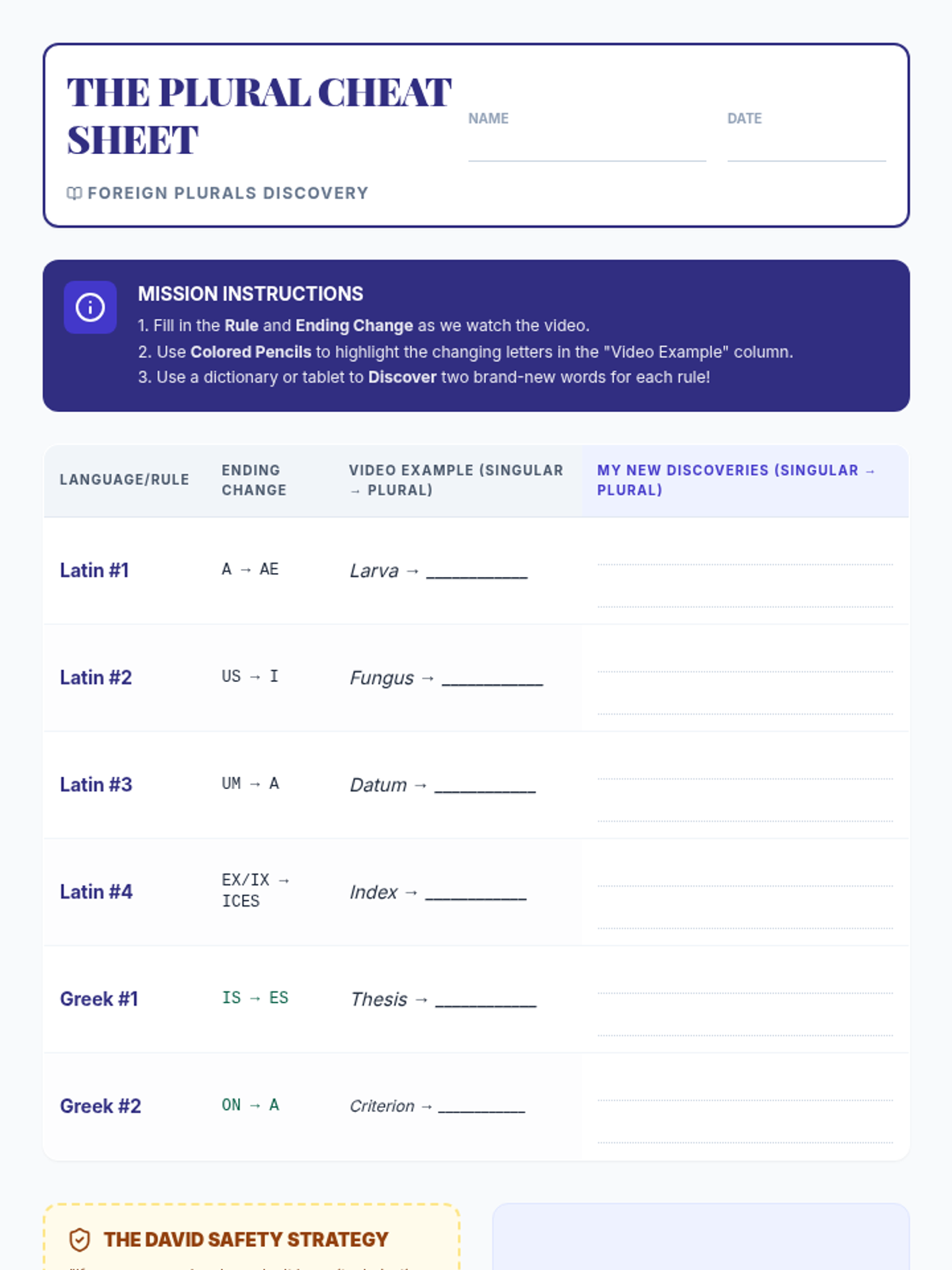
Students explore the fascinating world of foreign loanwords and their irregular plurals from Latin and Greek. Through a Khan Academy video and independent research, students create a comprehensive 'Plural Cheat Sheet' to master these sophisticated spelling patterns.
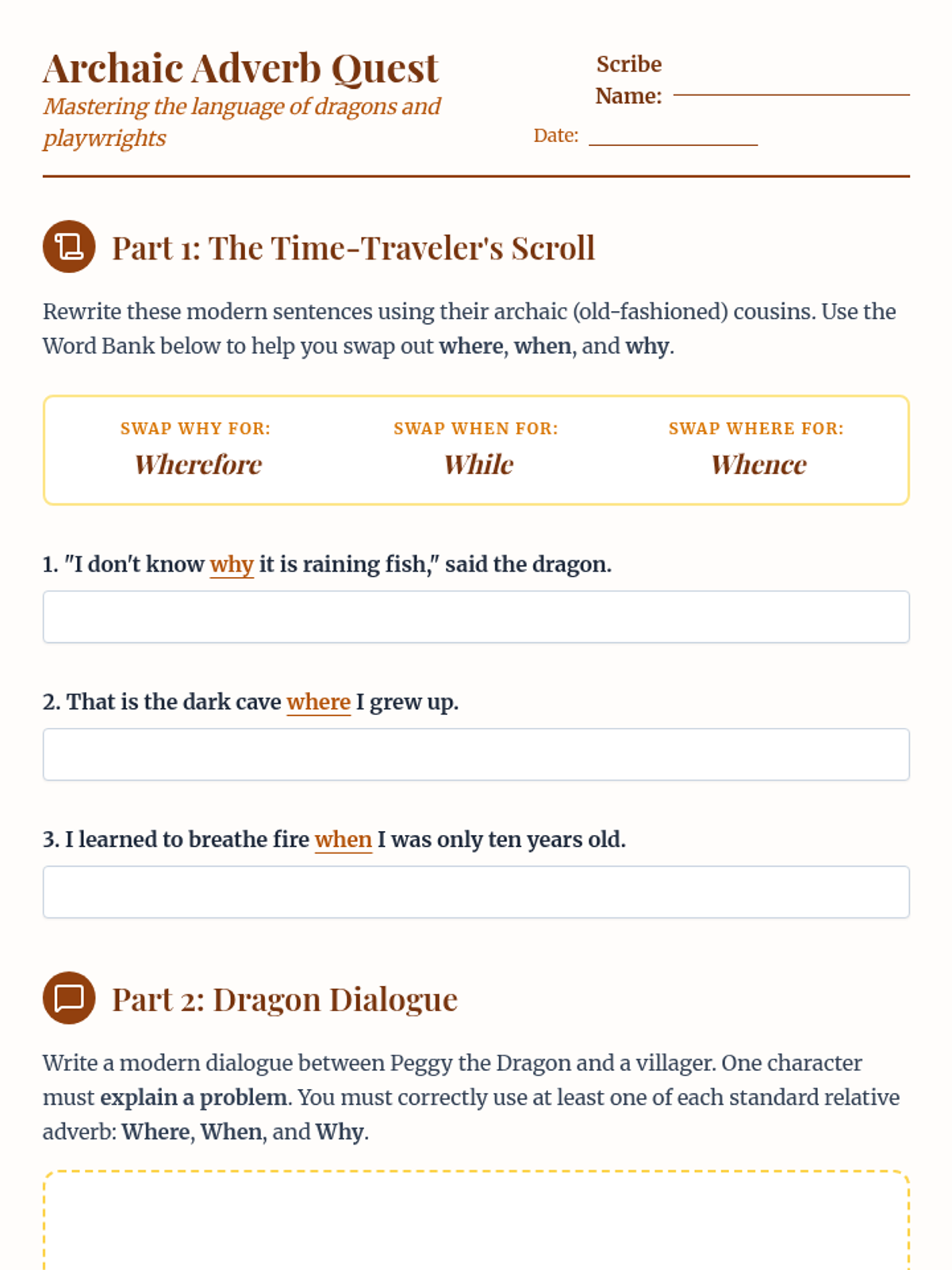
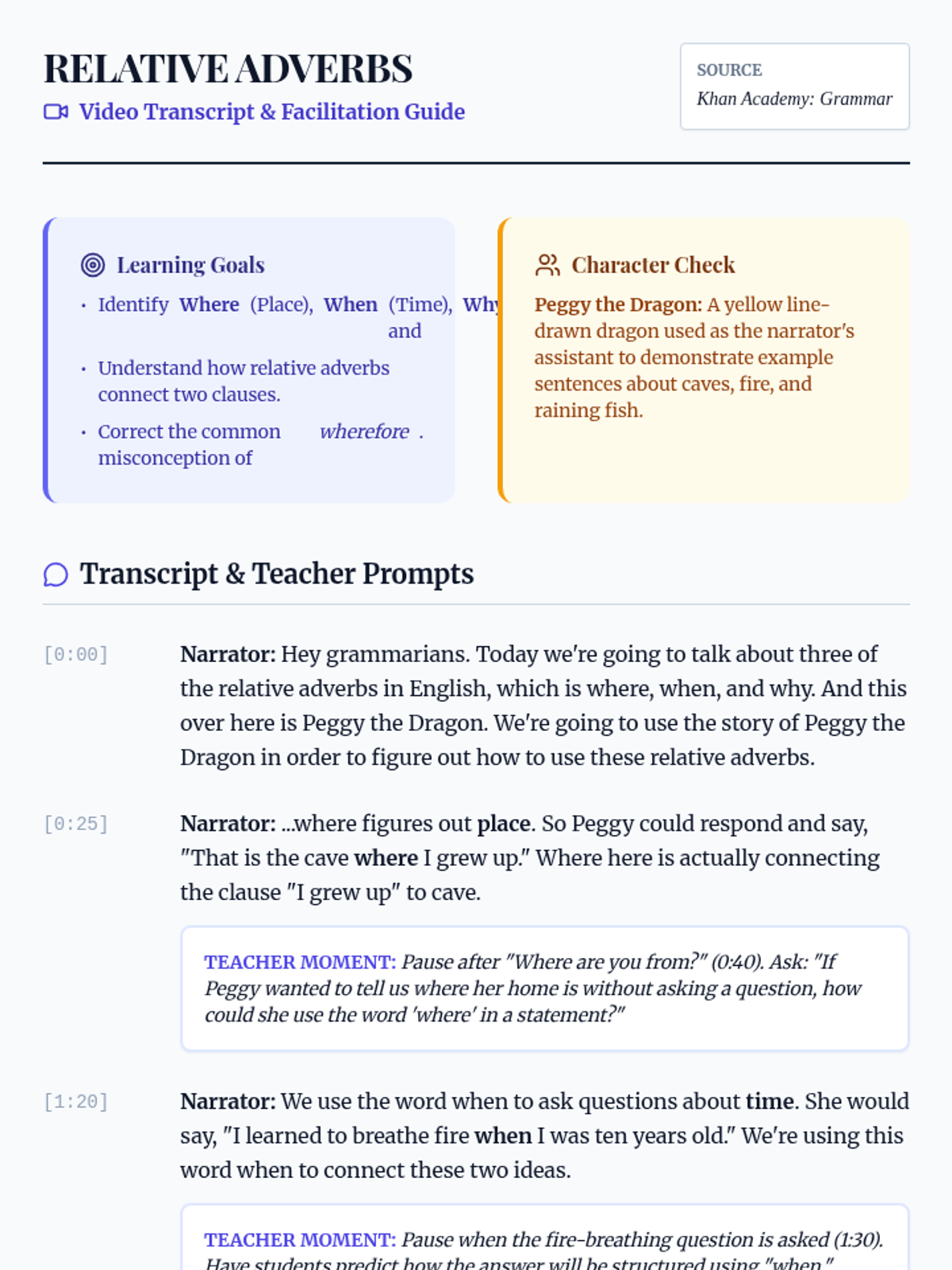
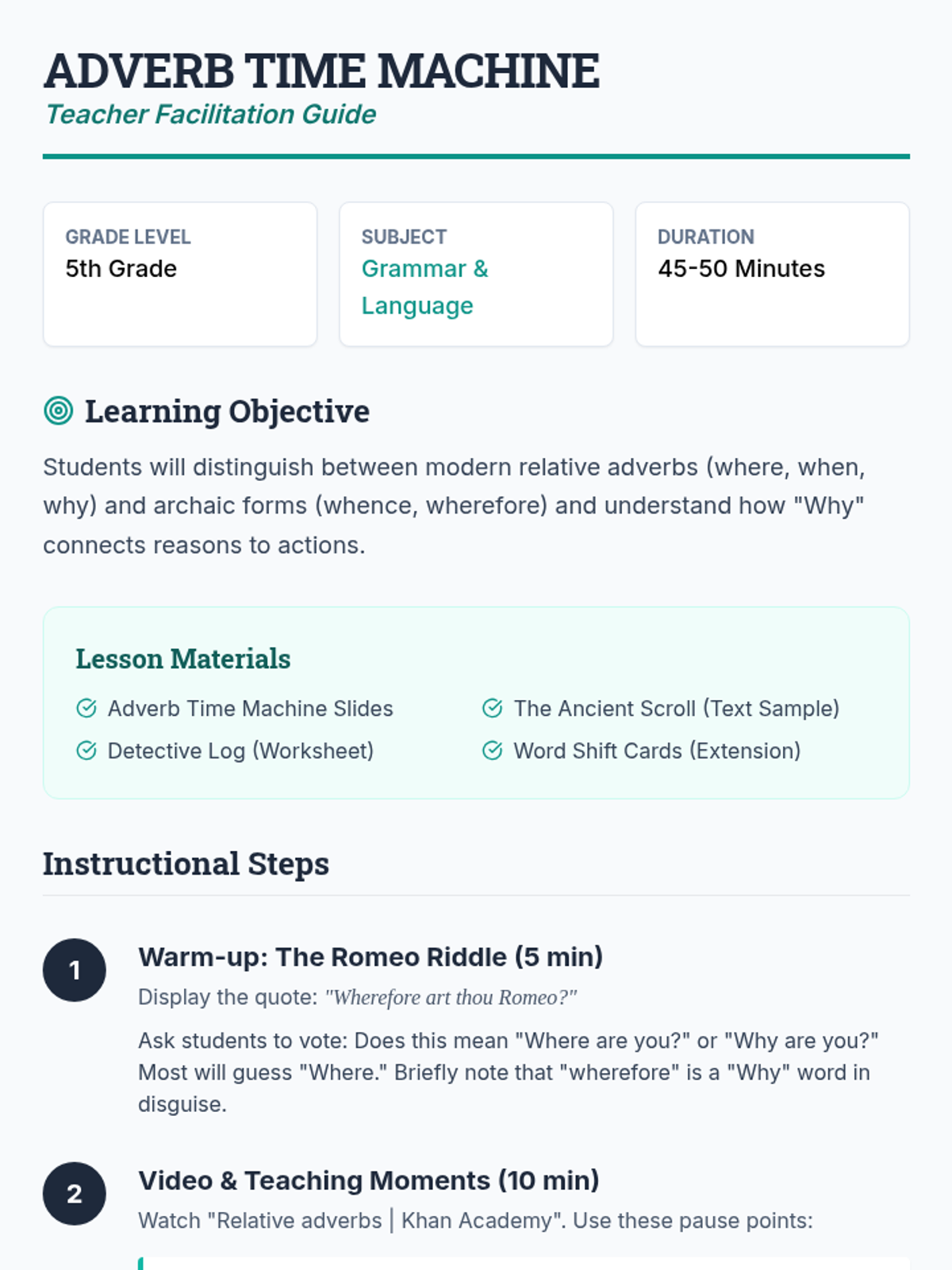
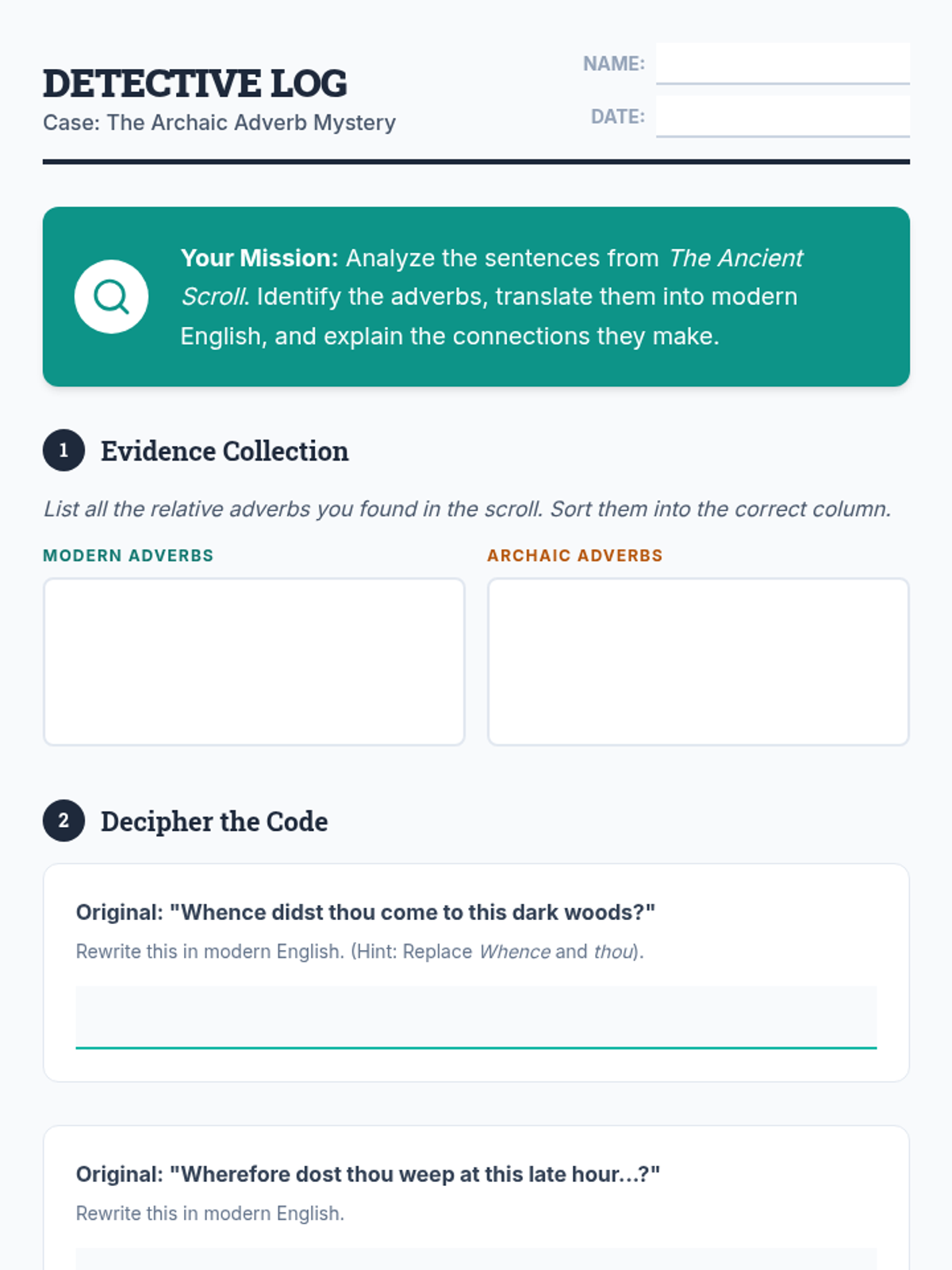
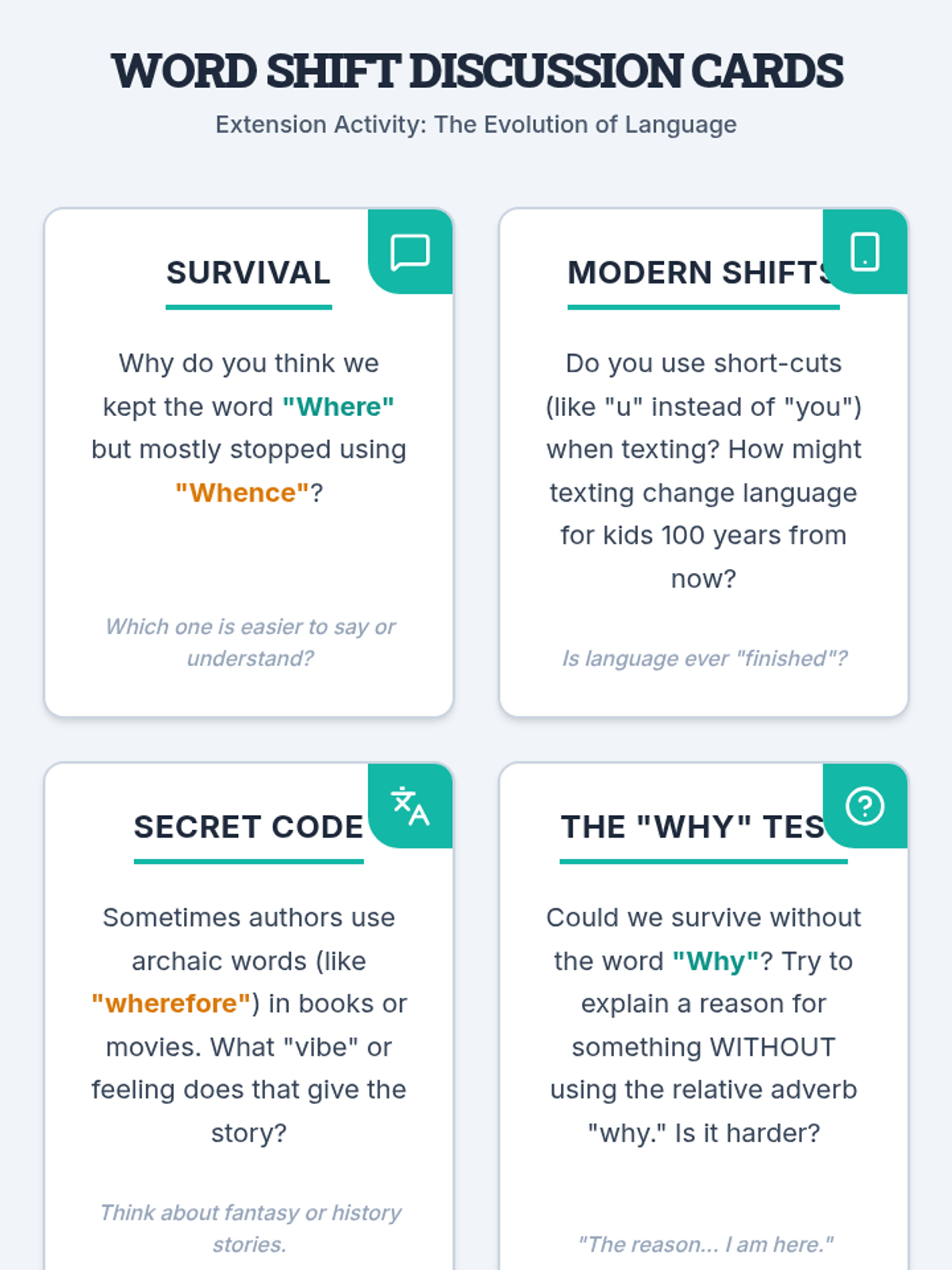
Students explore relative adverbs (where, when, why) through the lens of history and a dragon named Peggy, debunking the 'wherefore' myth along the way.
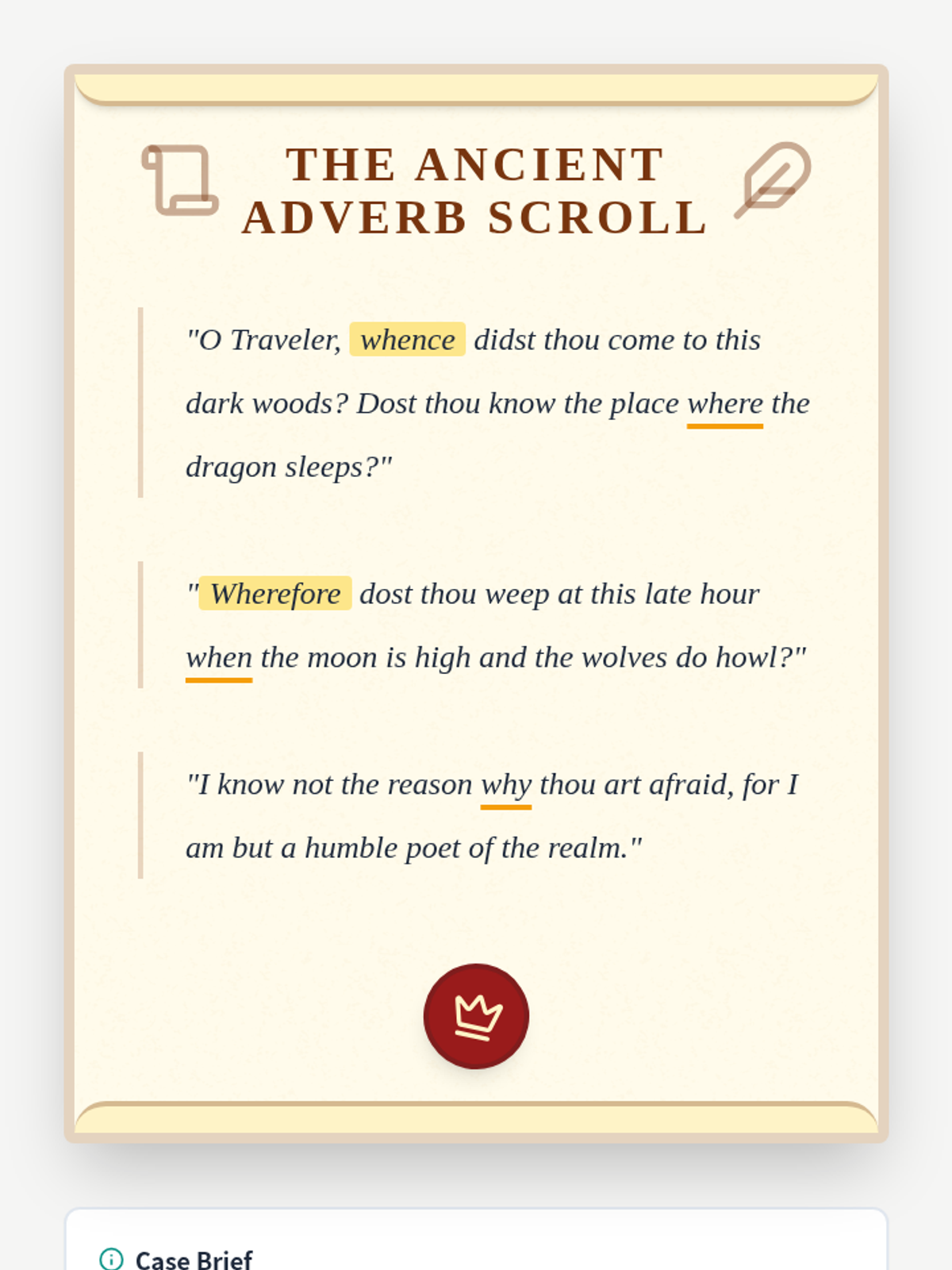
A lesson for 5th-grade students to explore relative adverbs through a historical lens, comparing modern usage with archaic forms like "wherefore" and "whence."
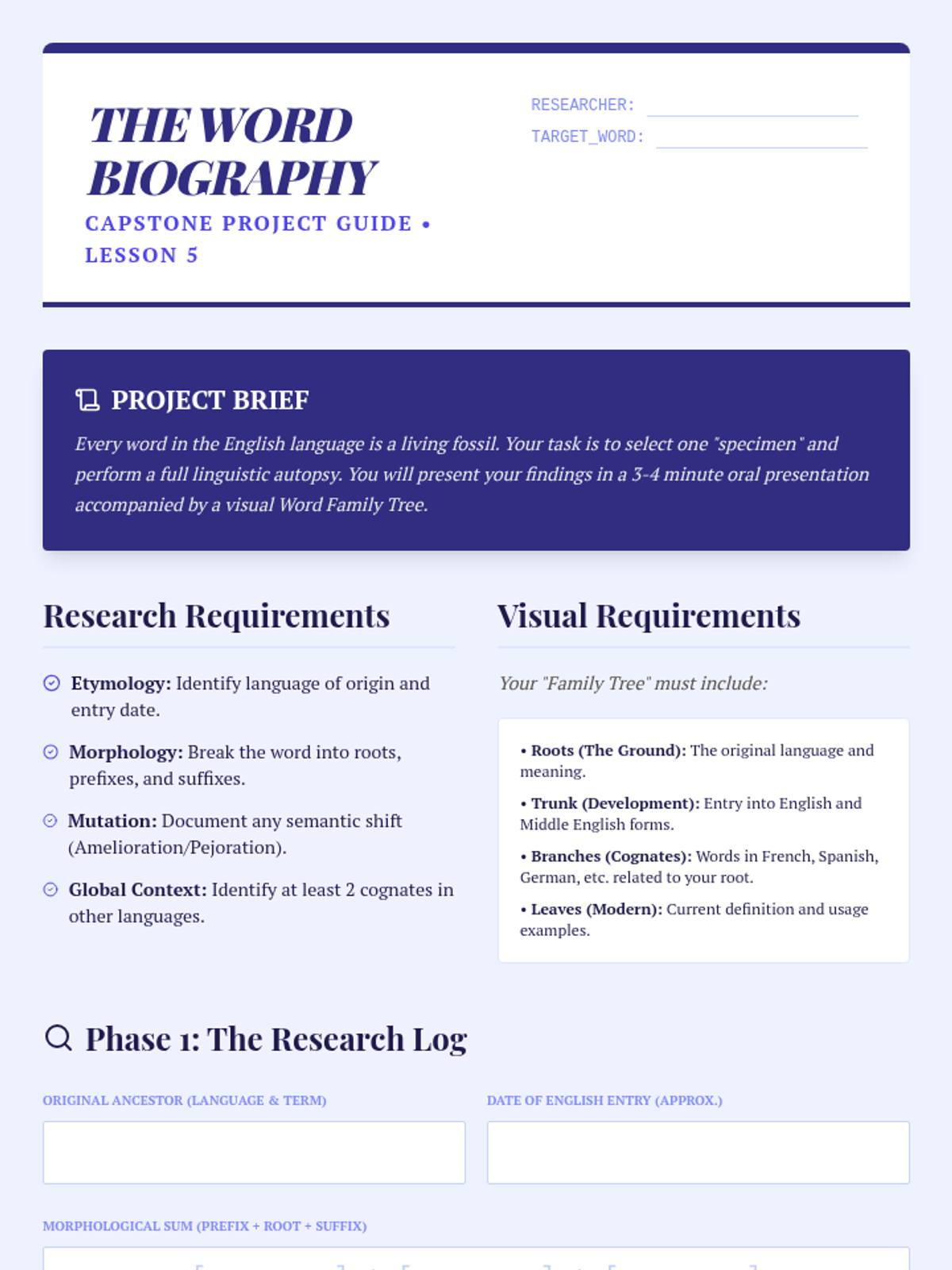
Students synthesize their research skills to present the 'life story' of a specific word, detailing its origin, evolution, and modern usage.
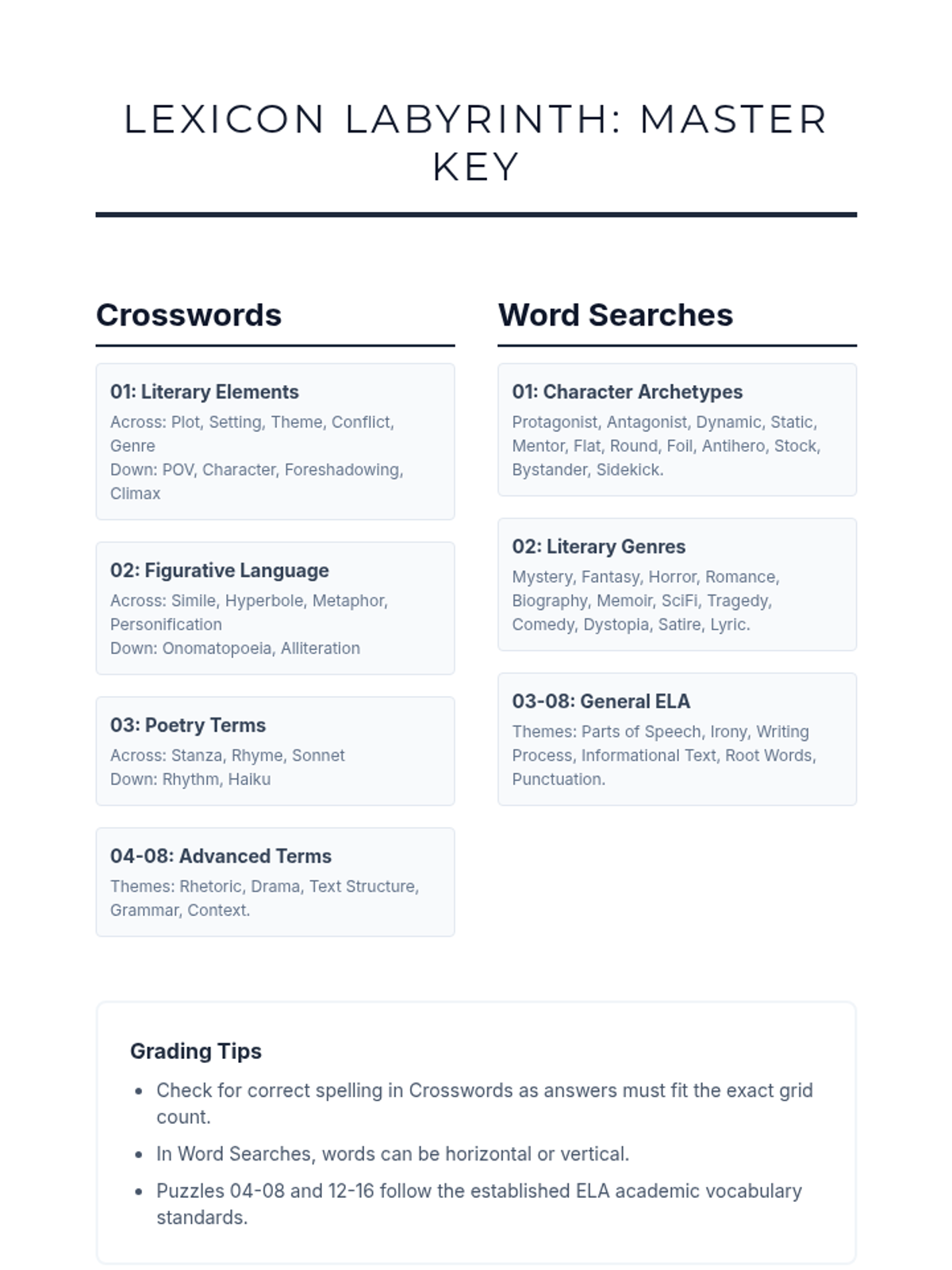
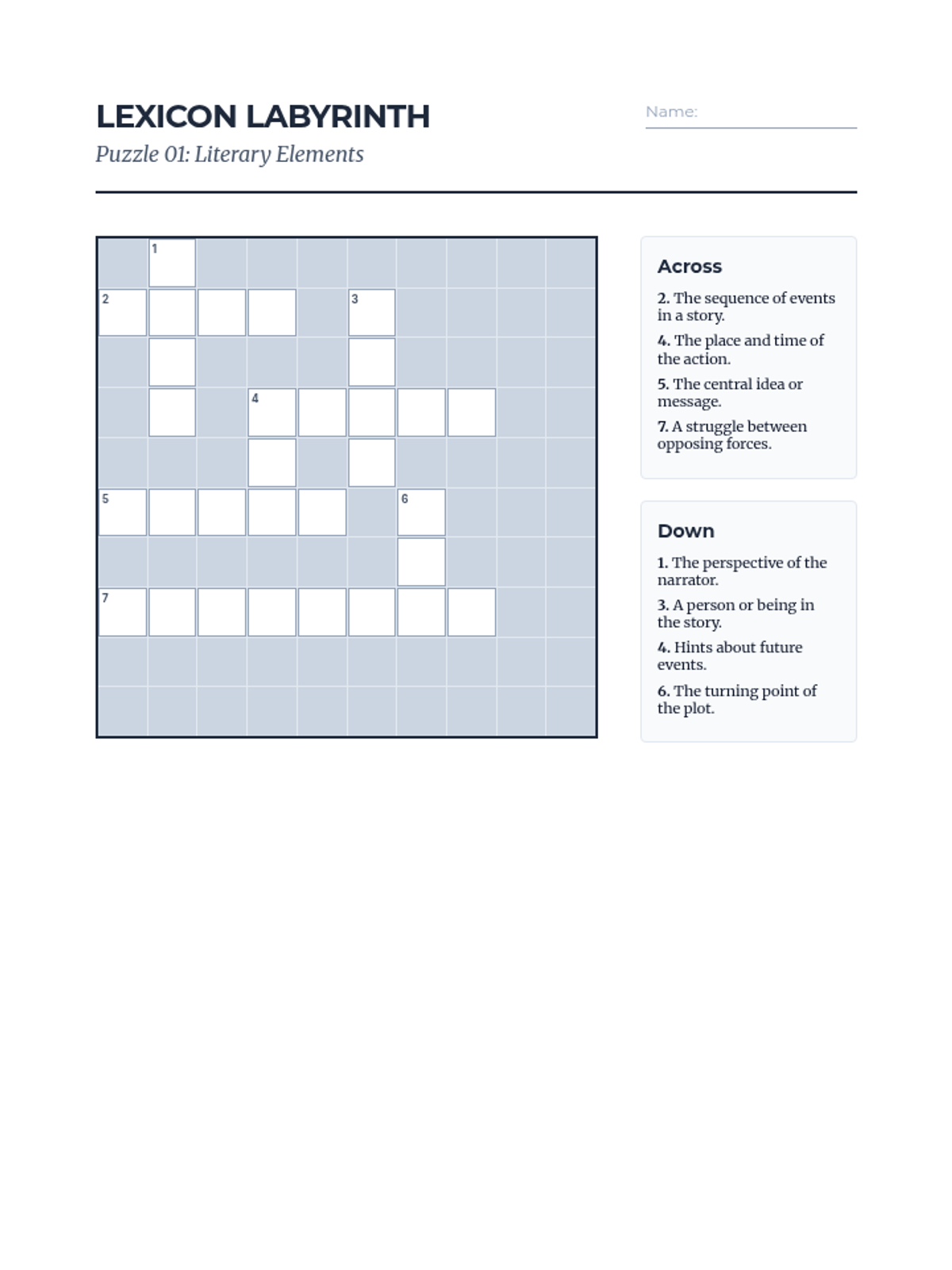
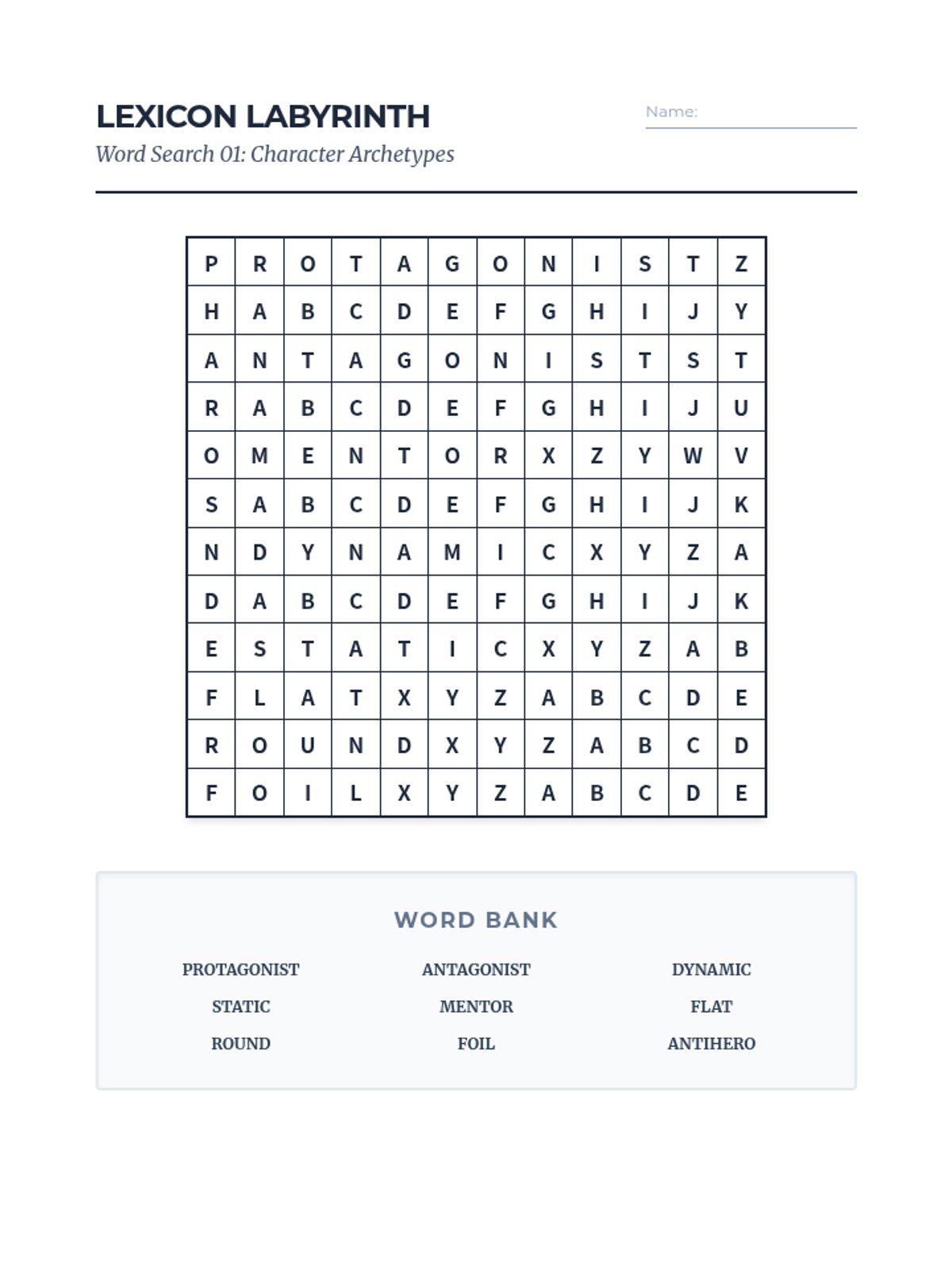
A comprehensive set of vocabulary-building puzzles focused on essential ELA academic terms, covering literary elements, figurative language, rhetorical devices, and more.
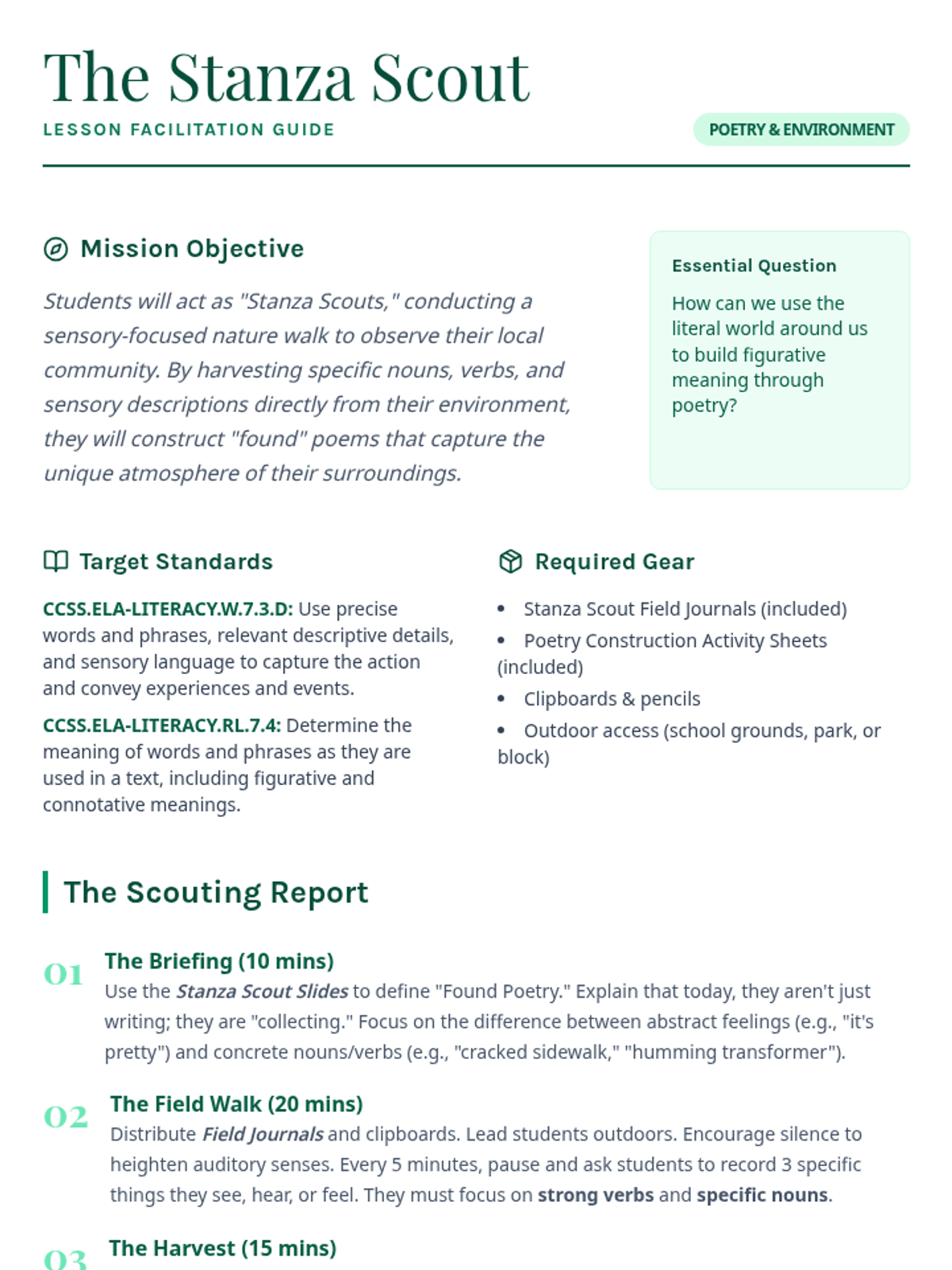
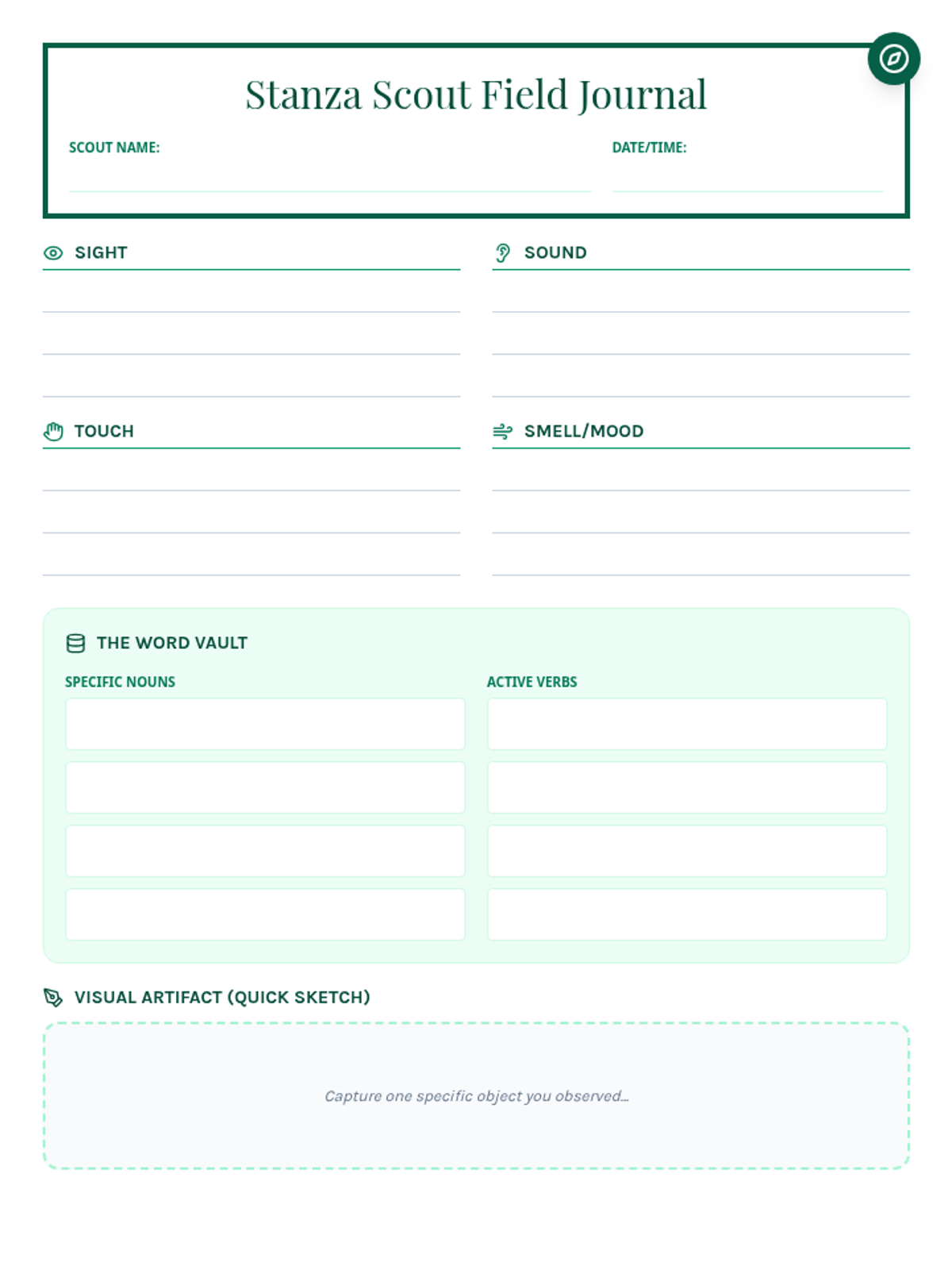
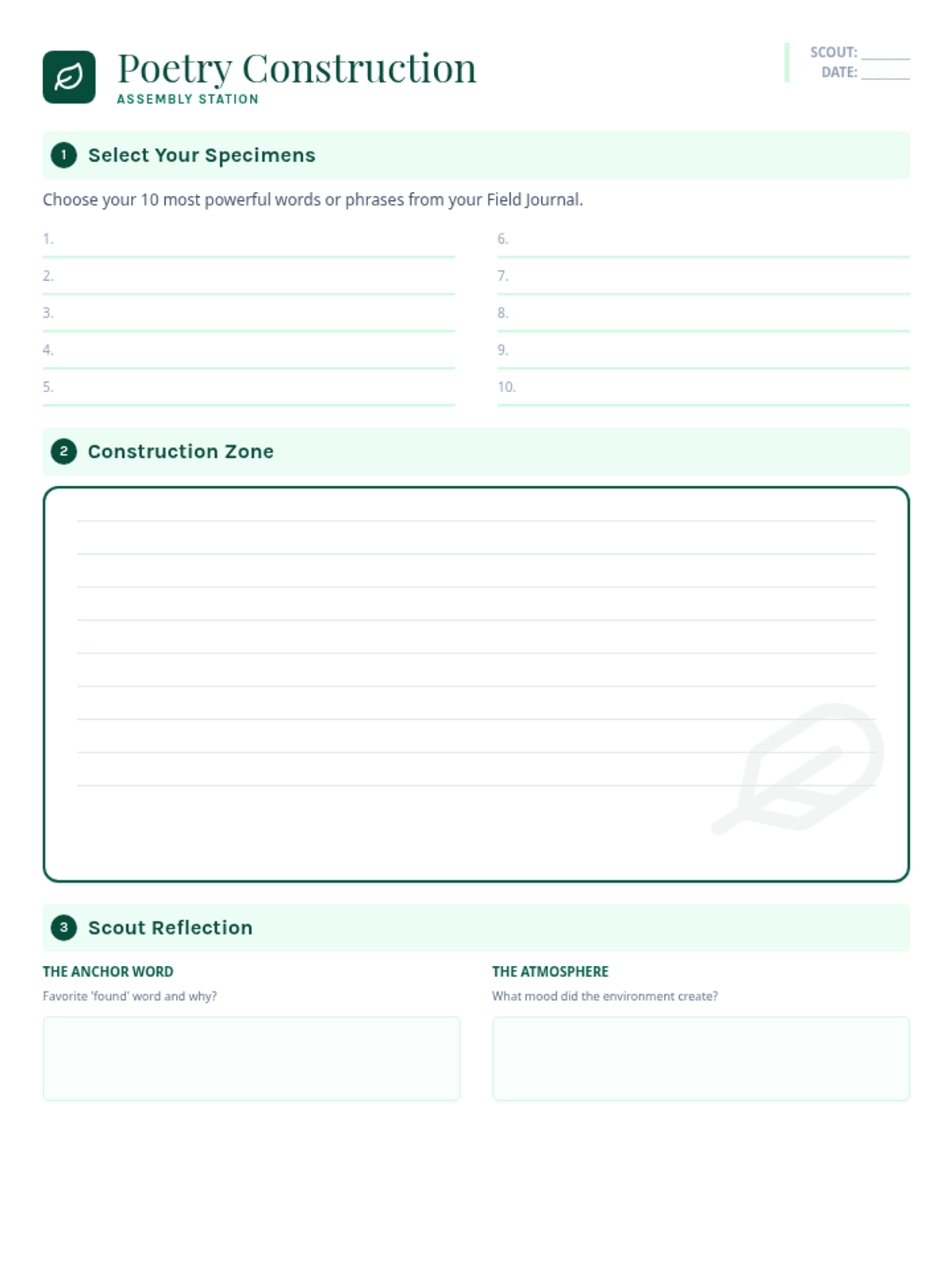
A middle school English Language Arts lesson where students conduct a sensory nature walk to collect 'found' words and transform them into original environmental poetry.
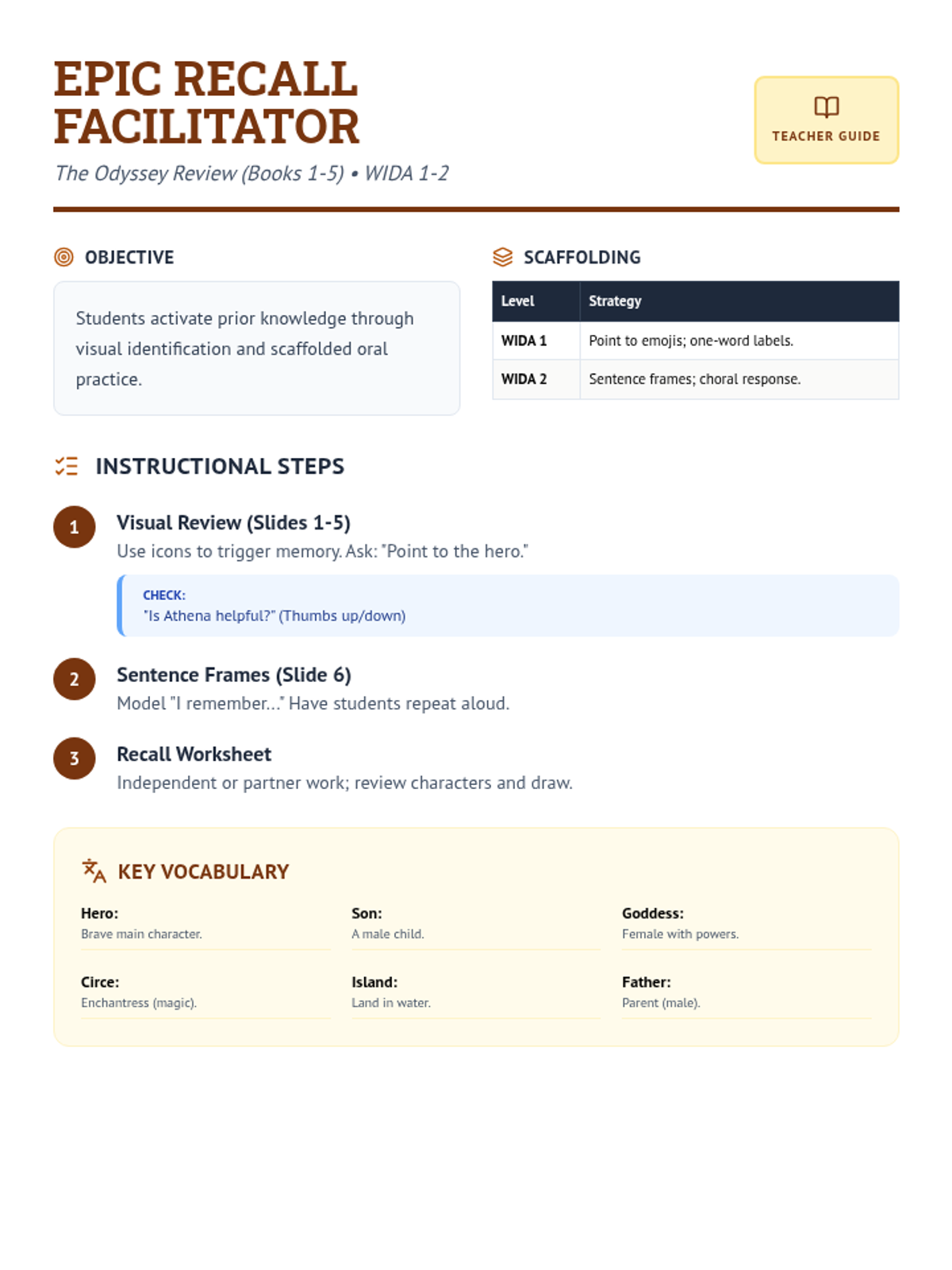
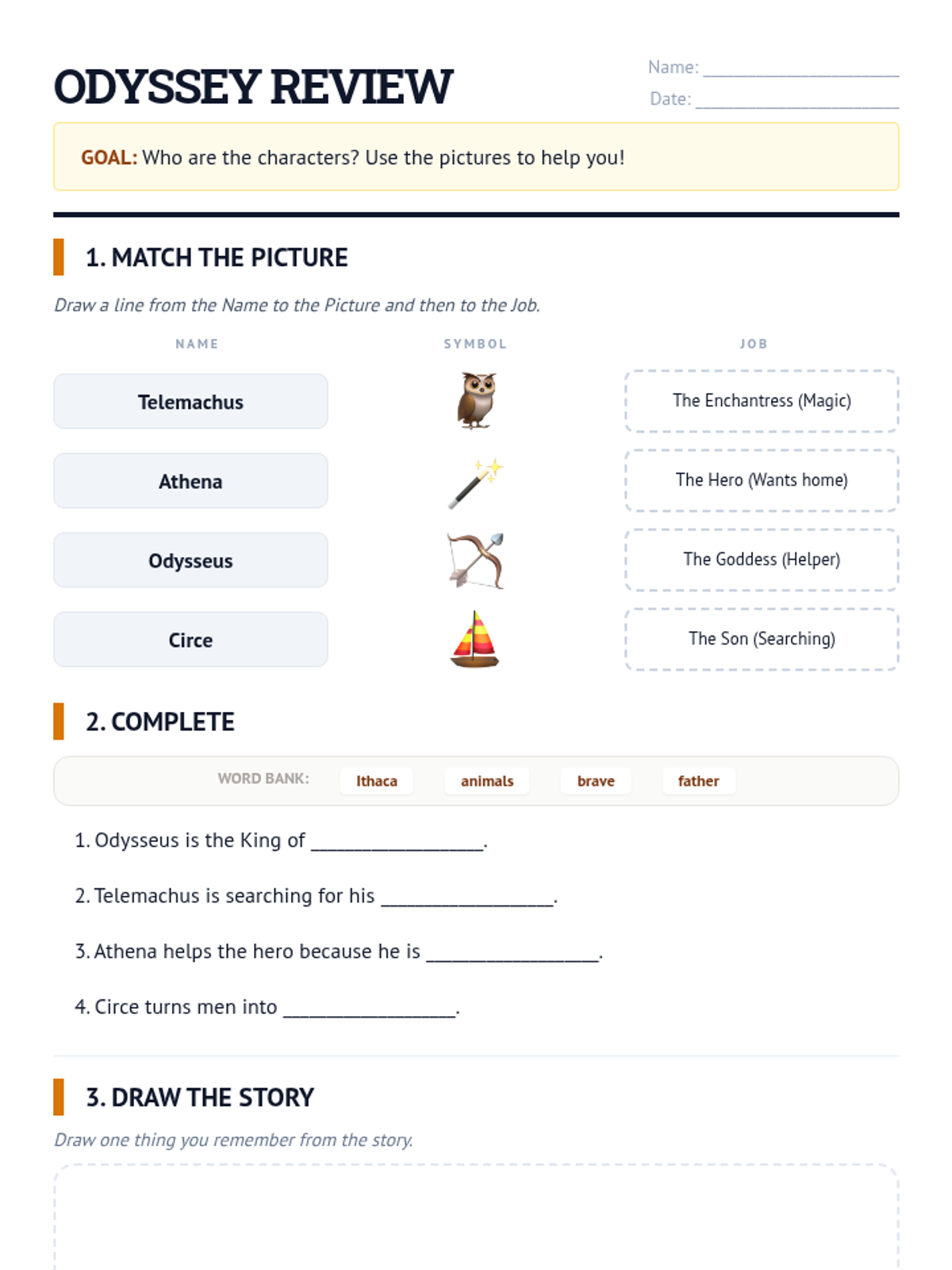
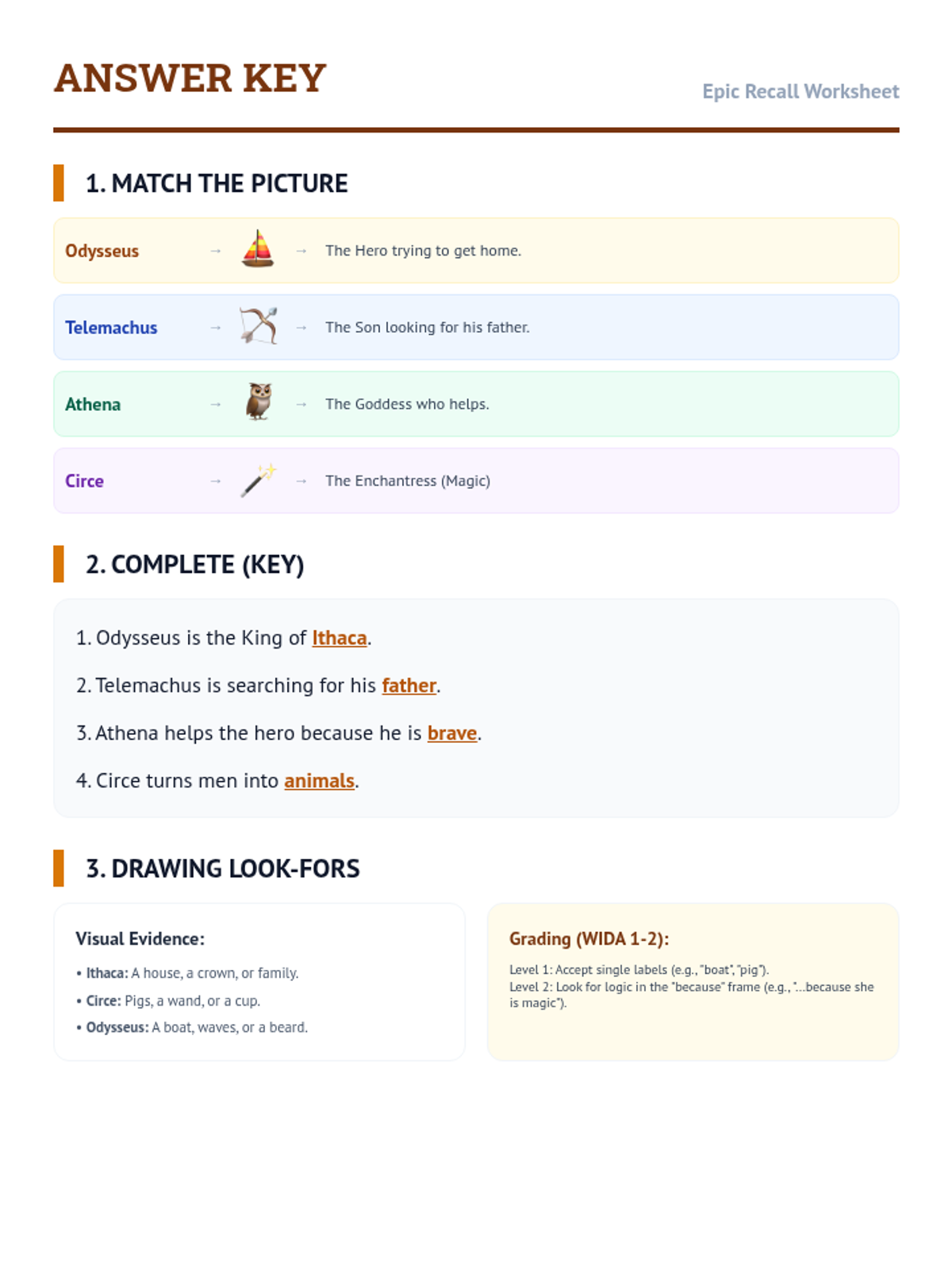
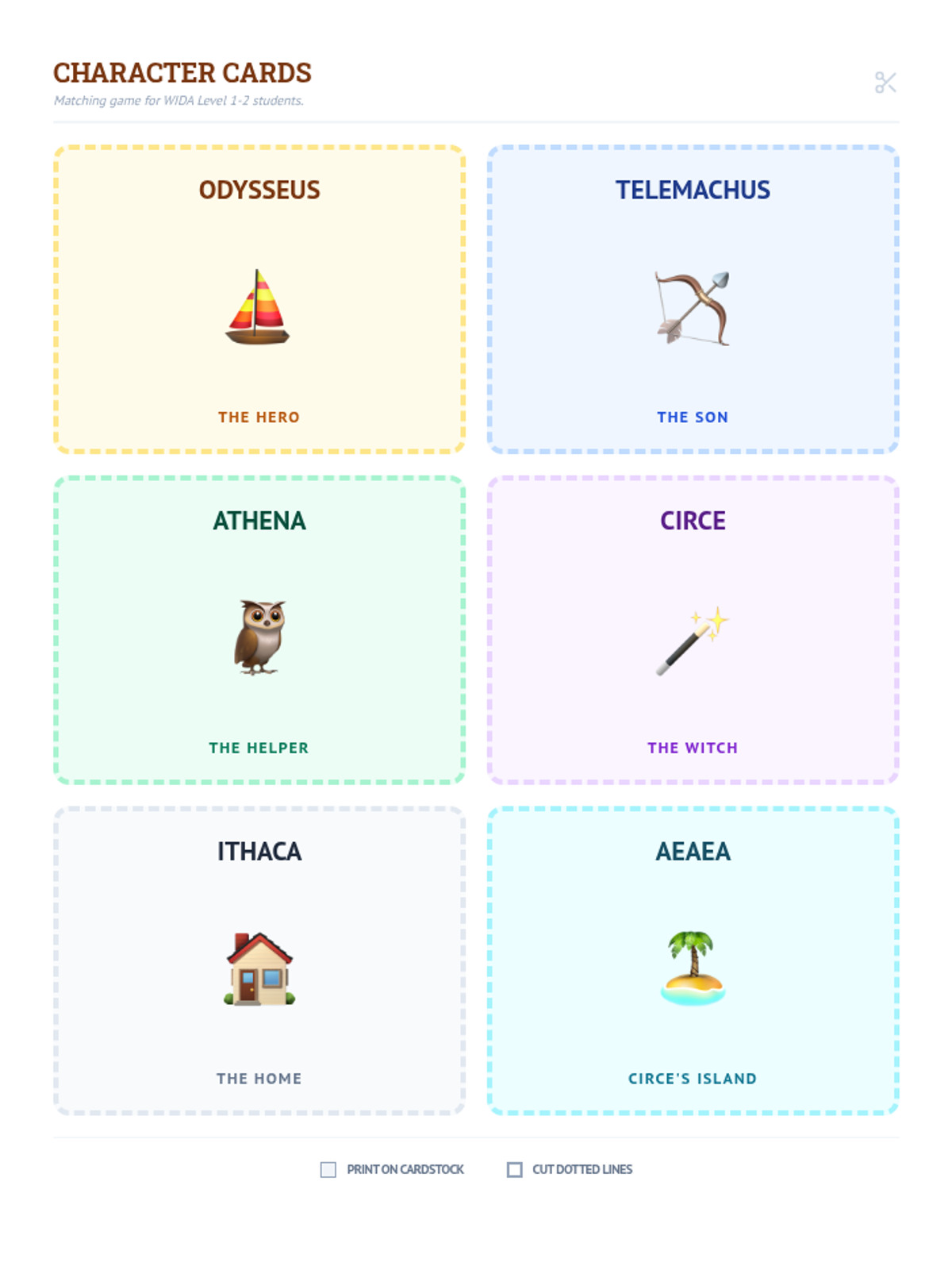
A review lesson for ELL students focused on recalling key characters and events from Books 1-5 of The Odyssey after a school break.
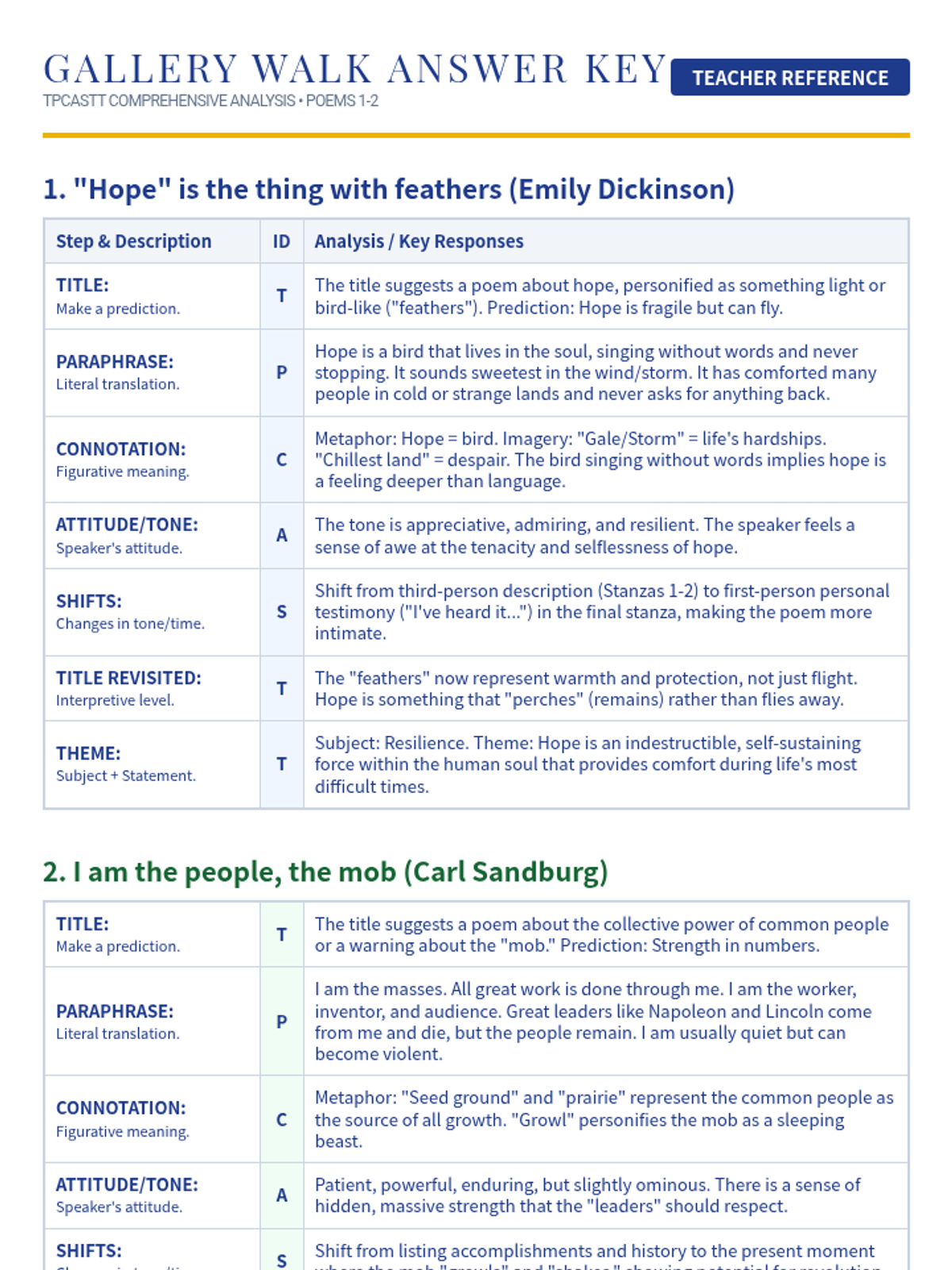
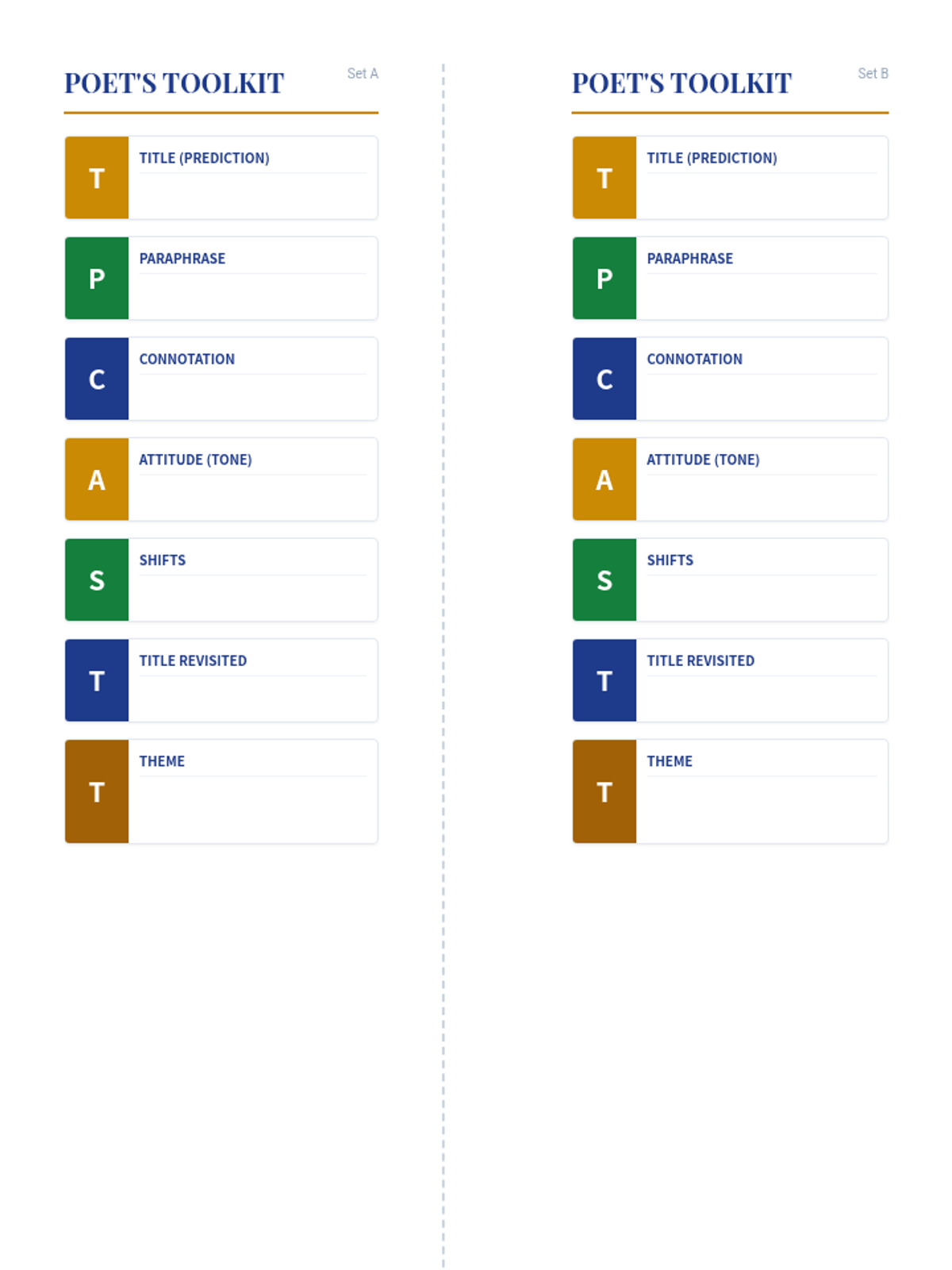
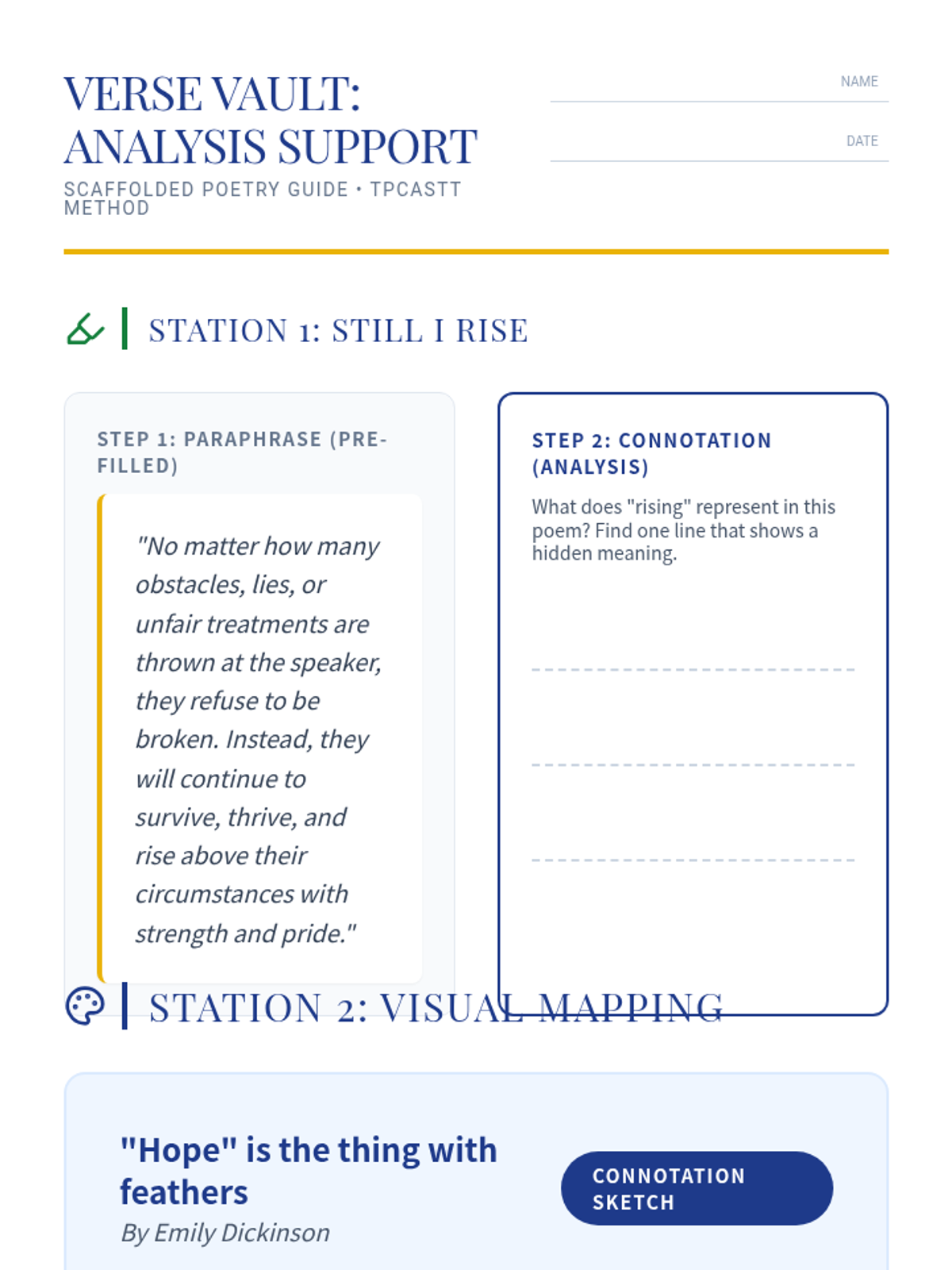
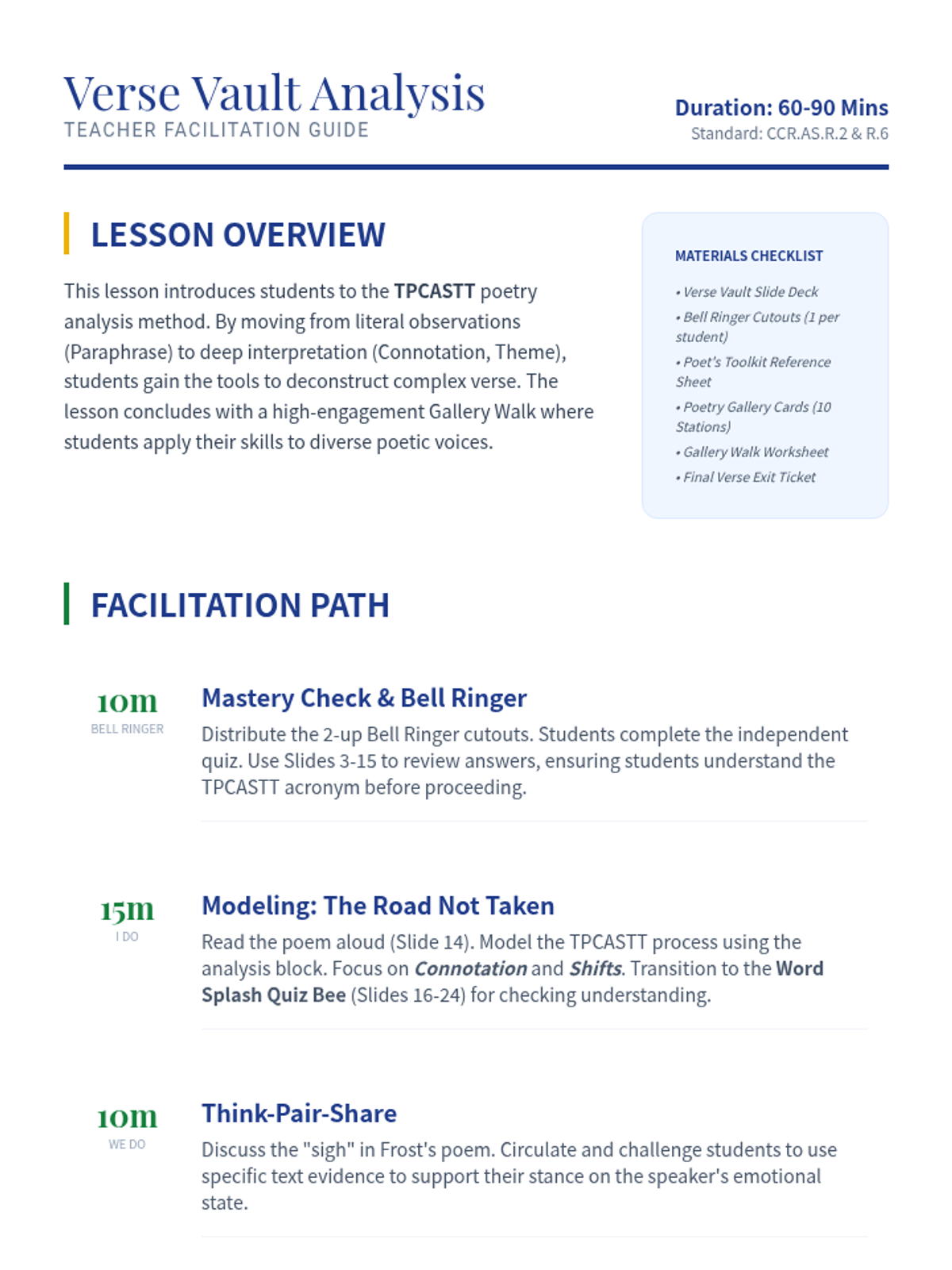
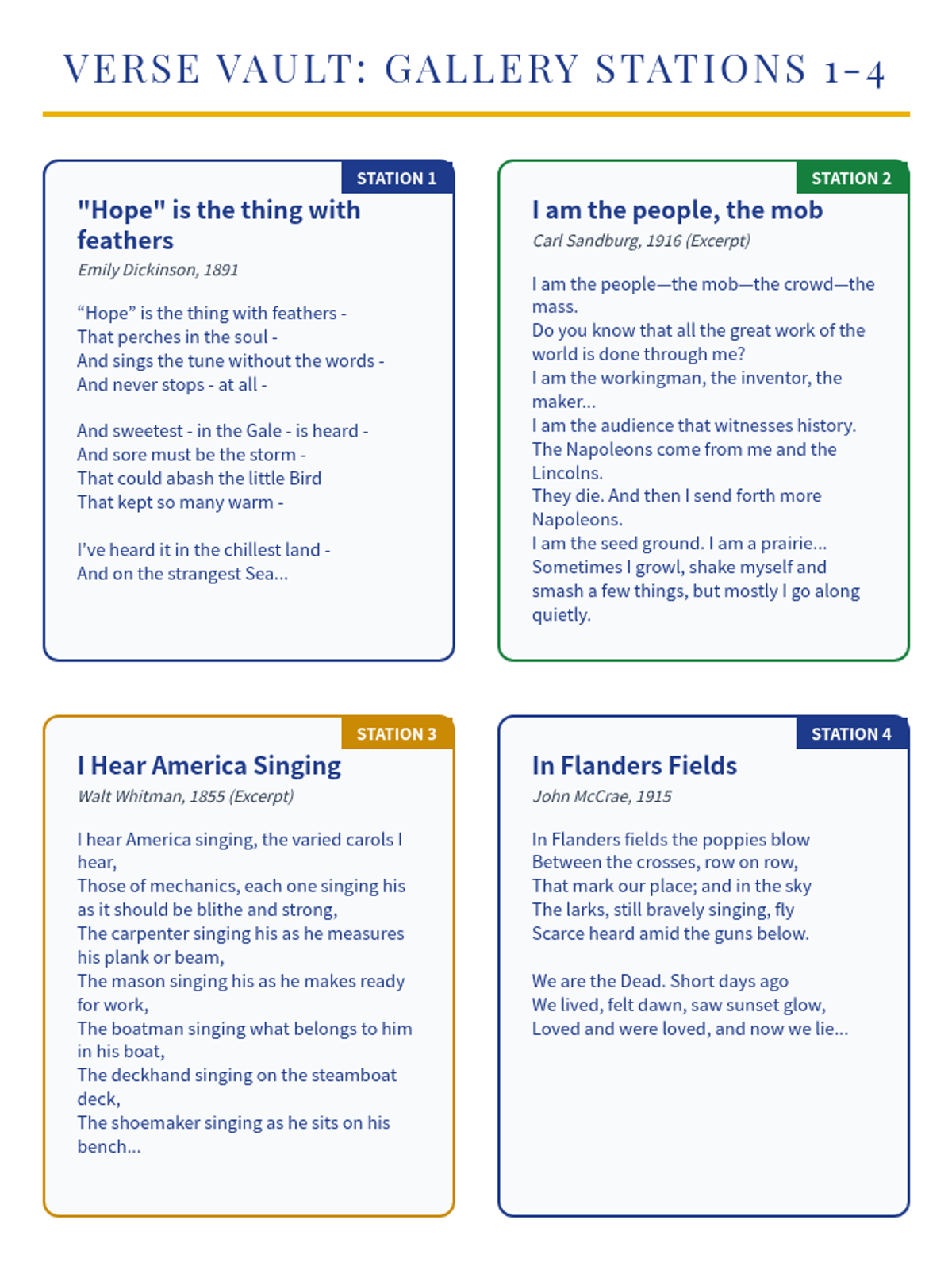
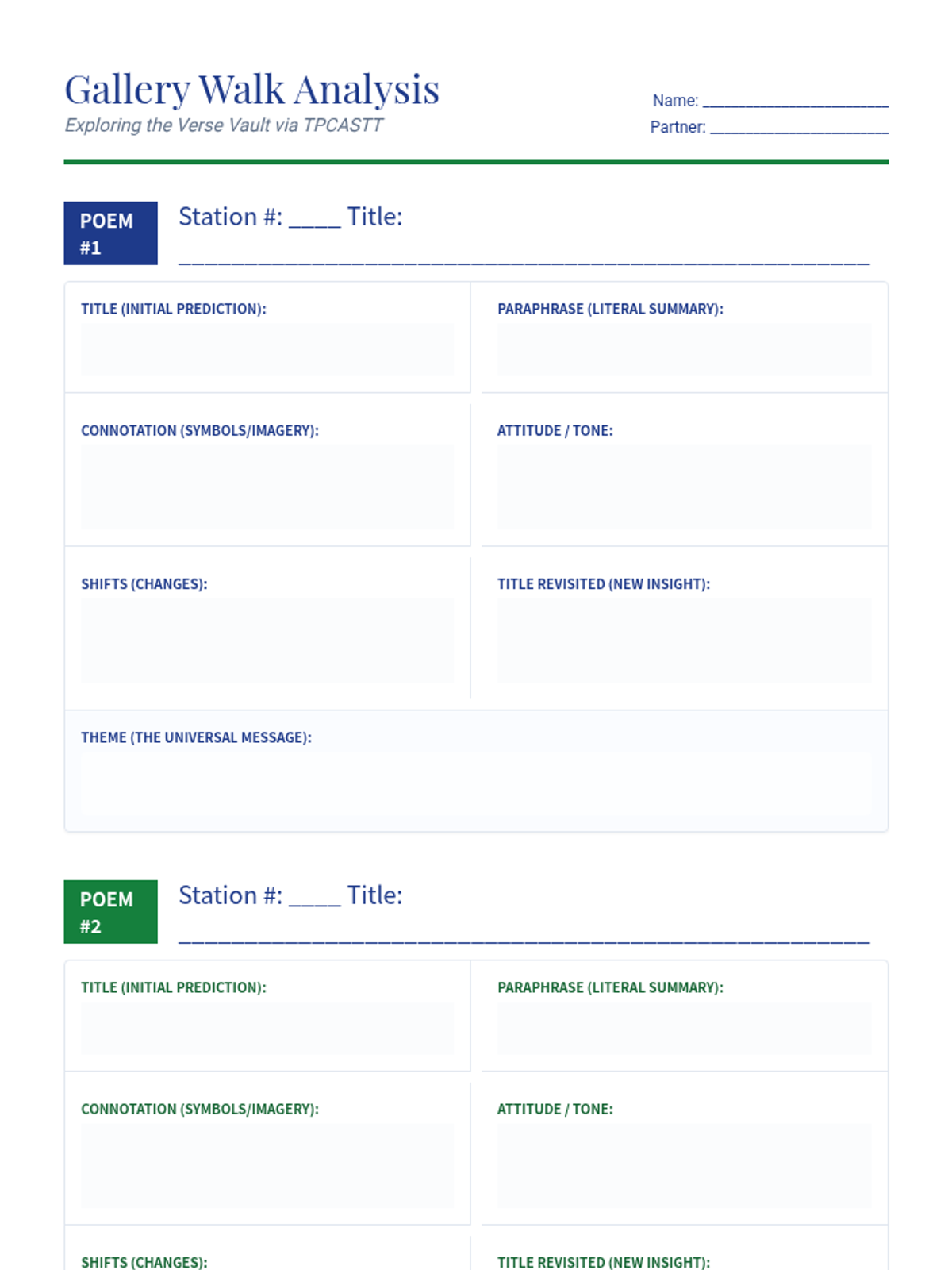
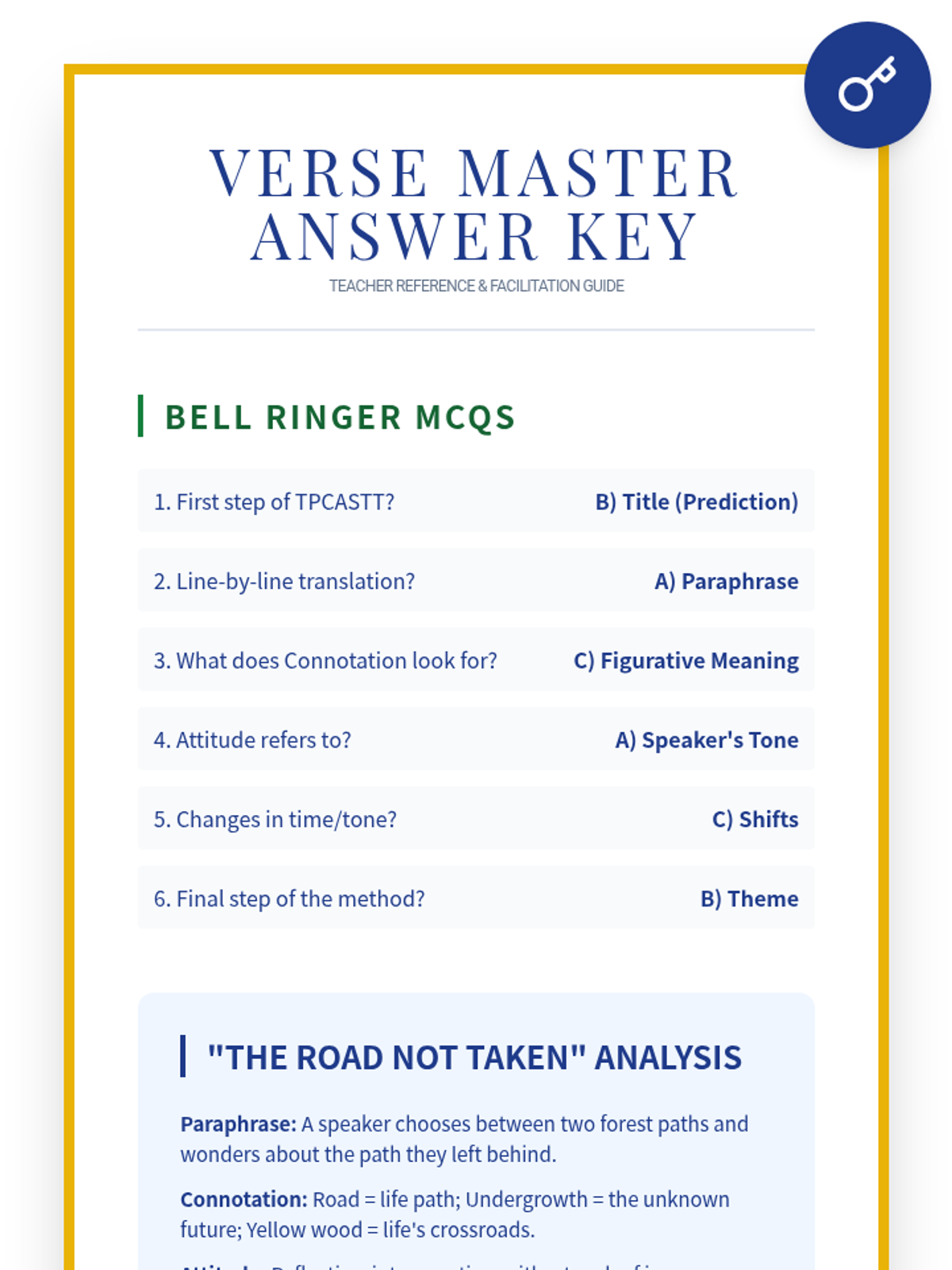
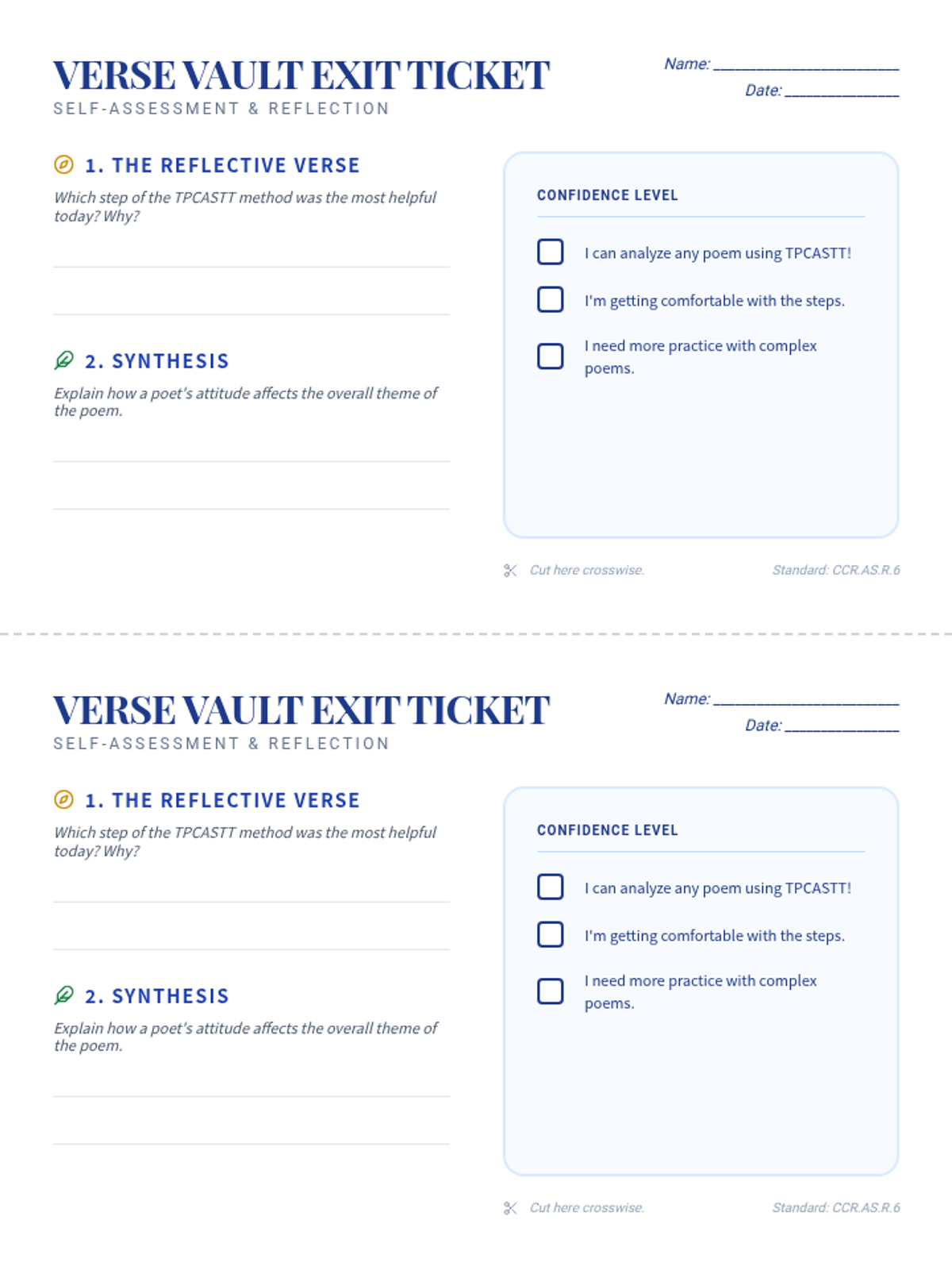
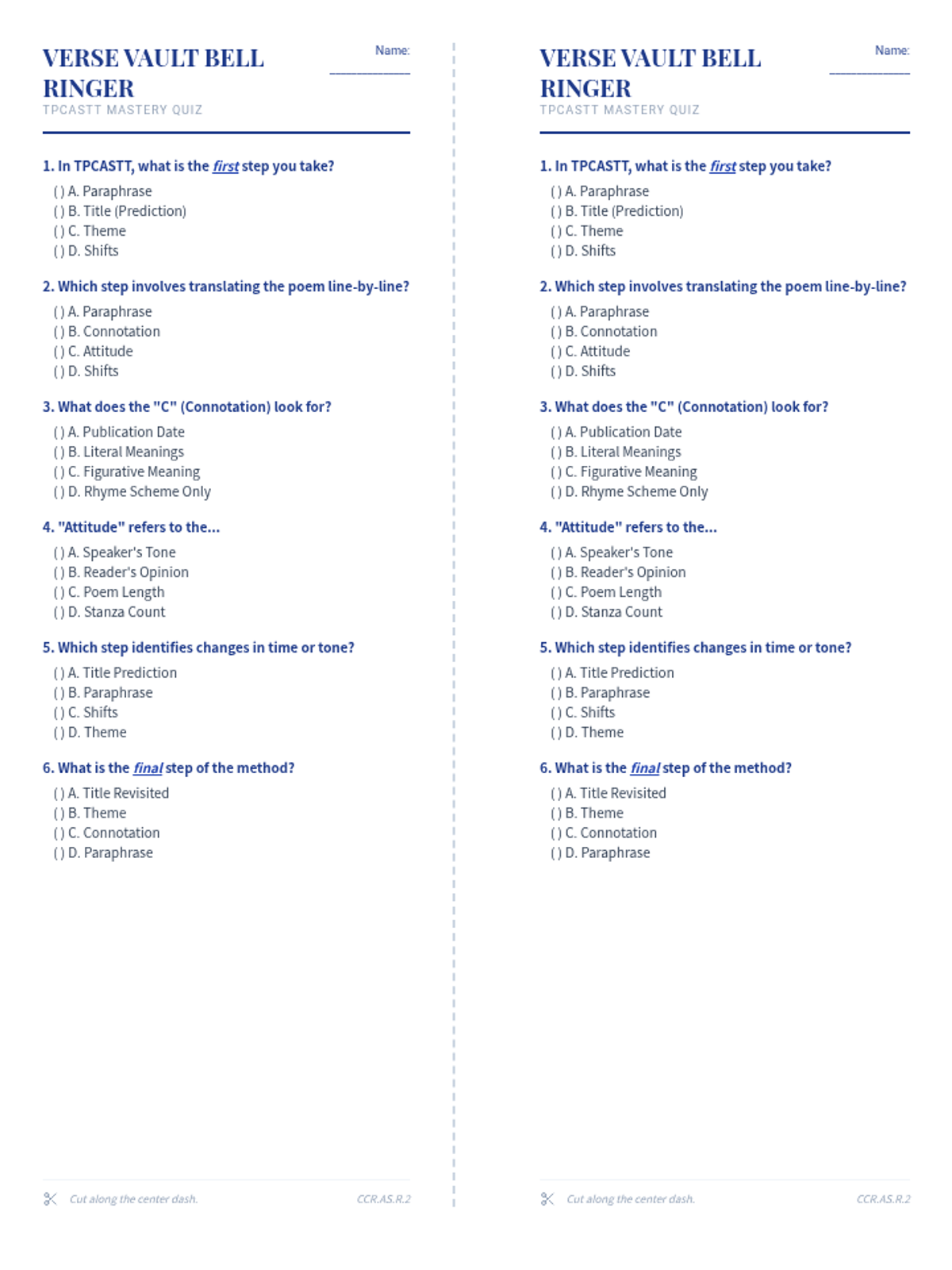
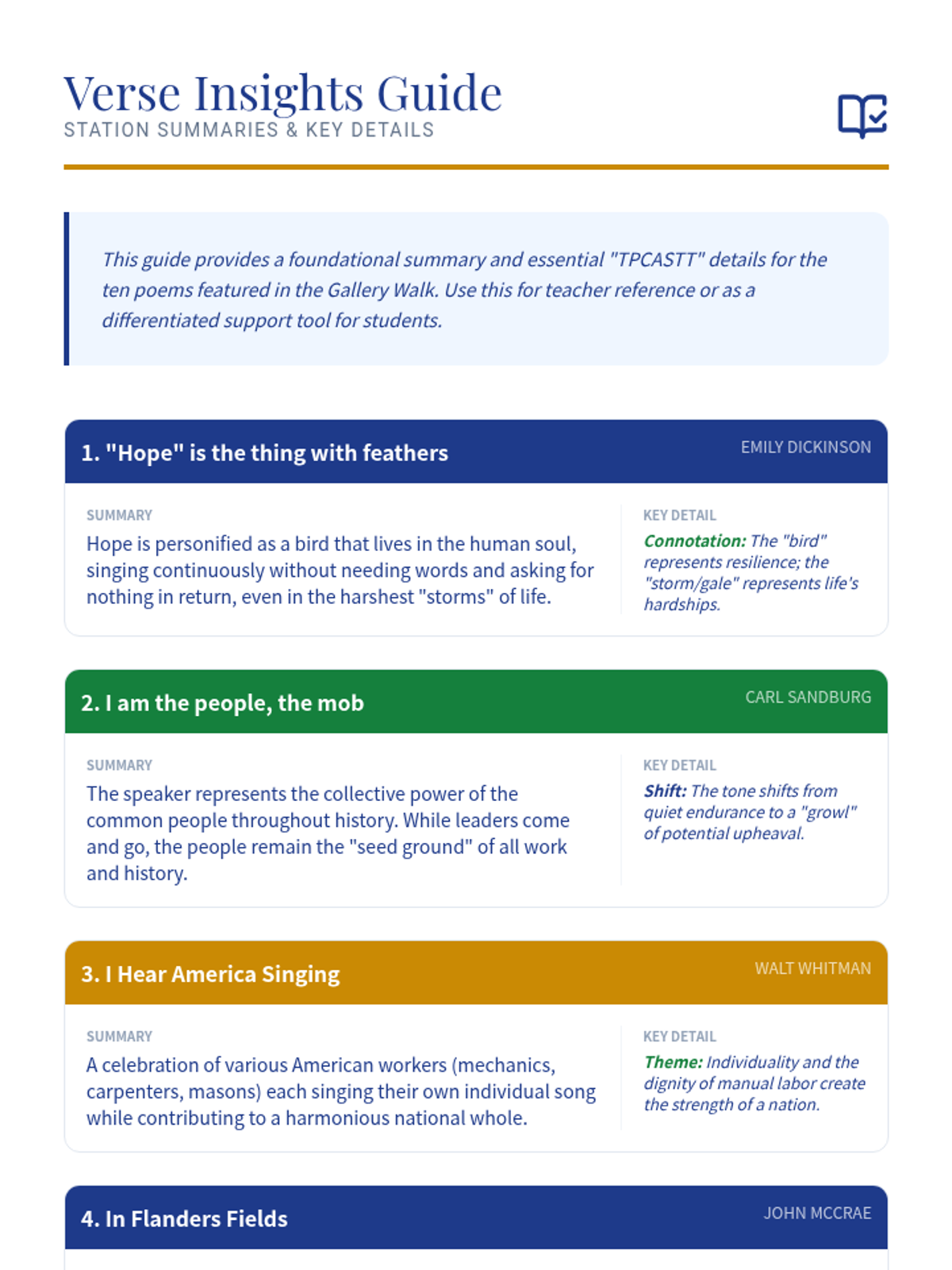
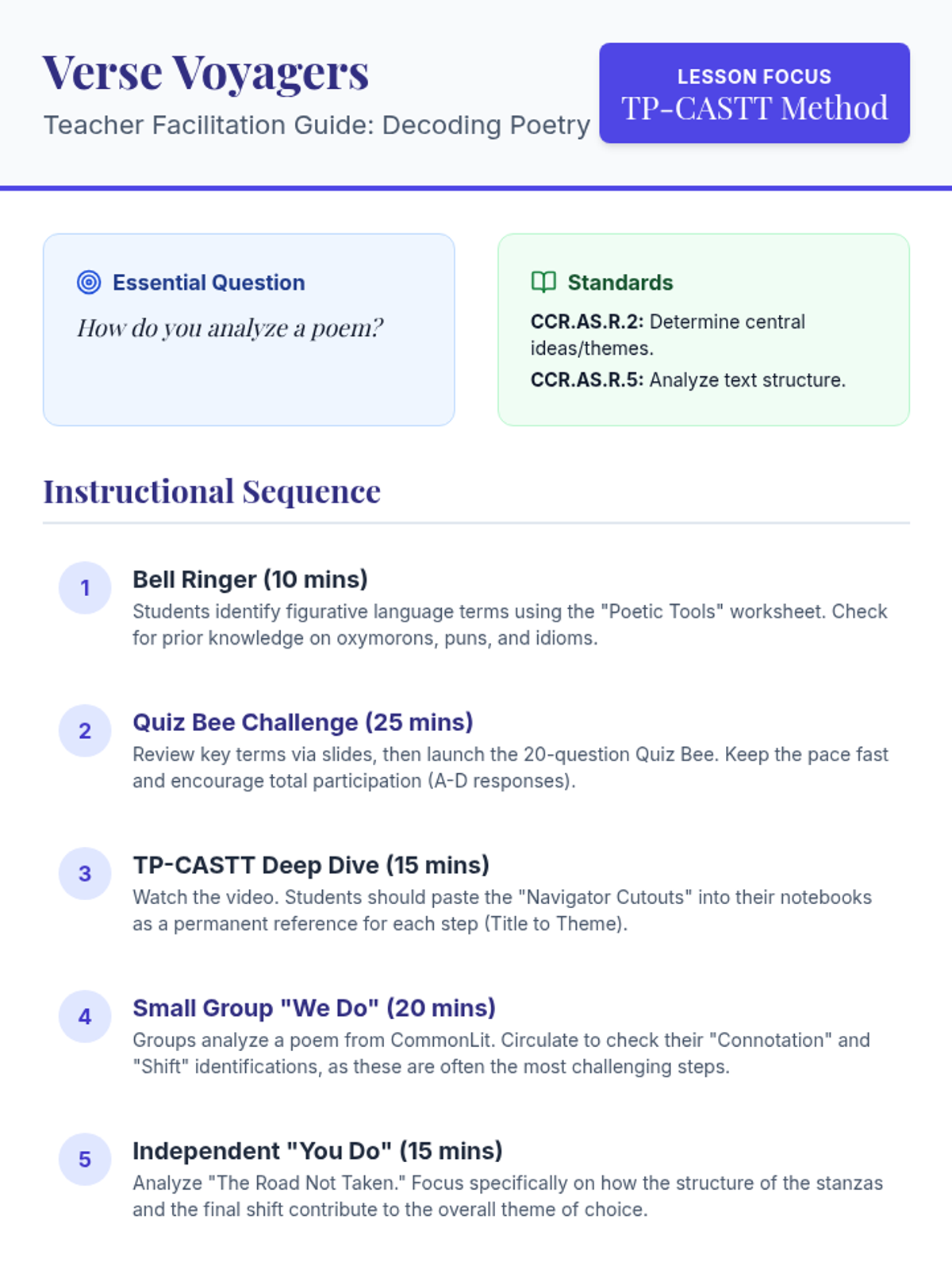
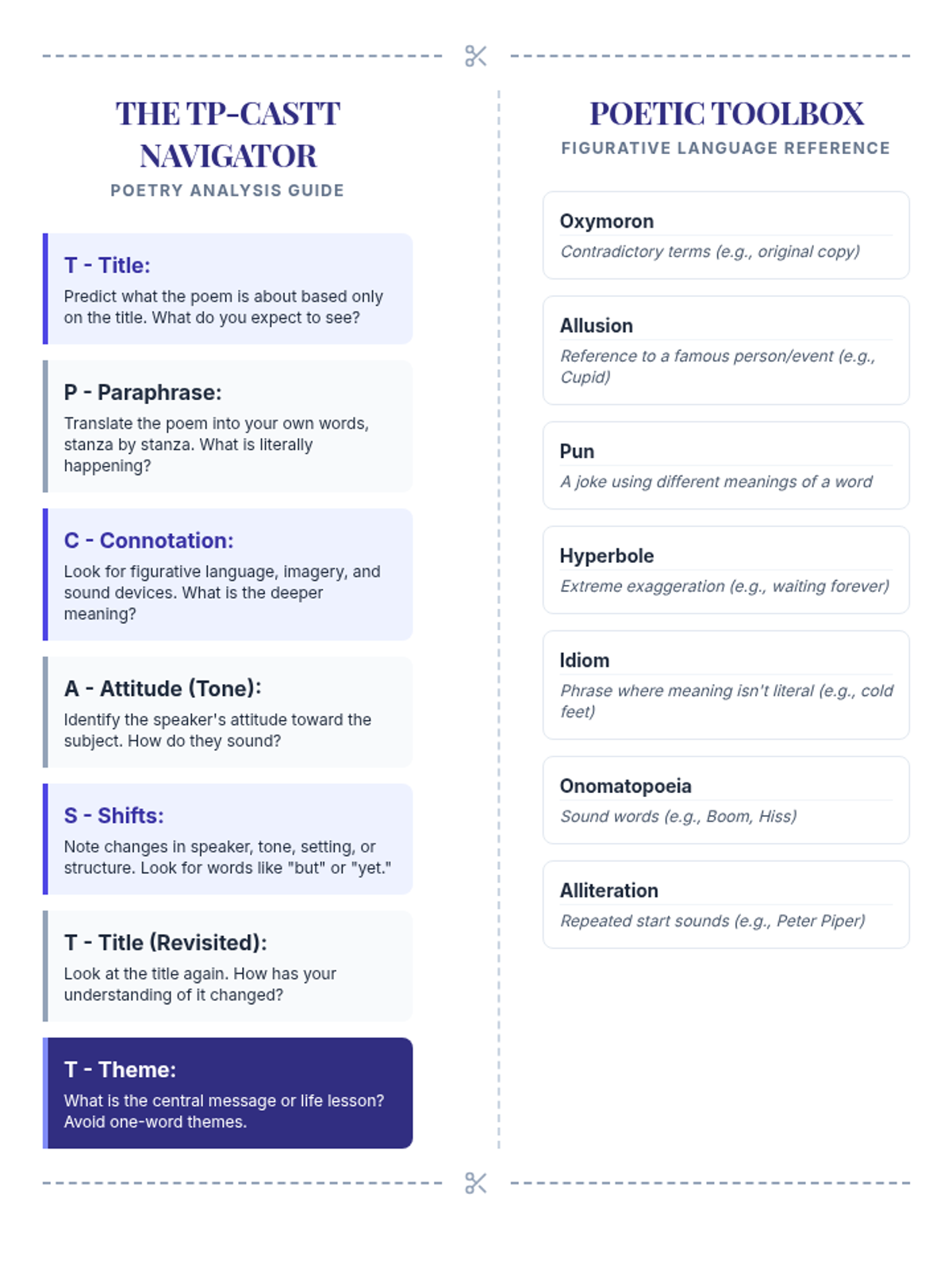
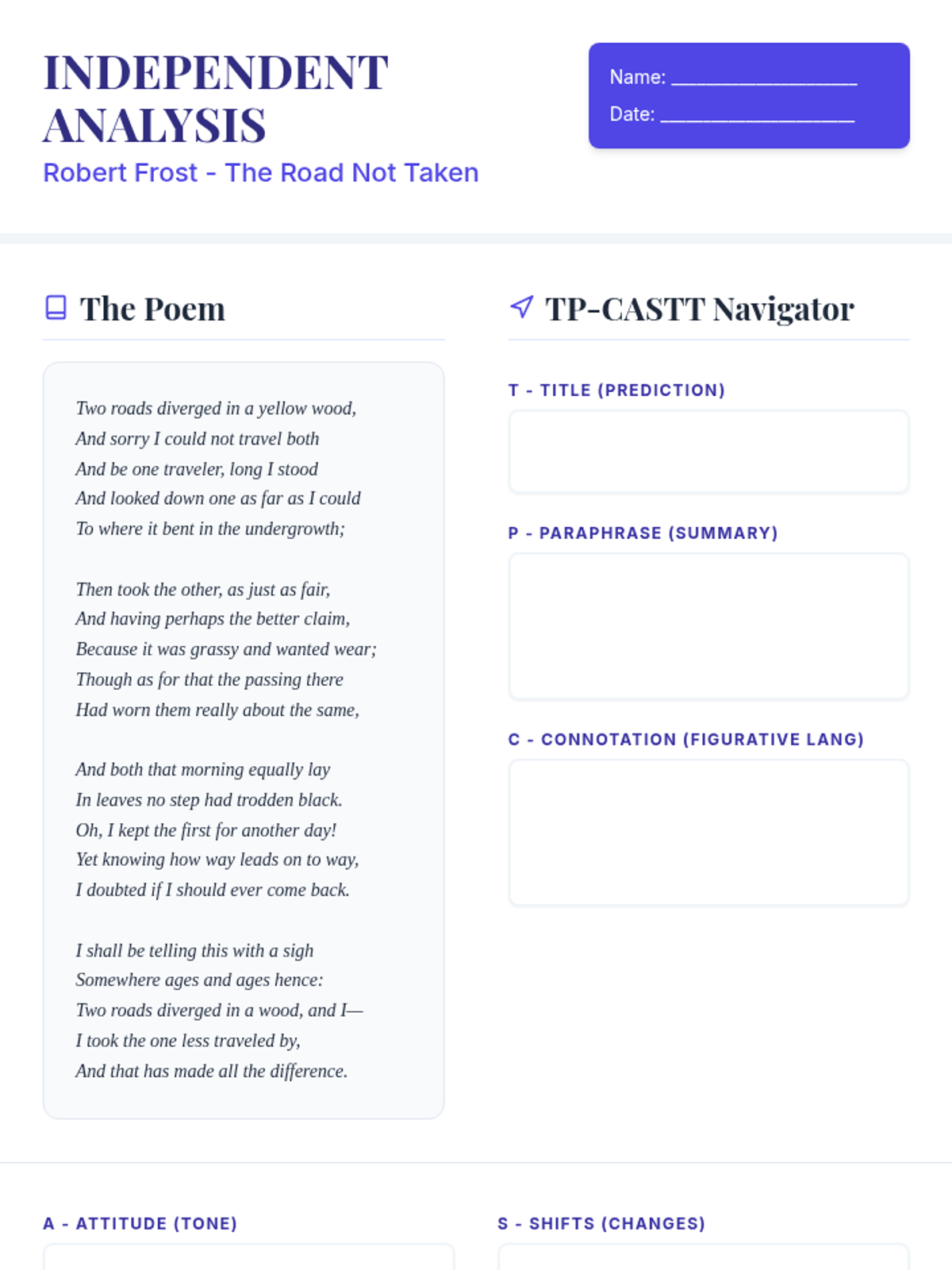
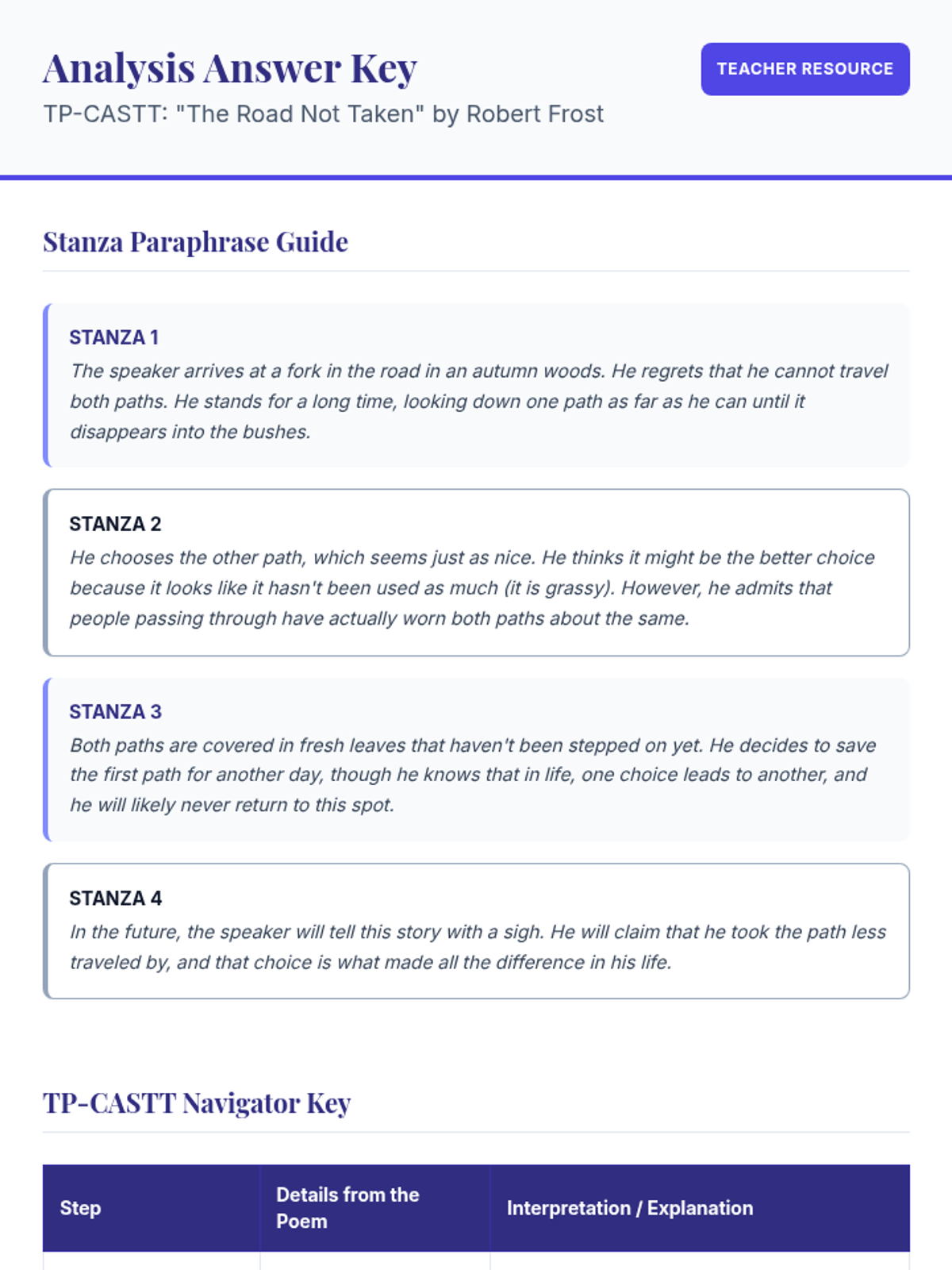
A comprehensive lesson on analyzing poetry using the TPCASTT method, featuring a deep dive into Robert Frost's 'The Road Not Taken' and a gallery walk of diverse poems.
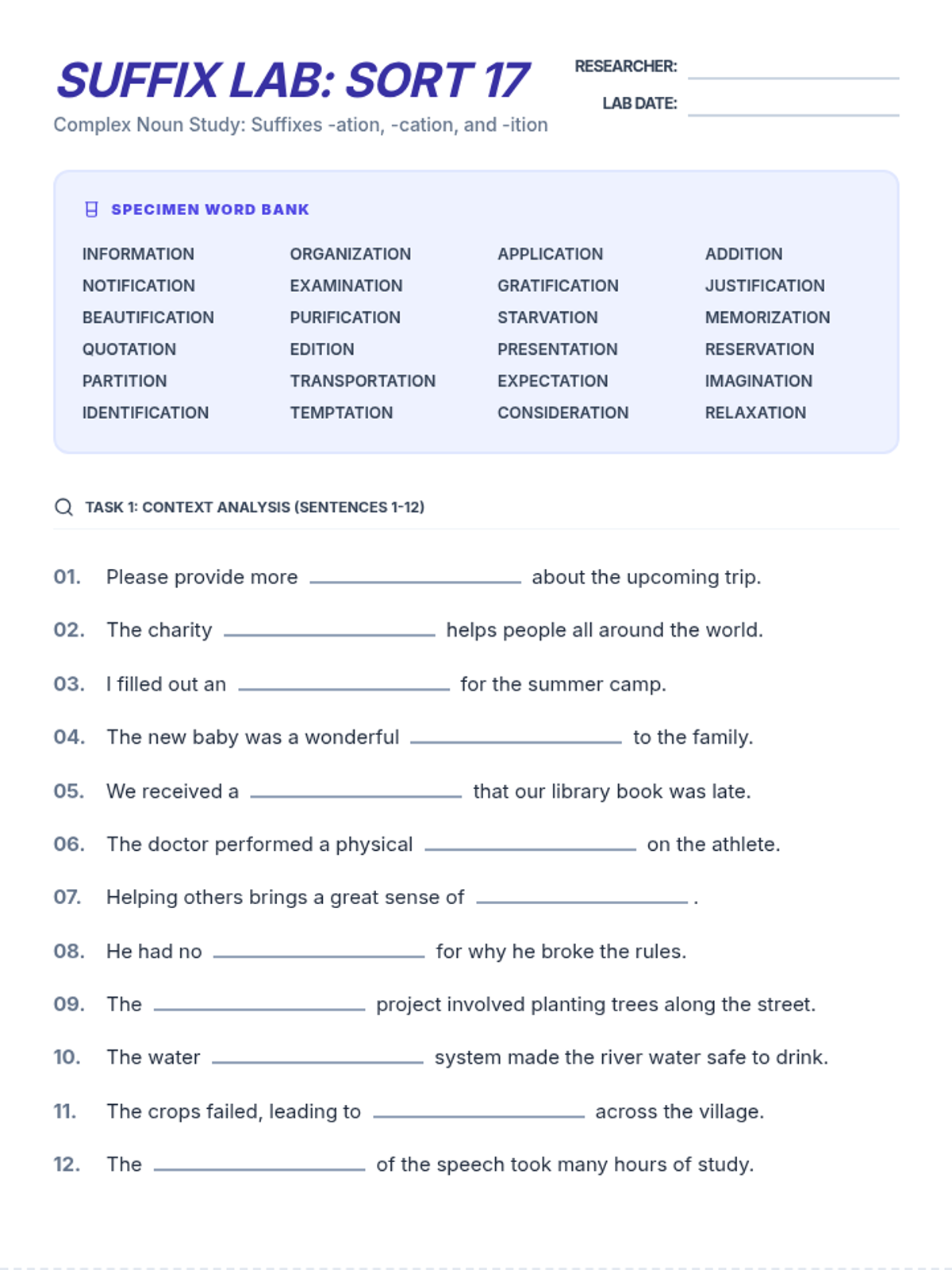
A lesson focused on the suffixes -ation, -cation, and -ition and how they transform verbs into nouns. Students analyze word pairs like 'inform' and 'information'.
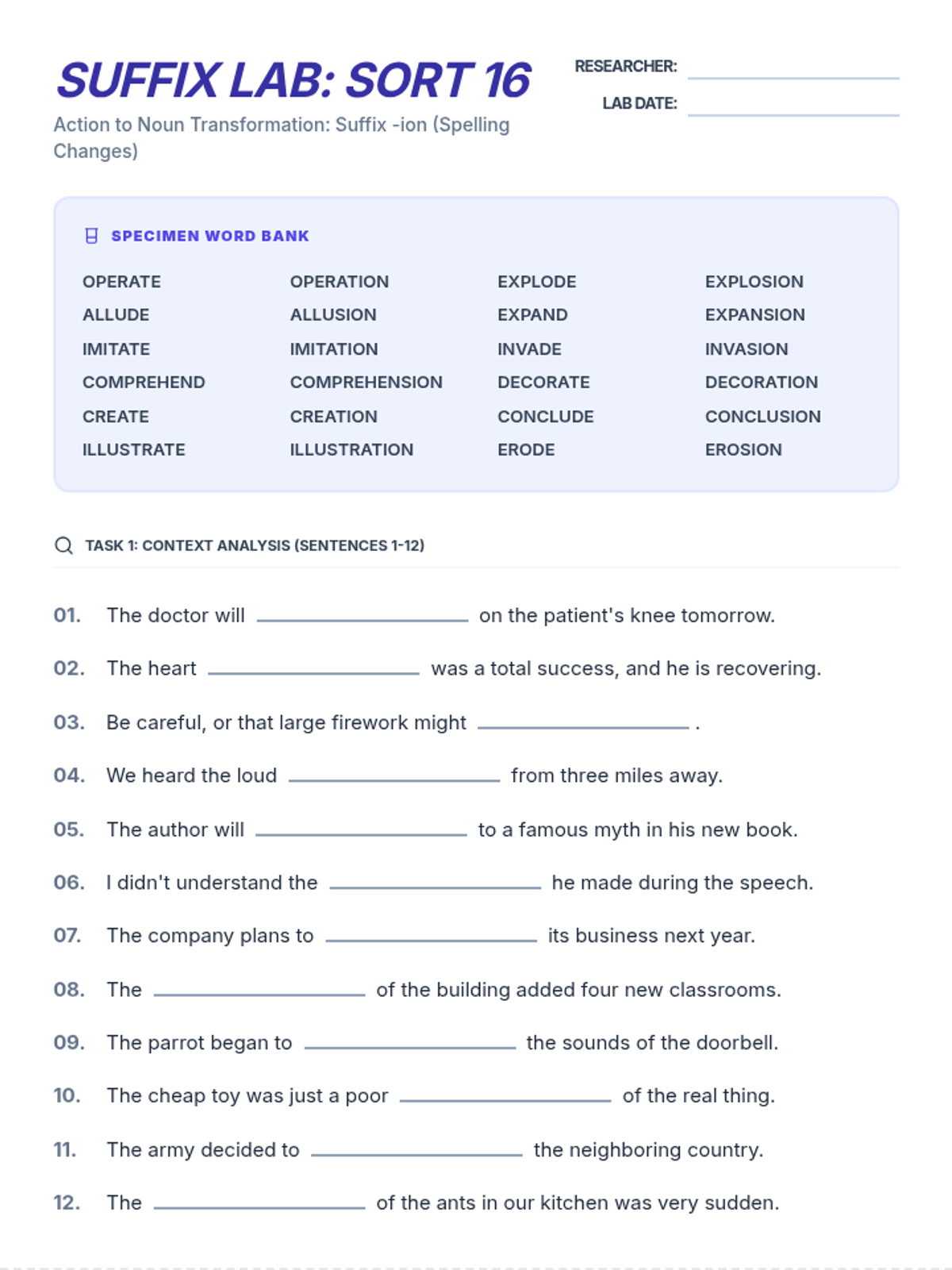
A lesson focused on the suffix -ion involving spelling changes such as dropping the final 'e' or changing 'd' to 's'. Students analyze pairs like 'operate' and 'operation'.
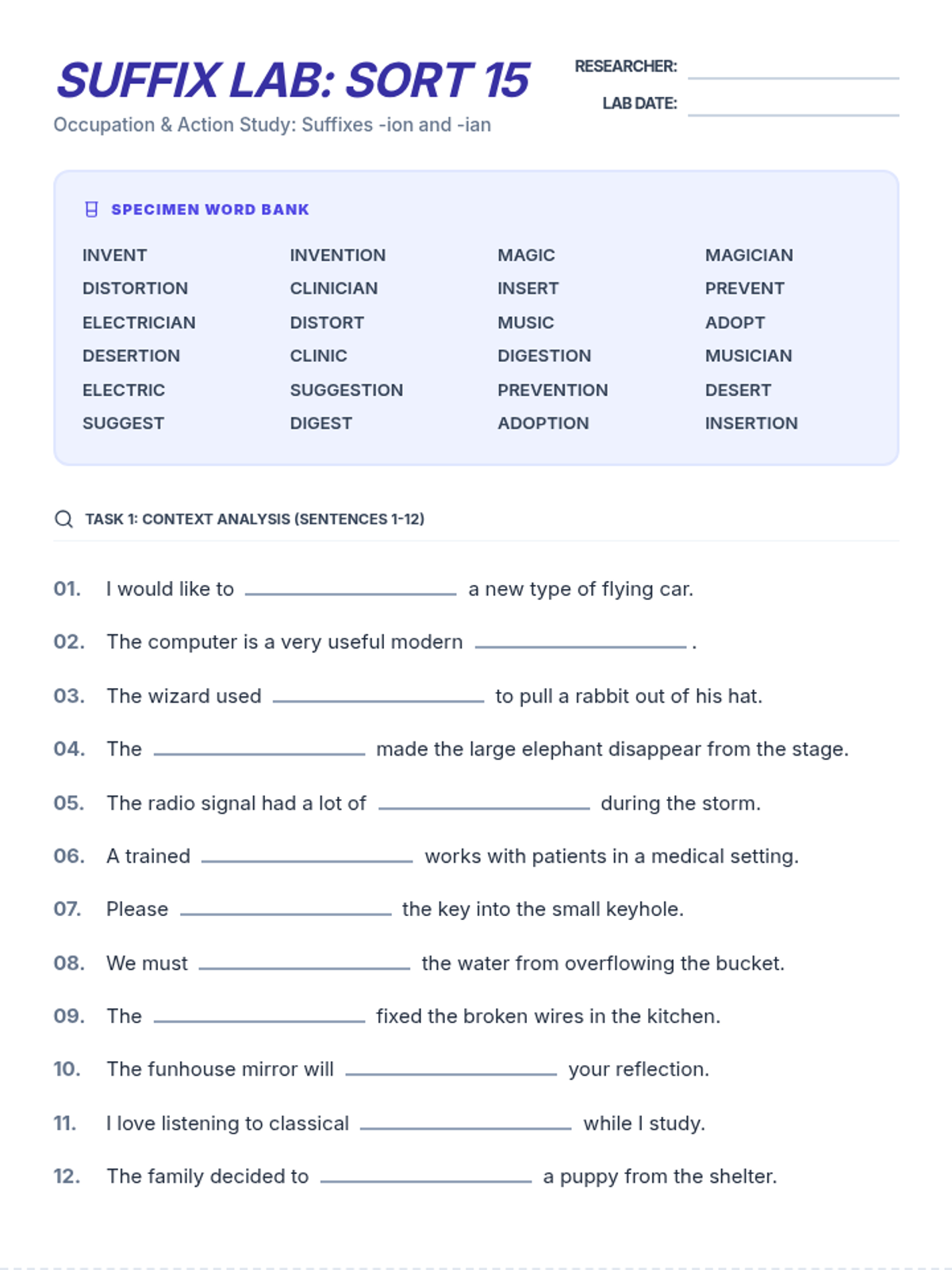
A lesson focused on the suffixes -ion and -ian with no spelling change to the base word. Students analyze nouns like 'invention', 'magician', and 'musician'.
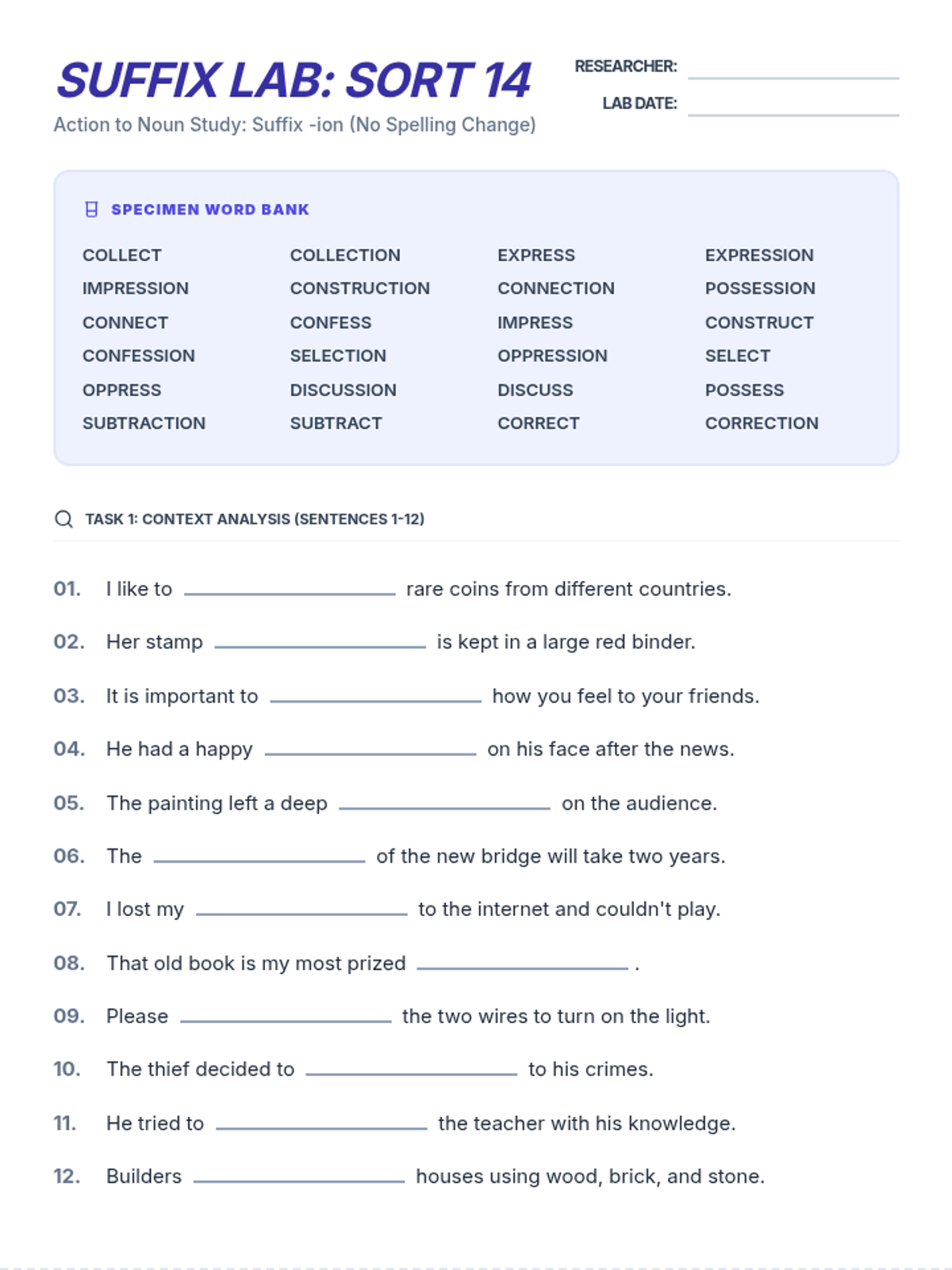
A lesson focused on the suffix -ion and how it changes verbs into nouns with no spelling change to the base word. Students analyze word pairs like 'collect' and 'collection'.
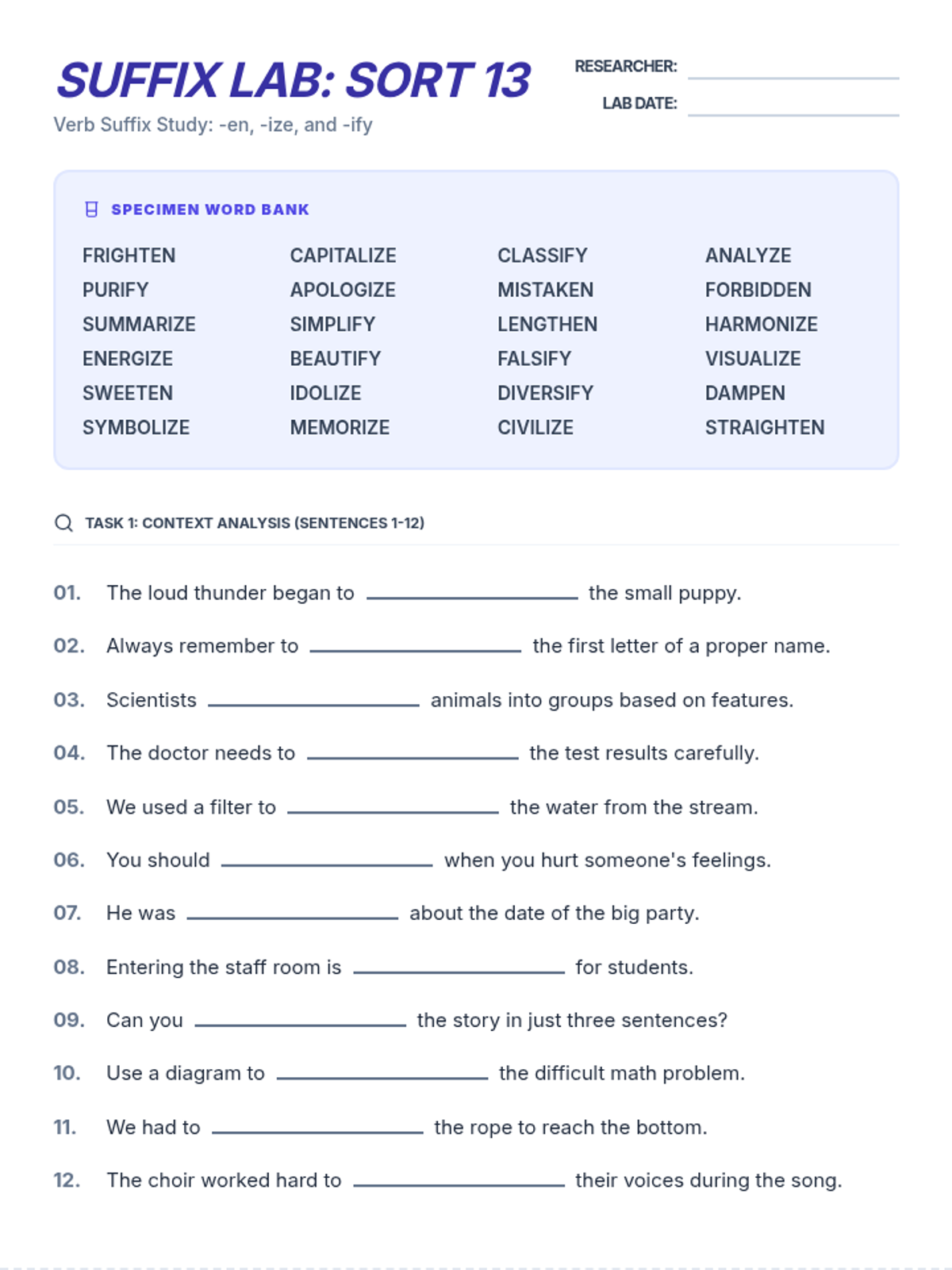
A lesson focused on the suffixes -en, -ize, and -ify. Students investigate how these suffixes transform base words into verbs representing actions or states.
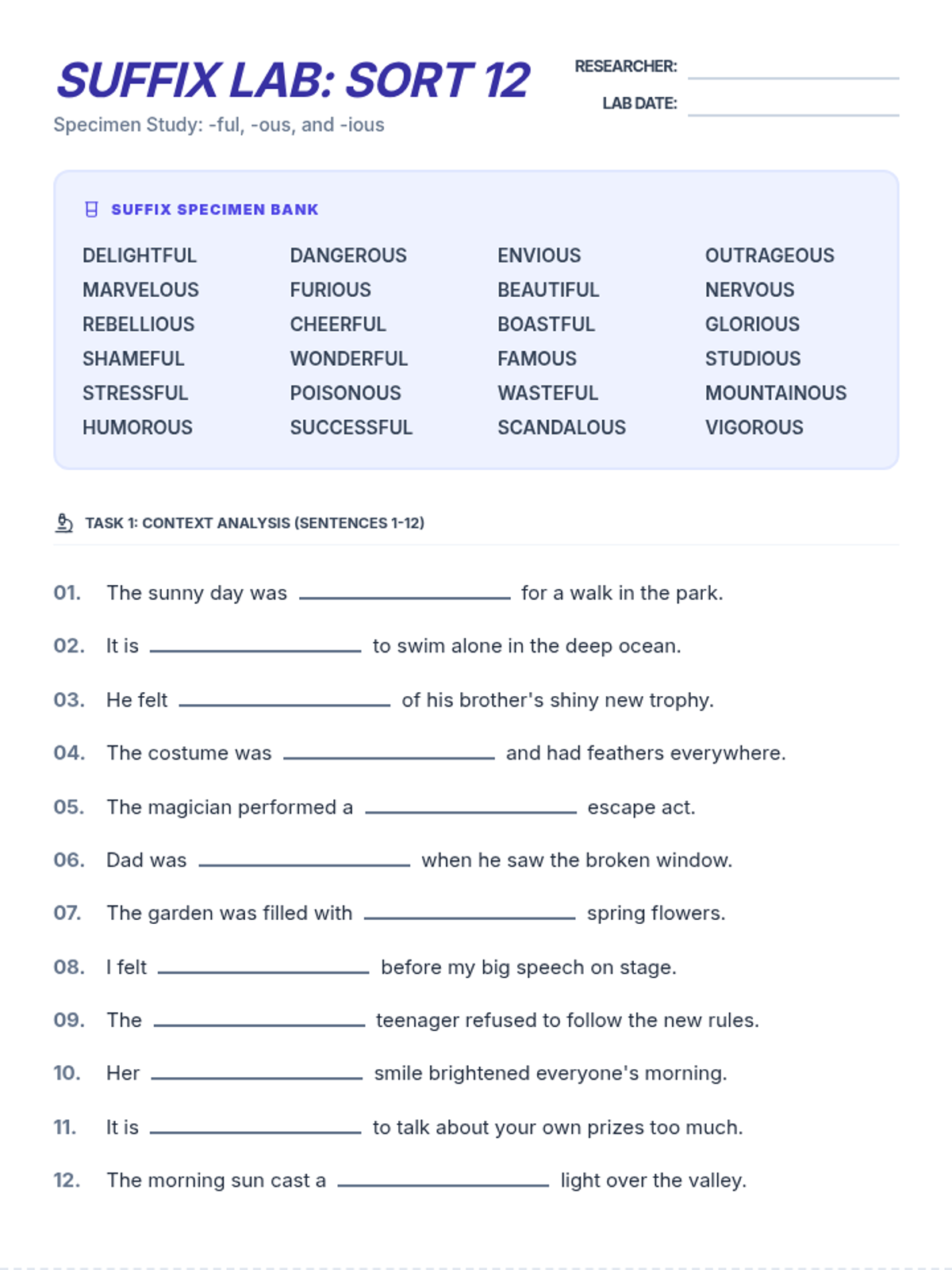
A lesson focused on the suffixes -ful, -ous, and -ious. Students analyze how these suffixes form adjectives from nouns, representing full of or having qualities of.
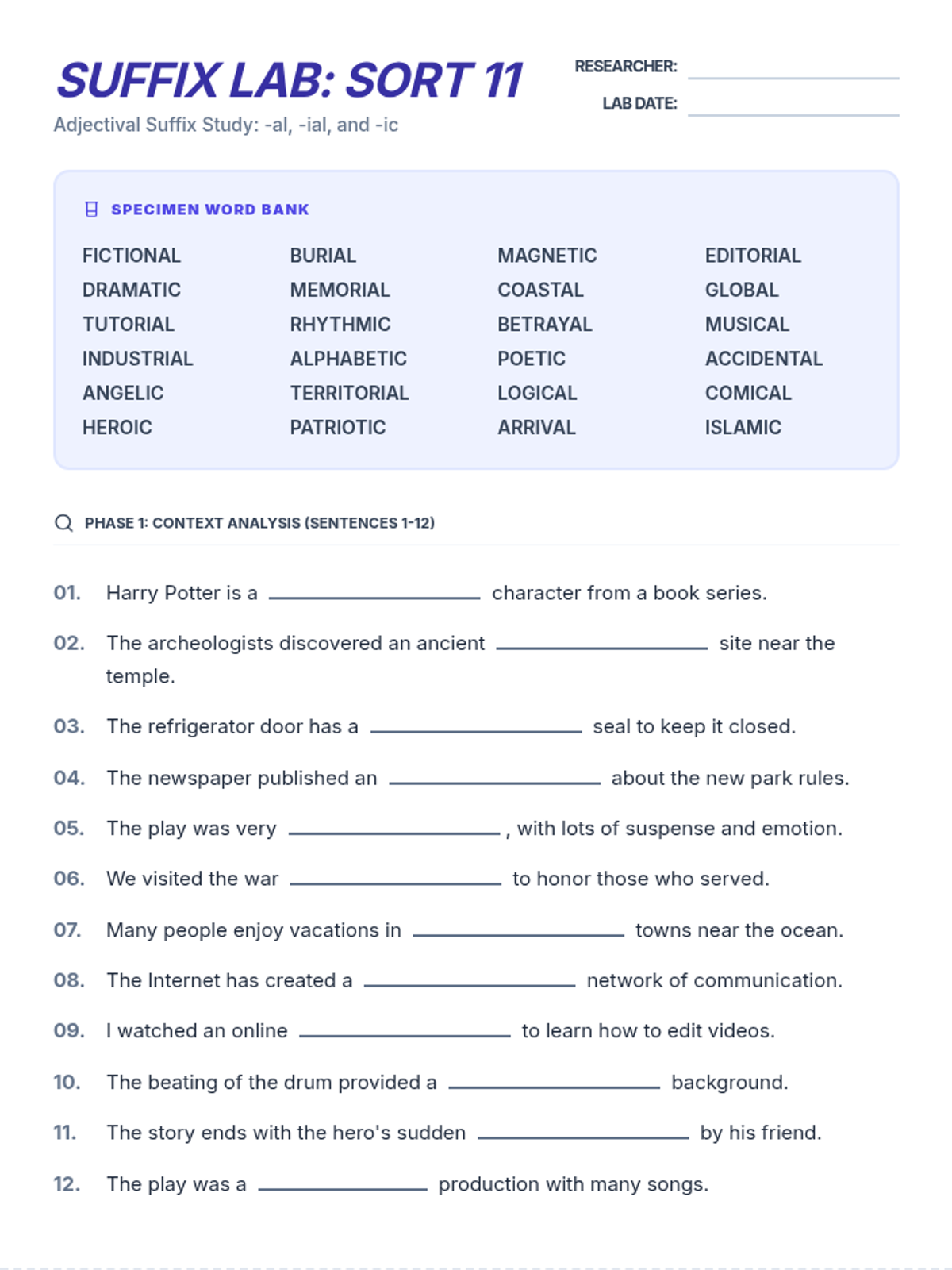
A lesson focused on the suffixes -al, -ial, and -ic. Students analyze how these suffixes form adjectives from nouns, representing relating to or having qualities of.
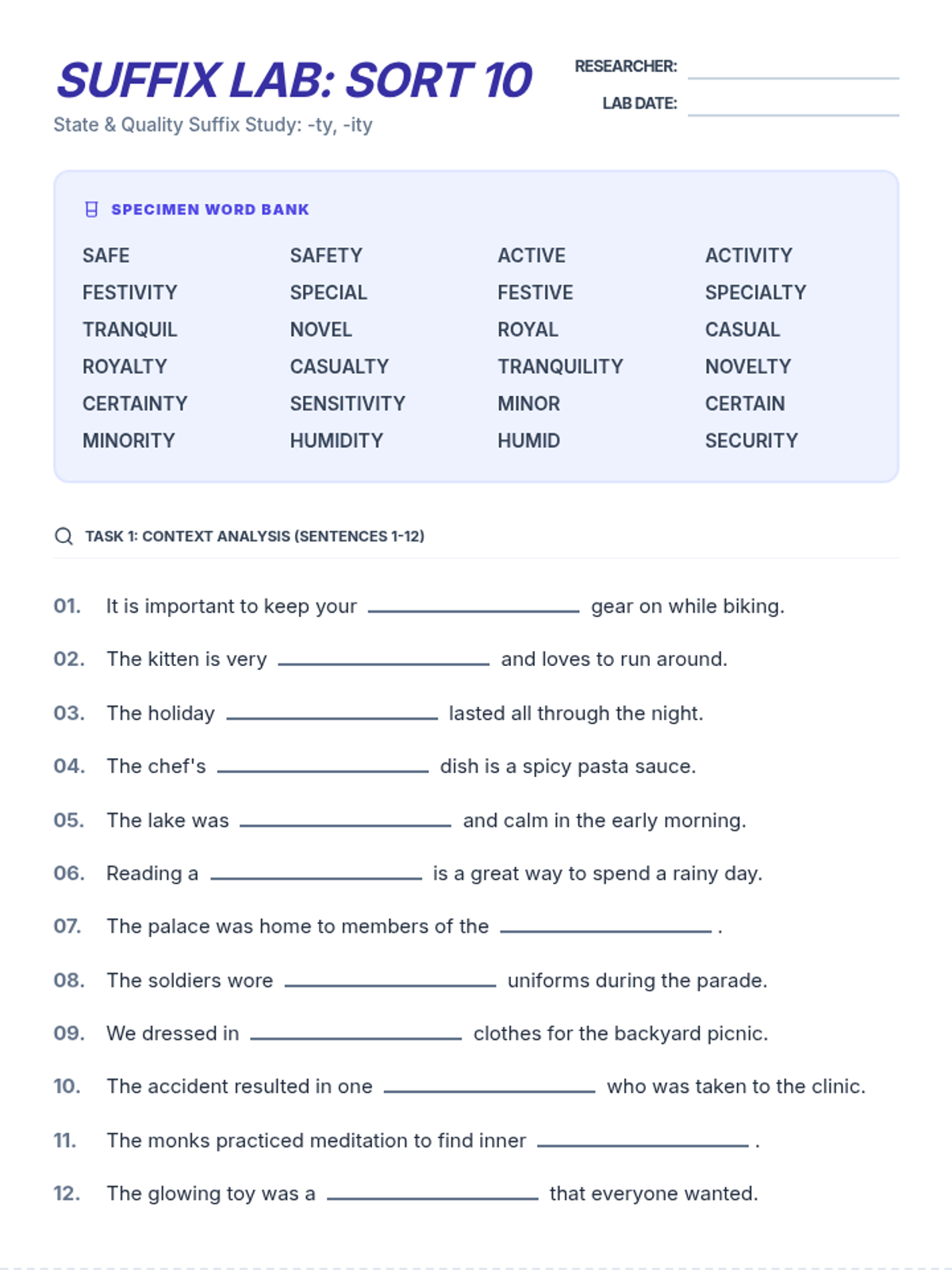
A lesson focused on the suffixes -ty and -ity. Students analyze how these suffixes form nouns from adjectives, representing states or qualities.
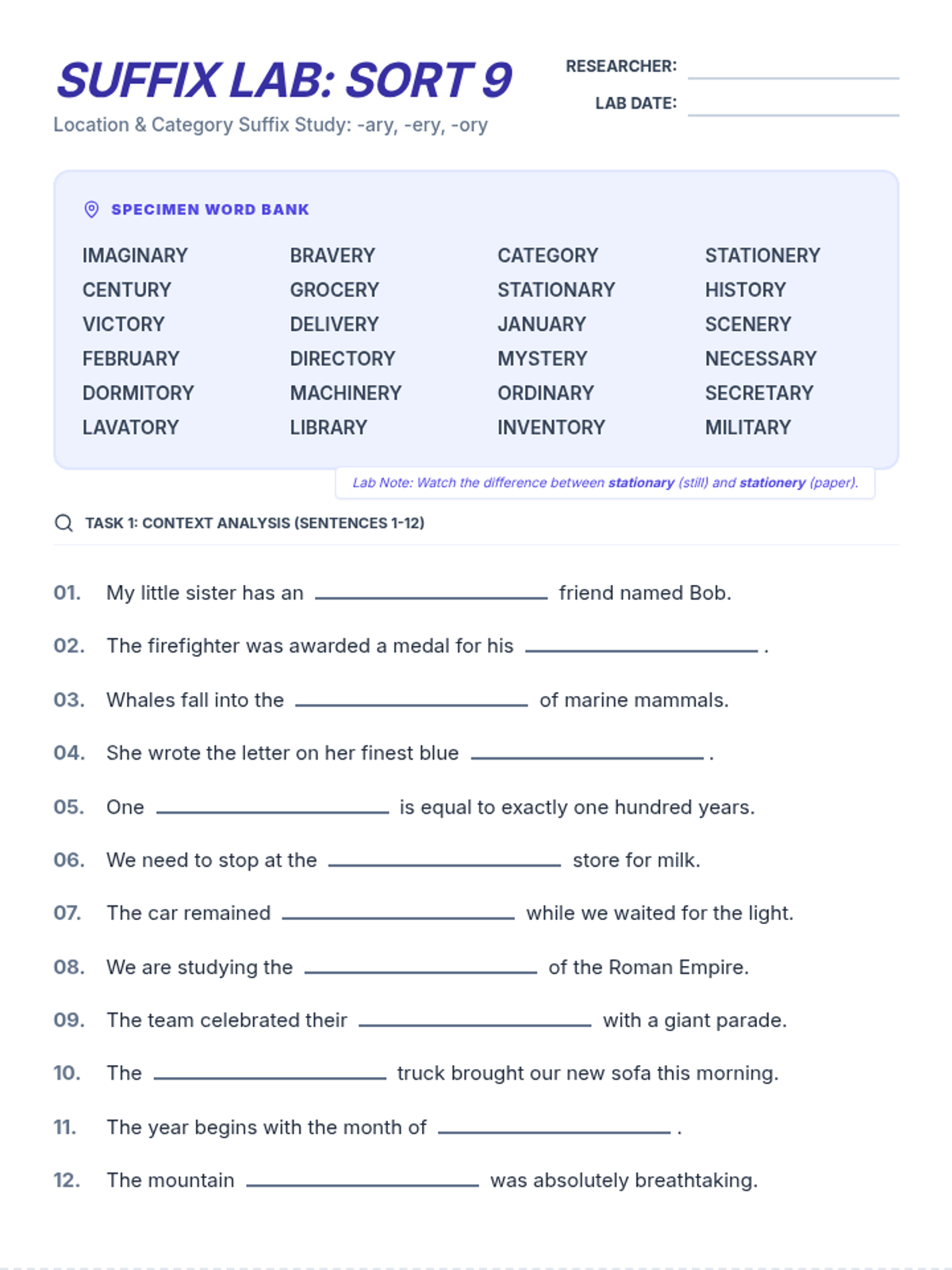
A lesson focused on location and category suffixes (-ary, -ery, -ory). Students analyze how these suffixes form nouns and adjectives related to places, groups, and qualities.
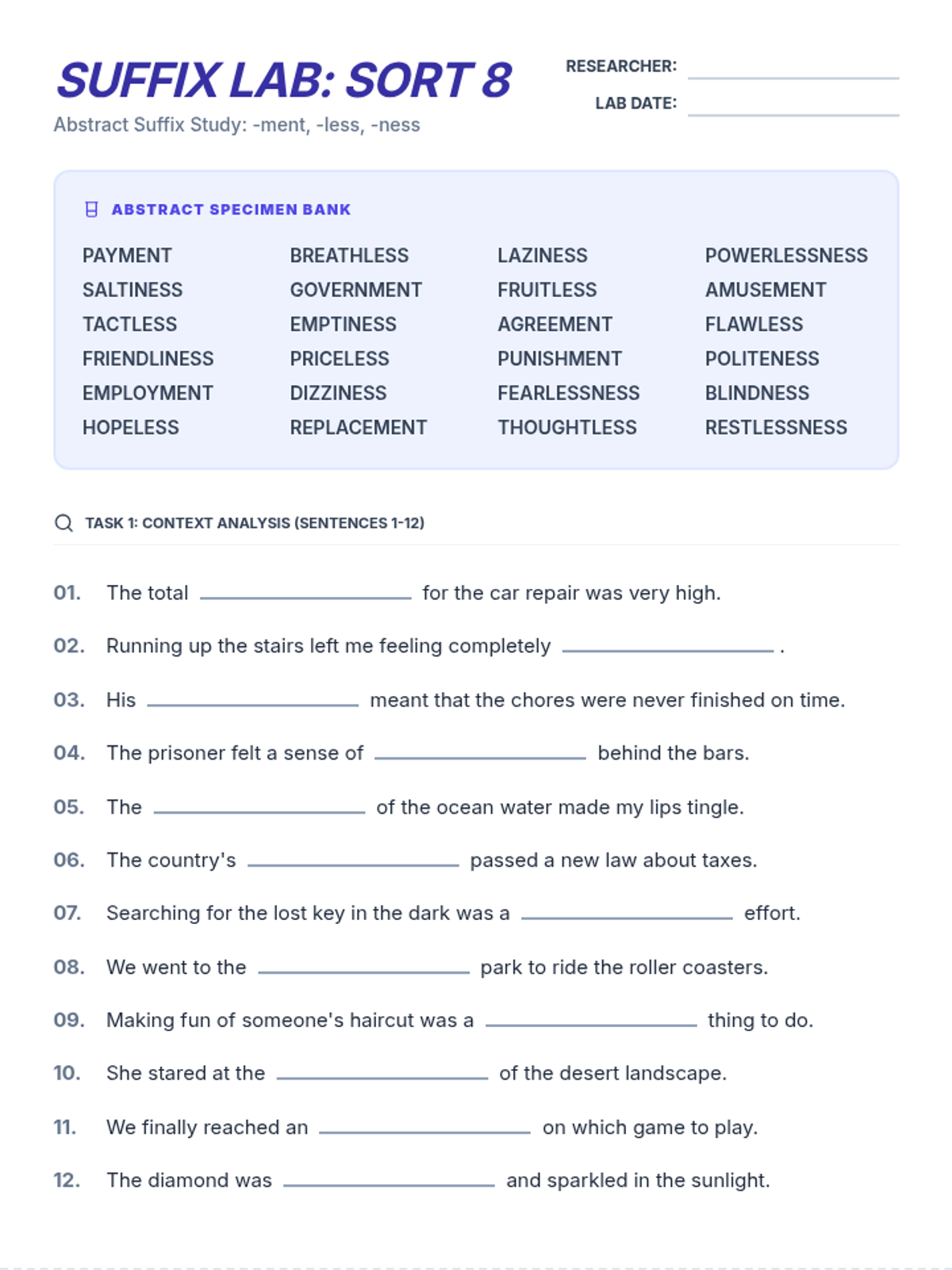
A lesson focused on abstract suffixes (-ment, -less, -ness). Students explore how these suffixes form nouns and adjectives related to states, qualities, and actions.
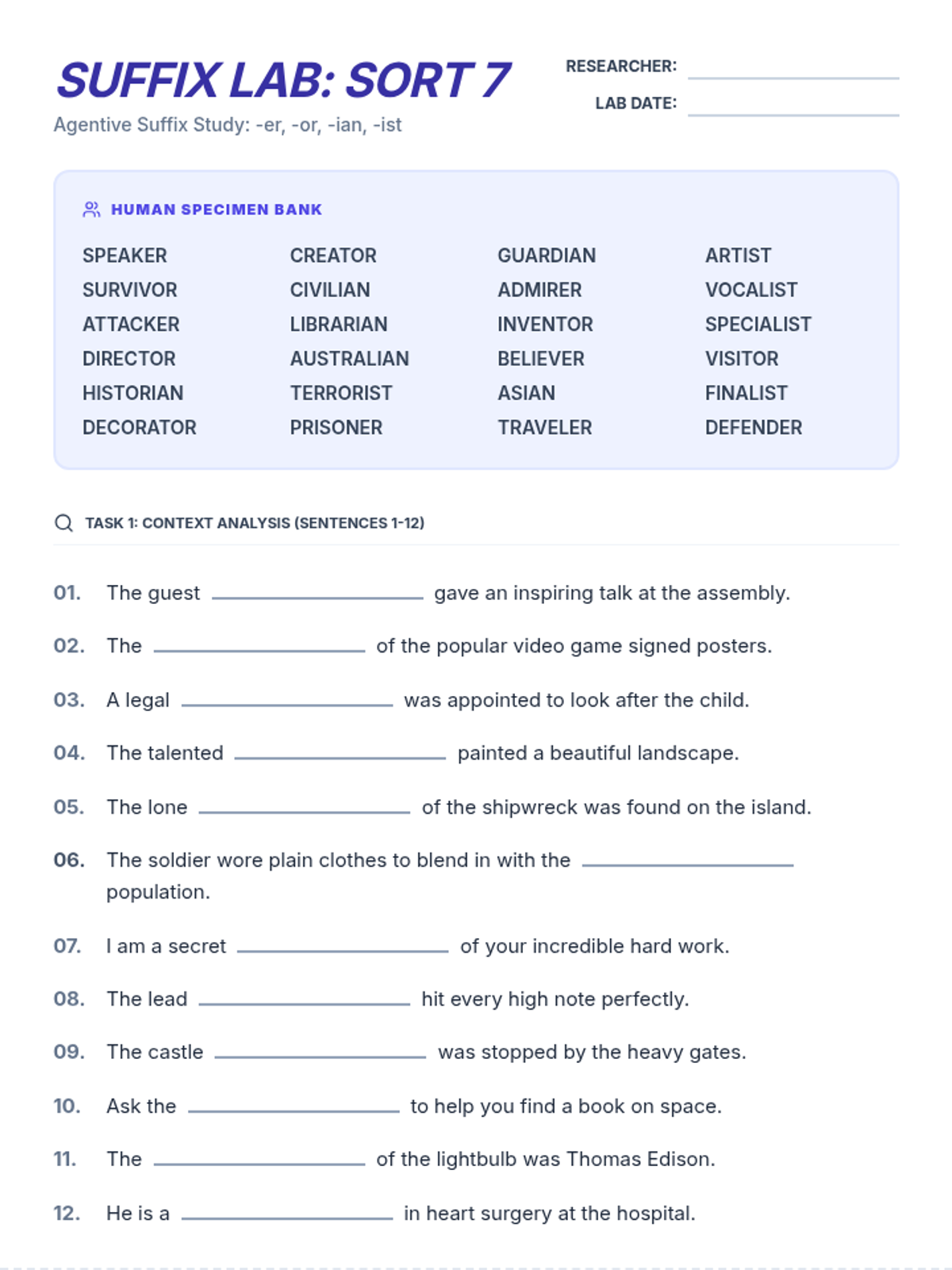
A lesson focused on agentive suffixes (-er, -or, -ian, -ist). Students analyze how these suffixes identify people who perform specific actions or hold certain roles.
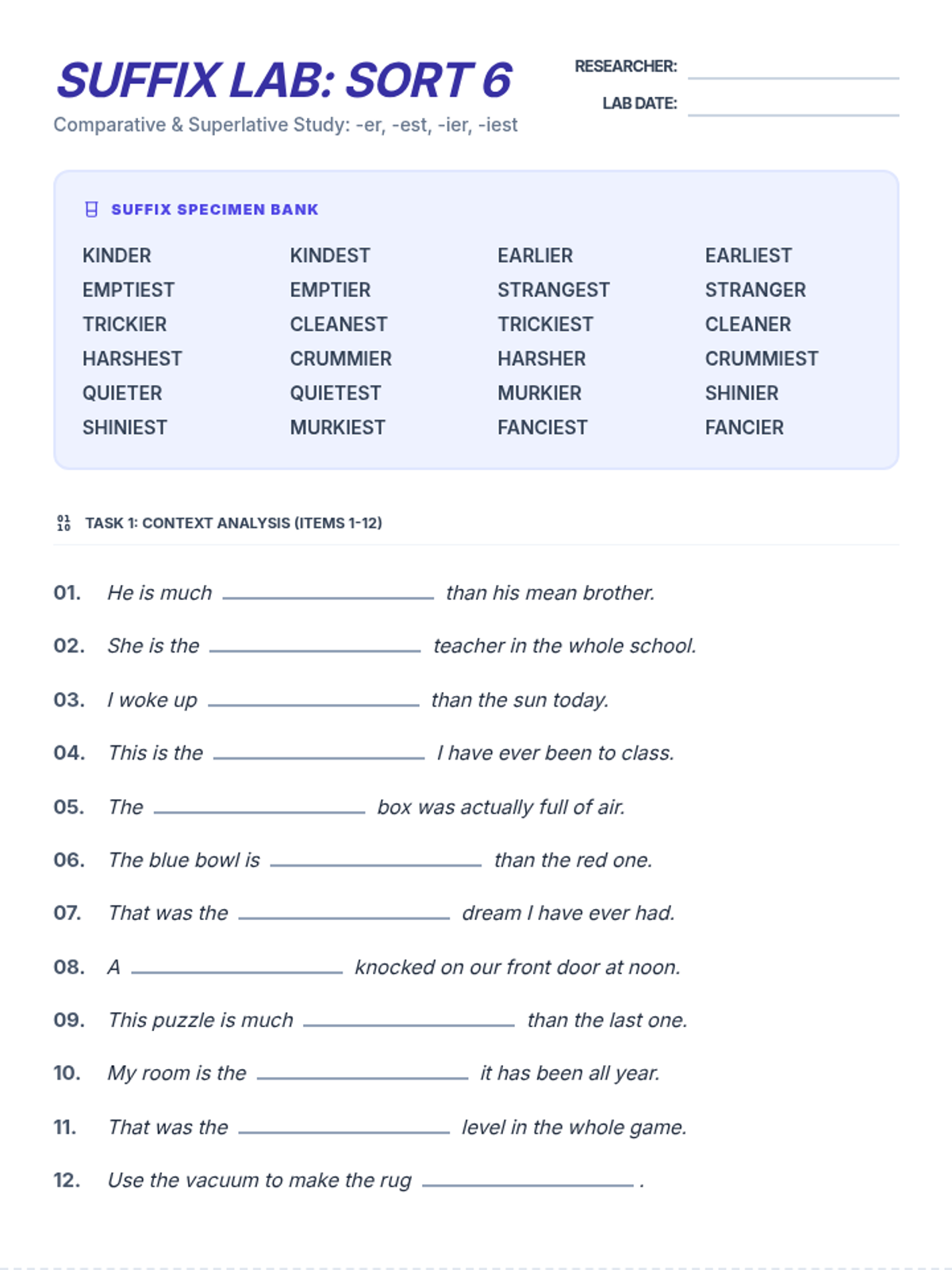
A lesson focused on comparative and superlative suffixes (-er, -est, -ier, -iest). Students explore how these suffixes change adjectives to compare two or more things.
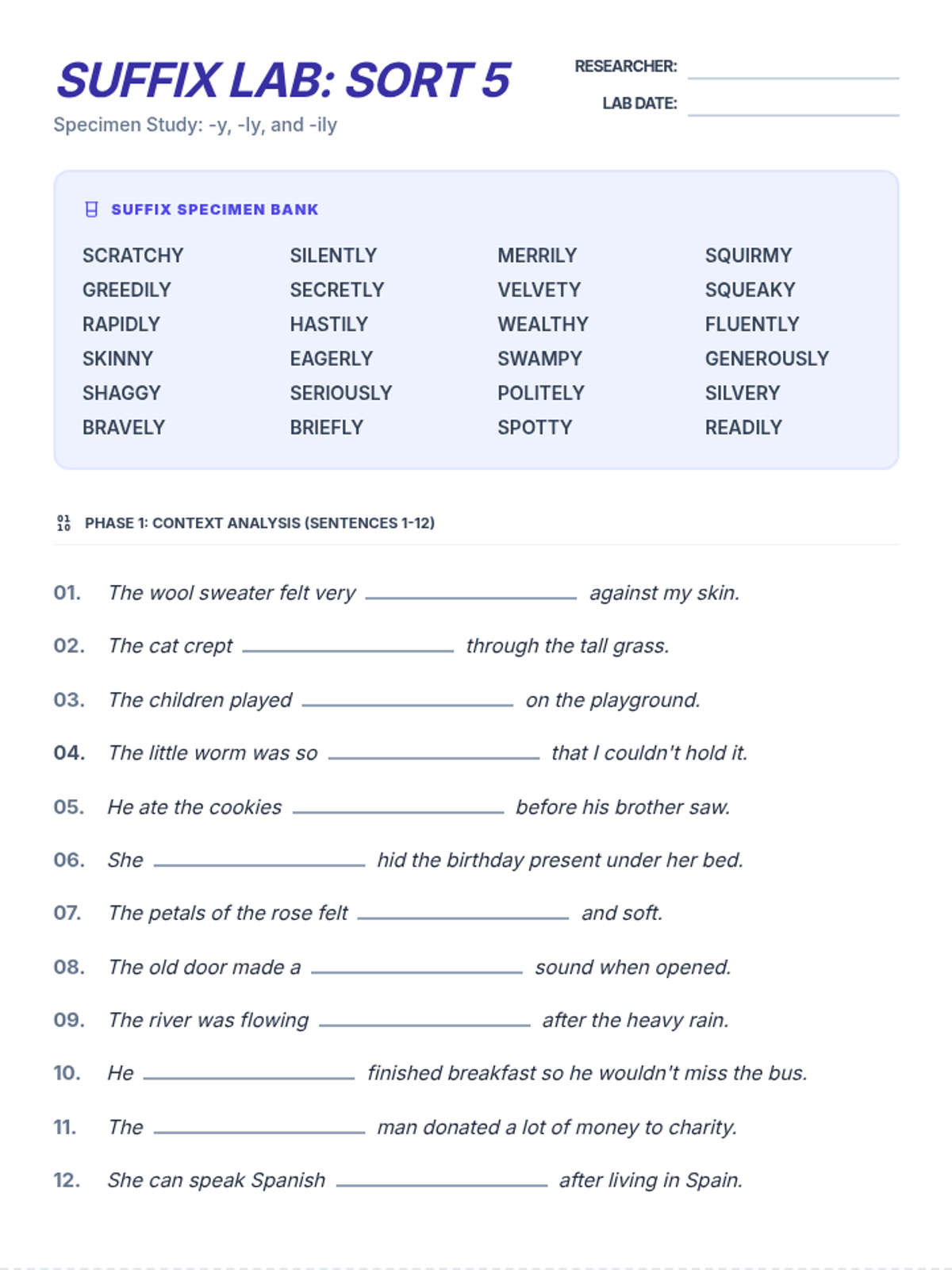
A lesson focused on the suffixes -y, -ly, and -ily. Students analyze how these suffixes change word meanings and usage through contextual application.
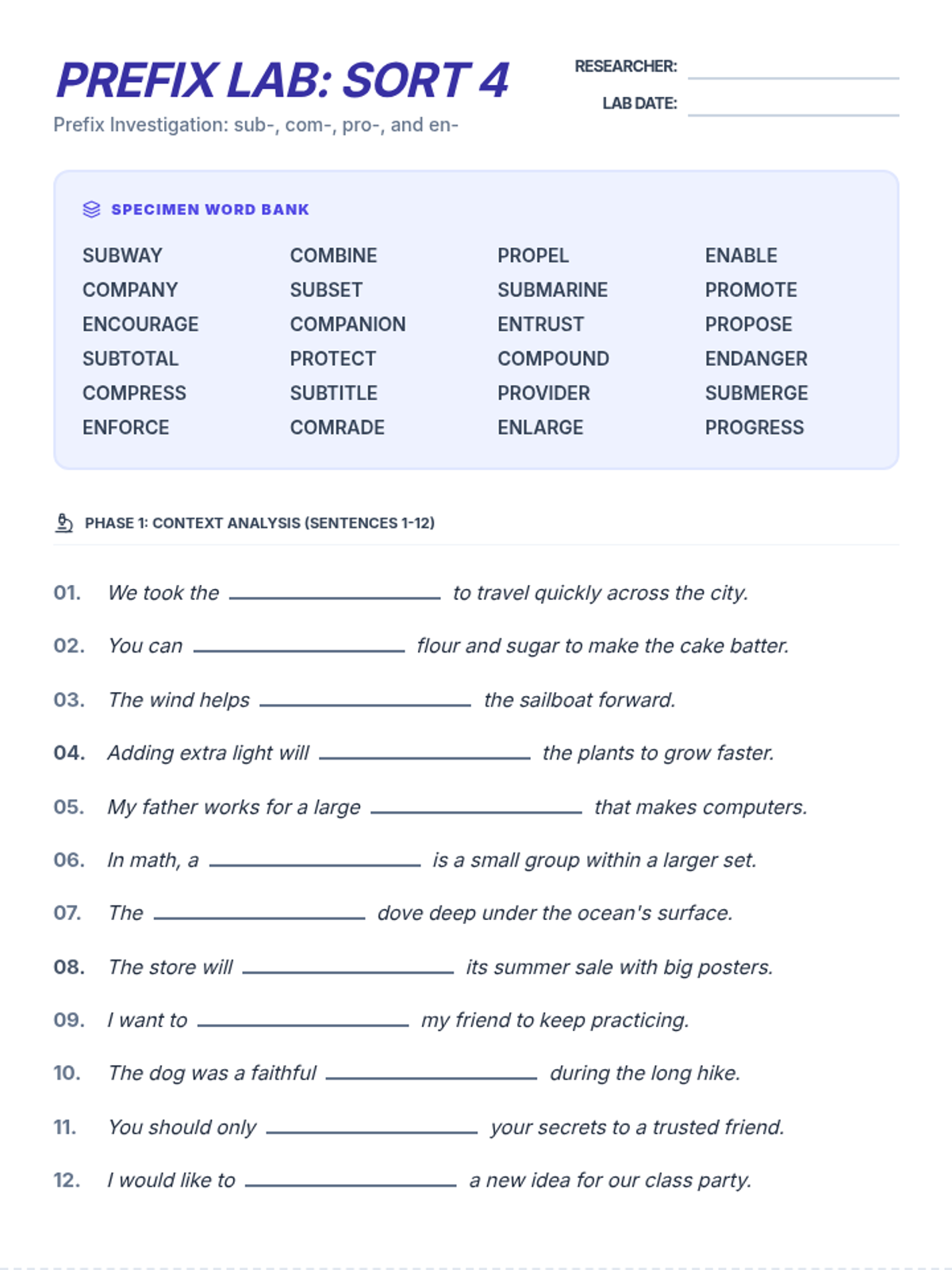
A lesson focused on the prefixes sub-, com-, pro-, and en-. Students apply their knowledge of these prefixes to identify and use words in various contexts.
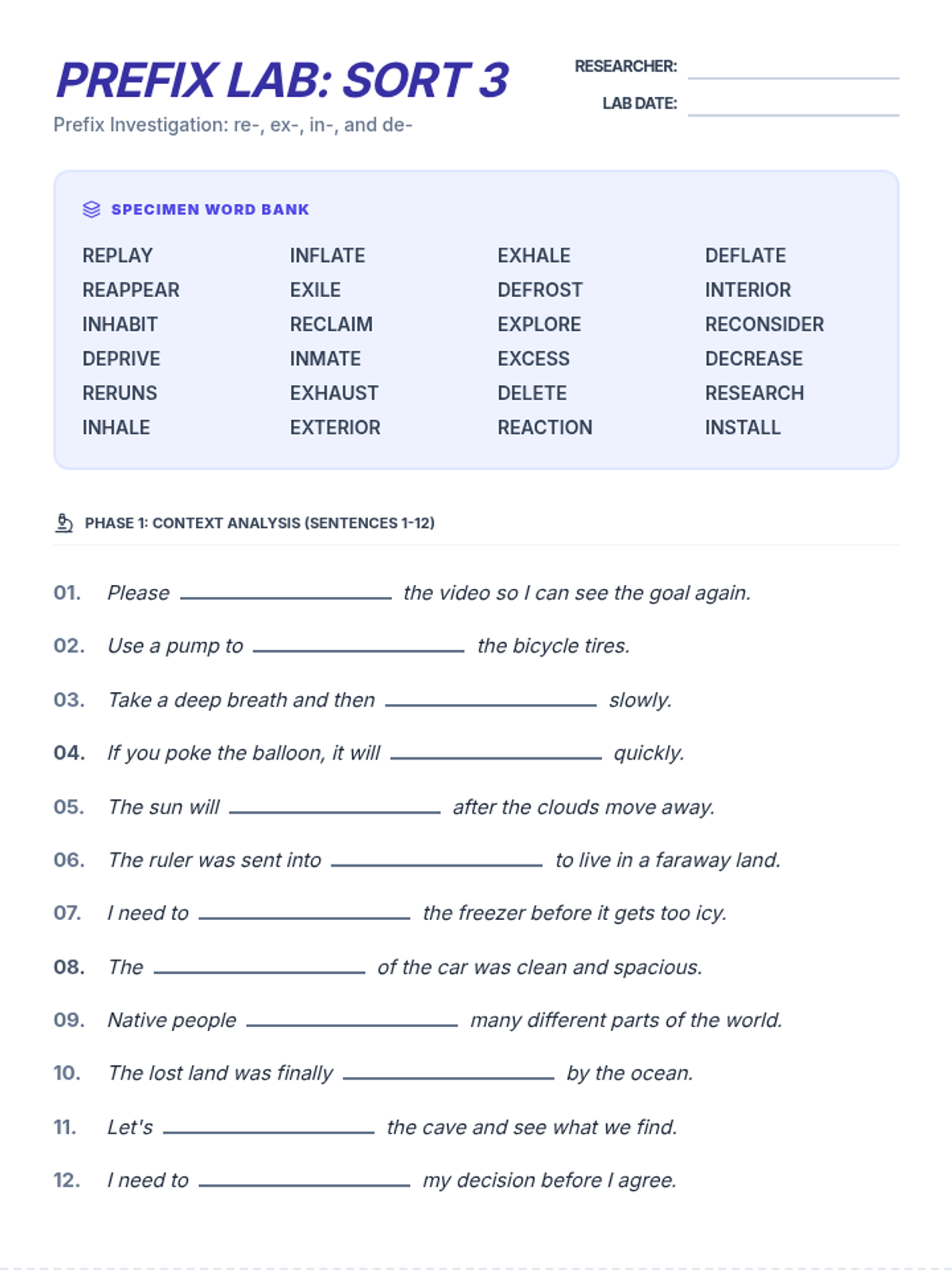
A lesson focused on the prefixes re-, ex-, in-, and de-. Students explore meanings like "again," "out," "in," and "down" through application.
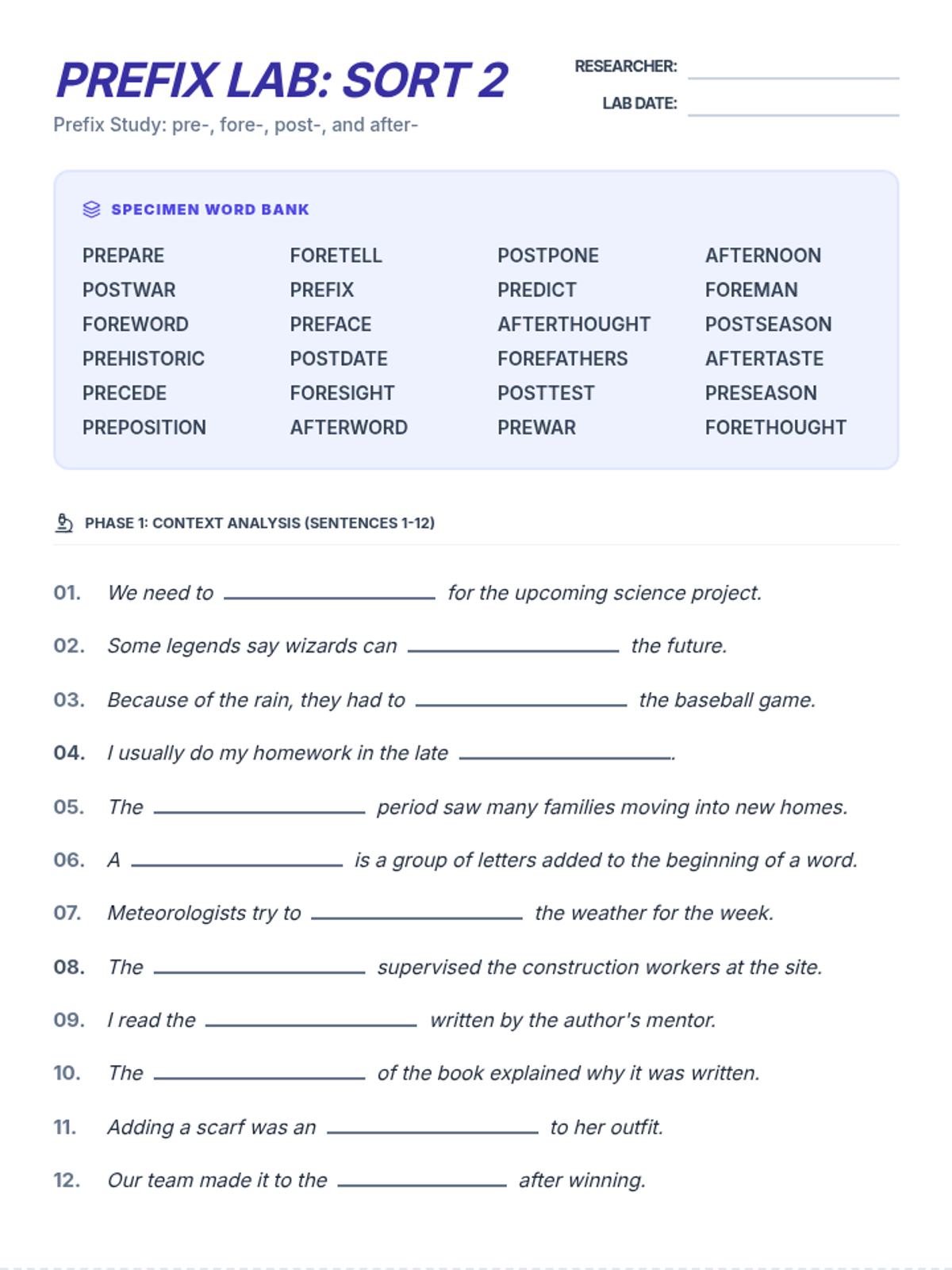
A lesson focused on the prefixes pre-, fore-, post-, and after-. Students practice using these temporal and directional prefixes in context.
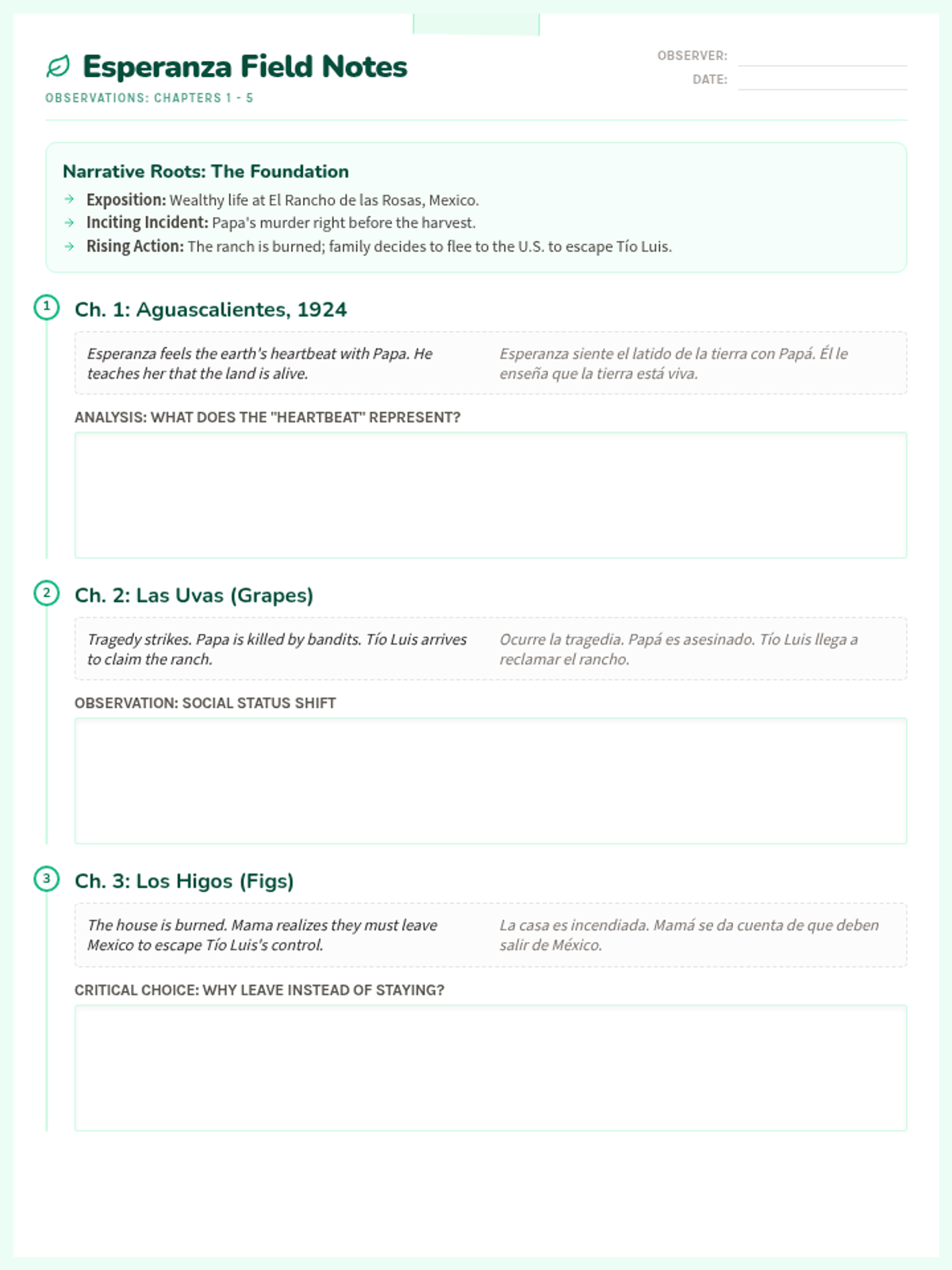
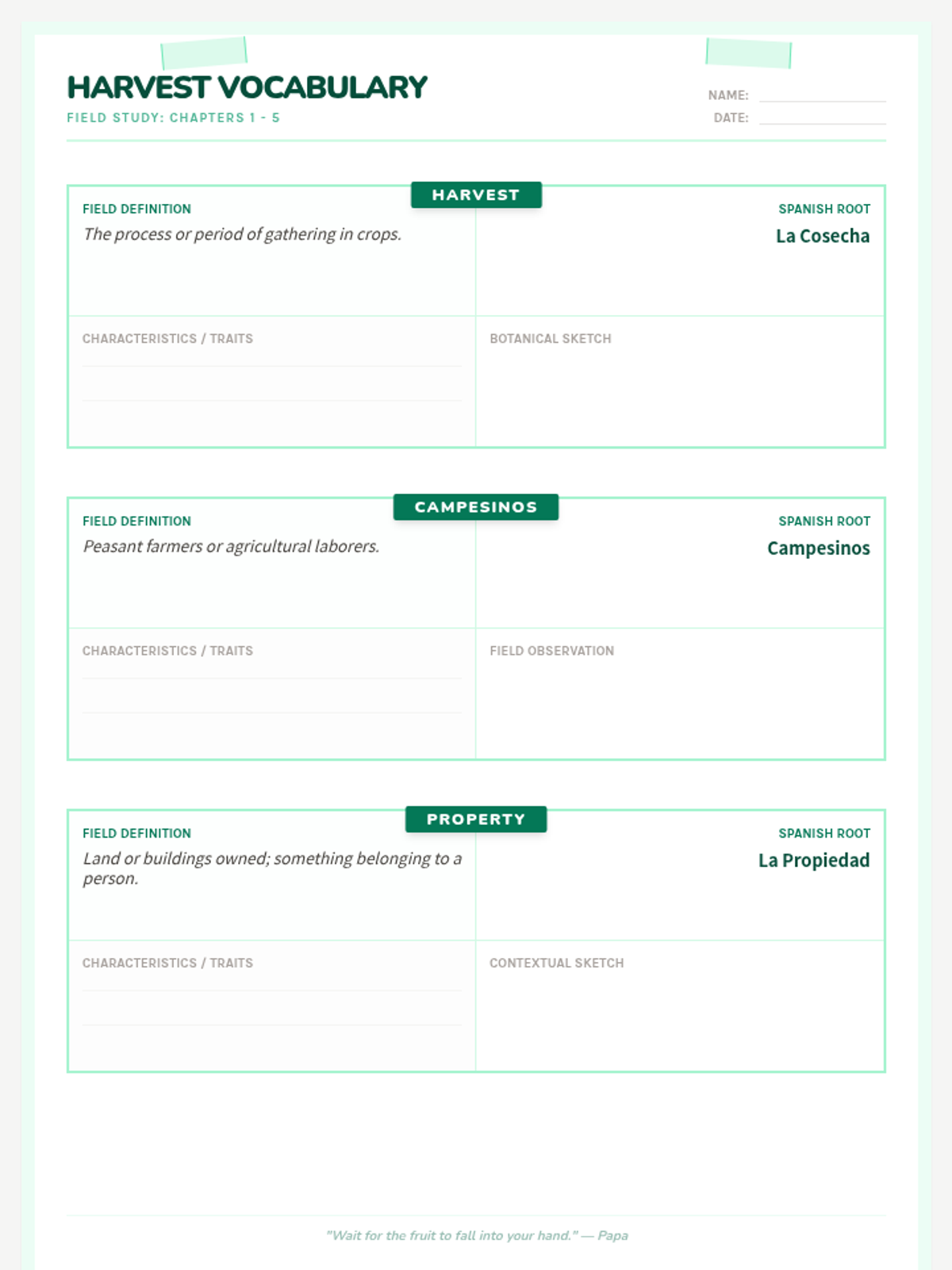
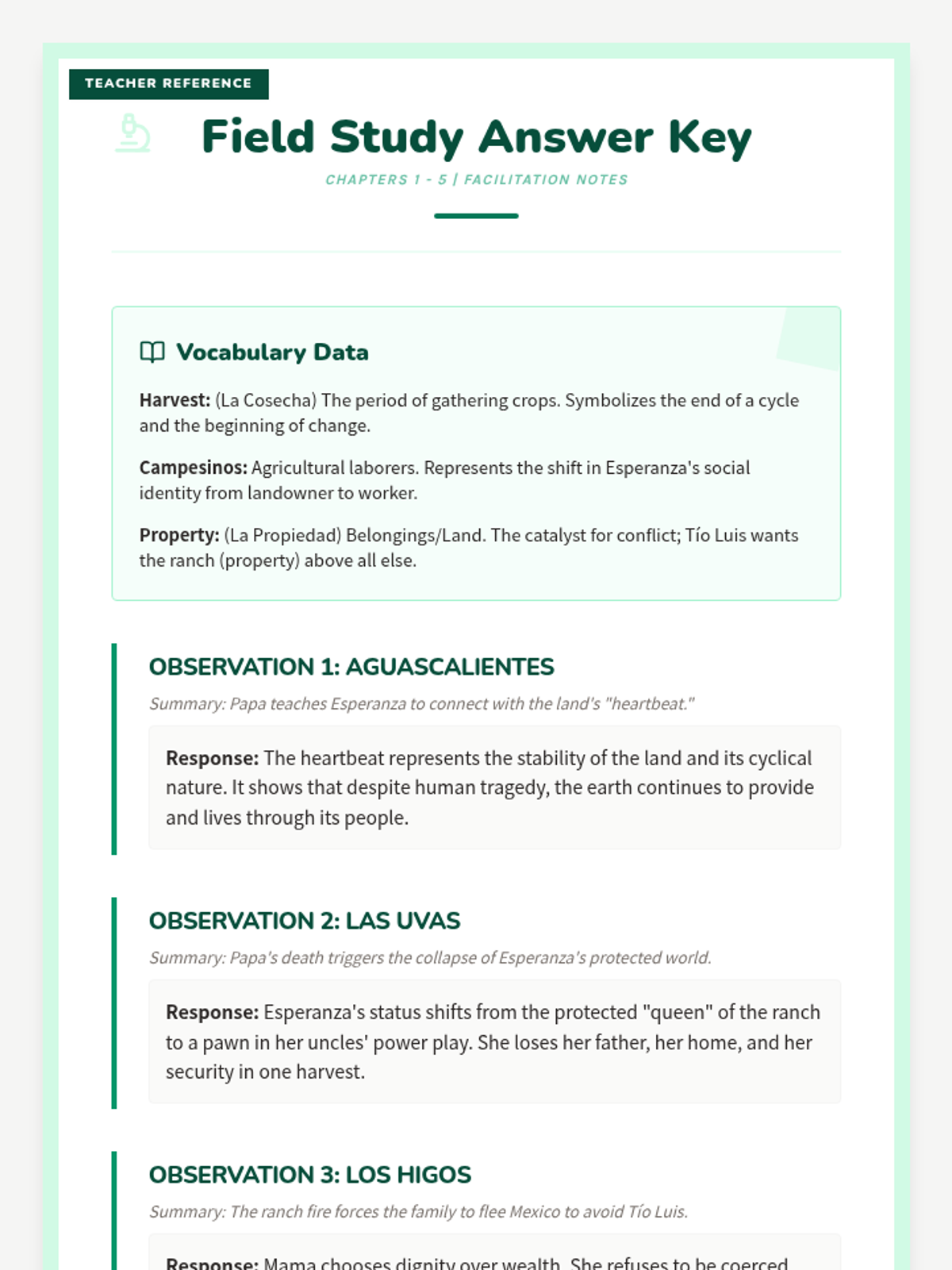
An exploration of the first five chapters of Esperanza Rising, focusing on the dramatic shift from luxury to labor and the beginning of Esperanza's migration journey.
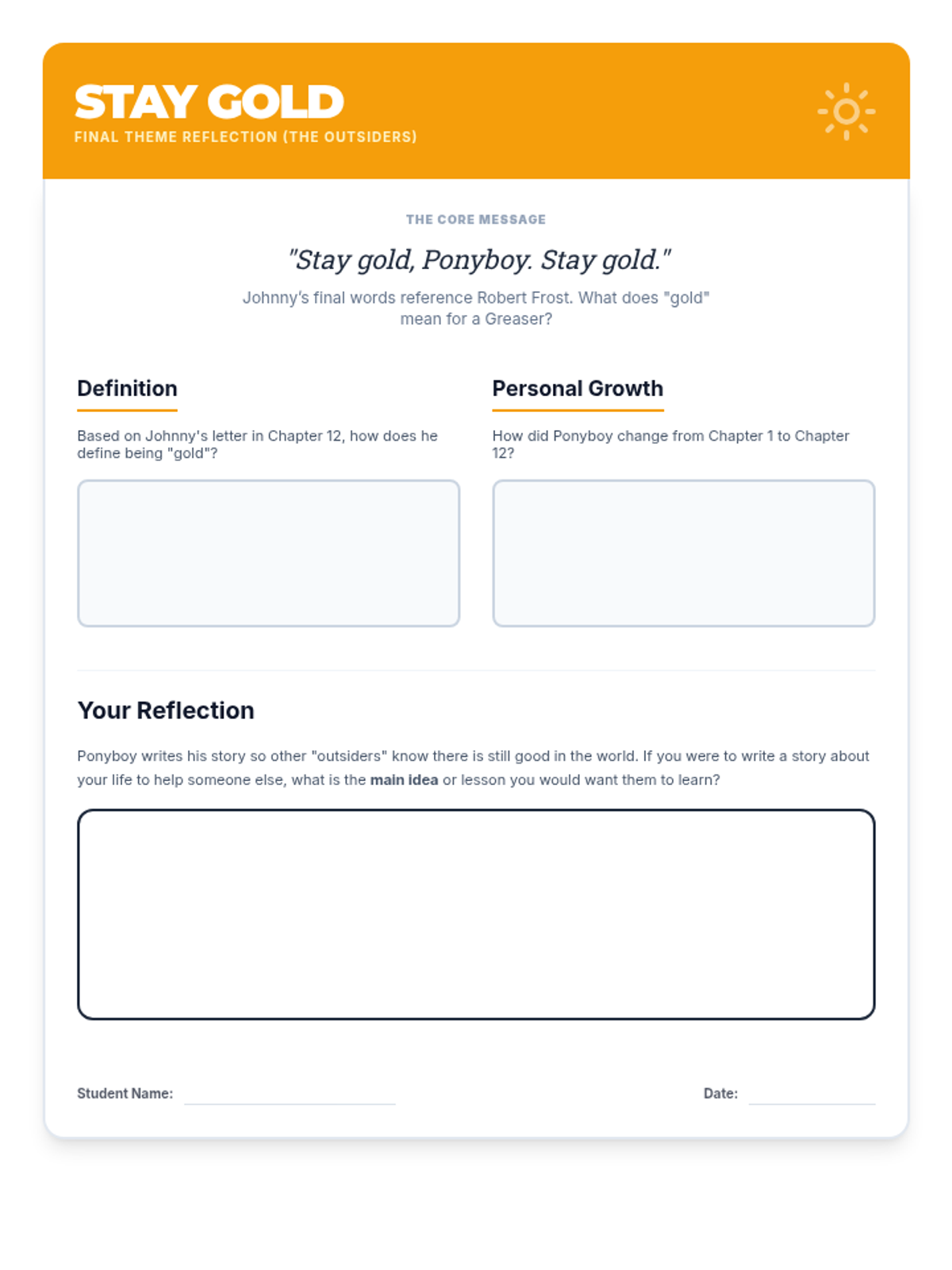
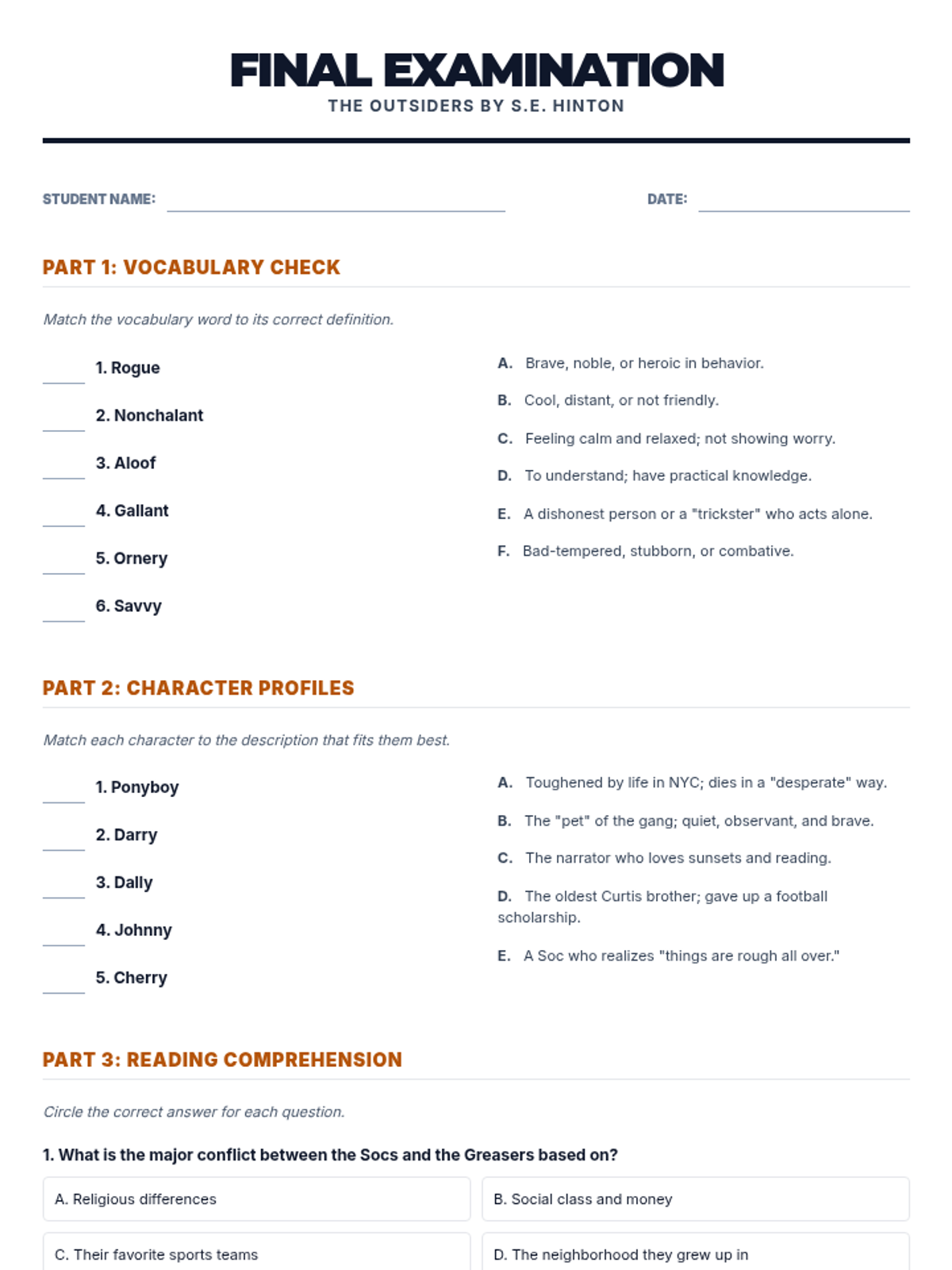
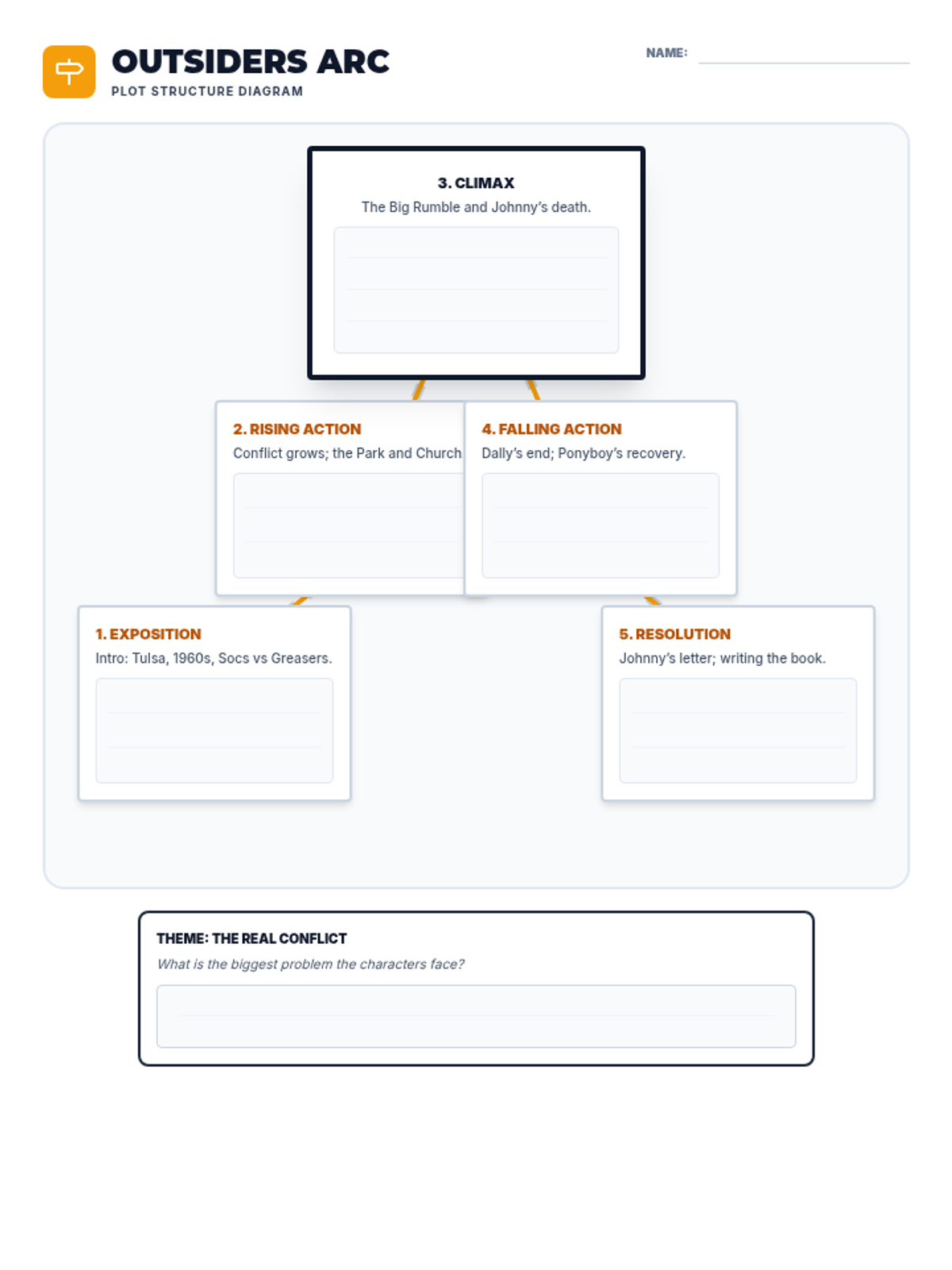
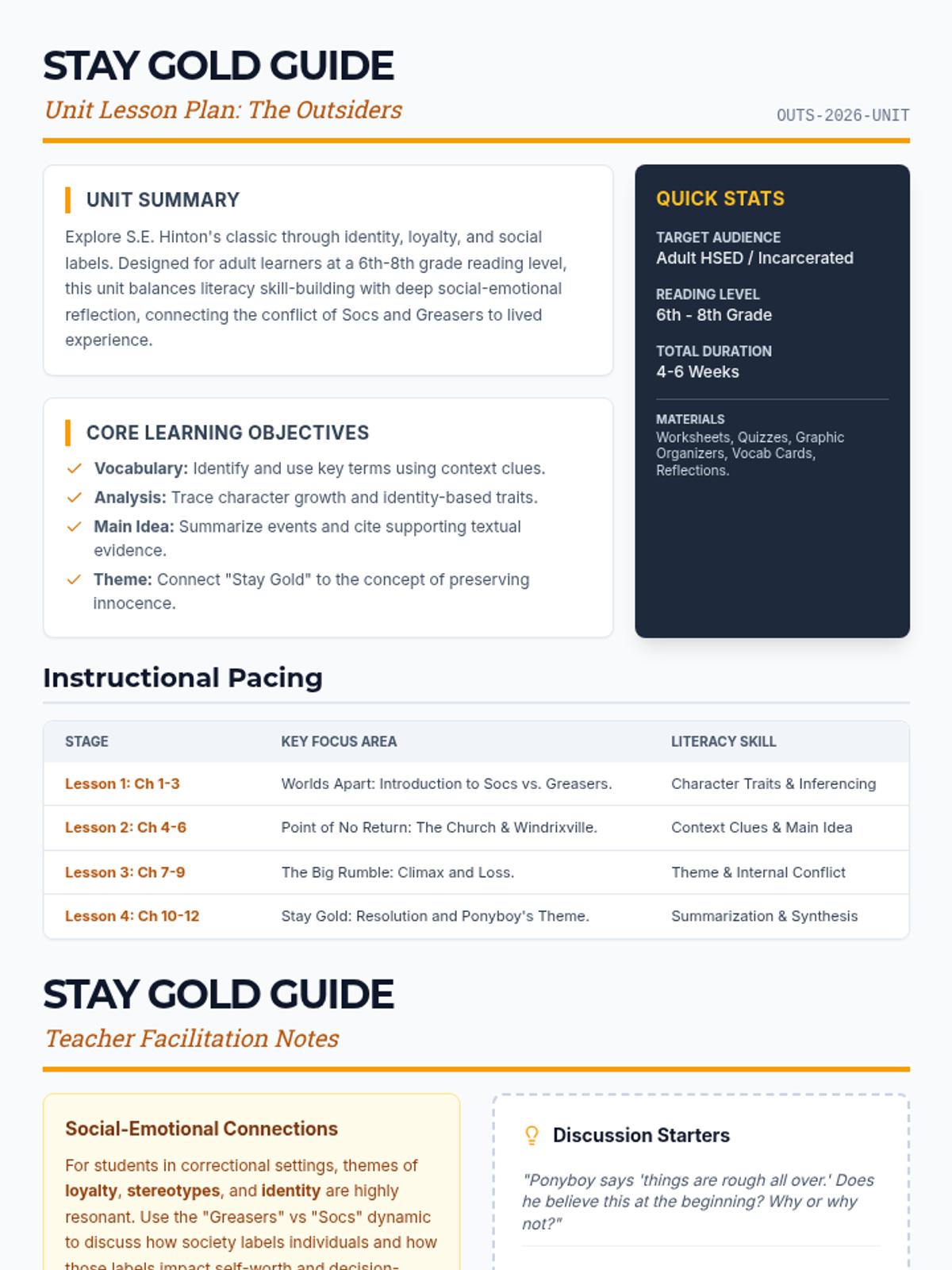
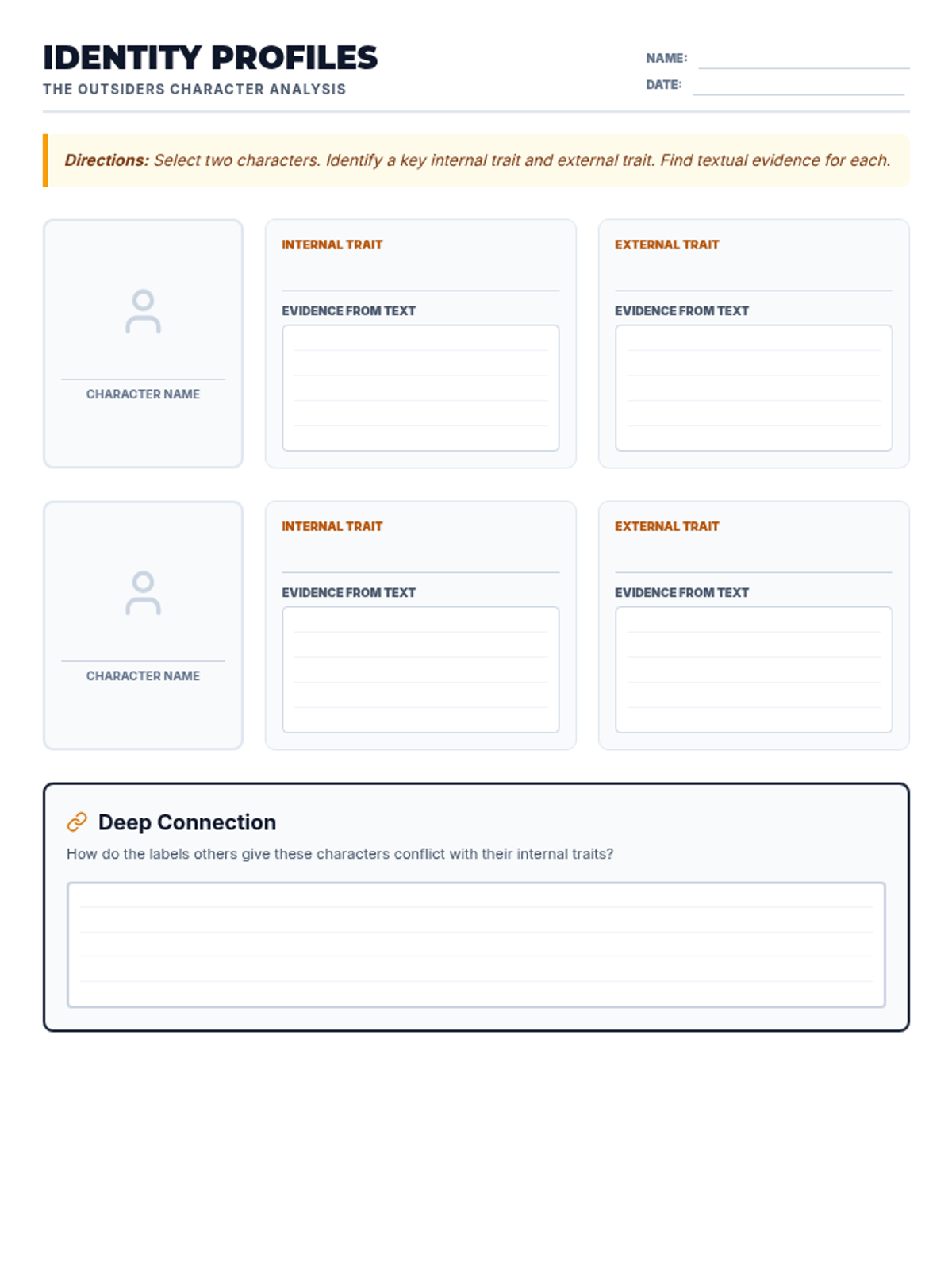
Concludes the novel with Ponyboy's recovery and the realization behind his English theme. Students synthesize themes of identity and 'staying gold' through final reflections.
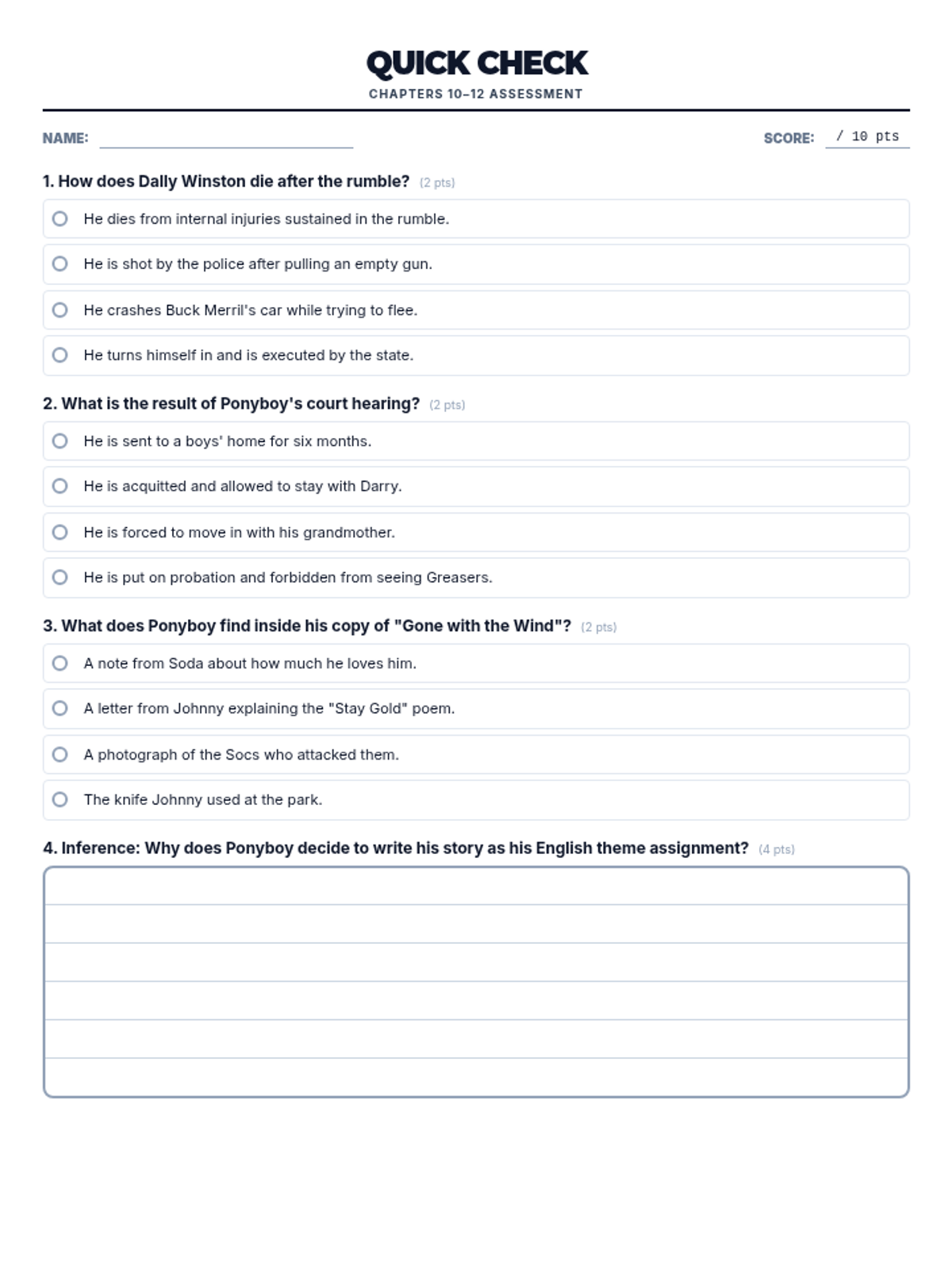
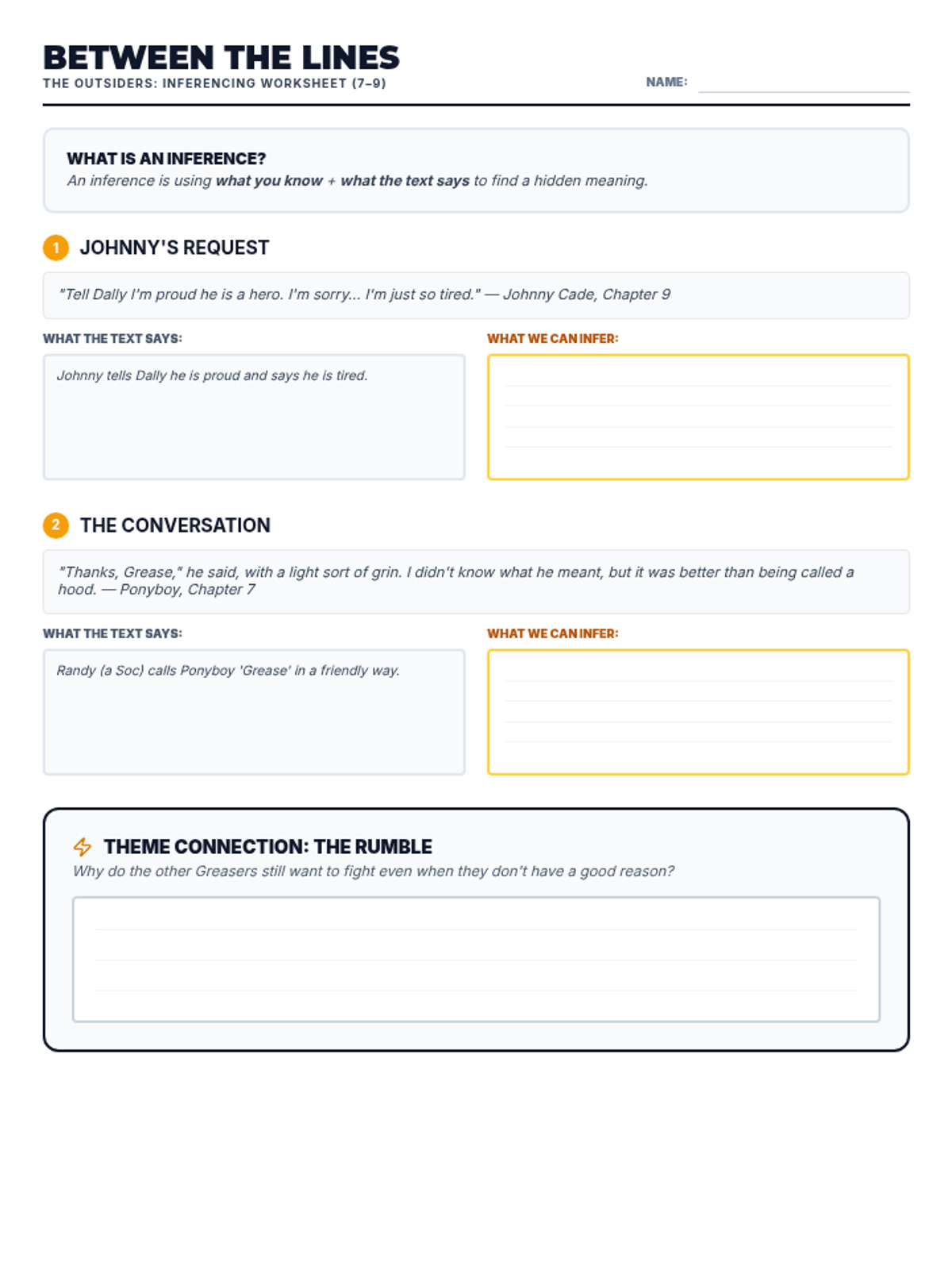
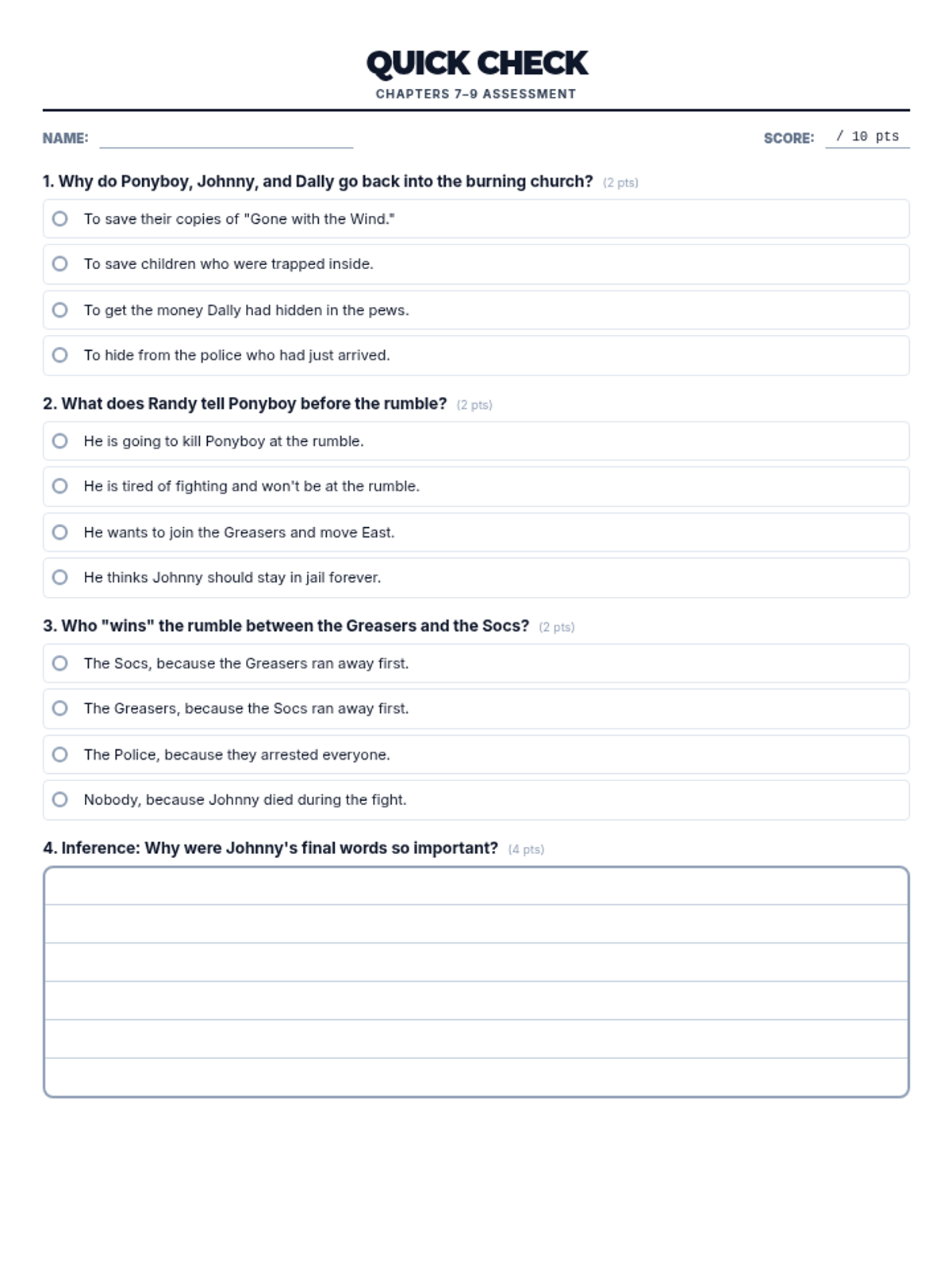
Focuses on the aftermath of the fire, the big rumble, and the deaths of Johnny and Dally. Students analyze theme, loss, and the cycle of violence.
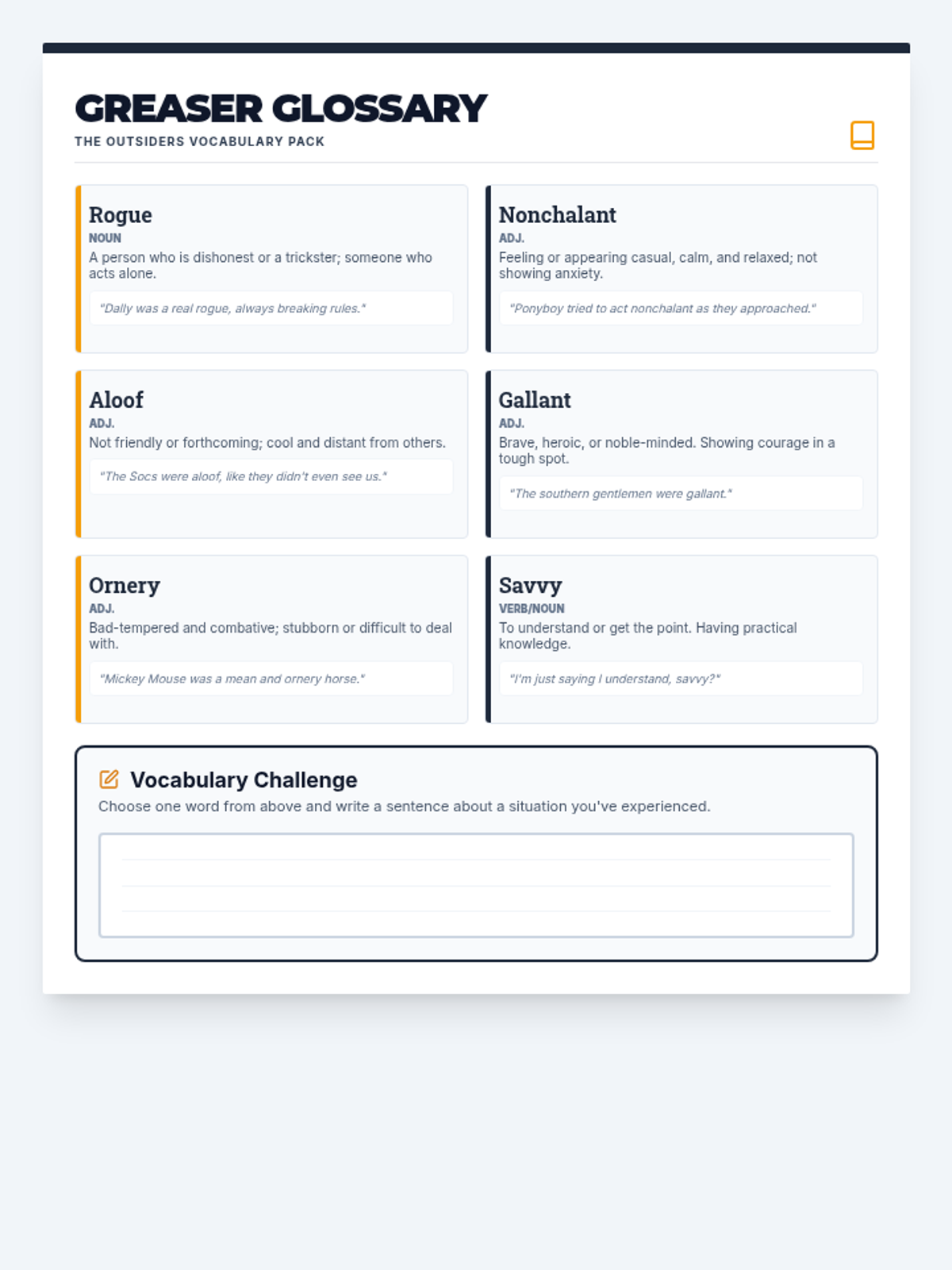
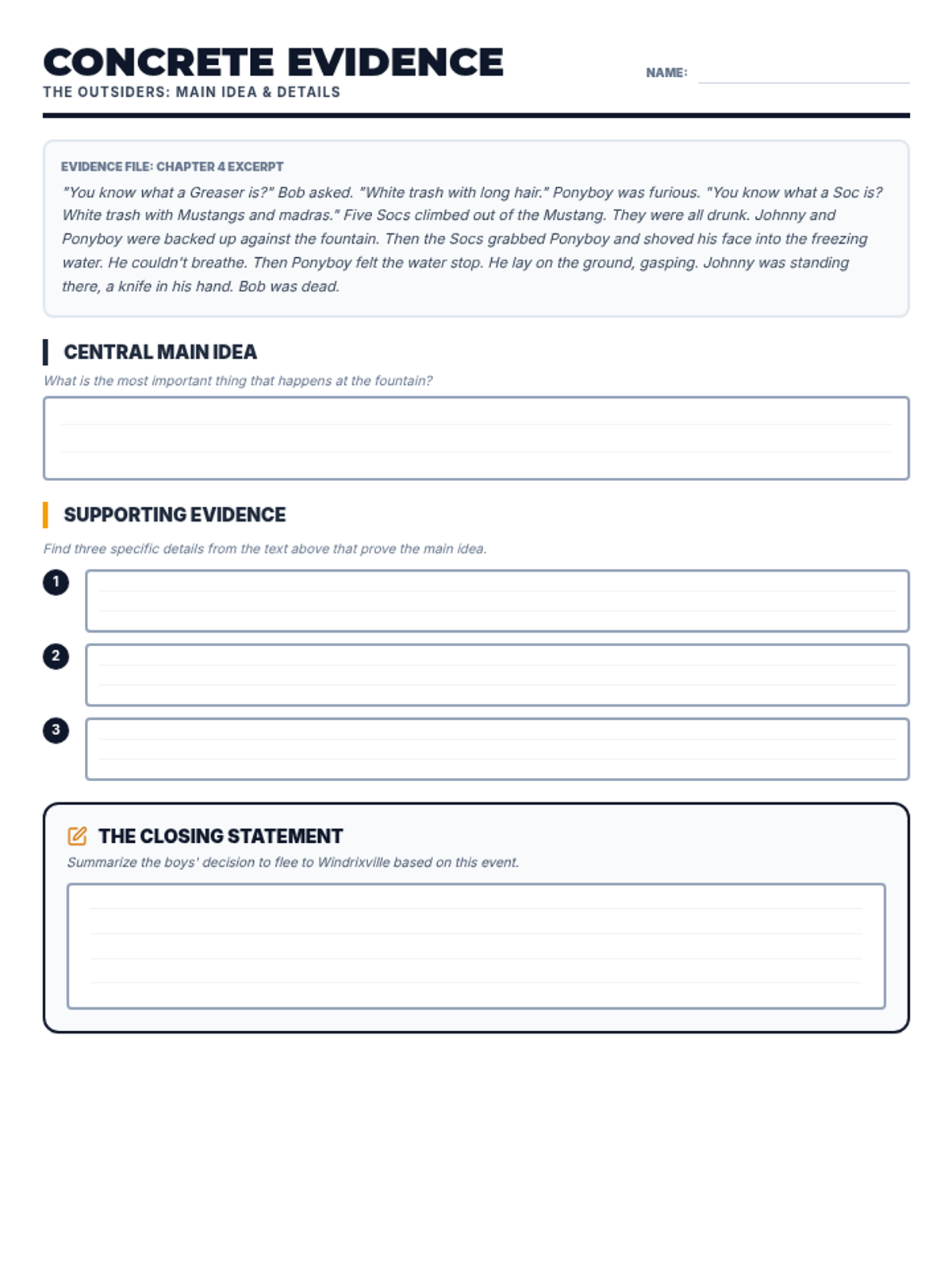
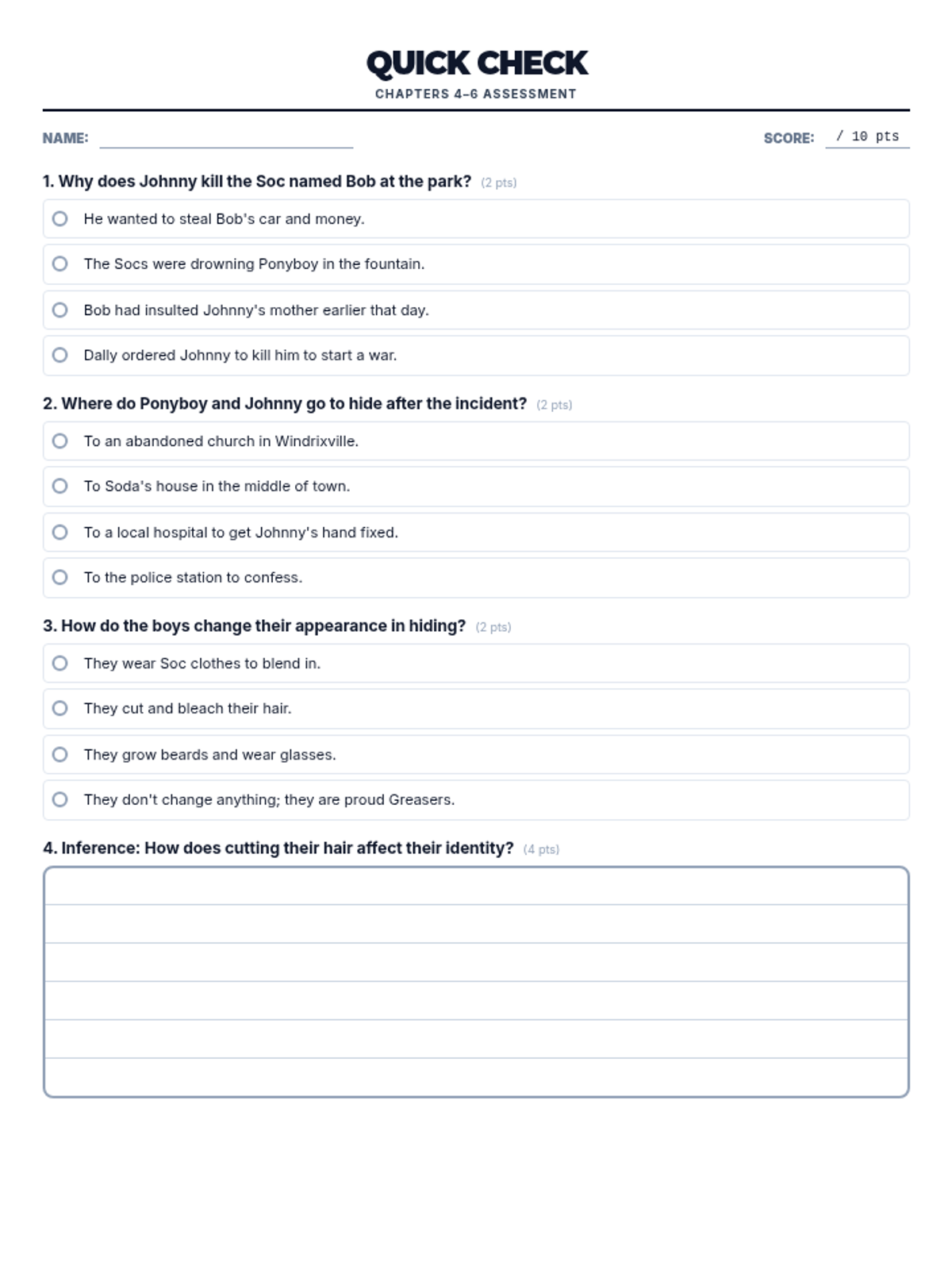
Covers the turning point at the park and the boys' flight to Windrixville. Focuses on context clues, citing evidence for character decisions, and plot progression.
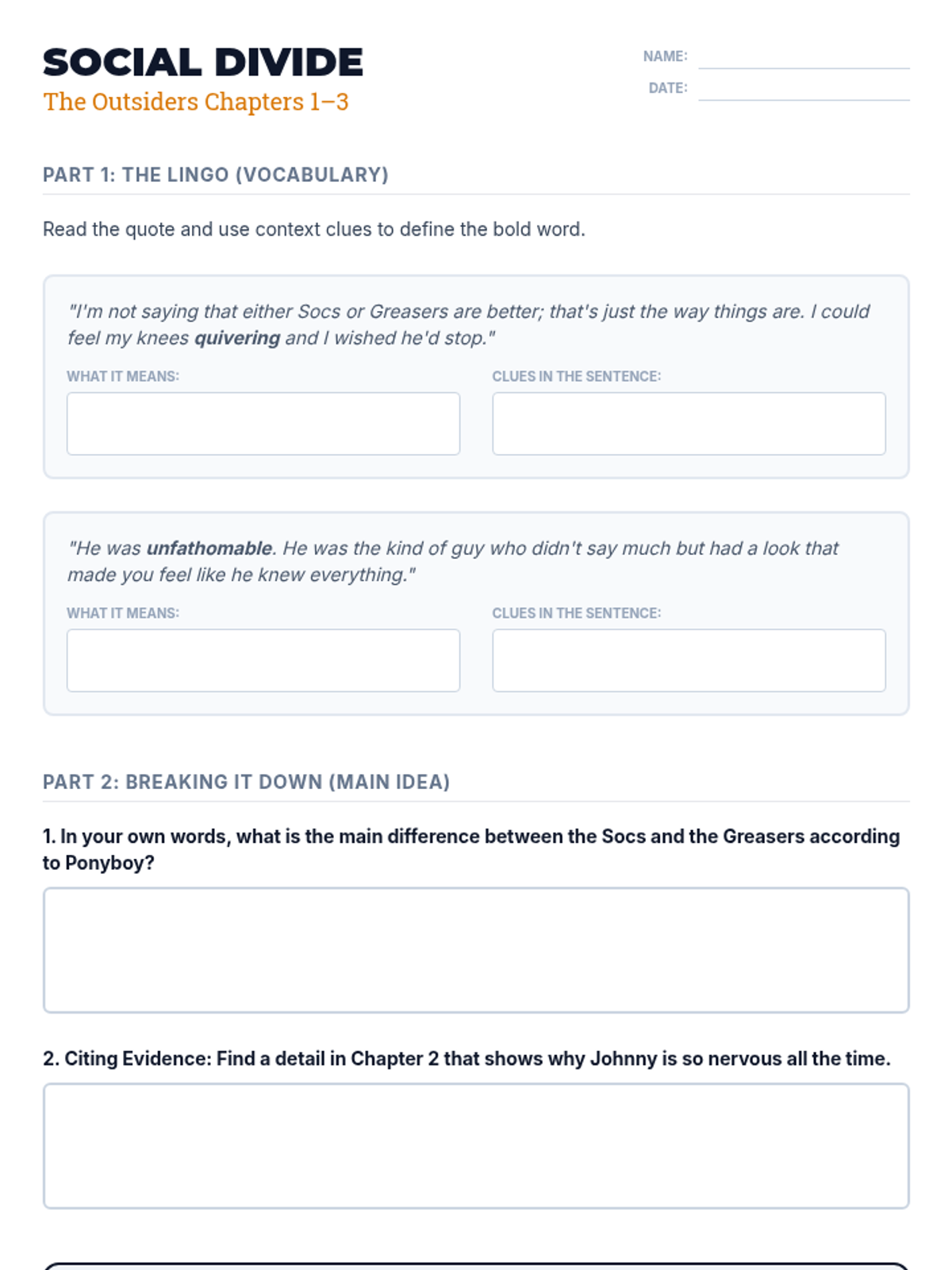
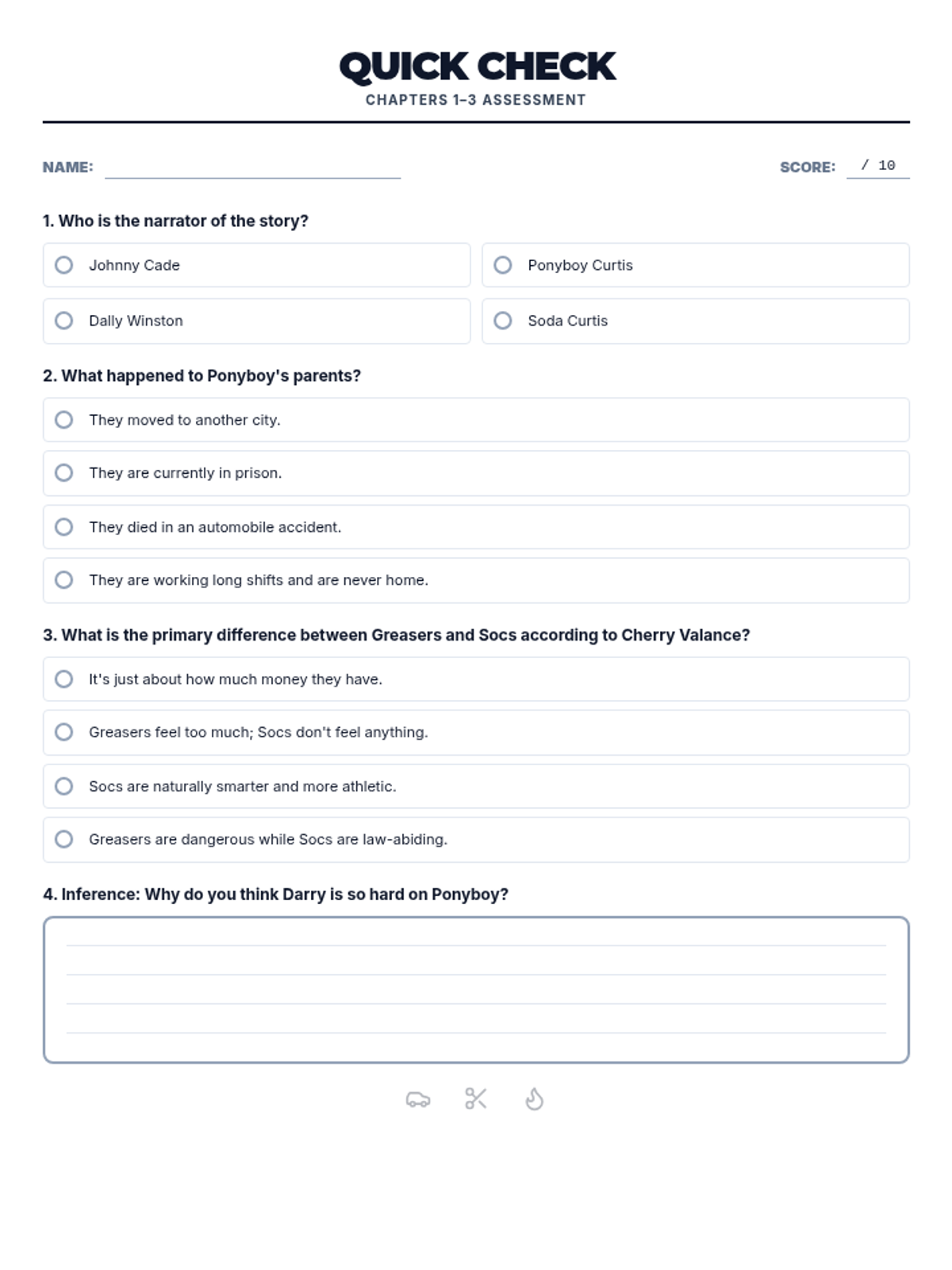
Introduces the social divide between Greasers and Socs, character archetypes, and the setting of 1960s Tulsa. Students focus on identifying main ideas and making initial character inferences.
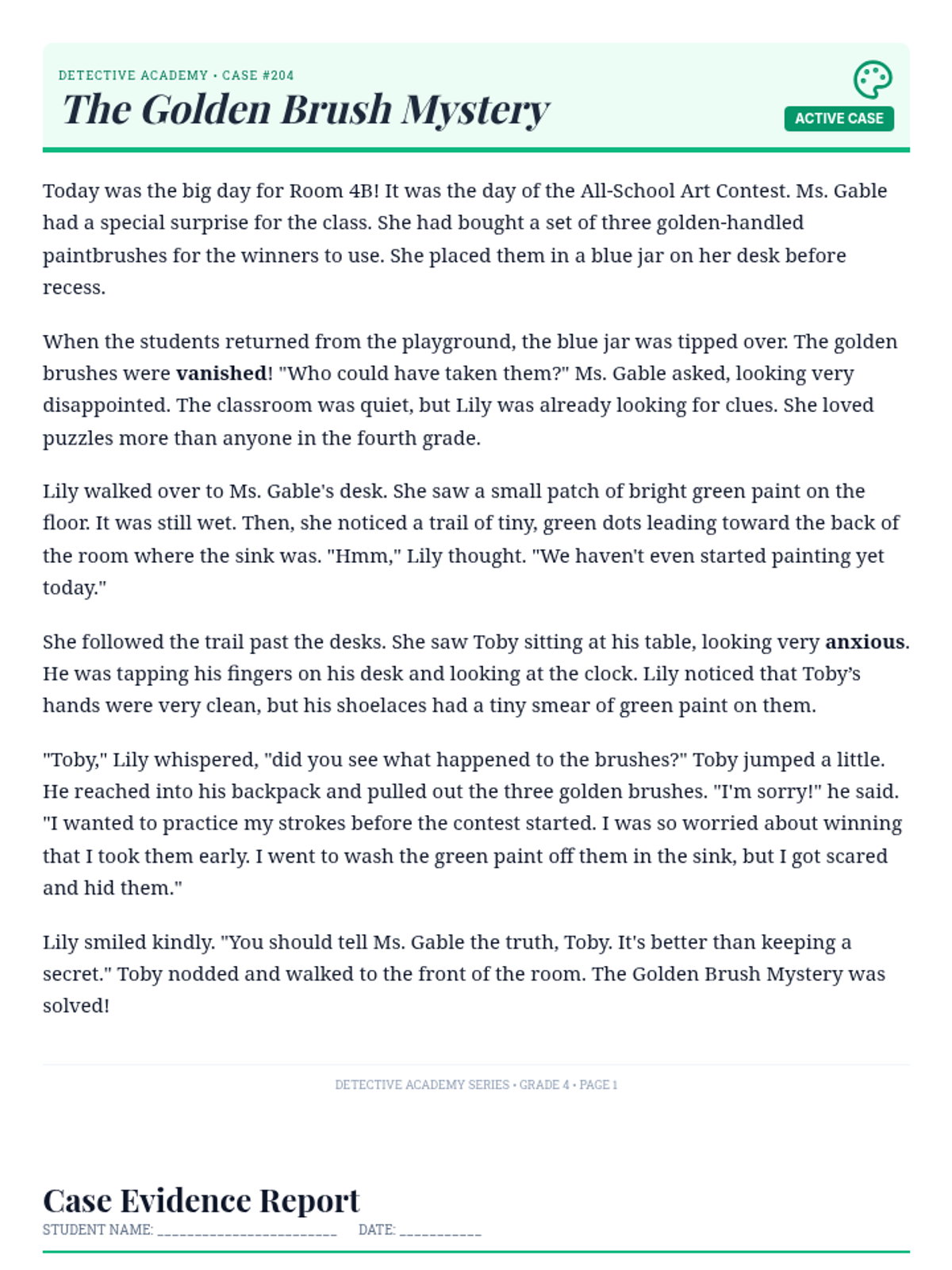
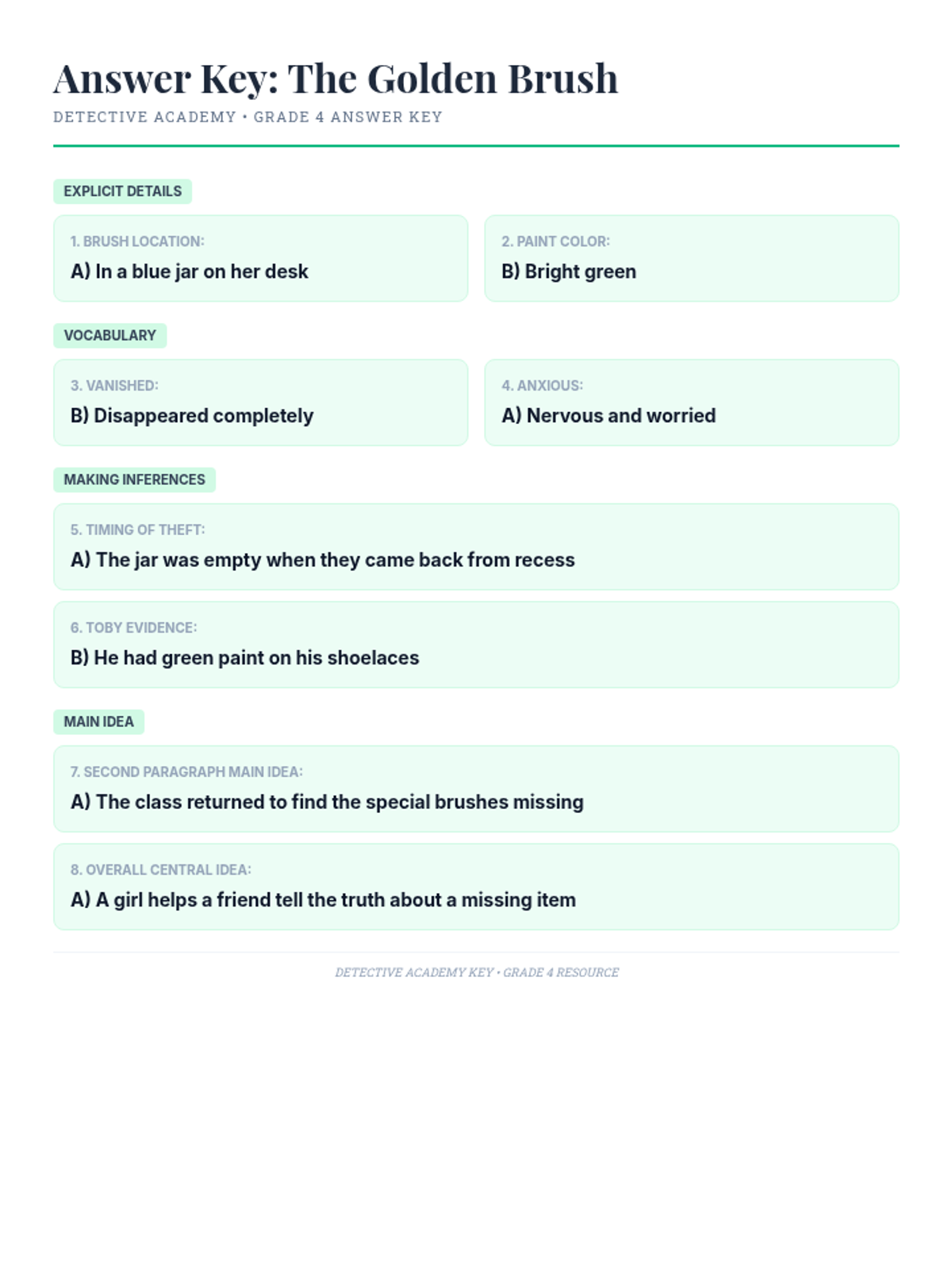
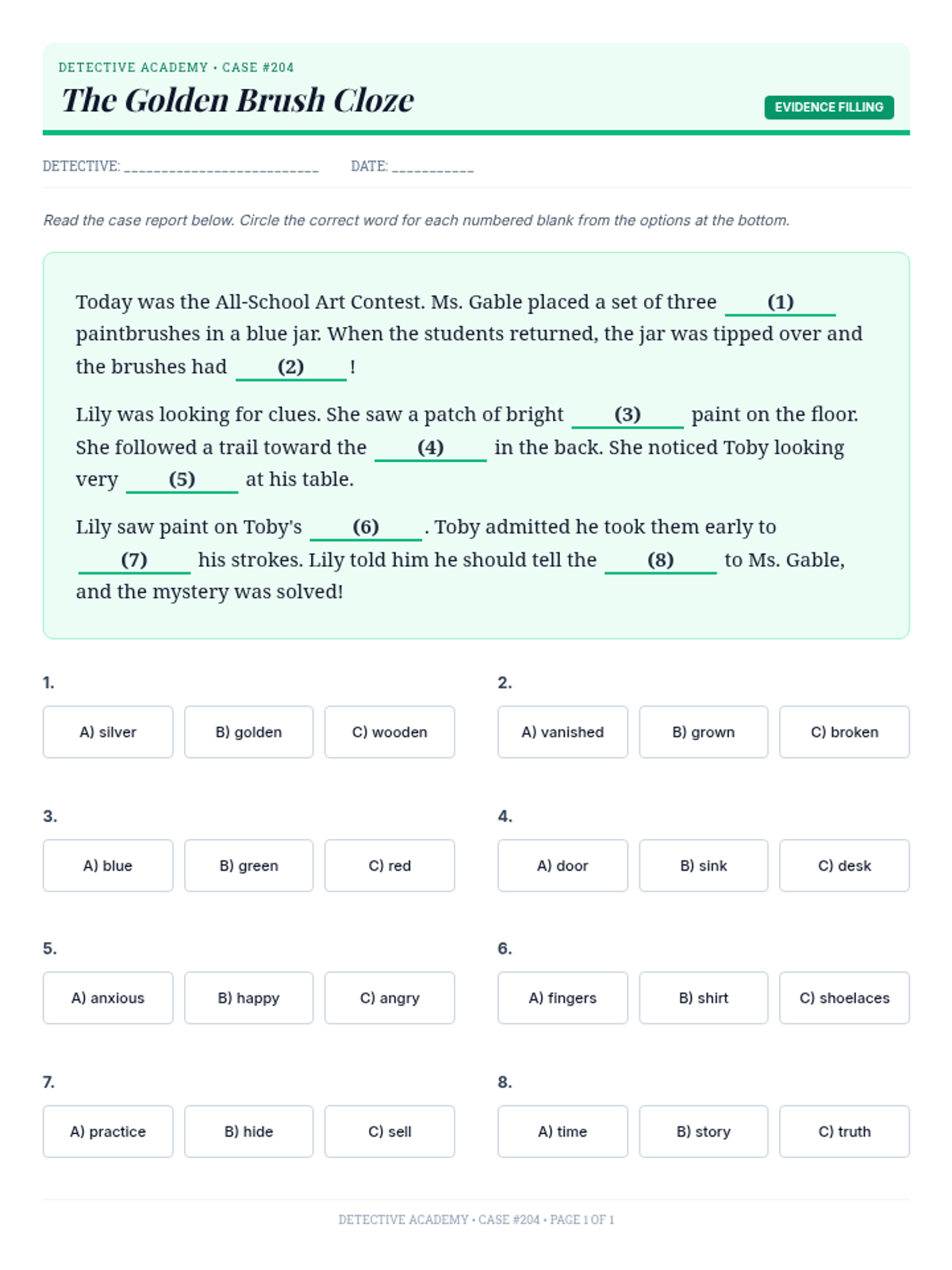
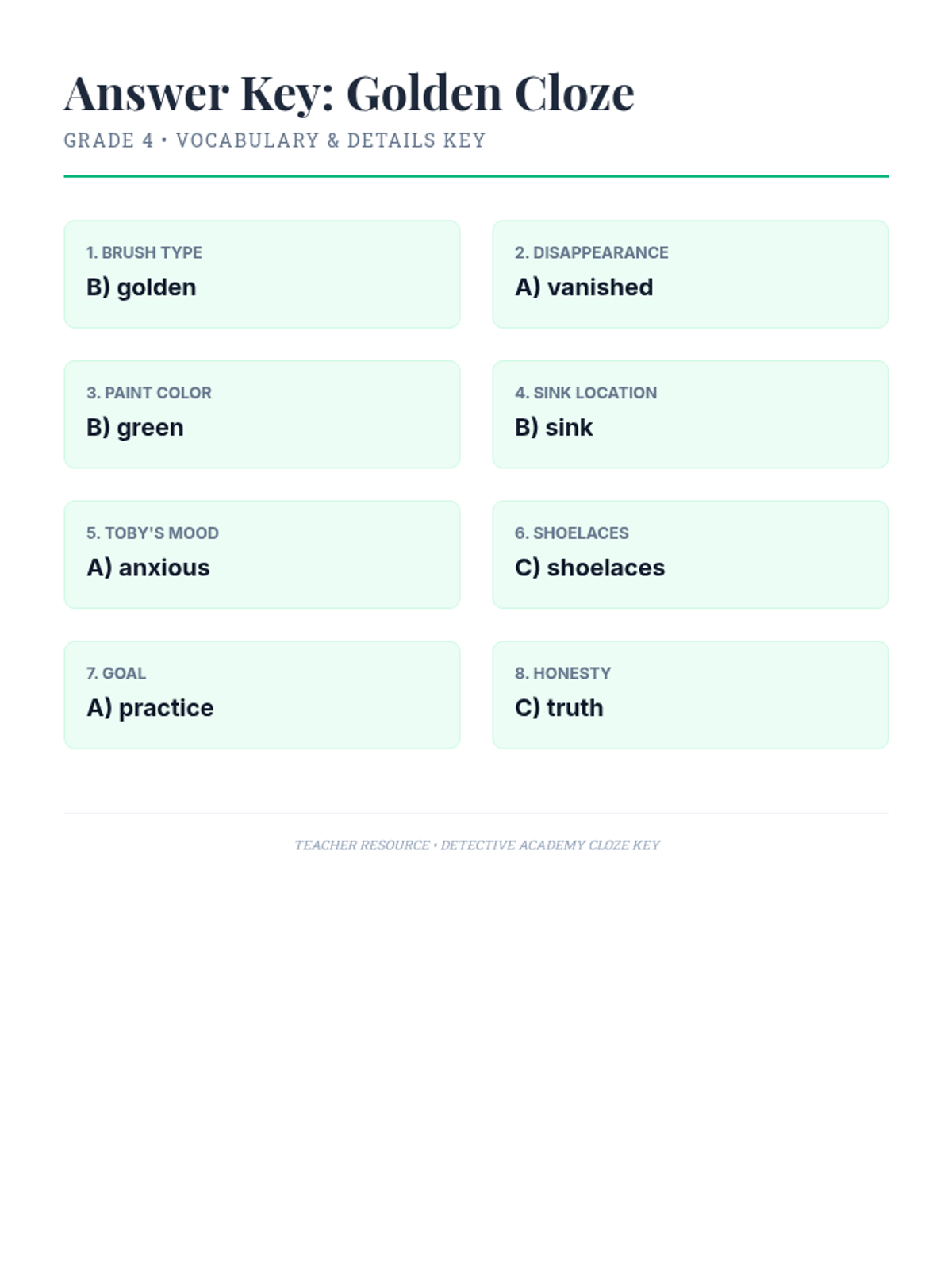
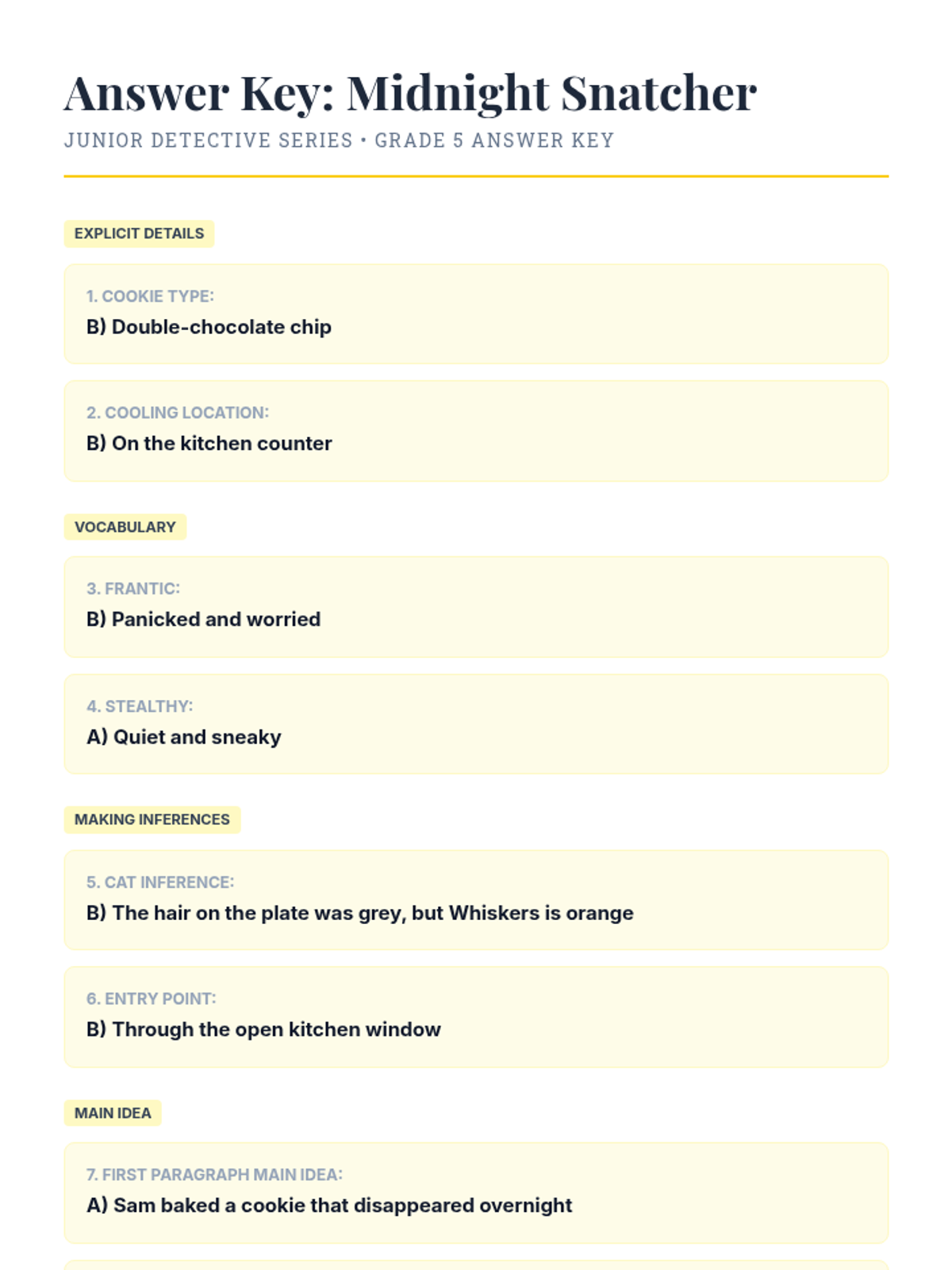
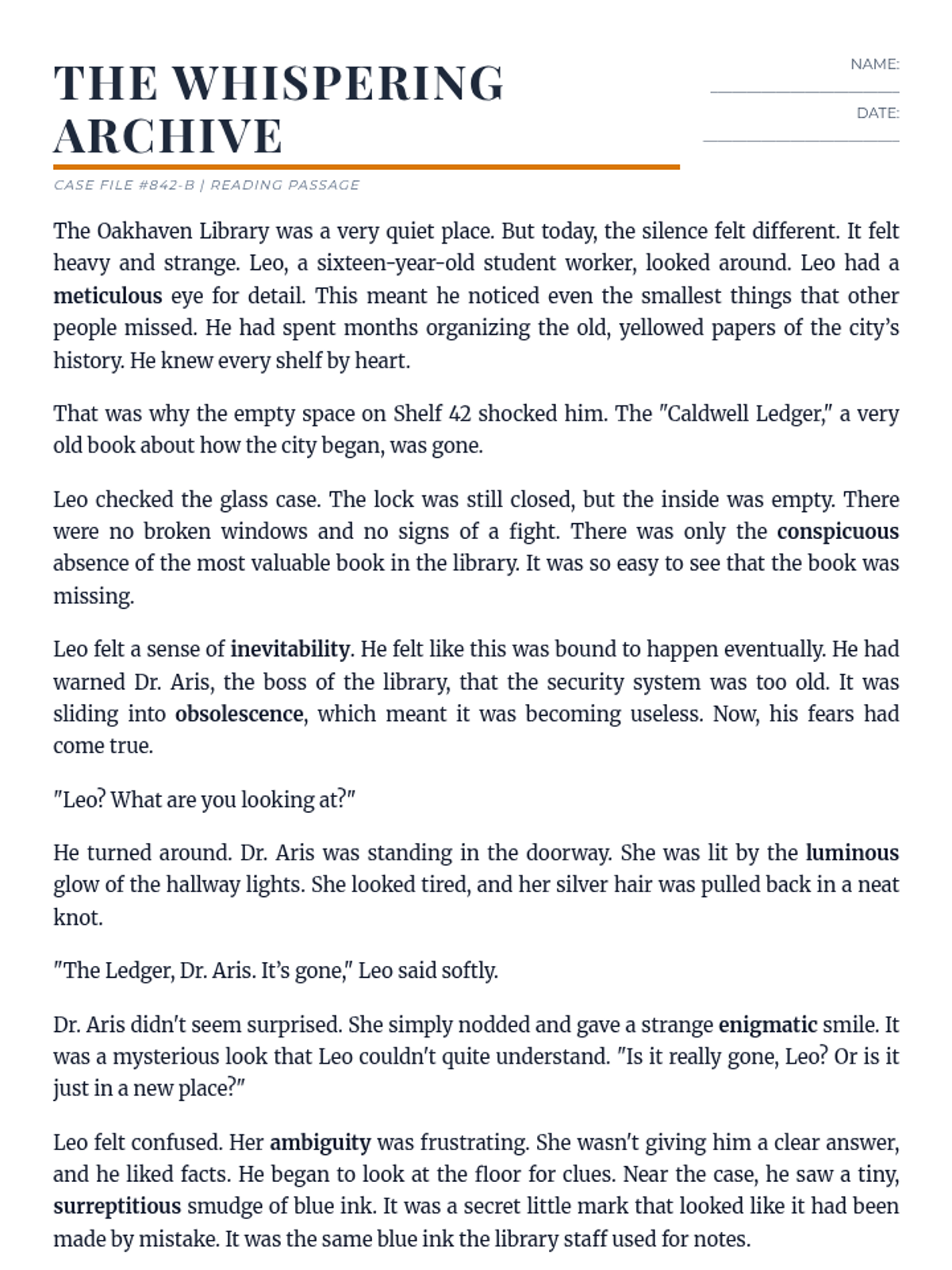
A grade 4 reading comprehension lesson focused on a mystery story, targeting skills in inferencing, explicit details, context clues, and identifying main ideas.
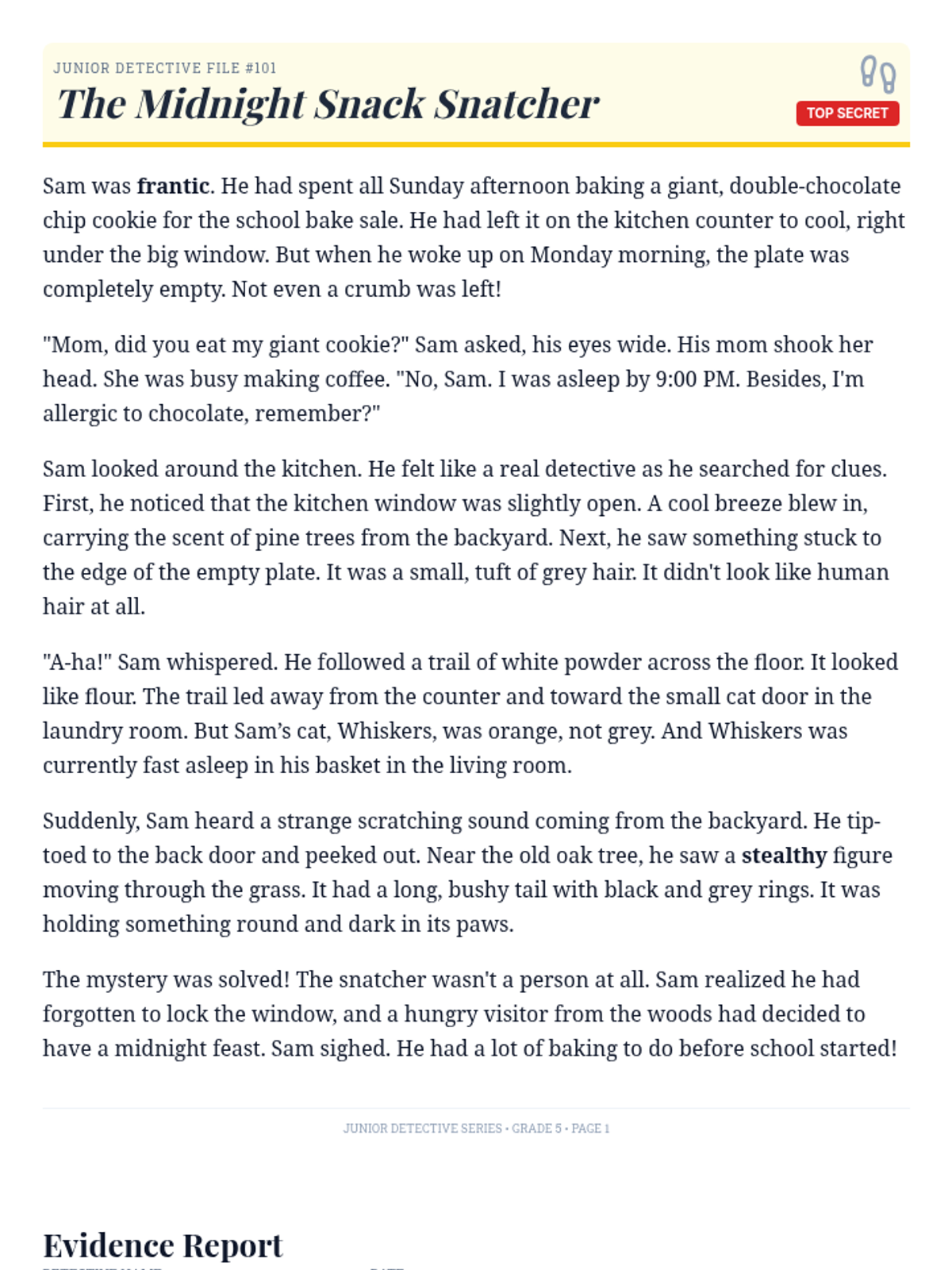
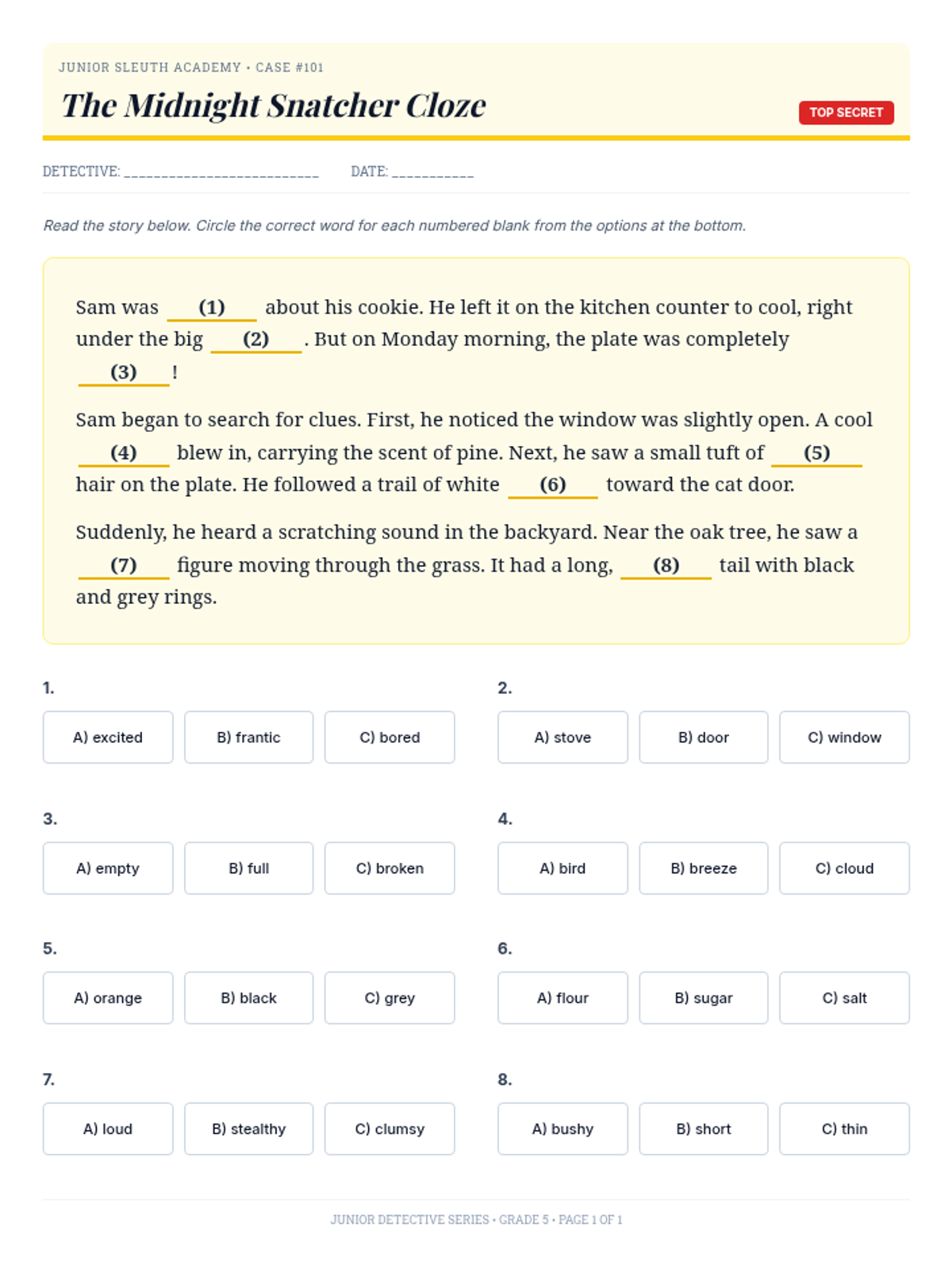
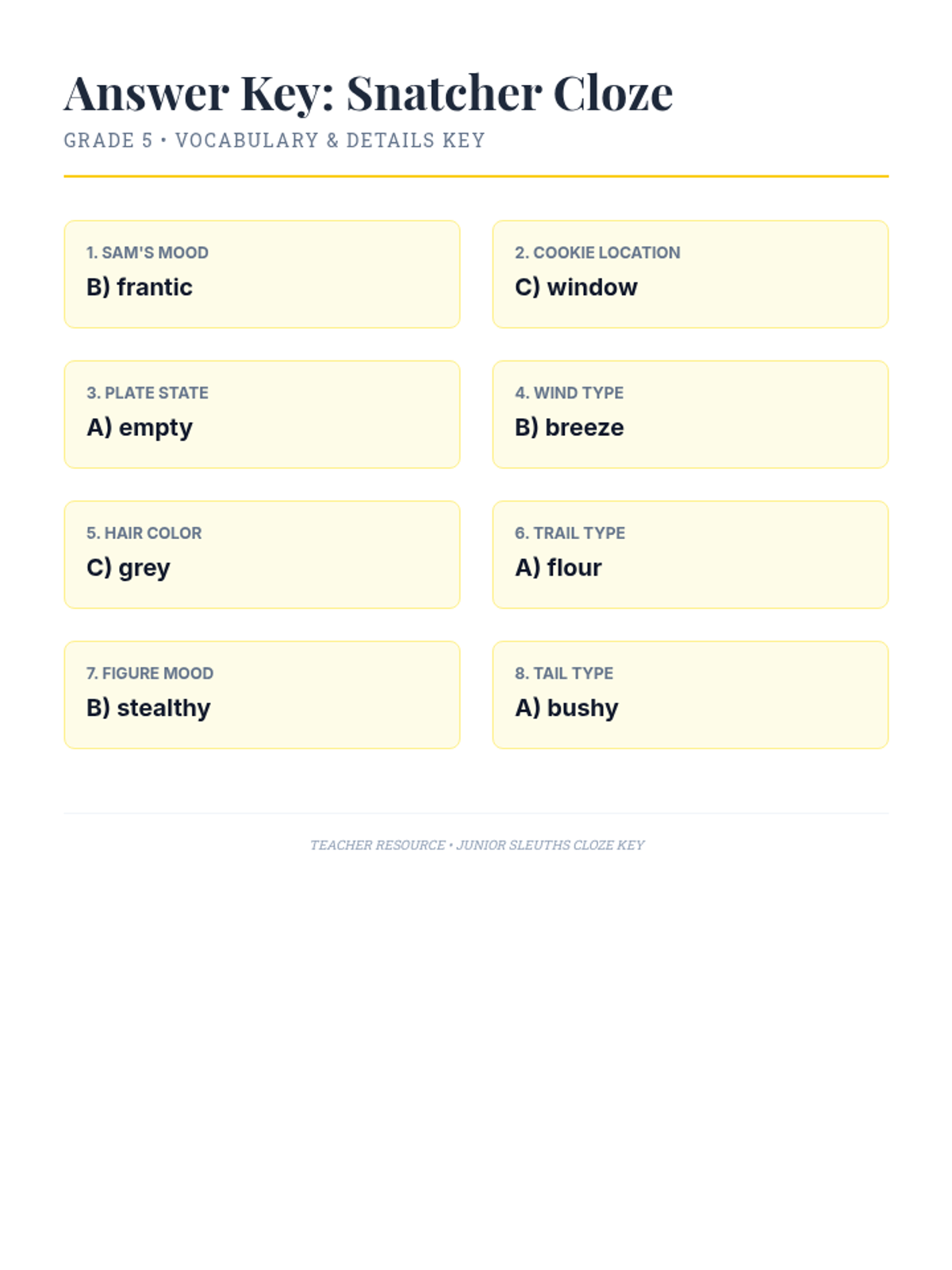
A grade 5 reading comprehension lesson focused on a mystery story, targeting skills in inferencing, explicit details, context clues, and identifying main ideas.
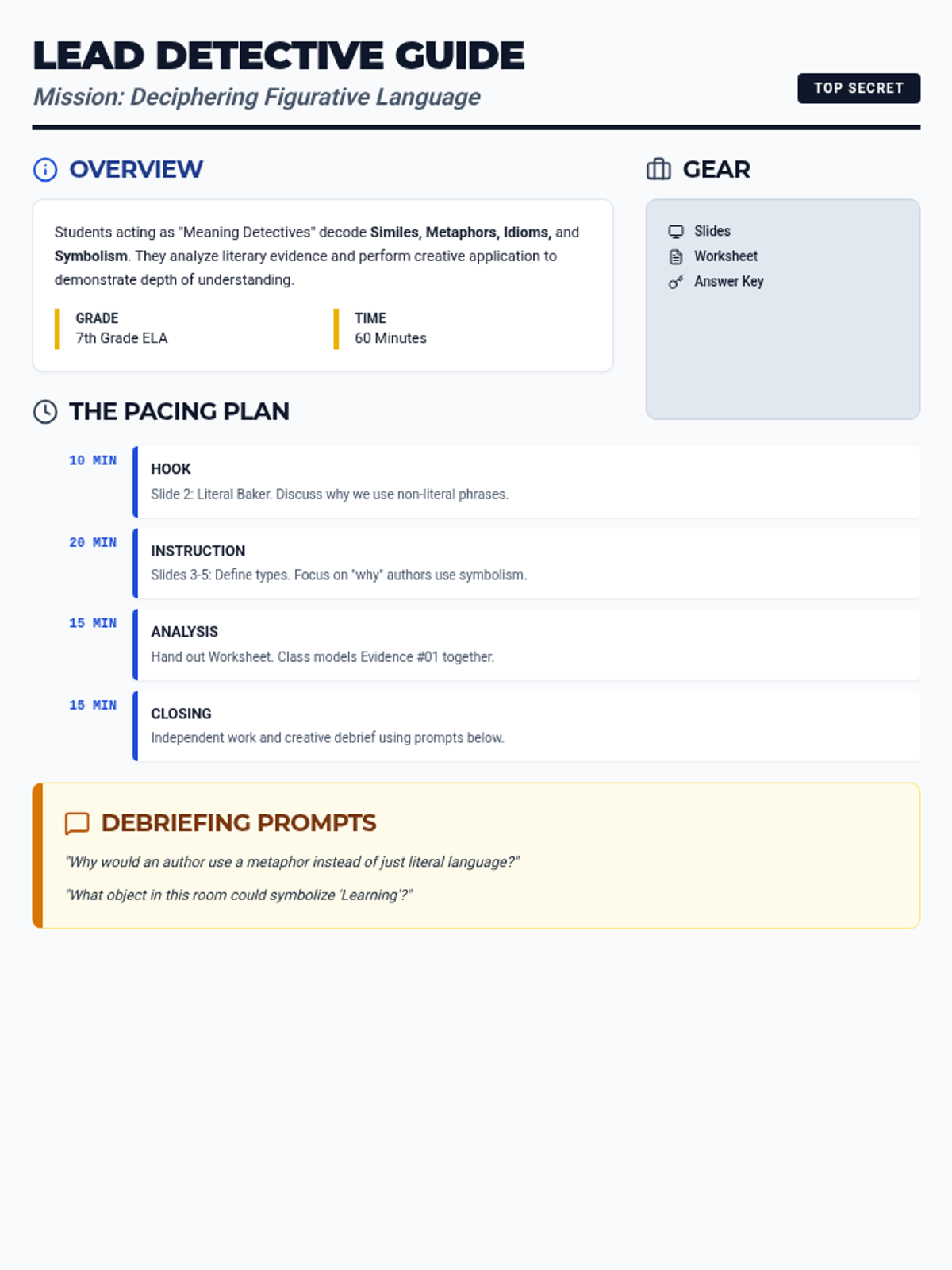
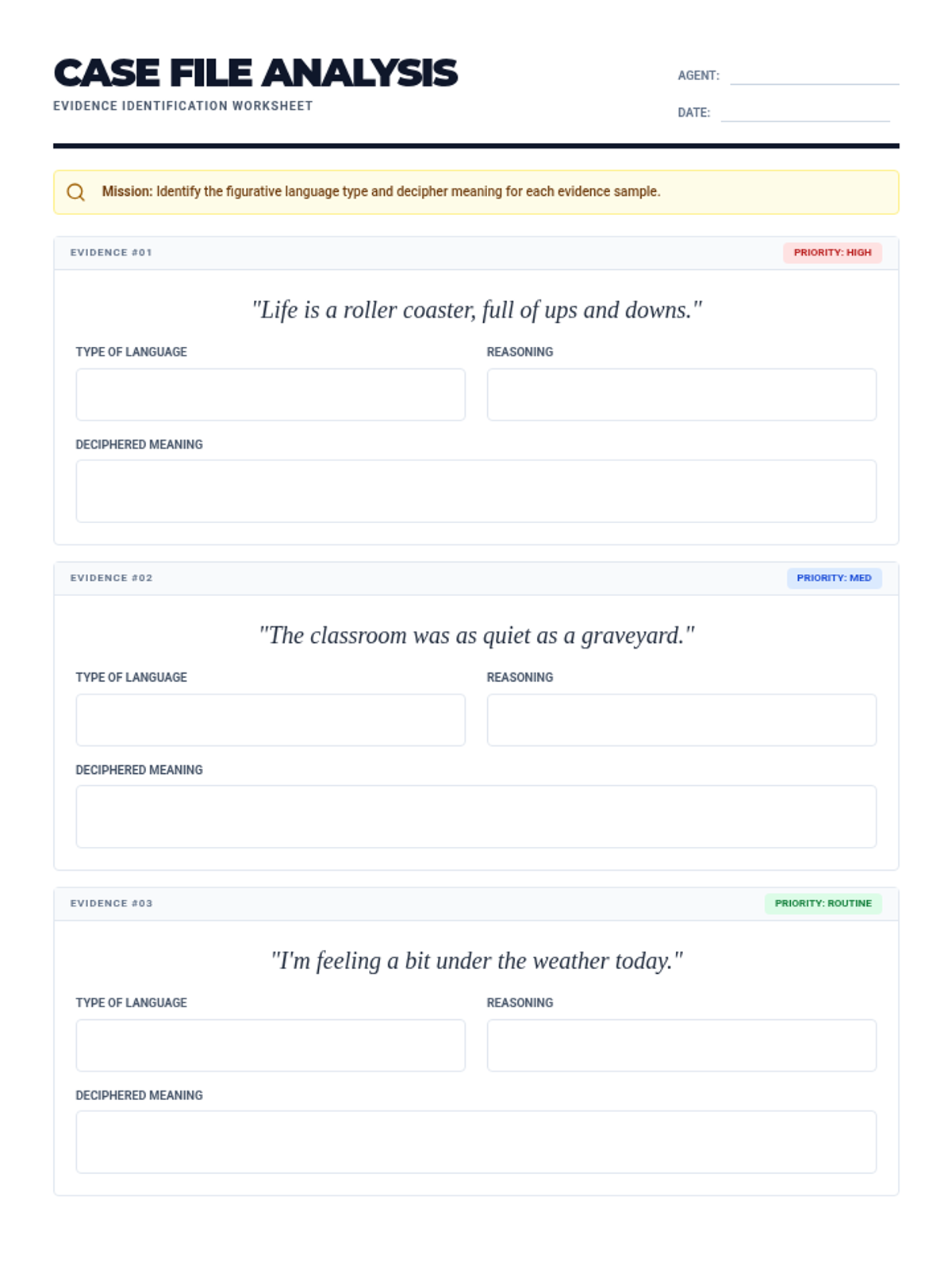
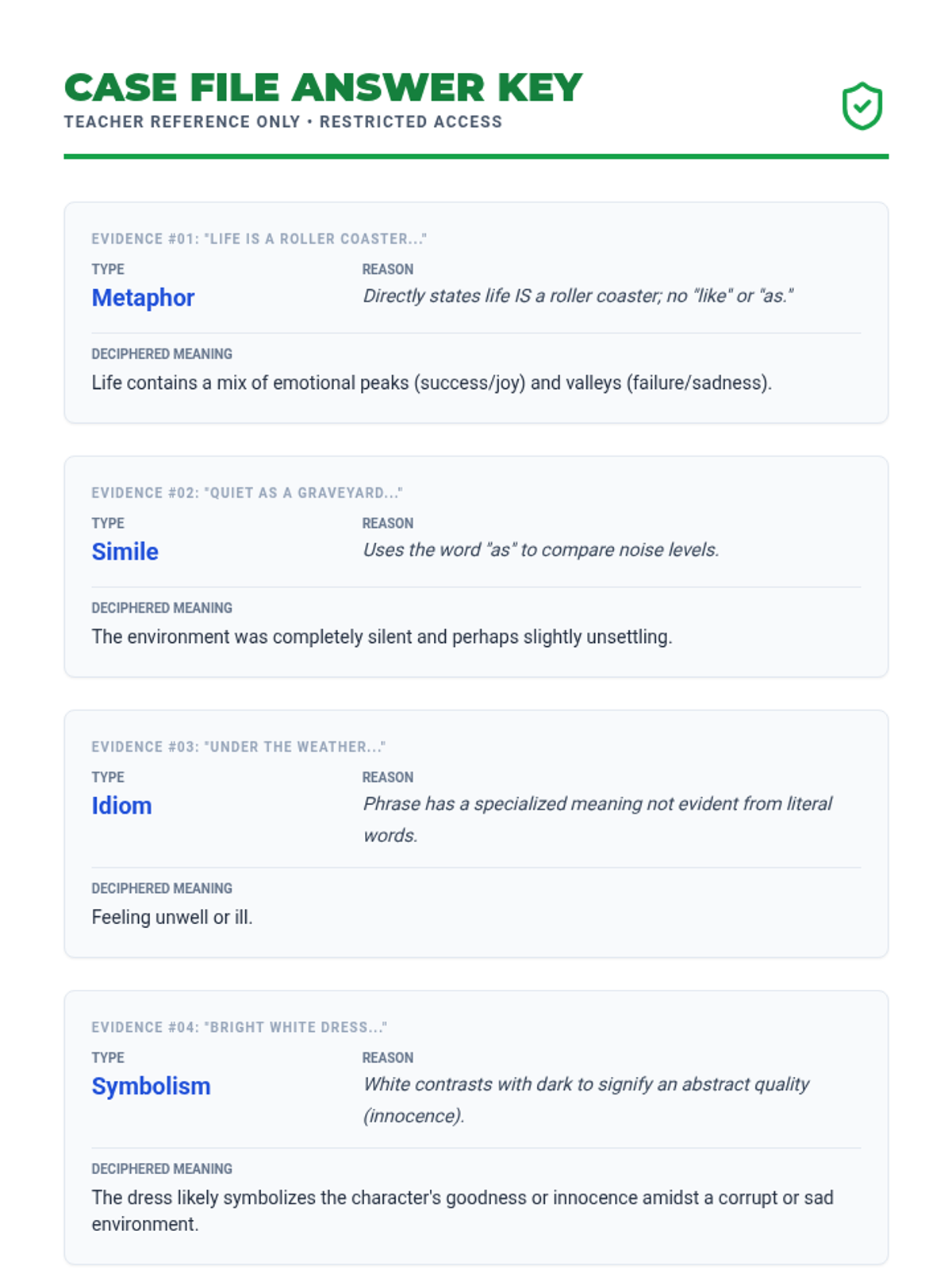
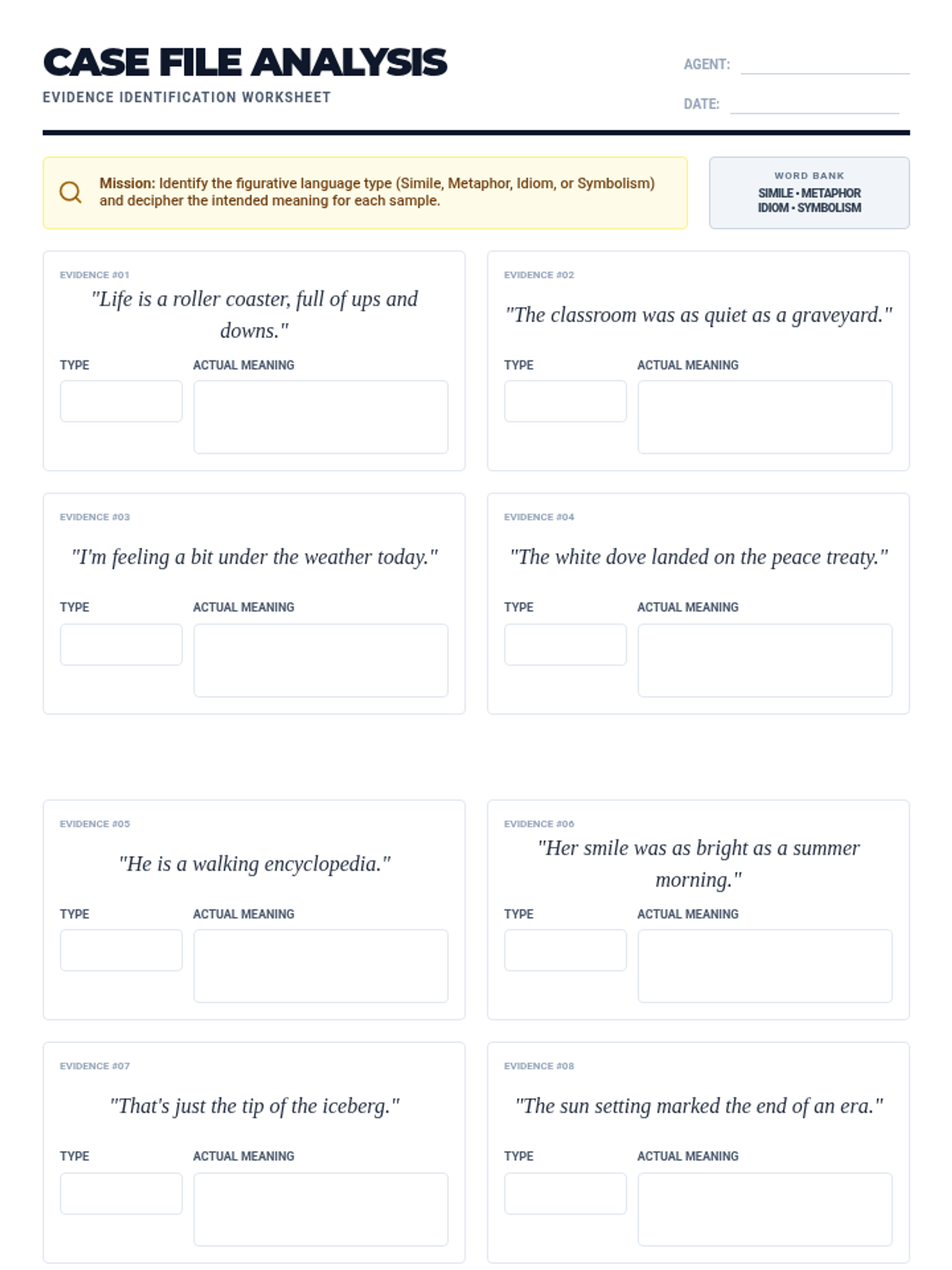
A high-interest lesson where students act as 'Meaning Detectives' to identify and interpret similes, metaphors, idioms, and symbolism in text.
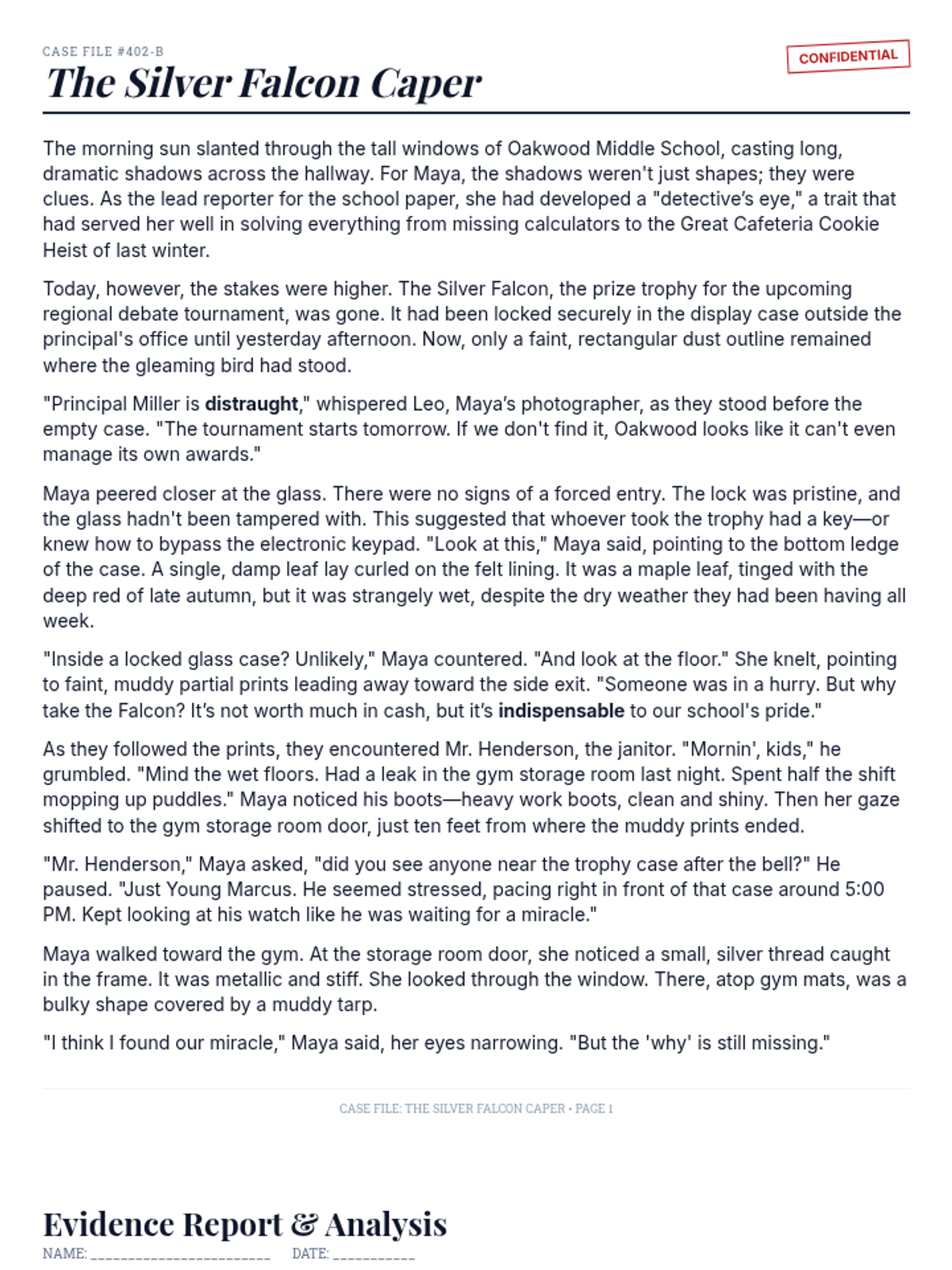
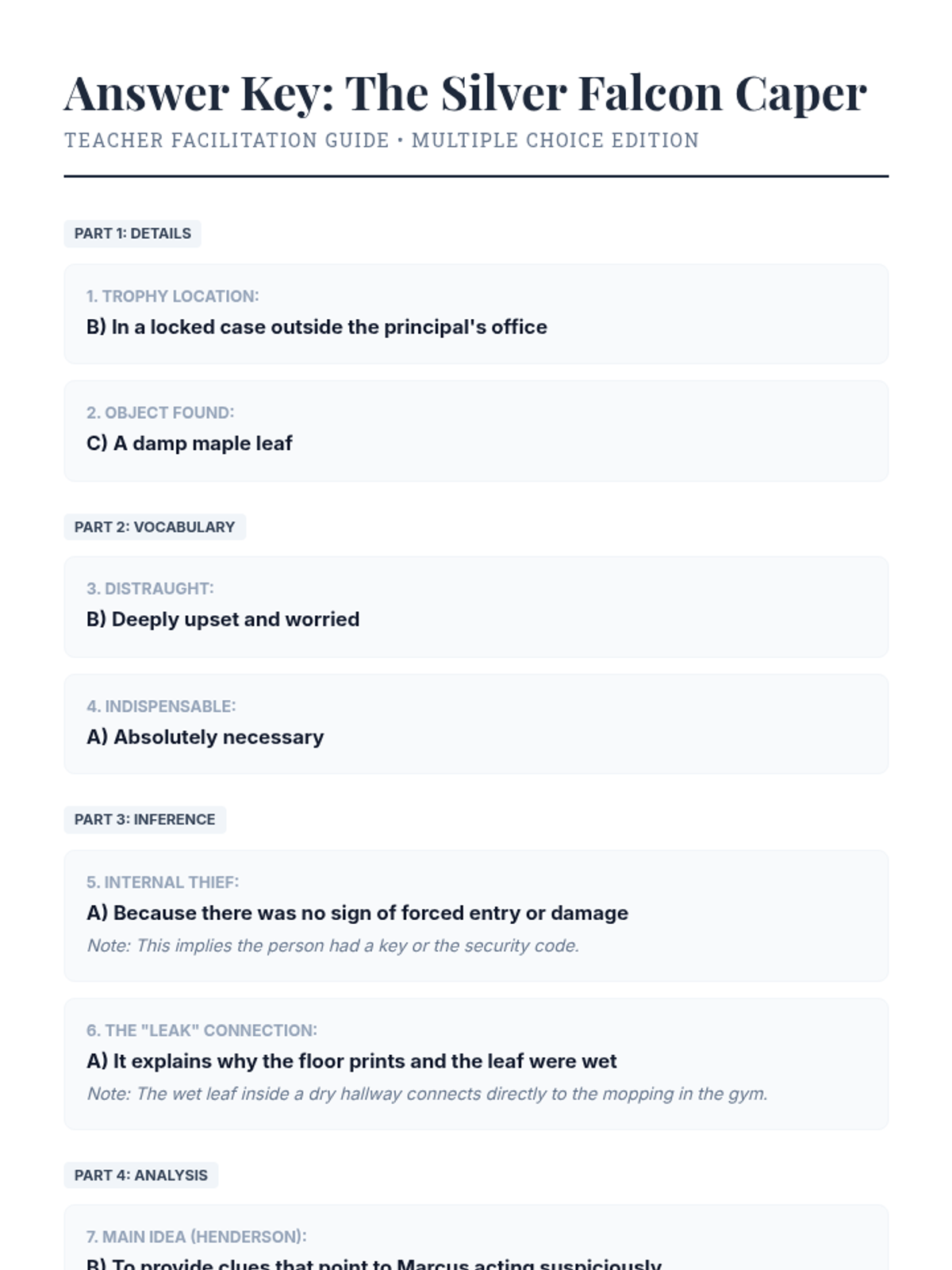
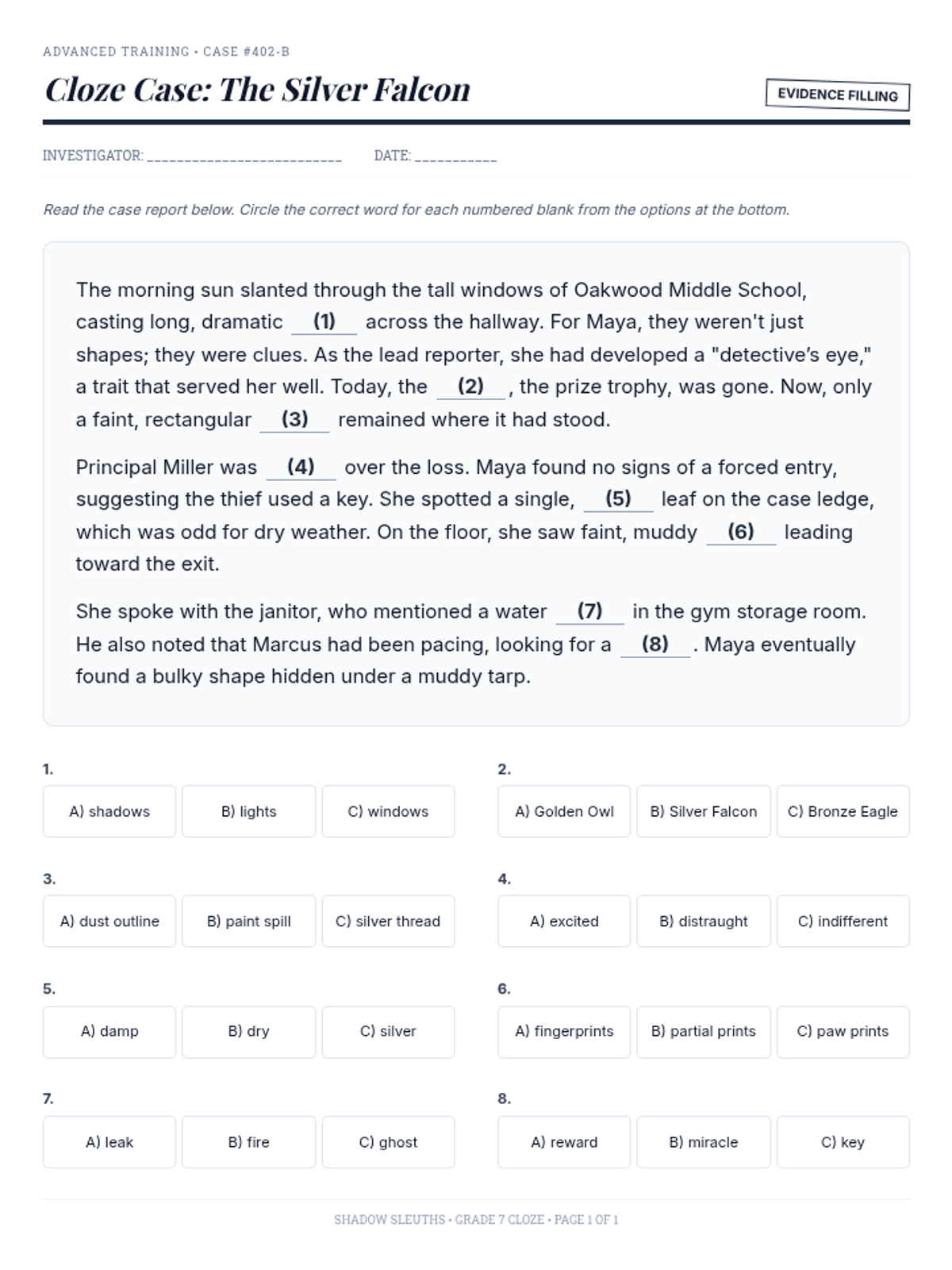
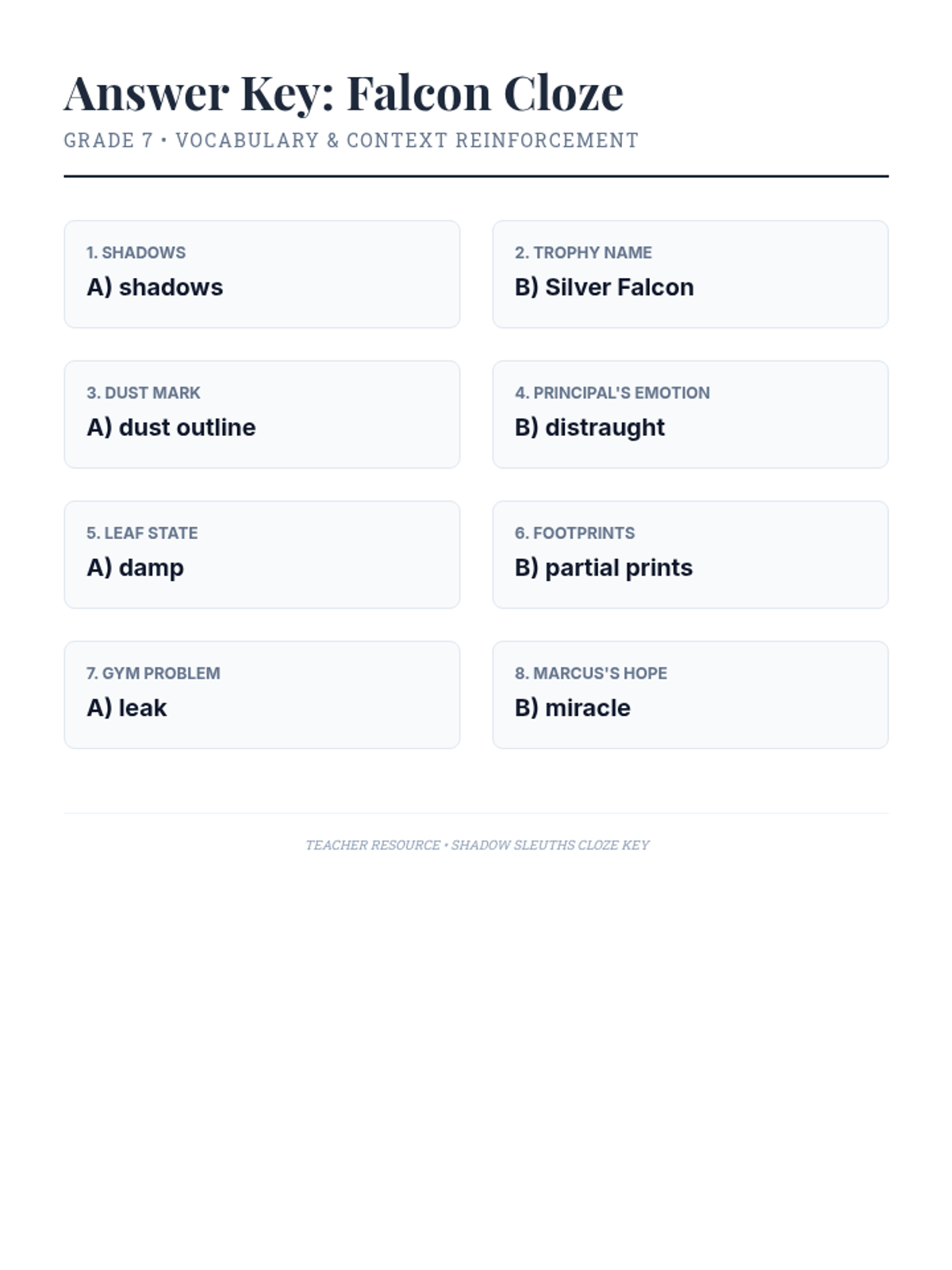
A grade 7 reading comprehension lesson focused on a mystery story, targeting skills in inferencing, explicit details, context clues, and identifying main ideas.
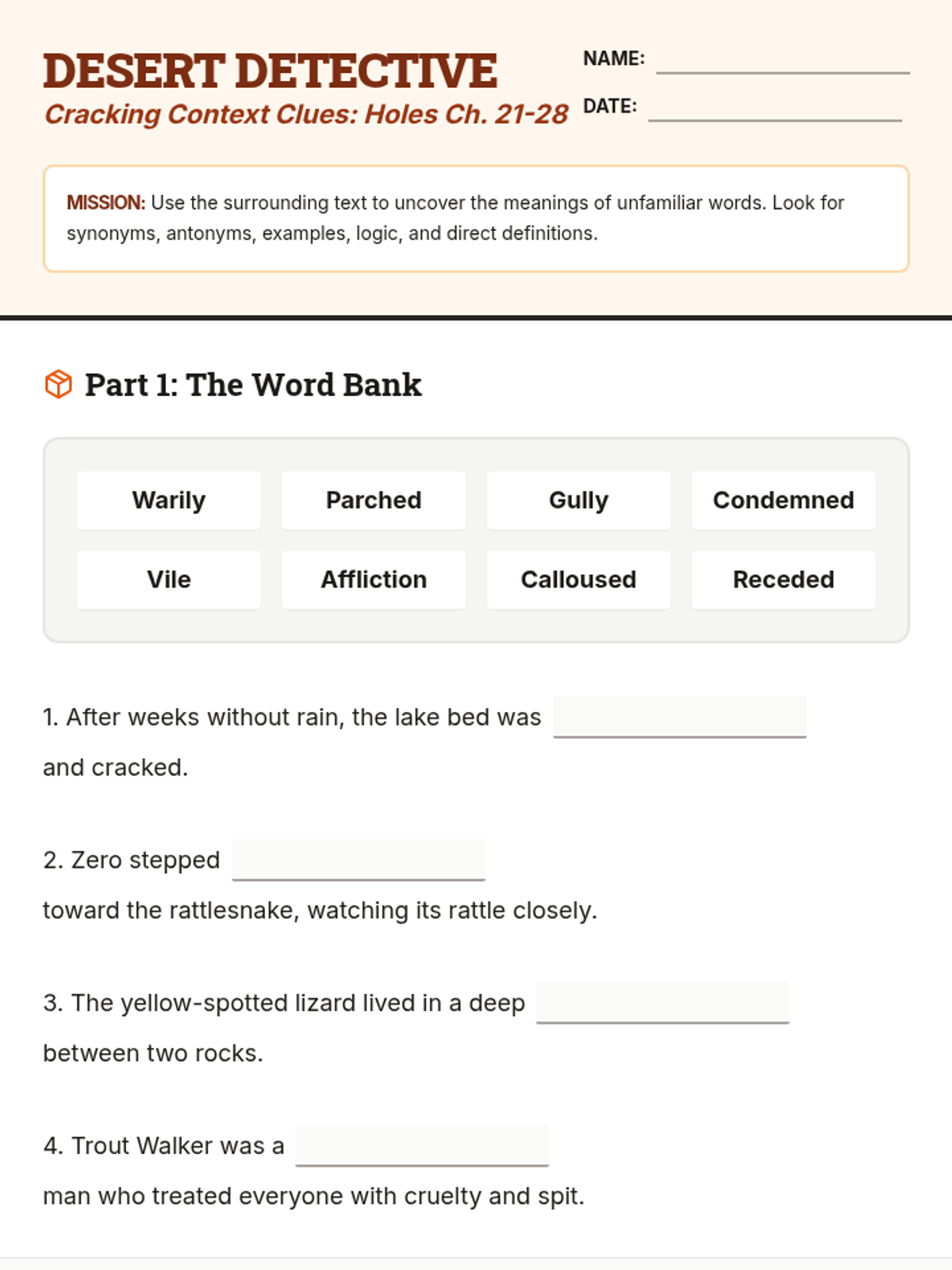
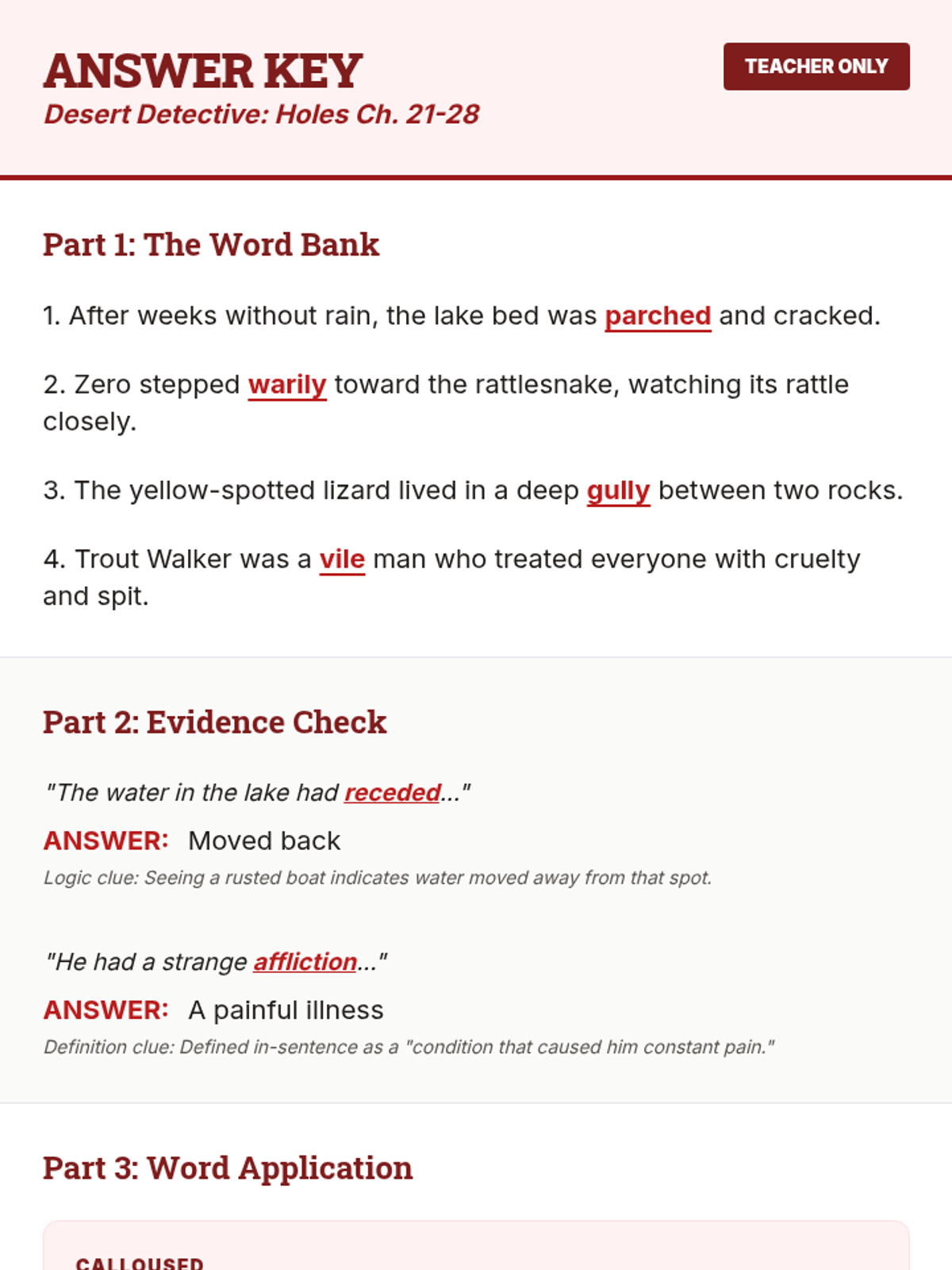
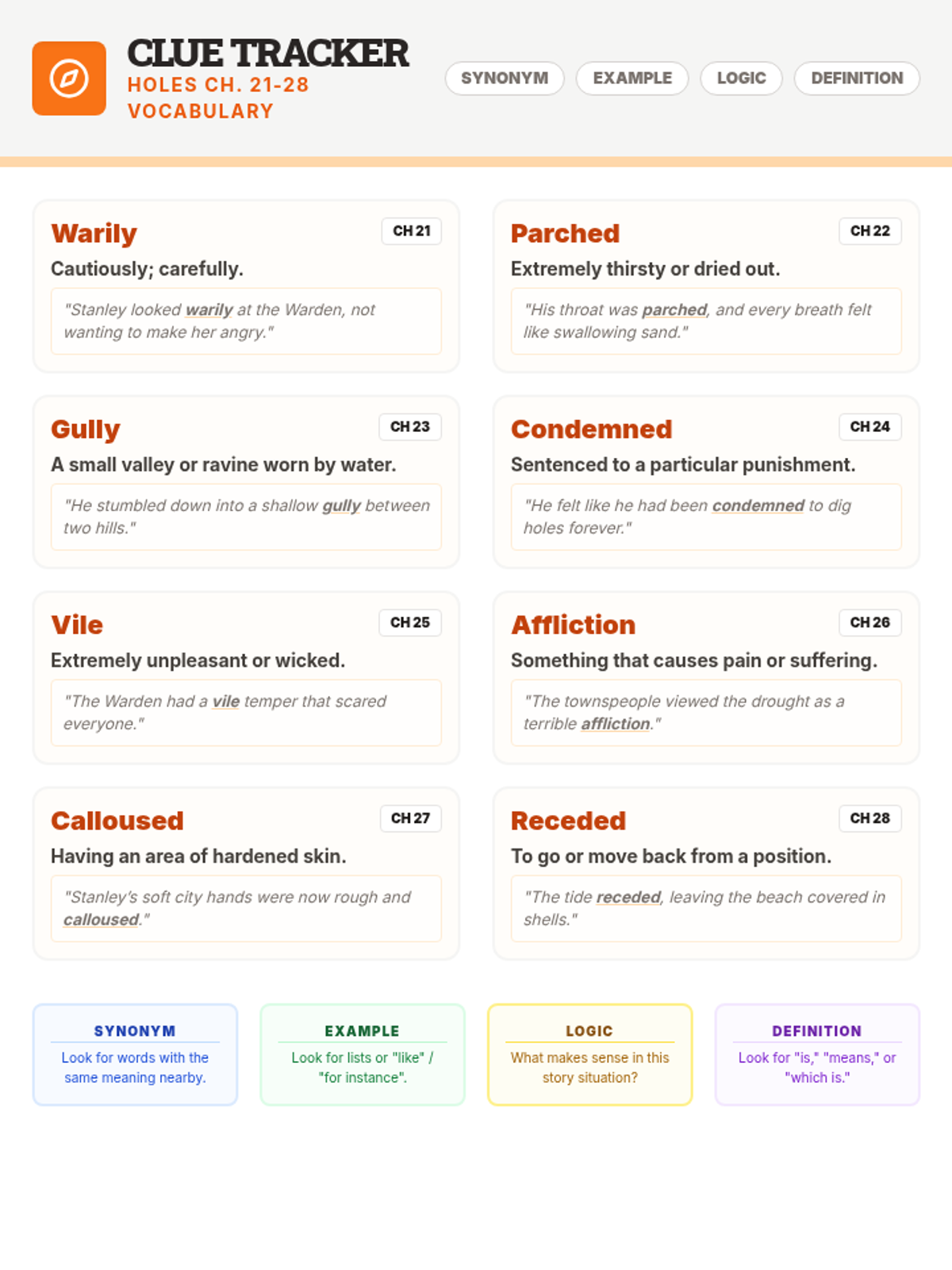
A deep dive into context clue strategies using key vocabulary from chapters 21-28 of Holes, featuring multi-level support for diverse learners.
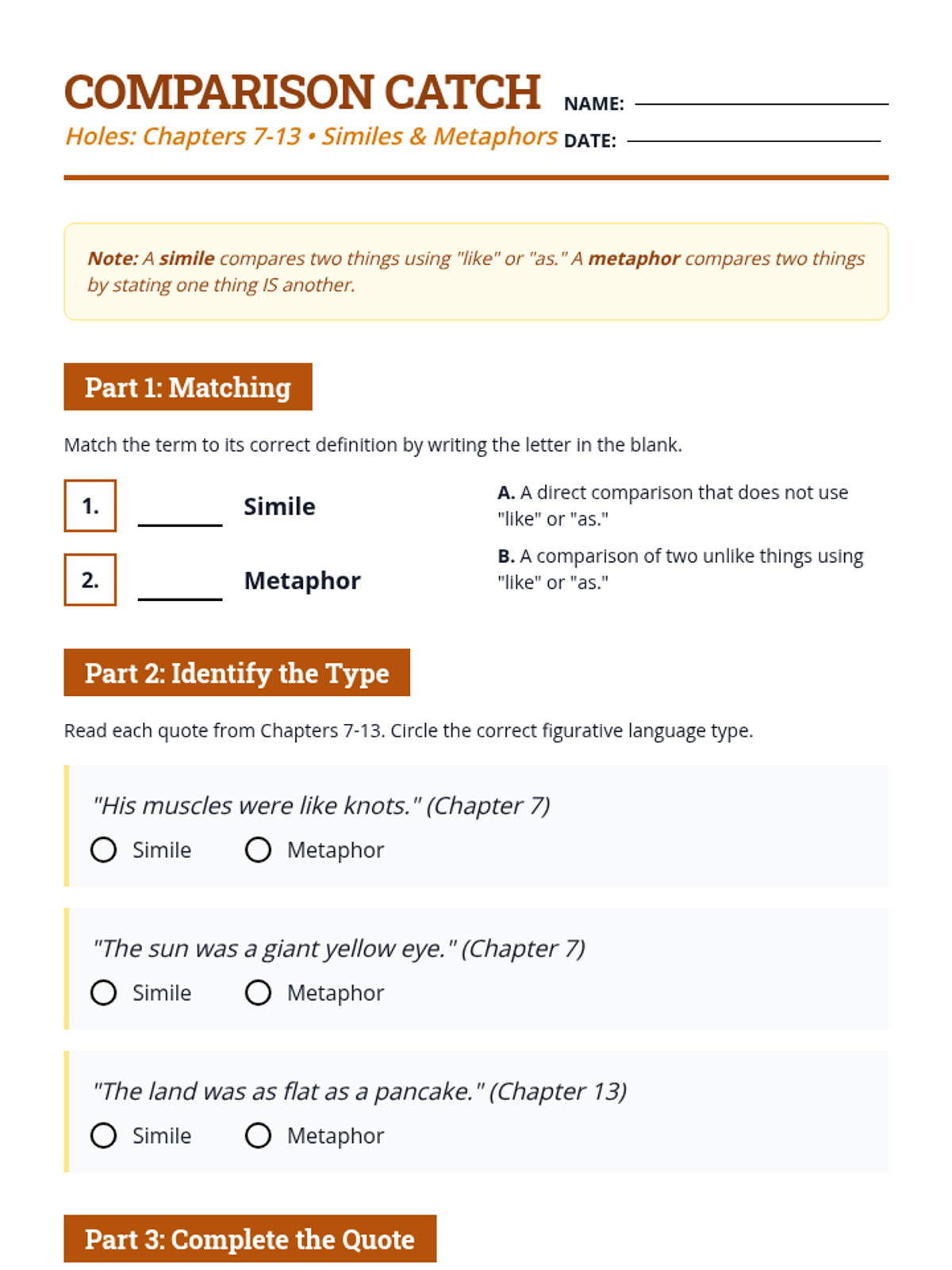
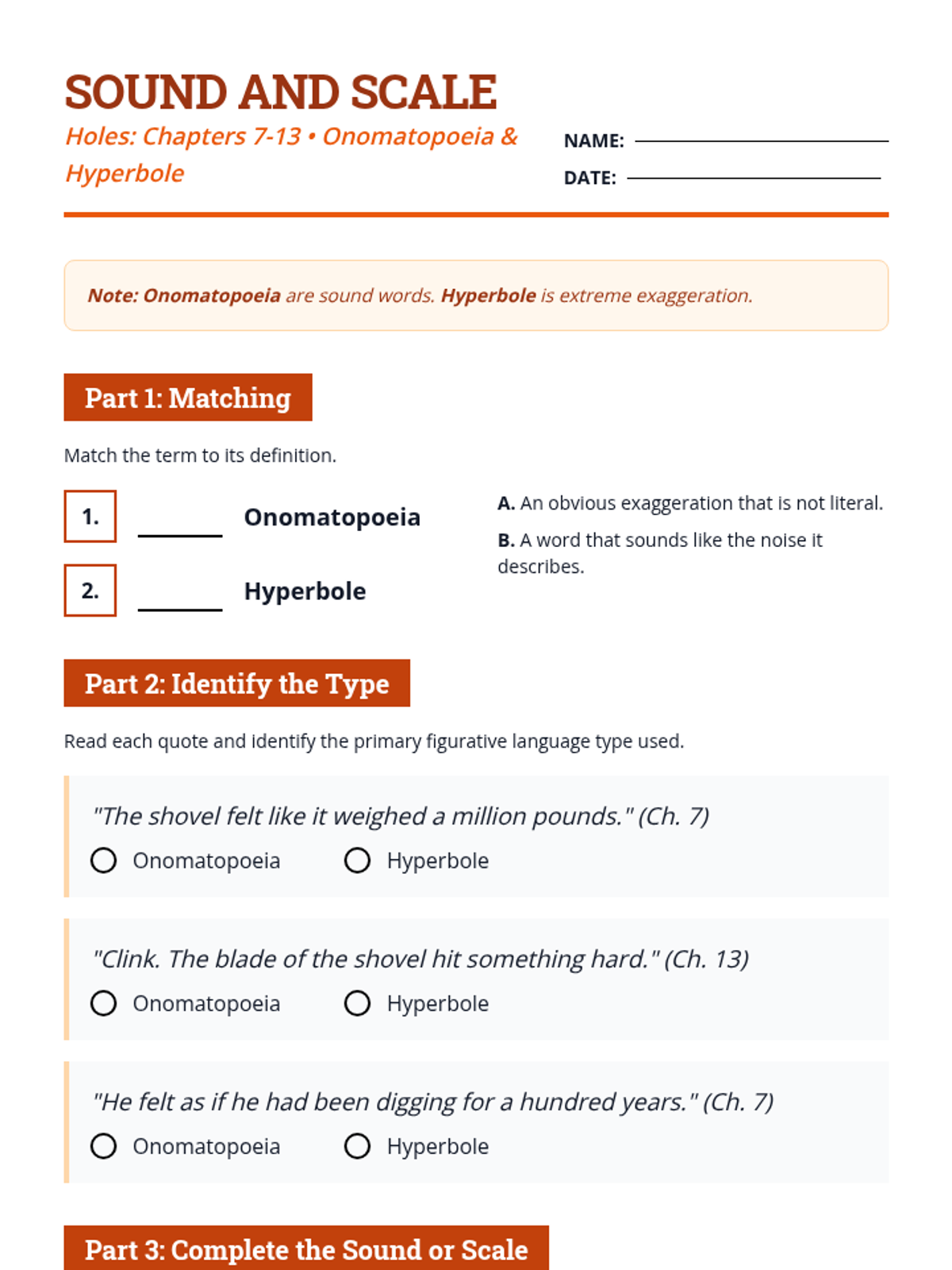
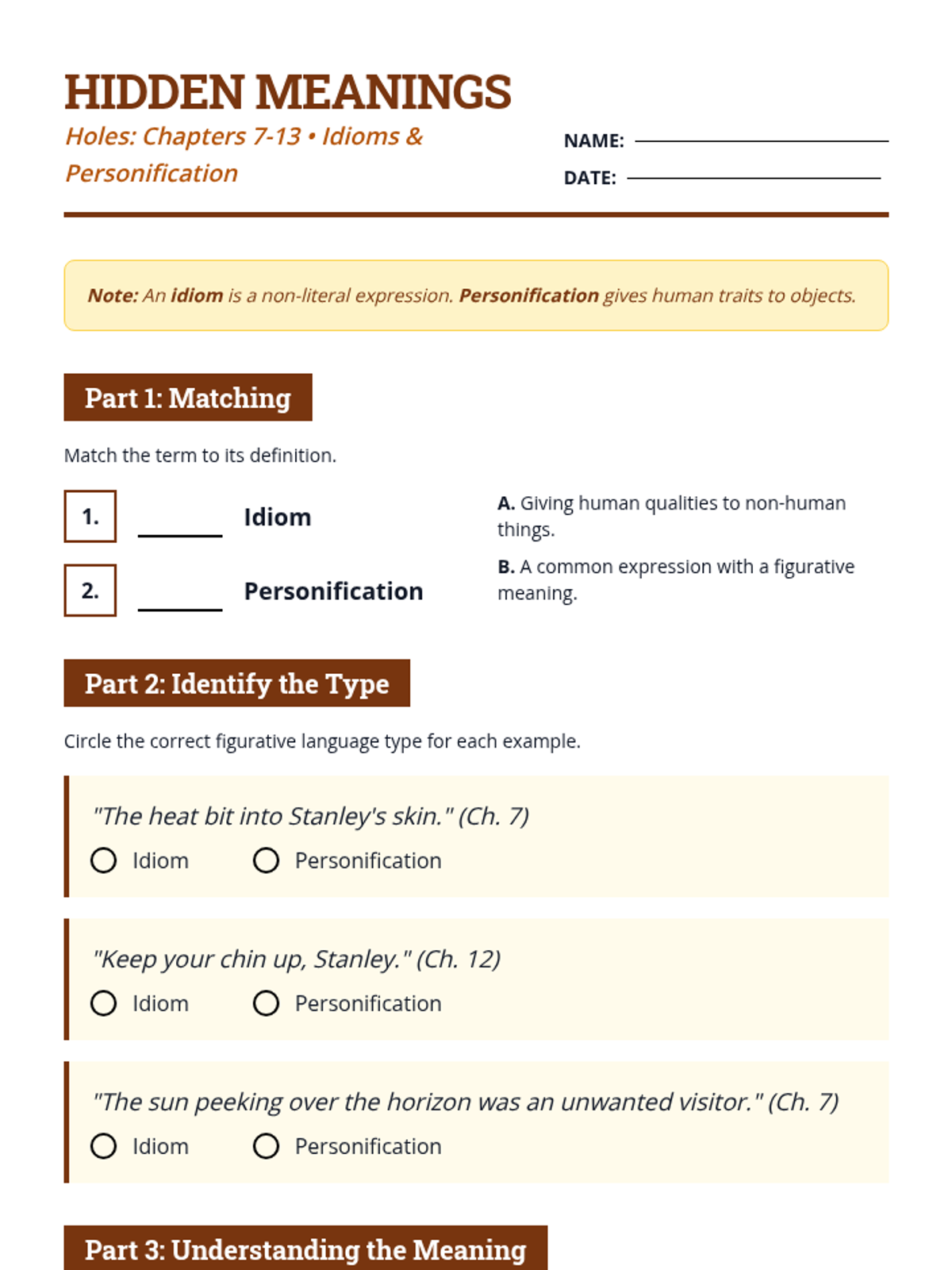
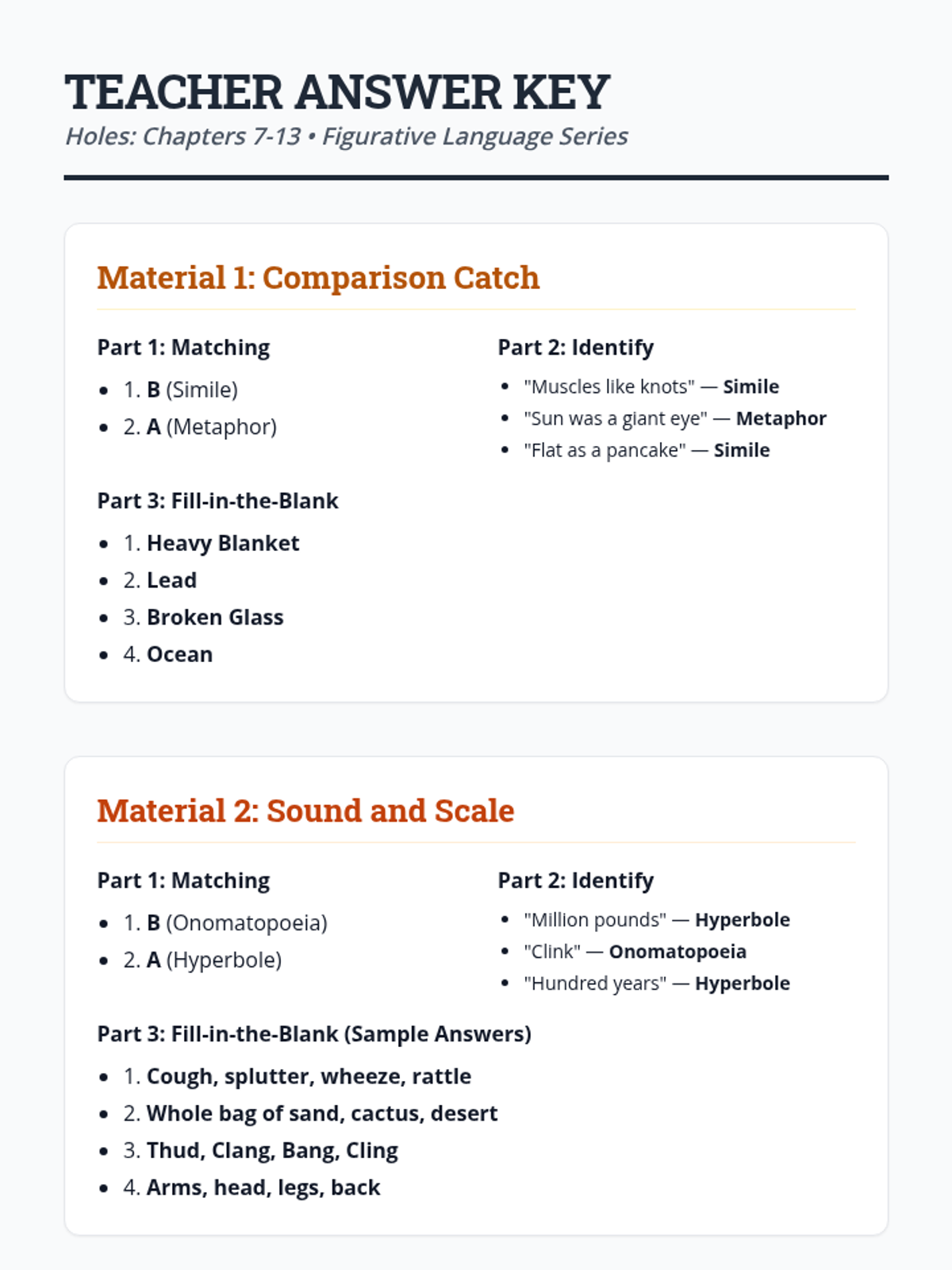
A lesson exploring figurative language in Chapters 7-13 of Louis Sachar's Holes, focusing on identifying and analyzing similes, metaphors, onomatopoeia, hyperbole, idioms, and personification through the lens of life at Camp Green Lake.
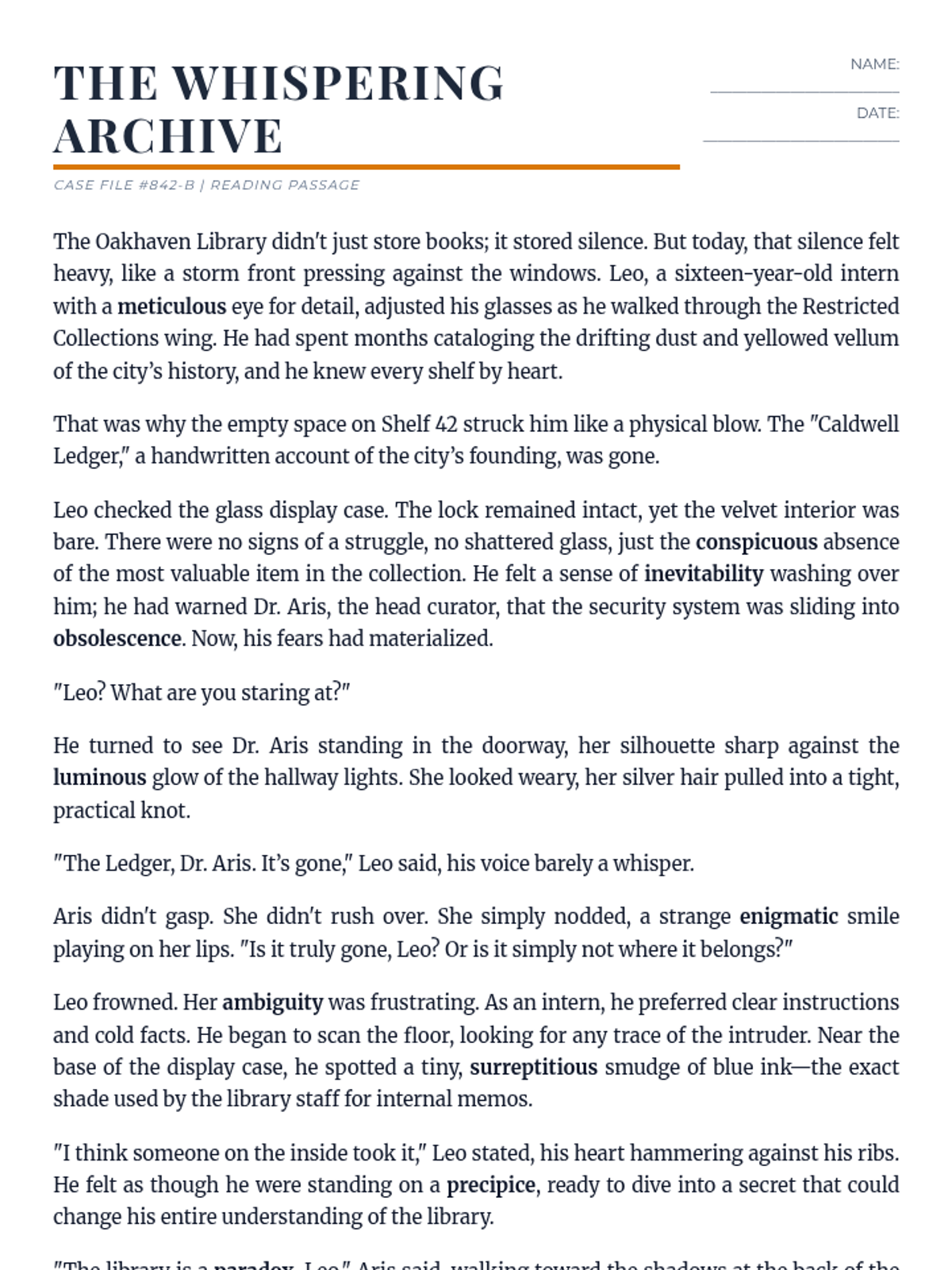
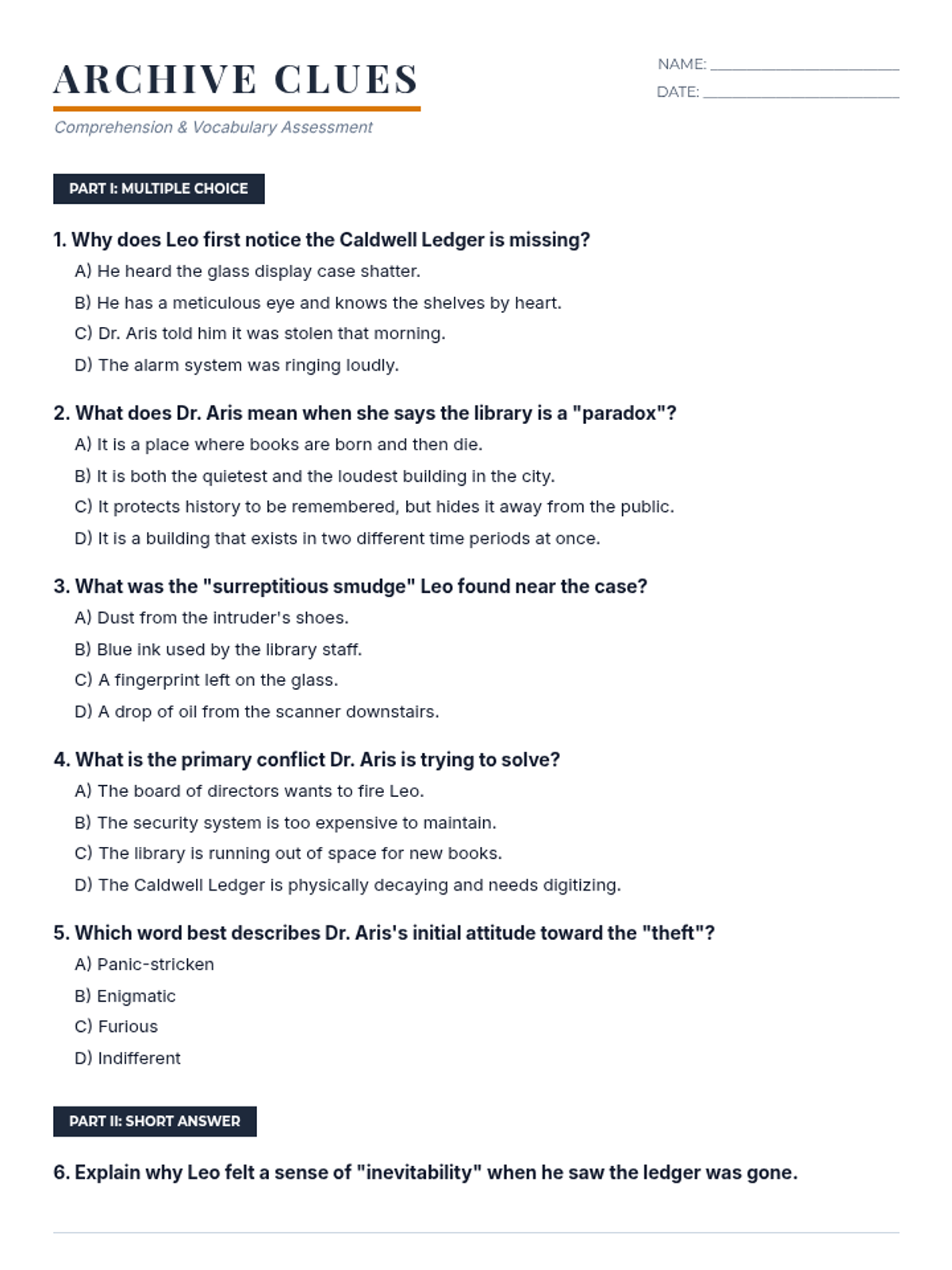
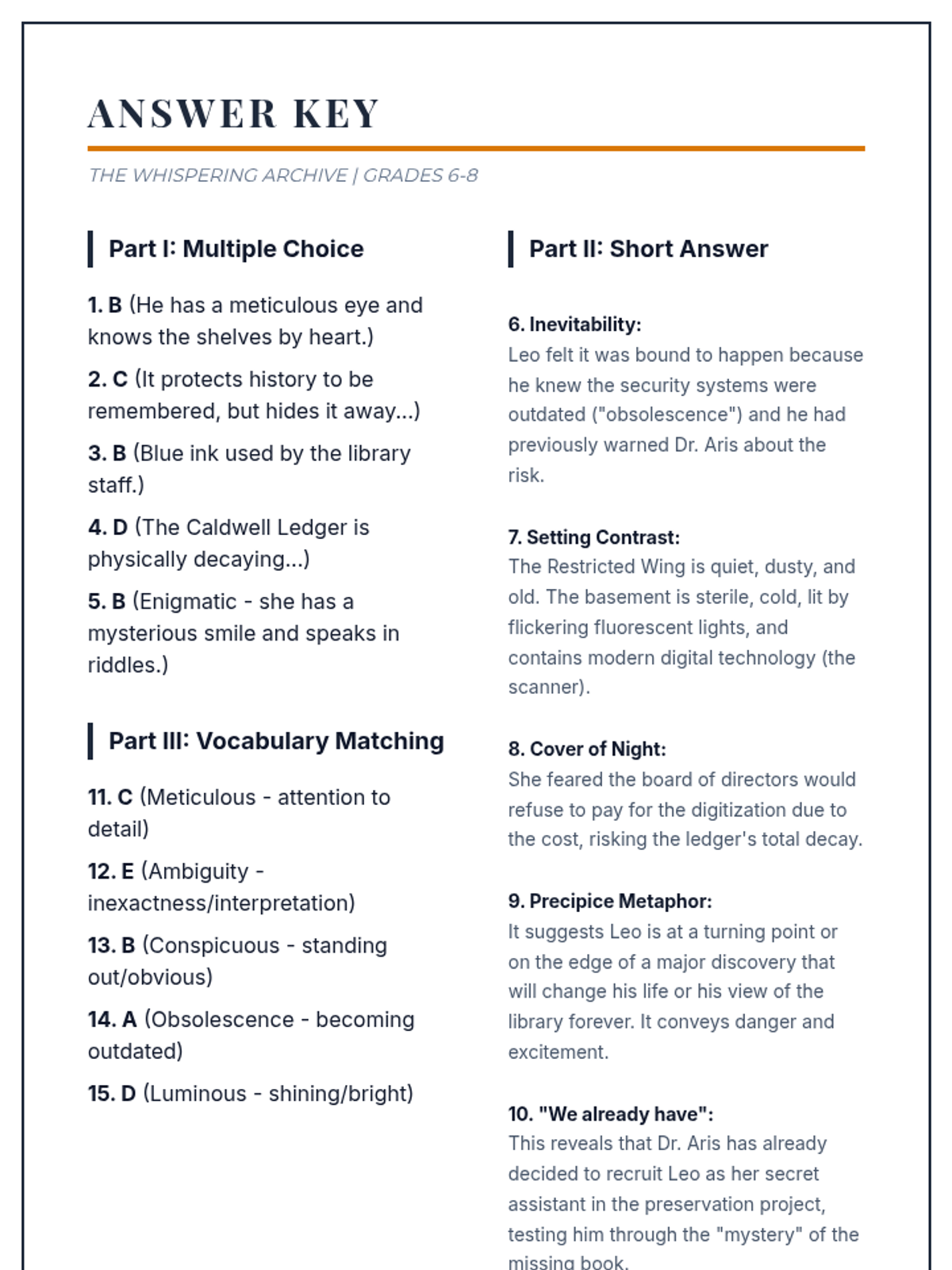
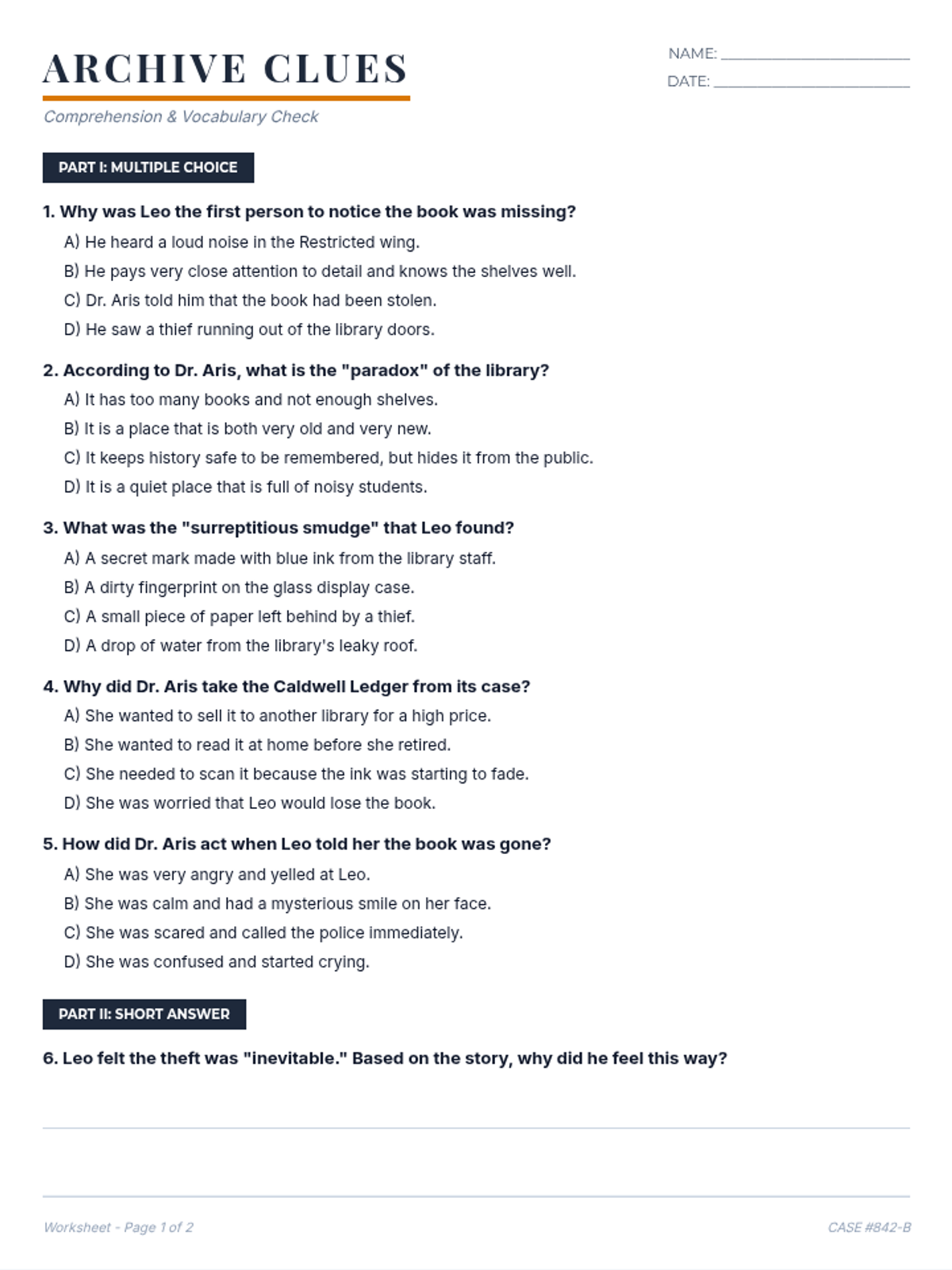
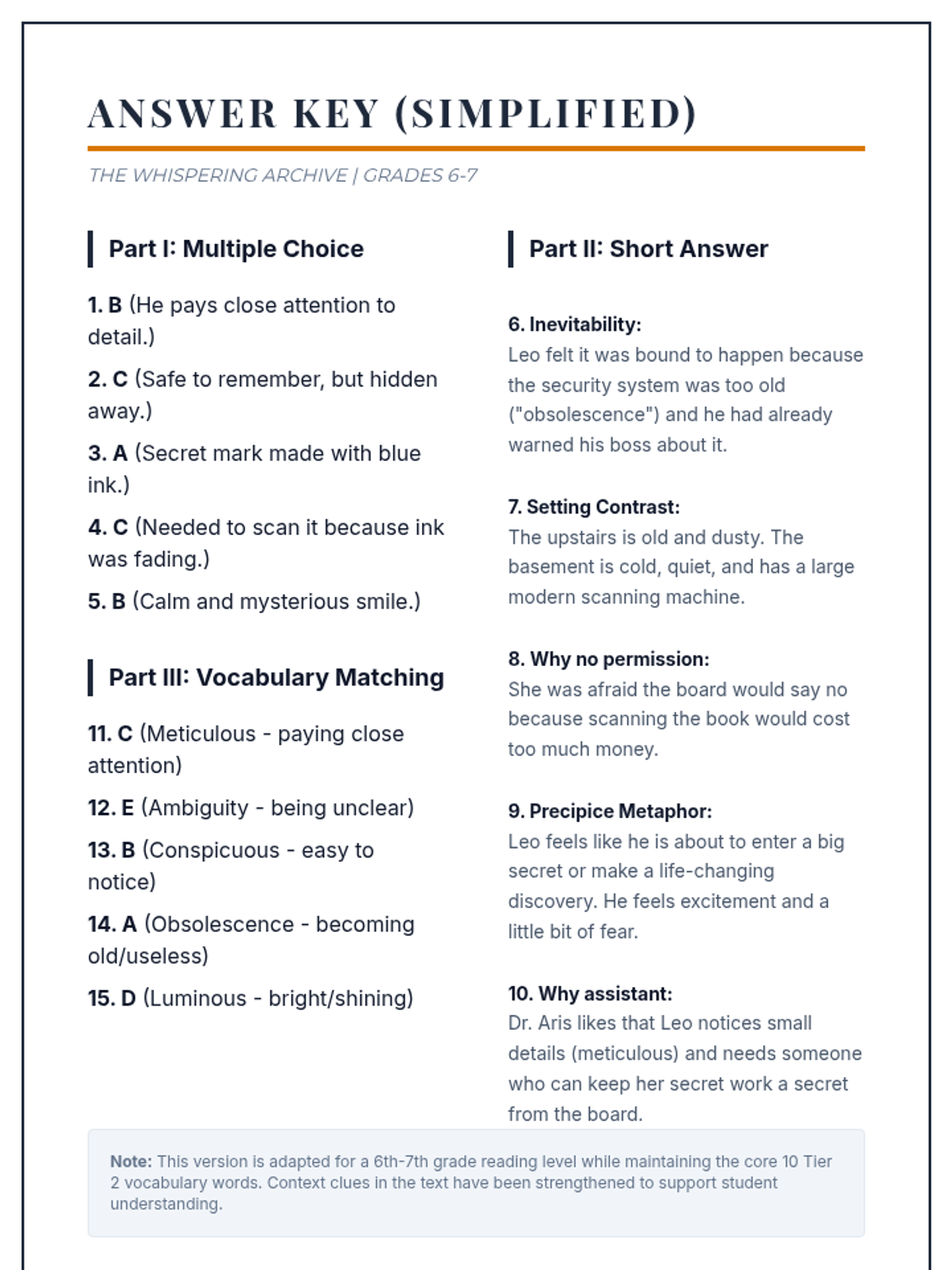
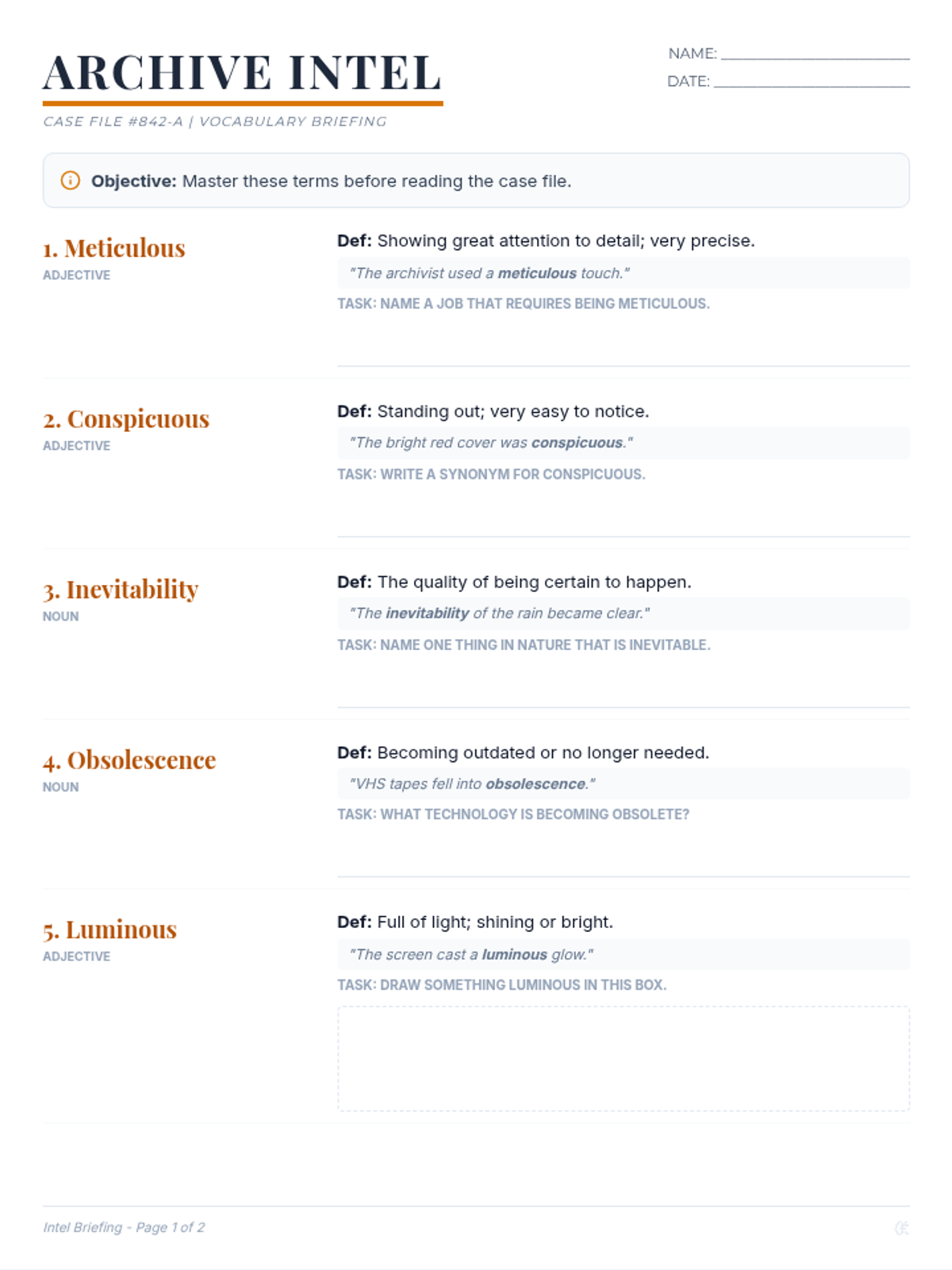
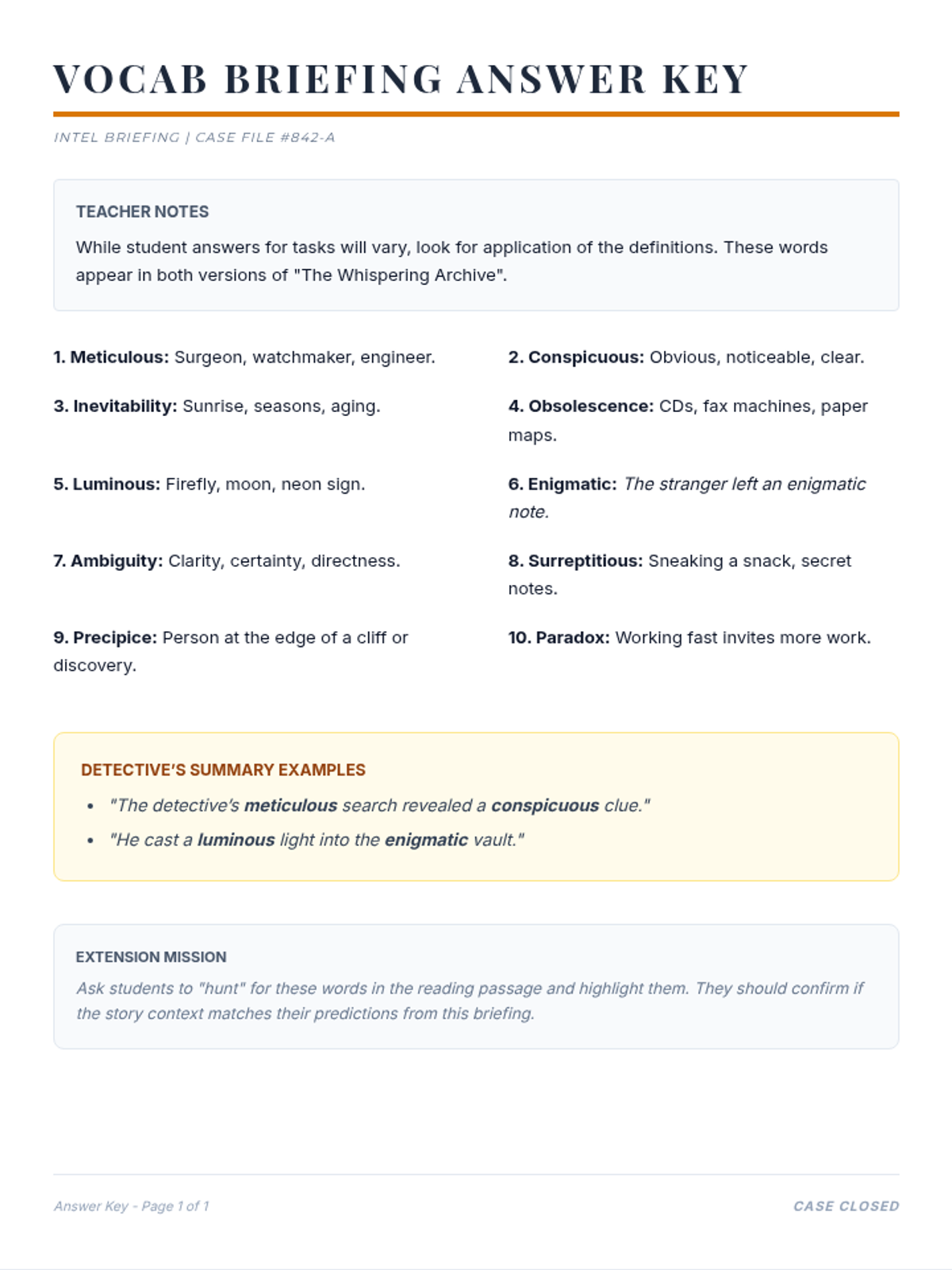
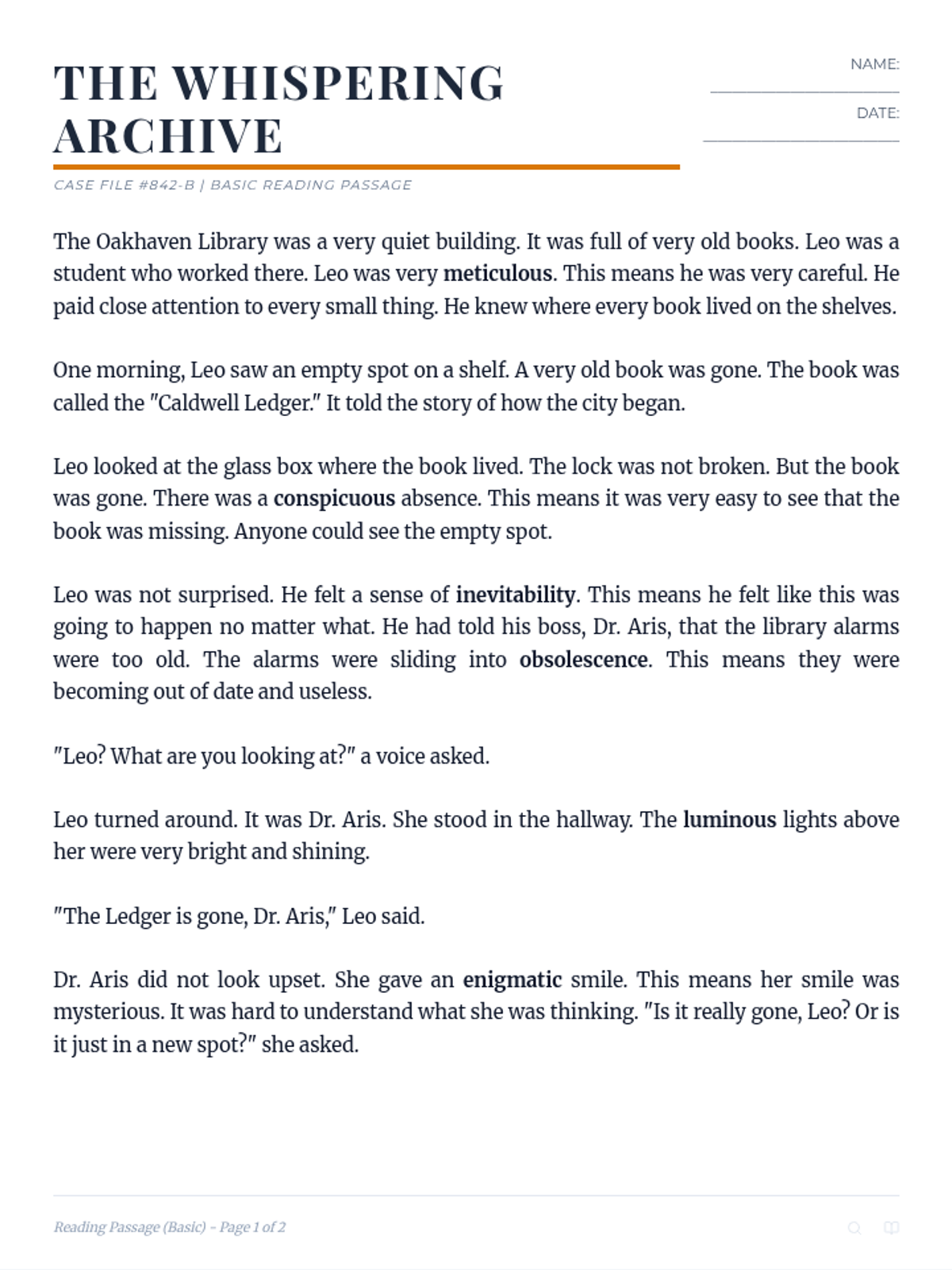
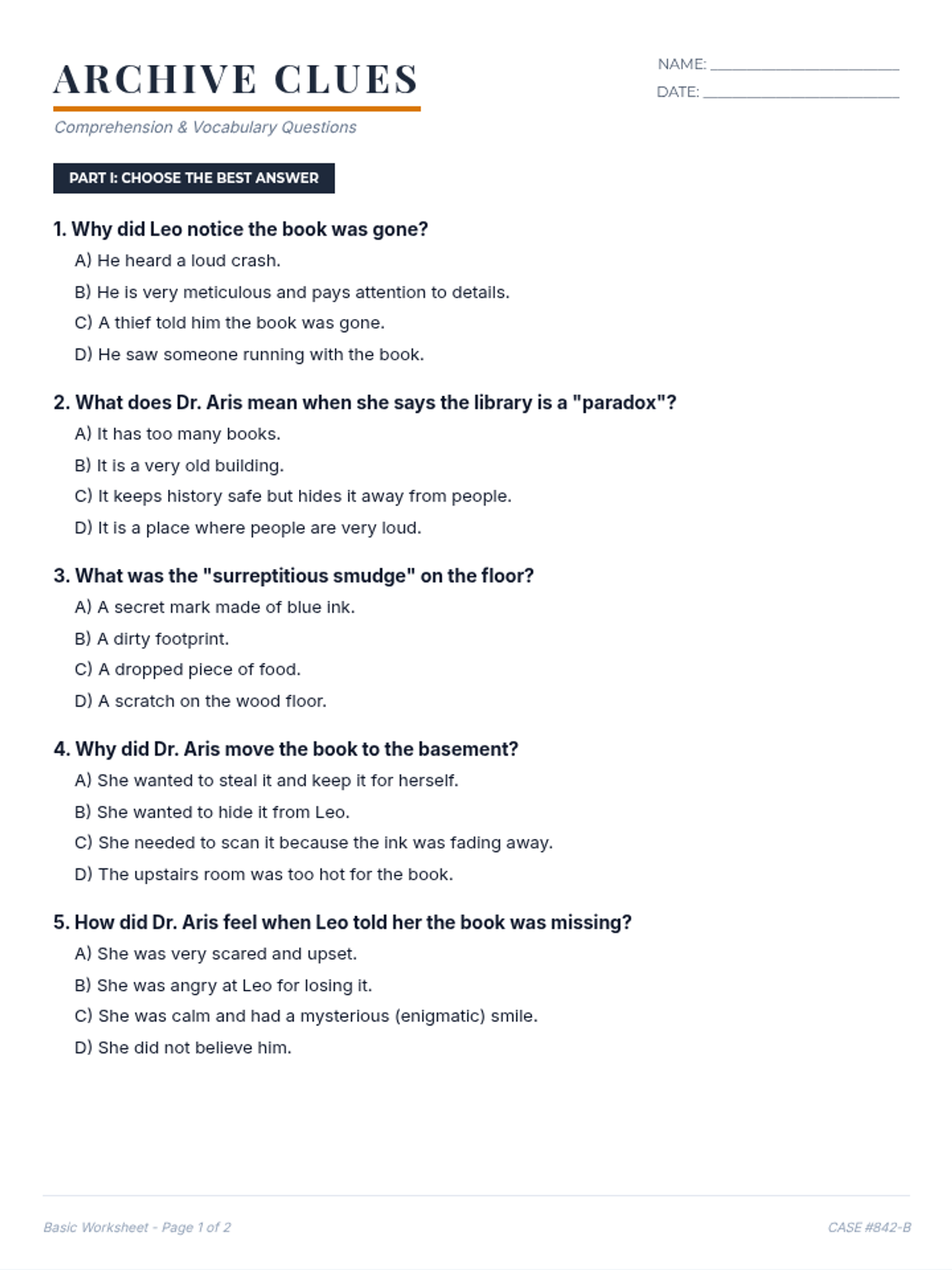
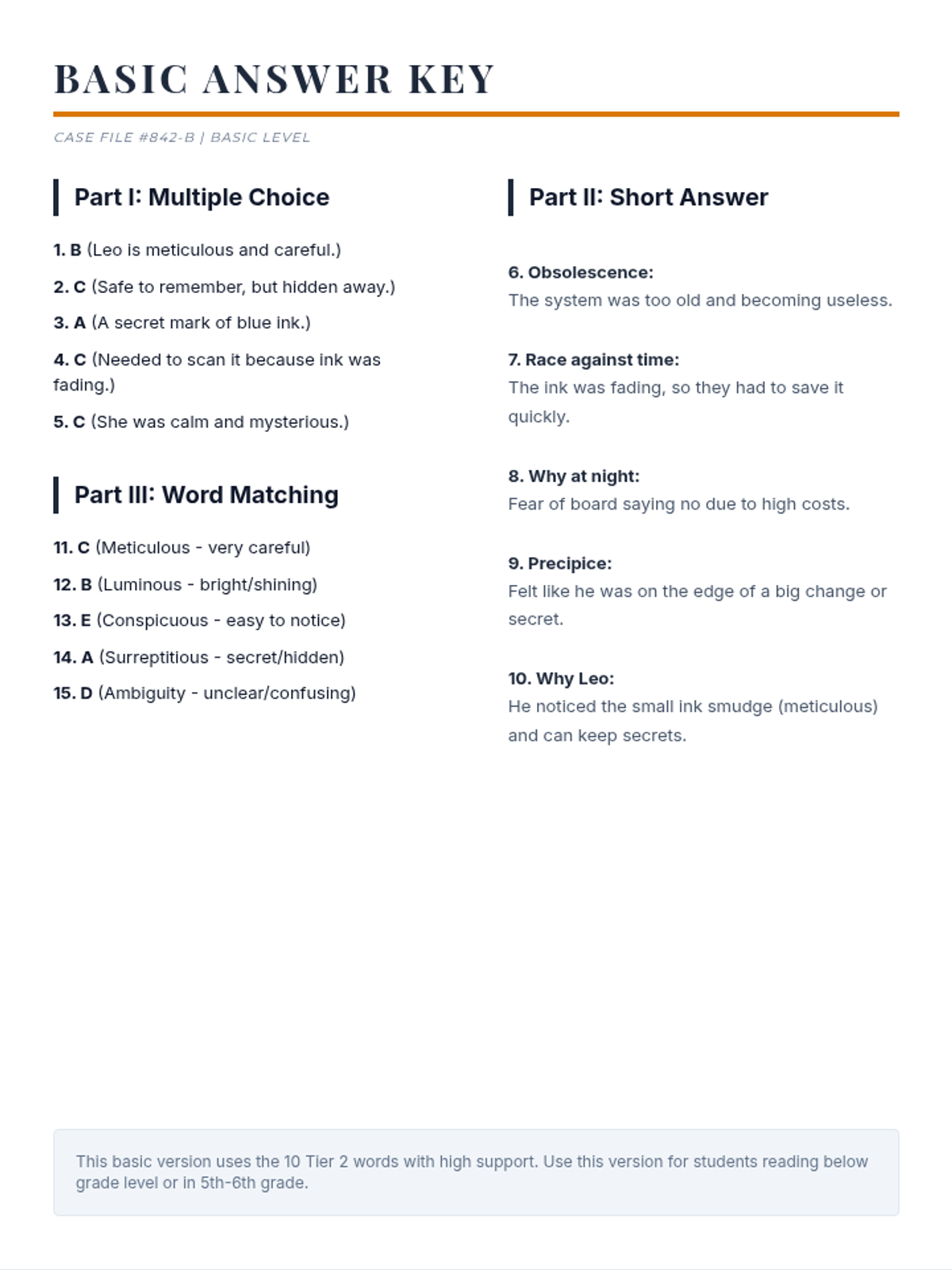
A mystery-themed reading comprehension lesson featuring a 2-page original fiction story and a comprehensive assessment focused on Tier 2 vocabulary and analytical skills.
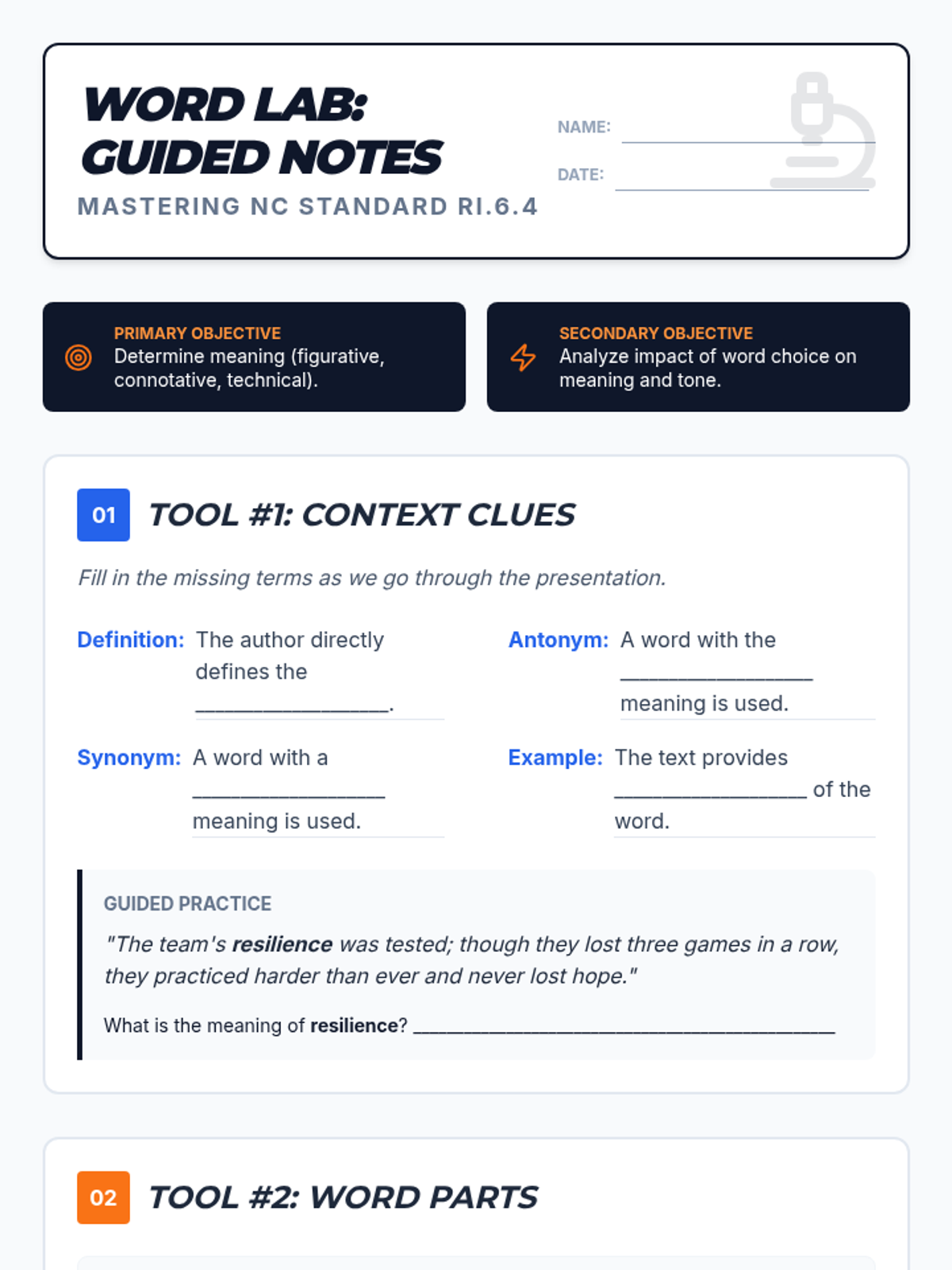
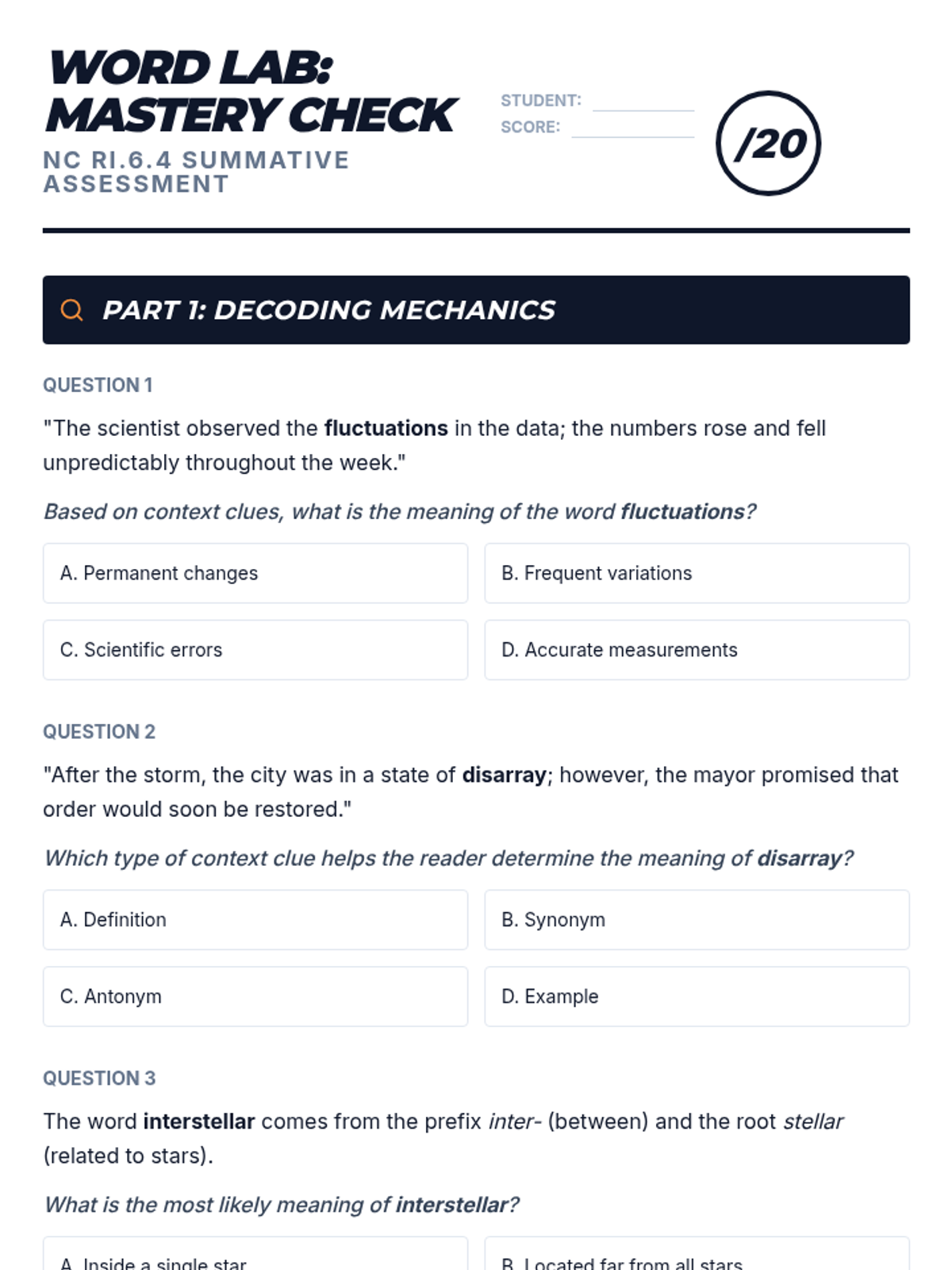
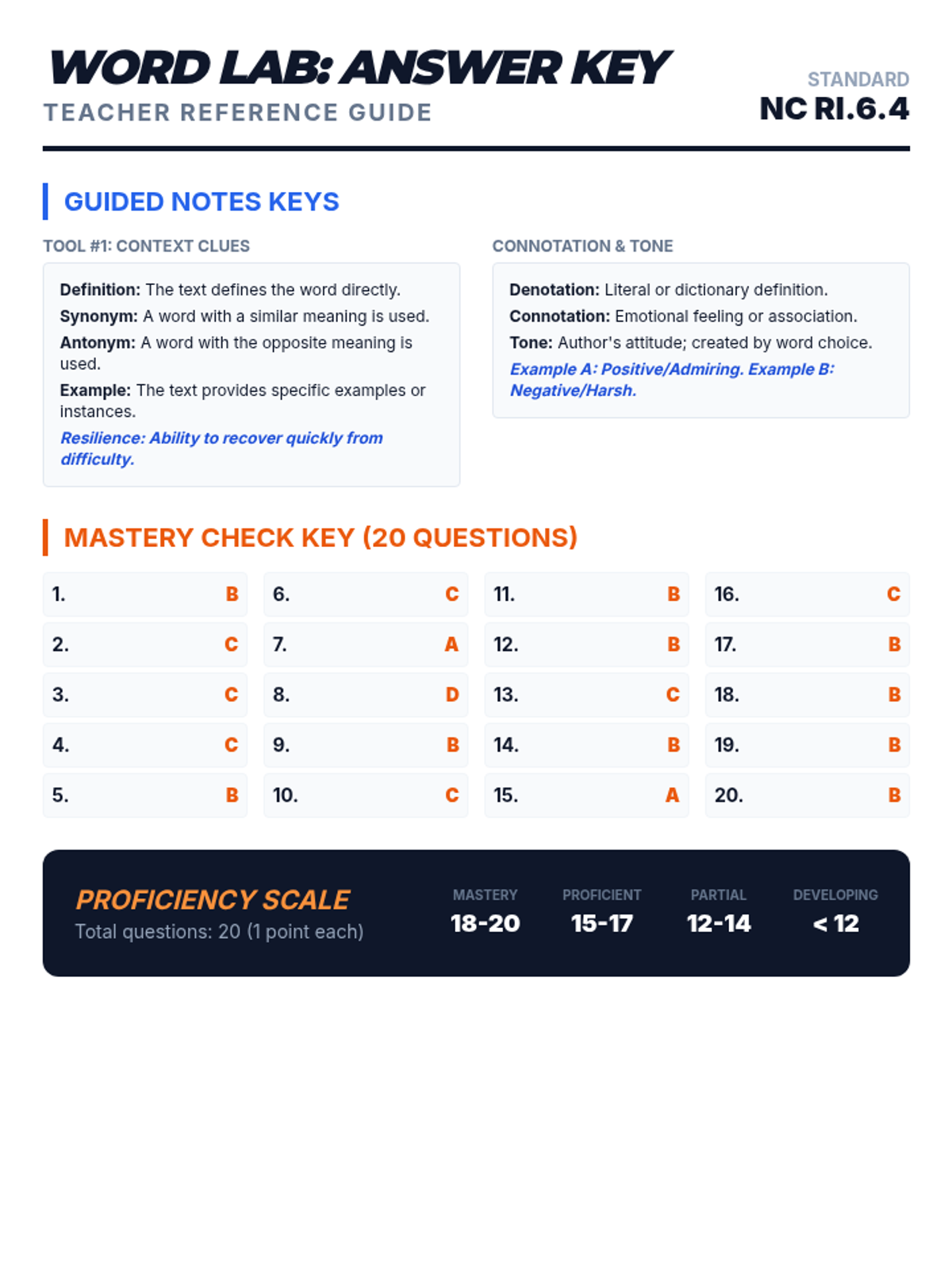
A comprehensive reteach of NC standard RI 6.4 focusing on context clues, word parts, figurative and connotative meanings, technical terms, and tone. Students will use the 'Word Lab' theme to decode complex texts through guided notes, interactive slides, and a rigorous mastery check.
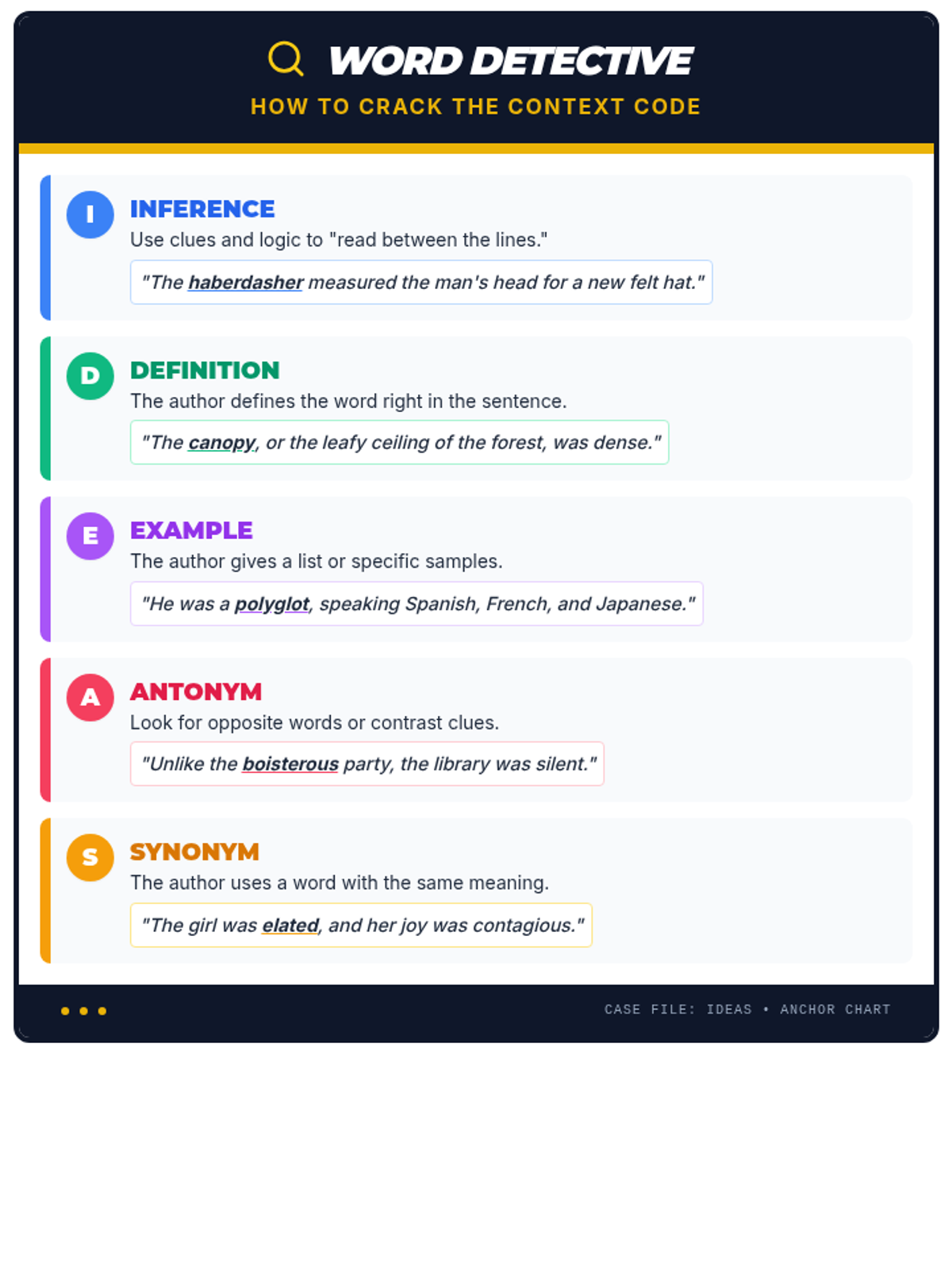
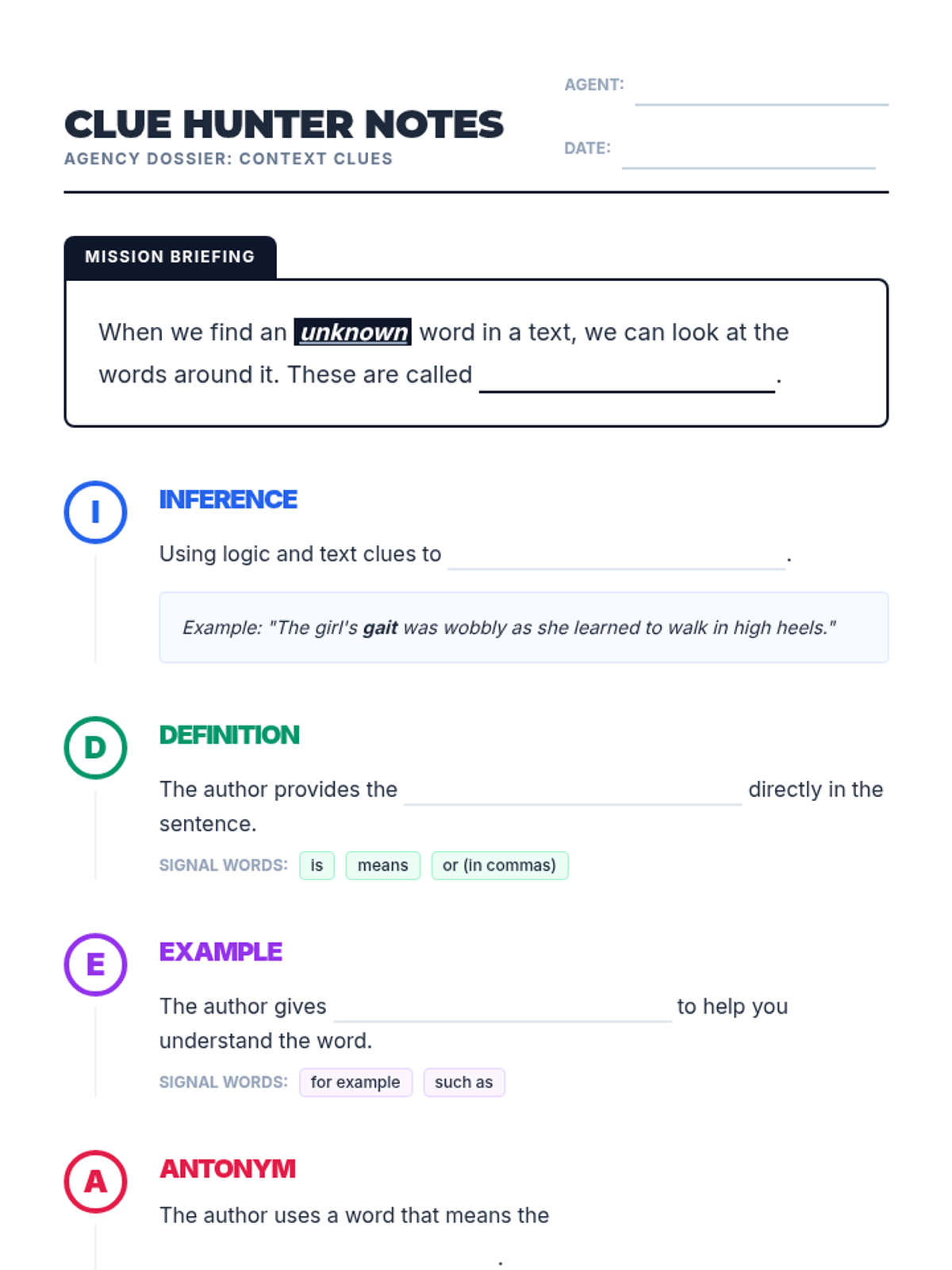
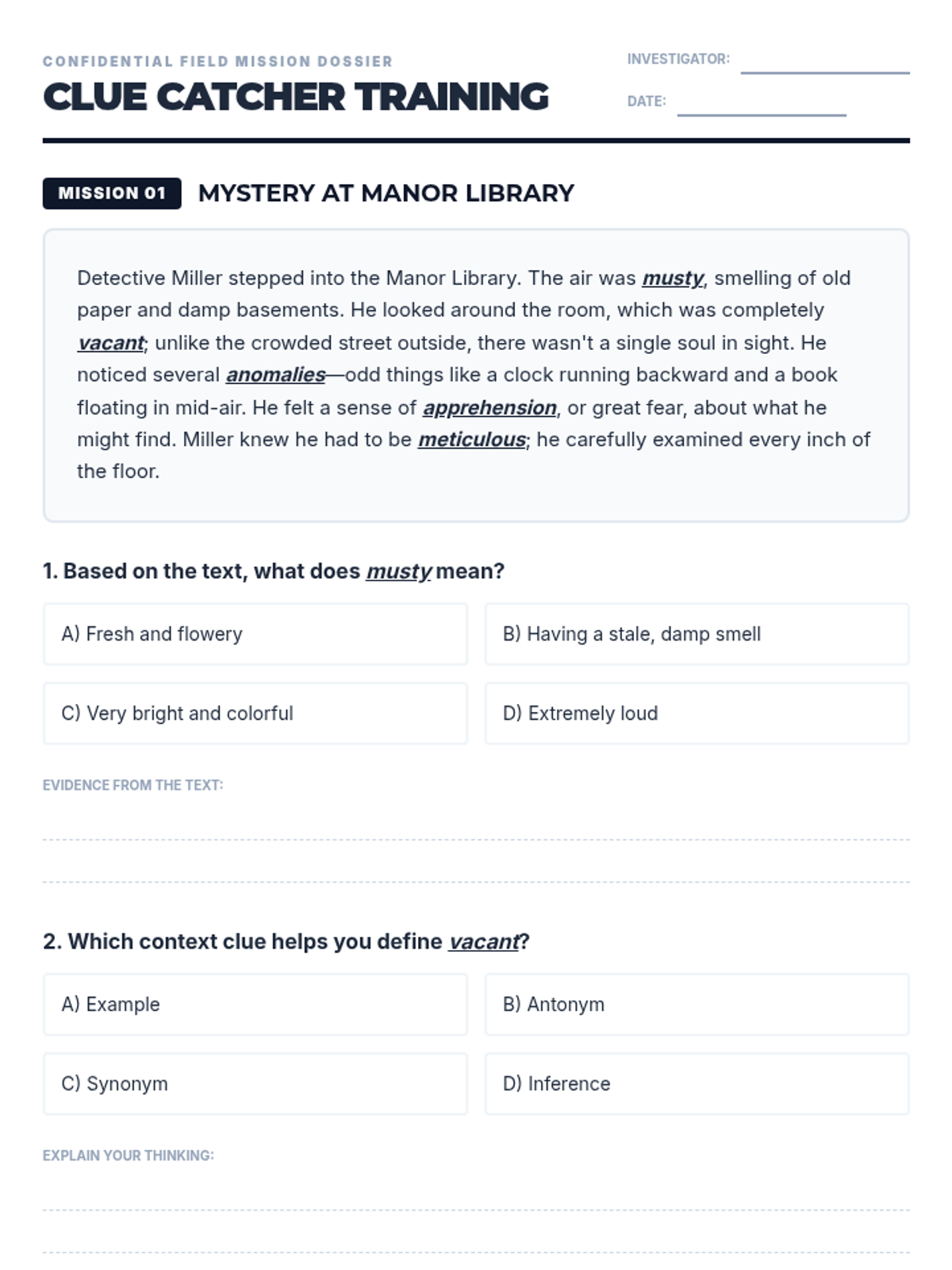
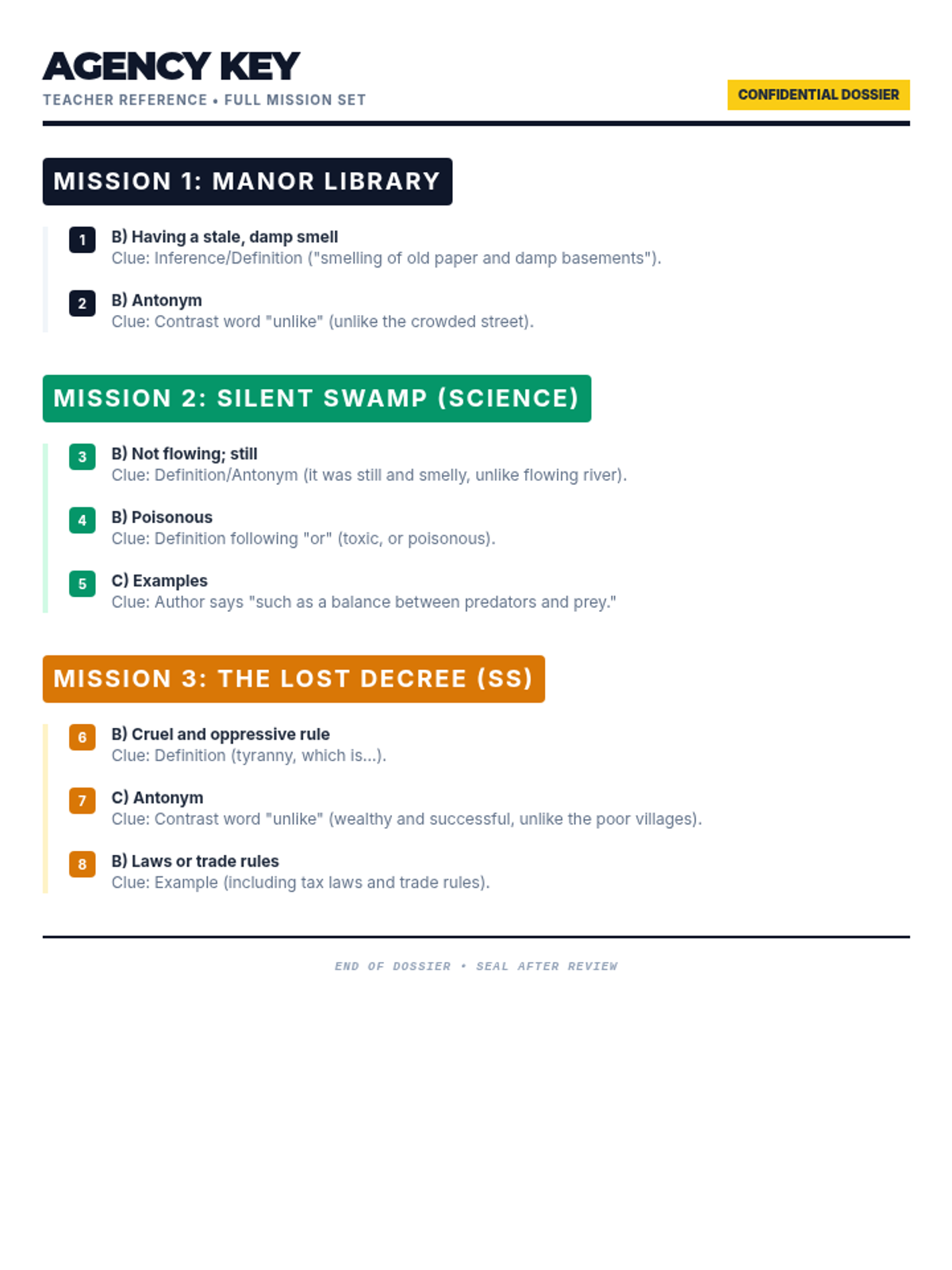
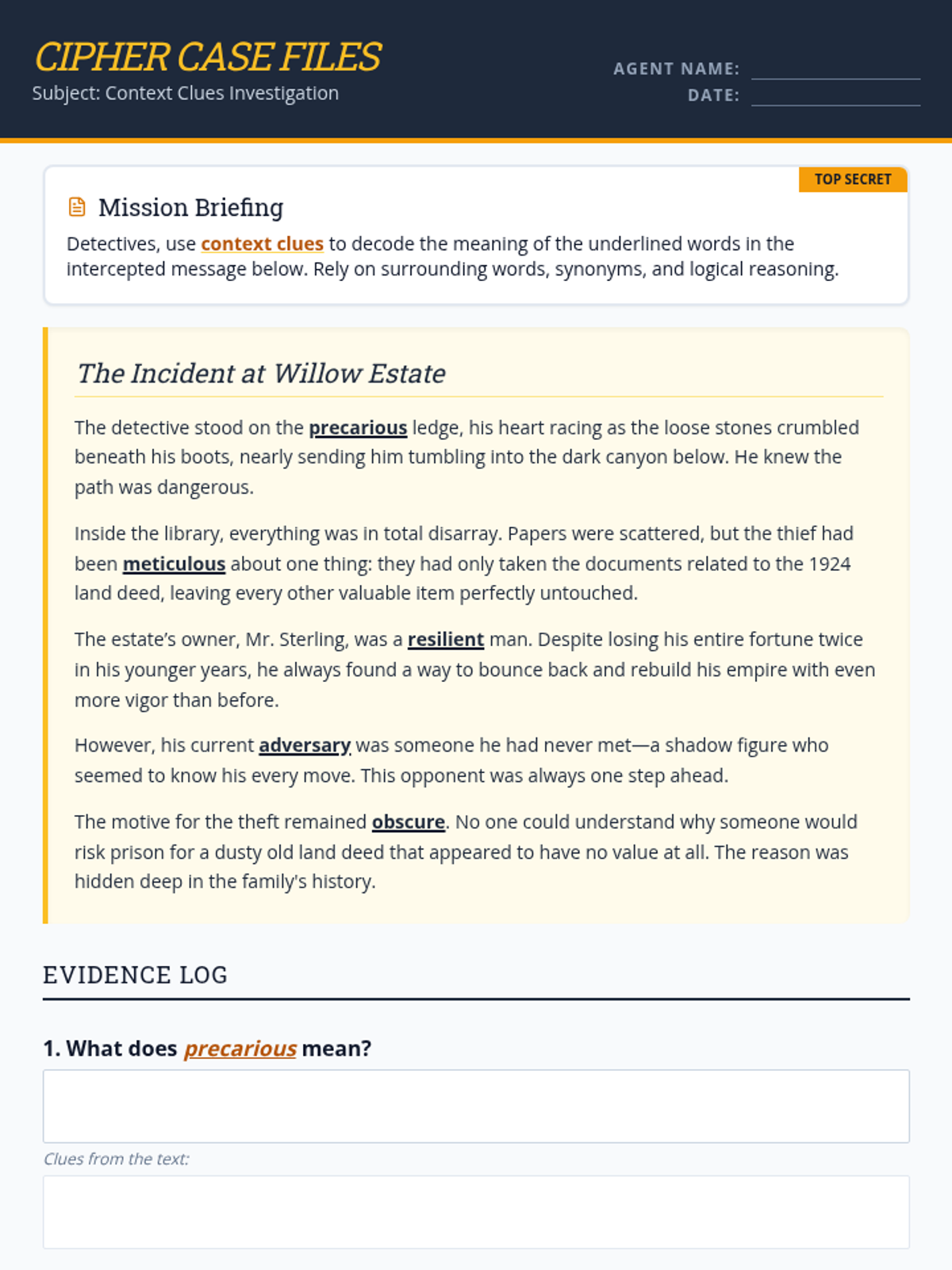
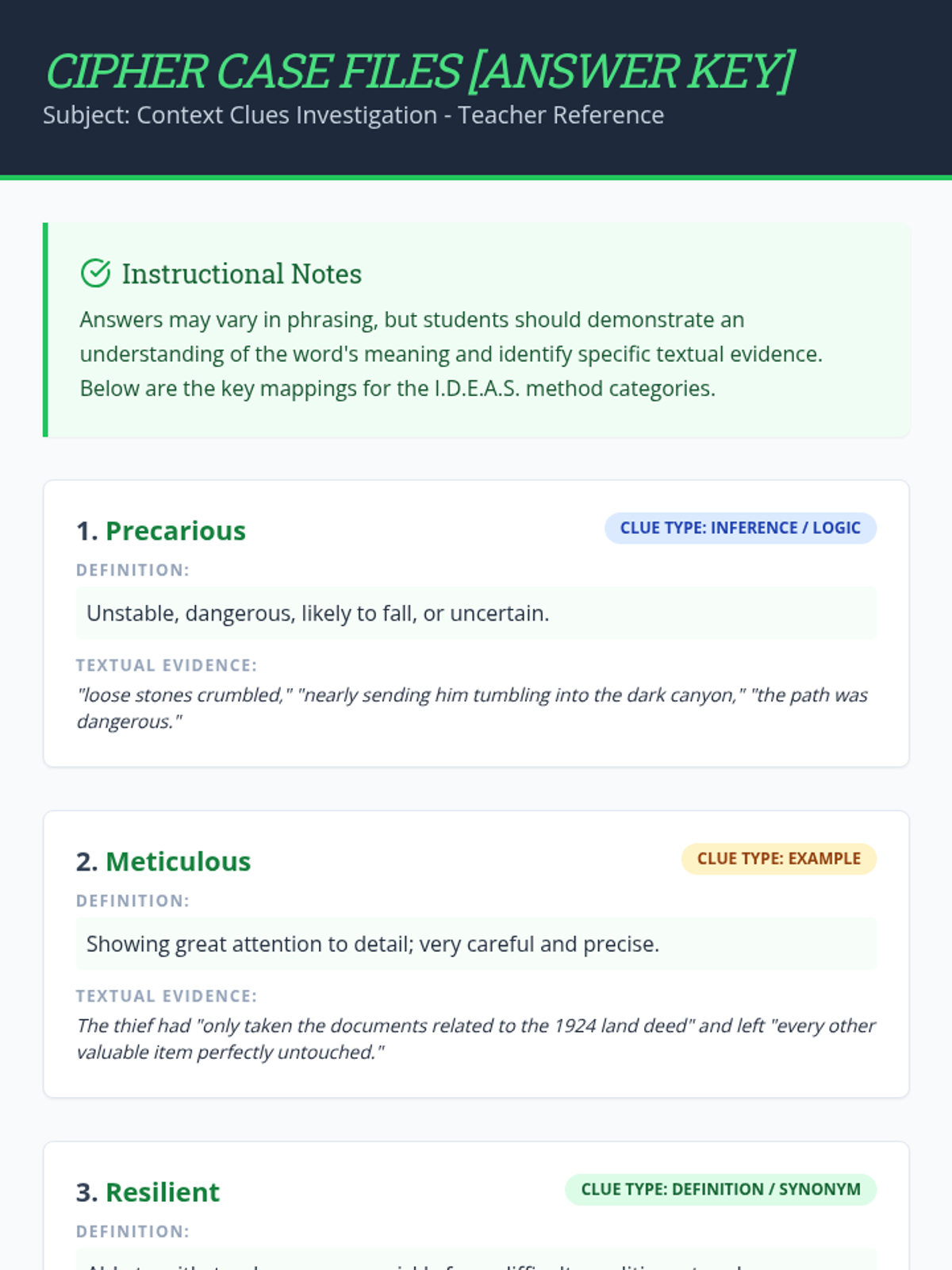
A comprehensive lesson on using context clues (Inference, Definition, Example, Antonym, Synonym) to decode unfamiliar vocabulary, featuring a detective-themed anchor chart, guided notes, and a story-based assessment.
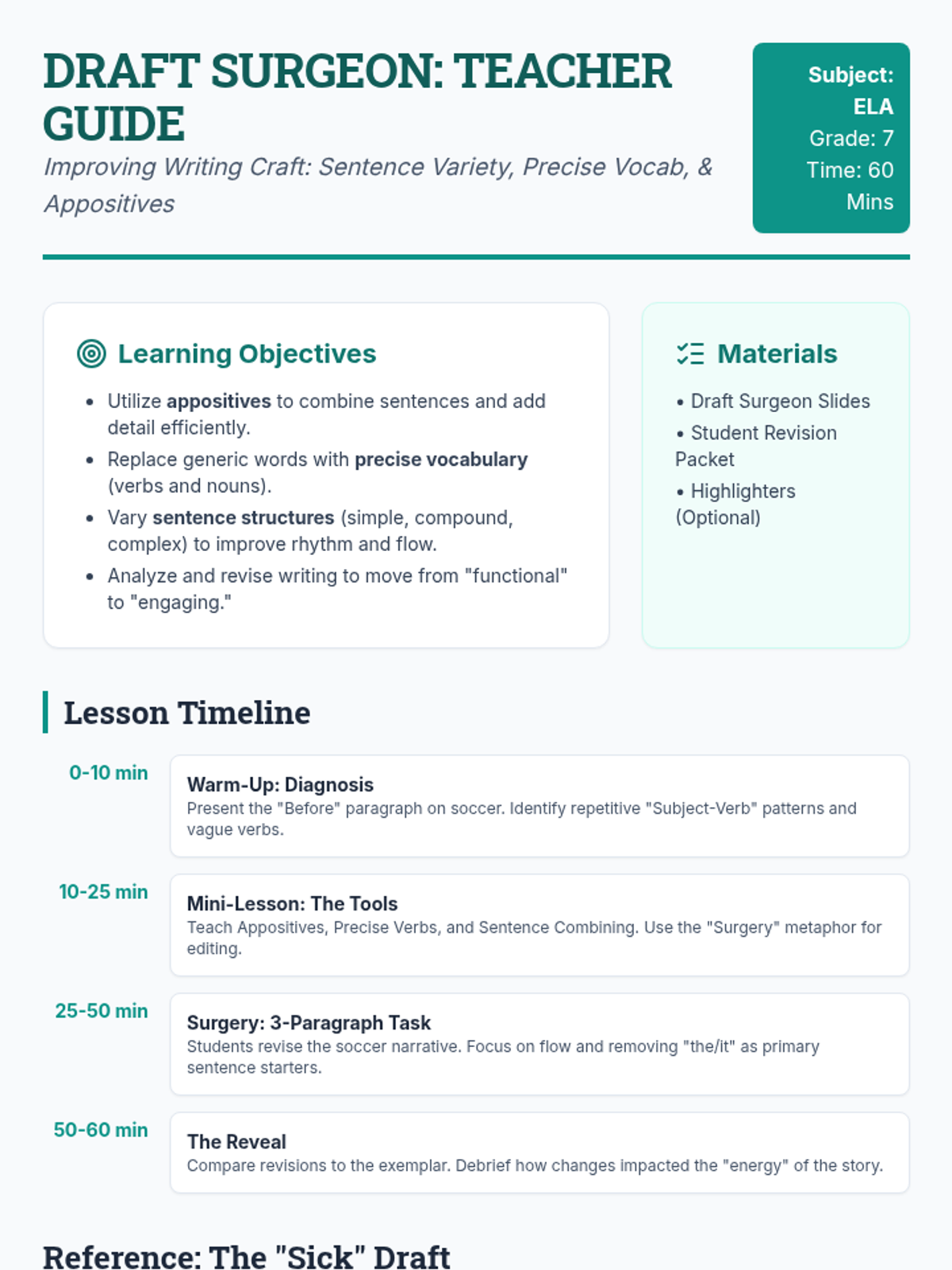
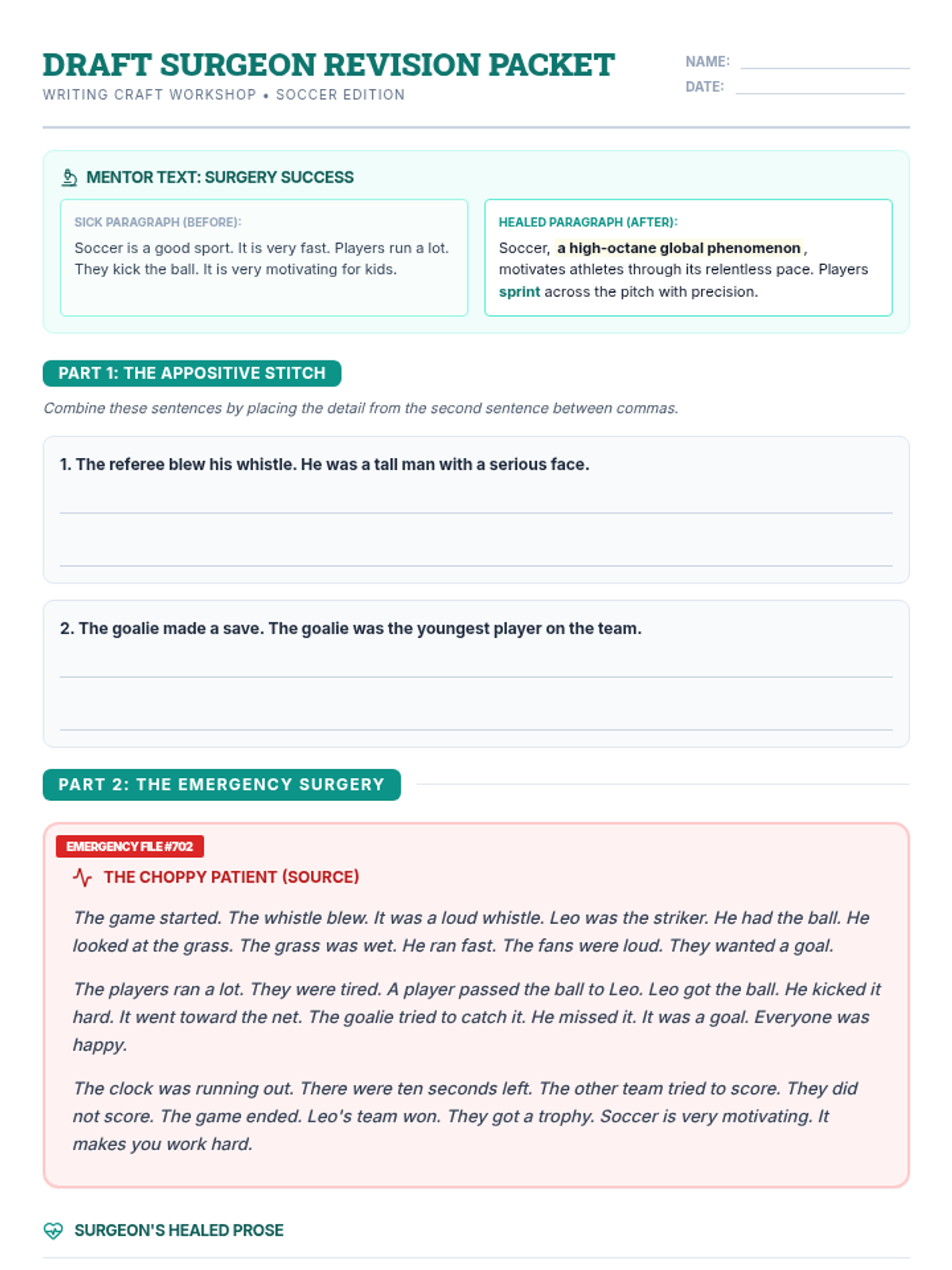
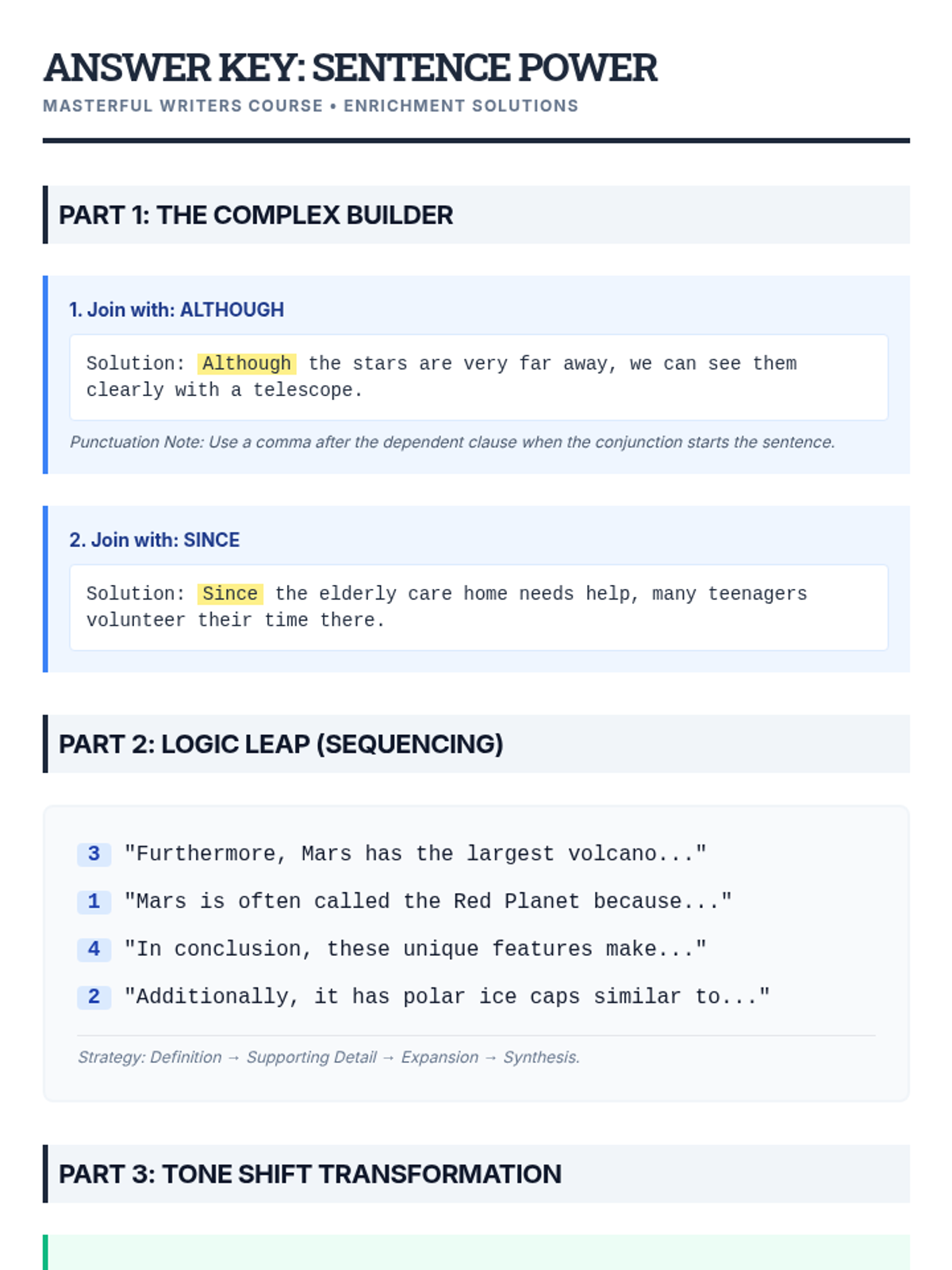
A 60-minute writing workshop focused on elevating 7th-grade prose through varied sentence structures, precise vocabulary, and appositives. Students act as 'Draft Surgeons' to transform weak soccer-themed text into professional, engaging writing.
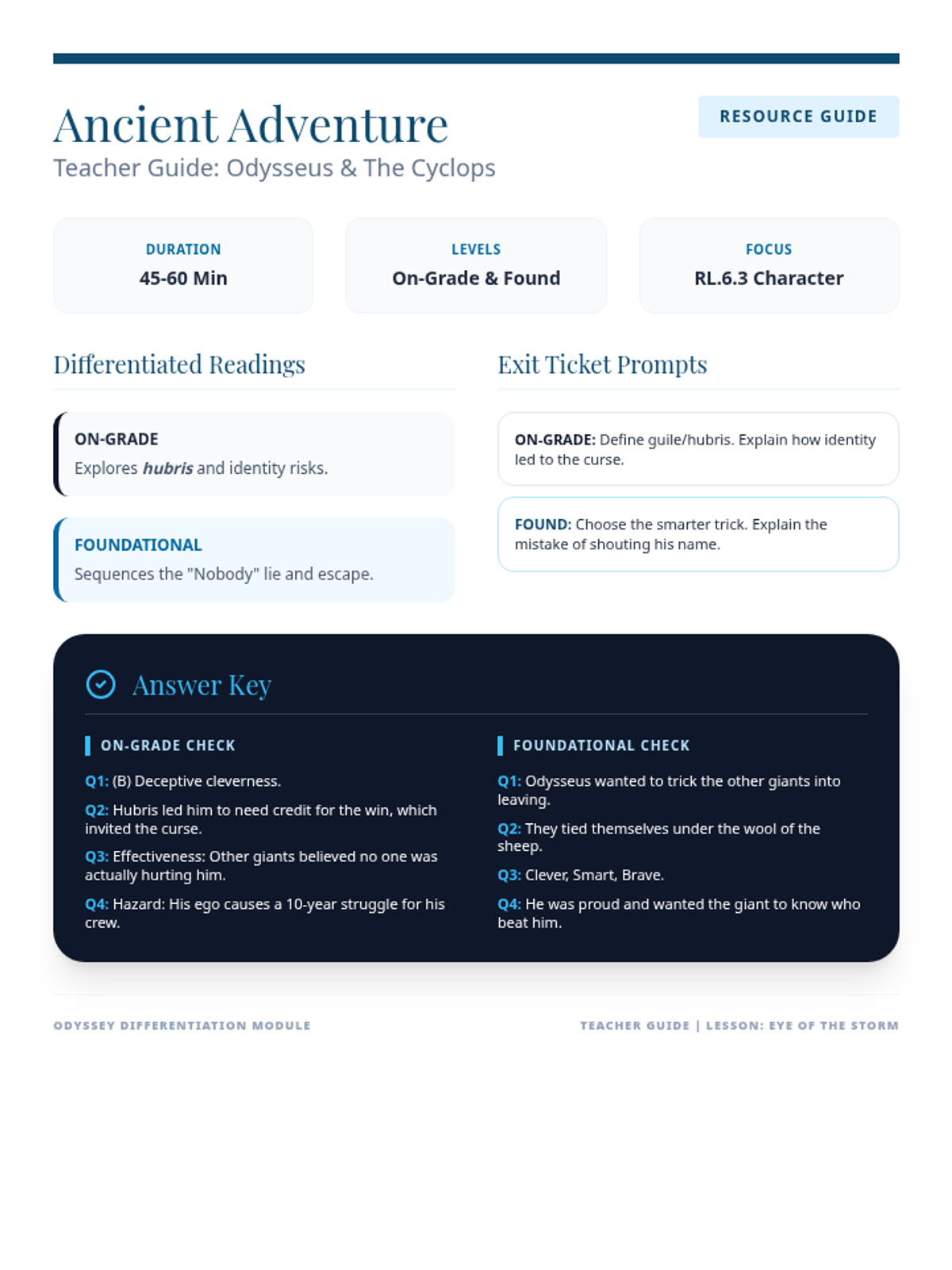
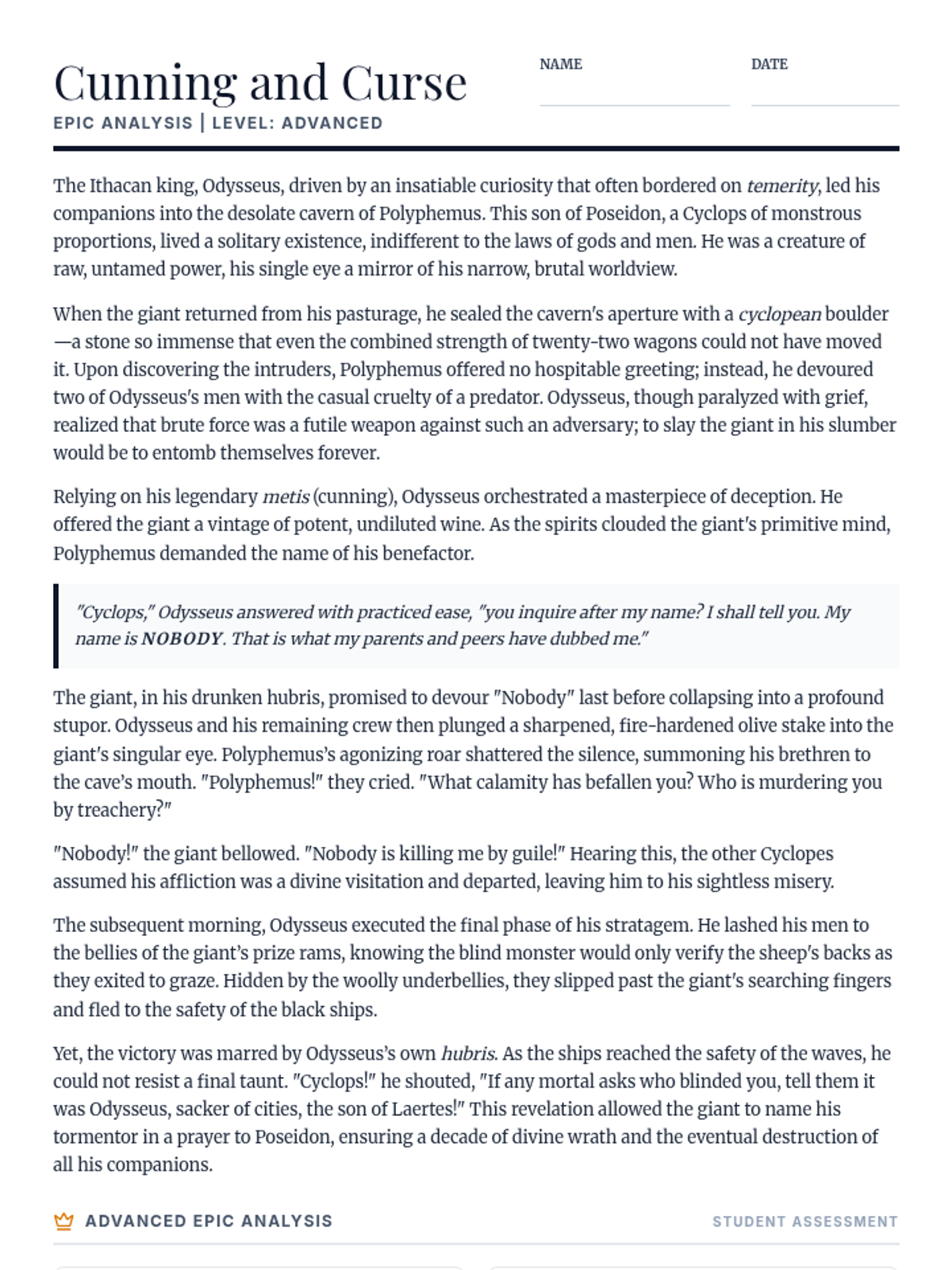
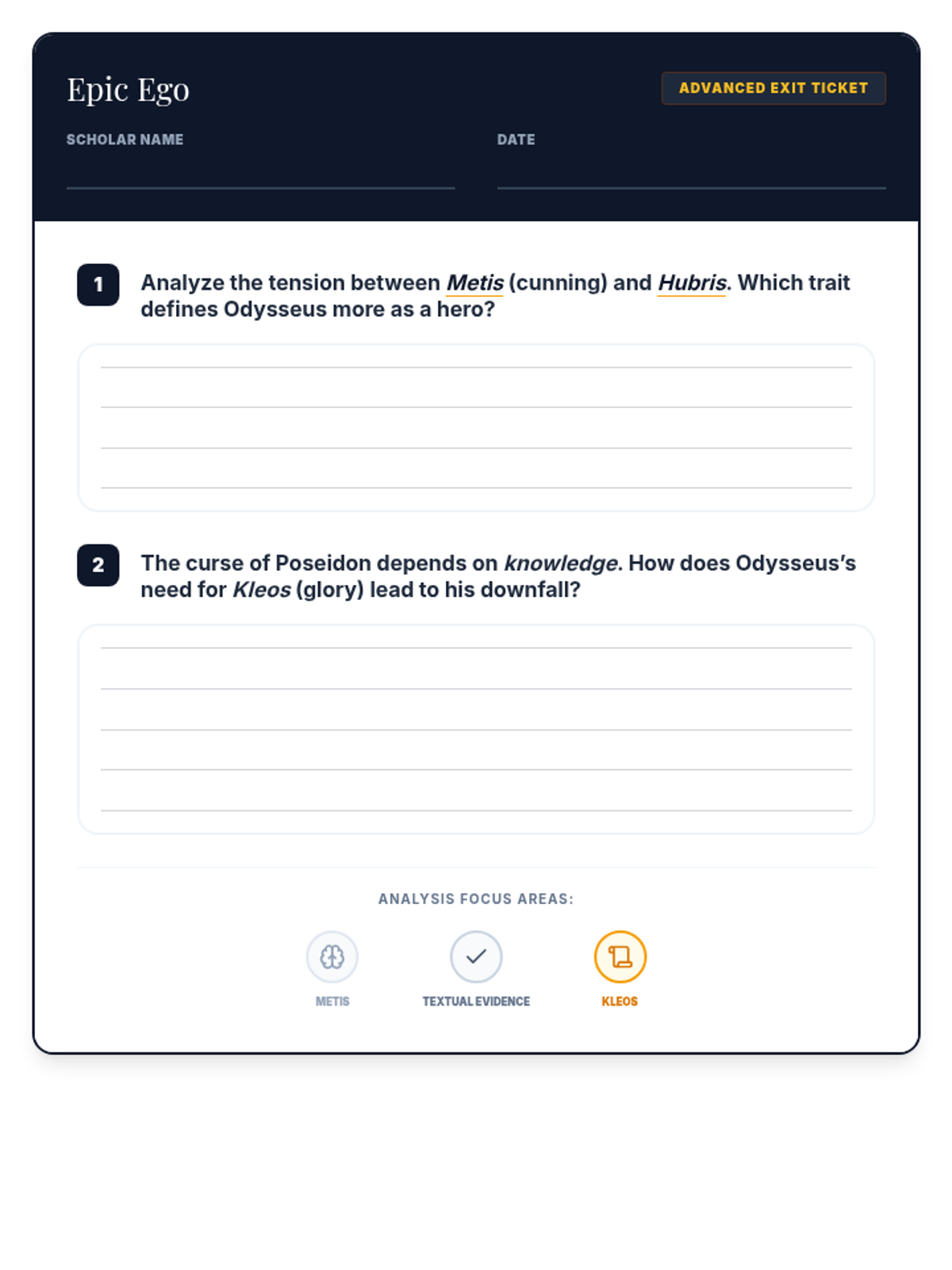
A lesson exploring the encounter between Odysseus and Polyphemus, focusing on character traits and cleverness through differentiated readings and assessments.
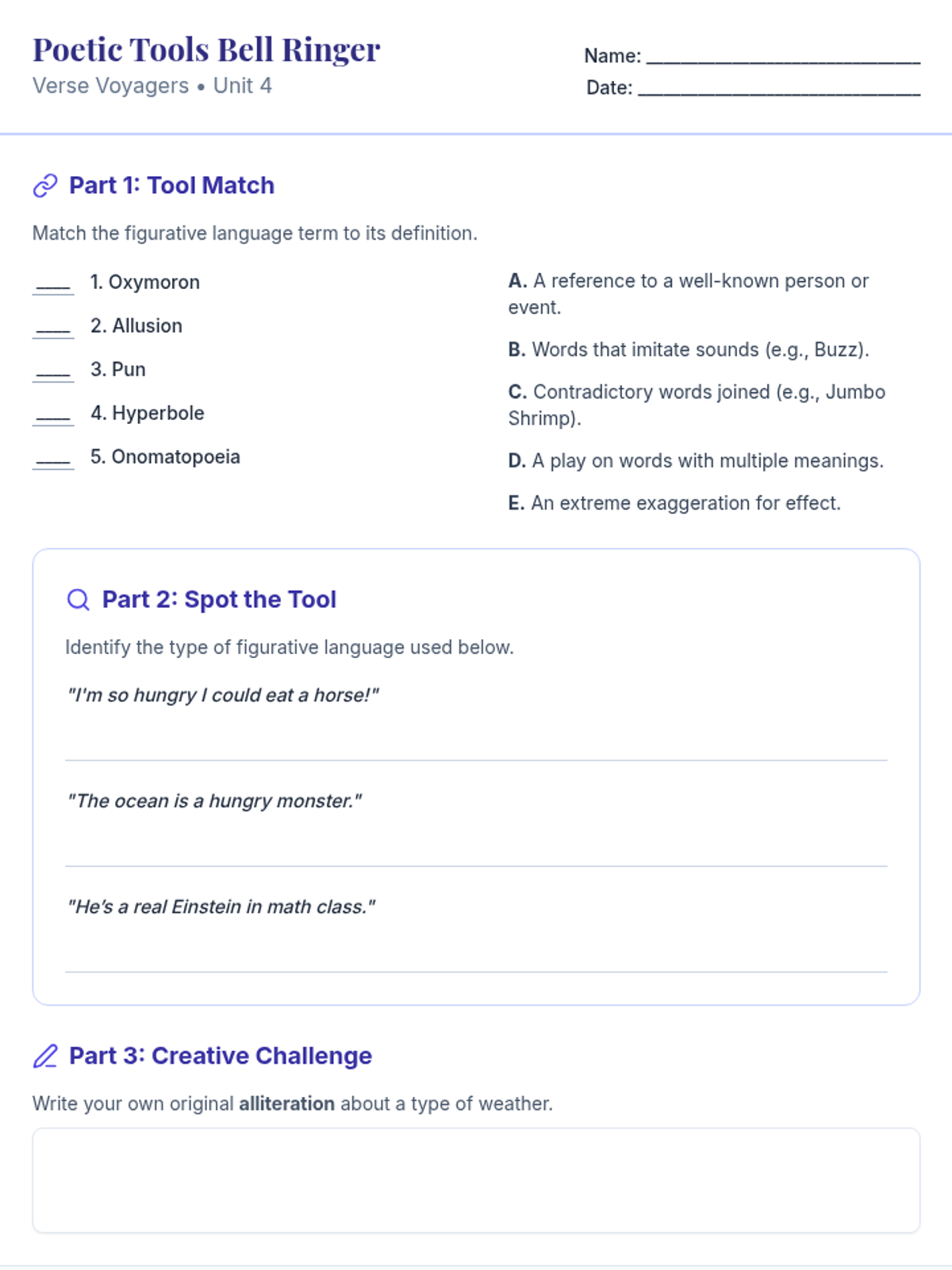
A comprehensive poetry analysis lesson focusing on the TP-CASTT method and figurative language, featuring a gamified 'Quiz Bee' and deep analysis of 'The Road Not Taken'.
A lesson where students become 'Lexicon Detectives' to uncover the meaning of challenging words using specific context clue strategies like synonyms, antonyms, and logic.
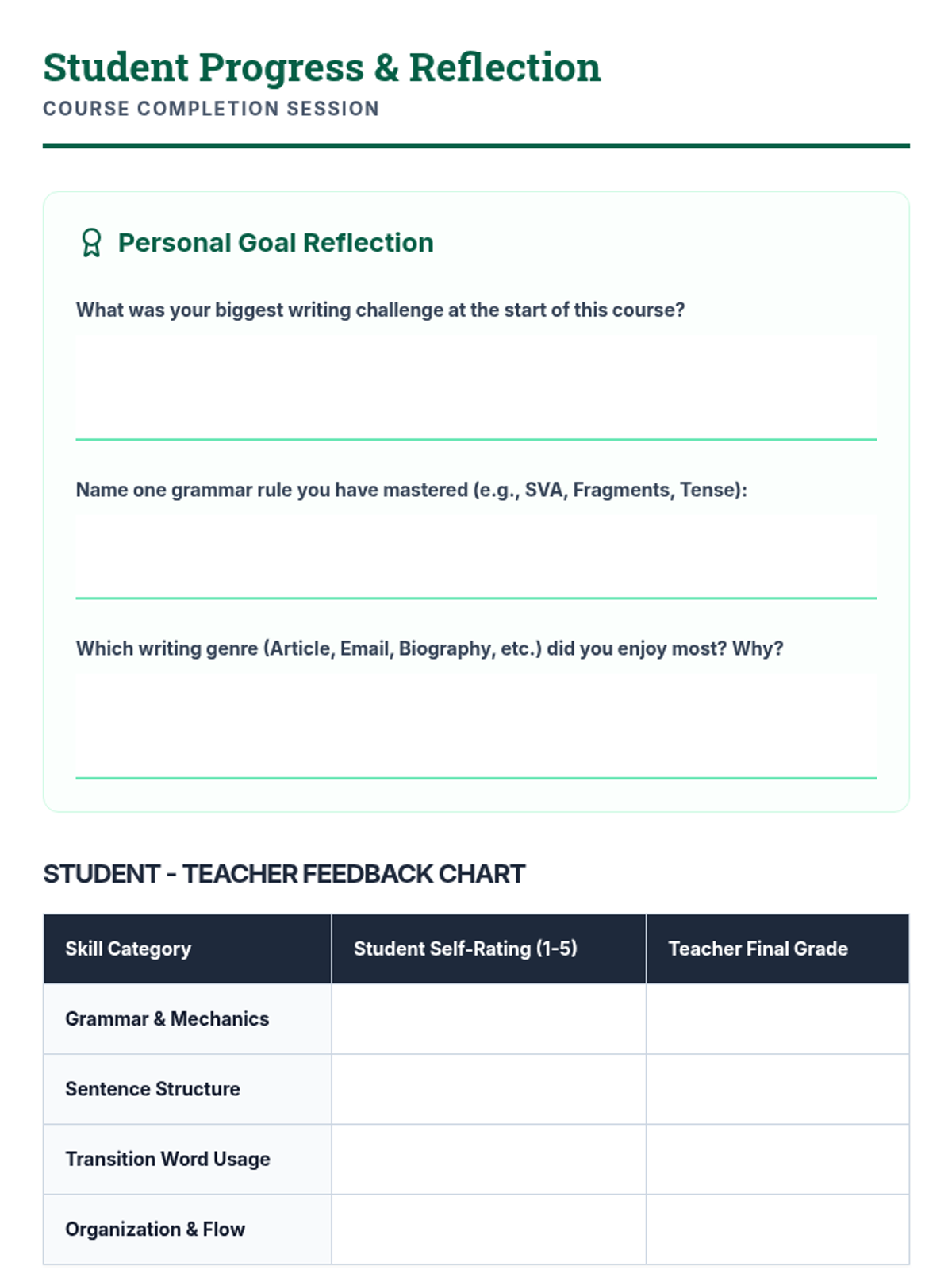
A final evaluation and reflection session including the final assessment, feedback charts, and student-teacher goal reviews.
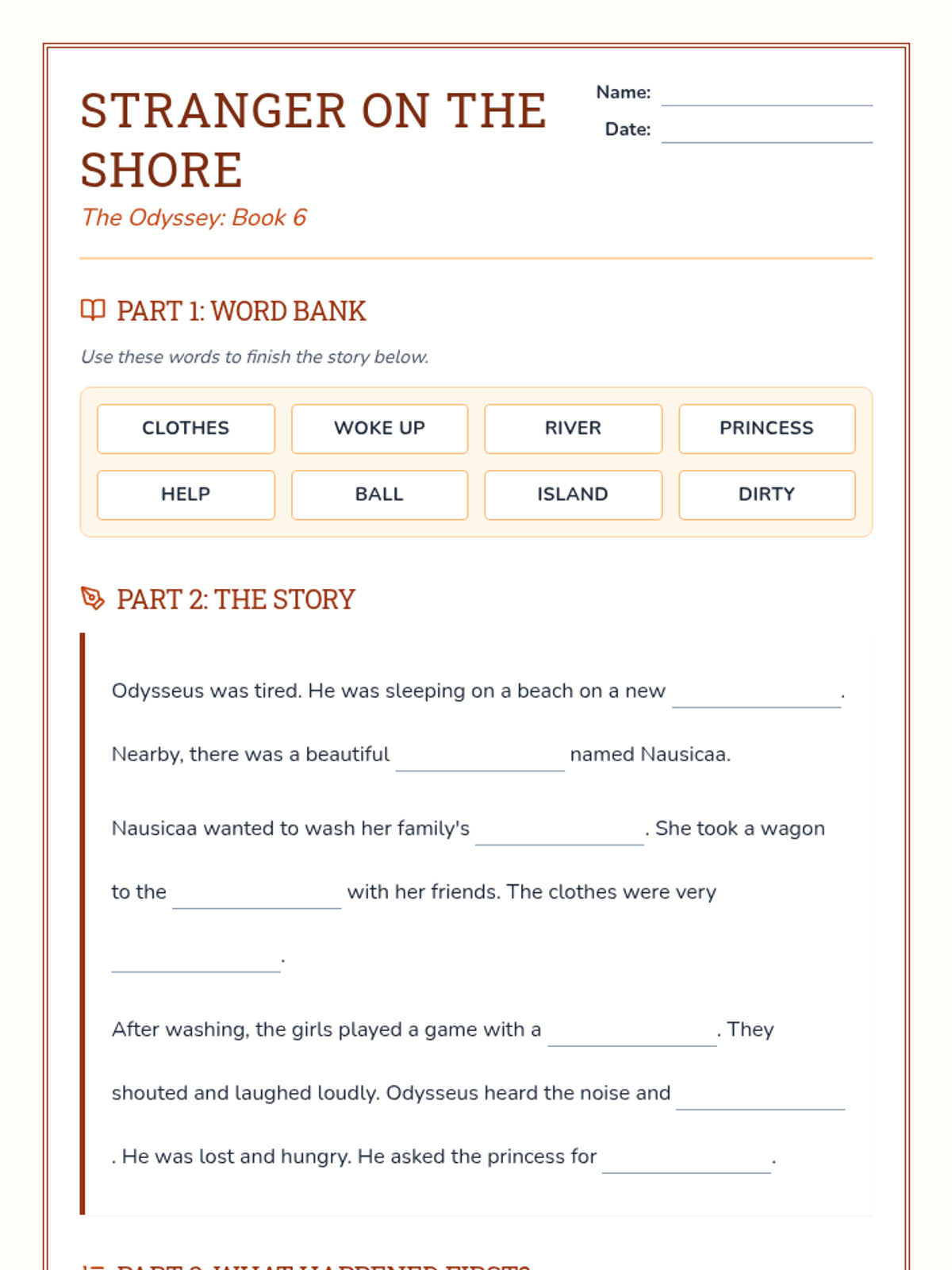
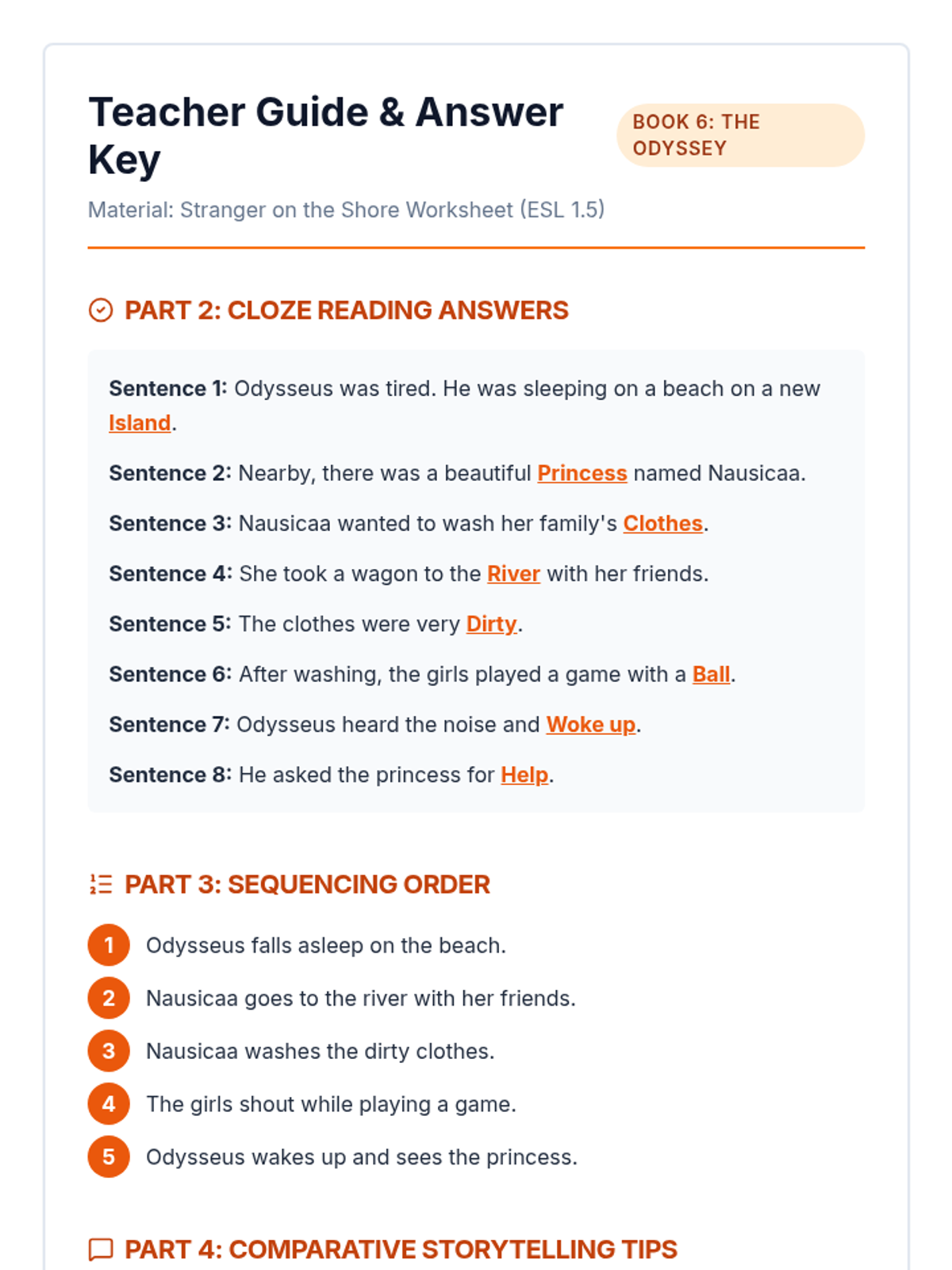
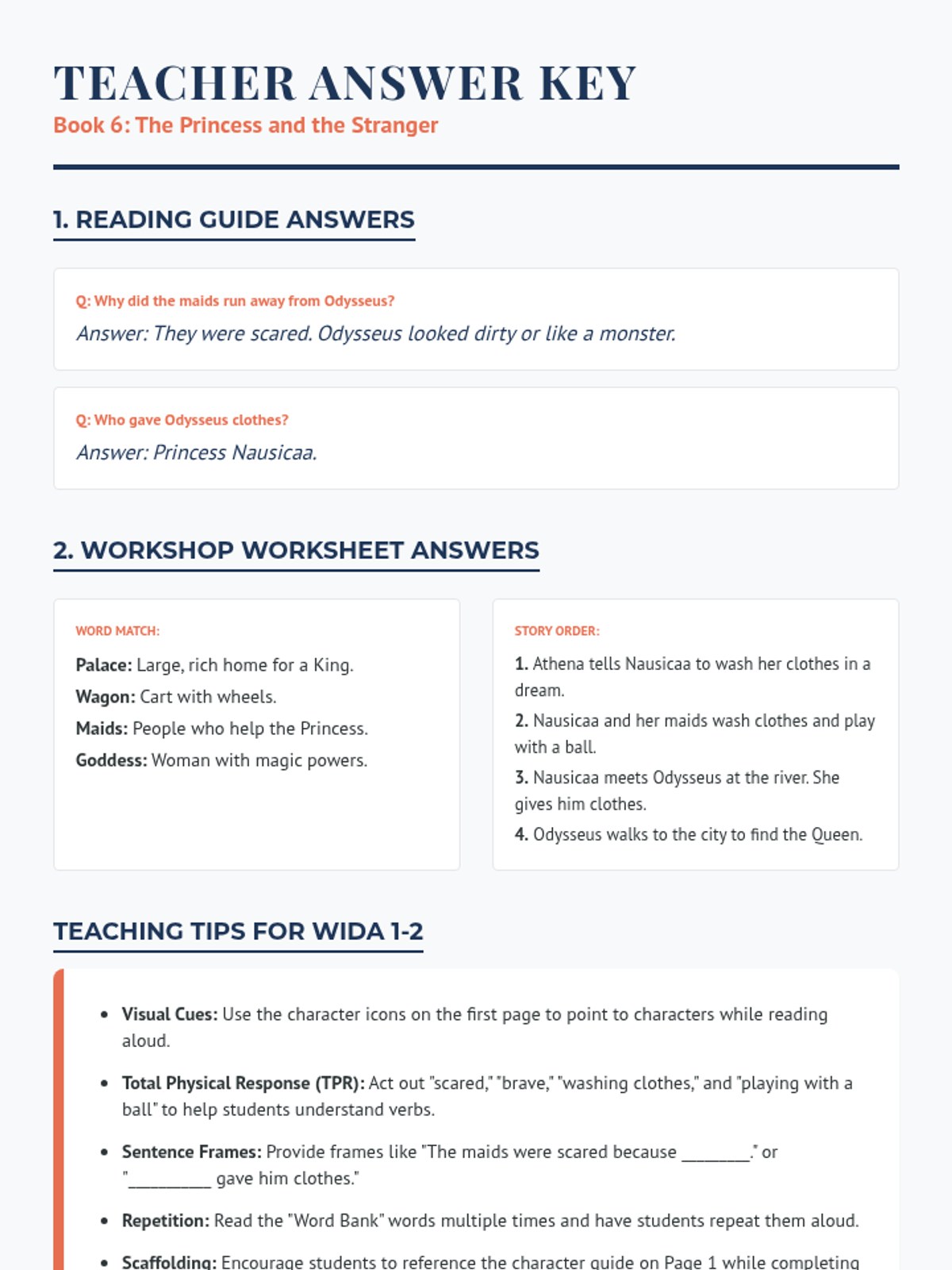
A simplified introduction to Book 6 of The Odyssey for ESL learners, focusing on the encounter between Odysseus and Nausicaa through cloze reading, sequencing, and comparative reflection.
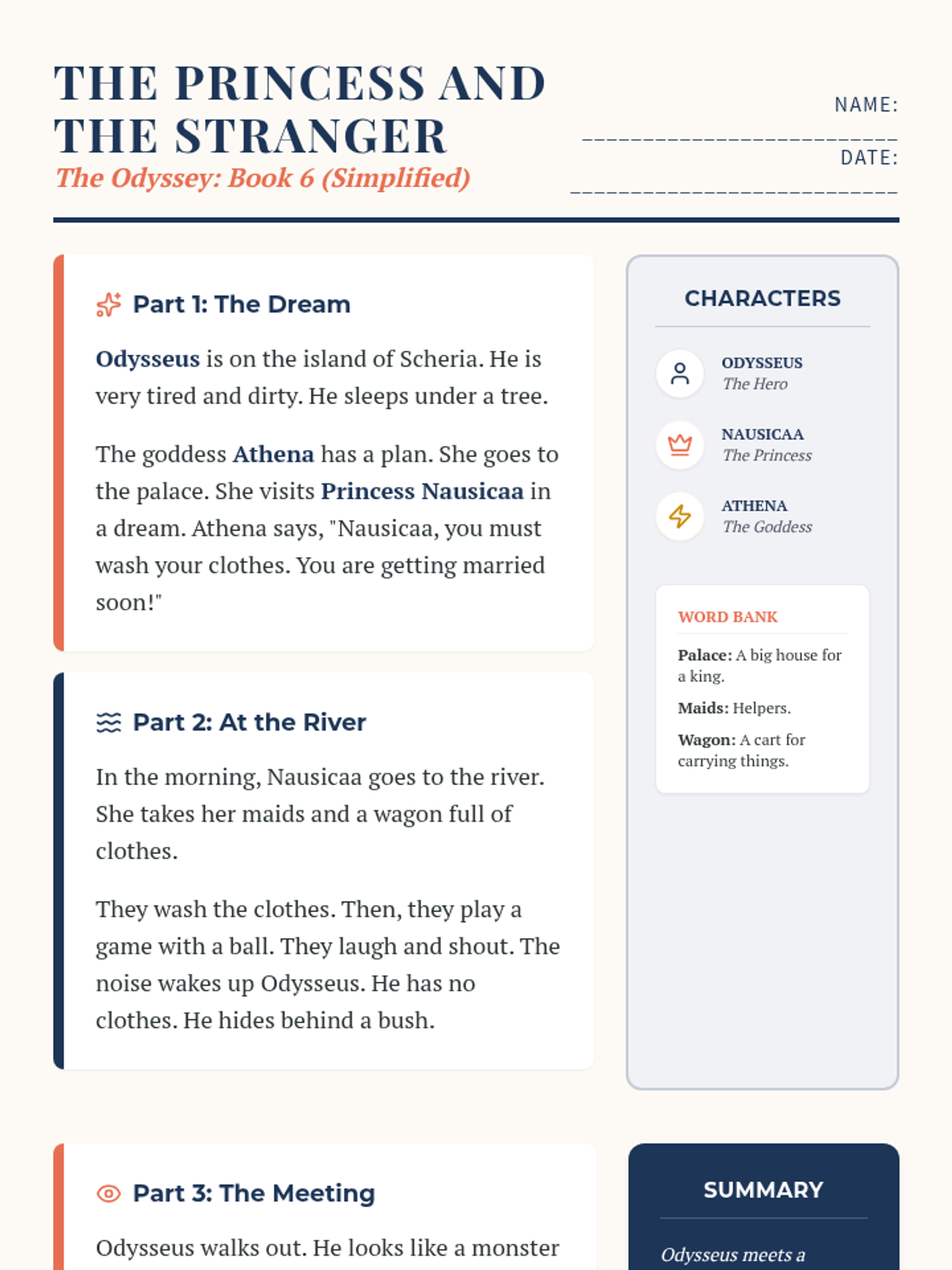
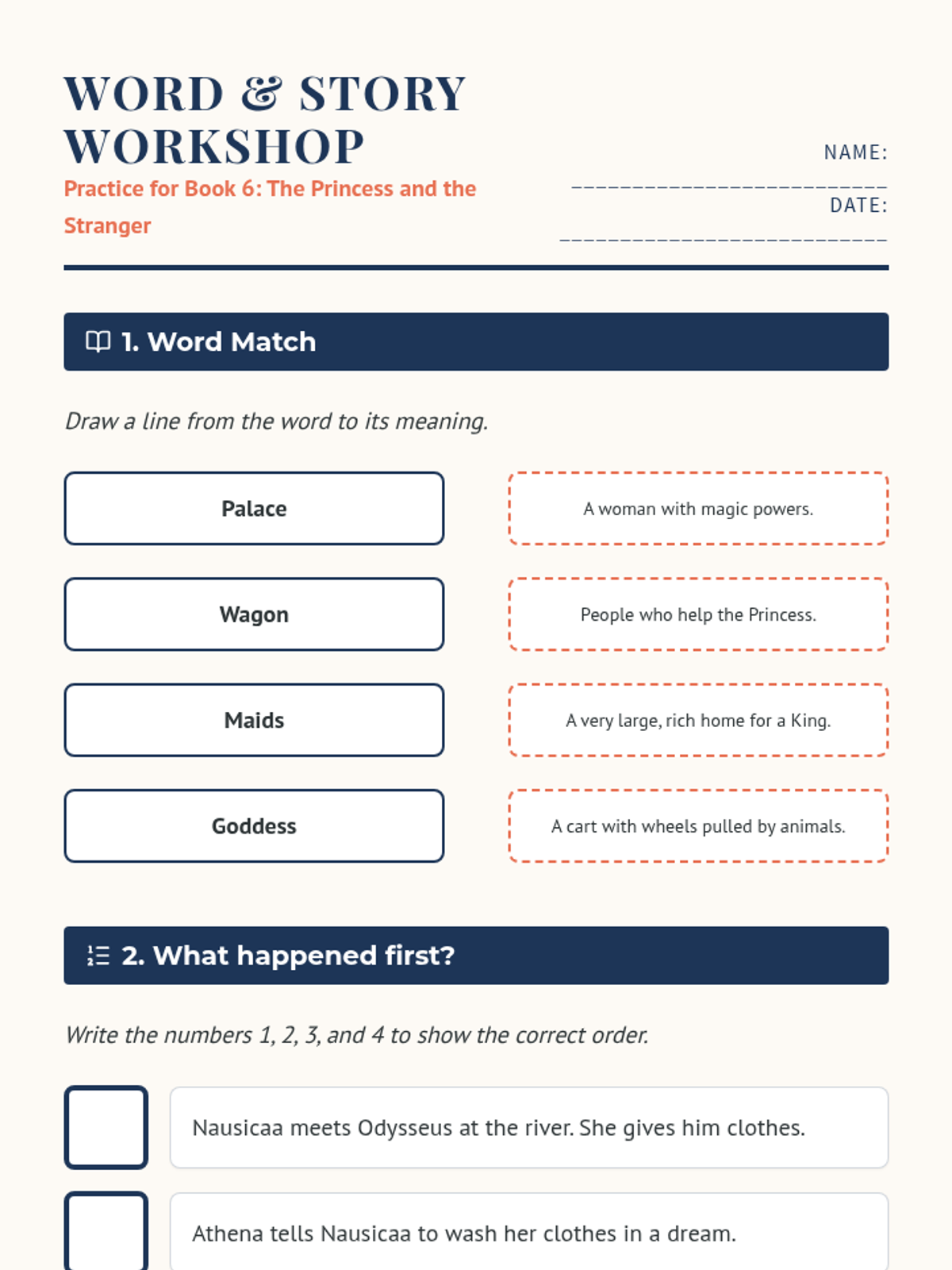
A simplified exploration of Book 6 of Homer's Odyssey, designed for WIDA Level 1-2 ELL students. The lesson focuses on key characters, basic plot sequencing, and essential vocabulary through a high-interest narrative.
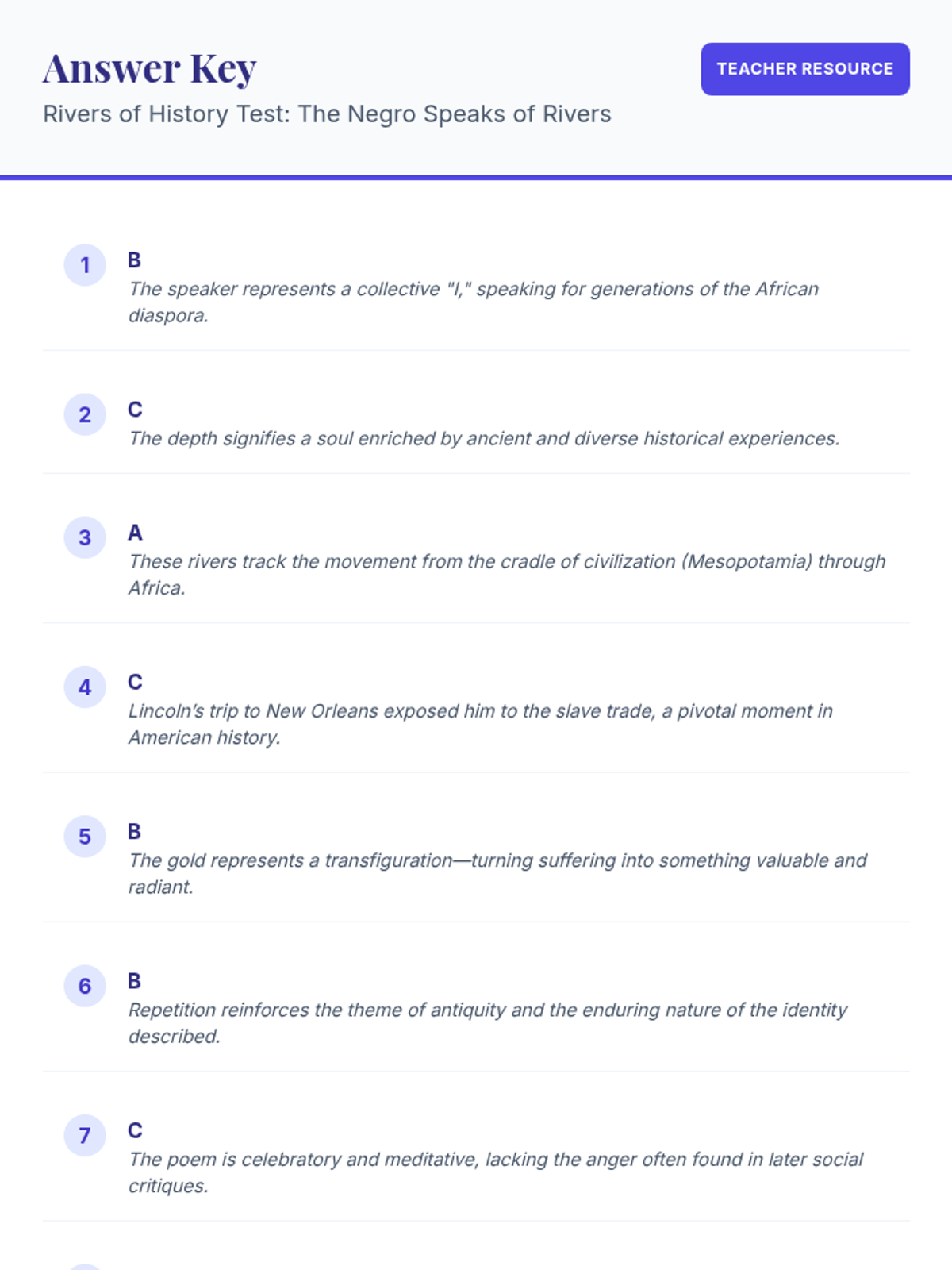
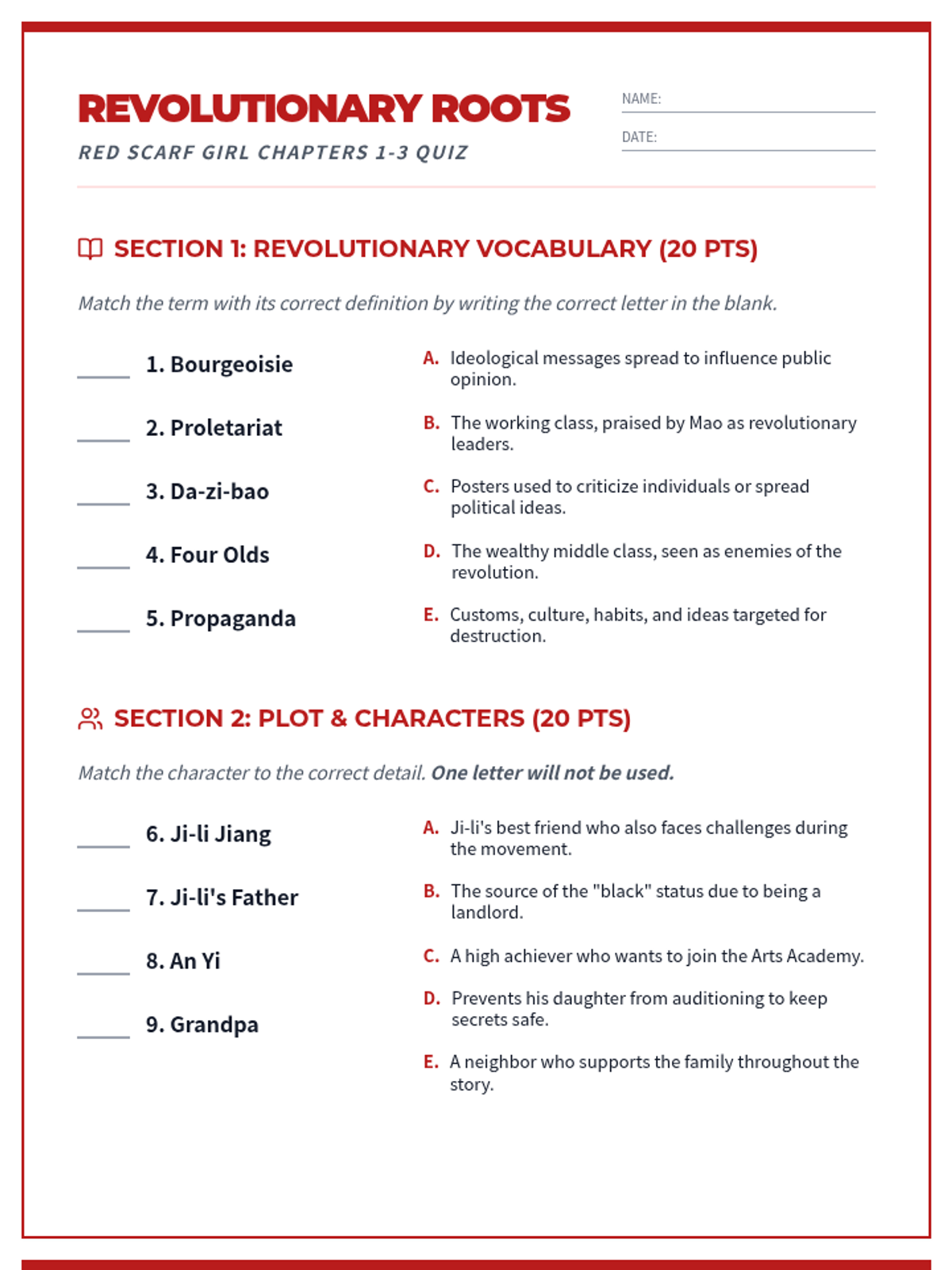
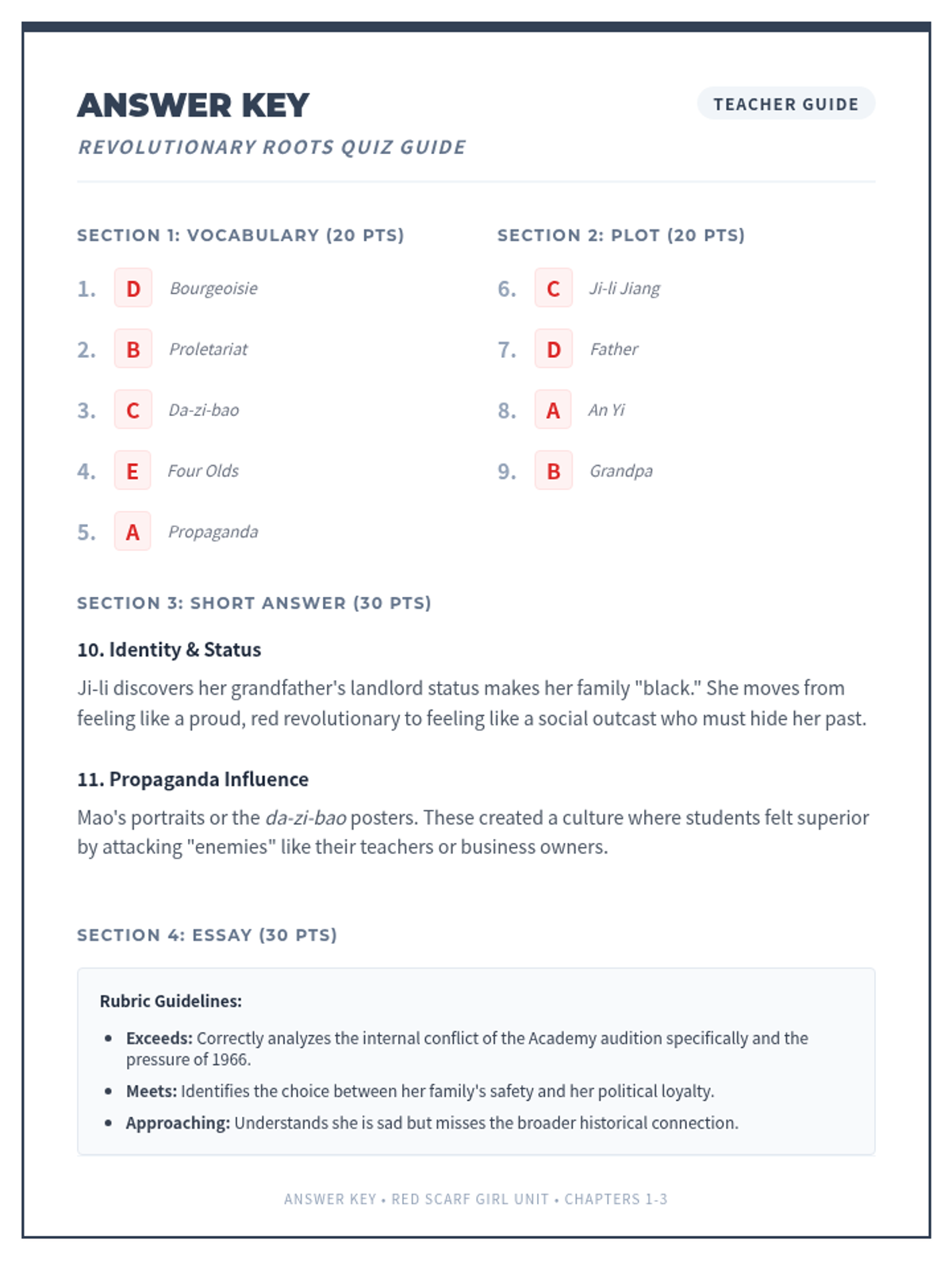
A comprehensive assessment and answer key for the first three chapters of Red Scarf Girl, focusing on the themes of identity, propaganda, and family loyalty.
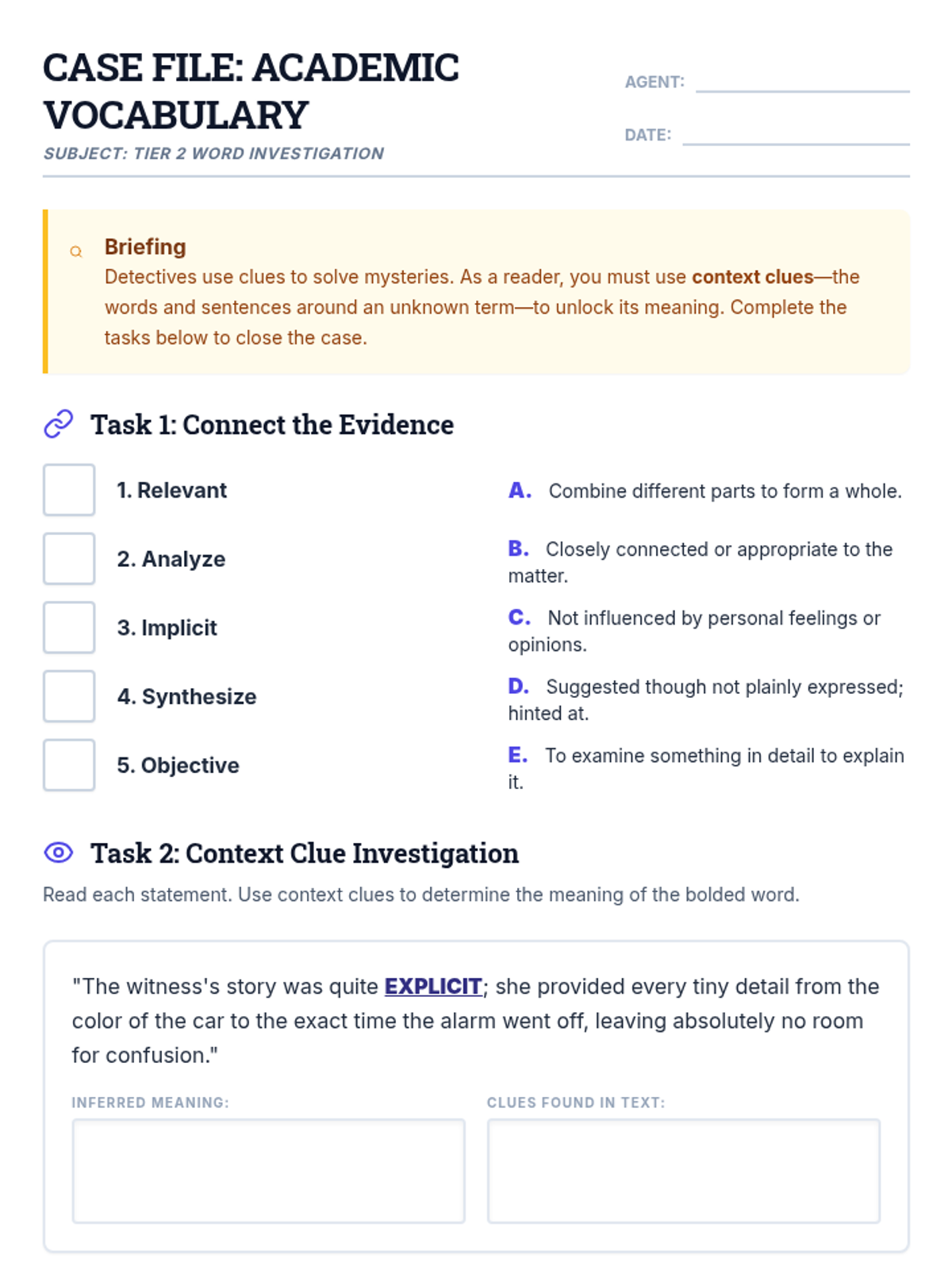
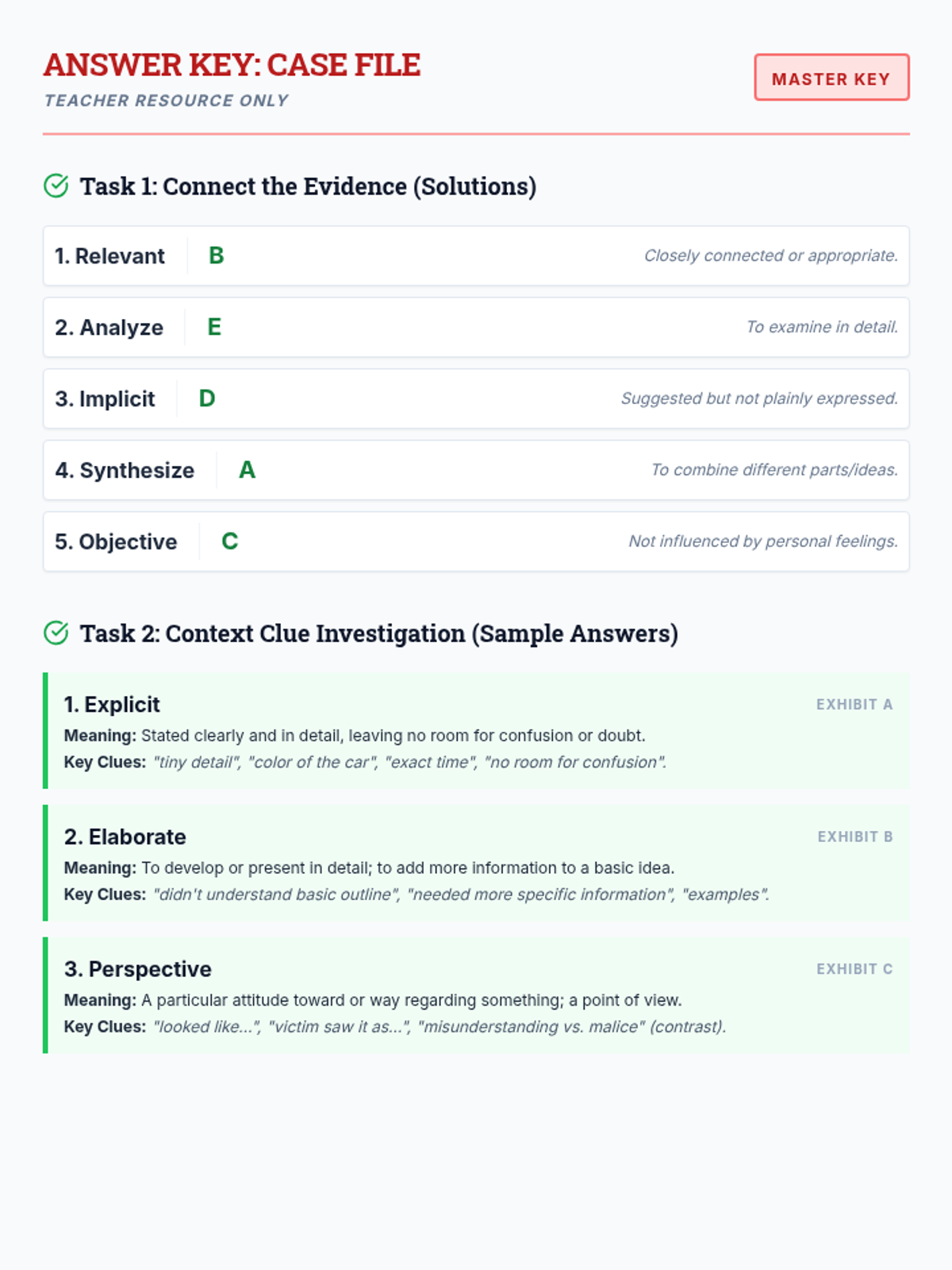
A middle school language arts lesson focused on mastering high-utility Tier 2 academic vocabulary and using context clues to determine meaning. Students act as 'Word Detectives' to investigate and decode complex texts.
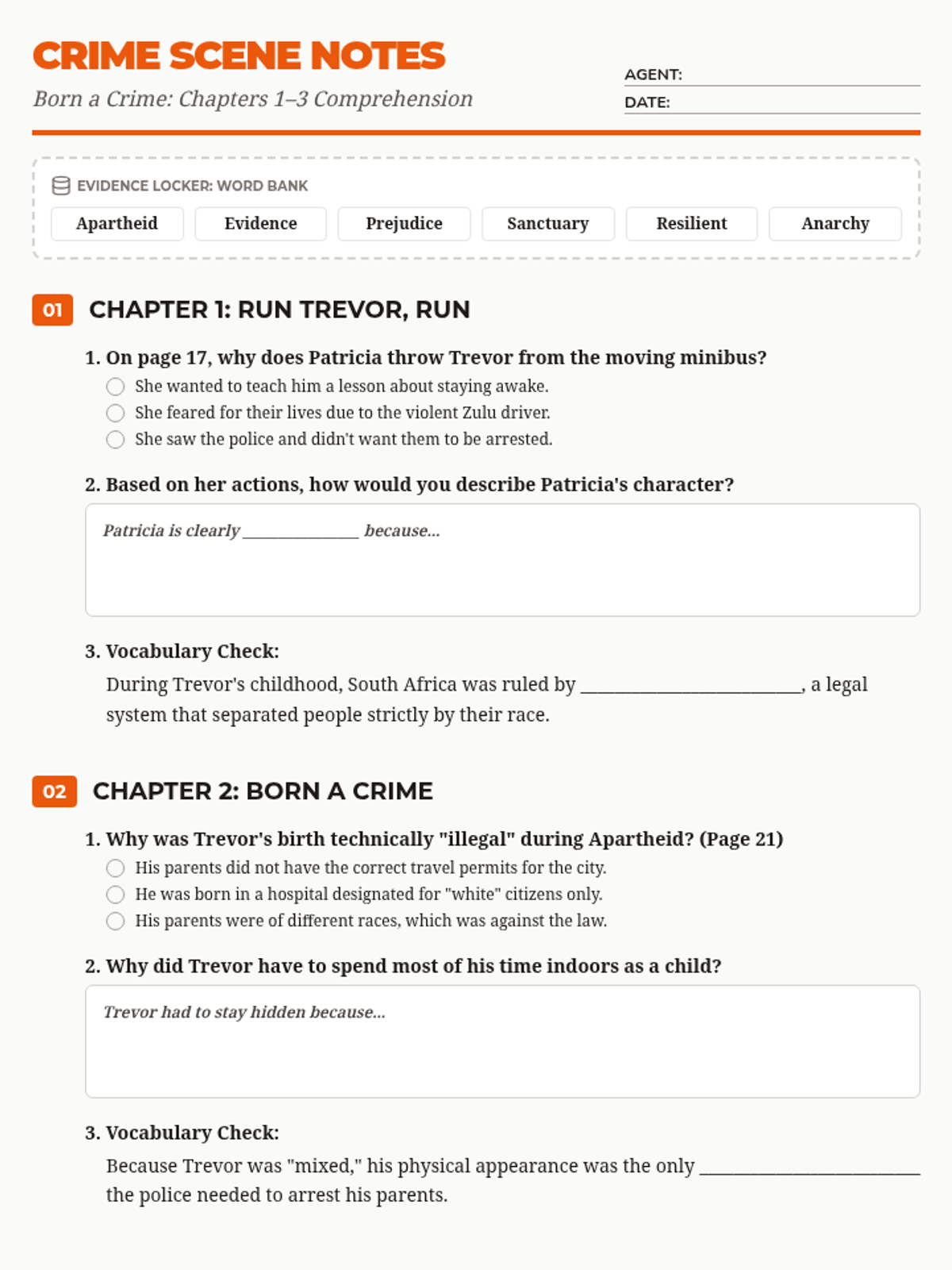
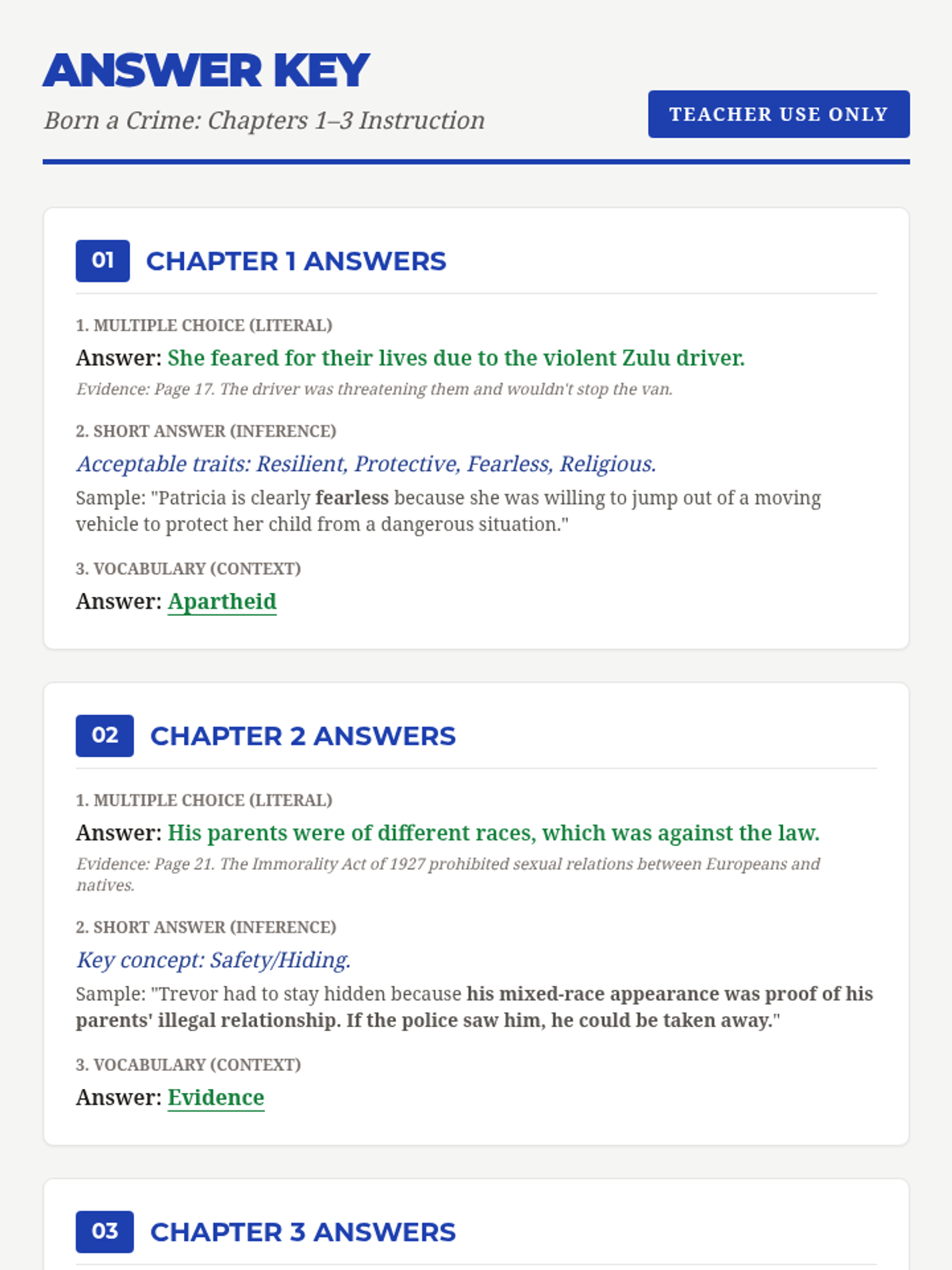
This lesson explores the first three chapters of Trevor Noah's 'Born a Crime', focusing on the historical context of Apartheid, character development of Trevor and Patricia, and the power of language and identity.
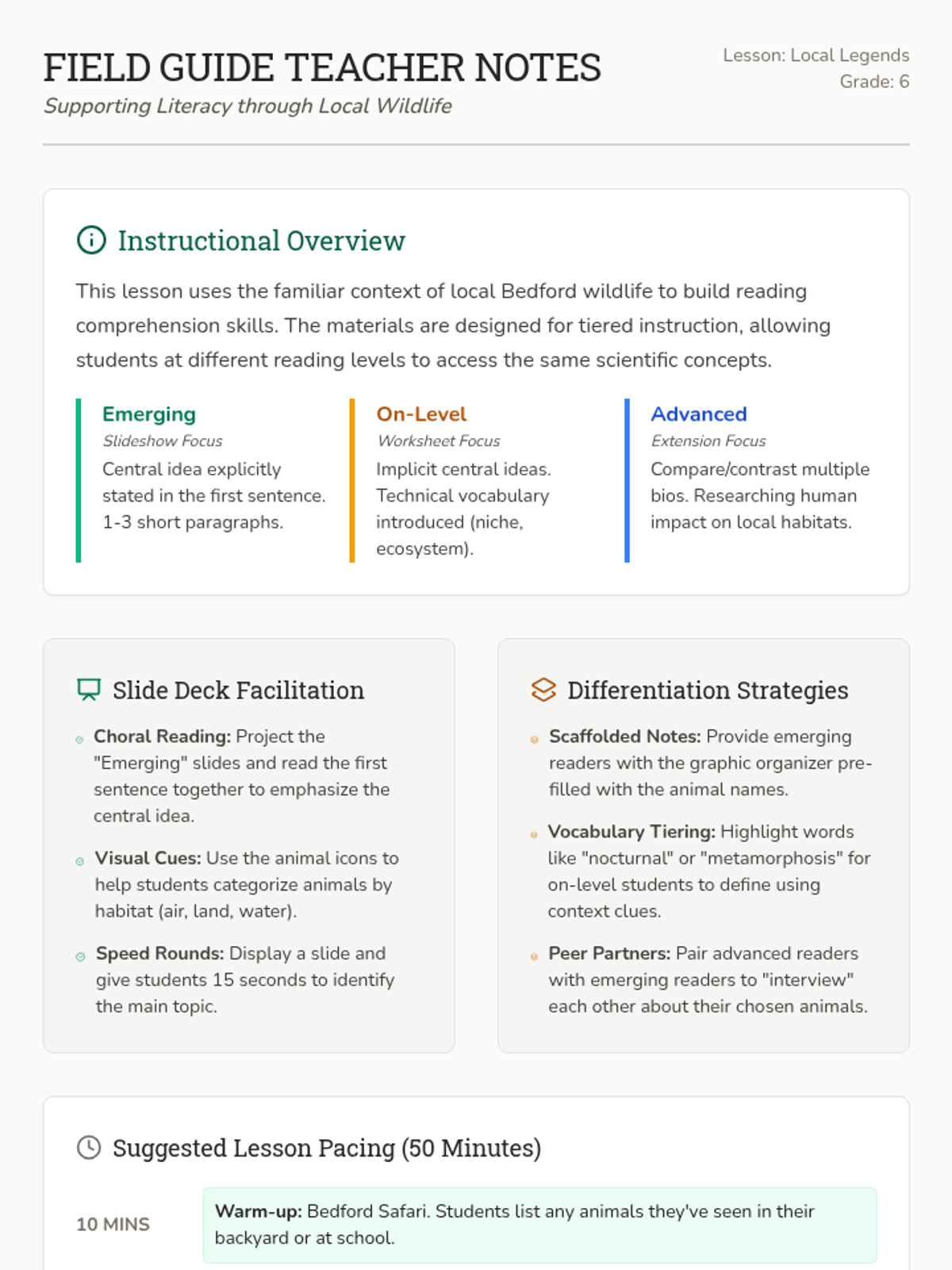
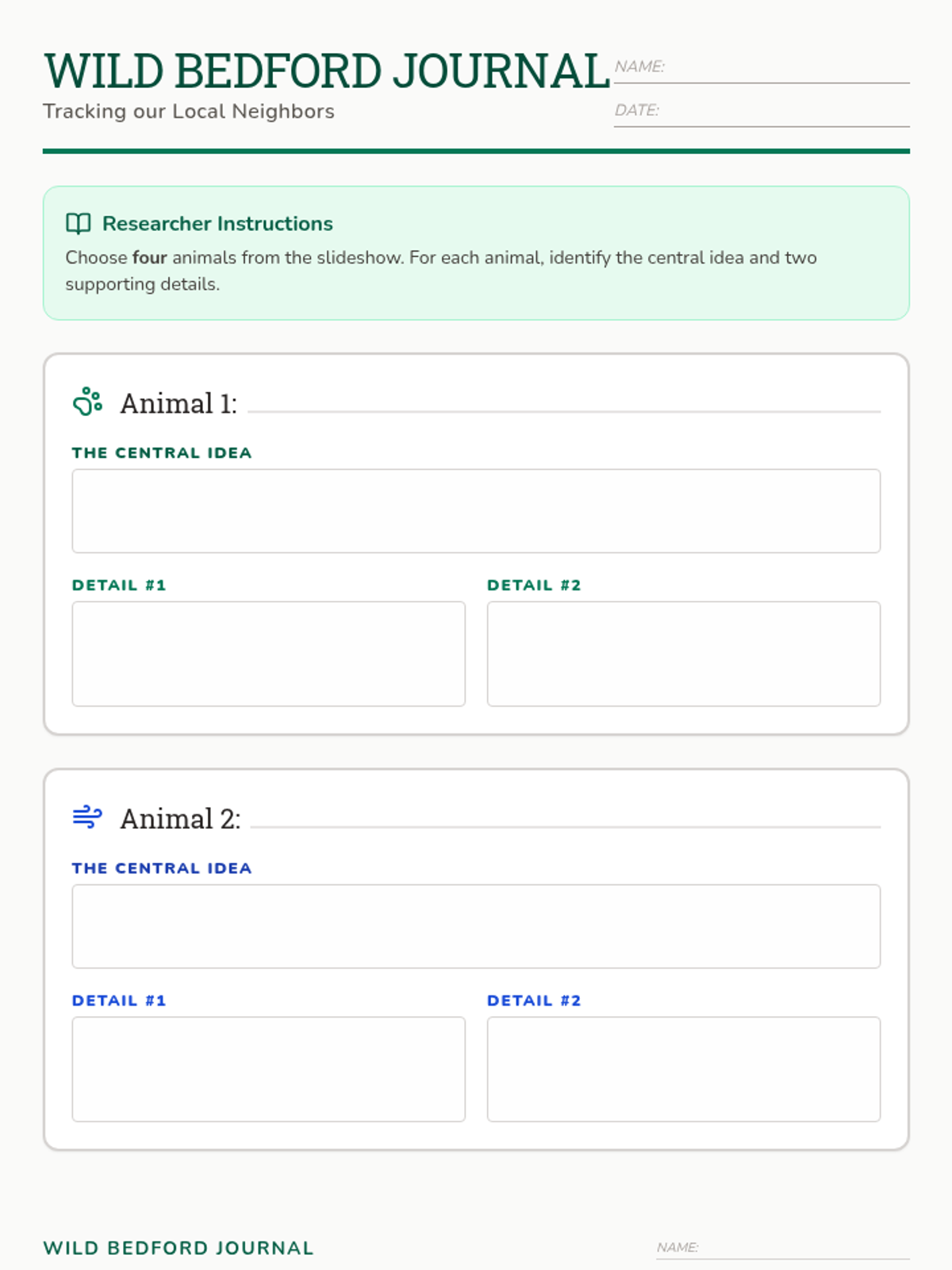
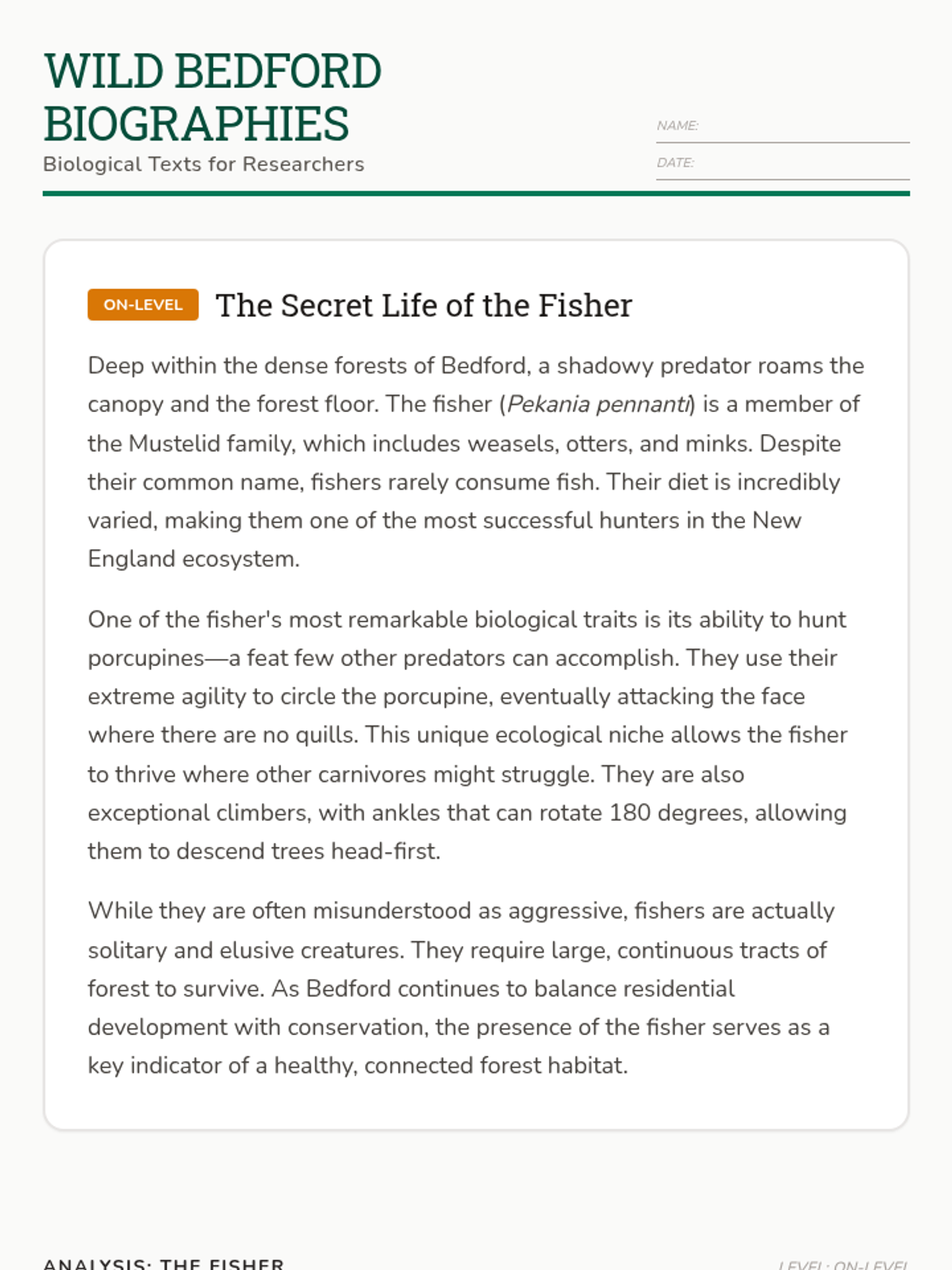
Students explore over 30 local animals through tiered reading materials, focusing on identifying central ideas and supporting details in biological texts.
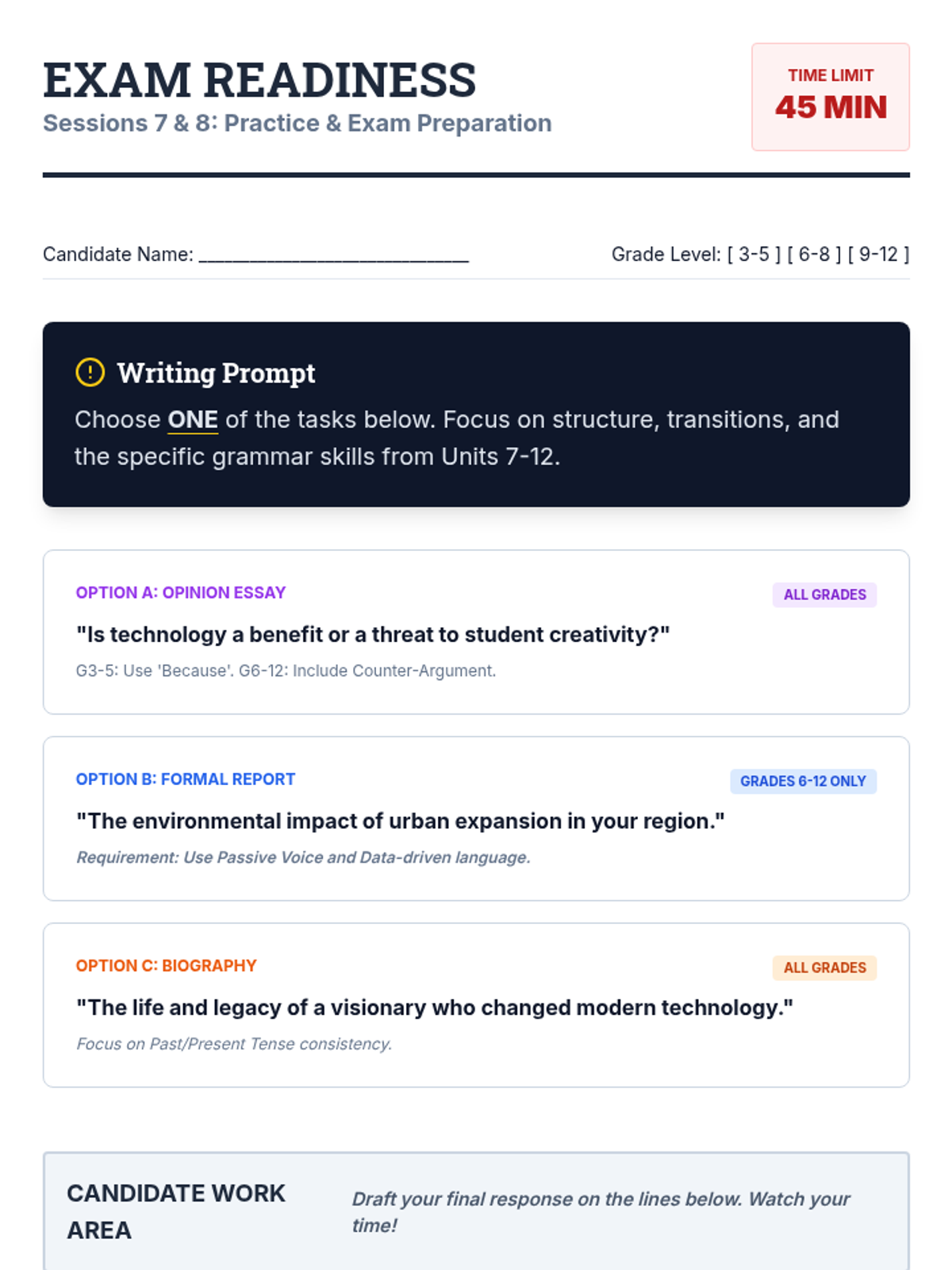
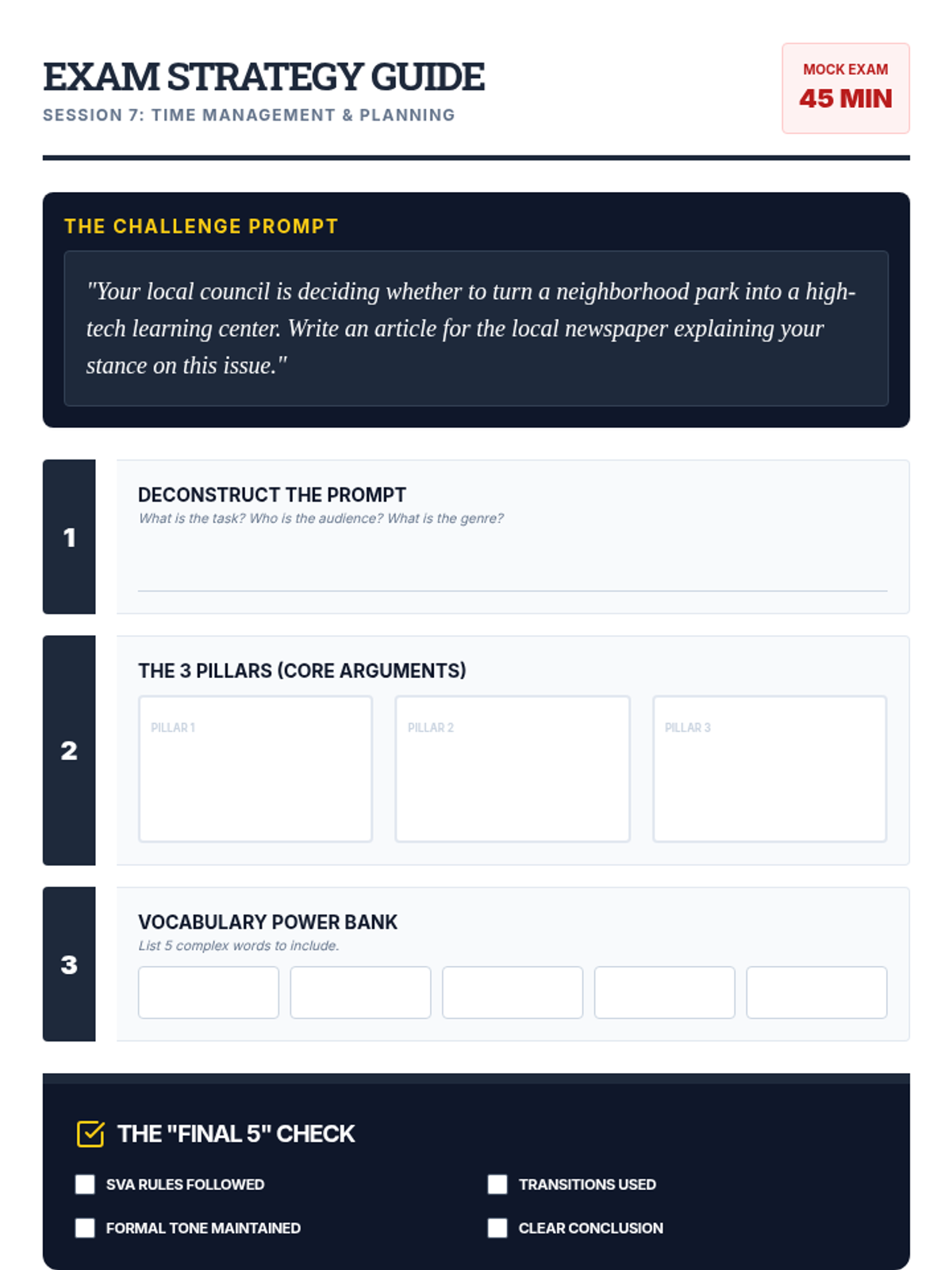
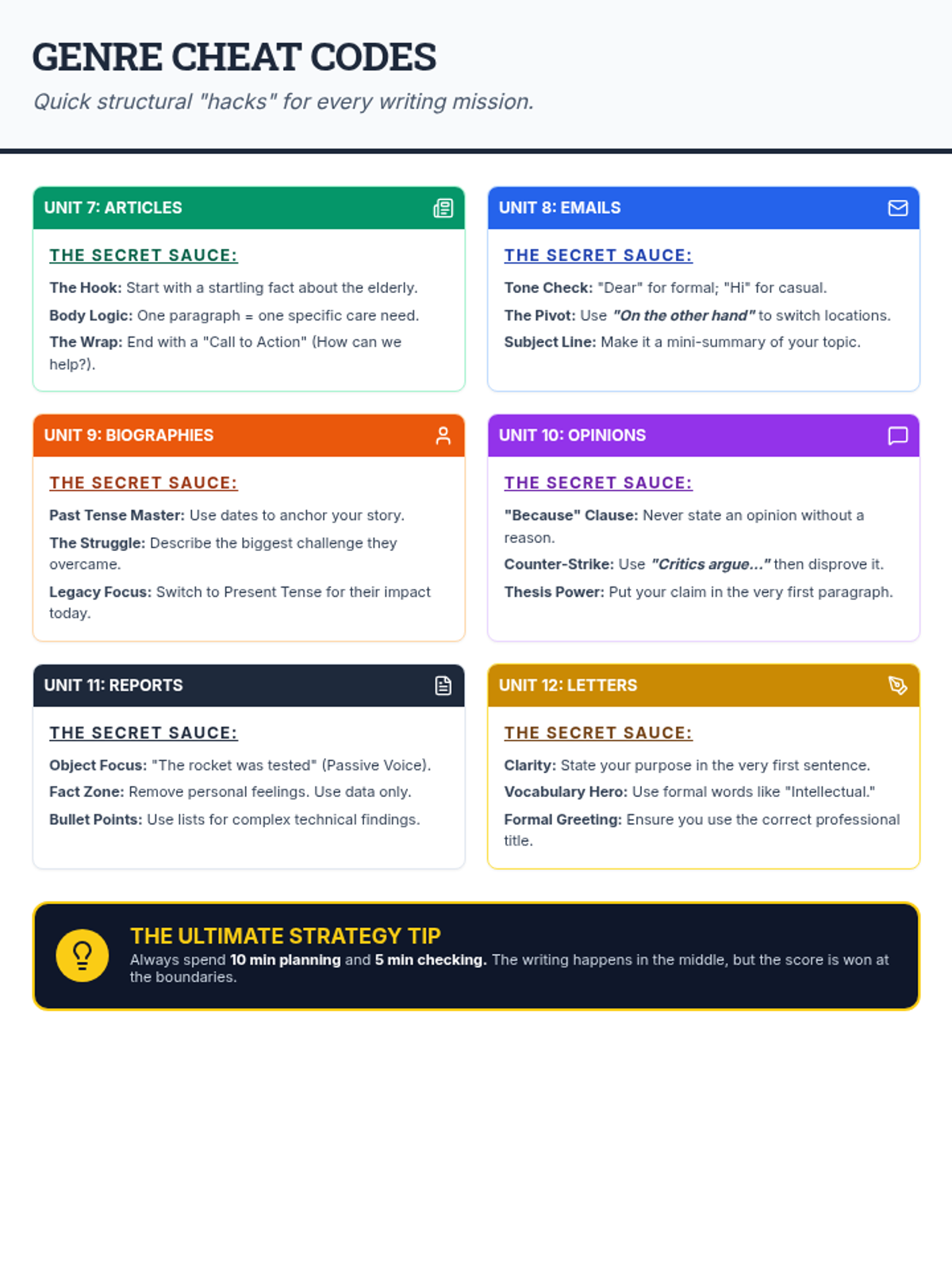
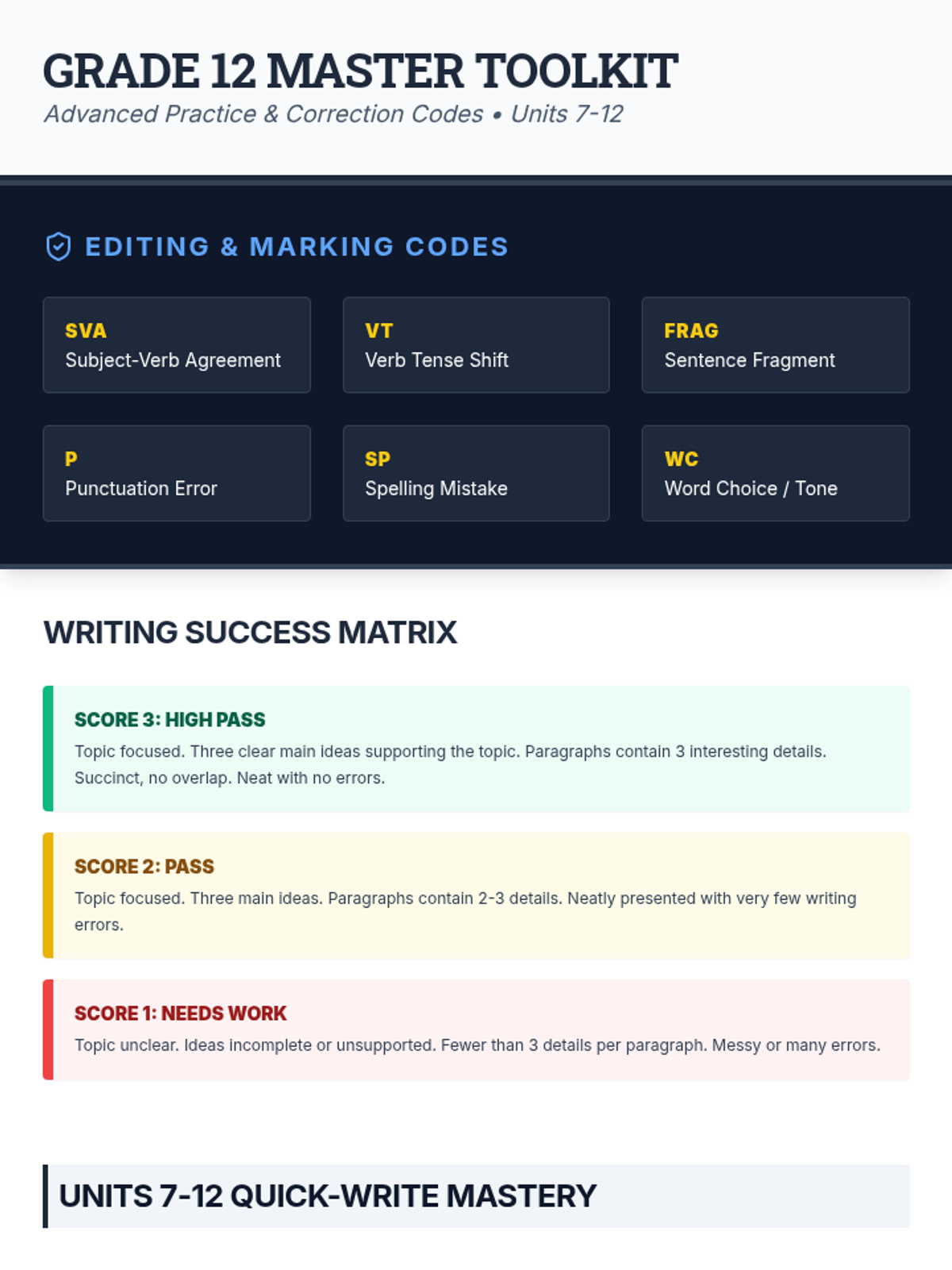
Provides timed writing practice and mock exam conditions to build stamina and review structural clarity.
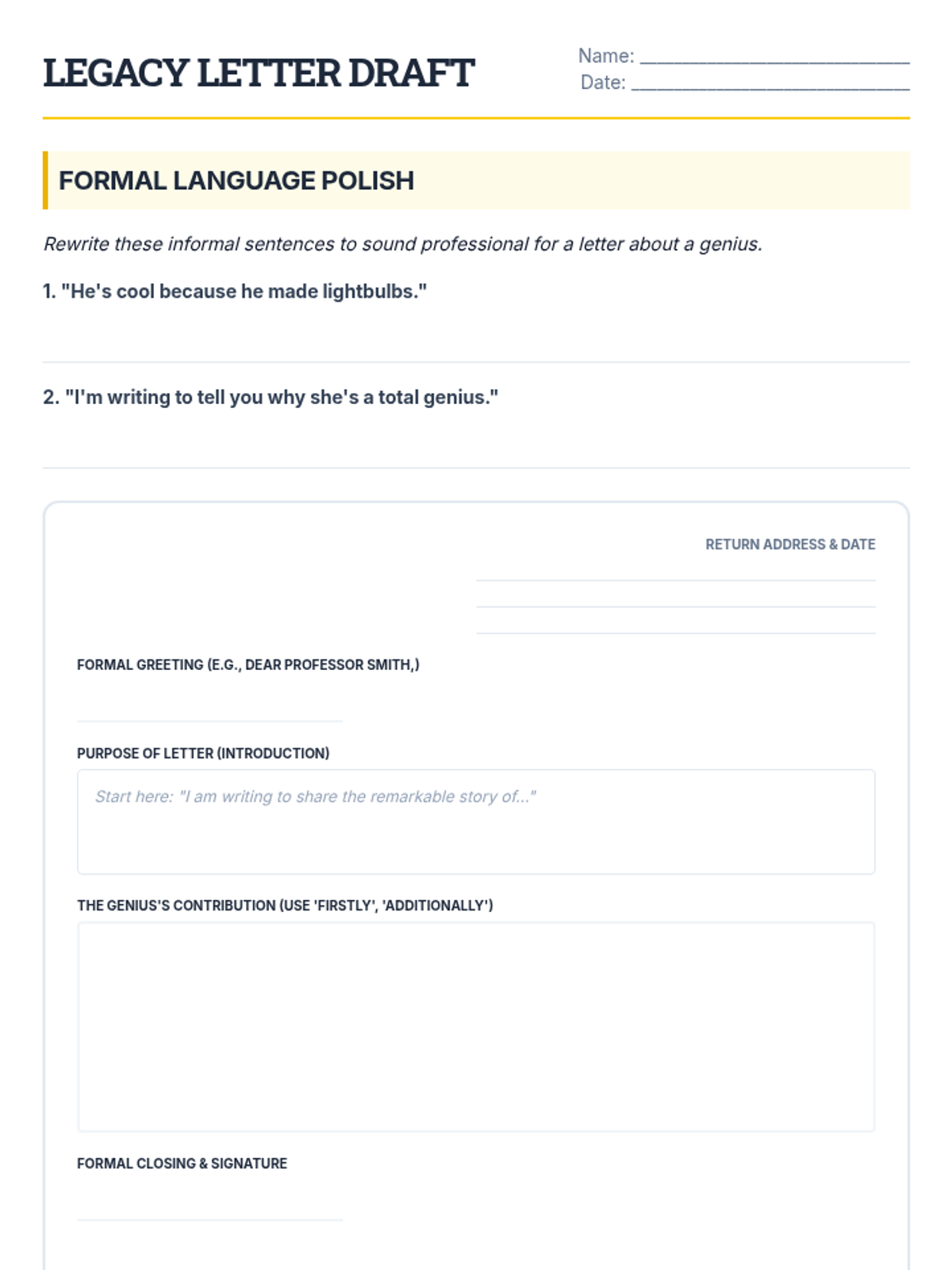
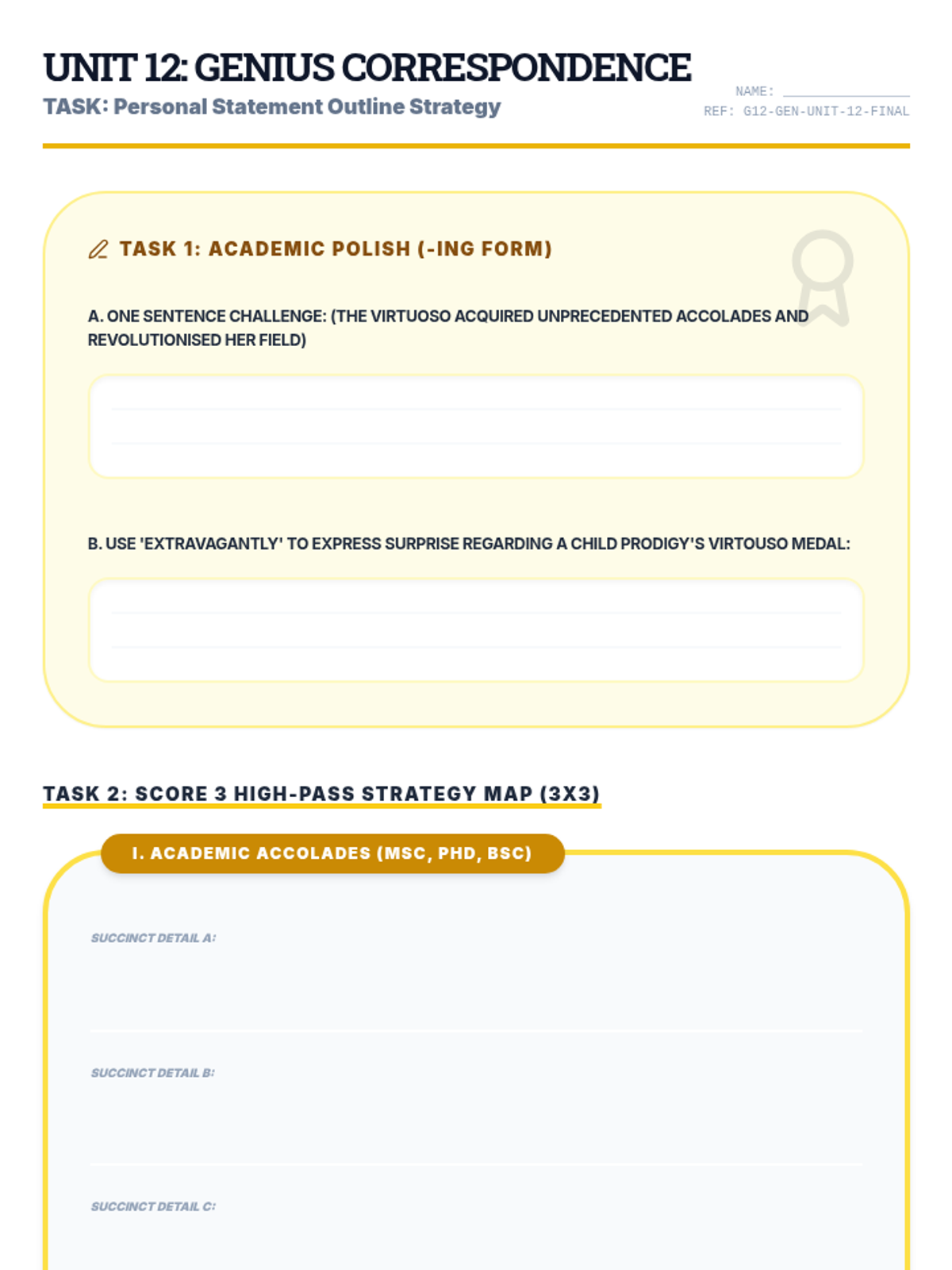
Practices formal letter writing focused on the achievements of geniuses, reinforcing formal tone and structural transitions.
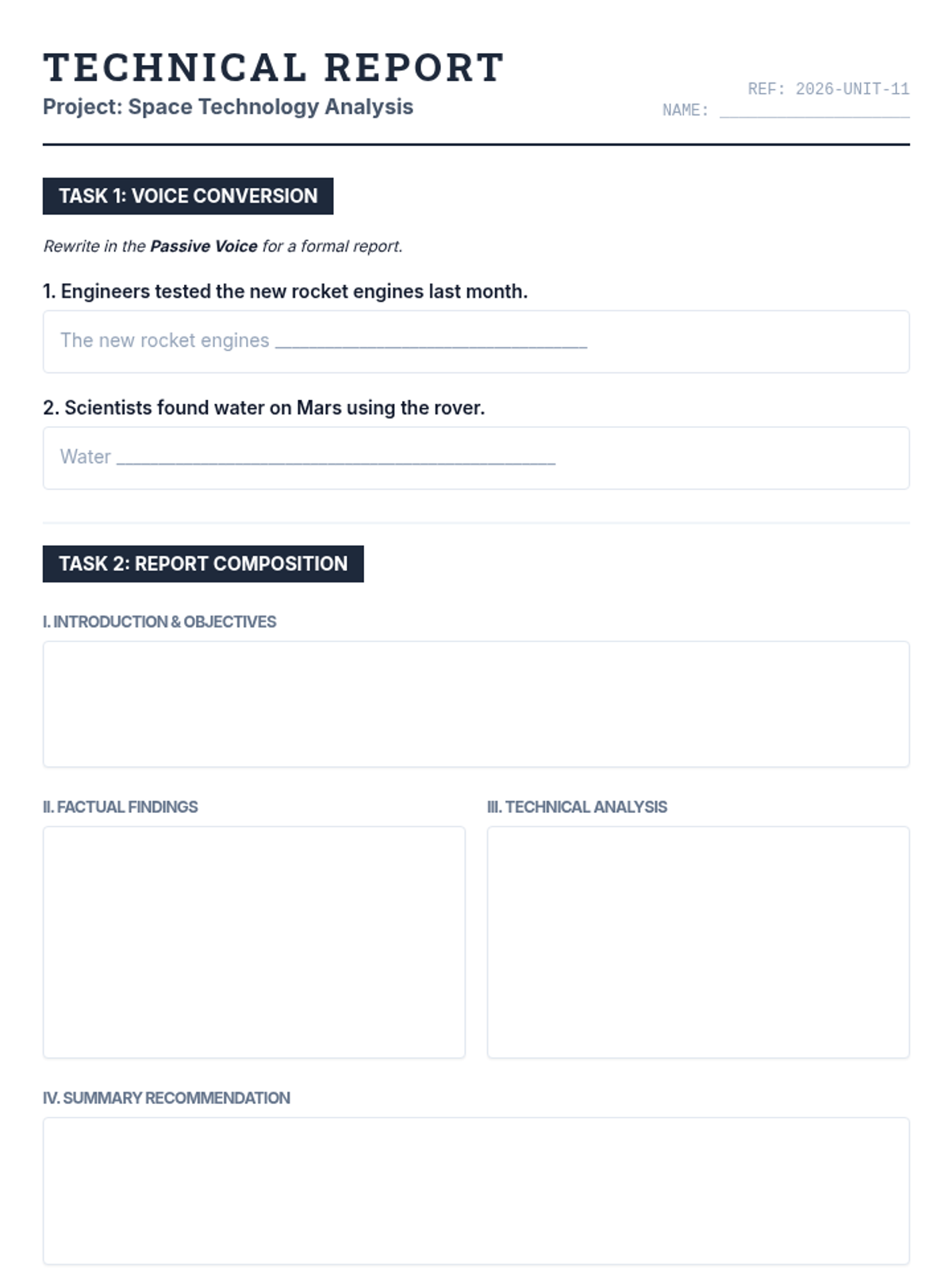
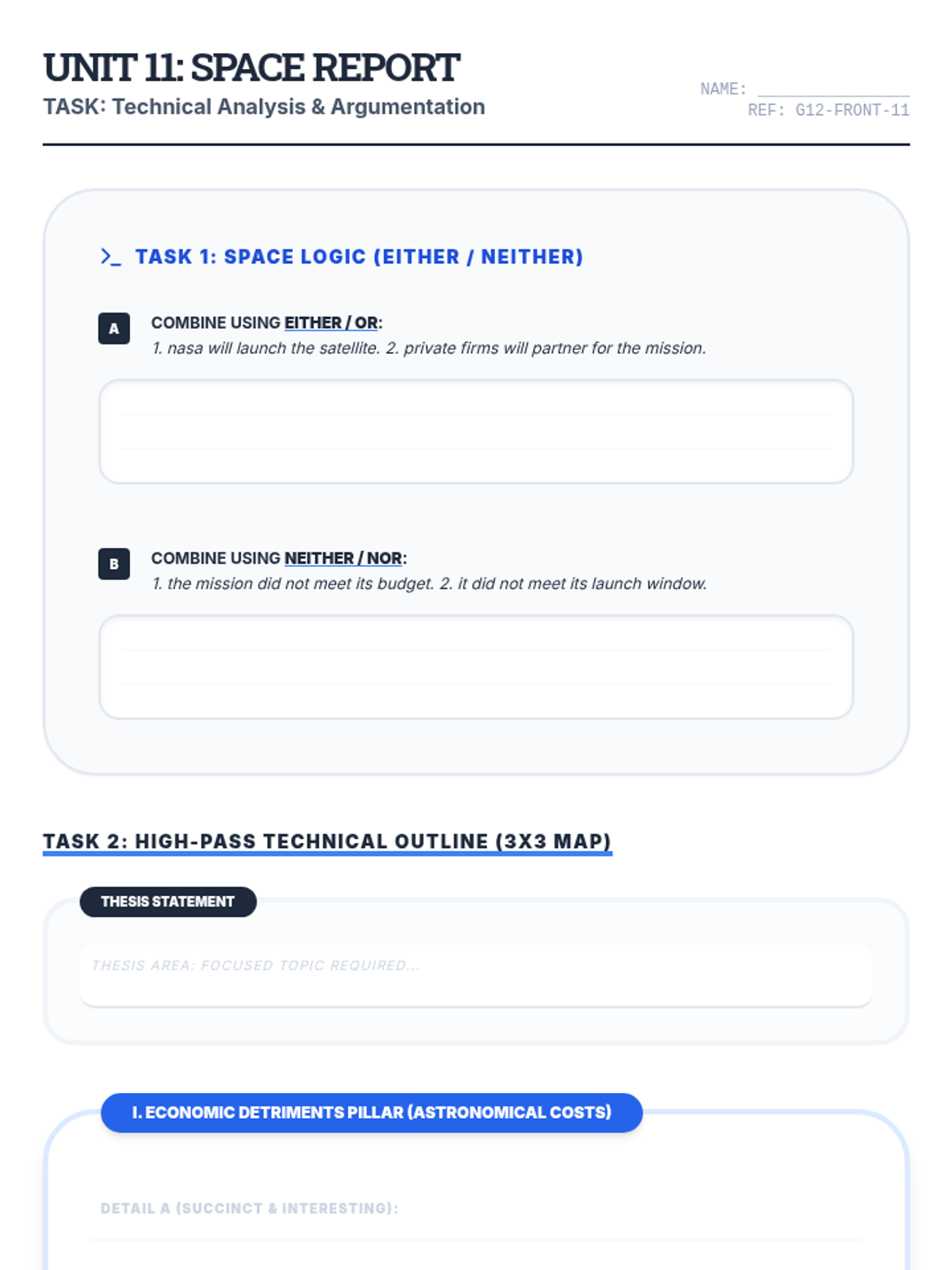
Introduces formal report writing on space technology, emphasizing passive vs. active voice and data-driven analysis.
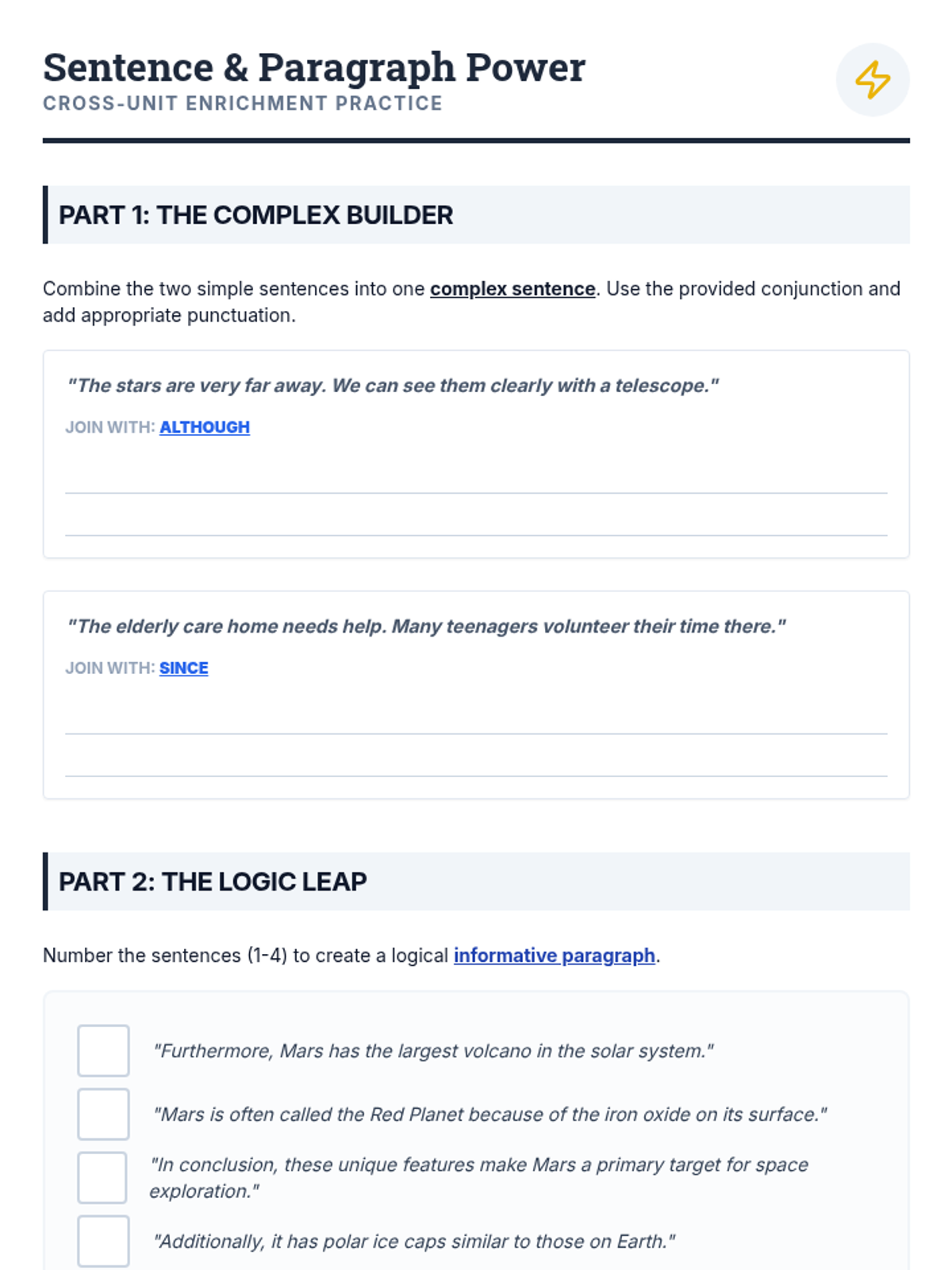
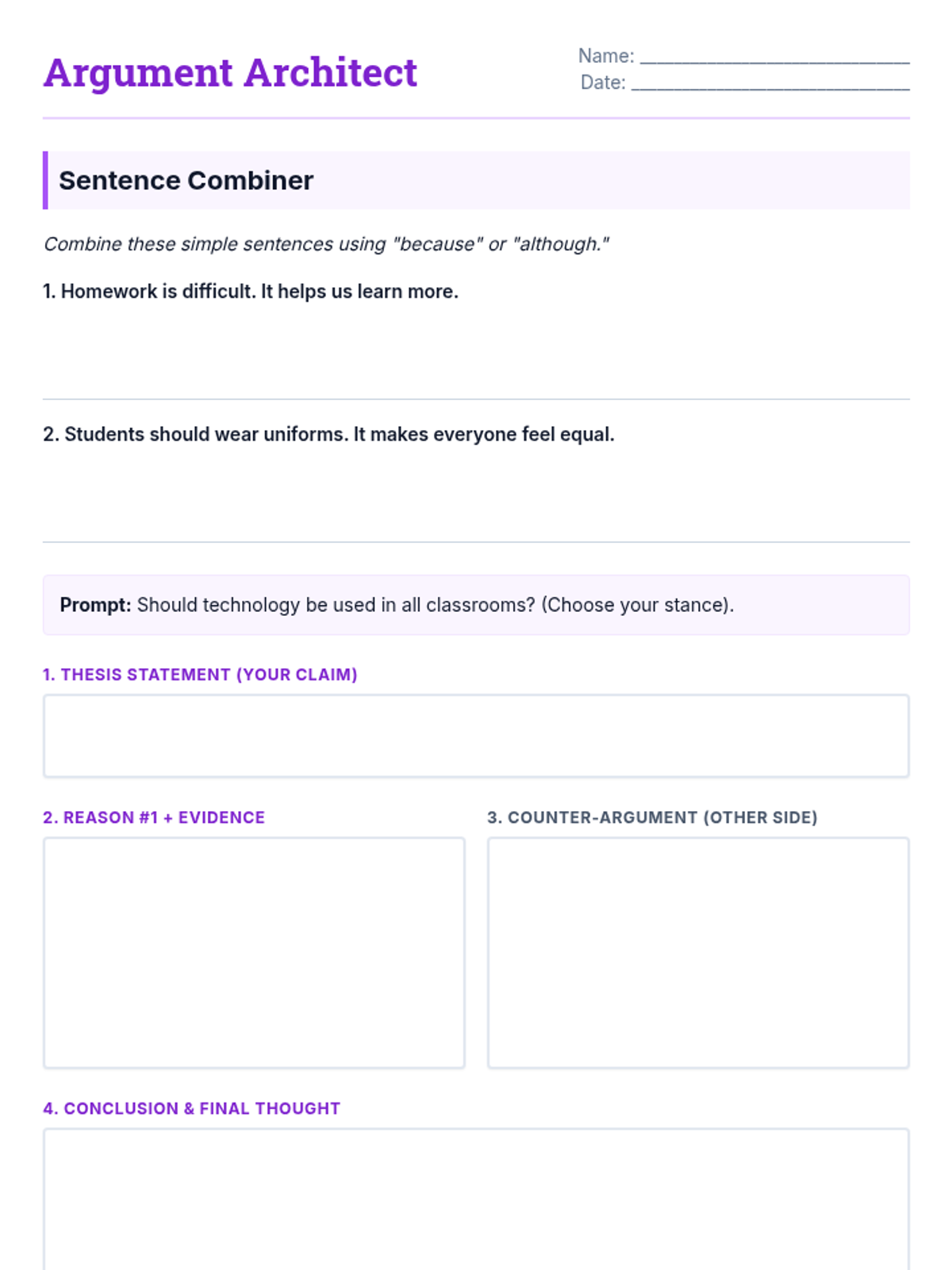
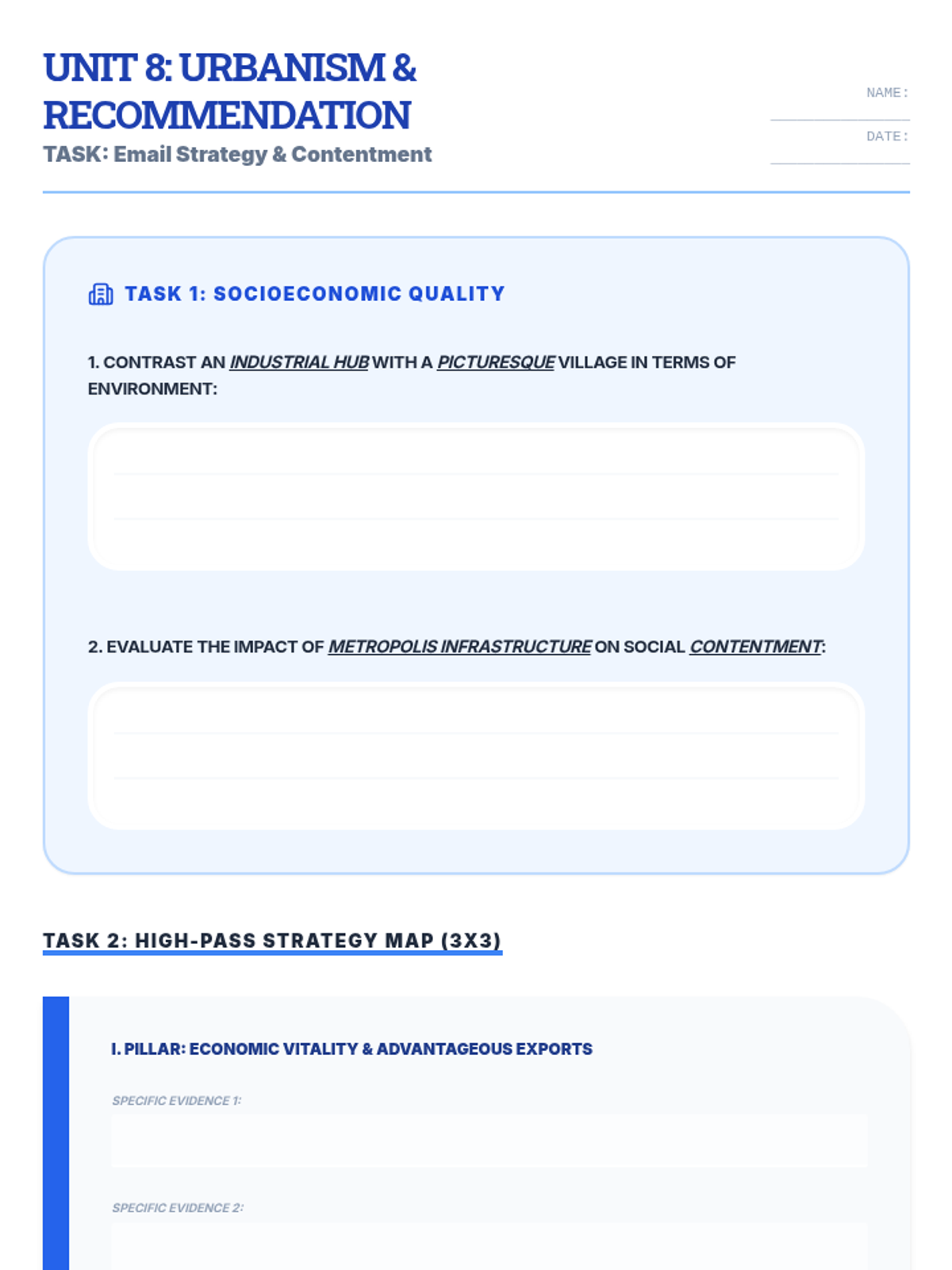
Develops argumentative skills through opinion essays on debatable topics, focusing on conjunctions, counter-arguments, and persuasive transitions.
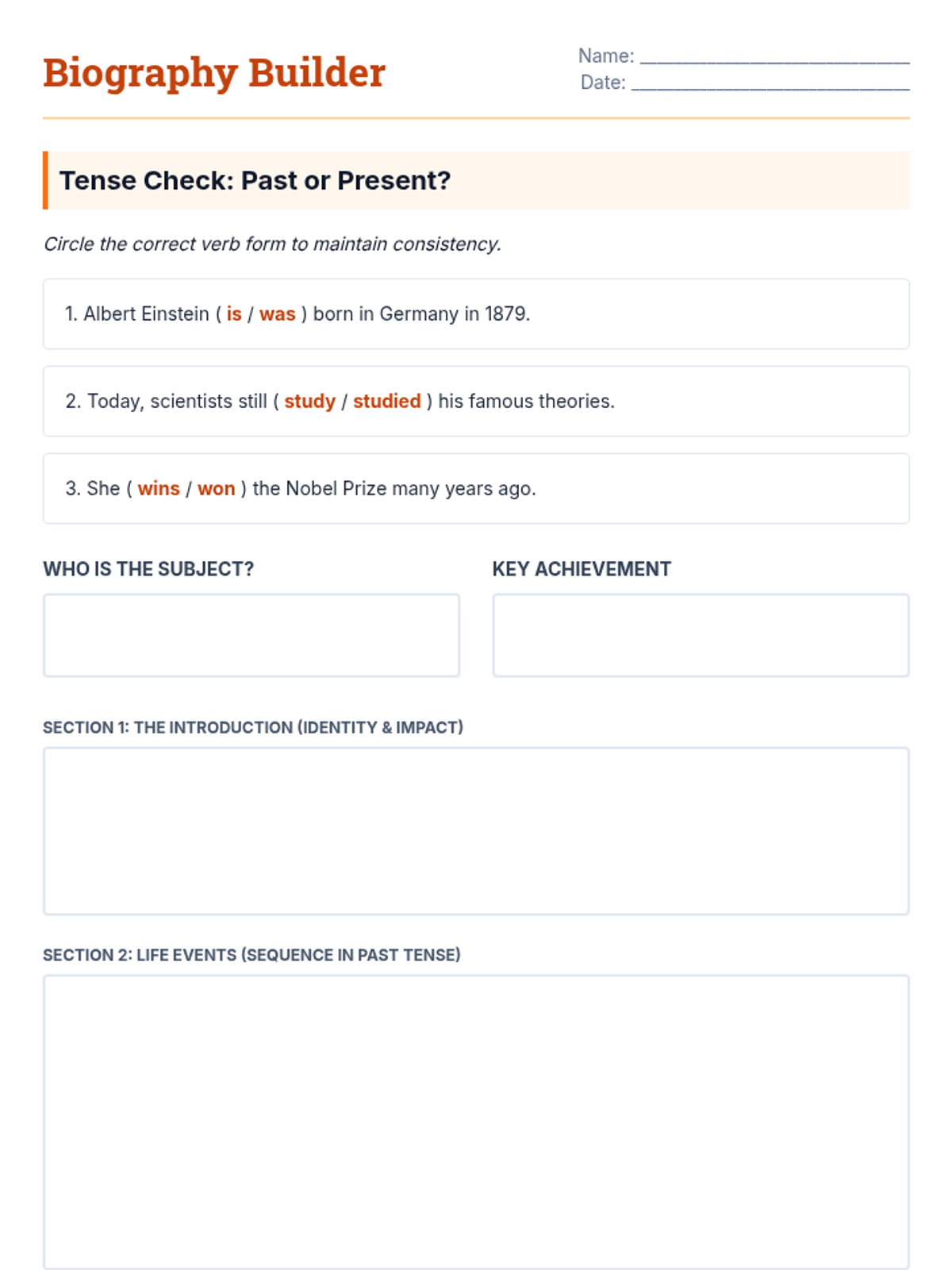
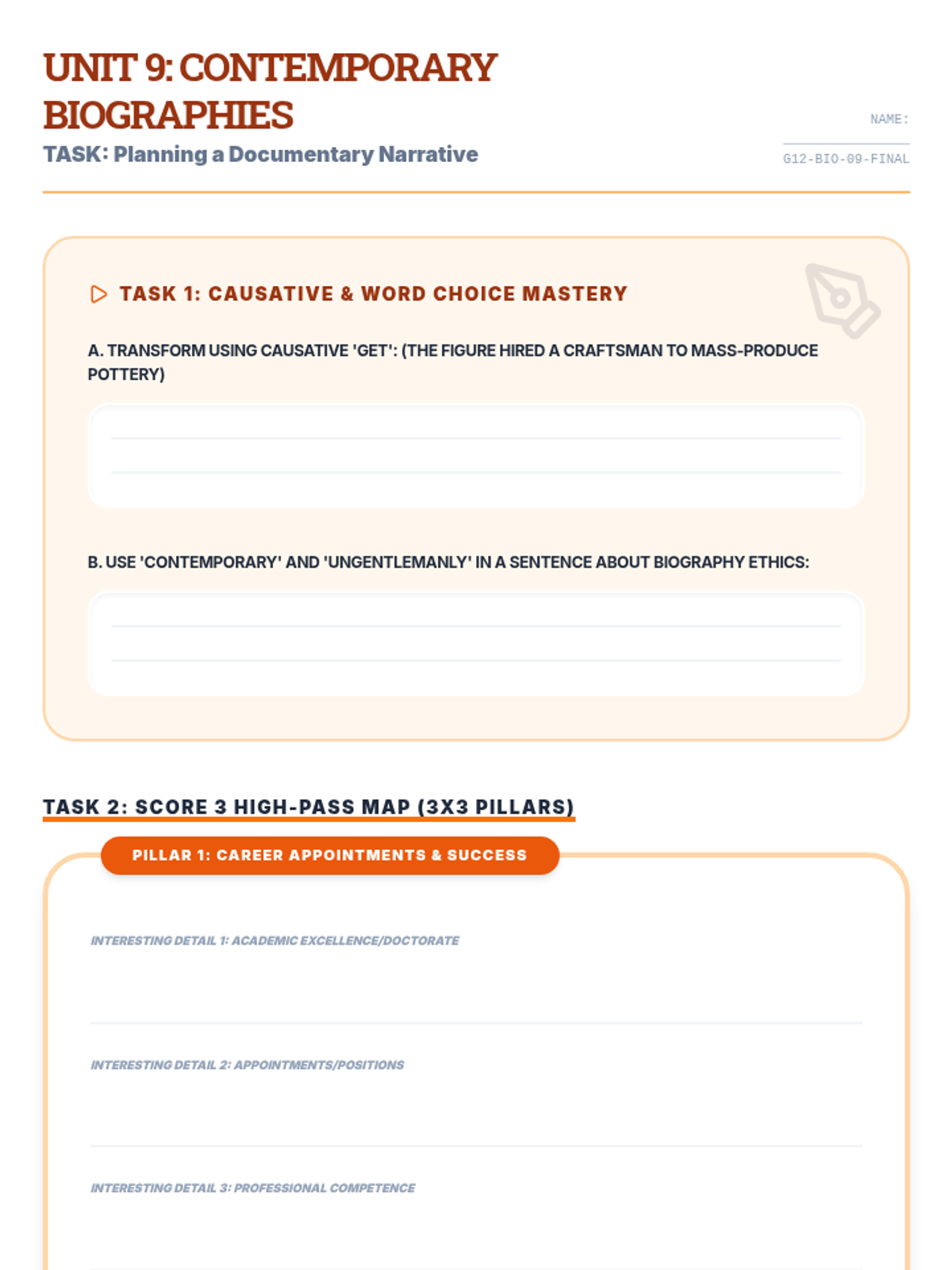
Explores the lives of historical figures through biography writing, emphasizing tense consistency and logical life-event sequencing.
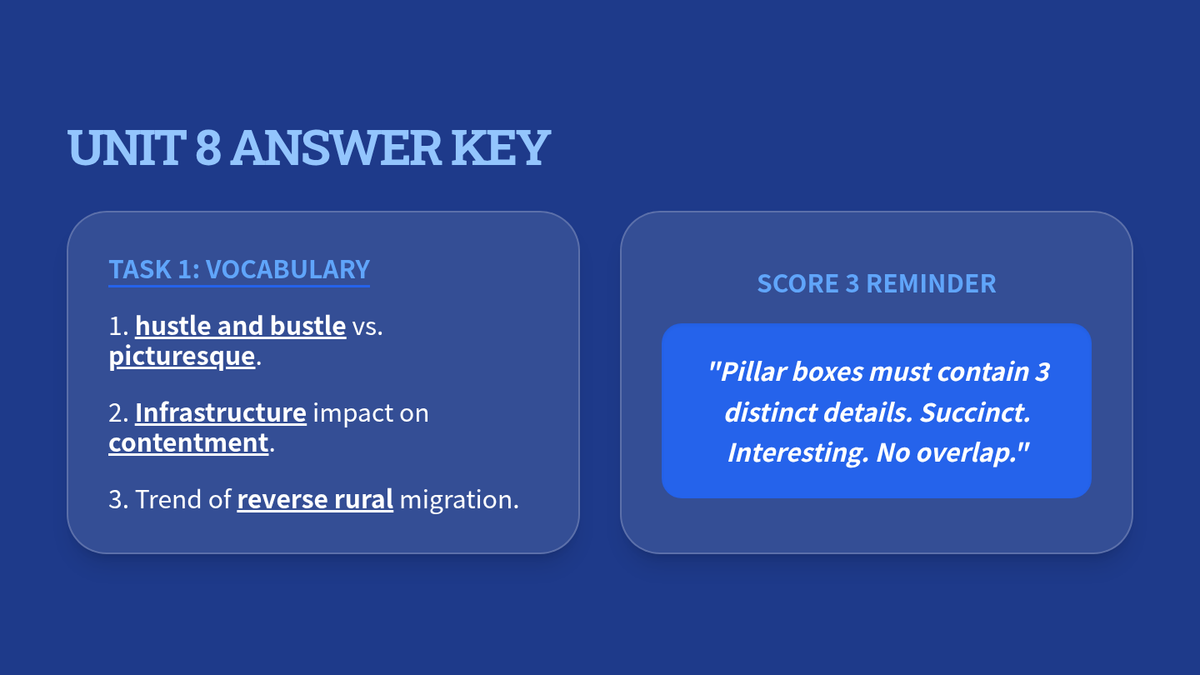
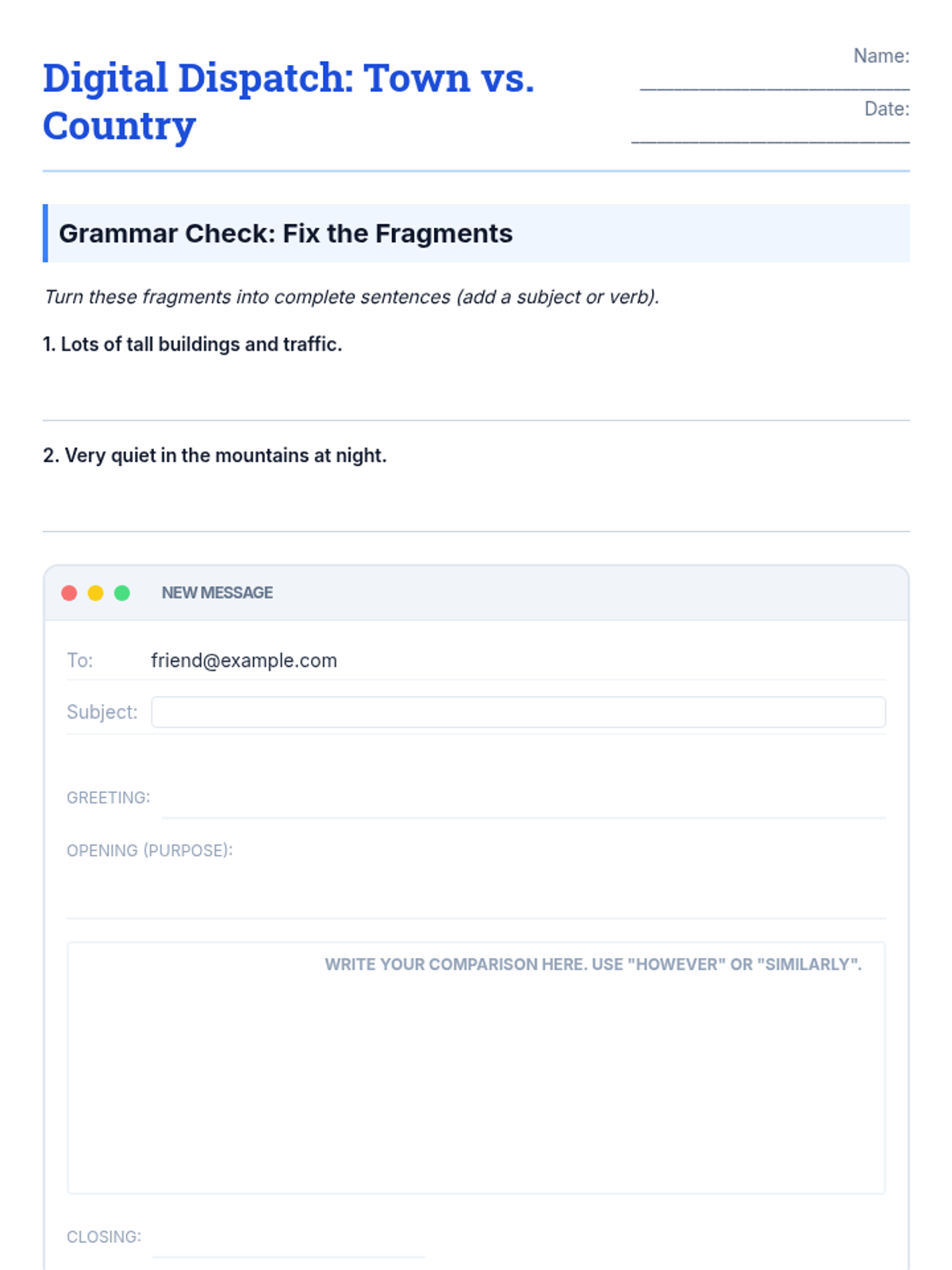
Teaches email etiquette and structure through a comparison of urban and rural life, focusing on sentence fragments and transitional words for comparison.
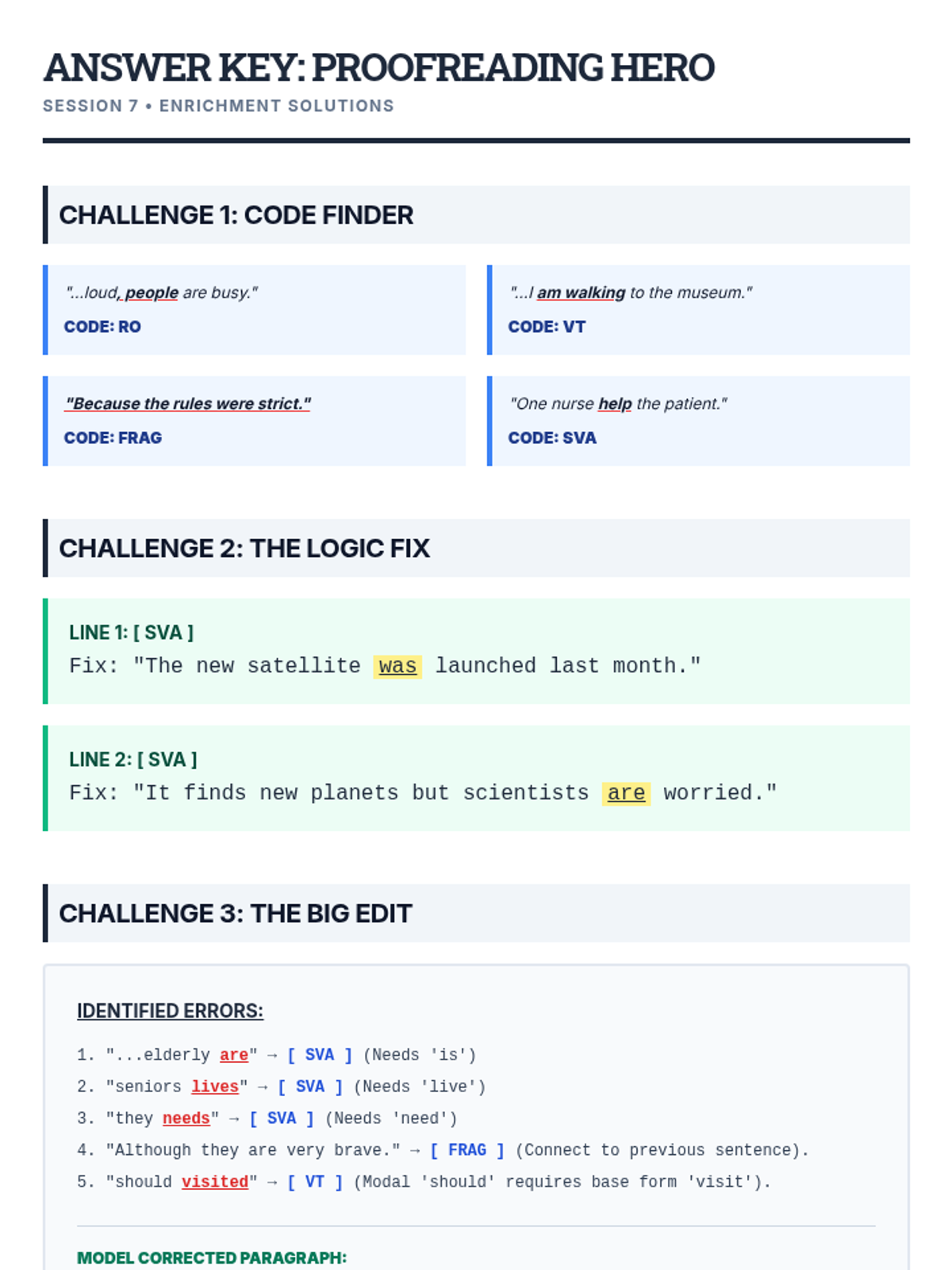
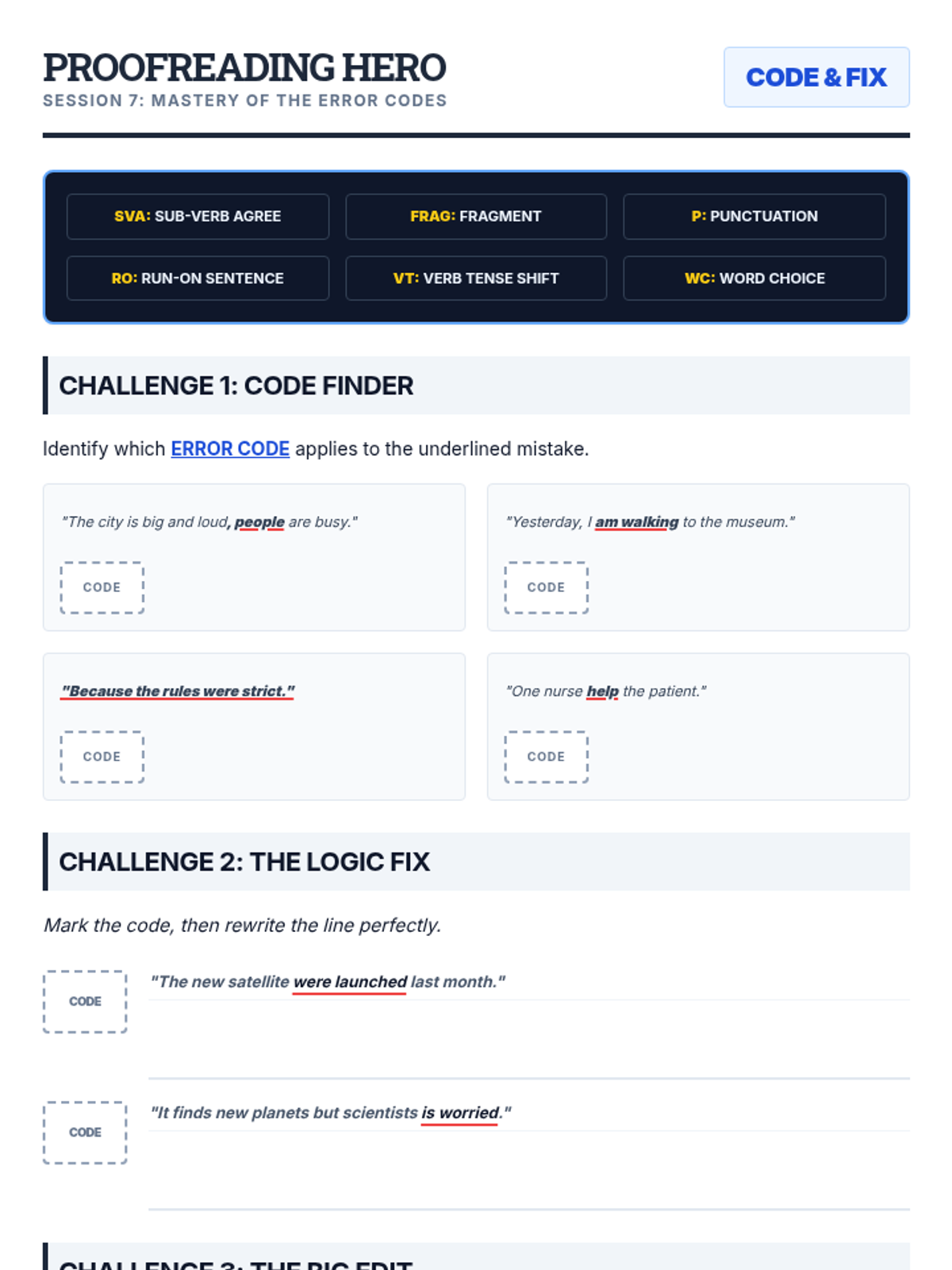
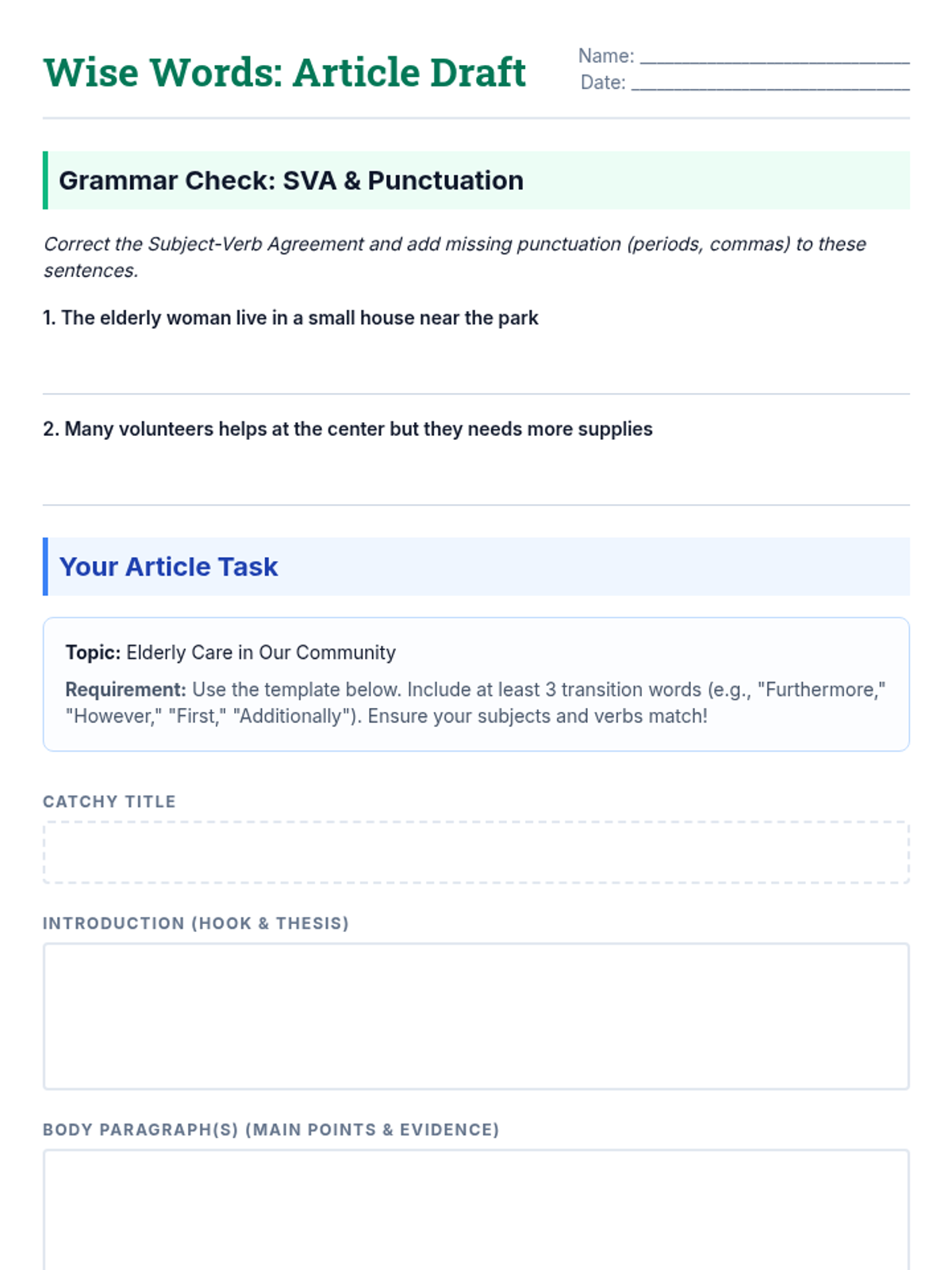
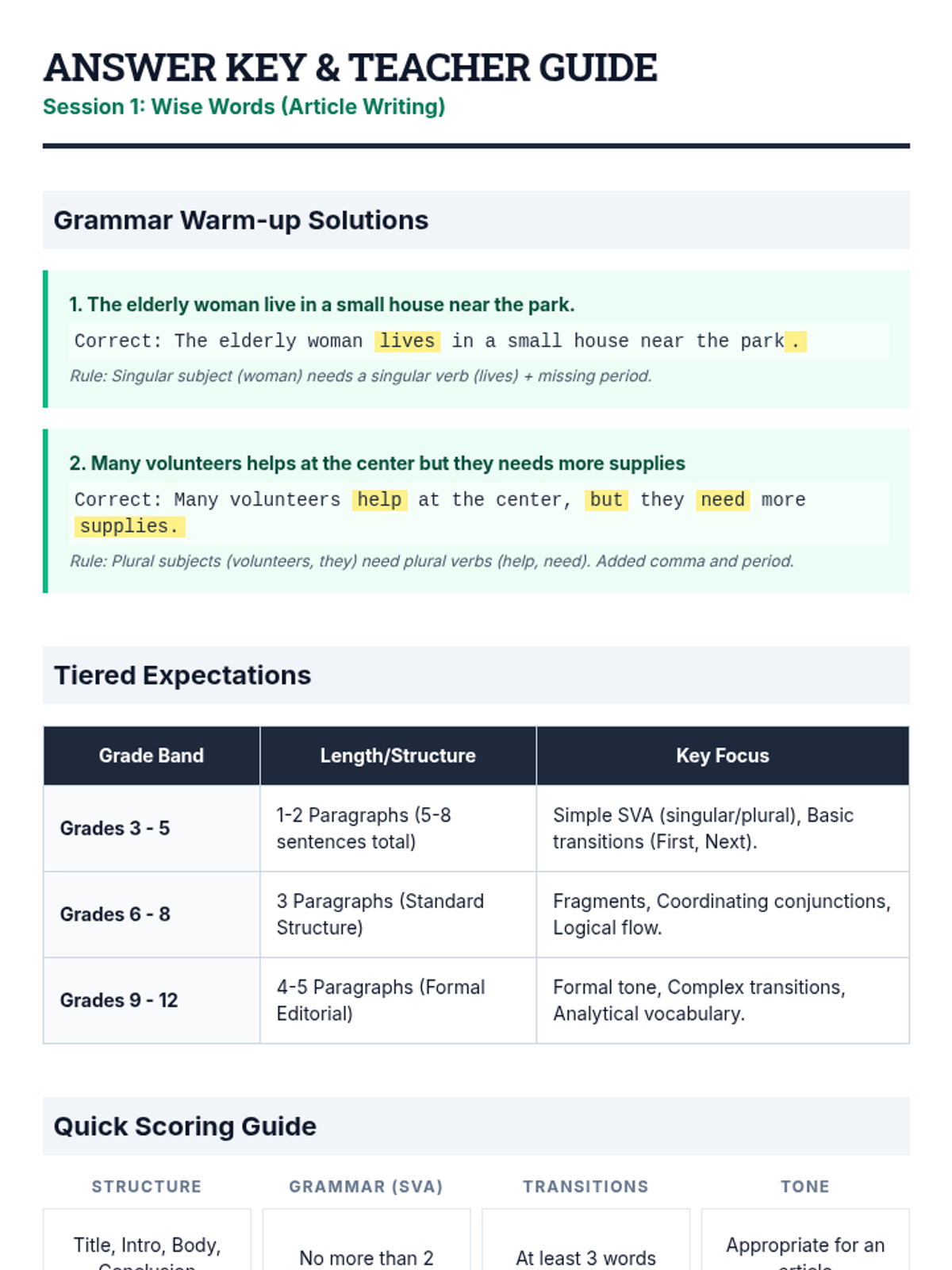
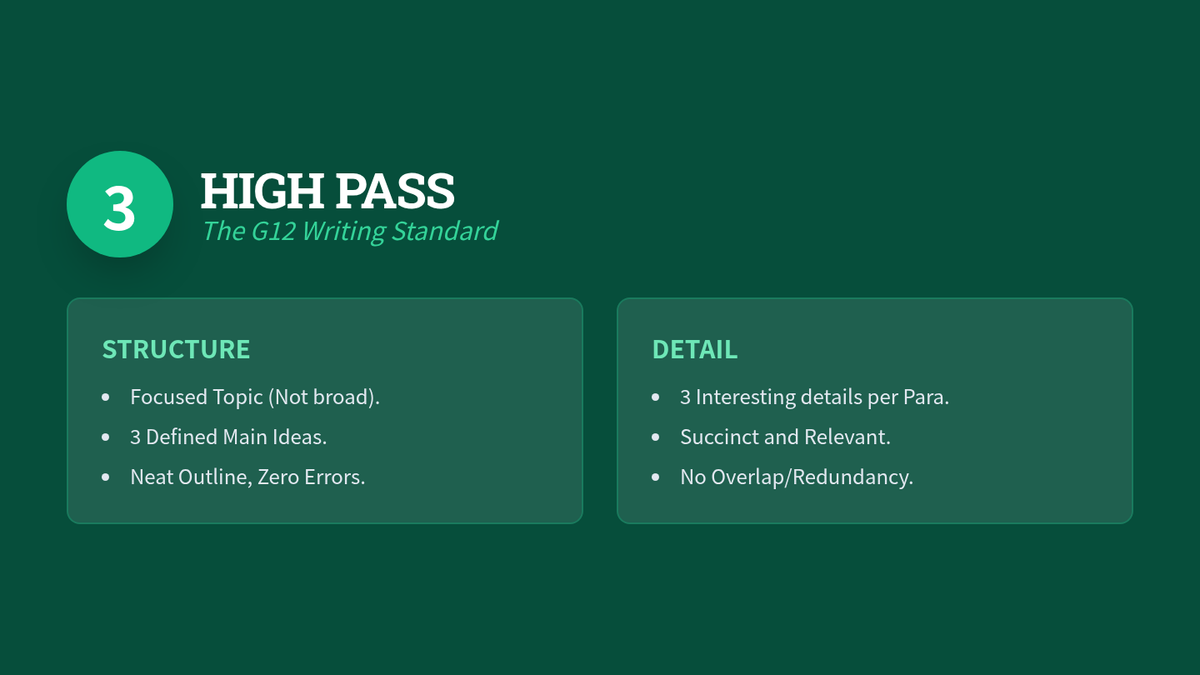
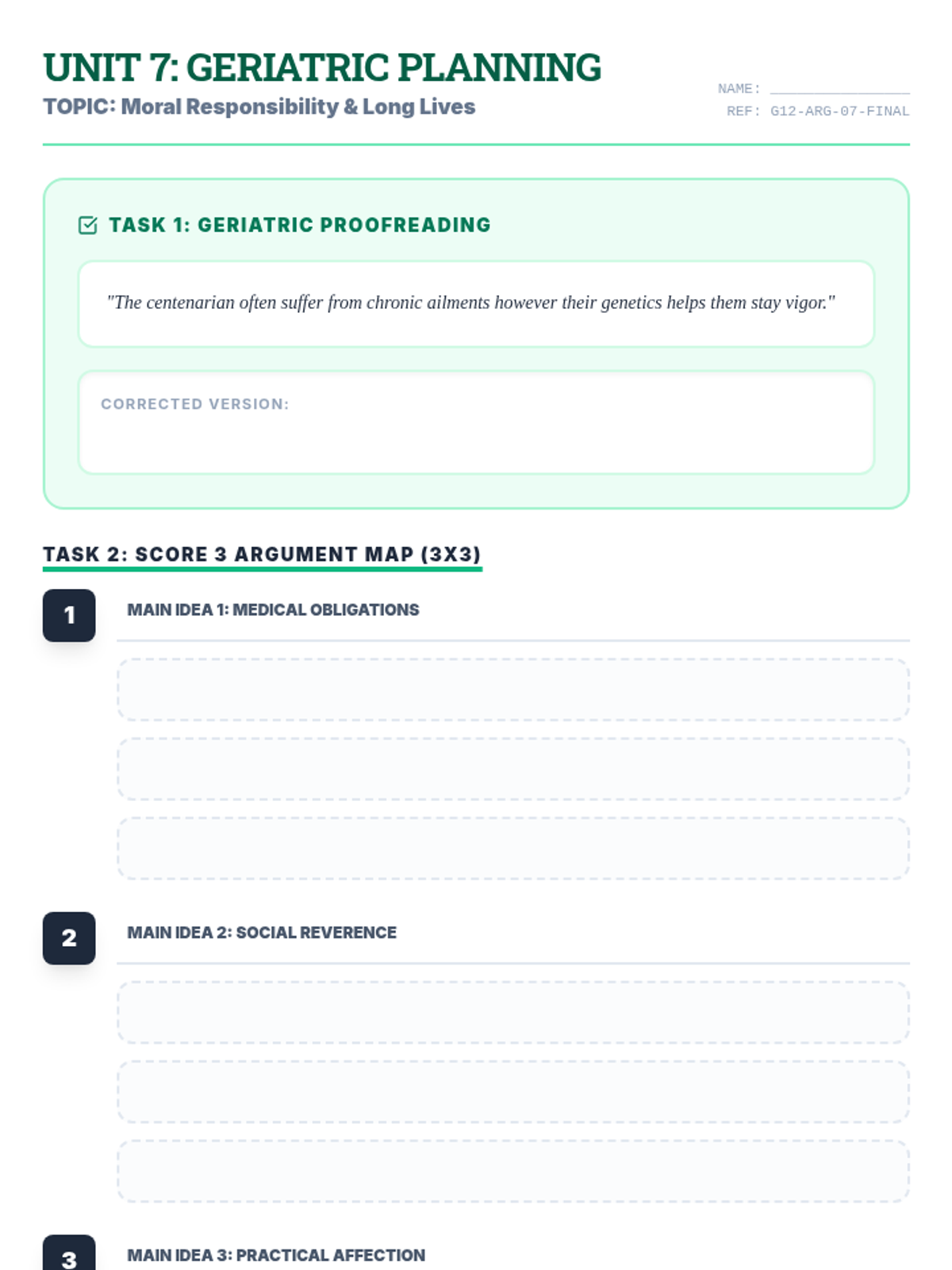
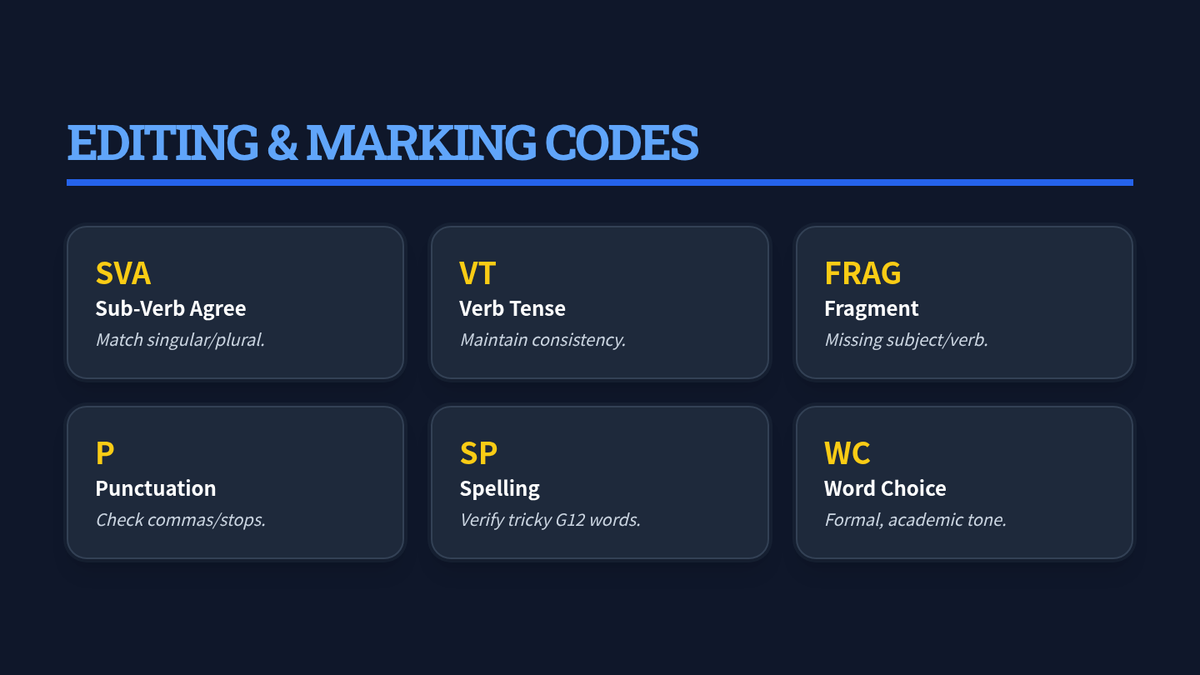
Focuses on writing articles about elderly care, teaching subject-verb agreement, punctuation, and article structure with tiered difficulty for elementary to high school levels.
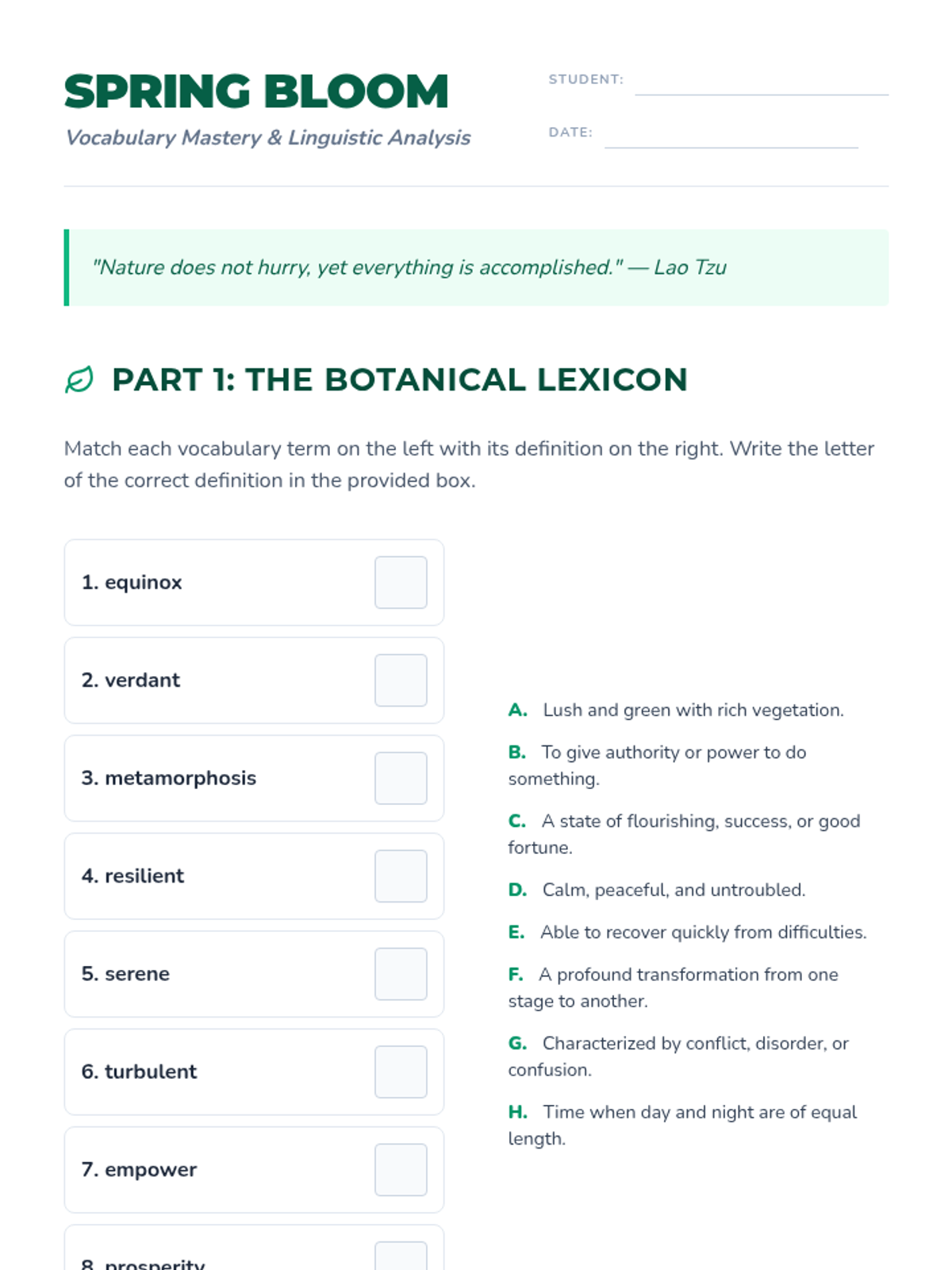
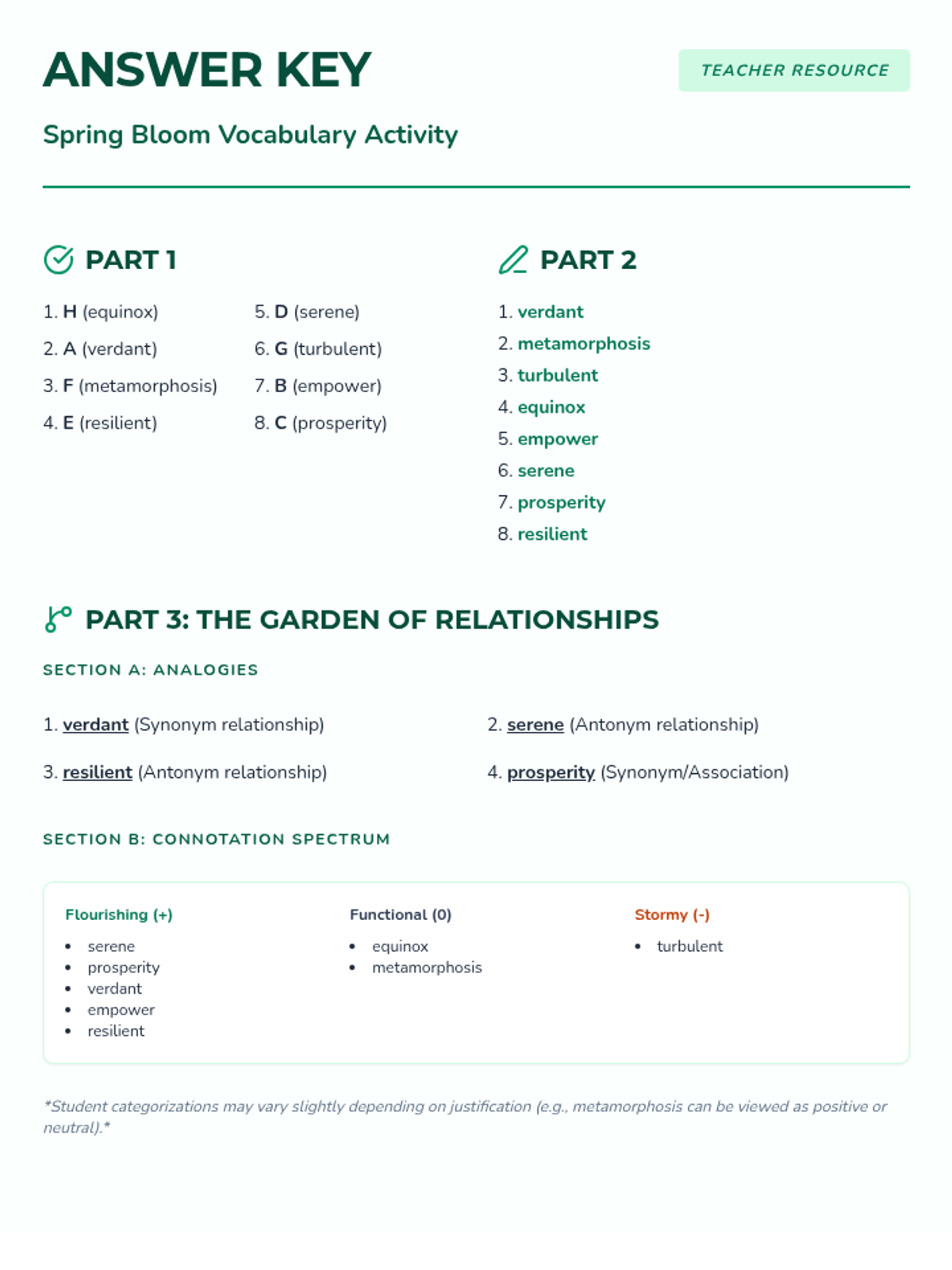
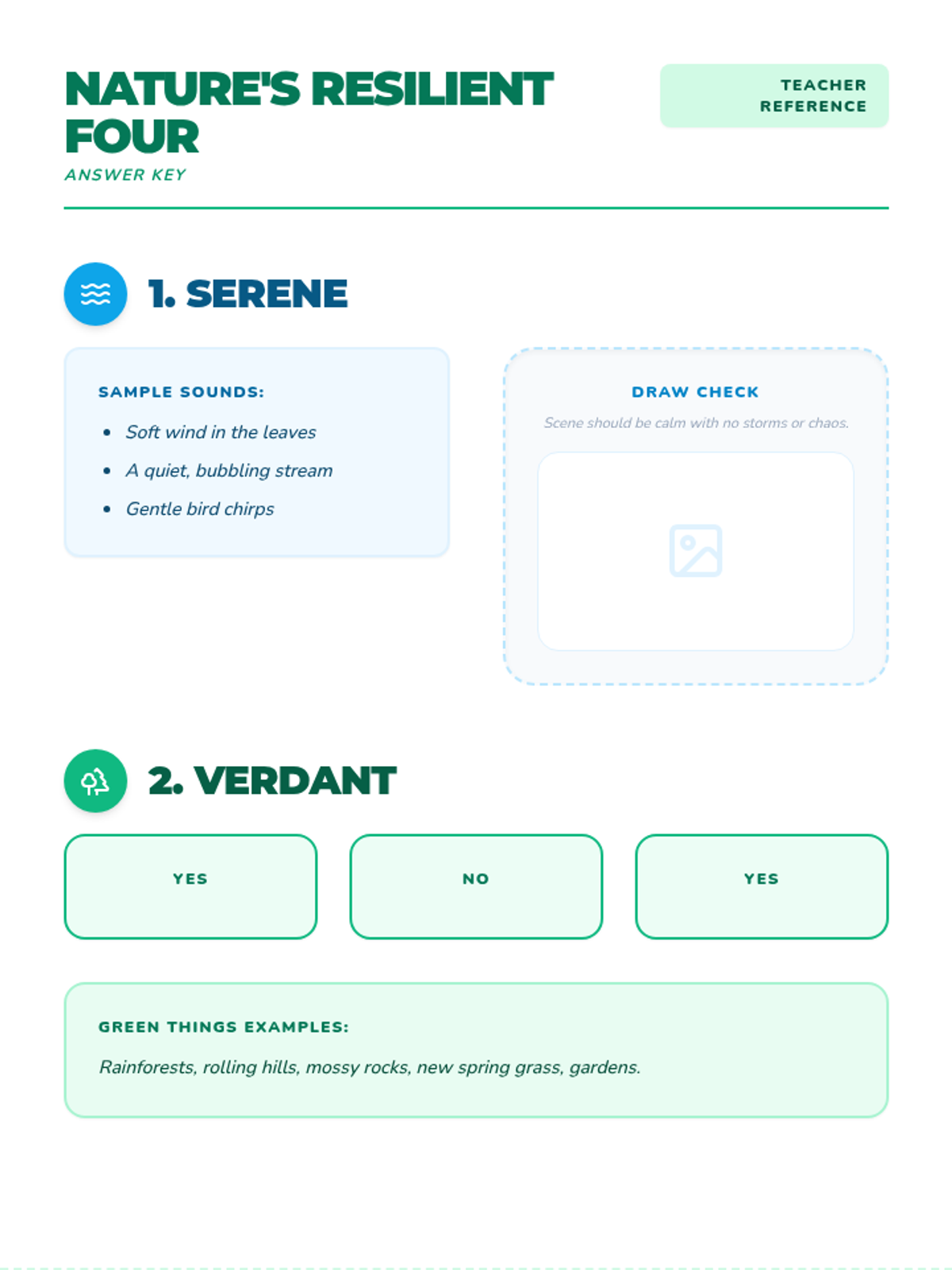
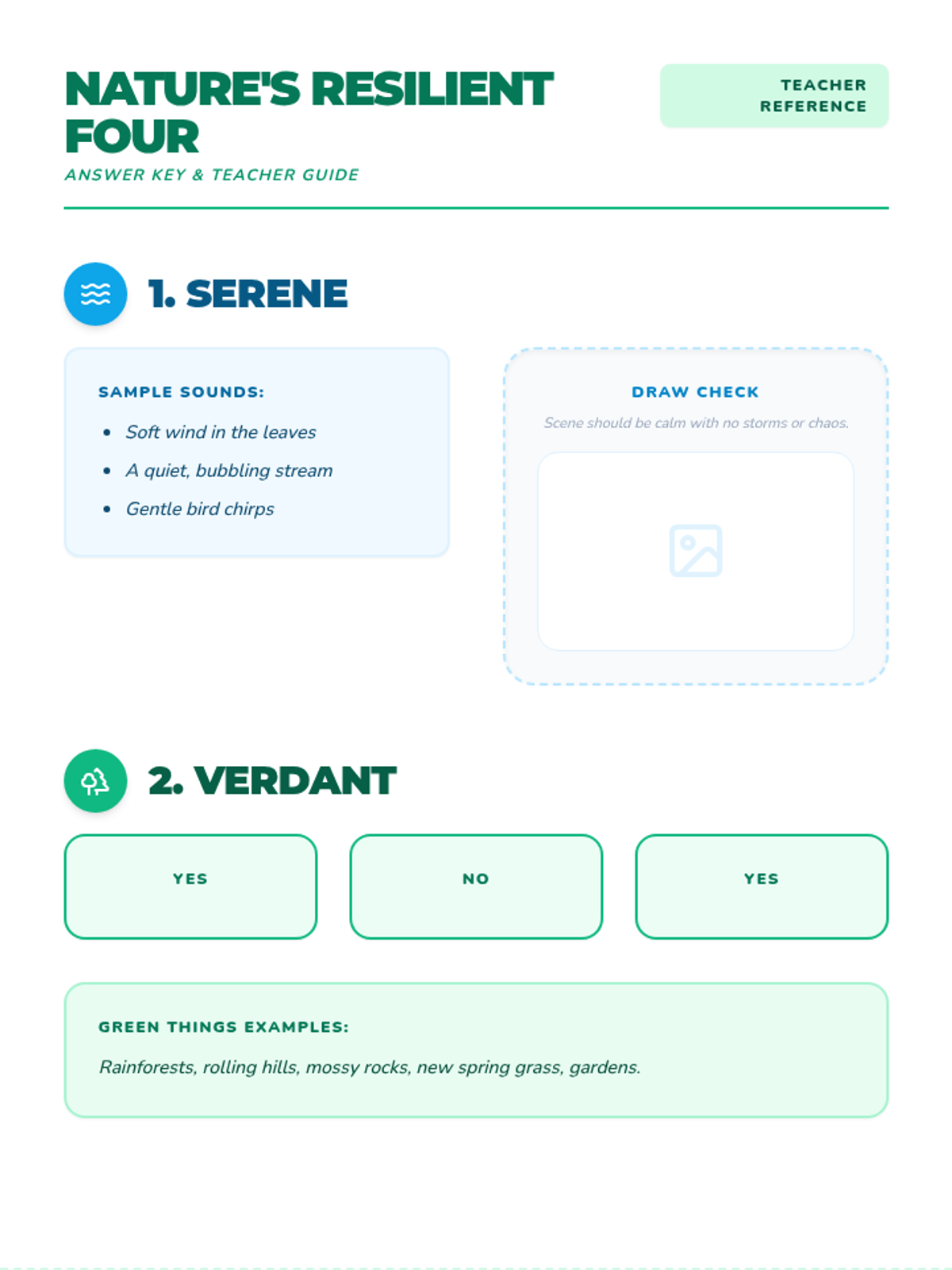
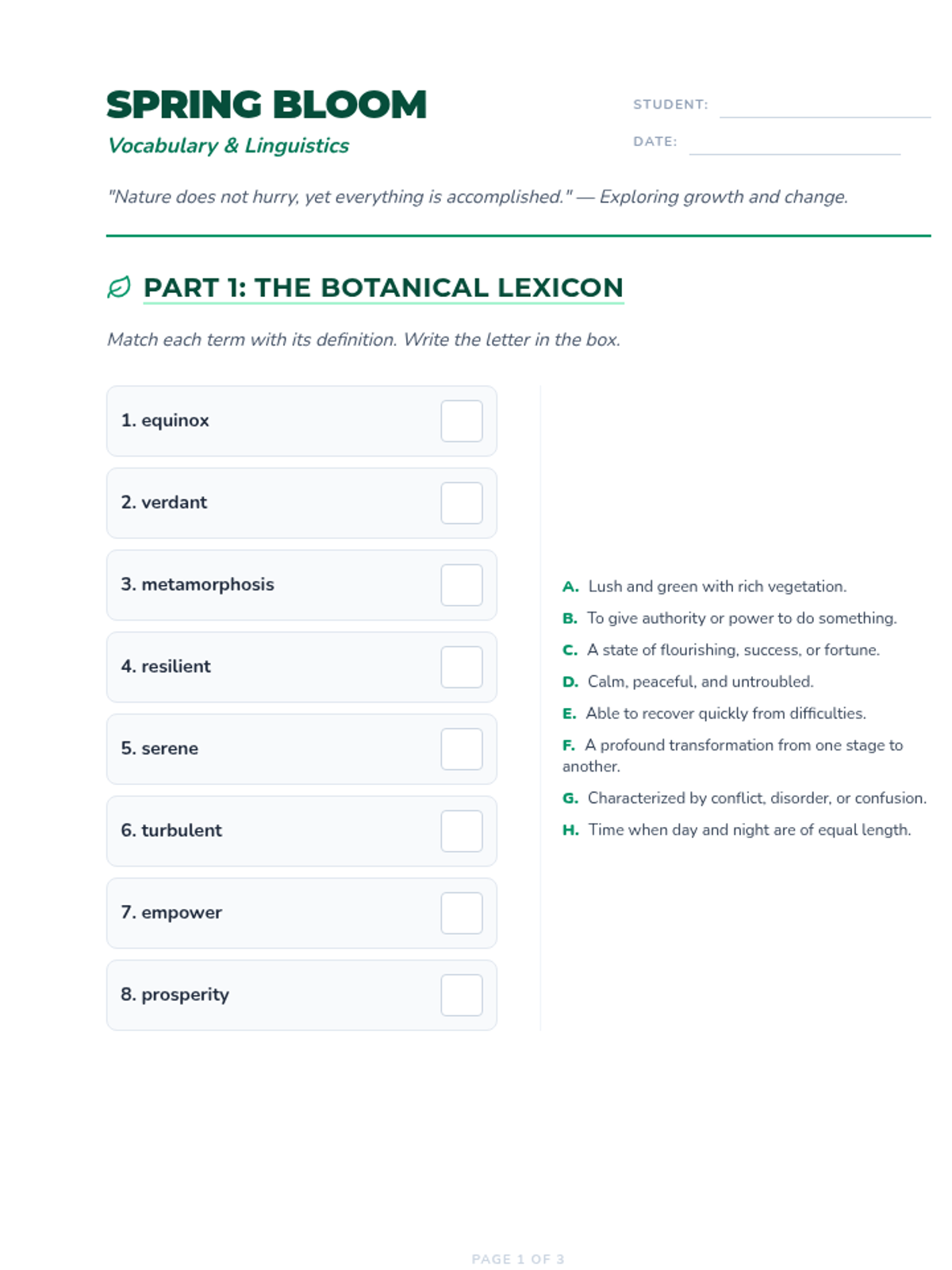
A vocabulary and linguistics lesson exploring themes of transition, growth, and strength. Students master eight high-level terms—equinox, verdant, metamorphosis, resilient, serene, turbulent, empower, and prosperity—through context analysis and creative application.
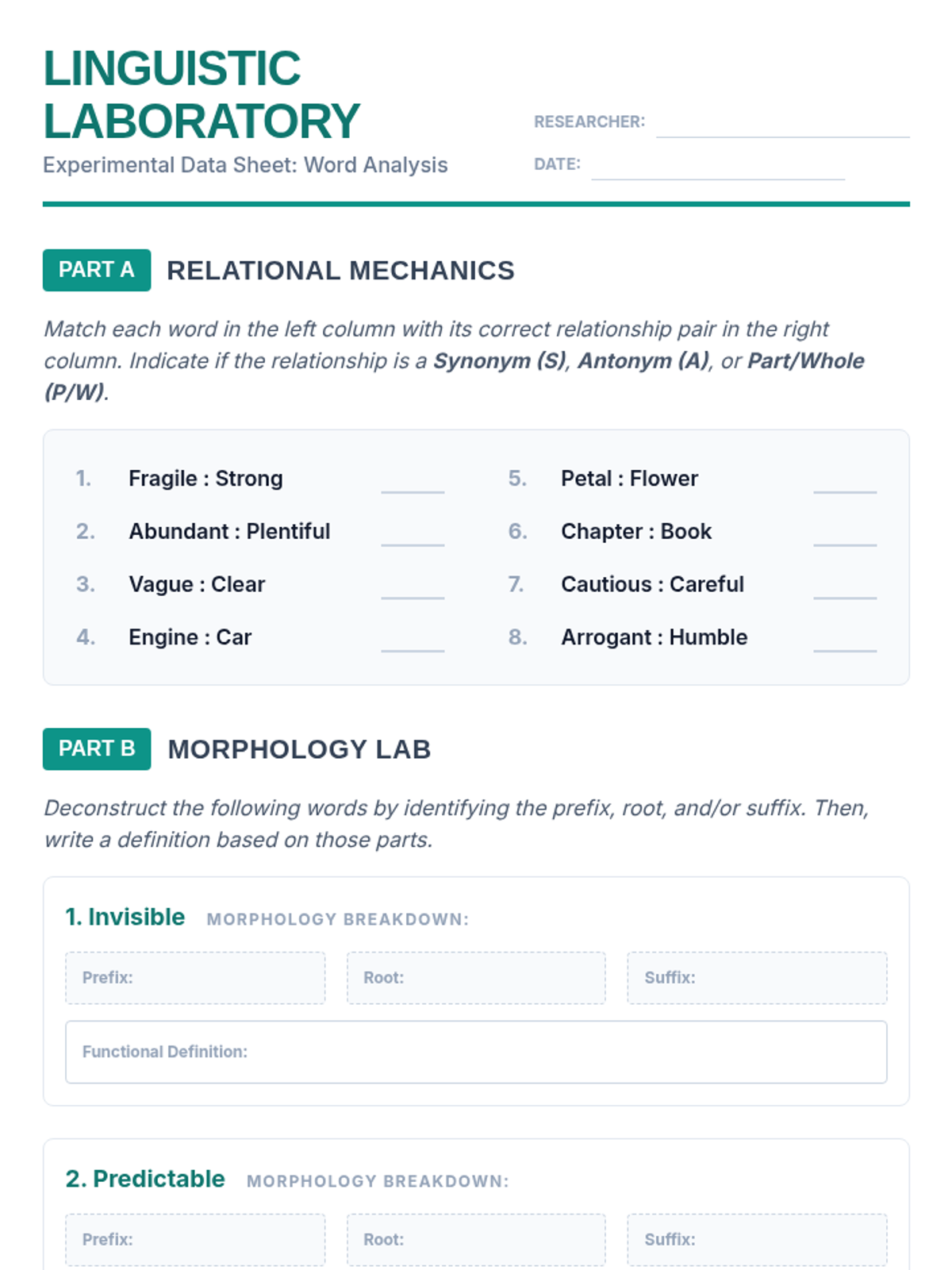
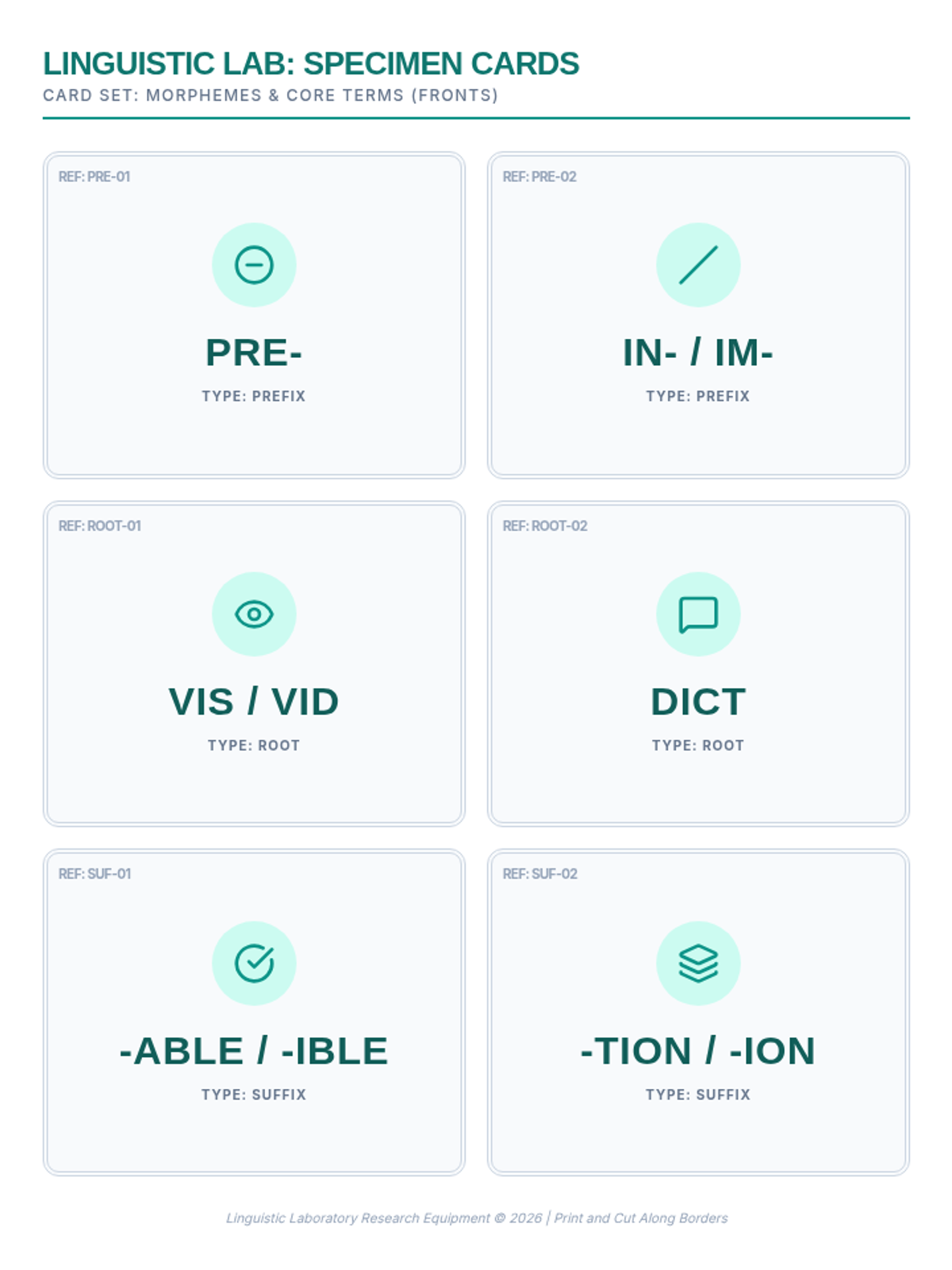
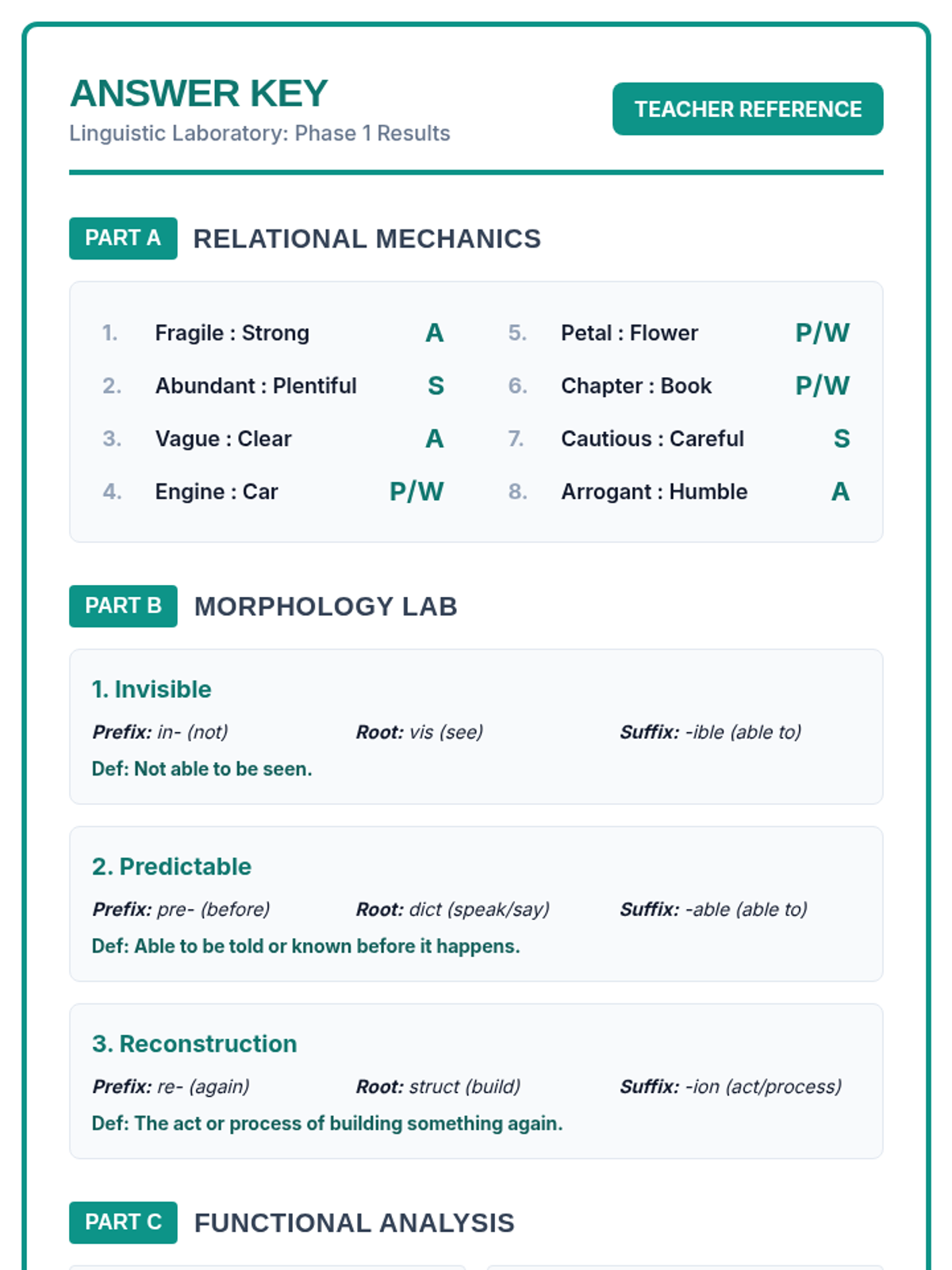
A comprehensive lesson focused on 7th-grade word study, including word relationships (synonyms, antonyms, analogies), morphology (roots, prefixes, suffixes), and part-of-speech functions.
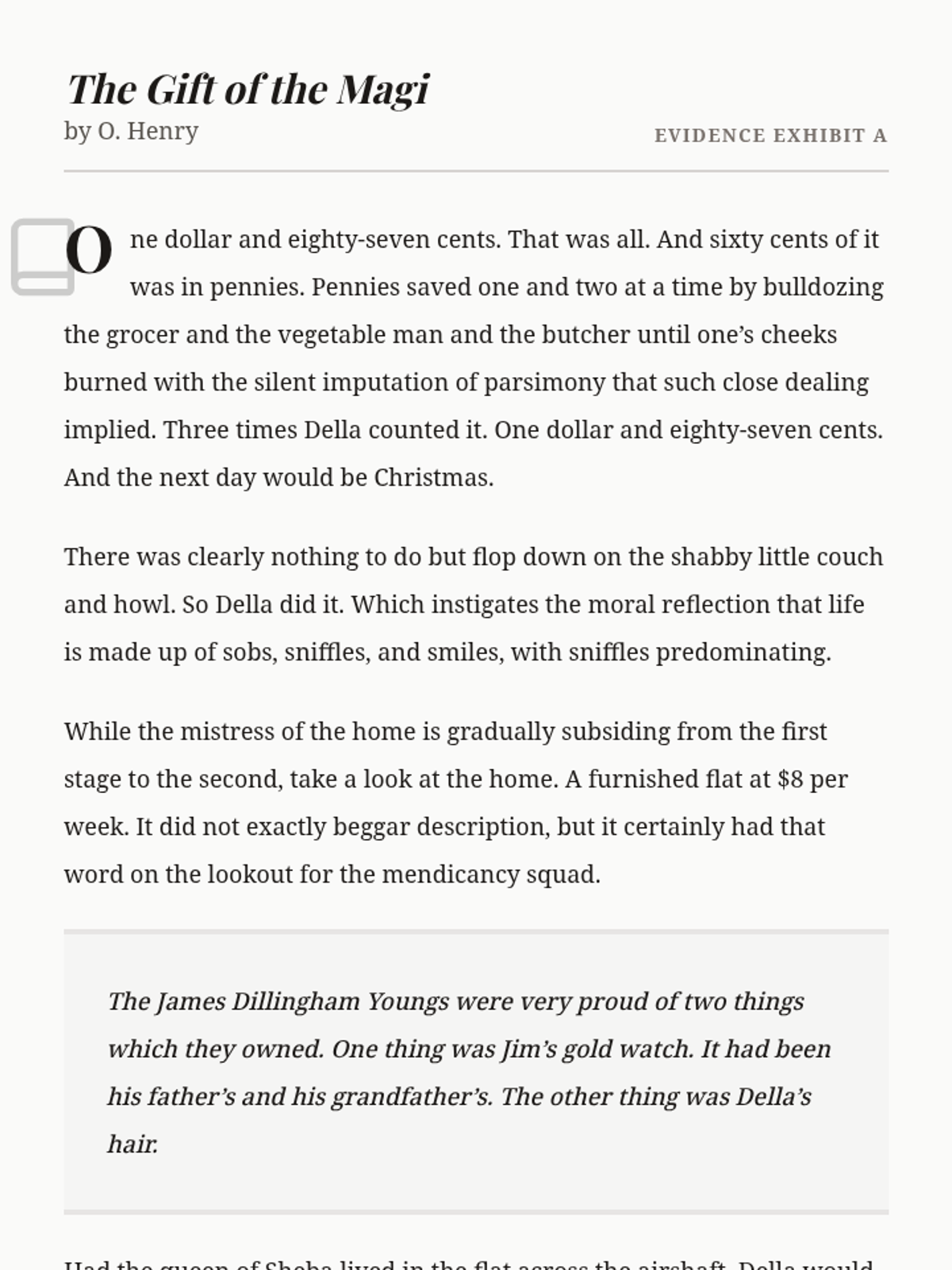
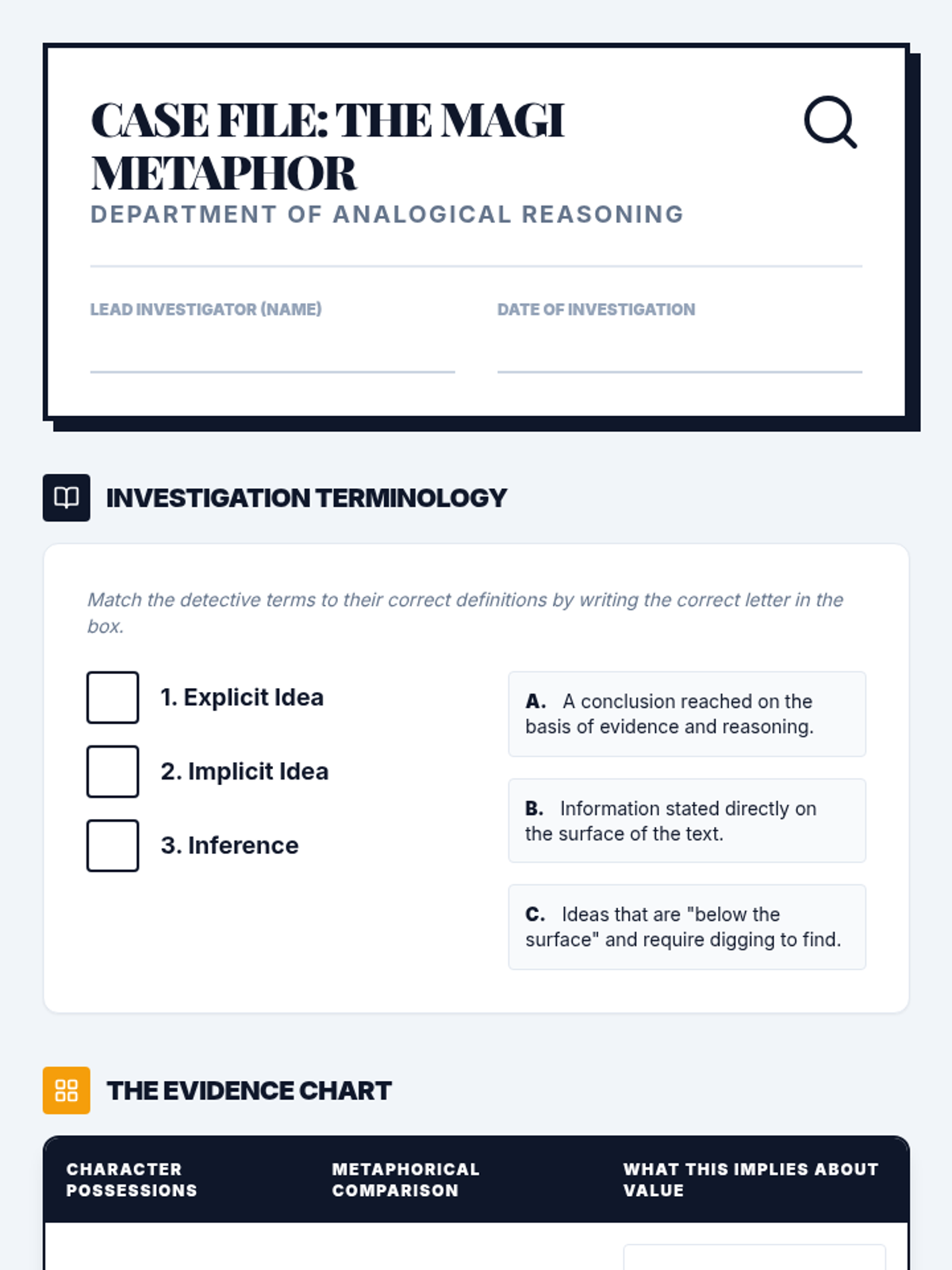
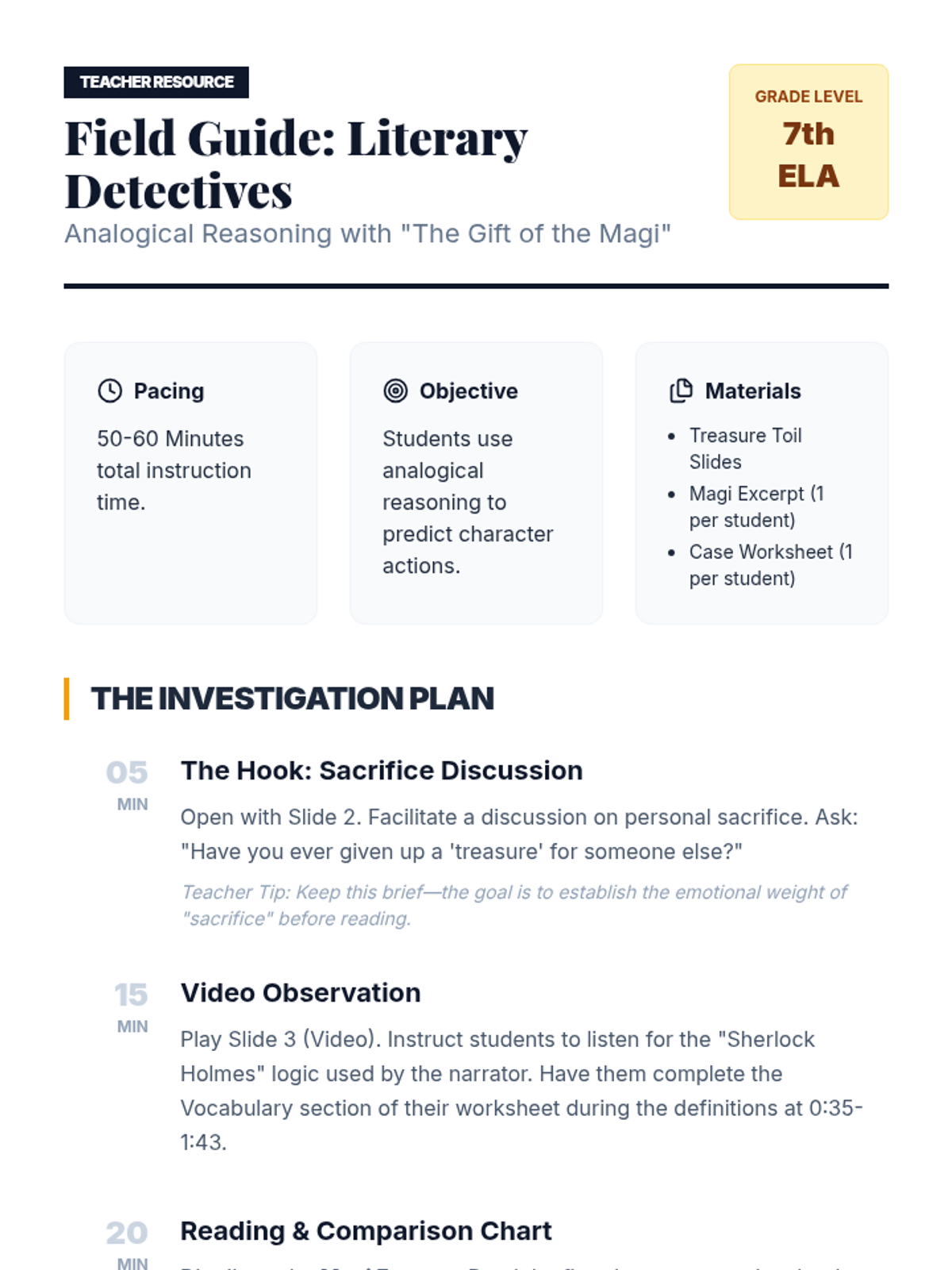
A 7th-grade ELA lesson exploring analogical reasoning through O. Henry's 'The Gift of the Magi,' focusing on how readers use metaphors to predict character actions.
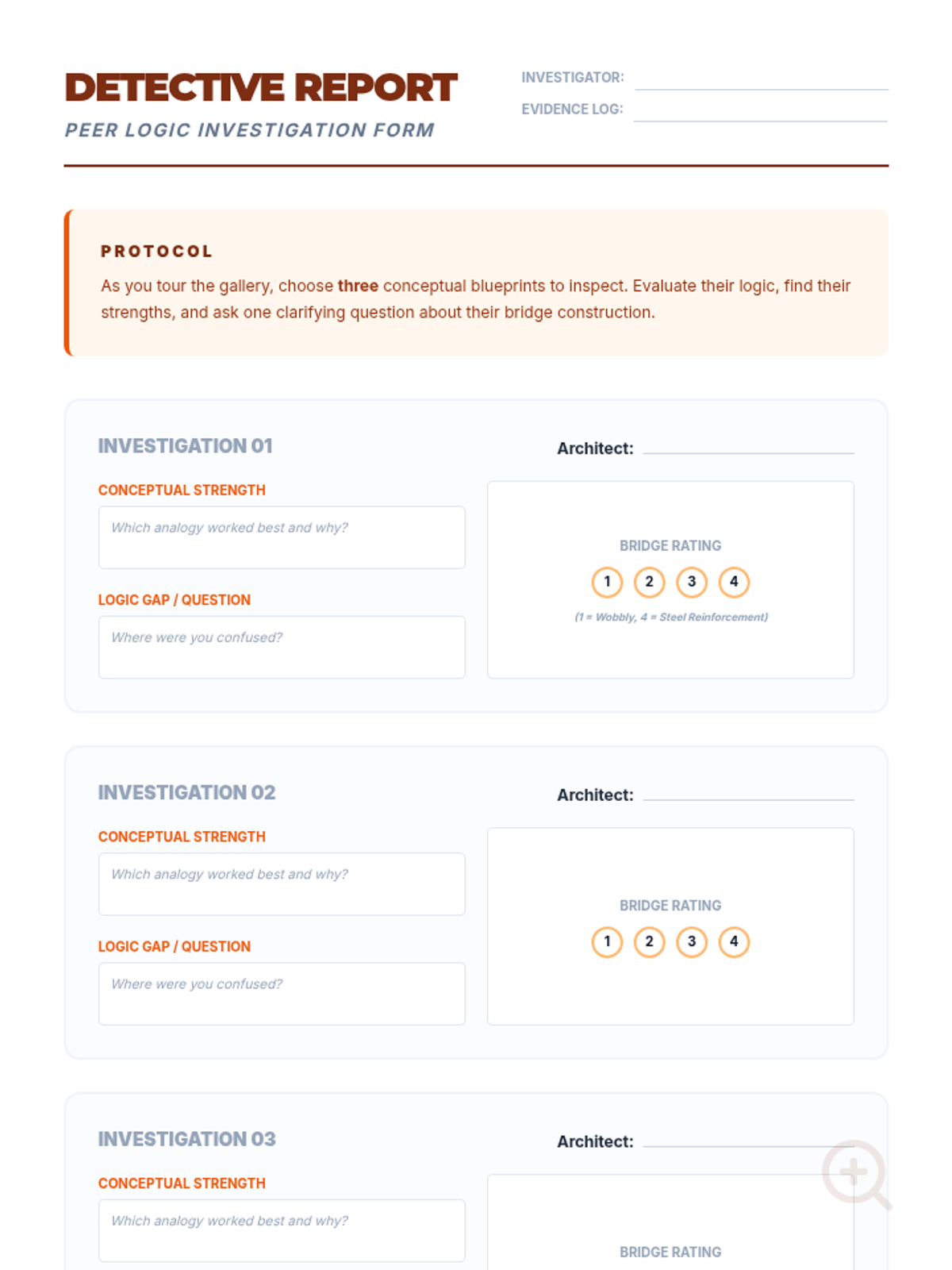
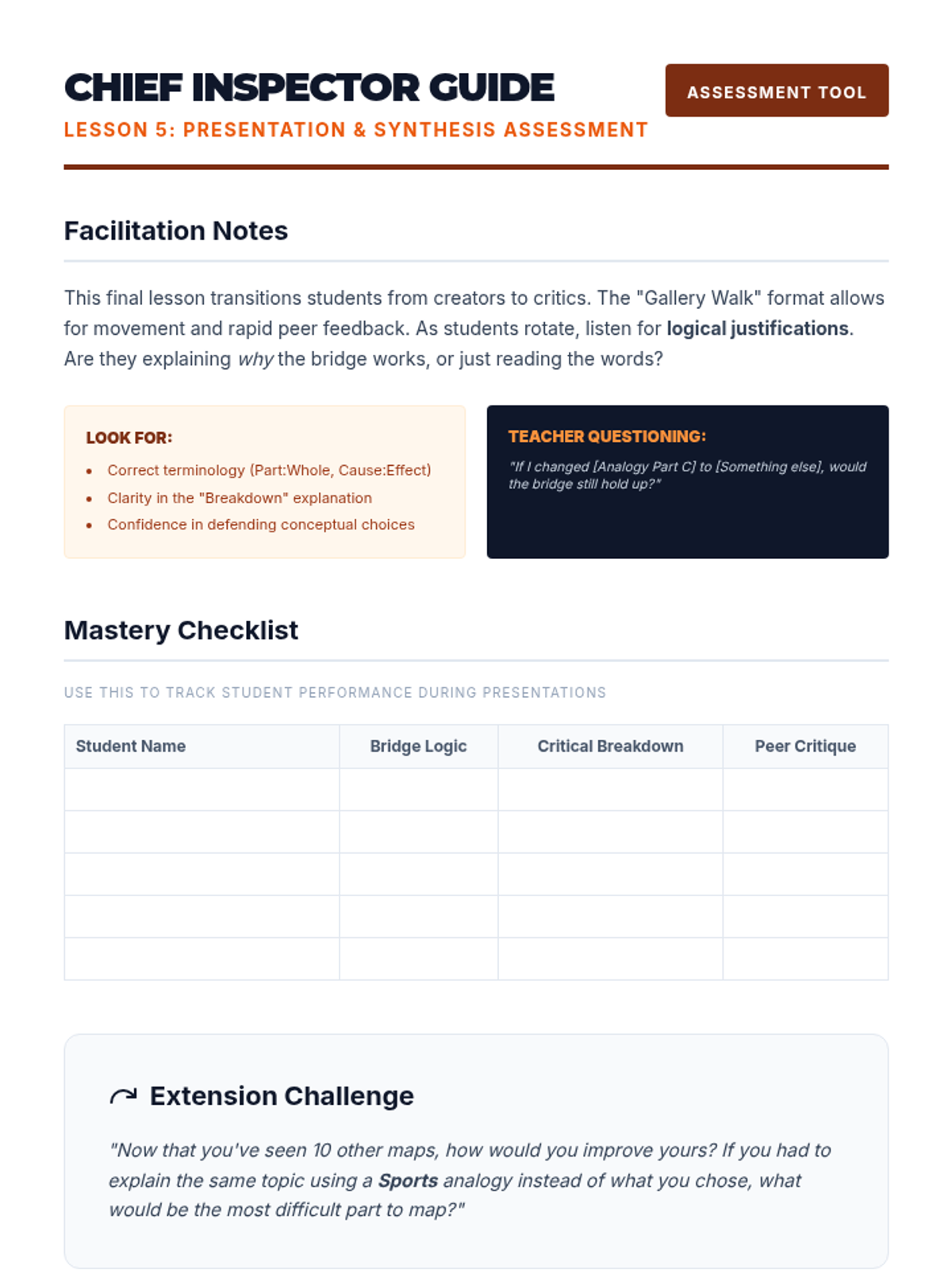
Students present their analogy projects and act as 'Logic Detectives' to evaluate the validity and effectiveness of their peers' conceptual comparisons.
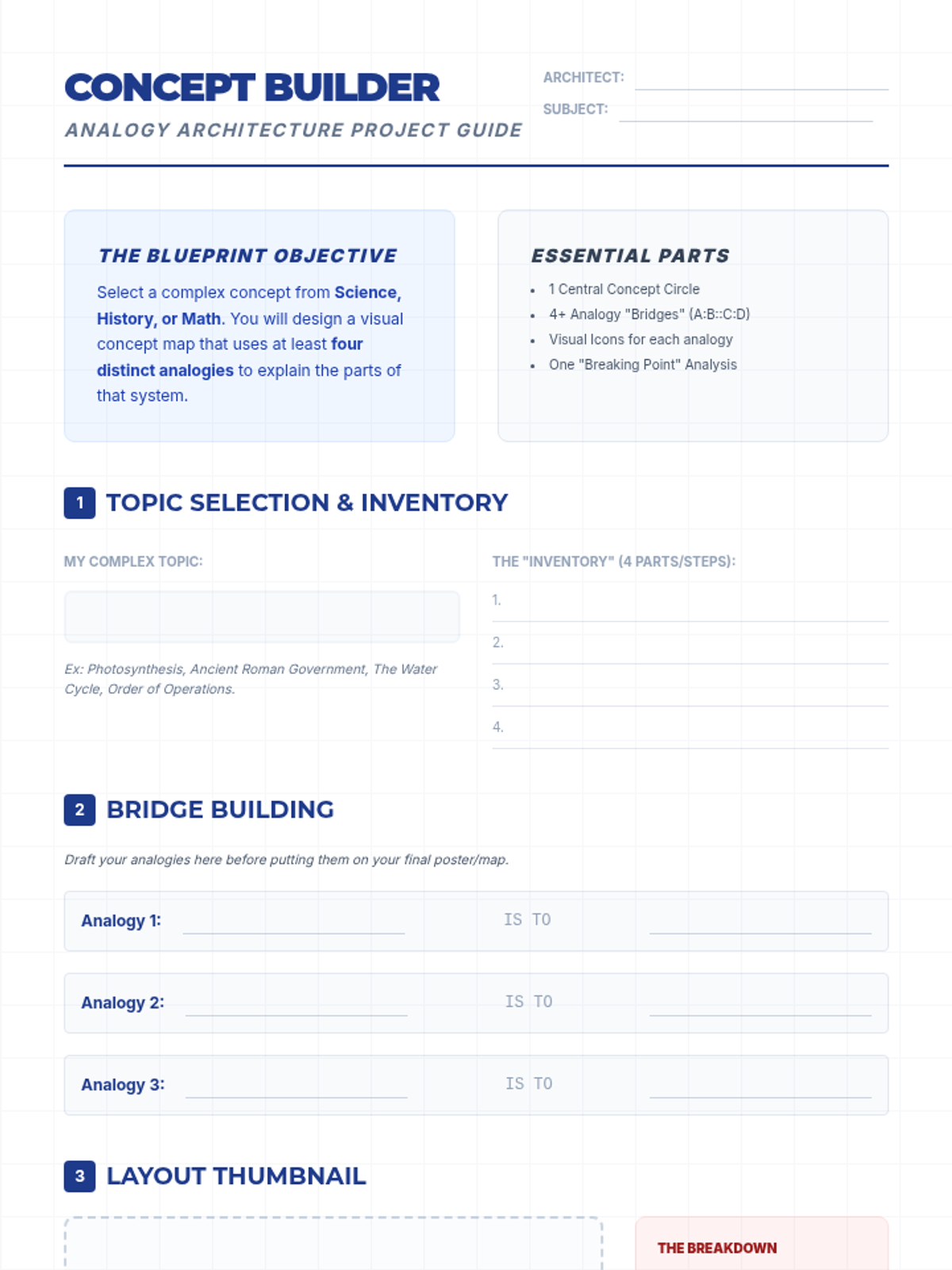
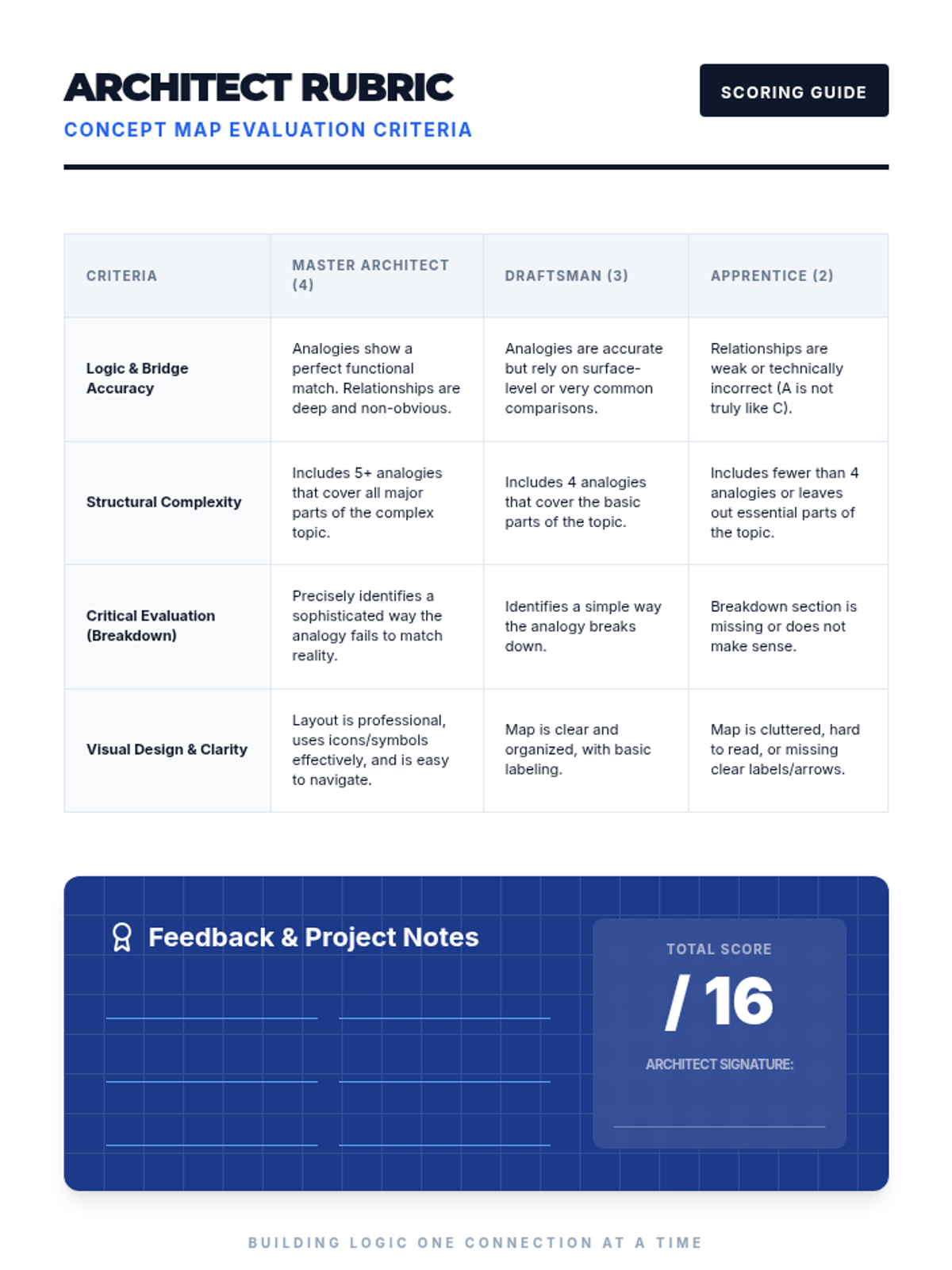
Students apply their understanding of analogy types to create visual concept maps for a topic in another subject area, translating complex ideas into familiar relational structures.
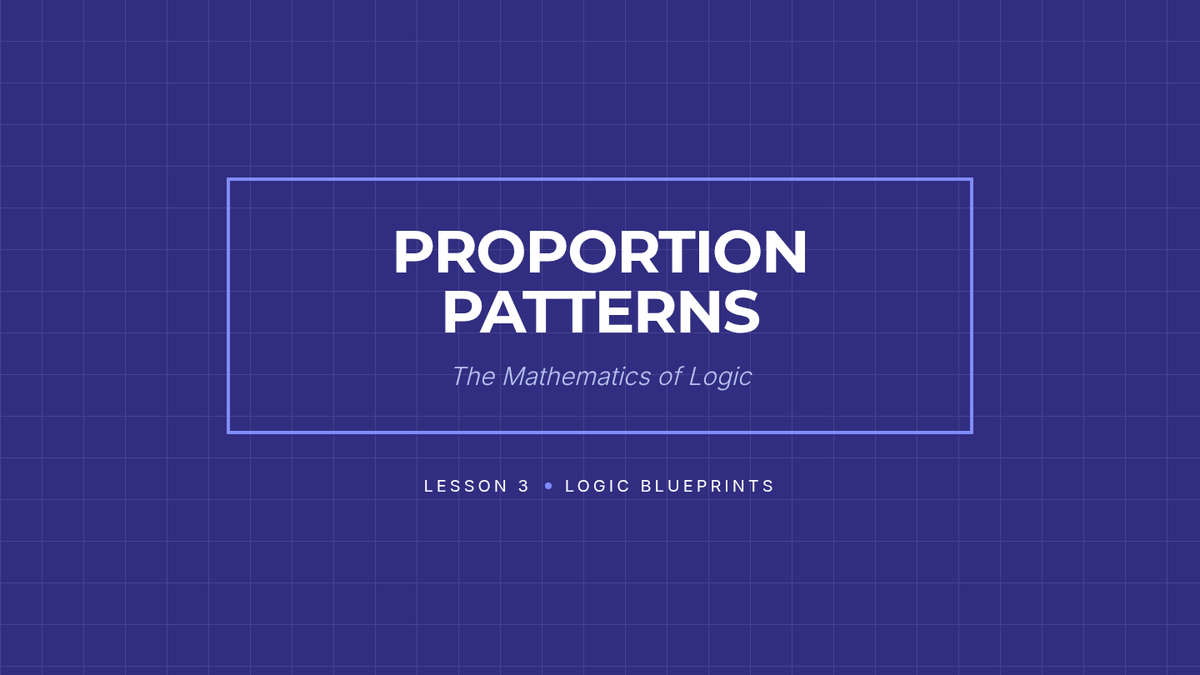
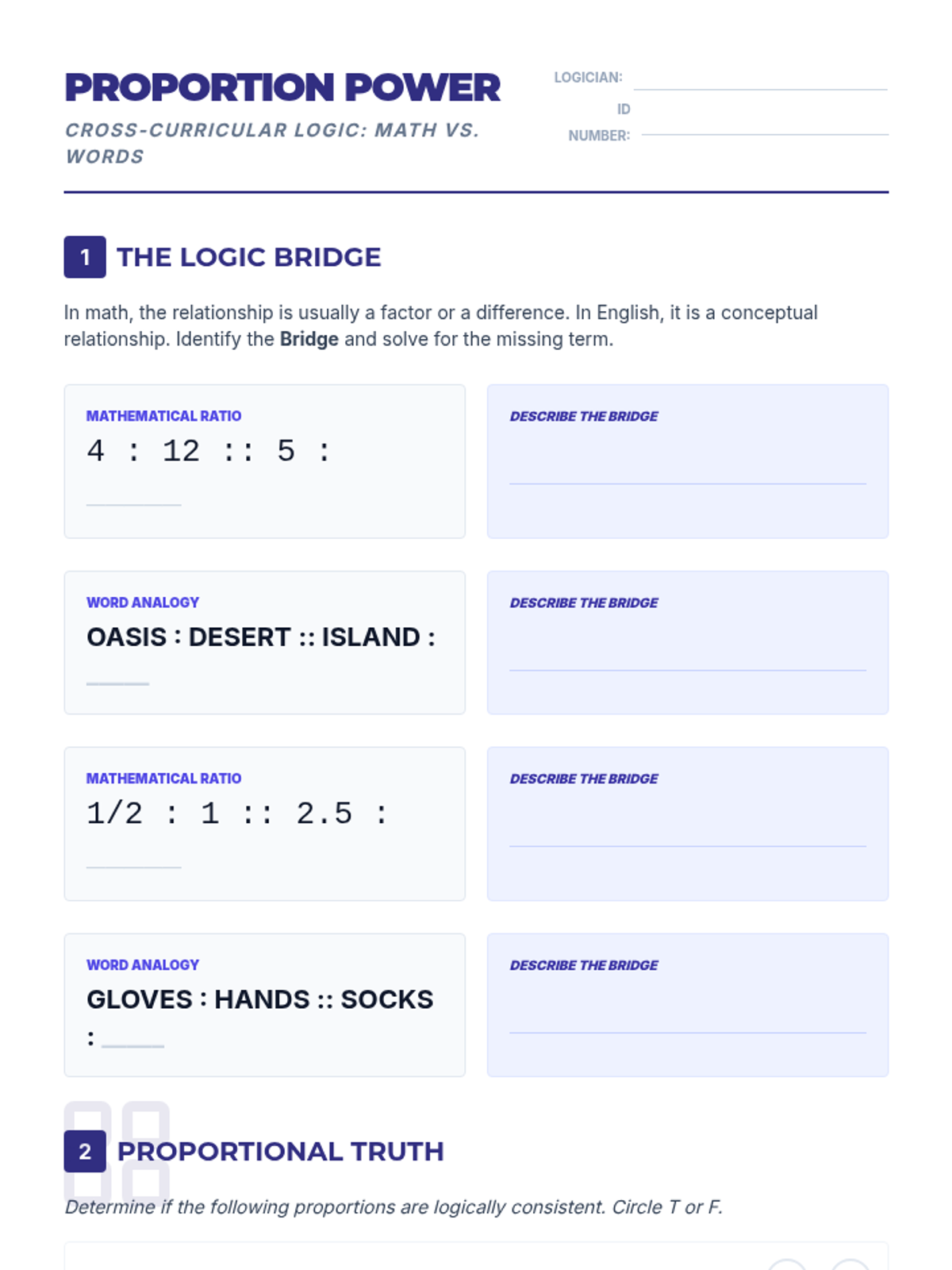
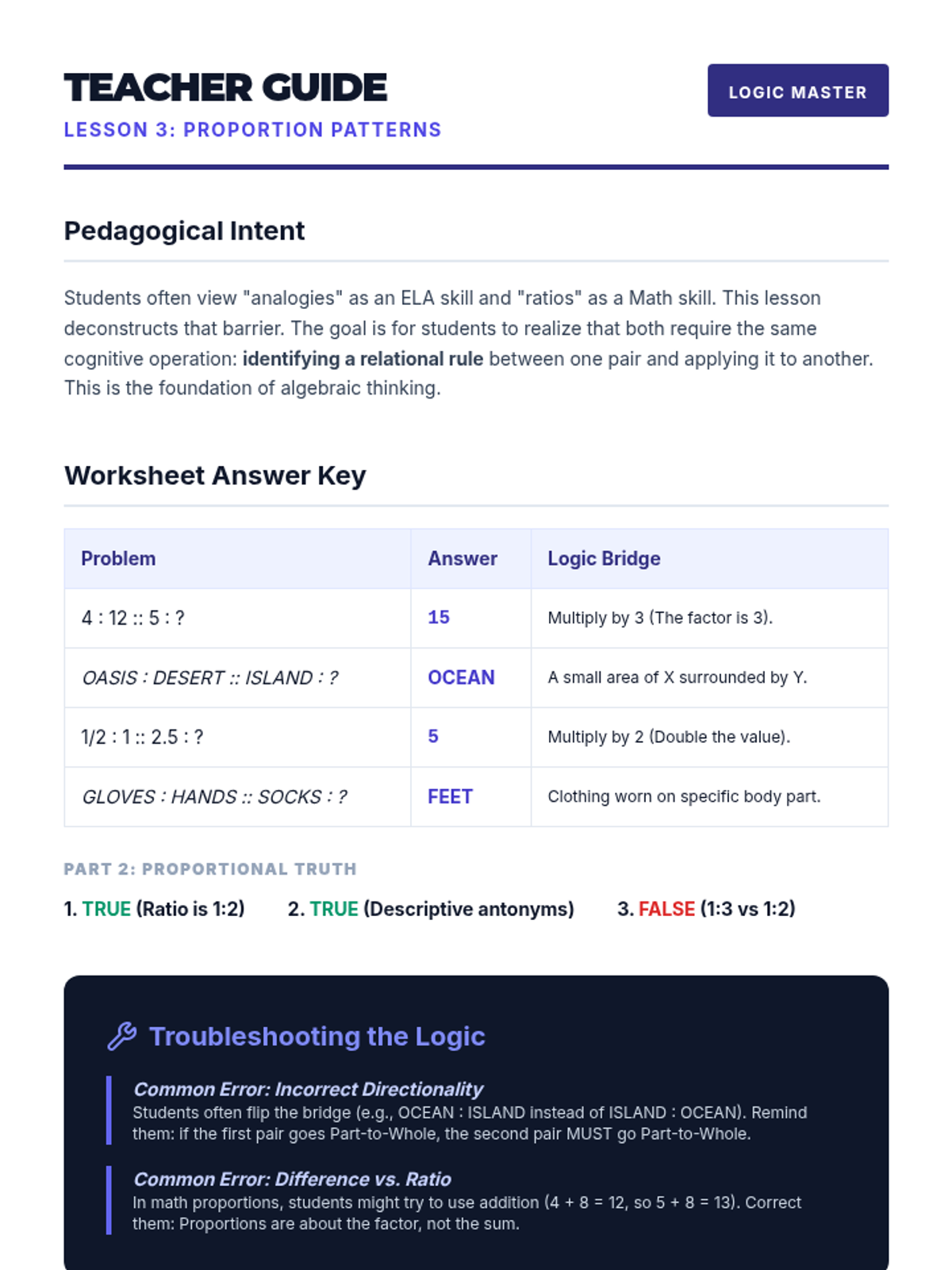
This lesson bridges the gap between verbal logic and mathematical proportions, teaching students that the A:B::C:D structure is the fundamental language of ratio across disciplines.
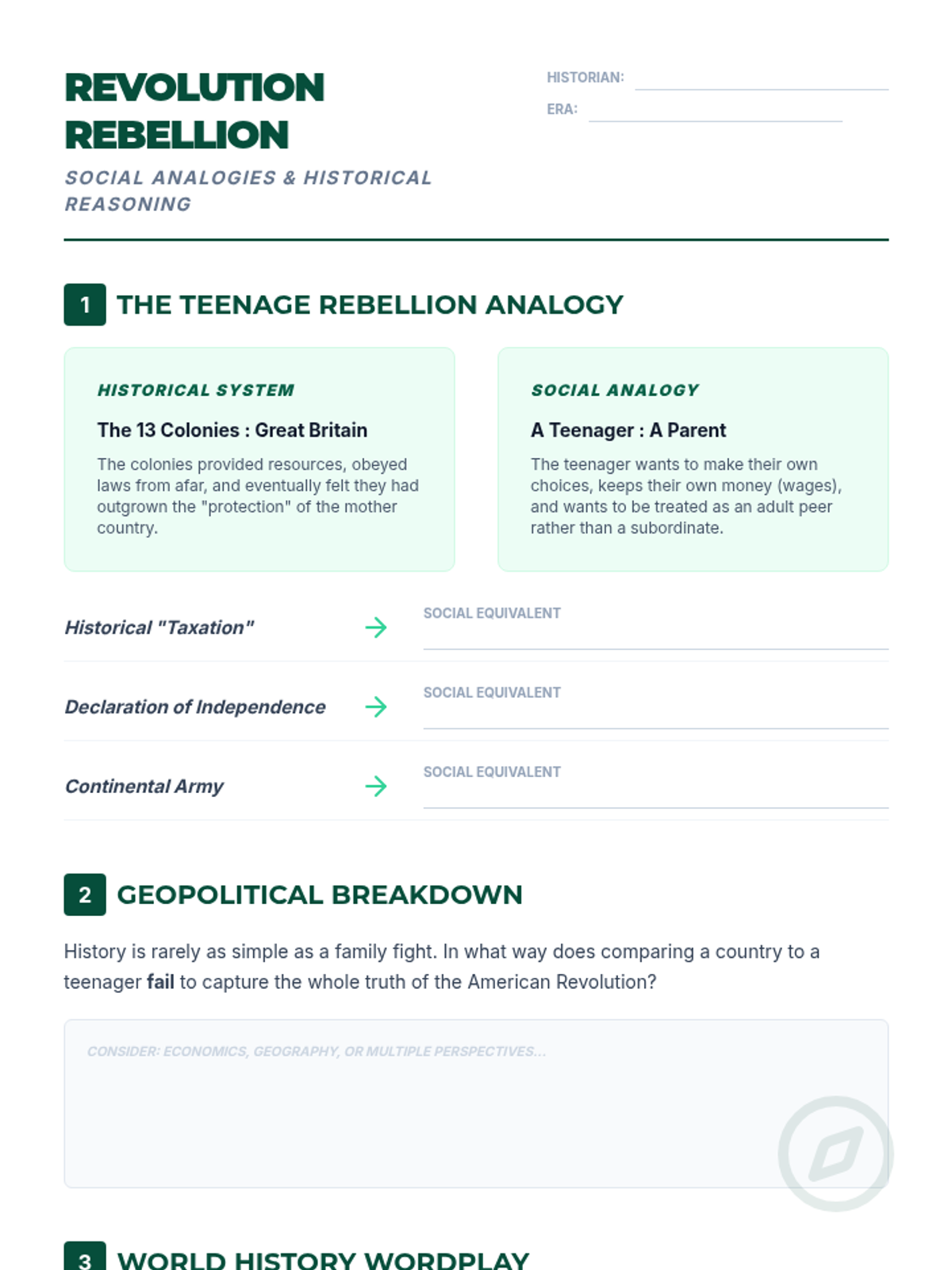
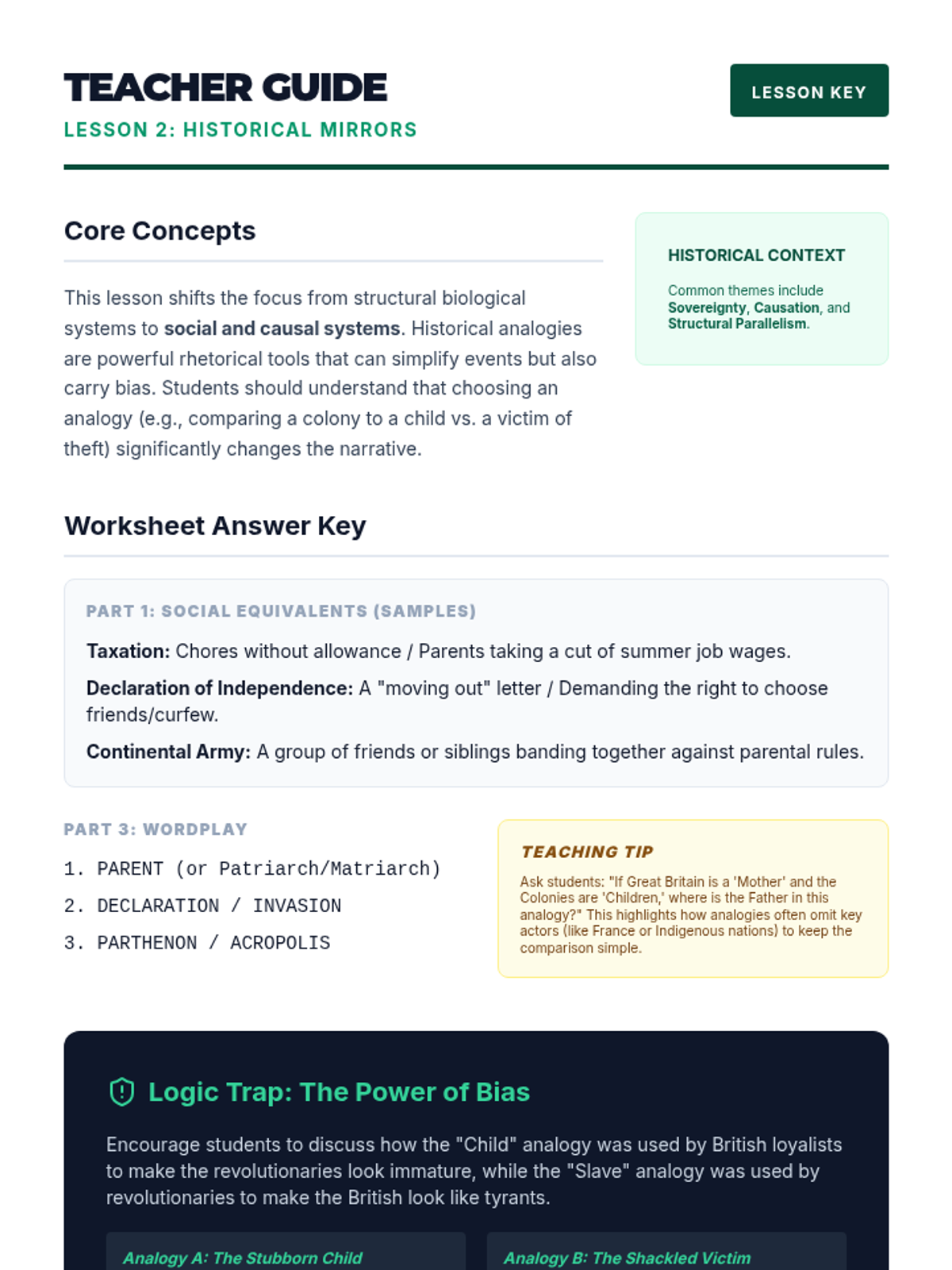
Students analyze historical analogies, such as the American Revolution as a teenager rebelling against a parent, to simplify and understand complex geopolitical relationships and historical causation.
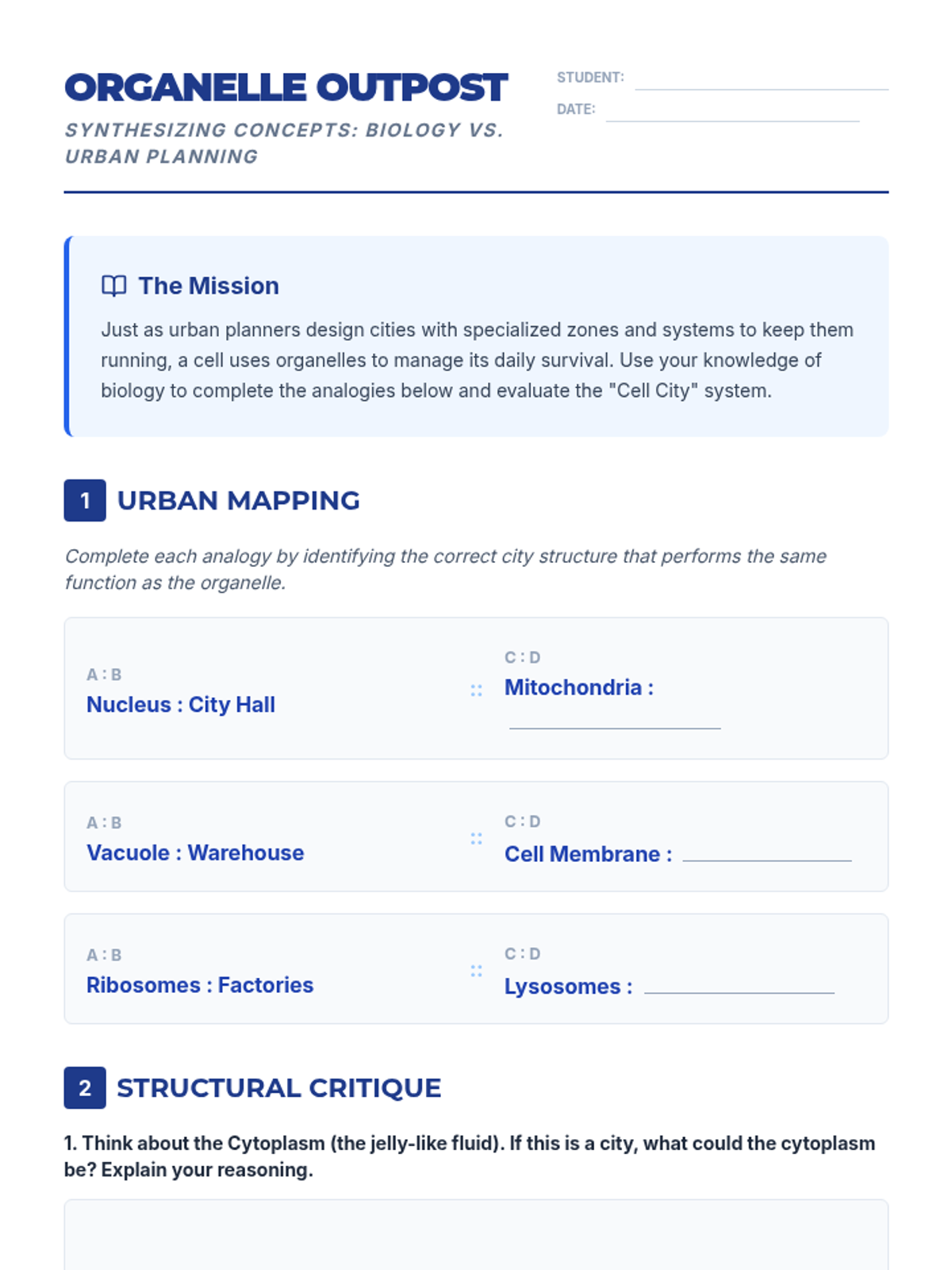
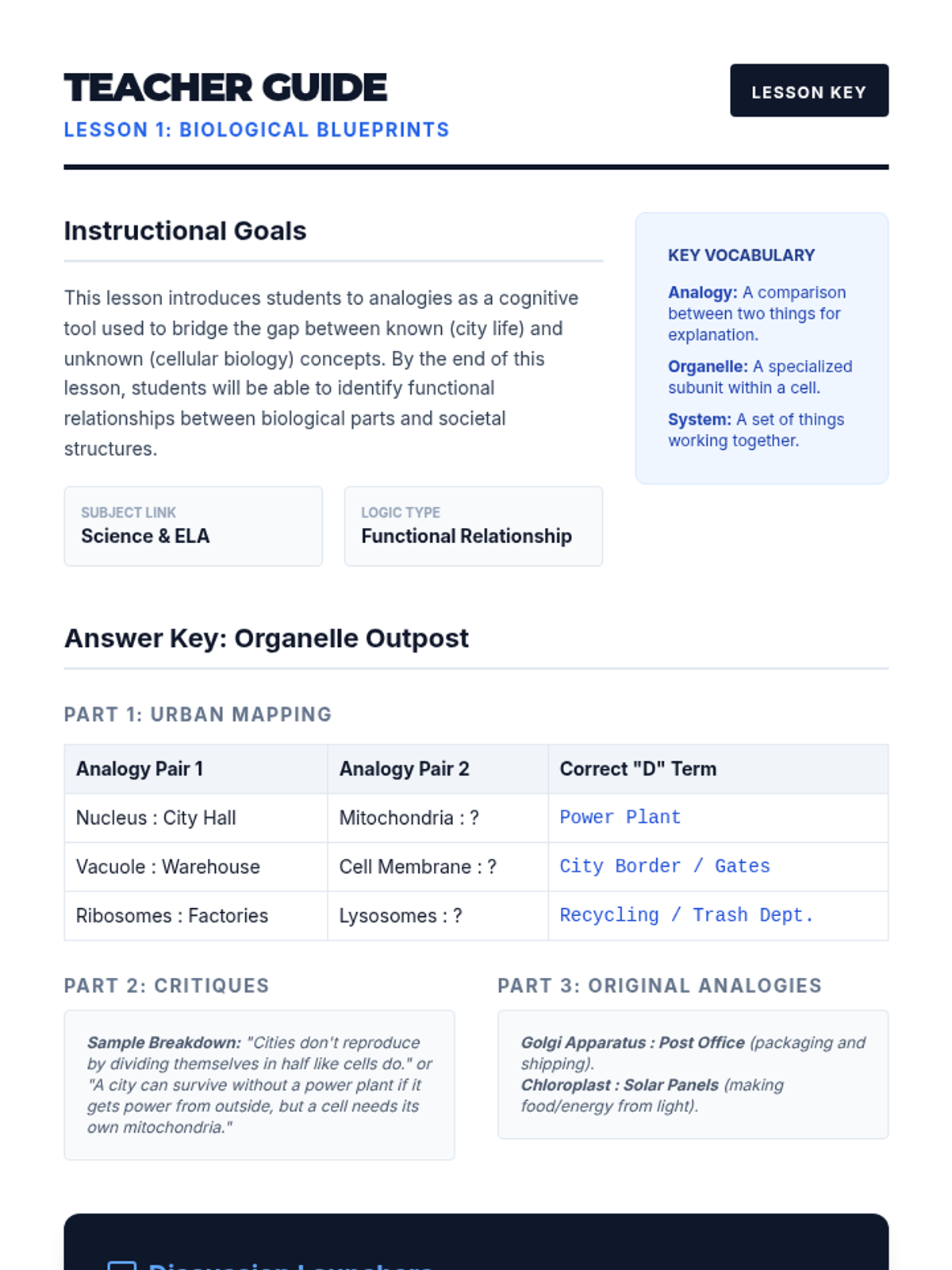
Students explore the classic 'Cell as a City' analogy to understand how structural comparisons help explain biological systems, identifying relationships between organelles and urban infrastructure.
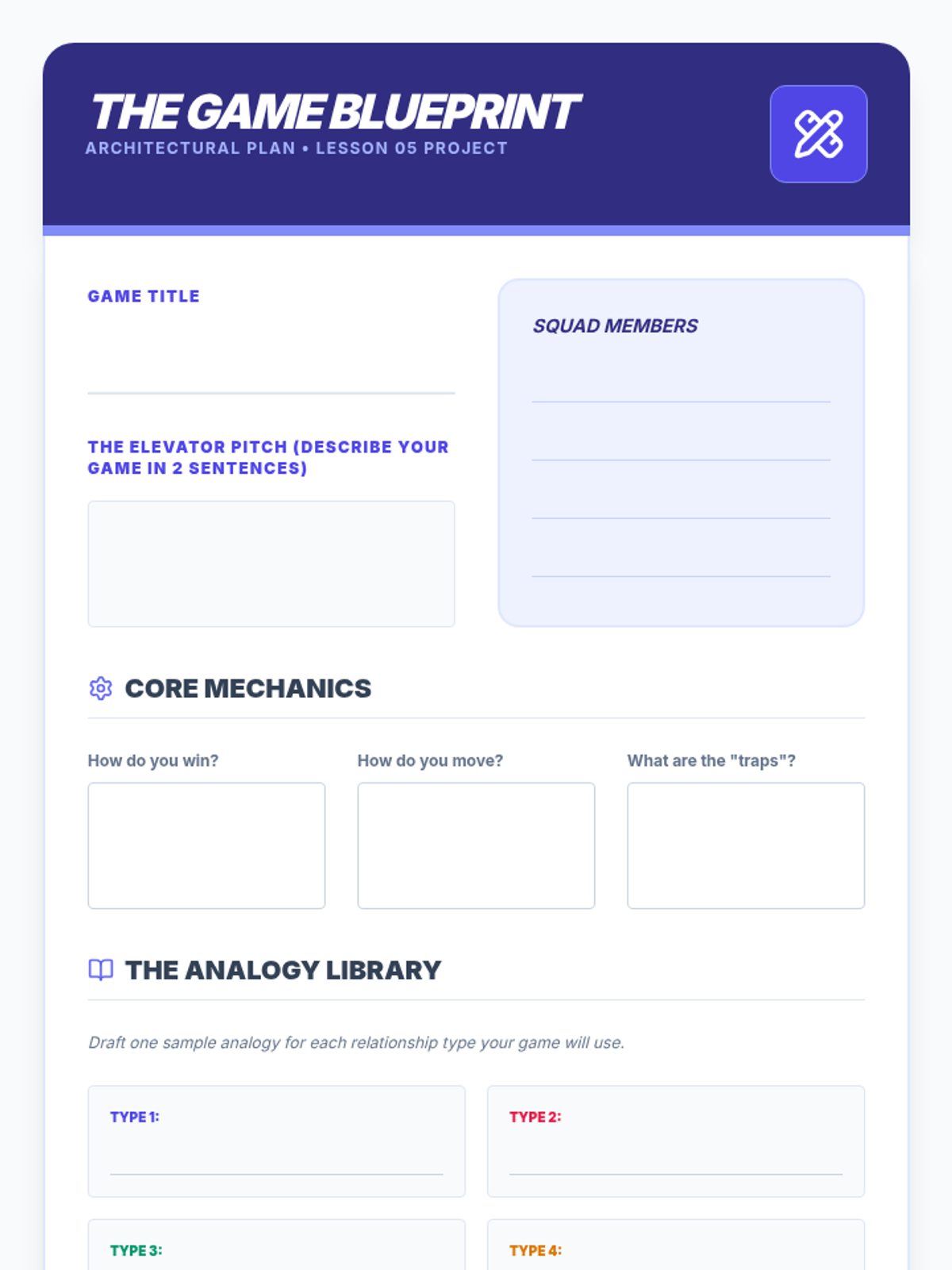
The capstone project where students apply their knowledge by designing, building, and play-testing their own analogy-themed board games.
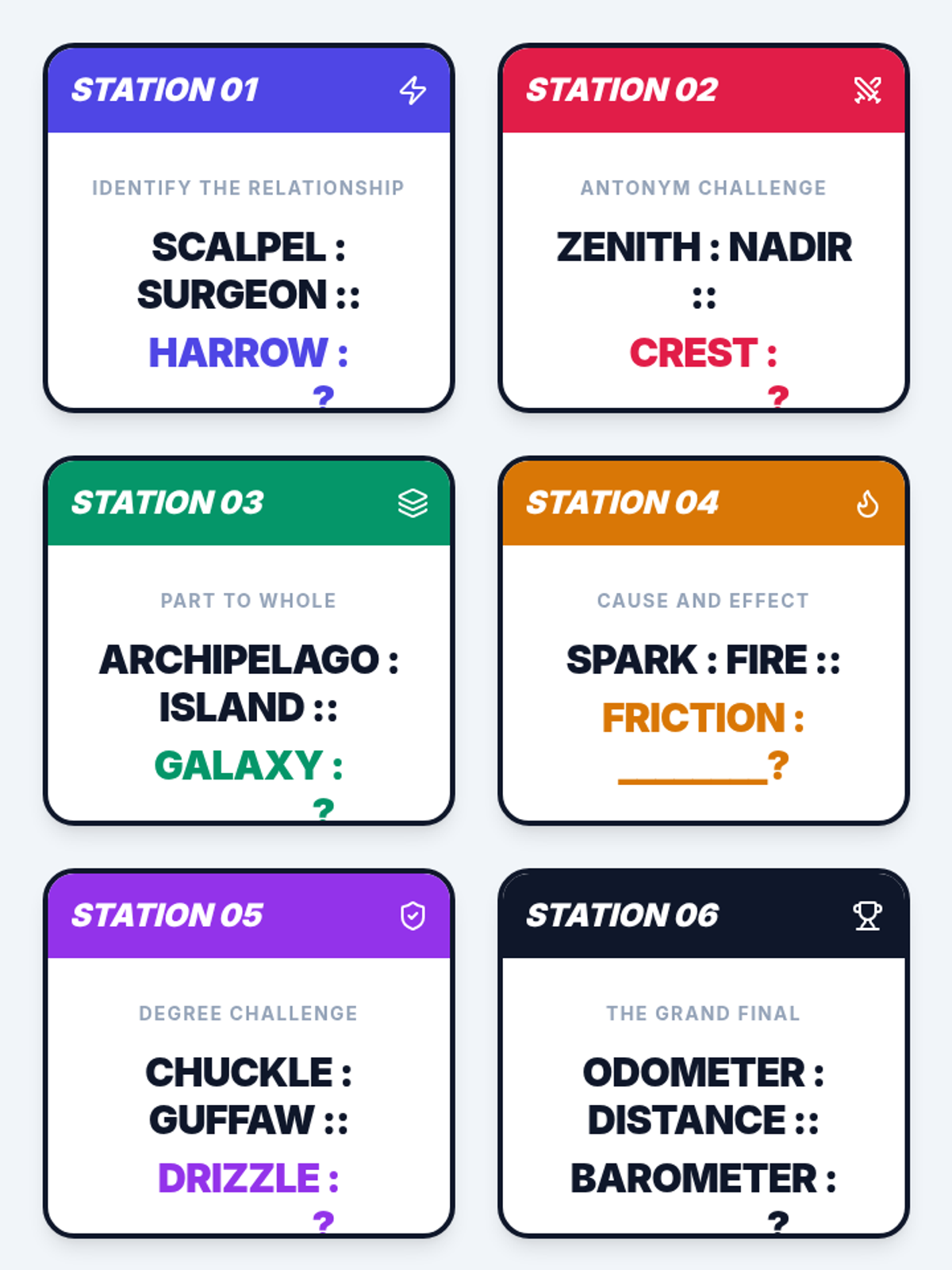
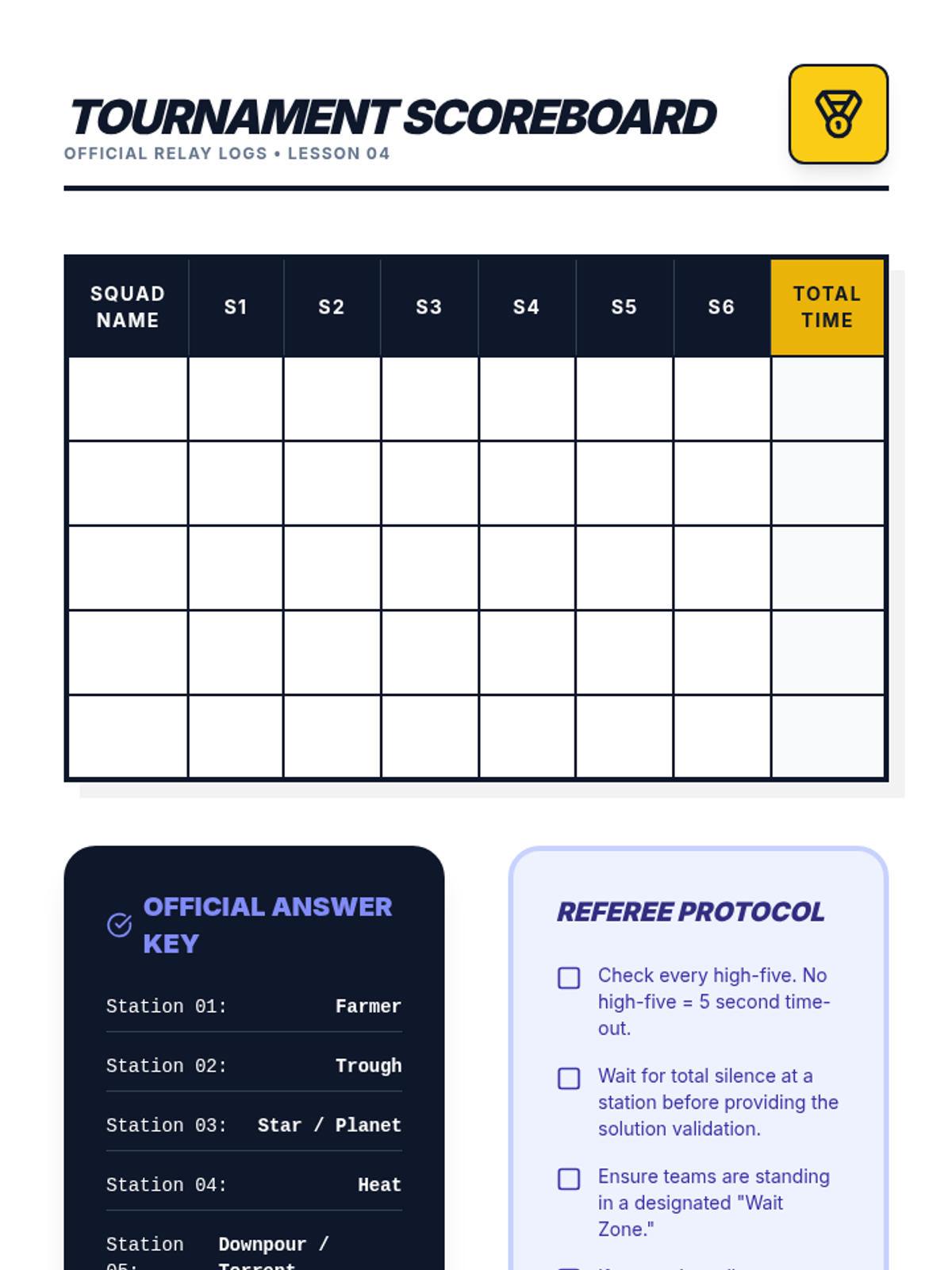
A kinesthetic lesson combining physical movement with mental agility as teams compete in a relay race to solve complex analogies.
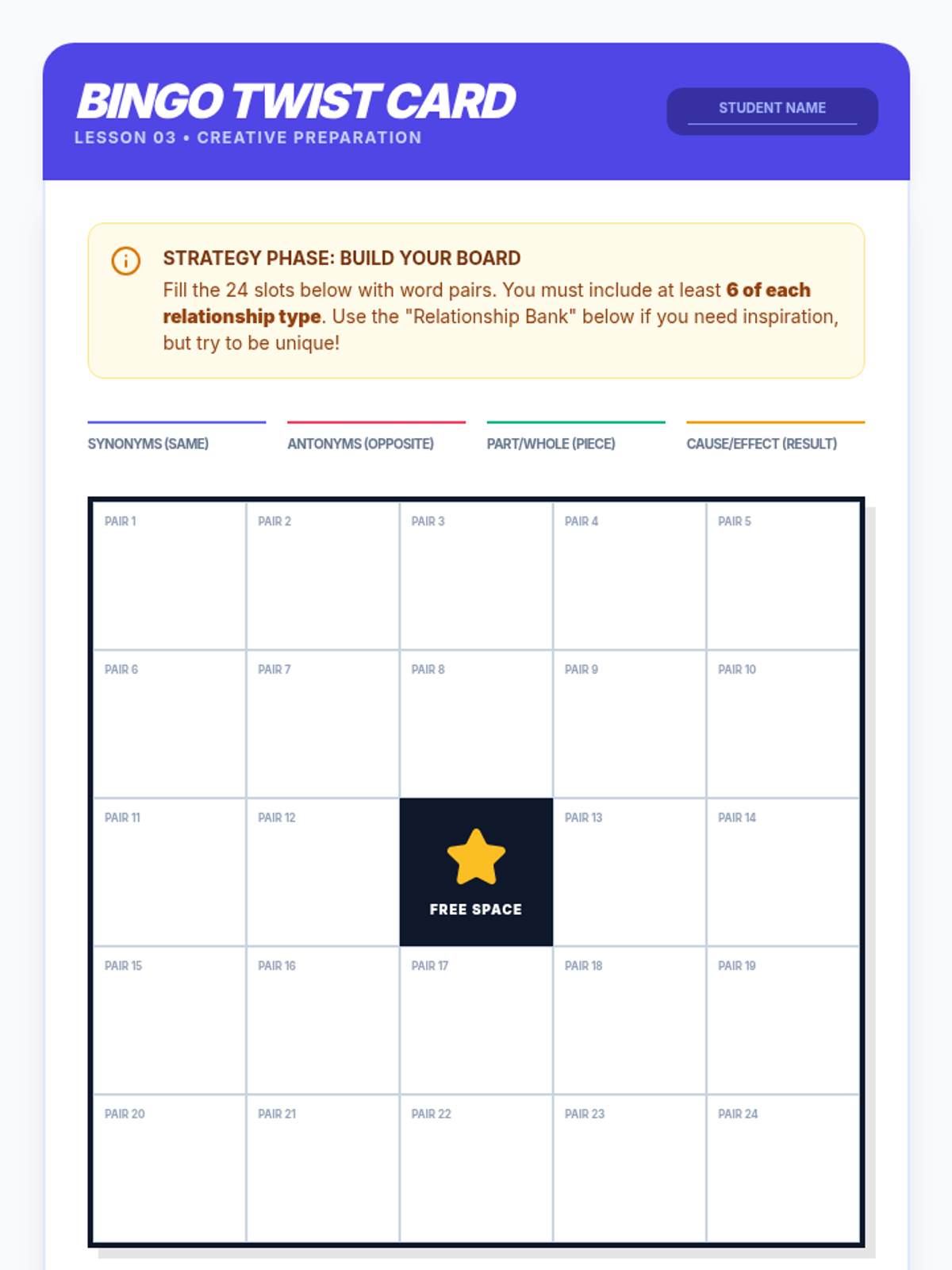
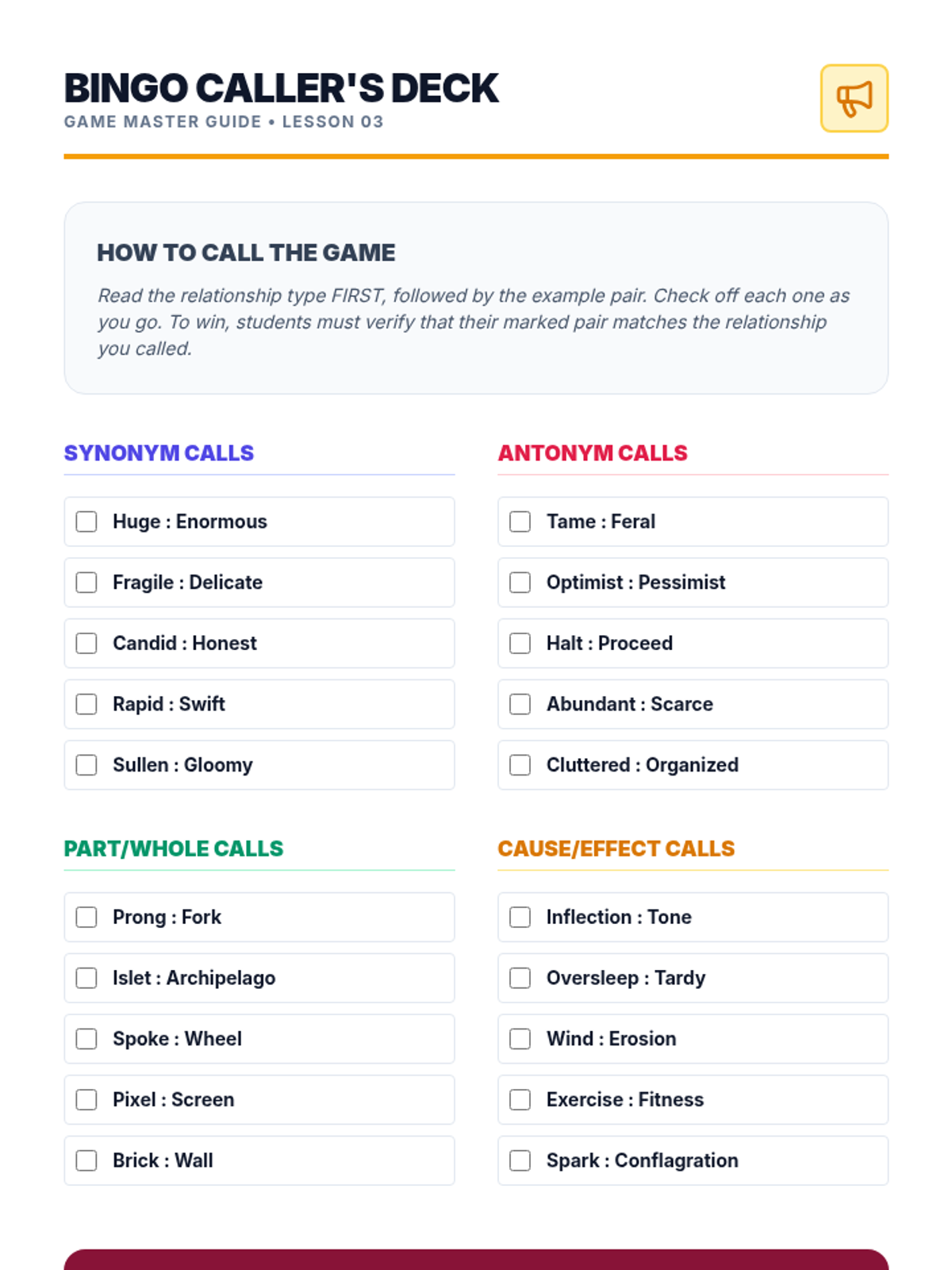
A twist on the classic game where students must match logical relationships rather than just words, reinforcing deeper conceptual understanding.
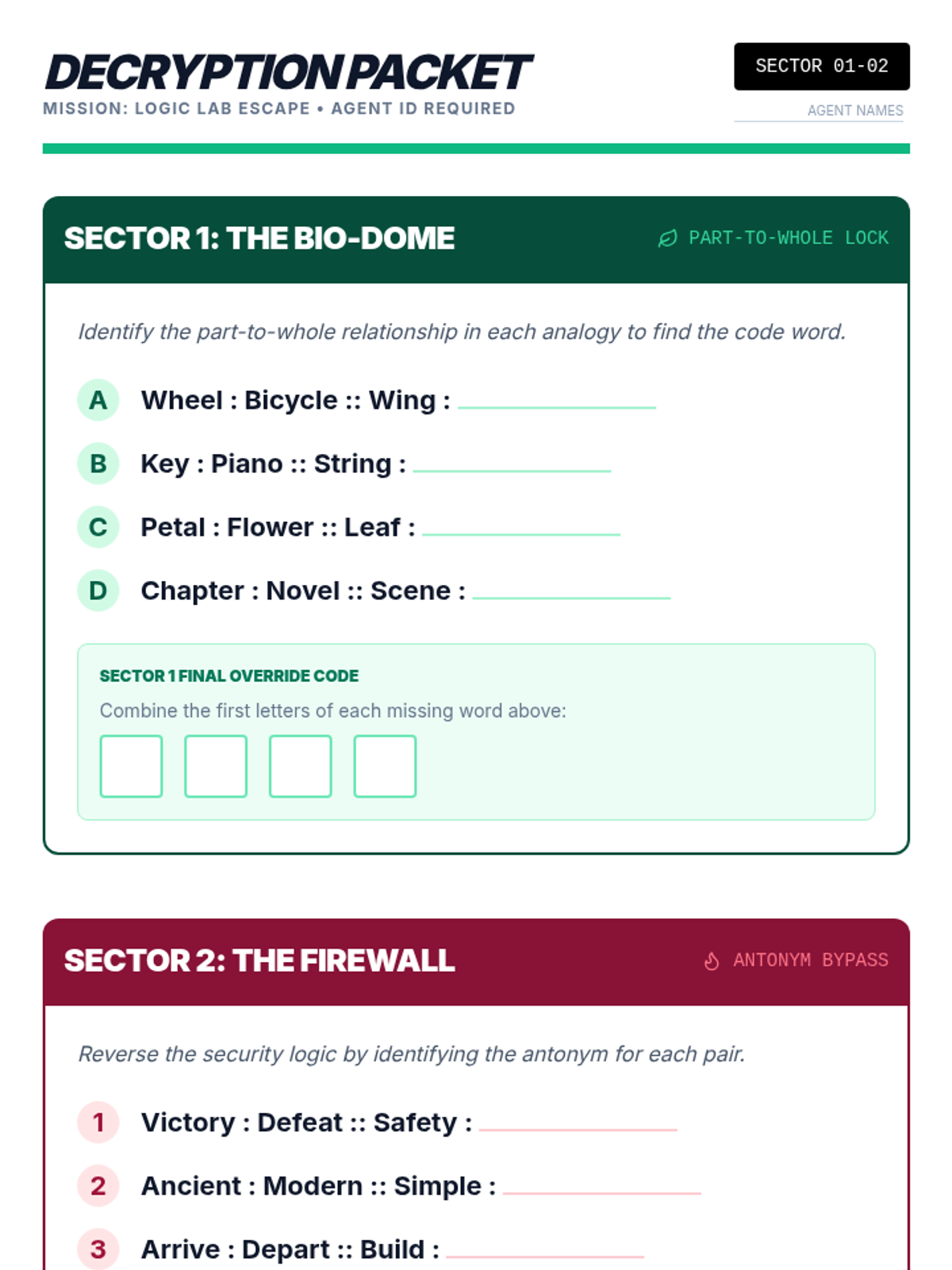
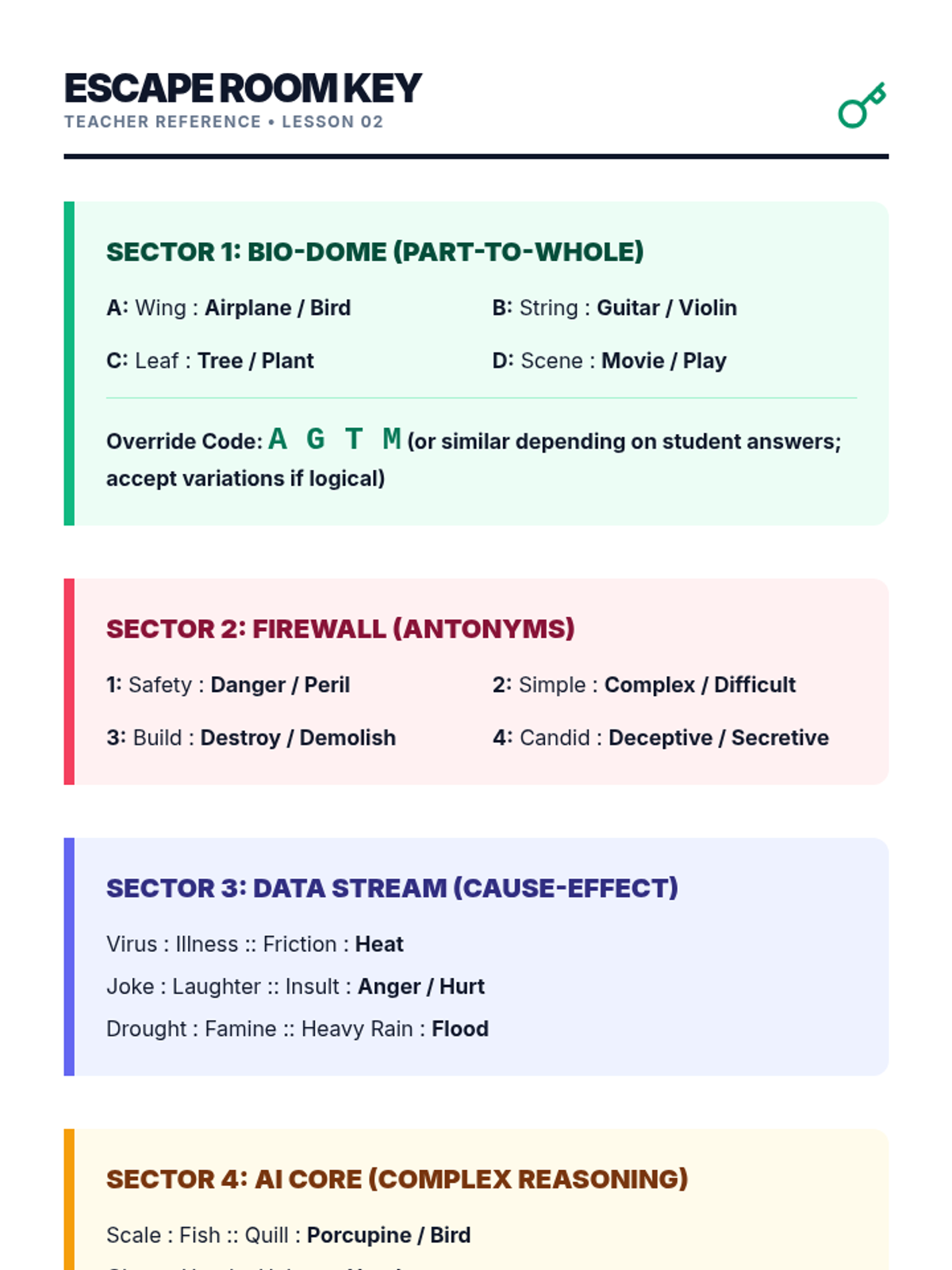
Students work collaboratively to solve a series of analogy-based puzzles to 'unlock' the classroom, emphasizing logical reasoning and narrative engagement.
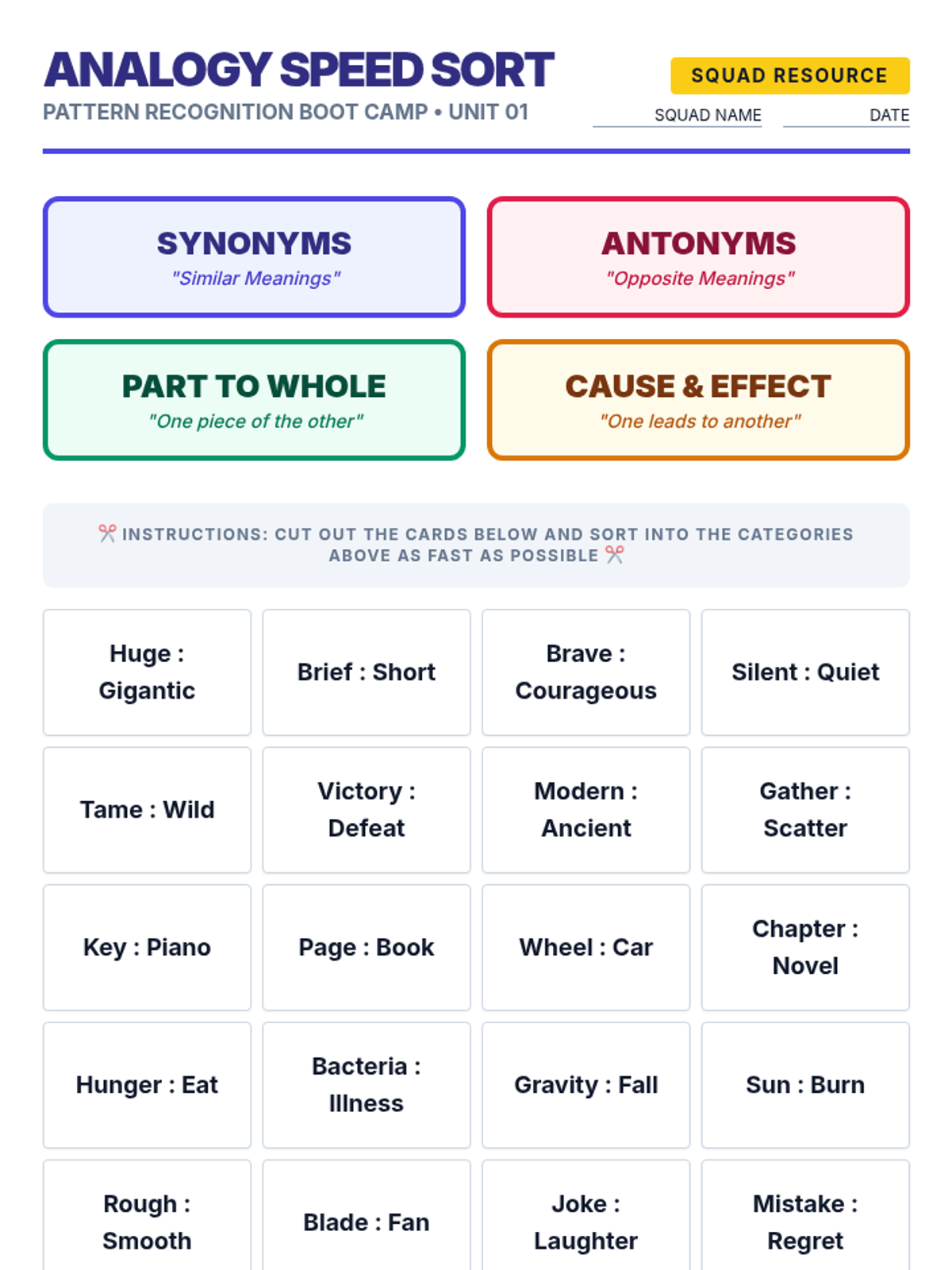
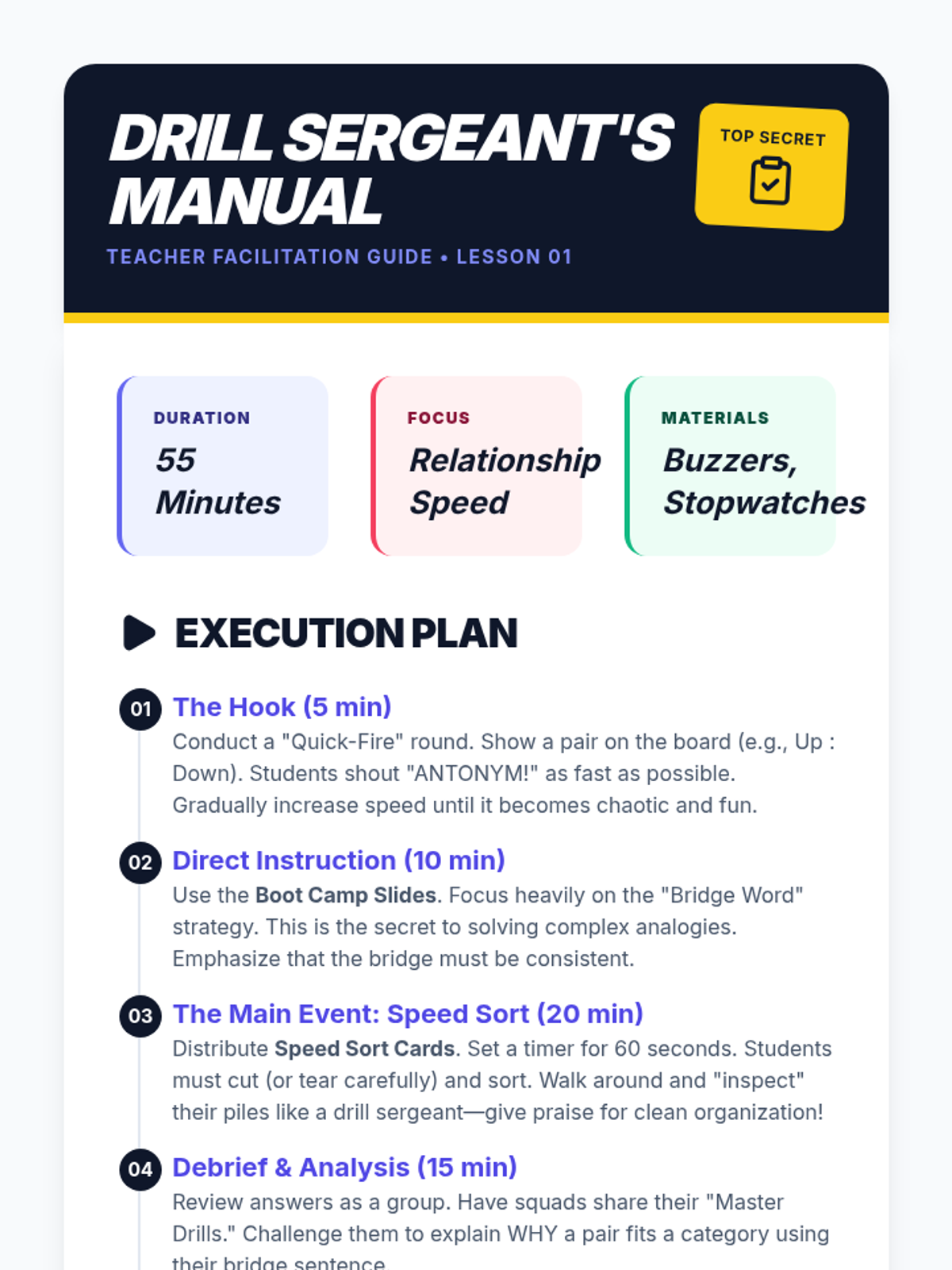
A high-energy introductory lesson focused on identifying different types of analogy relationships (Synonym, Antonym, Part/Whole, etc.) with speed and accuracy.
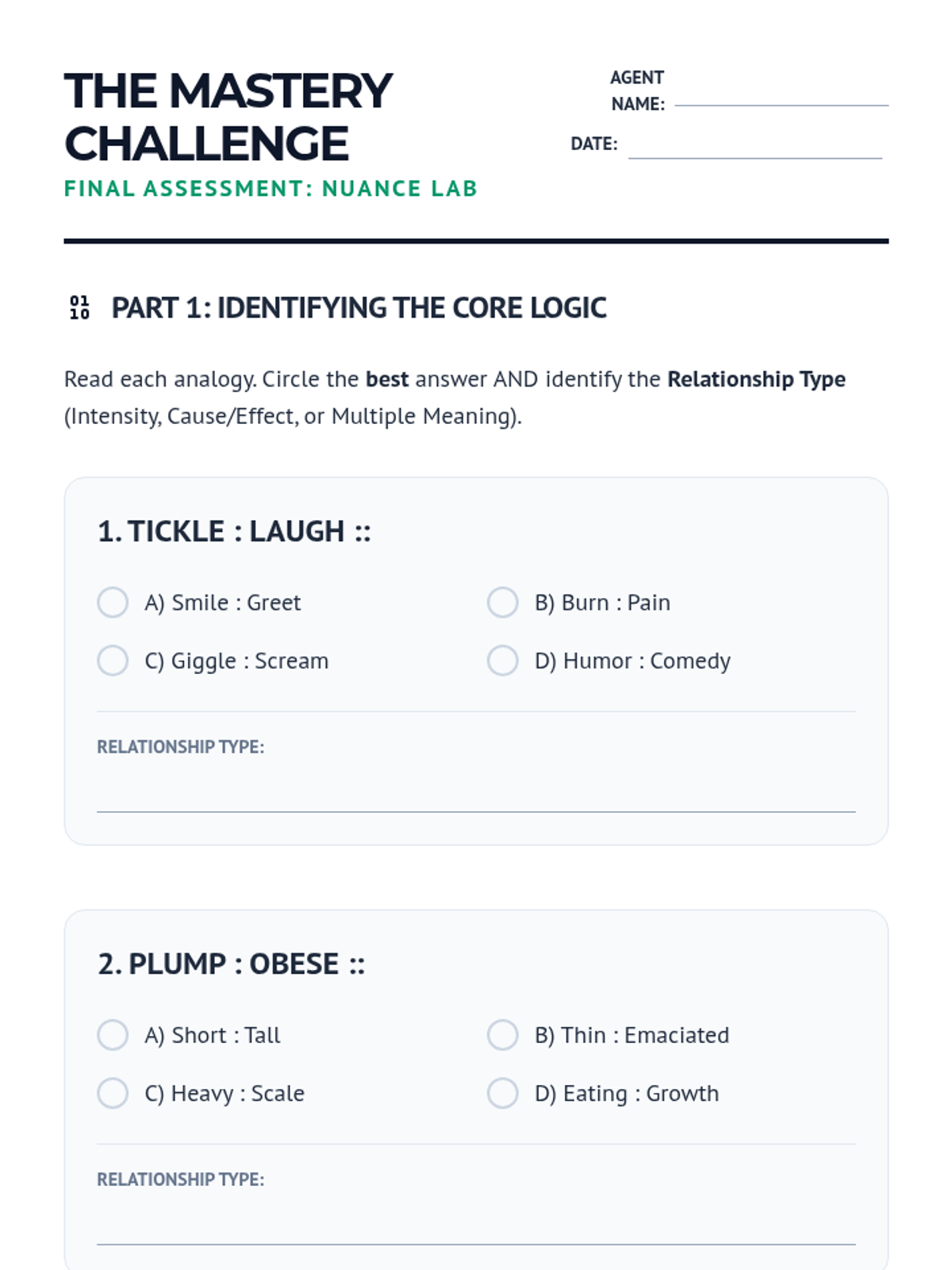
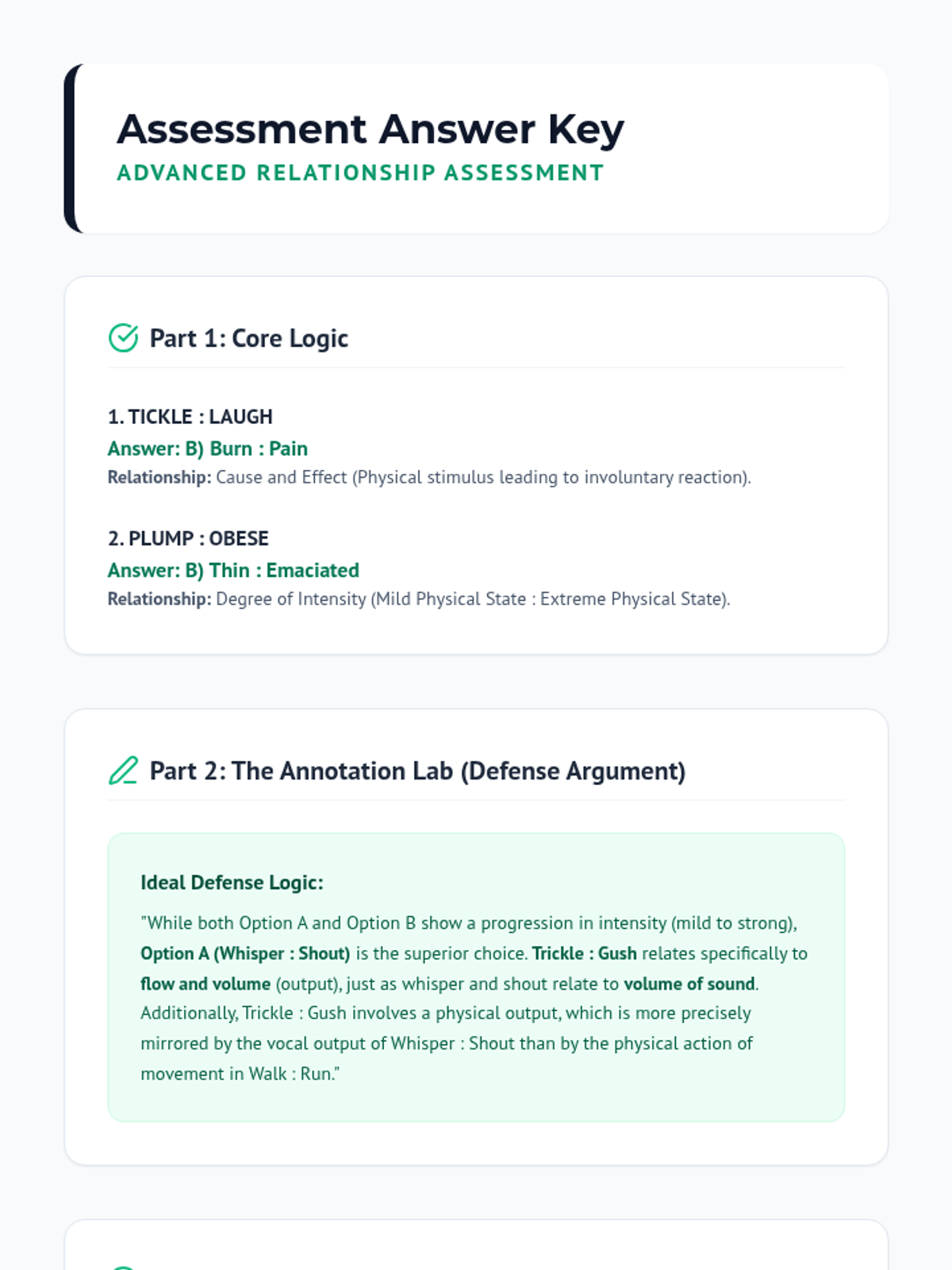
A culminating review where students solve complex analogies involving degree, cause-effect, and sequence. They annotate their thinking processes to demonstrate mastery of nuance.
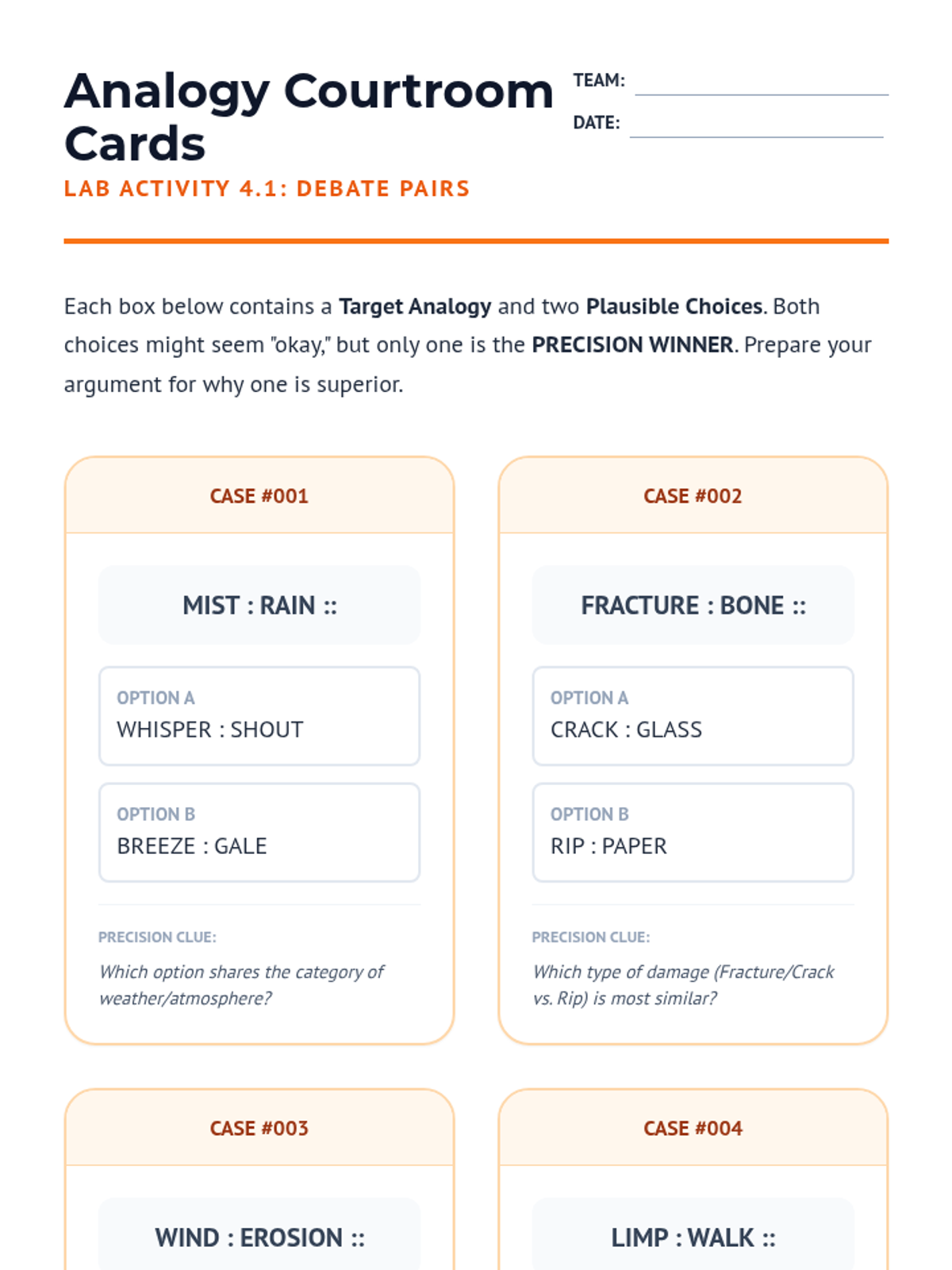
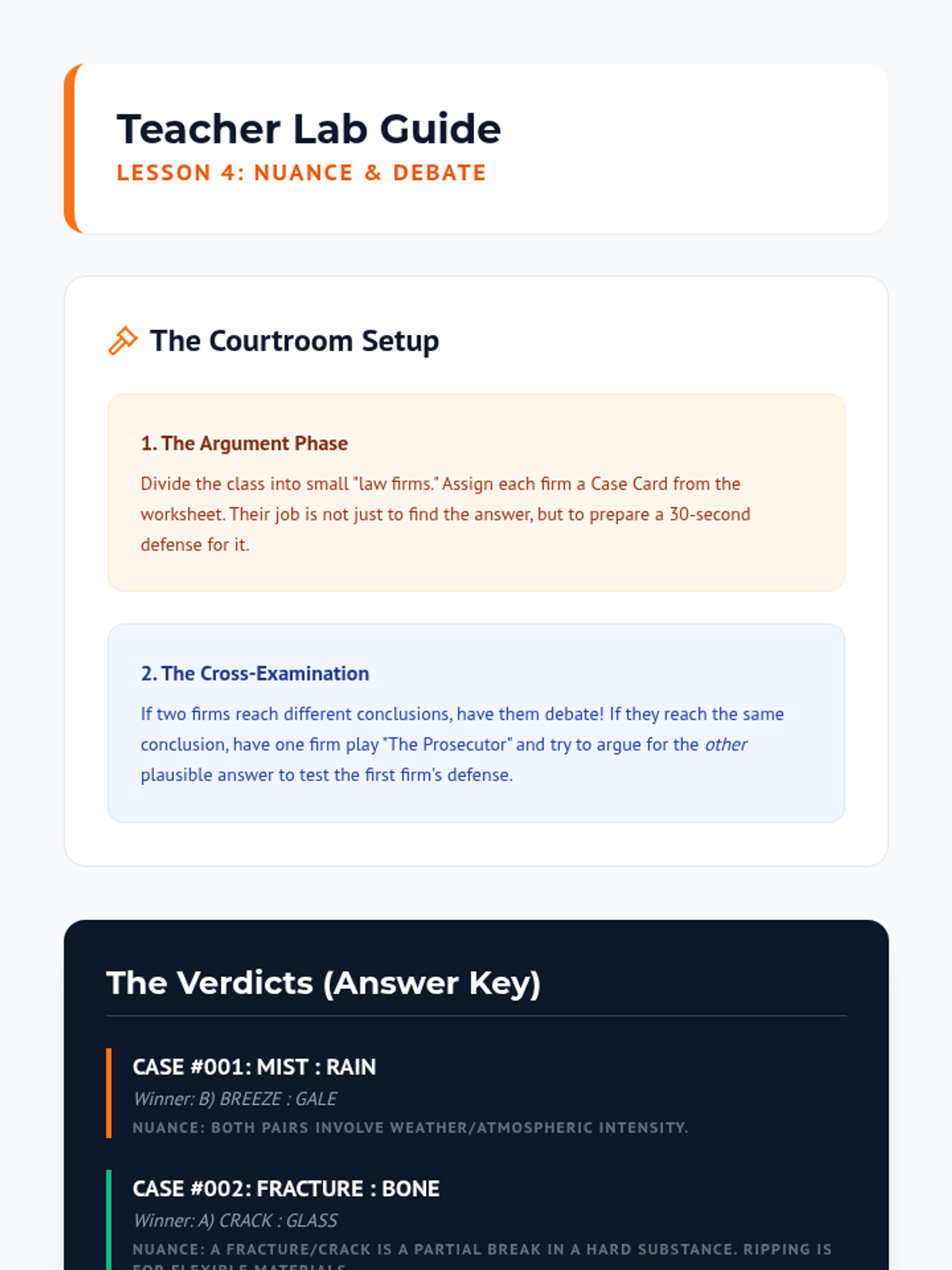
Students are presented with analogies that have two plausible answers, but one is better due to specific nuance or degree. They participate in structured debates to argue for the most precise choice.
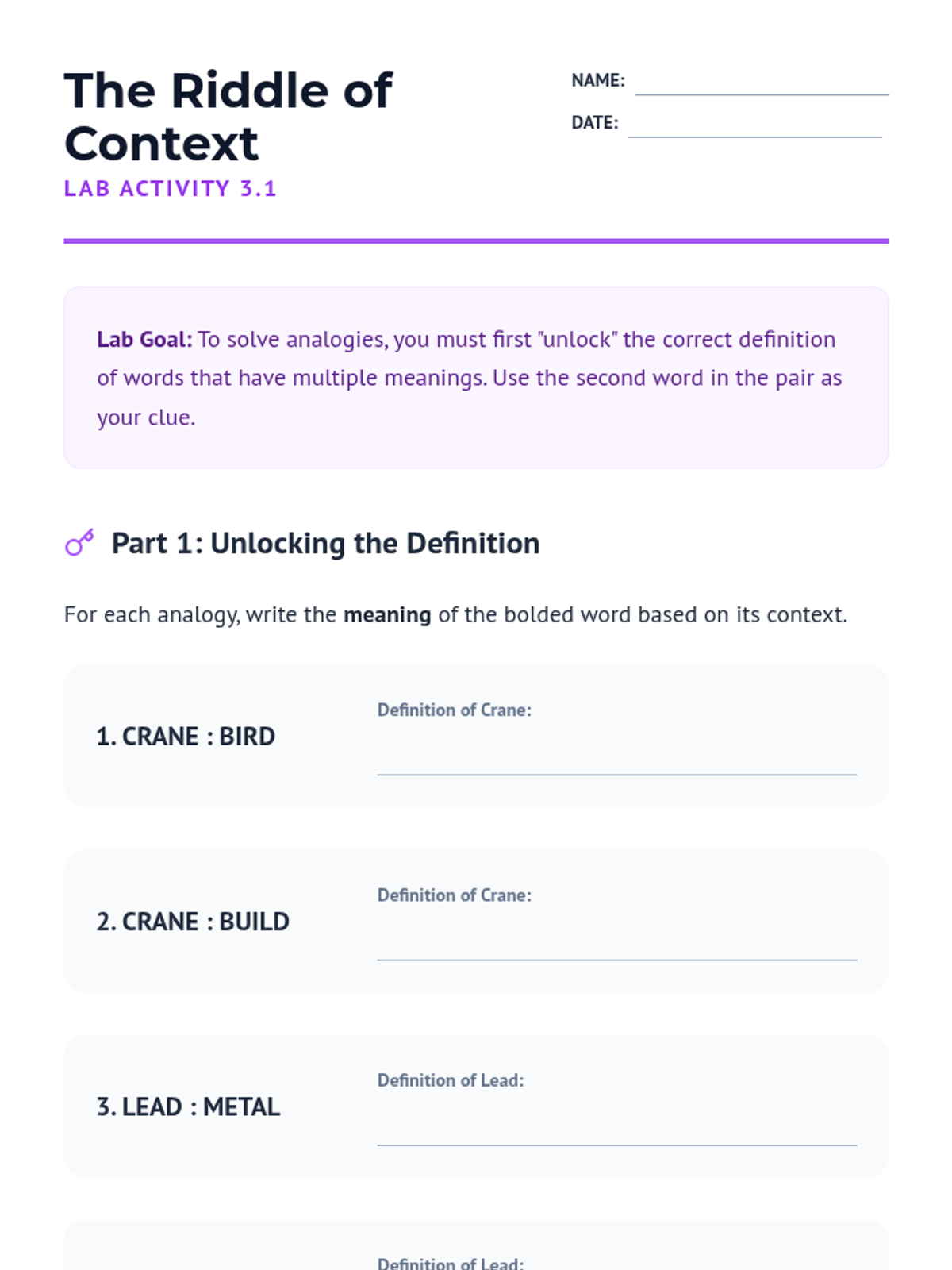
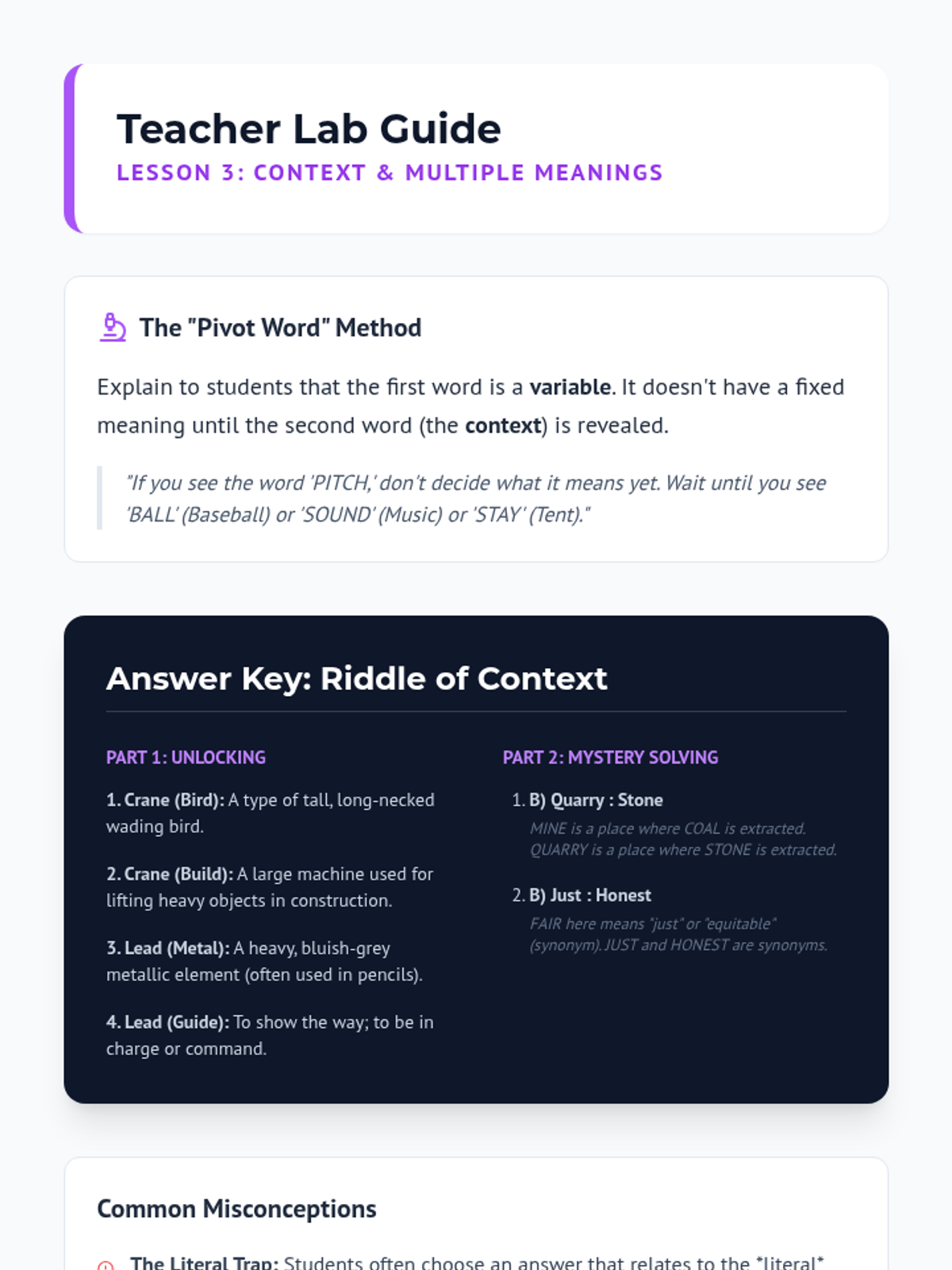
Students tackle analogies involving homographs or words with multiple definitions. They learn to use context clues from the second word in a pair to determine which definition of the first word is being used.
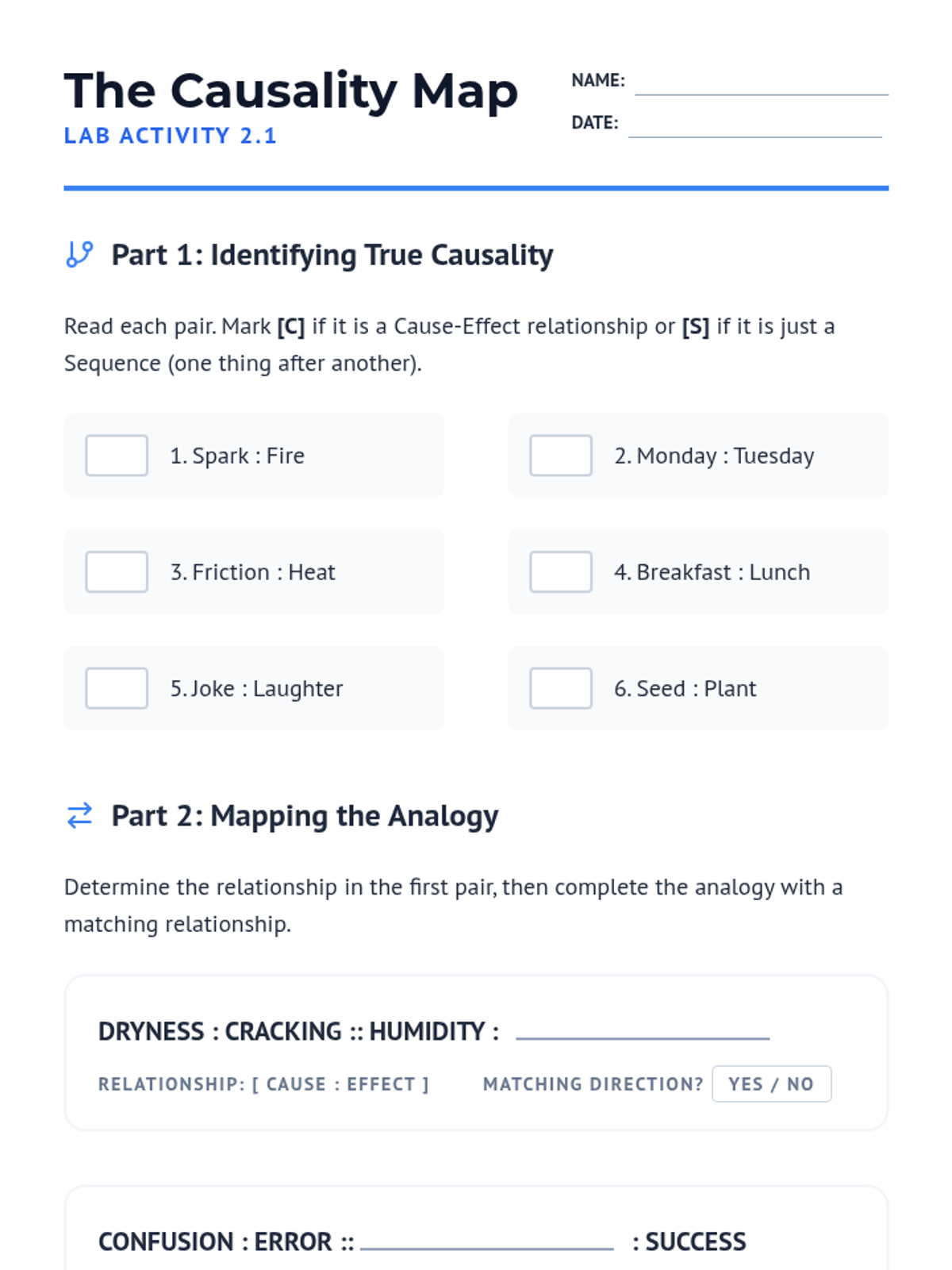
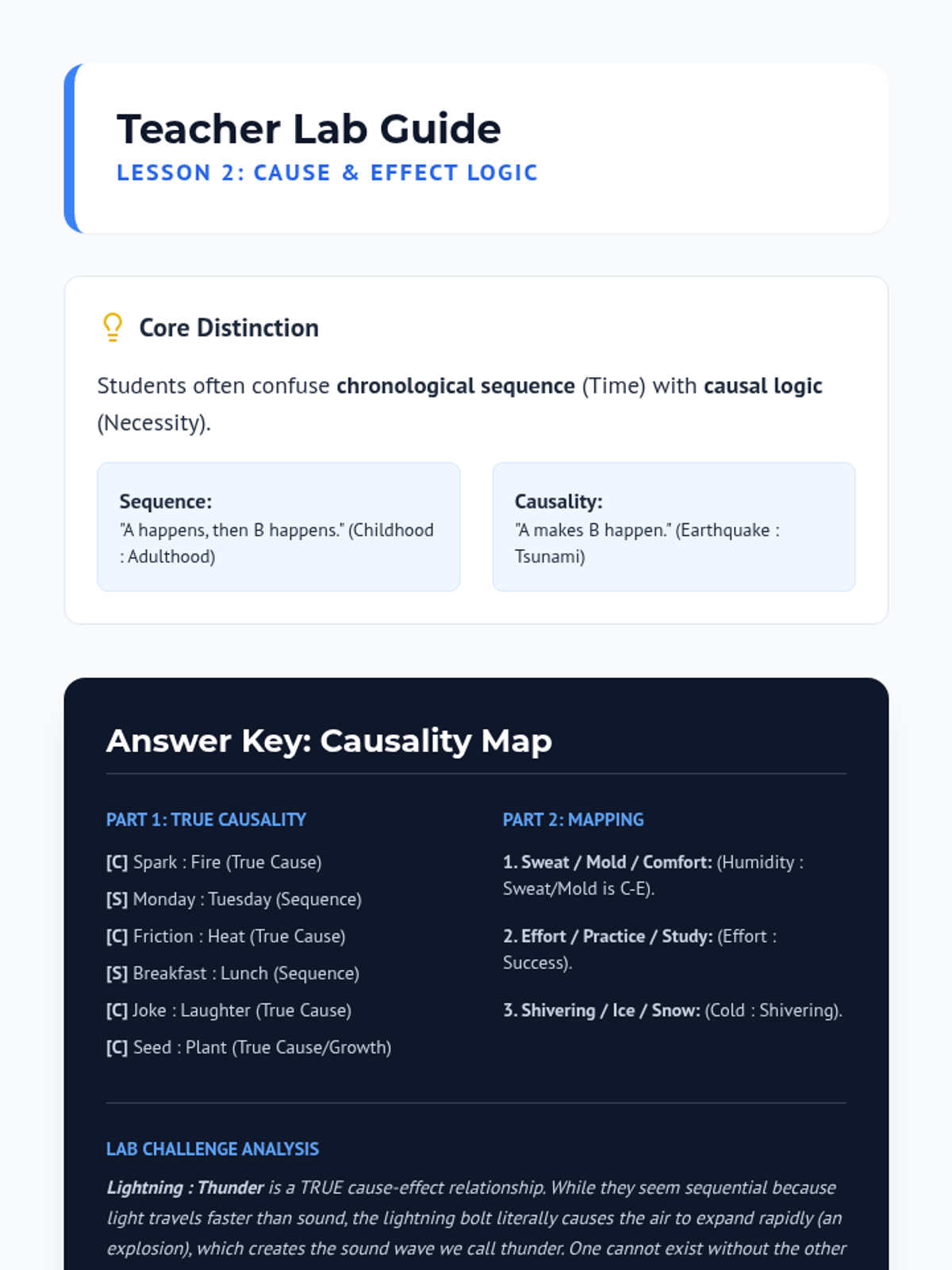
Students investigate relationships where one term leads to the other. They learn to distinguish causal links from simple chronological sequences using diagrams and analysis.
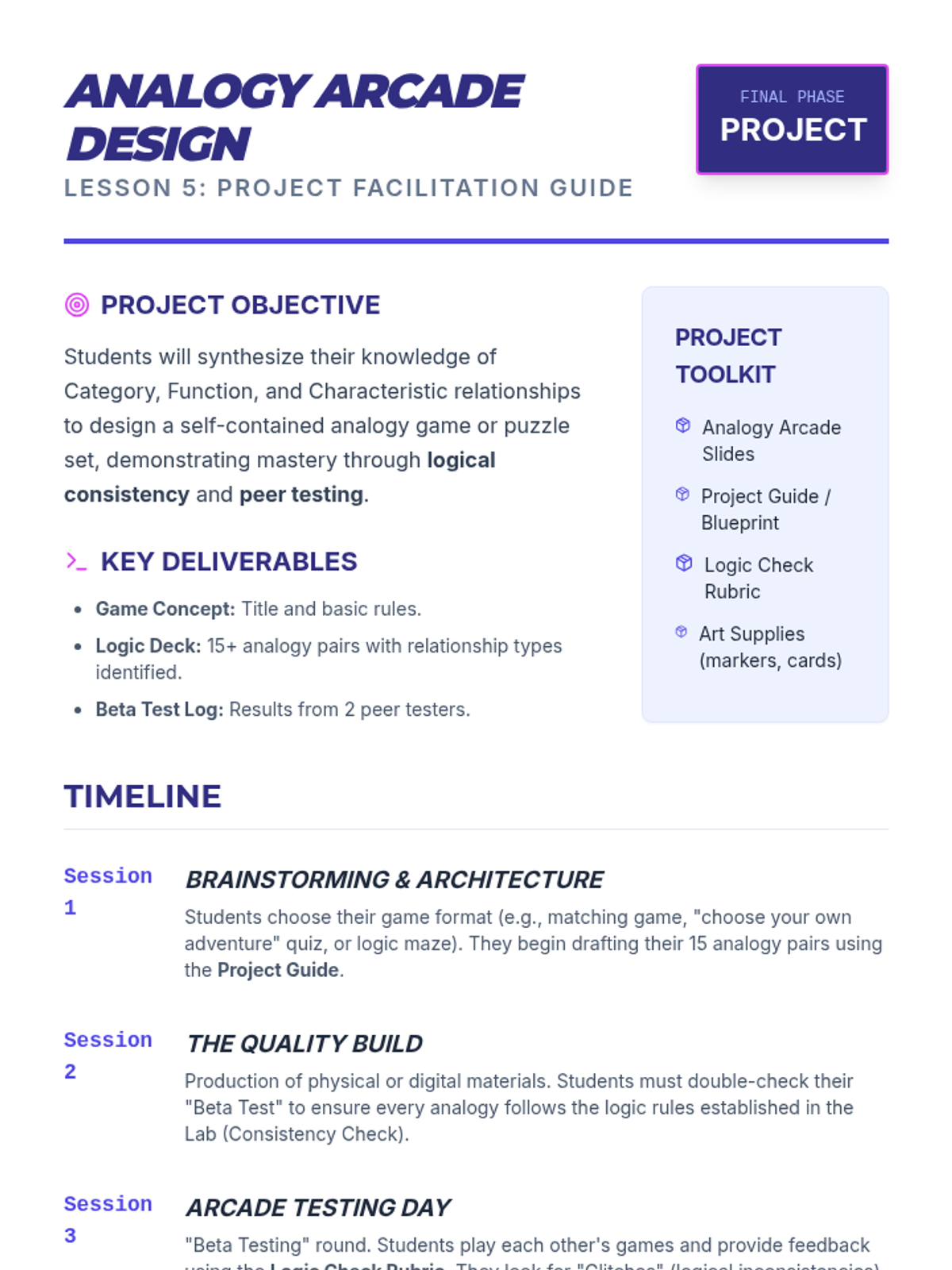
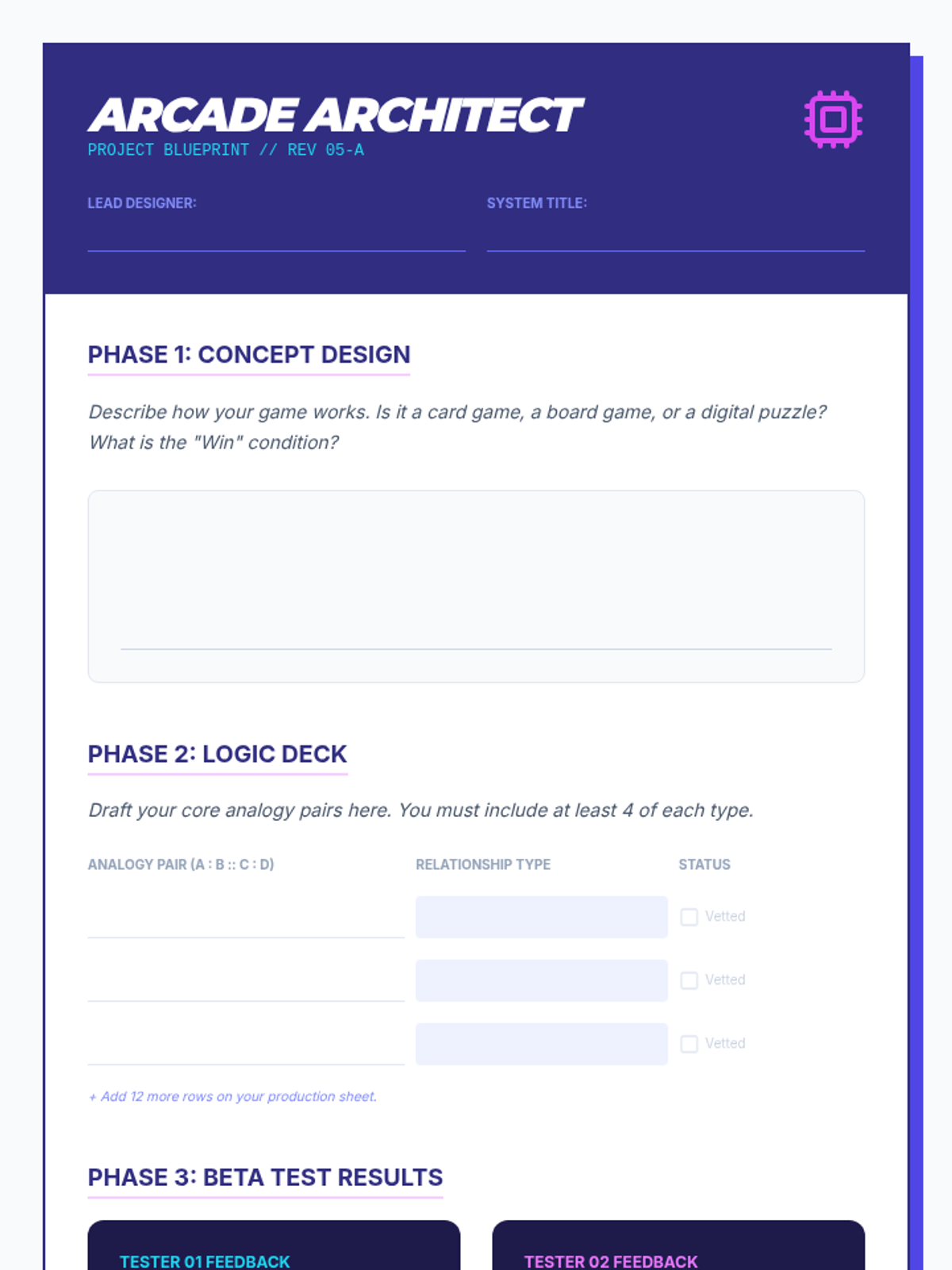
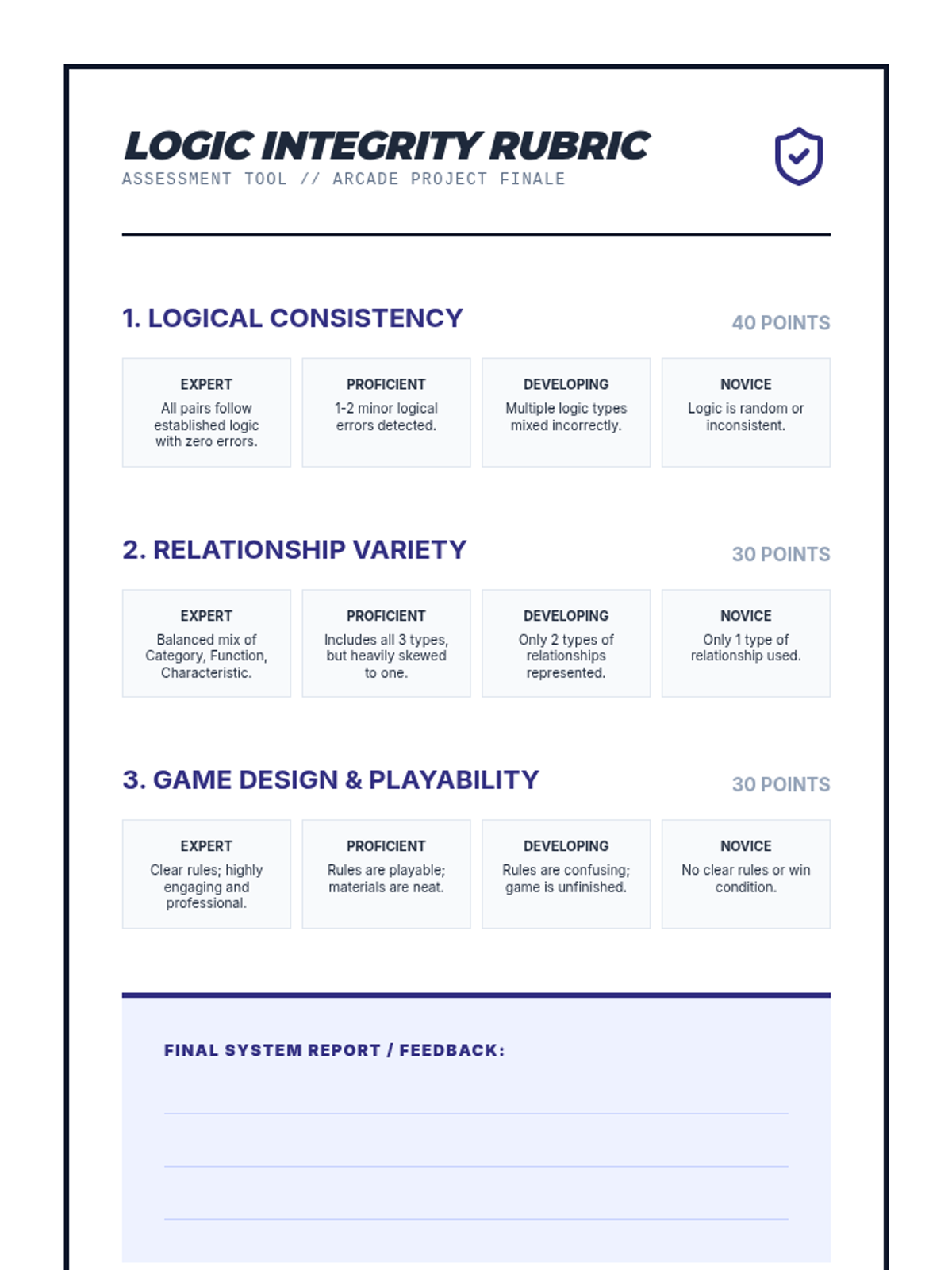
A project-based finale where students design their own analogy puzzles or games, testing them for logical consistency with peers.
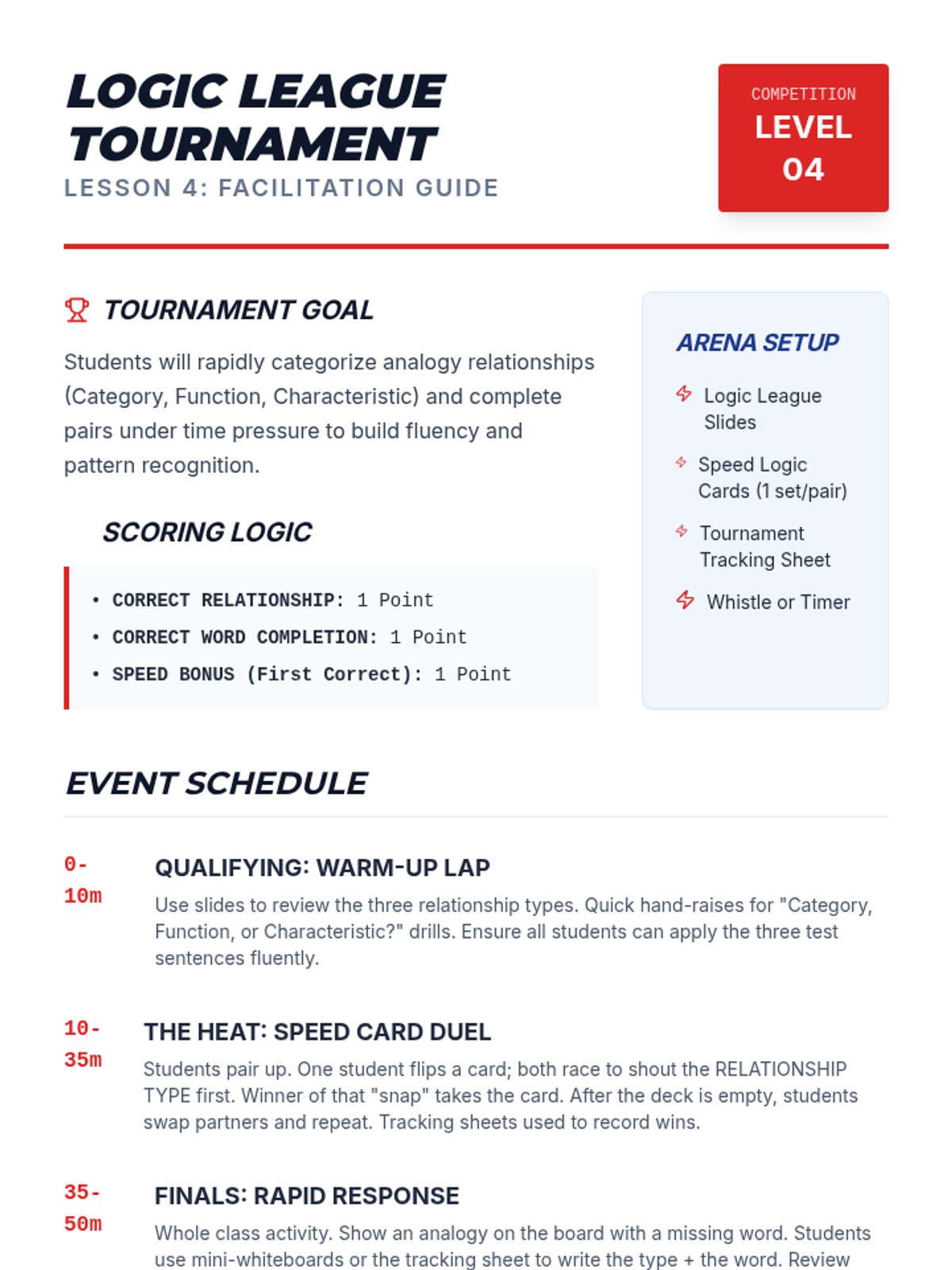
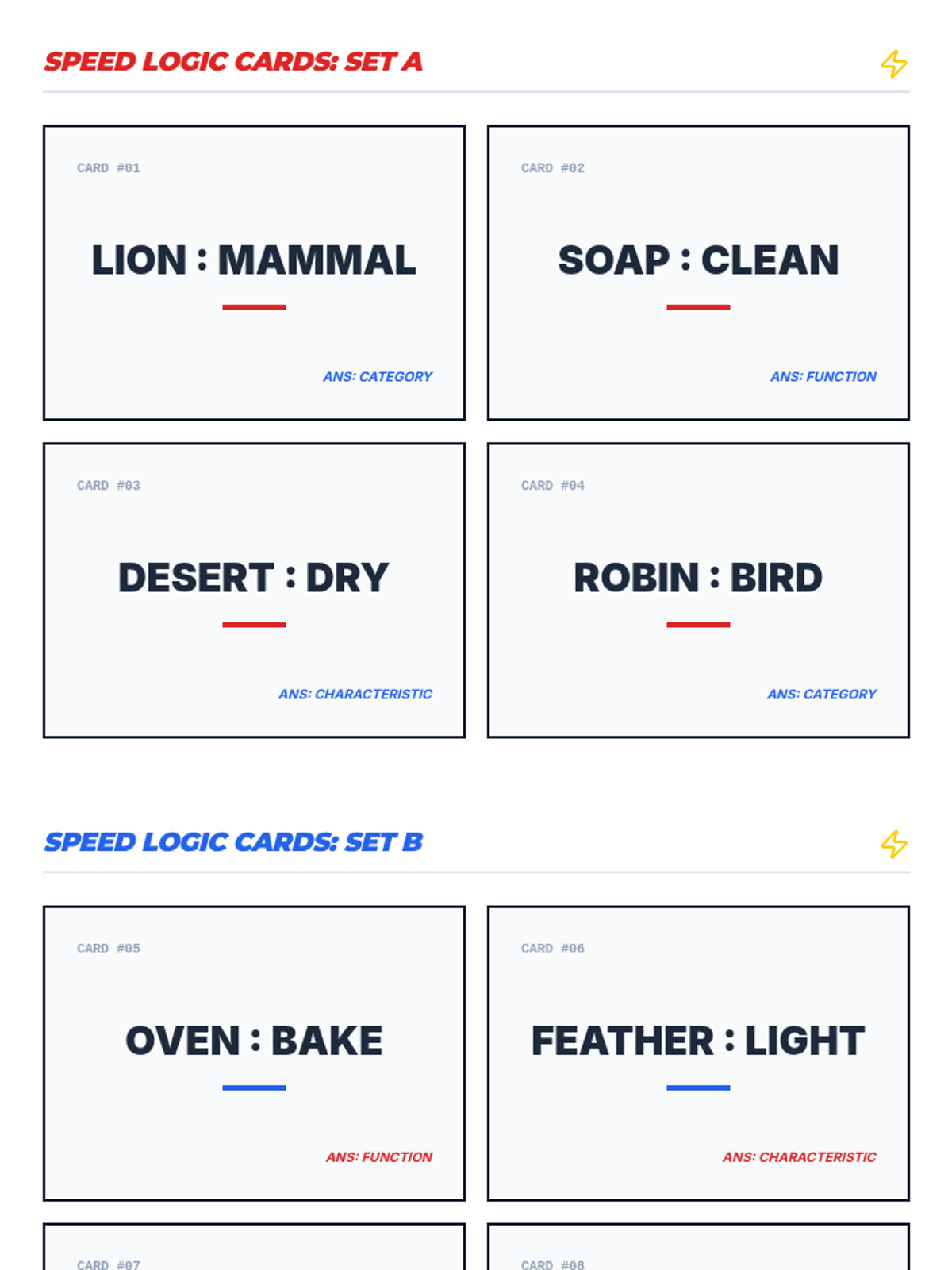
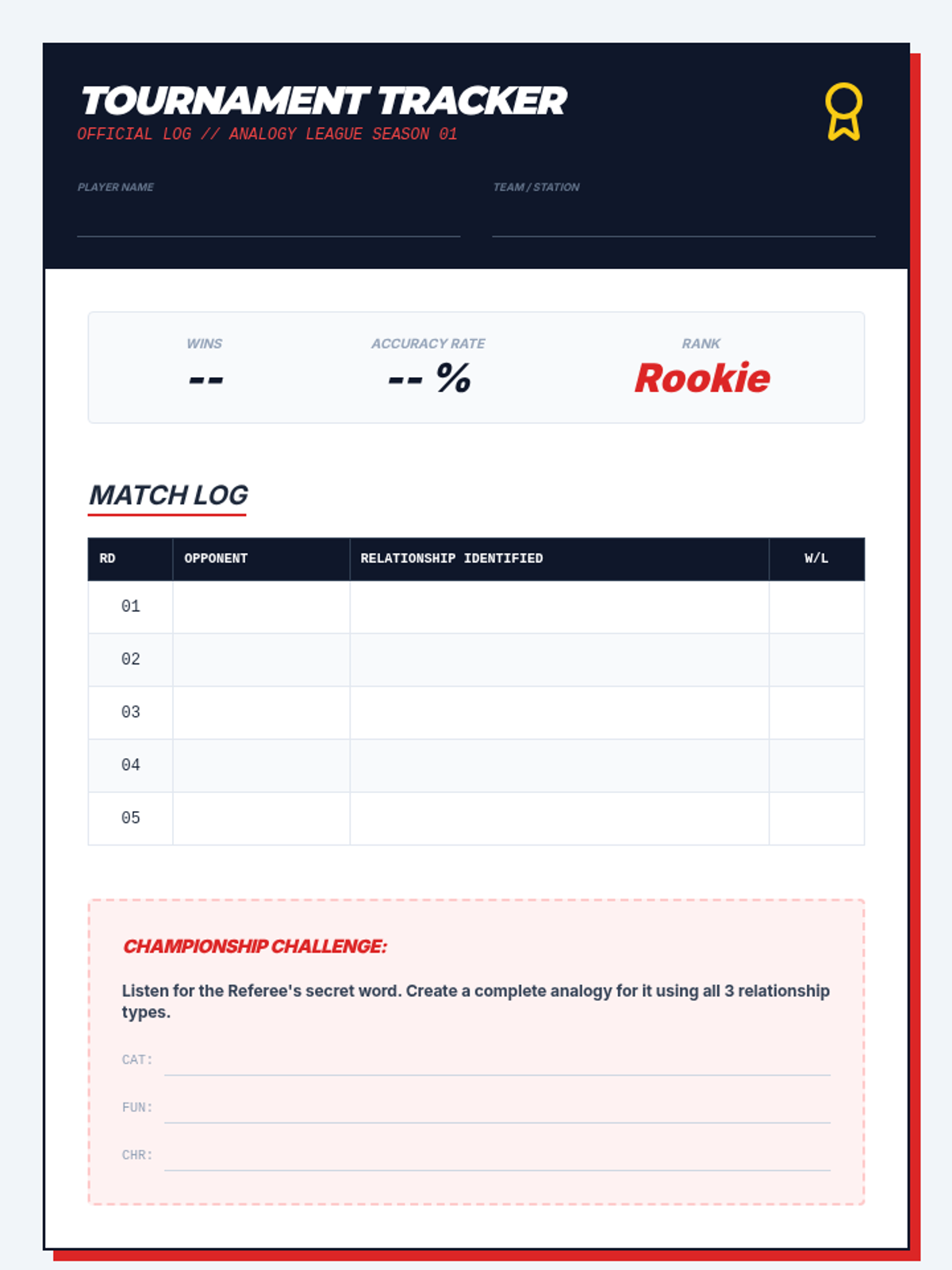
A gamified tournament where students rapidly identify relationship types (categorical, functional, or characteristic) to build speed and accuracy.
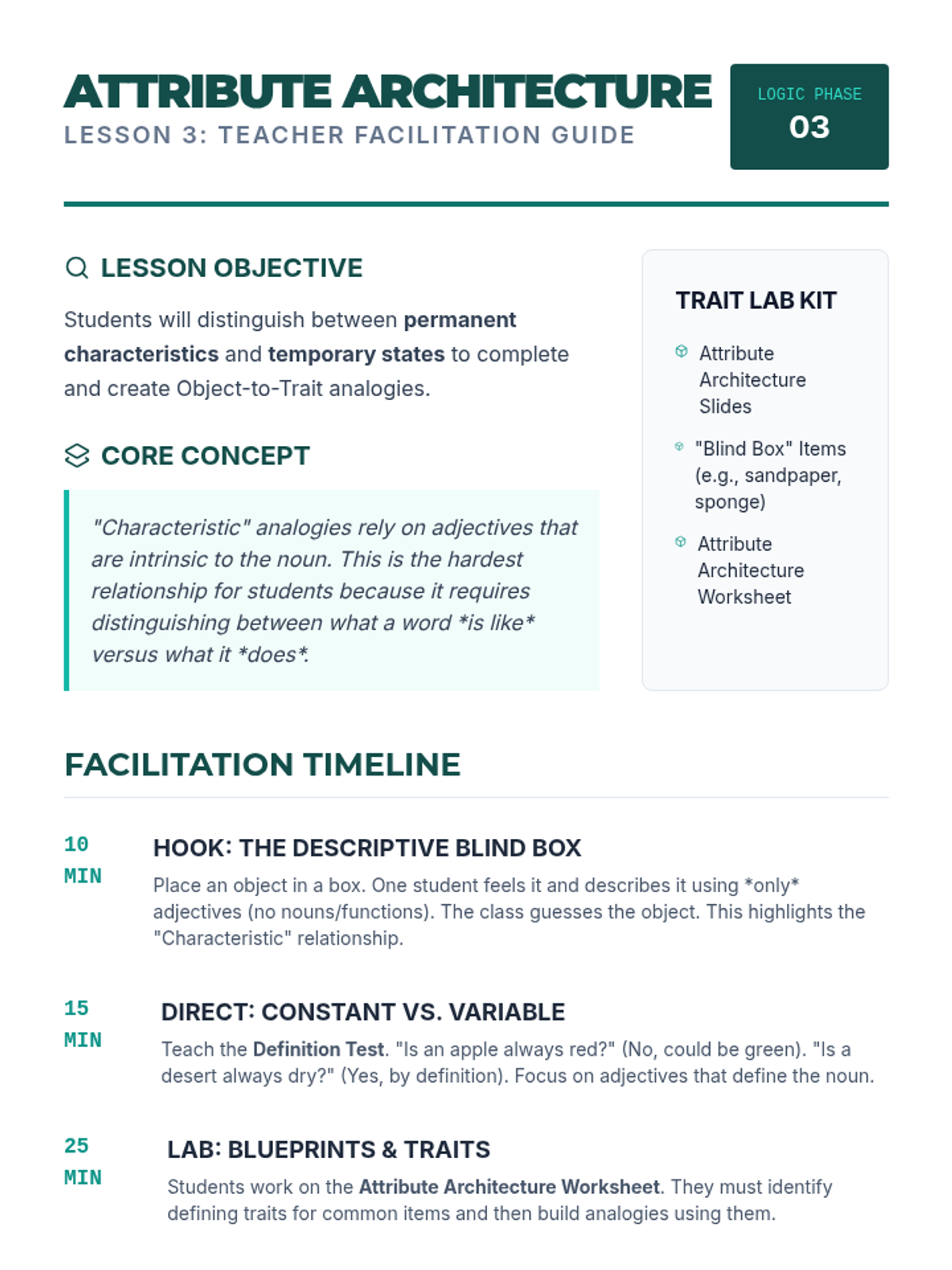
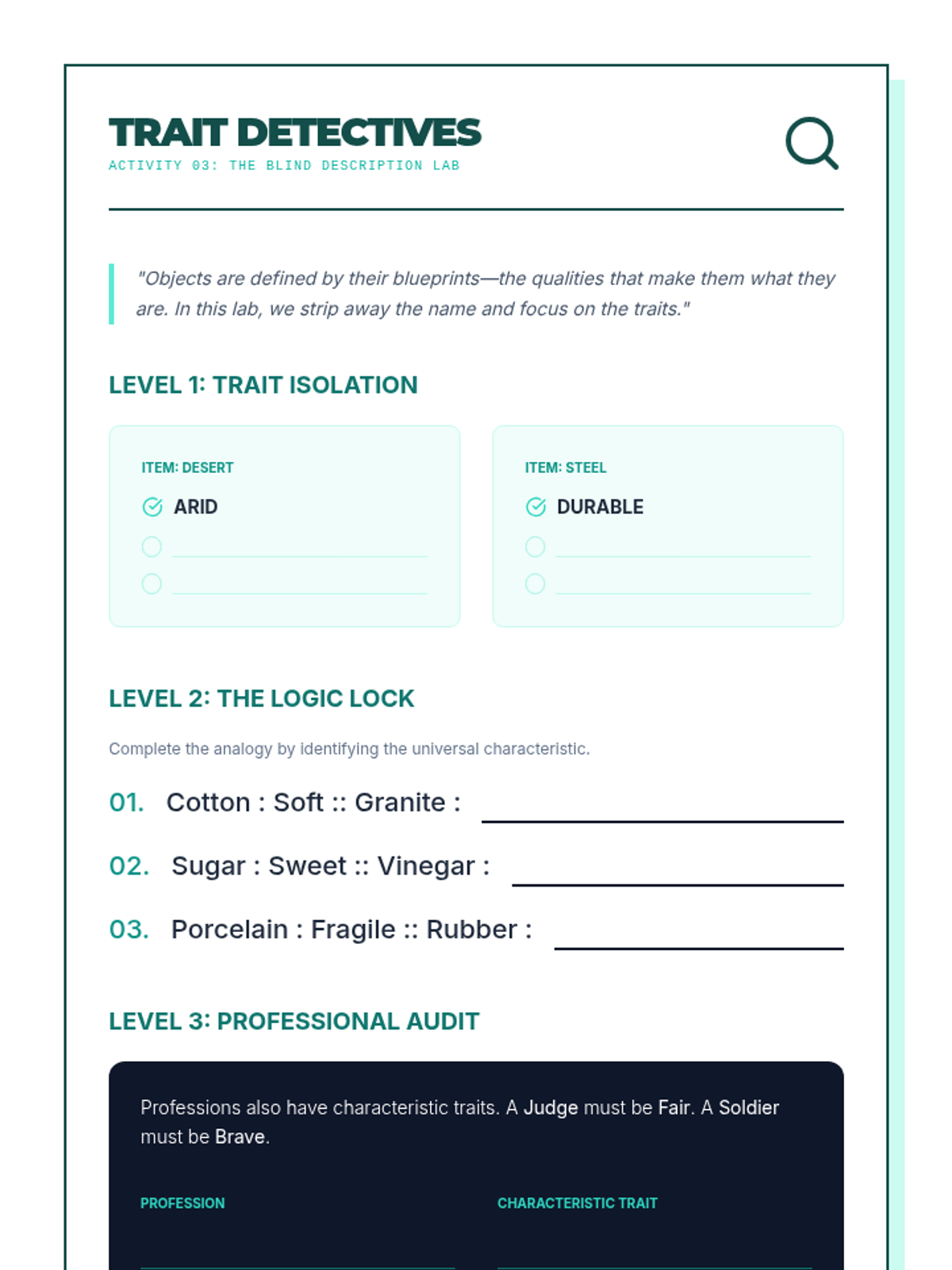
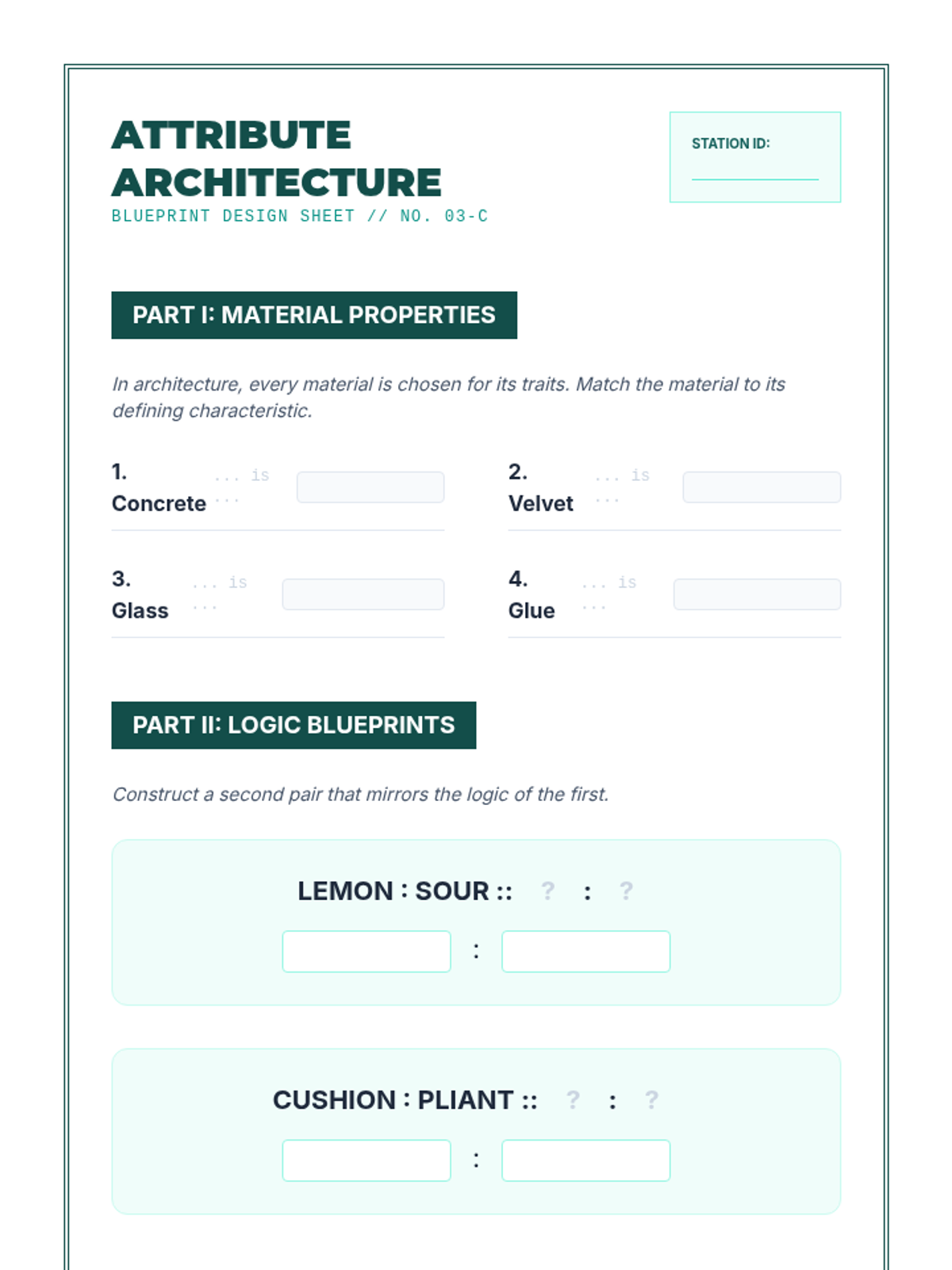
Investigates relationships based on defining traits (e.g., sugar : sweet), helping students distinguish between permanent characteristics and temporary states.
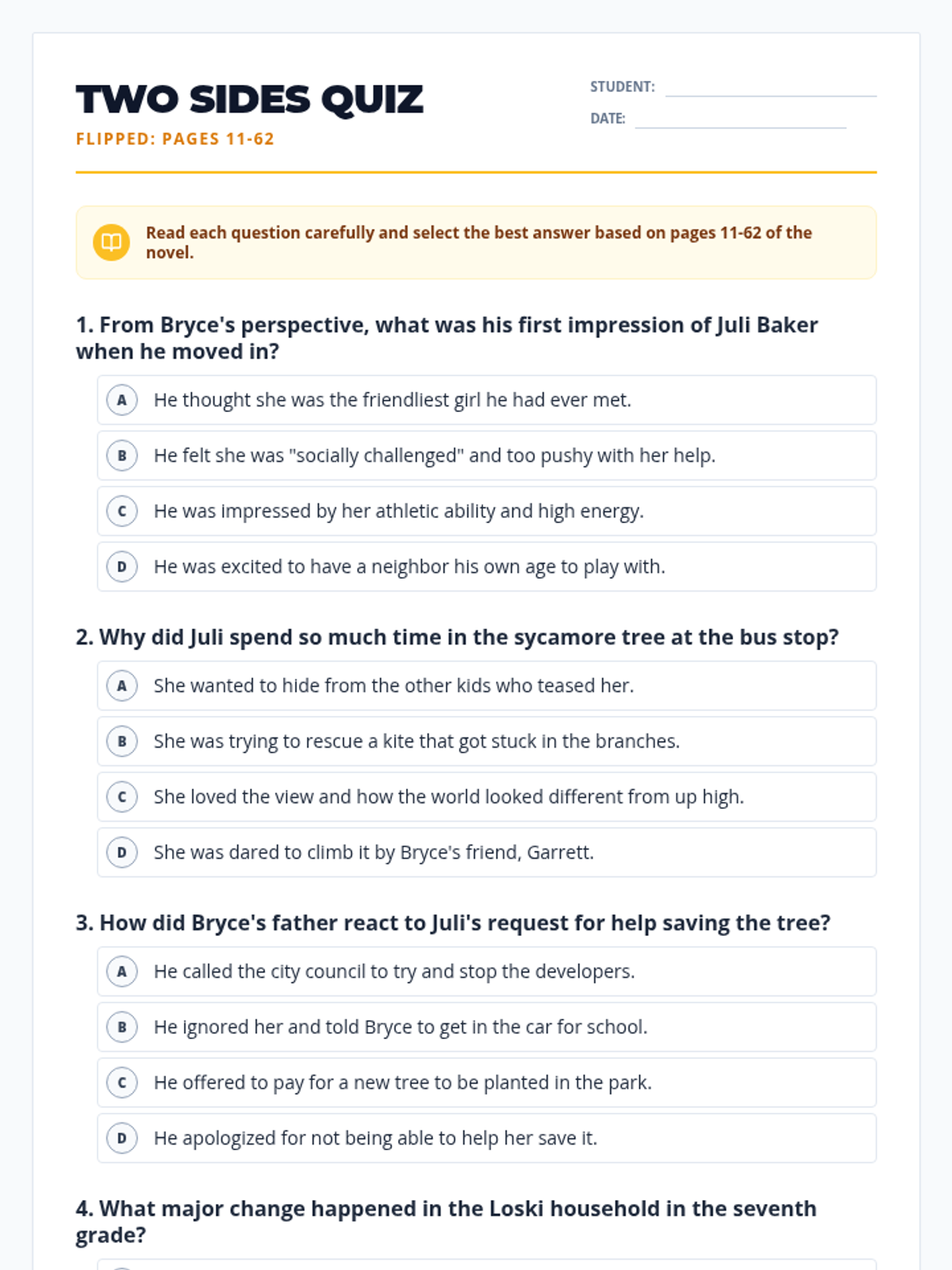
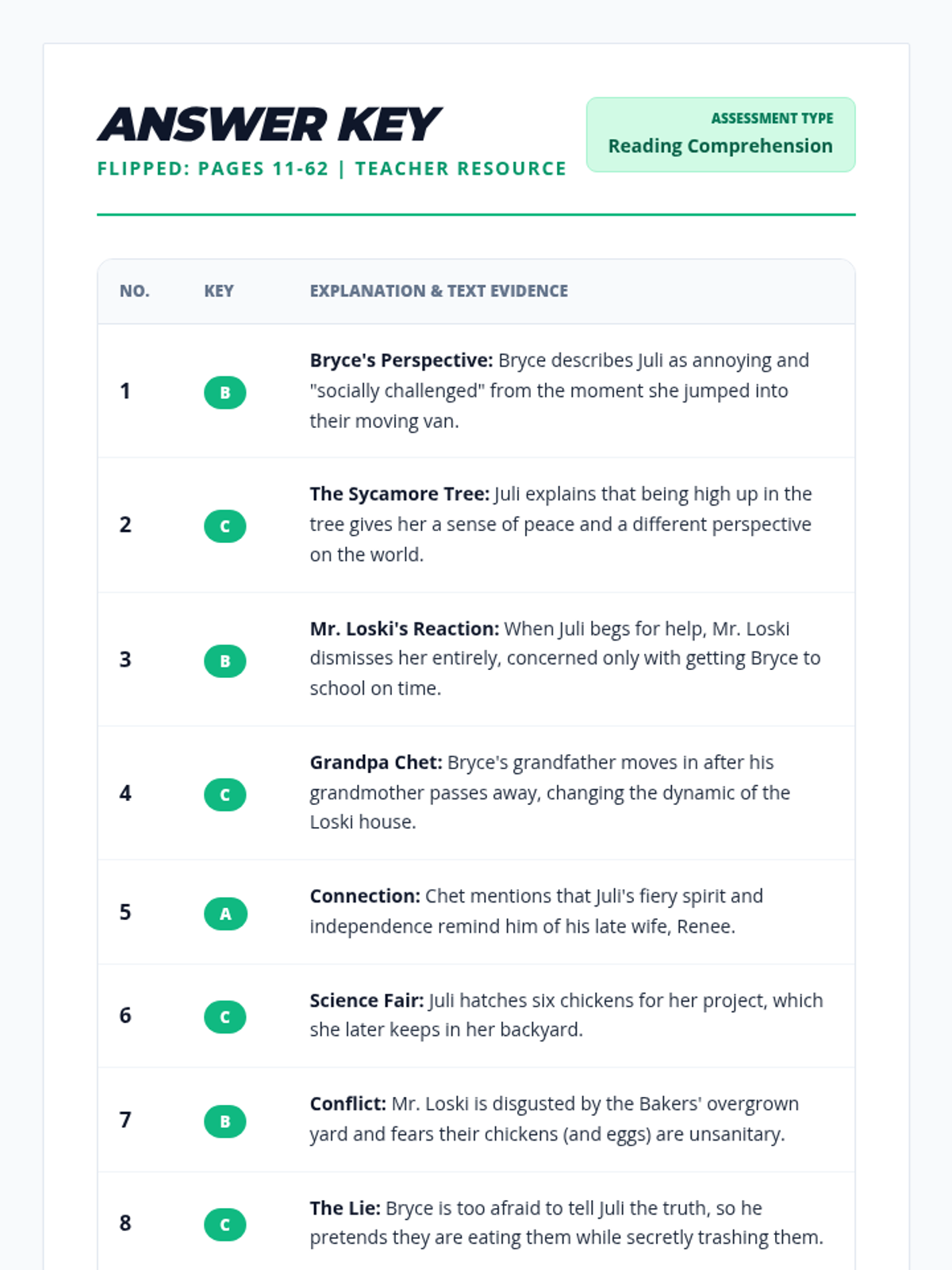
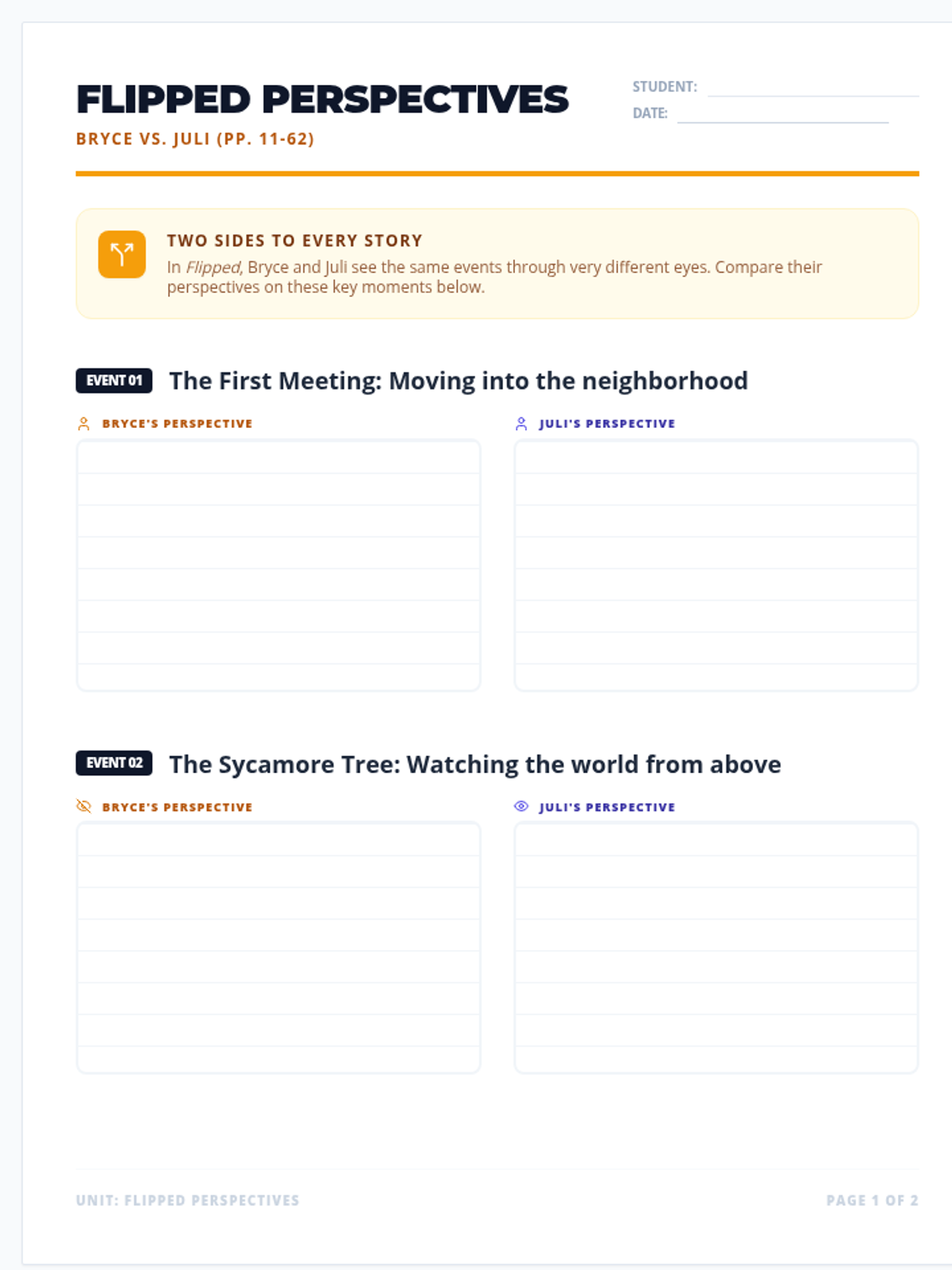
A comprehension assessment focused on the initial chapters of 'Flipped' by Wendelin Van Draanen, exploring dual perspectives, character motivations, and key plot points between Bryce and Juli.
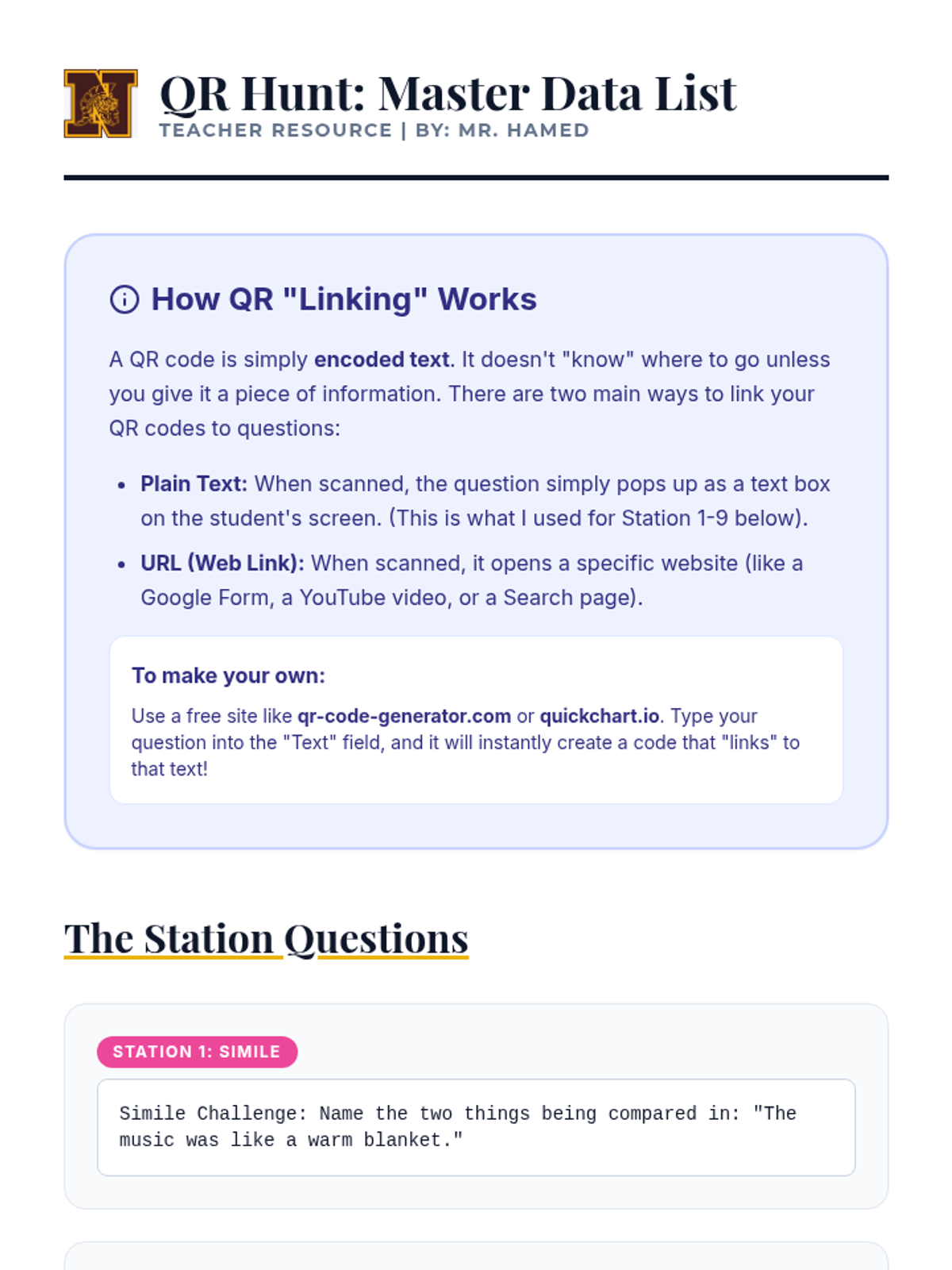
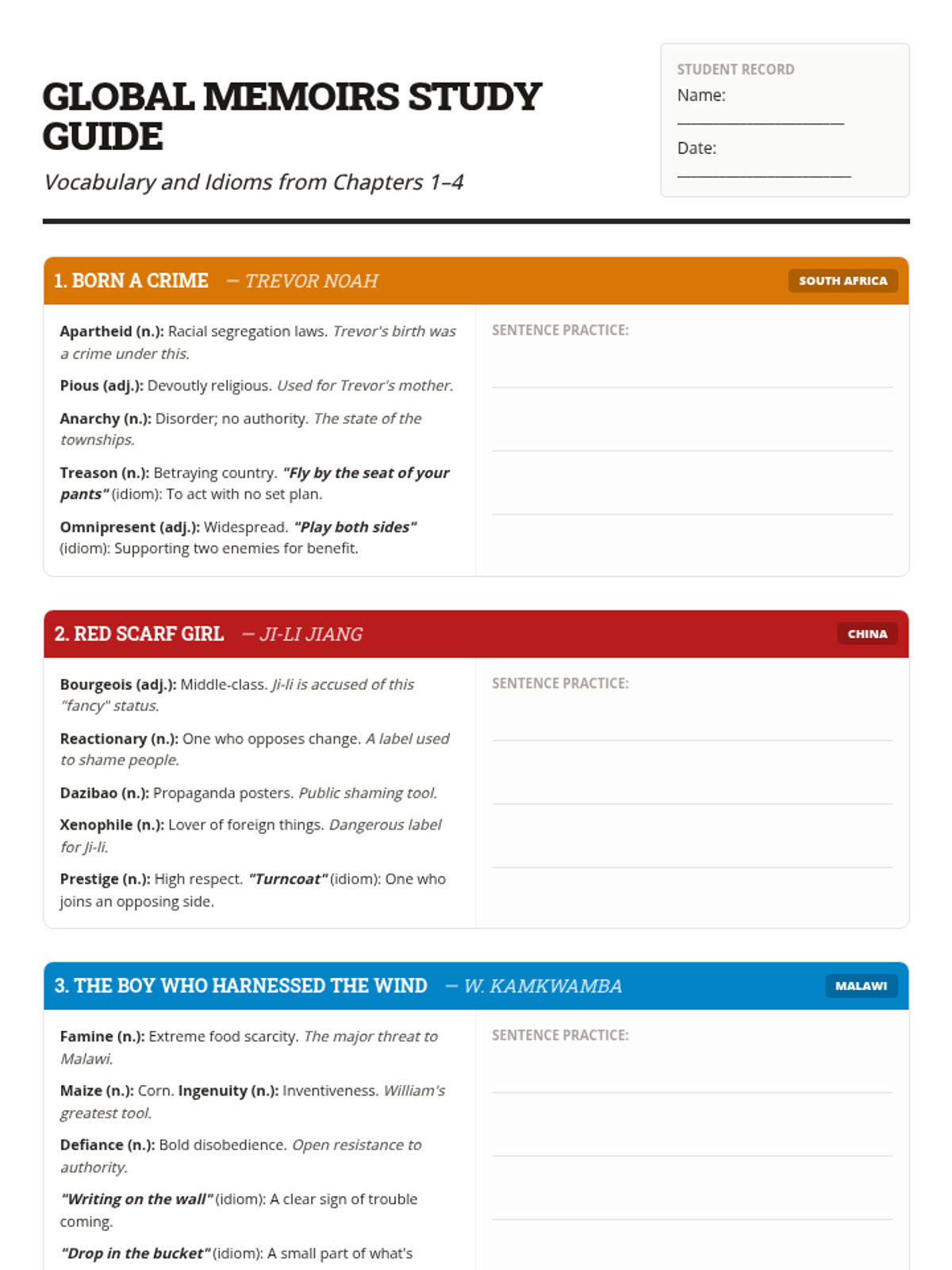
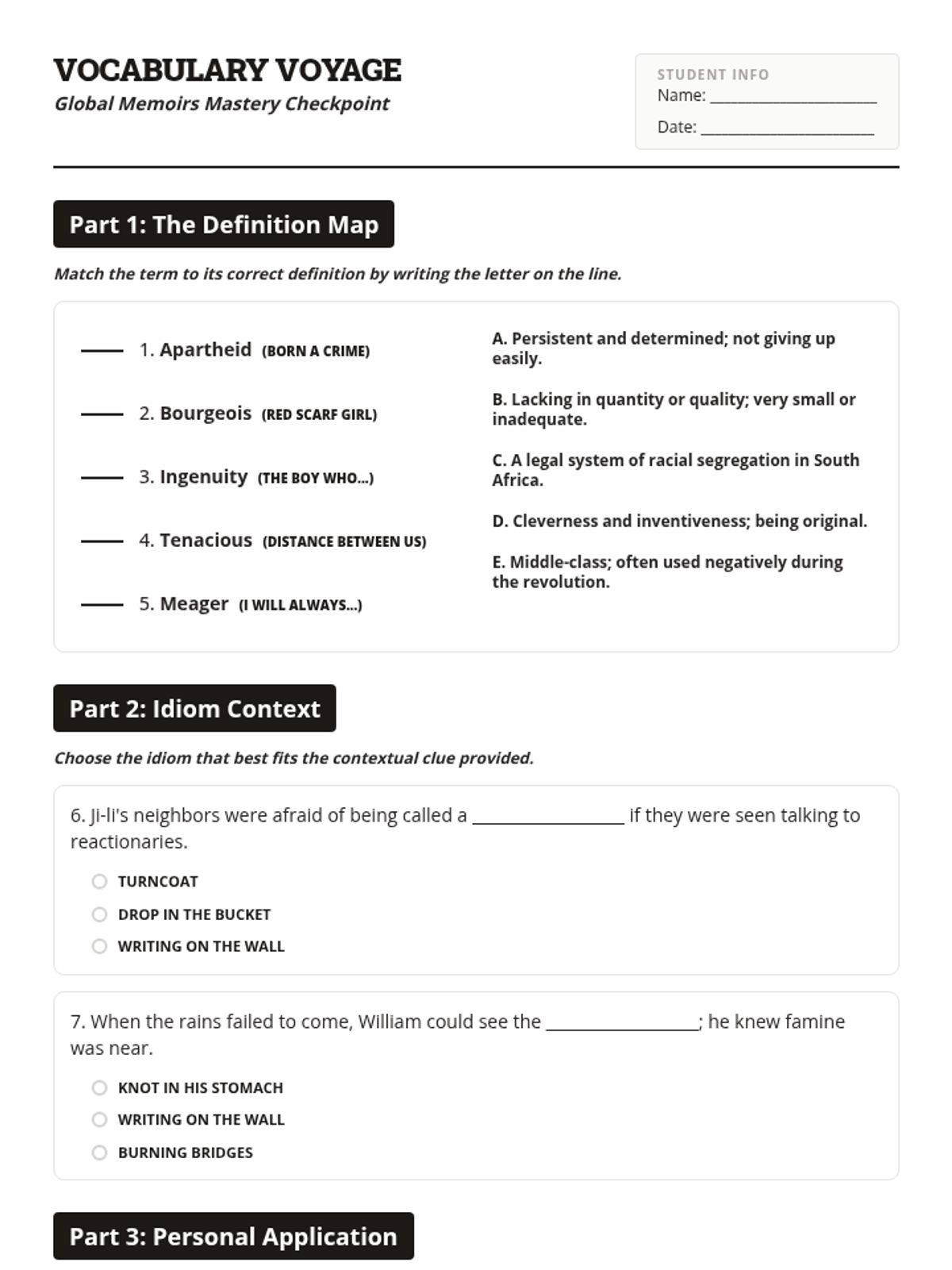
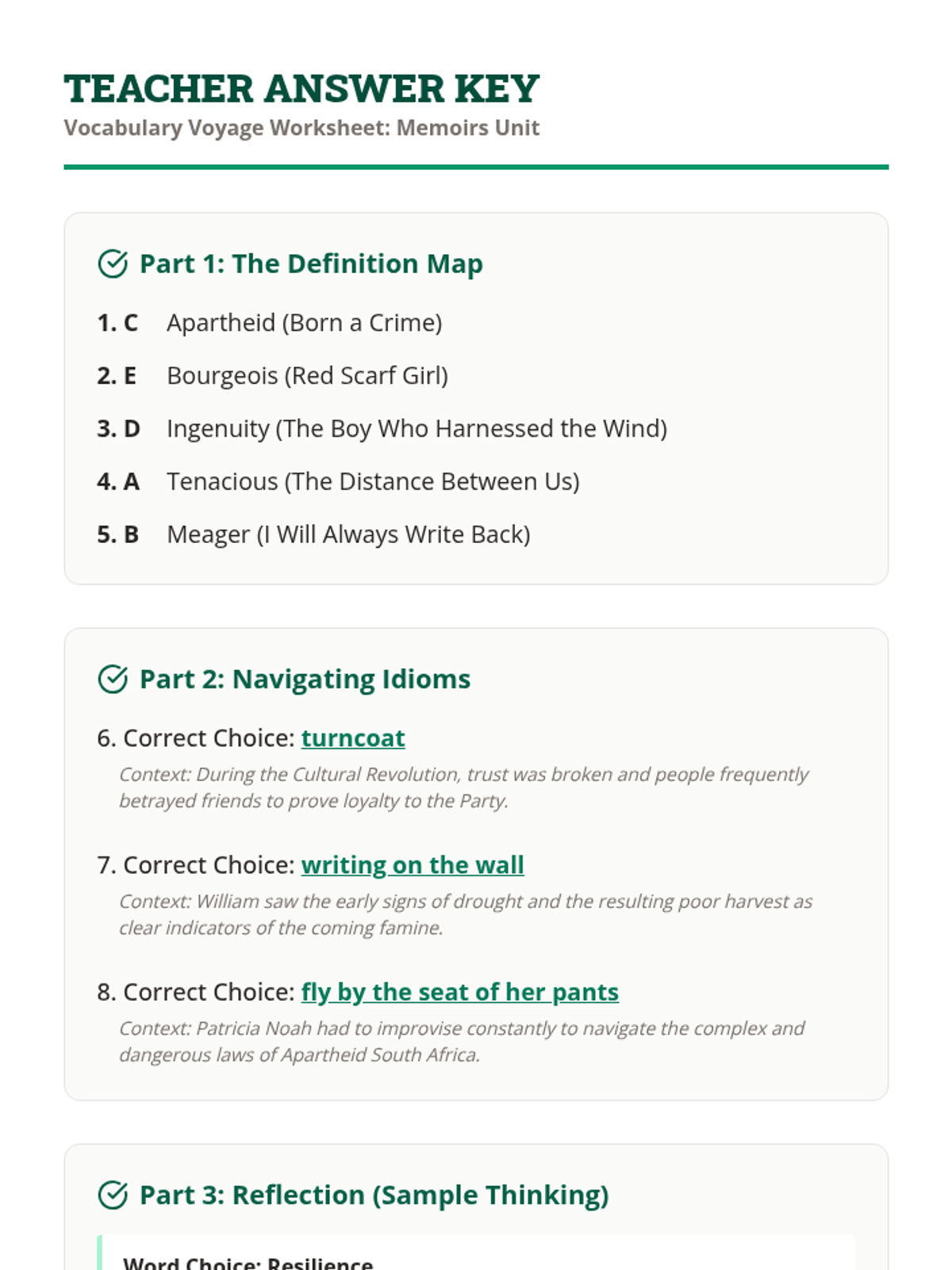
This lesson provides vocabulary lists and practice materials for the first four chapters of five prominent memoirs, helping students master academic vocabulary and idioms within diverse cultural contexts.
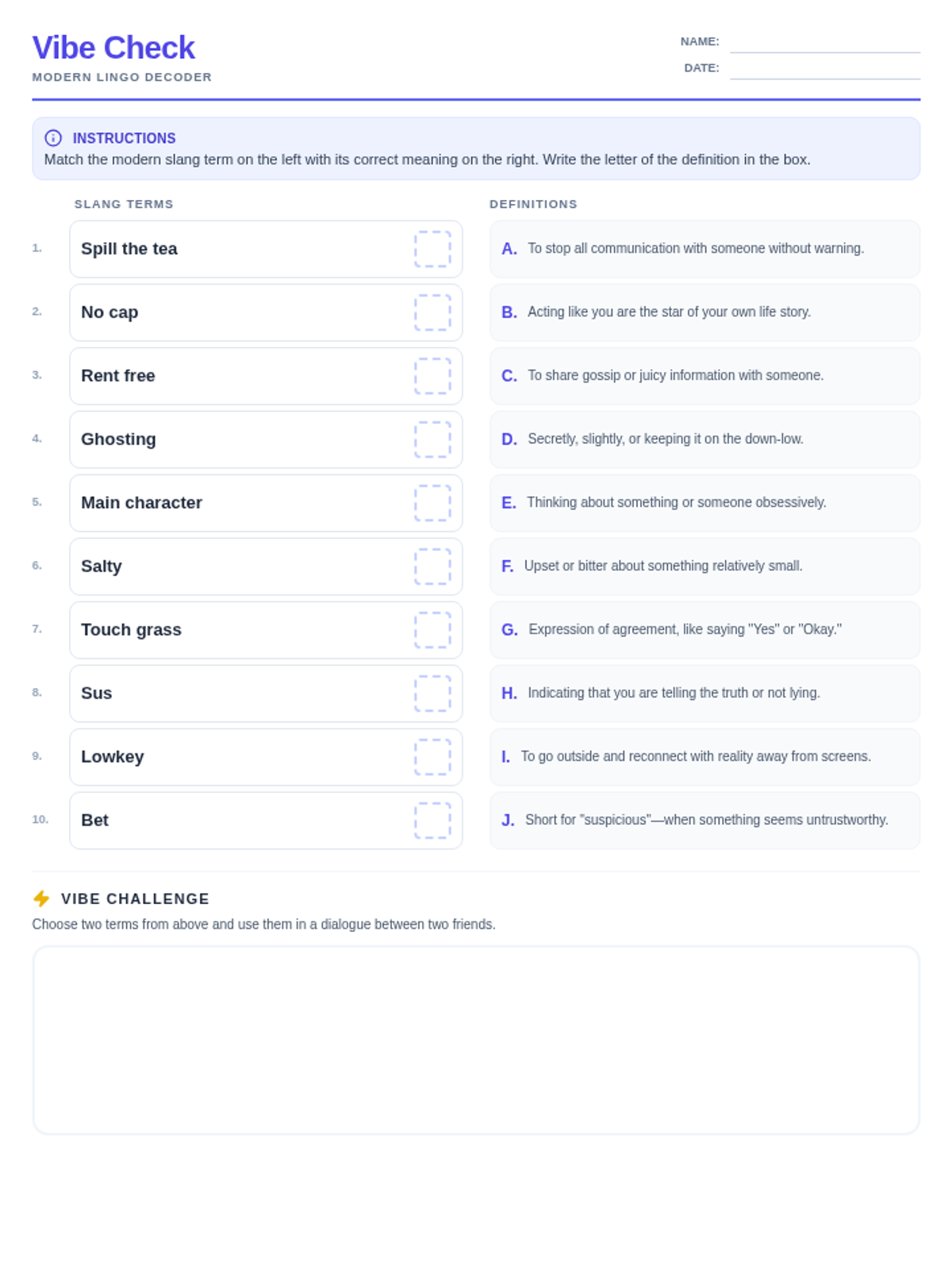
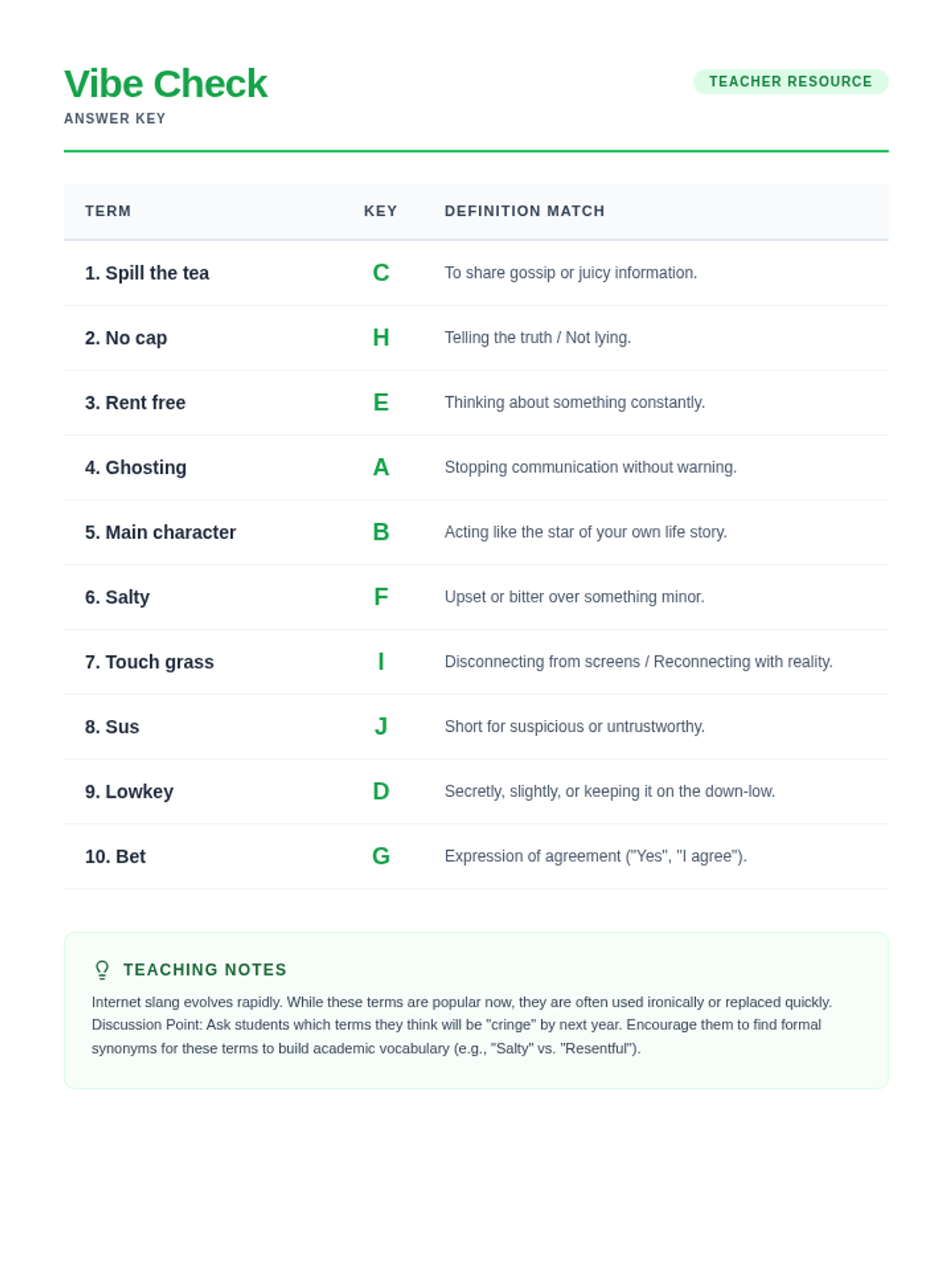
A guide to understanding and using modern teen slang and contemporary idioms in everyday conversation.
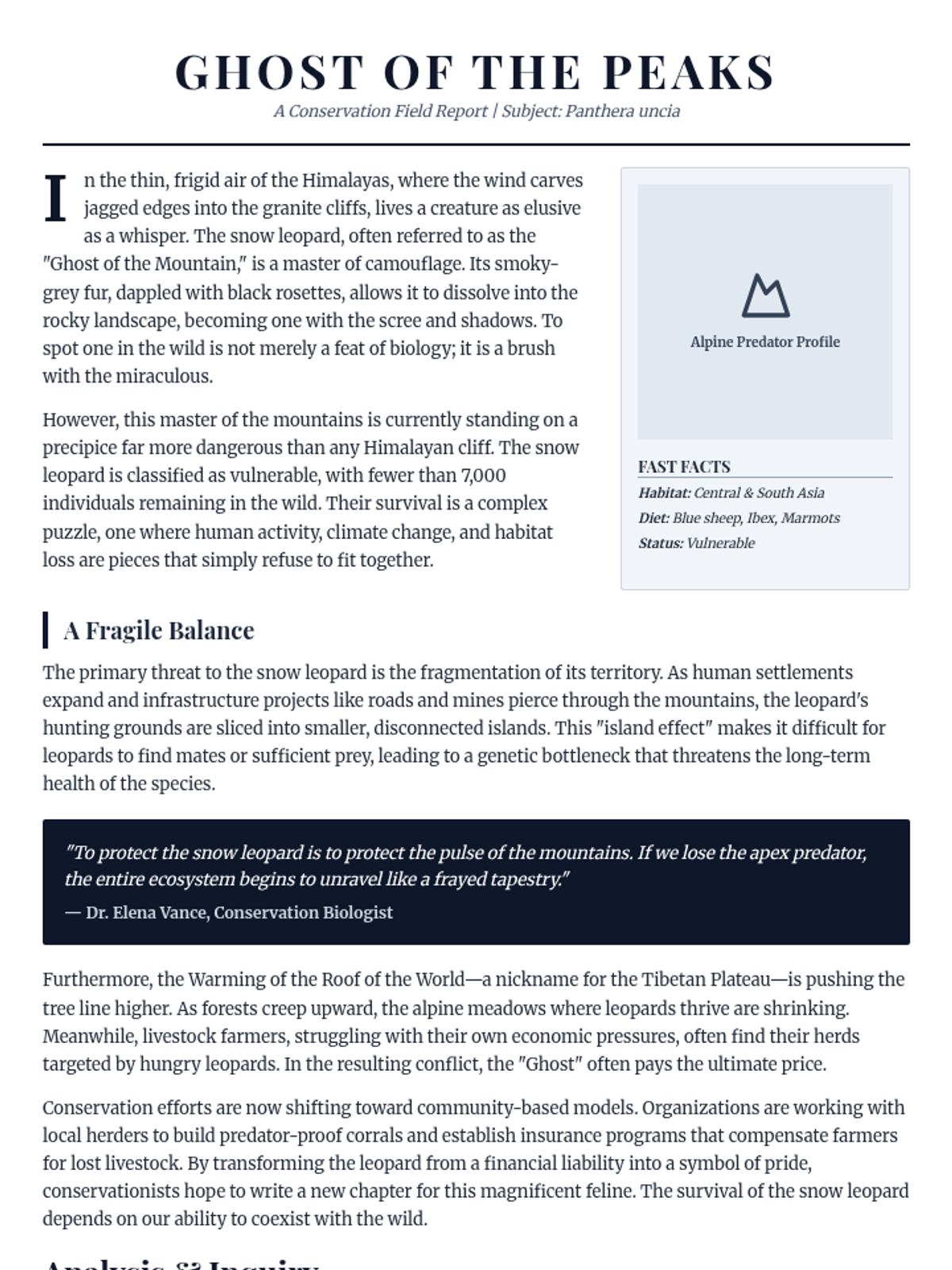
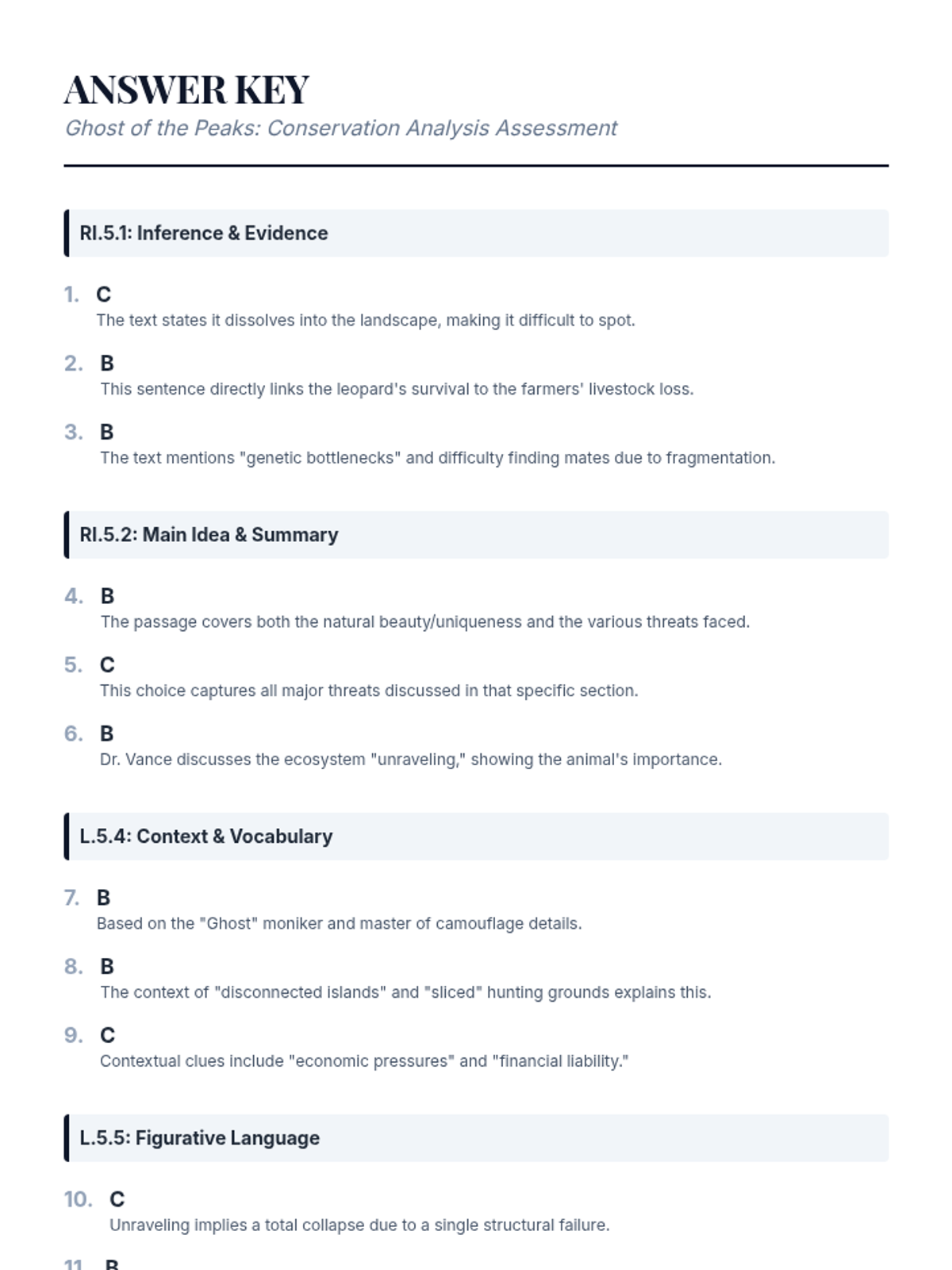
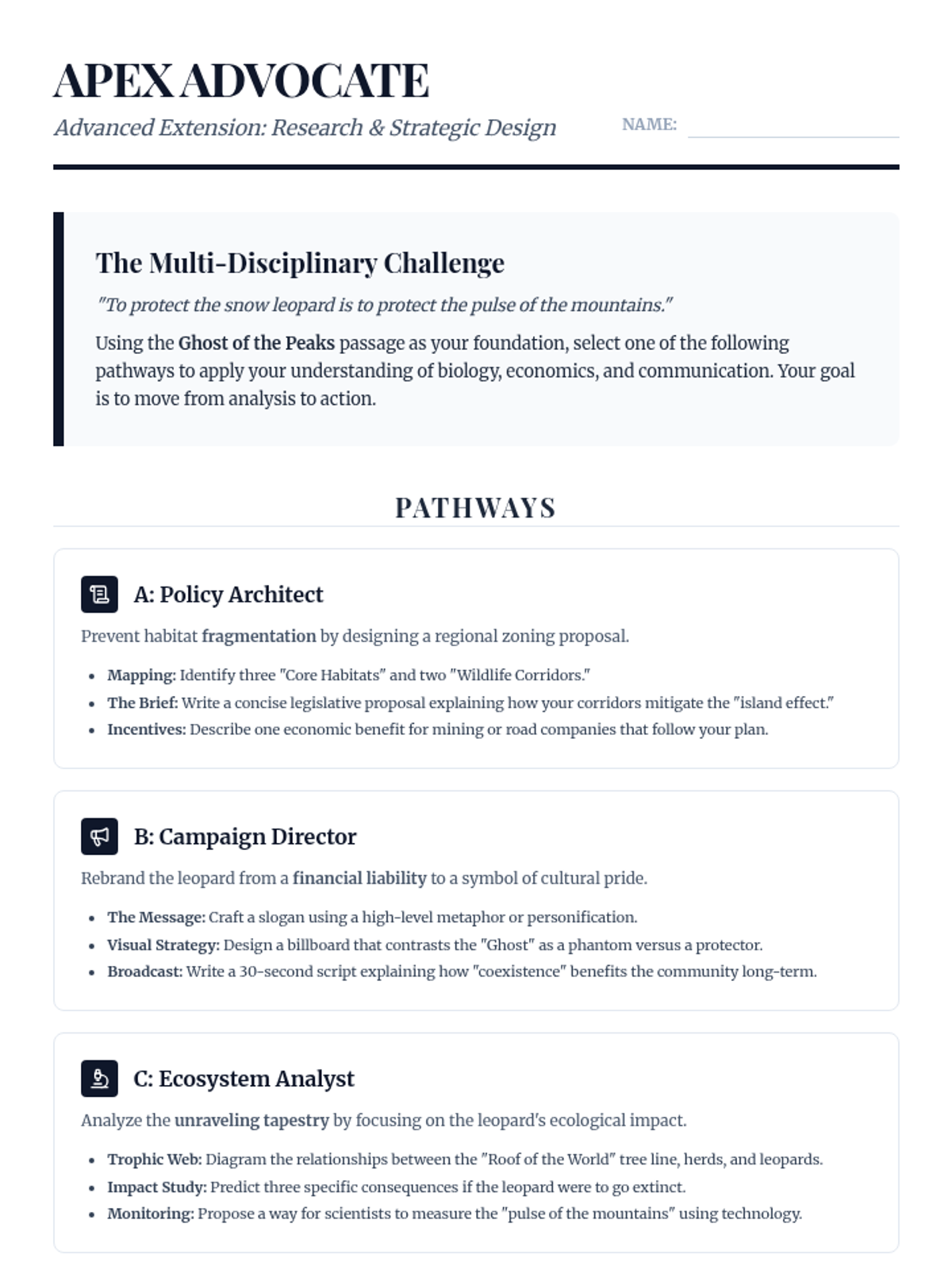
A high-level reading comprehension lesson focused on endangered species, specifically the snow leopard. Students will analyze complex text for main ideas, nuanced vocabulary, and figurative language.
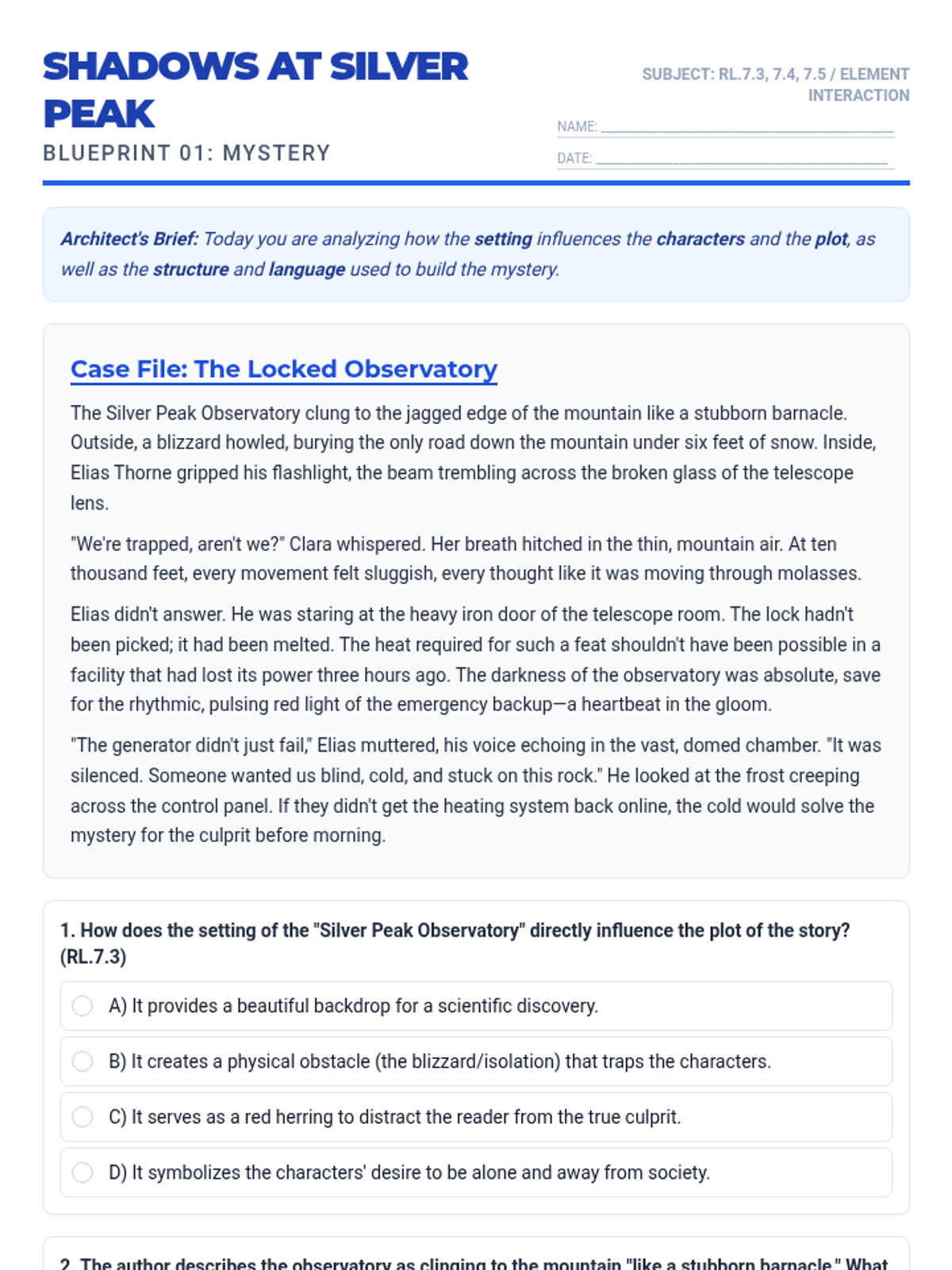
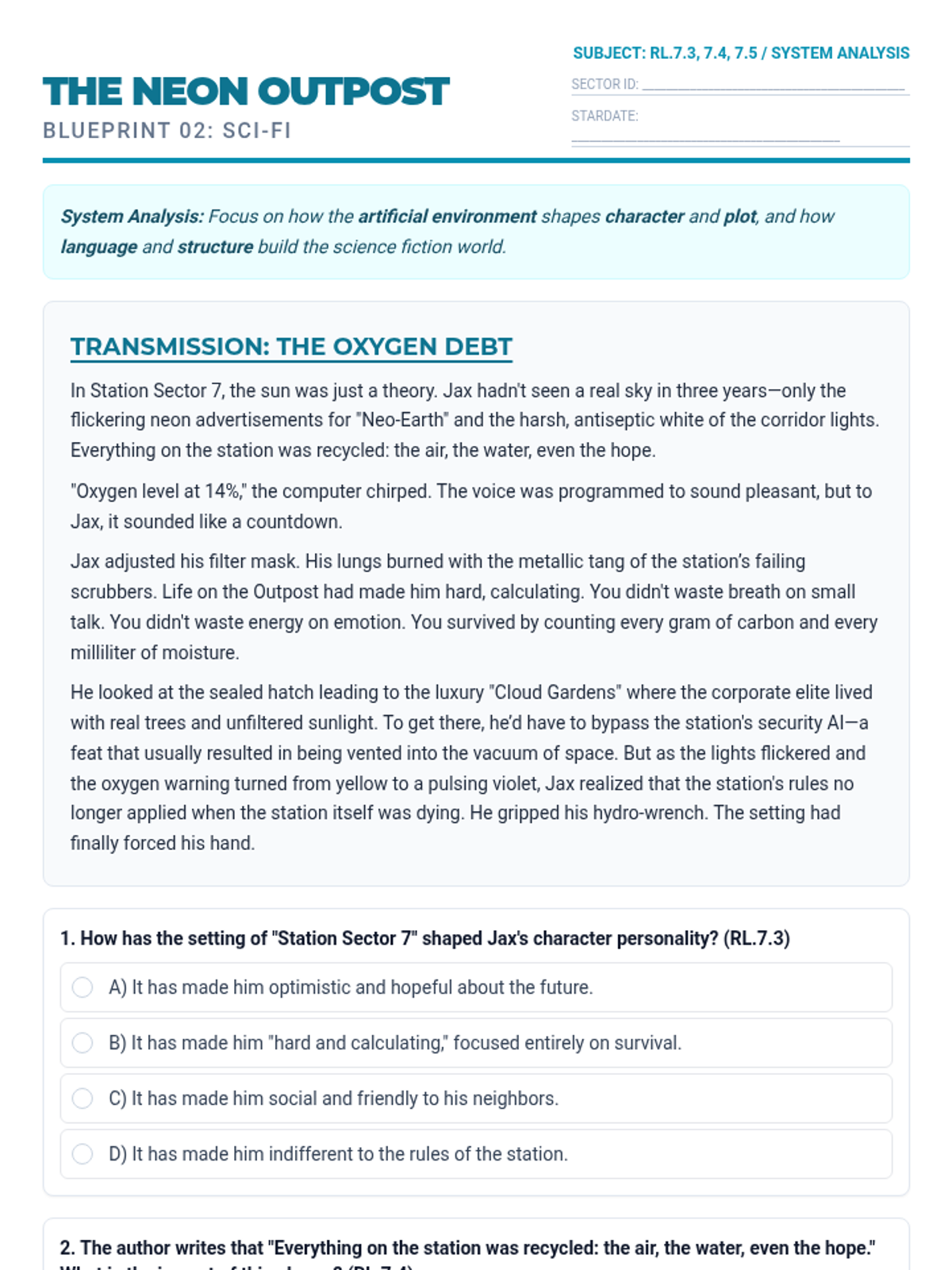
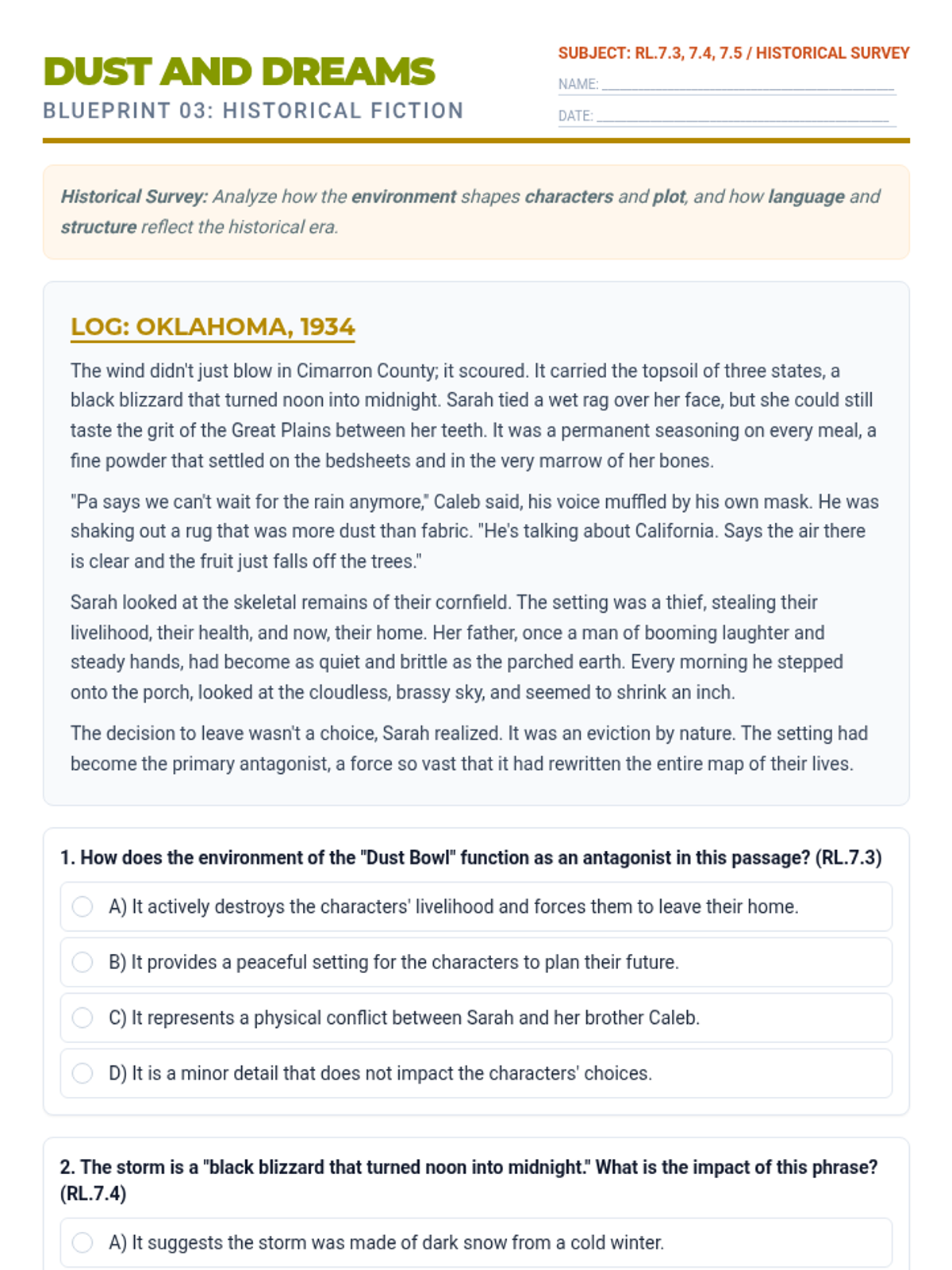
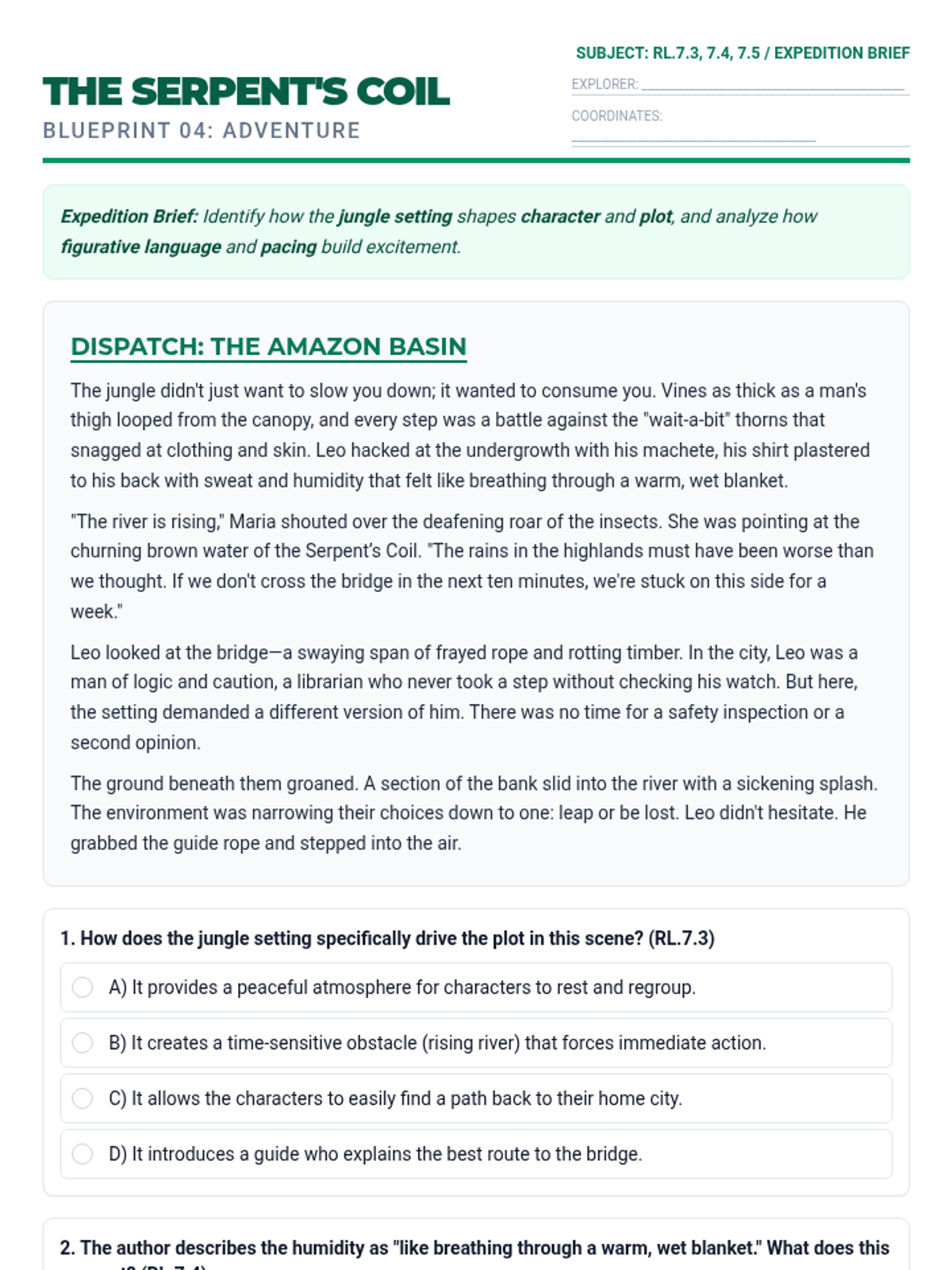
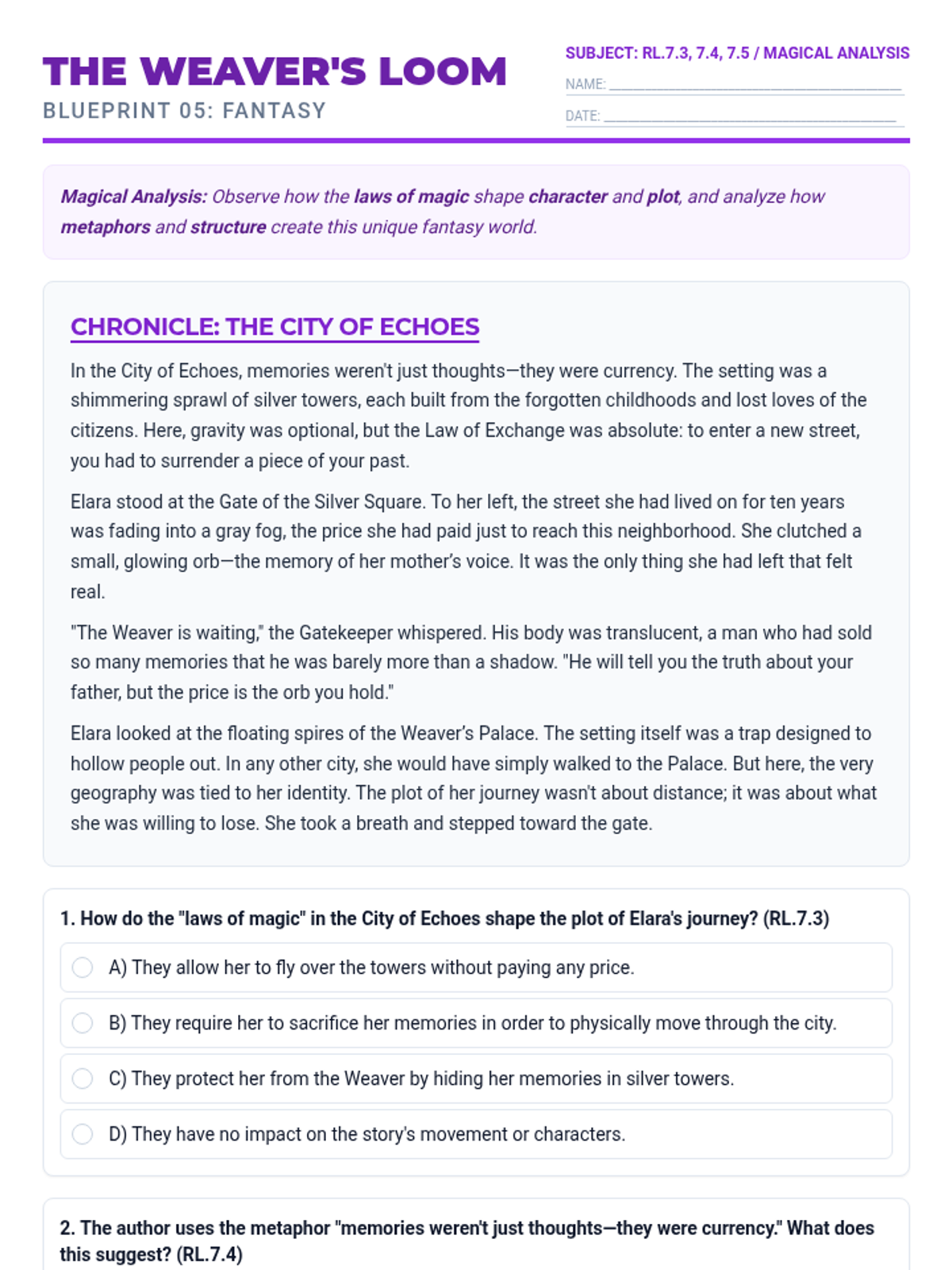
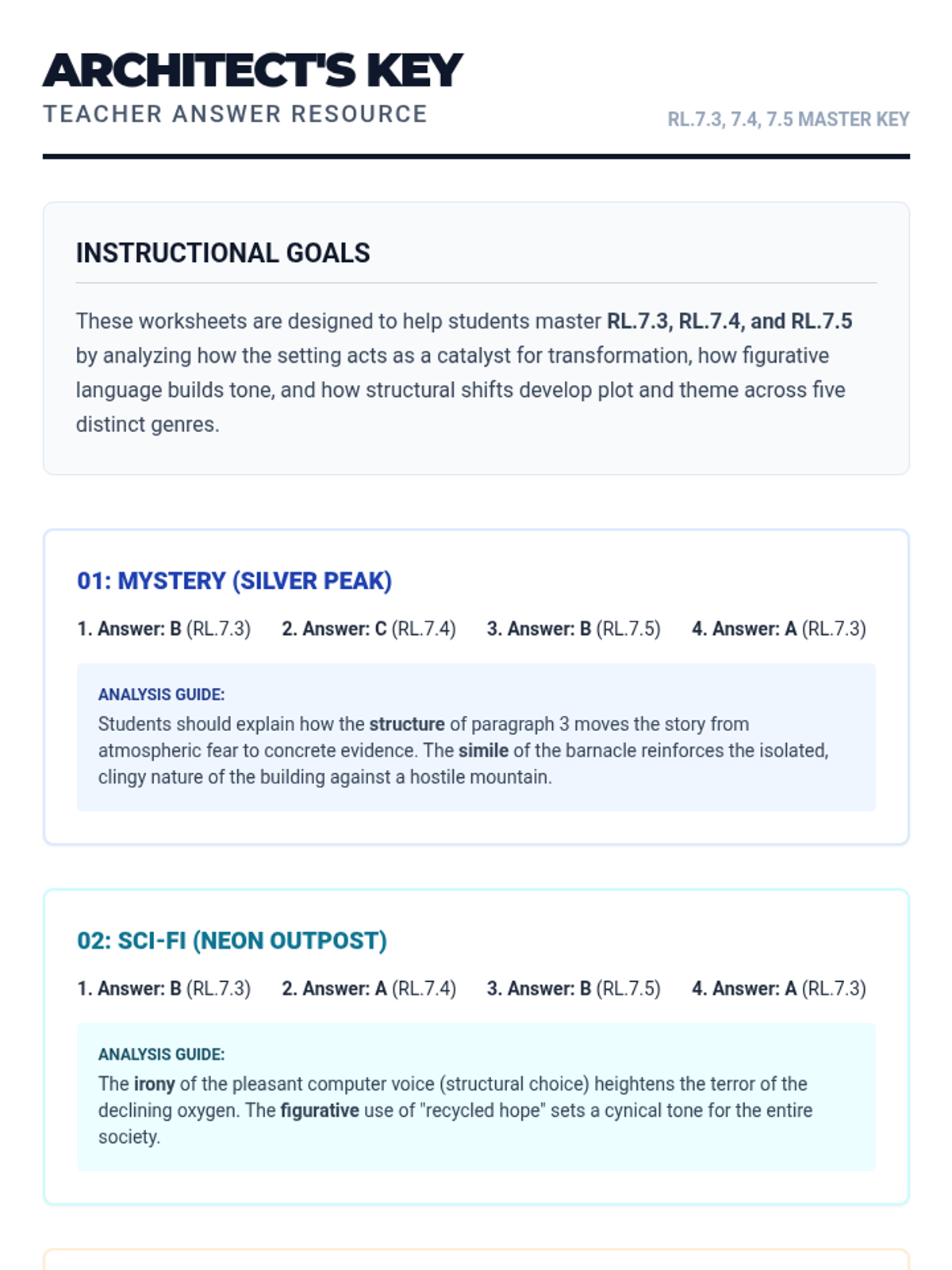
A comprehensive deep-dive into standard RL 7.3, exploring how setting, character, and plot interact across five distinct genres through analytical passages and comparative slides.
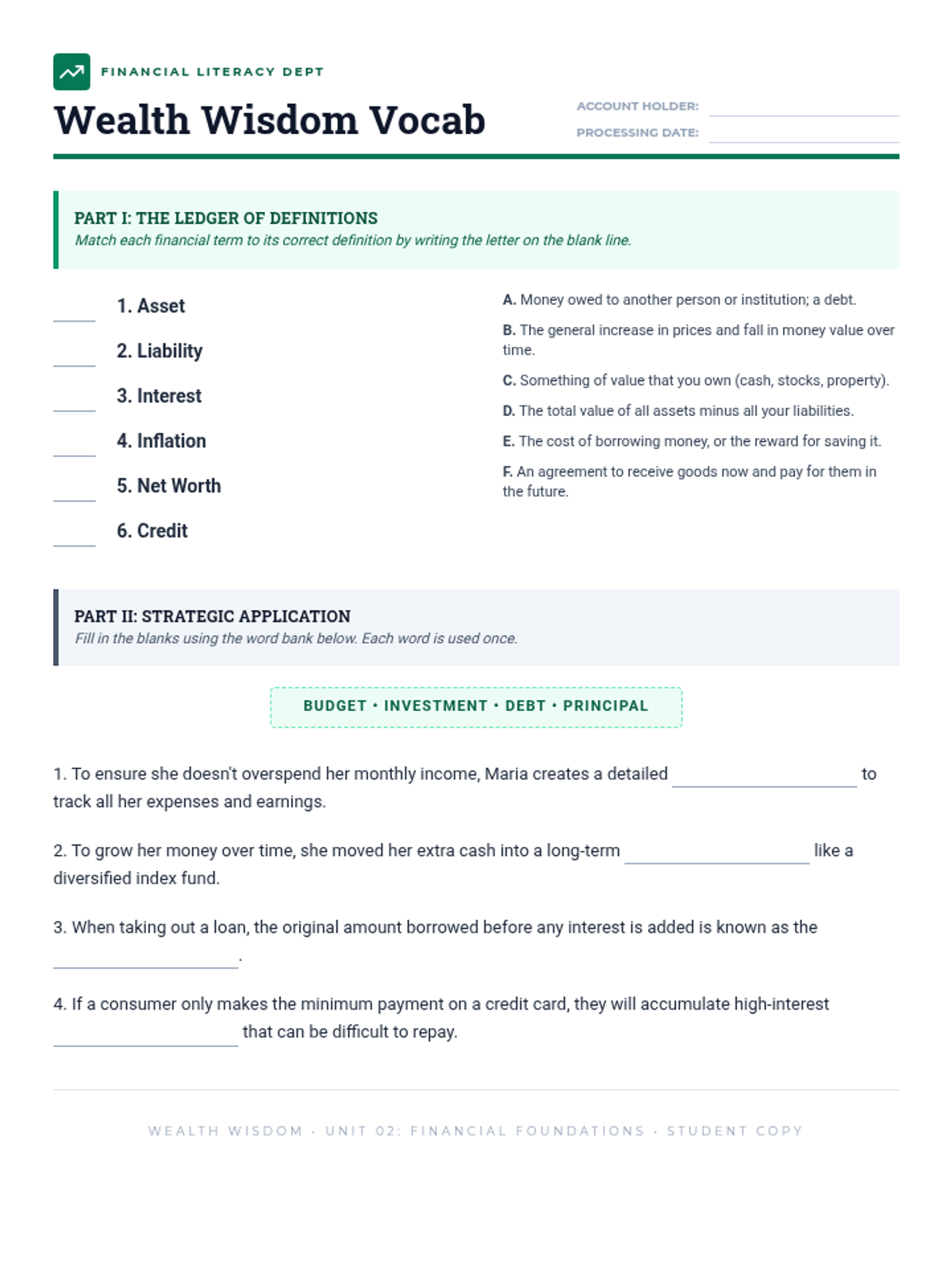
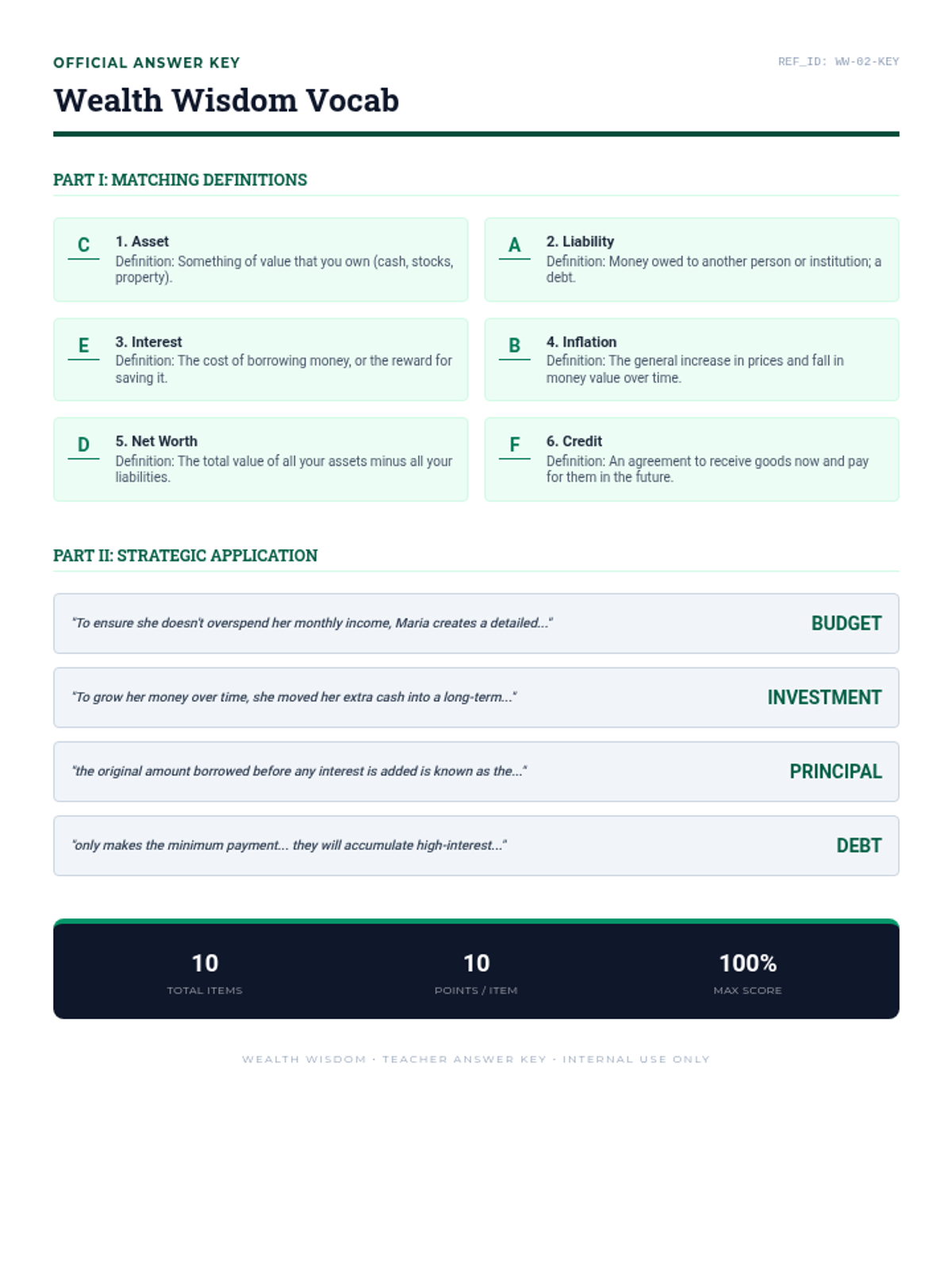
An introductory exploration of essential financial concepts. Students learn and apply key terms like assets, liabilities, interest, and inflation to build a foundation for personal financial management.
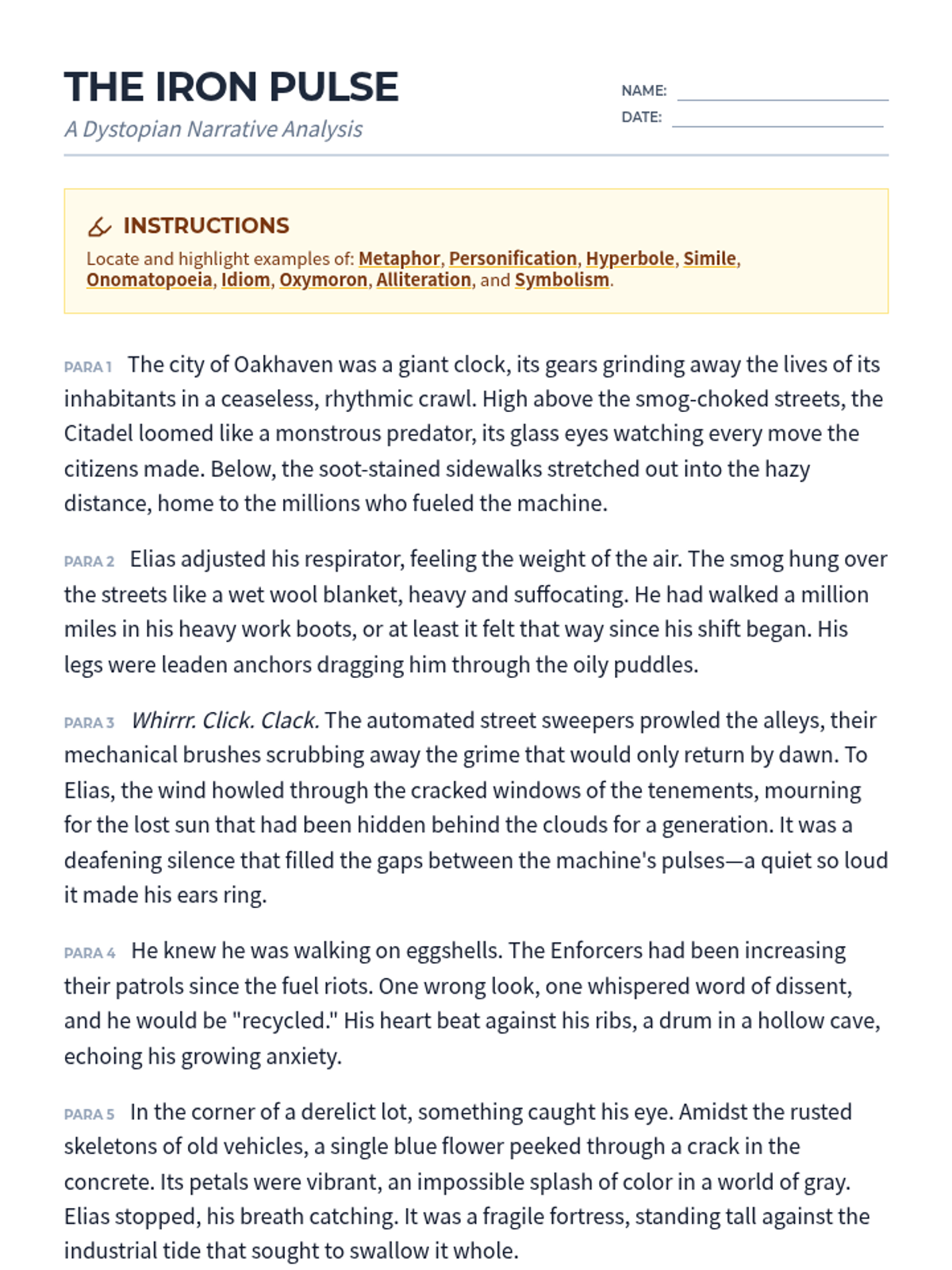
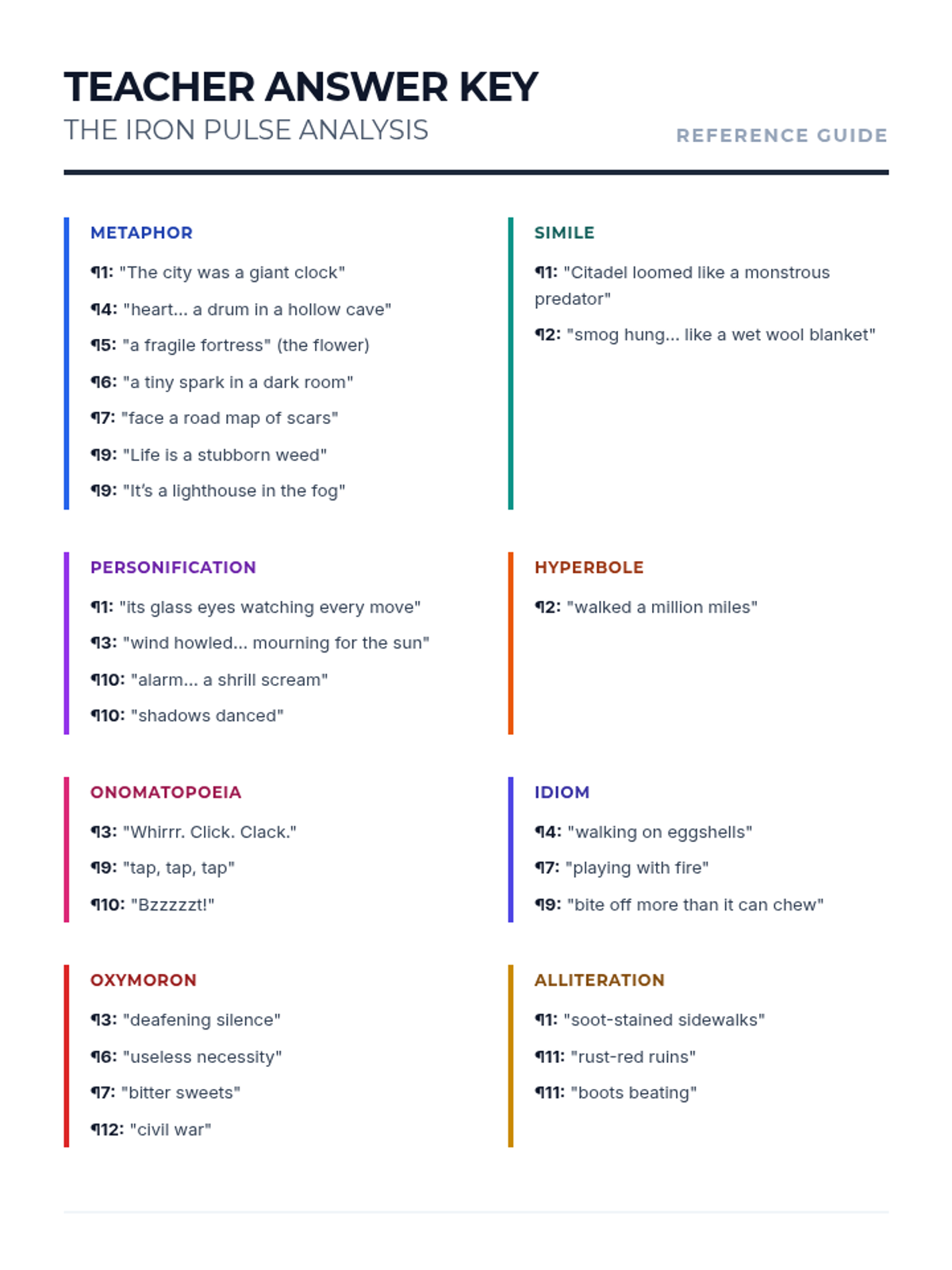
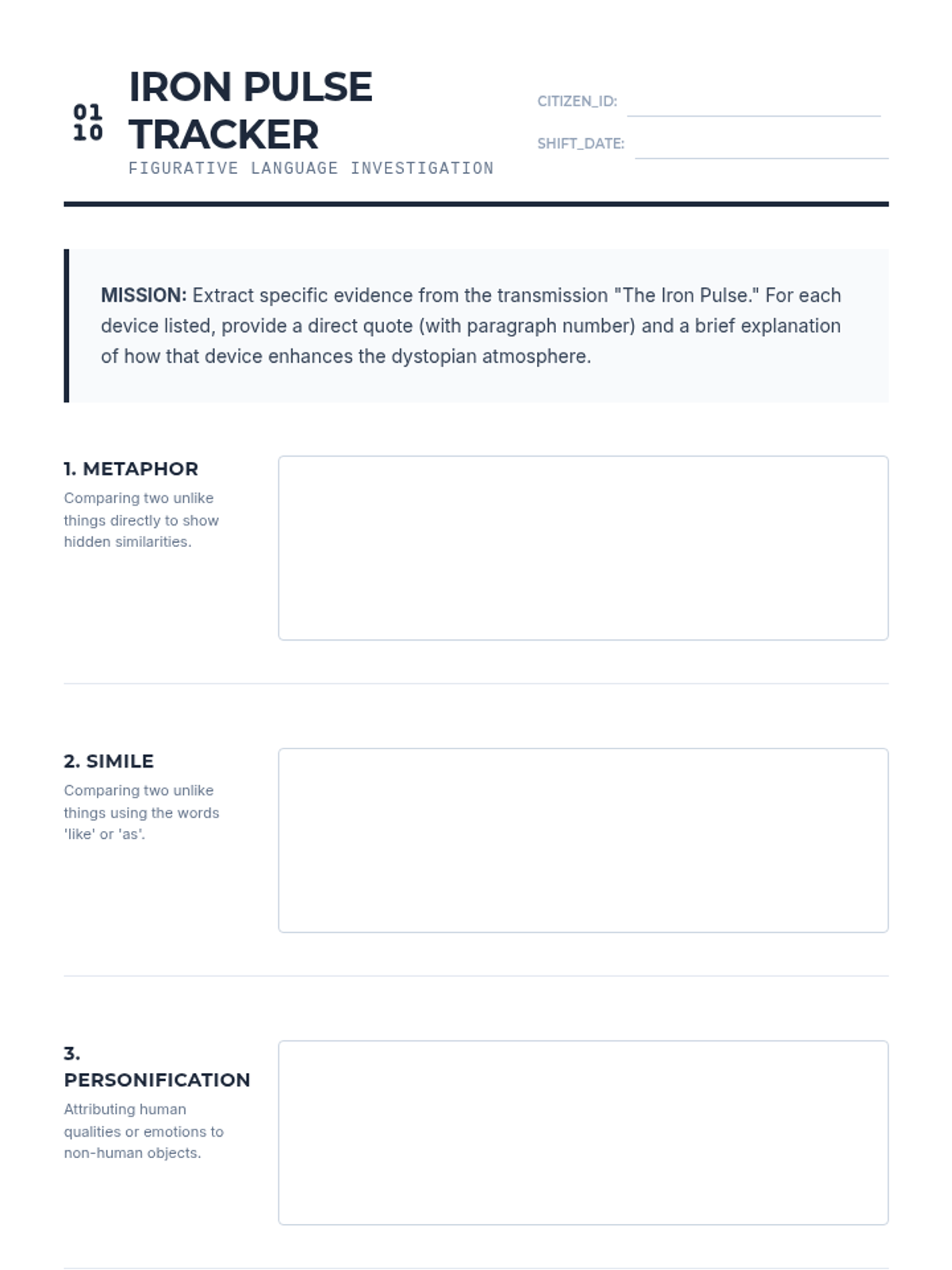
A deep dive into figurative language through the lens of a dystopian narrative. Students analyze a two-page passage to identify and categorize various literary devices used to build a bleak, immersive world.
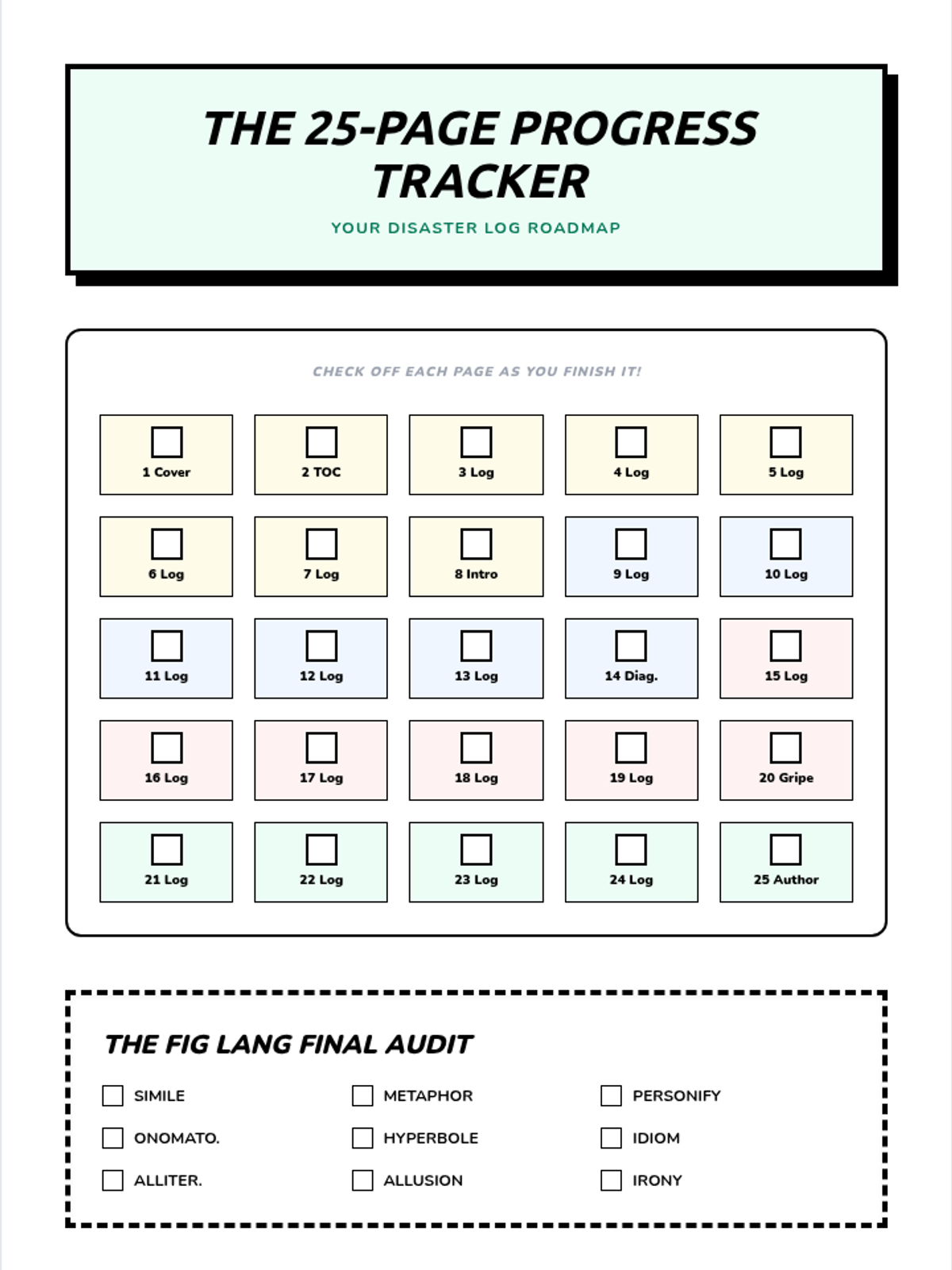
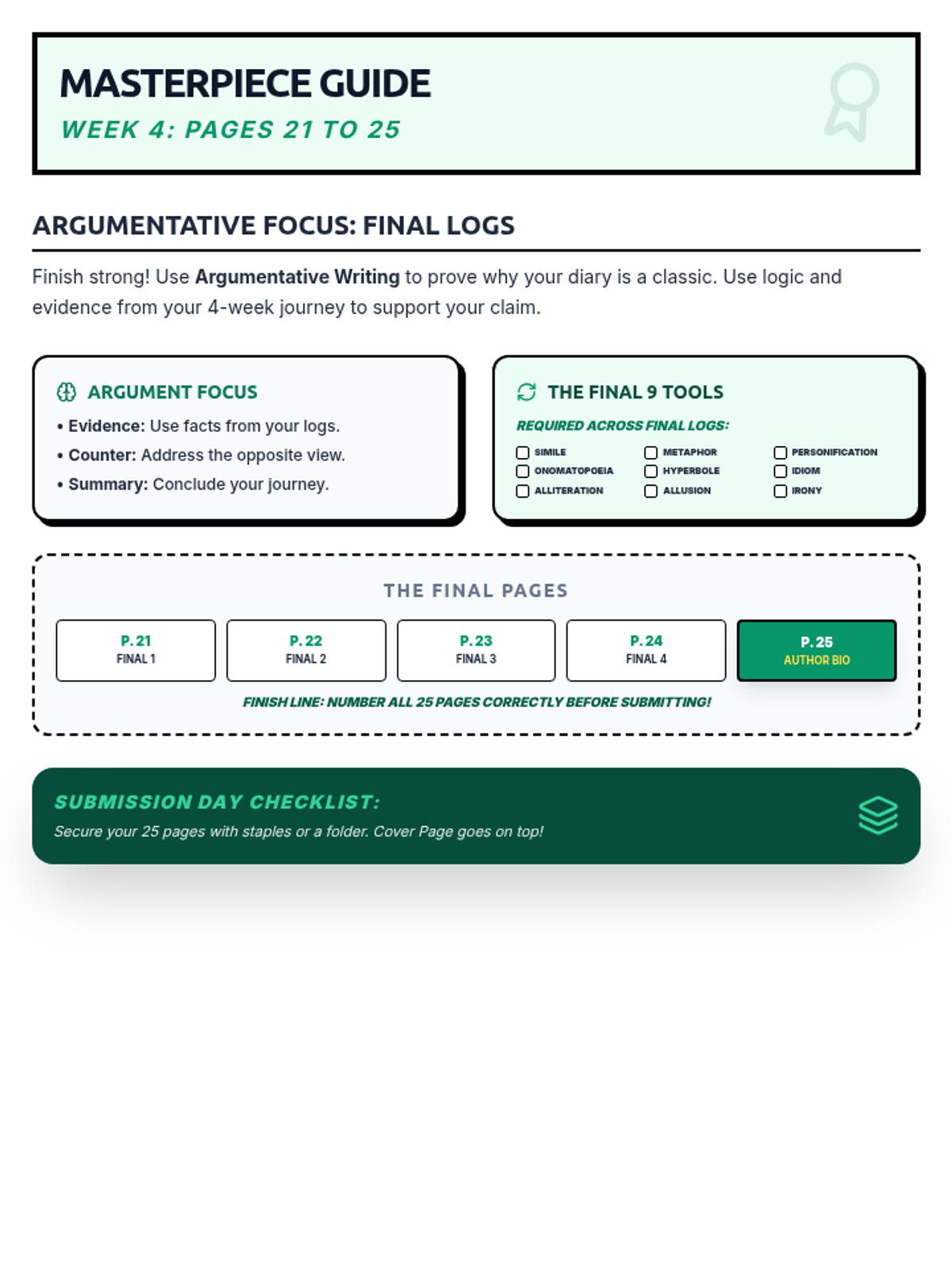
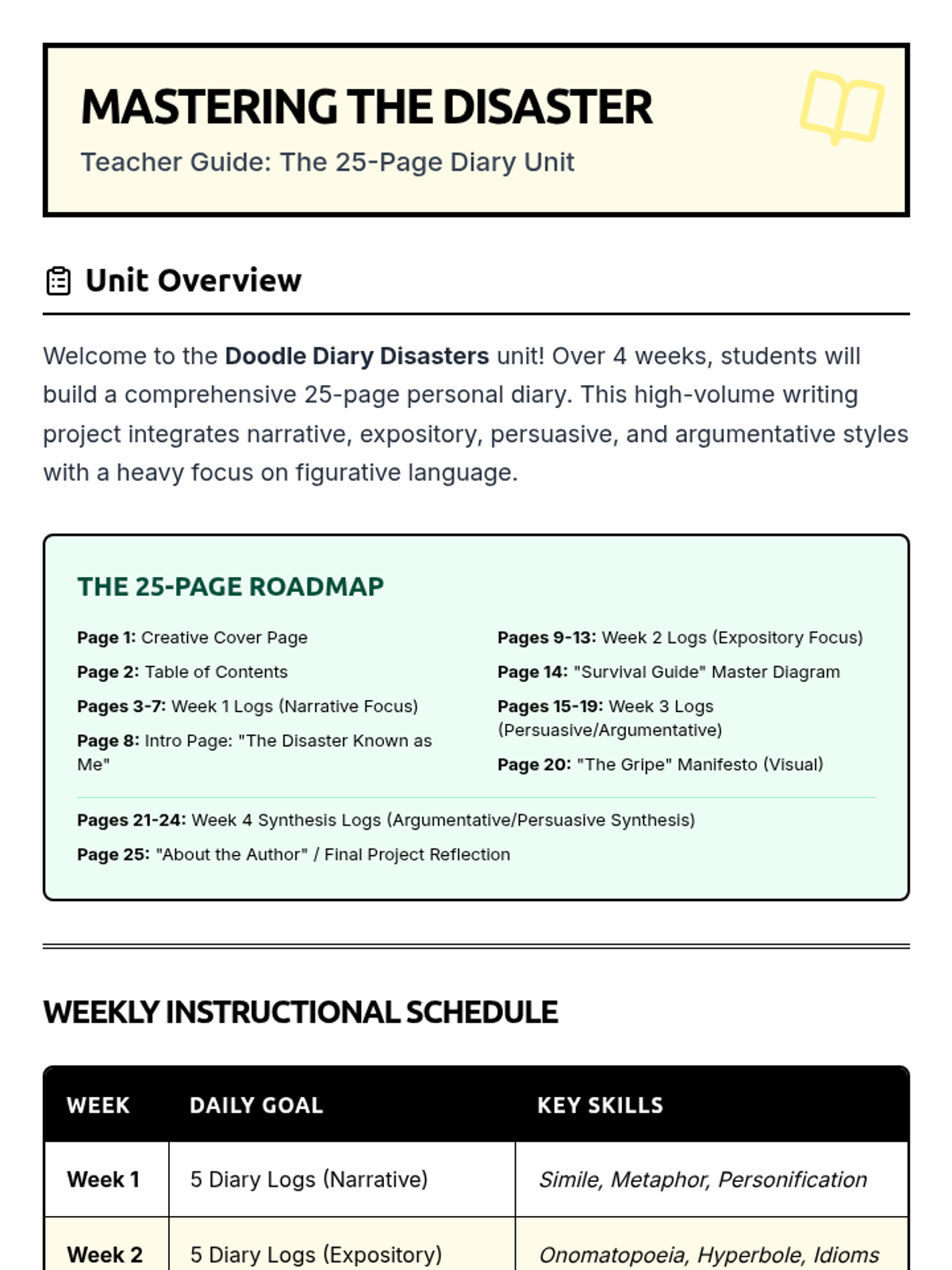
A final project-focused week where students compile their entries and use a comprehensive mix of all figurative language to complete their diary masterpiece.
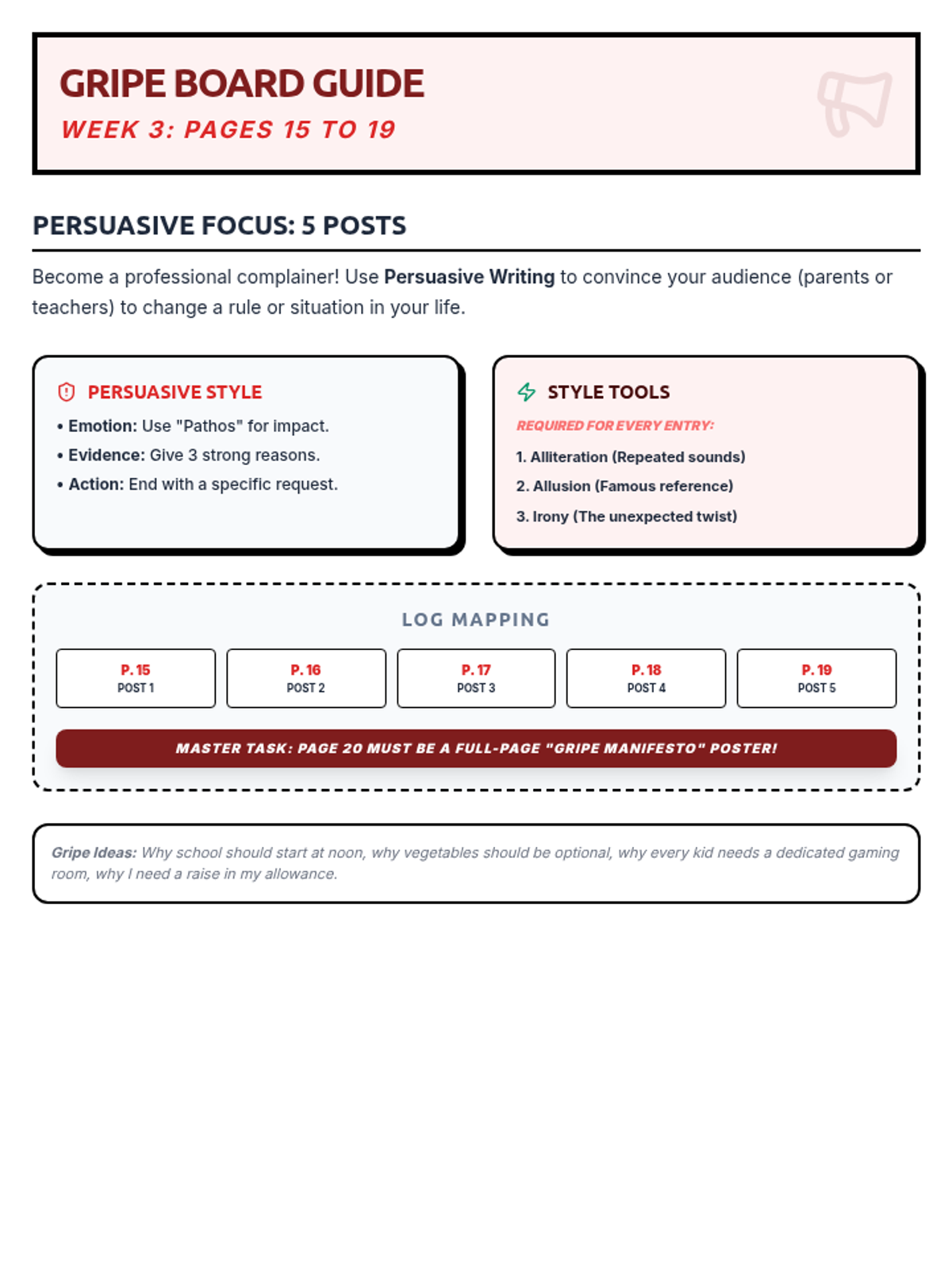
Introduces persuasive and argumentative writing within a diary context, using alliteration, allusion, and irony to strengthen student voices.
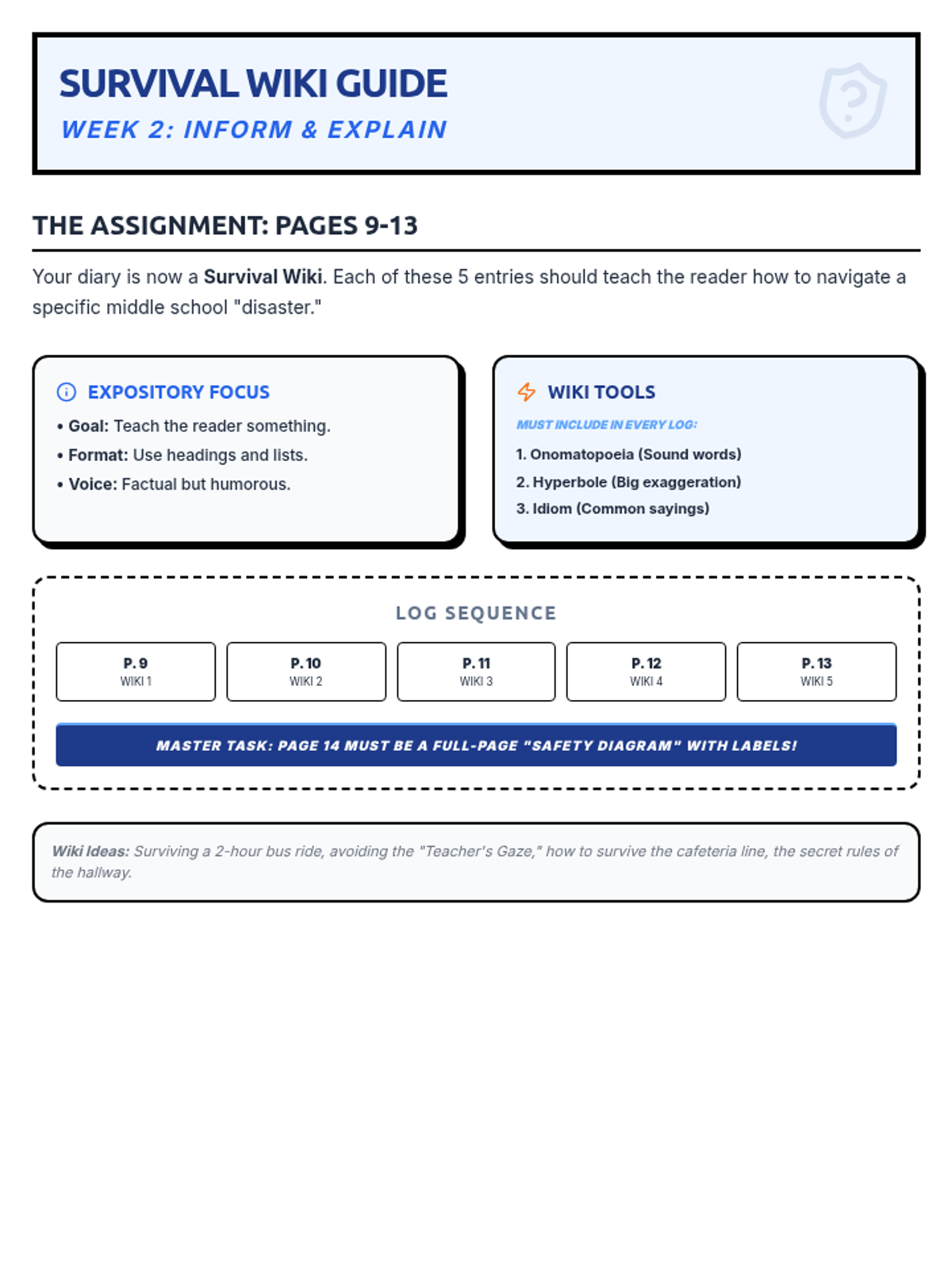
Explores expository writing to explain school or home life while integrating onomatopoeia, hyperbole, and idioms for comedic effect.
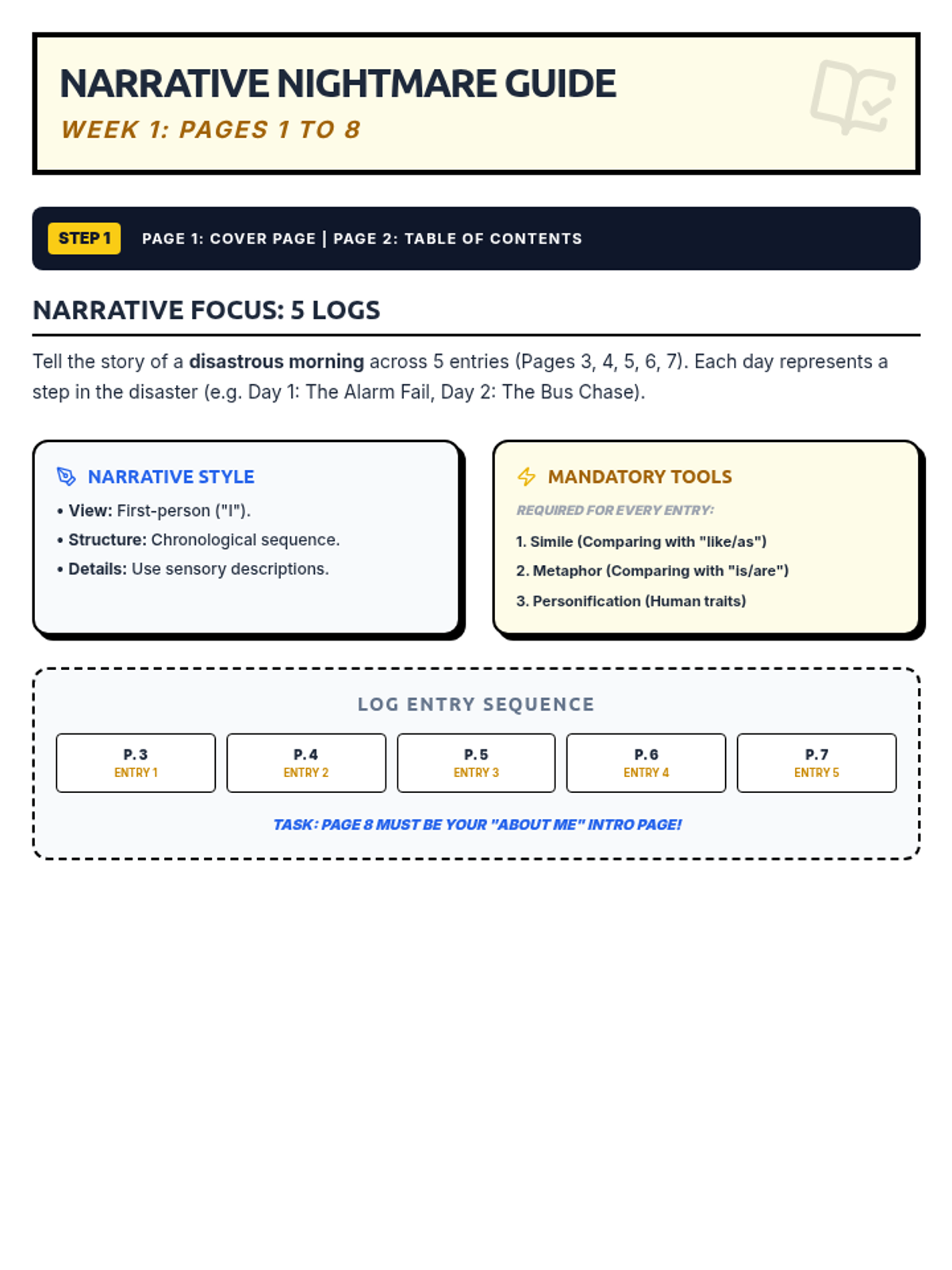
Focuses on narrative writing techniques and using similes, metaphors, and personification to bring a personal story to life in a diary format.
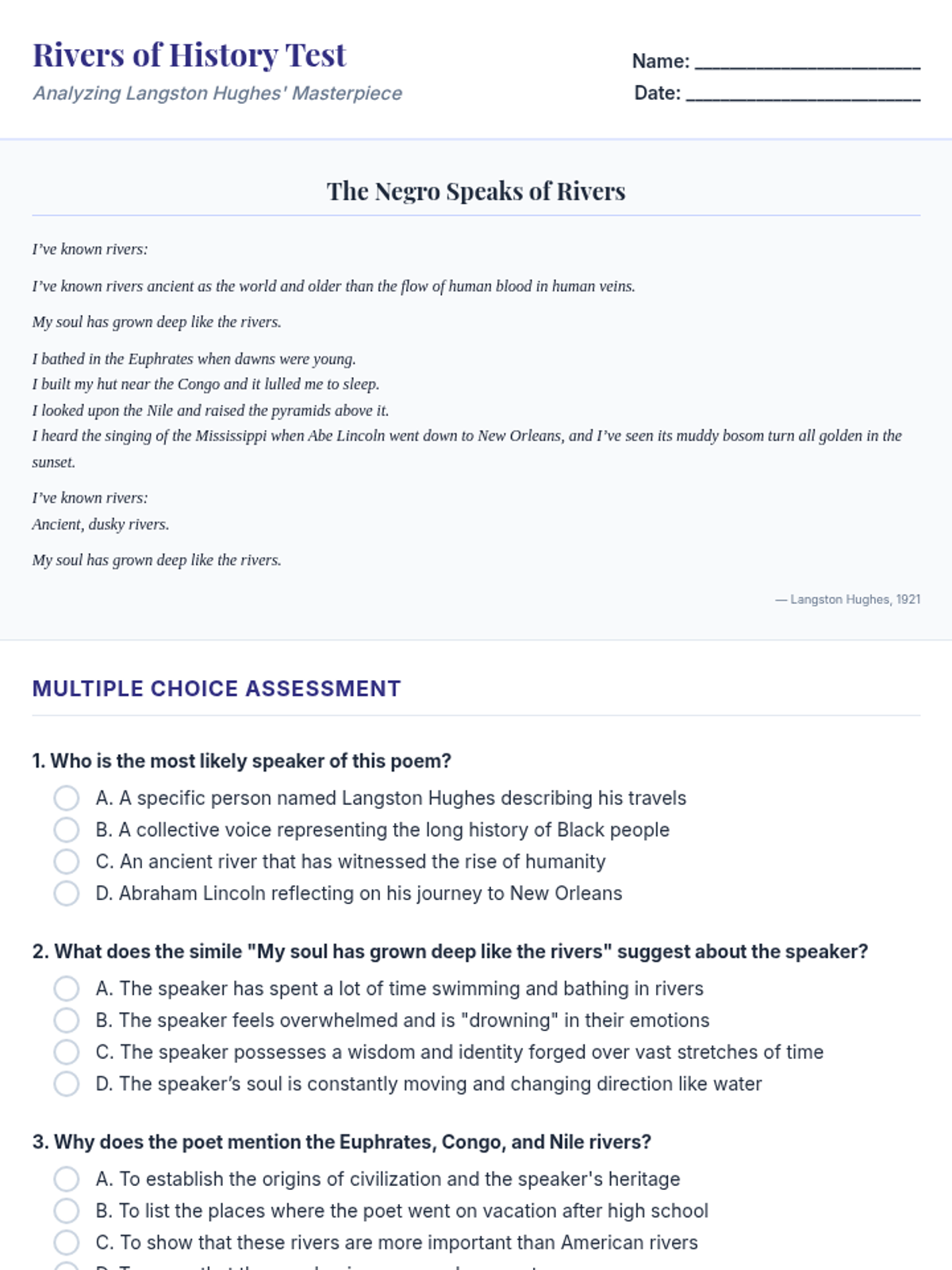
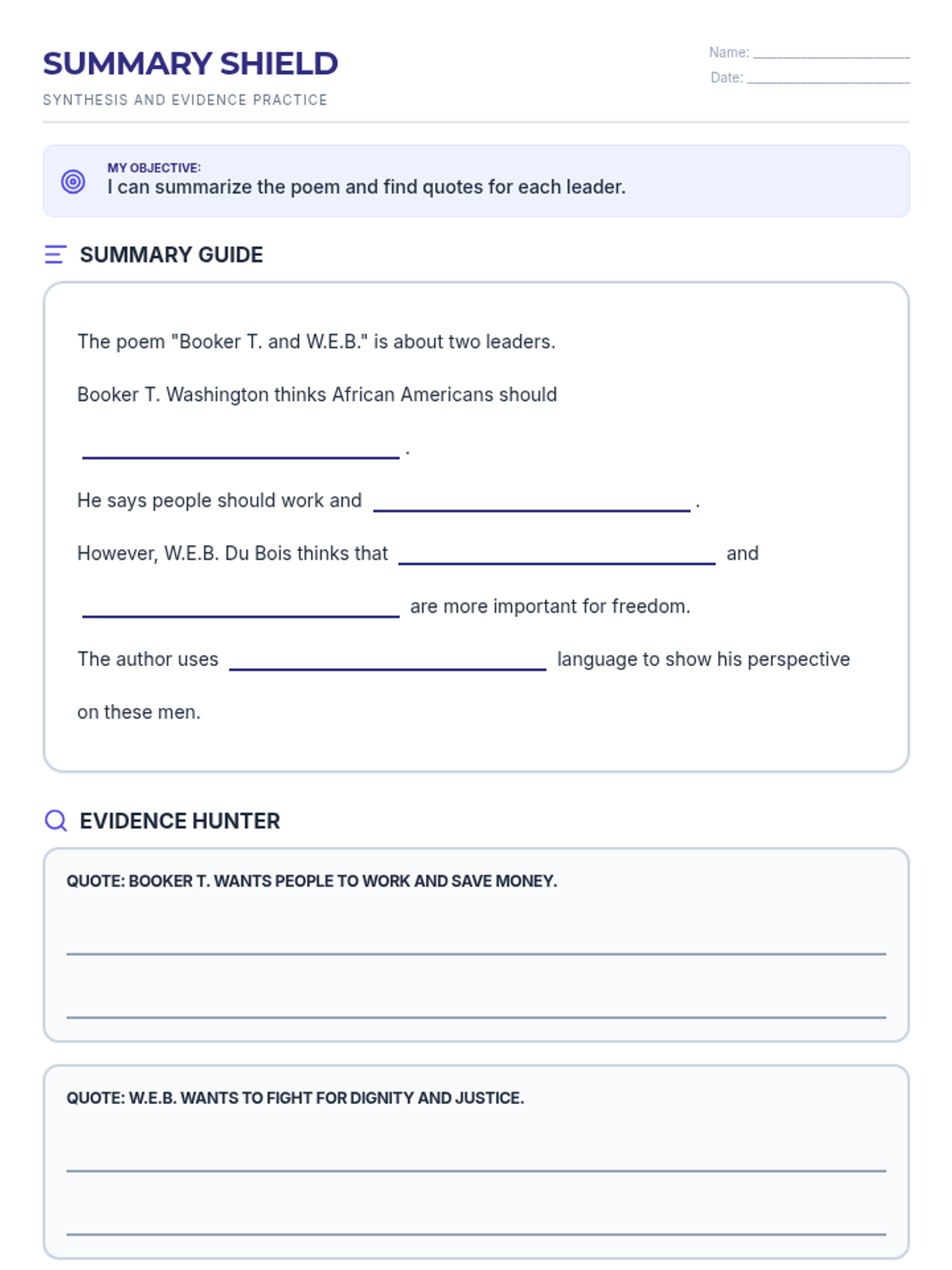
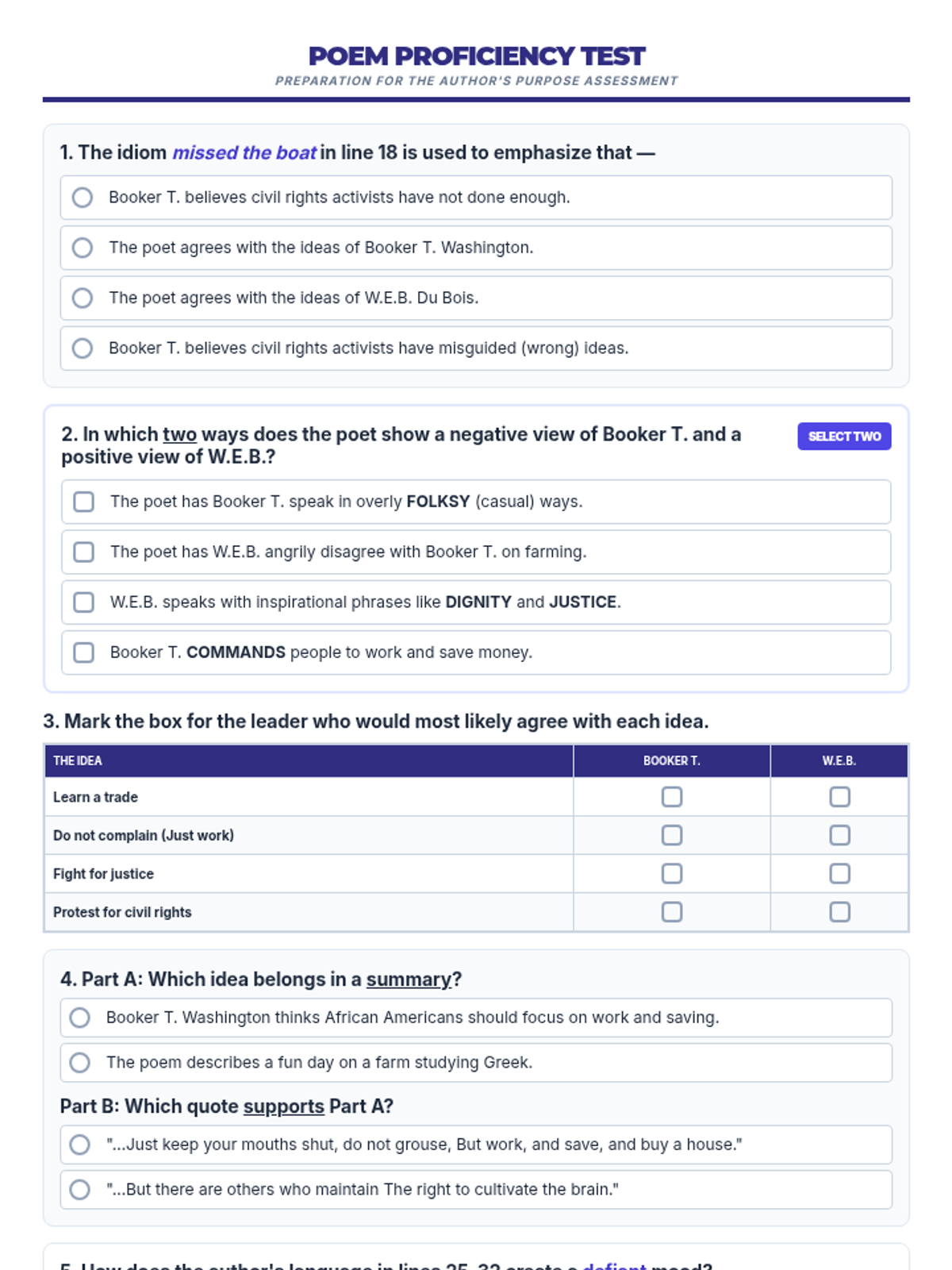
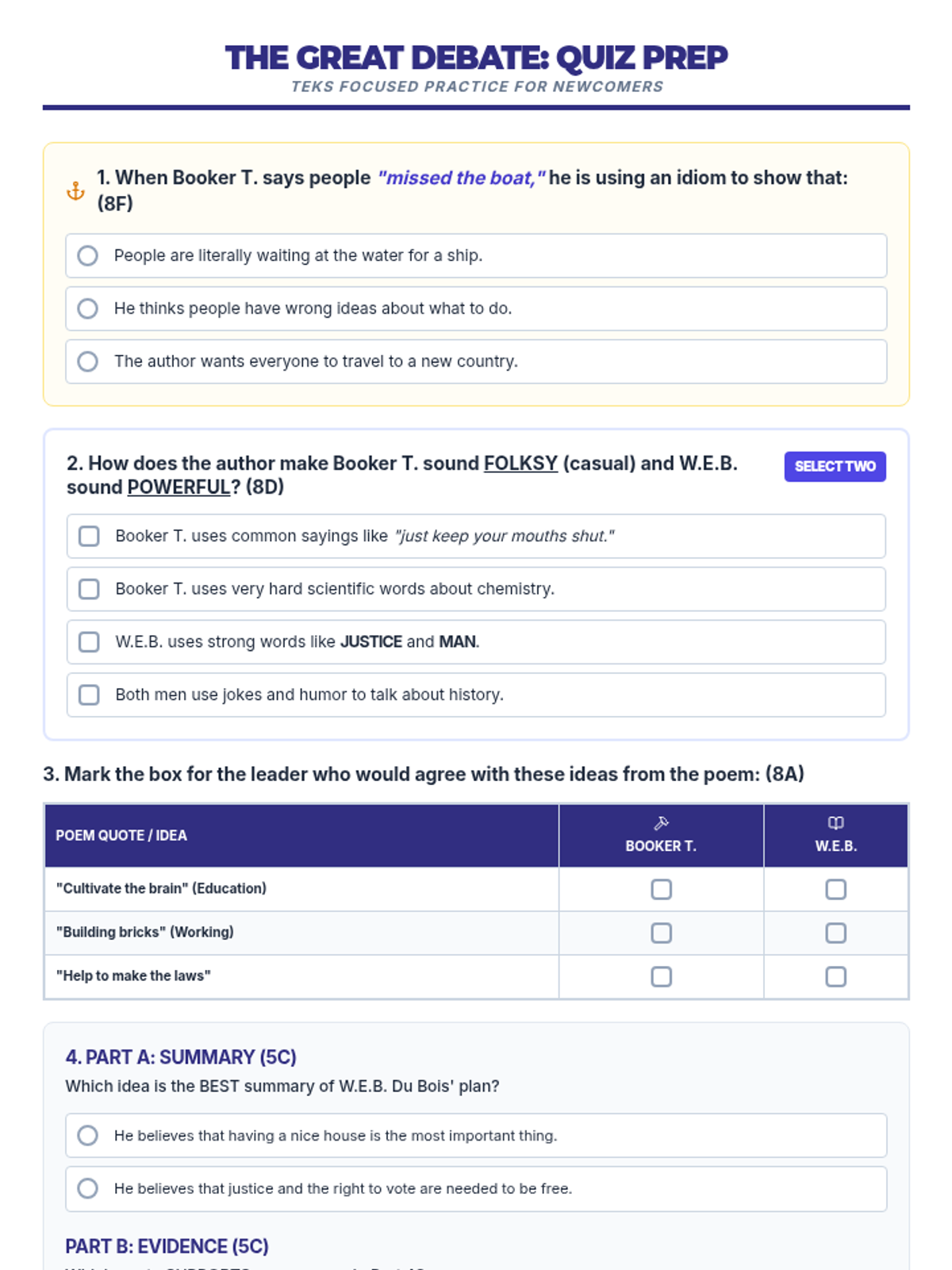
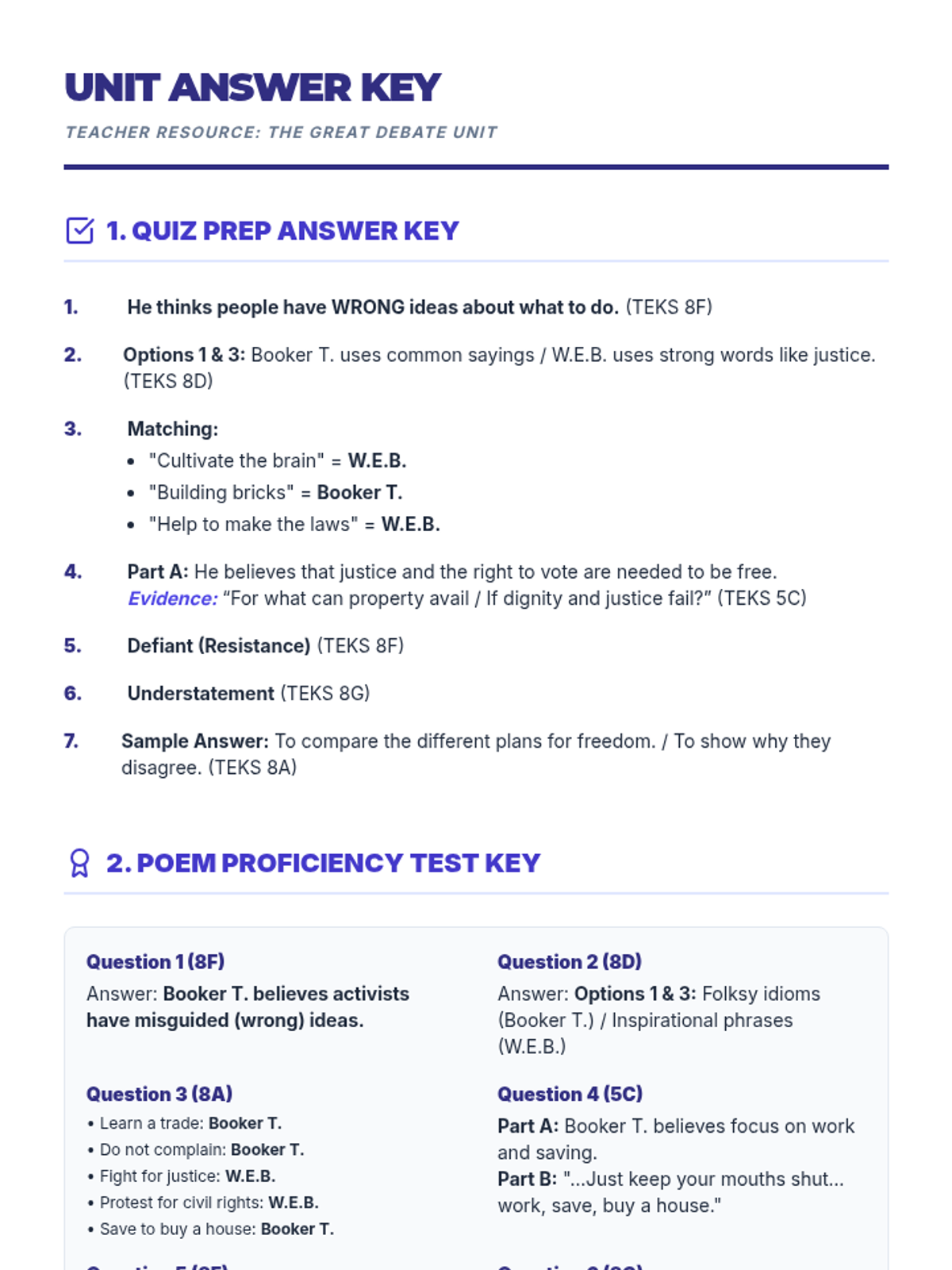
Synthesis of the poem's themes through a summary guide and a practice test to prepare students for formal assessment.
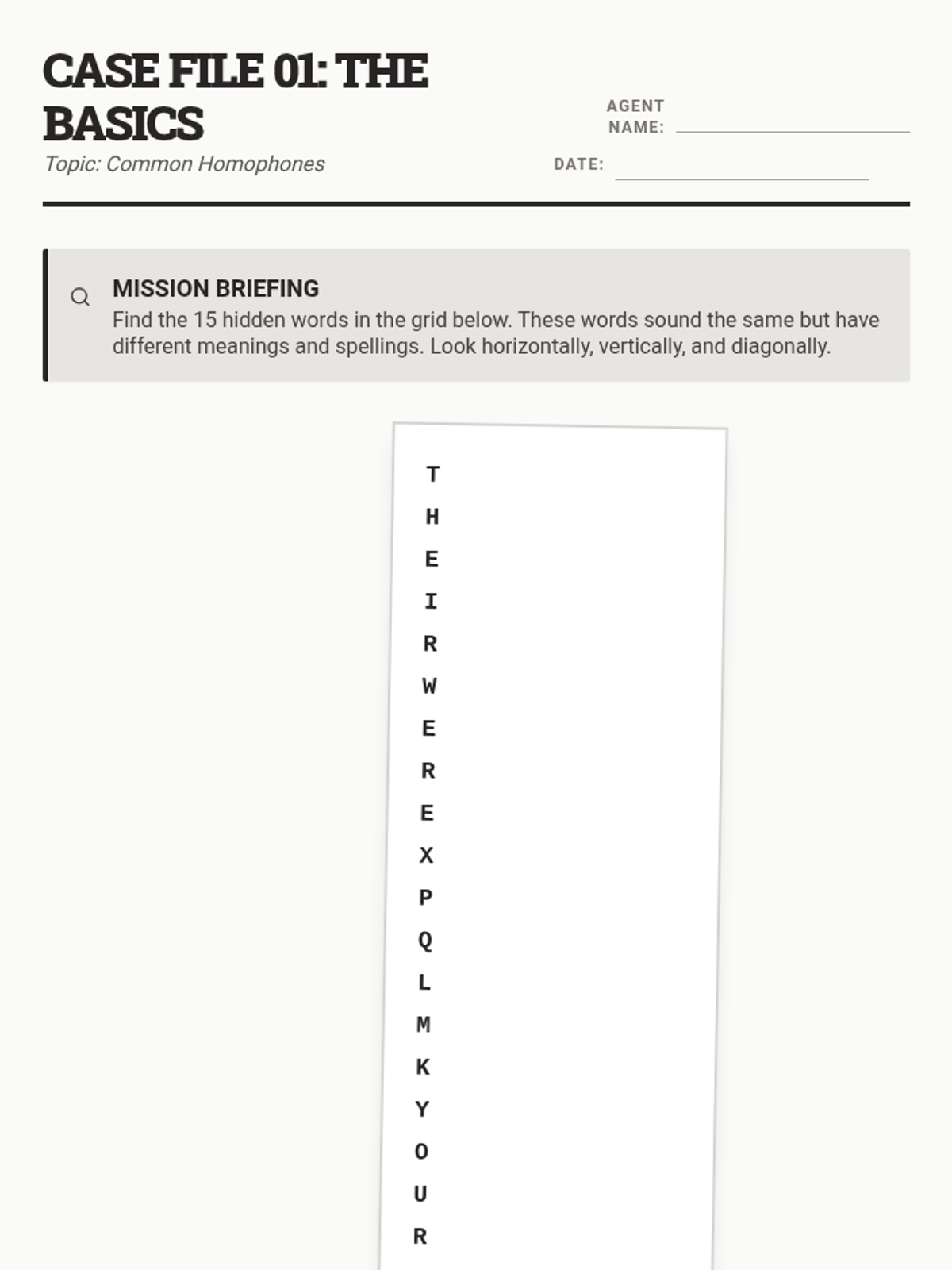
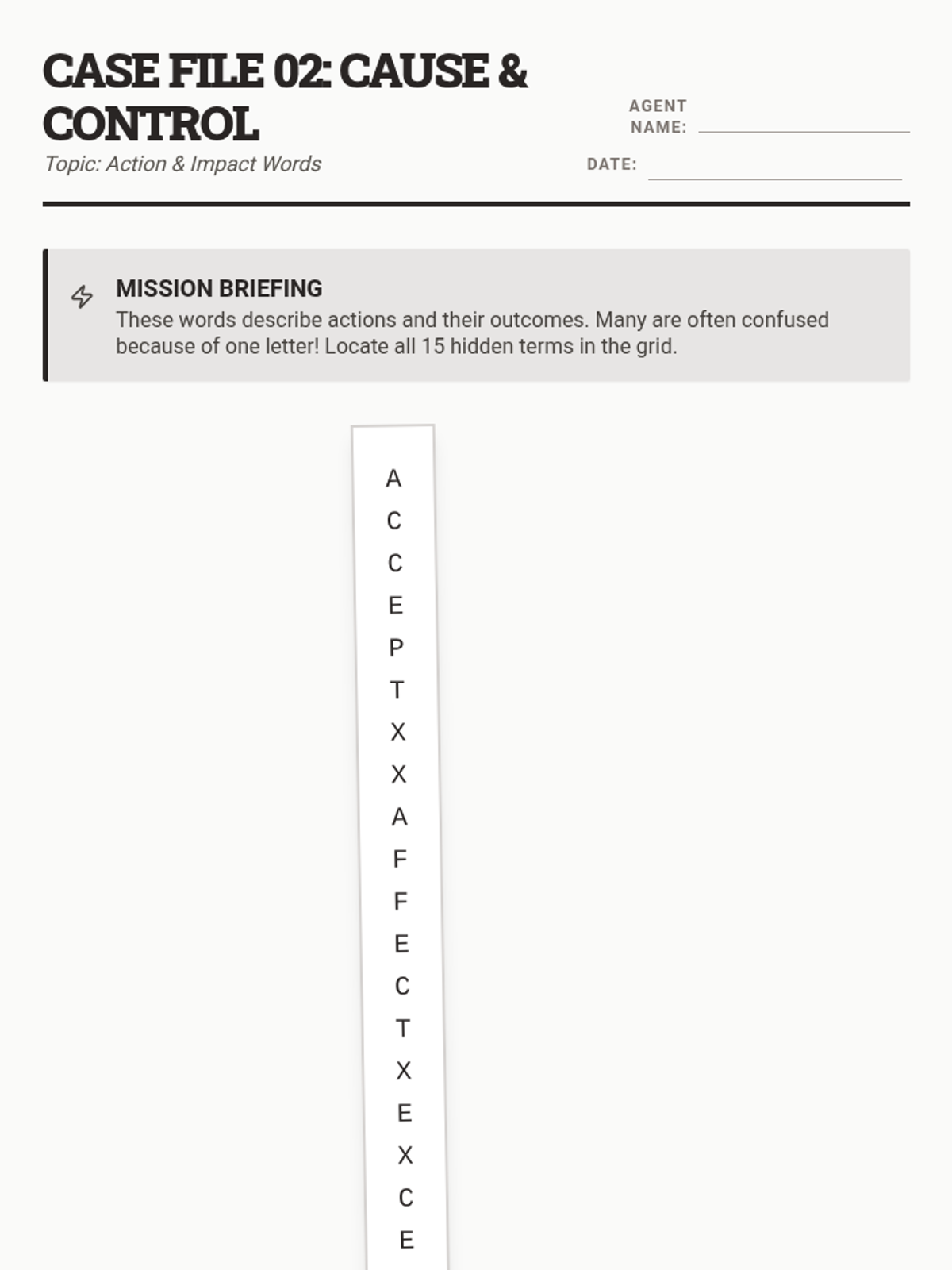
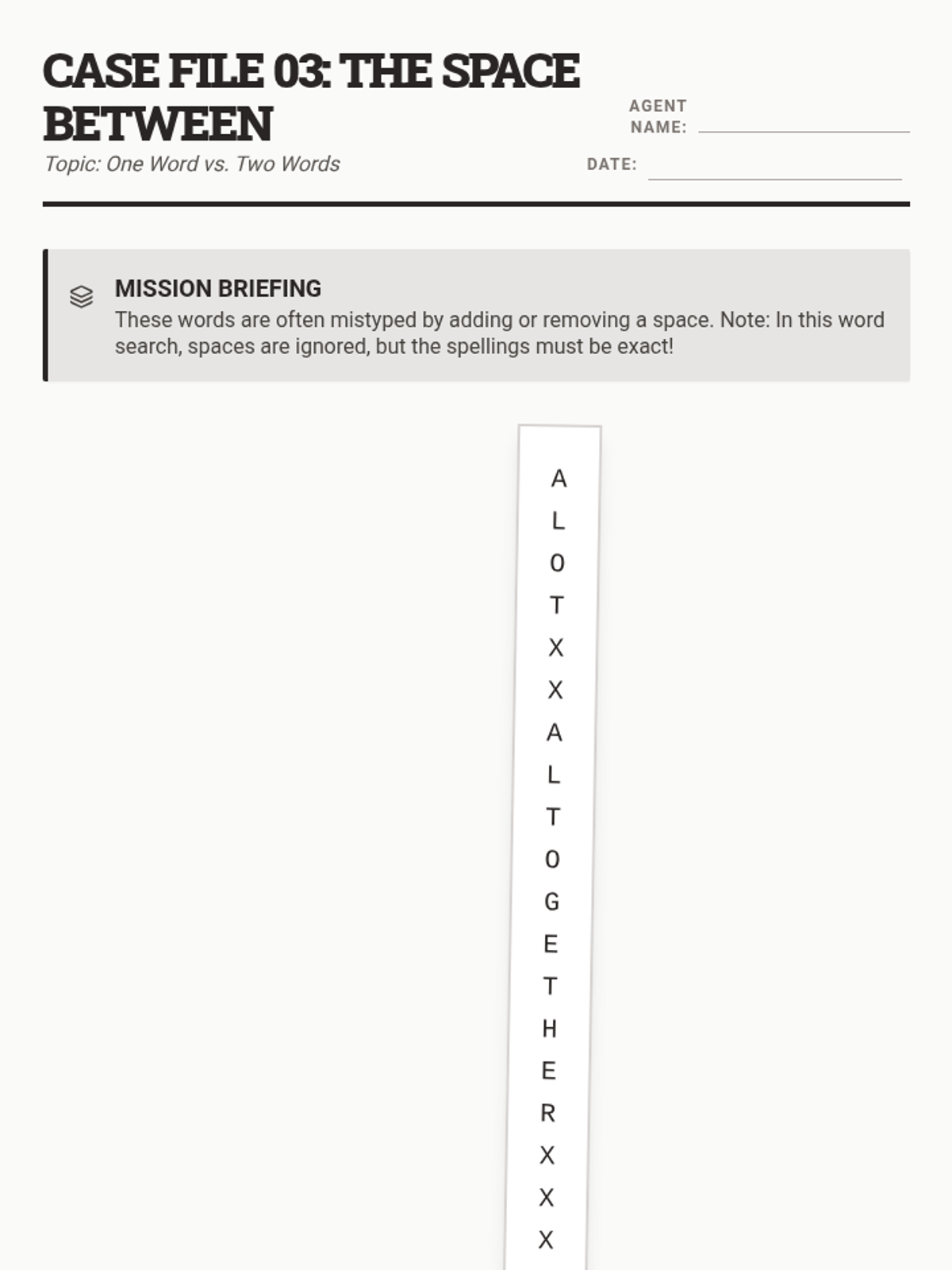
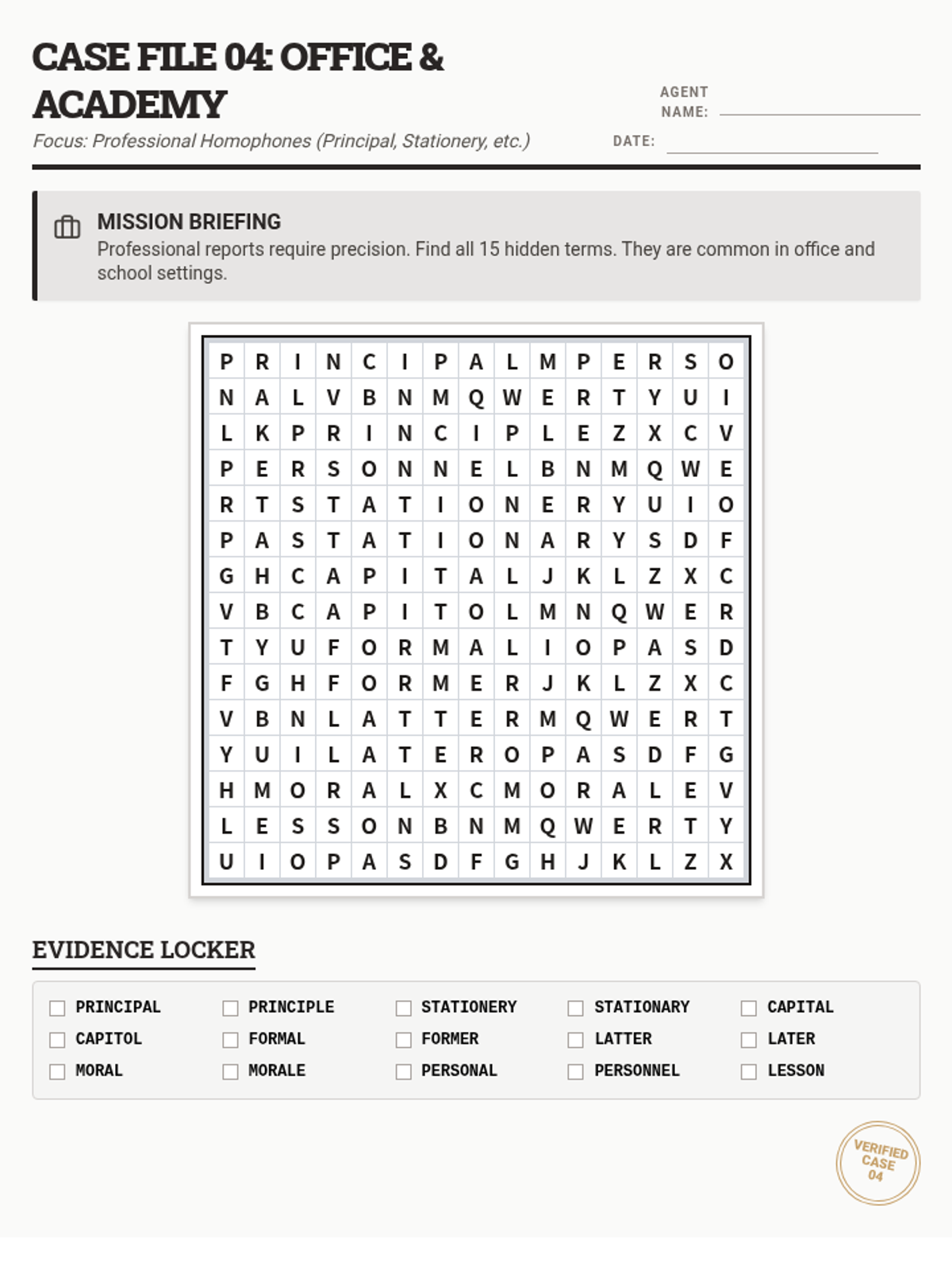
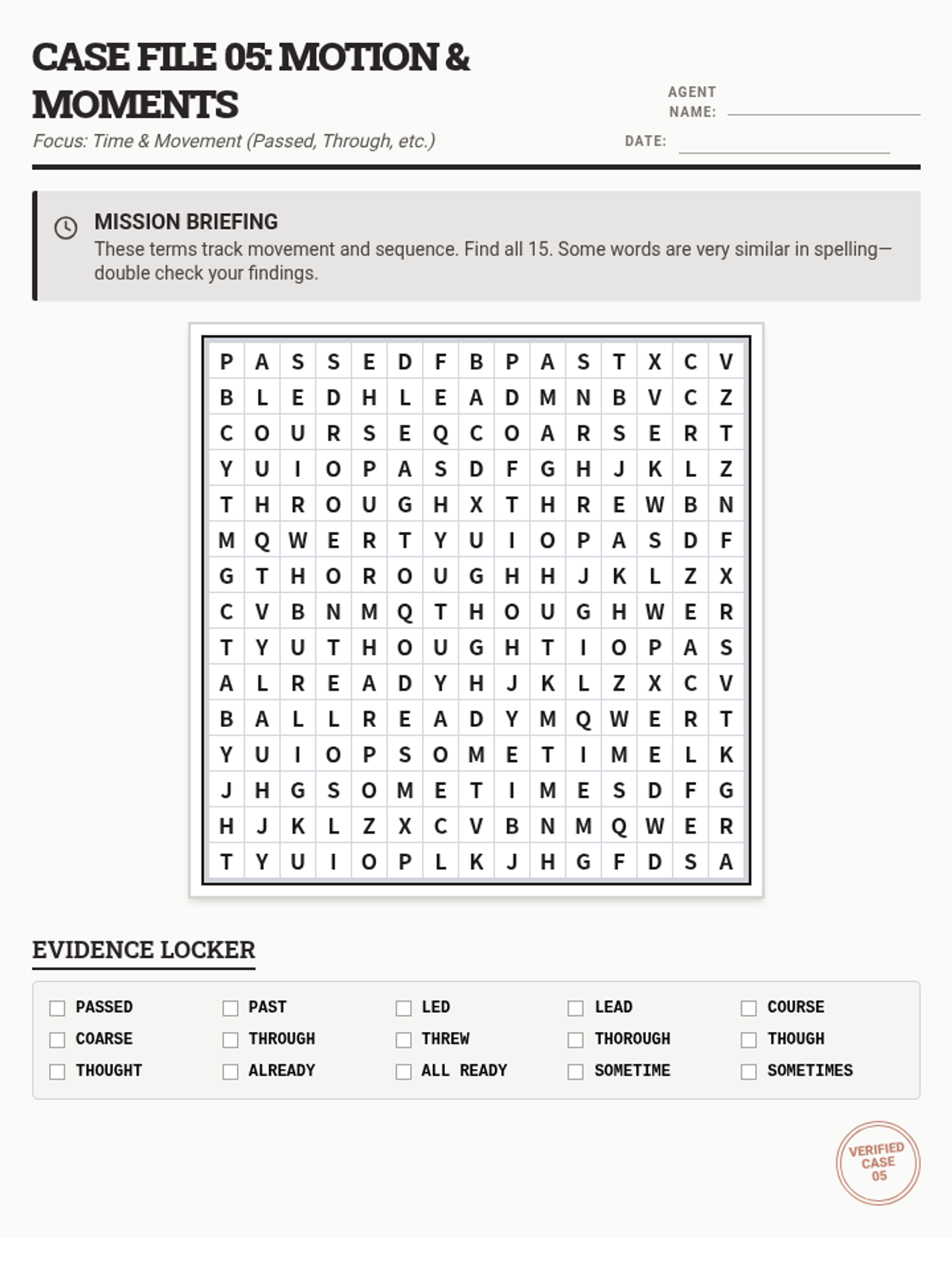
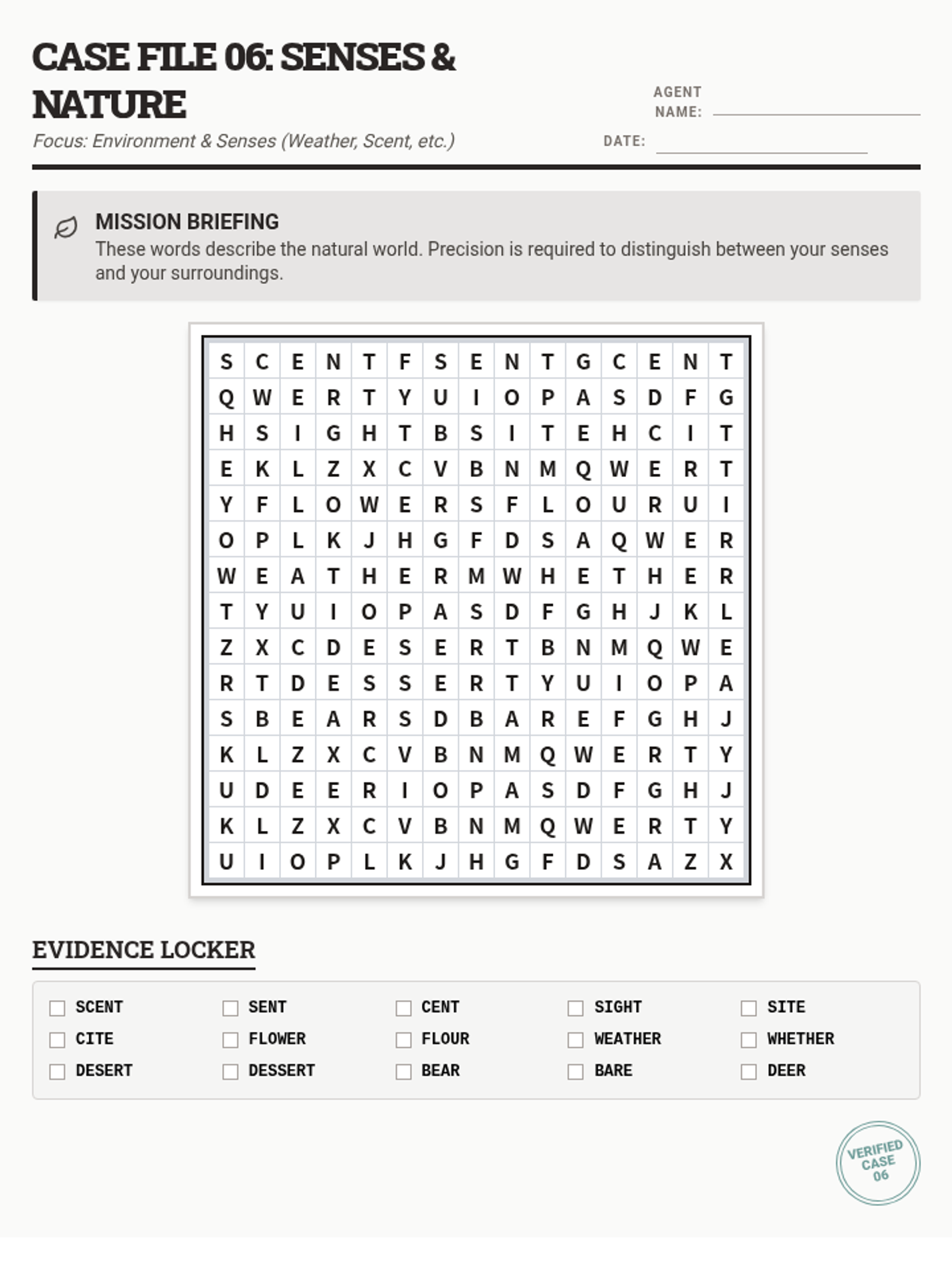
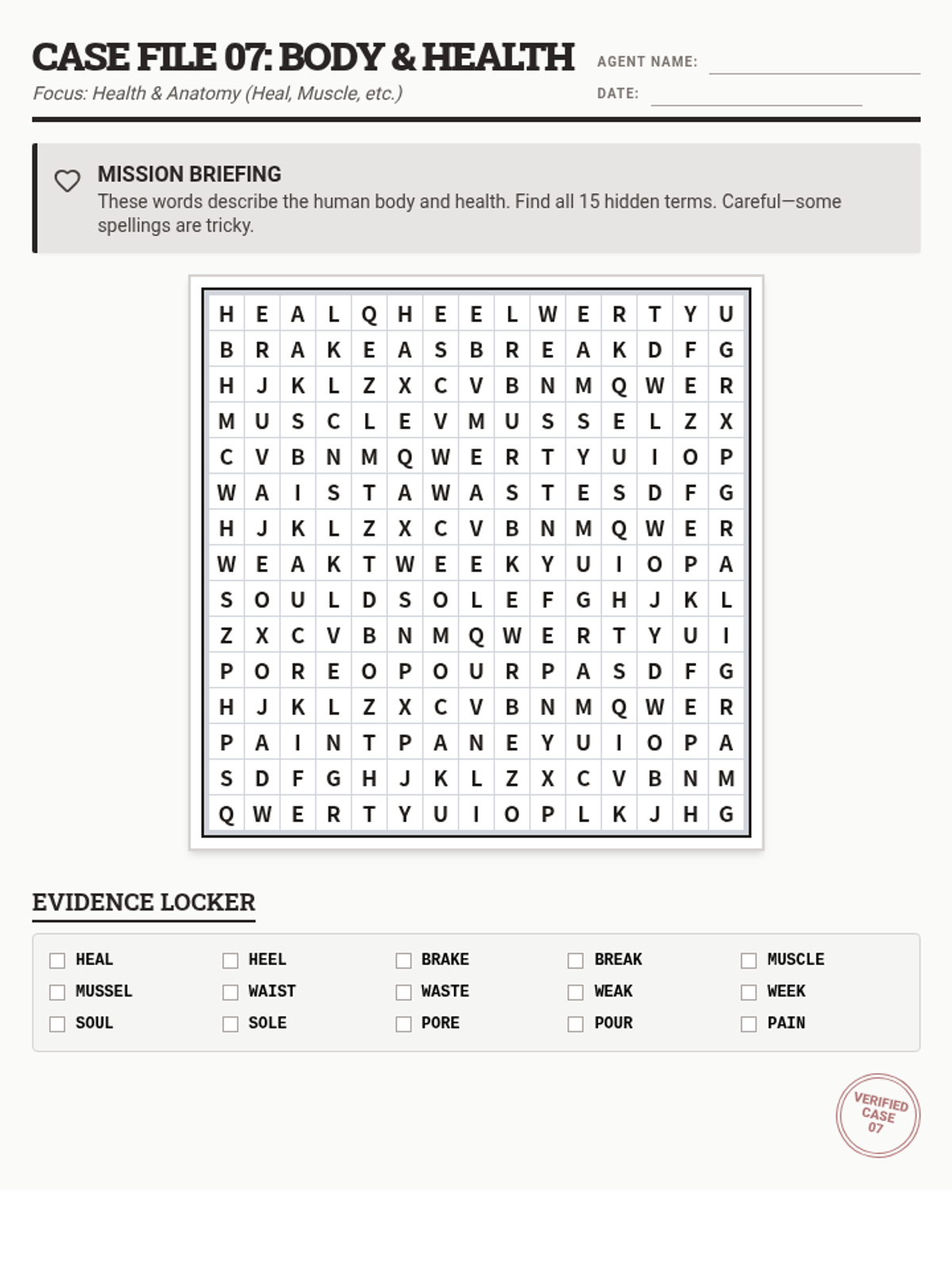
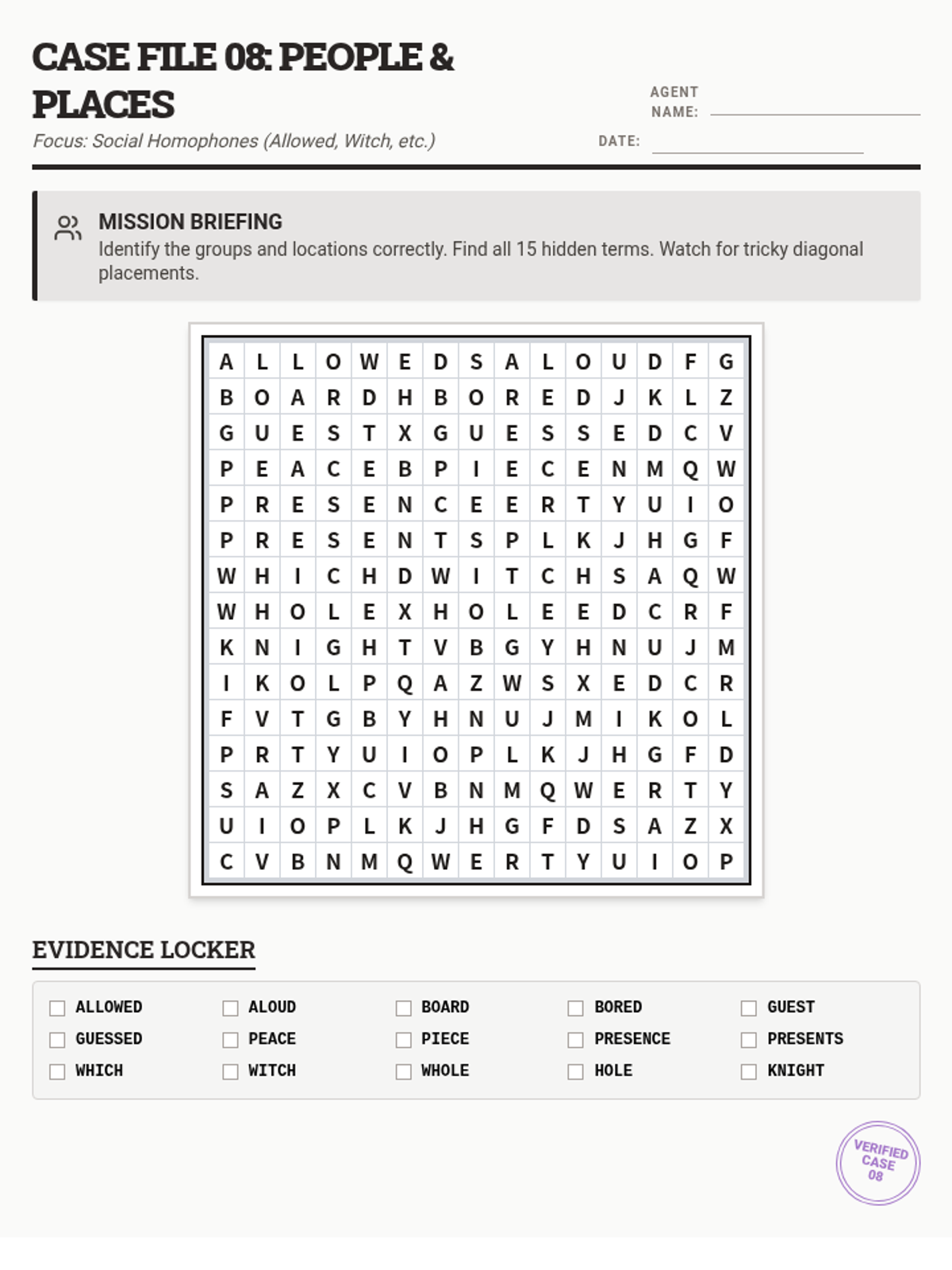
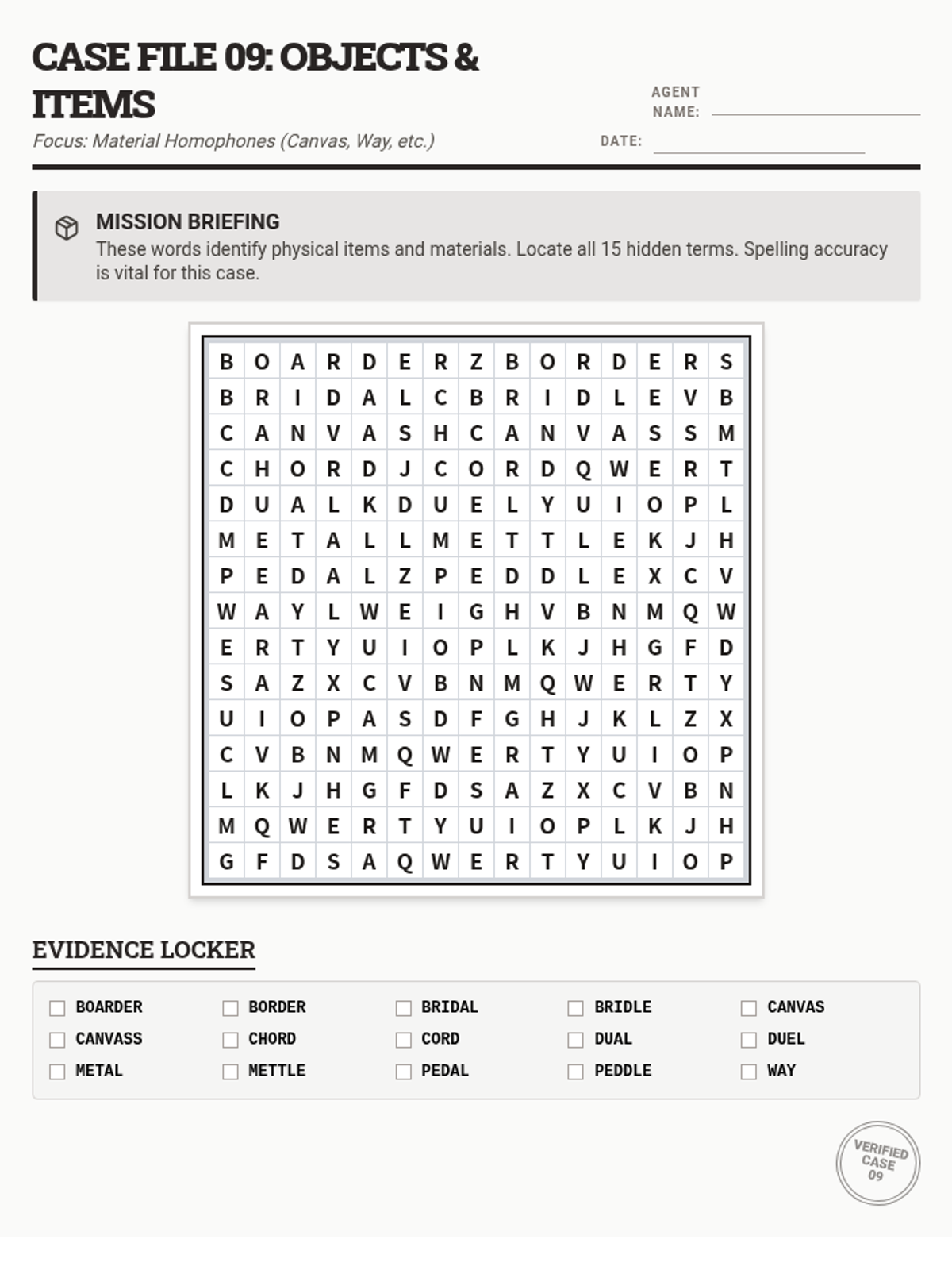
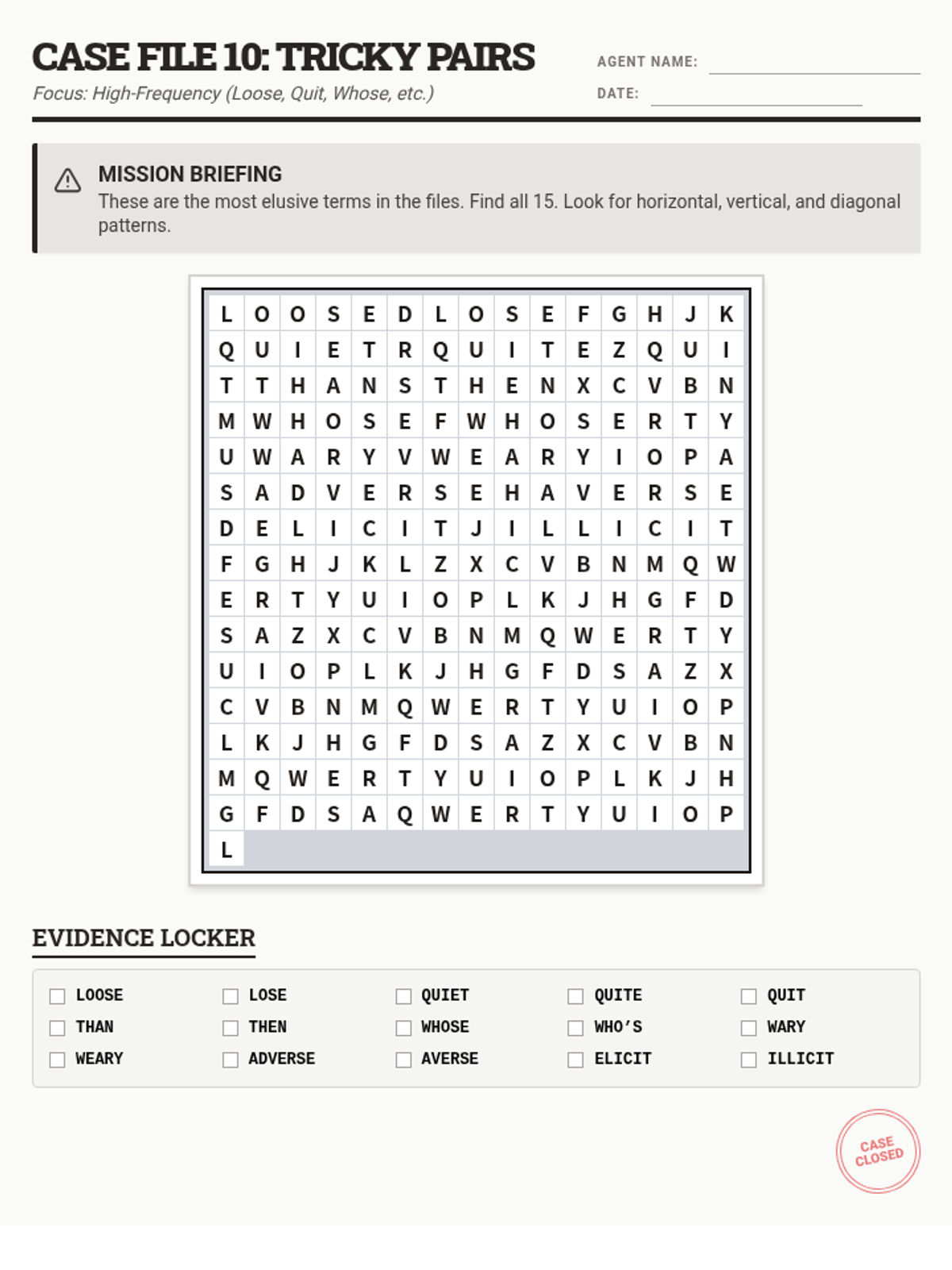
A comprehensive collection of 10 word search puzzles focusing on commonly confused words (homophones and near-homophones). Designed to improve vocabulary recognition and spelling through engaging "Case File" themed activities.
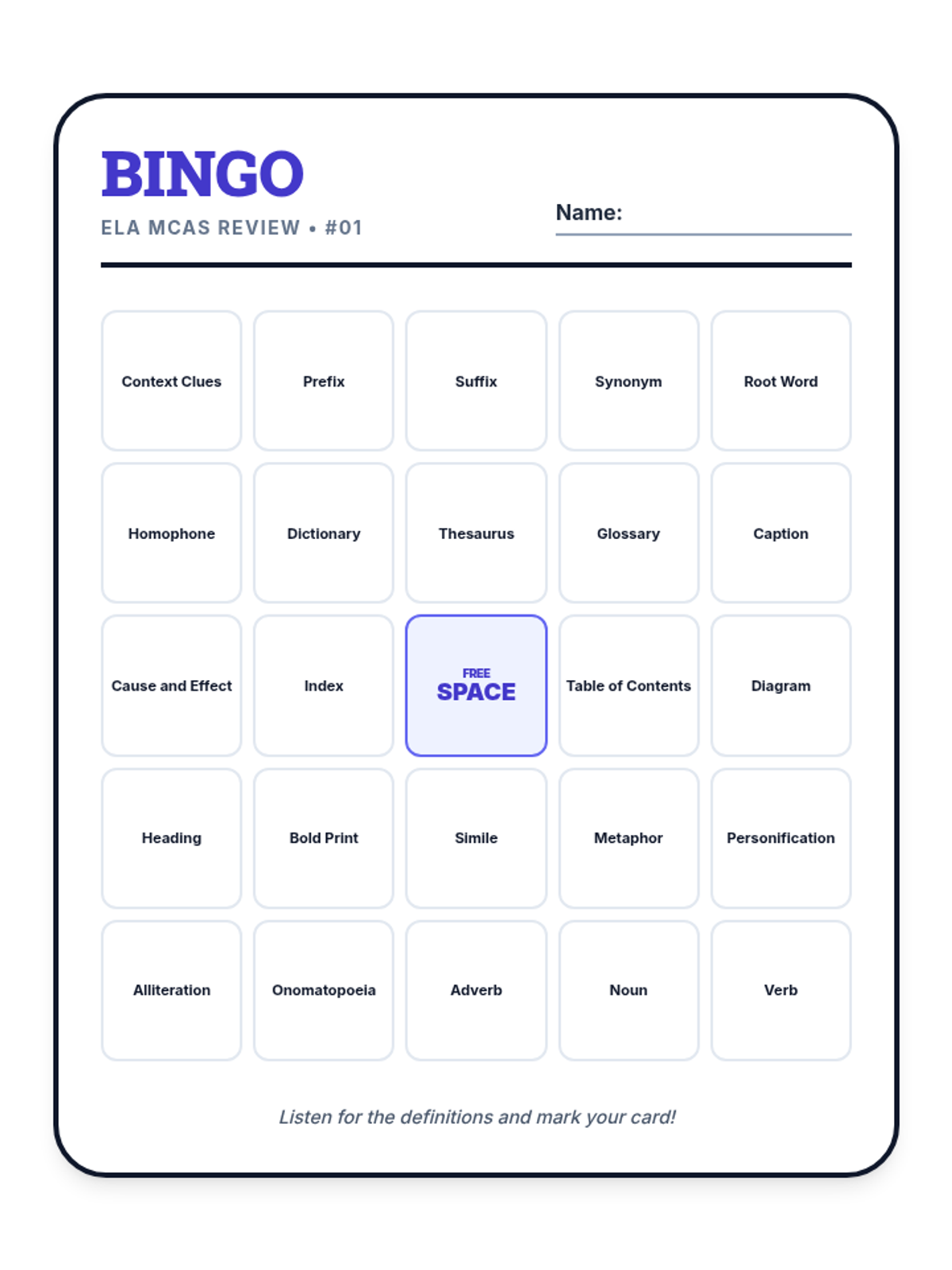
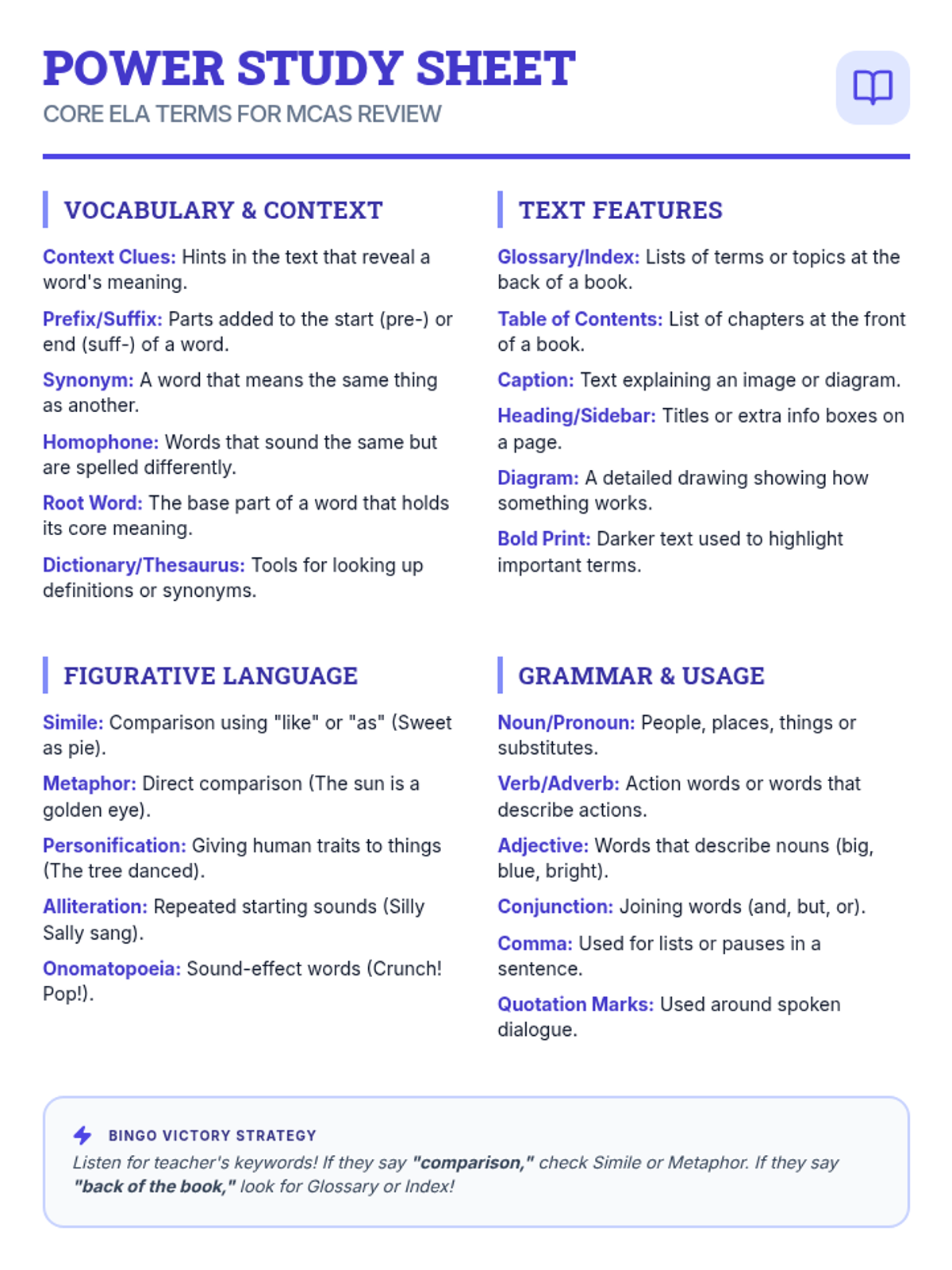
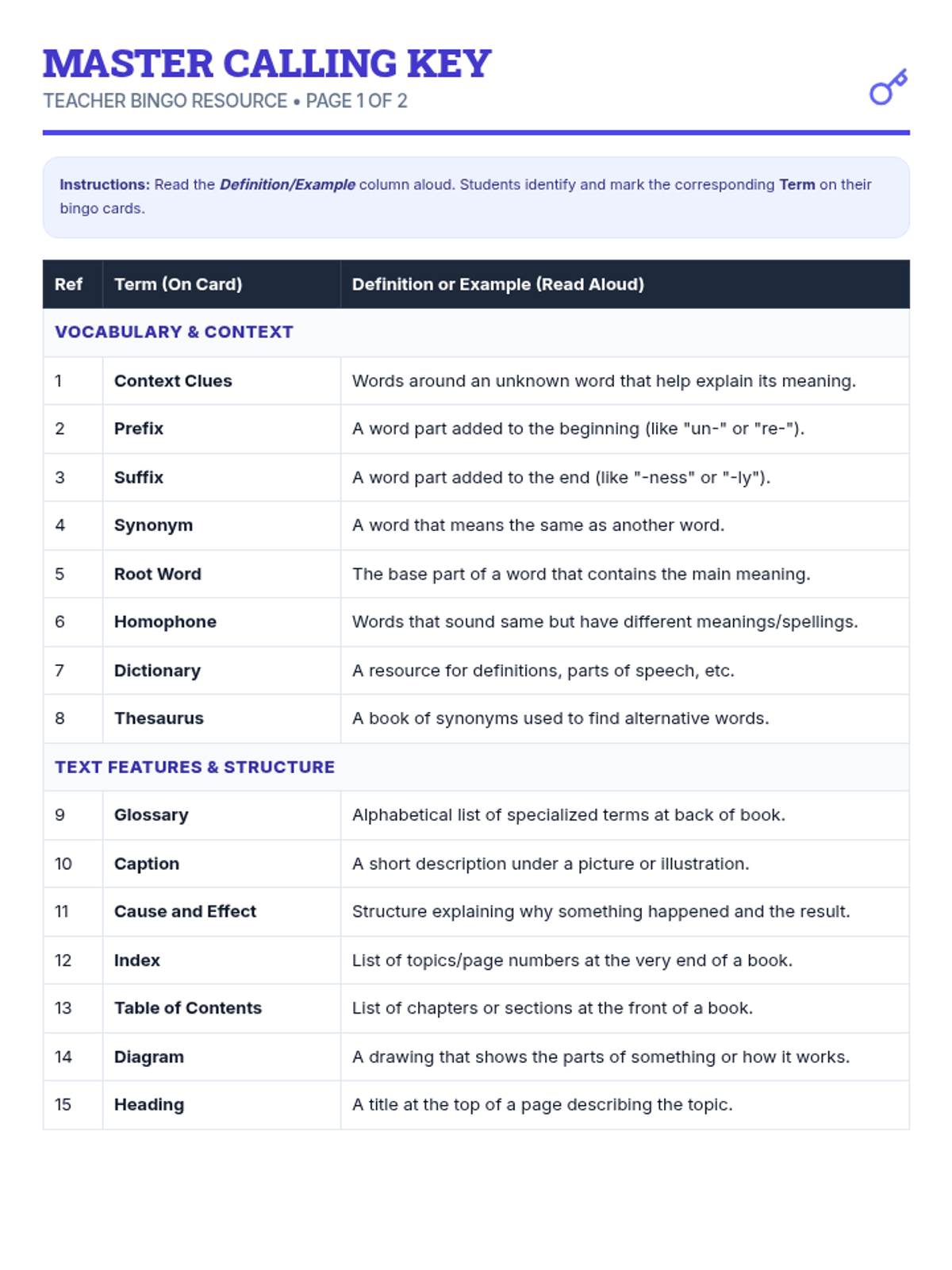
A comprehensive ELA review game designed to help students master MCAS standards through a competitive and engaging bingo format. The lesson covers vocabulary, literary elements, text structures, and grammar.
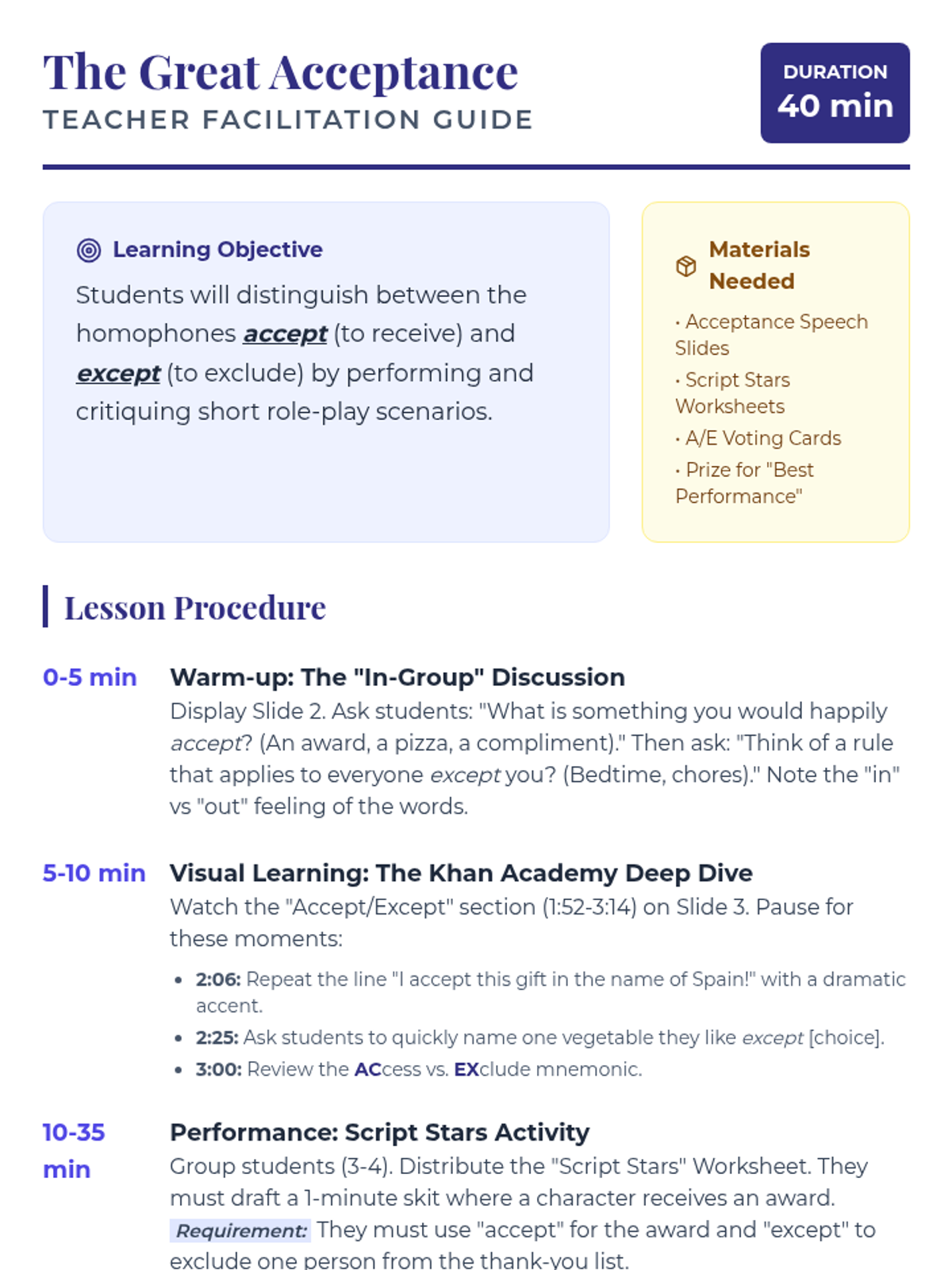
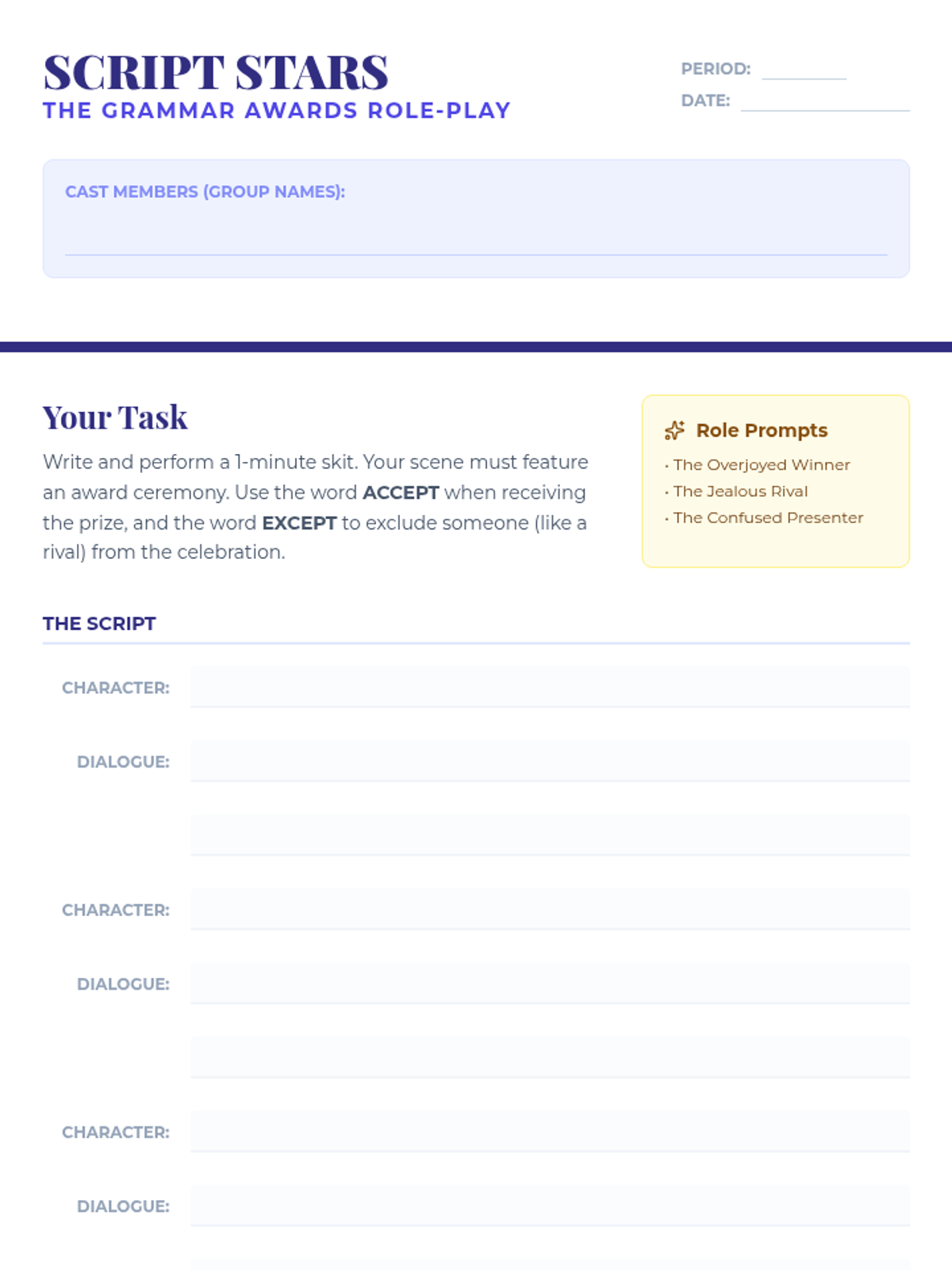
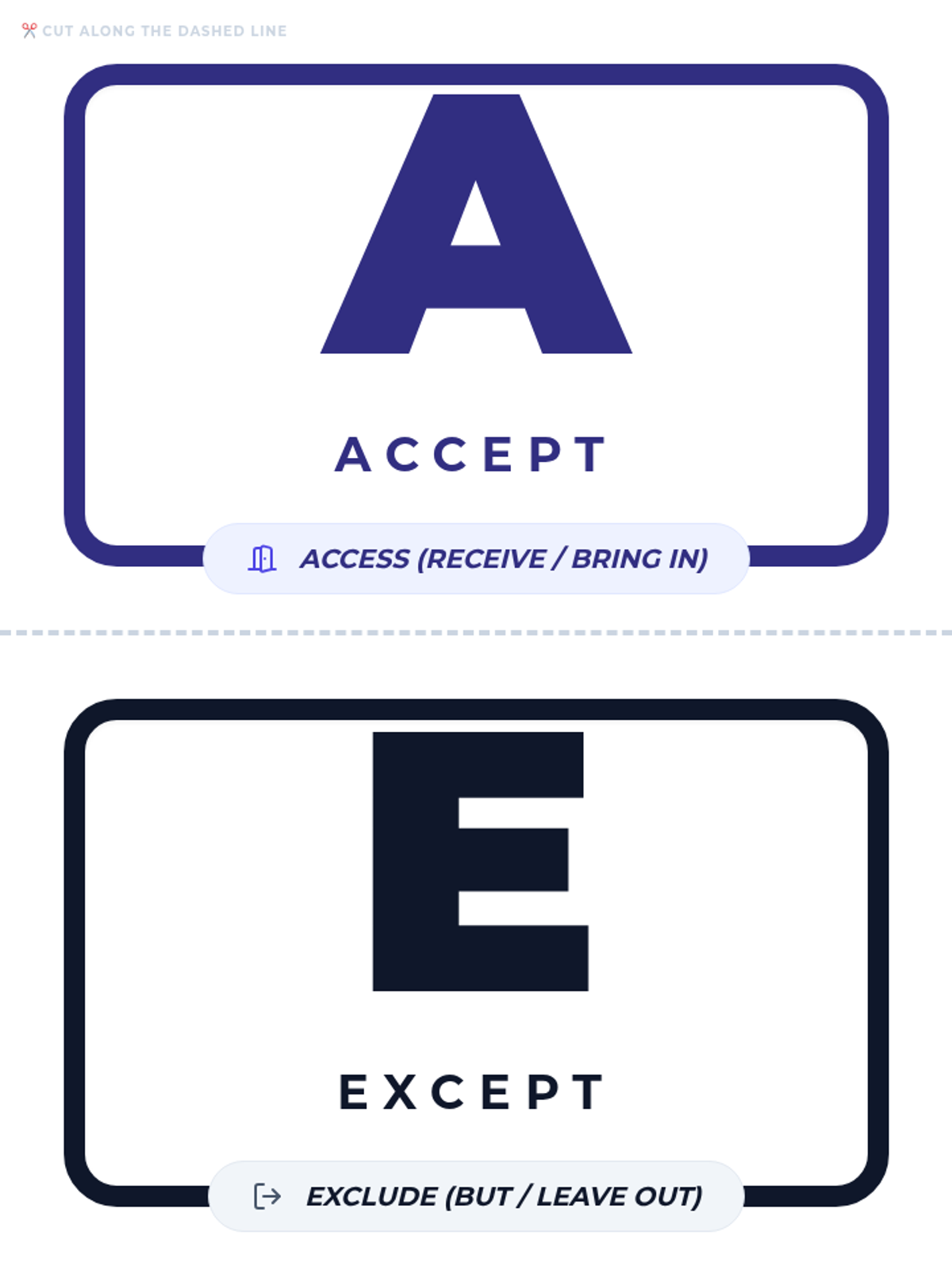
A grammar lesson focusing on the homophones 'accept' and 'except' through an award-show-themed role-play activity and video analysis.
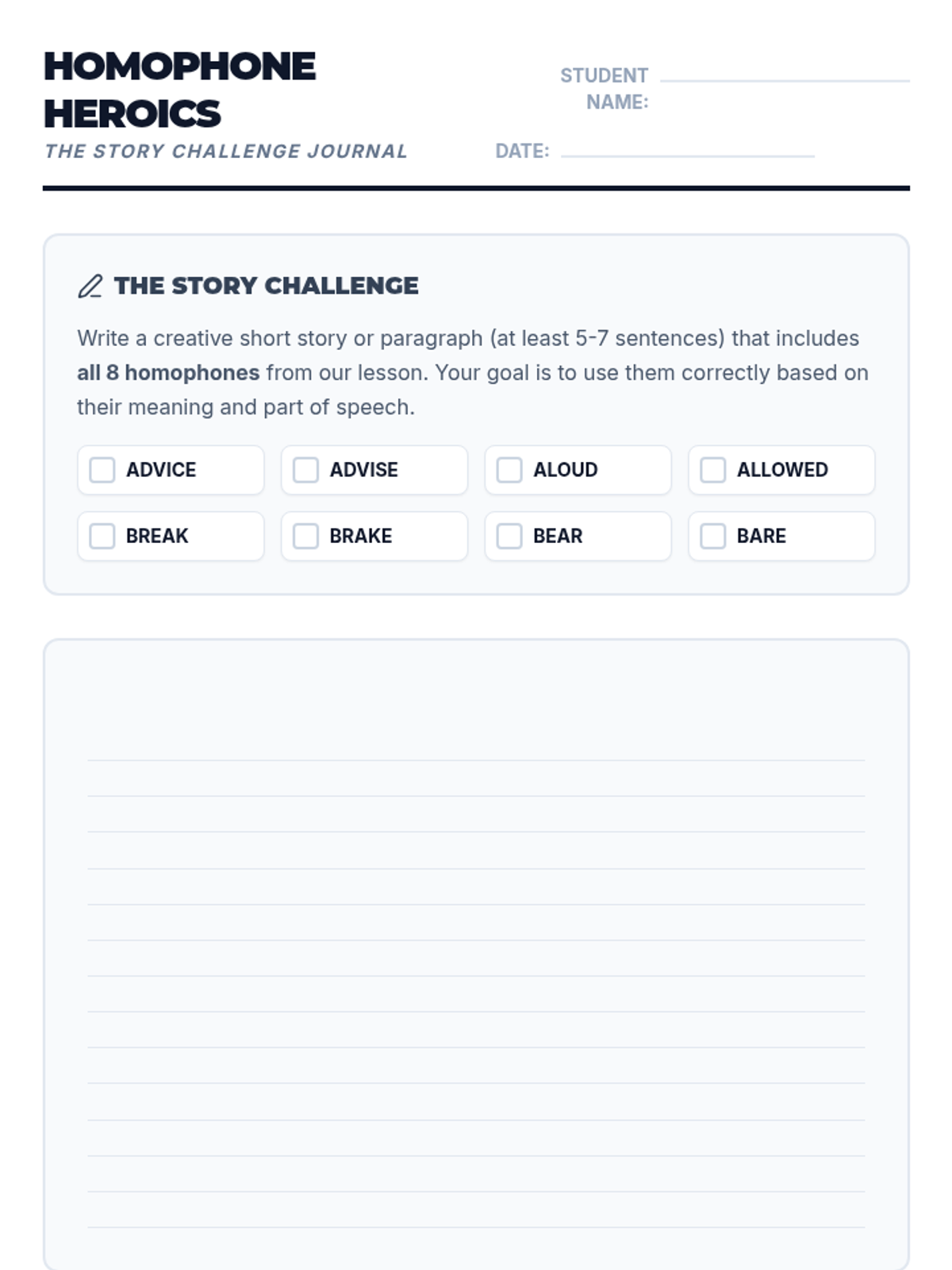
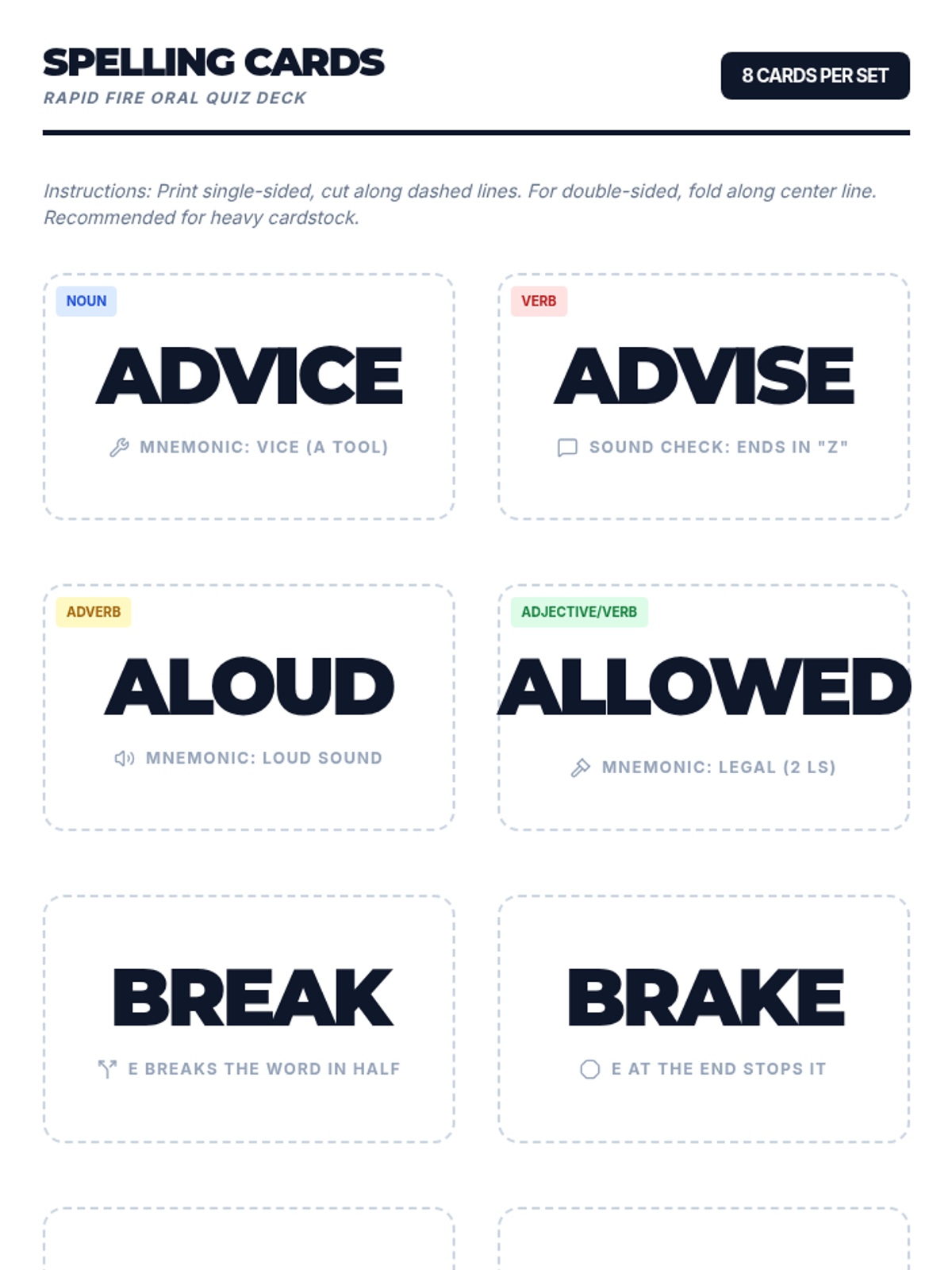
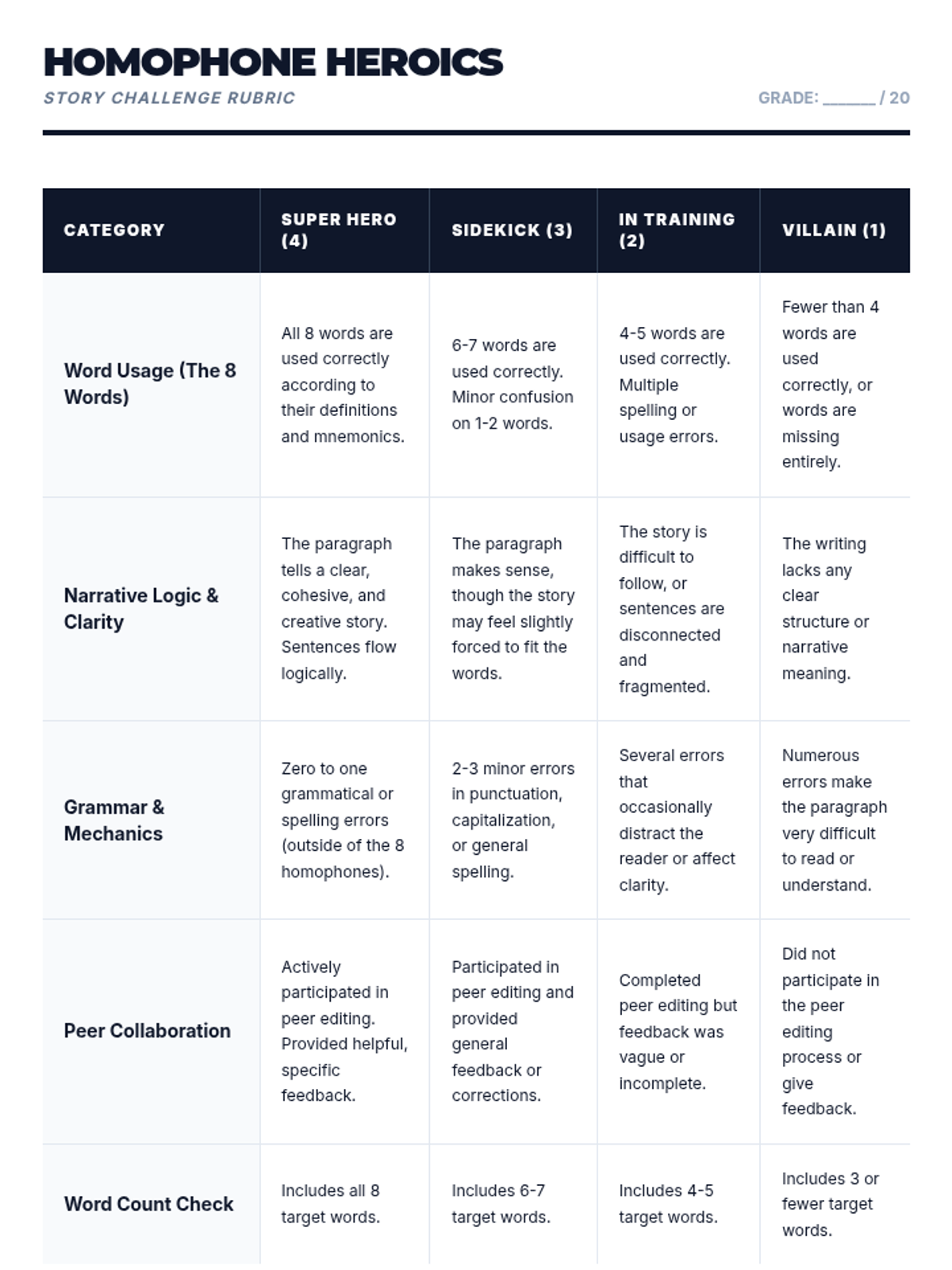
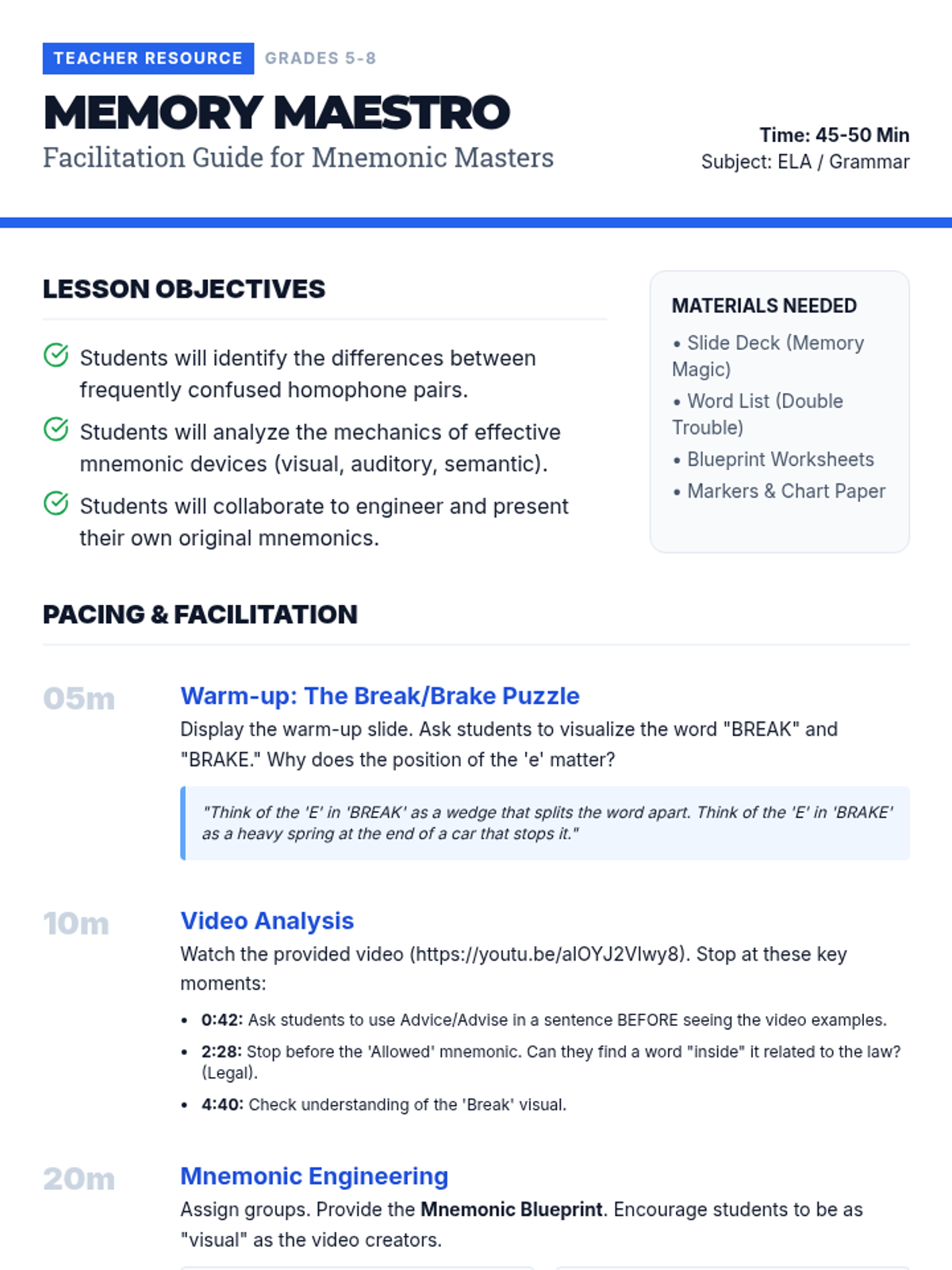
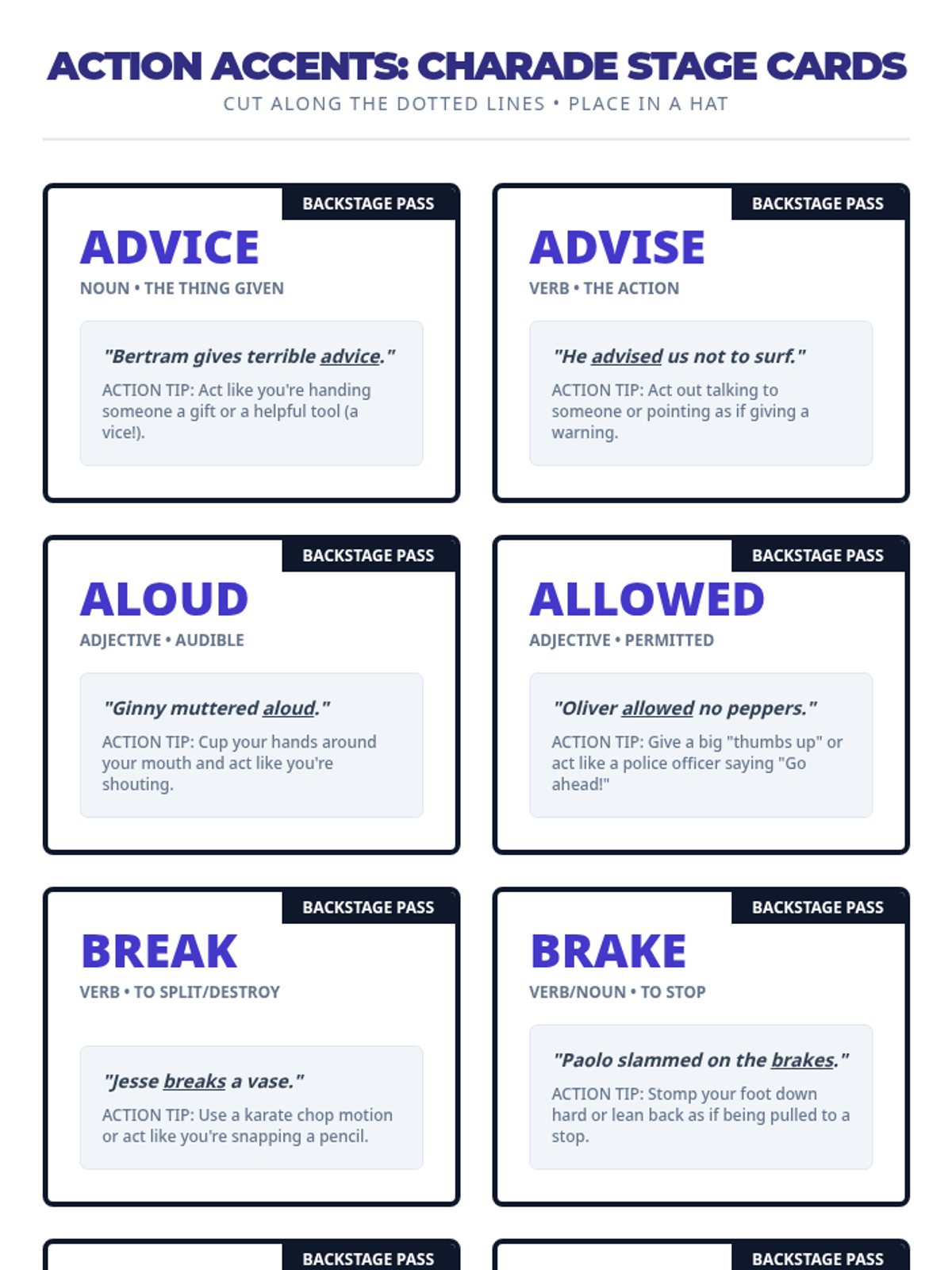
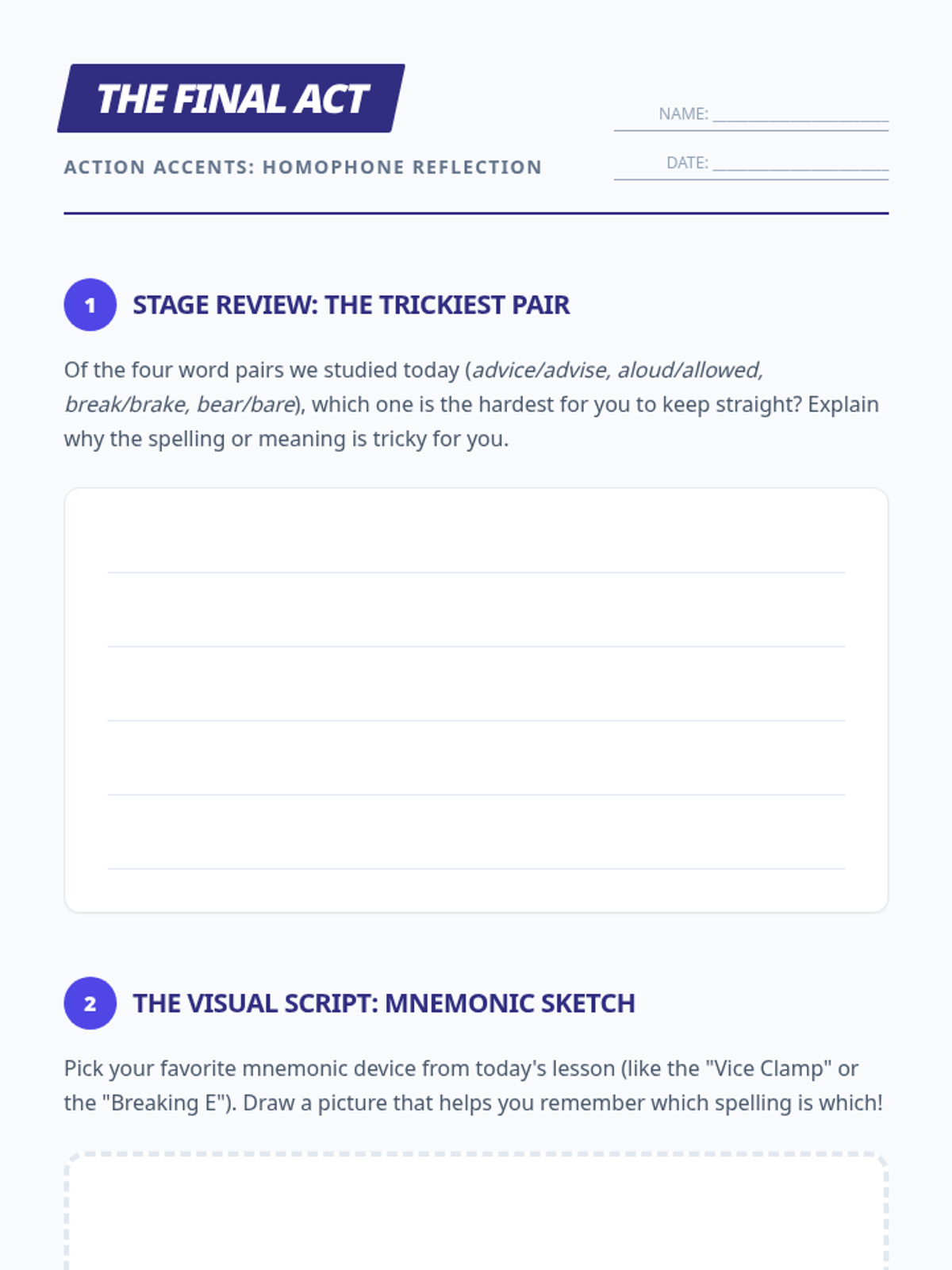
A dynamic lesson for middle schoolers to master four sets of commonly confused homophones: advice/advise, aloud/allowed, break/brake, and bear/bare using mnemonics and creative writing.
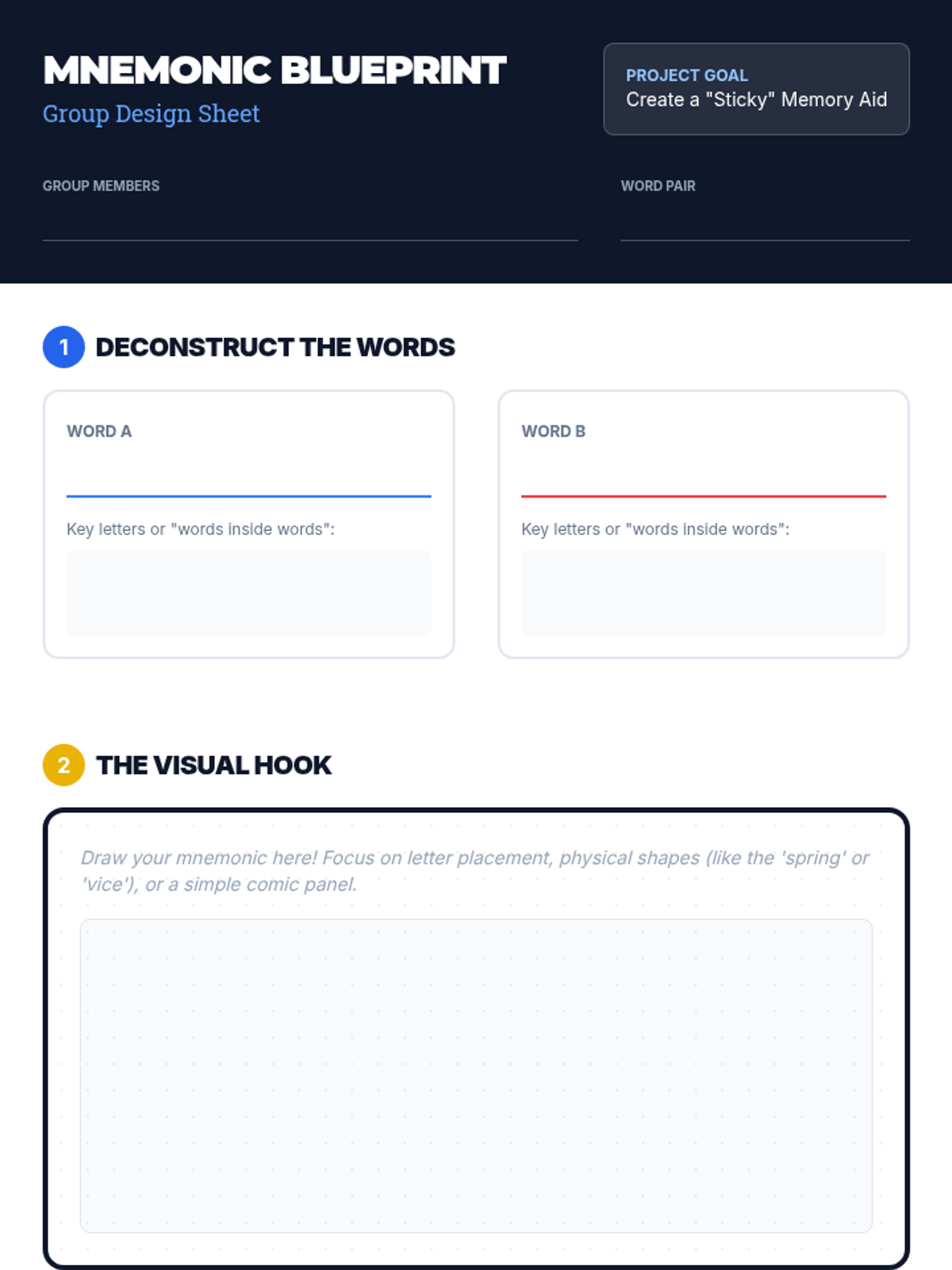
Students will analyze the 'how' behind effective mnemonic devices for confusing homophones and then work in groups to engineer their own visual and rhyming memory aids for a new set of tricky word pairs.
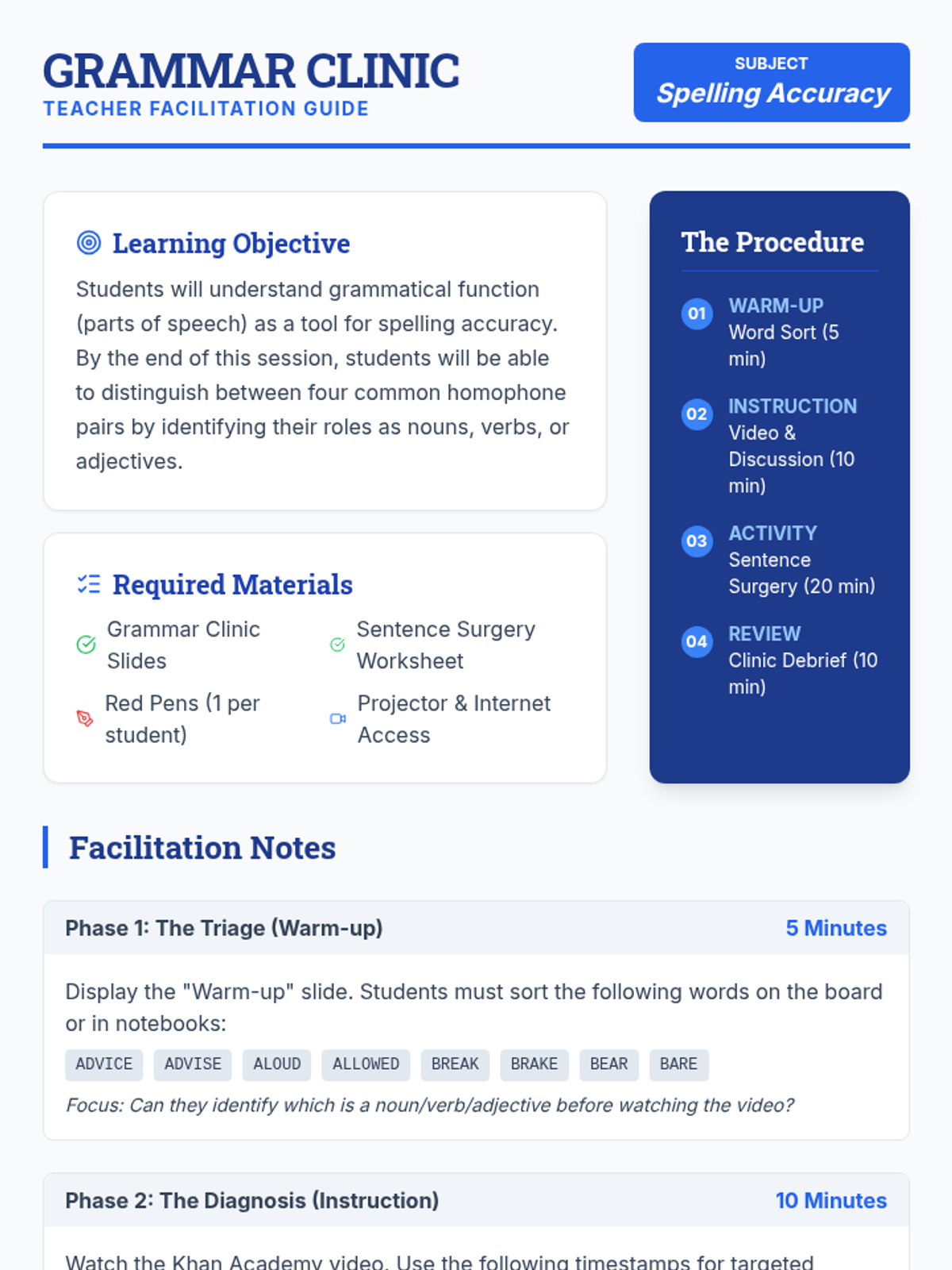
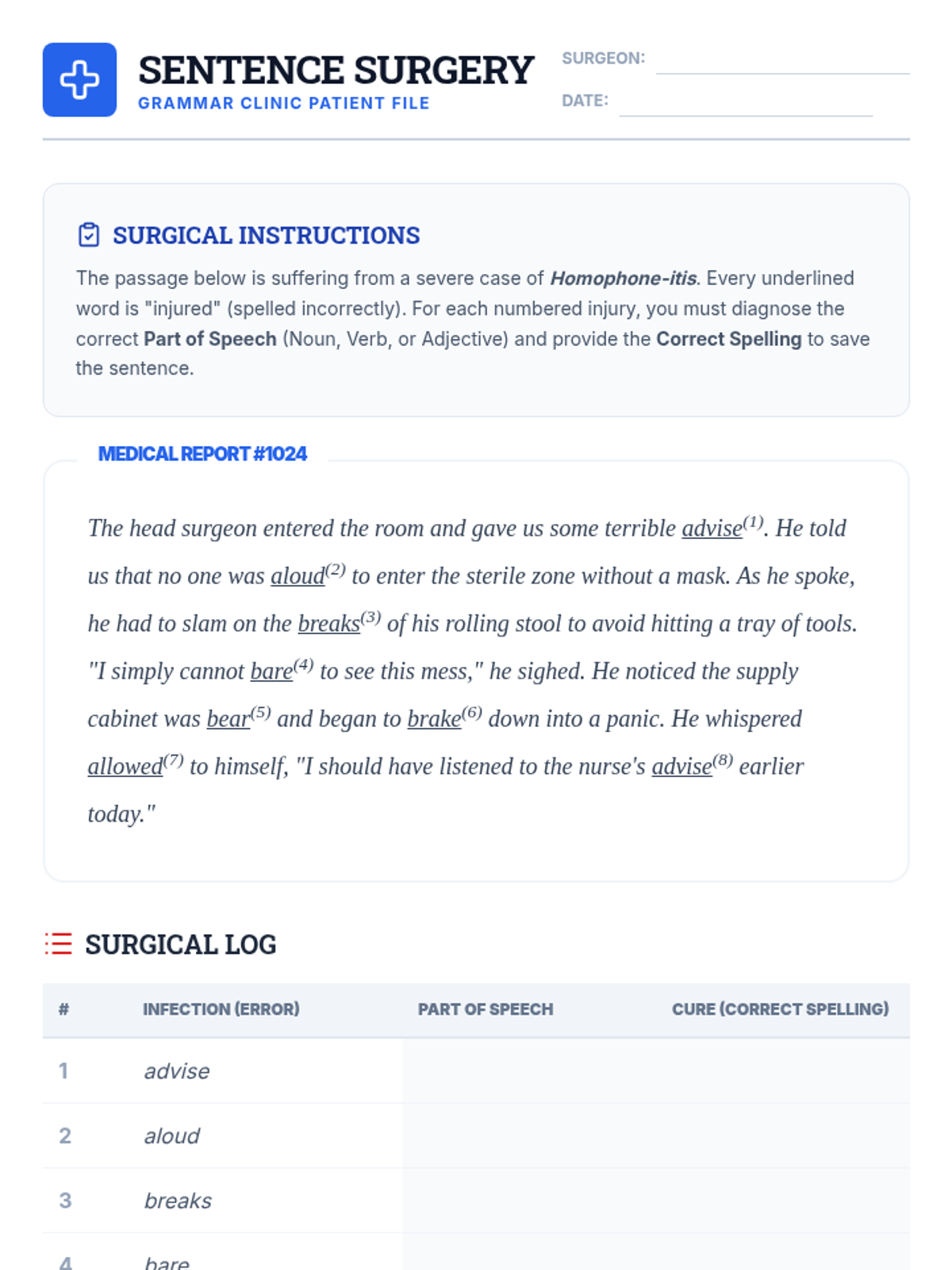
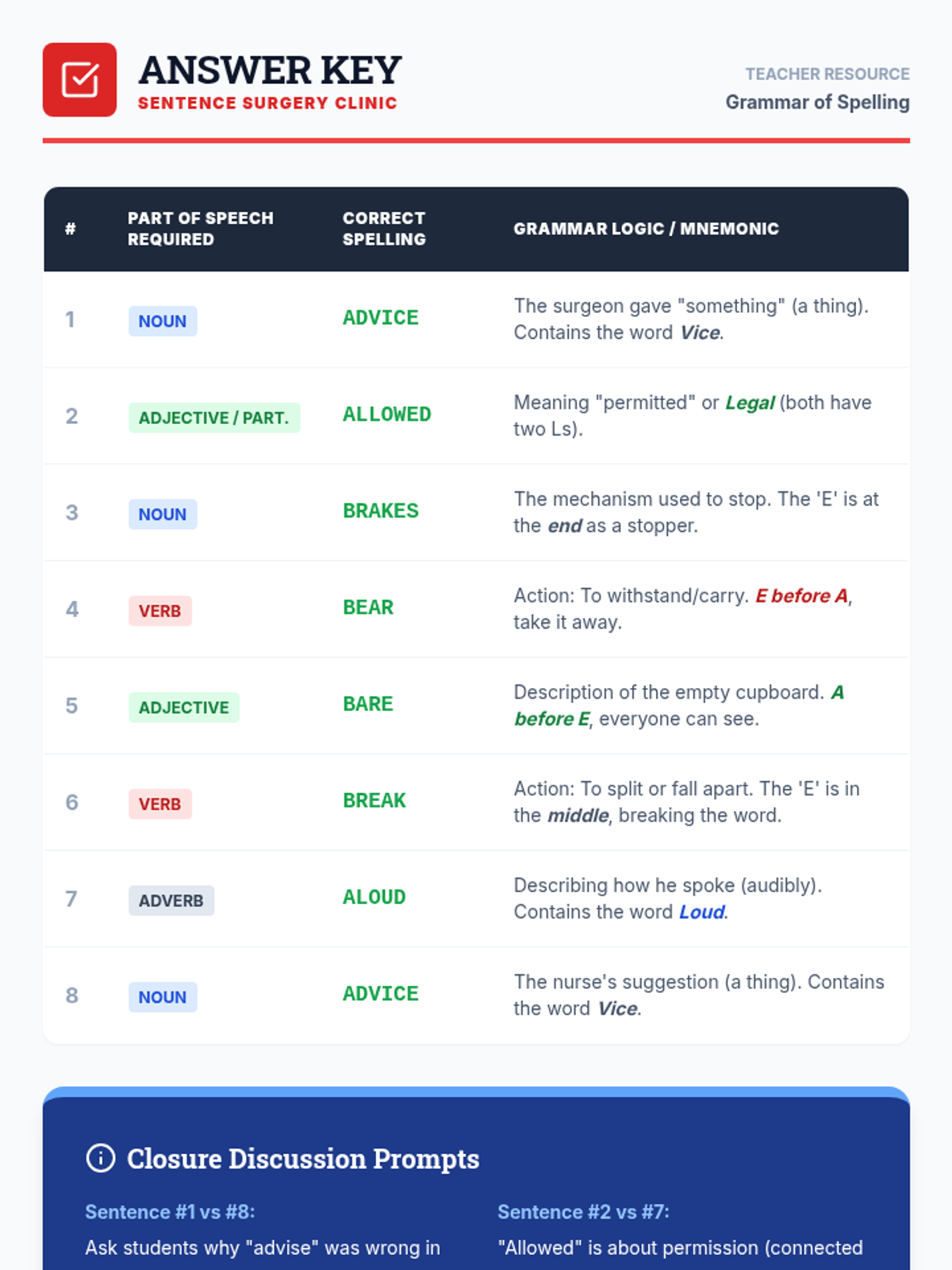
A grammar-focused spelling lesson for 7th-8th graders exploring how identifying a word's part of speech (noun, verb, or adjective) is the key to choosing the correct spelling for frequently confused homophones.
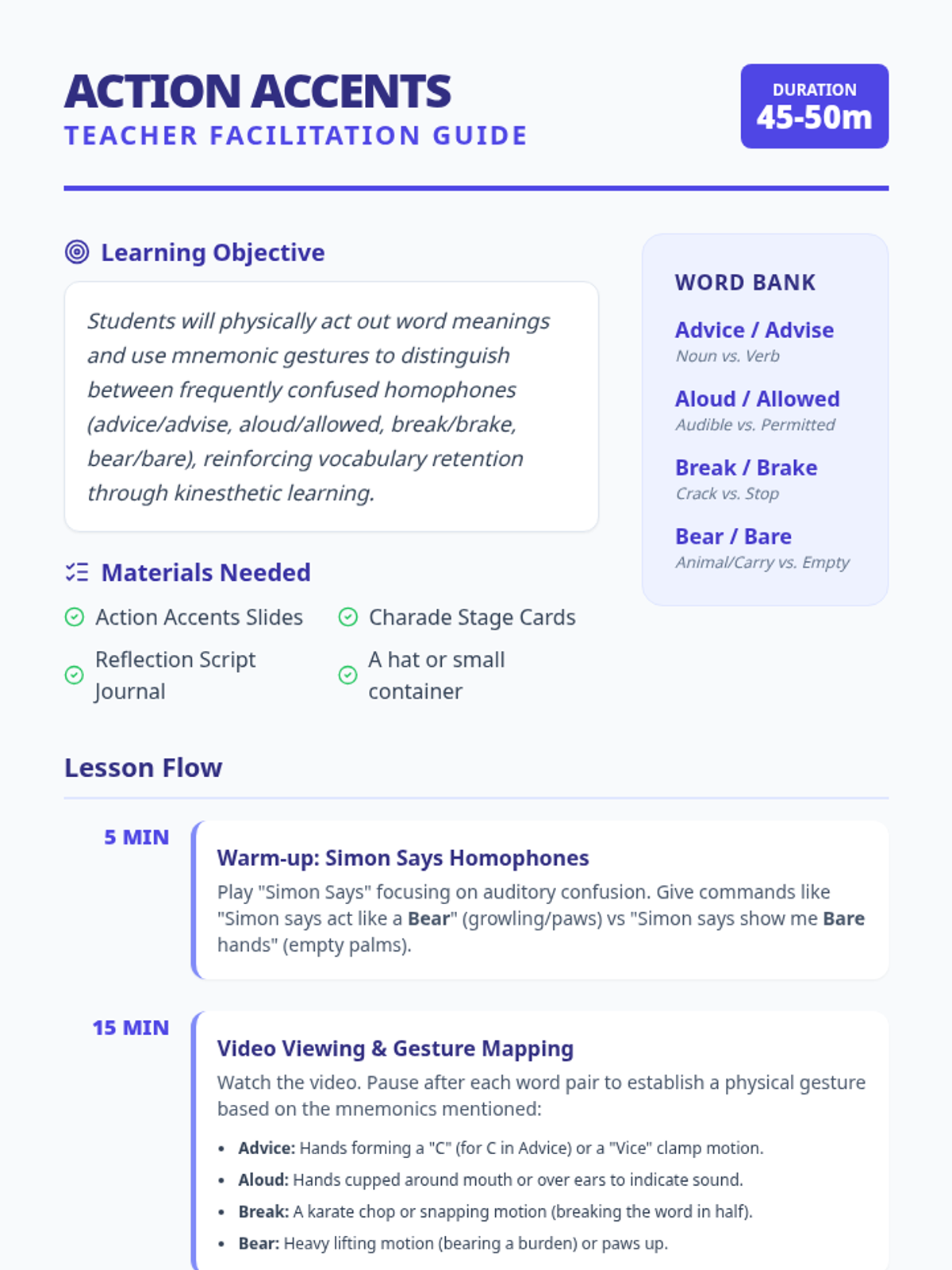
Students will physically act out word meanings for commonly confused homophones (advice/advise, aloud/allowed, break/brake, bear/bare) to reinforce spelling and retention through movement and mnemonics.
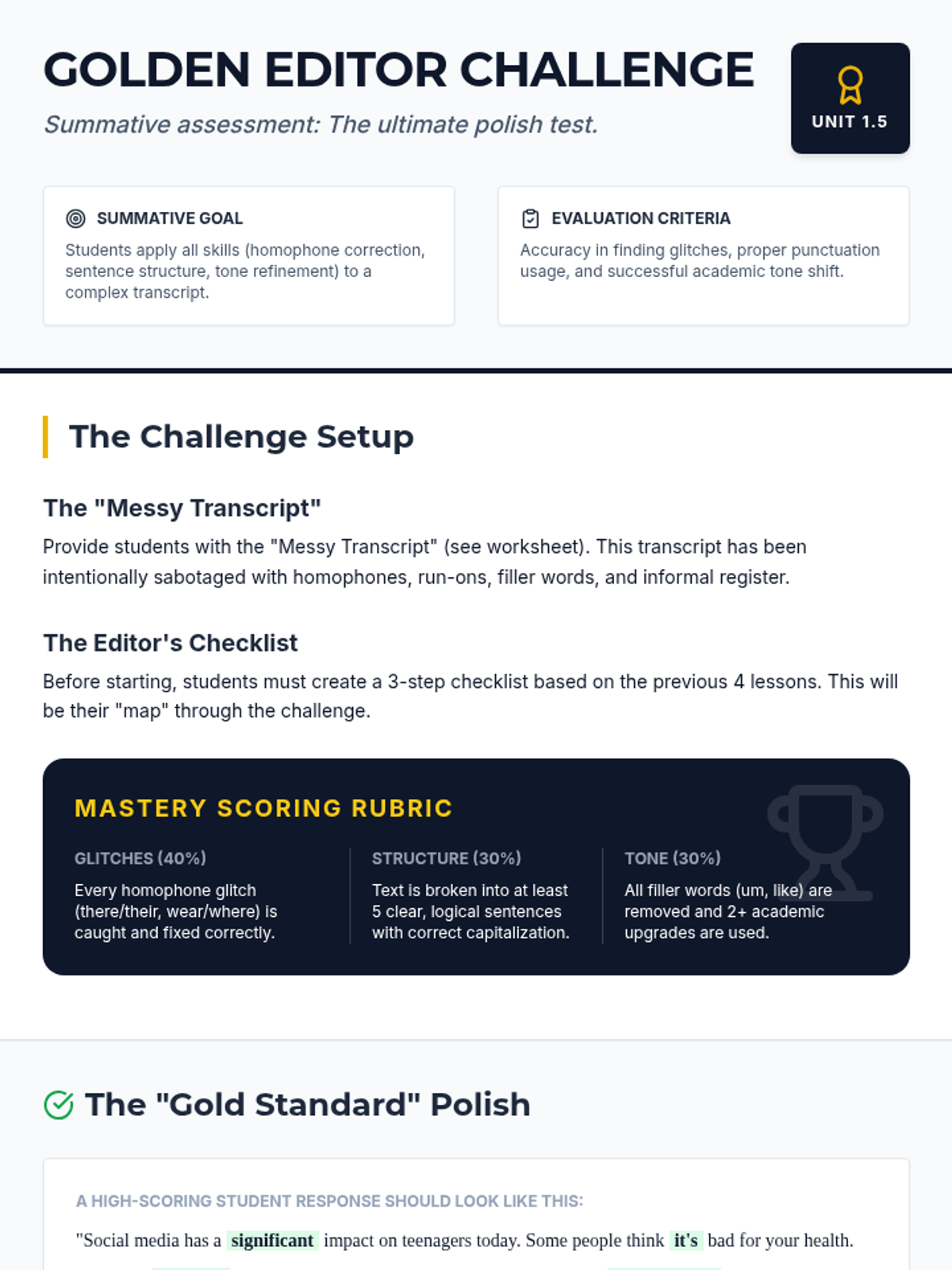
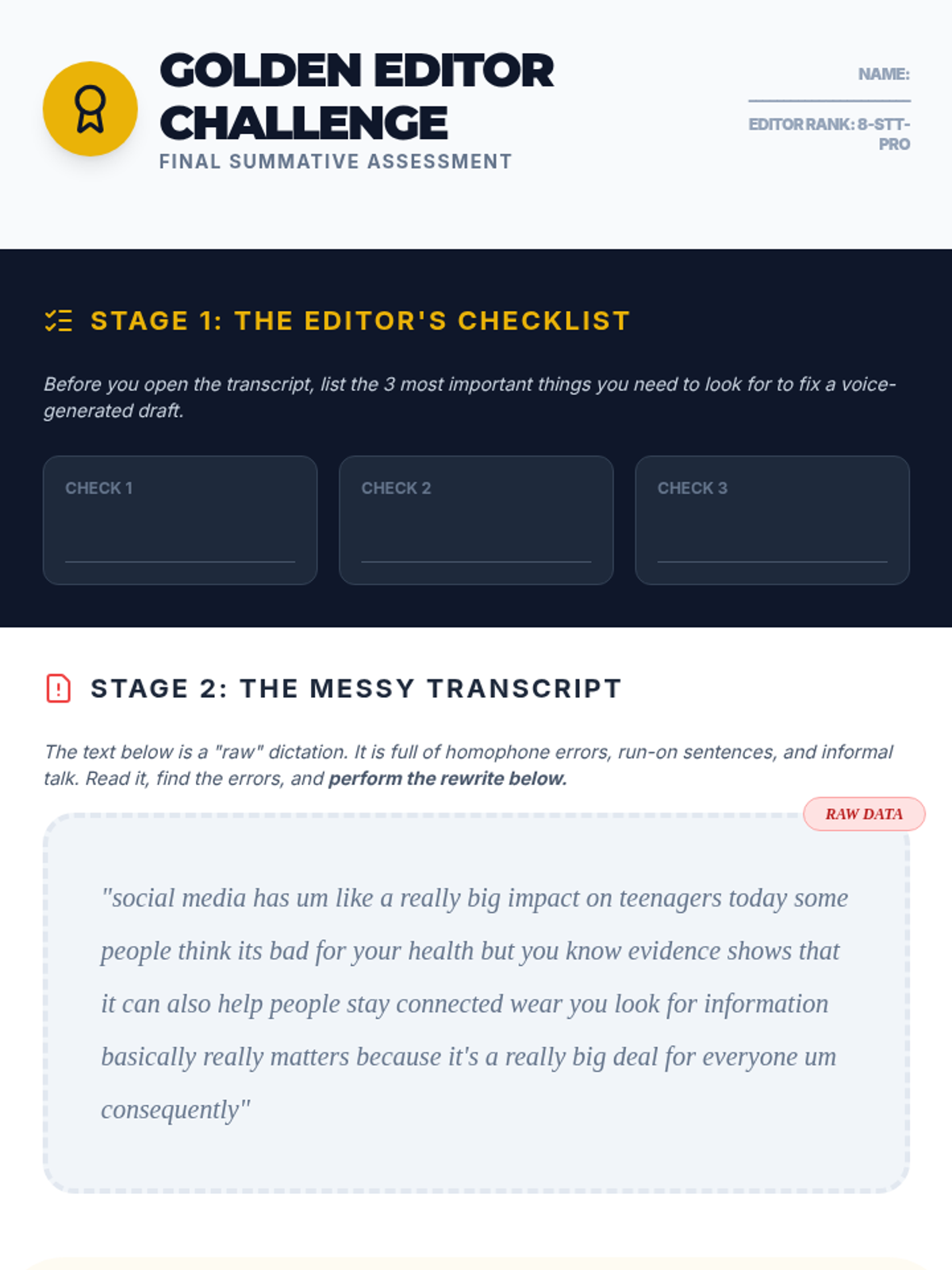
A summative assessment where students apply all editing skills to a messy, error-ridden transcript to produce a final, polished piece of writing.
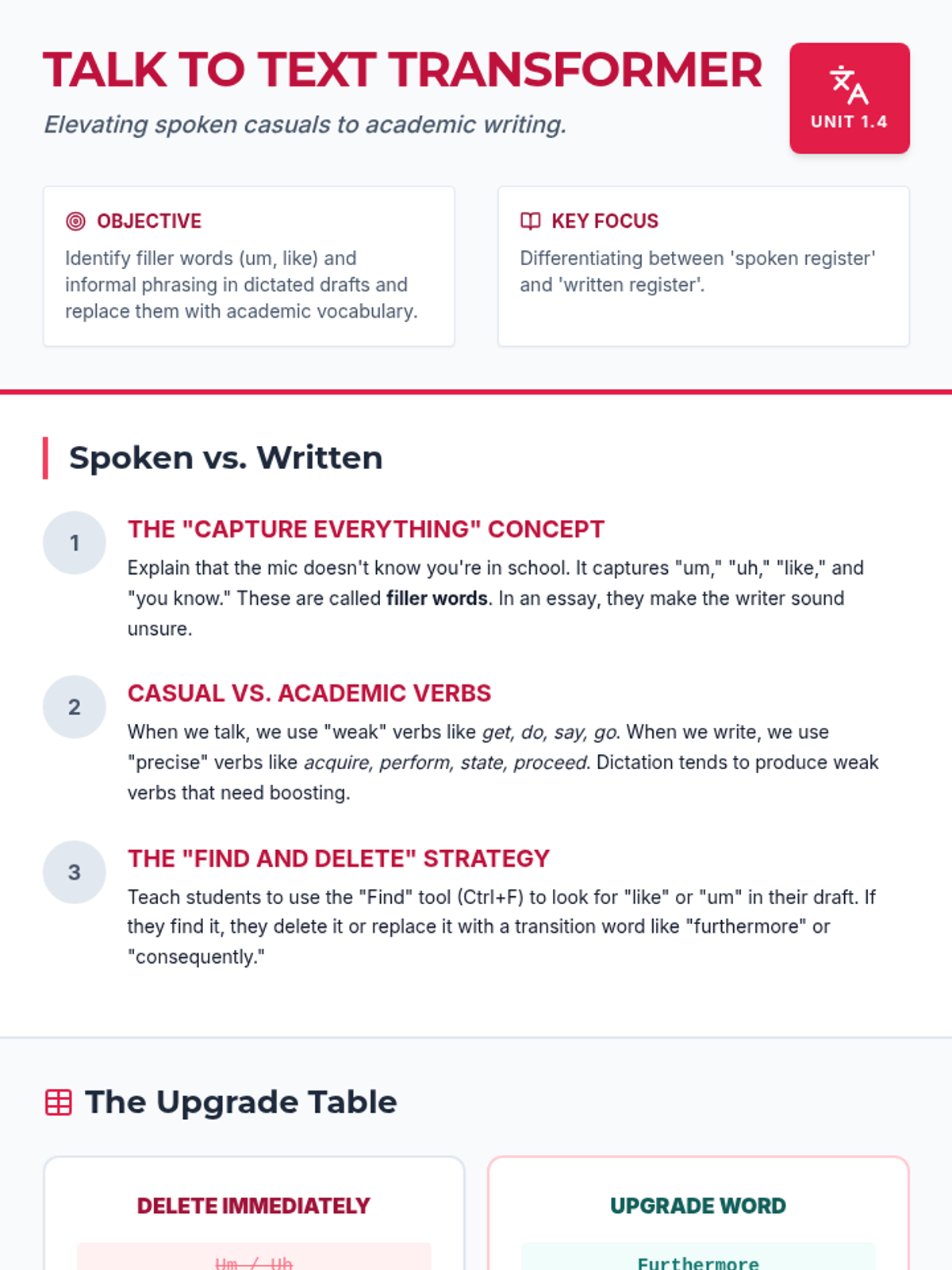
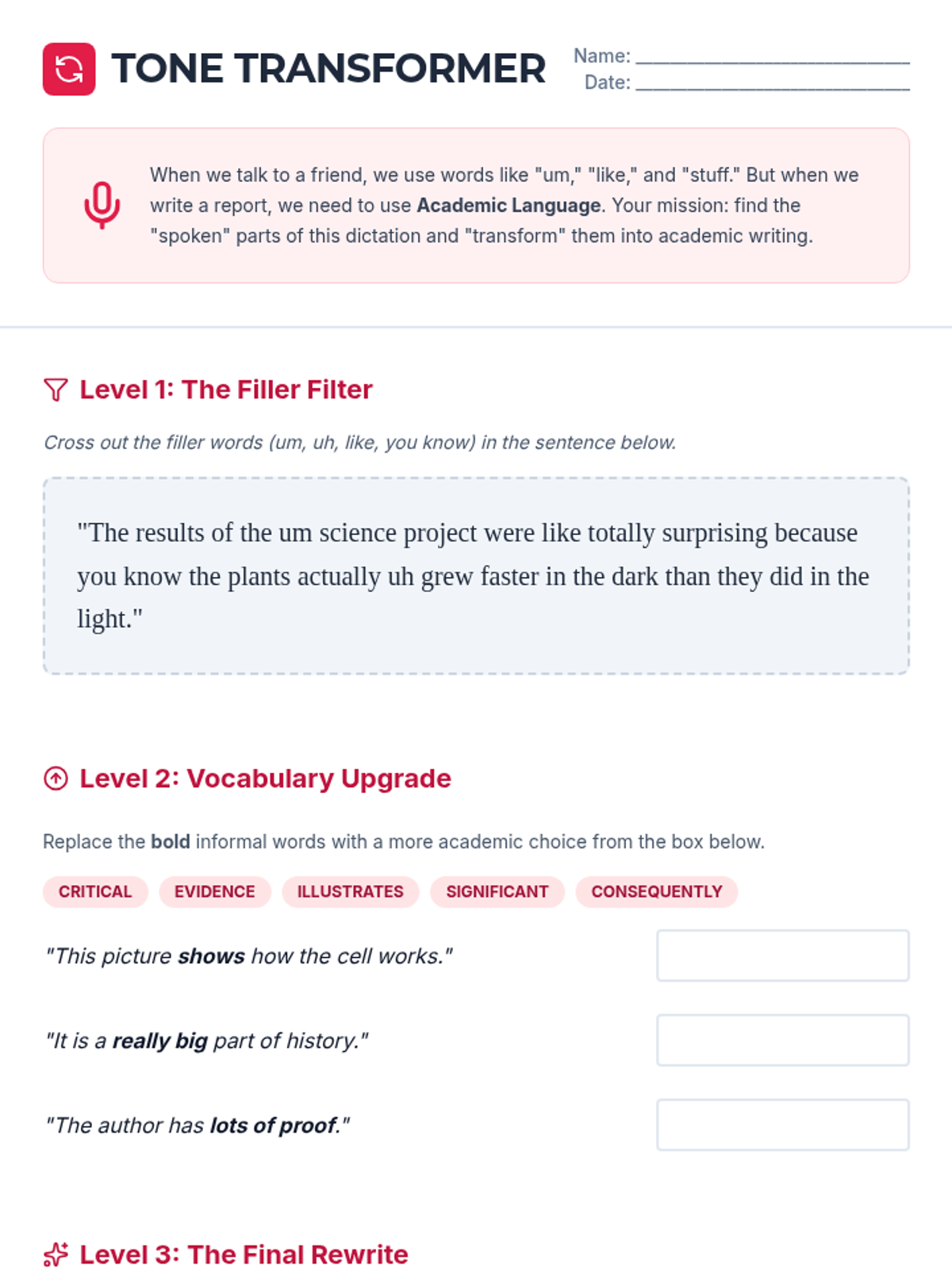
Teaches students to bridge the gap between spoken casual language and formal academic writing by identifying filler words and elevating vocabulary in their dictated drafts.
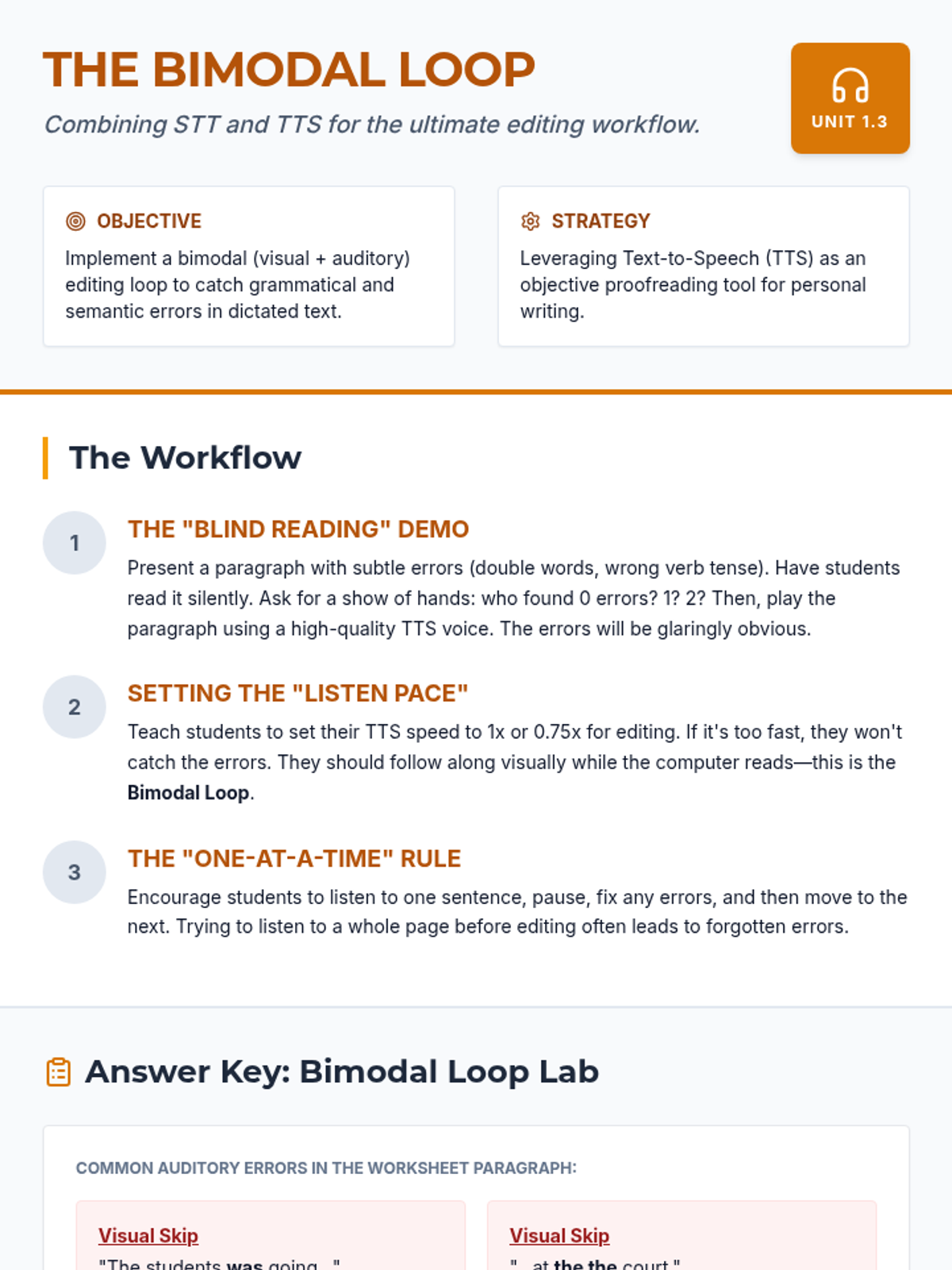
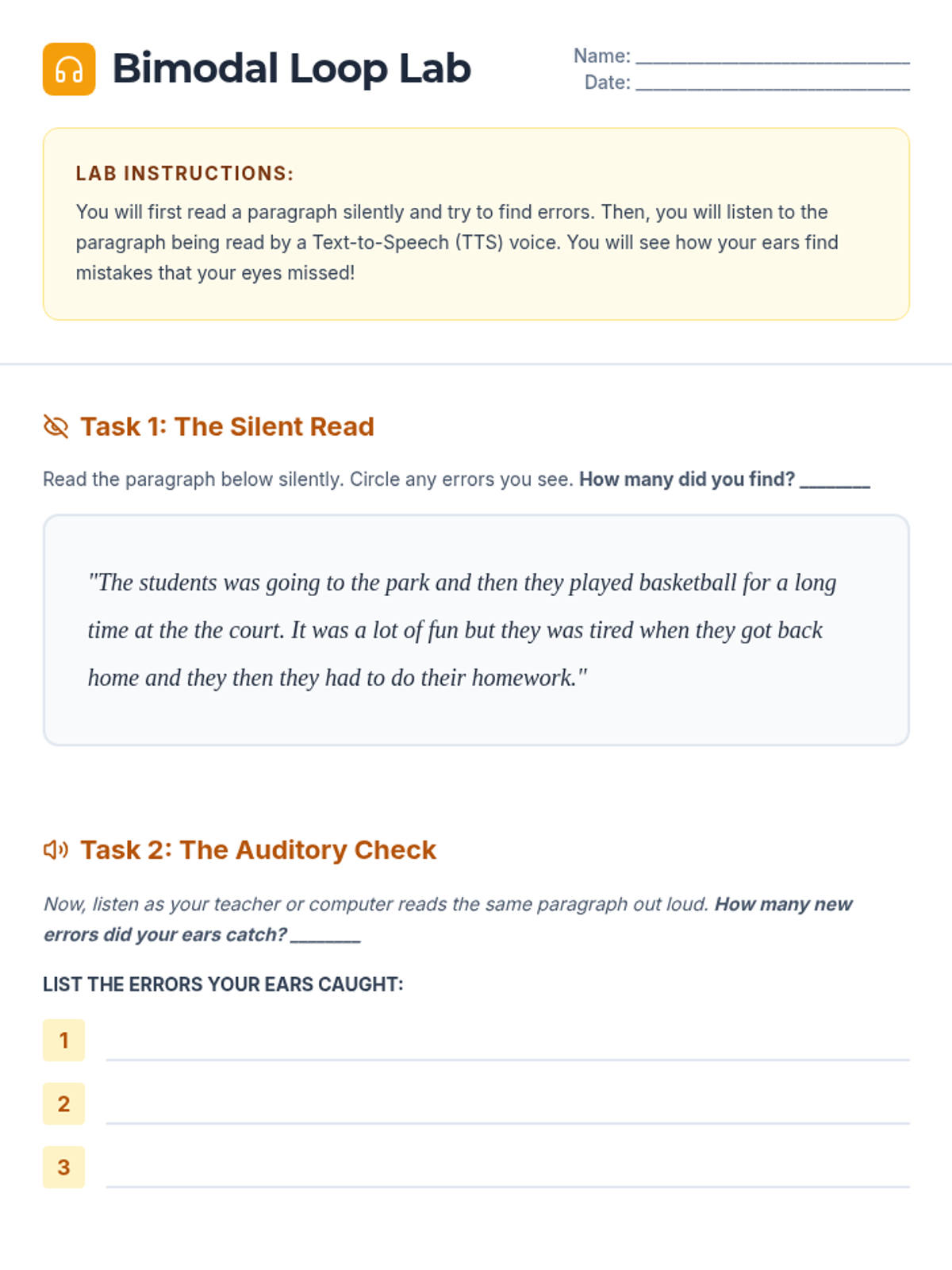
Introduces the bimodal loop of using text-to-speech technology to listen to dictated work, leveraging auditory processing to catch errors that are easily missed during visual proofreading.
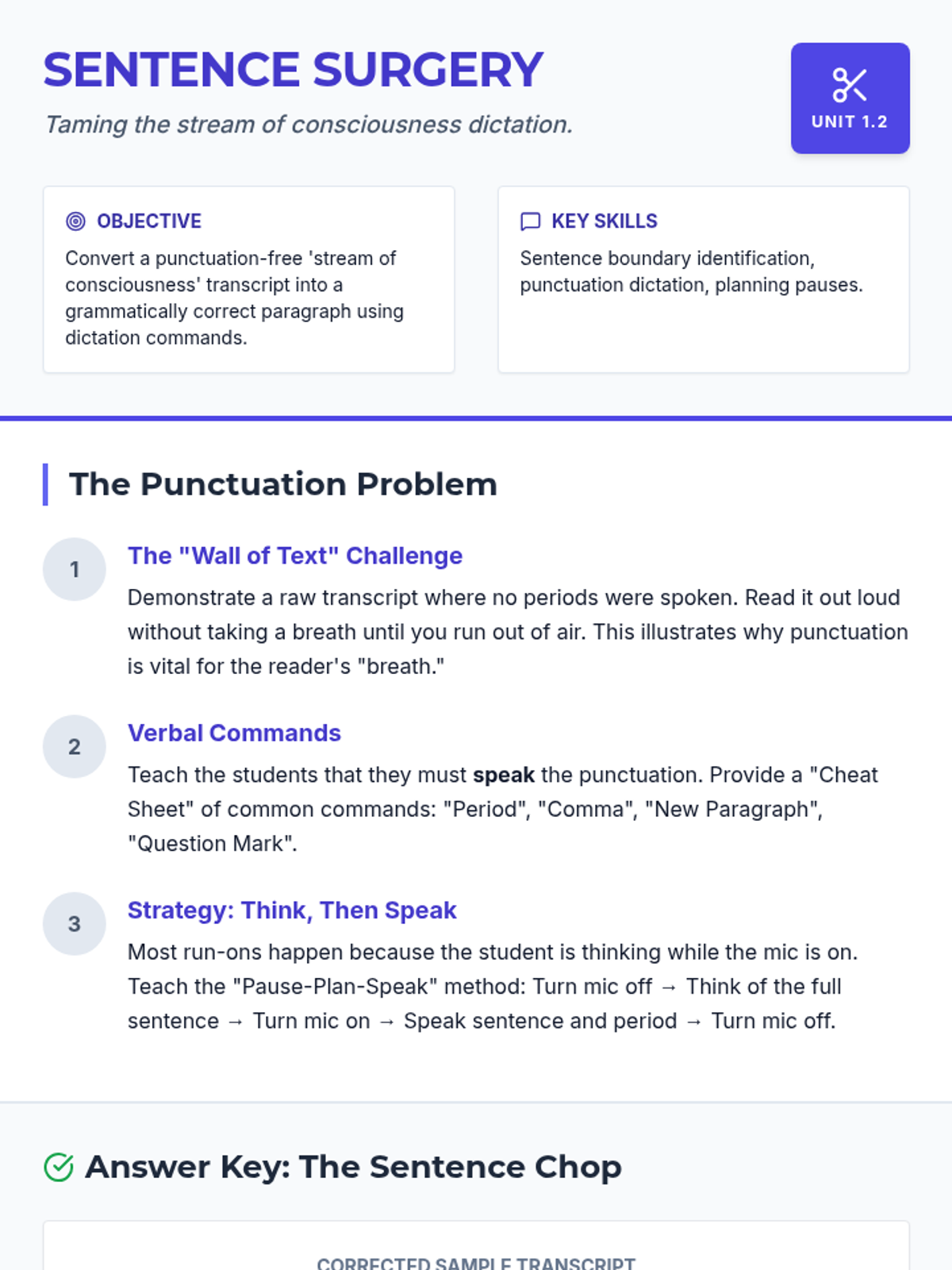
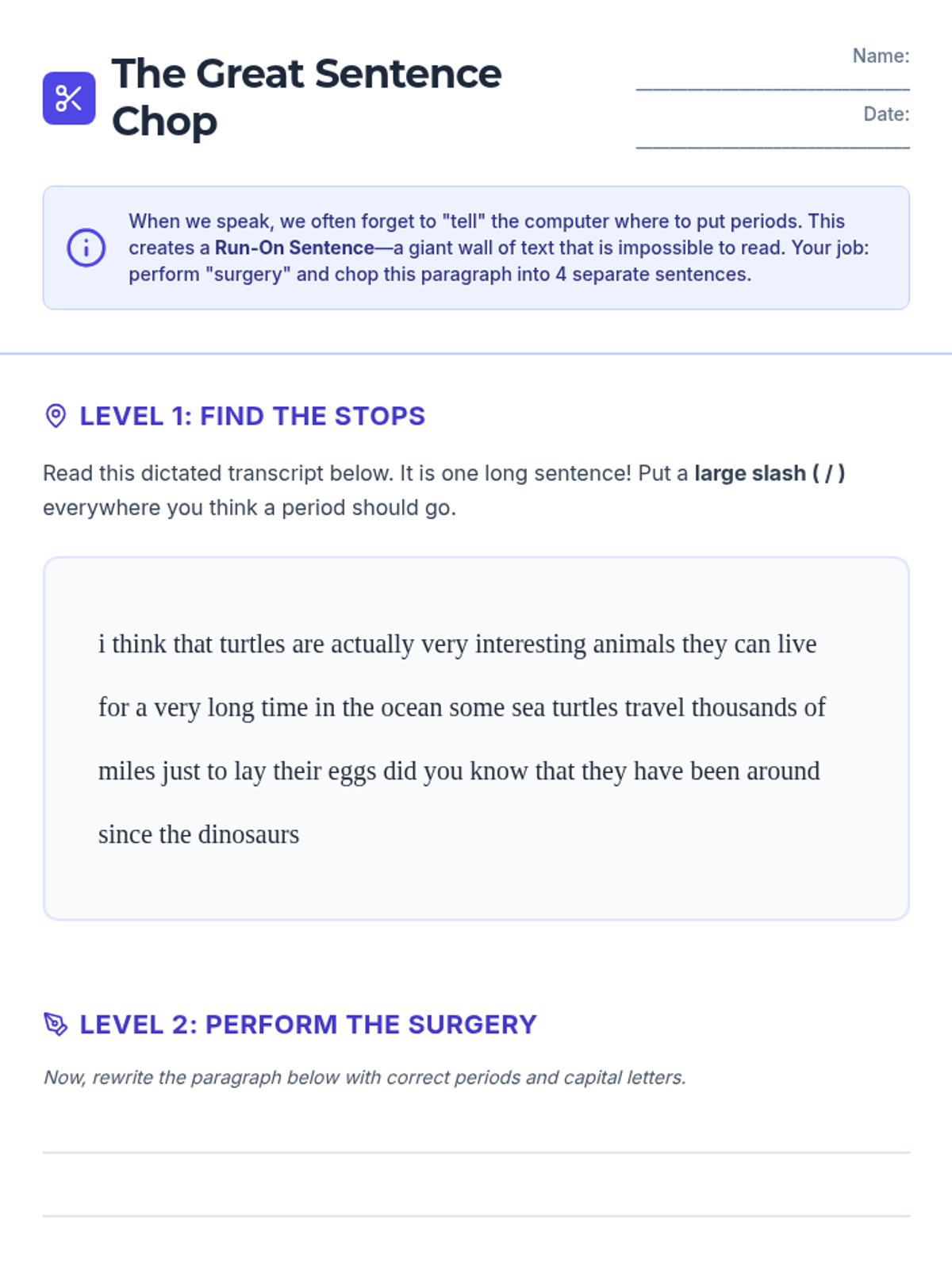
Focuses on the structural issues of dictated text, specifically the lack of punctuation and the tendency for run-on sentences, teaching students to impose order on 'stream of consciousness' transcripts.
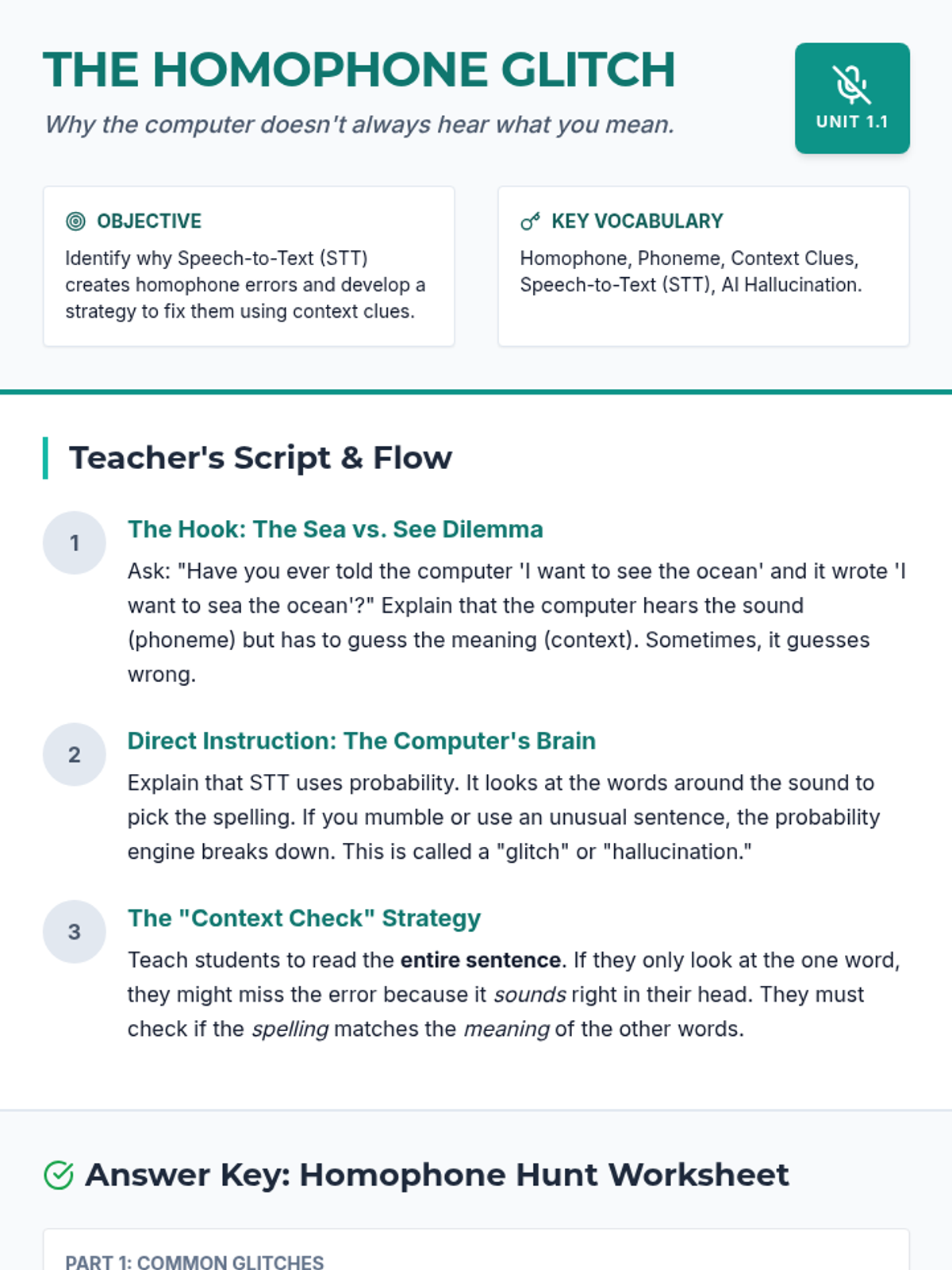
Explores why speech-to-text software confuses homophones and teaches students how to use context clues to identify and fix these common errors.
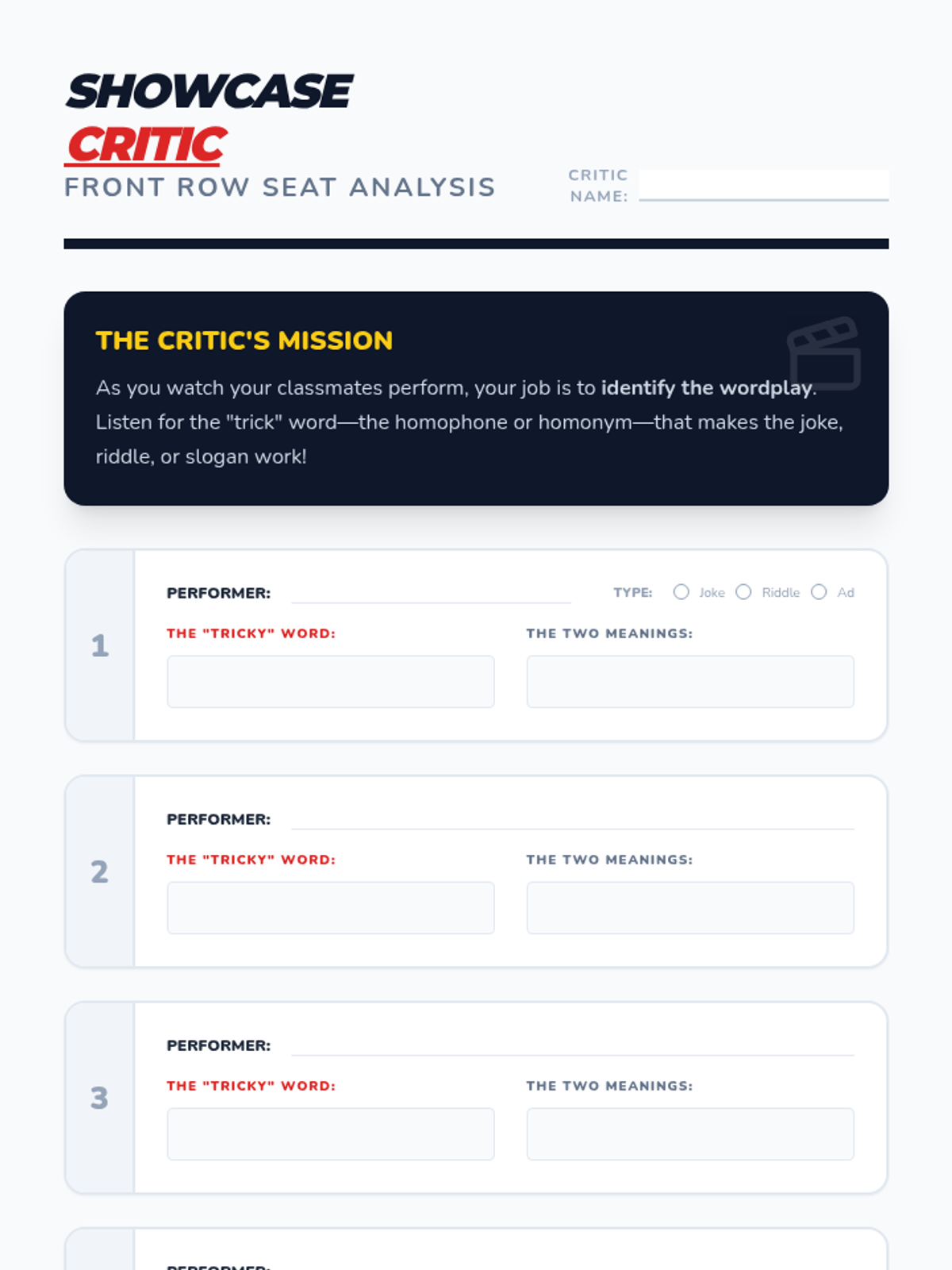
Students present their best jokes, riddles, or slogans to the class in a 'Comedy Club' or 'Ad Pitch' format. The audience must identify the specific homophones or homonyms used in each presentation.
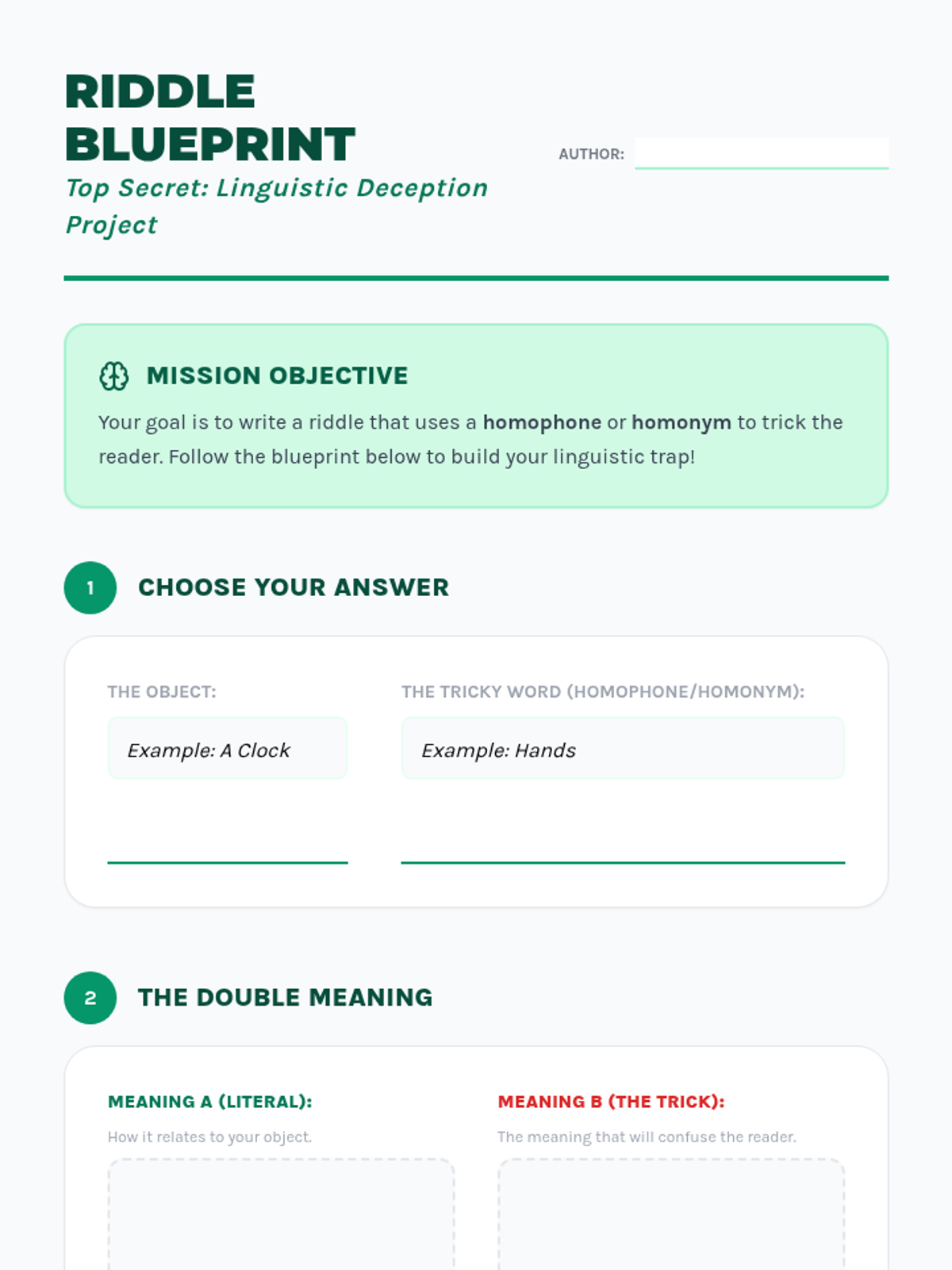
Students draft their own riddles where the answer hinges on a homophone or homonym. They practice guiding the reader toward the wrong meaning before revealing the correct one.
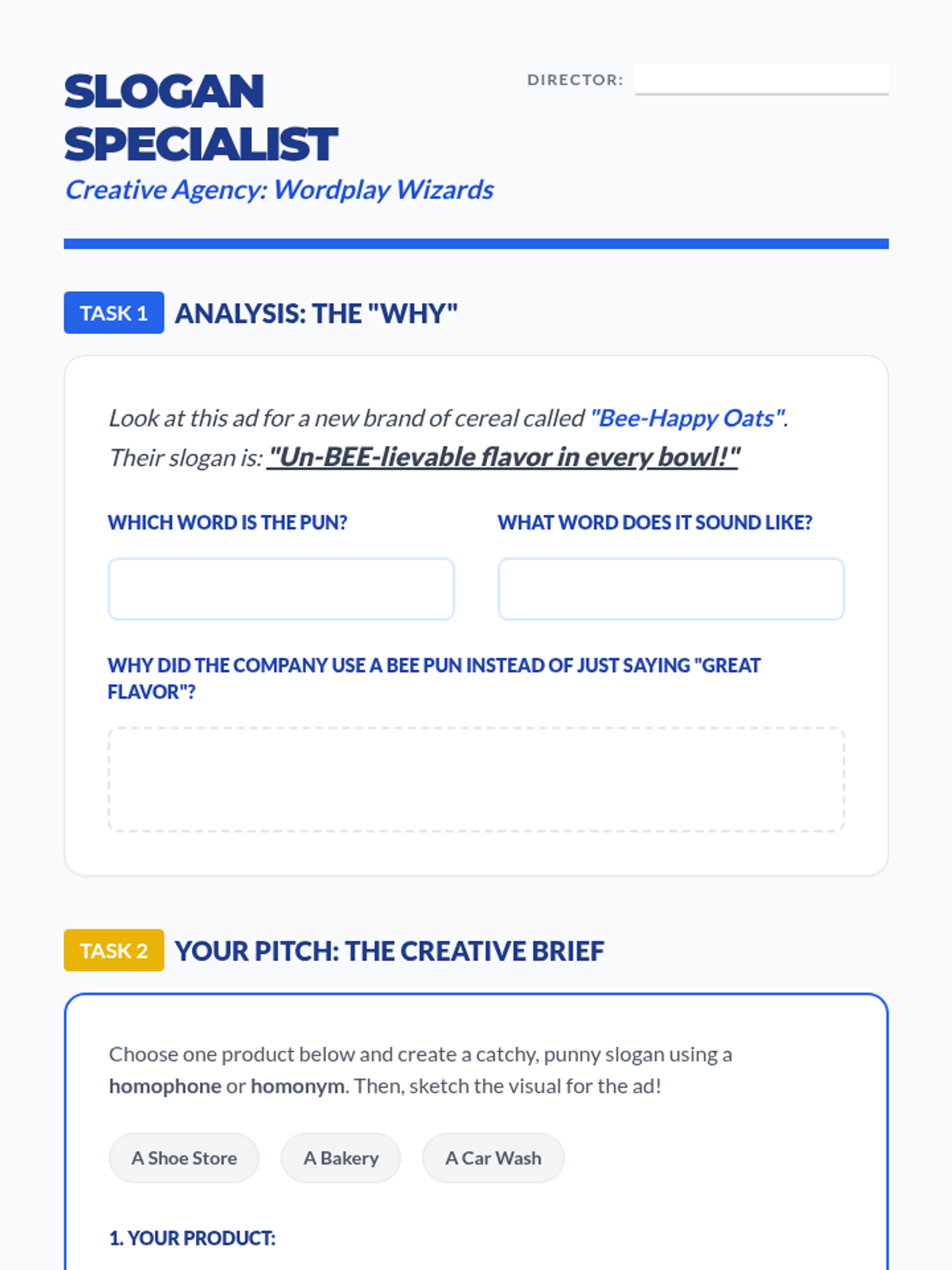
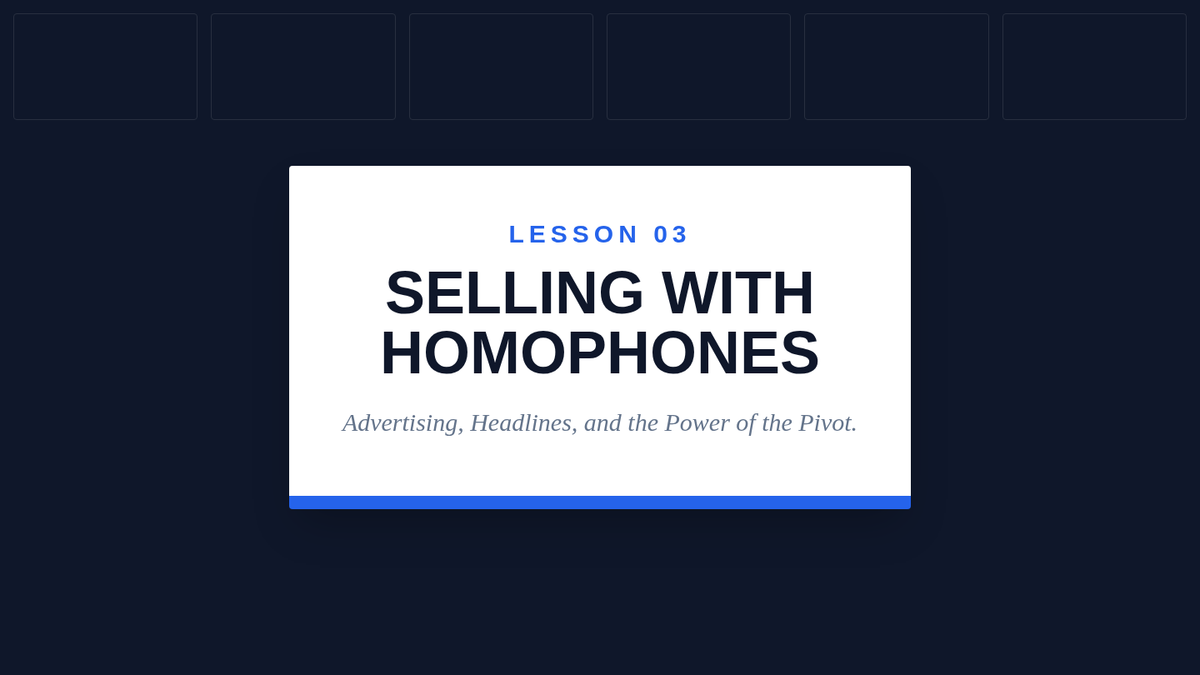
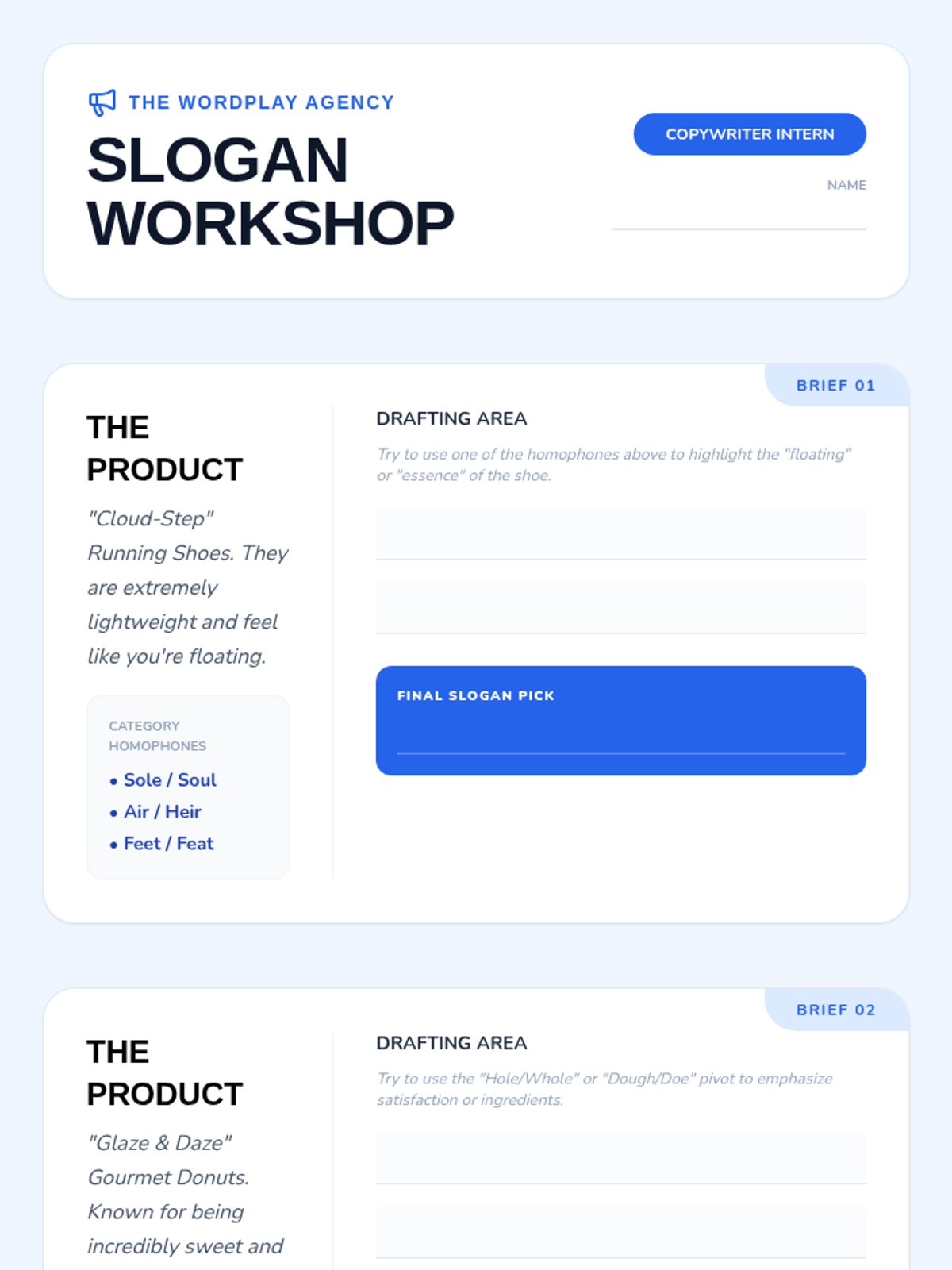
Students analyze real-world advertisements that use homophones to catch attention. They evaluate the effectiveness of this wordplay and brainstorm their own catchy slogans for common products.
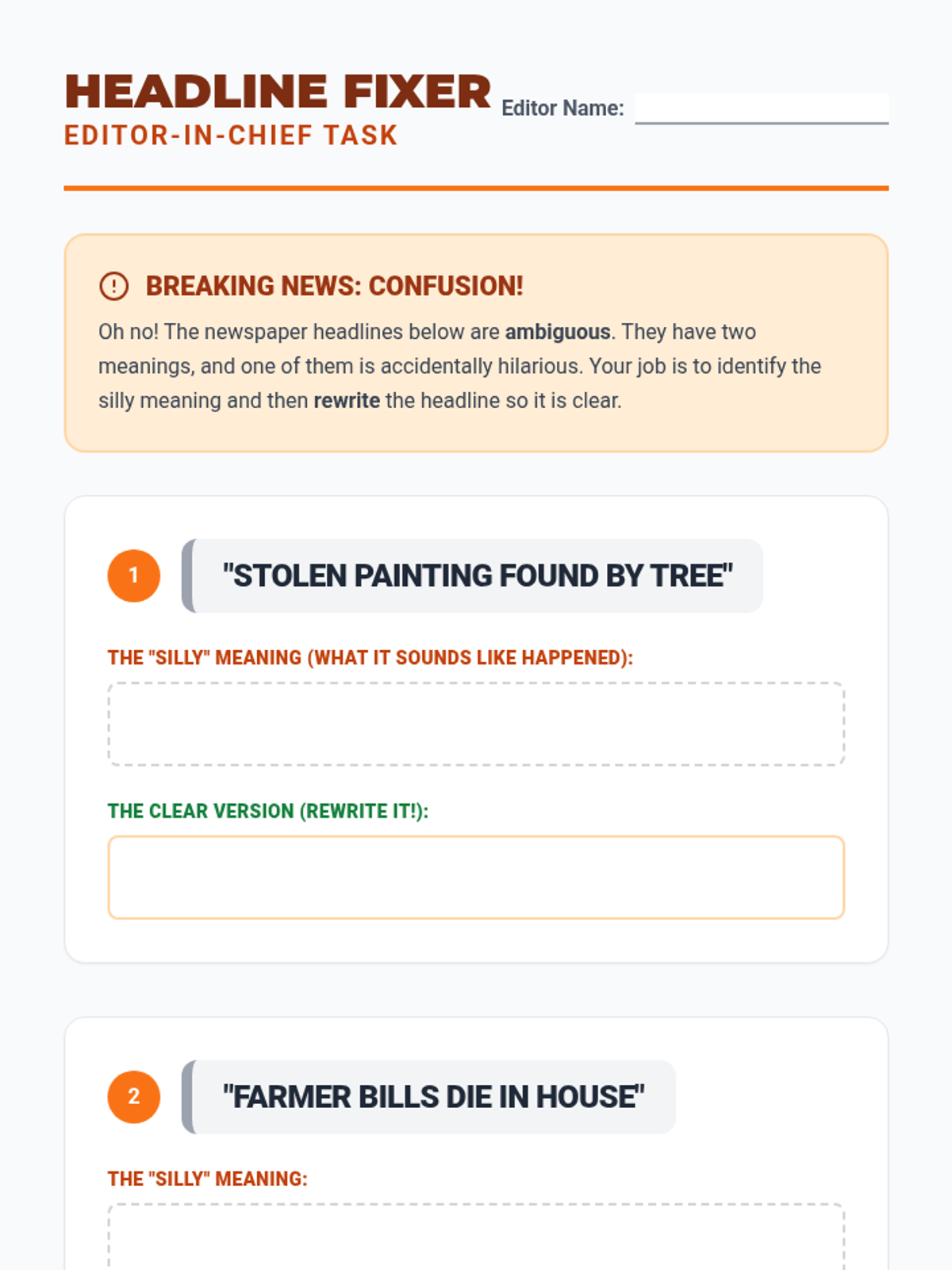
Students look at headlines and newspaper clippings that are accidentally funny due to homonyms and sentence structure. They discuss how word choice can lead to unintended meanings.
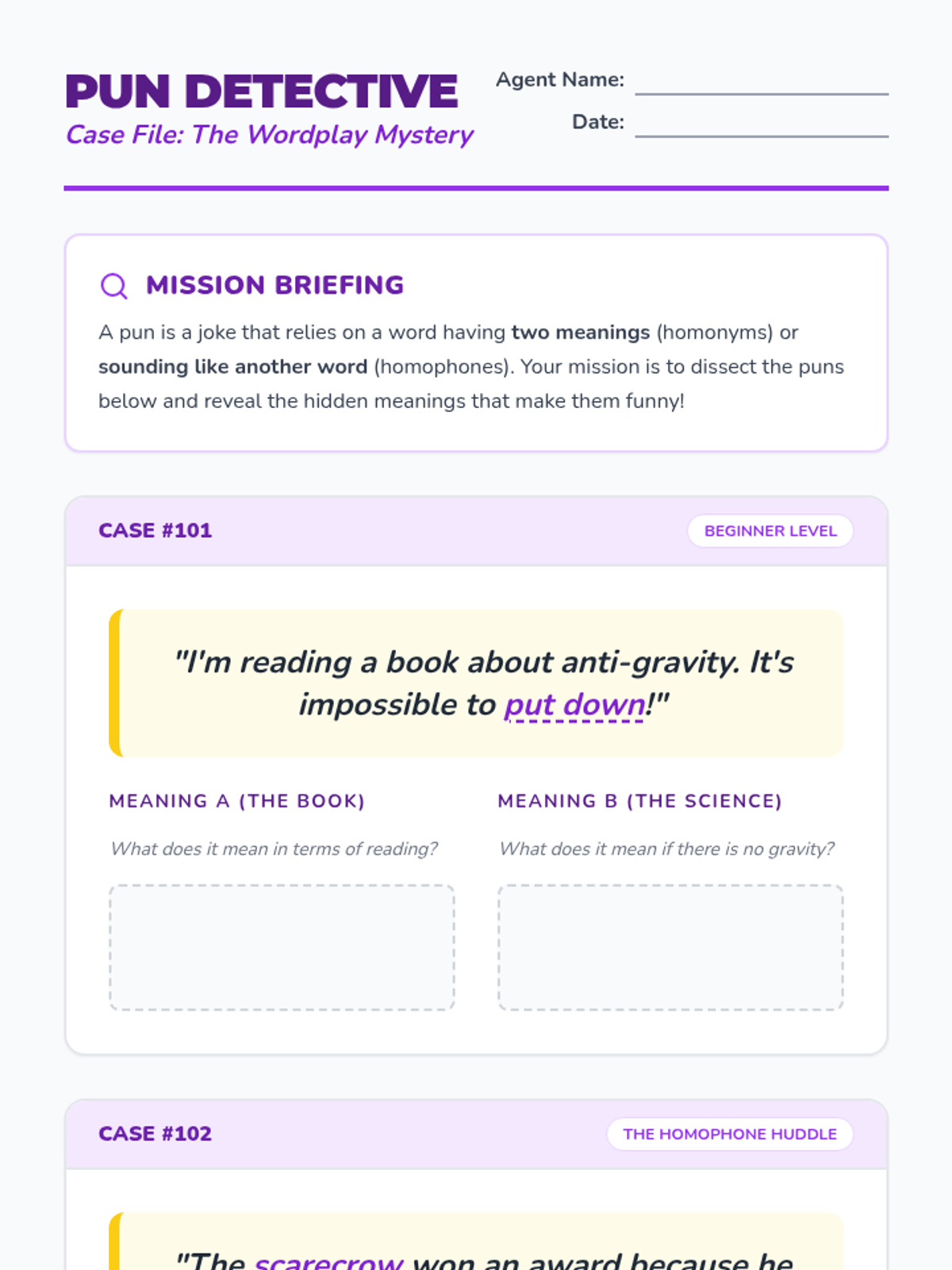
Students dissect puns and jokes to understand how homophones and multiple-meaning words create humor. They identify the conflicting meanings that lead to a punchline.
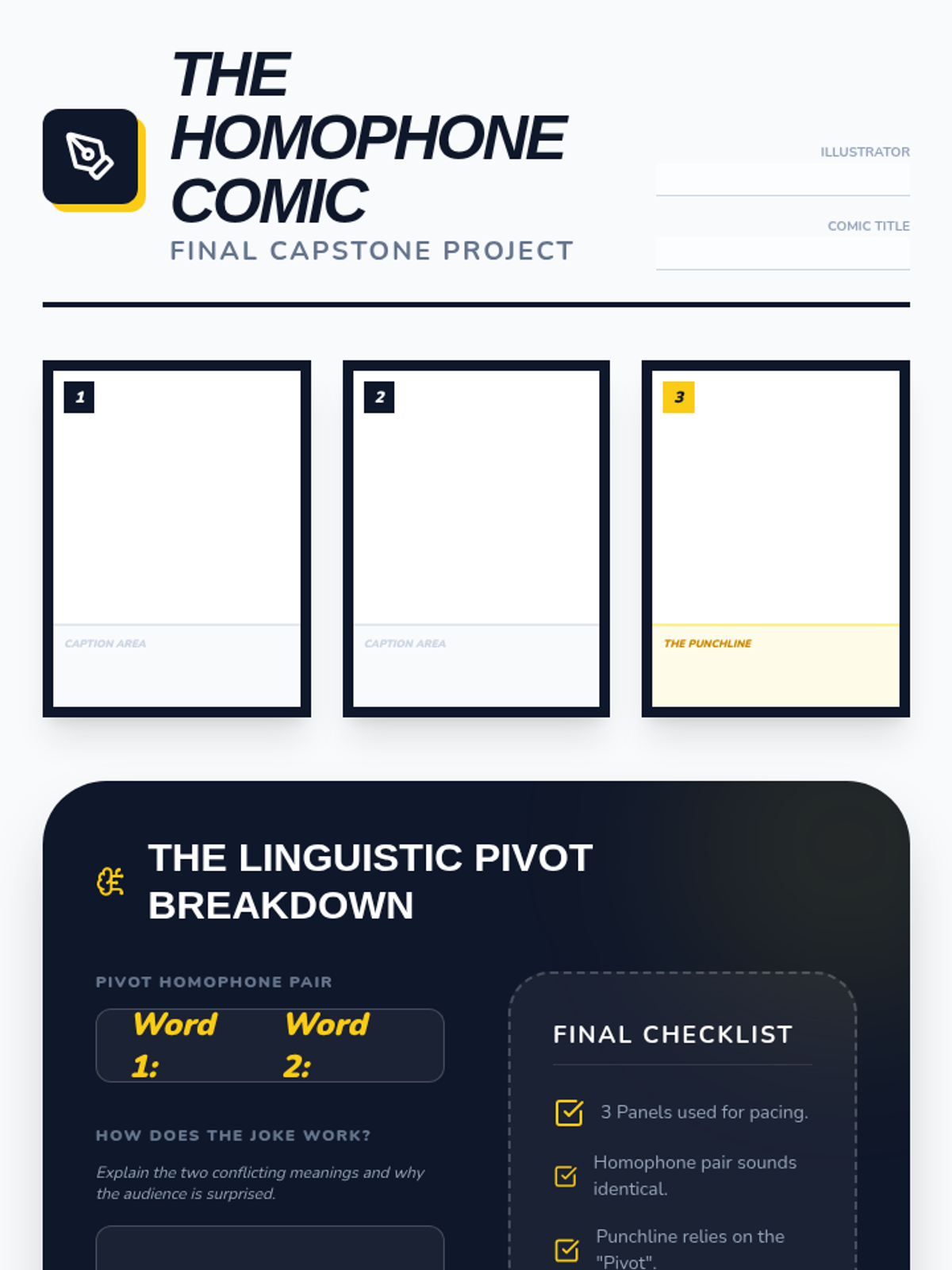
As a final project, students create a three-panel comic strip that culminates in a punchline dependent on a homophone, including a written explanation of the linguistic pivot.
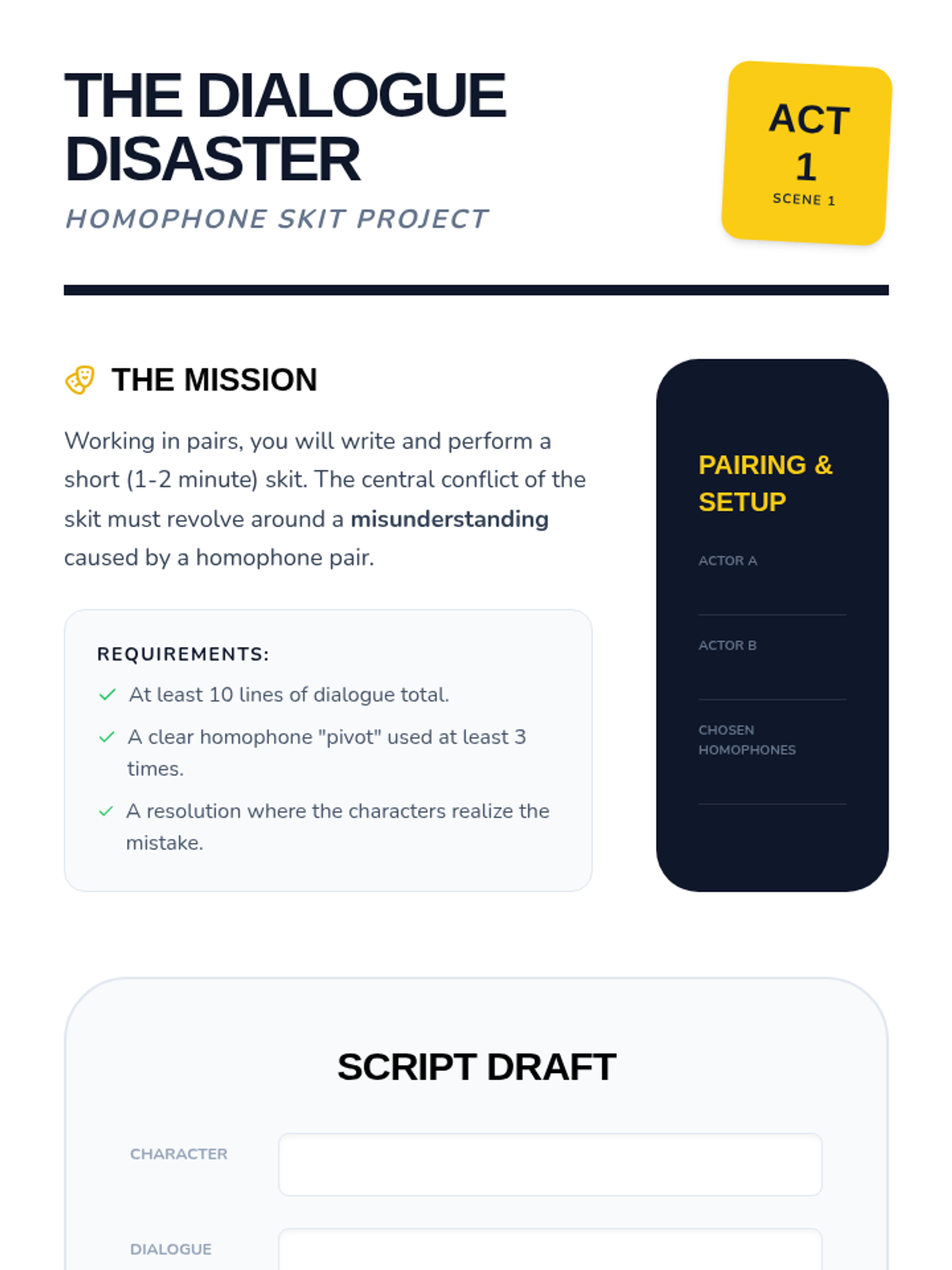
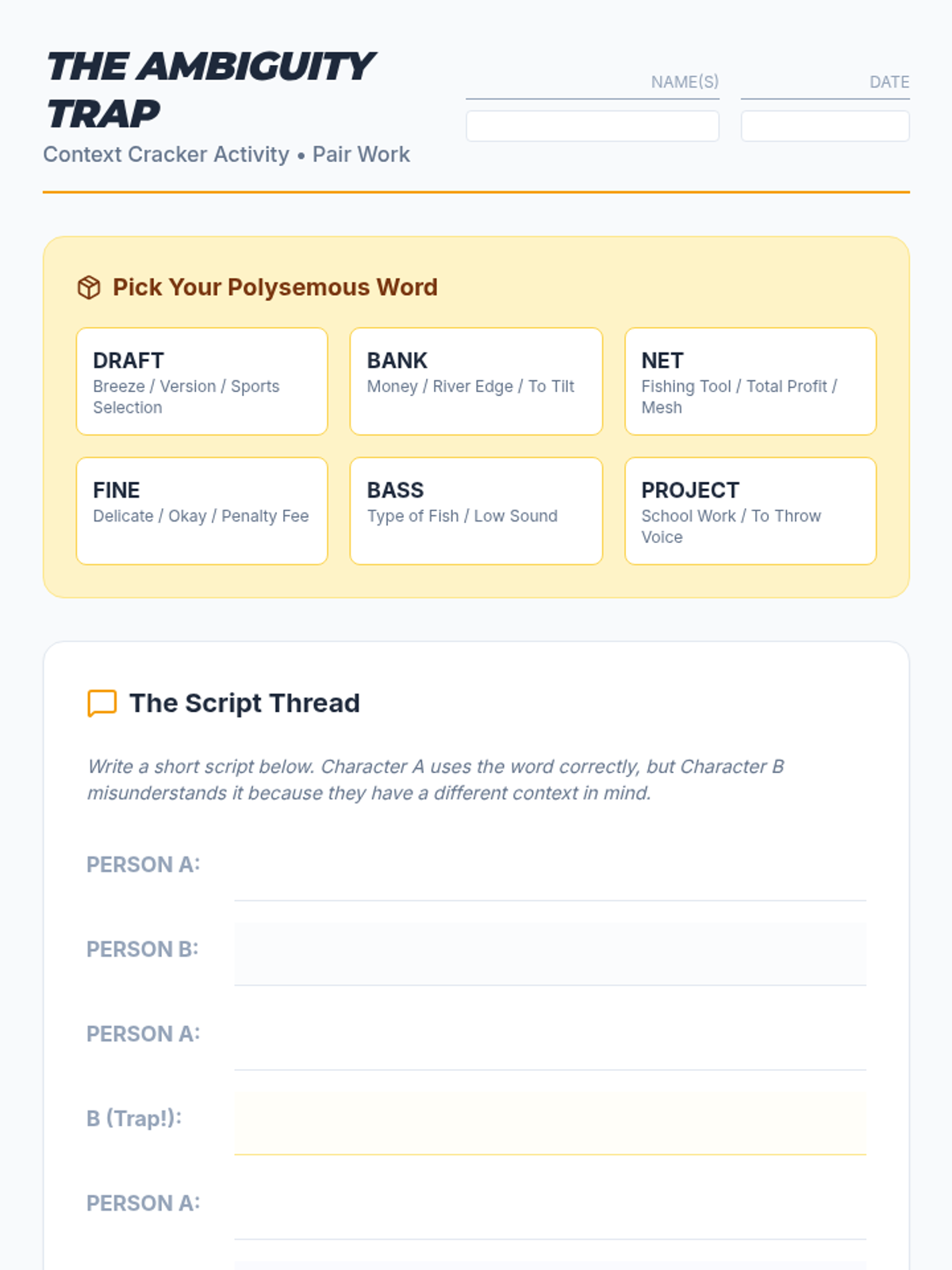
Students work in pairs to write a short dialogue or skit where a misunderstanding occurs because characters are using different meanings of a homophone pair.
Students investigate how copywriters use homophones to create catchy headlines and slogans. They analyze real-world examples and try to write their own slogans for hypothetical products.
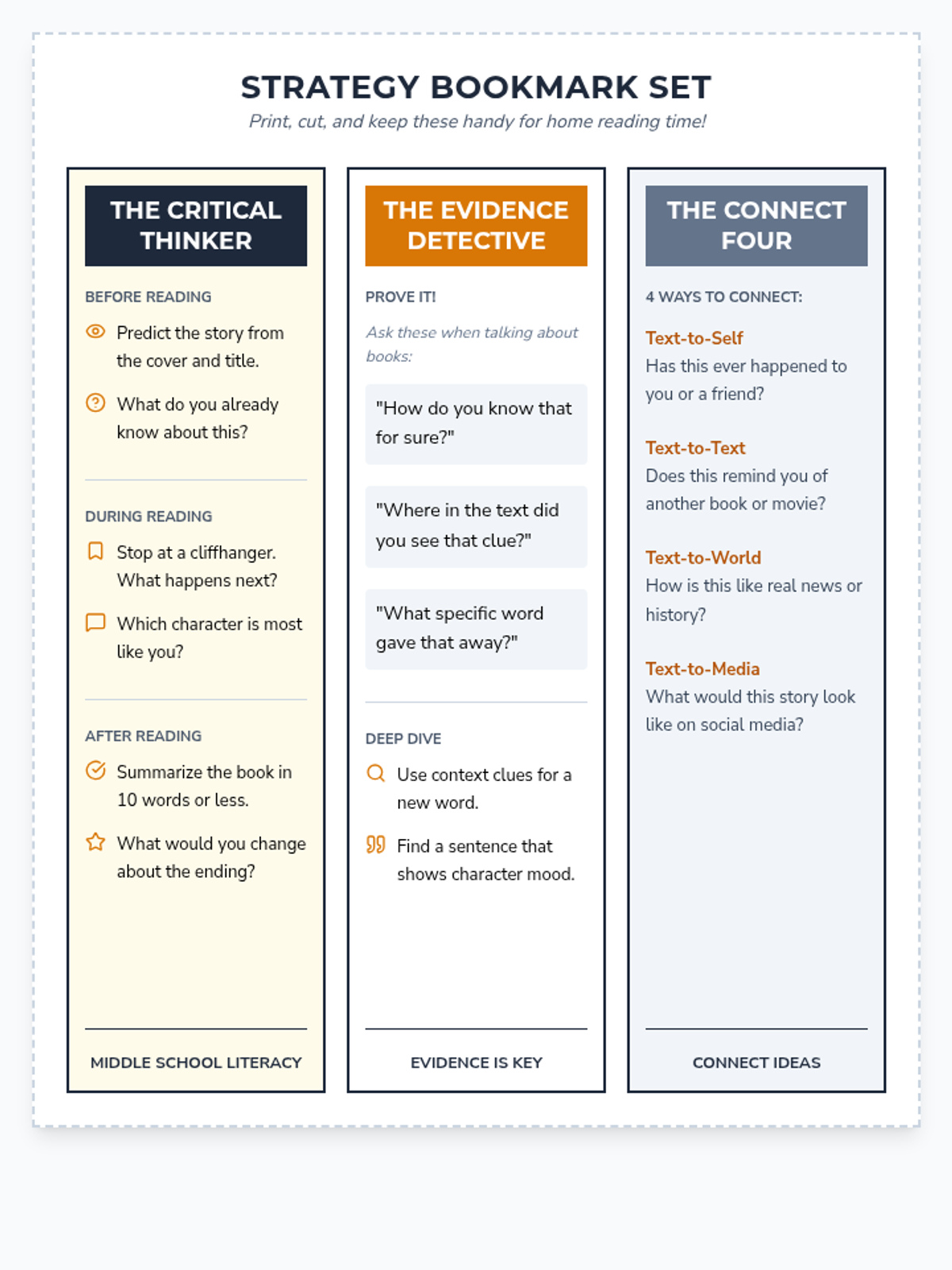
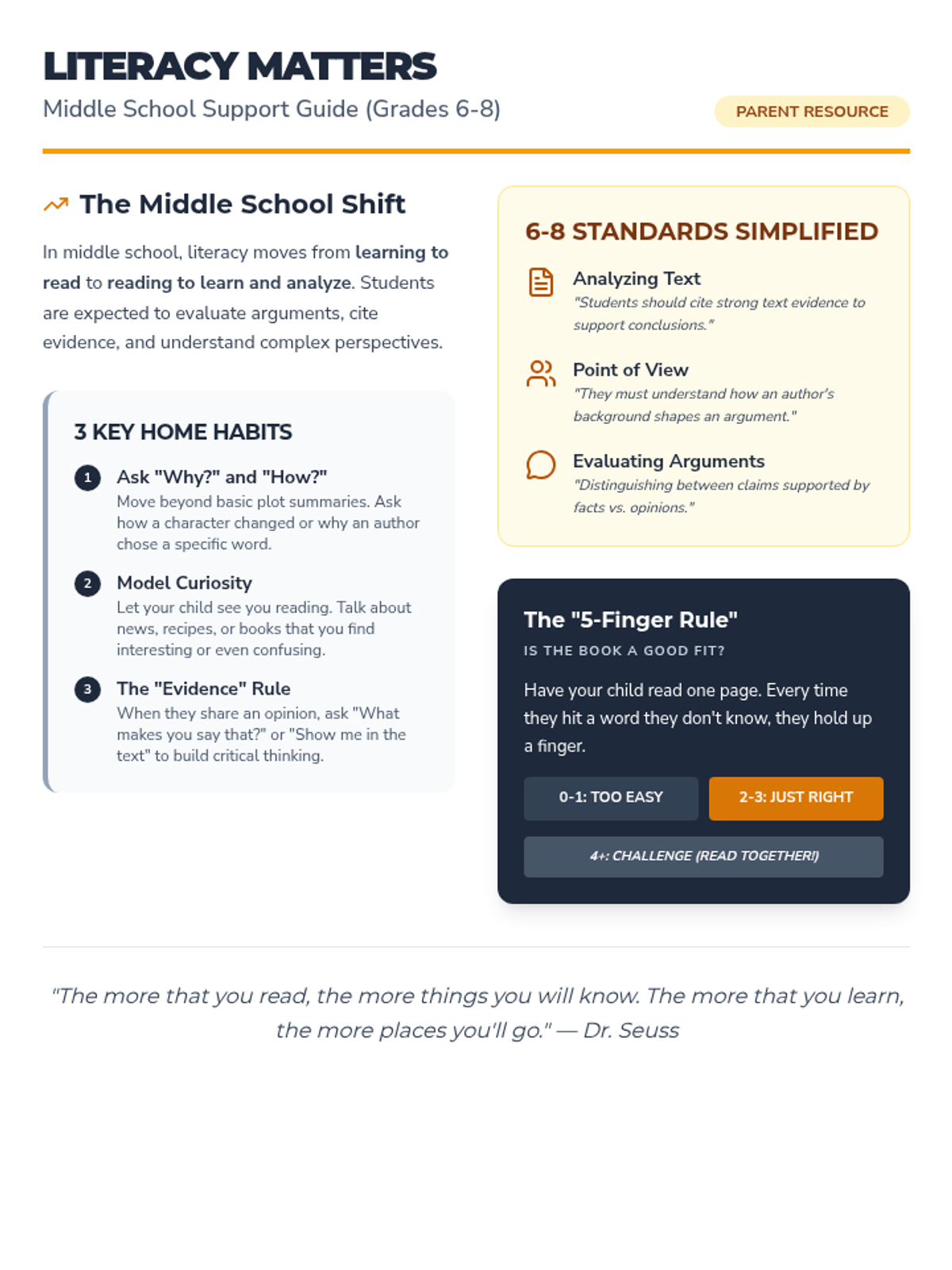
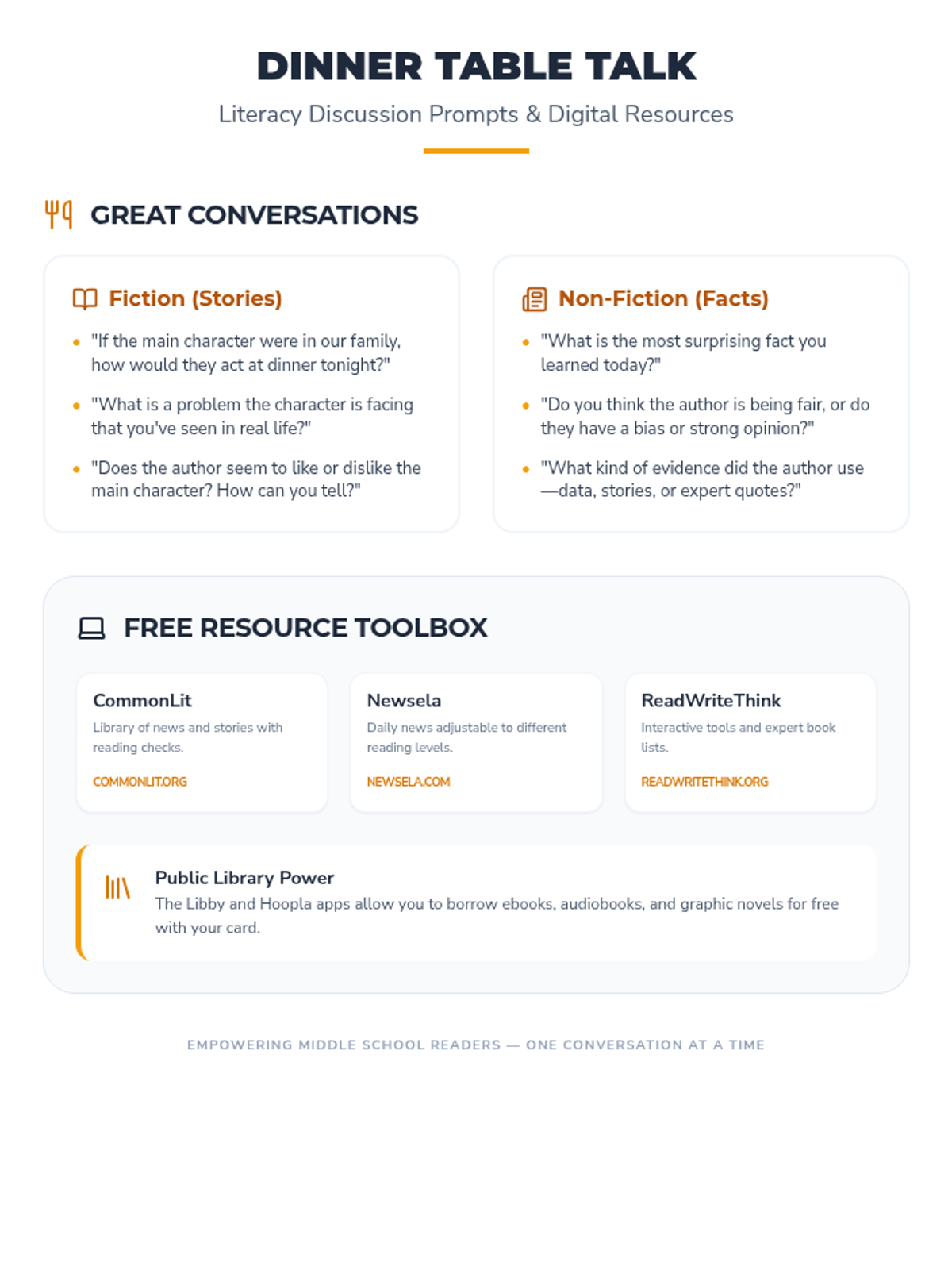
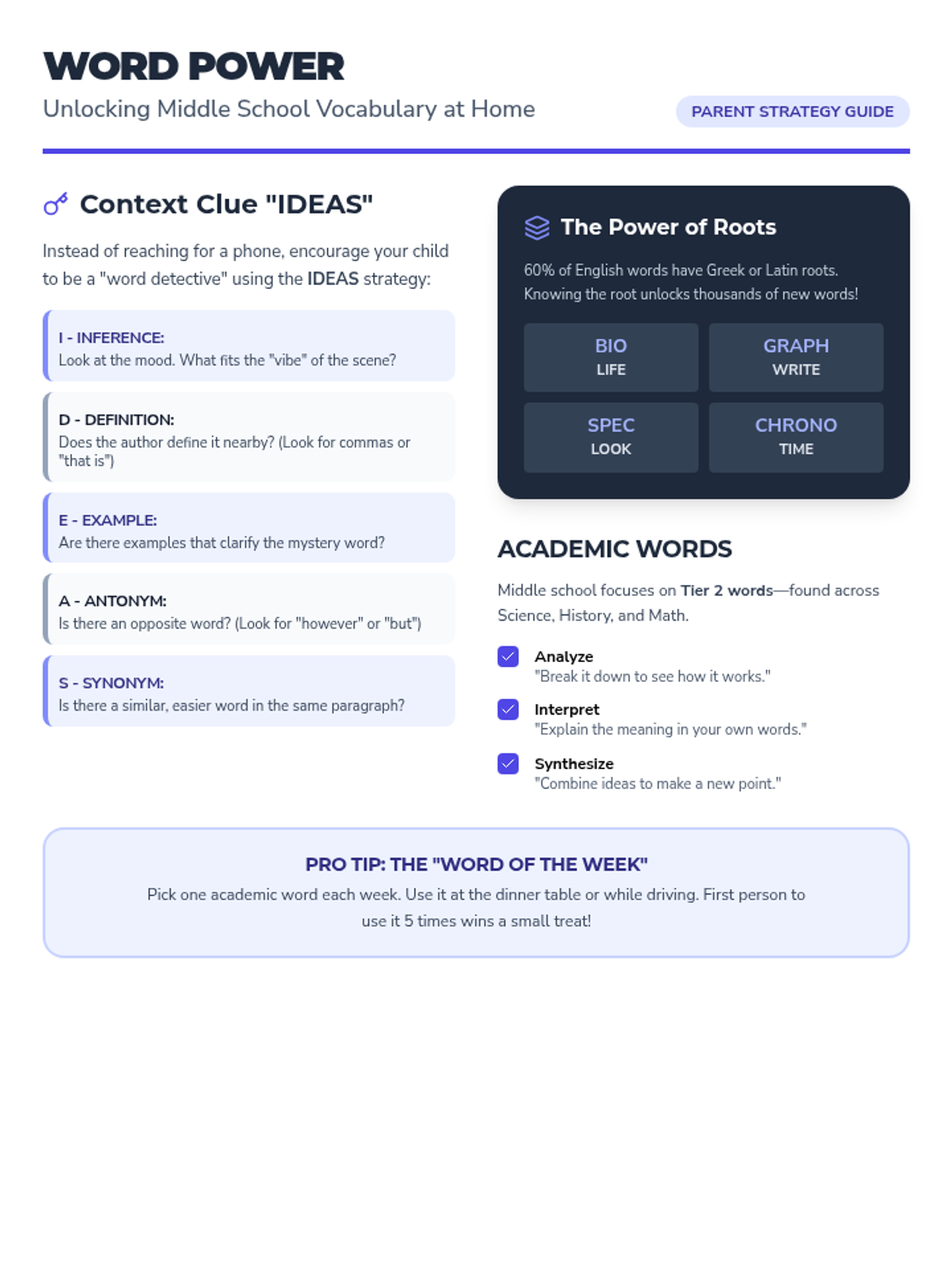
A comprehensive set of resources for middle school parents to support literacy development at home, covering reading comprehension, critical thinking, and discussion strategies aligned with 6-8 standards.
A 60-minute lesson exploring resilience through Henley's 'Invictus' and Williams' 'The Use of Force' using the 'I Do, We Do, You Do' model.
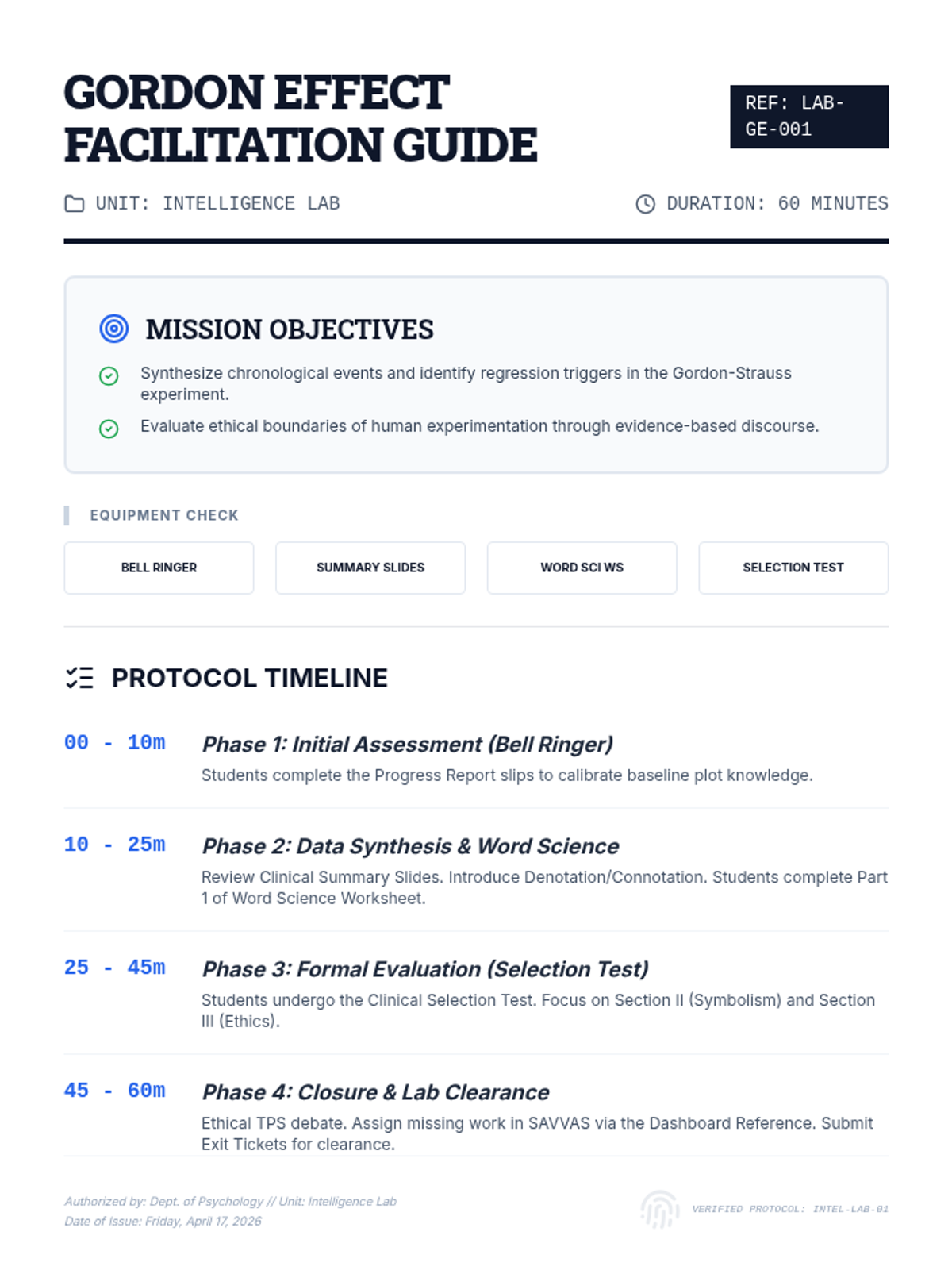
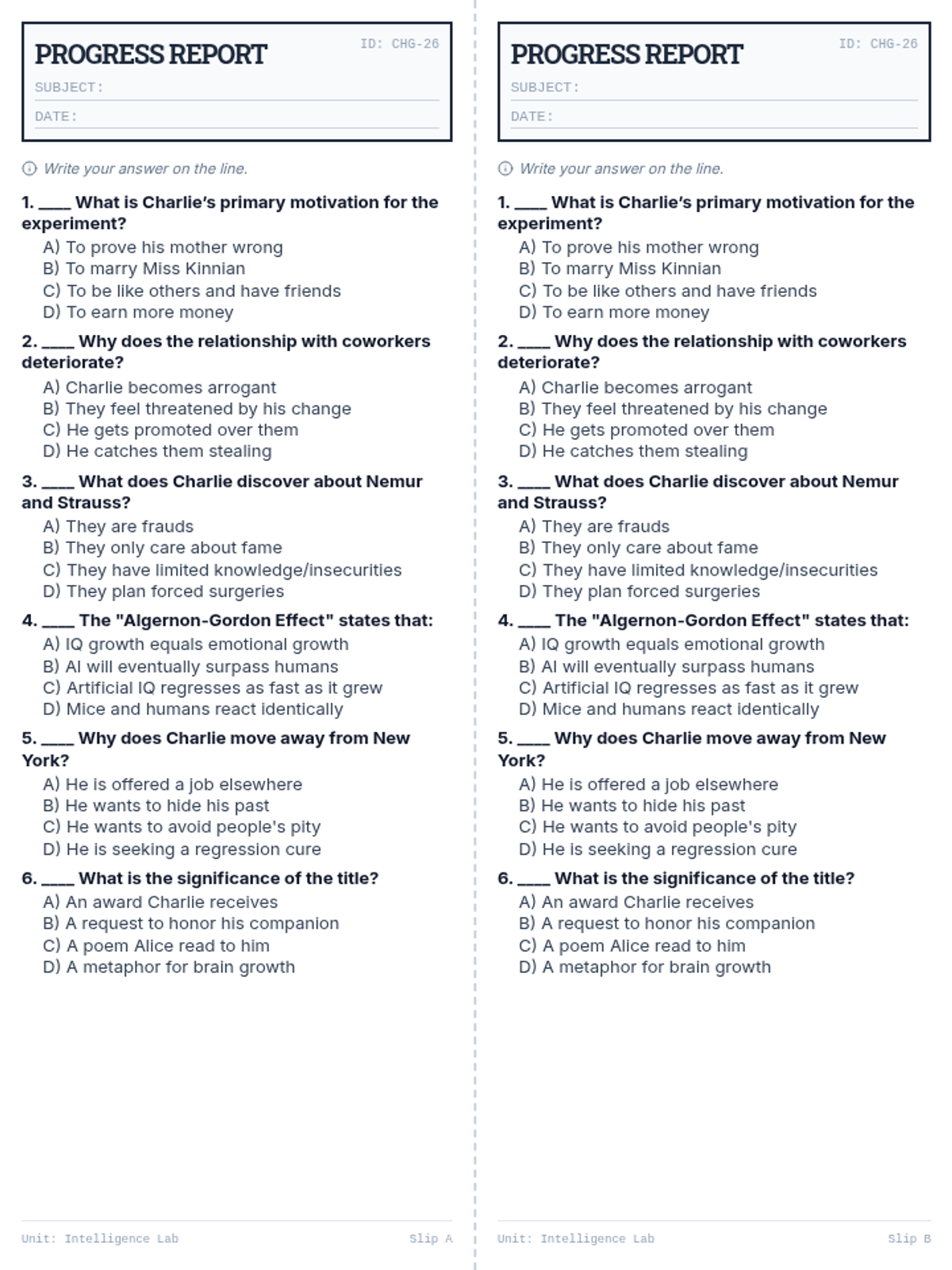
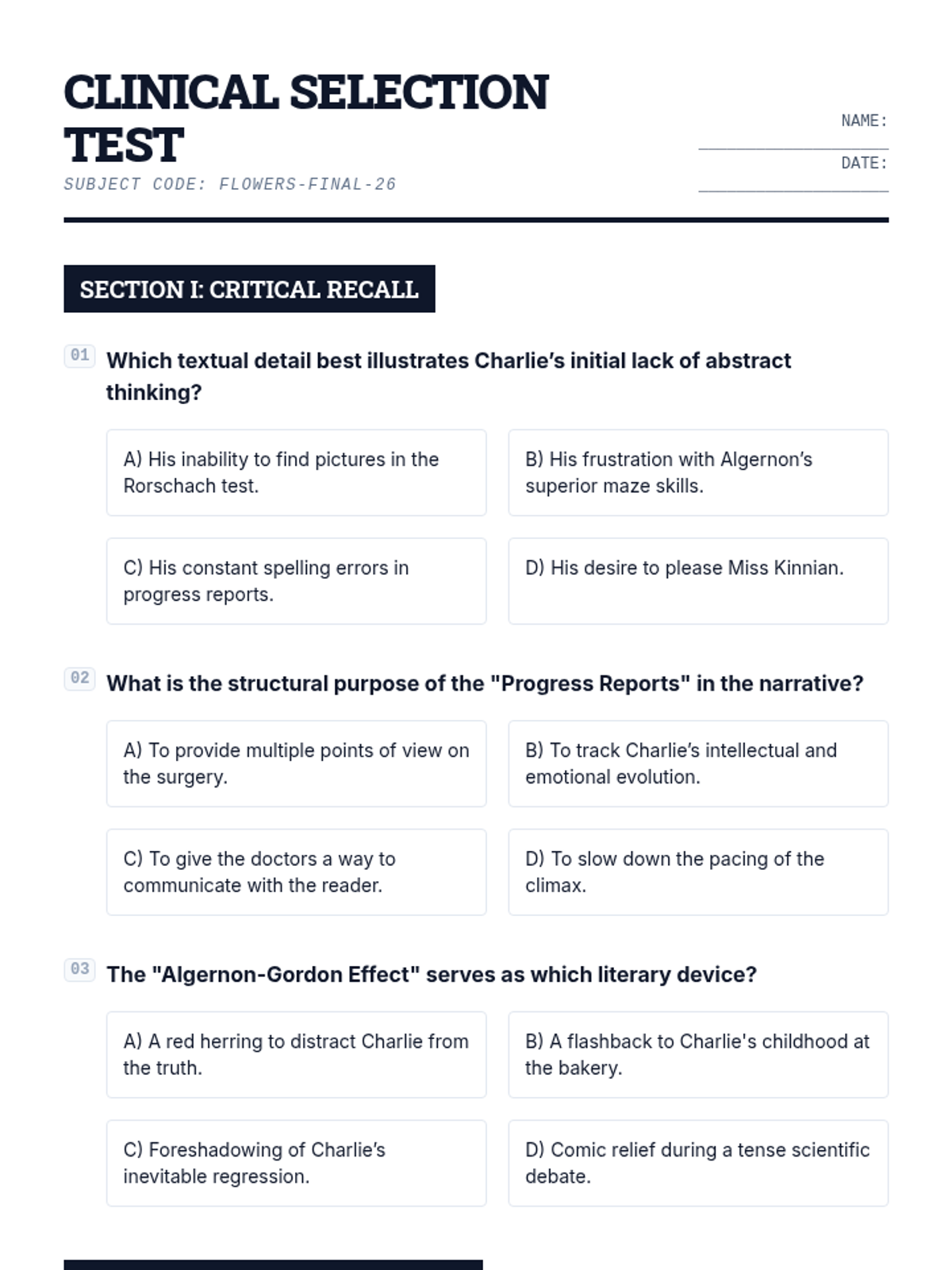
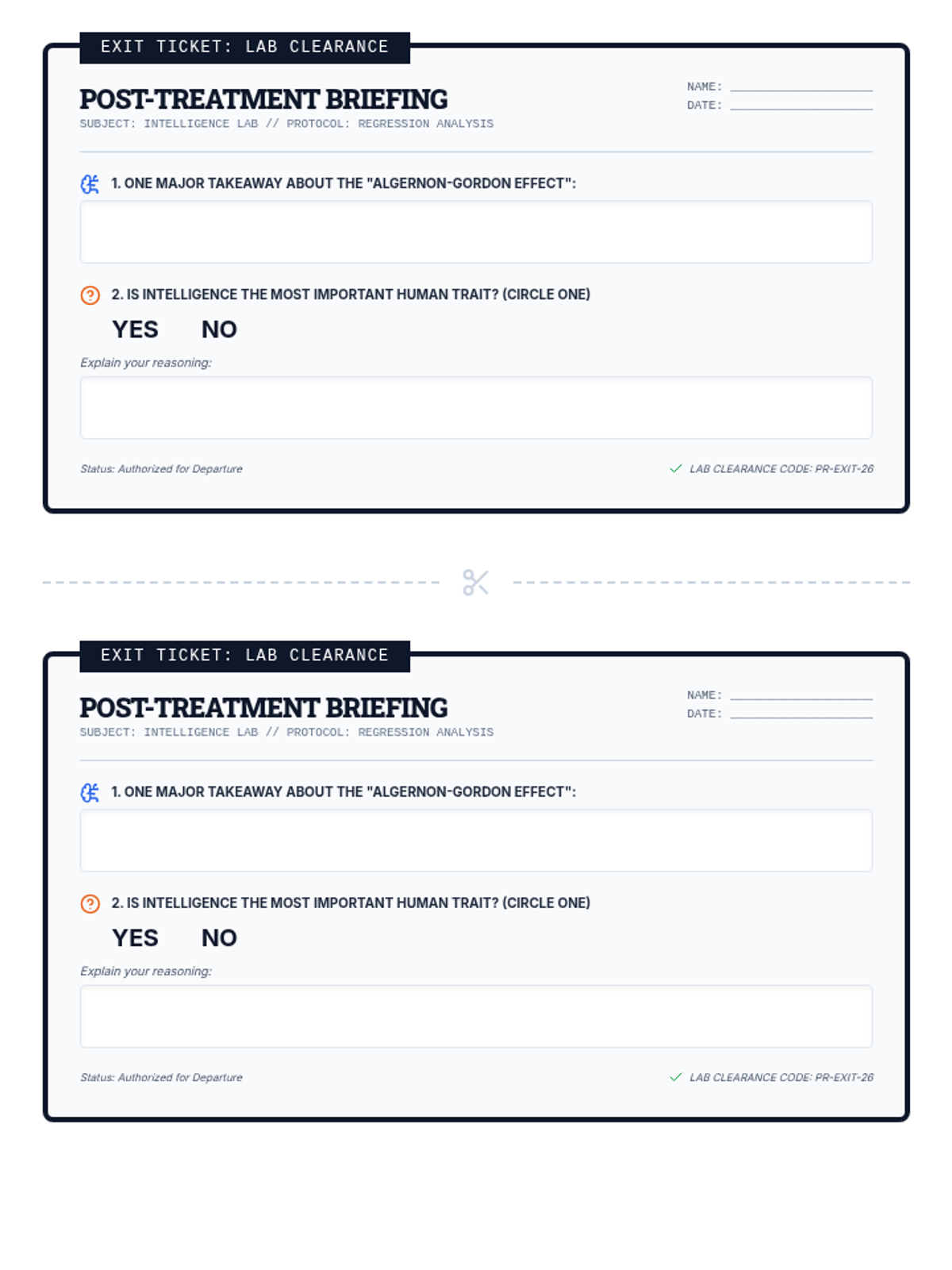
A session focused on summarizing the narrative arc of Charlie Gordon and debating the ethical implications of the surgery and his changing relationships.
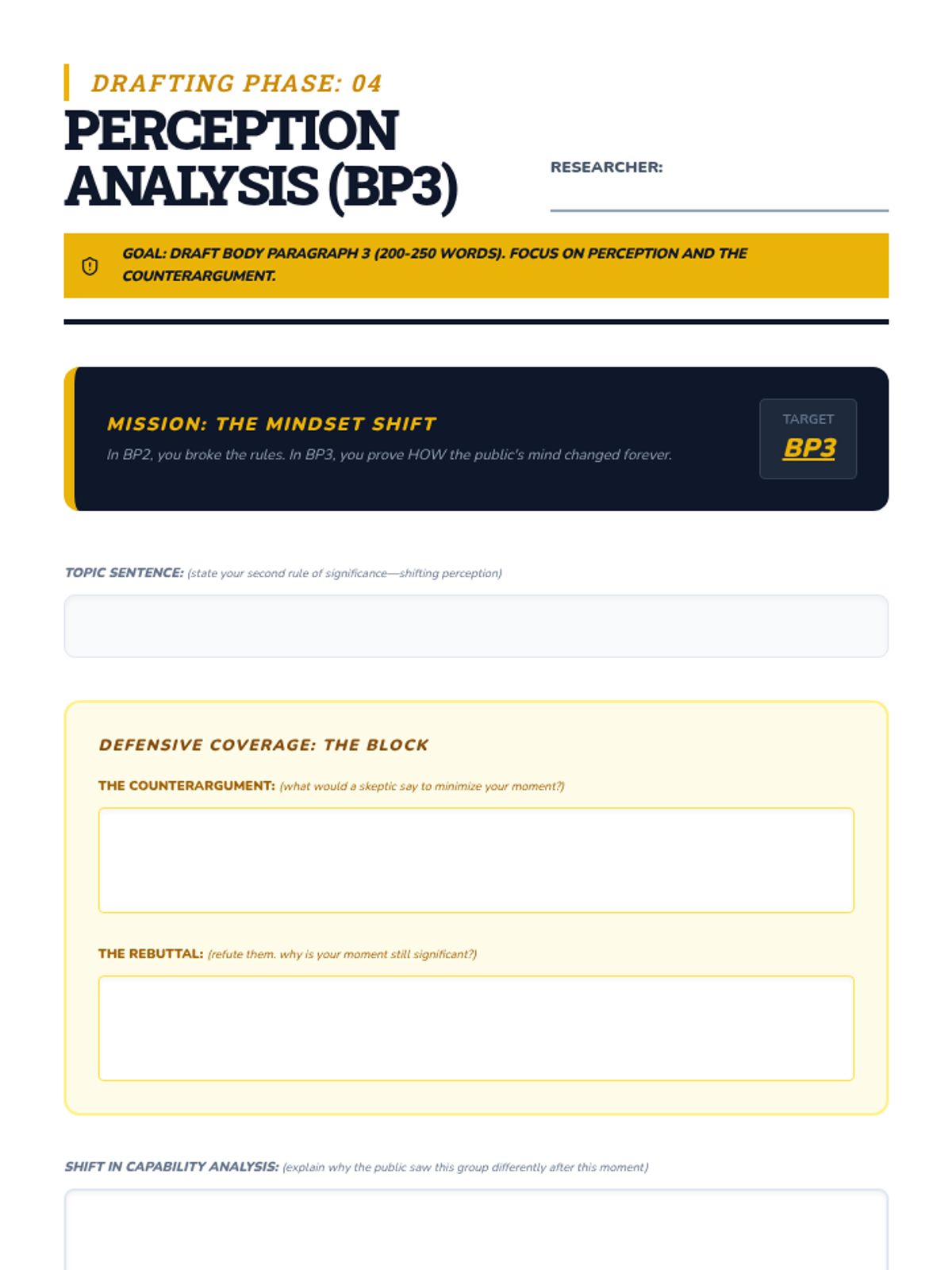
Drafting the third body paragraph, focusing on shifts in public perception and mastering the counterargument/rebuttal.
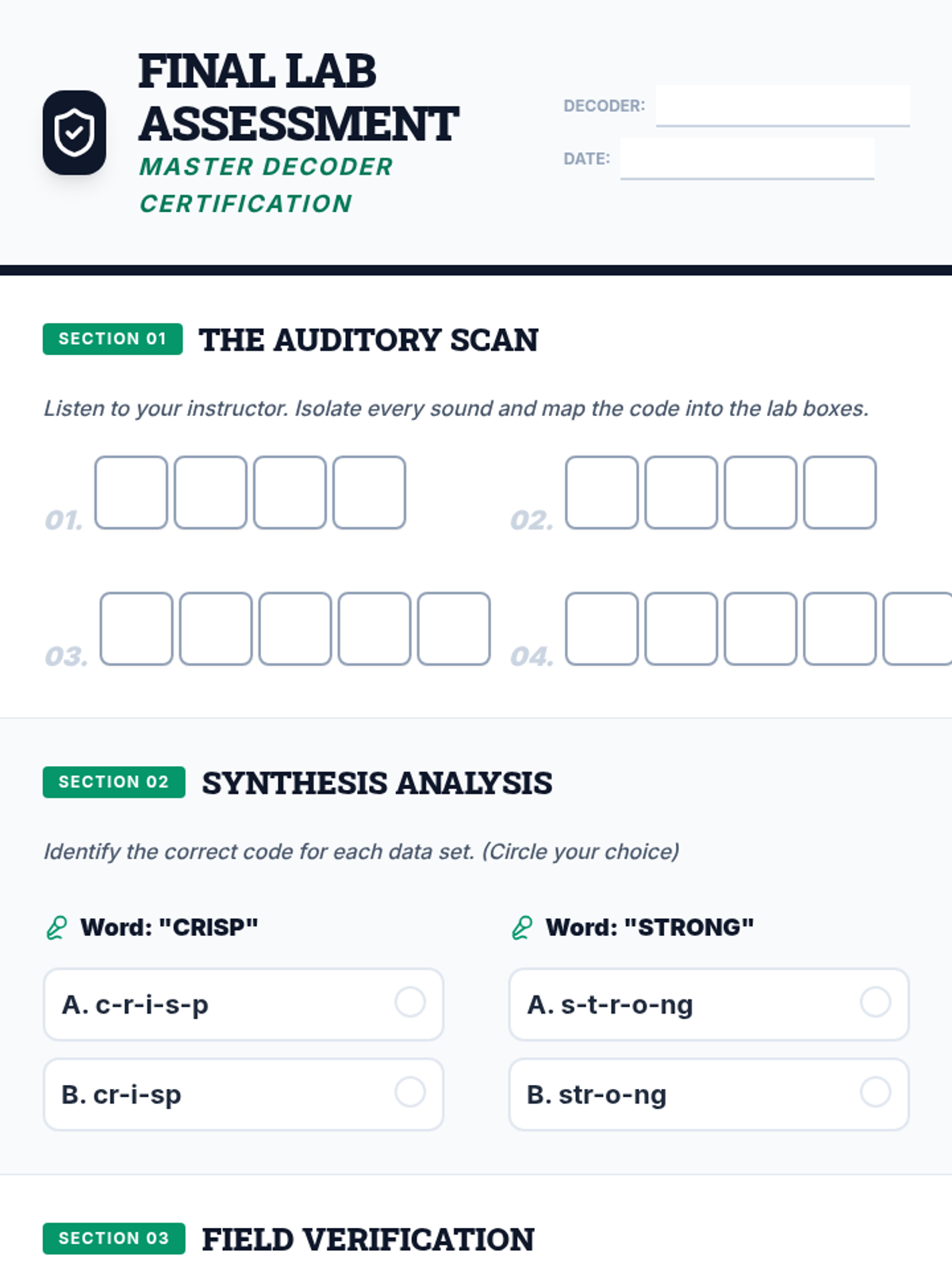
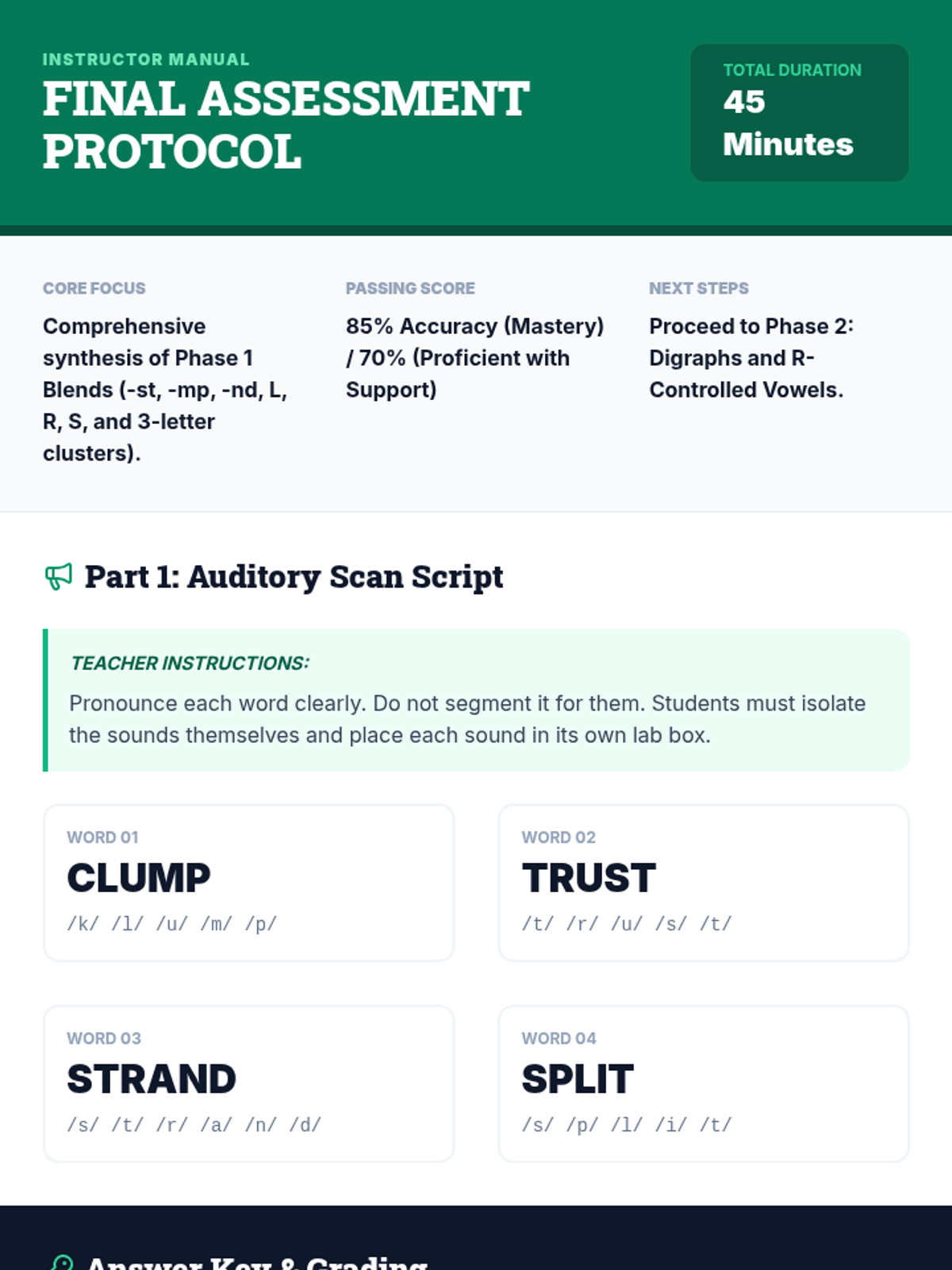
Final summative assessment of short vowels and all covered blends, followed by a 'Master Decoder' celebration.吹吹吹吹吹吹吹吹吹吹吹吹吹吹吹吹吹吹吹吹吹吹吹吹吹吹吹吹吹
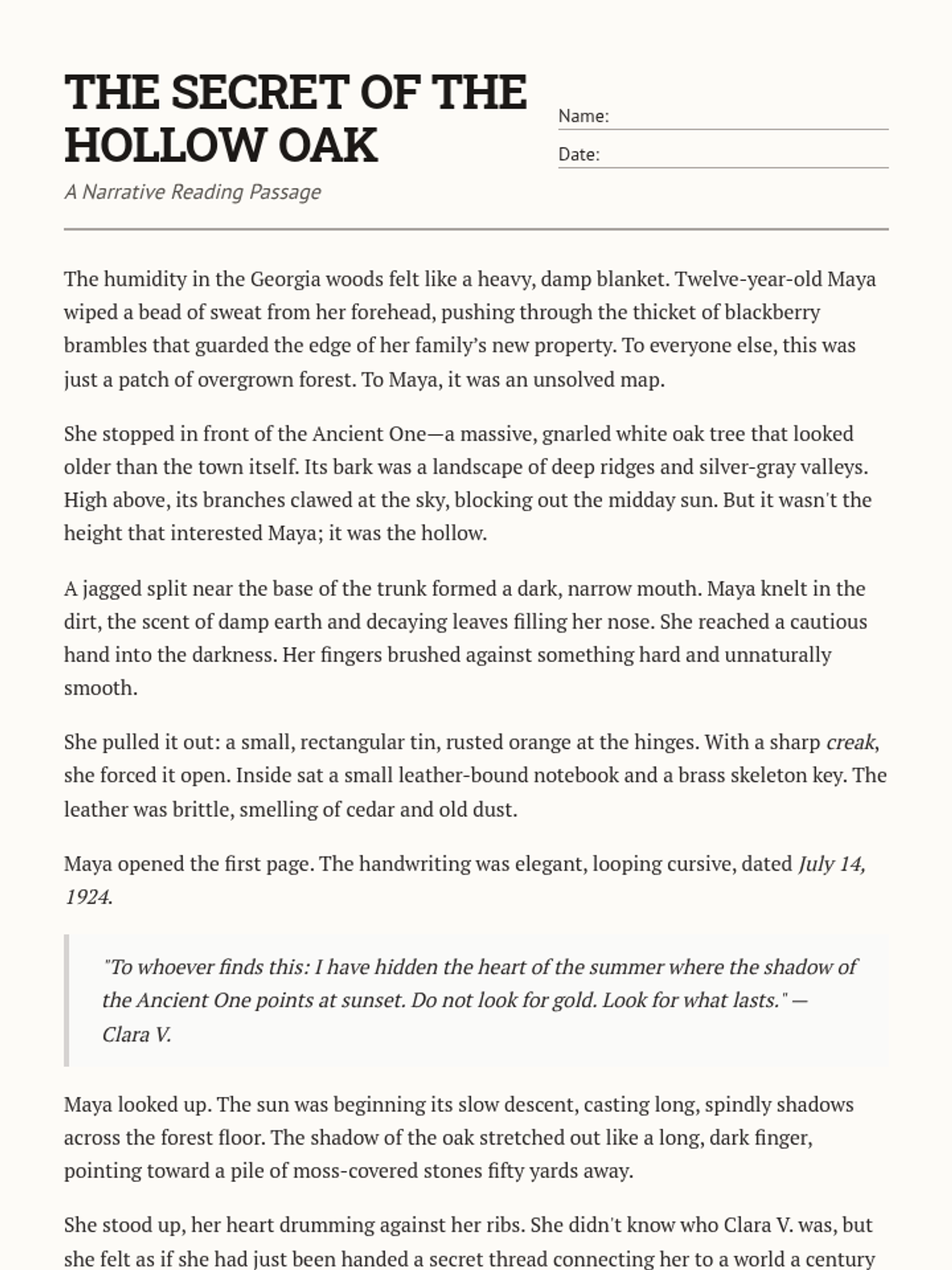
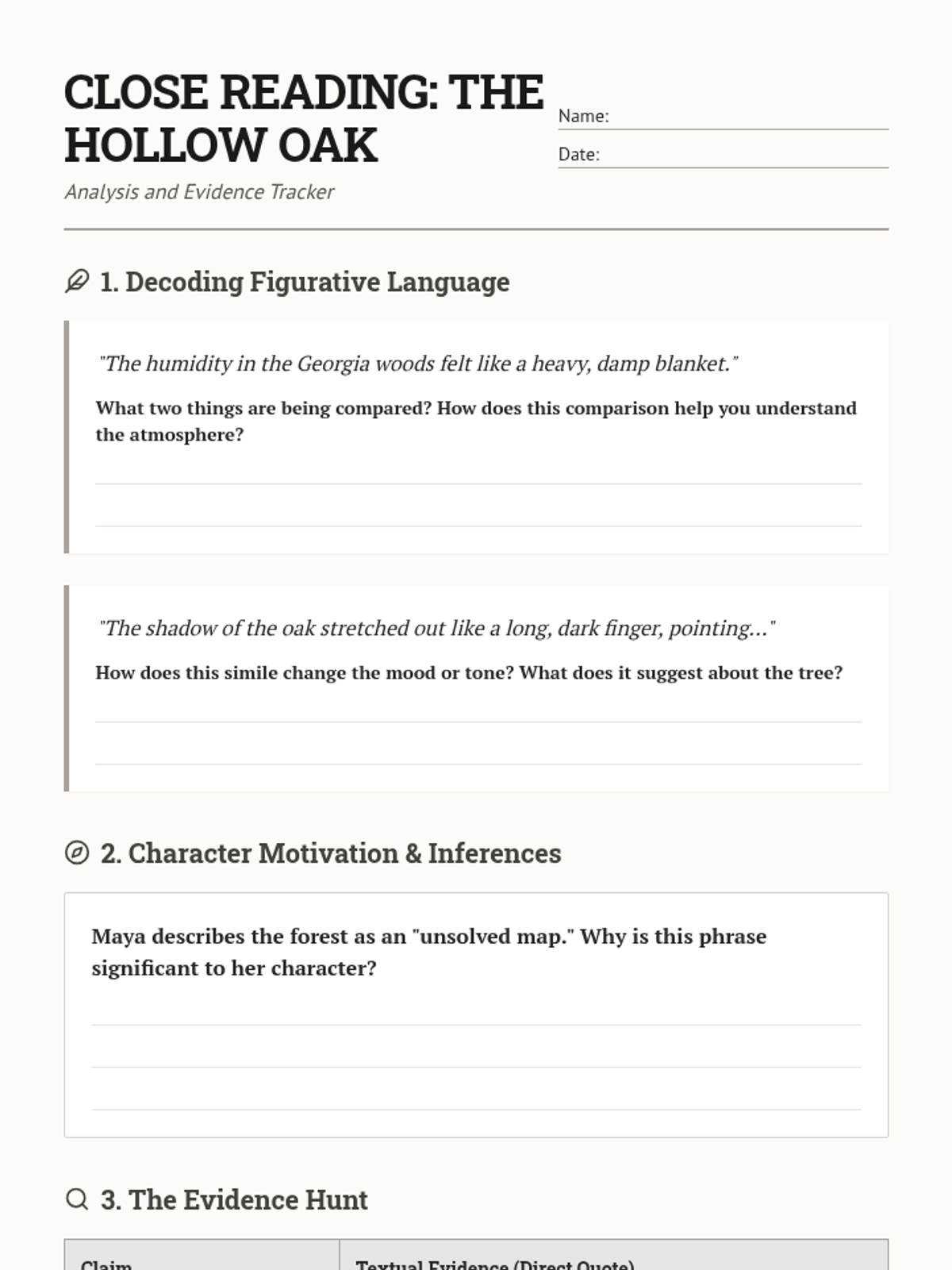
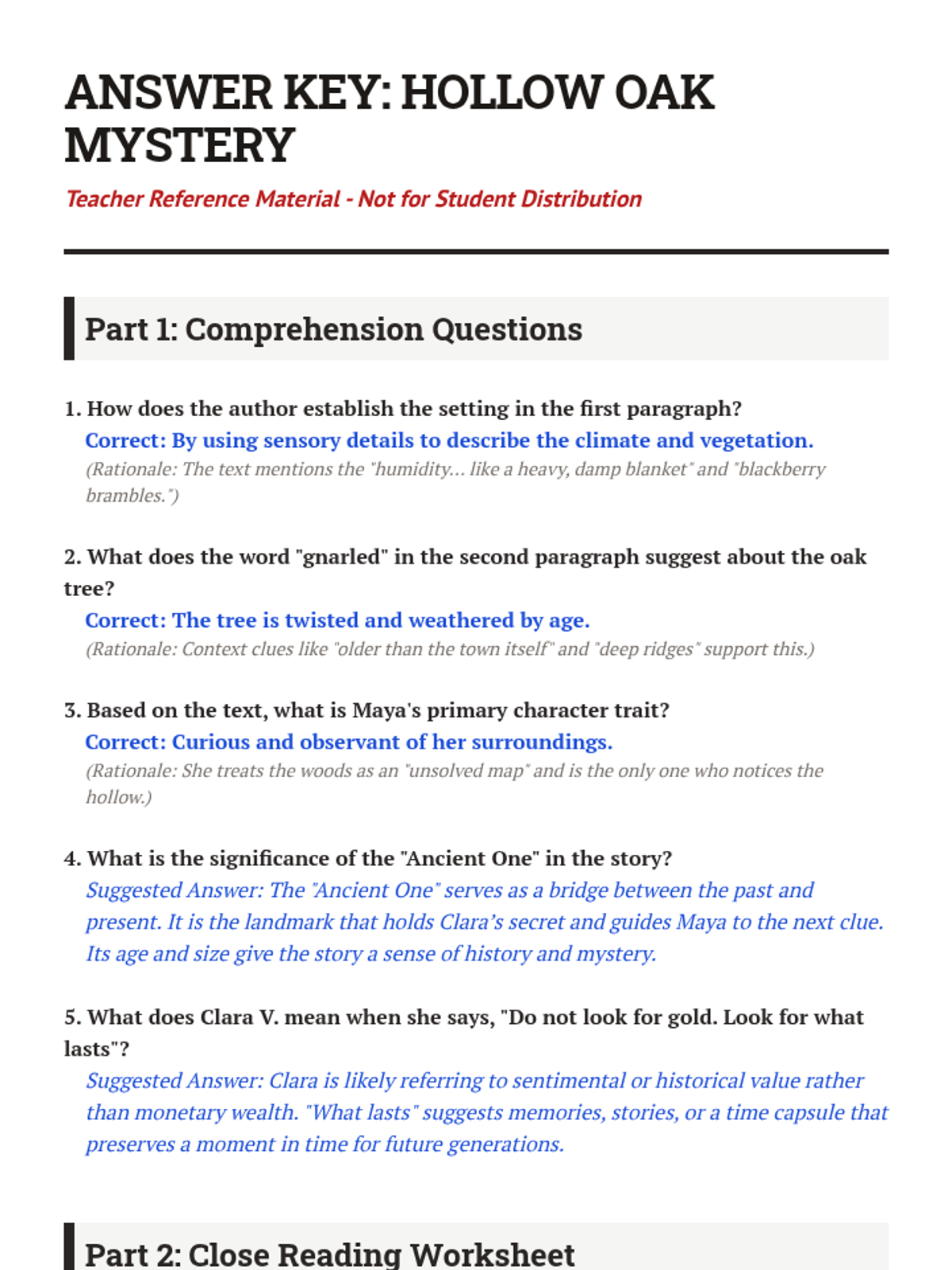
A 7th-grade narrative reading unit focused on 'The Secret of the Hollow Oak,' featuring a passage with comprehension questions and a close reading activity to build analysis skills.
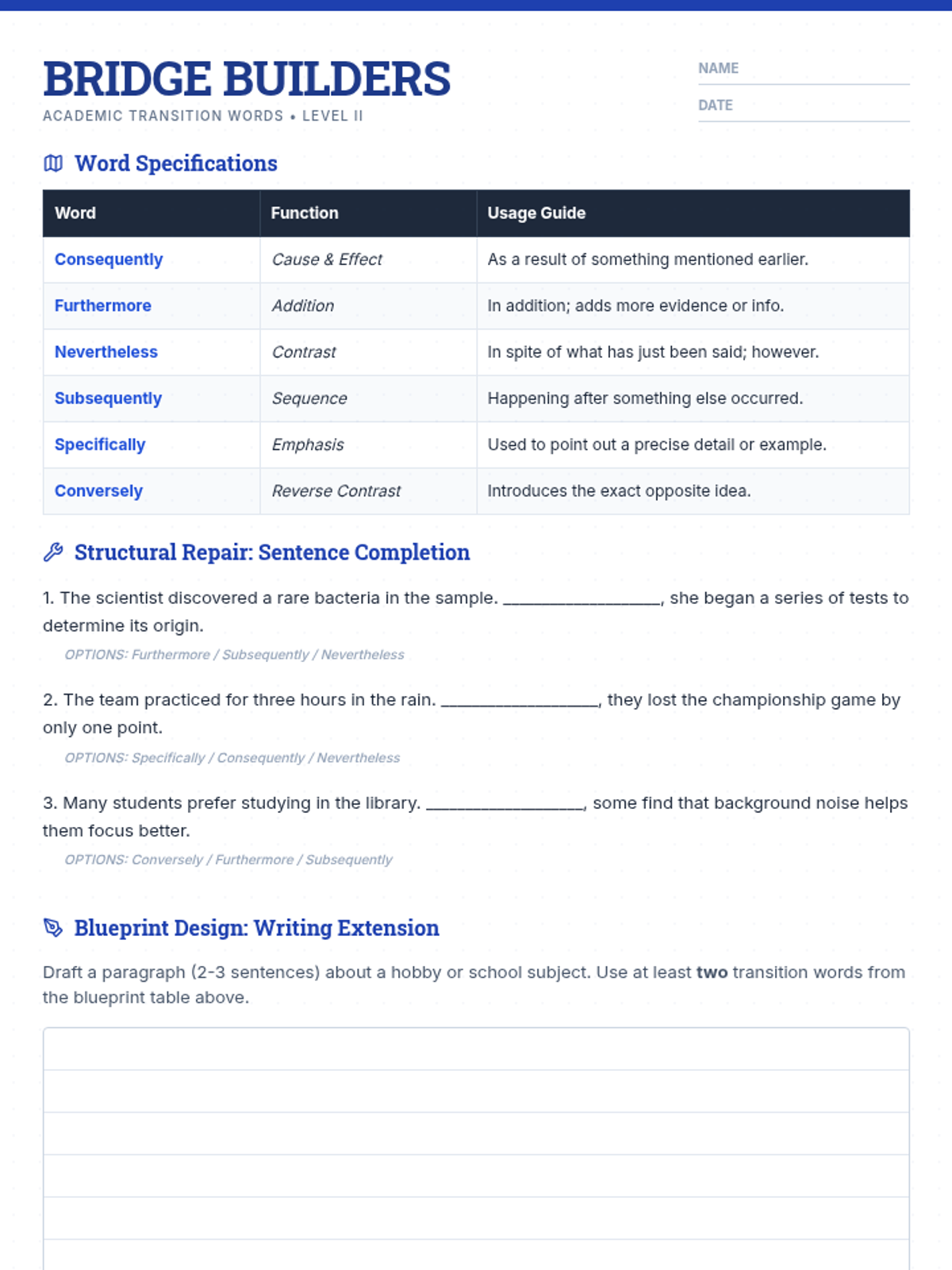
A middle school vocabulary lesson focused on academic transition words, using a 'Bridge Builders' theme to illustrate how these words connect ideas in writing.
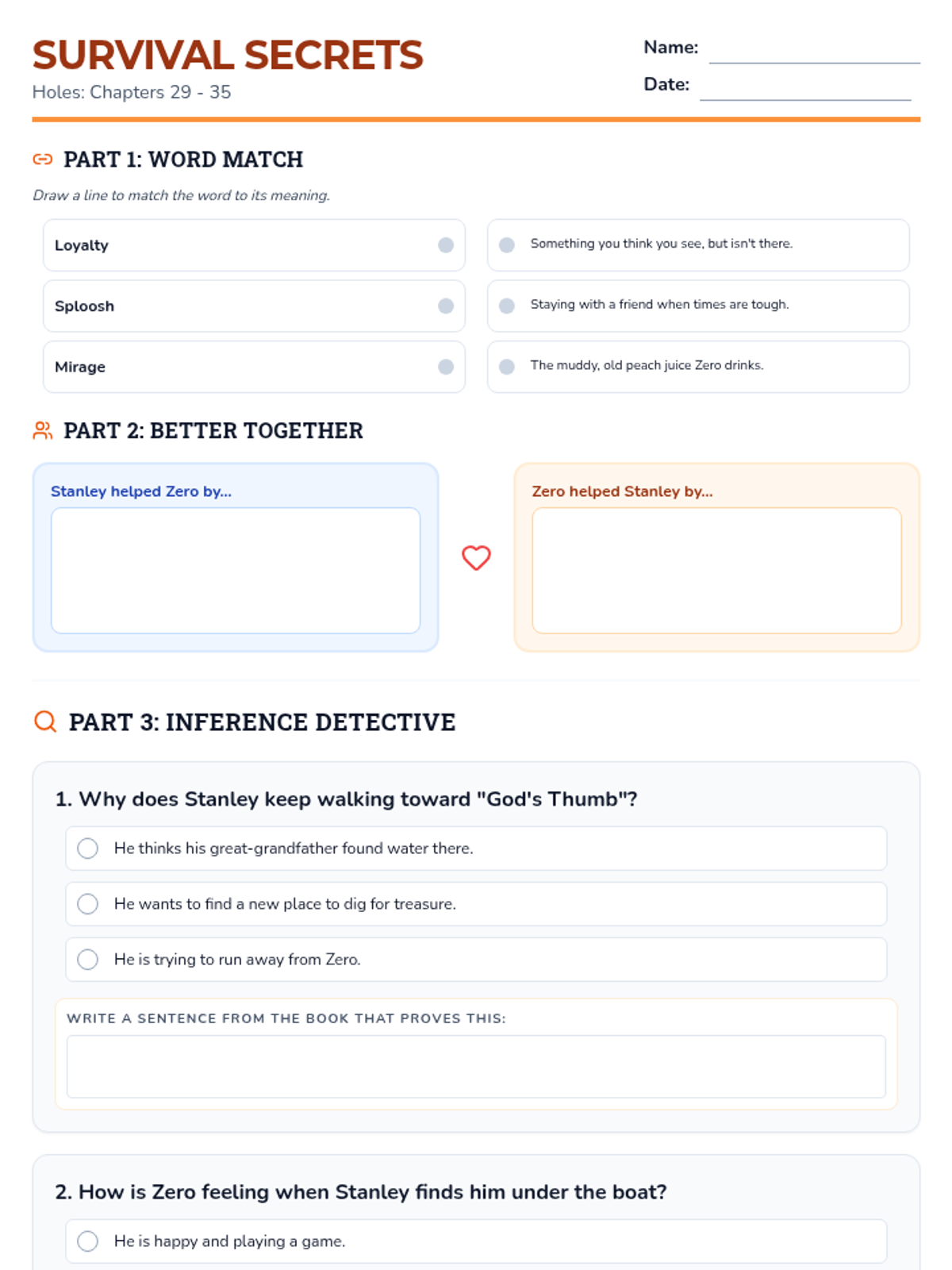
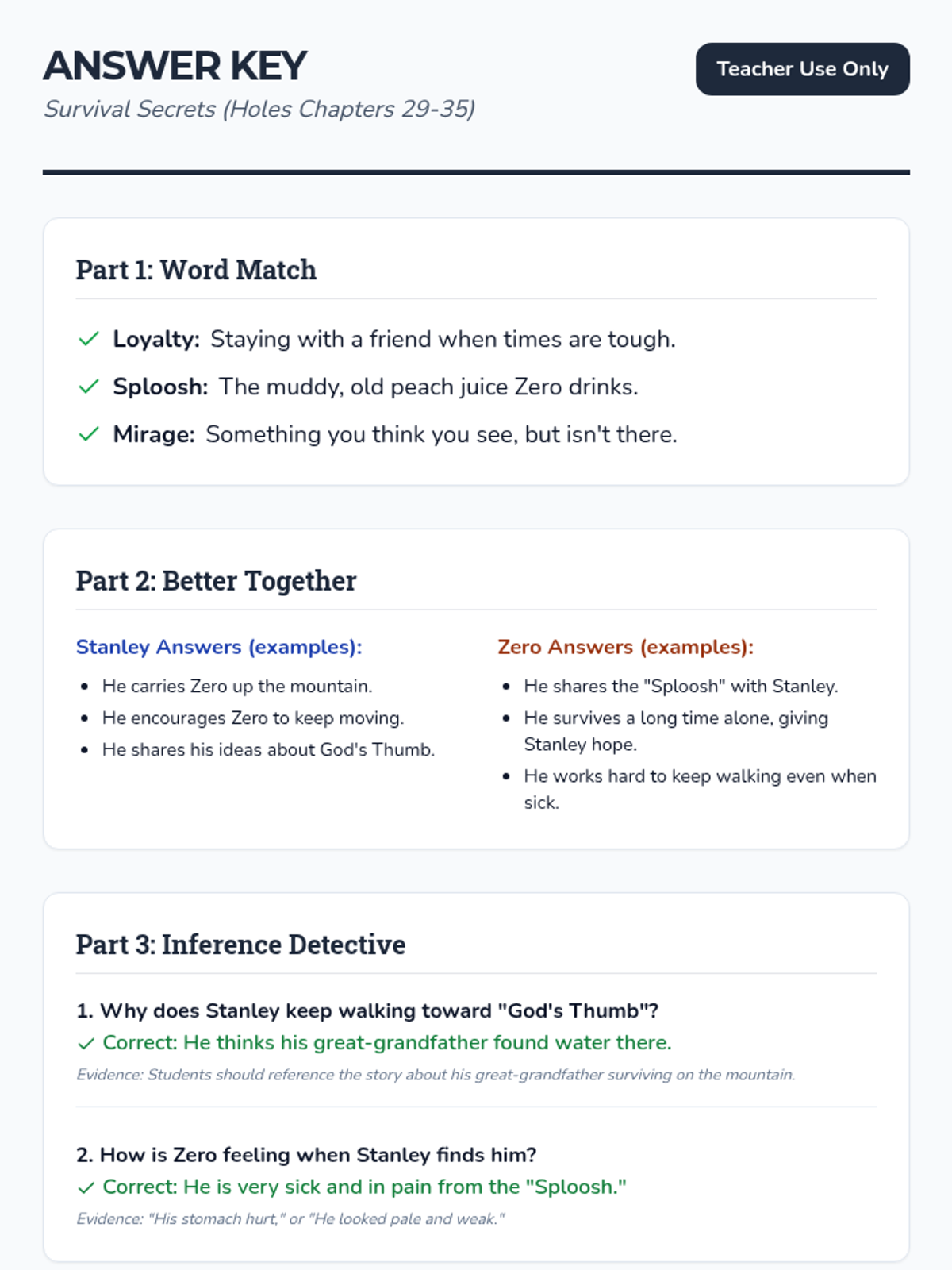
A lesson focused on chapters 29-35 of Louis Sachar's Holes, exploring the deepening friendship between Stanley and Zero as they face the challenges of the desert. Students will analyze character relationships, make inferences about their survival, and identify the central theme of loyalty.
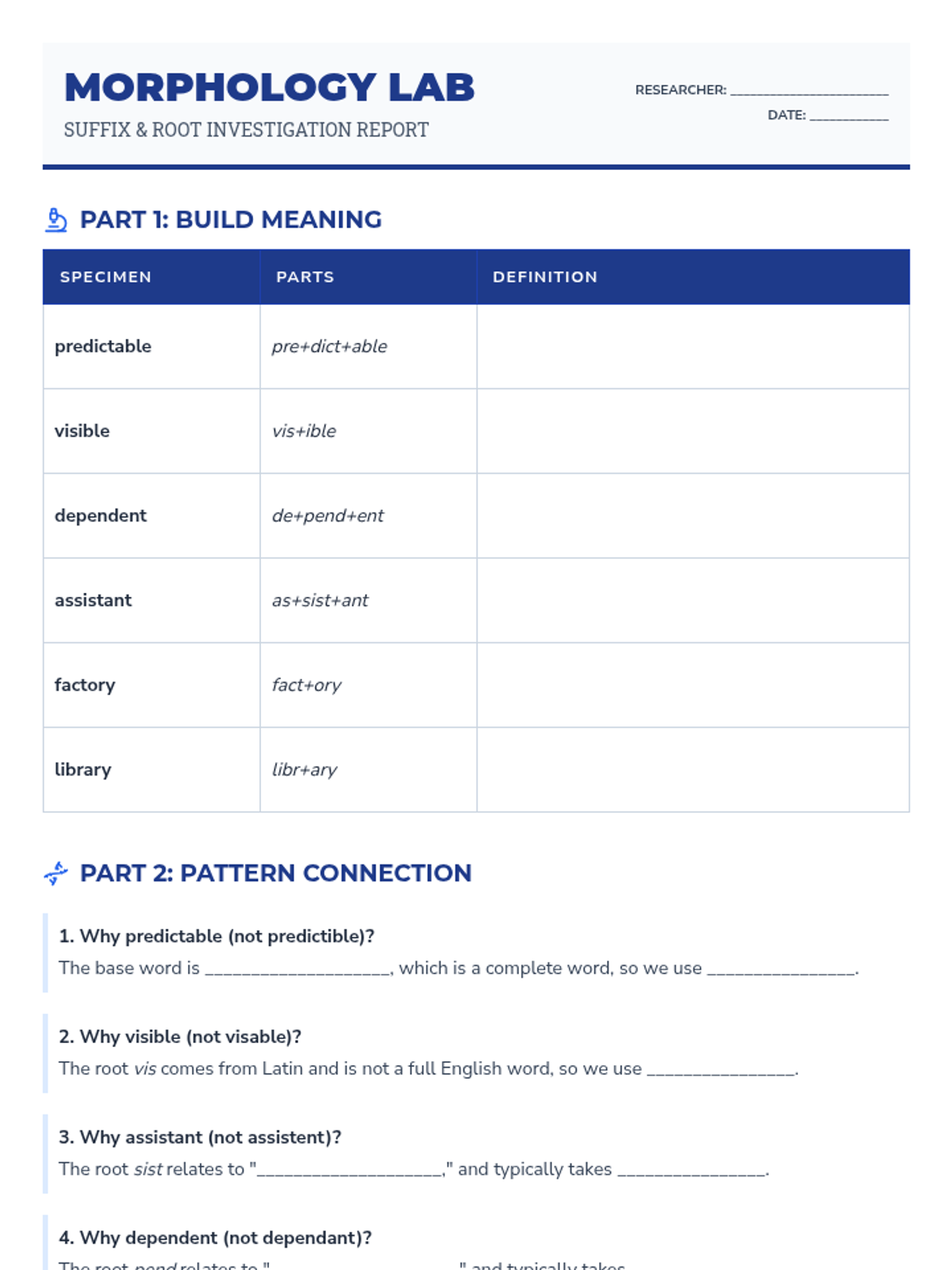
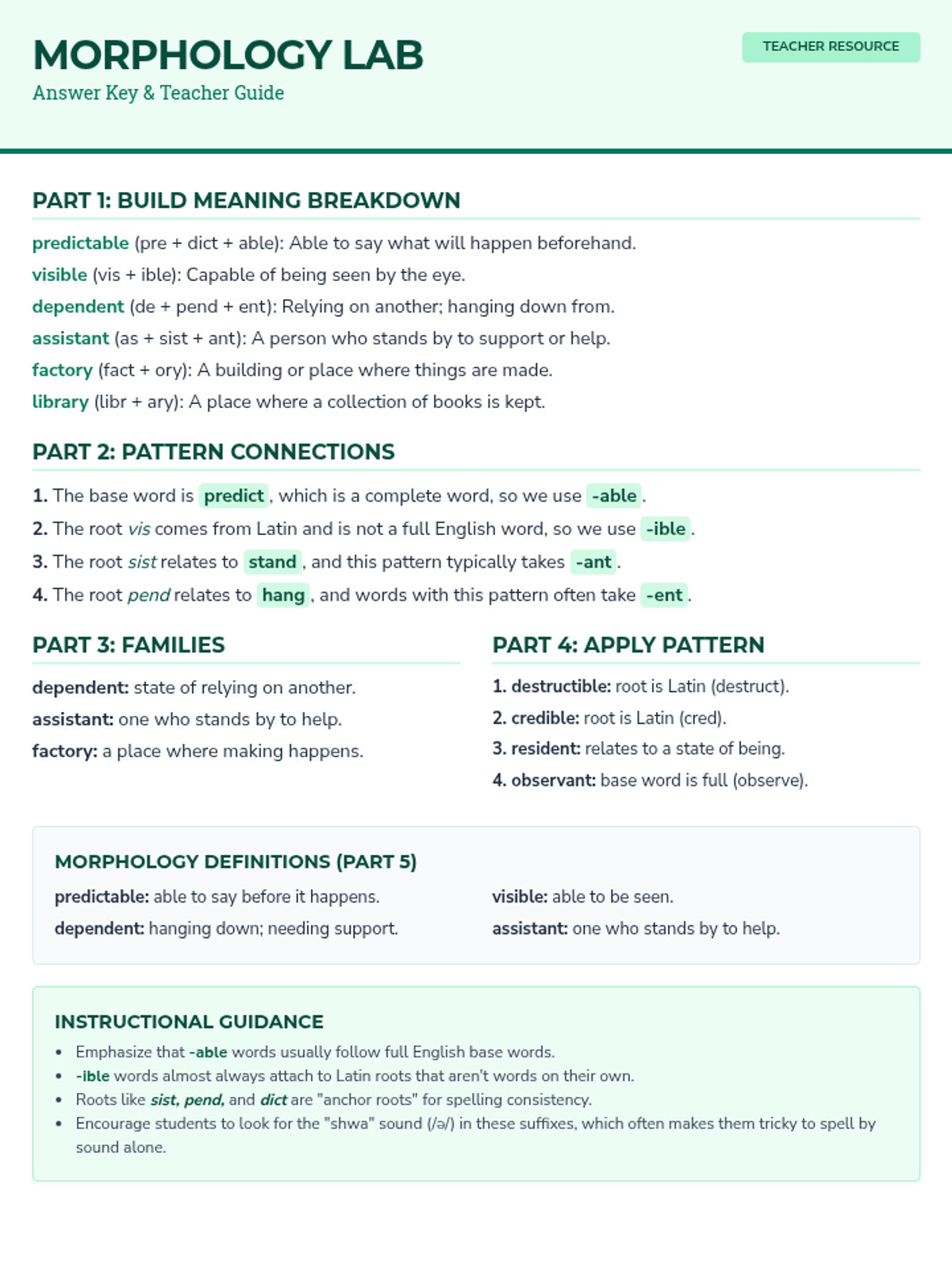
A deep dive into morphology and common word endings (-able, -ible, -ary, -ery, -ory, -ant, -ent), focusing on how Latin roots and base words determine spelling patterns.
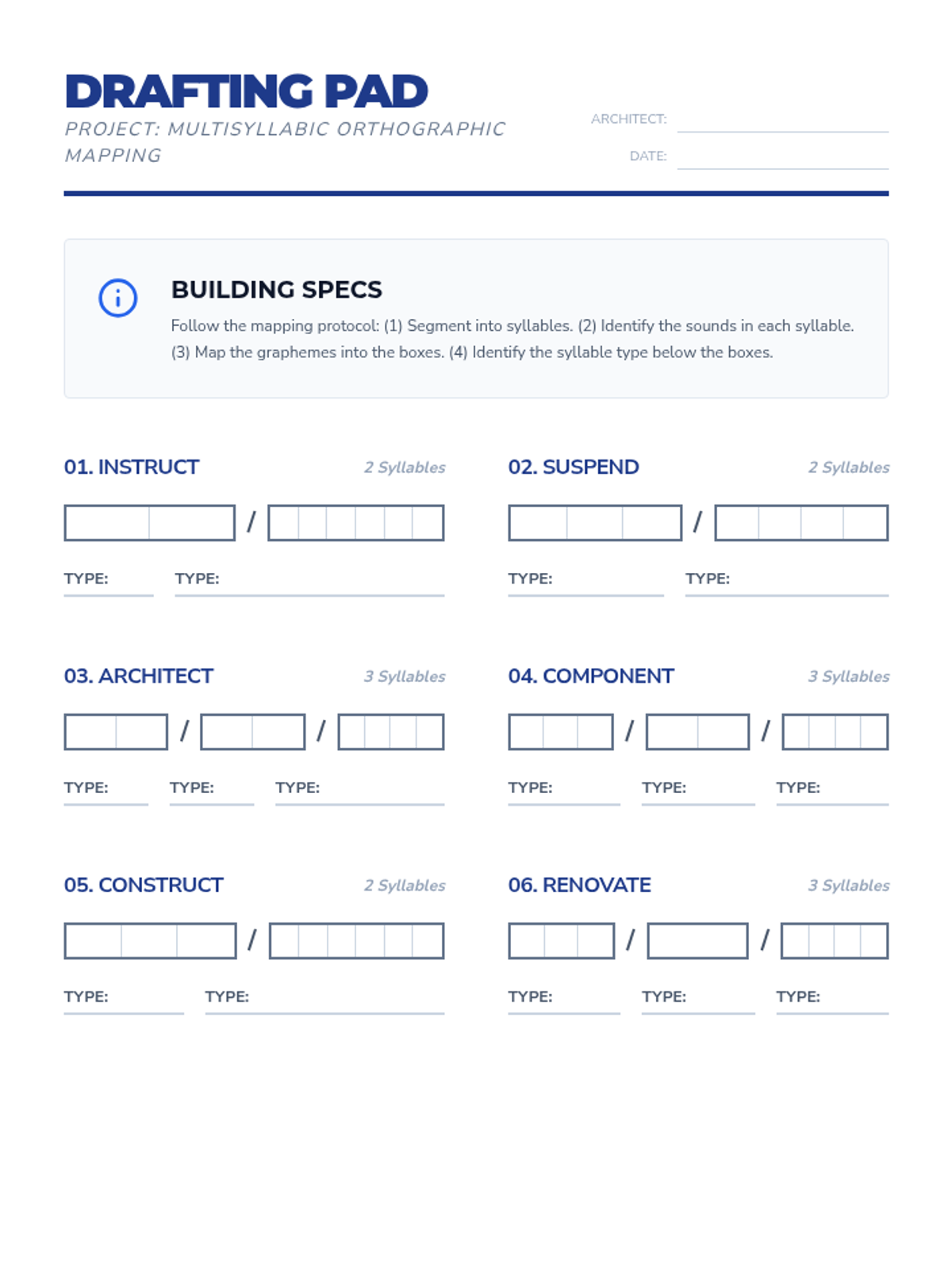
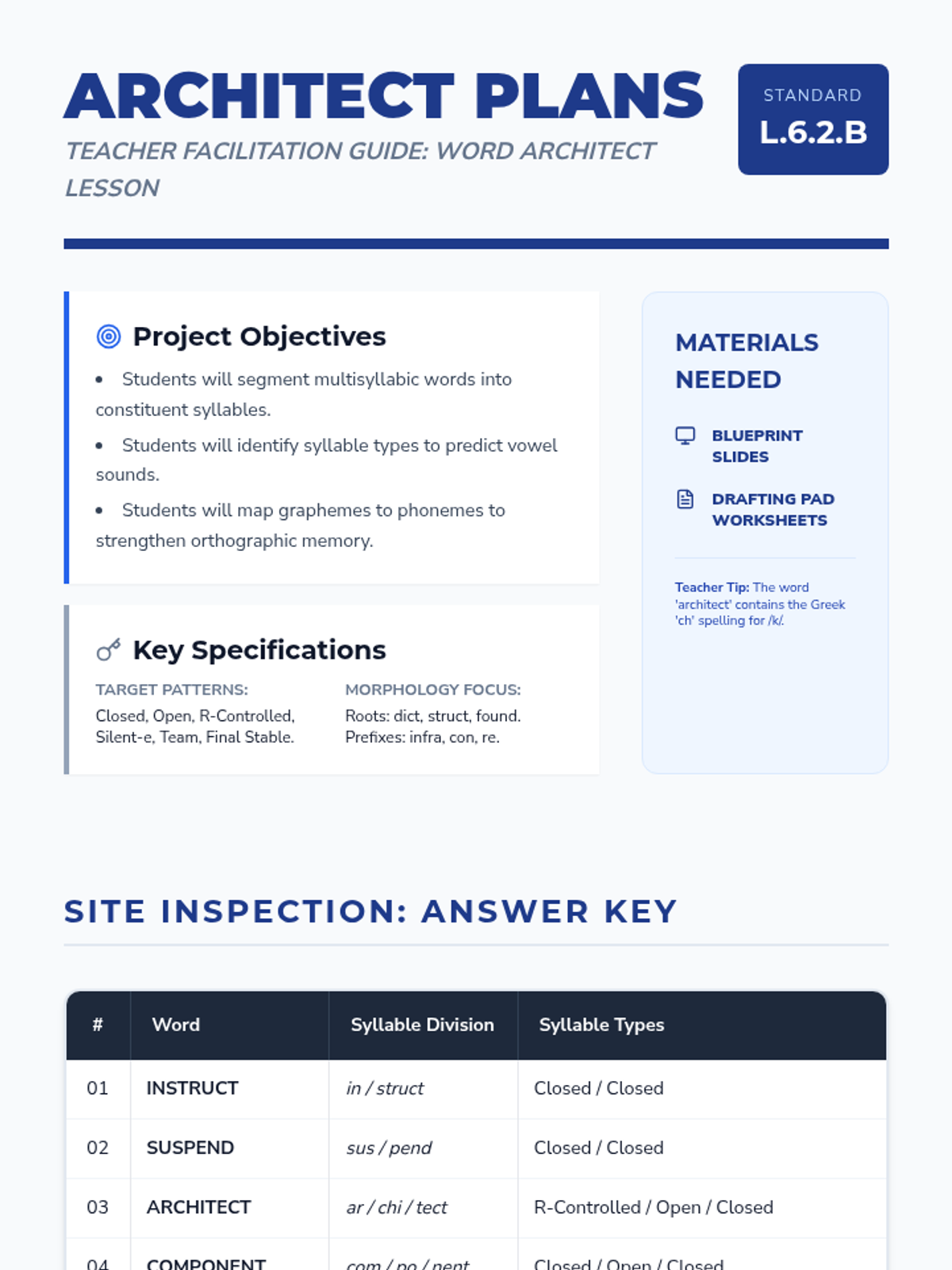
A middle school spelling lesson focusing on orthographic mapping for multisyllabic words using an architectural blueprint theme. Students learn to break down complex words into syllables and map sounds to graphemes for permanent storage.
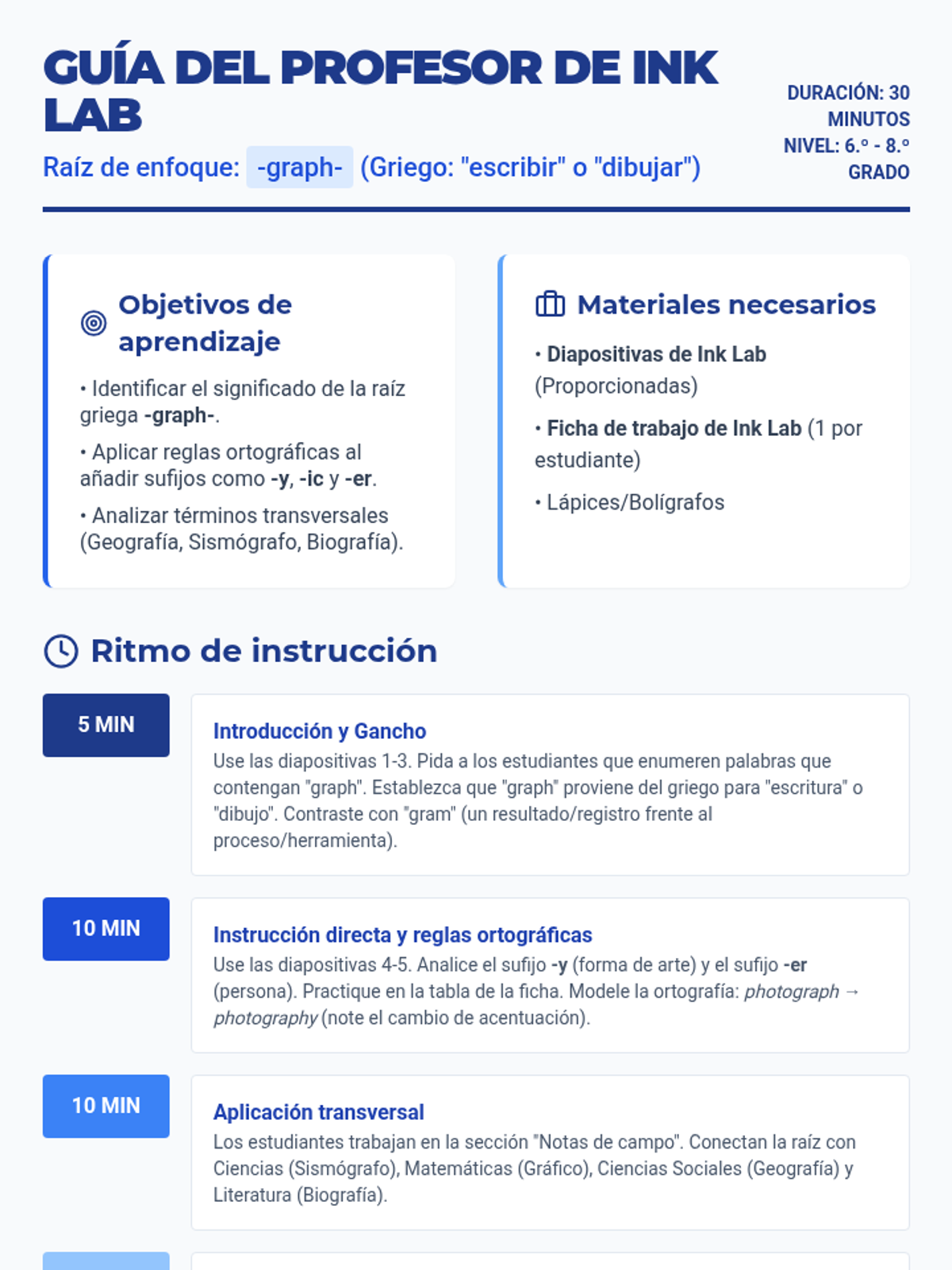
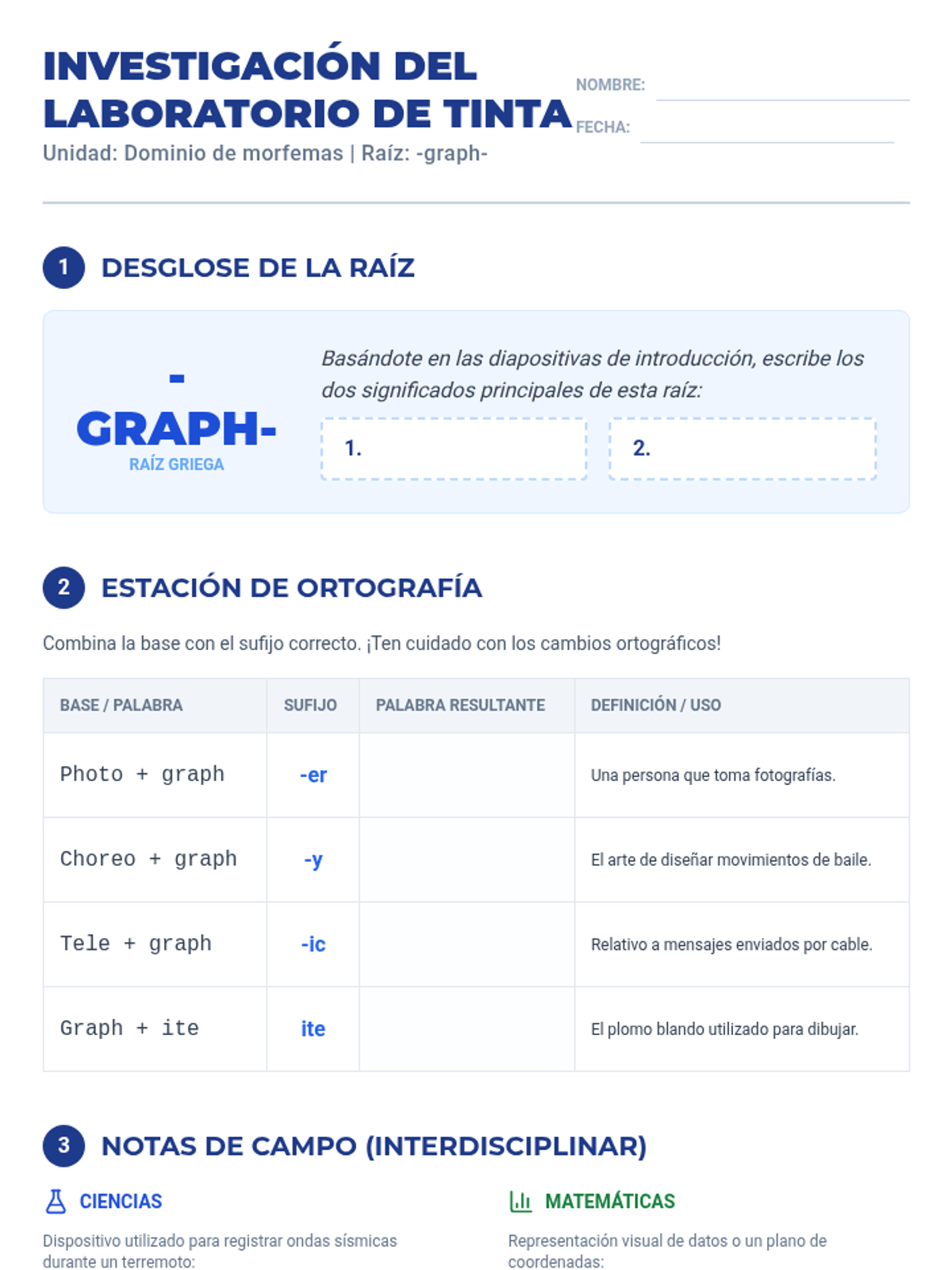
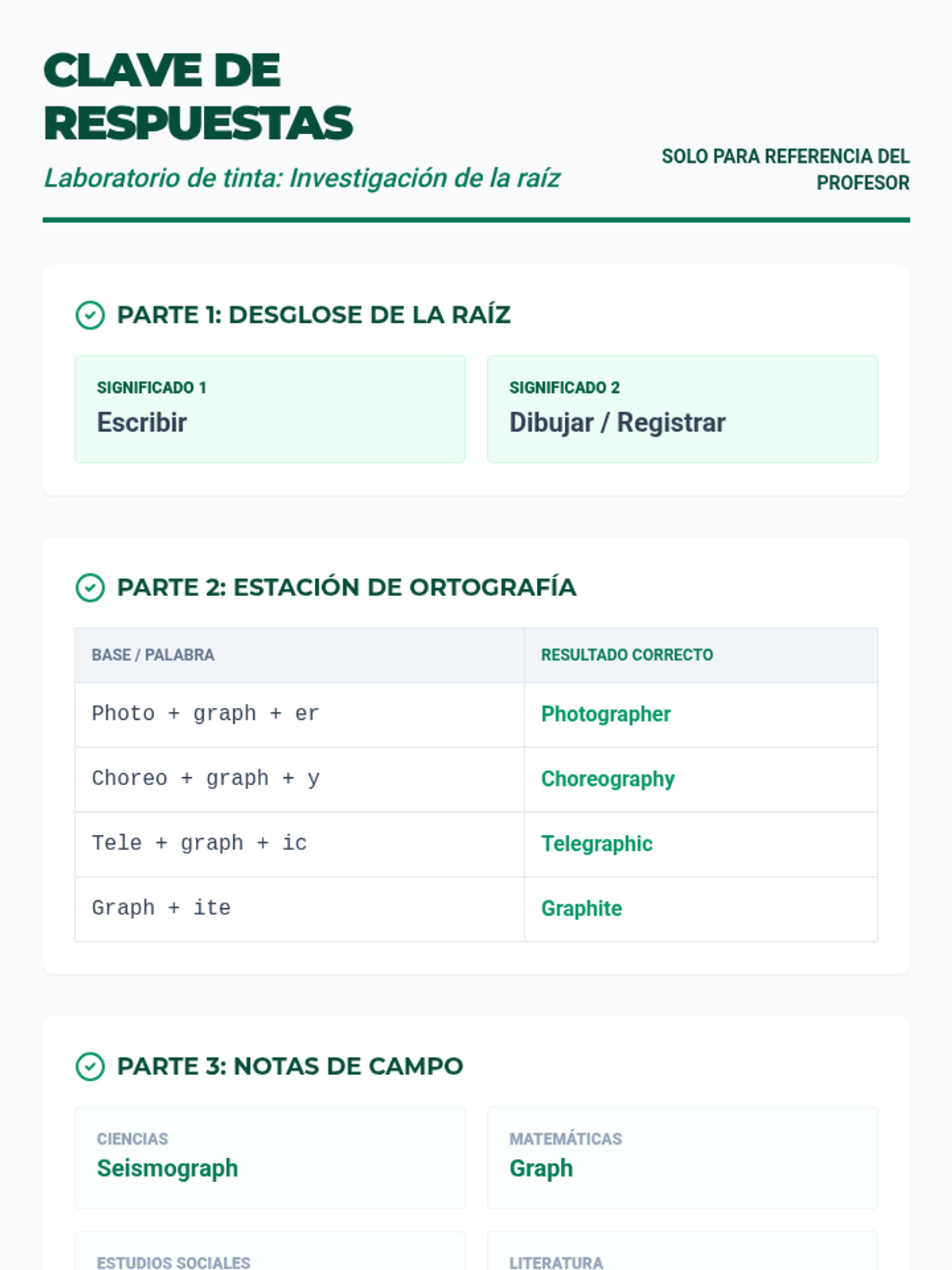
A fast-paced 30-minute lesson focusing on the Greek root 'graph' (to write/draw), covering spelling rules for suffixes and cross-curricular application in science, math, and history.
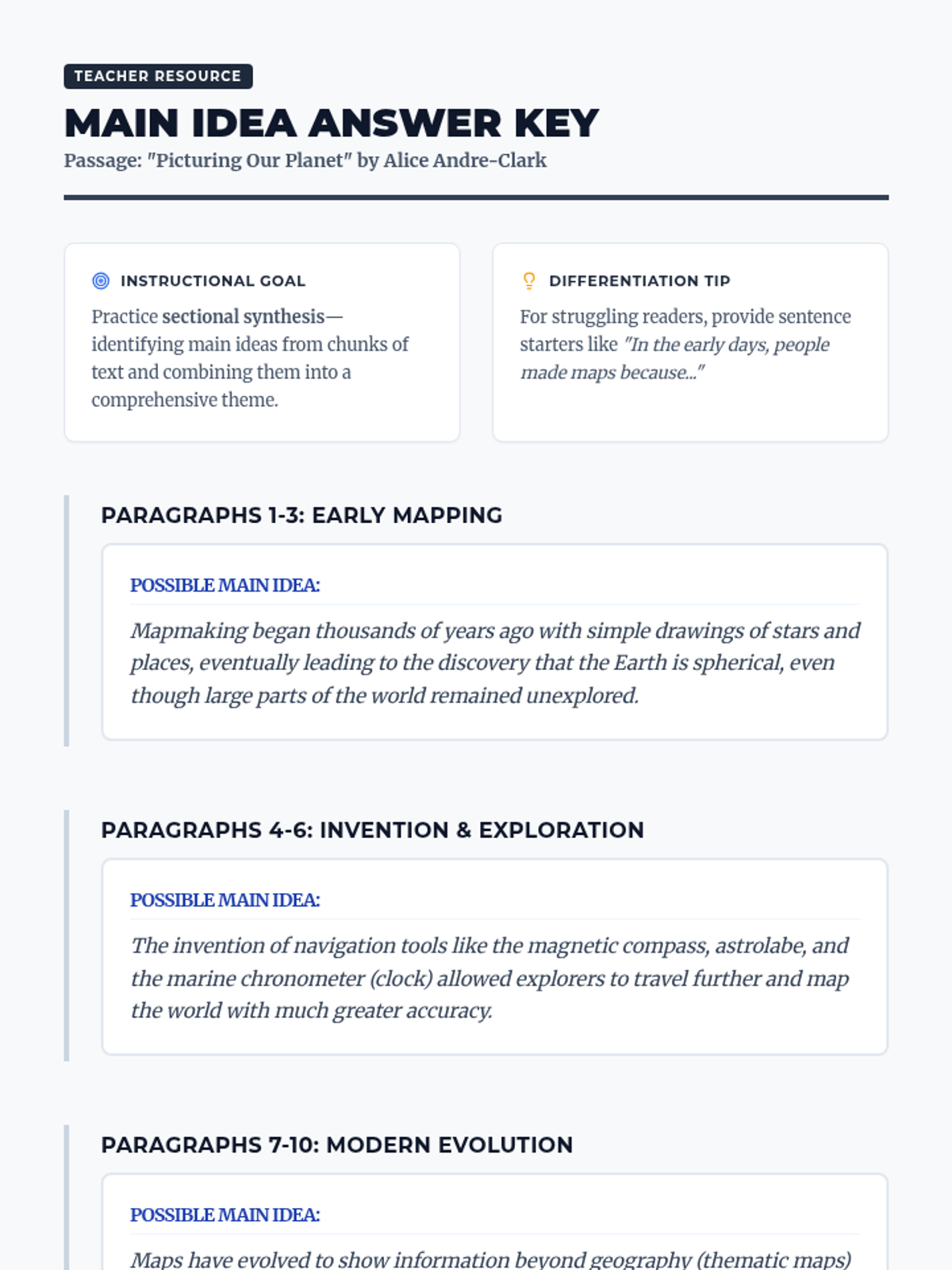
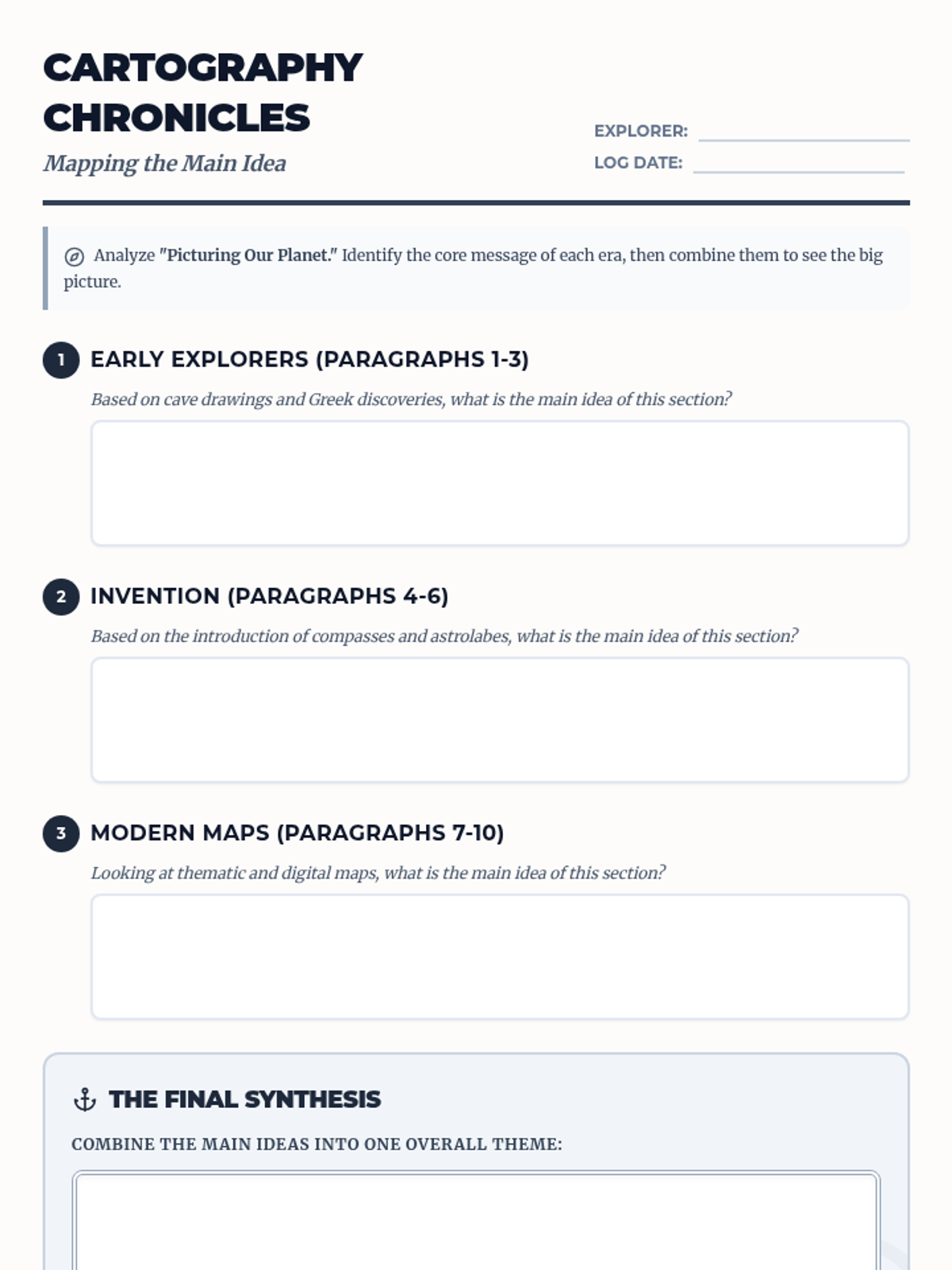
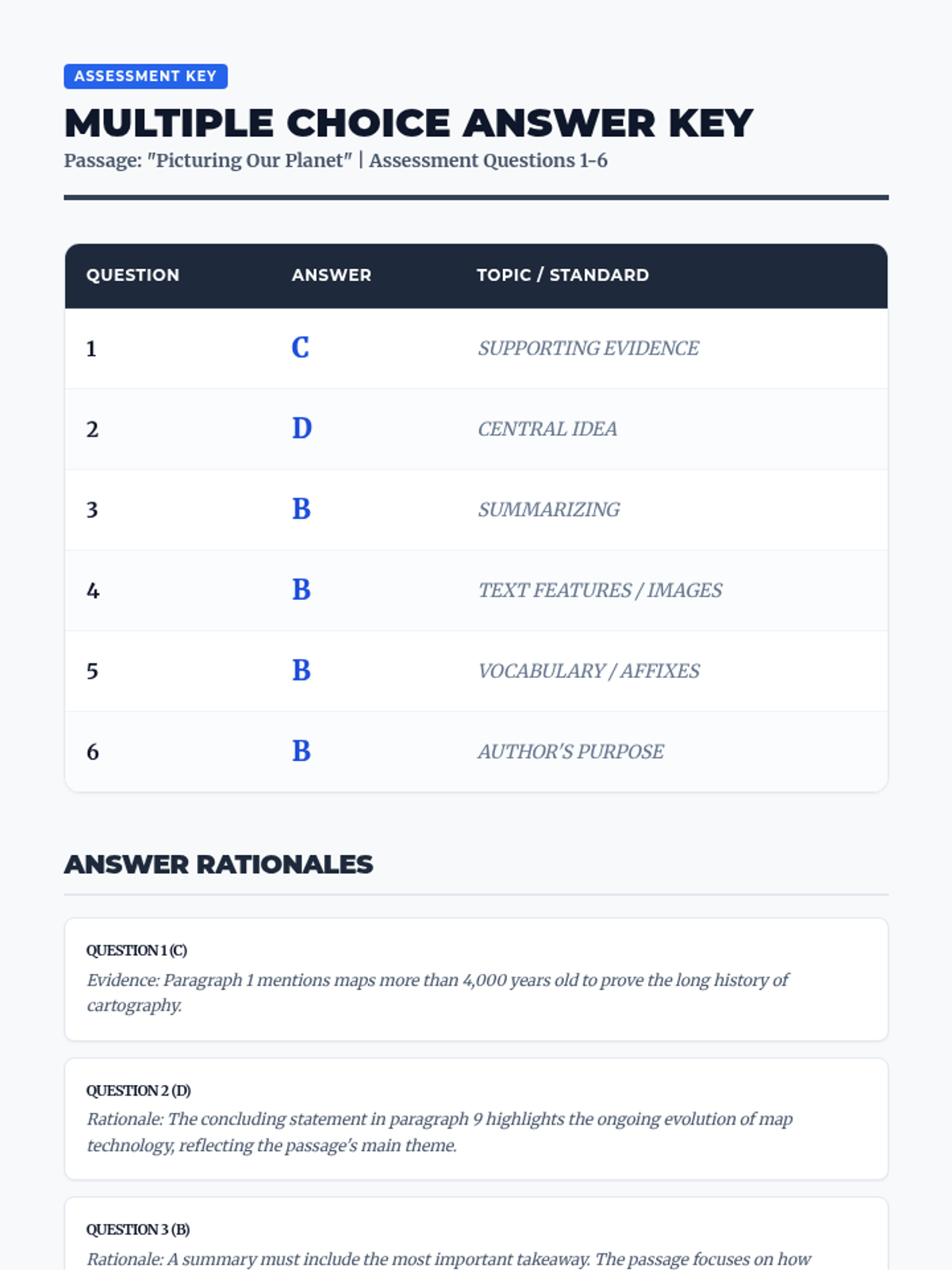
This lesson guides students through identifying sectional main ideas and synthesizing them into a central theme using the historical passage 'Picturing Our Planet'.
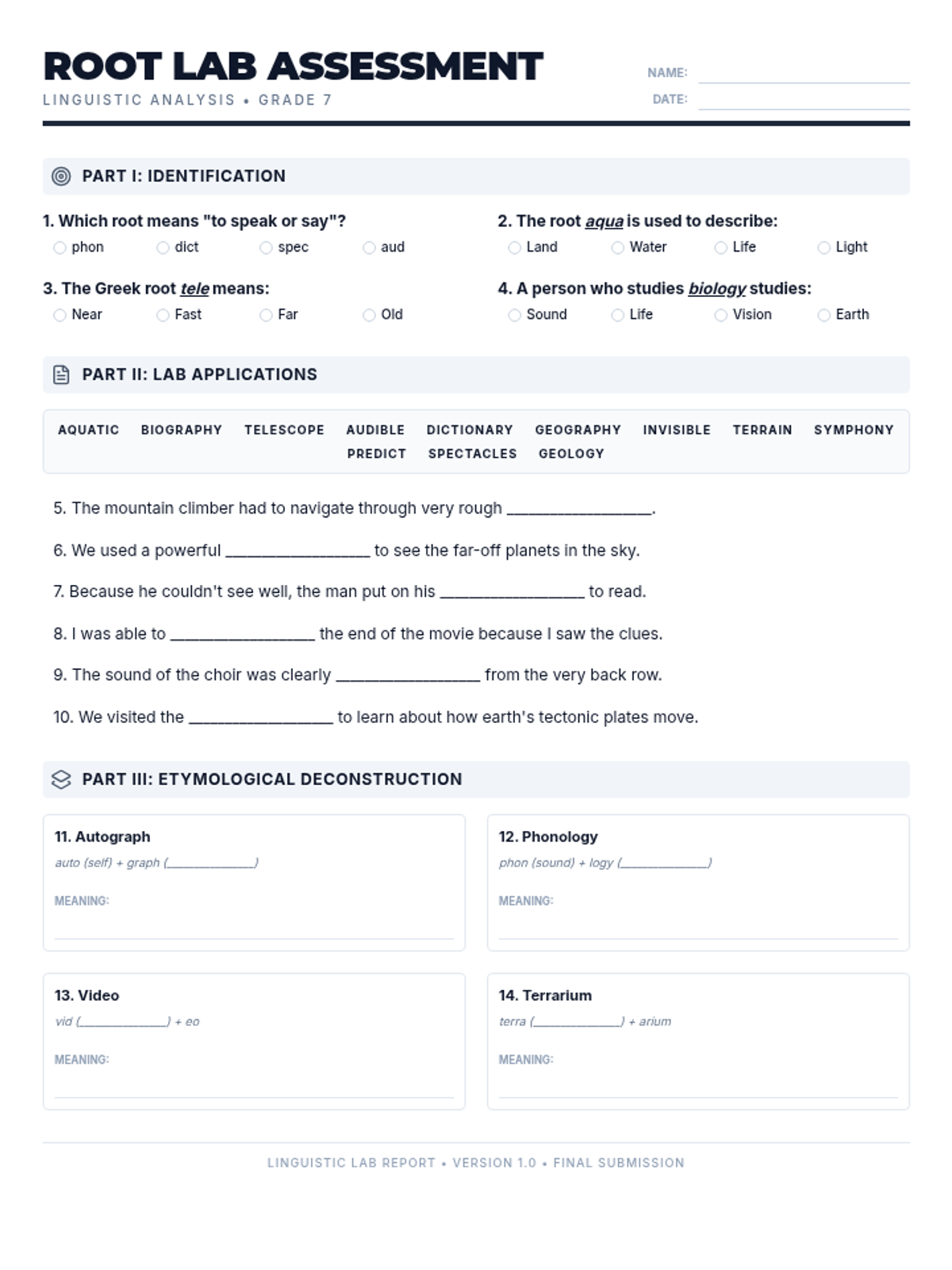
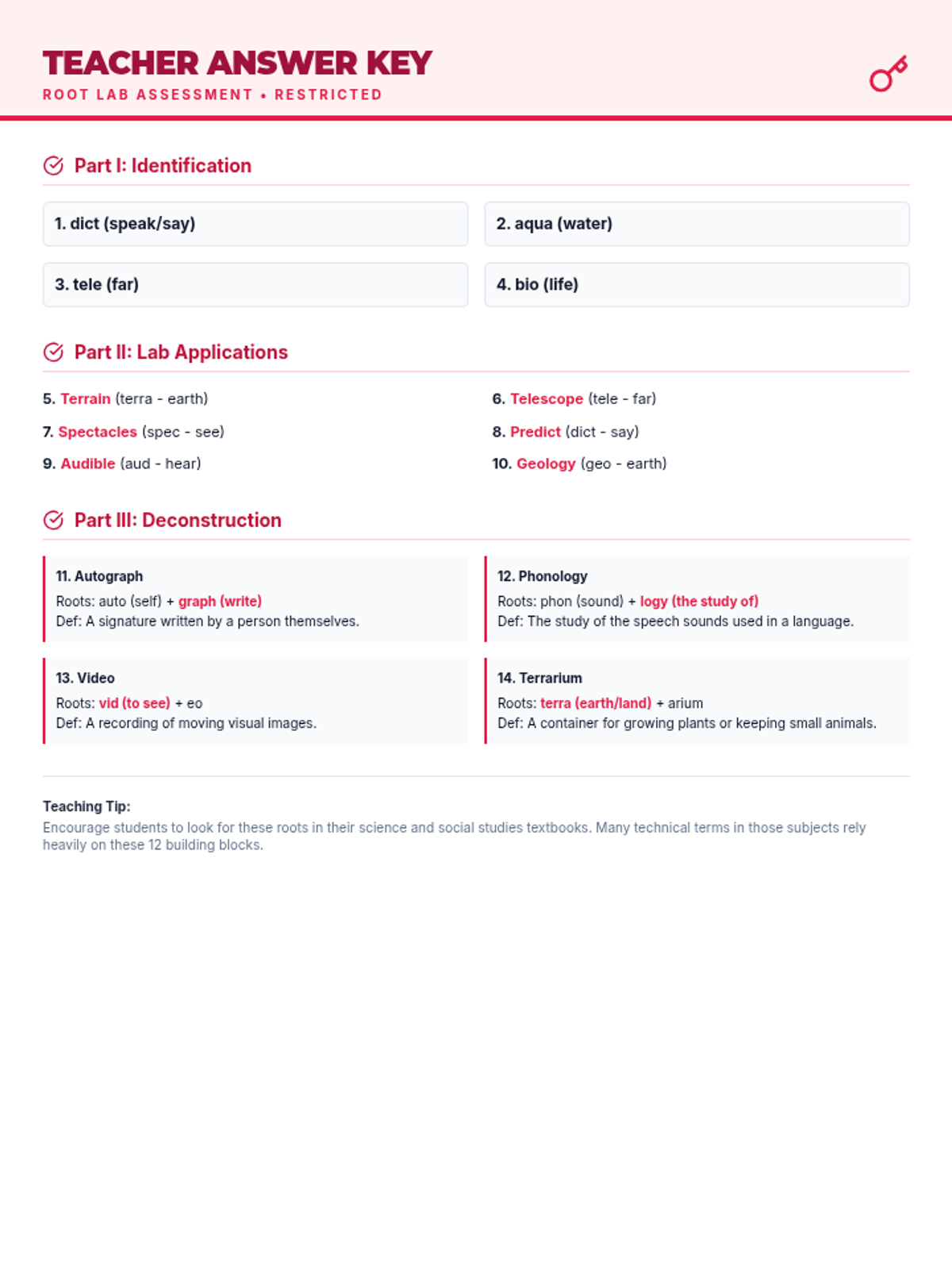
Students explore 10 common Greek and Latin roots, identifying their meanings and applying them to determine the definitions of complex academic vocabulary.
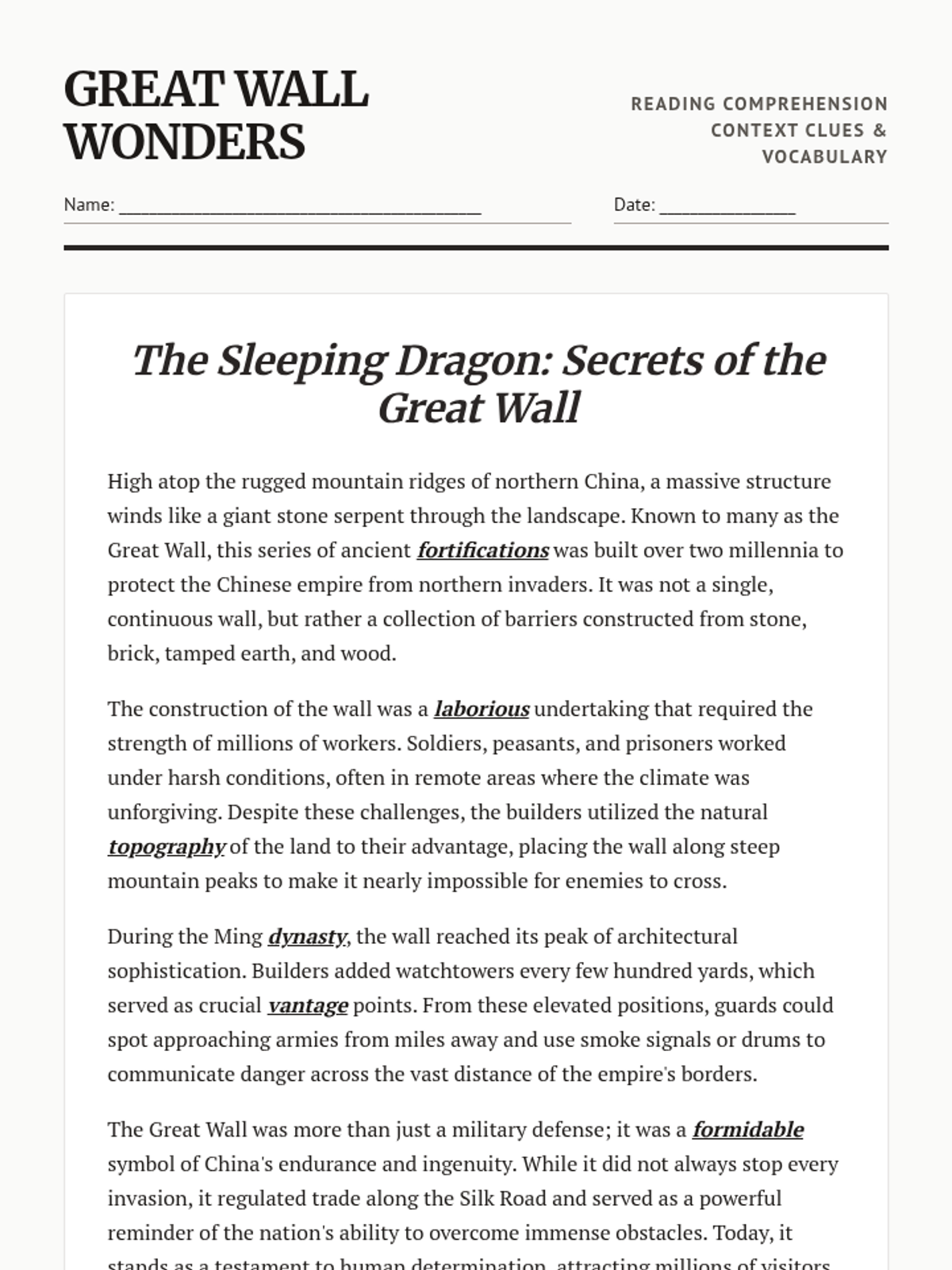
A reading comprehension lesson focused on historical informational texts, specifically targeting context clues and vocabulary acquisition skills.
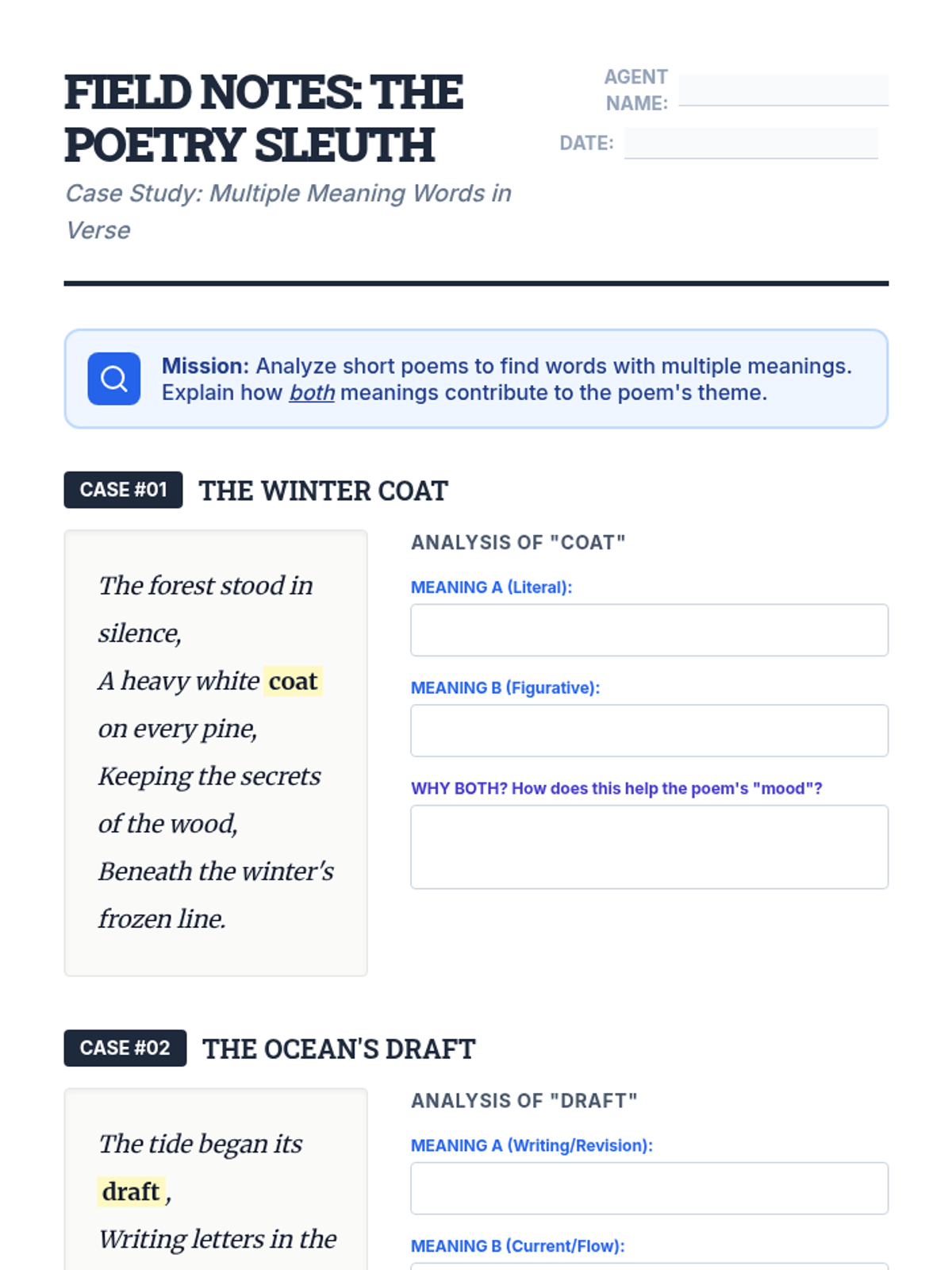
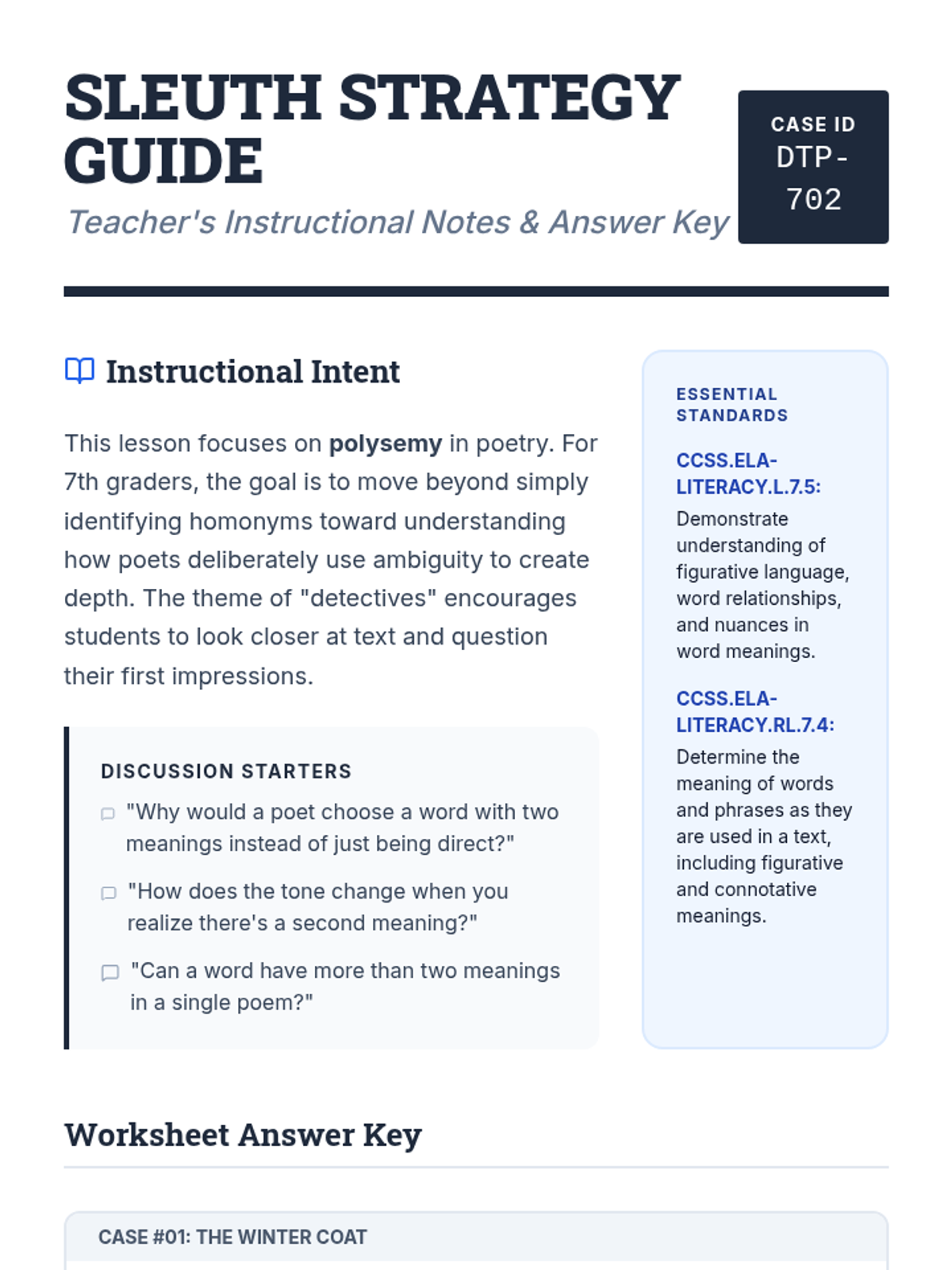
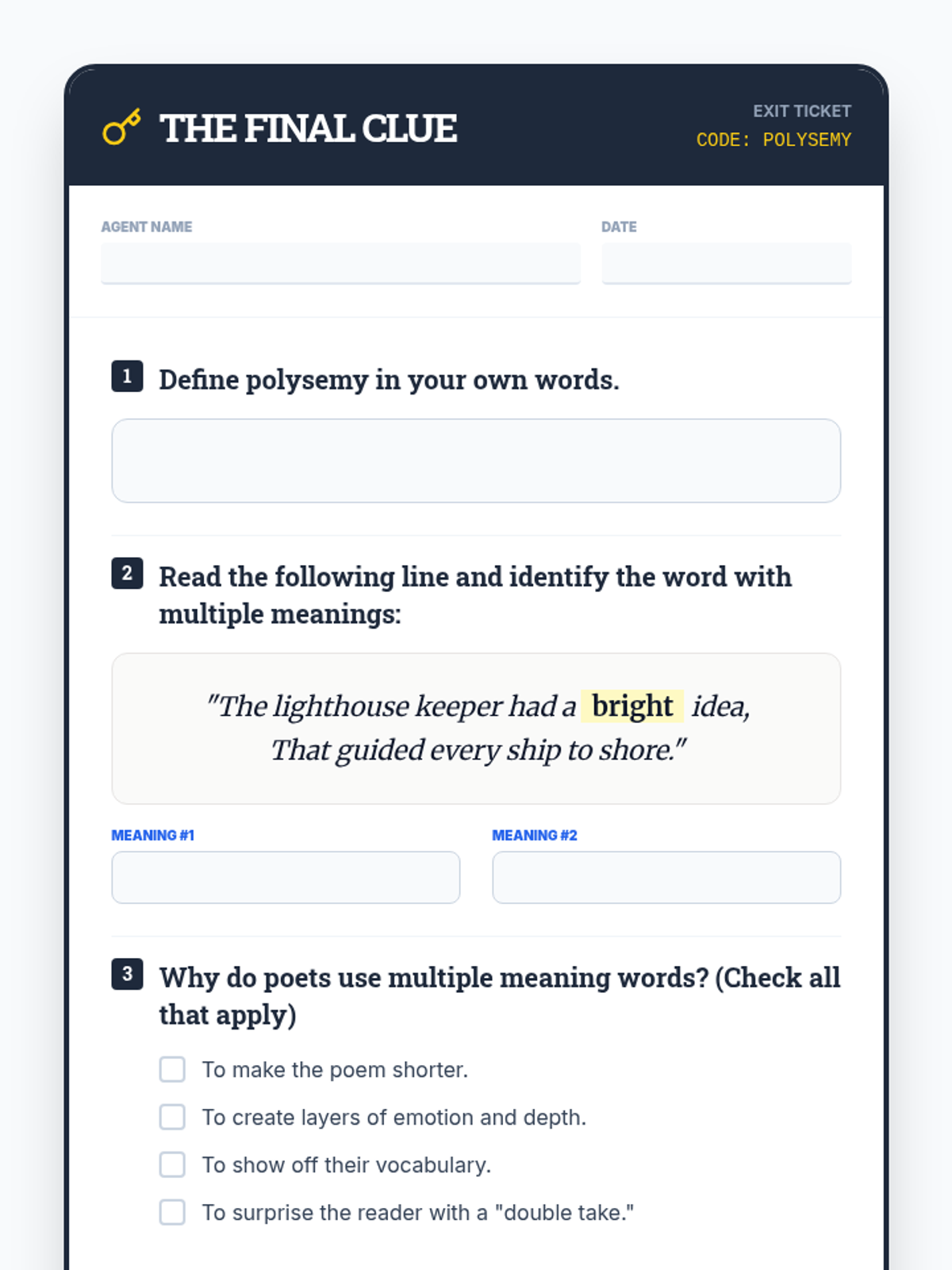
This lesson explores how poets use words with multiple meanings (polysemy) to create depth, irony, and ambiguity in their writing. Students will act as 'poetry sleuths' to uncover hidden layers in various verses.
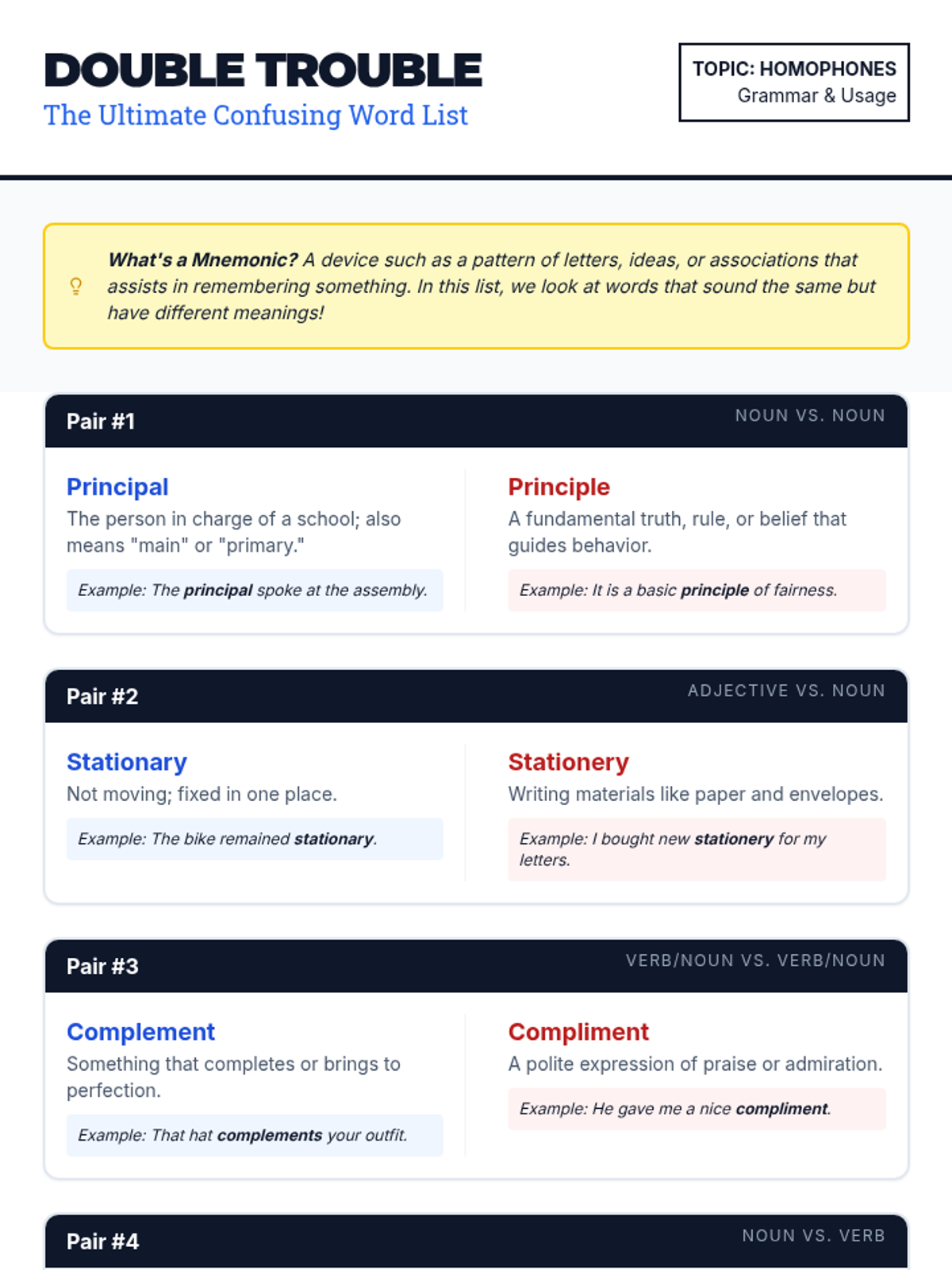
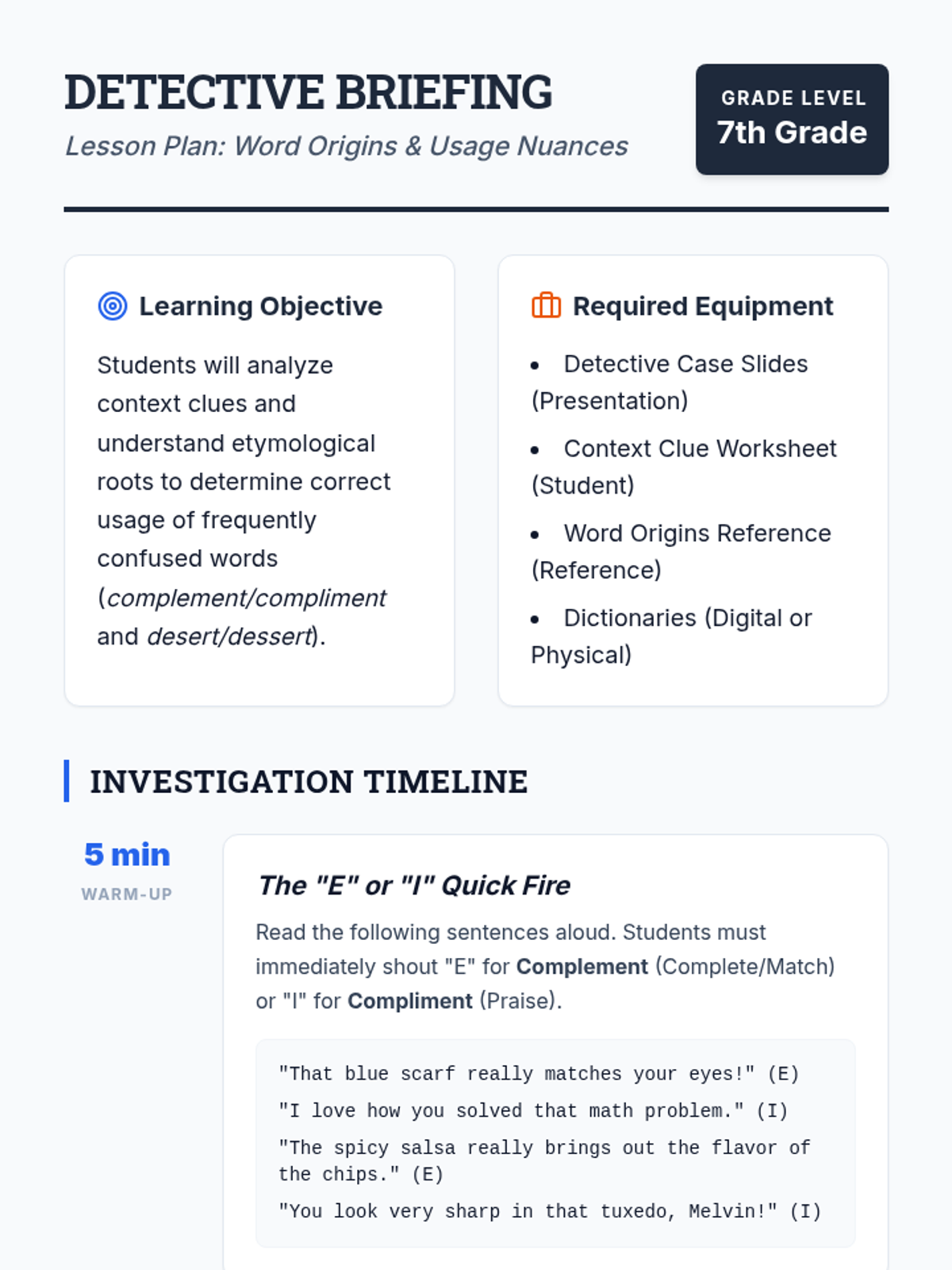
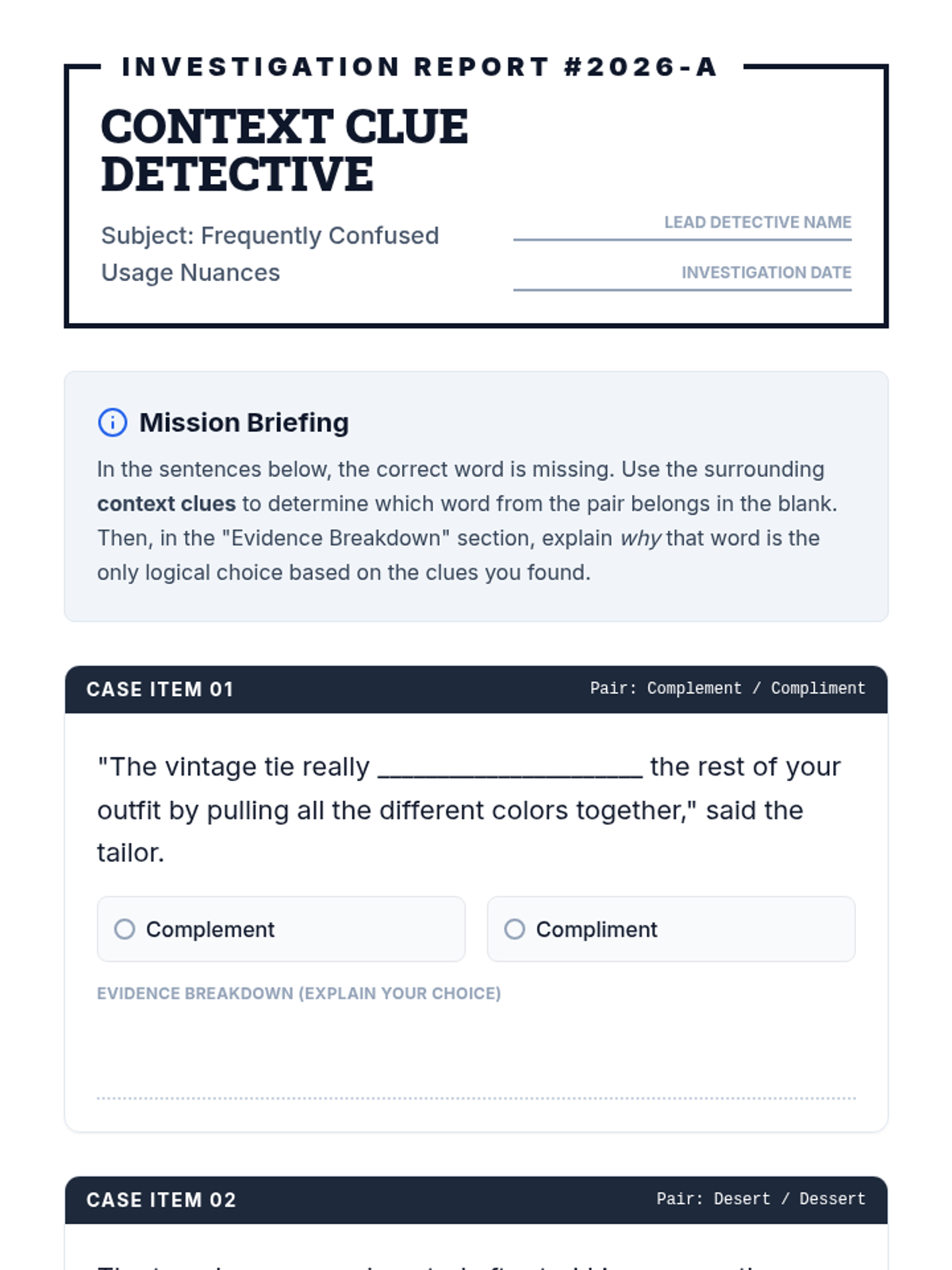
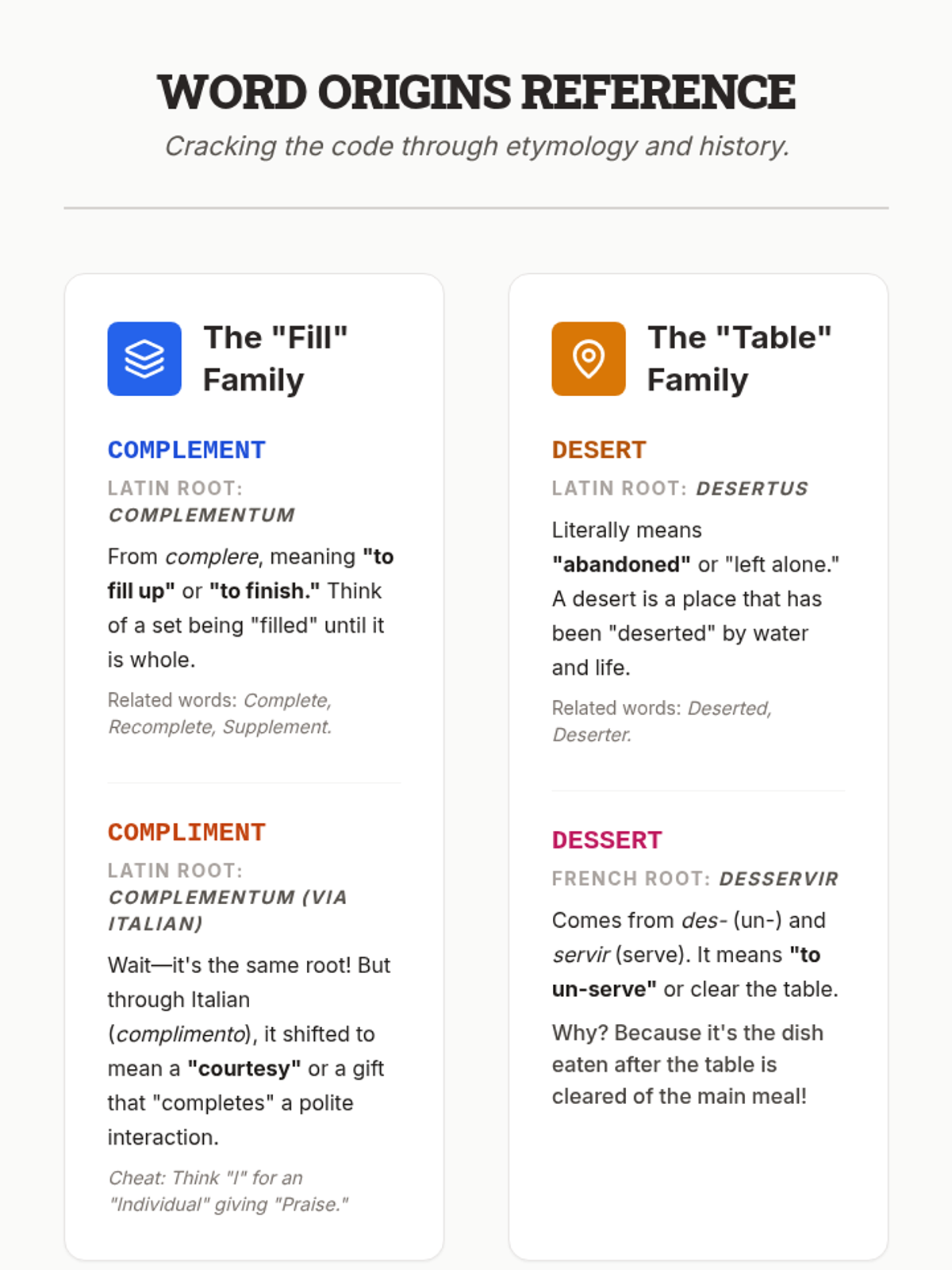
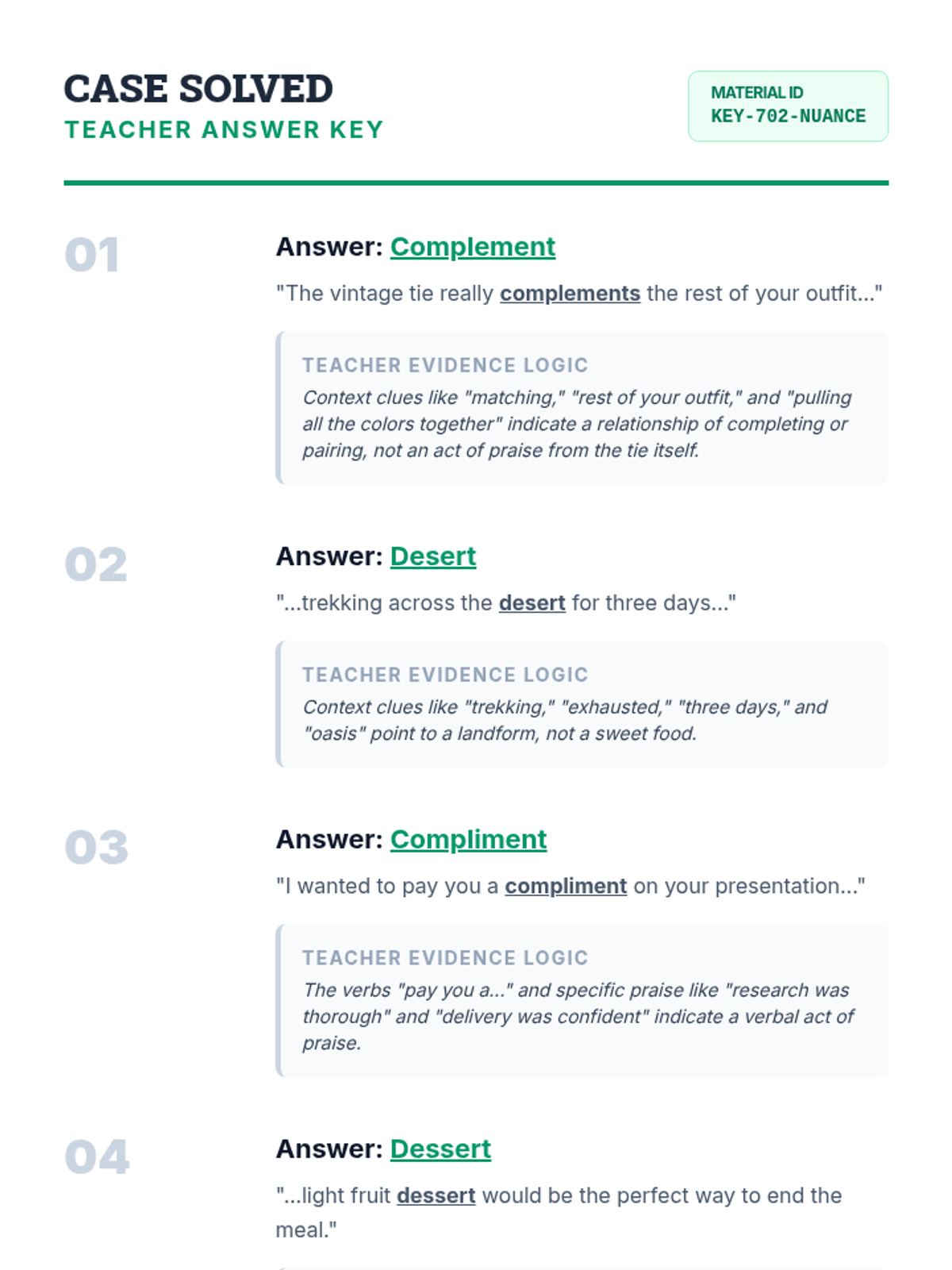
A 7th-grade English Language Arts lesson focused on distinguishing between frequently confused word pairs (complement/compliment and desert/dessert) through context clues and etymology. Students use video evidence and linguistic 'detective work' to justify their word choices.
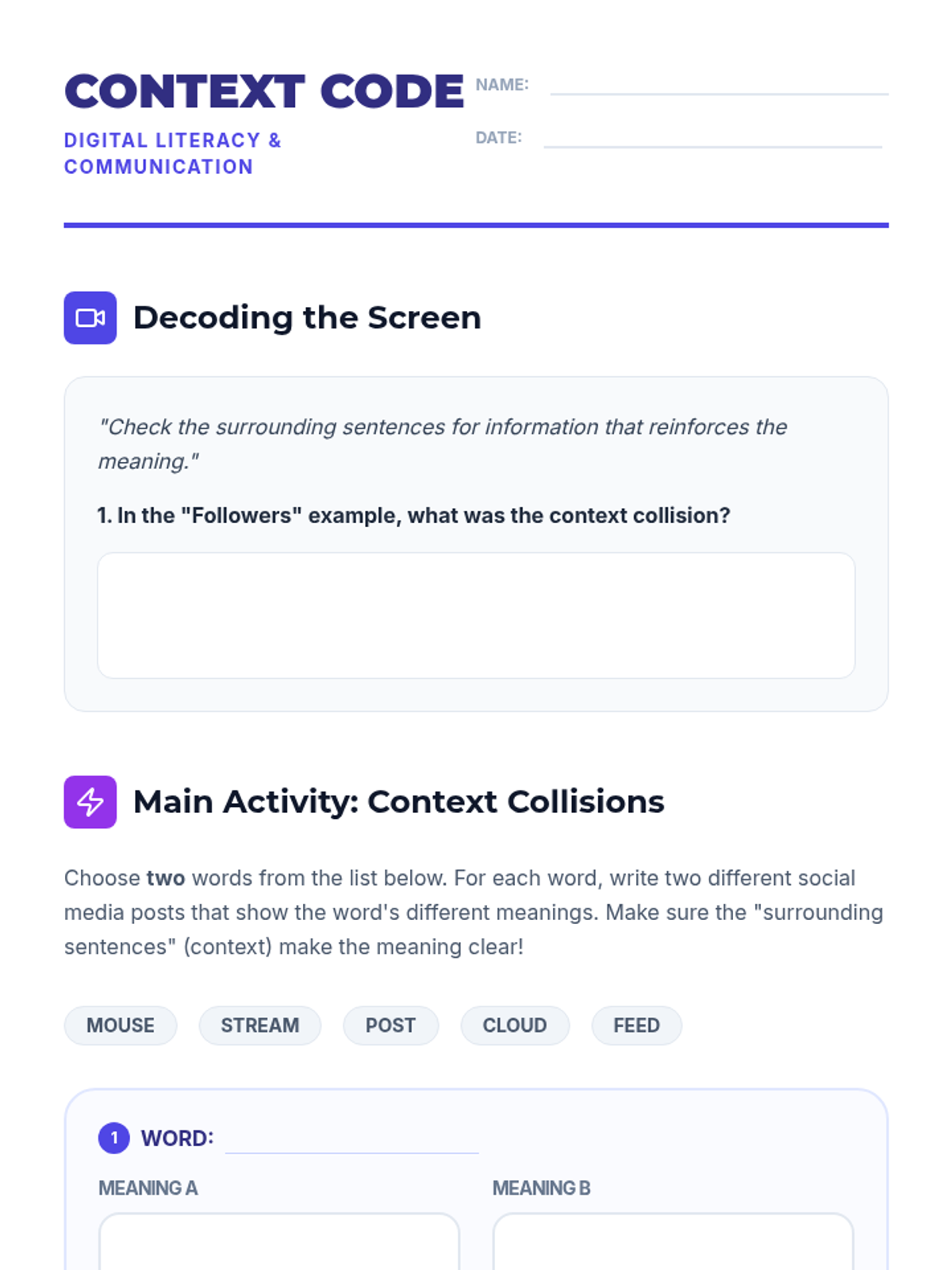
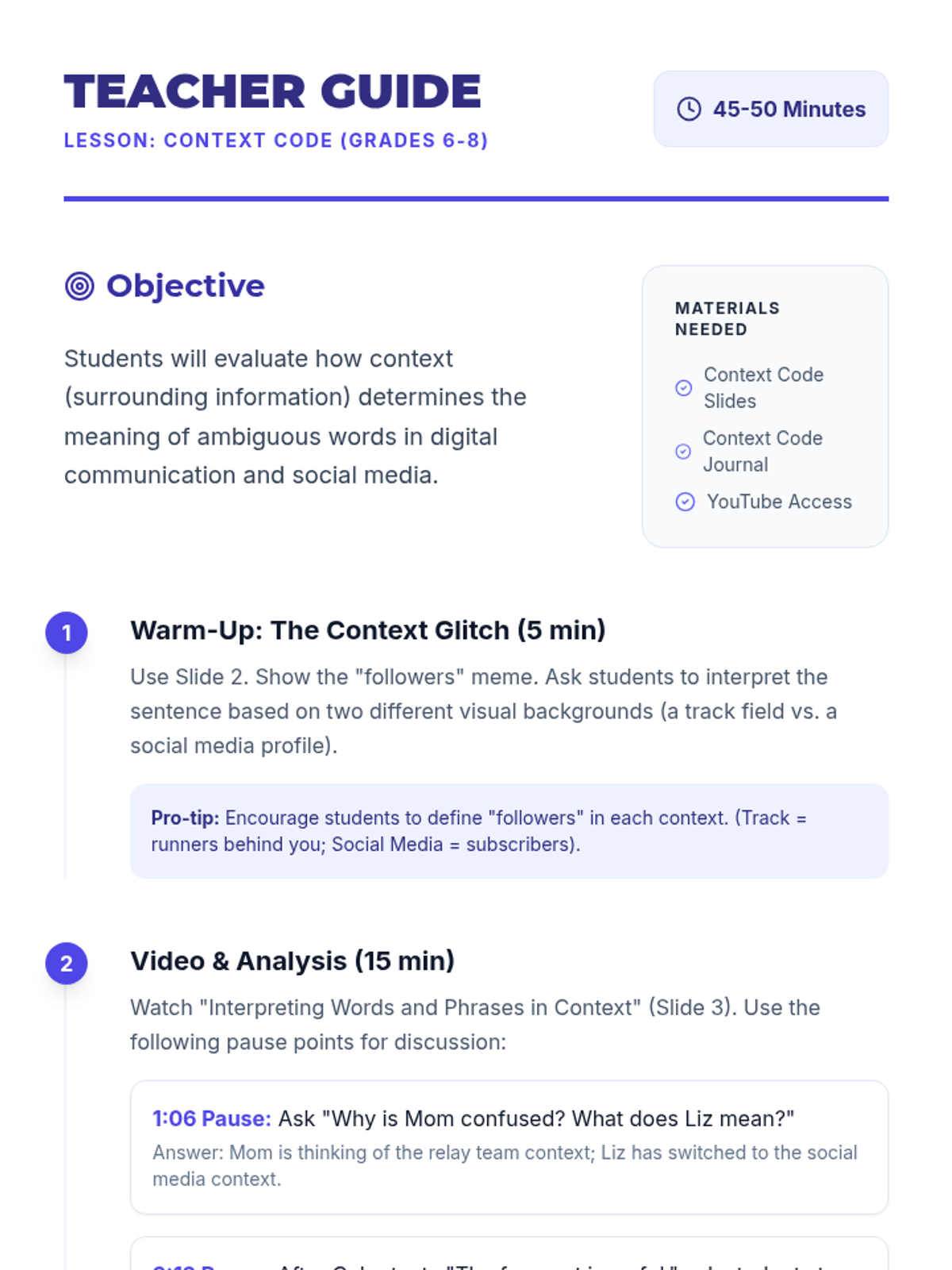
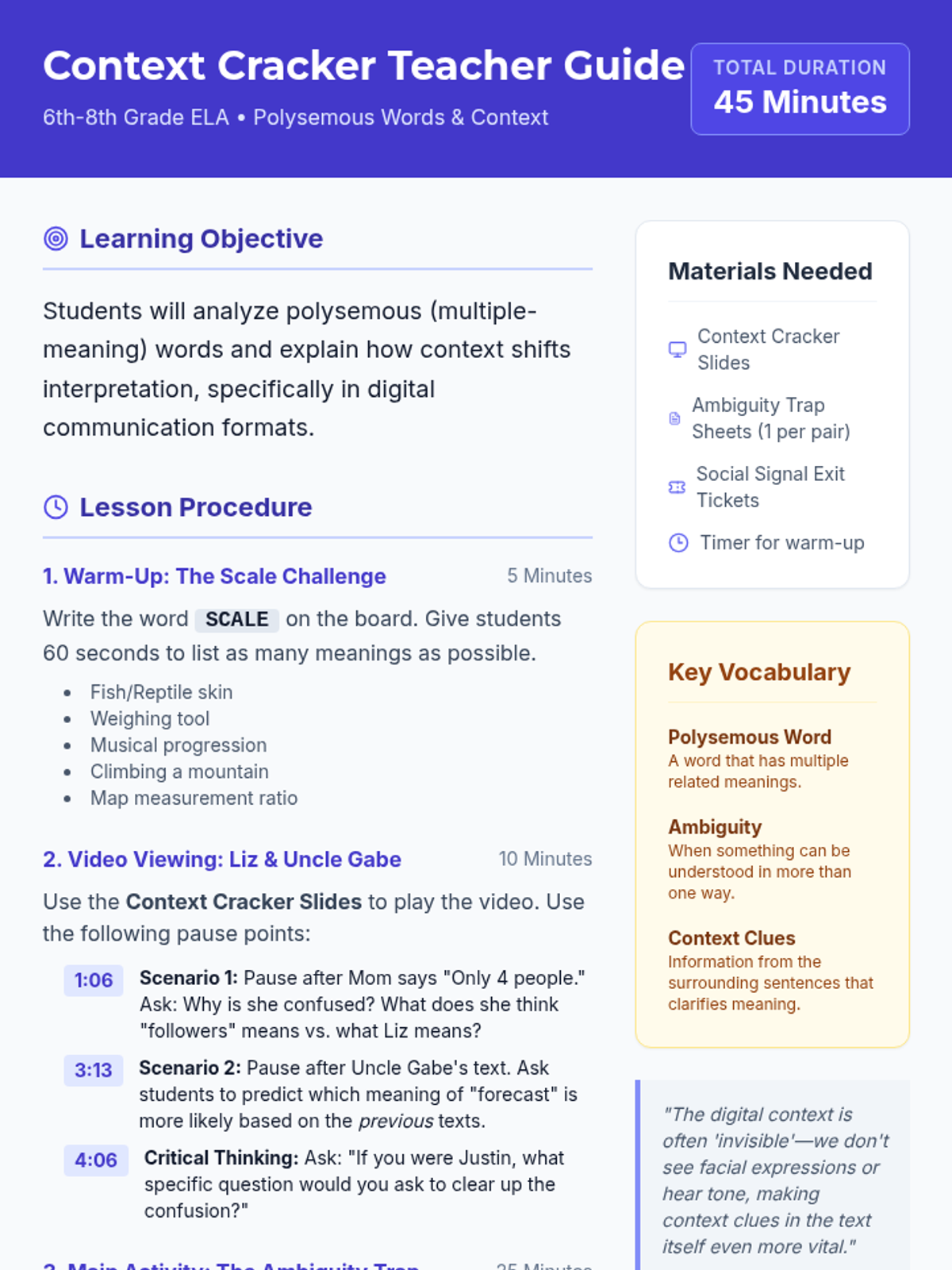
A digital literacy lesson for middle schoolers focusing on the role of context in social media and online communication. Students analyze viral misunderstandings and create their own 'context collisions' to understand how surroundings change meaning.
A lesson where students explore polysemous words and the importance of context in digital and face-to-face communication, featuring video analysis and role-play activities.
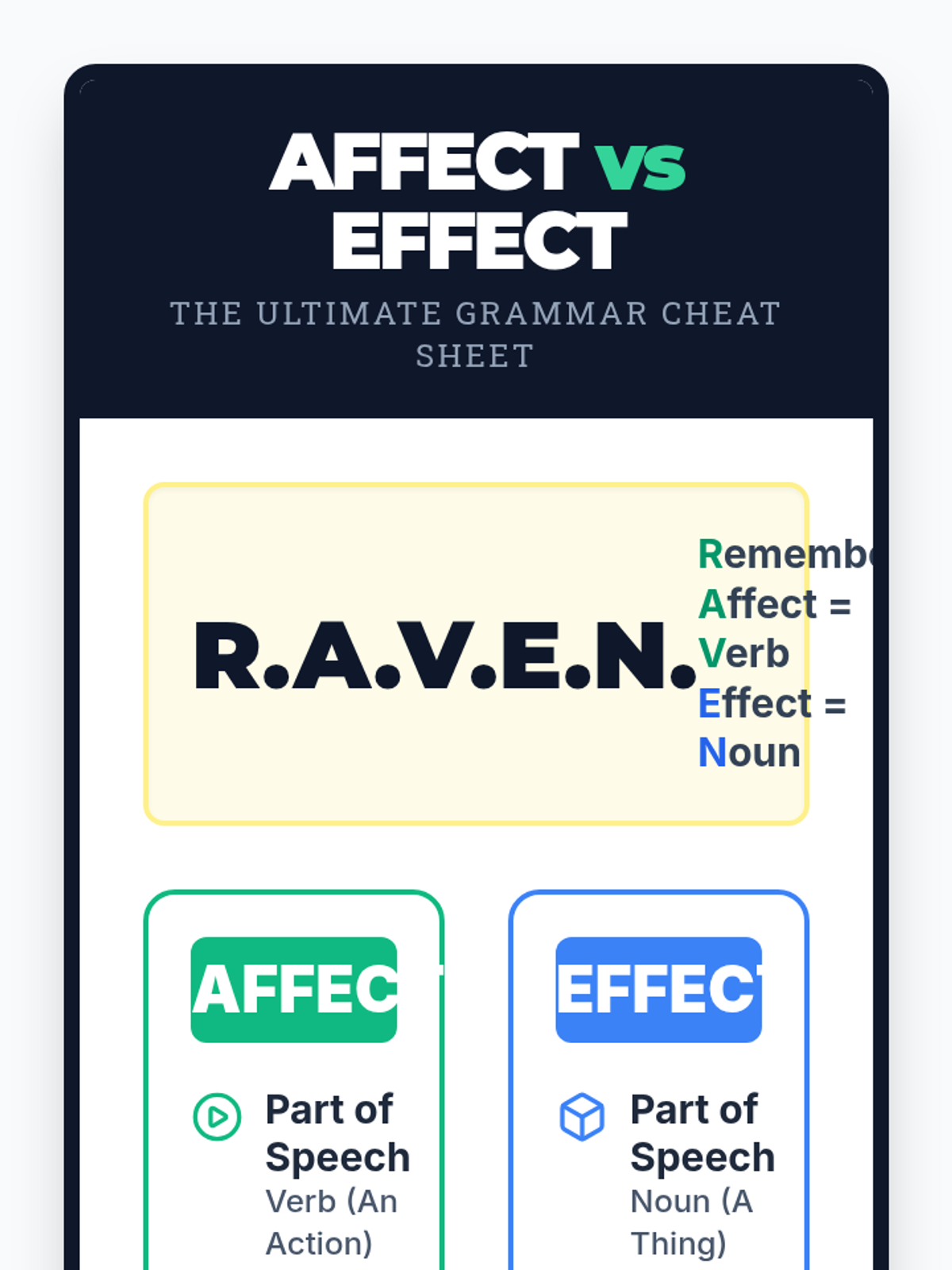
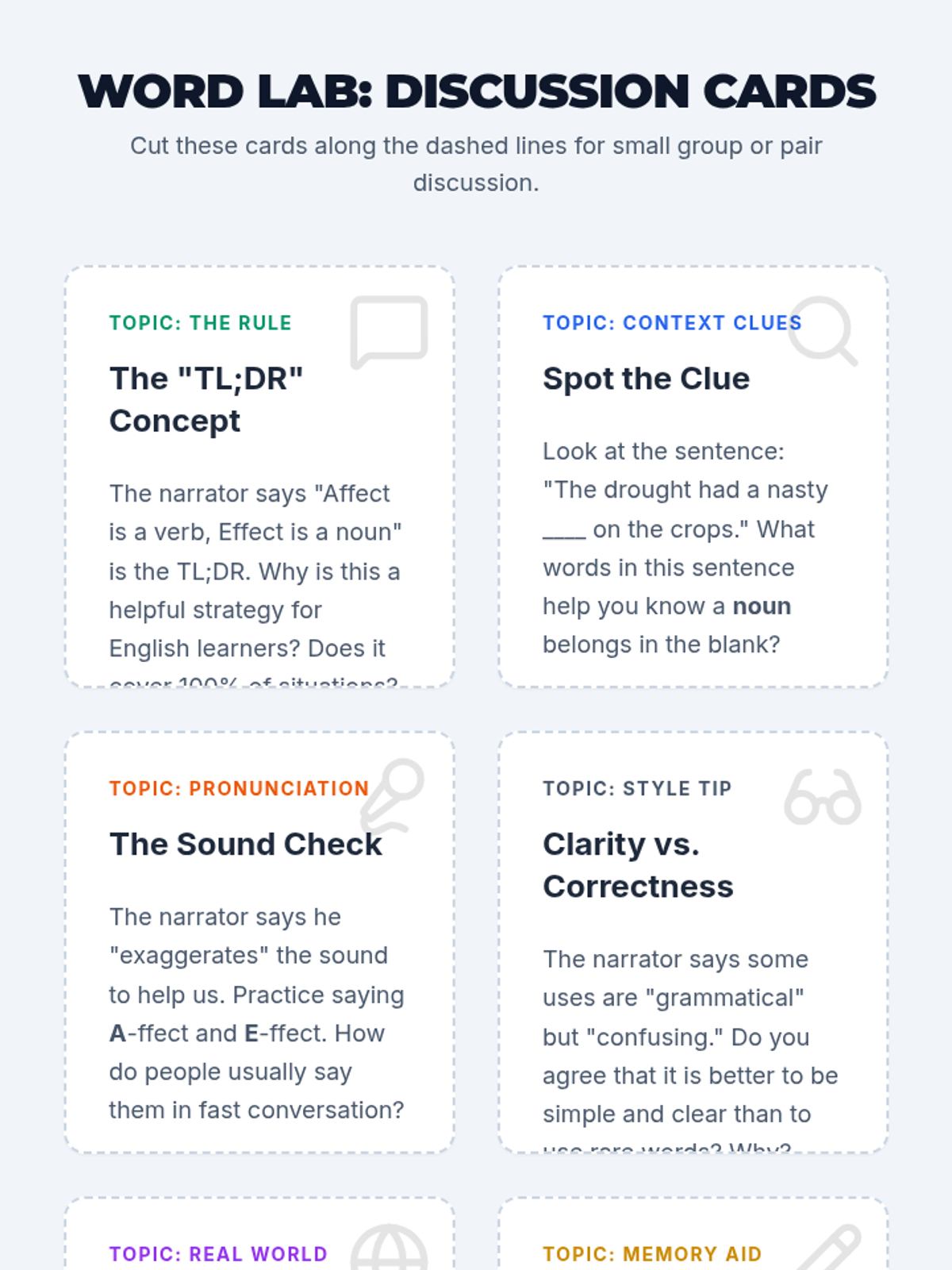
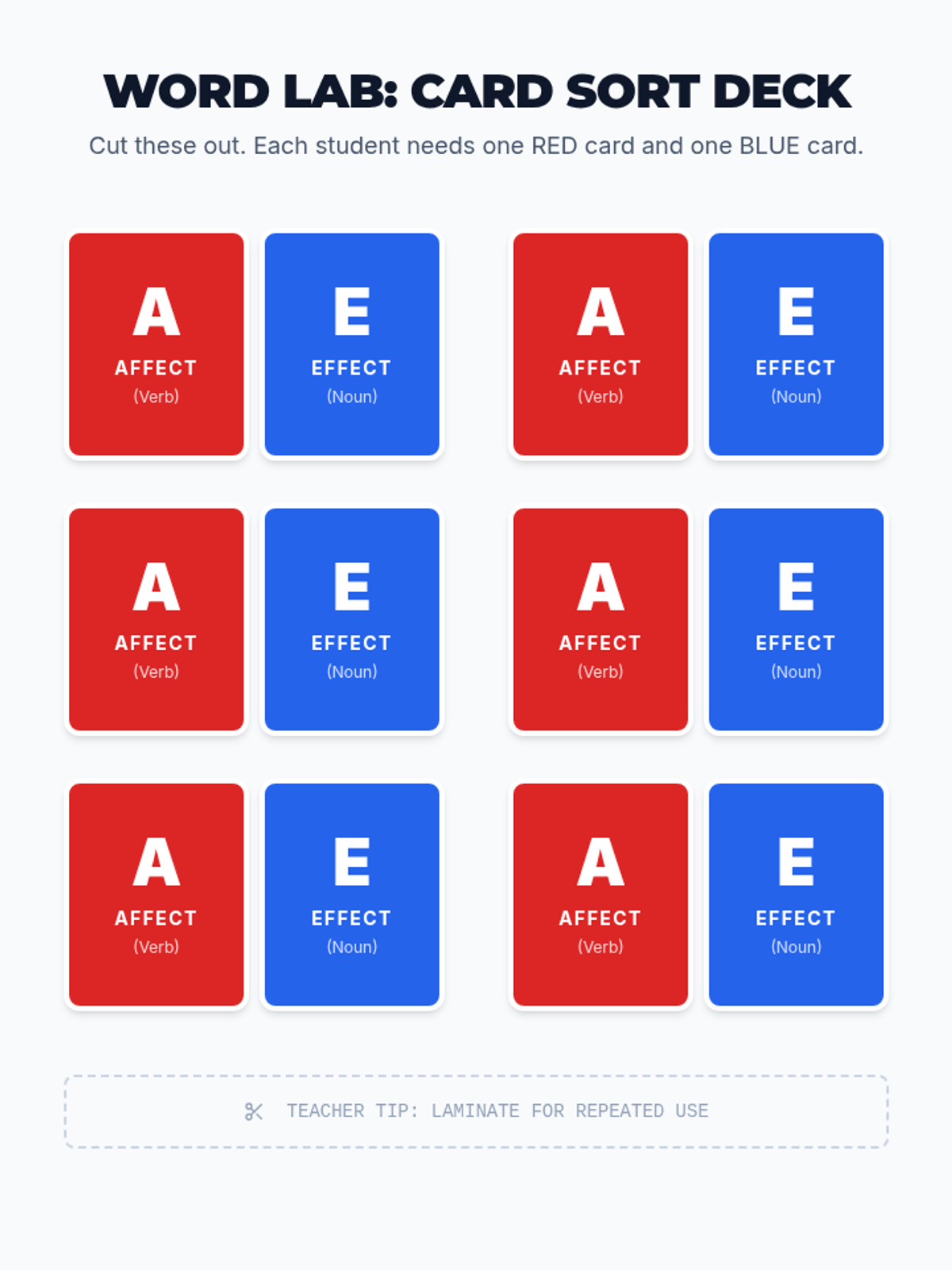
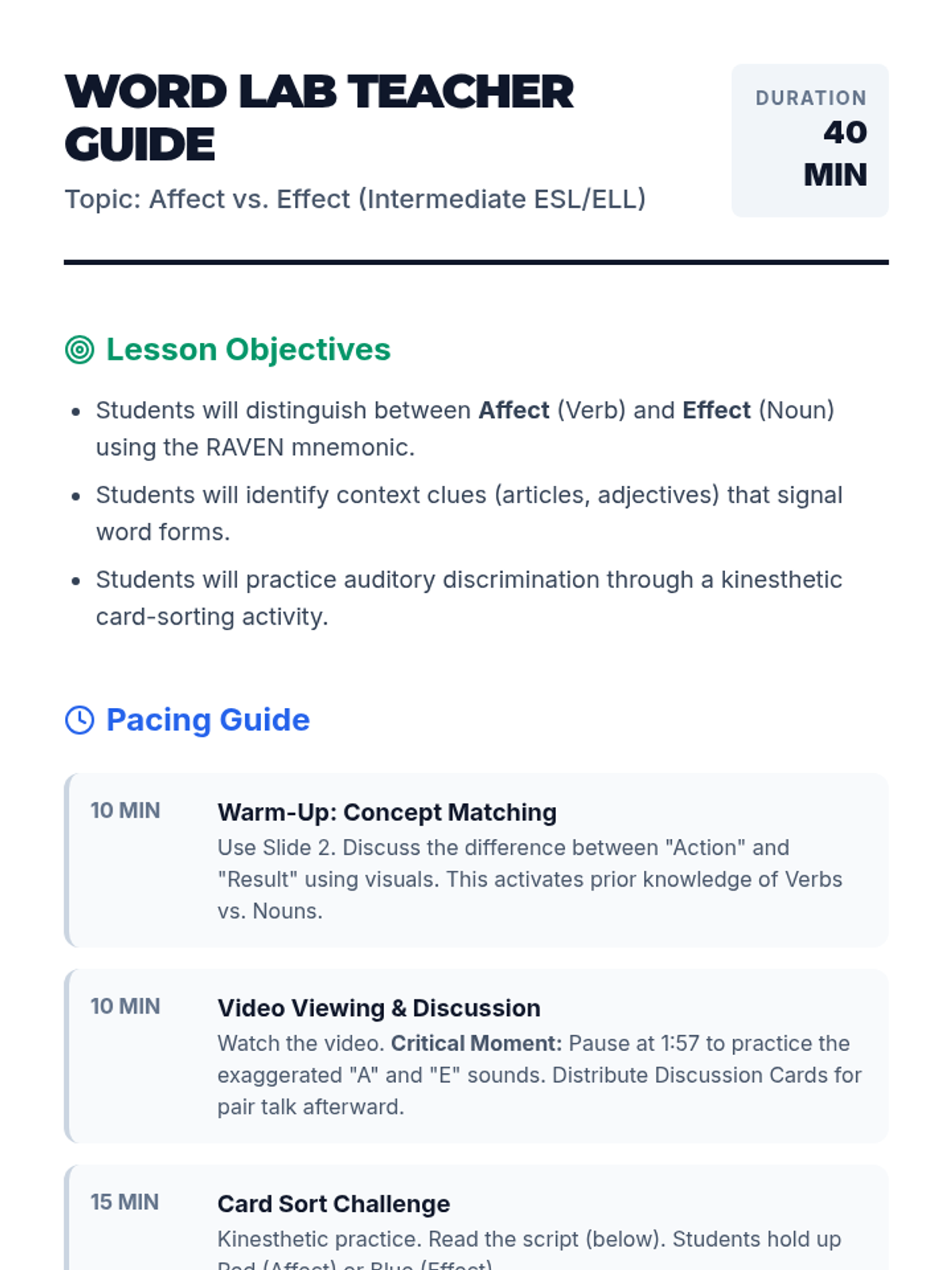
An intermediate ESL/ELL lesson focused on distinguishing between 'affect' and 'effect' using word forms, context clues, and a visual mnemonic. Includes a video-based discussion, a kinesthetic card-sorting activity, and a visual anchor chart.
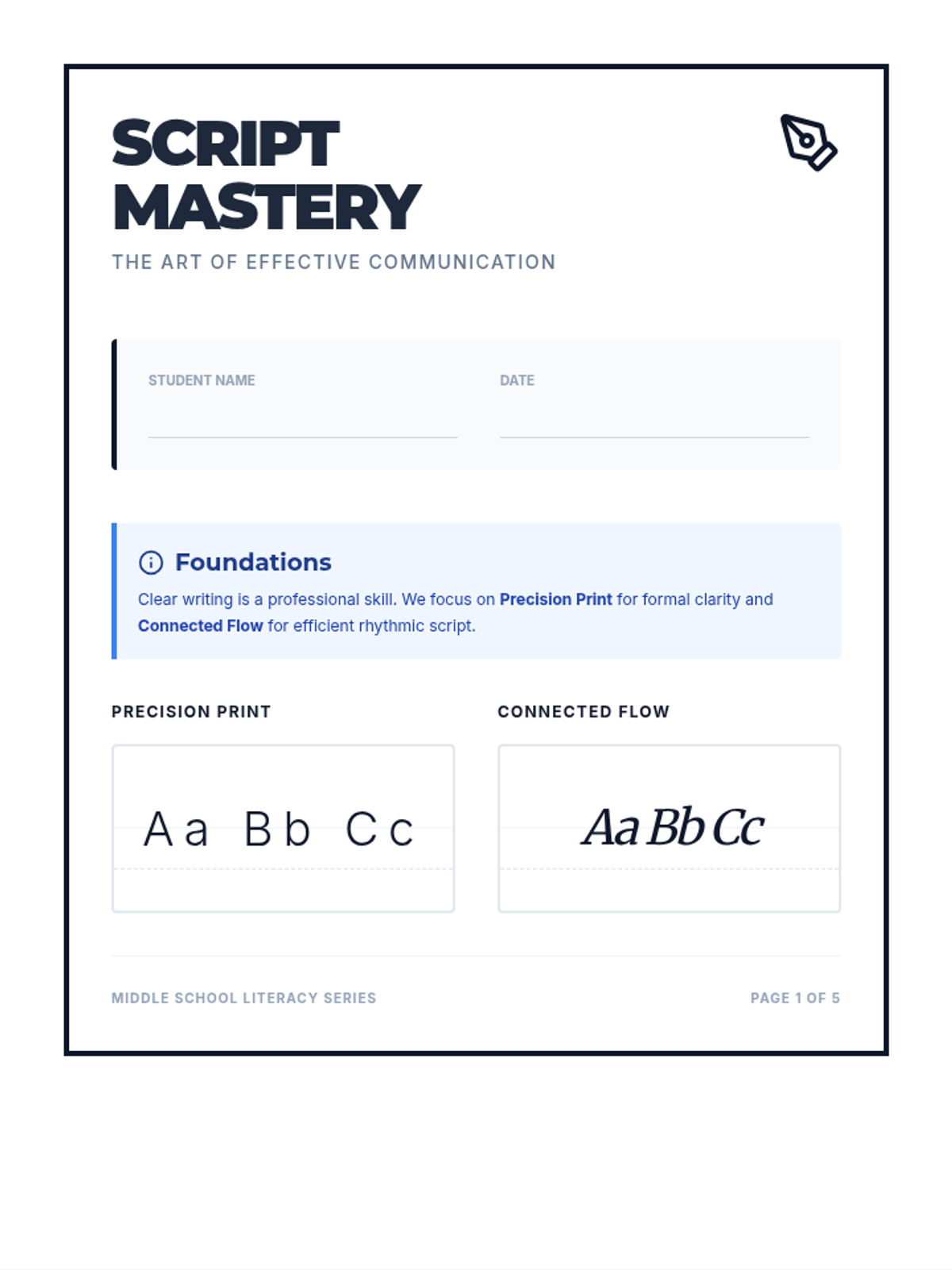
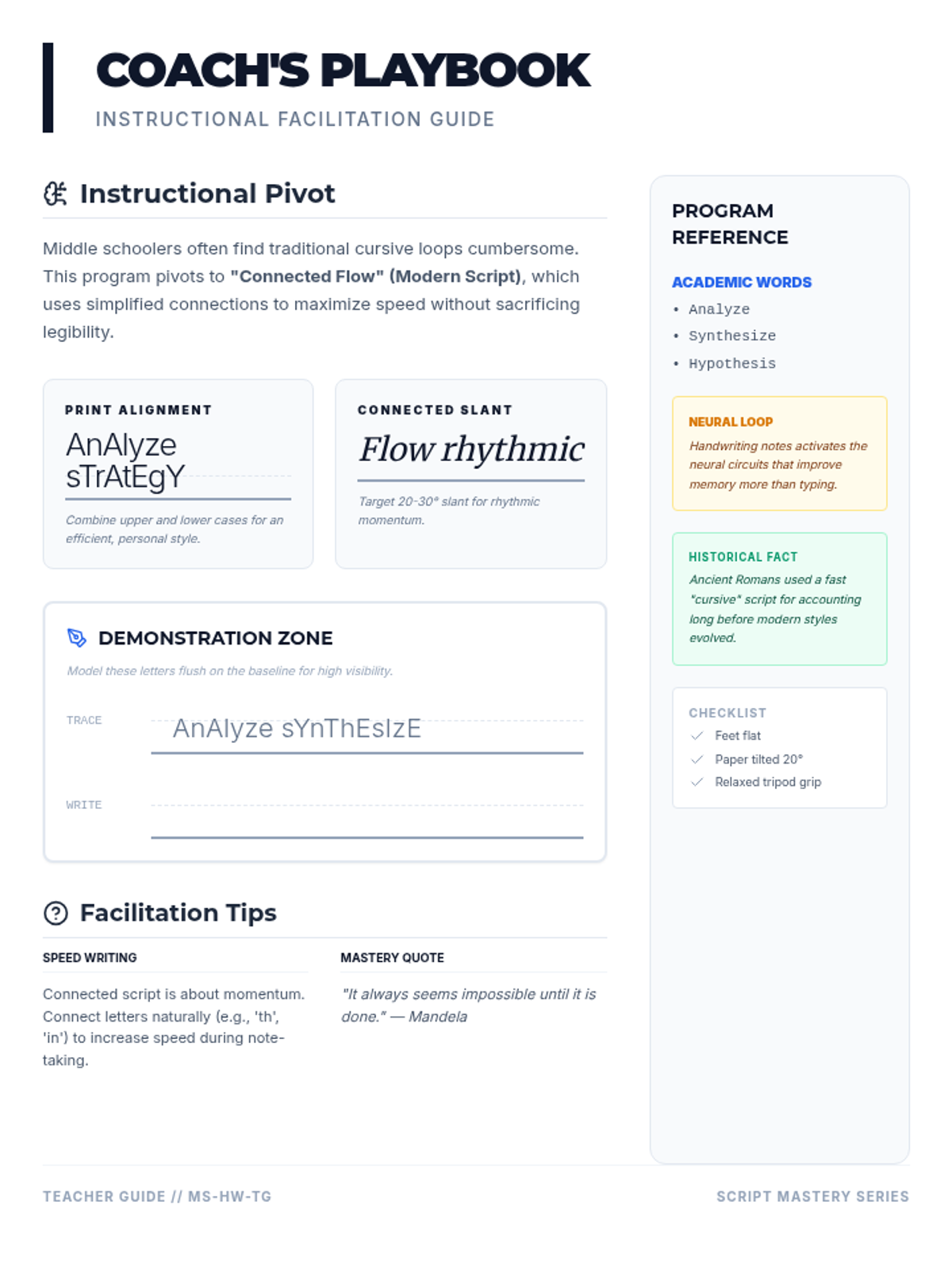
A comprehensive handwriting improvement program for middle school students, blending print and cursive techniques using engaging academic and motivational content.
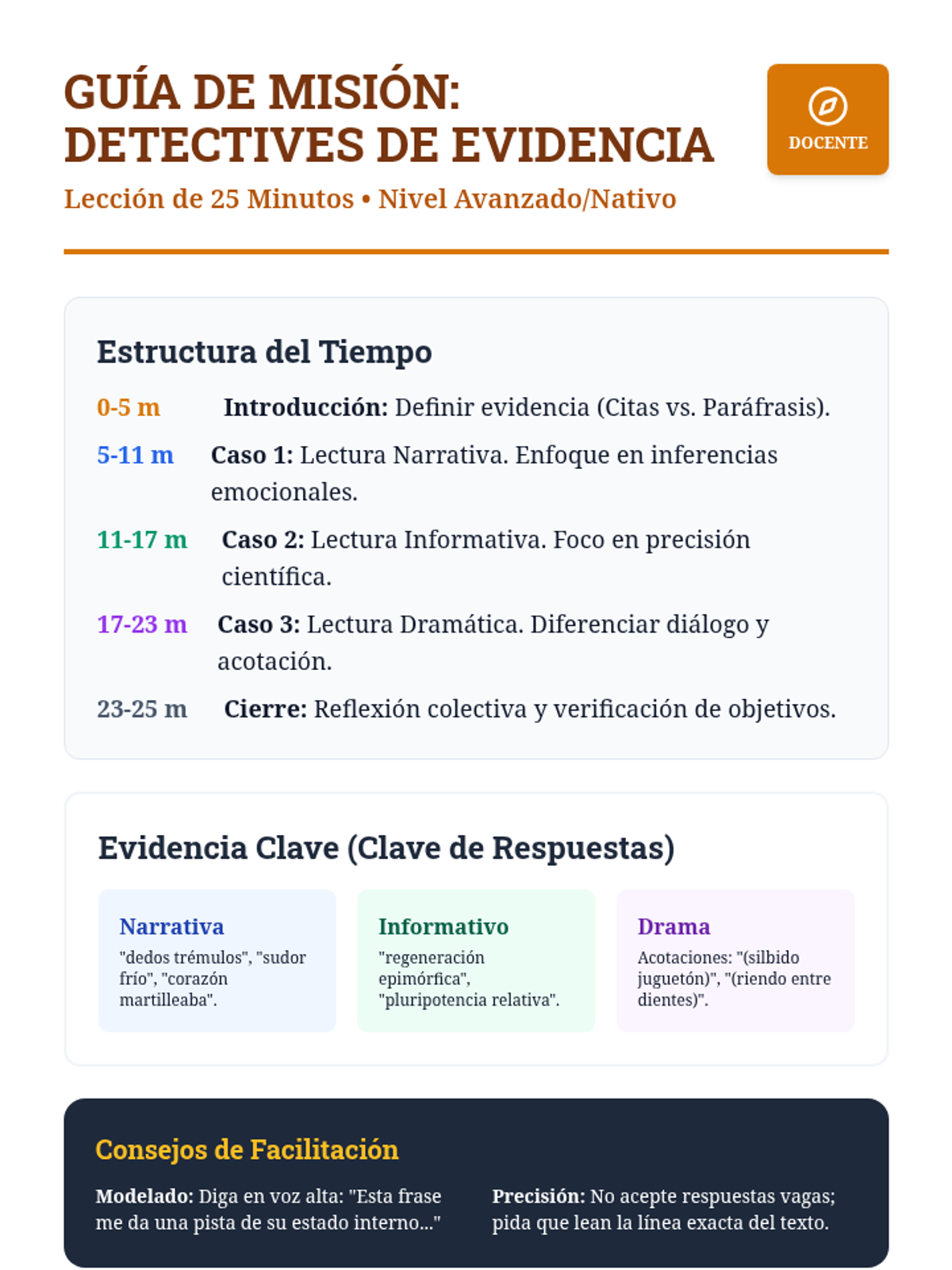
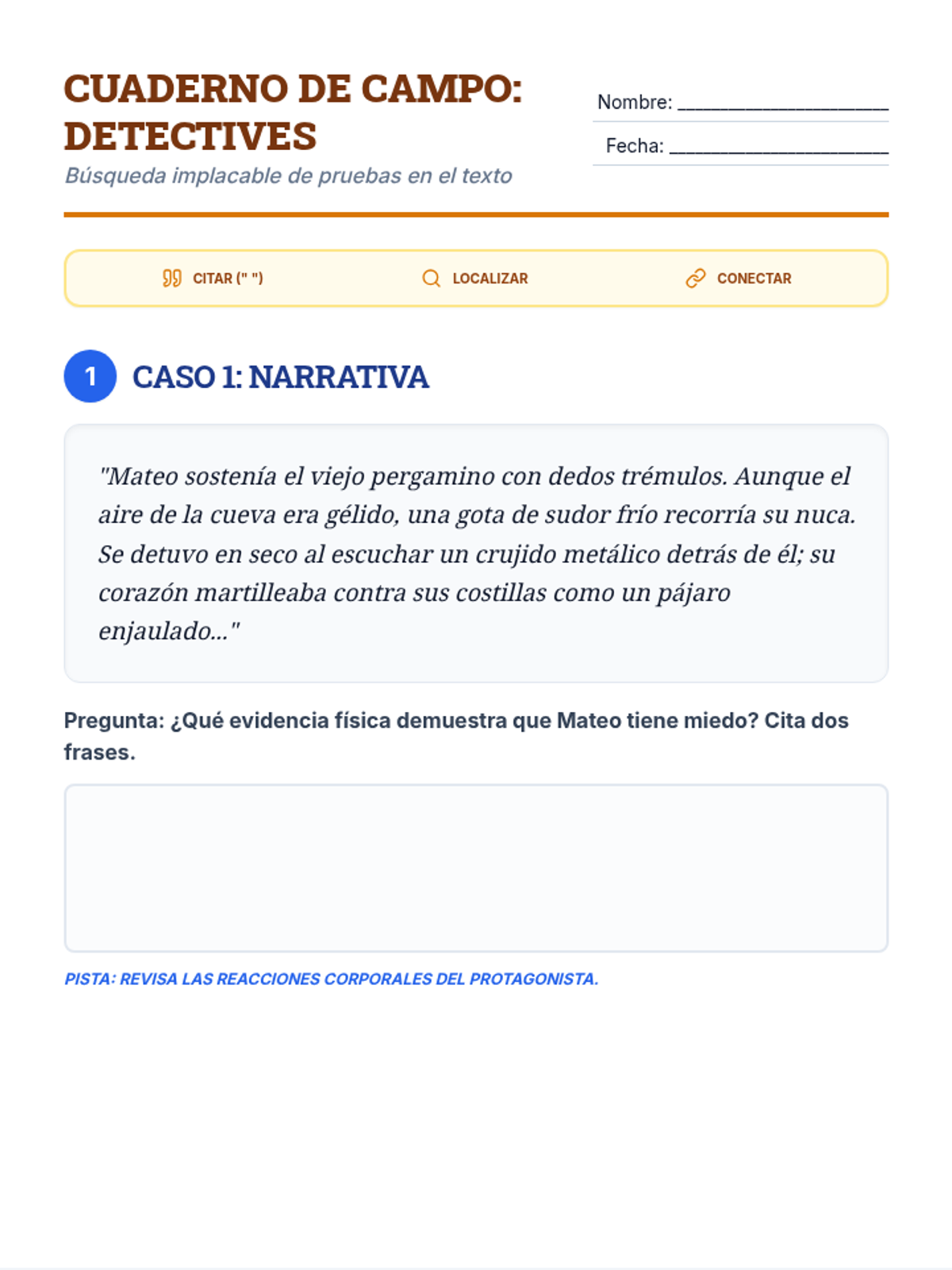
Una lección guiada de 25 minutos para estudiantes avanzados o nativos sobre cómo utilizar la evidencia del texto para respaldar respuestas, utilizando tres géneros distintos: narrativa, informativo y dramático.