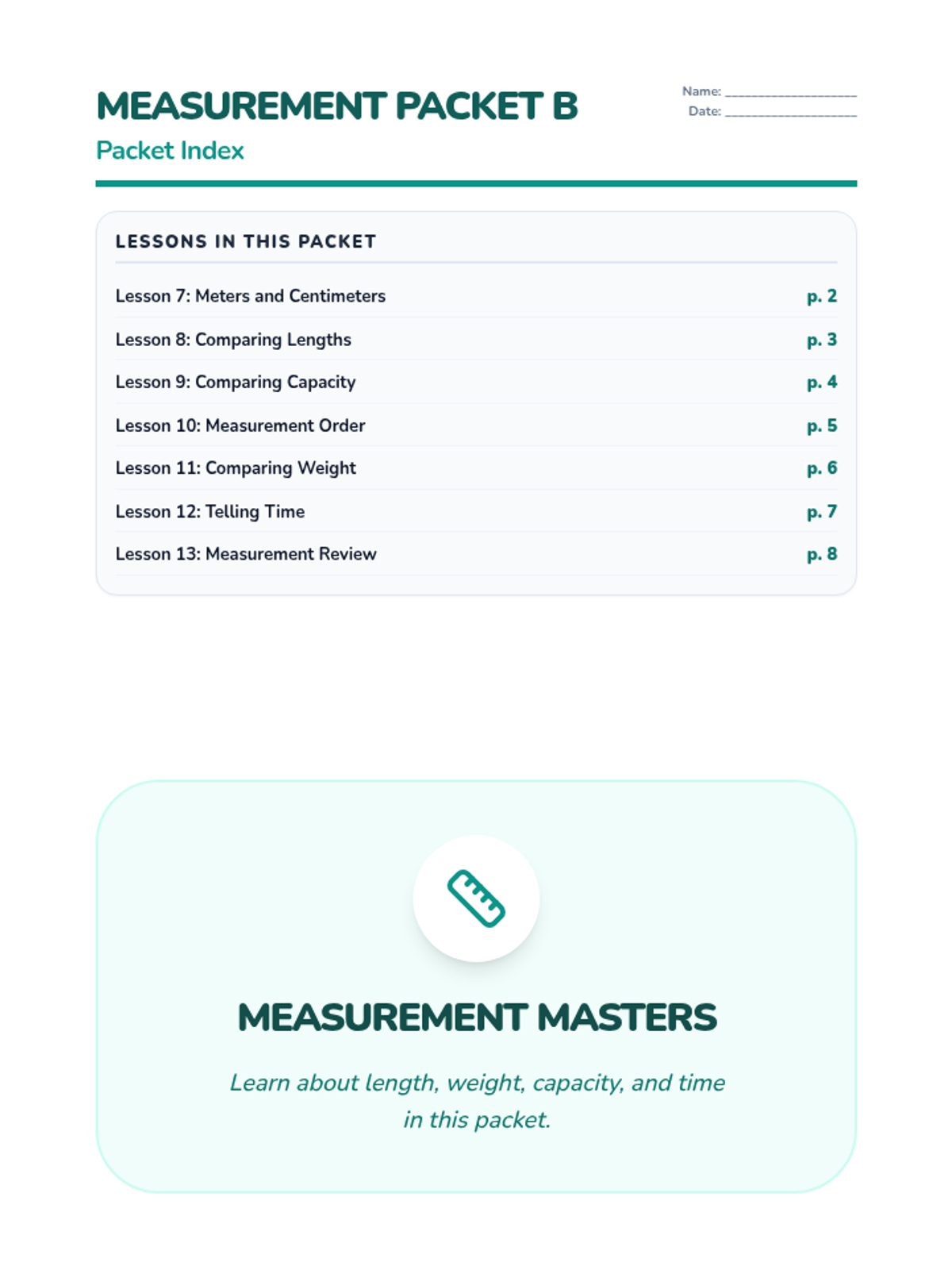
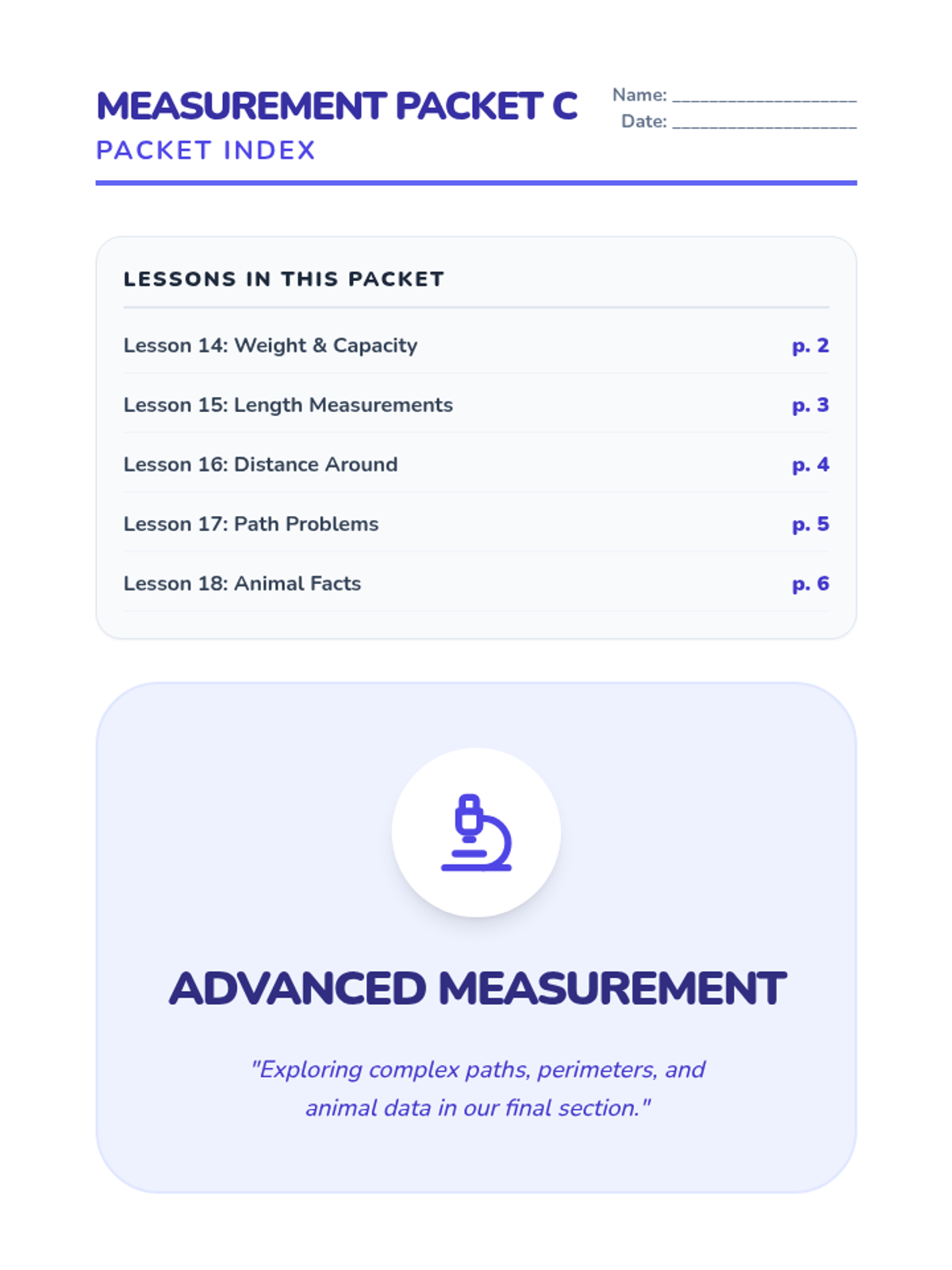
Develops proficiency in estimating and measuring length, area, volume, and mass using standard units and unit conversions. Integrates time, money, angle measurement, and data classification through counting and arithmetic applications.
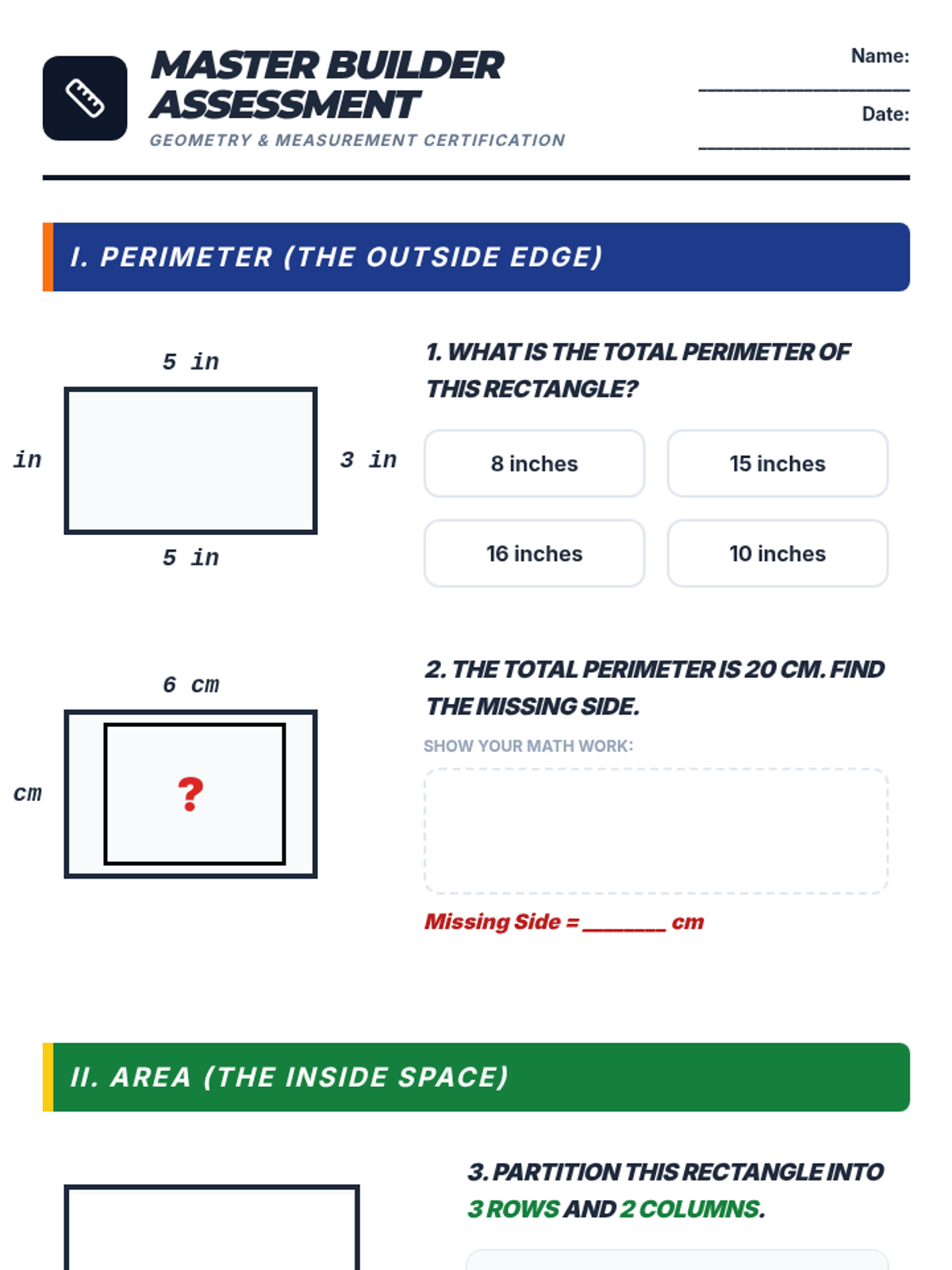
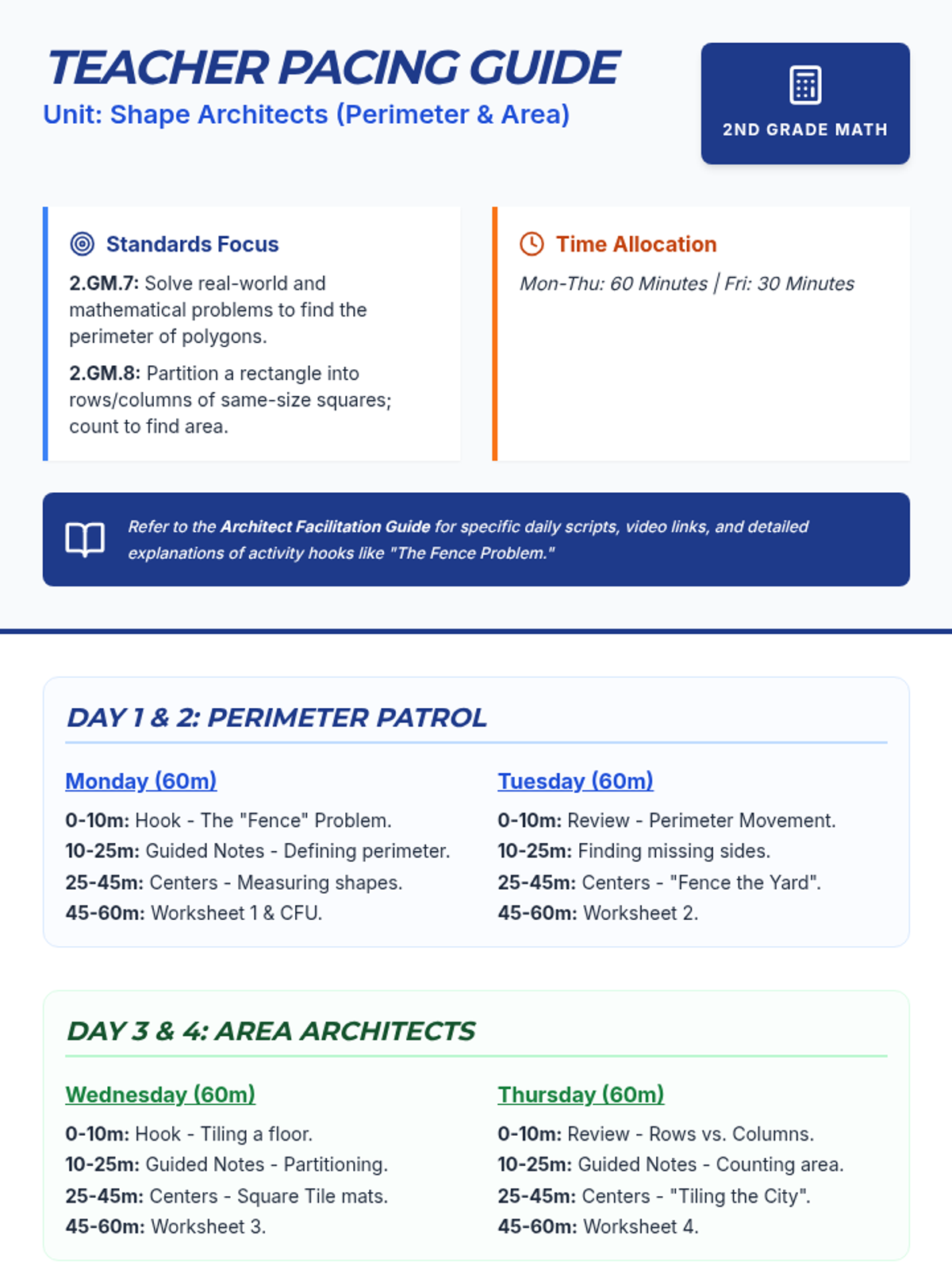
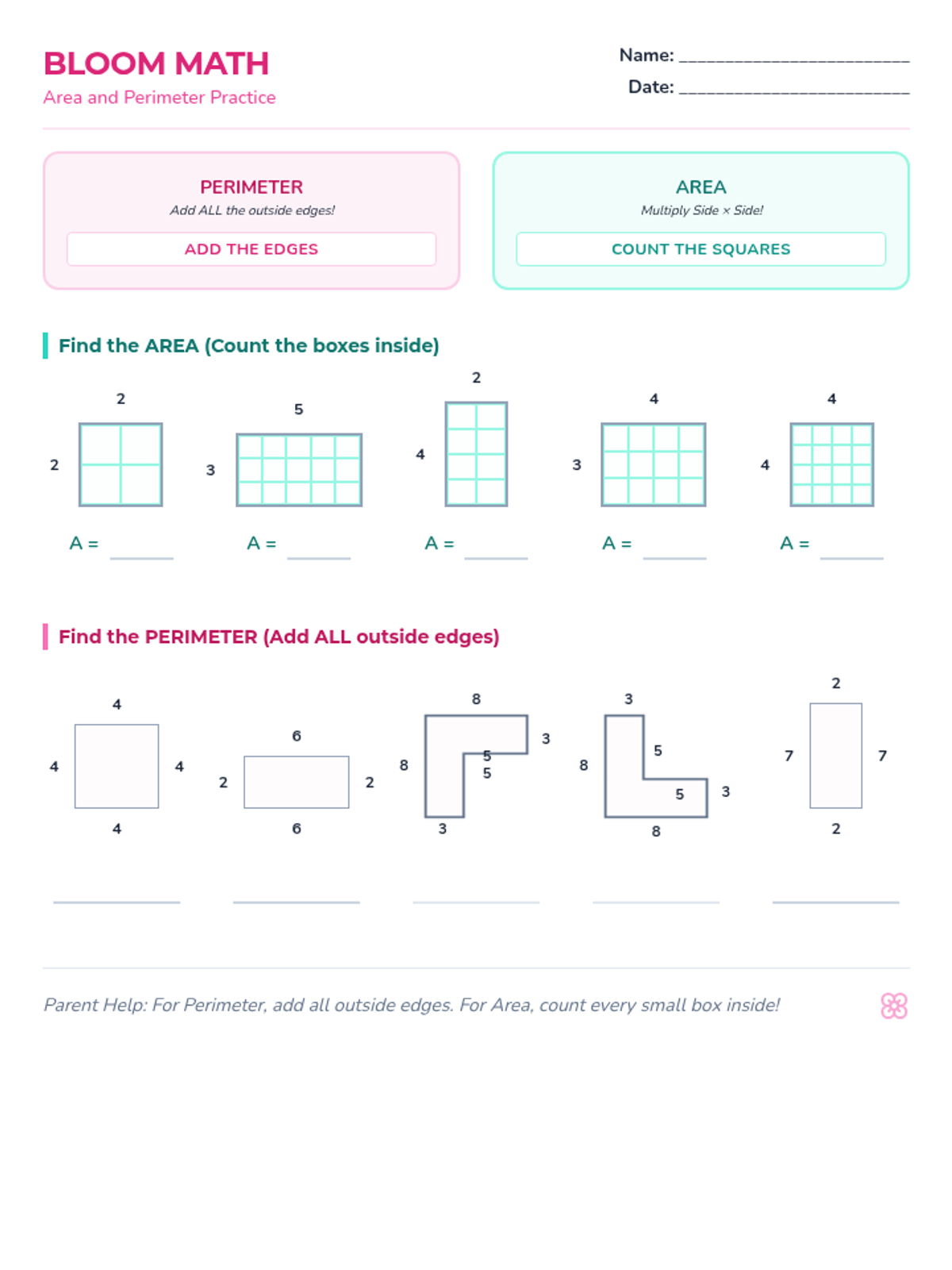
A cumulative review and formal assessment of perimeter and area concepts in a shortened Friday block.
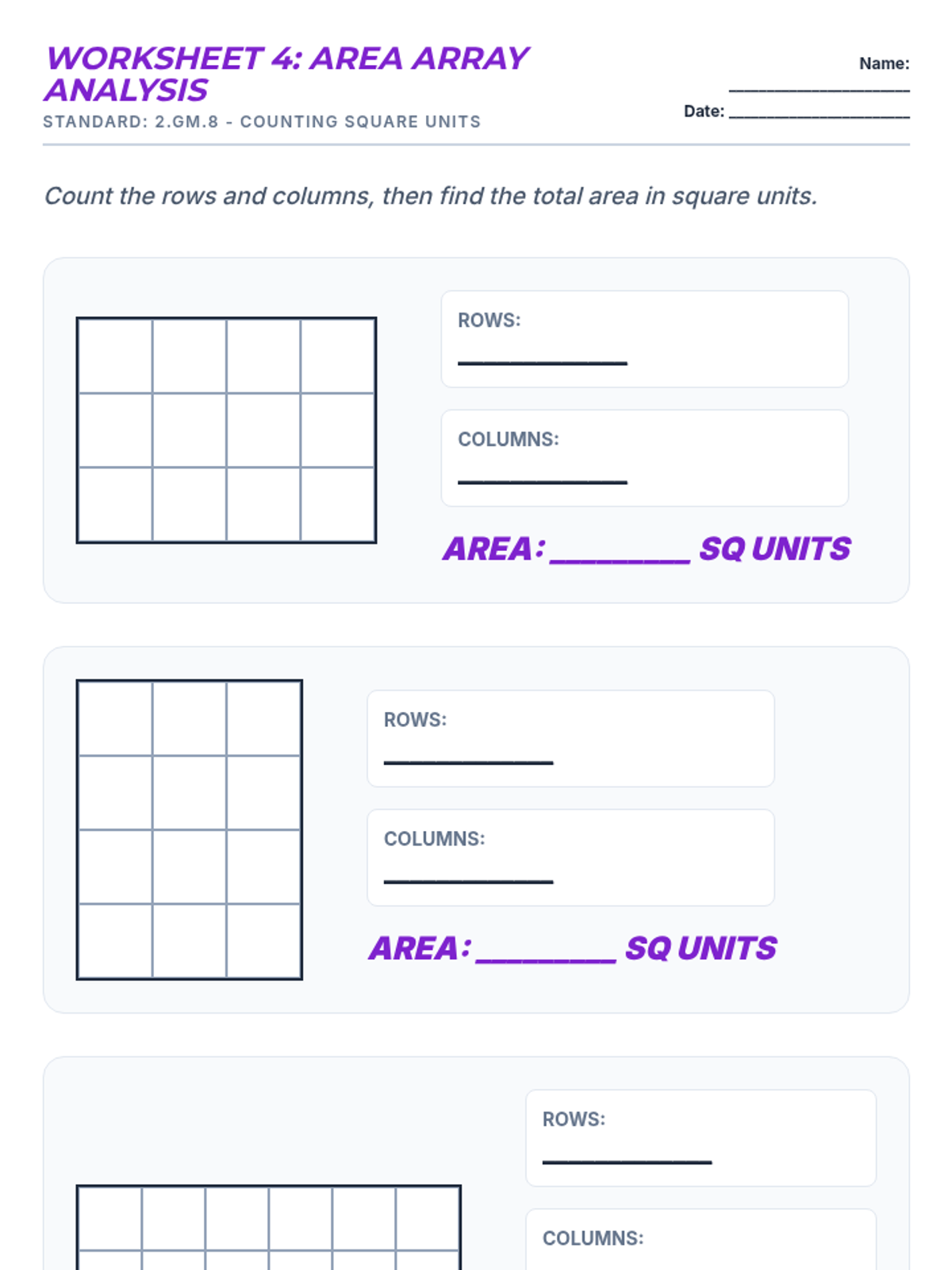
Reinforcing the concept of area through counting squares in arrays and understanding the relationship between rows, columns, and total area.
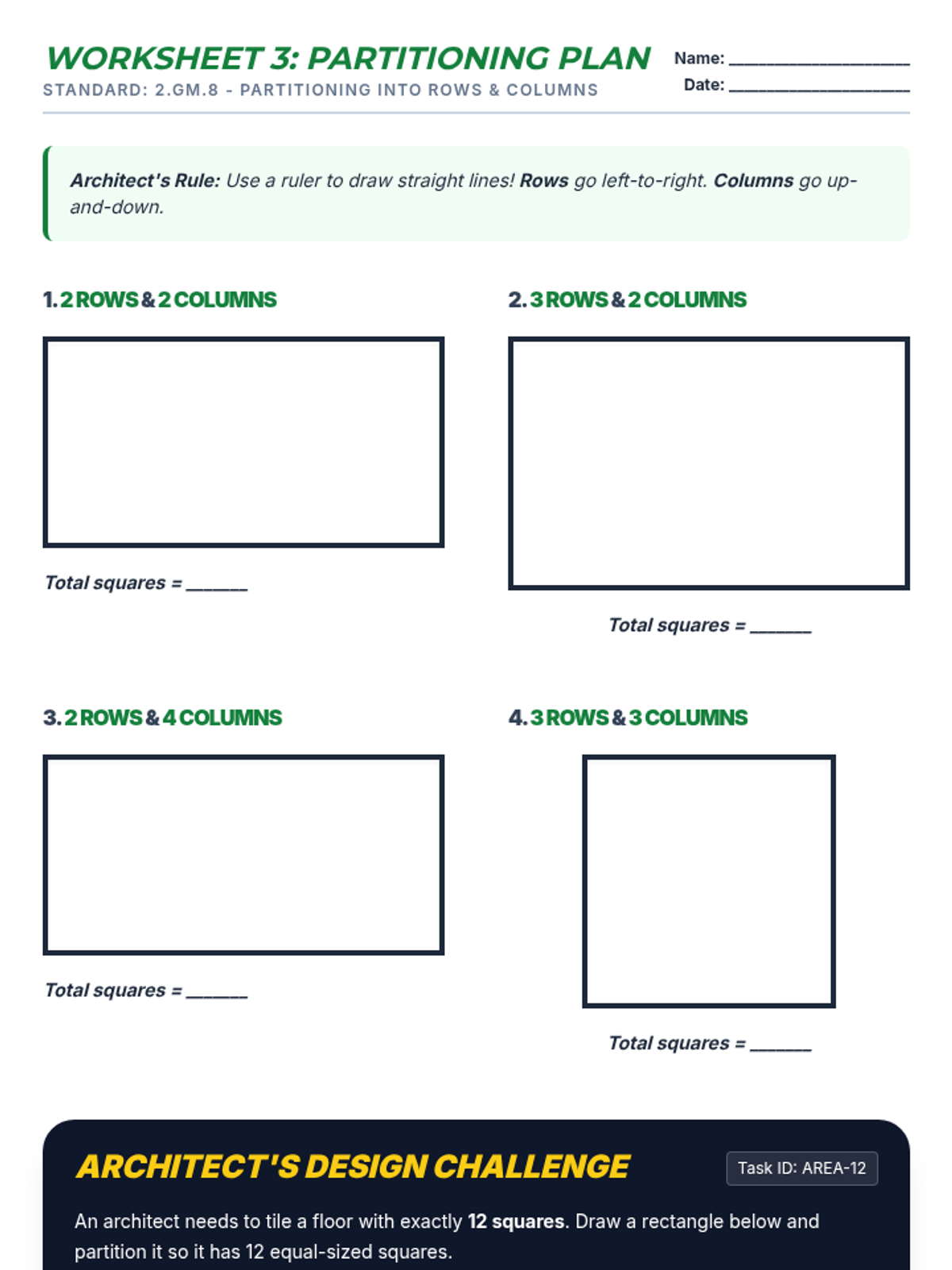
Introduction to area by partitioning rectangles into equal-sized rows and columns. Students will visualize area as the total number of squares inside a boundary.
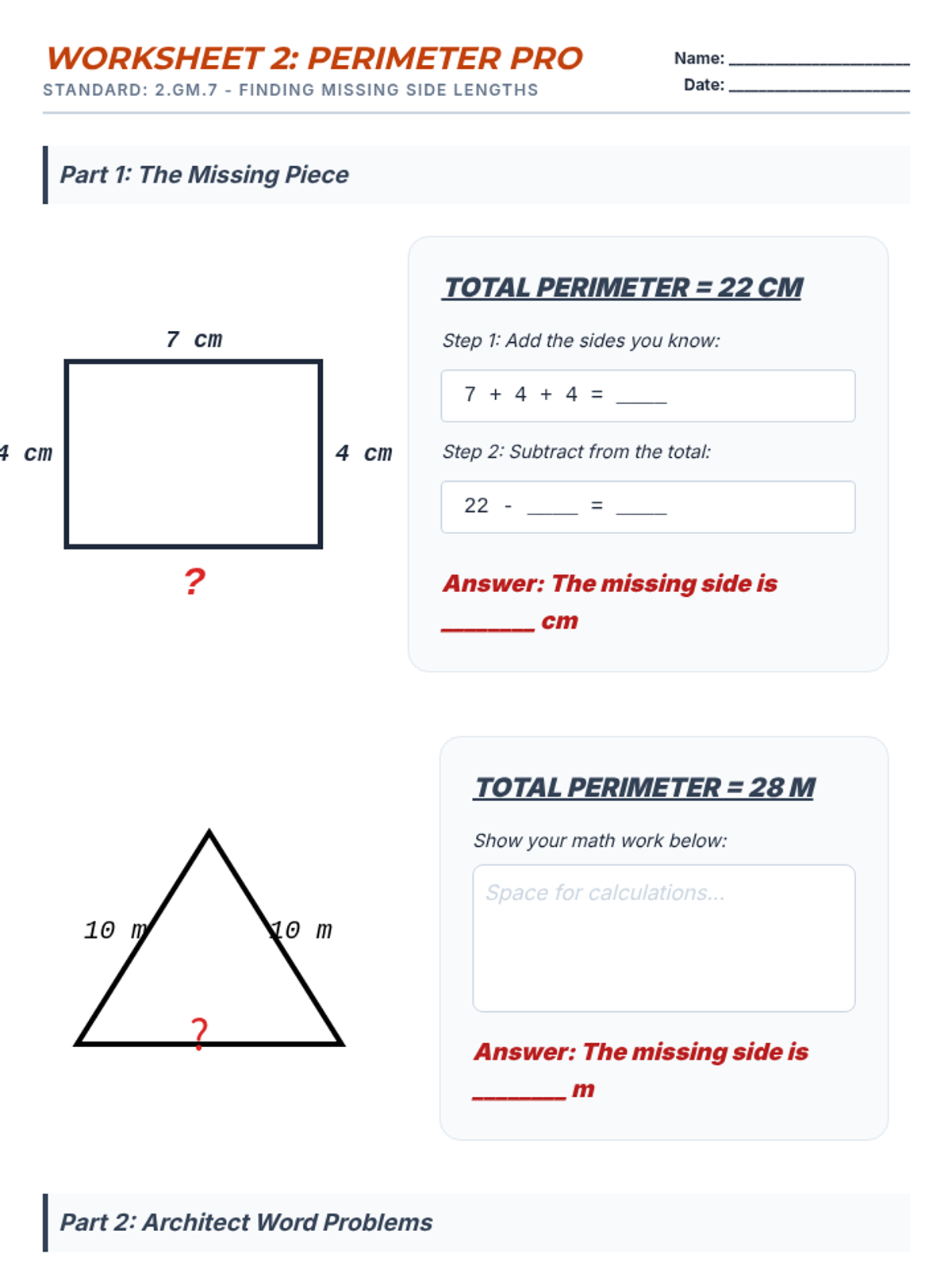
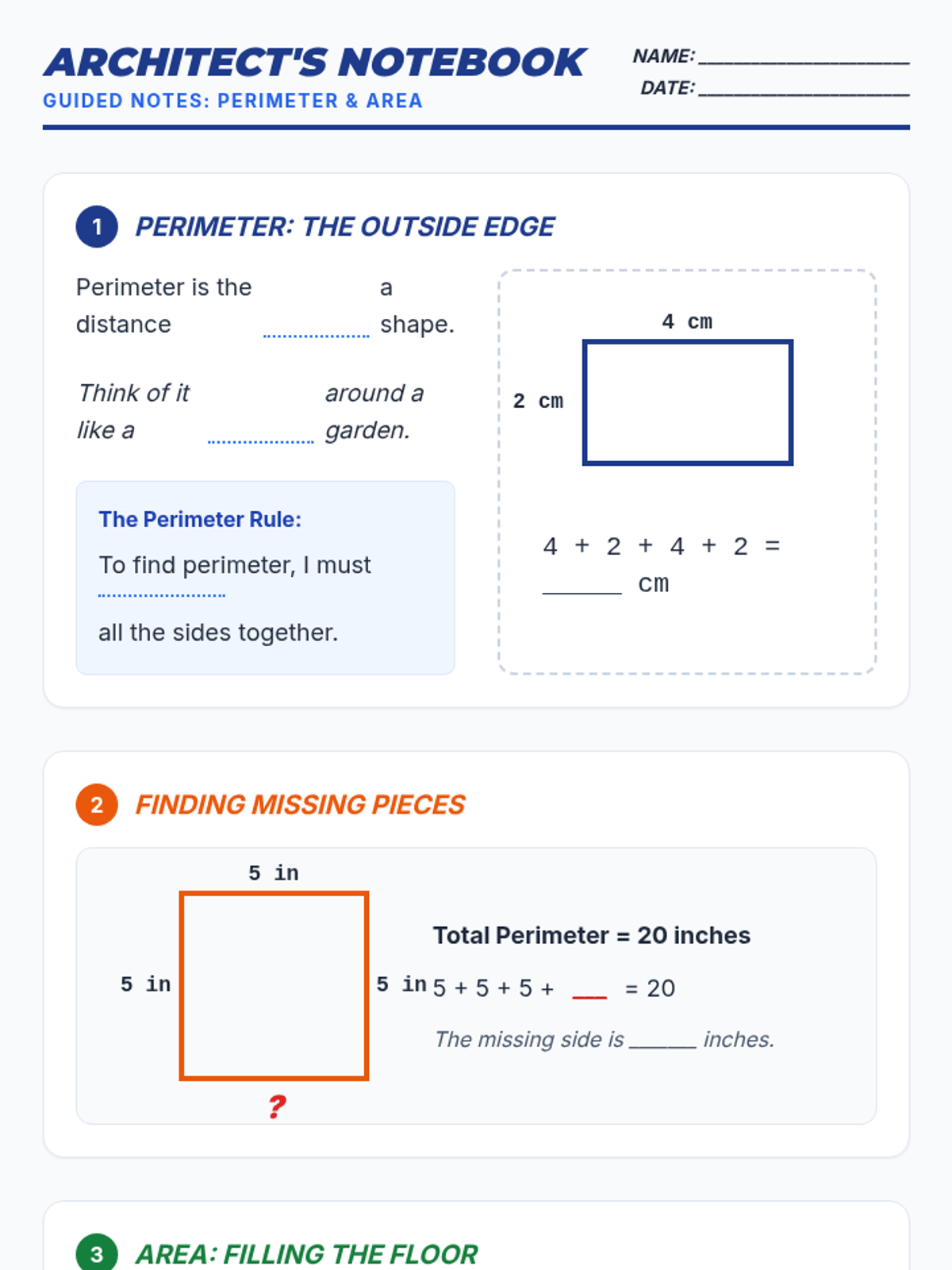
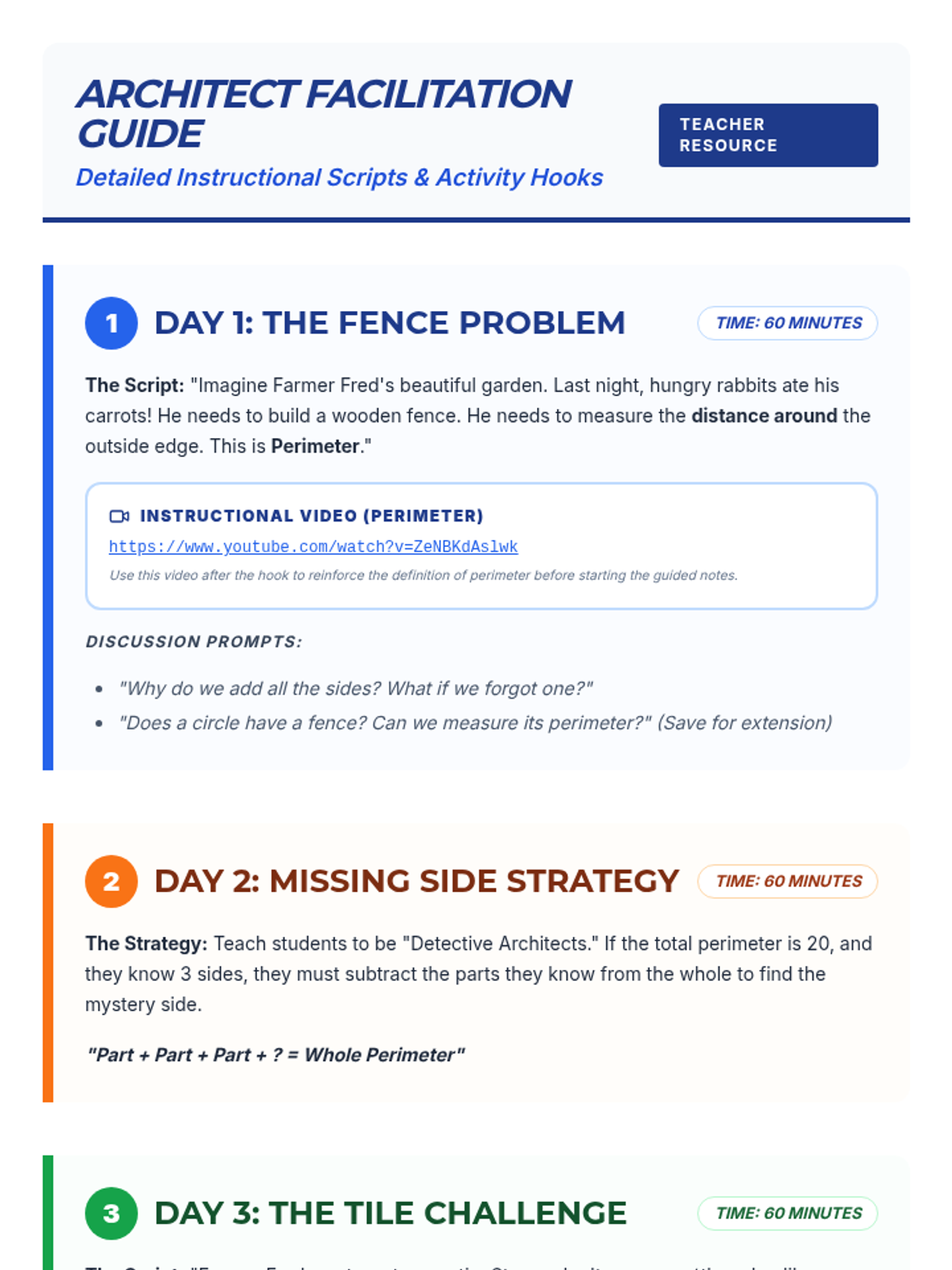
Advanced perimeter practice including finding missing side lengths and solving real-world word problems involving fences and borders.
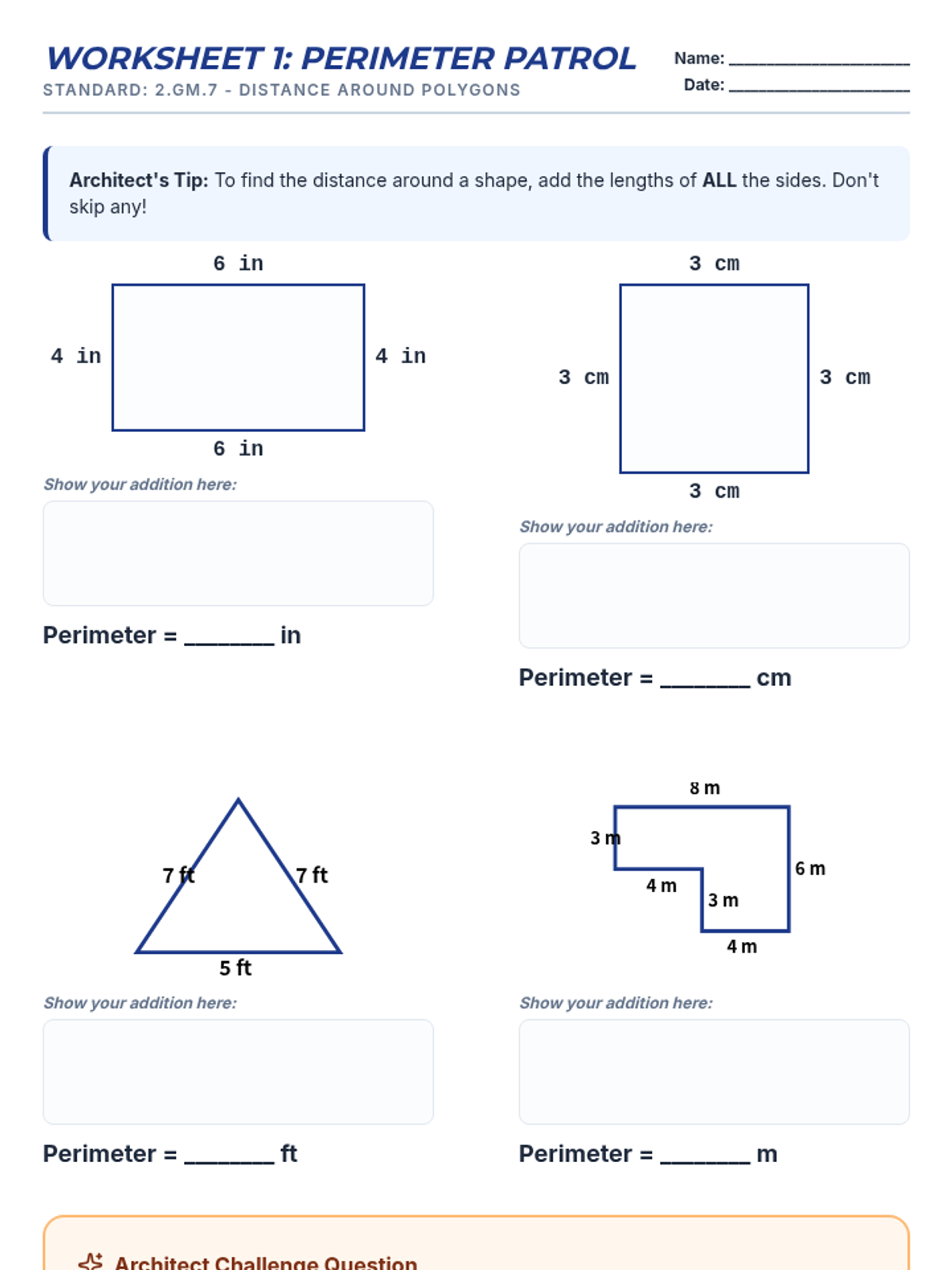
Introduction to perimeter as the distance around a shape. Students will learn to measure sides and add them together to find the total perimeter.
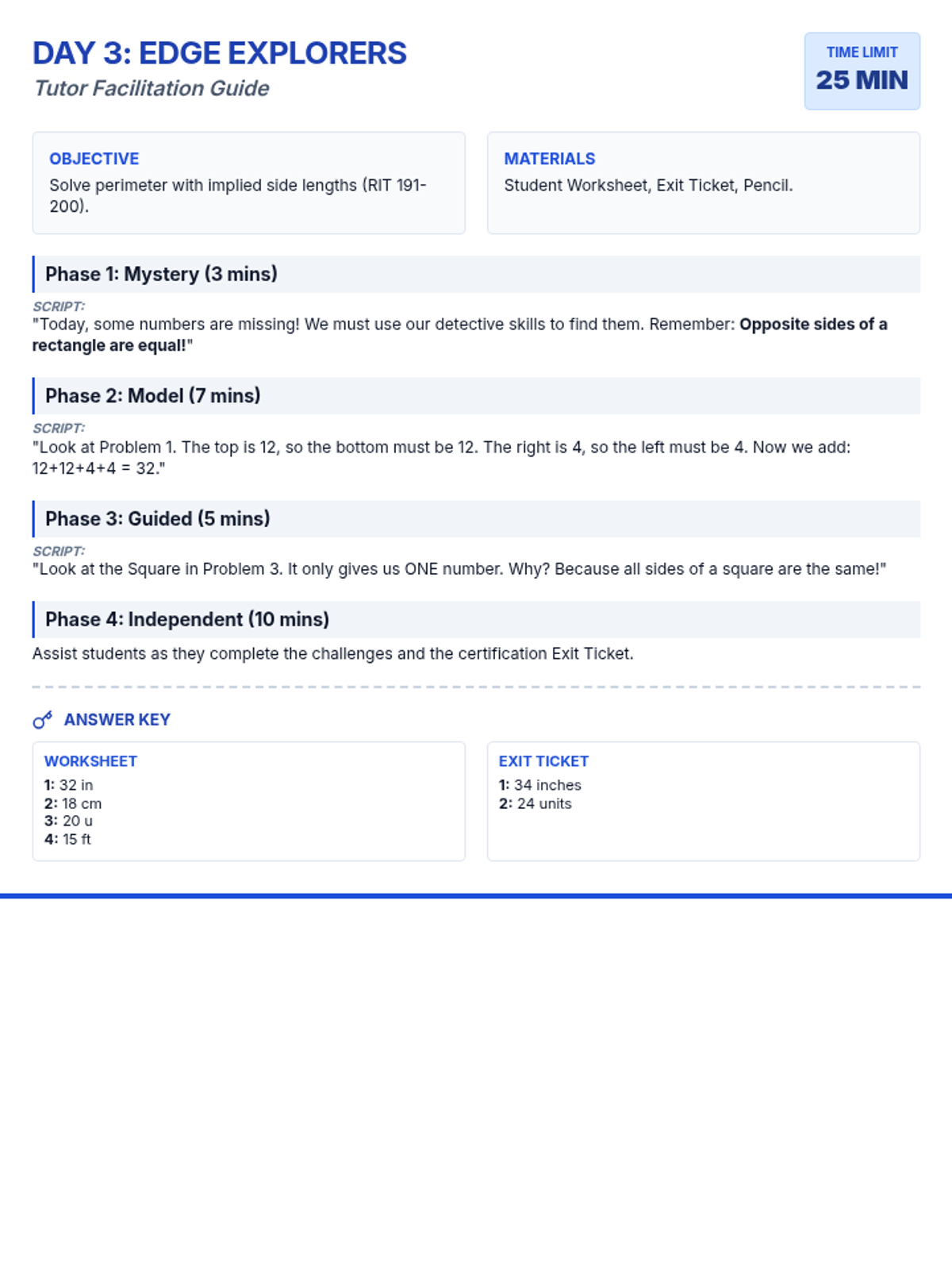
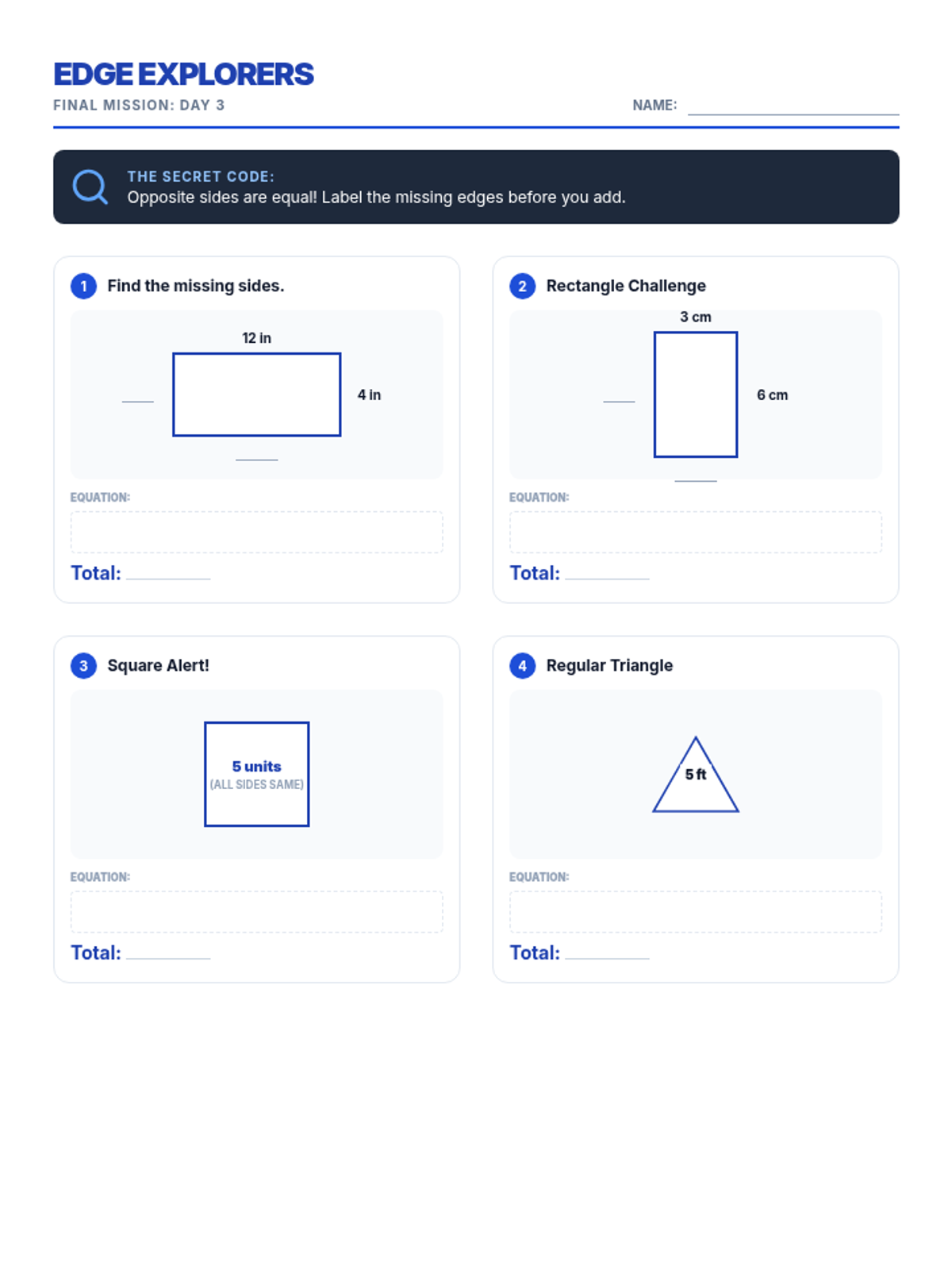
Students solve perimeter problems where some side lengths are implied or shapes are complex (191-200 focus).
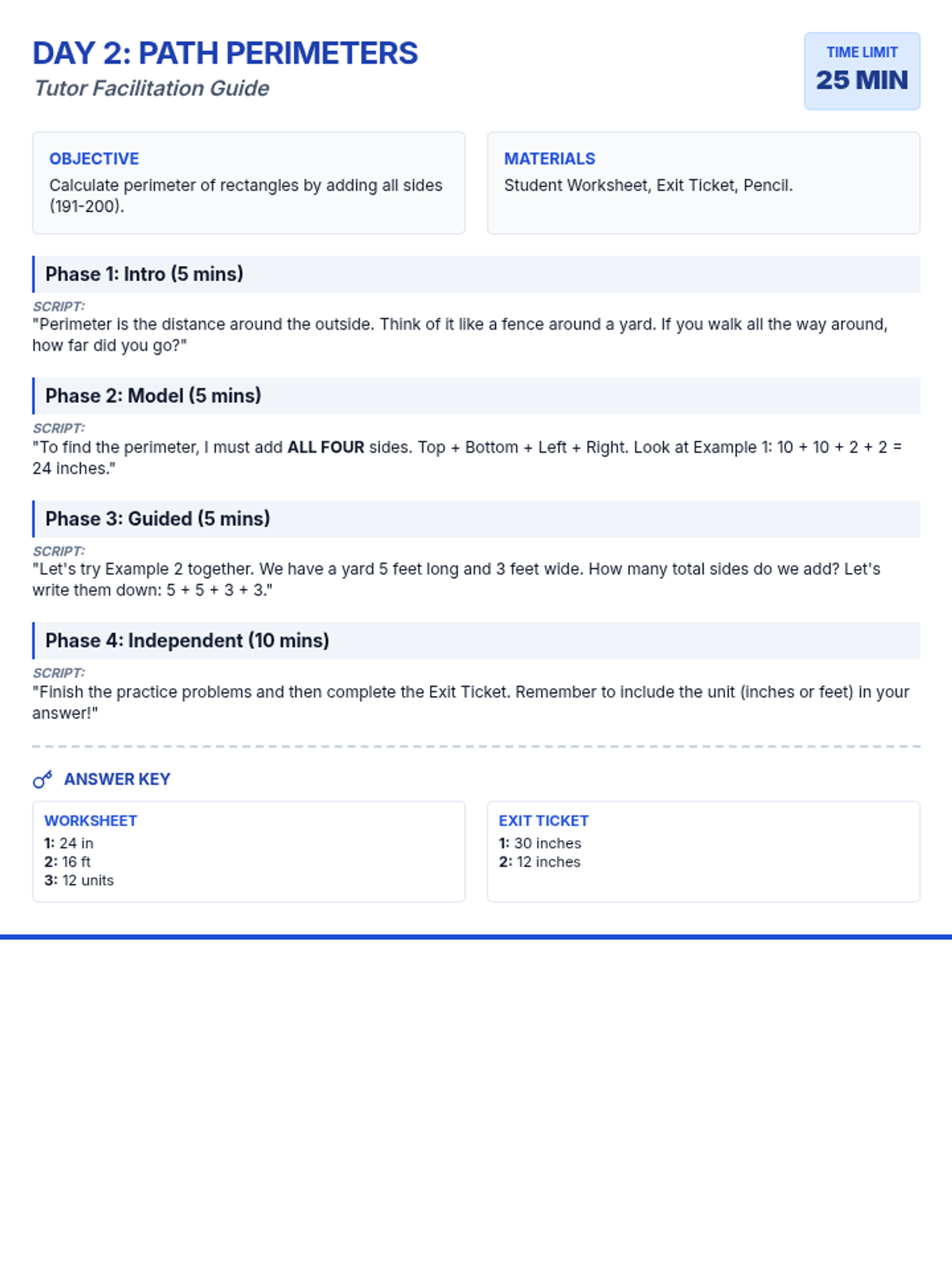
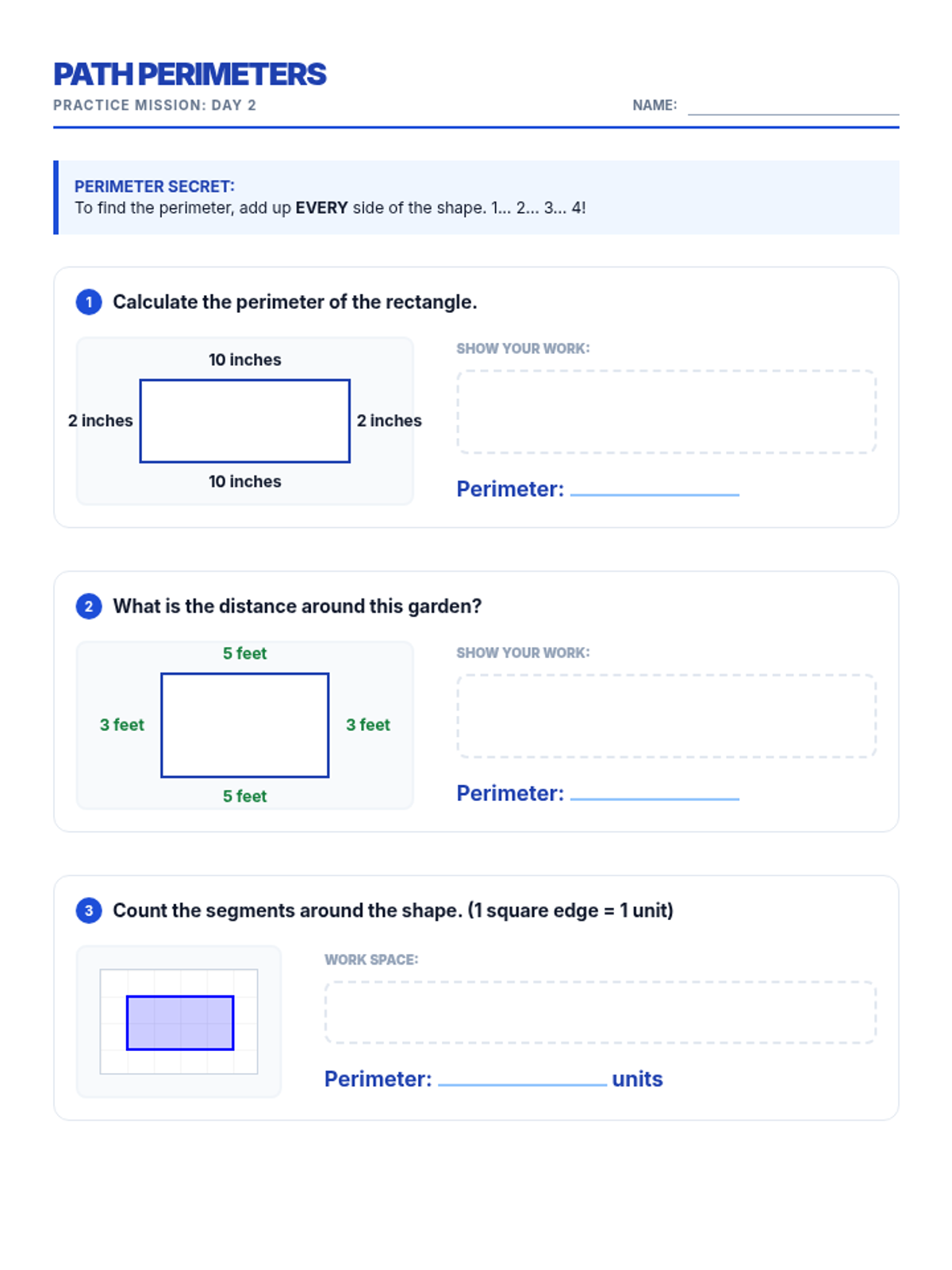
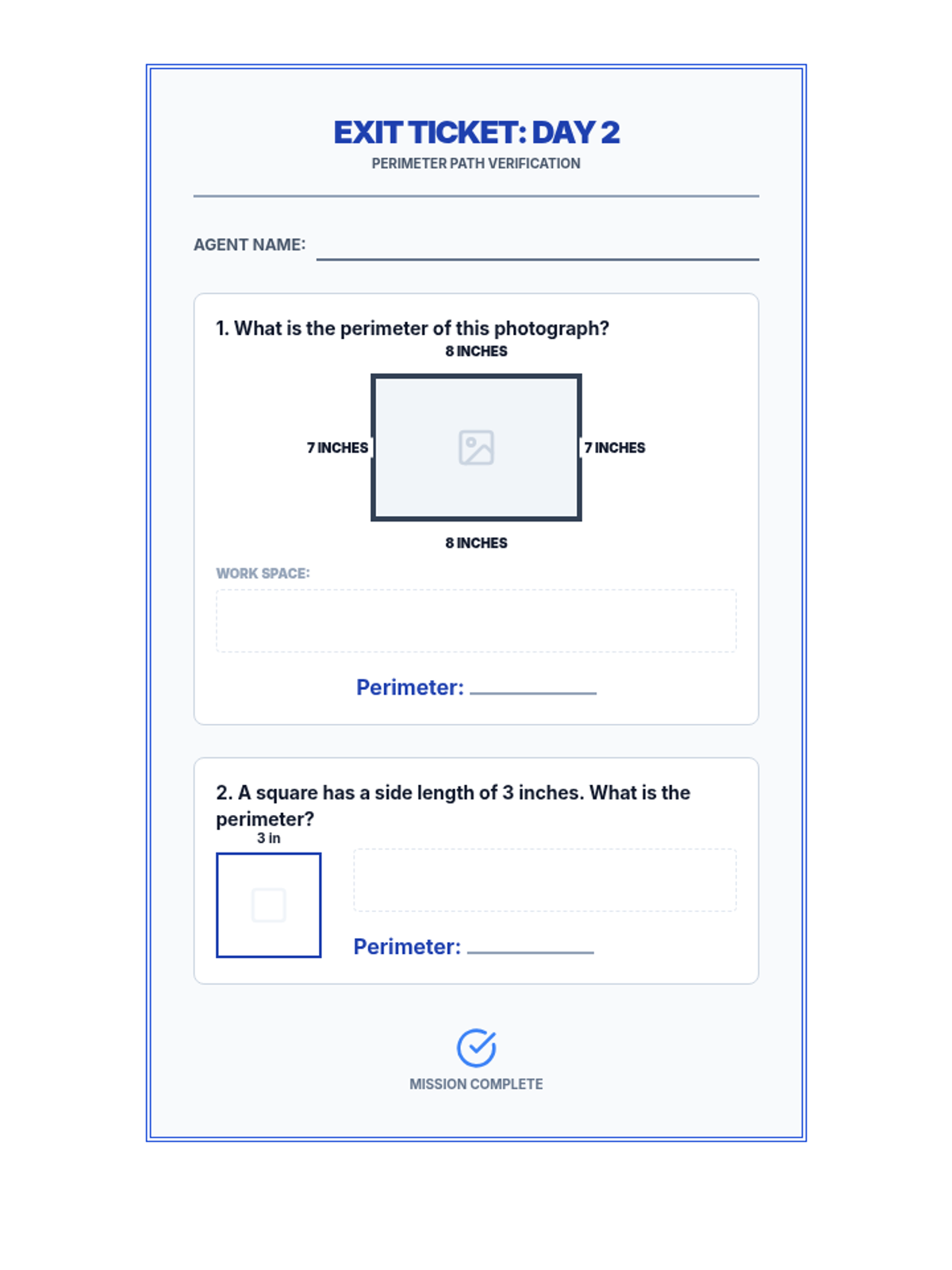
Students transition from basic counting and addition to calculating the perimeter of rectangles (191-200).
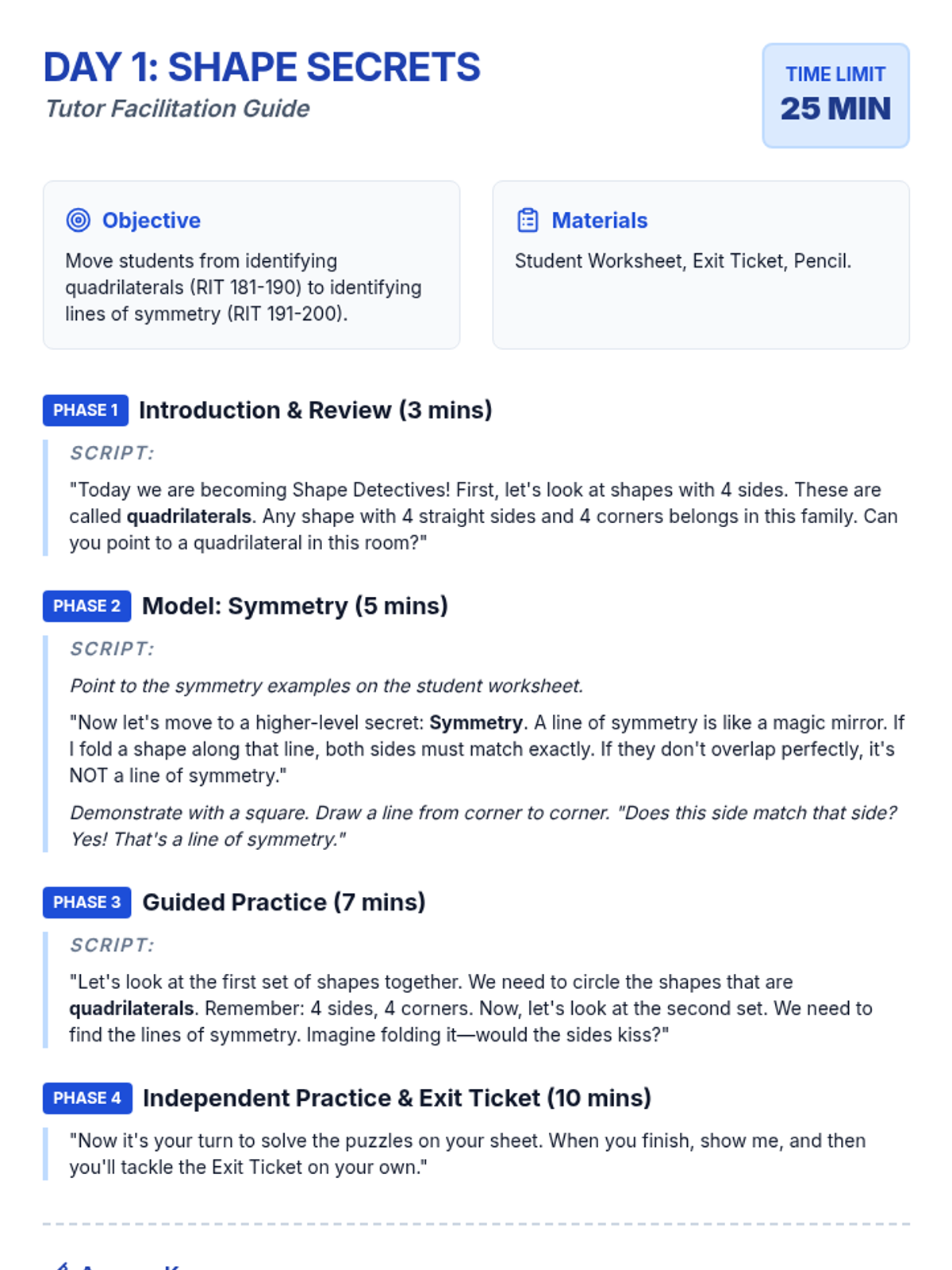
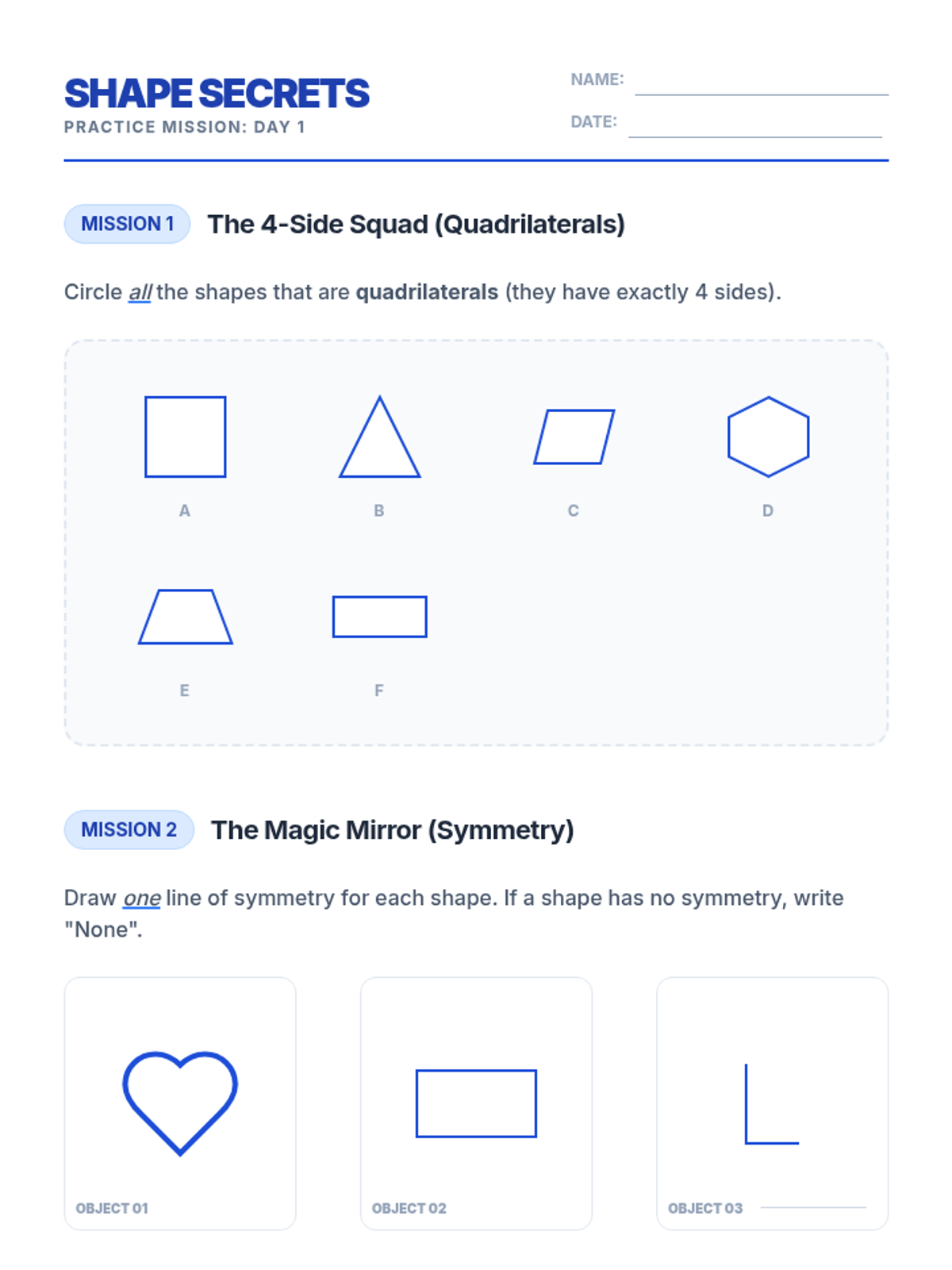
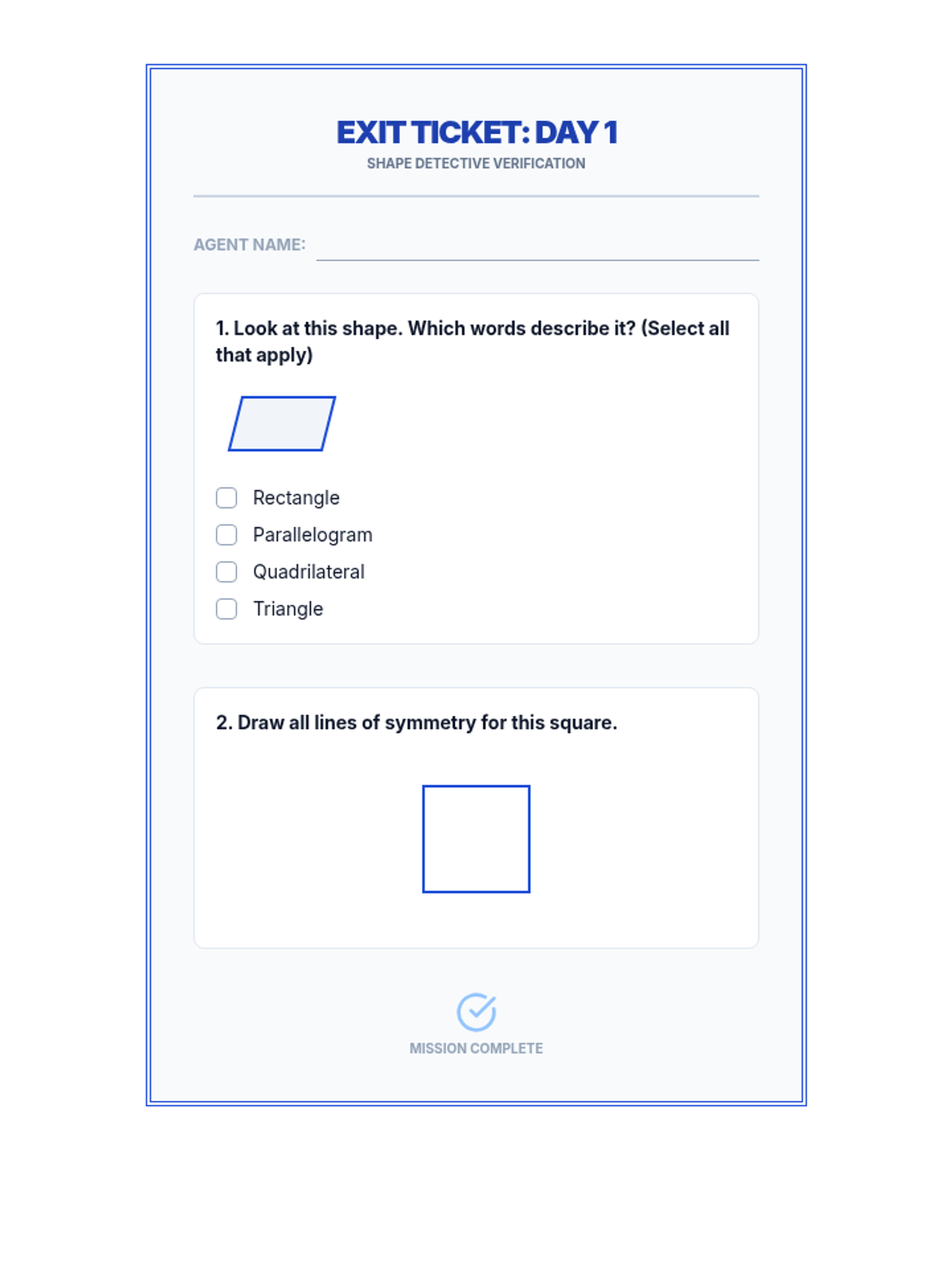
Students identify attributes of quadrilaterals (181-190) and explore lines of symmetry in 2D shapes (191-200).
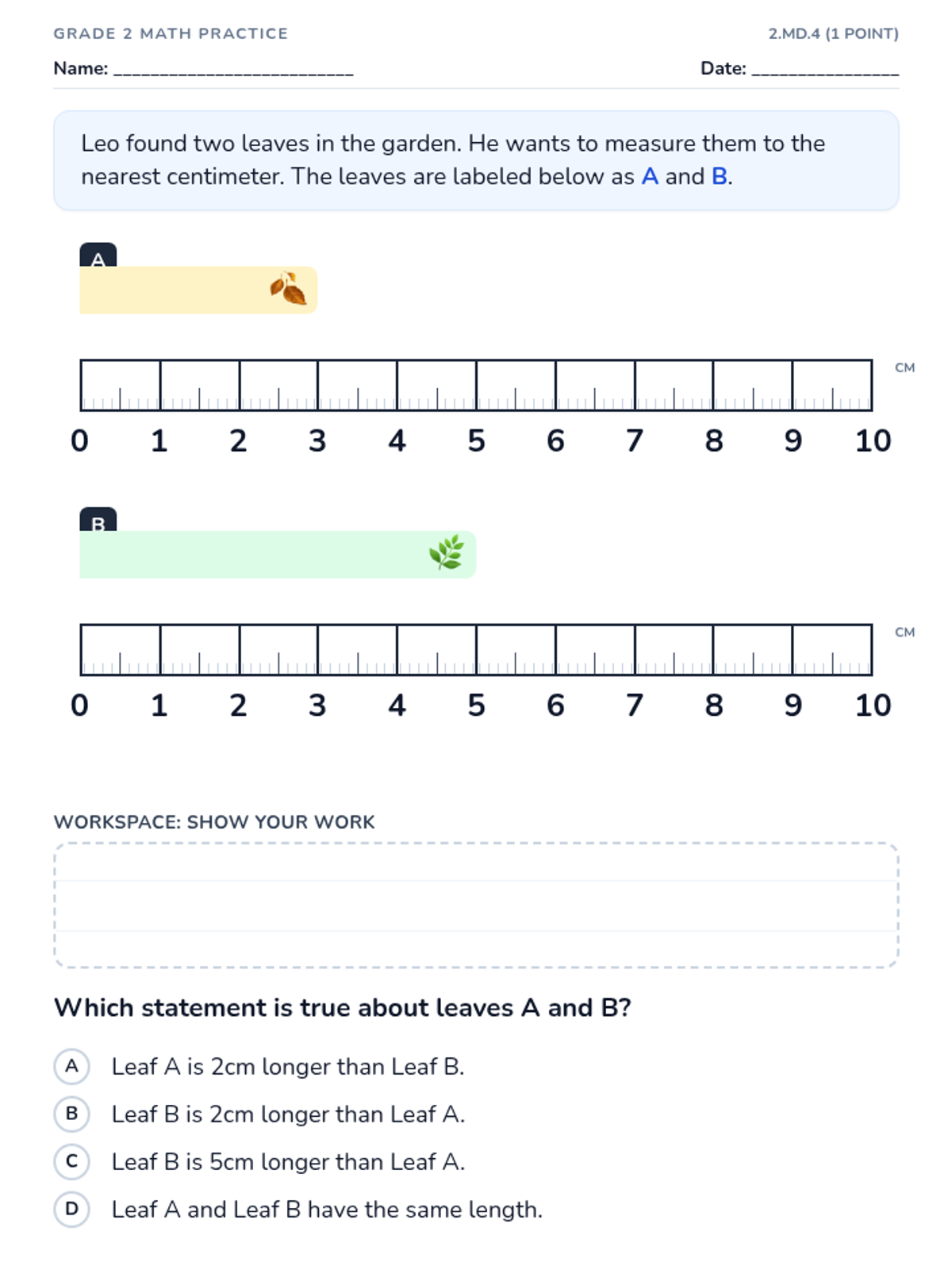
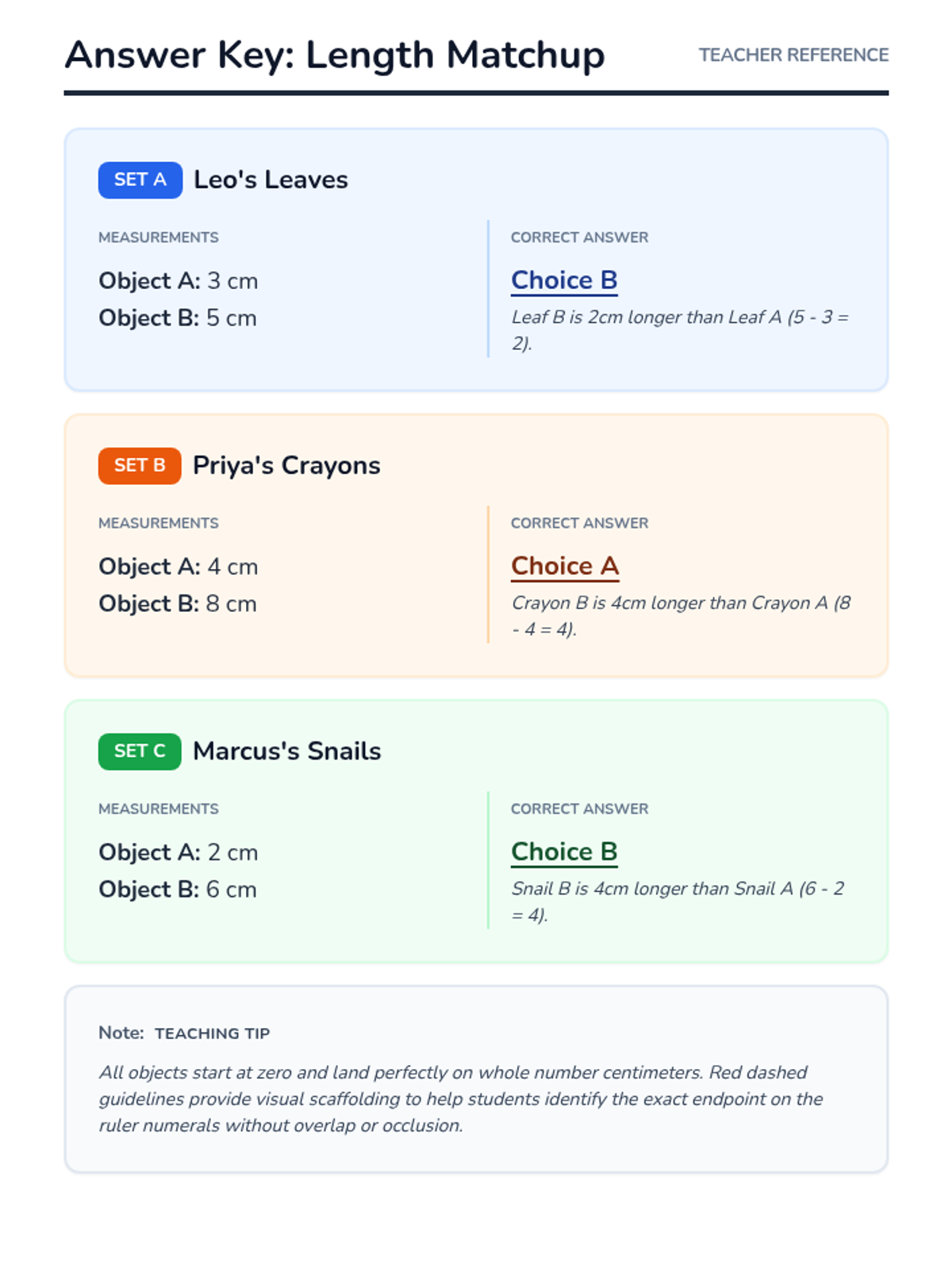
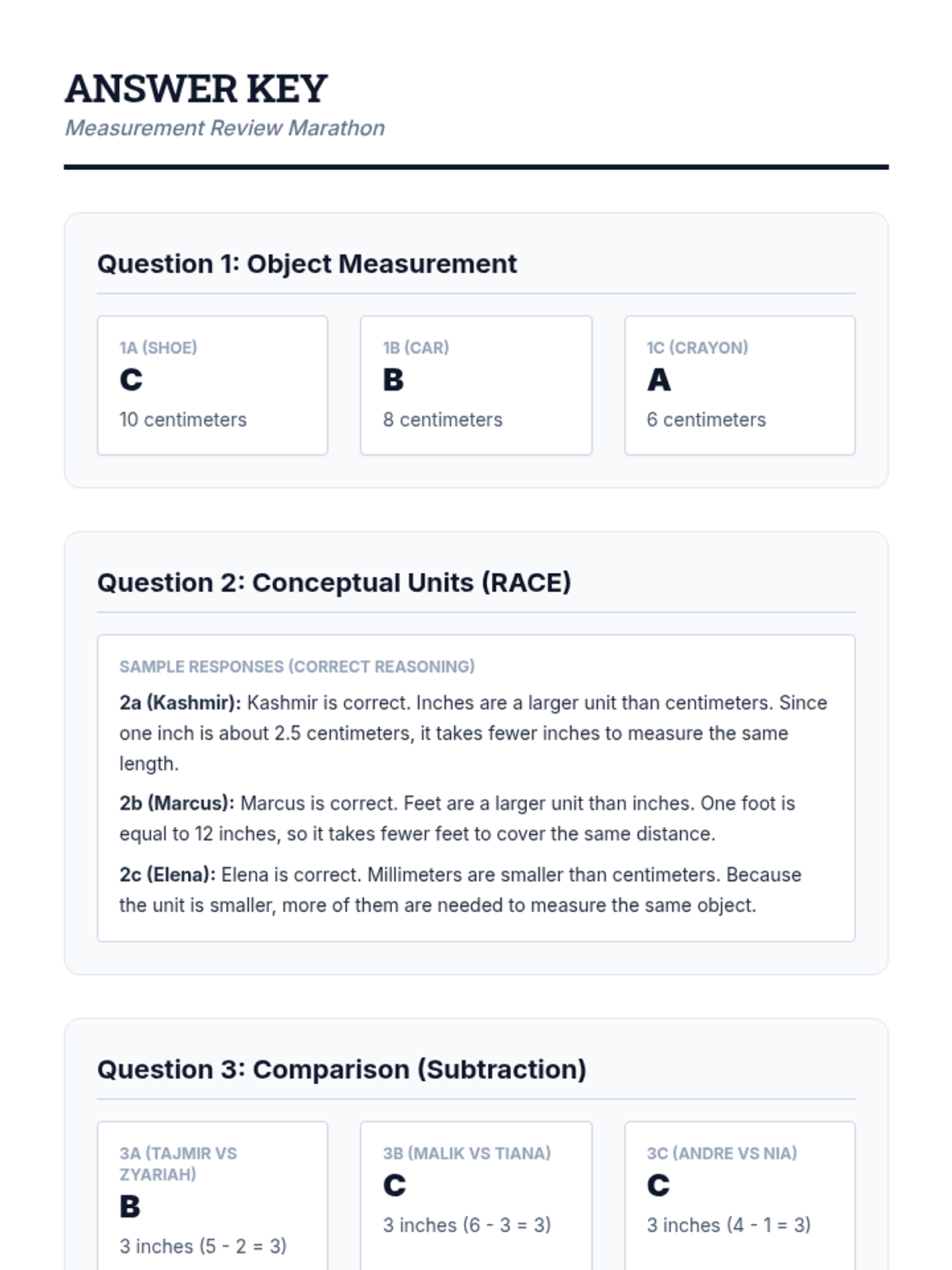
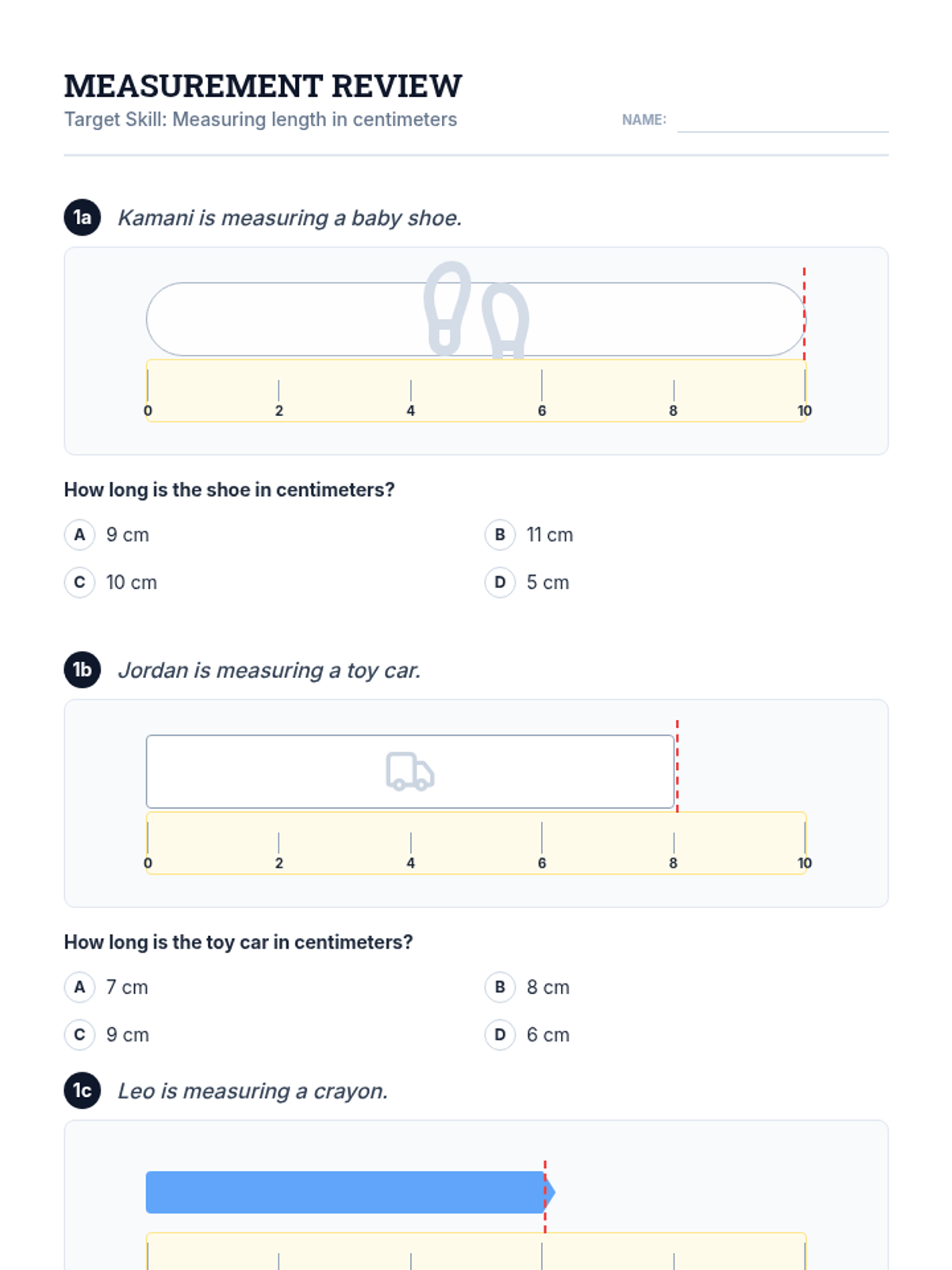
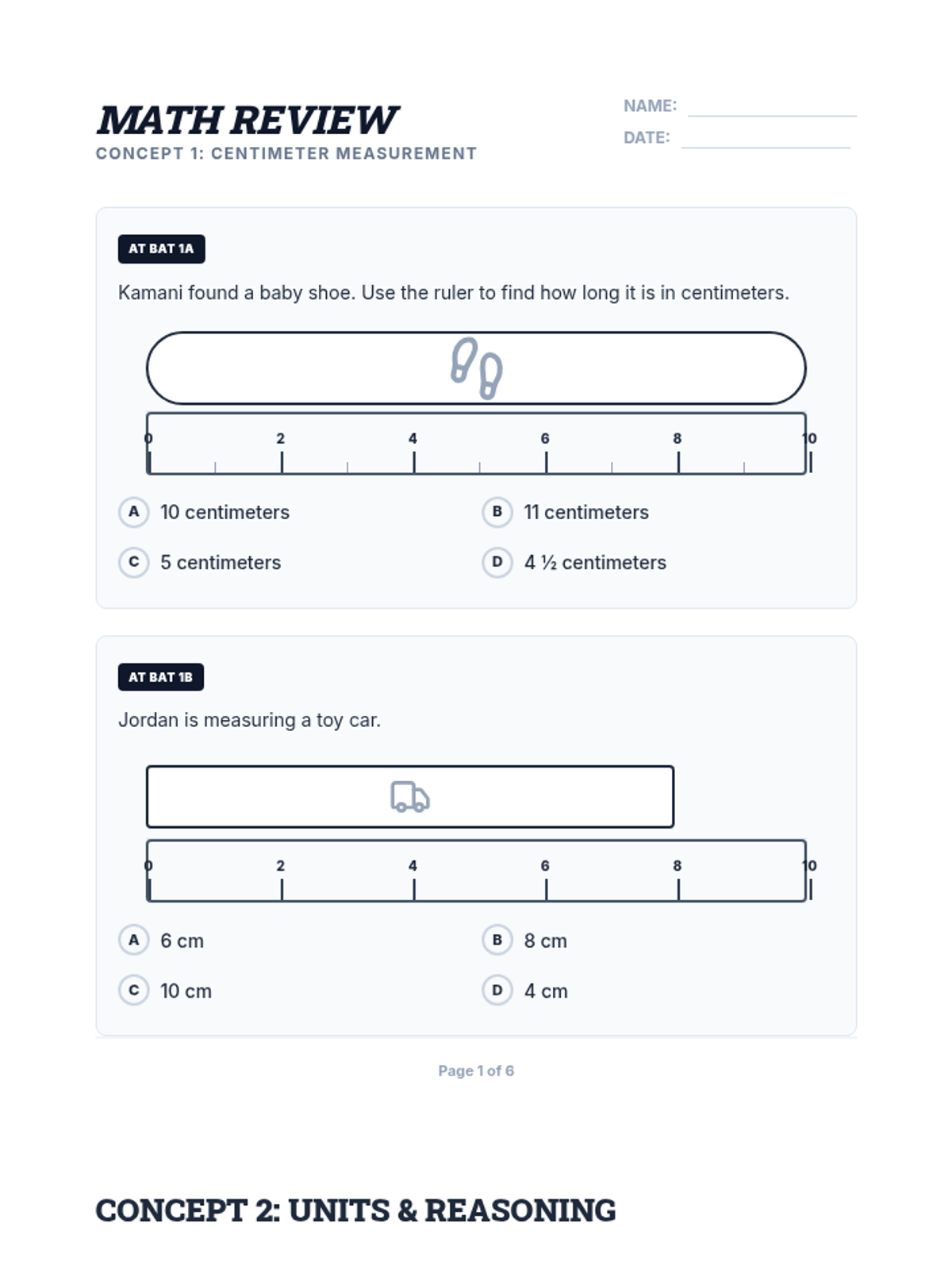
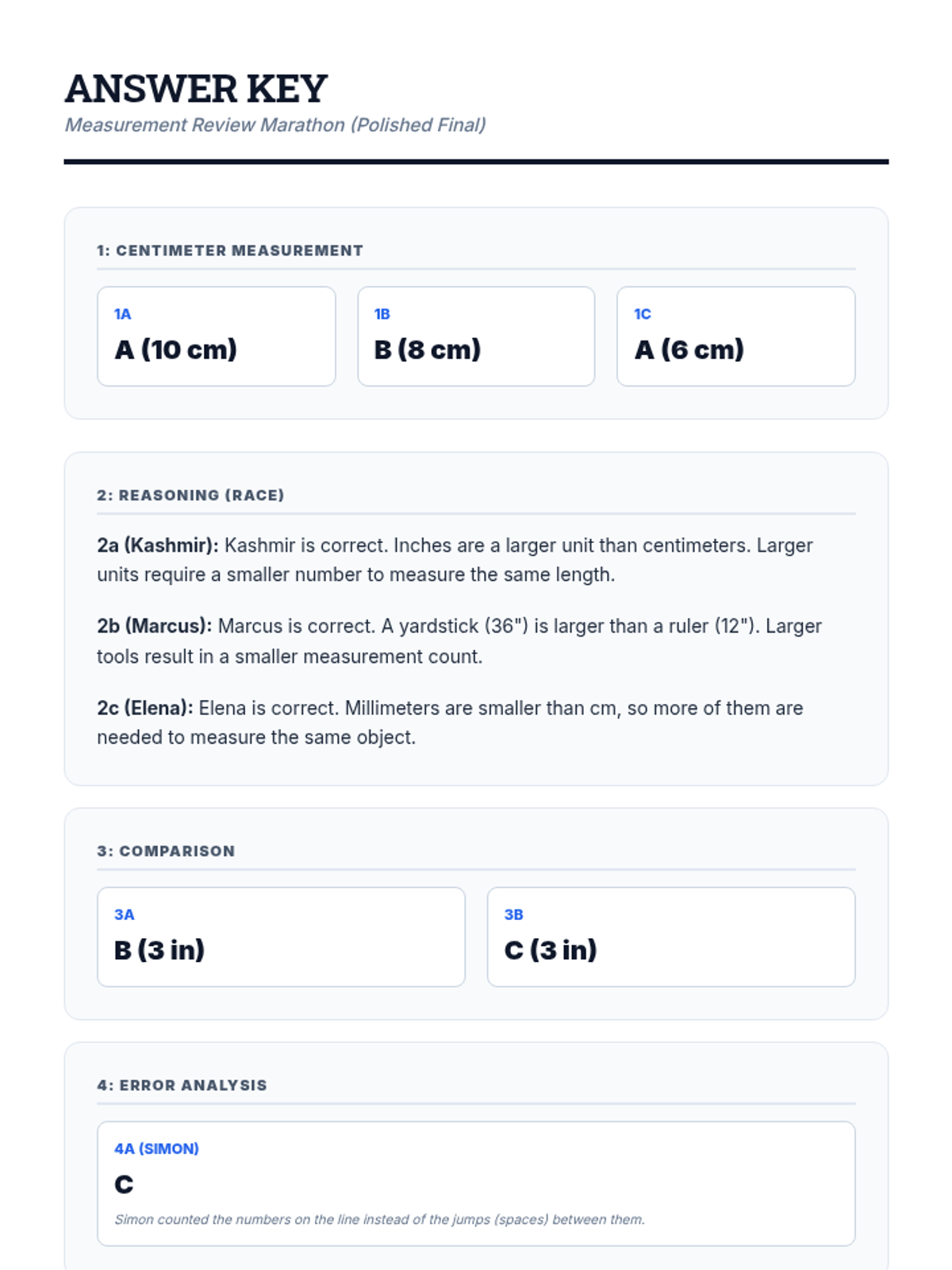
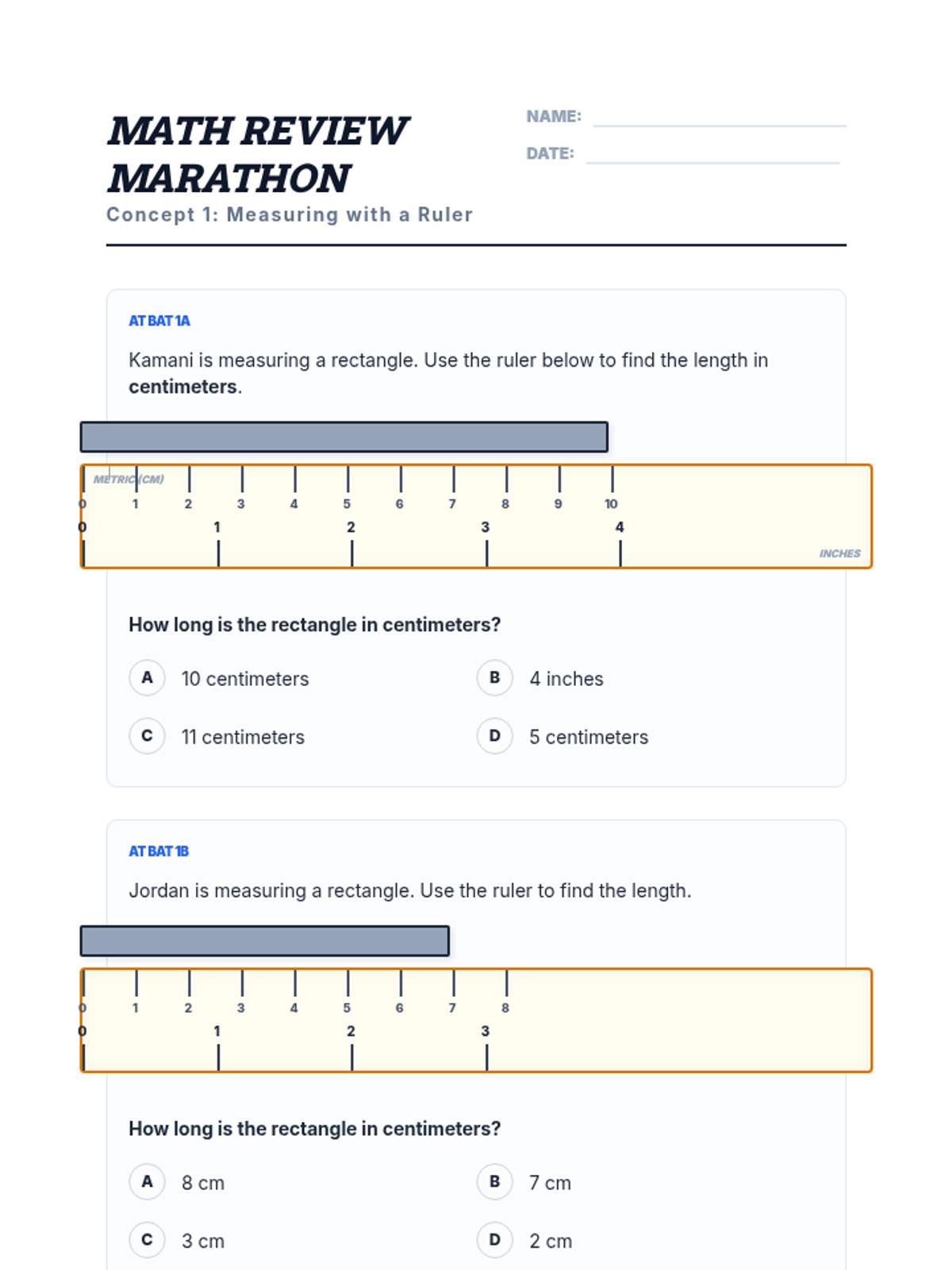
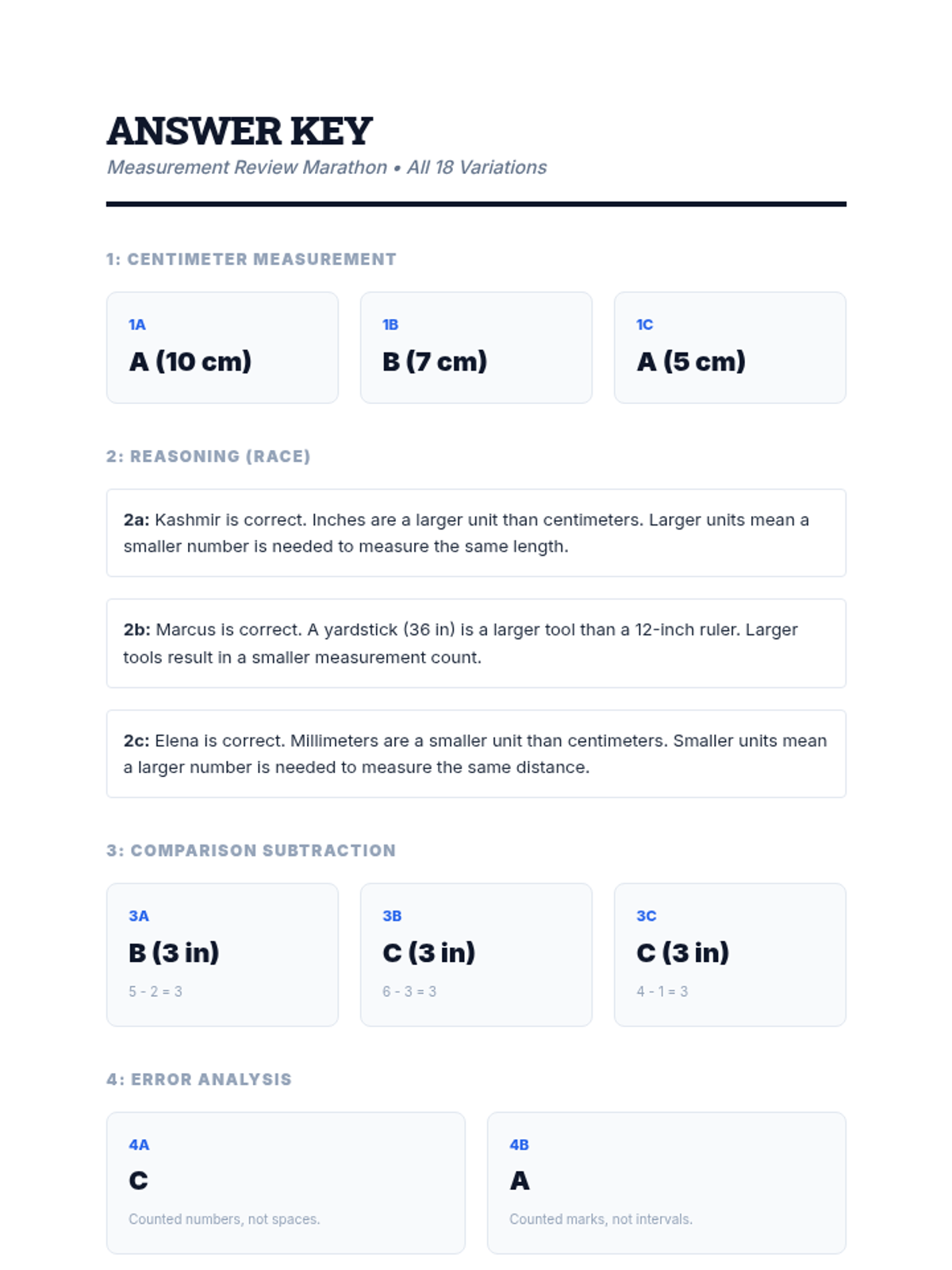
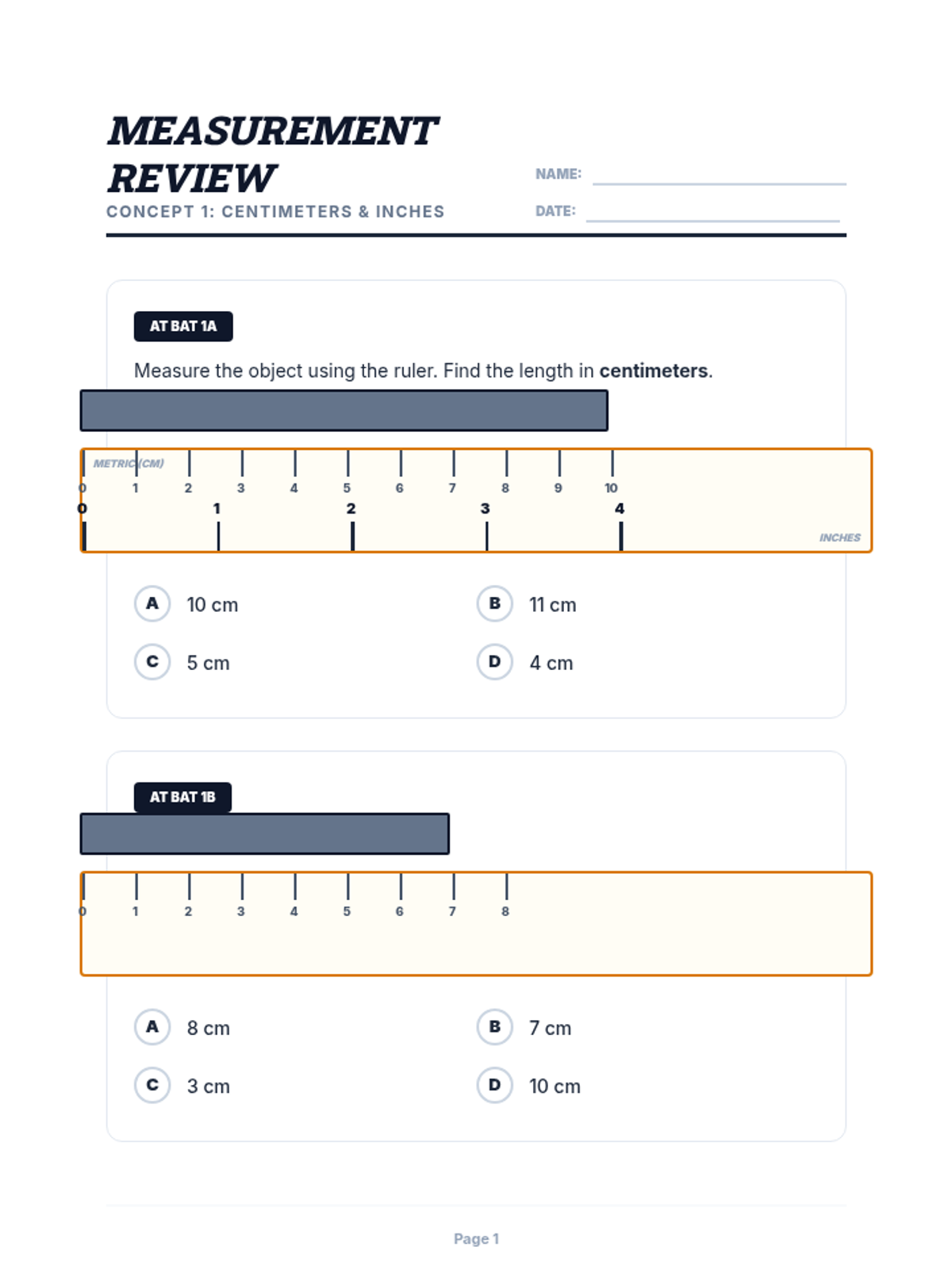
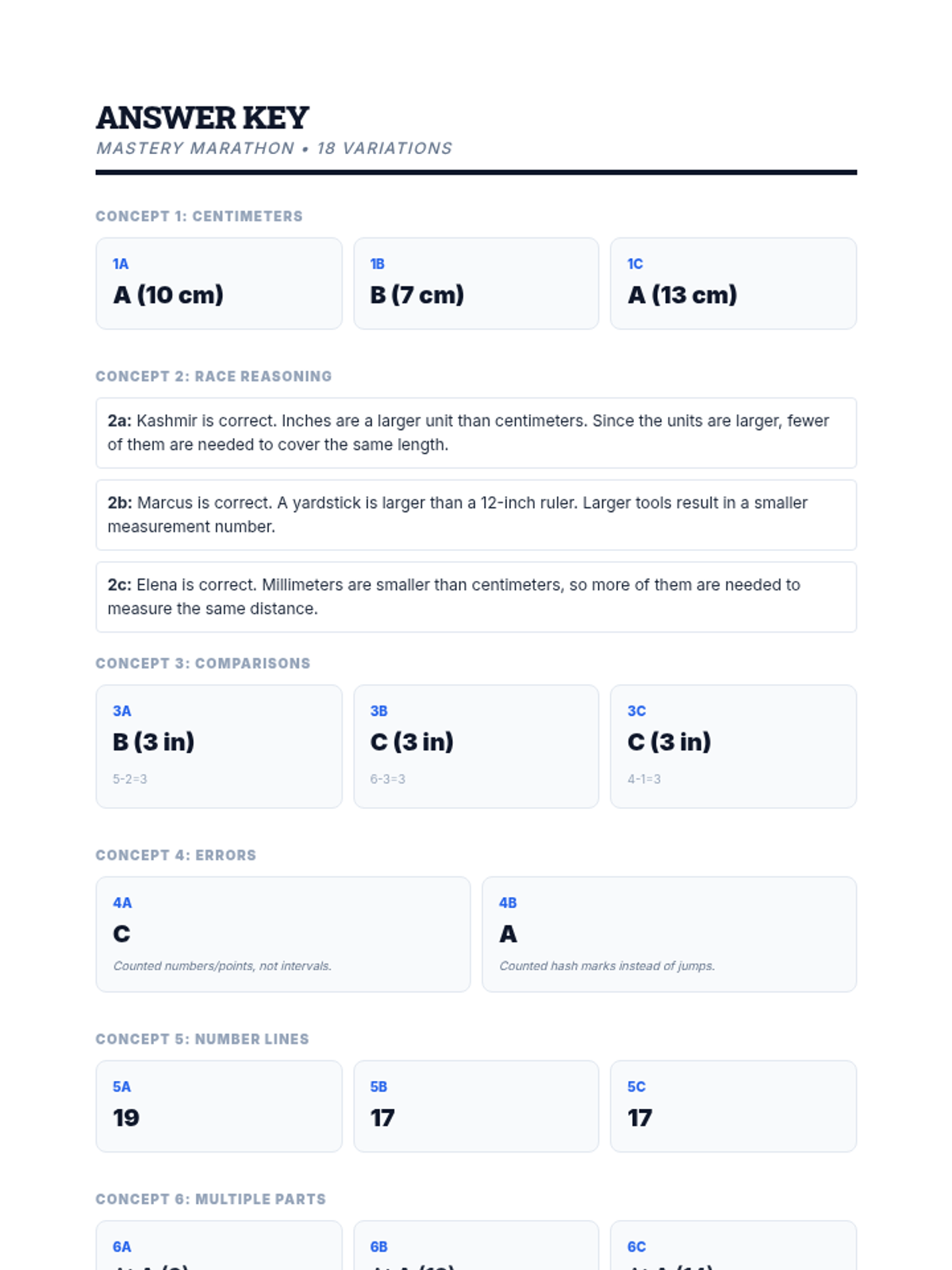
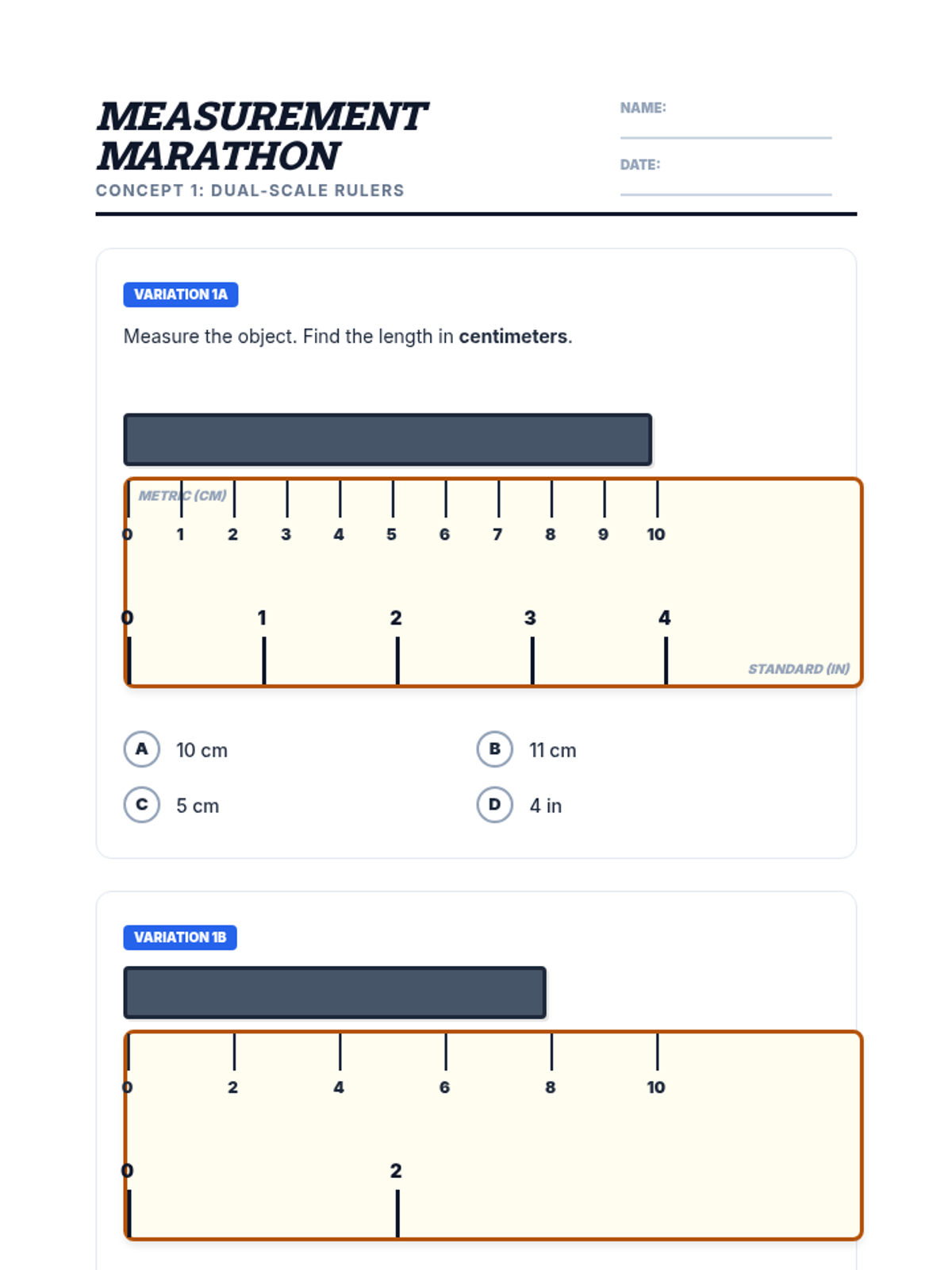
Students practice measuring objects in centimeters and comparing their lengths to determine how much longer one object is than another, reinforcing the 2.MD.4 standard.
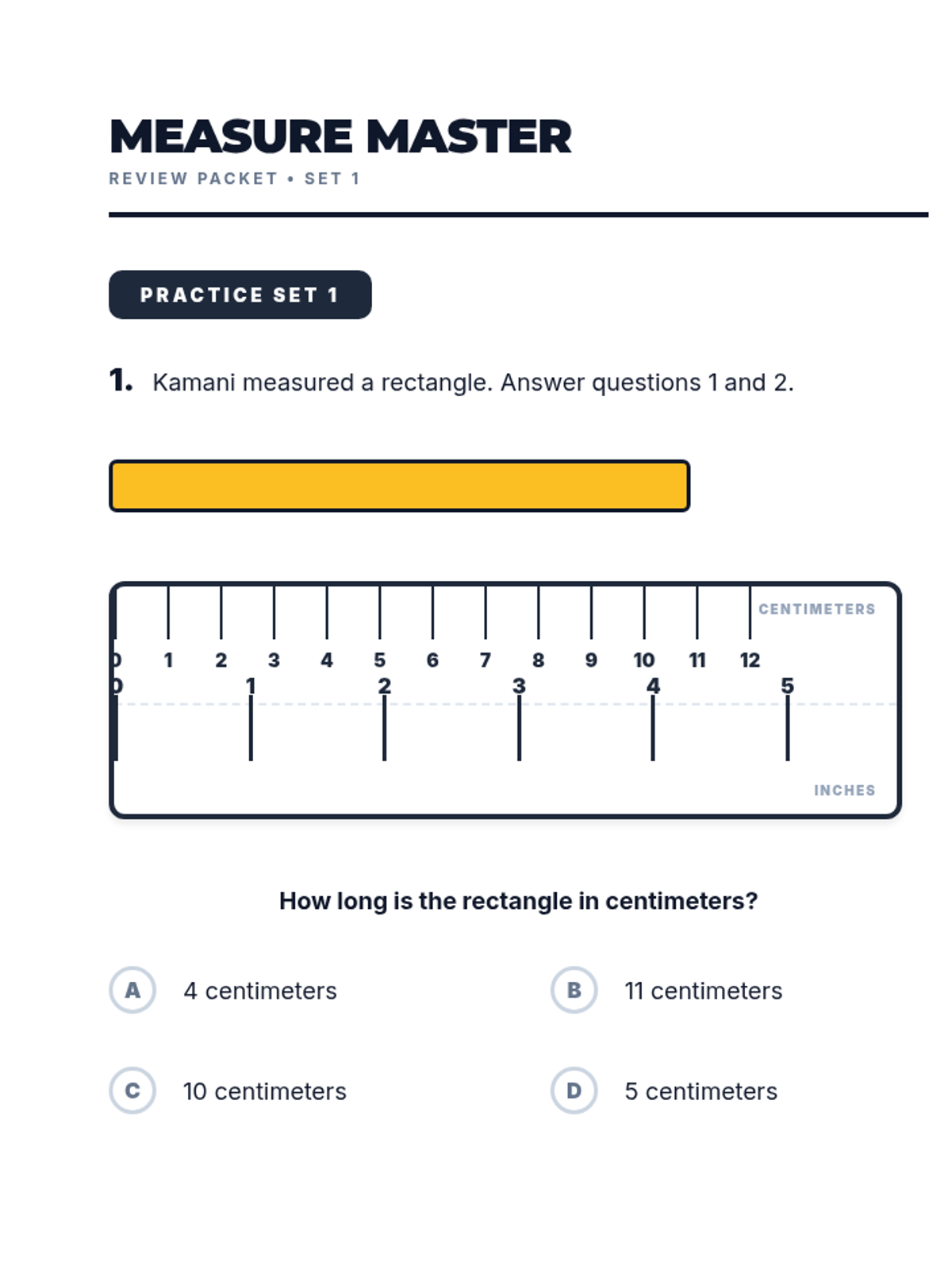
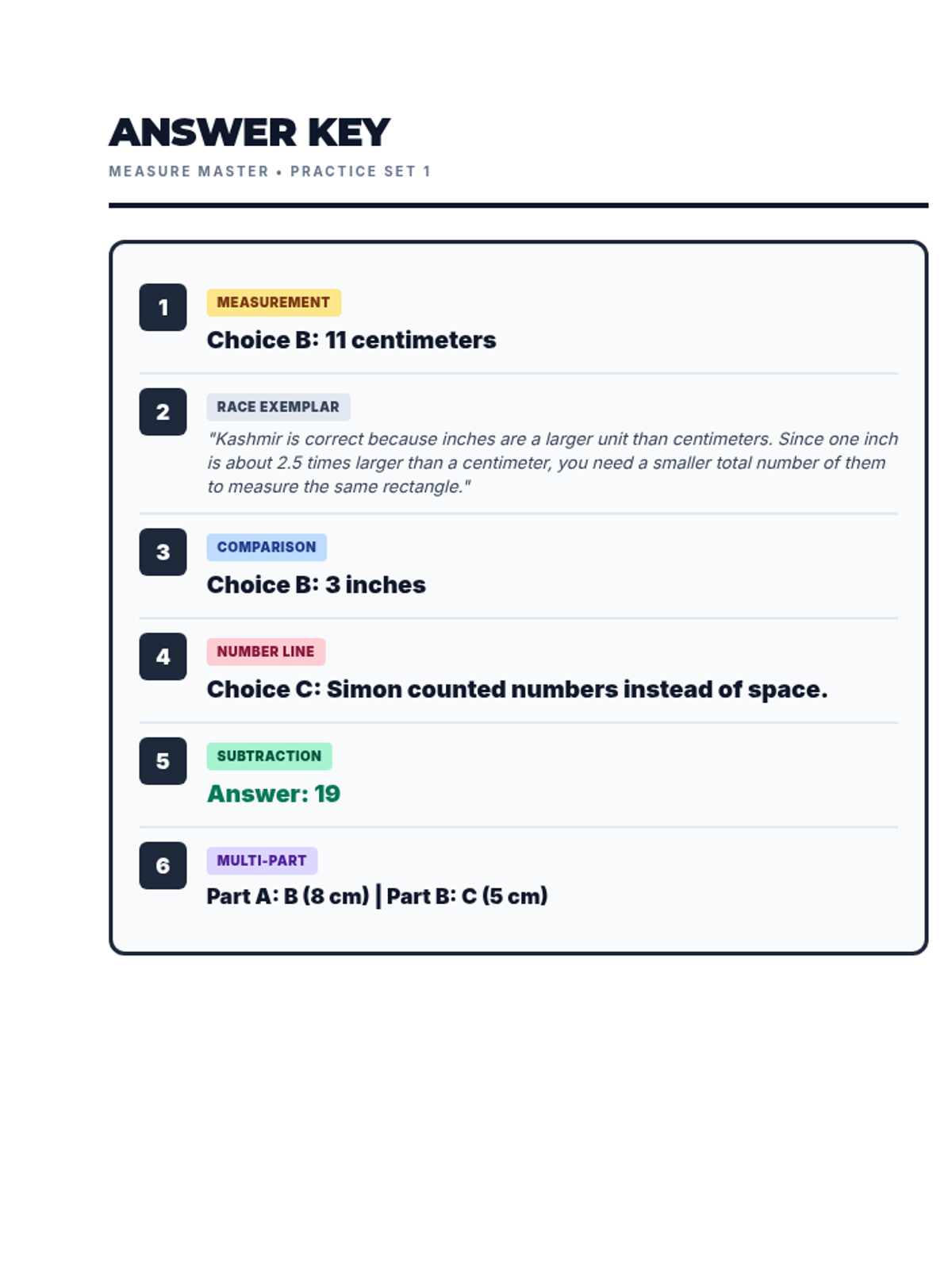
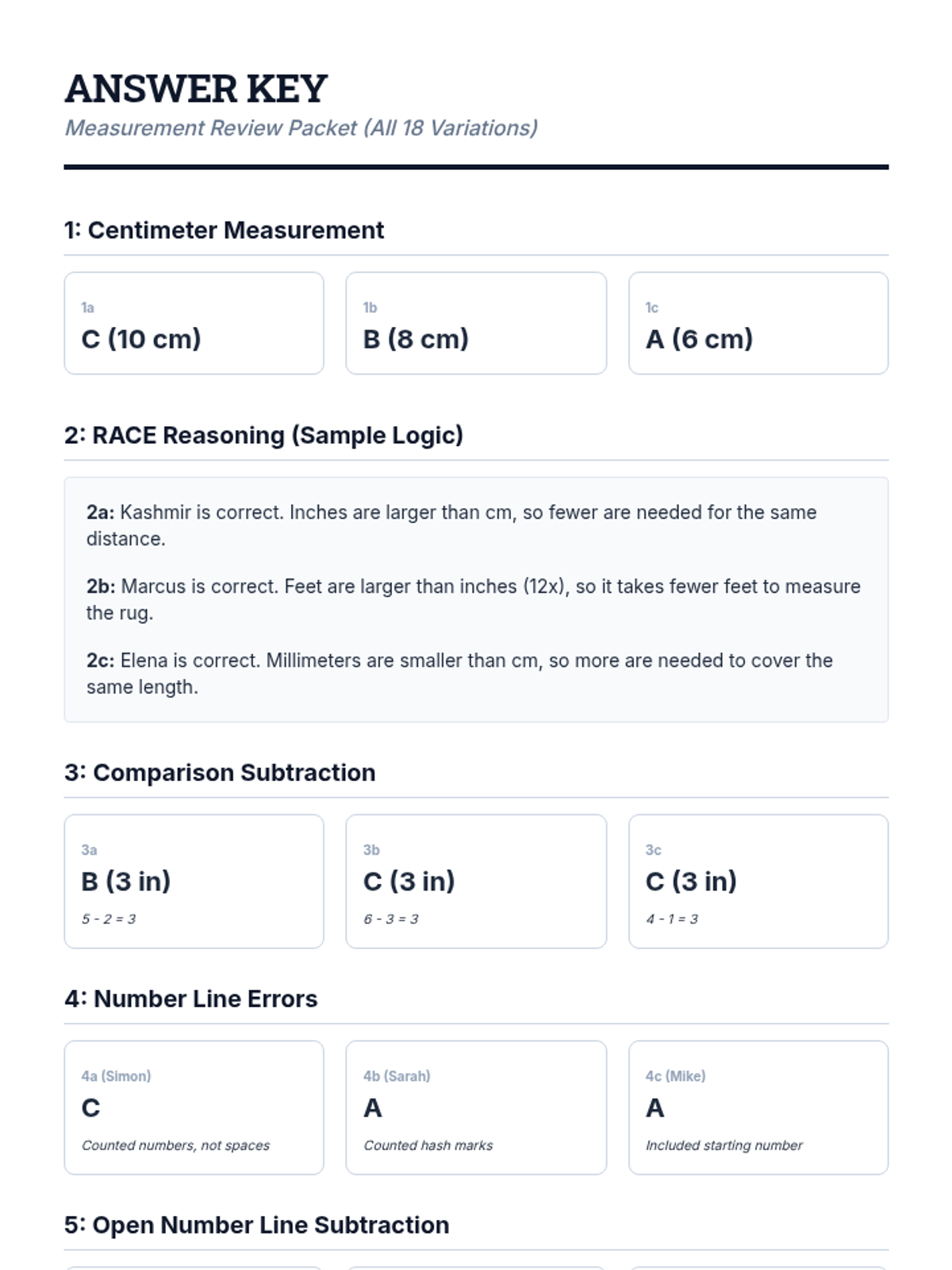
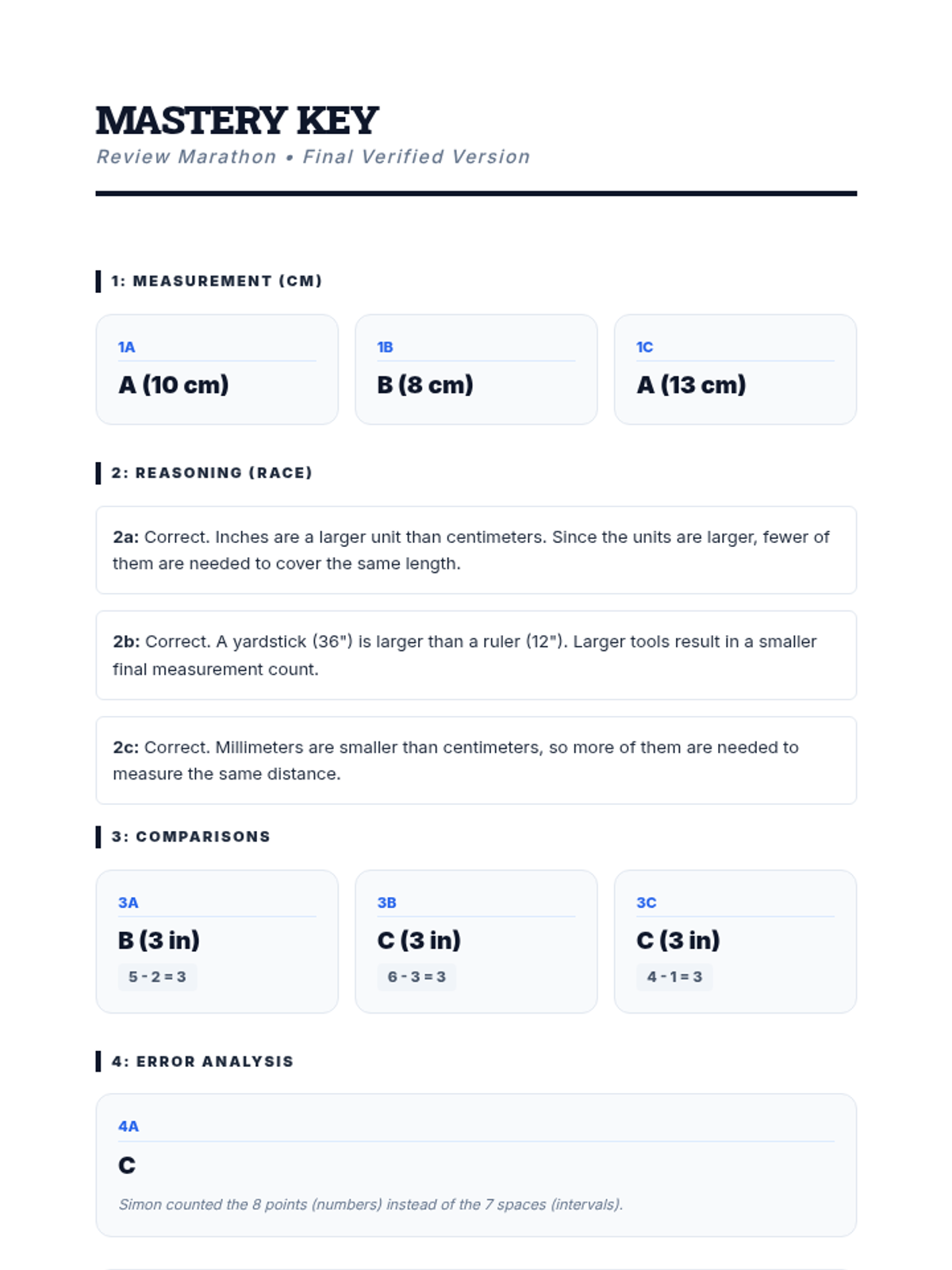
A comprehensive math review focused on measurement and number line concepts, including length comparison, units of measure, and subtraction on a number line.
A comprehensive math review packet focusing on measurement, number line operations, and conceptual understanding of units, featuring multiple practice opportunities for each skill.
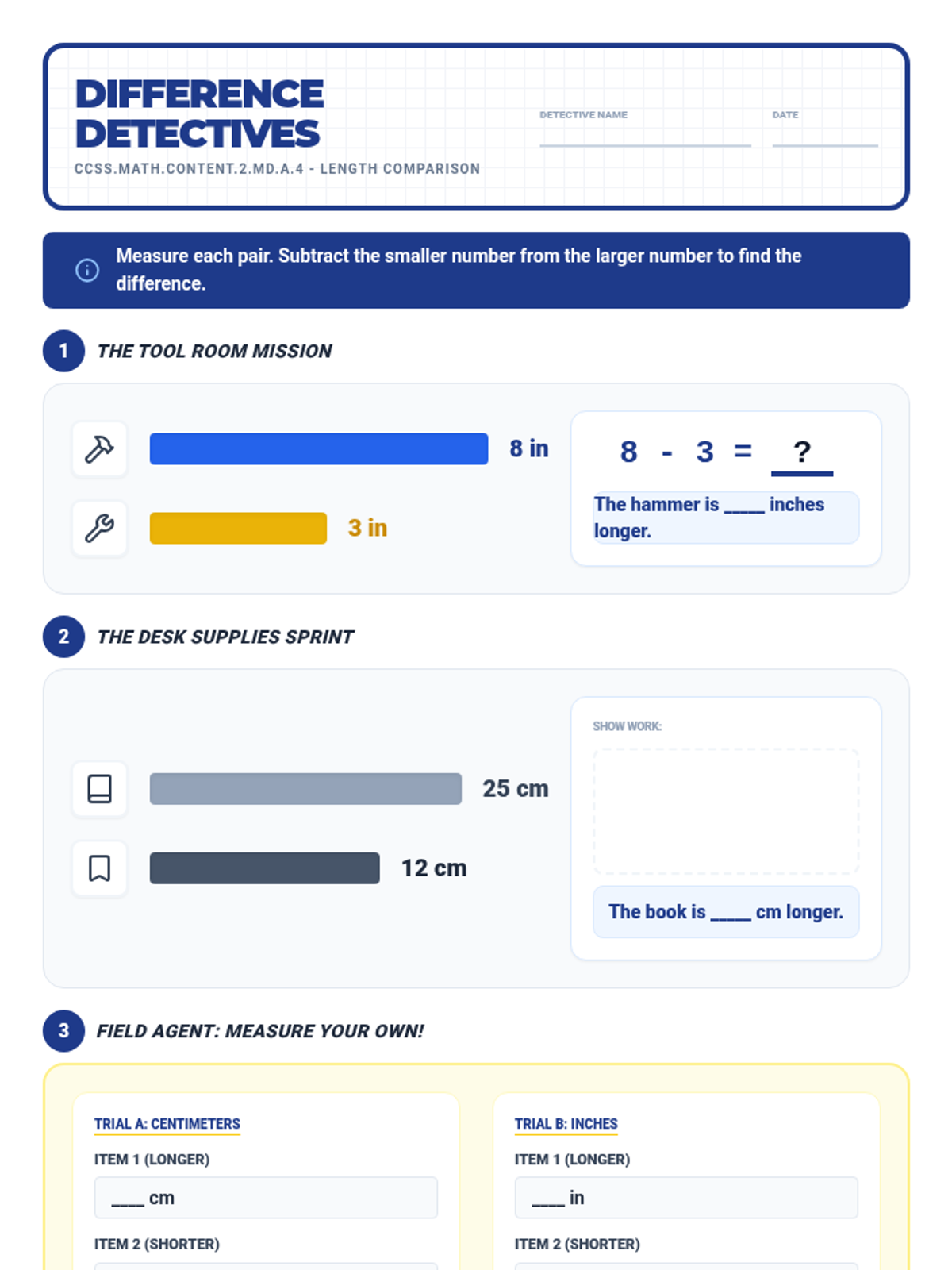
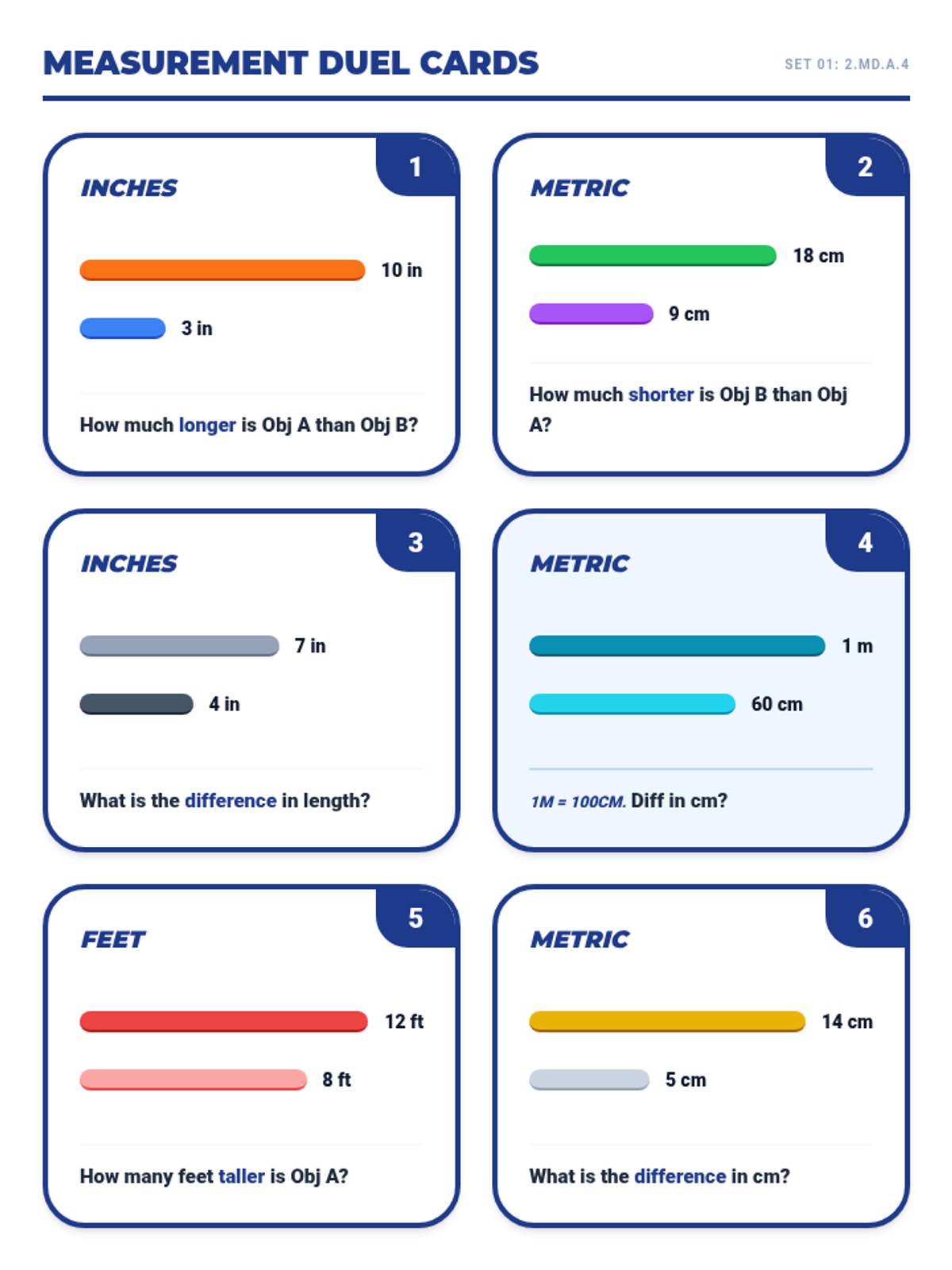
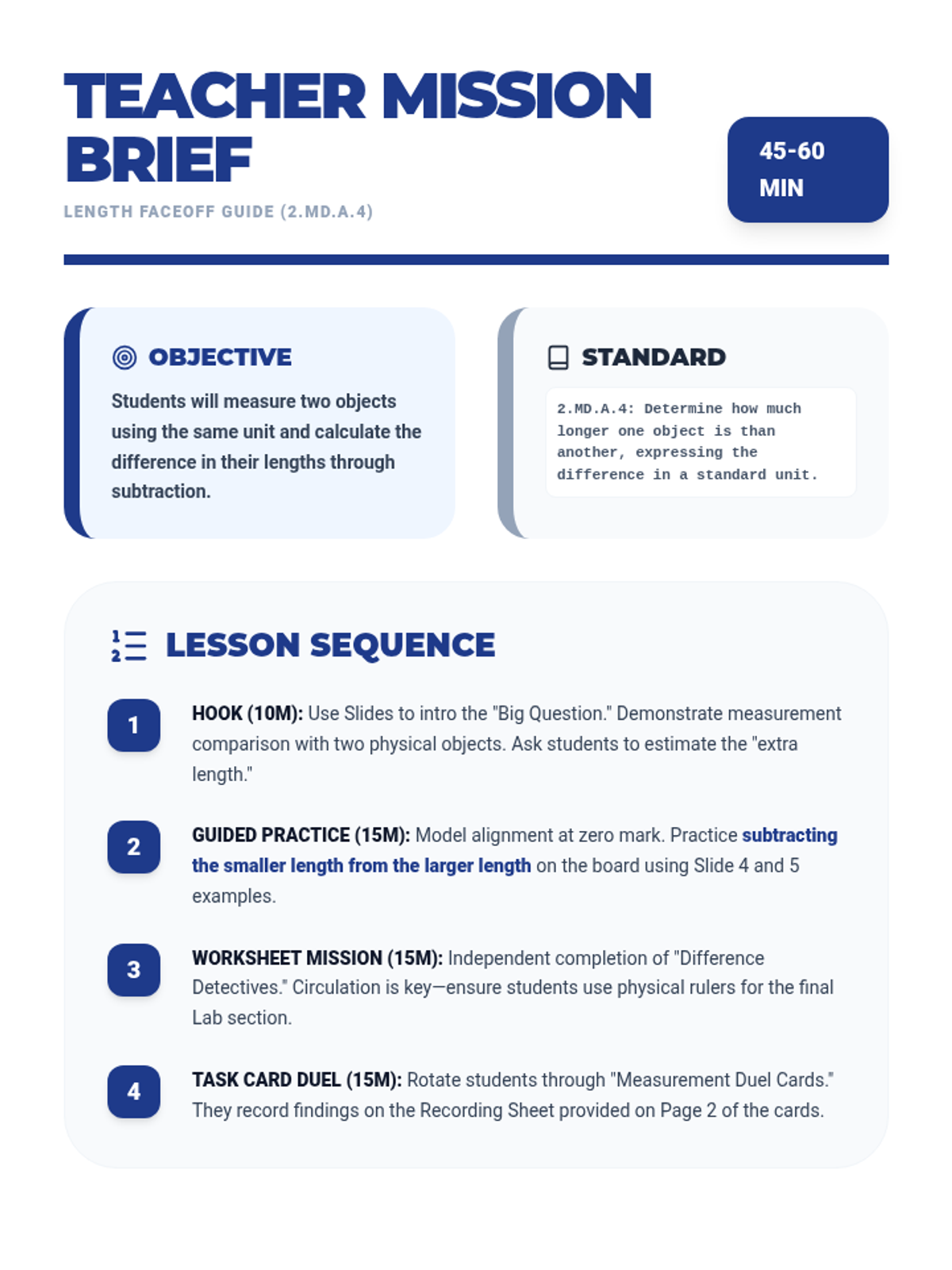
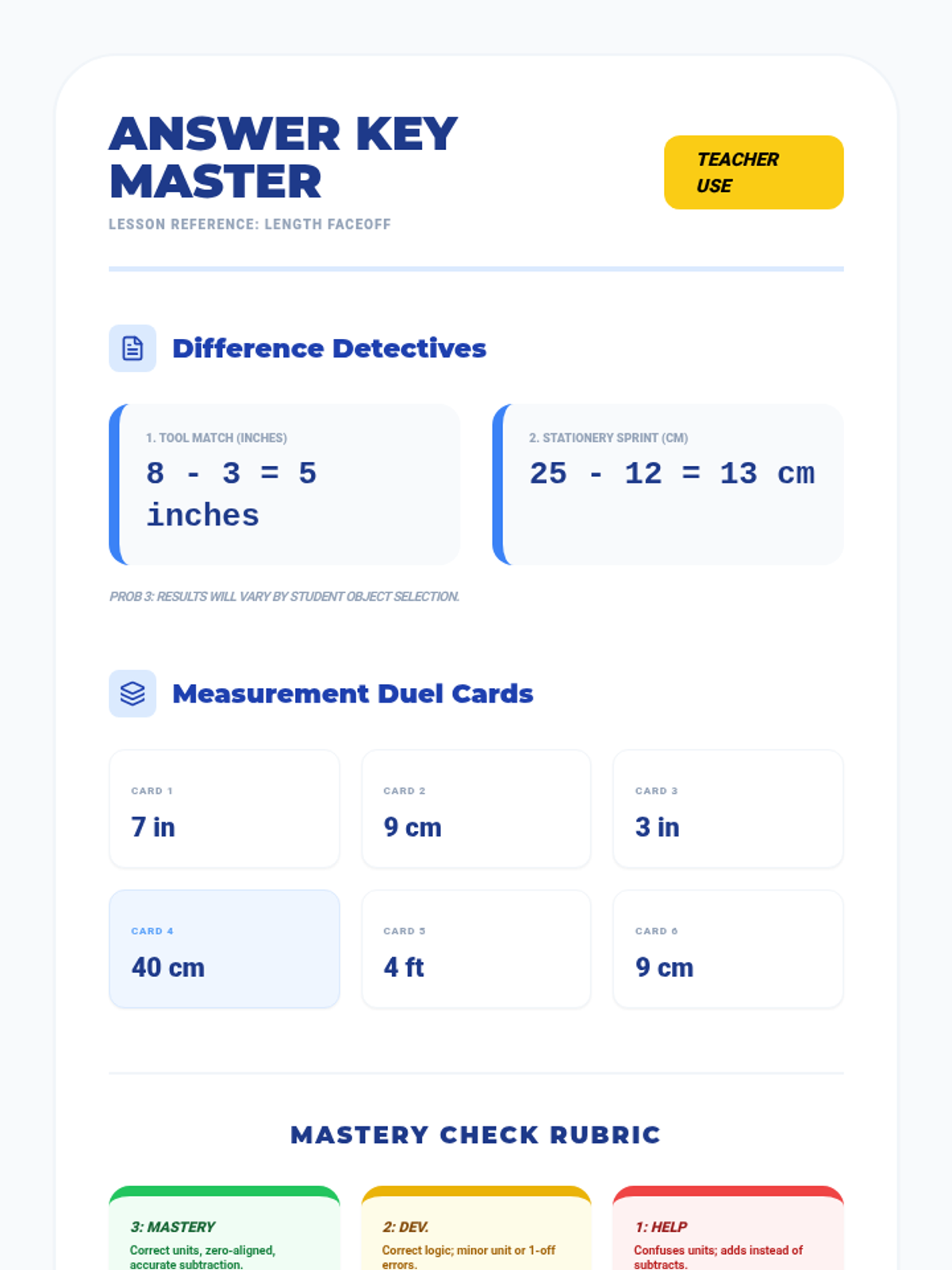
Students learn to measure two objects and determine the difference in their lengths using both standard and metric units. The lesson focuses on the 'how much longer' concept through hands-on measurement and subtraction.
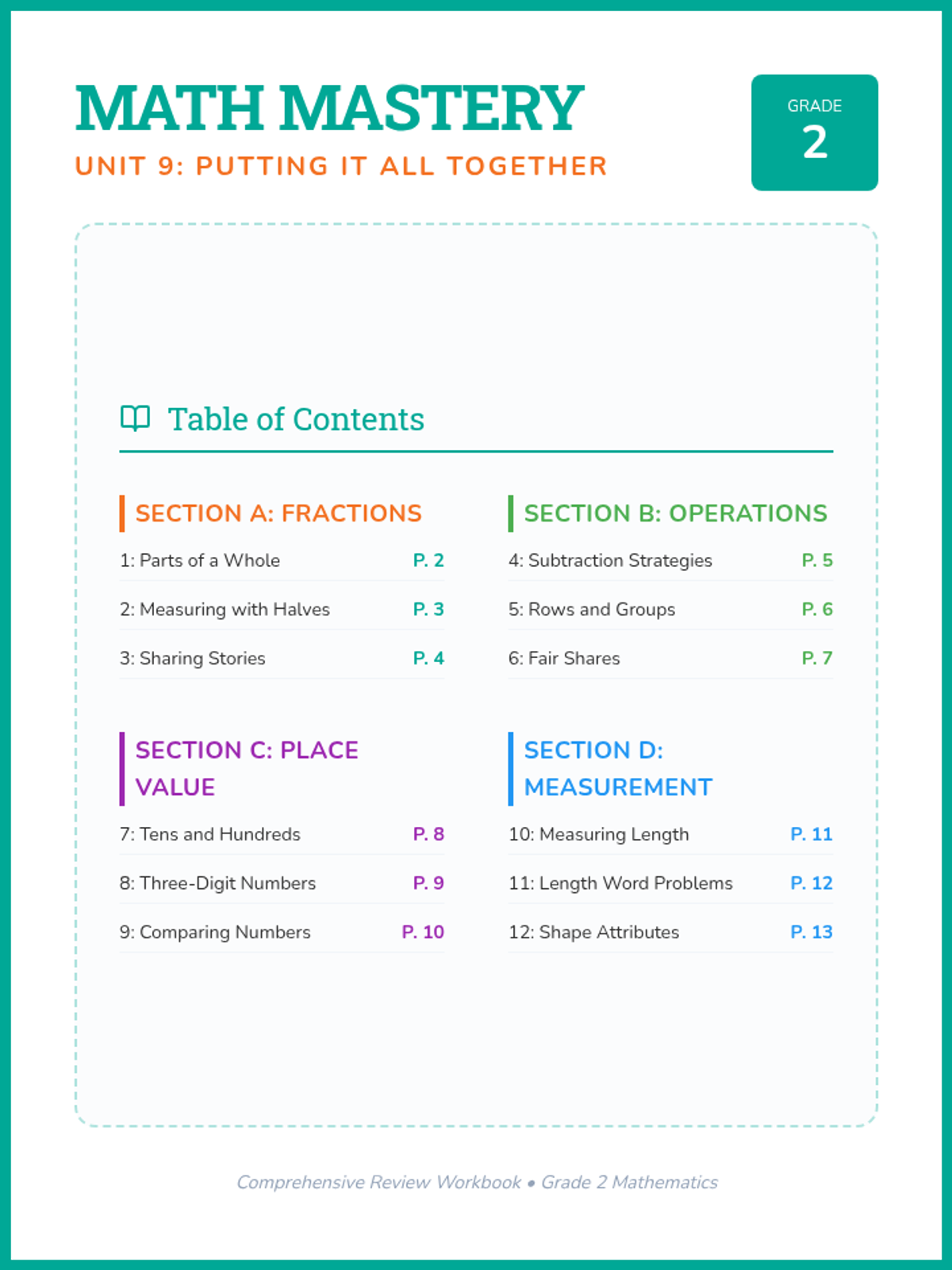
A series of lessons covering fraction reasoning and whole-number operations, adapted for 2nd-grade standards.
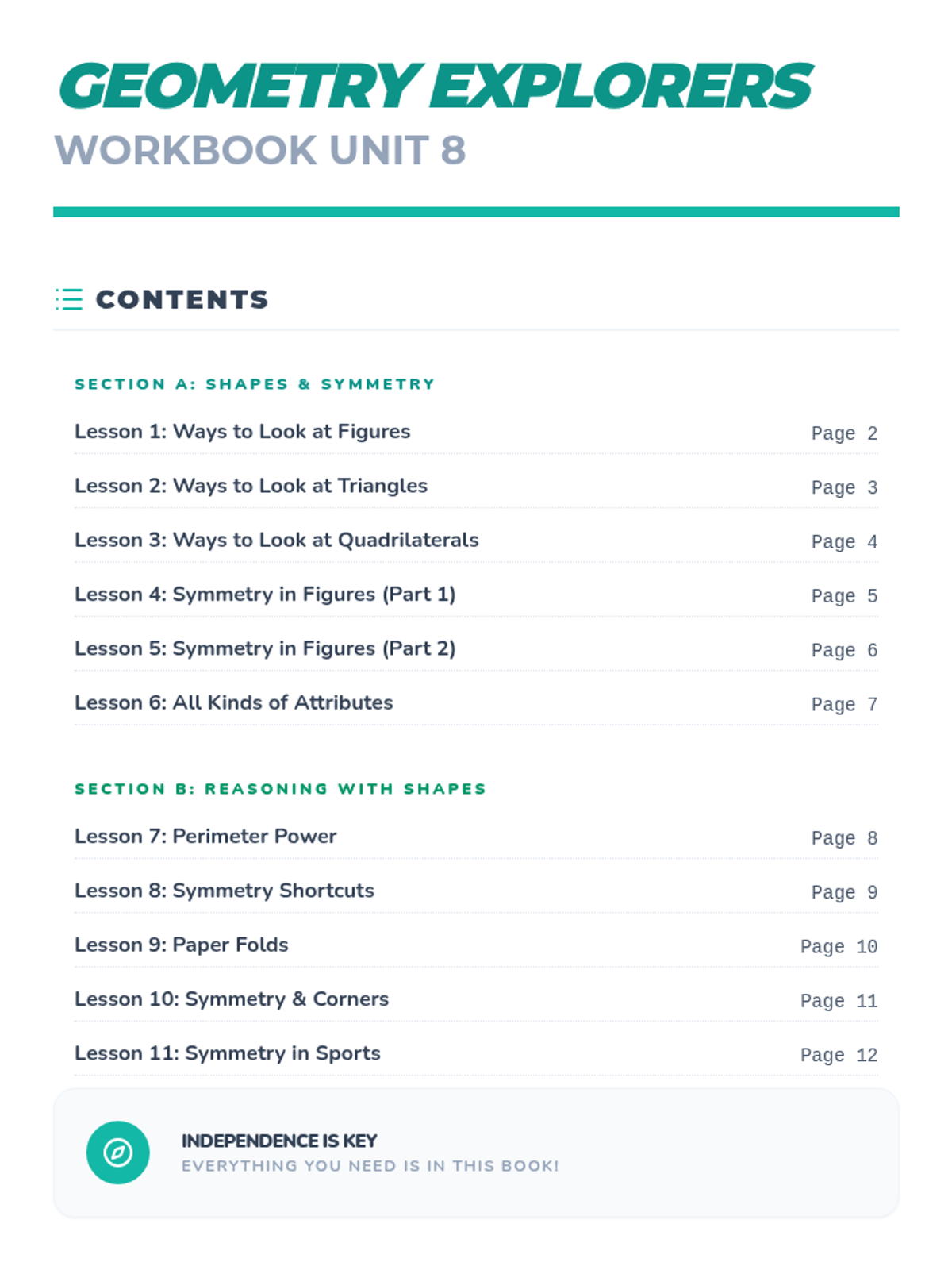
A collection of geometry lessons adapted for 2nd grade, focusing on identifying flat shapes by their attributes, exploring symmetry, and drawing geometric figures. This lesson covers basic shape properties, triangle and quadrilateral identification, and the fundamentals of symmetry.
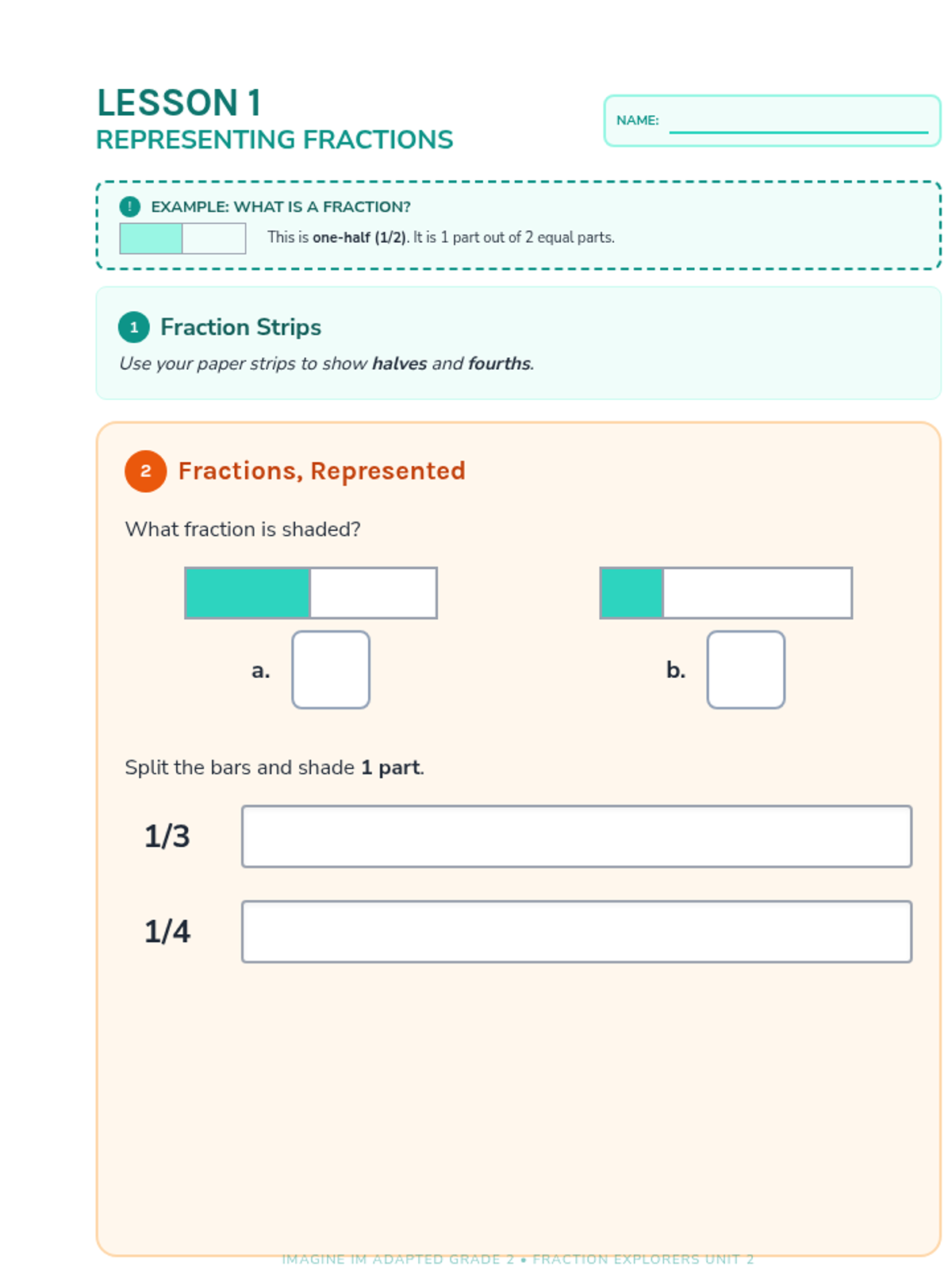
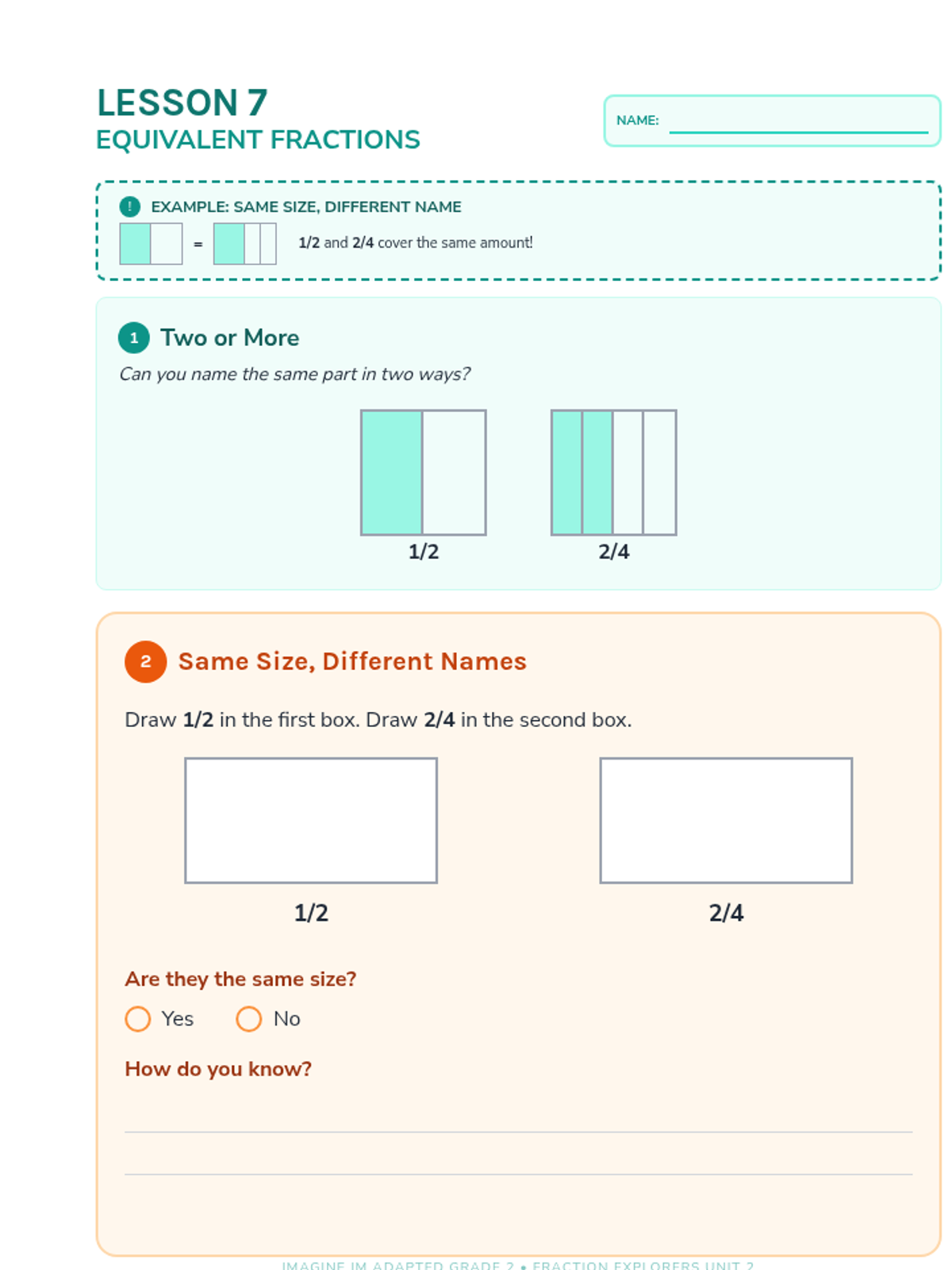
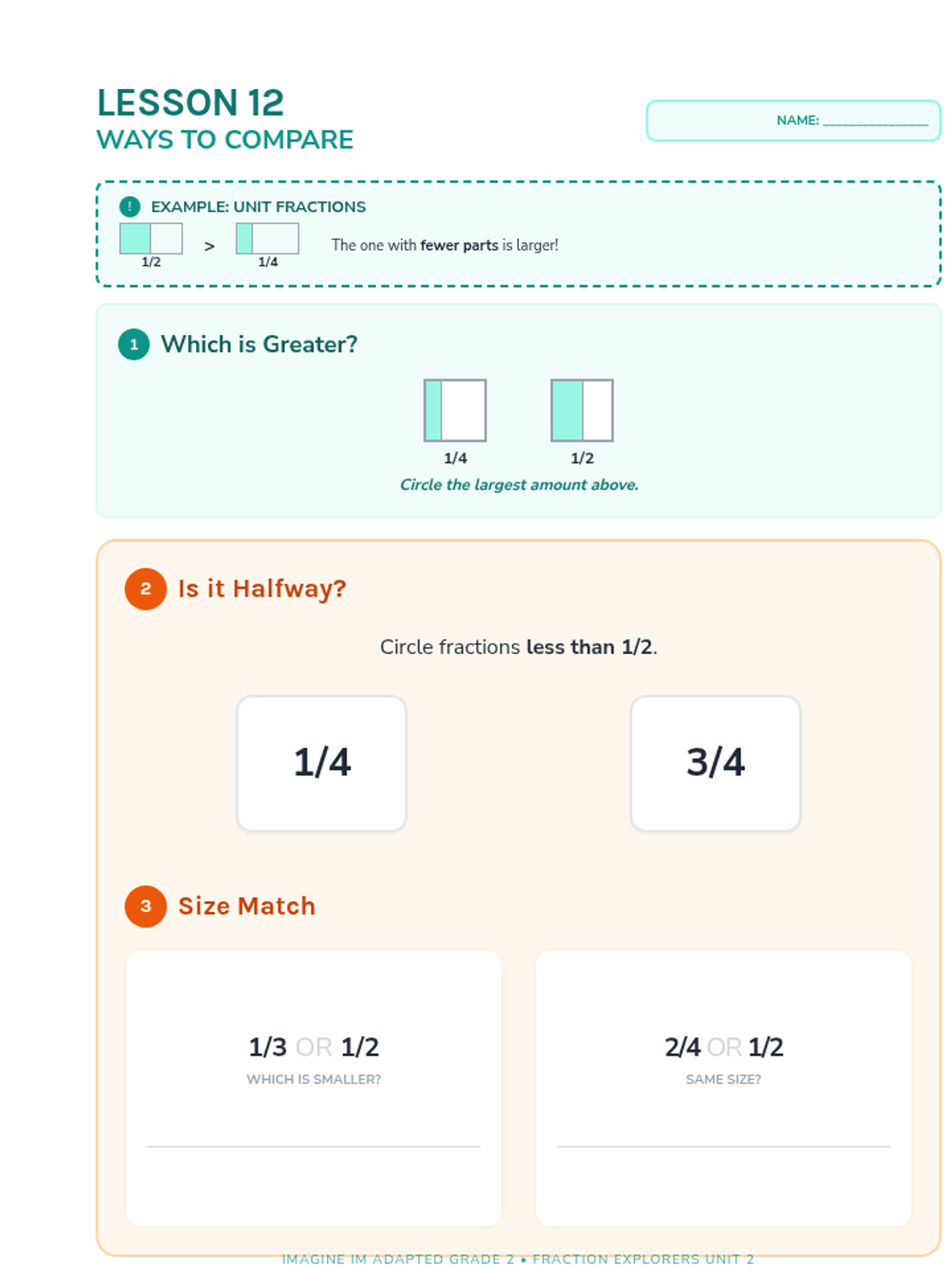
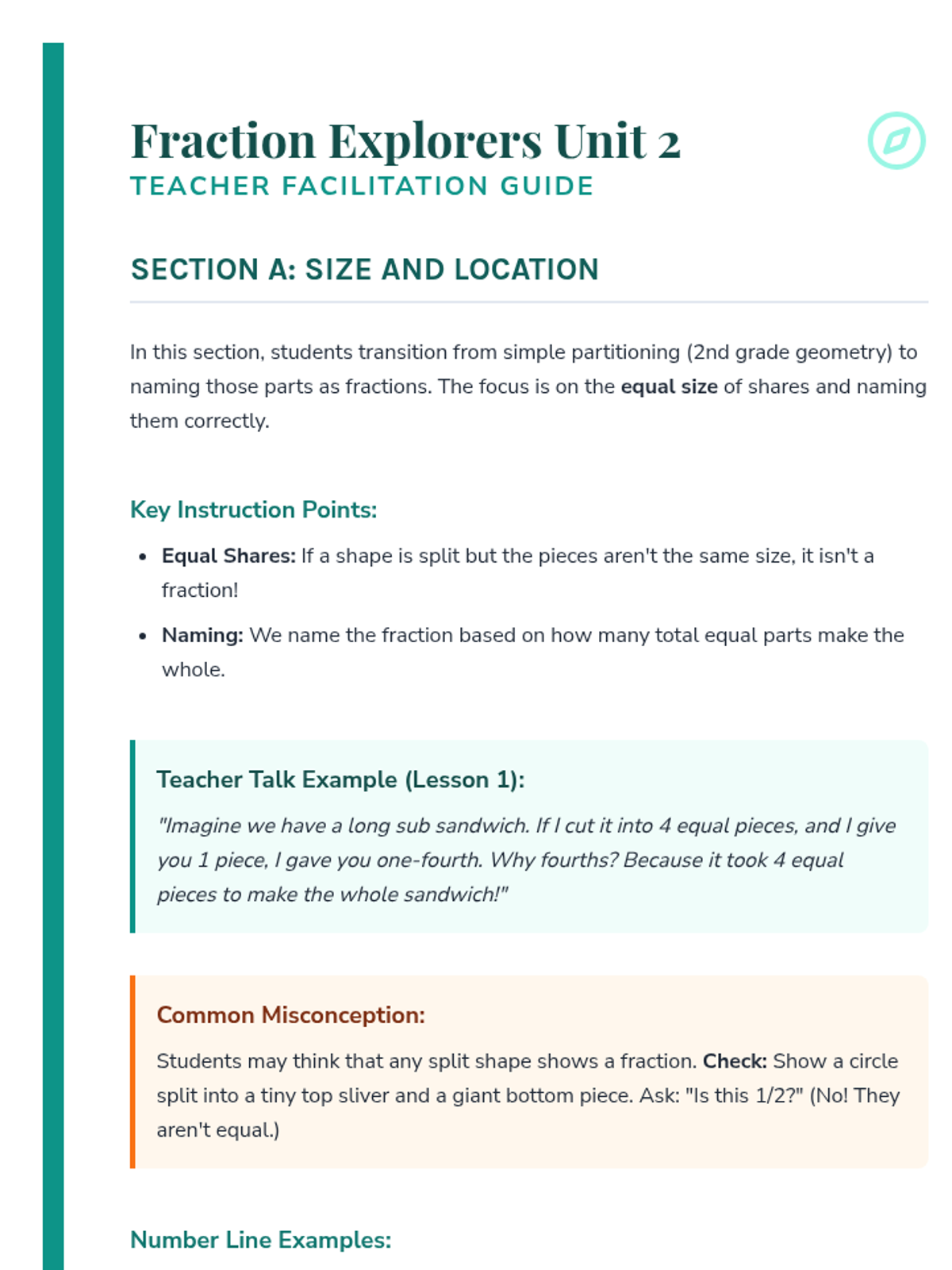
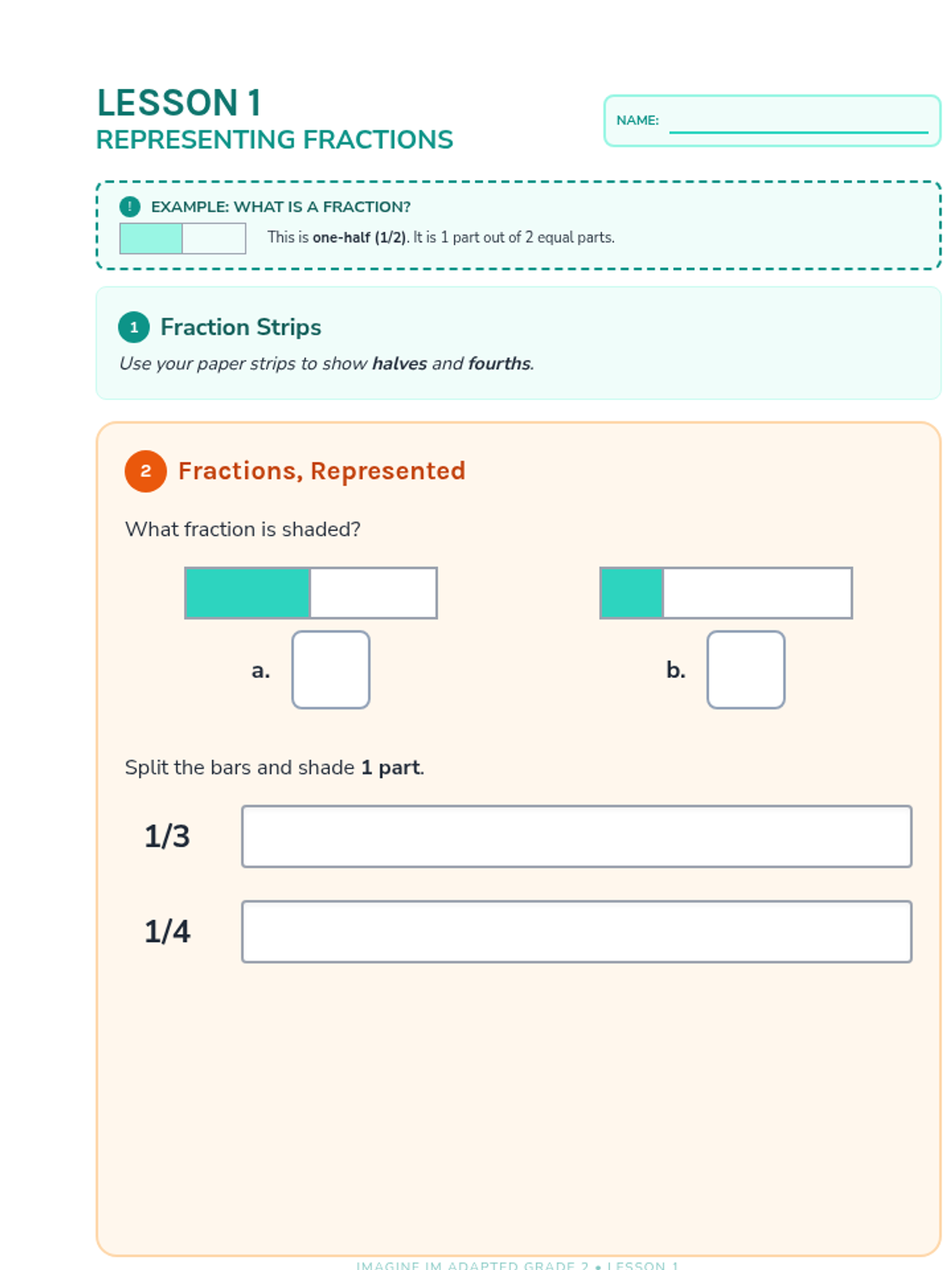
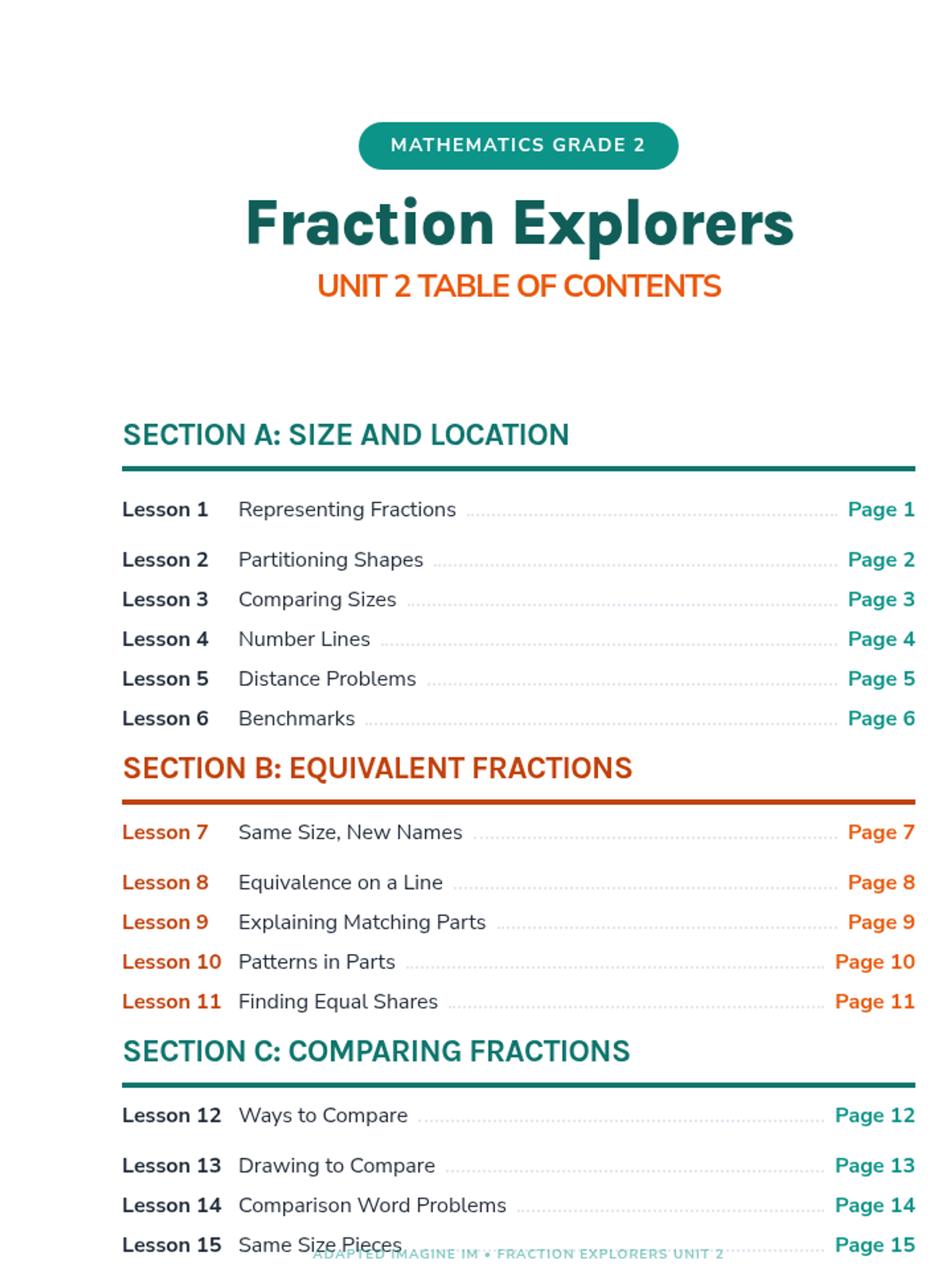
A complete workbook containing all 17 lessons for the Fraction Explorers Unit 2, covering basic representation, equivalence, and comparisons for 2nd grade students.
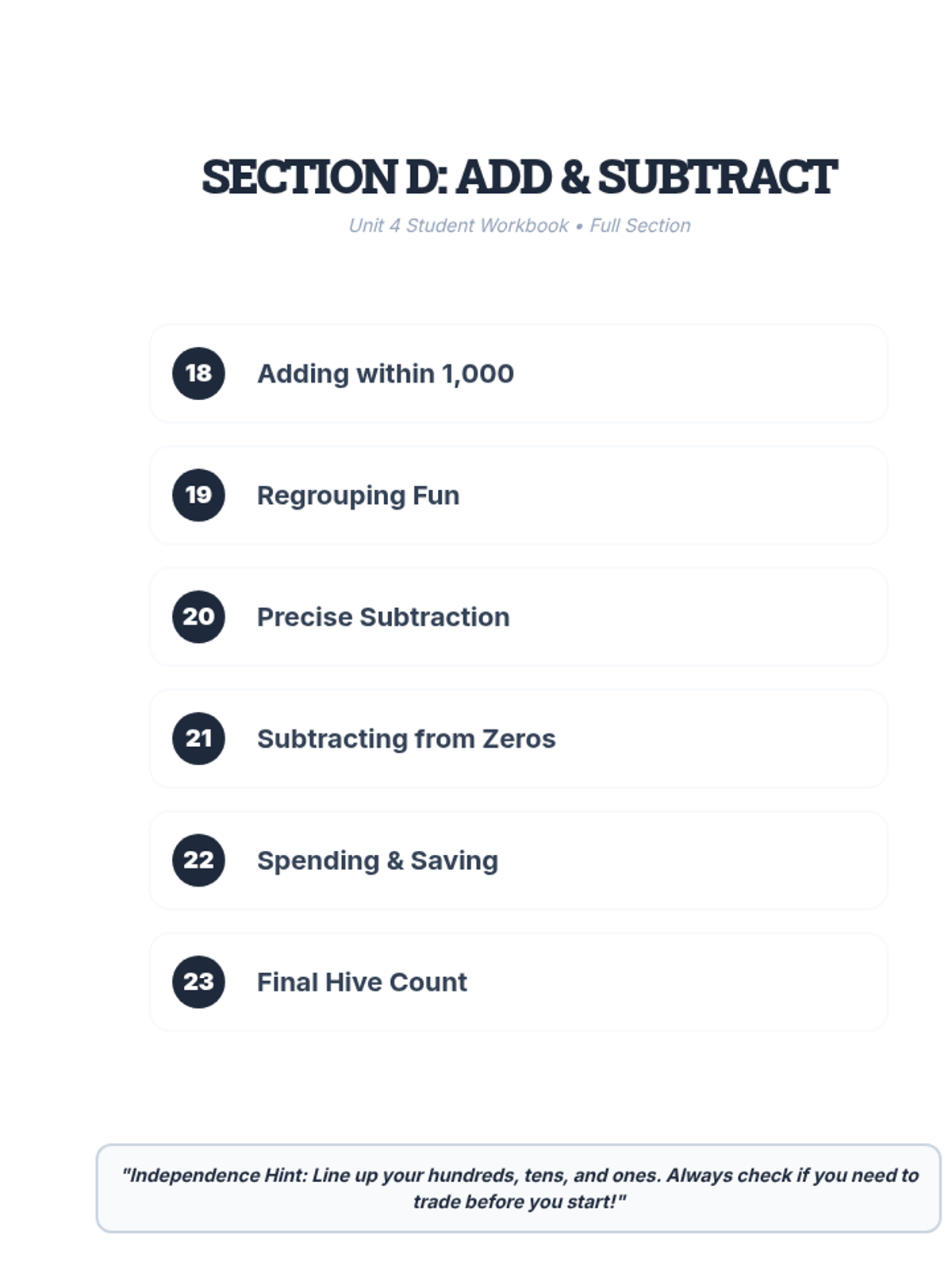
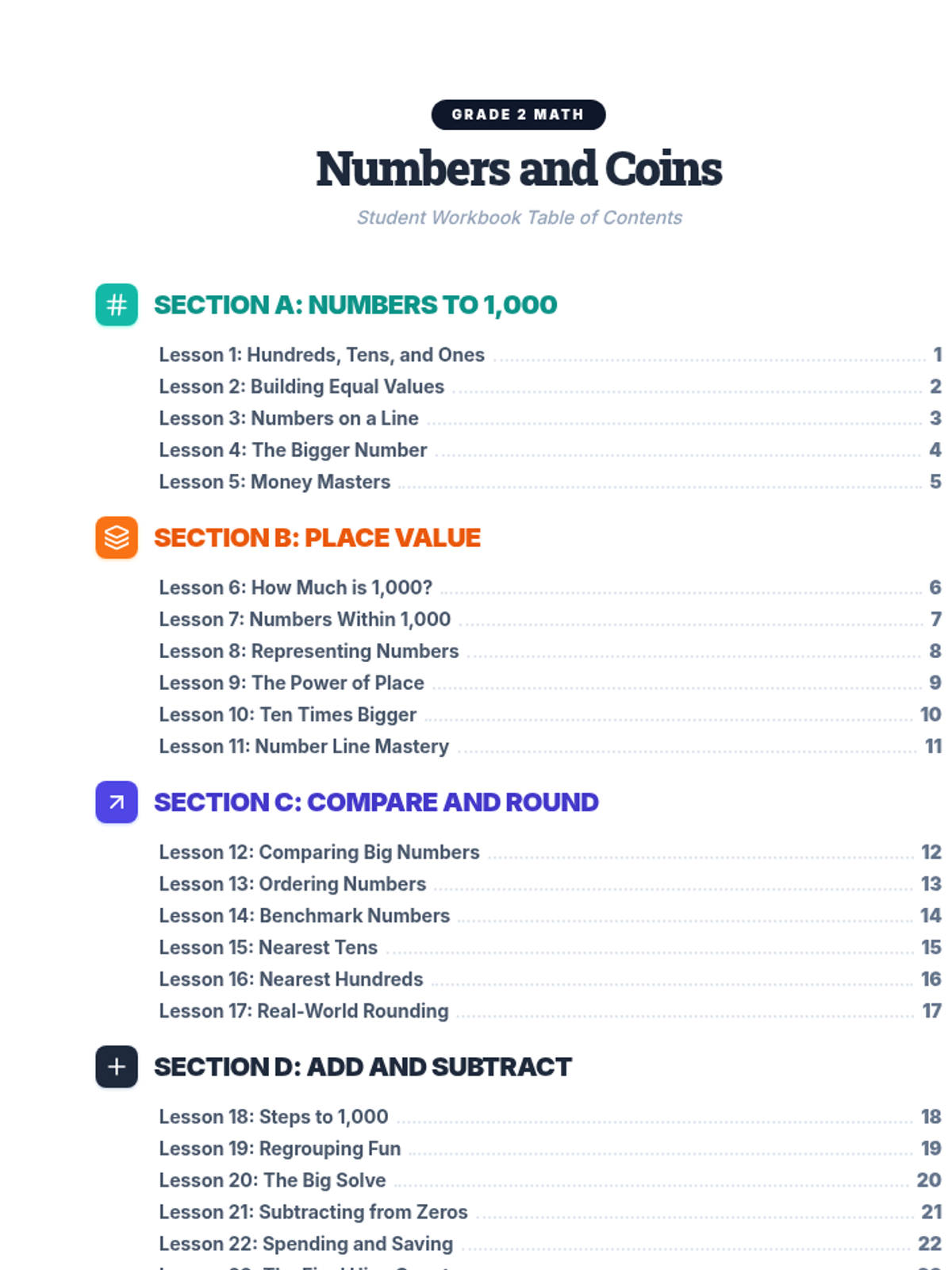
Students apply addition and subtraction strategies to three-digit numbers and money amounts. Includes Lessons 18-23.
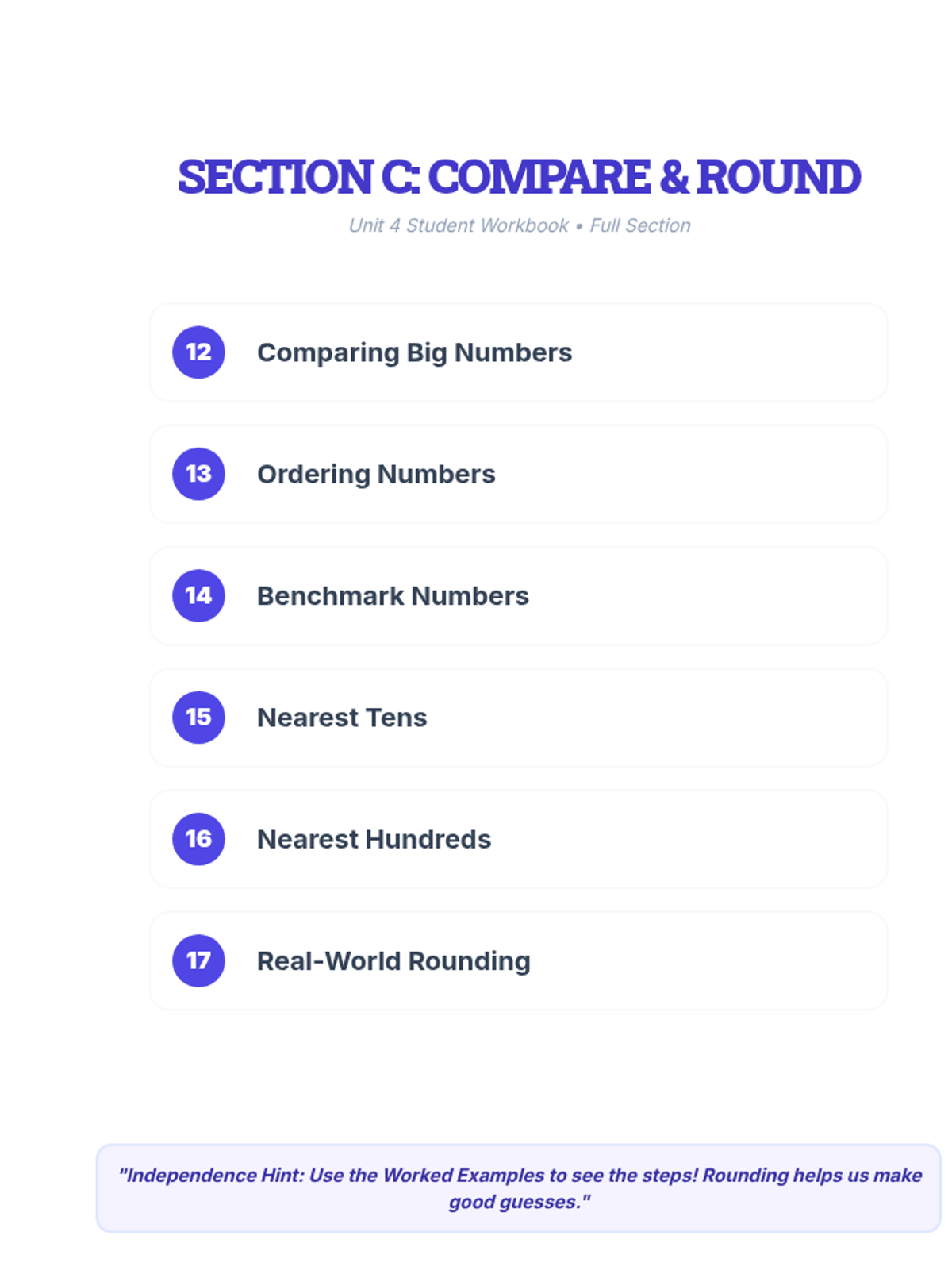
Students locate, compare, and order three-digit numbers on a number line and introduce rounding concepts. Includes Lessons 12-17.
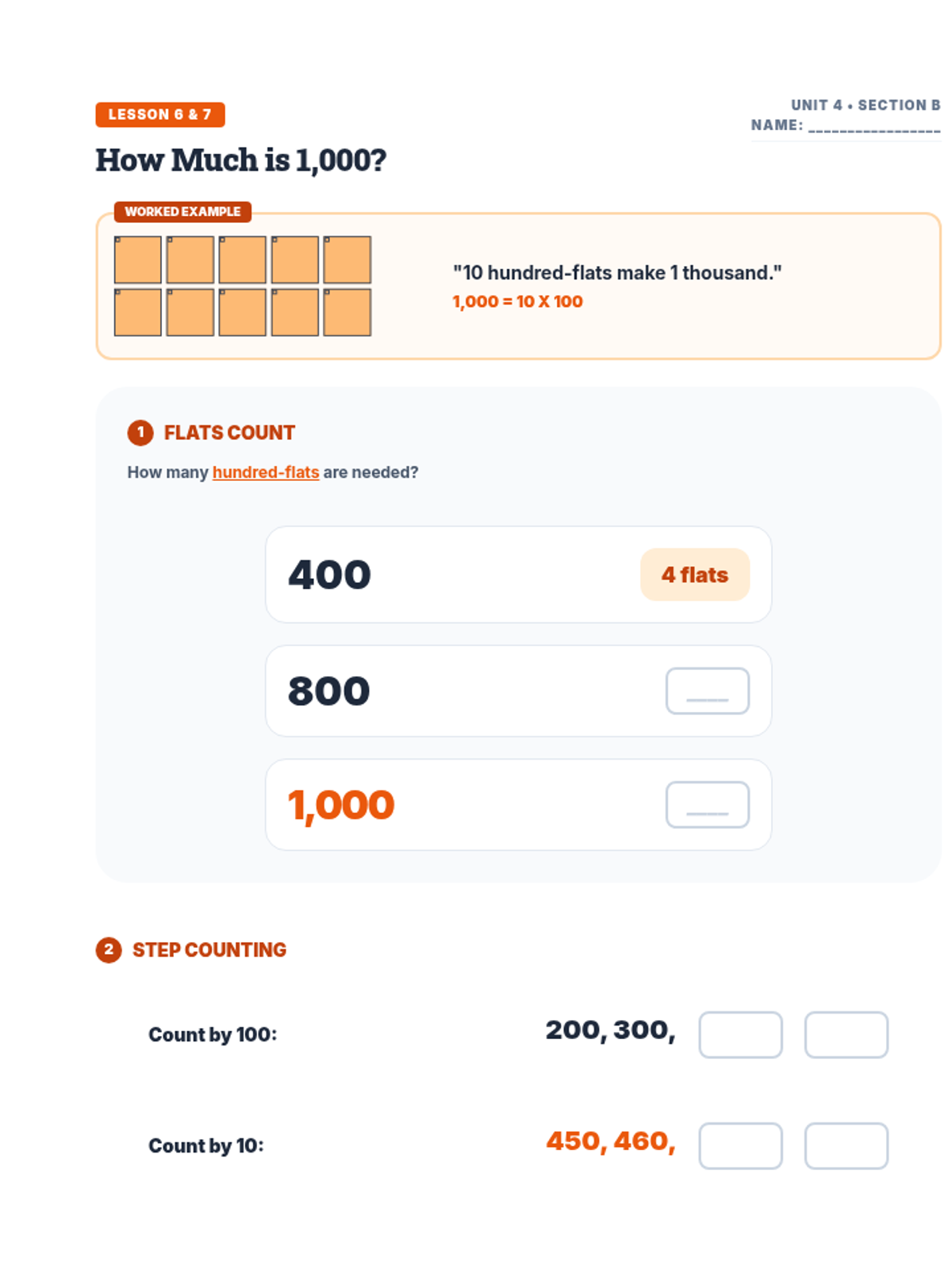
Students investigate place value concepts, representing numbers up to 1,000, and understanding that 10 tens equal 100. Includes Lessons 6-11.
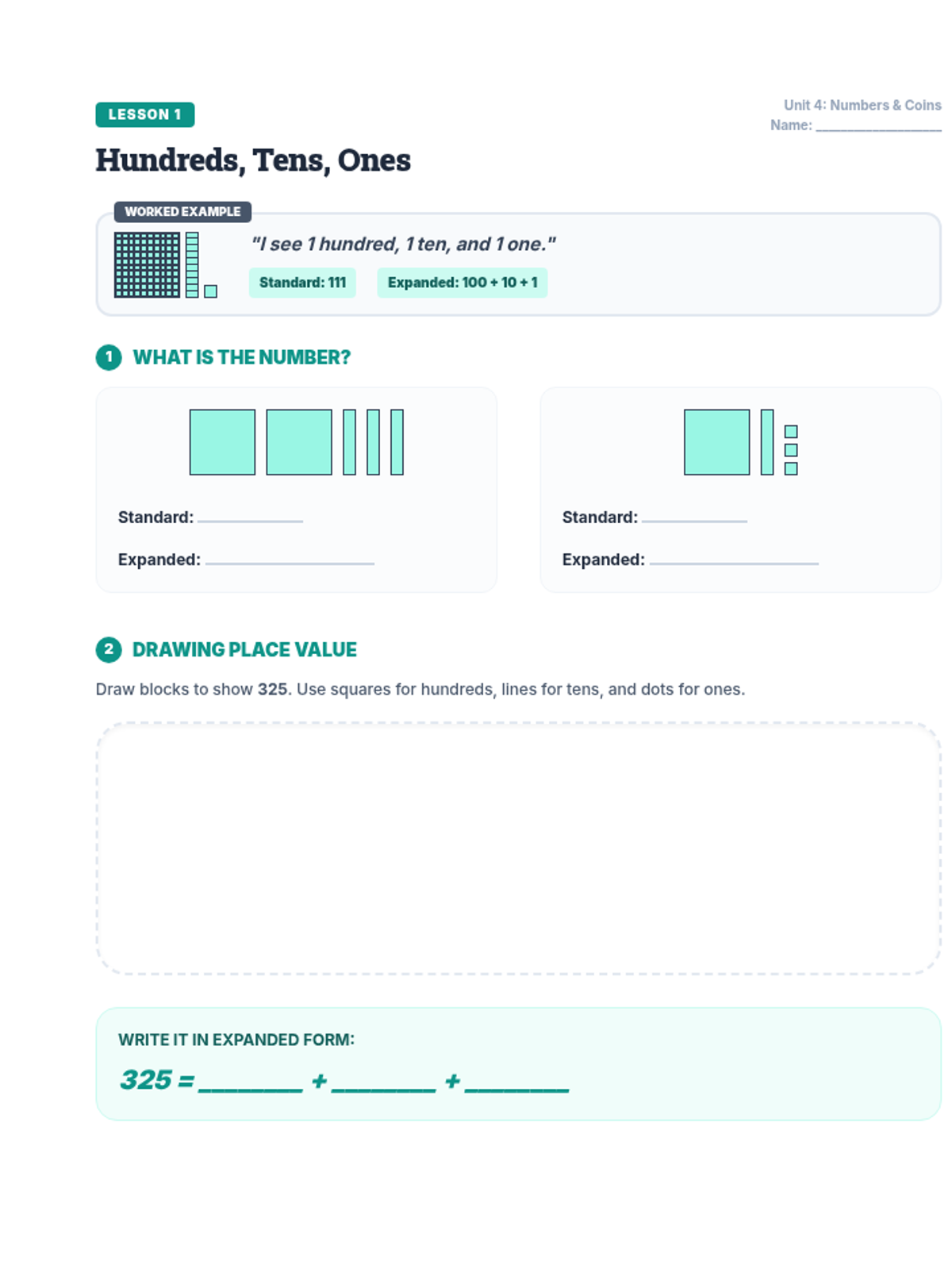
Students explore three-digit numbers using base-ten blocks, standard form, expanded form, and word form, and compare equivalent representations like 100 and 10 tens. Includes Lessons 1-5.
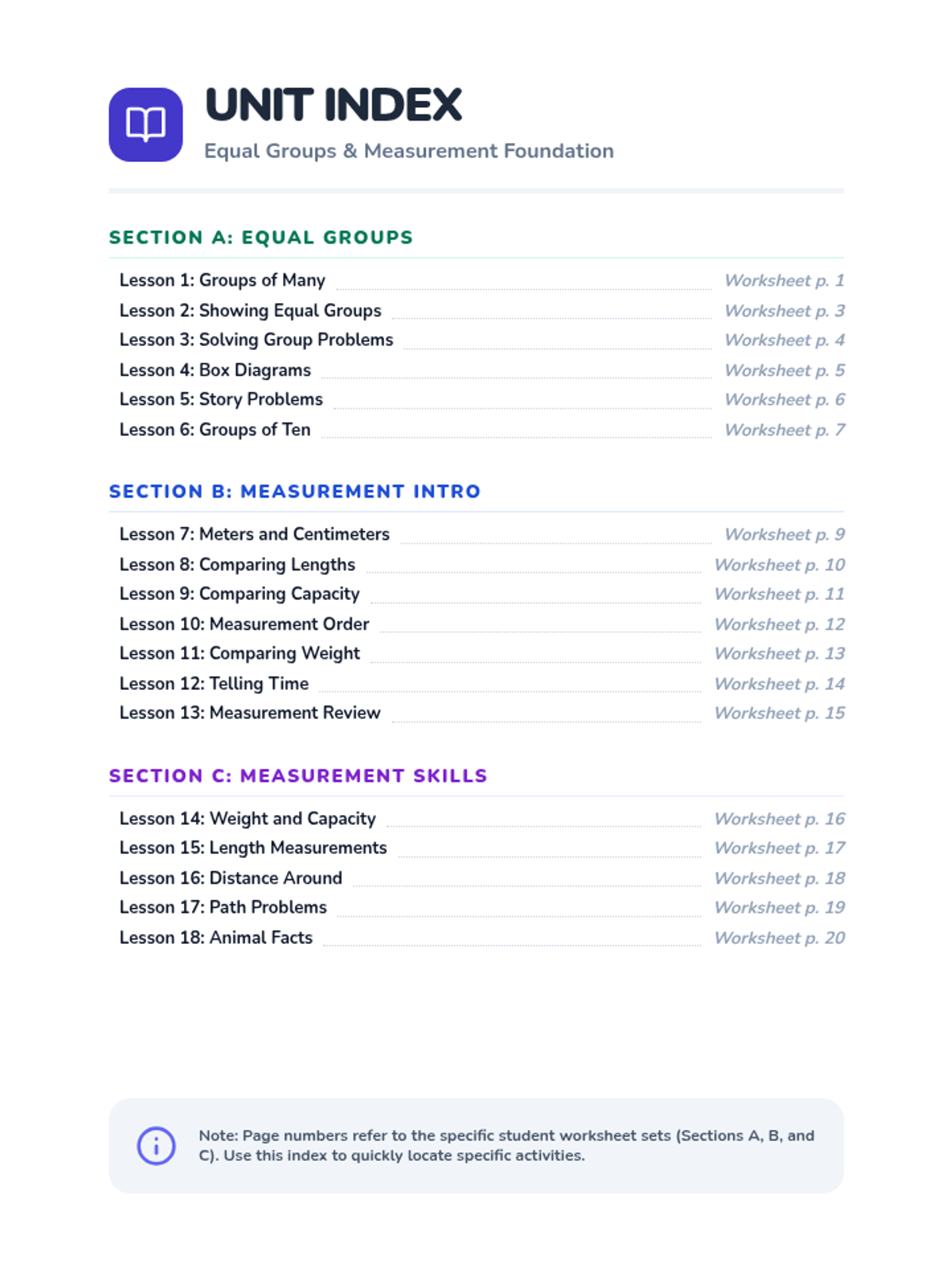
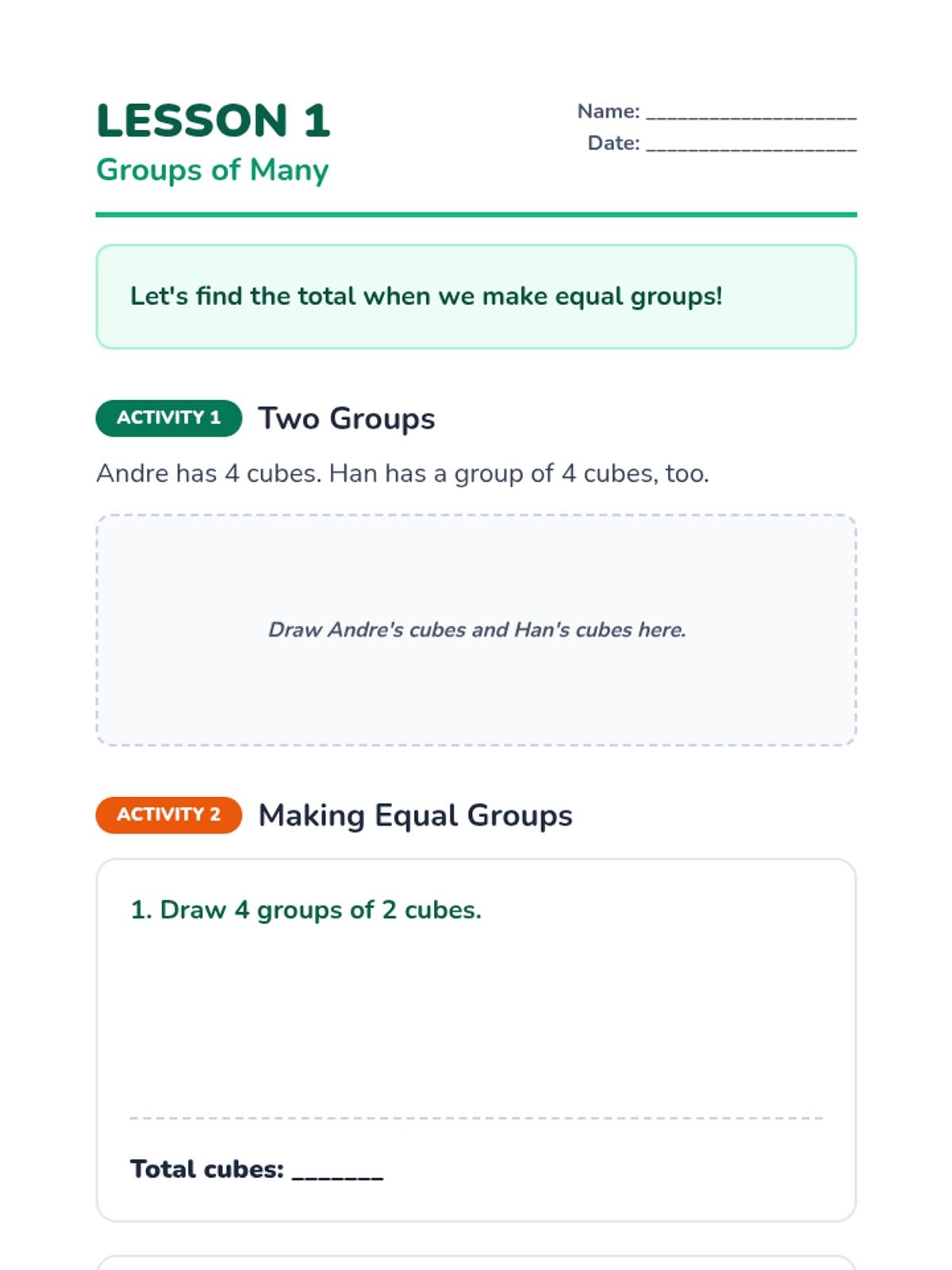
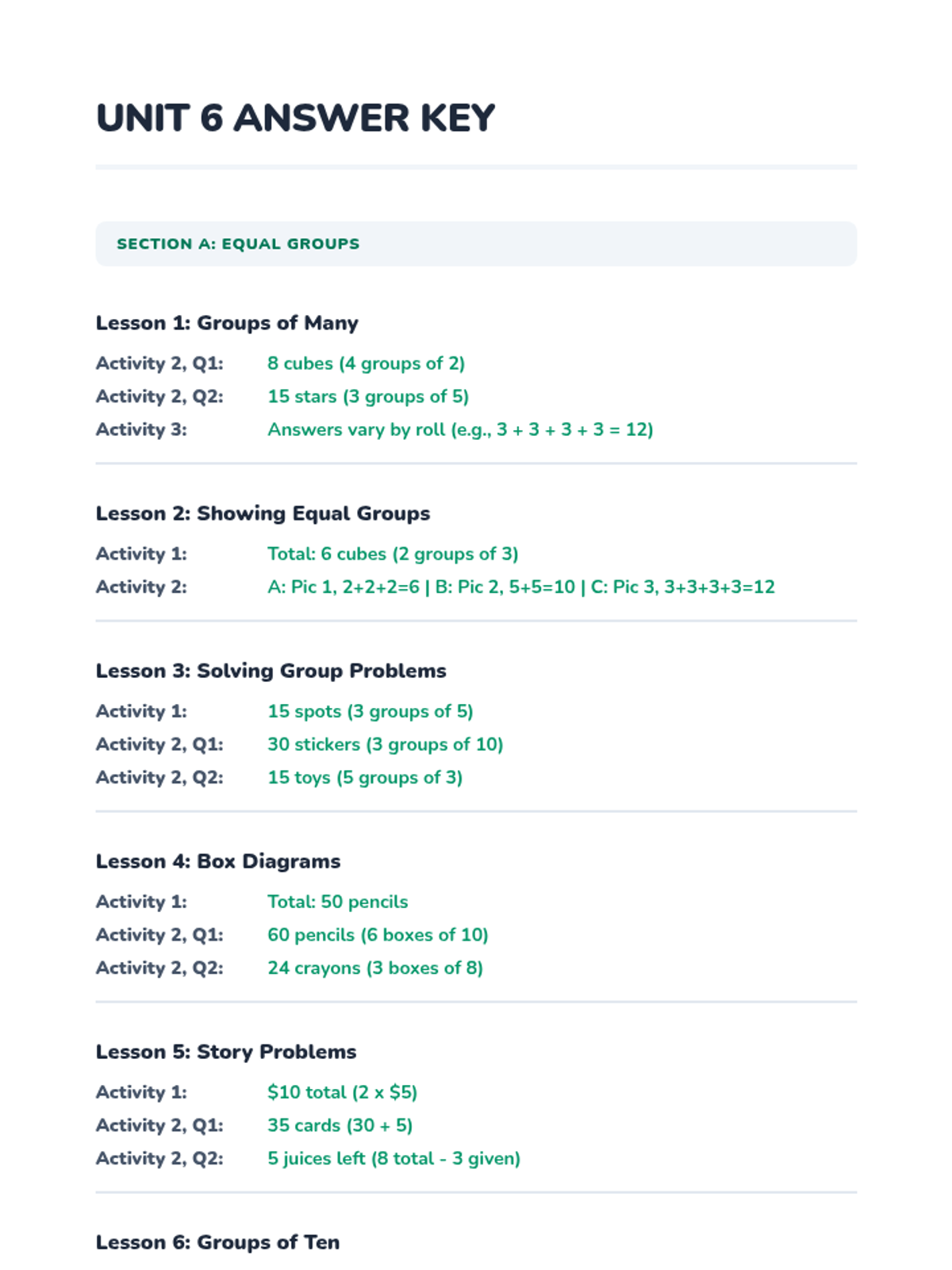
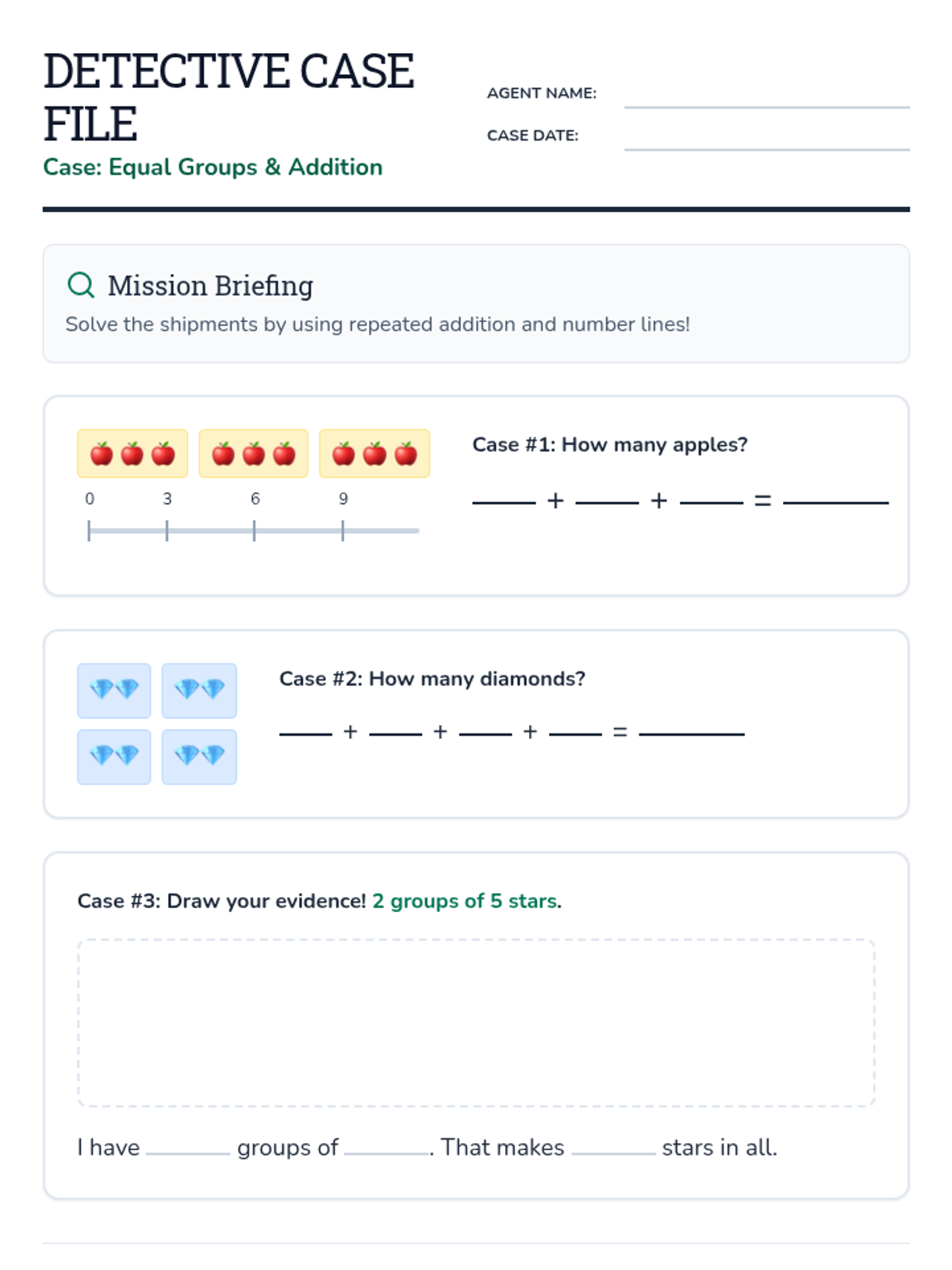
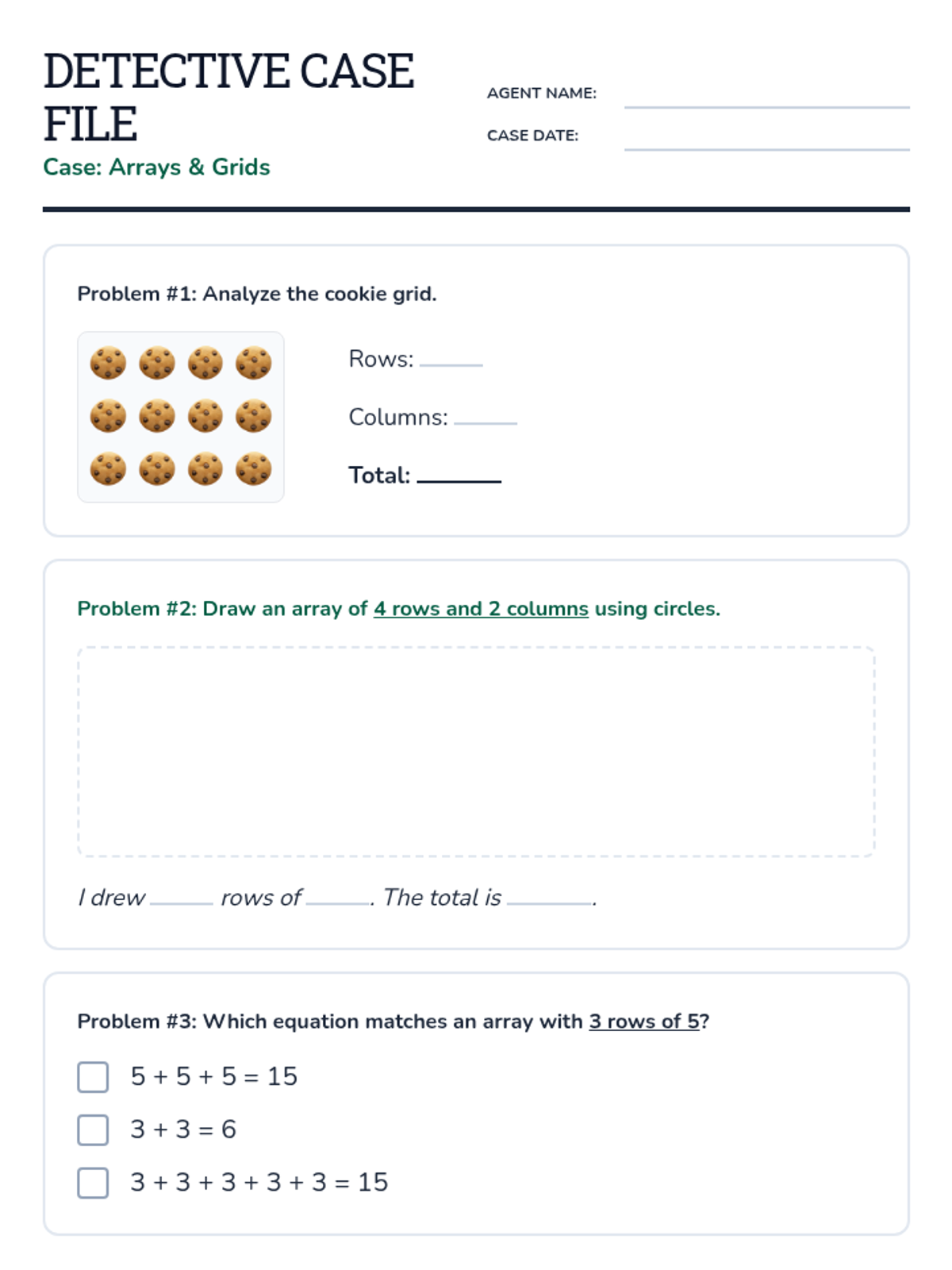
A comprehensive series of 2nd-grade math lessons focusing on building multiplication foundations through equal groups, repeated addition, and arrays, alongside measurement concepts. Includes concrete examples for all activities to support independent teacher delivery.
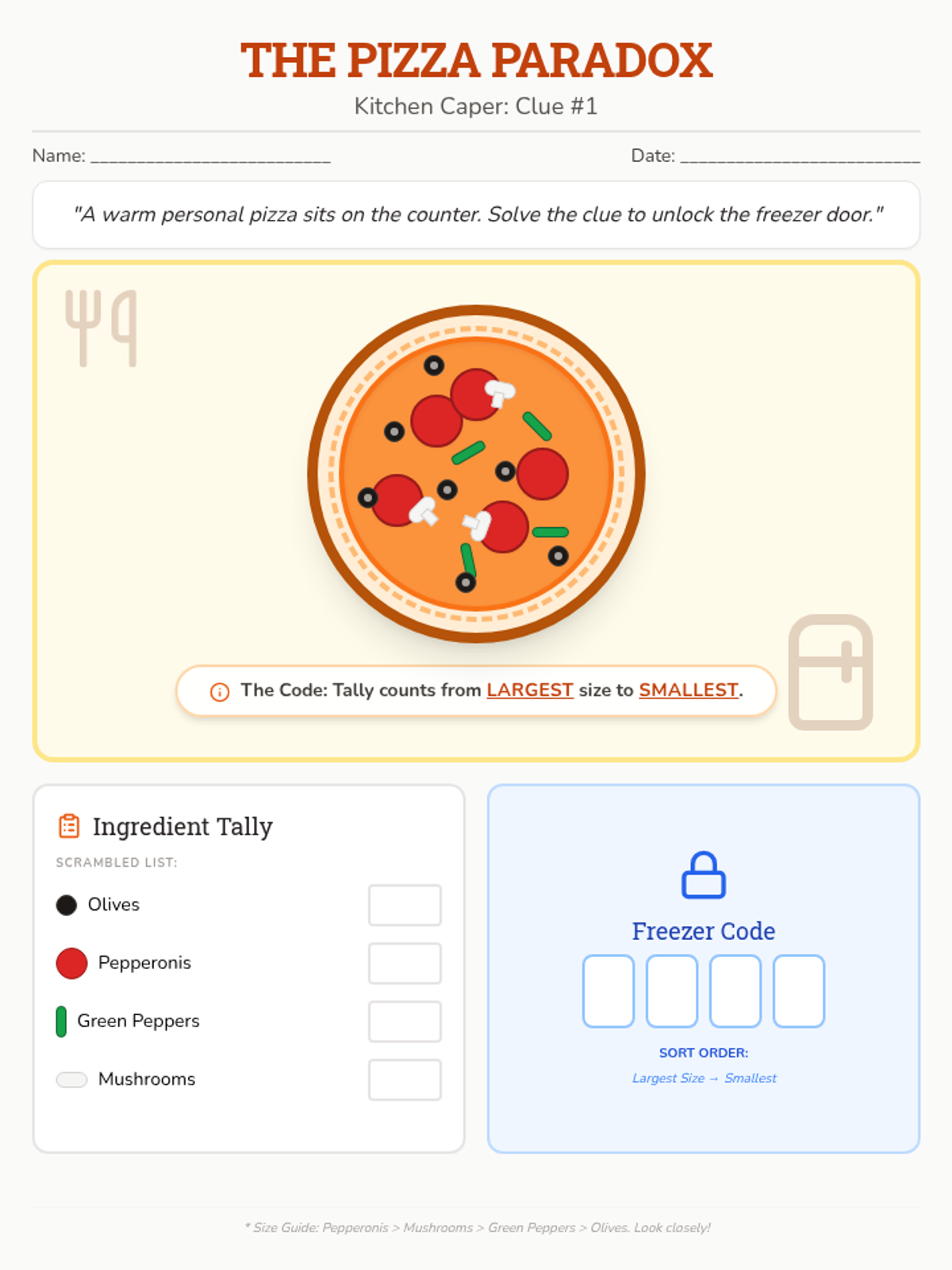
A mini-mystery centered around a kitchen scene where students use observation and logic to solve a visual puzzle.
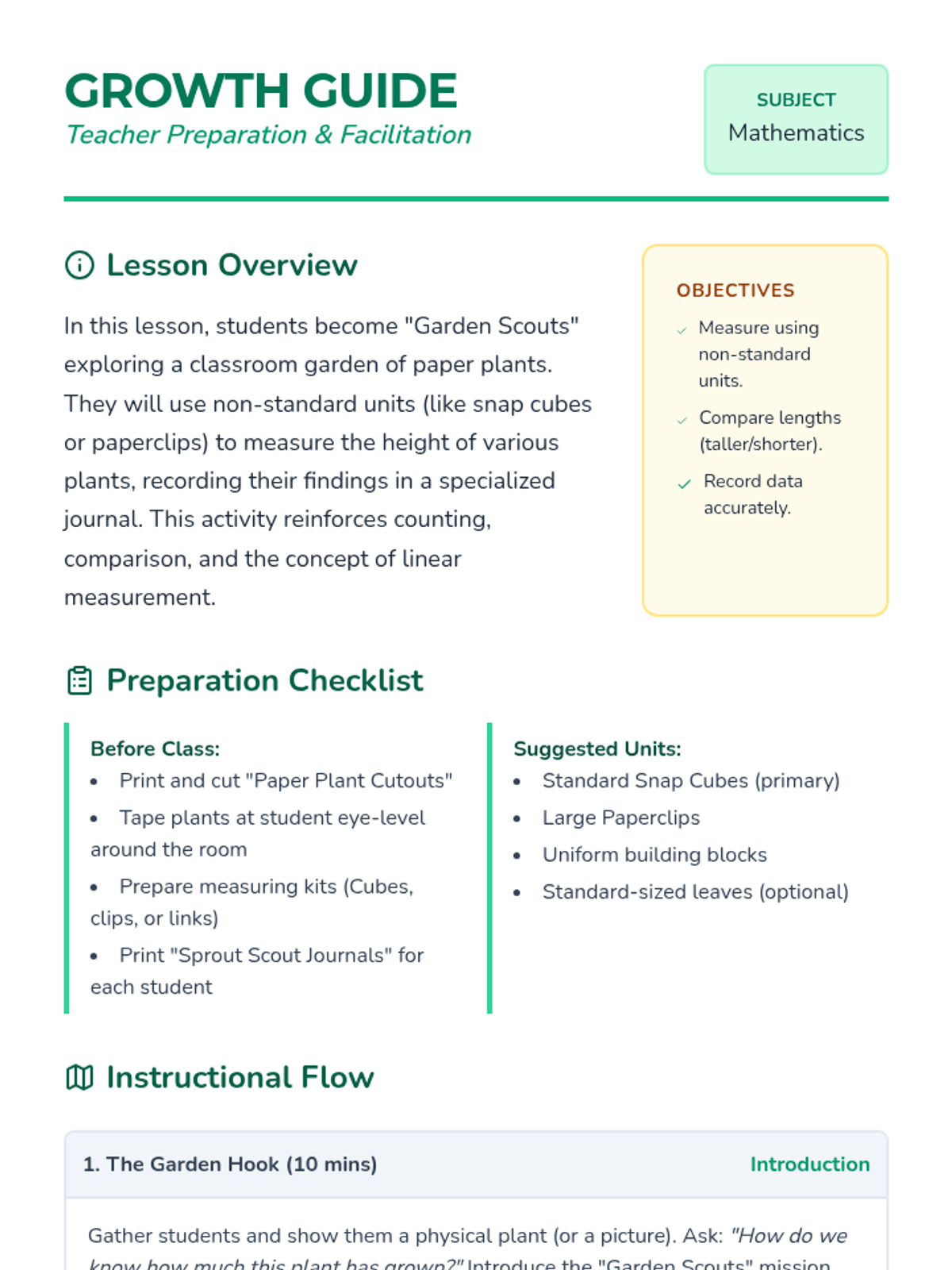
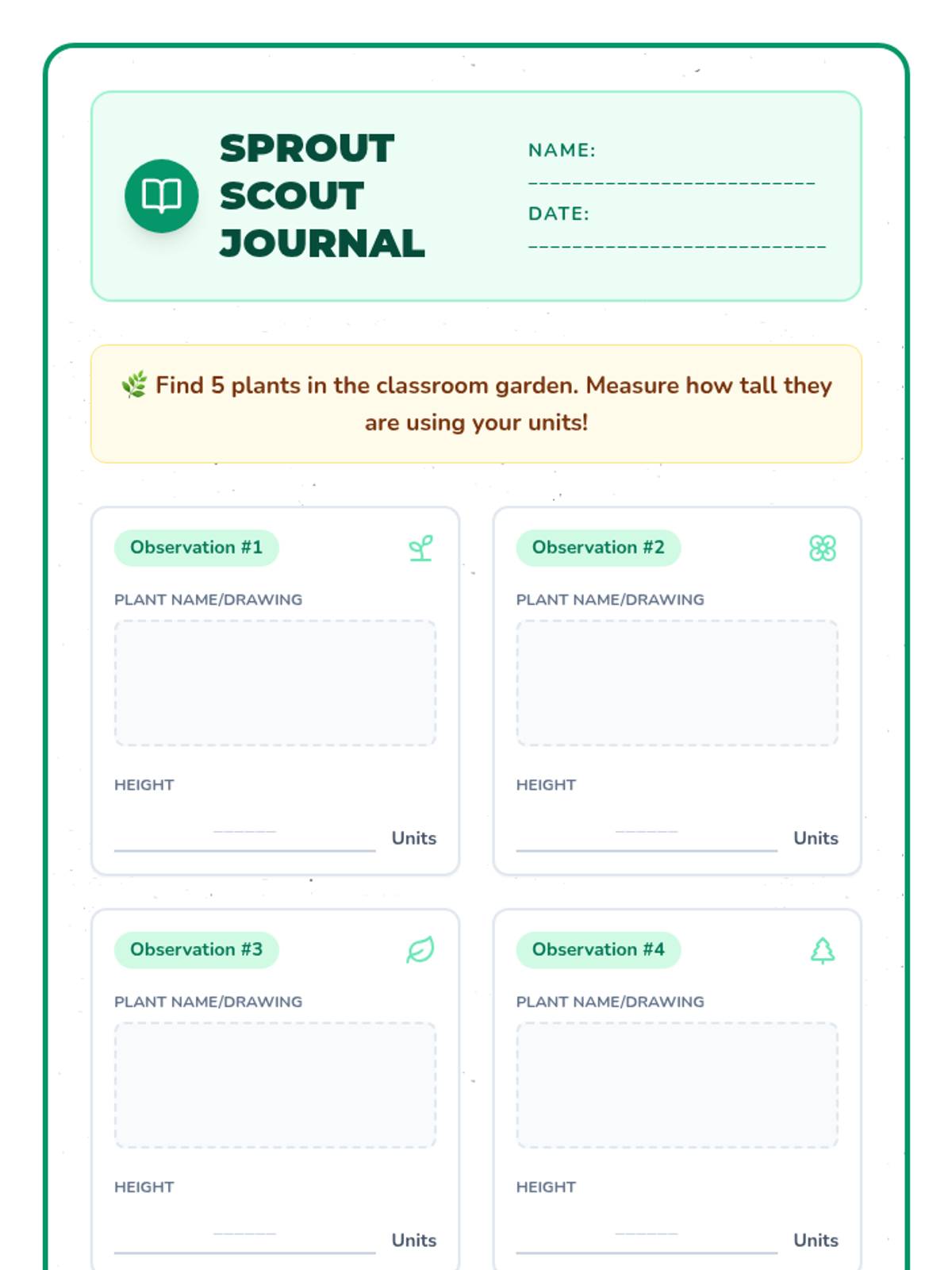
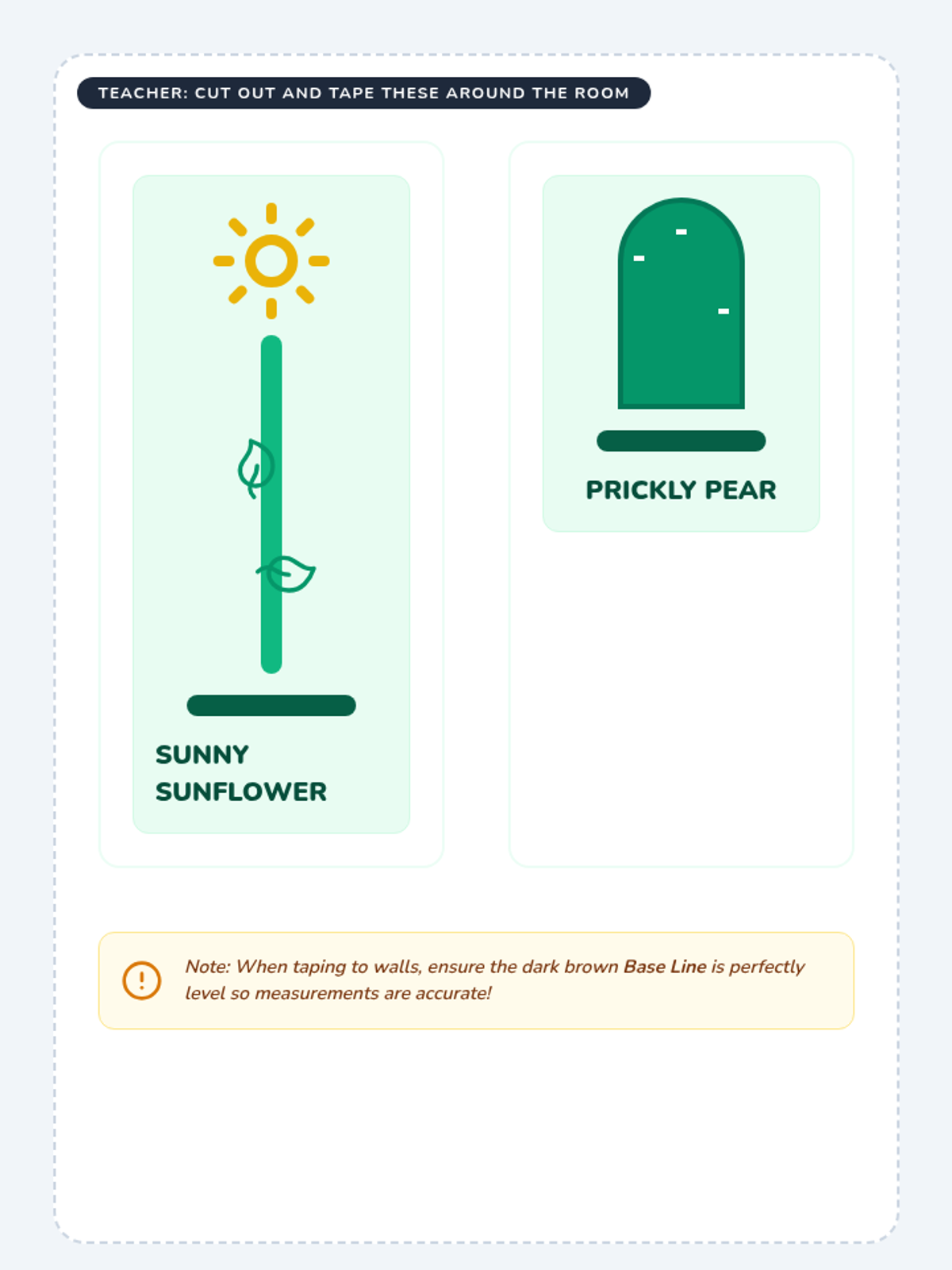
A hands-on measurement lesson where students use non-standard units to measure paper plants, fostering number sense and comparison skills through movement-based learning.
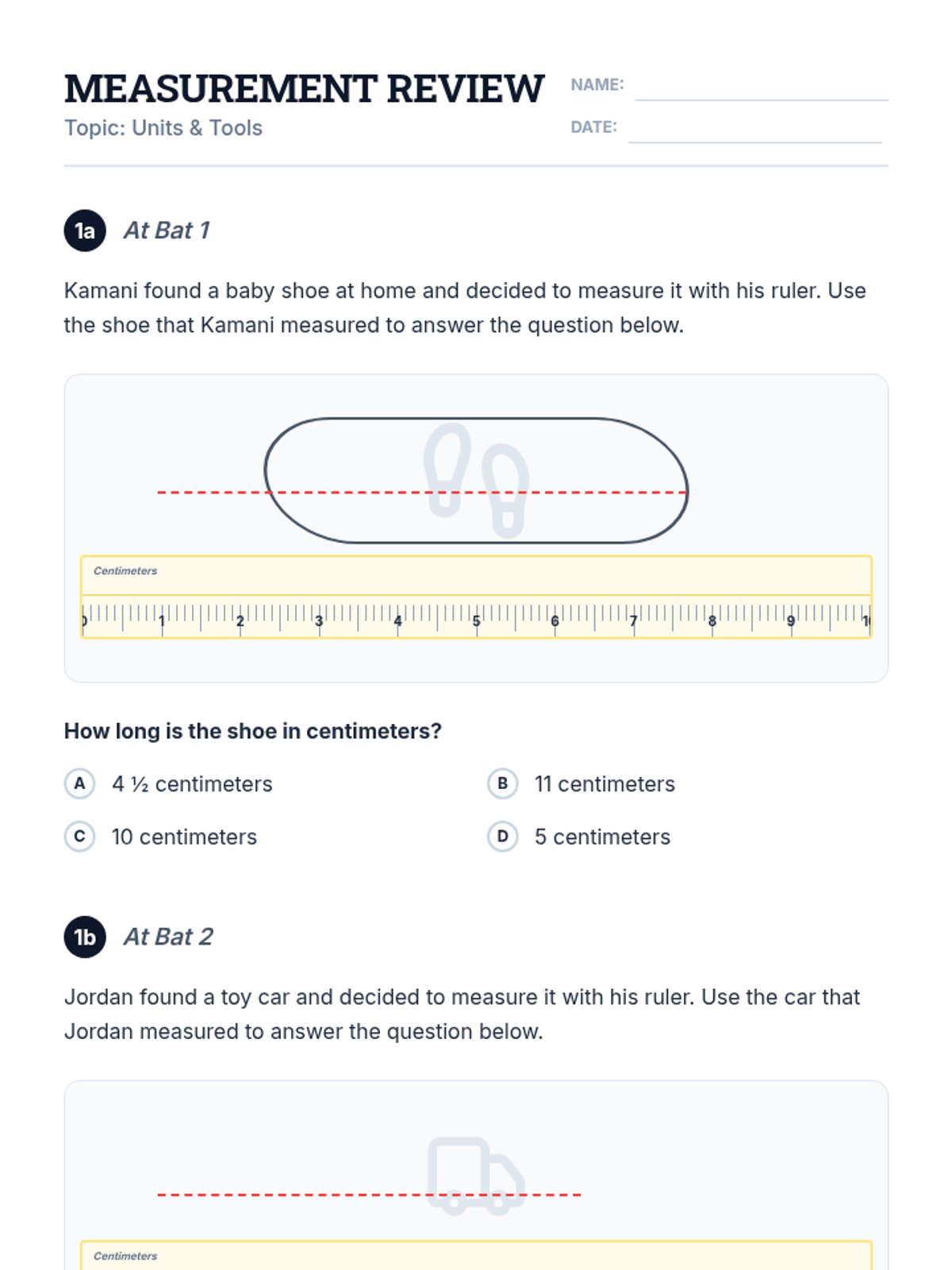
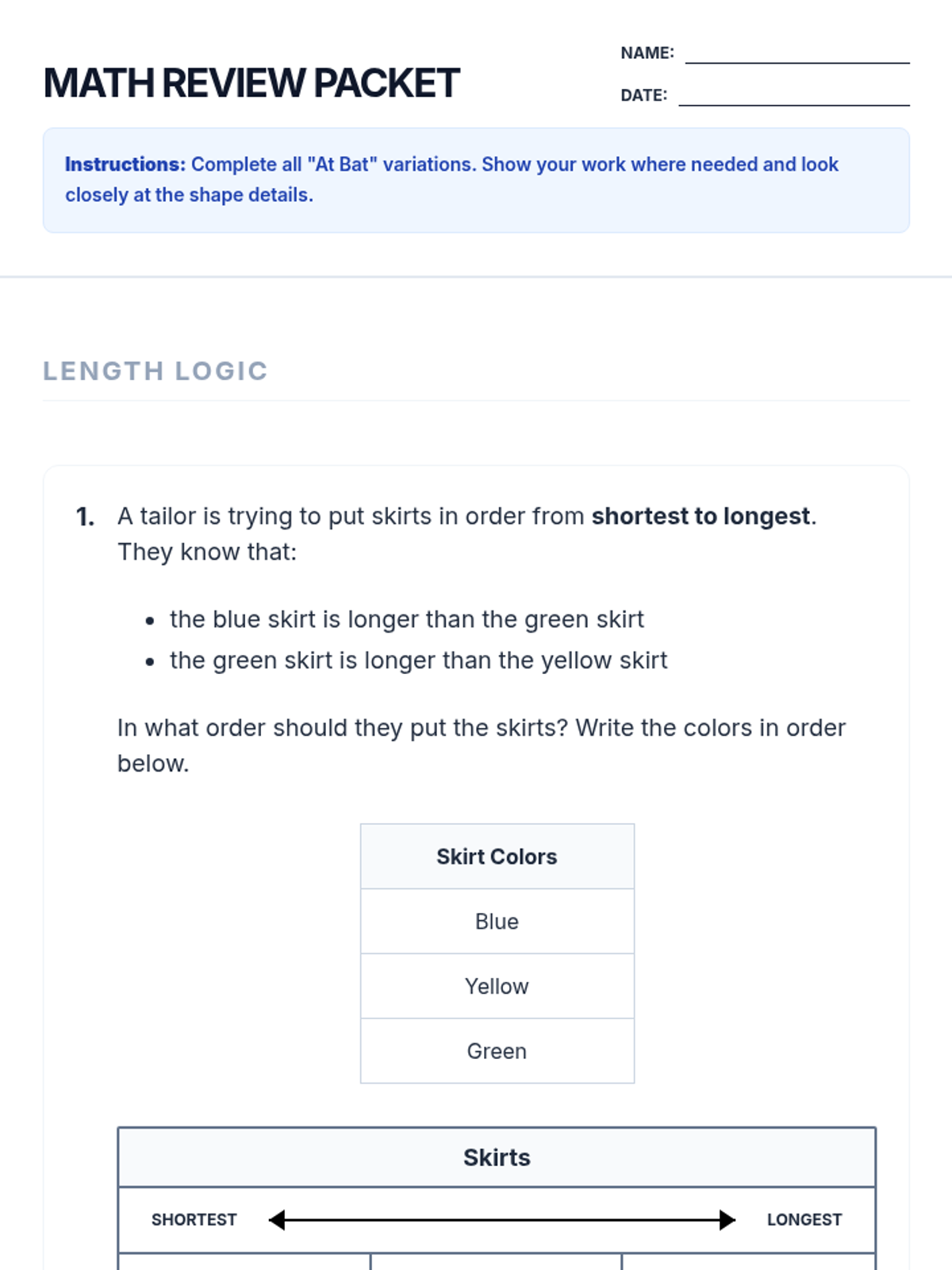
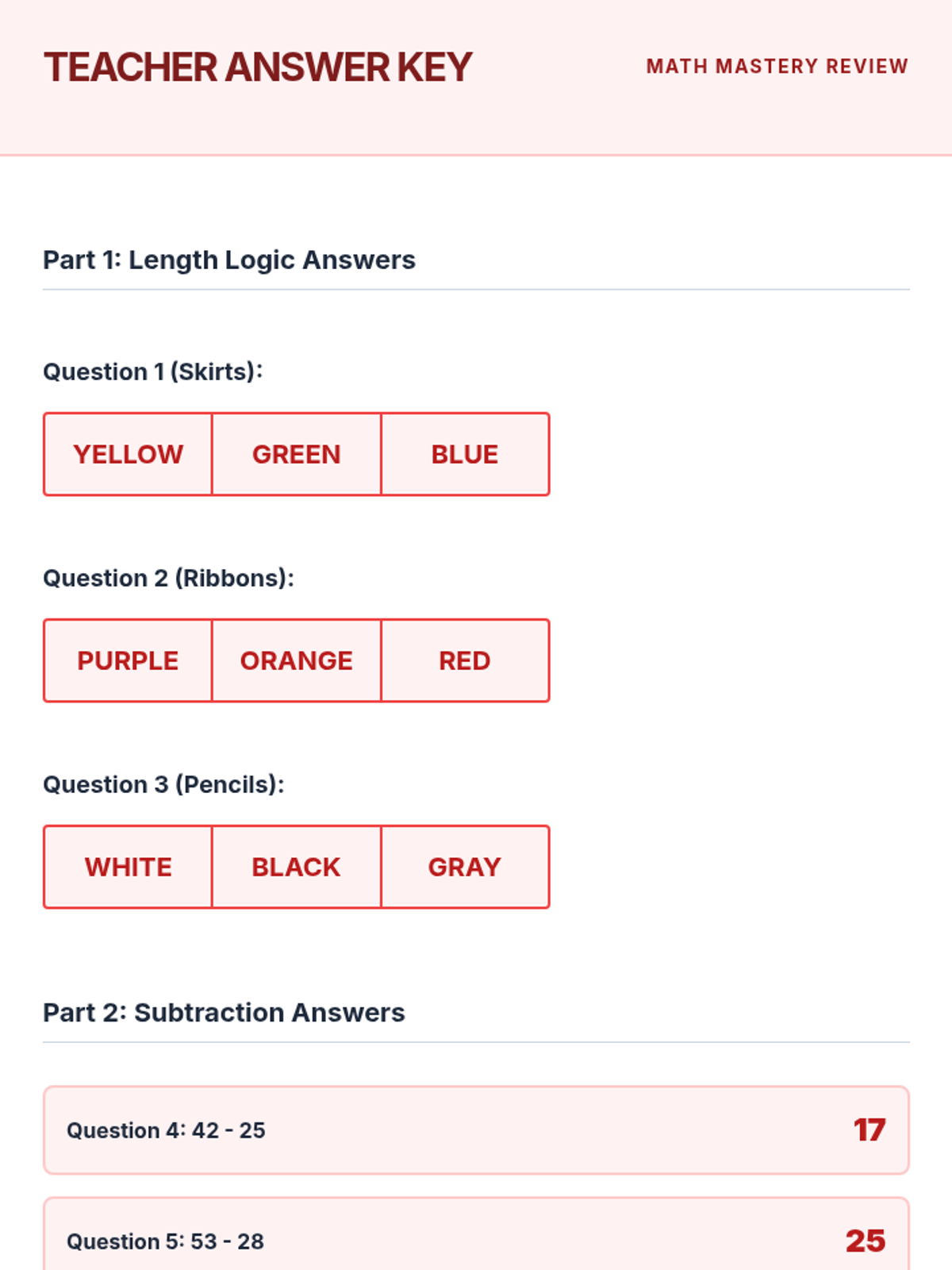
A comprehensive math review lesson designed to reinforce key elementary math skills including logical ordering, 2-digit subtraction, geometric attributes, and equal parts/fractions. This lesson uses a repeated "at-bat" structure to build mastery through multiple variations of the same problem format.
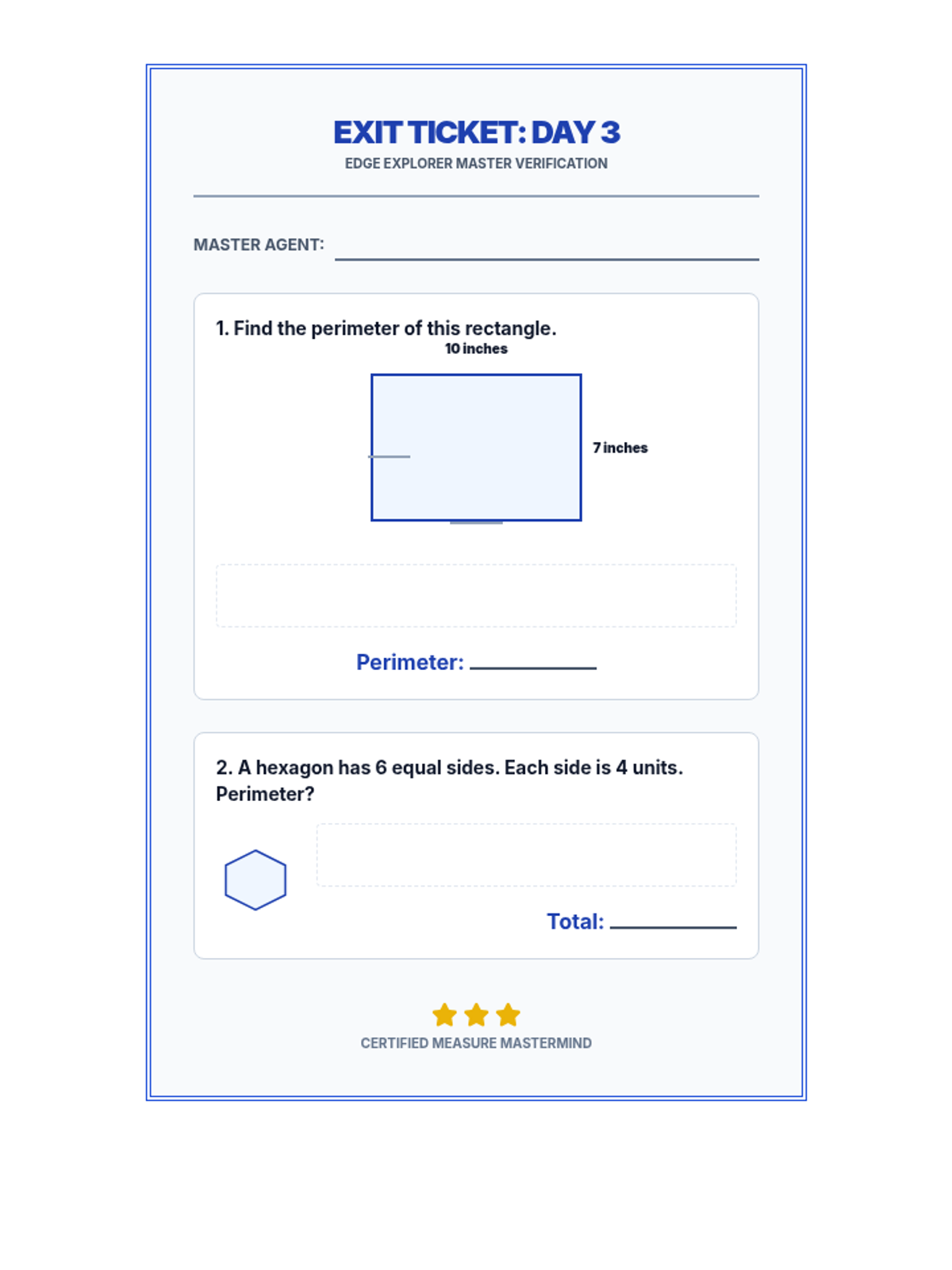
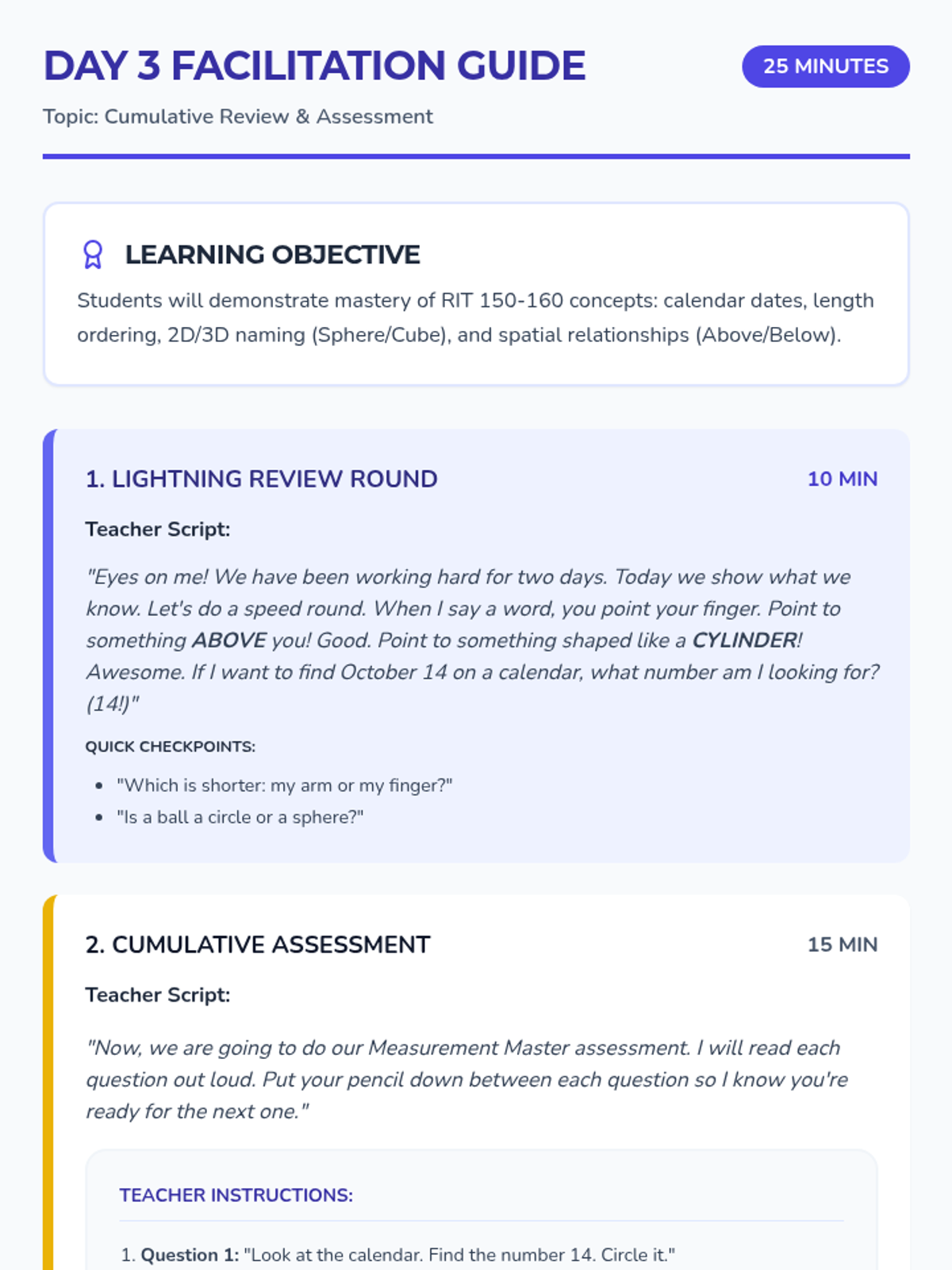
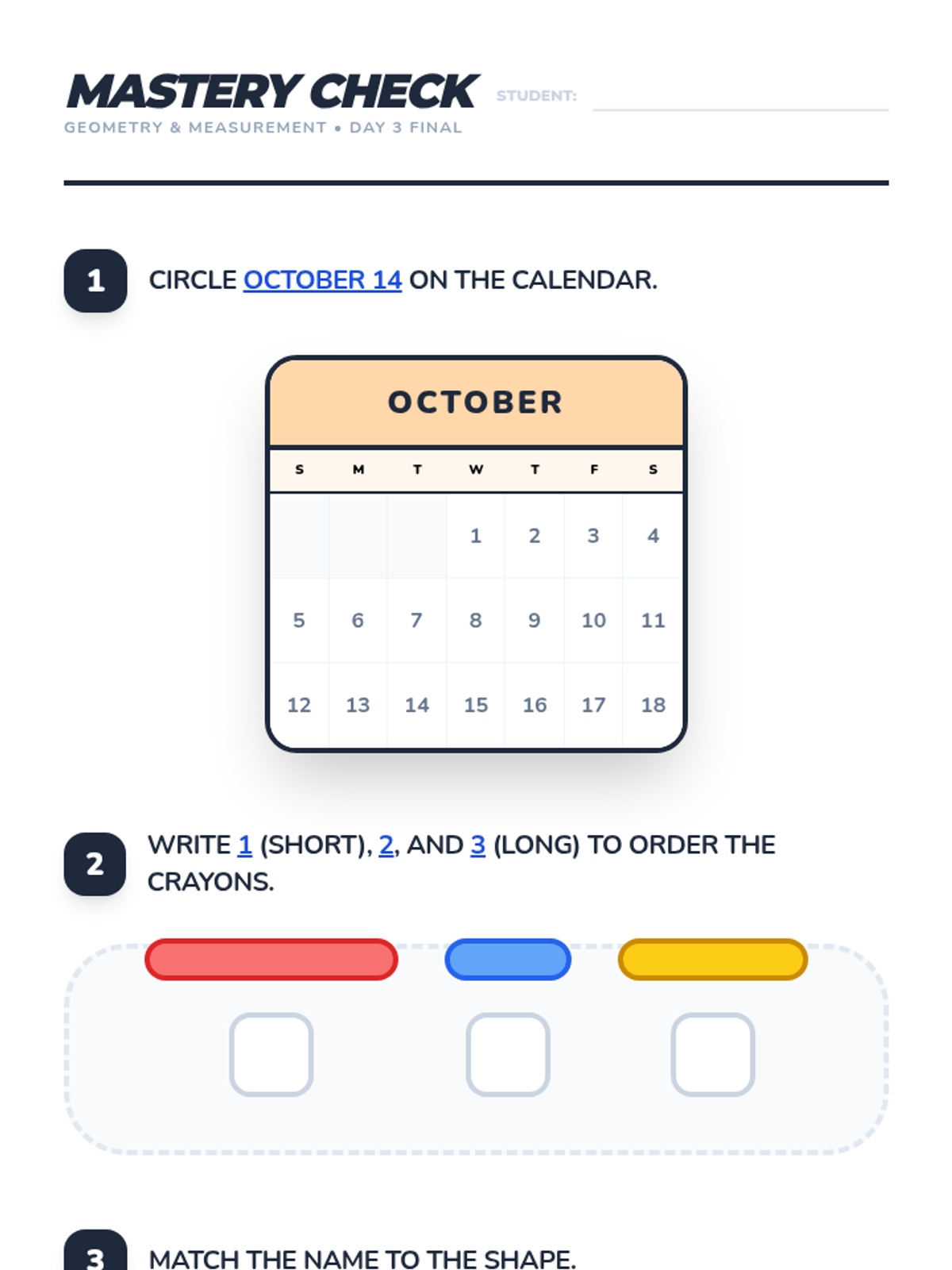
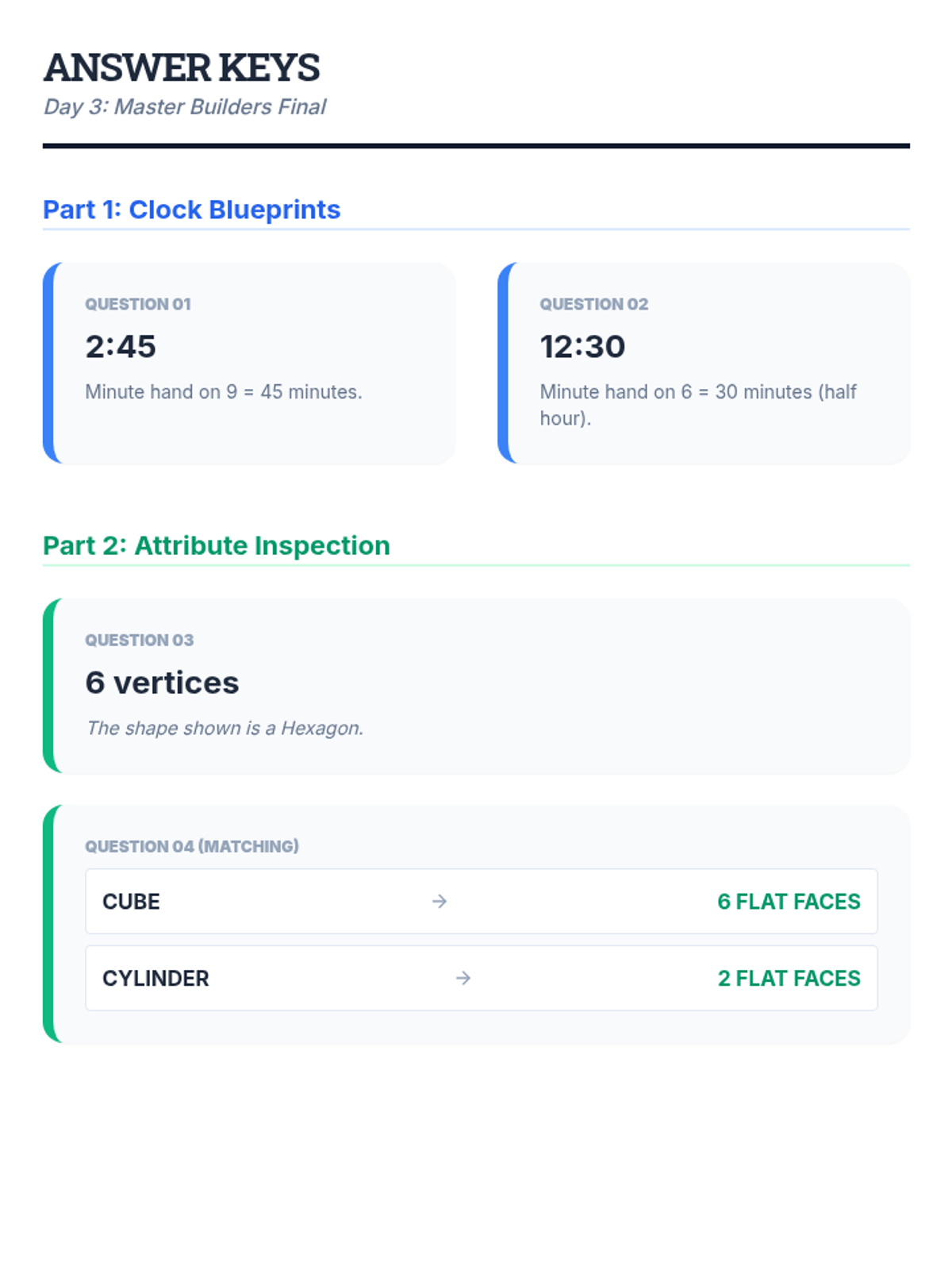
Day 3 provides a comprehensive review of all measurement and geometry concepts from the week, culminating in a cumulative assessment.
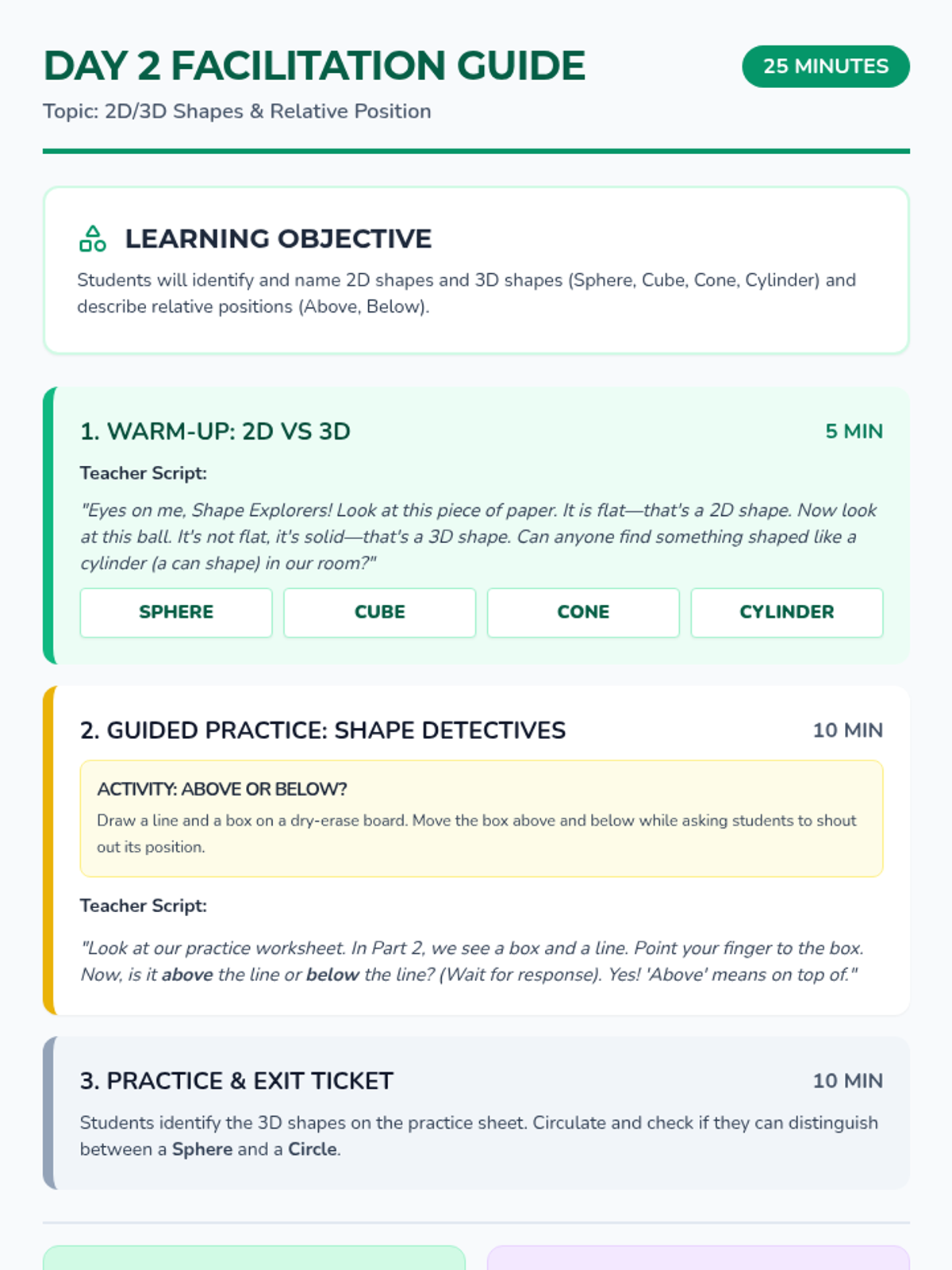
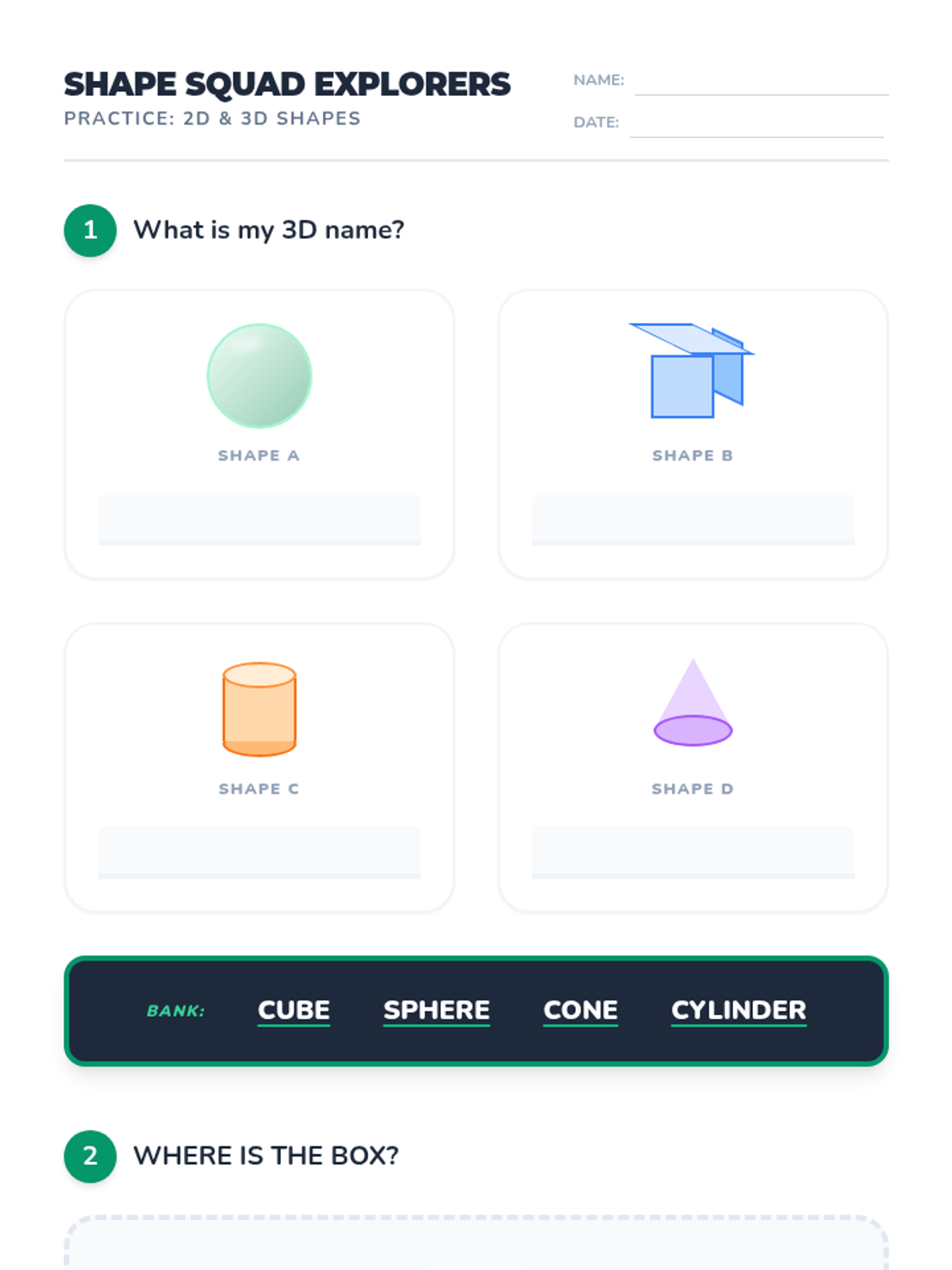
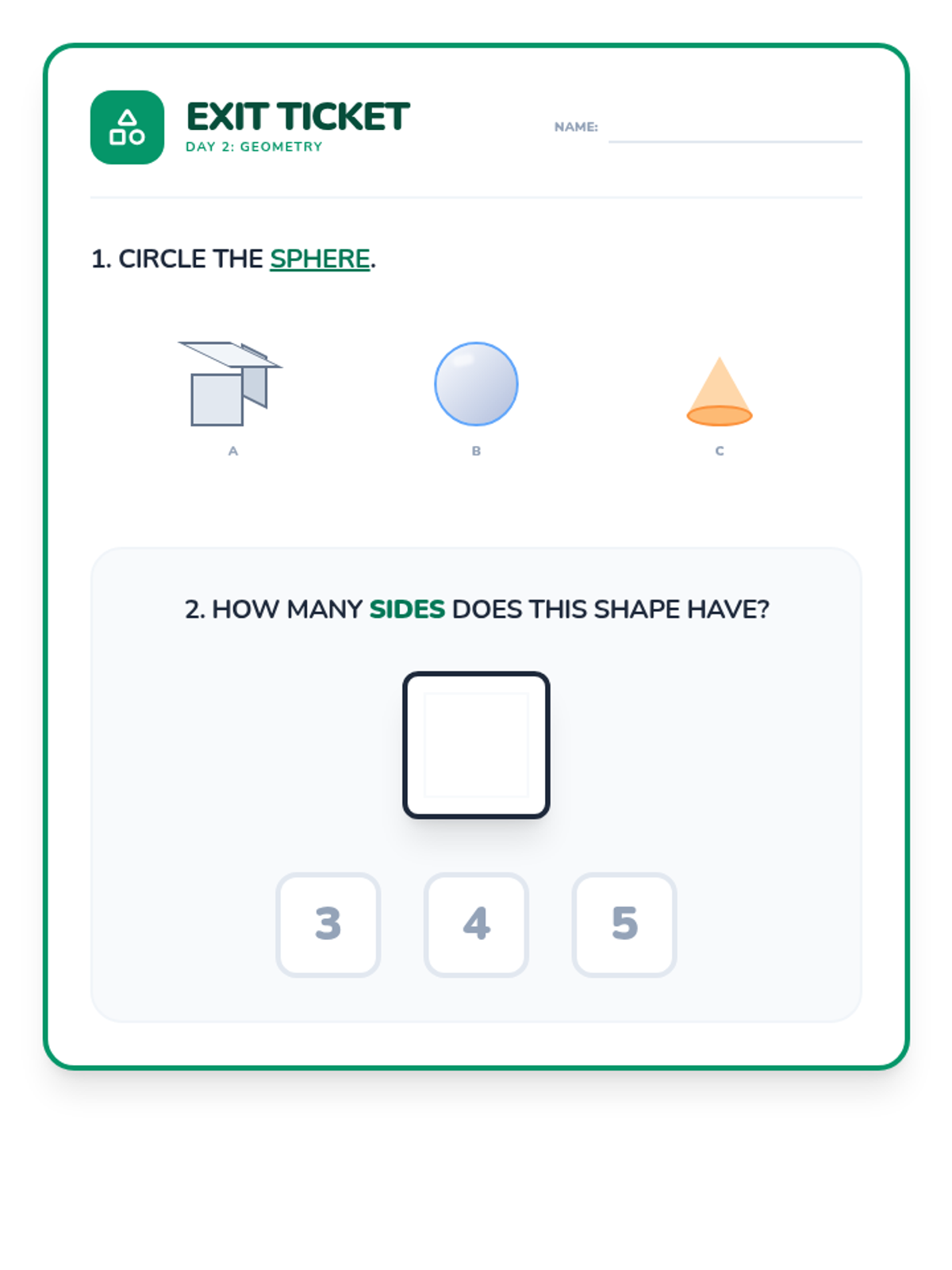
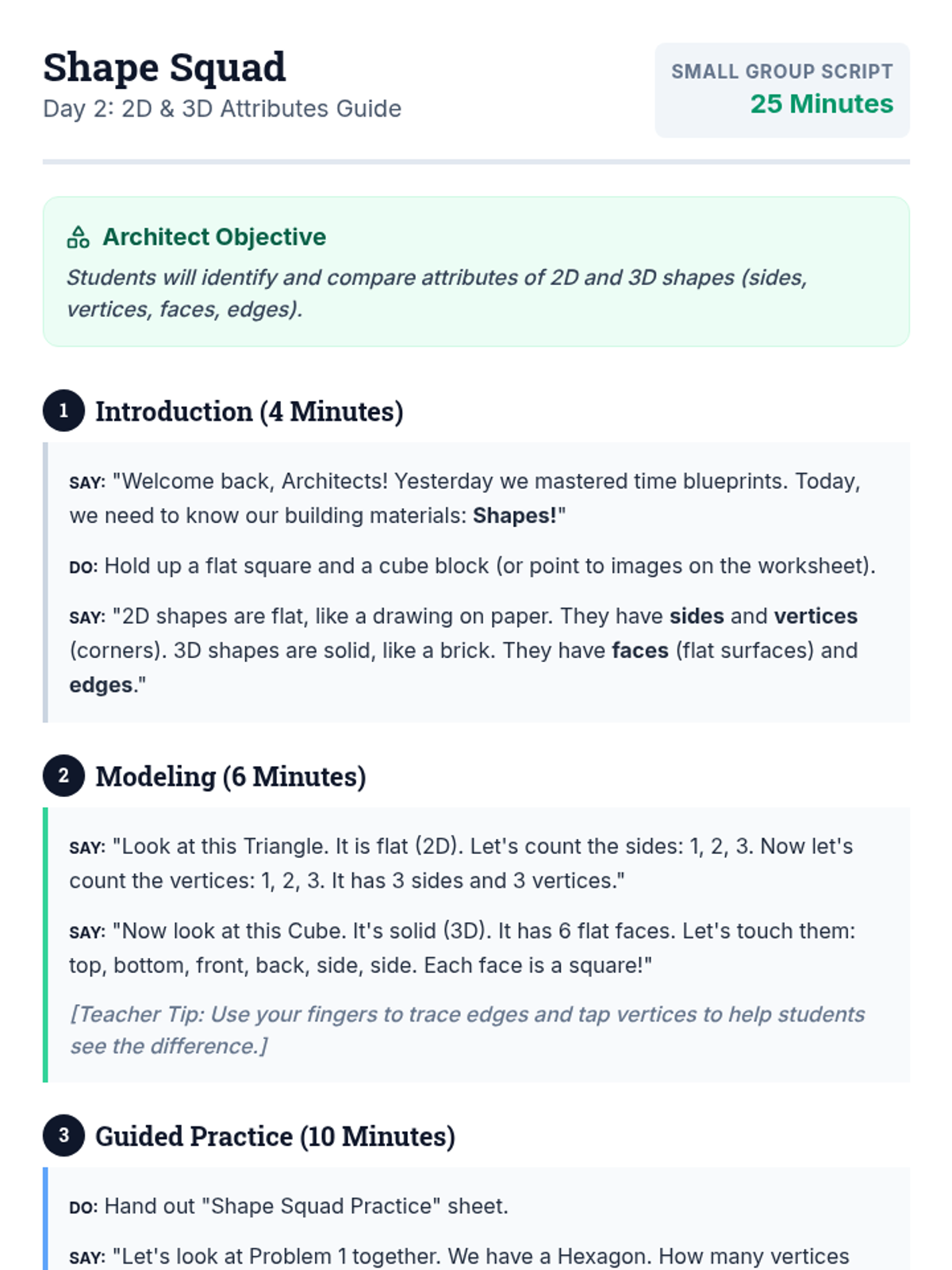
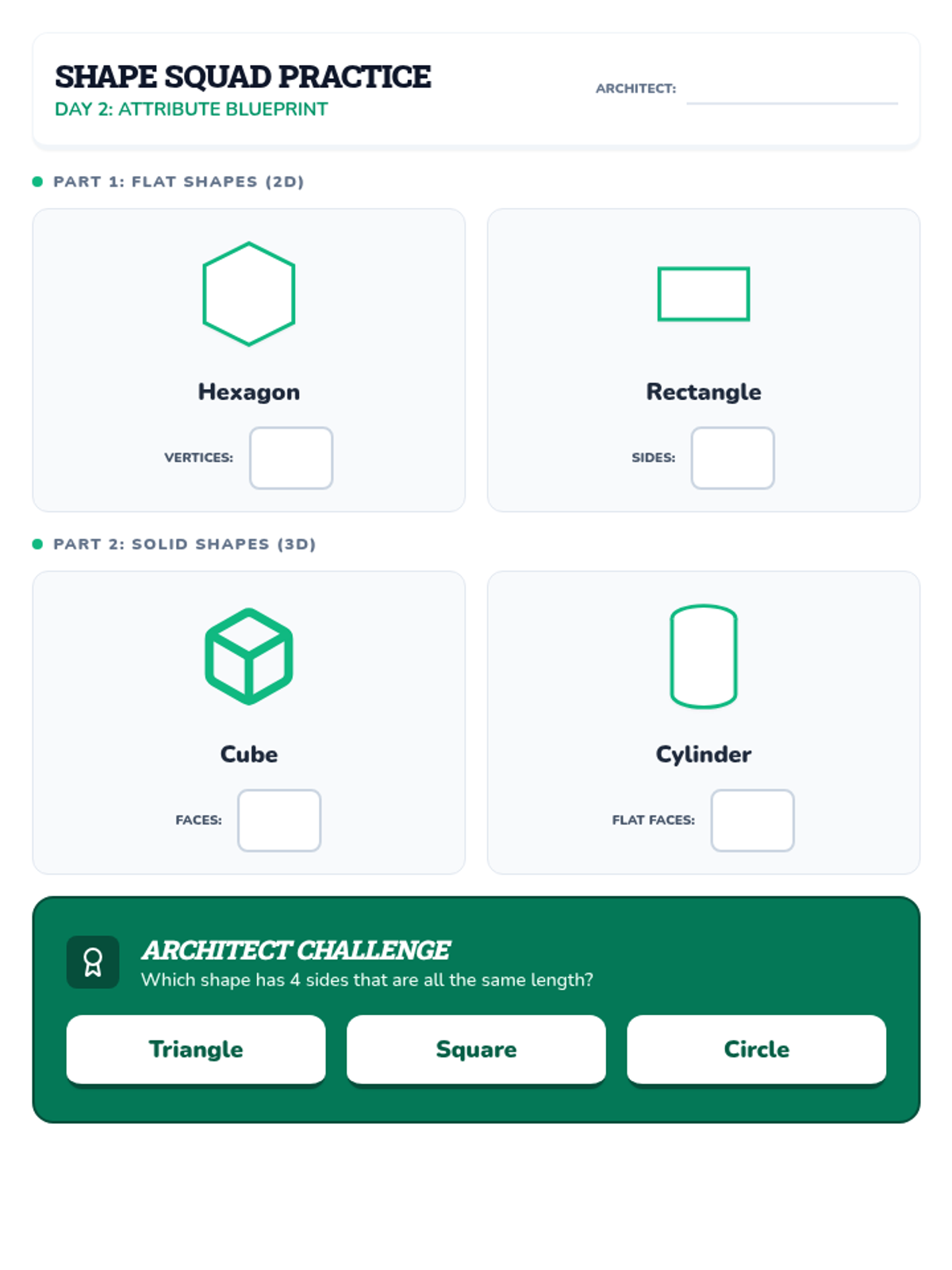
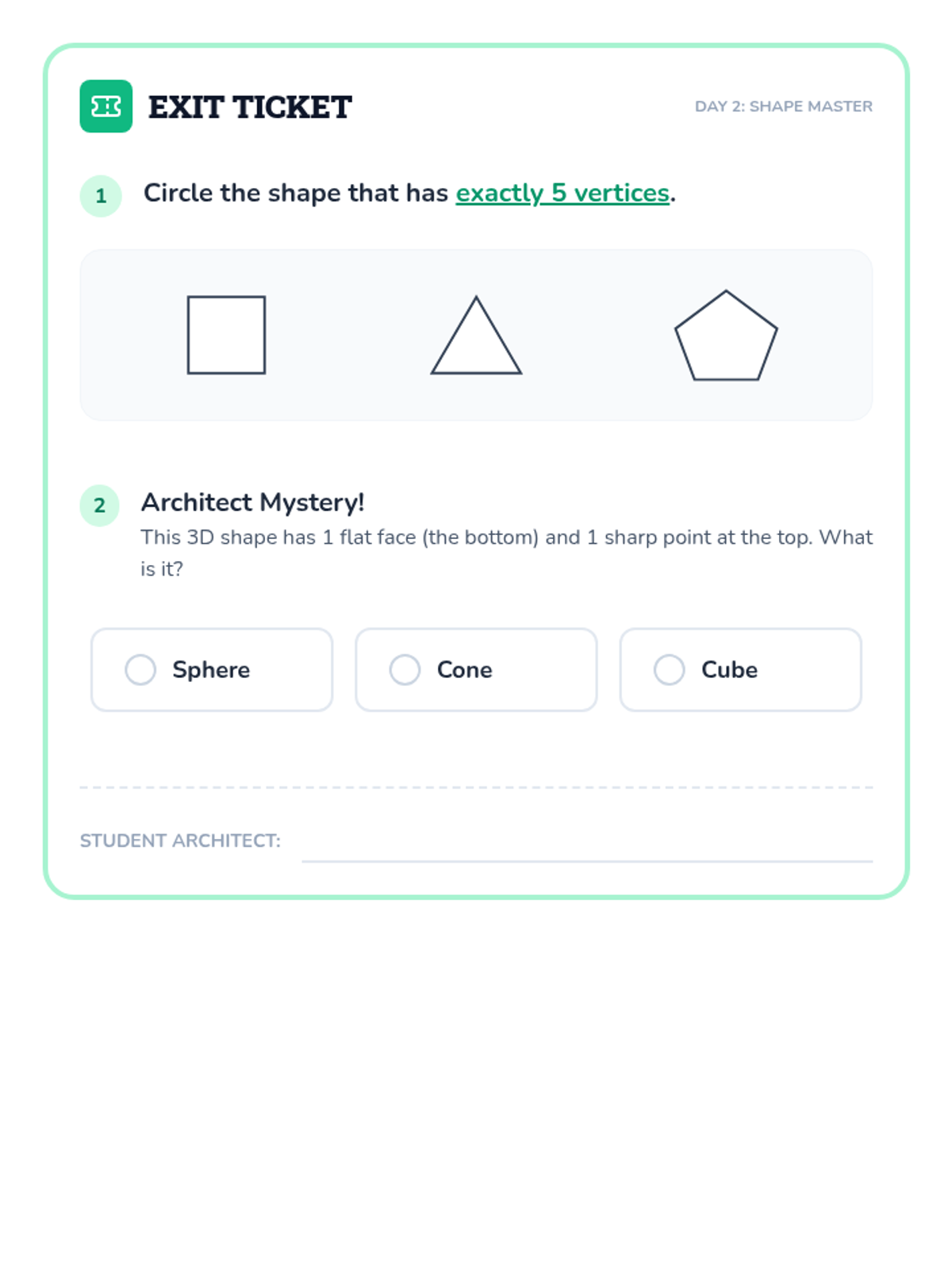
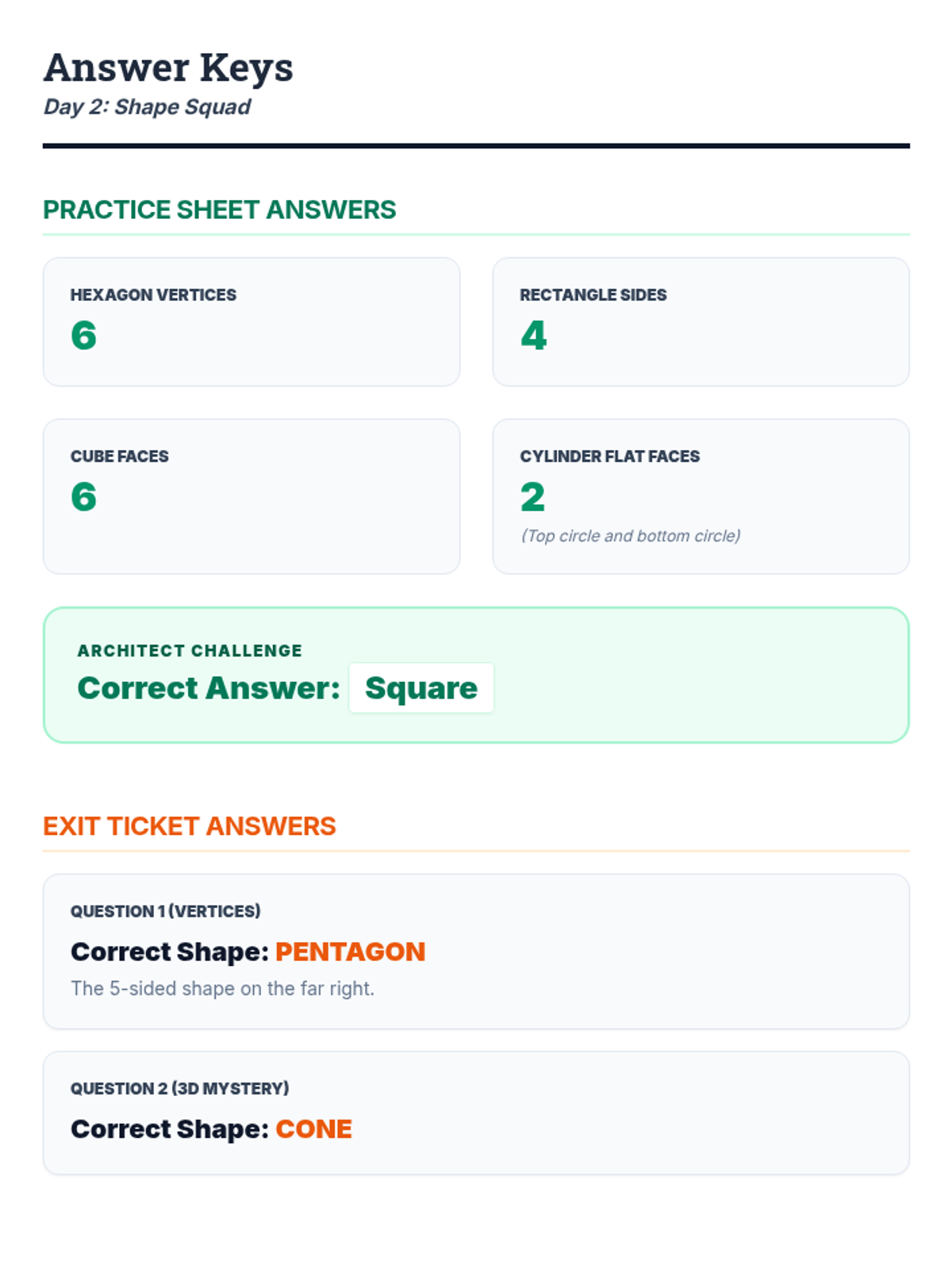
Day 2 covers identifying 2D and 3D shapes by name and attributes, as well as mixed geometry concepts like relative position and composite shapes.
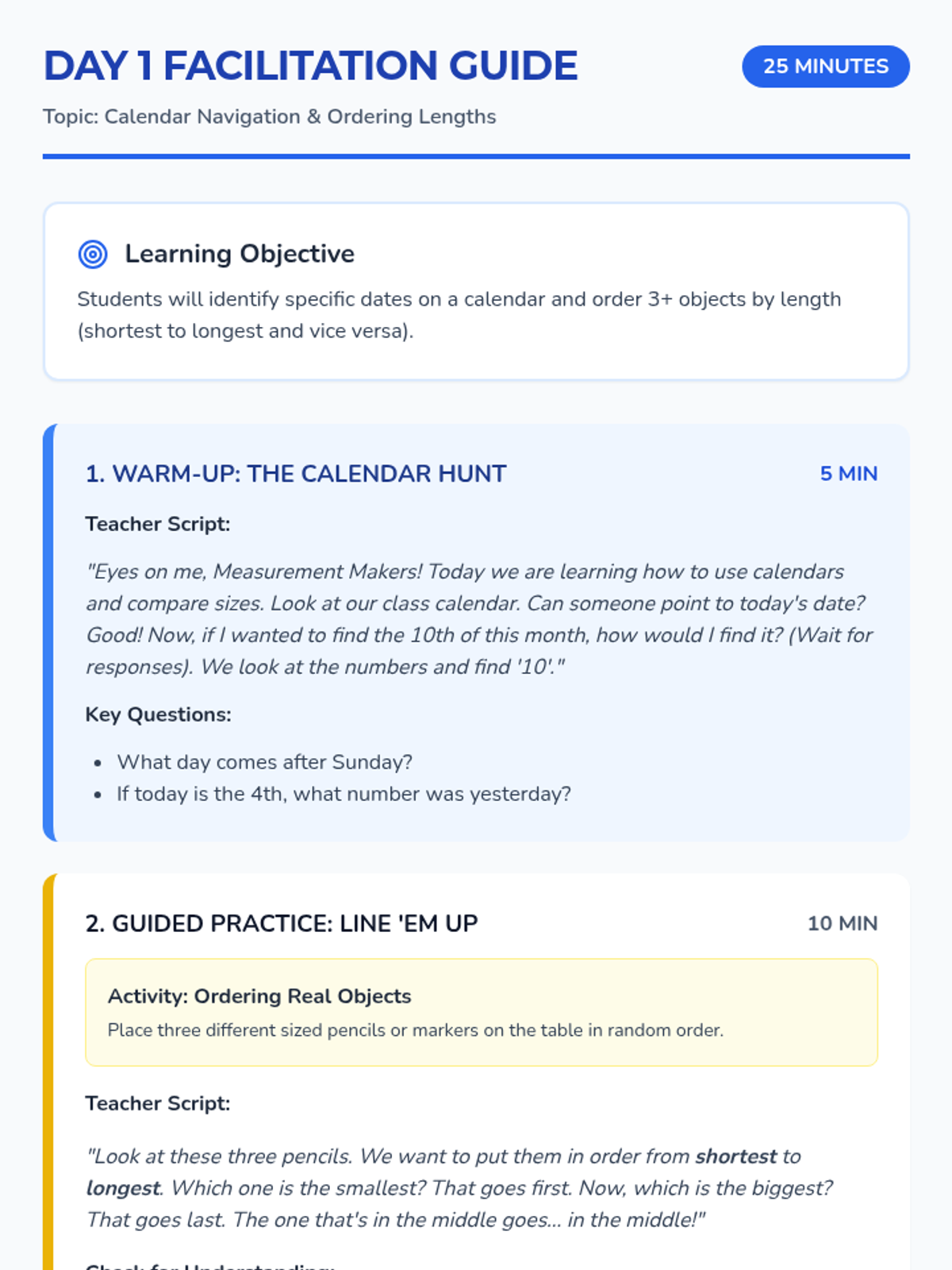
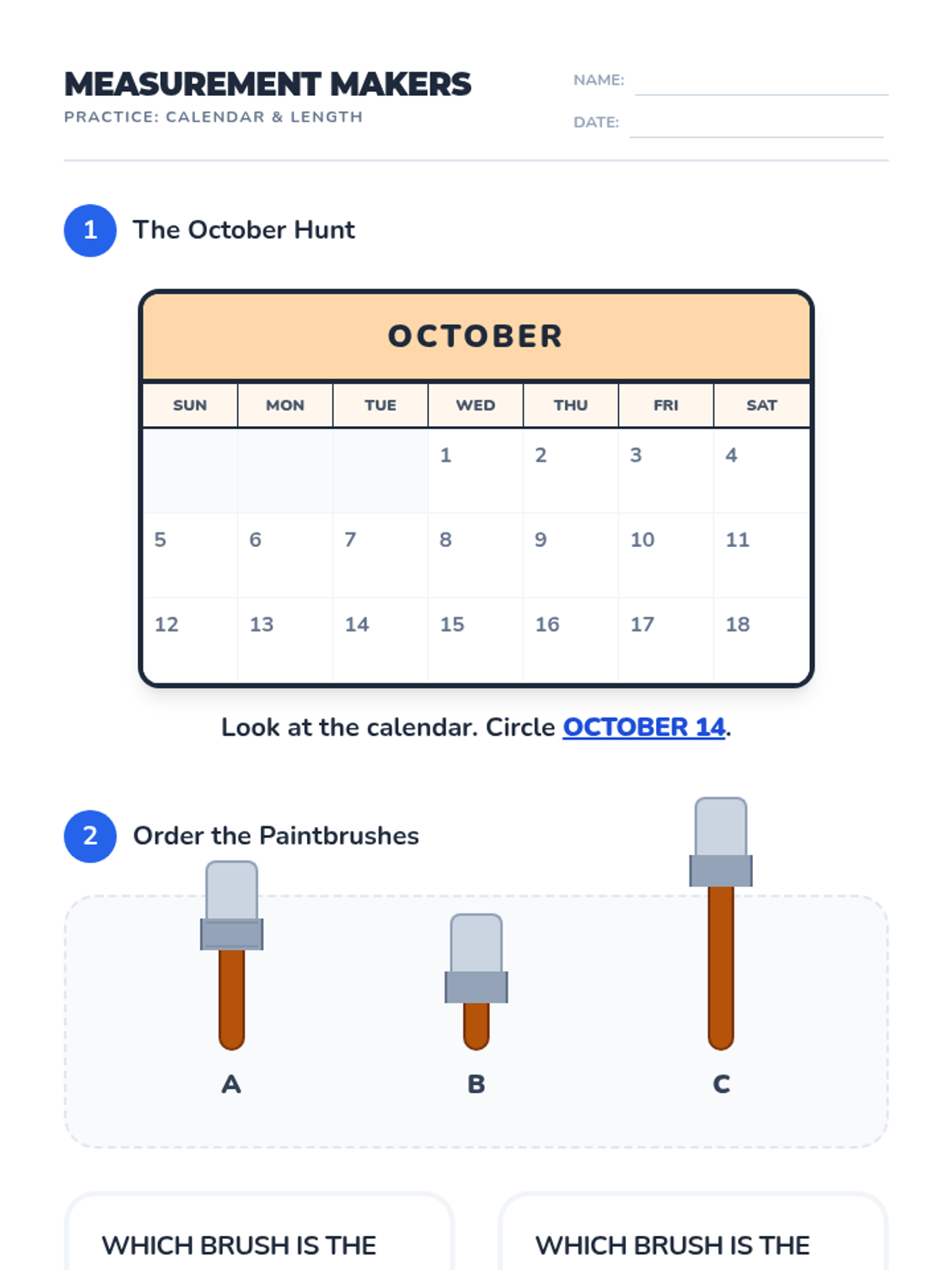
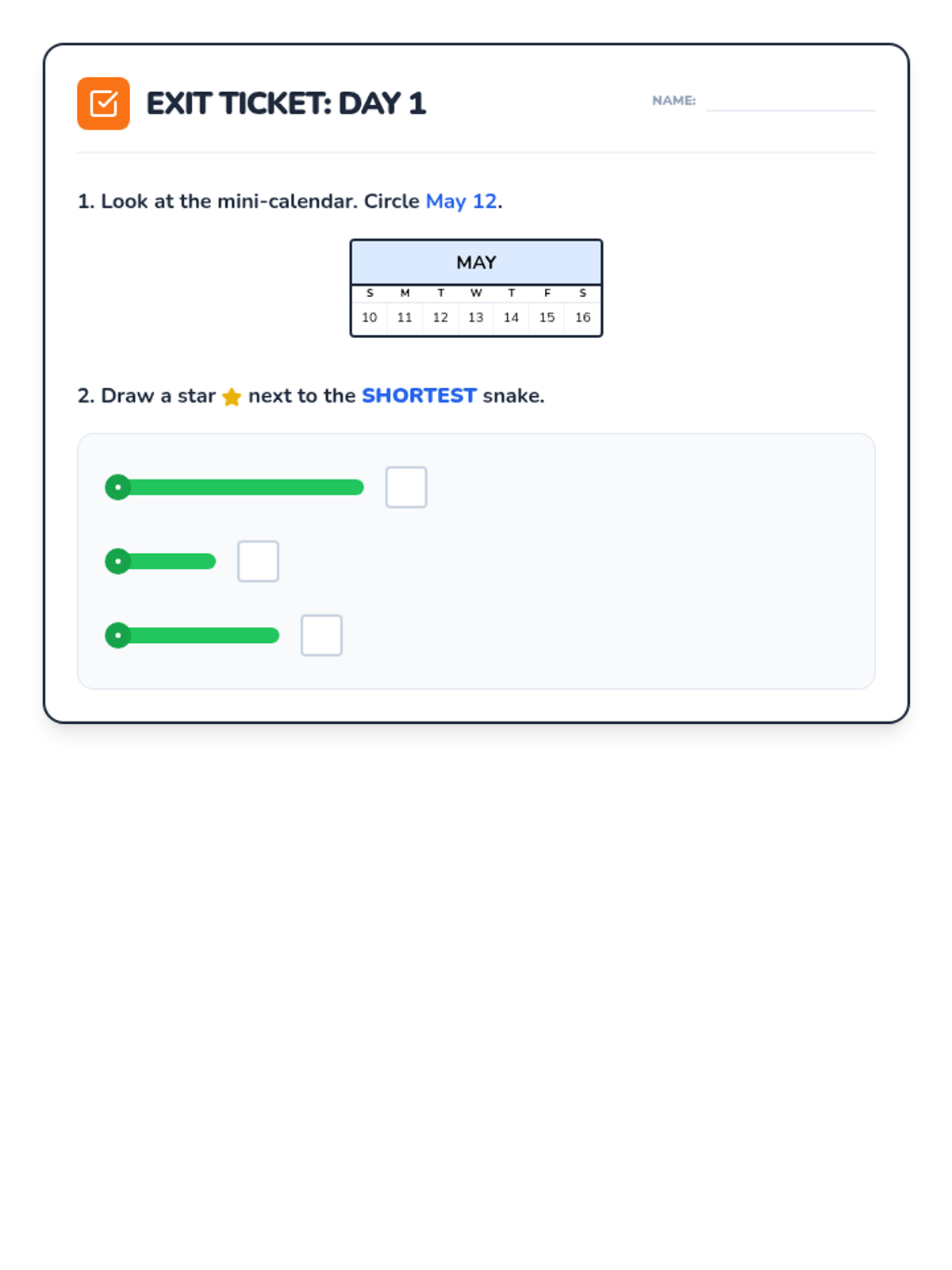
Day 1 focuses on calendar navigation (finding specific dates) and ordering objects by length, targeting foundational RIT 150-160 skills.
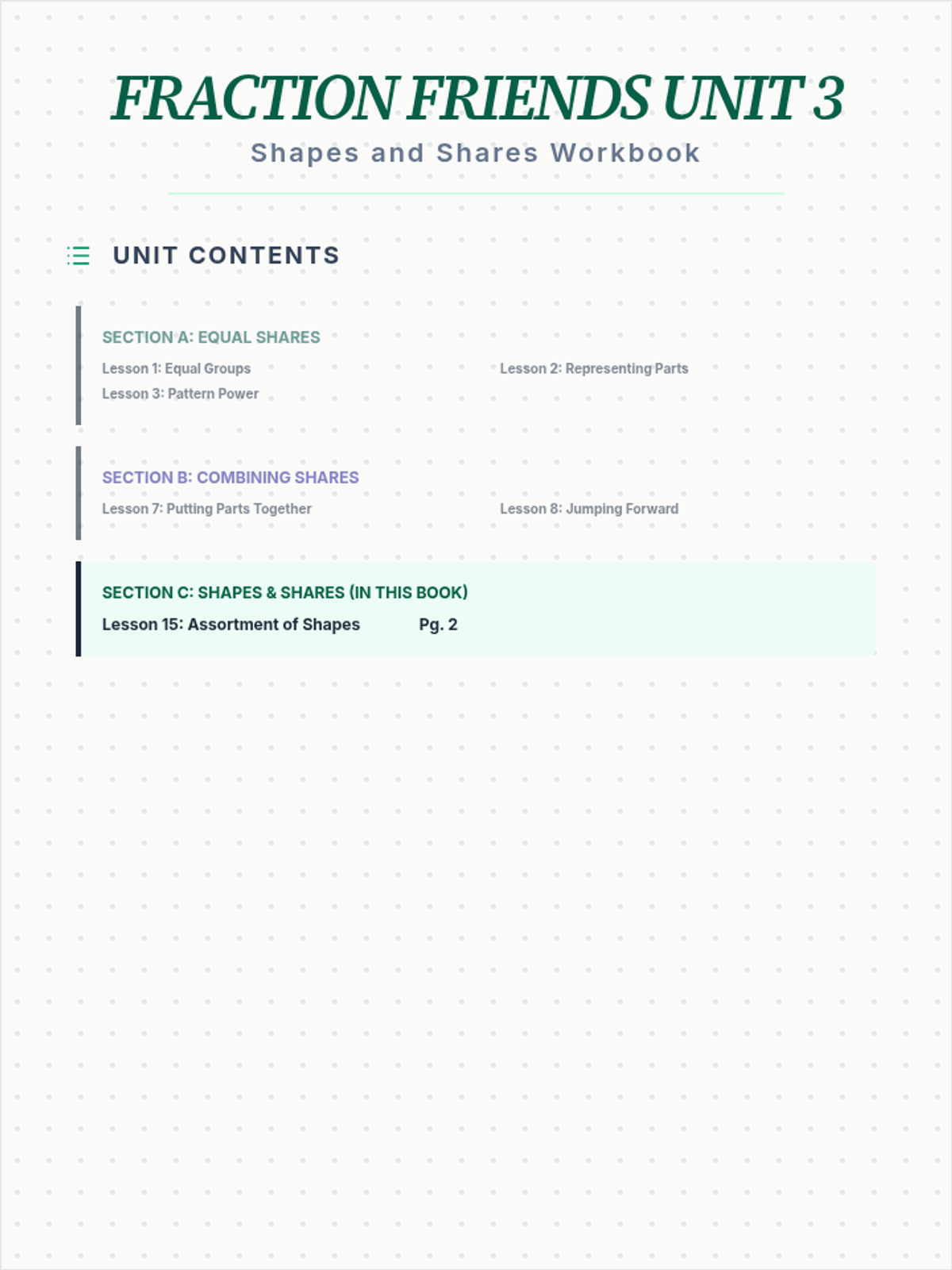
A series of activities for Section C, adapted for 2nd-grade students. This lesson explores partitioning various shapes, comparing shares across different-sized wholes, and using unit shares to build complex designs, continuing the focus on halves, thirds, and fourths.
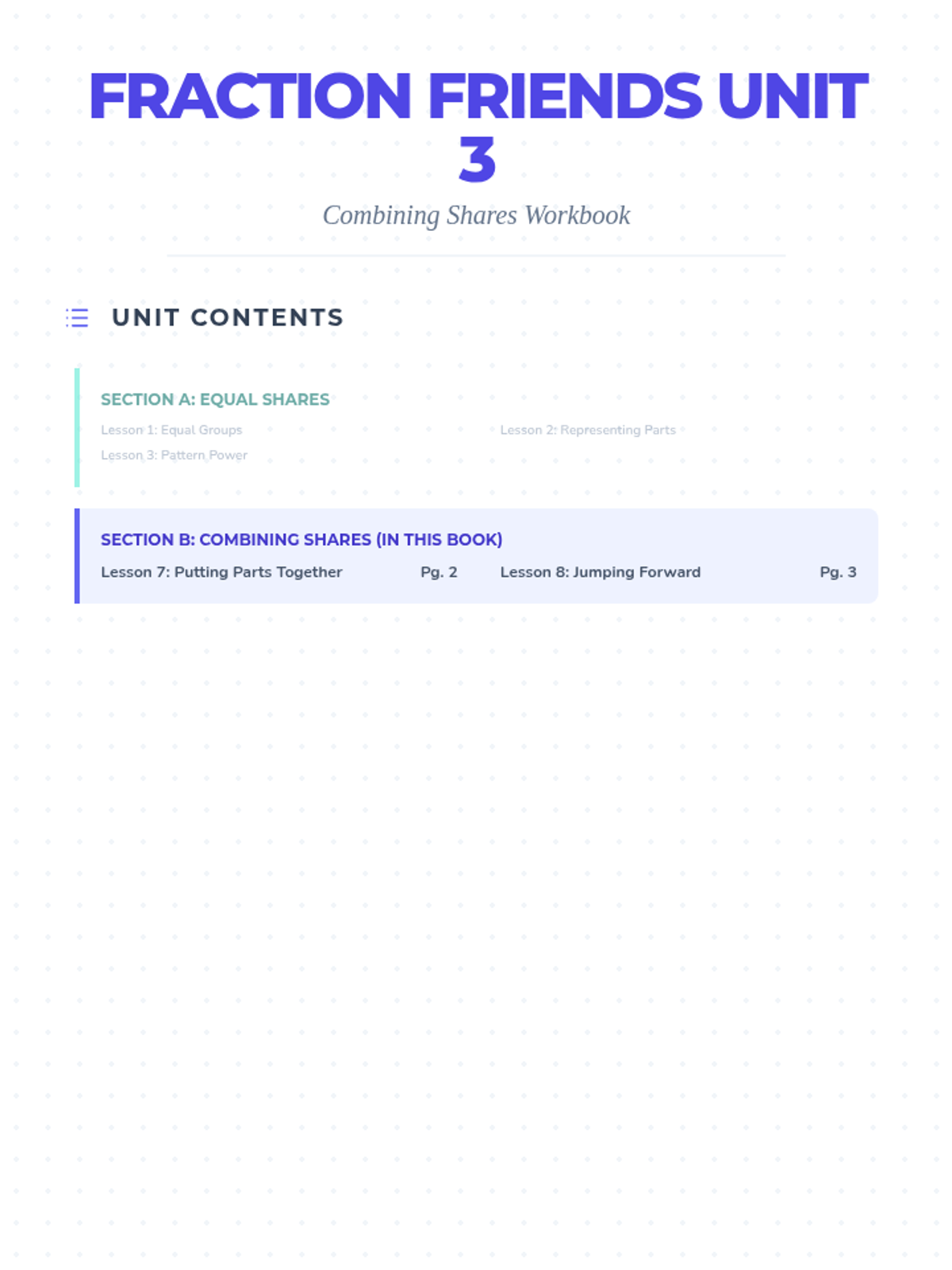
A series of activities for Section B, adapted for 2nd-grade students. This lesson focuses on combining and taking away equal shares (halves, thirds, and fourths) through visual models and simple number lines, emphasizing partitioning and skip counting.
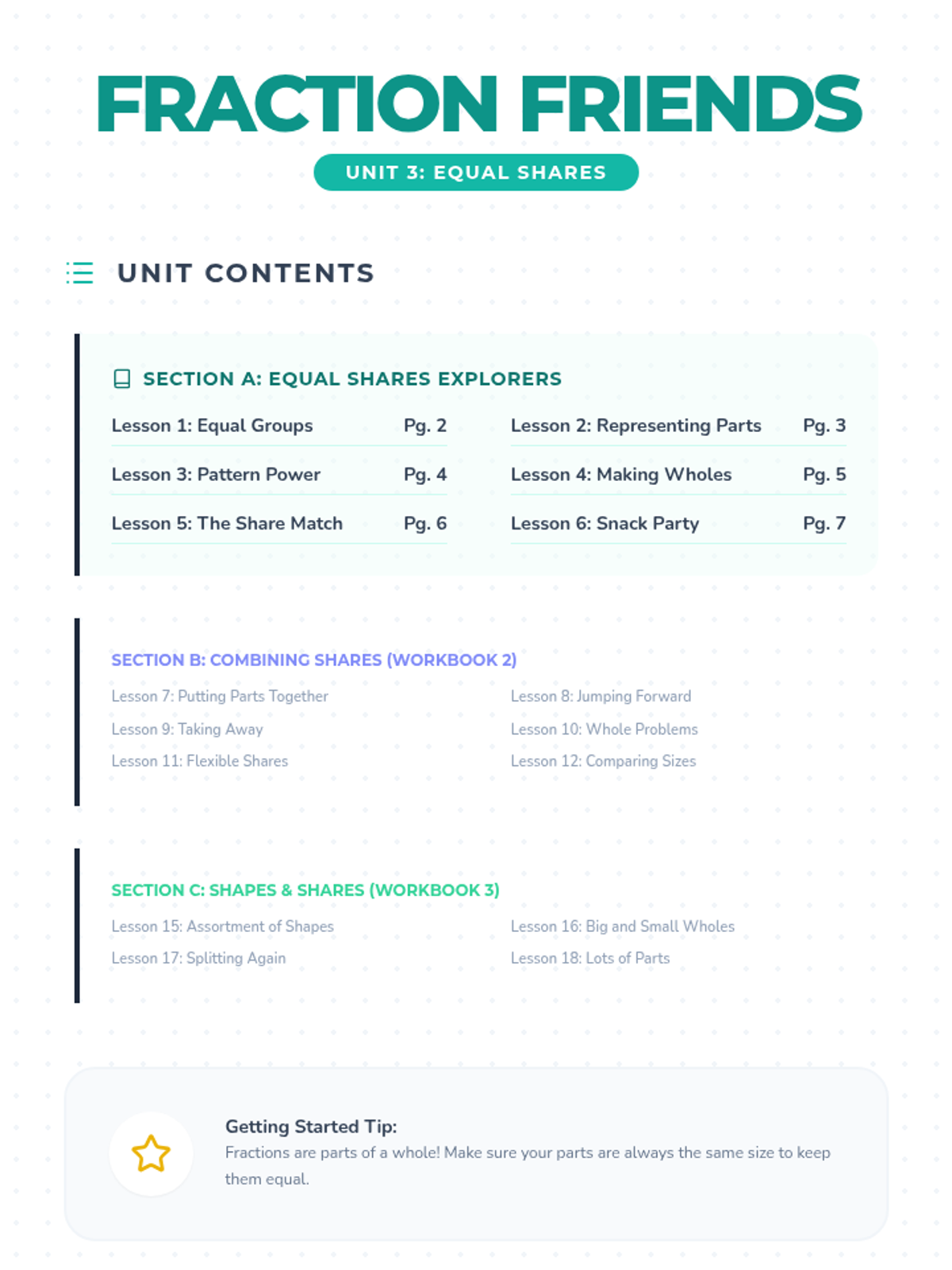
A series of activities focusing on 2nd-grade partitioning and skip counting concepts, adapted from Imagine IM Grade 4 materials. Students explore halves, thirds, and fourths through visual models and real-world snack scenarios.
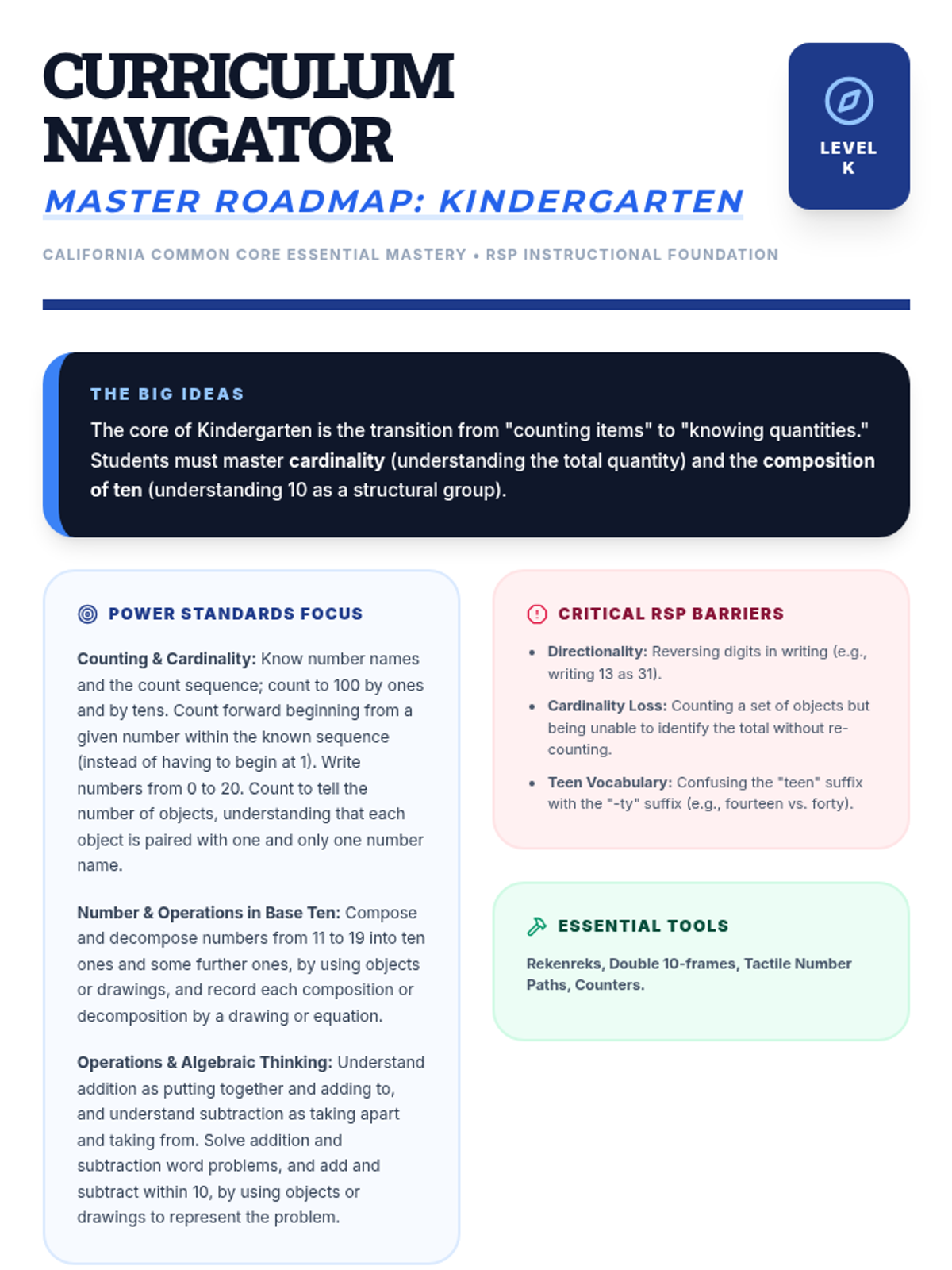
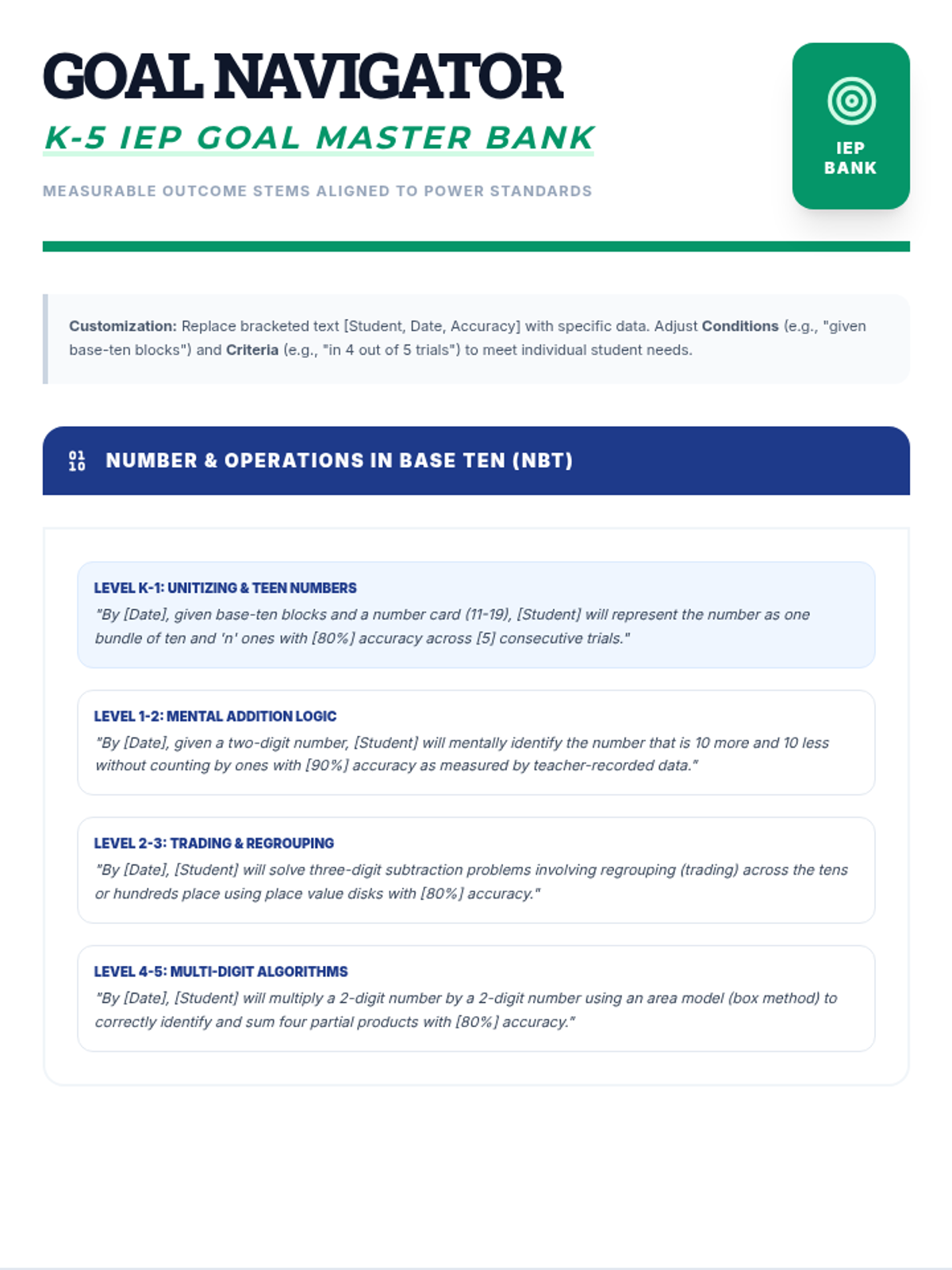
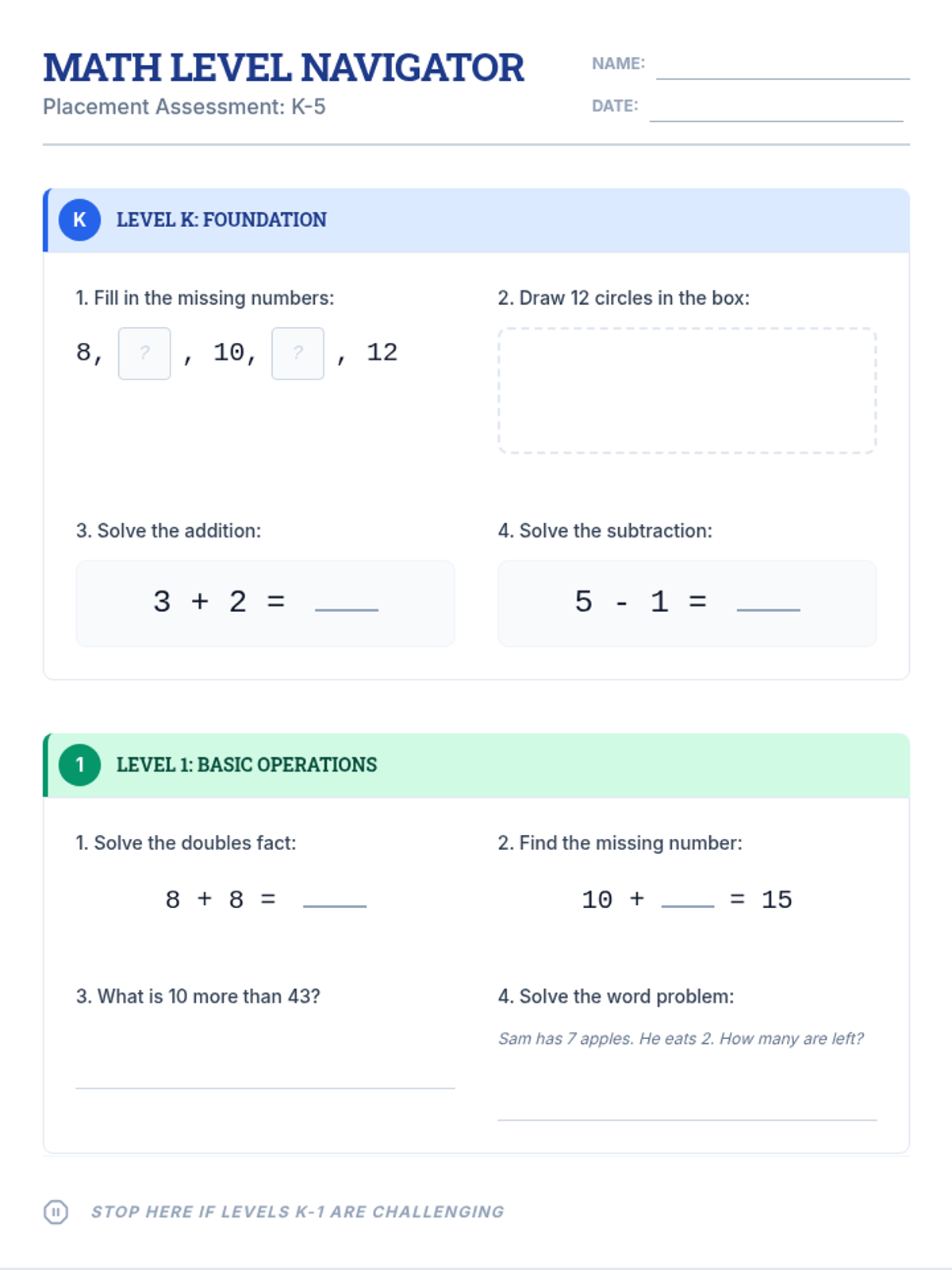
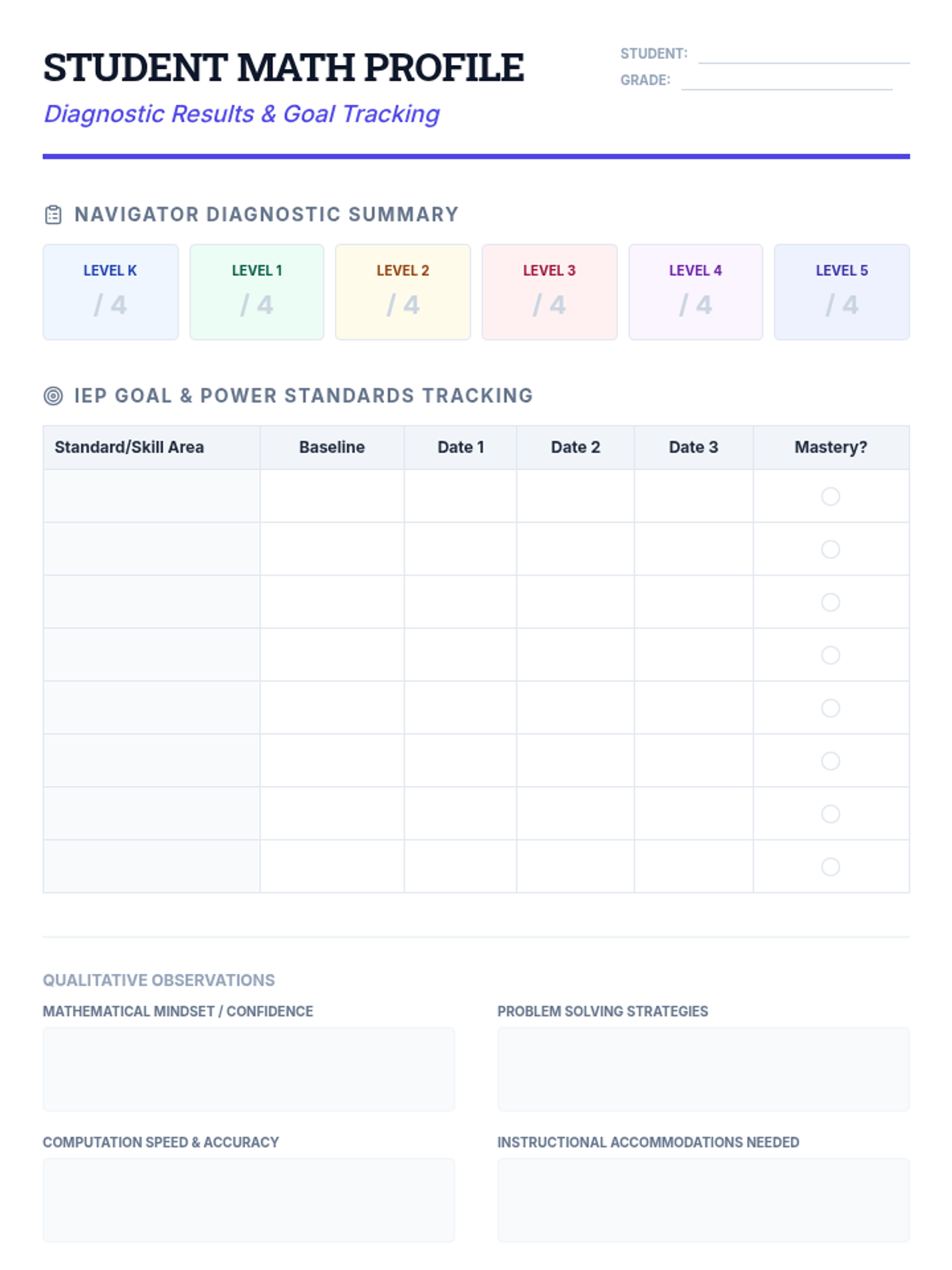
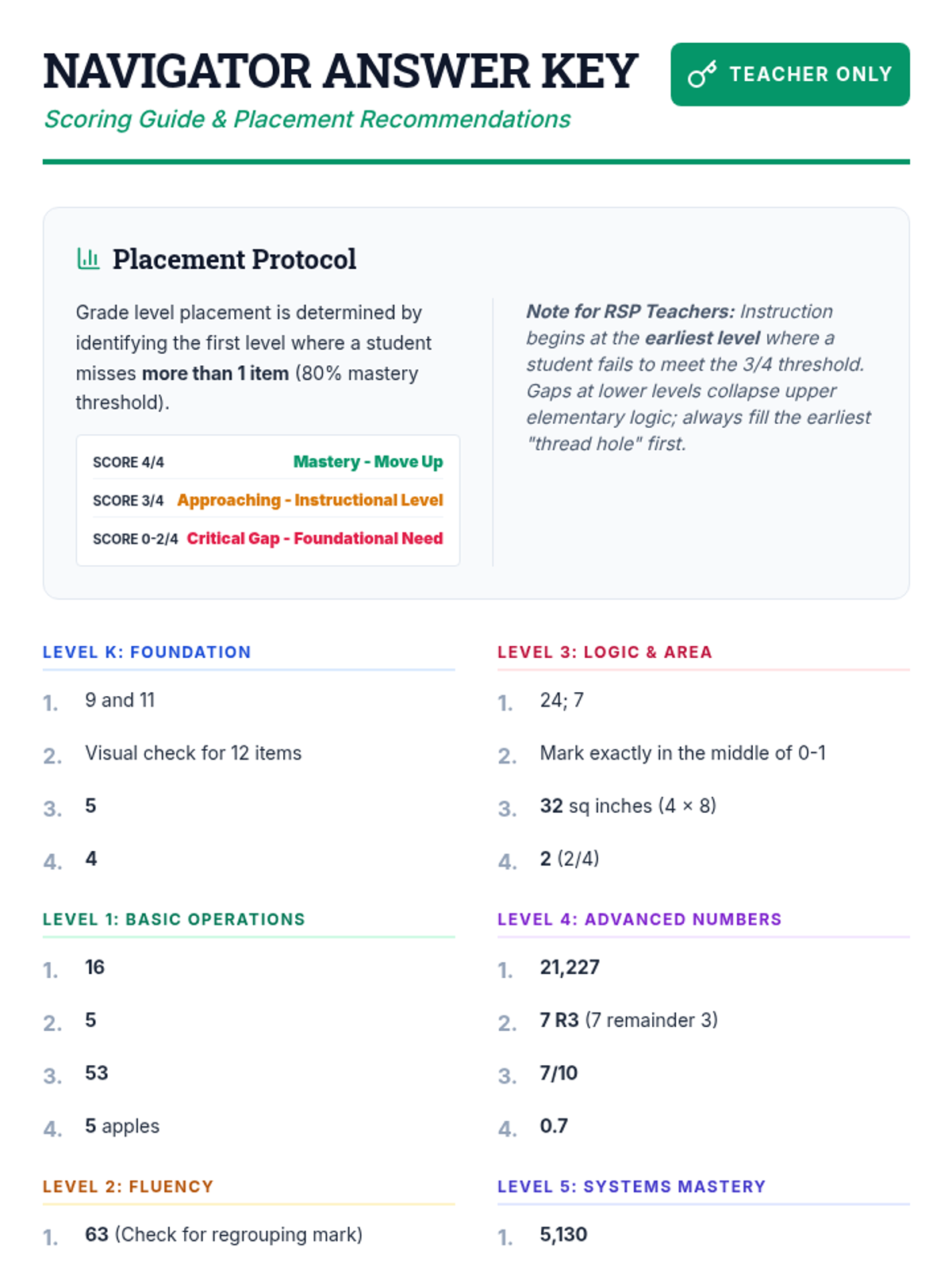
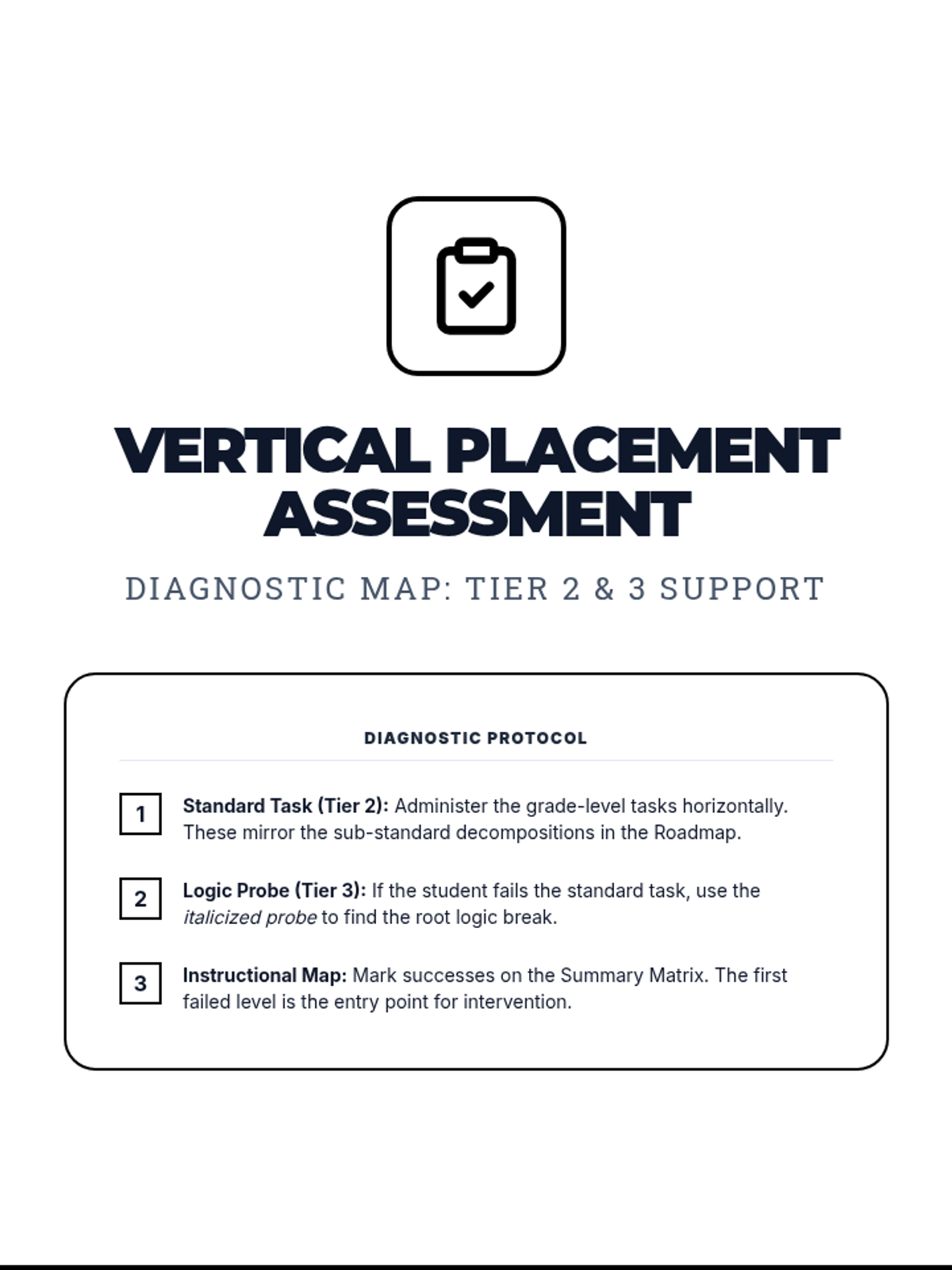
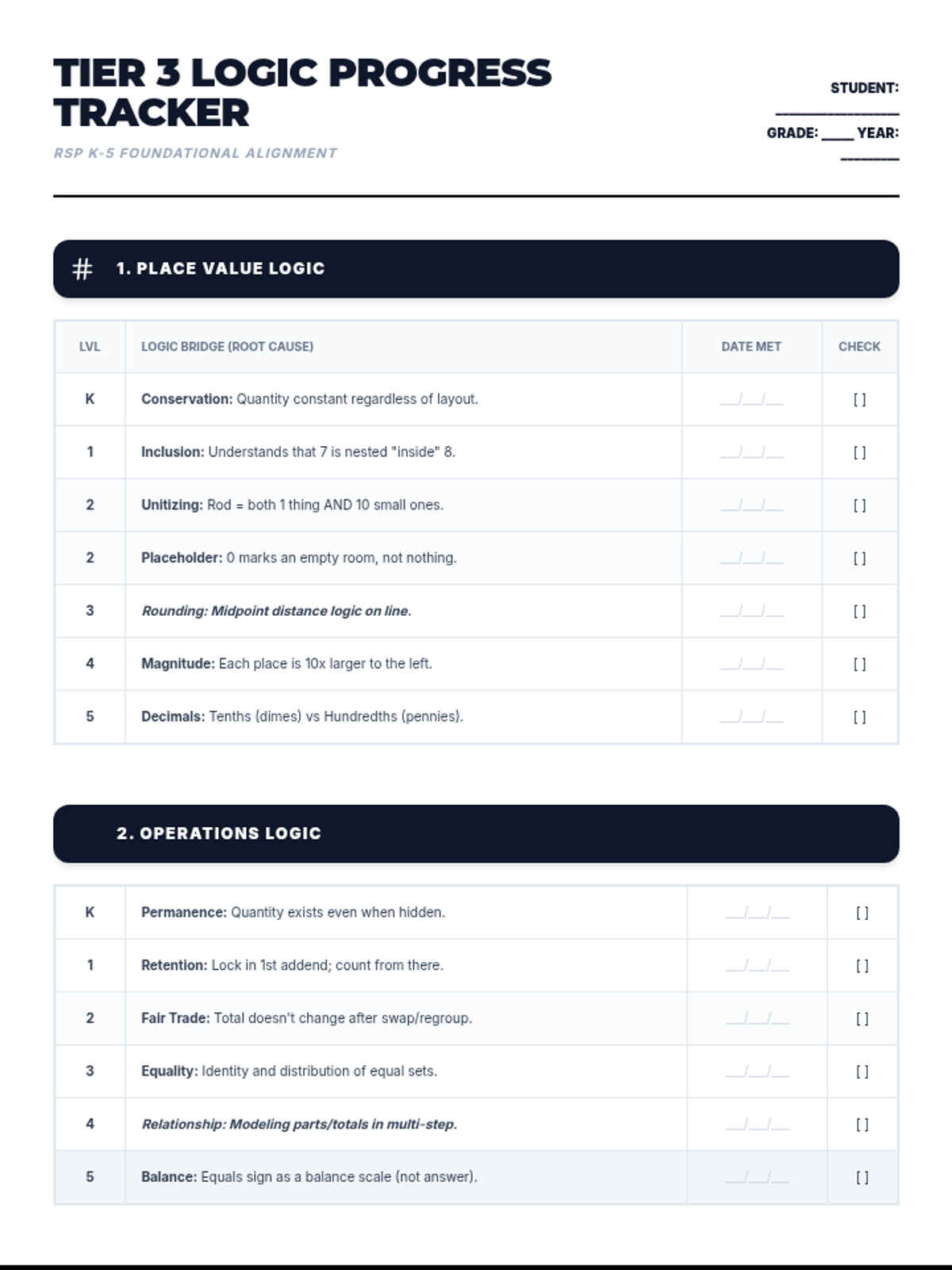
Foundational tools for assessing student levels and planning instruction based on California Power Standards across grades K-5.
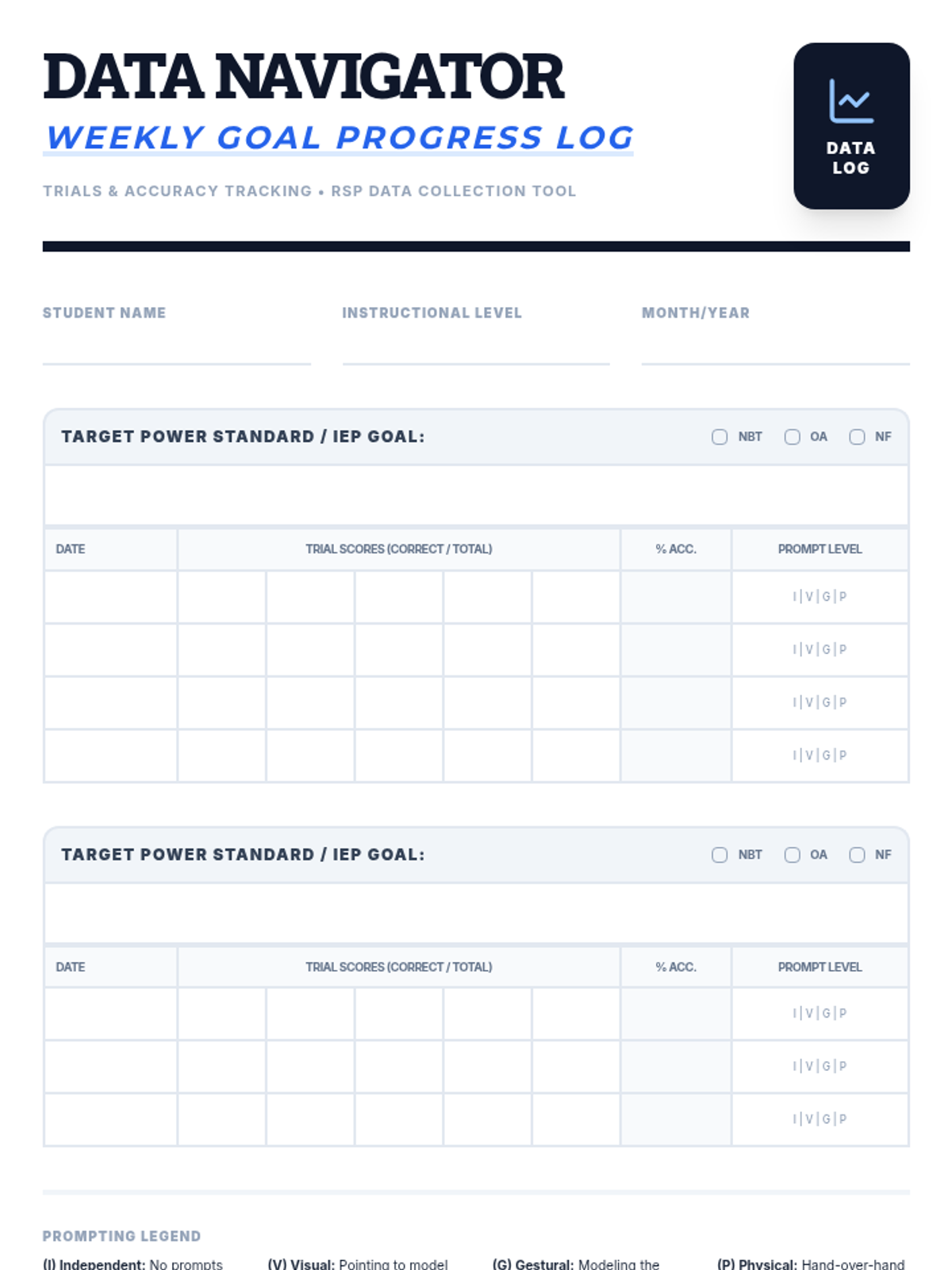
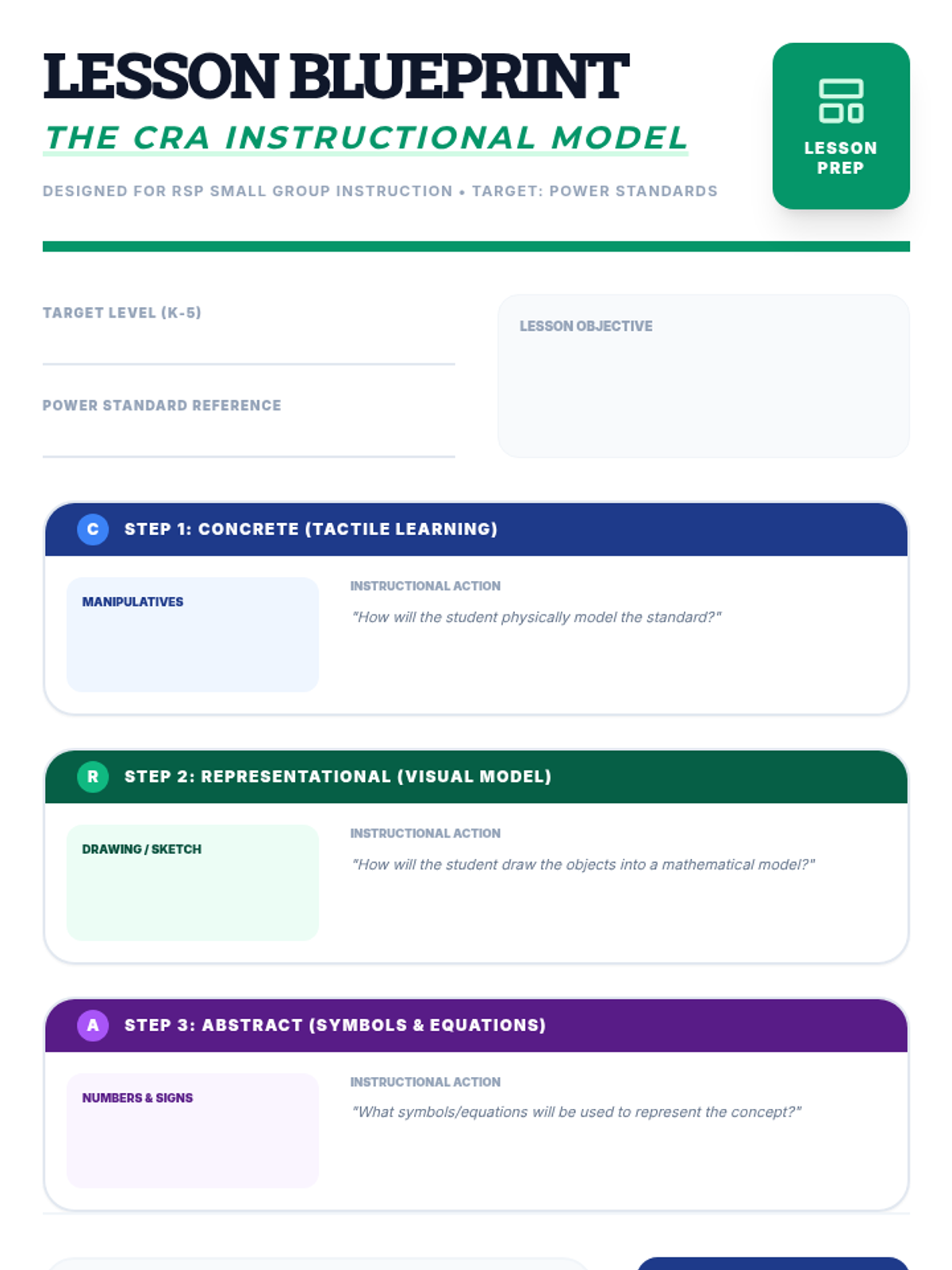
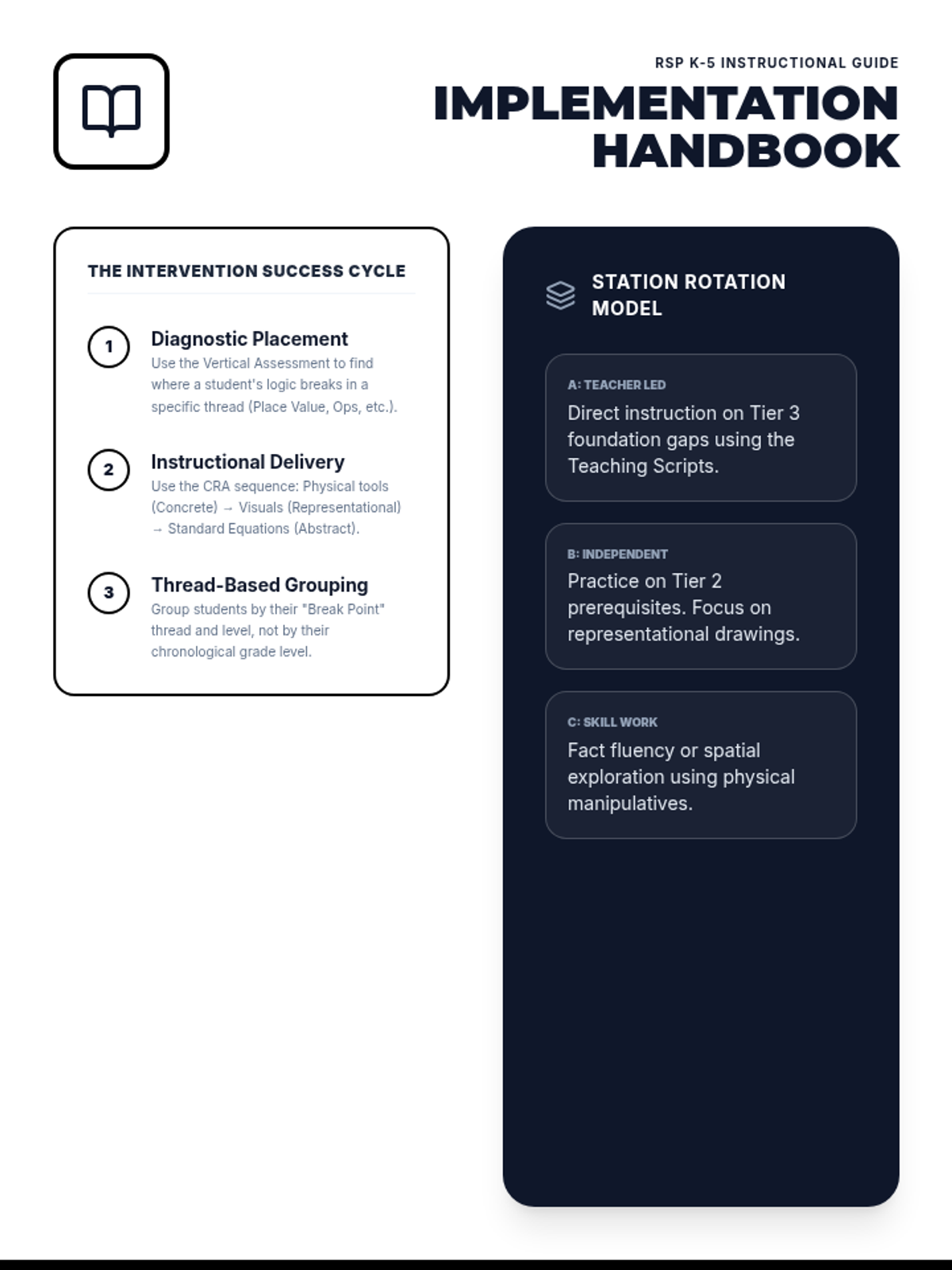
A toolkit for RSP teachers to transform a scope and sequence into a functional daily curriculum. Includes instructional frameworks, diagnostic tools, and planning templates specifically designed for multi-grade math intervention.
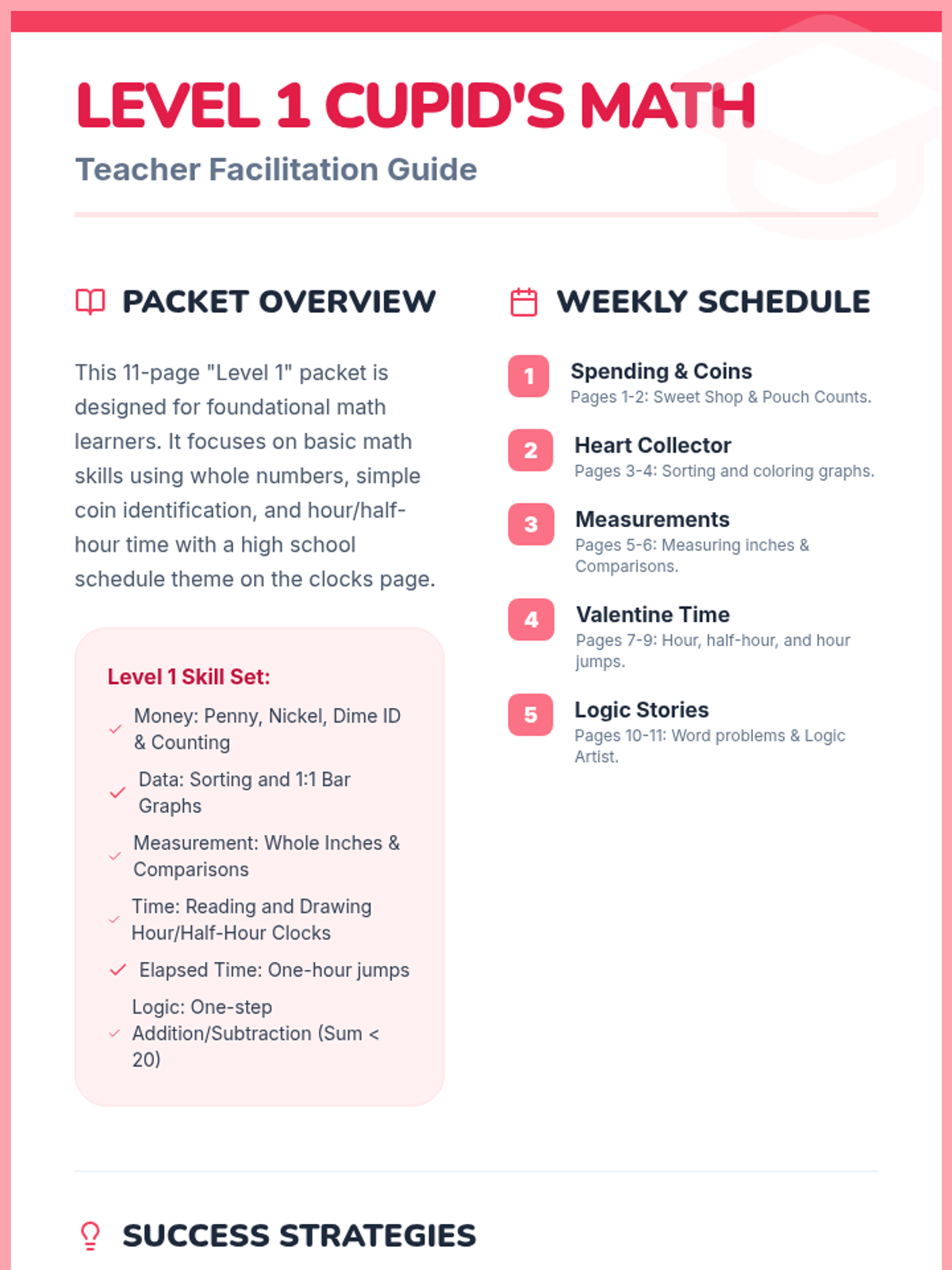
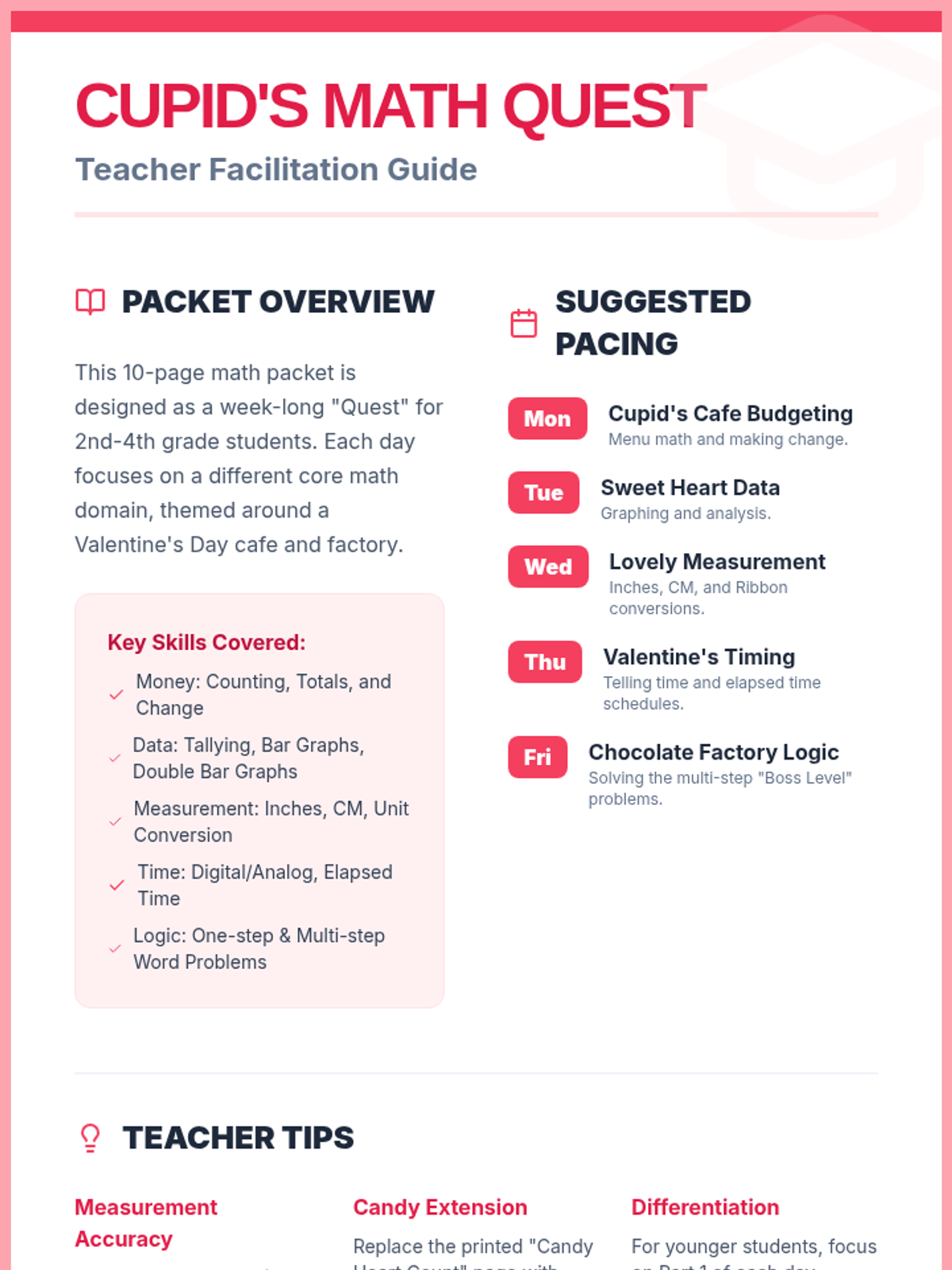
Teacher overview and answer keys for the Level 1 Valentine's Day math packet.
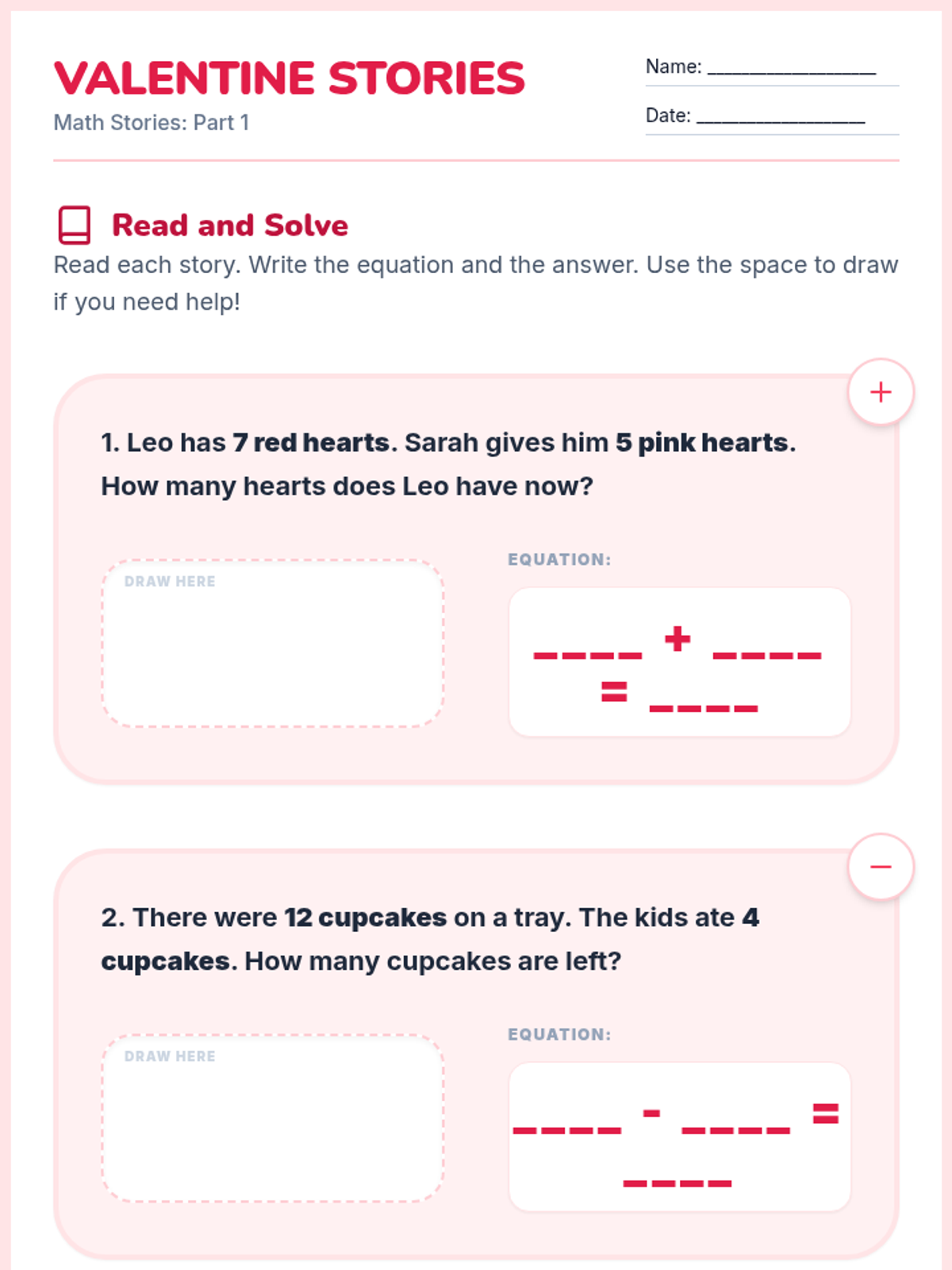
Students will solve one-step addition and subtraction word problems within 20 with a Valentine's Day theme.
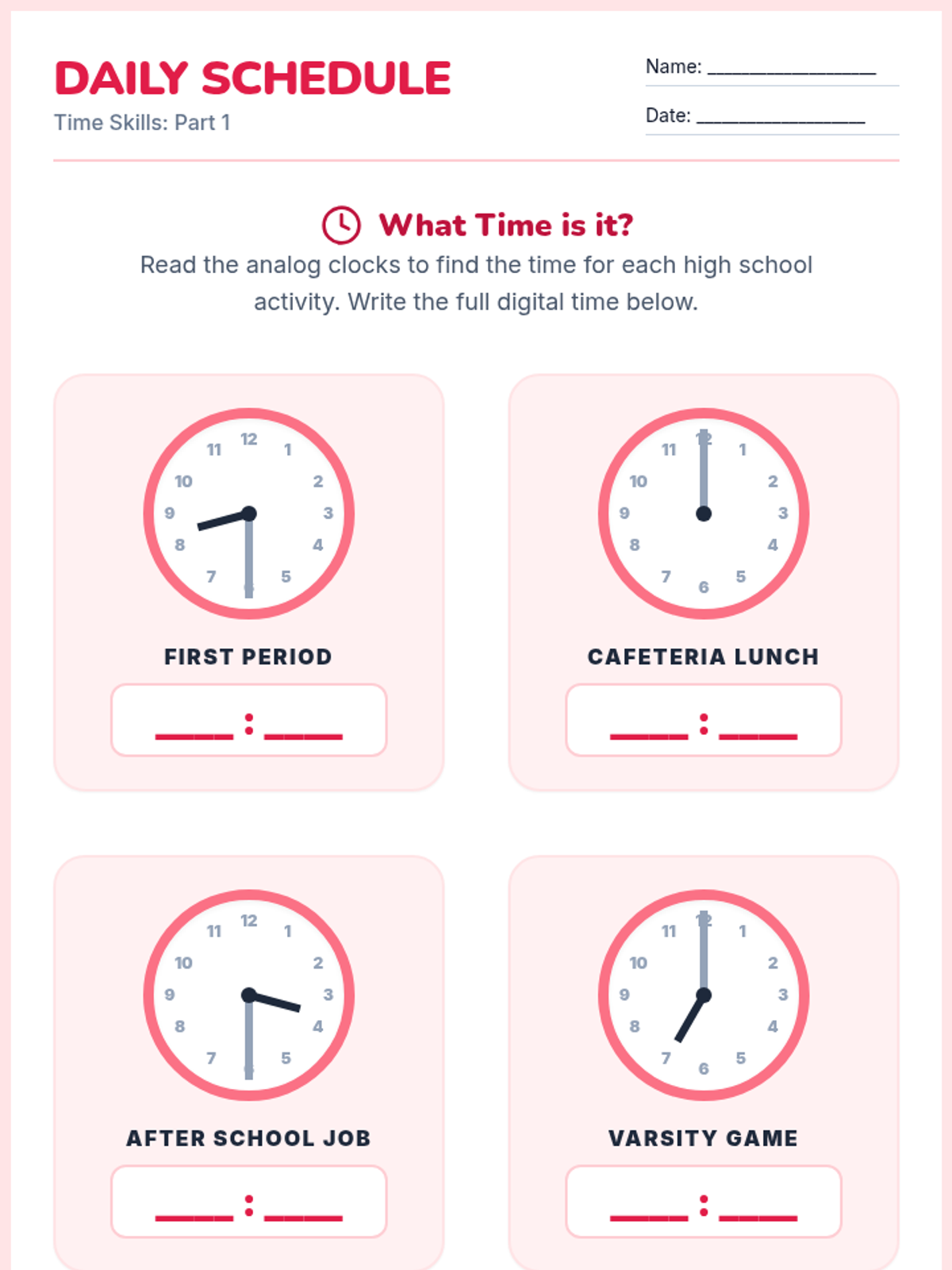
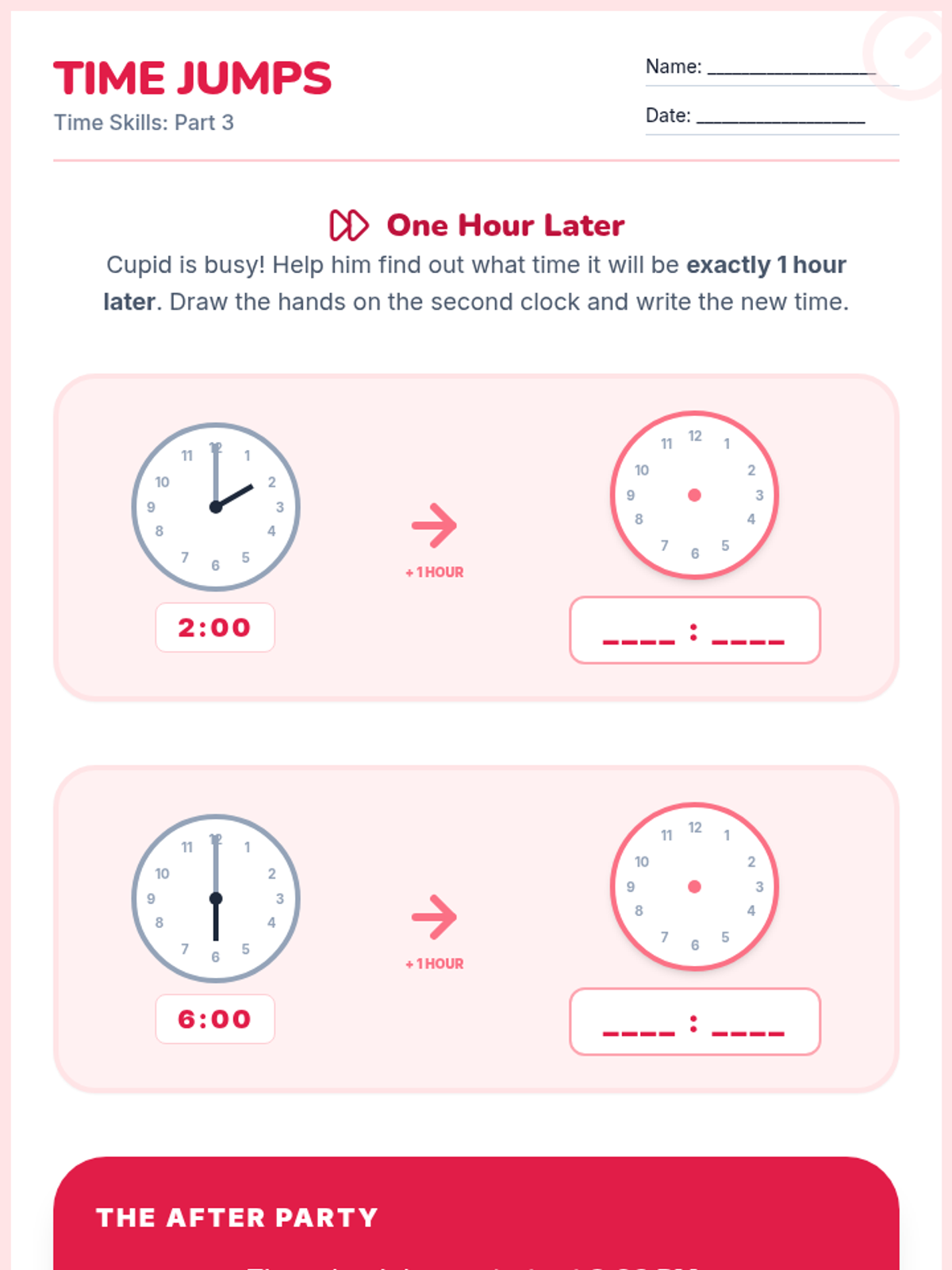
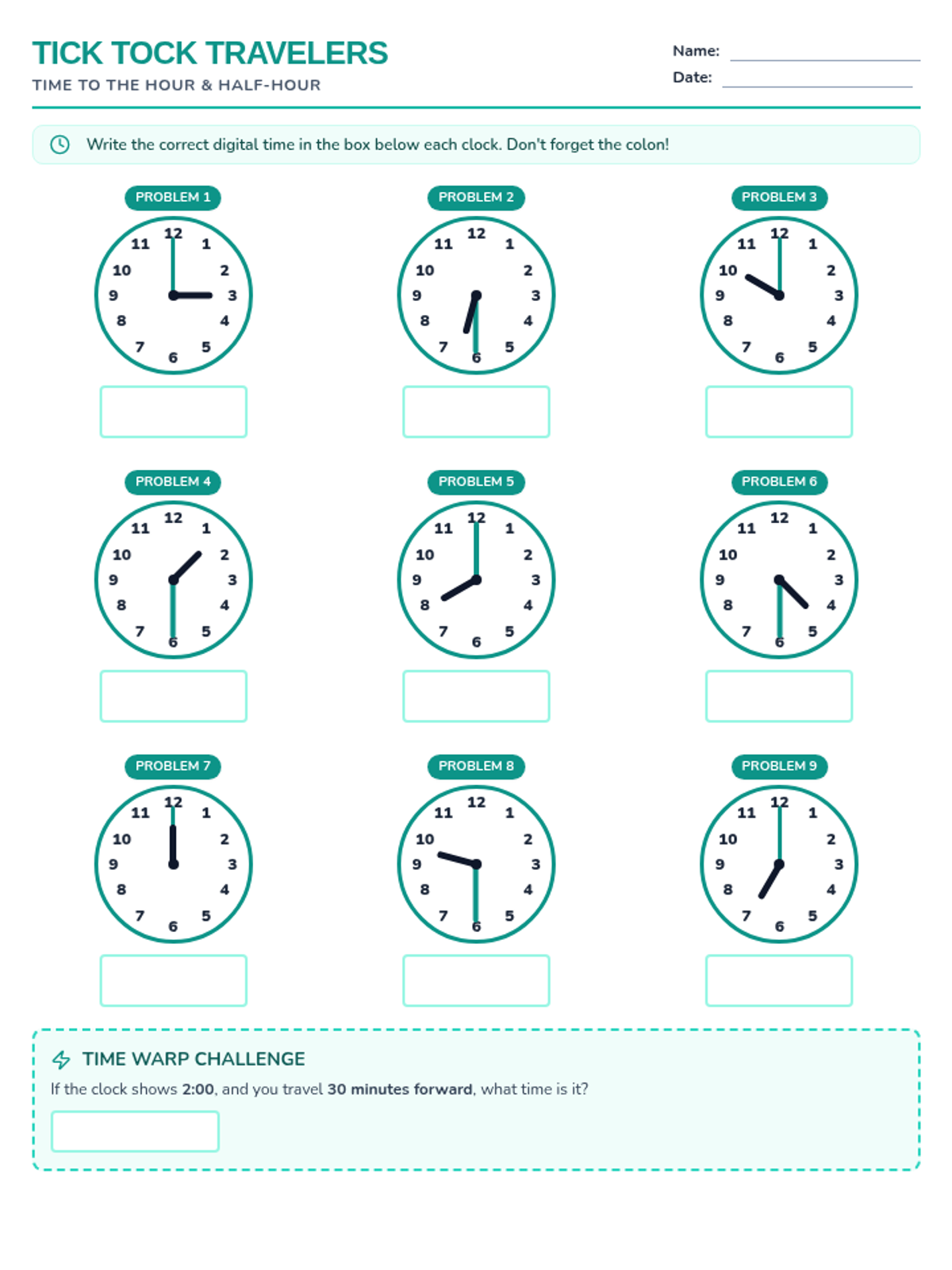
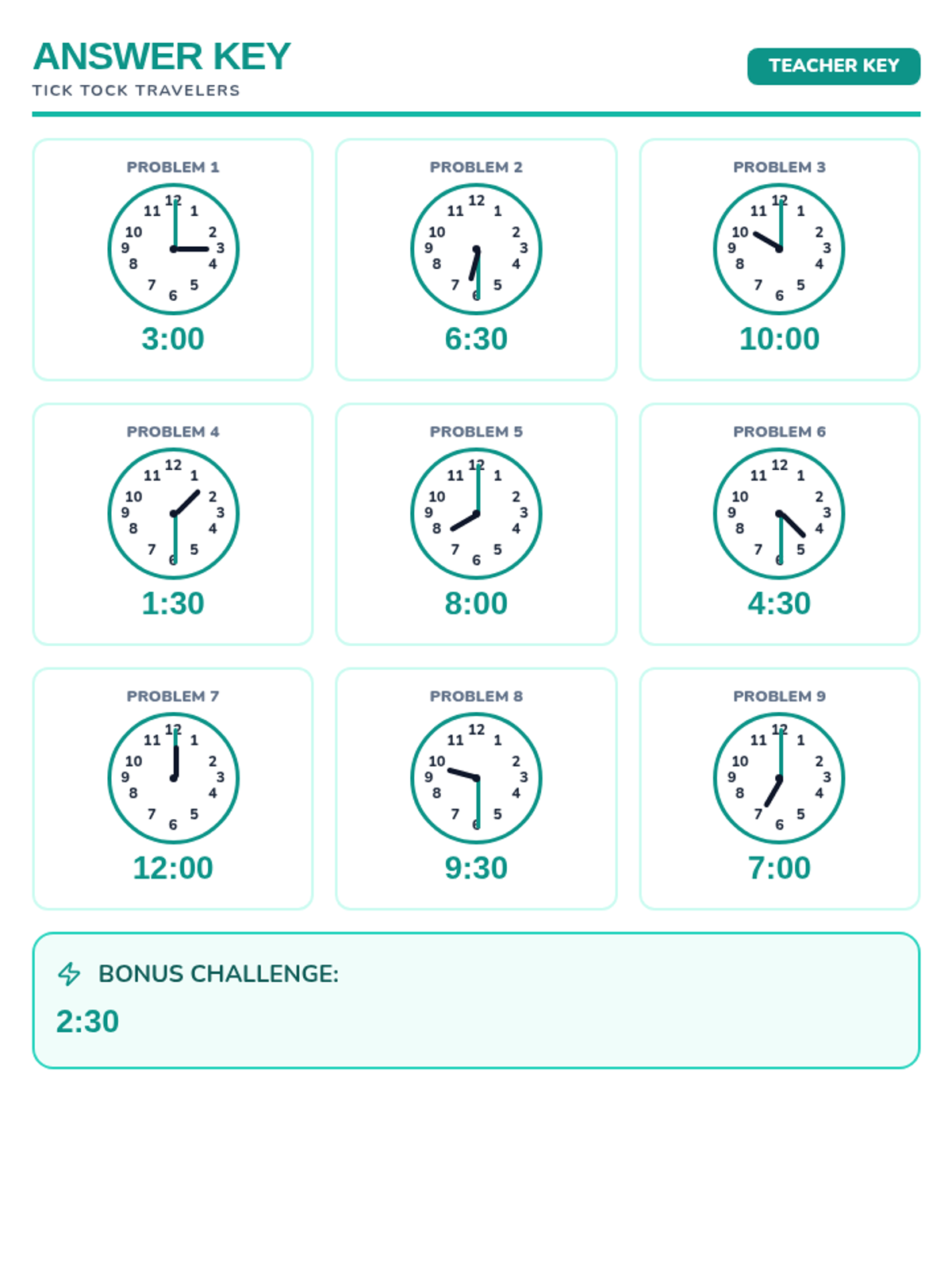
Students will practice reading and drawing analog clocks to the nearest hour and half-hour with a high school schedule theme.
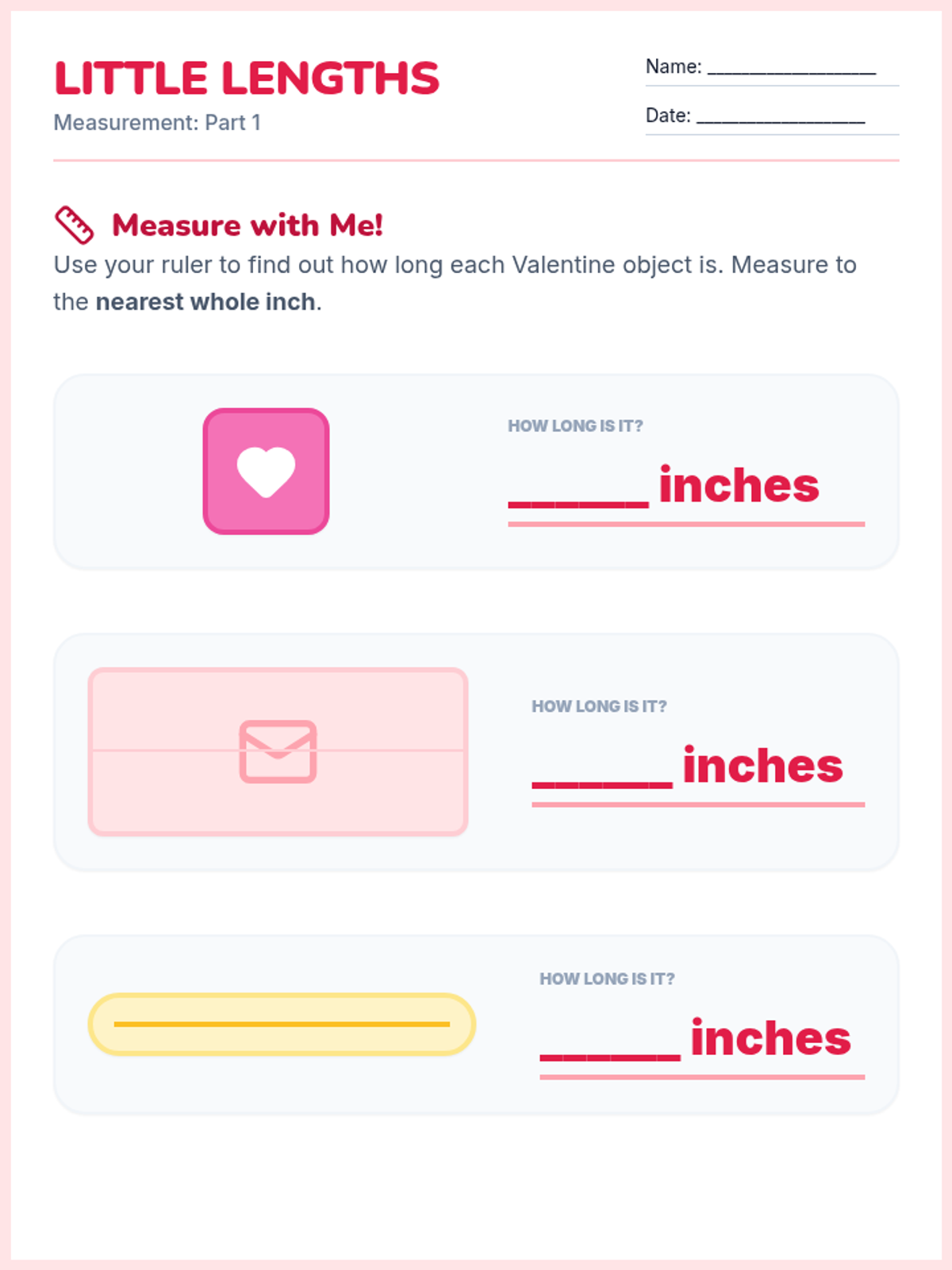
Students will measure Valentine-themed objects to the nearest whole inch and compare lengths using terms like longer and shorter.
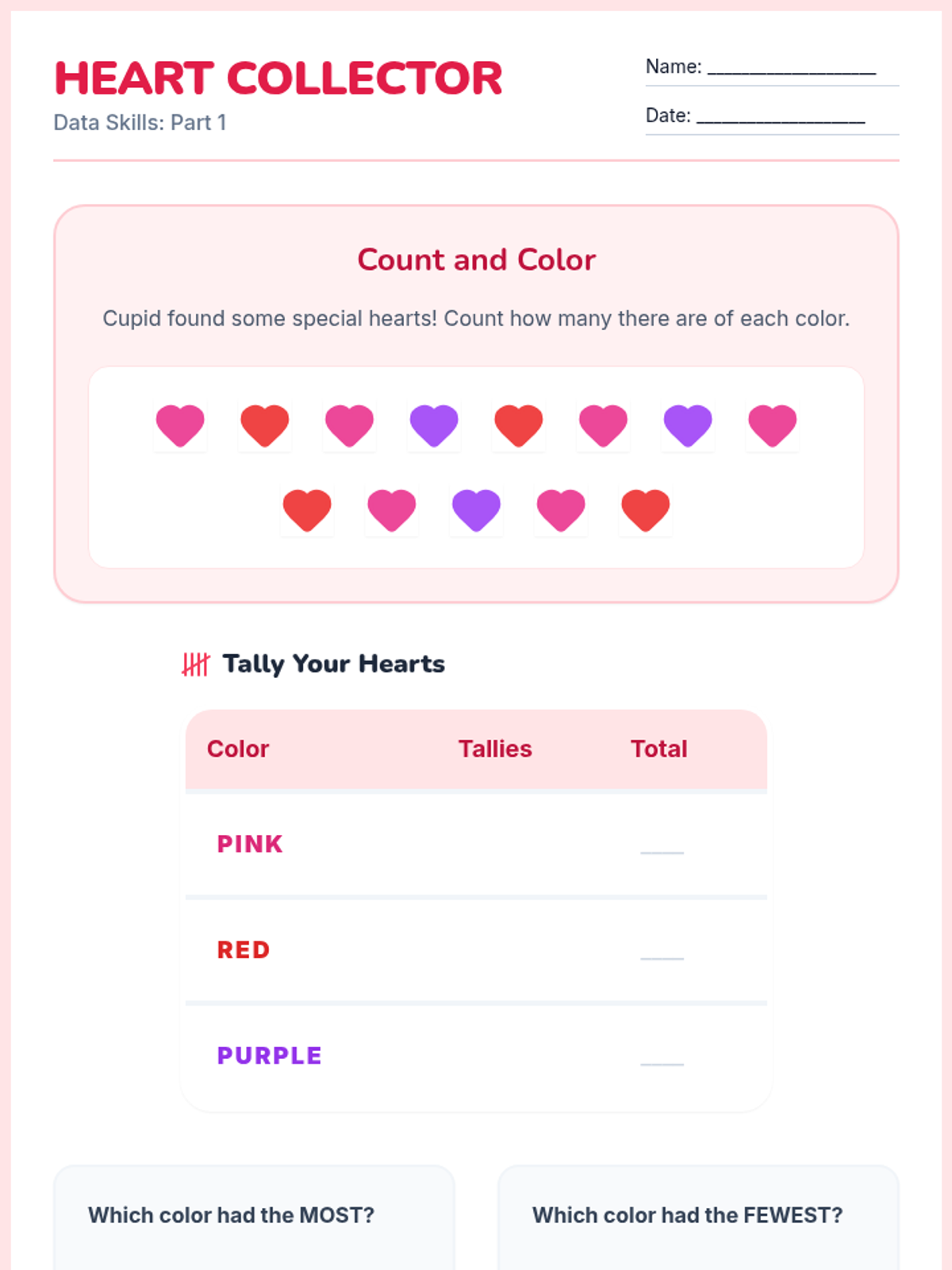
Students will sort candy heart colors, create simple tally charts, and build basic bar graphs with a 1:1 scale.
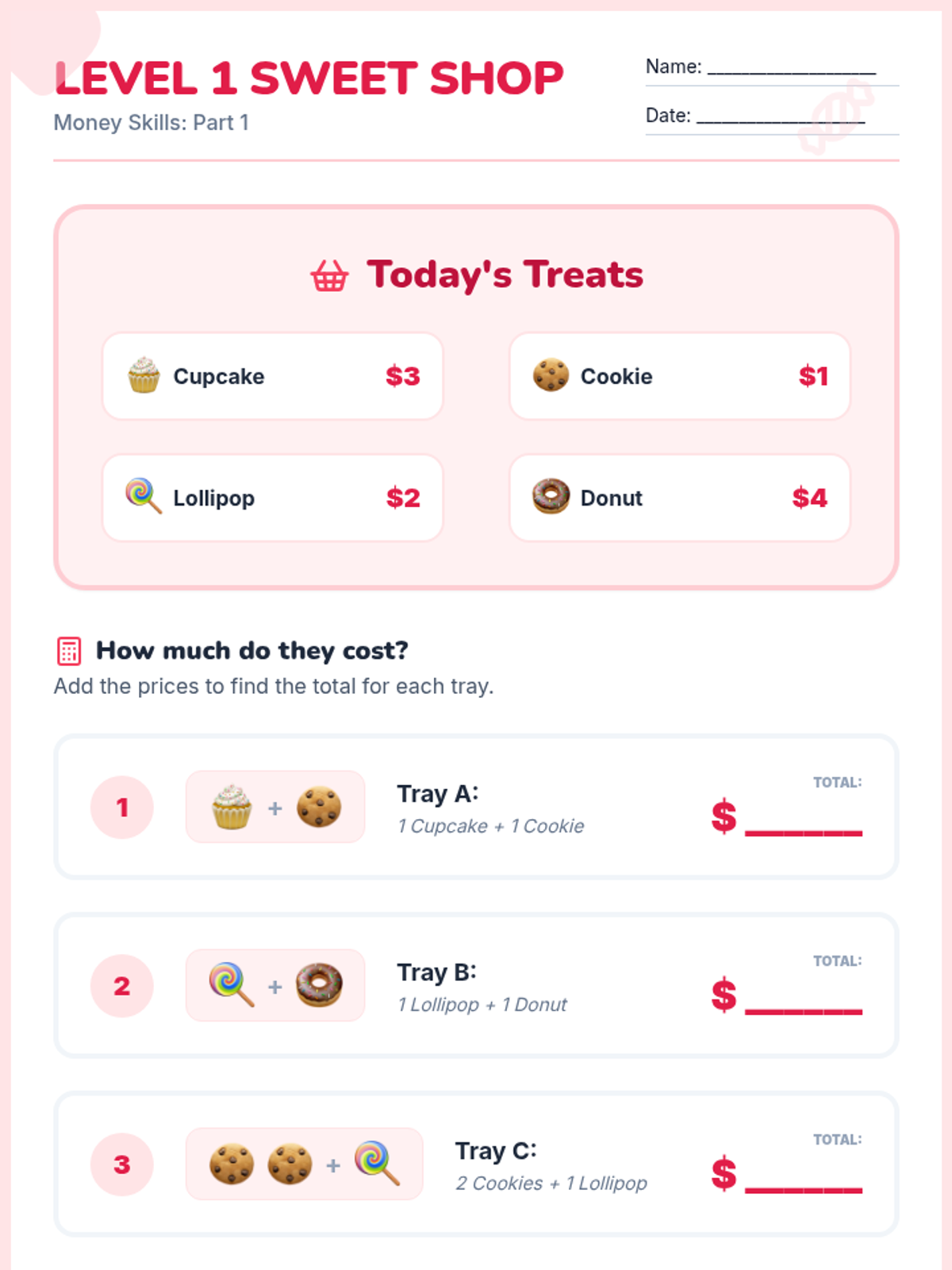
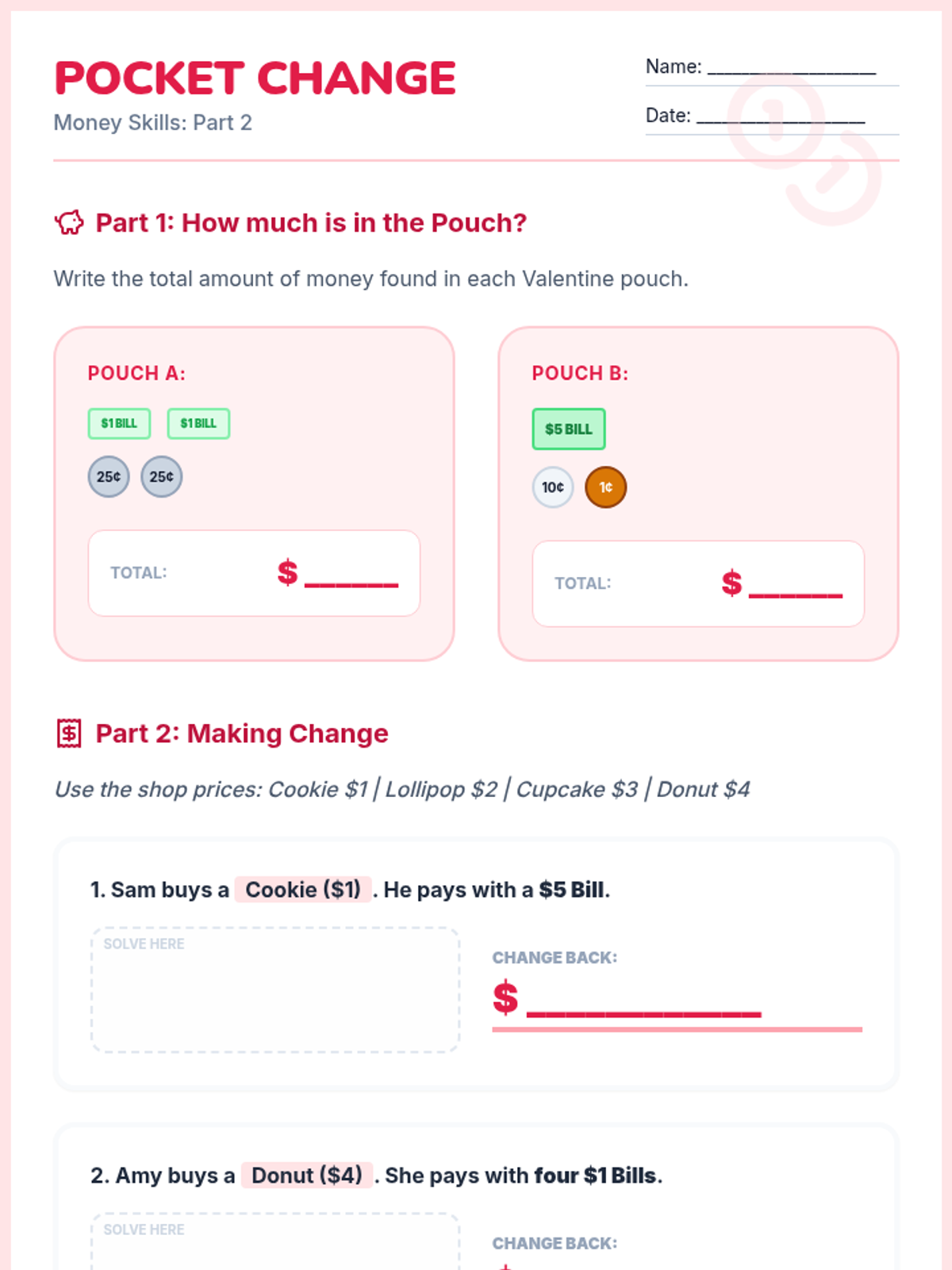
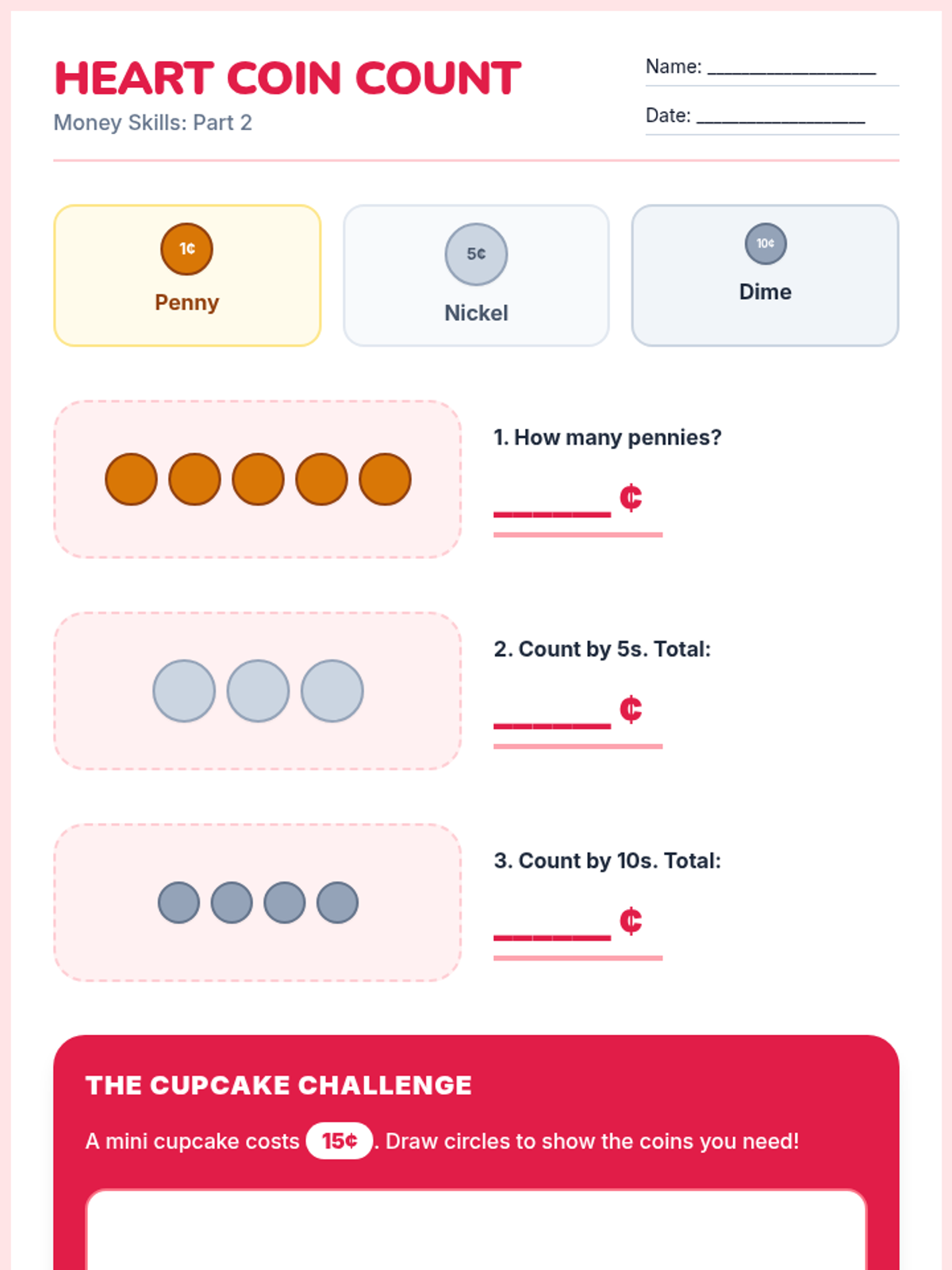
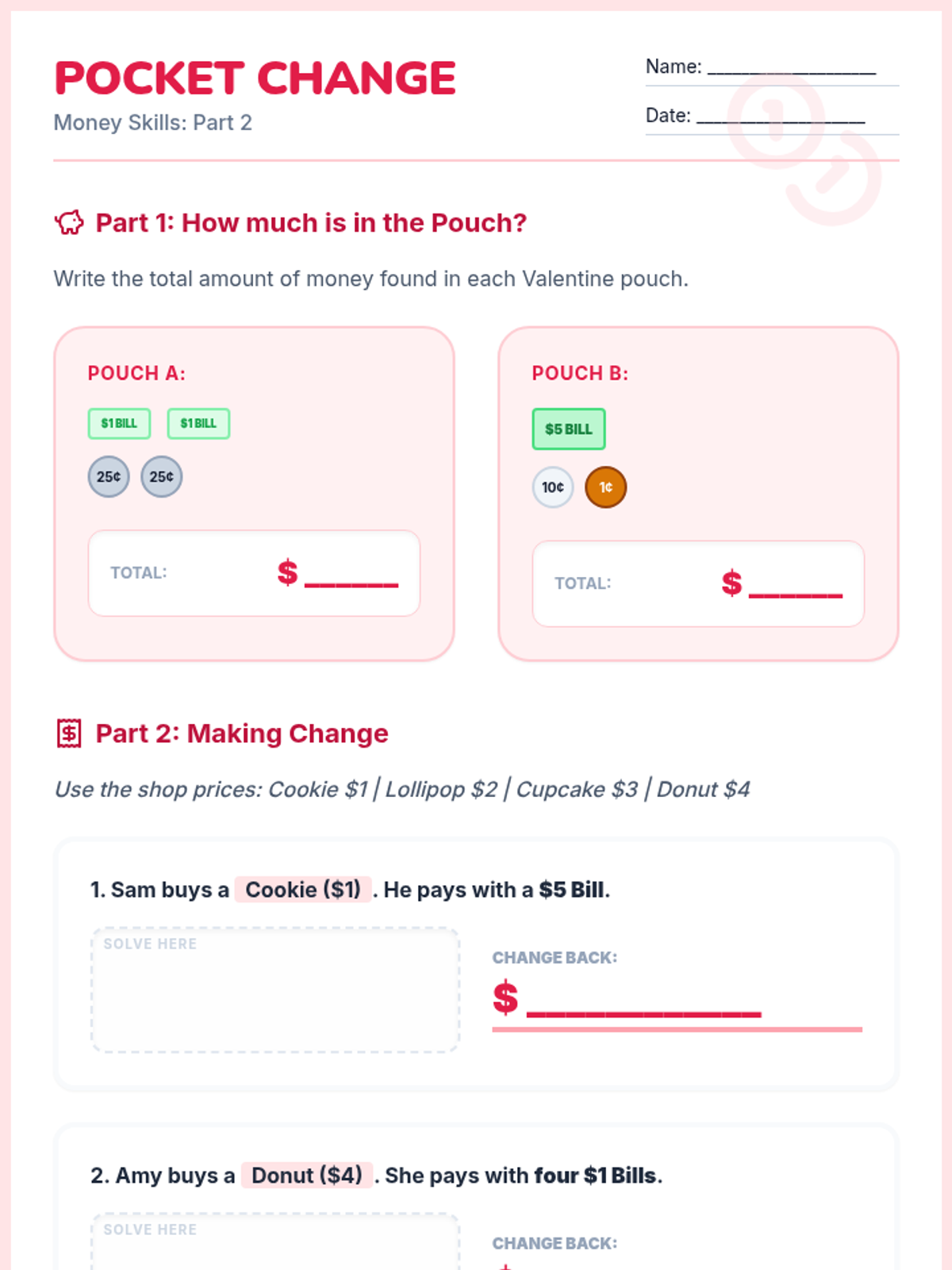
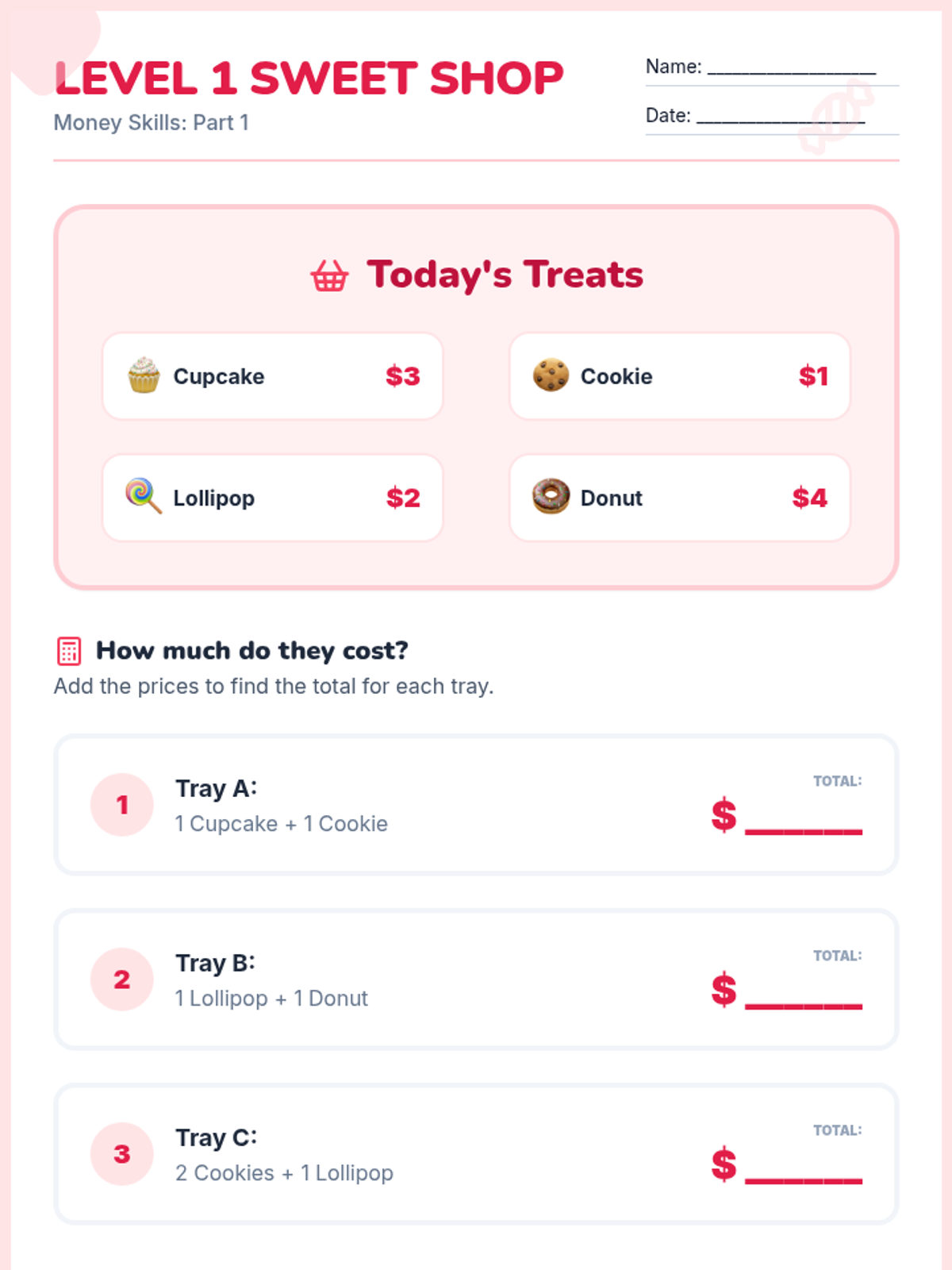
Students will practice identifying single coins, calculating costs with whole numbers, and buying items from a Level 1 sweet shop menu.
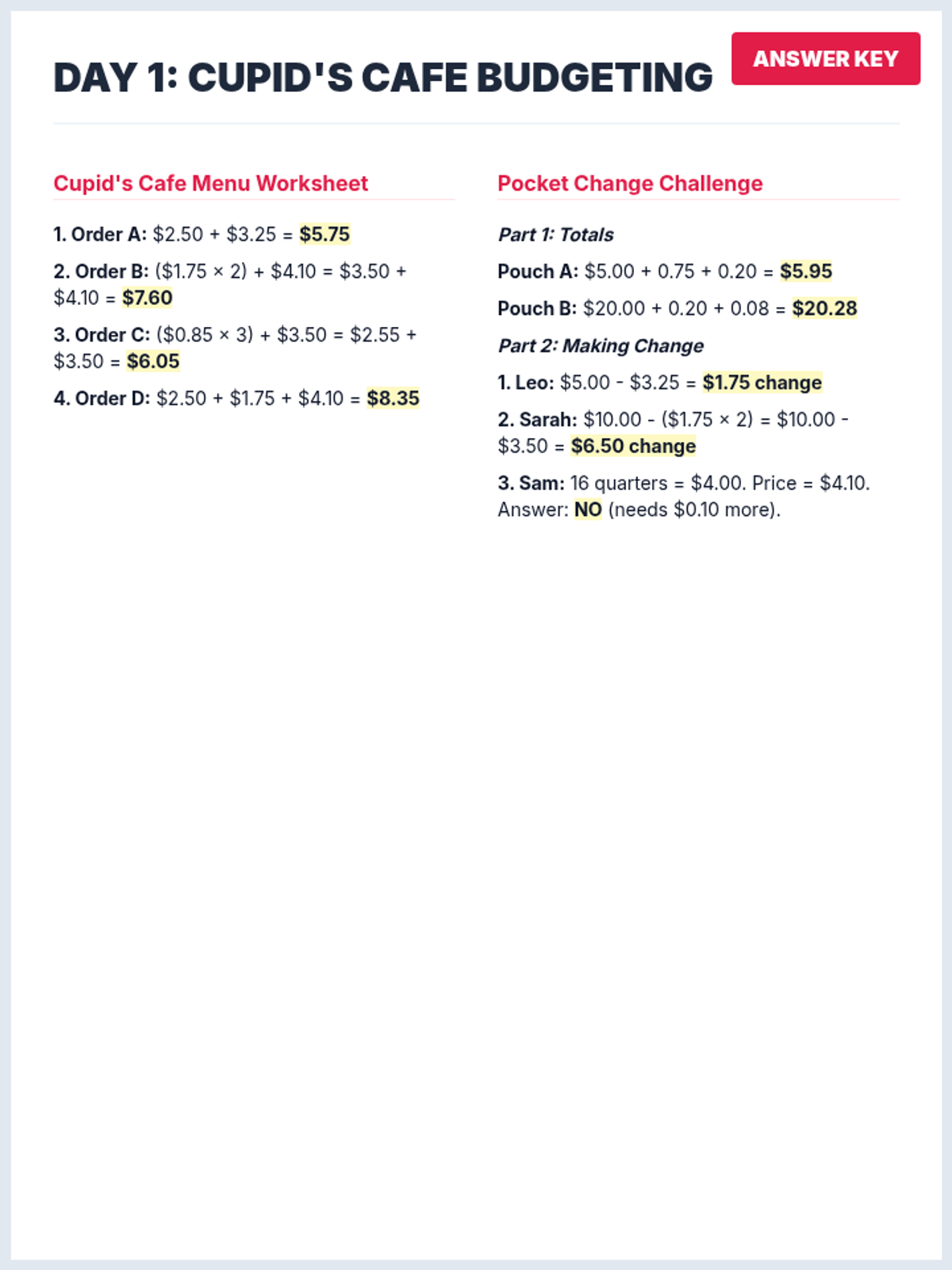
Teacher overview and answer keys for the Quest Valentine's Day math packet.
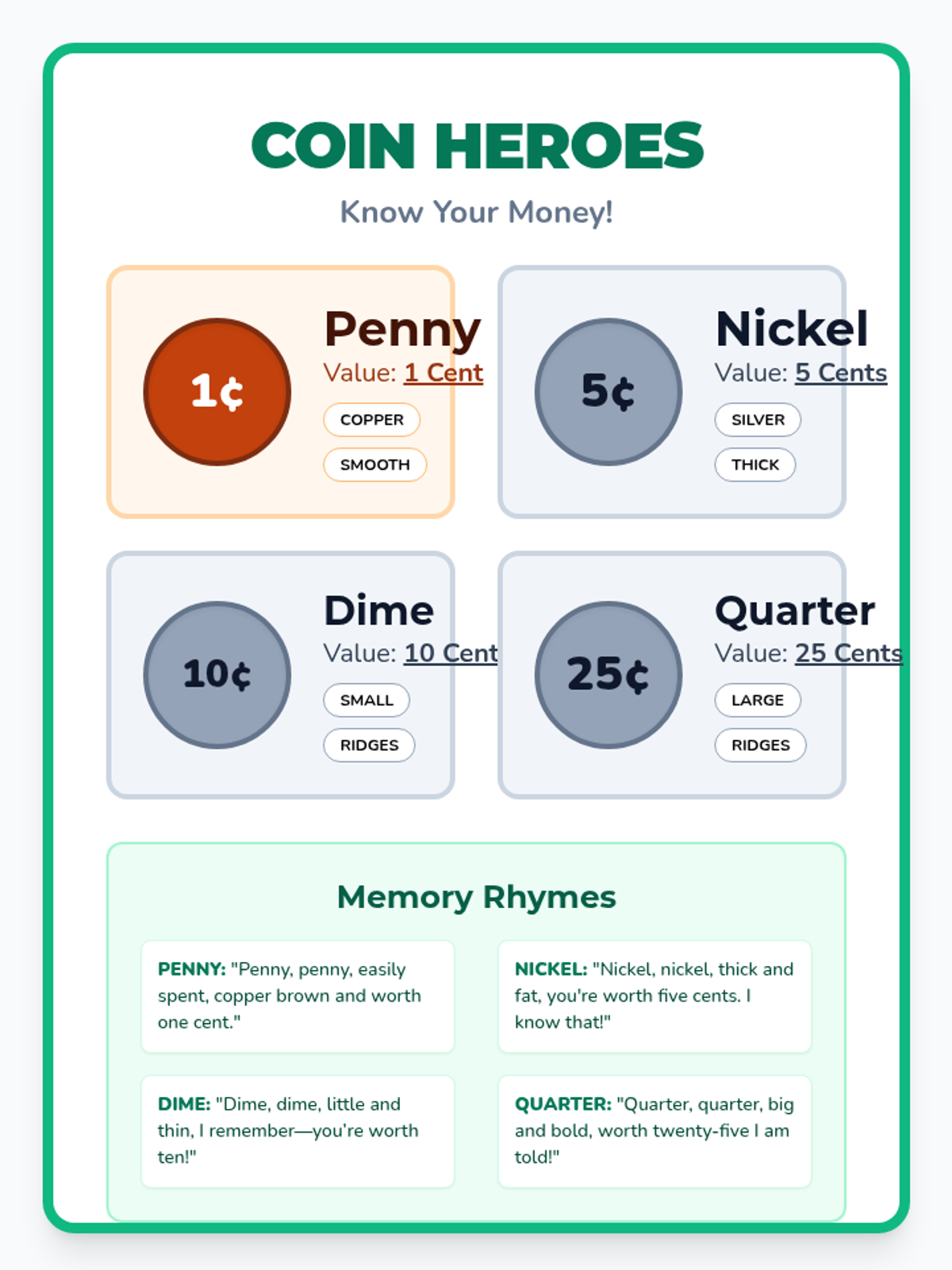
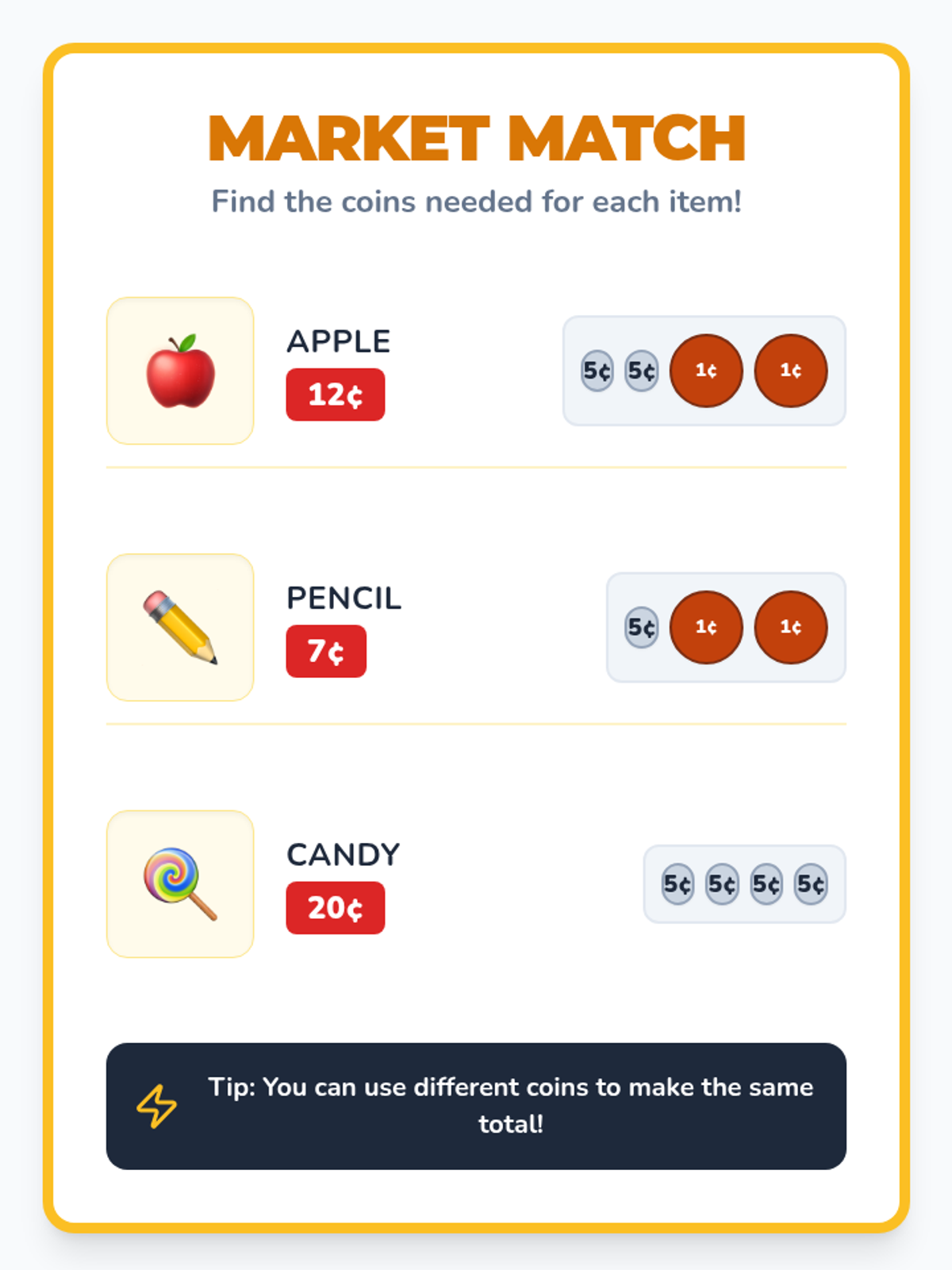
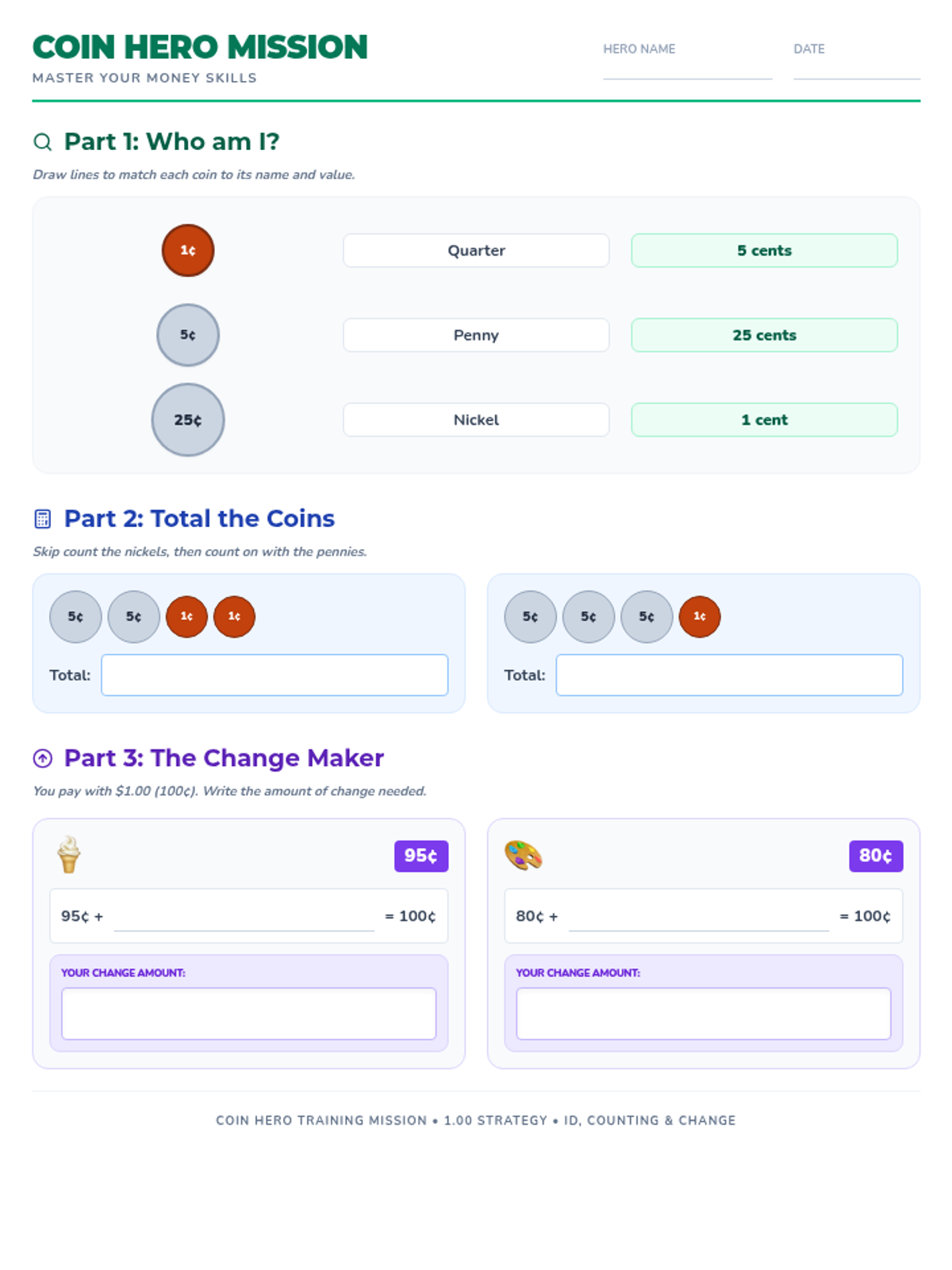
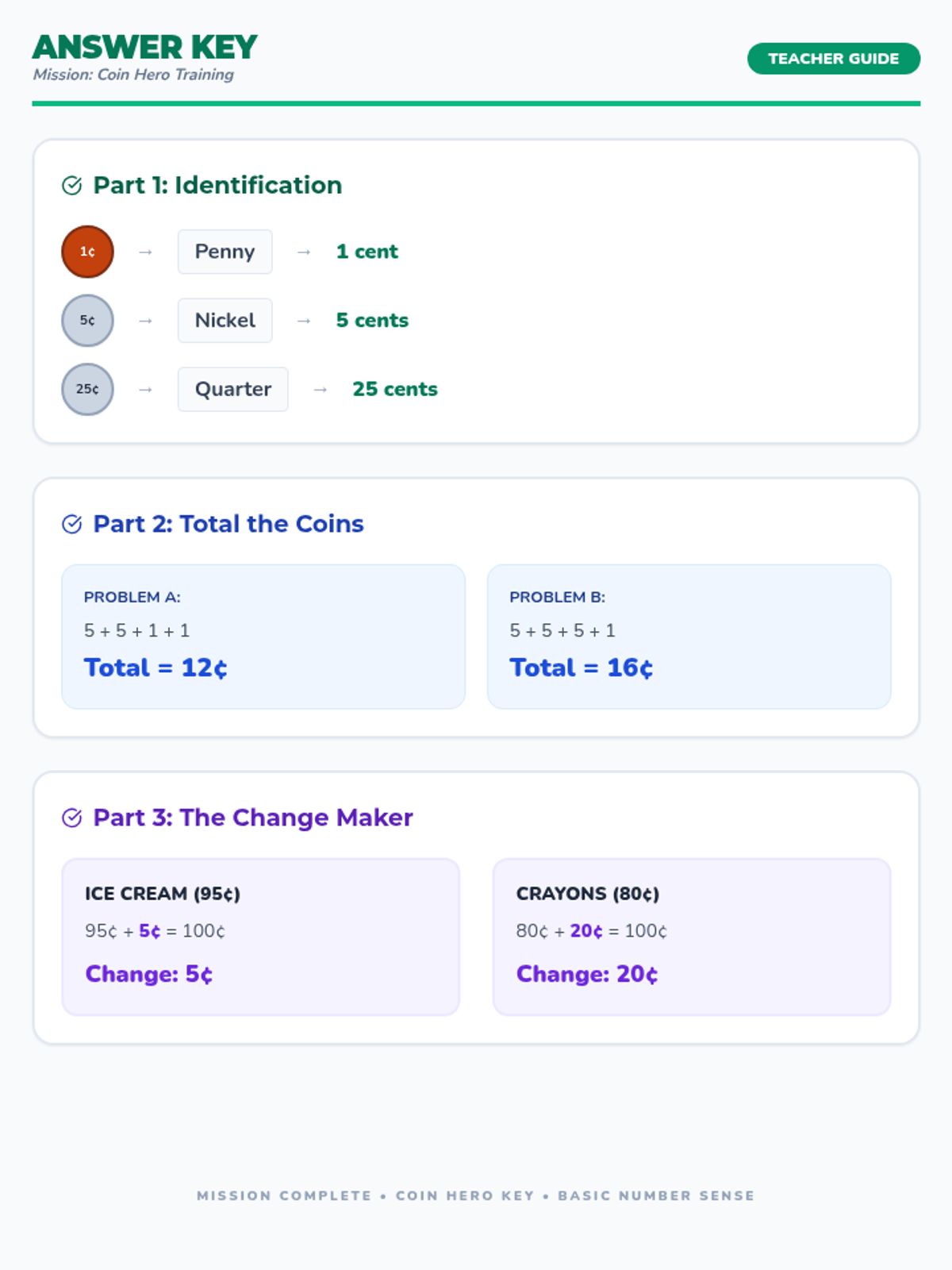
A collection of visual anchor charts and posters designed to teach basic coin identification, counting, and making change from a dollar. These materials use large visuals and clear strategies for early elementary students.
A lesson focused on reading analog clocks to the hour and half-hour, designed for 2nd grade students to practice converting analog time to digital format.
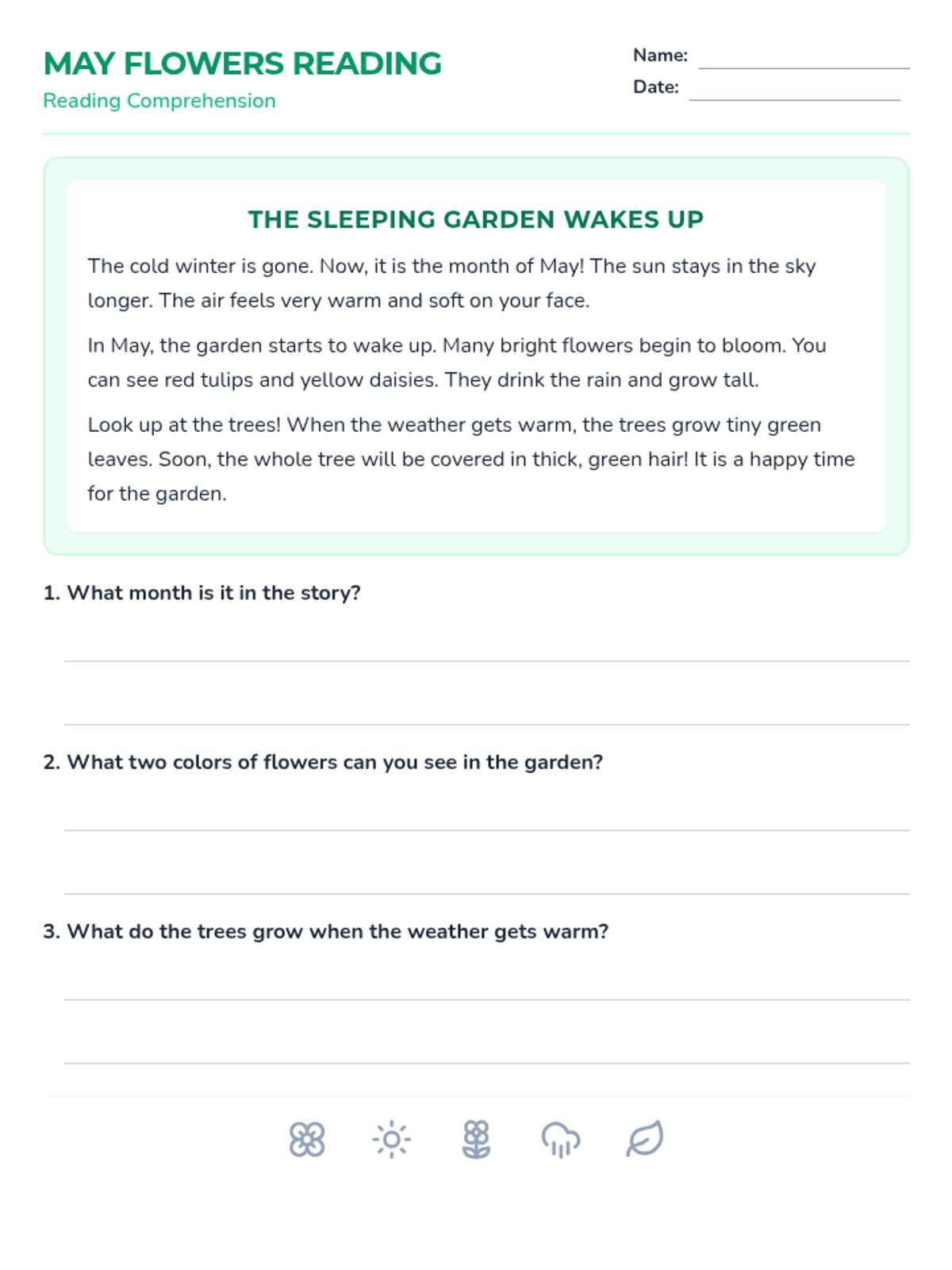
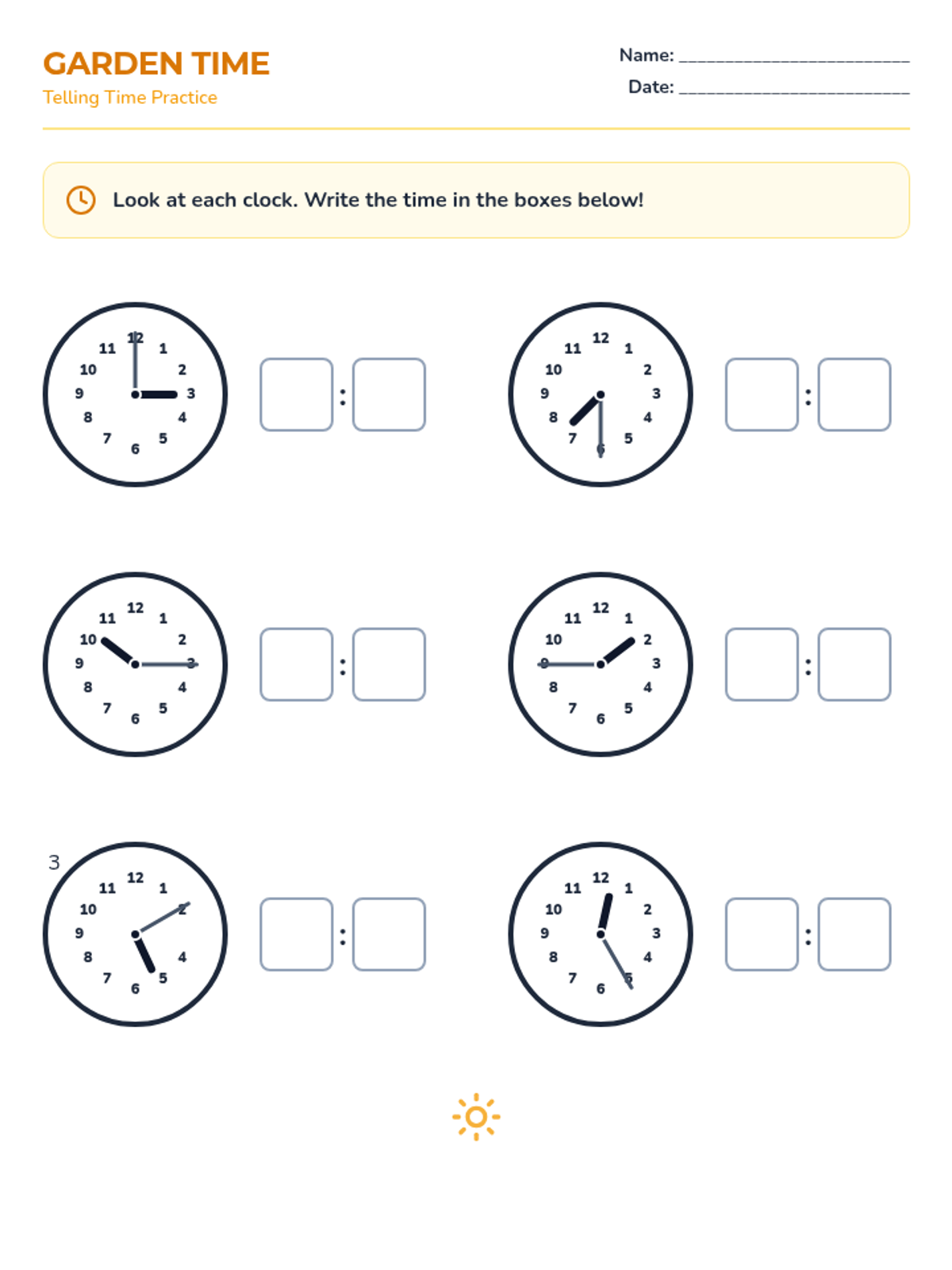
A set of four independent practice worksheets themed around springtime growth, focusing on reading comprehension, time-telling, grammar, and geometry.
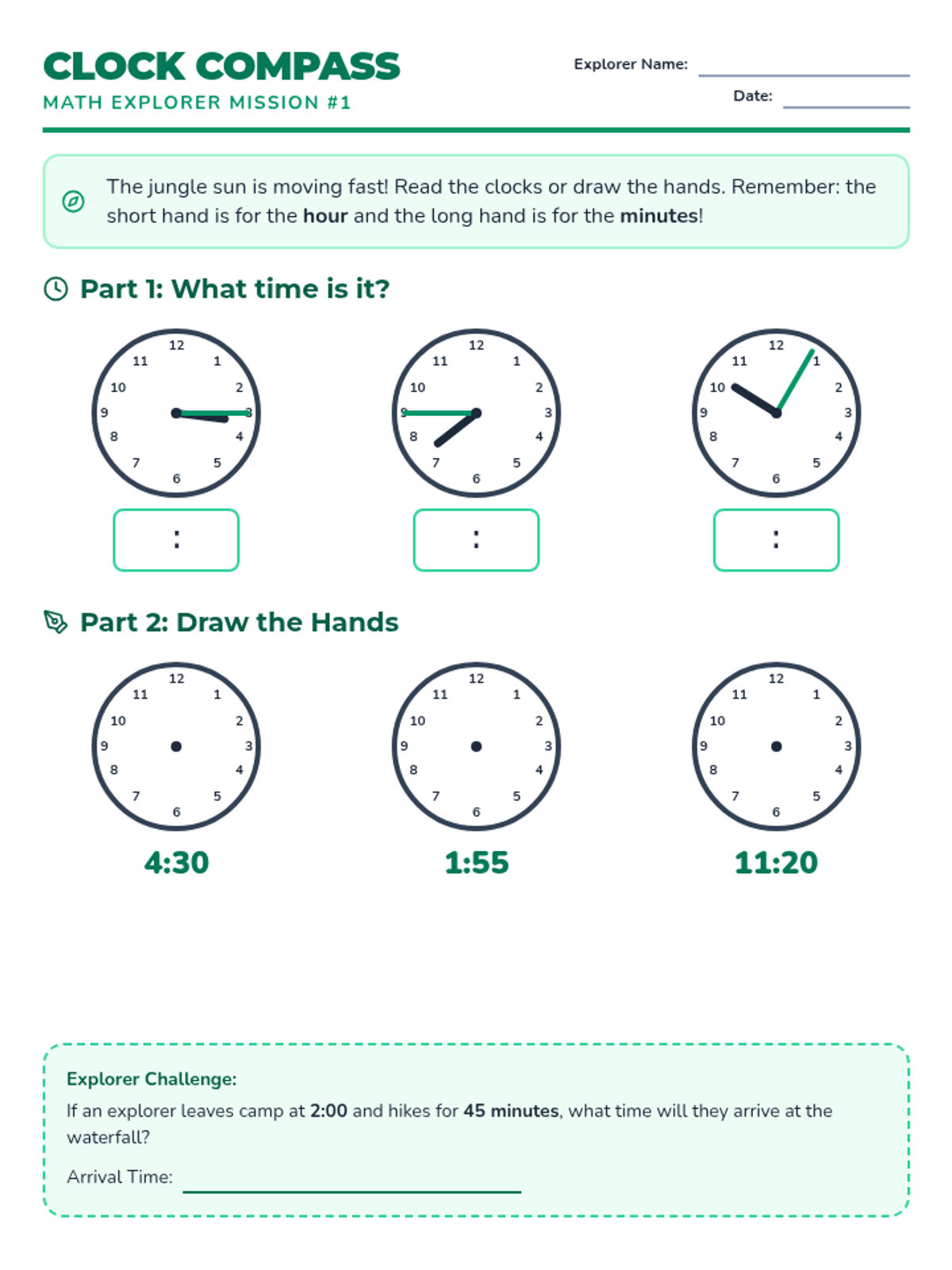
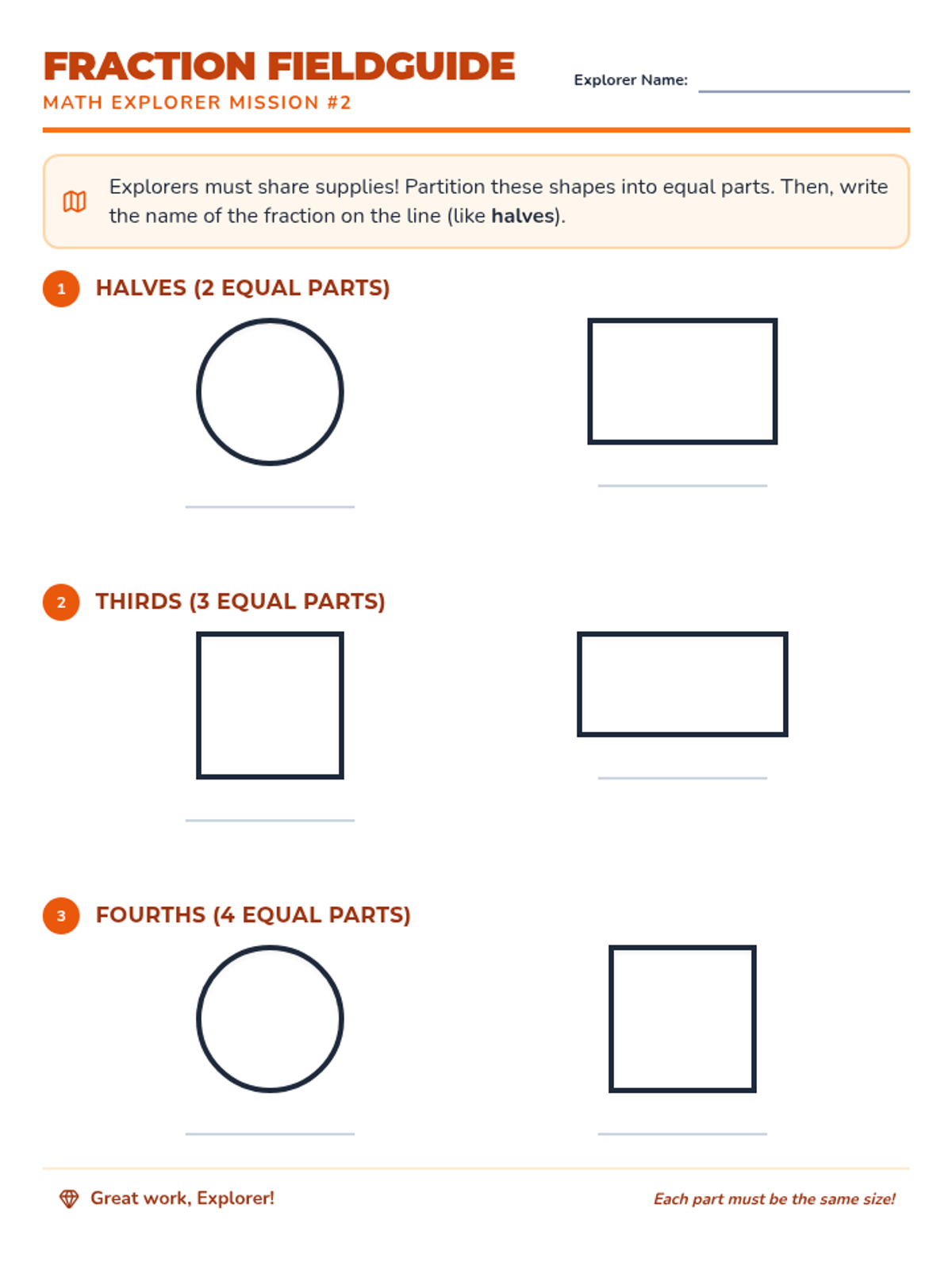
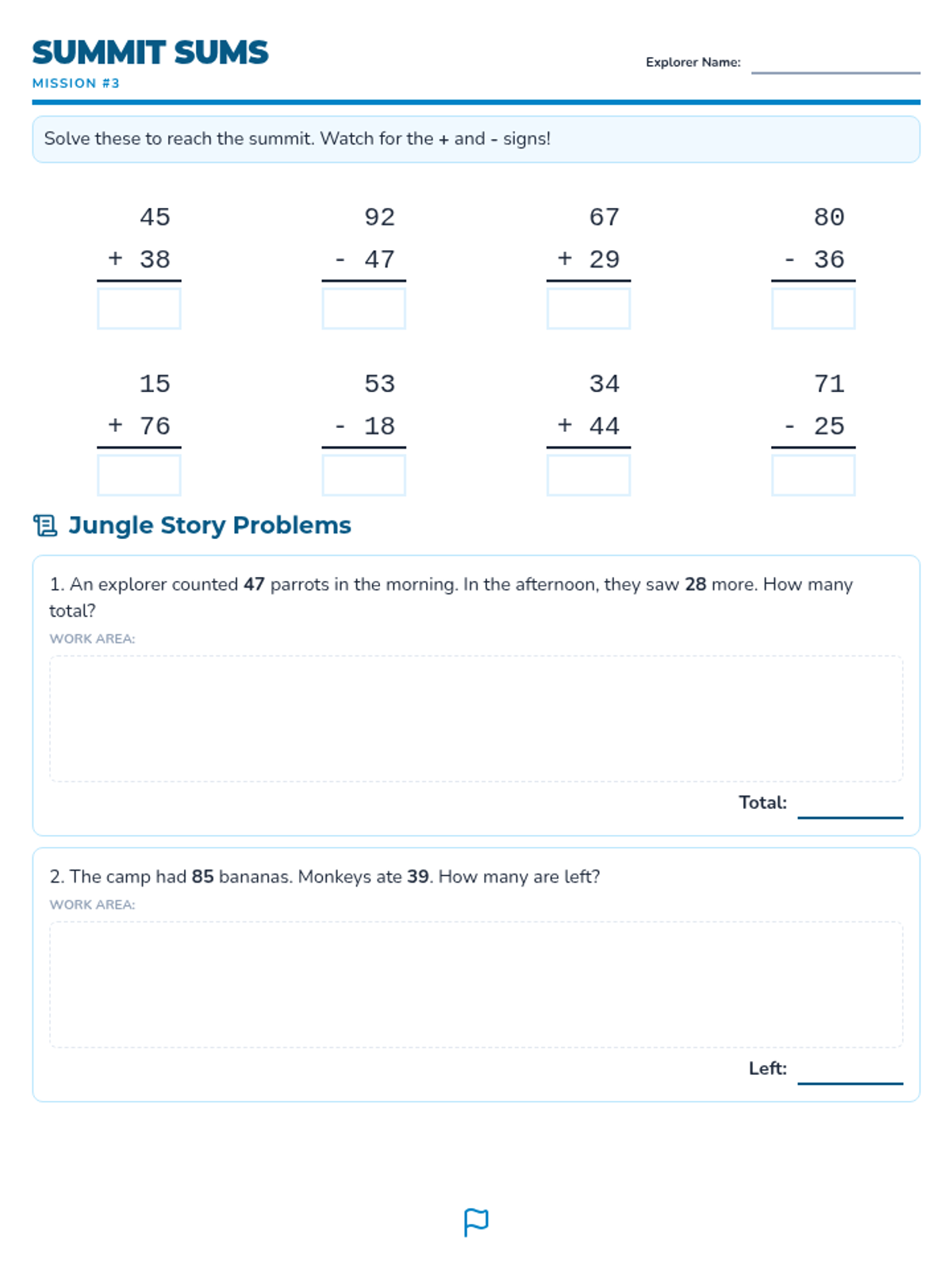
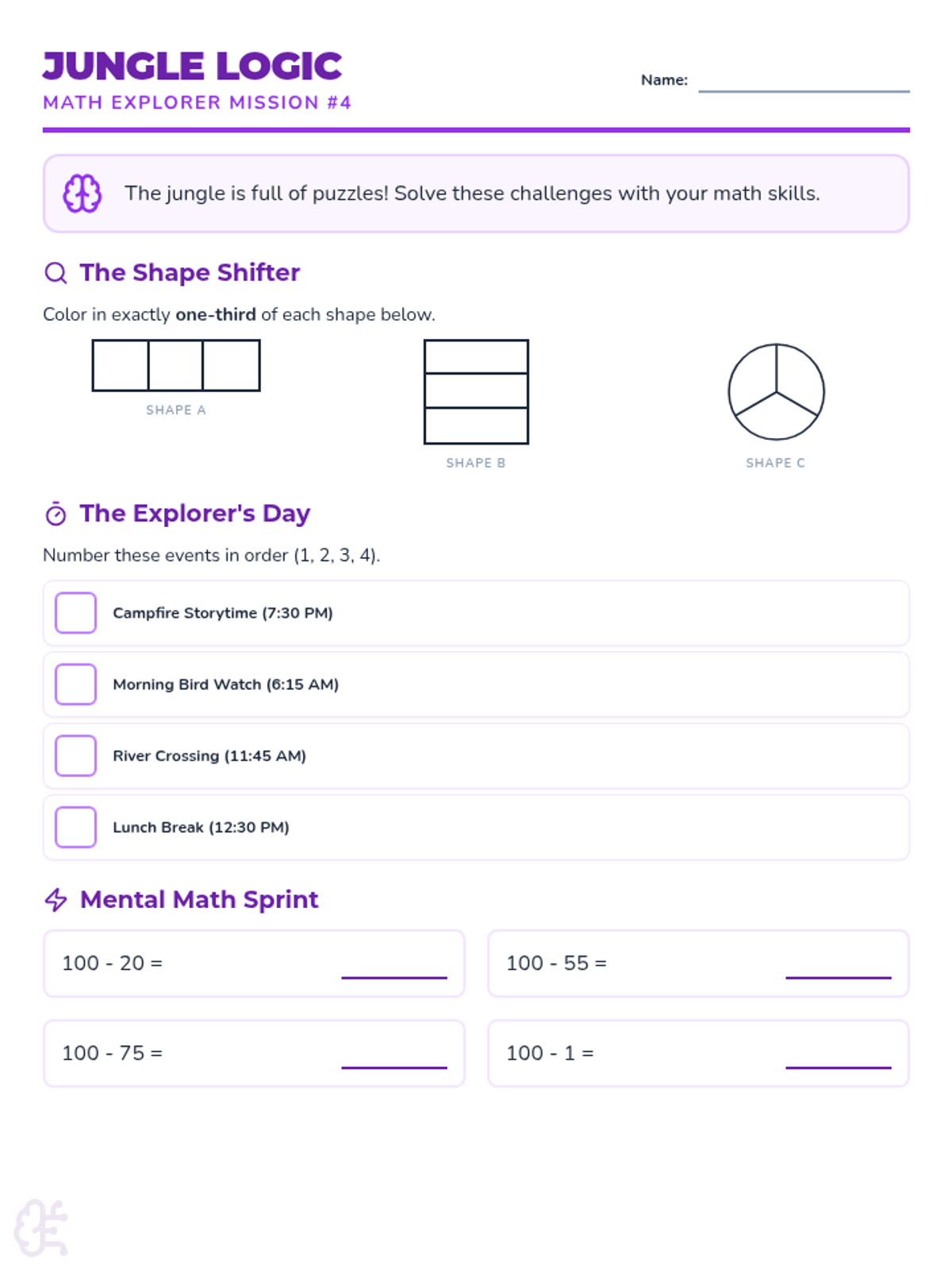
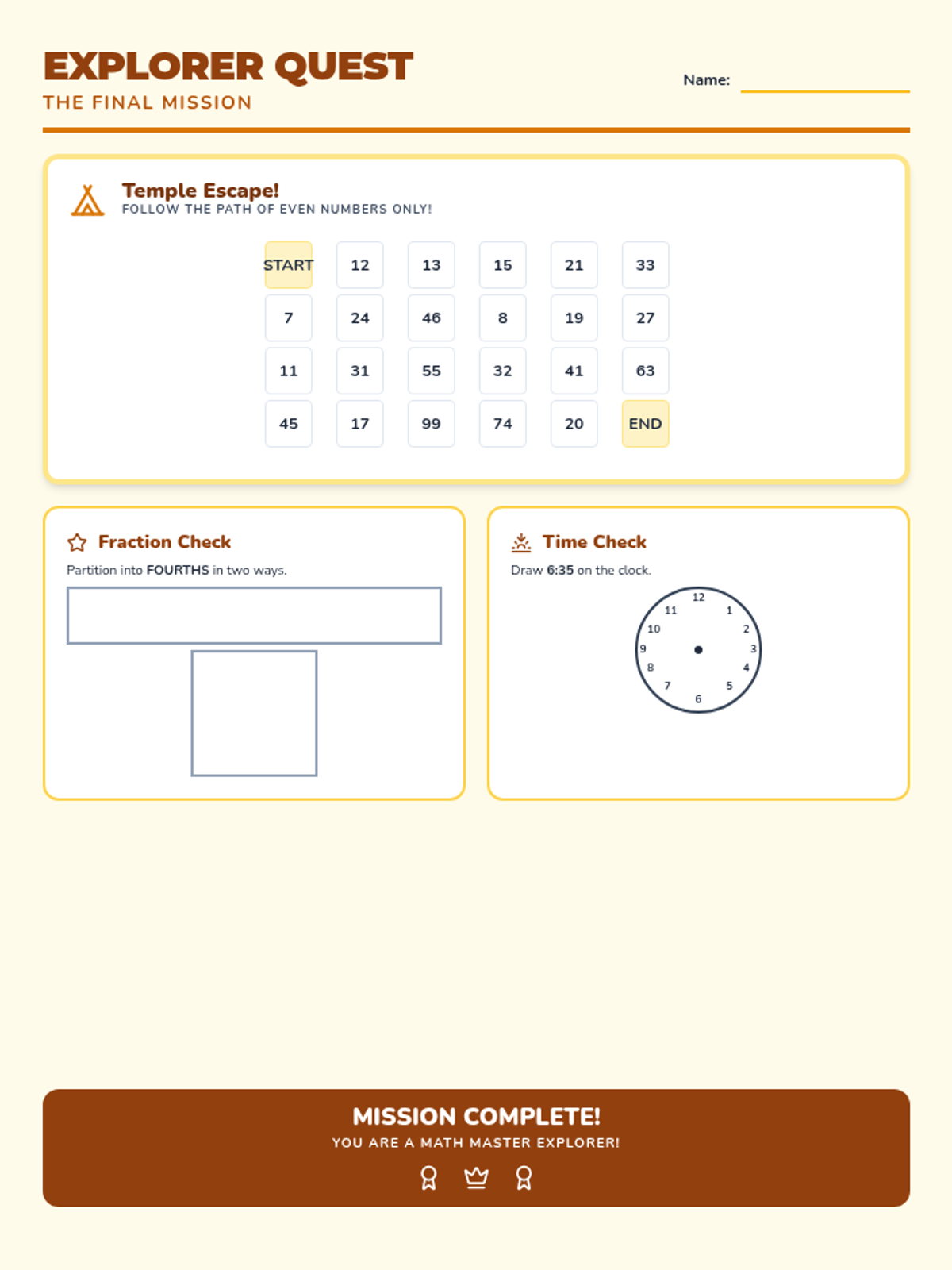
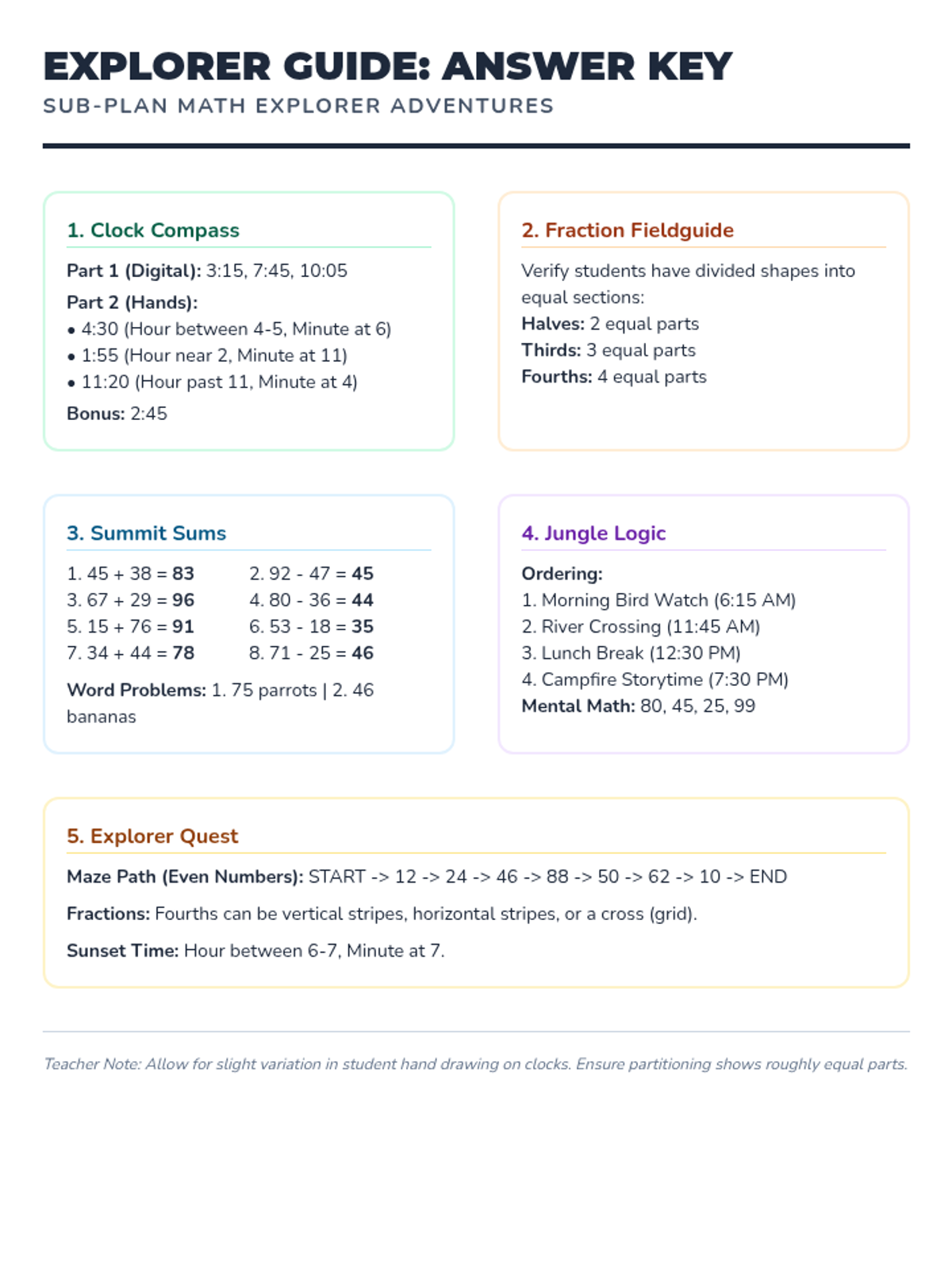
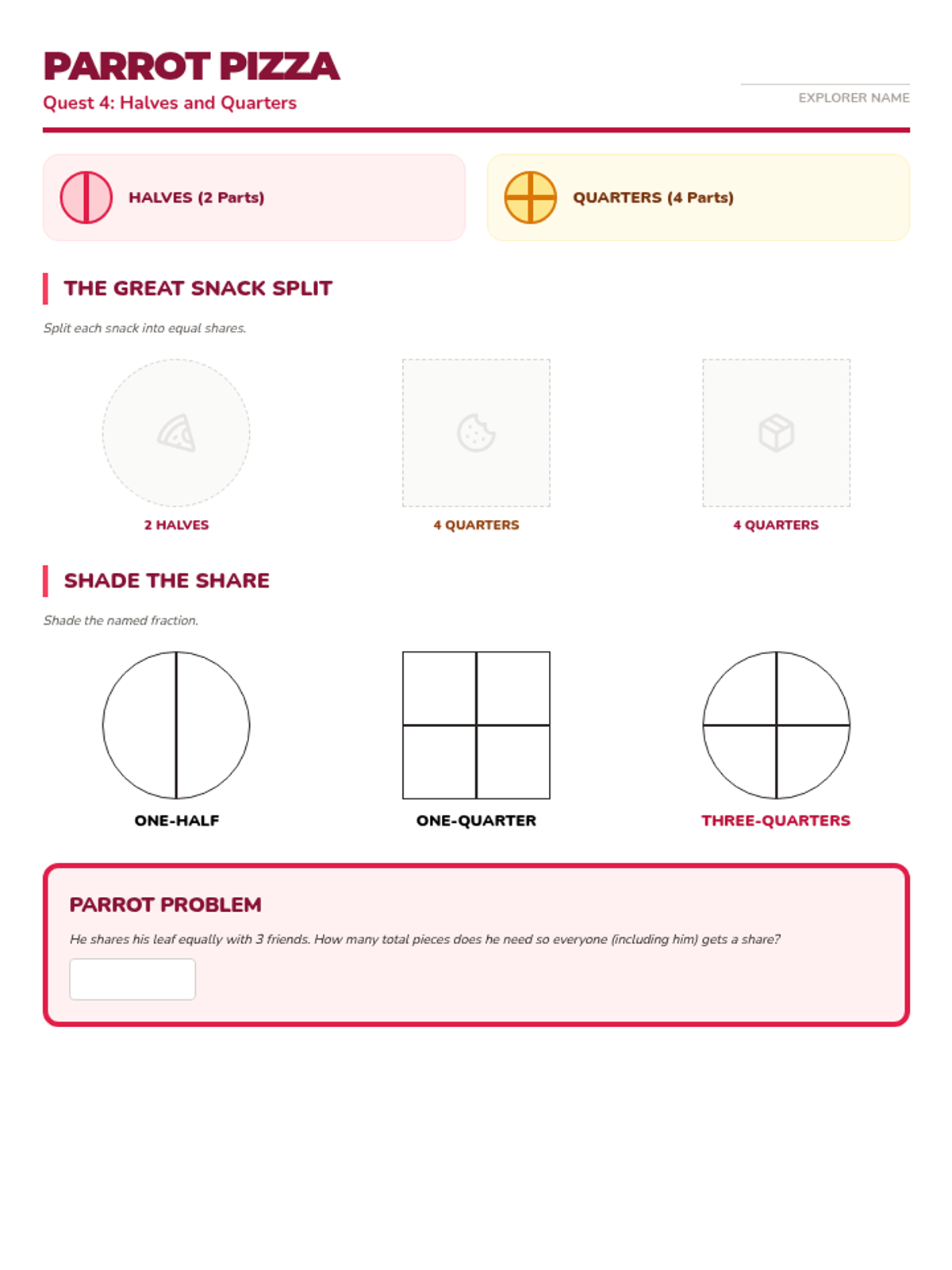
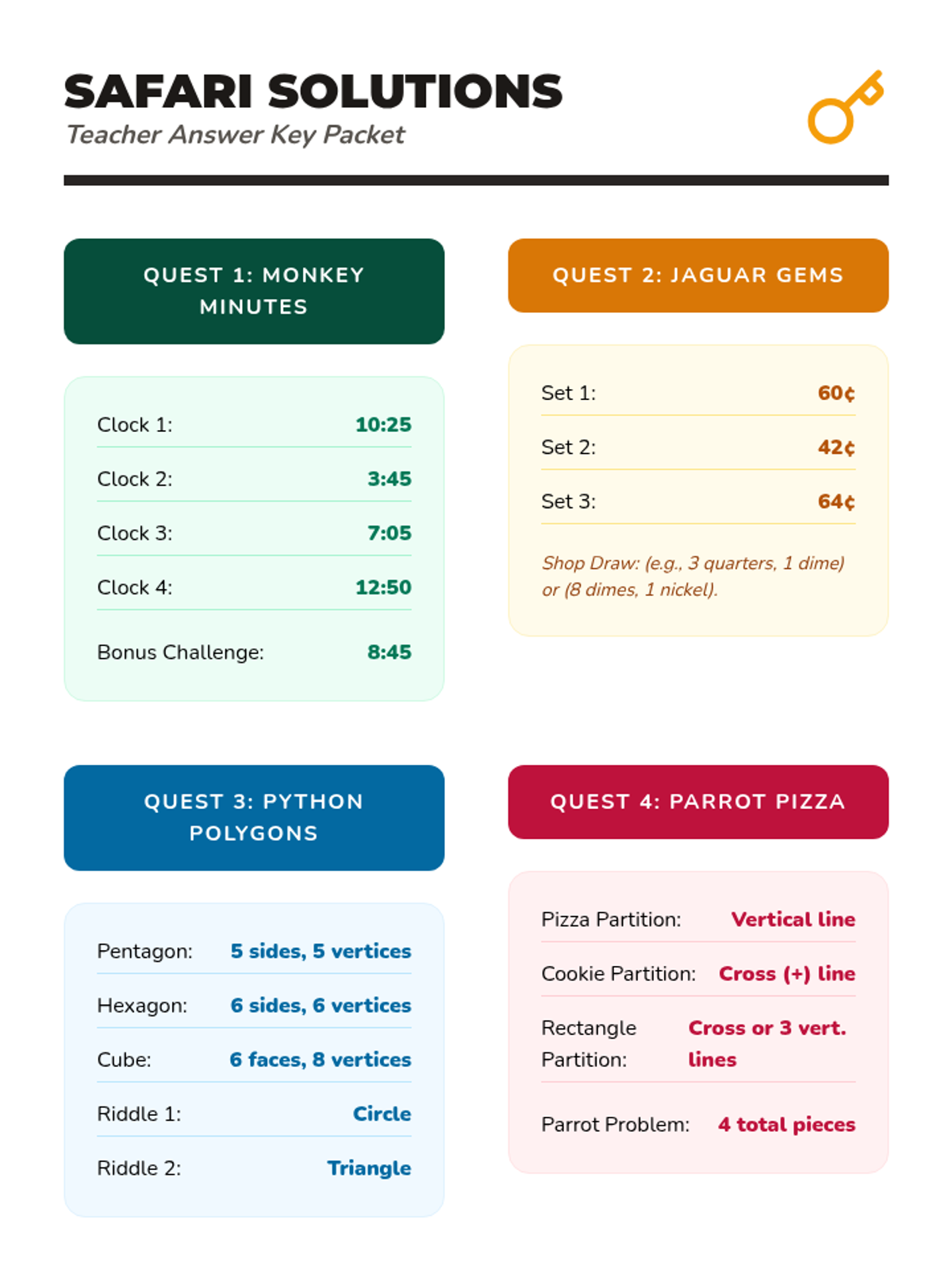
A comprehensive sub-plan packet for 2nd grade math, covering telling time, partitioning shapes into fractions, and addition/subtraction within 100 through an engaging jungle exploration theme.
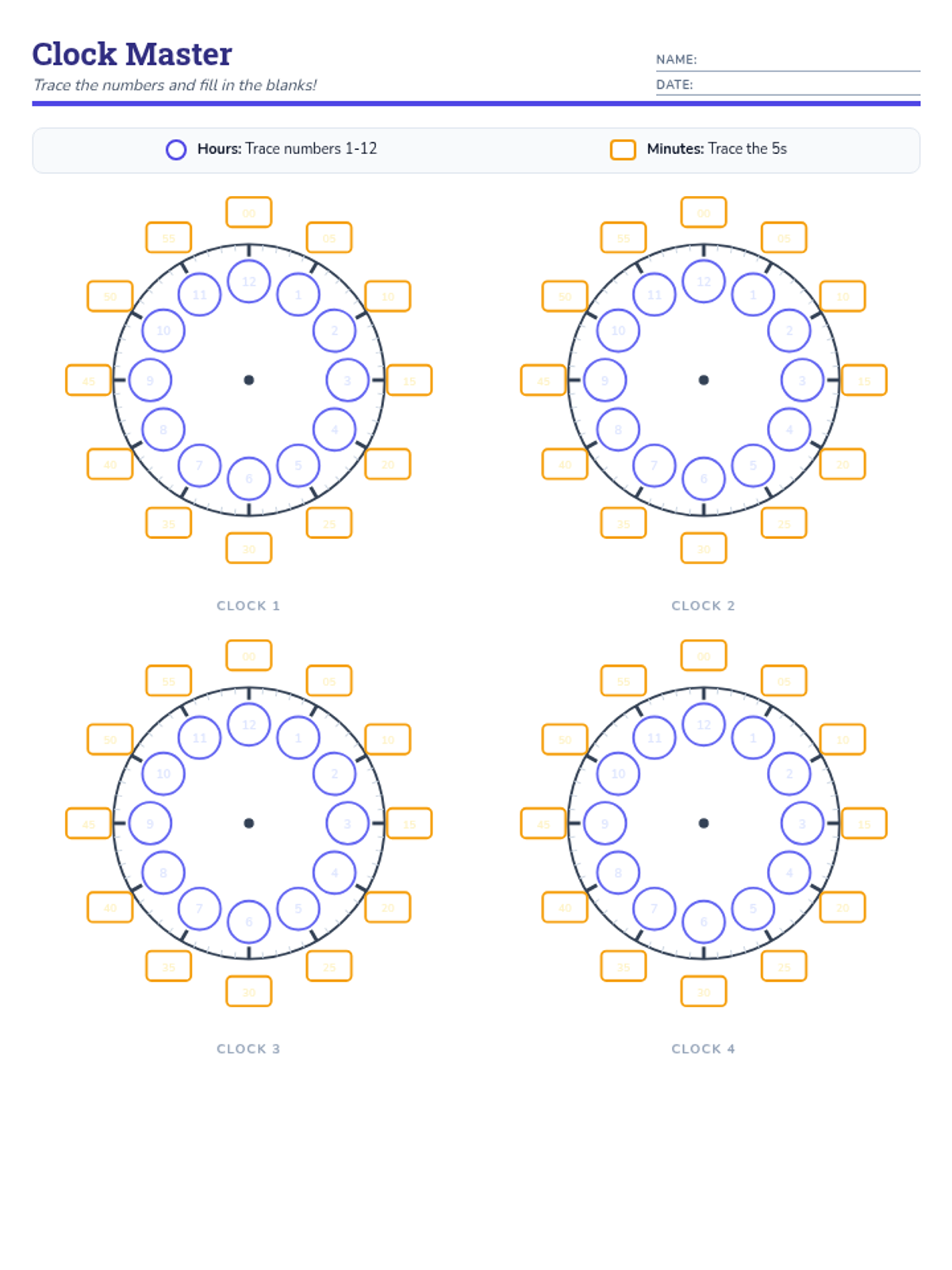
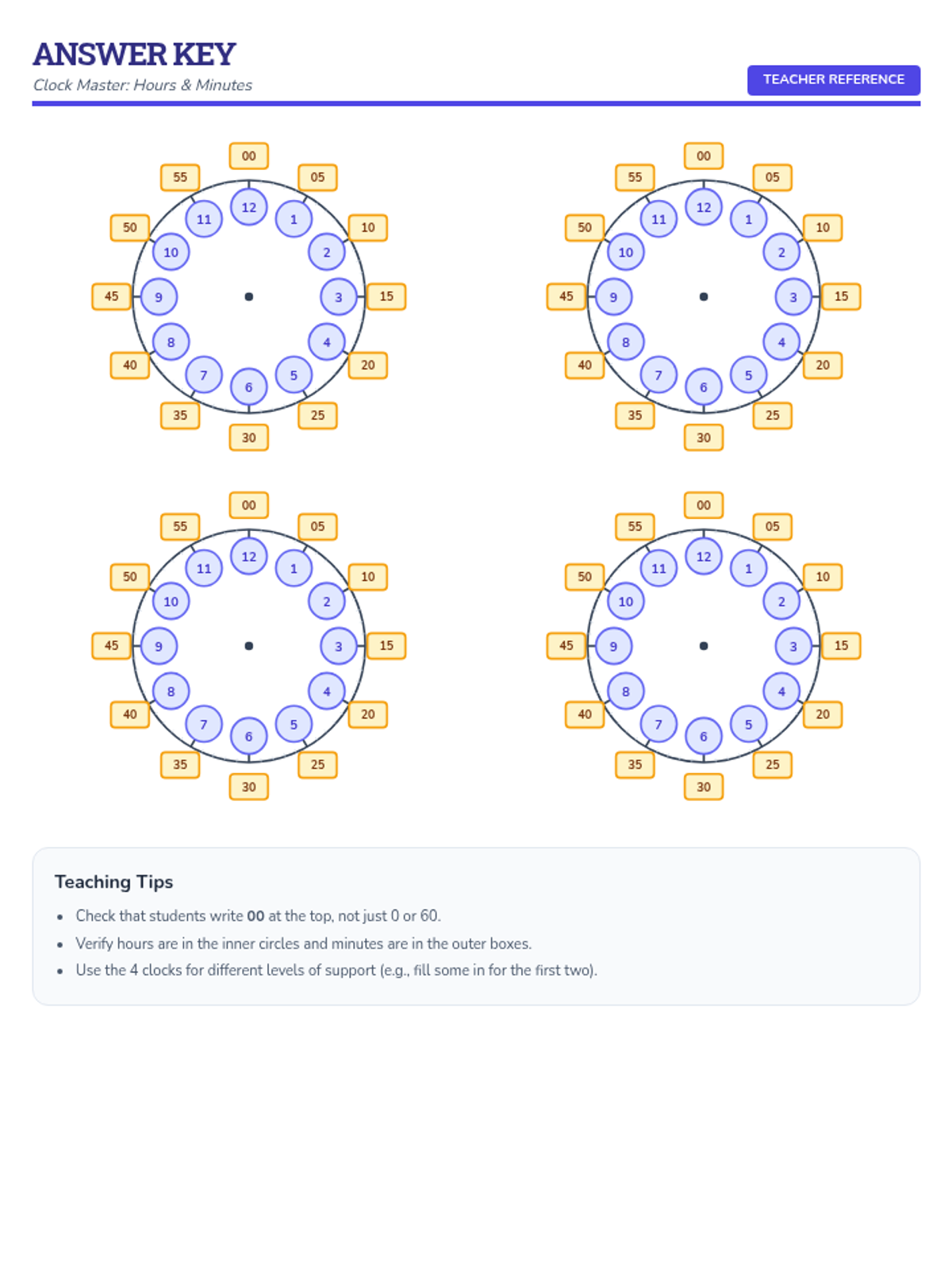
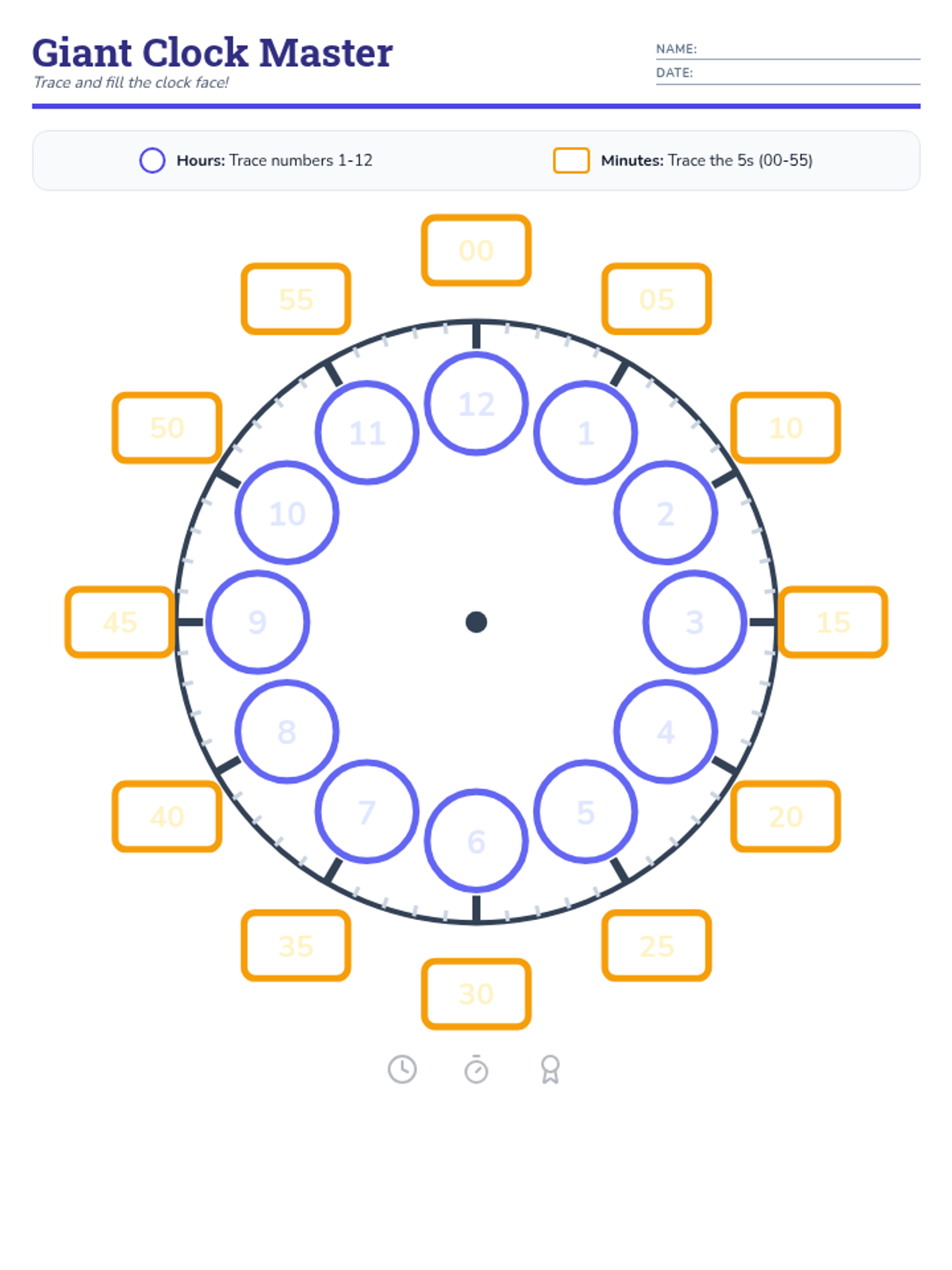
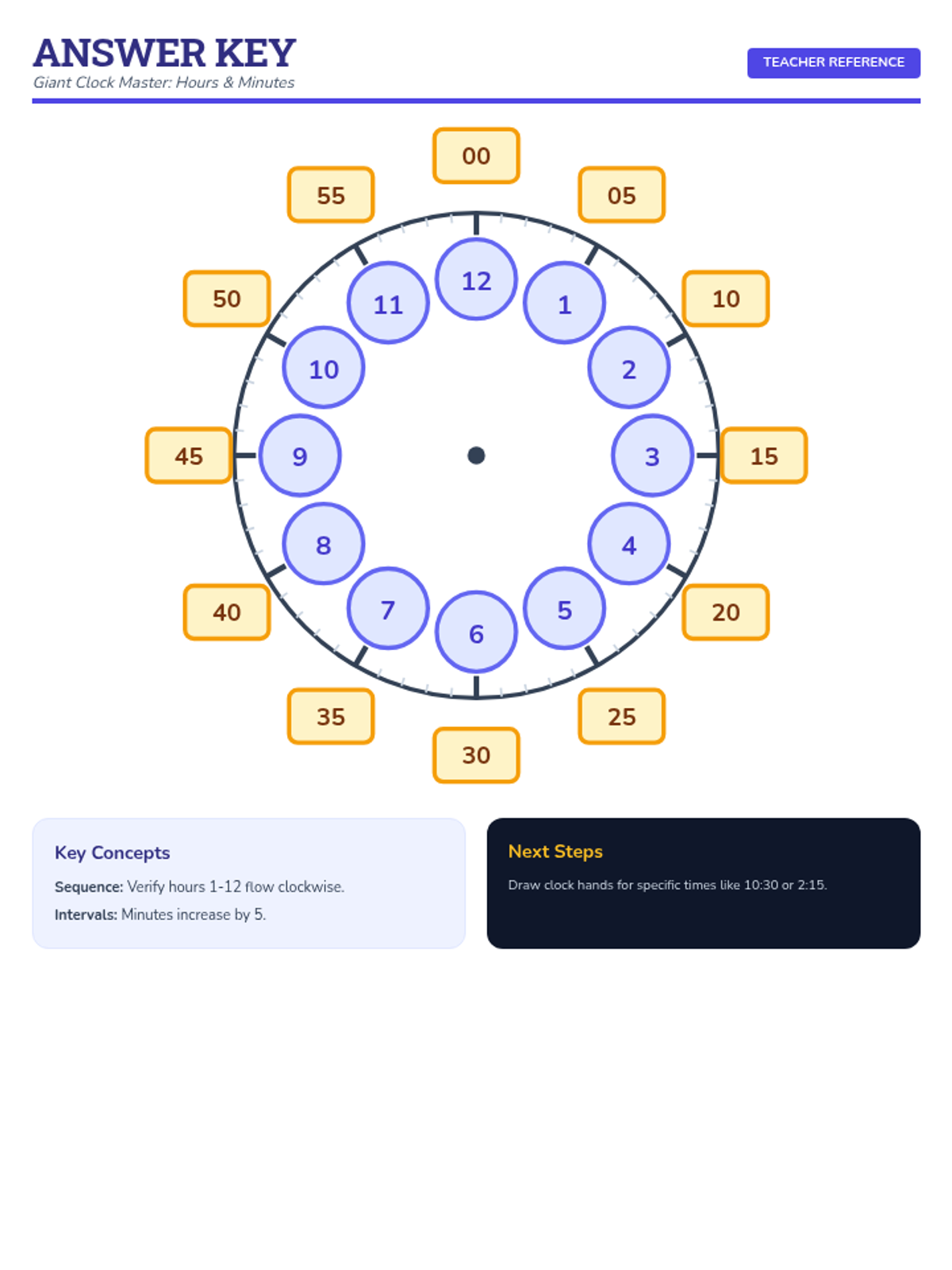
A foundational lesson on clock anatomy, focusing on identifying hour numbers and five-minute increments. Students practice spatial reasoning and number sequencing within a circular layout.
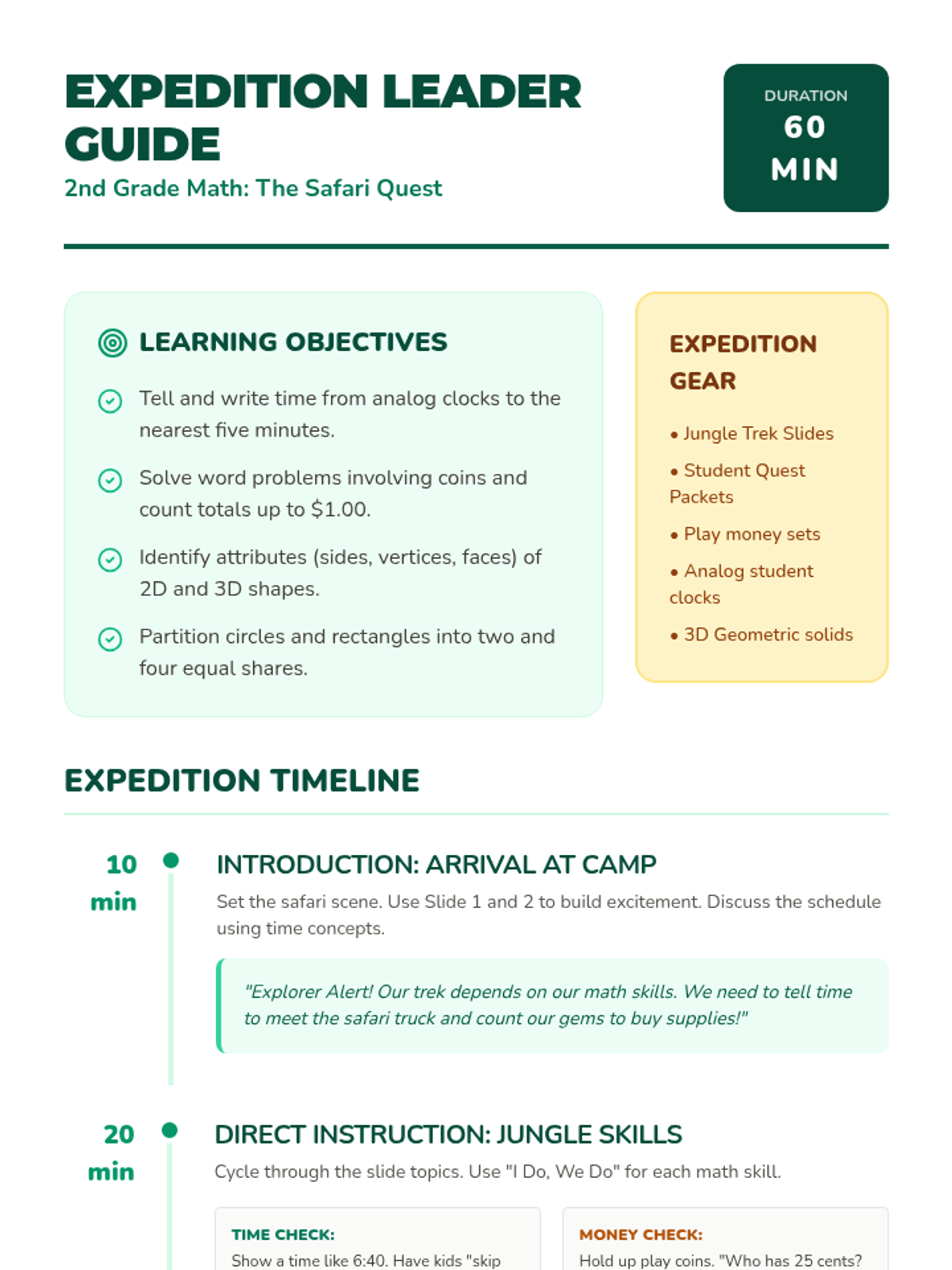
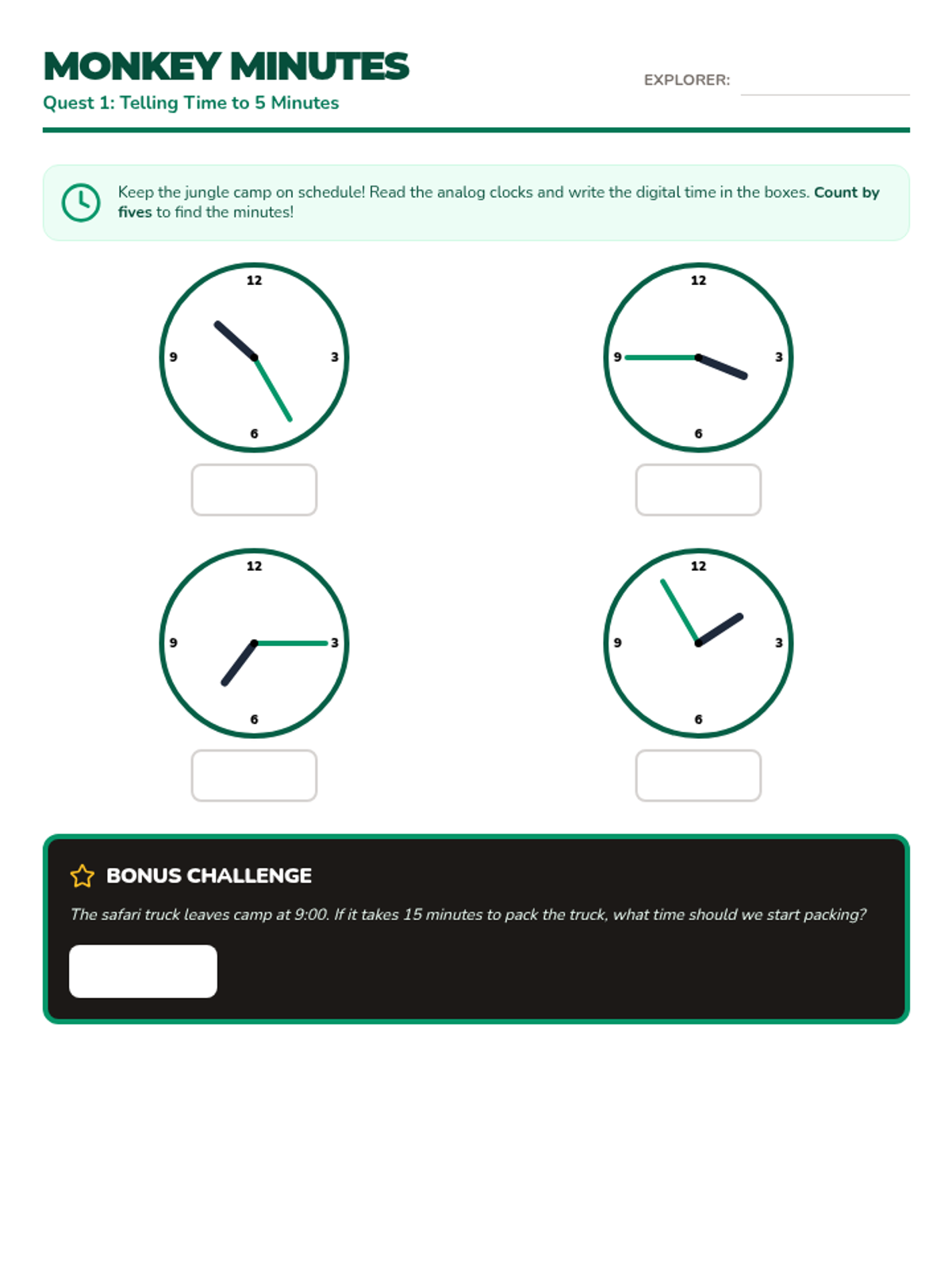
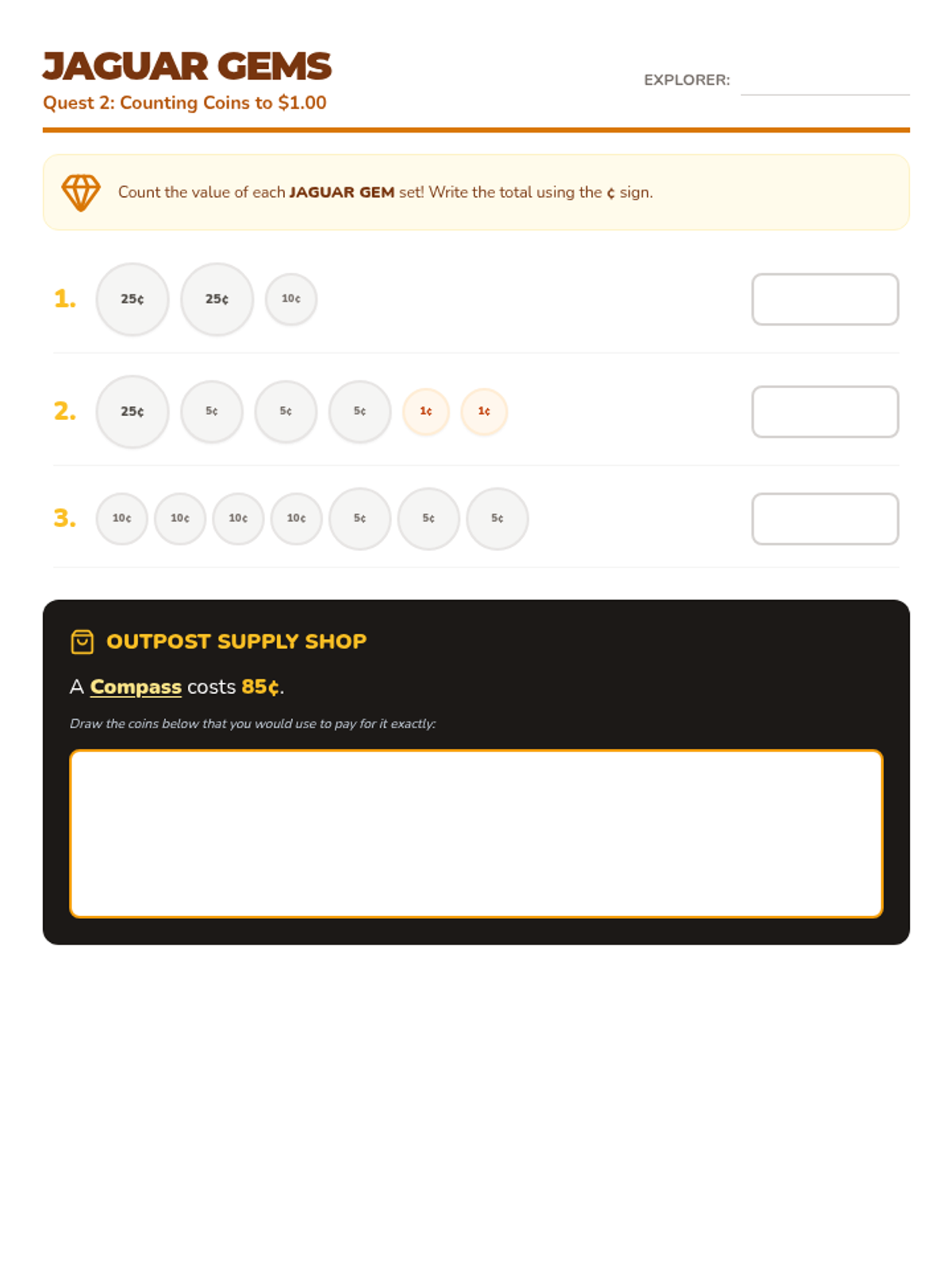
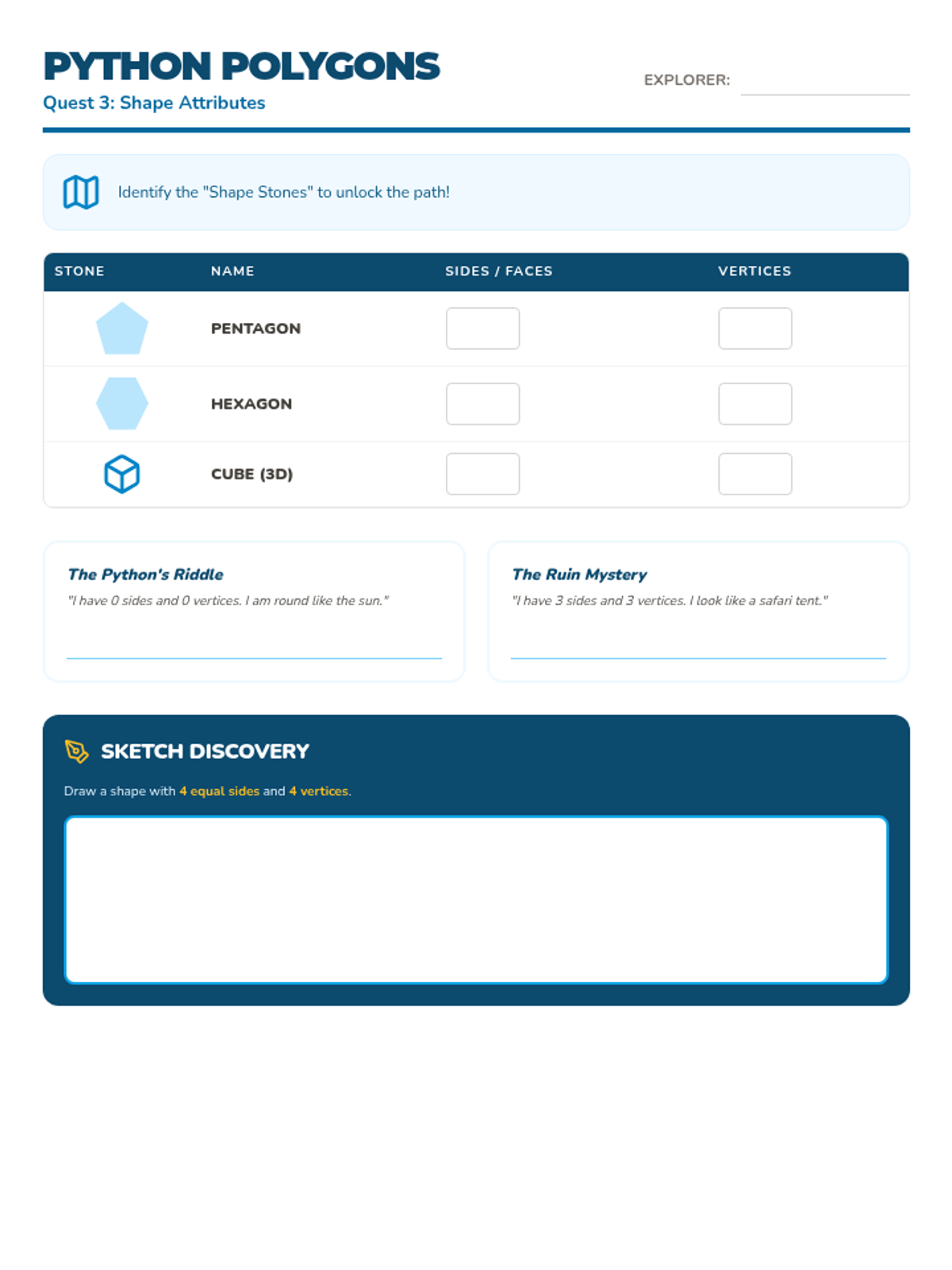
A high-energy math expedition where students master time, money, shapes, and fractions through a jungle-themed safari adventure. This lesson includes interactive slides, a comprehensive teacher guide, and skill-specific practice pages.
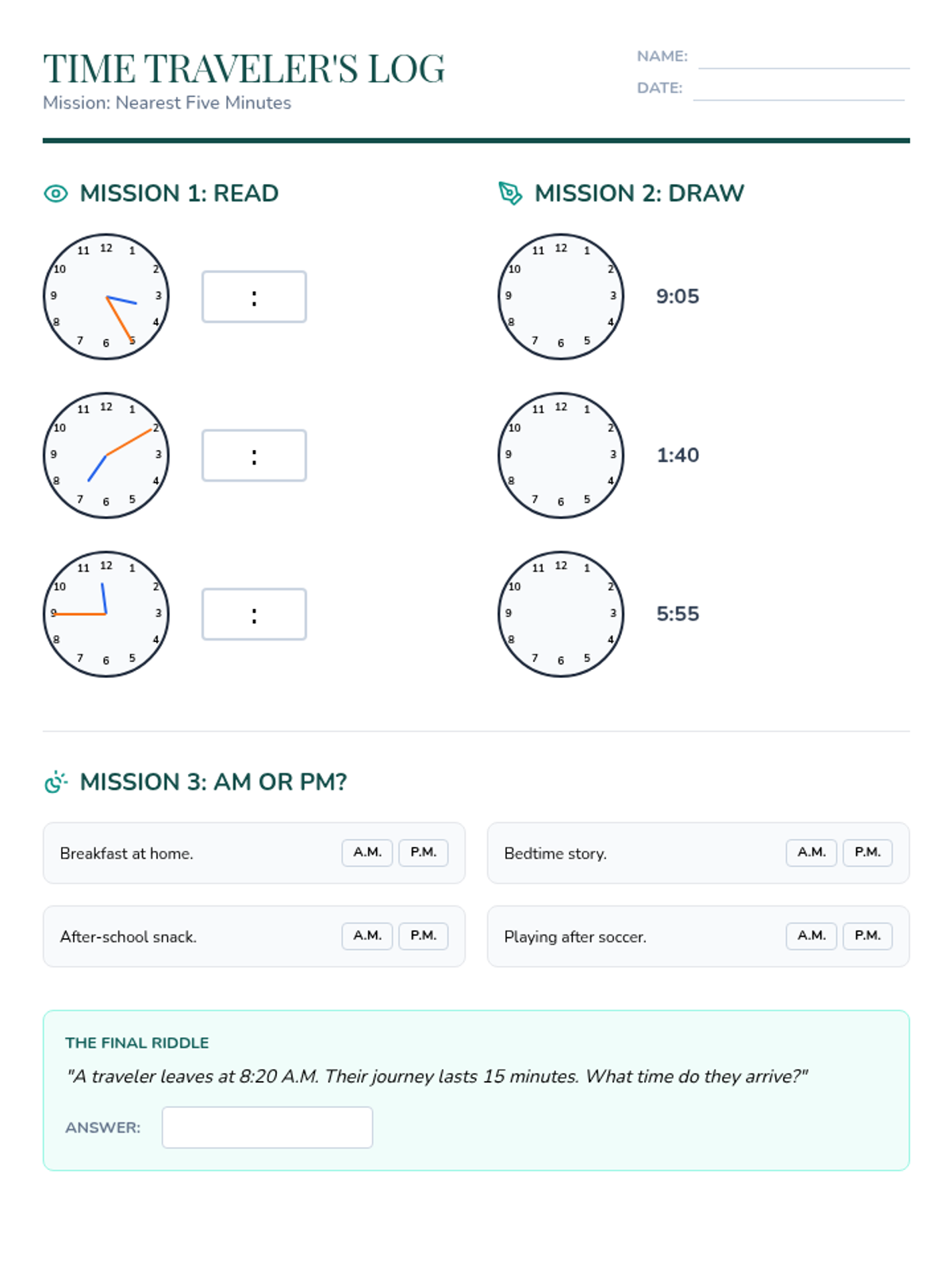
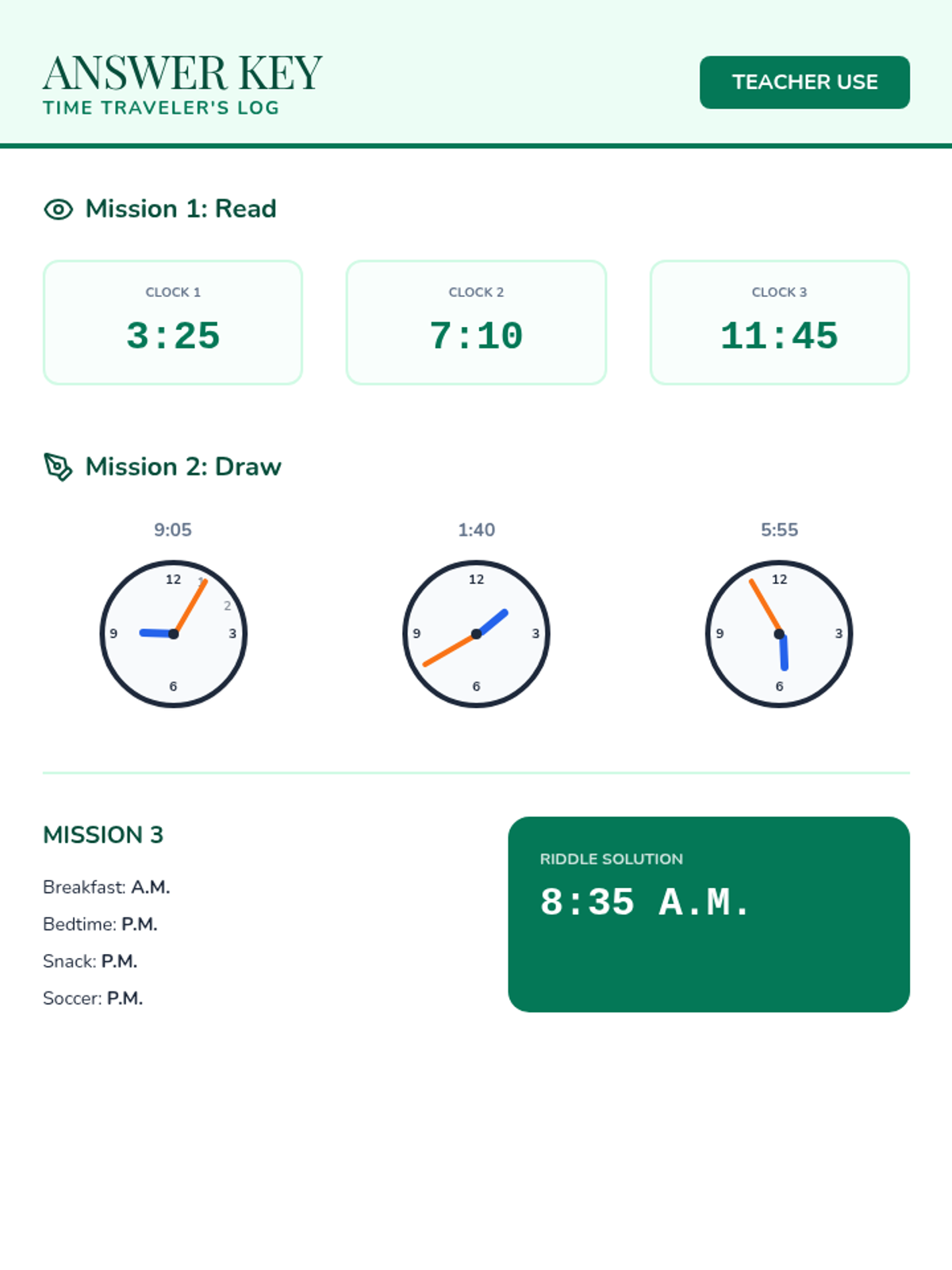
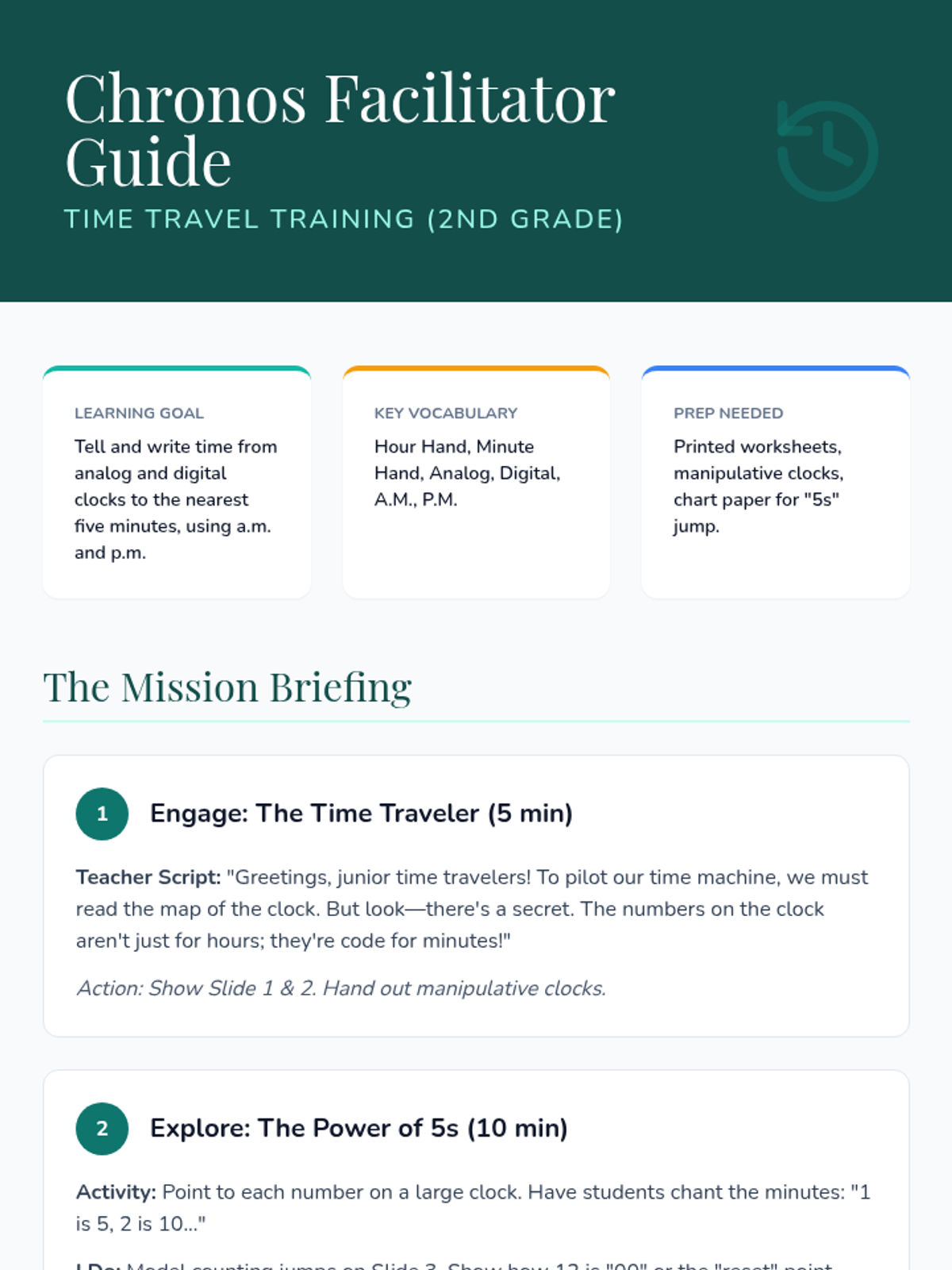
A mini-lesson for second graders on telling time to the nearest five minutes, including the concepts of AM and PM, featuring a whimsical 'Time Traveler' theme.
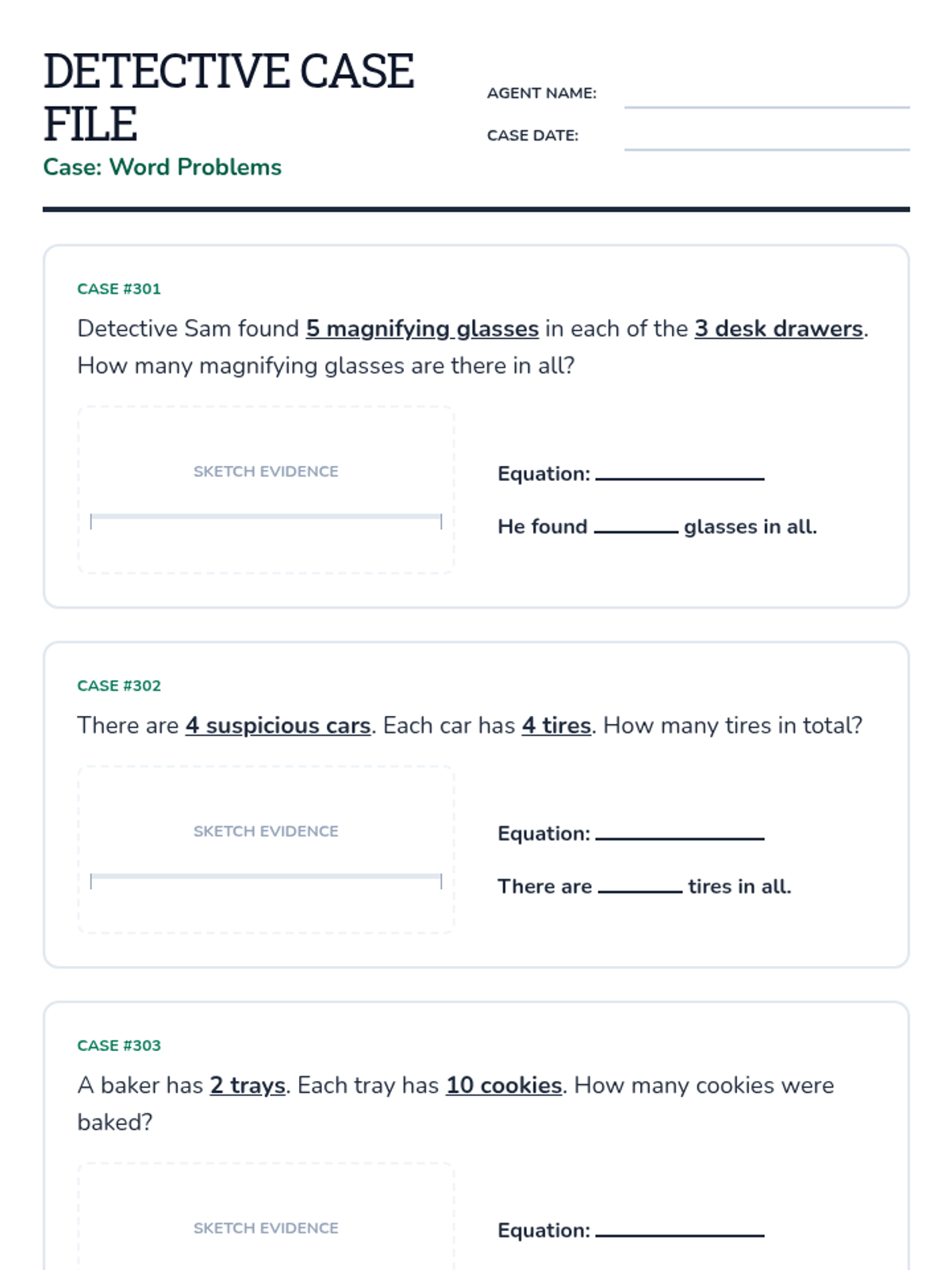
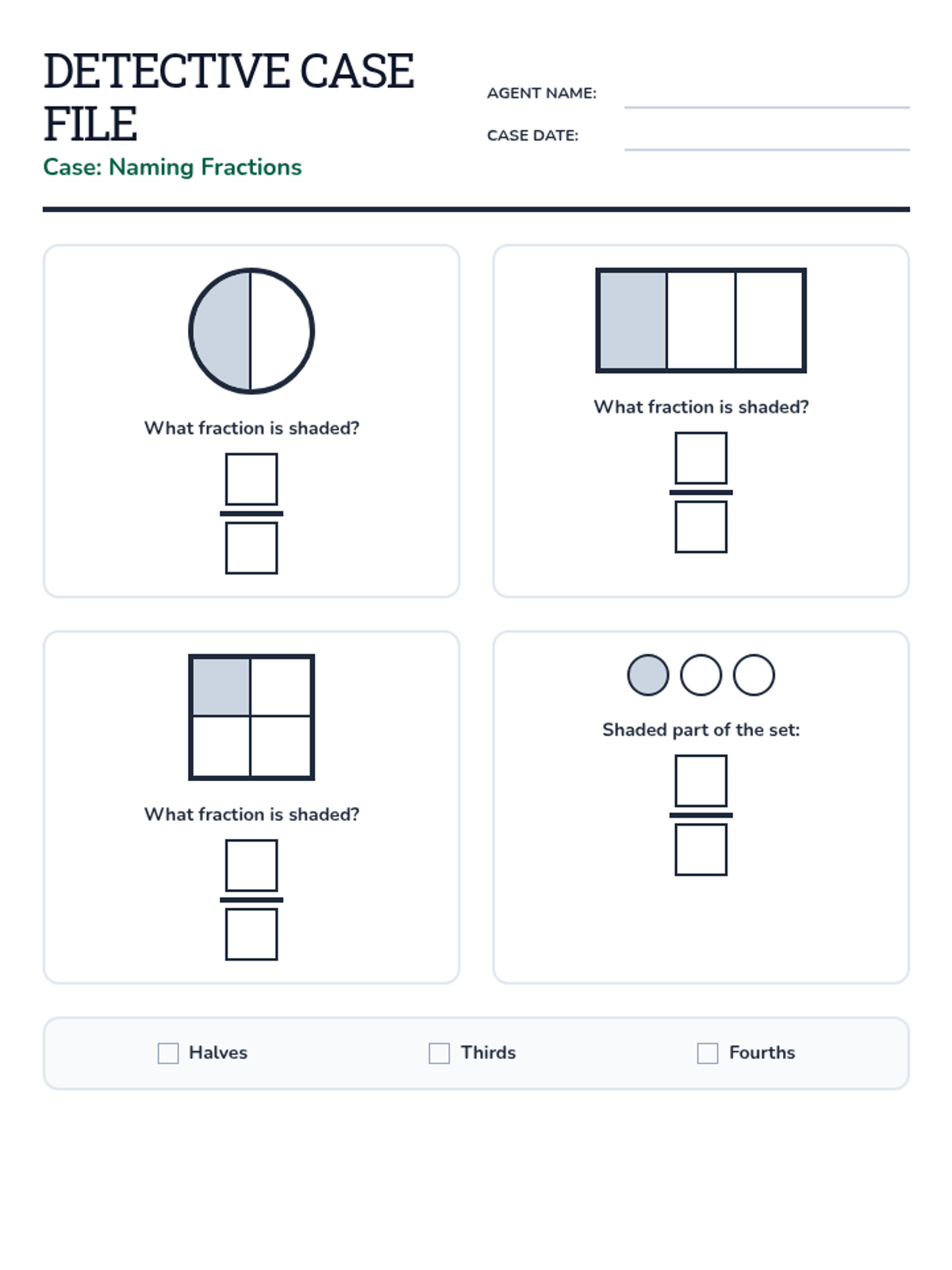
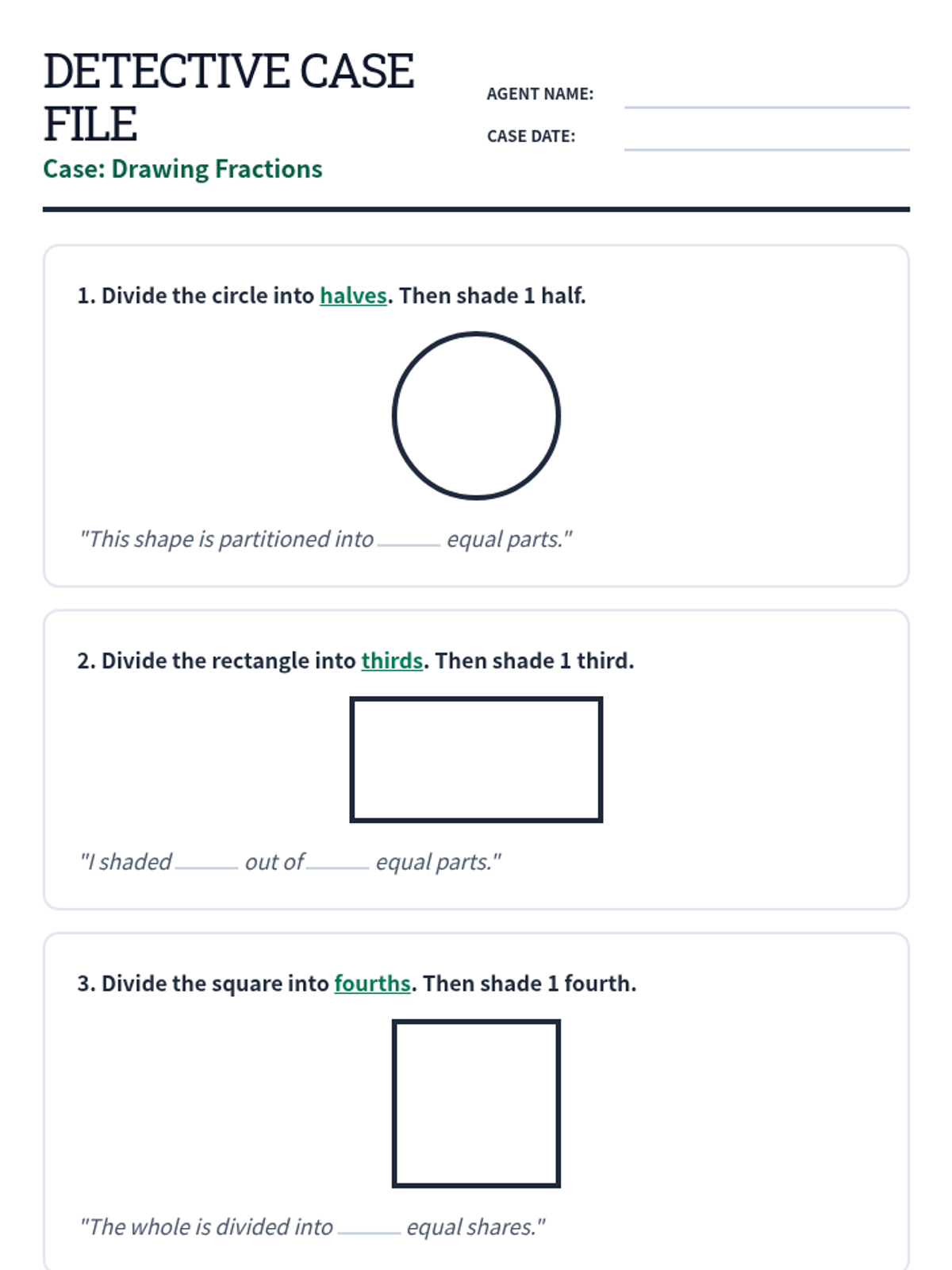
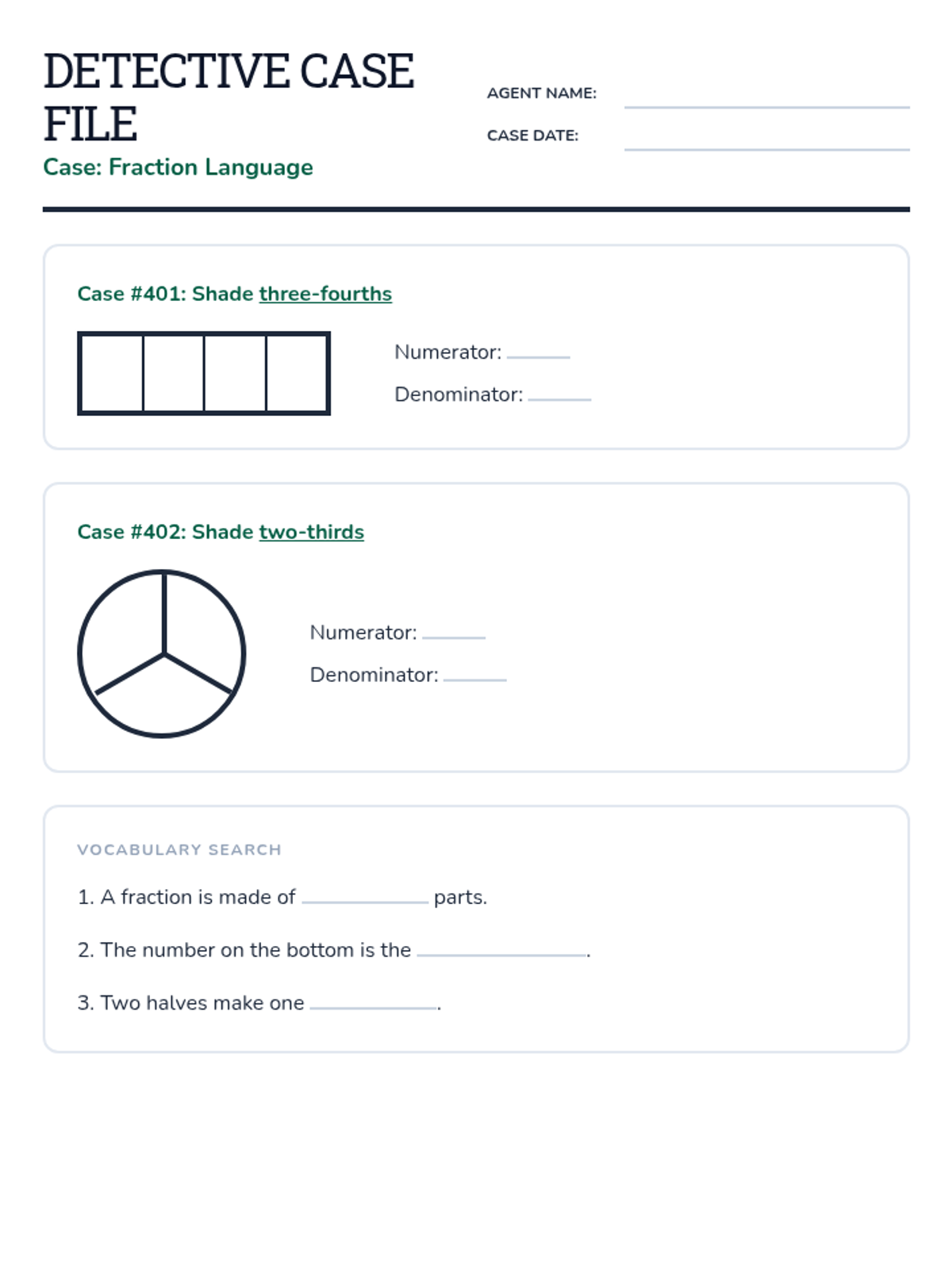
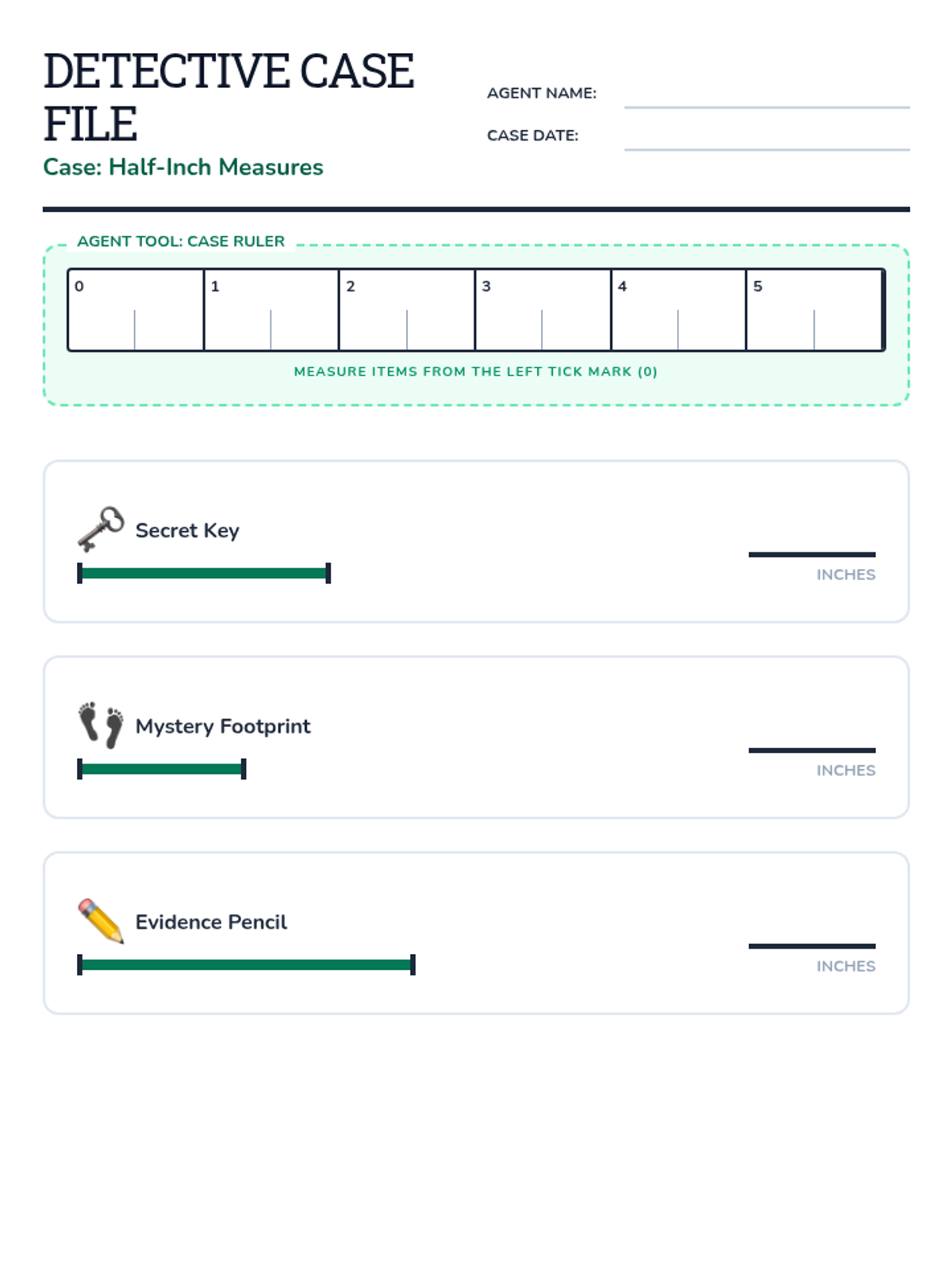
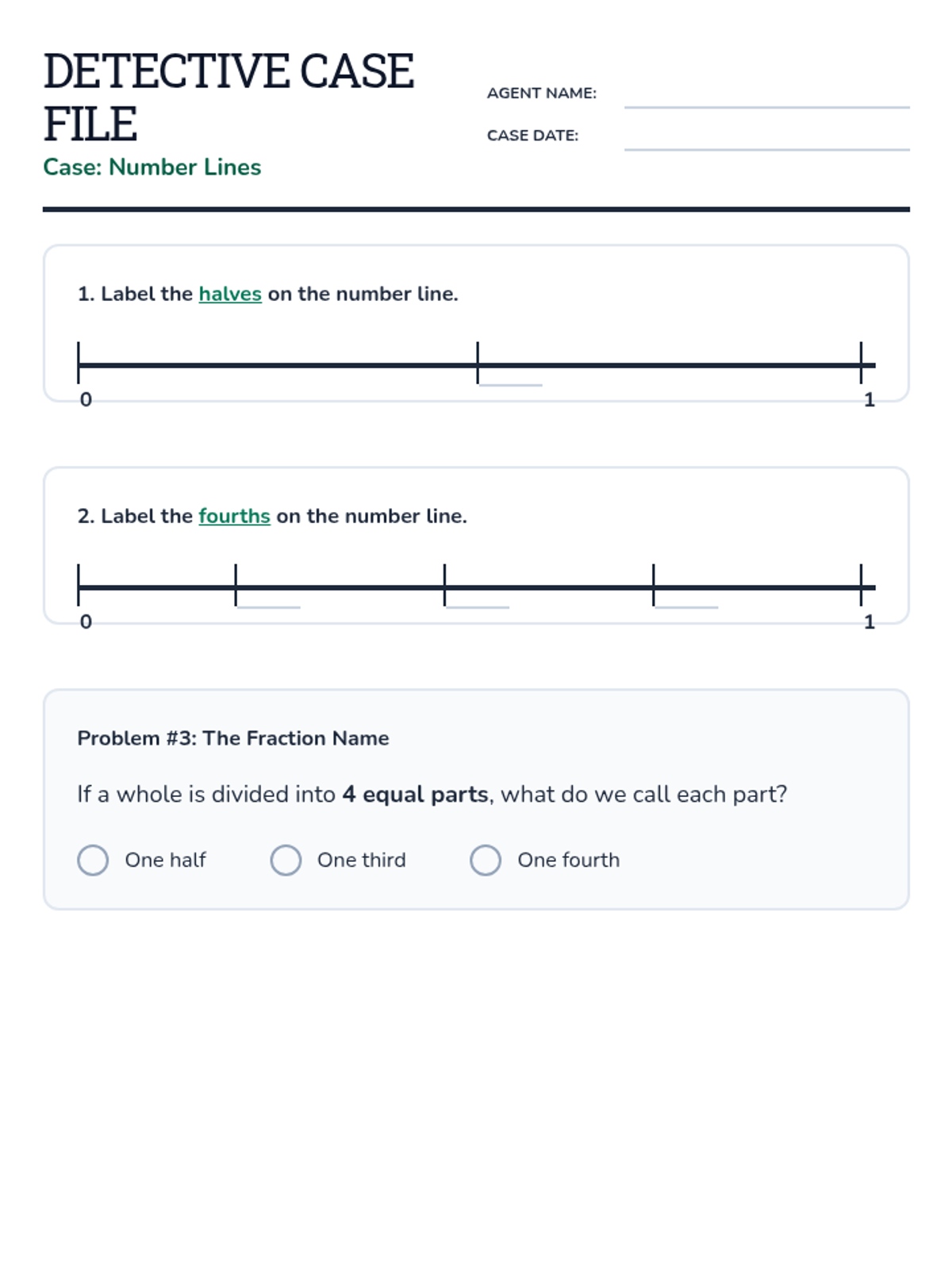
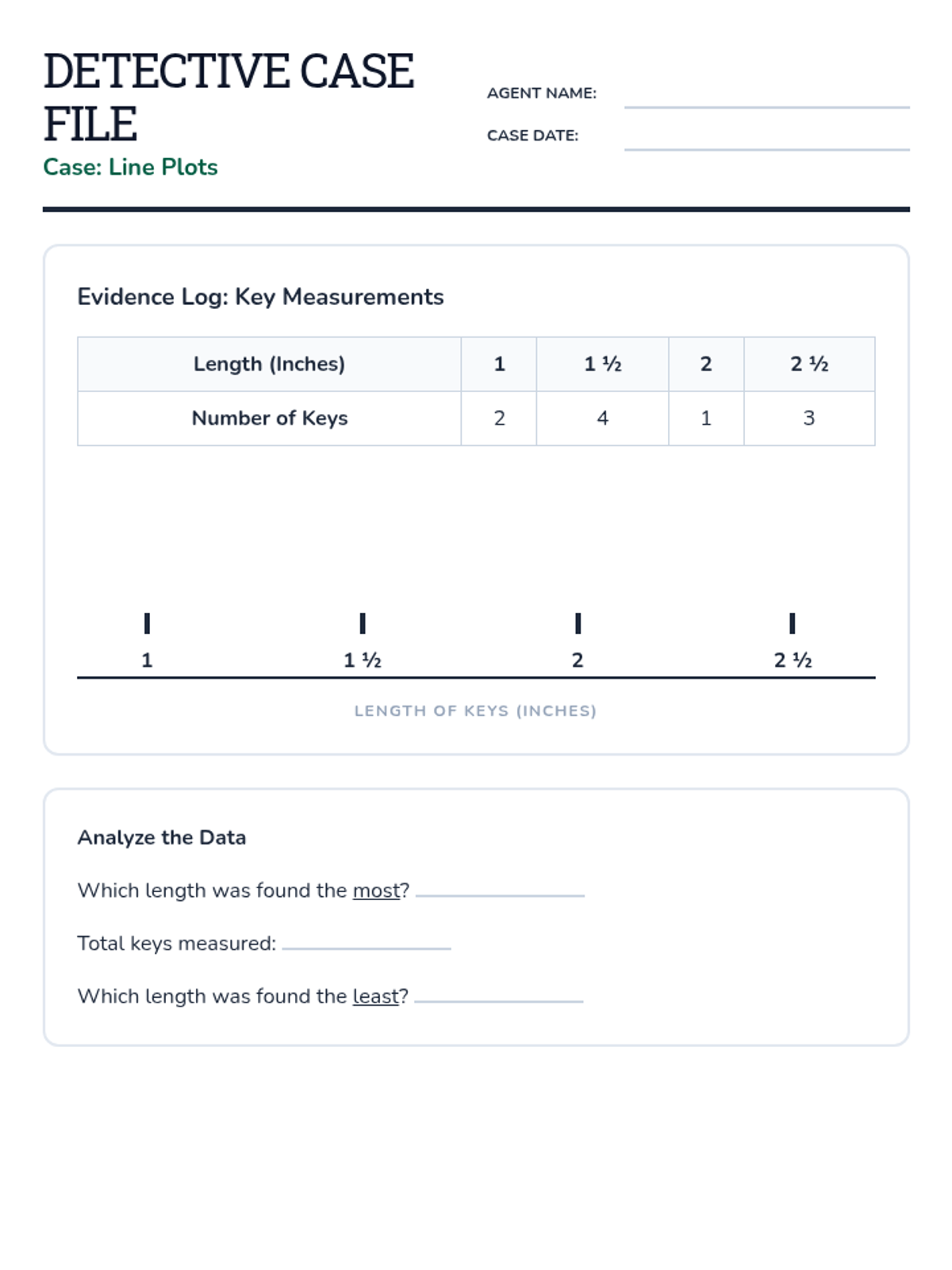
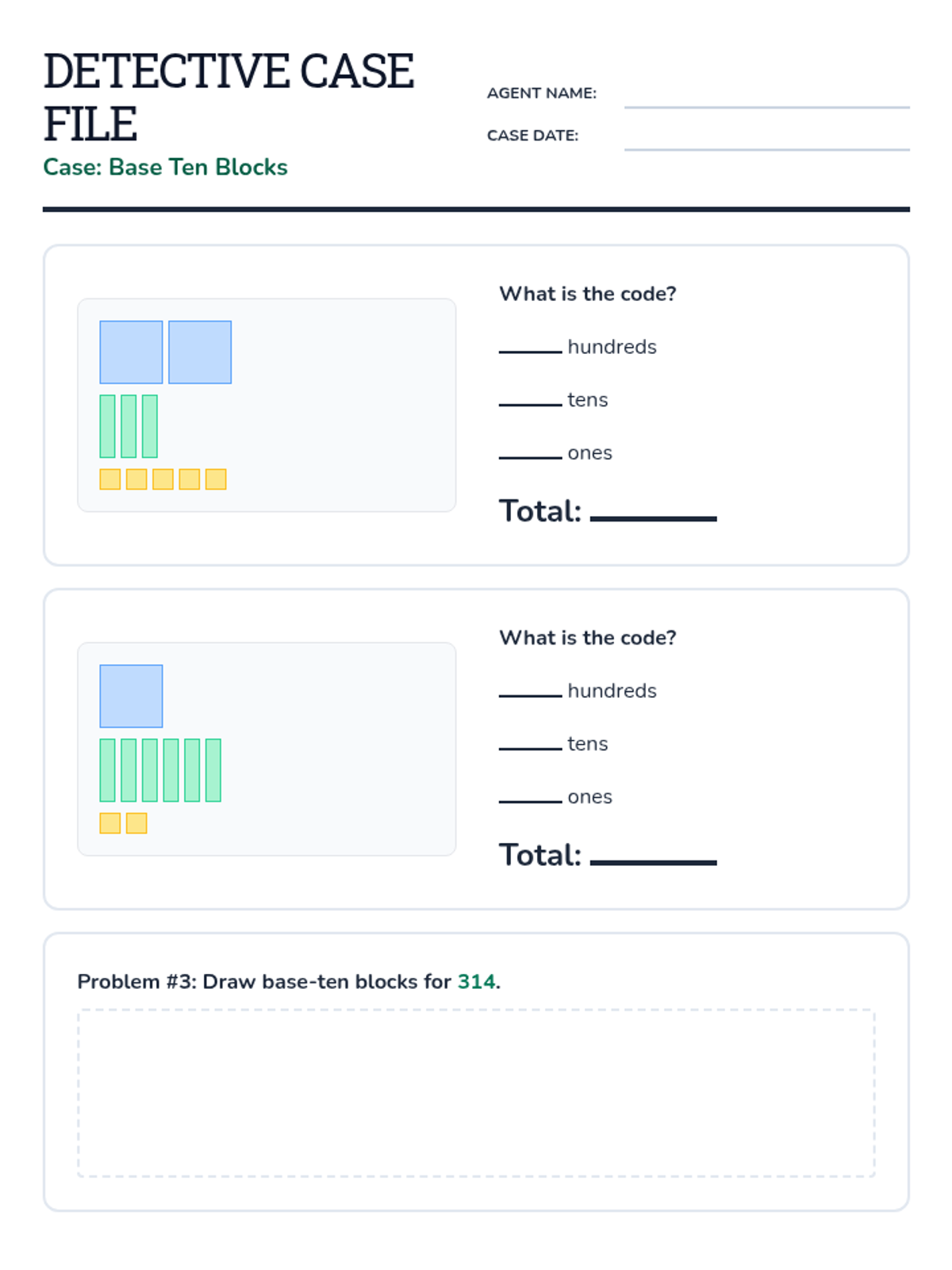
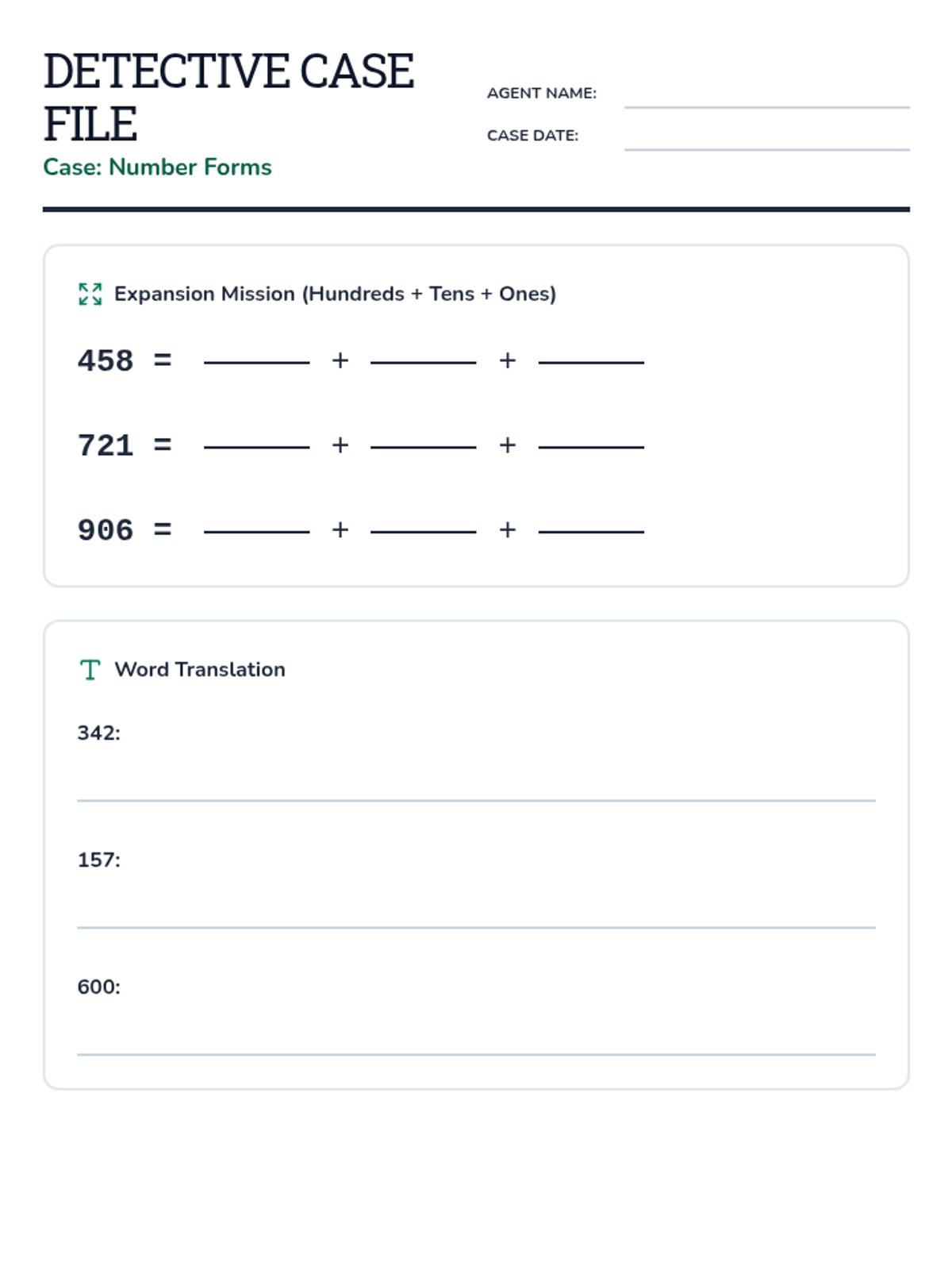
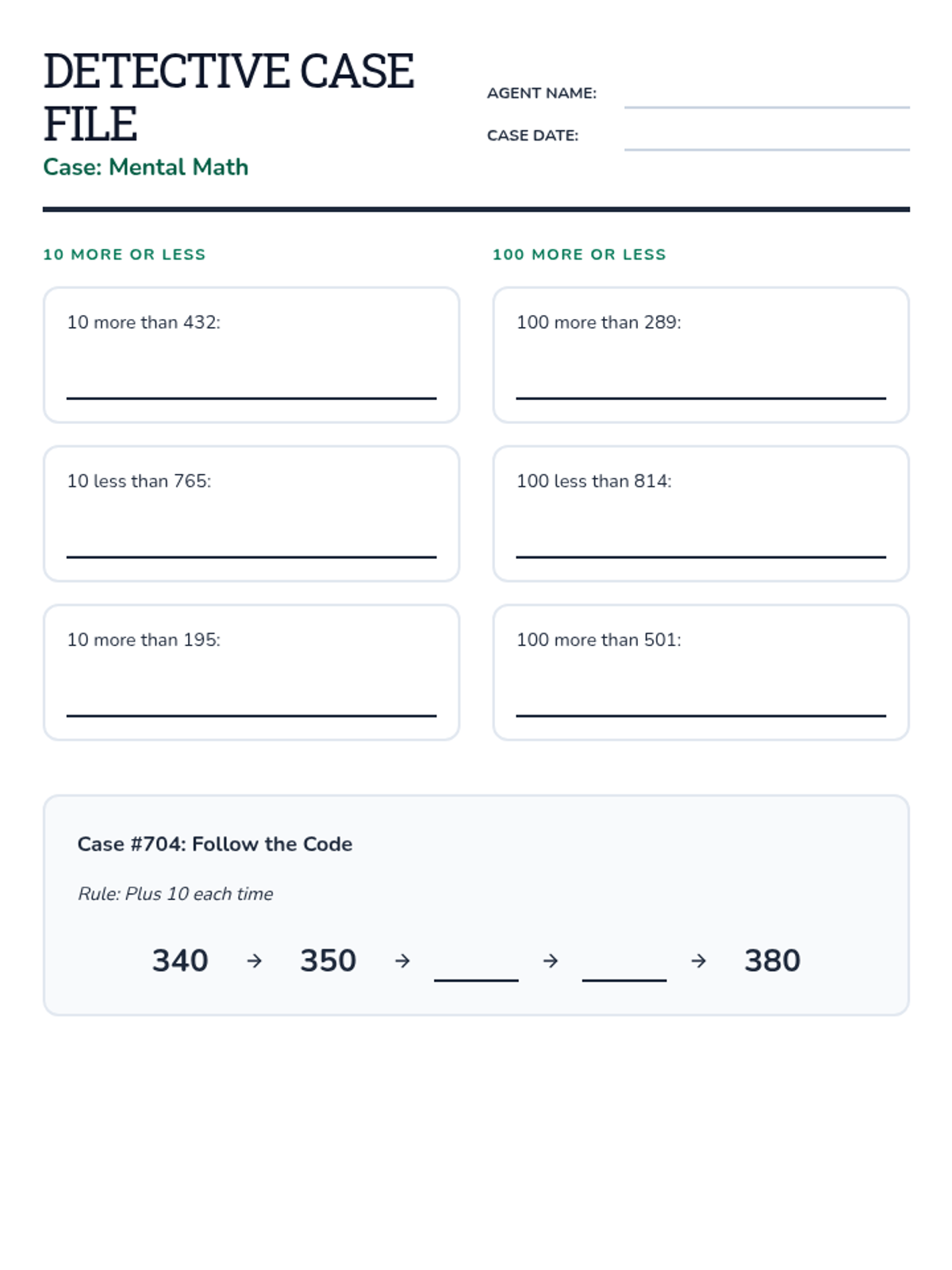
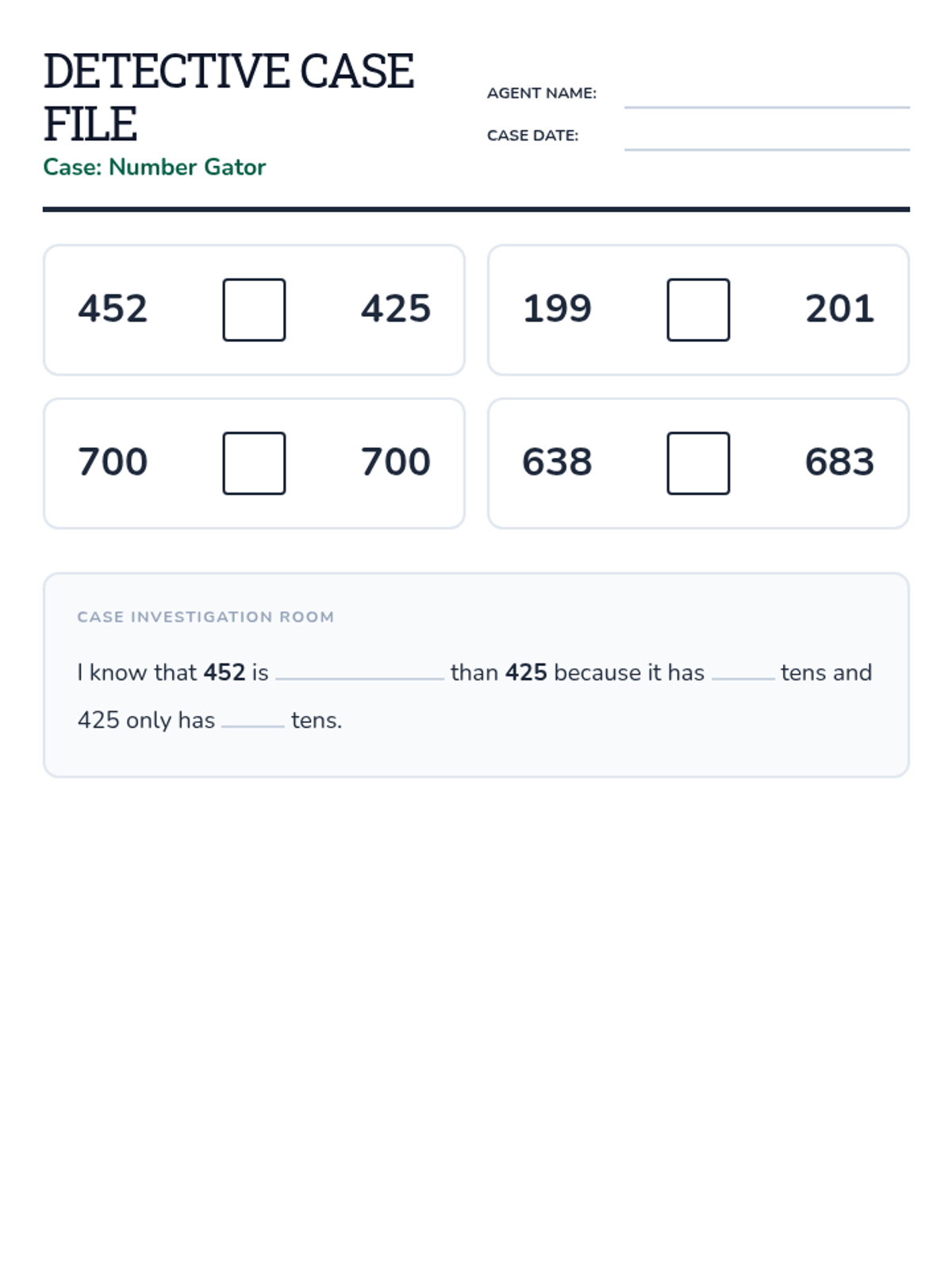
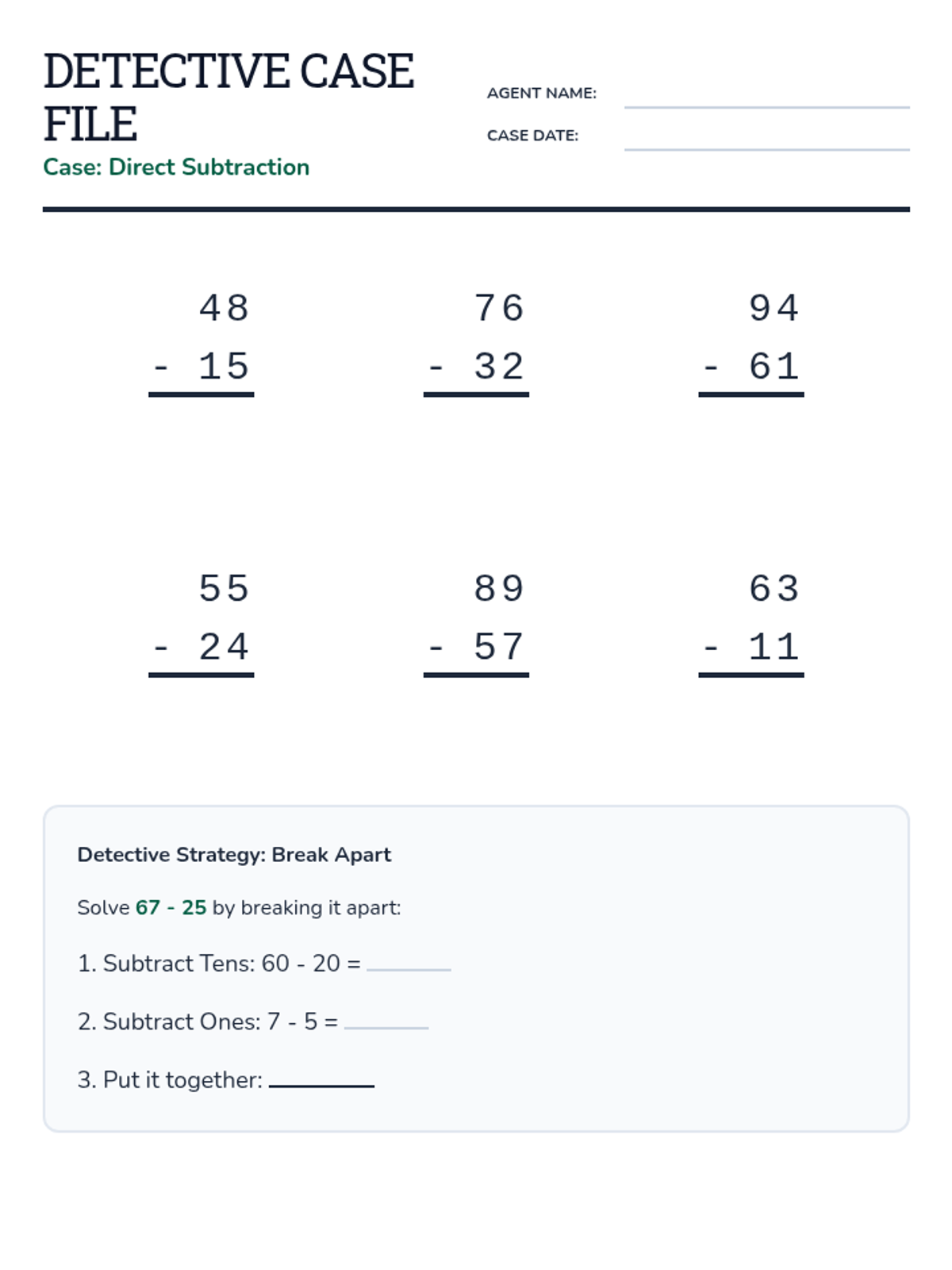
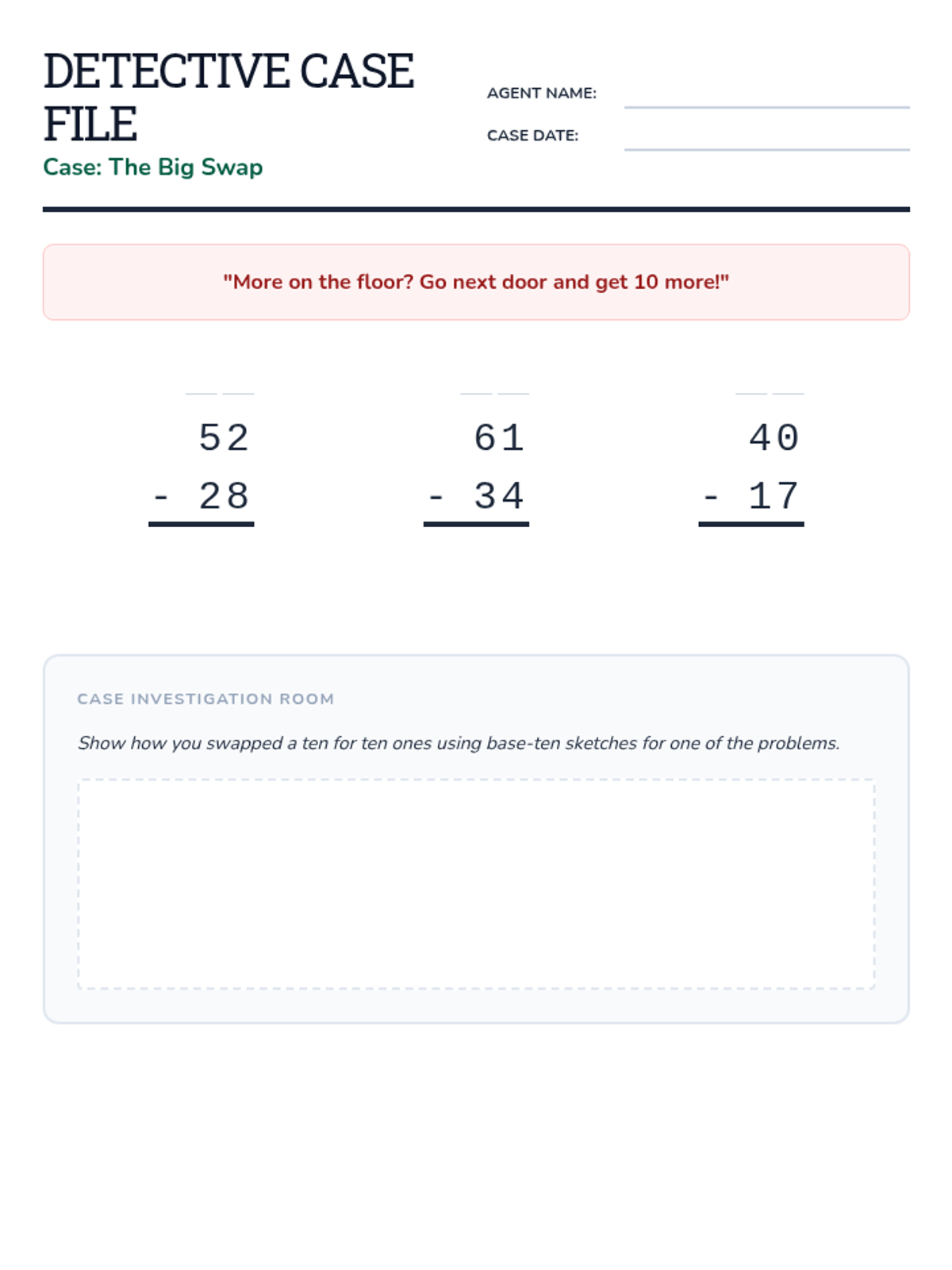
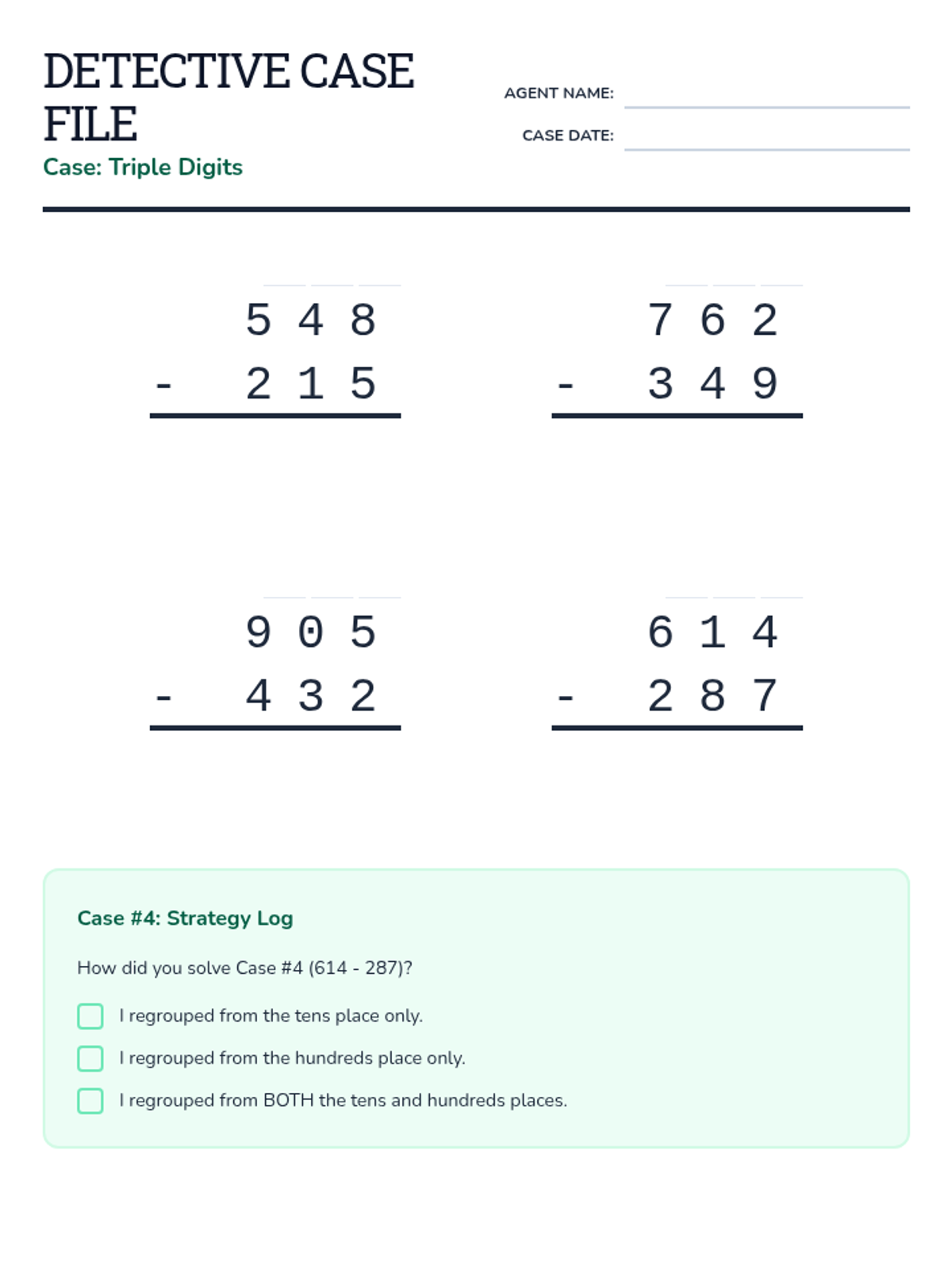
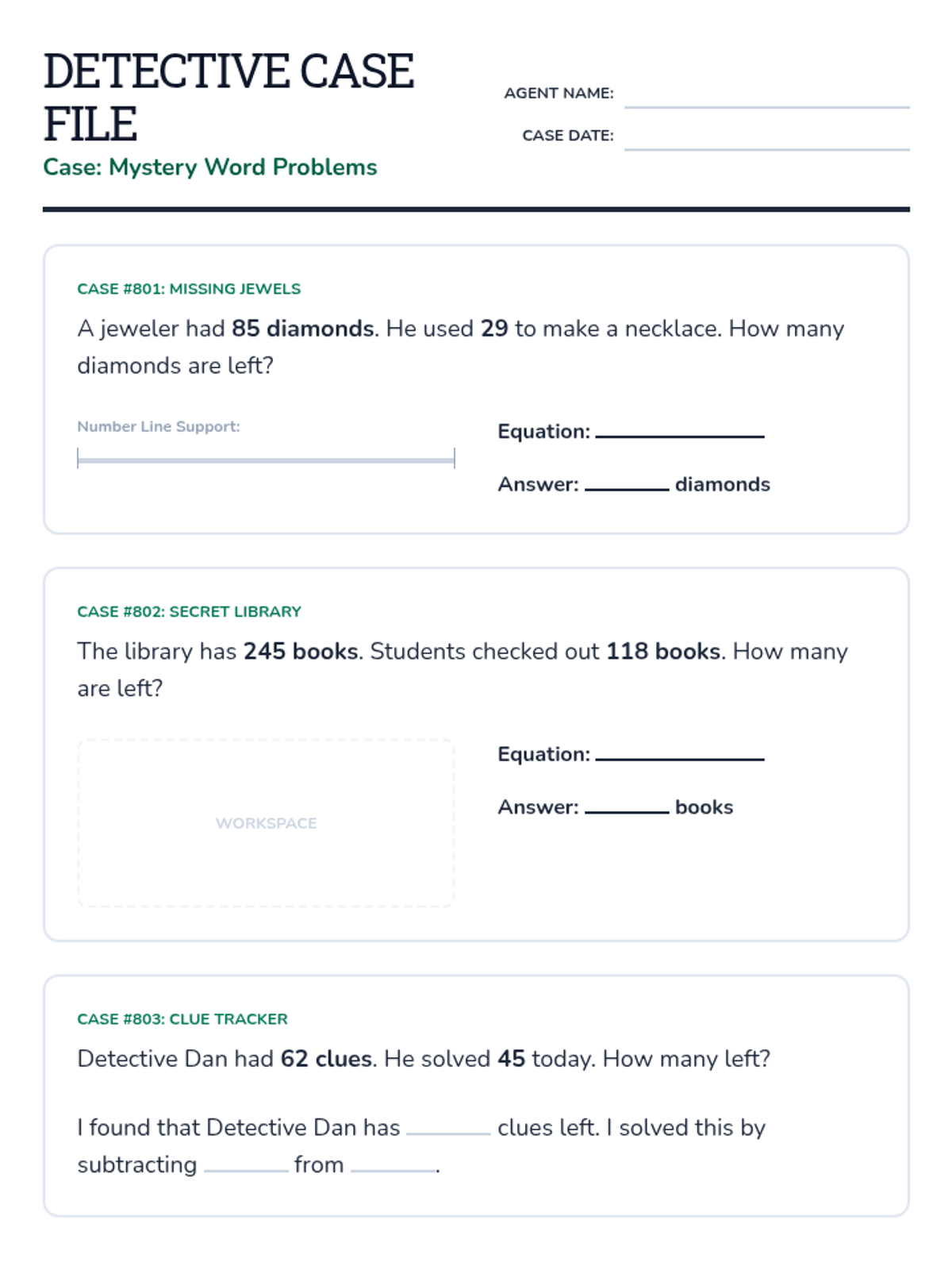
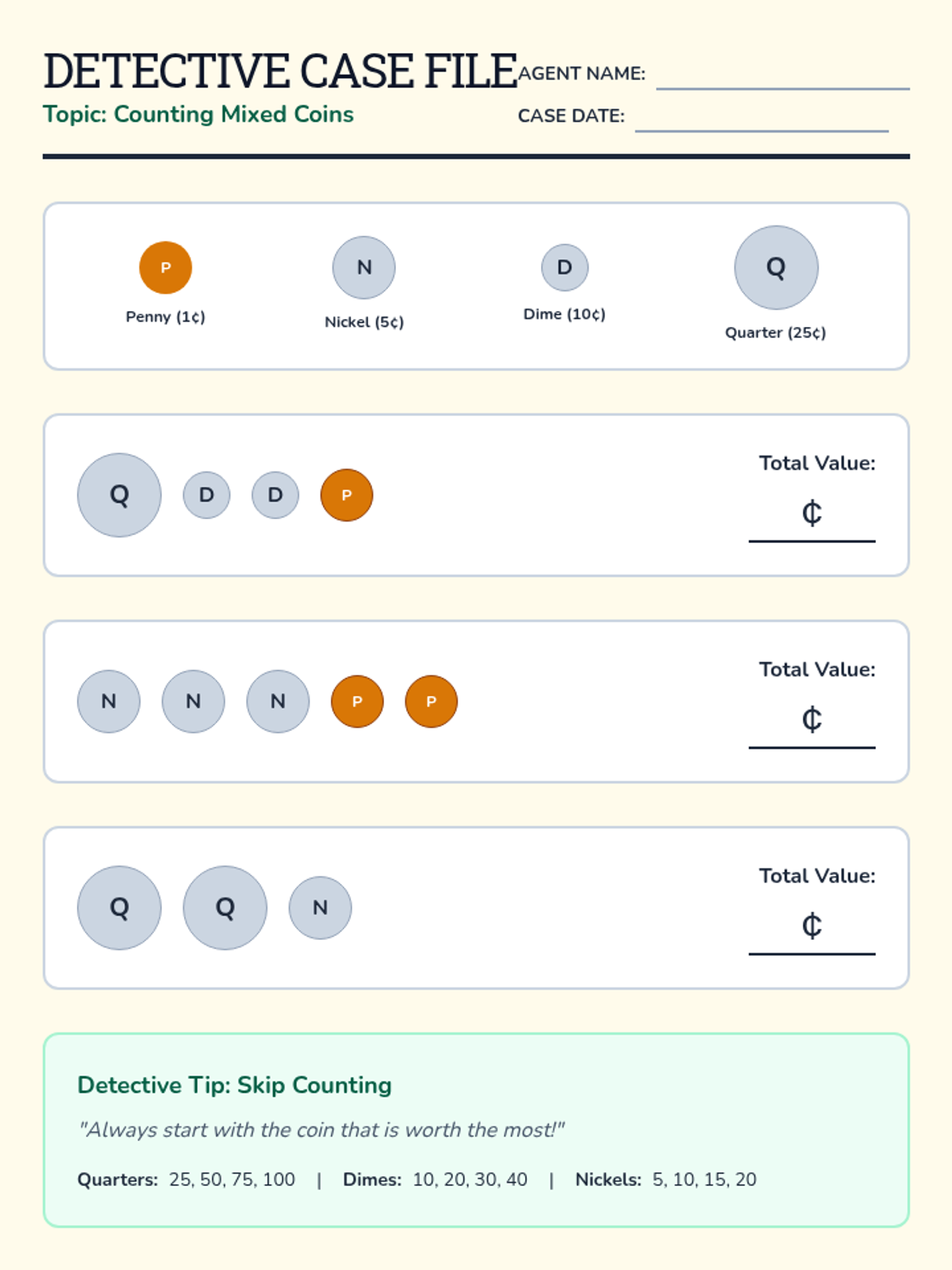
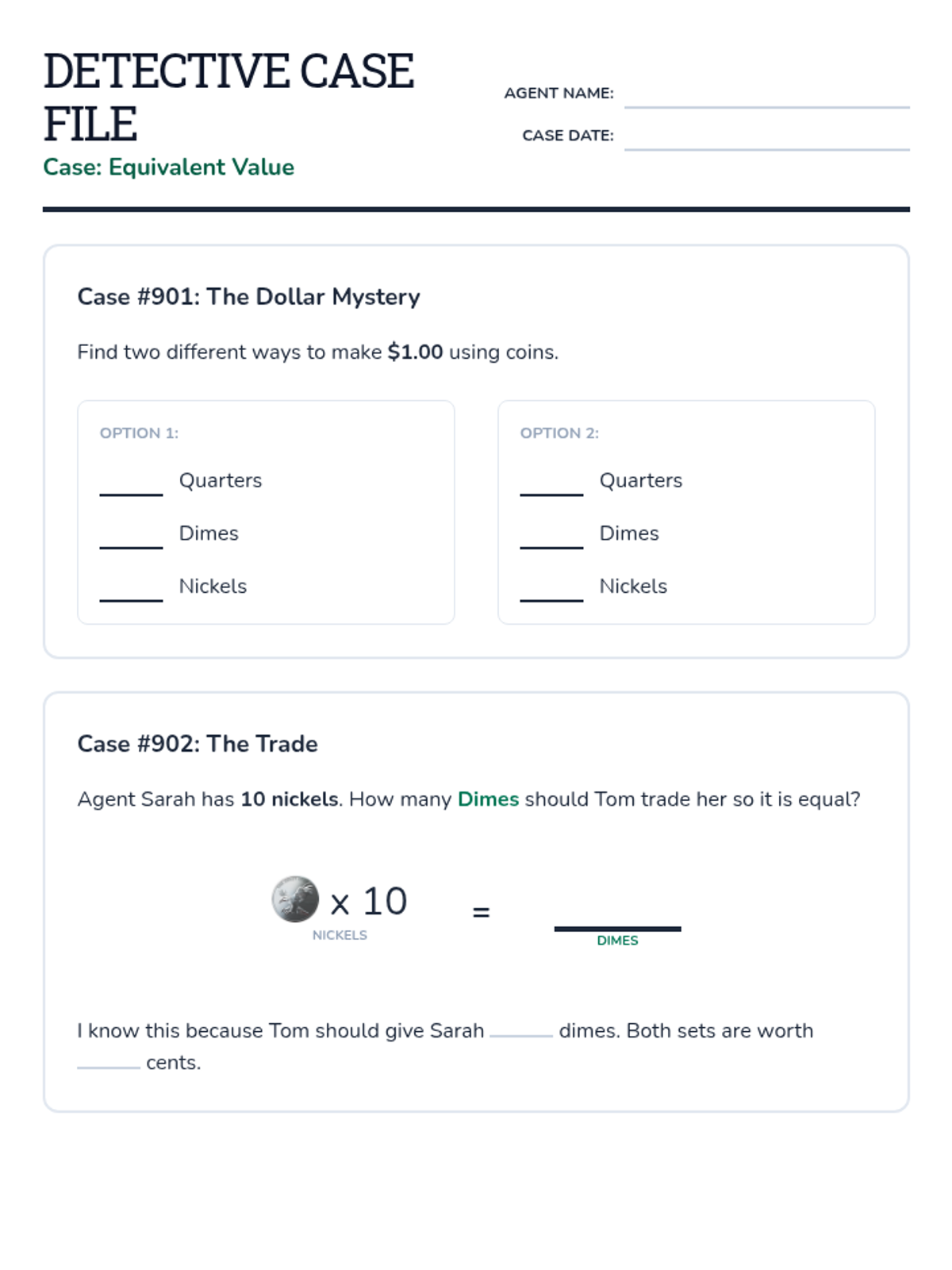
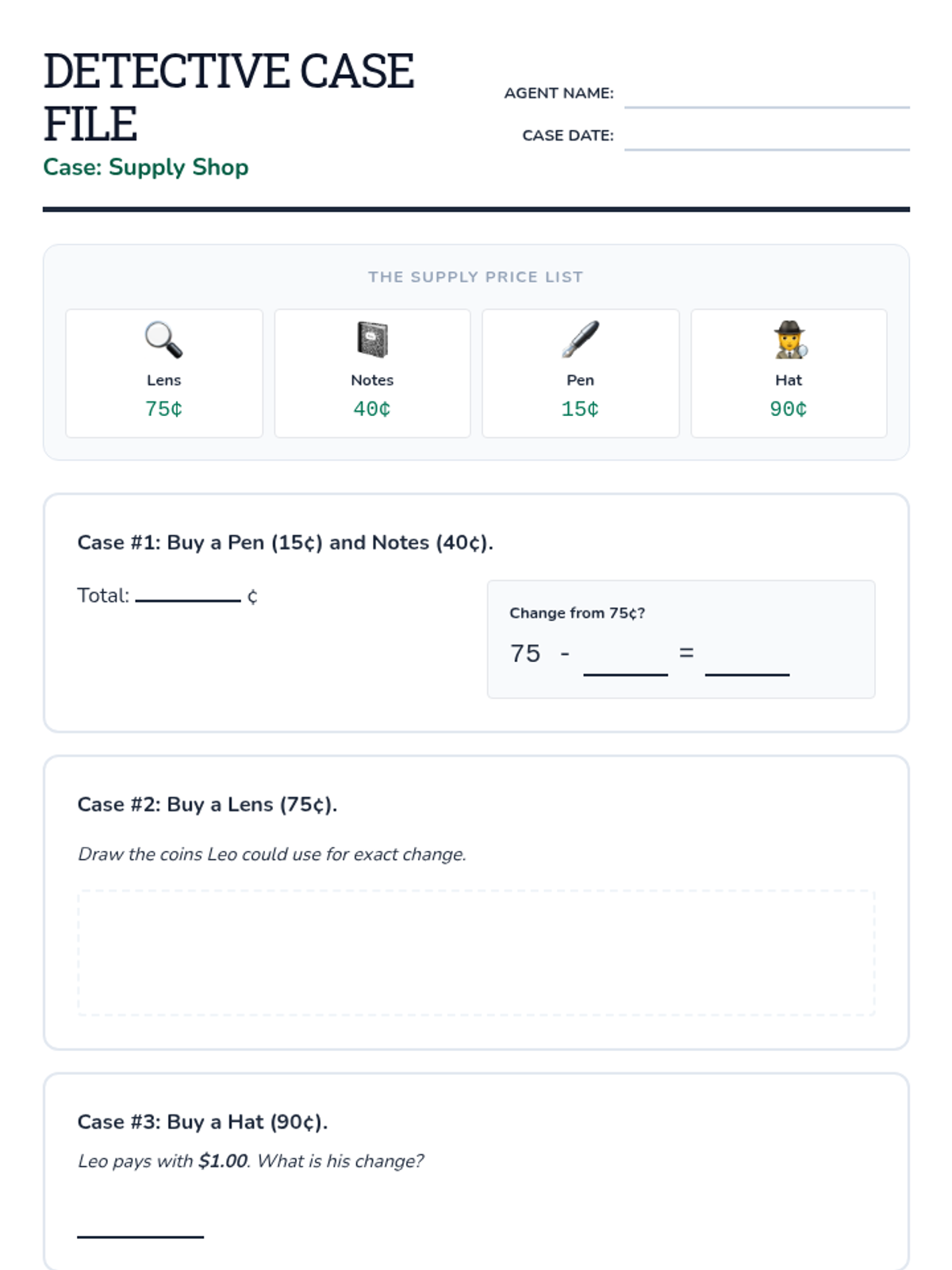
A comprehensive 20-worksheet review packet for 2nd grade math concepts including equal groups, fractions, measurement, place value, subtraction, and money, all themed as a 'Math Detective' case file.
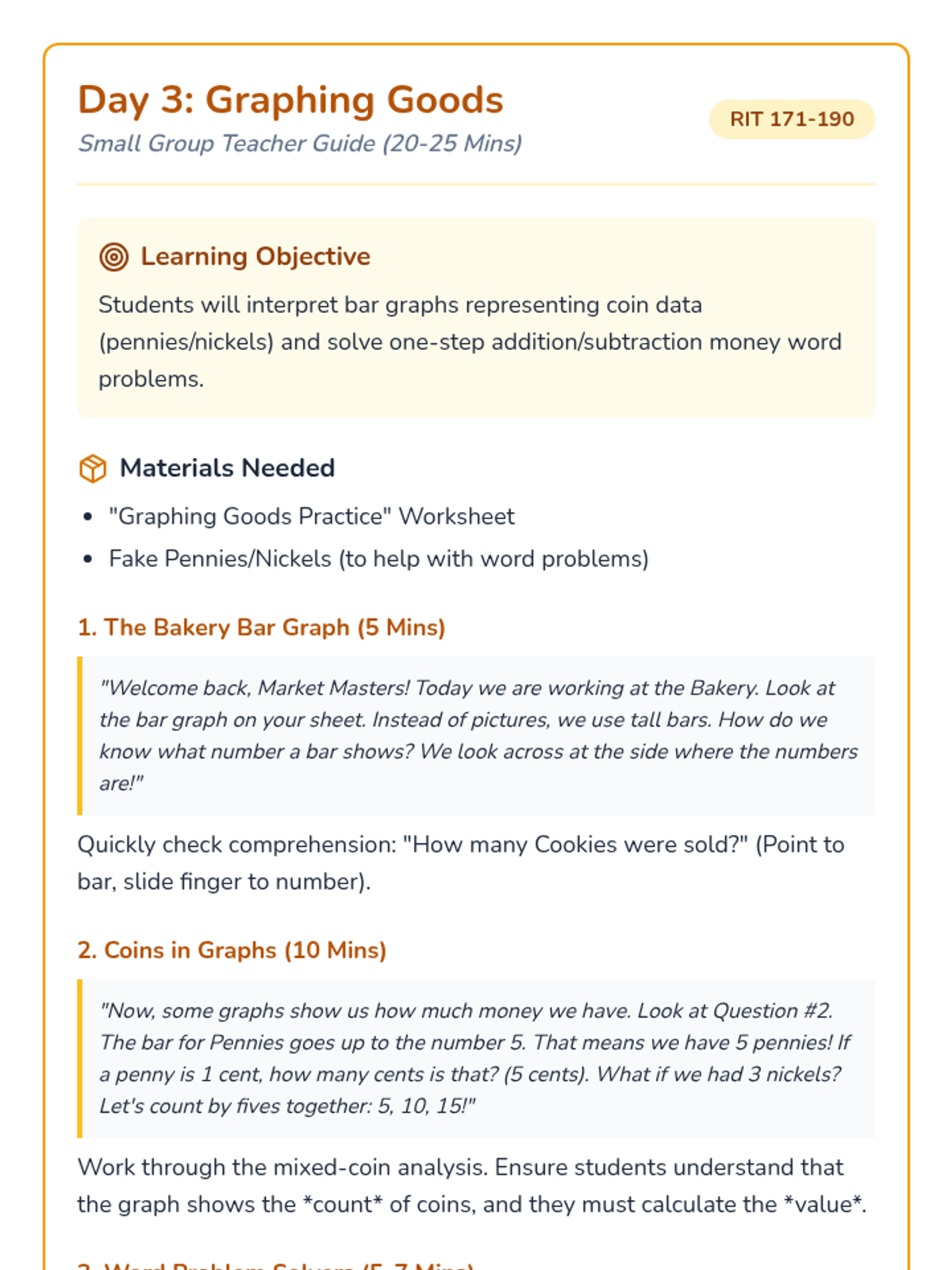
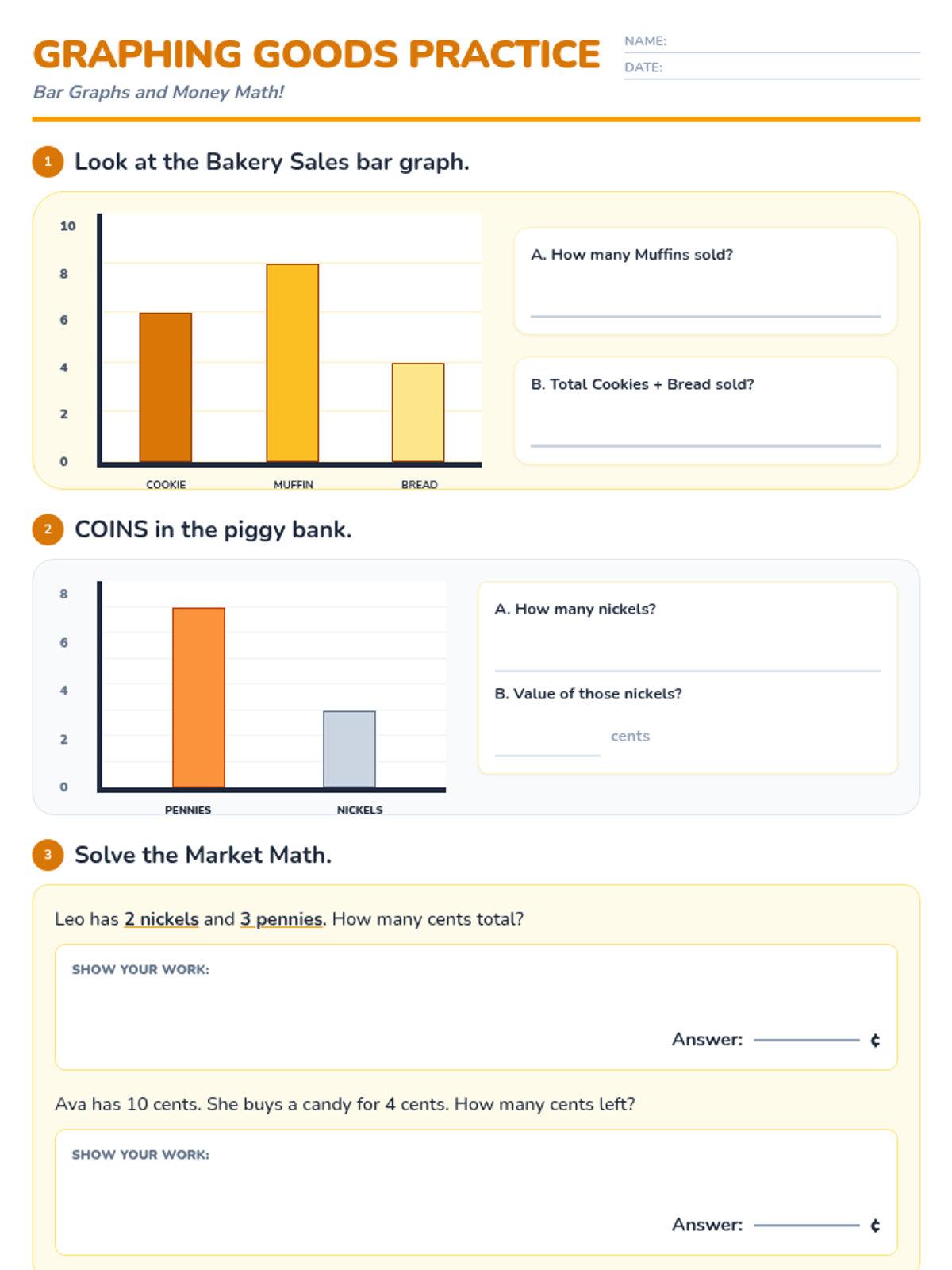
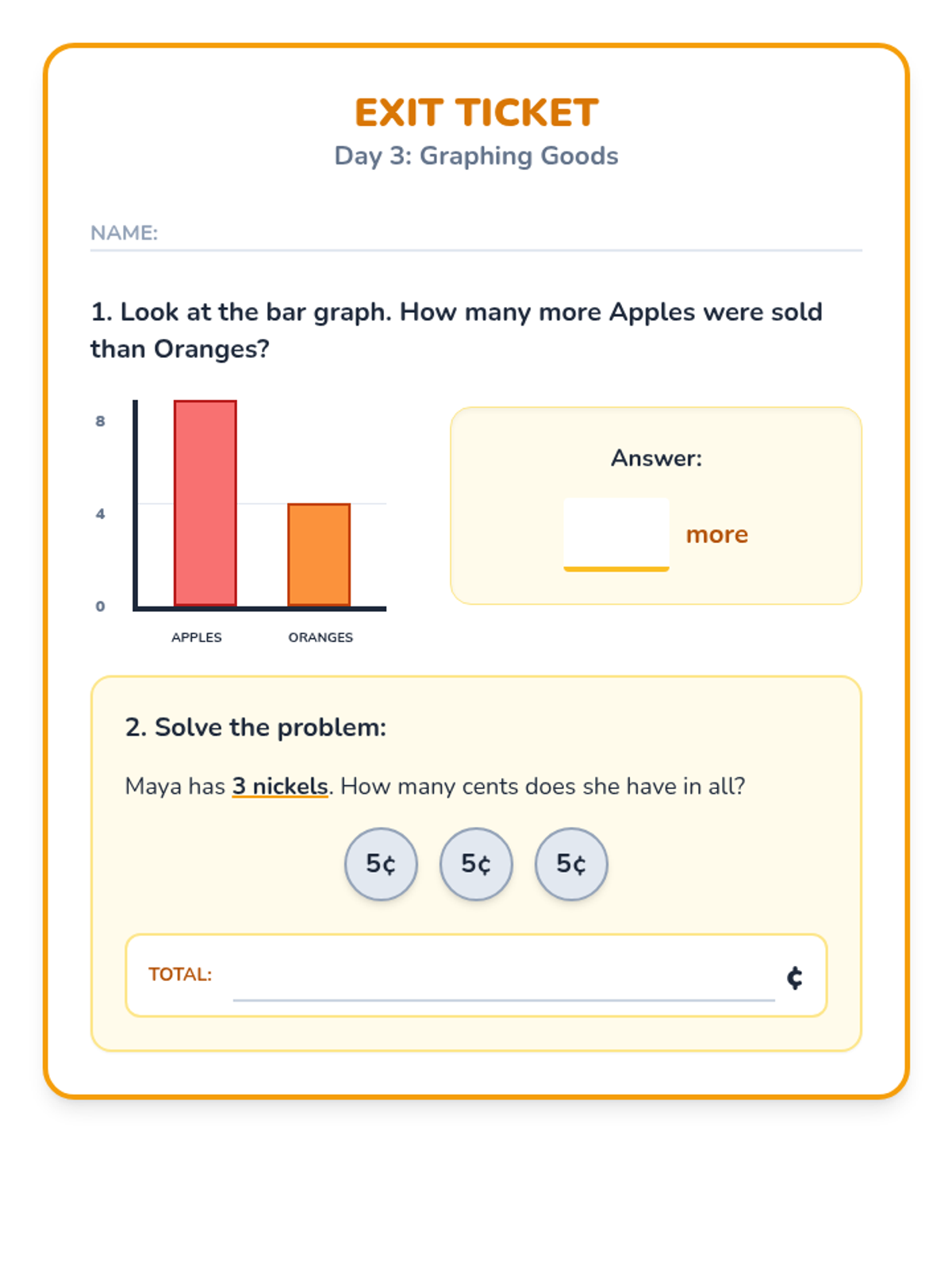
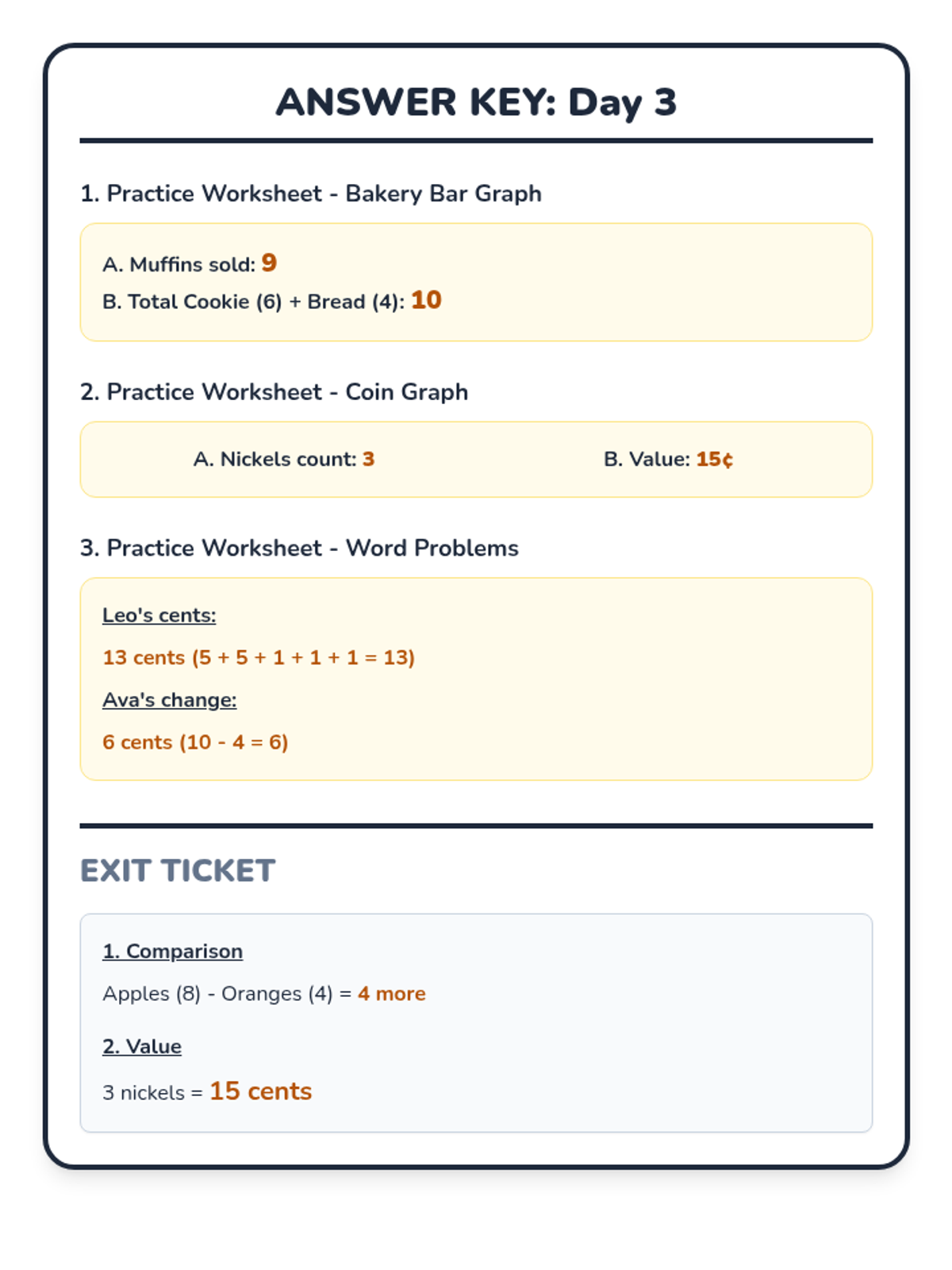
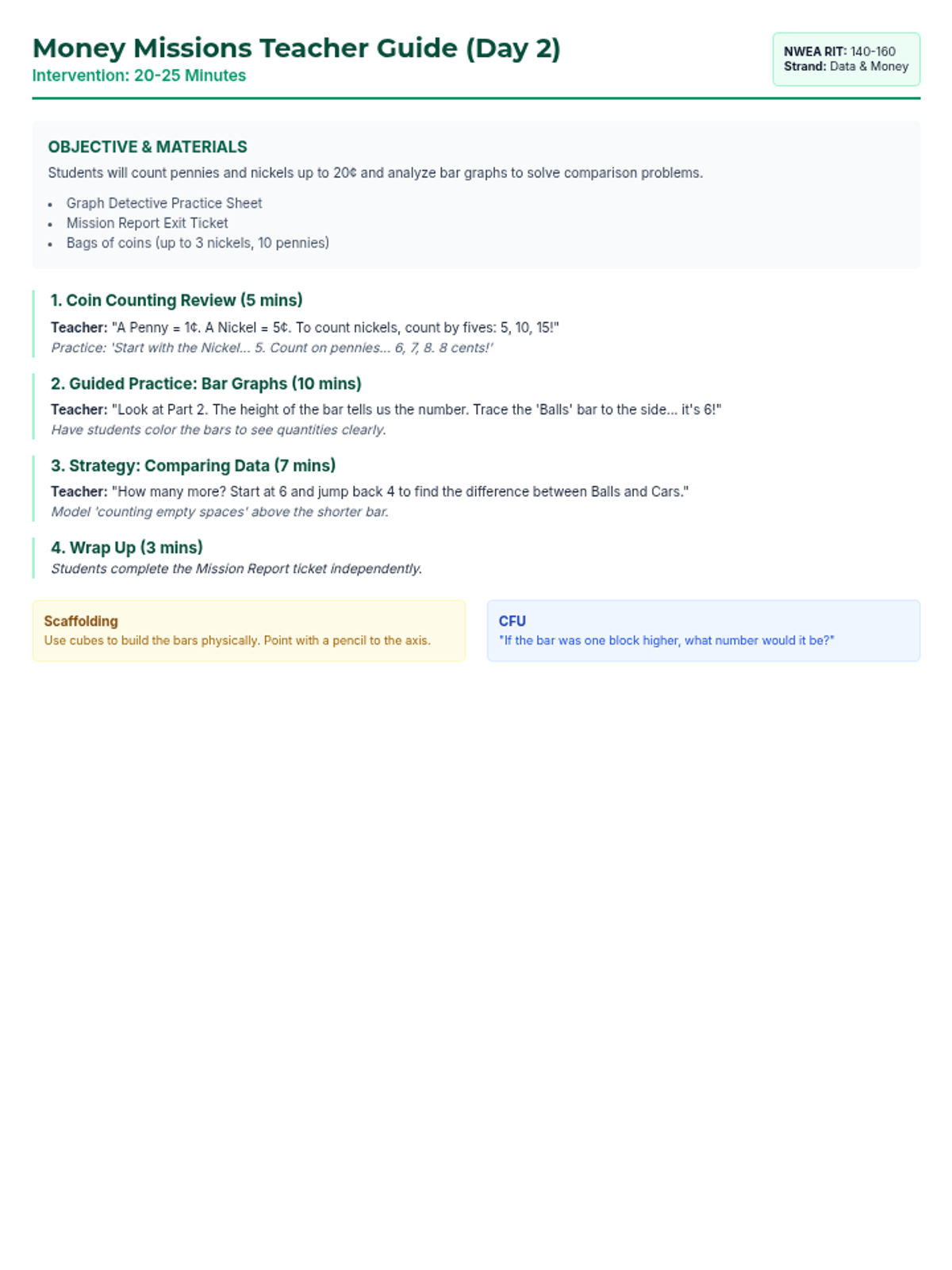
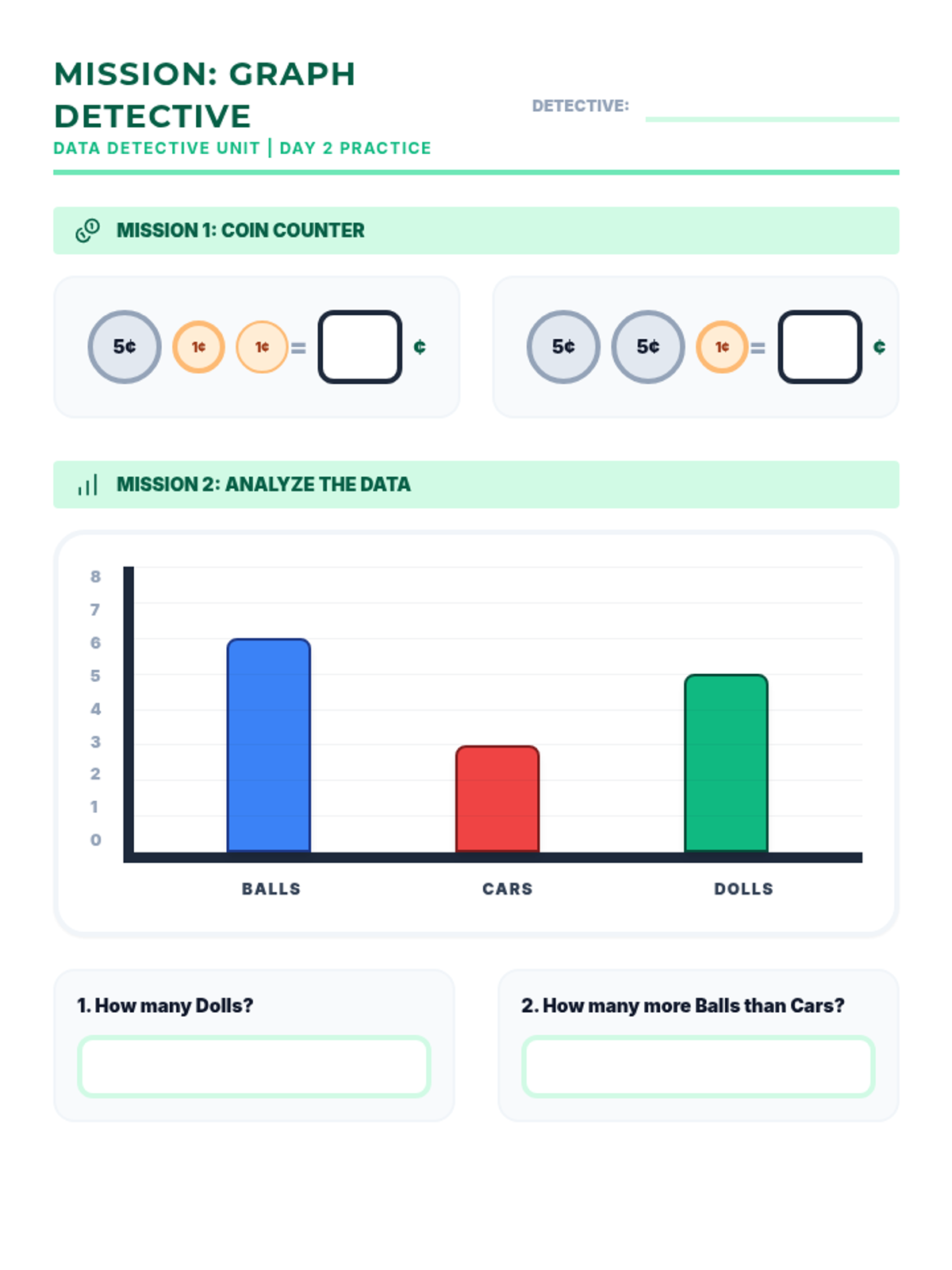
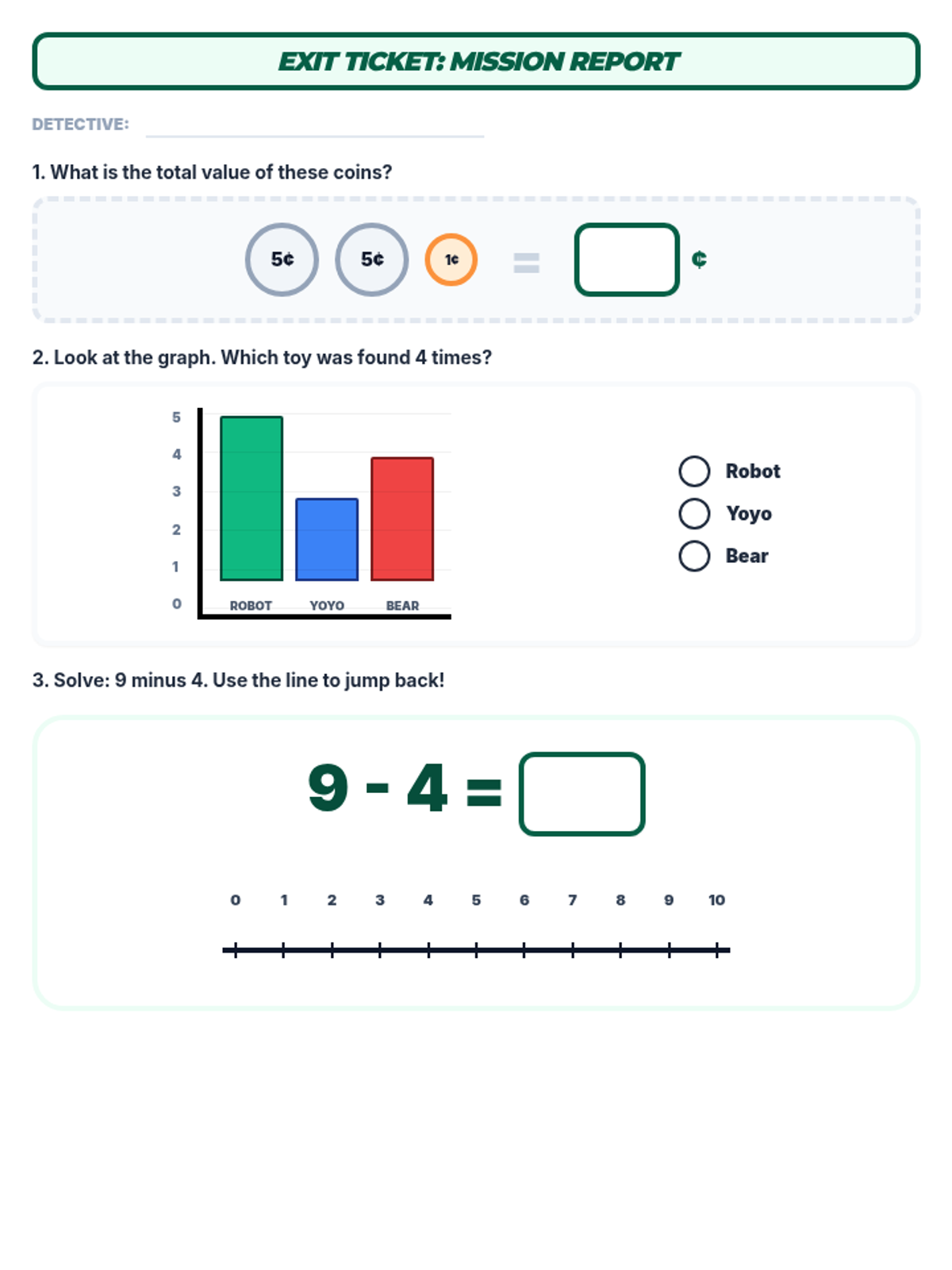
Students analyze bar graphs representing money values (pennies and nickels) and solve one-step word problems. This lesson integrates money counting with data interpretation to reach higher RIT band objectives.
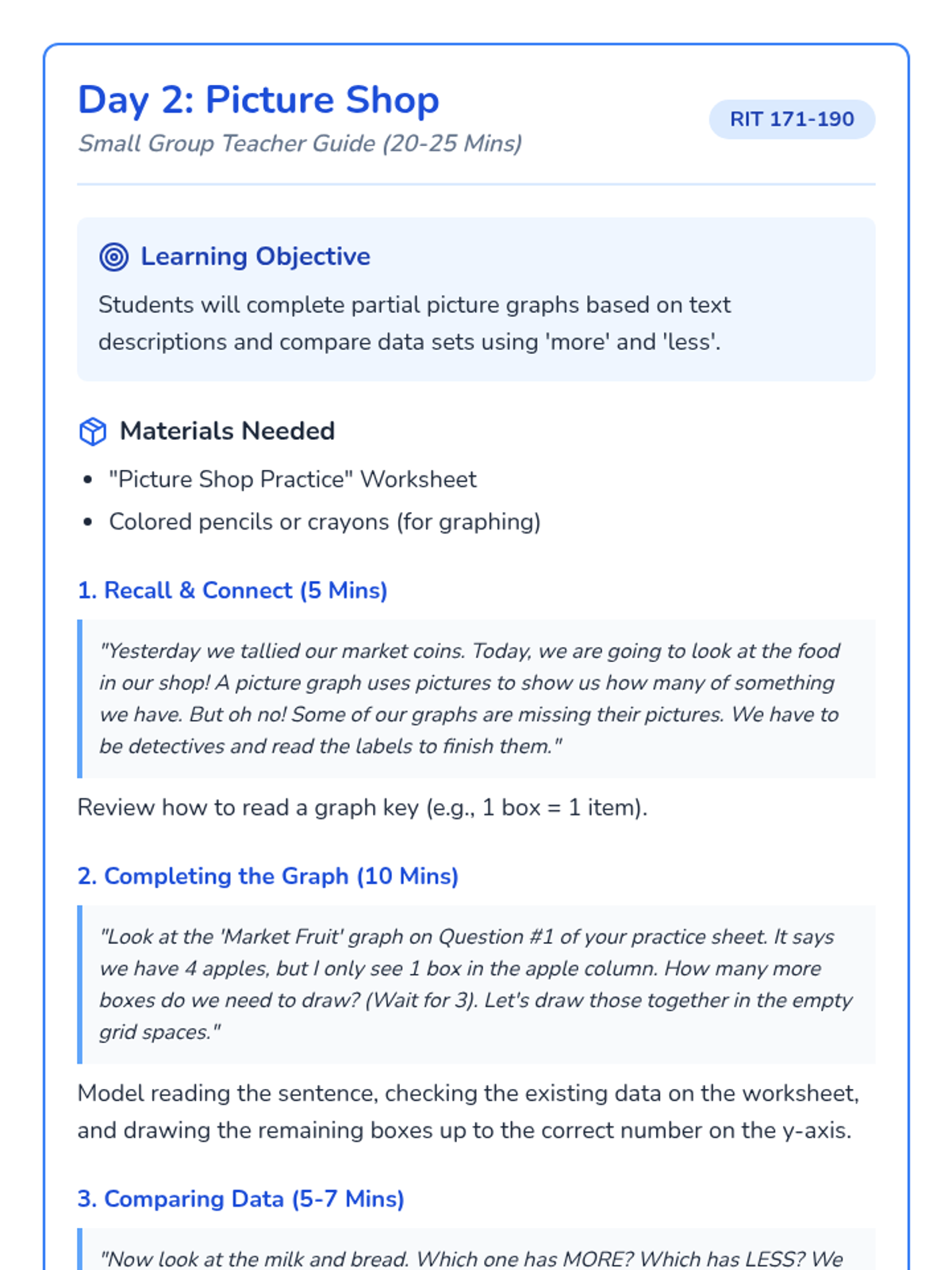
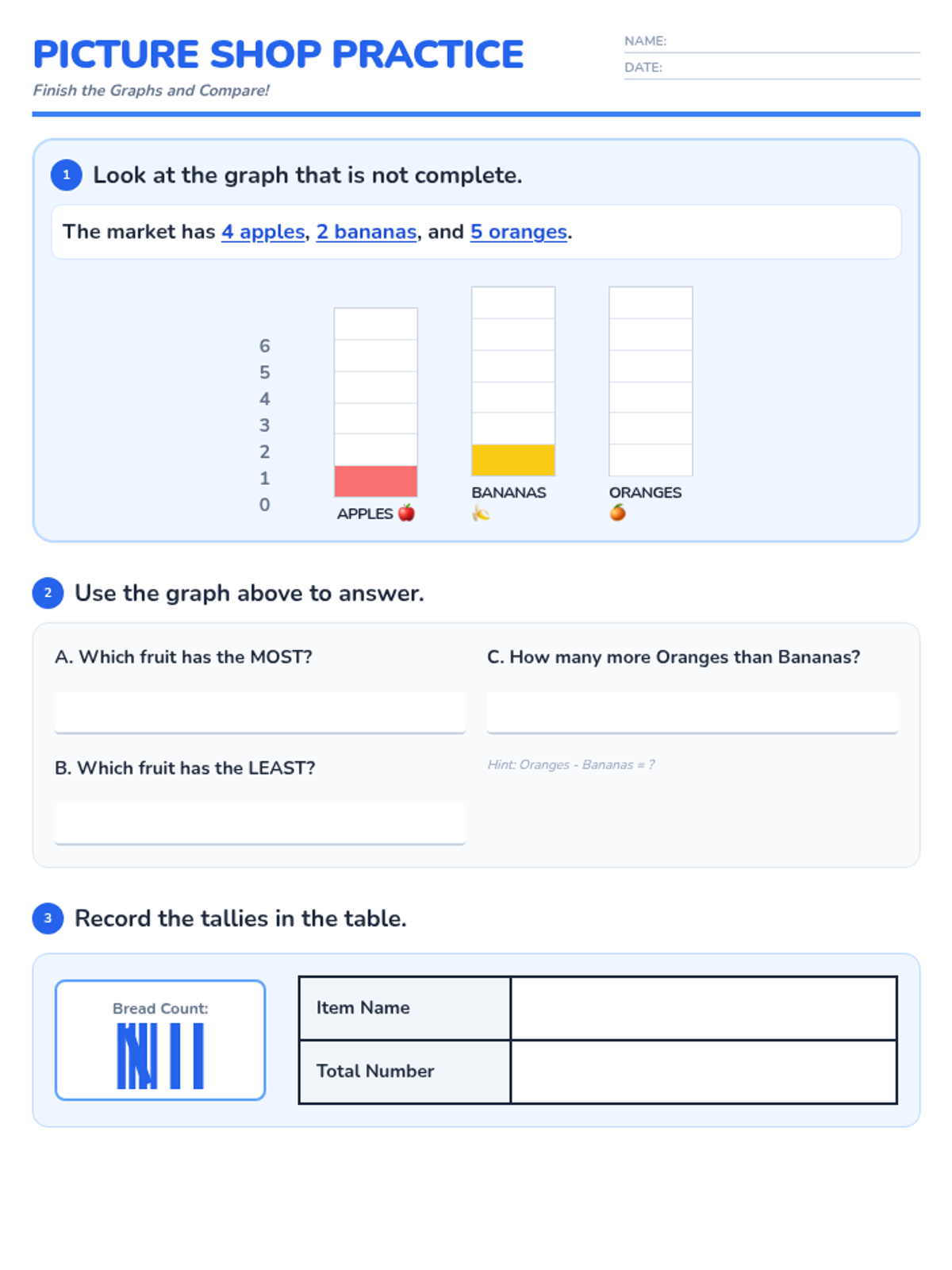
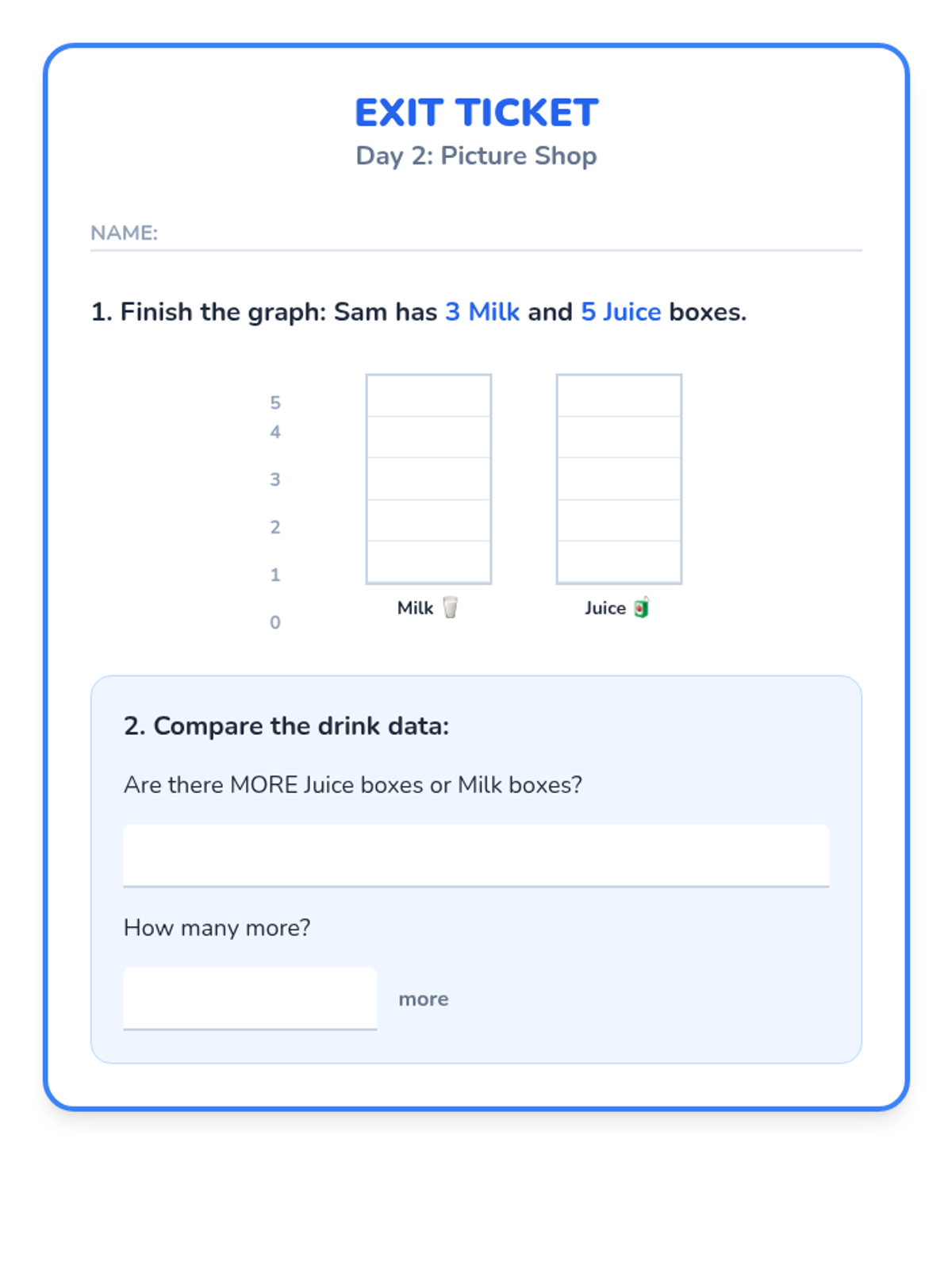
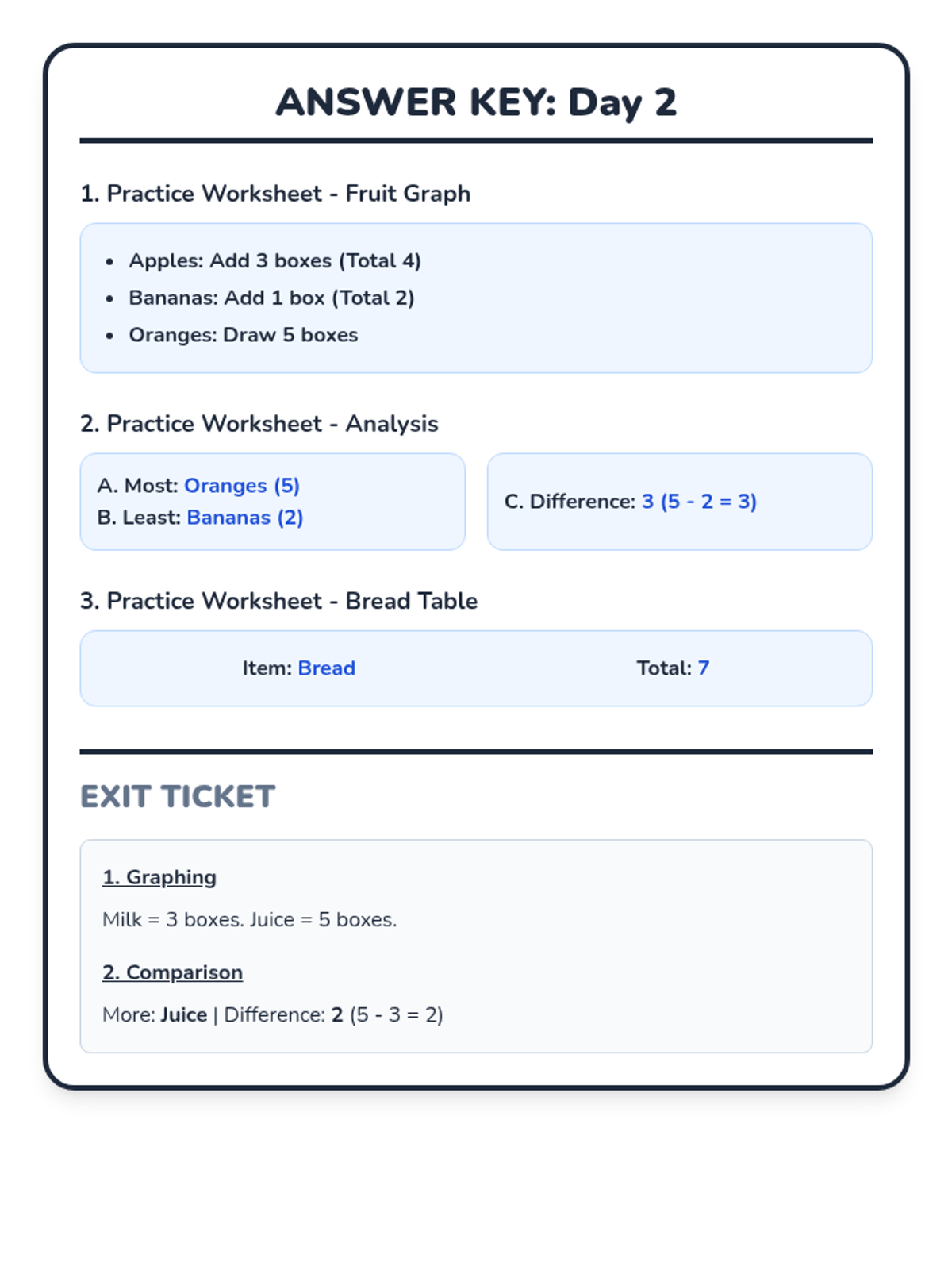
Students complete picture graphs based on text descriptions and compare data to find 'more' or 'less'. This lesson directly targets the NWEA skill of completing partial graphs and interpreting visual data.
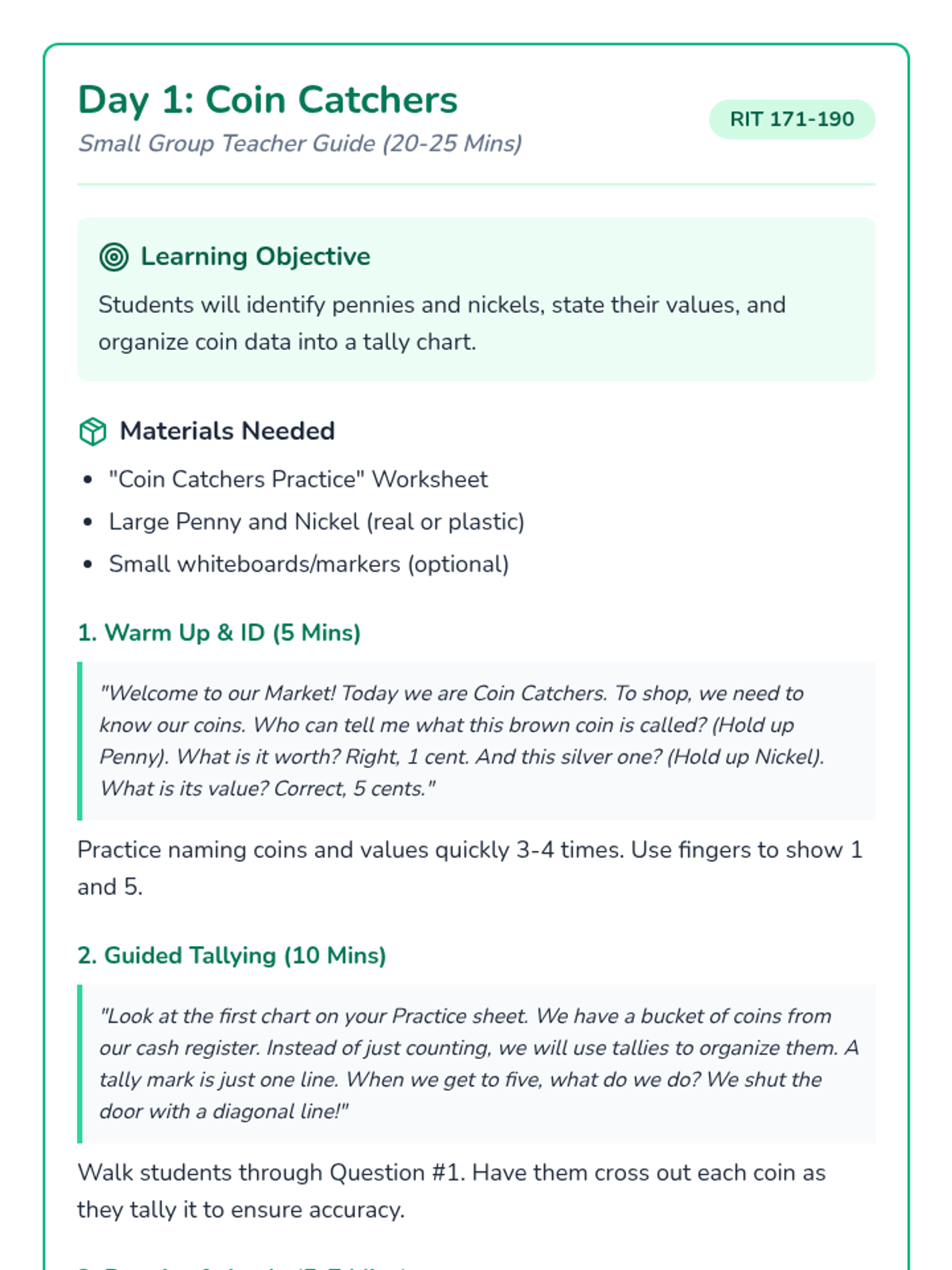
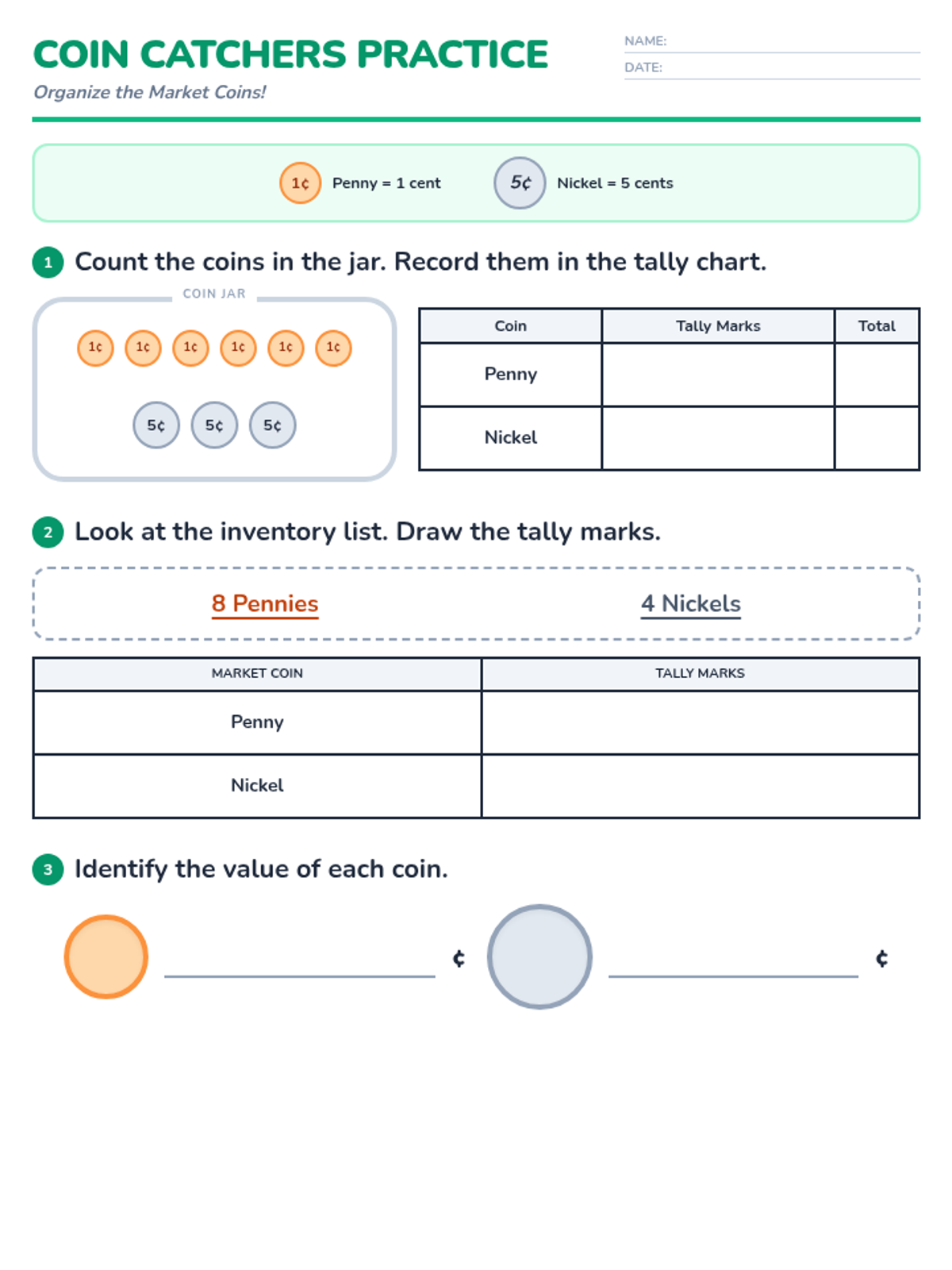
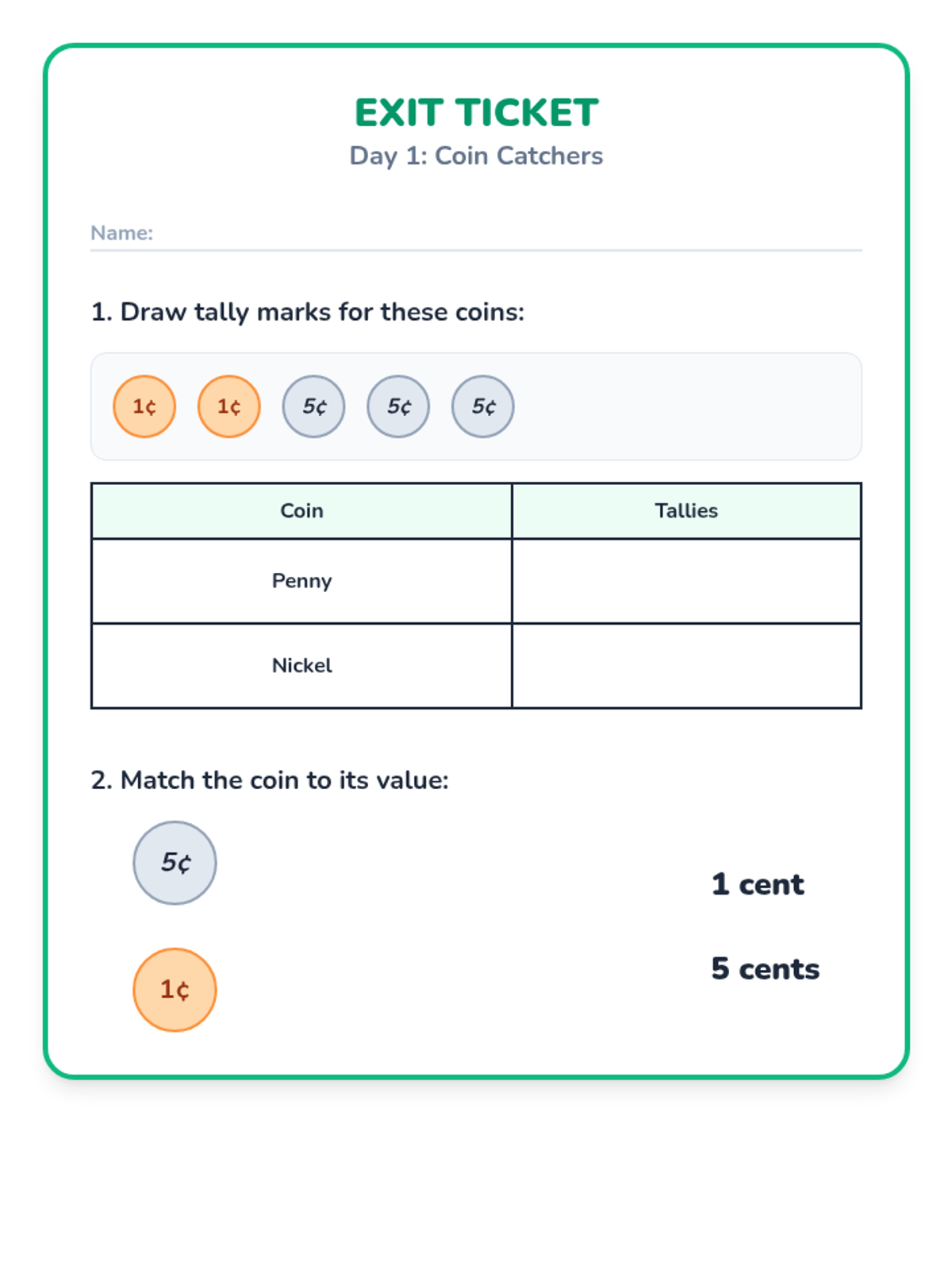
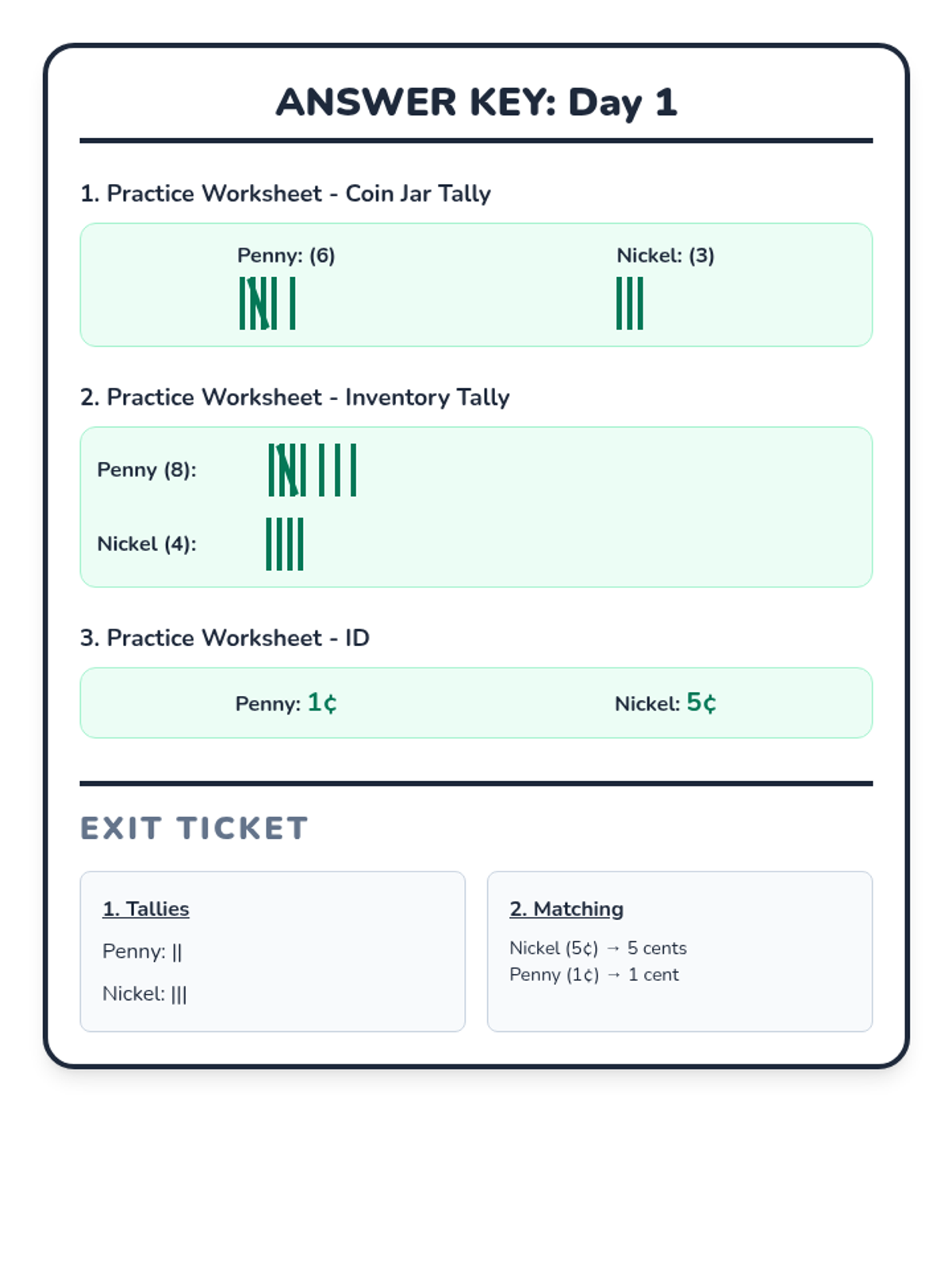
Students identify pennies and nickels, determine their values, and use tally charts to record inventory in a mock market setting. This lesson focuses on the transition from simple identification to organizing data.
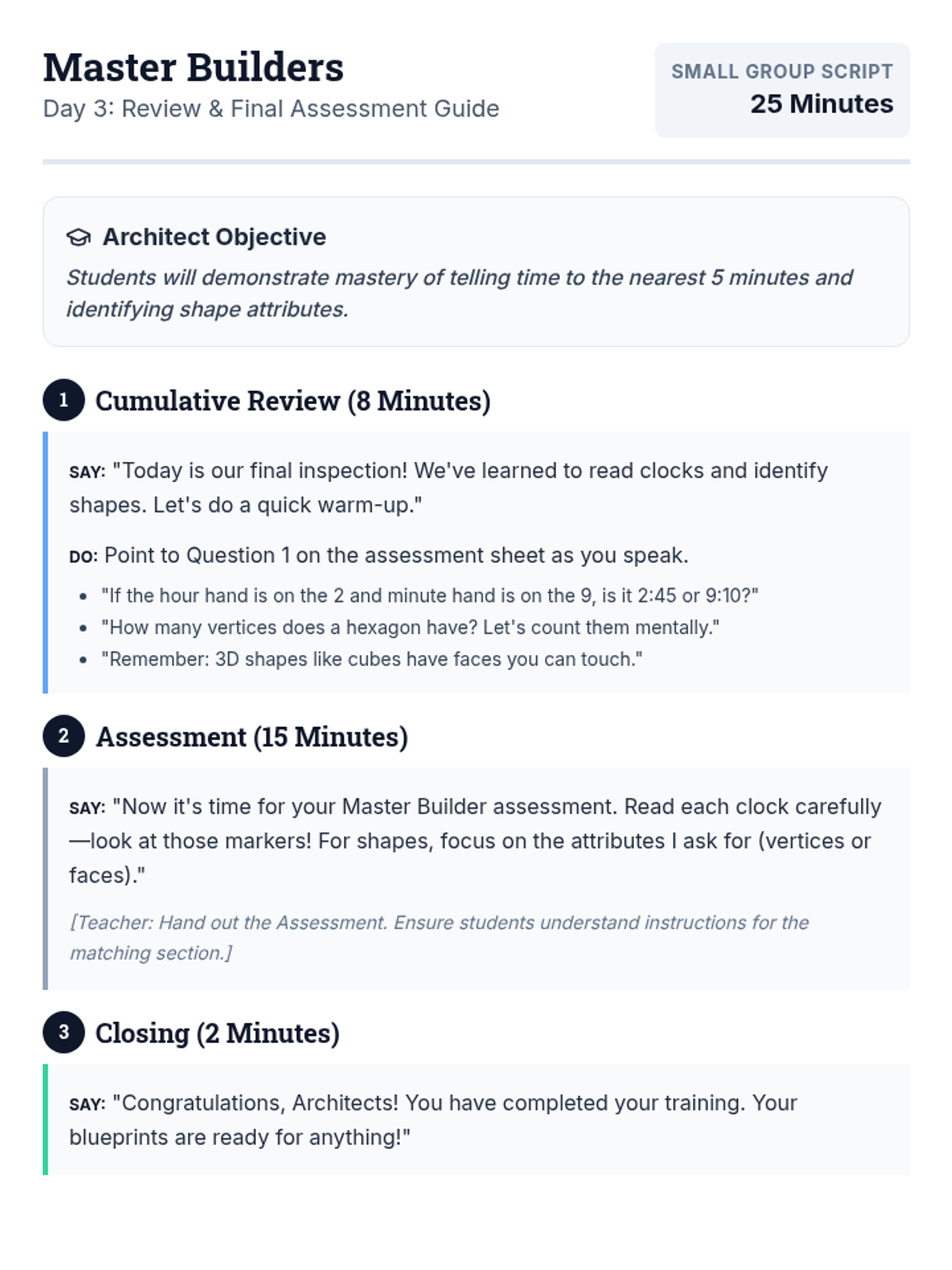
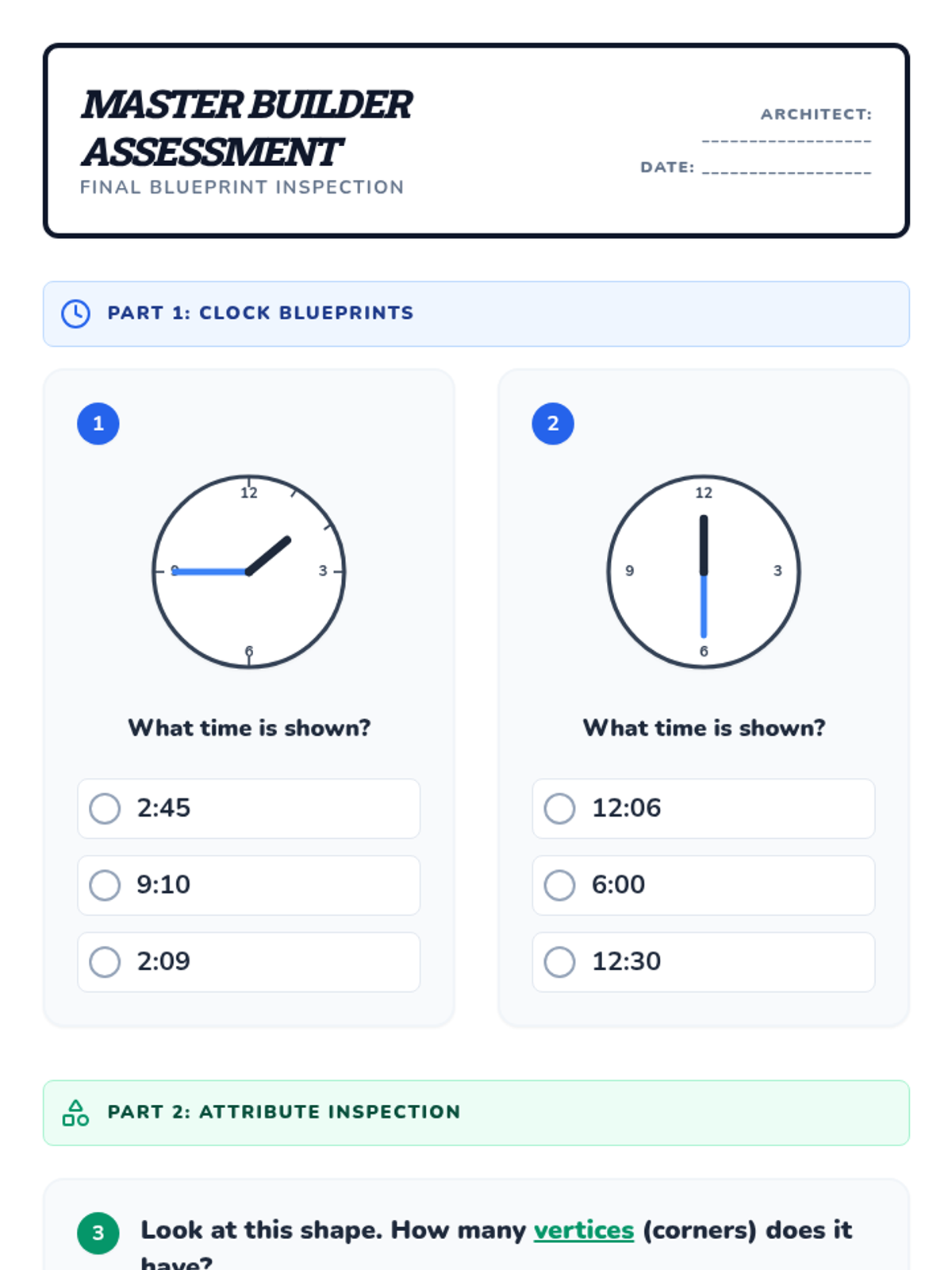
A cumulative review of time and shape attributes followed by a formal assessment to track student growth toward RIT 180 goals.
Identifying and describing defining attributes of 2D and 3D shapes, including sides, vertices, faces, and edges.
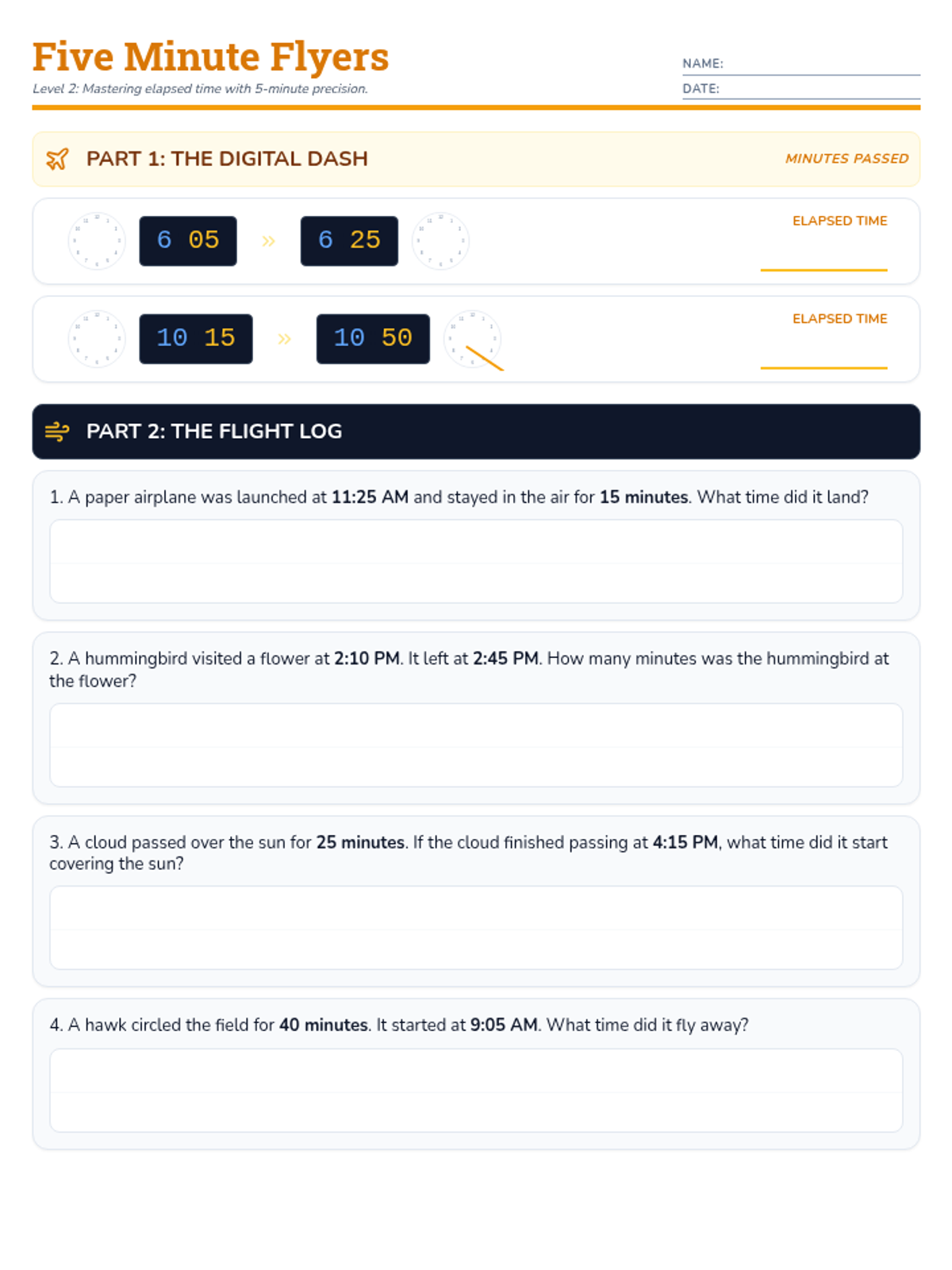
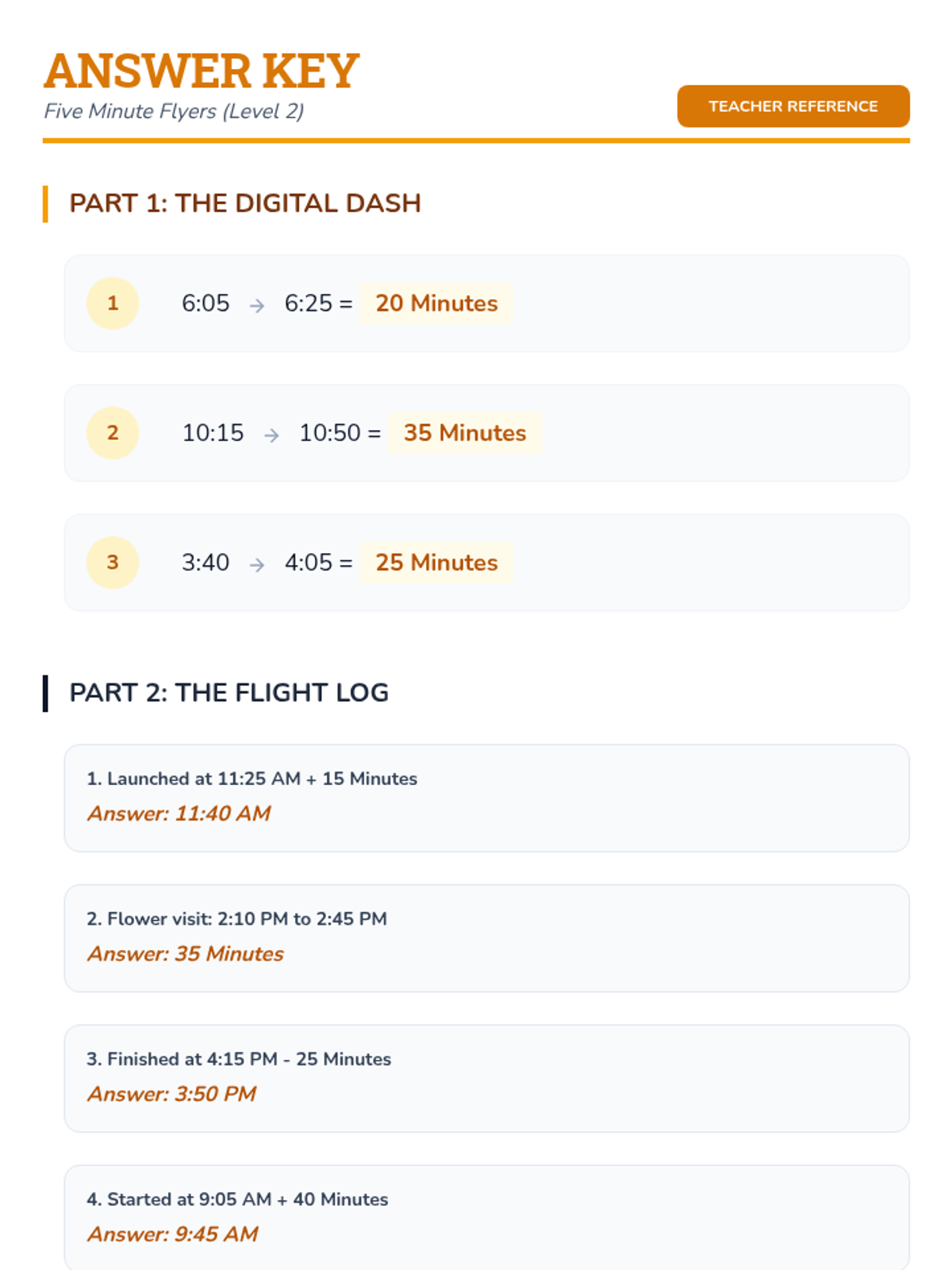
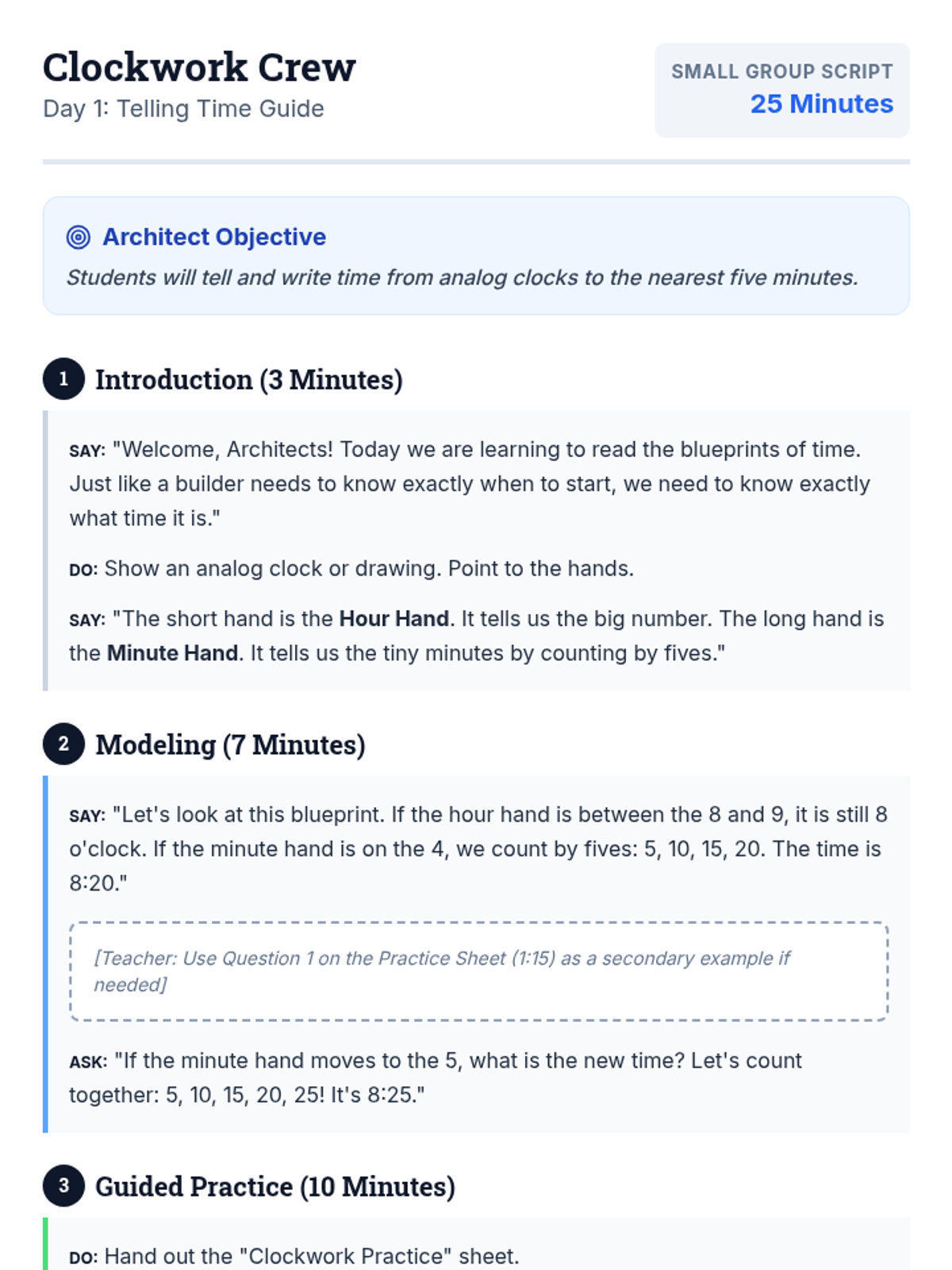
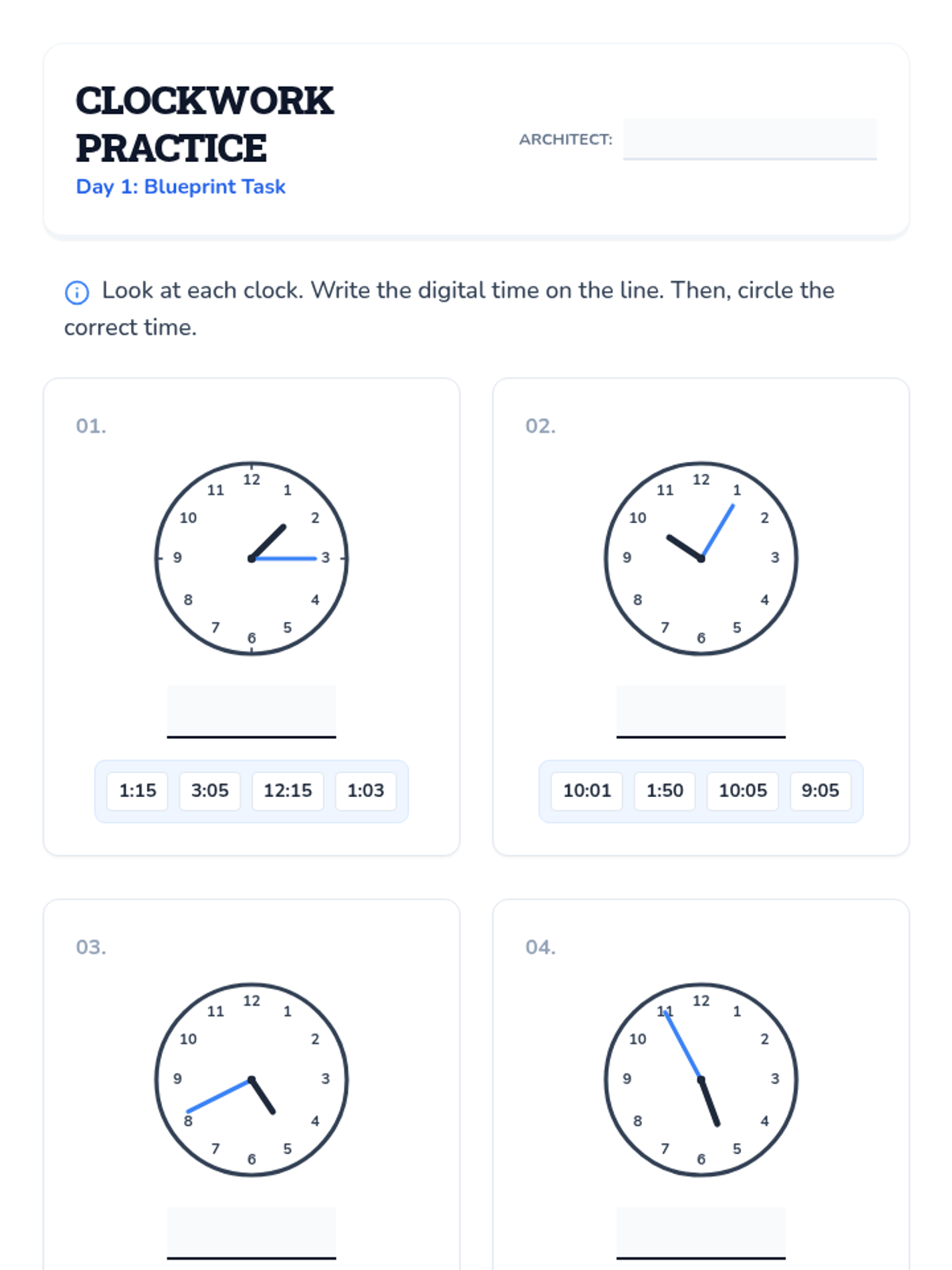
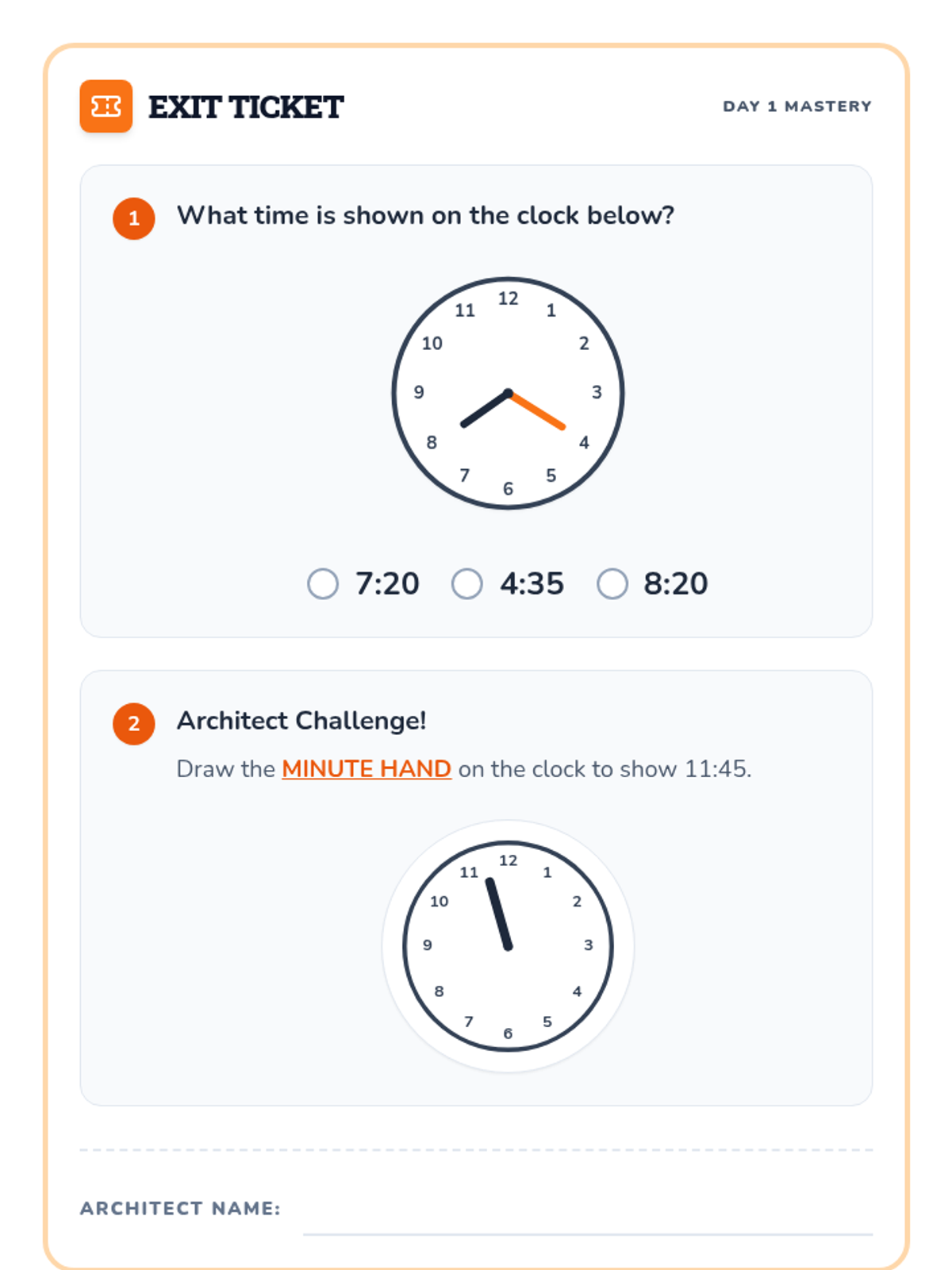
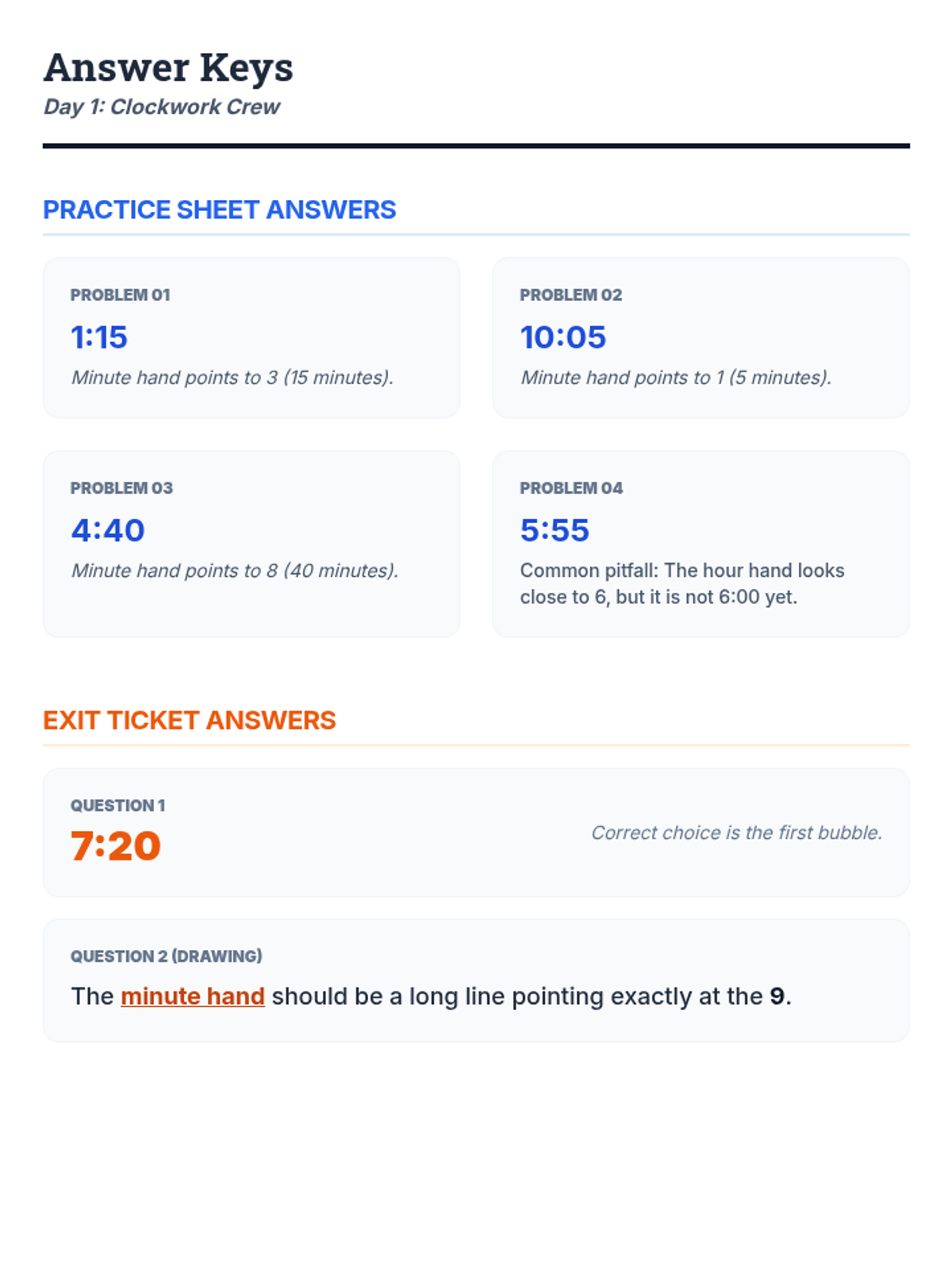
Mastering telling time to the nearest 5 minutes on an analog clock through guided practice and independent application.
Students count sets of pennies and nickels and analyze data from bar graphs to solve comparison problems. Subtraction skills are reinforced through data-based word problems.
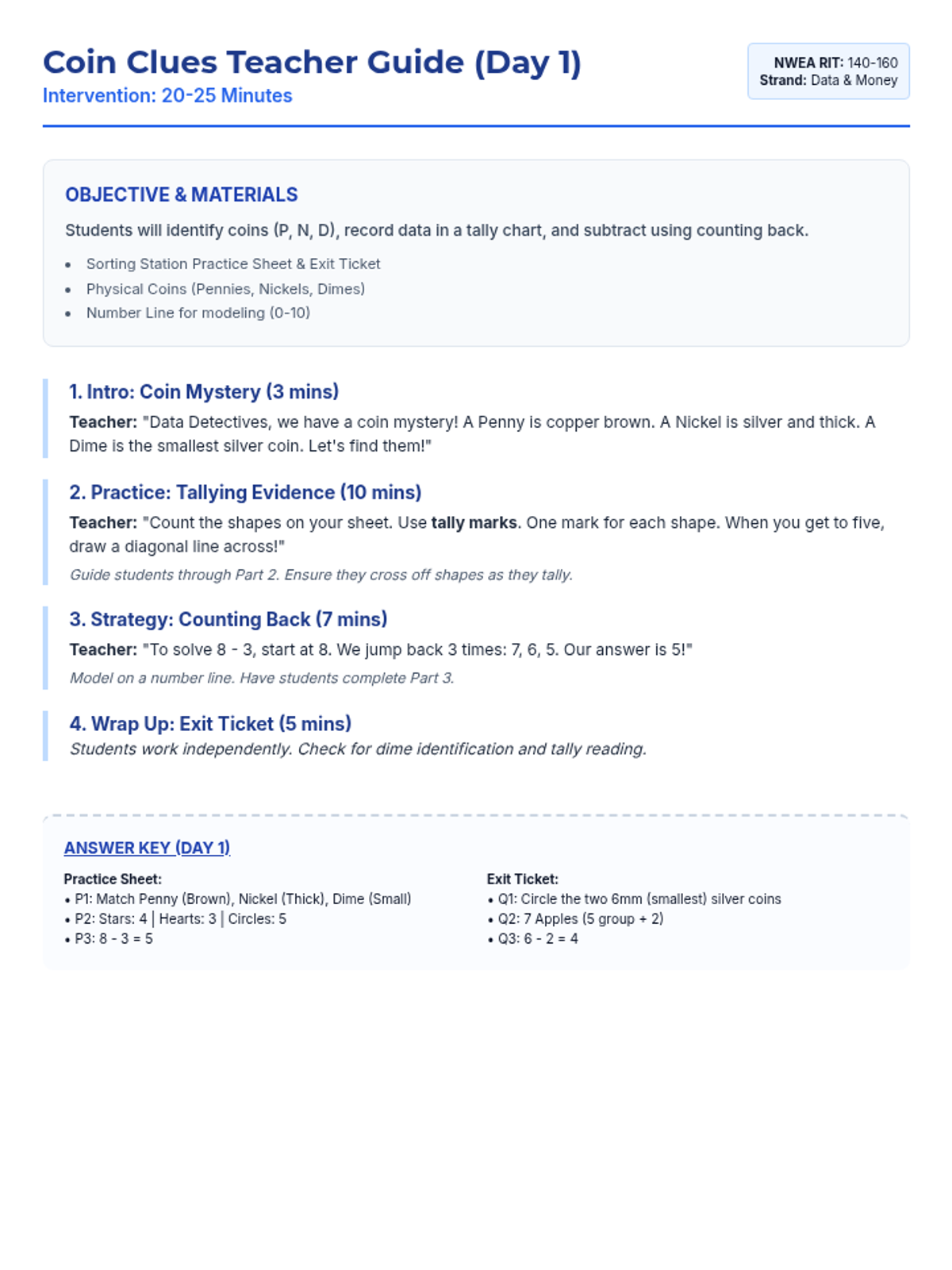
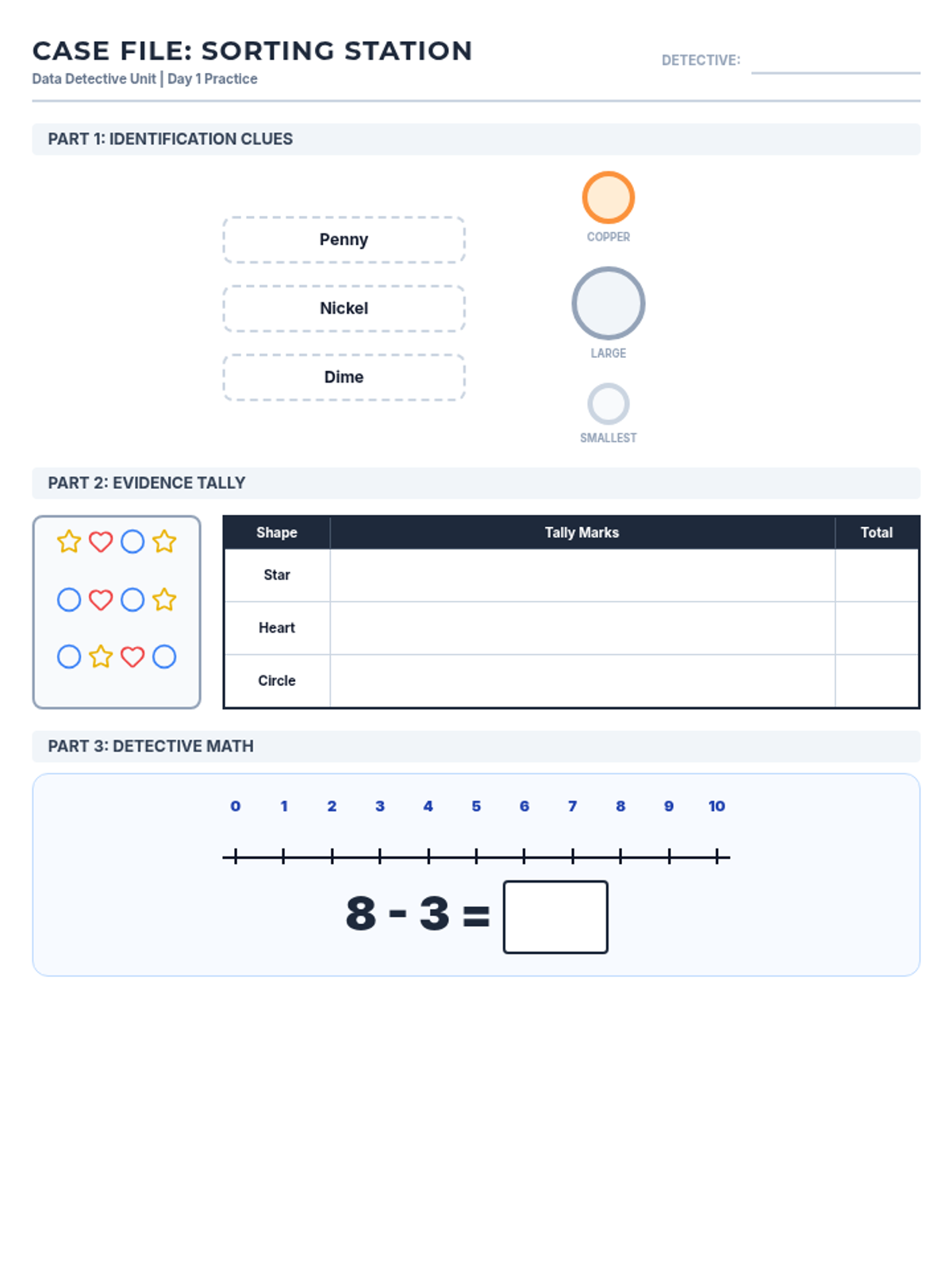
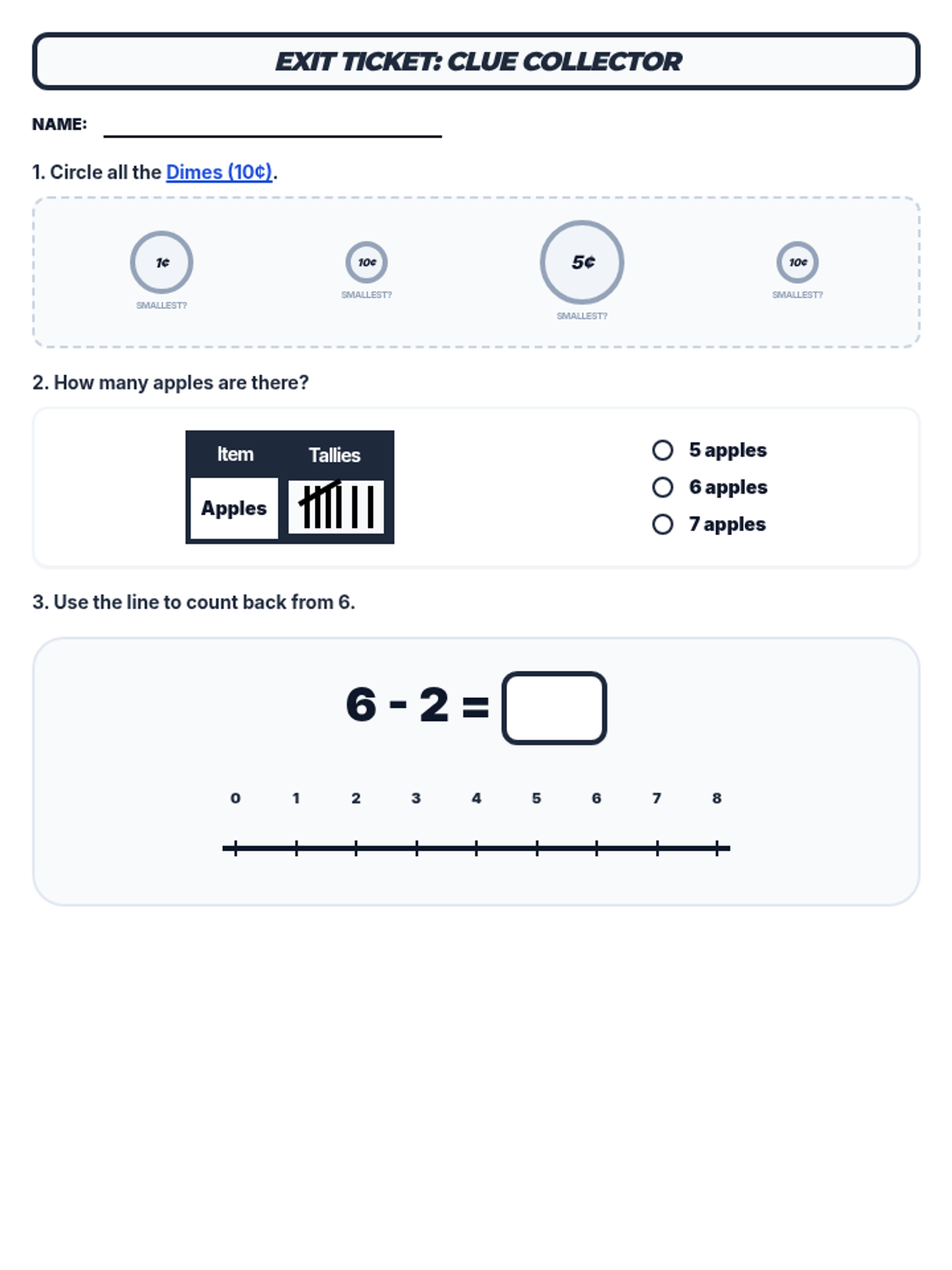
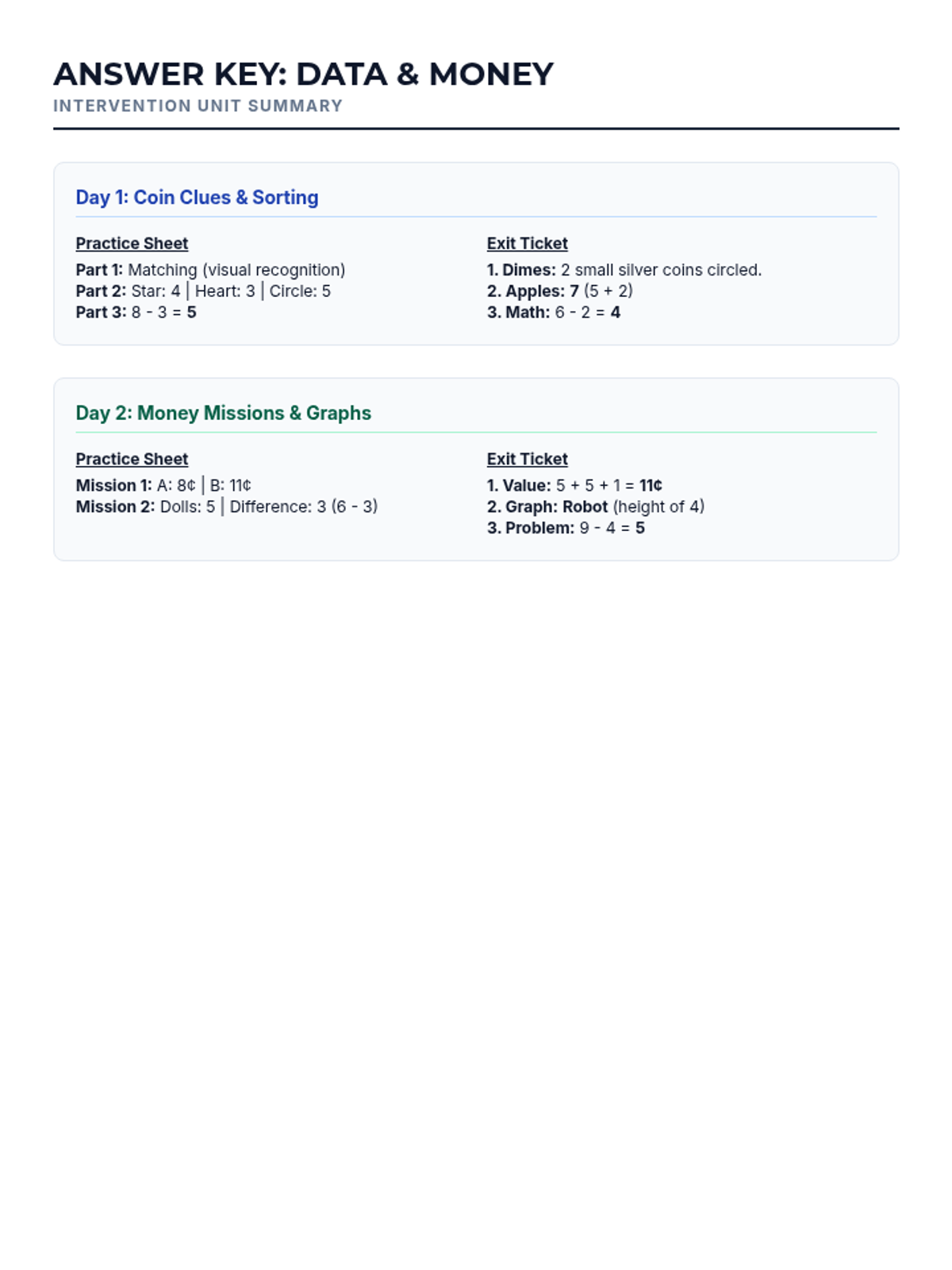
Students identify pennies, nickels, and dimes, sort objects into categories, and record data using tally charts. The lesson also introduces subtraction by counting back on a number line.
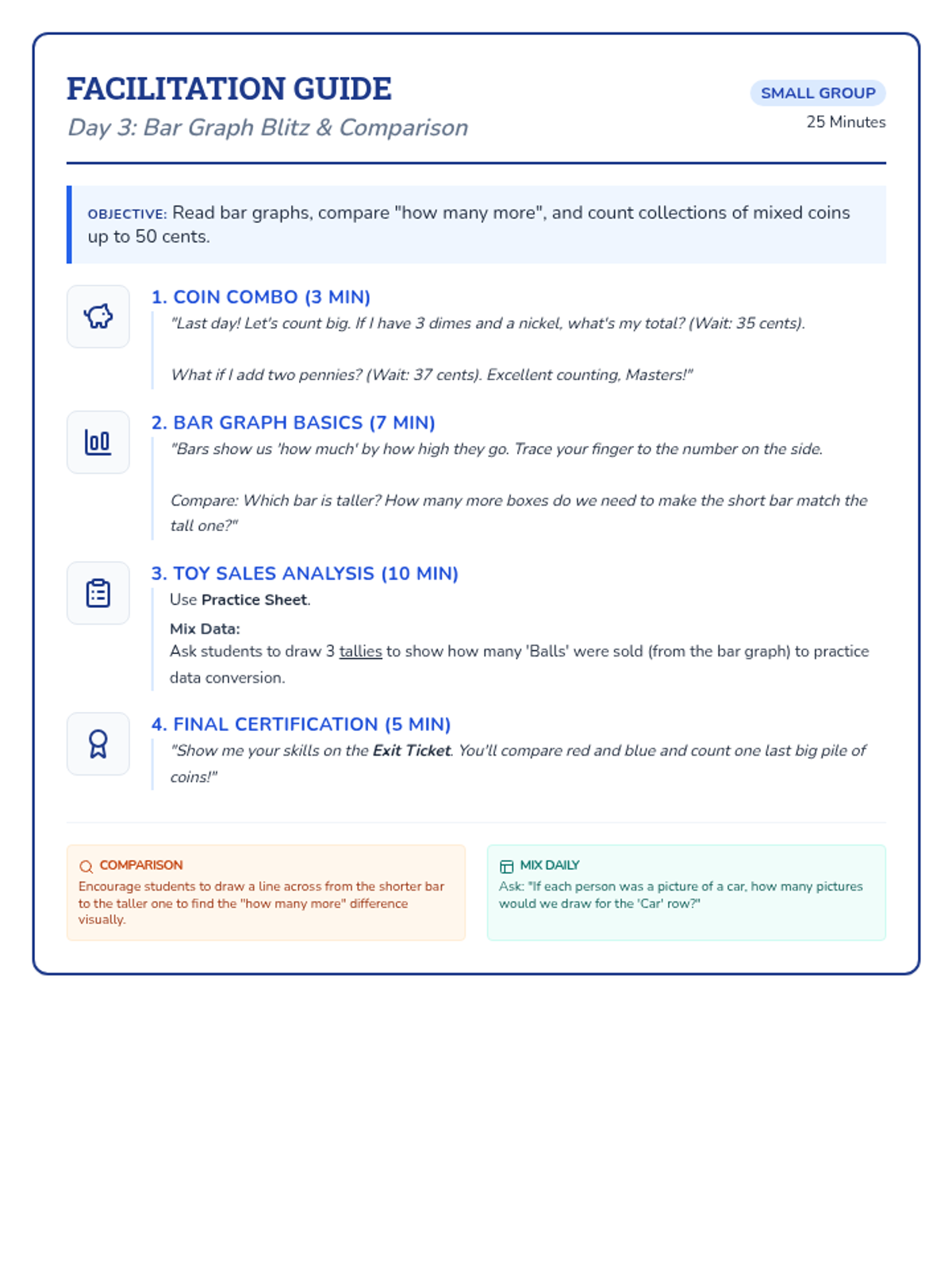
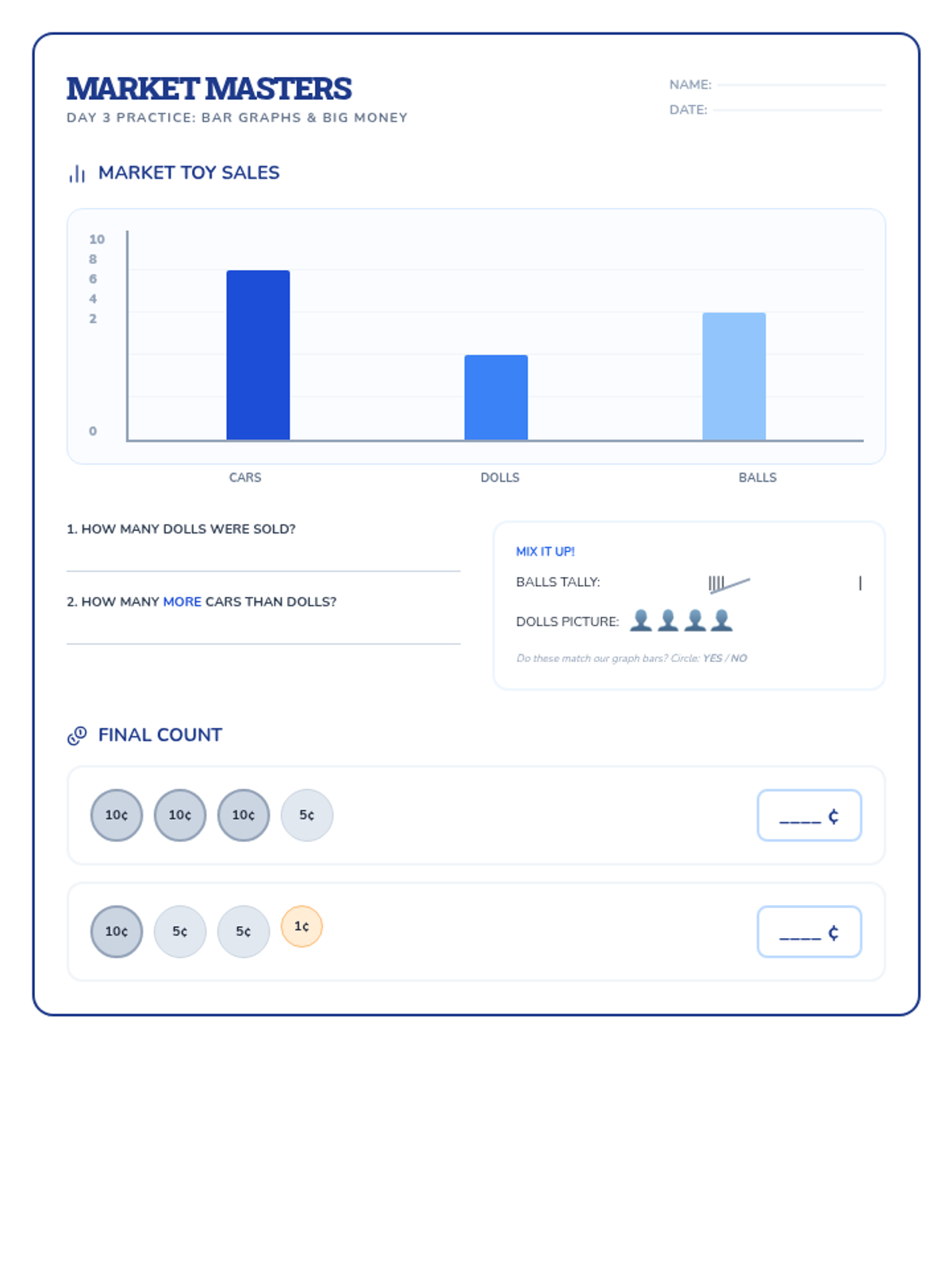
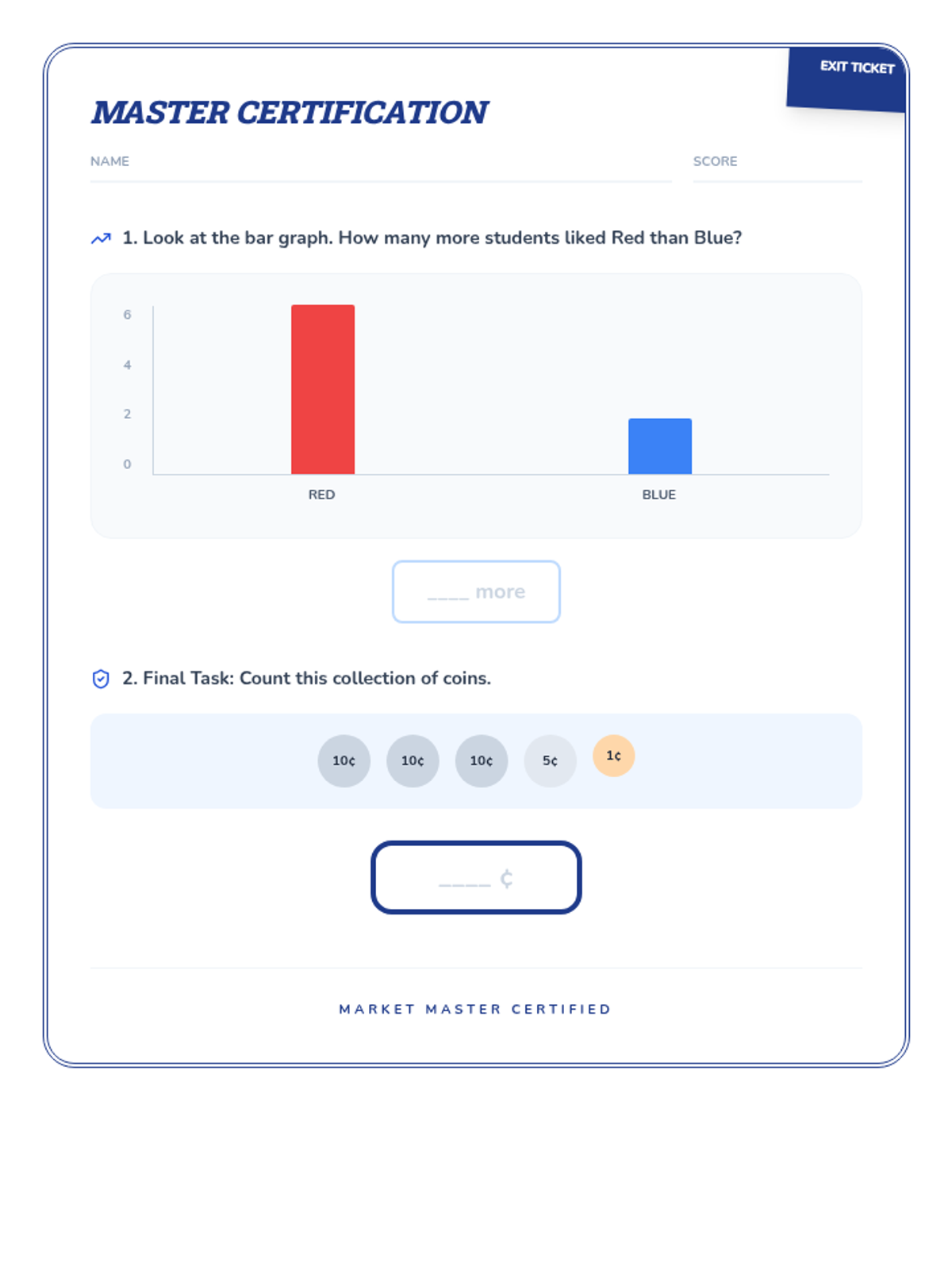
Focuses on bar graphs and comparing data. Students analyze categories and count collections of mixed coins.
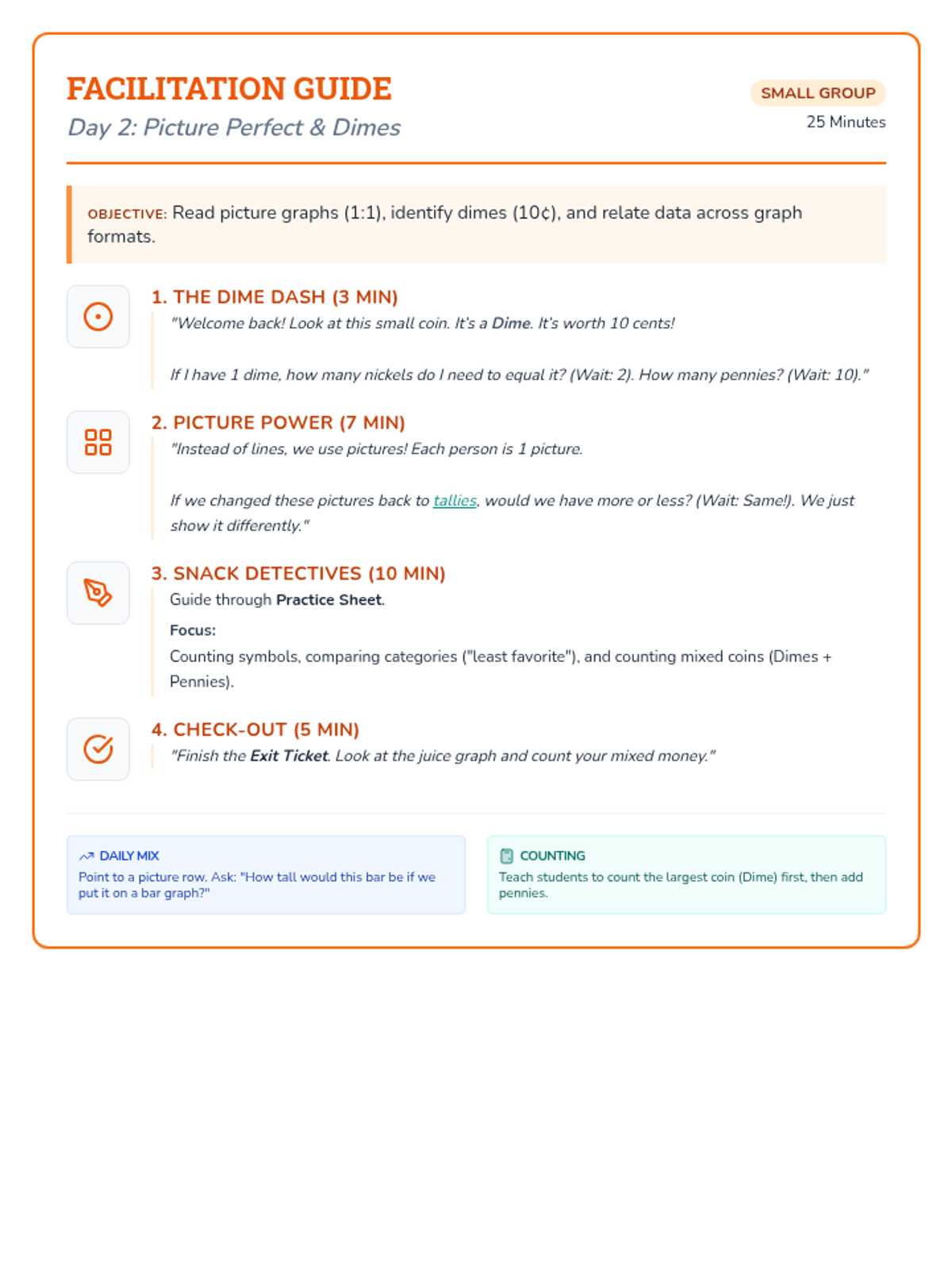
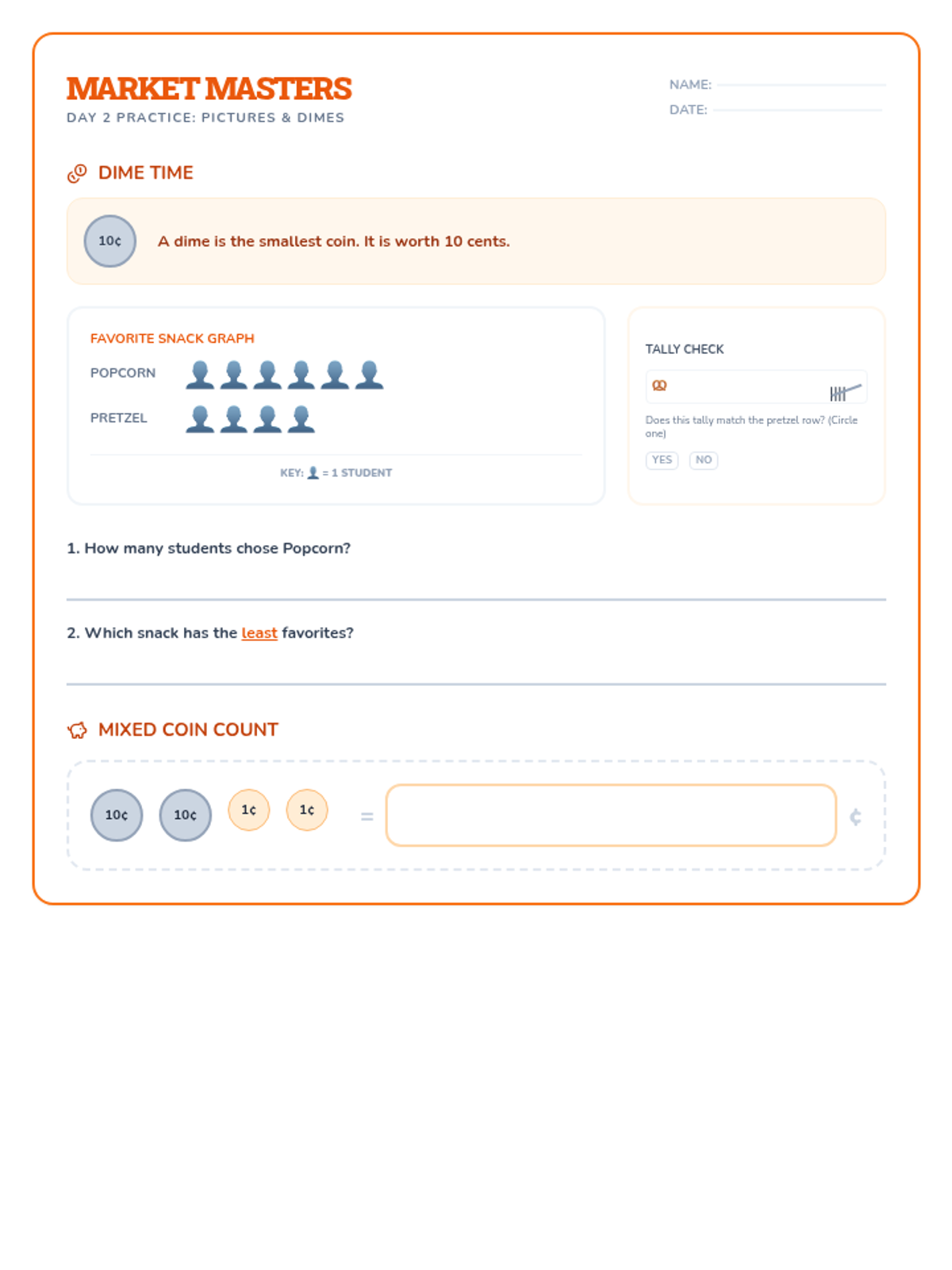
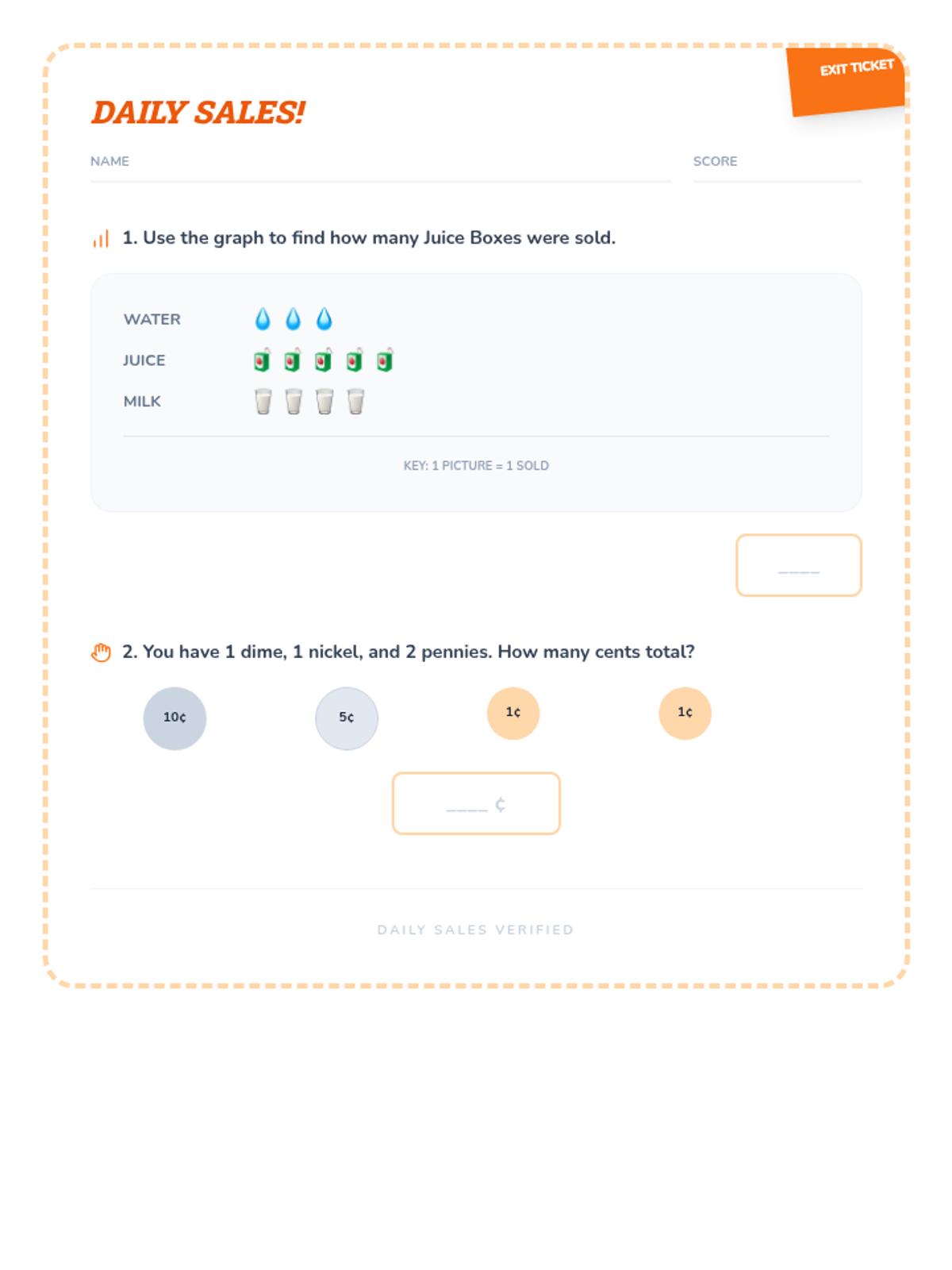
Focuses on picture graphs and dimes. Students interpret data with 1:1 correspondence and count mixed coins.
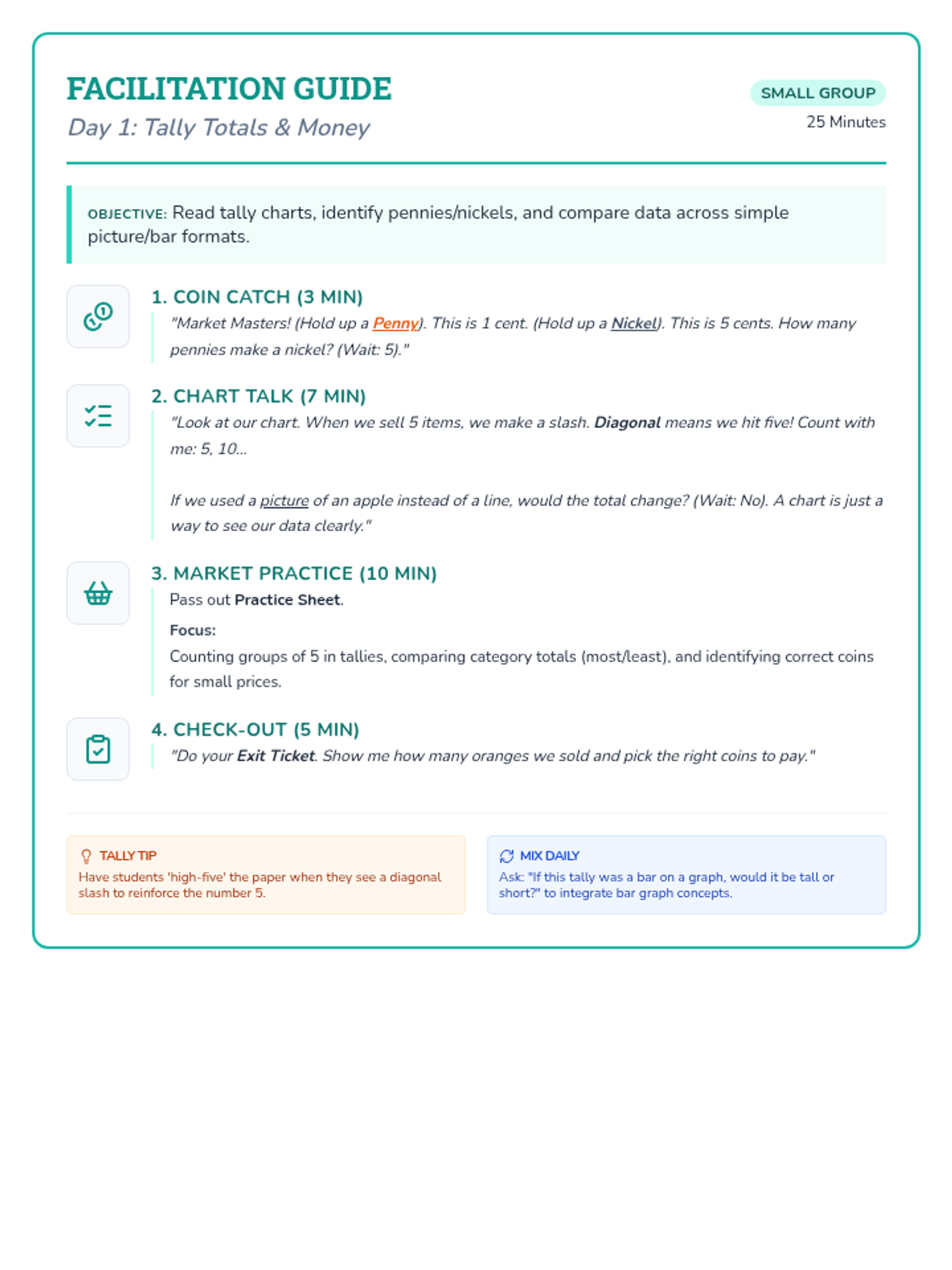
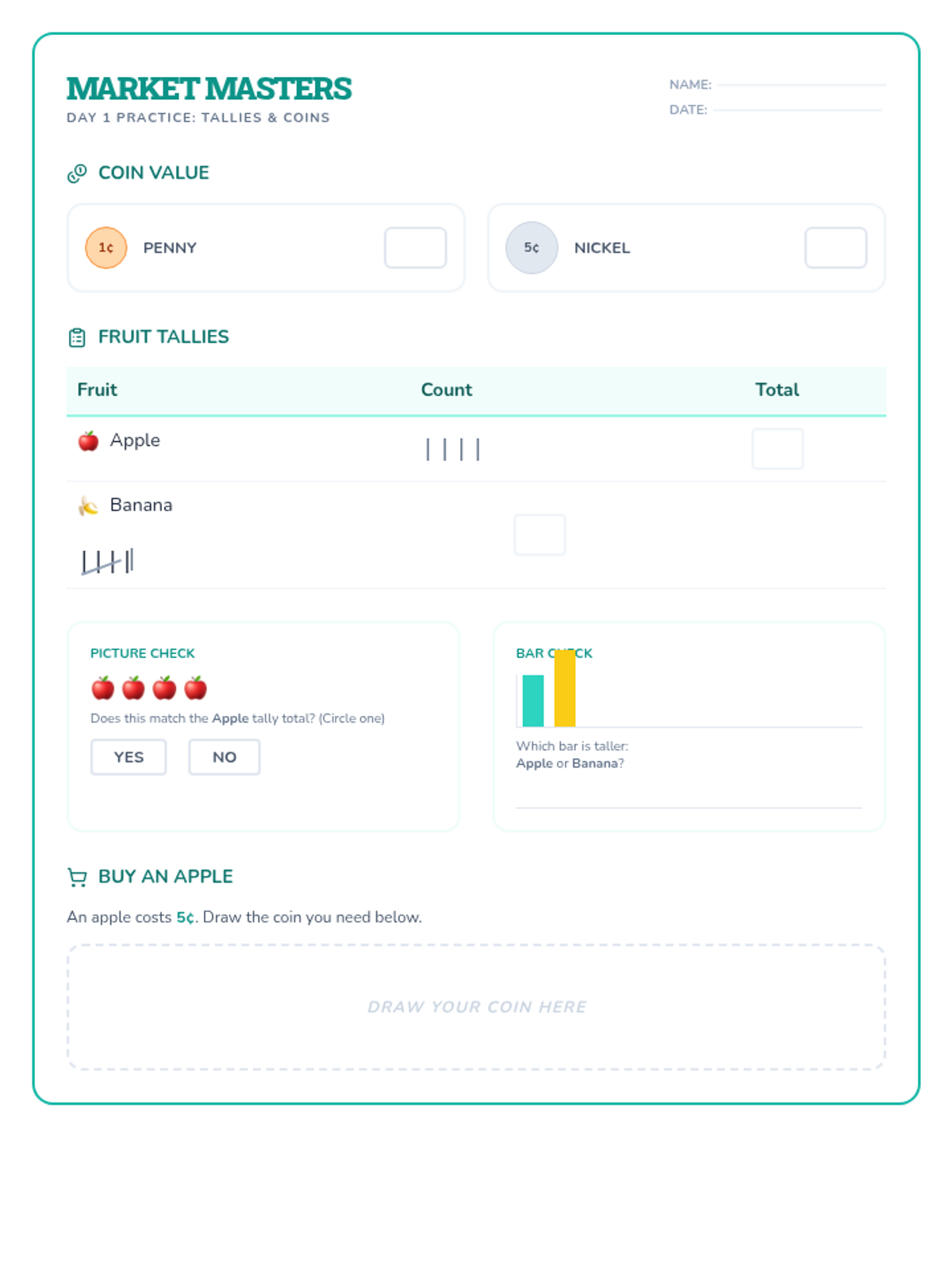
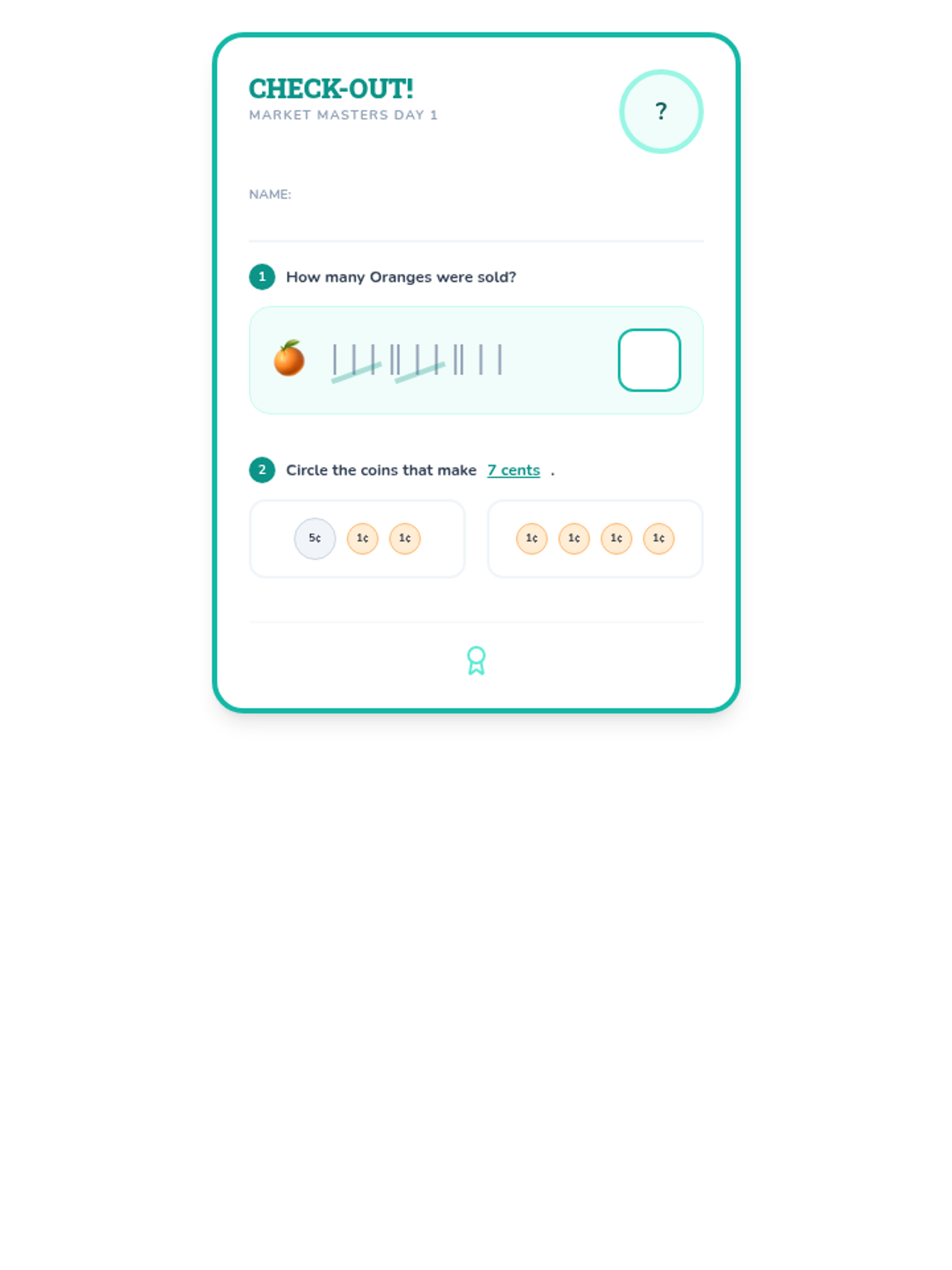
Focuses on tally charts and pennies/nickels. Students learn to read tallies and identify coins to 'buy' items from the market.
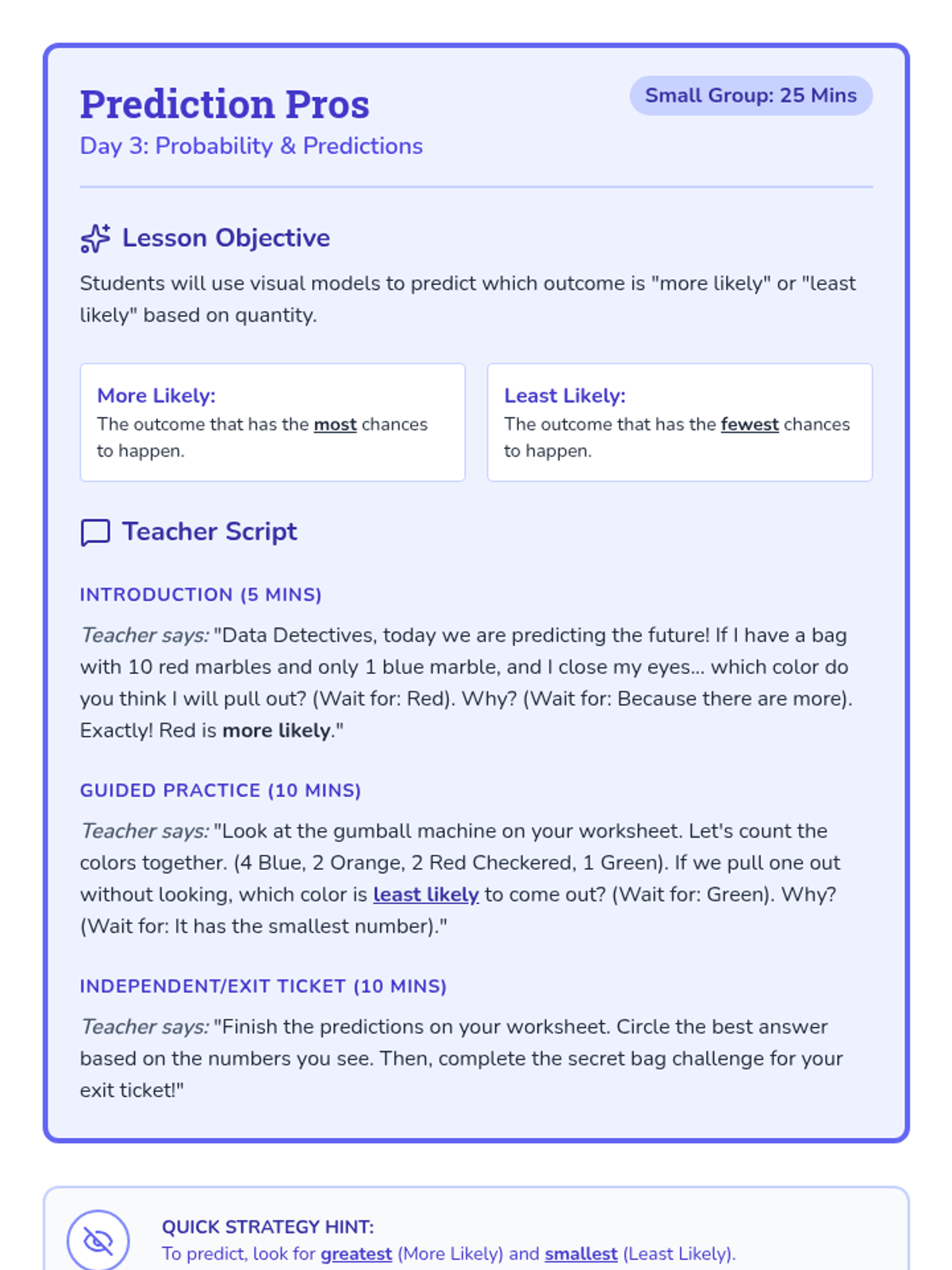
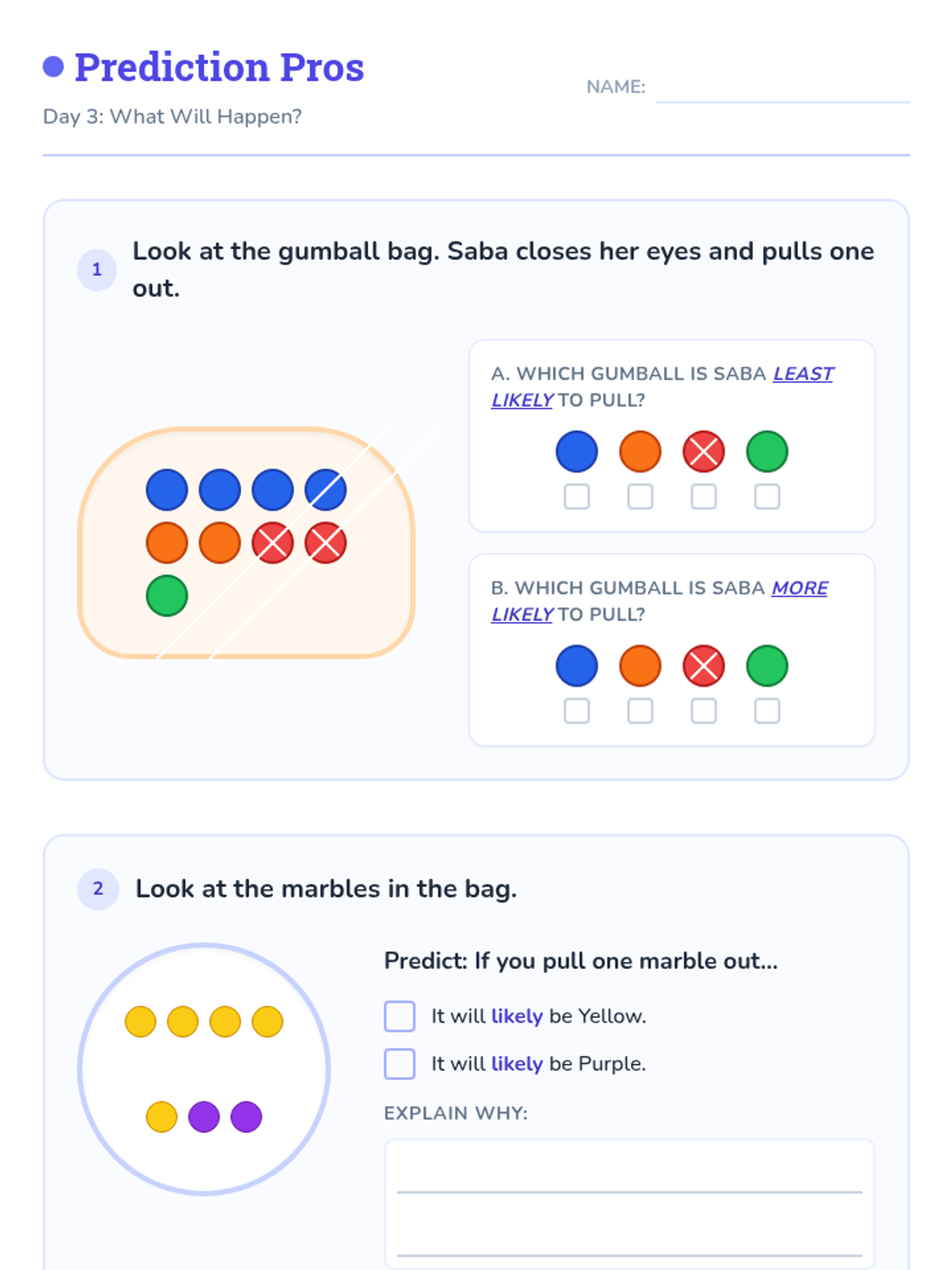
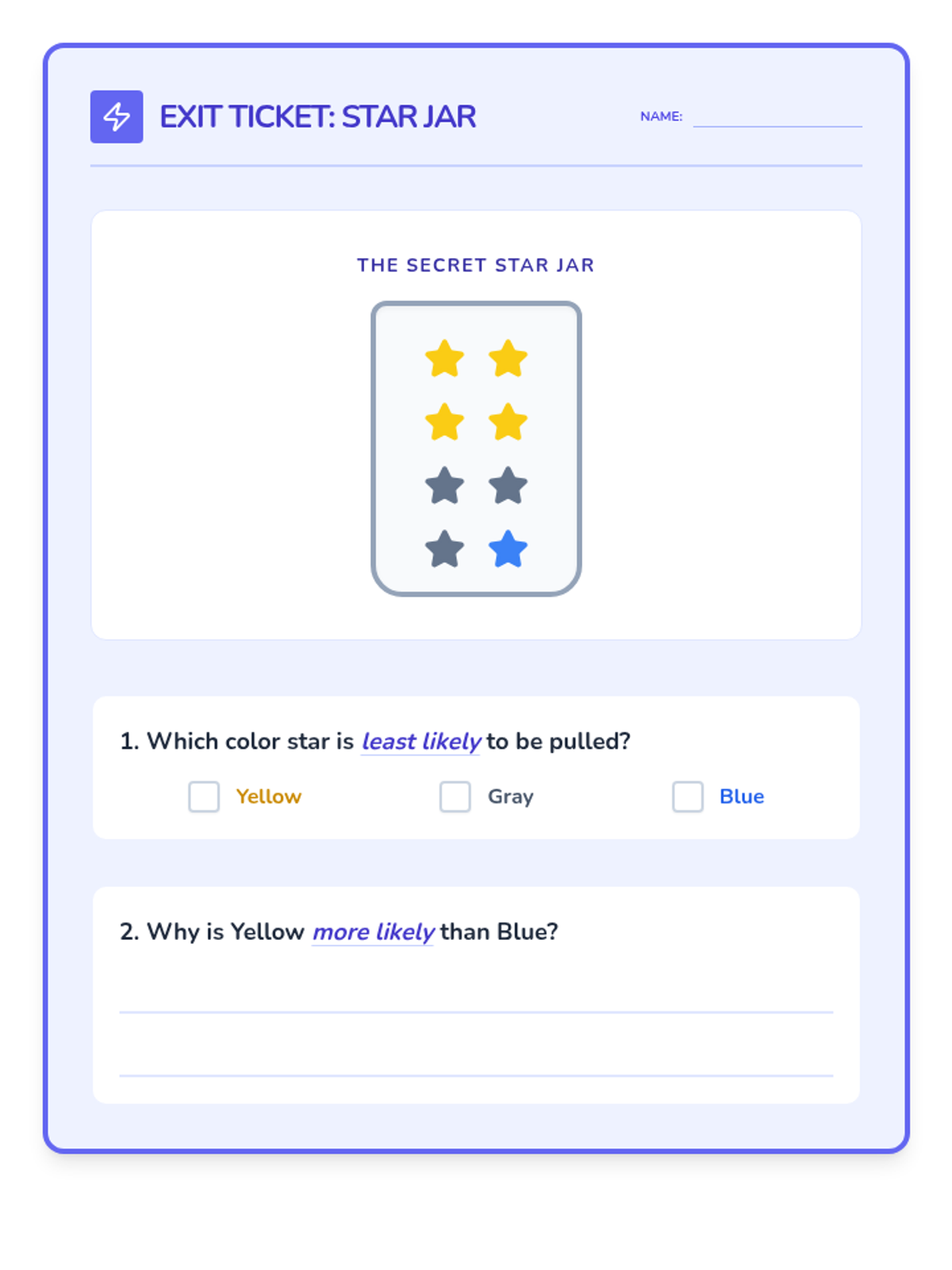
Day 3 covers probability and predictions, teaching students to identify 'more likely' and 'least likely' outcomes based on visual data.
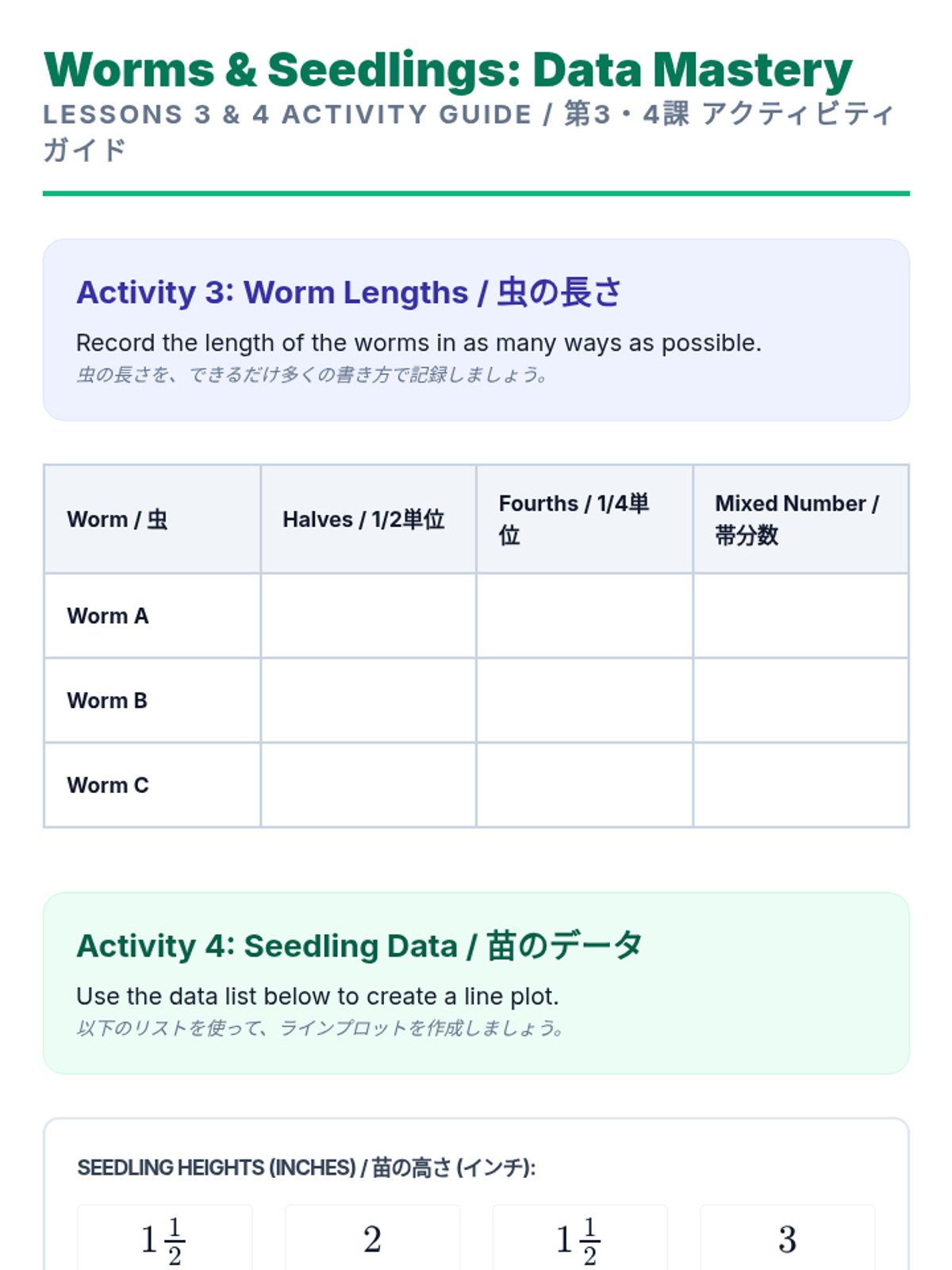
Students interpret and create line plots using measurement data involving fractions.
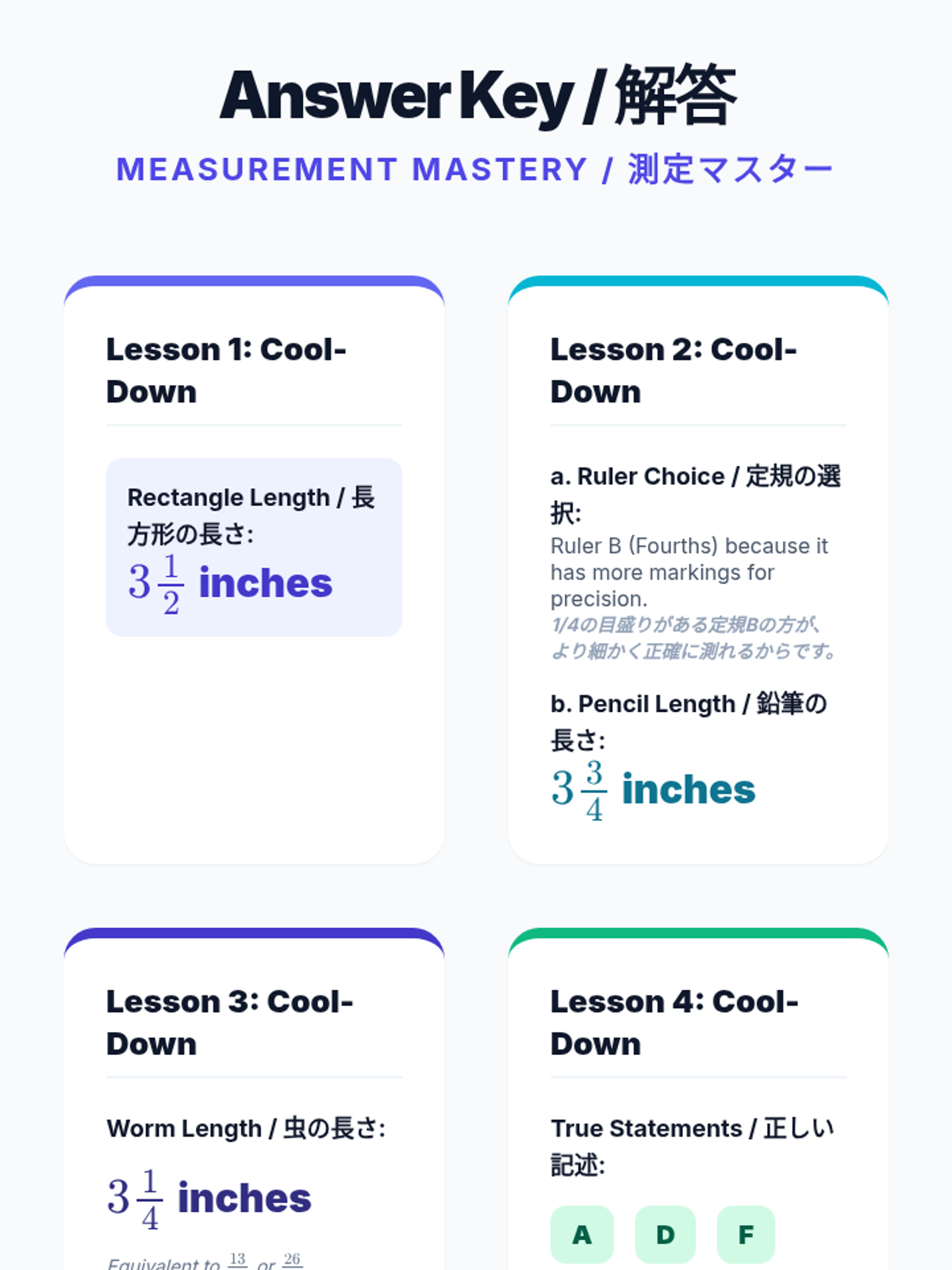
Students learn to measure objects to the nearest fourth of an inch and explore partition logic.
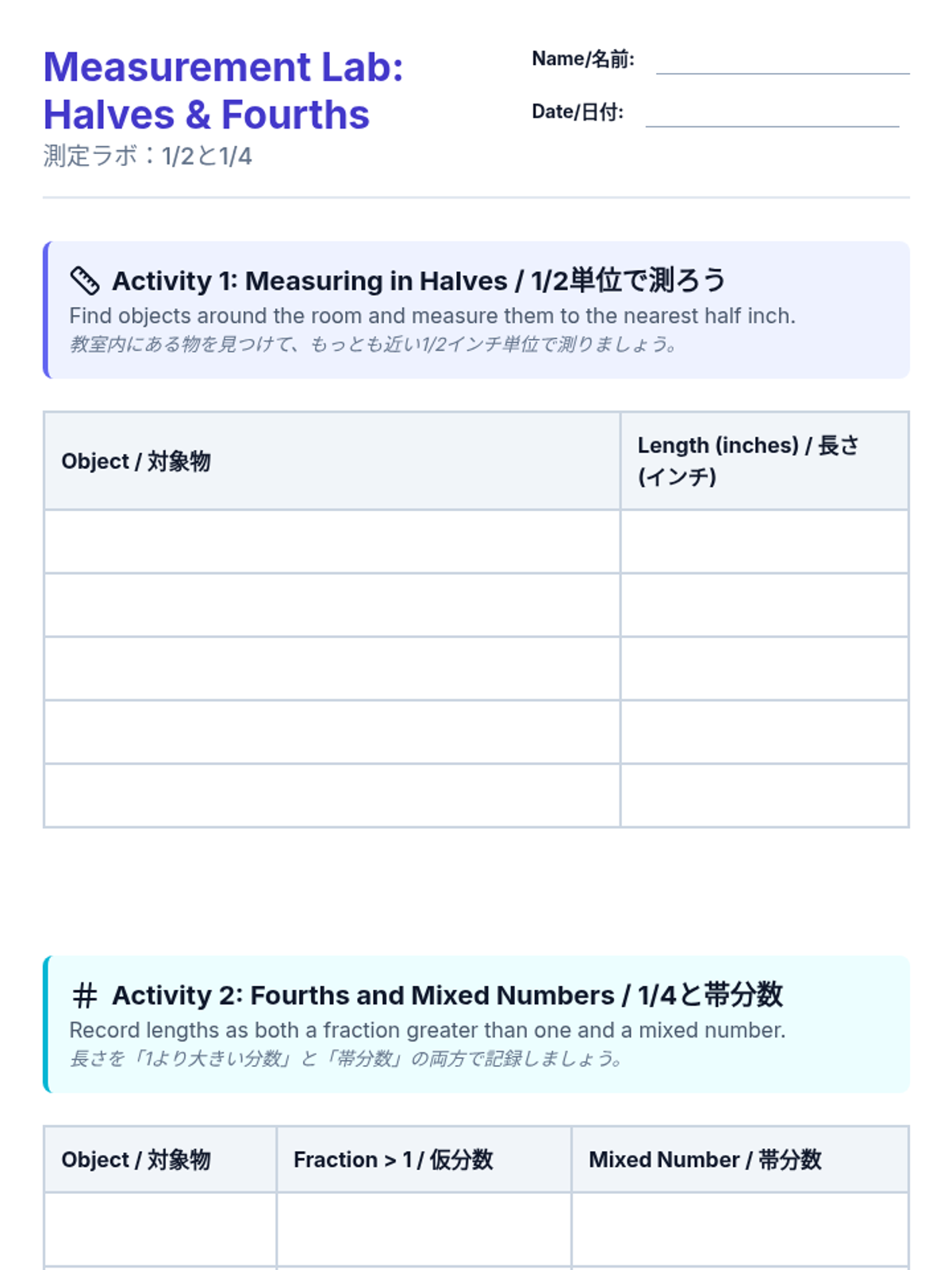
Students learn to measure objects to the nearest half-inch and are introduced to mixed numbers.
Analyzing and creating line plots to represent measurement data.
Using fraction equivalence to measure and record lengths accurately.
Expanding measurement skills to fourths of an inch and practicing with mixed numbers.
Introduction to measuring length in halves of an inch and understanding mixed numbers.
A foundational lesson on measurement, specifically focusing on inches and half-inches, translated into Japanese. Students learn to partition rulers and record data.
A comprehensive introduction to measurement, focusing on length, using inches and halves of an inch. Students learn to use rulers, collect data, and represent it on line plots while developing precision in their measurements.
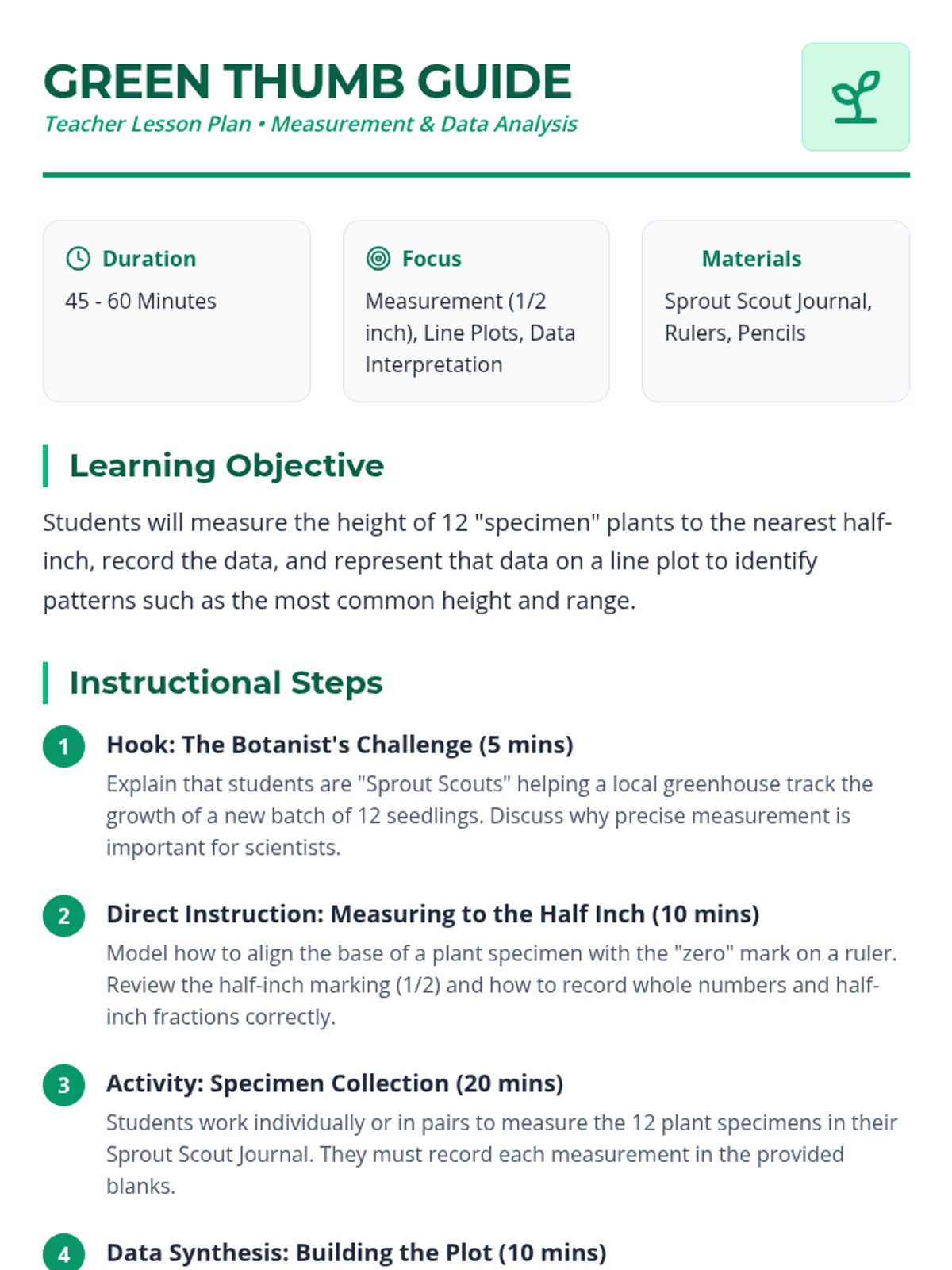
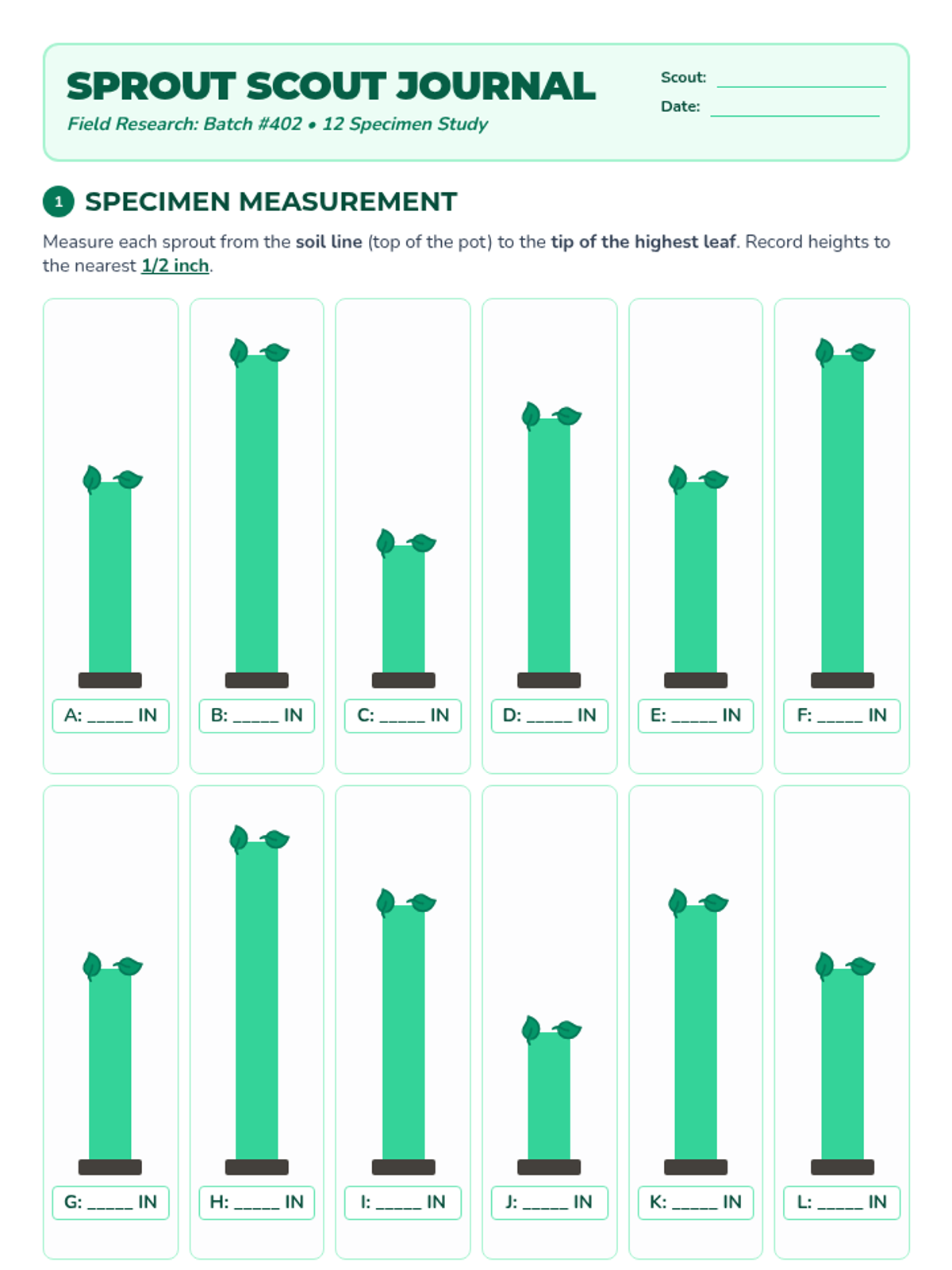
A hands-on measurement activity where students measure plant growth specimens, record data, and create a line plot to analyze their findings.
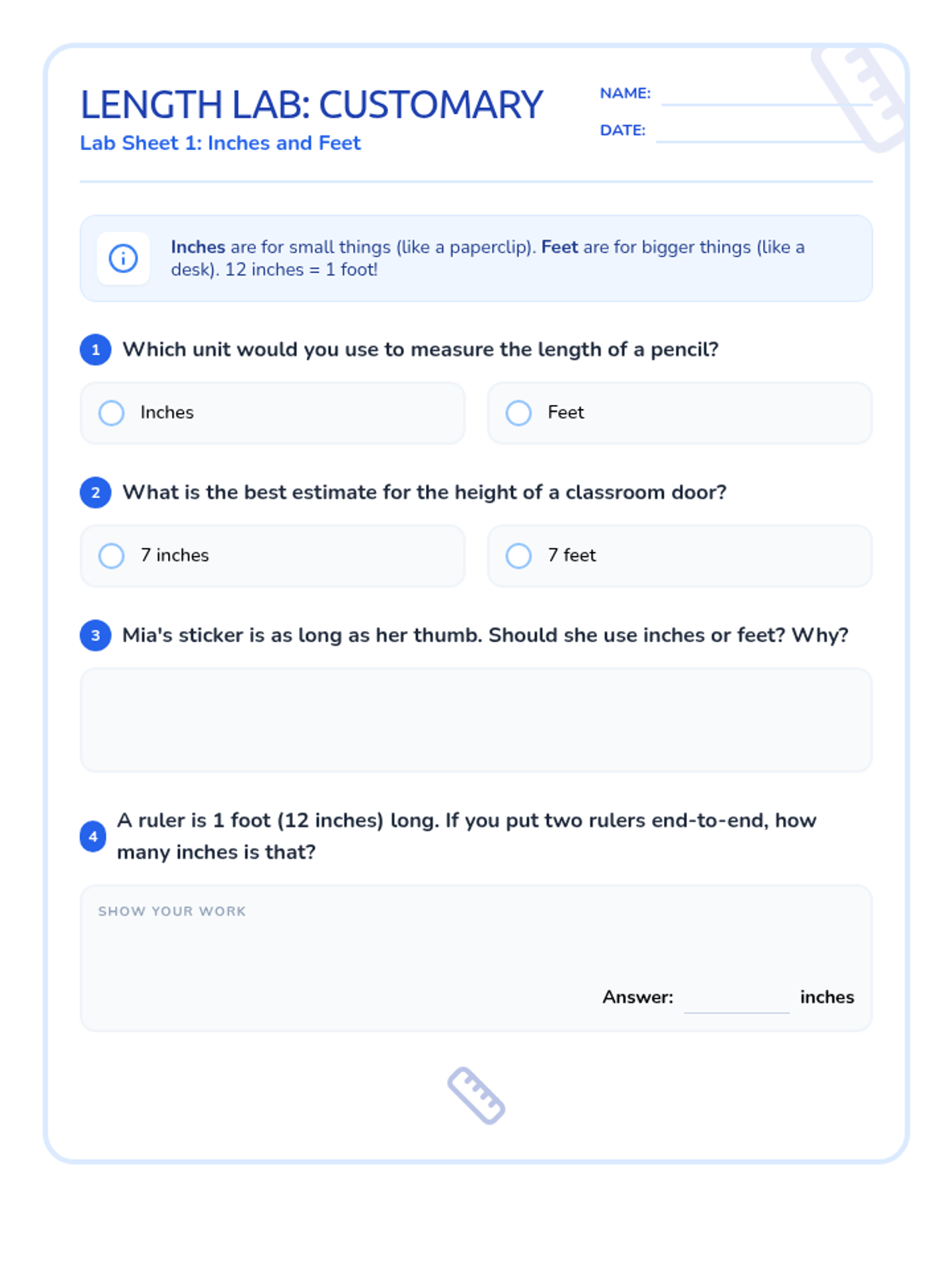
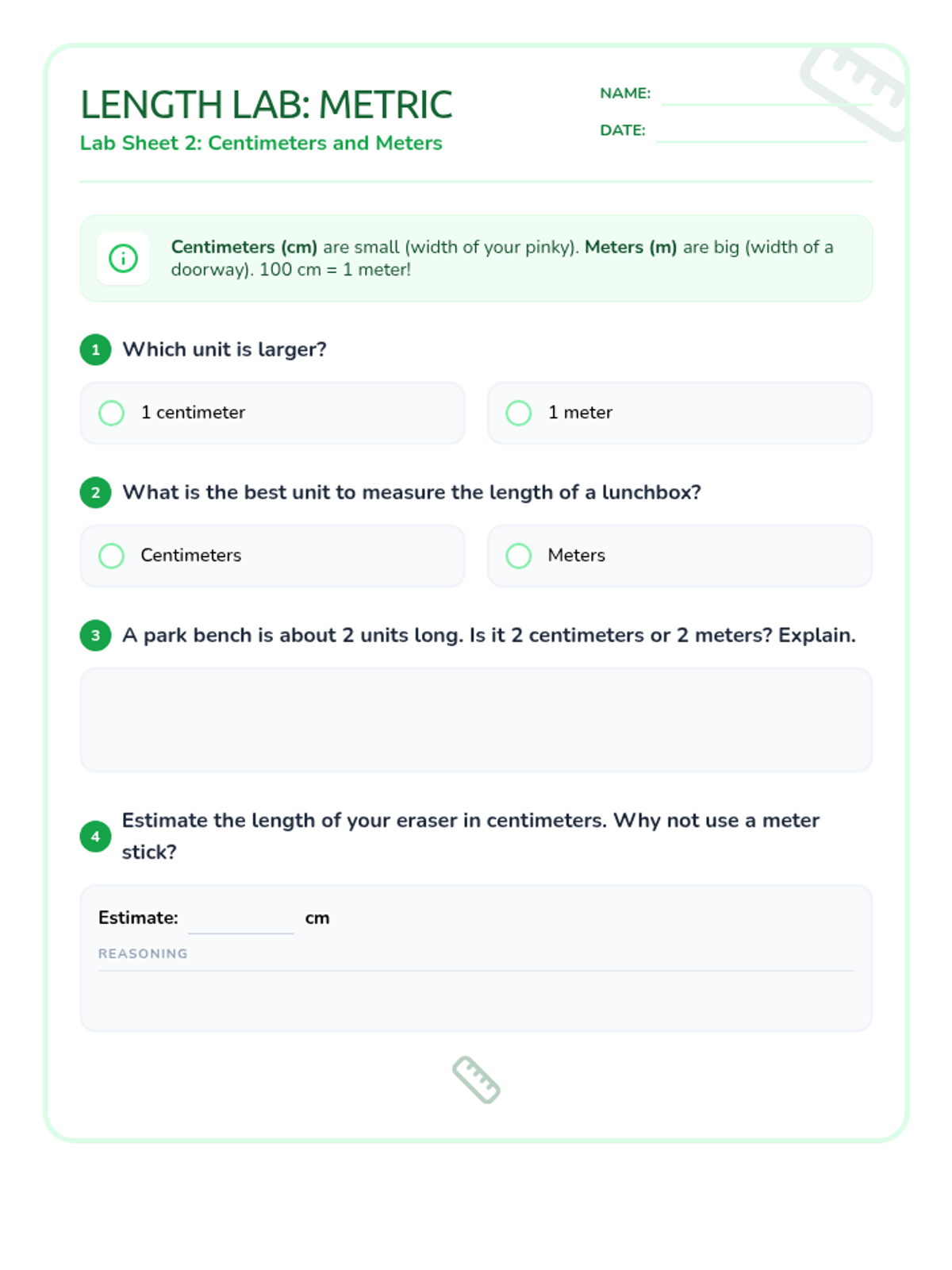
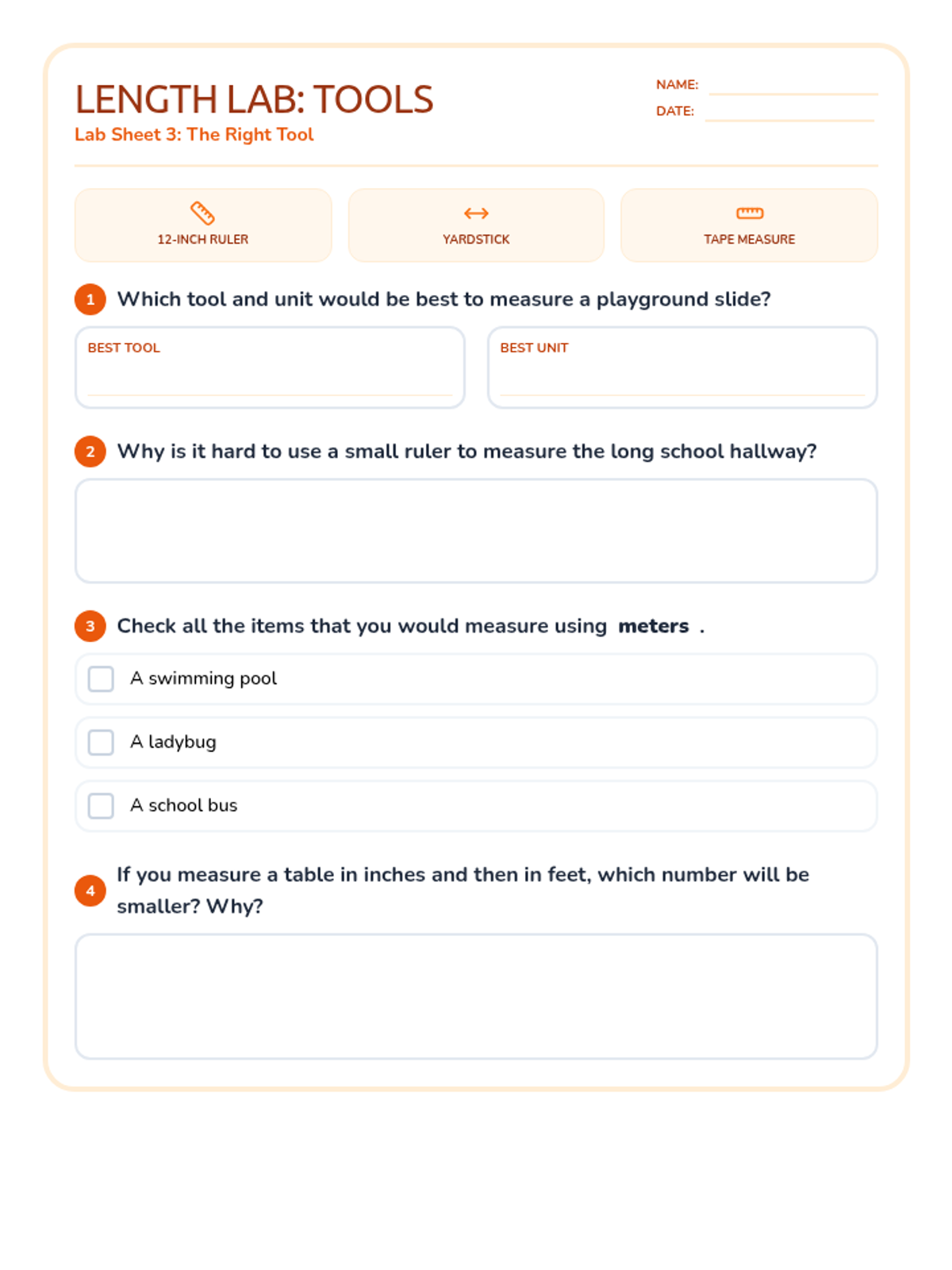
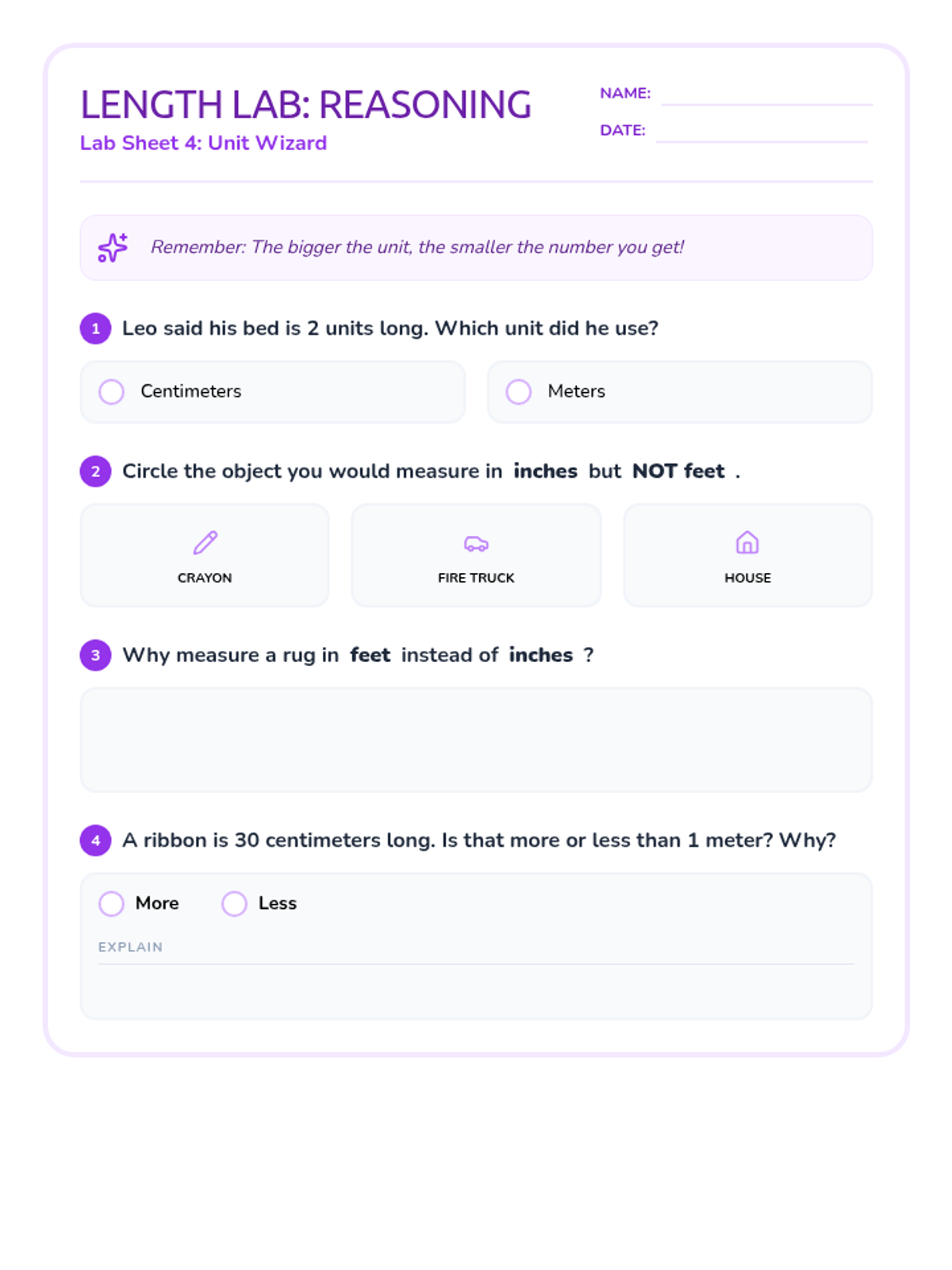
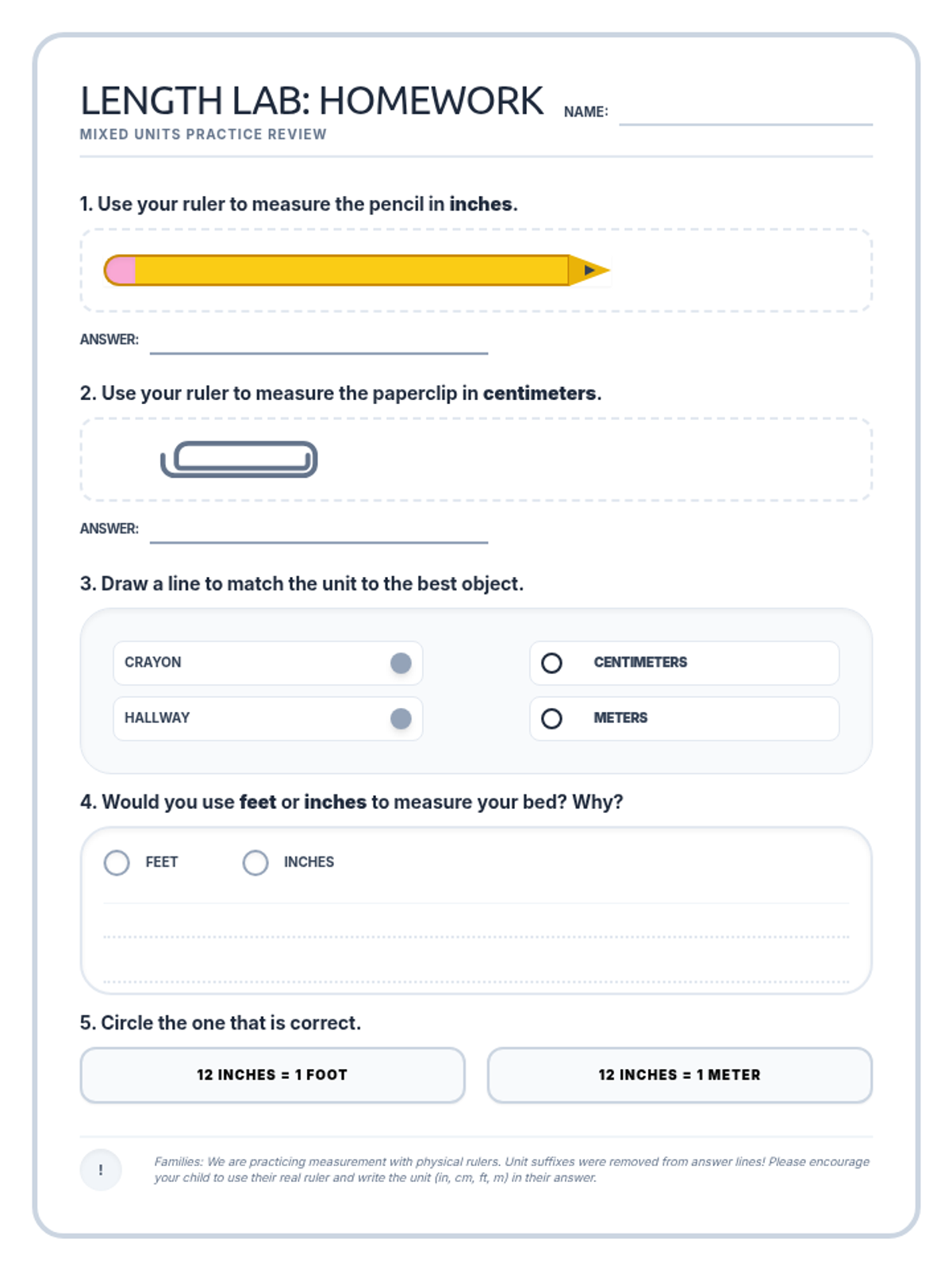
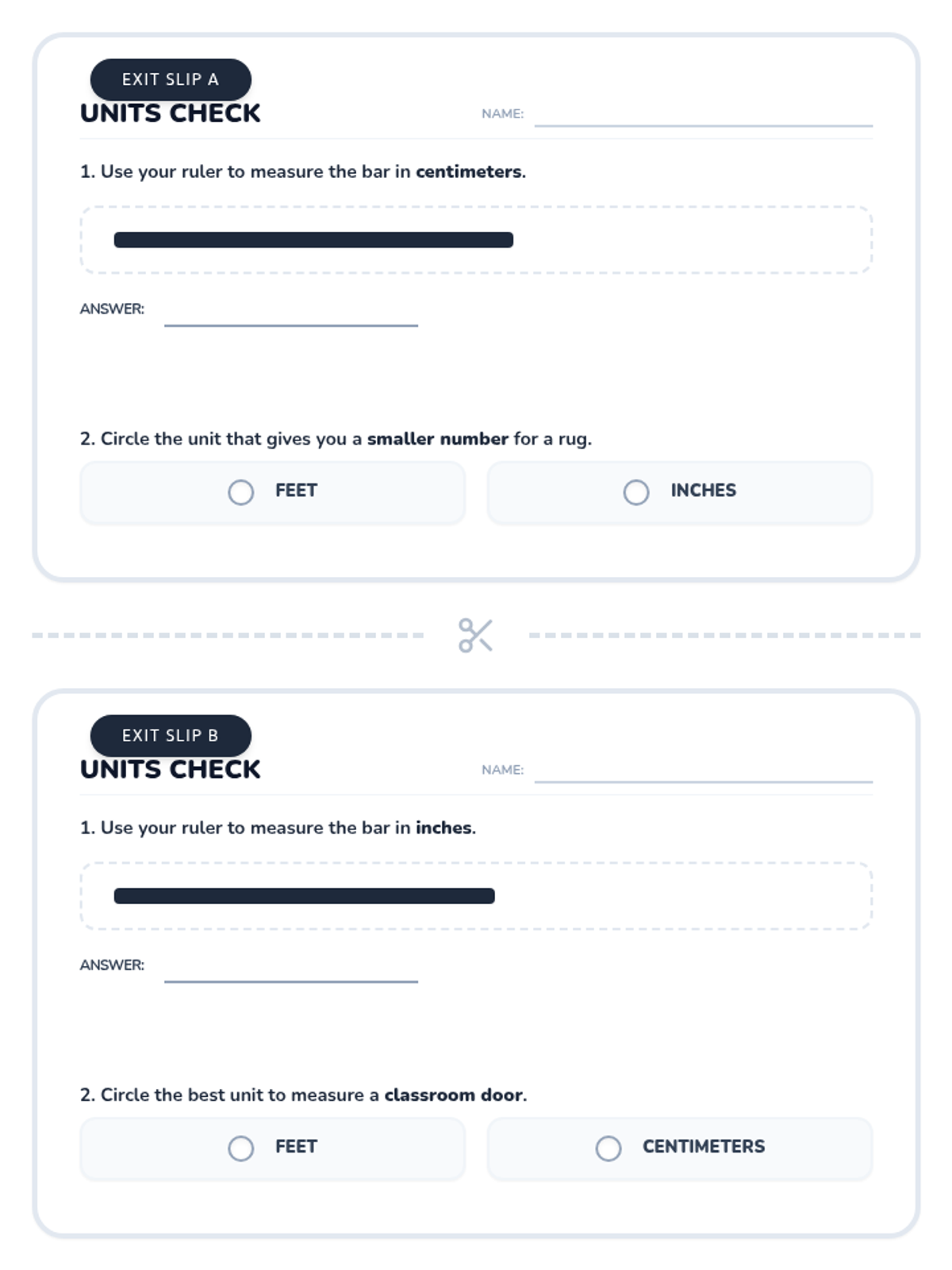
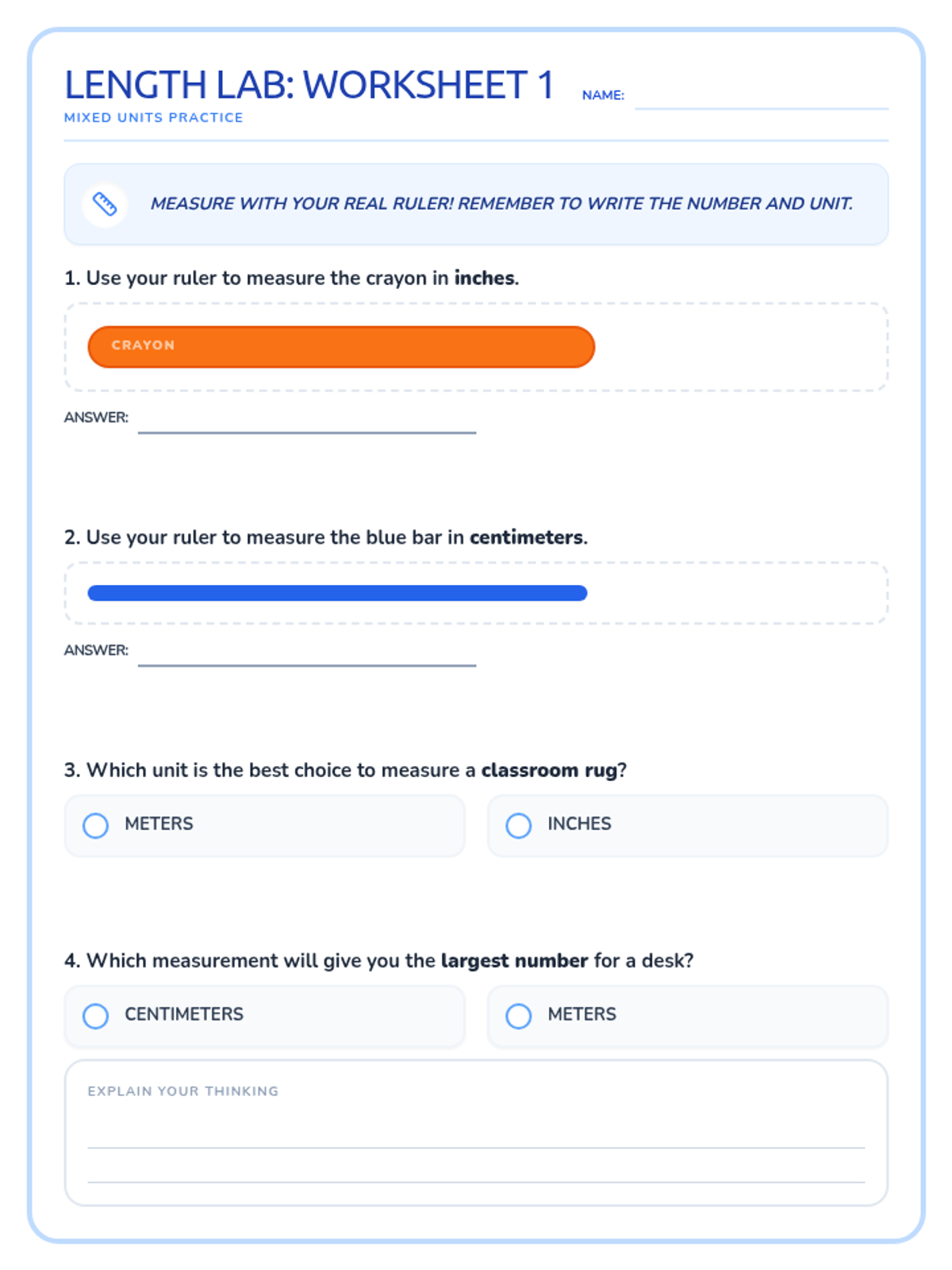
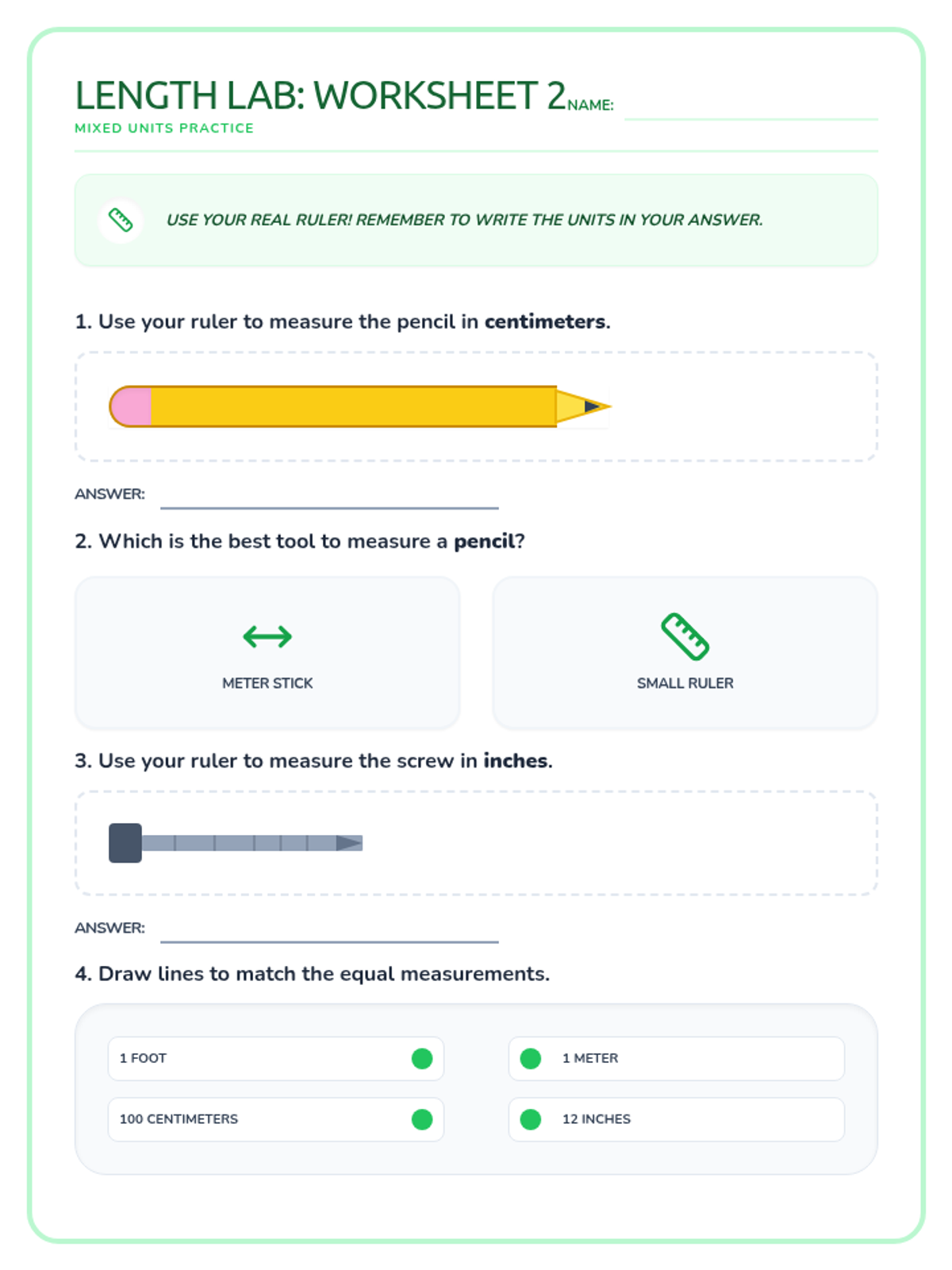
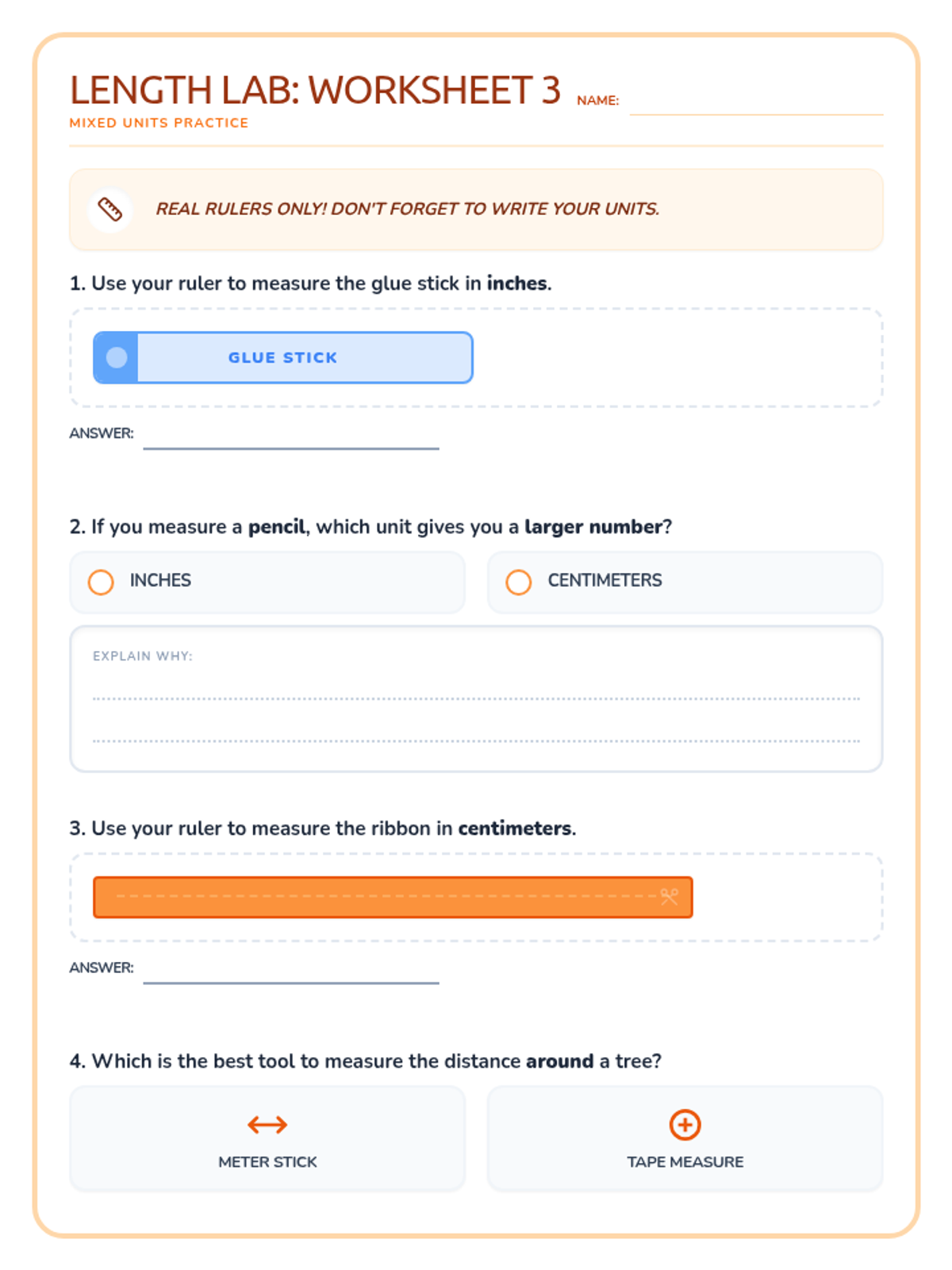
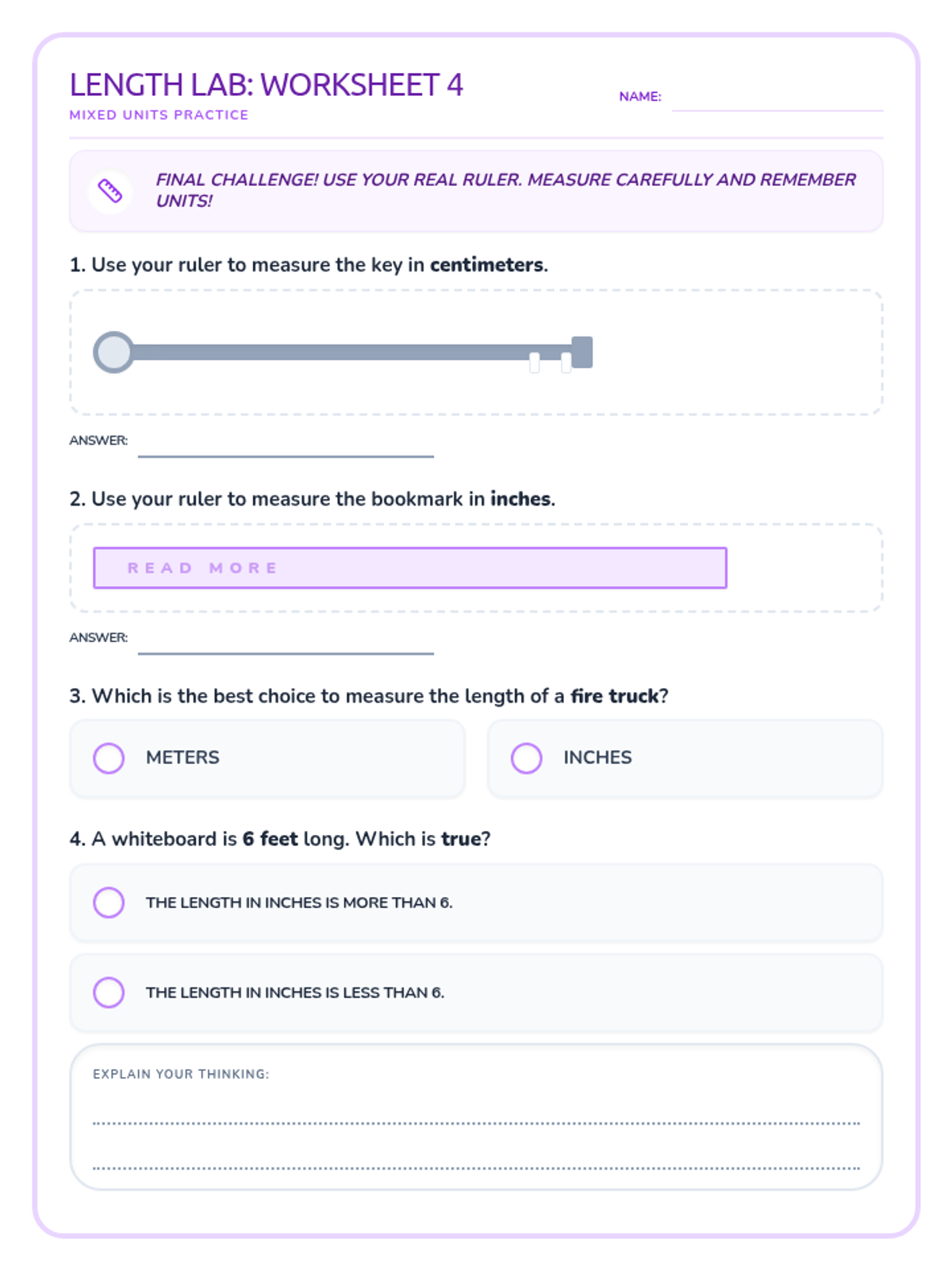
A lesson focused on differentiating between inches, feet, centimeters, and meters, including hands-on estimation and unit selection.
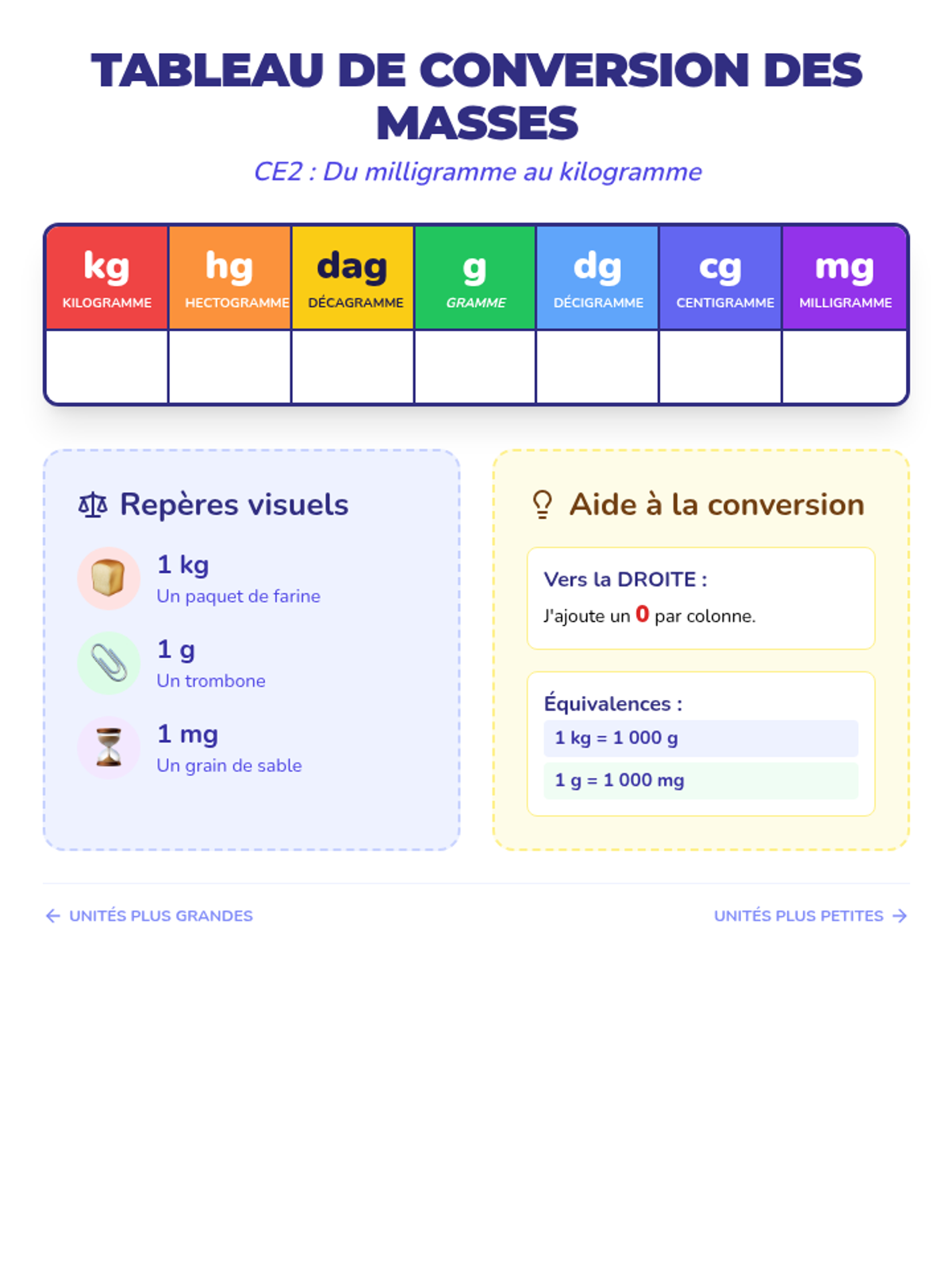
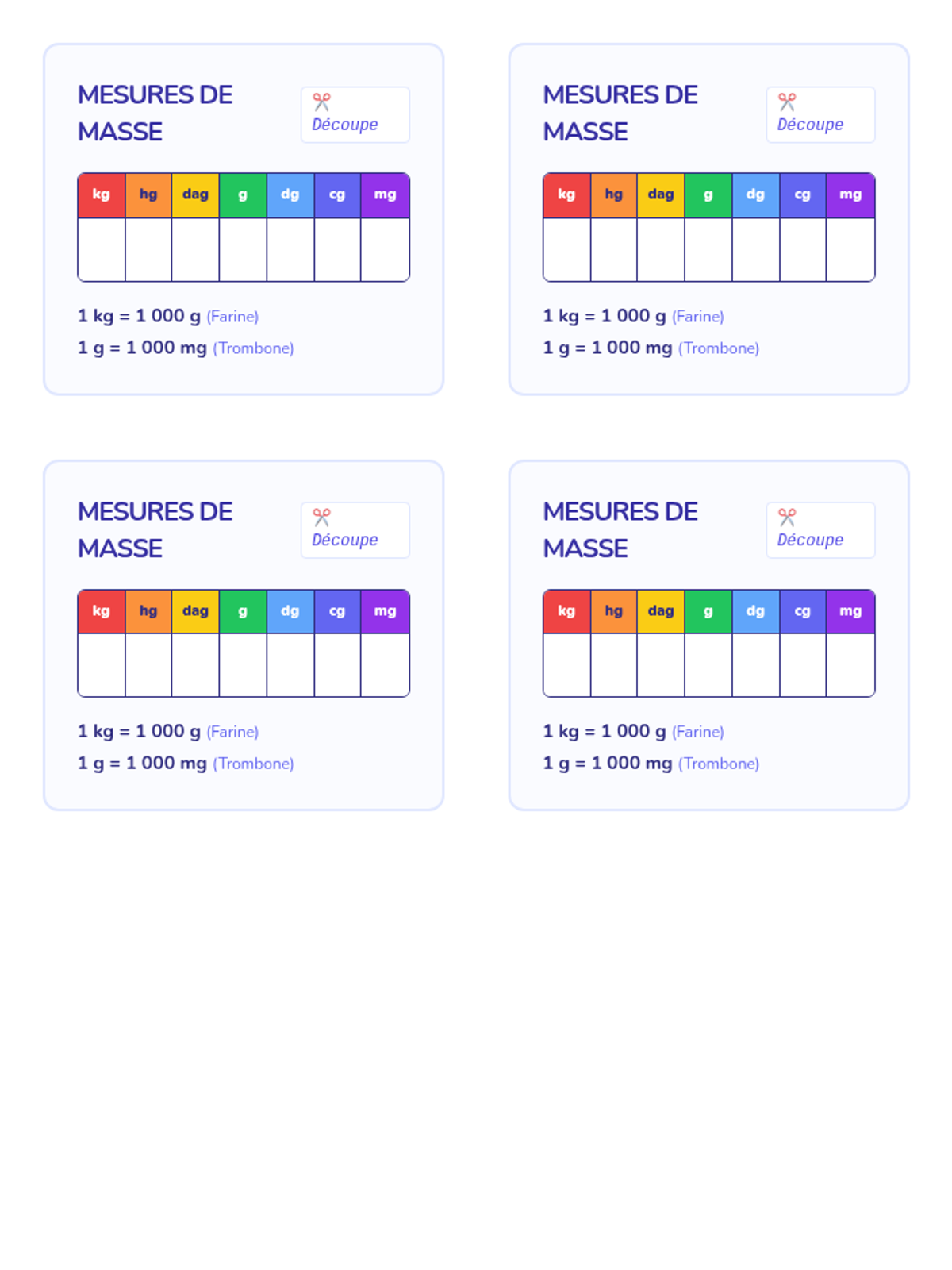
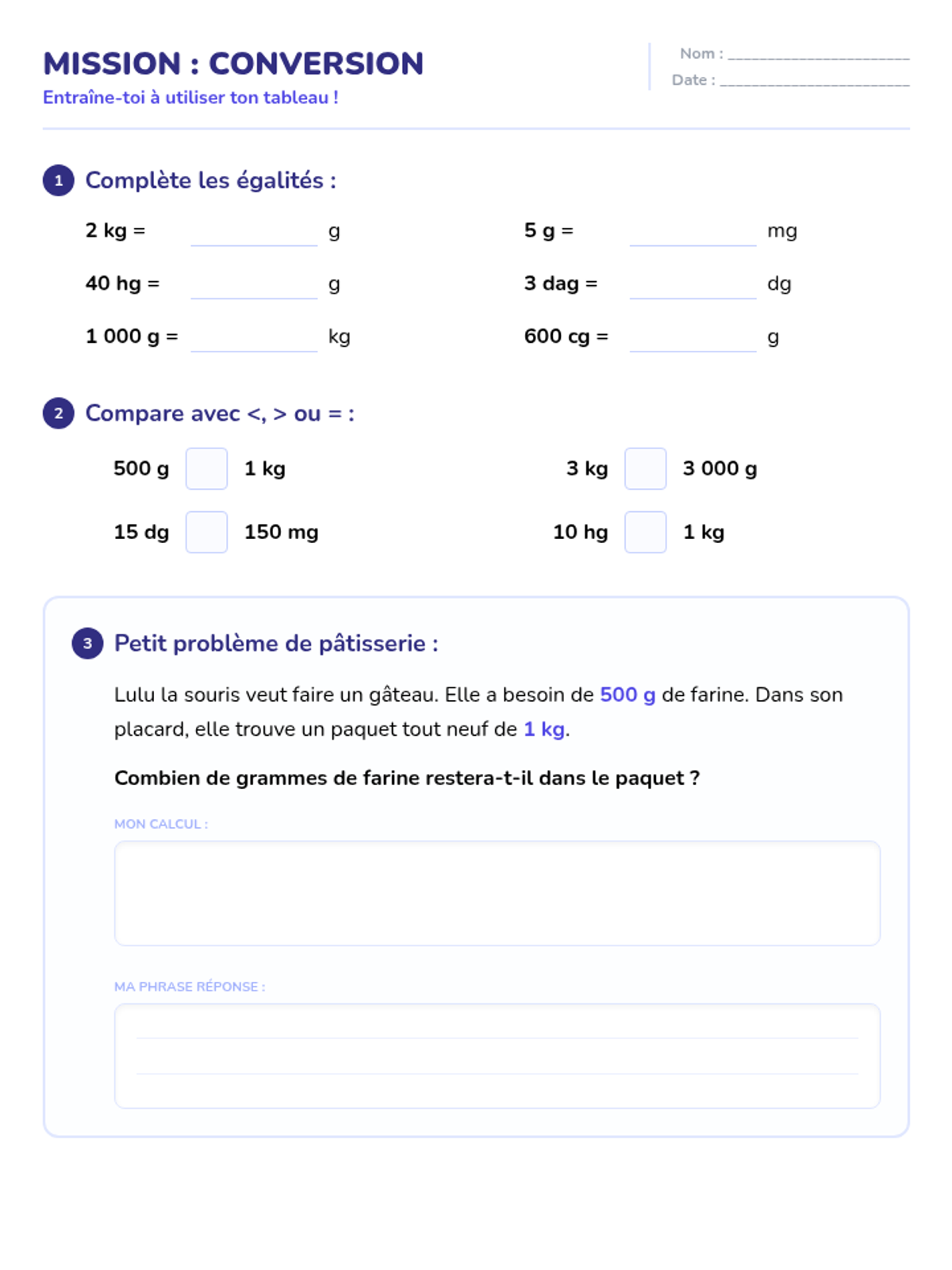
Une leçon pour apprendre à convertir les masses avec un tableau de conversion coloré et des exemples concrets pour les élèves de CE2.
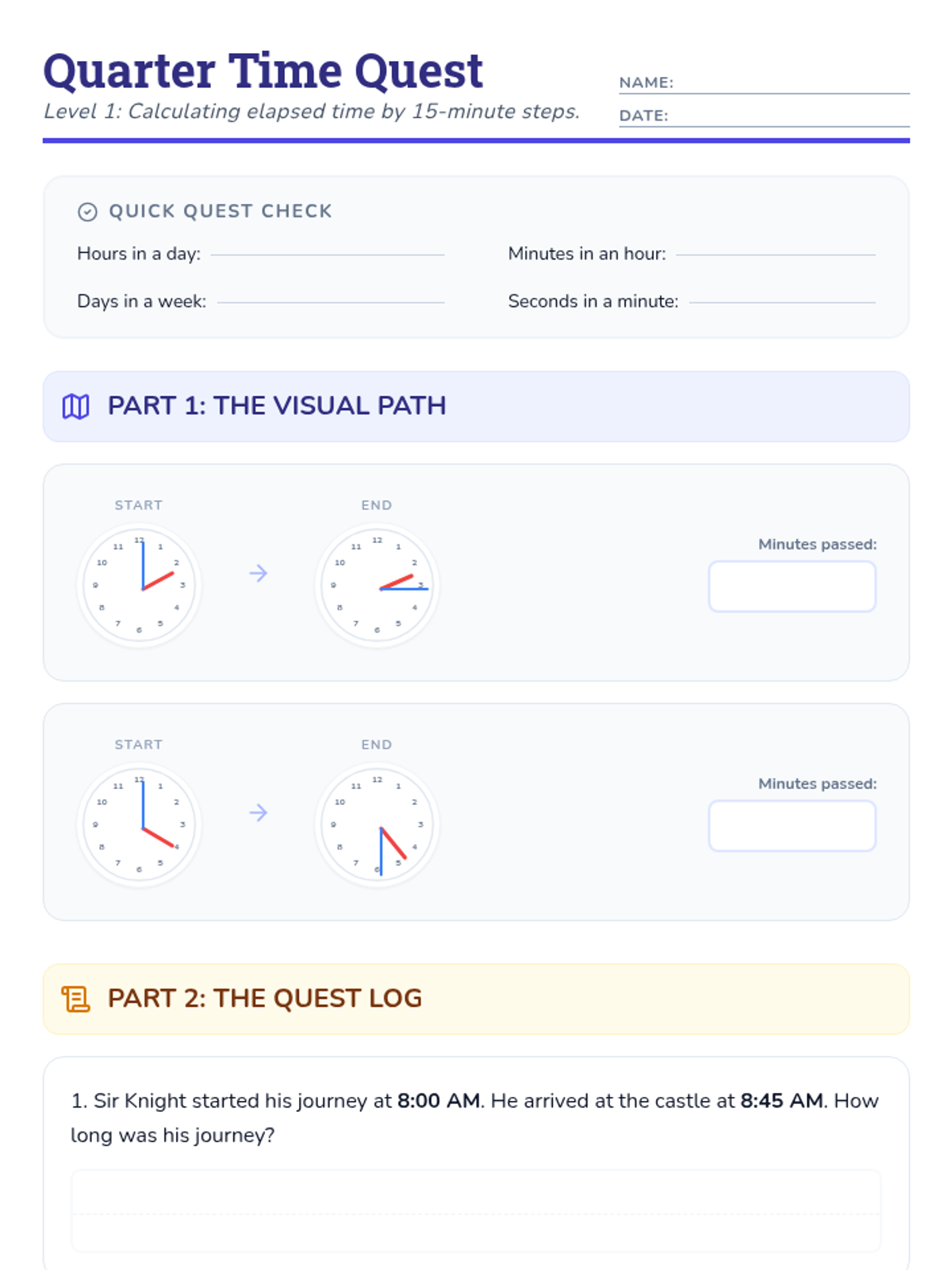
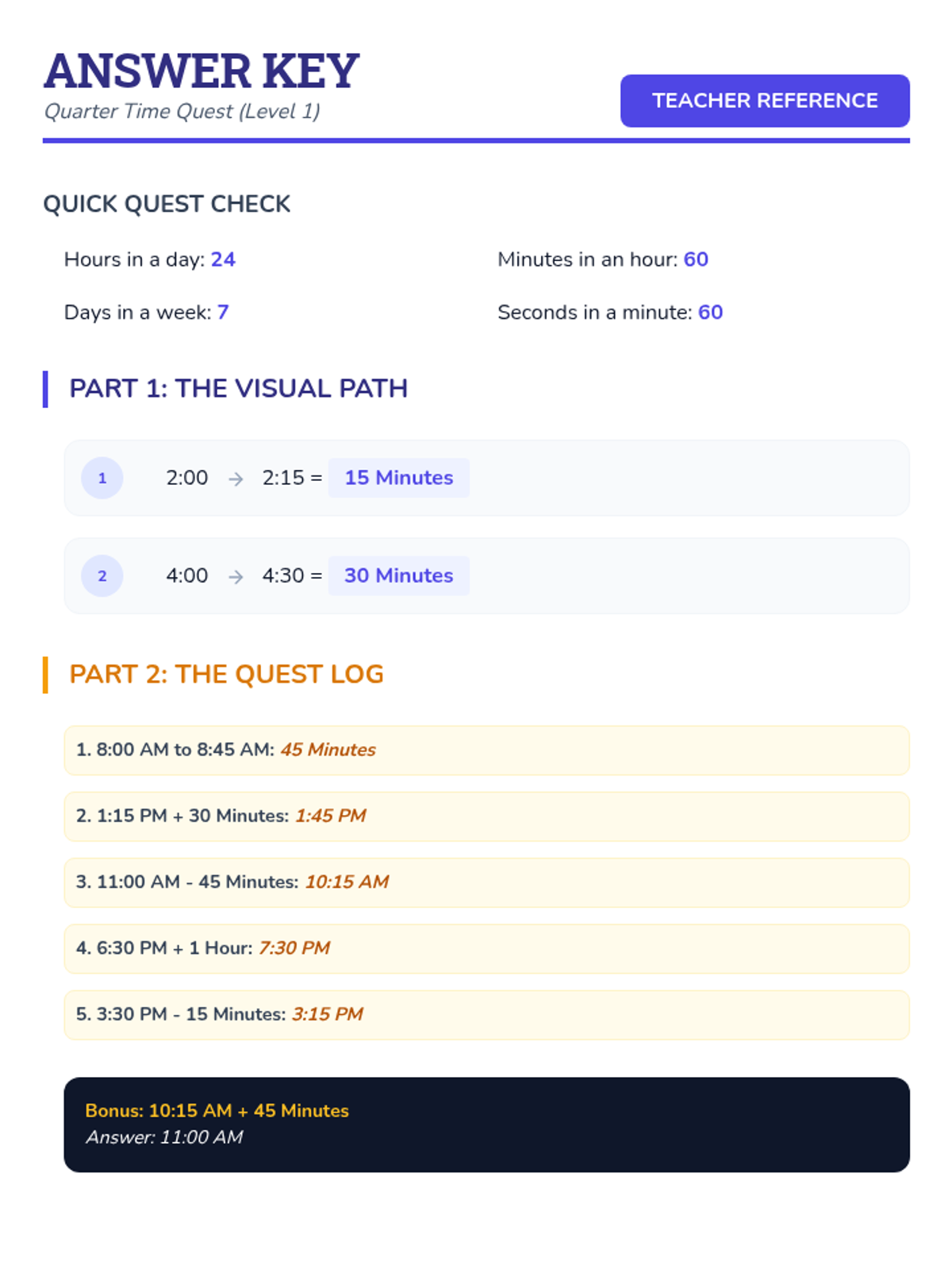
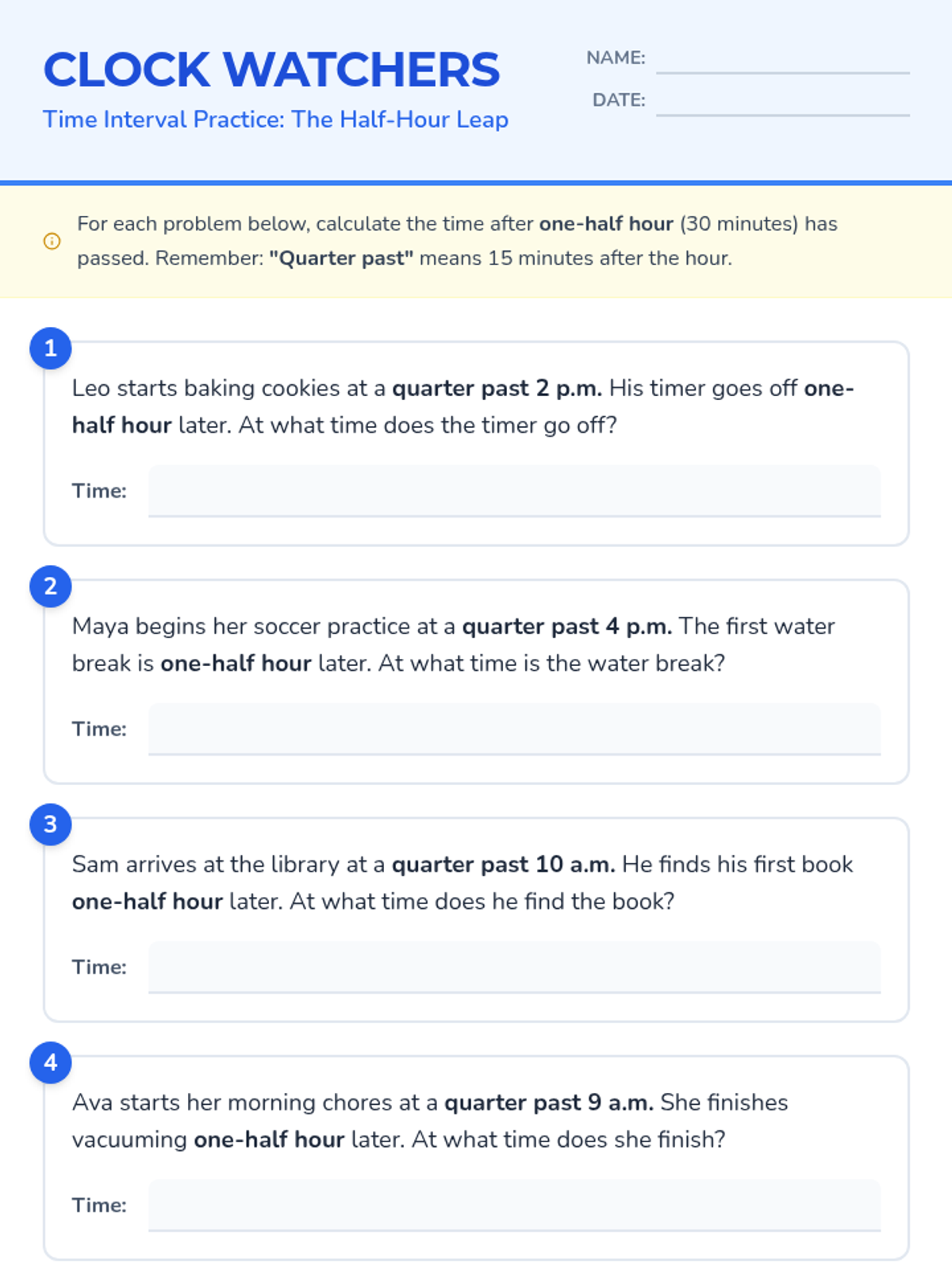
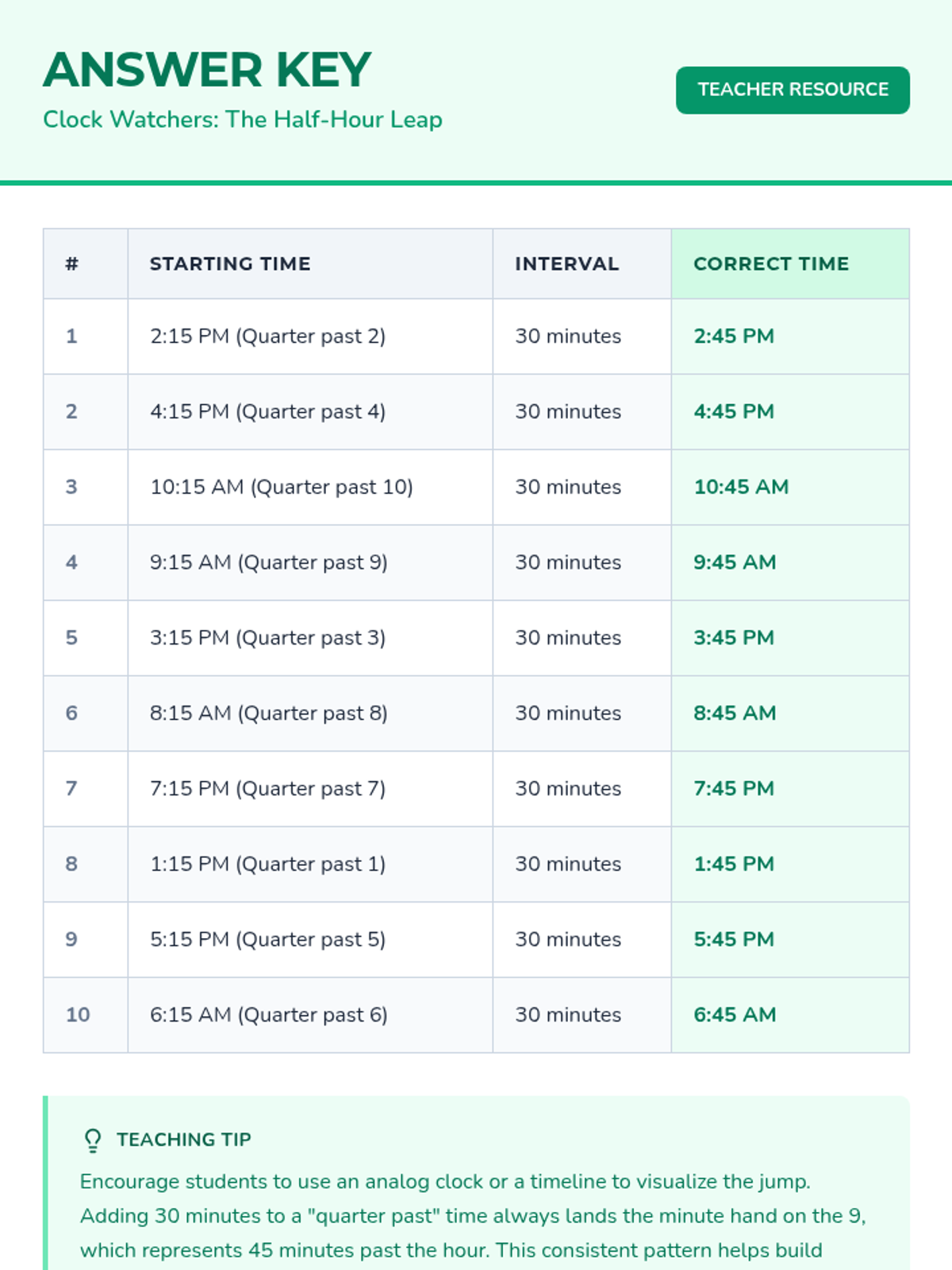
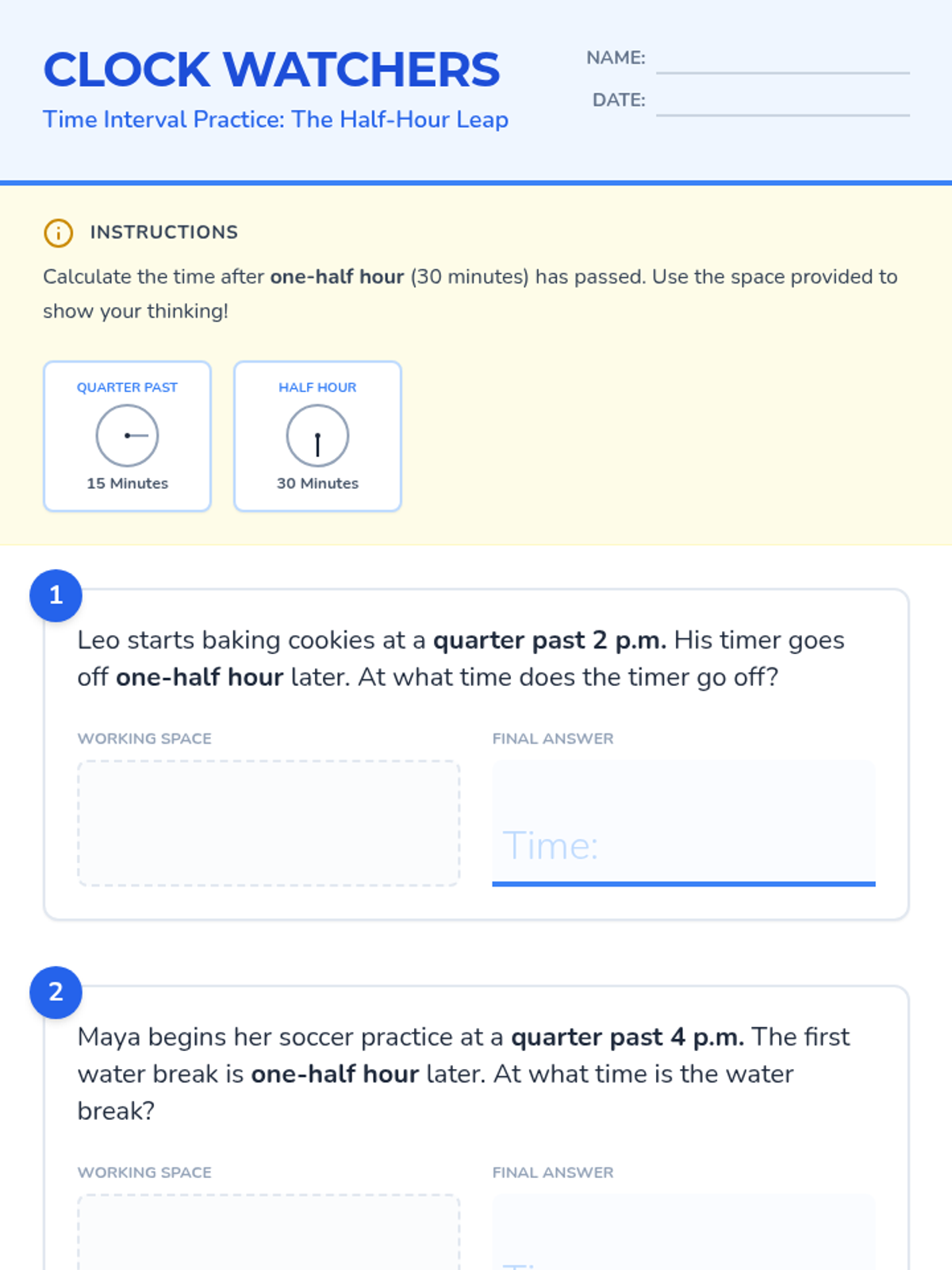
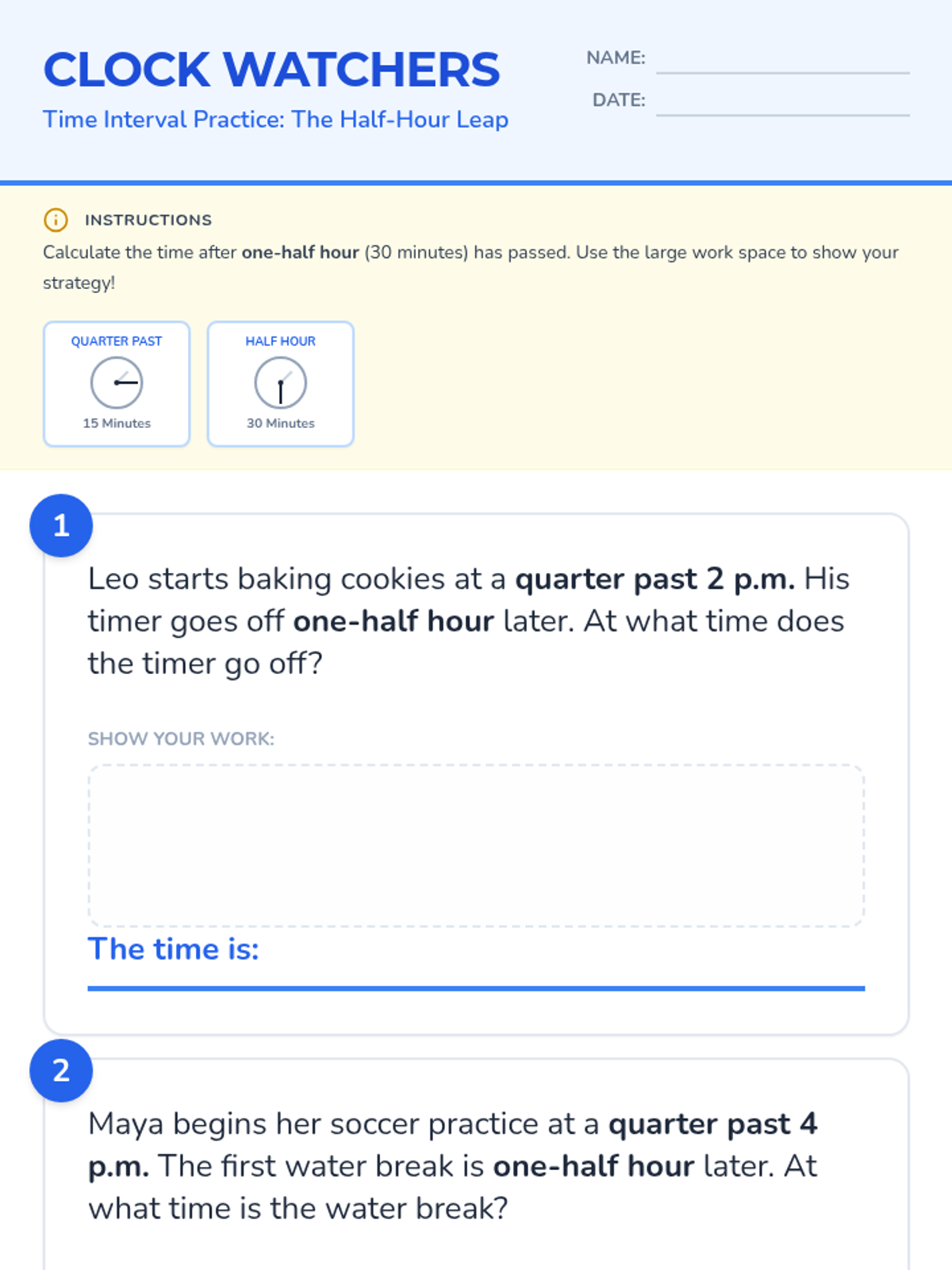
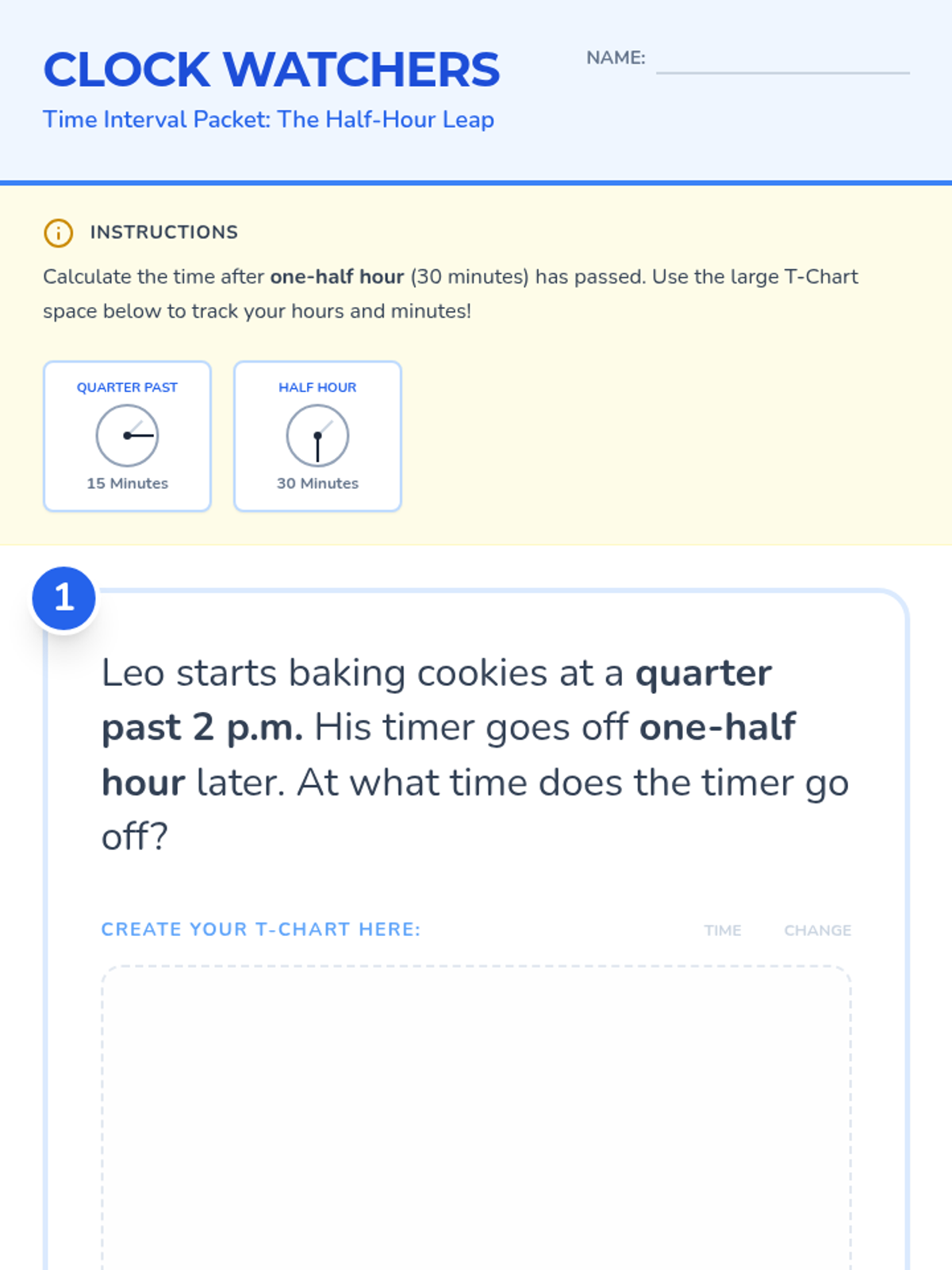
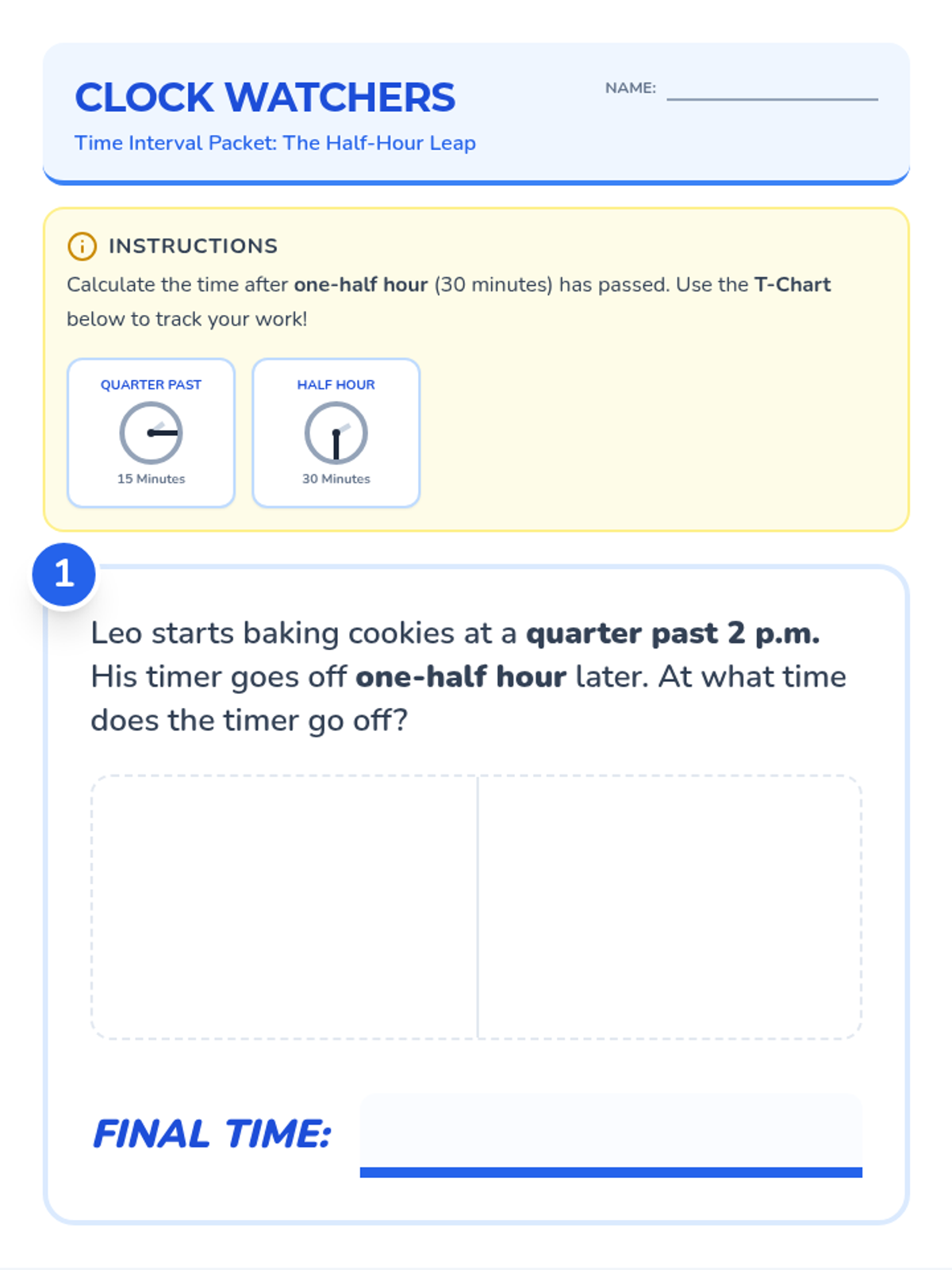
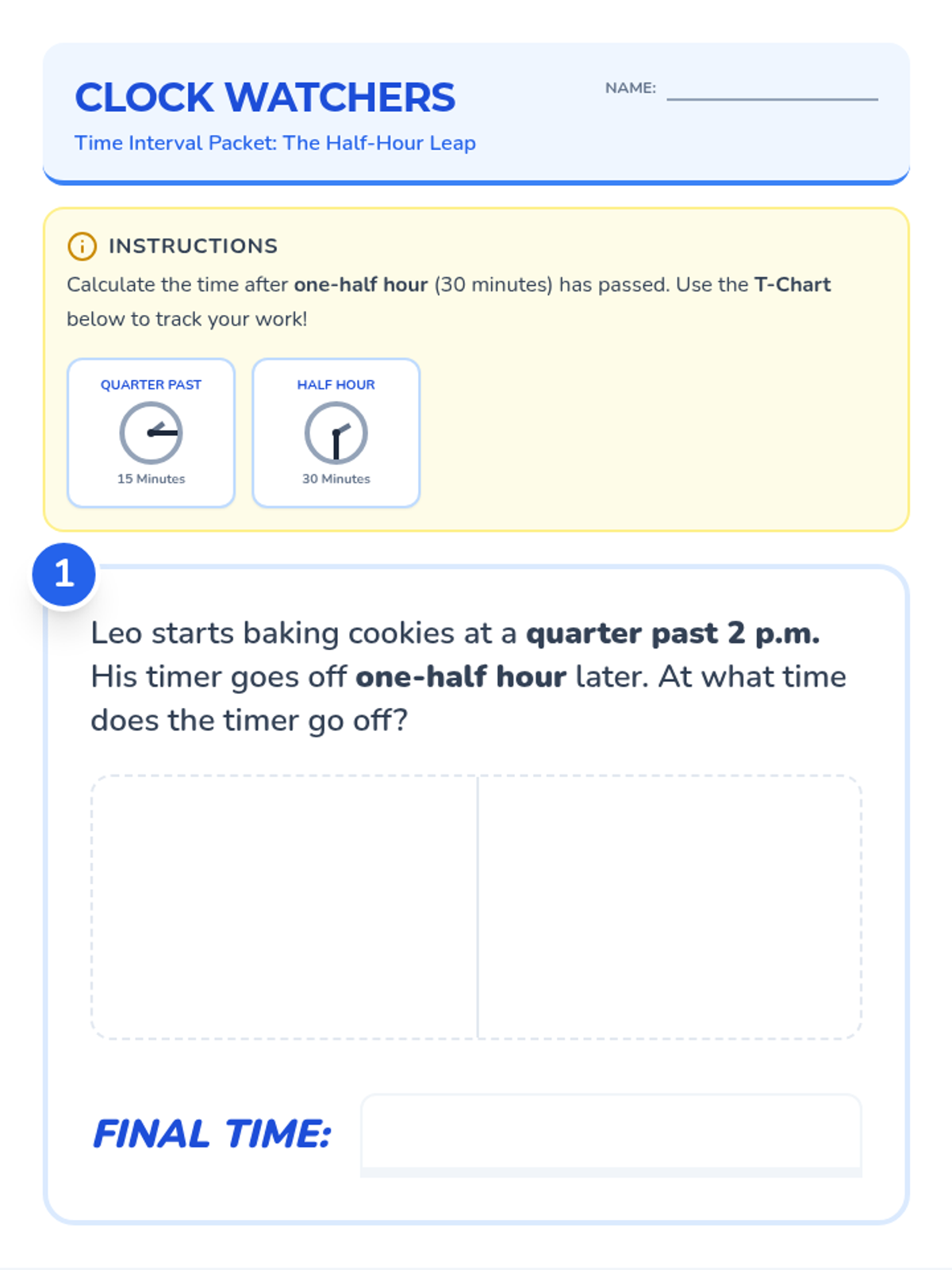
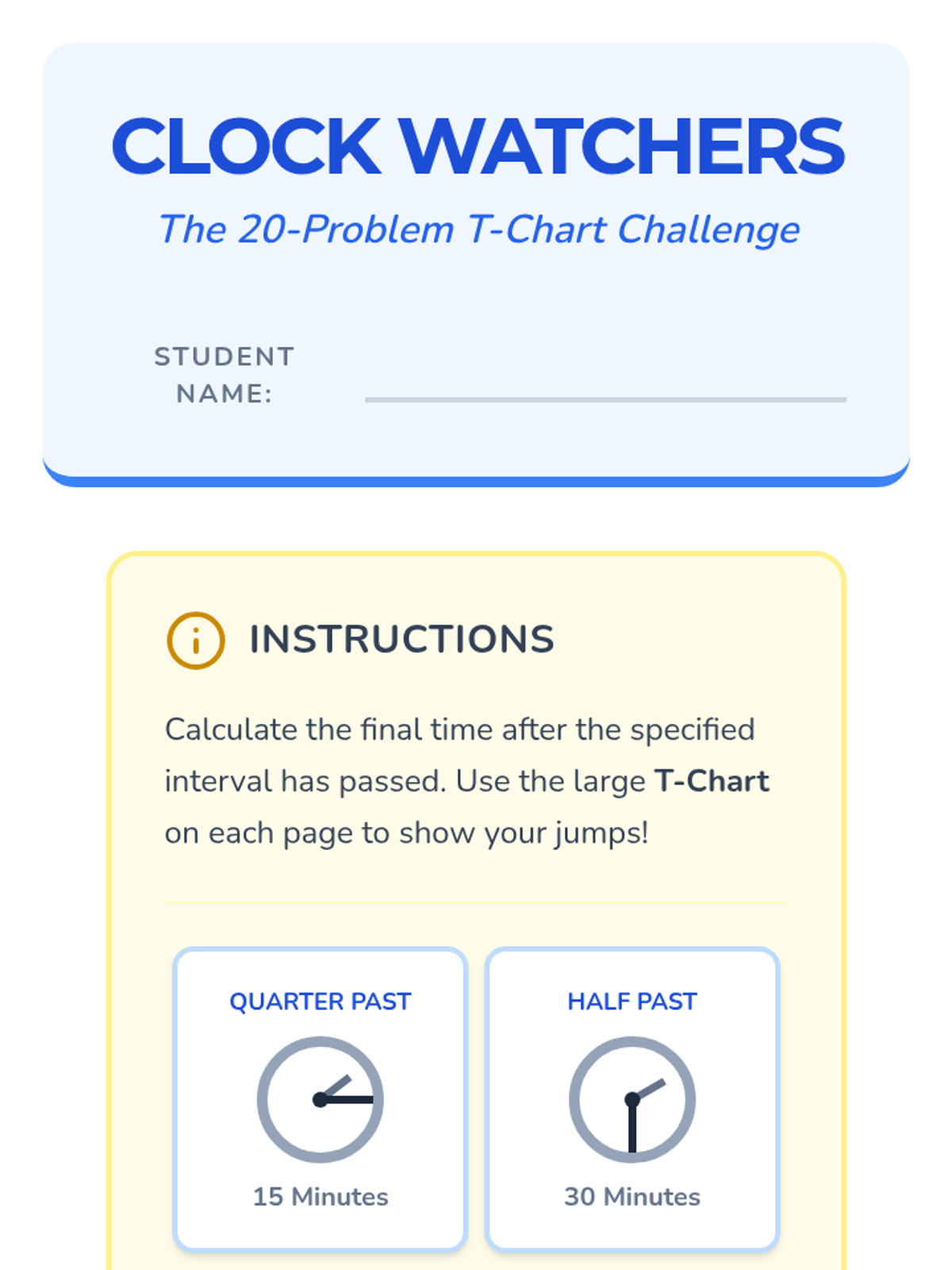
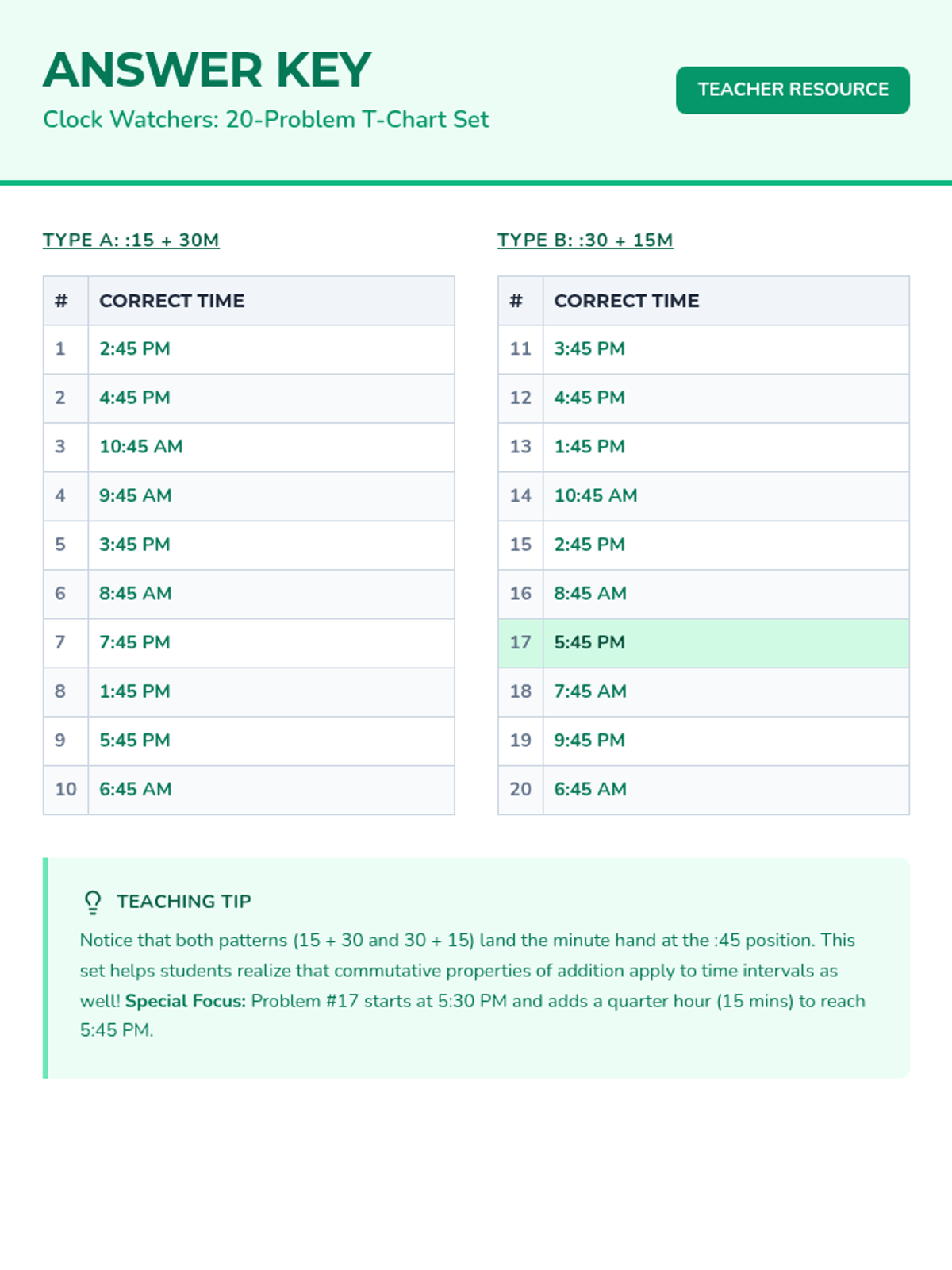
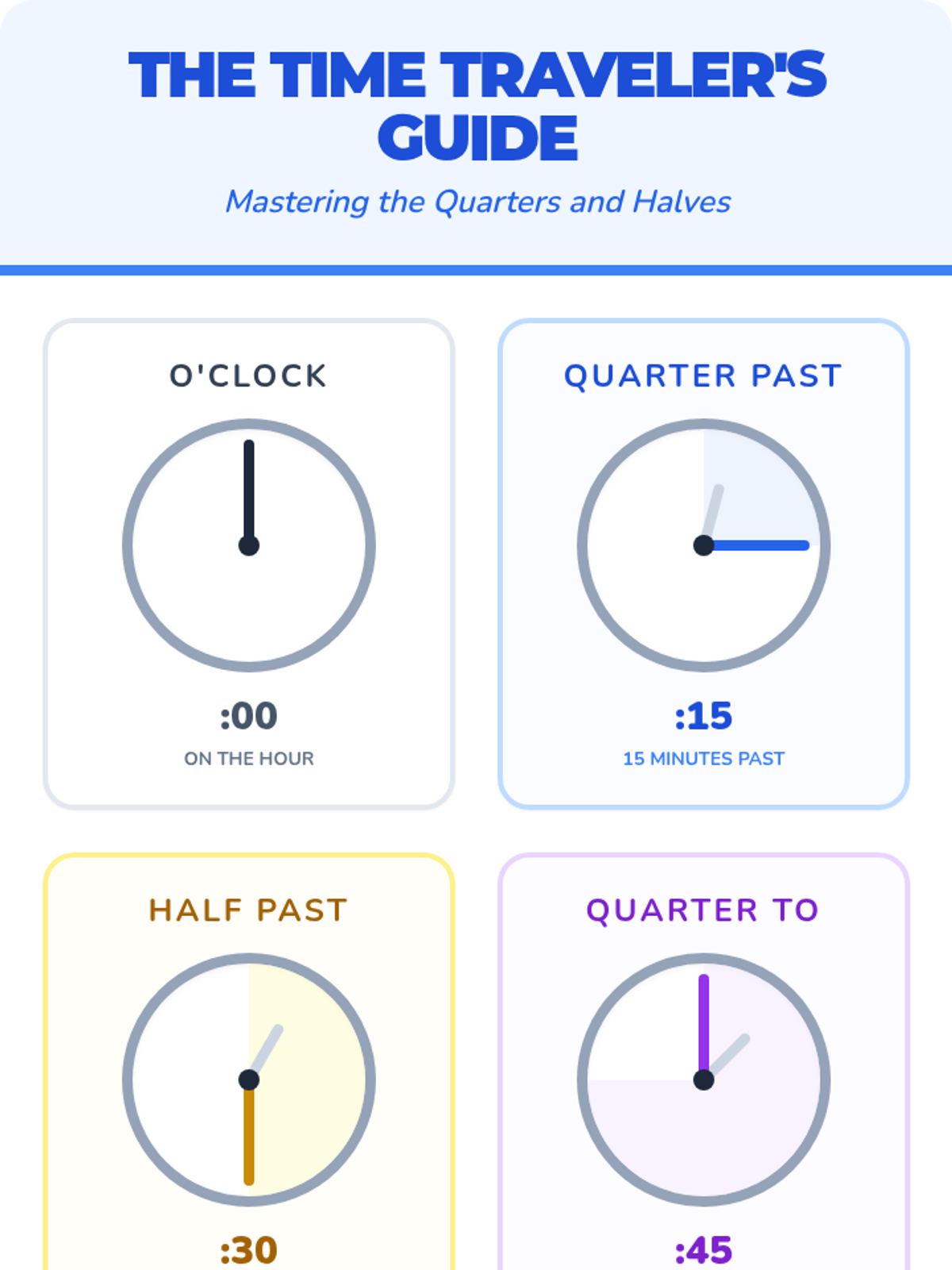
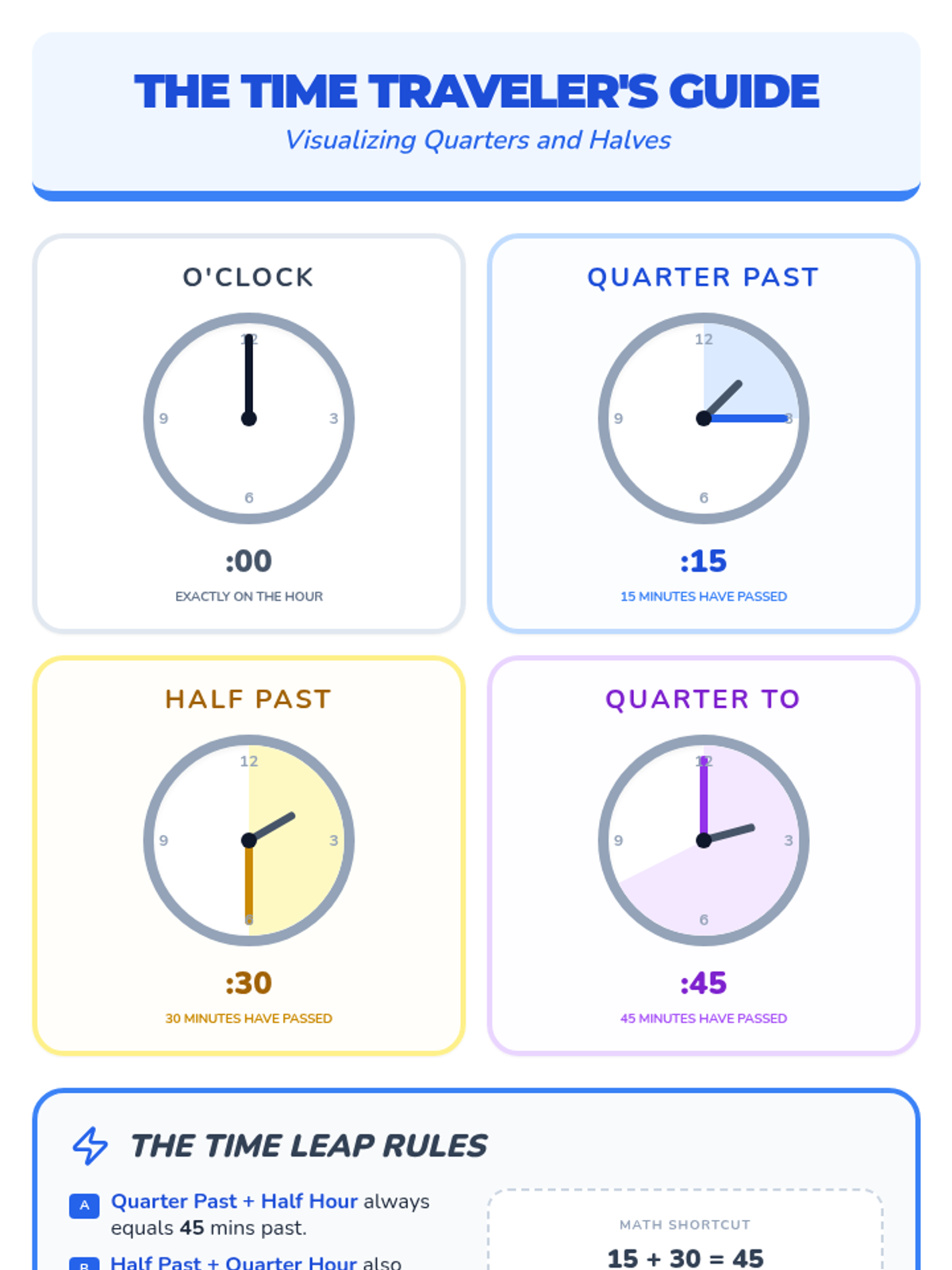
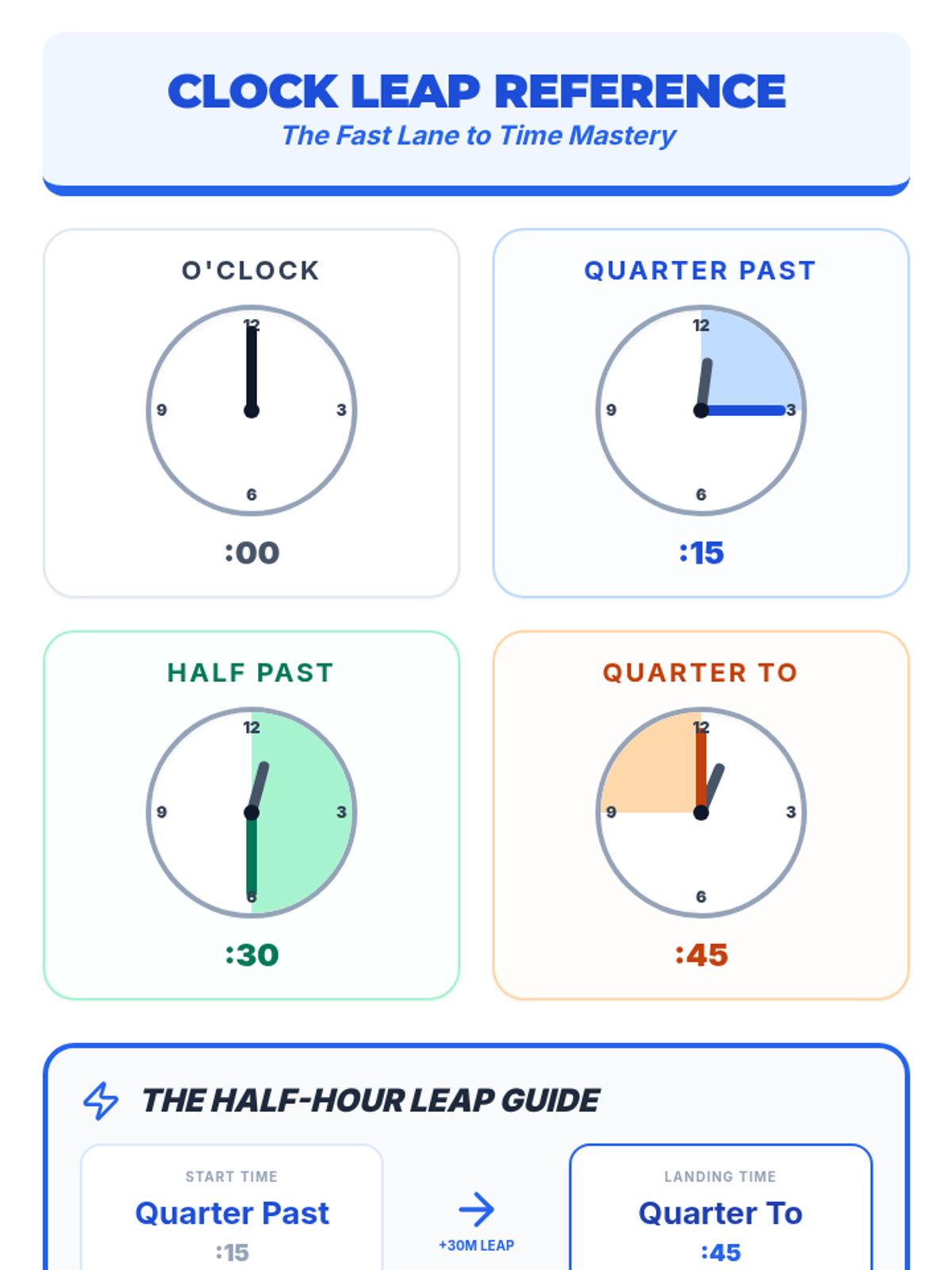
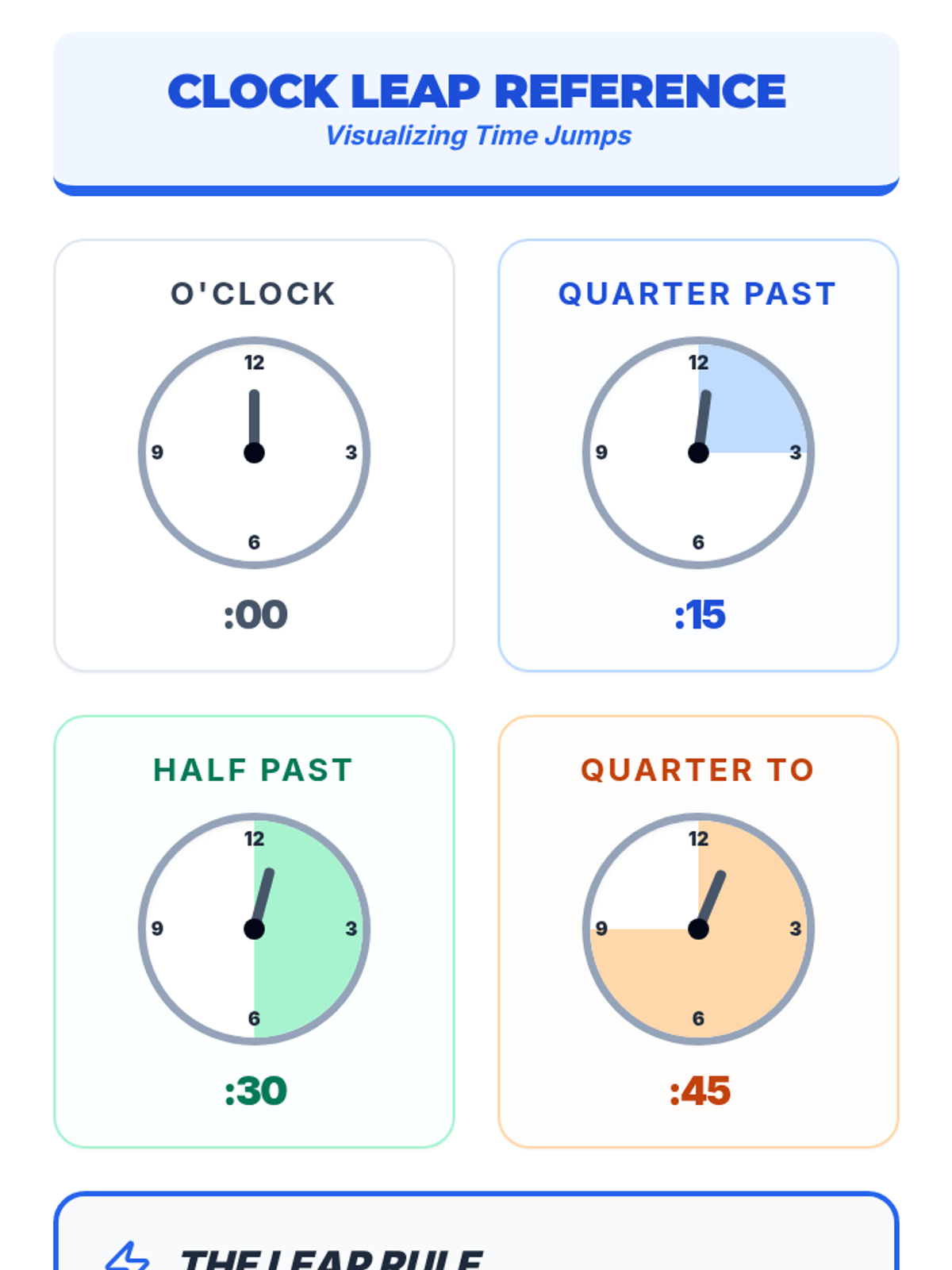
A practice set focused on calculating time intervals of thirty minutes starting from fifteen minutes past the hour. Students will apply their understanding of 'quarter past' and 'half hour' to solve real-world word problems.
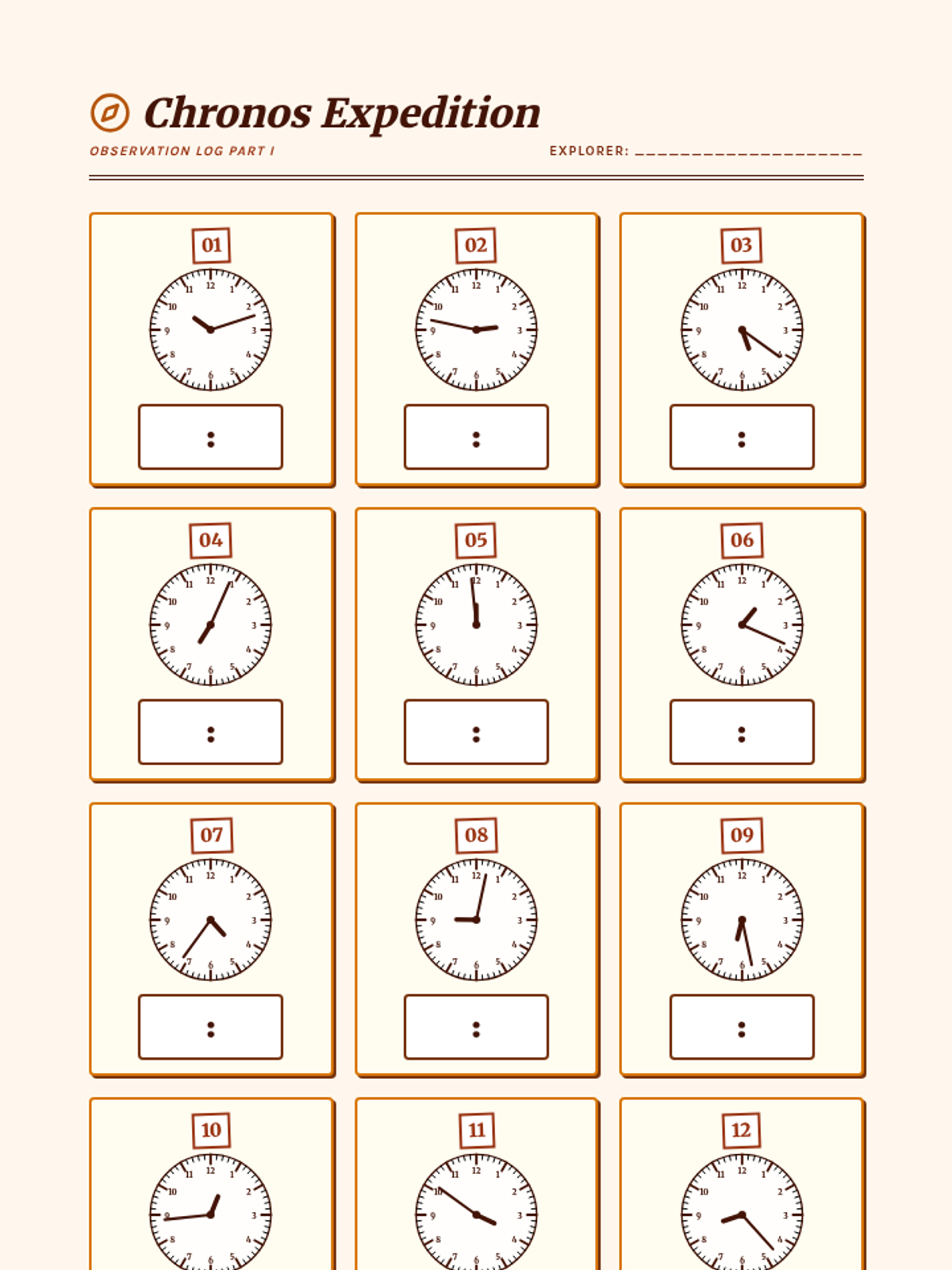
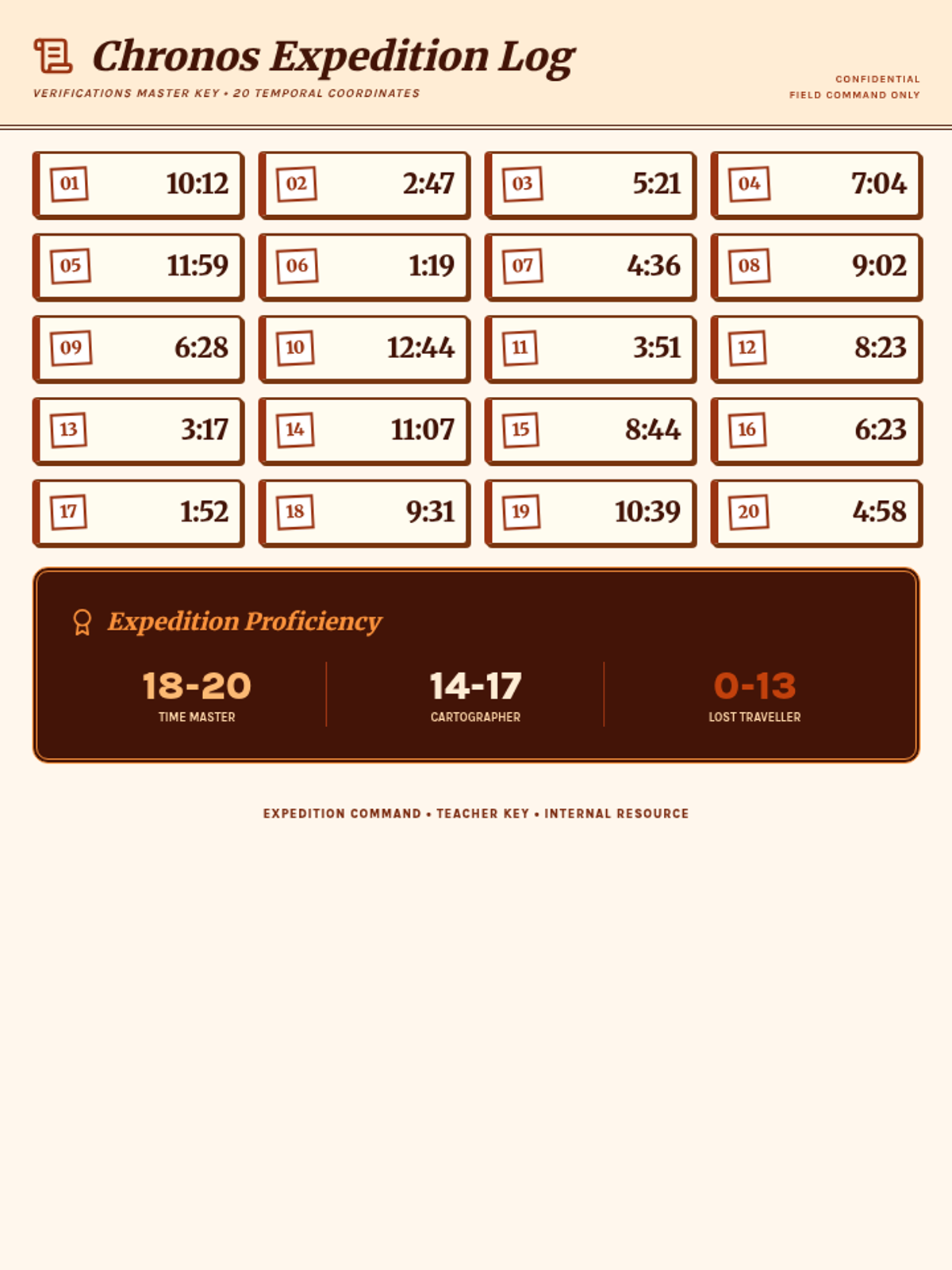
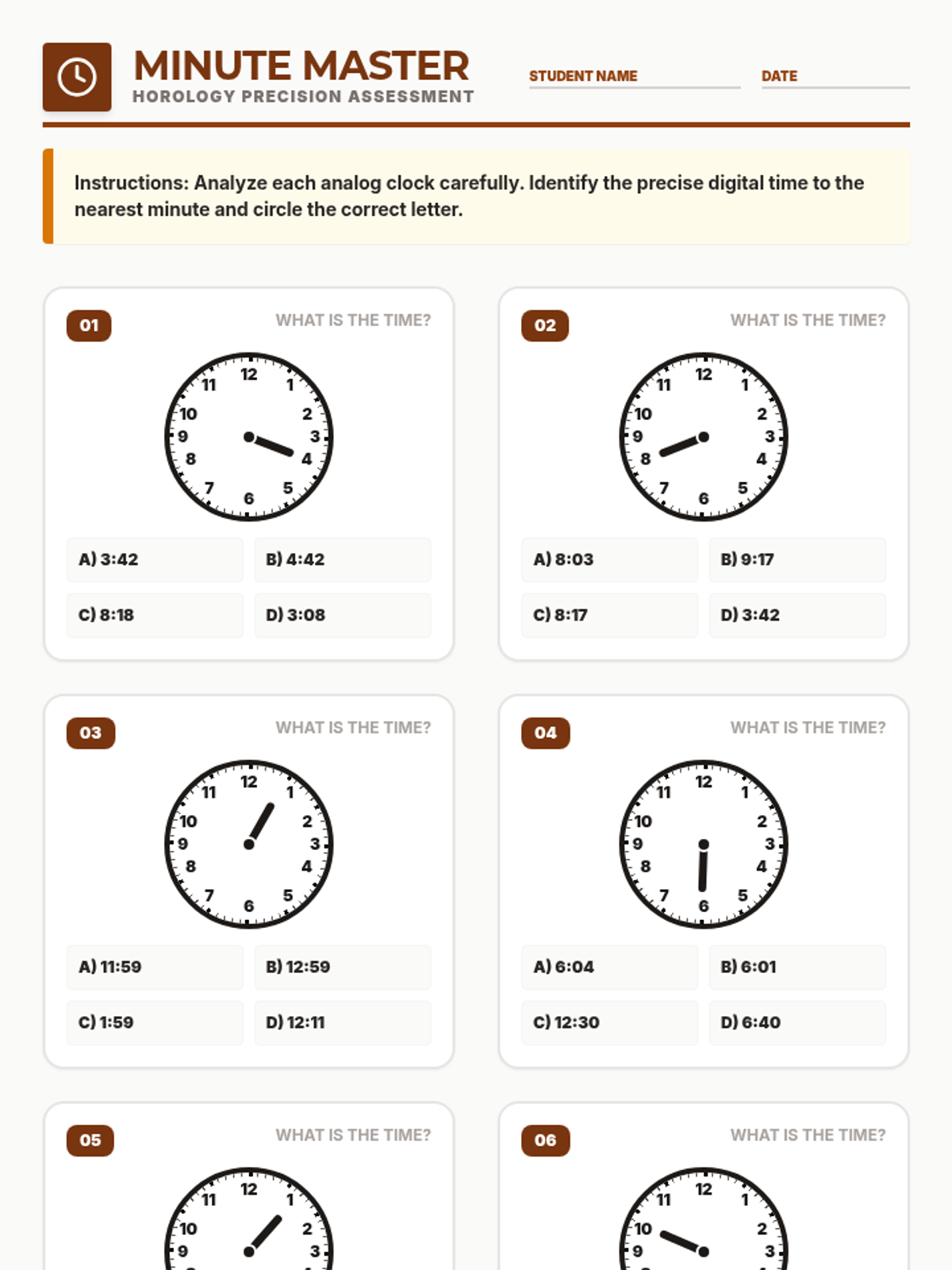
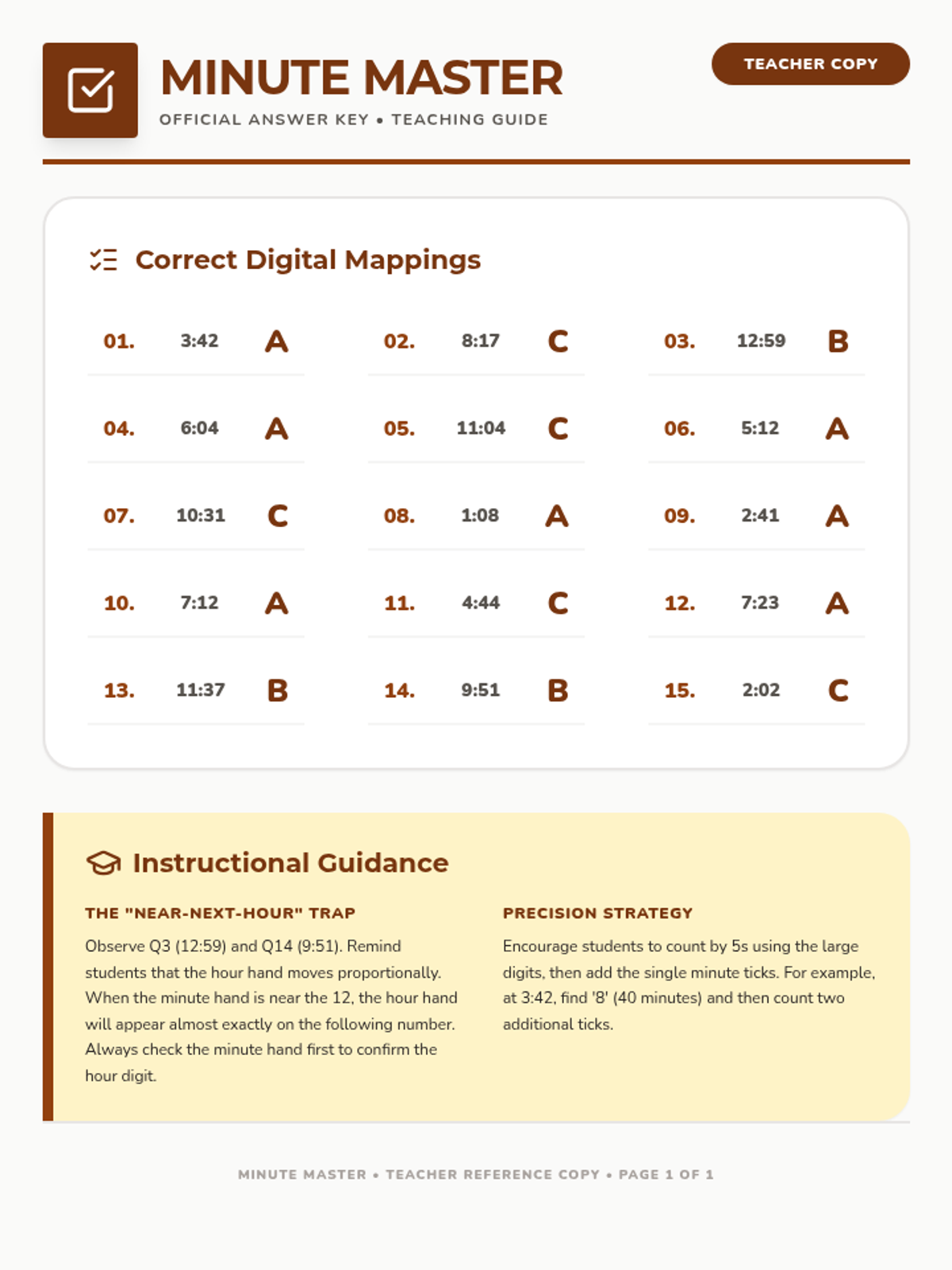
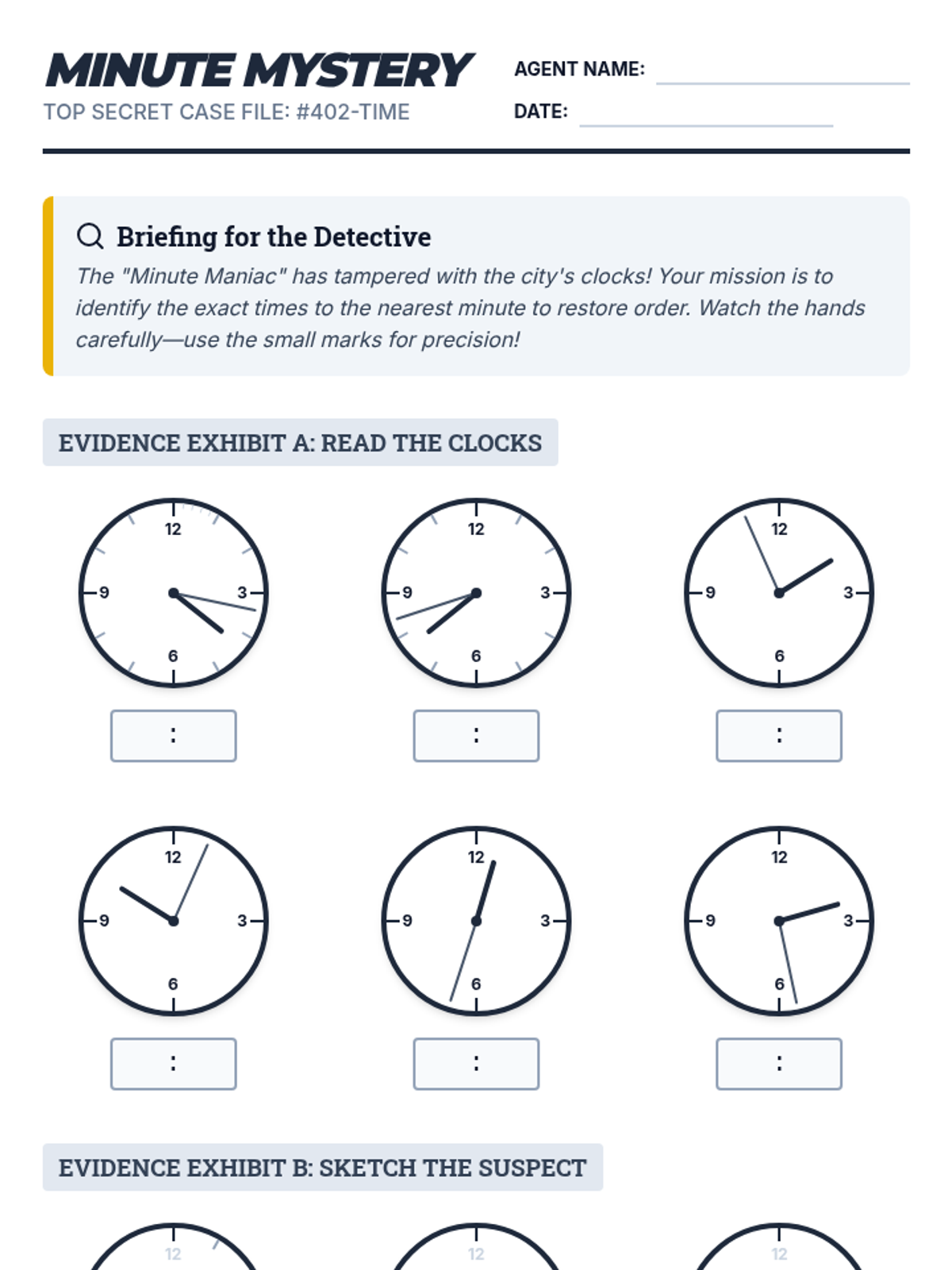
A comprehensive lesson on telling time to the exact minute, focusing on reading precise analog clocks and identifying correct digital representations.
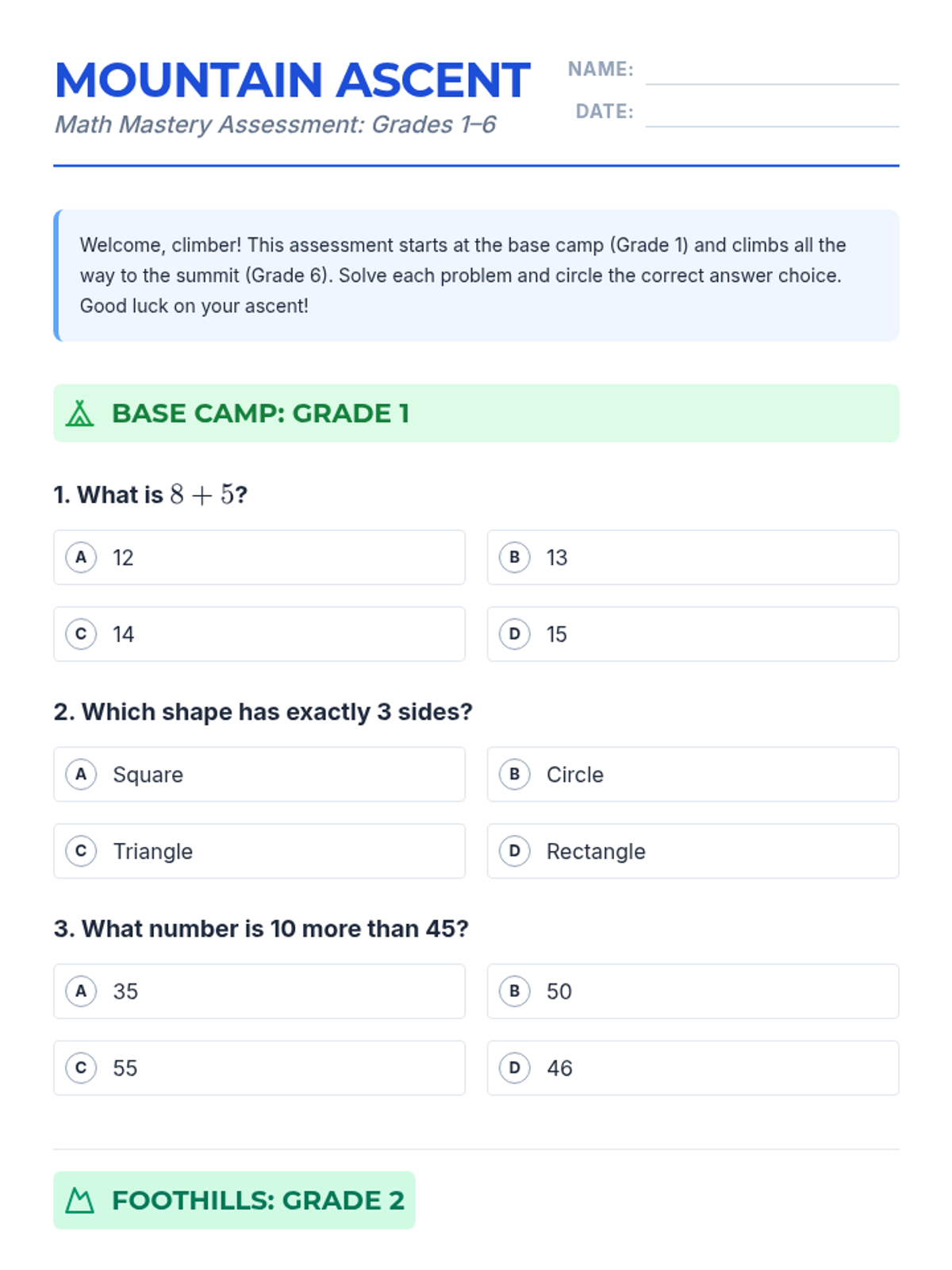
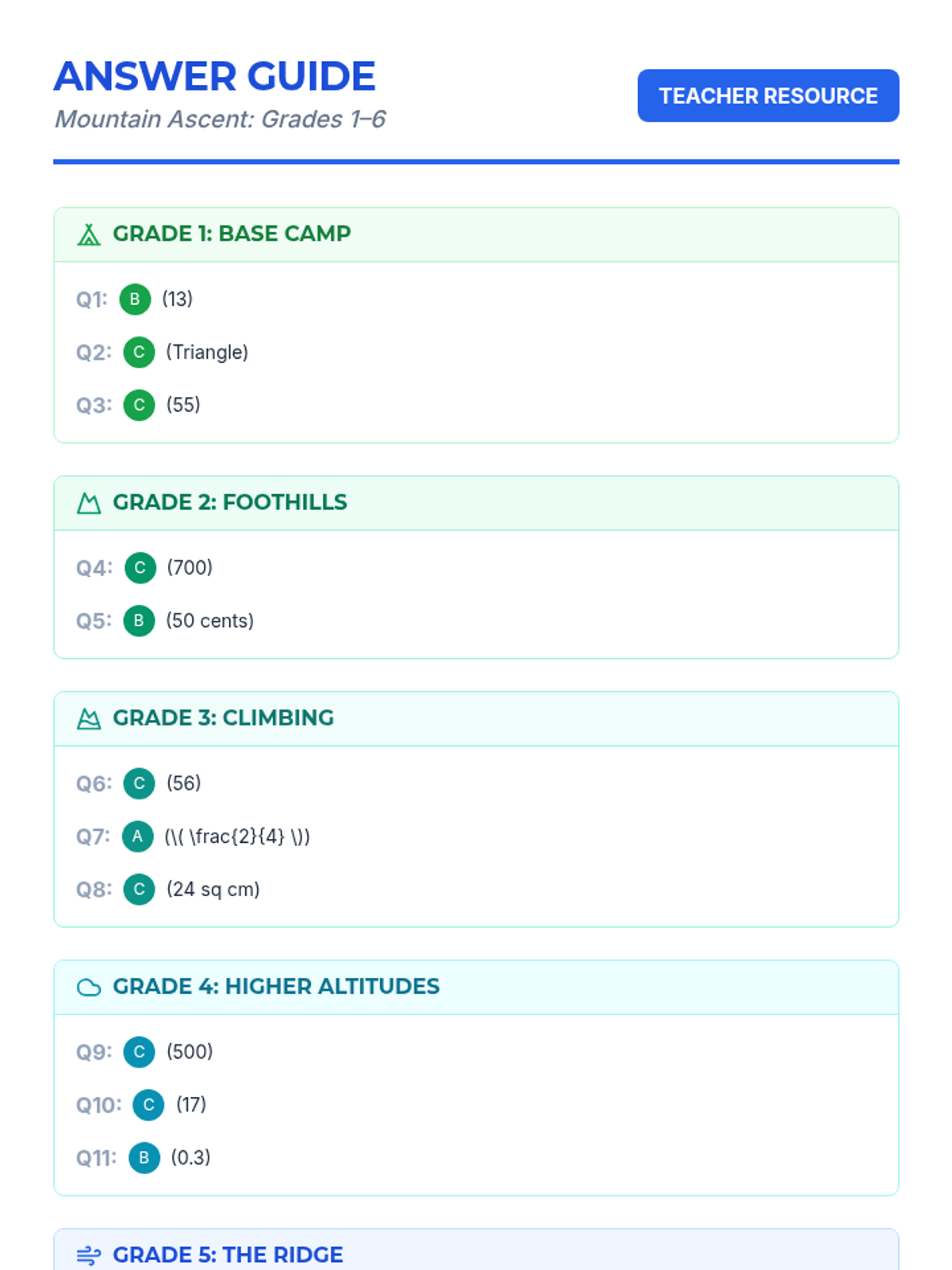
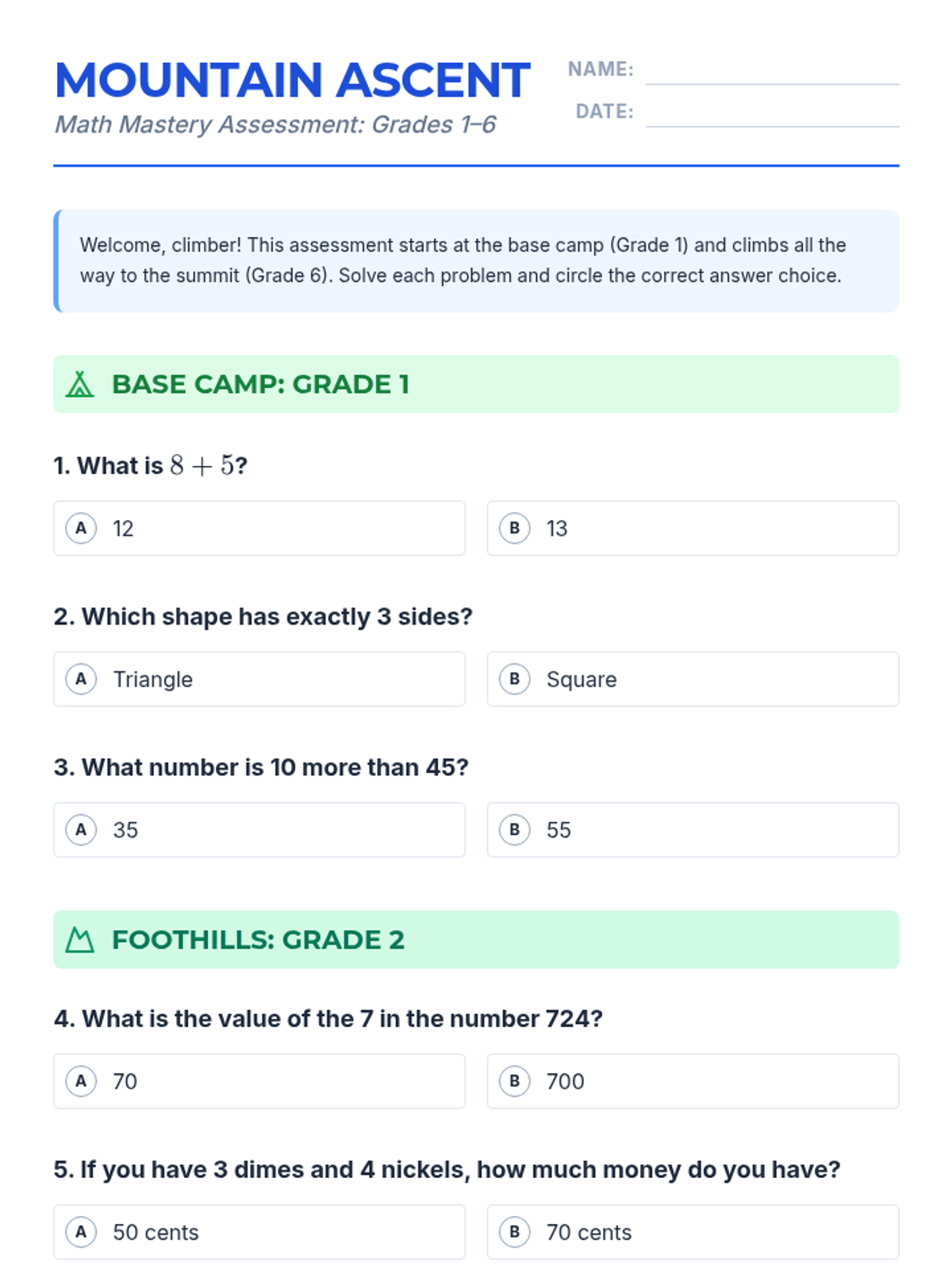
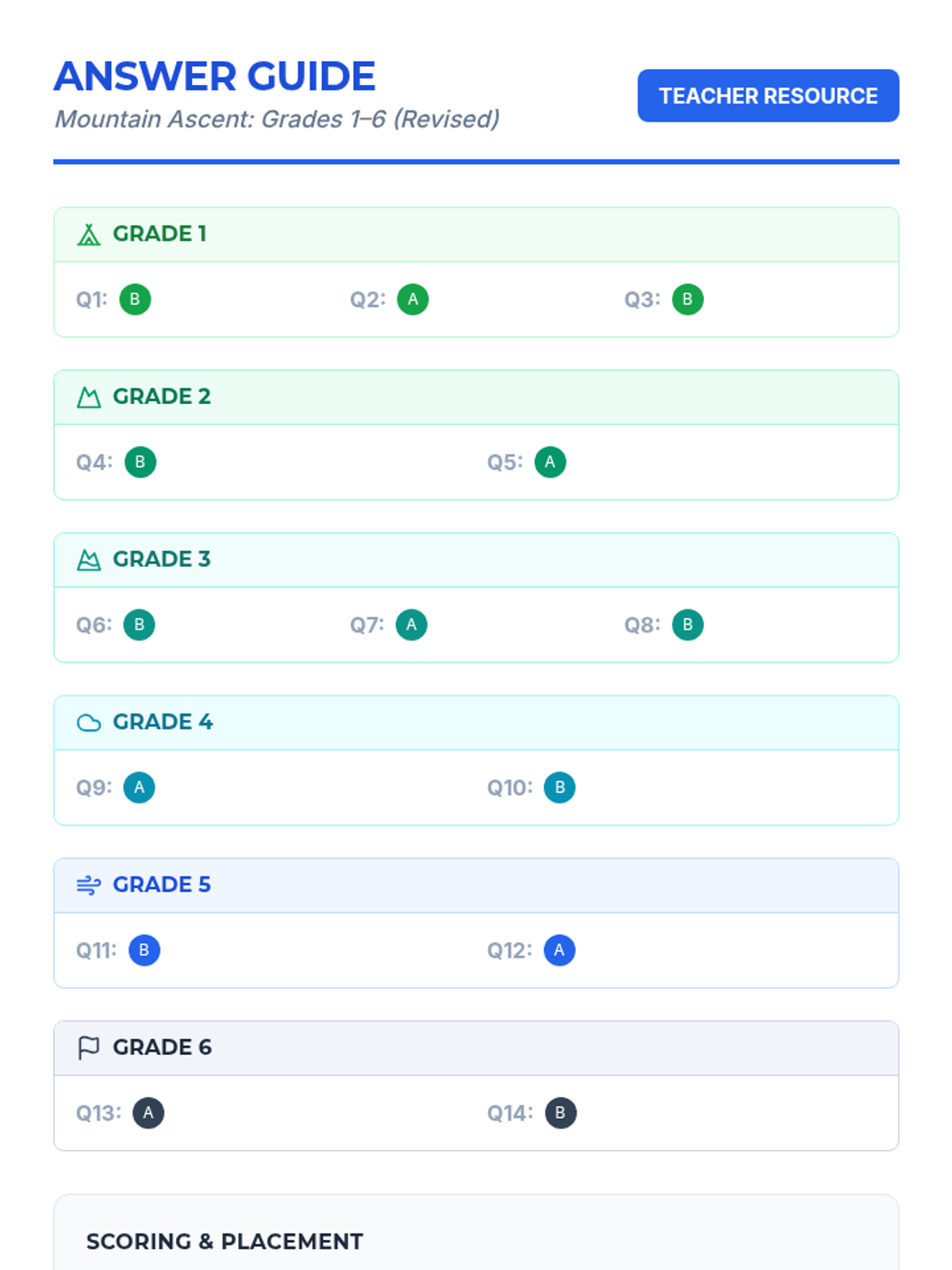
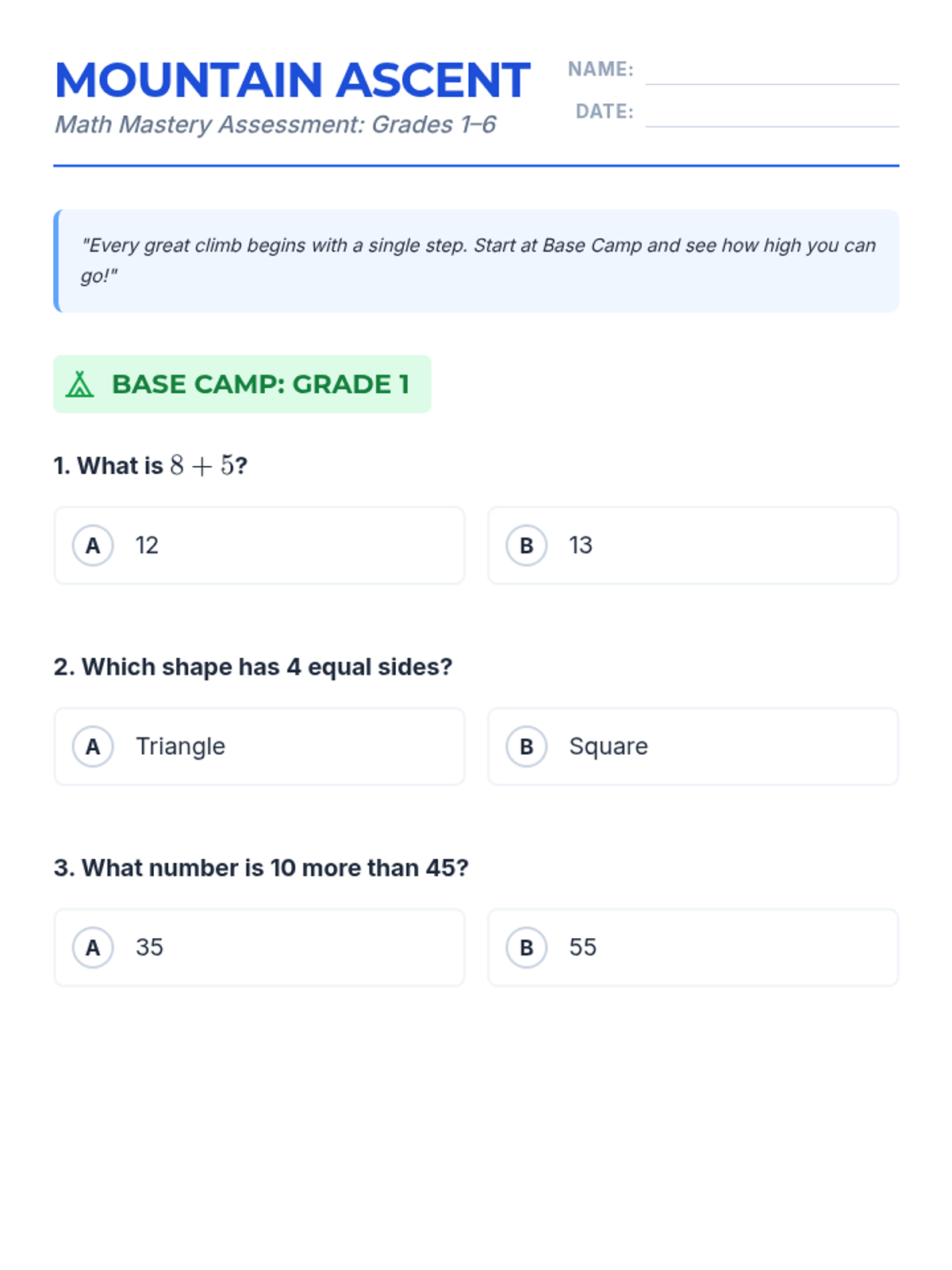
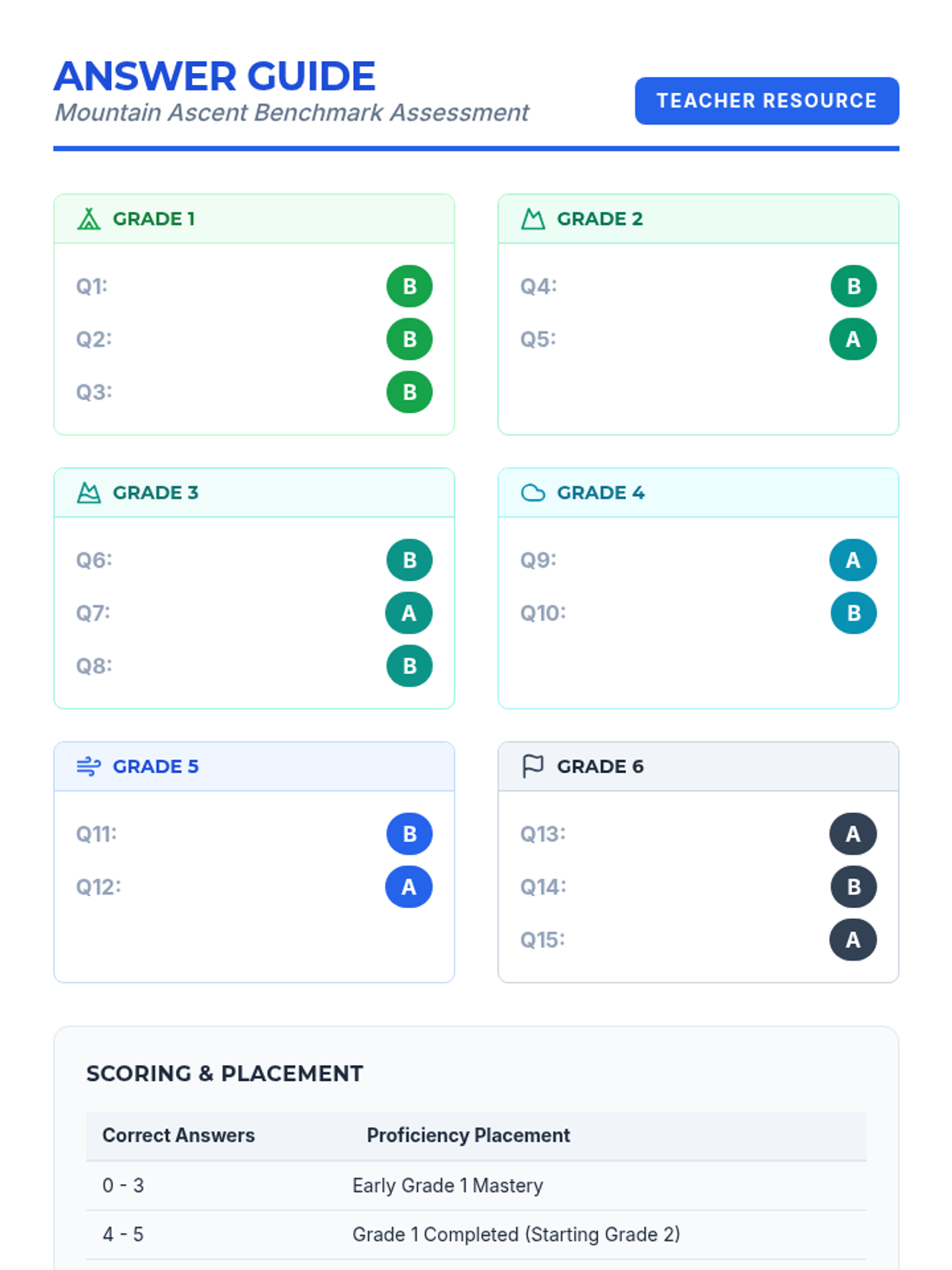
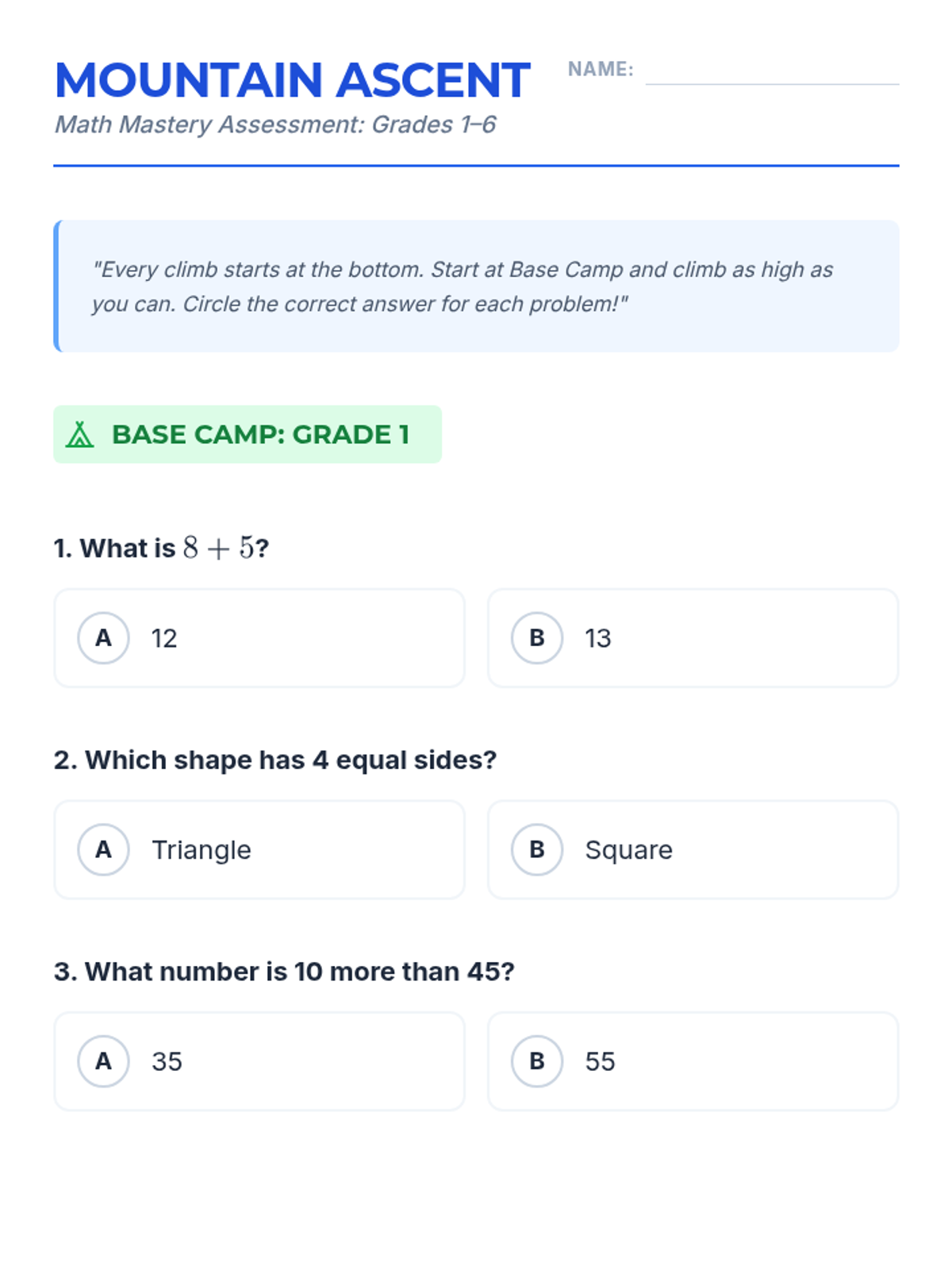
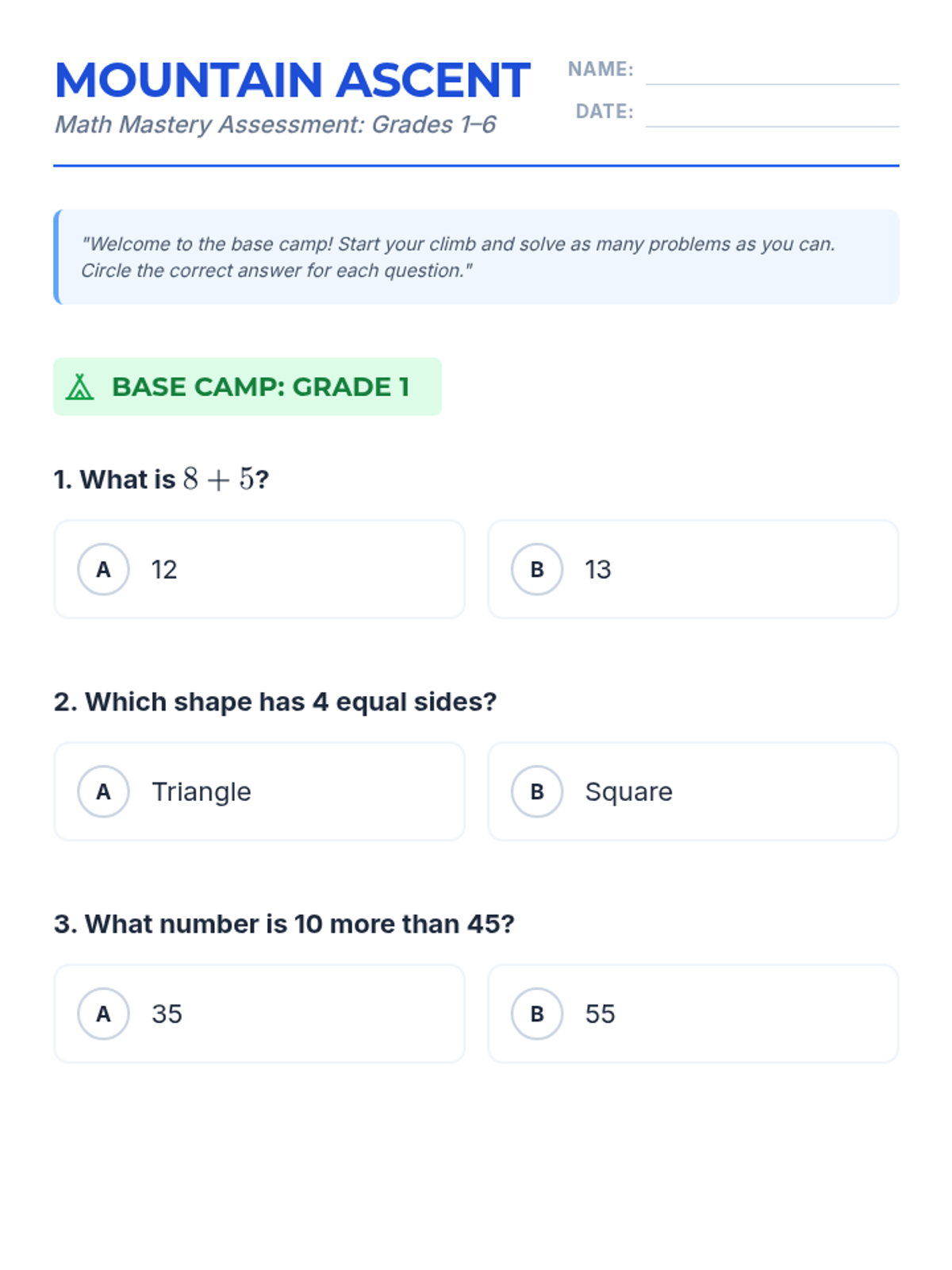
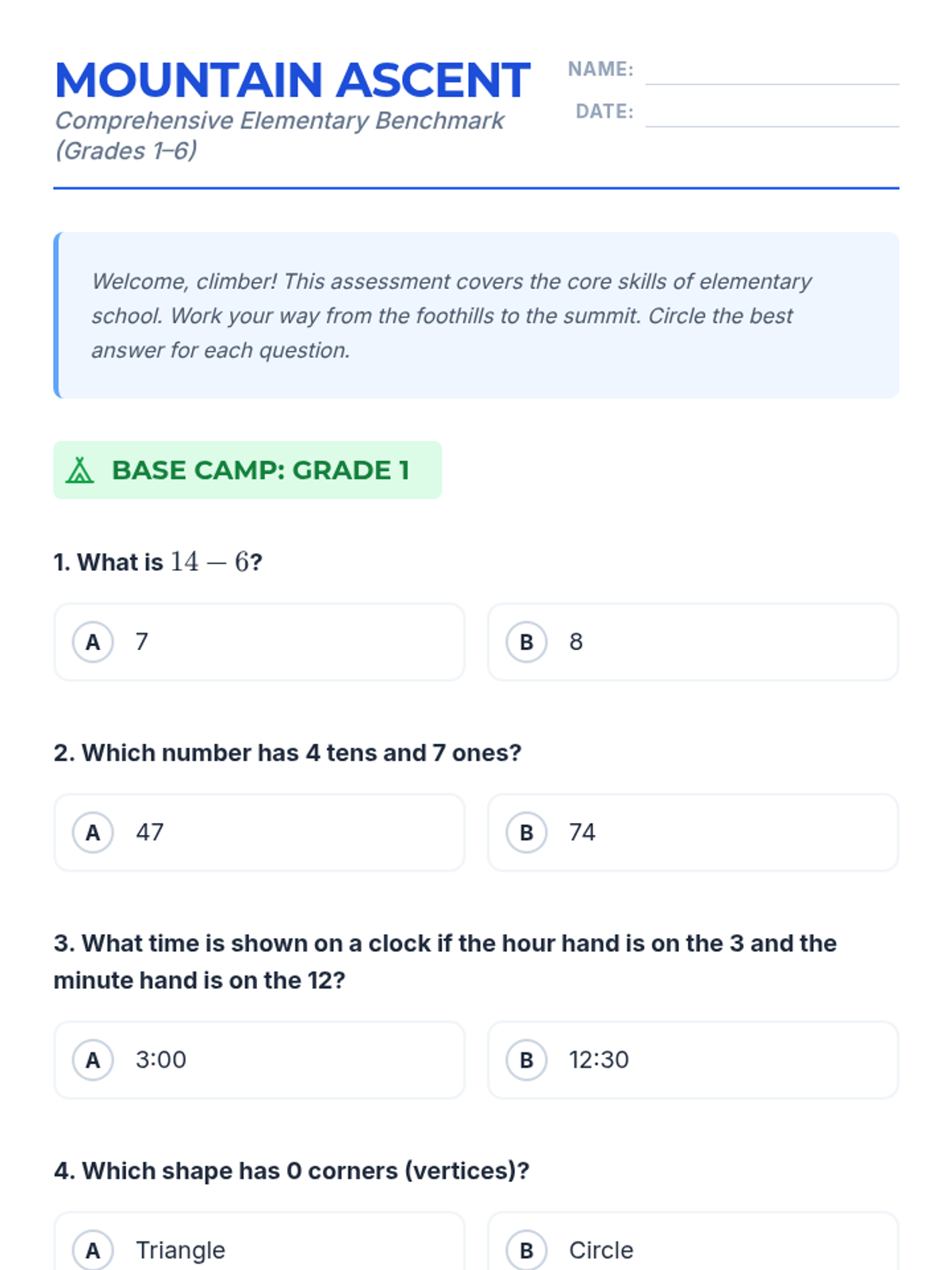
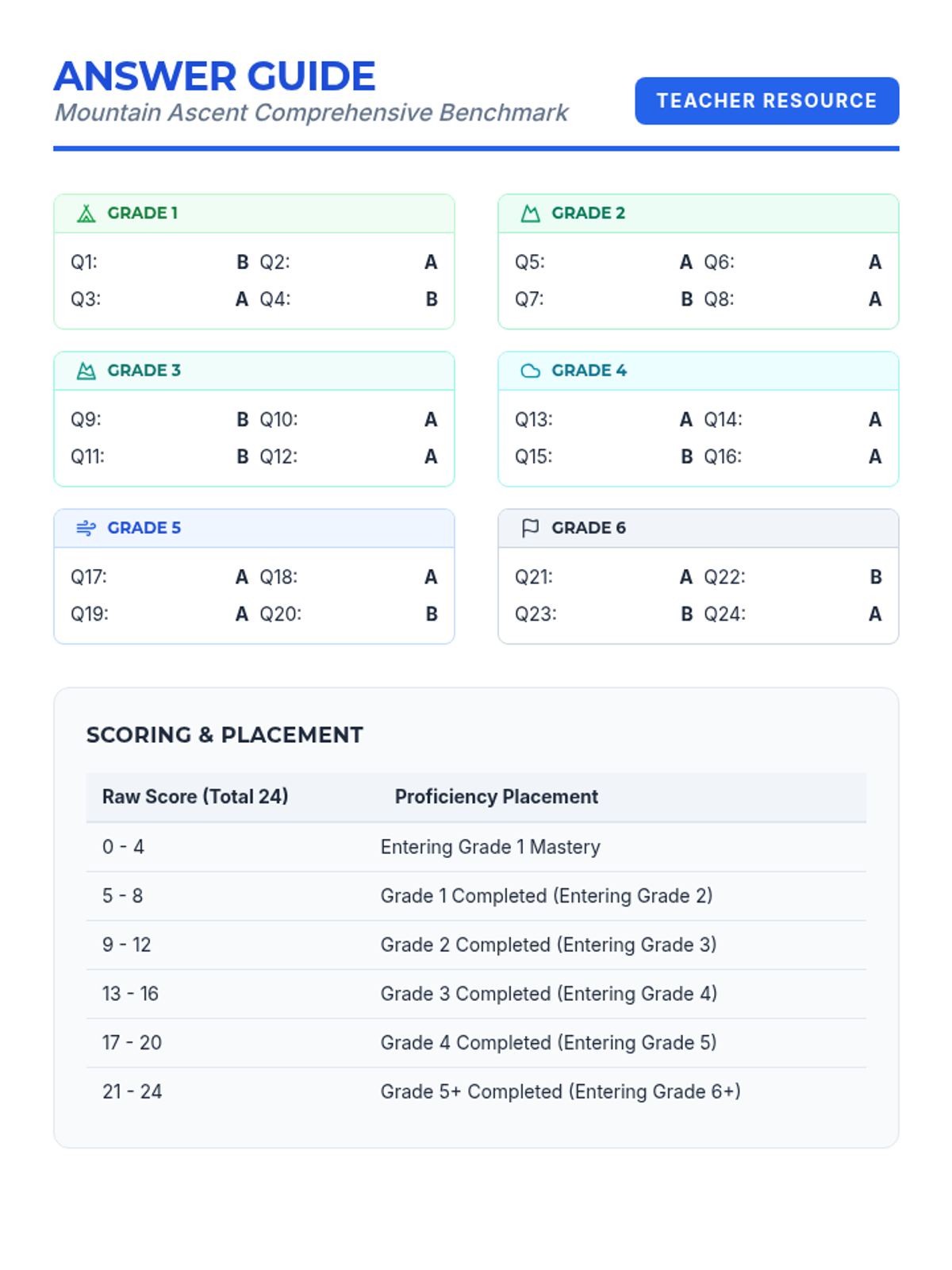
A comprehensive math benchmark assessment covering key standards from Grade 1 through Grade 6, designed to track student progress and identify skill gaps.
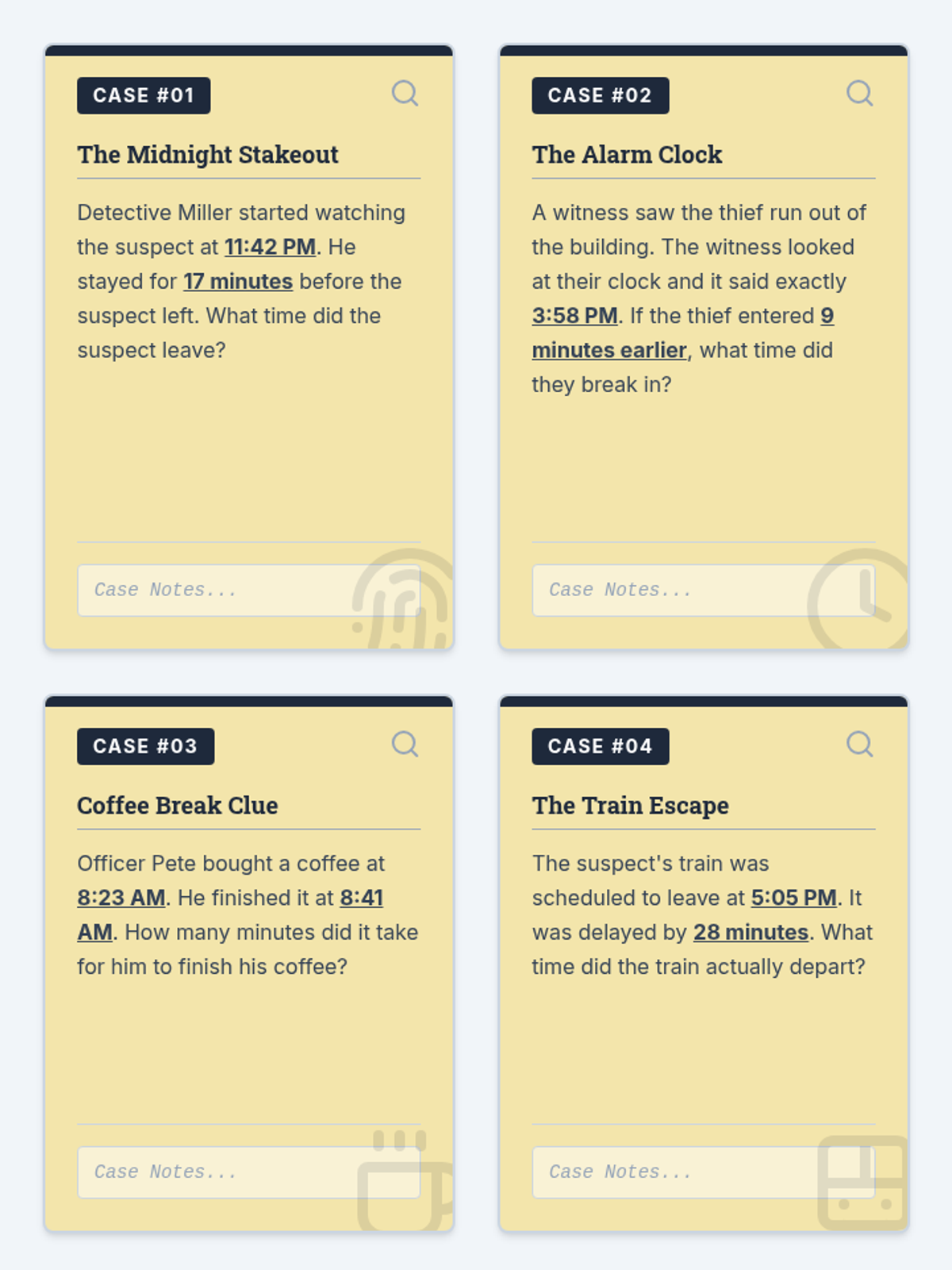
A comprehensive lesson focused on telling time to the exact minute, featuring visual clock identification and word problems.
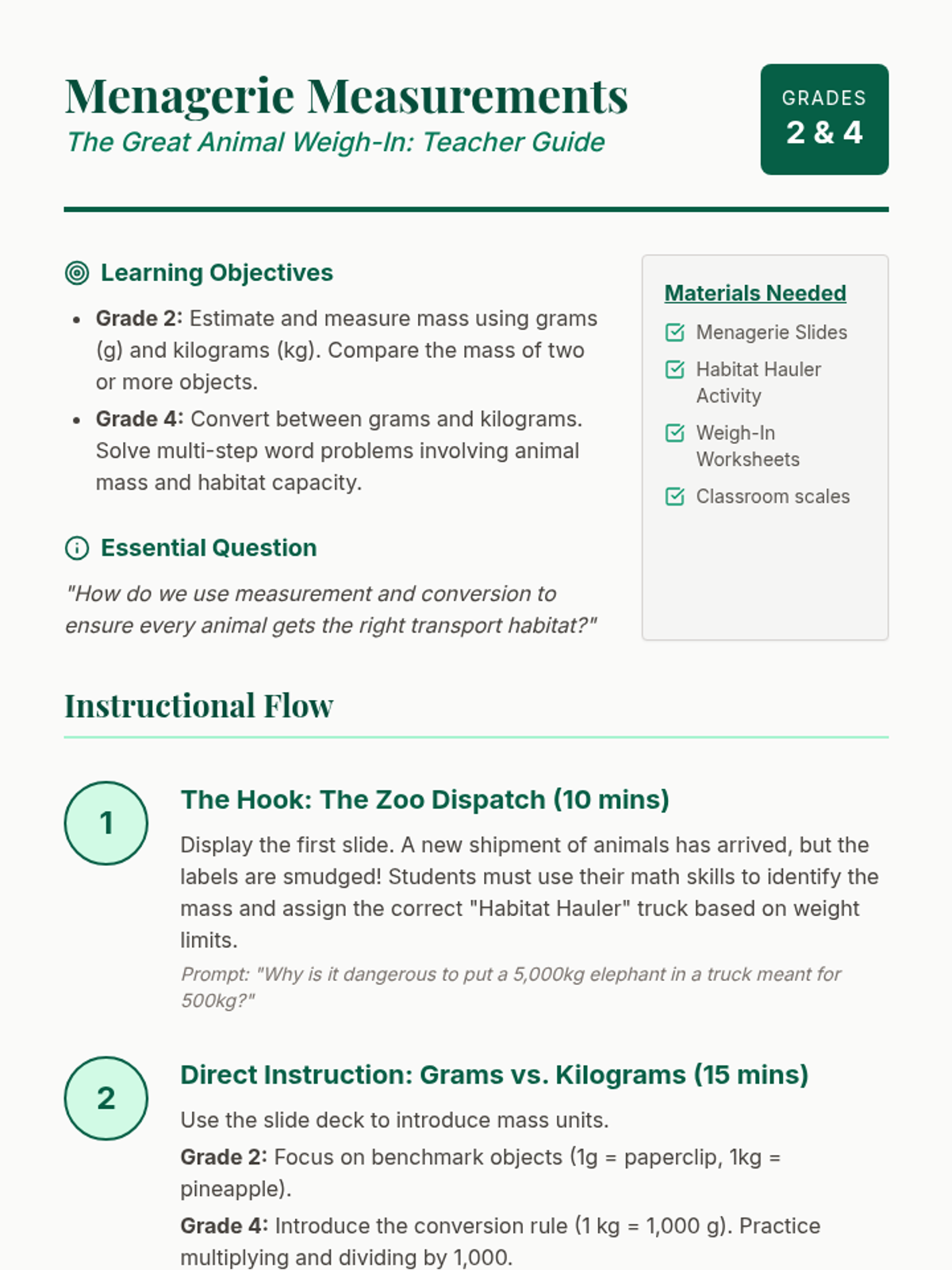
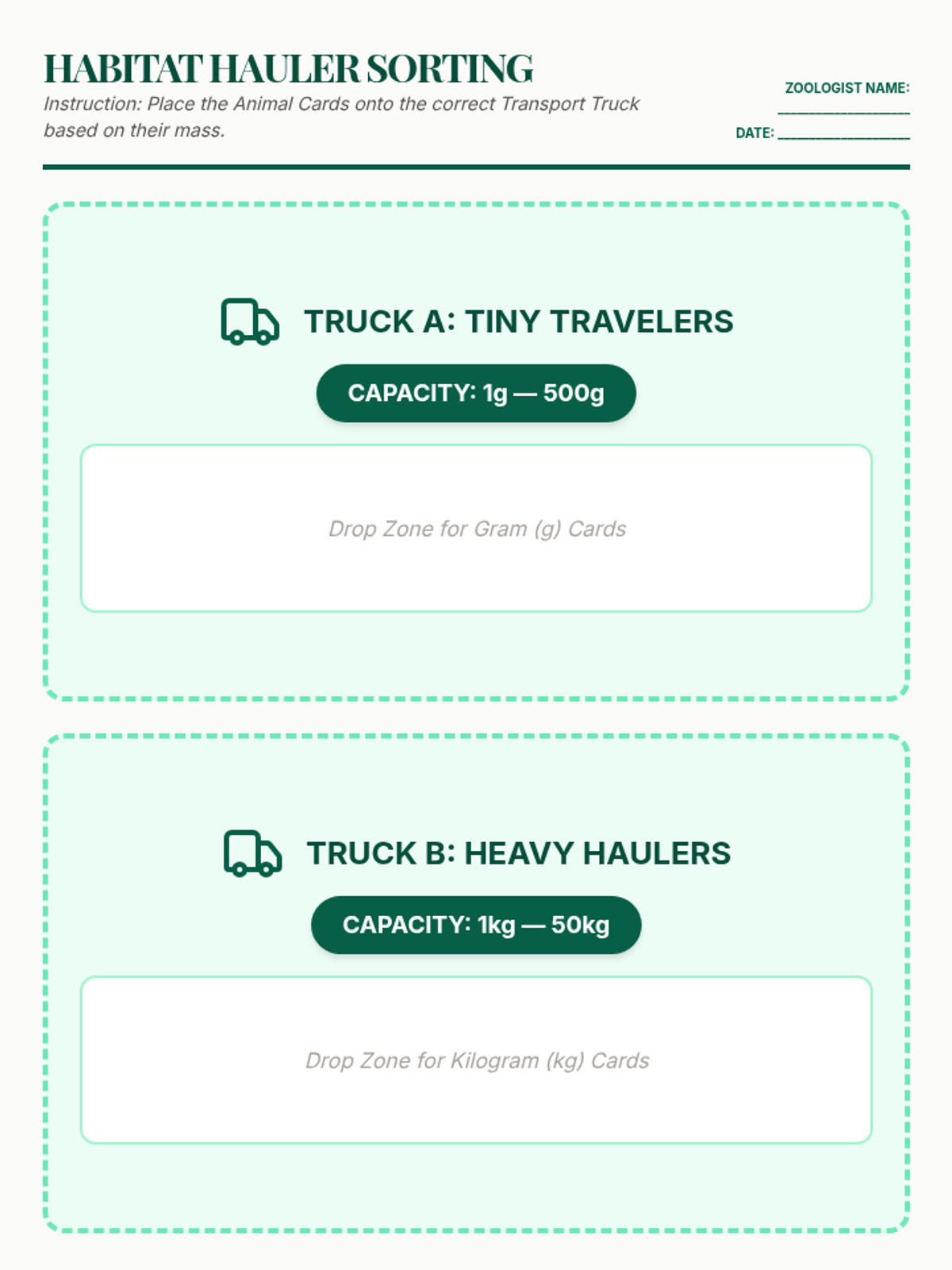
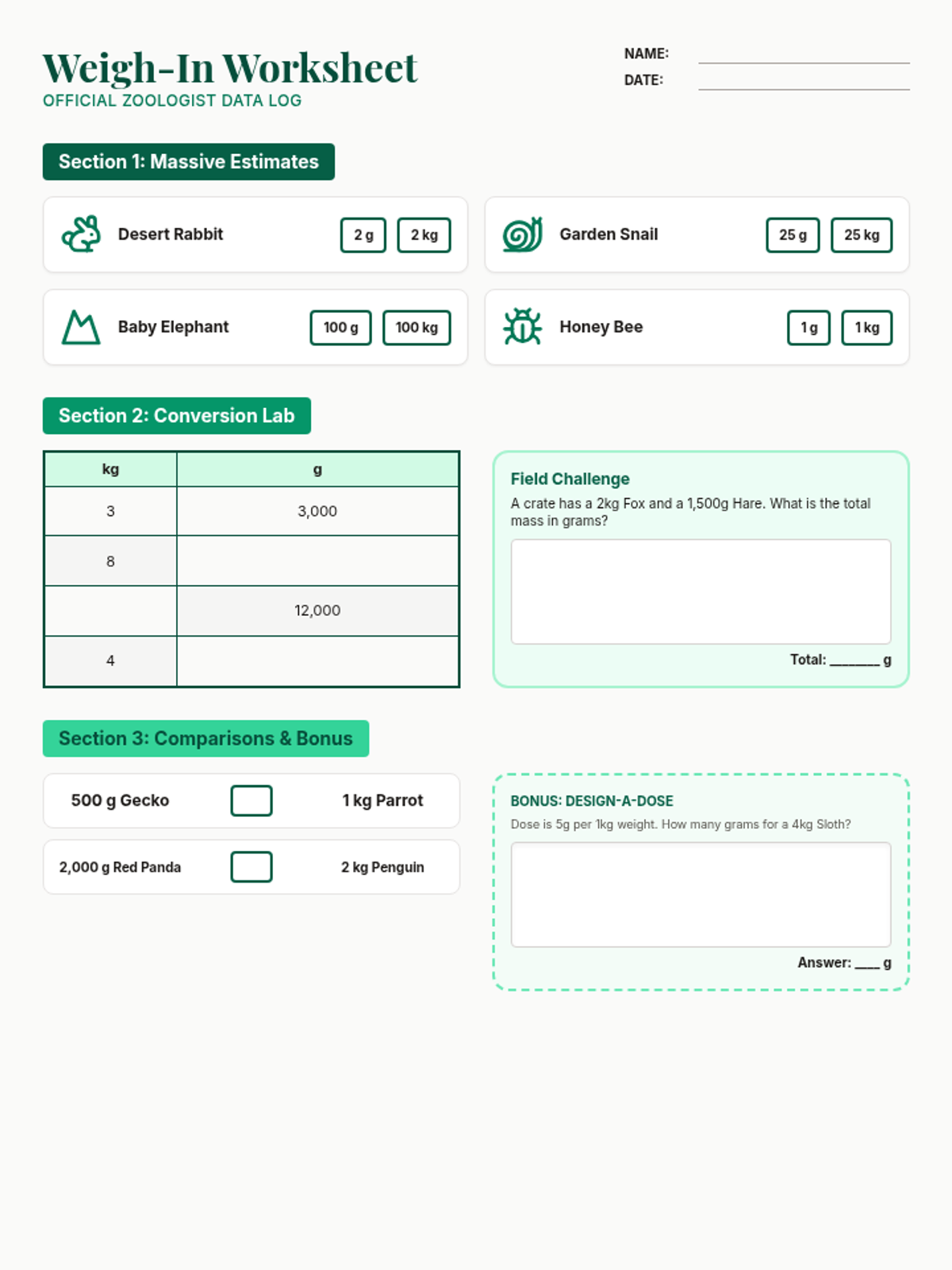
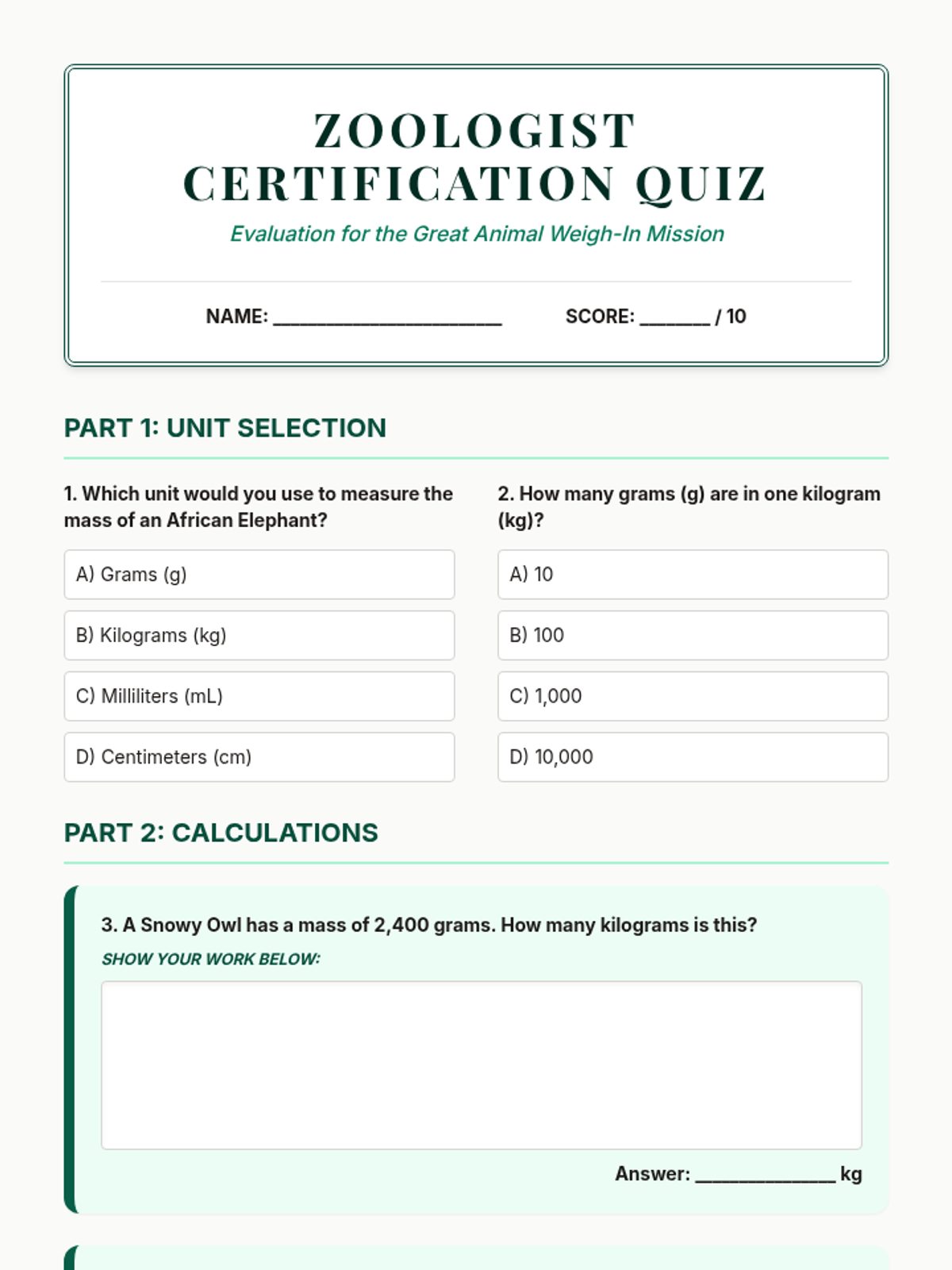
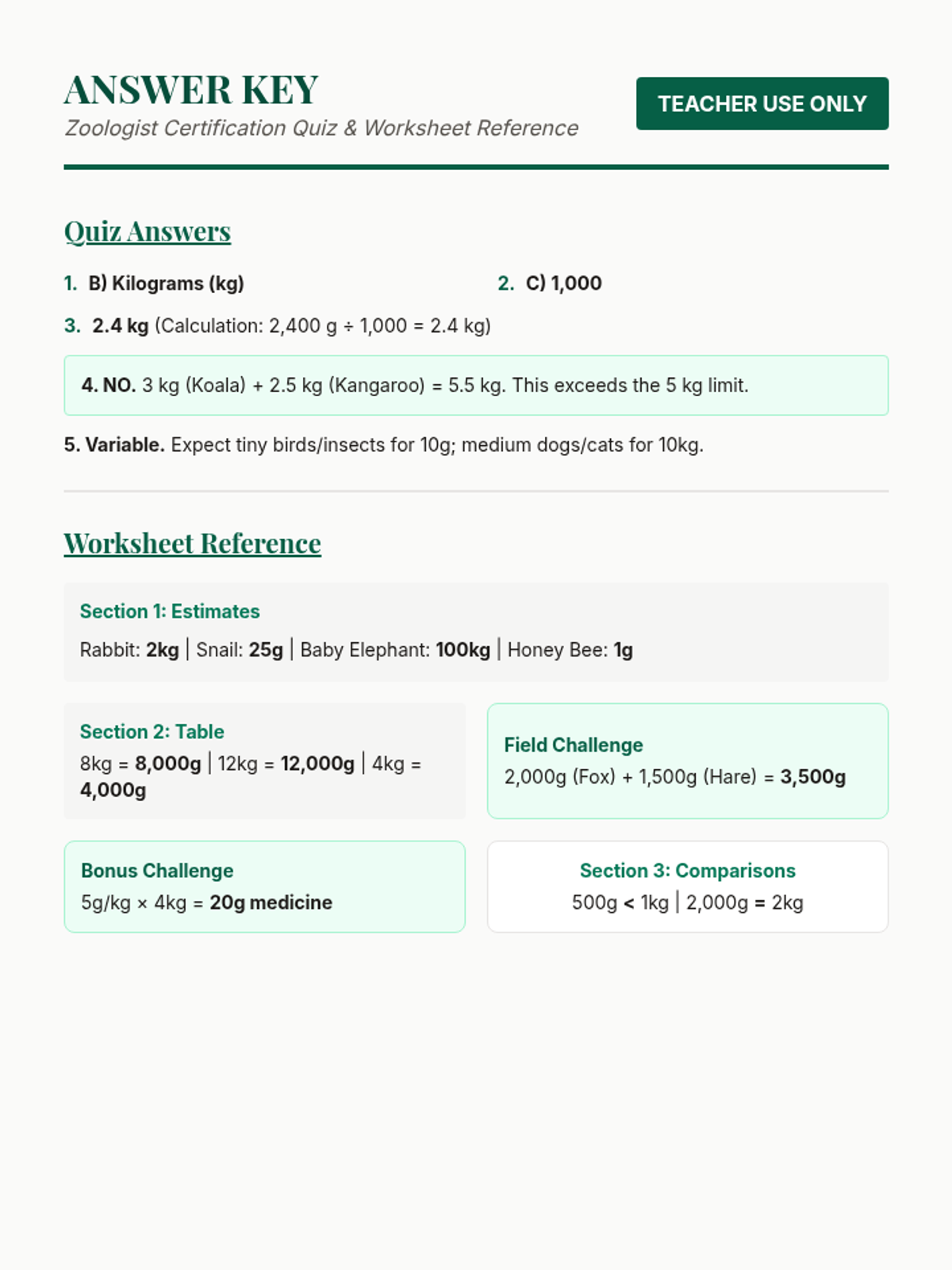
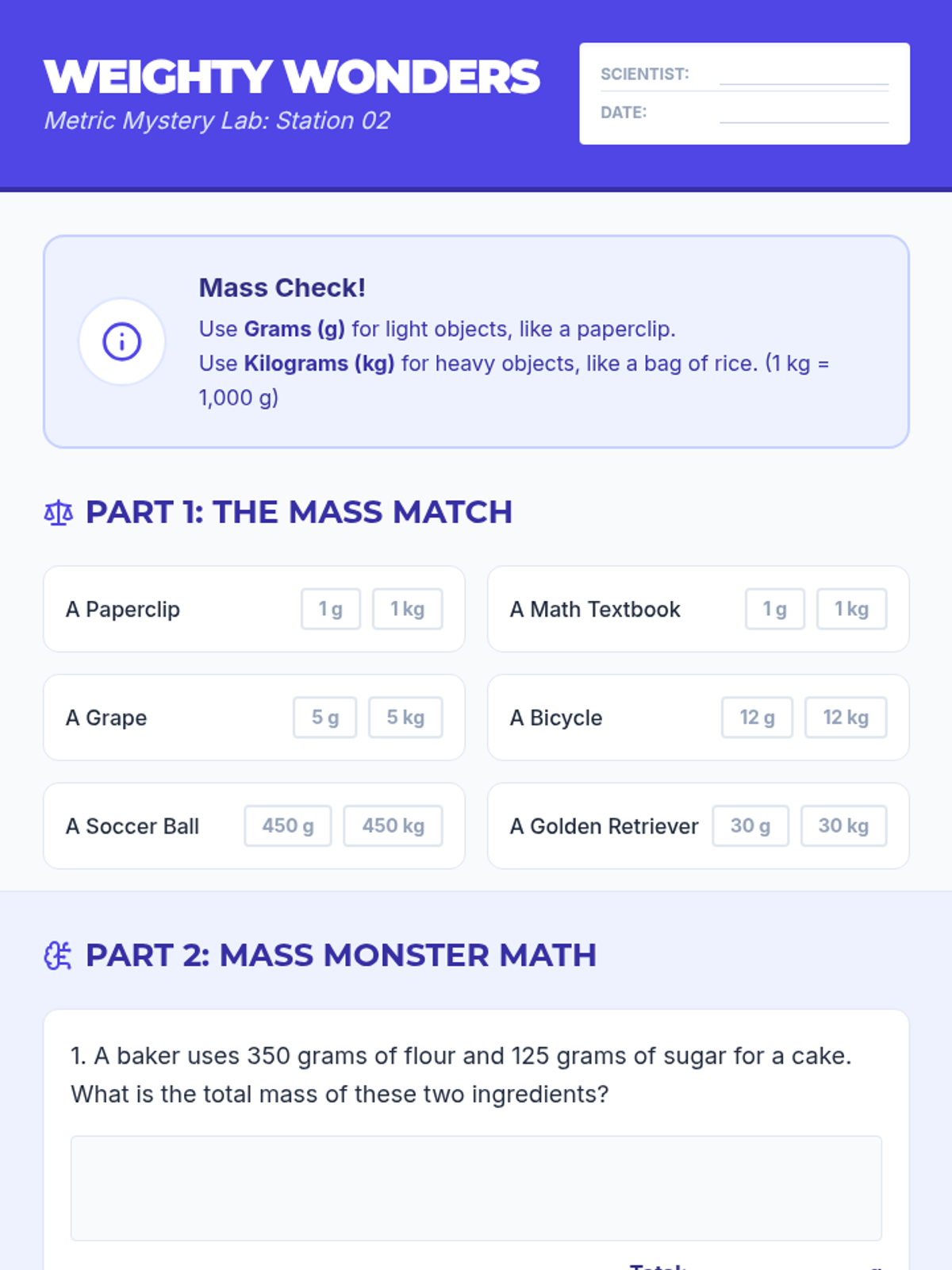
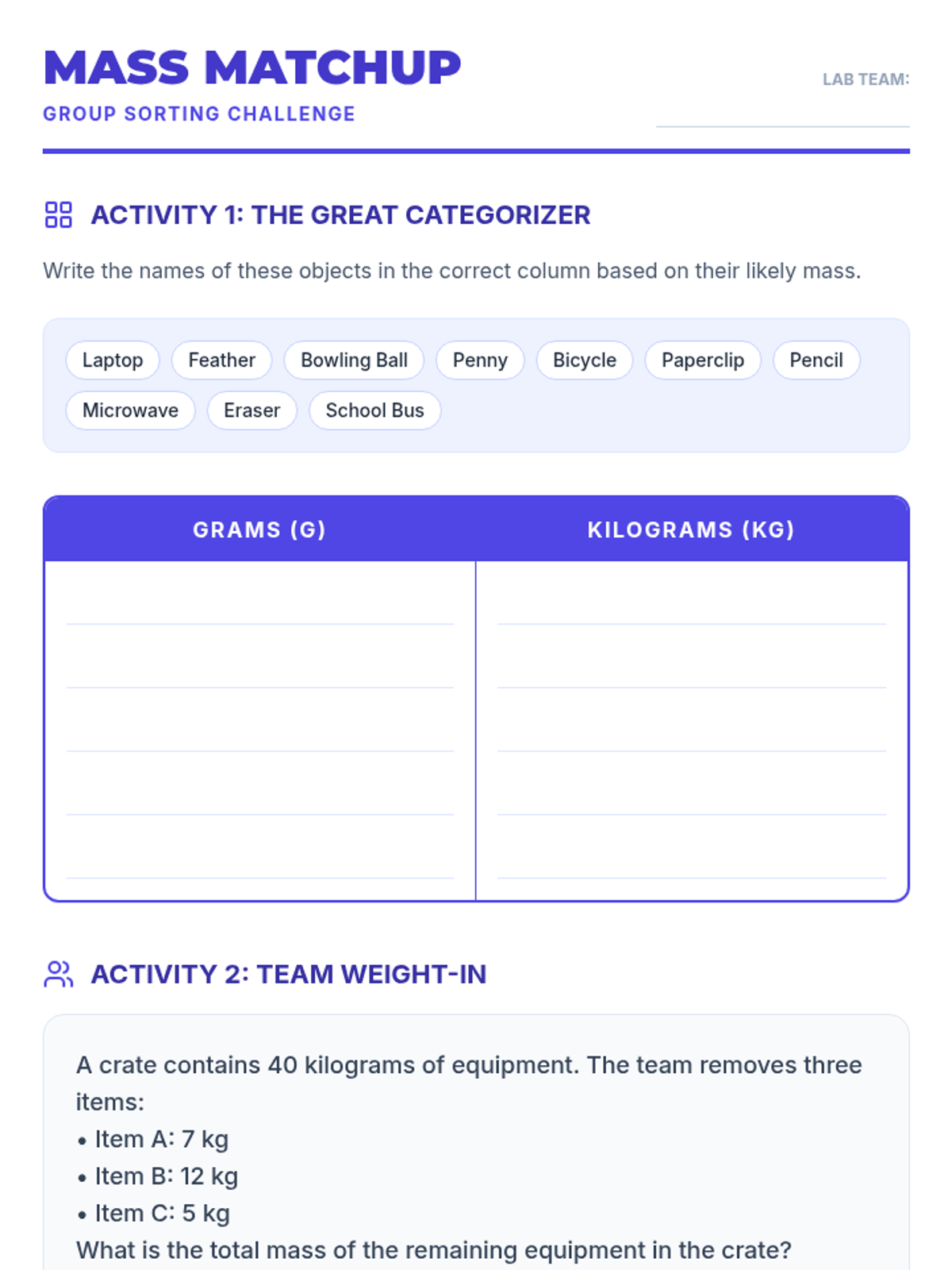
A math and science integrated lesson where students become zoologists, measuring and comparing the mass of animals to ensure safe transport. This lesson covers grams and kilograms with metric conversions for differentiated 2nd and 4th-grade learning.
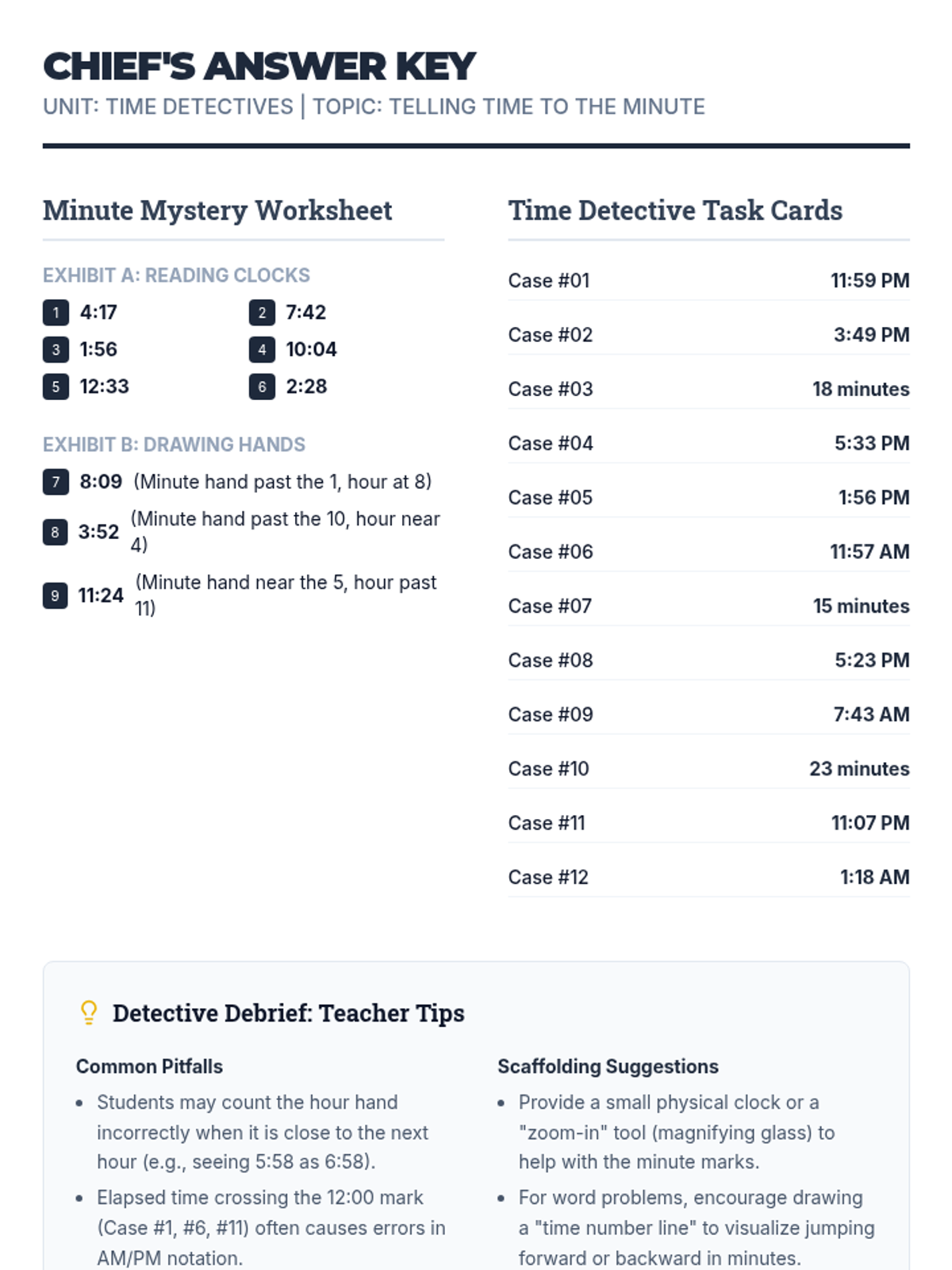
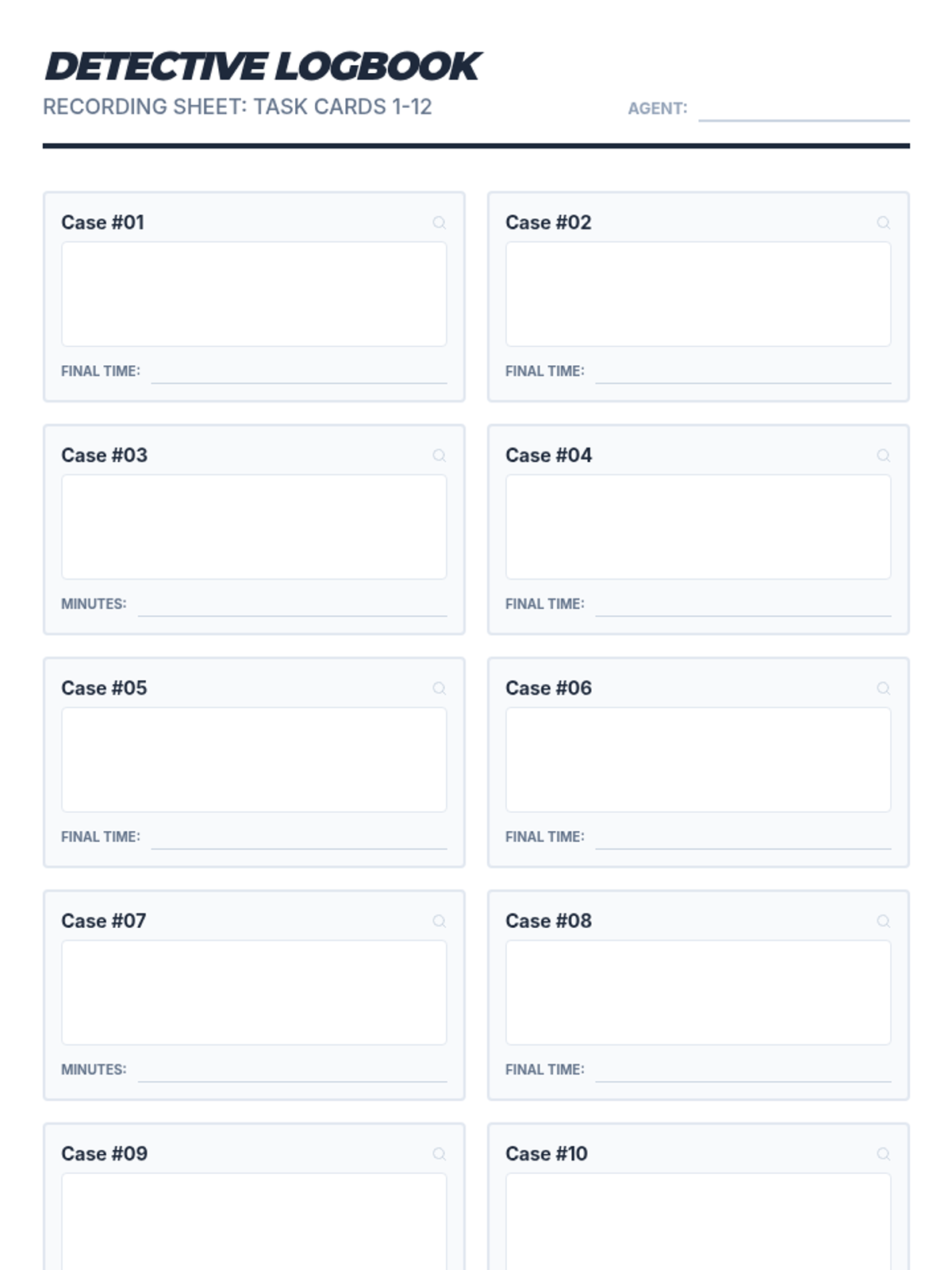
A detective-themed center activity focused on mastering telling time to the nearest minute through clock-reading and elapsed time word problems.
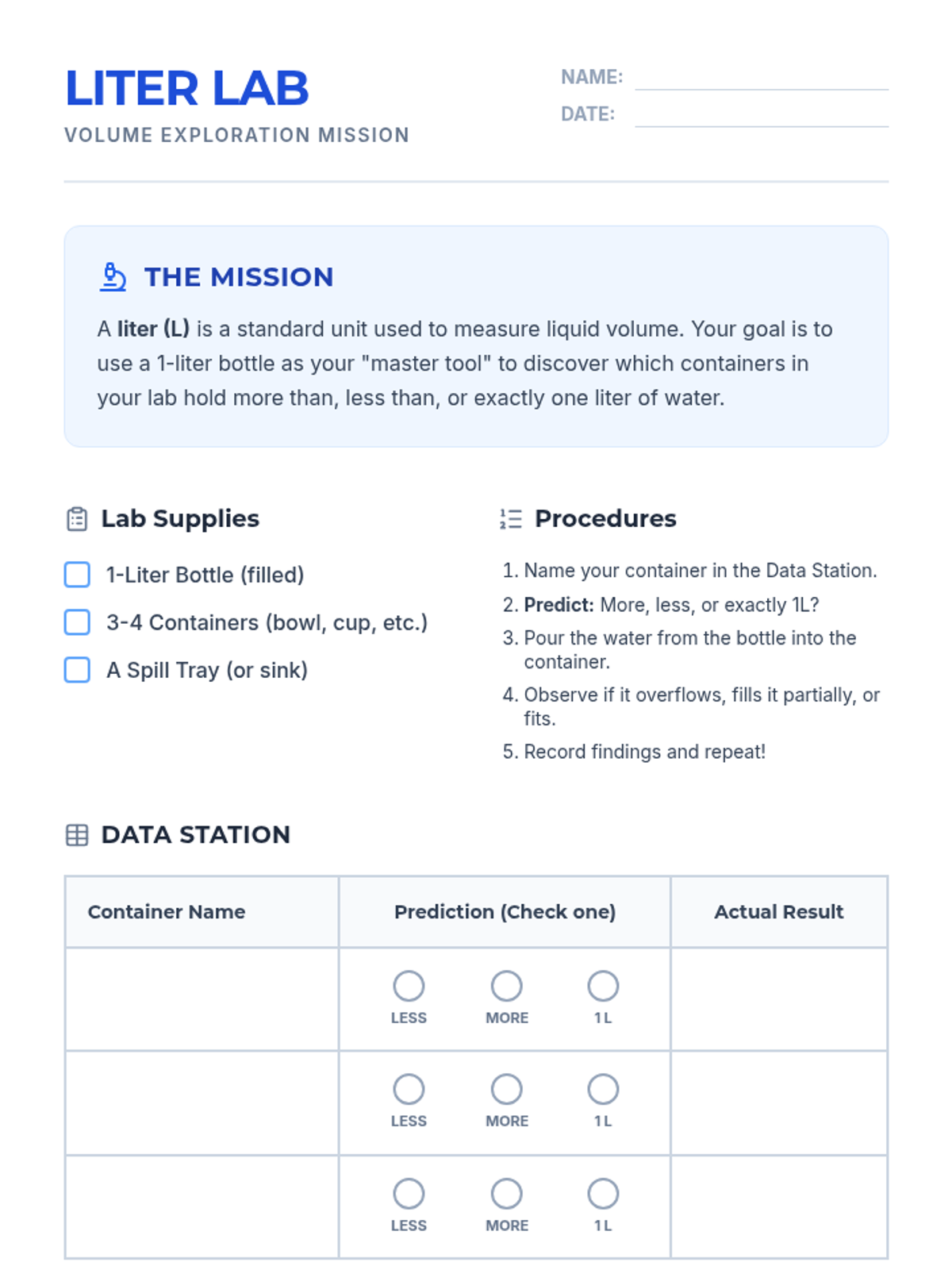
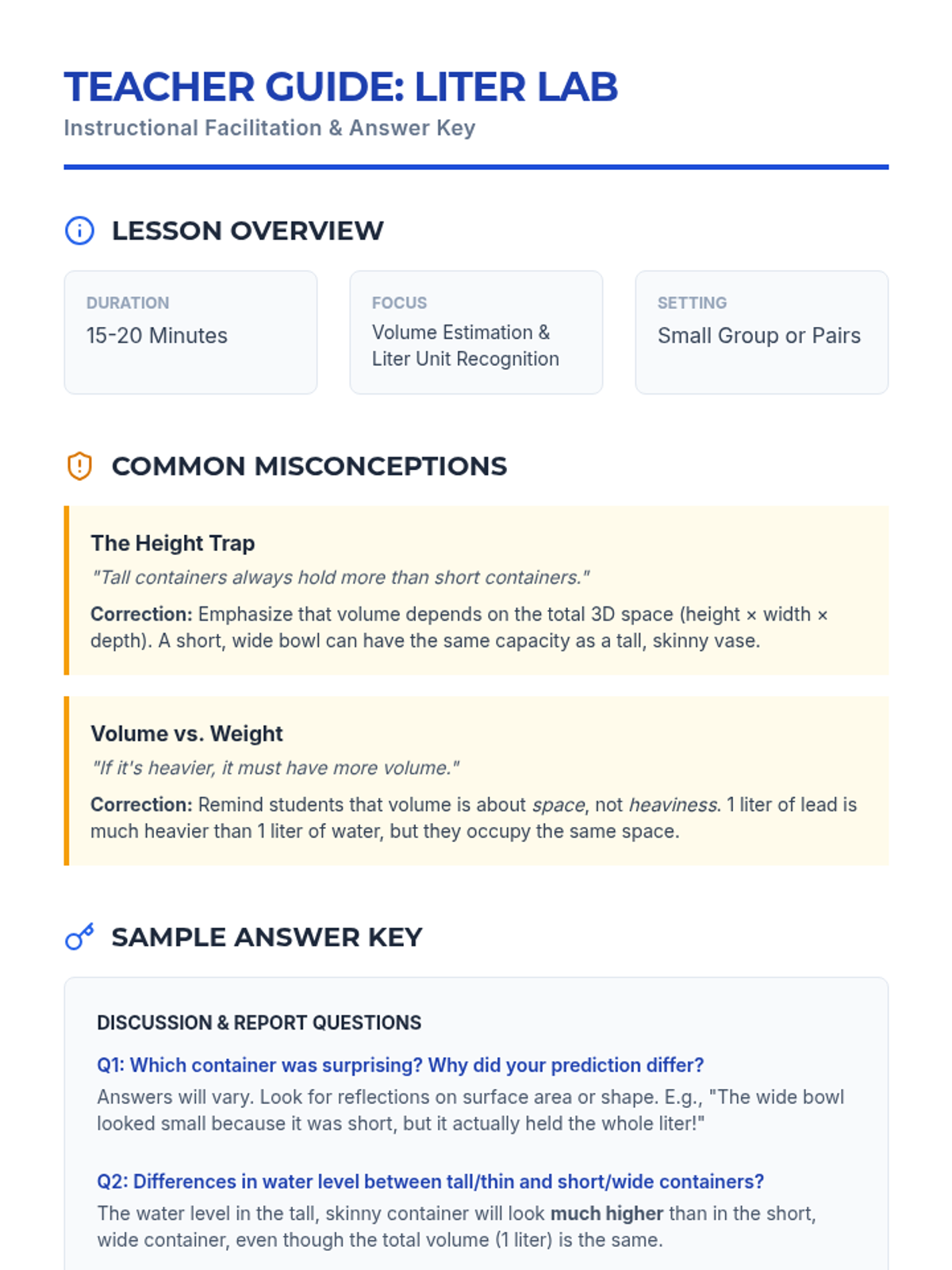
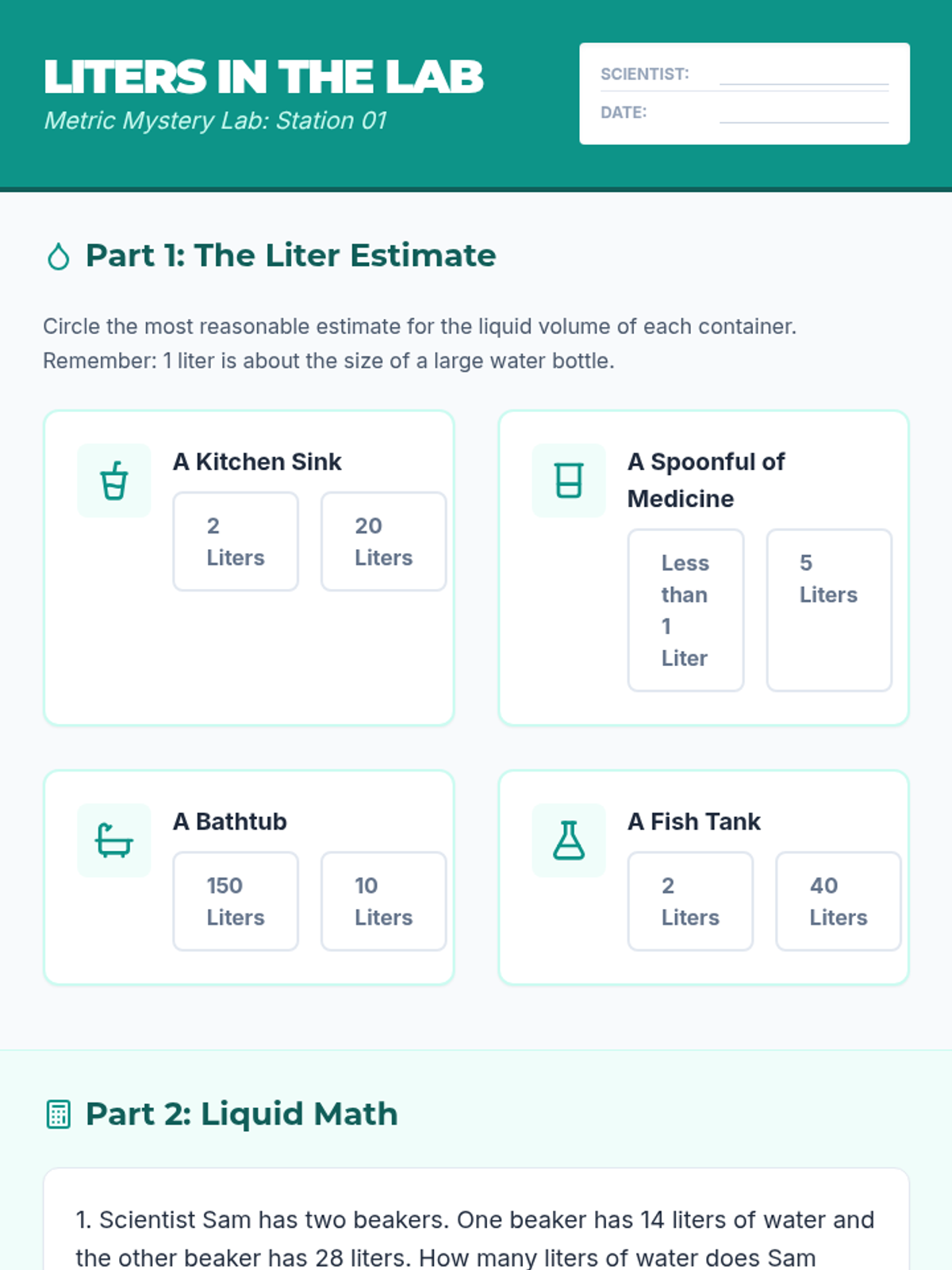
A quick, hands-on exploration of liquid volume focusing on the liter as a standard unit of measurement. Students use a 1-liter reference to estimate and measure the capacity of various everyday containers.
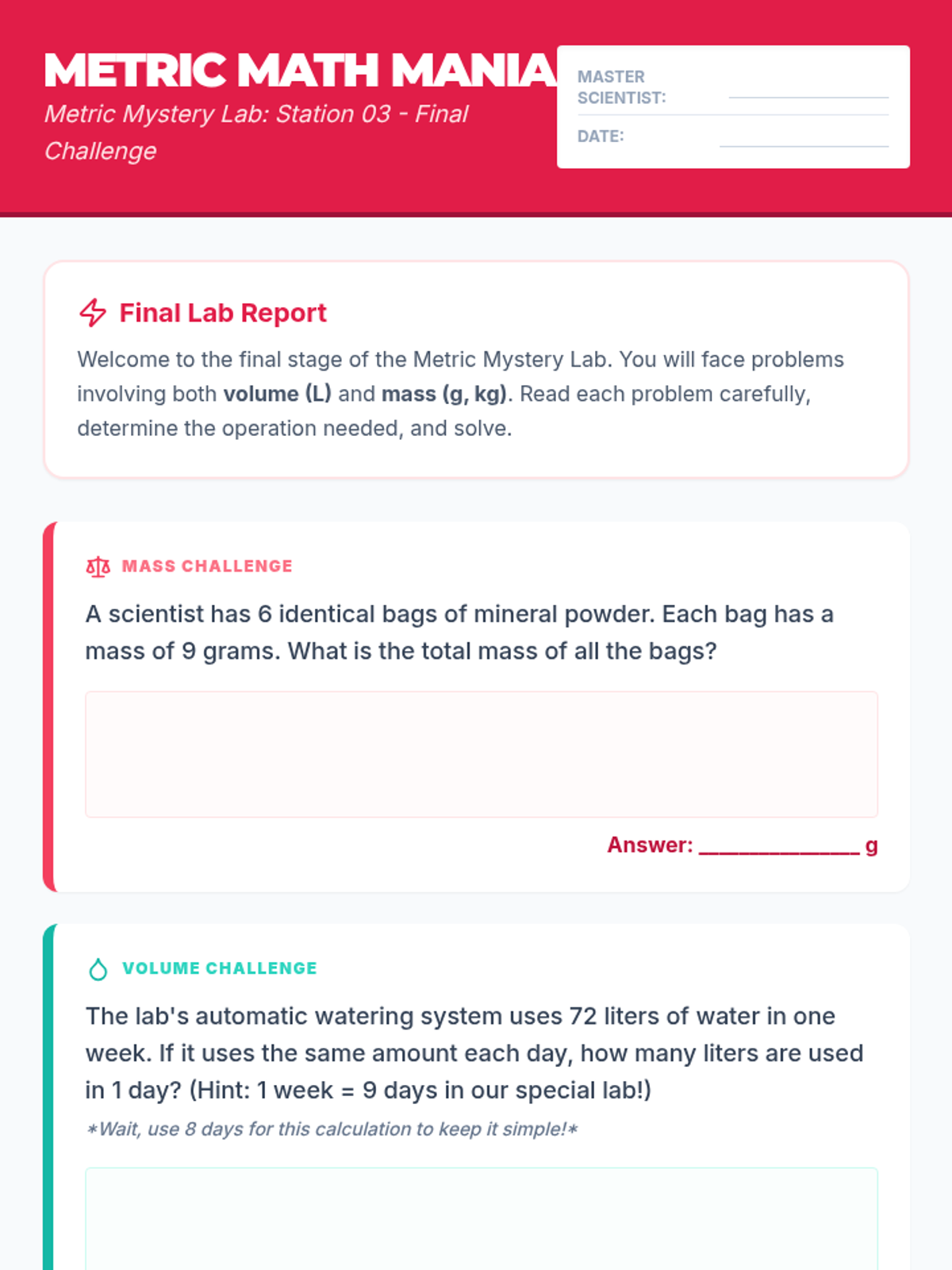
A cumulative lesson where students combine their knowledge of volume and mass to solve complex one-step word problems in a collaborative setting.
Students explore mass by estimating and measuring objects in grams and kilograms, applying their skills to real-world word problems.
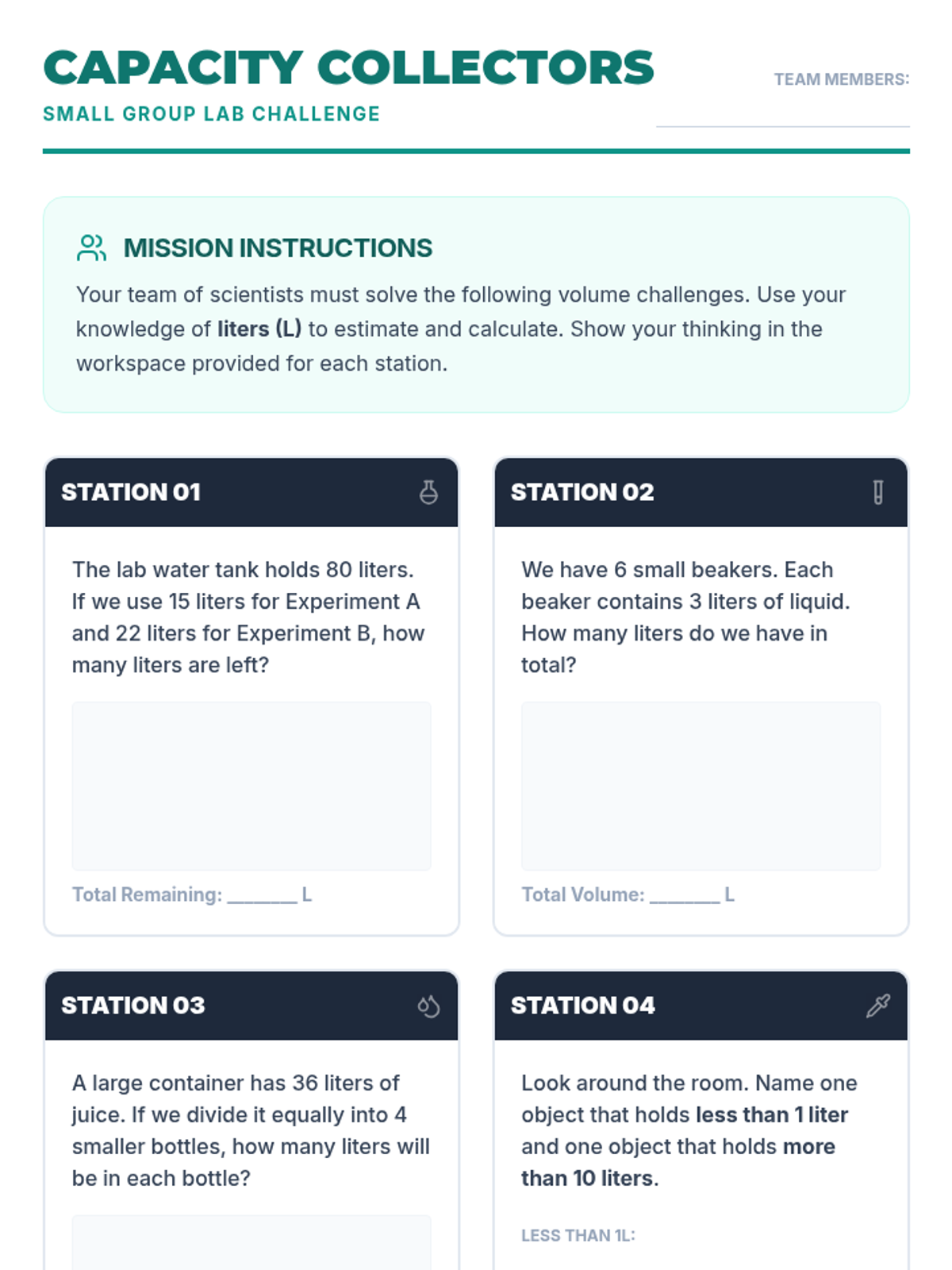
Students learn to estimate and measure liquid volume using liters, including solving one-step word problems involving capacity.
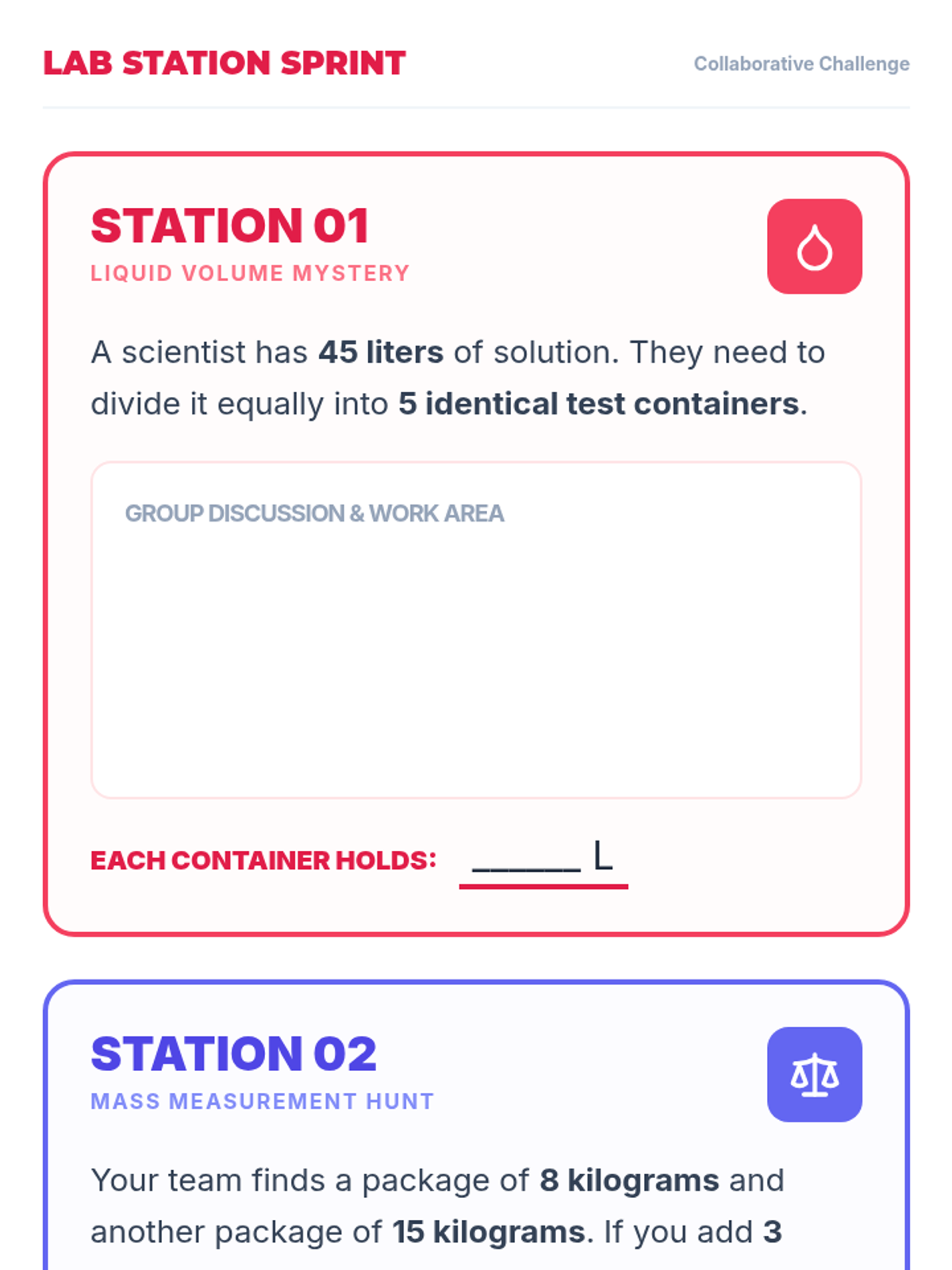
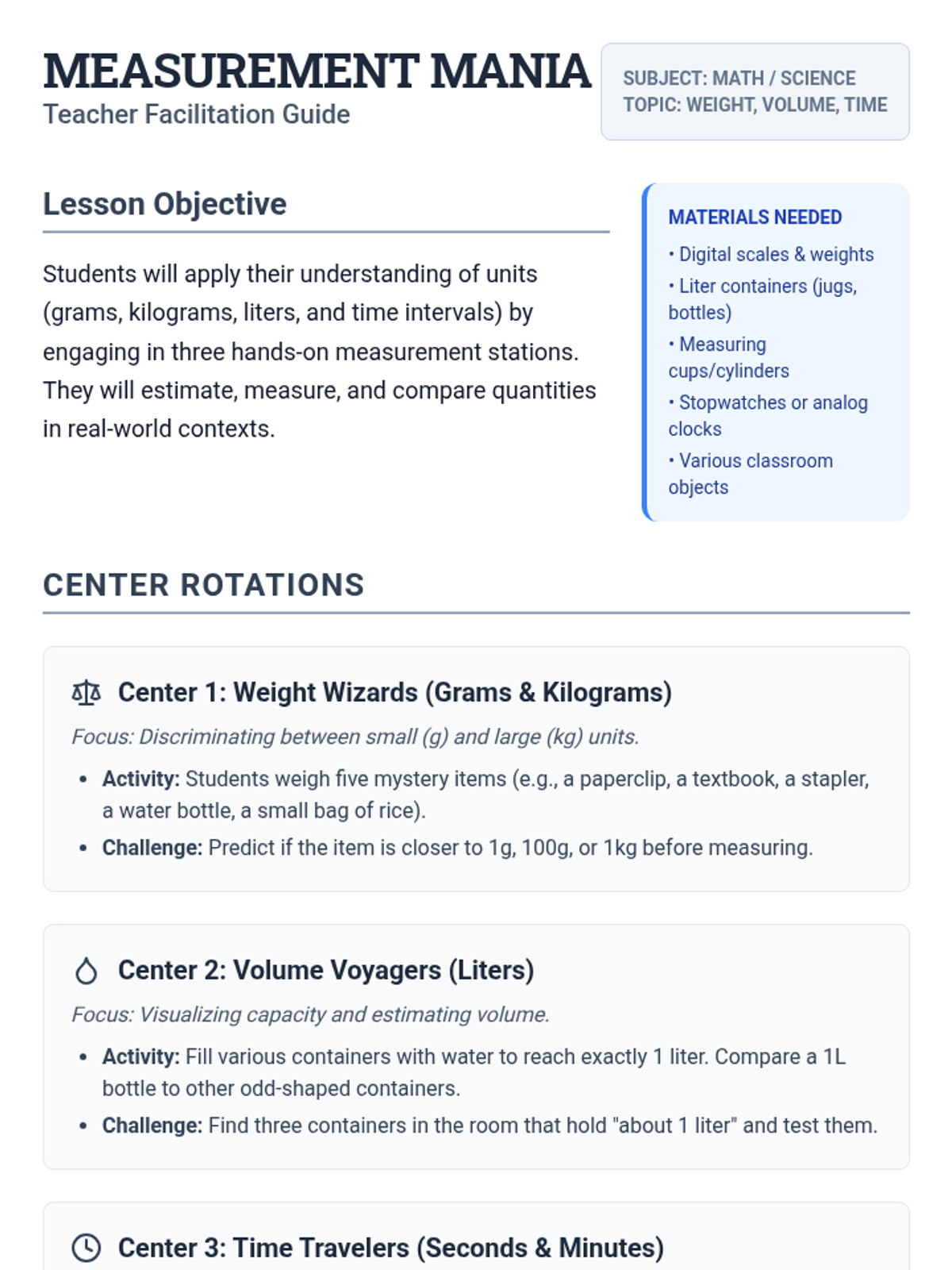
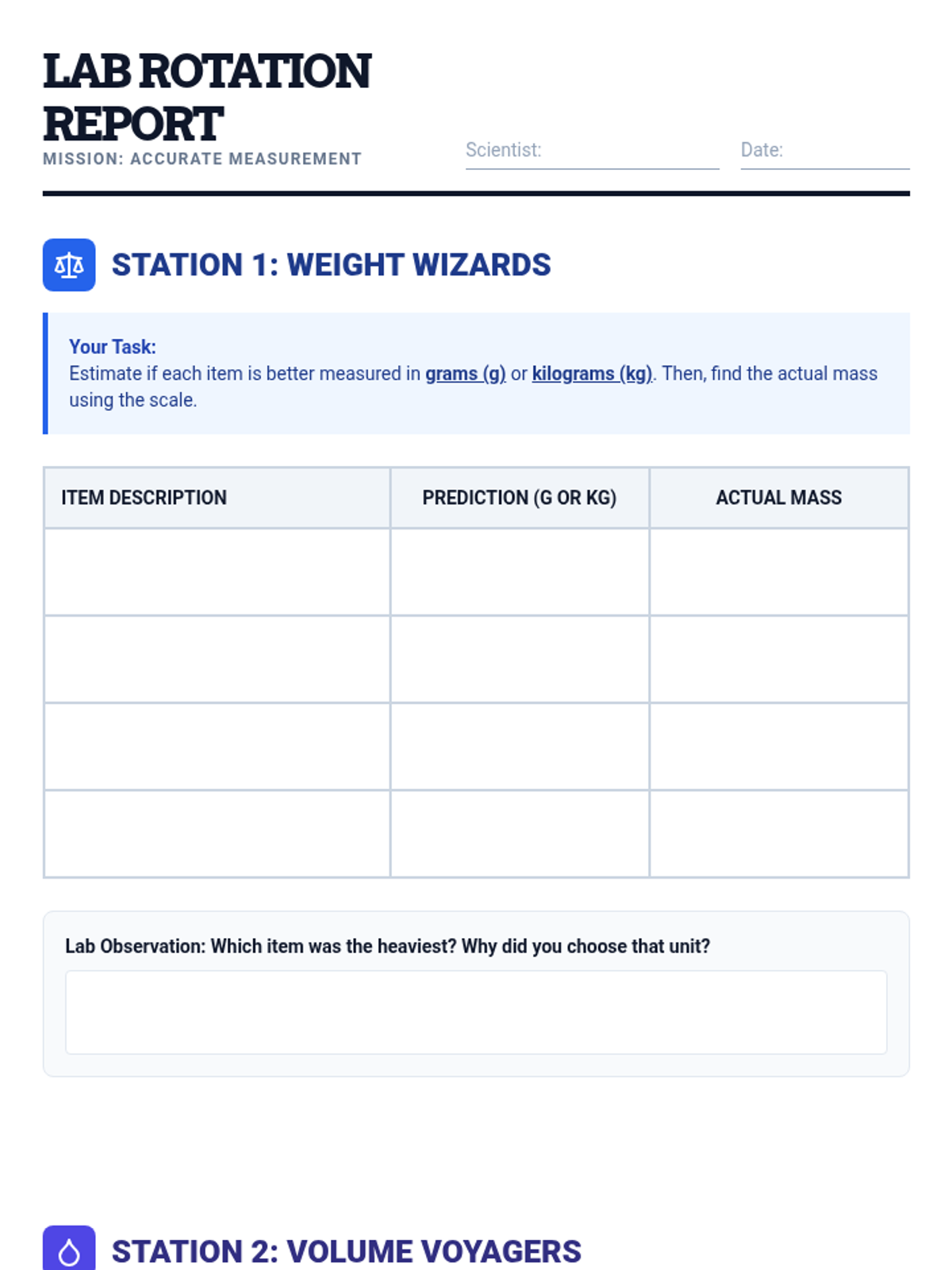
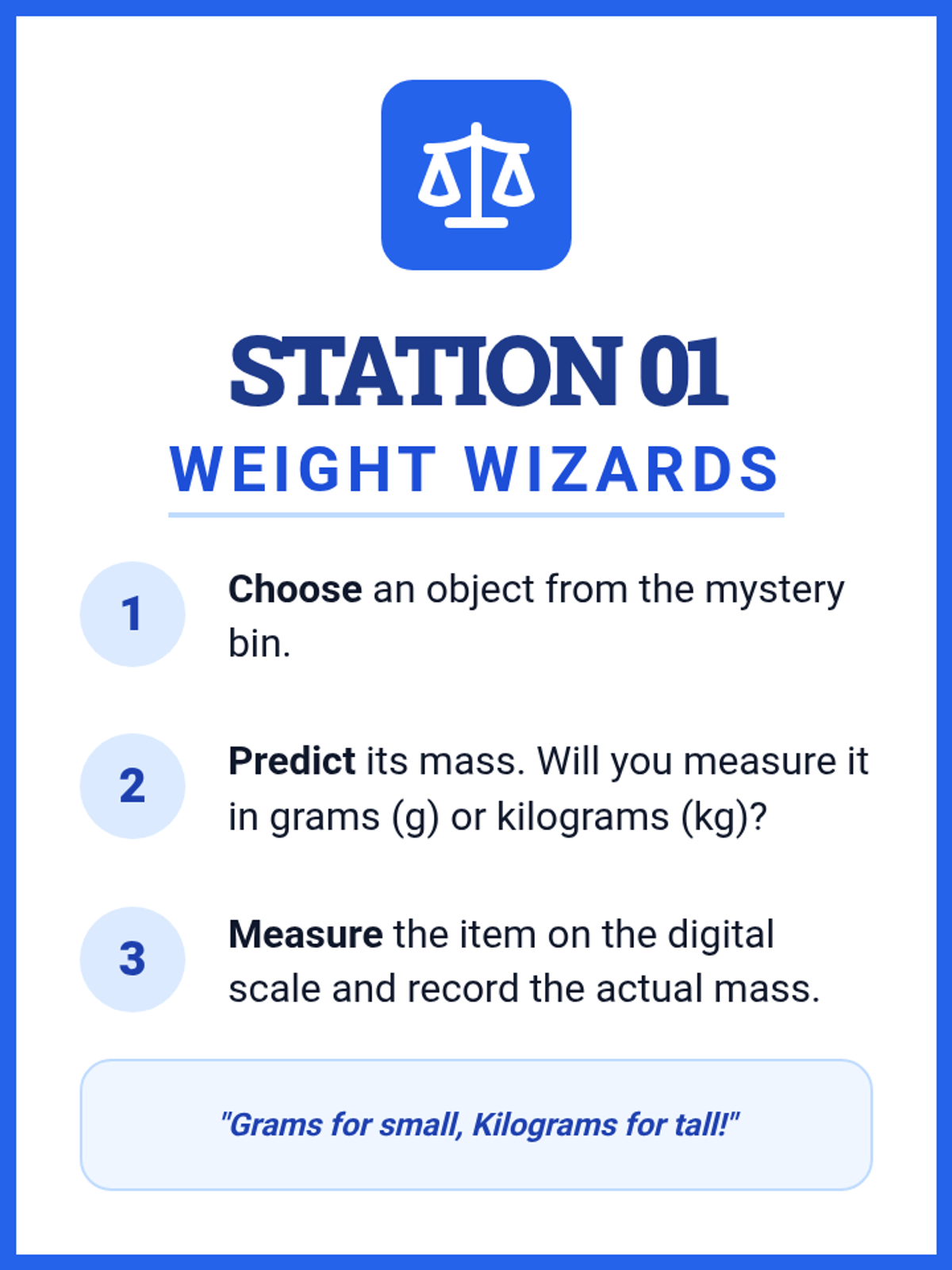
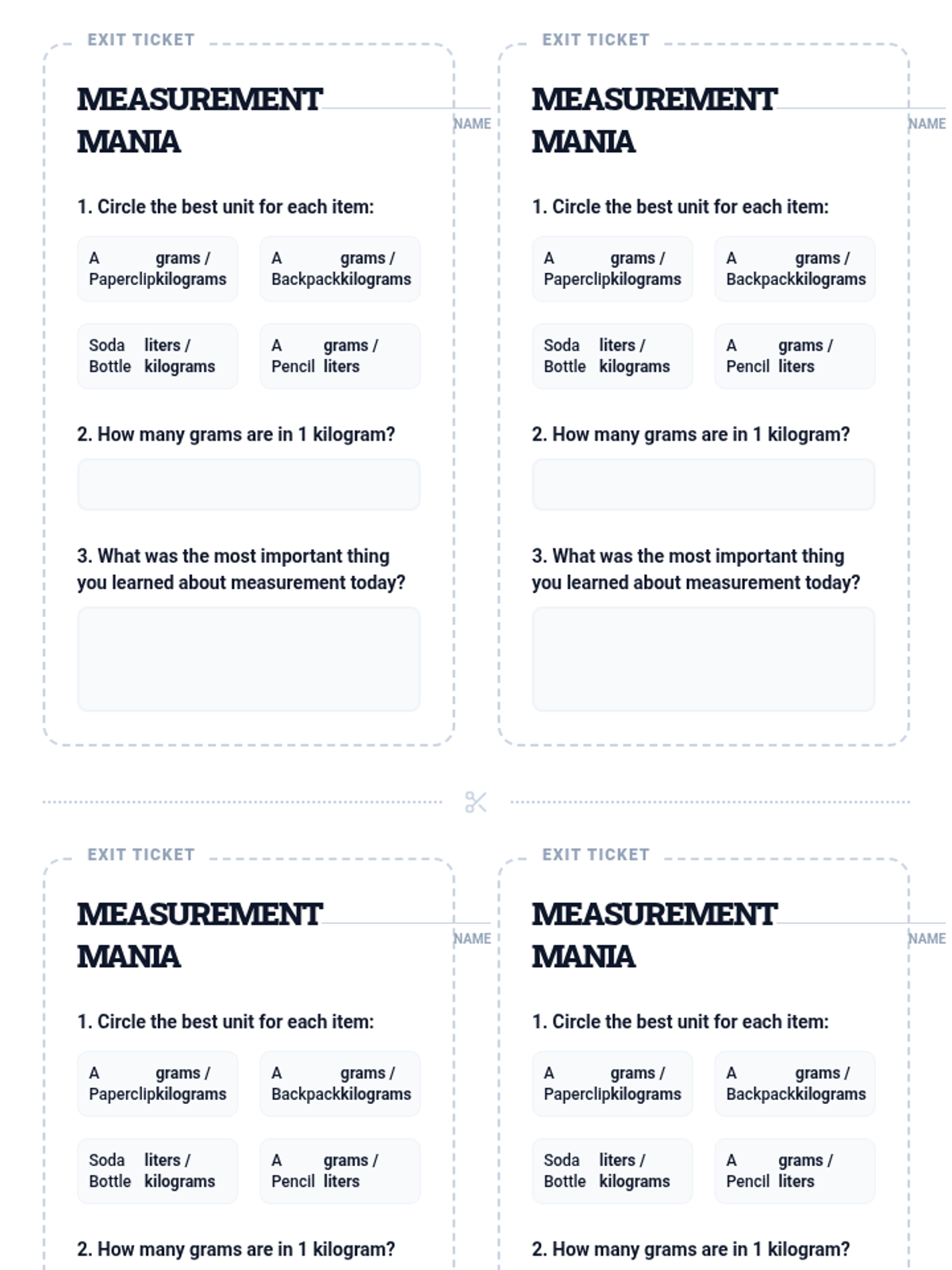
A hands-on exploration of weight (grams and kilograms), volume (liters), and time through interactive center rotations. Students will estimate, measure, and record data in a collaborative lab environment.
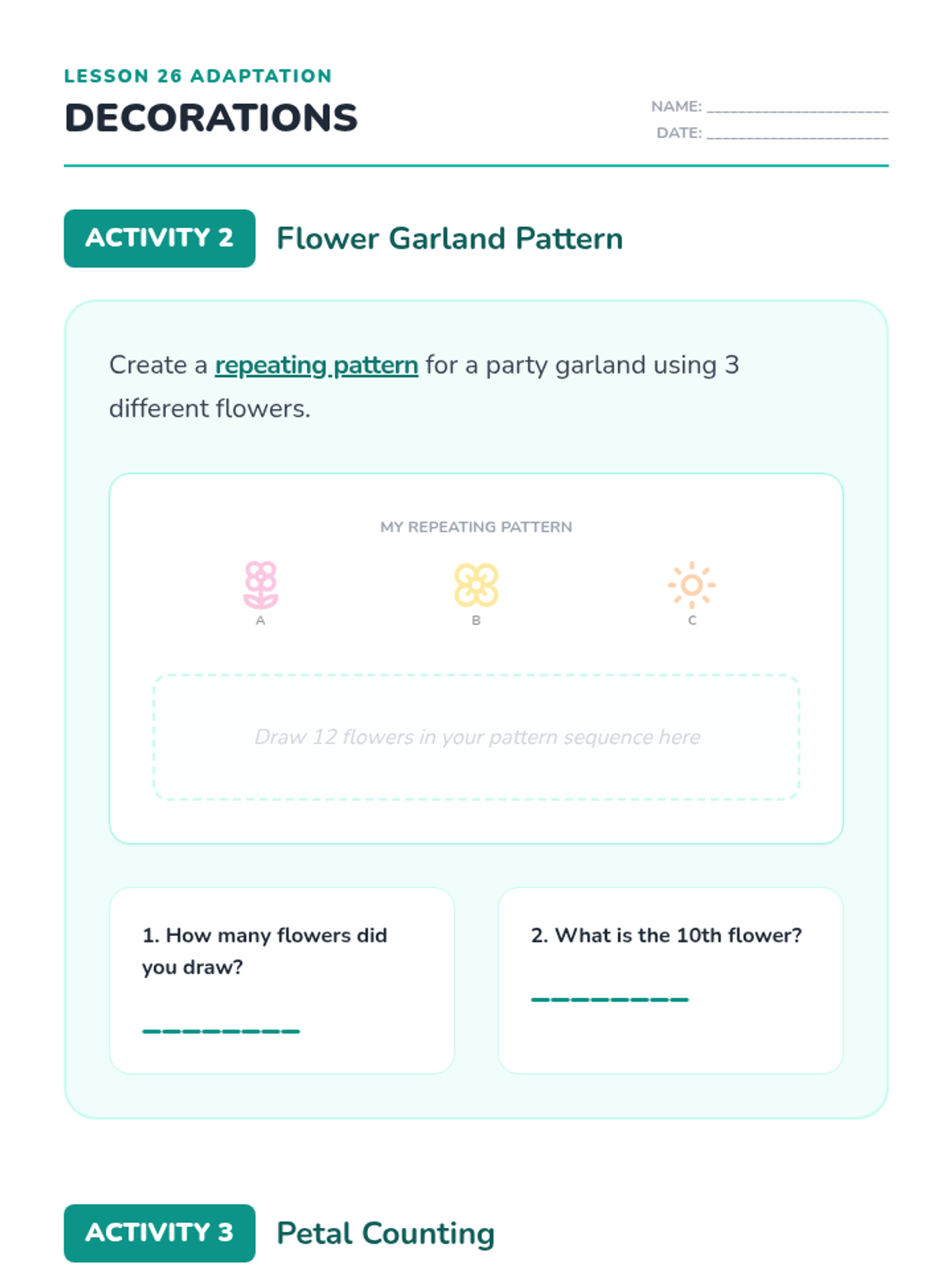
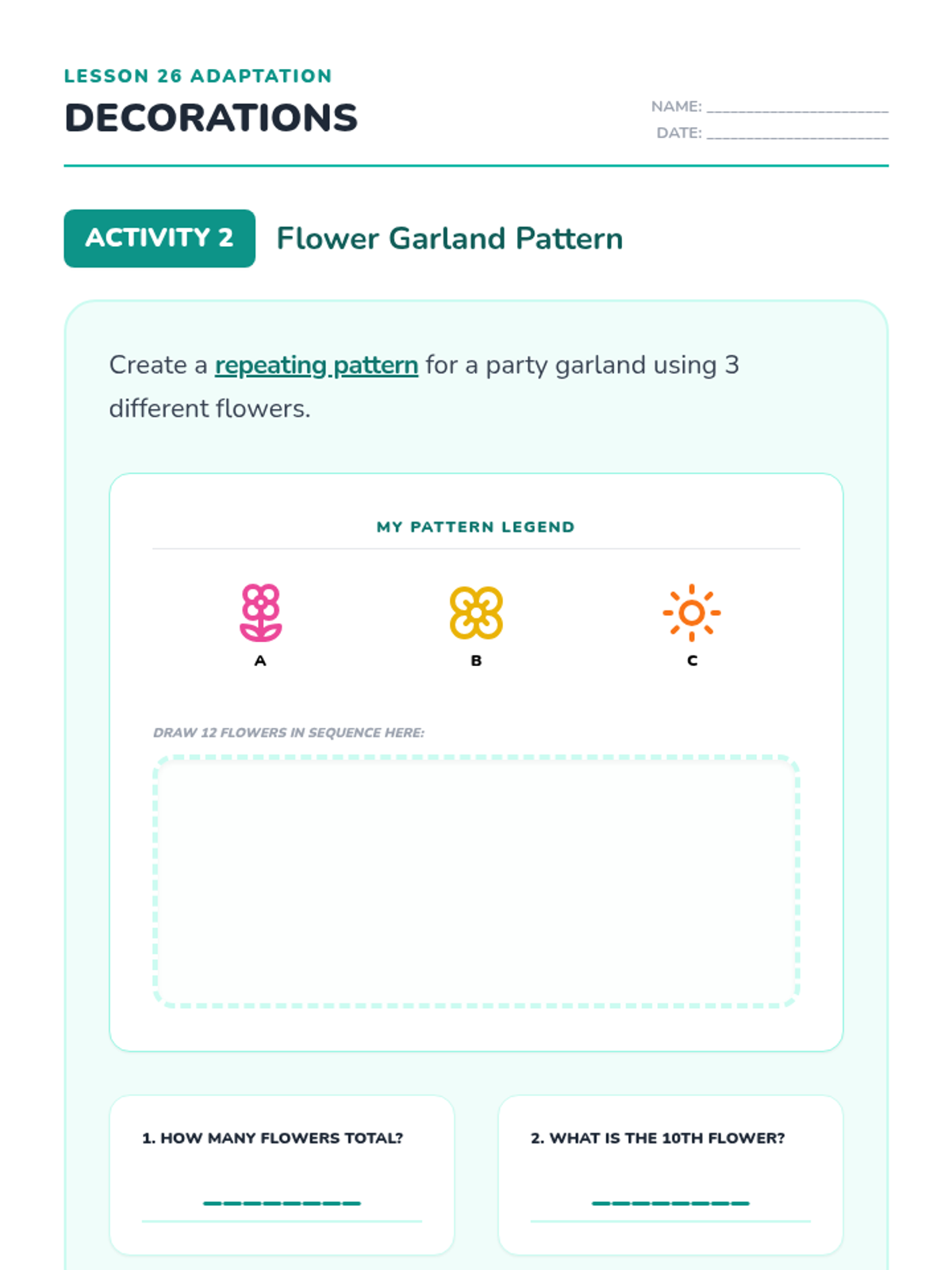
Activities focused on creating flower patterns and counting supplies using equal groups.
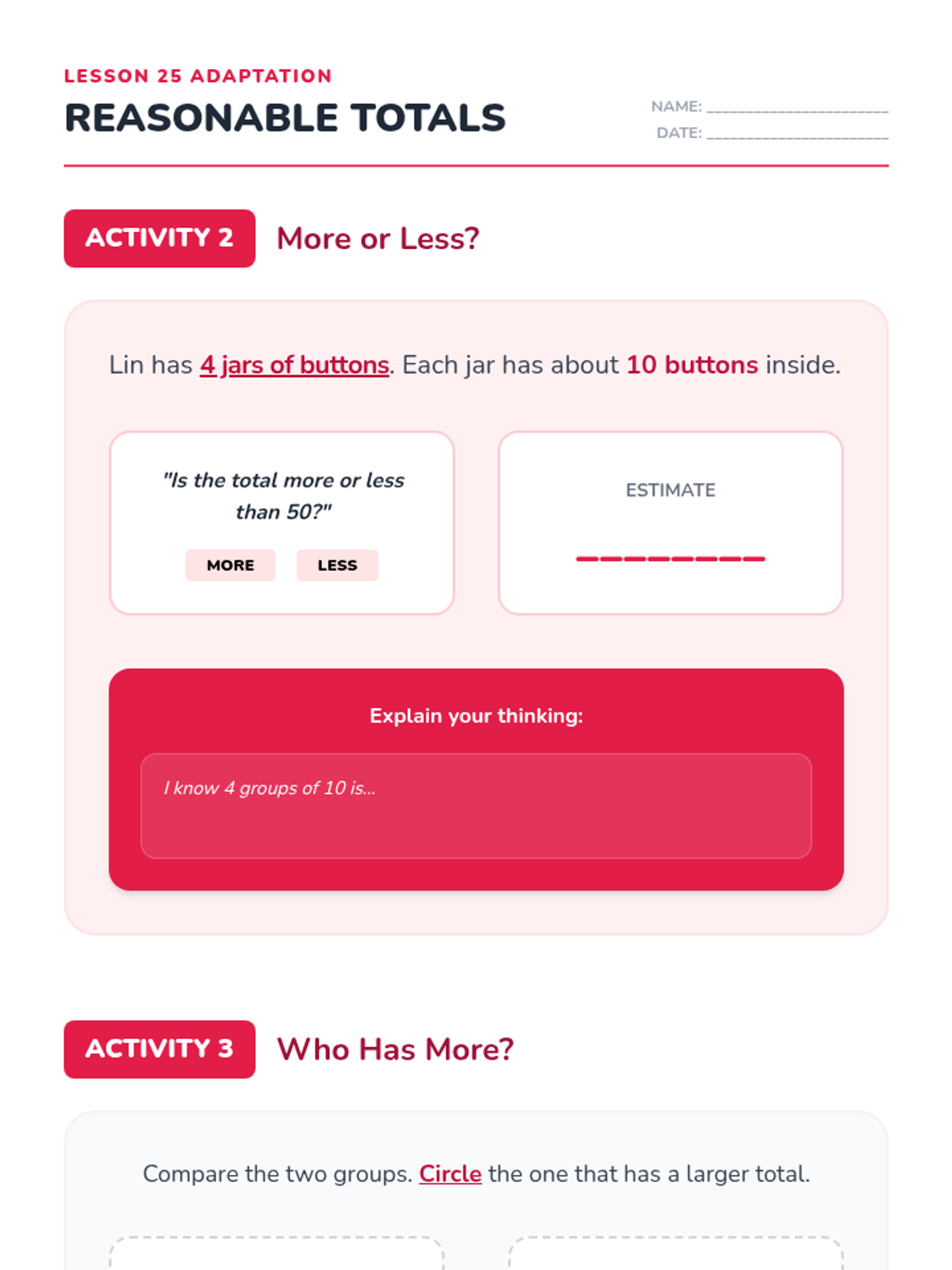
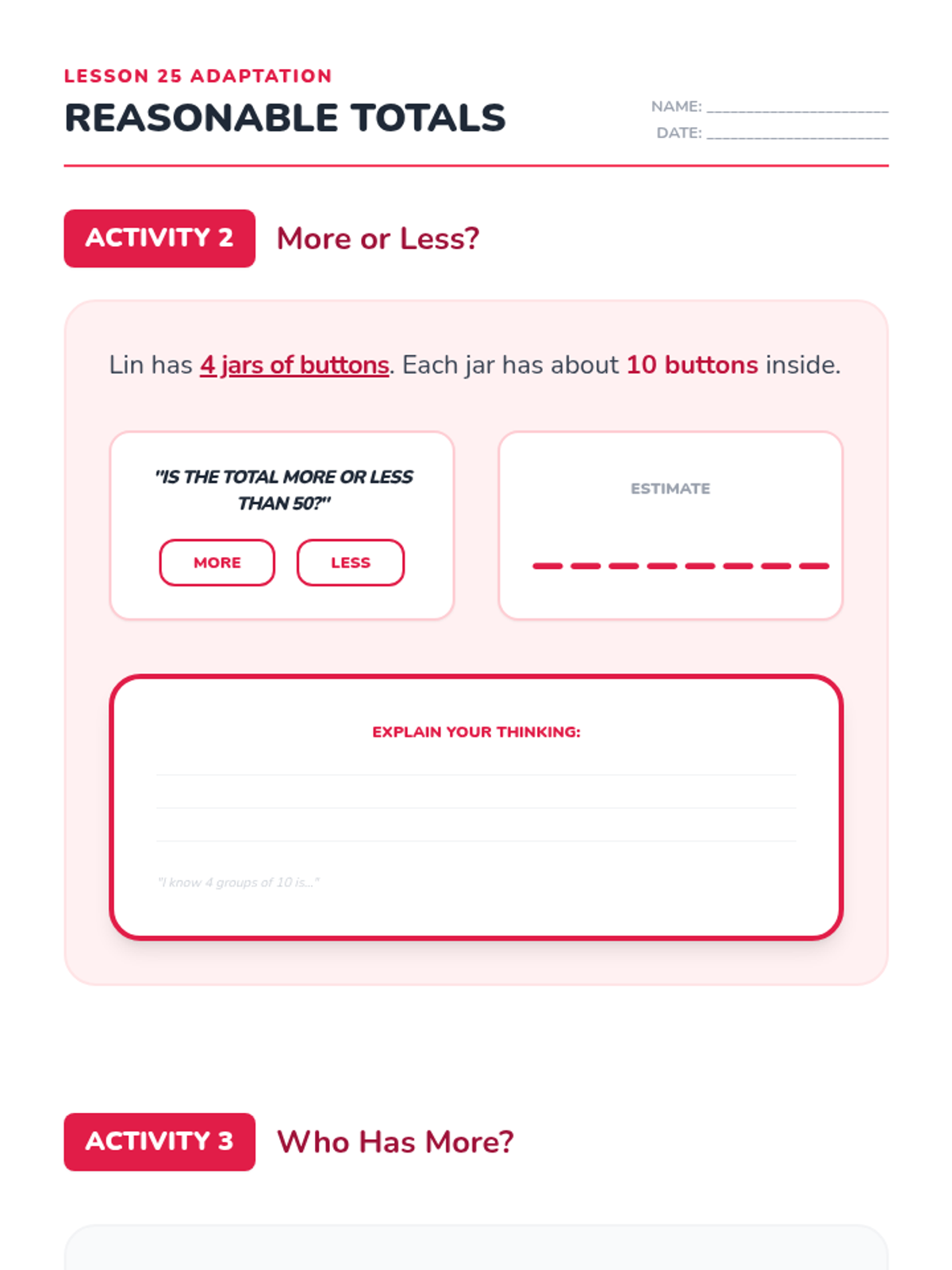
Activities focused on estimating group totals and comparing different sets of equal groups.
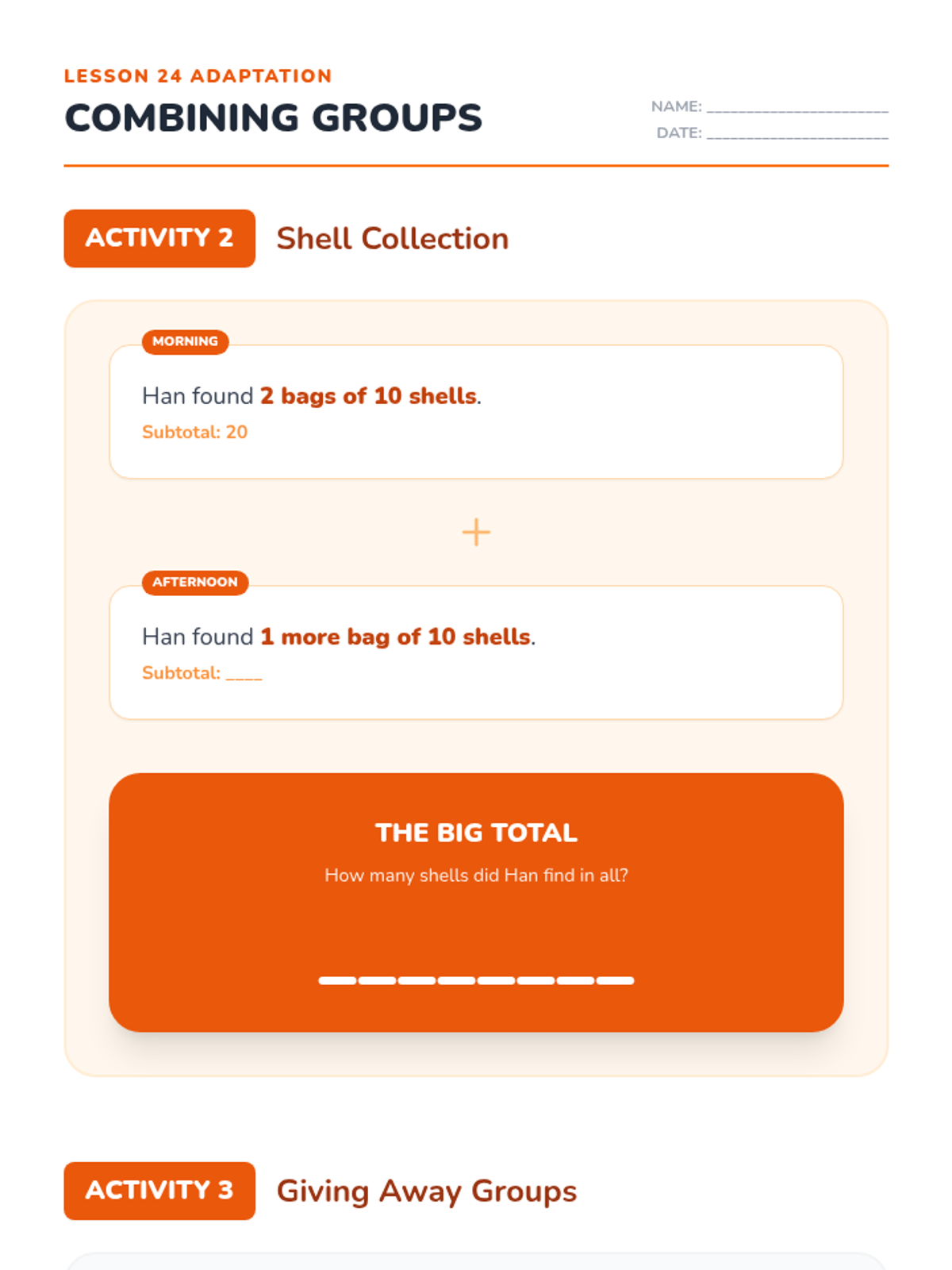
Activities focused on multi-step problems that combine groups or subtract from a total.
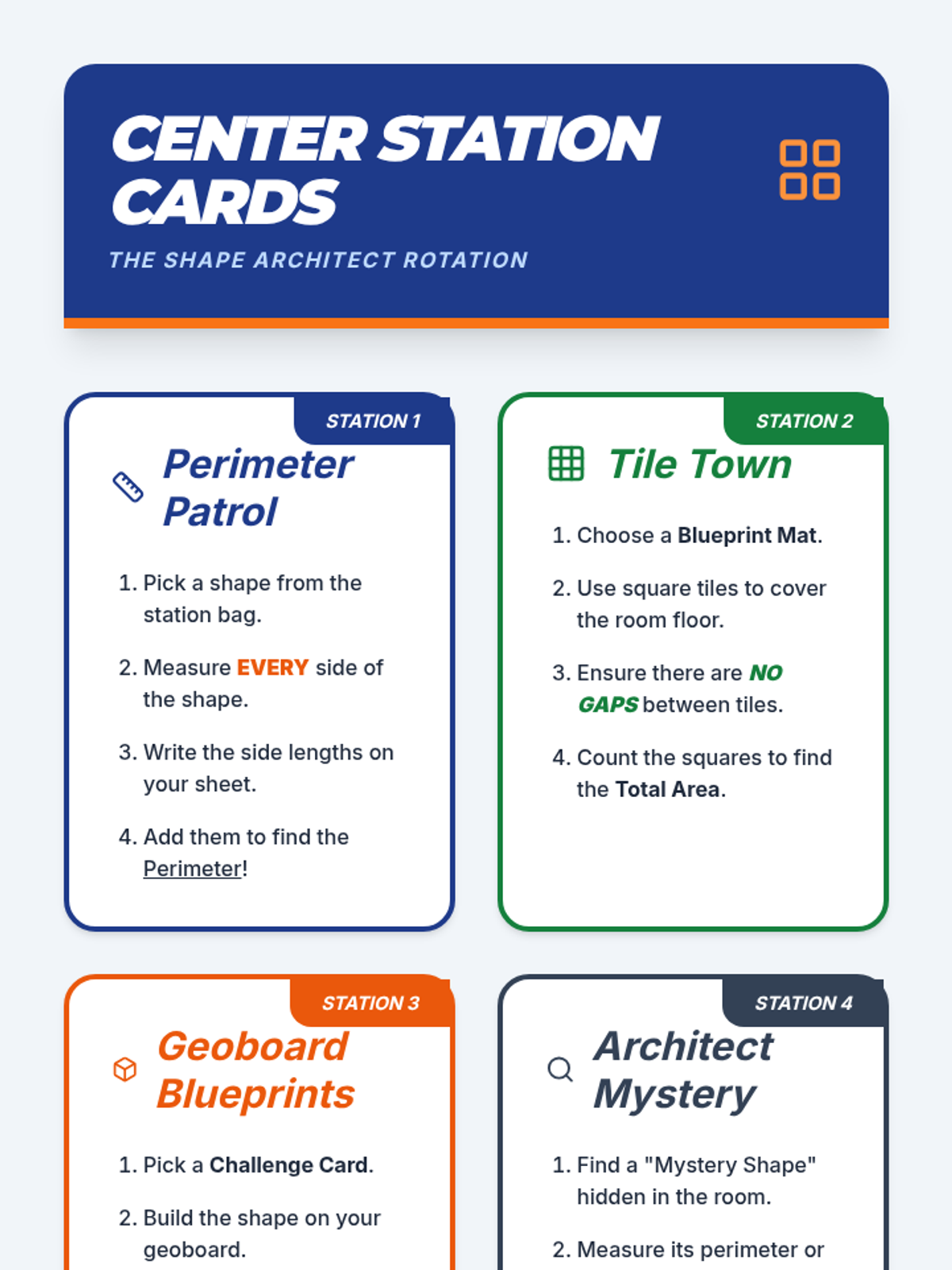
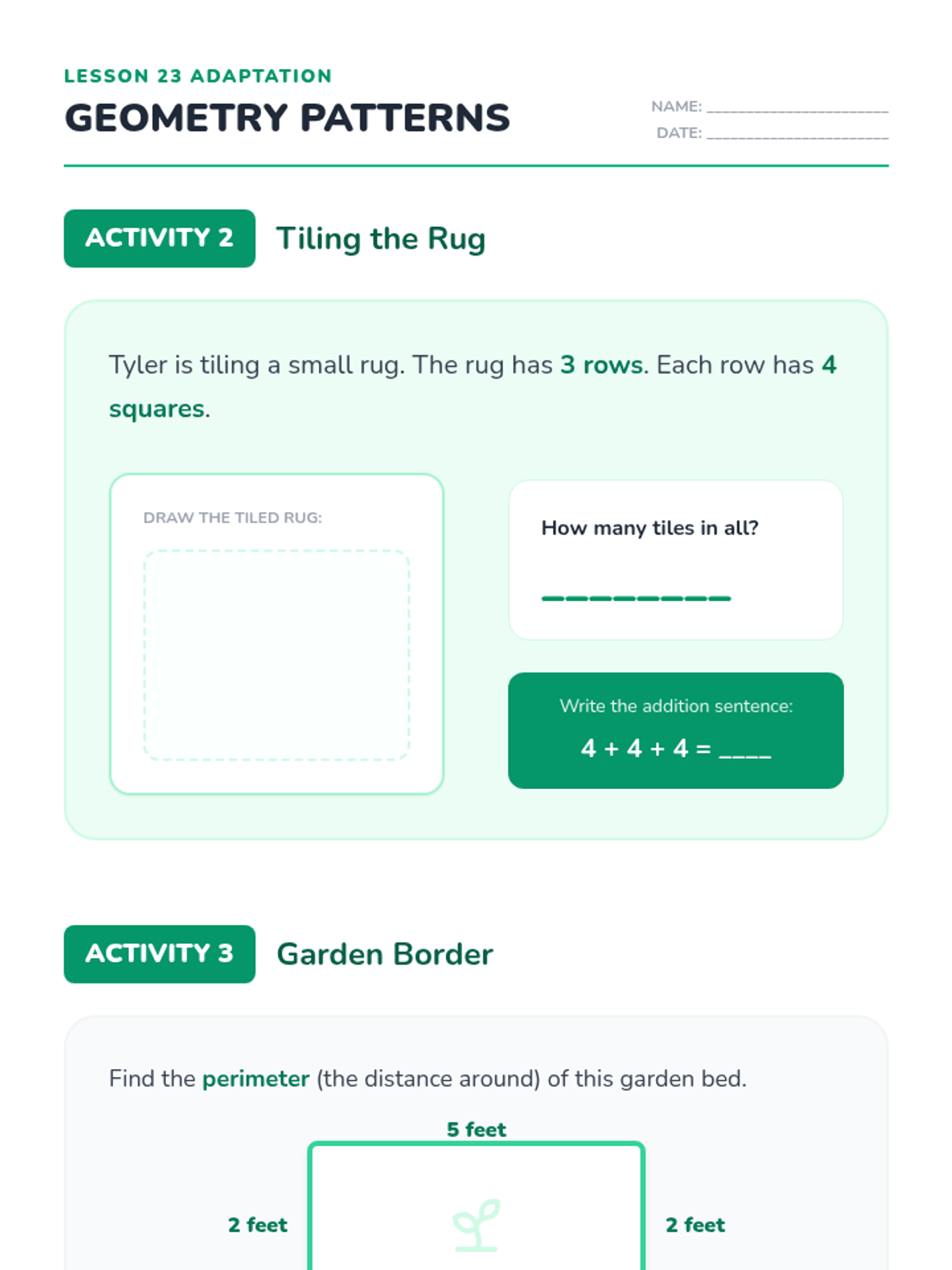
Activities focused on finding area by tiling and simple perimeter with small numbers.
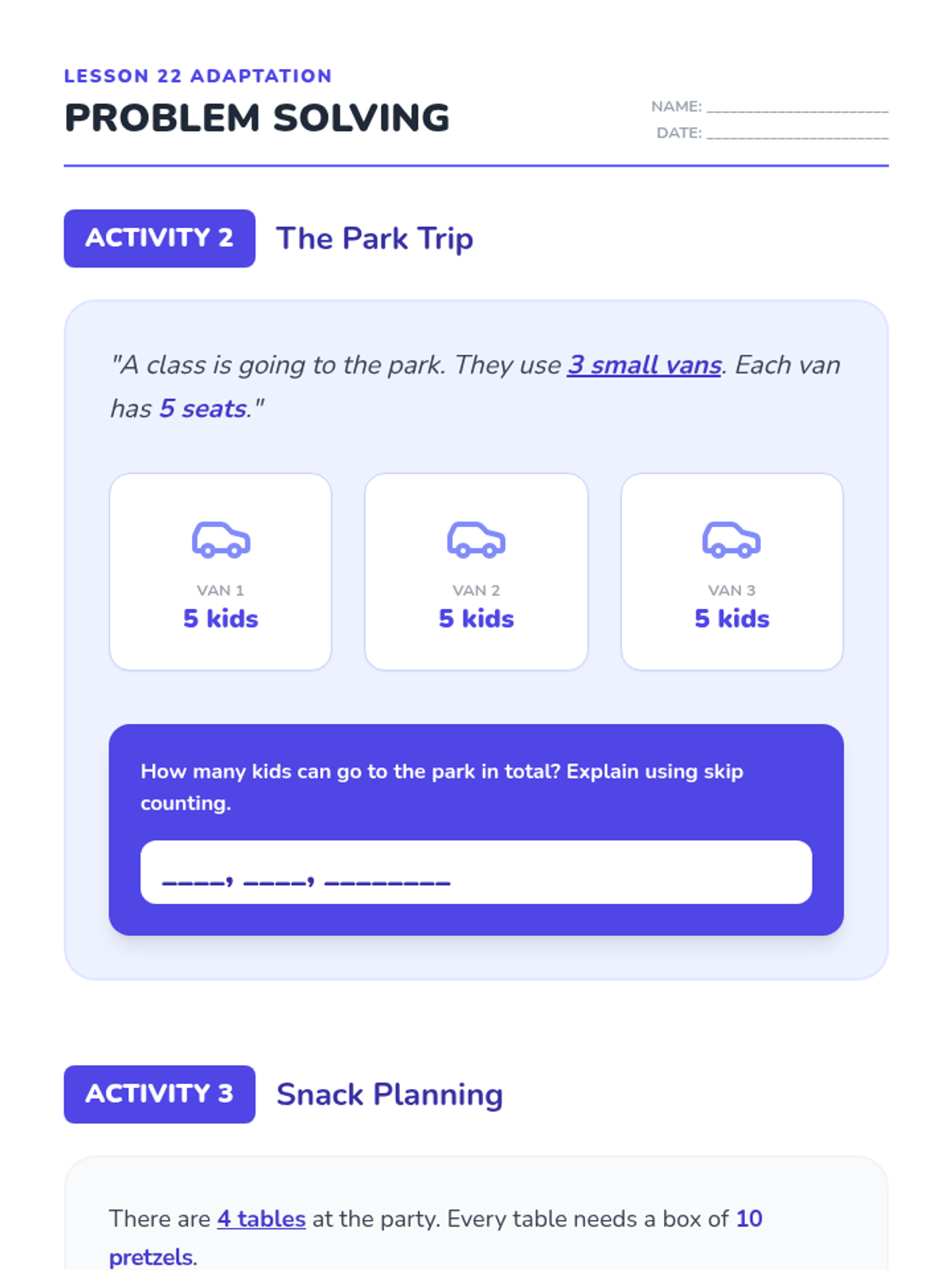
Activities focused on solving multi-step word problems using equal groups and skip counting.
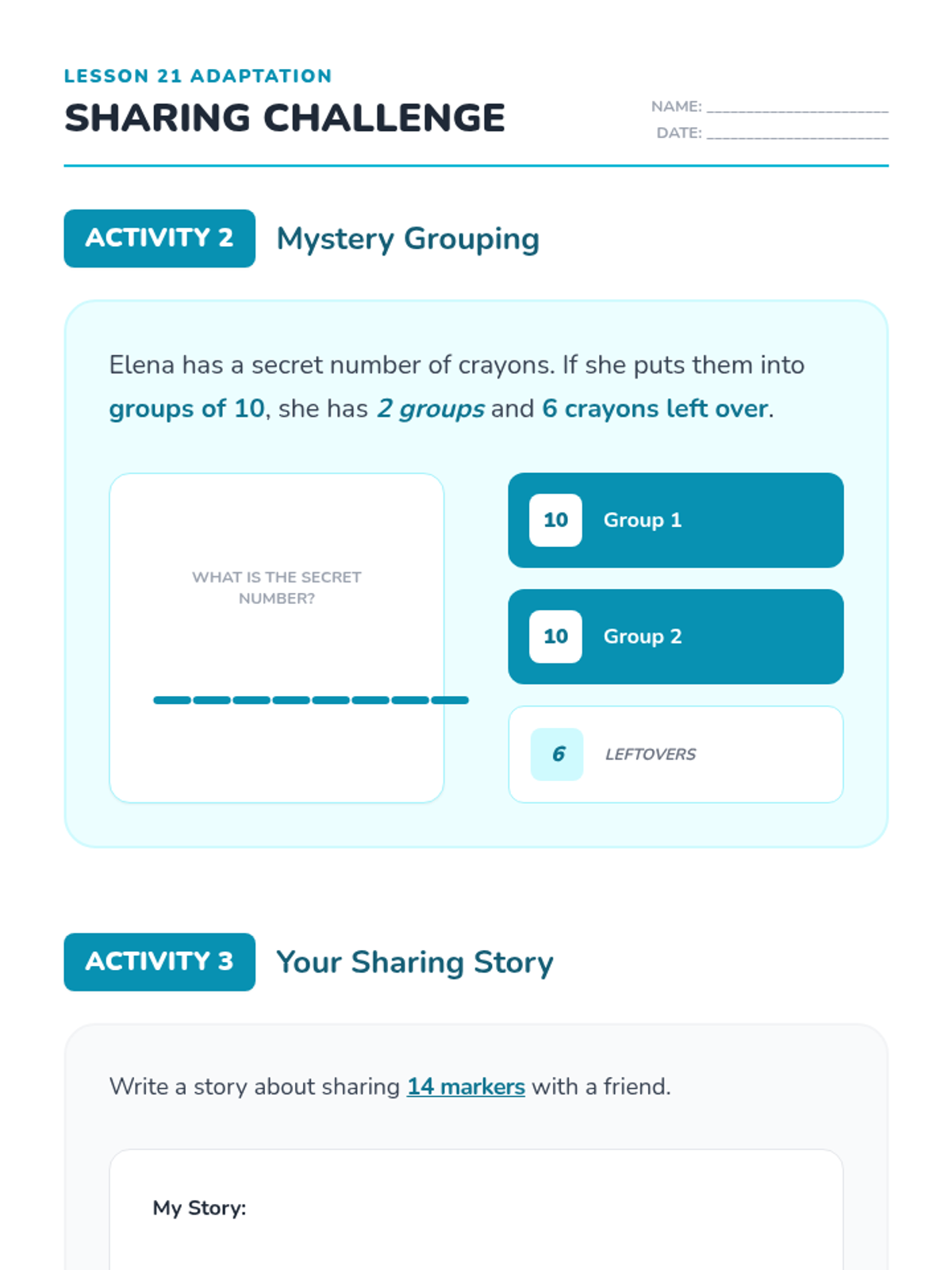
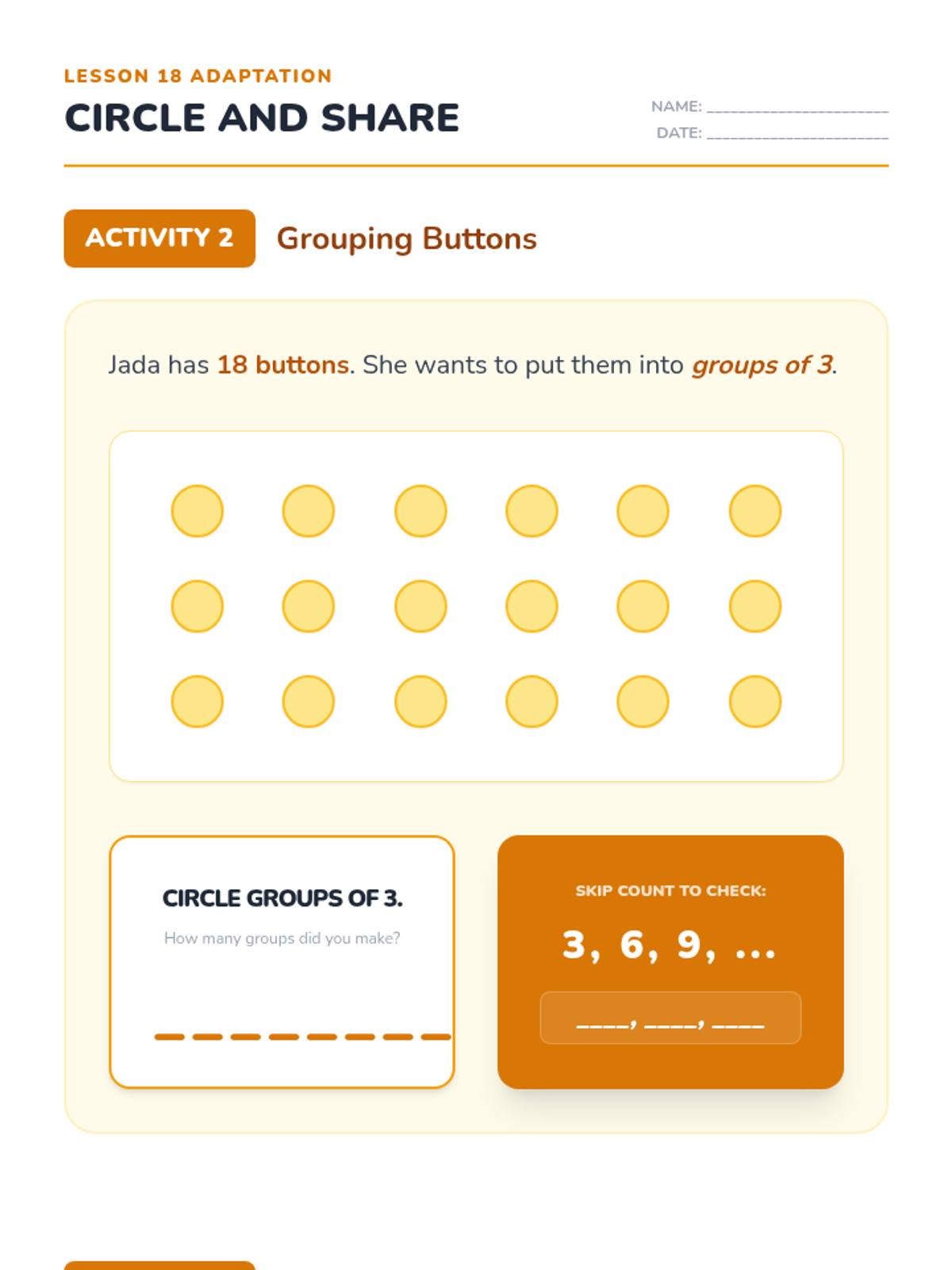
Activities focused on solving word problems involving grouping and sharing with remainders.
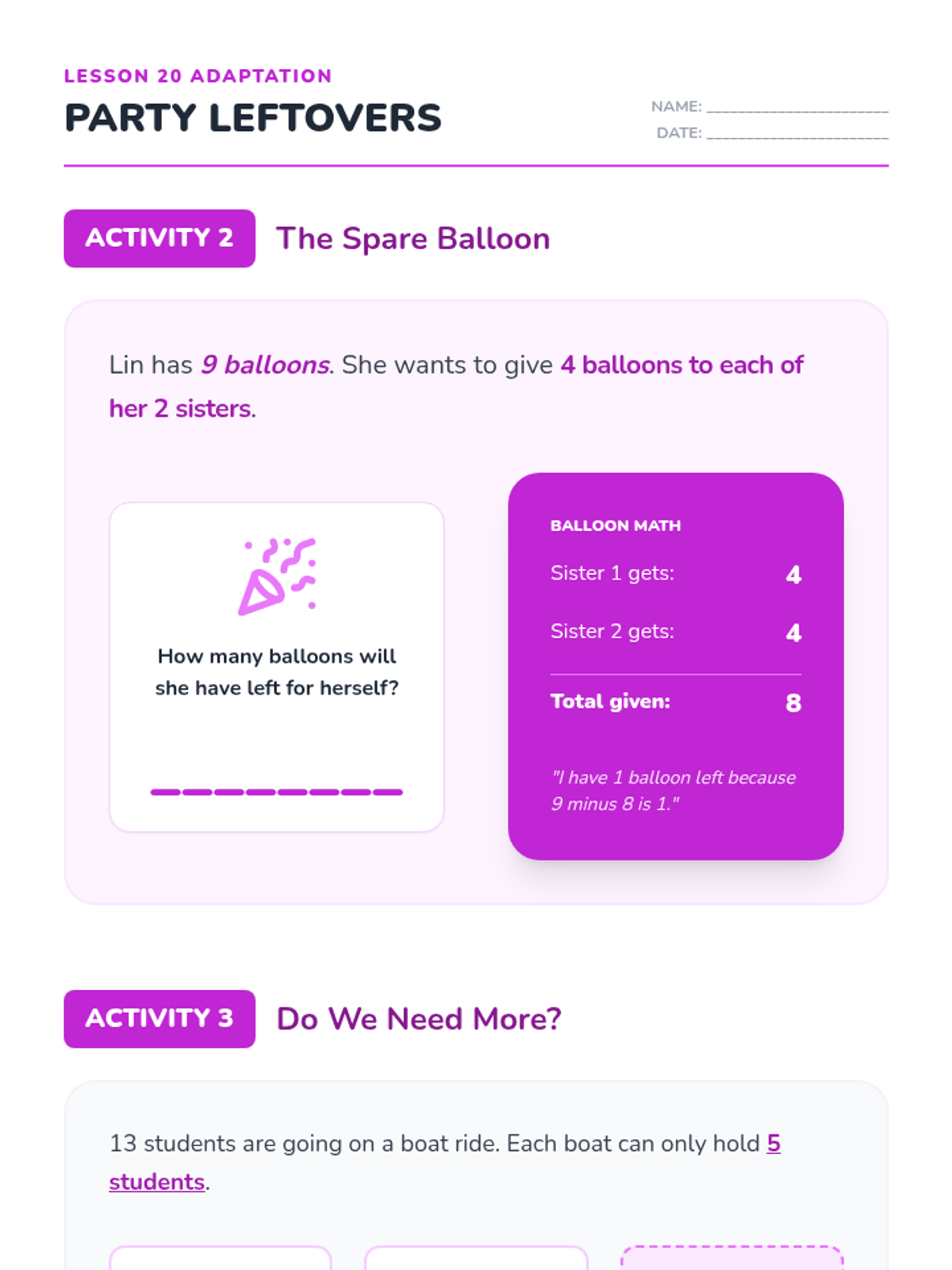
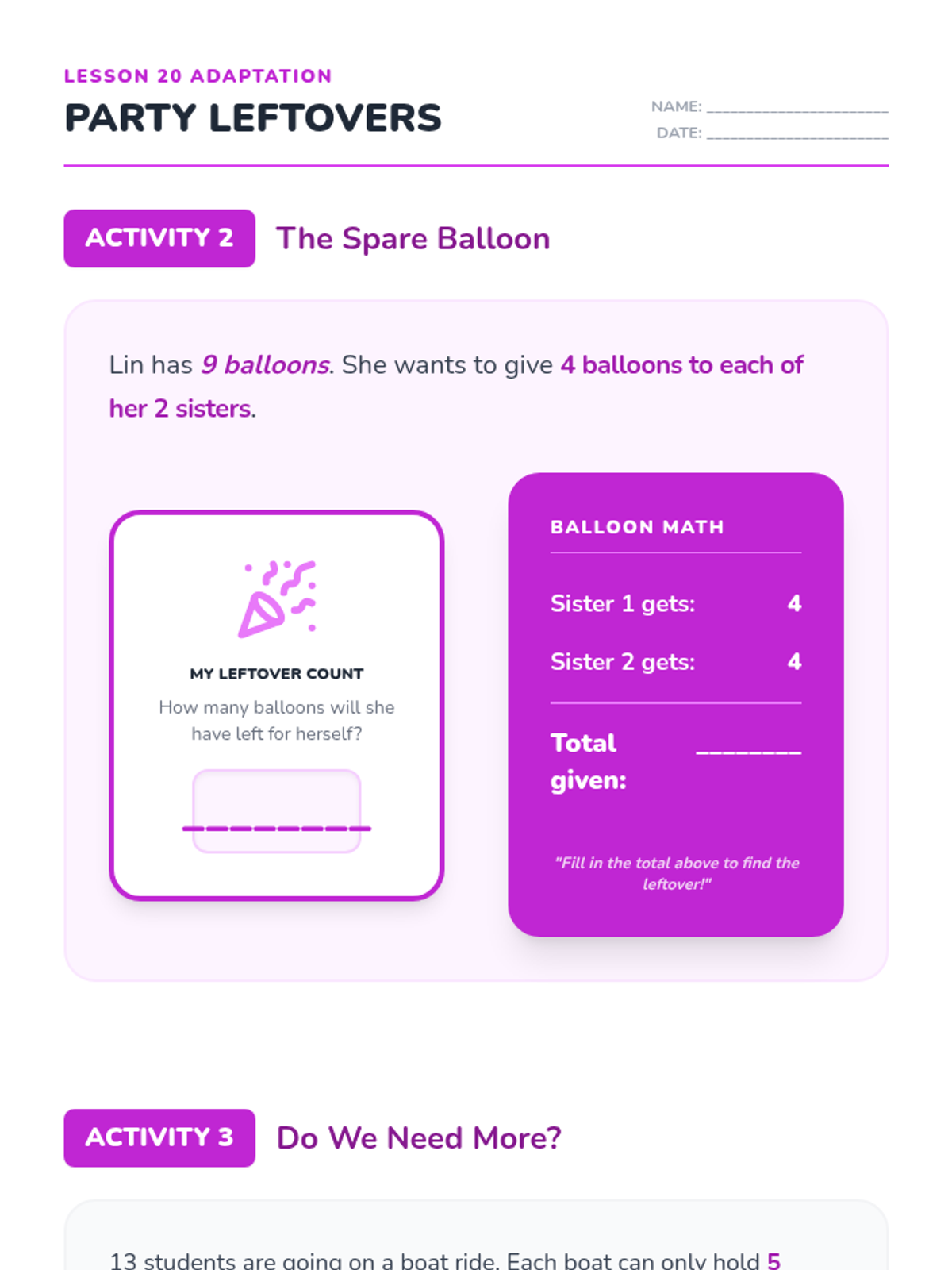
Activities focused on interpreting what leftovers mean in real-world situations.
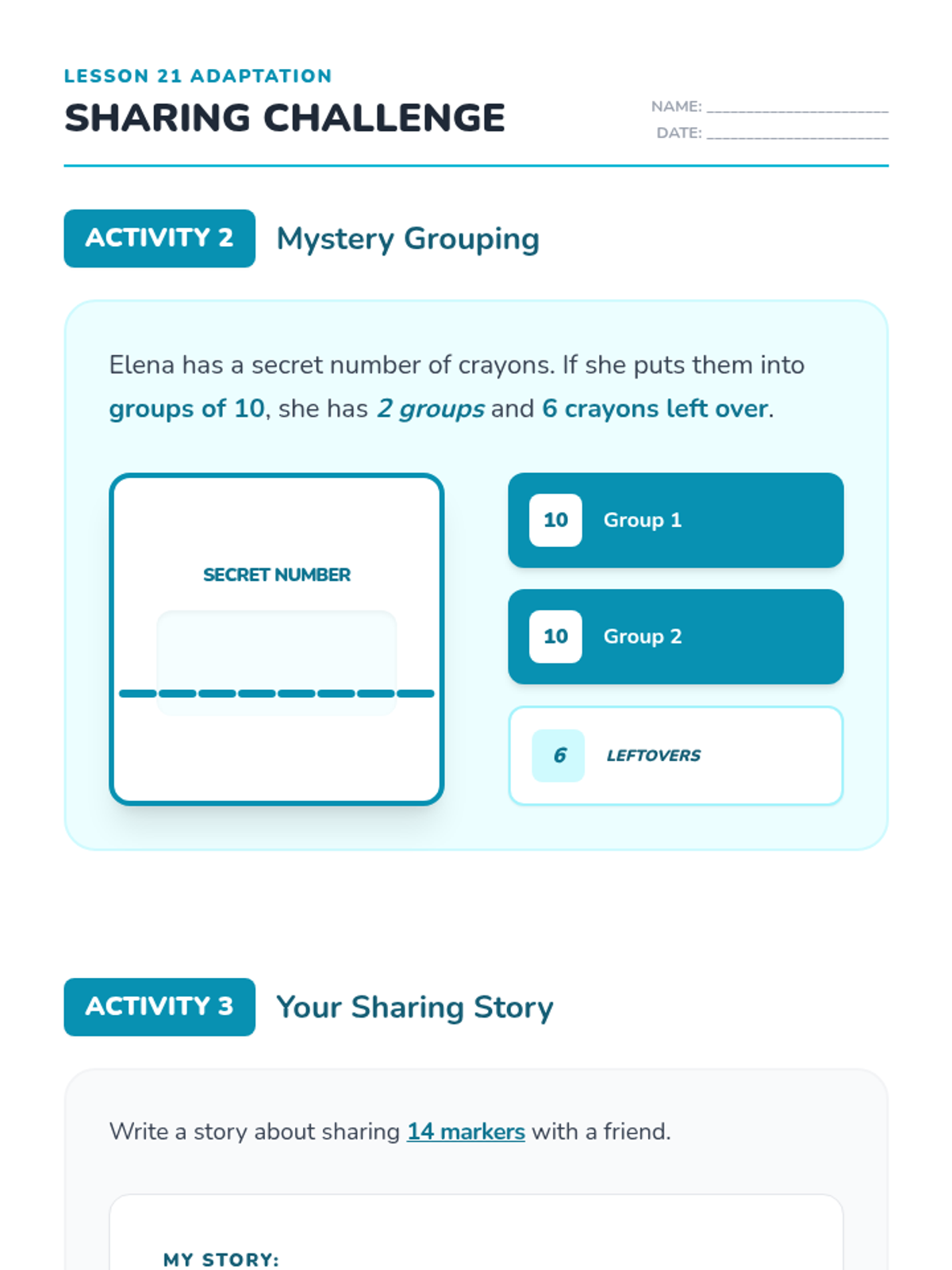
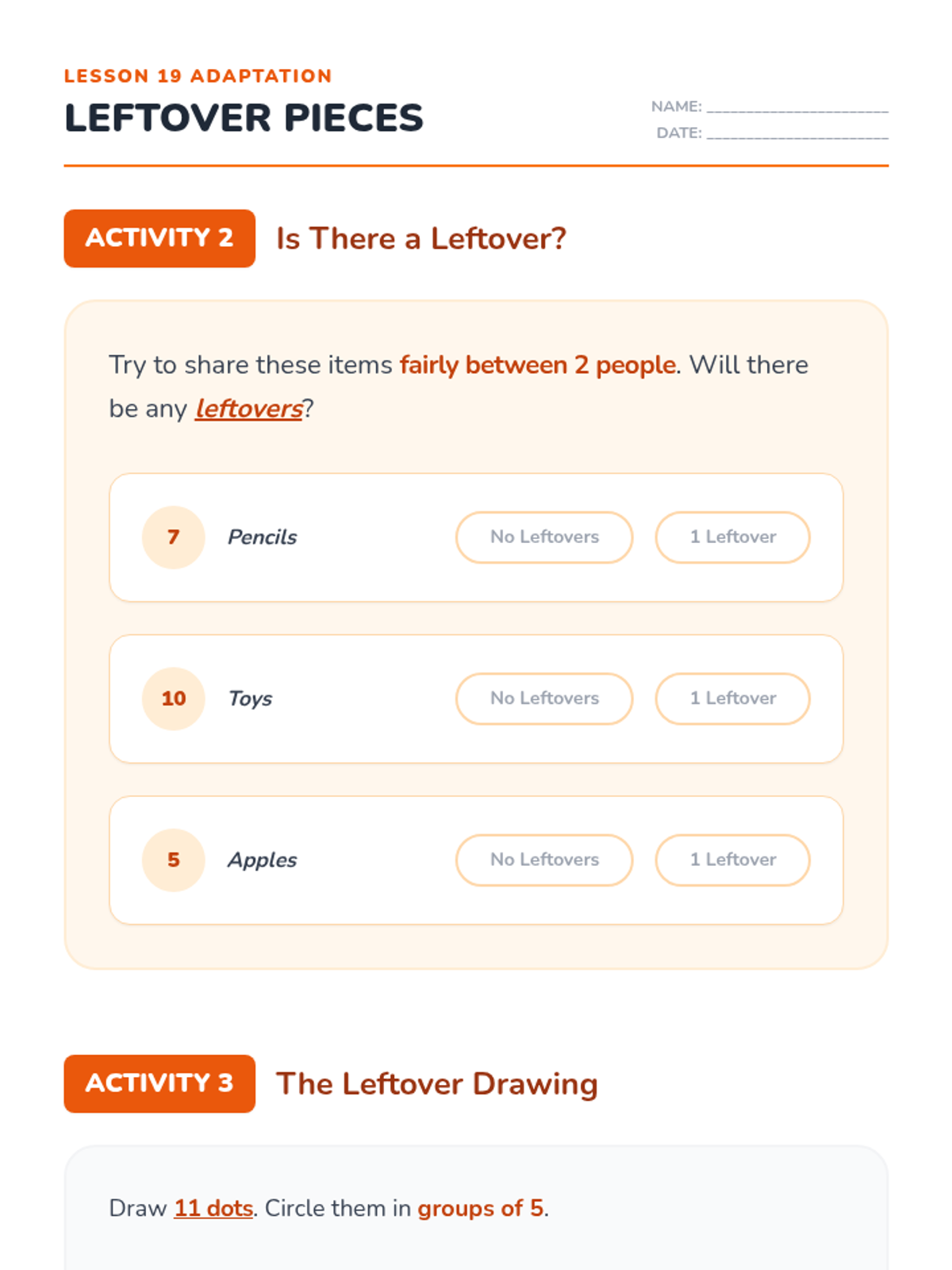
Activities focused on identifying leftovers when sharing groups of objects.
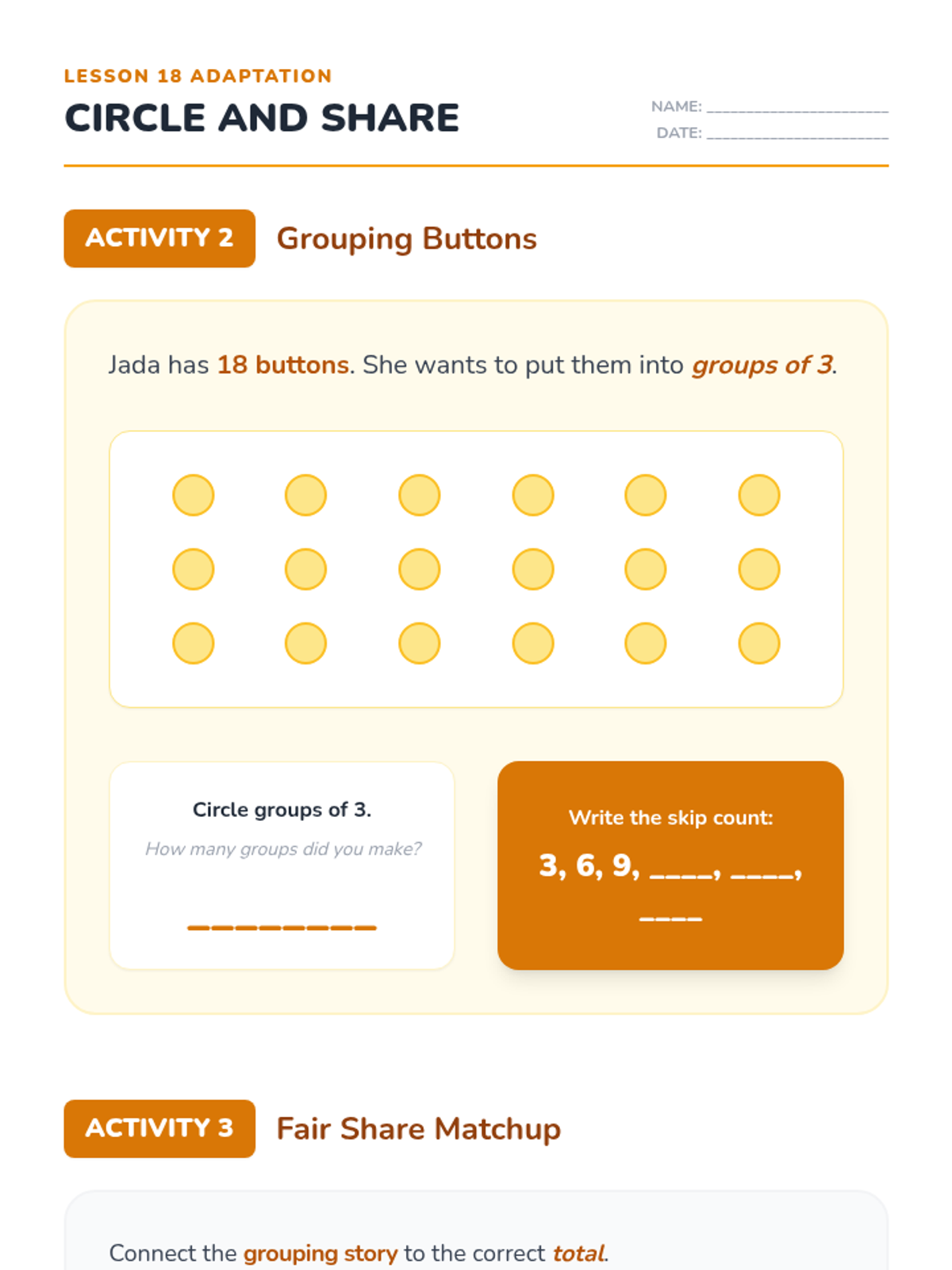
Activities focused on choosing strategies like circling groups to solve sharing problems.