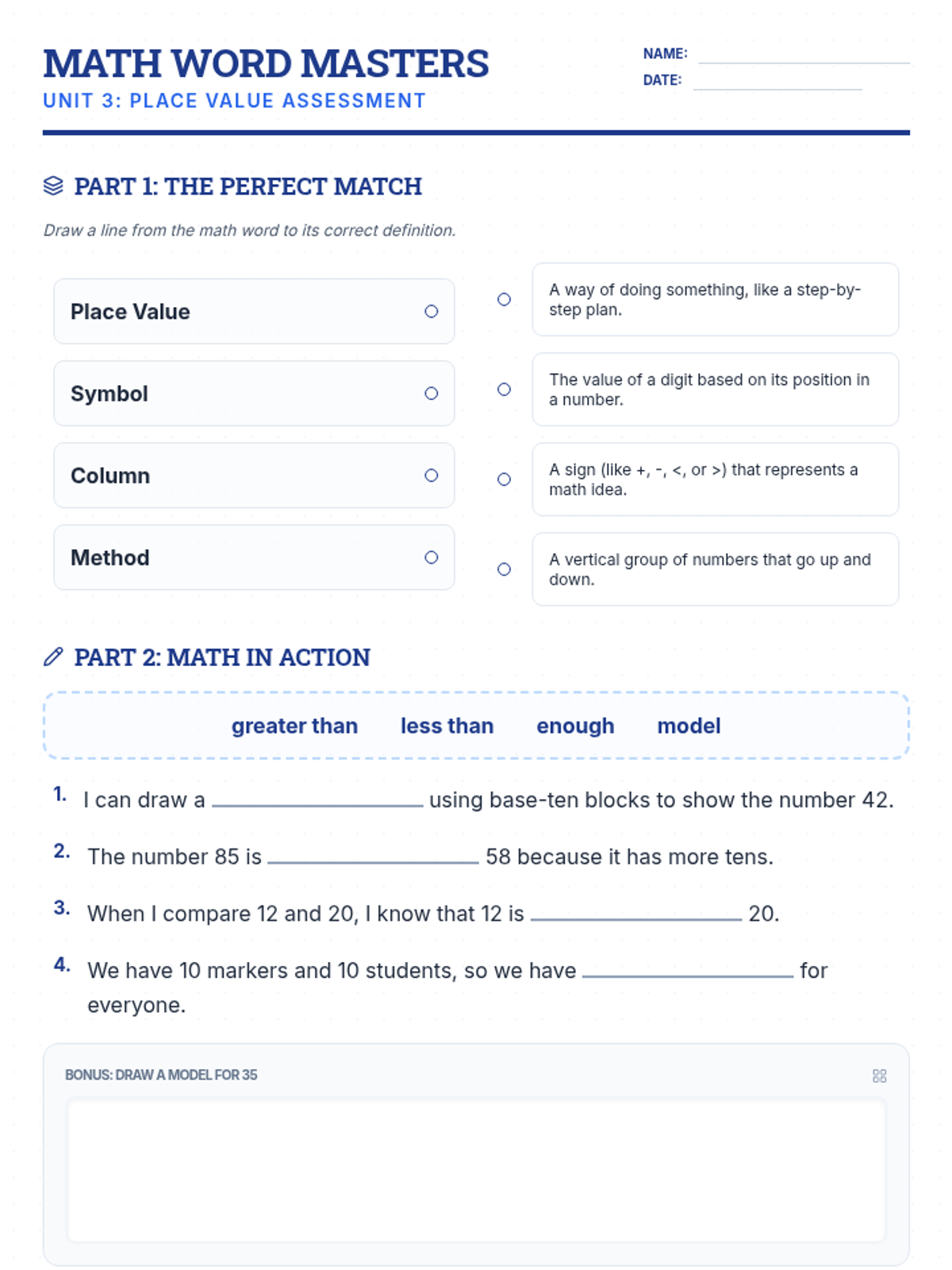
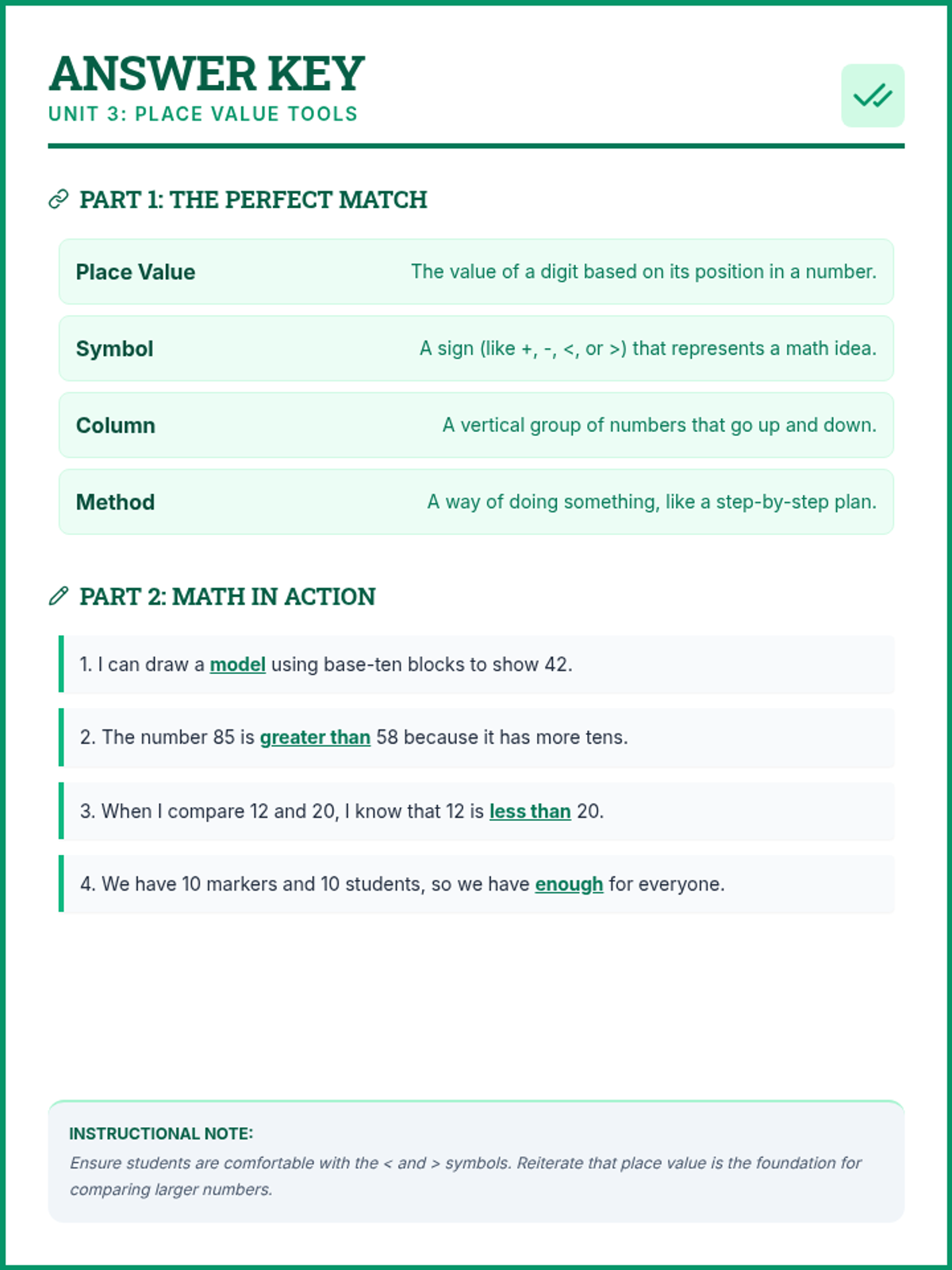
One-to-one correspondence, numeral identification, and comparison of quantities using terms like greater than or less than. Establishes the foundation for numerical literacy and early arithmetic operations.
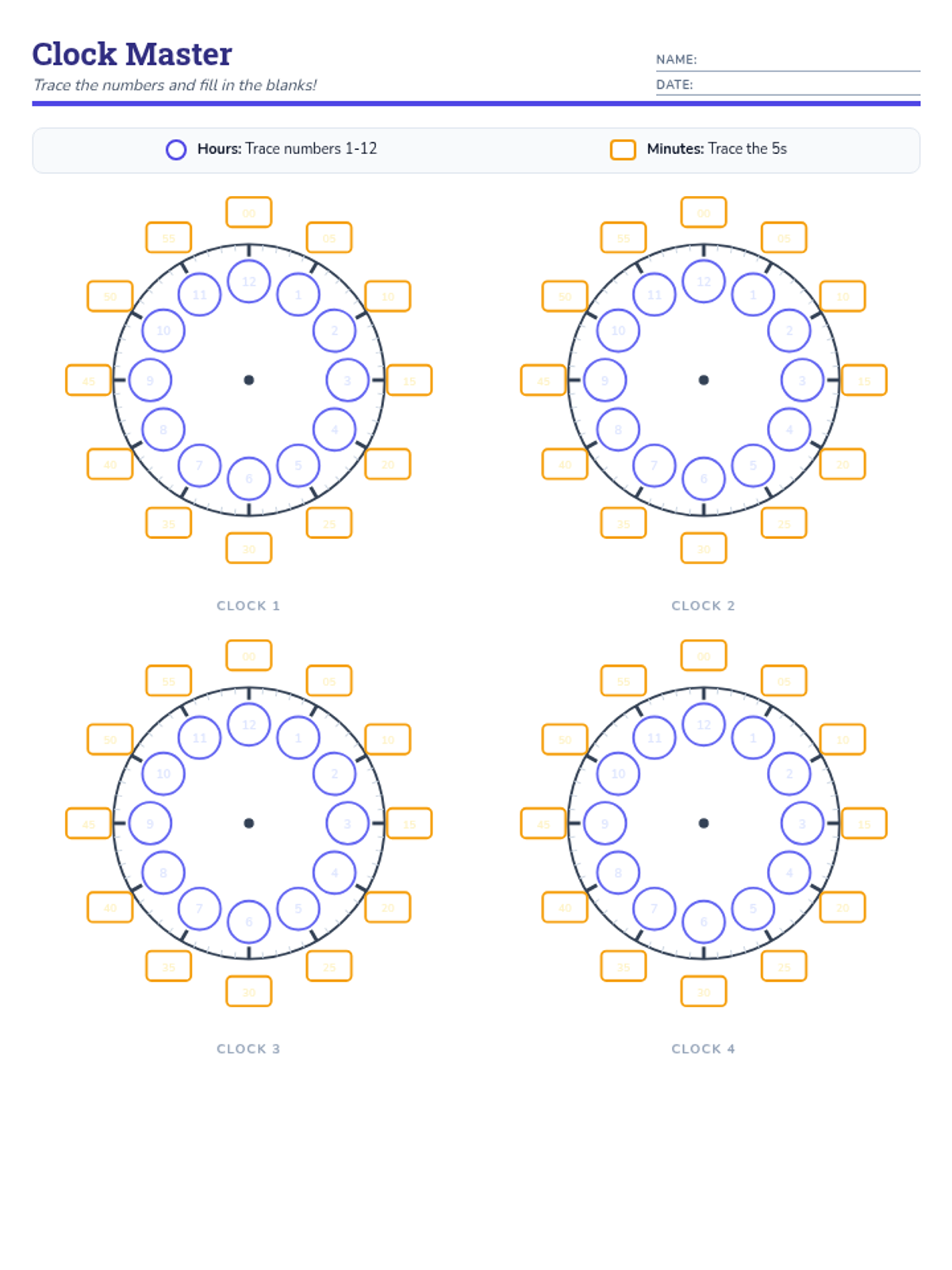
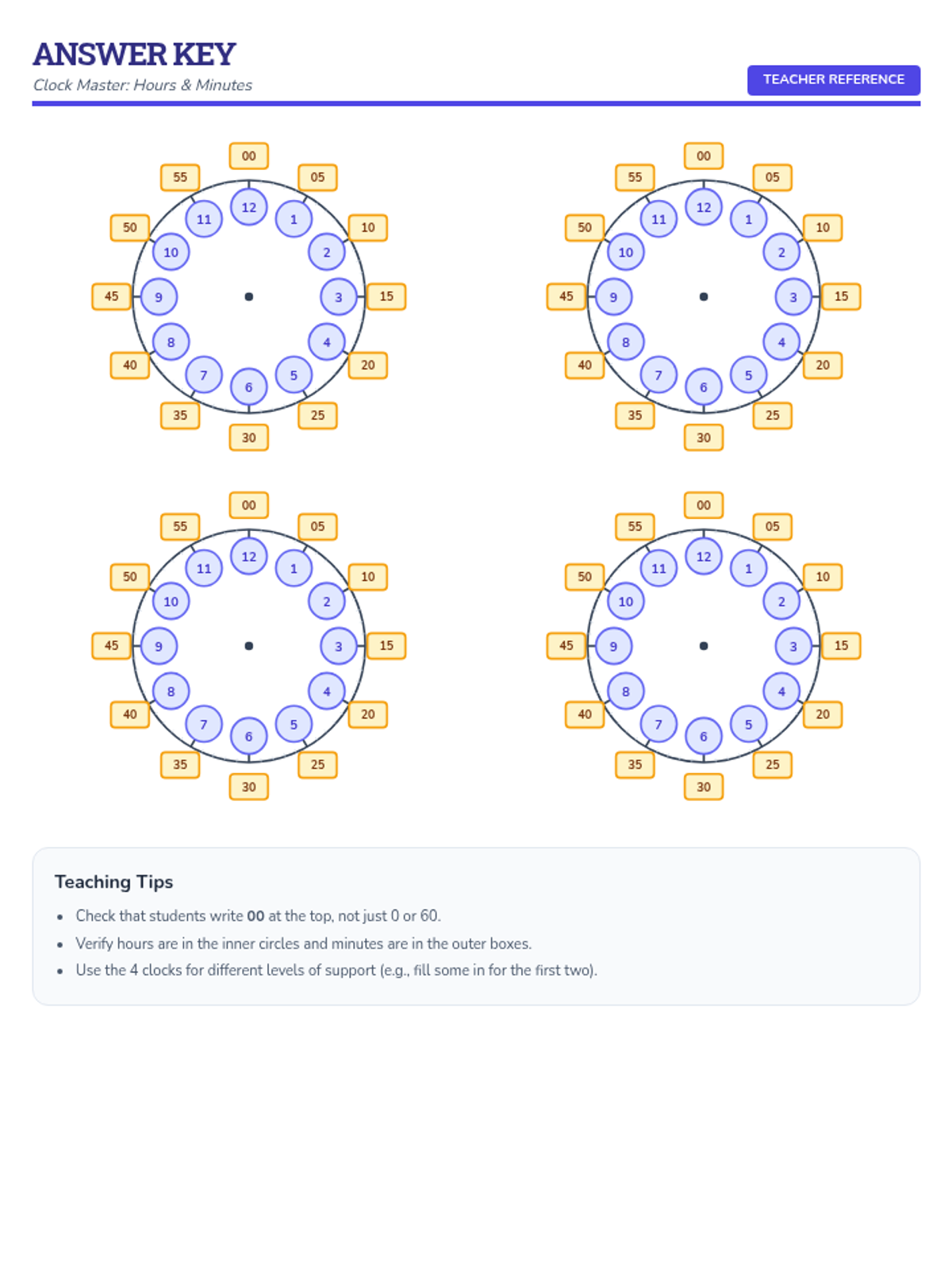
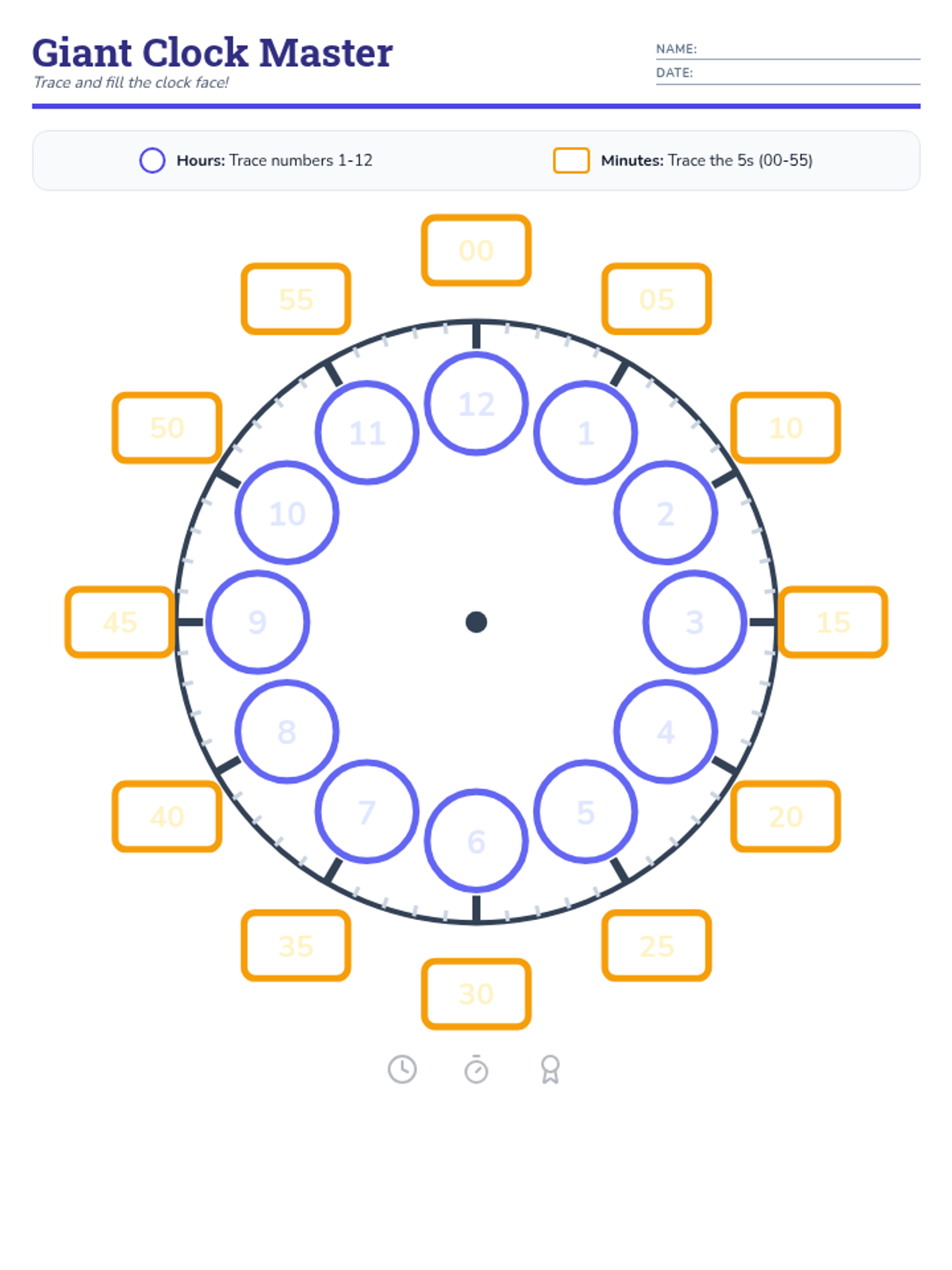
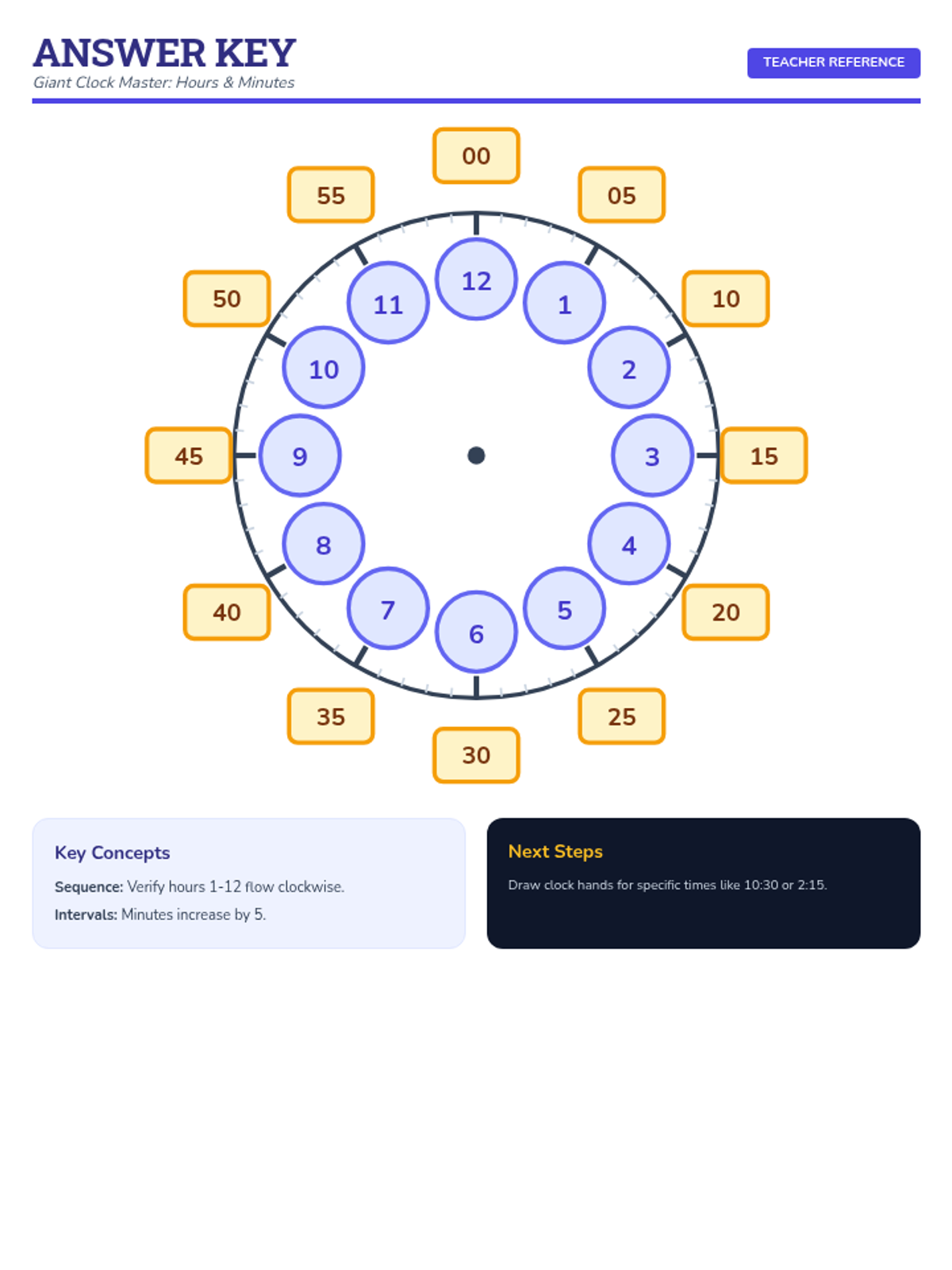
A foundational lesson on clock anatomy, focusing on identifying hour numbers and five-minute increments. Students practice spatial reasoning and number sequencing within a circular layout.
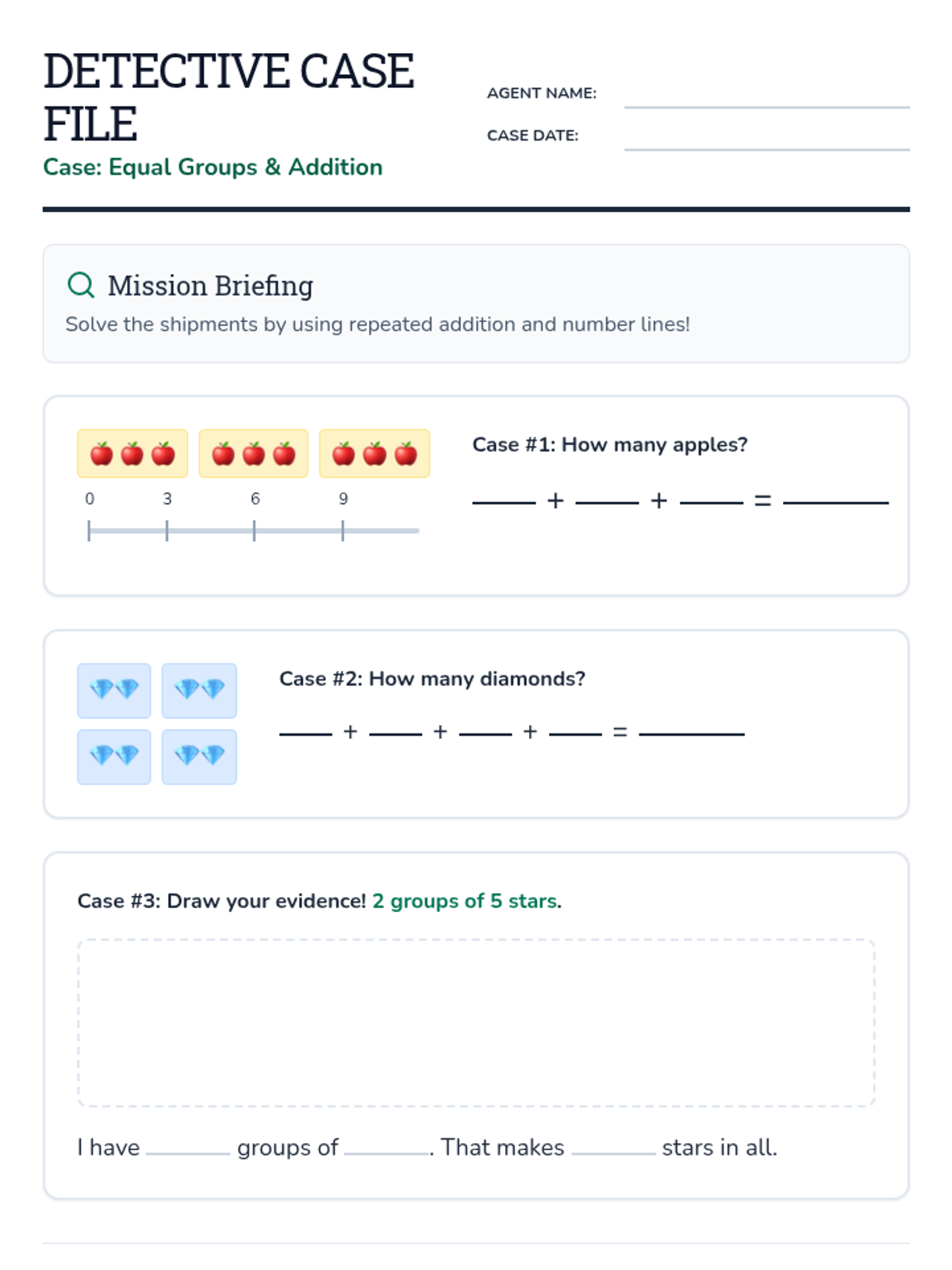
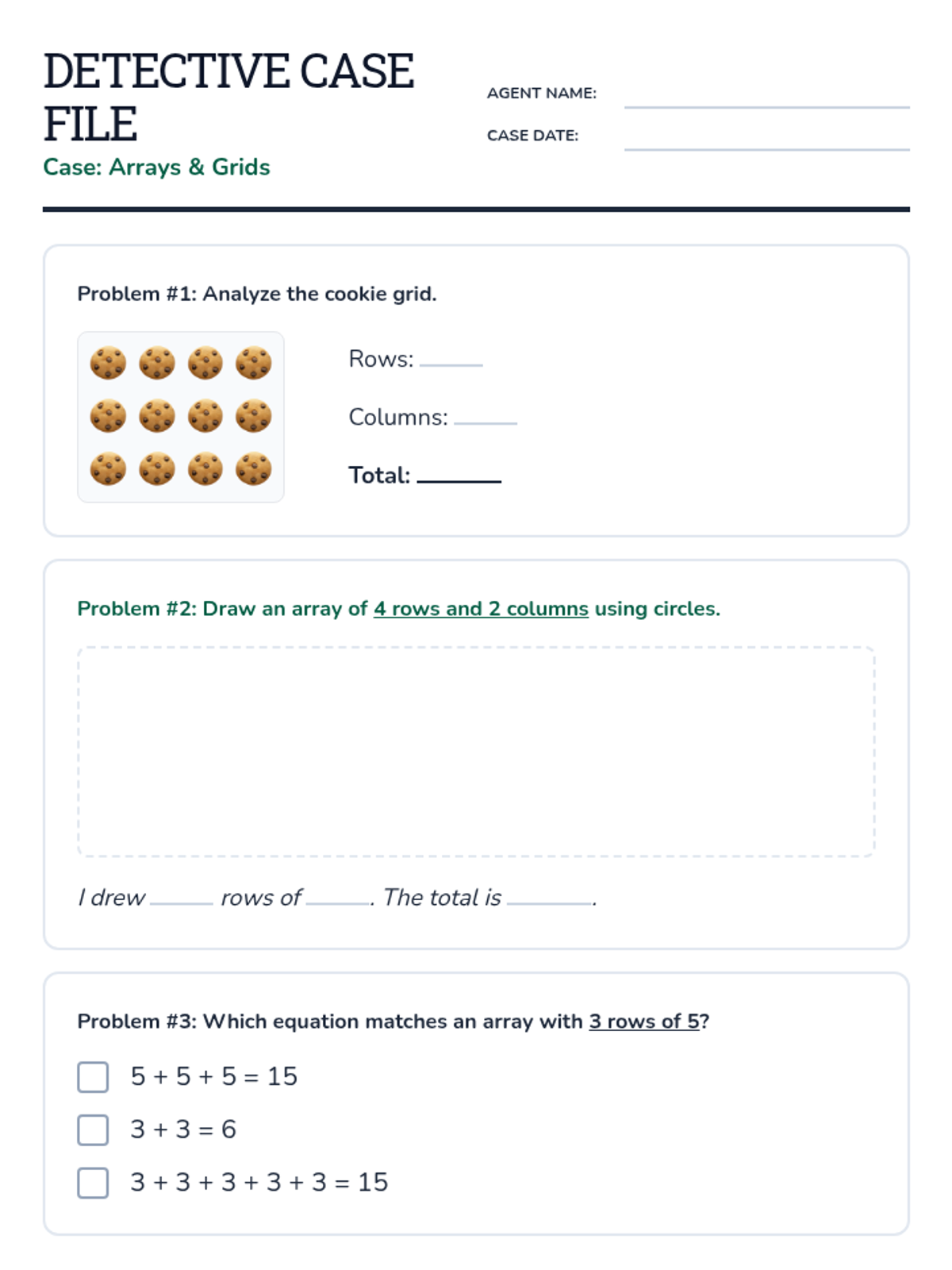
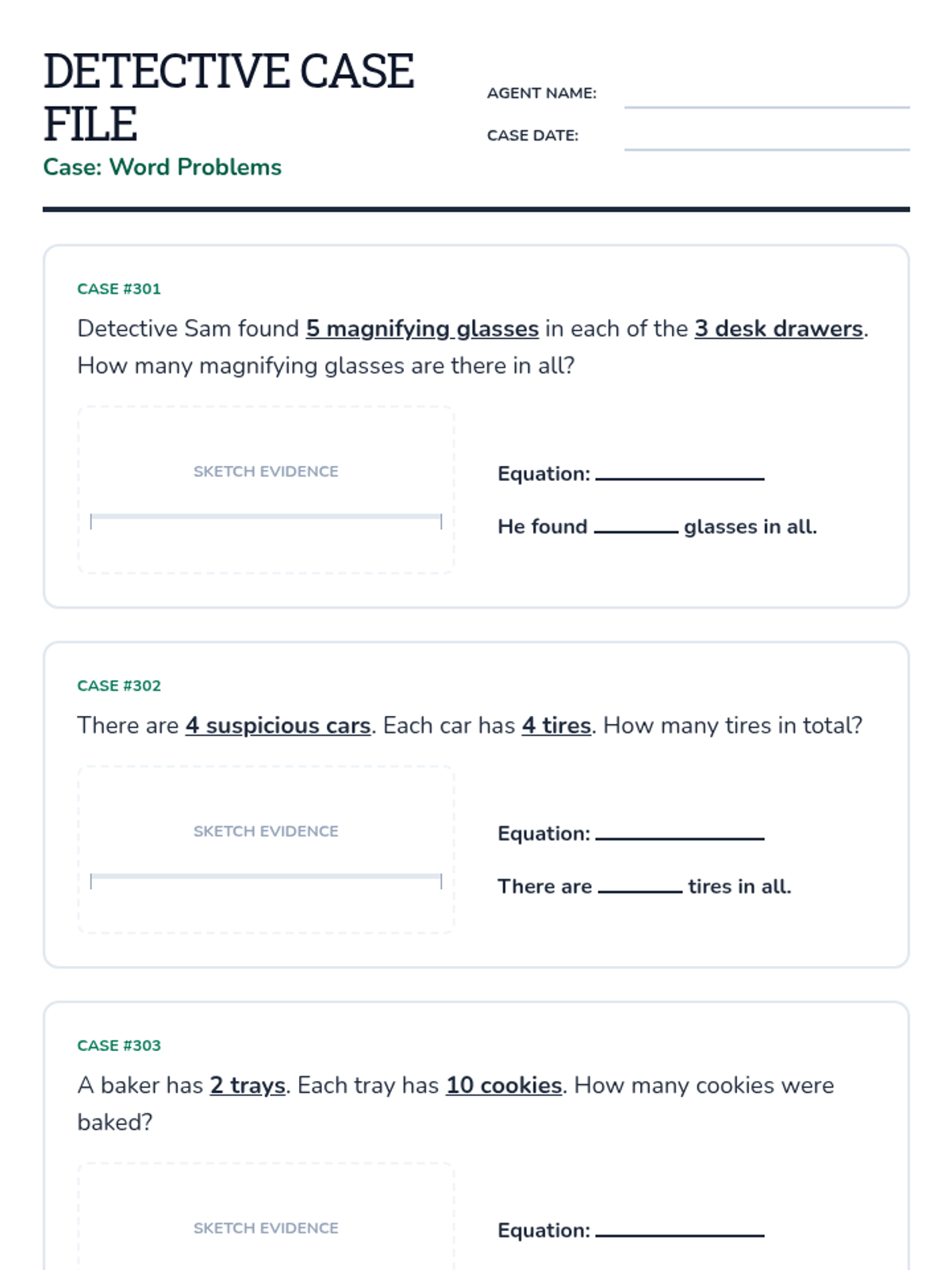
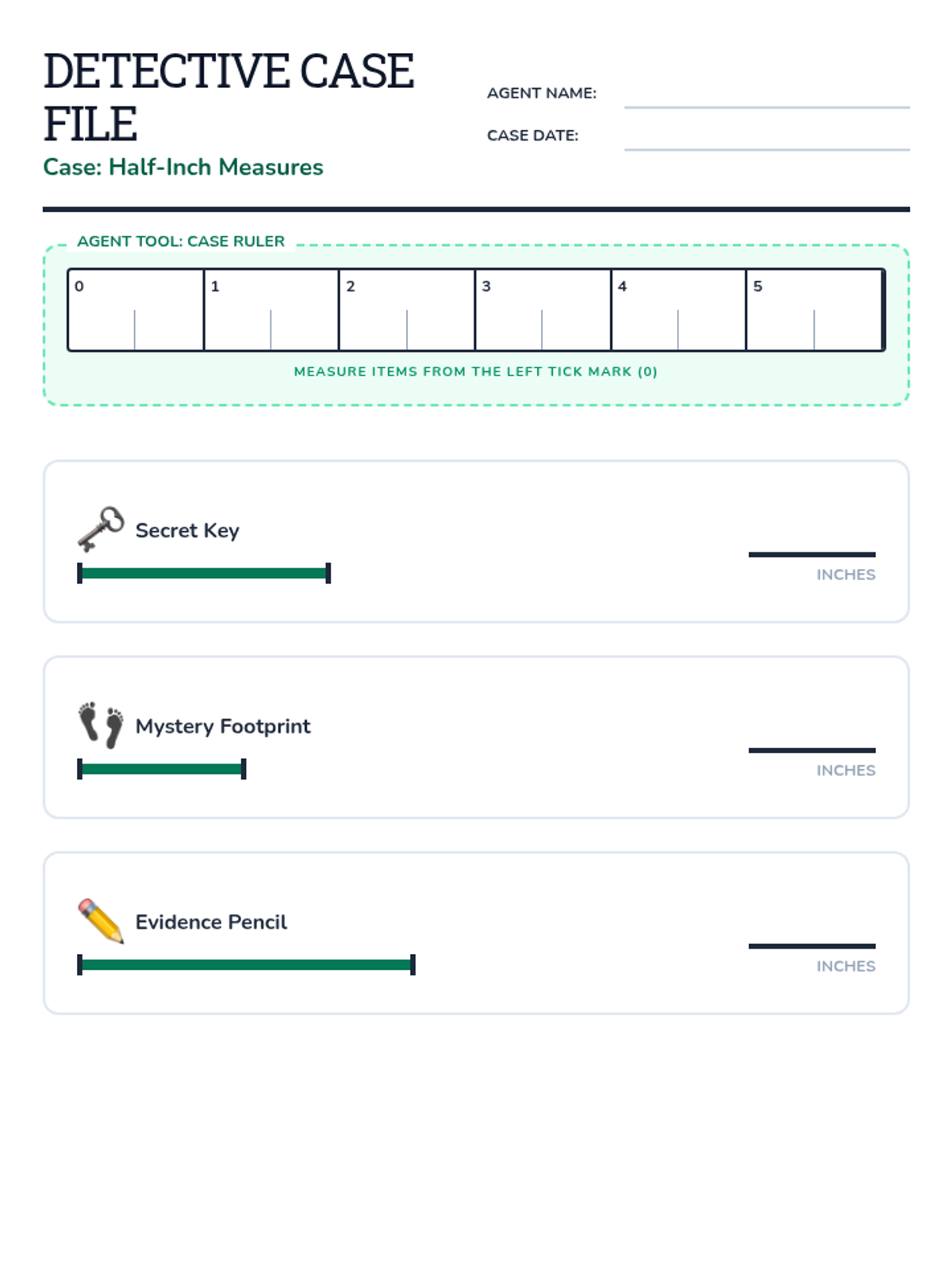
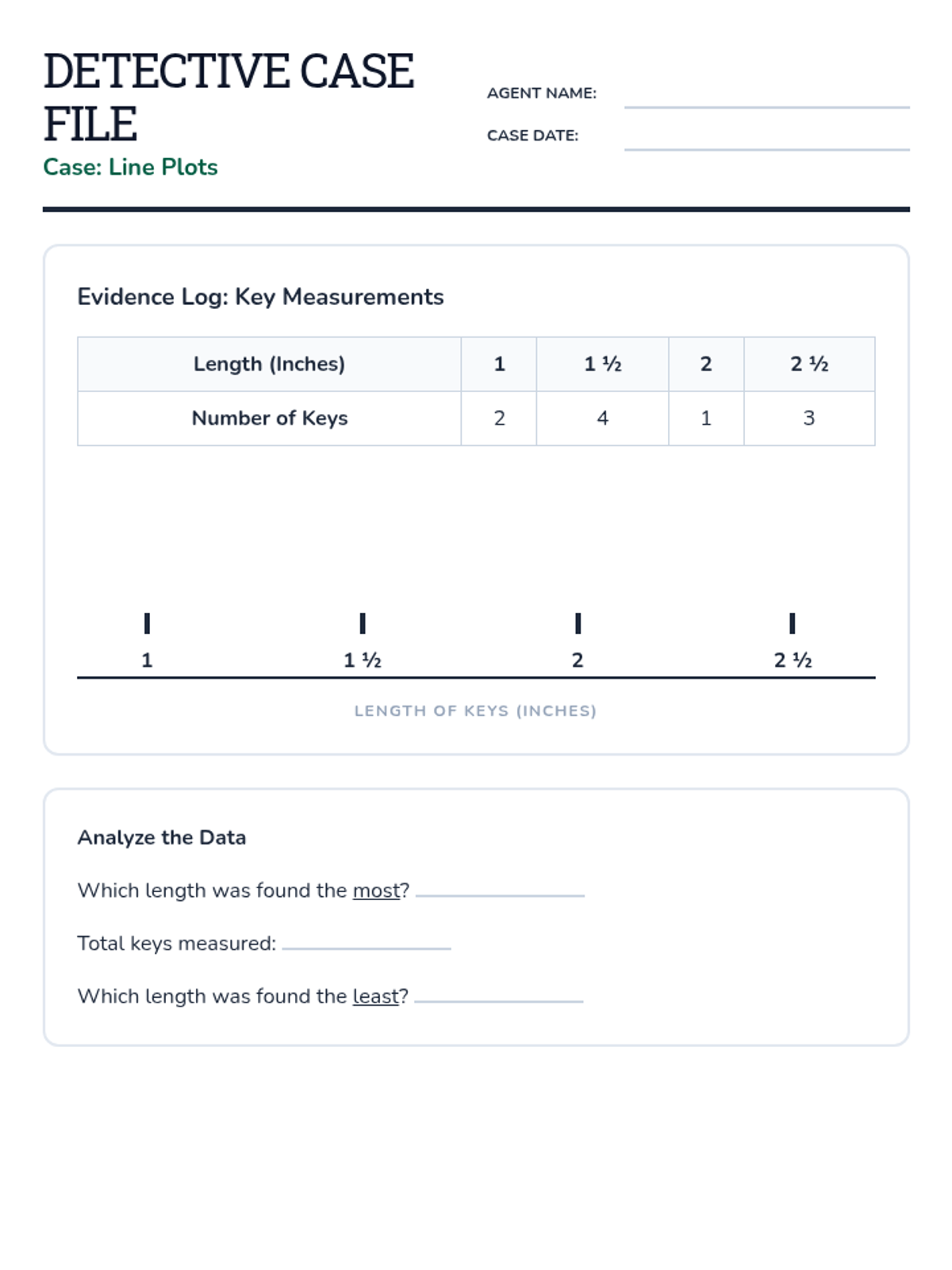
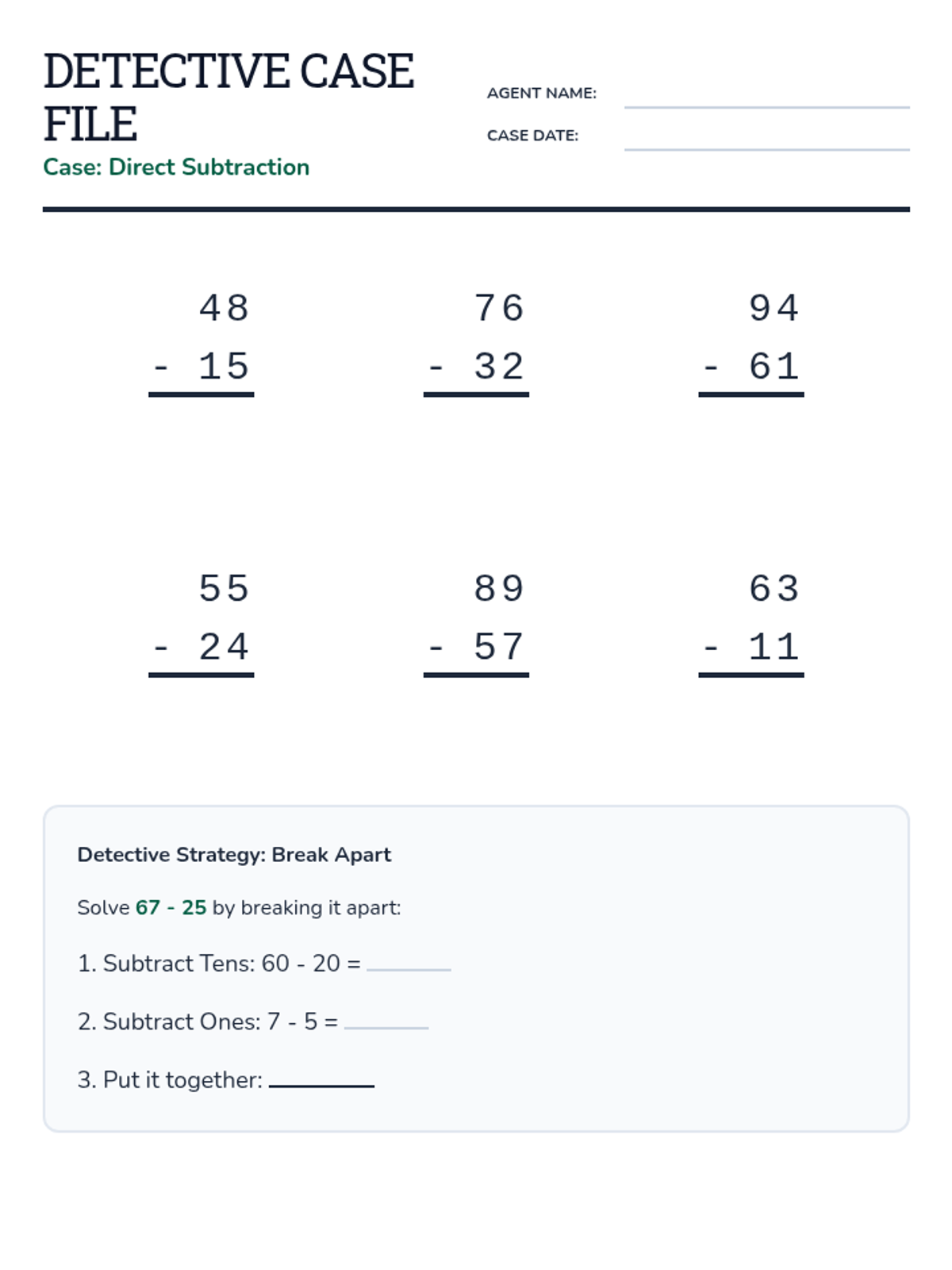
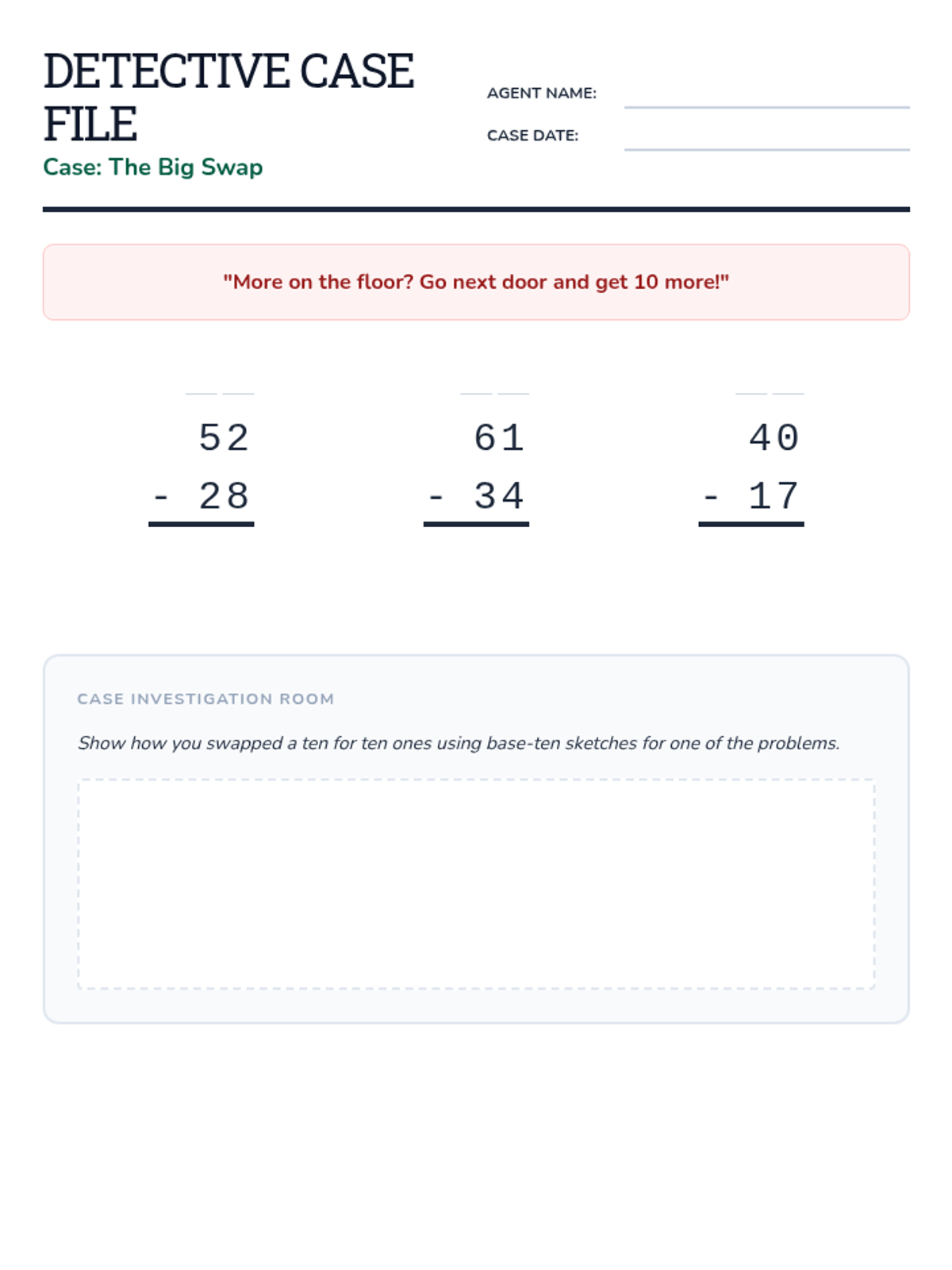
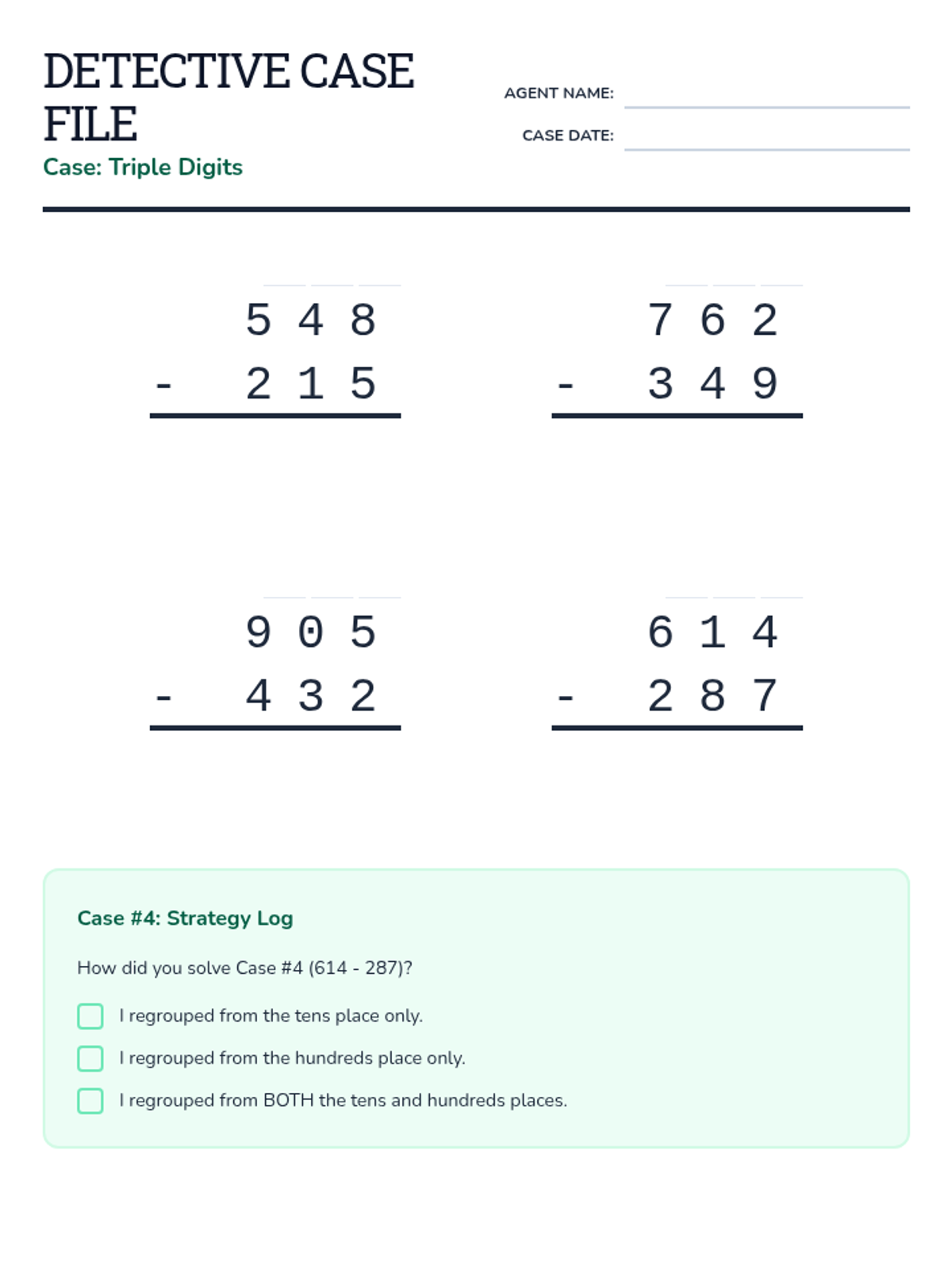
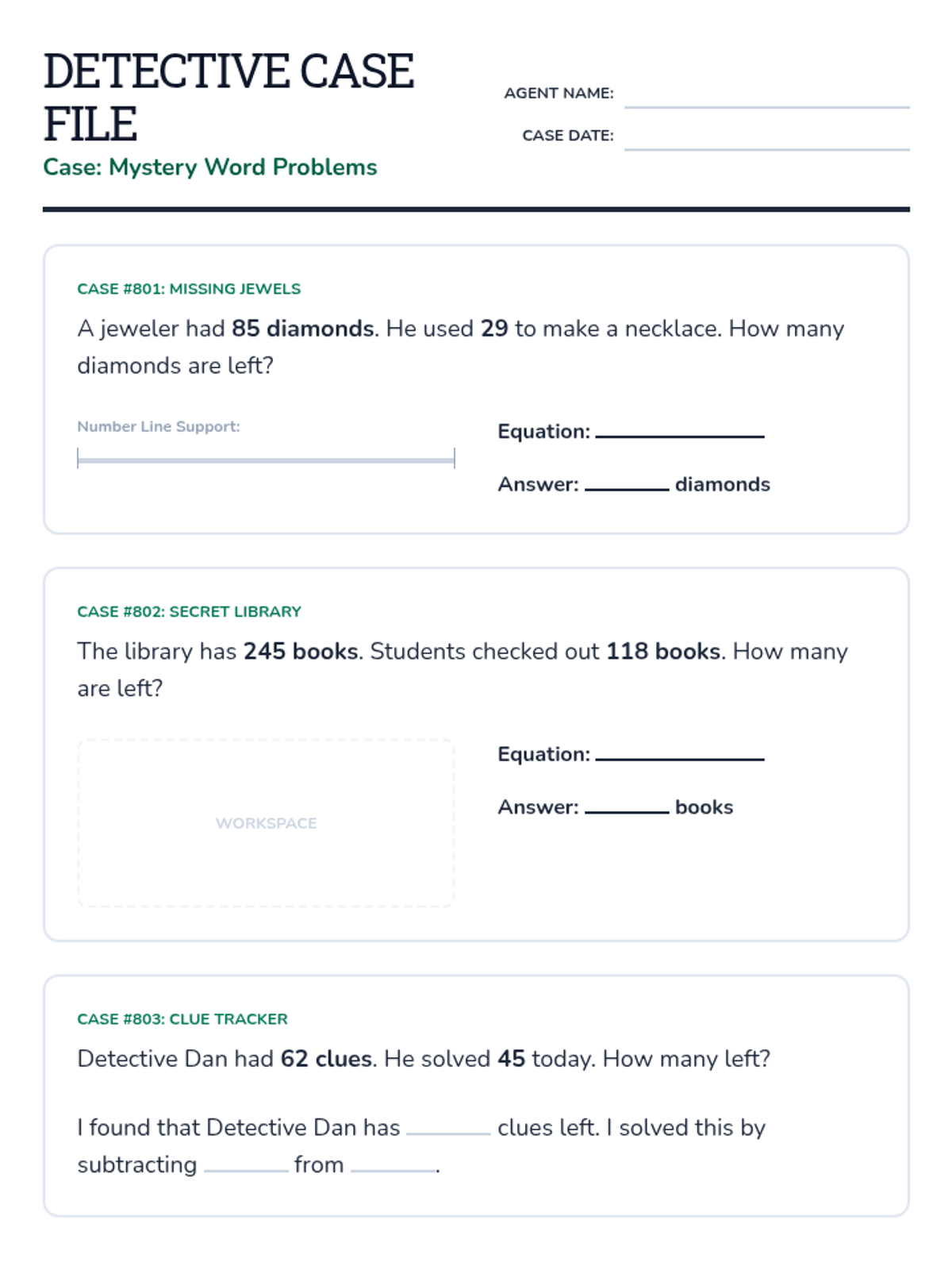
A comprehensive 20-worksheet review packet for 2nd grade math concepts including equal groups, fractions, measurement, place value, subtraction, and money, all themed as a 'Math Detective' case file.
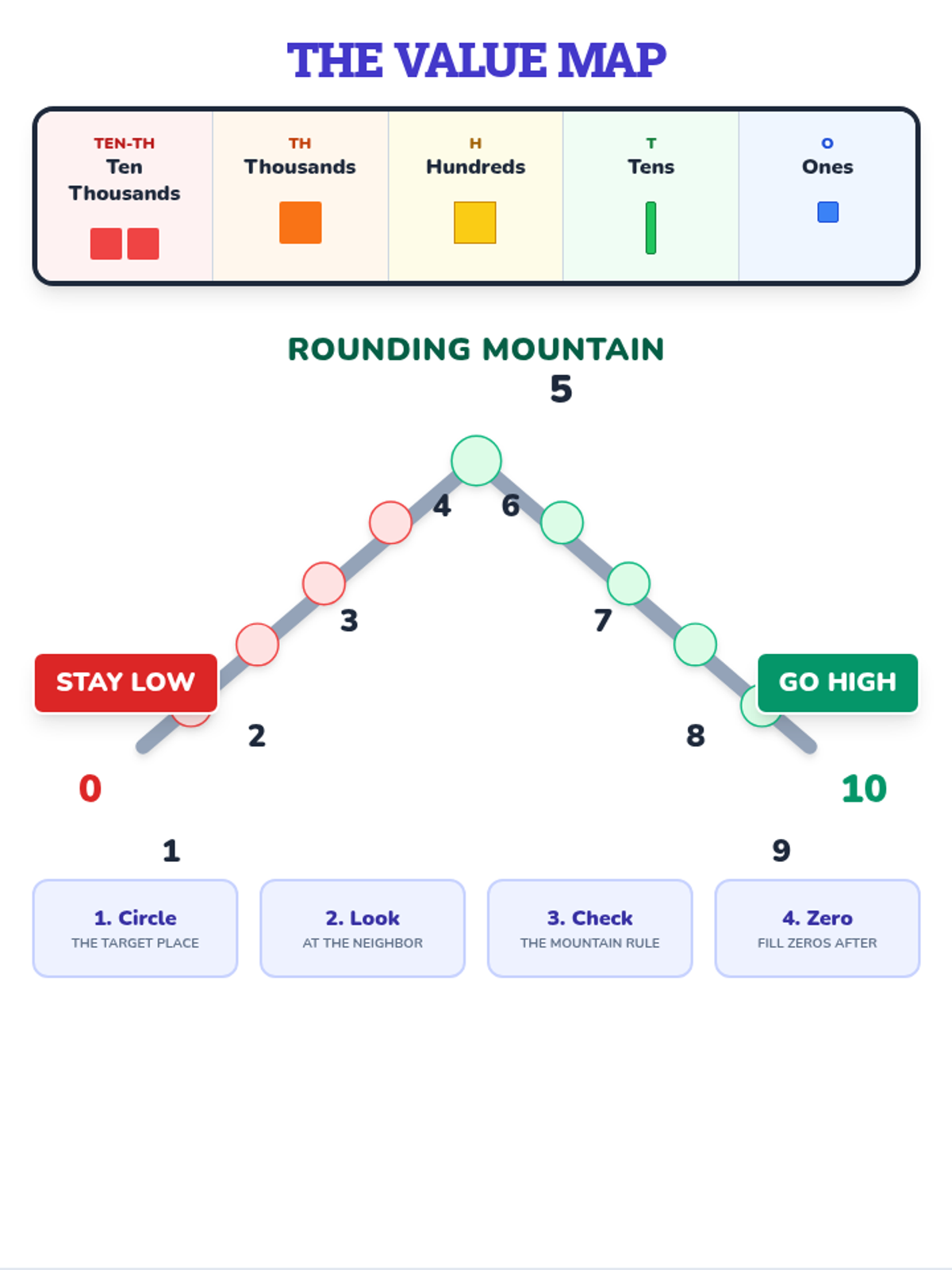
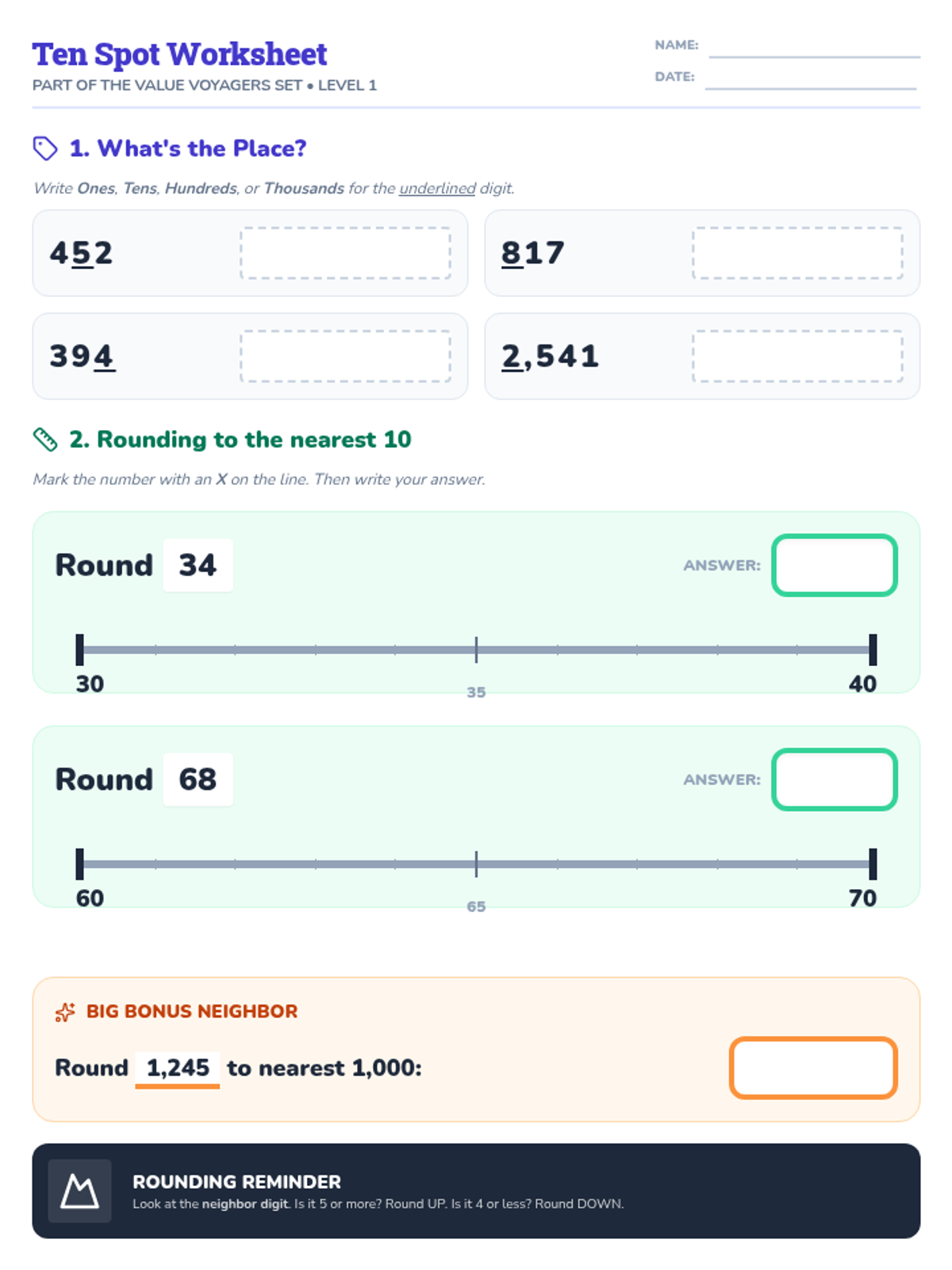
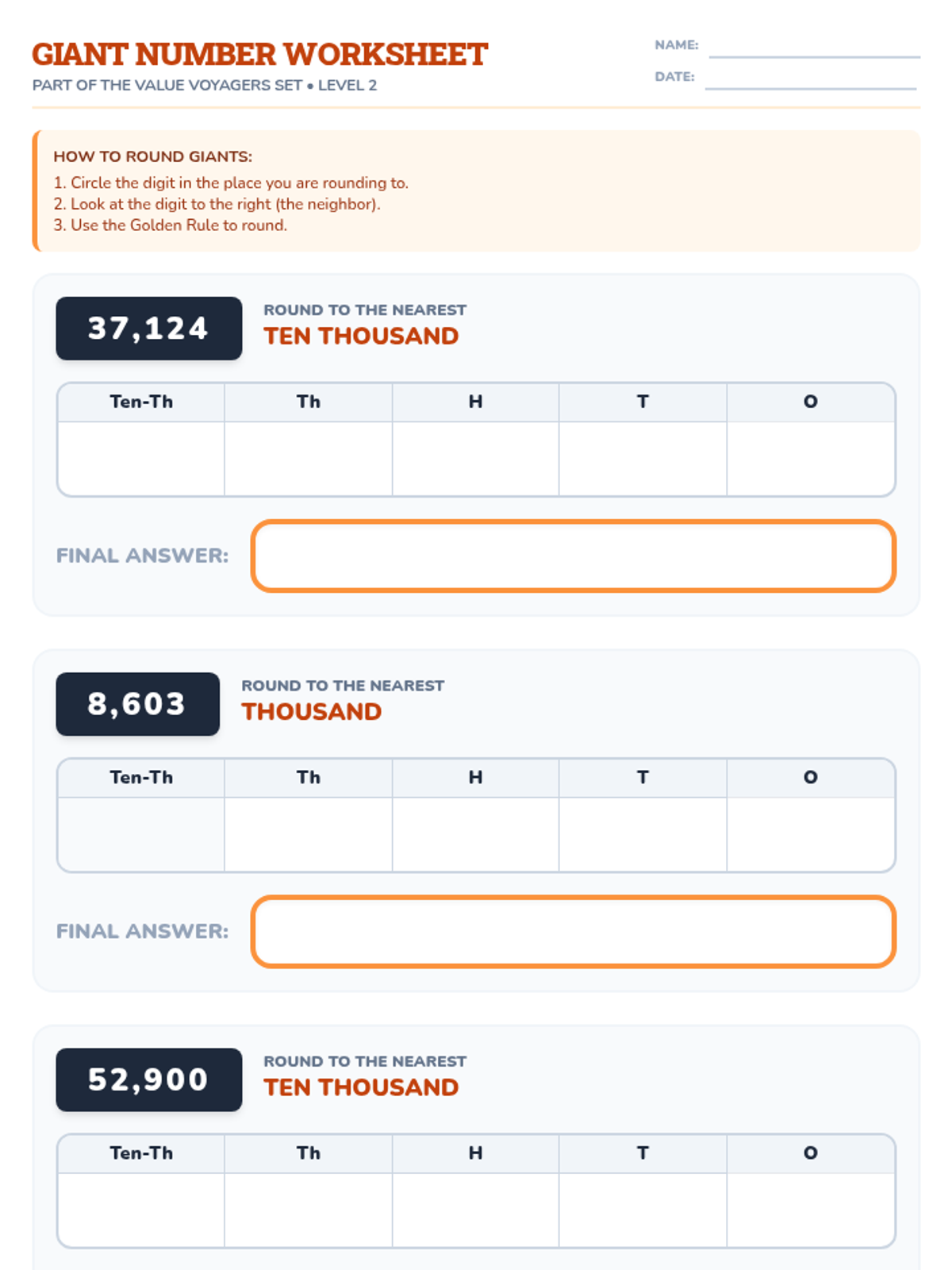
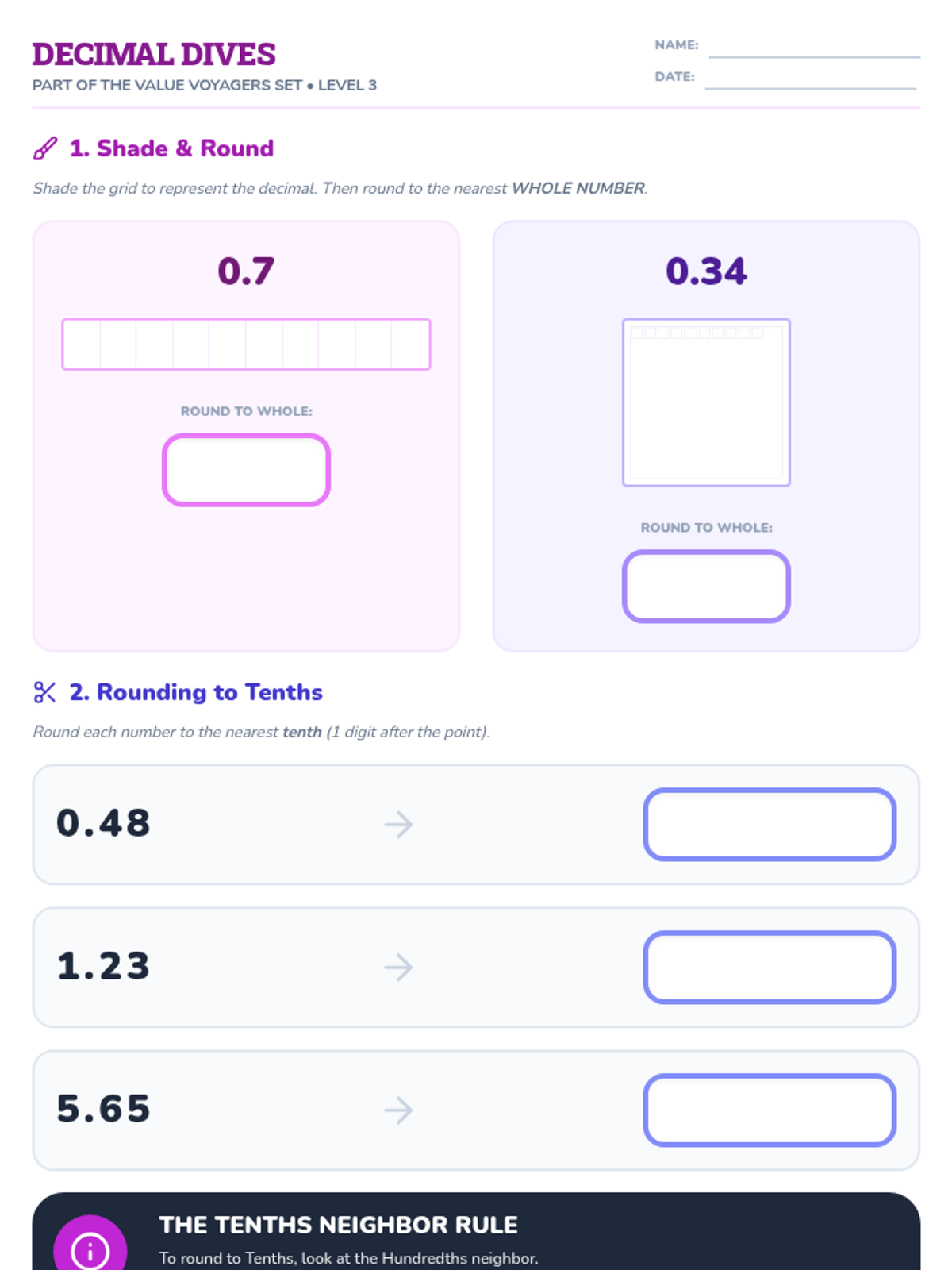
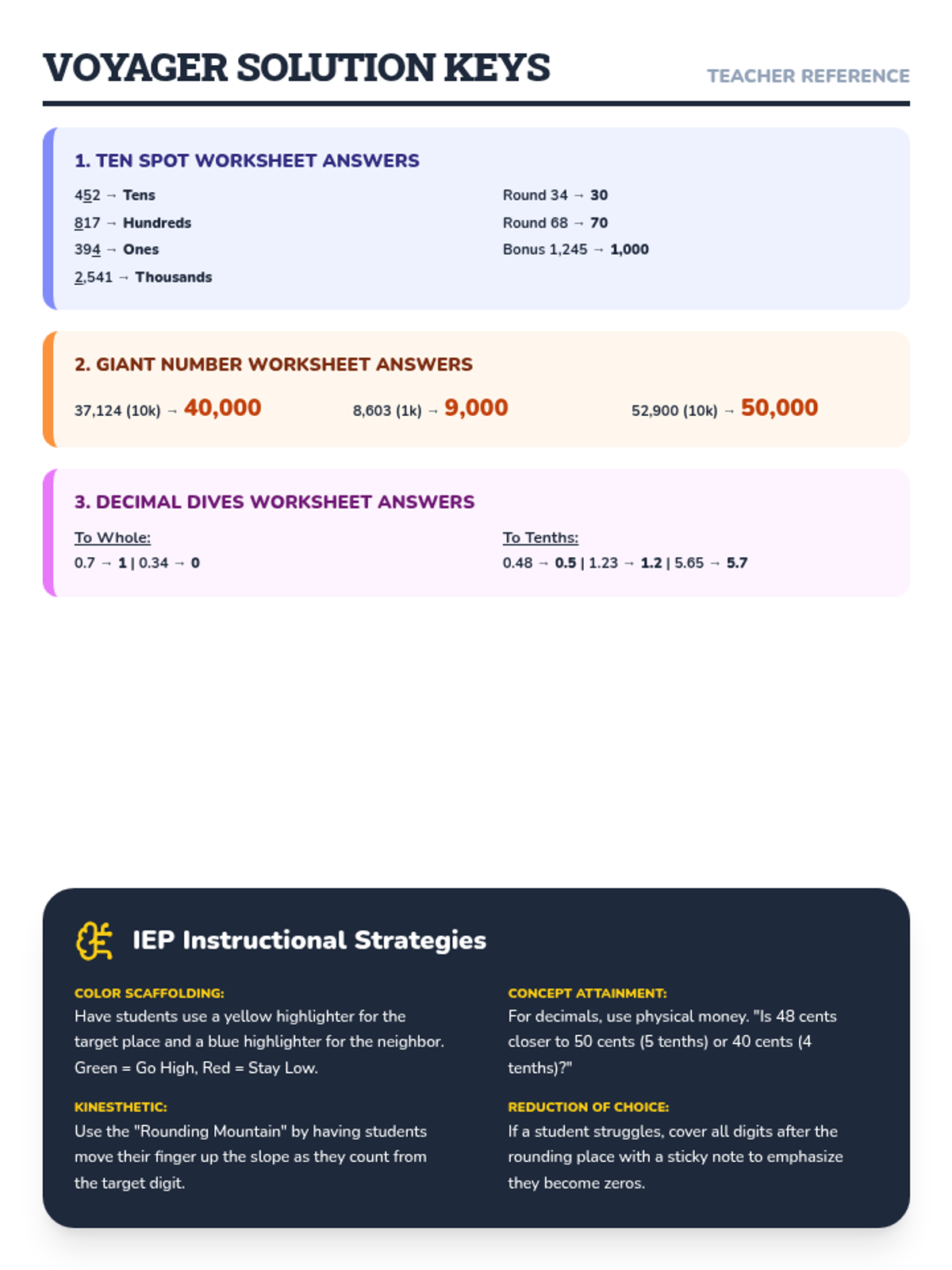
A comprehensive guide to understanding place value from single digits to ten-thousands and decimals, featuring visual scaffolding for rounding.
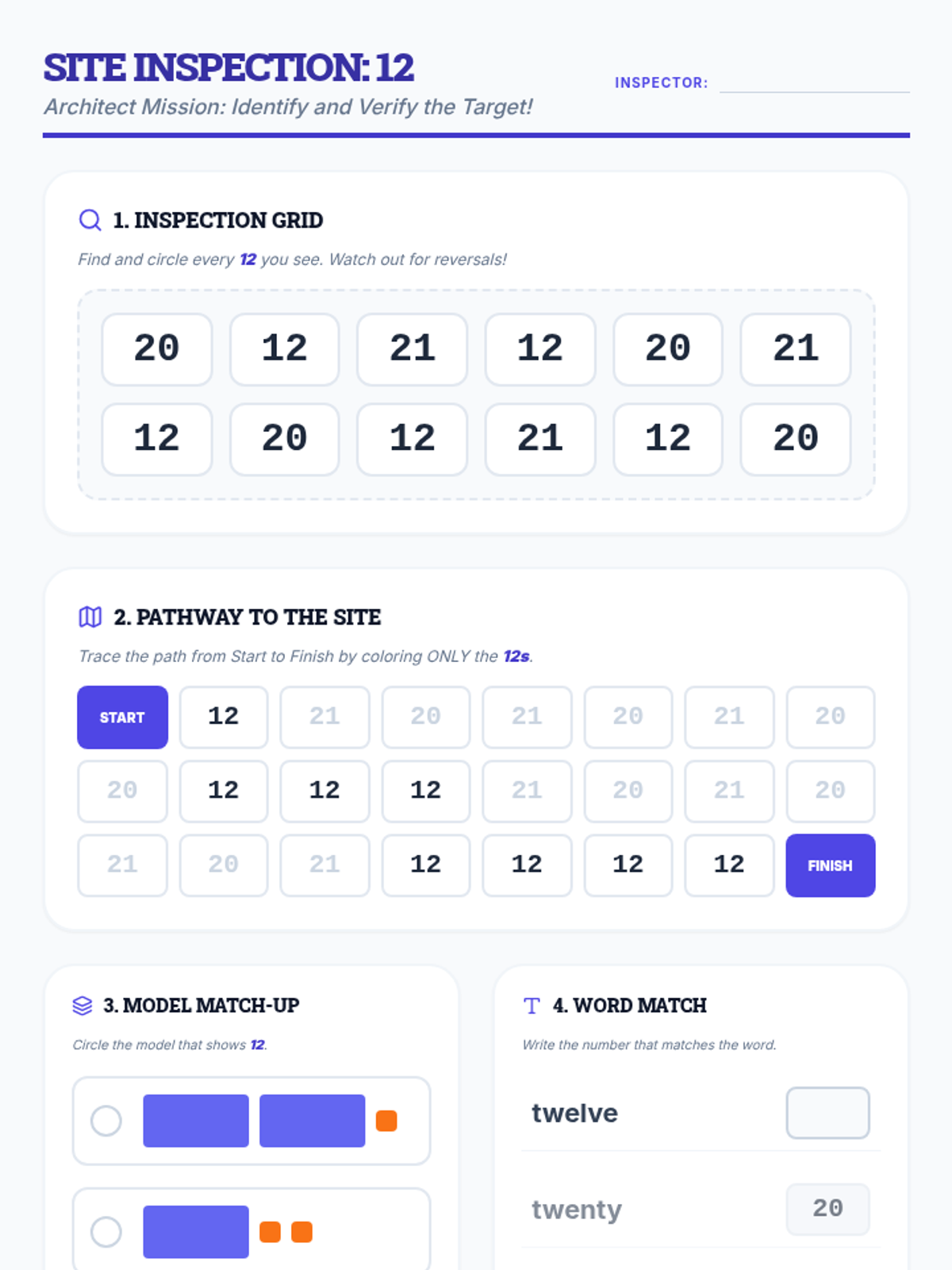
A numeracy lesson helping students distinguish the number 12 from 20 and 21 using place value visualization (one ten, two ones) and 'Architect' inspection strategies.
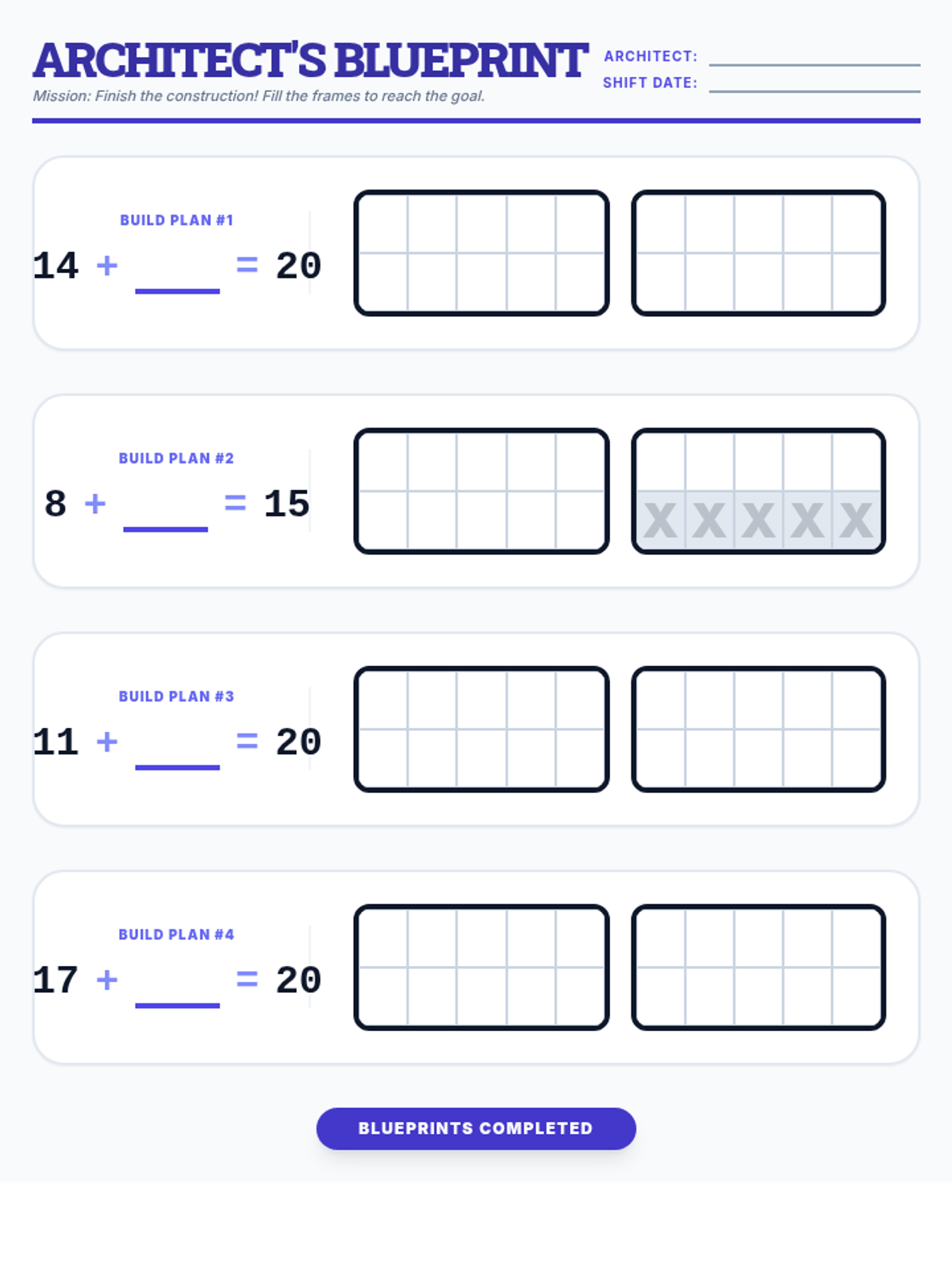
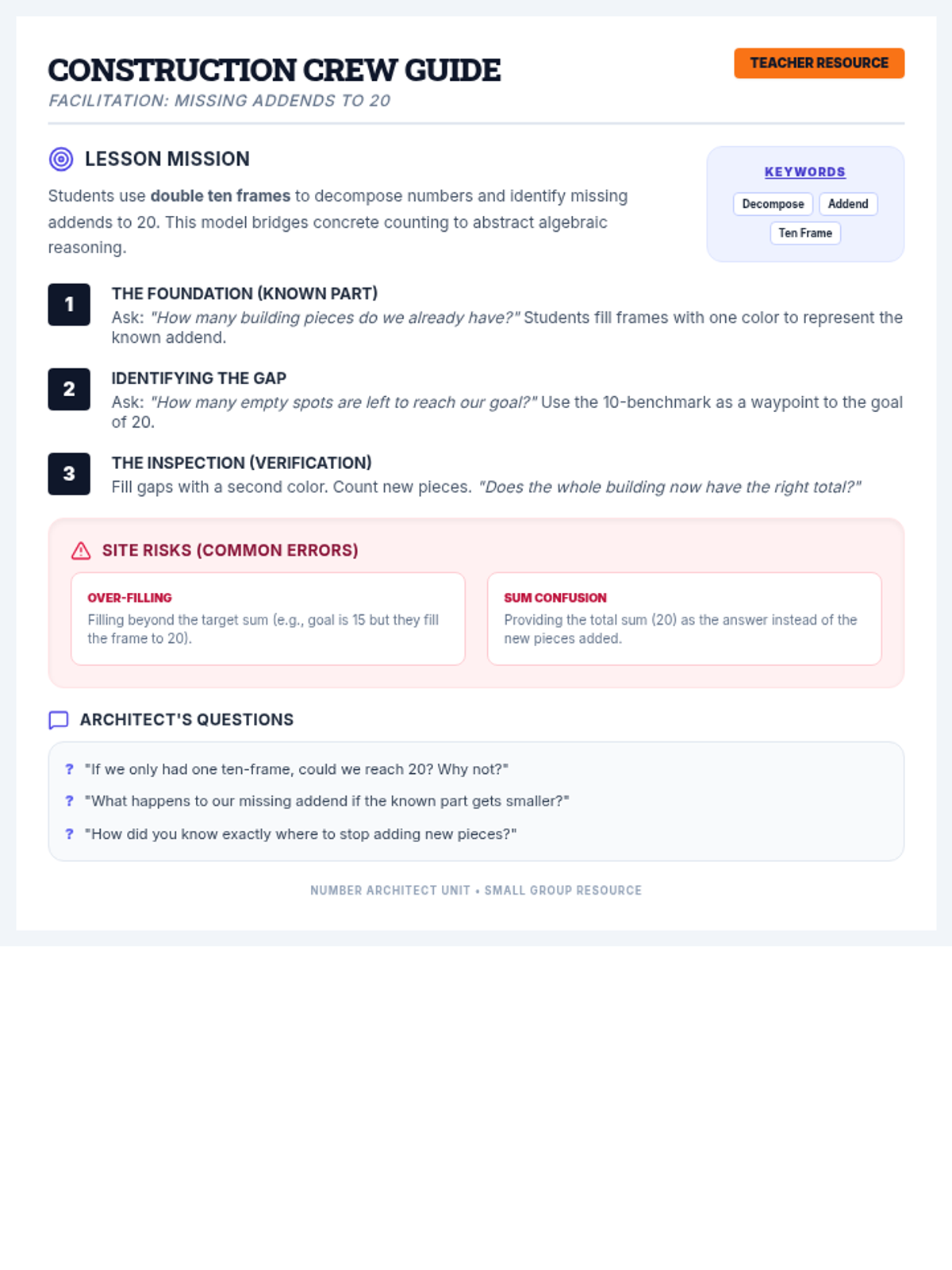
A visual math lesson focused on finding missing addends up to 20 using double ten frames and decomposition strategies. Students act as 'Number Architects' to fill gaps in blueprints.
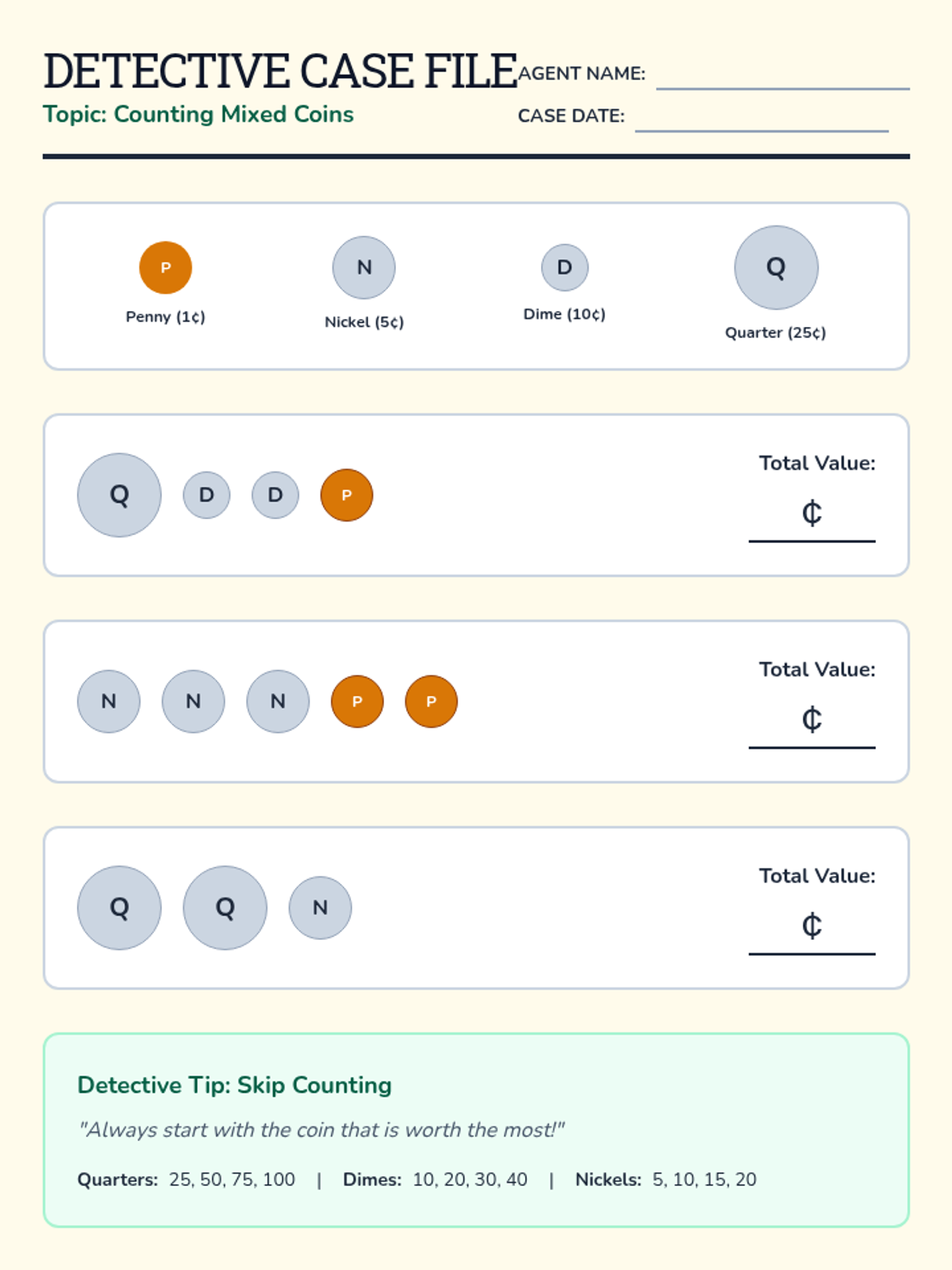
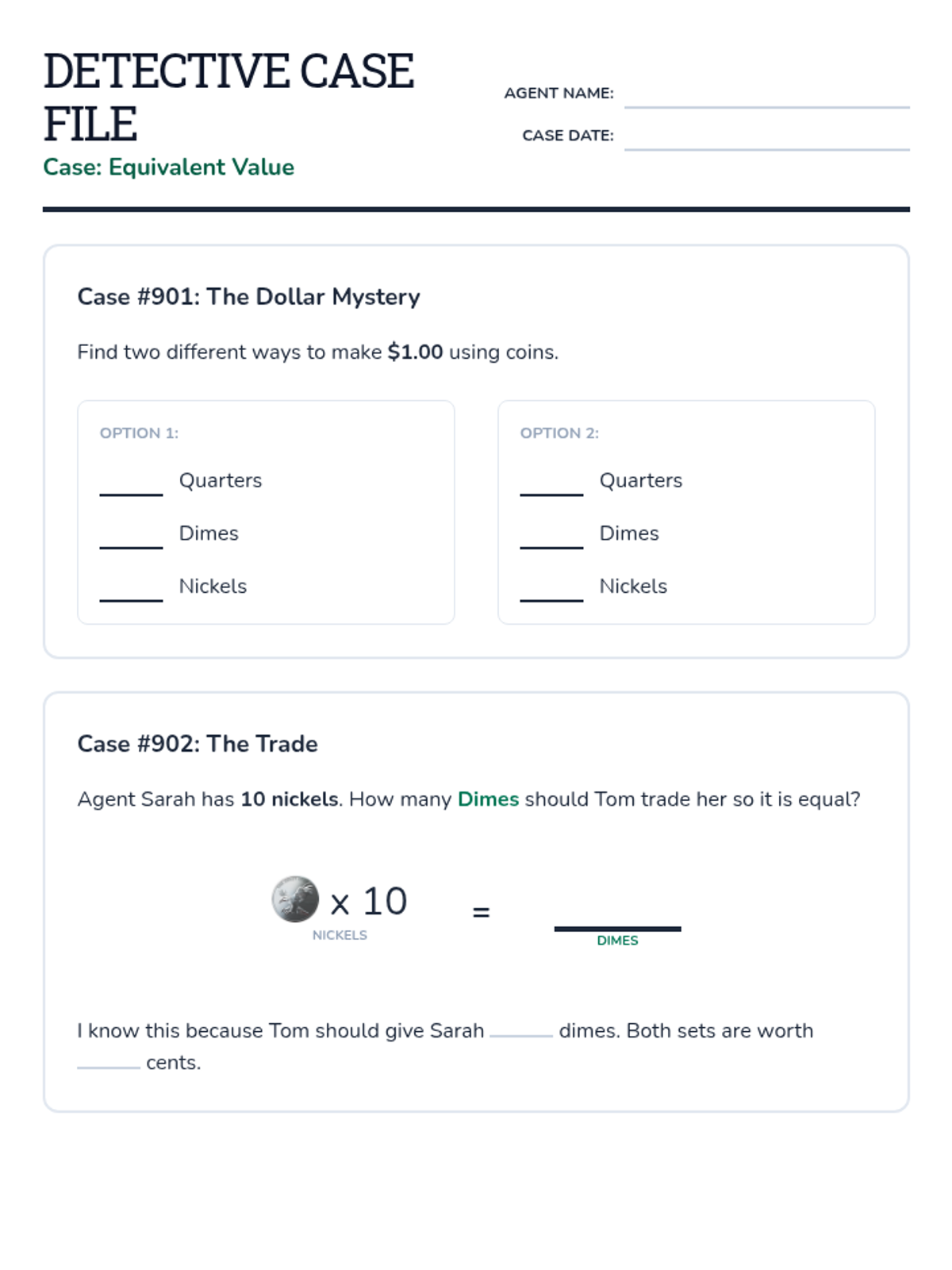
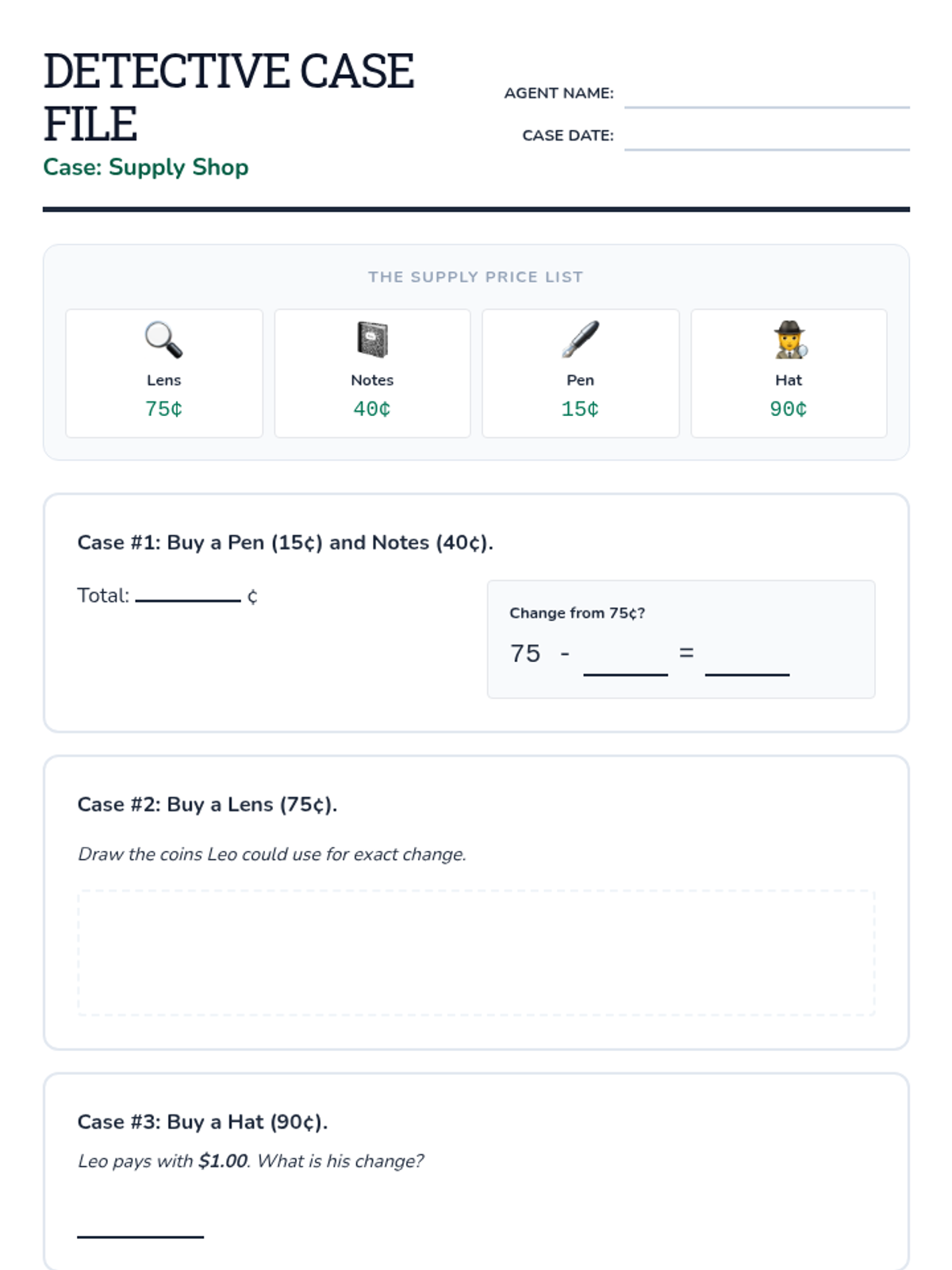
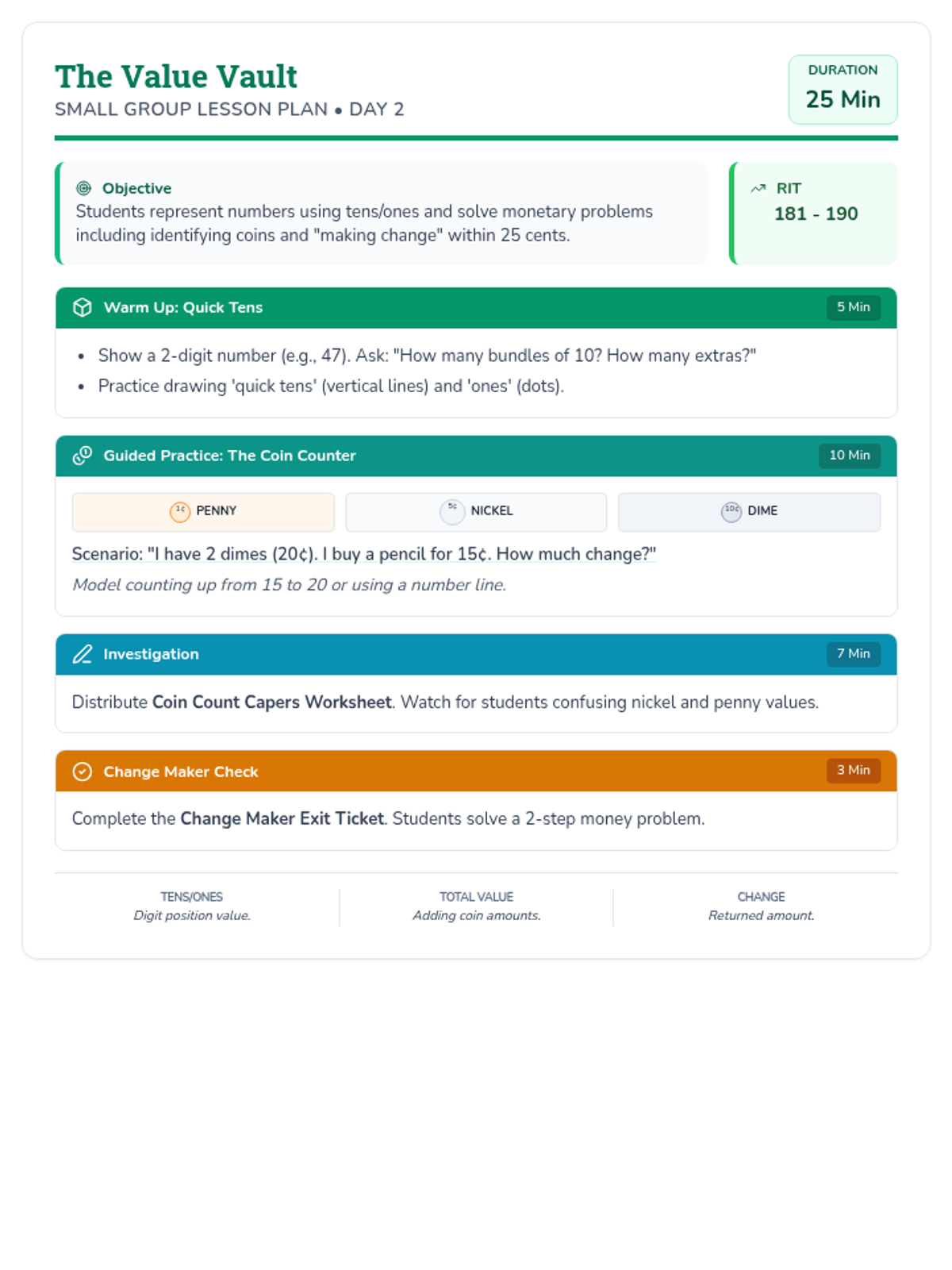
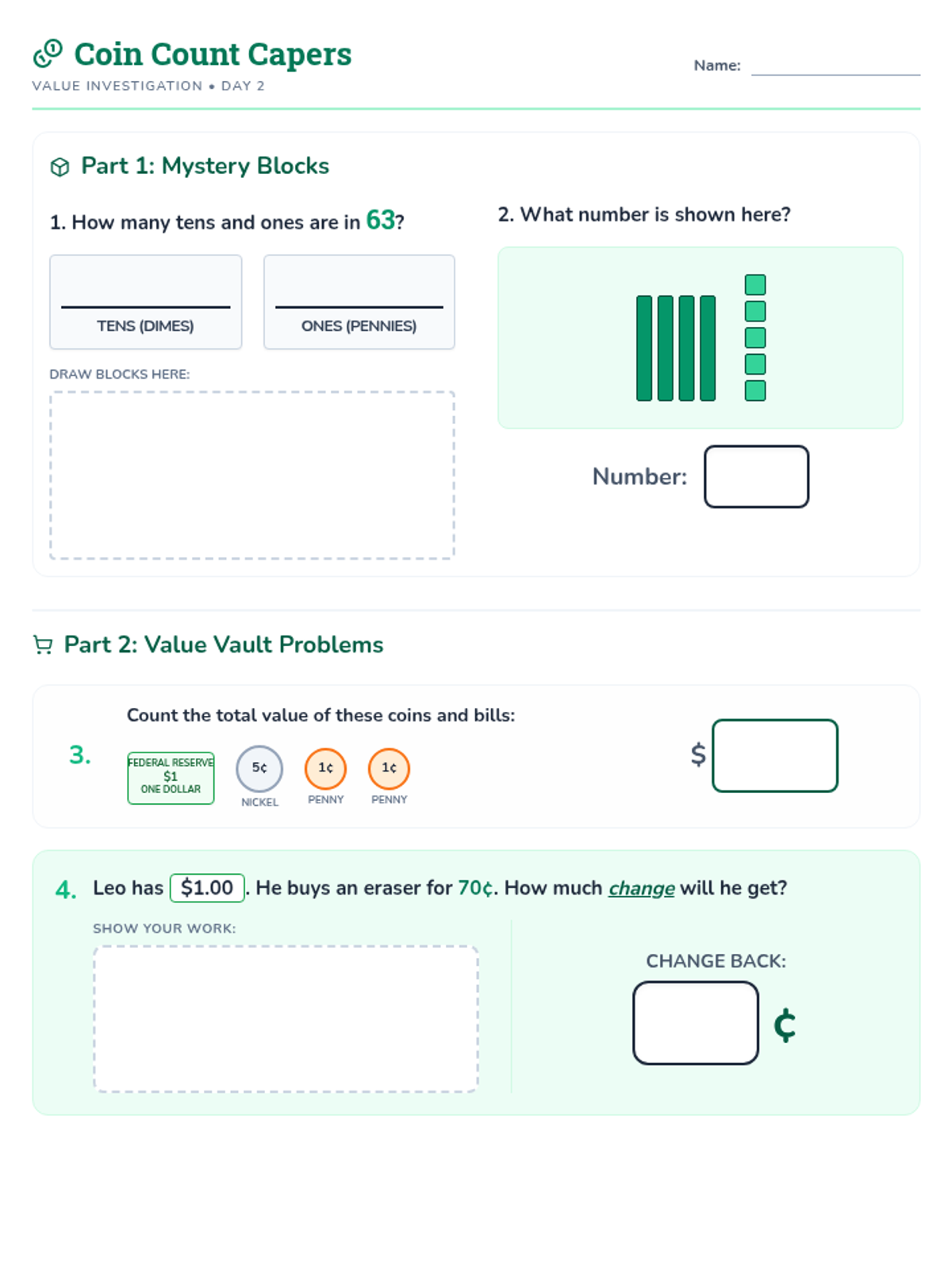
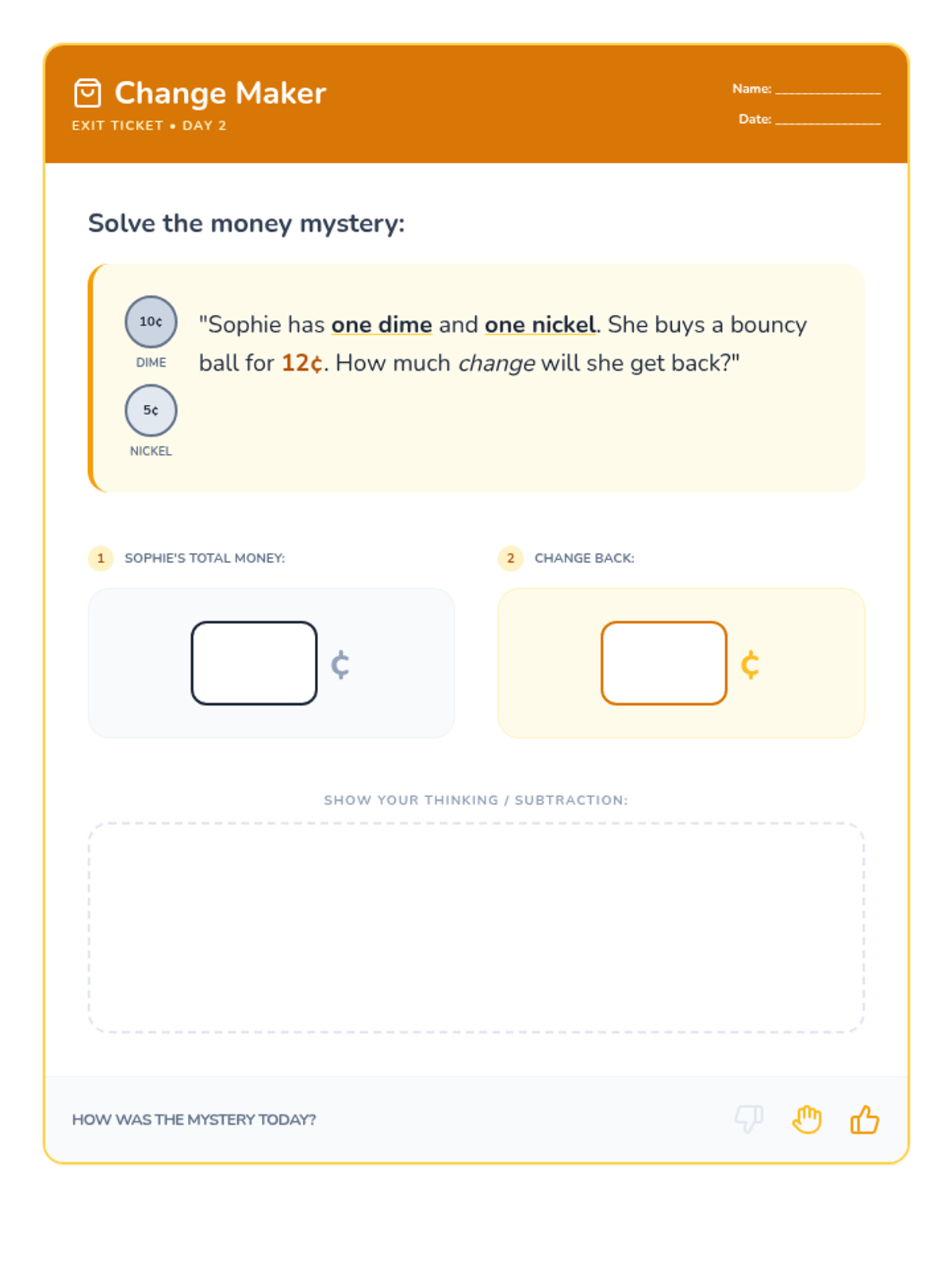
Focuses on place value (tens and ones) and monetary problems including identifying coins and making change.
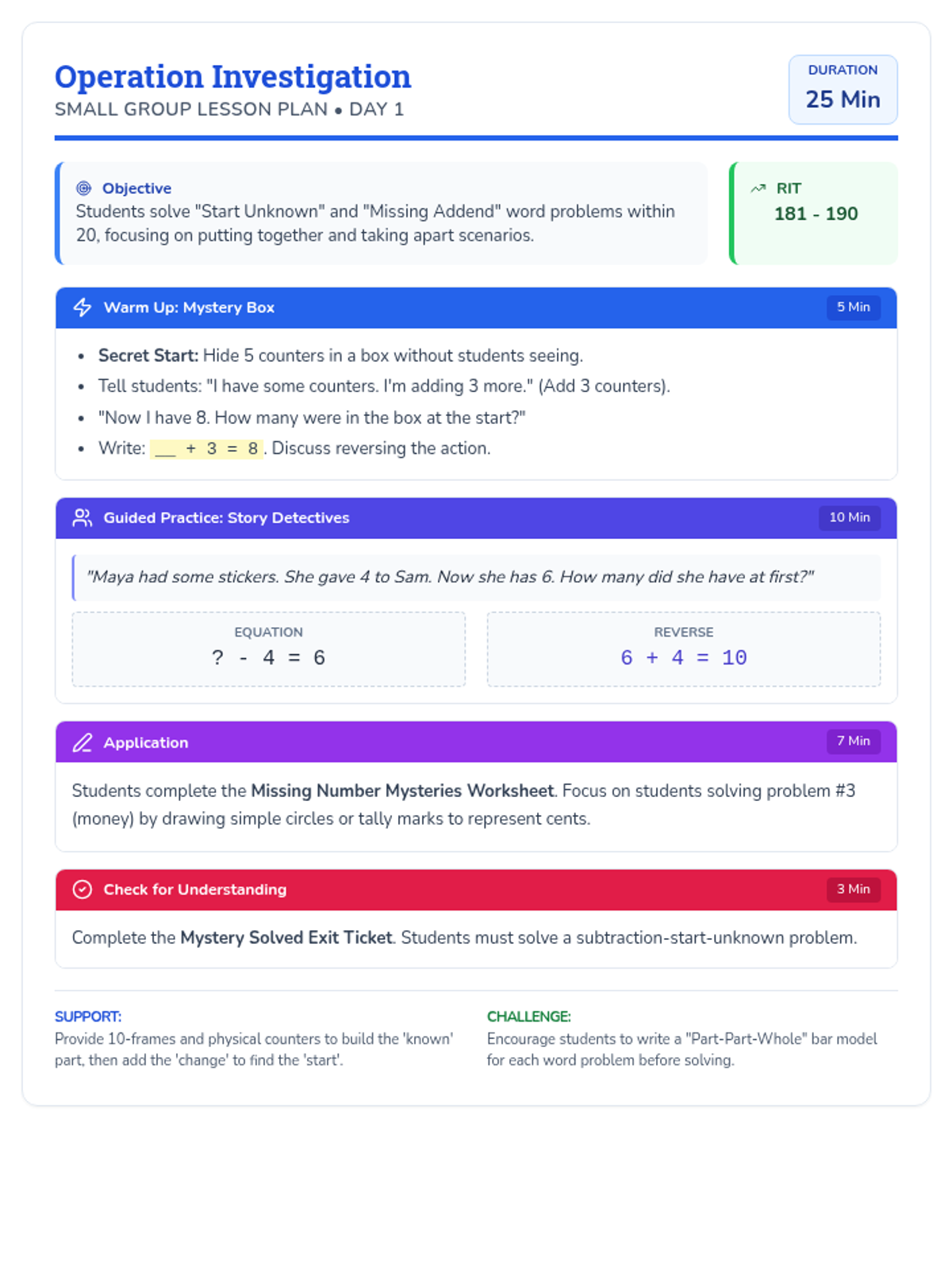
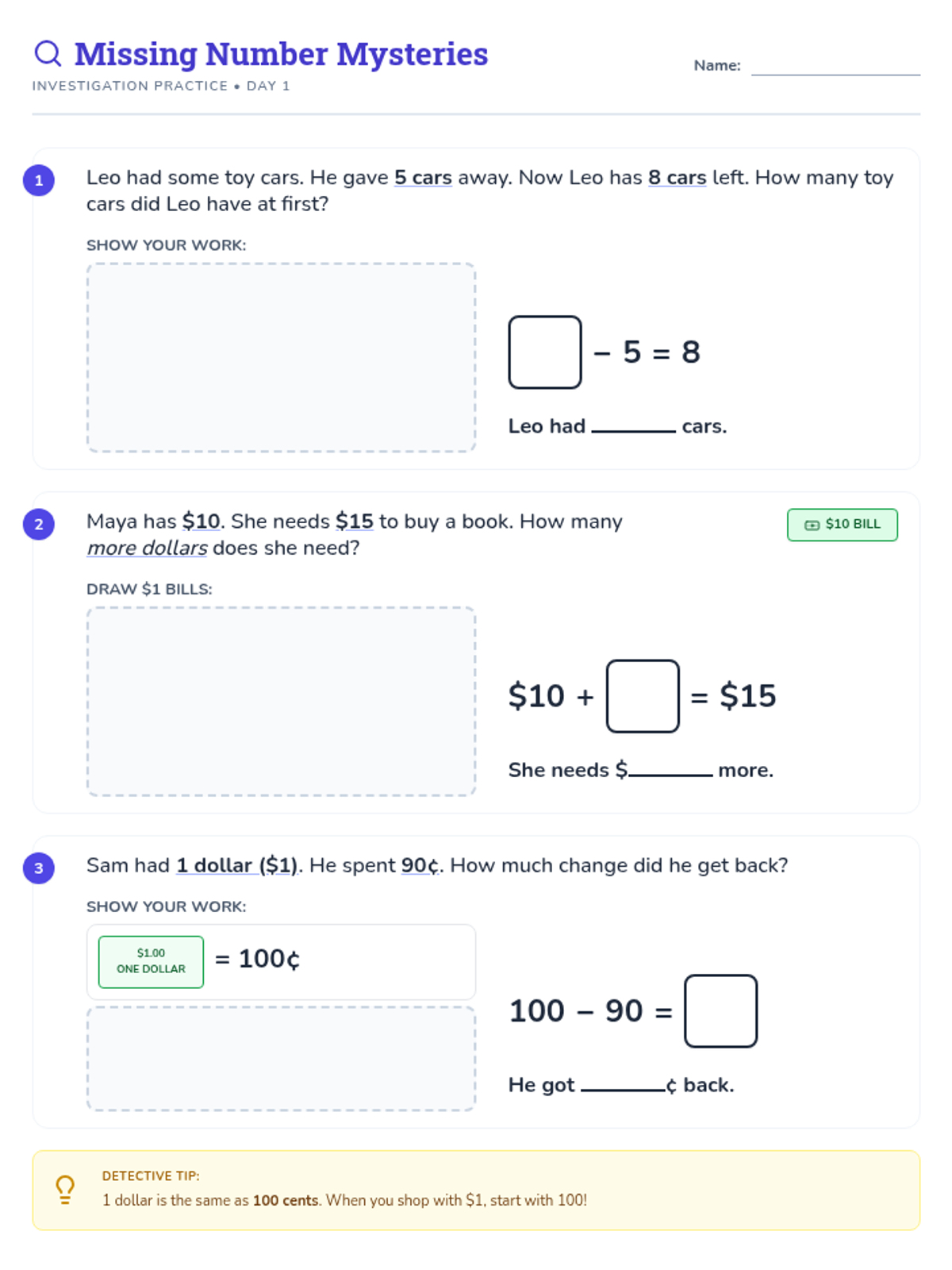
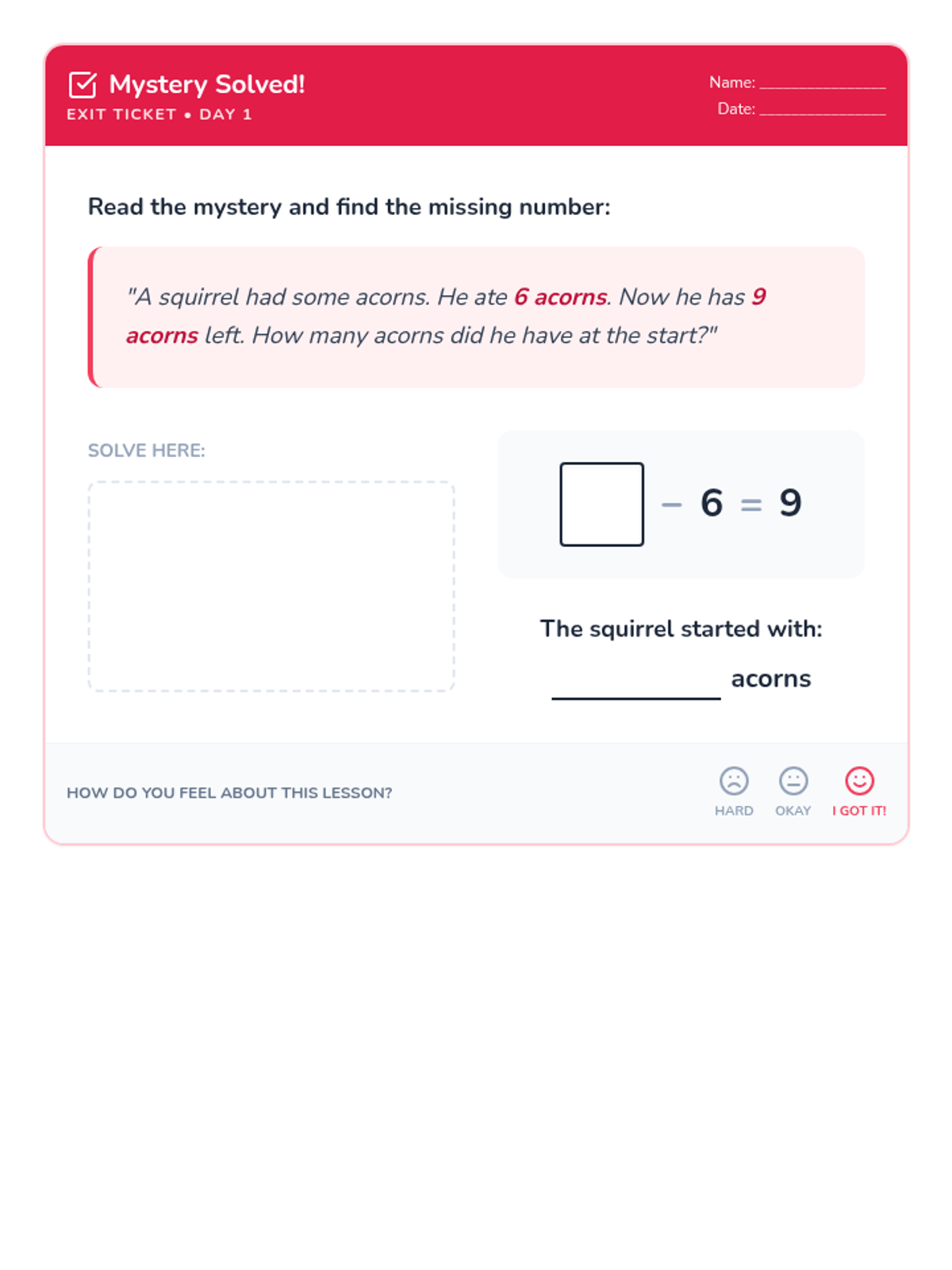
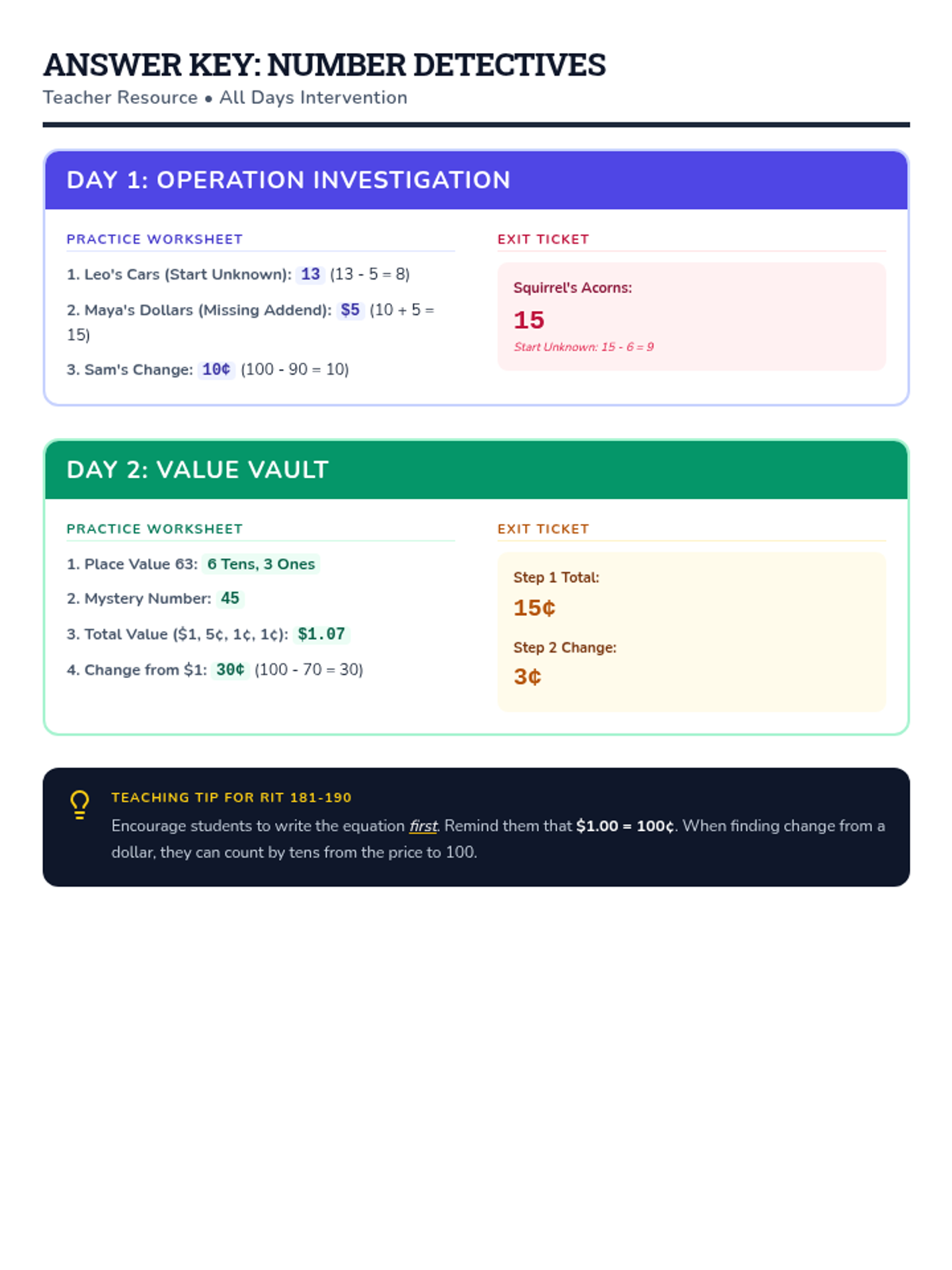
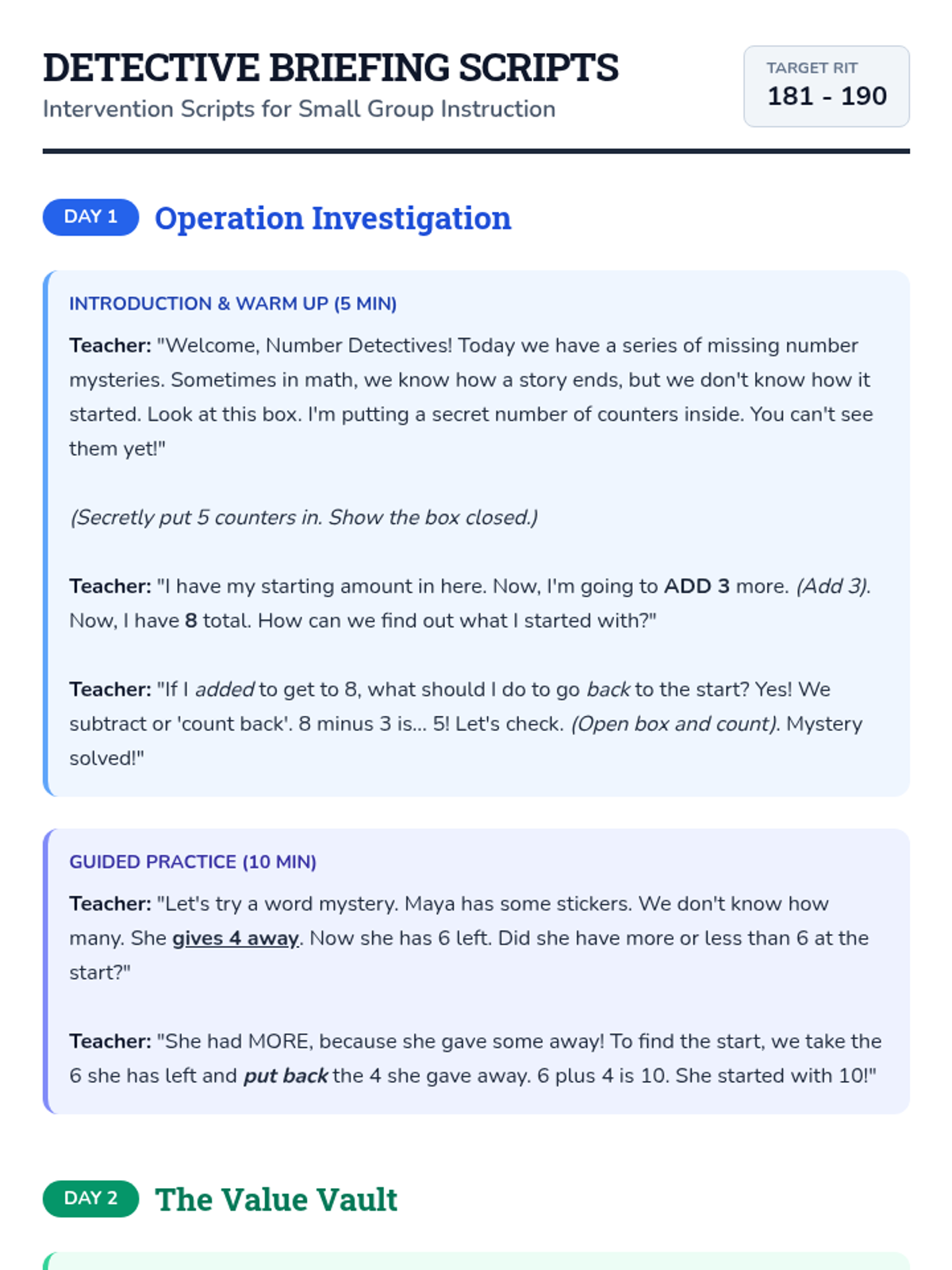
Focused on solving Start Unknown and Missing Addend word problems involving putting together and taking apart scenarios.
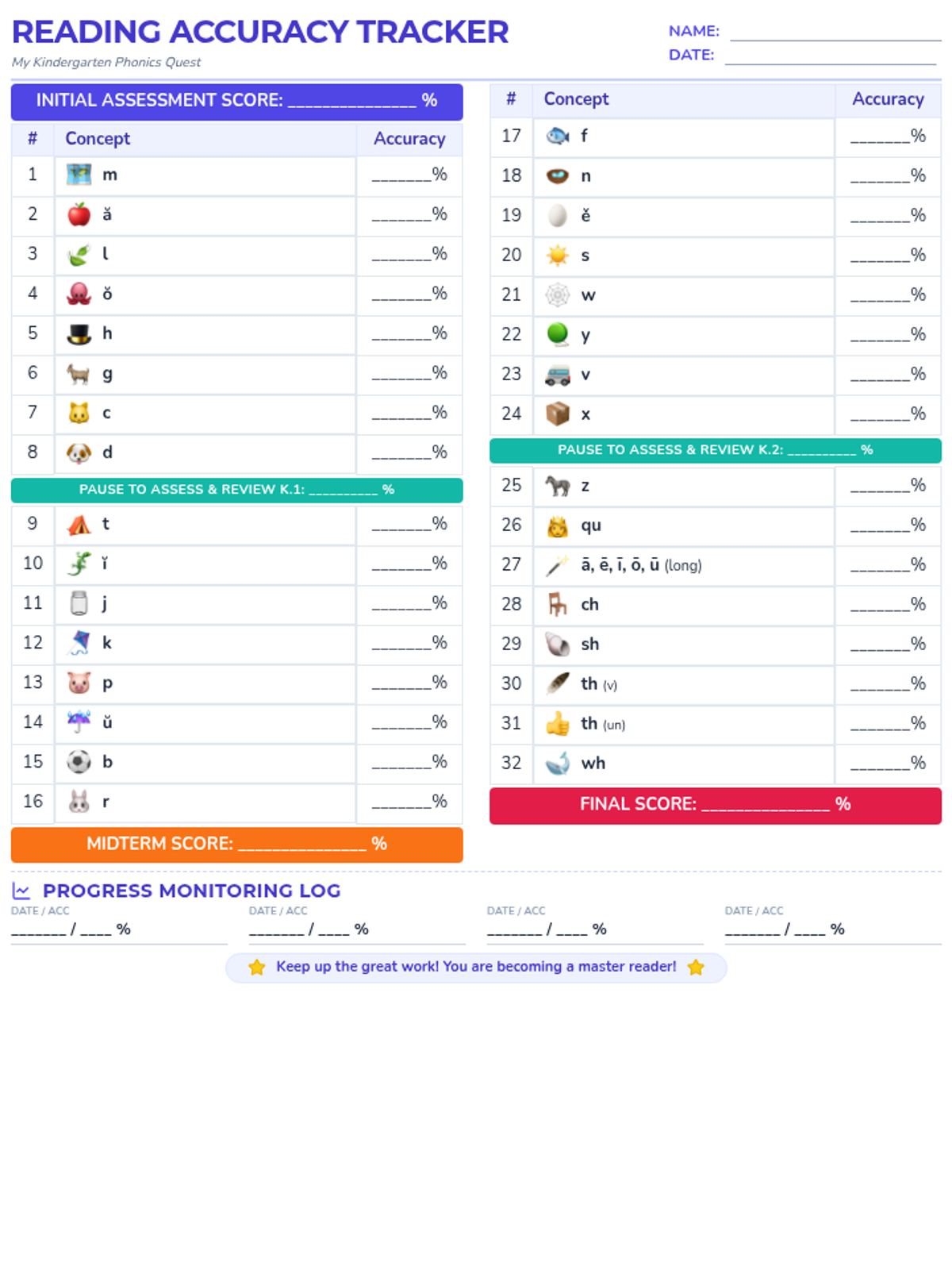
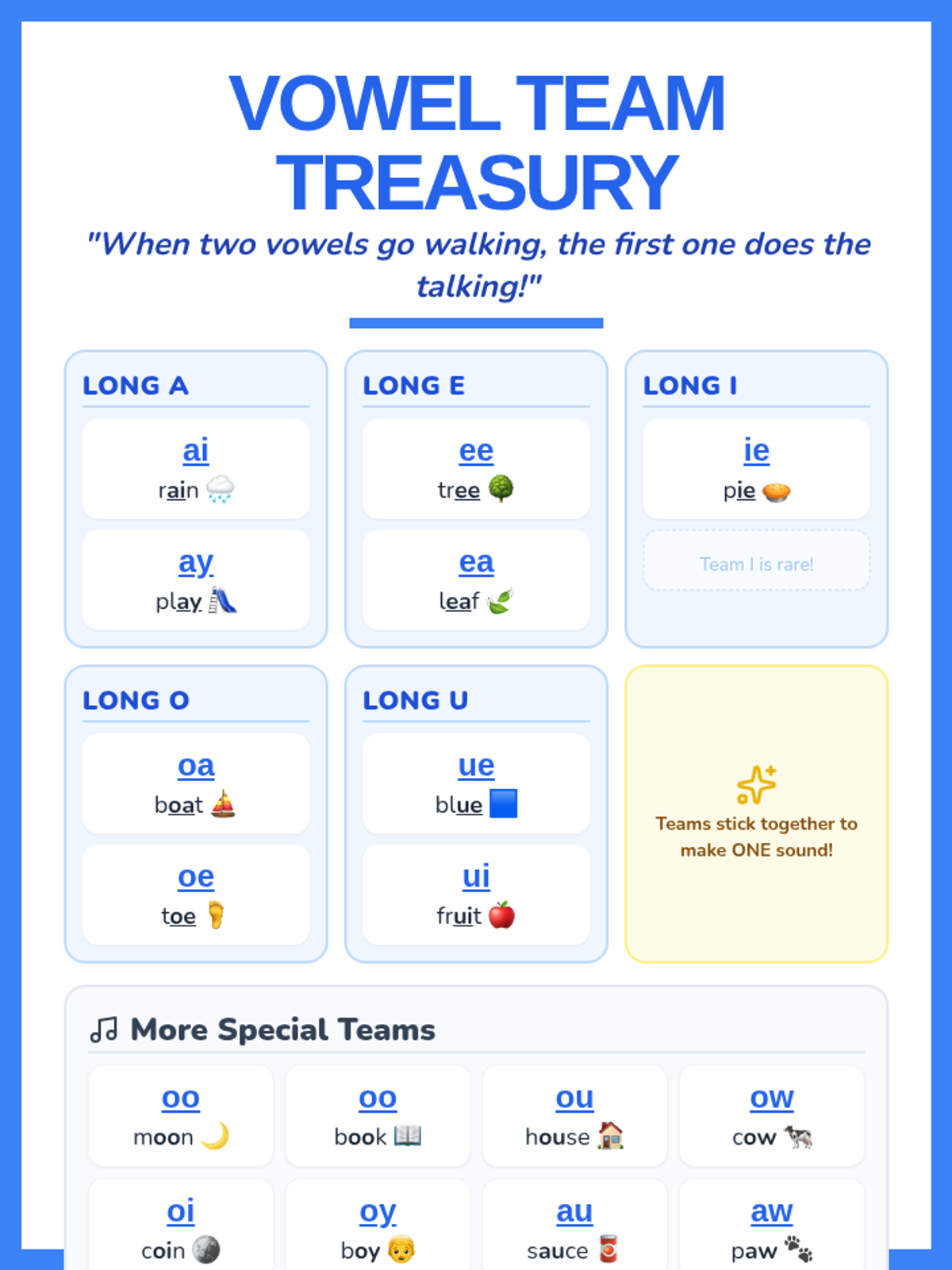
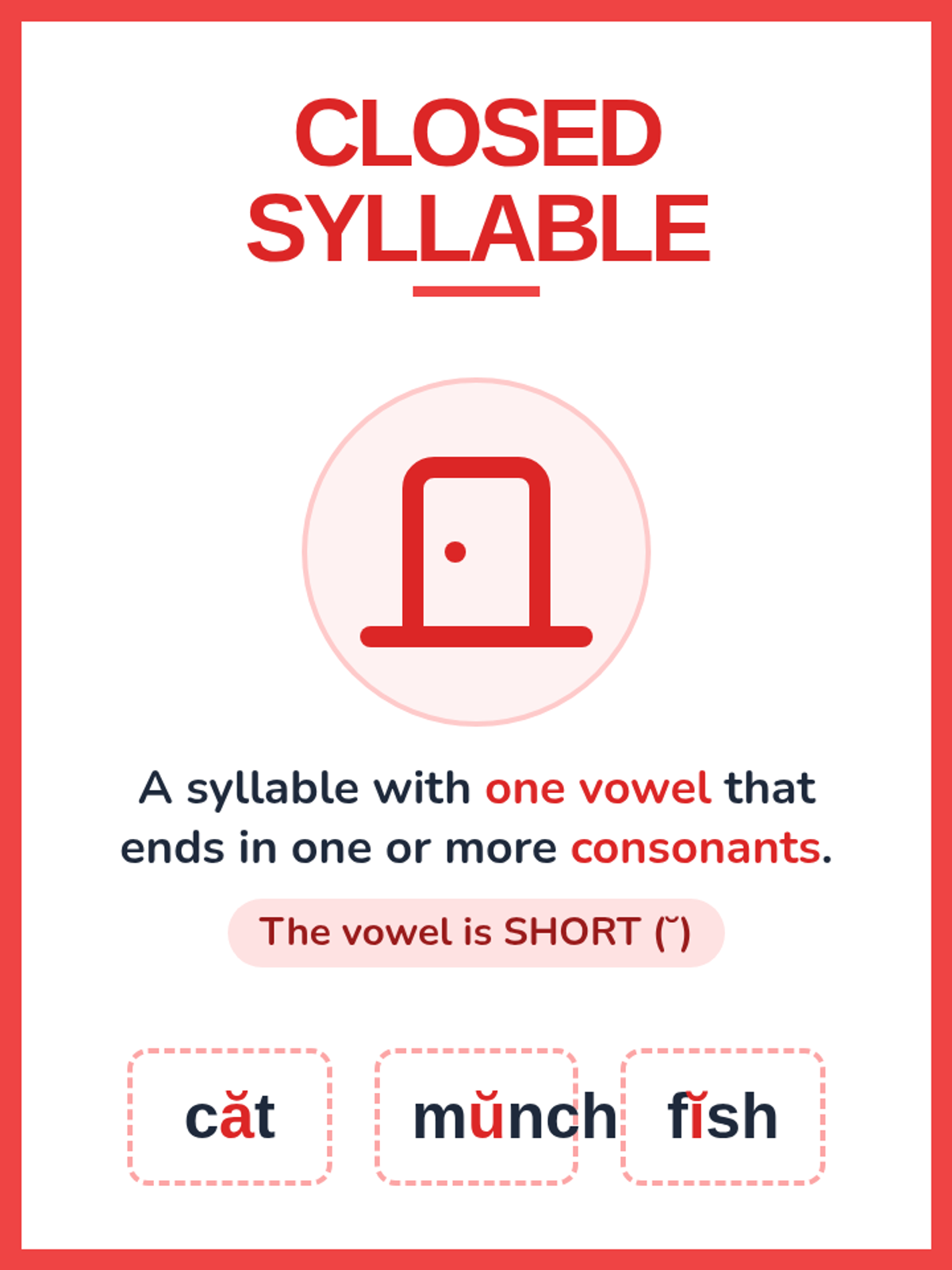
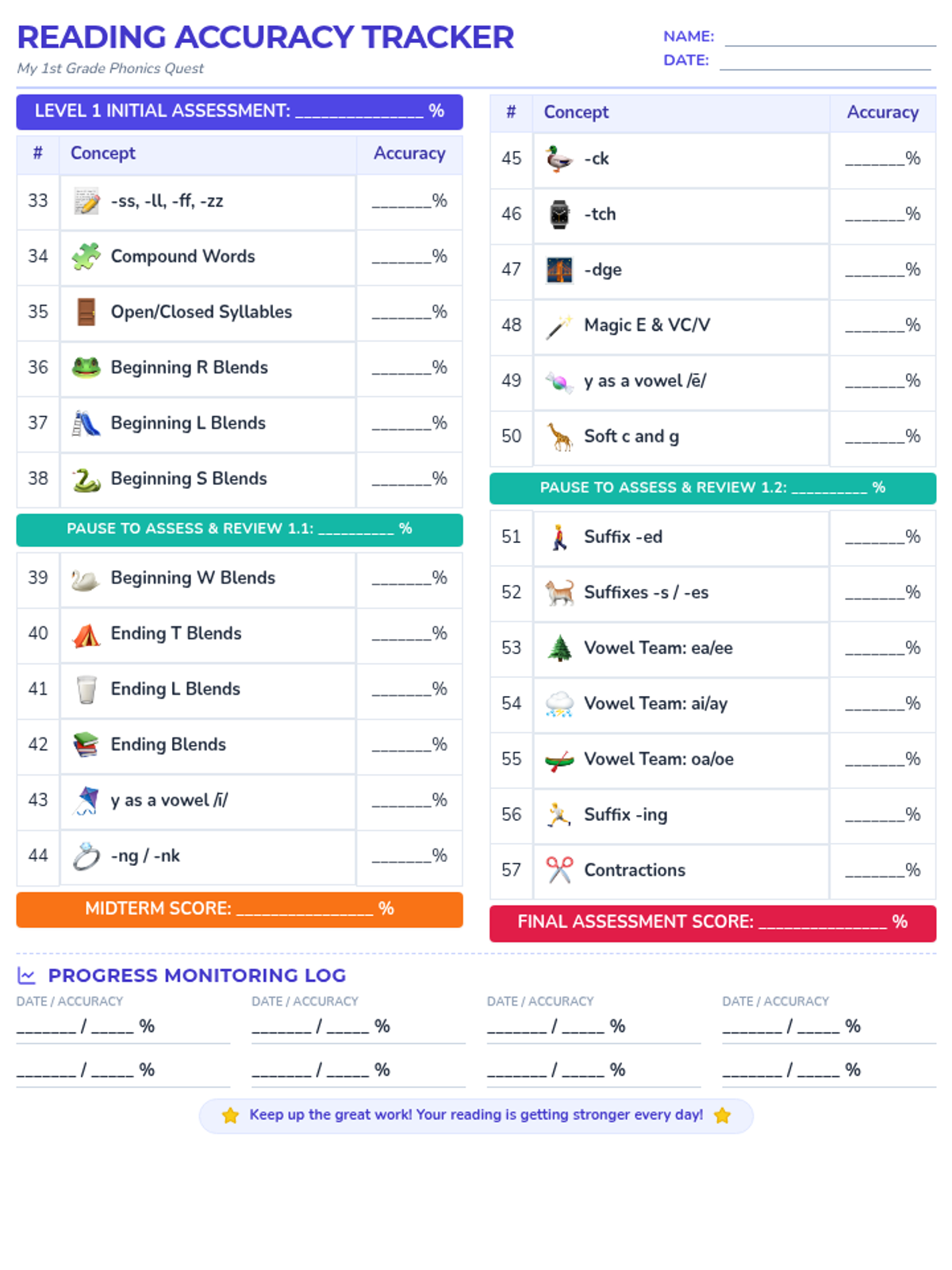
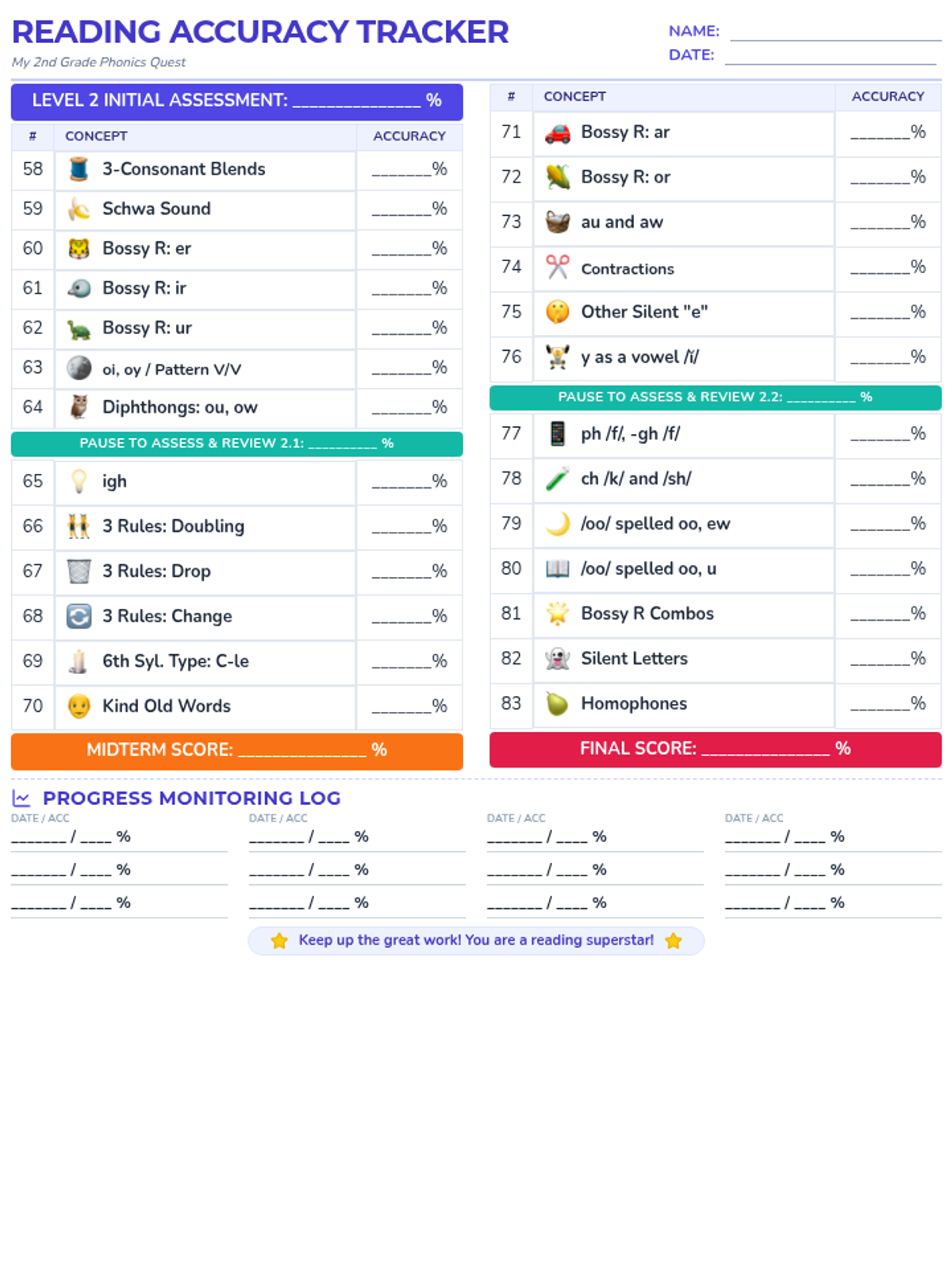
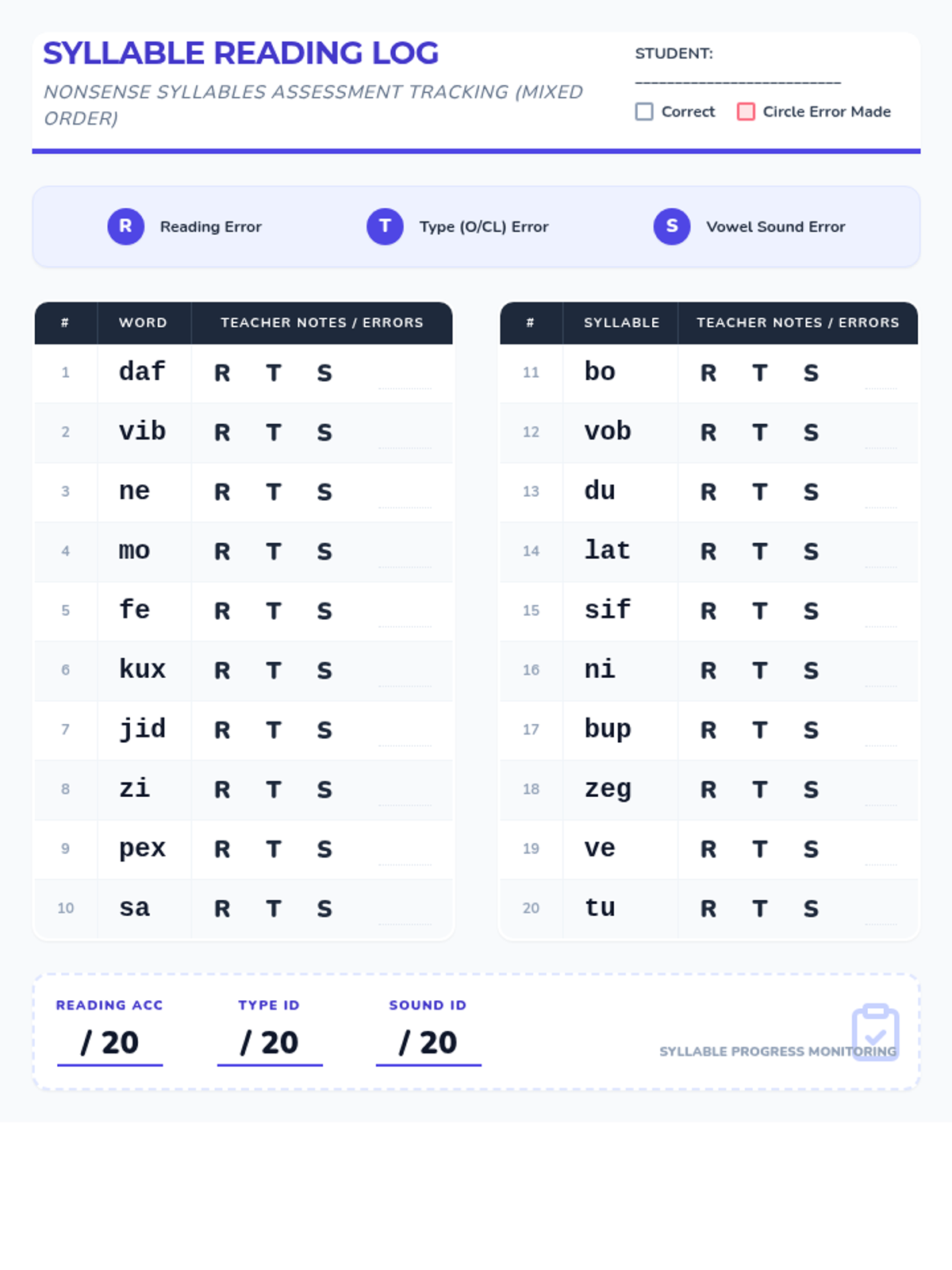
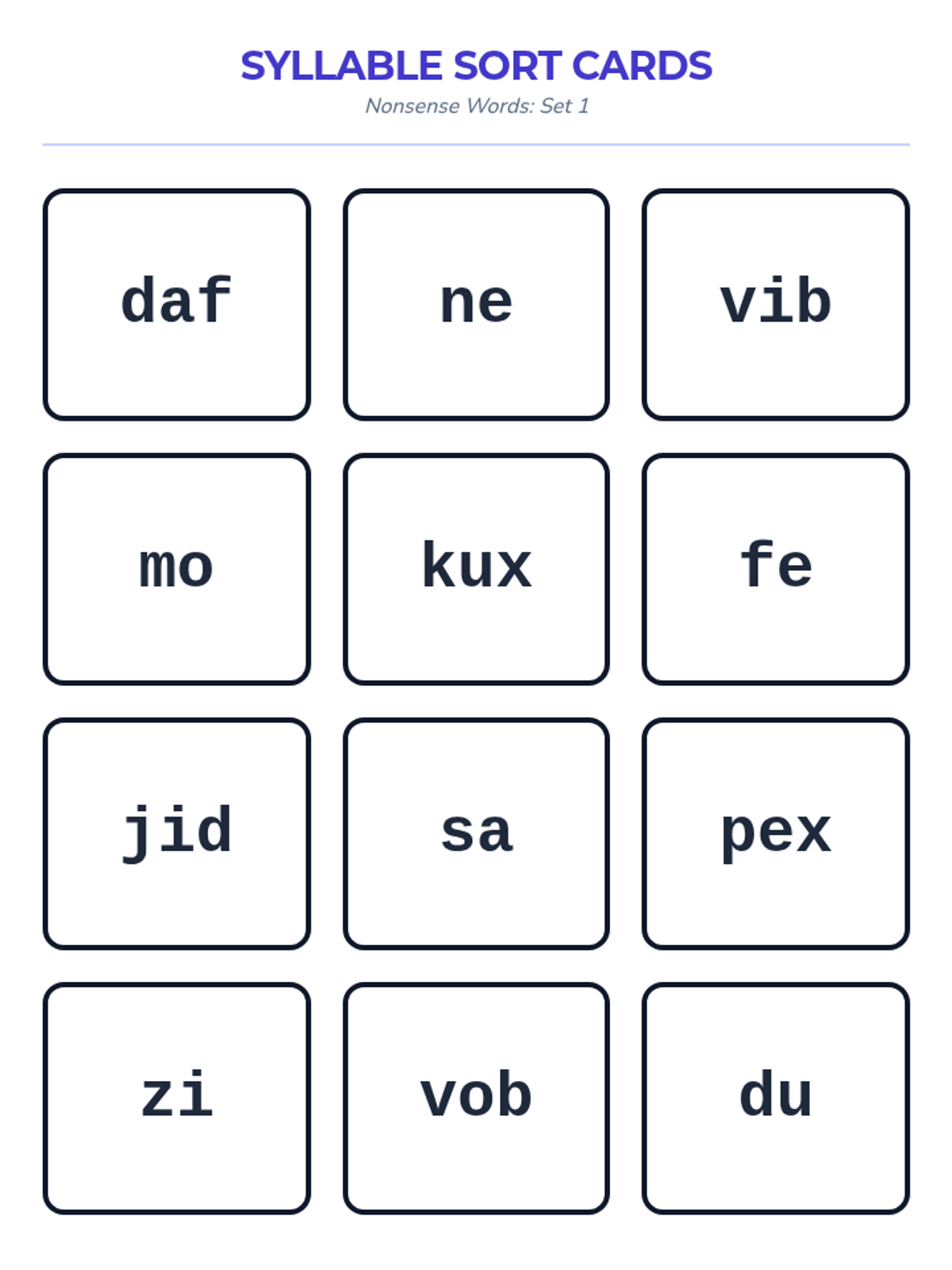
A collection of reading accuracy trackers for Kindergarten and 1st Grade students to monitor their phonics progress.
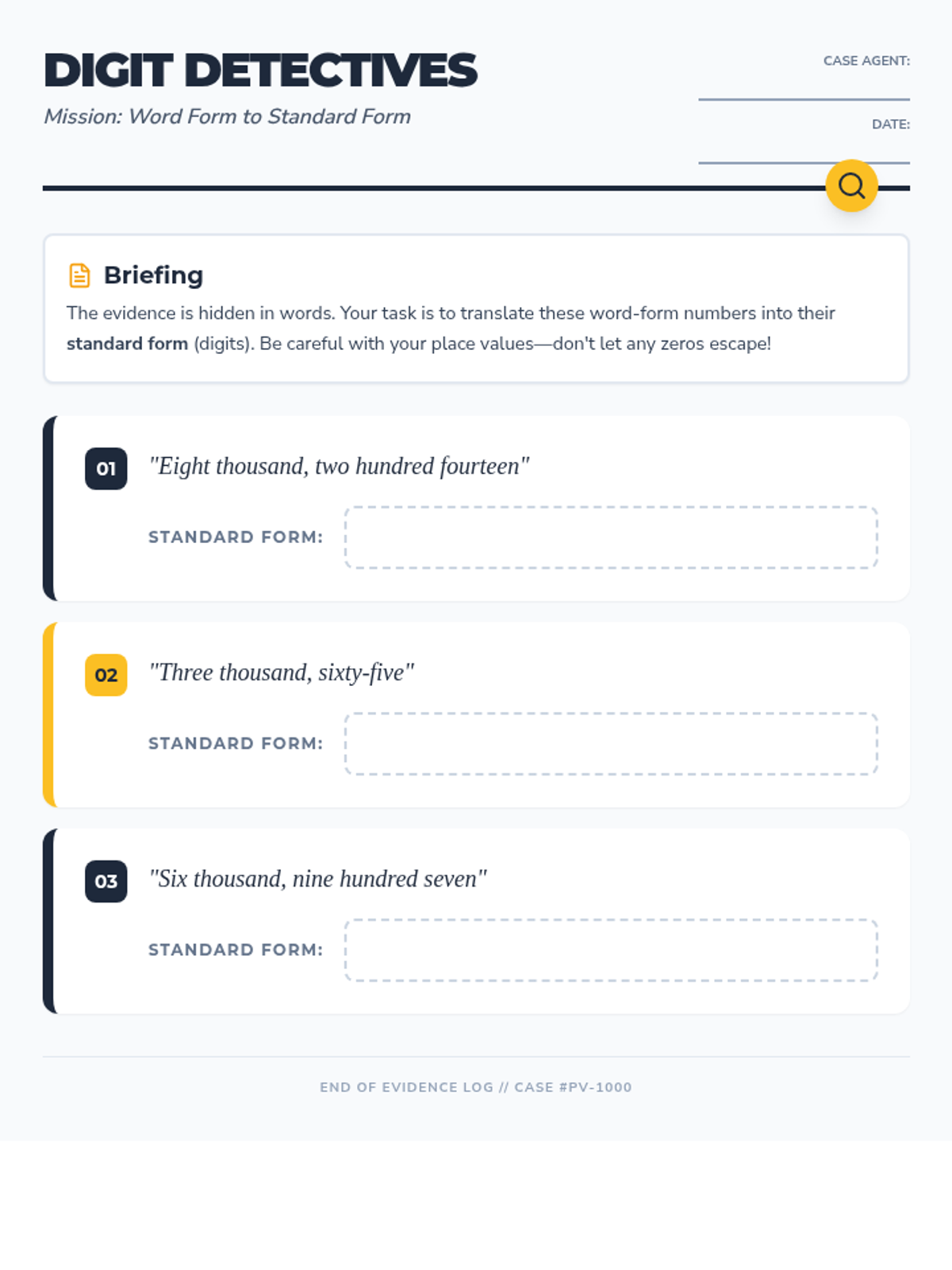
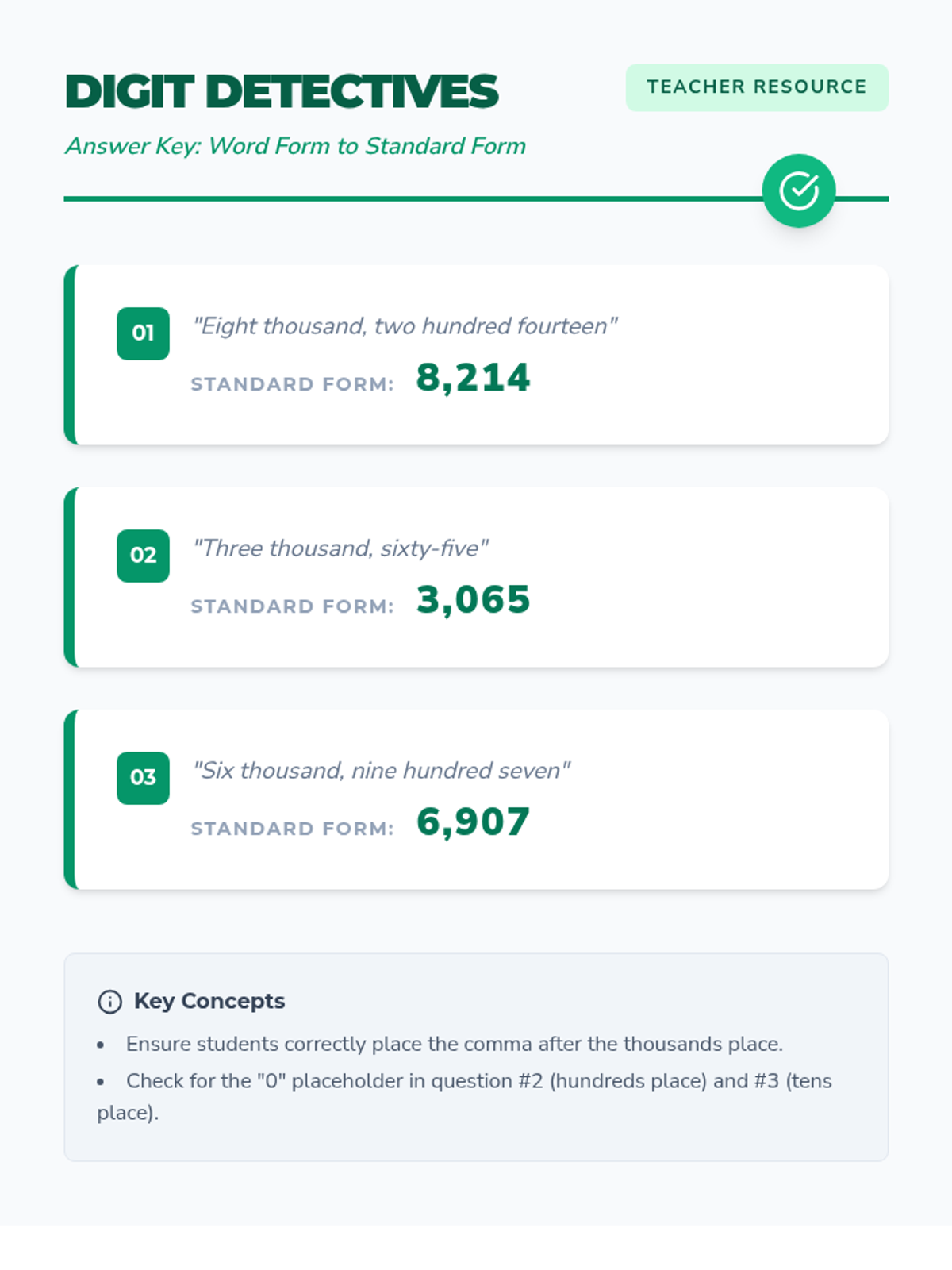
A focused lesson on converting numbers from word form to standard form within the thousands place, using a detective-themed approach.
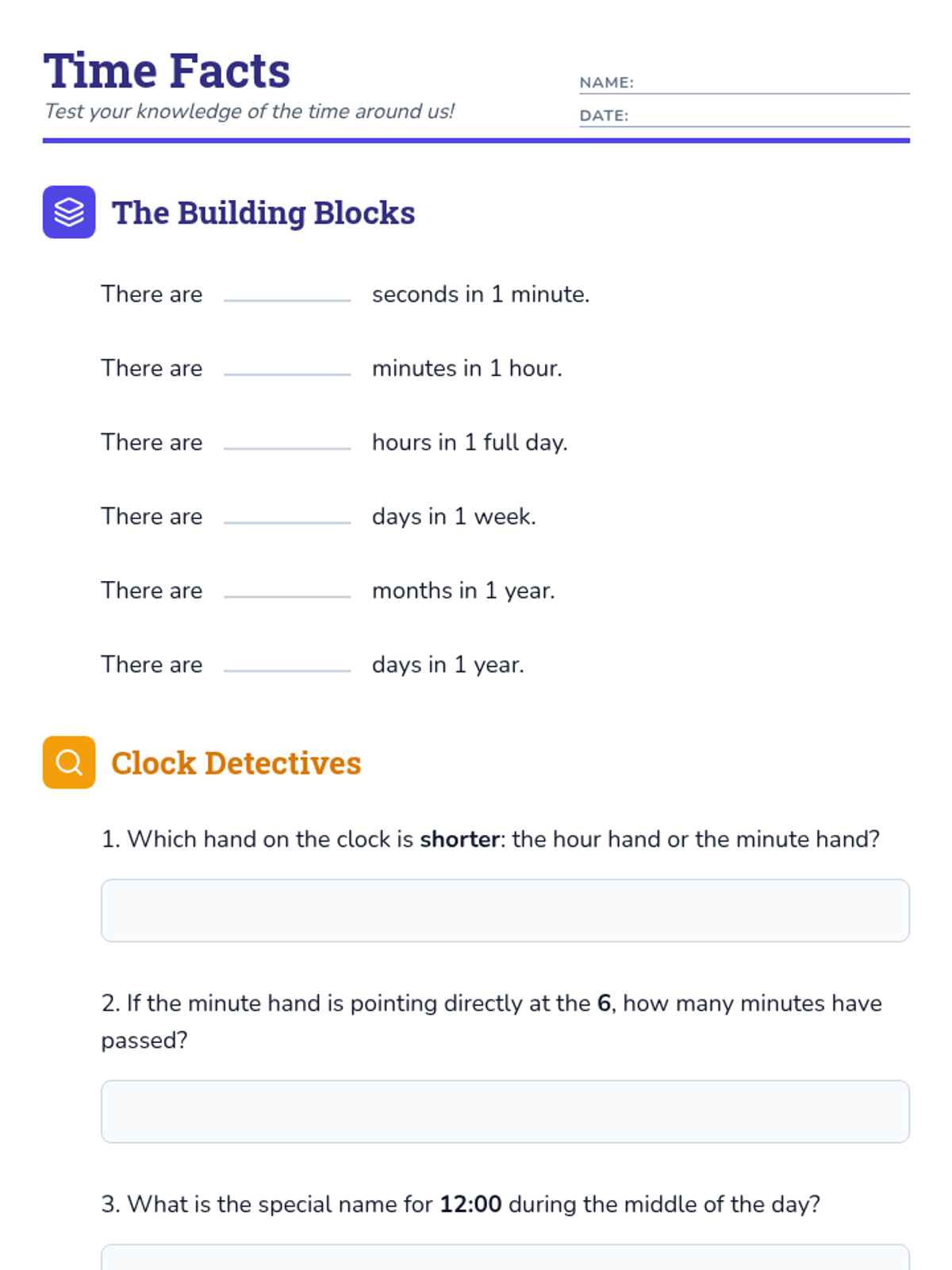
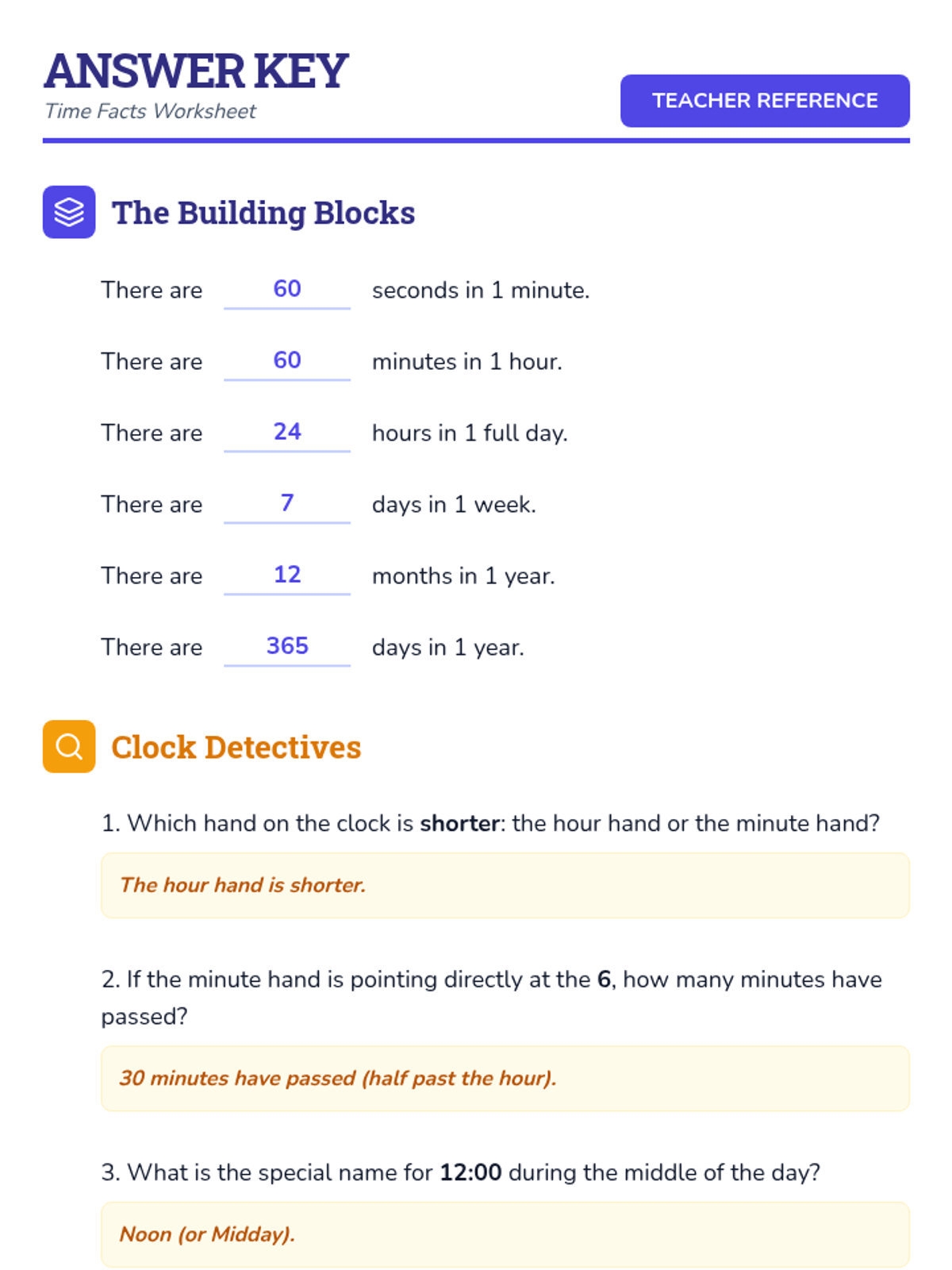
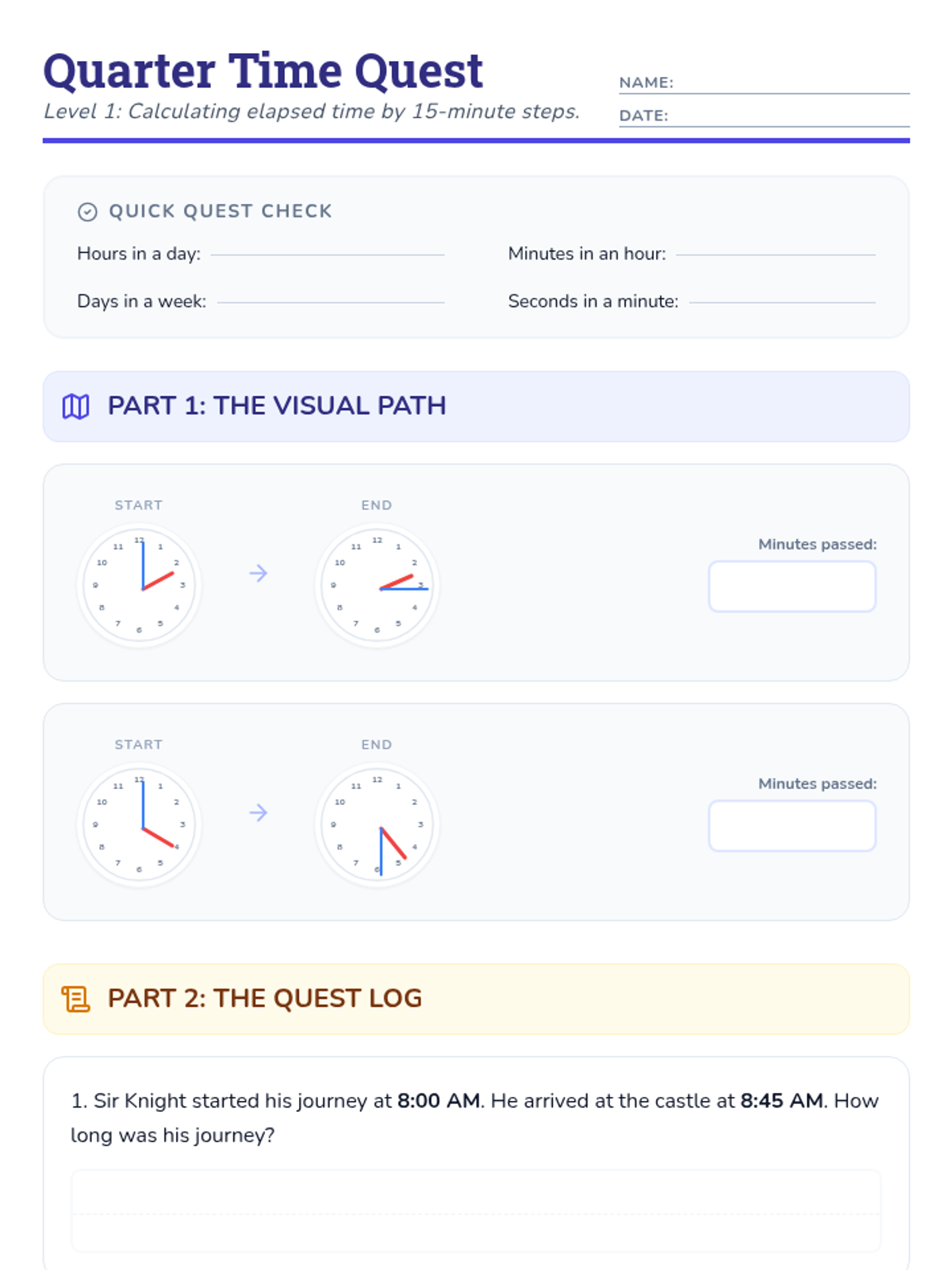
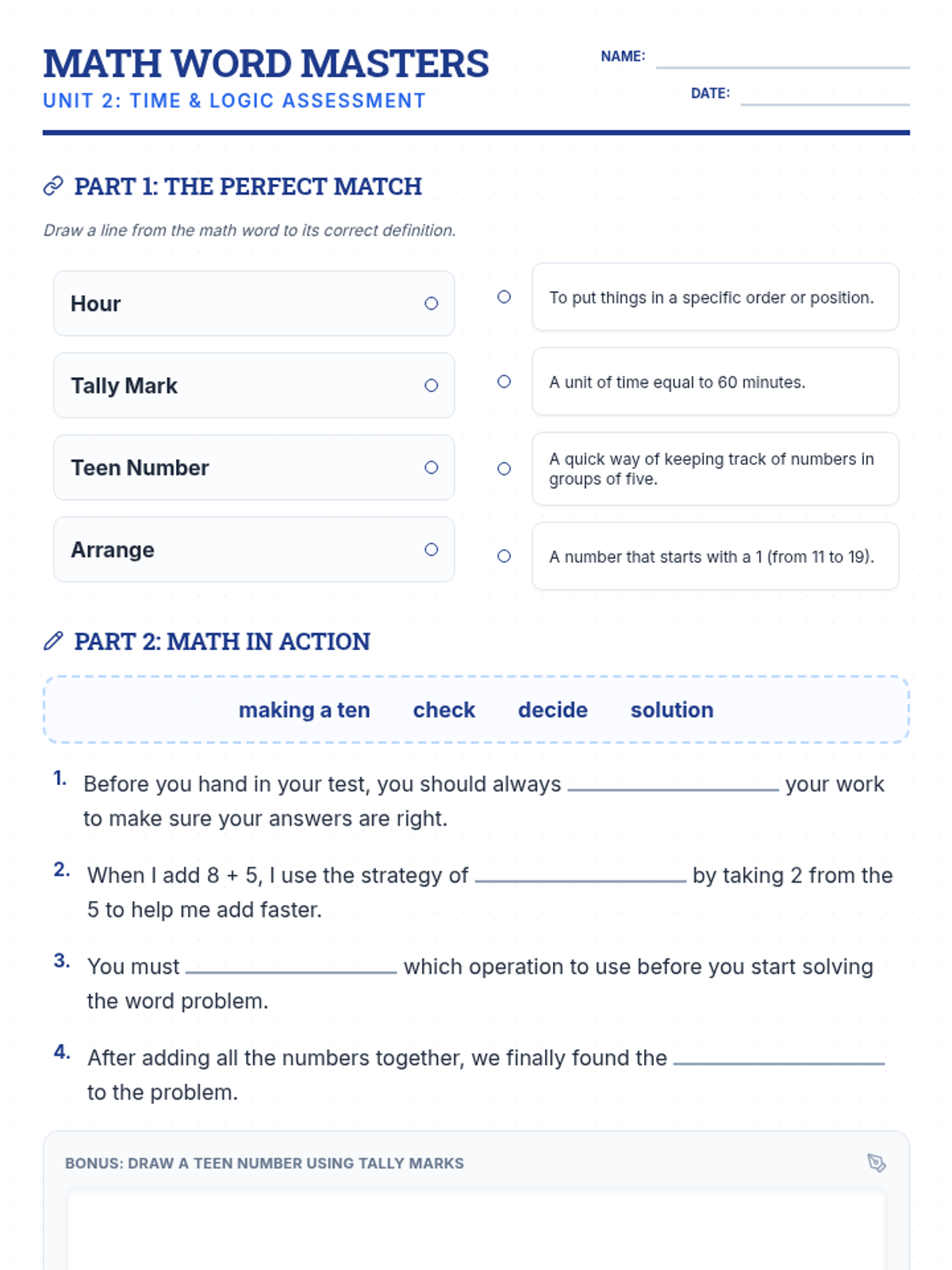
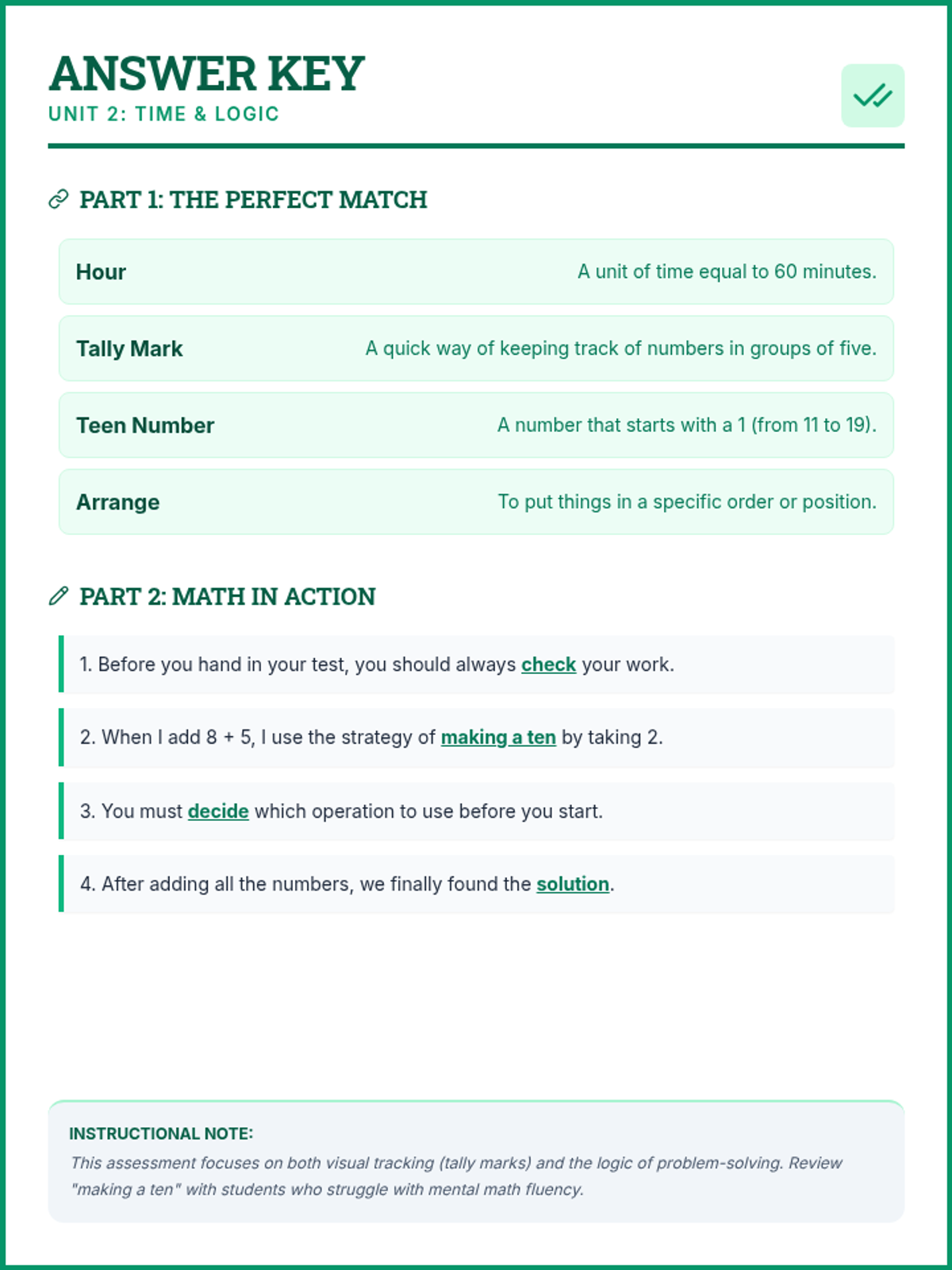
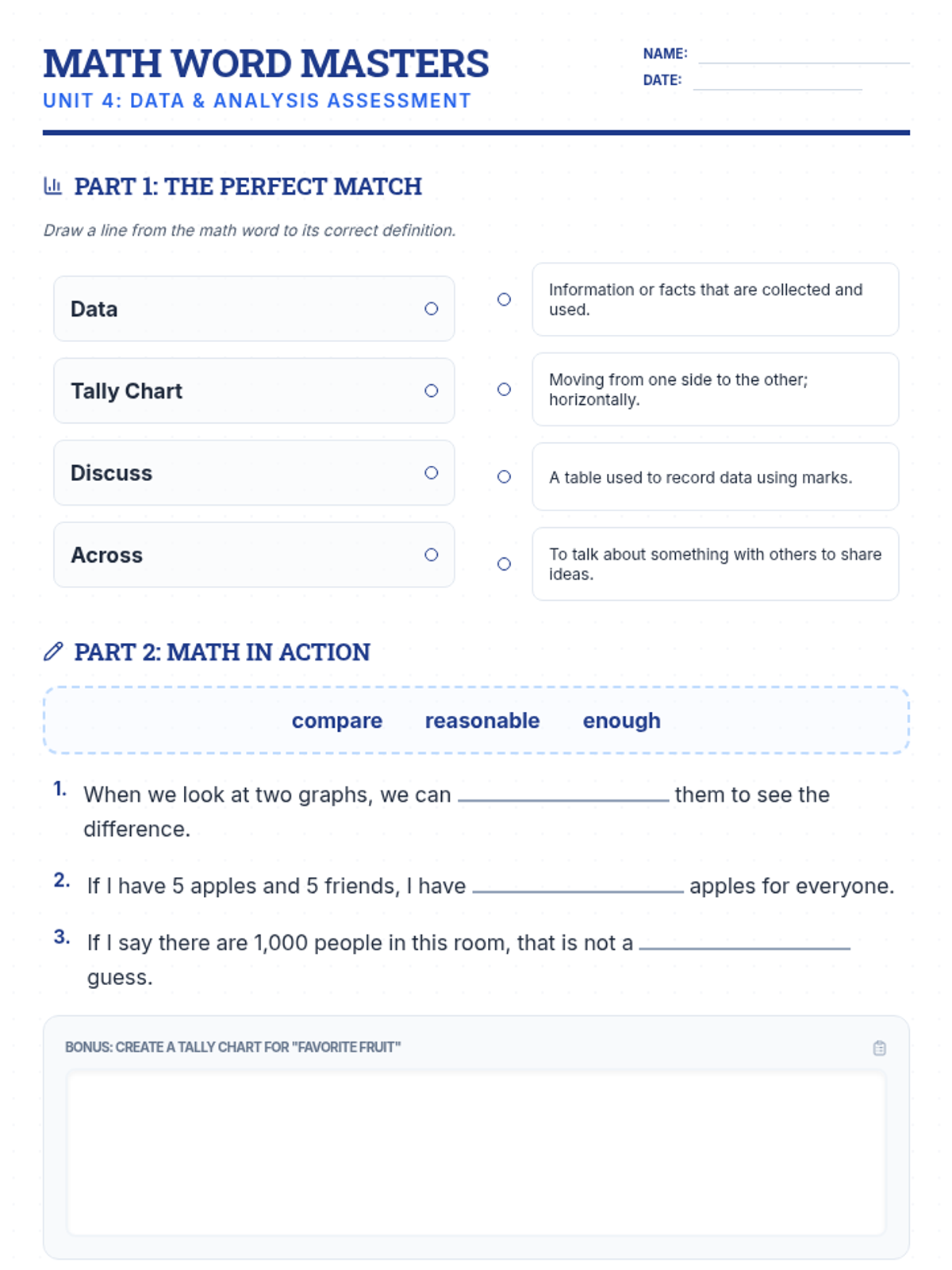
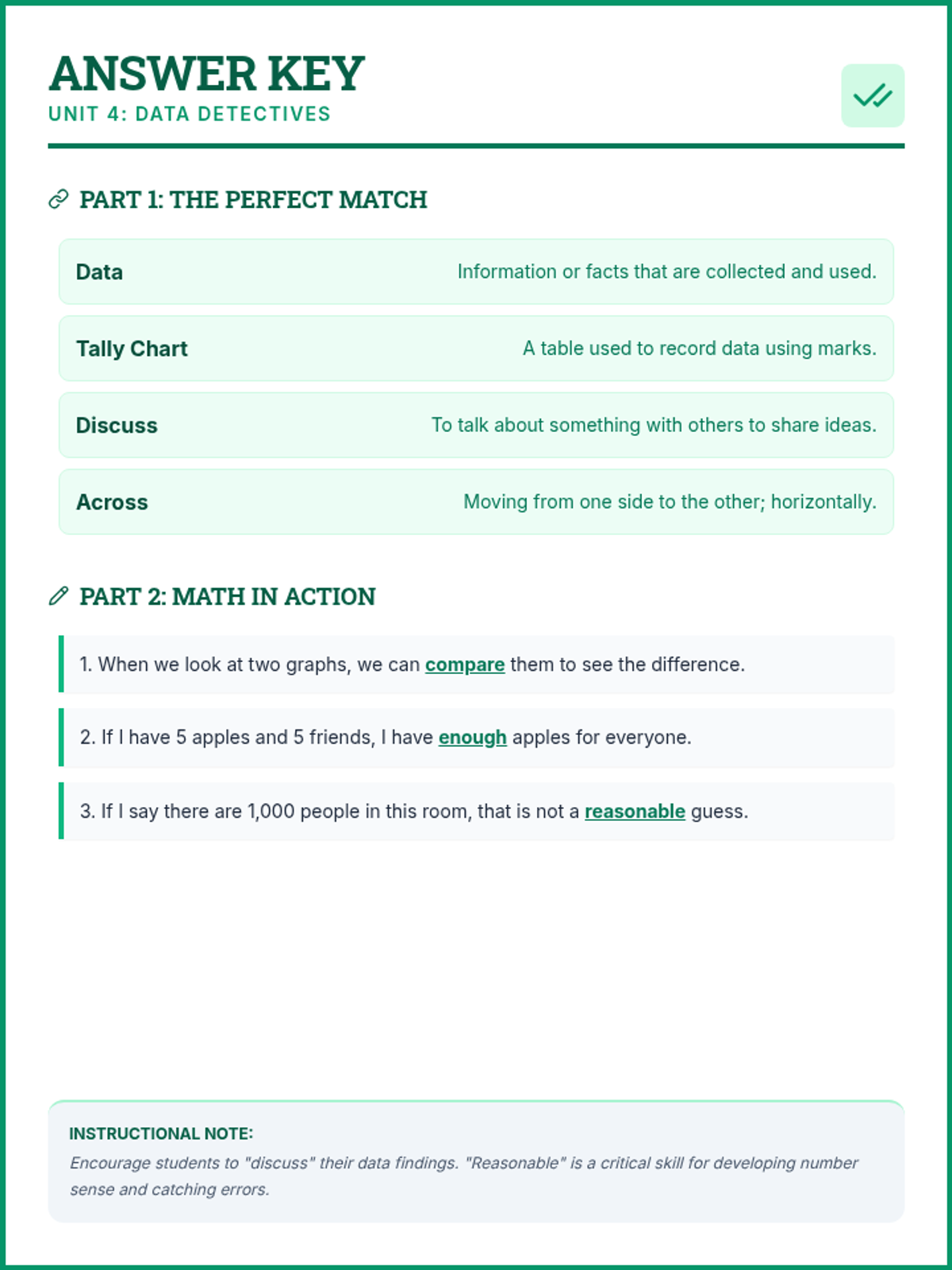
Vocabulary assessment for Unit 2 covering time, counting, and problem-solving strategies.
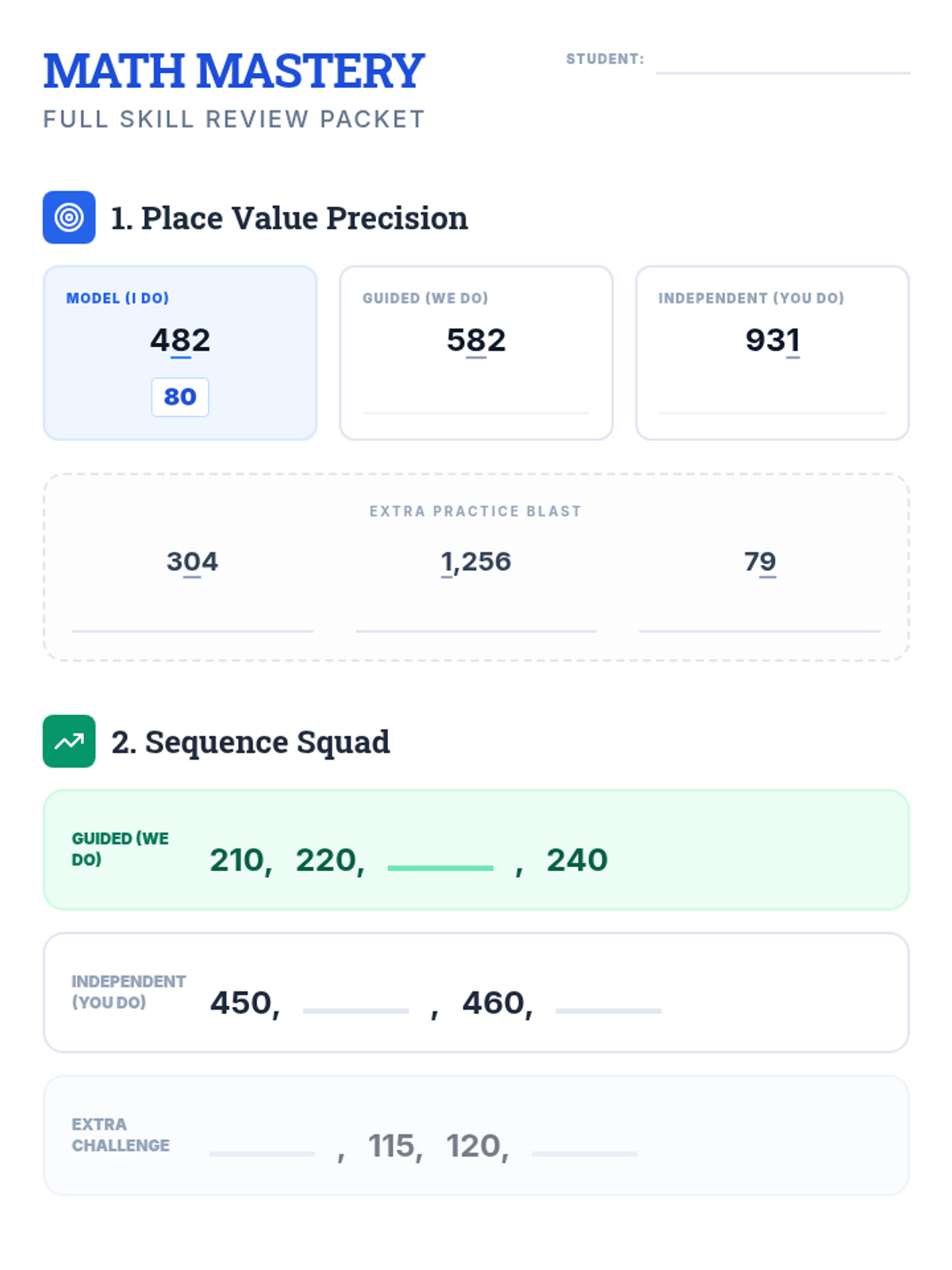
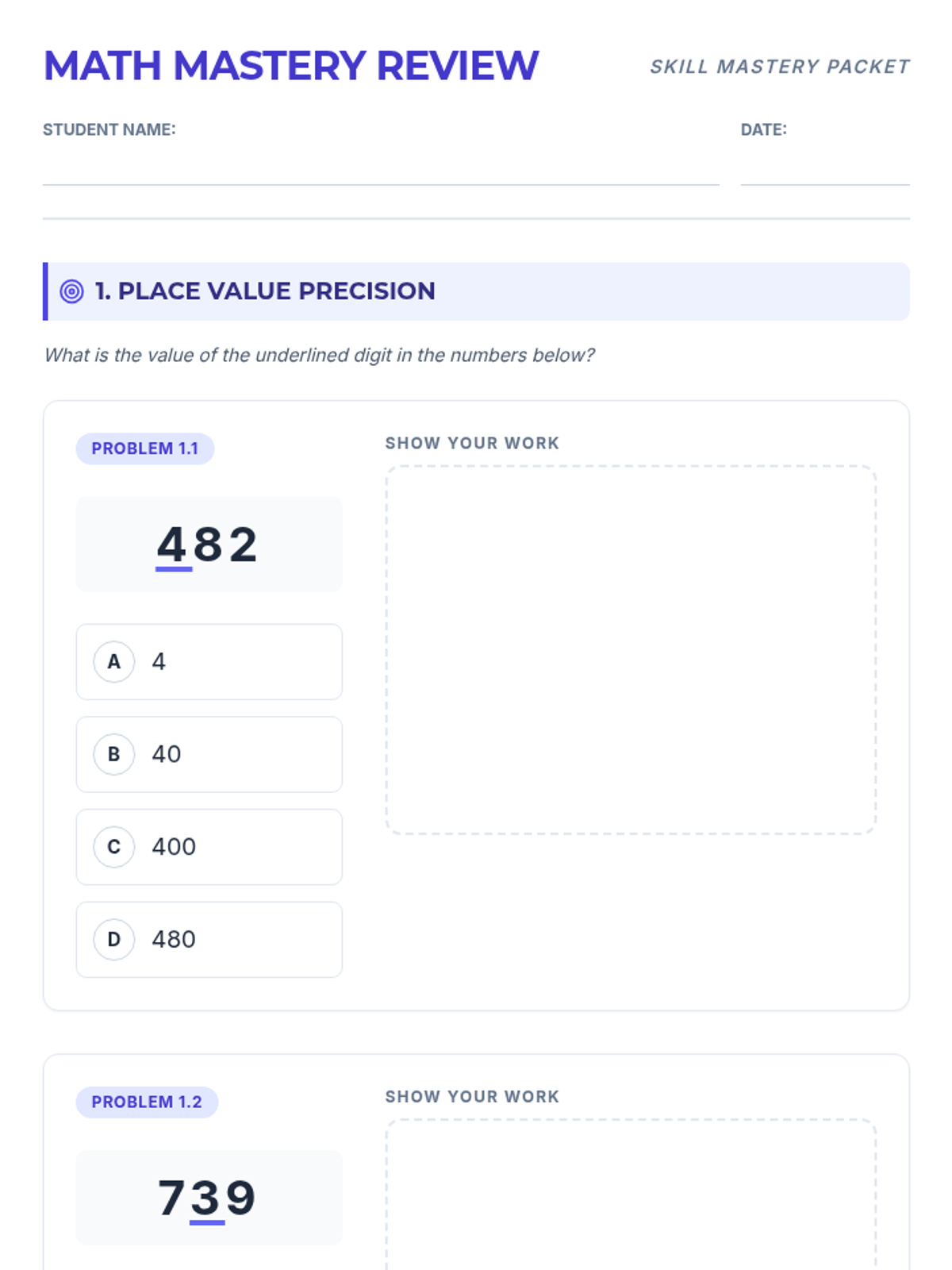
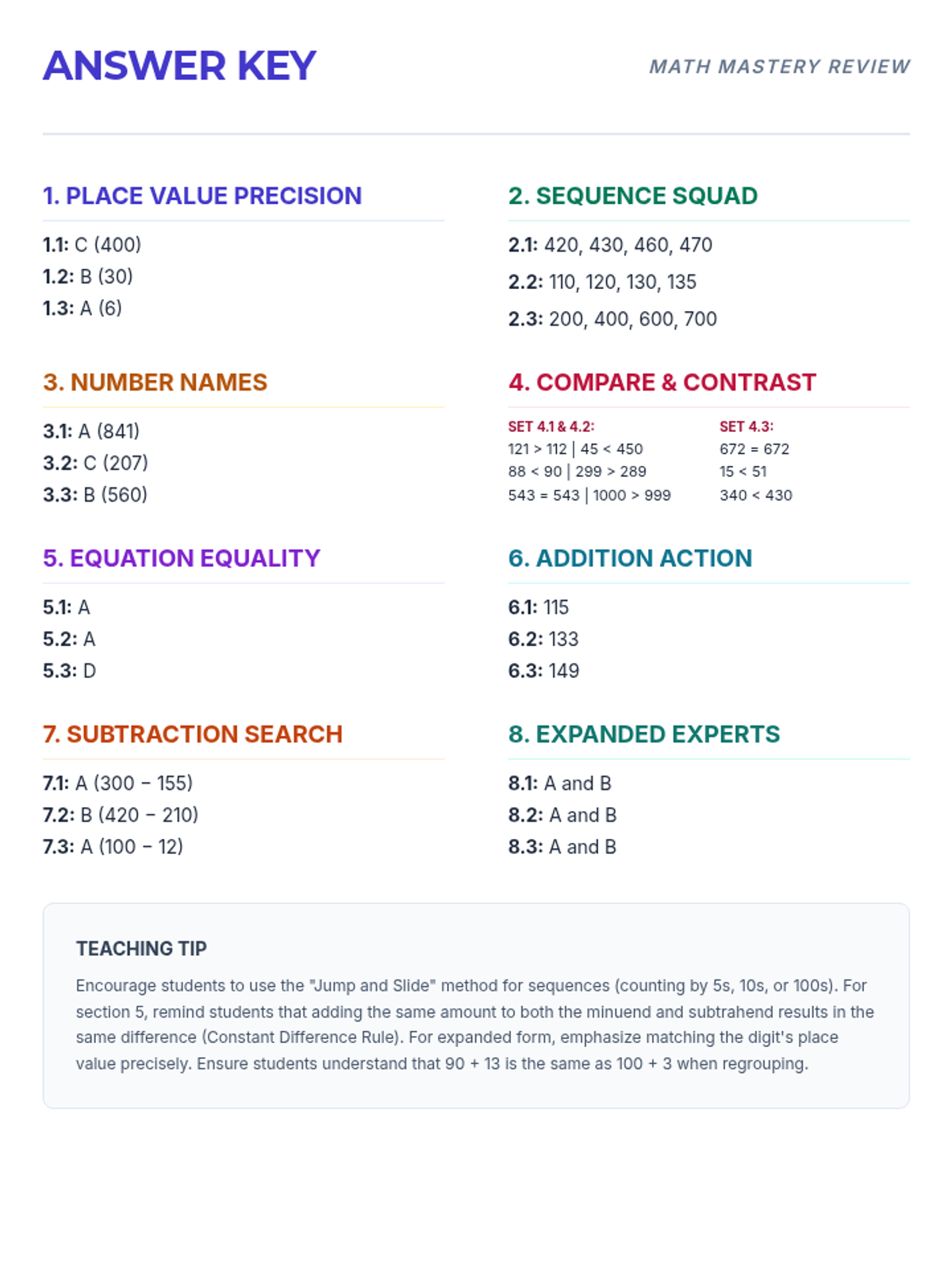
A focused review lesson on key math skills including place value, skip counting, number forms, and multi-digit addition and subtraction. Features a gradual release model (I Do, We Do, You Do) with integrated place value supports.
A set of activities adapted from a 4th-grade decimals unit to a 2nd-grade place value level, focusing on hundreds, tens, and ones with clear examples for independent work.
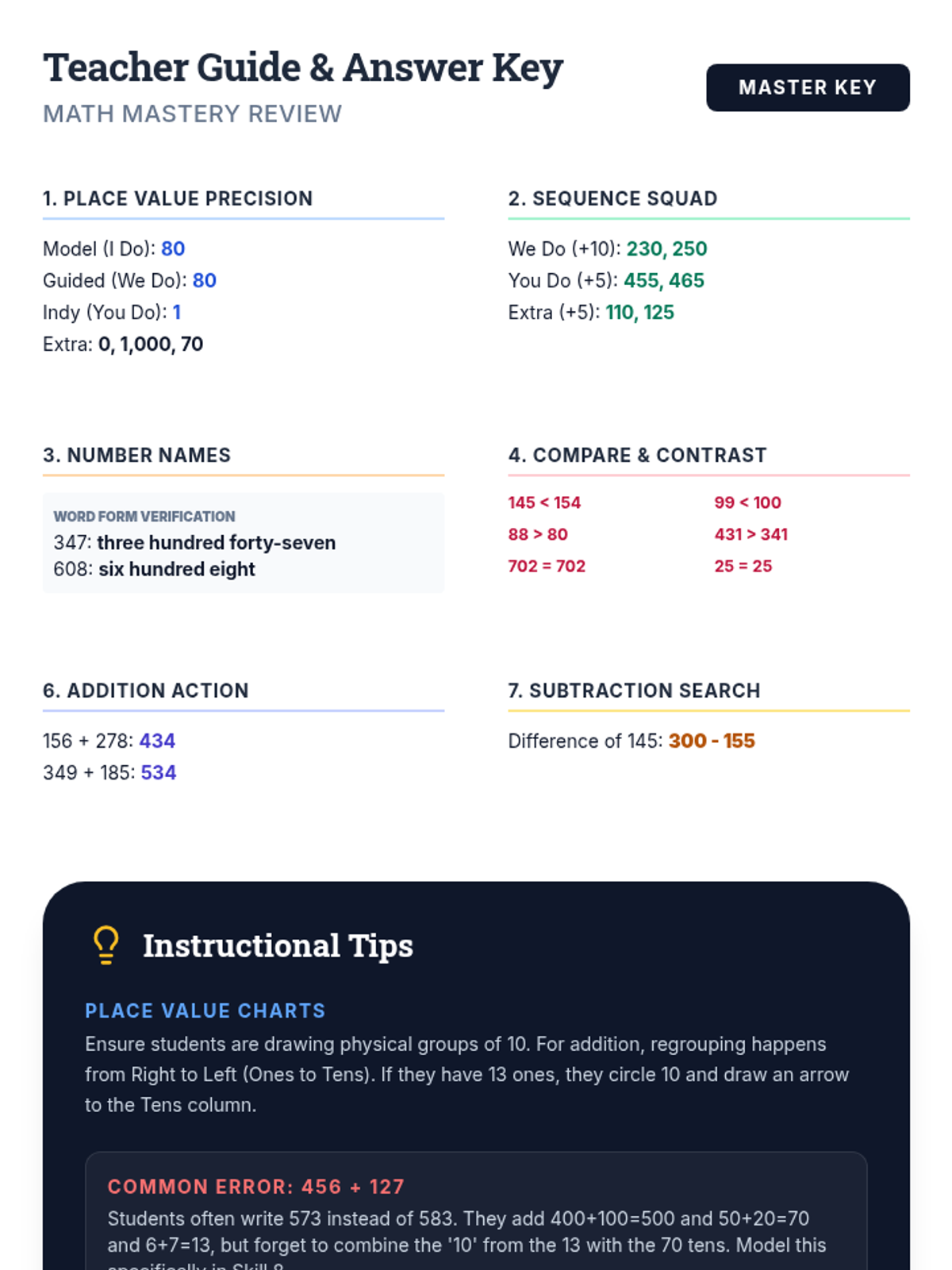
A comprehensive math review lesson focused on place value, number patterns, comparisons, and addition/subtraction strategies for 2nd and 3rd grade students.
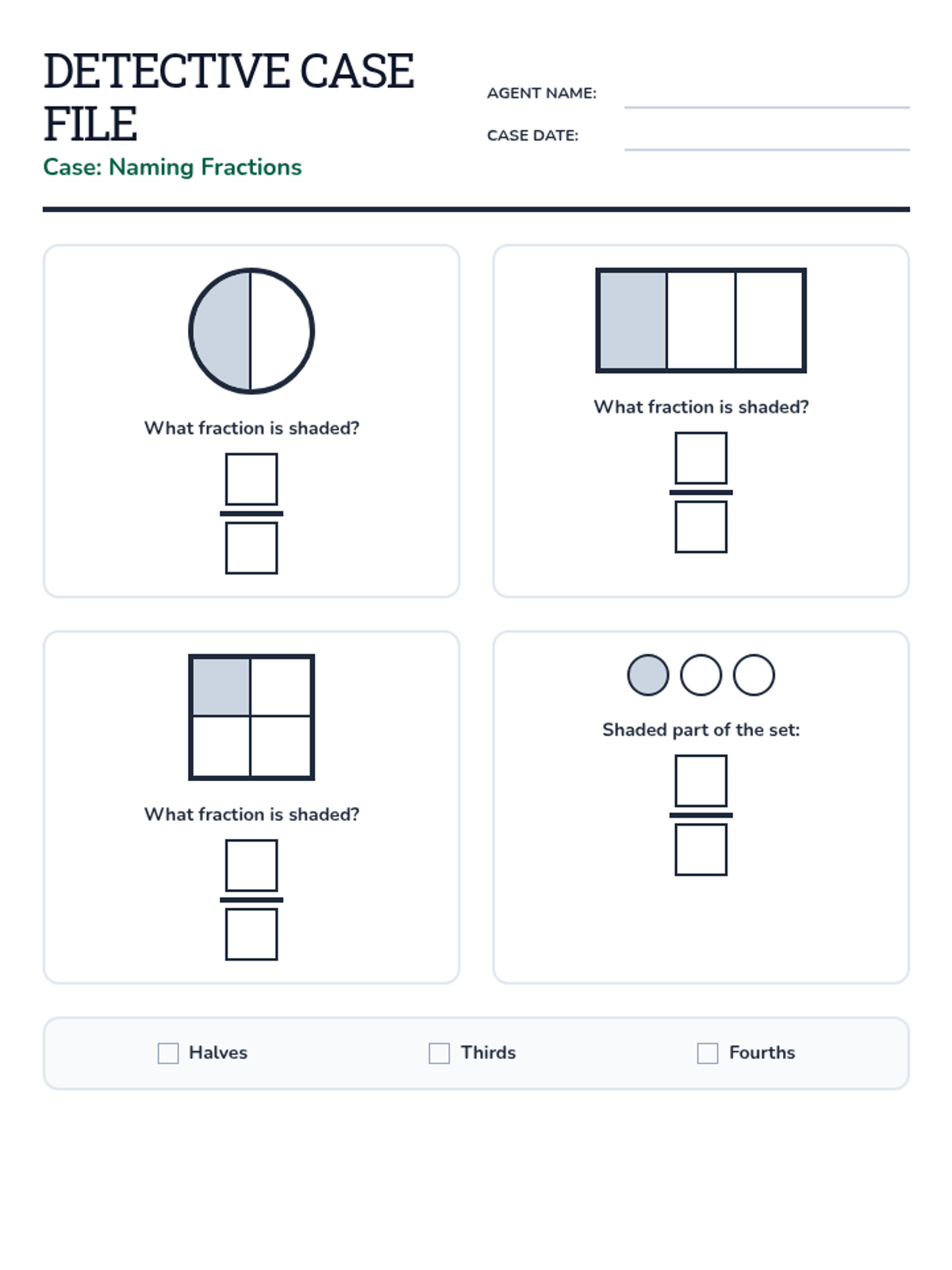
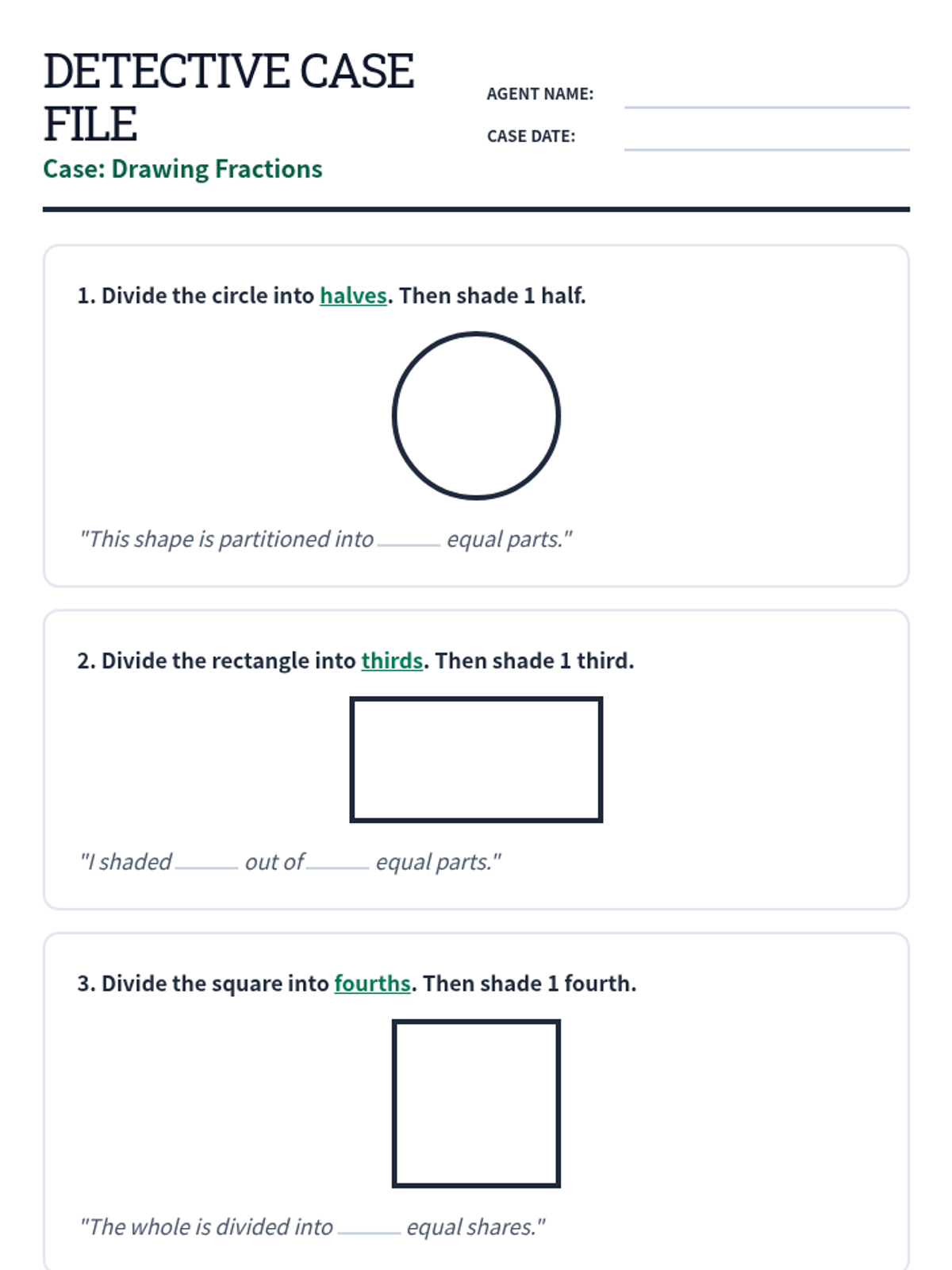
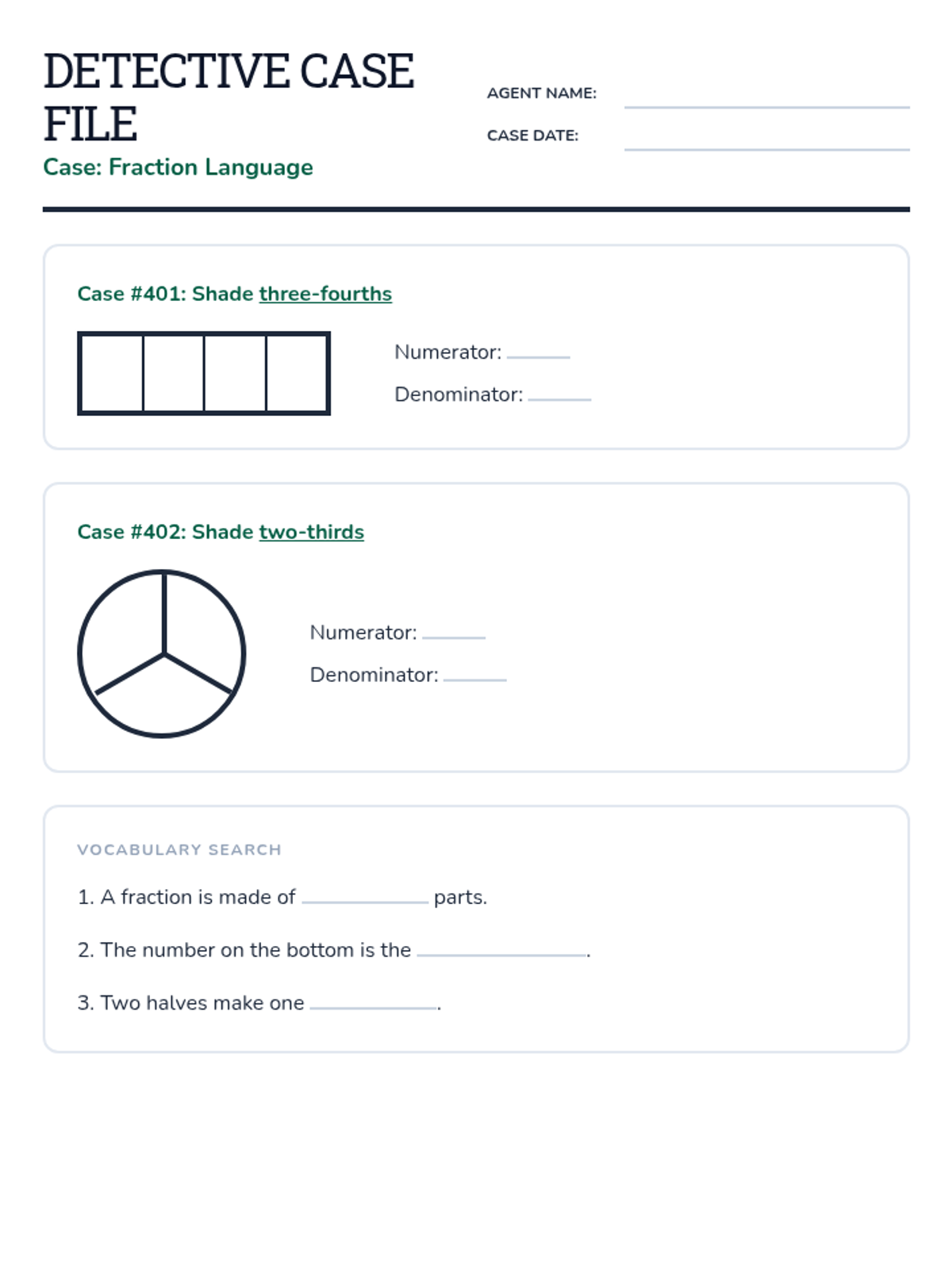
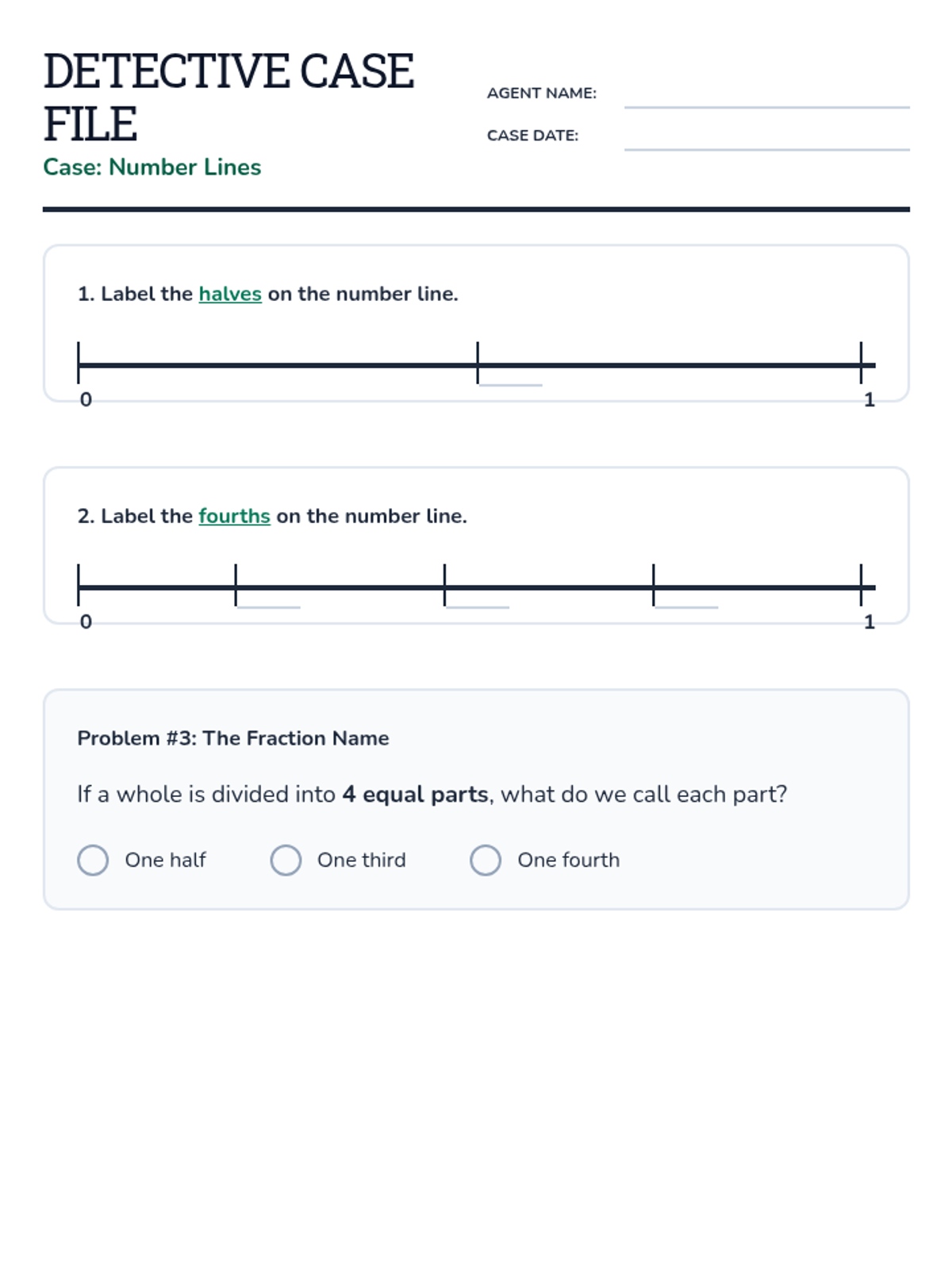
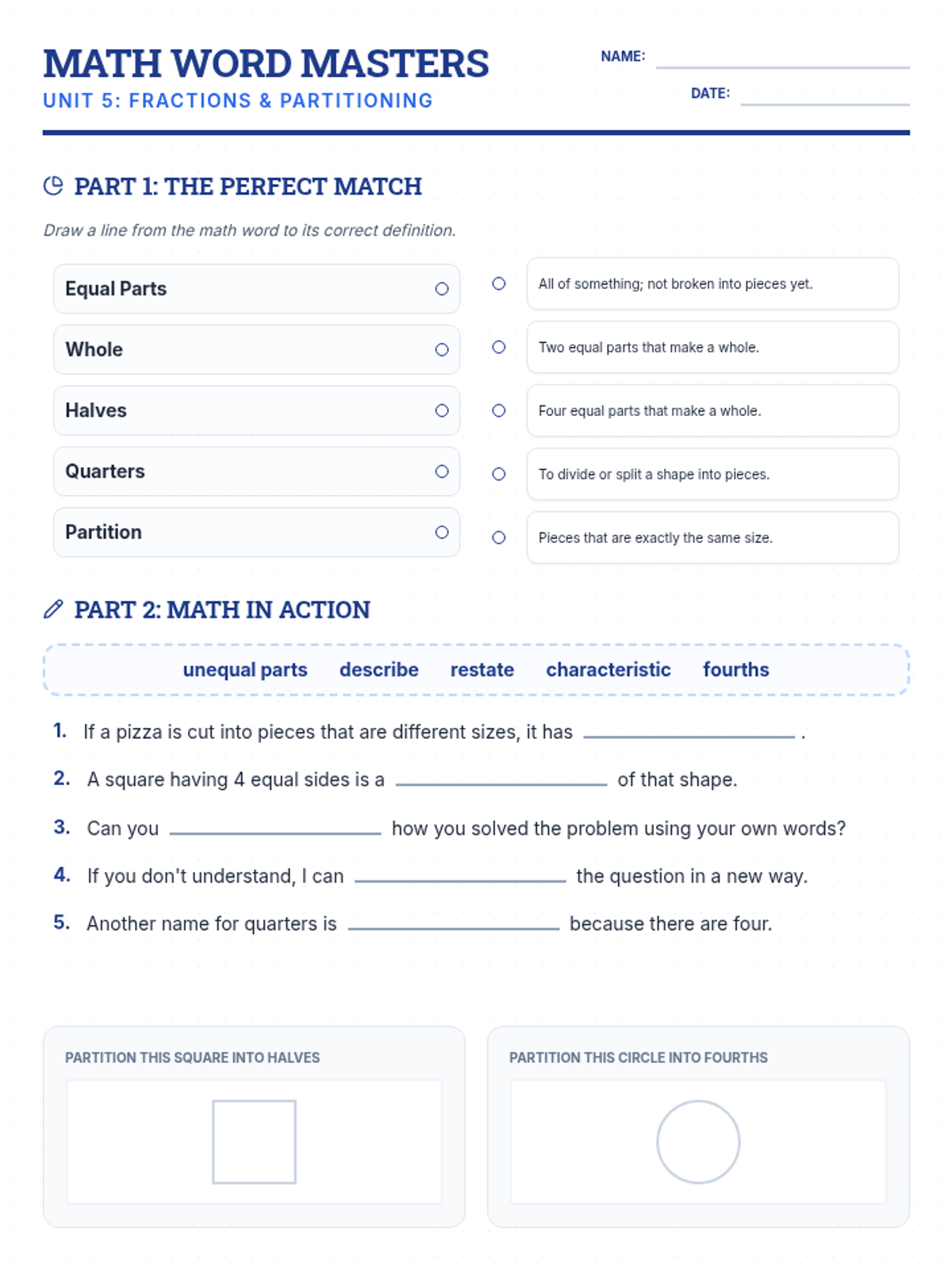
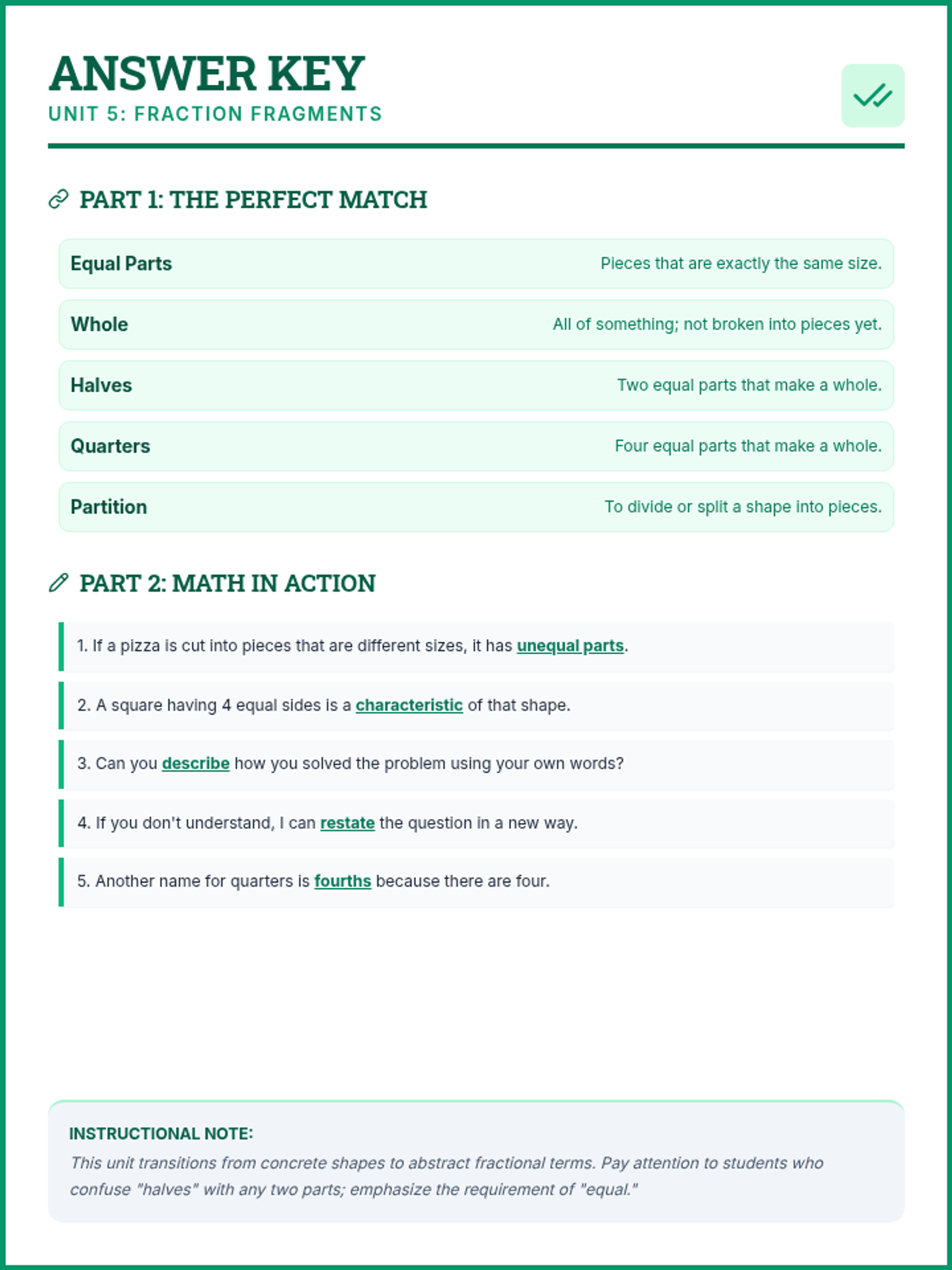
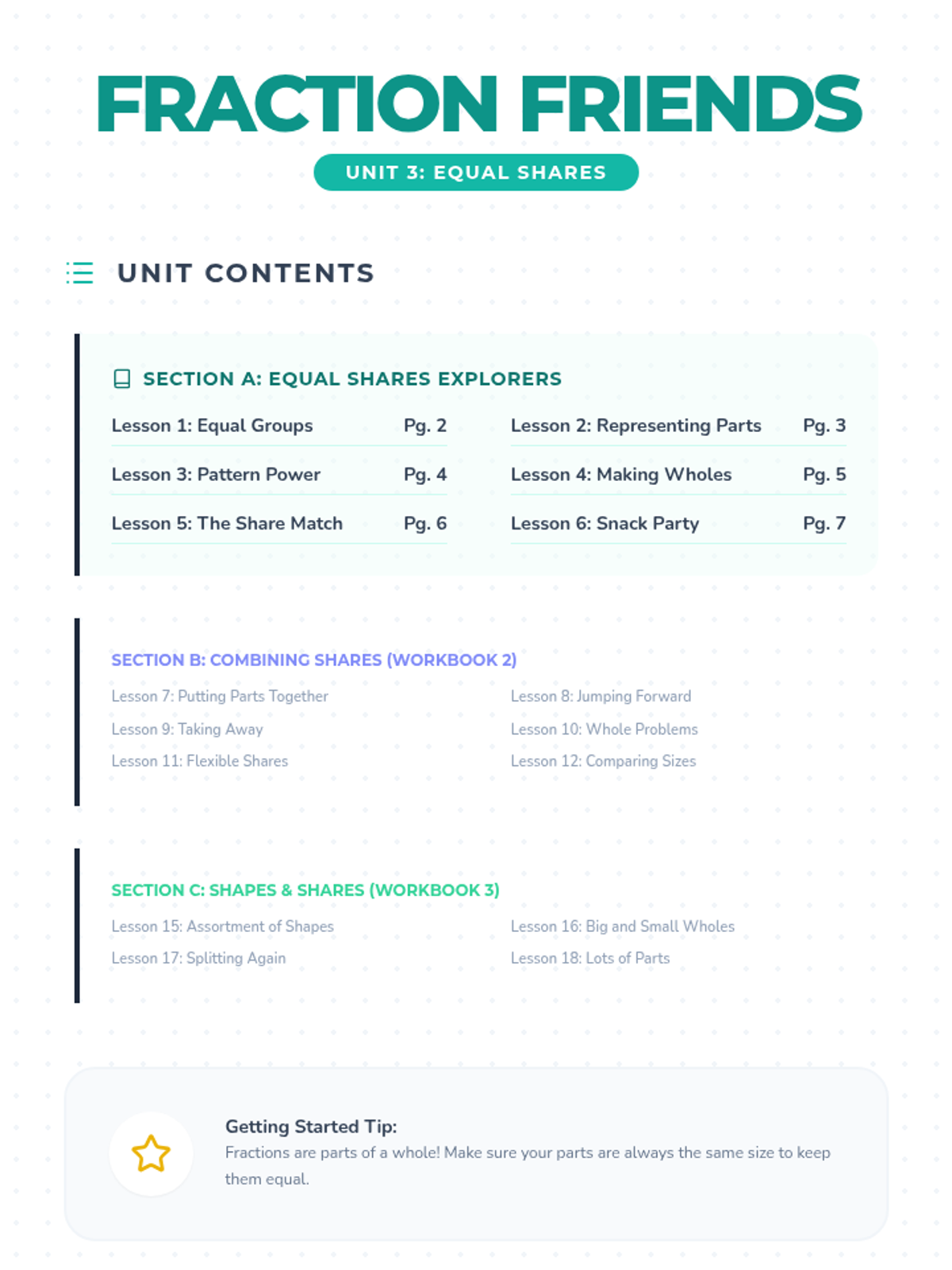
A series of activities focusing on 2nd-grade partitioning and skip counting concepts, adapted from Imagine IM Grade 4 materials. Students explore halves, thirds, and fourths through visual models and real-world snack scenarios.
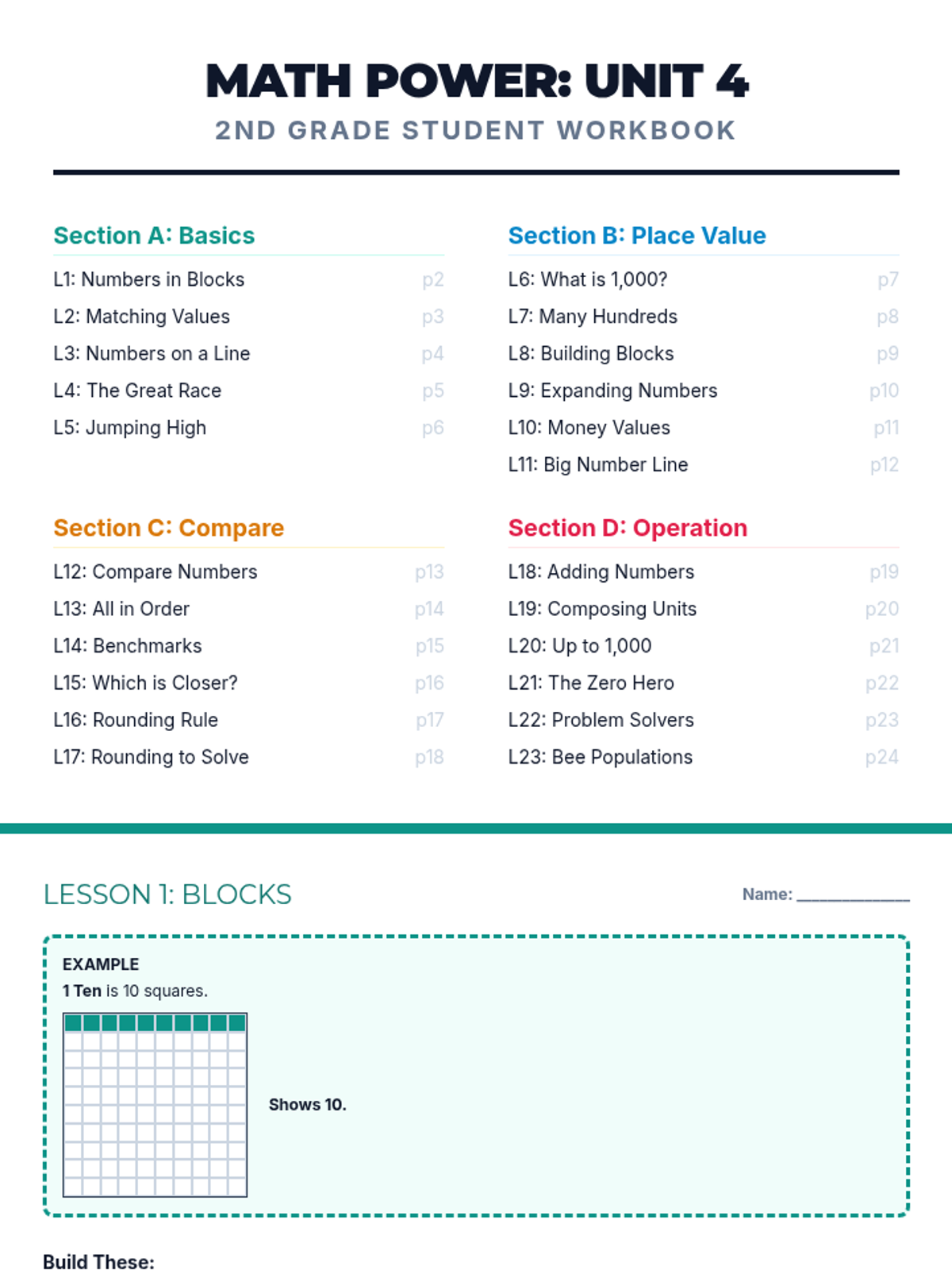
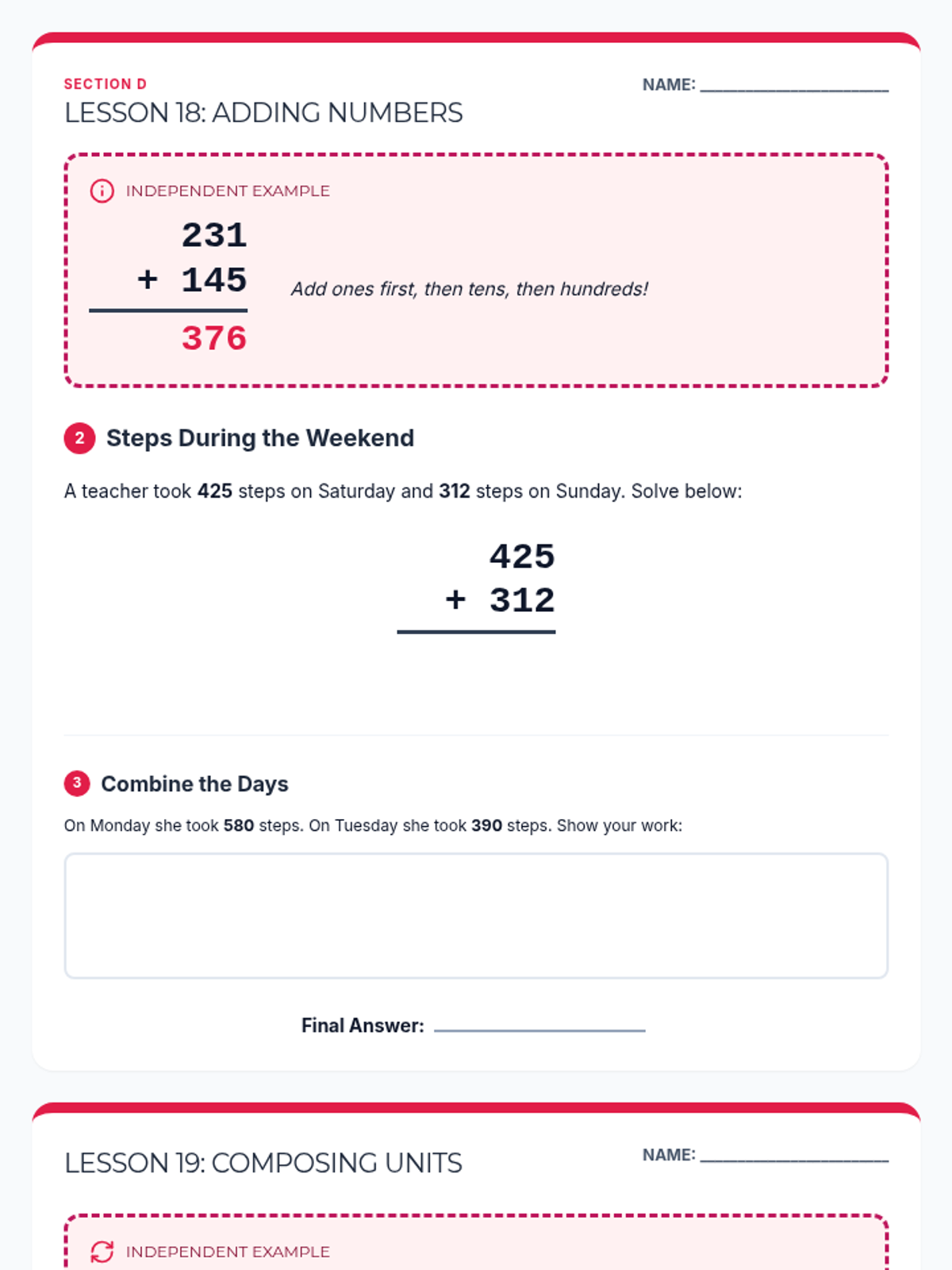
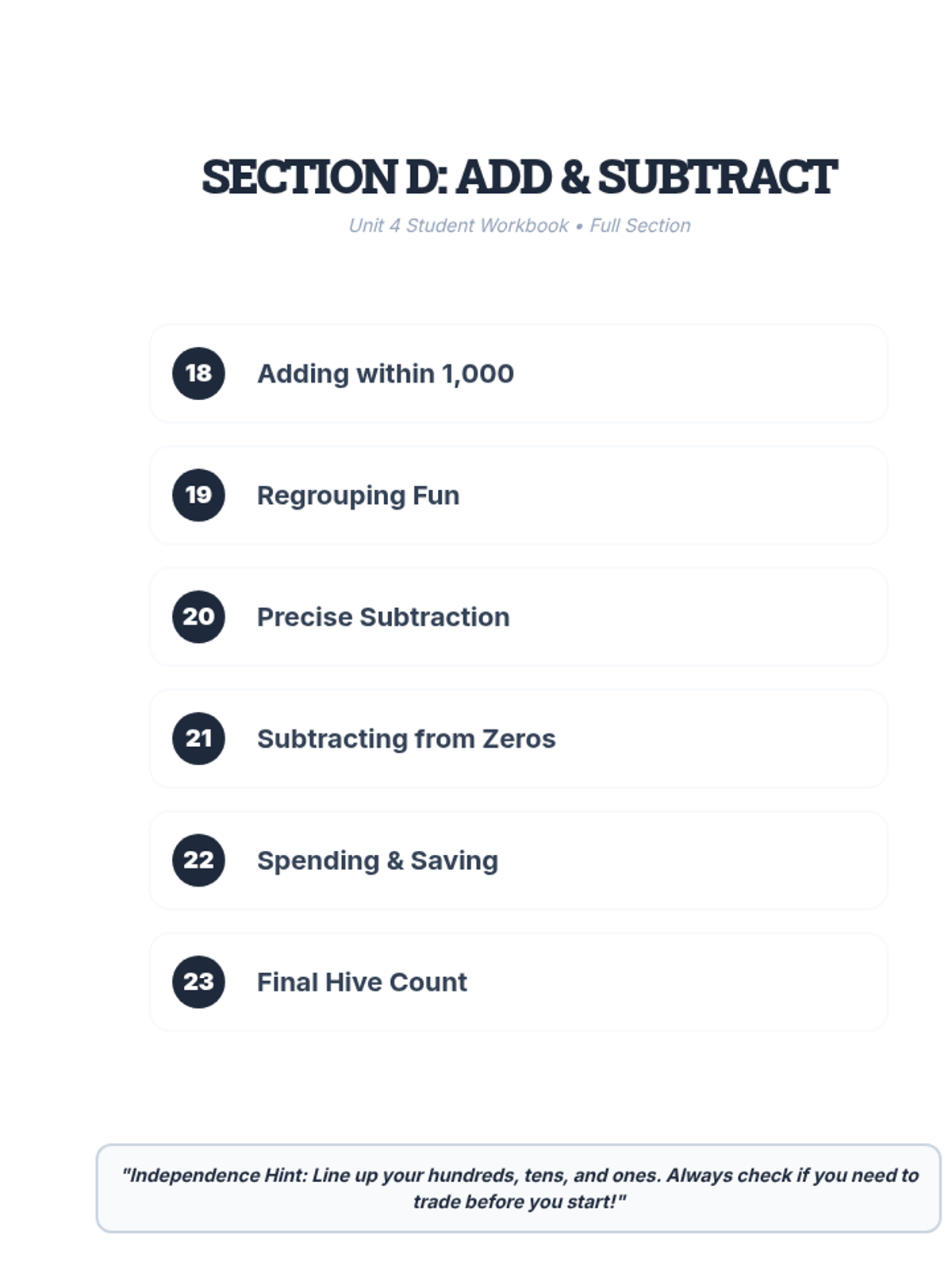
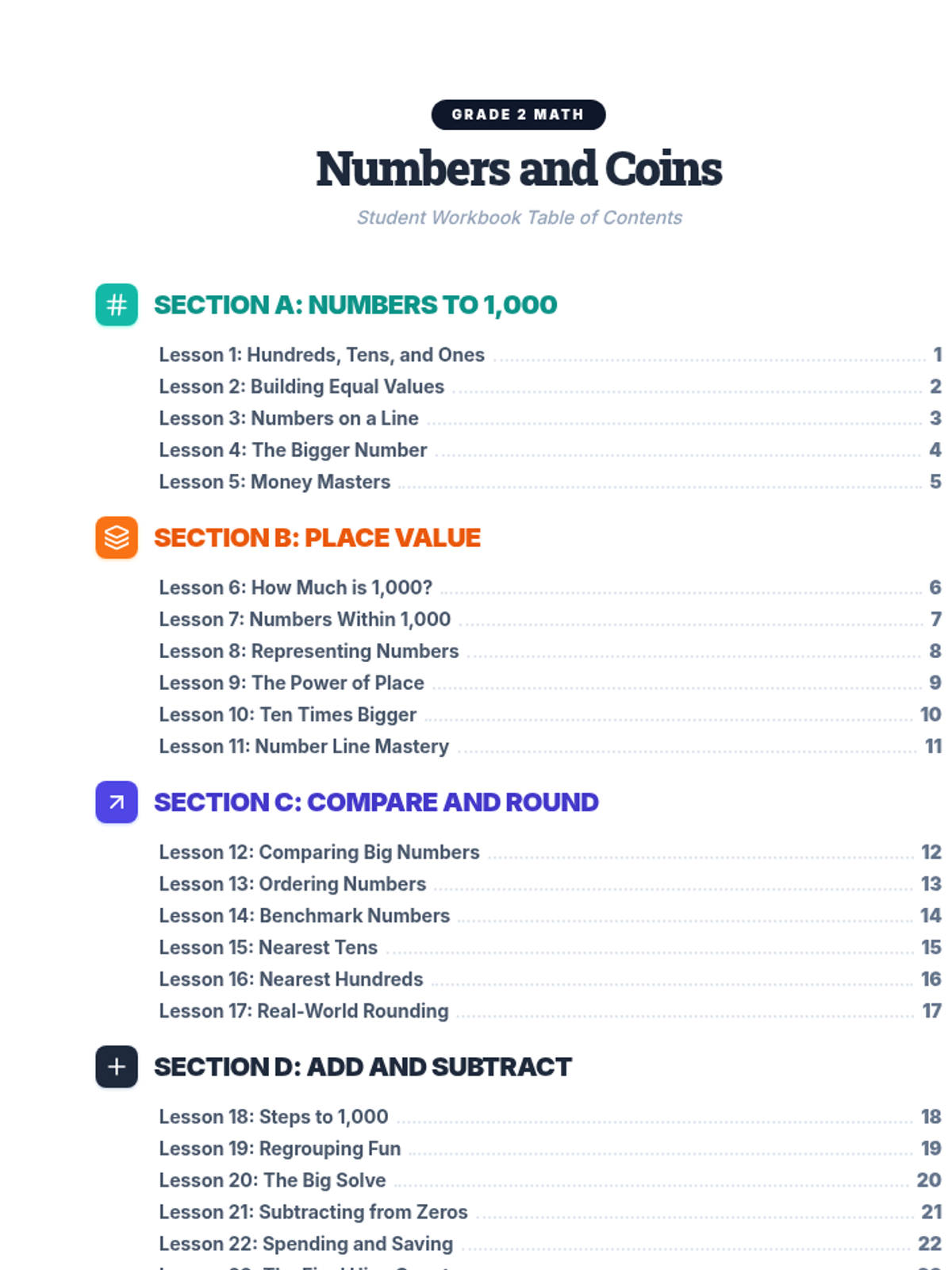
Students apply addition and subtraction strategies to three-digit numbers and money amounts. Includes Lessons 18-23.
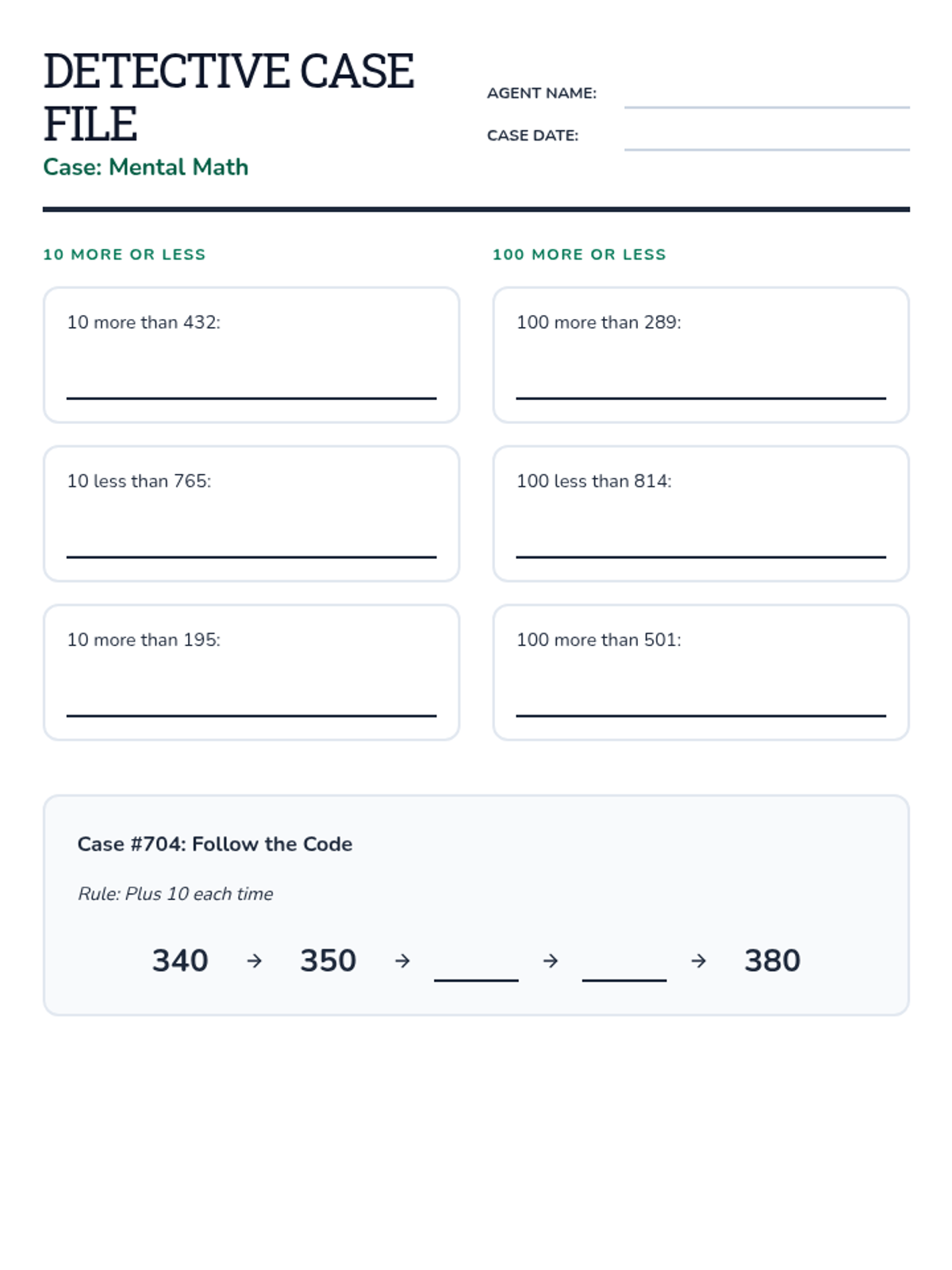
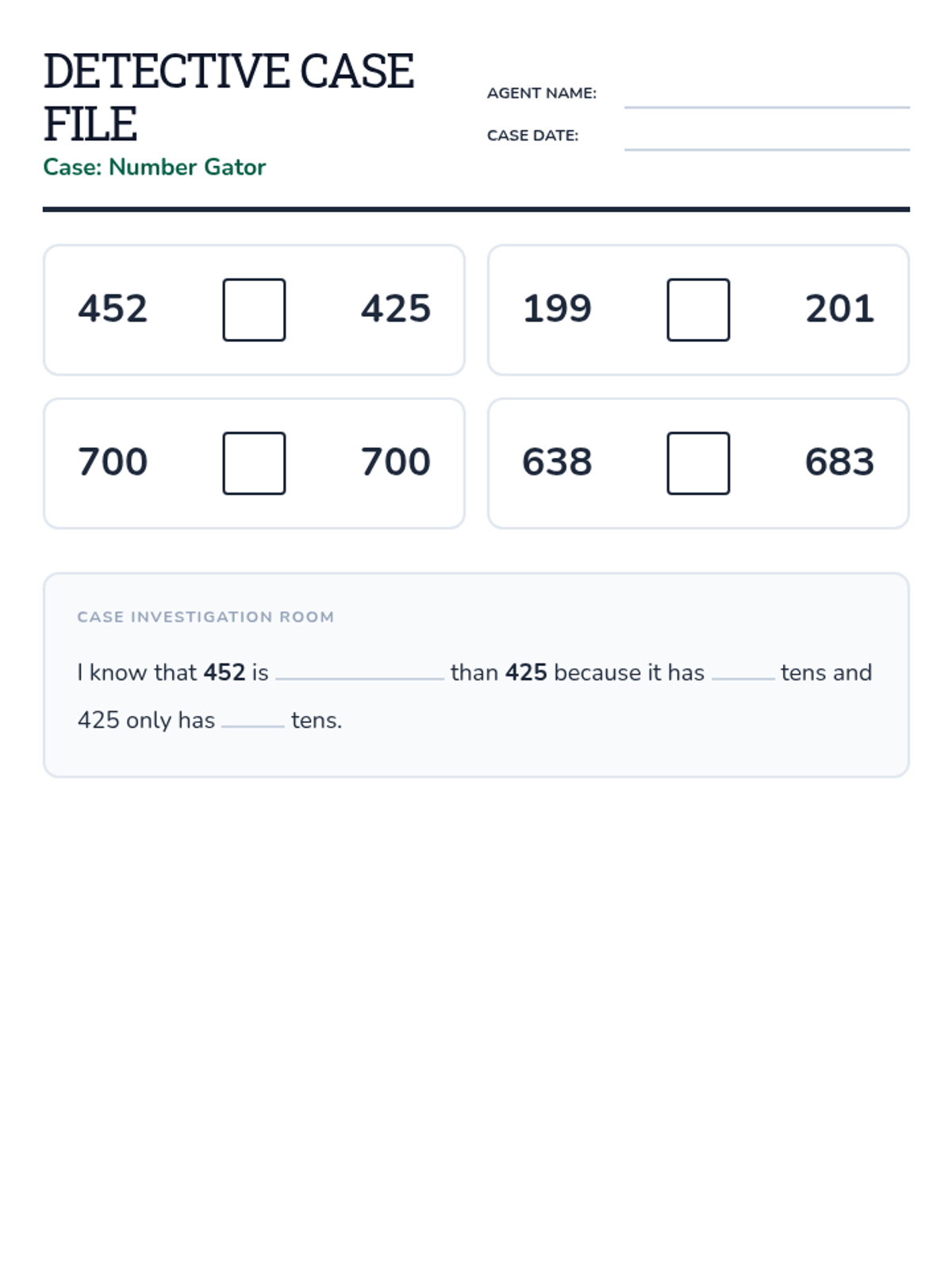
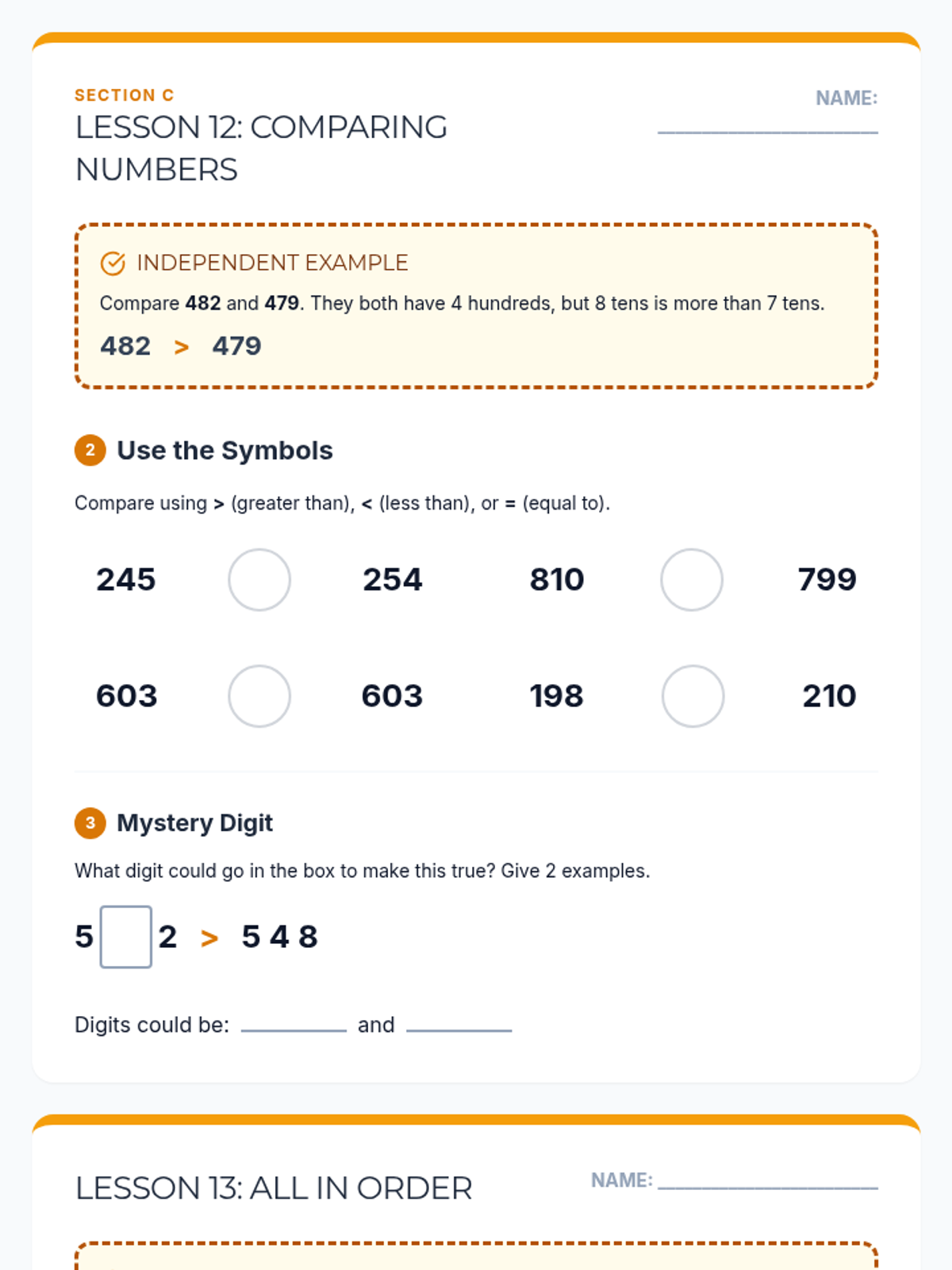
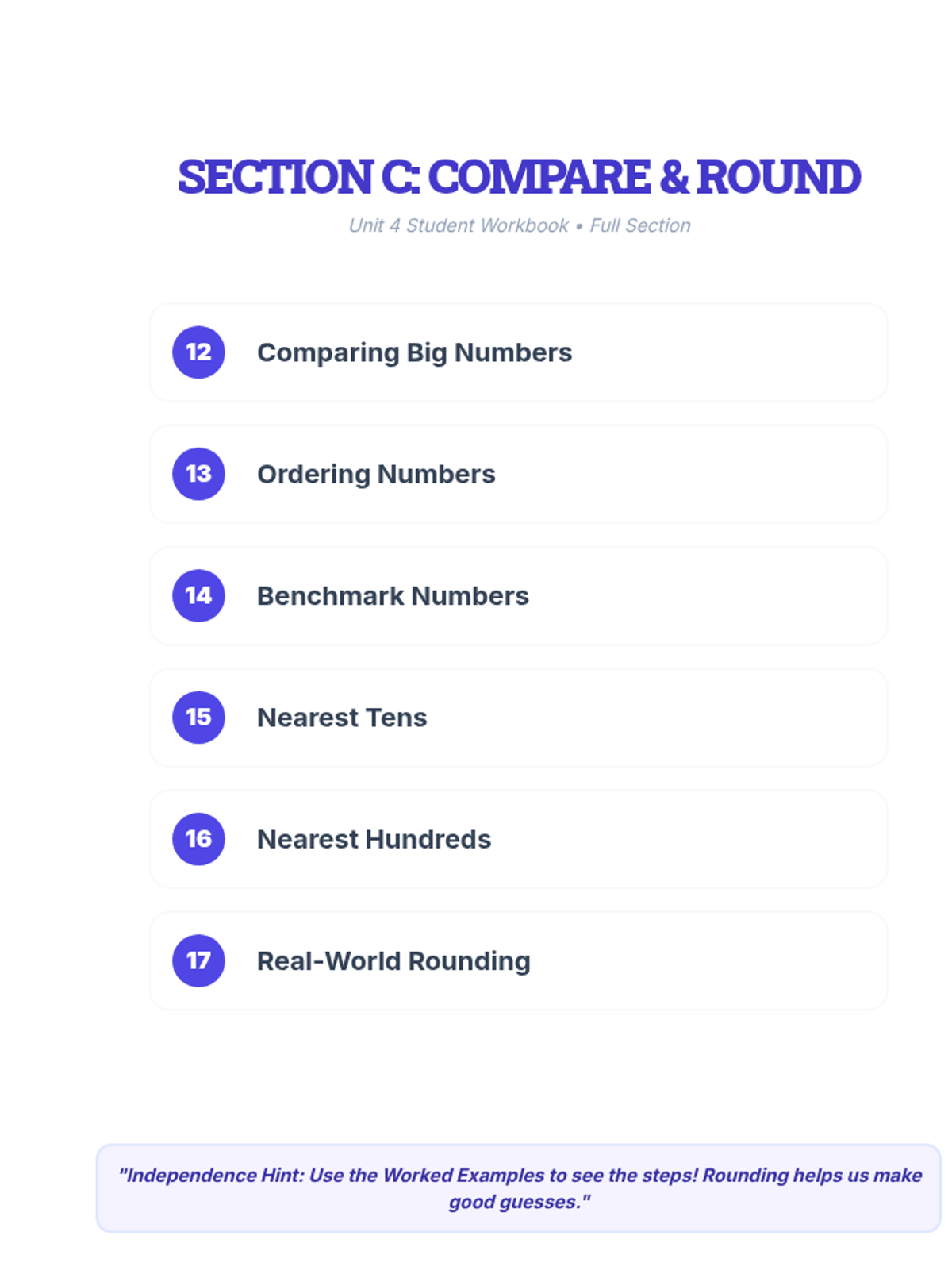
Students locate, compare, and order three-digit numbers on a number line and introduce rounding concepts. Includes Lessons 12-17.
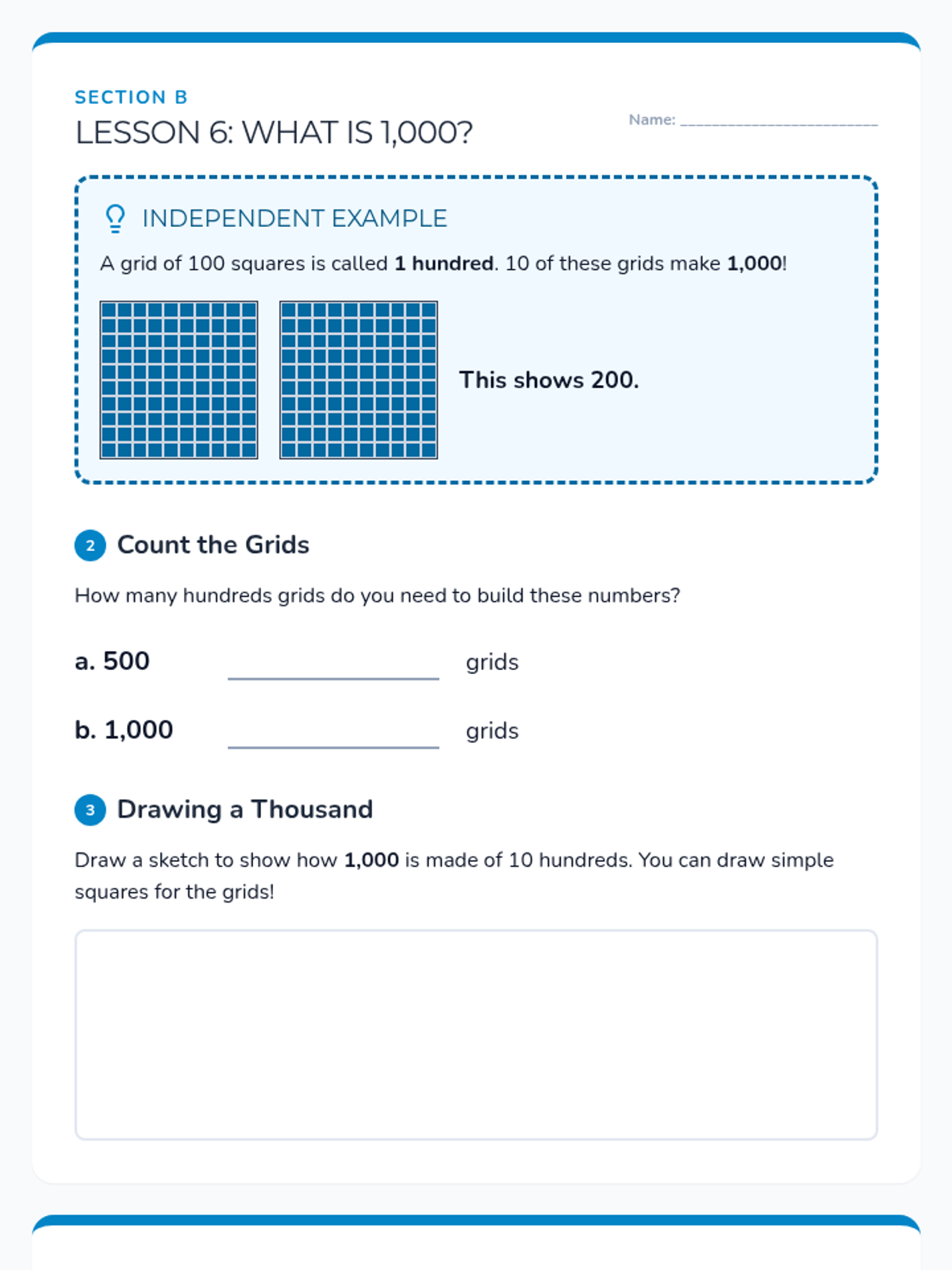
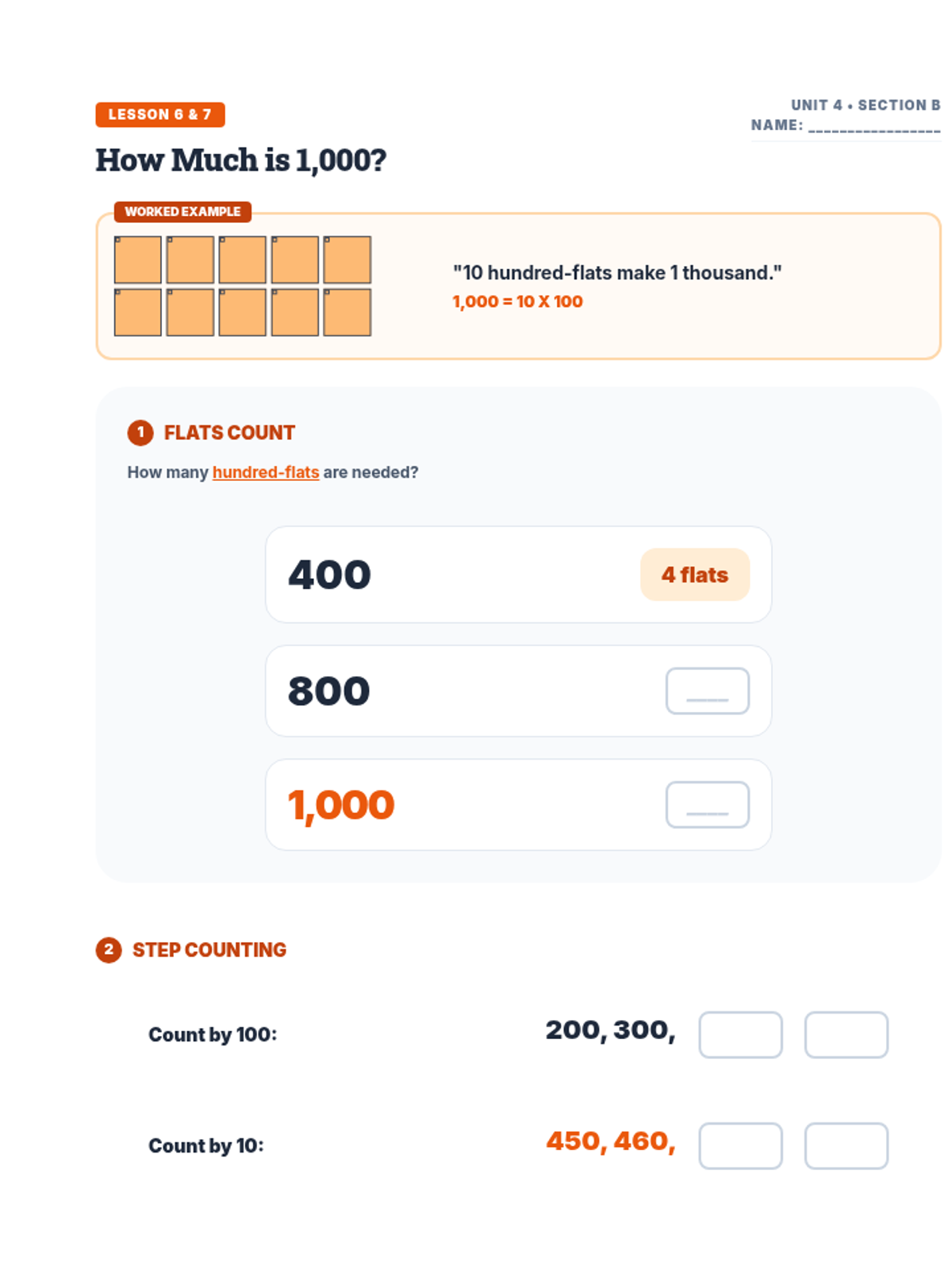
Students investigate place value concepts, representing numbers up to 1,000, and understanding that 10 tens equal 100. Includes Lessons 6-11.
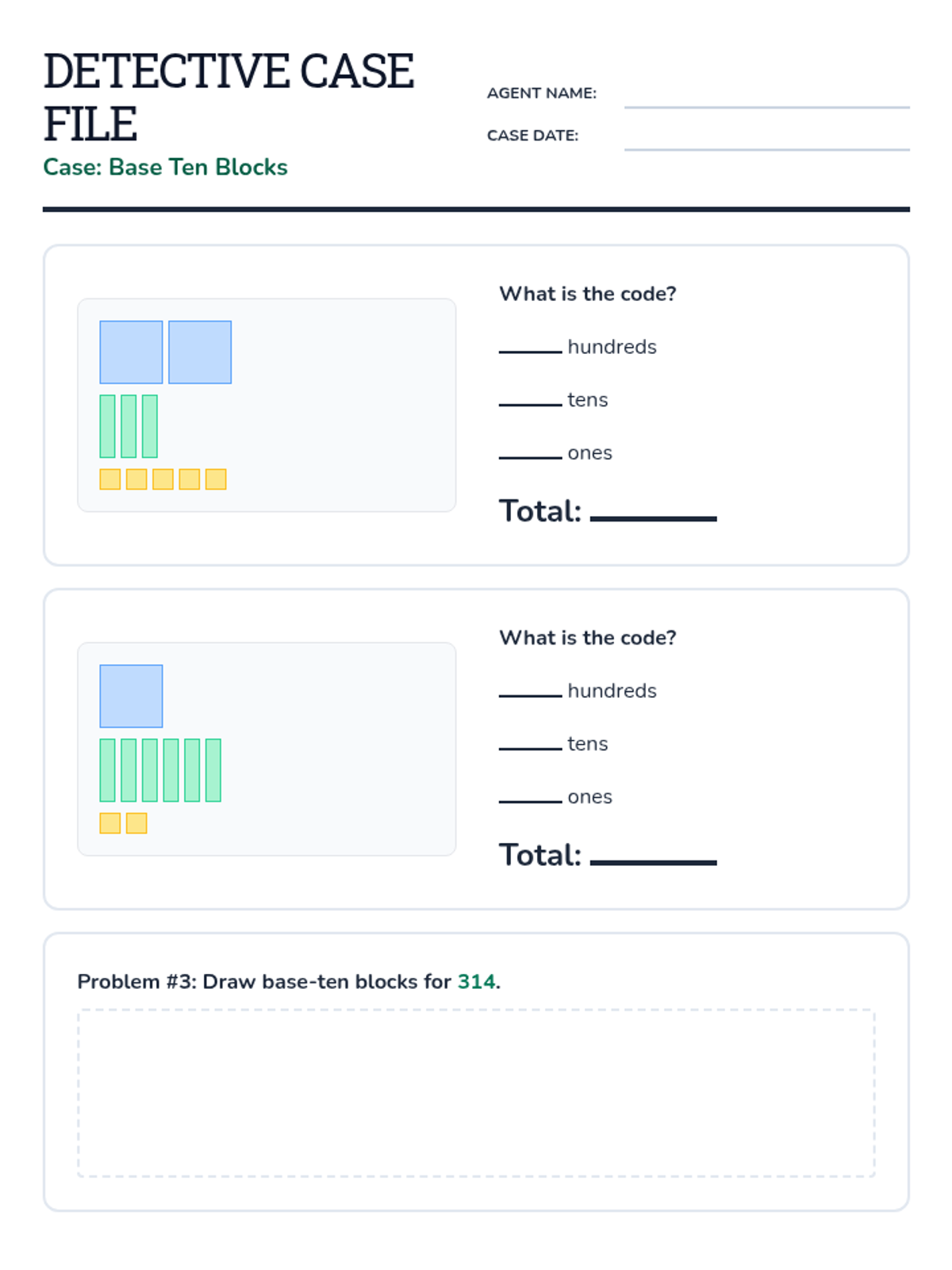
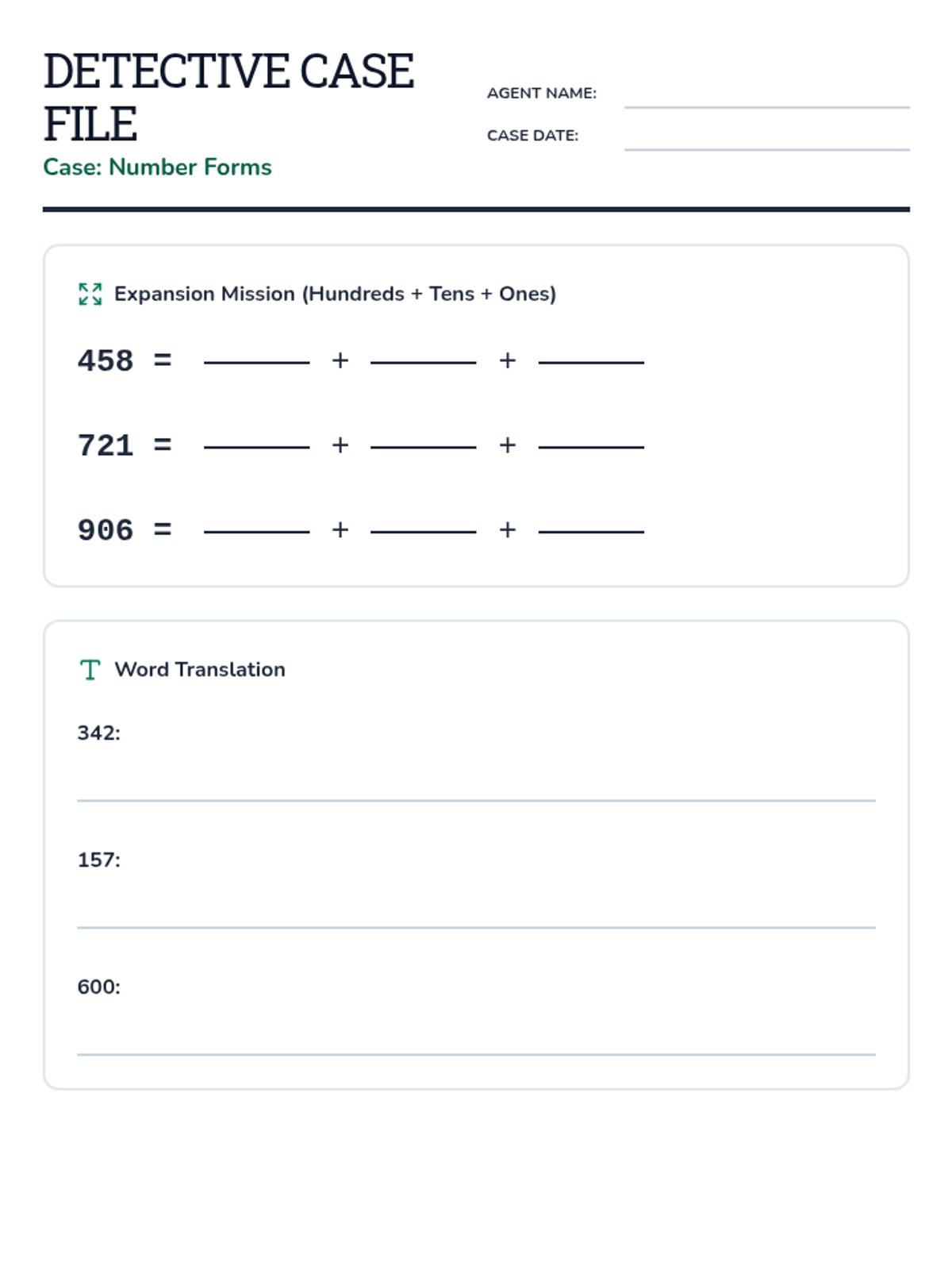
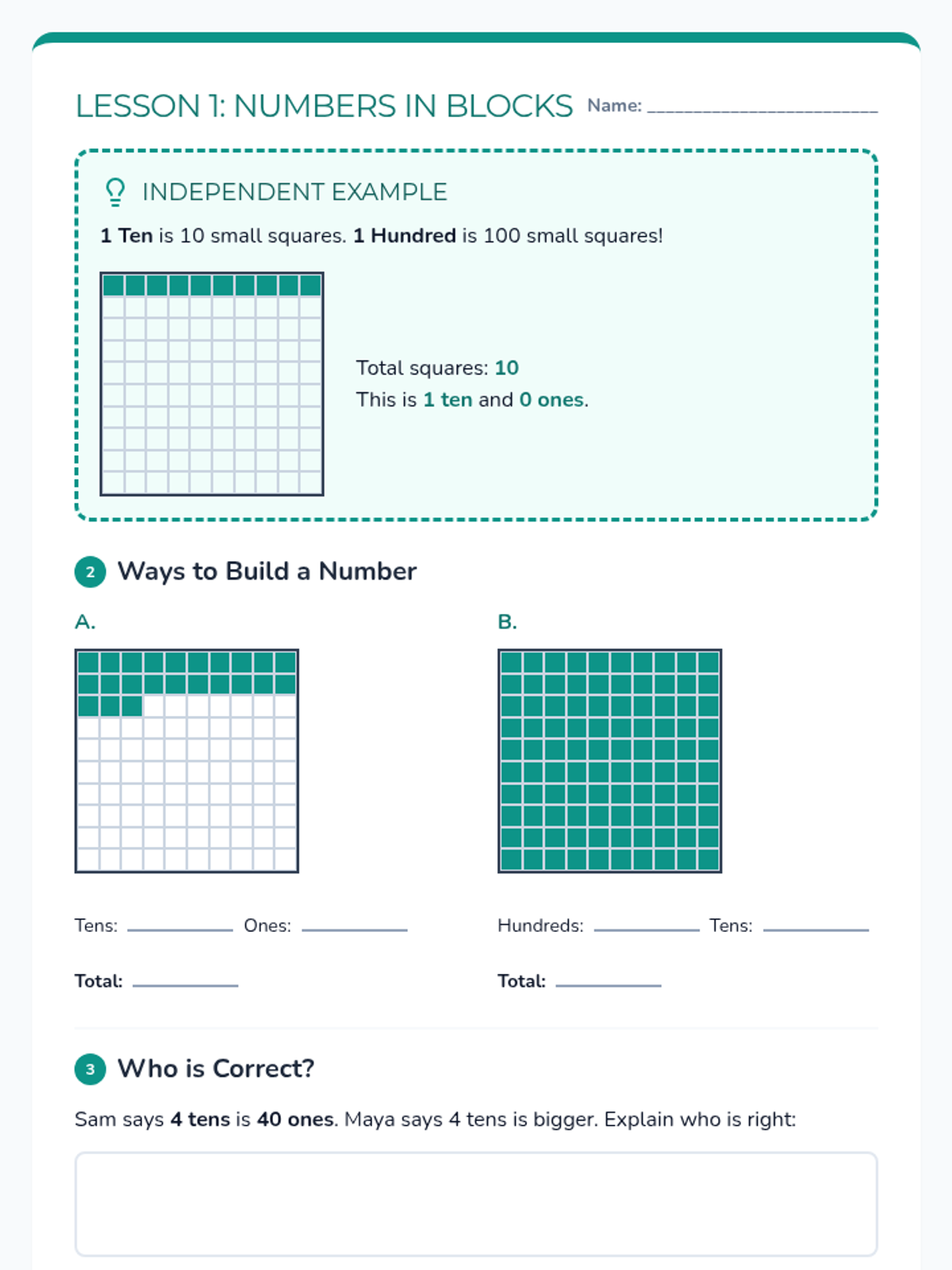
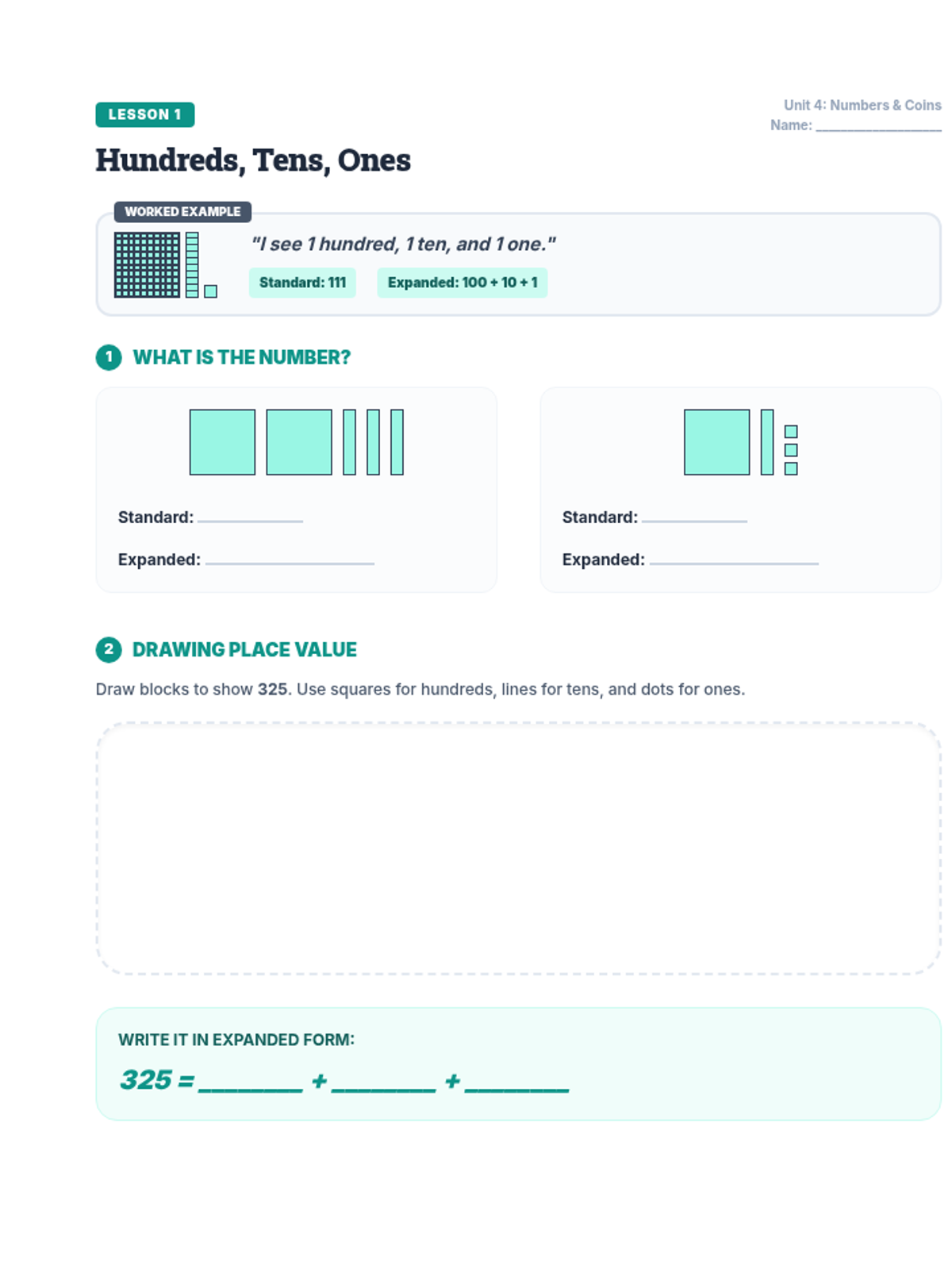
Students explore three-digit numbers using base-ten blocks, standard form, expanded form, and word form, and compare equivalent representations like 100 and 10 tens. Includes Lessons 1-5.
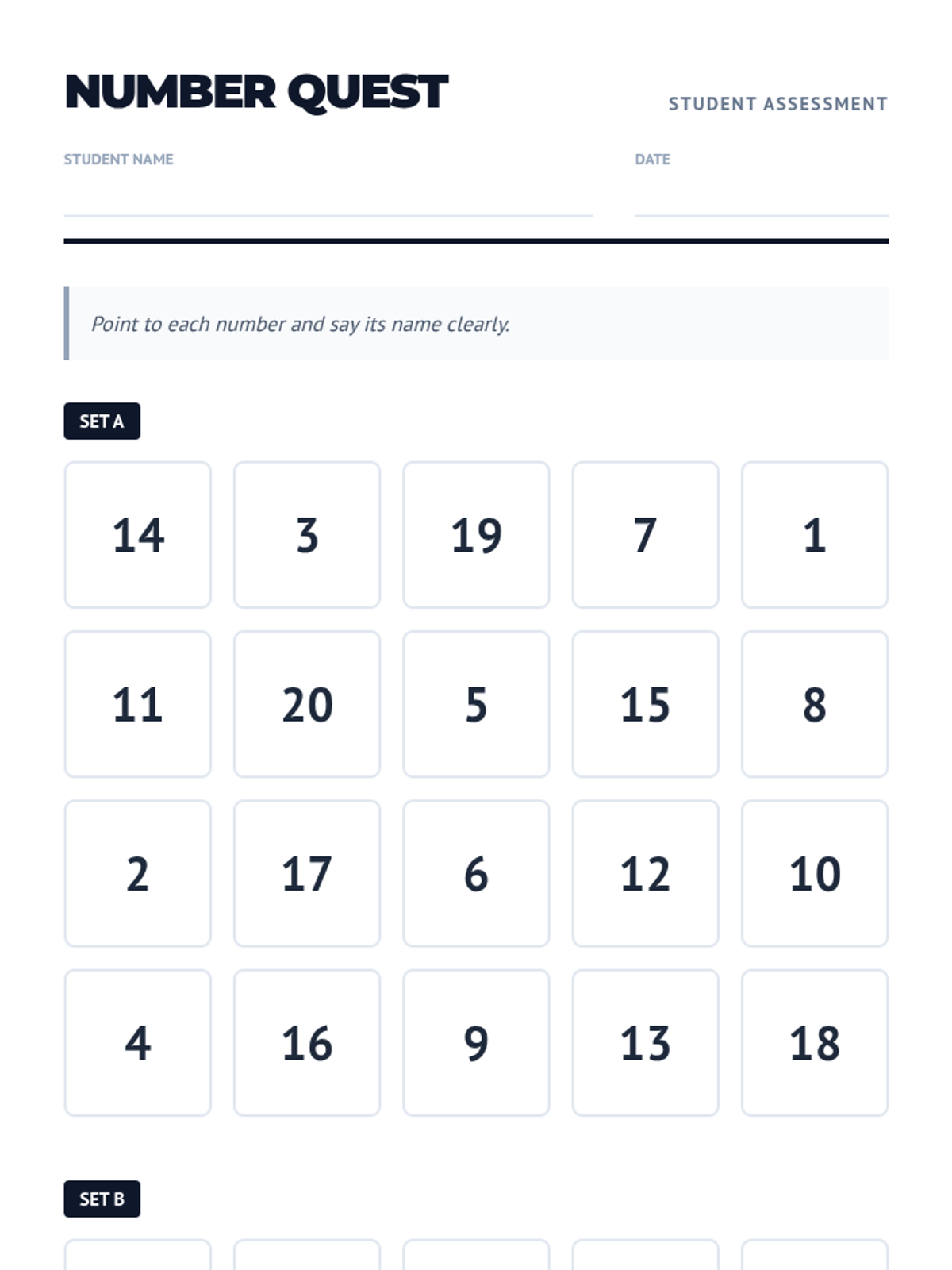
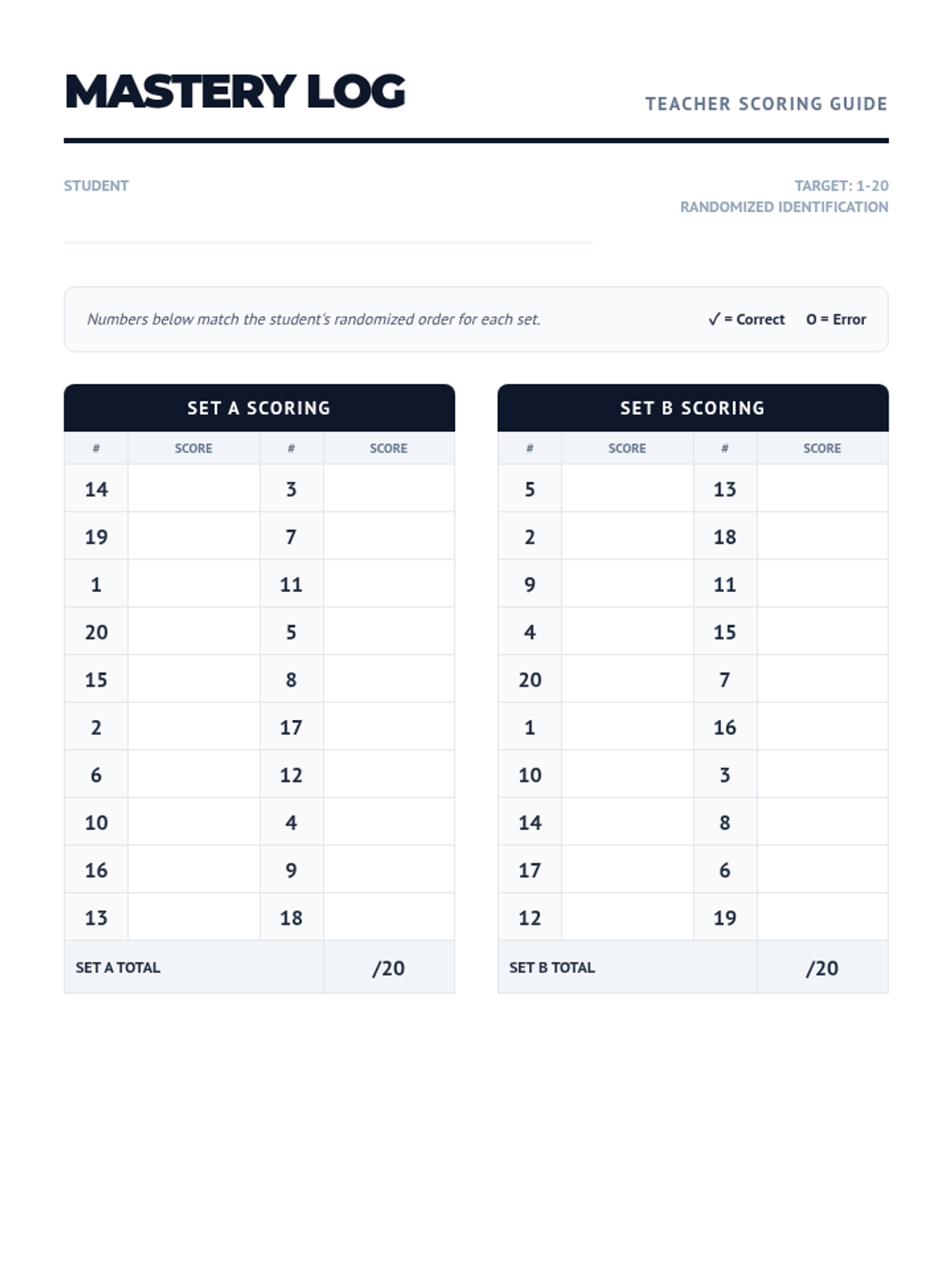
A comprehensive set of tools for assessing and tracking a student's ability to identify numbers 1 through 20 in randomized order.
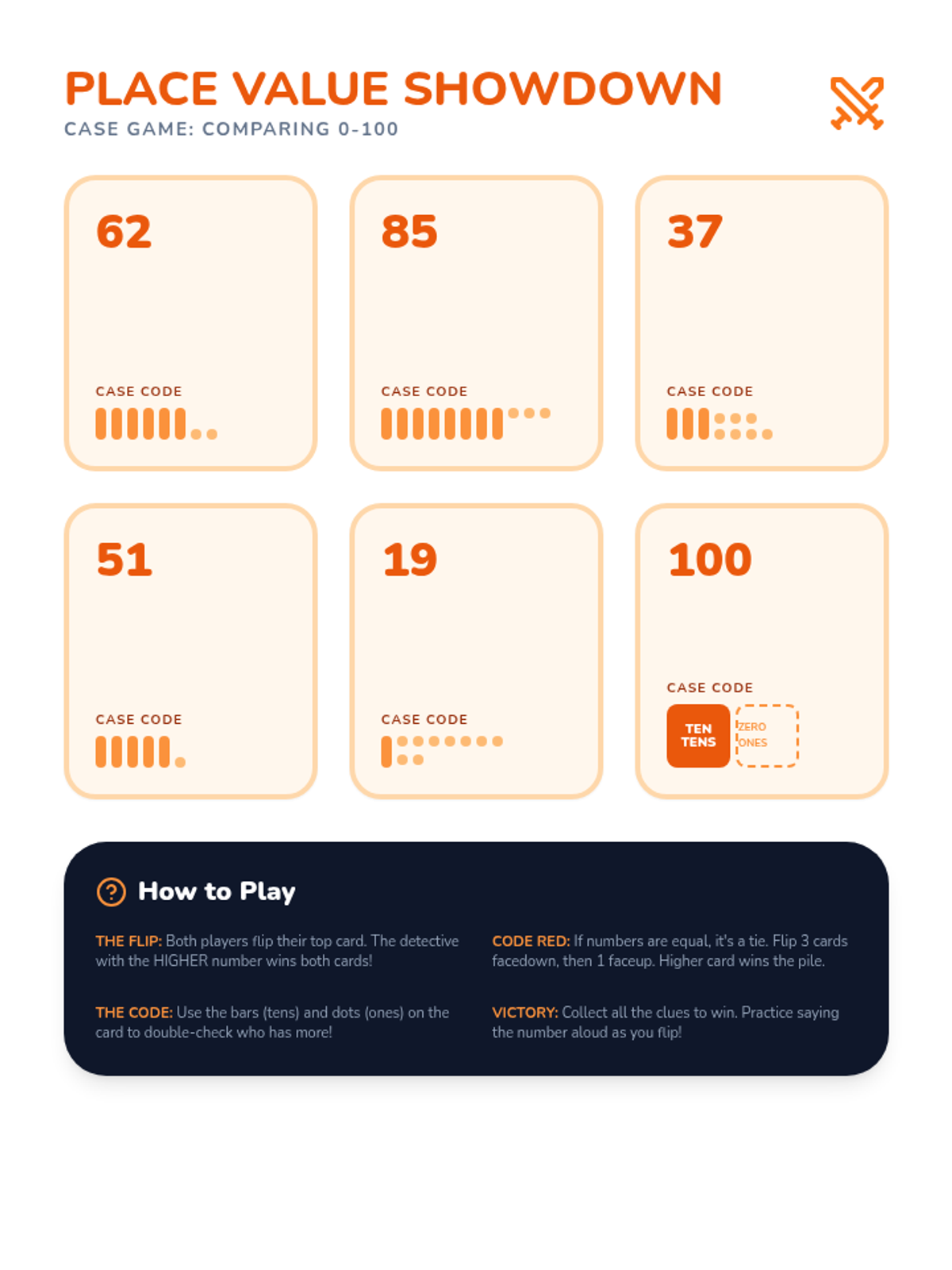
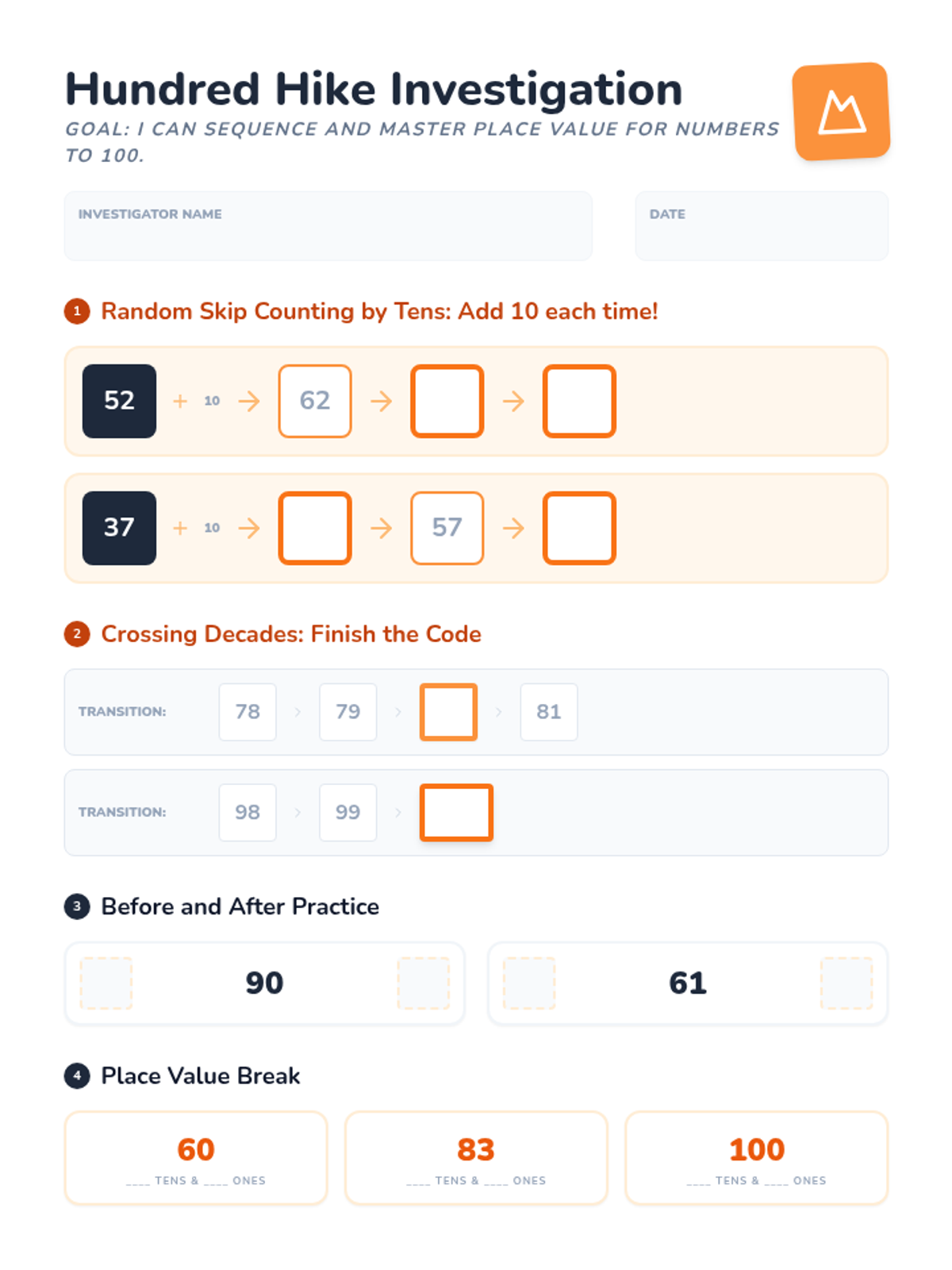
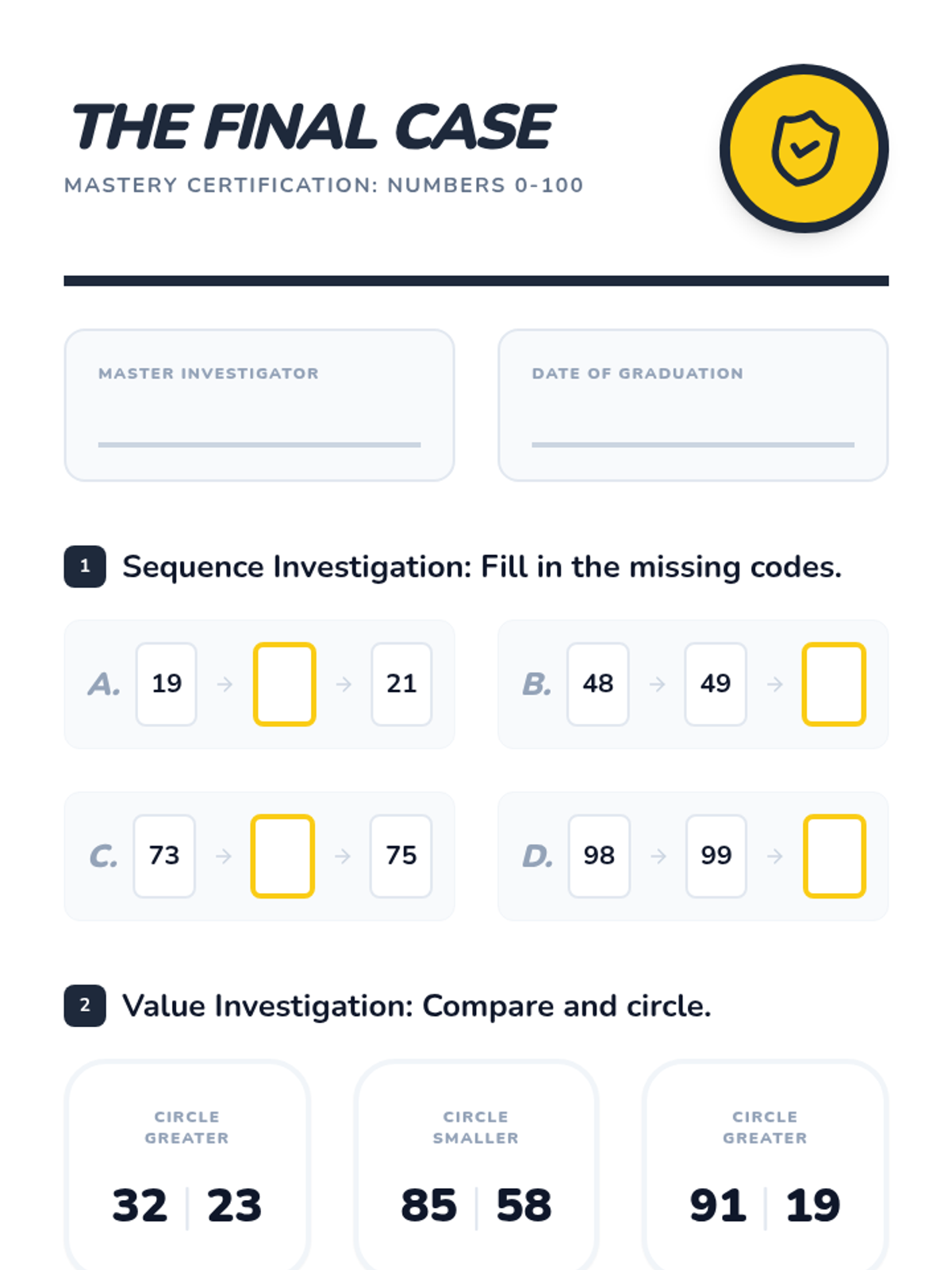
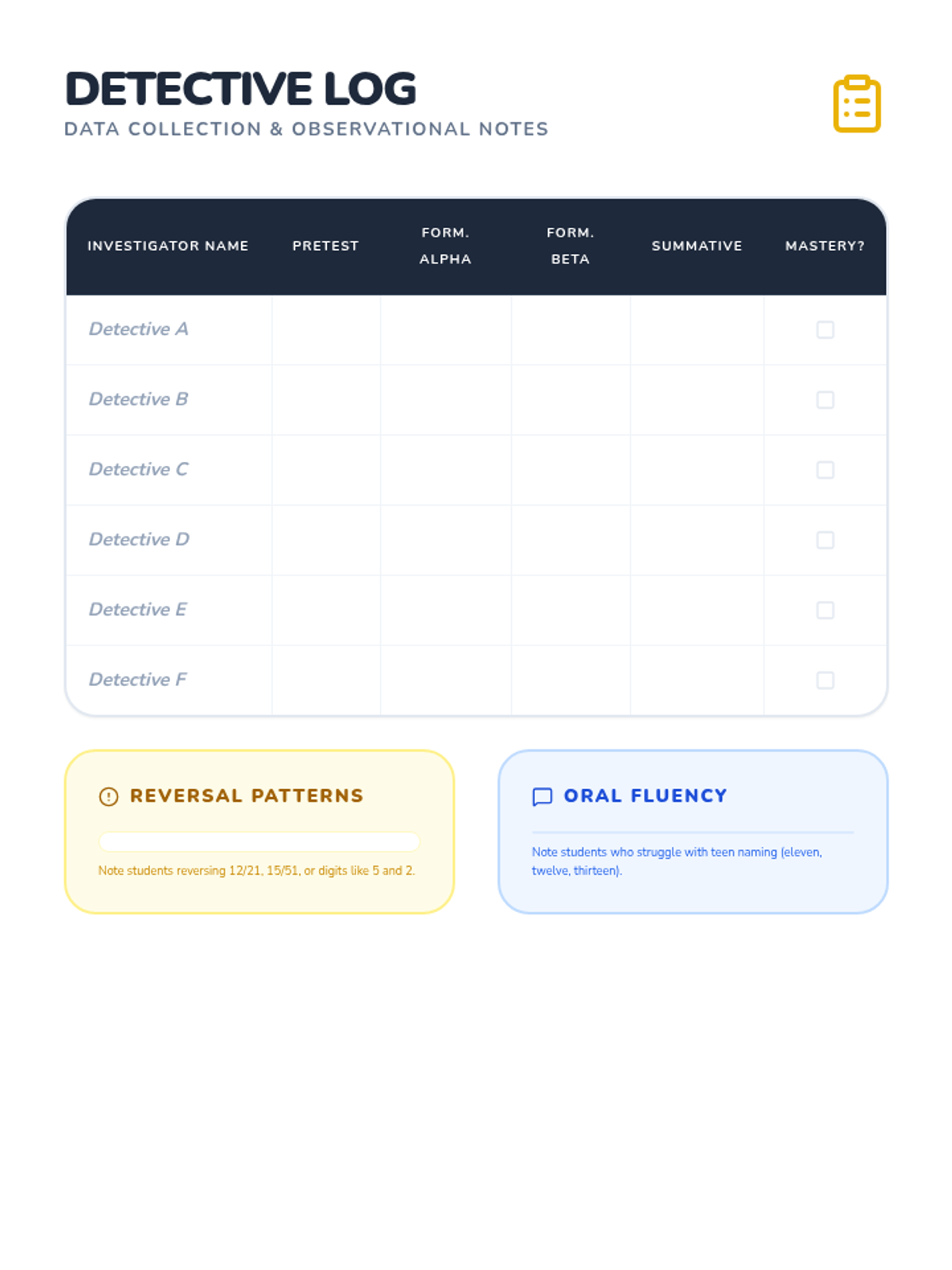
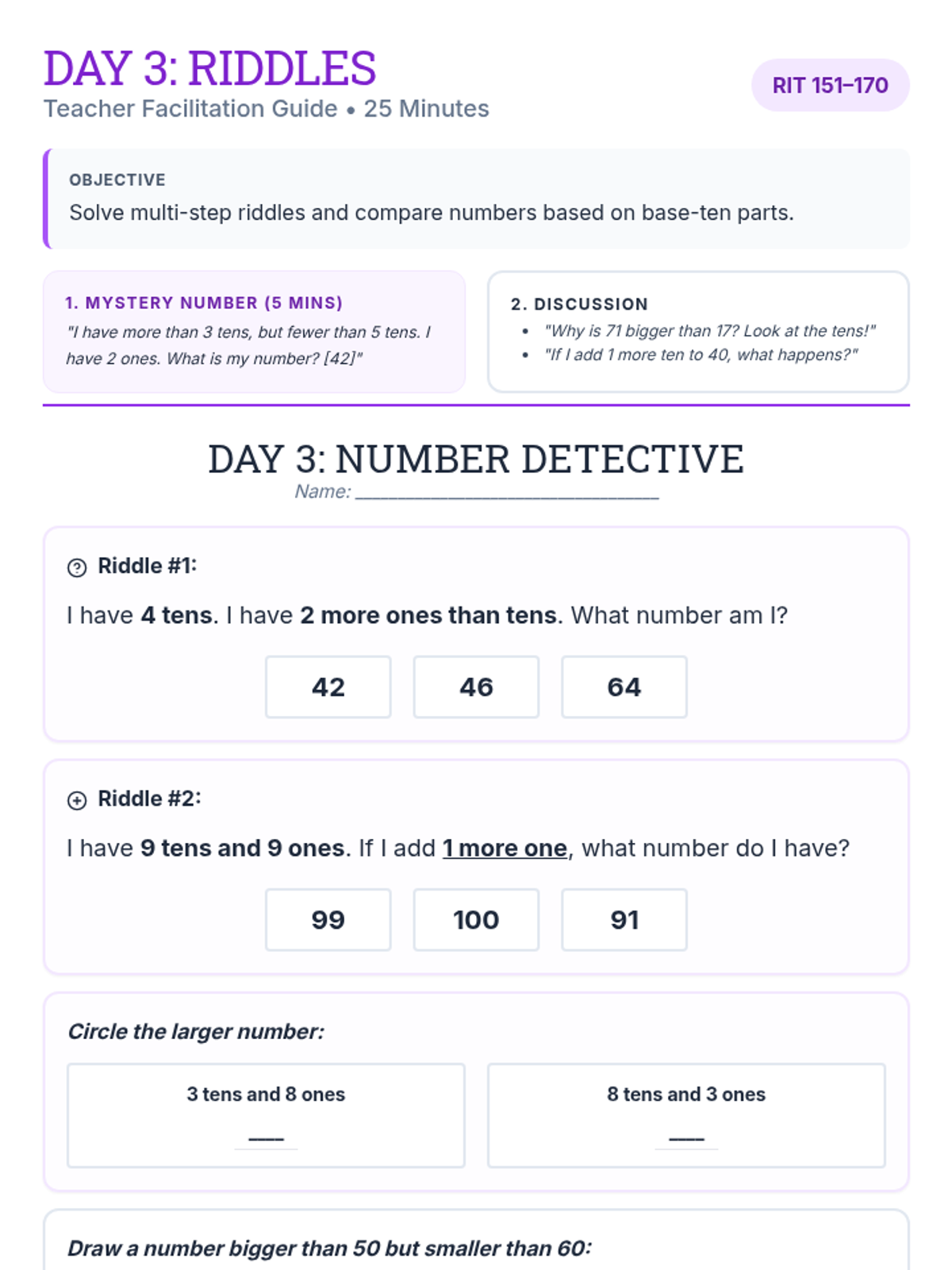
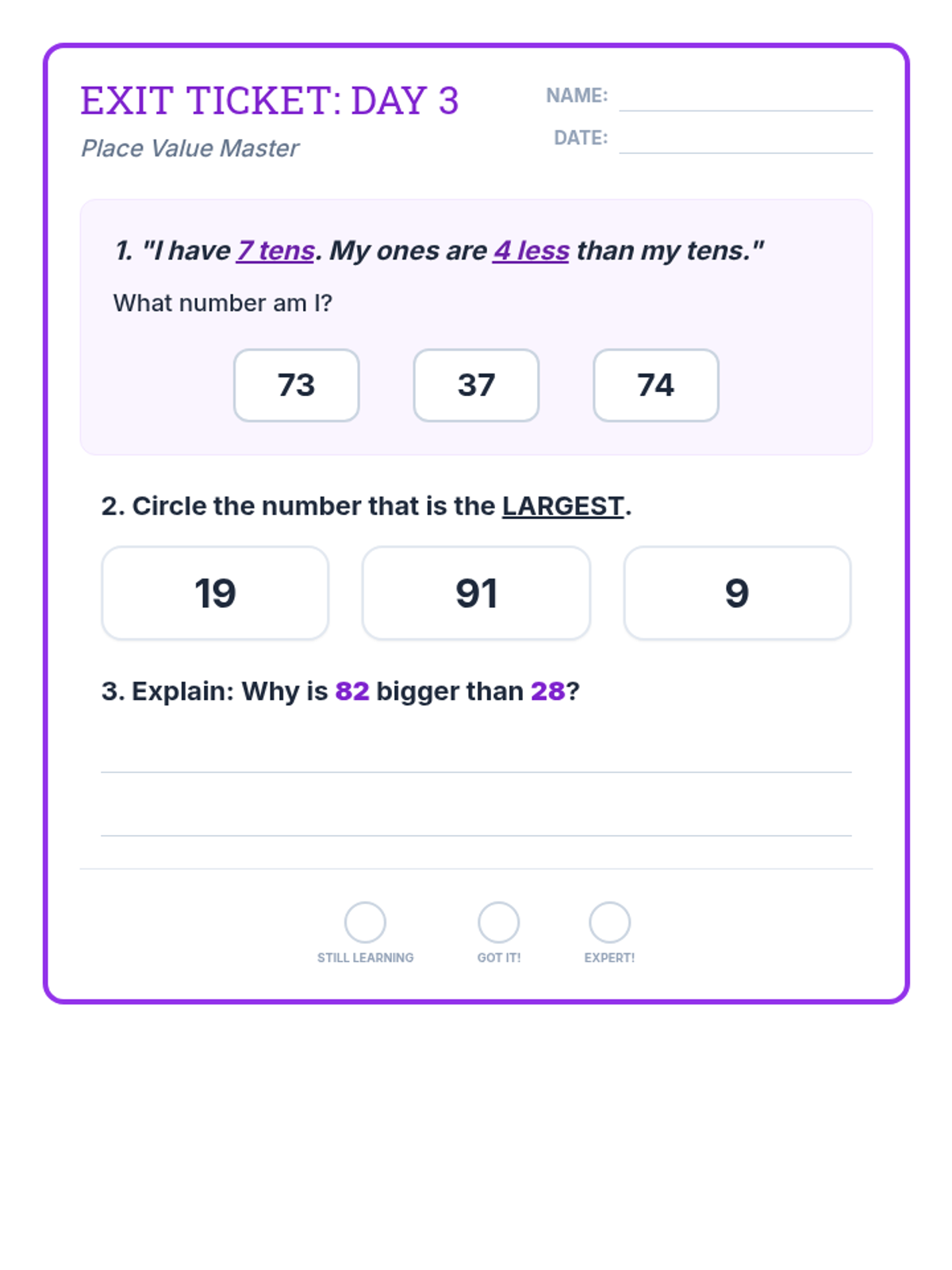
Days 11-15 reach the summit with numbers up to 100, focusing on place value mastery and full sequencing. Concludes with the Place Value Showdown game and a final summative assessment.
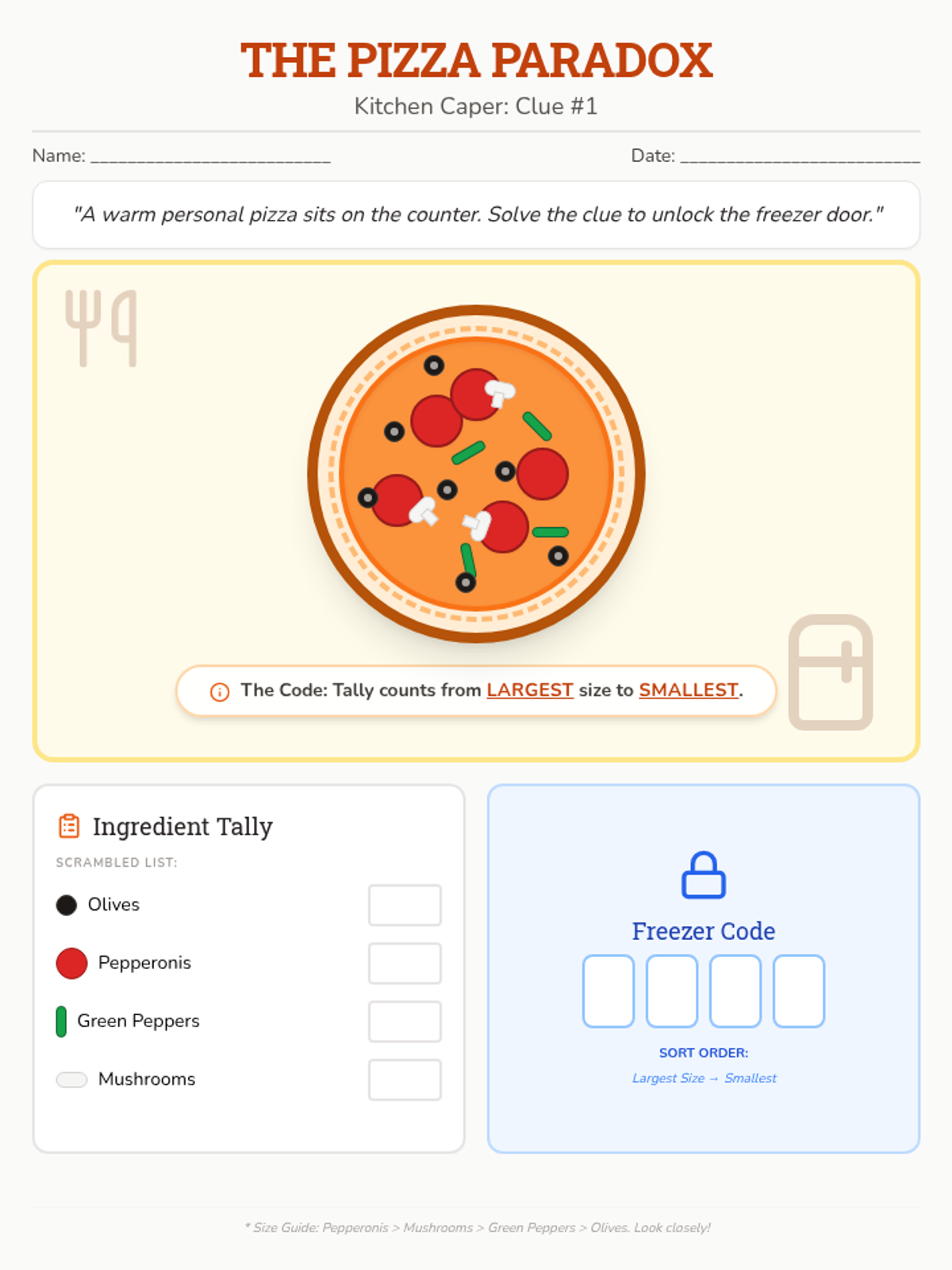
A mini-mystery centered around a kitchen scene where students use observation and logic to solve a visual puzzle.
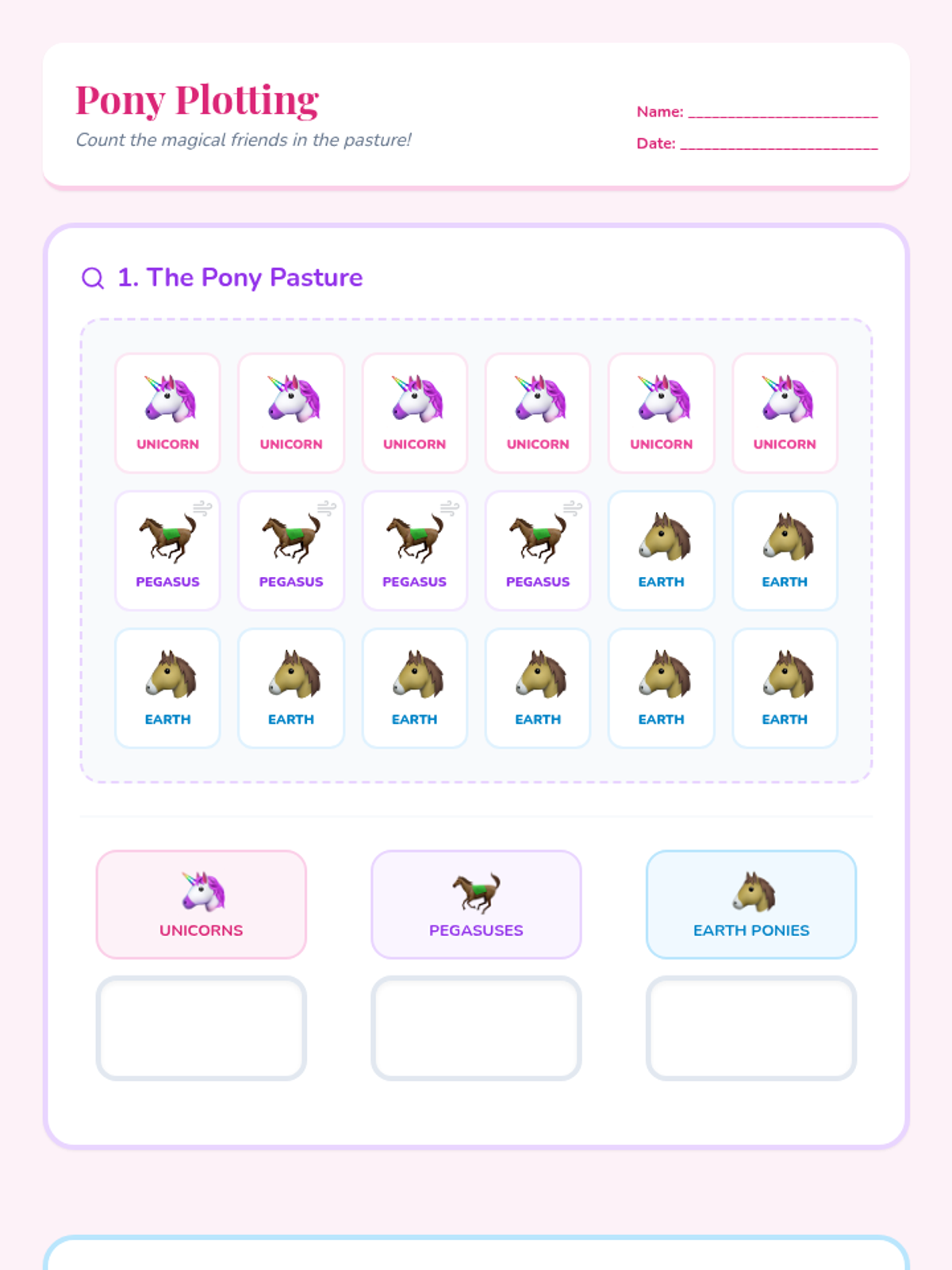
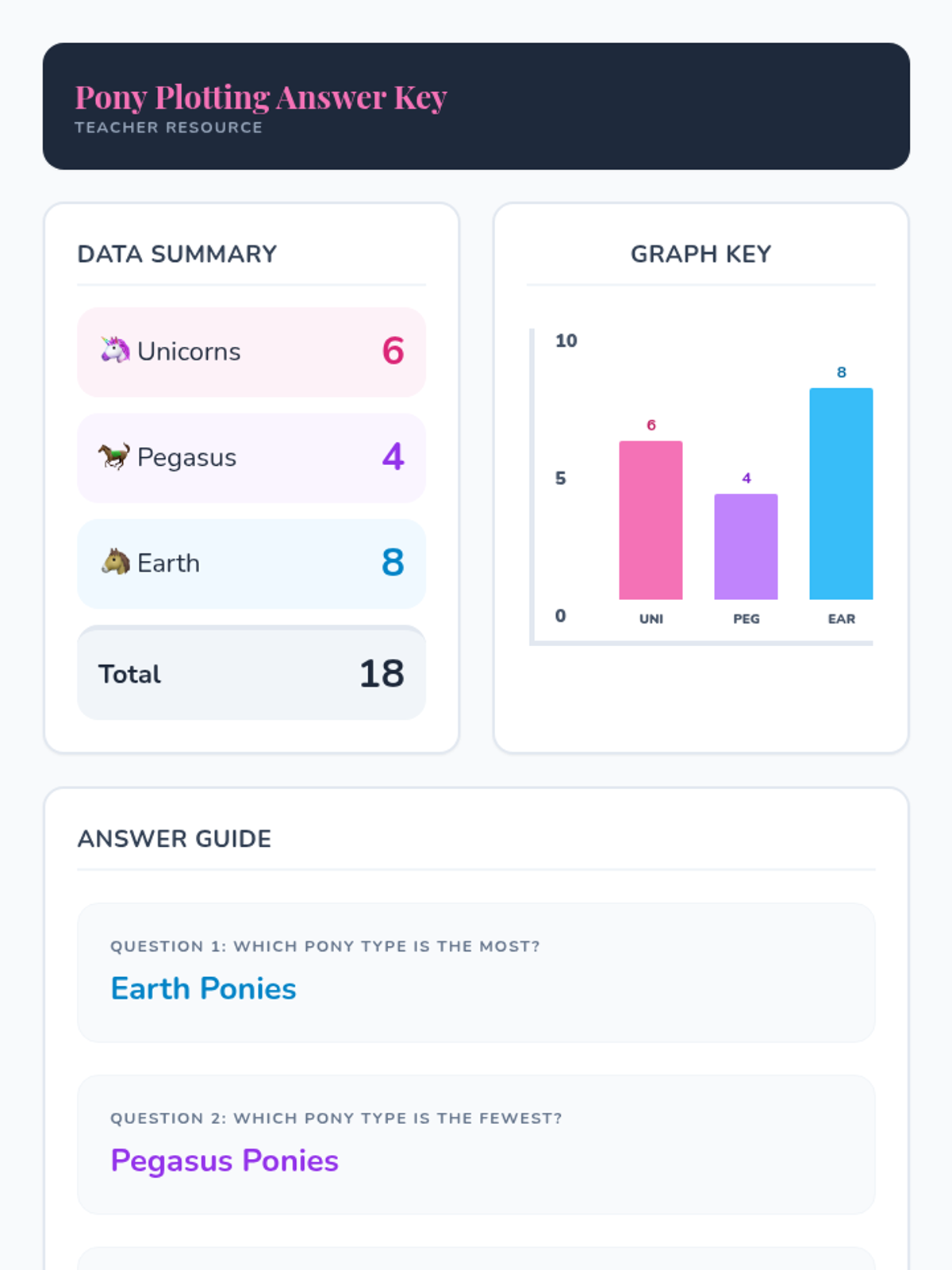
A magical math lesson where students count, sort, and graph different types of ponies to practice data representation and comparison skills.
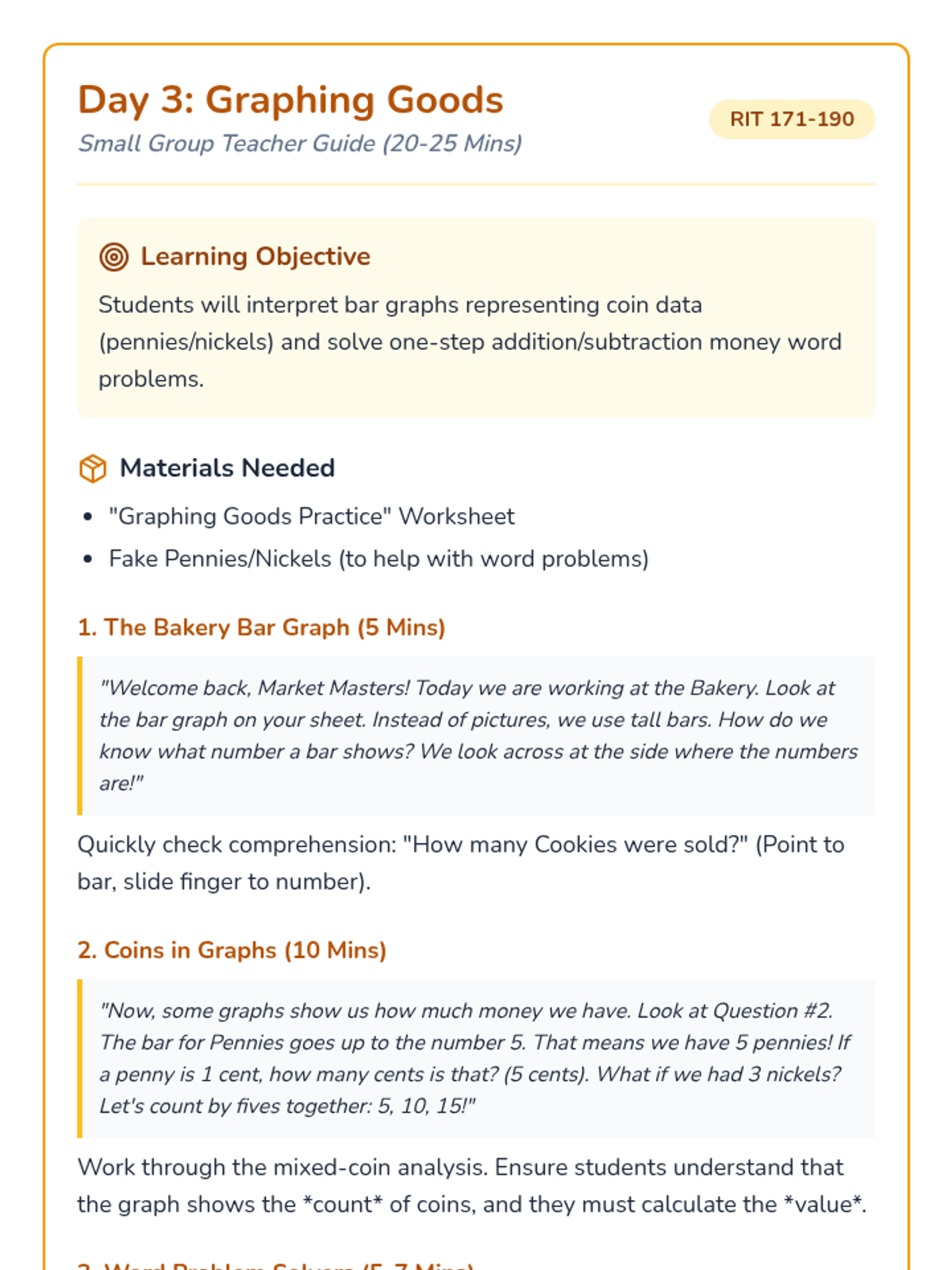
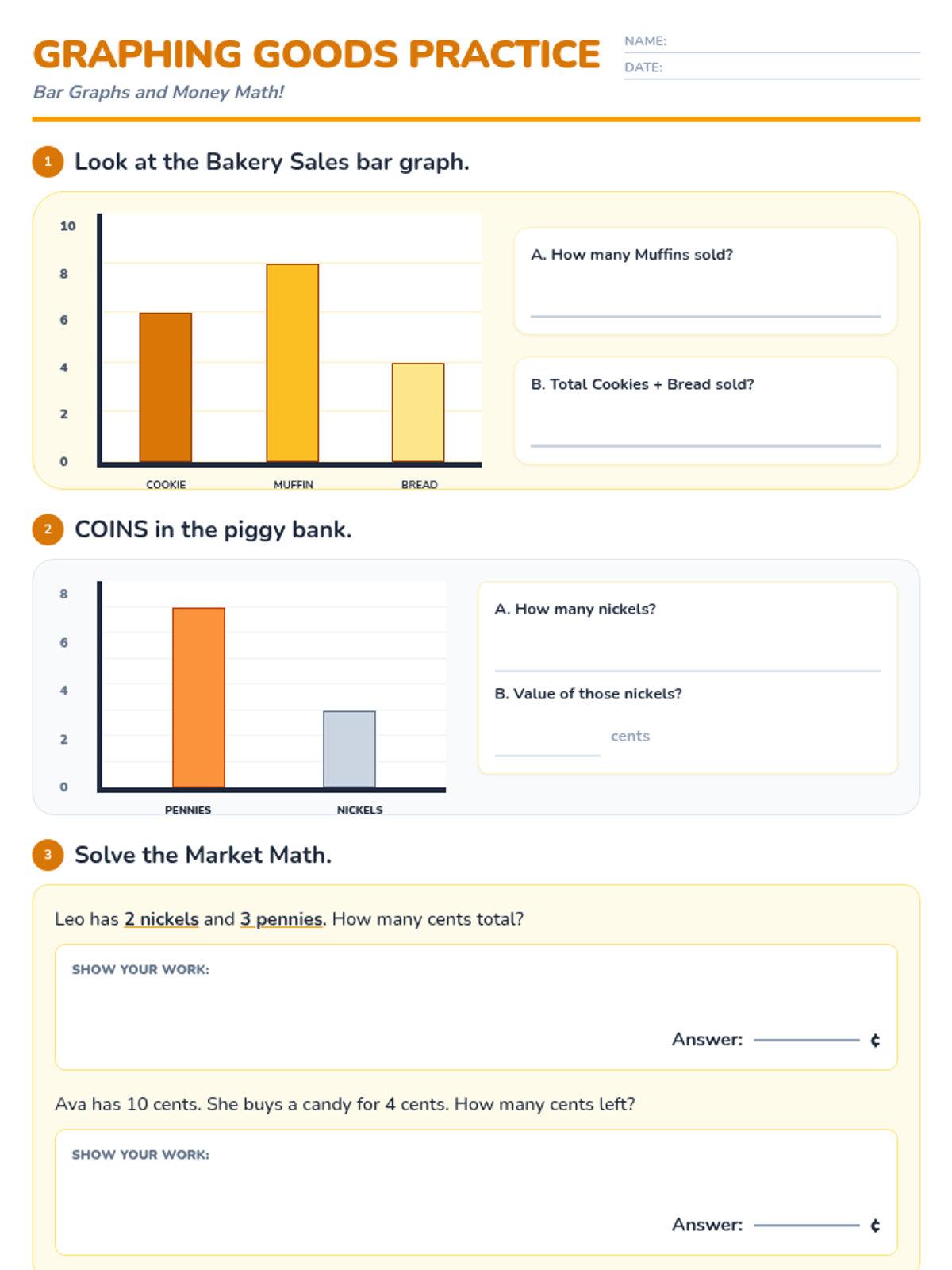
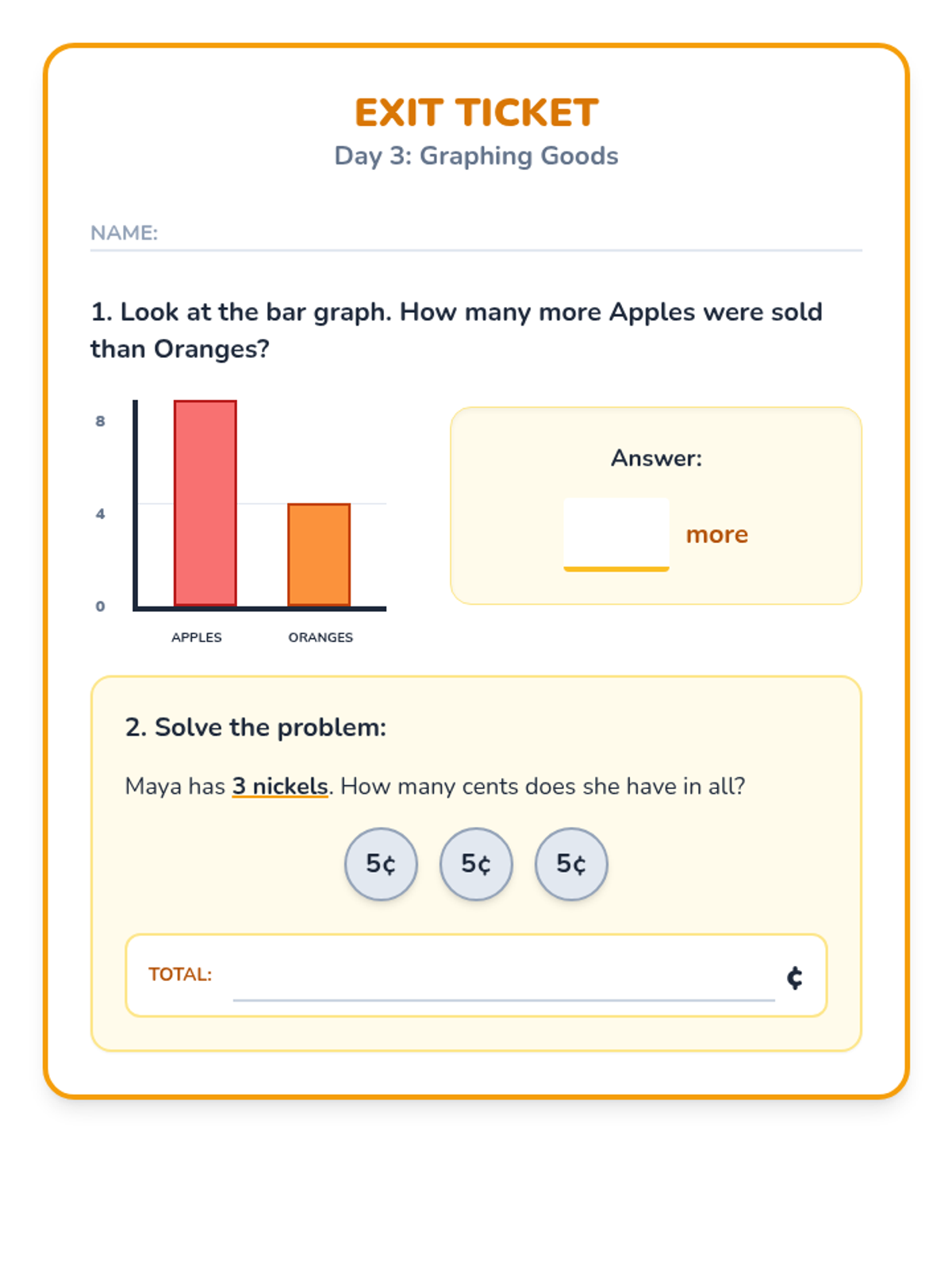
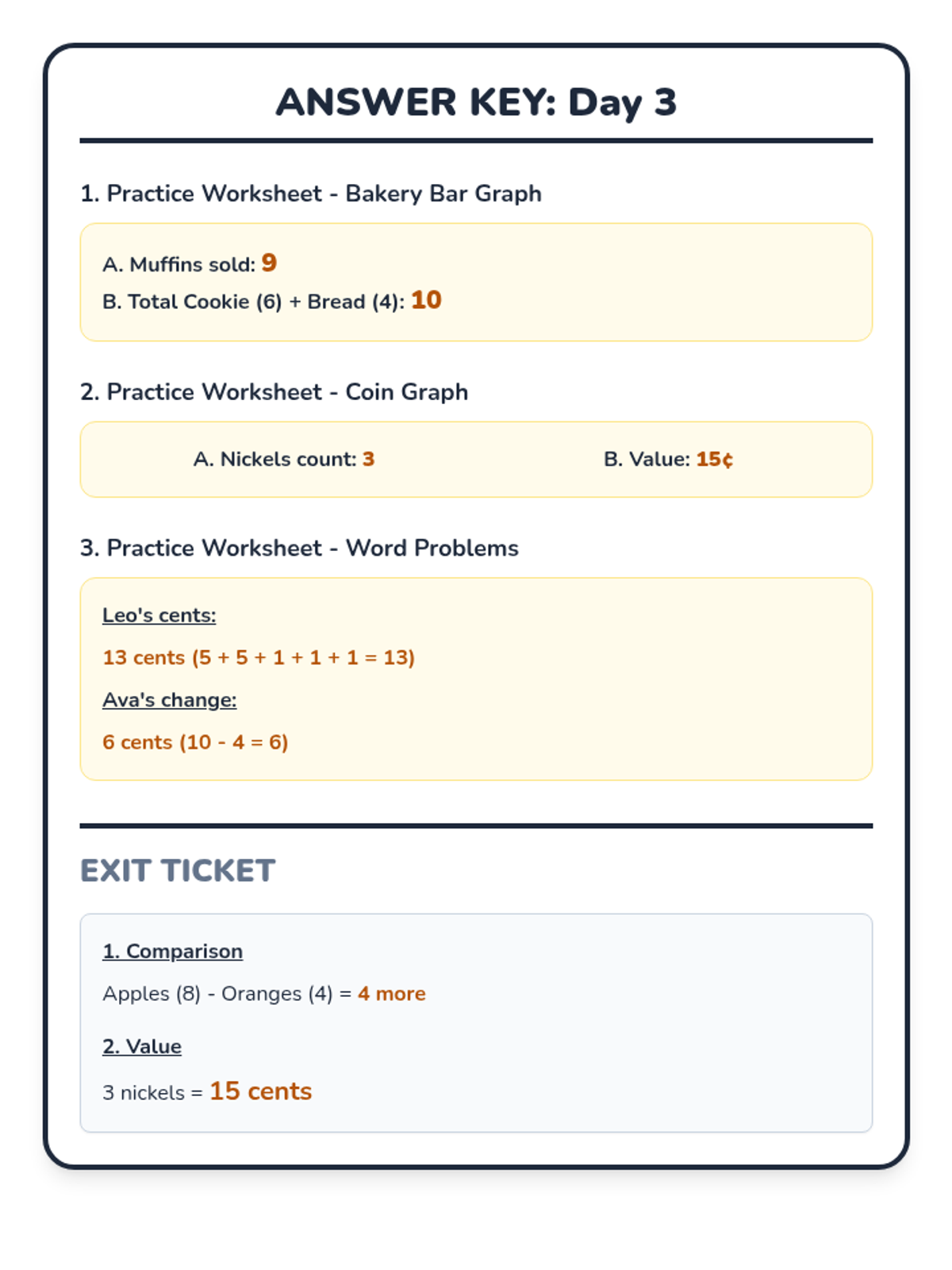
Students analyze bar graphs representing money values (pennies and nickels) and solve one-step word problems. This lesson integrates money counting with data interpretation to reach higher RIT band objectives.
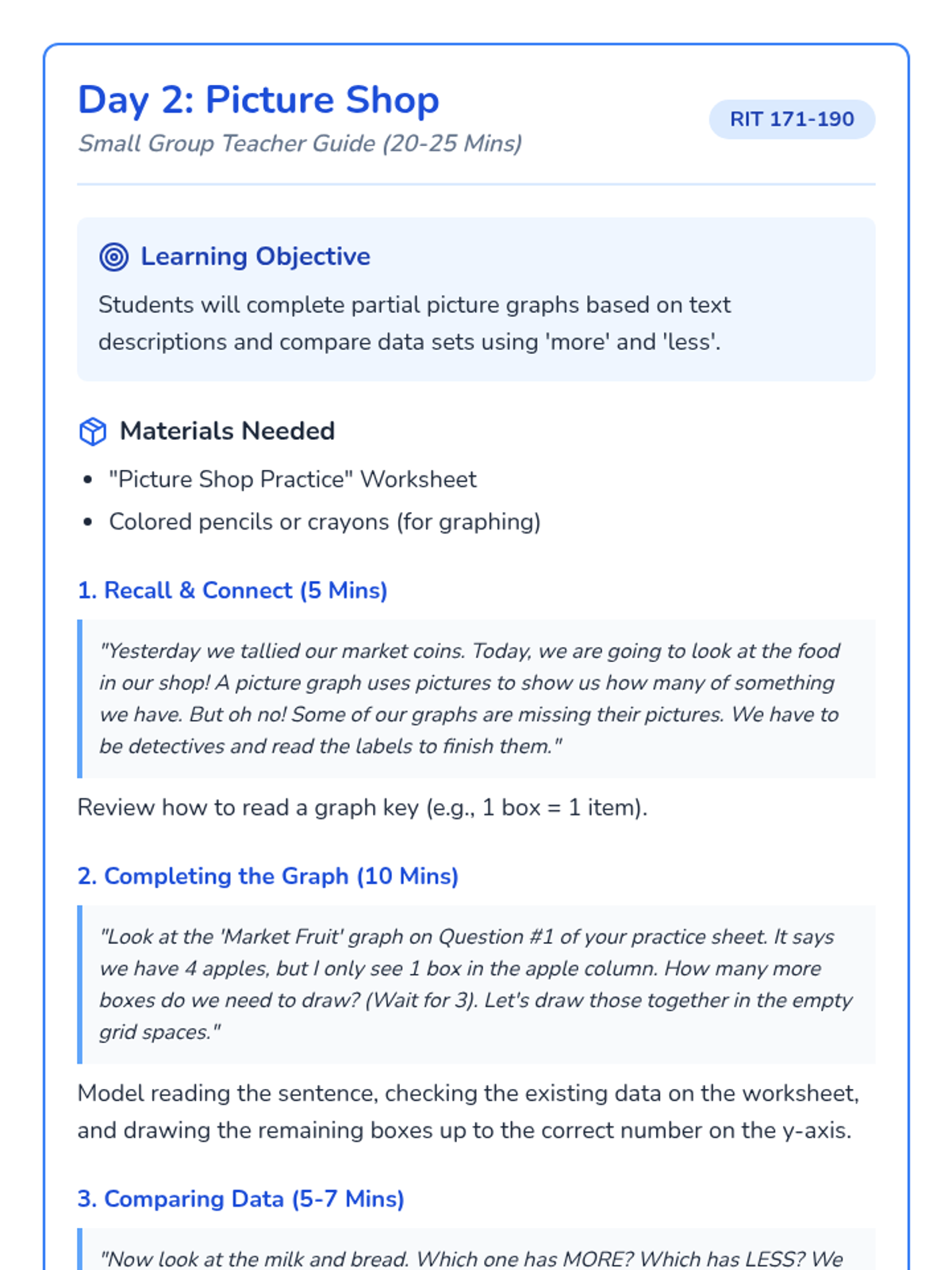
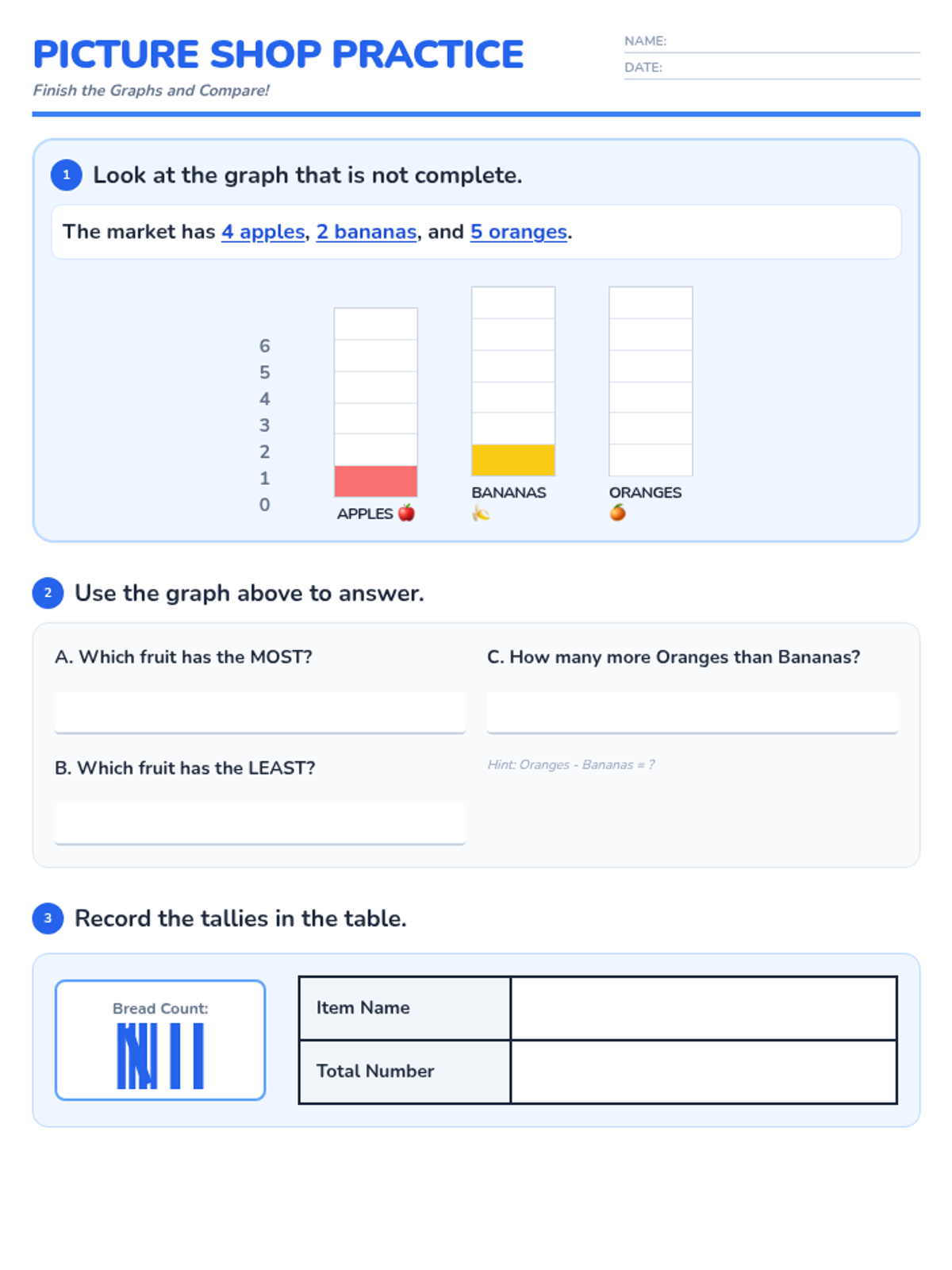
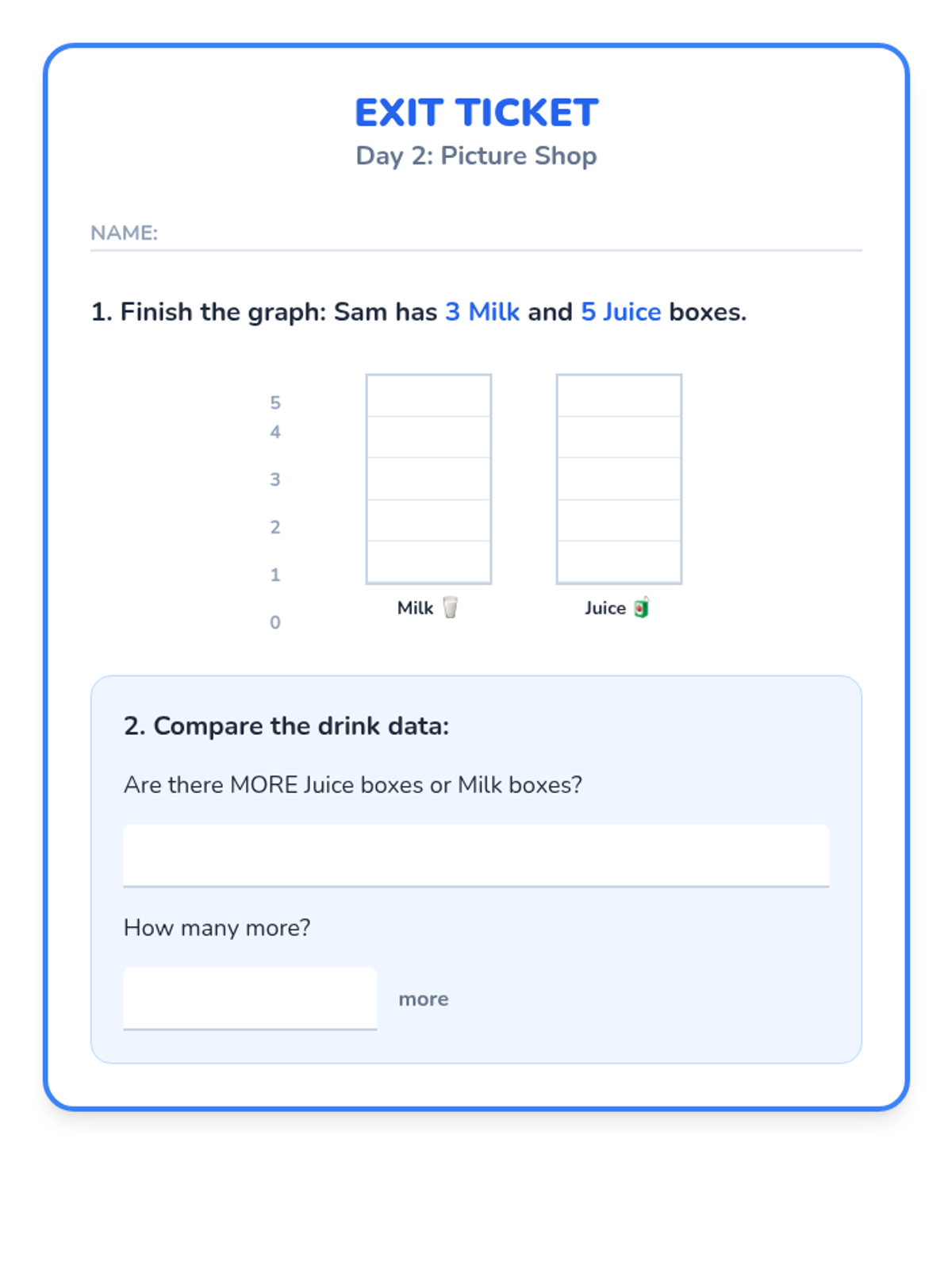
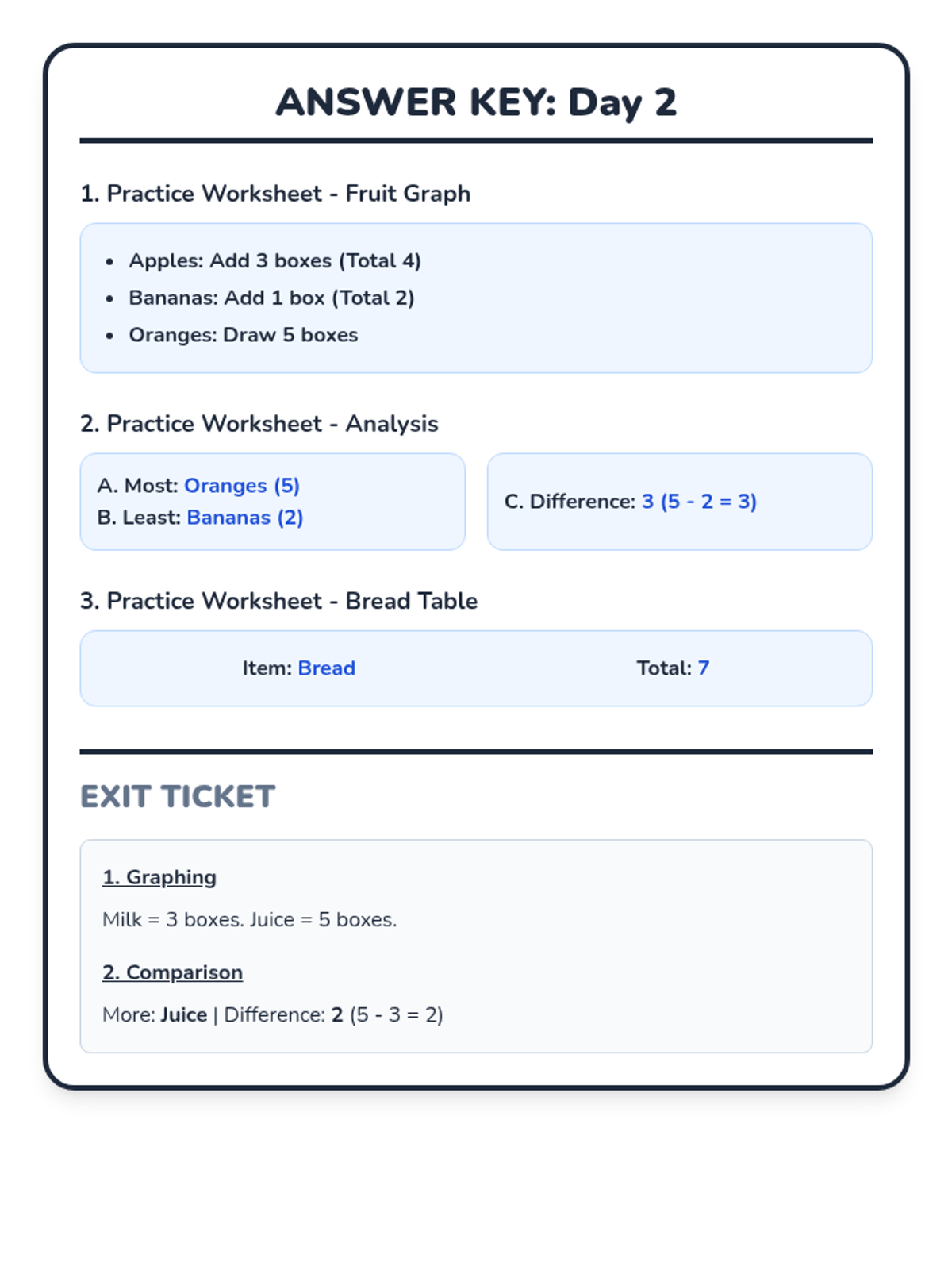
Students complete picture graphs based on text descriptions and compare data to find 'more' or 'less'. This lesson directly targets the NWEA skill of completing partial graphs and interpreting visual data.
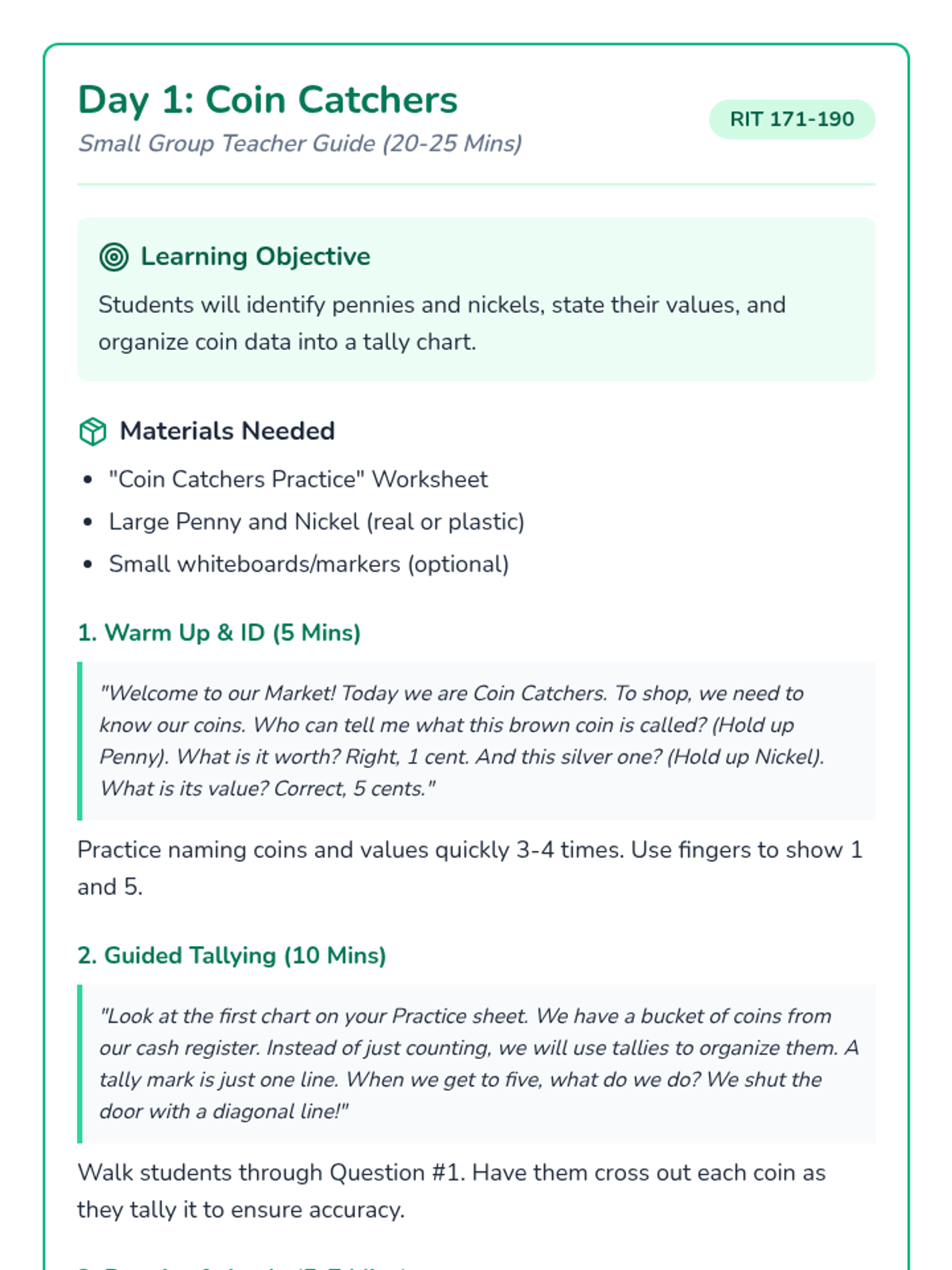
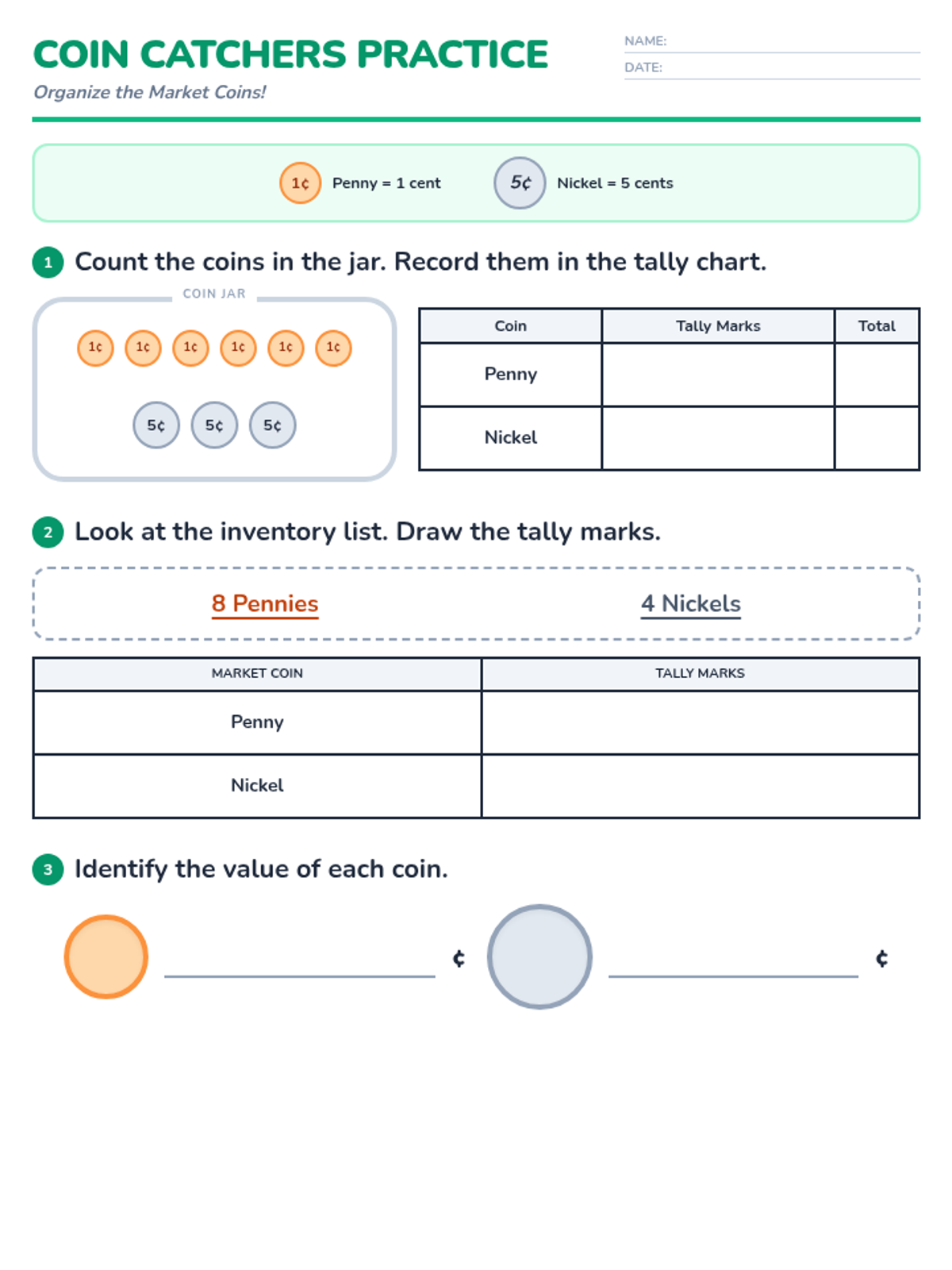
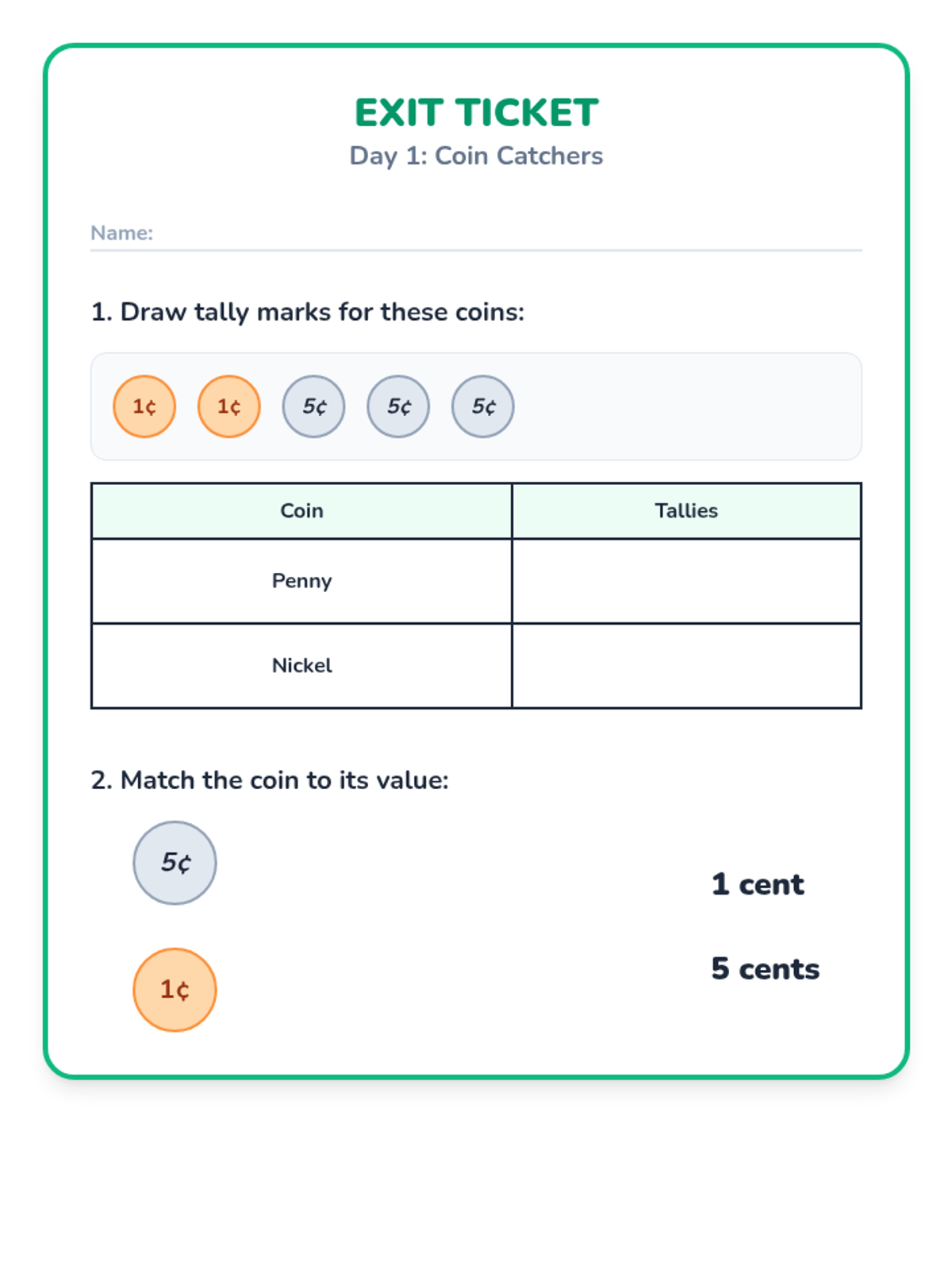
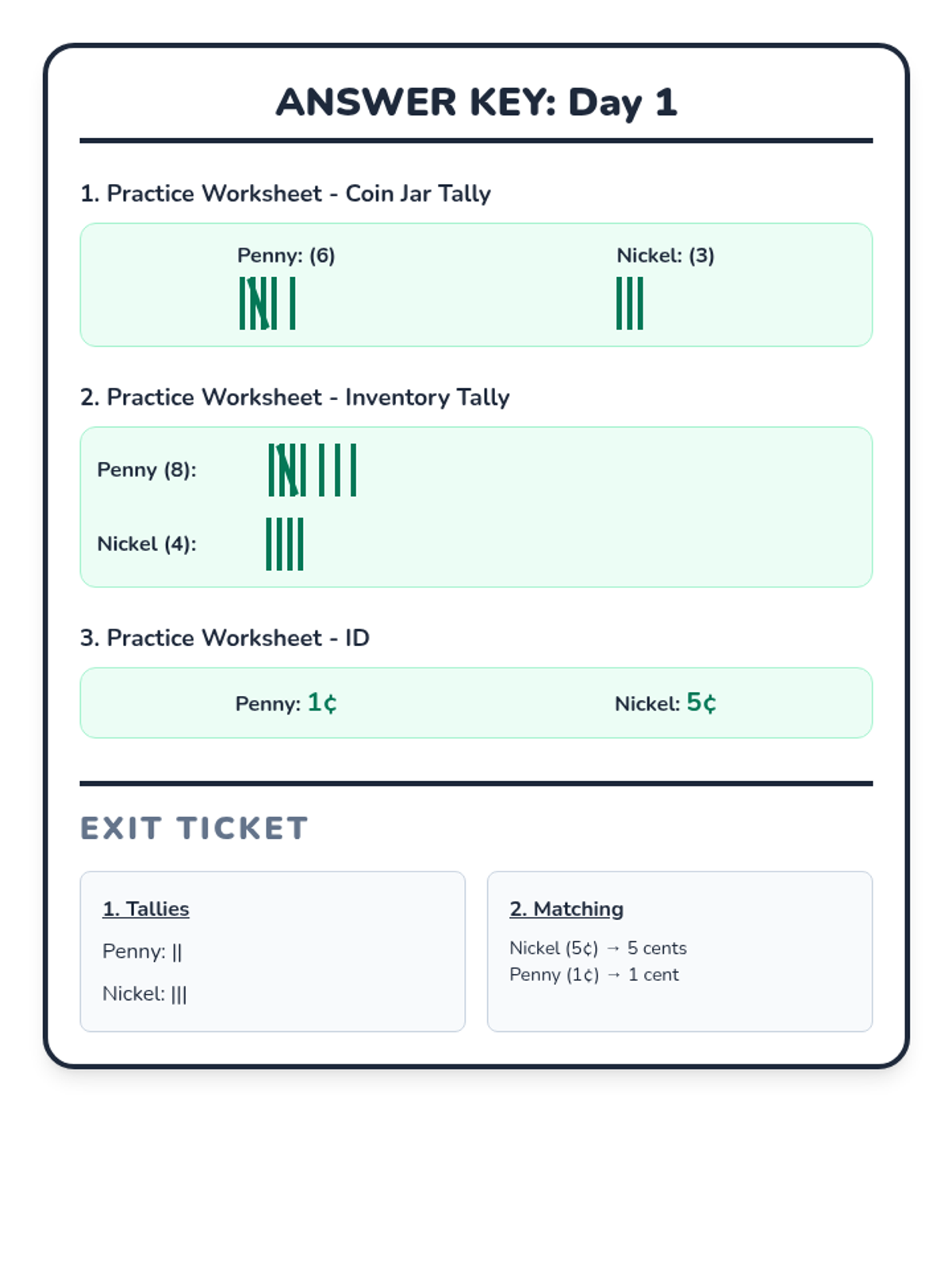
Students identify pennies and nickels, determine their values, and use tally charts to record inventory in a mock market setting. This lesson focuses on the transition from simple identification to organizing data.
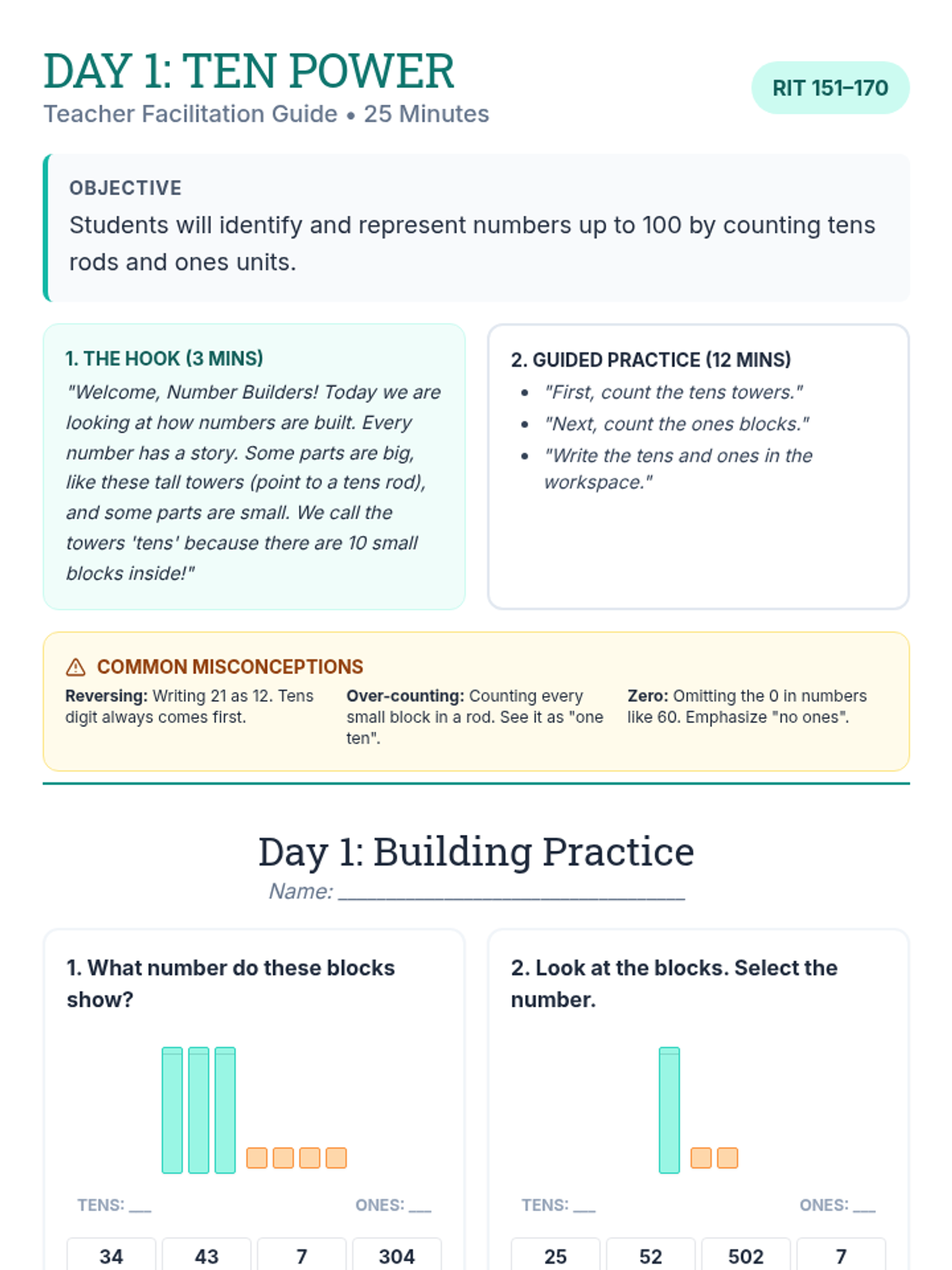
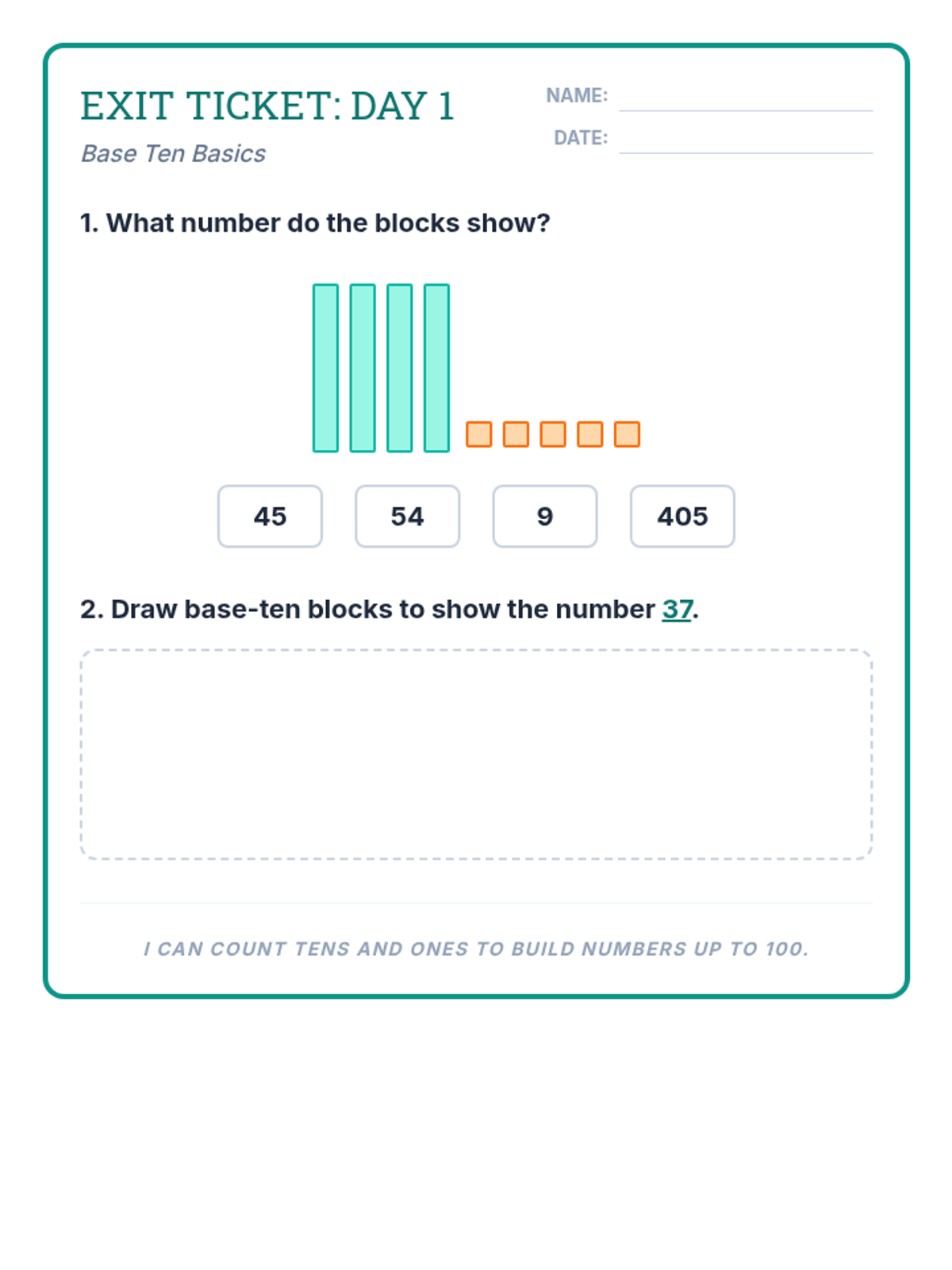
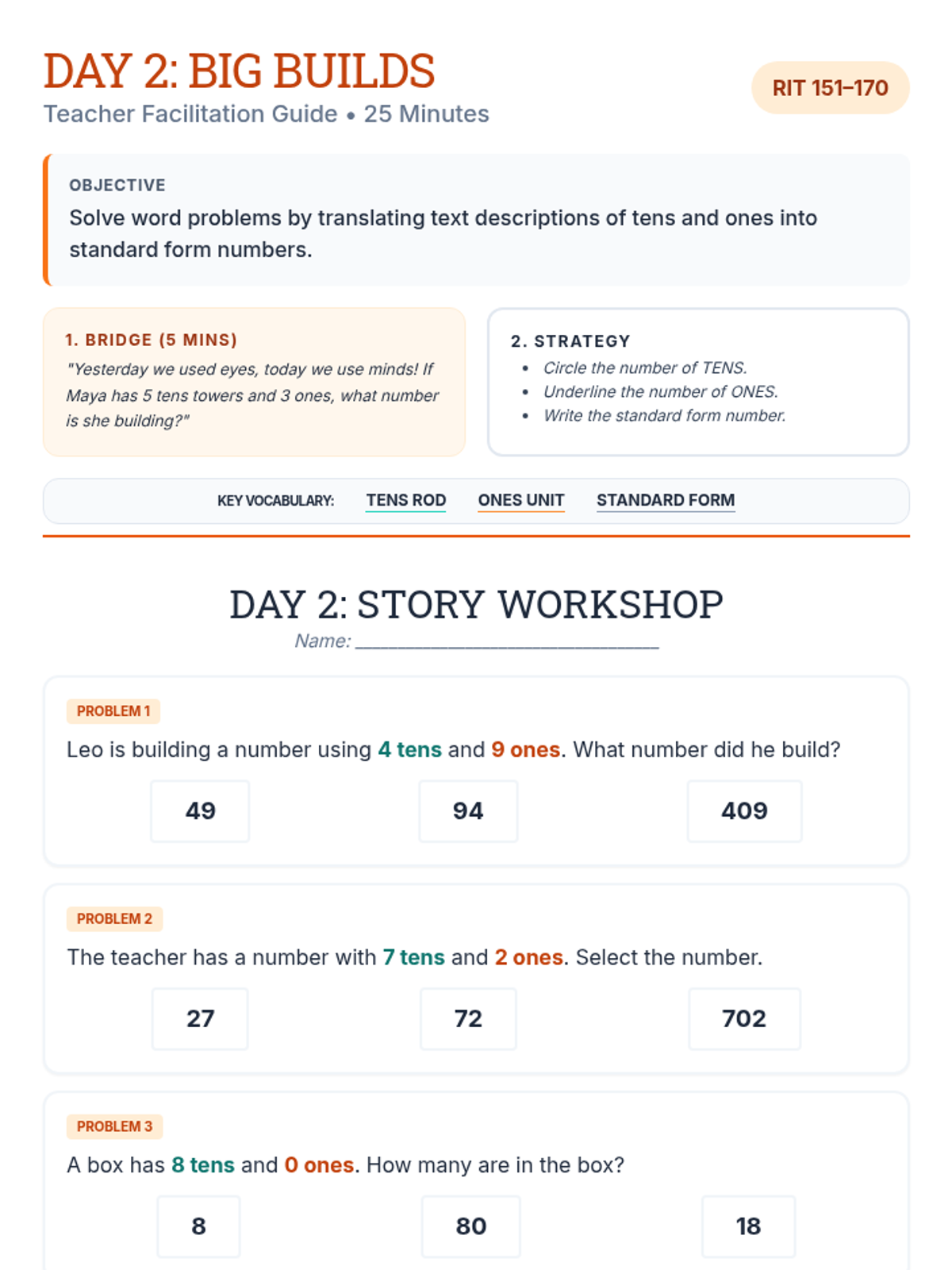
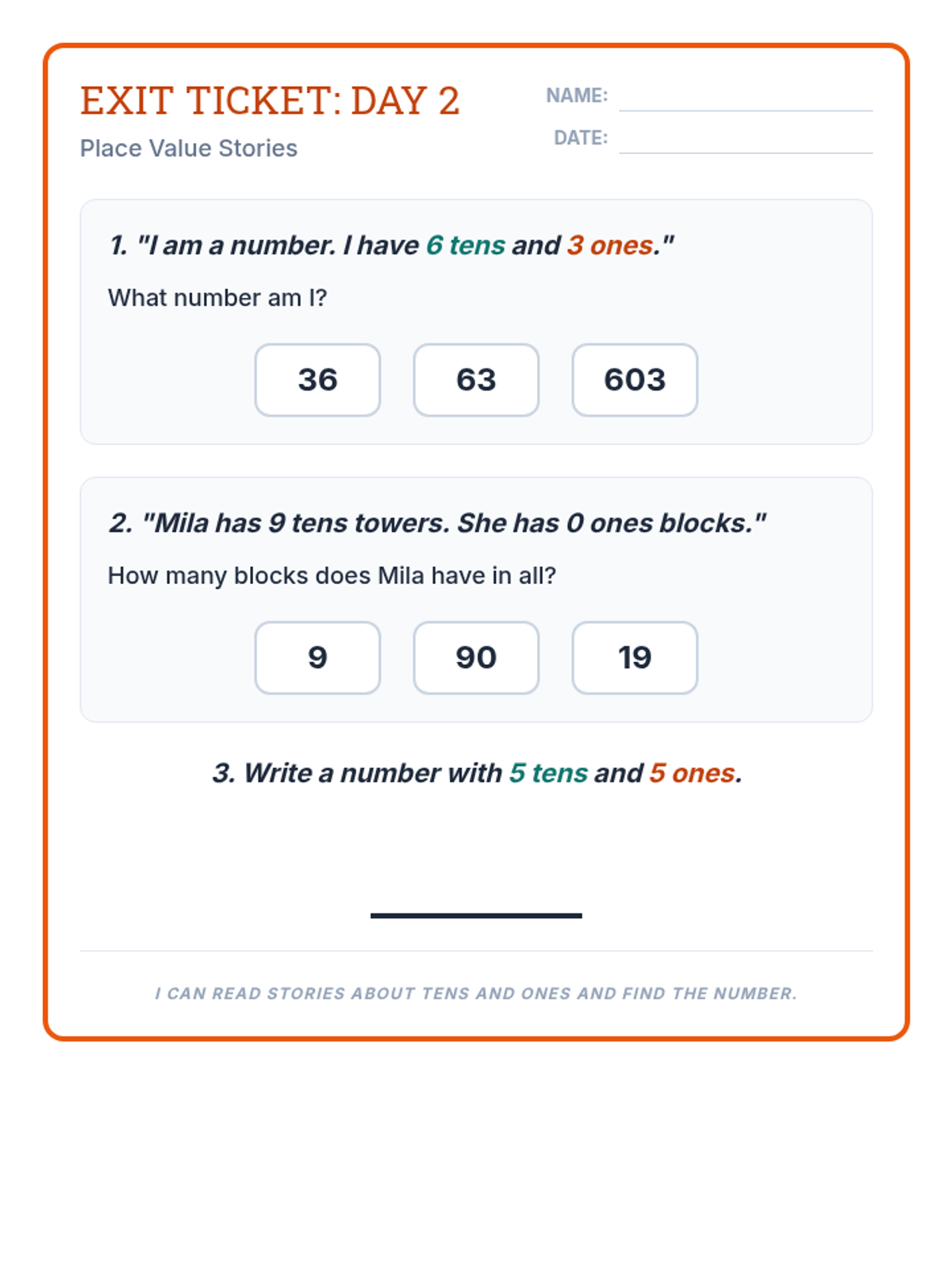
Focuses on identifying and representing numbers 20-100 using visual base-ten models.
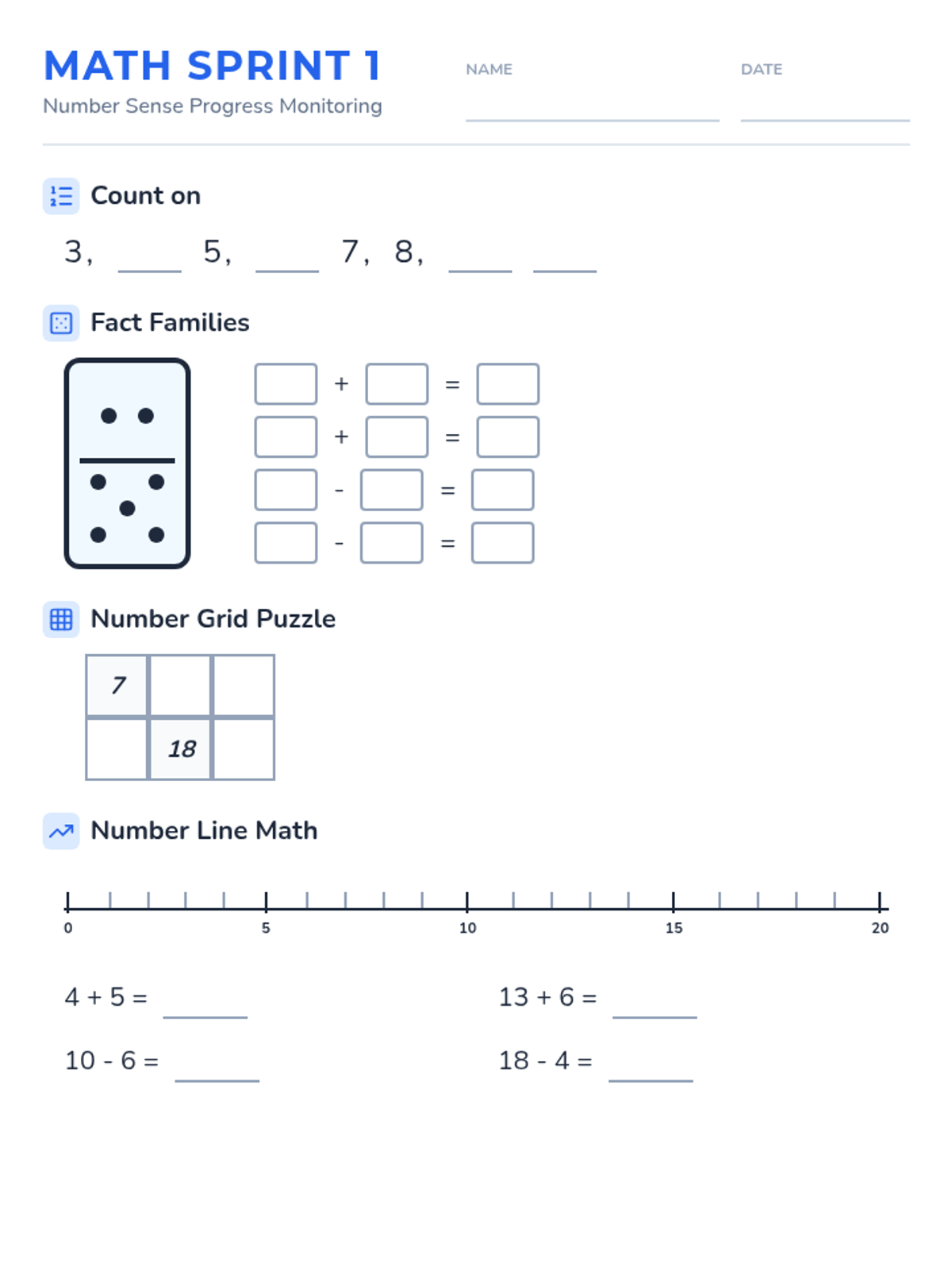
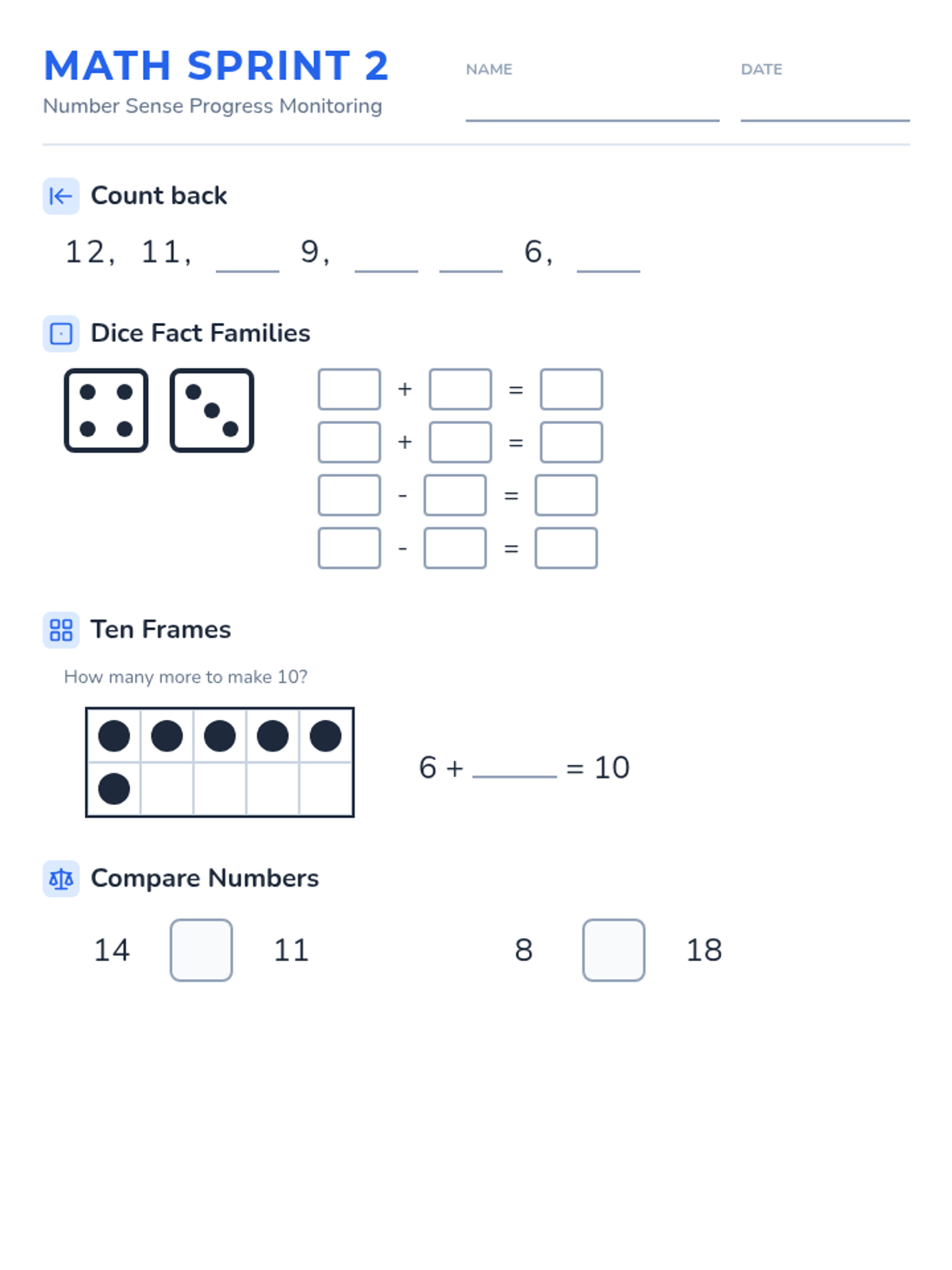
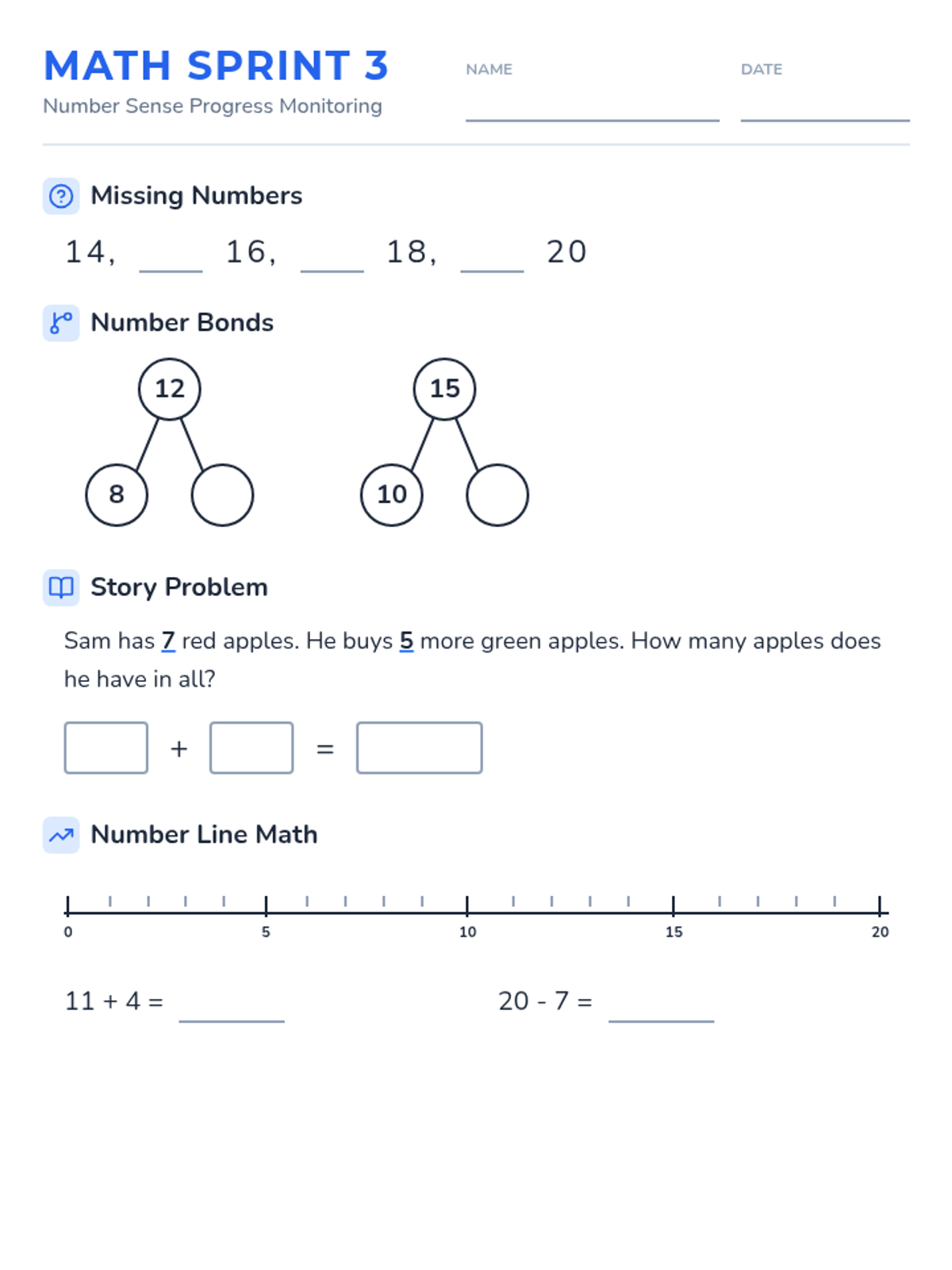
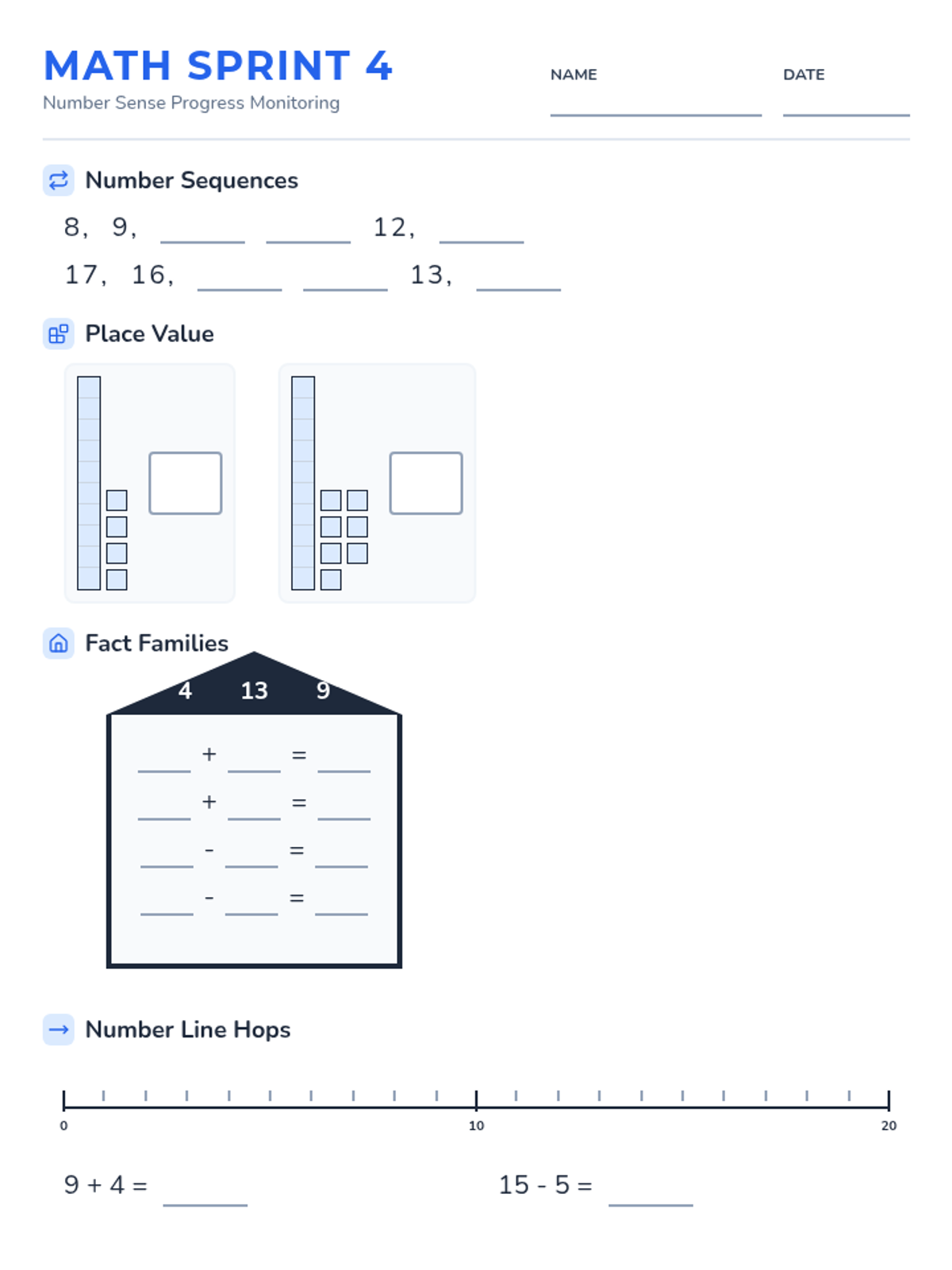
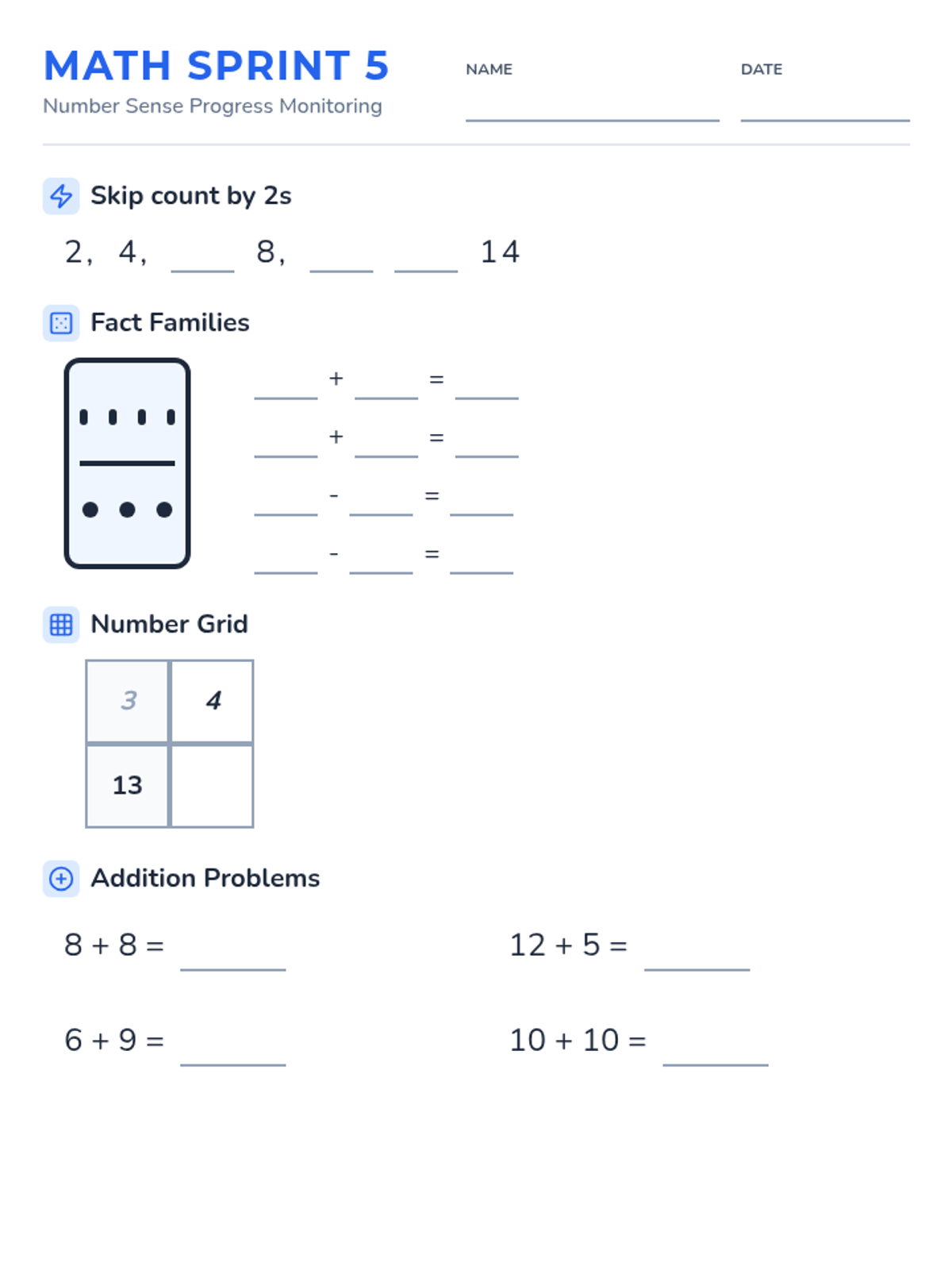
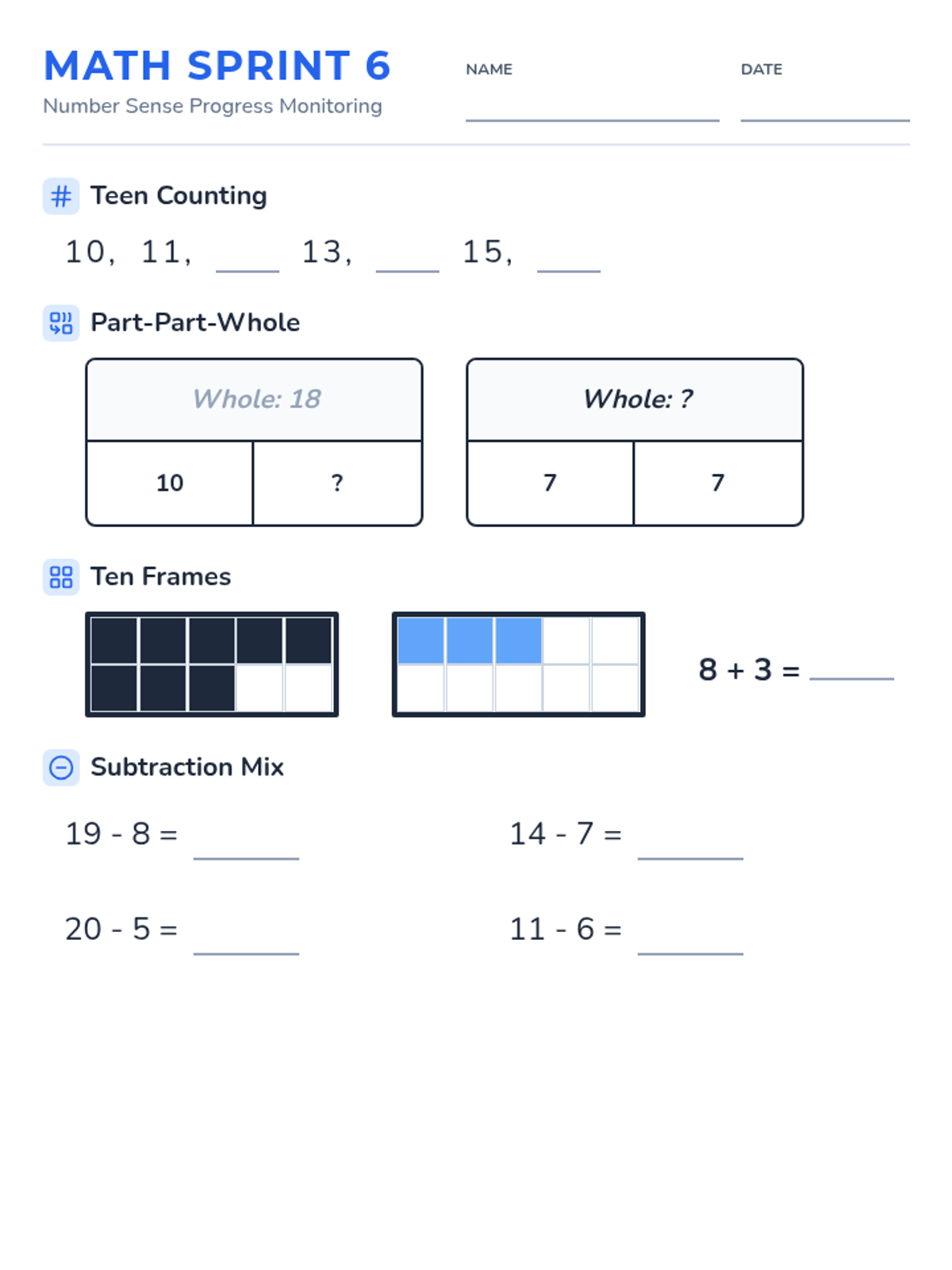
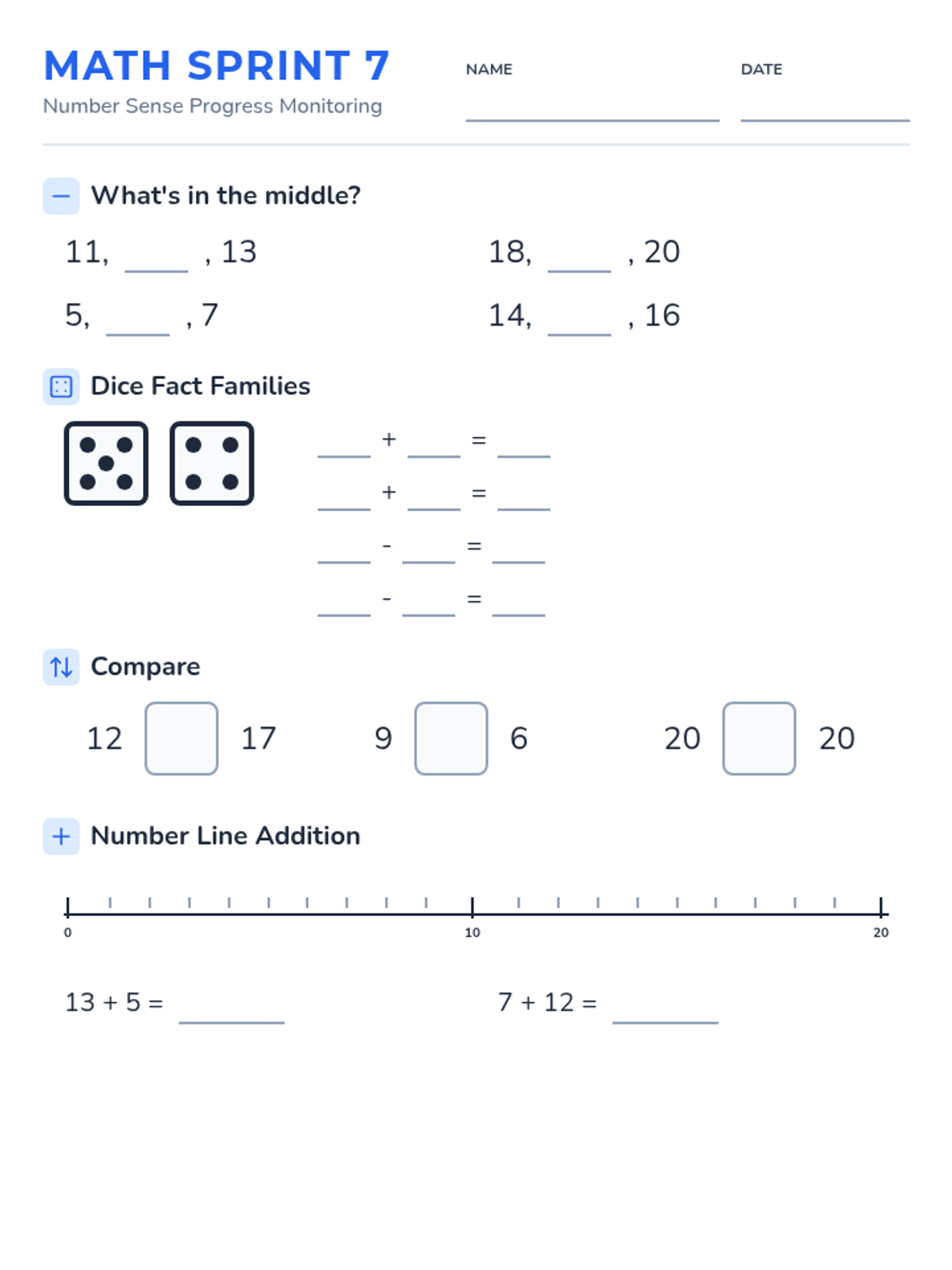
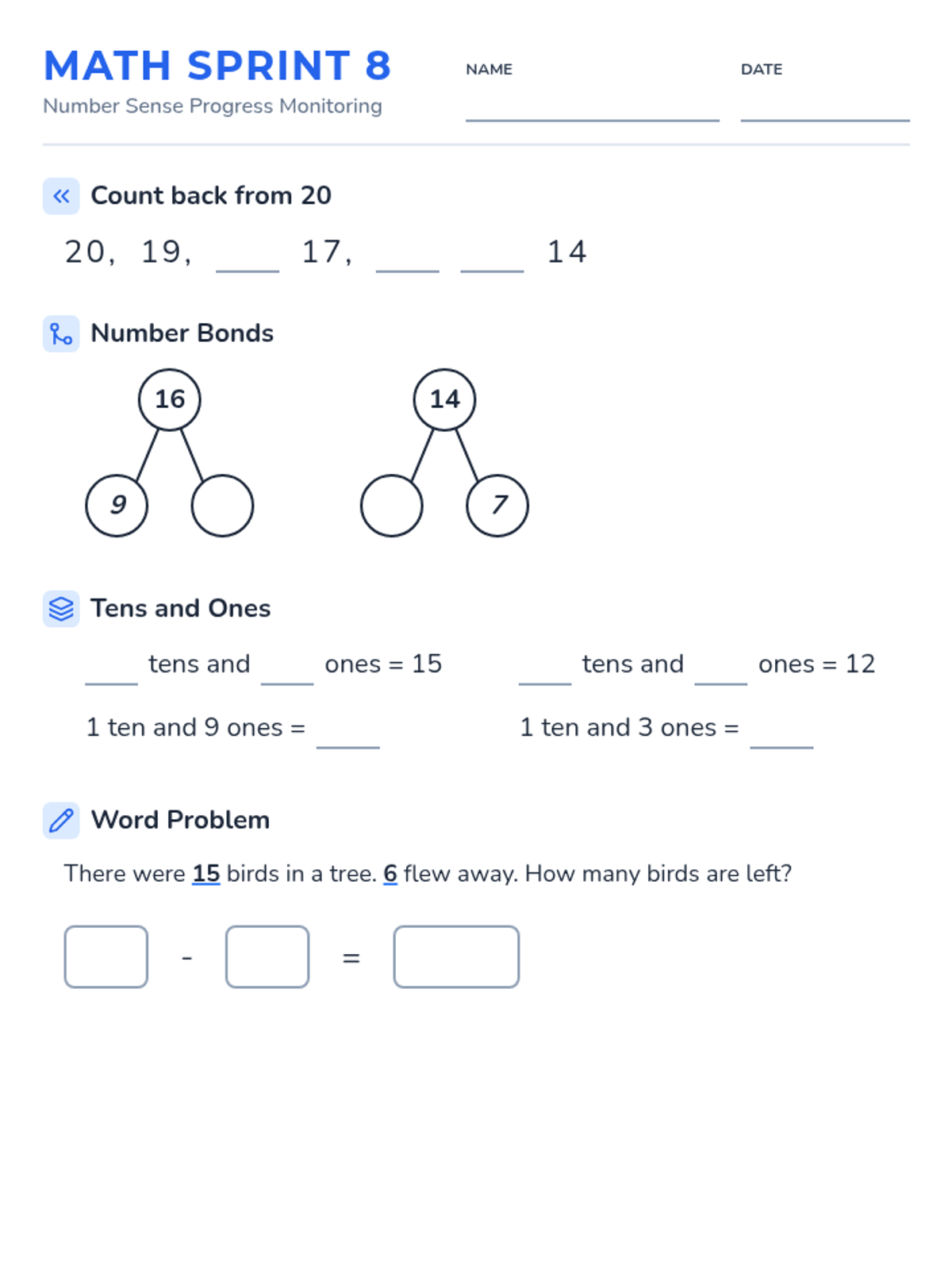
A set of 8 math progress monitoring worksheets focused on core number sense skills for numbers 0-20, including addition, subtraction, fact families, and place value strategies.
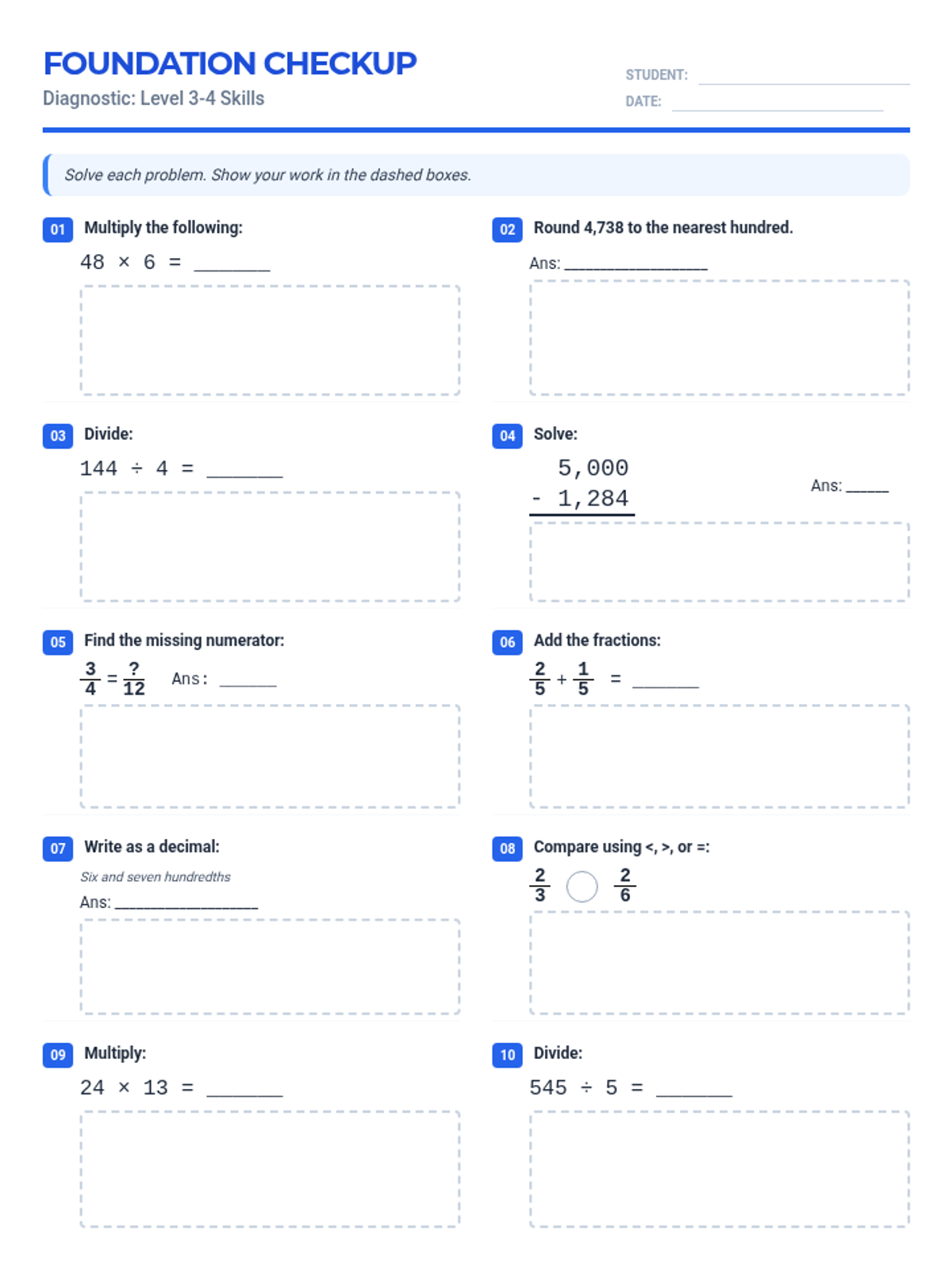
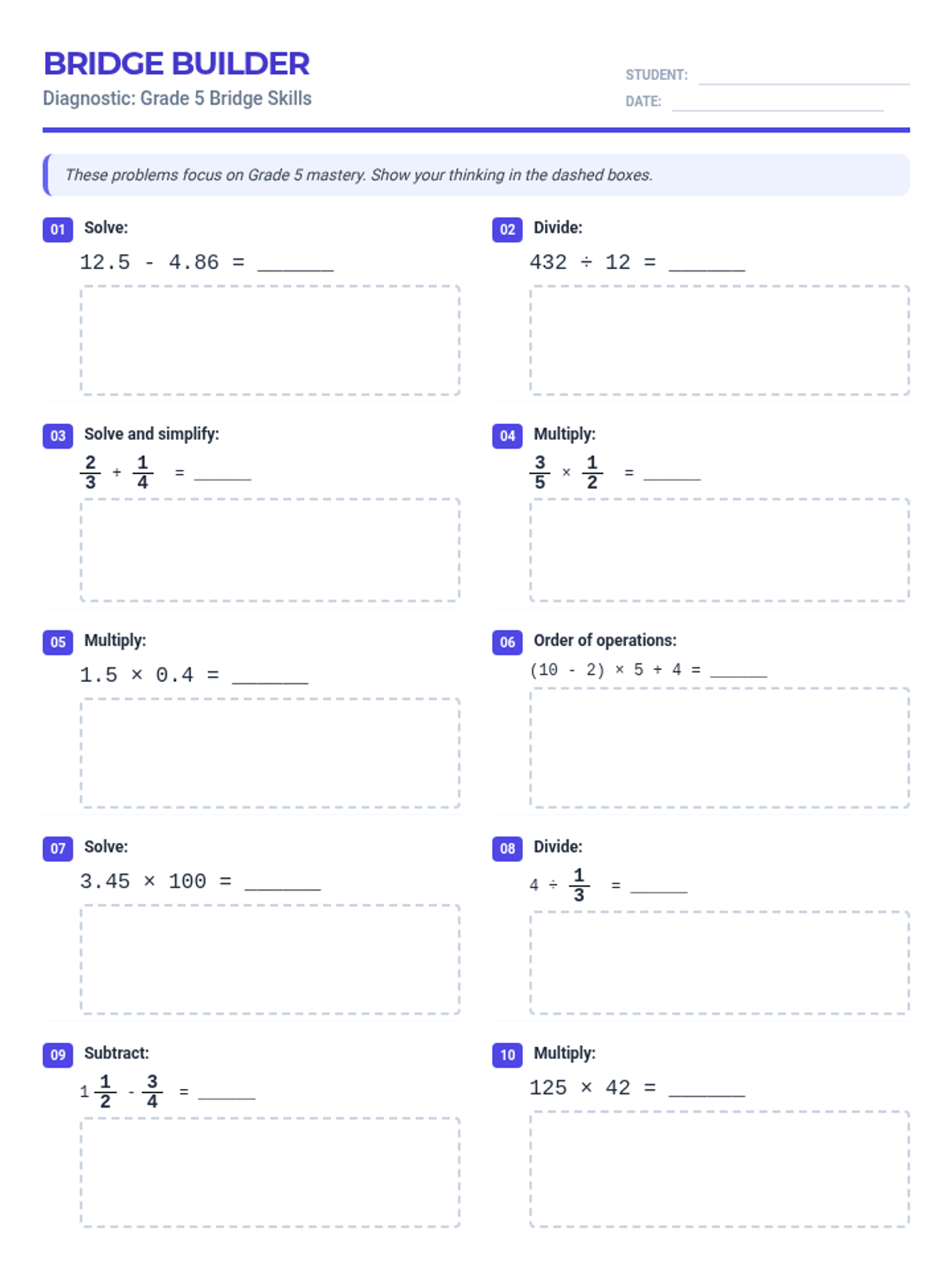
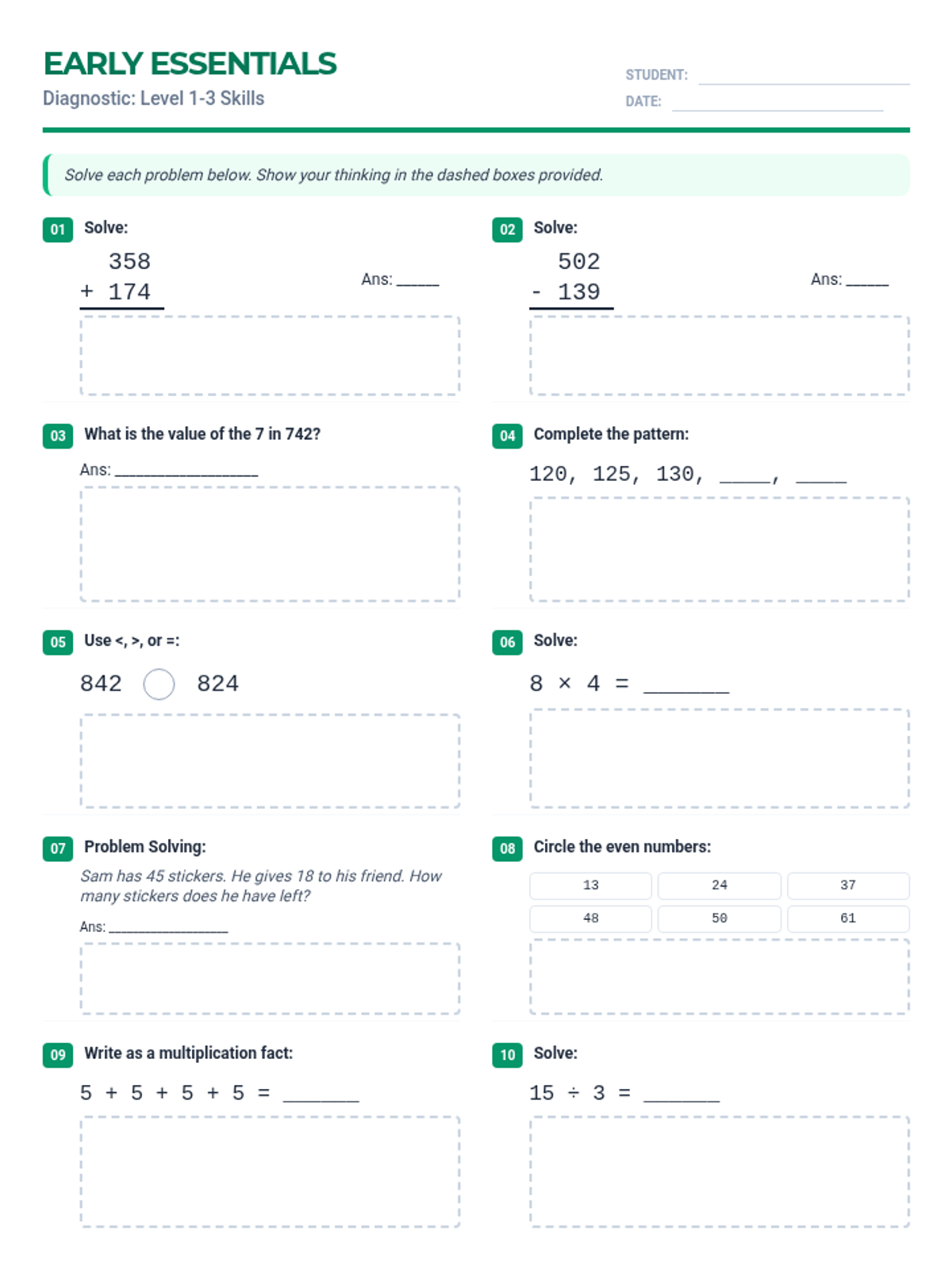
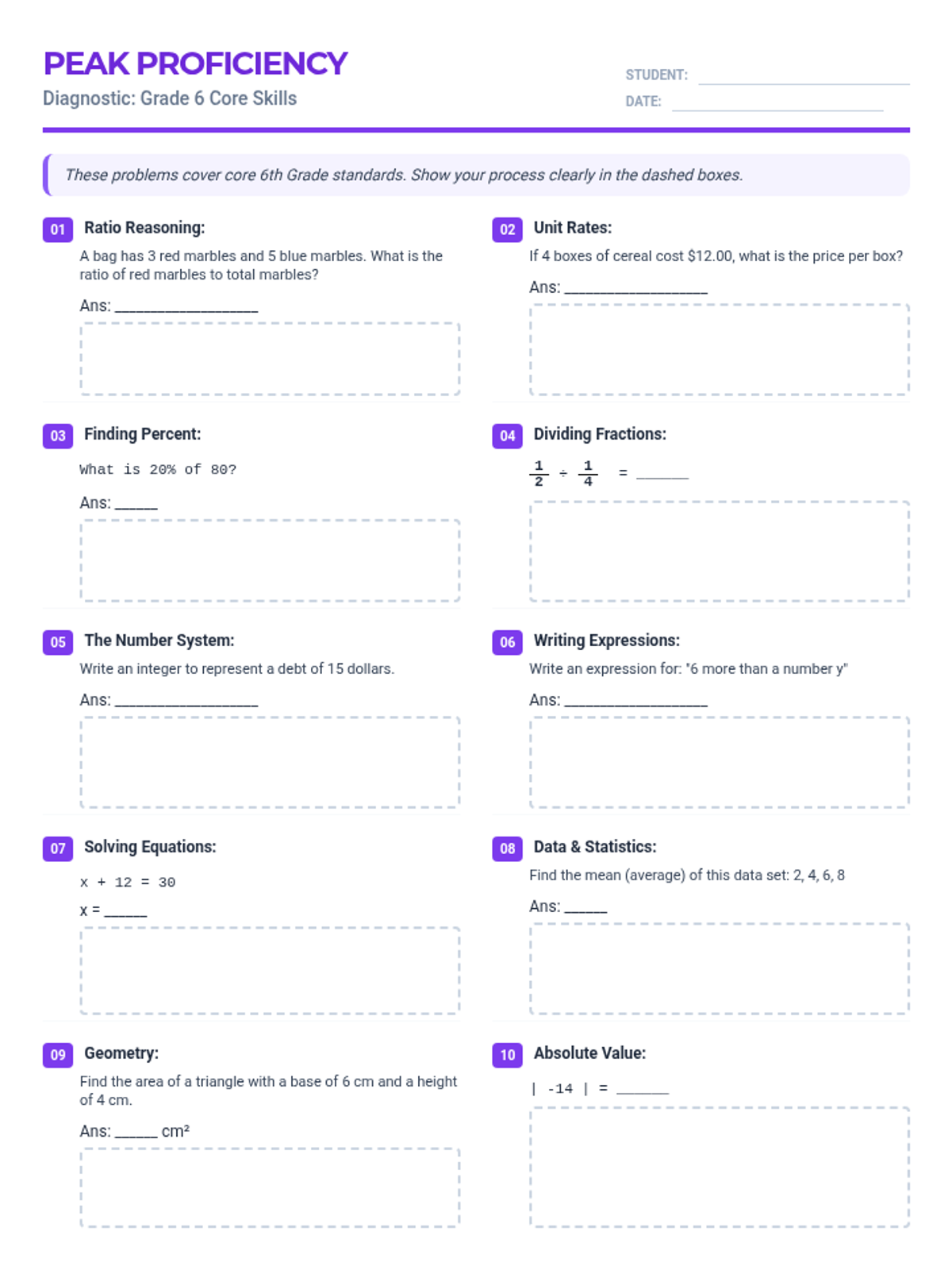
A pair of diagnostic assessments designed to pinpoint gaps in foundational number sense, fractions, and decimals, bridging 3rd-4th grade concepts to 5th grade mastery in preparation for 6th grade math.