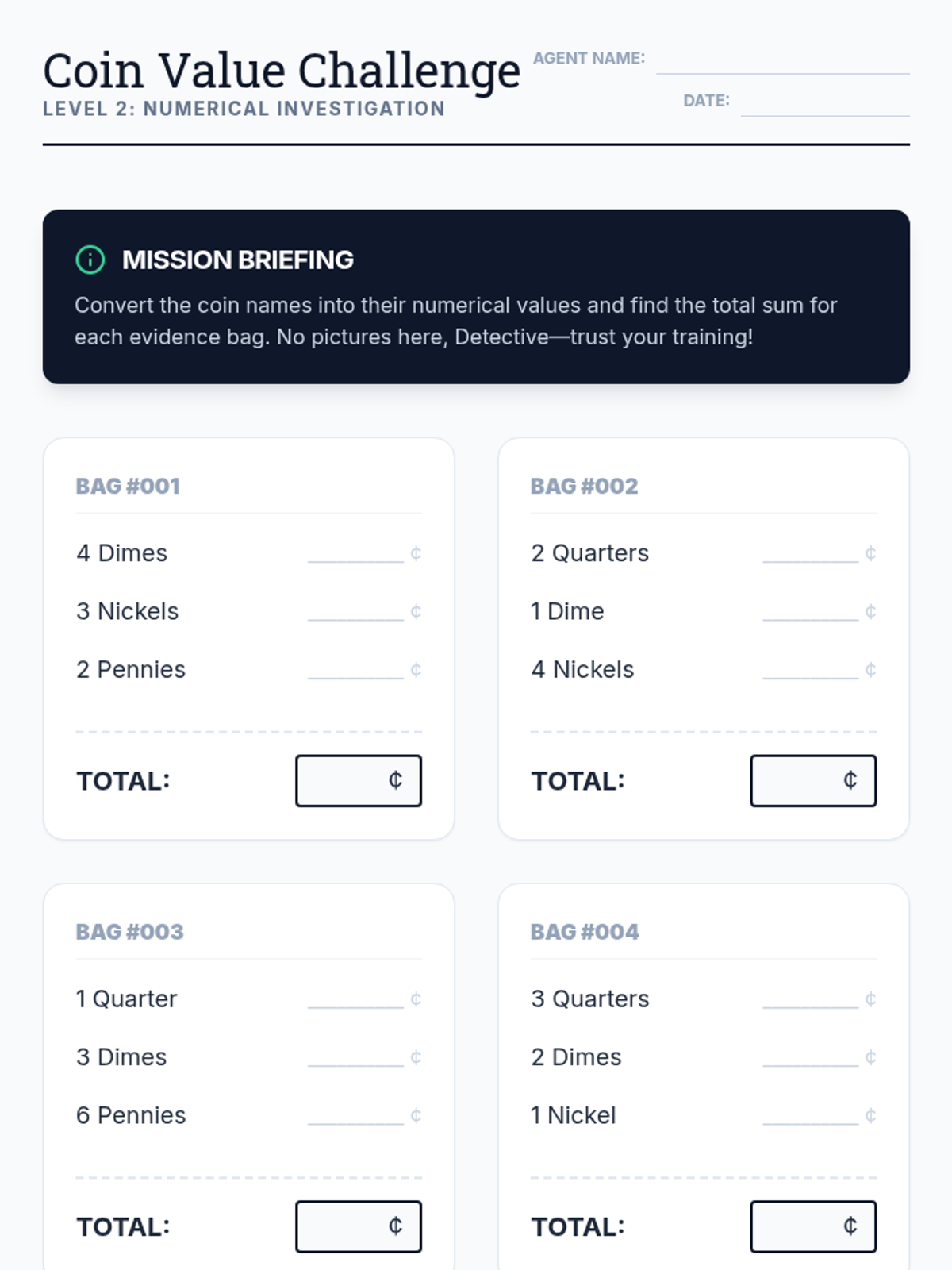
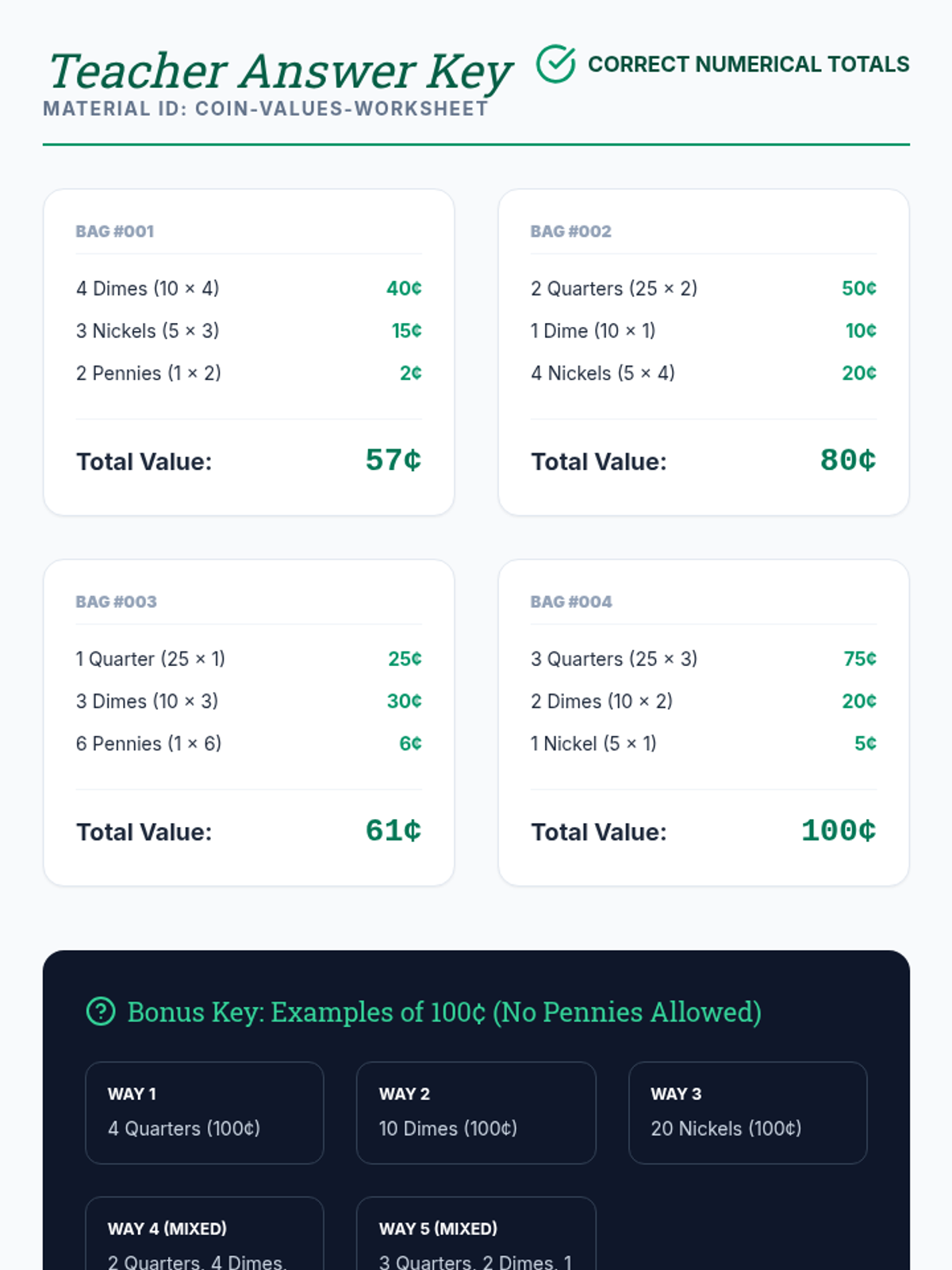
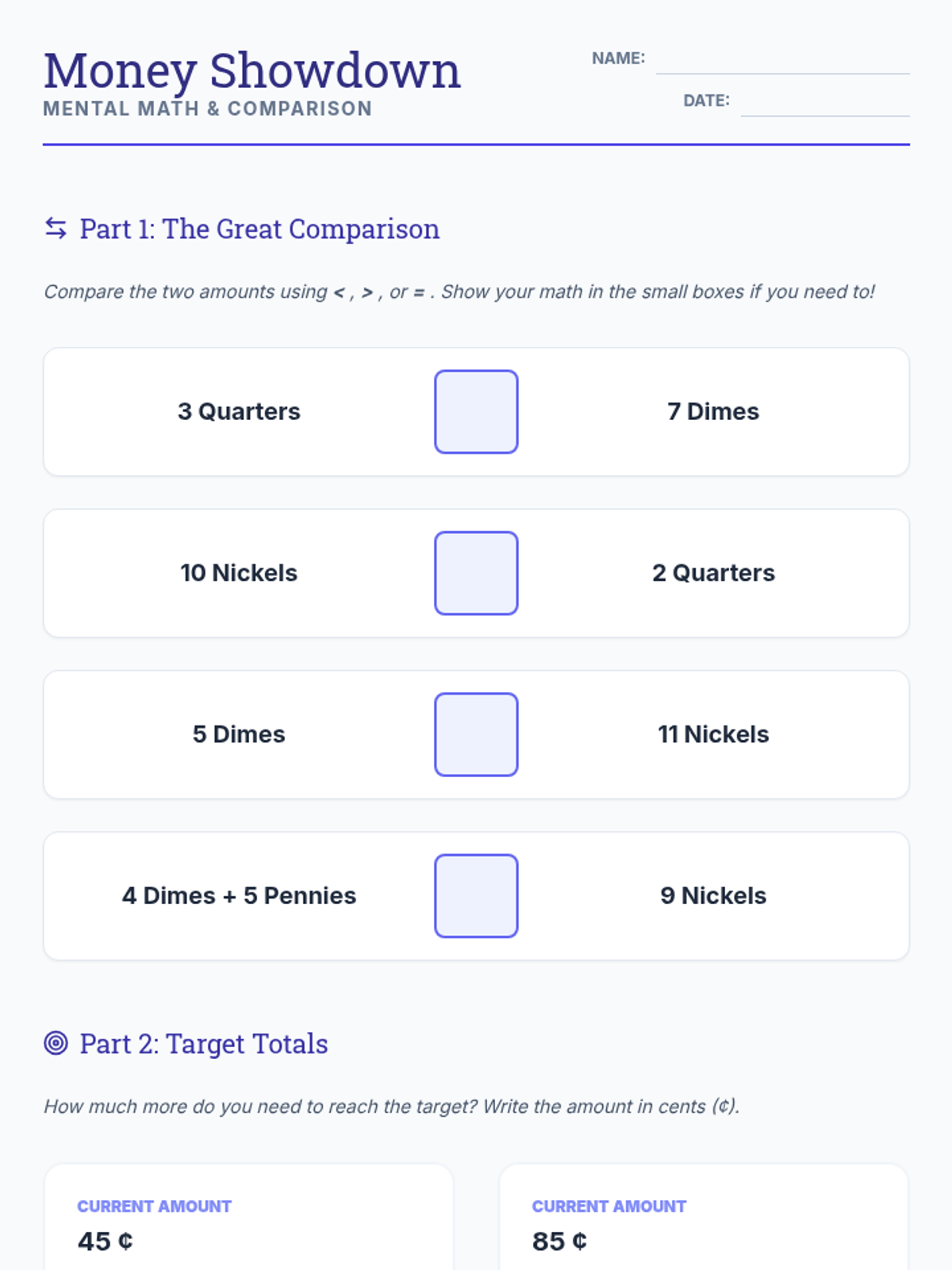
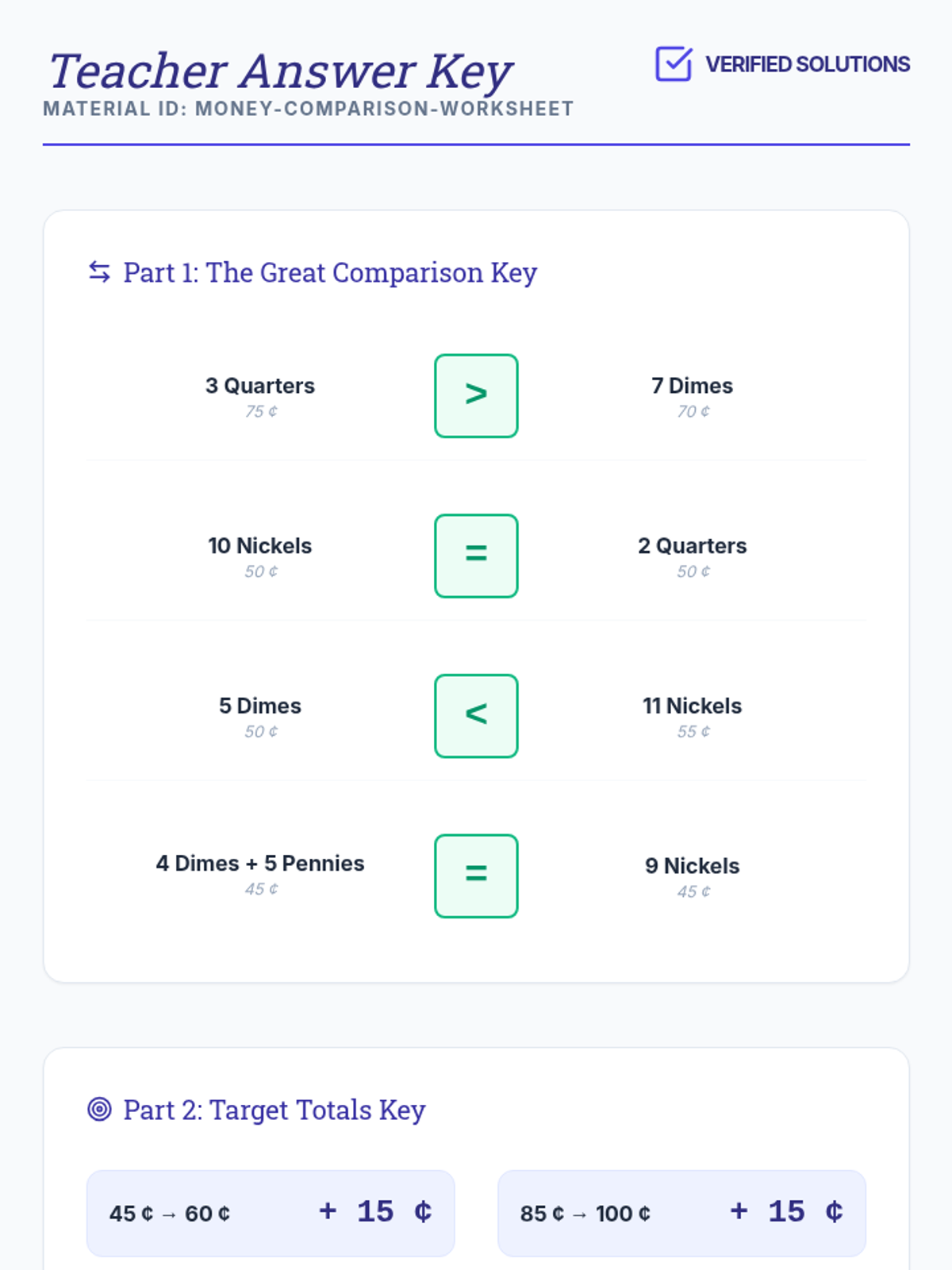
Develops proficiency in estimating and measuring length, area, volume, and mass using standard units and unit conversions. Integrates time, money, angle measurement, and data classification through counting and arithmetic applications.
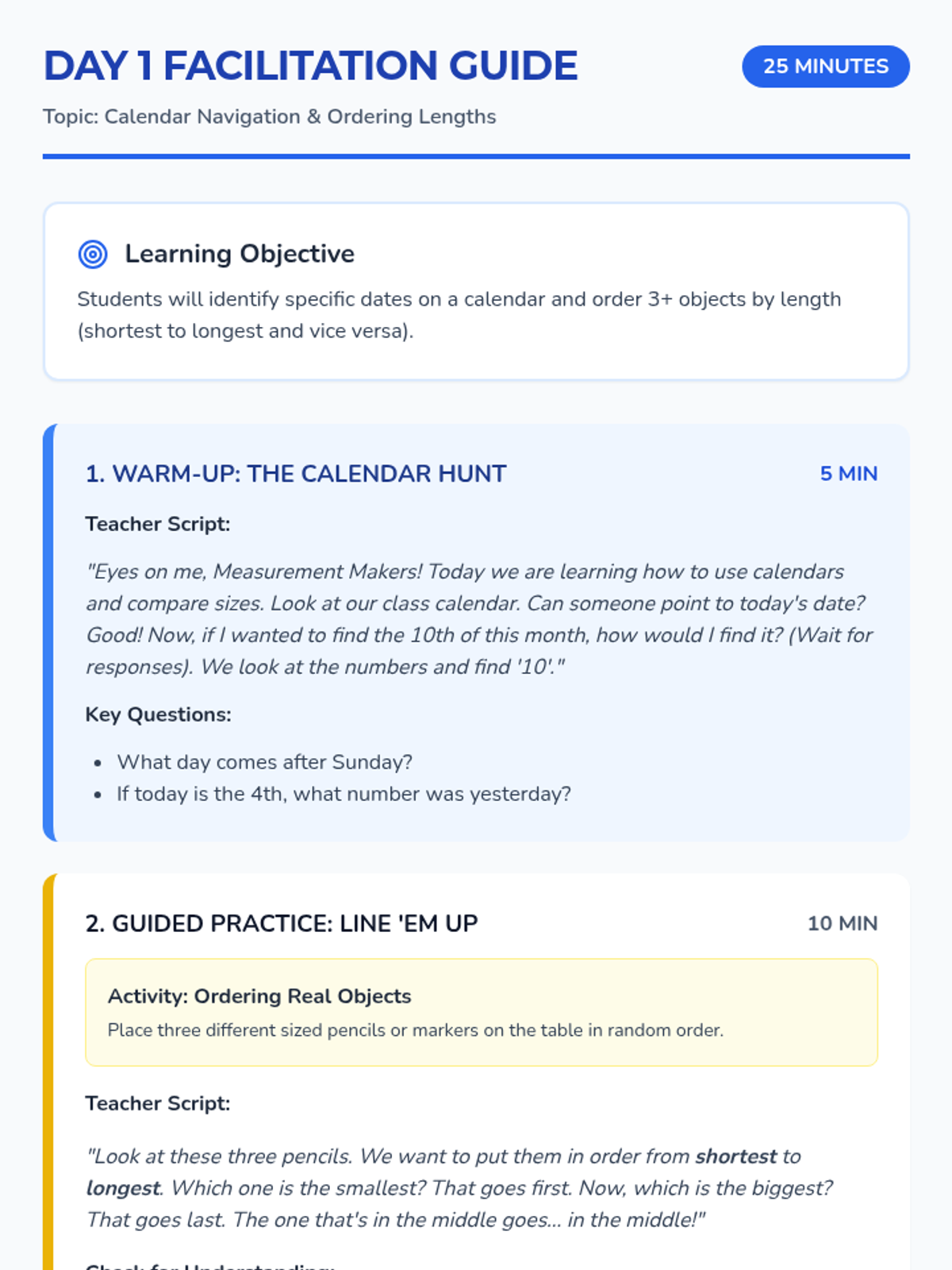
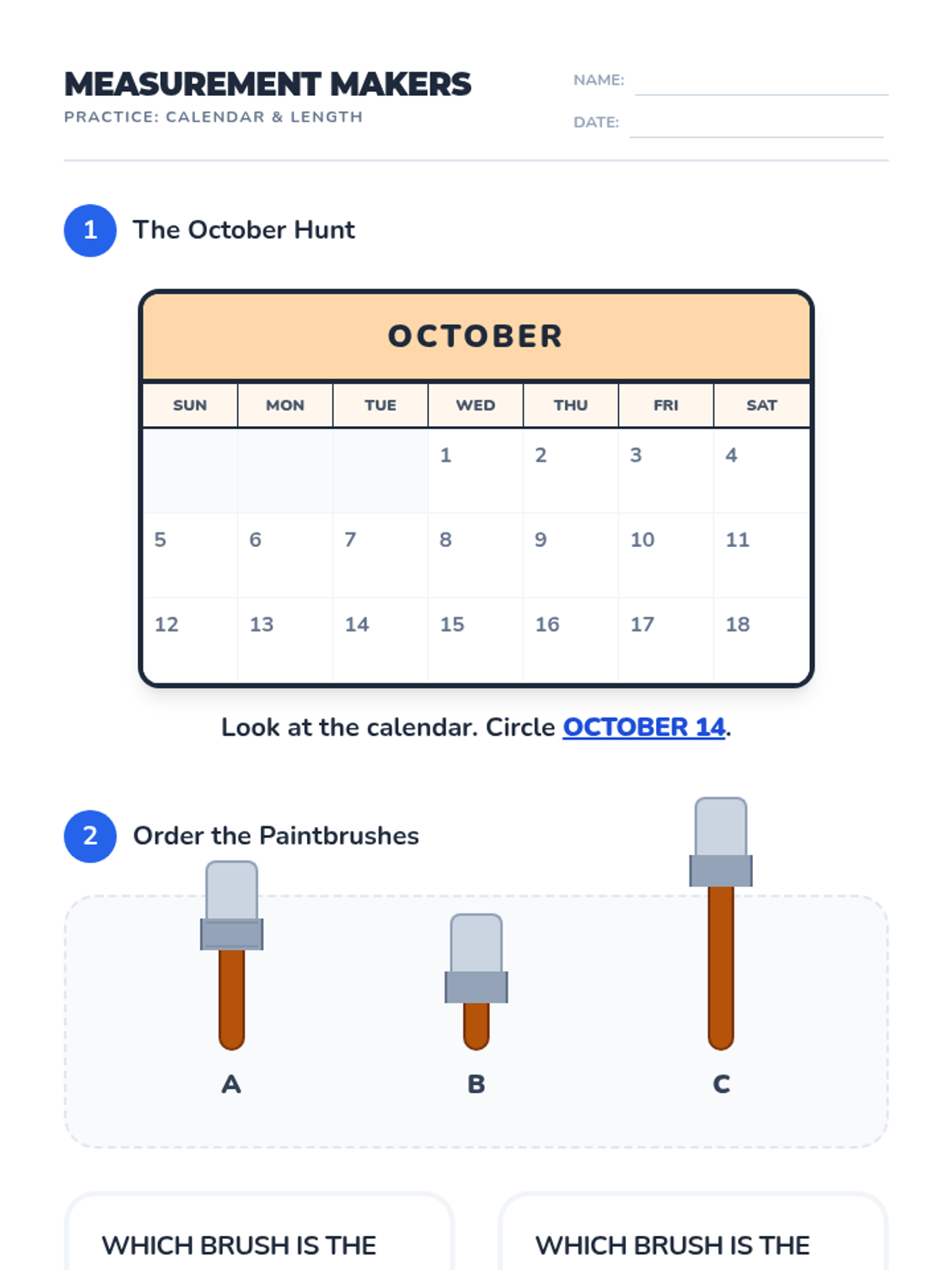
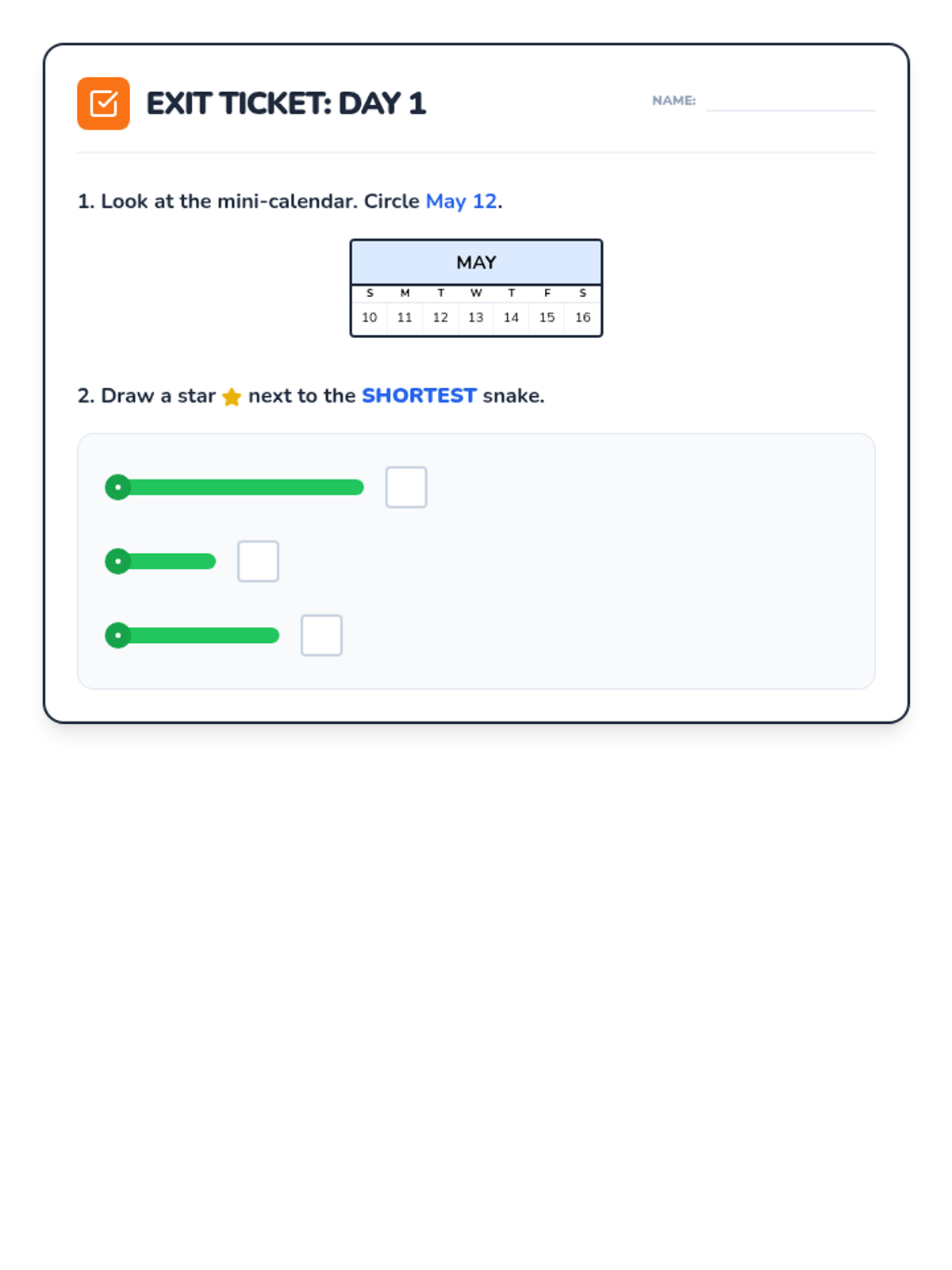
A 3-day small group math sequence designed to move students from NWEA RIT 140-150 to 150-160 in Geometry and Measurement. Focuses on calendar skills, time, length ordering, and 2D/3D shape identification.
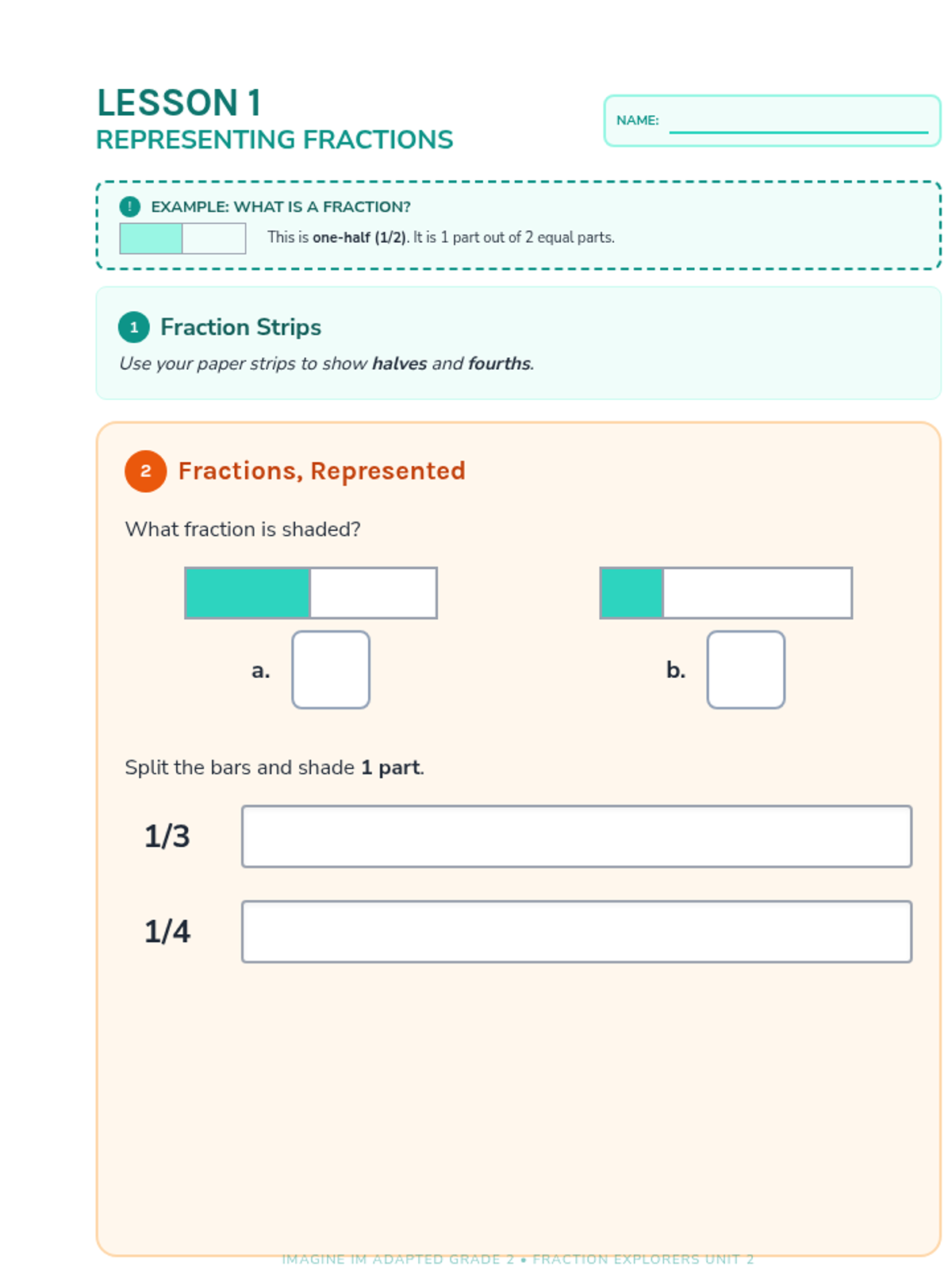
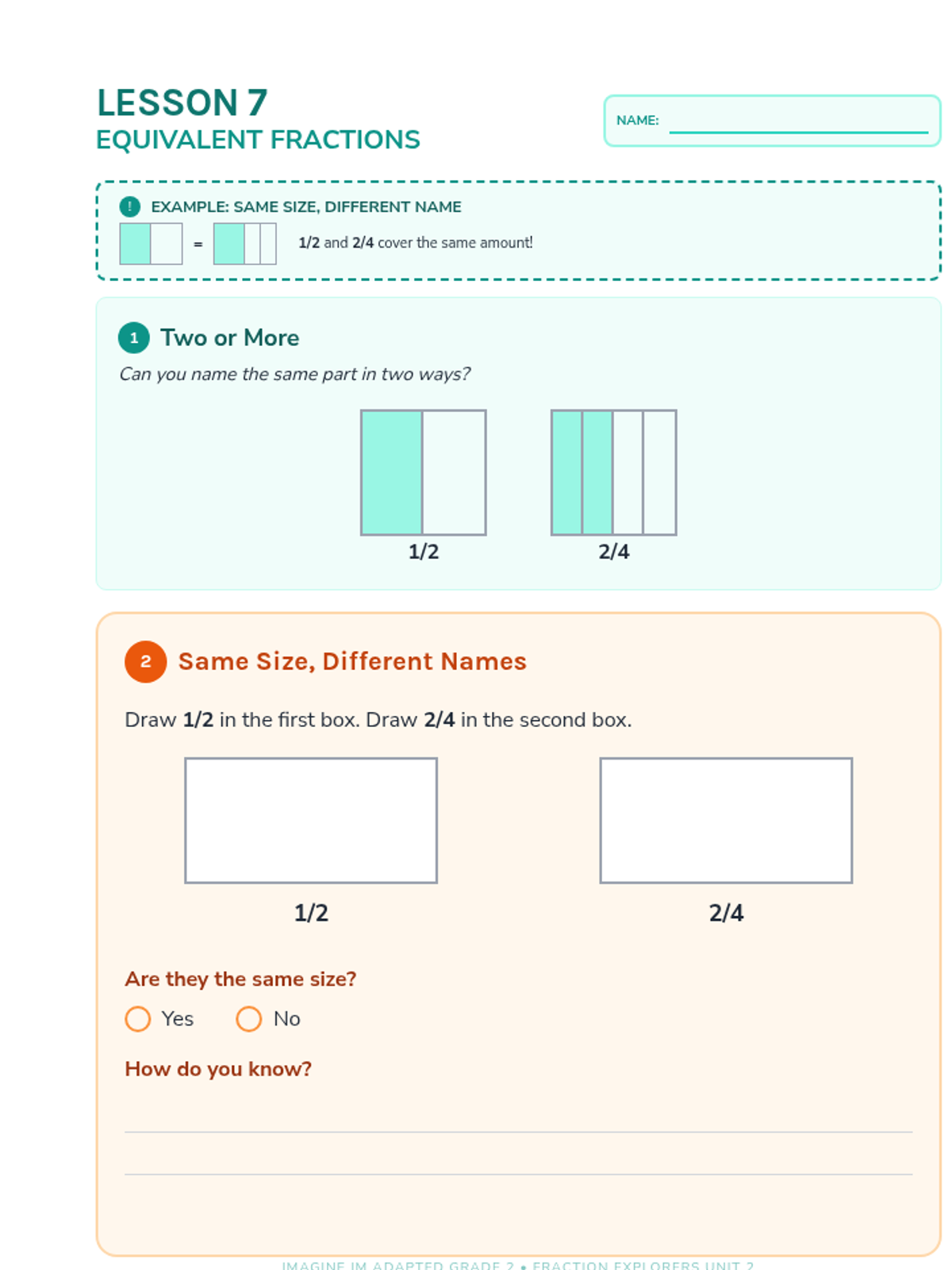
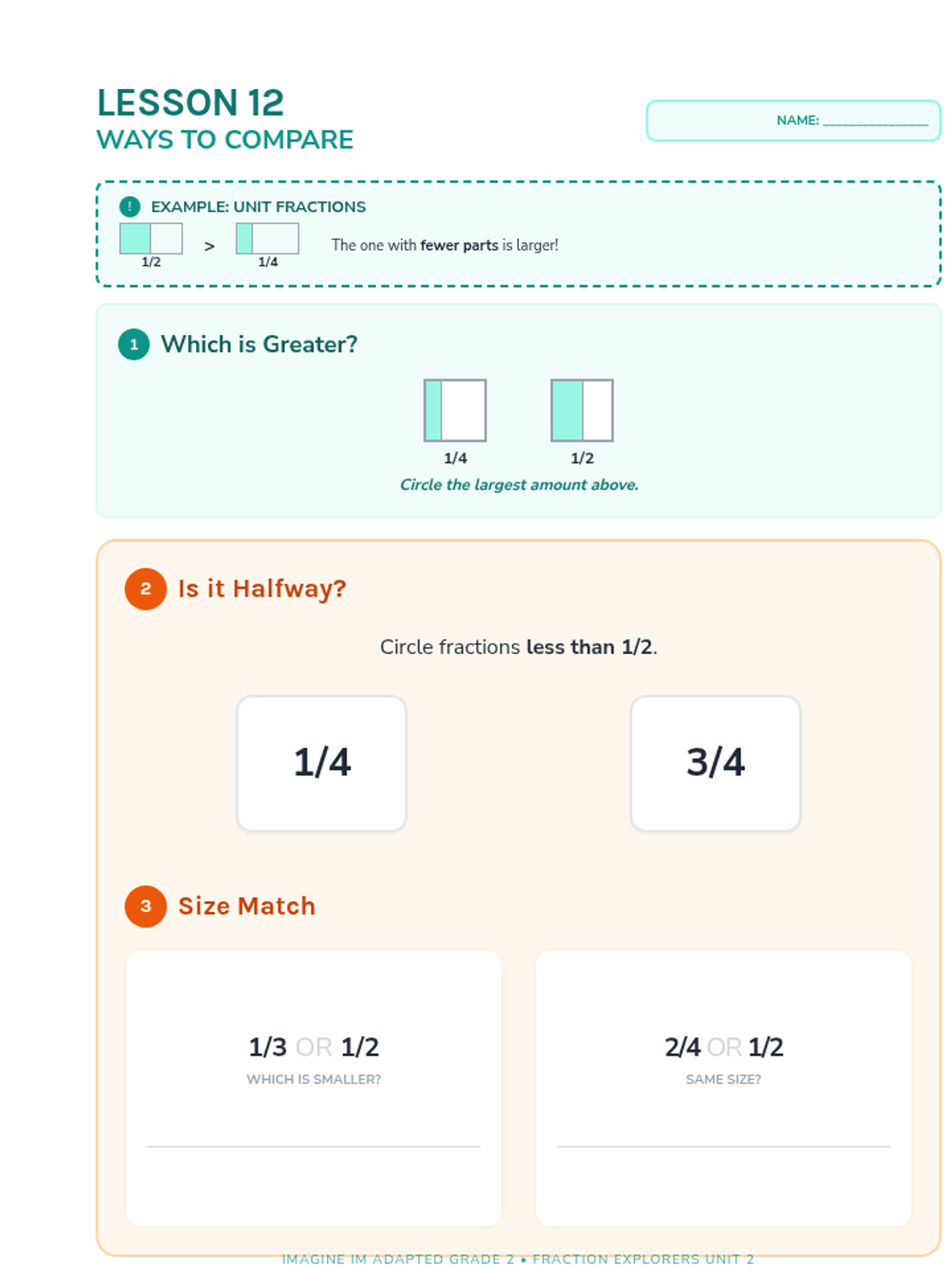
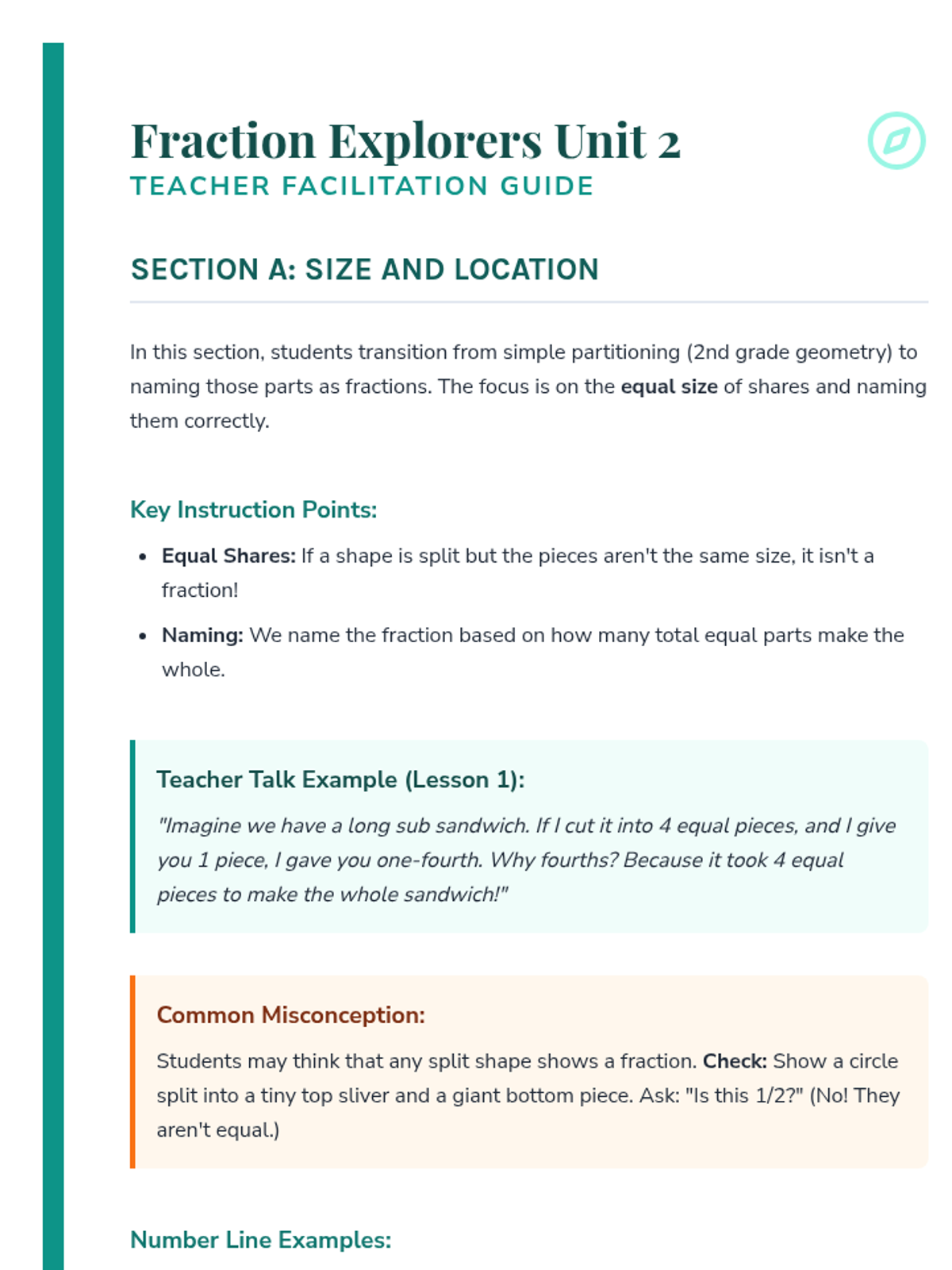
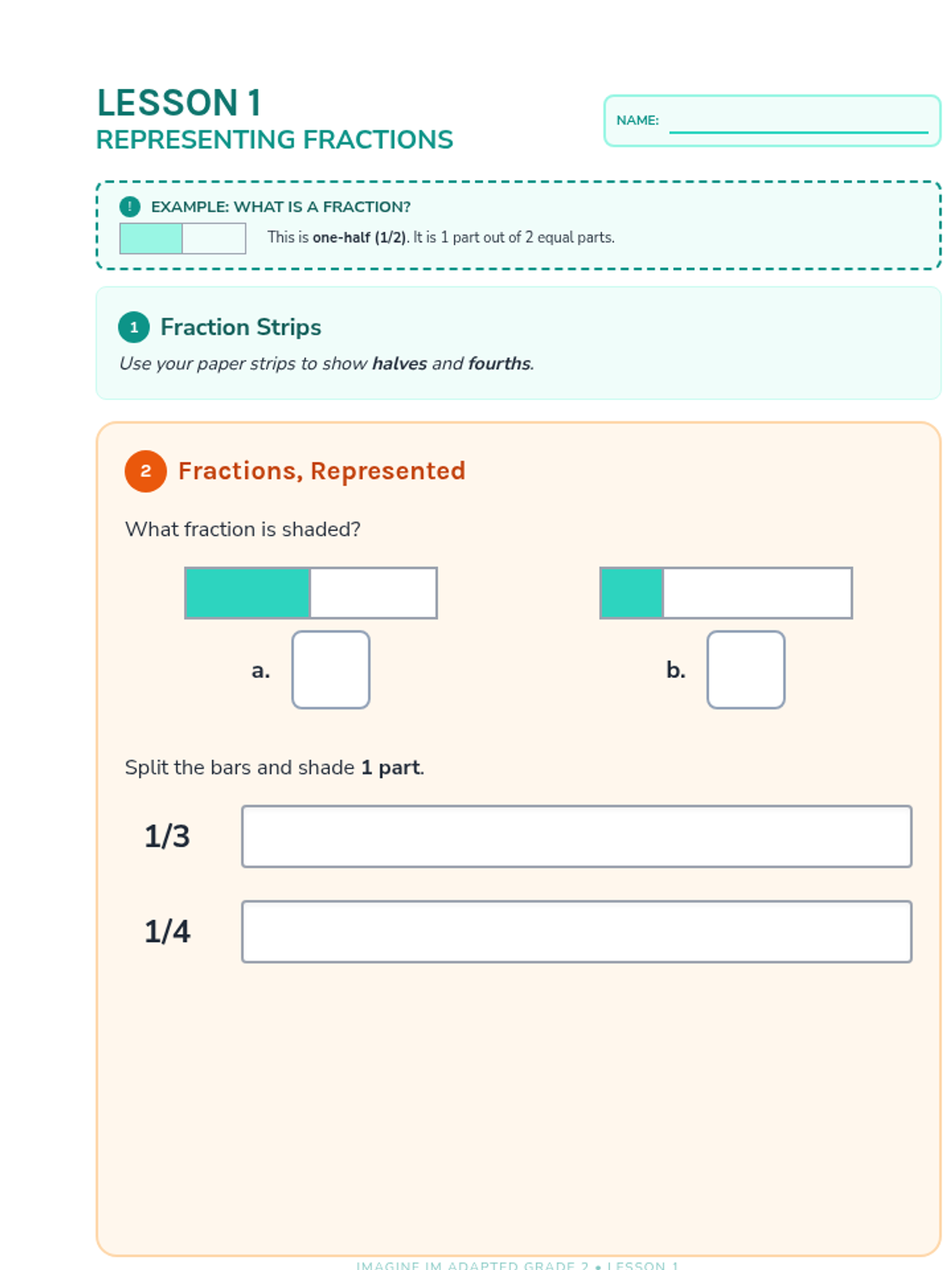
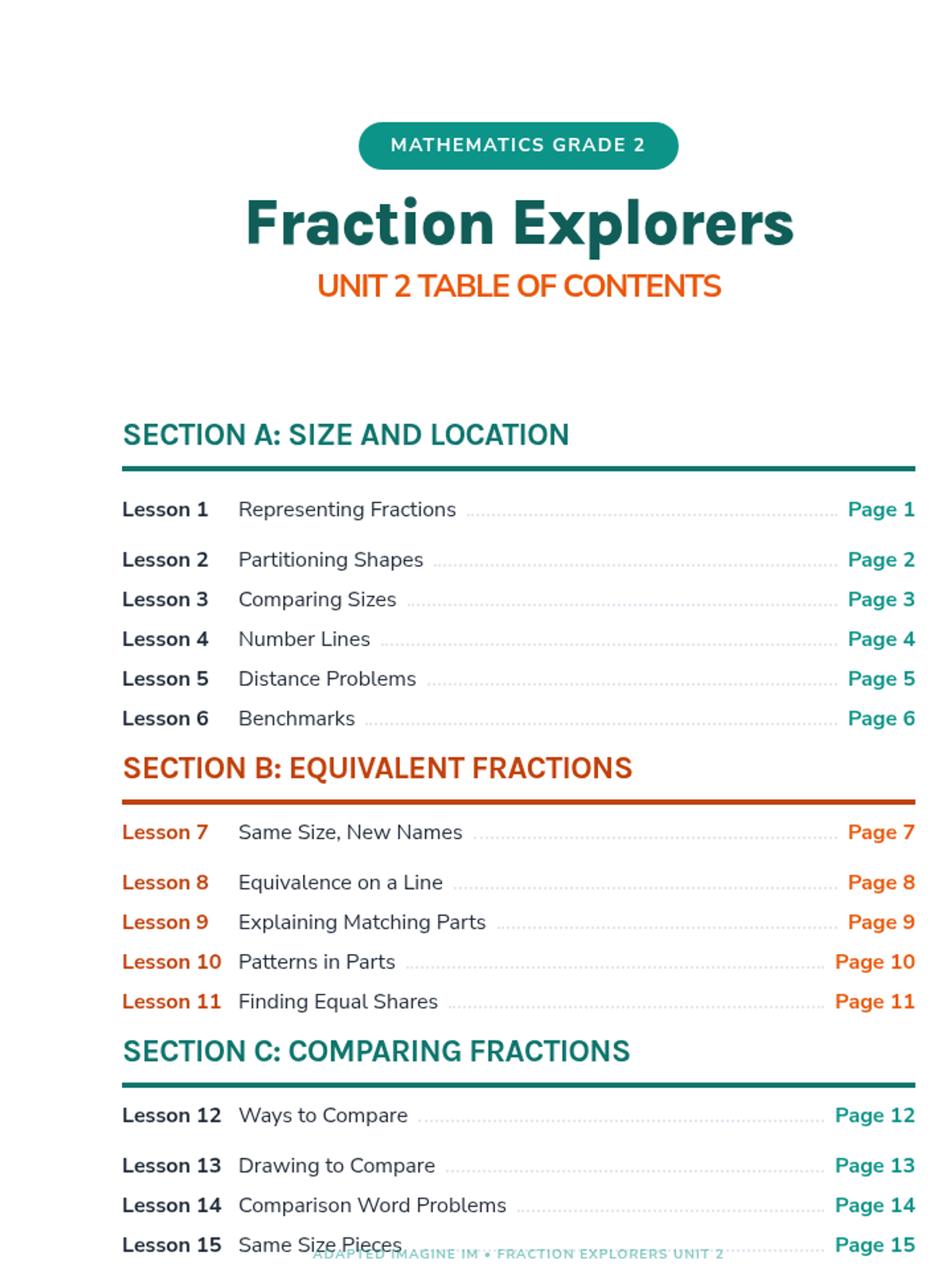
A complete unit on elementary fraction concepts for 2nd grade students, focusing on halves, thirds, and fourths using the Imagine IM curriculum structure.
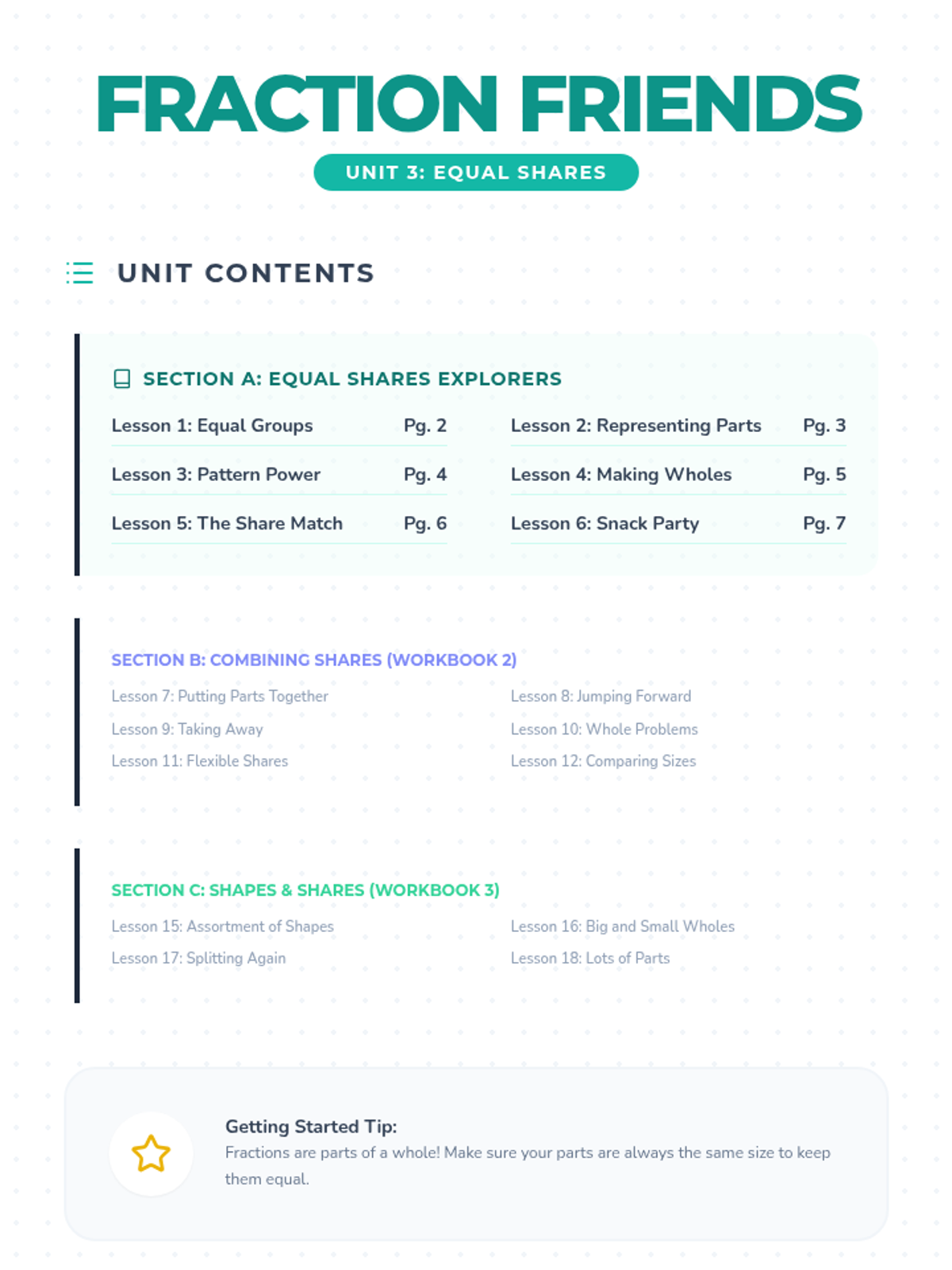
A unit introducing foundational fraction concepts to 2nd-grade students using partitioning, naming equal shares, and skip counting parts of a whole.
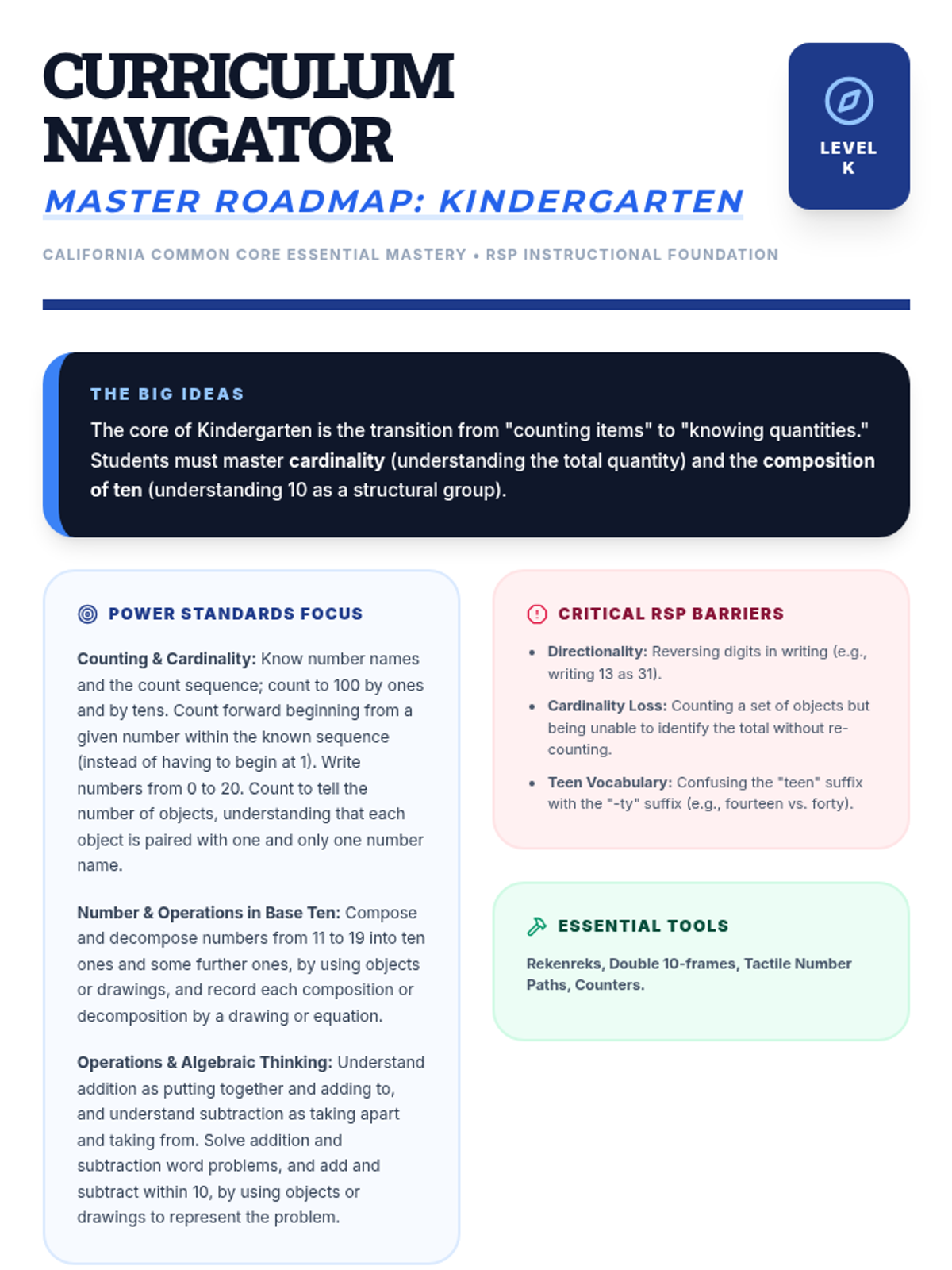
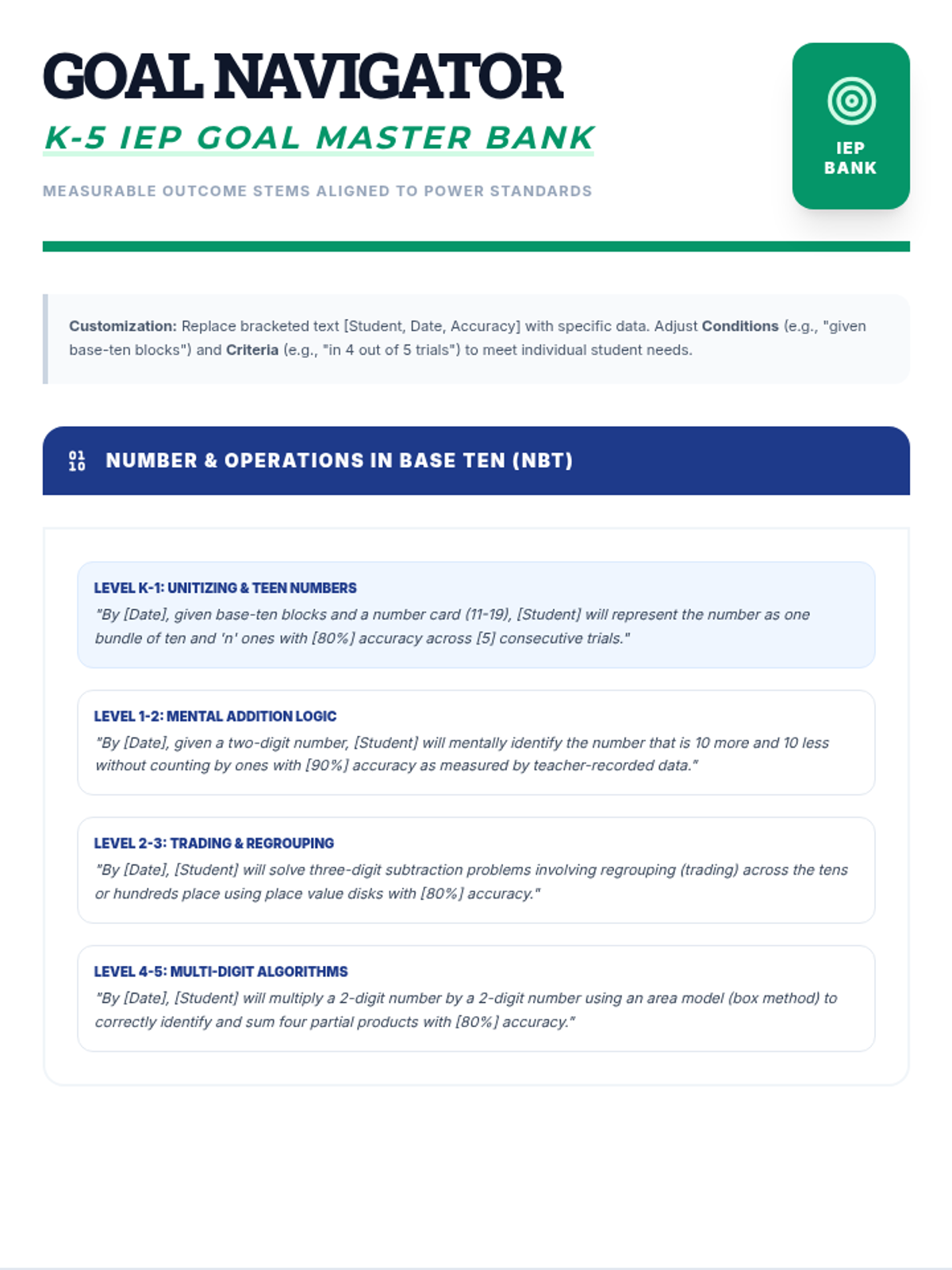
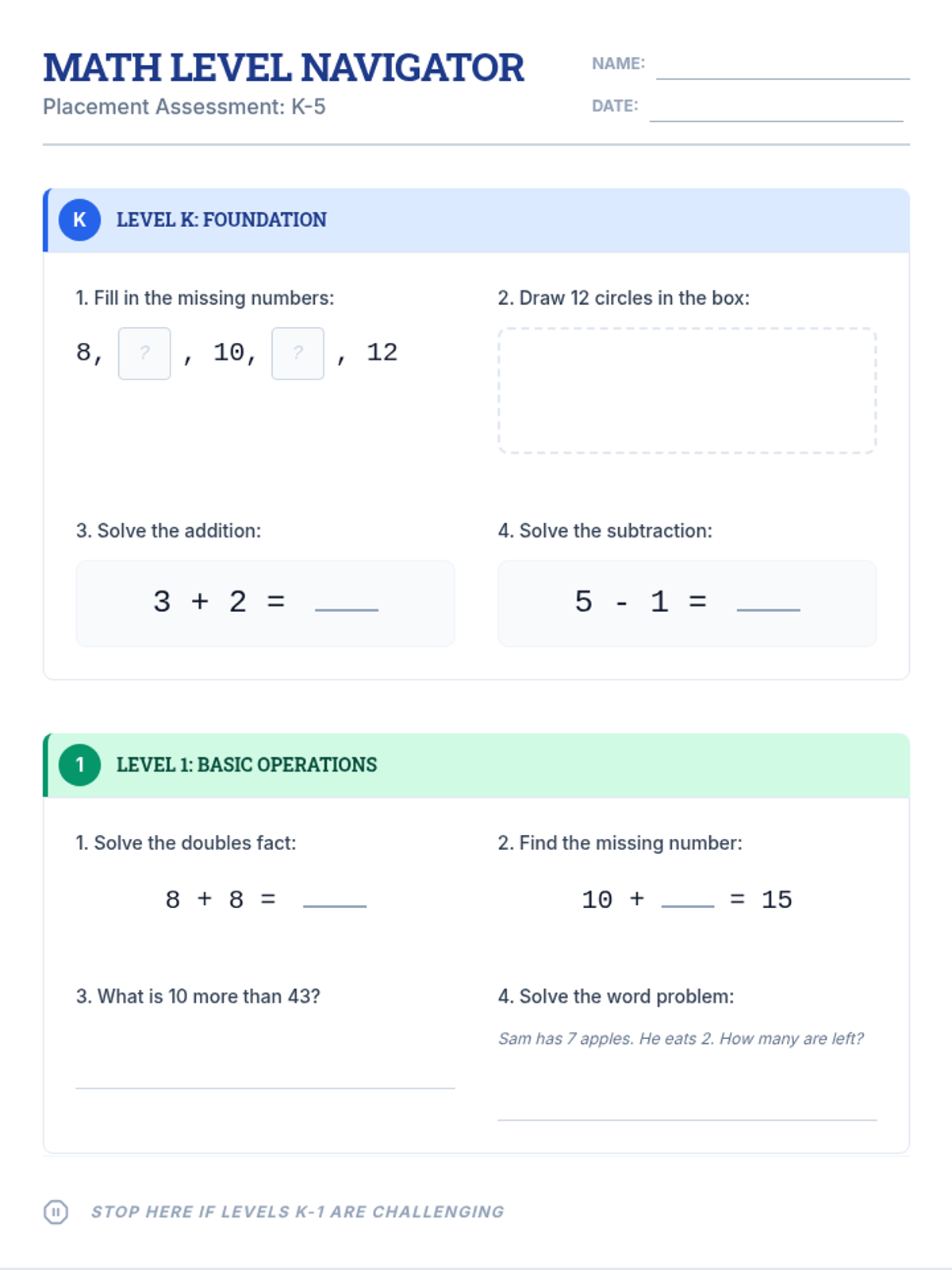
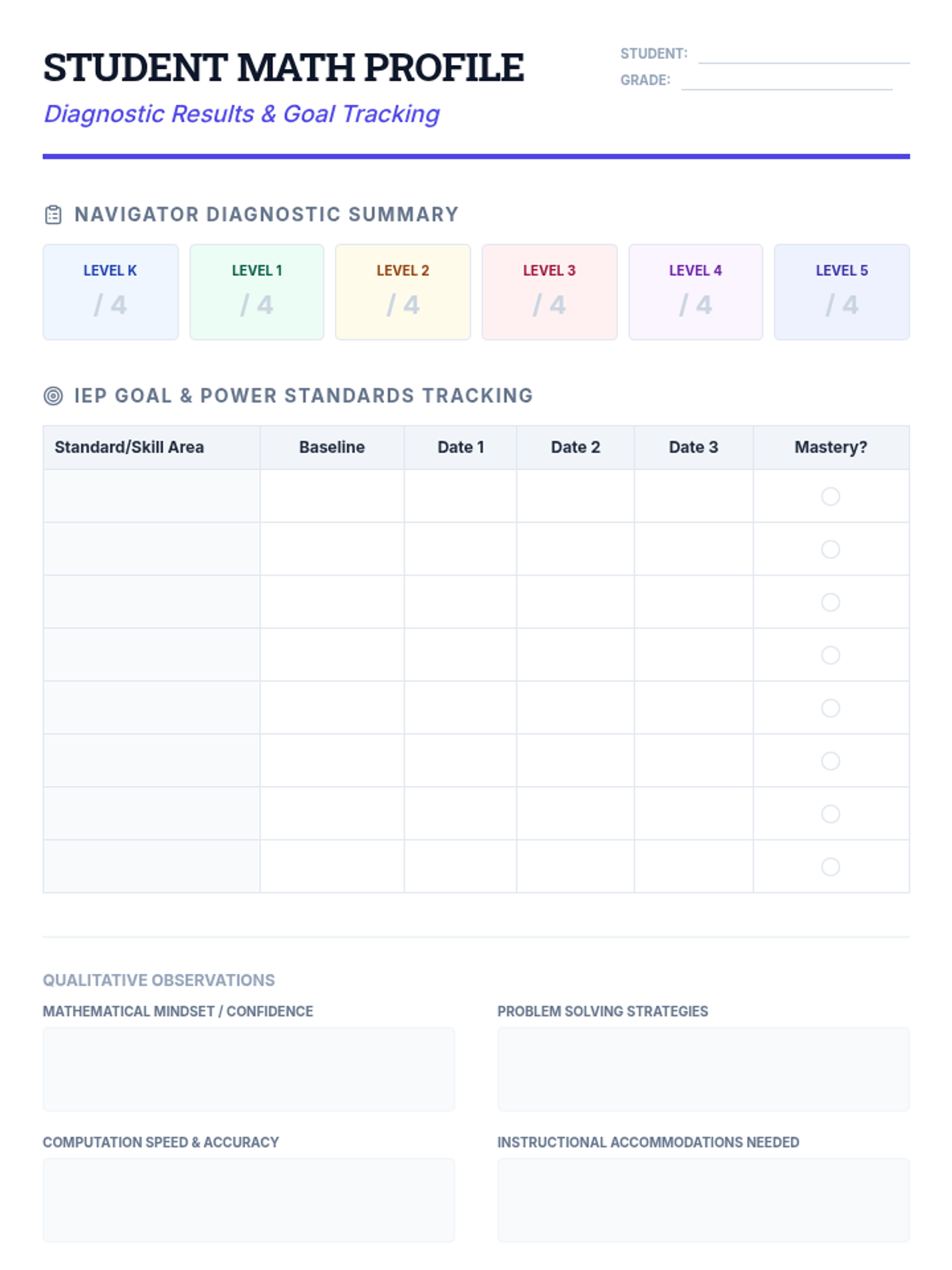
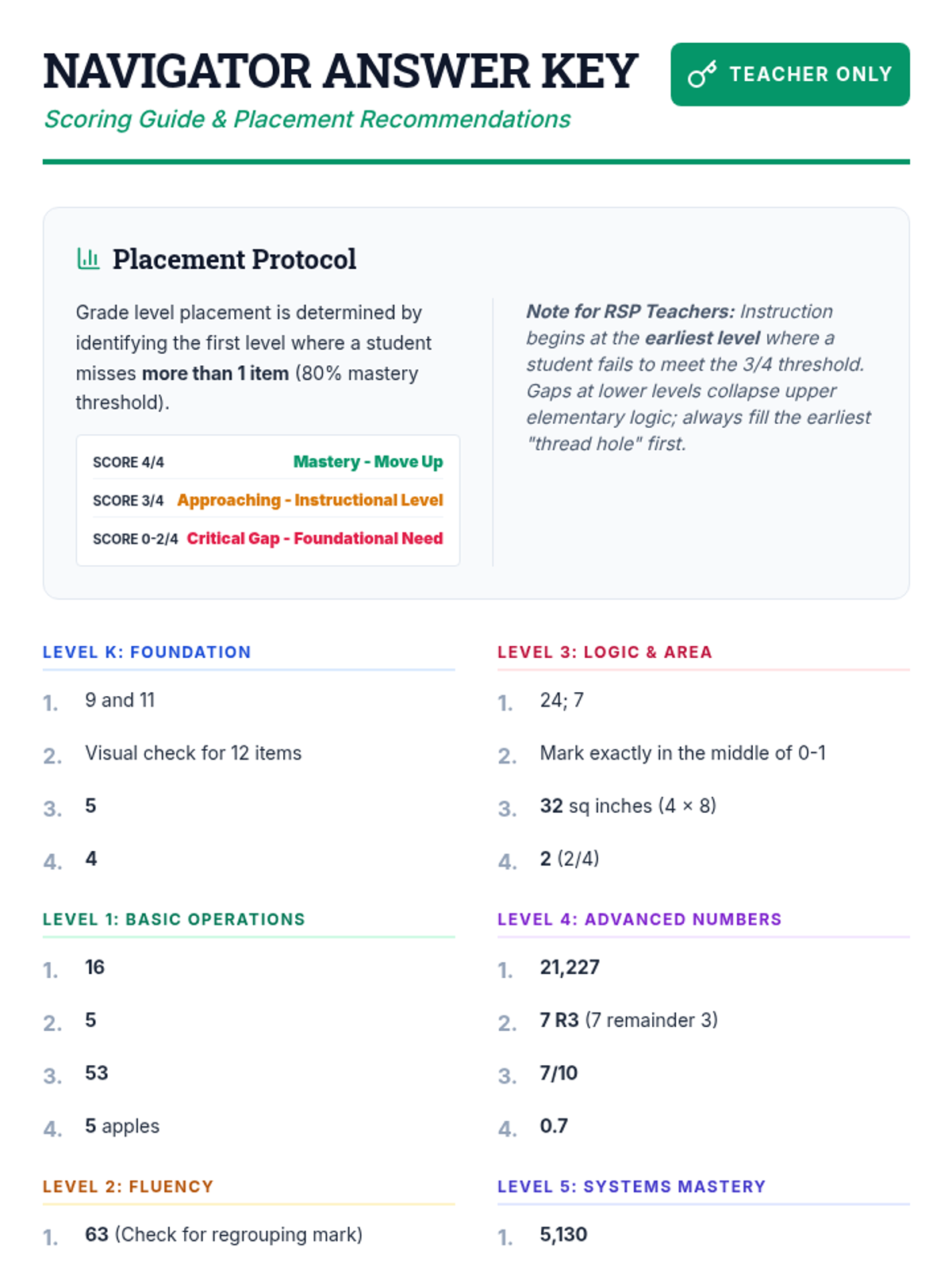
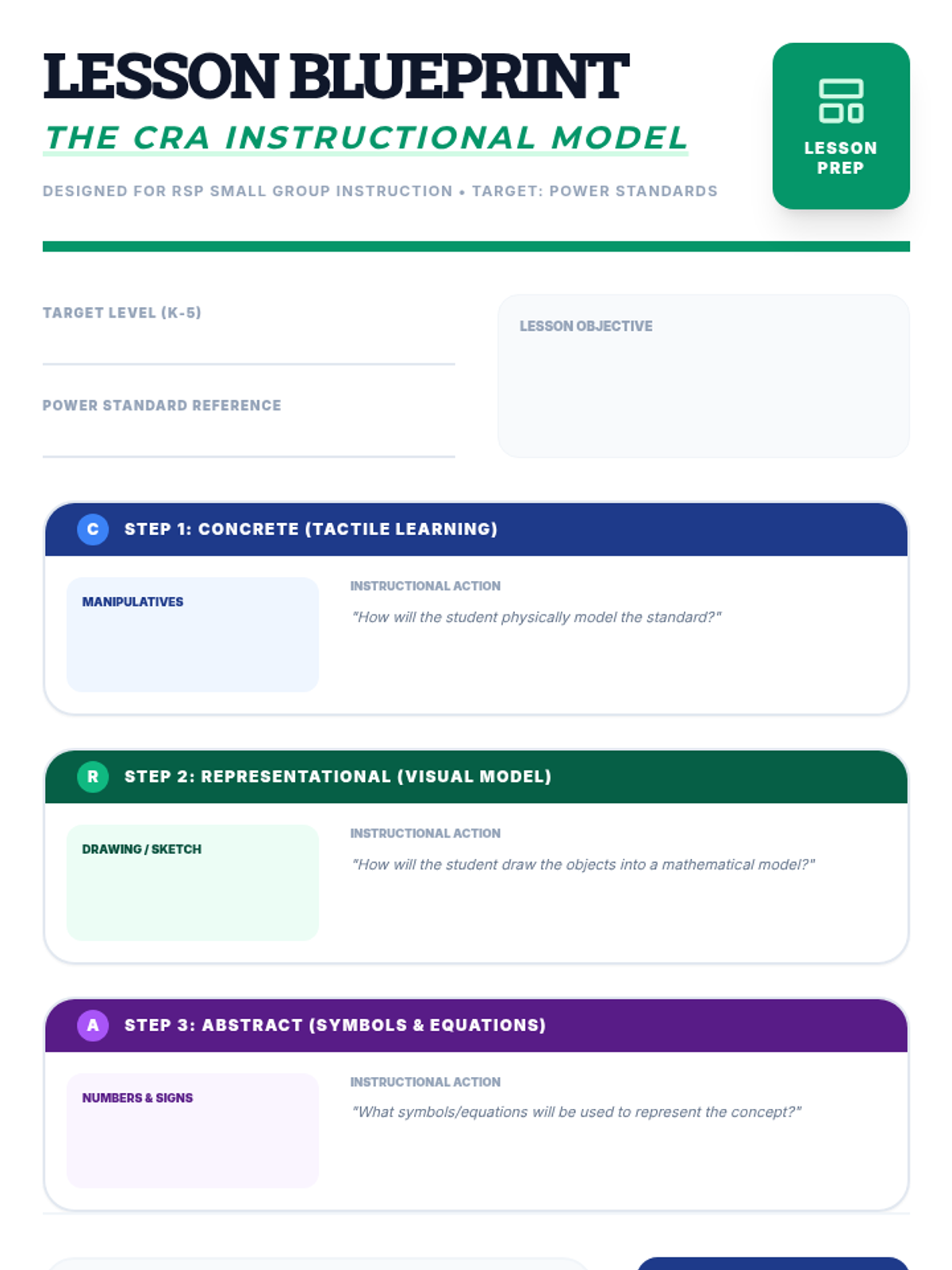
A comprehensive framework for K-5 RSP math instruction, including a California Common Core aligned scope and sequence of power standards and a leveled placement diagnostic.
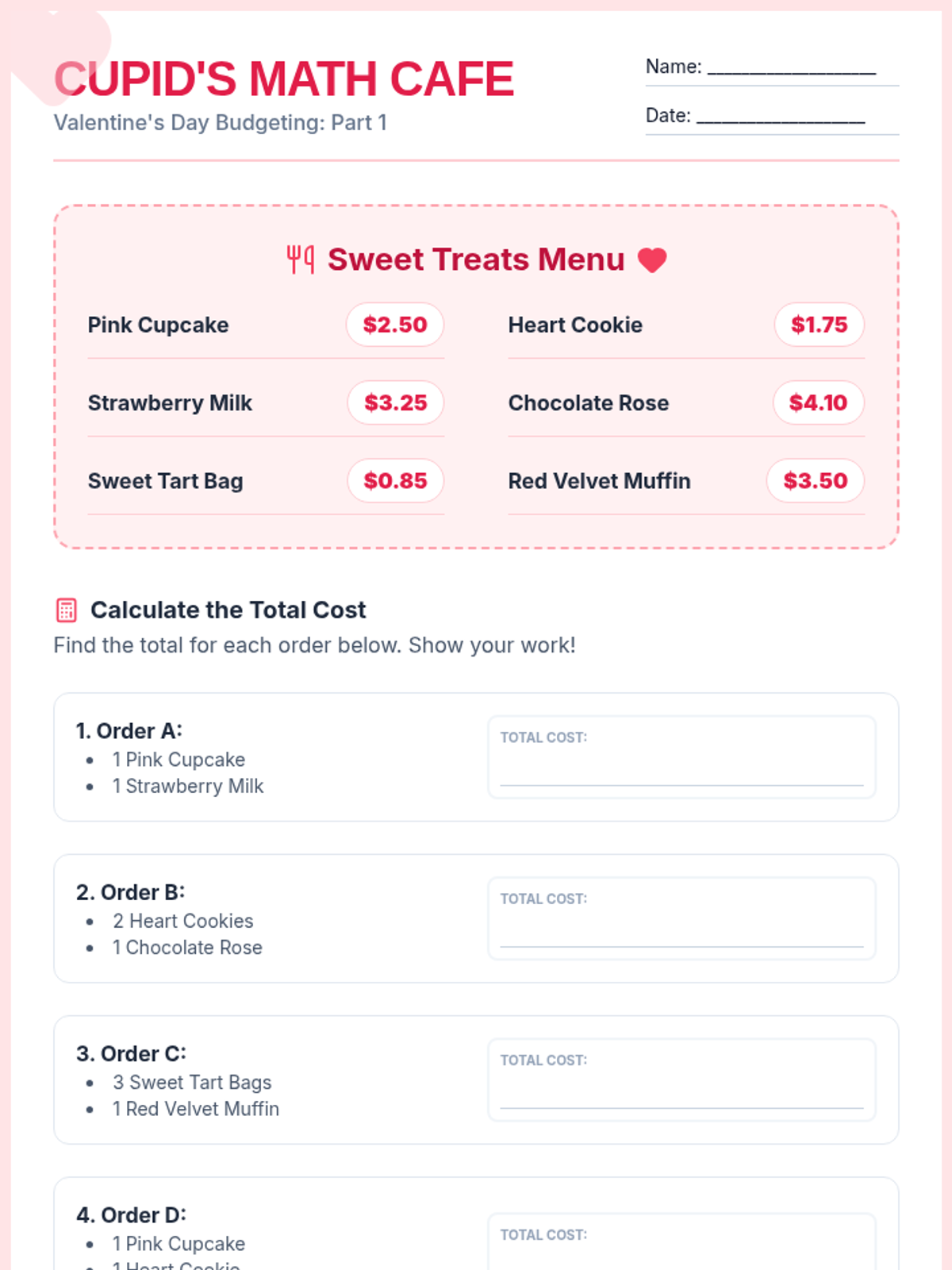
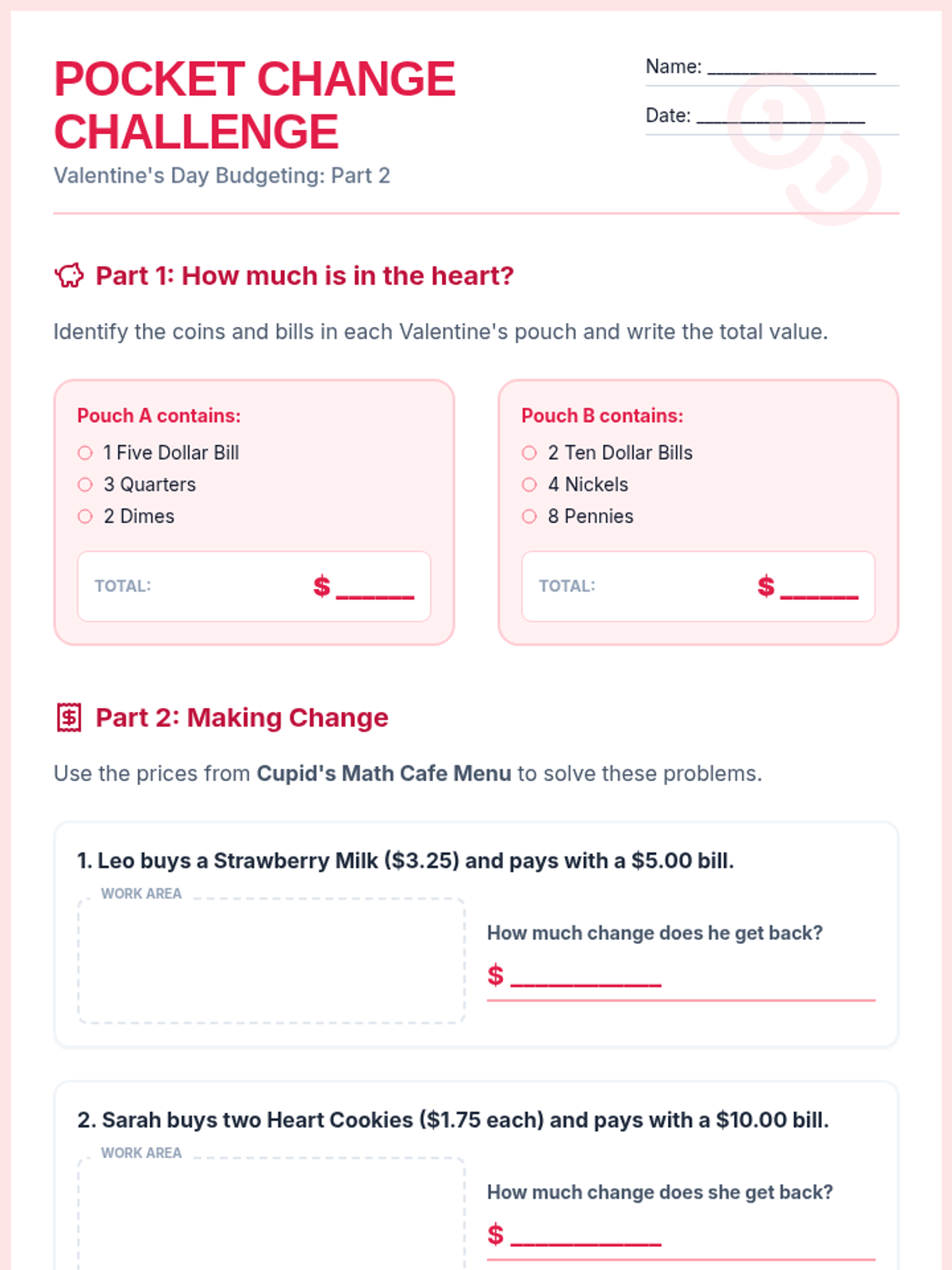
A collection of Valentine's Day math packets at two different levels (Level 1 and Quest), covering budgeting, graphing, measurement, time, and word problems.
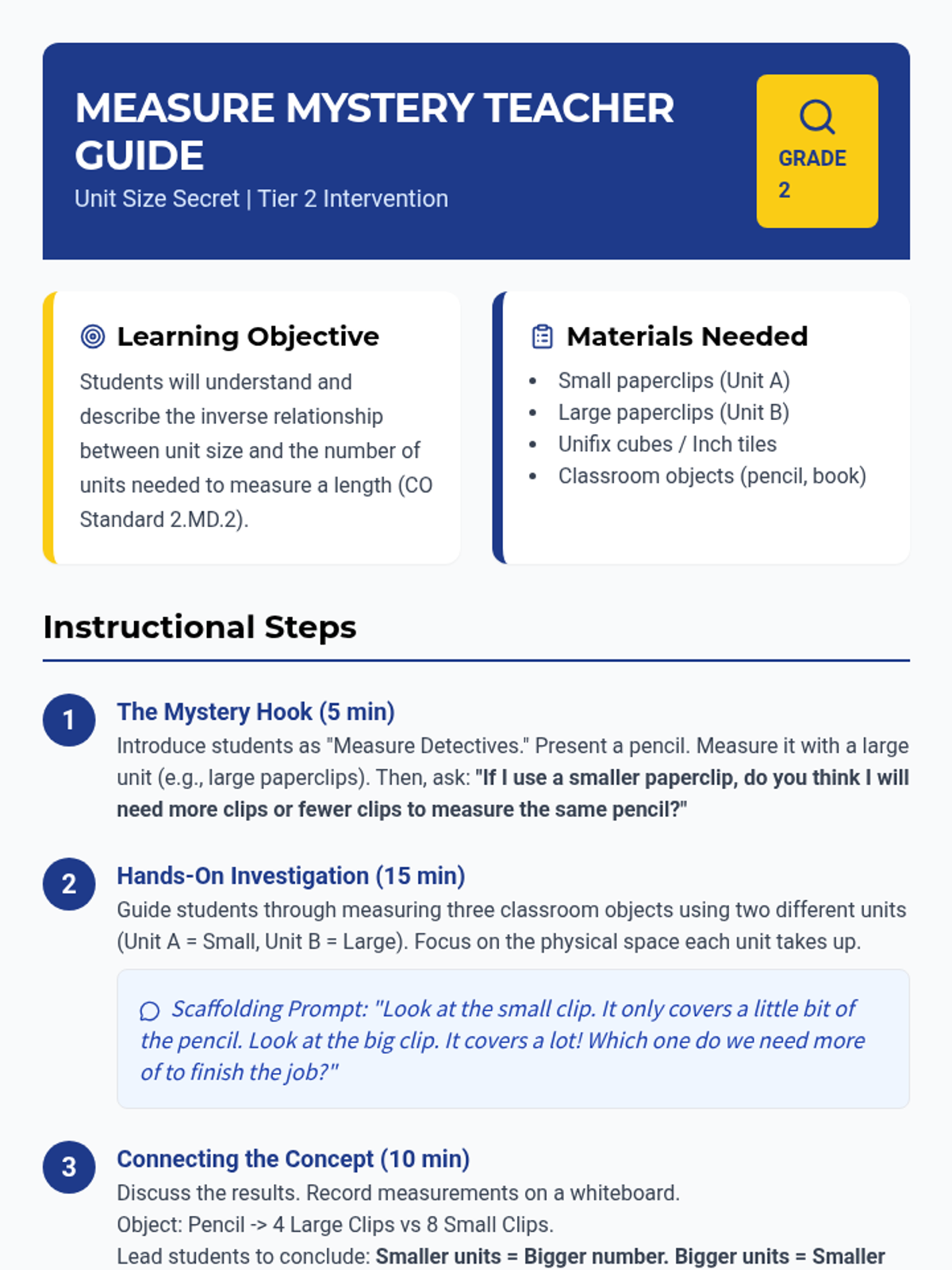
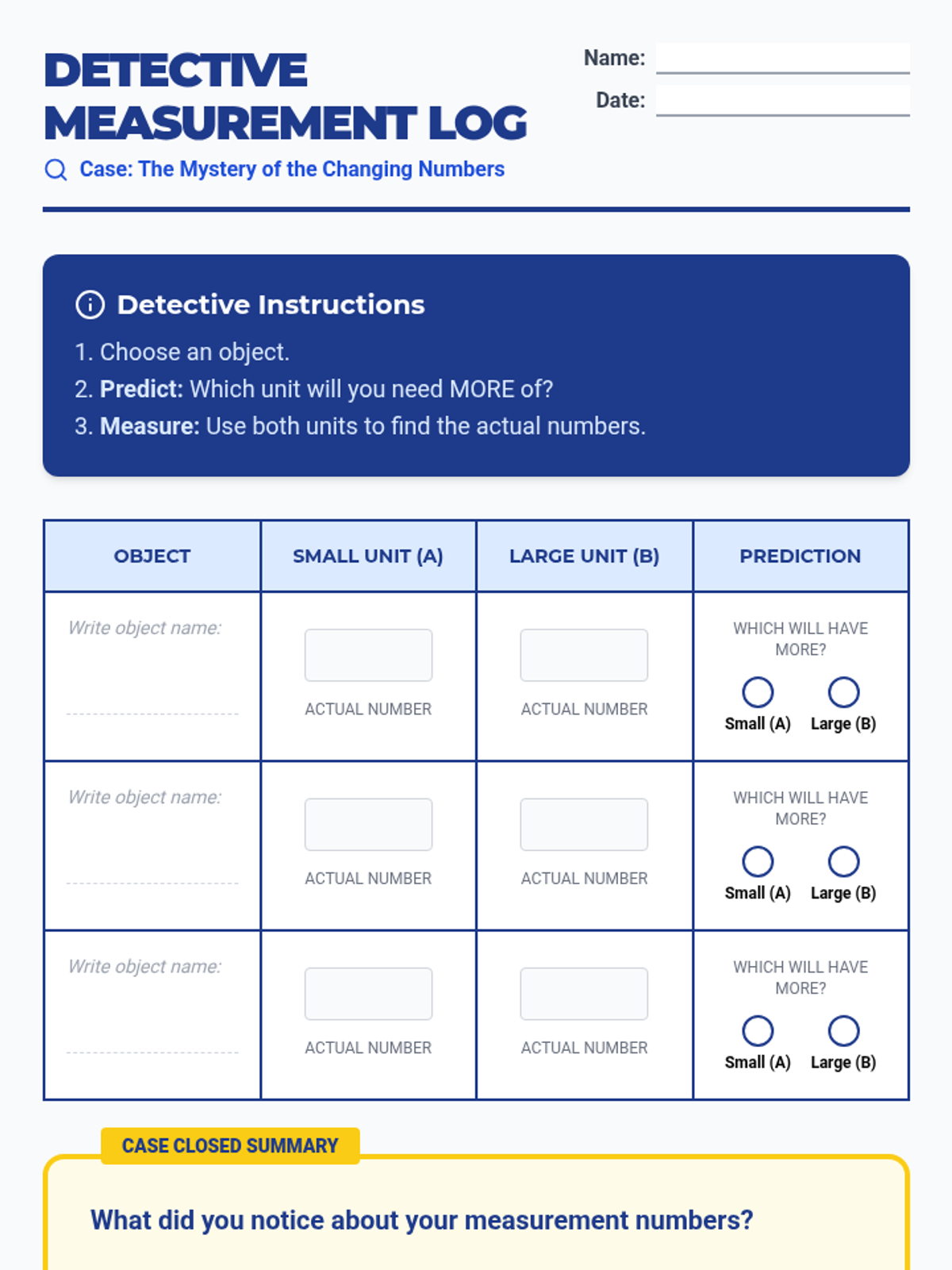
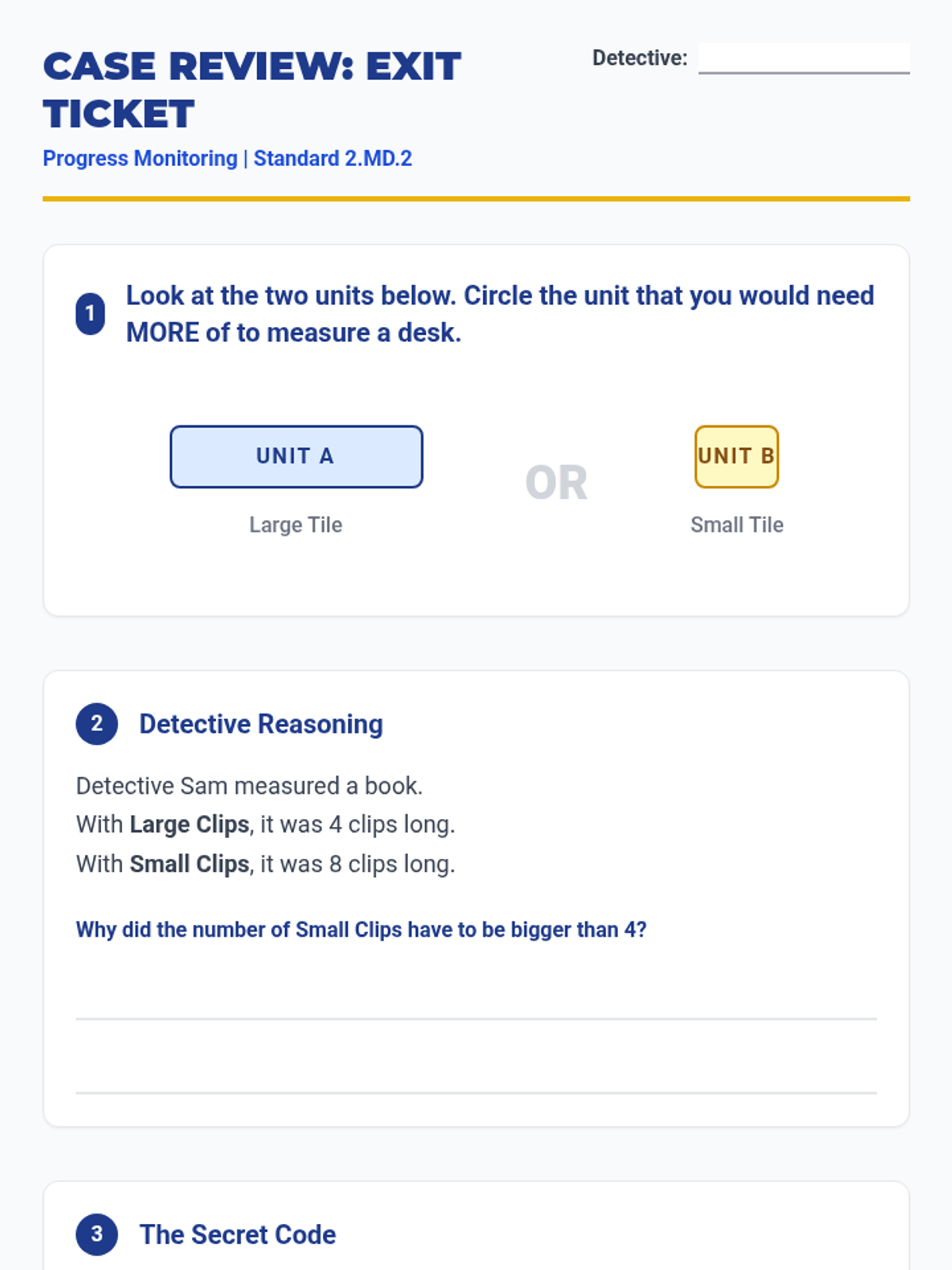
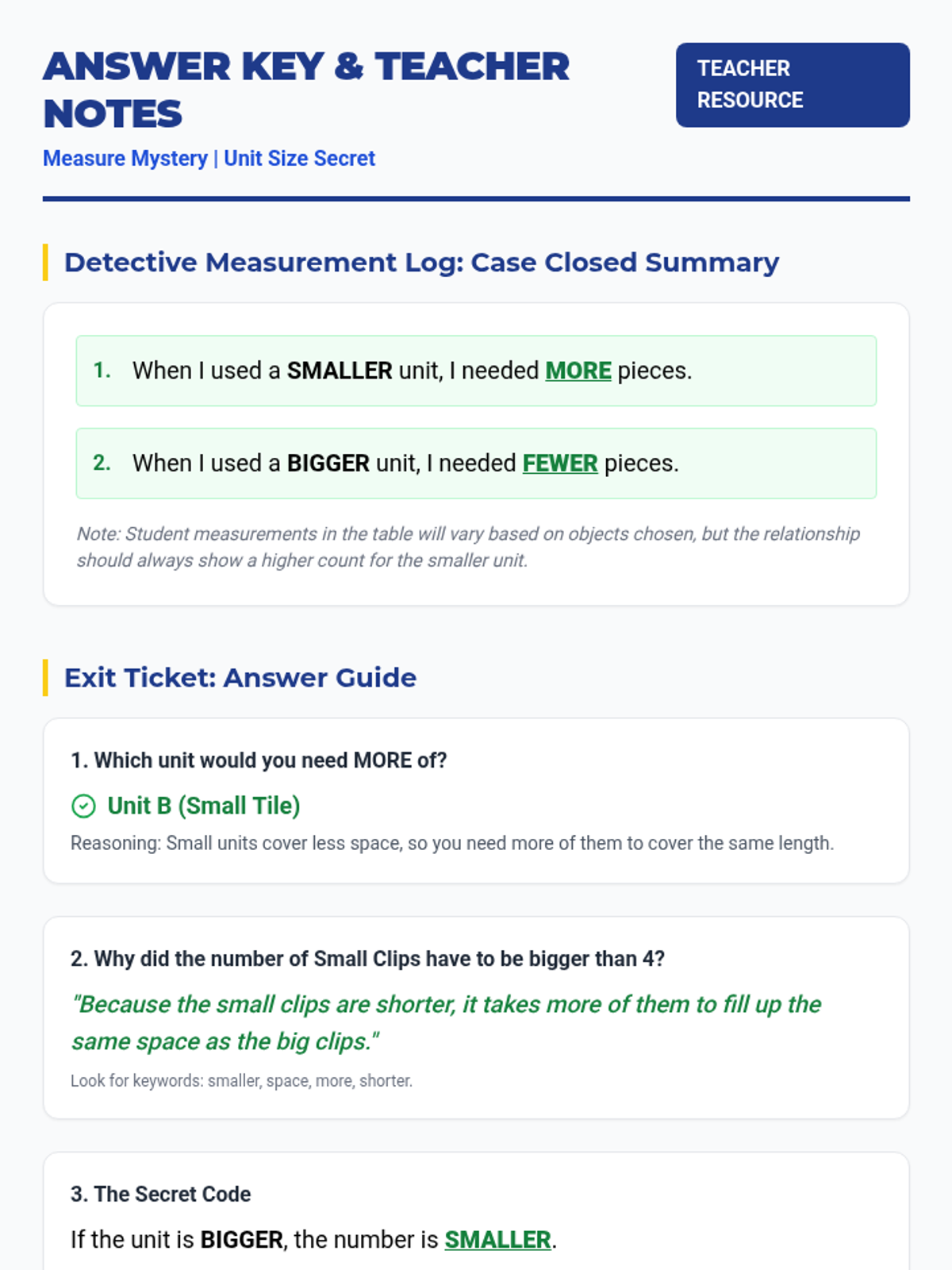
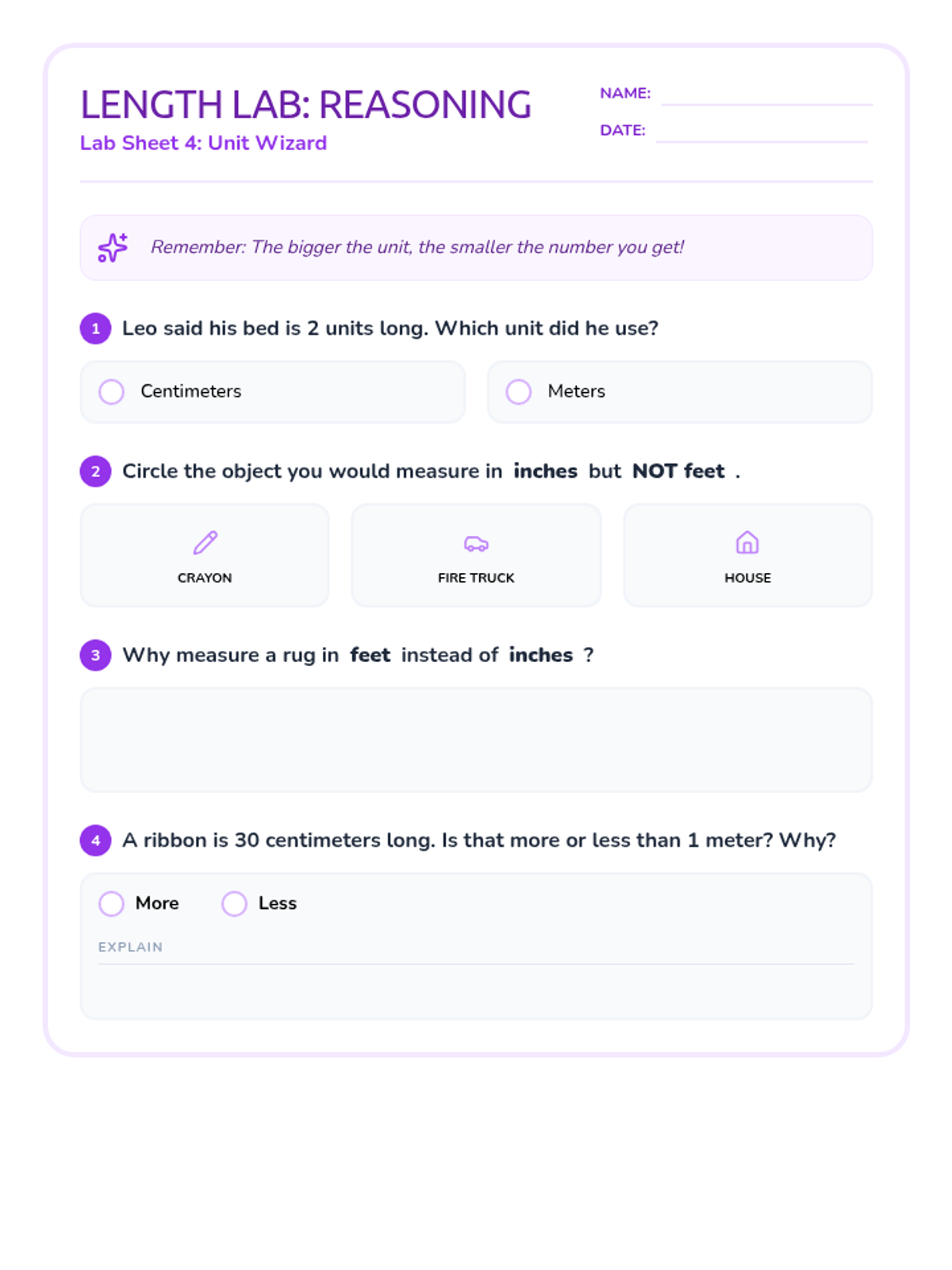
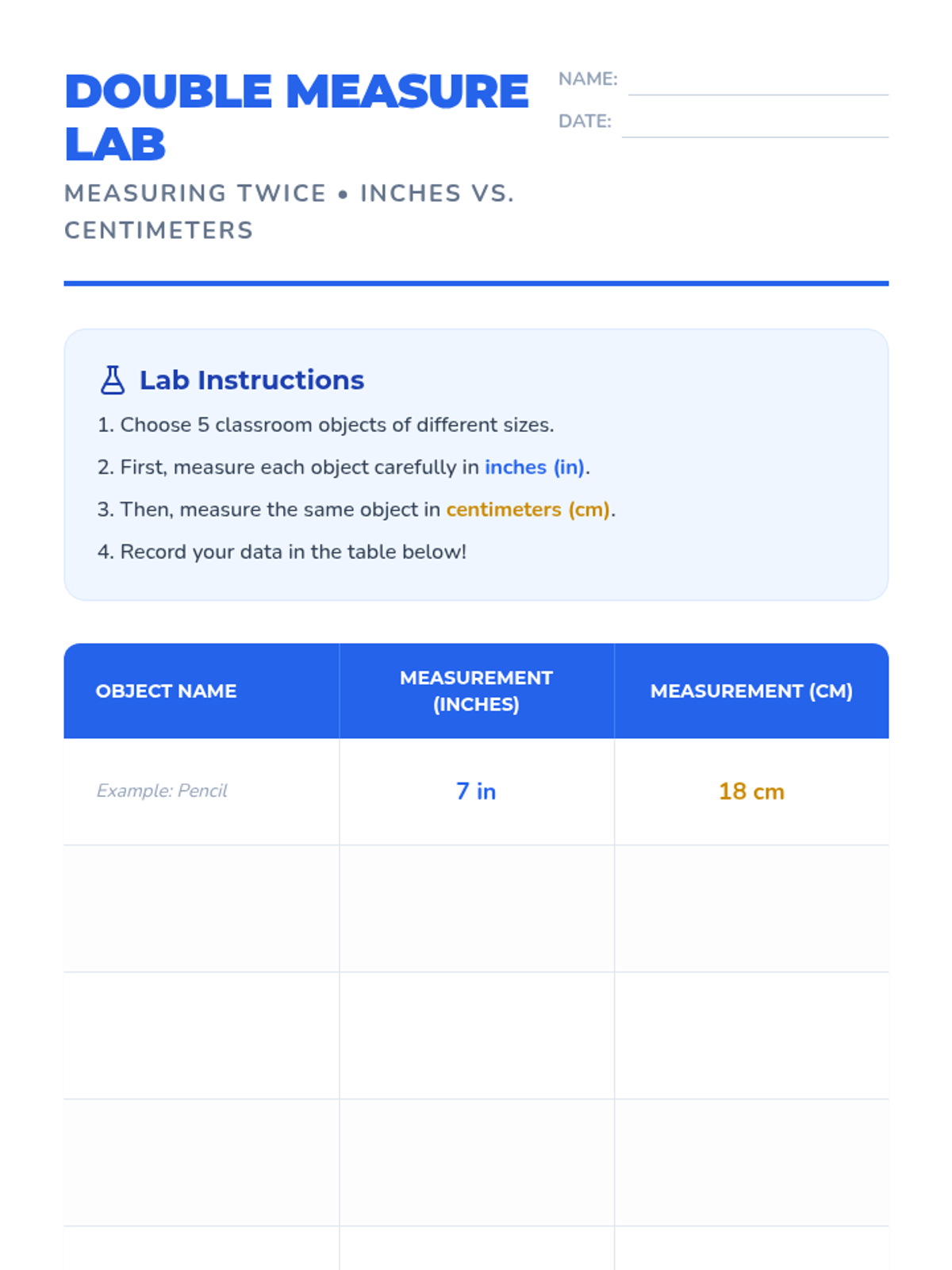
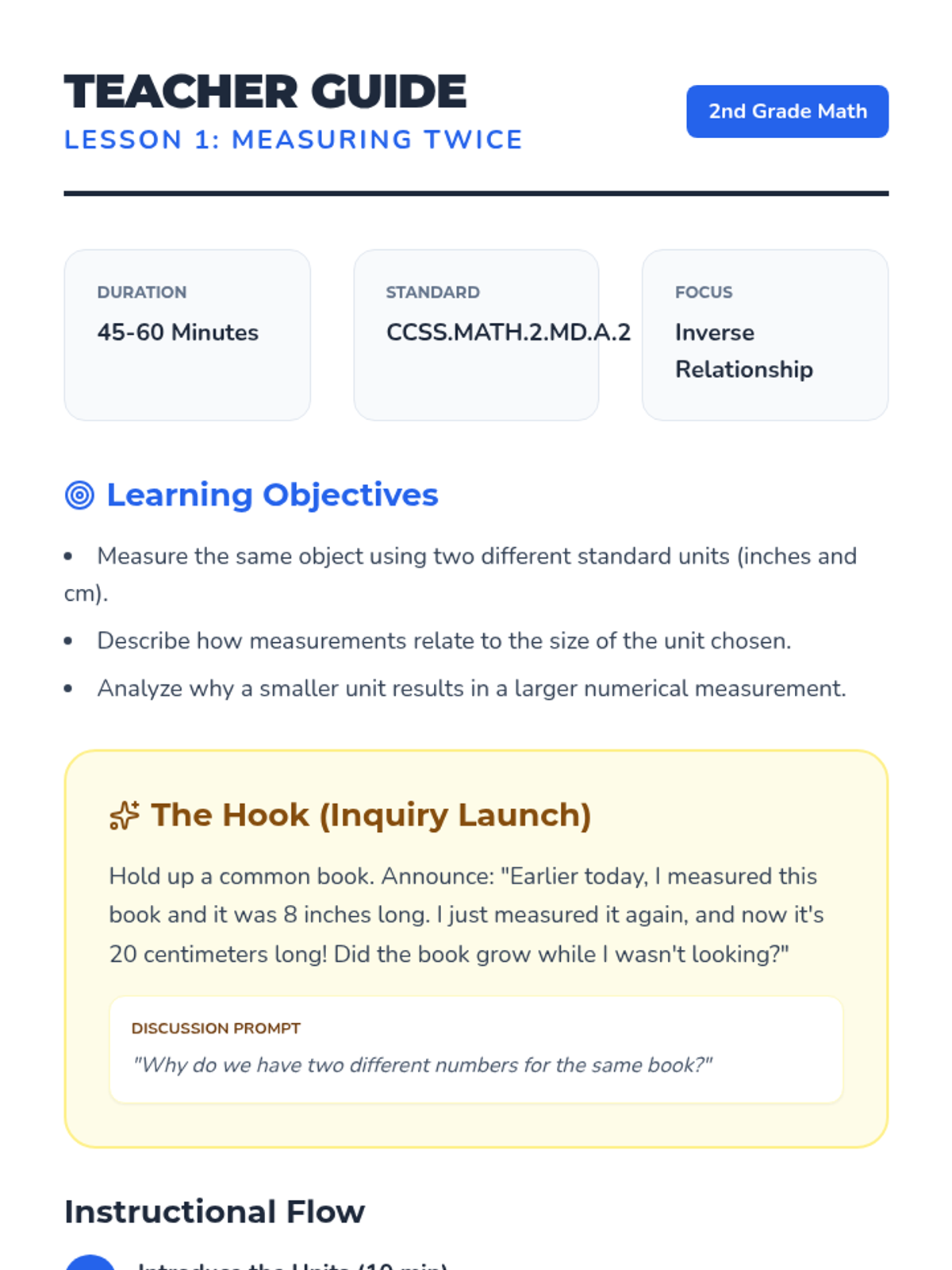
A Grade 2 Tier 2 intervention sequence focused on the inverse relationship between unit size and the number of units needed to measure an object. Students act as 'Measure Detectives' to solve the mystery of changing measurement numbers.
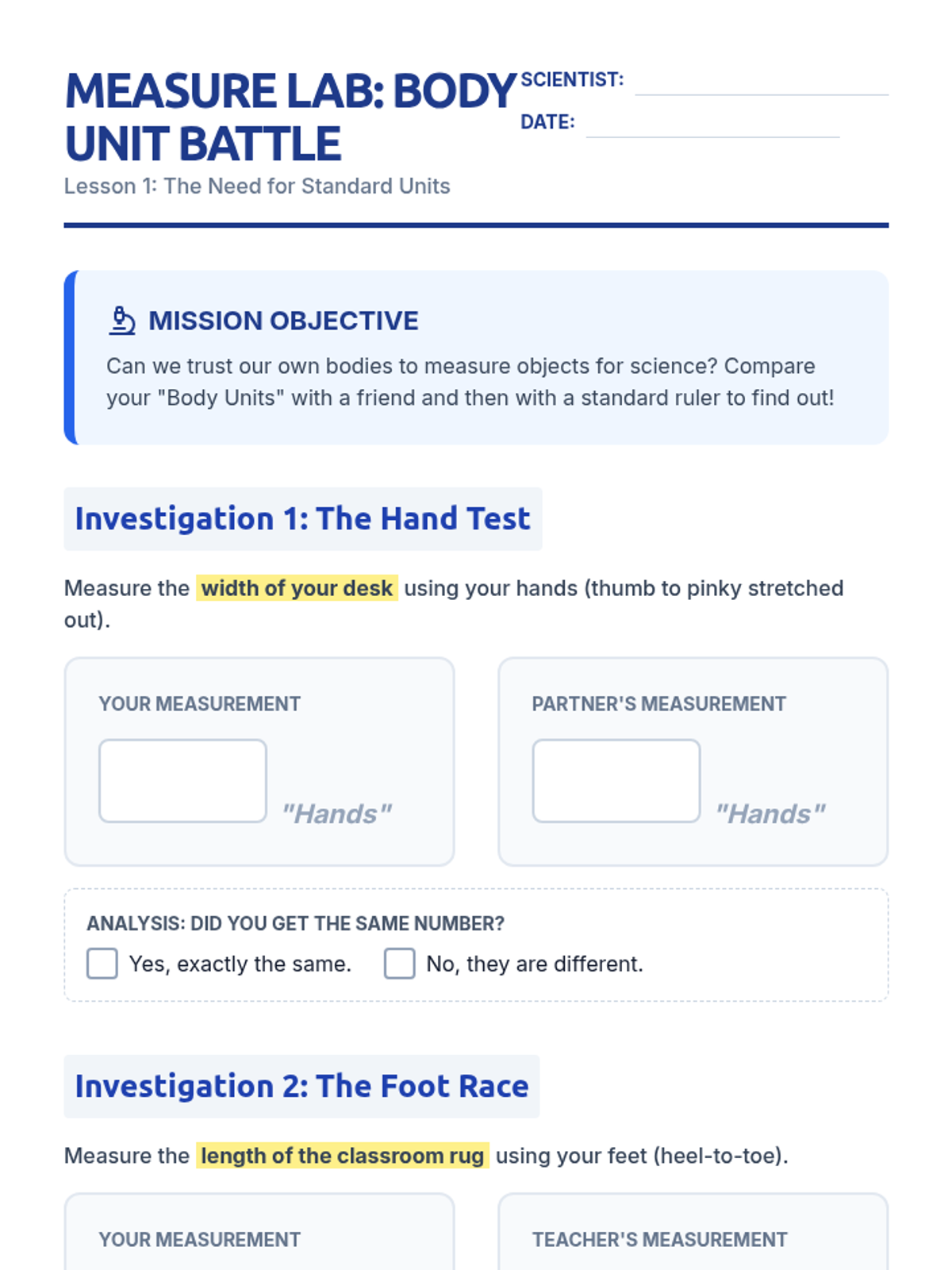
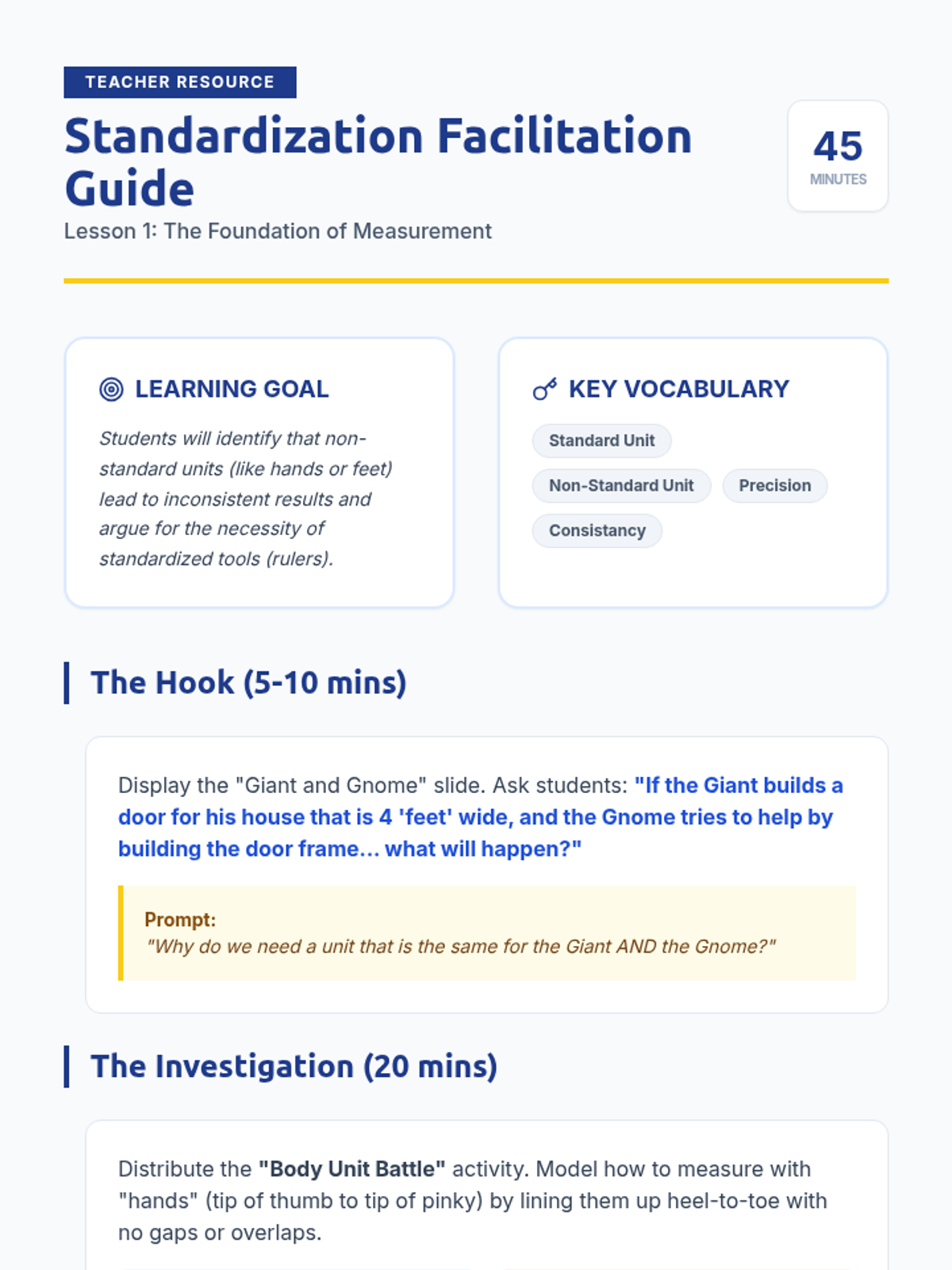
A 5-lesson sequence for 2nd-grade students introducing the necessity of standard units, the use of imperial and metric measurement tools, and applying these skills to a classroom mapping project.
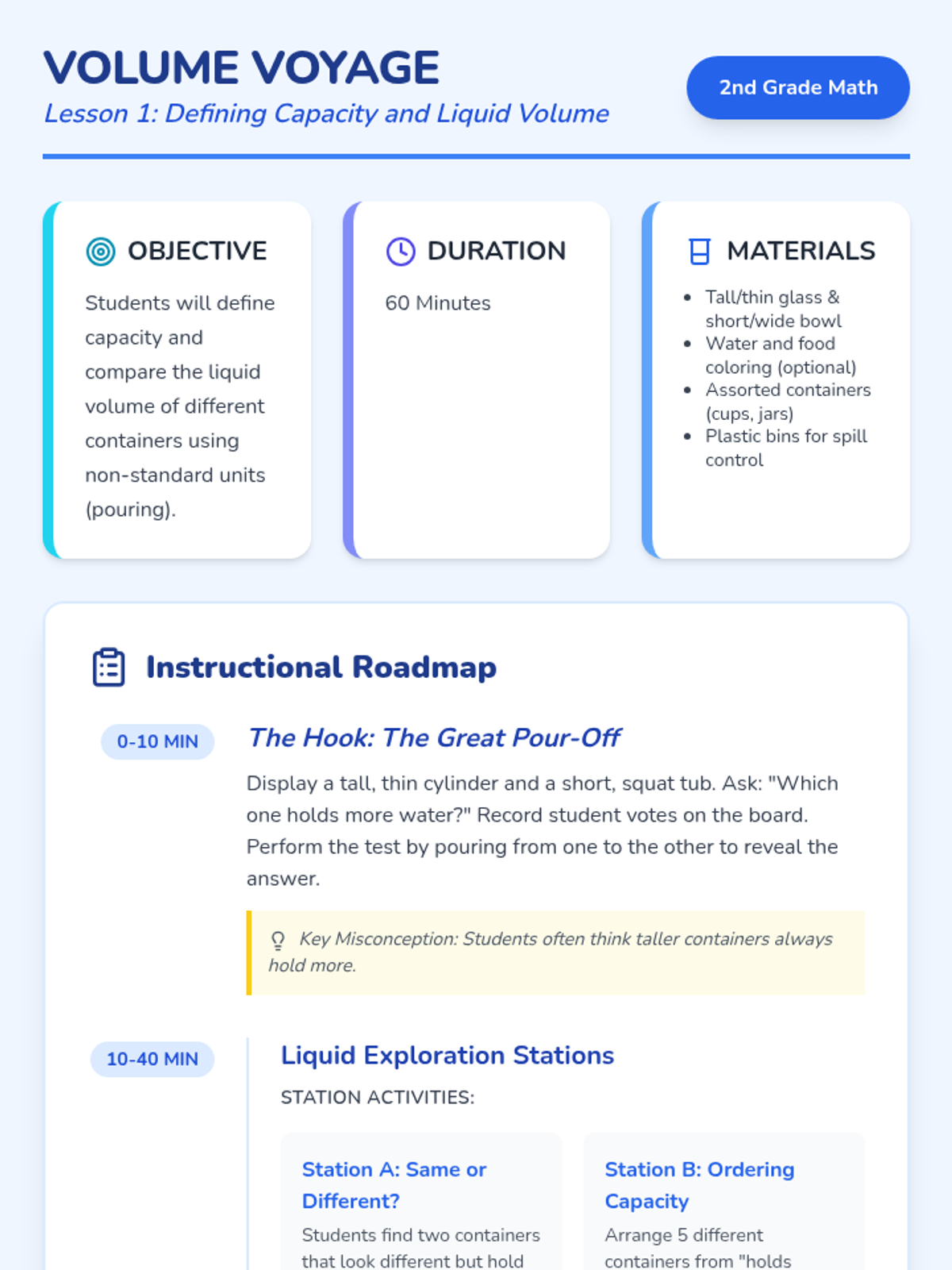
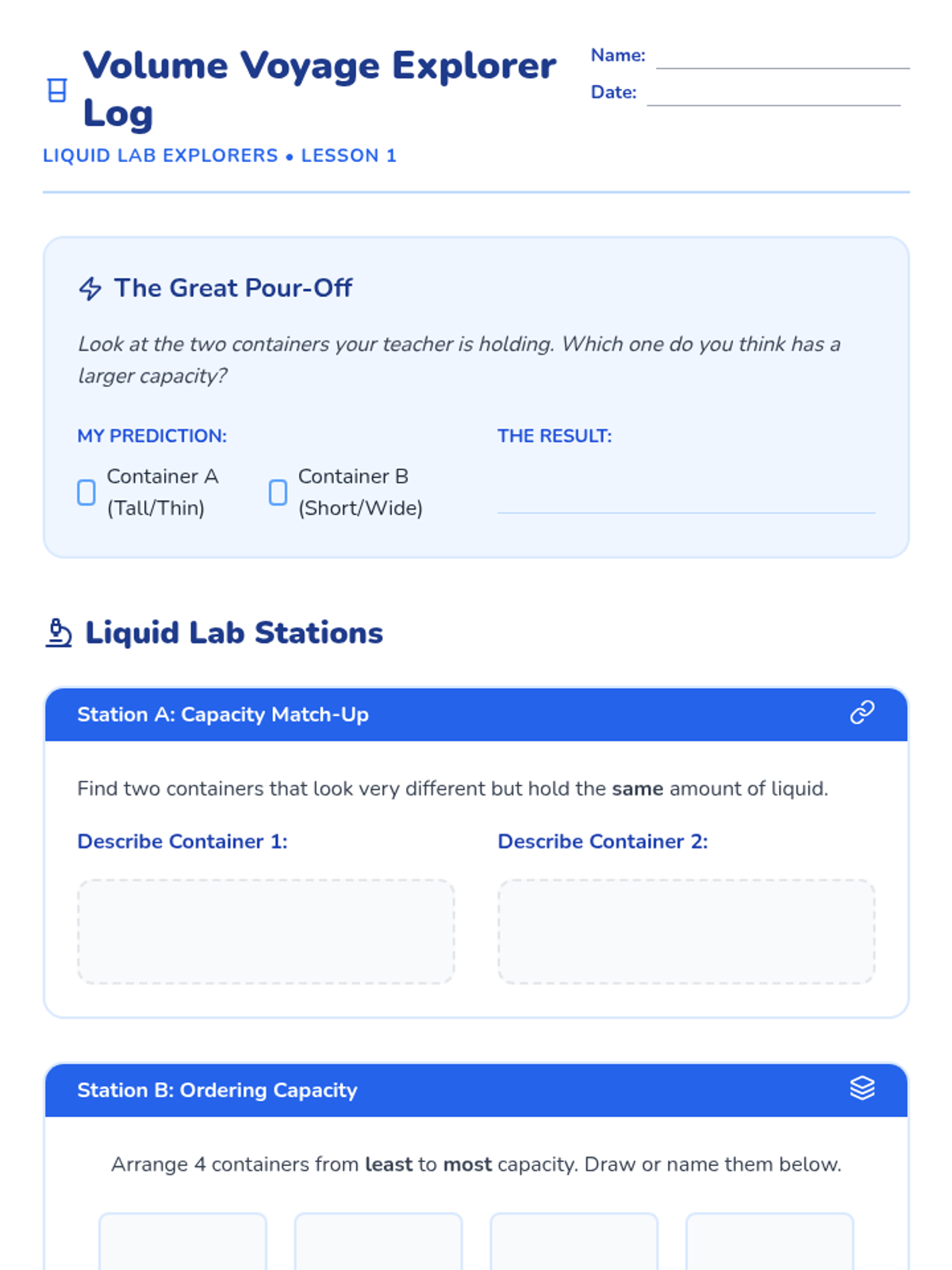
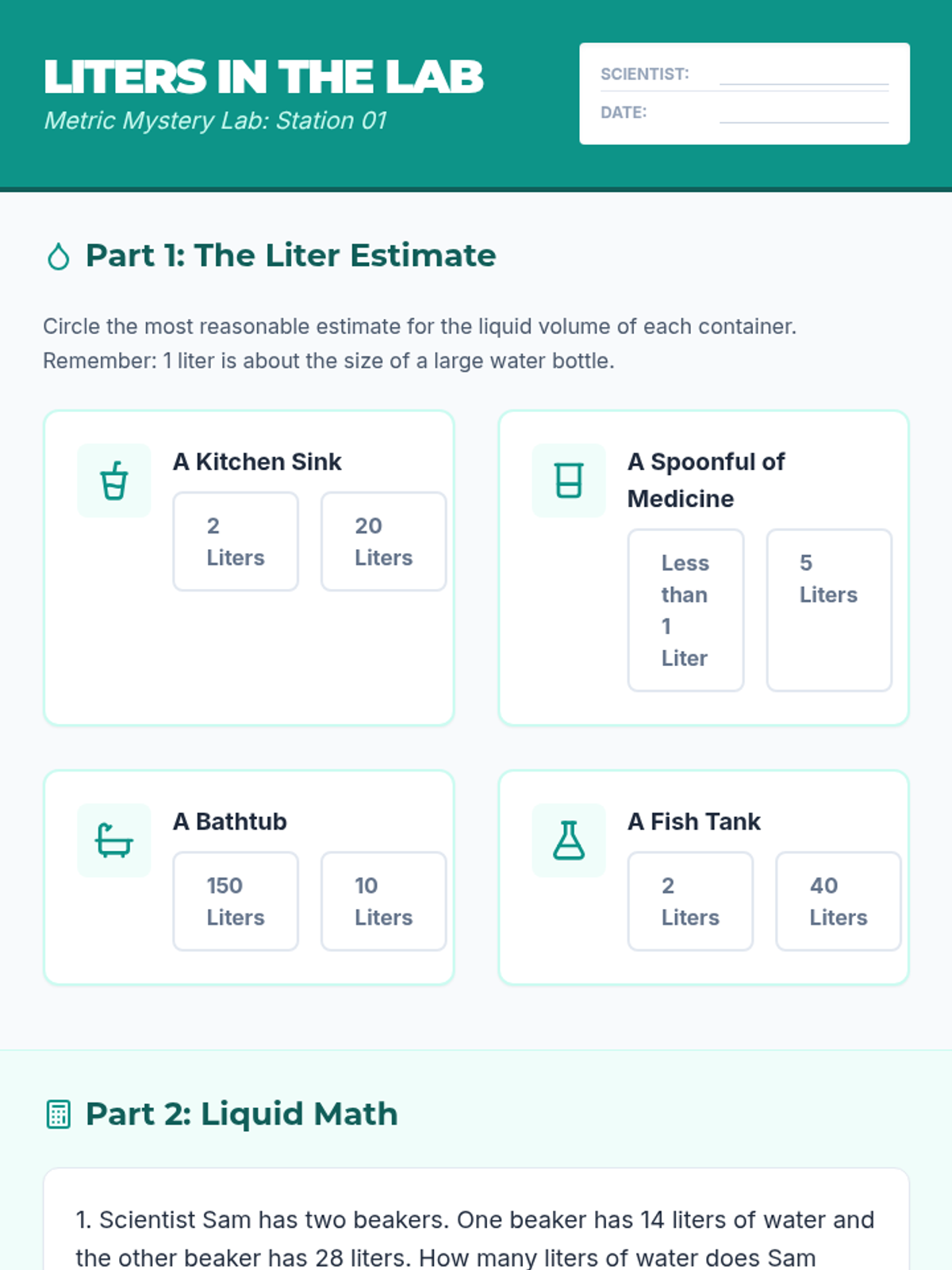
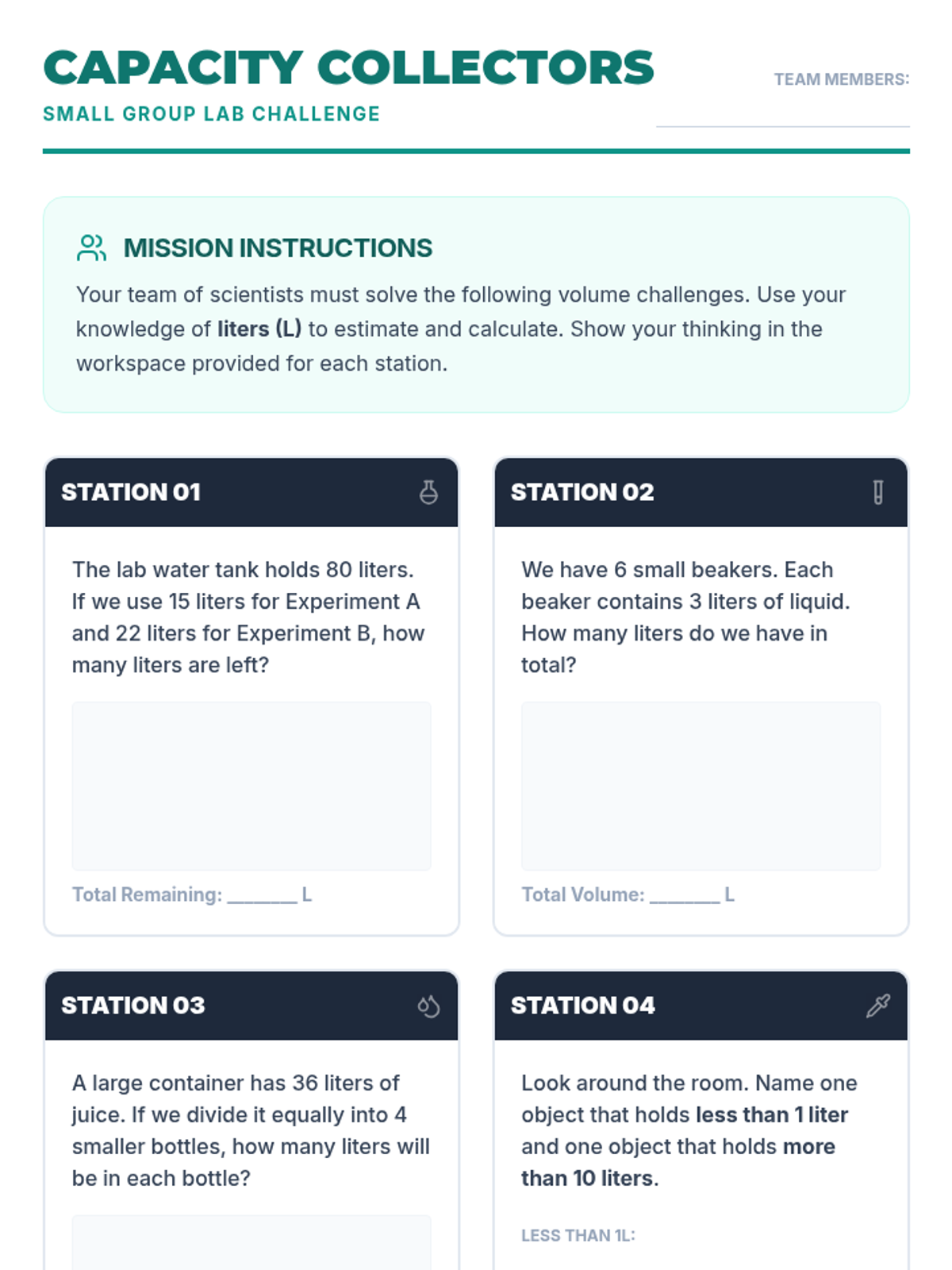
A comprehensive 5-lesson sequence for 2nd Grade students to explore liquid volume and capacity. Students progress from non-standard comparisons to using liters and solving real-world measurement problems through hands-on lab activities.
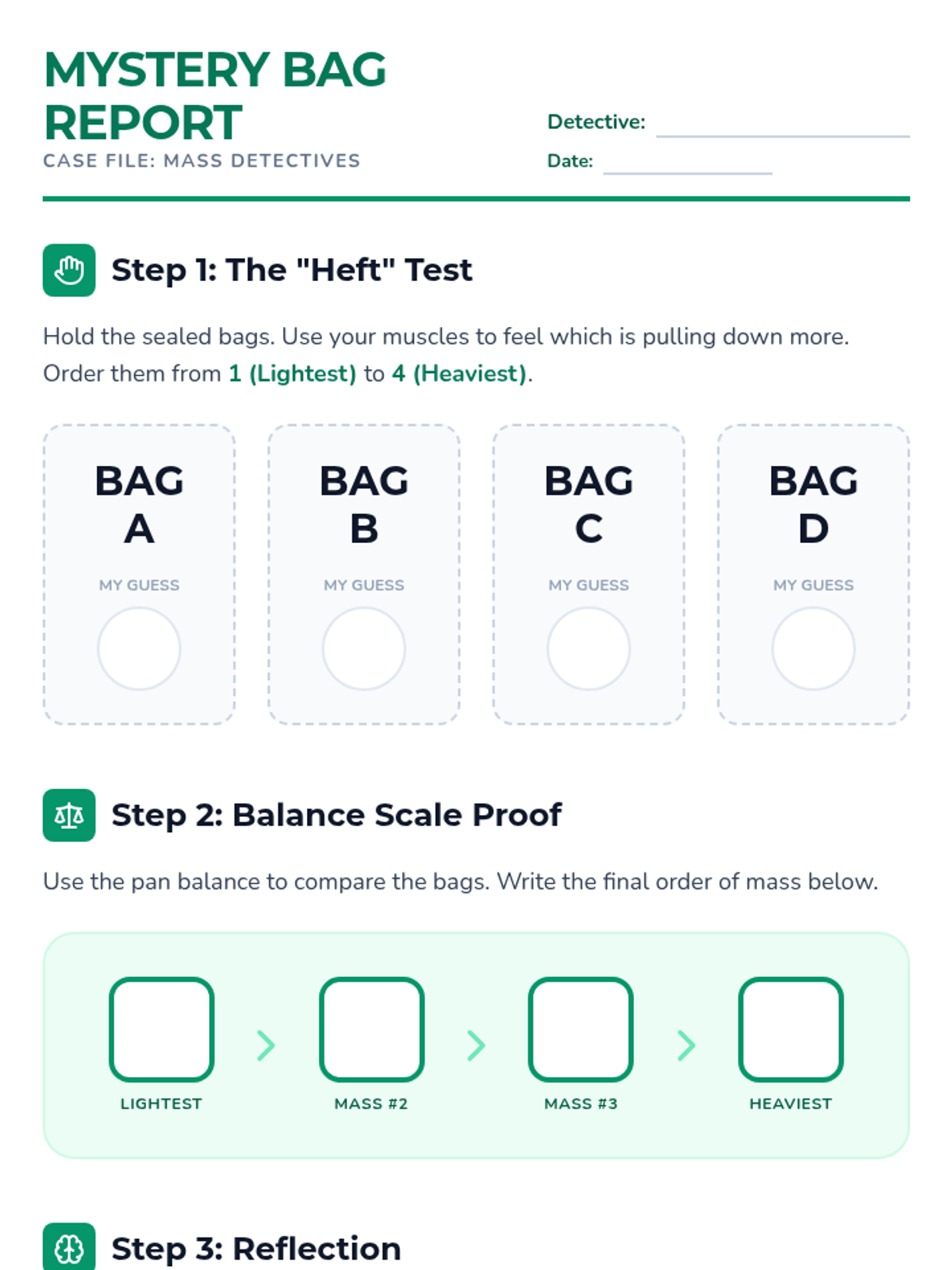
A comprehensive 2nd-grade sequence where students transition from tactile comparisons to formal metric measurement of mass. Using inquiry-based activities and benchmarks, students learn to estimate, measure, and solve problems using grams and kilograms.
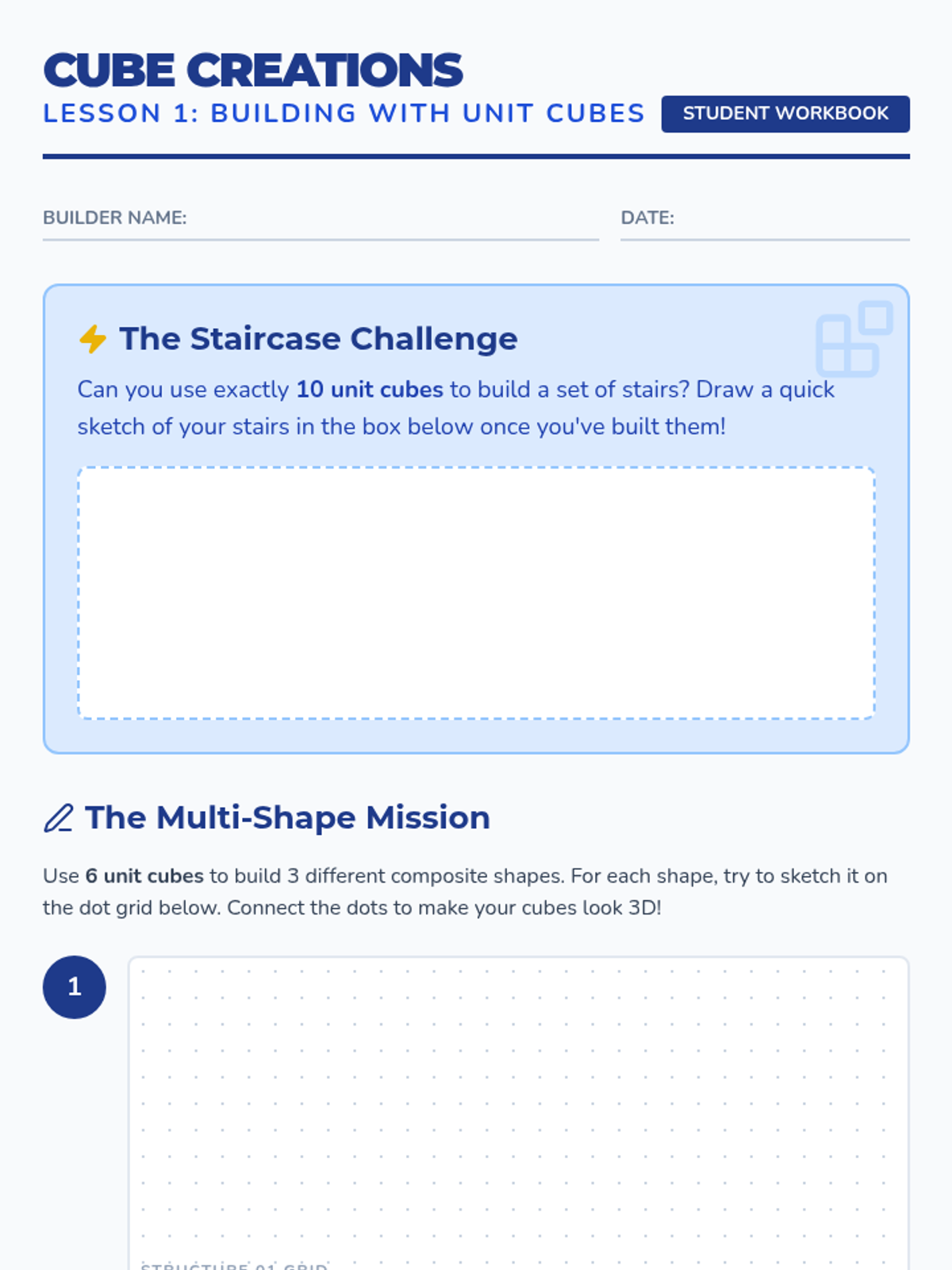
This advanced 2nd-grade sequence explores 3D geometry through engineering and spatial reasoning. Students progress from building with unit cubes to designing complex structures, focusing on the functional properties of shapes and spatial visualization.
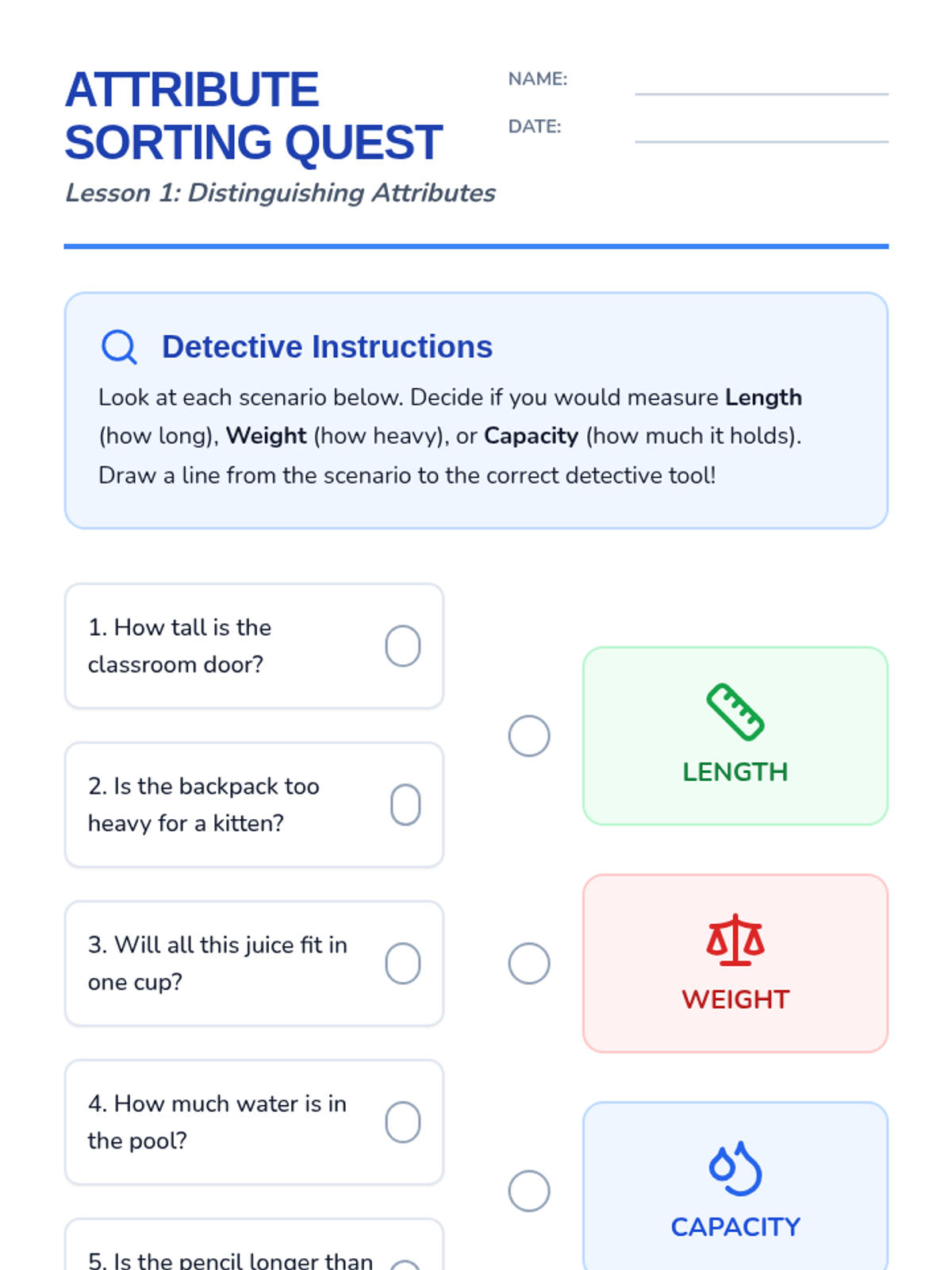
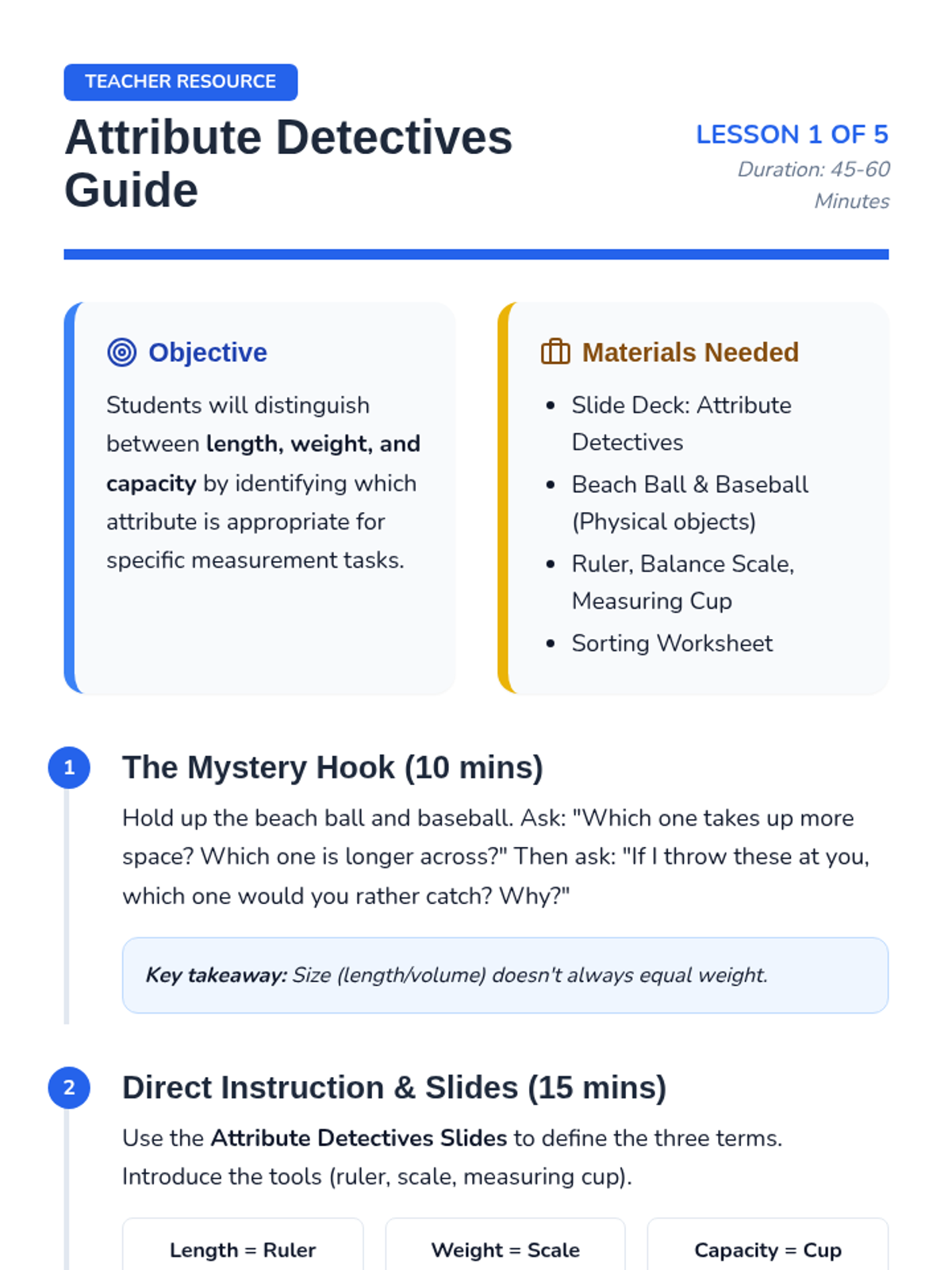
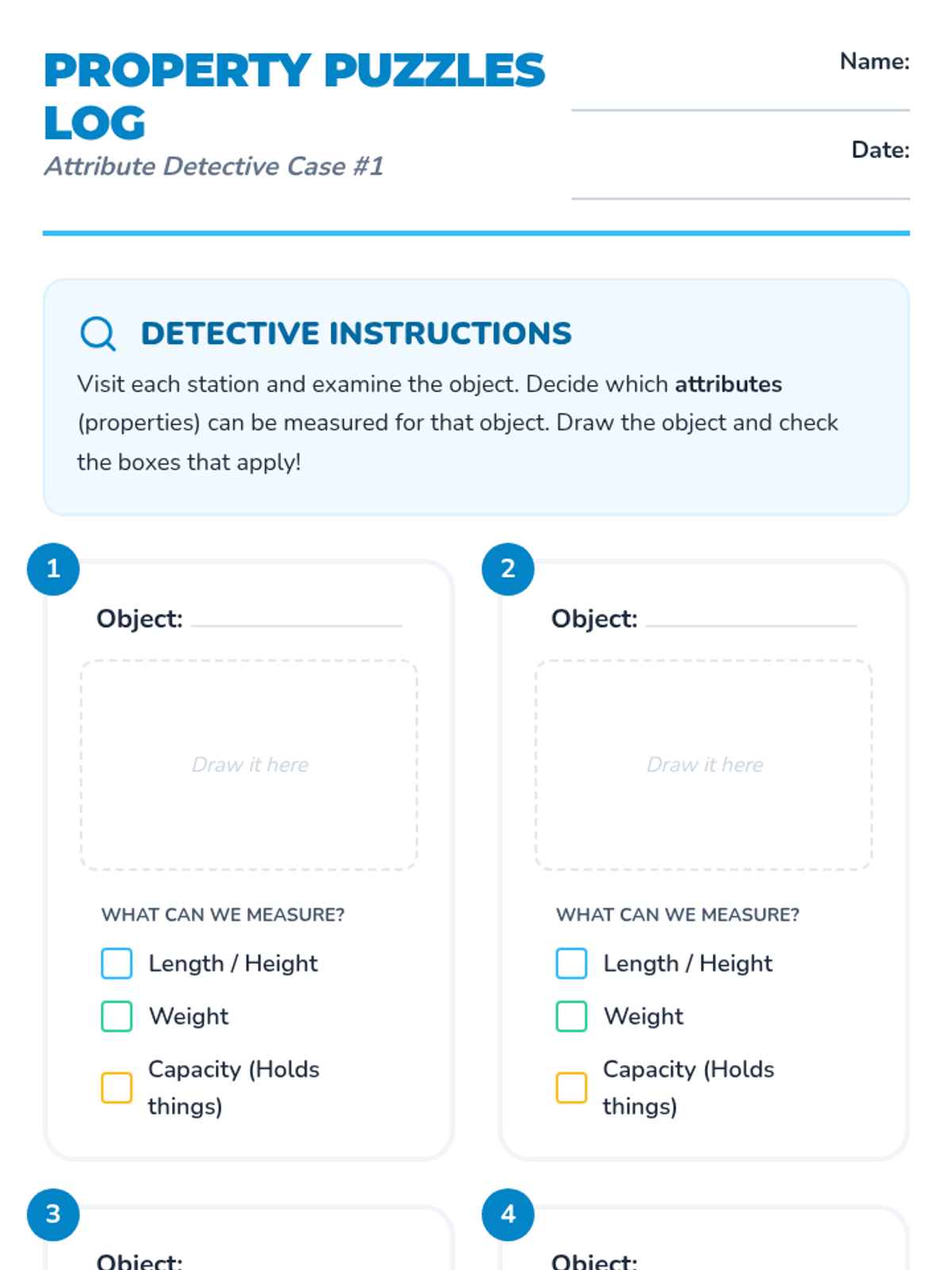
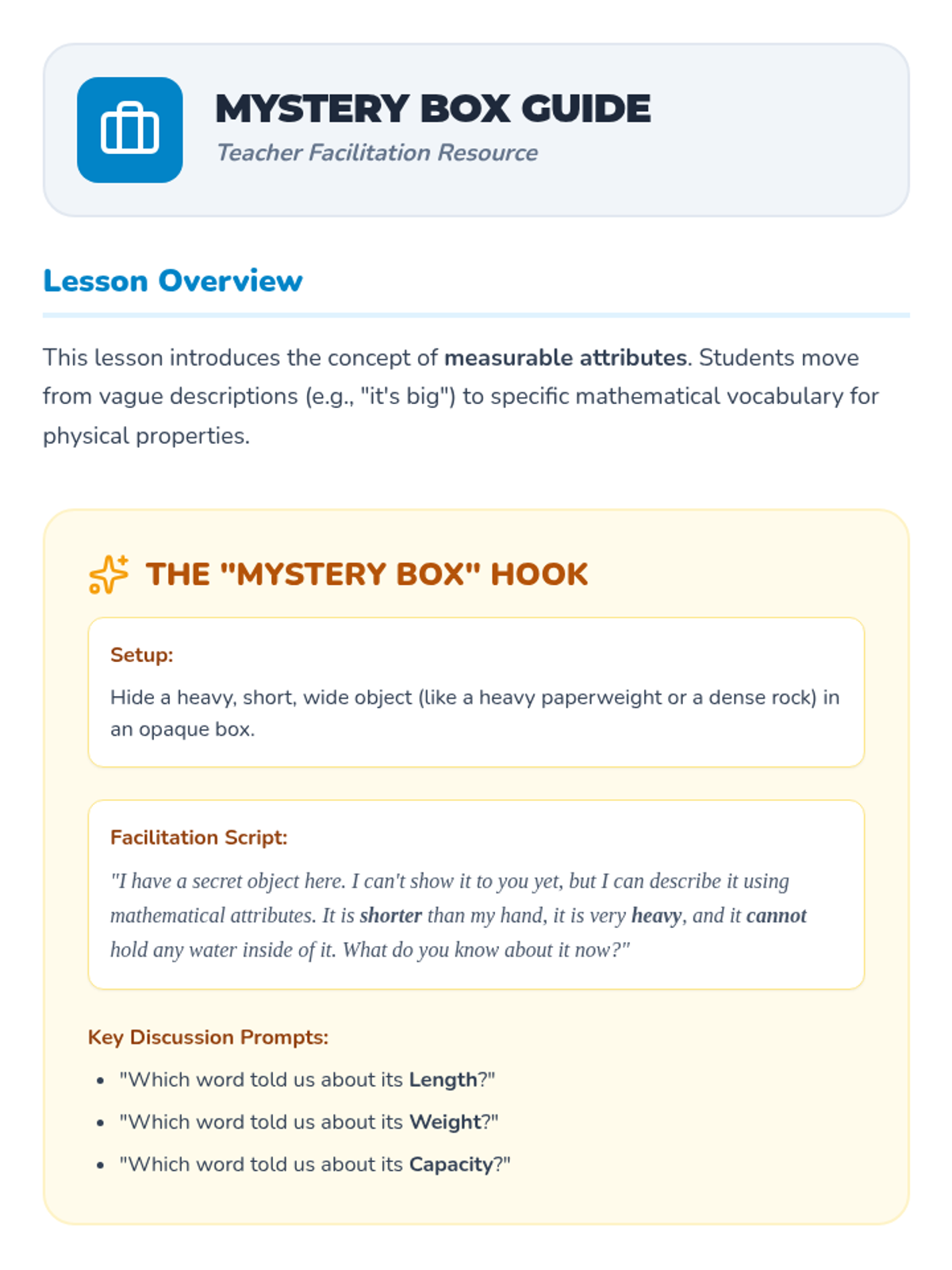
A hands-on inquiry sequence where 2nd-grade students explore the differences between length, weight, and capacity. Students use tools like balance scales and containers to discover that an object's size doesn't always determine its weight or volume.
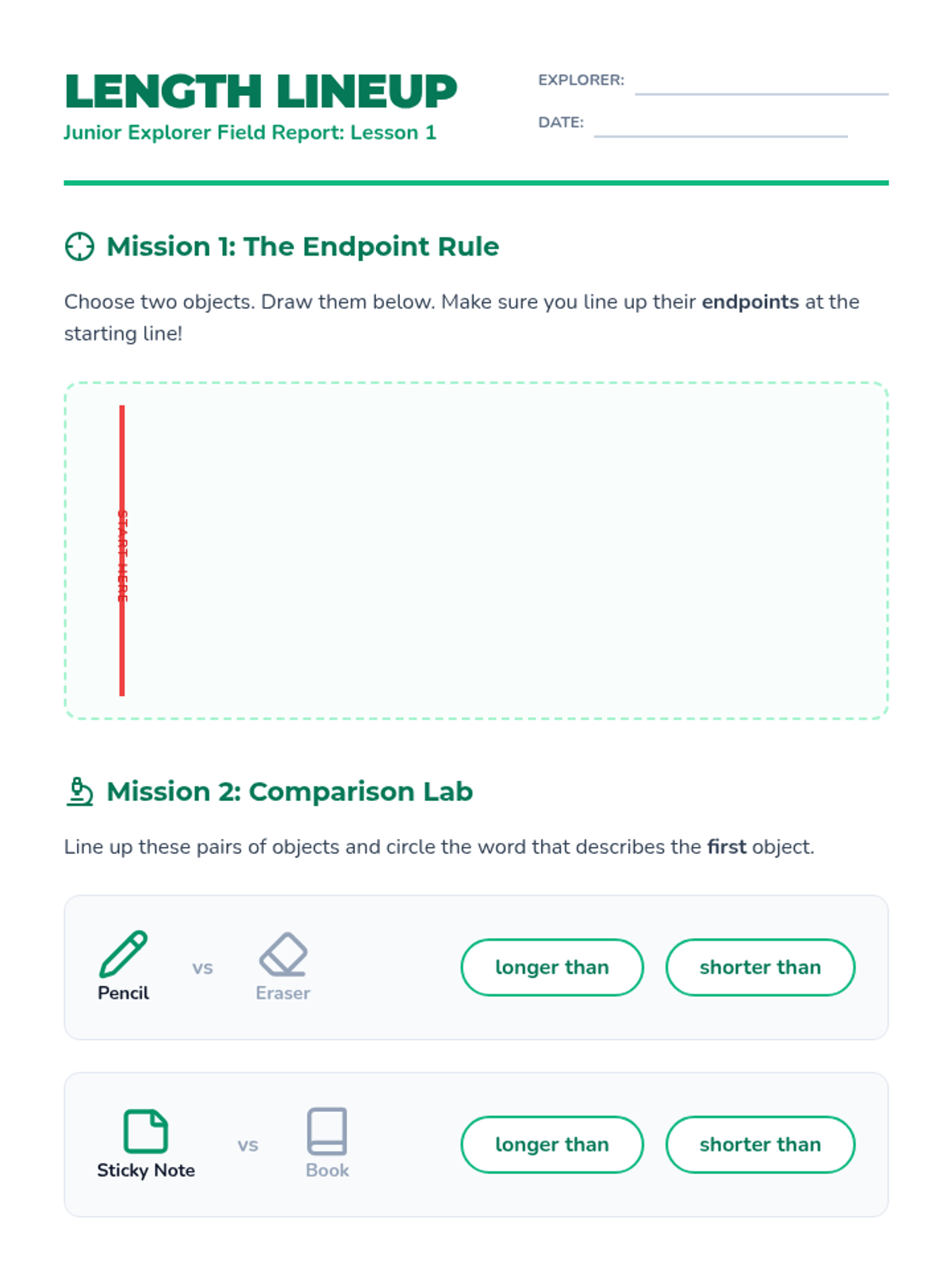
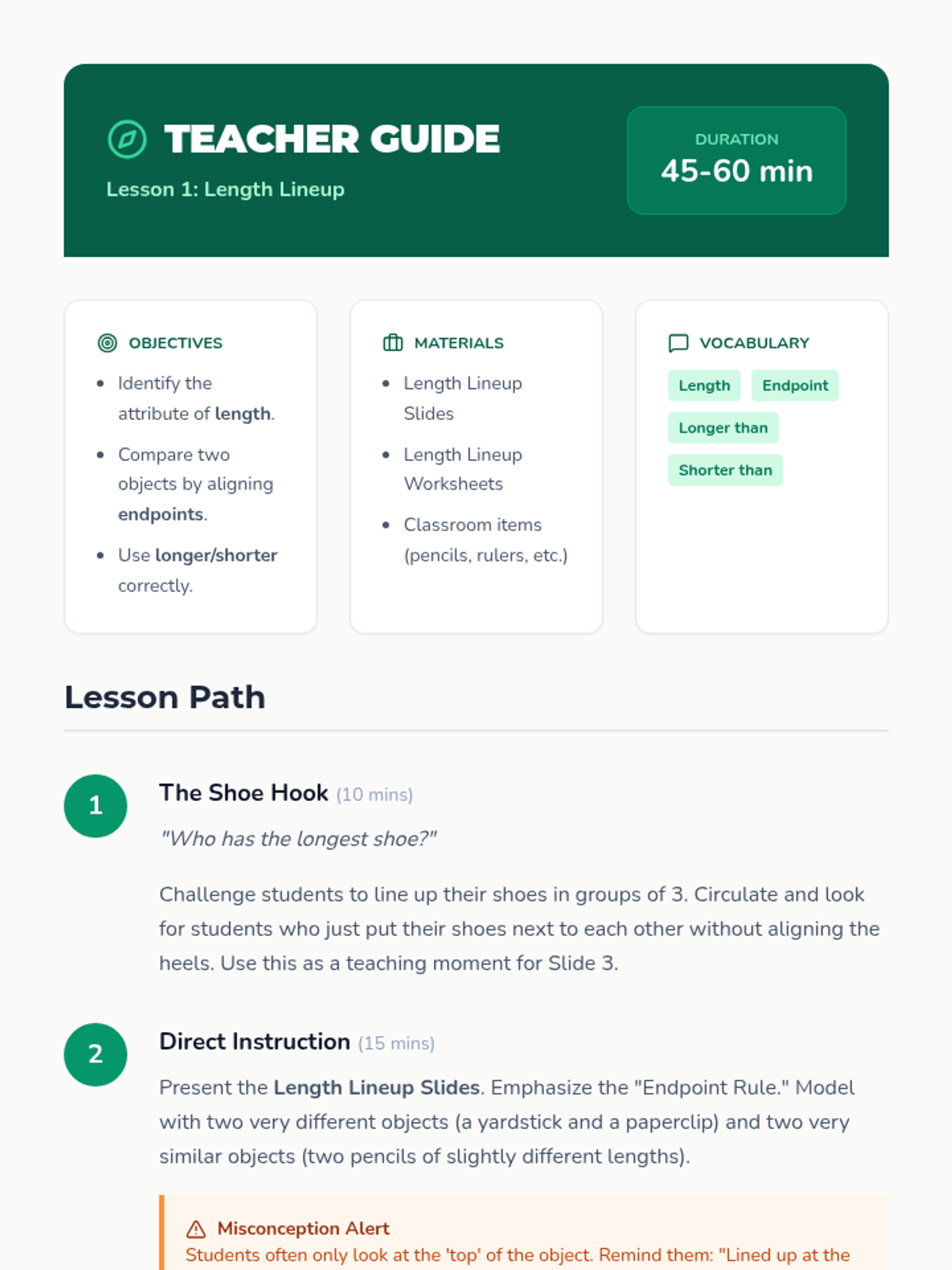
A hands-on exploration of length, weight, and capacity for 2nd graders, focusing on direct comparison and foundational measurement vocabulary. Students use sensory estimation and physical manipulation to understand how objects differ in size and mass.
Students embark on a sensory exploration of physical properties, learning to distinguish between and compare length, weight, and capacity without standard units. Through hands-on stations and direct comparison techniques, they build core vocabulary and practice ordering objects based on specific attributes.
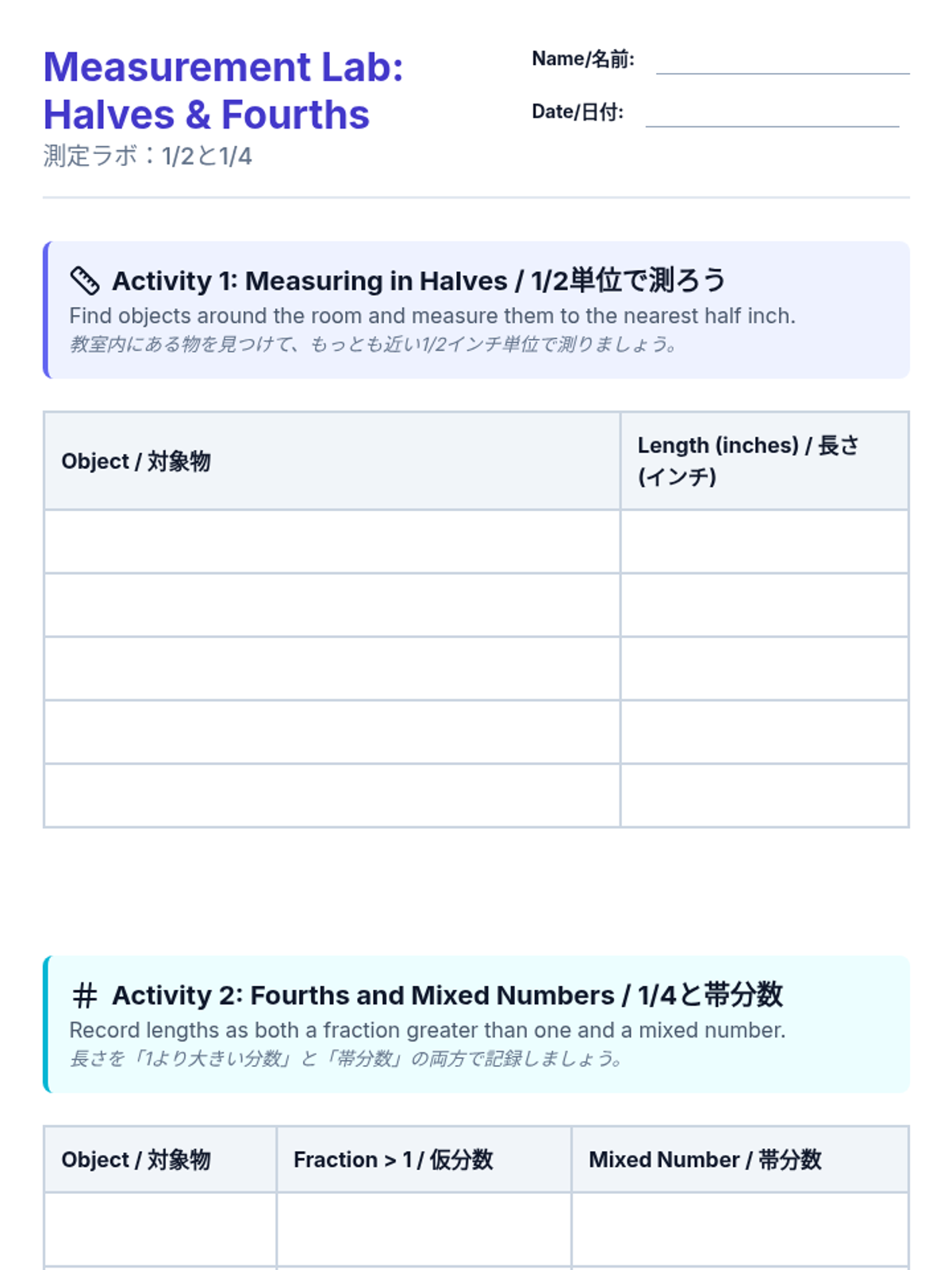
A comprehensive unit on measurement focusing on inches, fractions (halves and fourths), mixed numbers, and representing data on line plots. Translated into Japanese.
A comprehensive unit on measuring length in inches using halves and fourths, recording data, and interpreting line plots, presented in both English and Japanese.
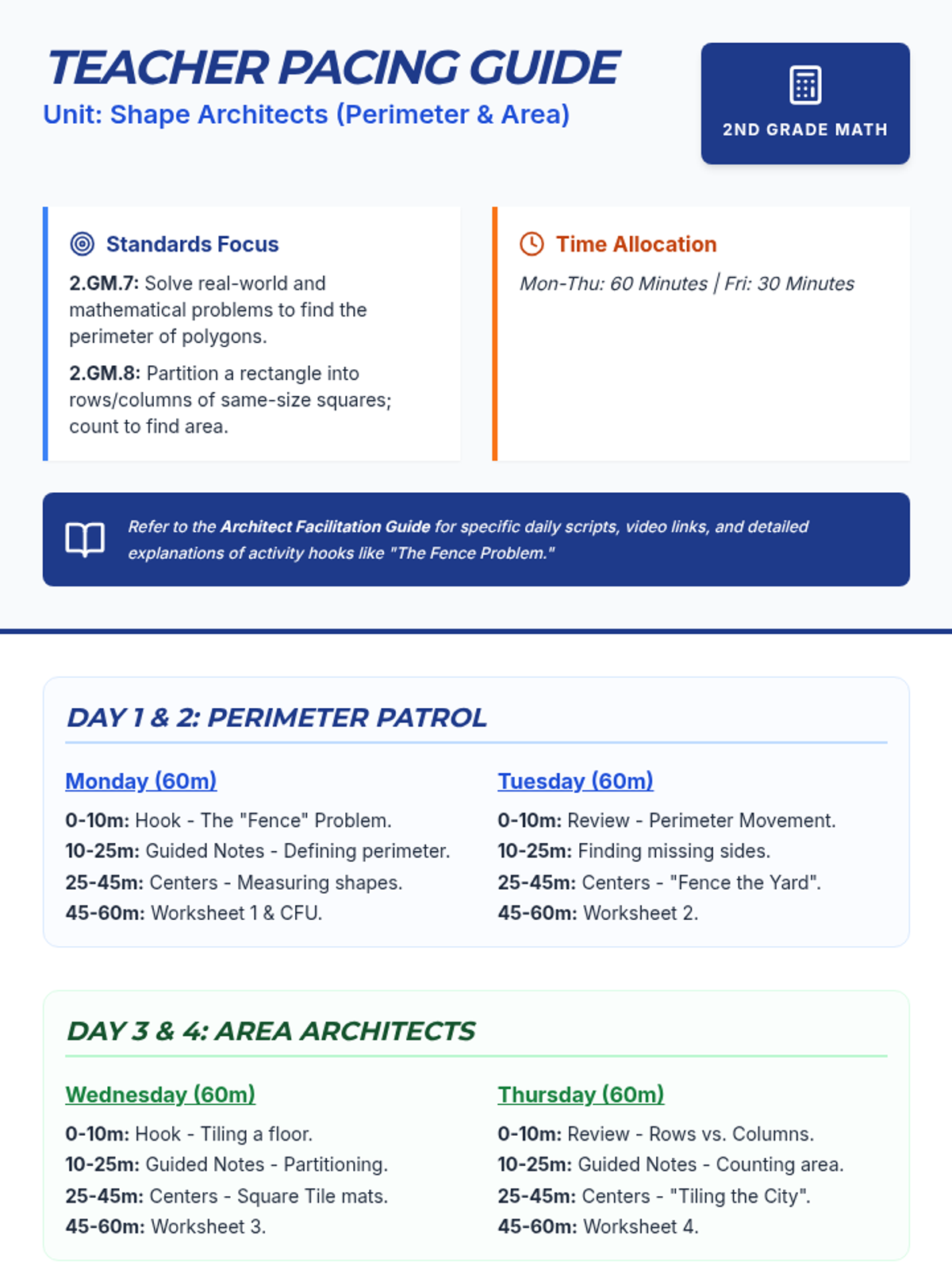
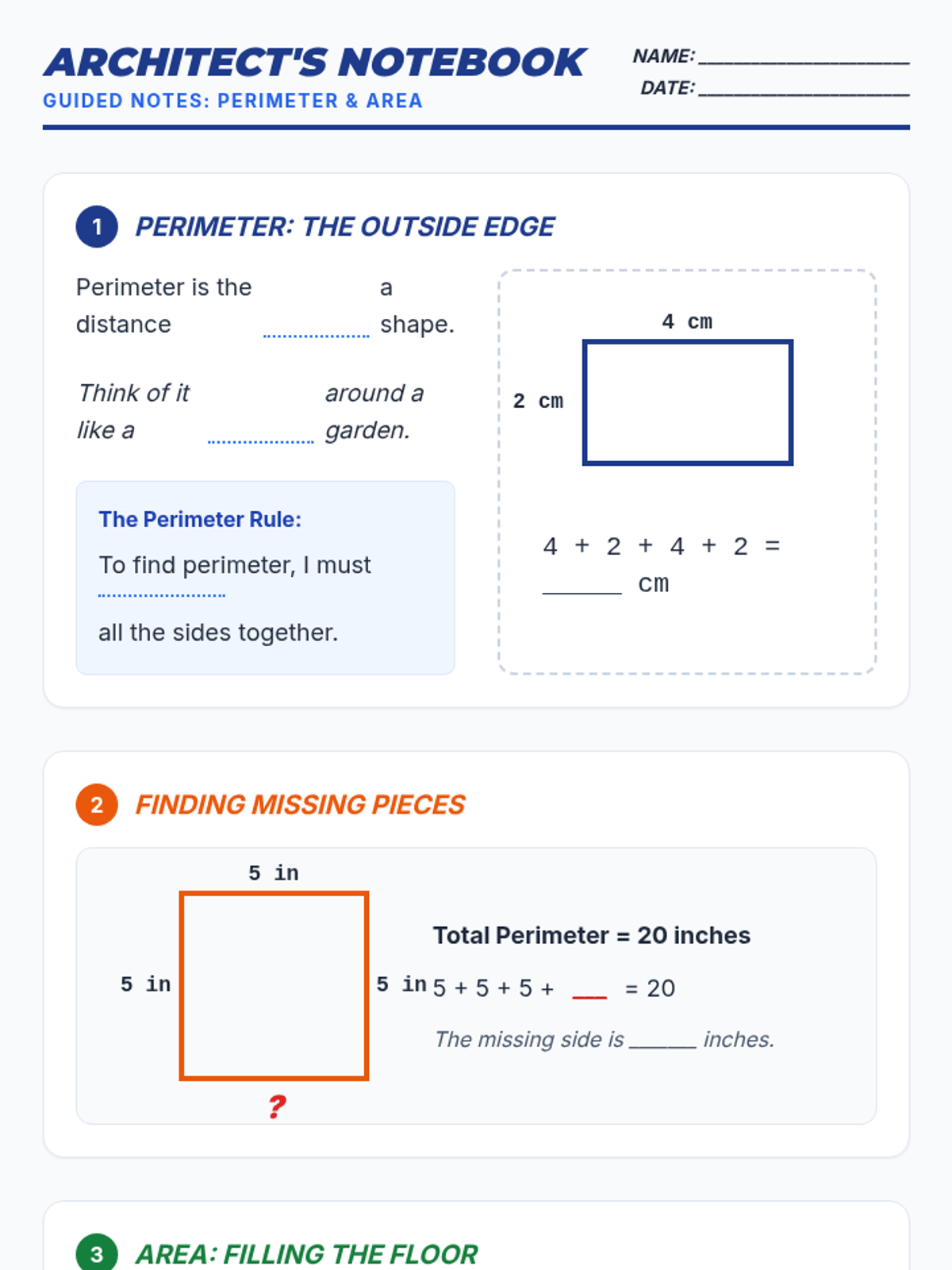
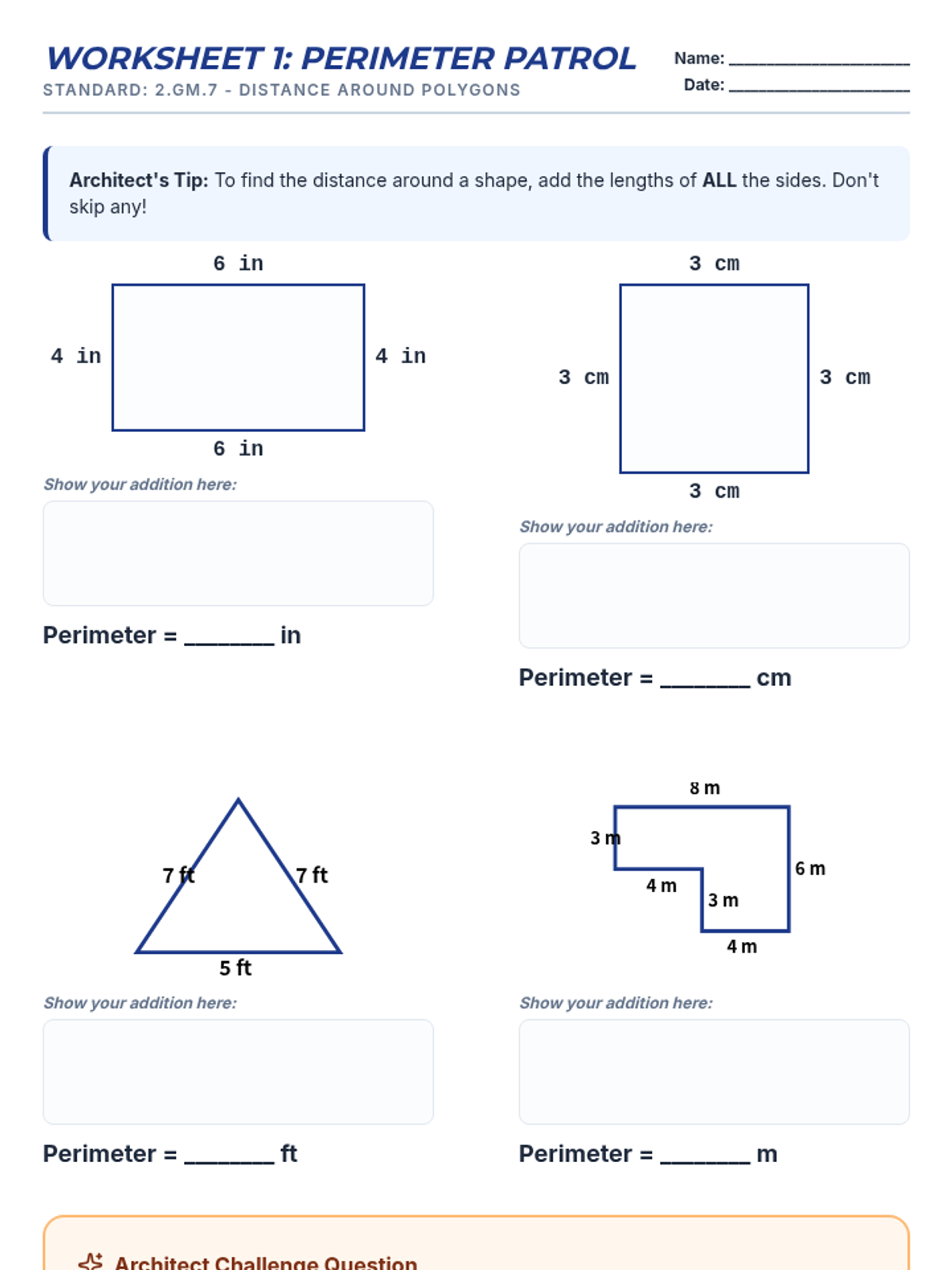
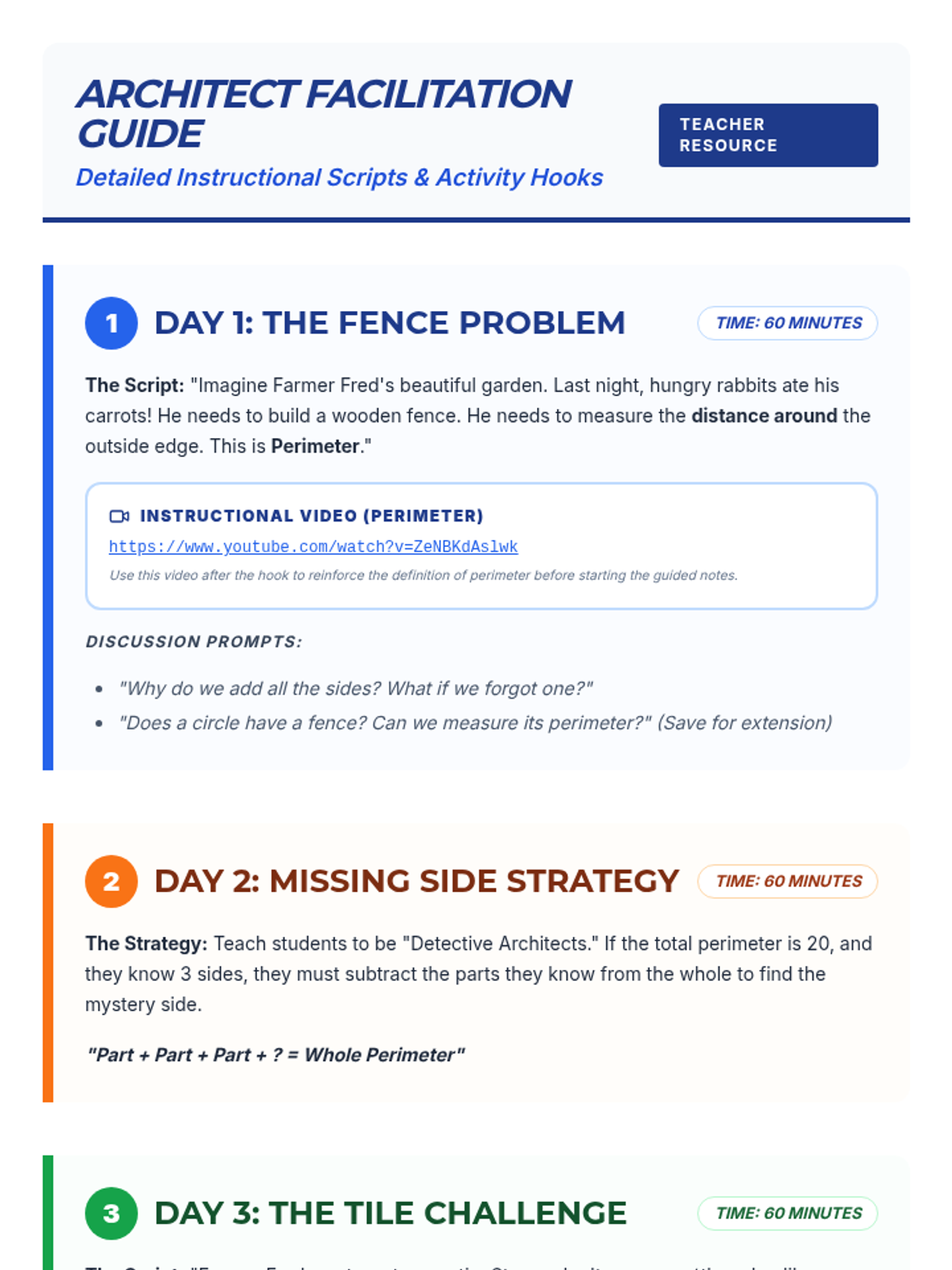
A week-long math unit for 2nd grade focusing on perimeter of polygons and partitioning rectangles to find area. Students act as 'Shape Architects' to design, measure, and calculate blueprints.
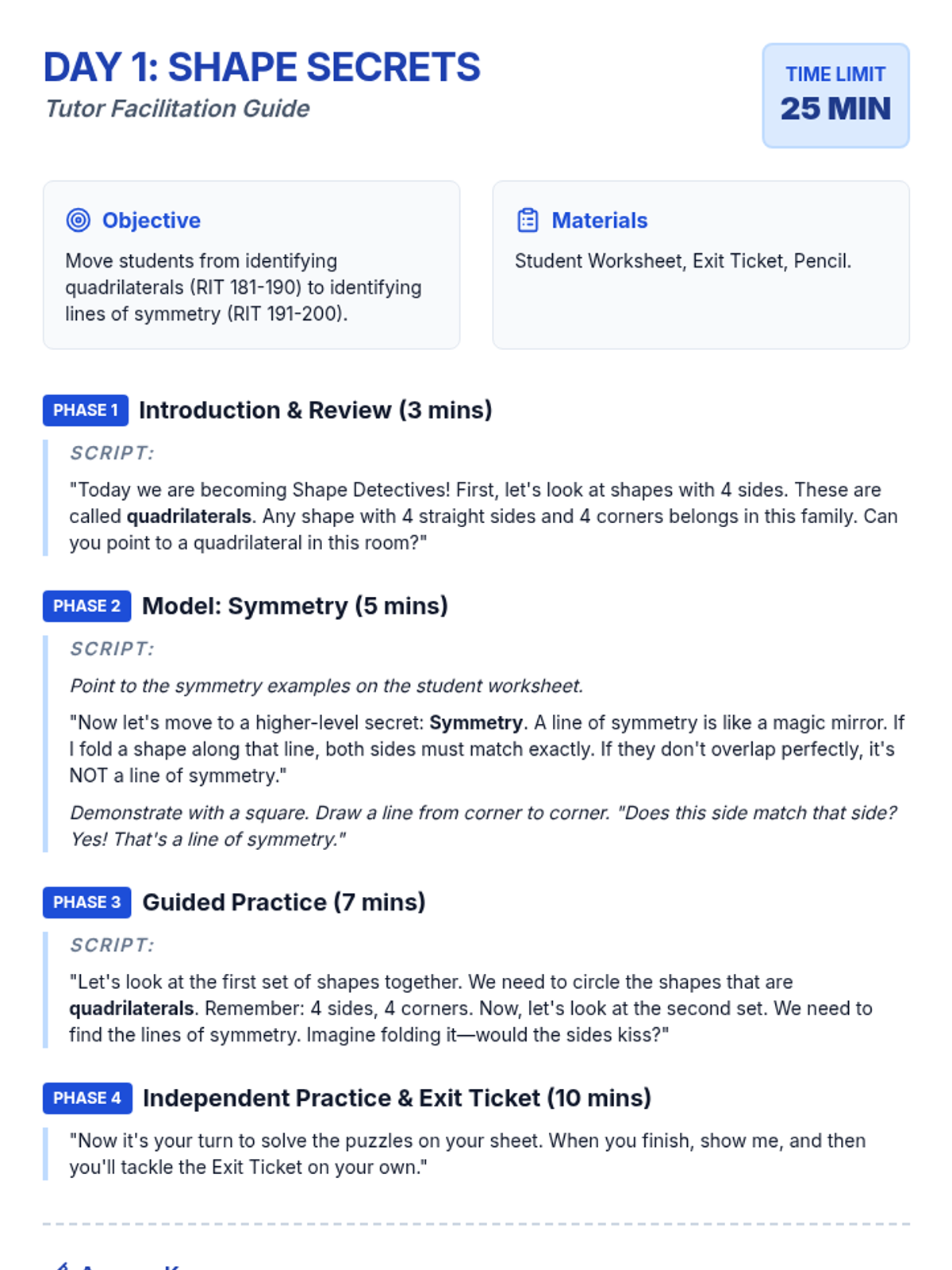
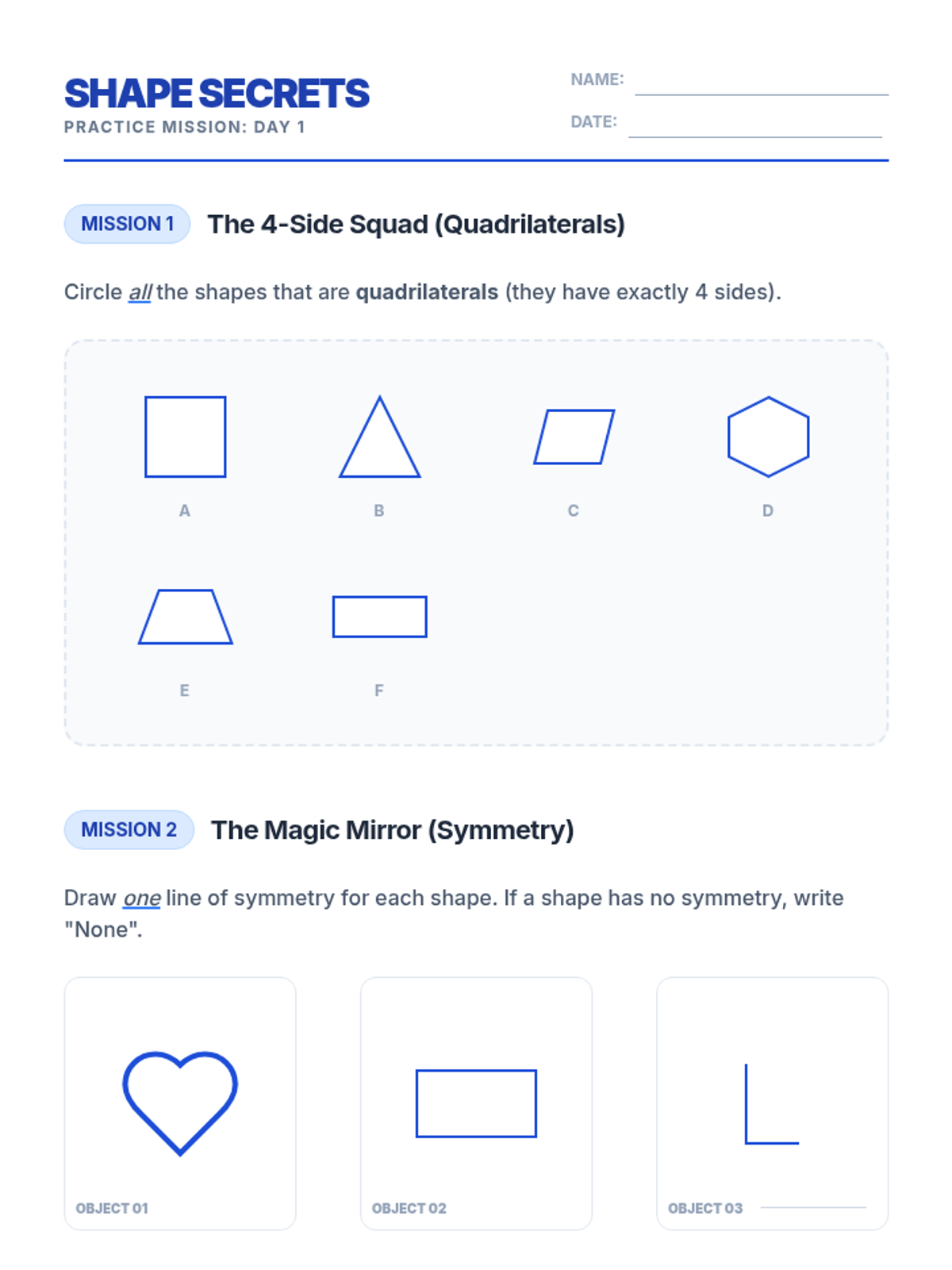
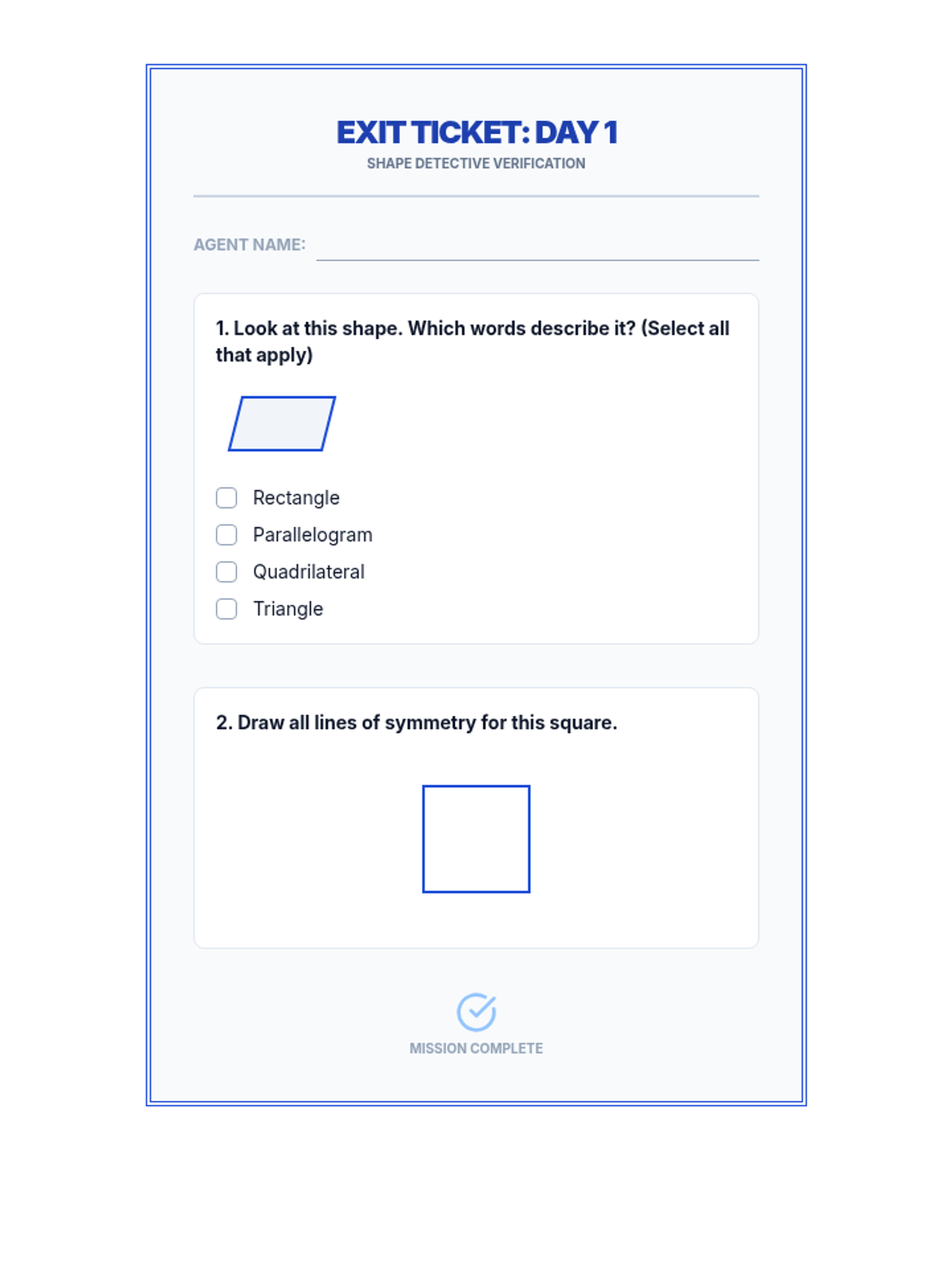
A 3-day targeted tutoring sequence designed to move students from RIT 181-190 to 191-200 in the MAP Growth Geometry and Measurement strand, focusing on shape attributes, symmetry, and perimeter.
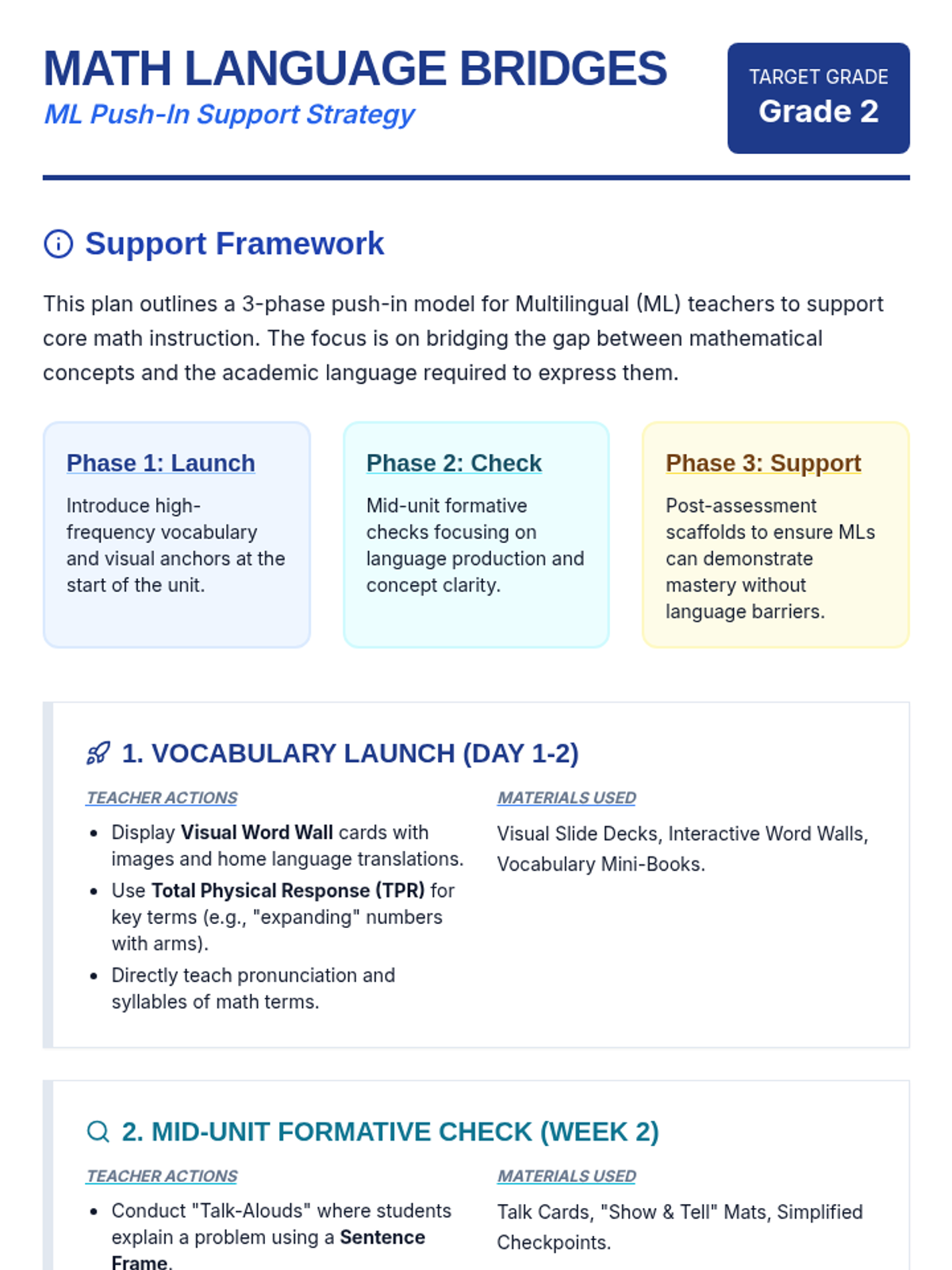
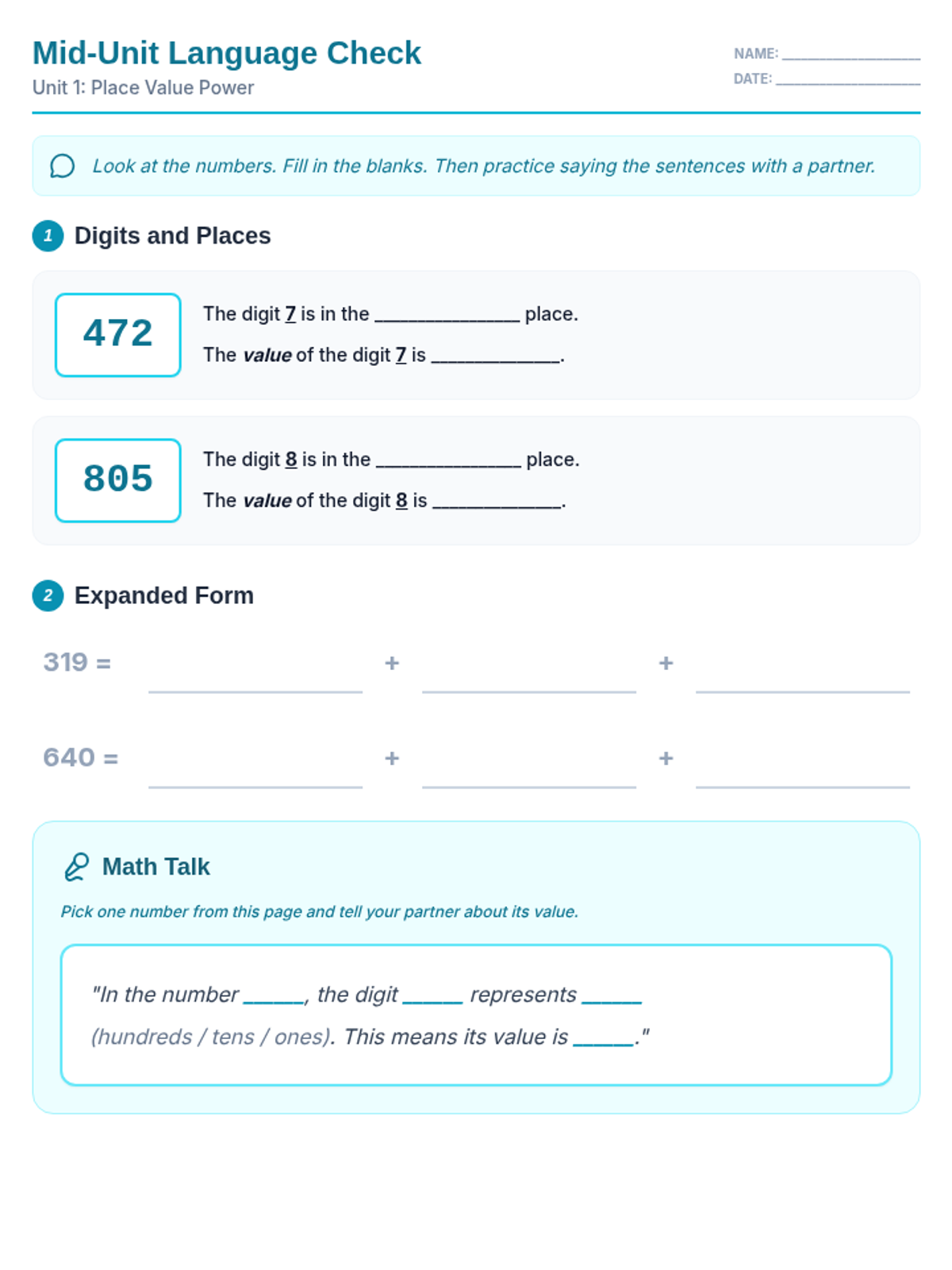
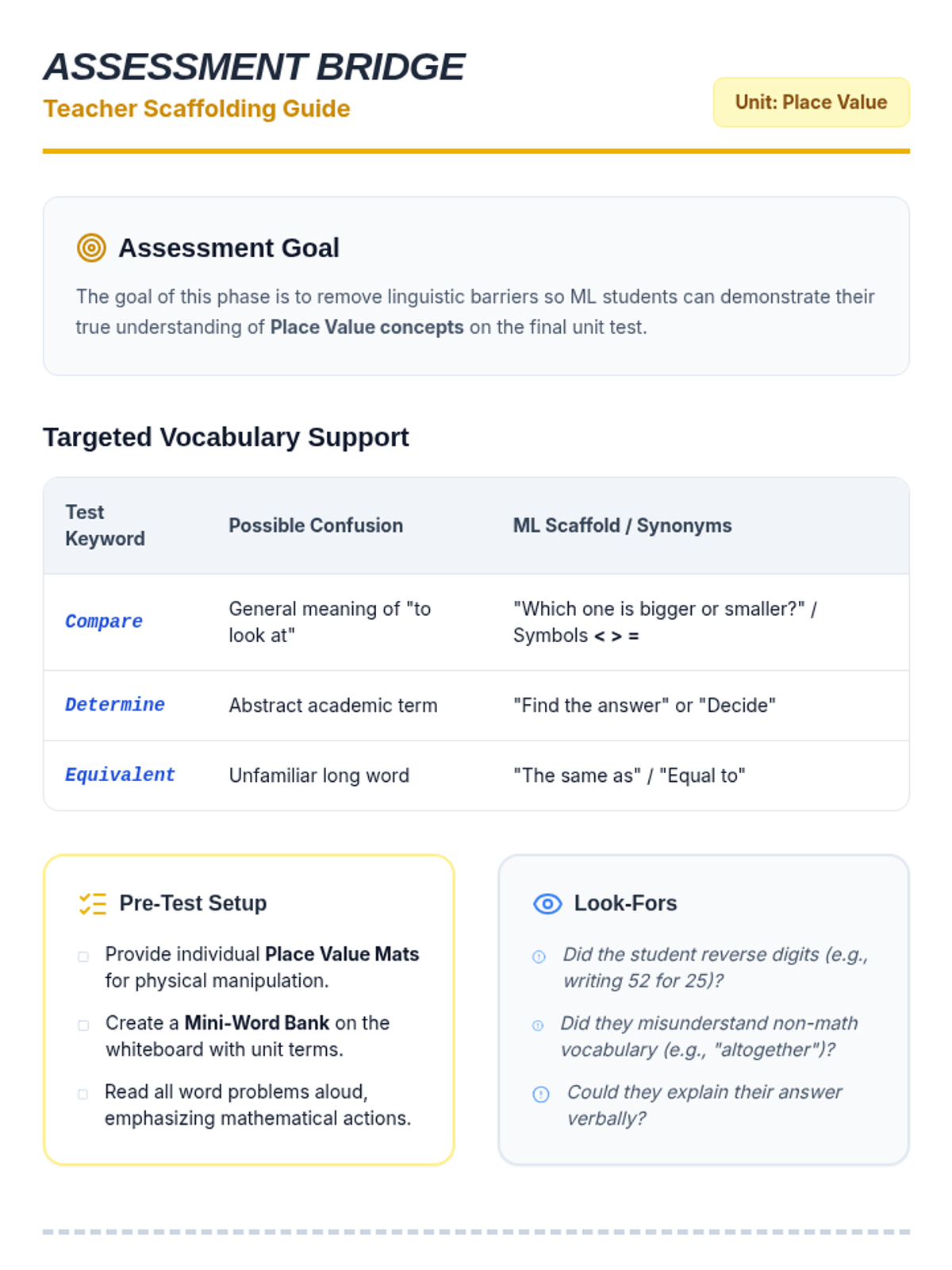
A strategic push-in plan for ML teachers to support 2nd grade math units through targeted vocabulary instruction, formative checks, and assessment support.
A series of math lessons adapted from 4th grade to 2nd grade, focusing on fraction partitioning (2.G.A.3) and whole-number operations within 100 (2.NBT.B.5).
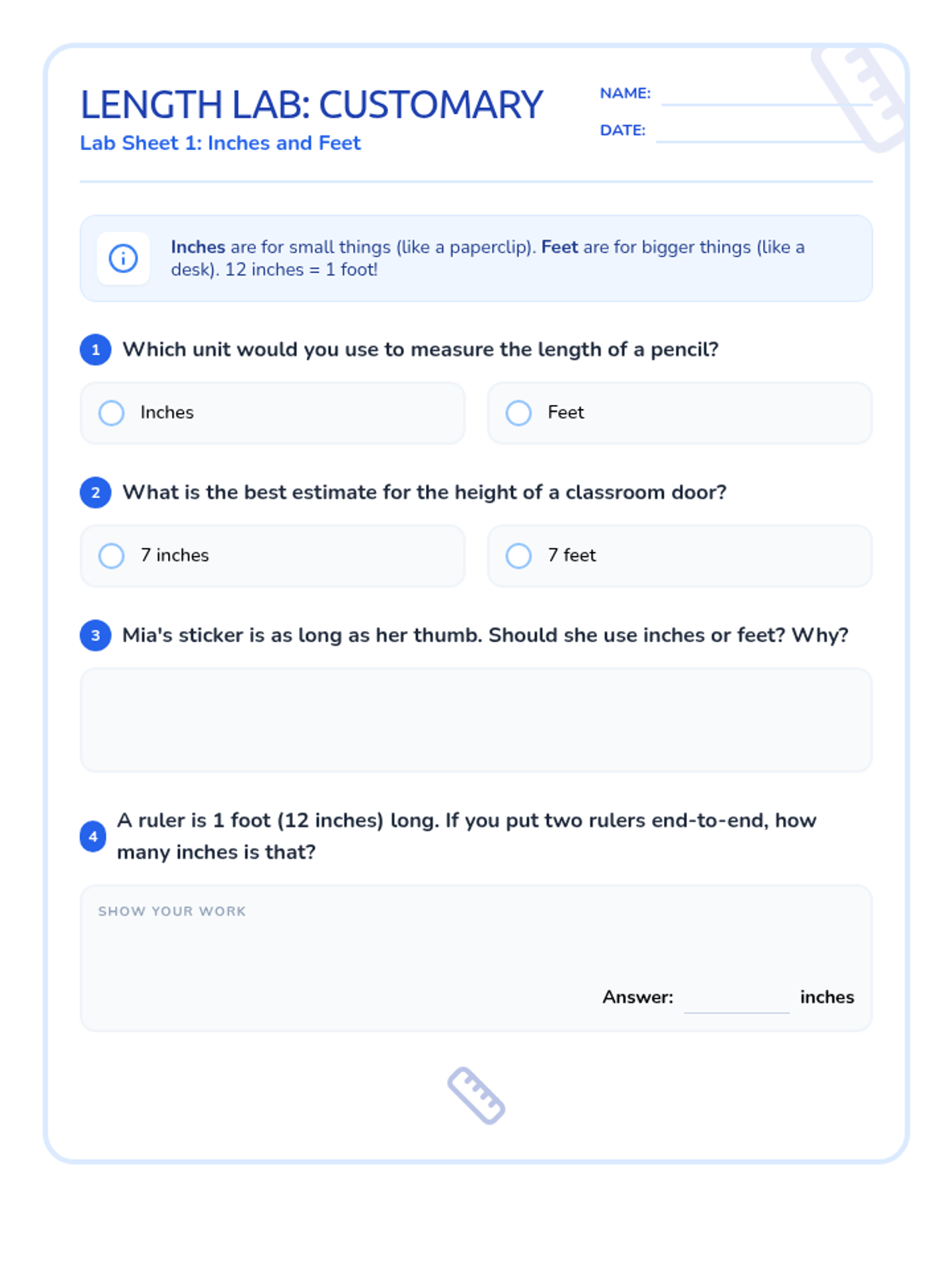
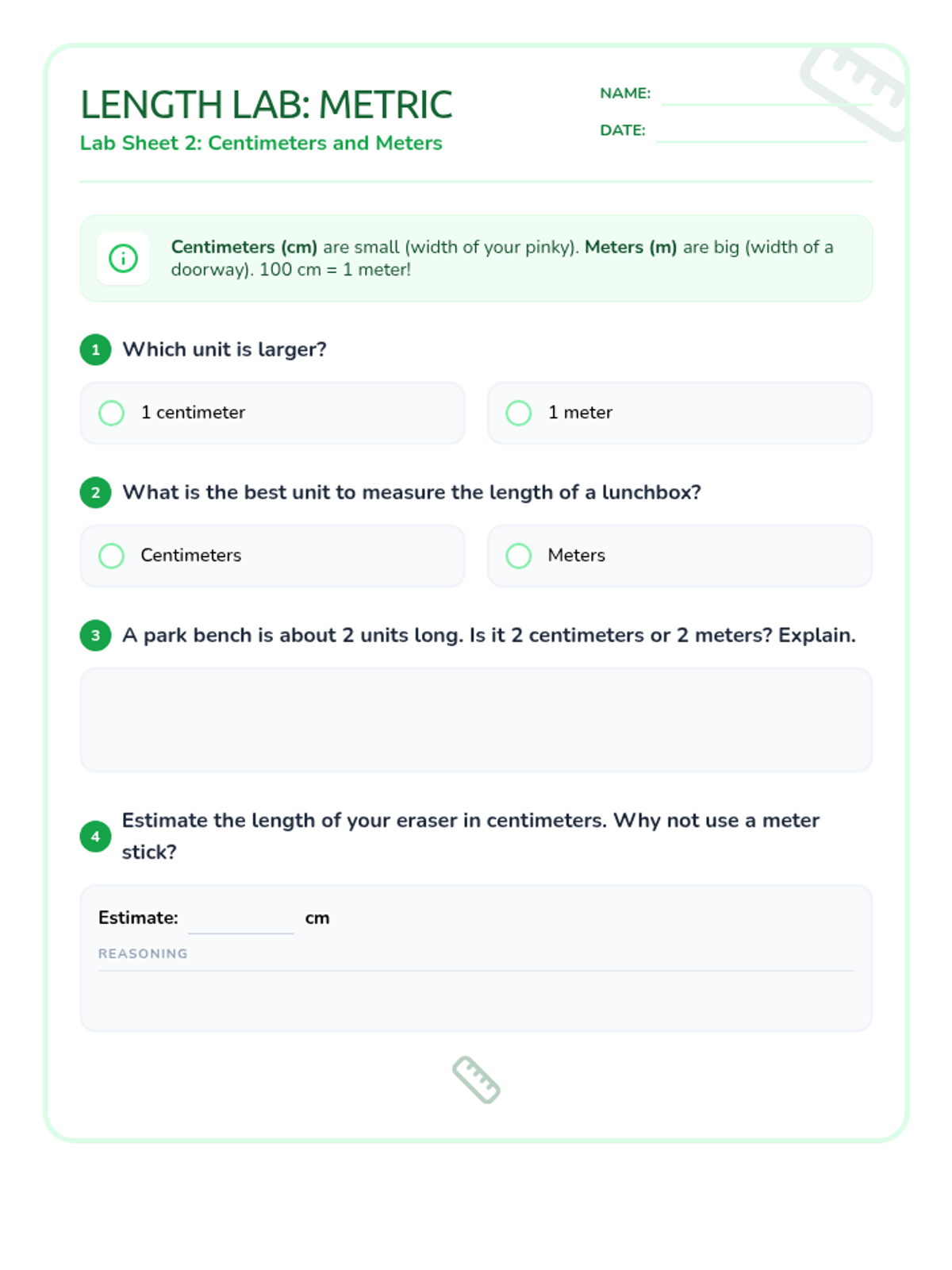
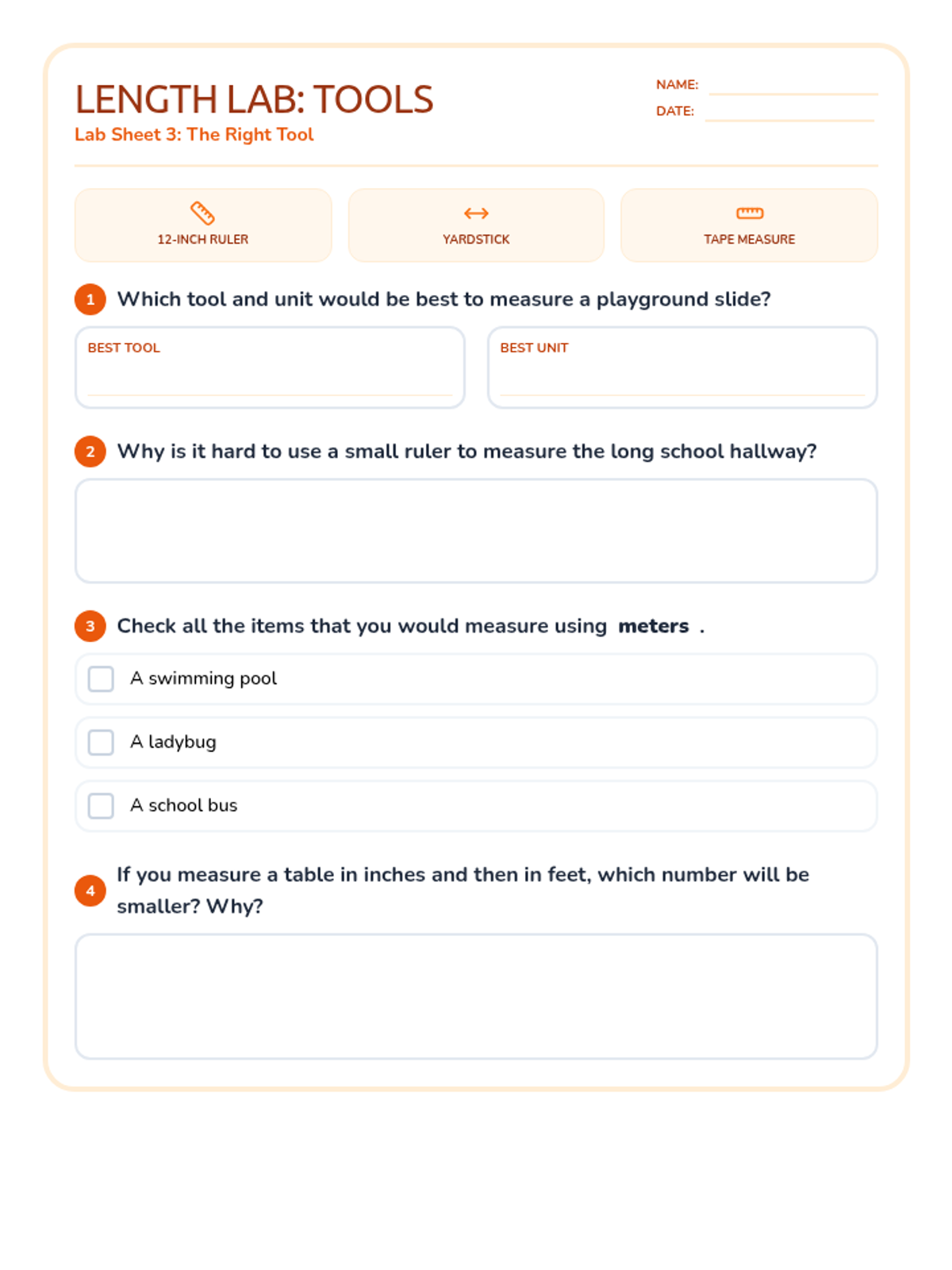
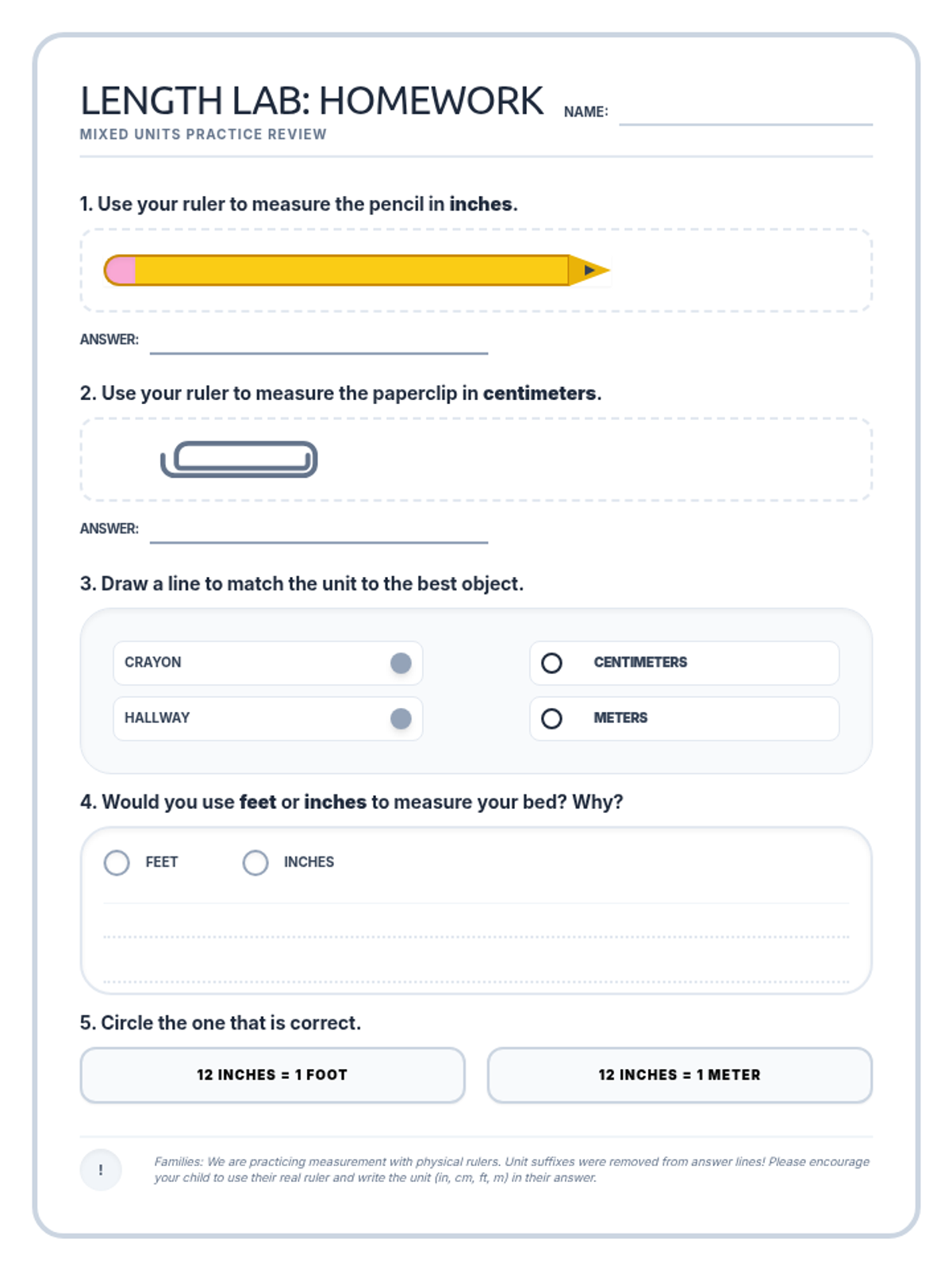
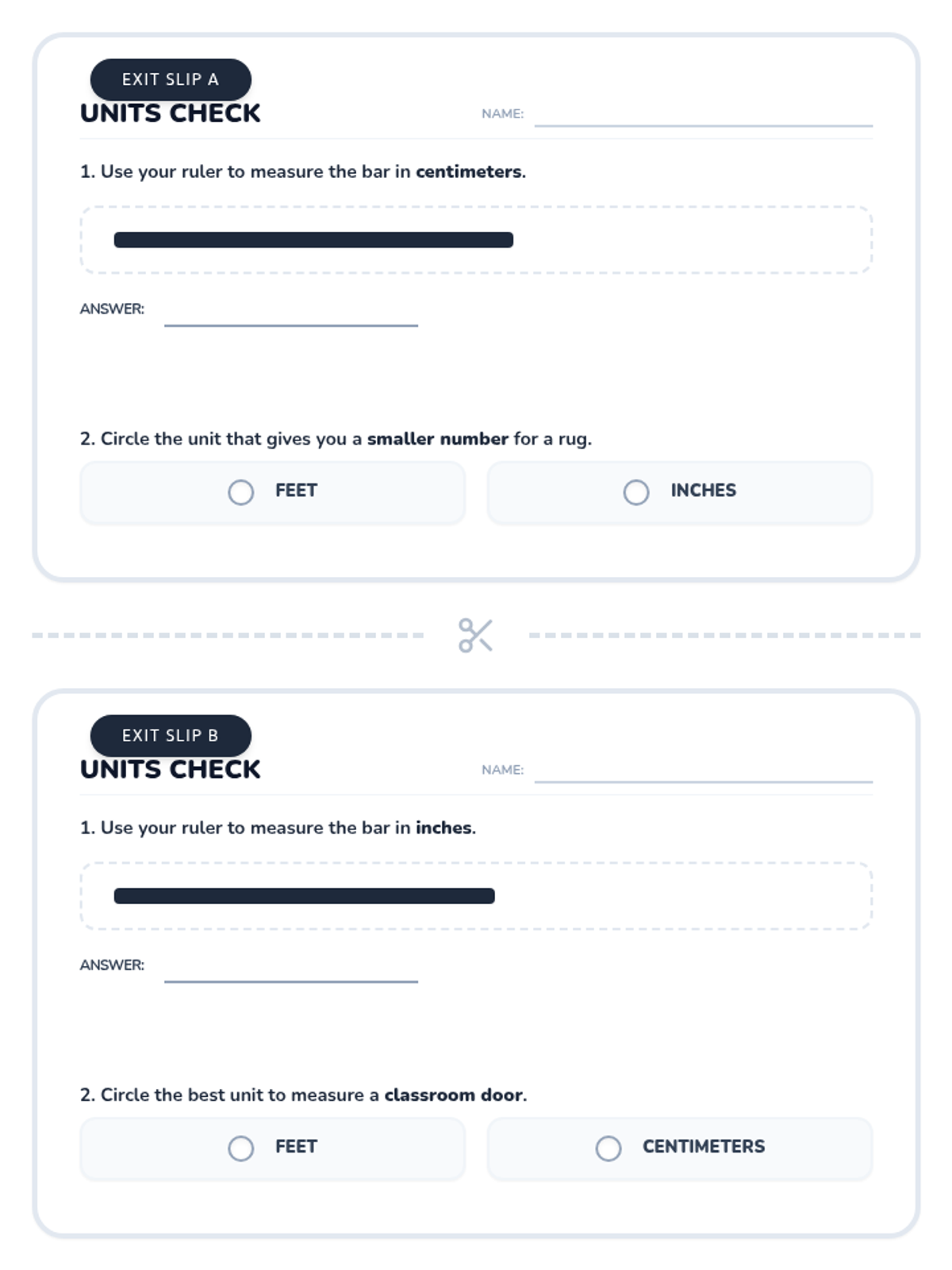
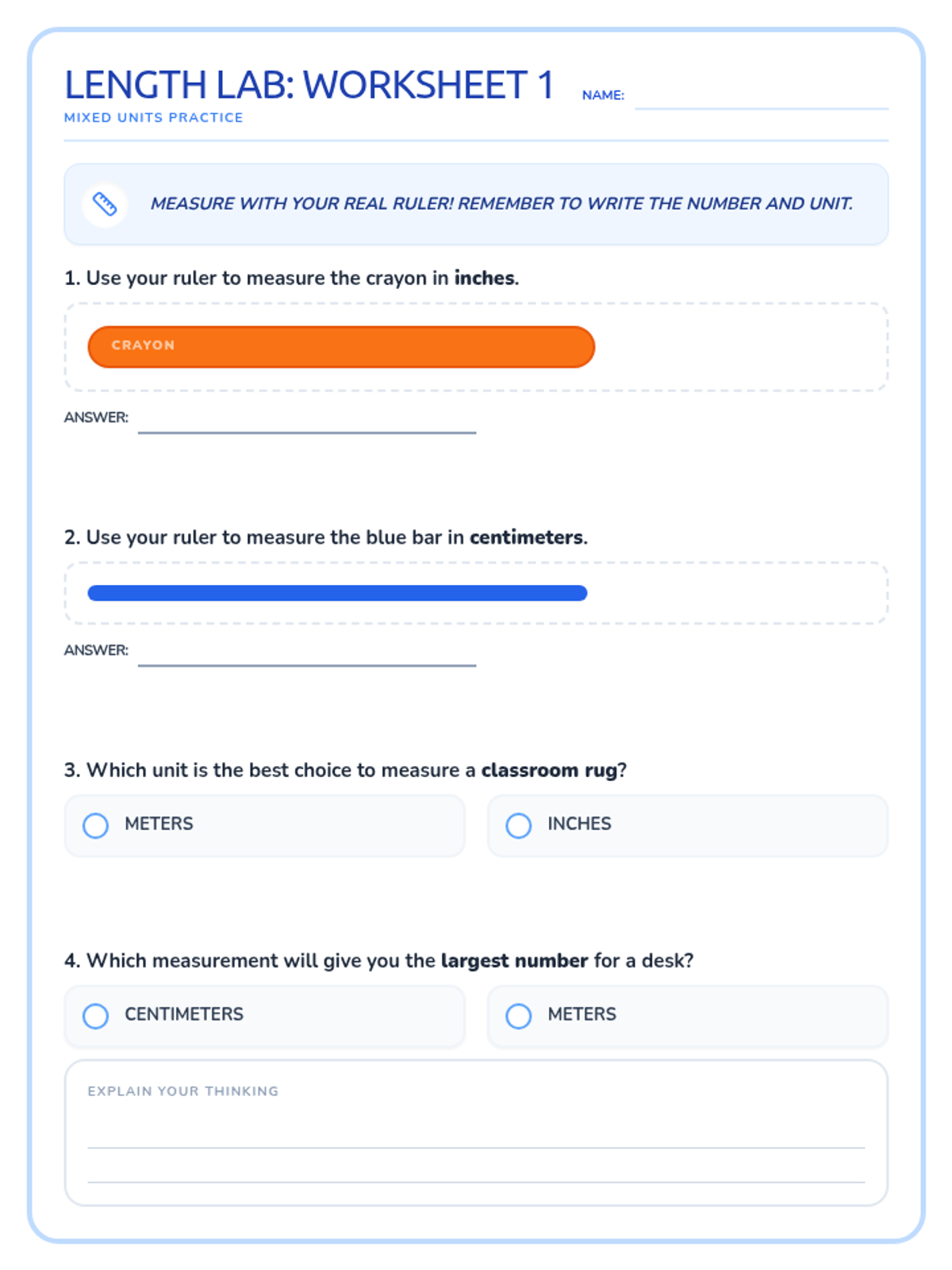
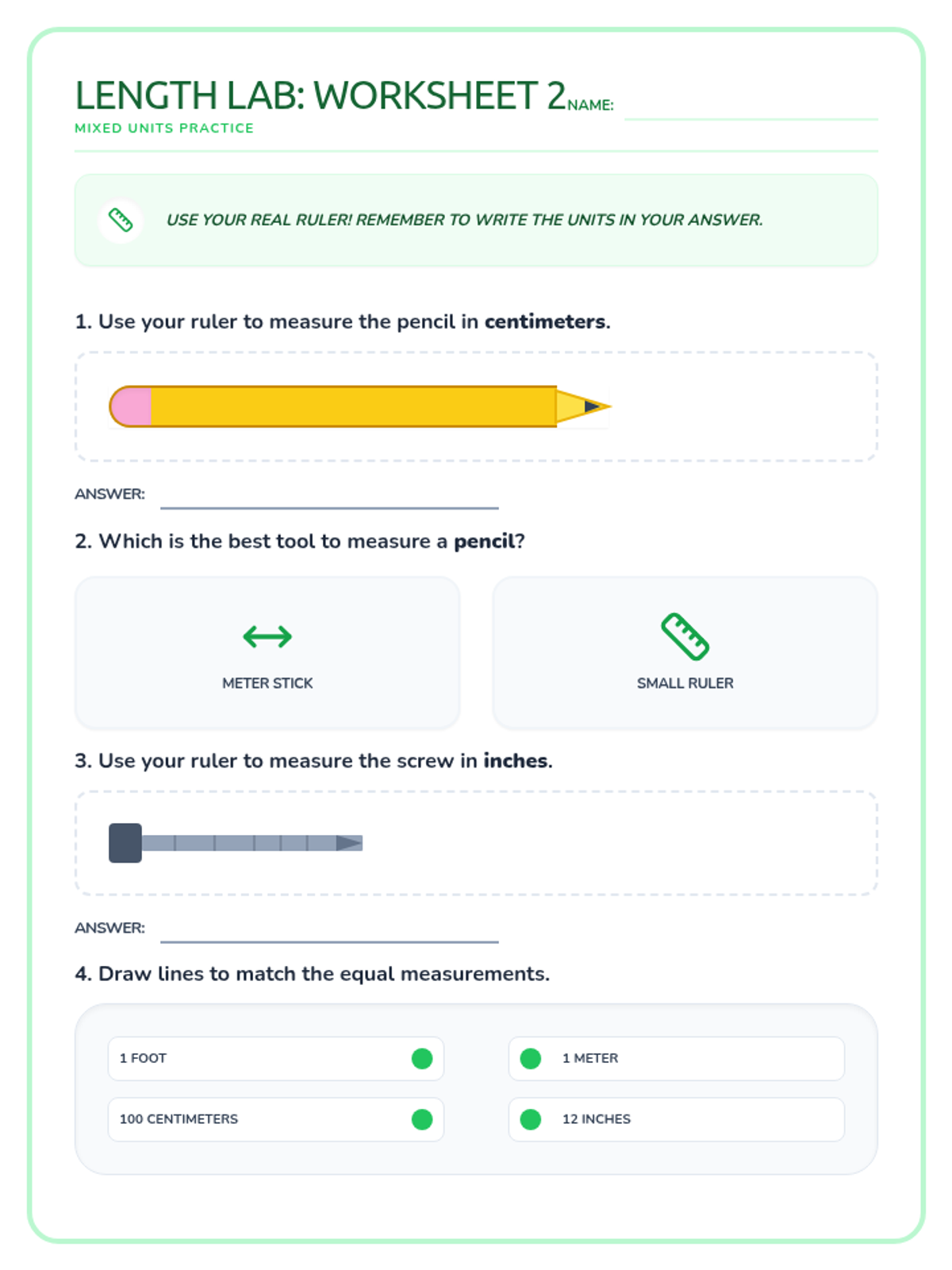
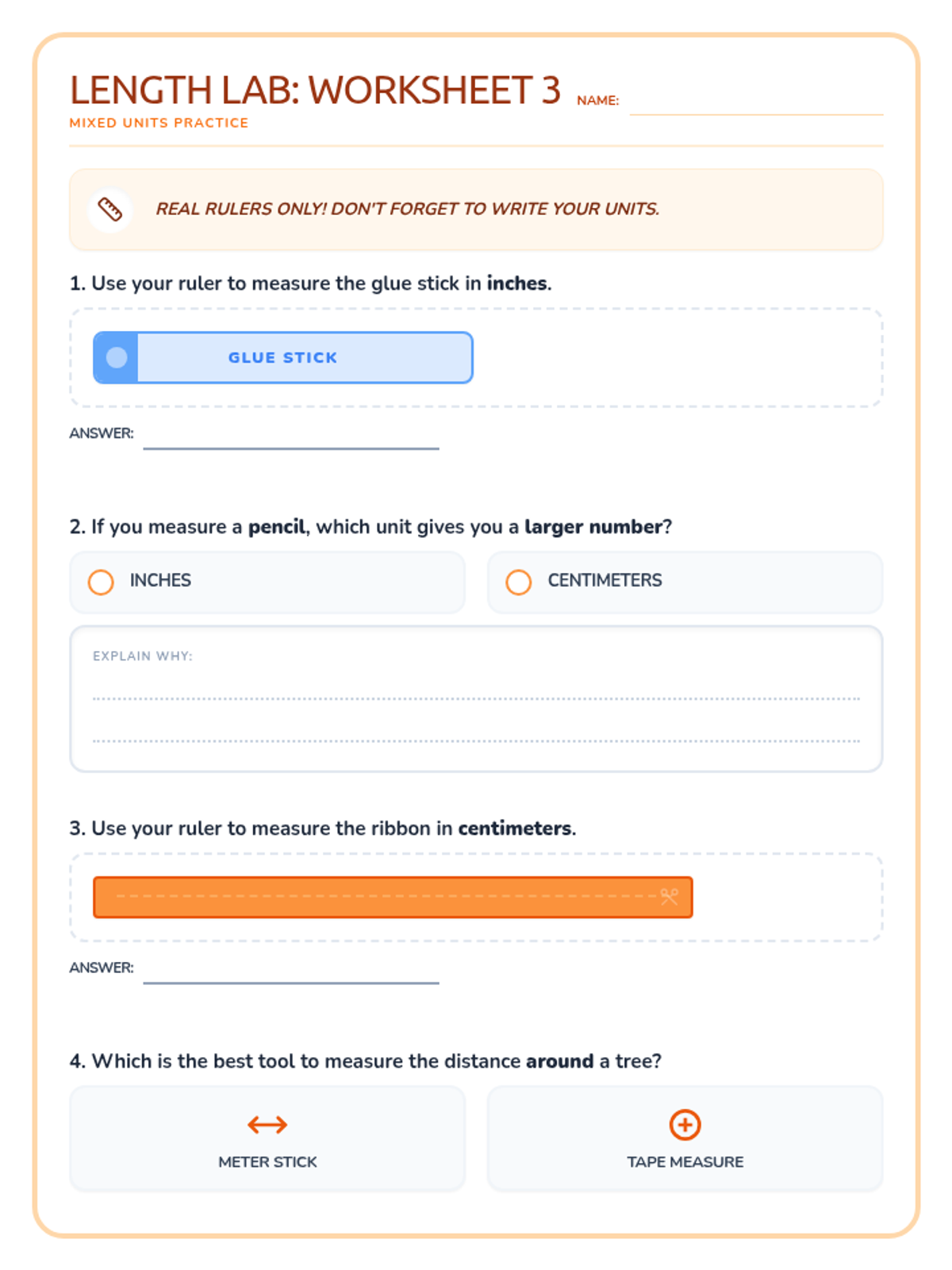
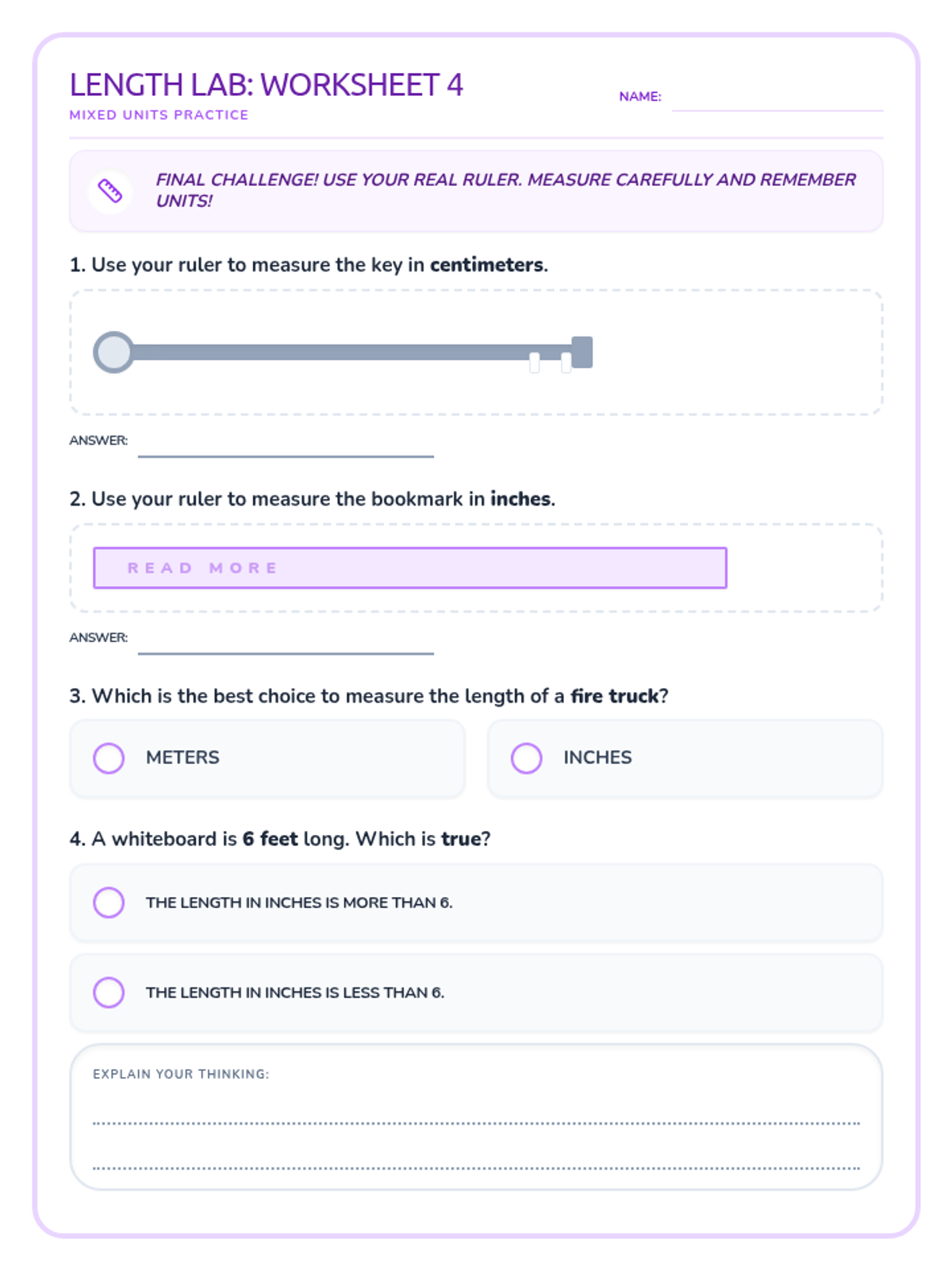
A comprehensive set of measurement resources for 2nd grade students to master inches, feet, centimeters, and meters. Students will practice selecting appropriate units, estimating lengths, and choosing the right tools for various objects.
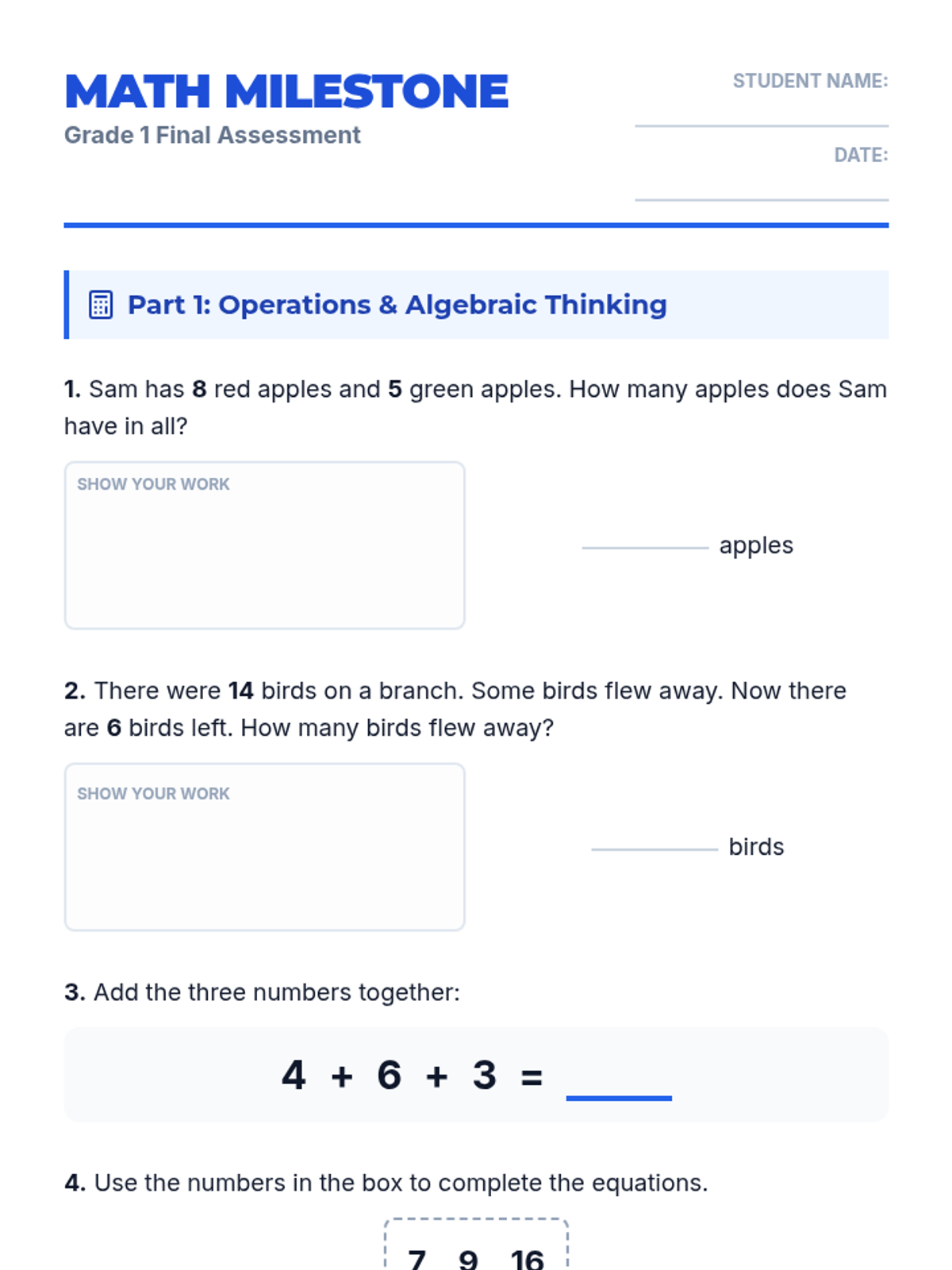
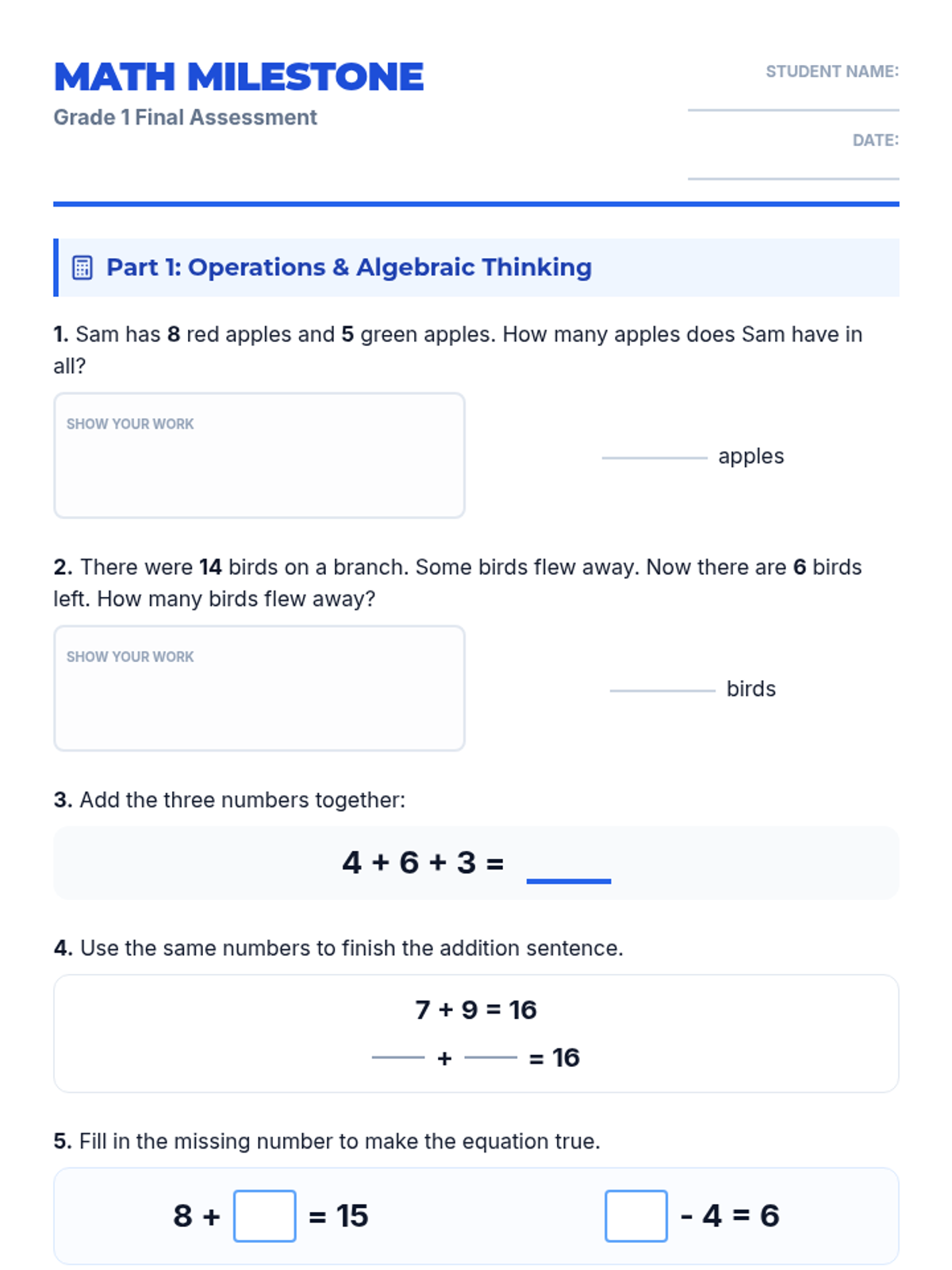
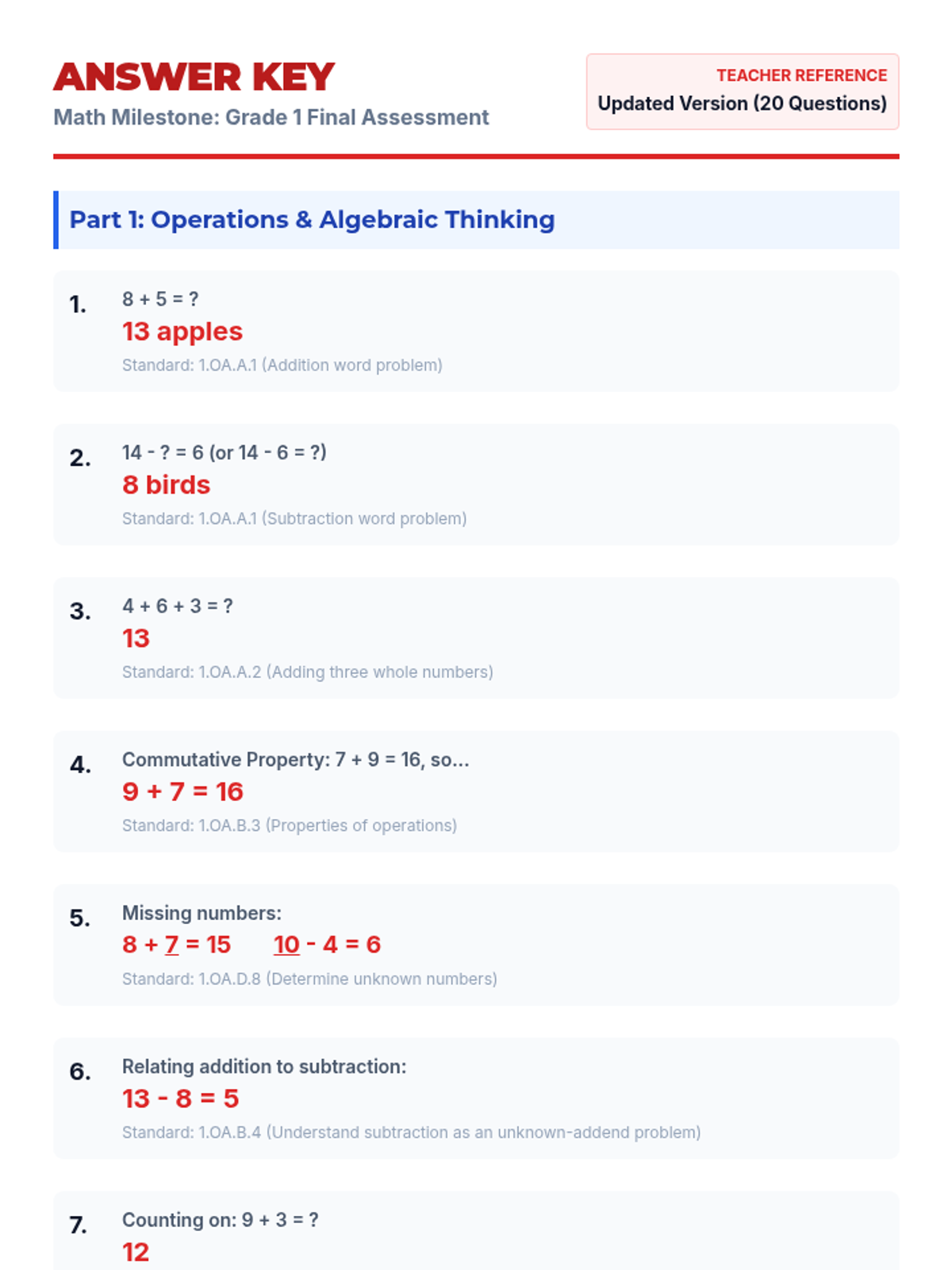
A series of materials designed to evaluate and document first-grade students' mastery of year-long mathematical standards in preparation for second grade.
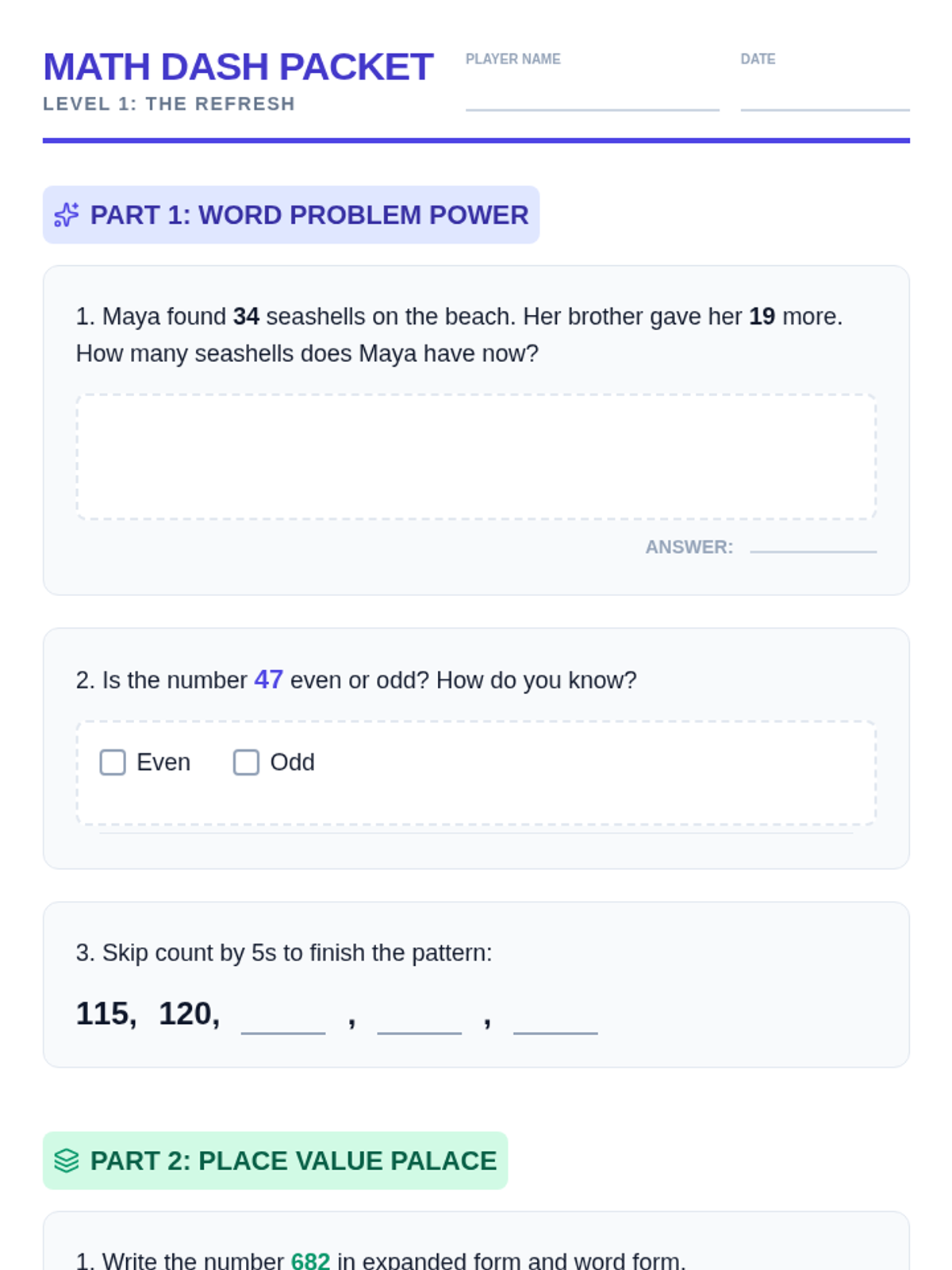
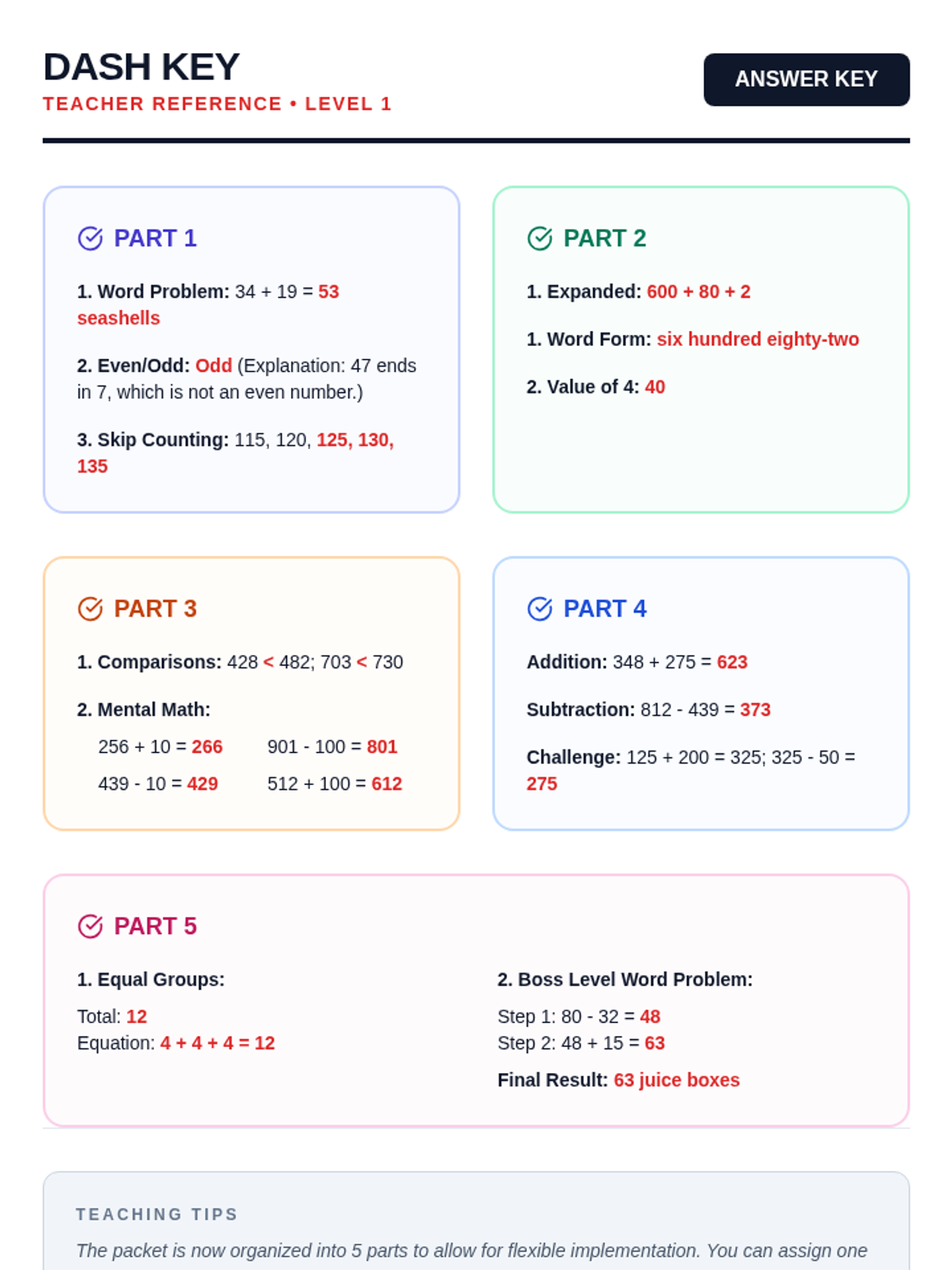
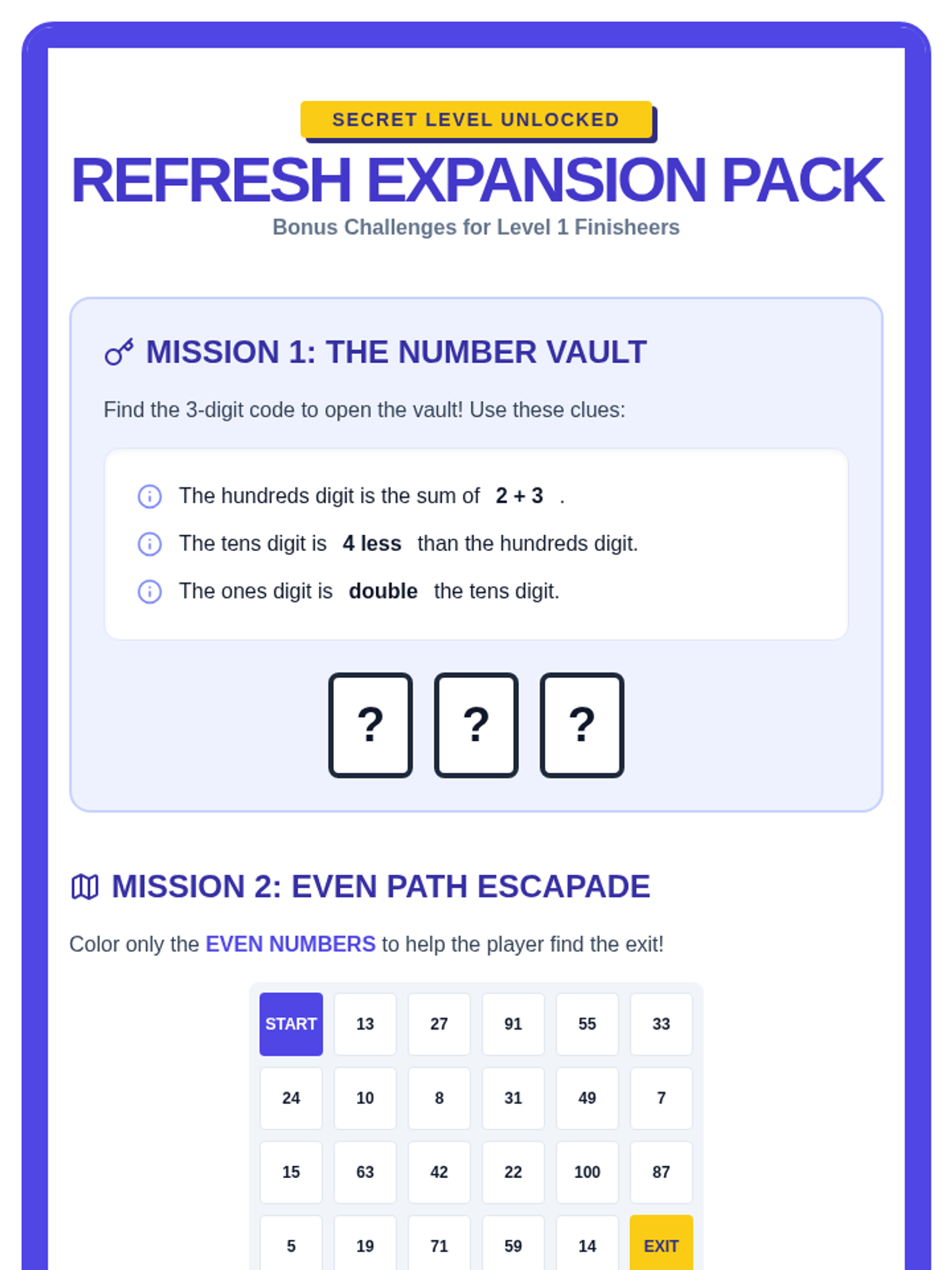
A 3-week high-energy, retro-gaming themed journey through 2nd-grade math standards to prepare 3rd-grade students for success.
A multi-day measurement adventure where students act as explorers to measure objects across their classroom, school, and outdoor environment to the nearest whole inch.
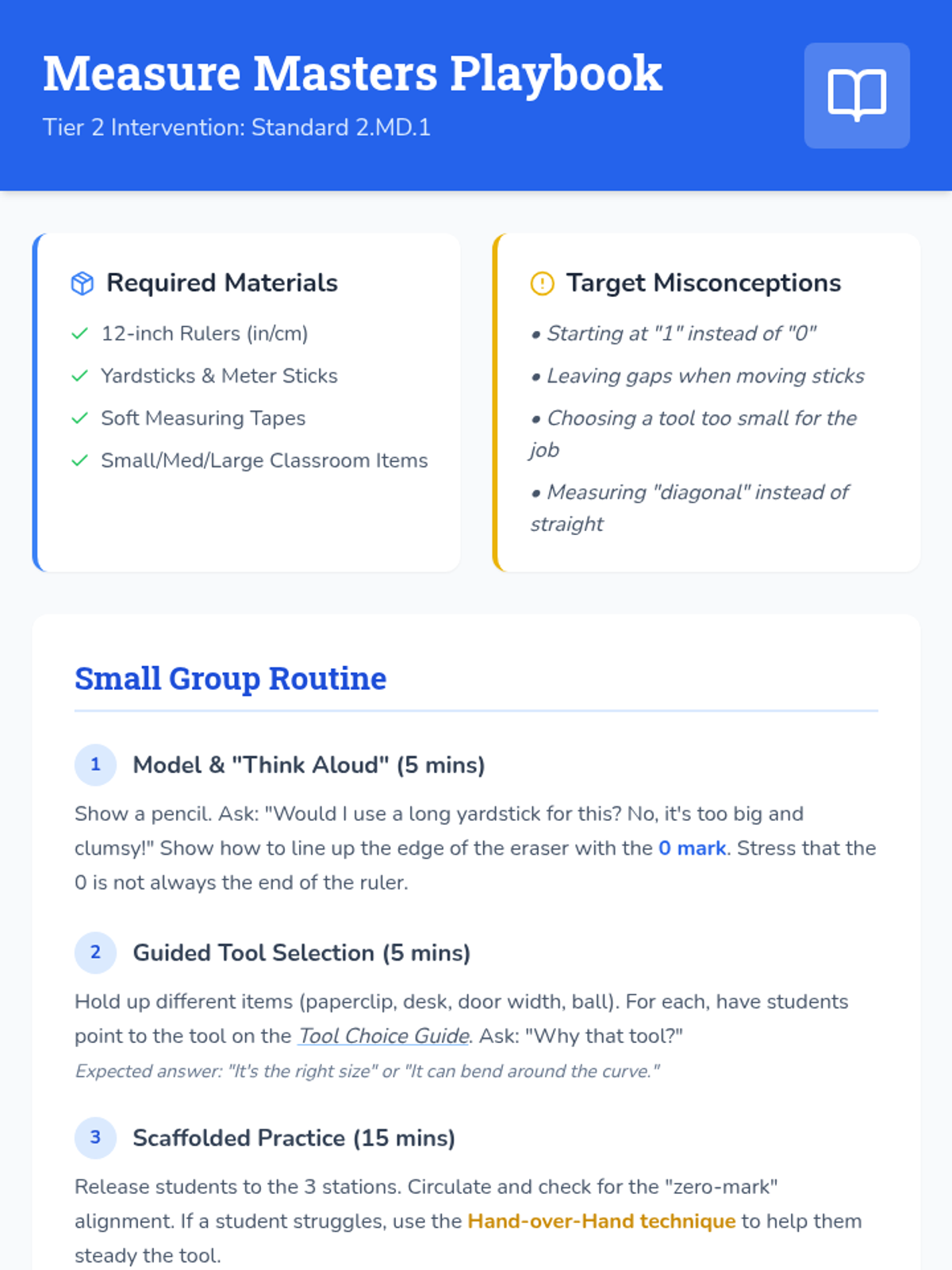
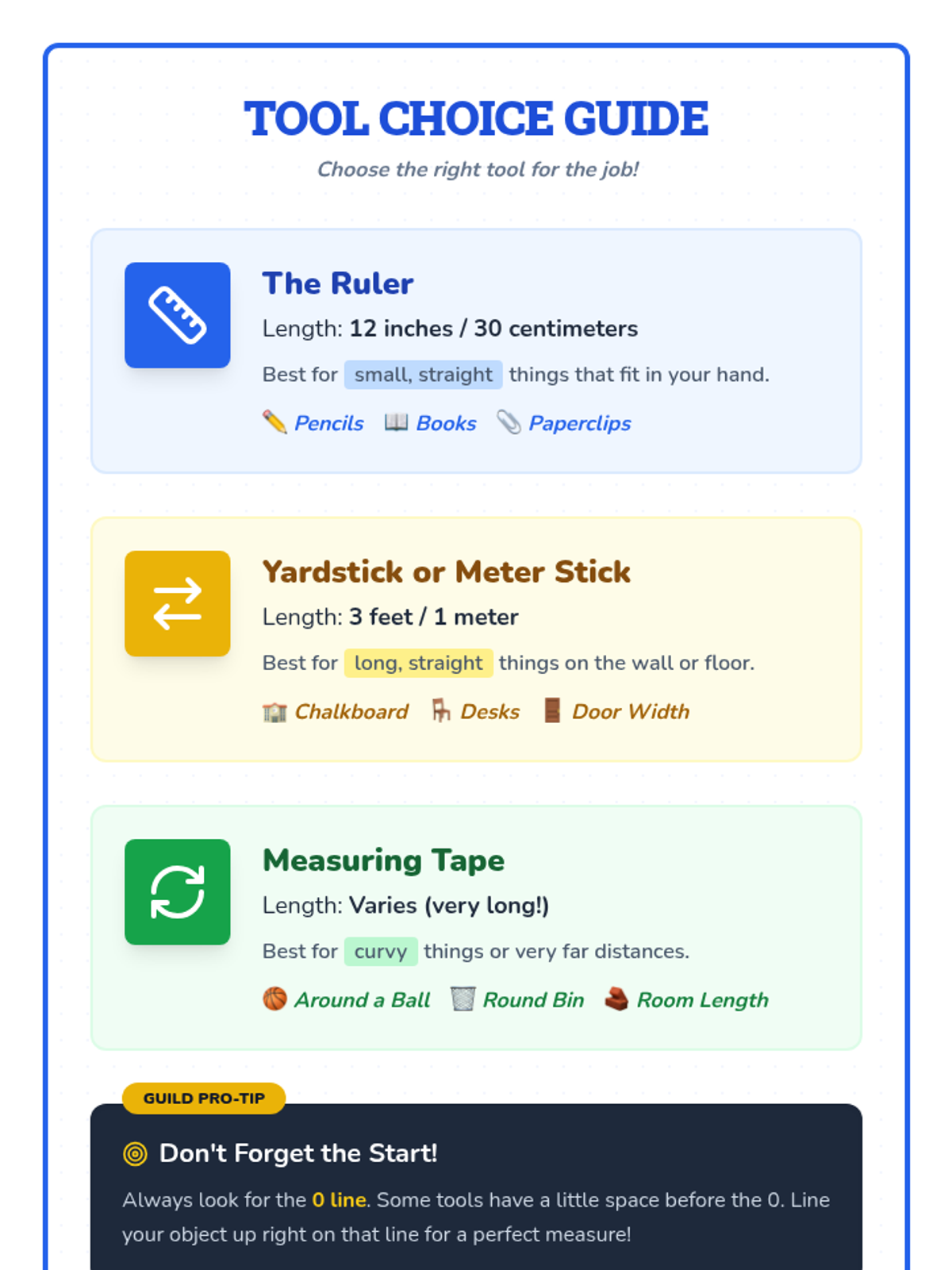
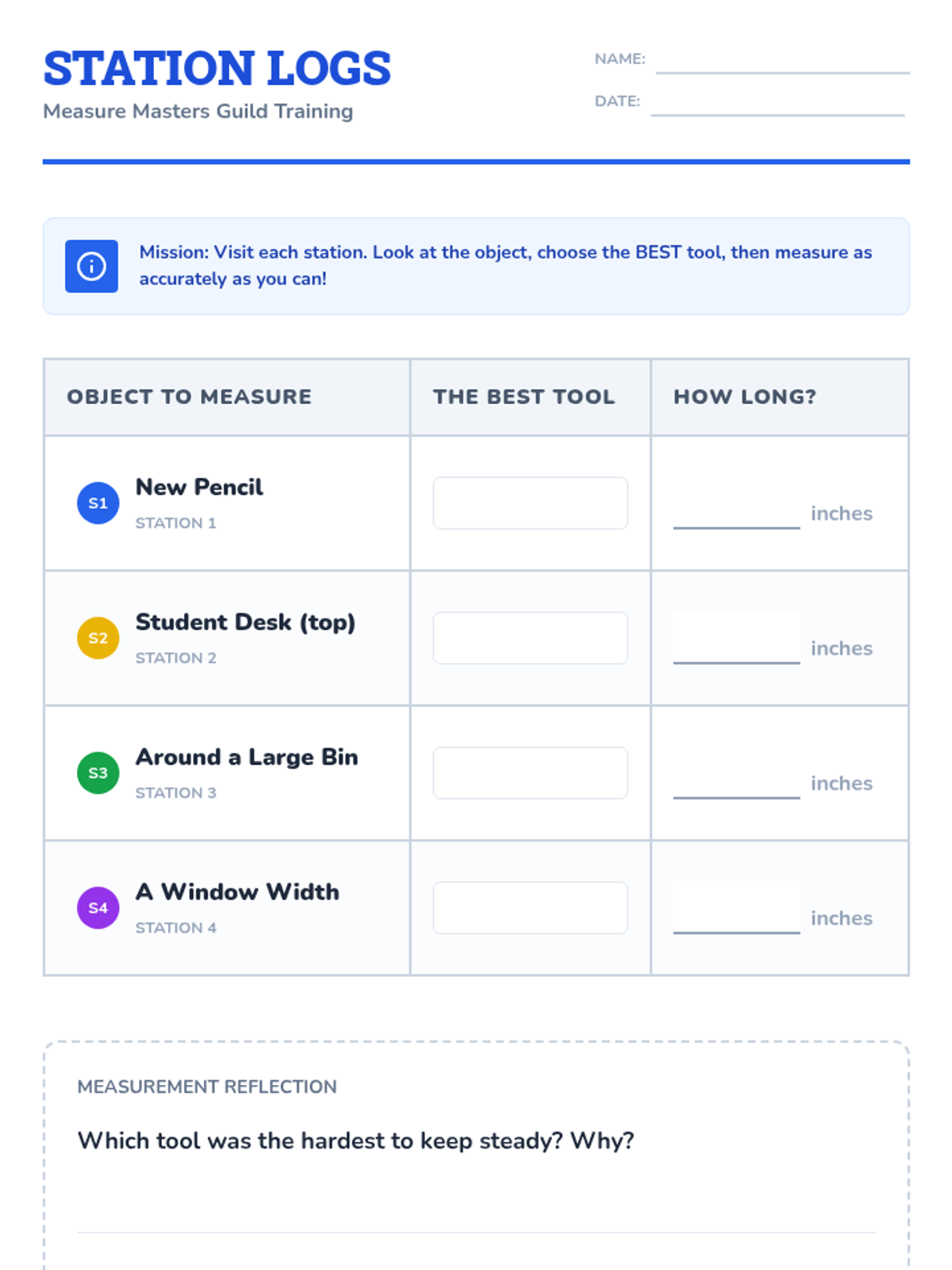
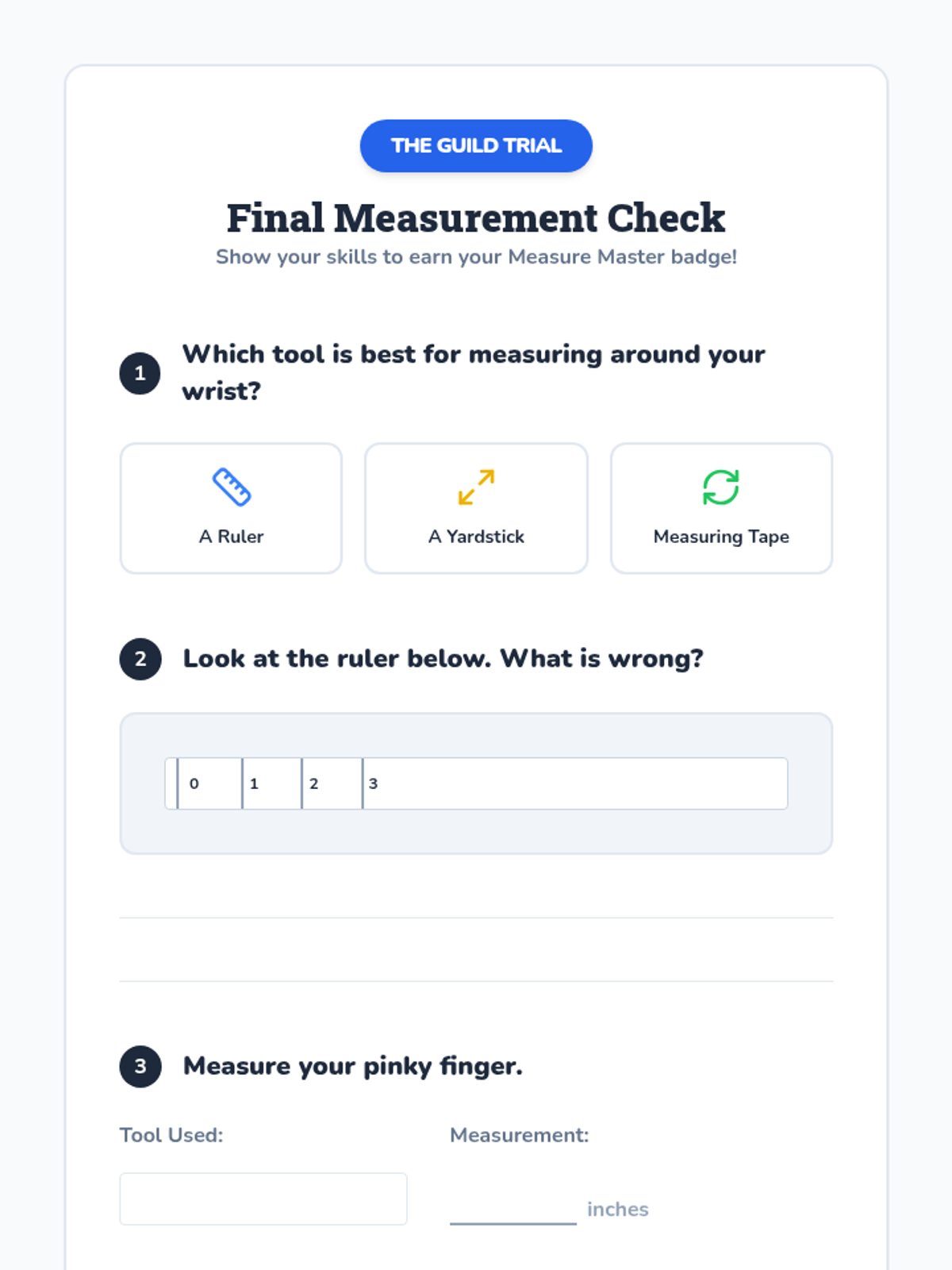
A Tier 2 intervention sequence focused on helping students select and use appropriate measurement tools (rulers, yardsticks, meter sticks, and measuring tapes) as per Colorado Standard 2.MD.1. This sequence emphasizes hands-on practice, error correction for common misconceptions like alignment, and scaffolded tool selection.
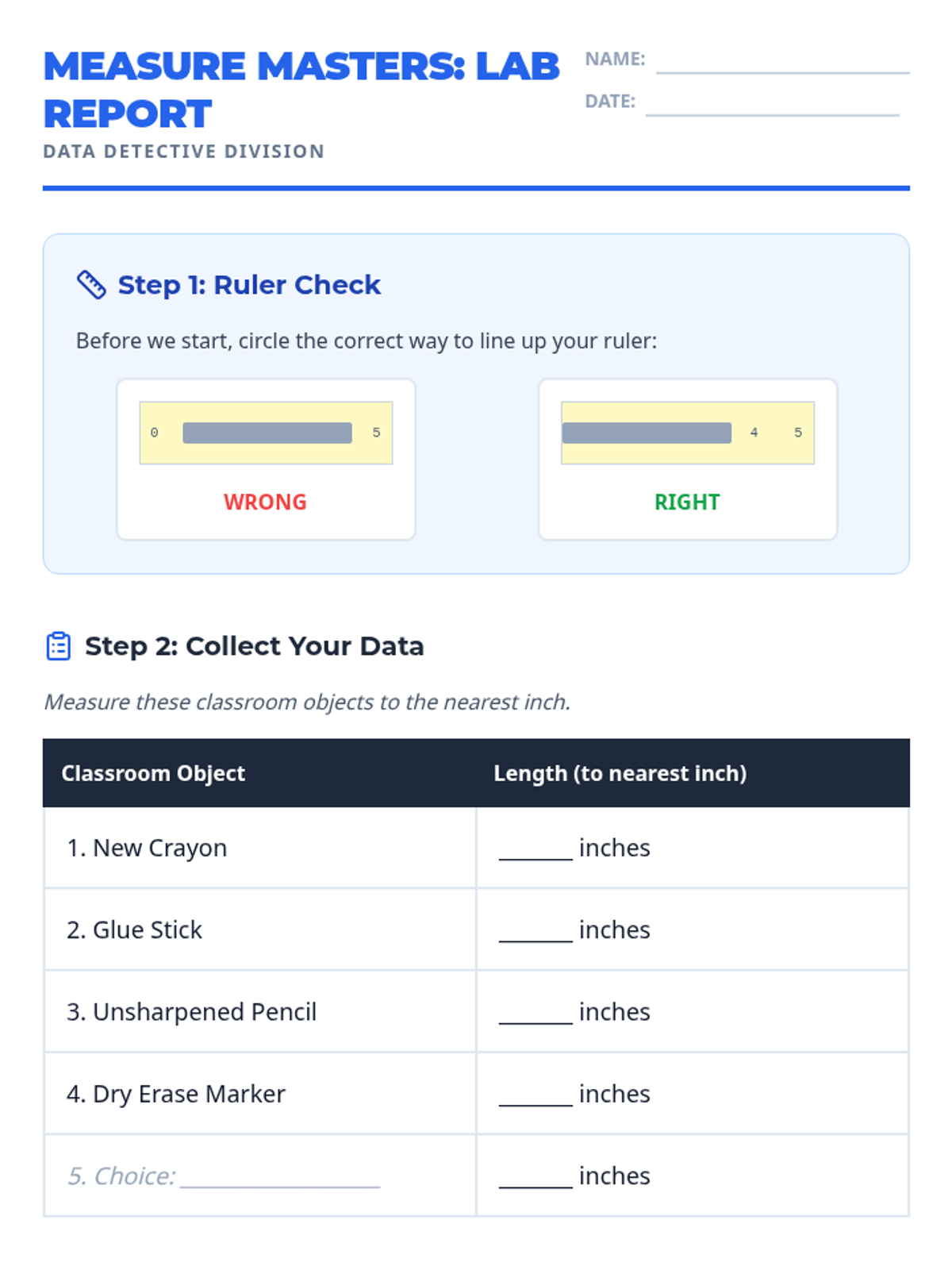
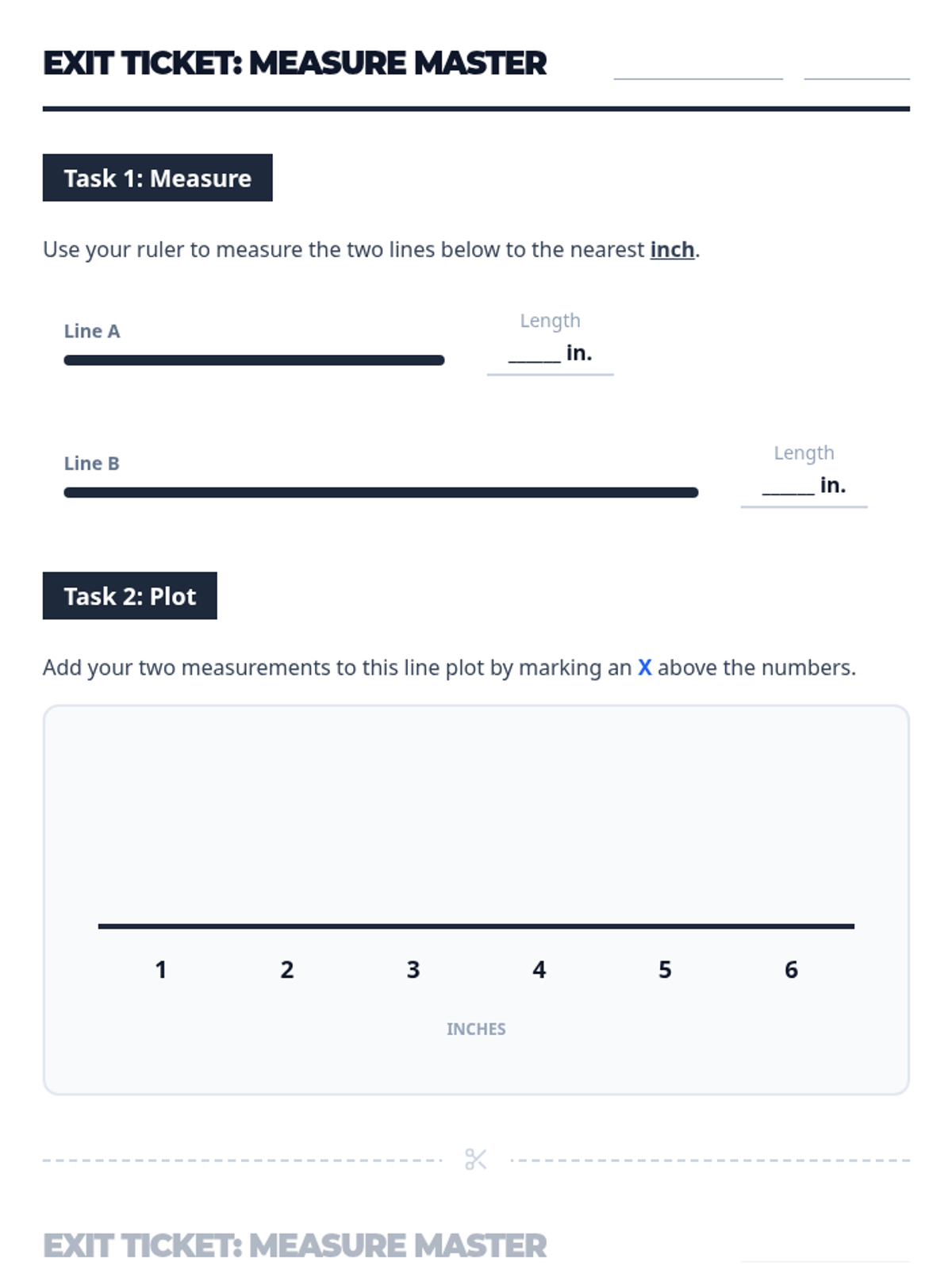
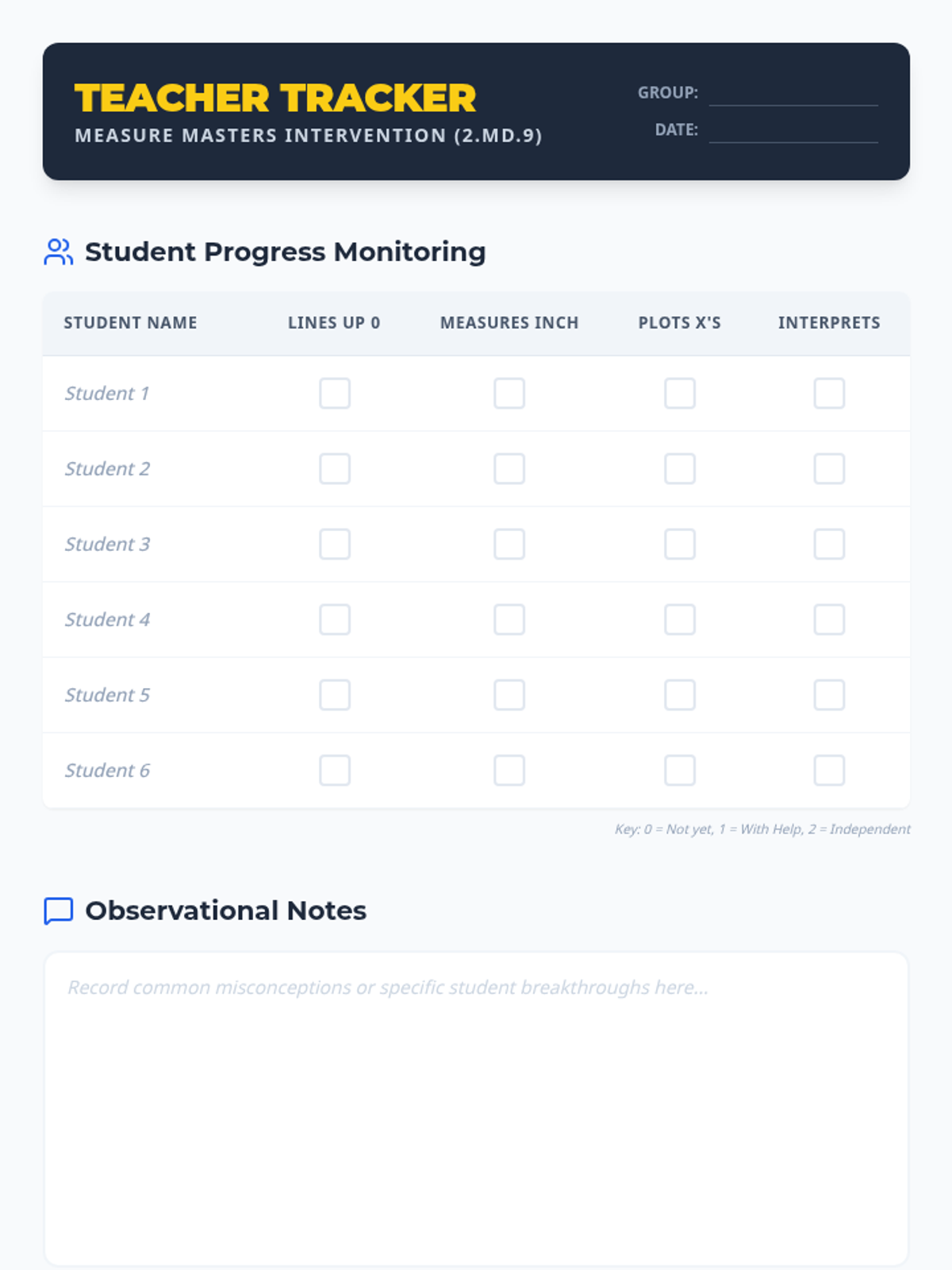
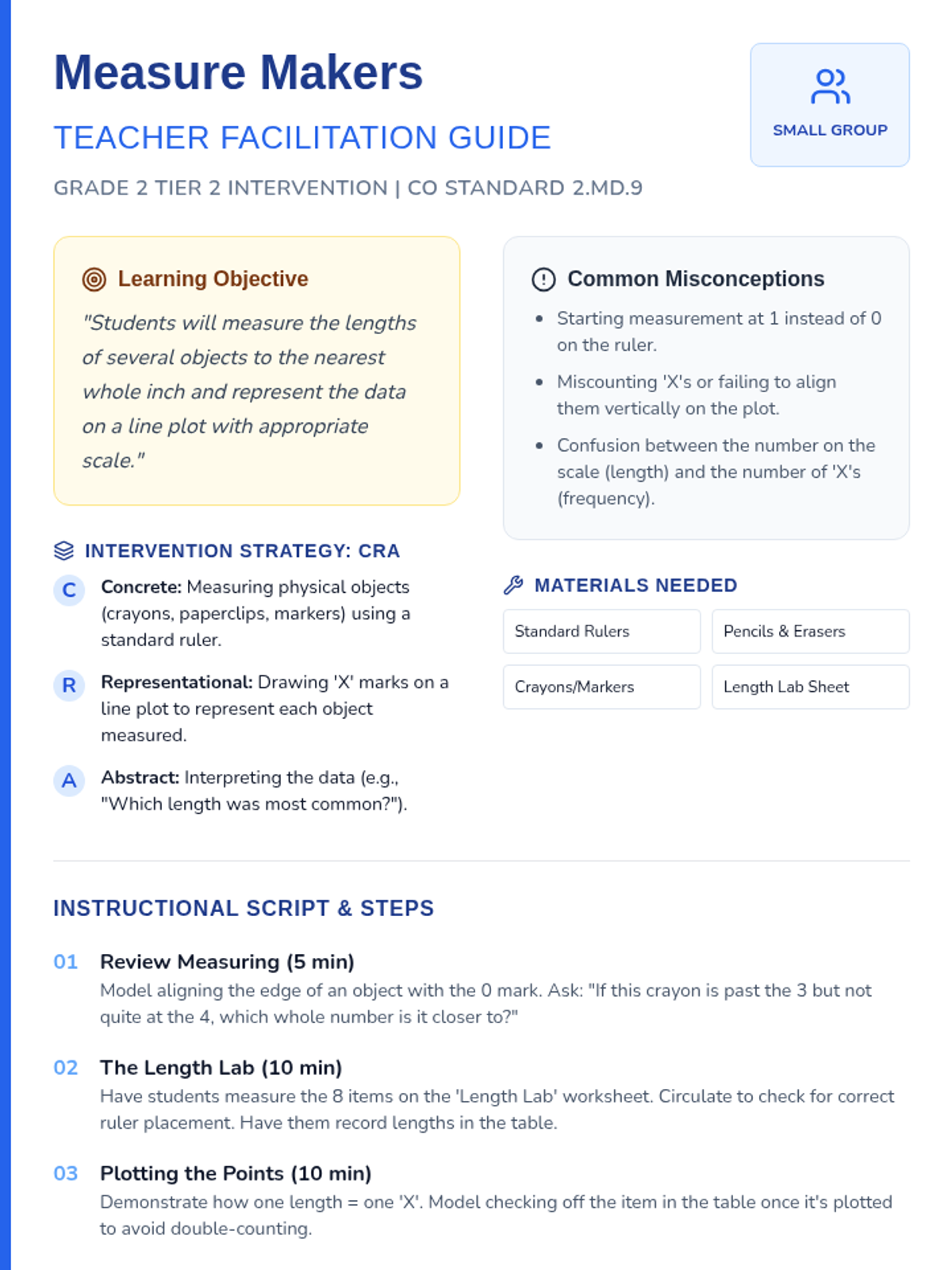
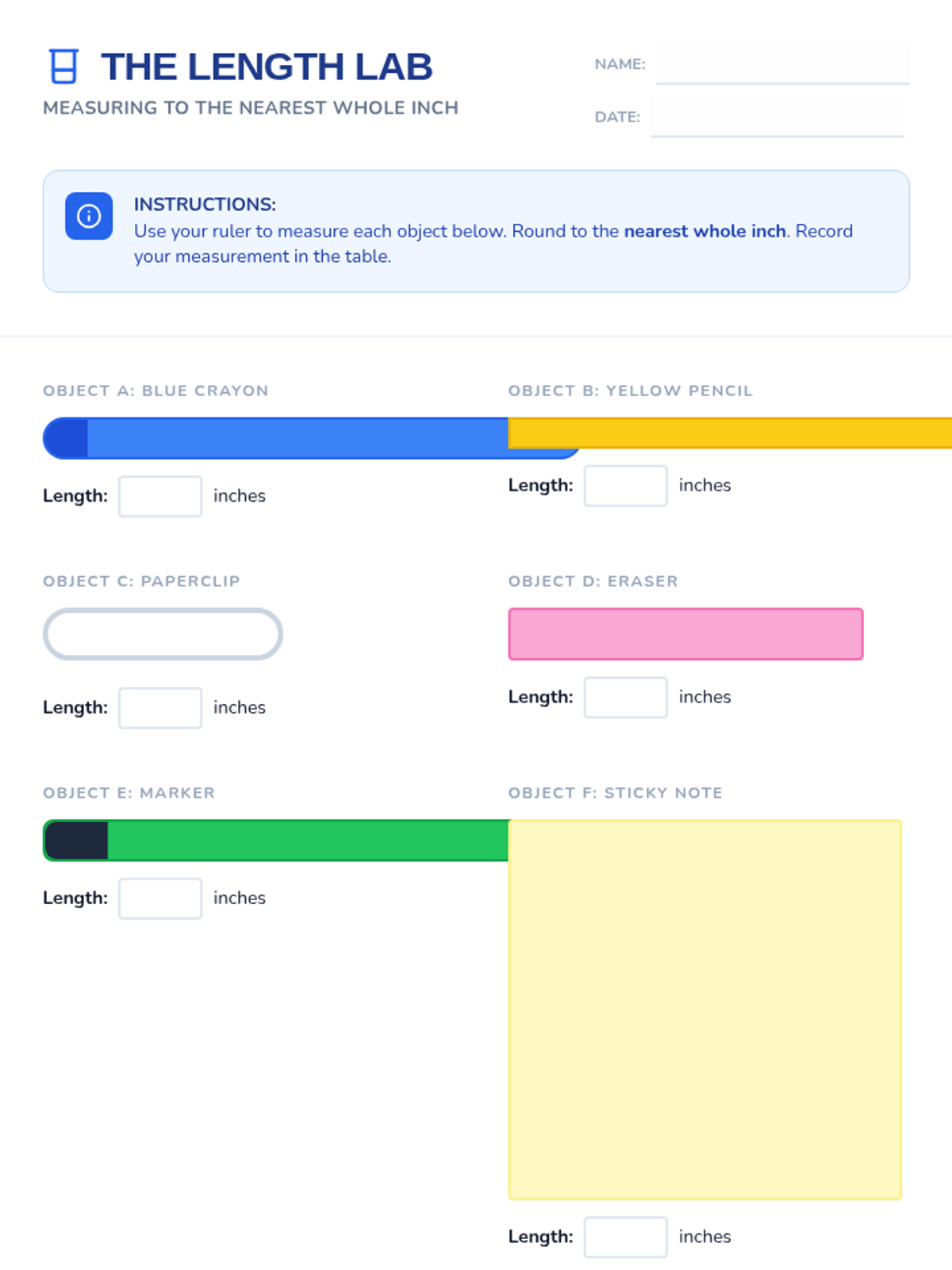
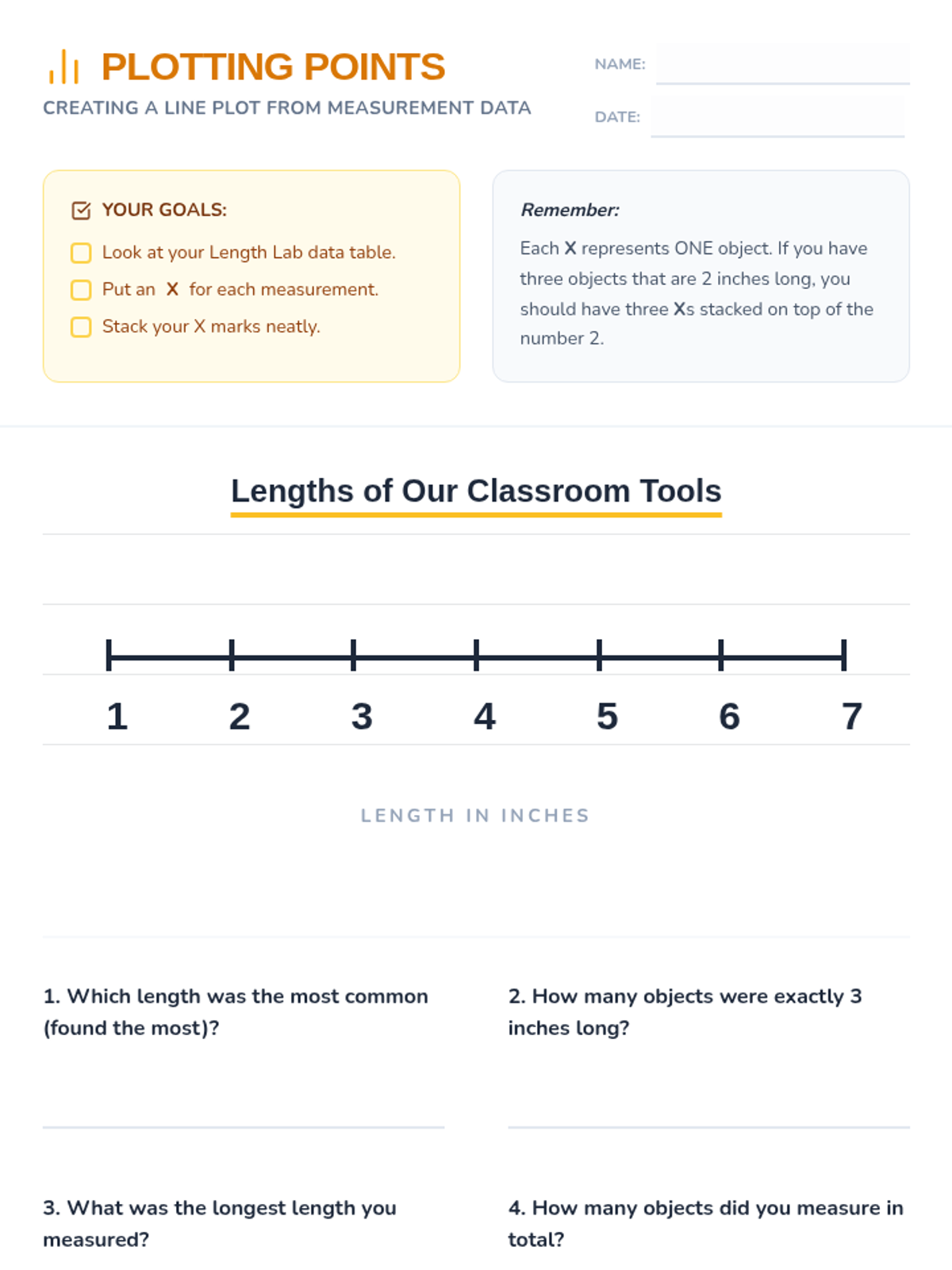
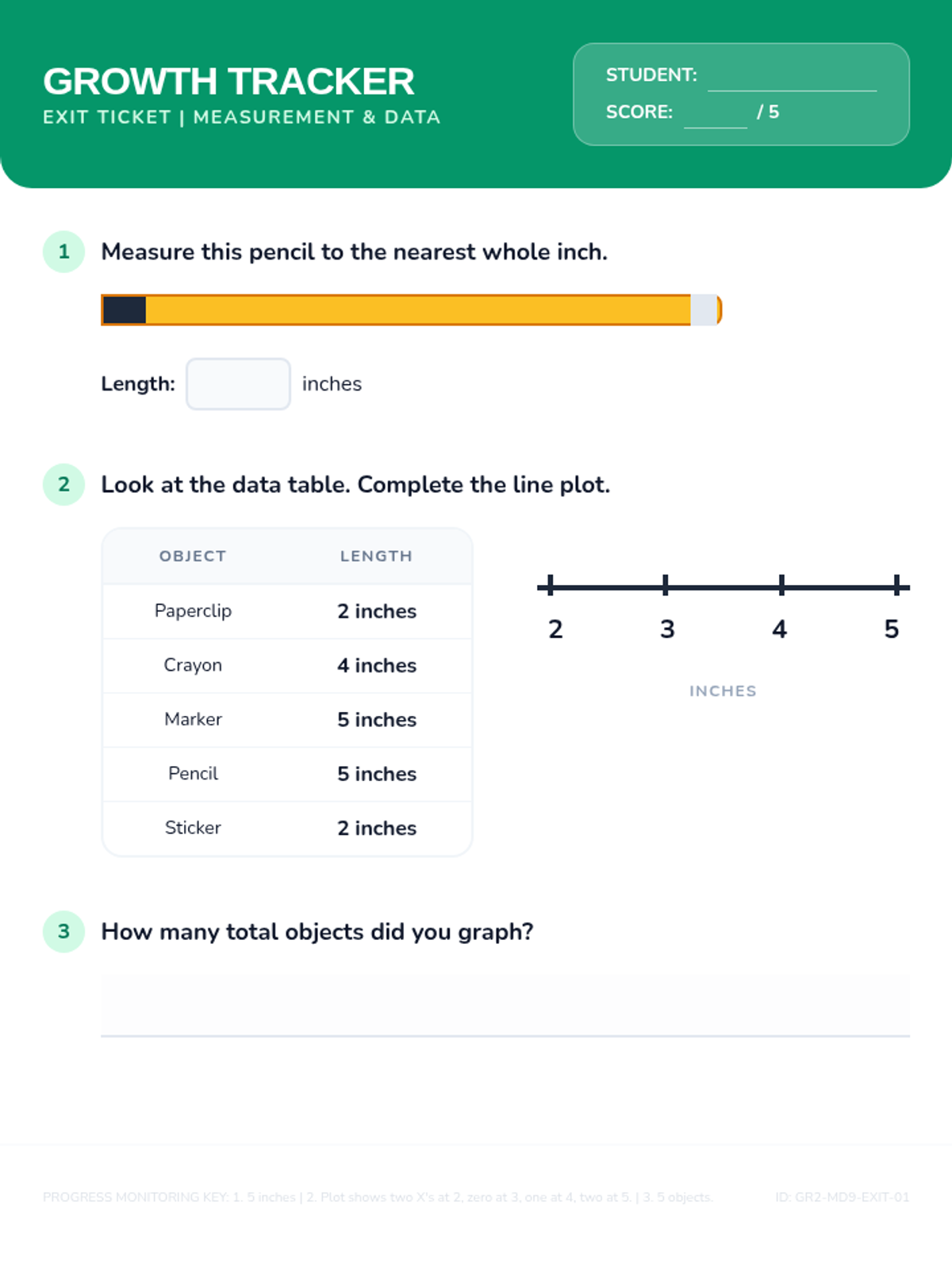
A targeted Tier 2 intervention lesson designed for Grade 2 students to master measuring length to the nearest whole inch and representing that data on line plots. The sequence focuses on hands-on measurement and concrete-to-abstract transitions for data visualization.
A Tier 2 intervention unit focused on measurement and data visualization for Grade 2 students. Students practice measuring objects to the nearest whole inch and representing that data on a line plot using a scaffolded approach.
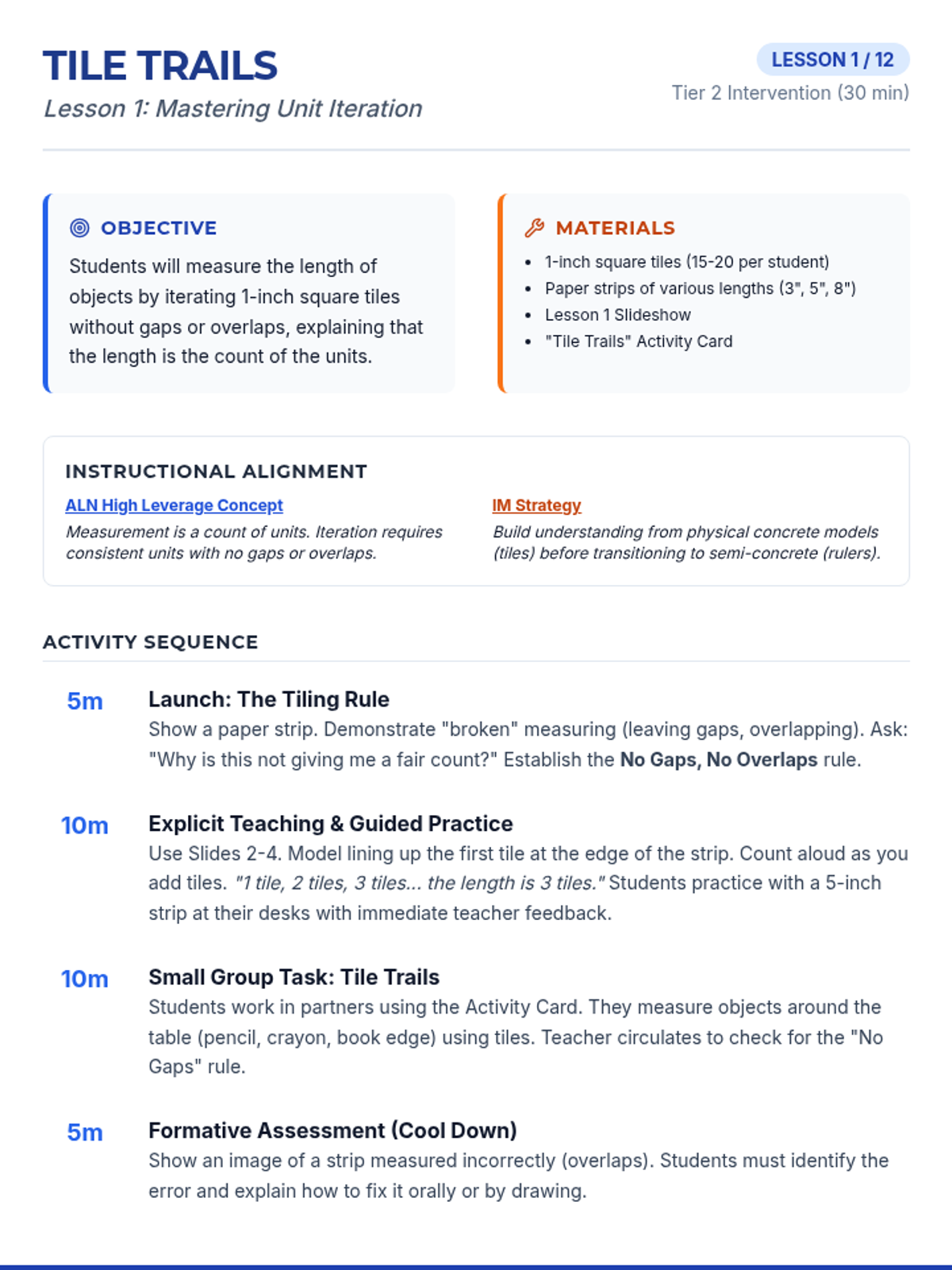
A 12-lesson Tier 2 intervention sequence for second grade focusing on measurement and data standards 2.MD.A and 2.MD.B. Lessons integrate All Learners Network High Leverage Concepts and Illustrative Mathematics strategies, emphasizing unit iteration, tool selection, estimation, comparison, and number line representations.
A 2nd-grade sequence where students transition from basic measurement to comparative analysis and data visualization through a 'Measurement Olympics' theme. Students practice estimation, quantitative comparison, and graphing to understand how numbers describe the physical world.
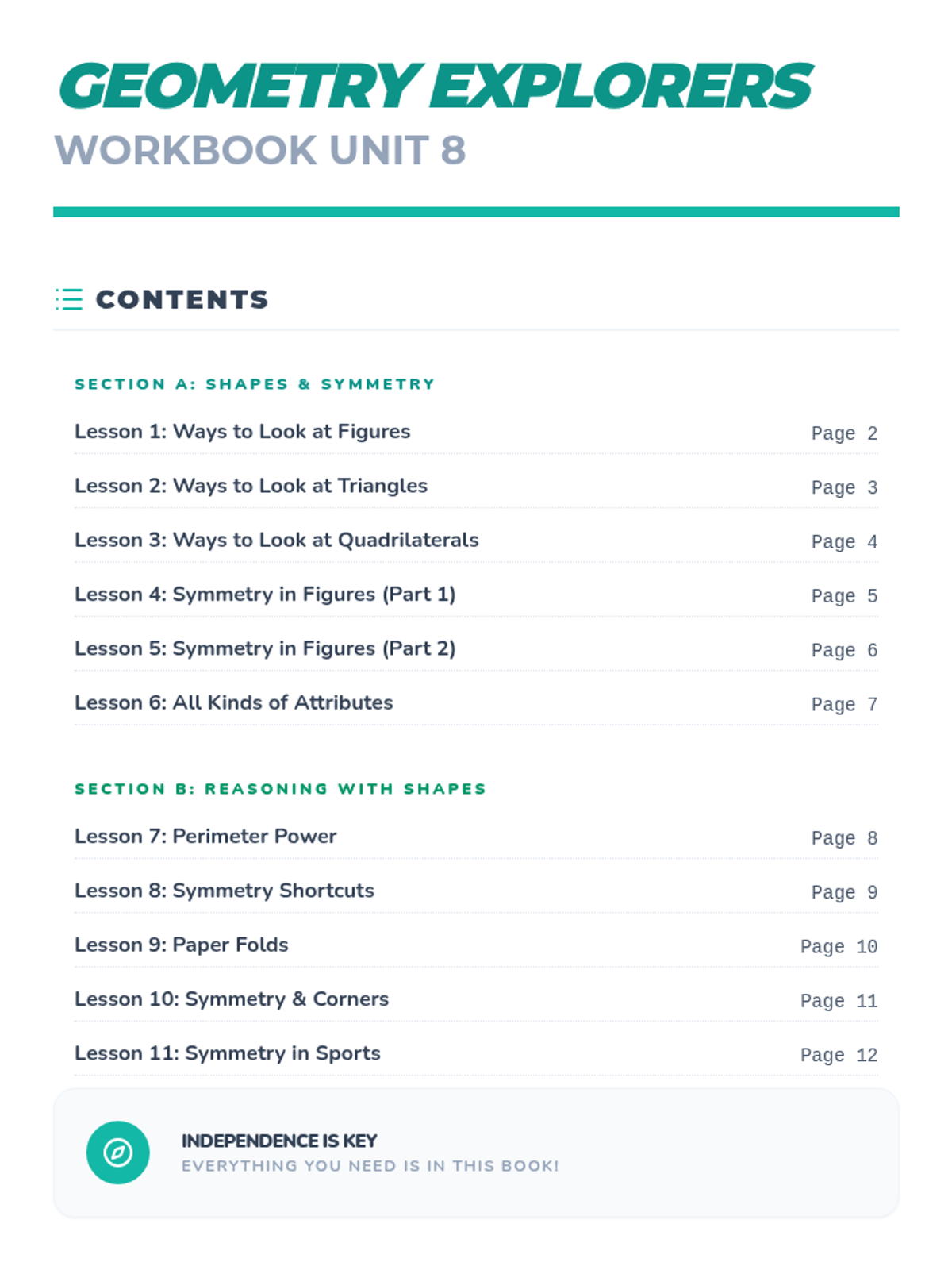
A comprehensive 2nd-grade geometry unit adapted from 4th-grade materials, covering shape attributes, triangles, quadrilaterals, symmetry, and reasoning about perimeter.
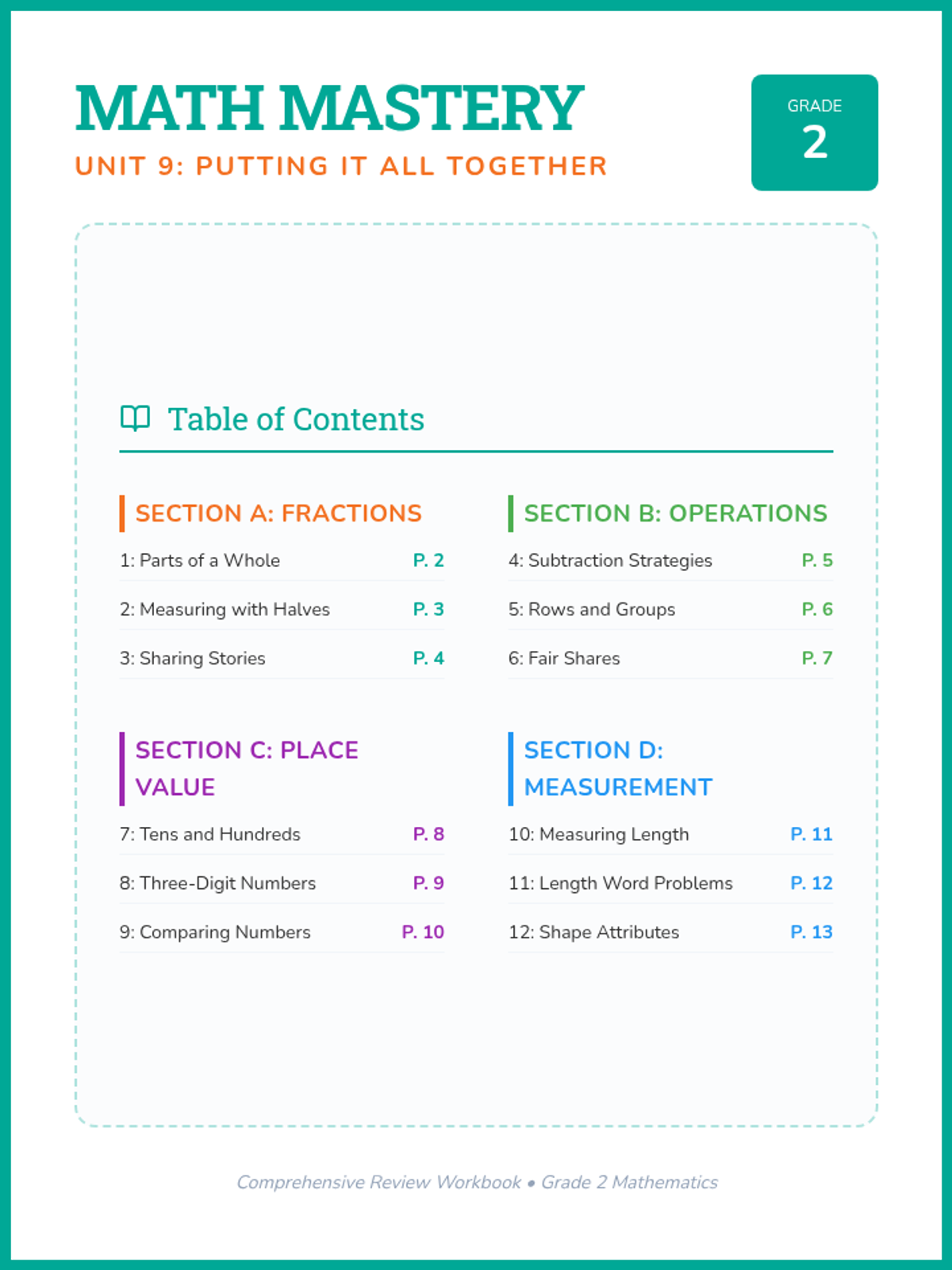
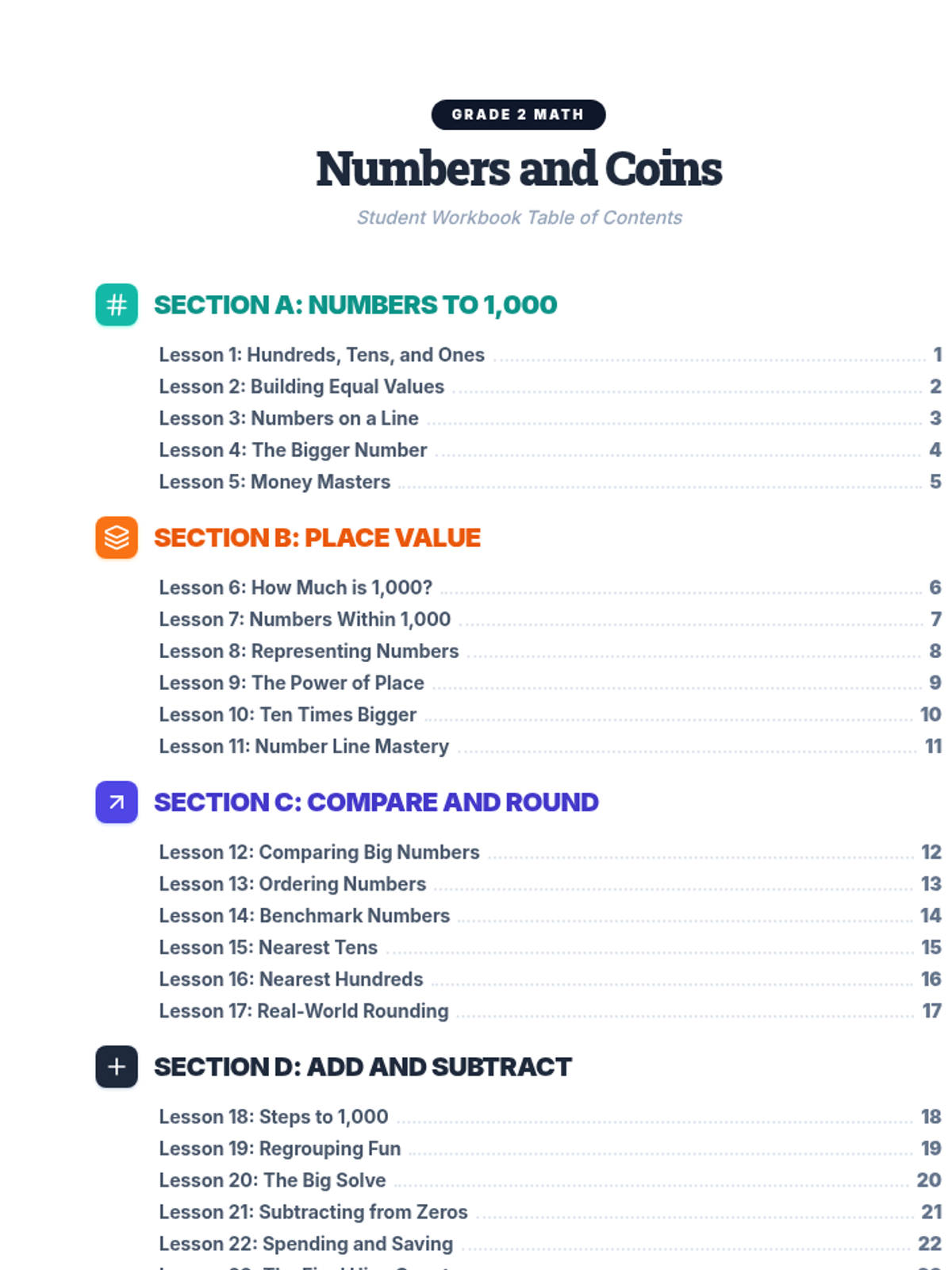
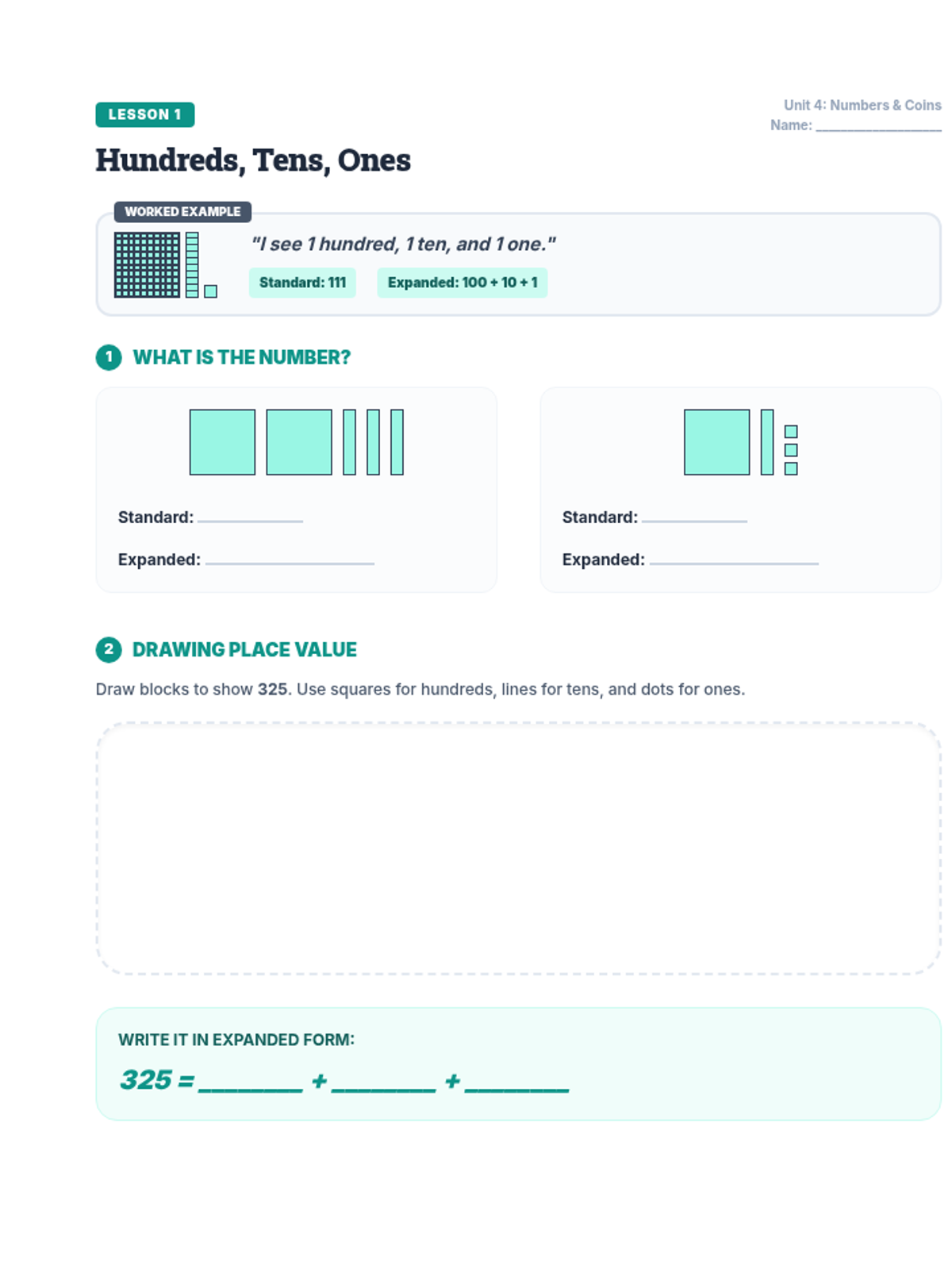
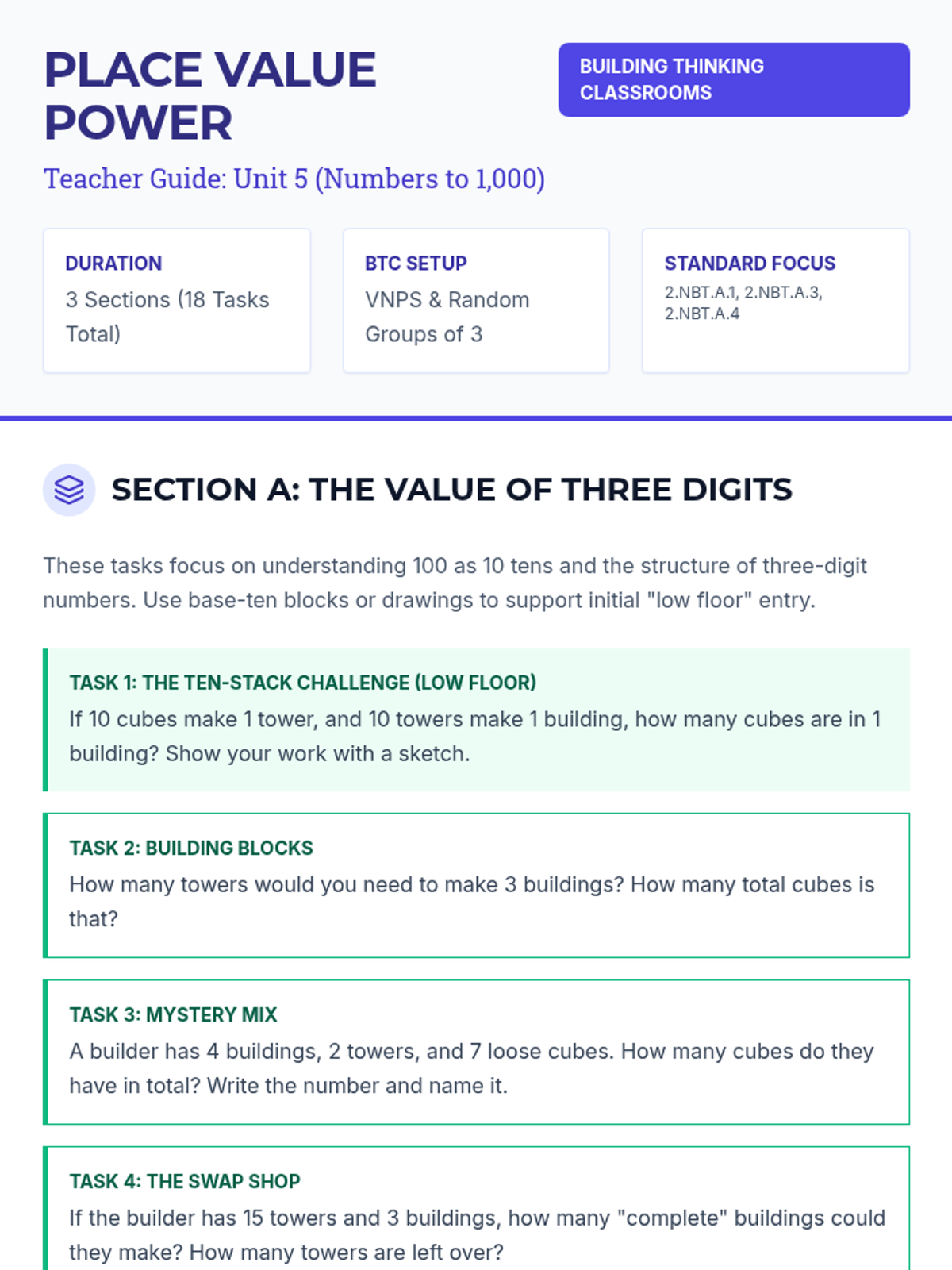
A series of lessons for 2nd grade students focusing on numbers within 1,000, place value, number lines, and money equivalencies, adapted from 4th grade concepts. This is the fourth unit in the series.
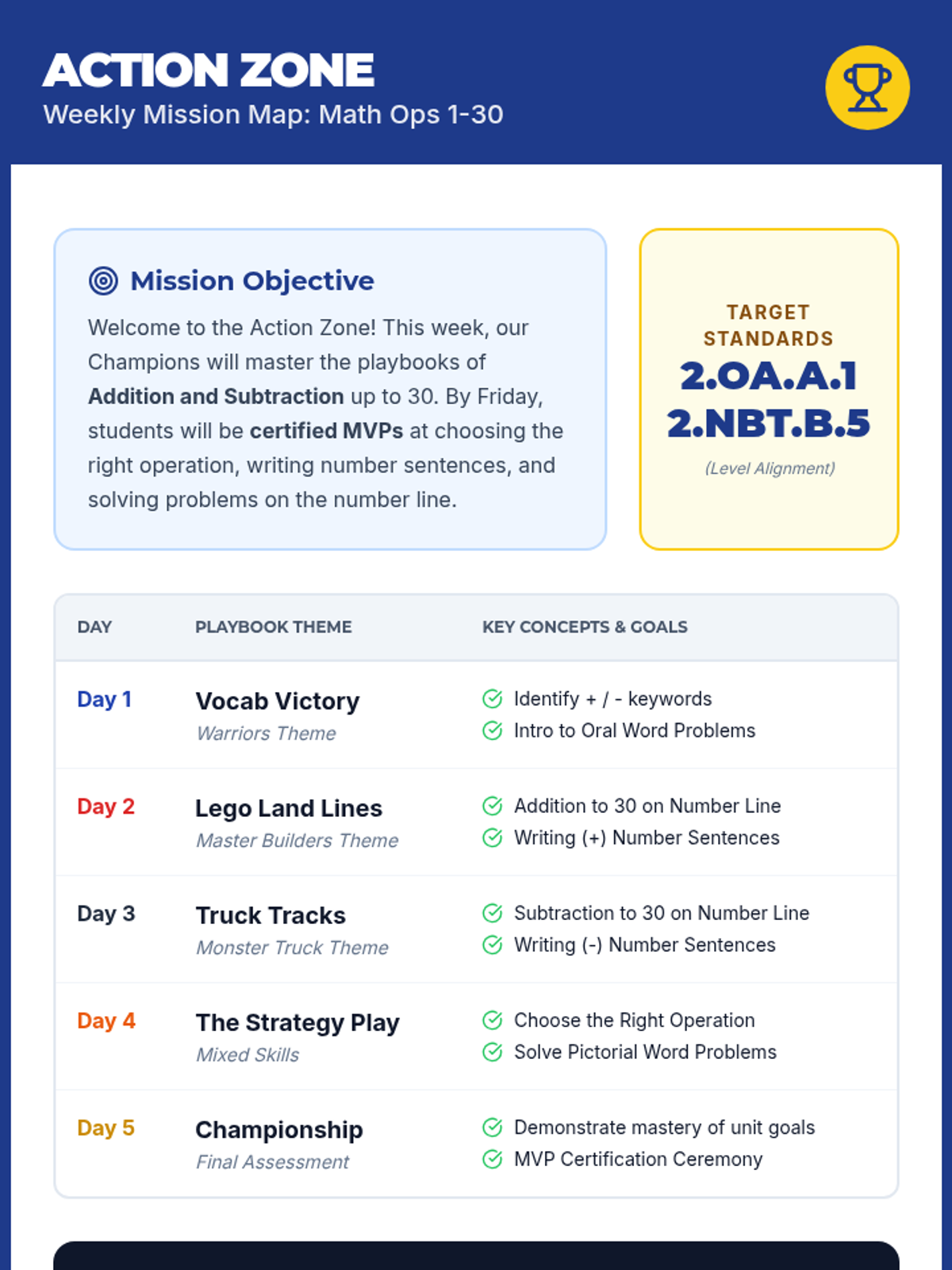
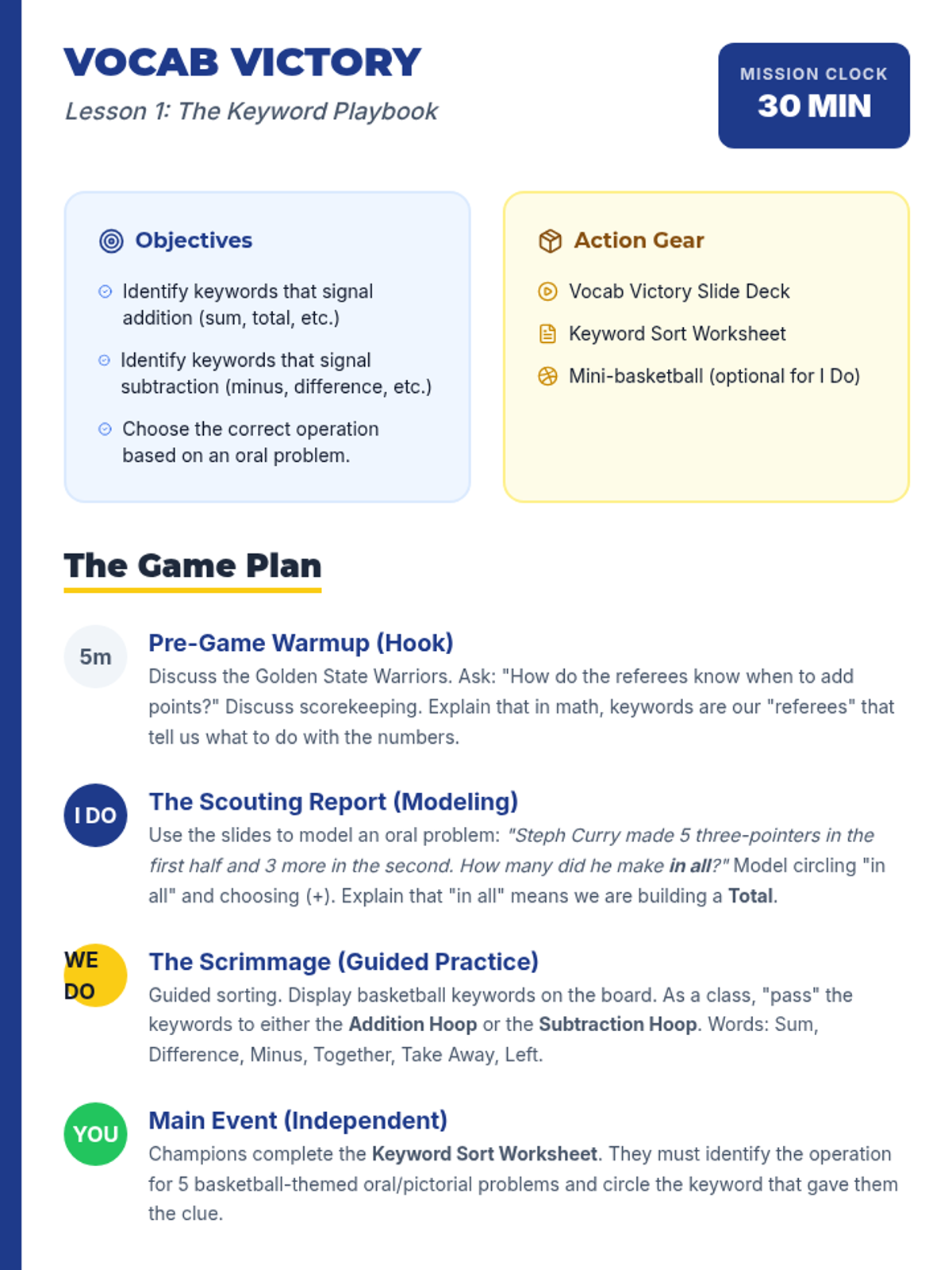
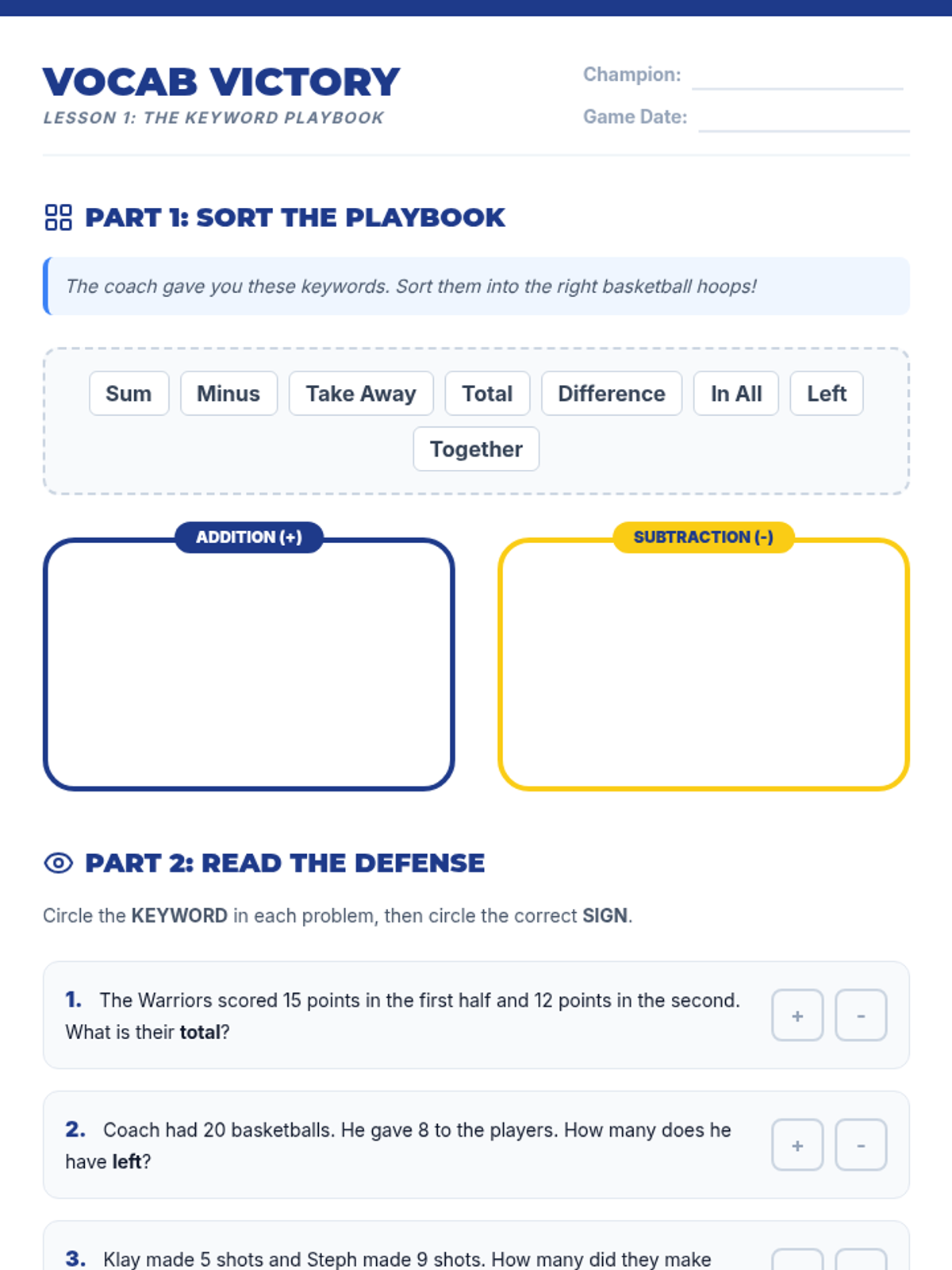
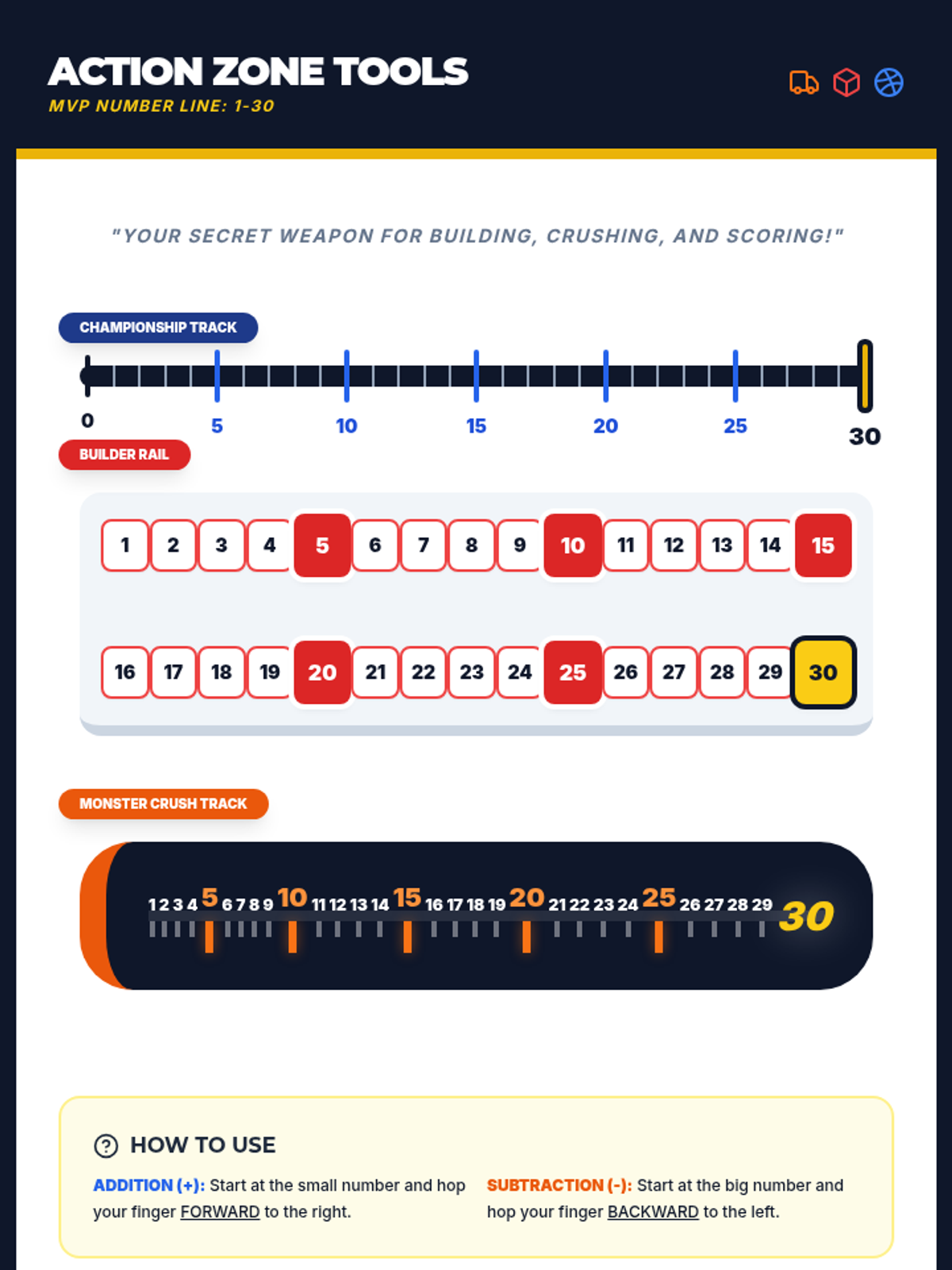
A 5-day math sequence for 3rd and 4th grade students working at a 2nd-grade level. The unit focuses on addition and subtraction up to 30 using number lines and keyword strategies, themed around Legos, monster trucks, and the Golden State Warriors.
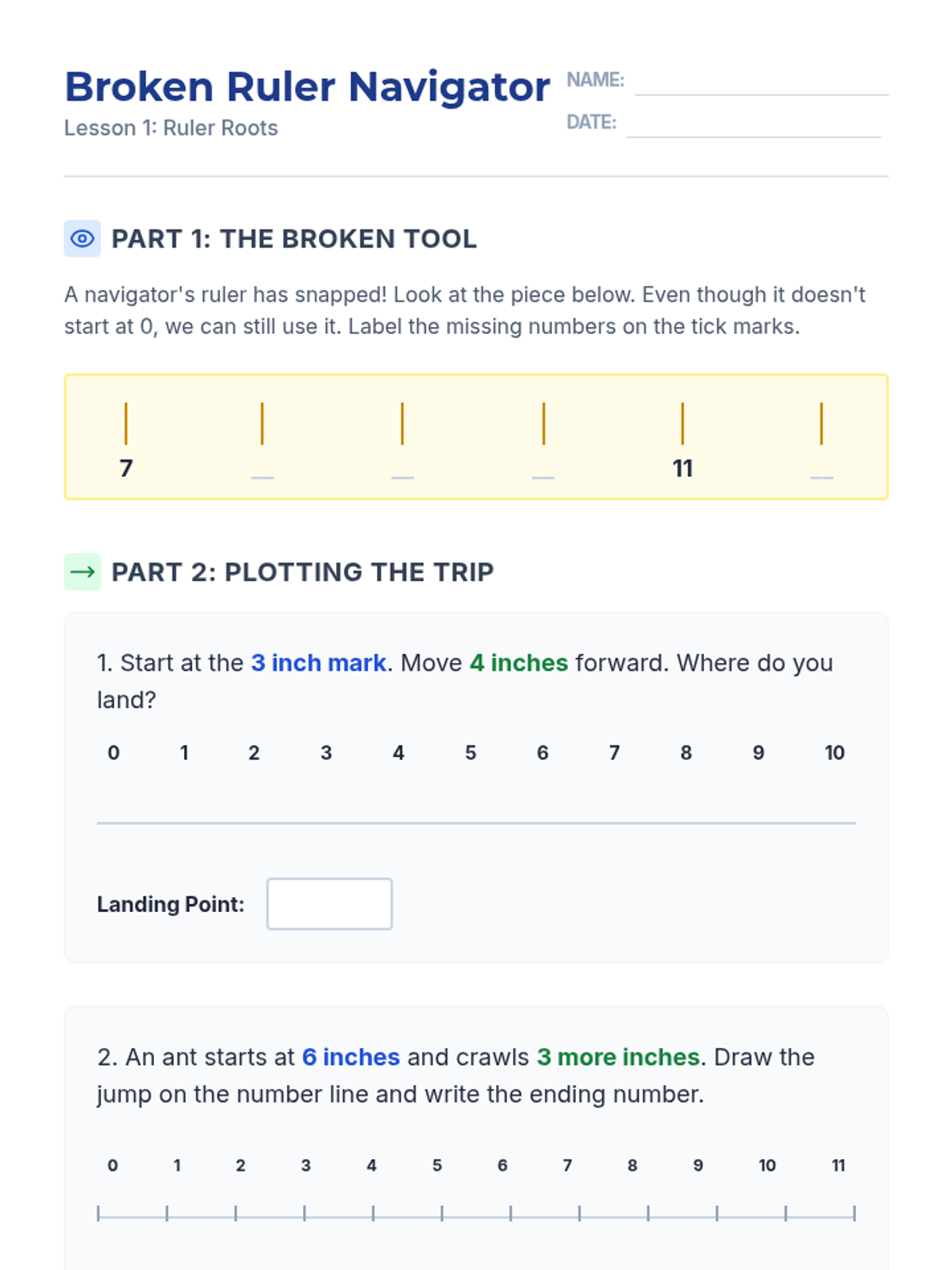
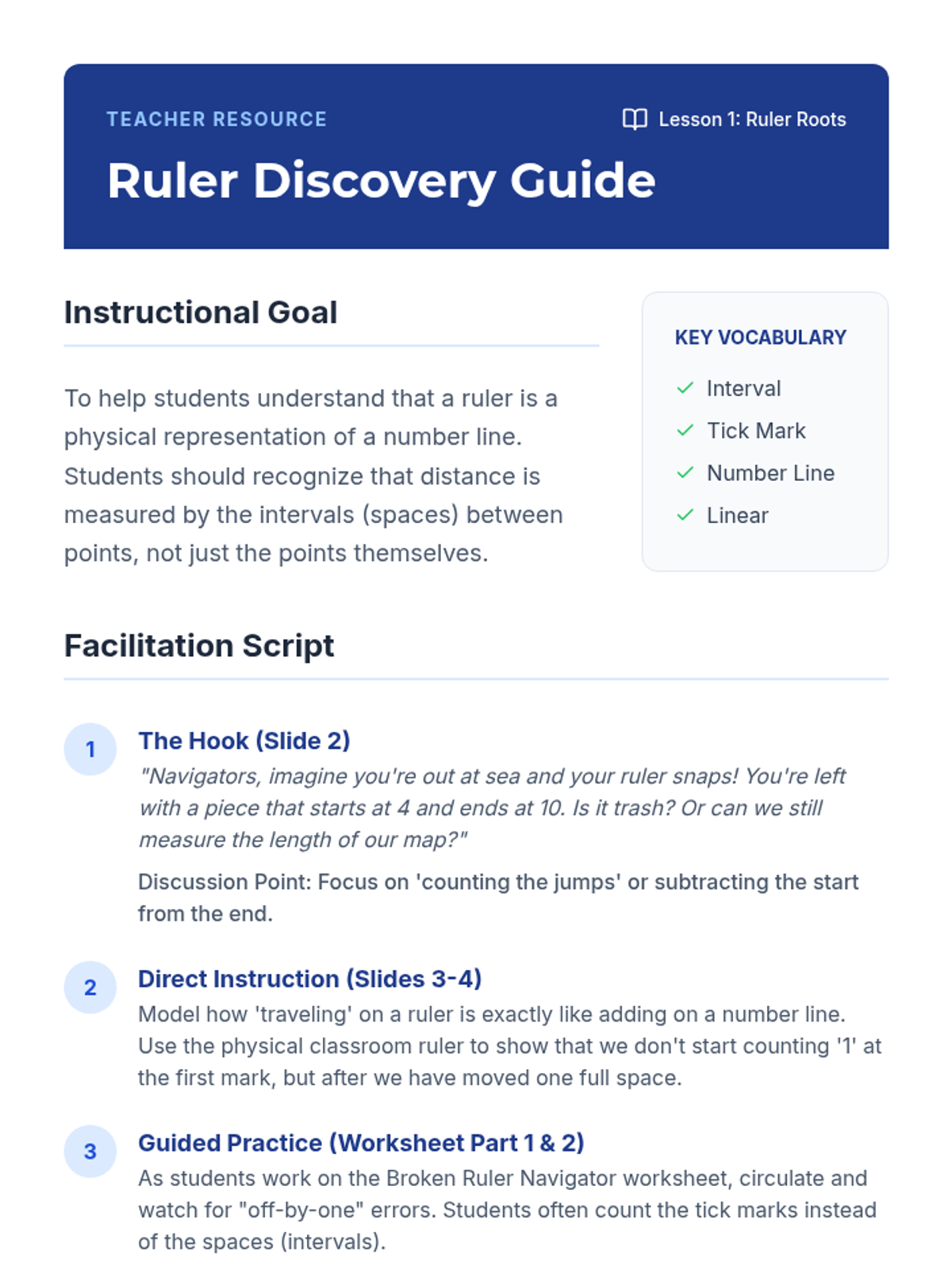
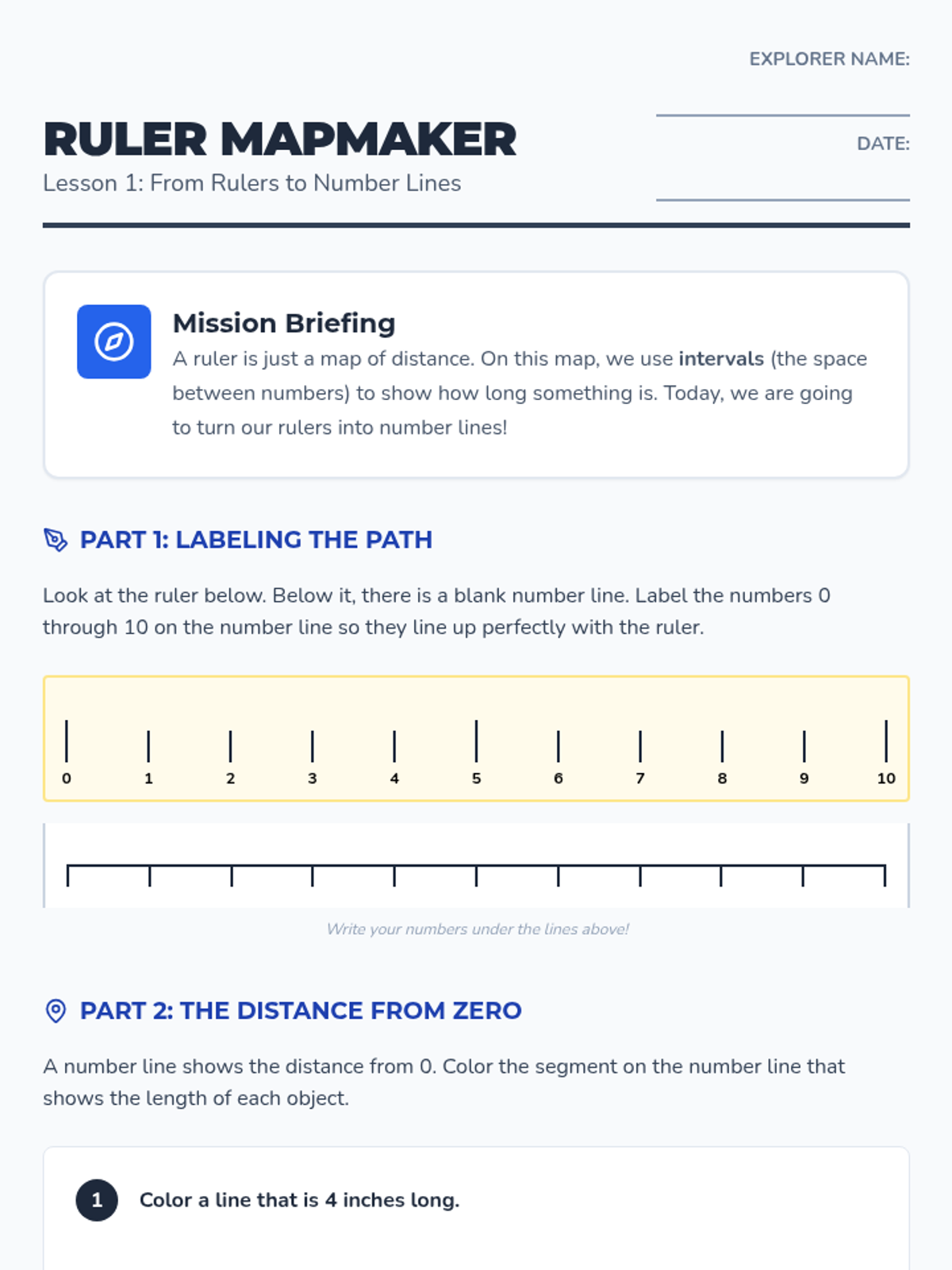
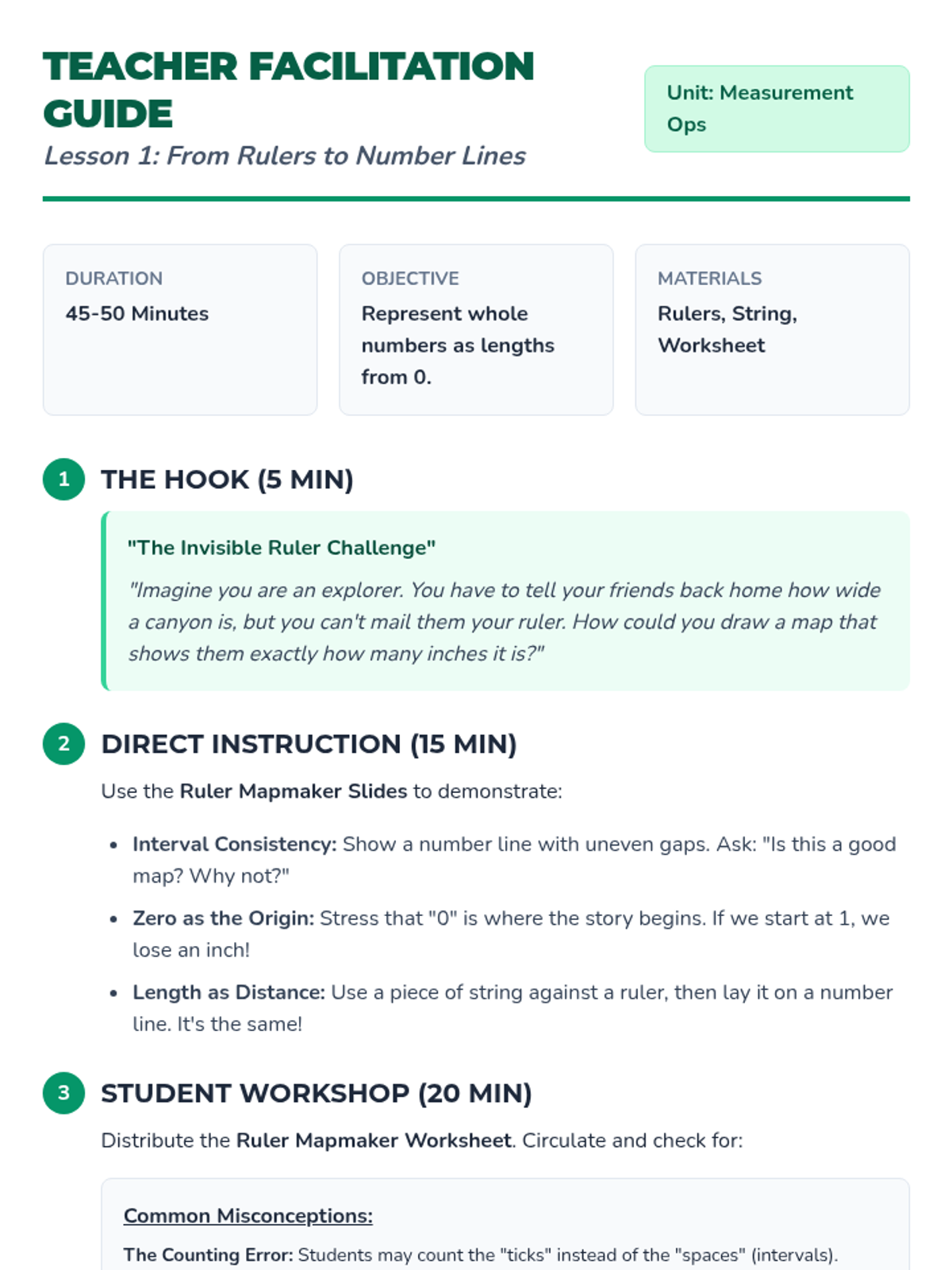
A 3rd-grade sequence focused on representing length problems using number line diagrams, transitioning from concrete rulers to abstract visual models. Students learn to model addition and subtraction word problems as movements along a number line.
A 2nd-grade math sequence that bridges the gap between concrete measurement and abstract number line diagrams, teaching students to model addition and subtraction of lengths.
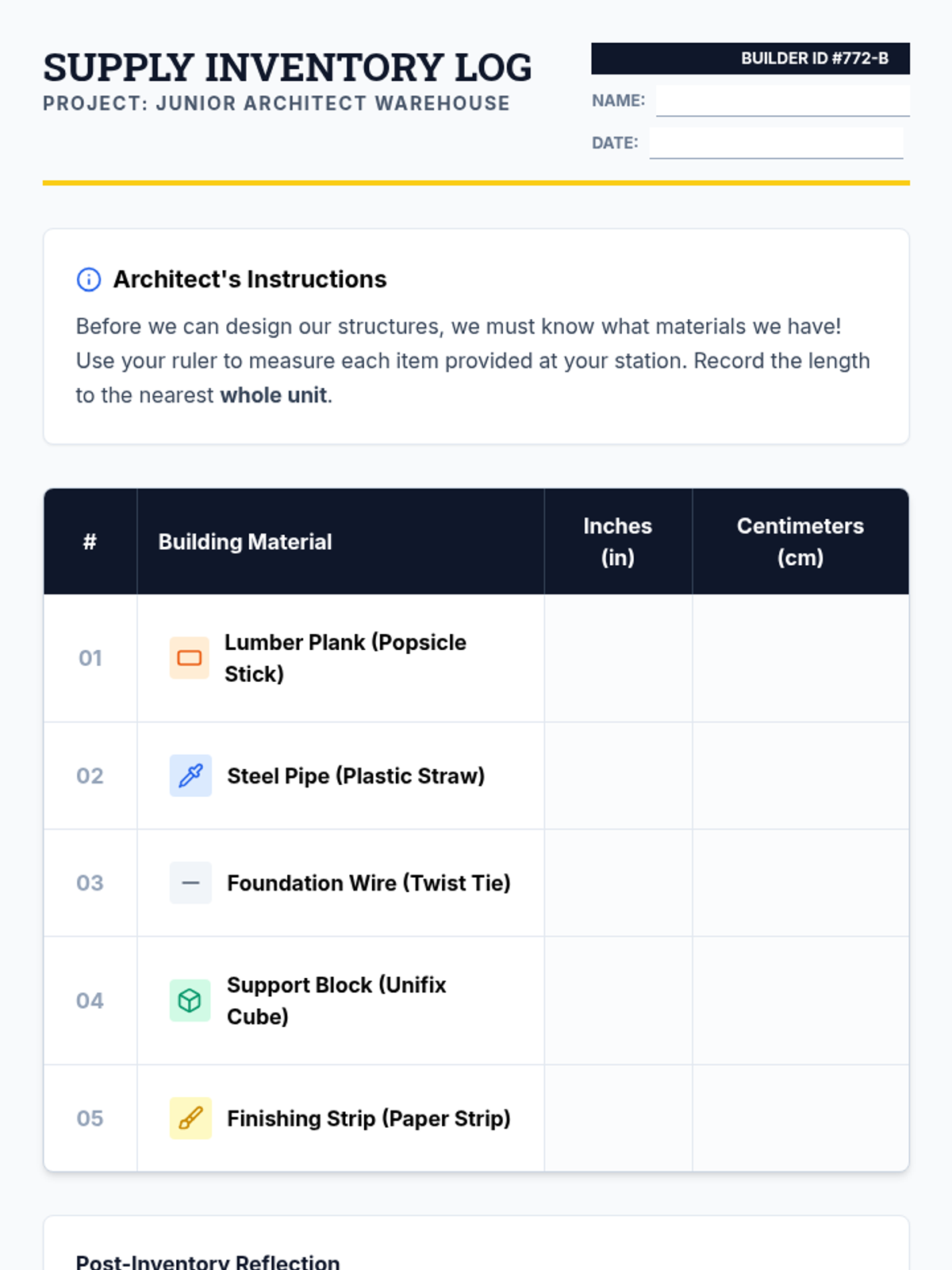
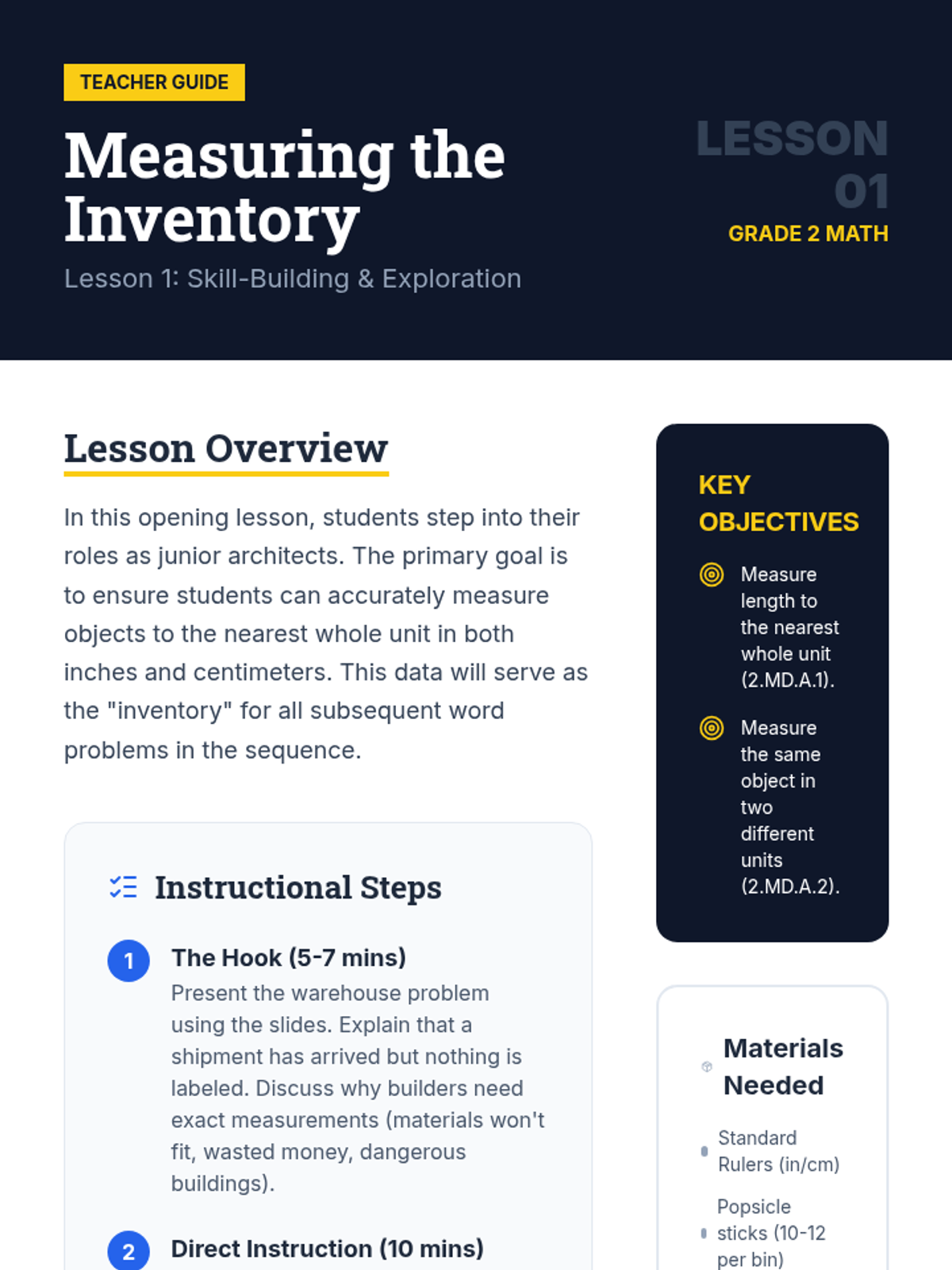
A project-based sequence where 2nd-grade students act as junior architects to master measurement word problems. Students progress from measuring inventory to solving complex multi-step addition and subtraction challenges related to building and design.
An advanced 2nd-grade sequence focusing on the inverse relationship between unit size and count, and calculating differences in length between objects using standard units. Students will engage in inquiry-based measuring, manipulative explorations, and a design project to master these complex measurement concepts.
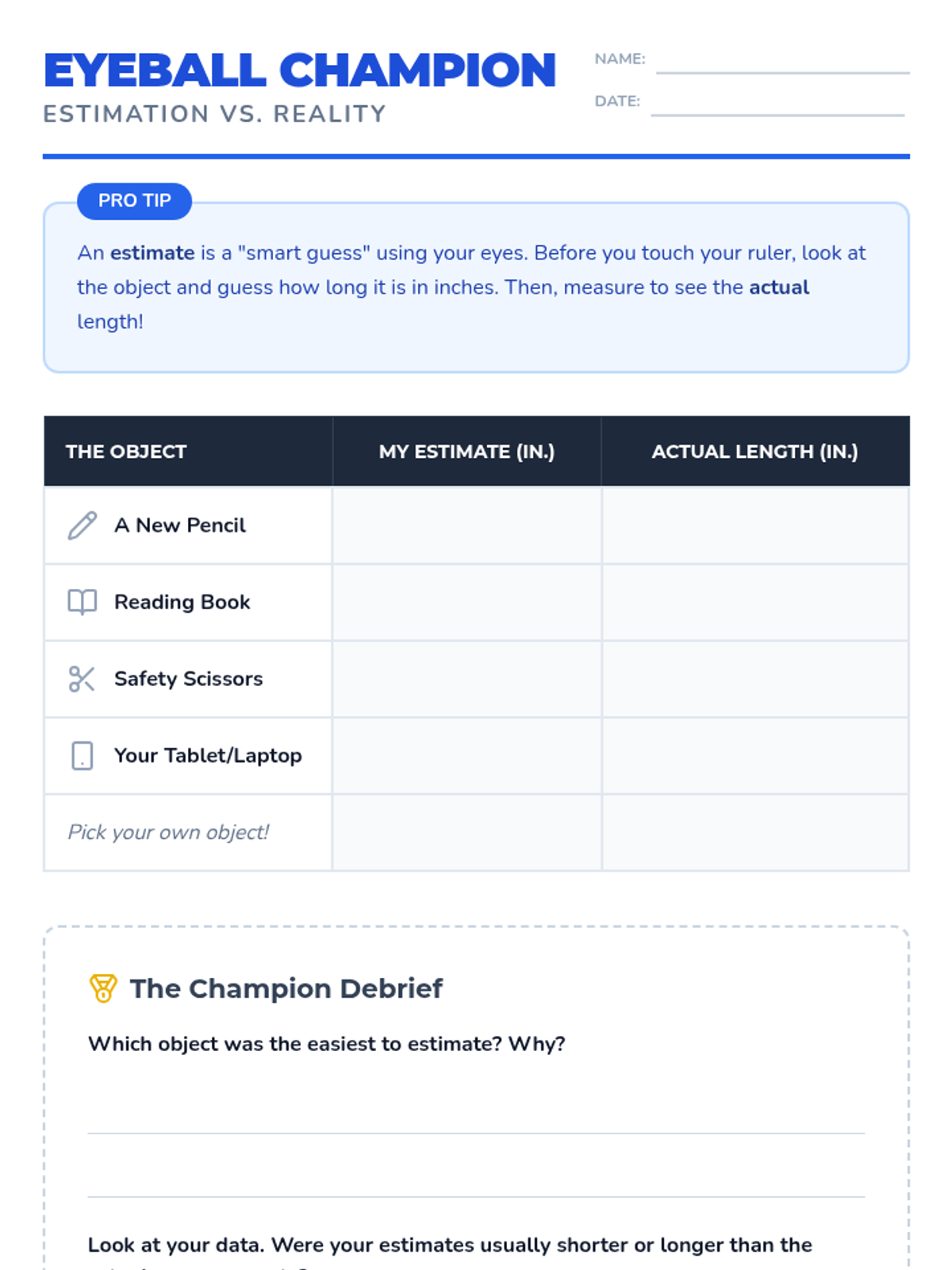
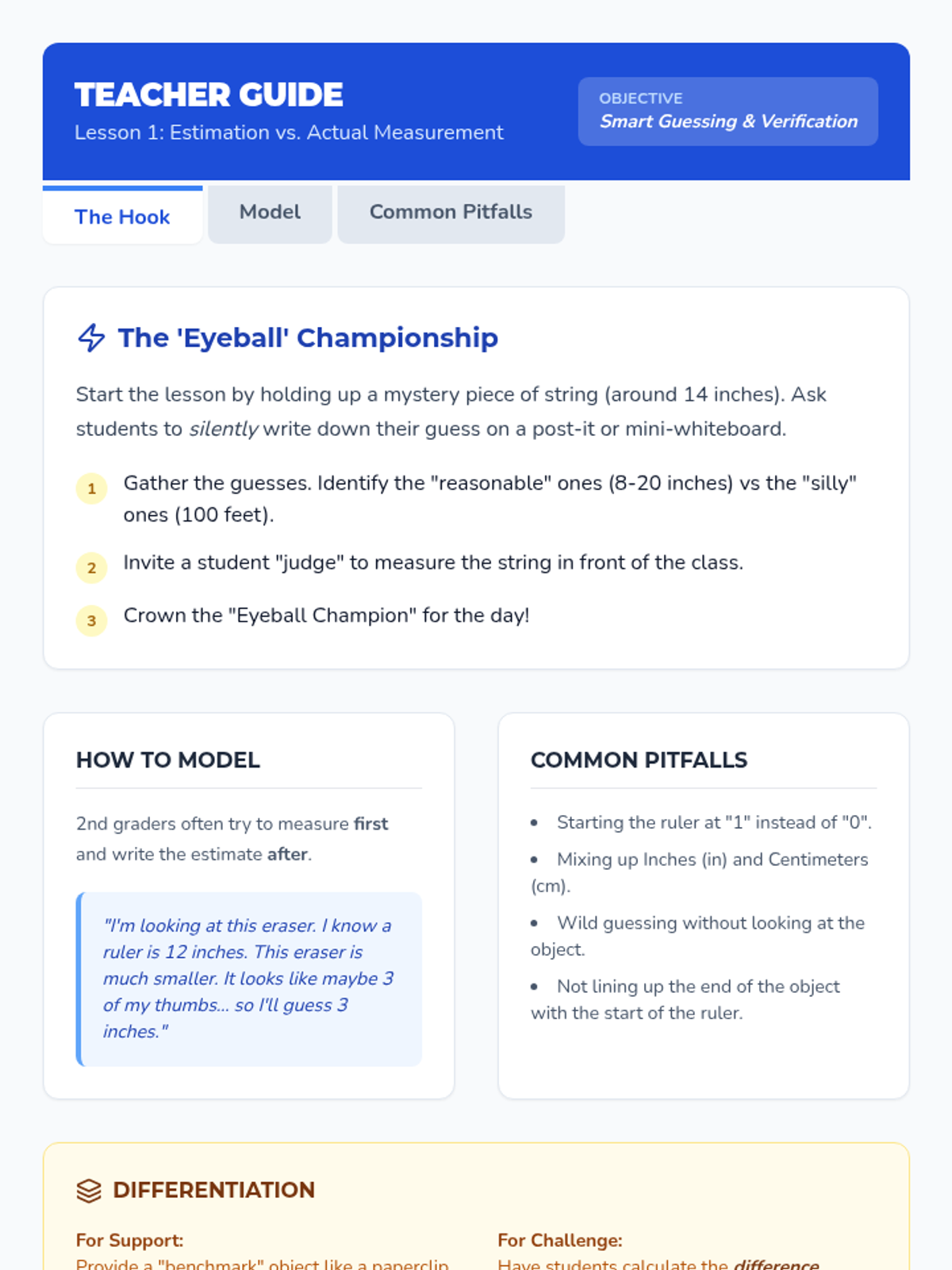
A hands-on sequence for 2nd graders focusing on estimation benchmarks, comparative measurement, and calculating length differences using subtraction. Students move from intuitive guessing to precise mathematical comparisons.
A comprehensive unit focused on measuring, estimating, and calculating liquid volumes in liters and masses in grams and kilograms. Students engage in hands-on lab activities and word problem challenges.
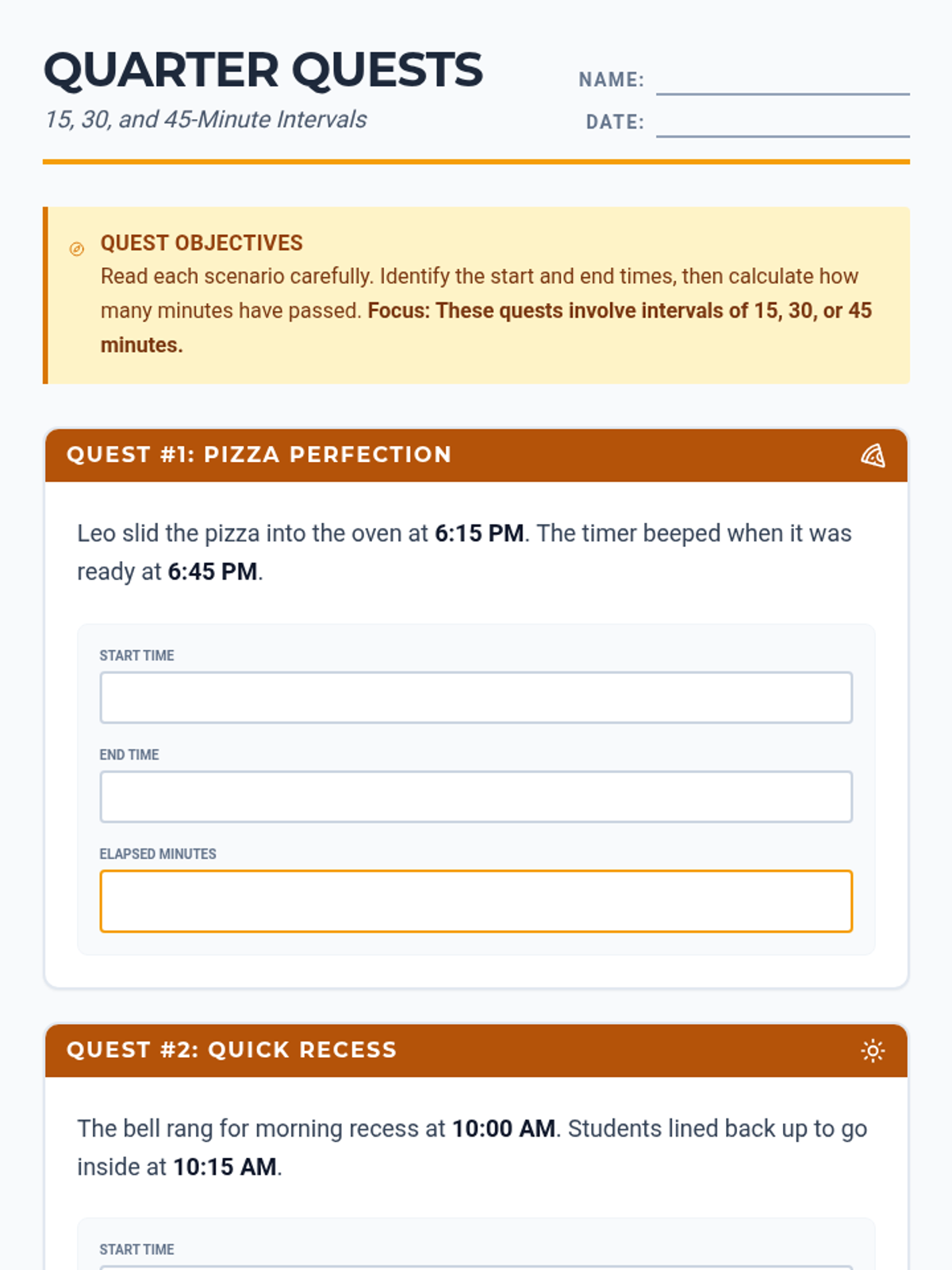
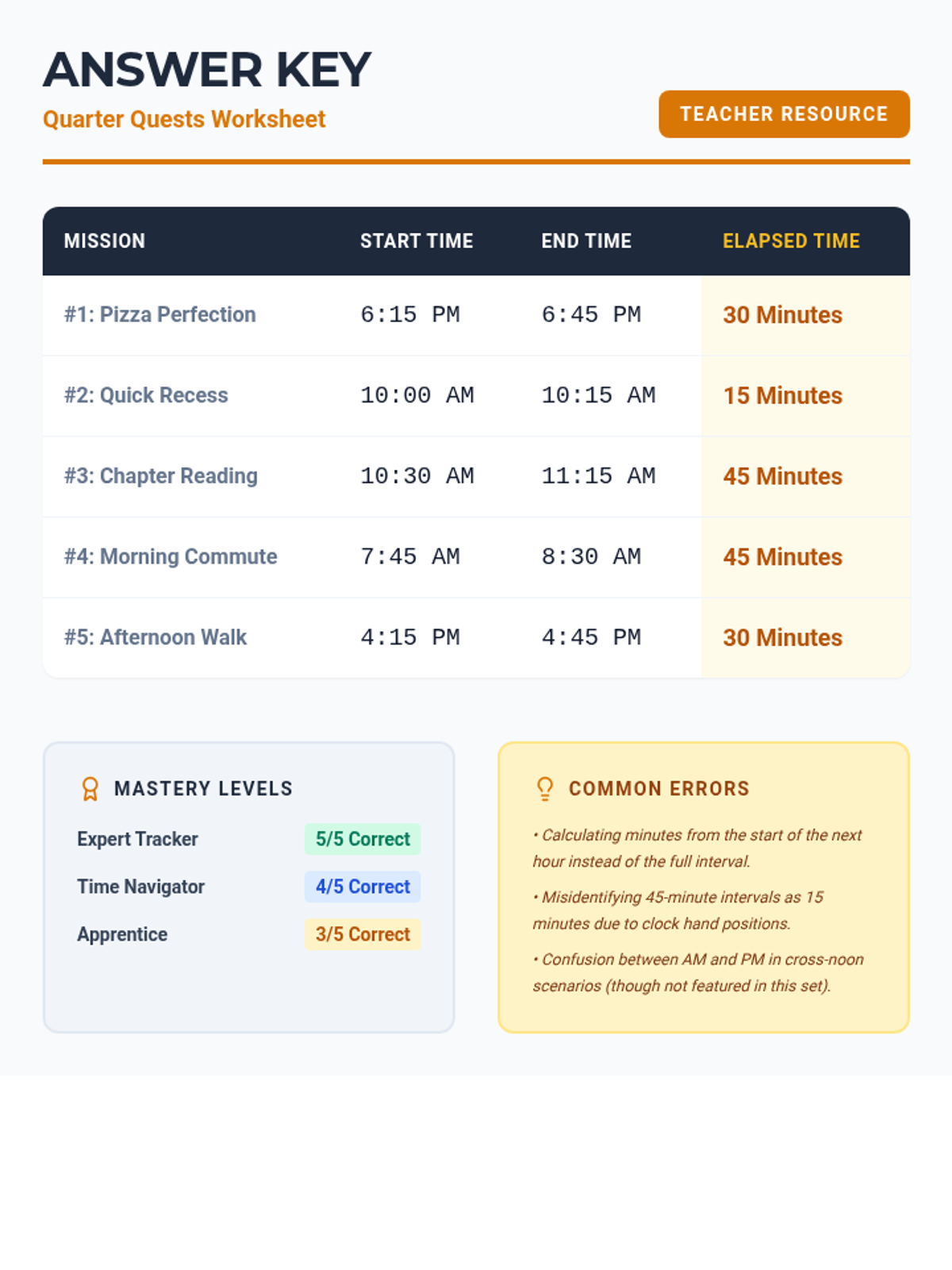
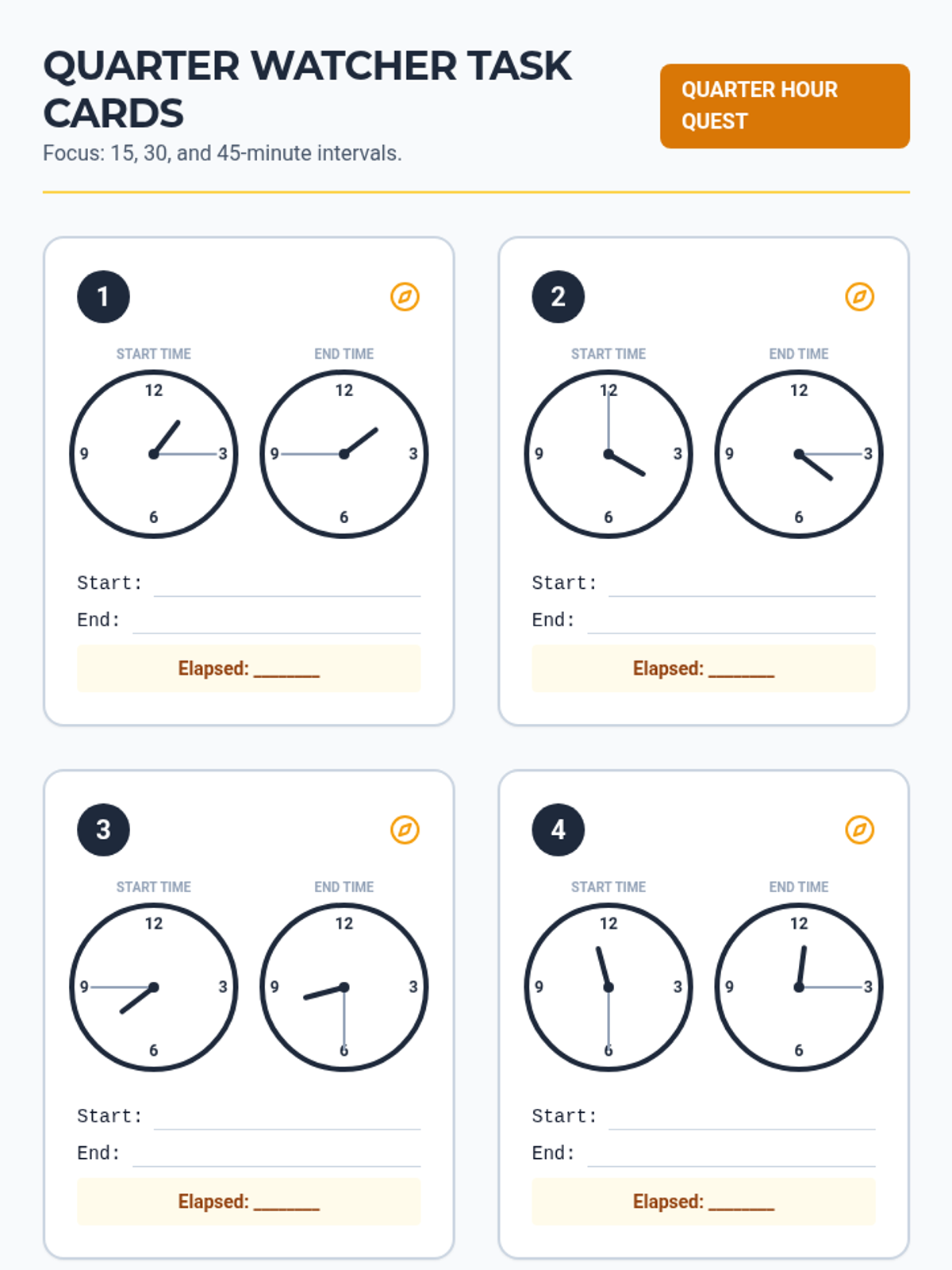
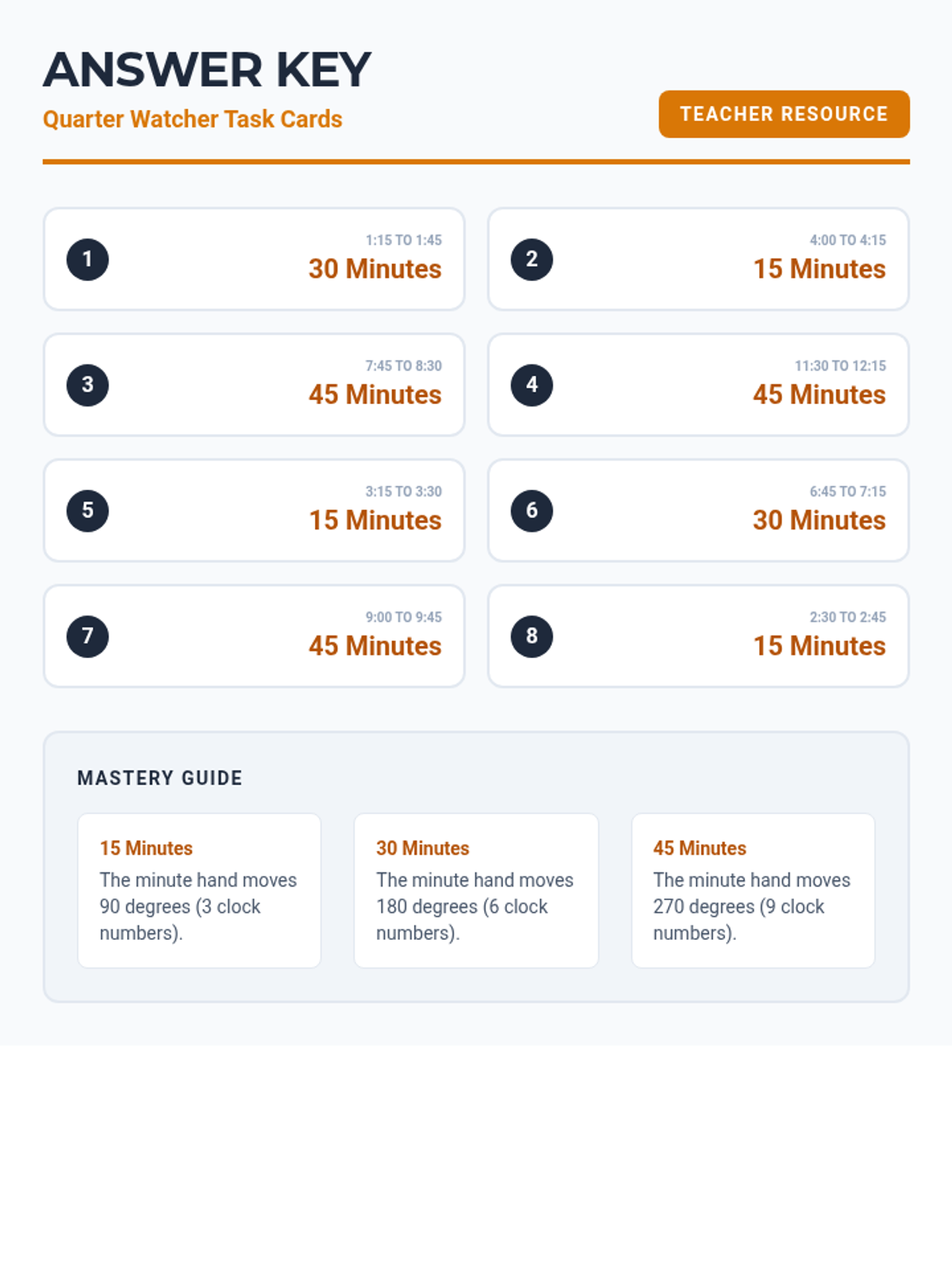
A comprehensive unit on calculating elapsed time, progressing from simple one-hour intervals to quarter-hour and five-minute increments using scenarios and analog clocks.
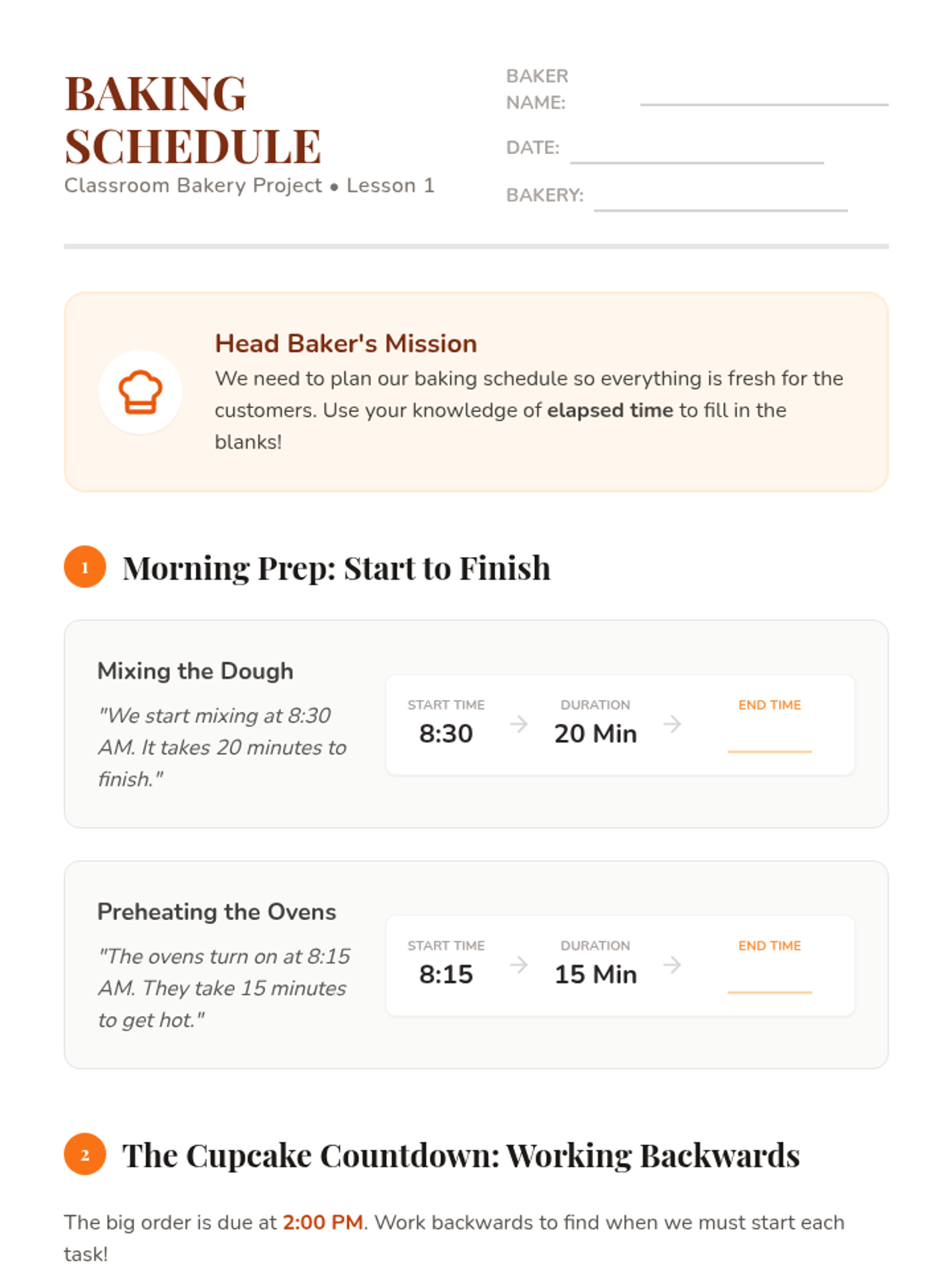
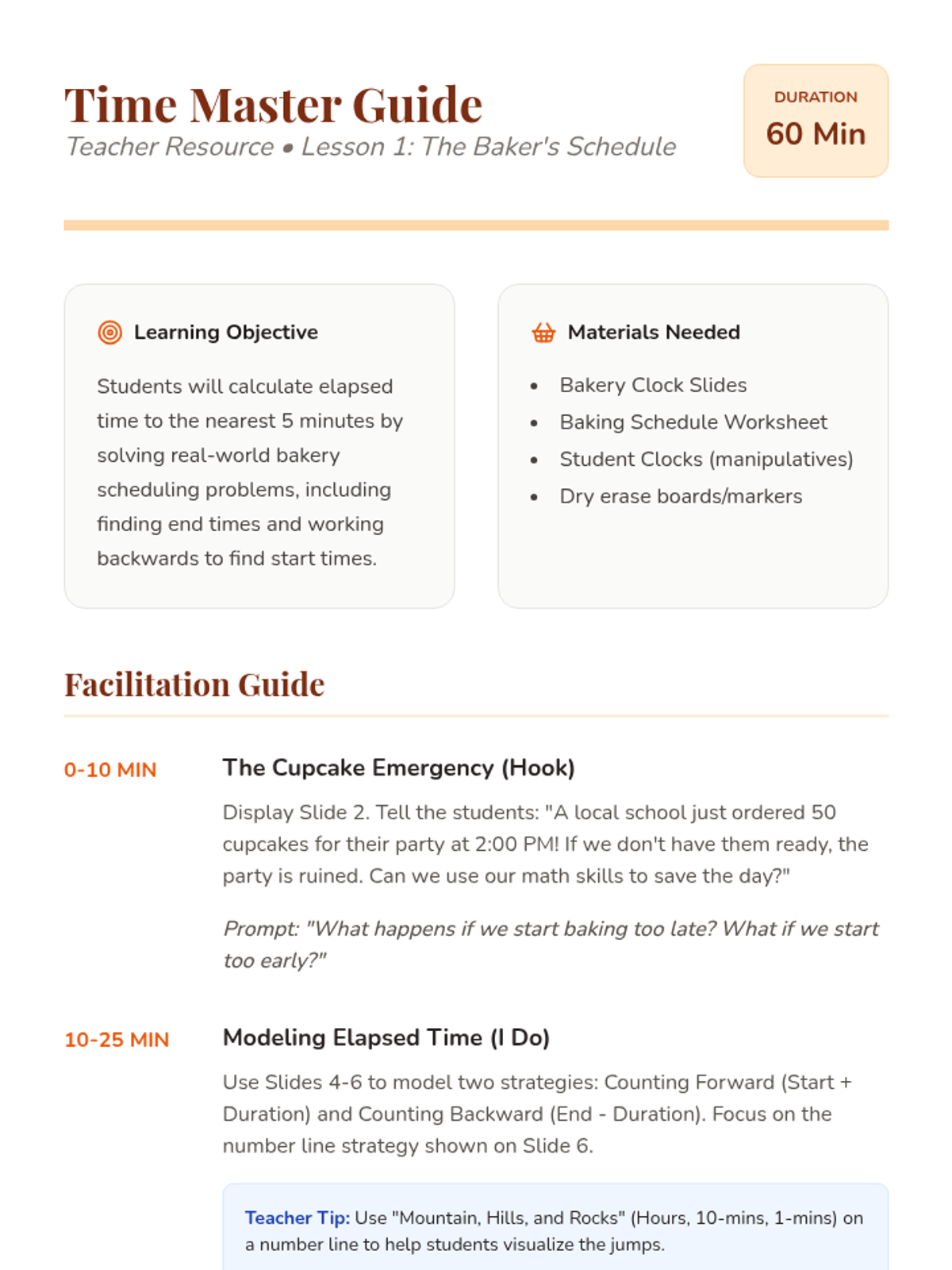
A project-based unit where 2nd-grade students run a 'Classroom Bakery,' applying measurement skills in time, mass, and volume to solve real-world culinary challenges.
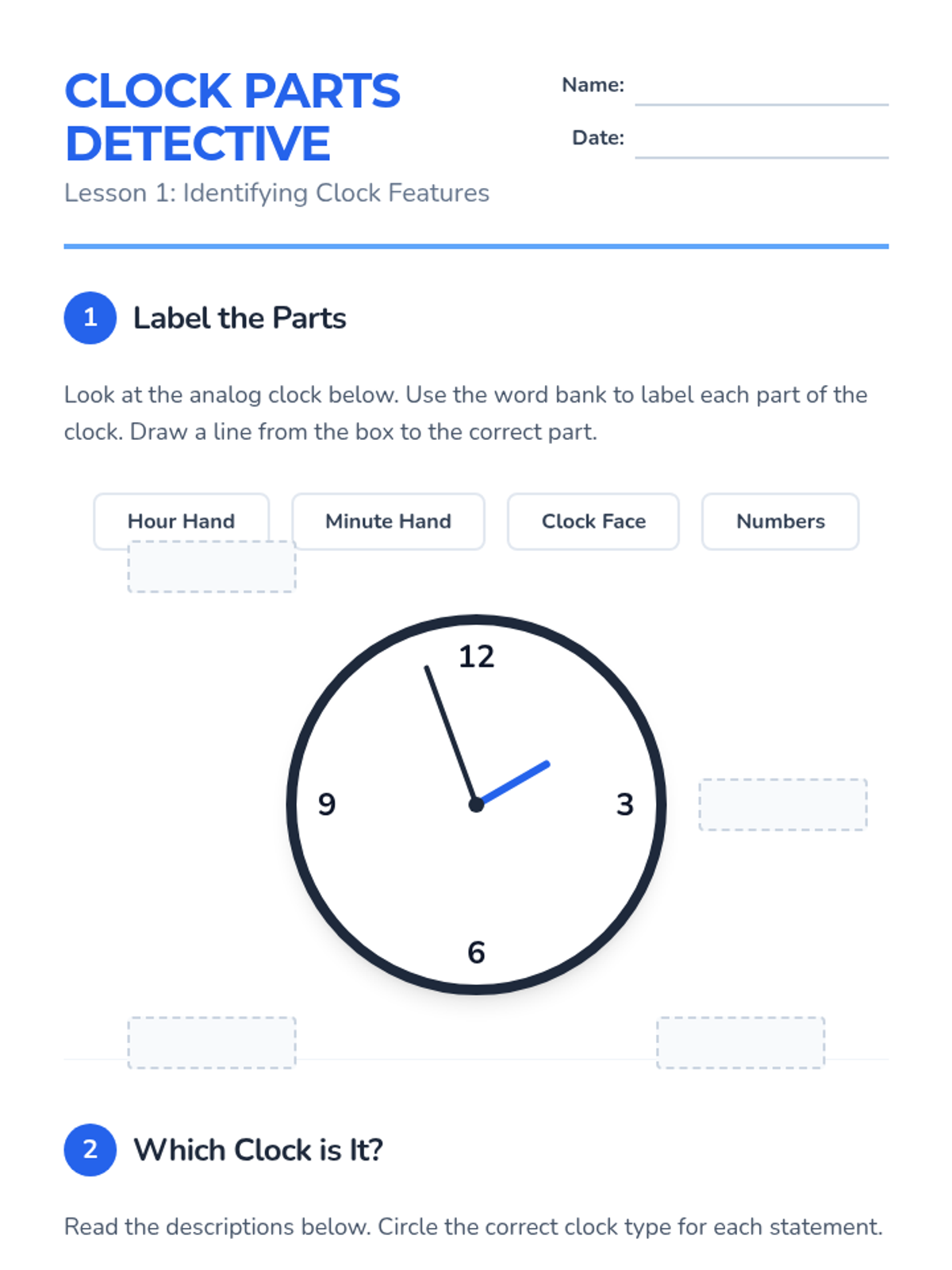
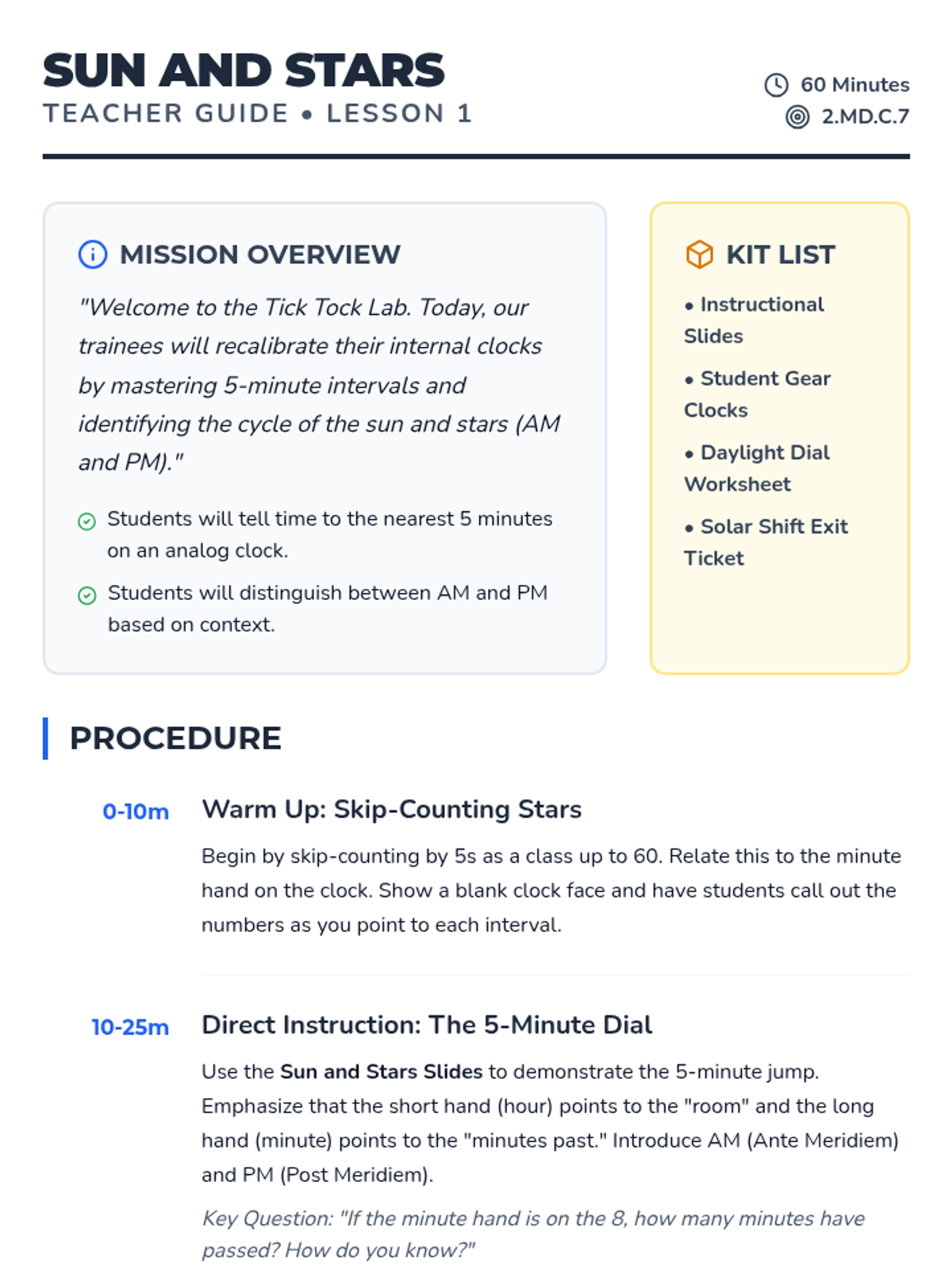
A comprehensive 2nd Grade unit on timekeeping, covering clock mechanics, skip-counting to 5 minutes, A.M./P.M. cycles, and basic elapsed time calculations through engaging, hands-on activities.
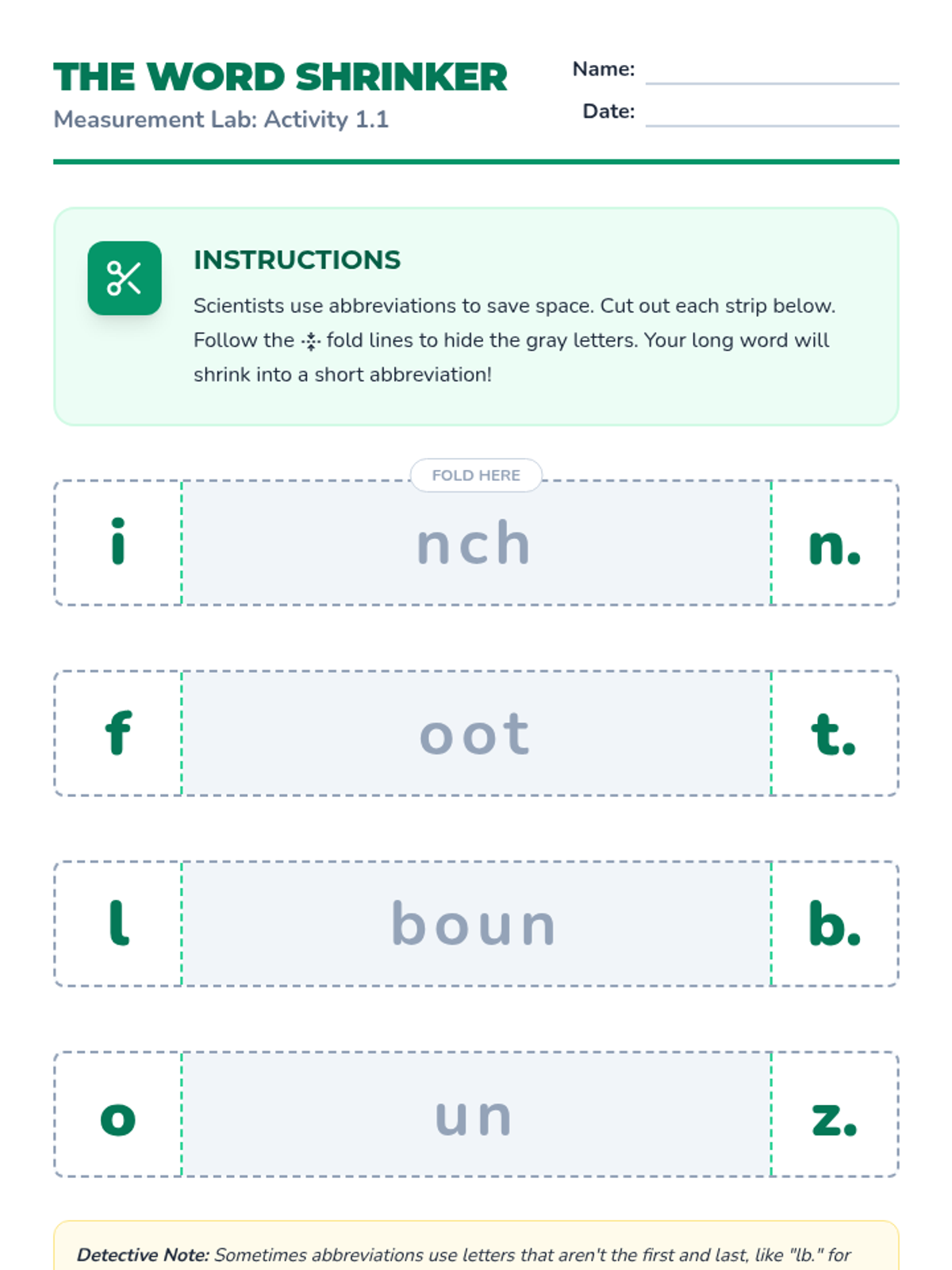
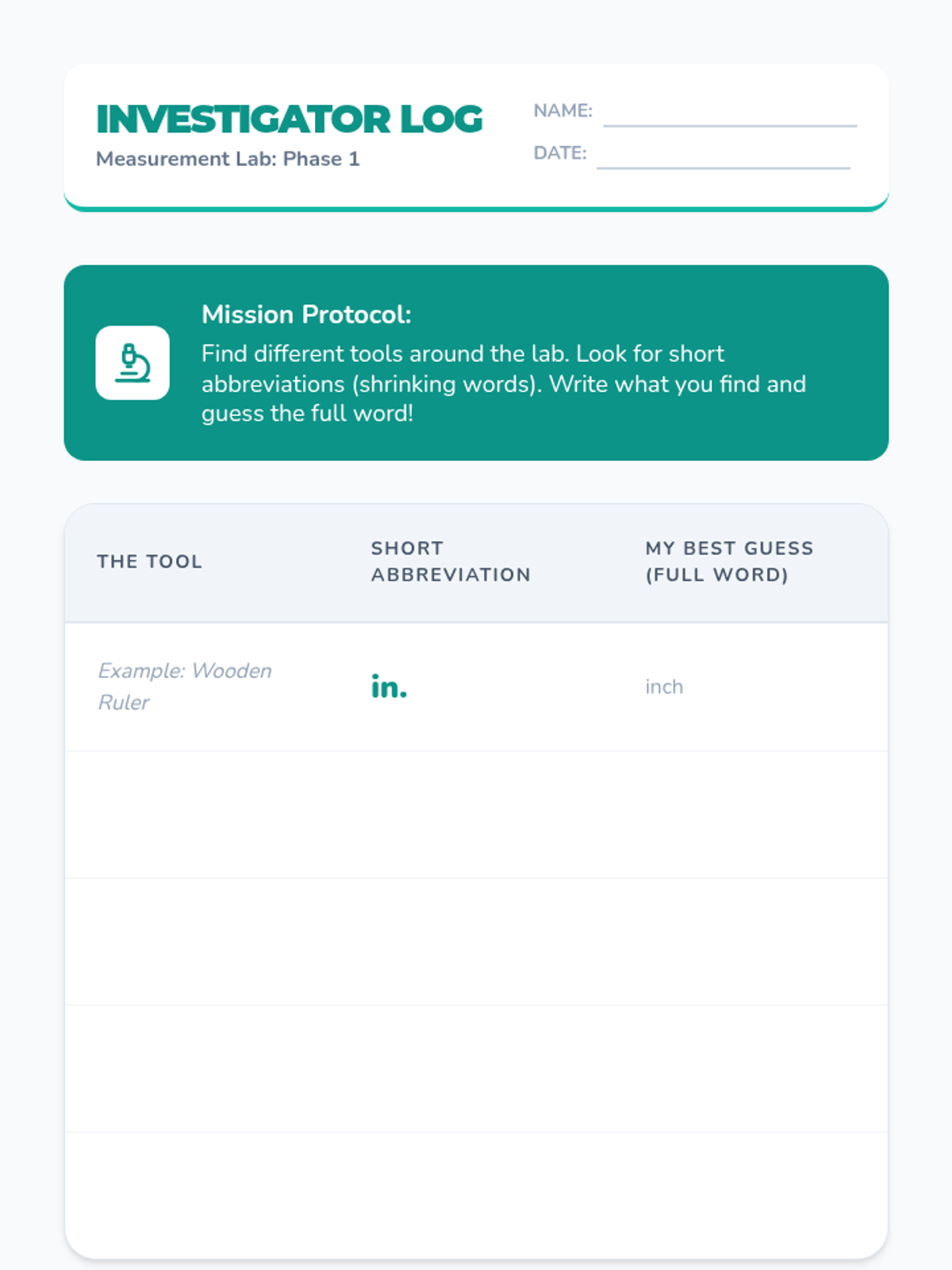
Students explore the practical use of measurement abbreviations through inquiry-based activities involving rulers, grocery packaging, and kitchen tools. This sequence focuses on visual recognition and recording of units like in., ft., oz., lb., tsp., and tbsp. in a scientific context.
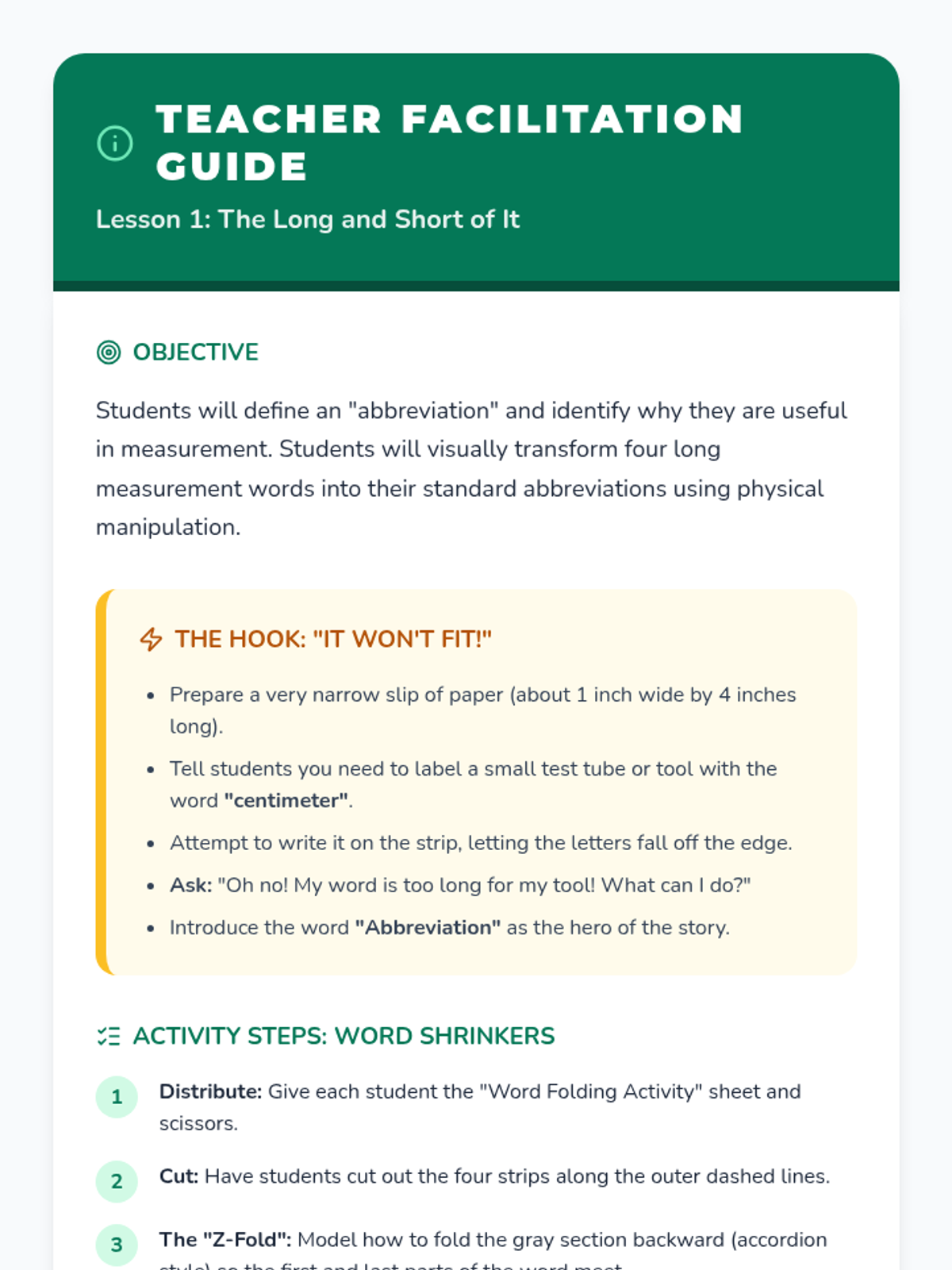
A 2nd-grade inquiry-based sequence exploring measurement abbreviations through the lens of 'The Shrink Lab.' Students investigate why and how we shorten measurement words in real-world contexts like recipes and blueprints.
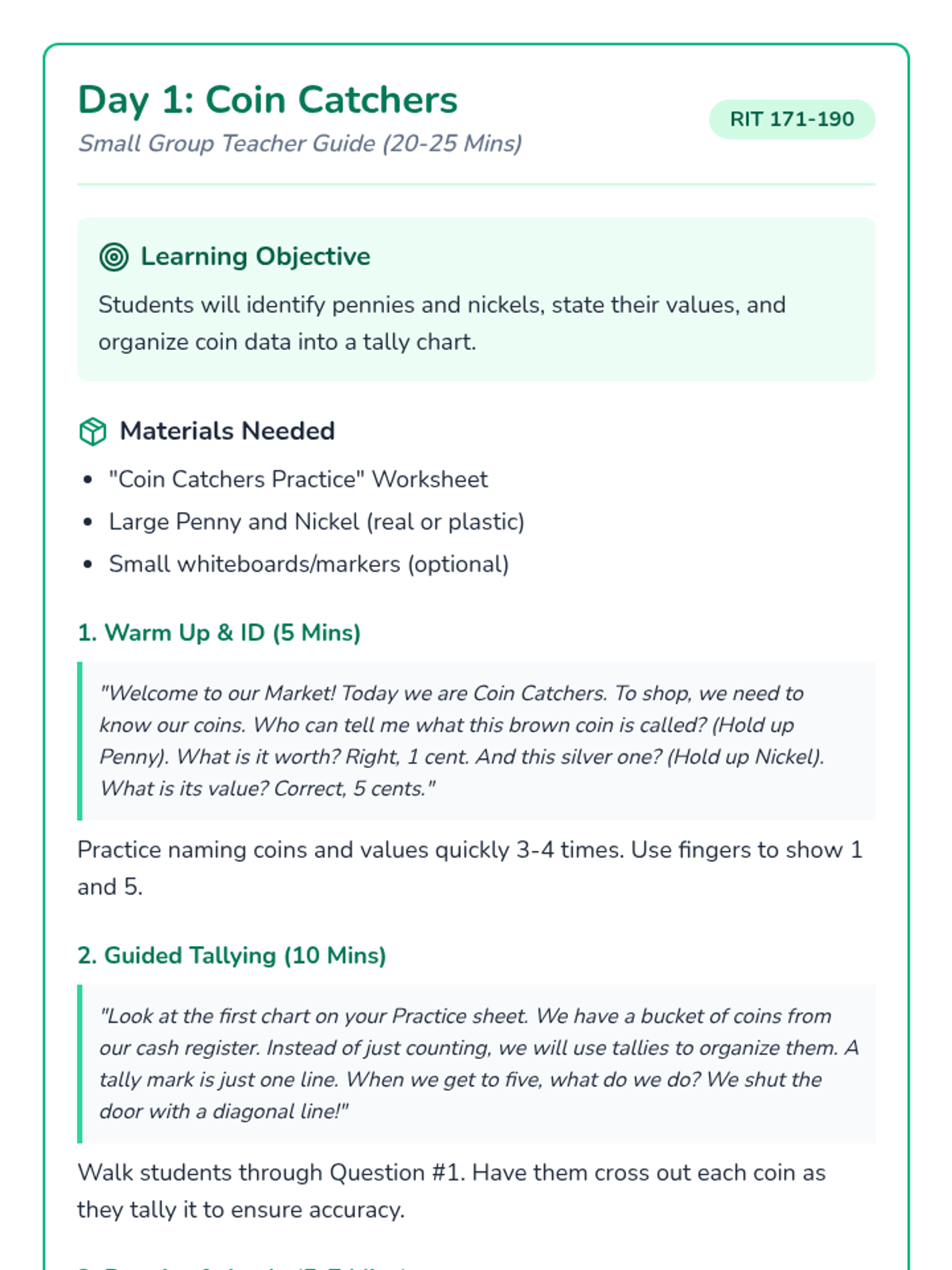
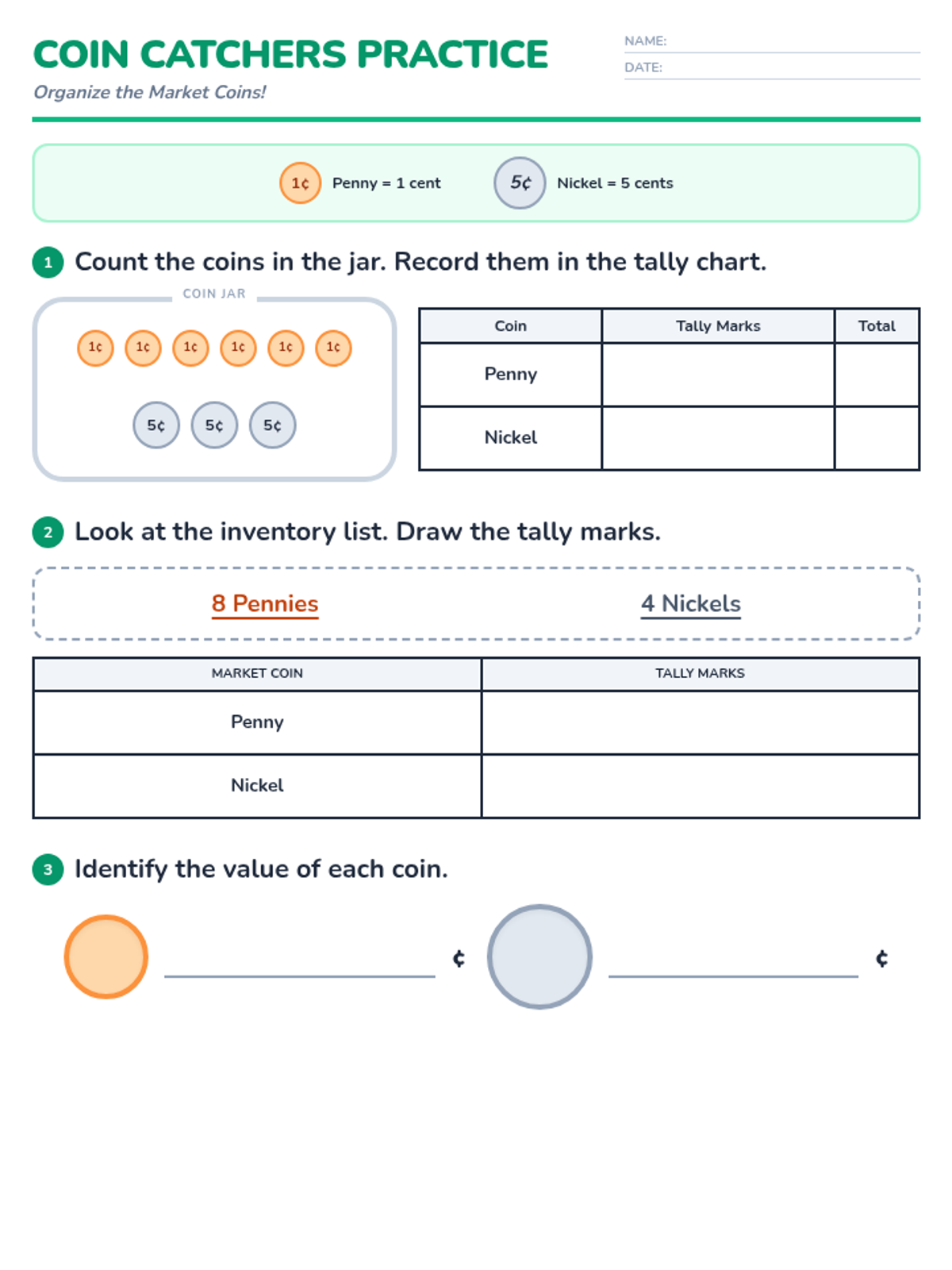
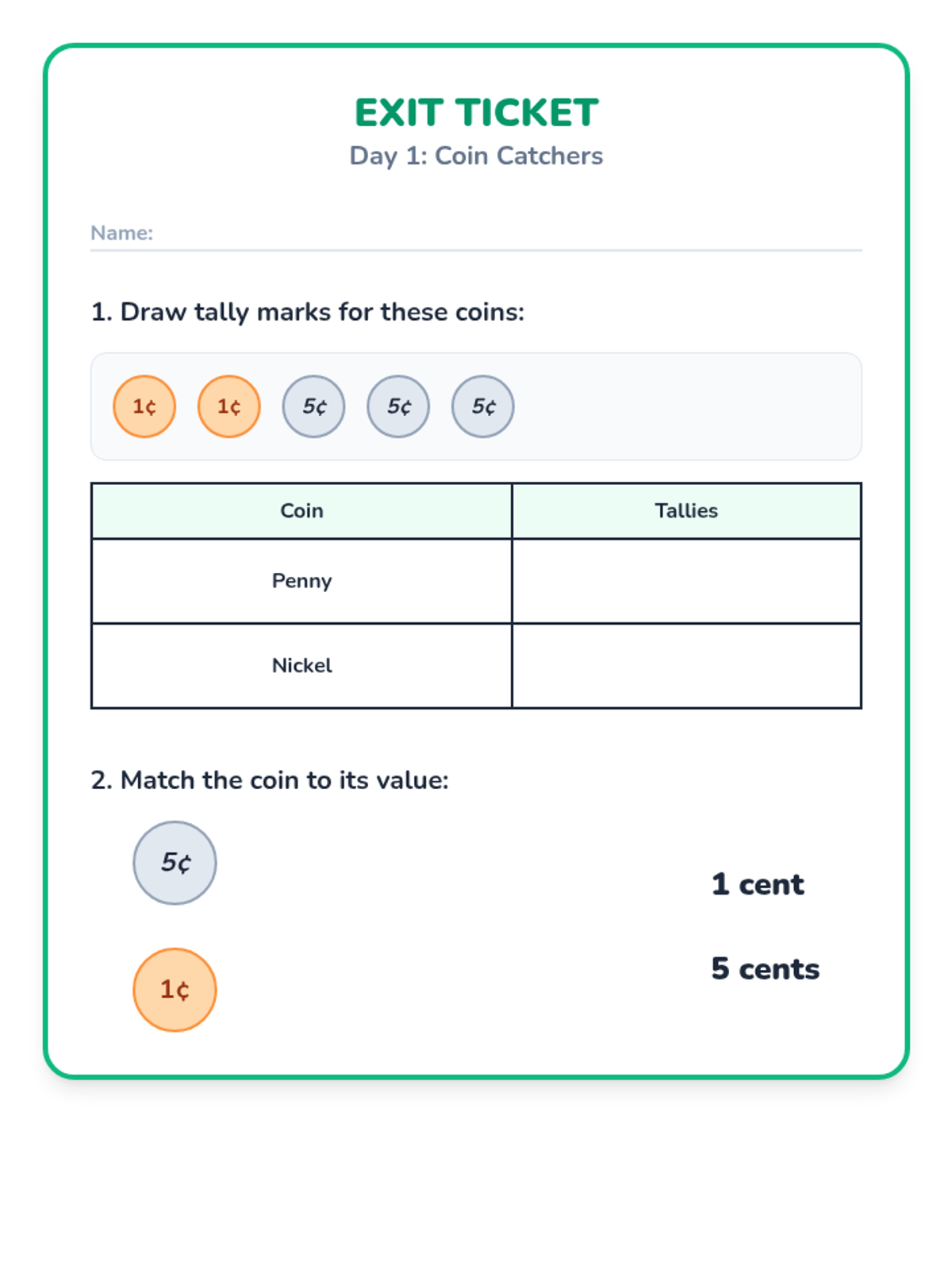
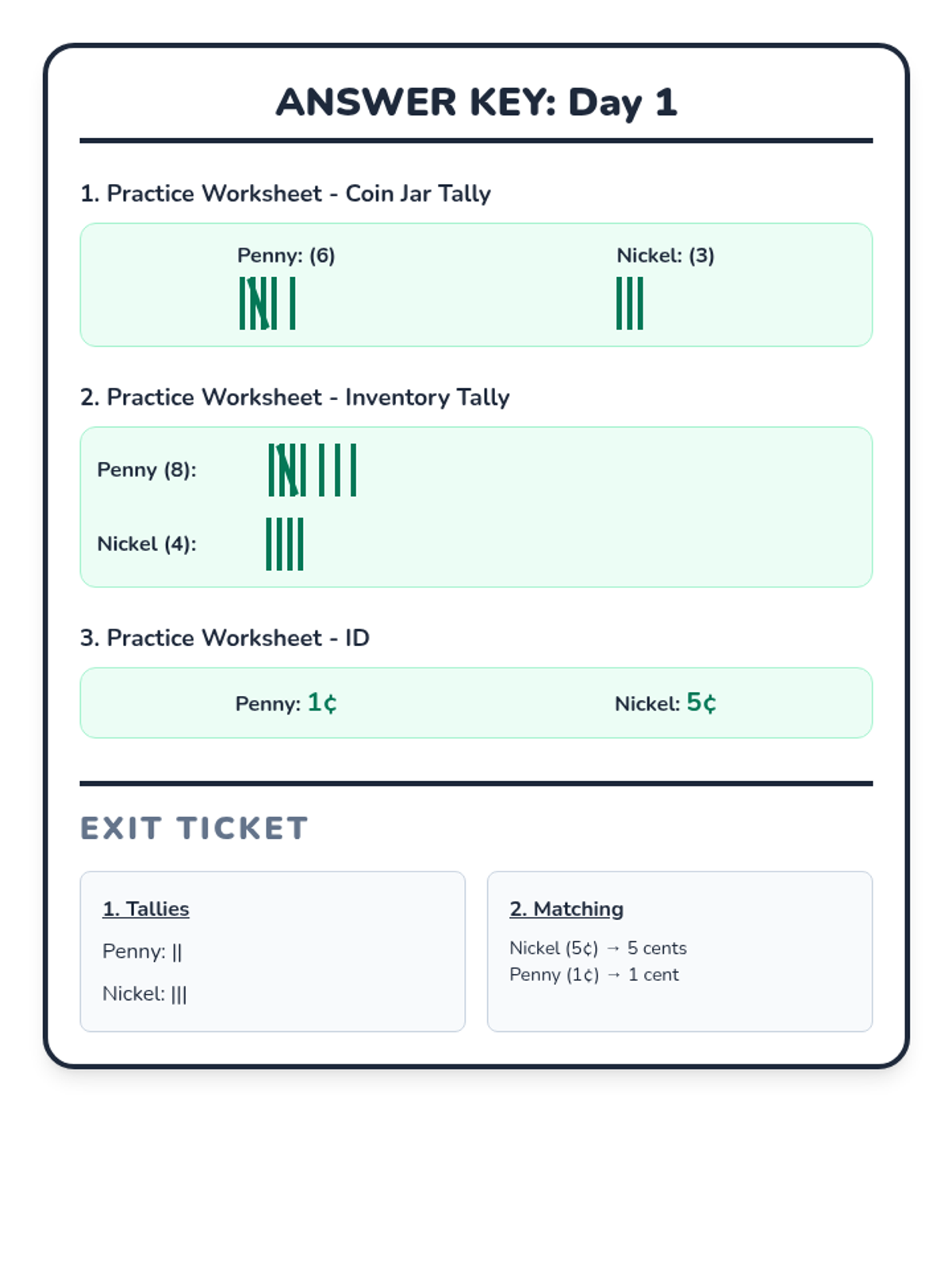
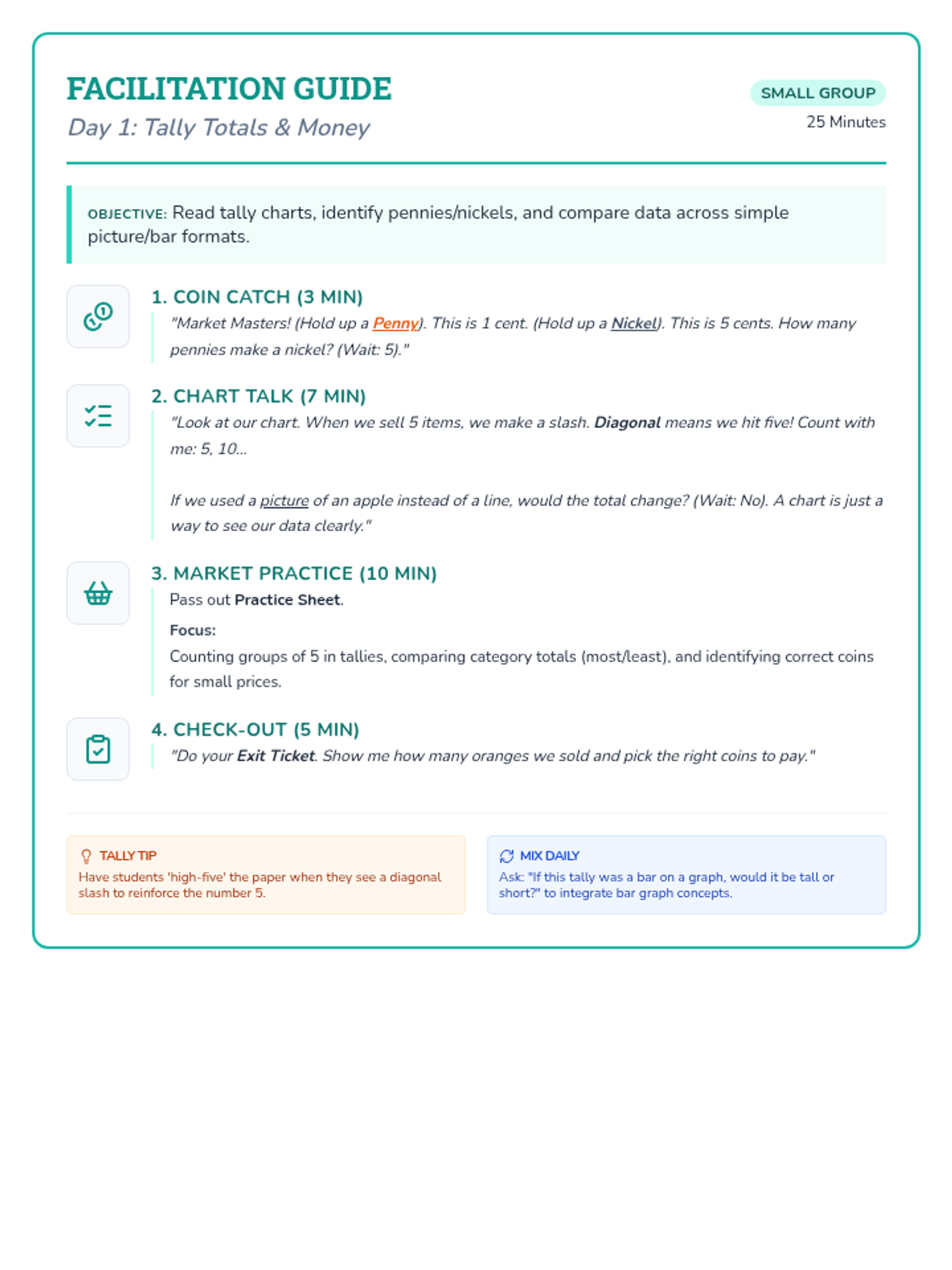
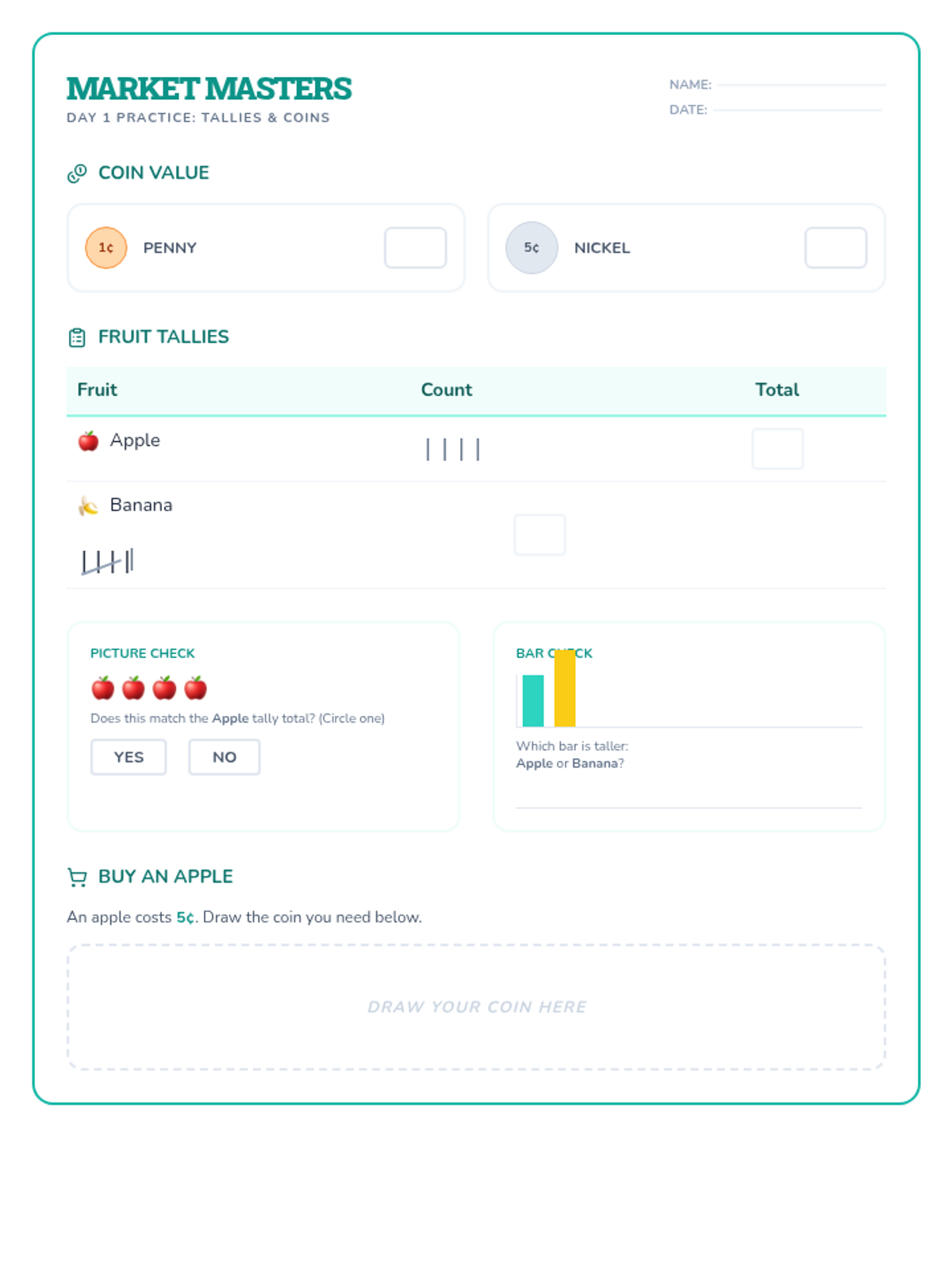
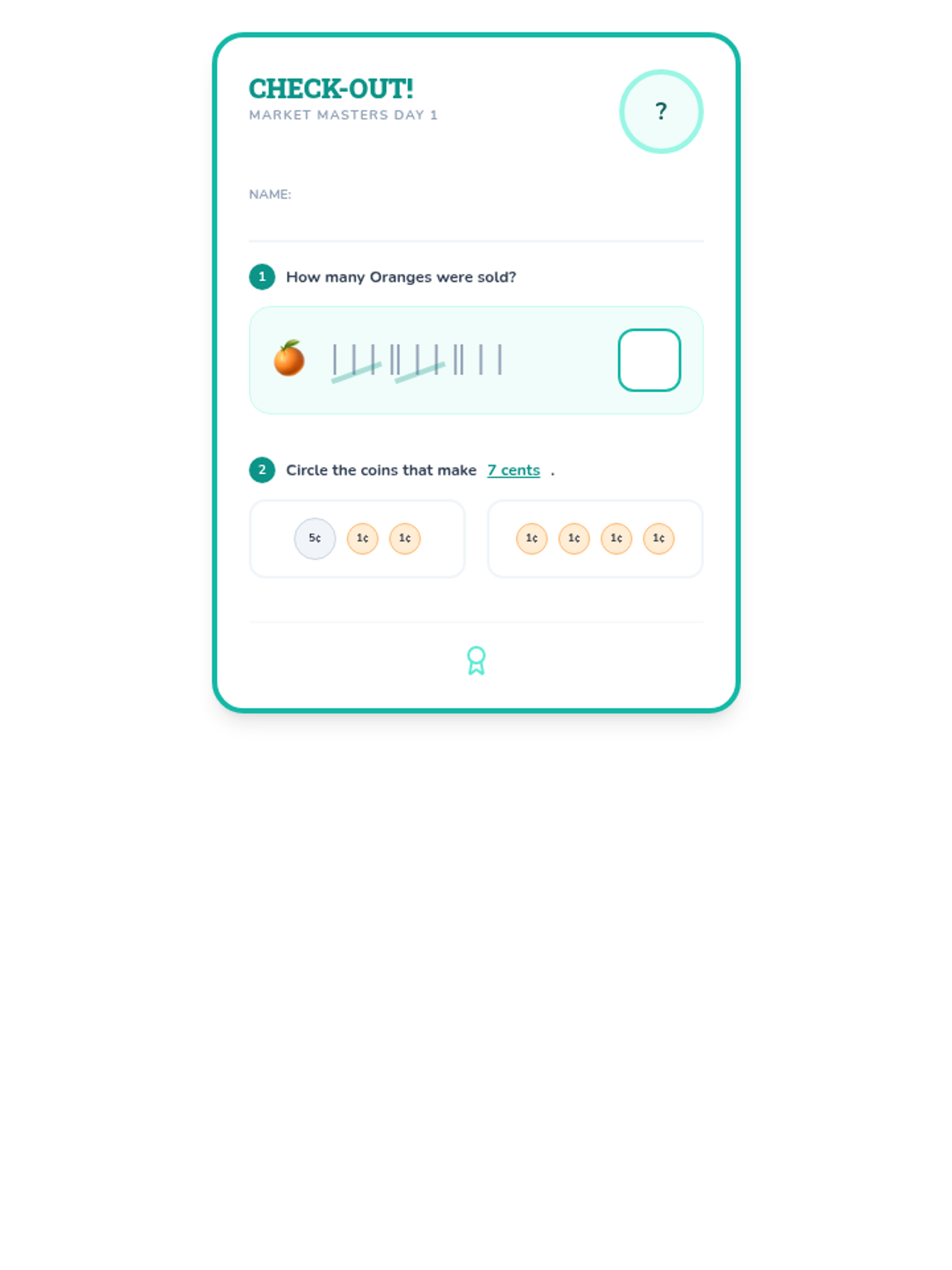
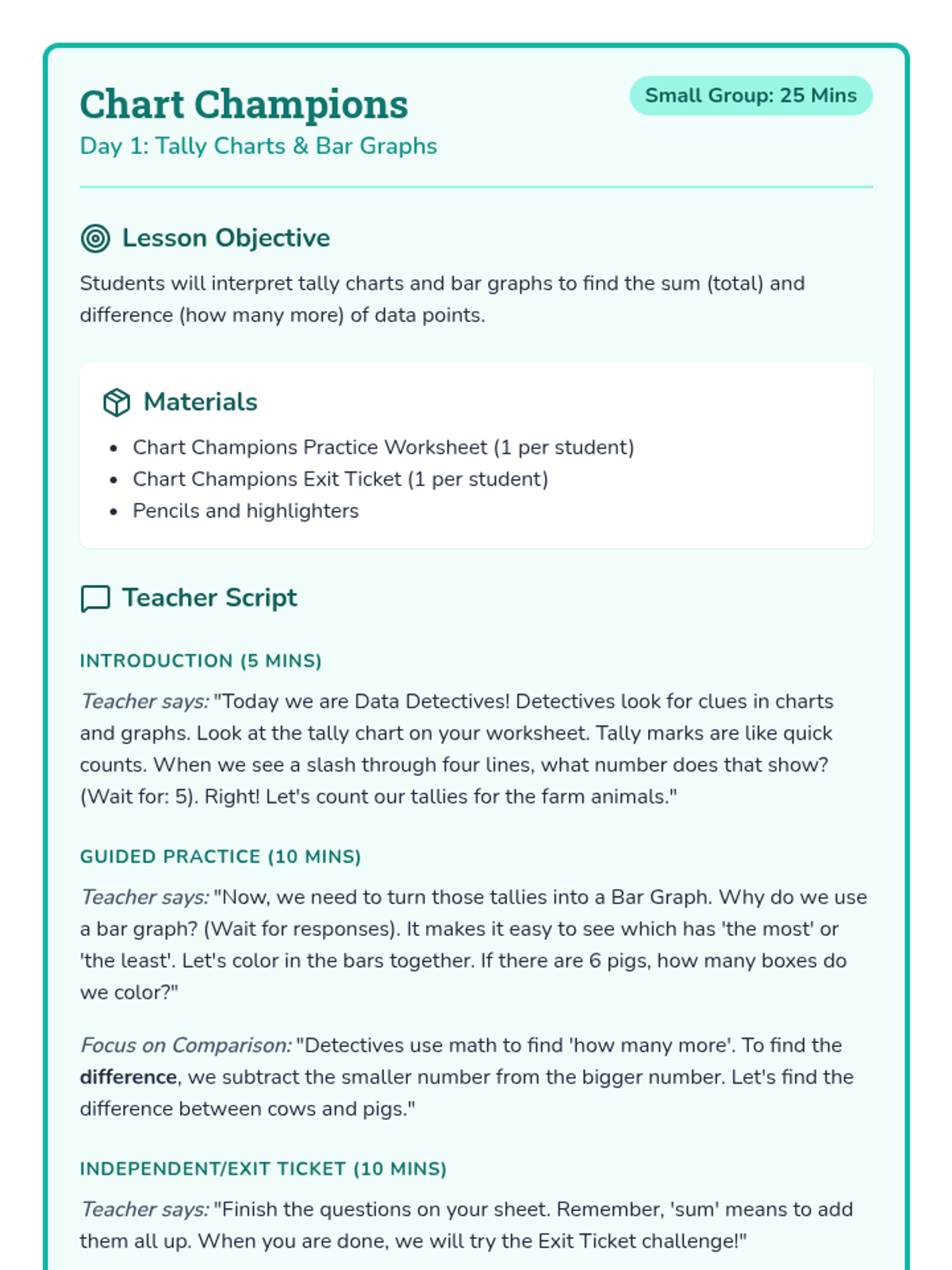
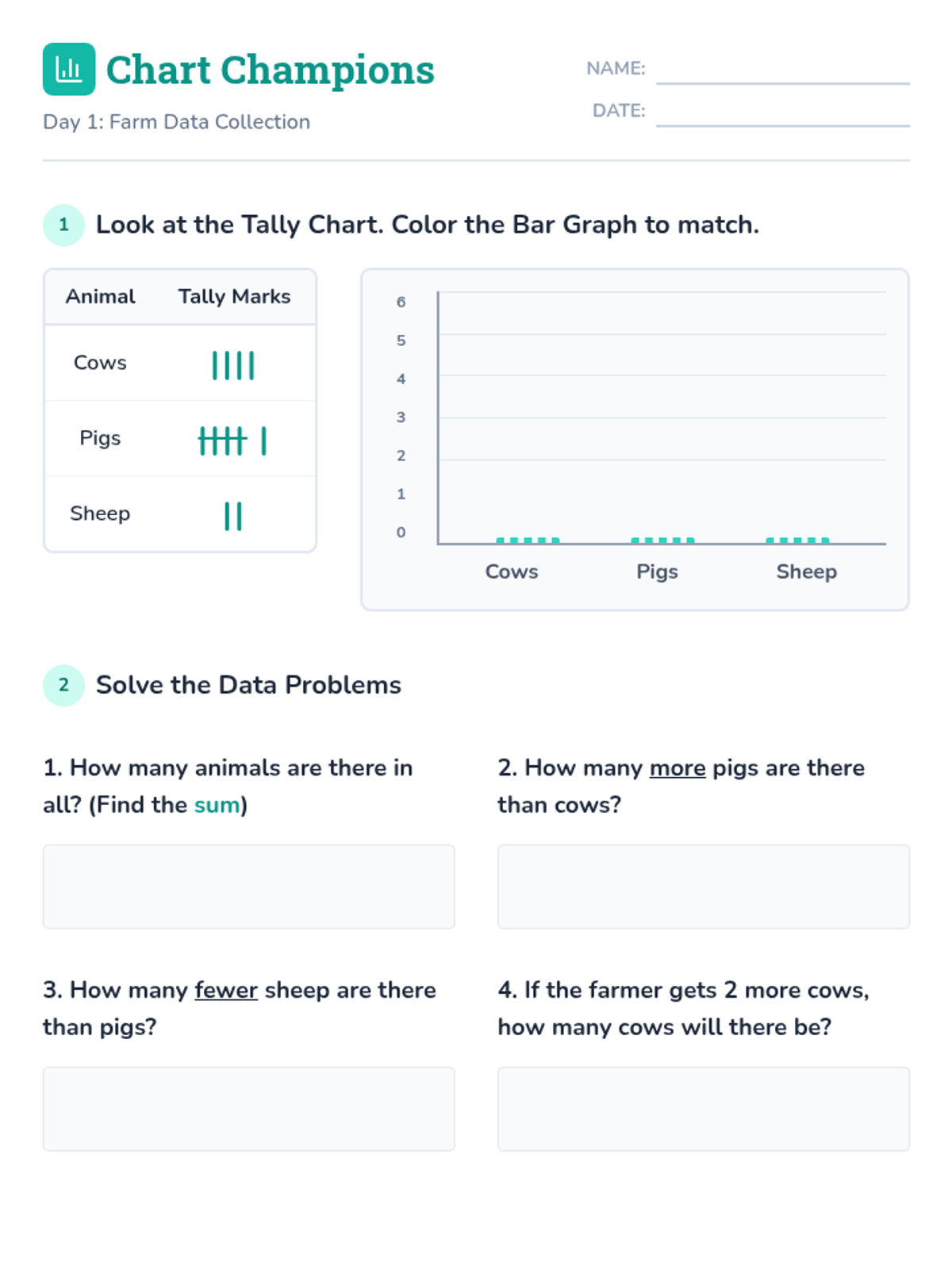
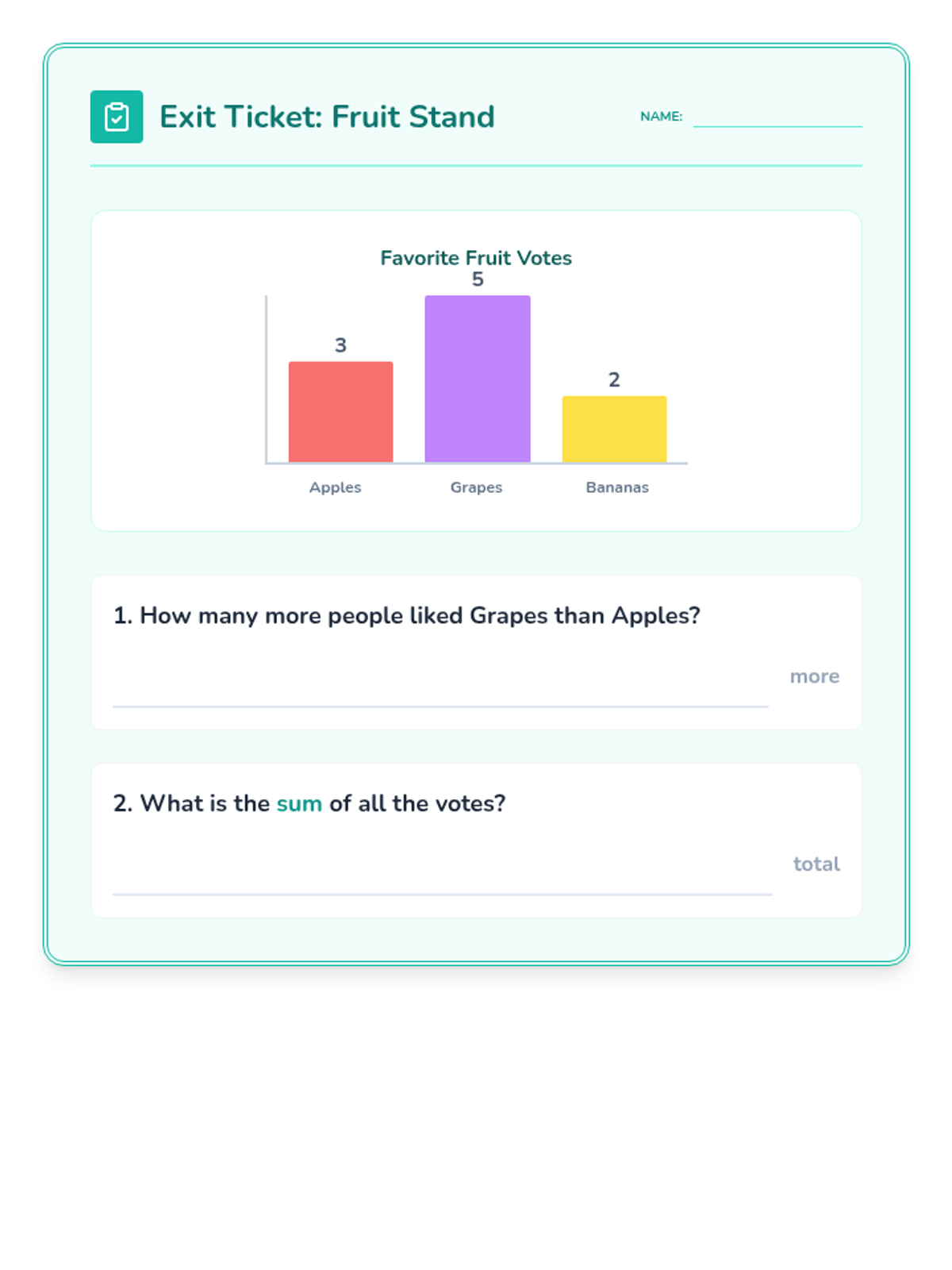
A 3-day small group math sequence focused on bridging NWEA RIT scores from 170-180 to 181-190. Students master coin identification (pennies/nickels), counting, and data analysis through tally charts, picture graphs, and bar graphs with a market-themed aesthetic.
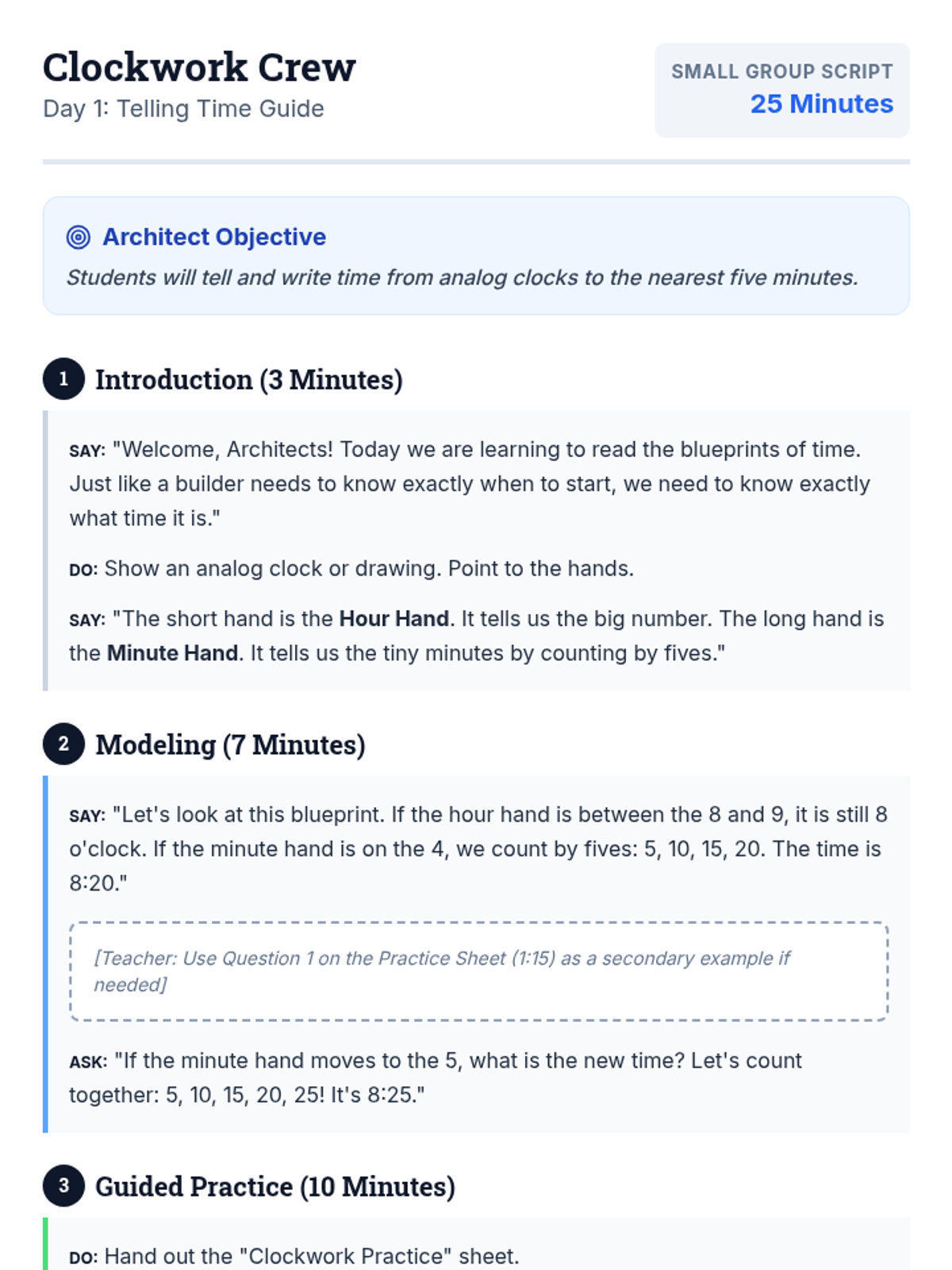
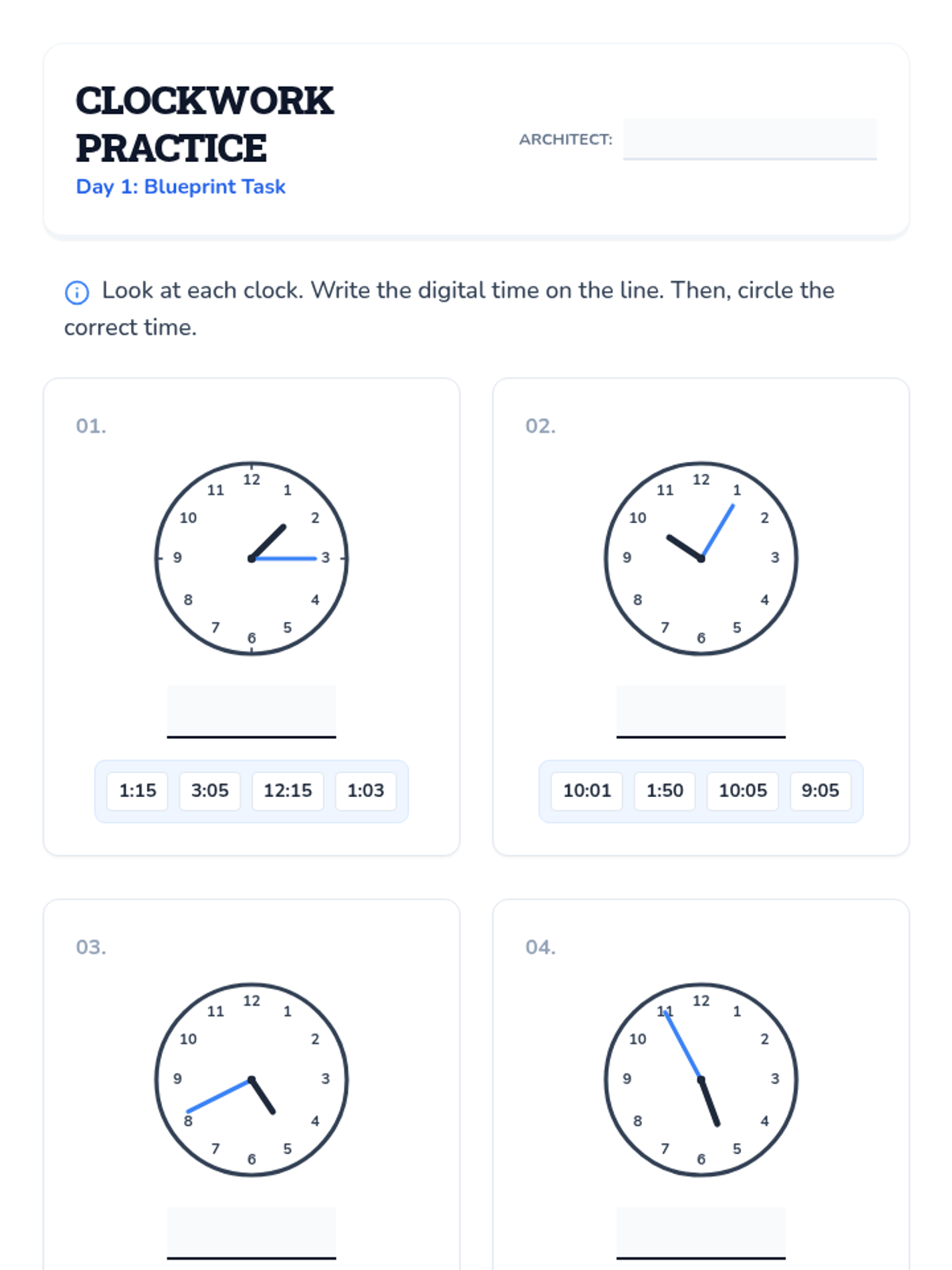
A 3-day small group sequence focused on Geometry and Measurement for NWEA RIT 171-180, covering time reading to the nearest 5 minutes and 2D/3D shape attributes.
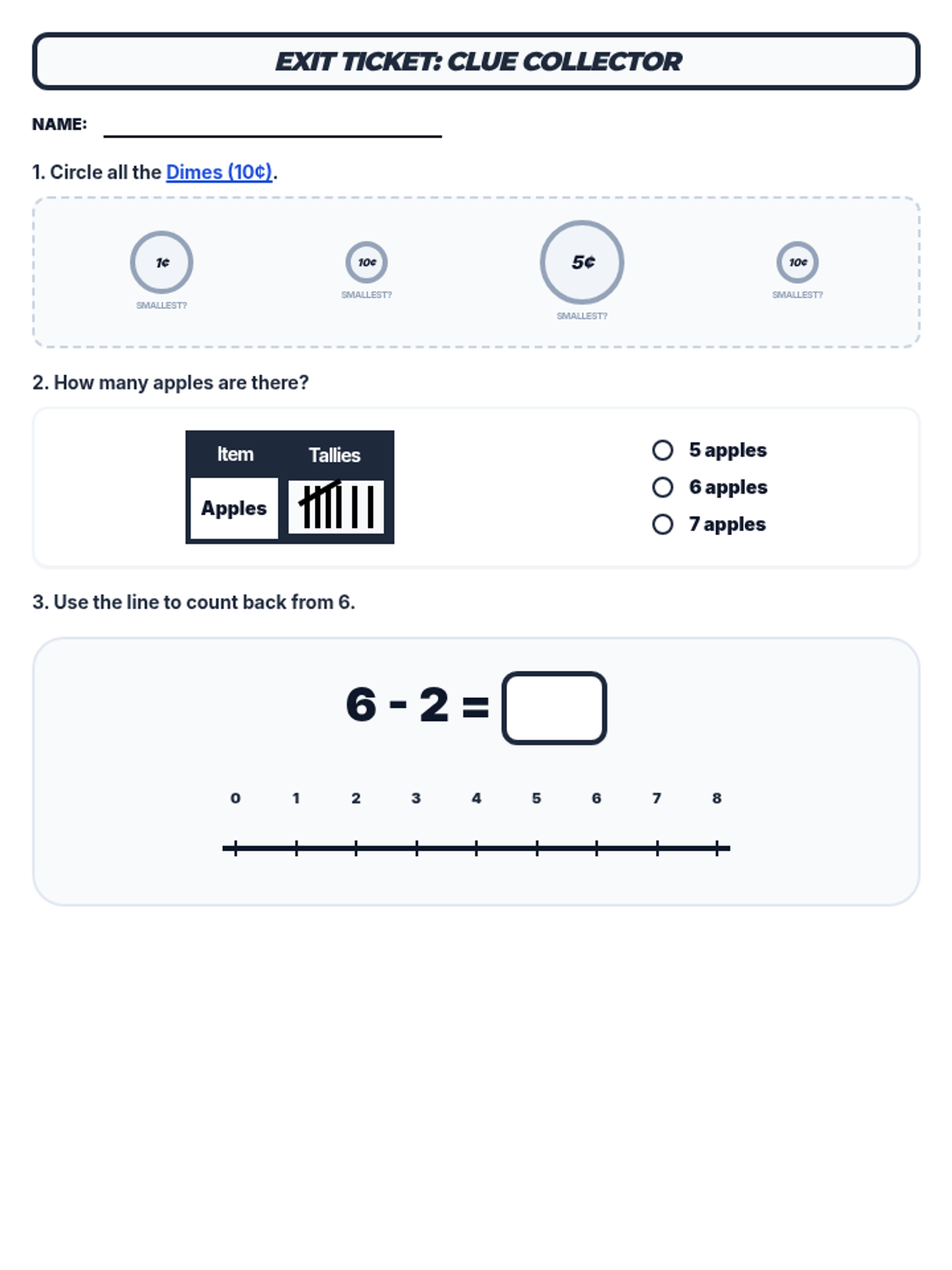
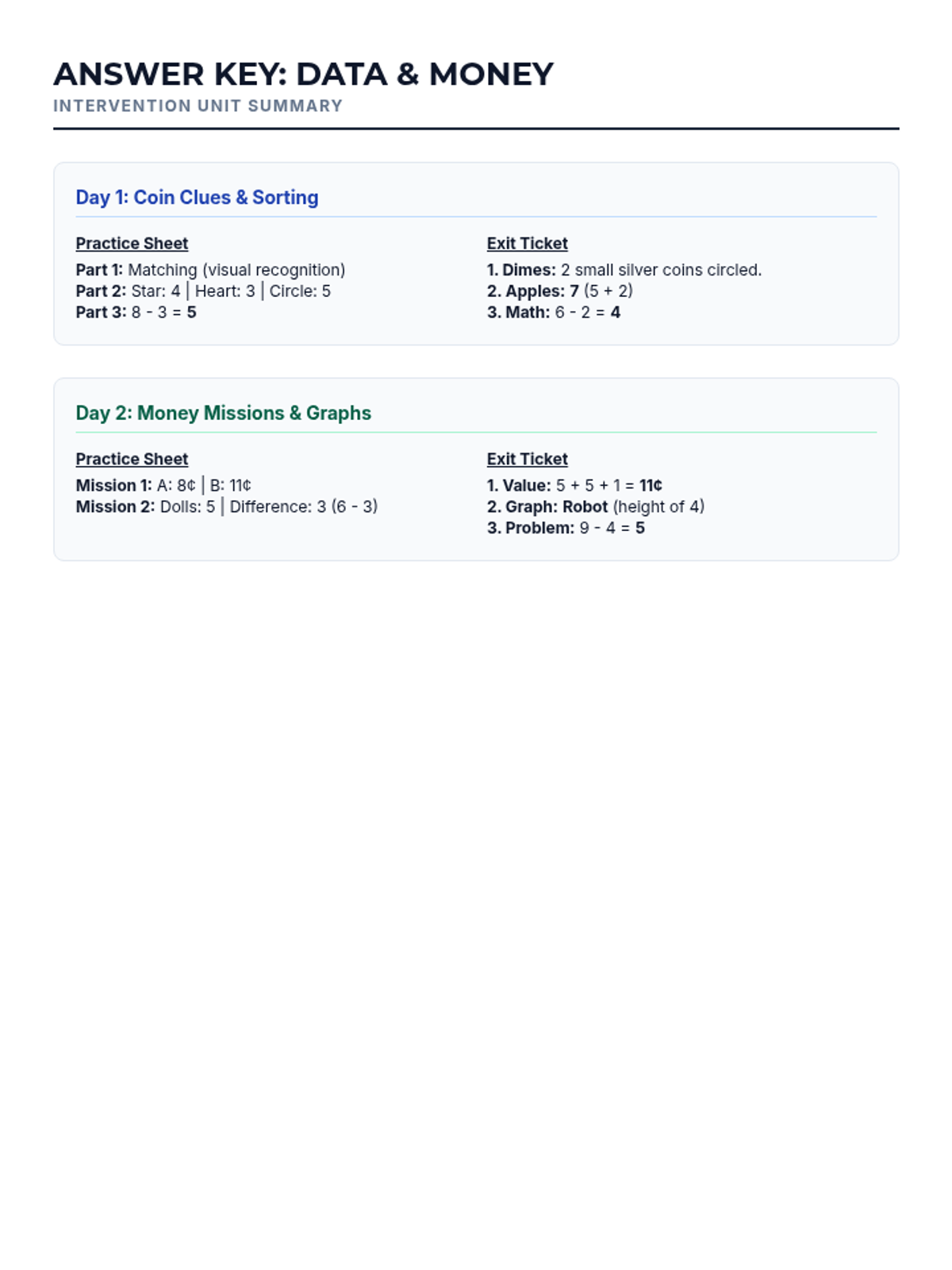
A 2-day small group intervention sequence focused on foundational data analysis and coin identification. Students progress from sorting objects and identifying coins to reading bar graphs and counting sets of money, while reinforcing subtraction strategies like number lines and counting back.
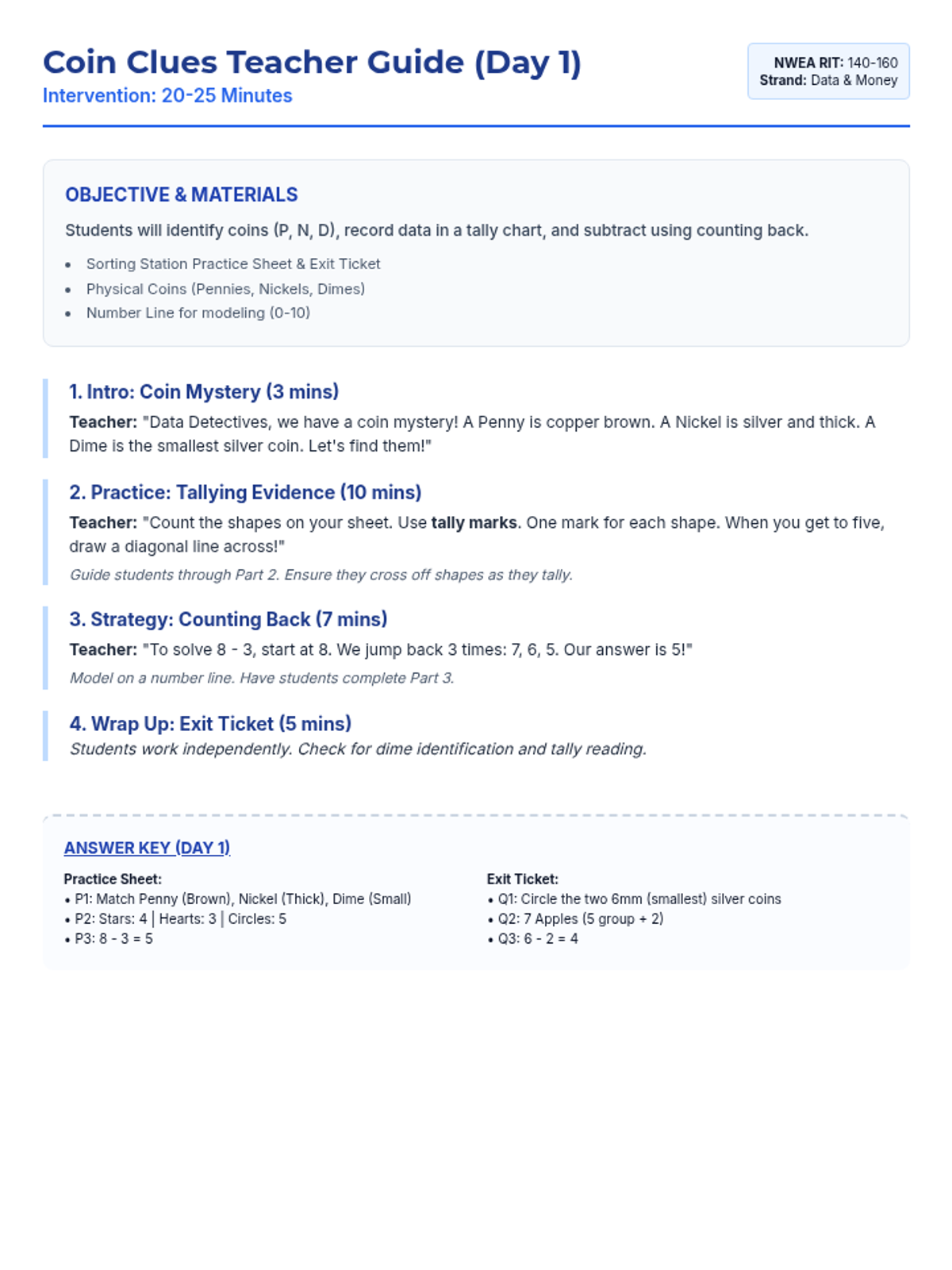
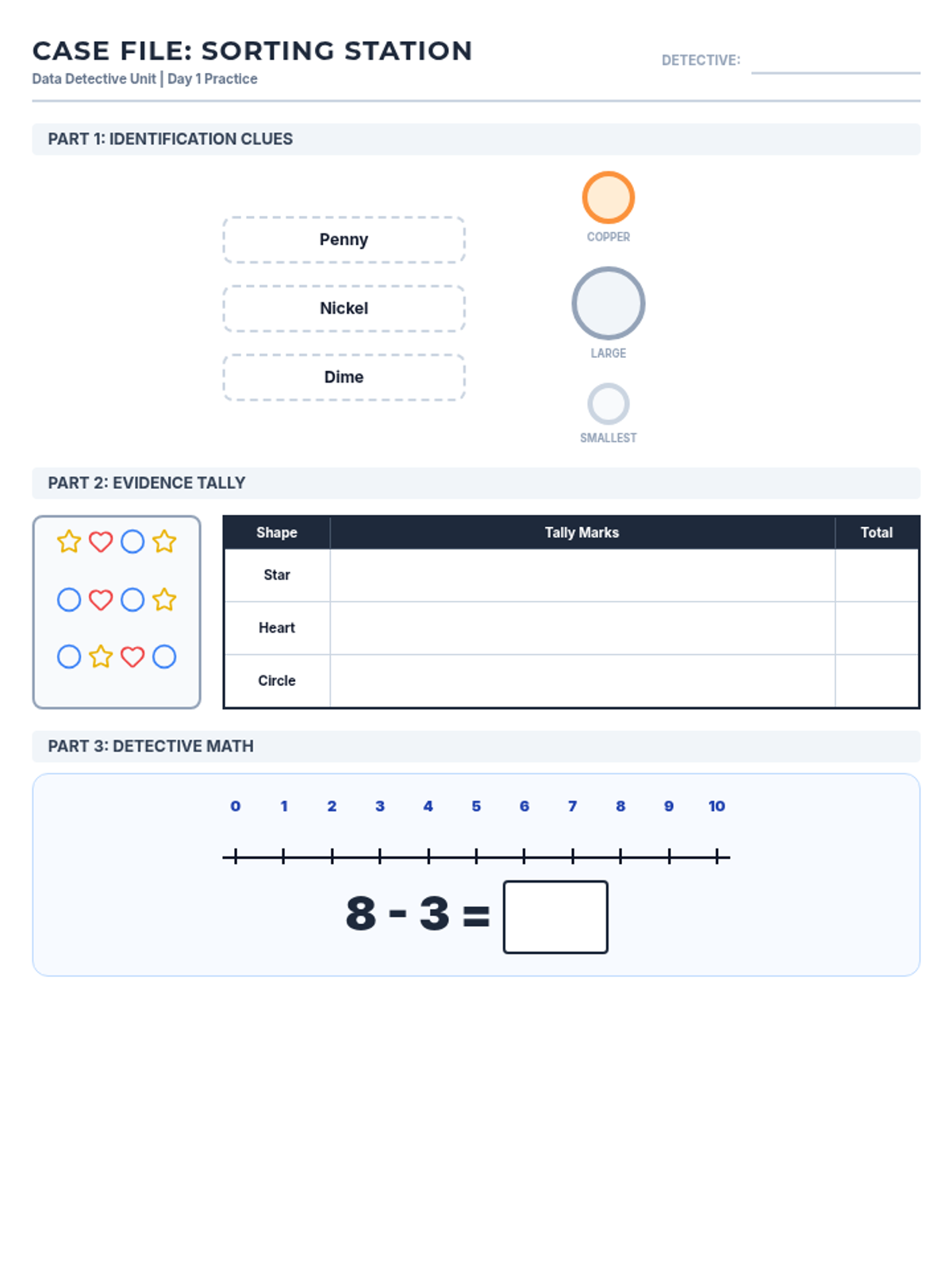
A 3-day small group math sequence for students moving from NWEA RIT 140-150 to 151-160, focusing on data analysis (tally, picture, bar) and basic money concepts (pennies, nickels, dimes).
A 3-day small group intervention sequence focused on data interpretation, coin values, and probability predictions for students moving toward the NWEA RIT 171-180 range.
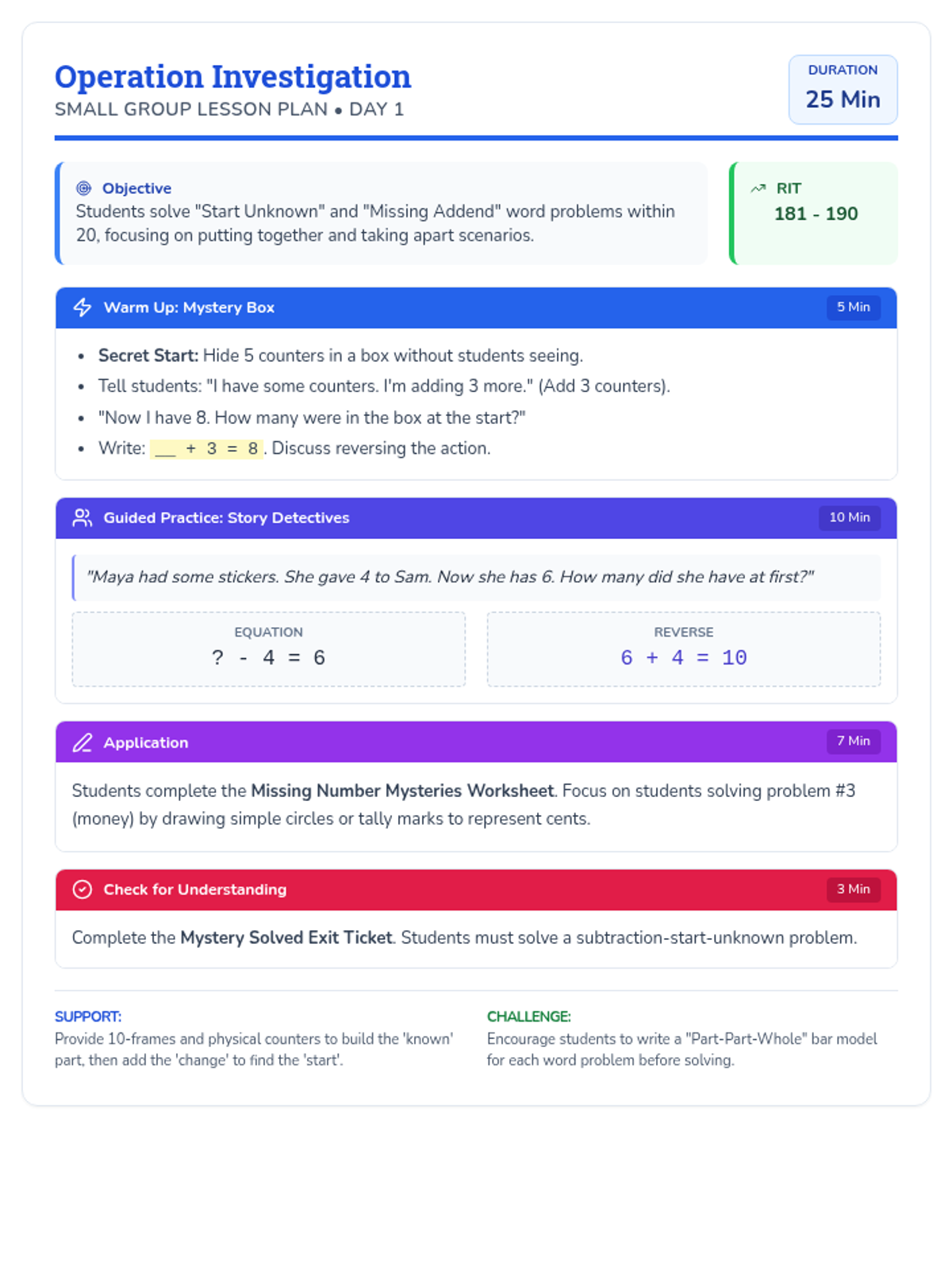
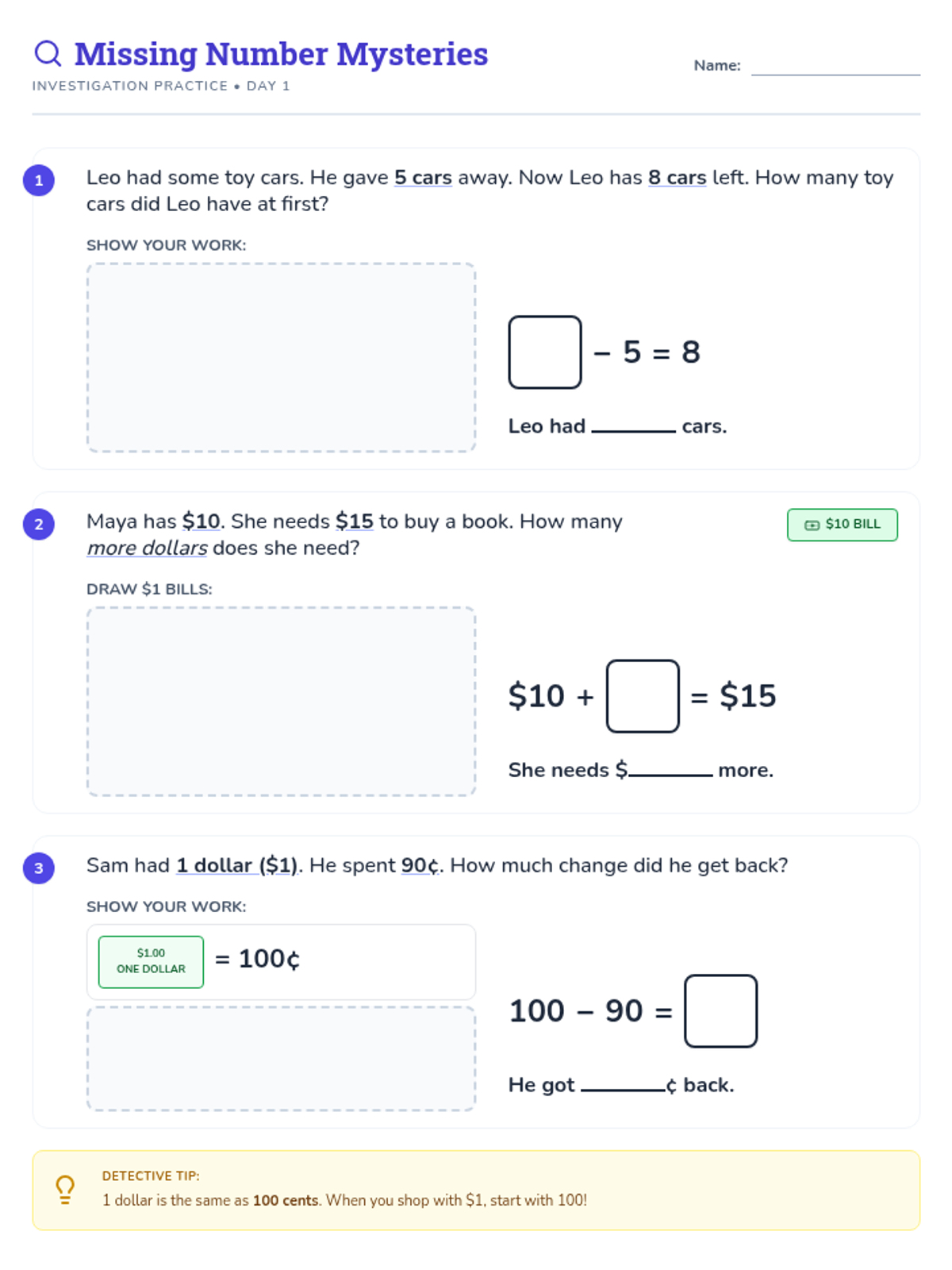
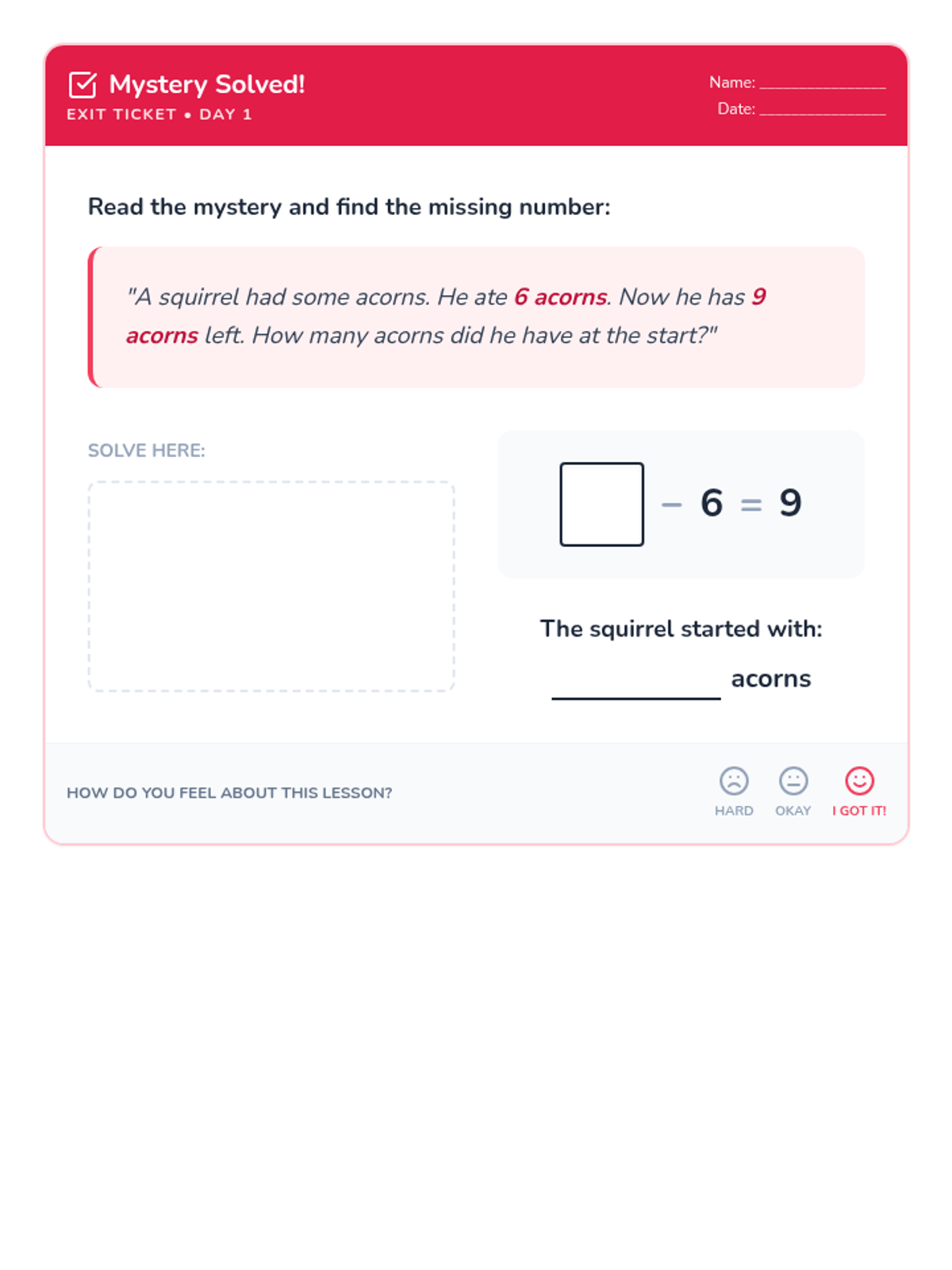
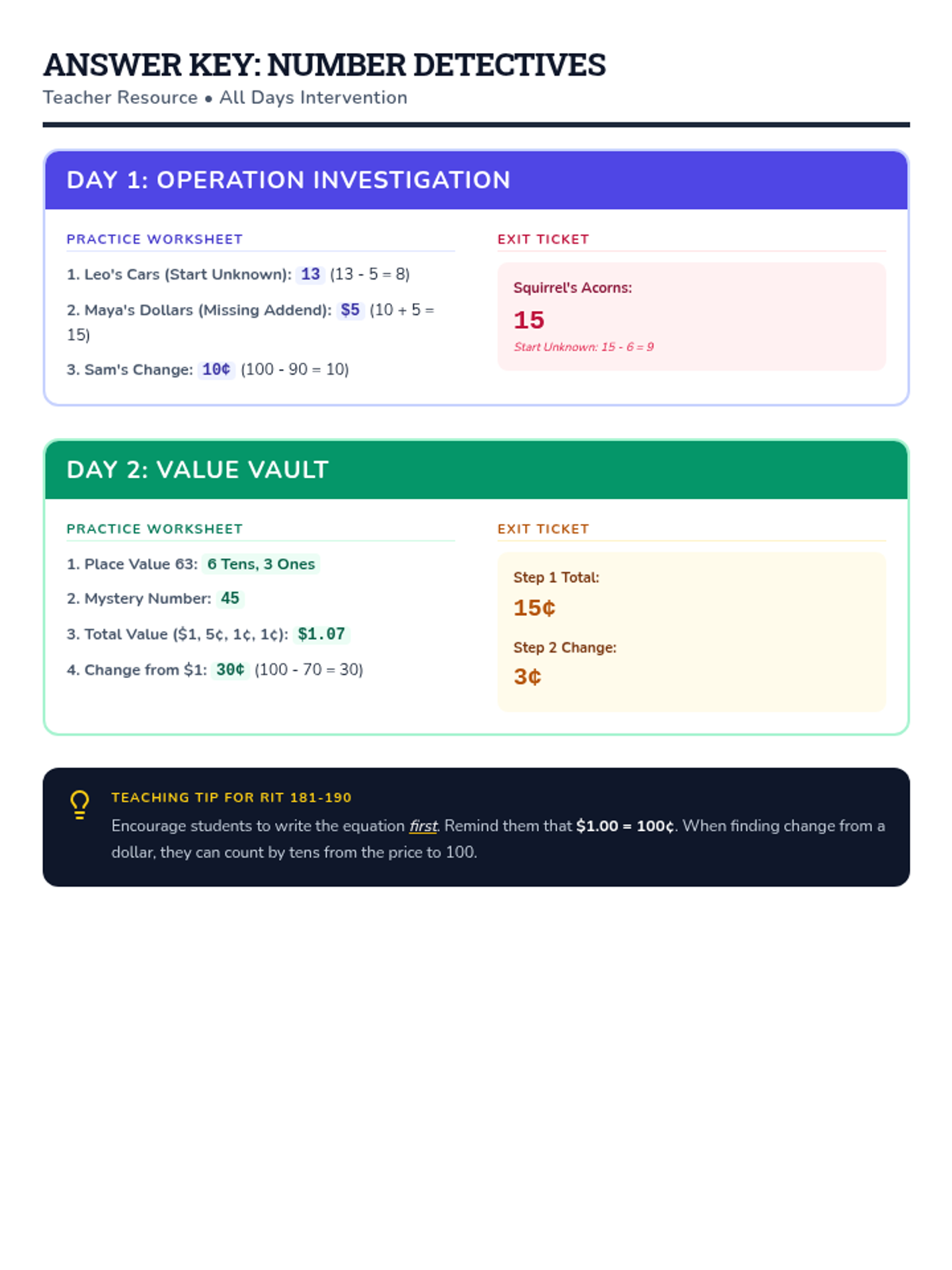
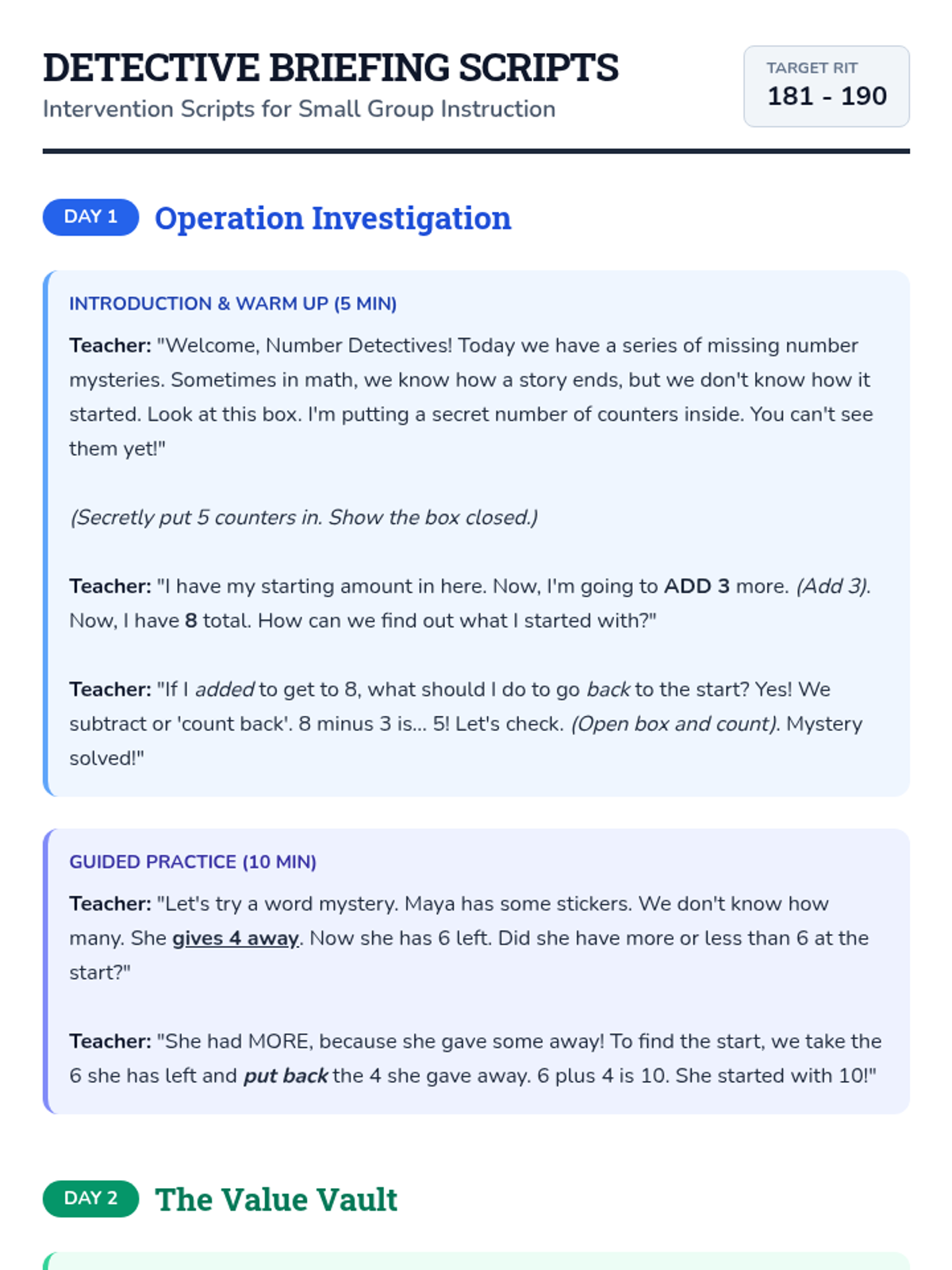
A targeted intervention sequence designed to move students from NWEA RIT 171-180 to 181-190, focusing on missing addends, subtraction, start-unknown word problems, place value, and monetary concepts.
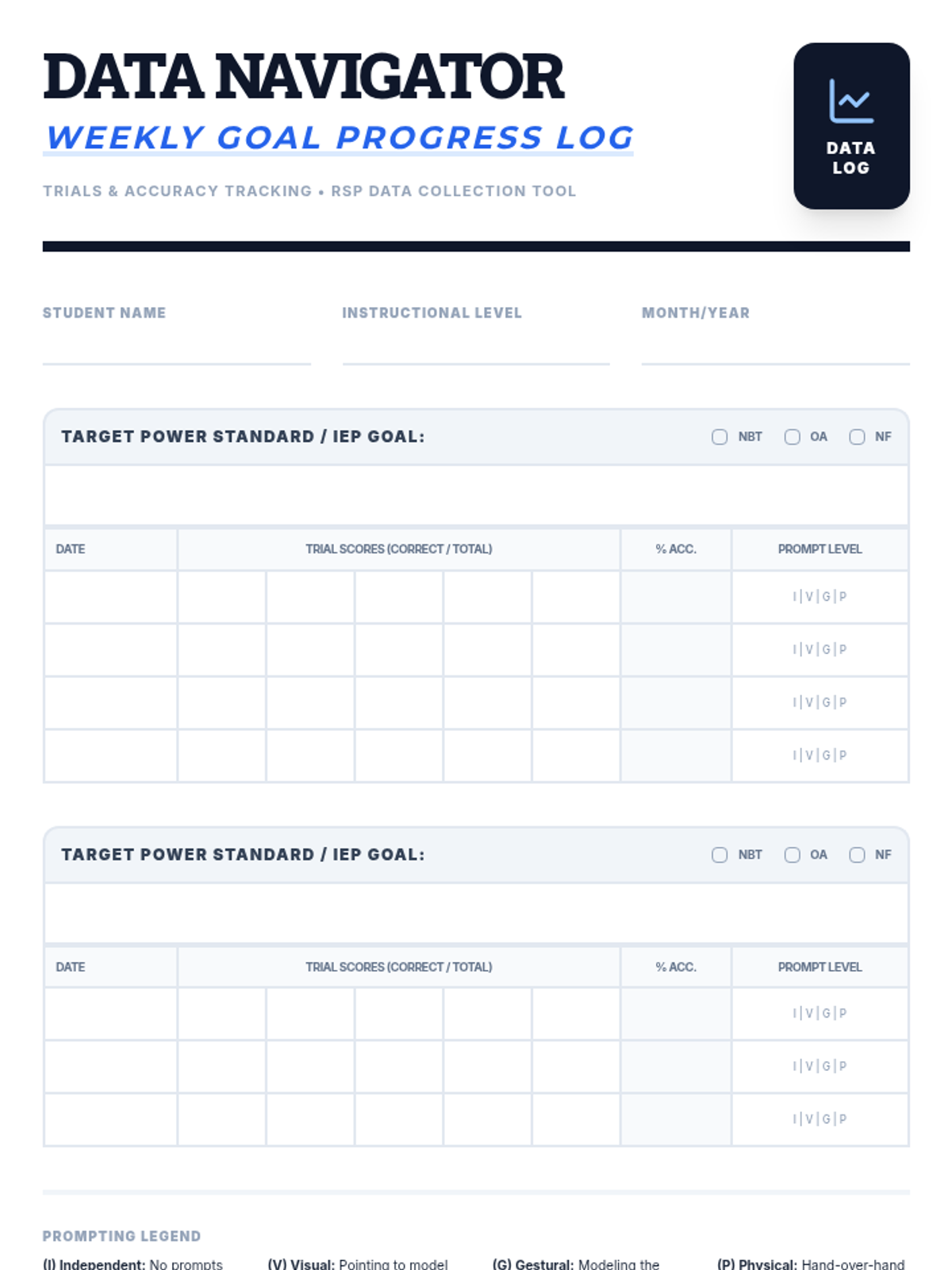
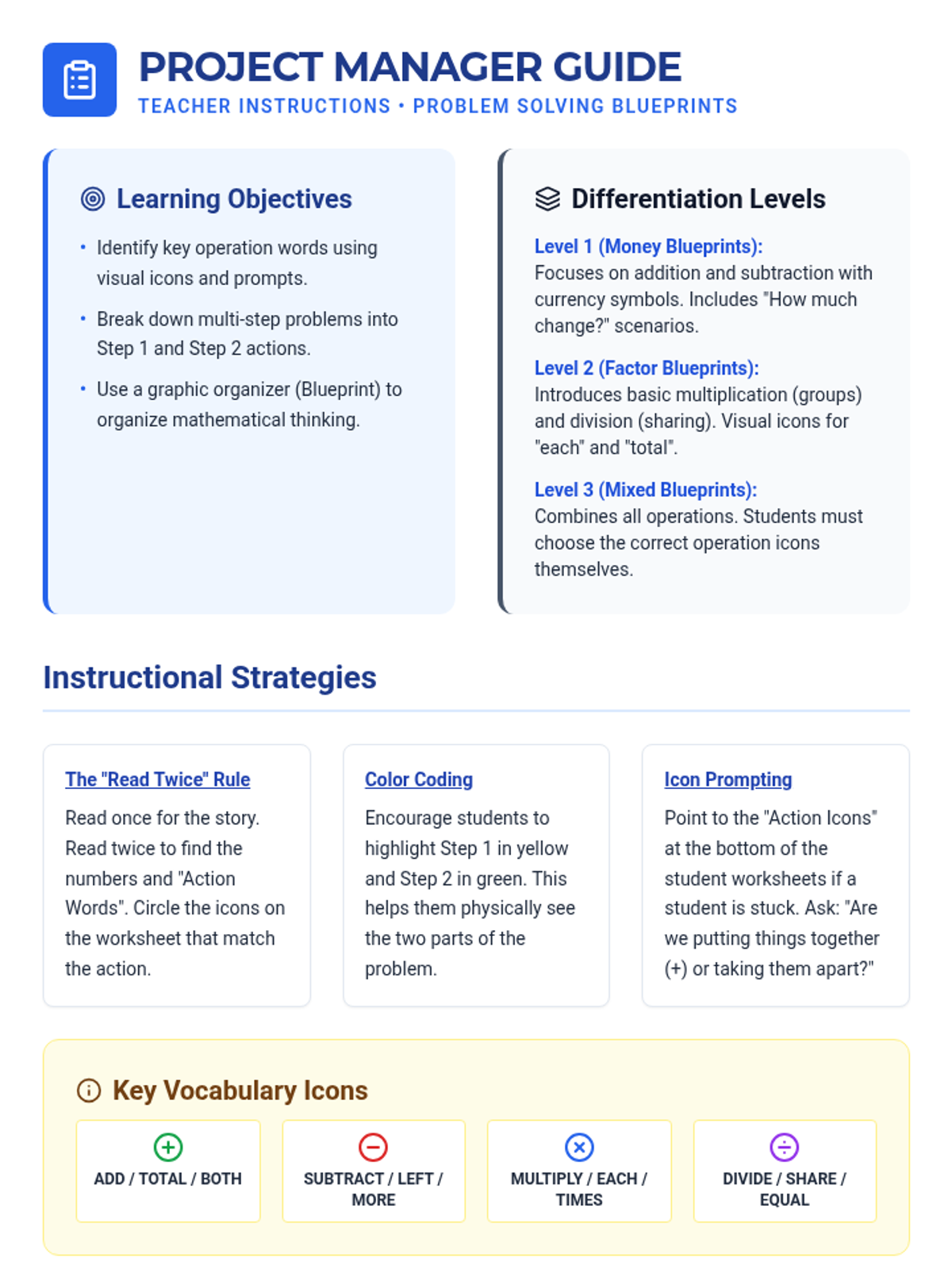
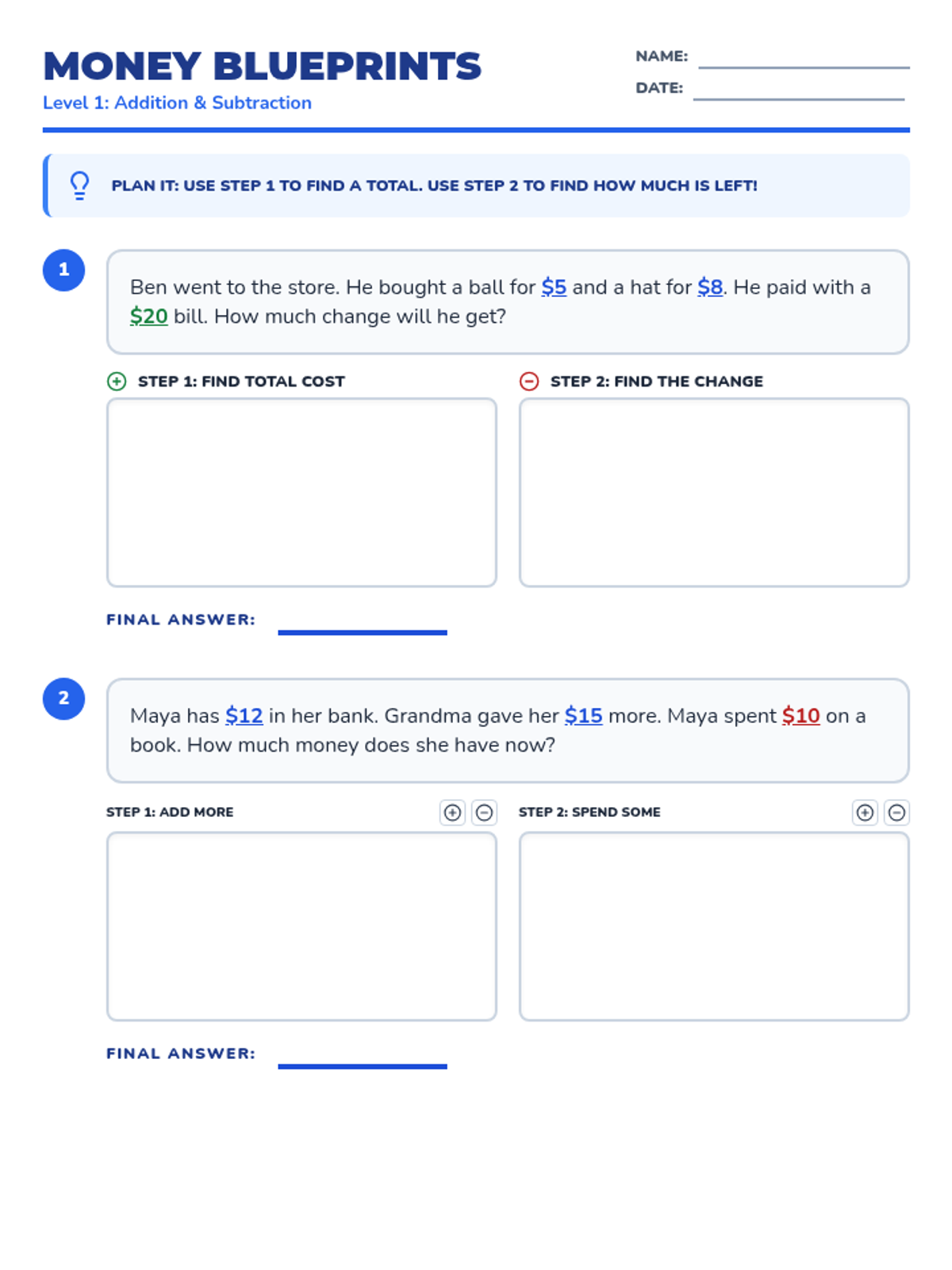
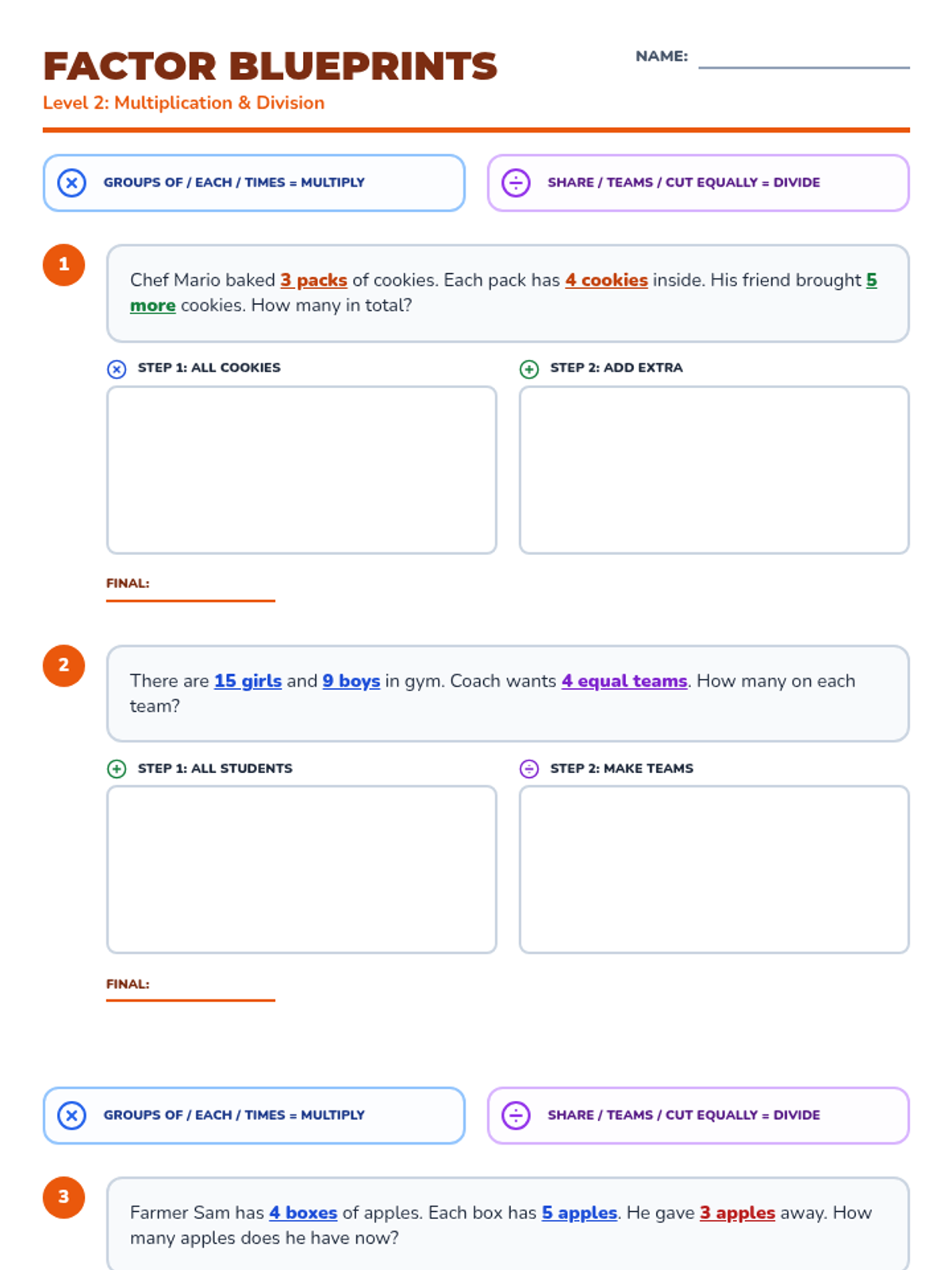
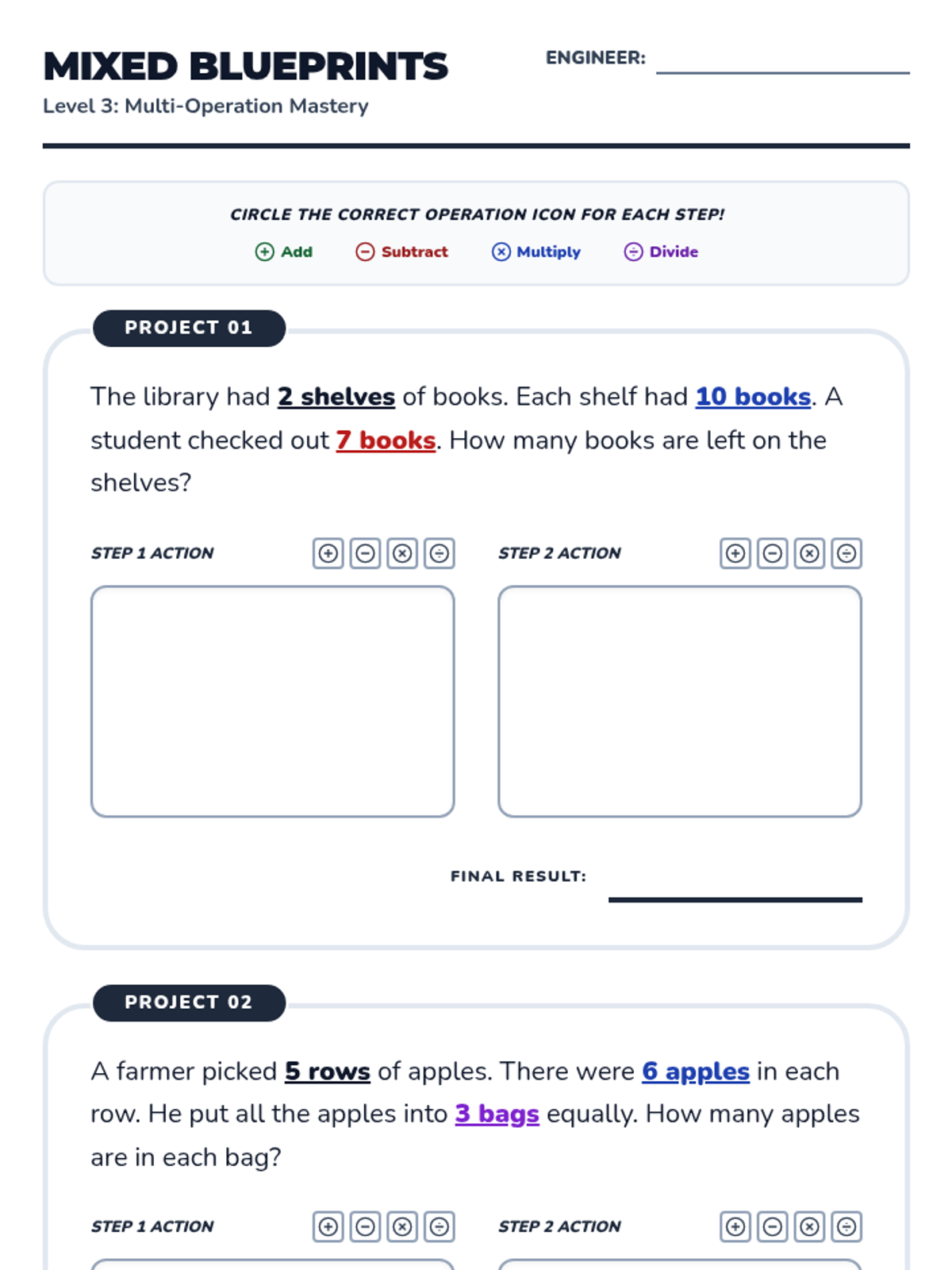
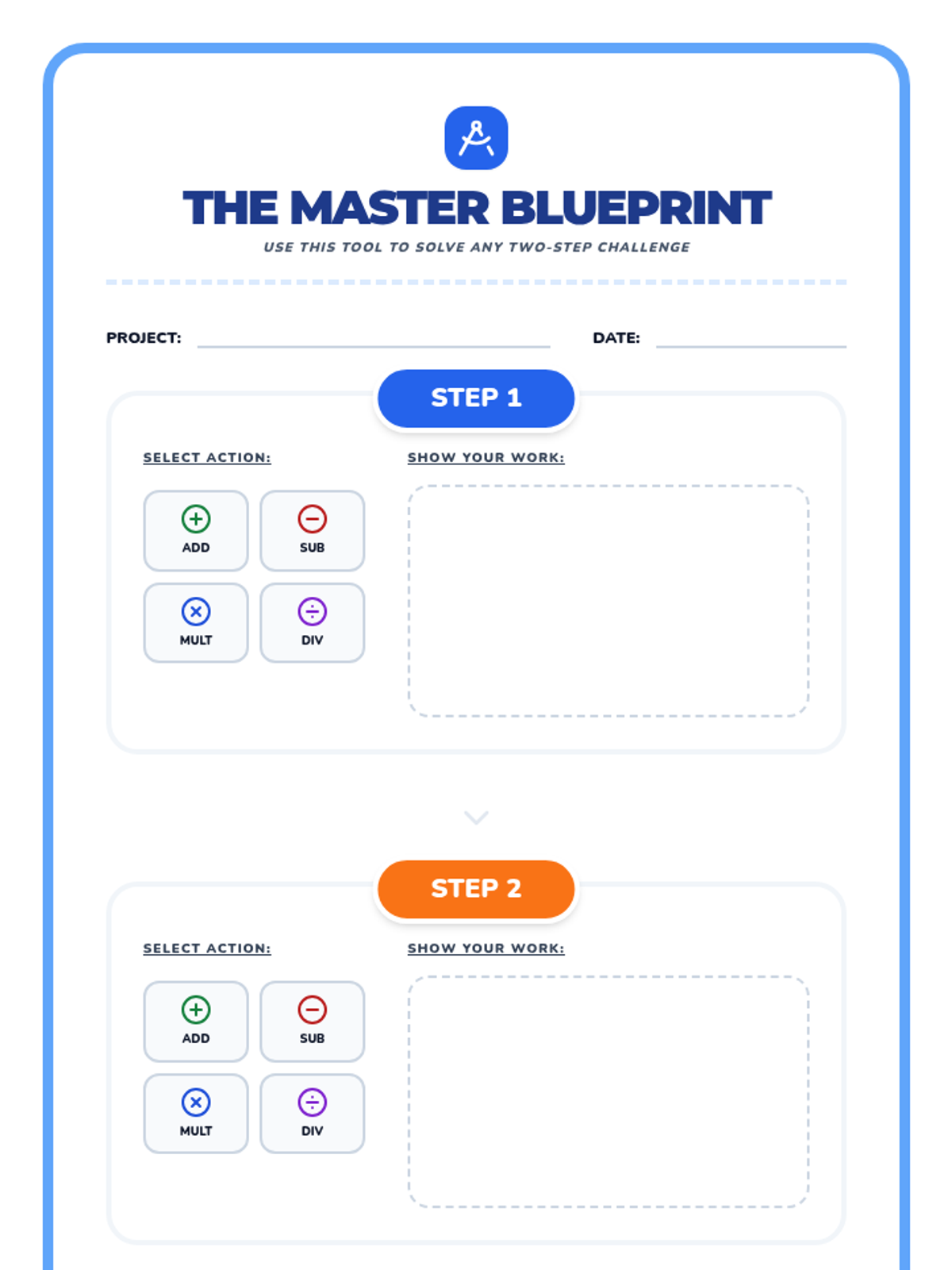
A comprehensive math sequence designed for students with IEPs, focusing on breaking down multi-step word problems into manageable visual blueprints. It covers mixed operations with money, basic multiplication and division, and foundational addition and subtraction.
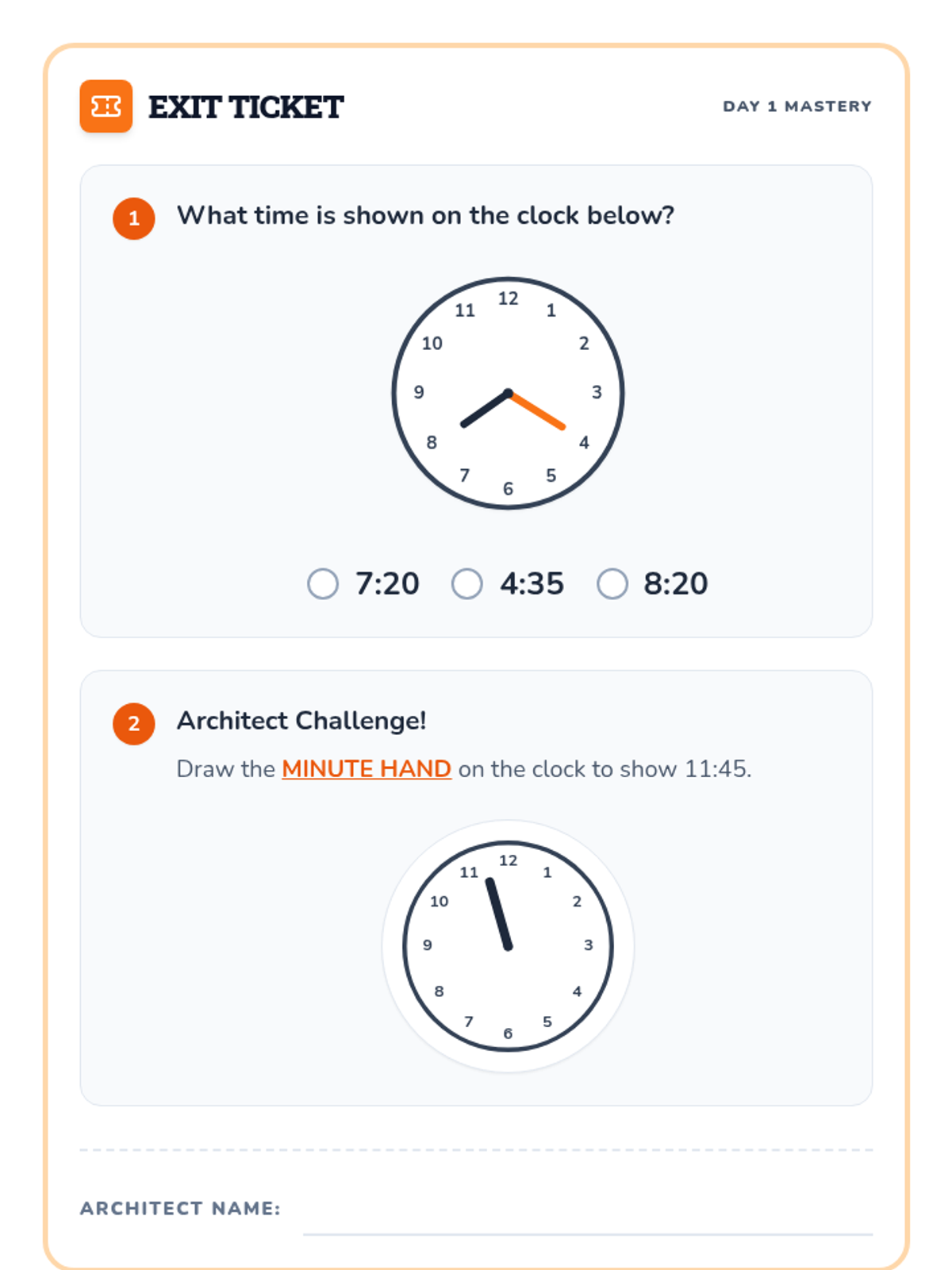
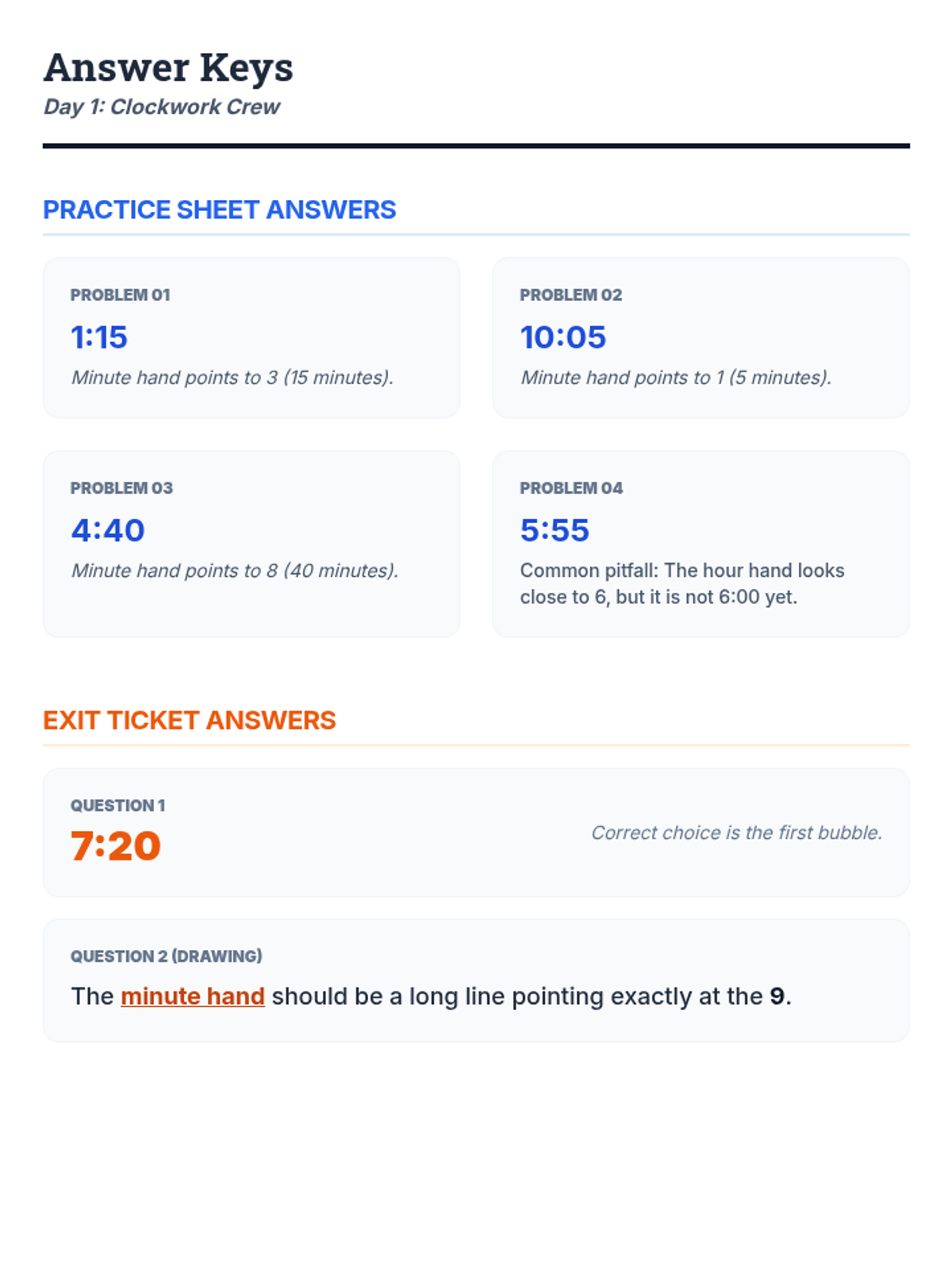
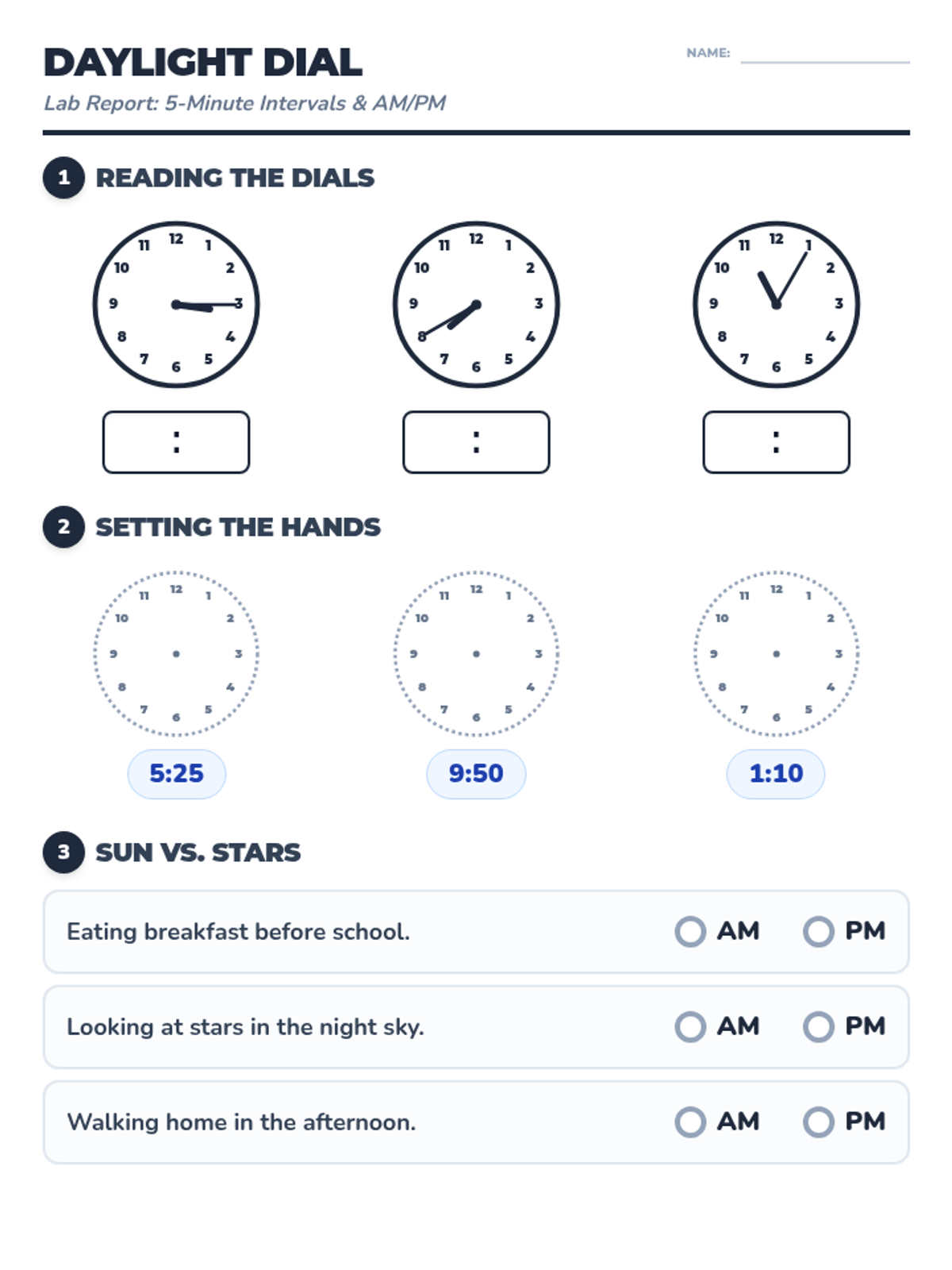
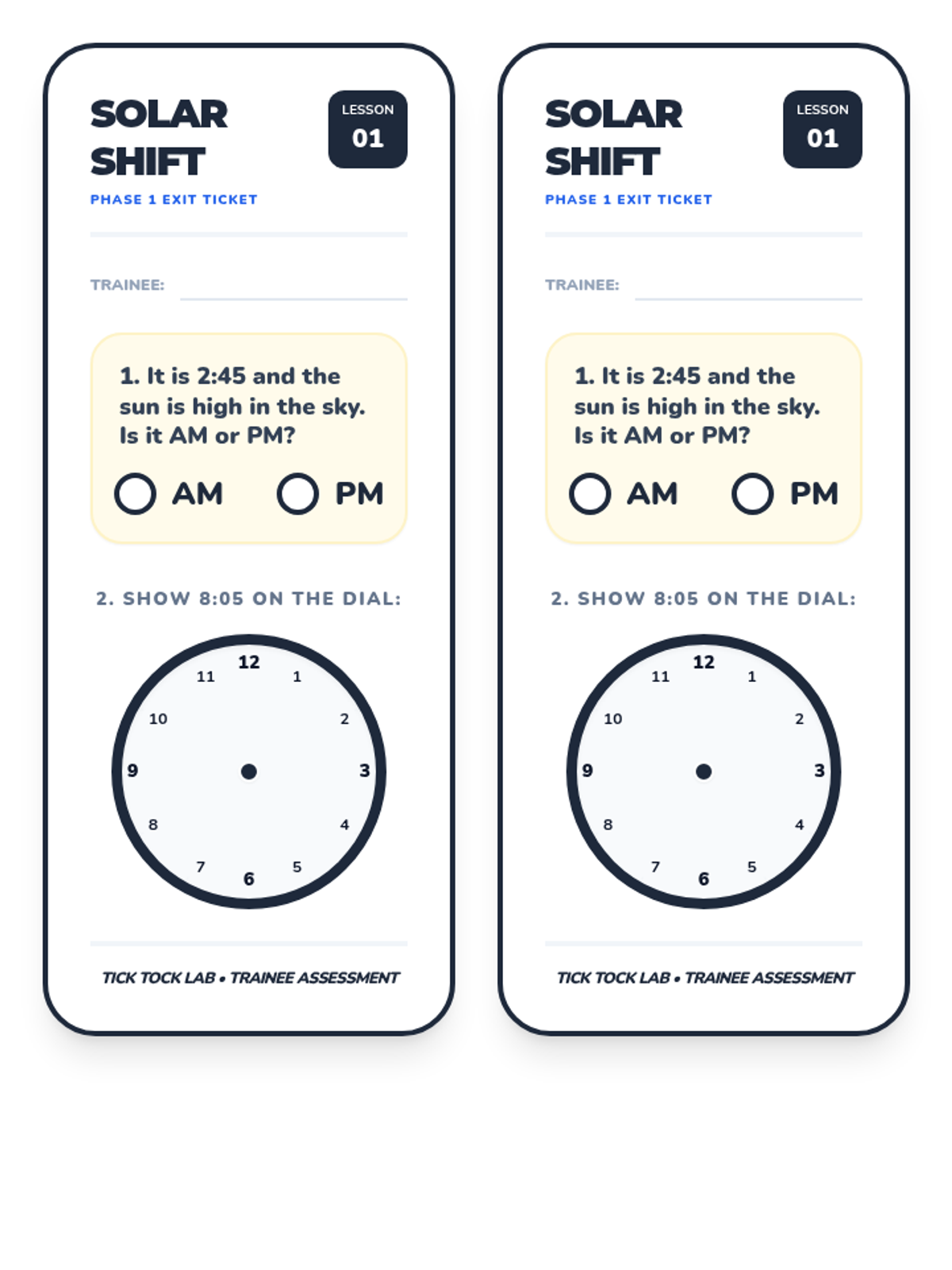
A comprehensive 3-day unit focused on mastering analog time-telling to the nearest 5 minutes, distinguishing between AM and PM, and navigating the common pitfall of the 'almost hour' hand positioning. Students move from basic interval review to solving tricky time representations through hands-on practice and visual aids.
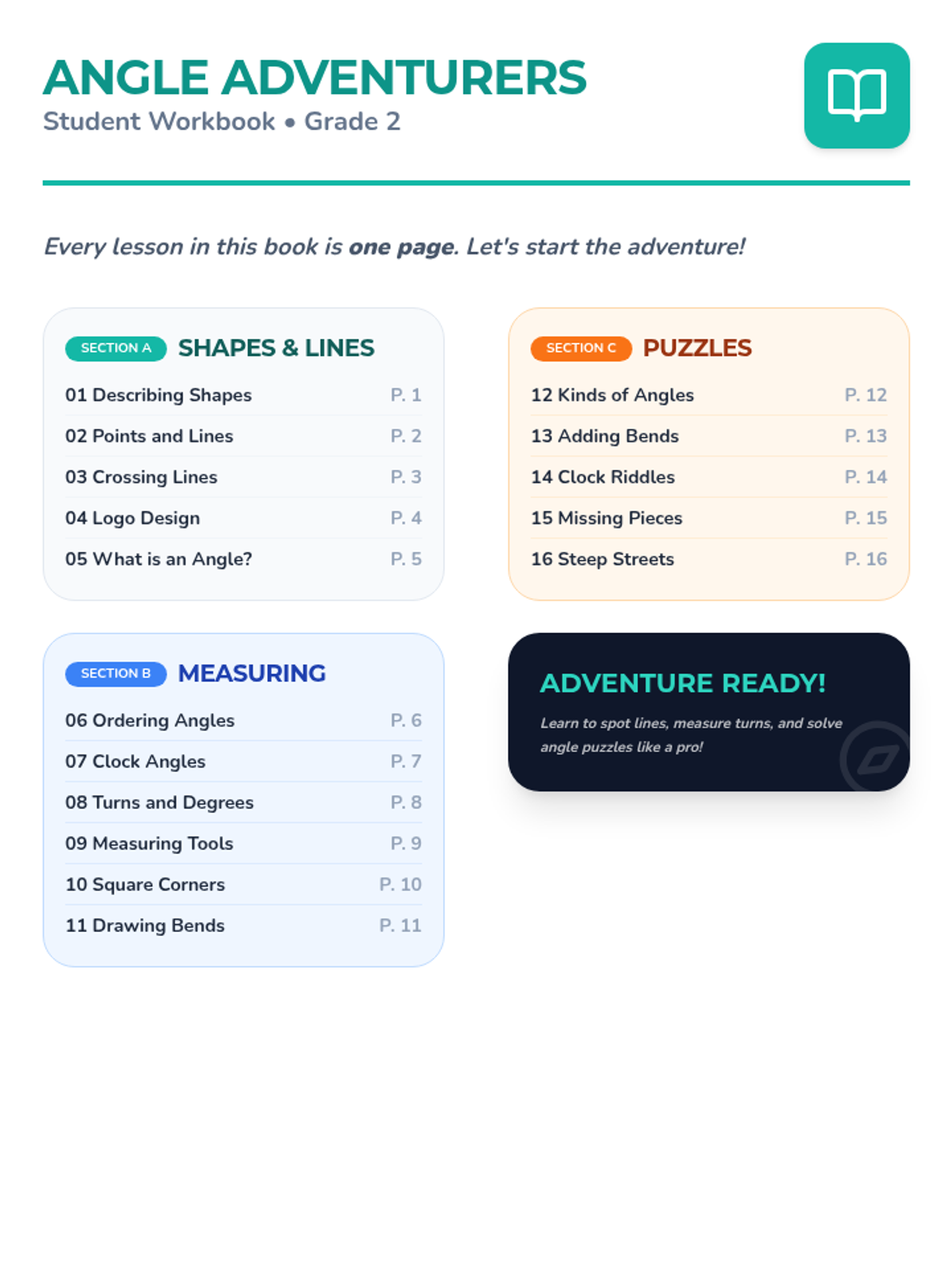
A comprehensive 16-lesson unit on geometry and angle measurement adapted for 2nd-grade students, focusing on simplified language while maintaining the standard of measuring in degrees.
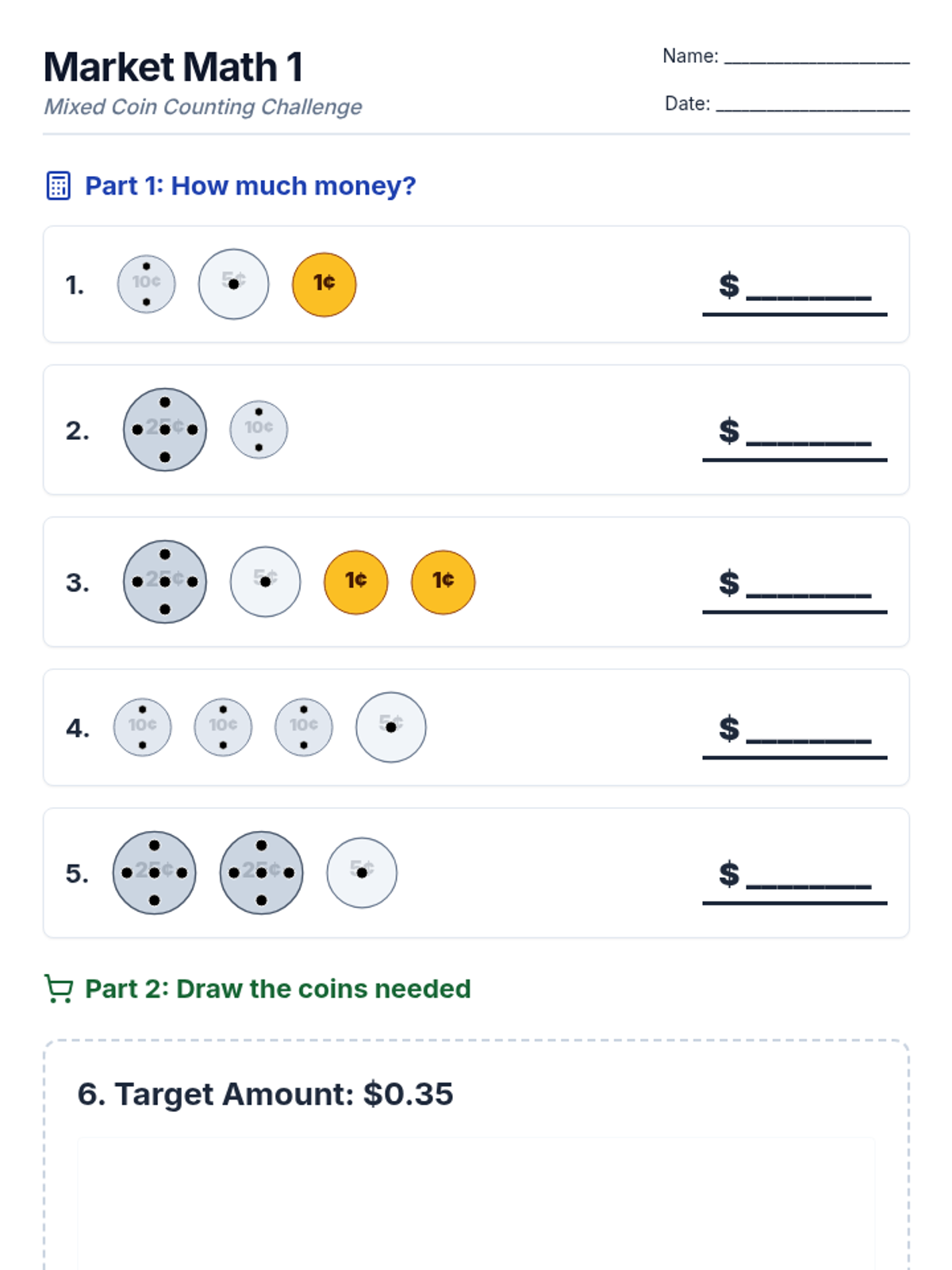
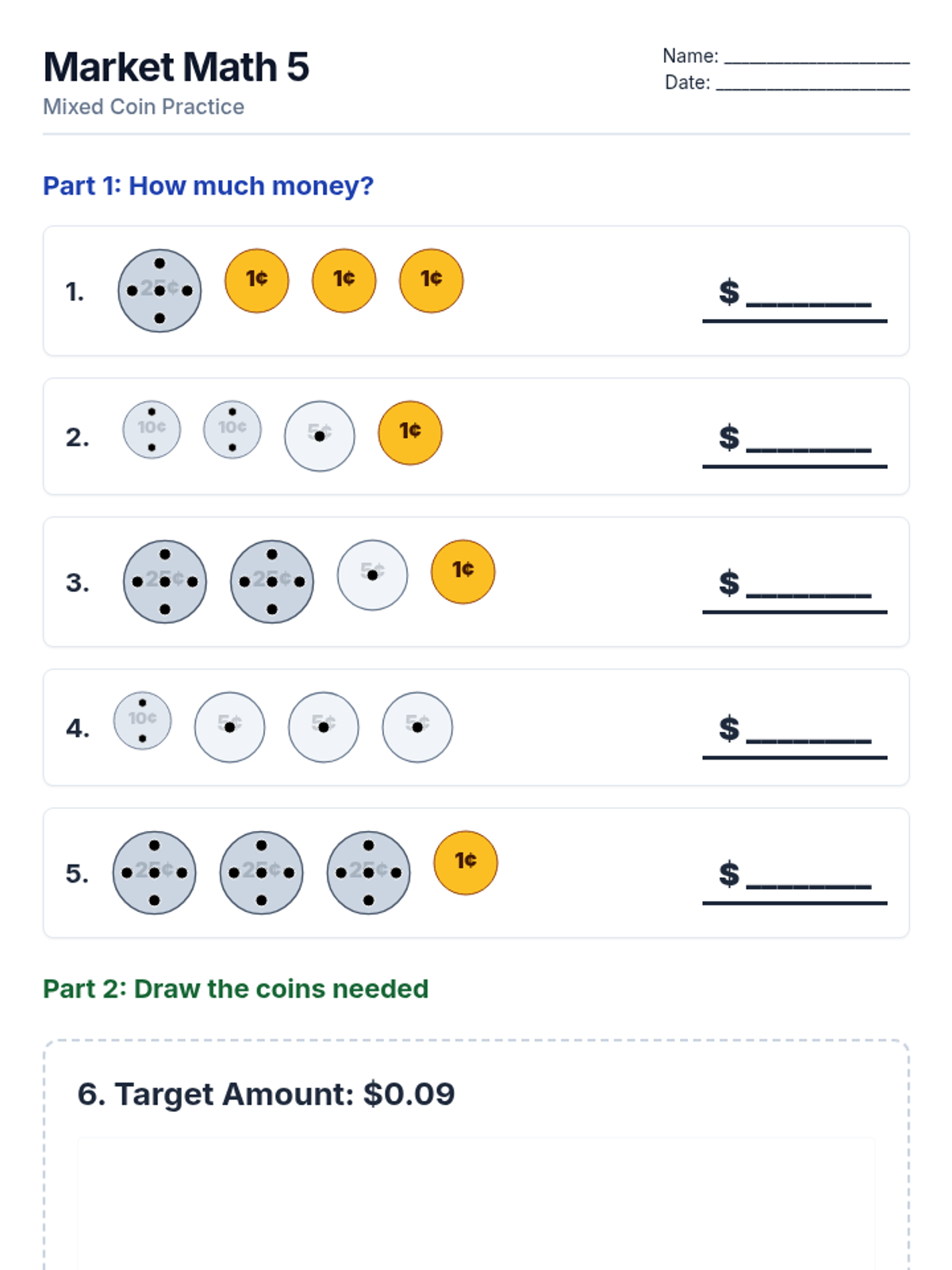
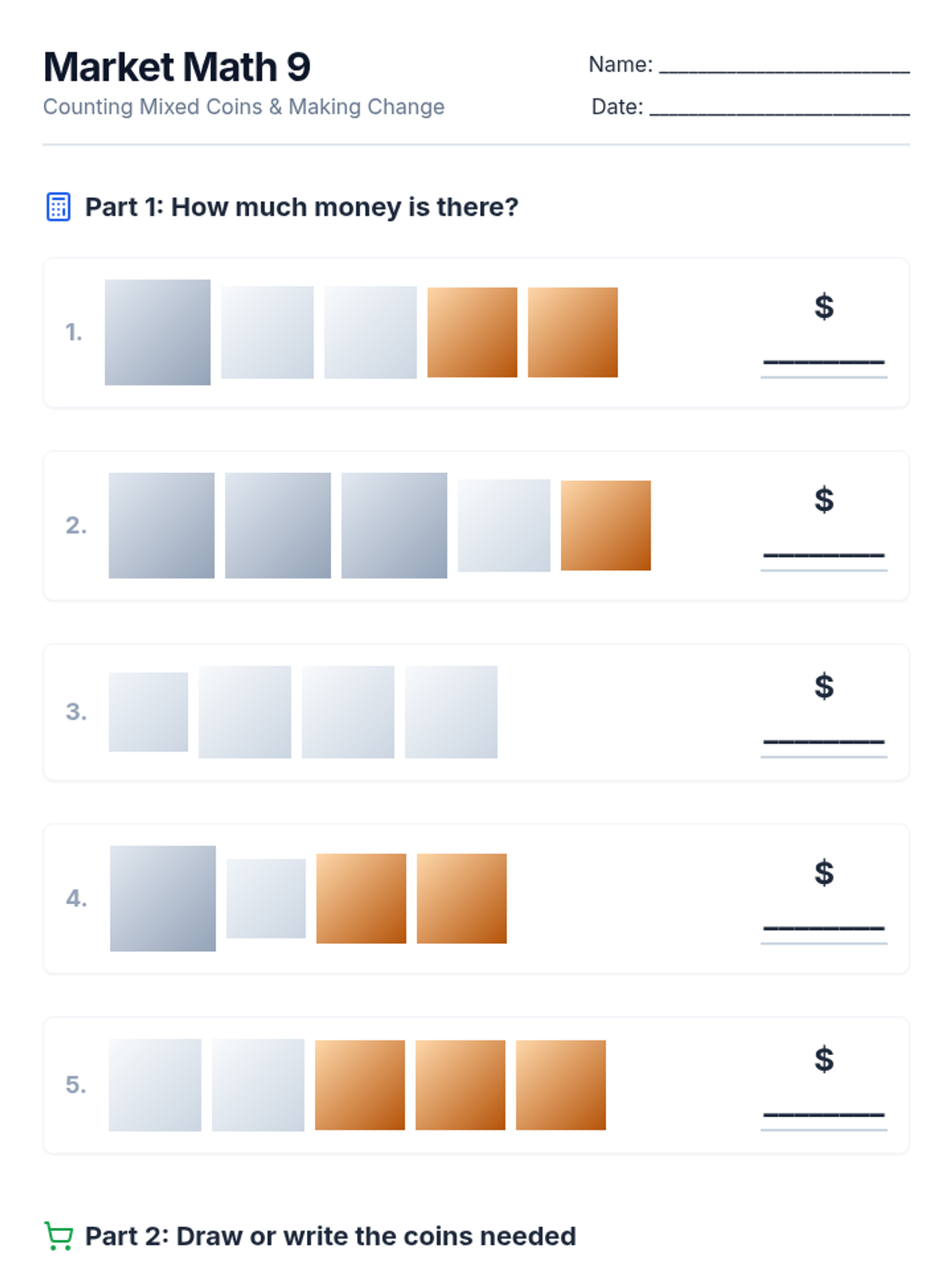
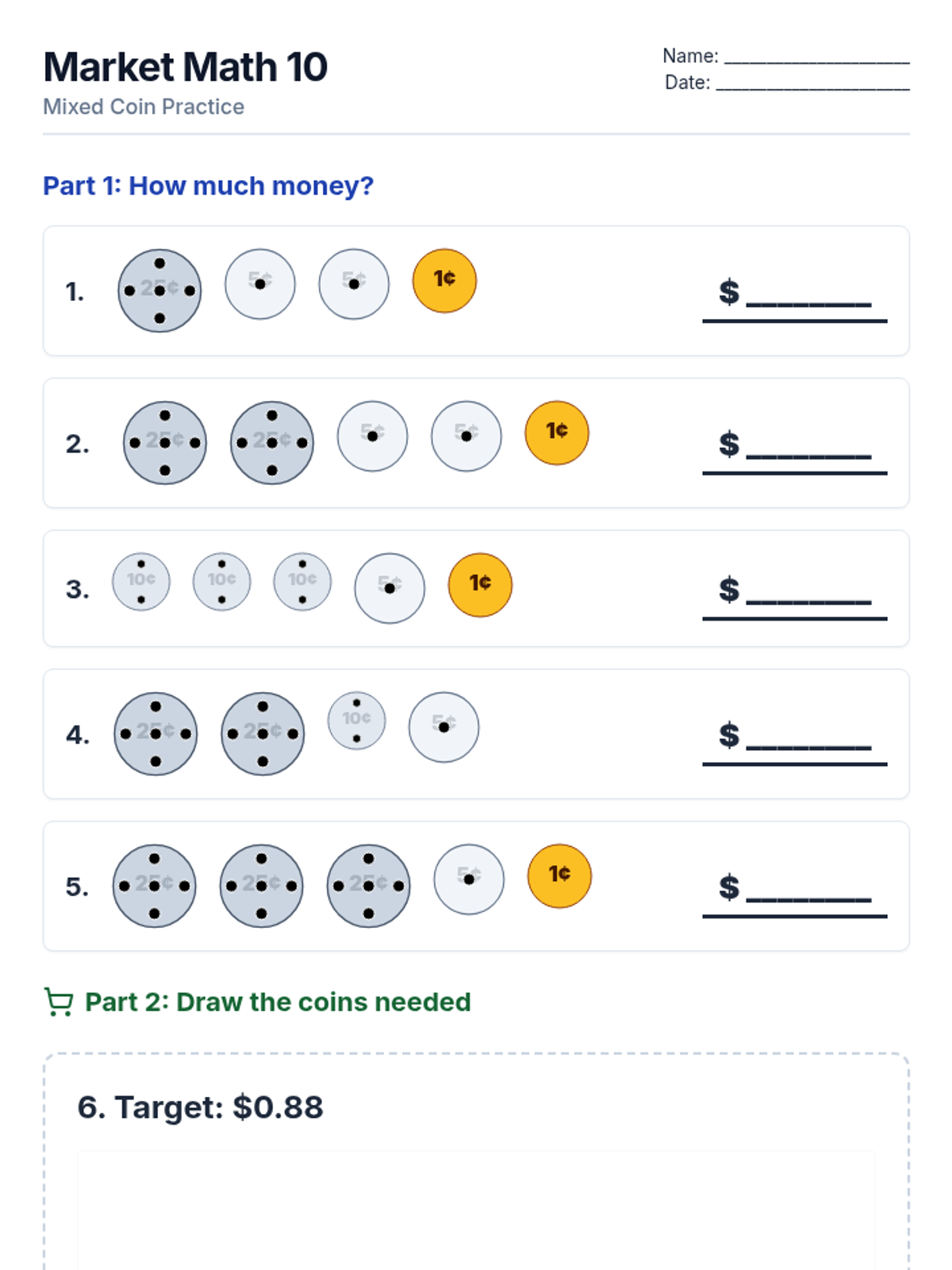
A comprehensive practice series for students to master counting mixed coins and making change up to $1.00, featuring realistic visuals and Touch-math supports.
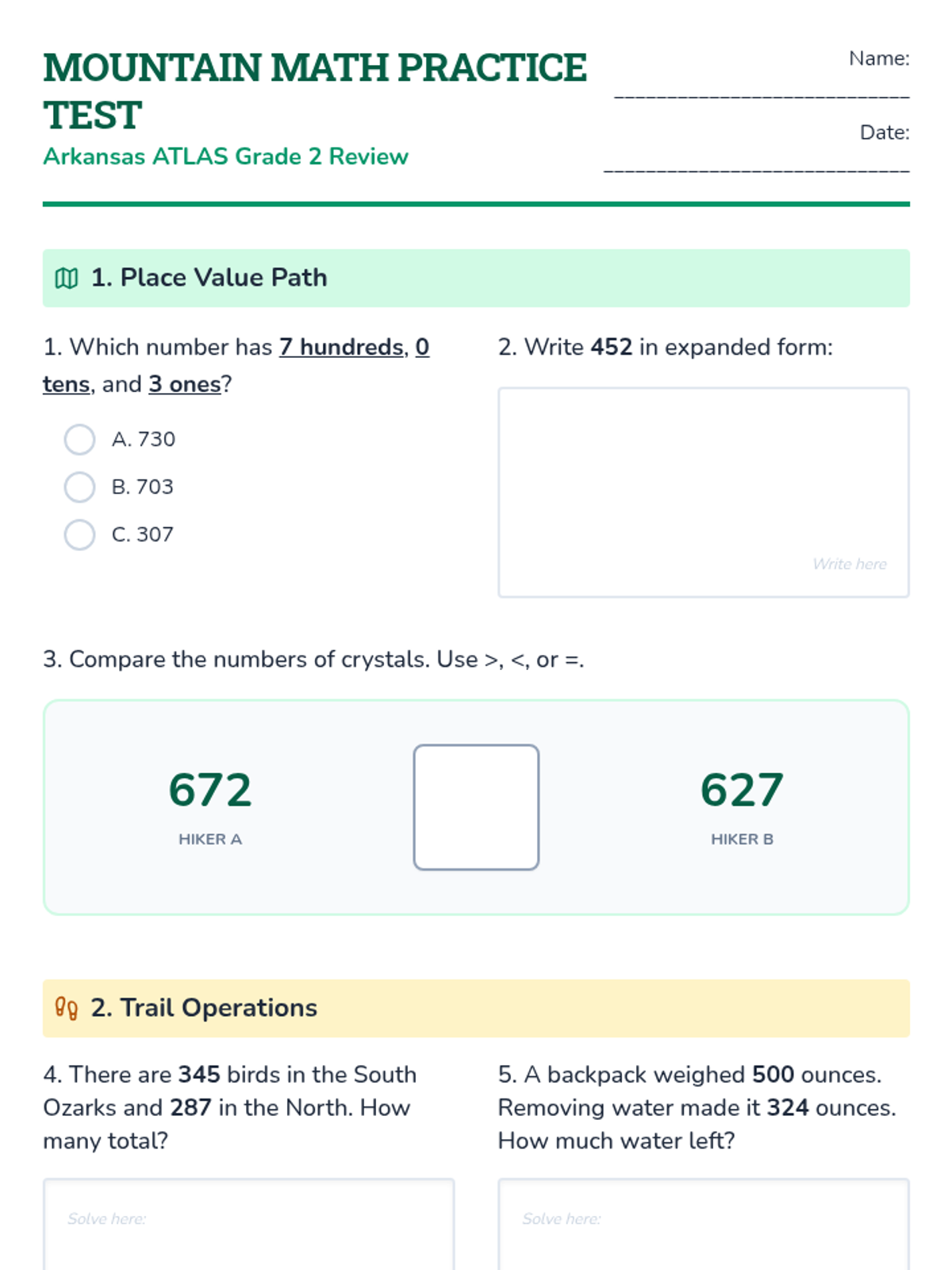
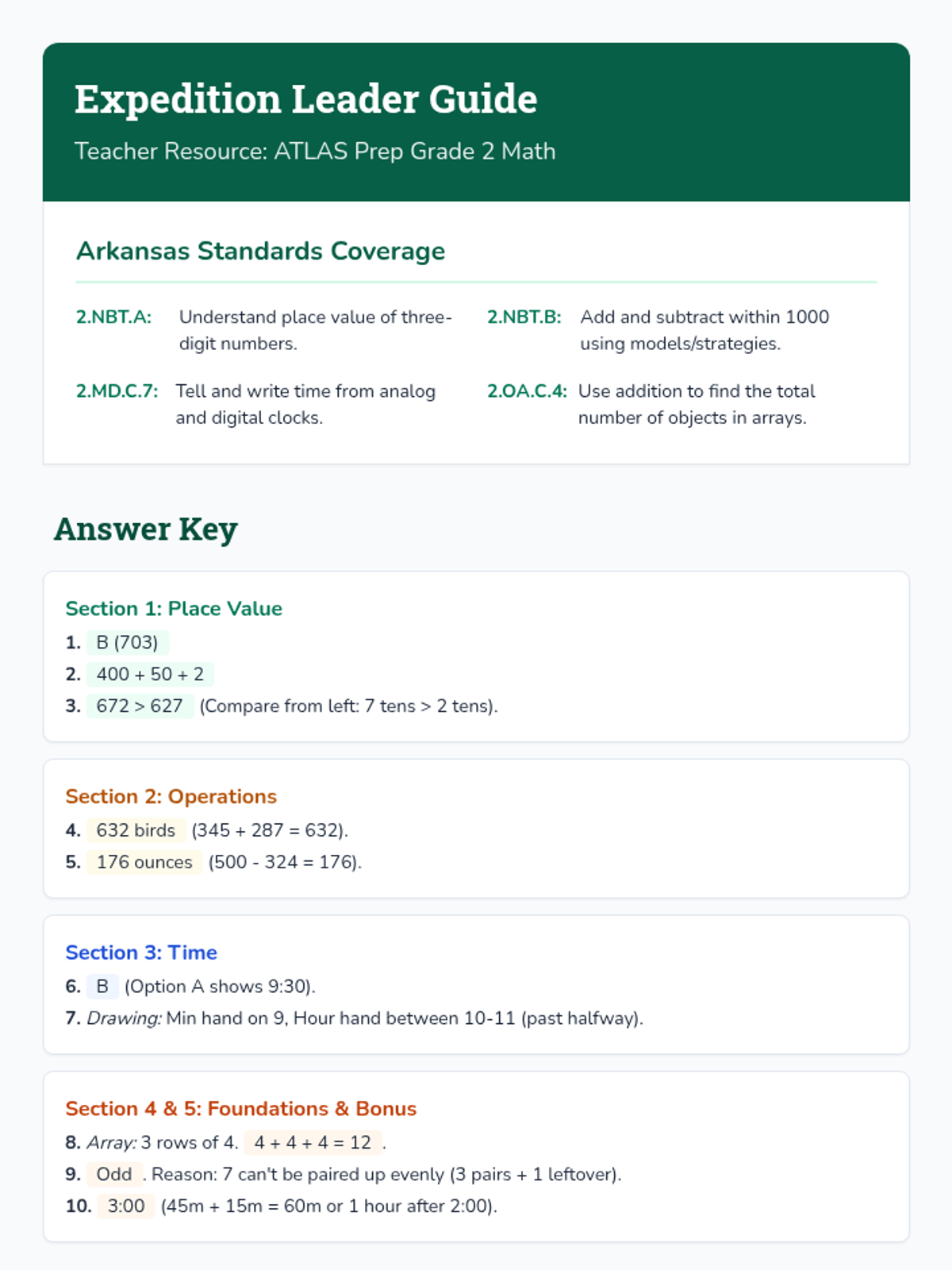
A test preparation sequence designed for Arkansas 2nd graders to excel on the ATLAS summative assessment. It covers core math domains including number sense, operations, measurement, and algebraic thinking through an engaging nature-based theme.
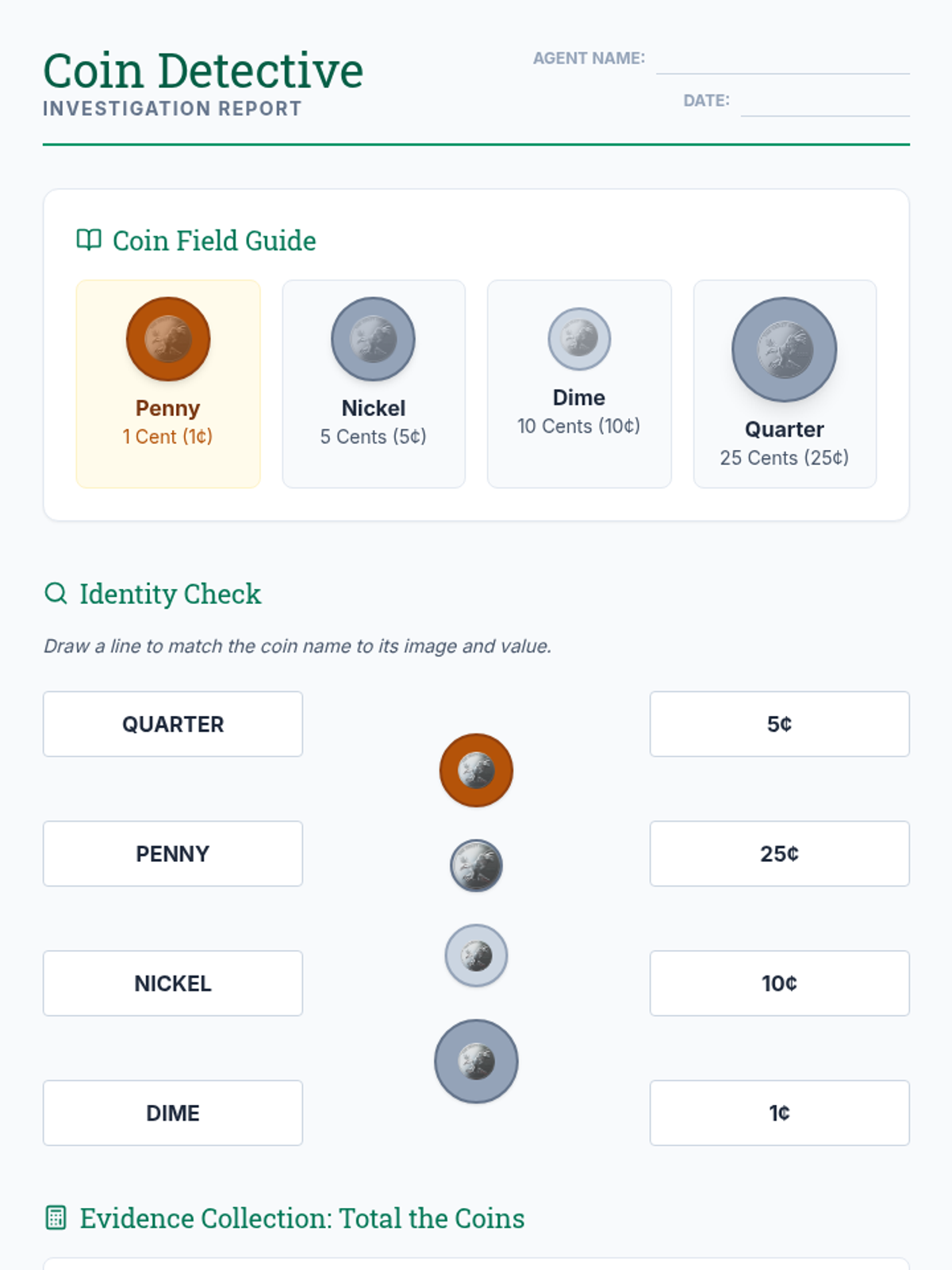
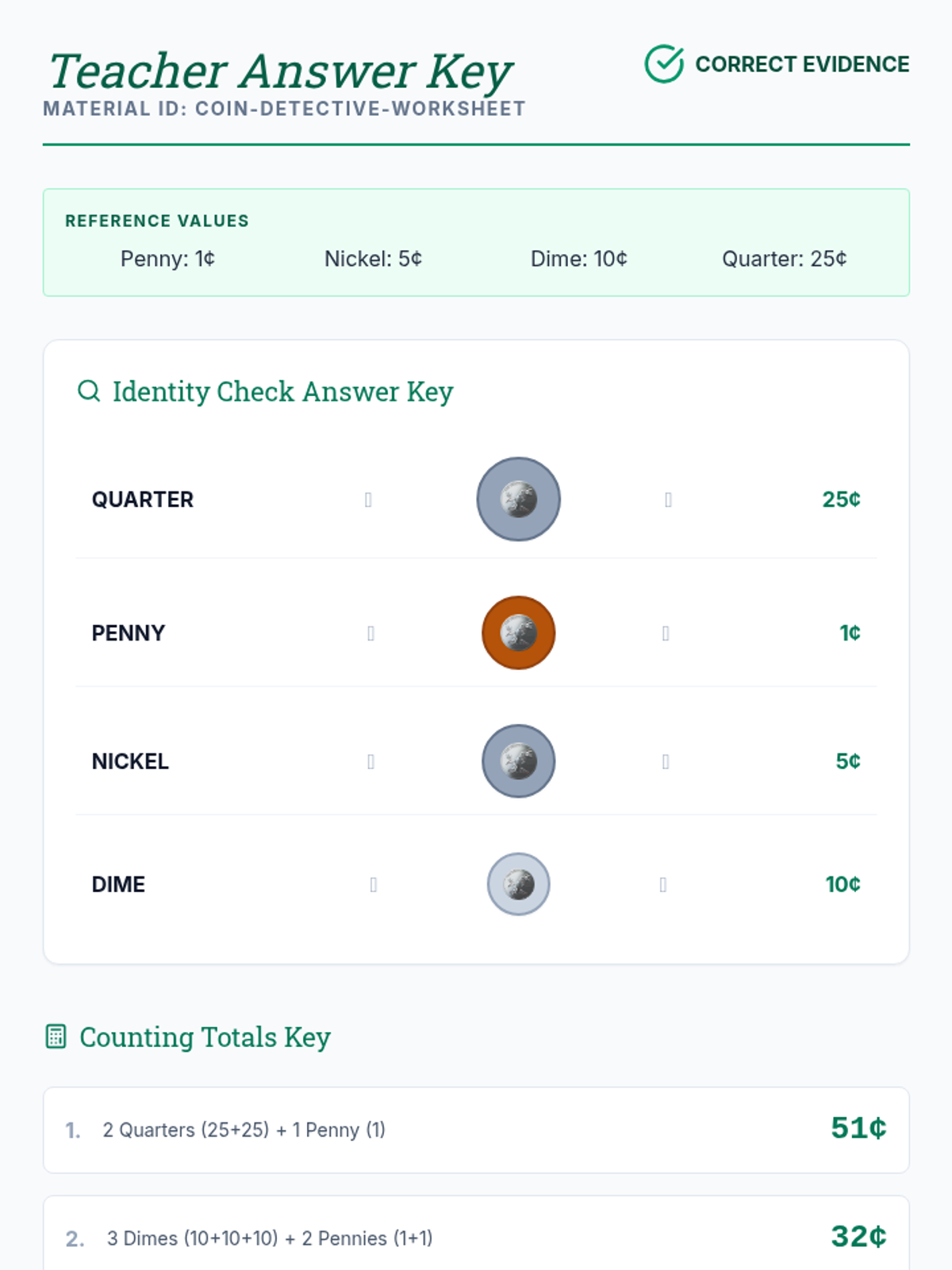
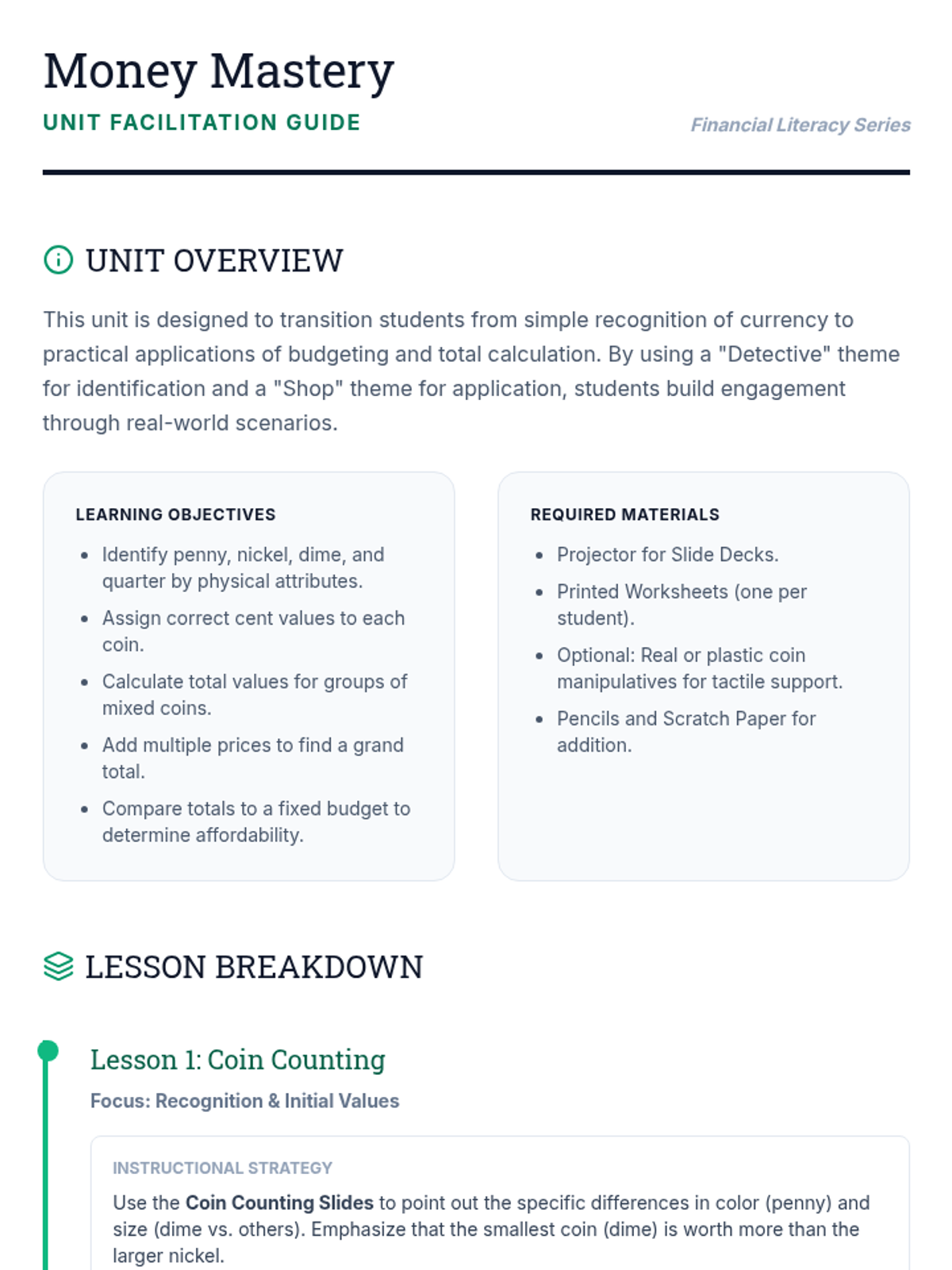
A comprehensive unit on essential financial literacy skills, ranging from basic coin identification to practical budgeting and total calculation.
A comprehensive unit plan for 2nd Grade Mathematics based on Illustrative Mathematics Units 5-8, integrated with Building Thinking Classrooms (BTC) pedagogy. Each section includes a sequence of six 'thin-sliced' tasks designed to build conceptual rigor through collaborative problem-solving on vertical surfaces.
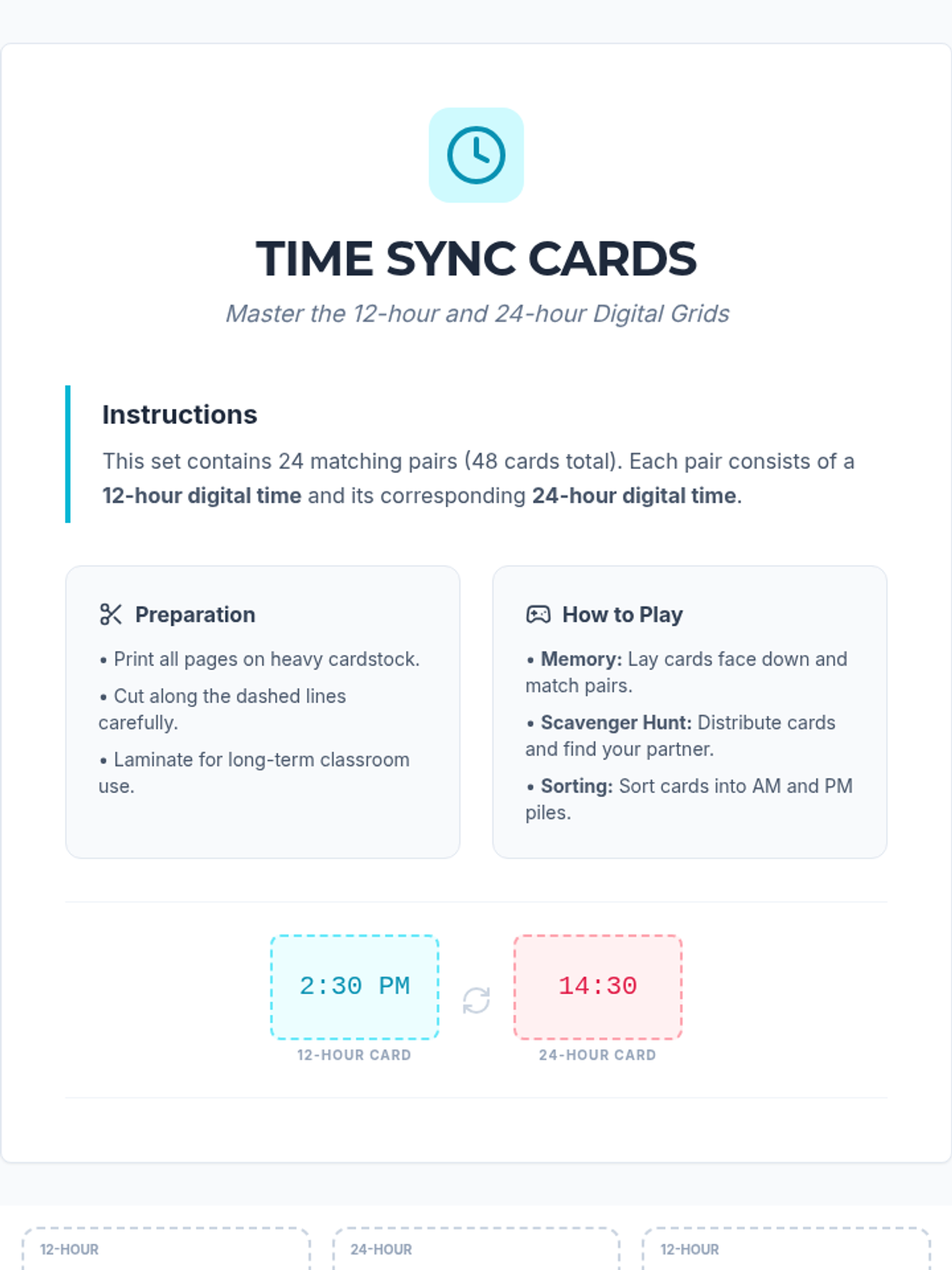
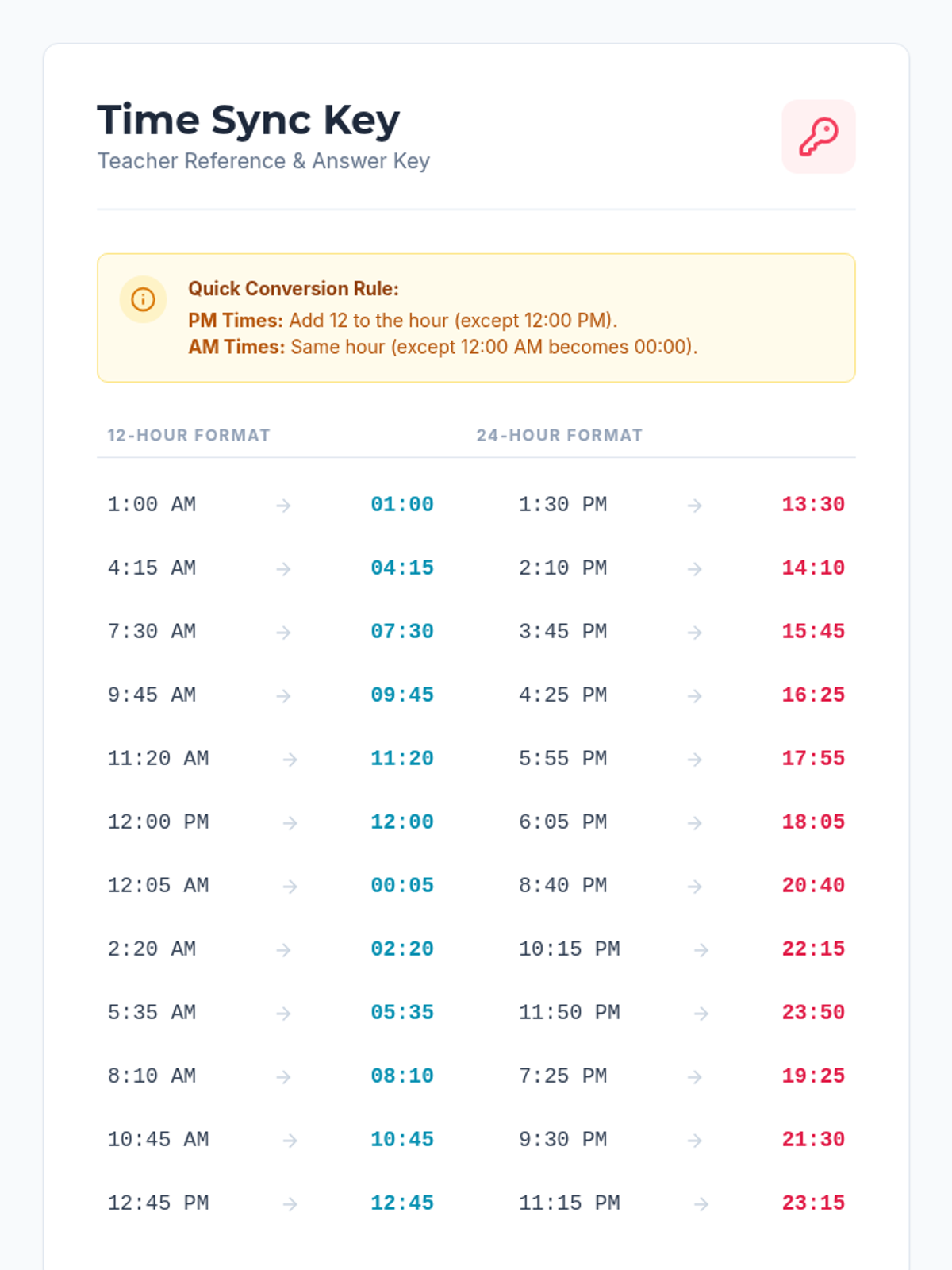
A unit focused on mastering digital time formats, including 12-hour and 24-hour clock synchronization and conversion.
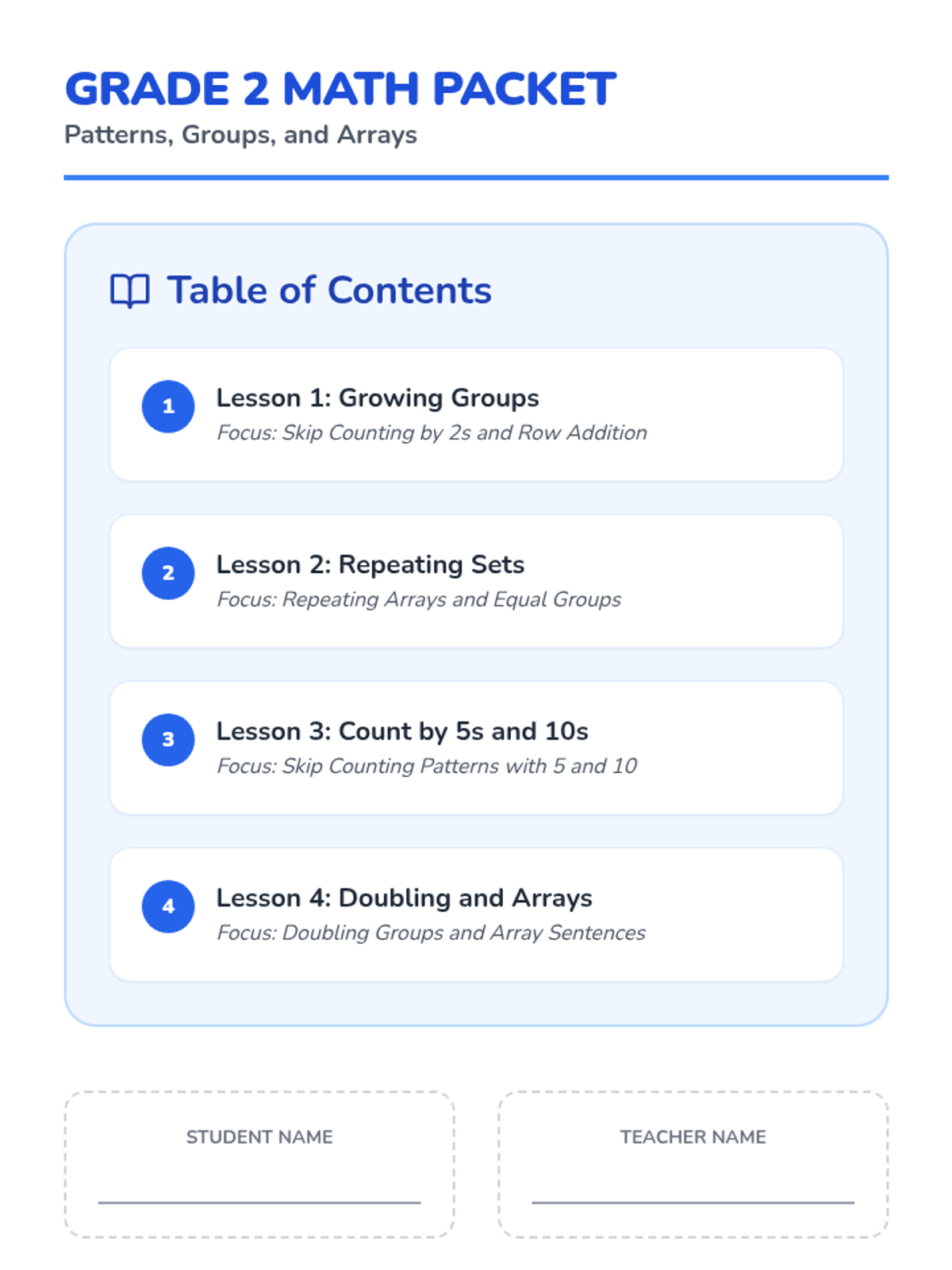
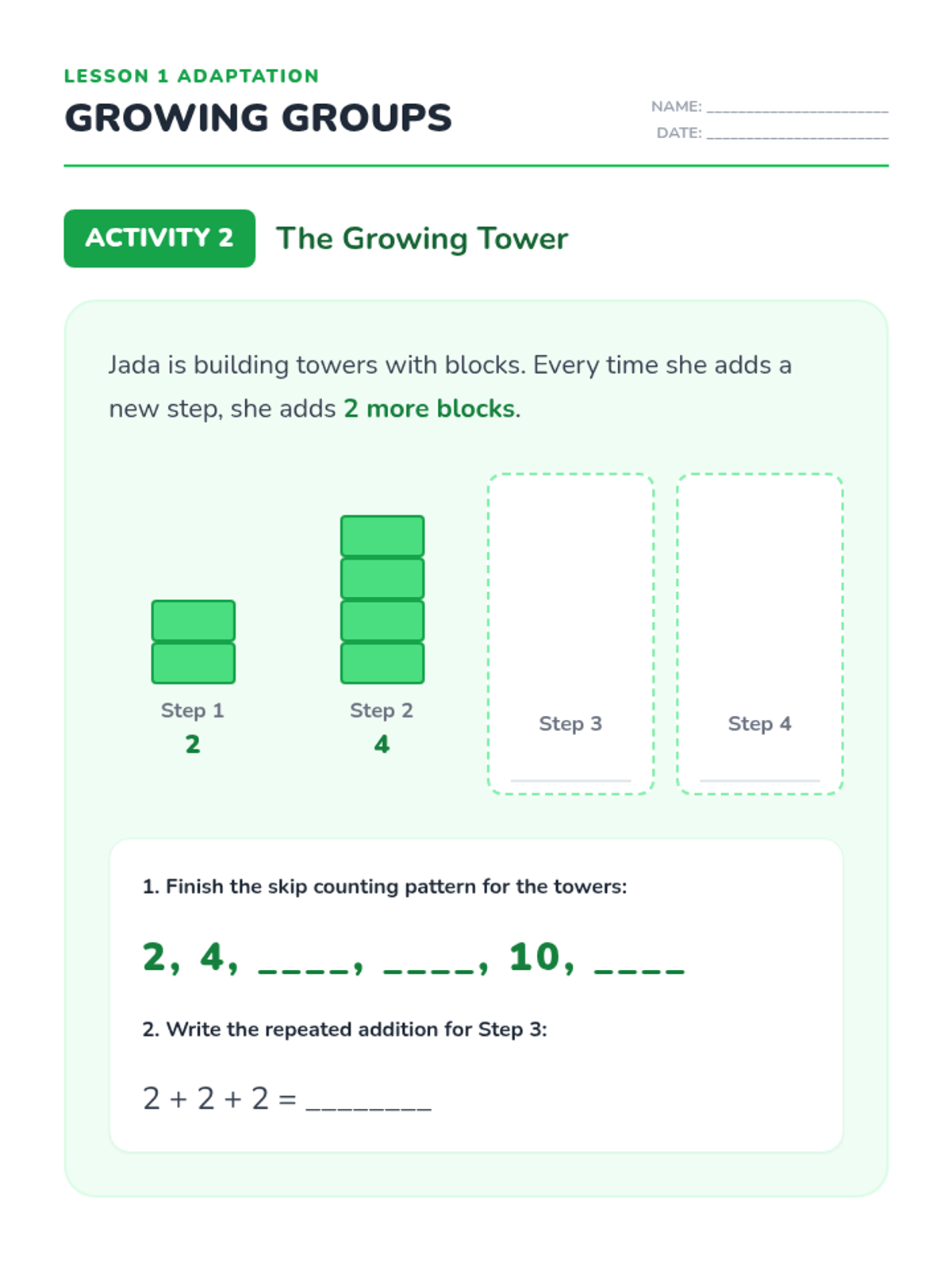
A comprehensive Grade 2 math packet focused on skip counting, repeated addition, arrays, and equal groups.
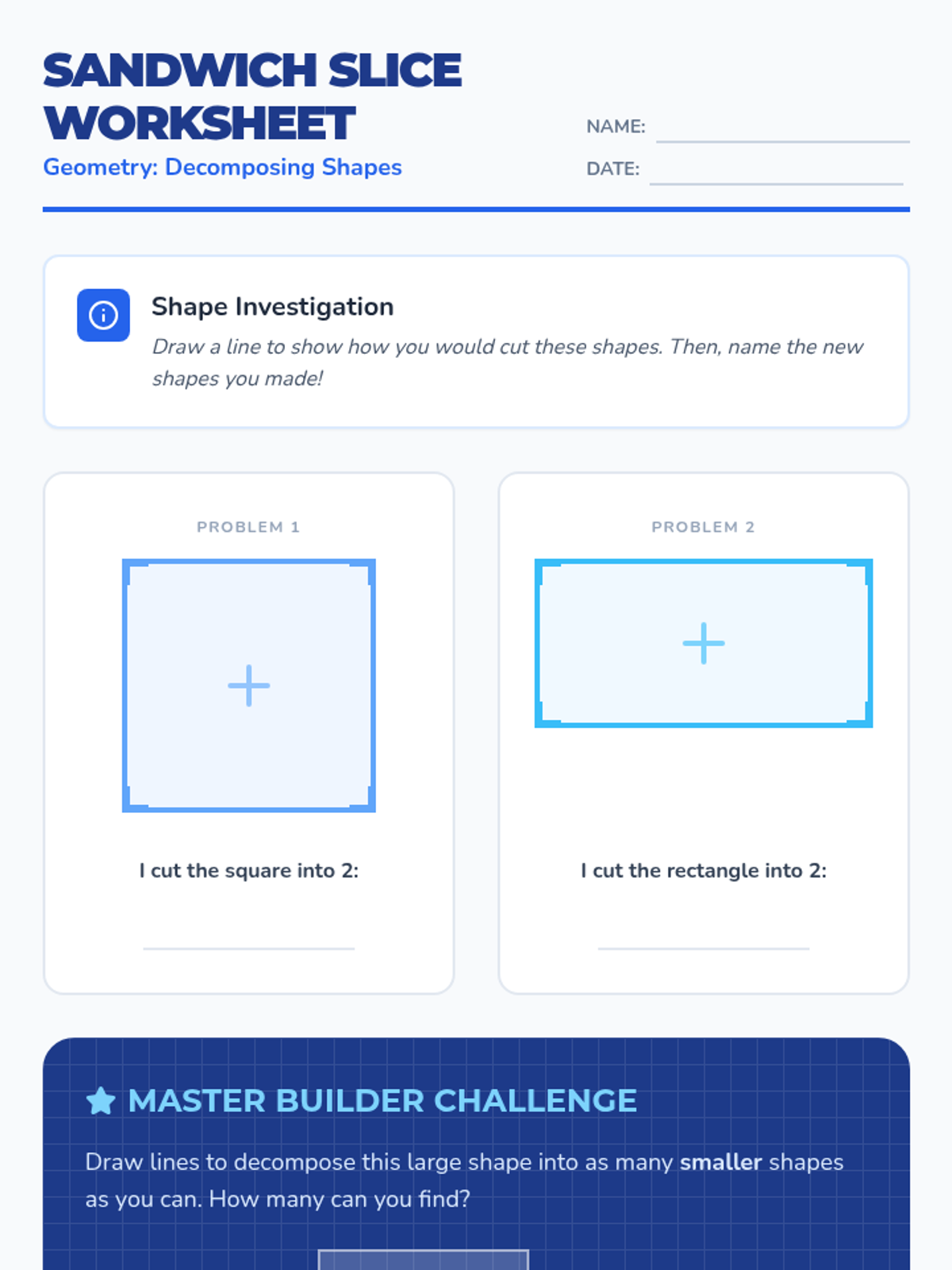
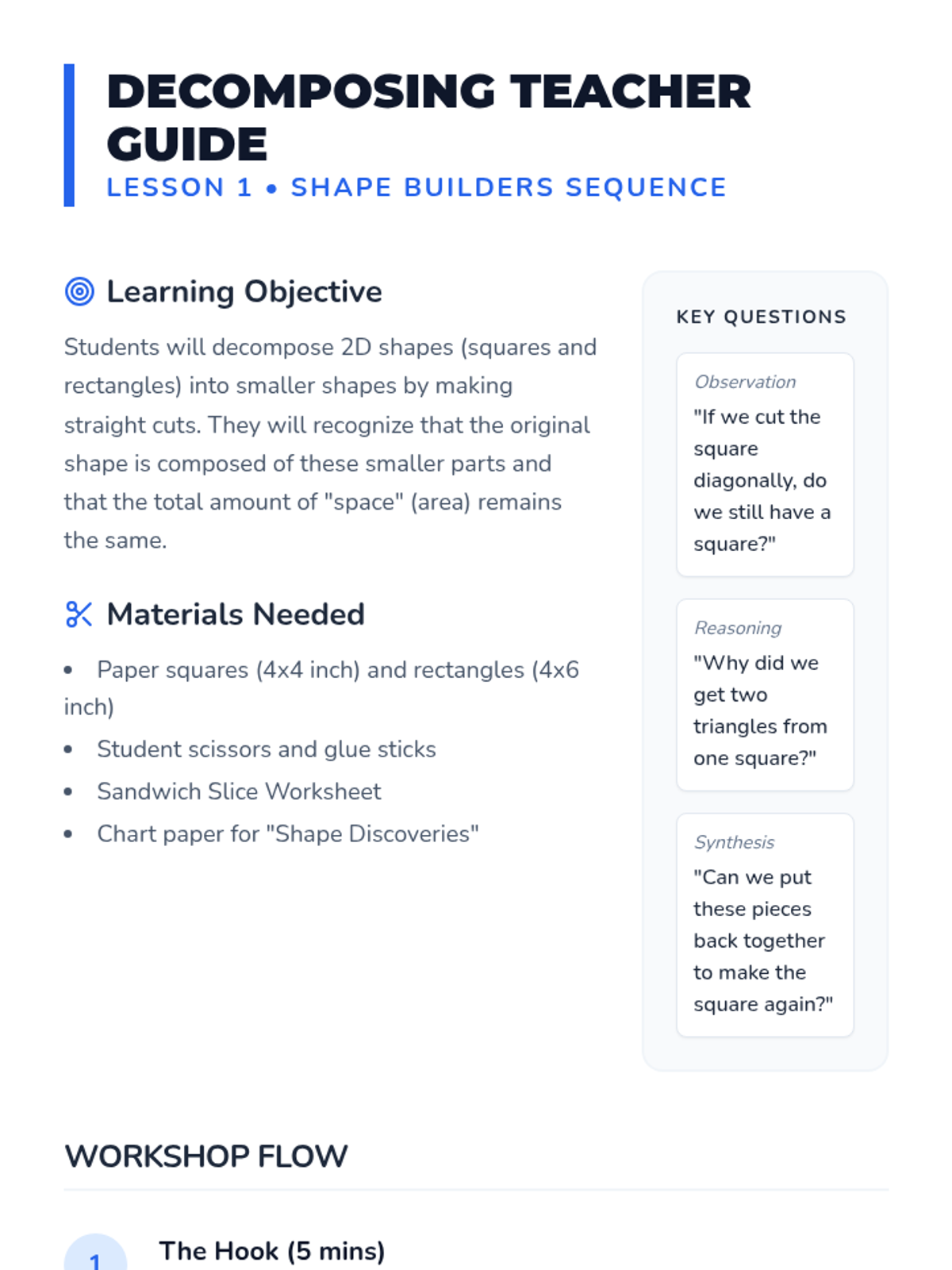
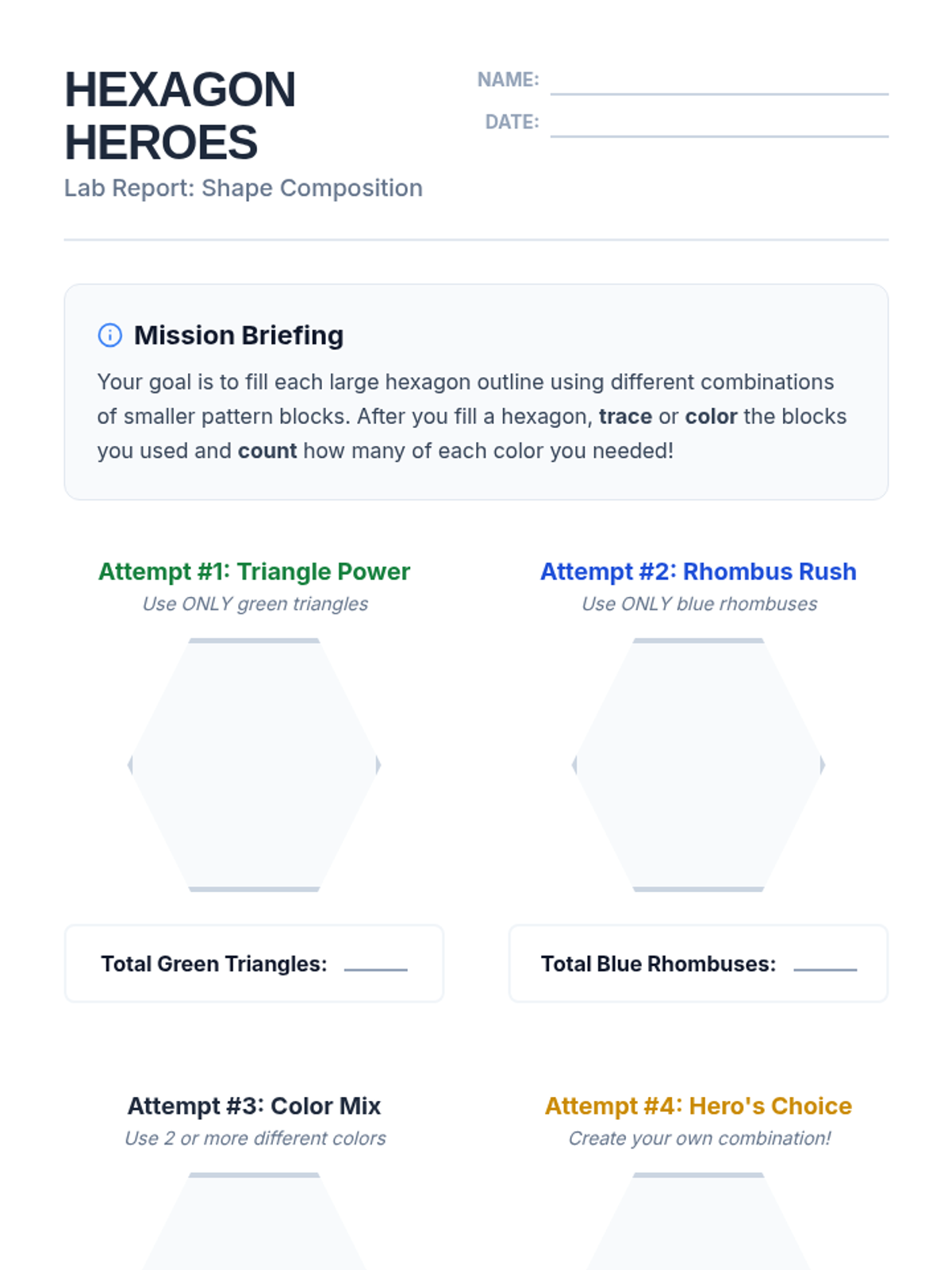
A 1st-grade geometry sequence exploring how shapes combine and break apart. Students use hands-on materials like tangrams, pattern blocks, and geoboards to develop spatial reasoning and understand the part-whole relationship in geometric figures.
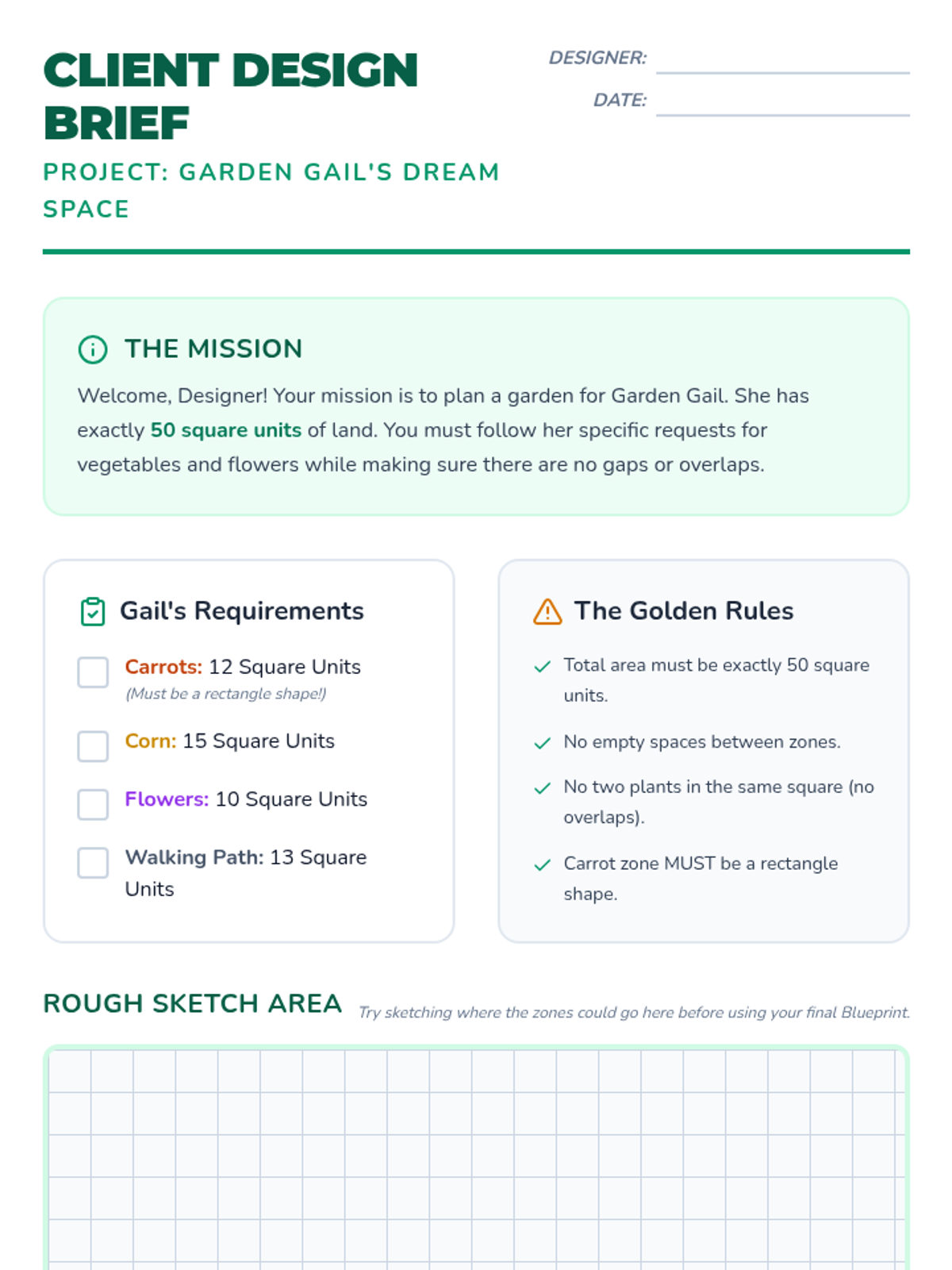
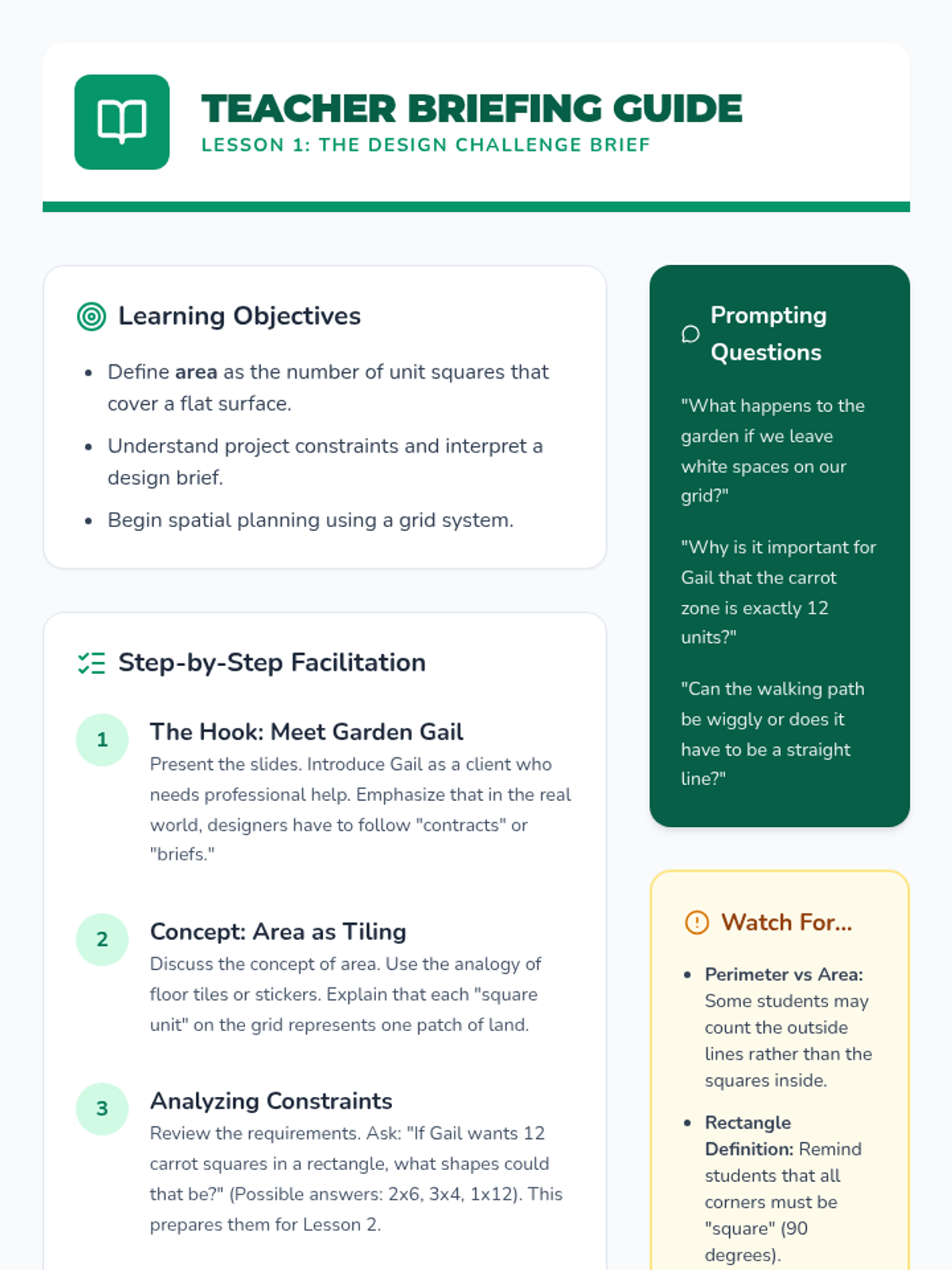
Students step into the shoes of garden designers to learn area. They use 1-inch grids to plan, calculate, and verify the layout of 'Dream Gardens', connecting the concept of square units to real-world spatial planning.
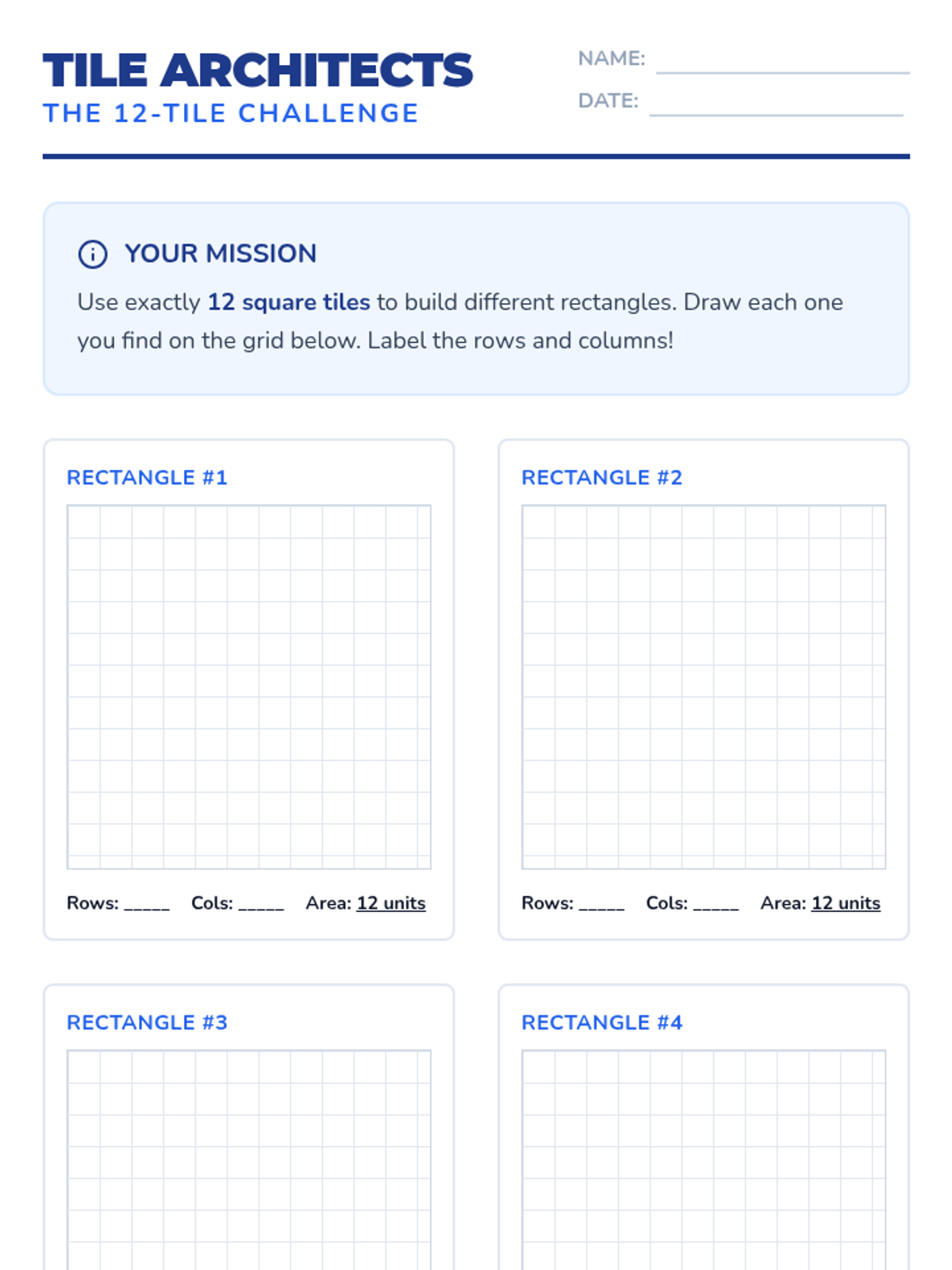
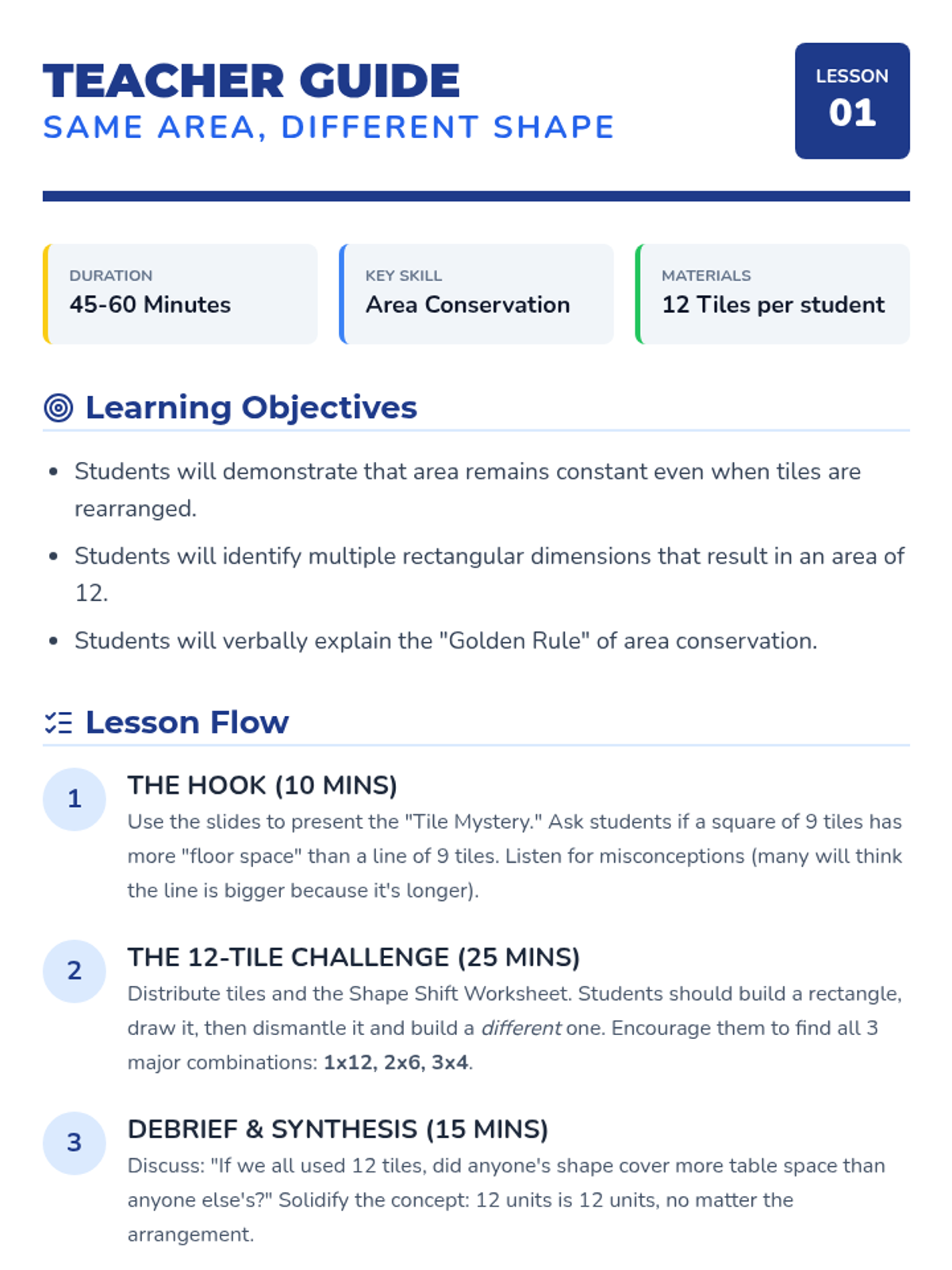
This 2nd Grade sequence explores the concepts of area conservation and spatial reasoning. Students learn that shapes with different dimensions can have the same area, practice estimating and verifying area with tiles, and compare the surface area of various objects using direct and standardized measurement.
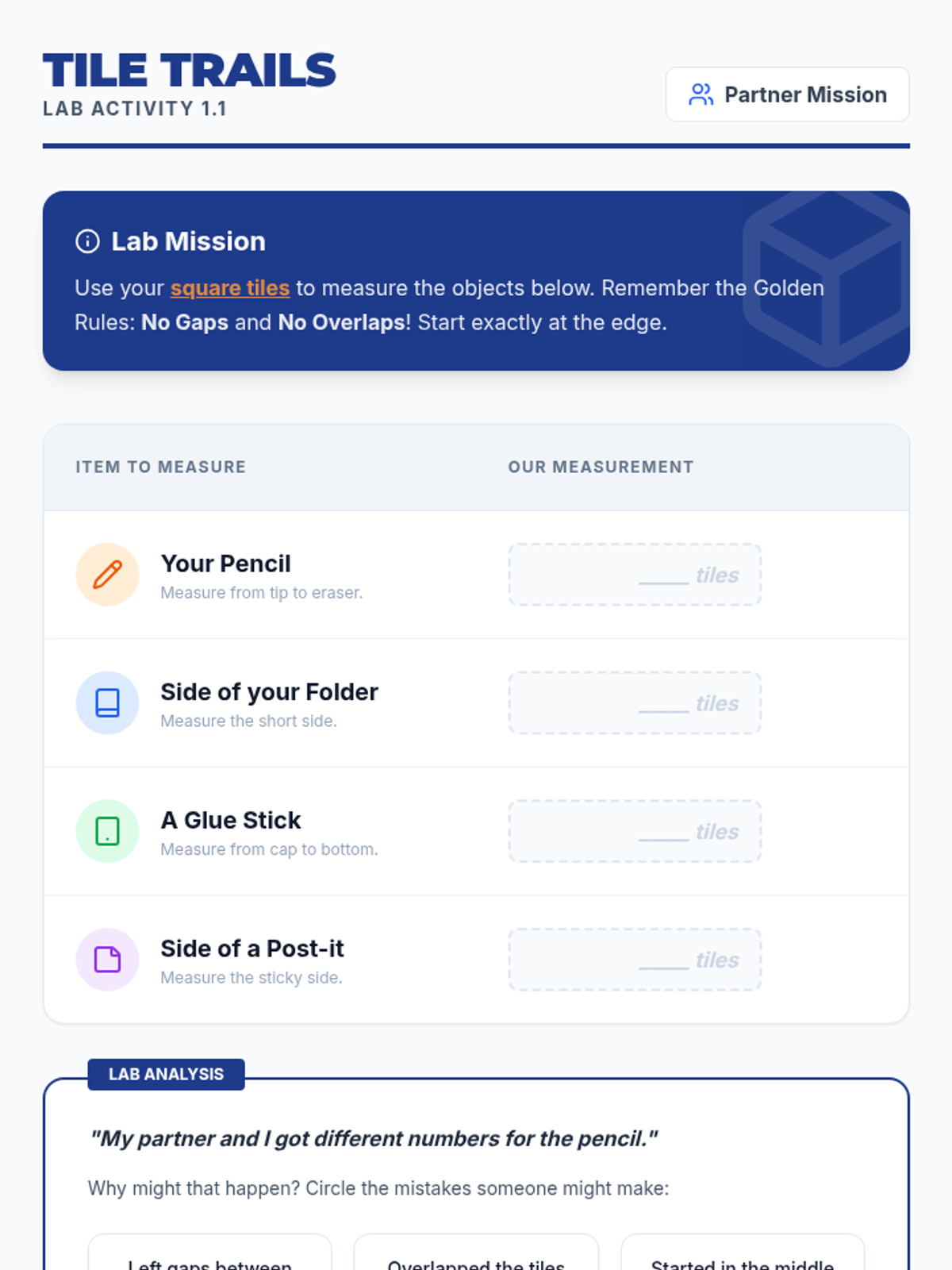
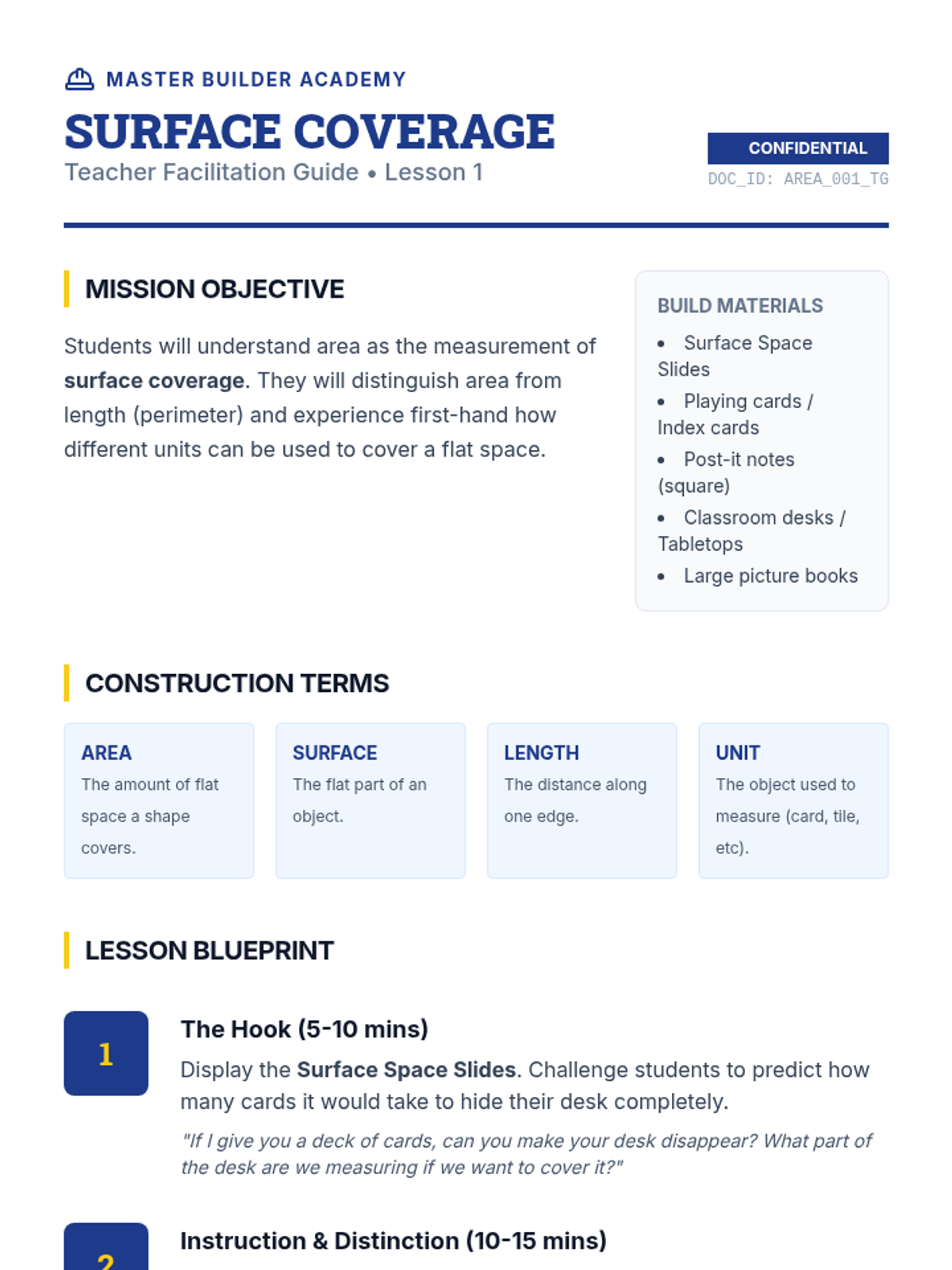
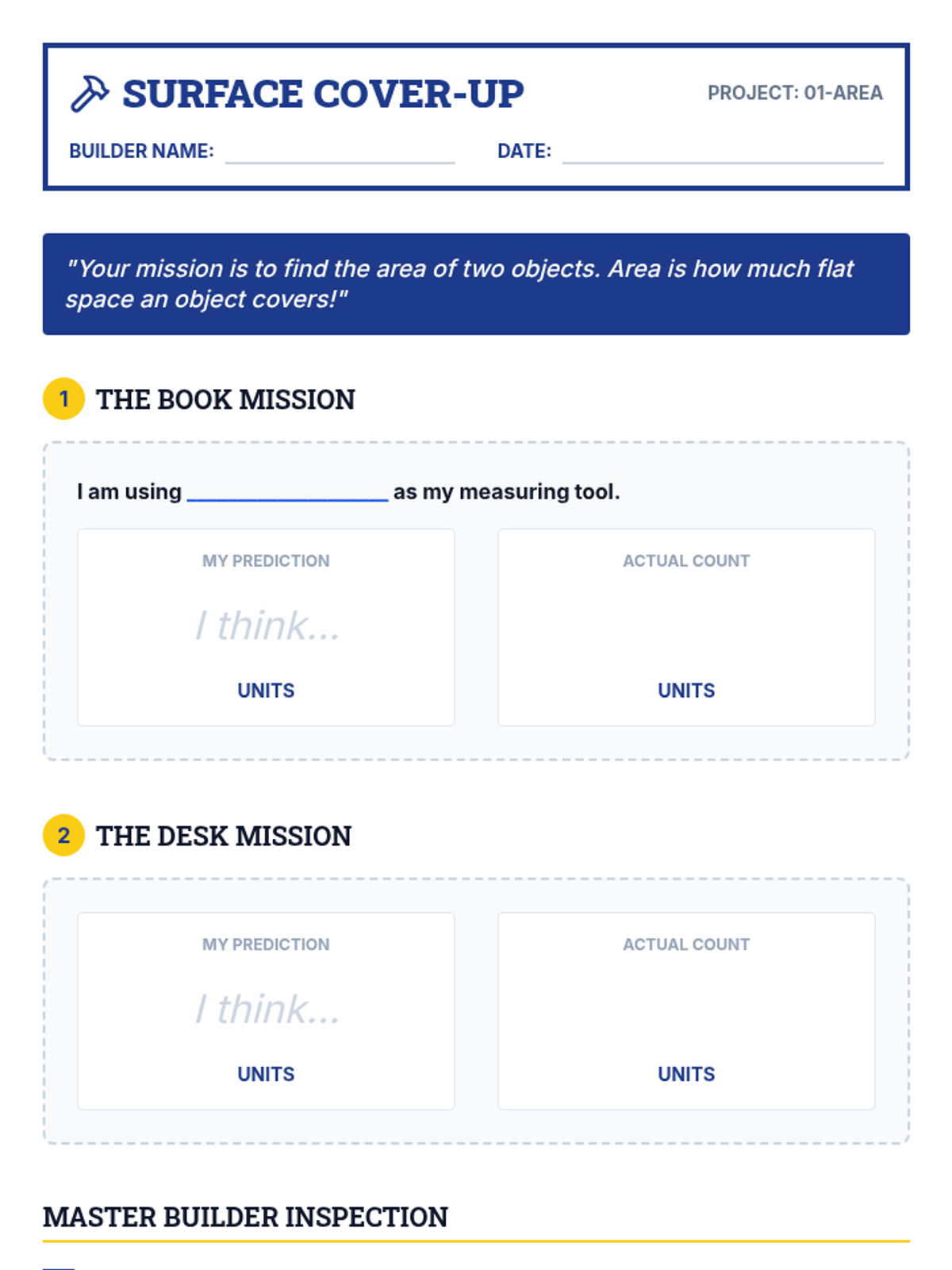
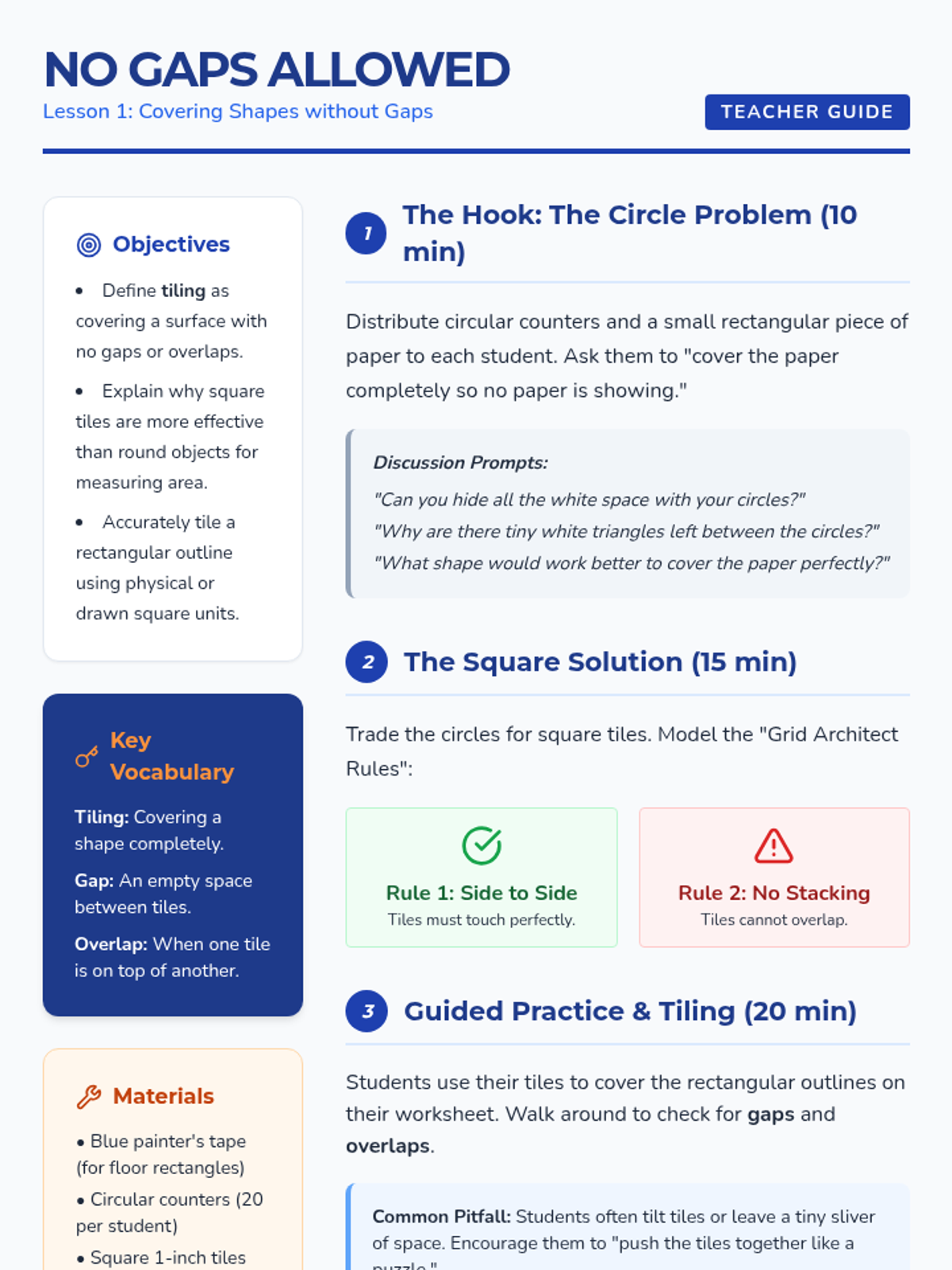
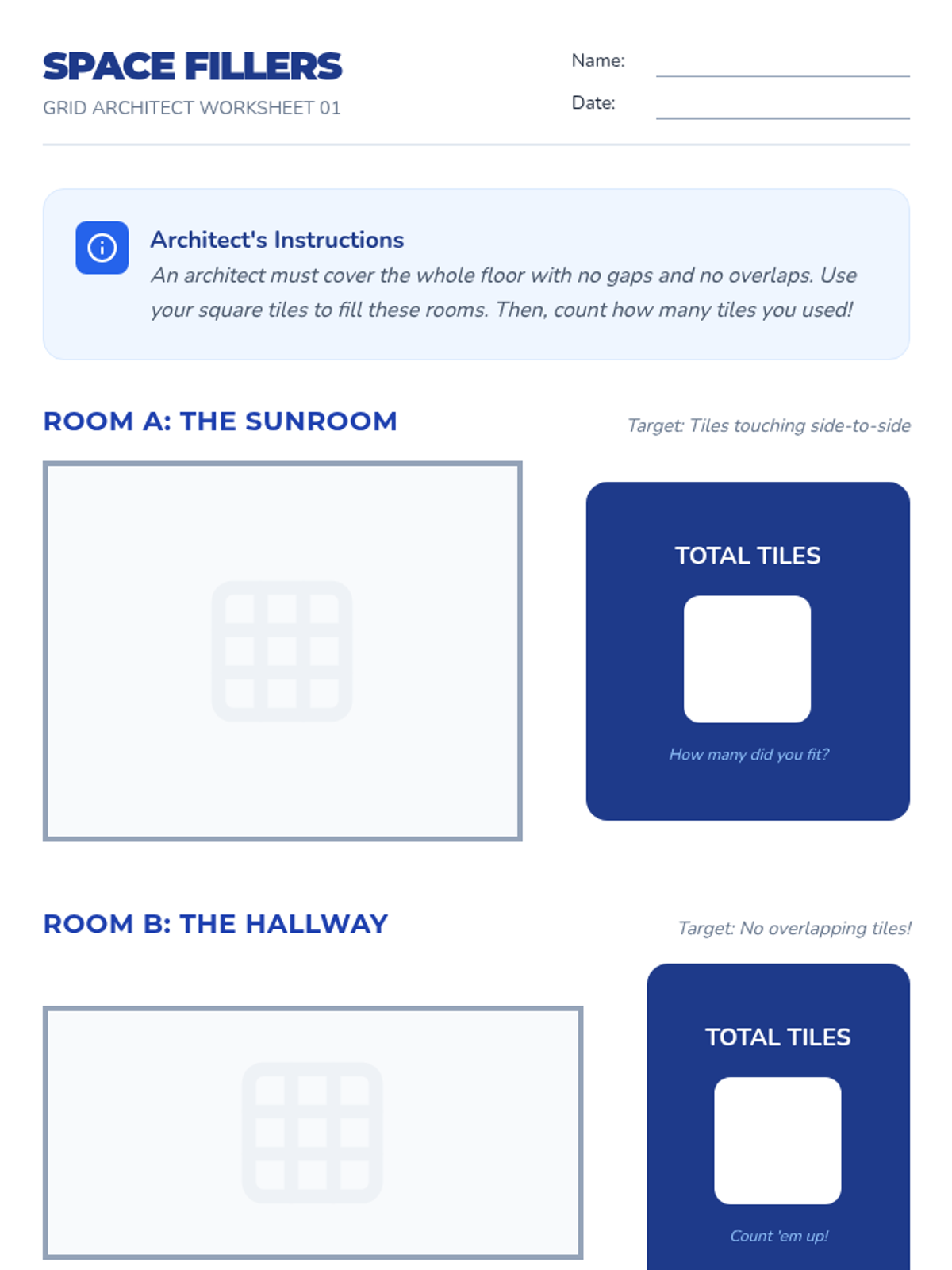
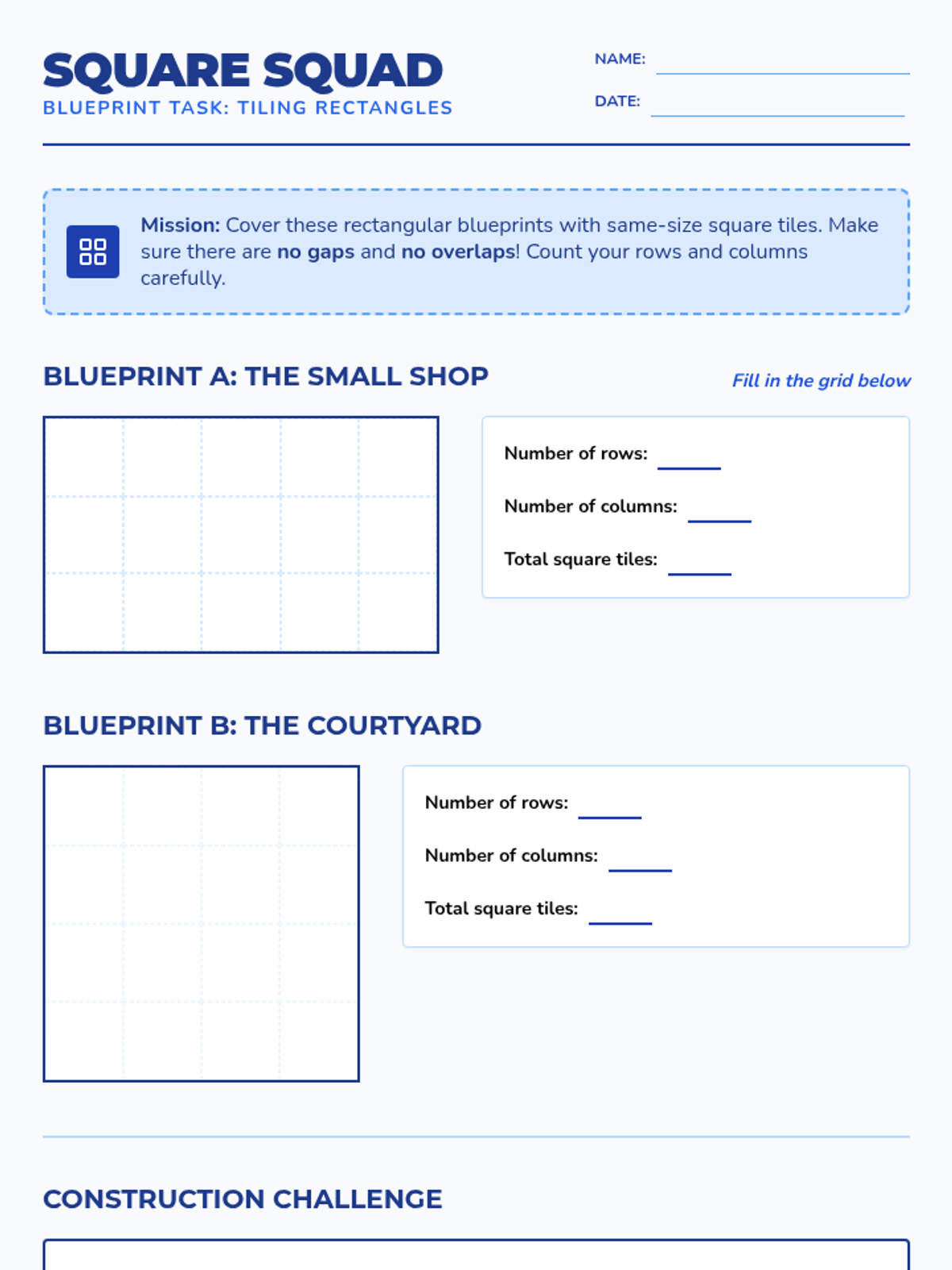
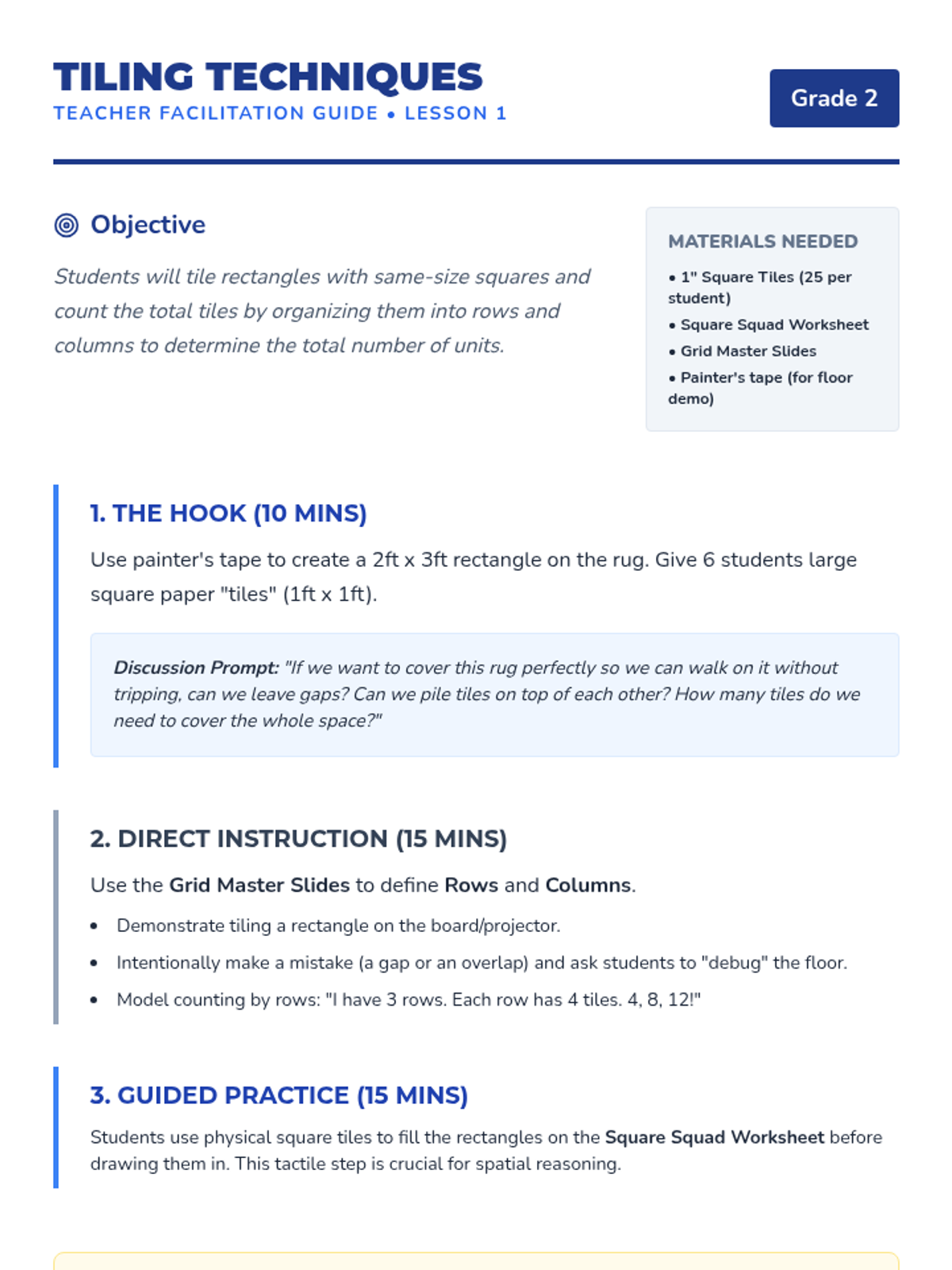
This 2nd Grade sequence introduces the concept of area as surface coverage. Students progress from using non-standard units to standard square tiles, discovering the essential rules of tiling (no gaps, no overlaps) and transitioning from concrete manipulation to pictorial grid representations.
A 2nd-grade sequence exploring the relationship between geometry and arithmetic through area models. Students learn to tile rectangles, count units efficiently, partition shapes, and understand that different dimensions can yield the same area.
A 2nd-grade geometry unit that transitions from tiling rectangles with square units to partitioning shapes into halves, thirds, and fourths. Students develop spatial reasoning and foundational fraction concepts through hands-on construction and 'fair share' scenarios.
This sequence explores the spatial reasoning of 2nd-grade students through the composition and decomposition of geometric figures. Students will use pattern blocks, tangrams, and partitioning strategies to understand how shapes relate to one another and to the concept of area.
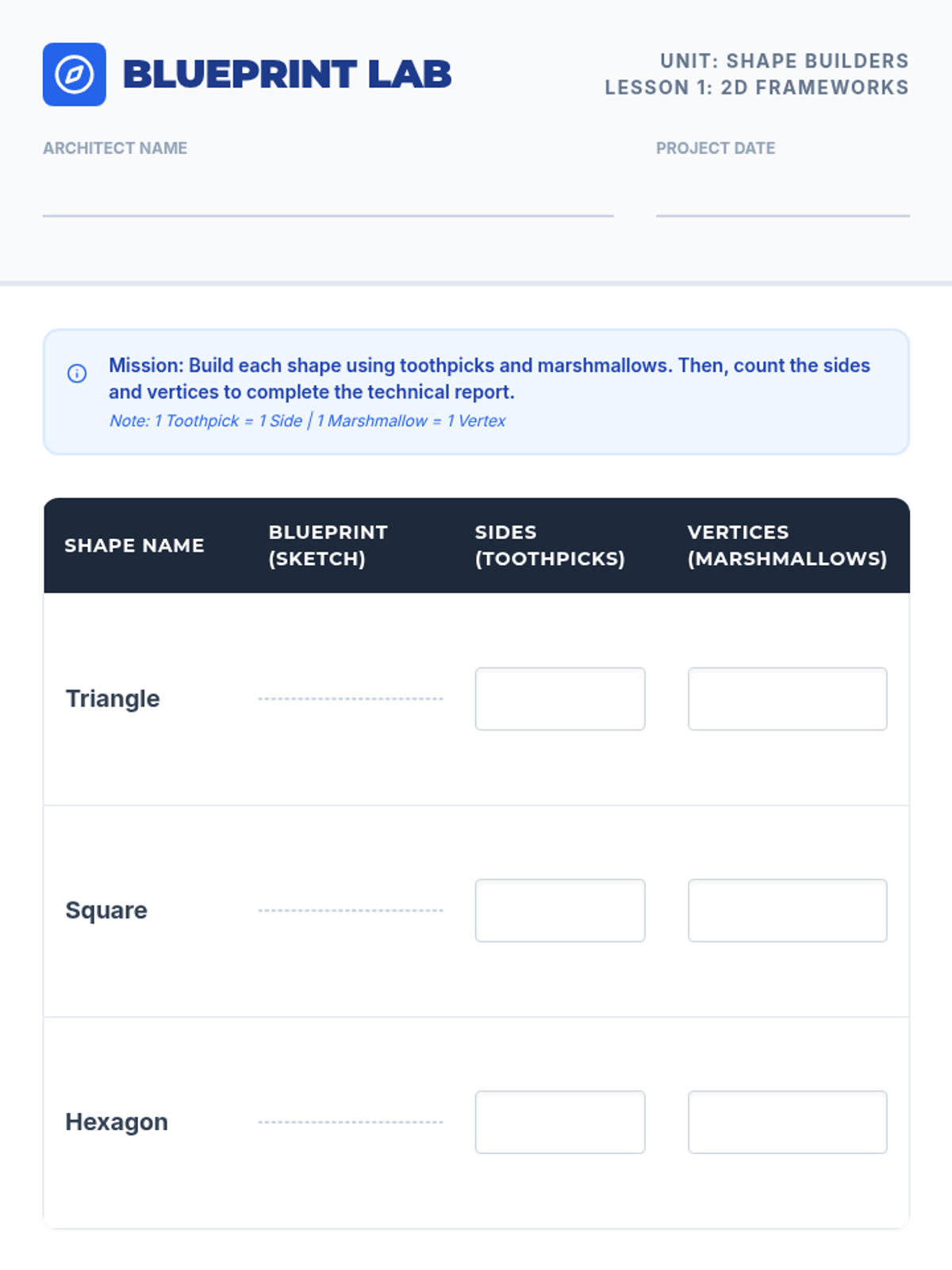
A hands-on geometry sequence for 2nd Grade focusing on the structural construction of 2D and 3D geometric figures using modeling materials to explore sides, vertices, edges, and faces.
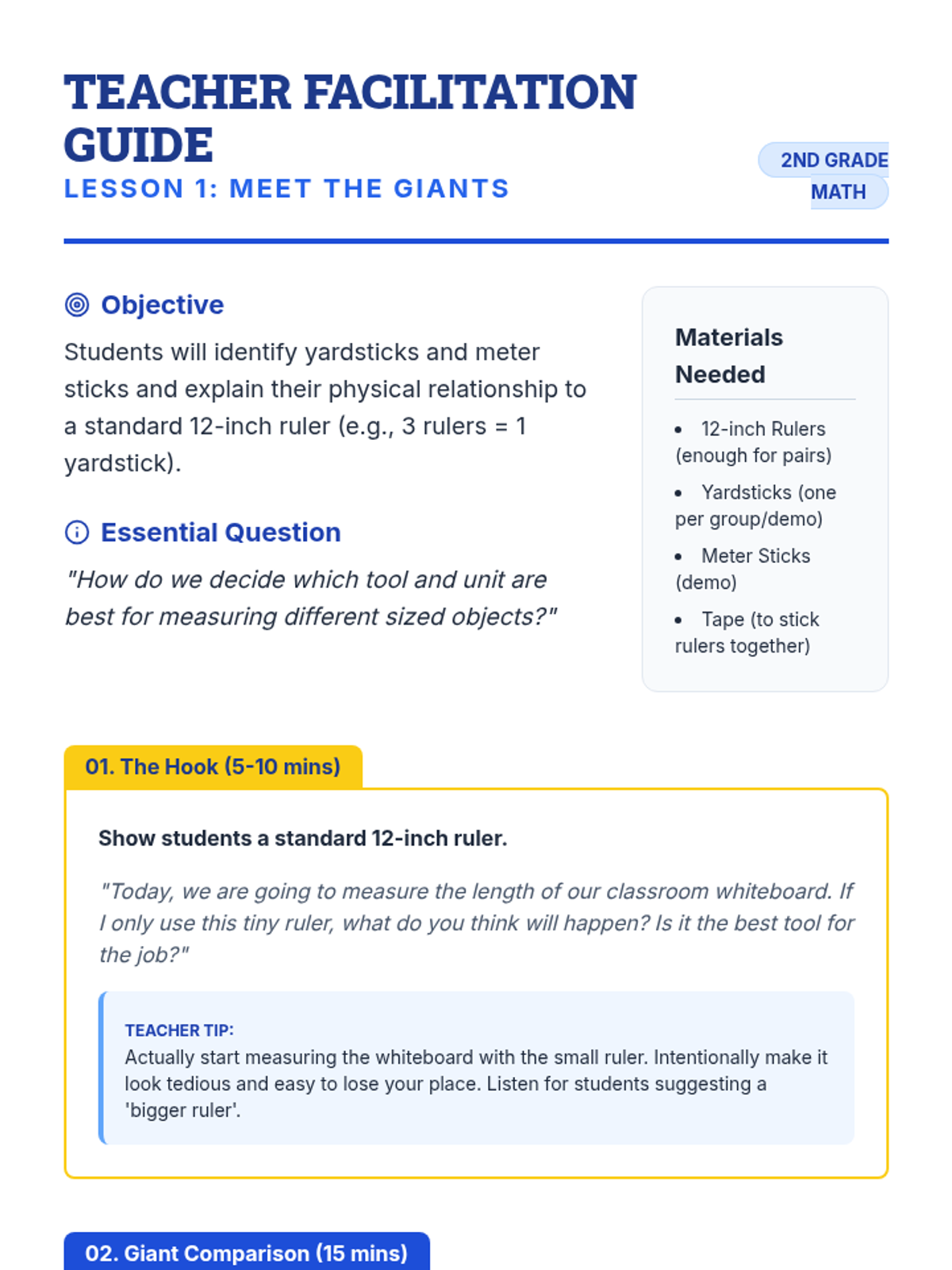
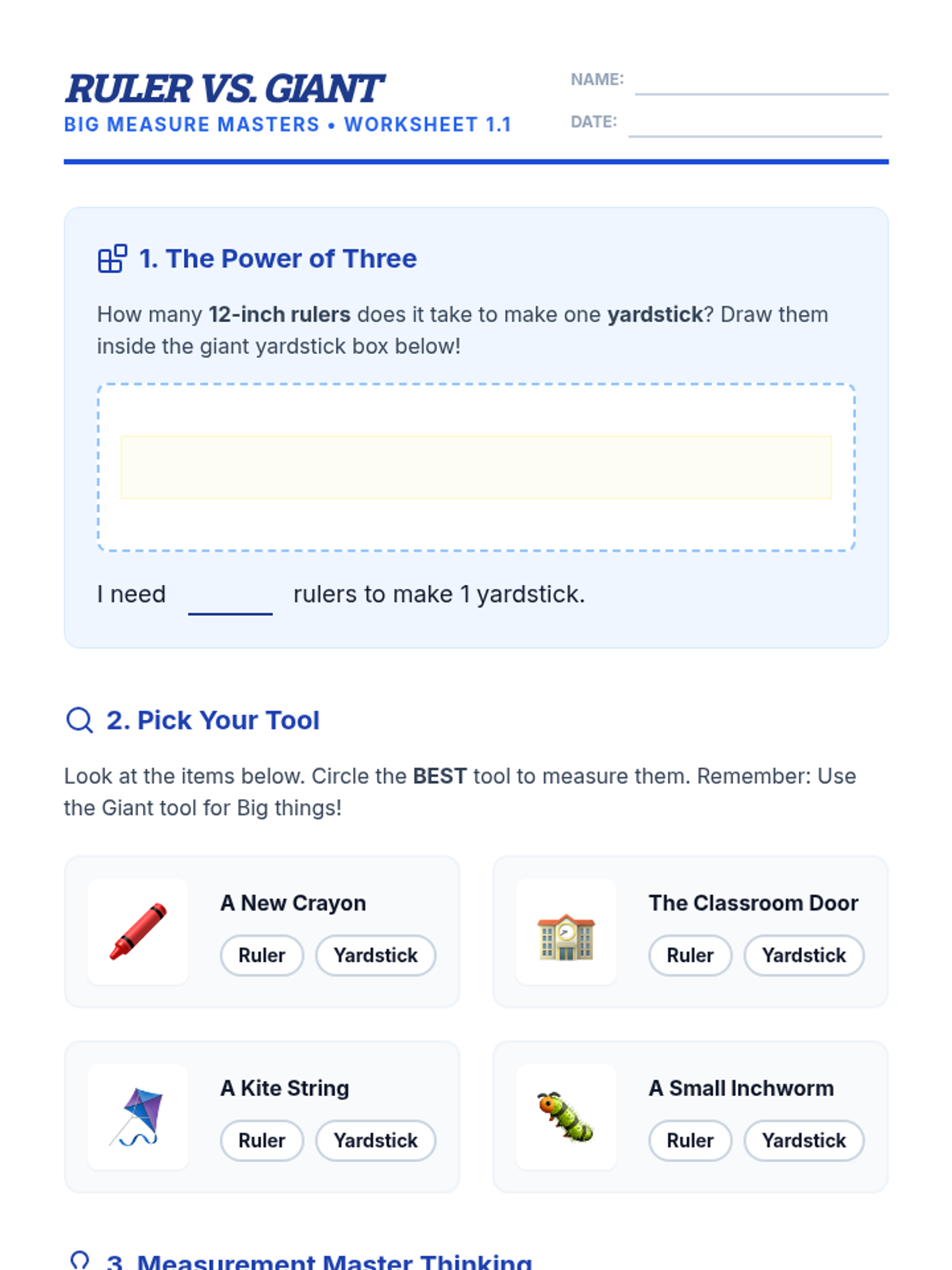
A 2nd-grade math unit focused on moving beyond the ruler to use yardsticks and meter sticks for large-scale measurements. Students learn to select appropriate tools, convert between feet and yards physically, and map their environment using standard units.
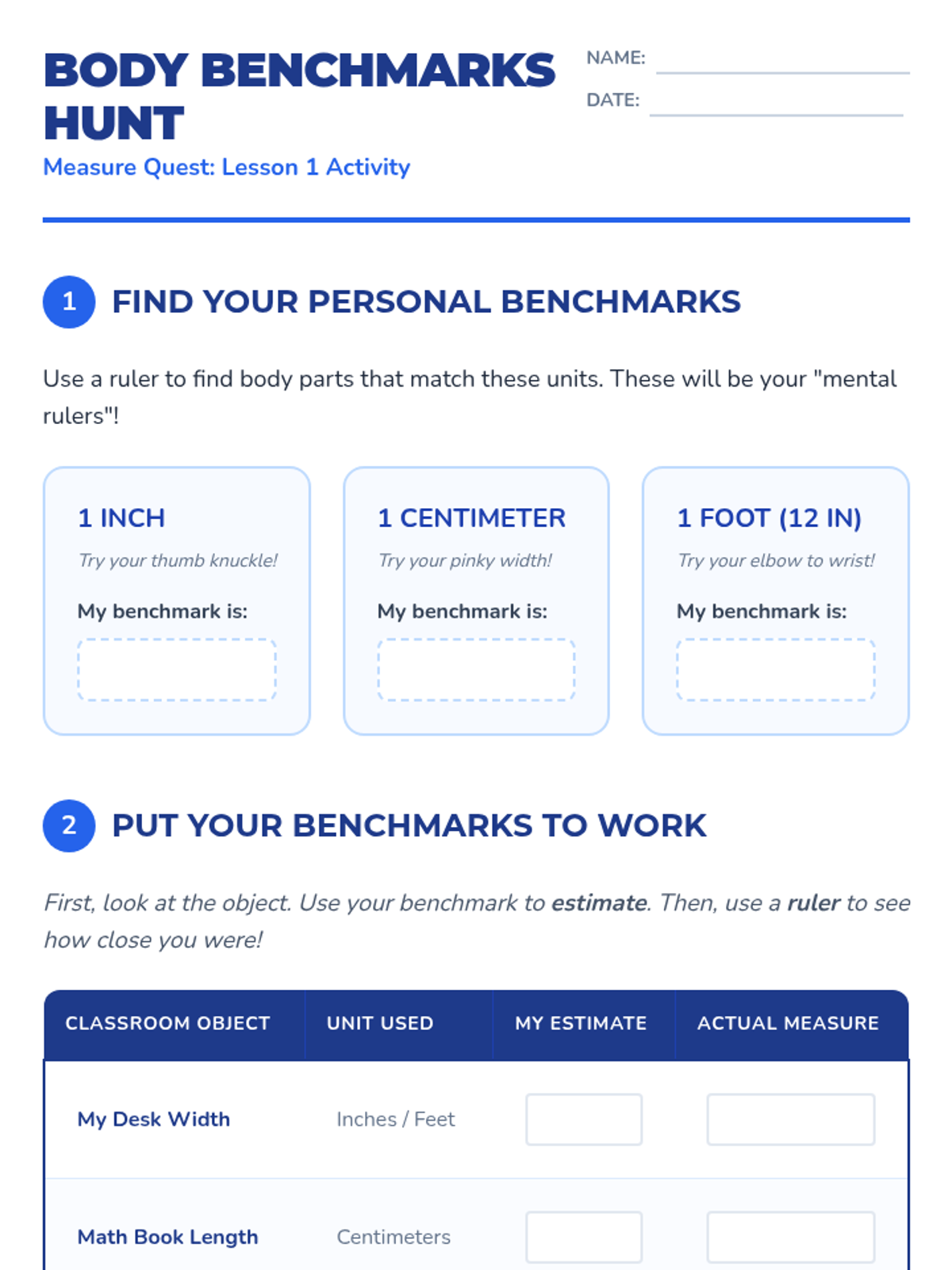
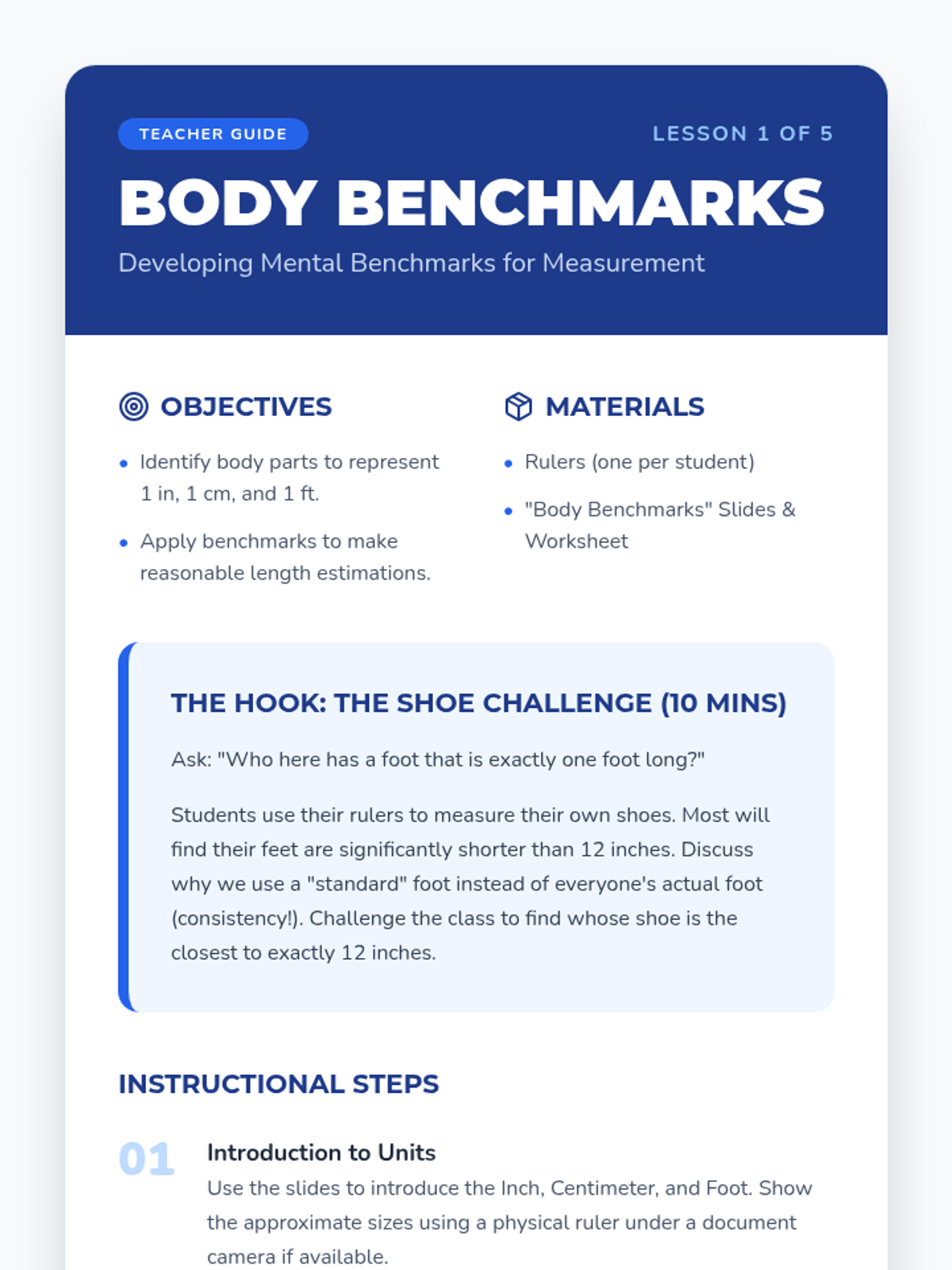
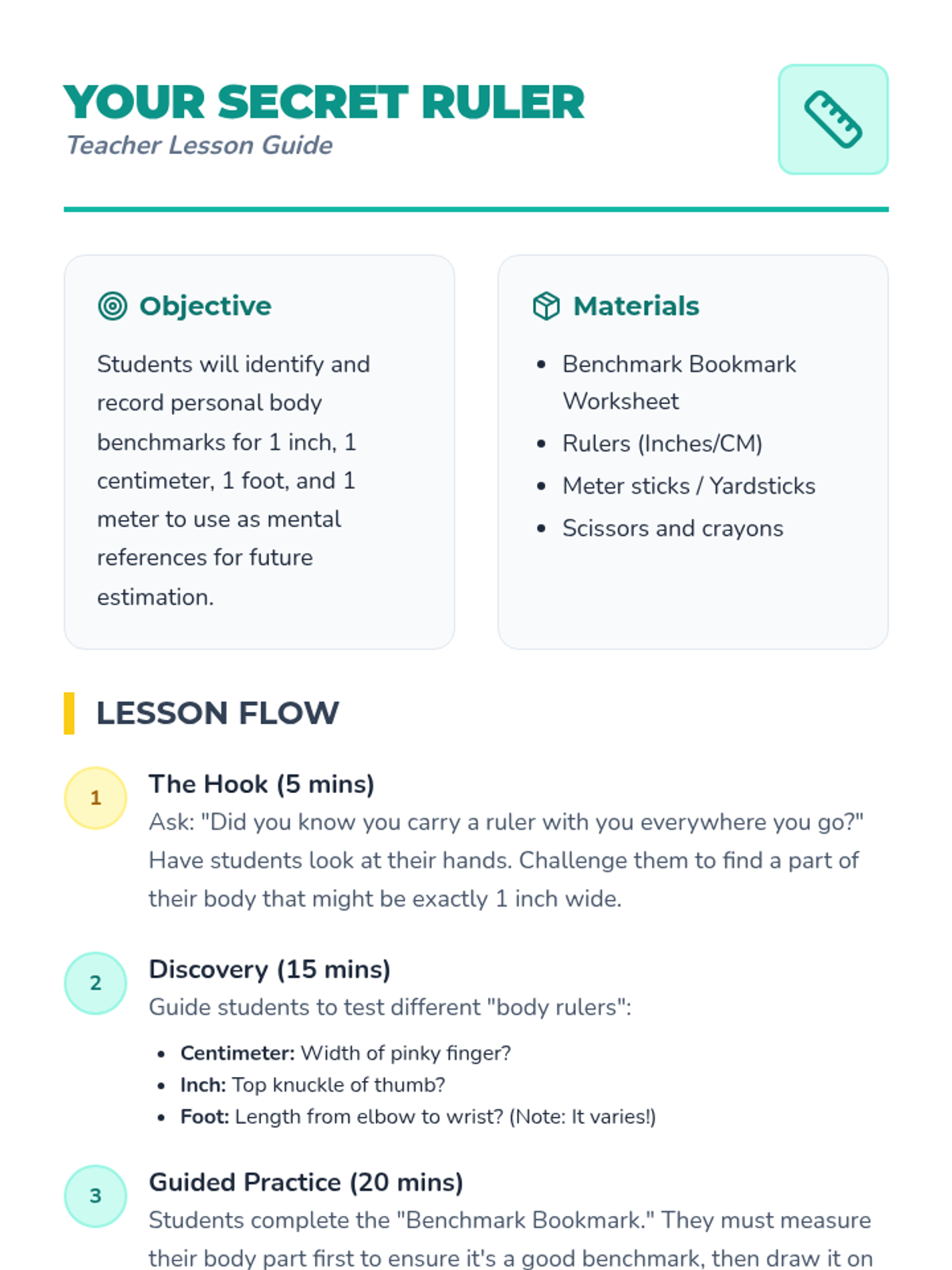
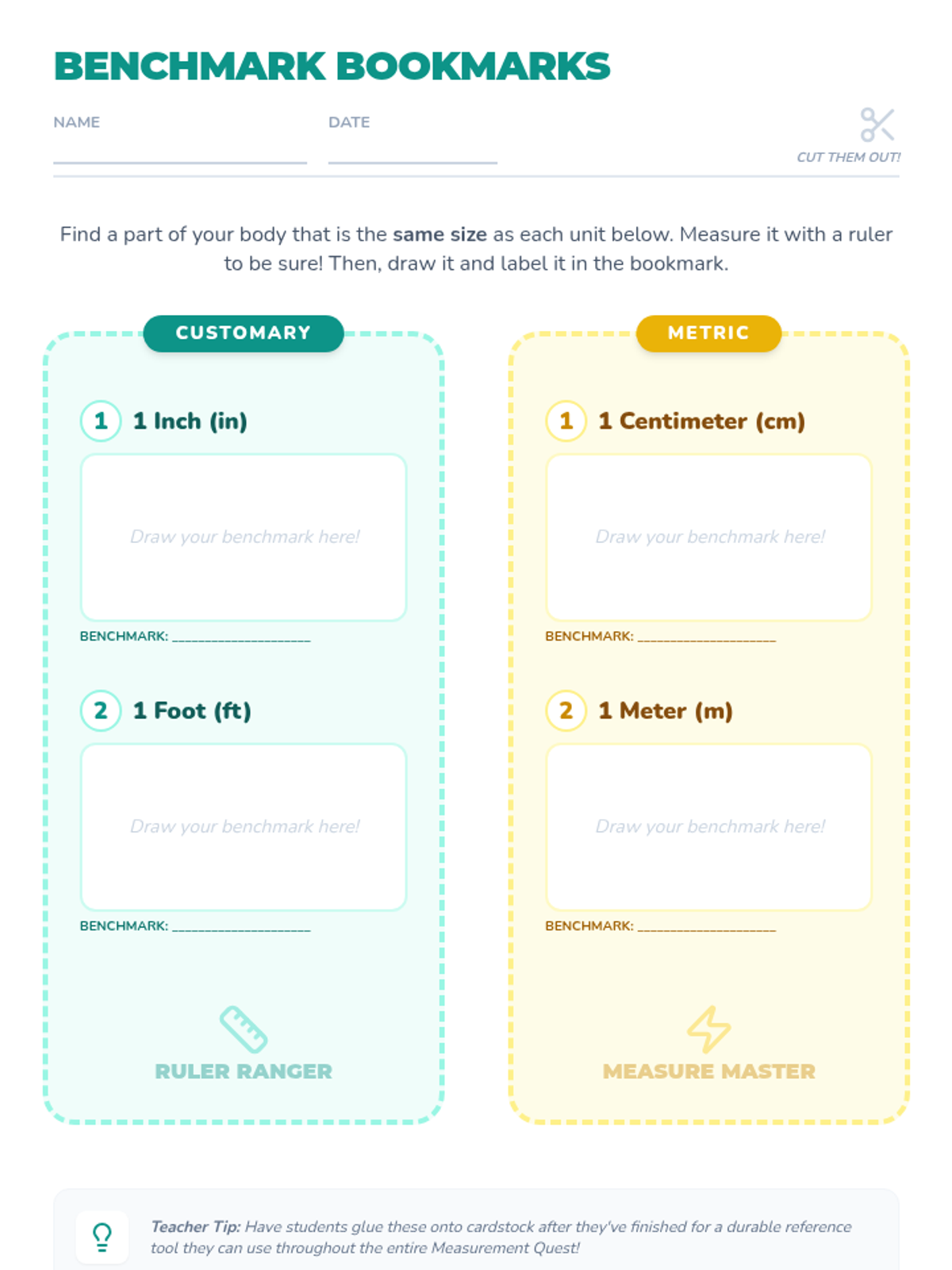
A 2nd-grade math unit focused on developing mental benchmarks for customary and metric units, moving from estimation to verification through hands-on measurement labs and a final carnival challenge.