Geometric classification, measurement of area and volume, and the study of transformations and rigid motions. Builds toward complex proofs, trigonometry for general triangles, and the algebraic representation of conic sections.
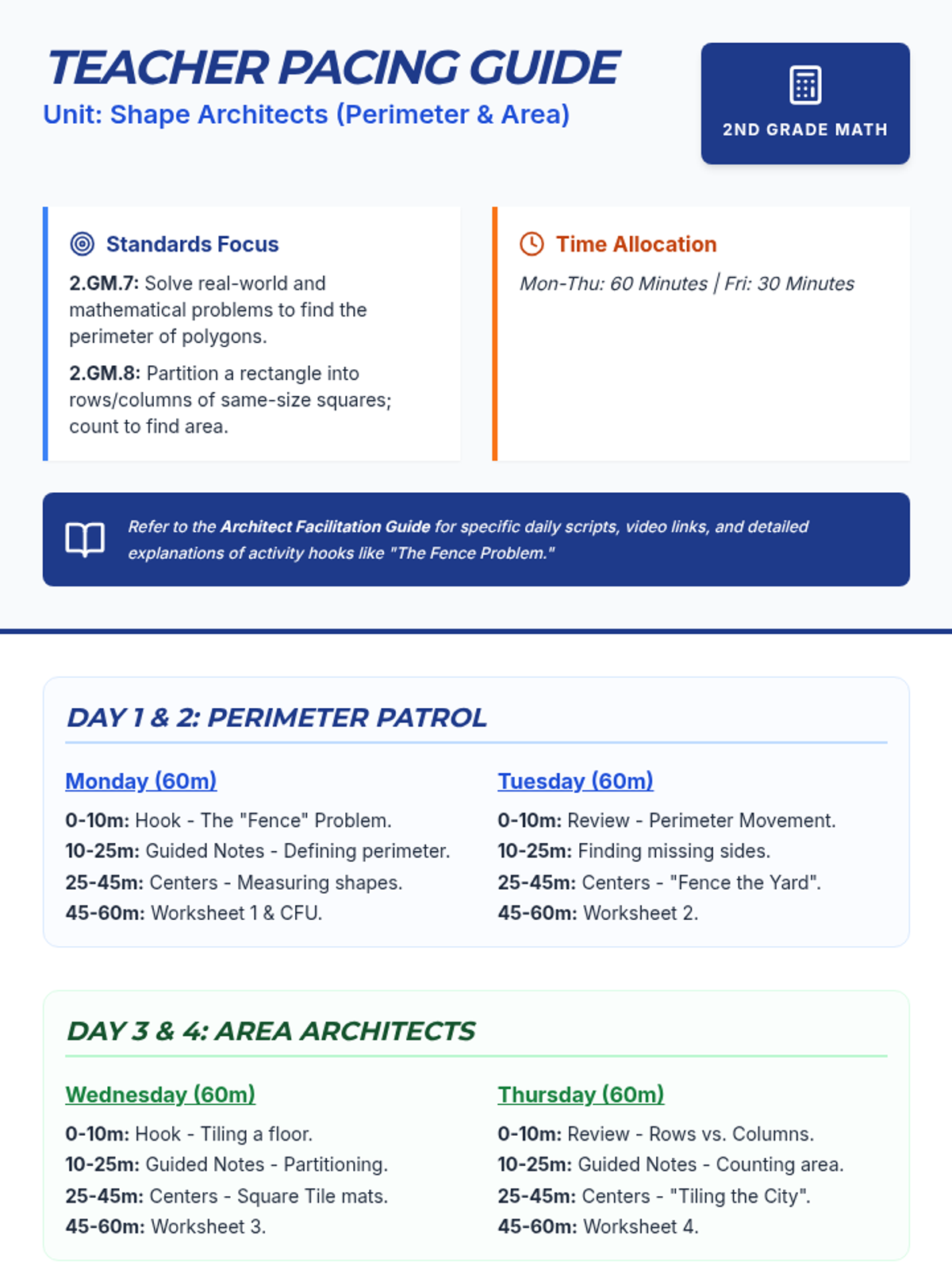
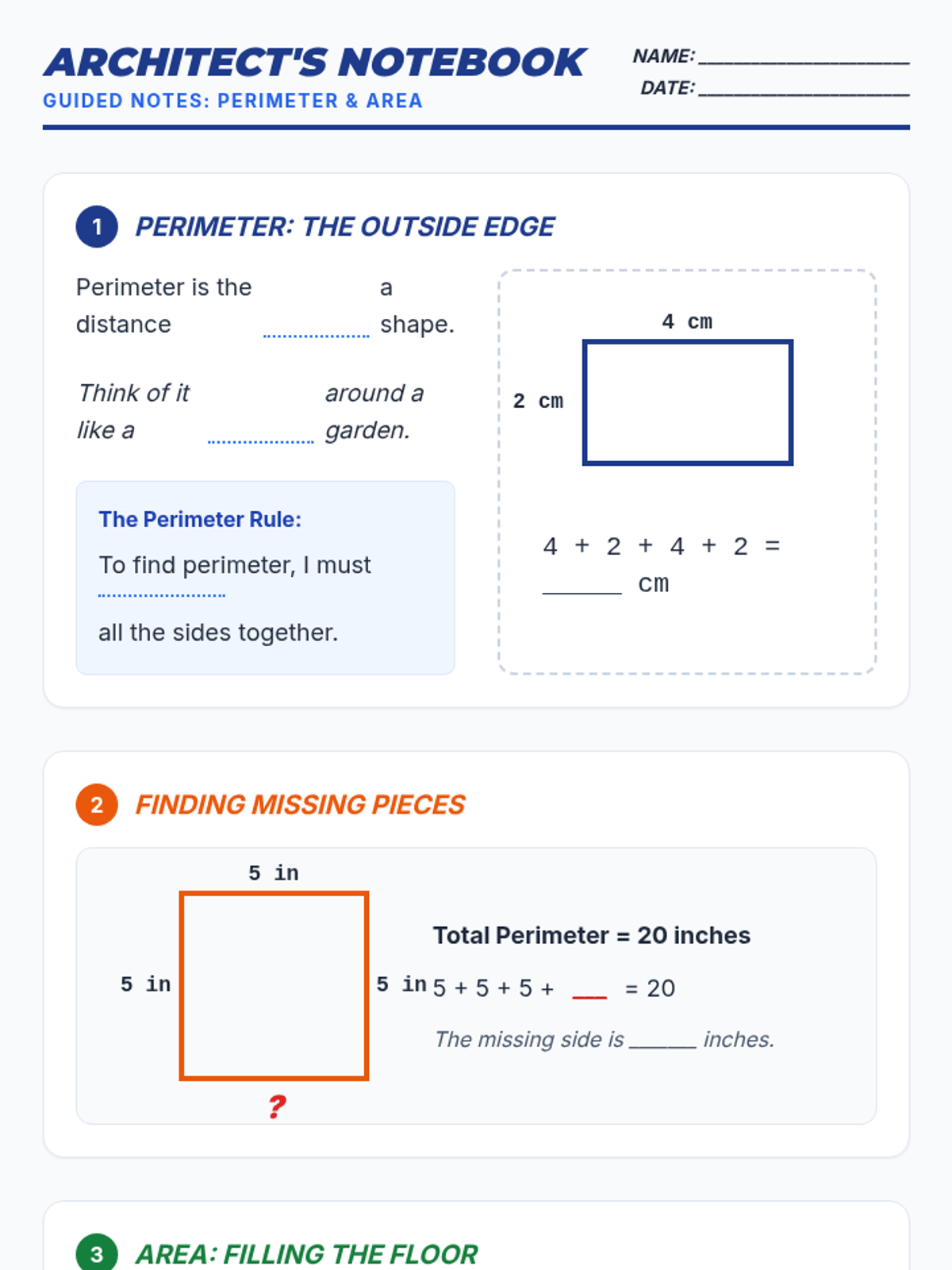
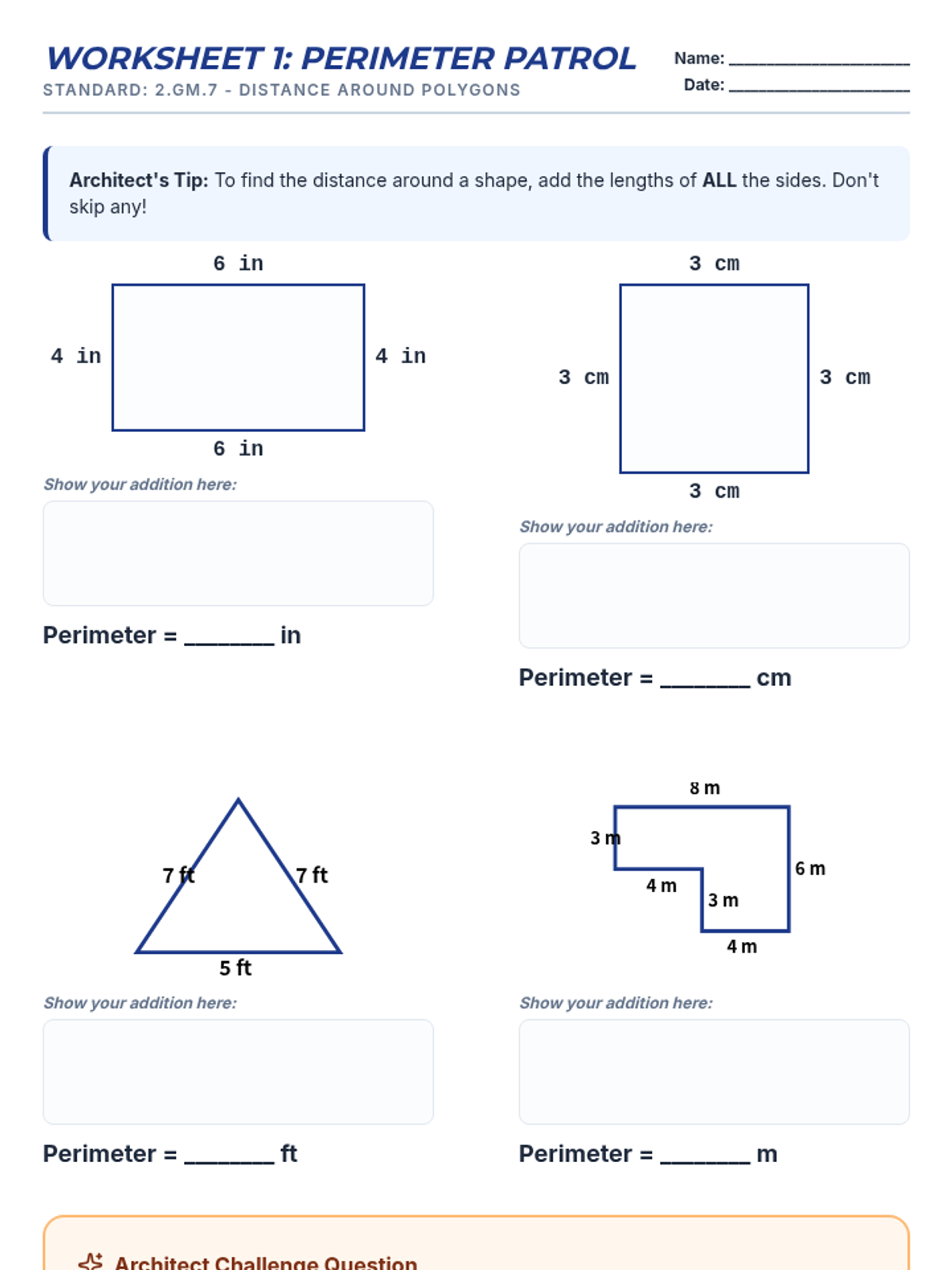
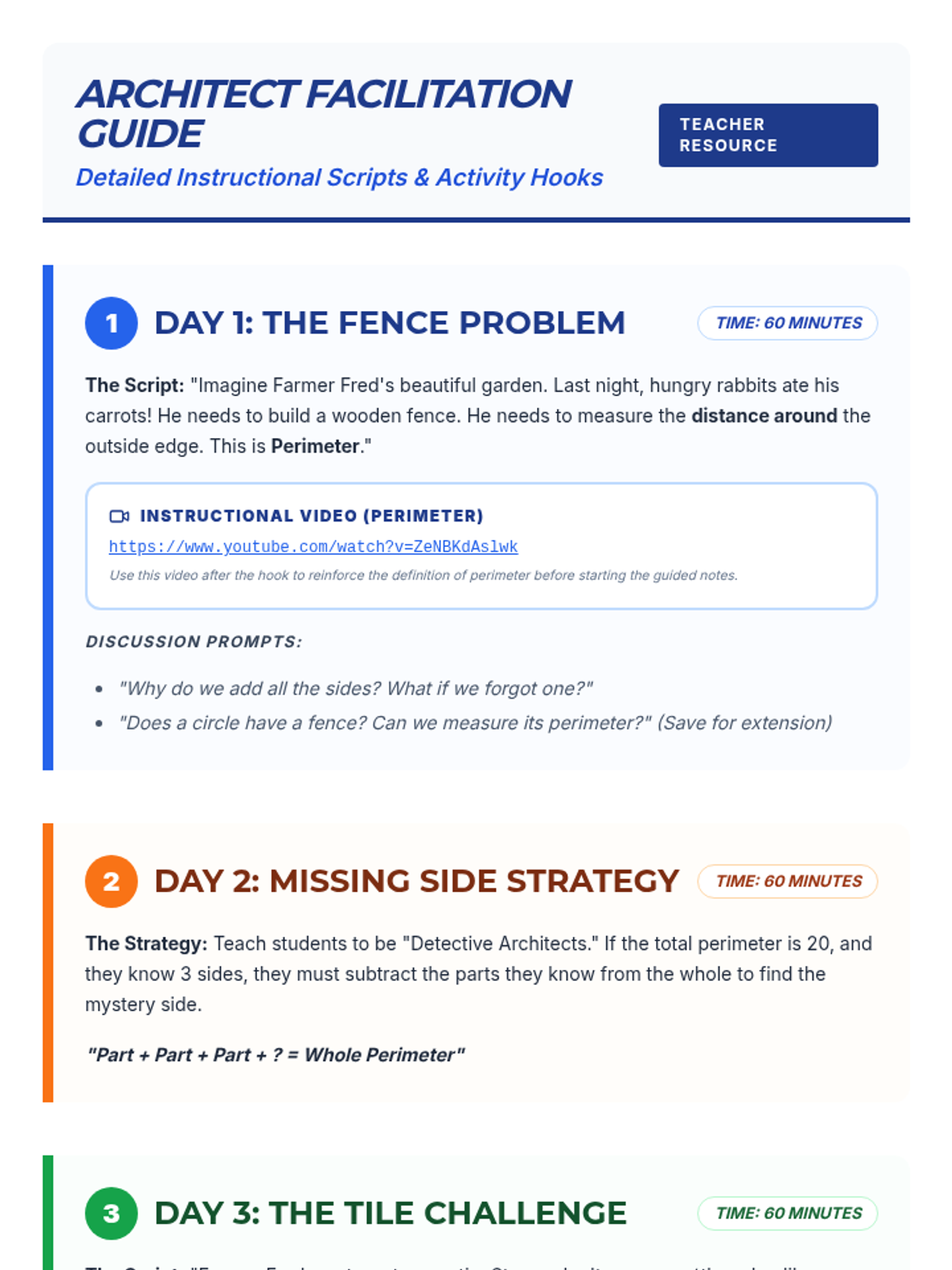
A week-long math unit for 2nd grade focusing on perimeter of polygons and partitioning rectangles to find area. Students act as 'Shape Architects' to design, measure, and calculate blueprints.
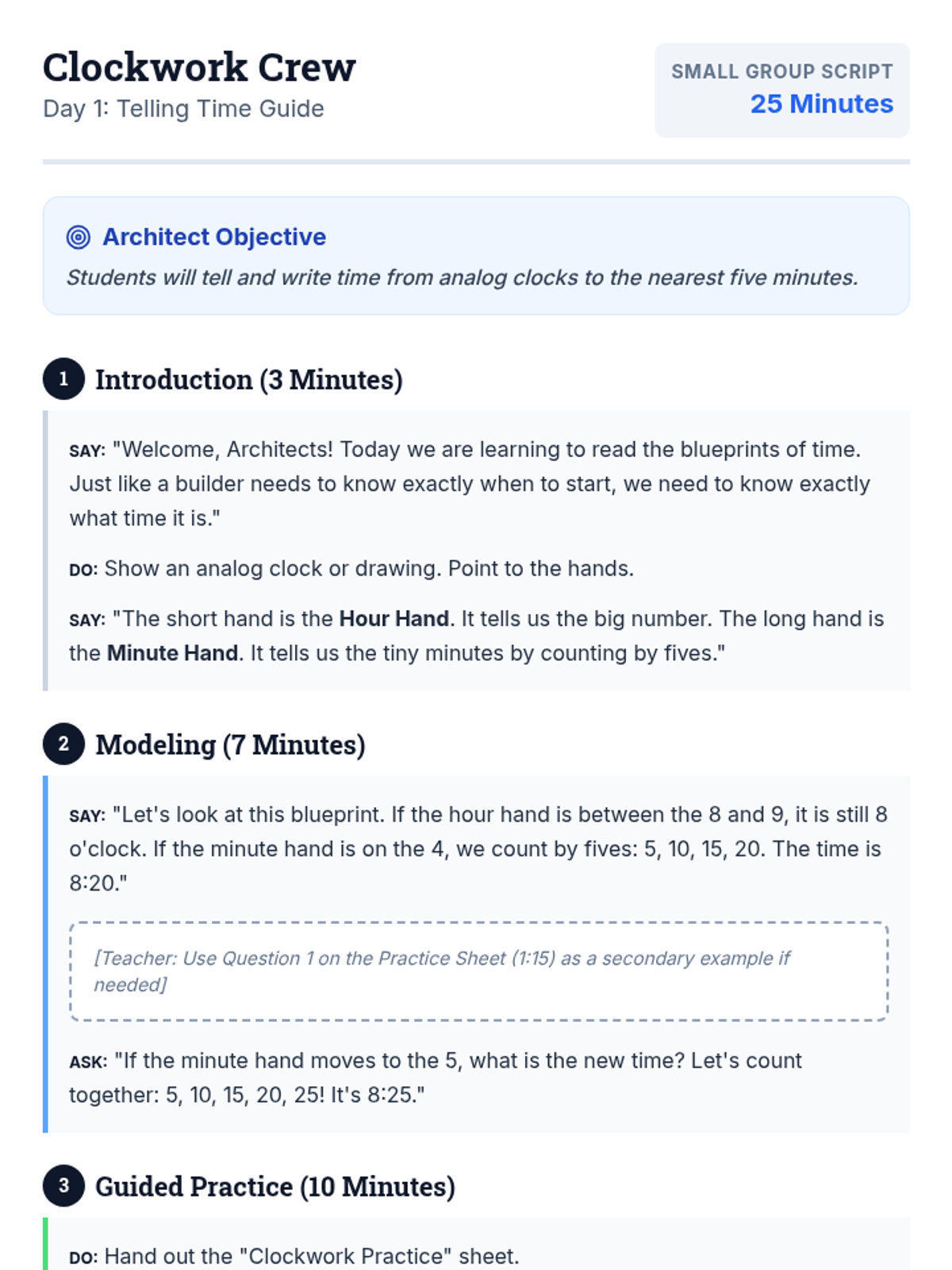
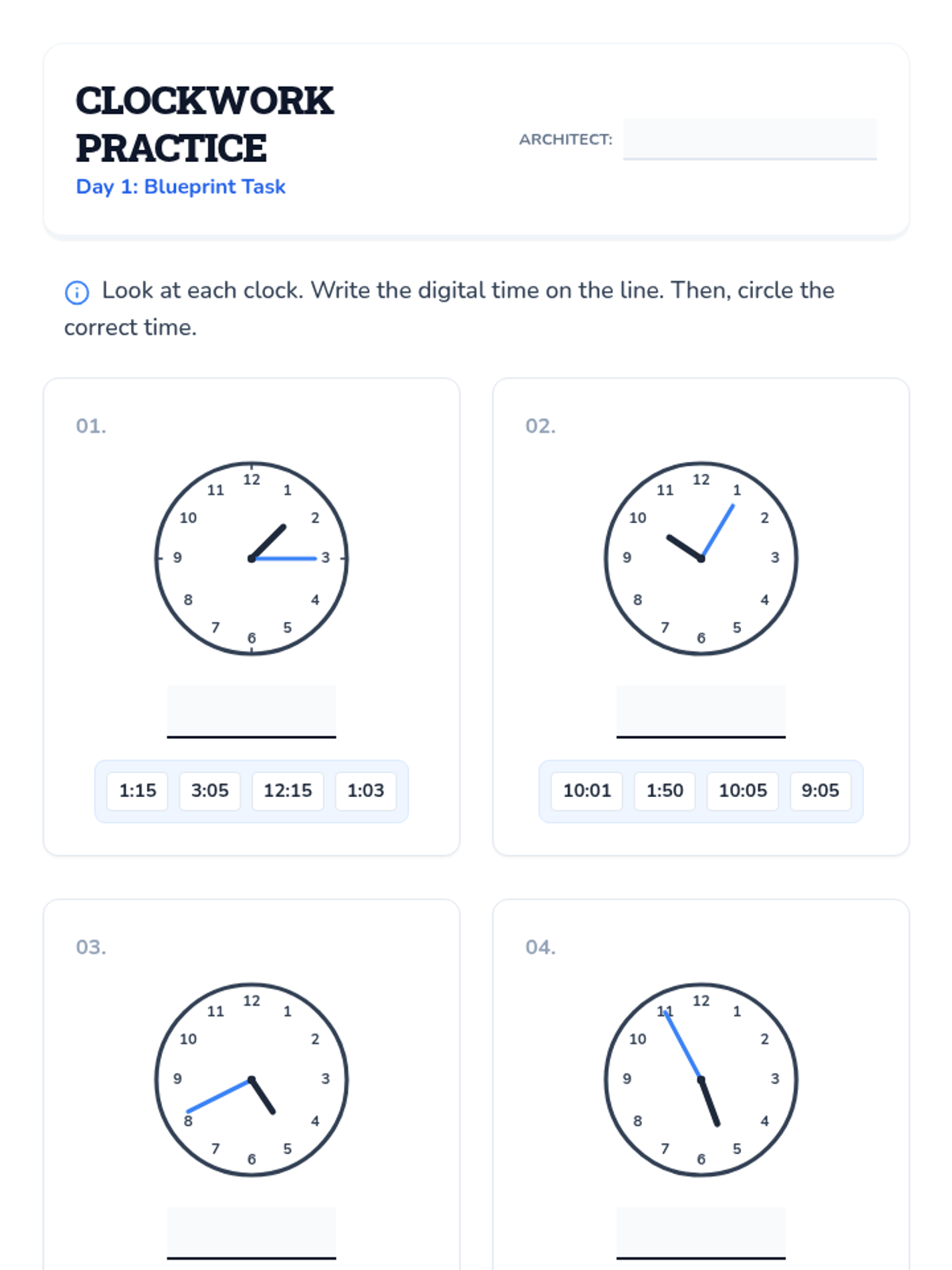
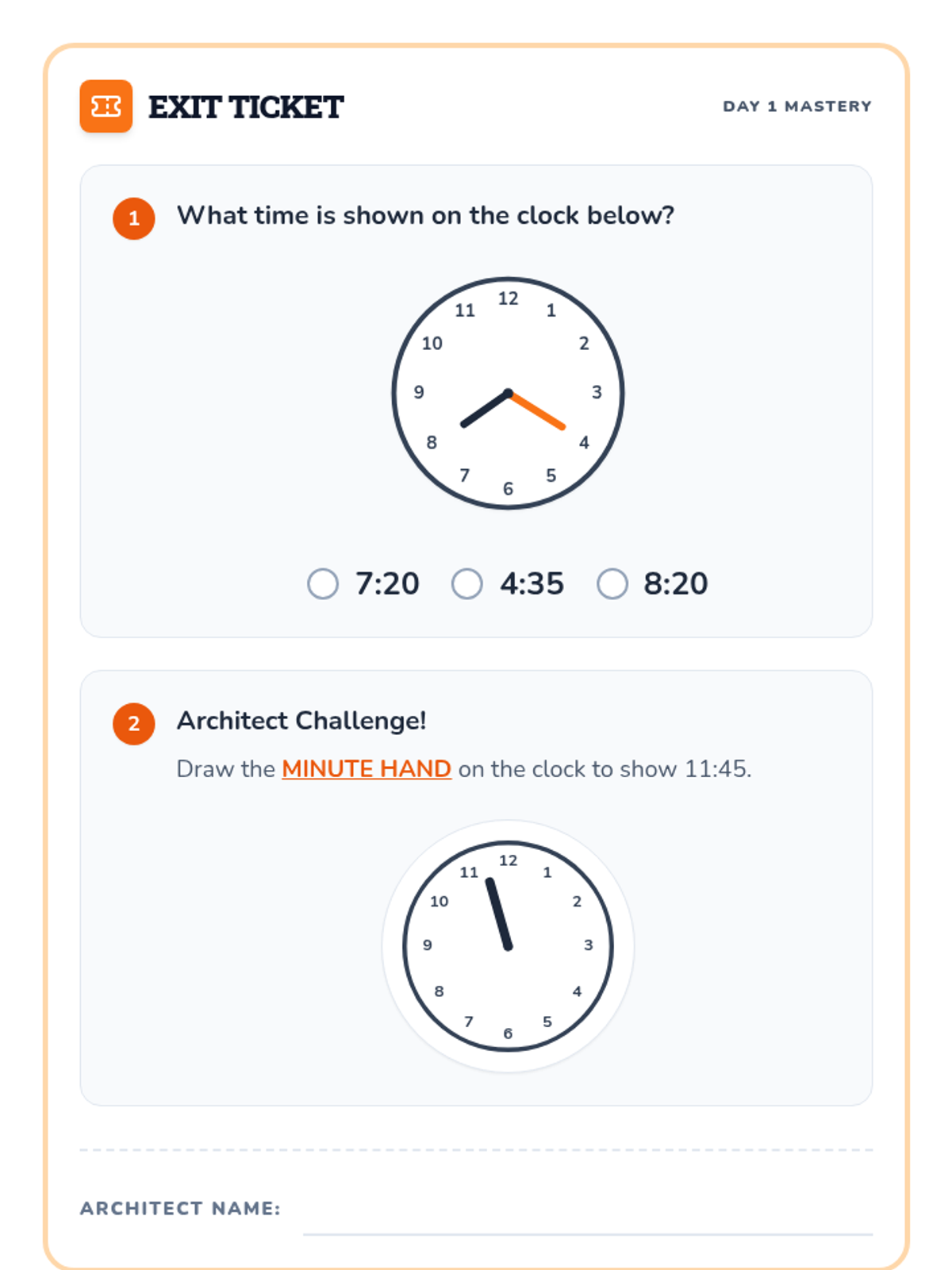
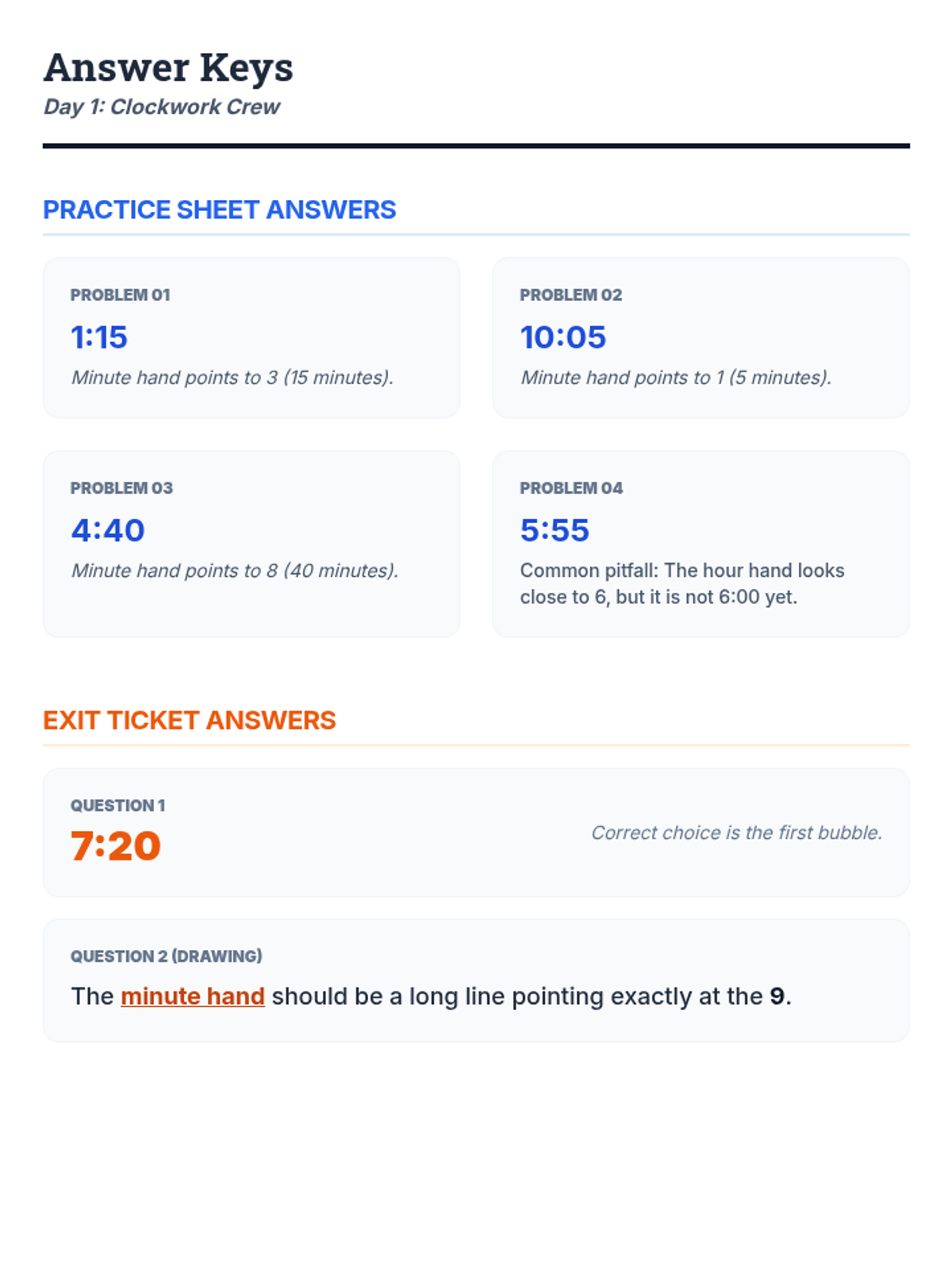
A 3-day small group sequence focused on Geometry and Measurement for NWEA RIT 171-180, covering time reading to the nearest 5 minutes and 2D/3D shape attributes.
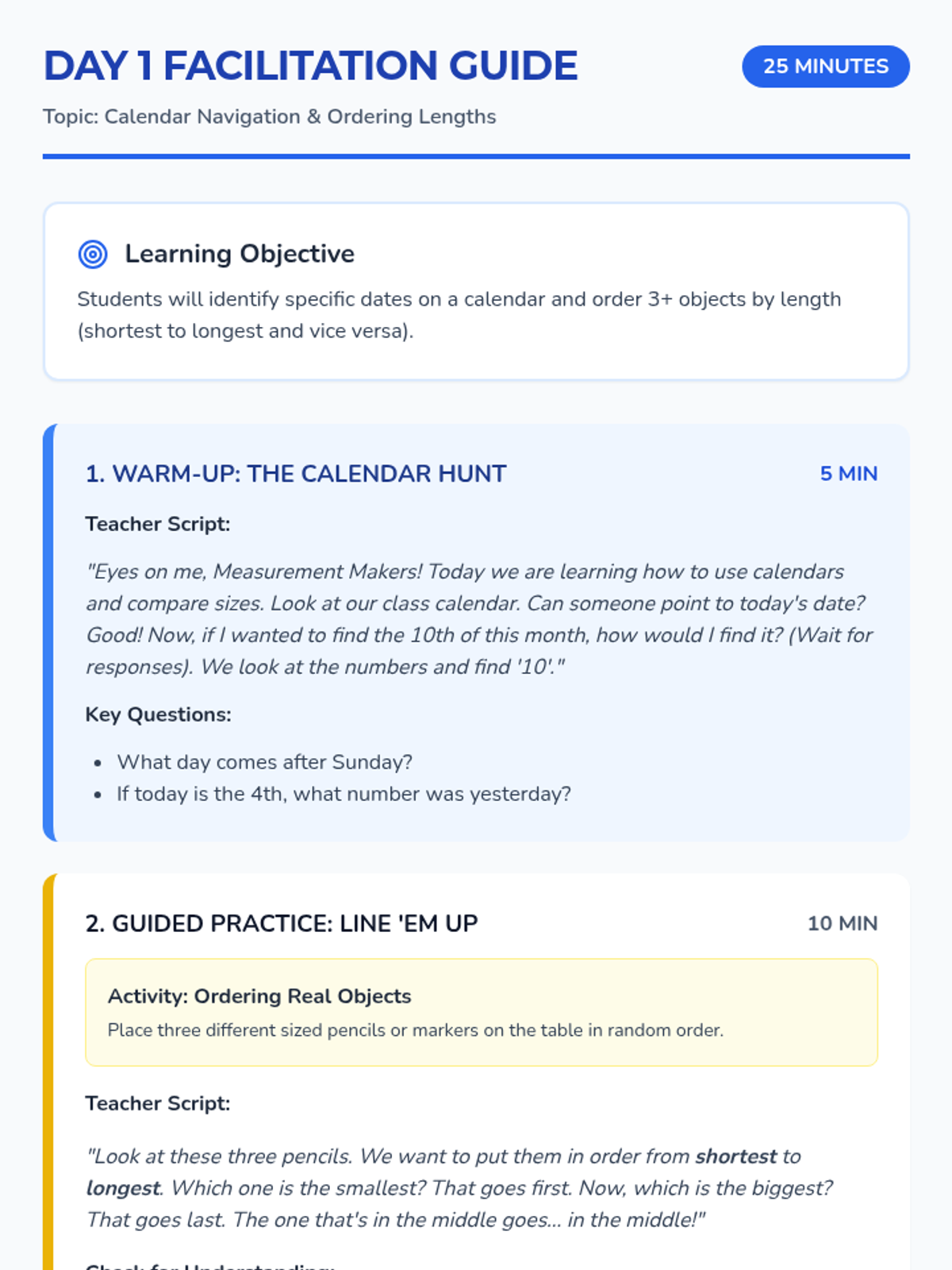
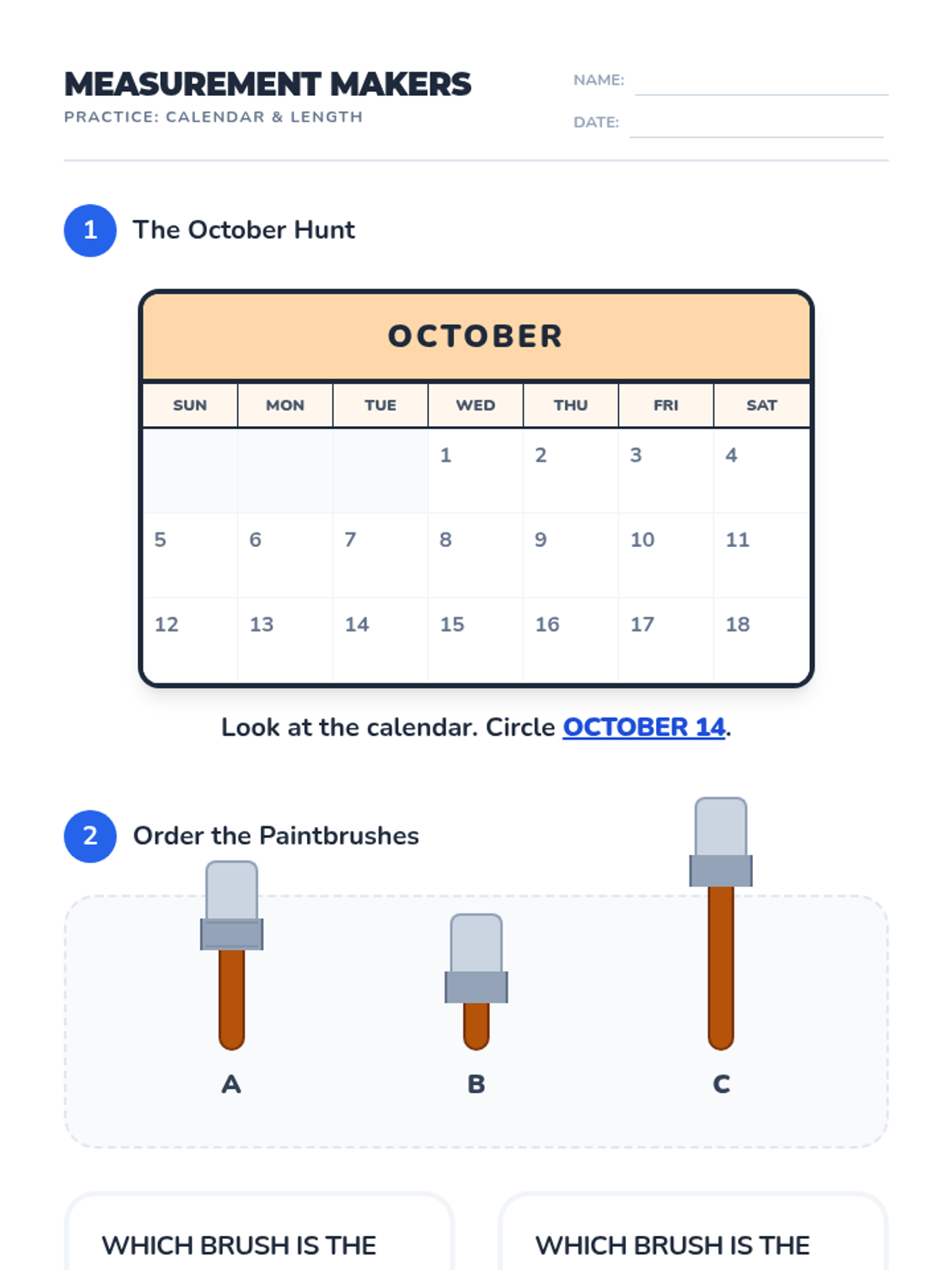
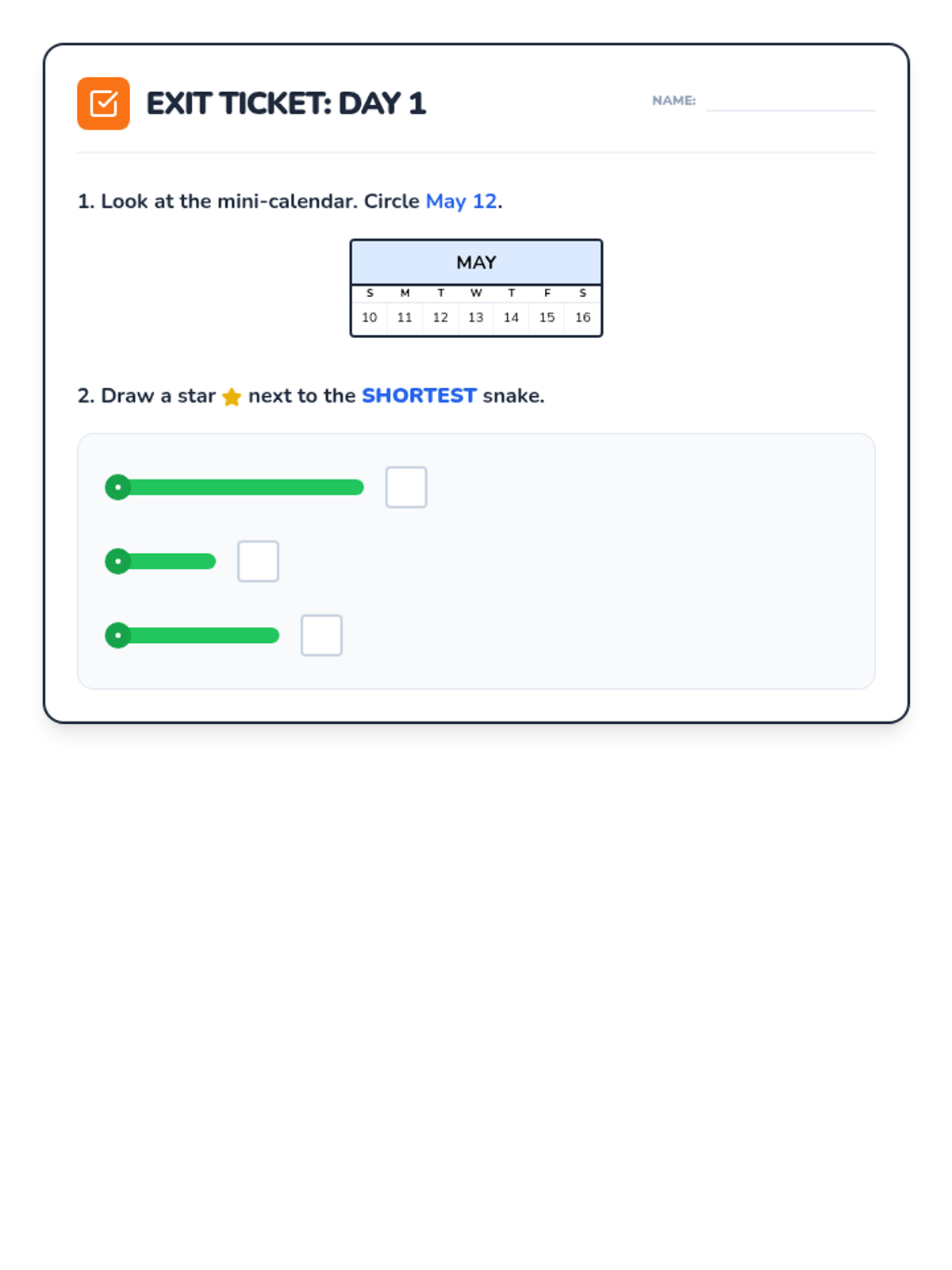
A 3-day small group math sequence designed to move students from NWEA RIT 140-150 to 150-160 in Geometry and Measurement. Focuses on calendar skills, time, length ordering, and 2D/3D shape identification.
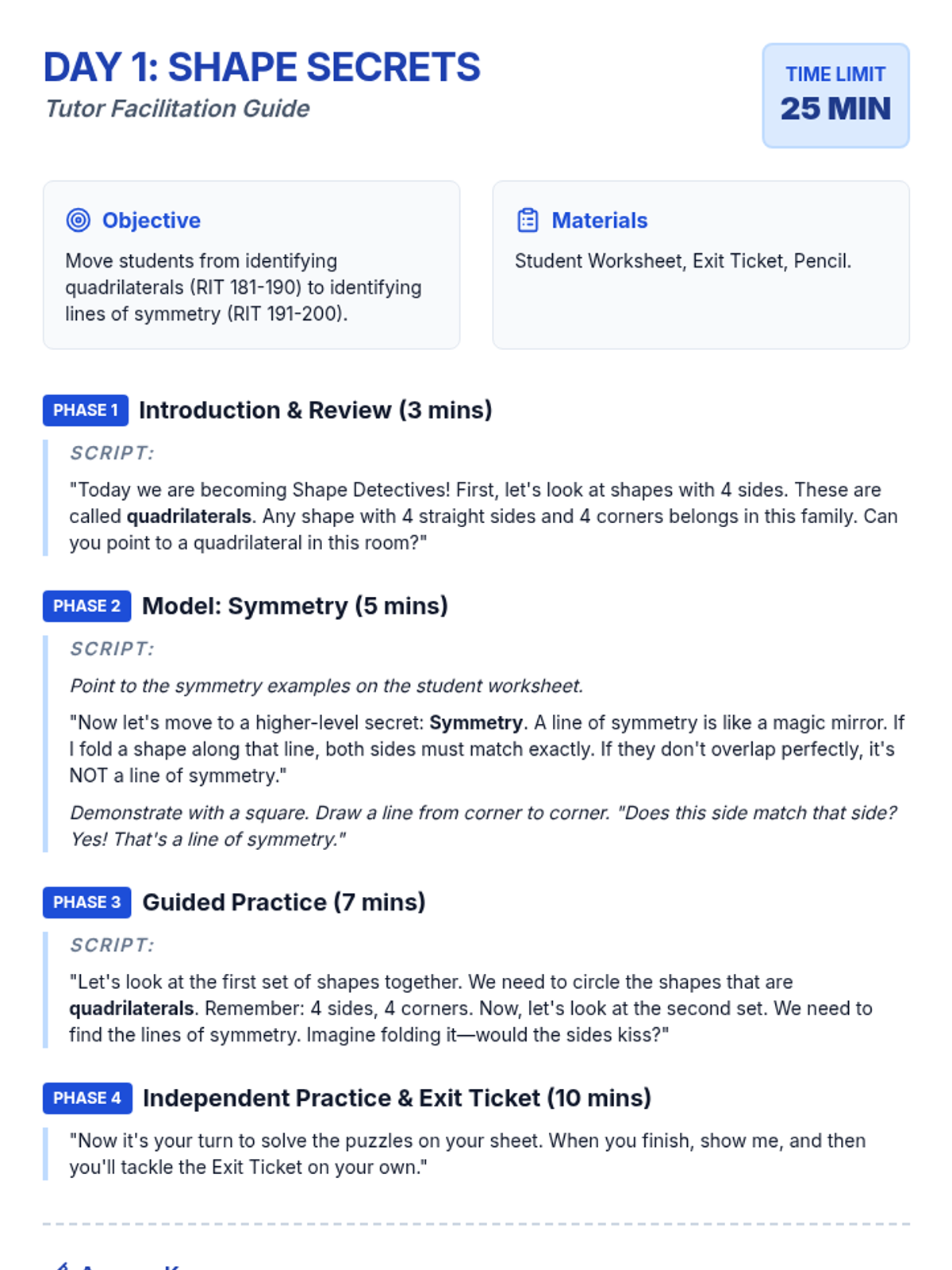
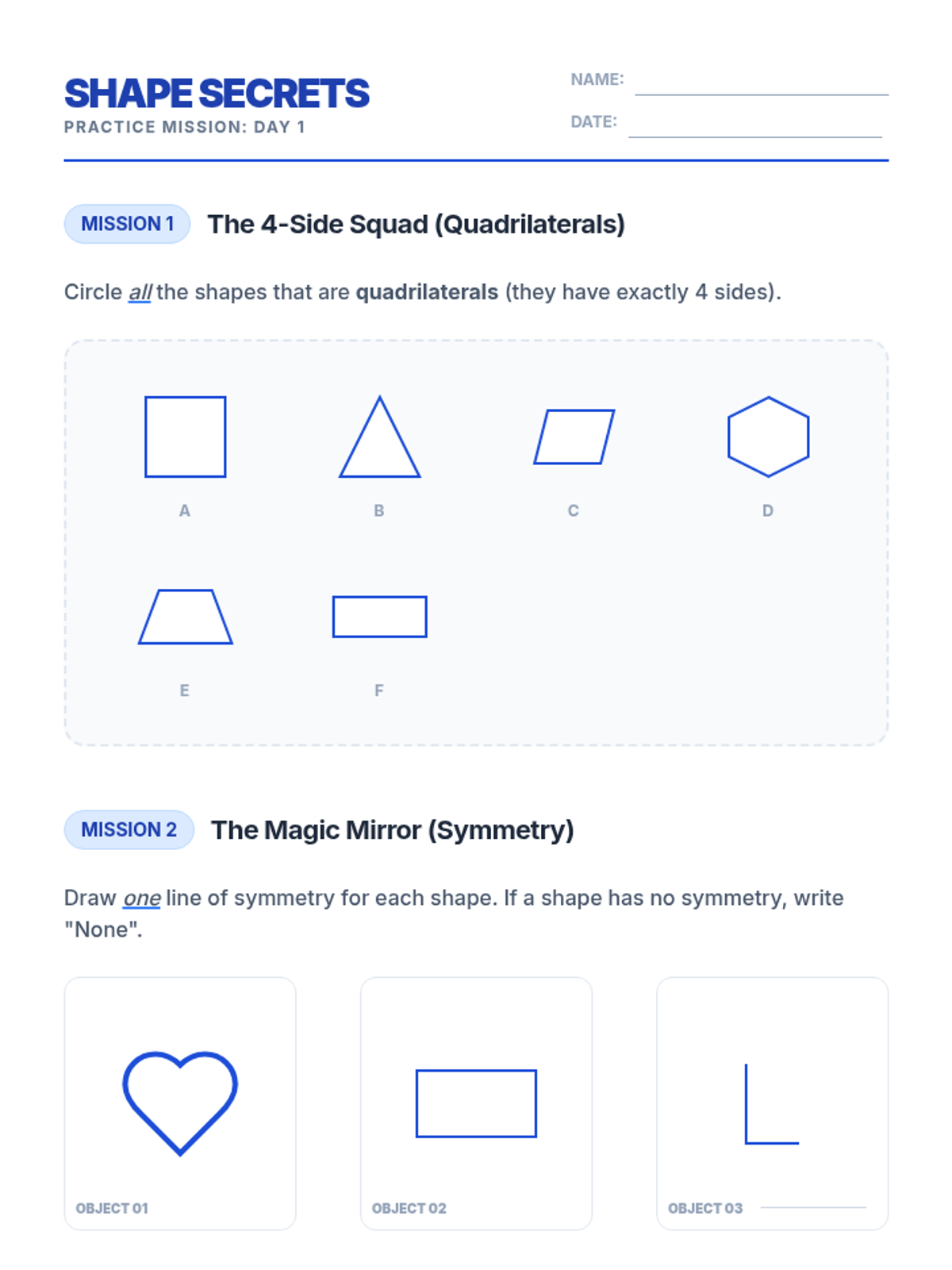
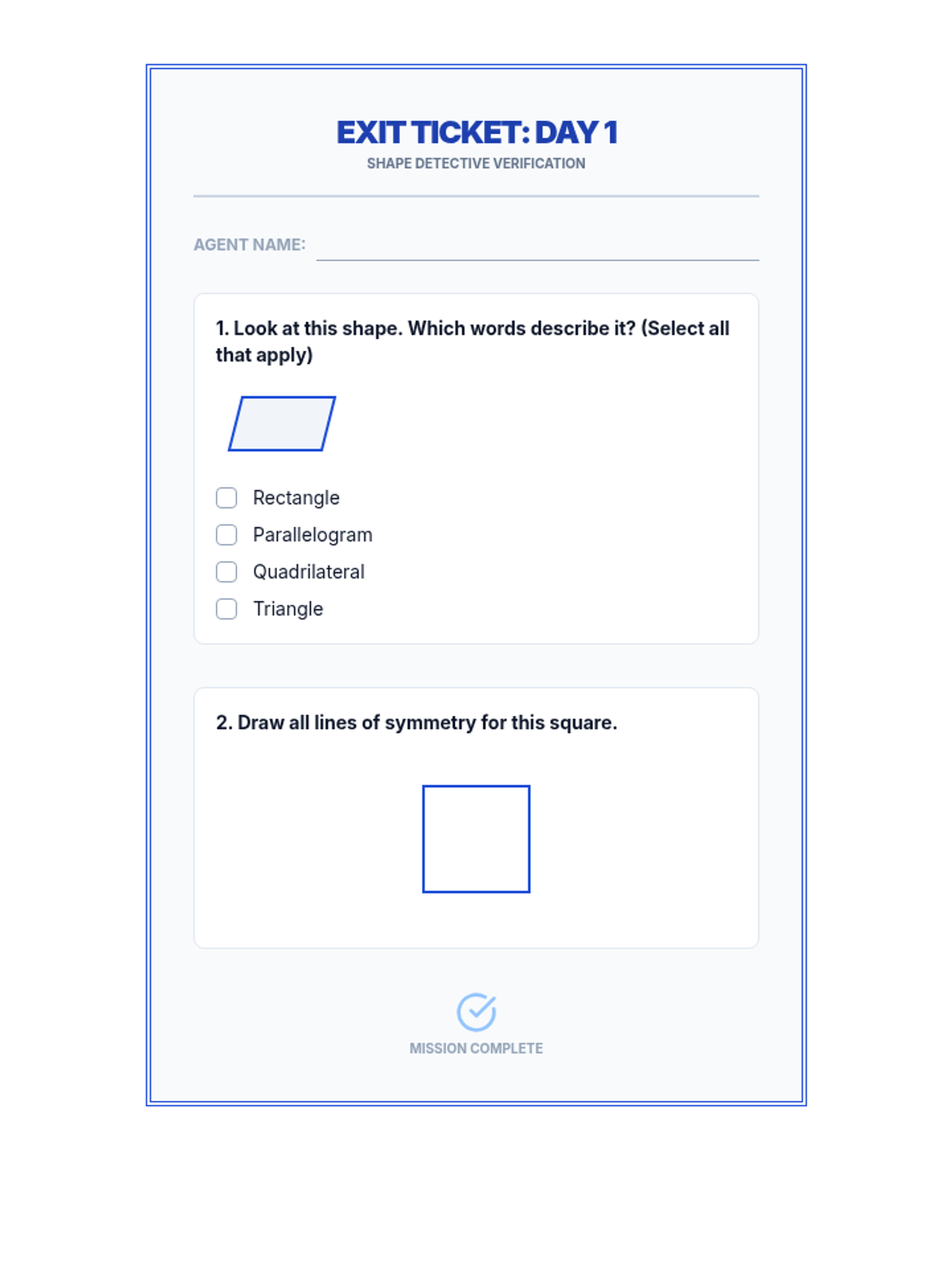
A 3-day targeted tutoring sequence designed to move students from RIT 181-190 to 191-200 in the MAP Growth Geometry and Measurement strand, focusing on shape attributes, symmetry, and perimeter.
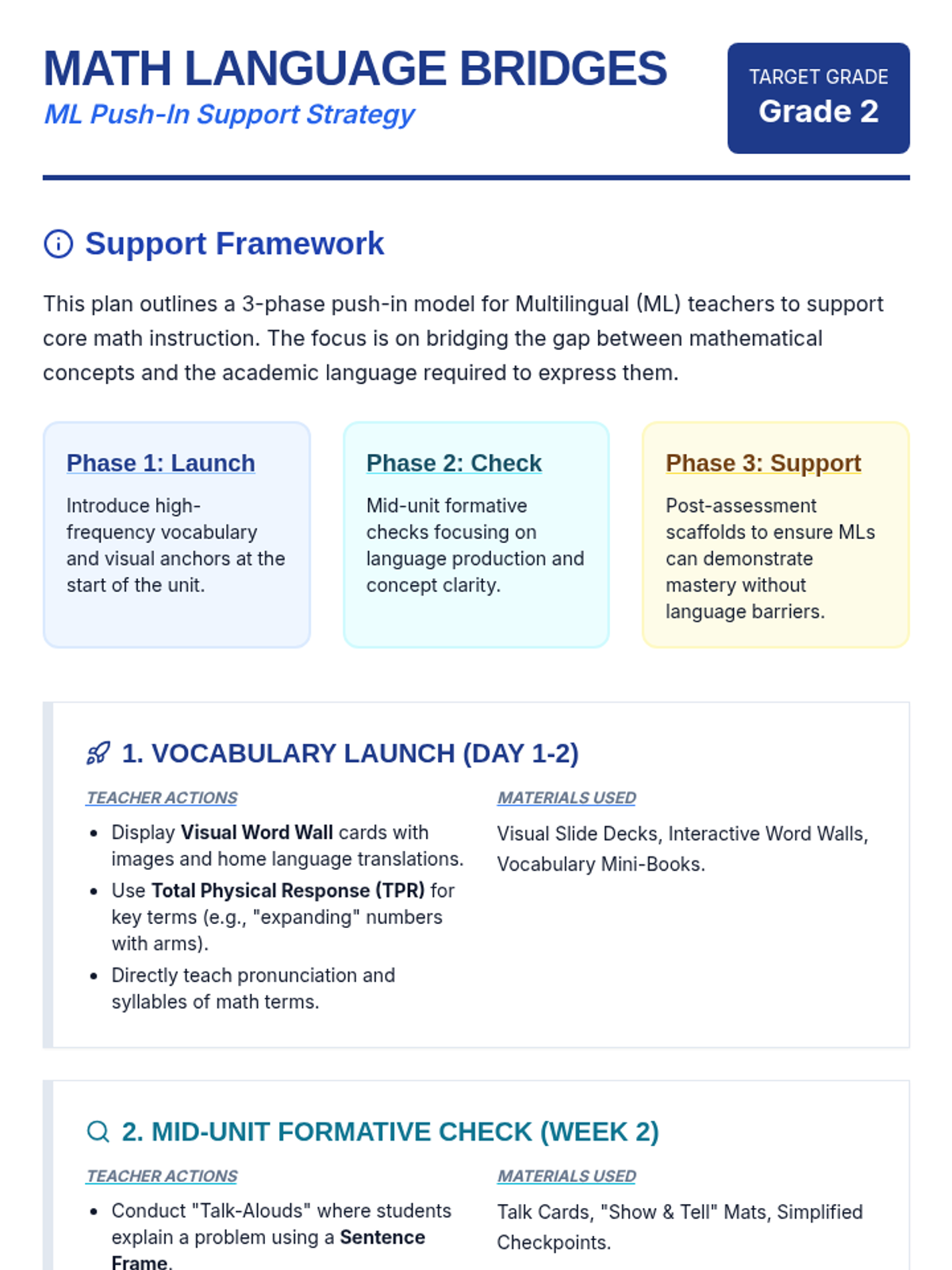
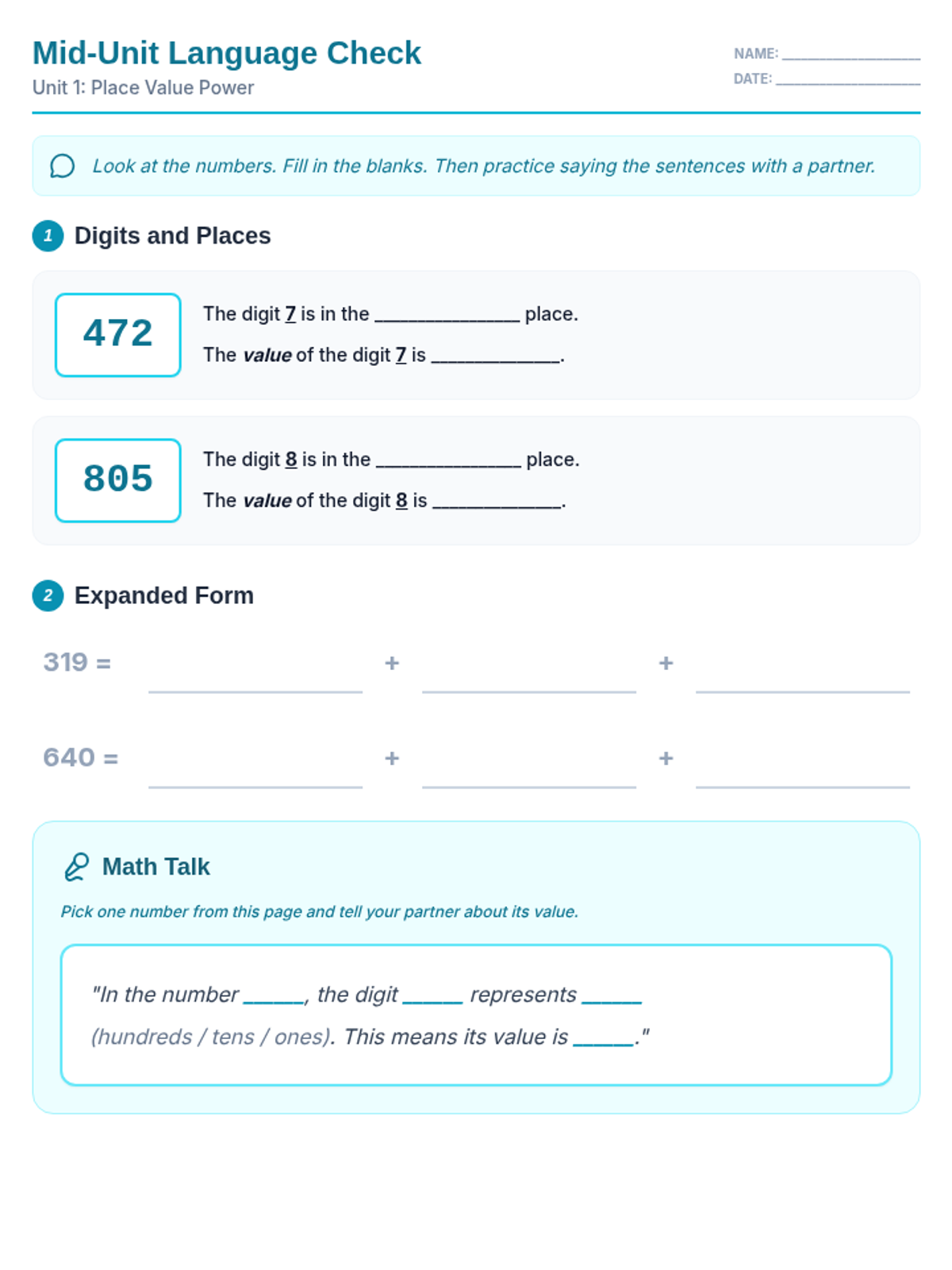
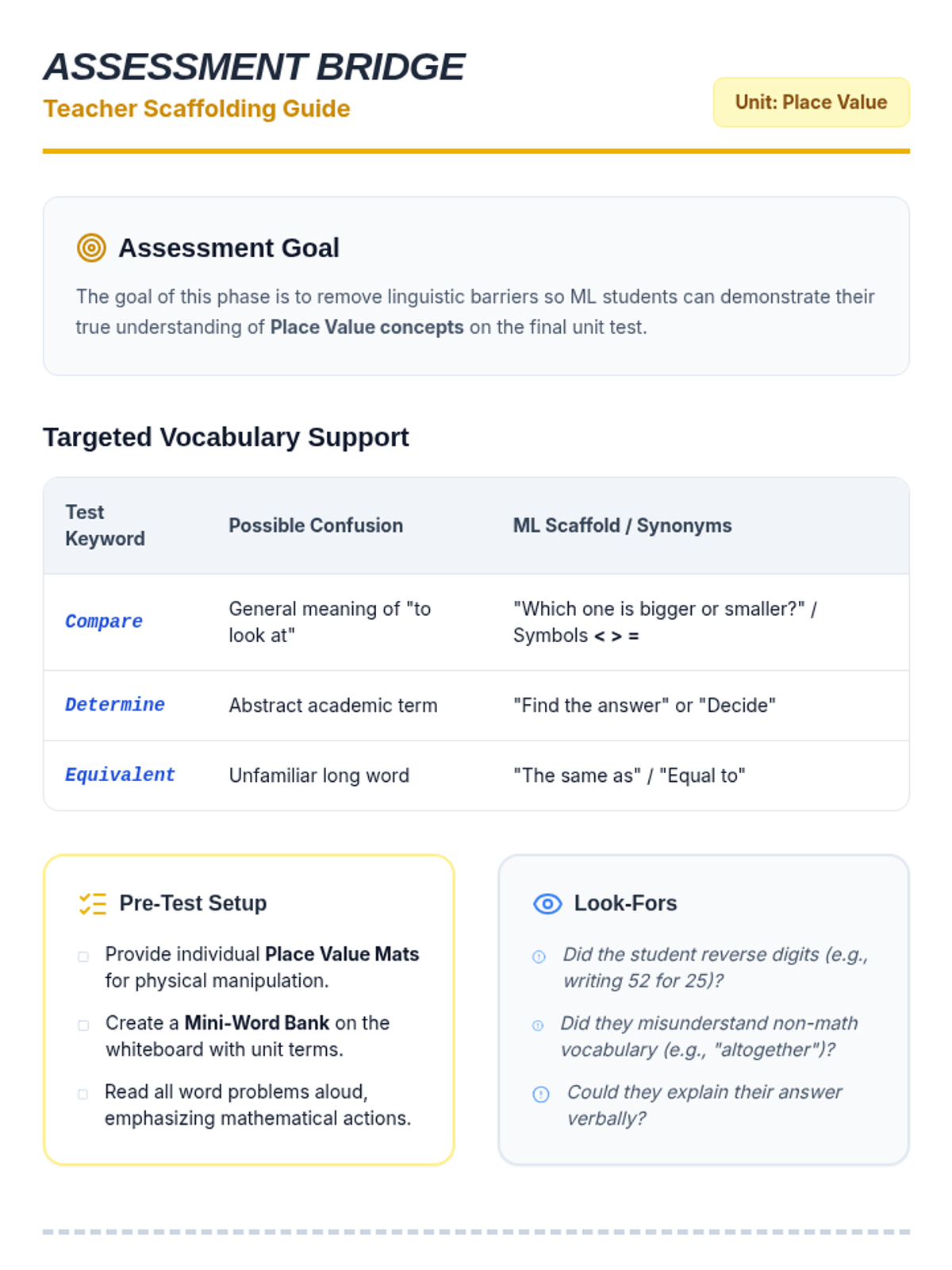
A strategic push-in plan for ML teachers to support 2nd grade math units through targeted vocabulary instruction, formative checks, and assessment support.
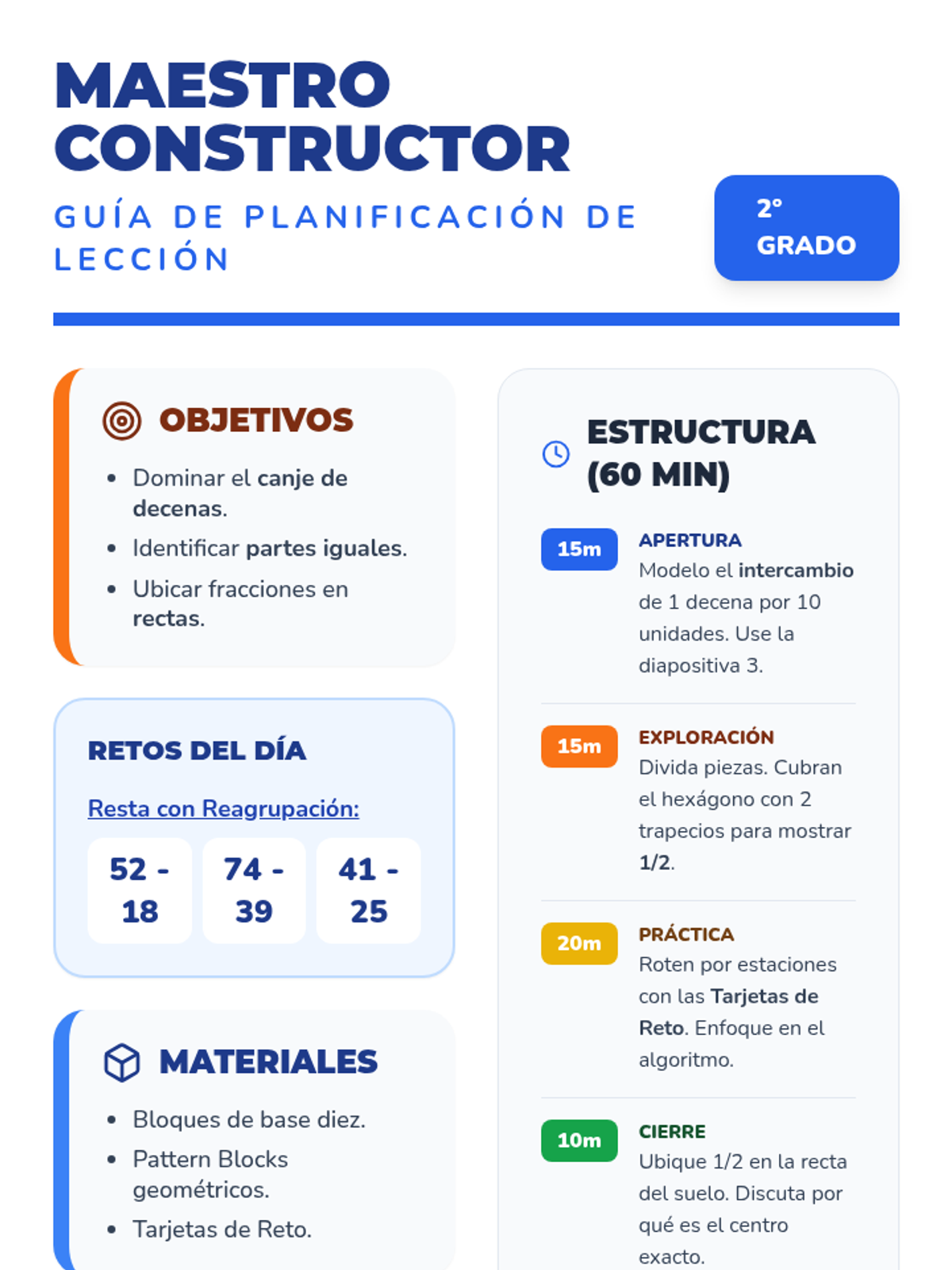
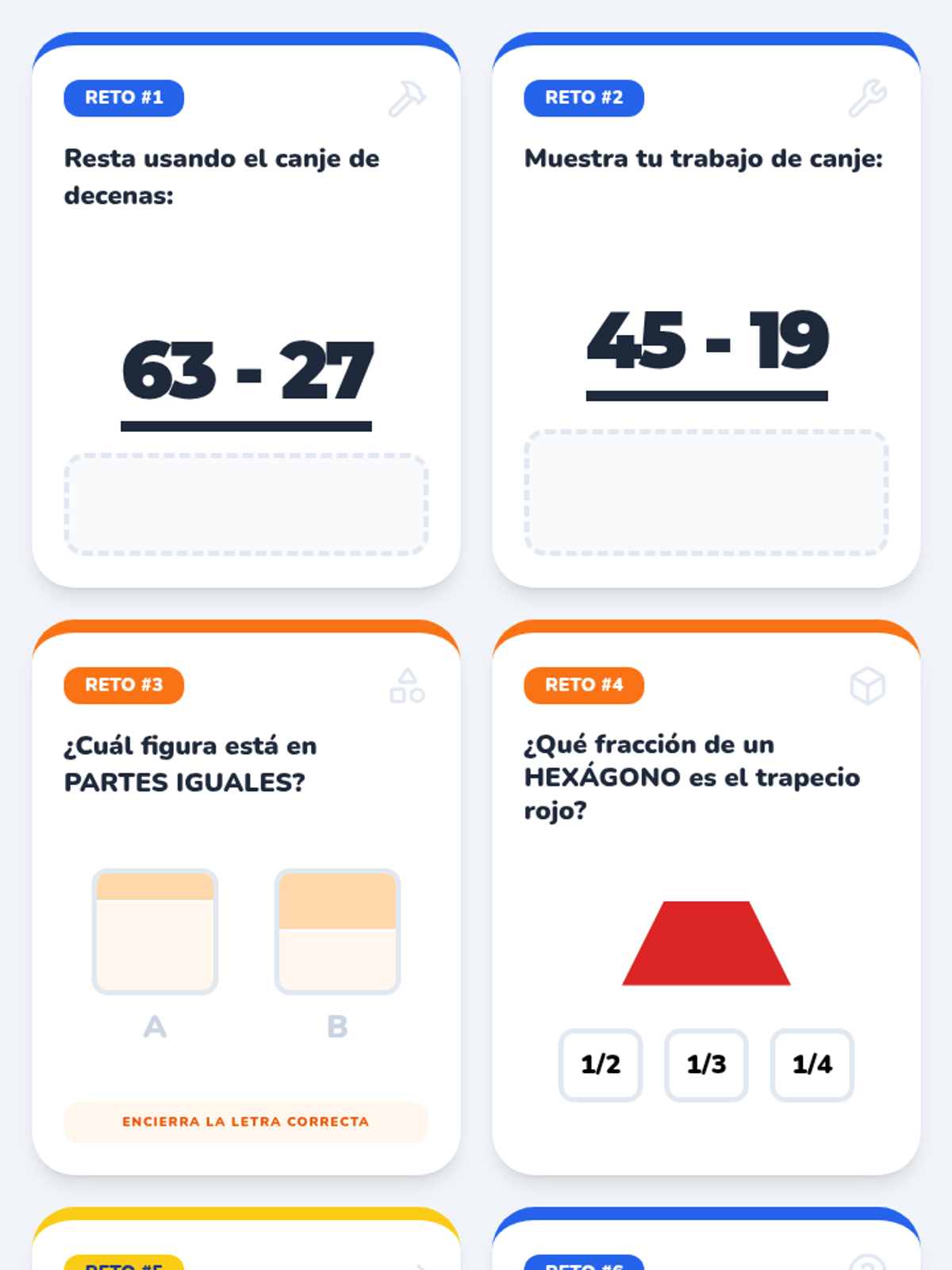
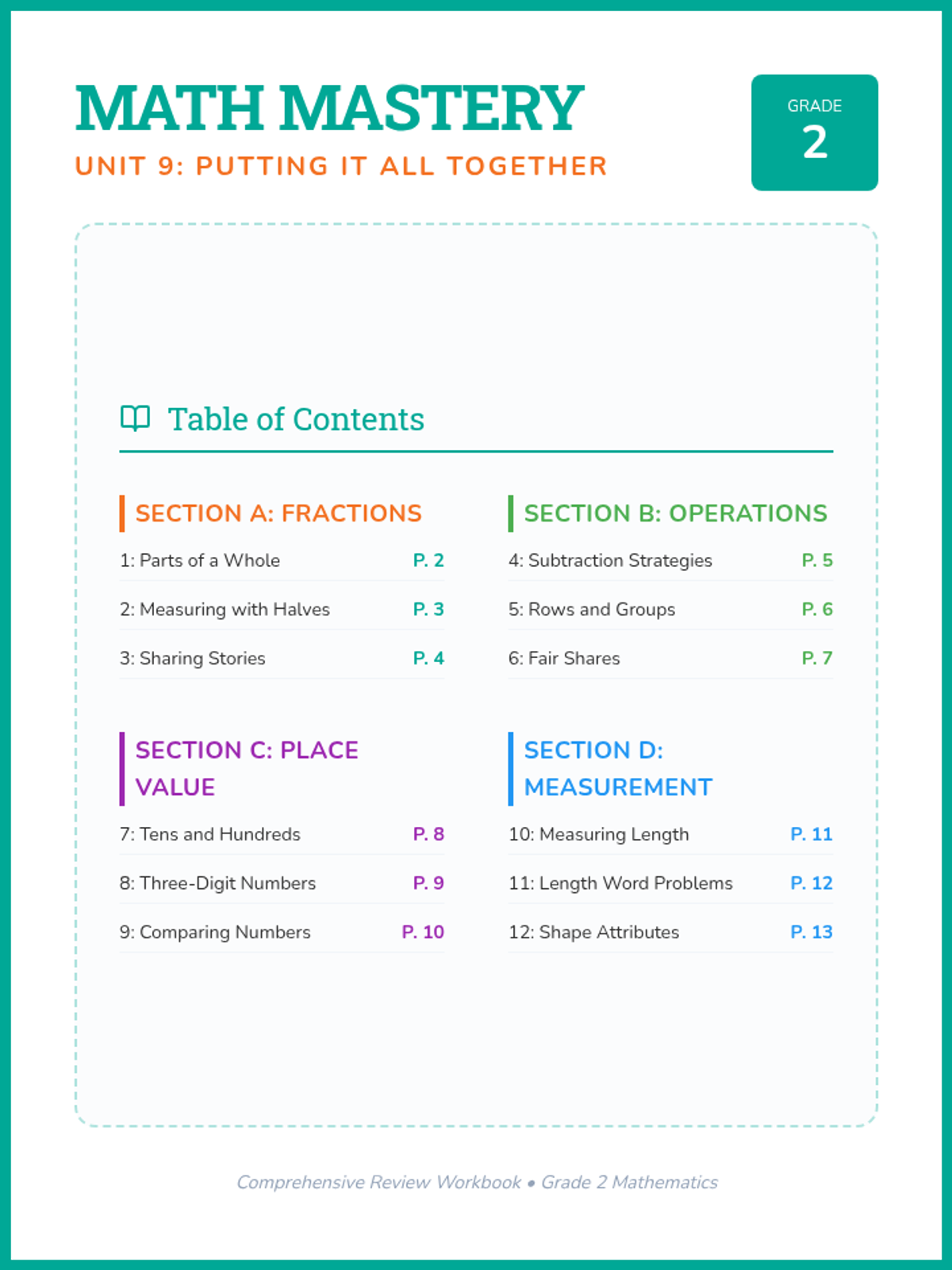
Una unidad enfocada en el dominio del sentido numérico a través de operaciones de resta y la comprensión inicial de las fracciones como partes de un todo.
A series of math lessons adapted from 4th grade to 2nd grade, focusing on fraction partitioning (2.G.A.3) and whole-number operations within 100 (2.NBT.B.5).
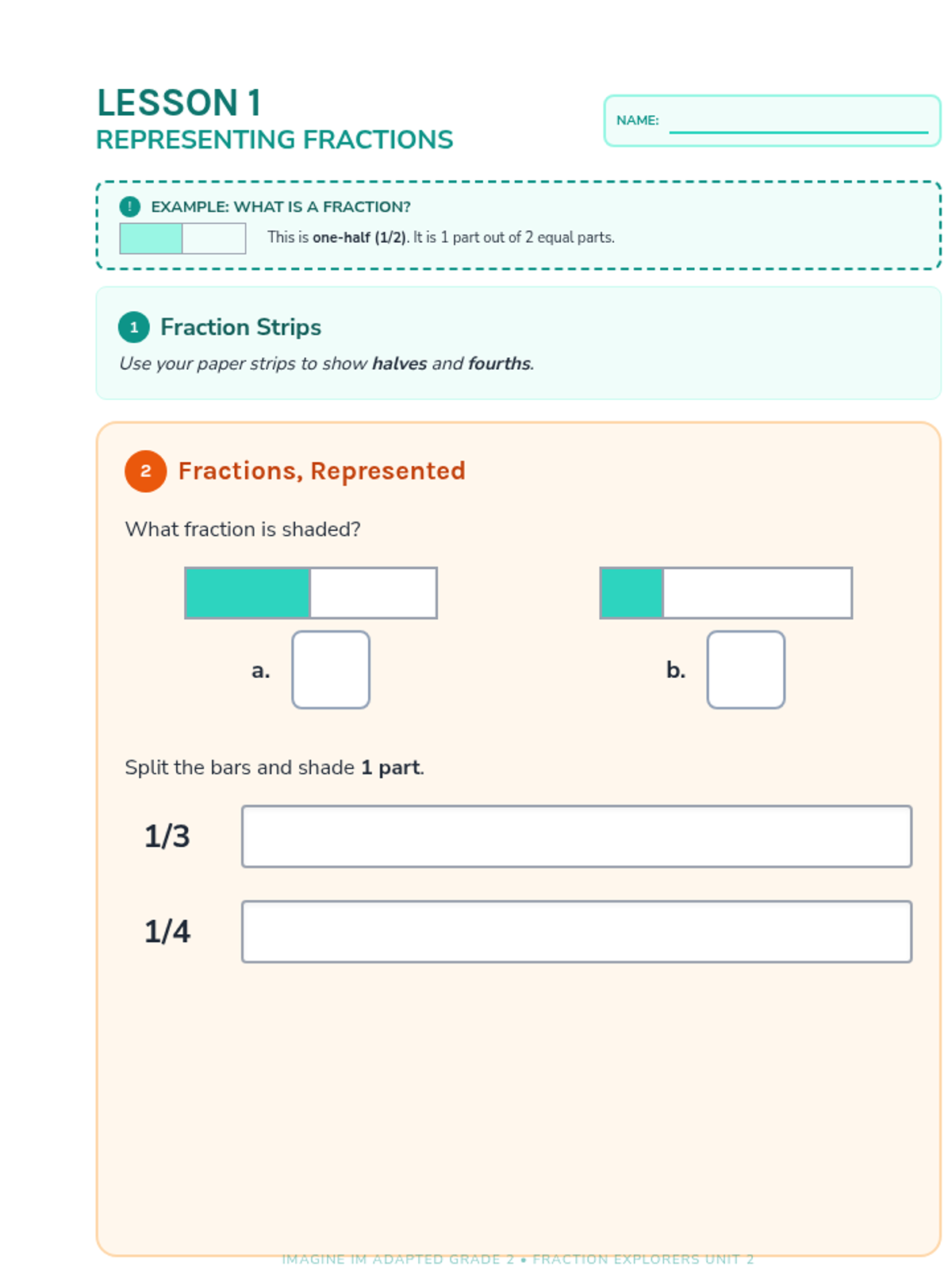
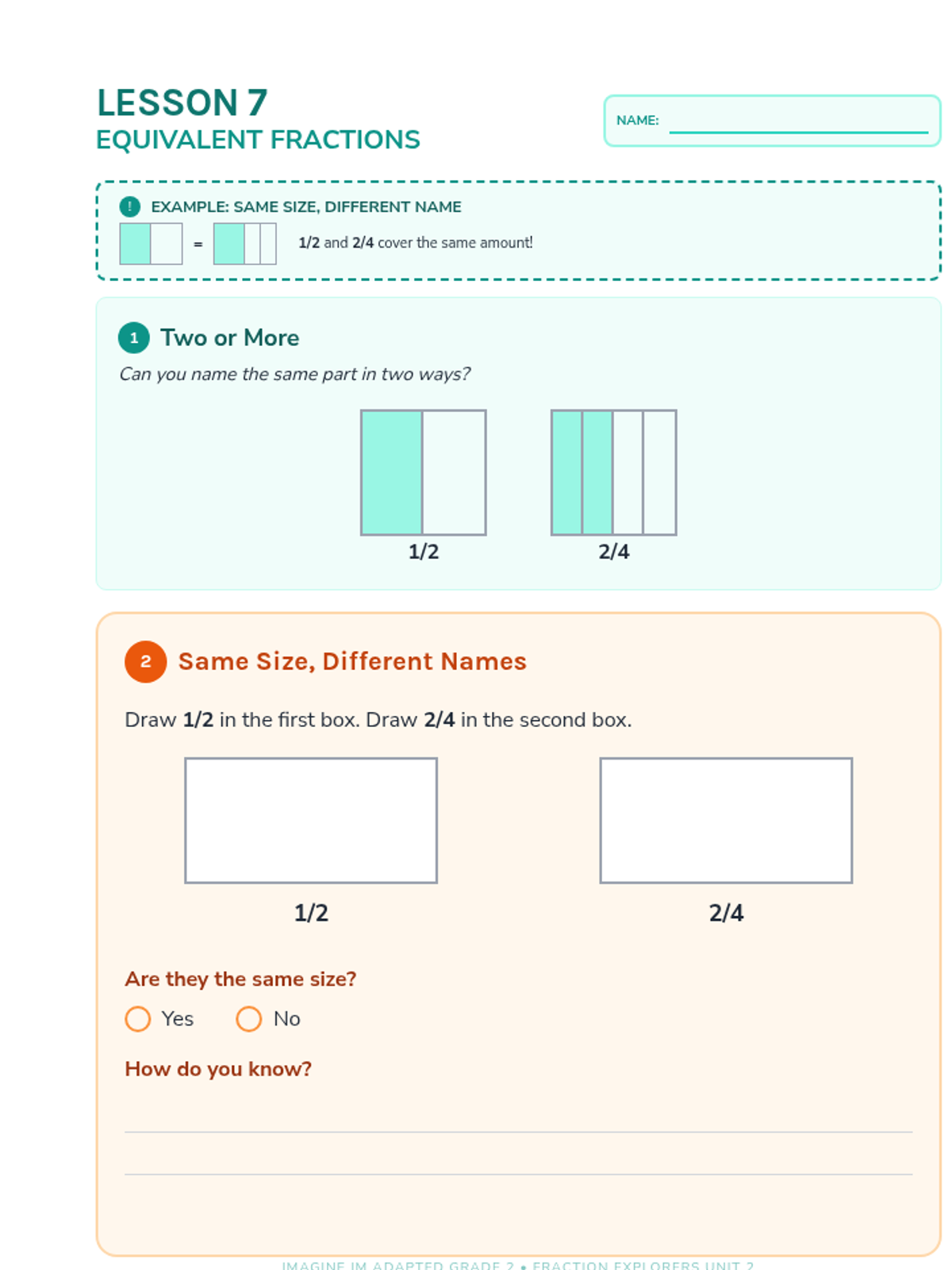
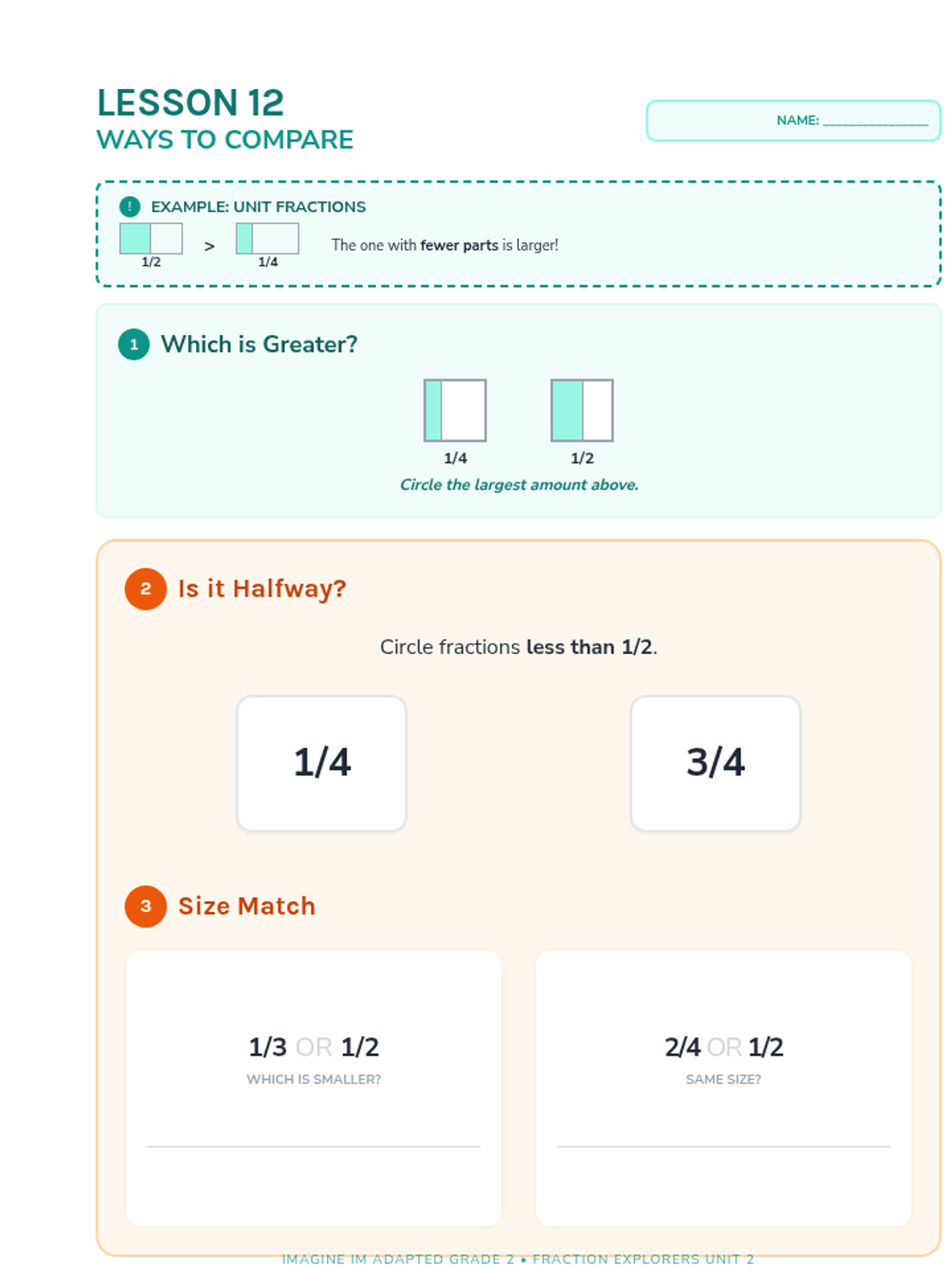
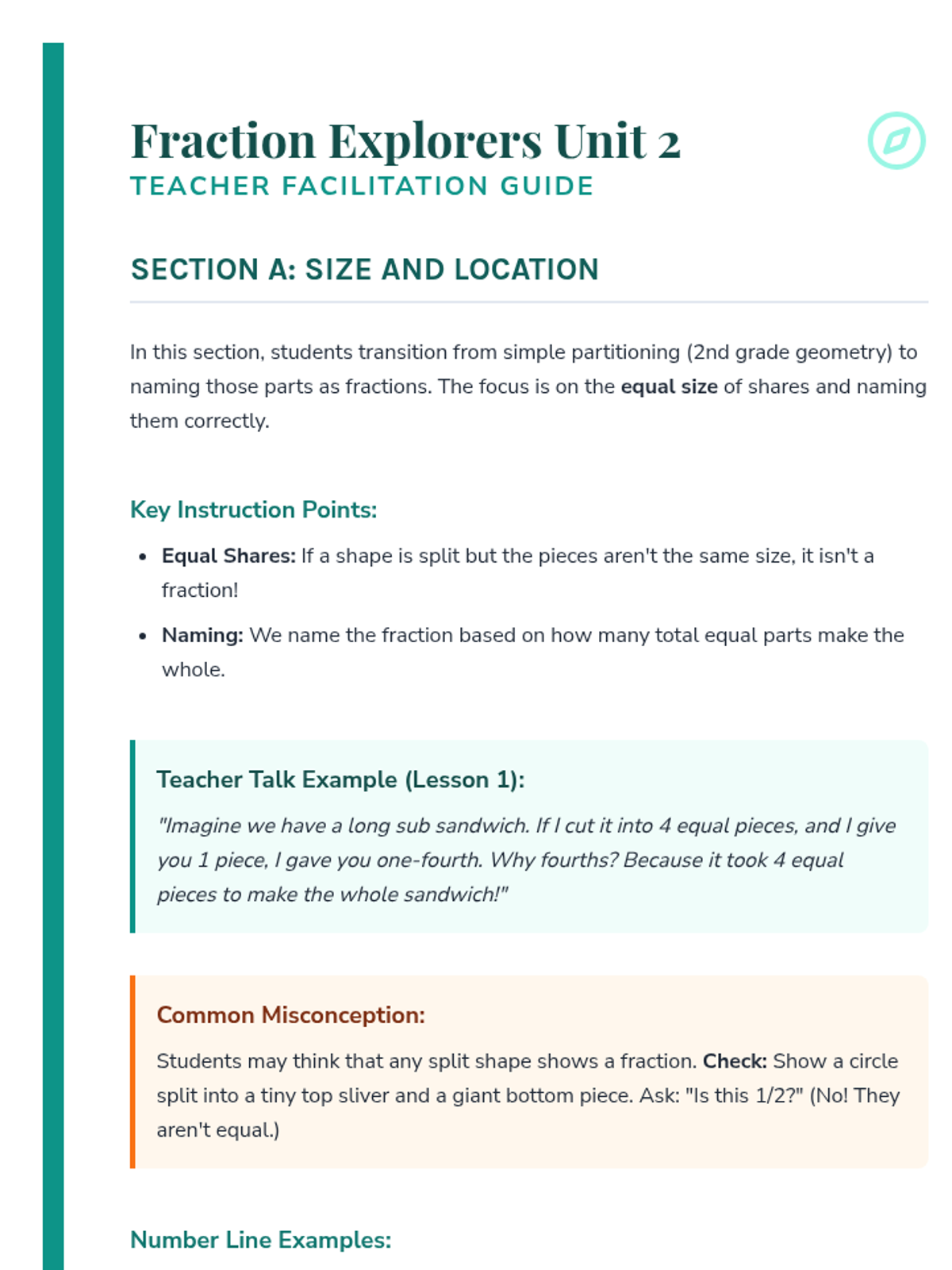
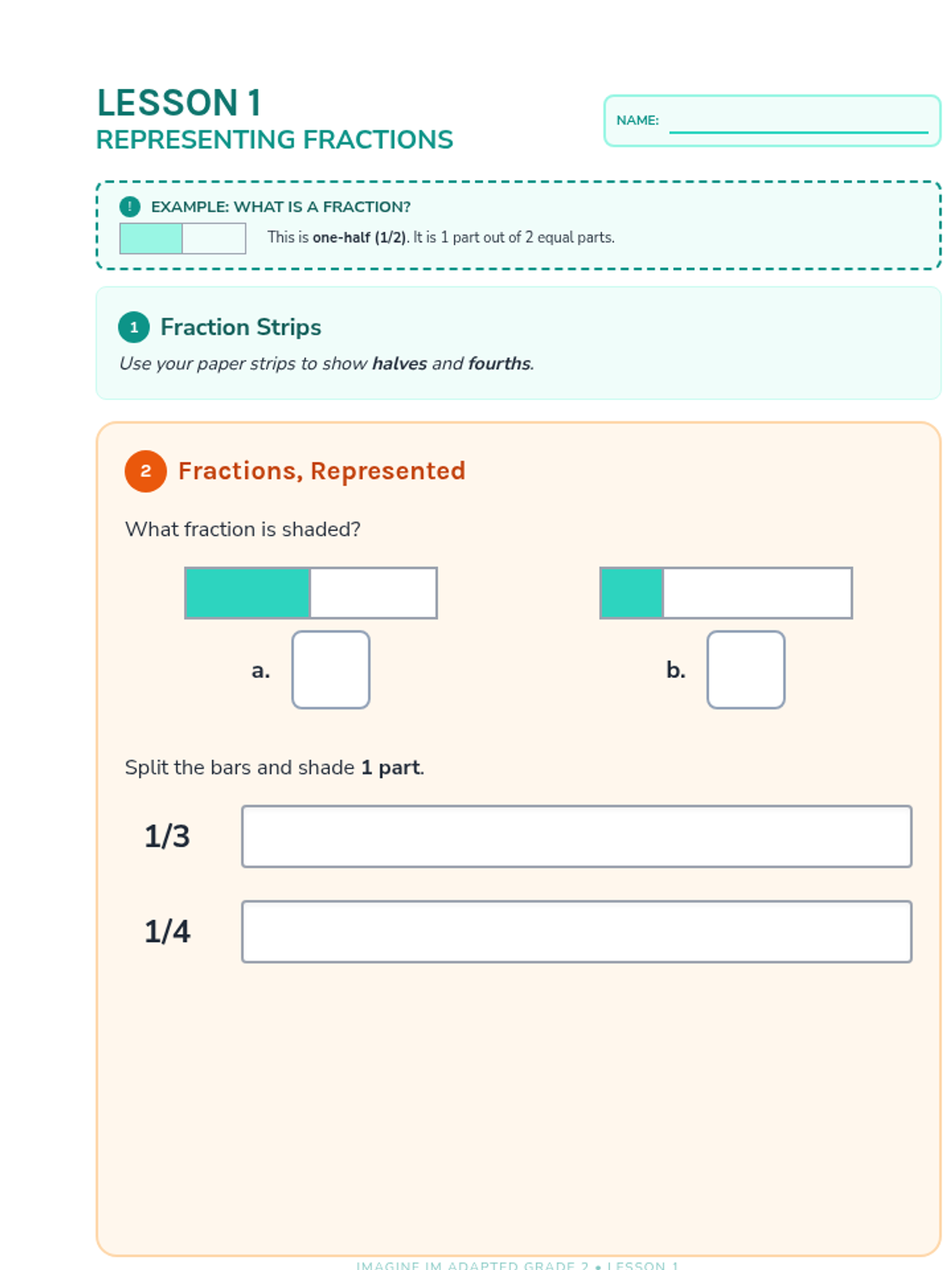
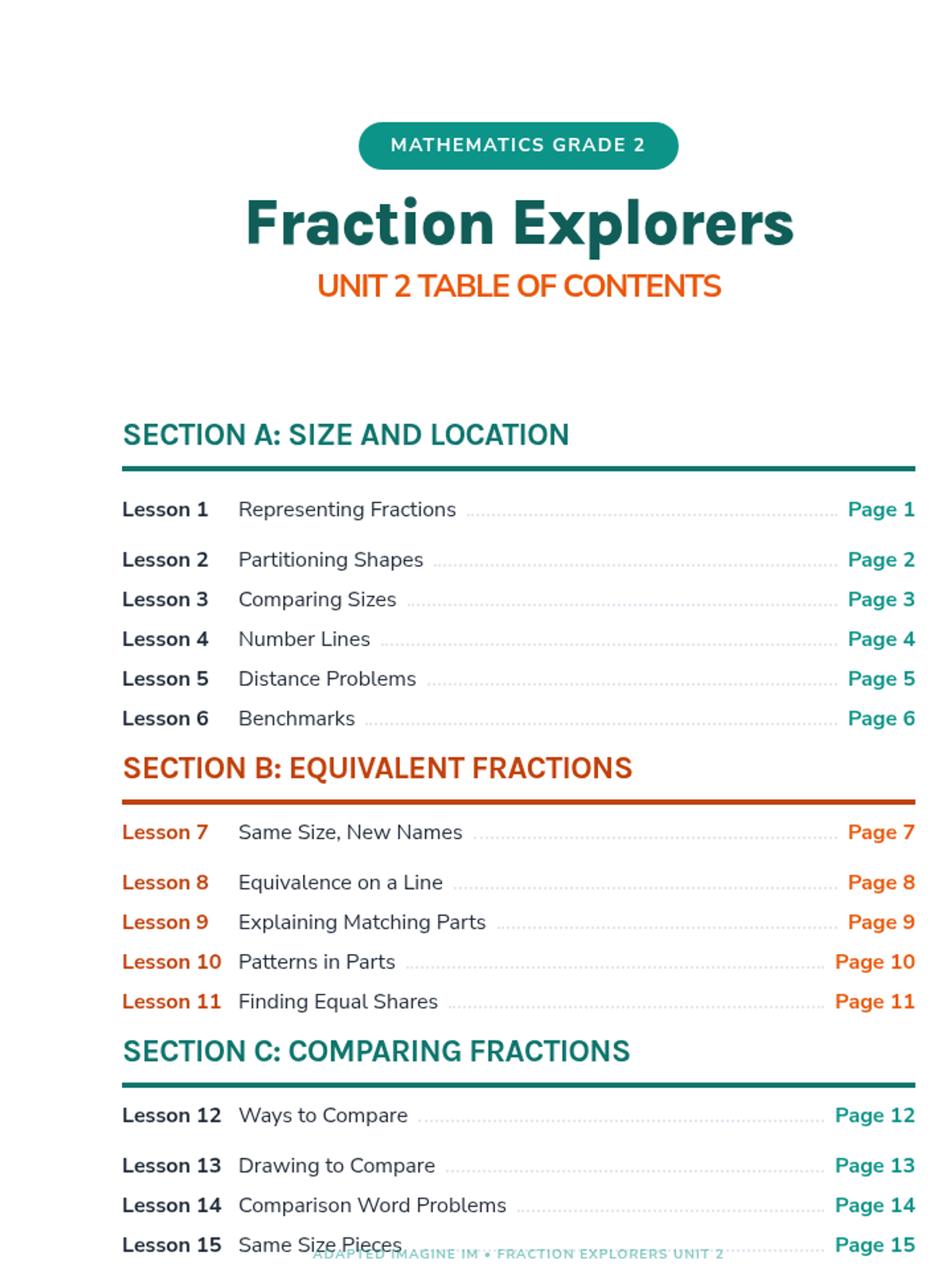
A complete unit on elementary fraction concepts for 2nd grade students, focusing on halves, thirds, and fourths using the Imagine IM curriculum structure.
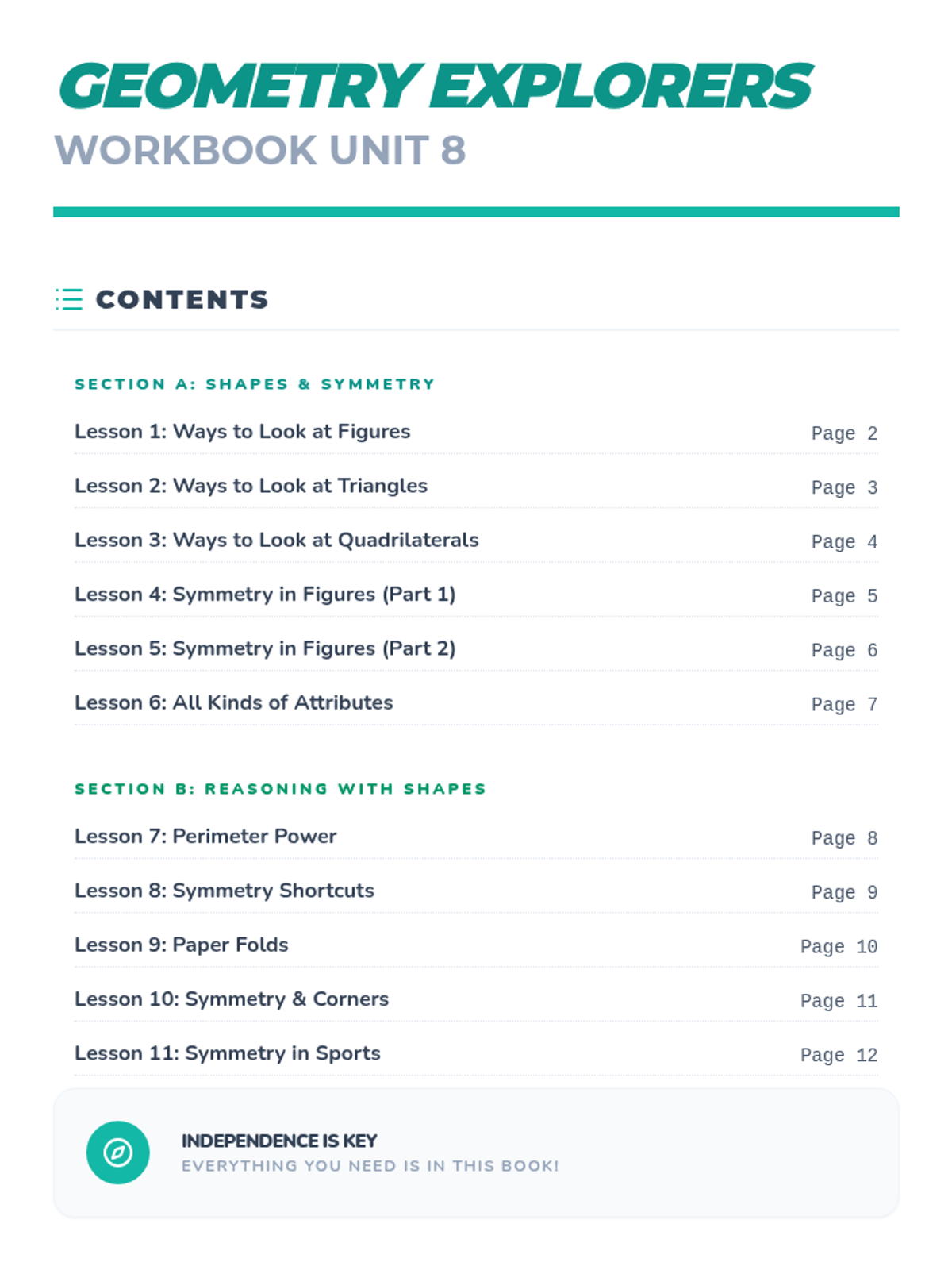
A comprehensive 2nd-grade geometry unit adapted from 4th-grade materials, covering shape attributes, triangles, quadrilaterals, symmetry, and reasoning about perimeter.
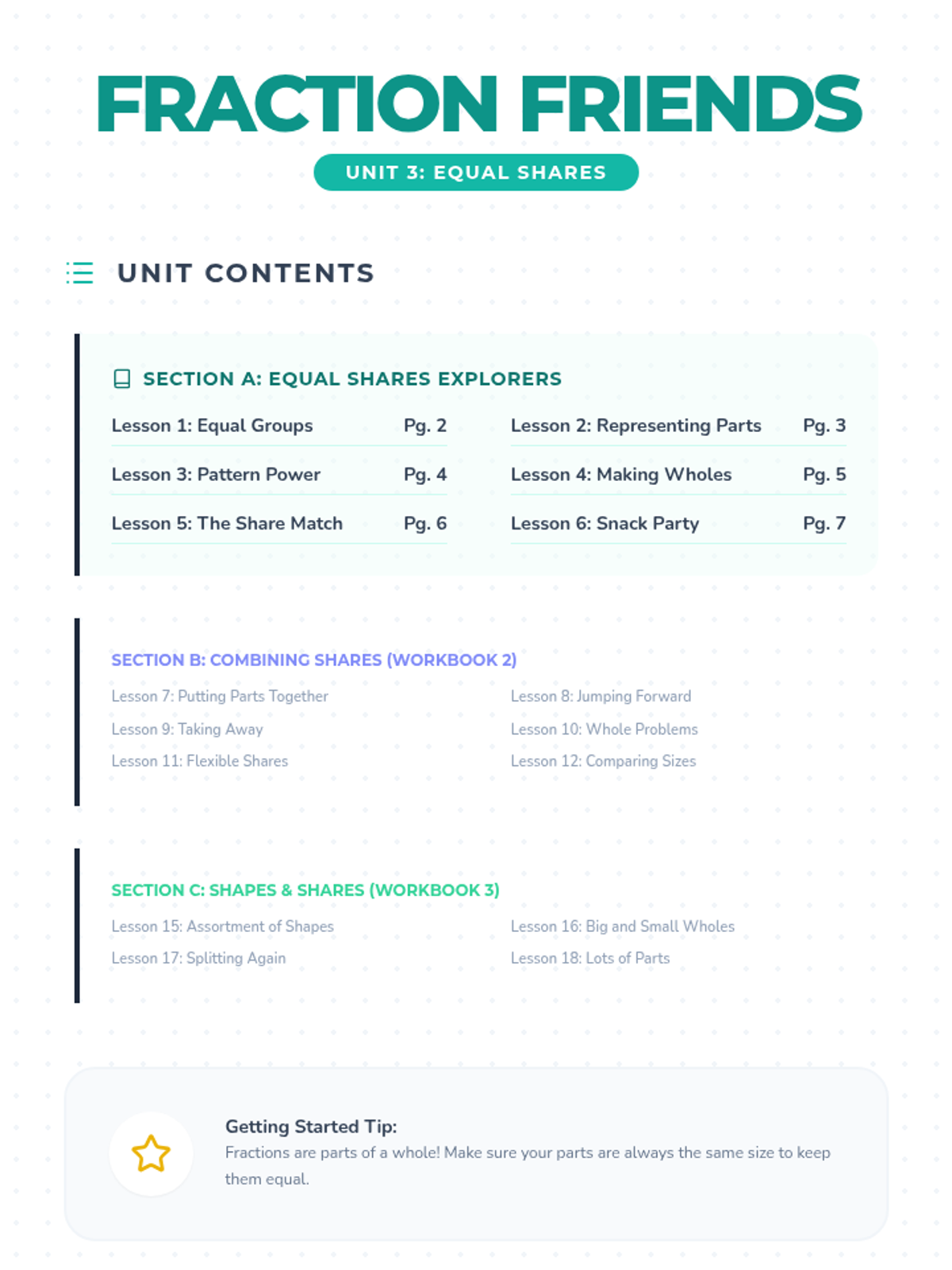
A unit introducing foundational fraction concepts to 2nd-grade students using partitioning, naming equal shares, and skip counting parts of a whole.
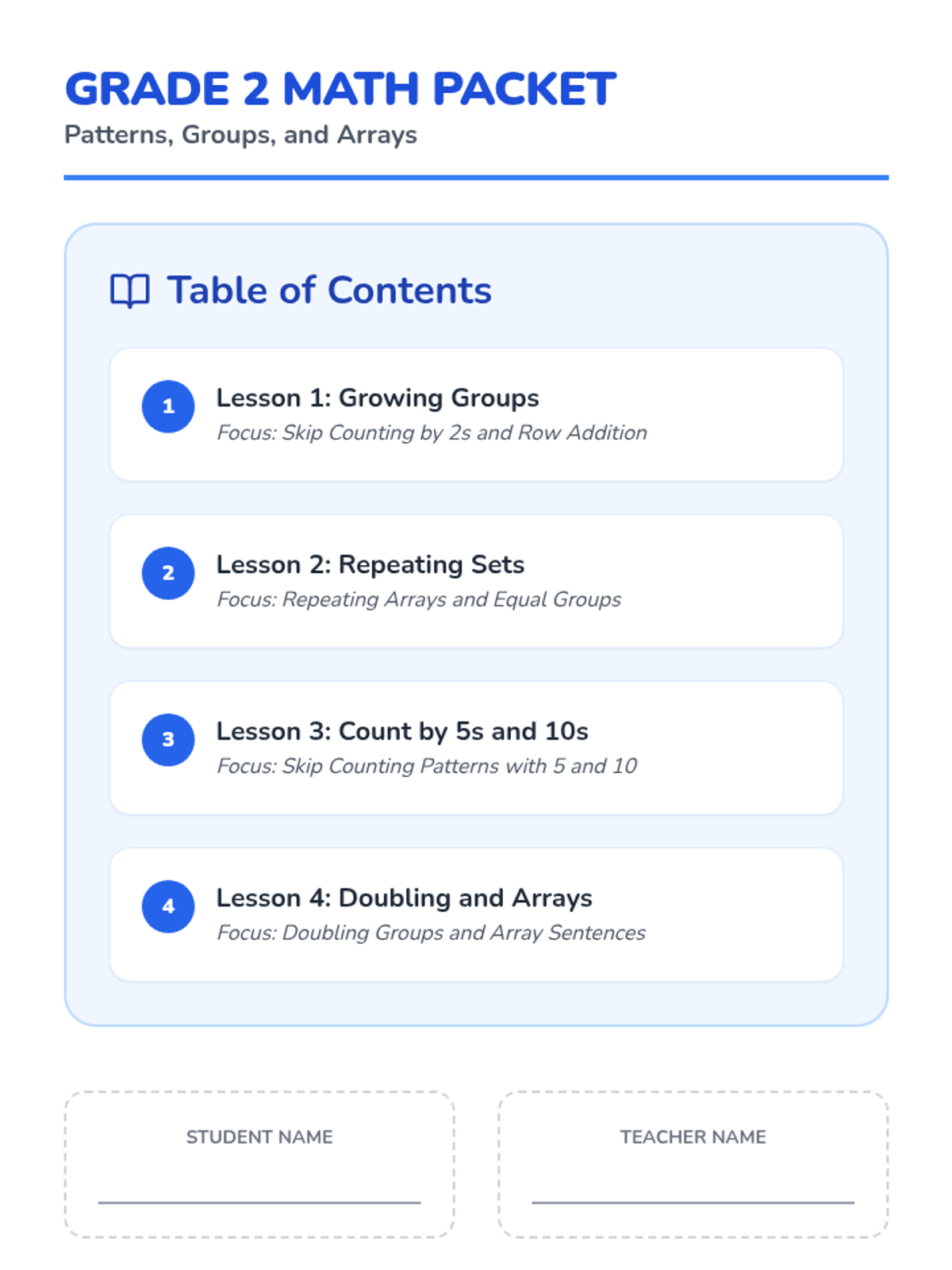
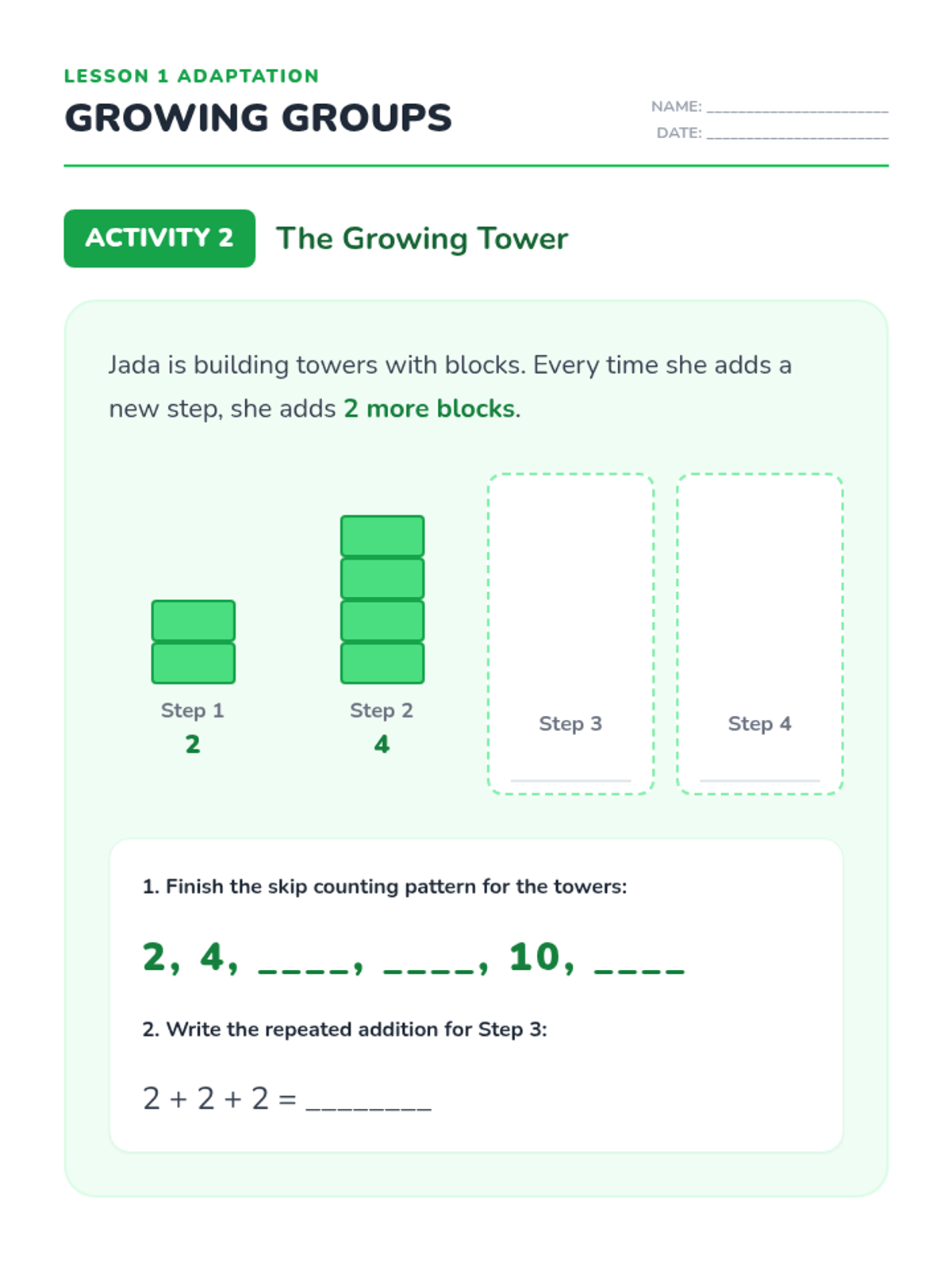
A comprehensive Grade 2 math packet focused on skip counting, repeated addition, arrays, and equal groups.
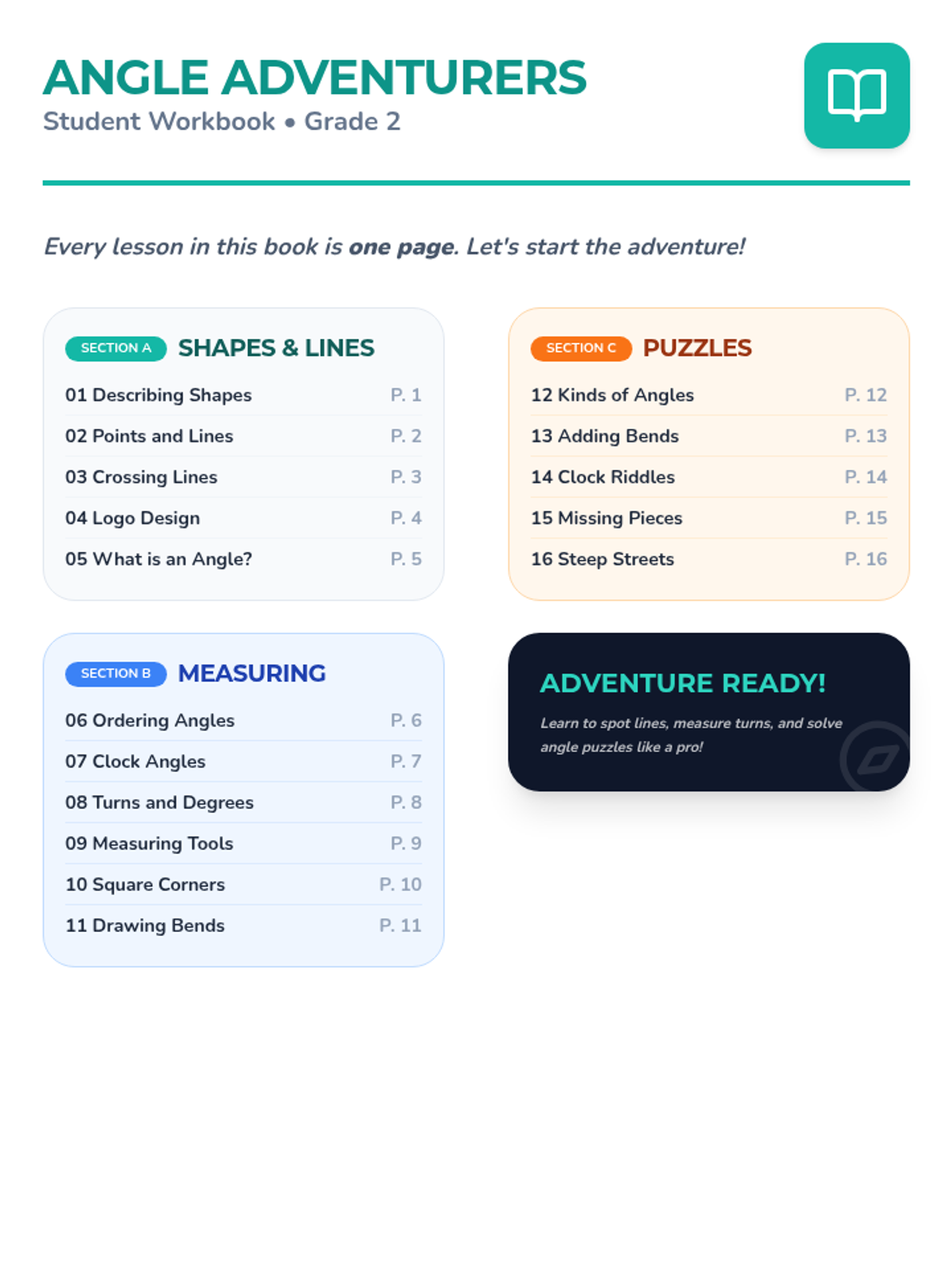
A comprehensive 16-lesson unit on geometry and angle measurement adapted for 2nd-grade students, focusing on simplified language while maintaining the standard of measuring in degrees.
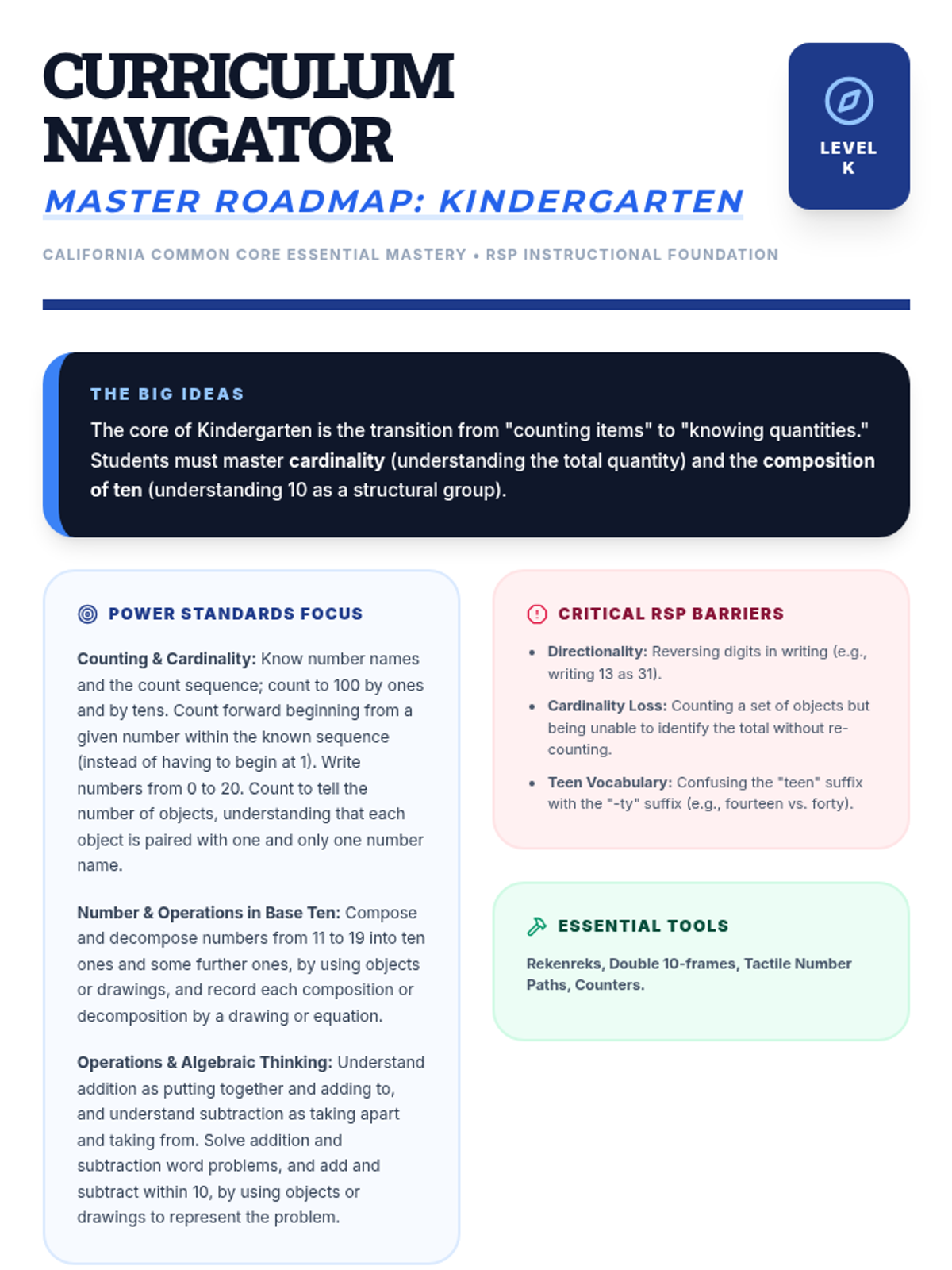
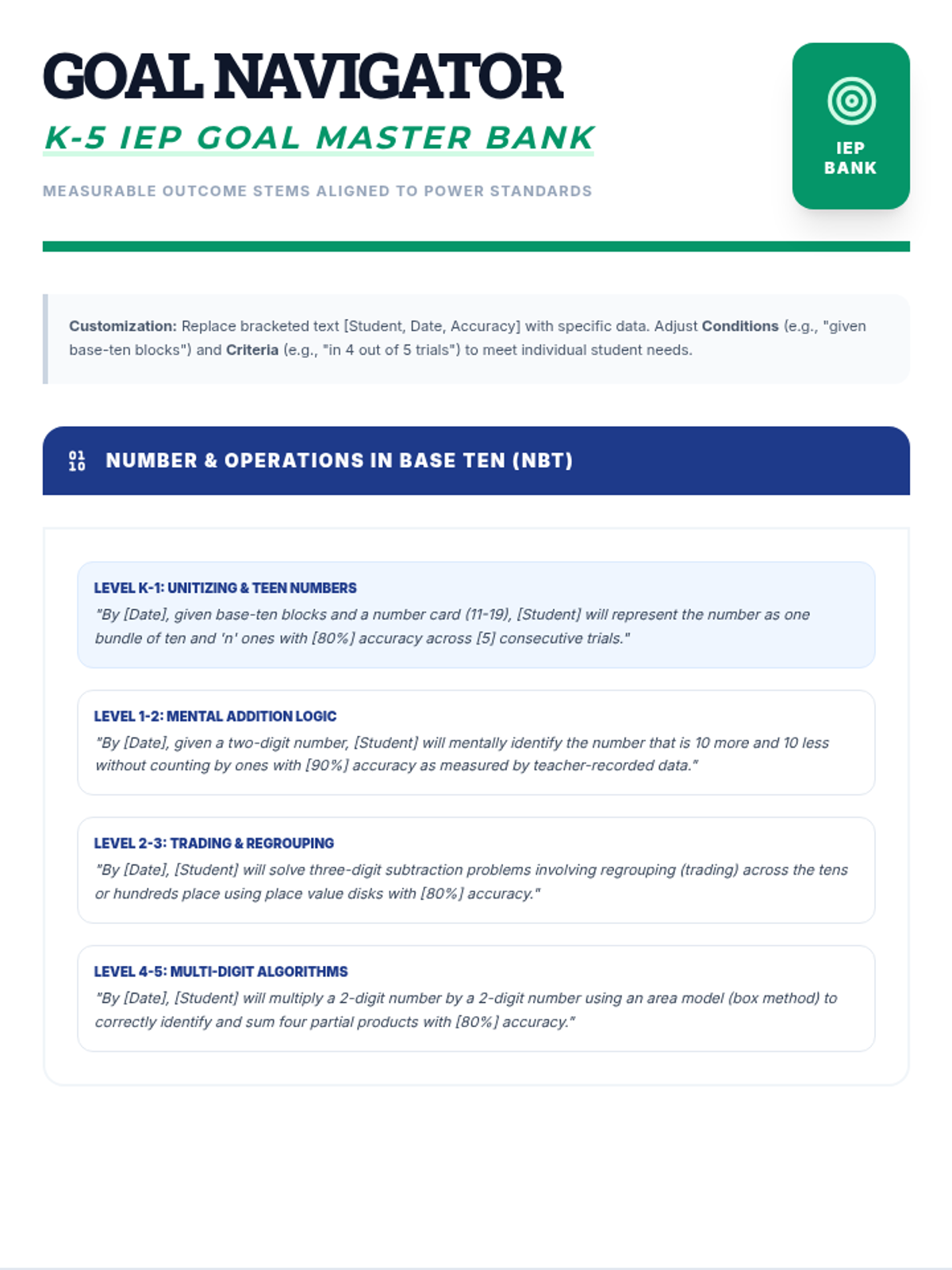
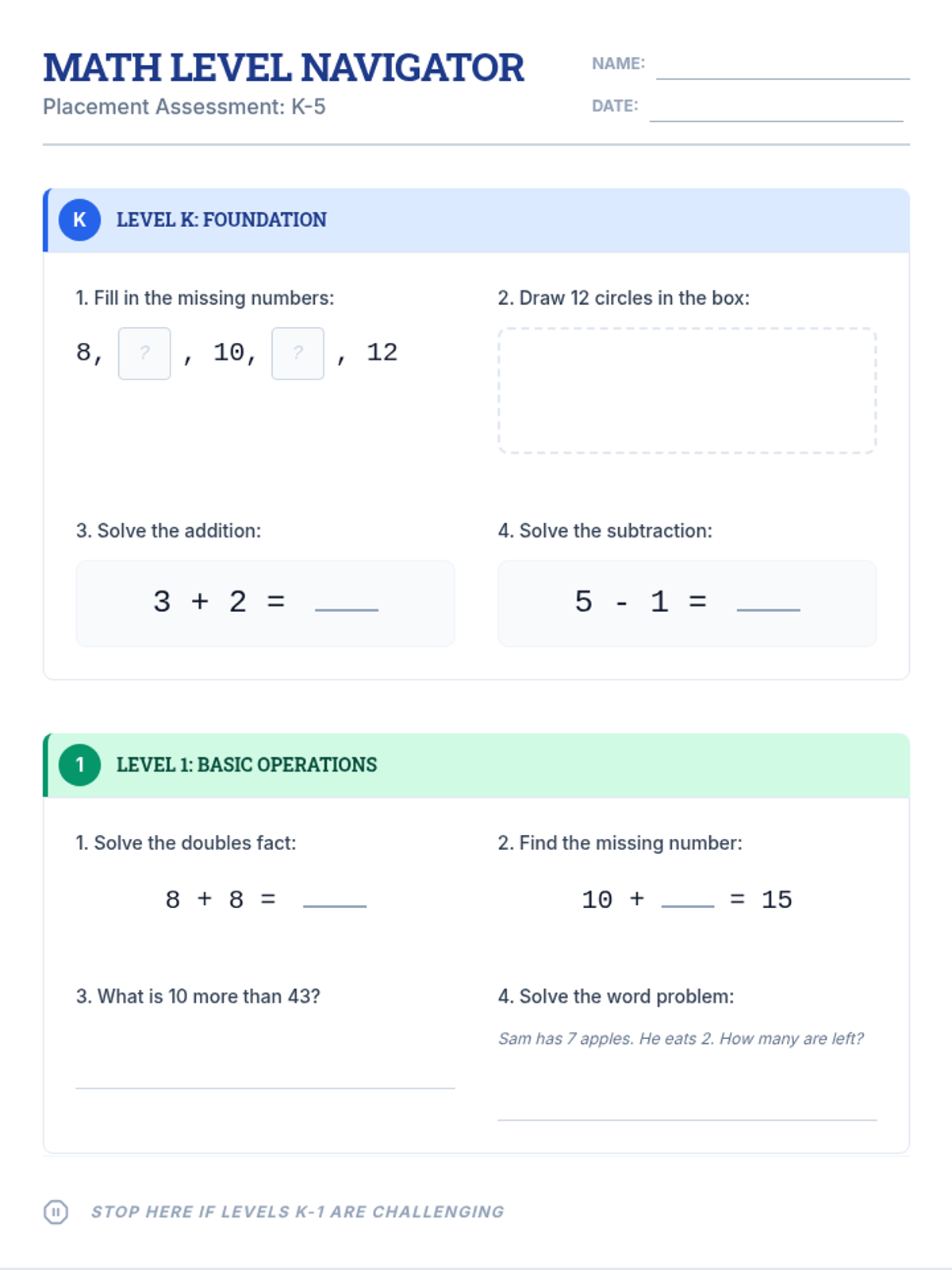
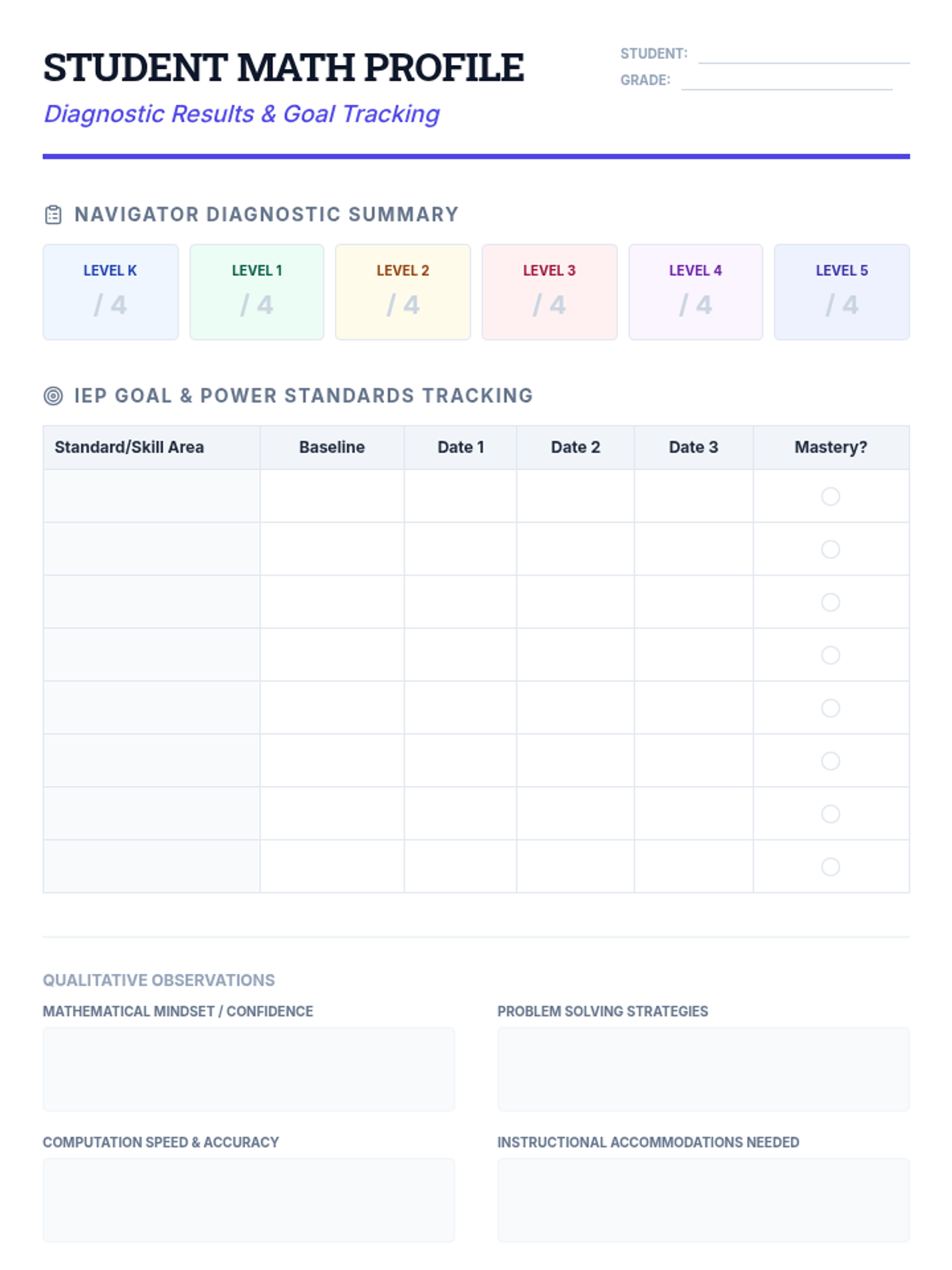
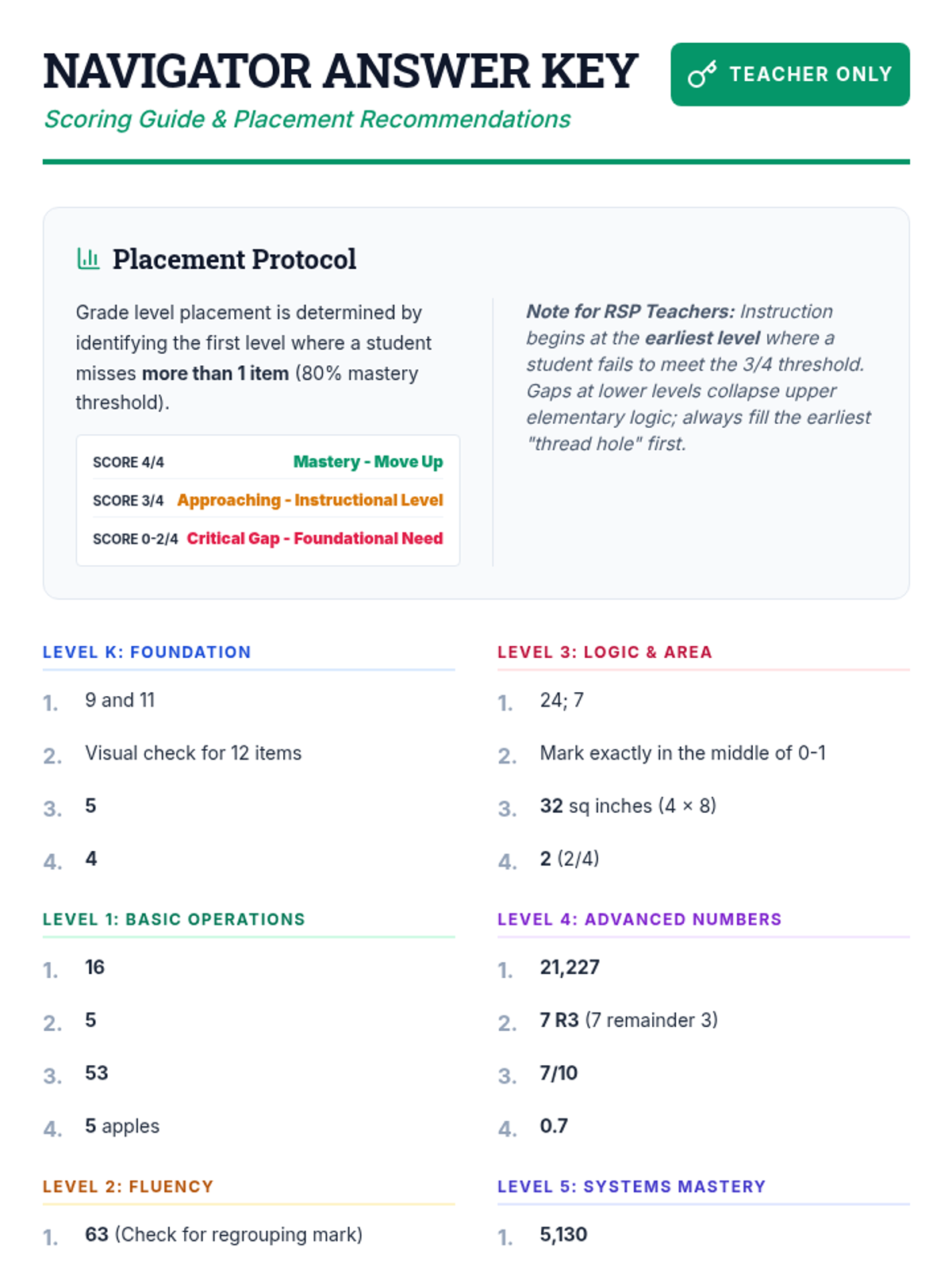
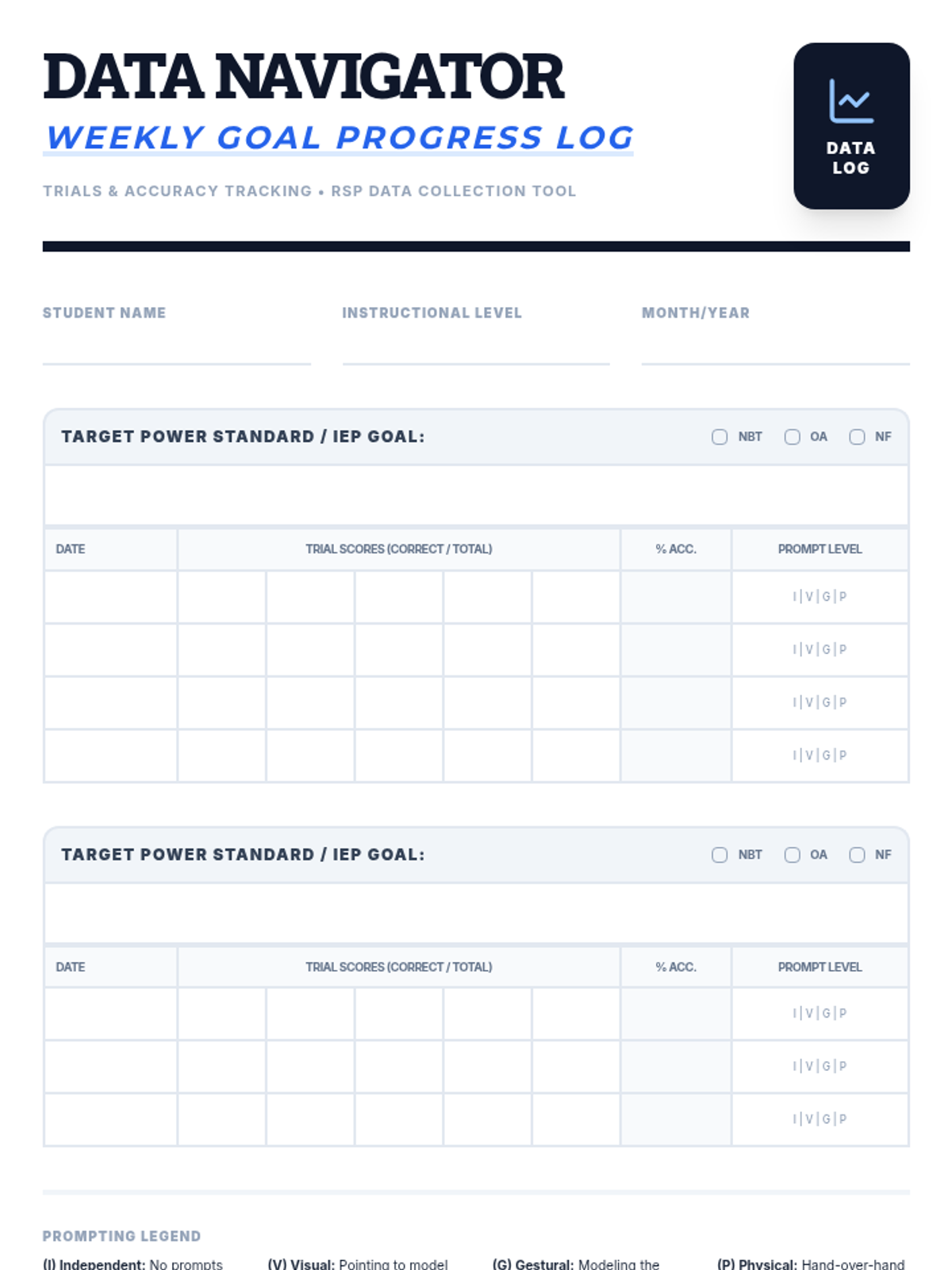
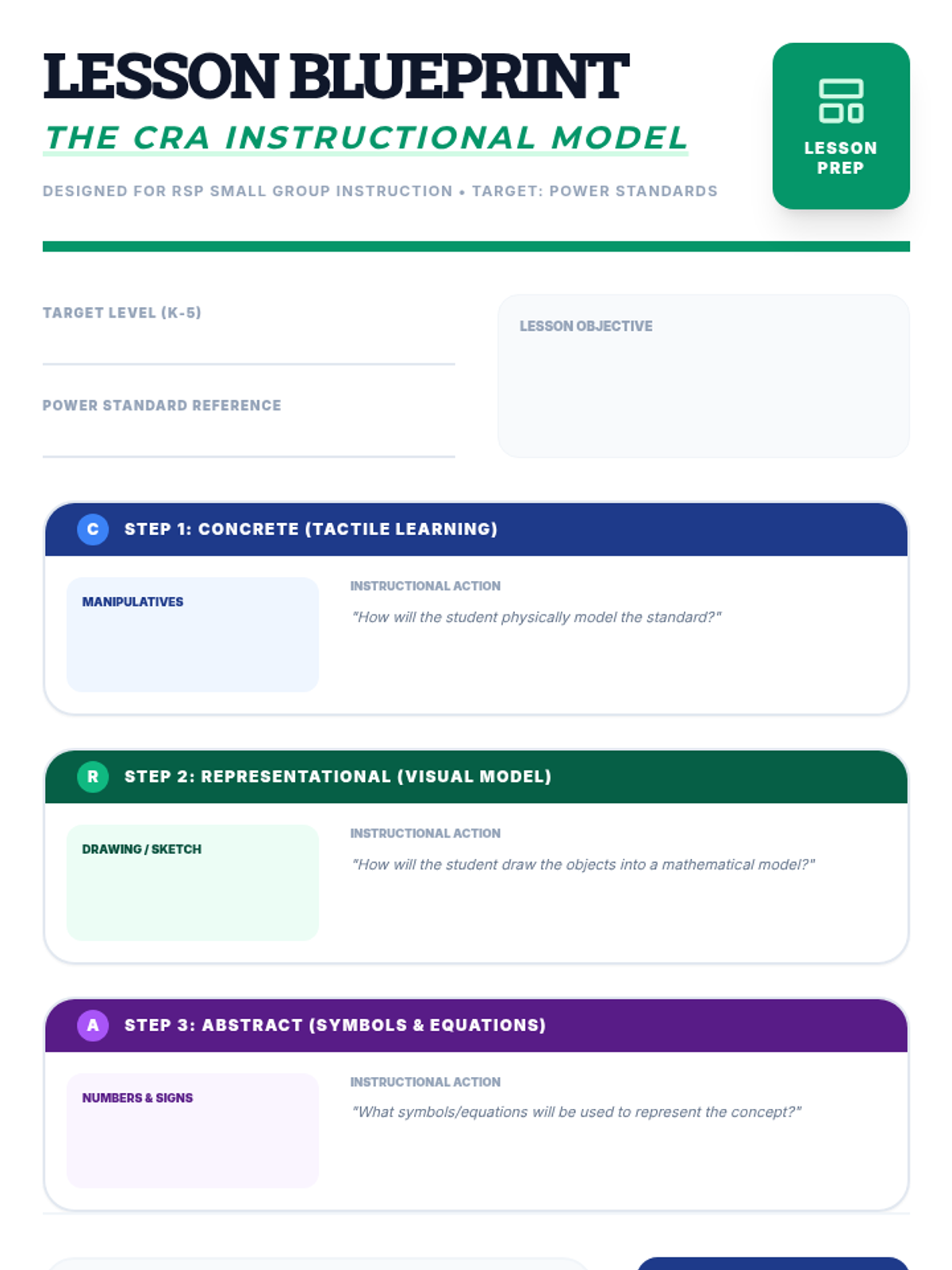
A comprehensive framework for K-5 RSP math instruction, including a California Common Core aligned scope and sequence of power standards and a leveled placement diagnostic.
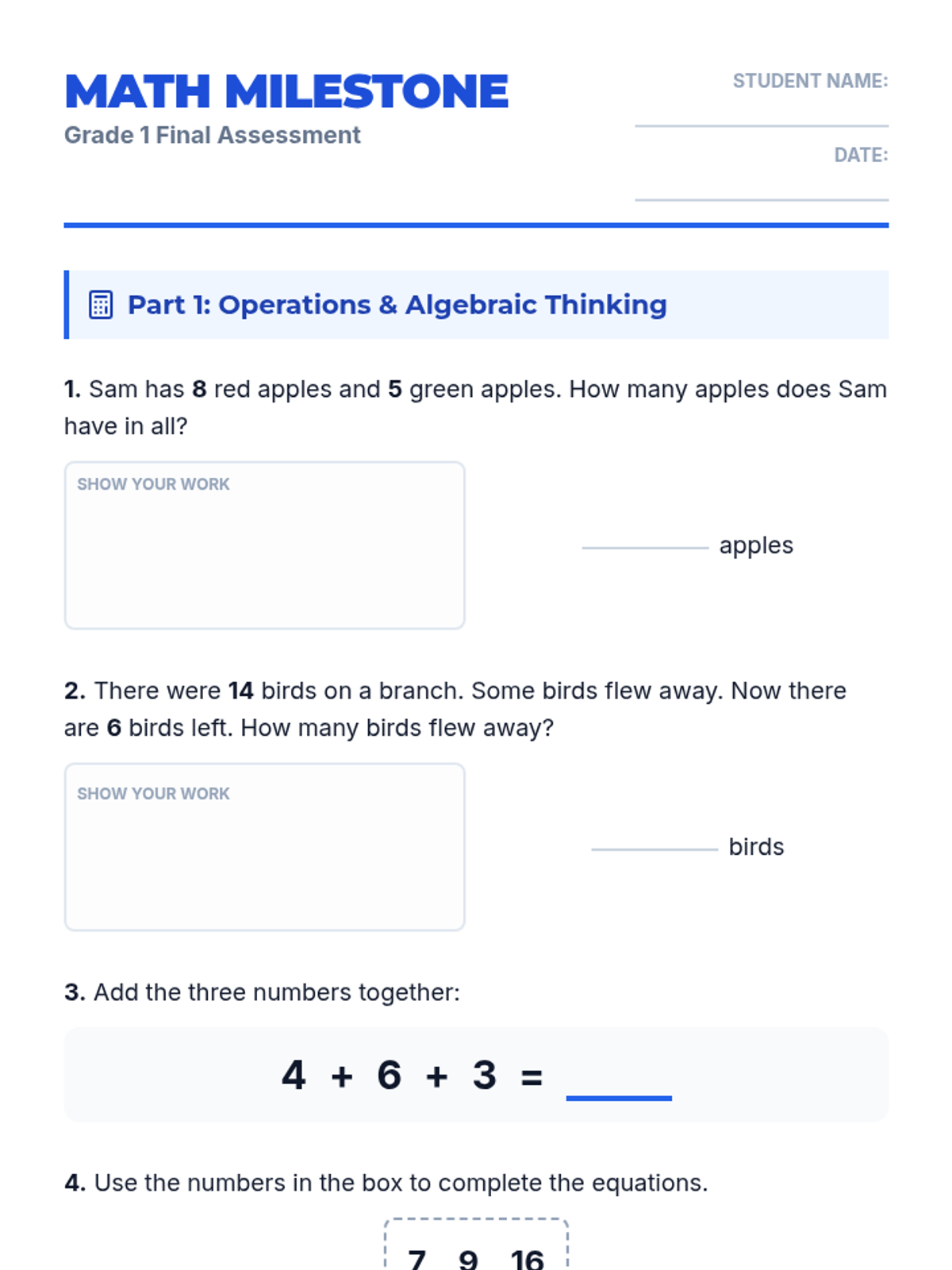
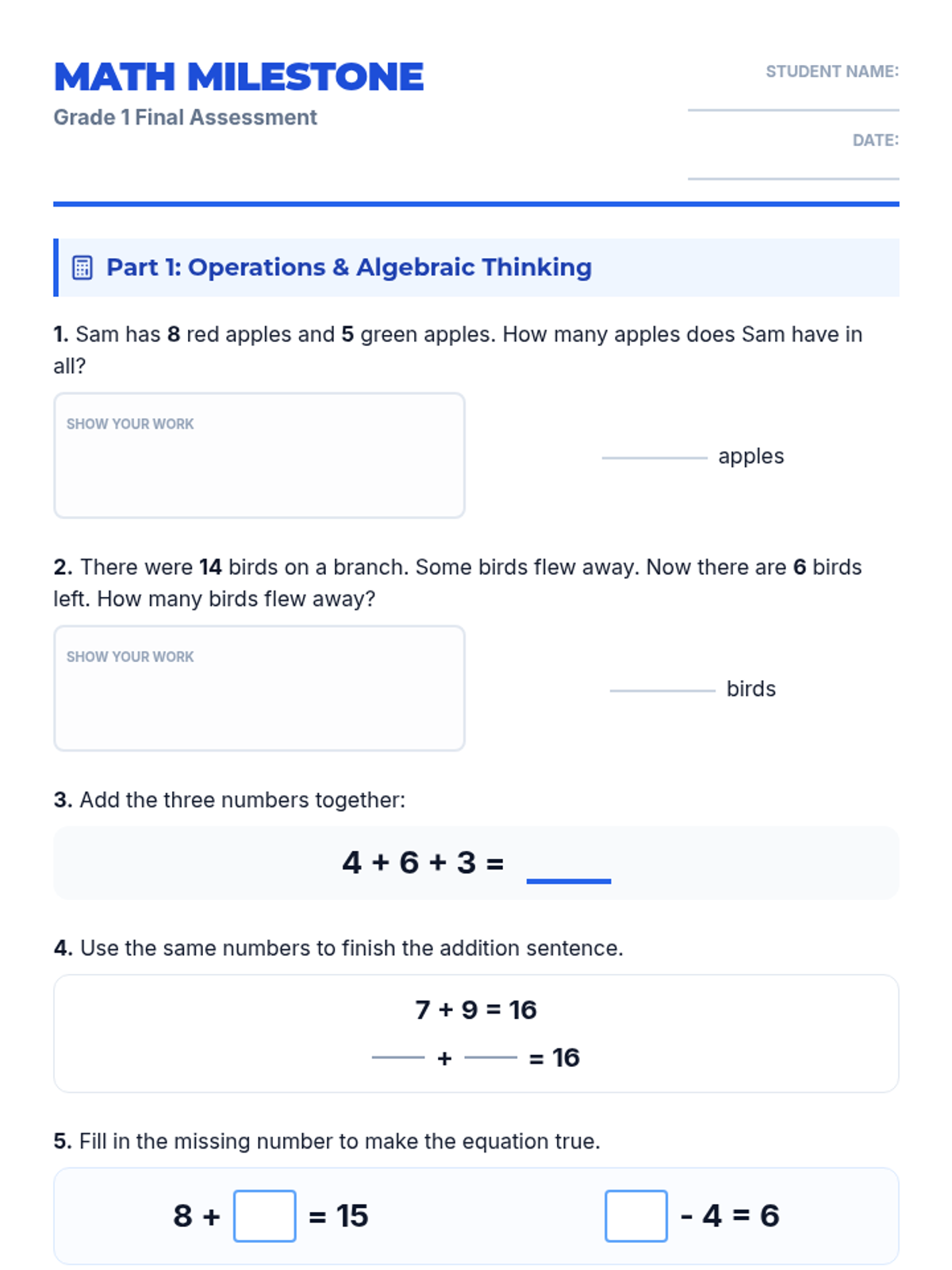
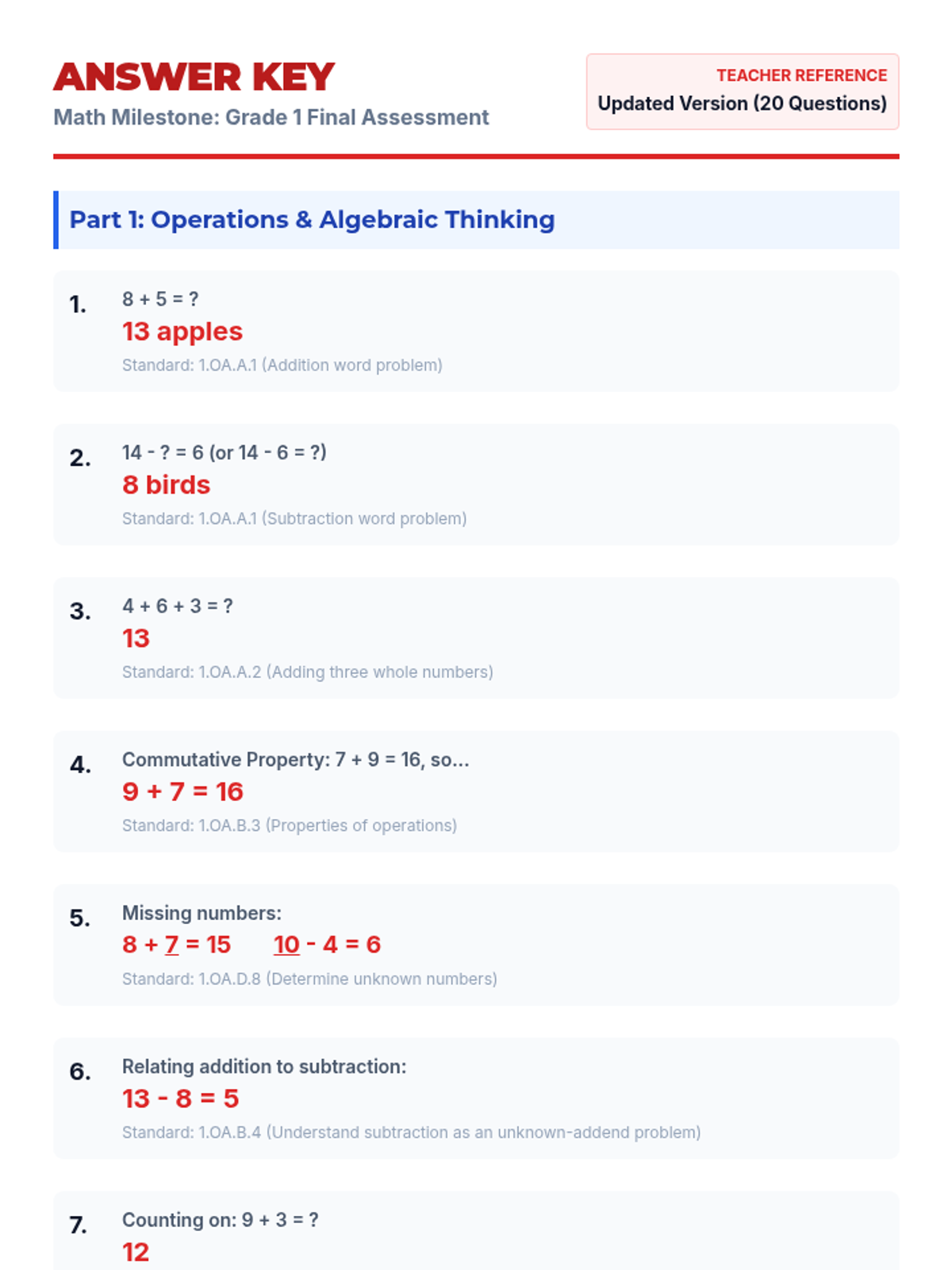
A series of materials designed to evaluate and document first-grade students' mastery of year-long mathematical standards in preparation for second grade.
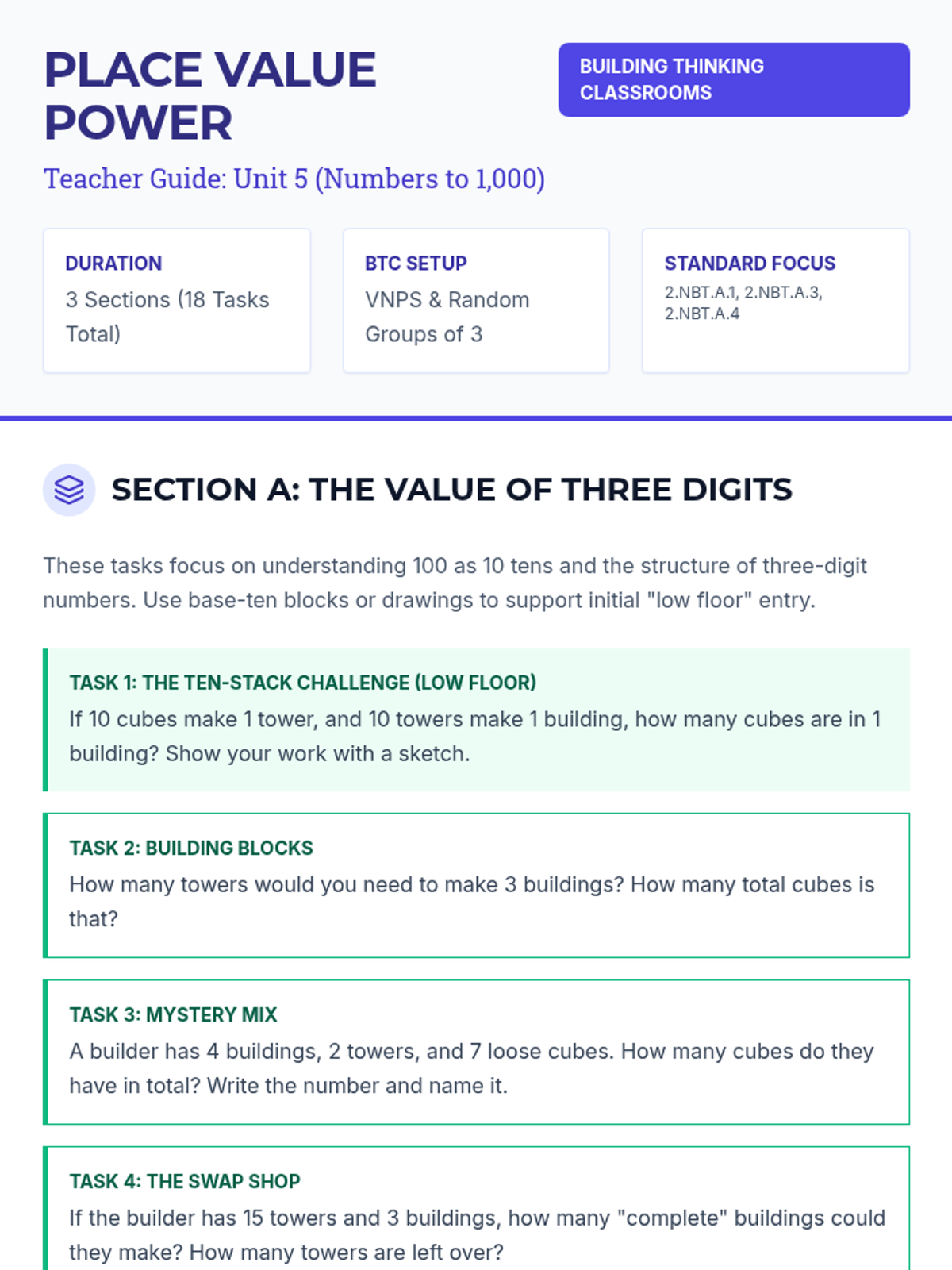
A comprehensive unit plan for 2nd Grade Mathematics based on Illustrative Mathematics Units 5-8, integrated with Building Thinking Classrooms (BTC) pedagogy. Each section includes a sequence of six 'thin-sliced' tasks designed to build conceptual rigor through collaborative problem-solving on vertical surfaces.
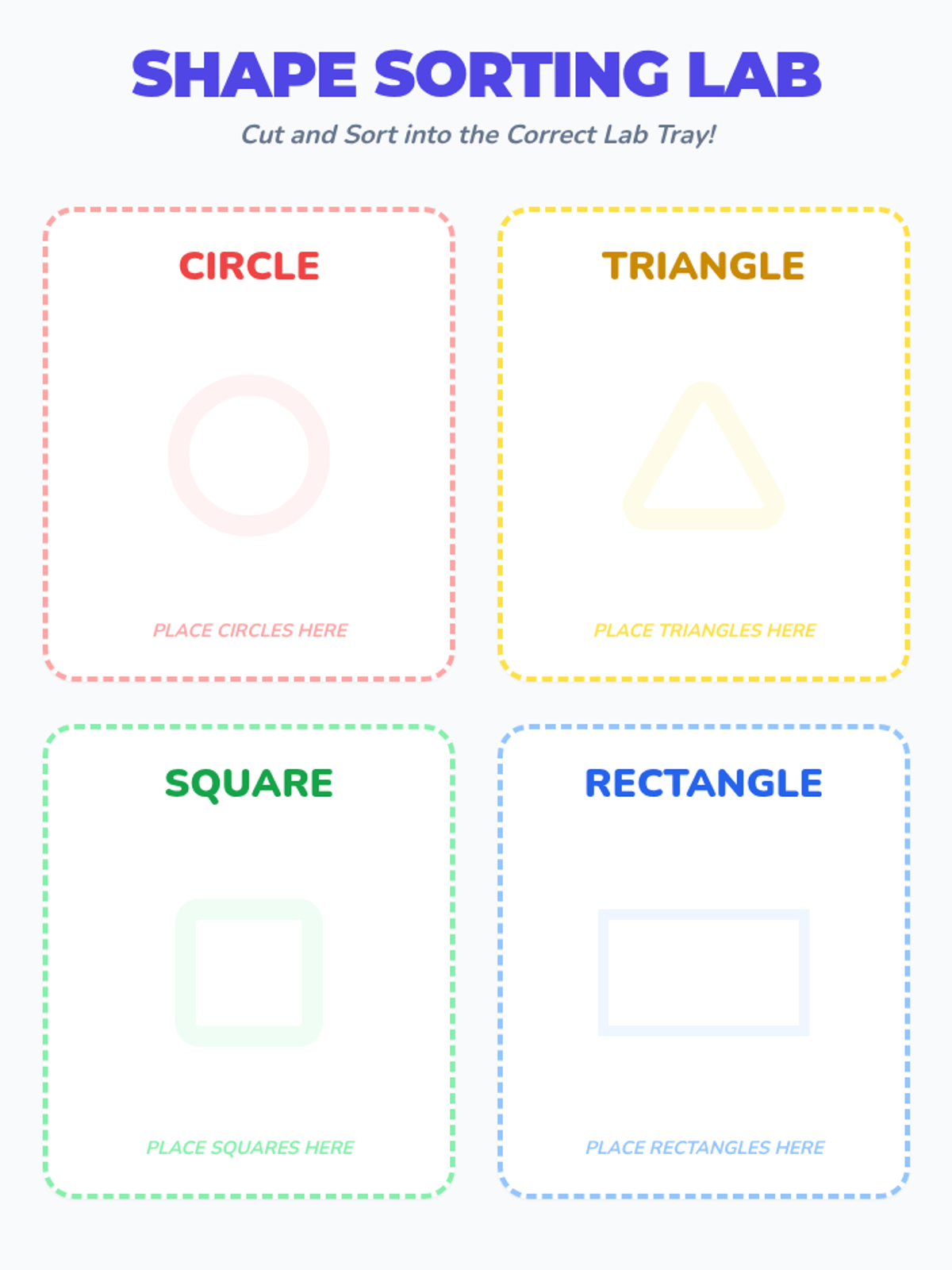
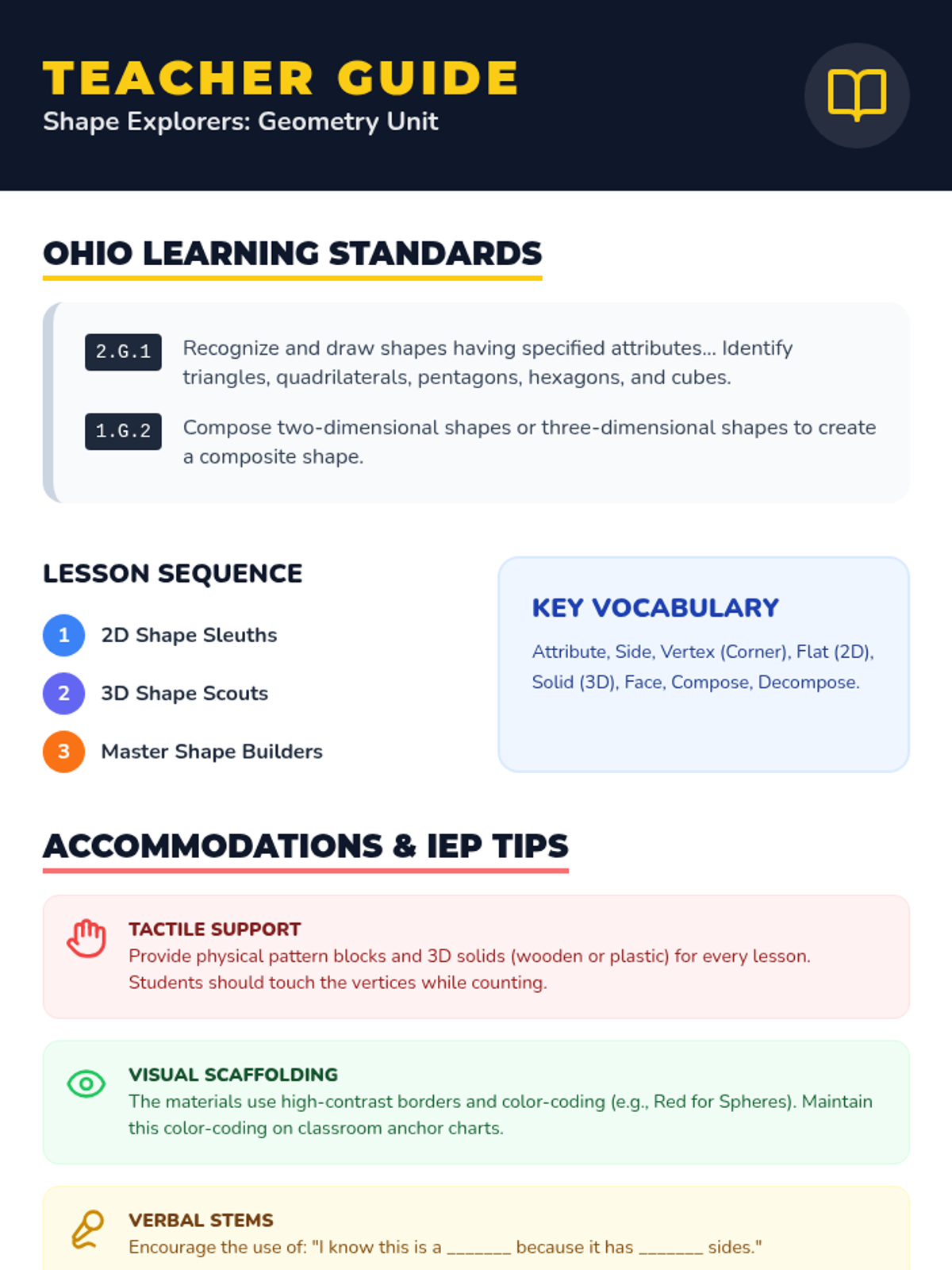
A comprehensive geometry unit for 2nd-grade special education students, focusing on 2D and 3D shape identification, attributes, and composition through visual and hands-on activities.
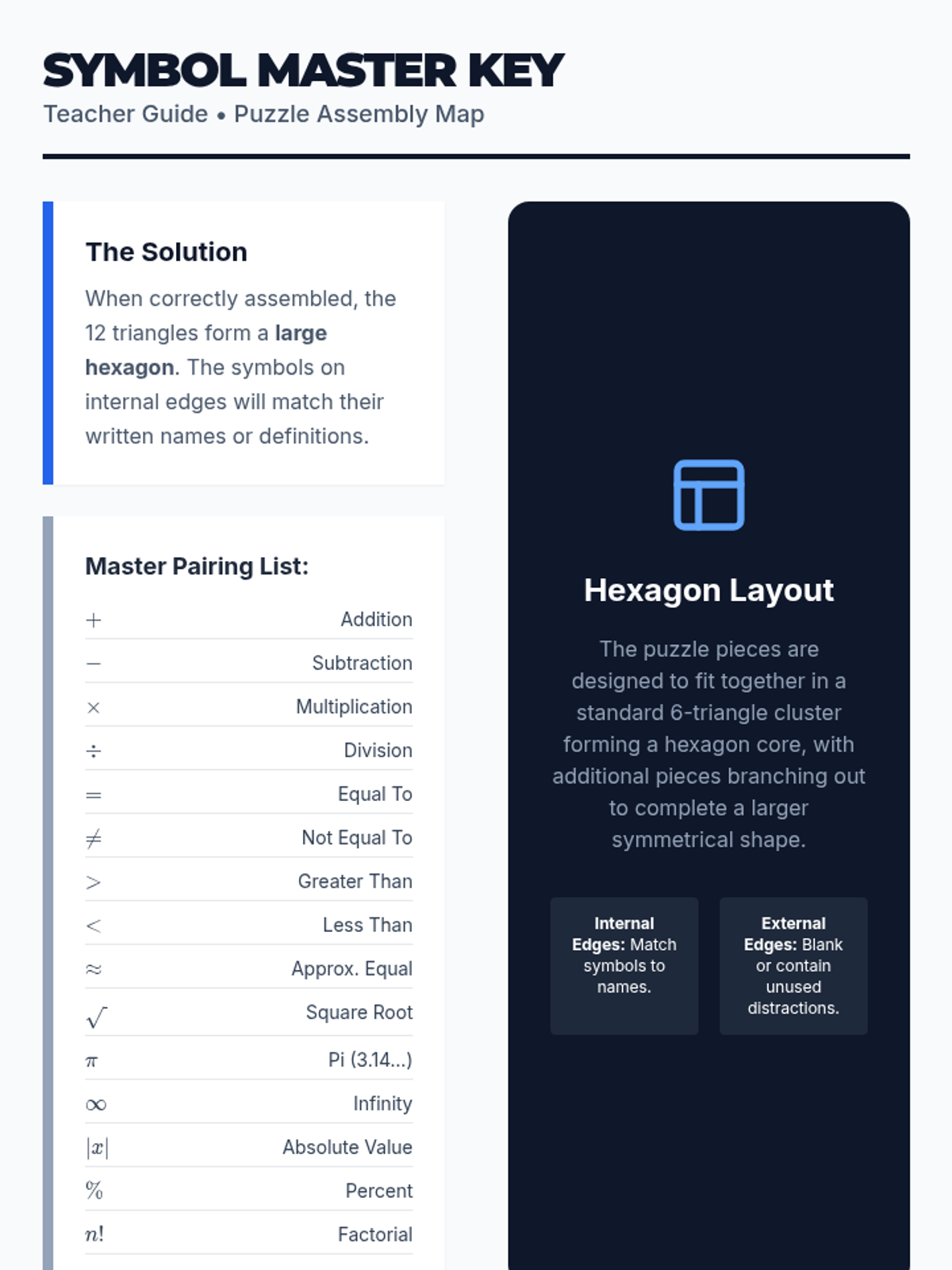
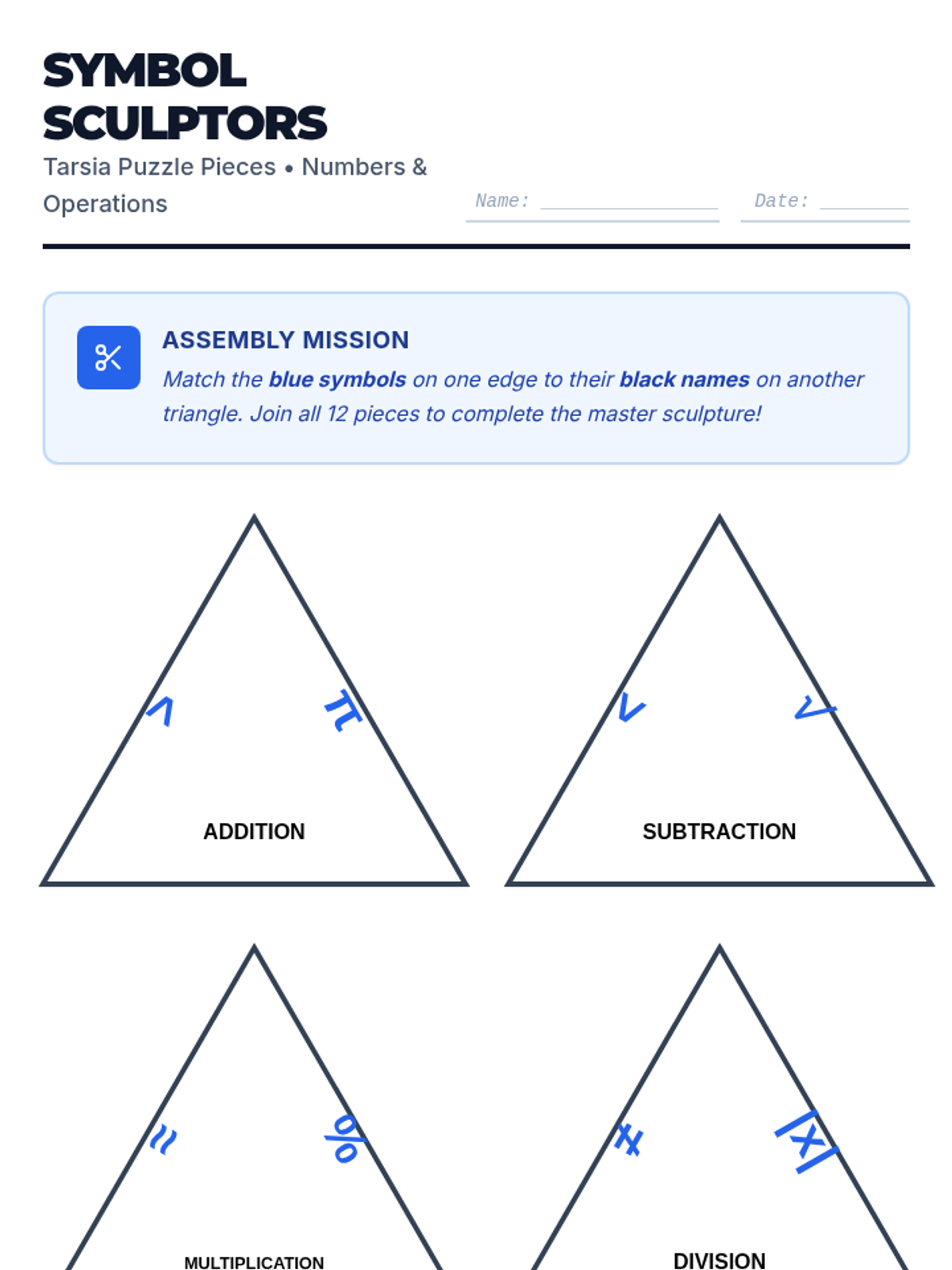
A series of lessons designed to build fluency in mathematical notation and operations through visual and tactile learning.
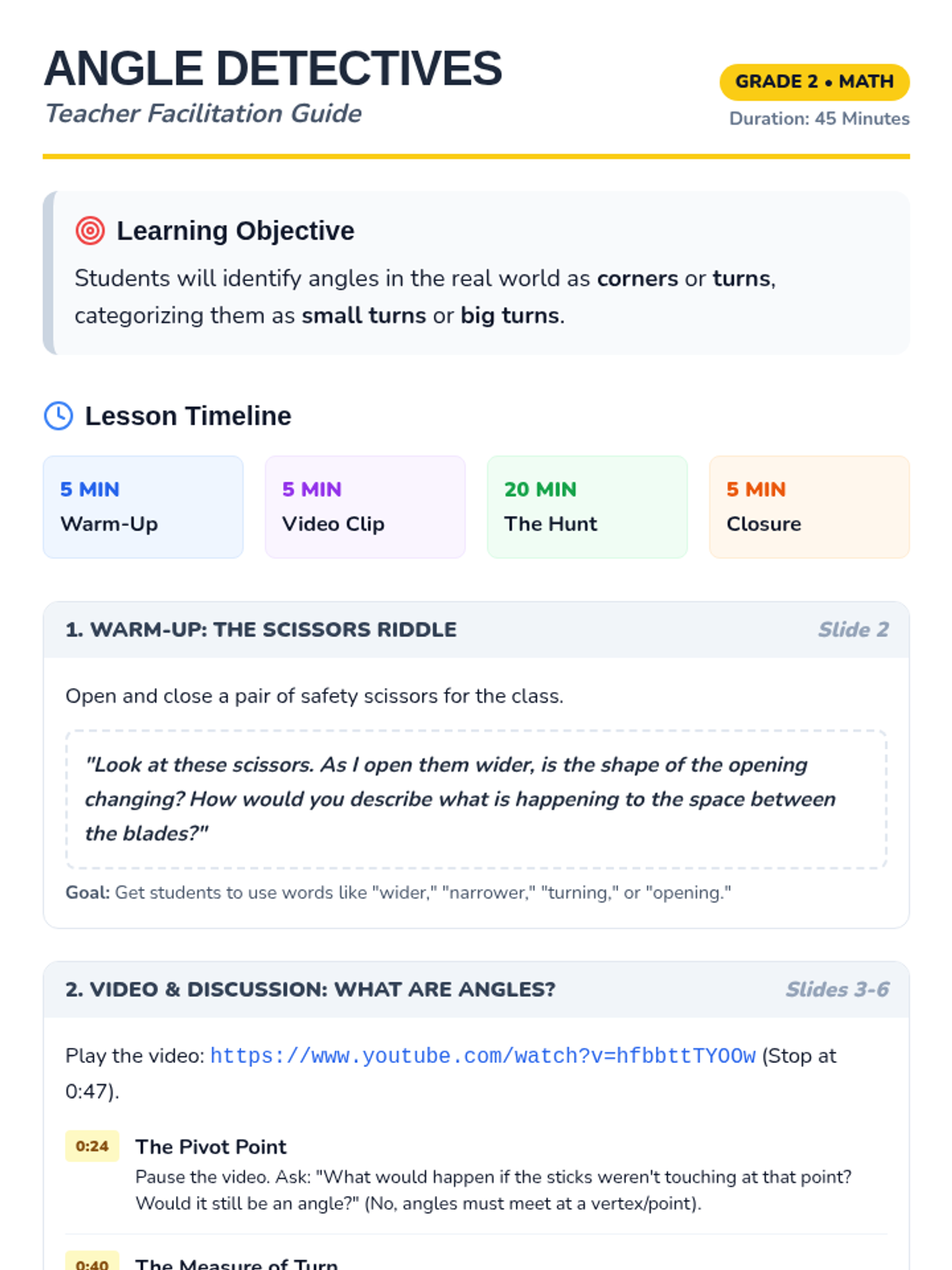
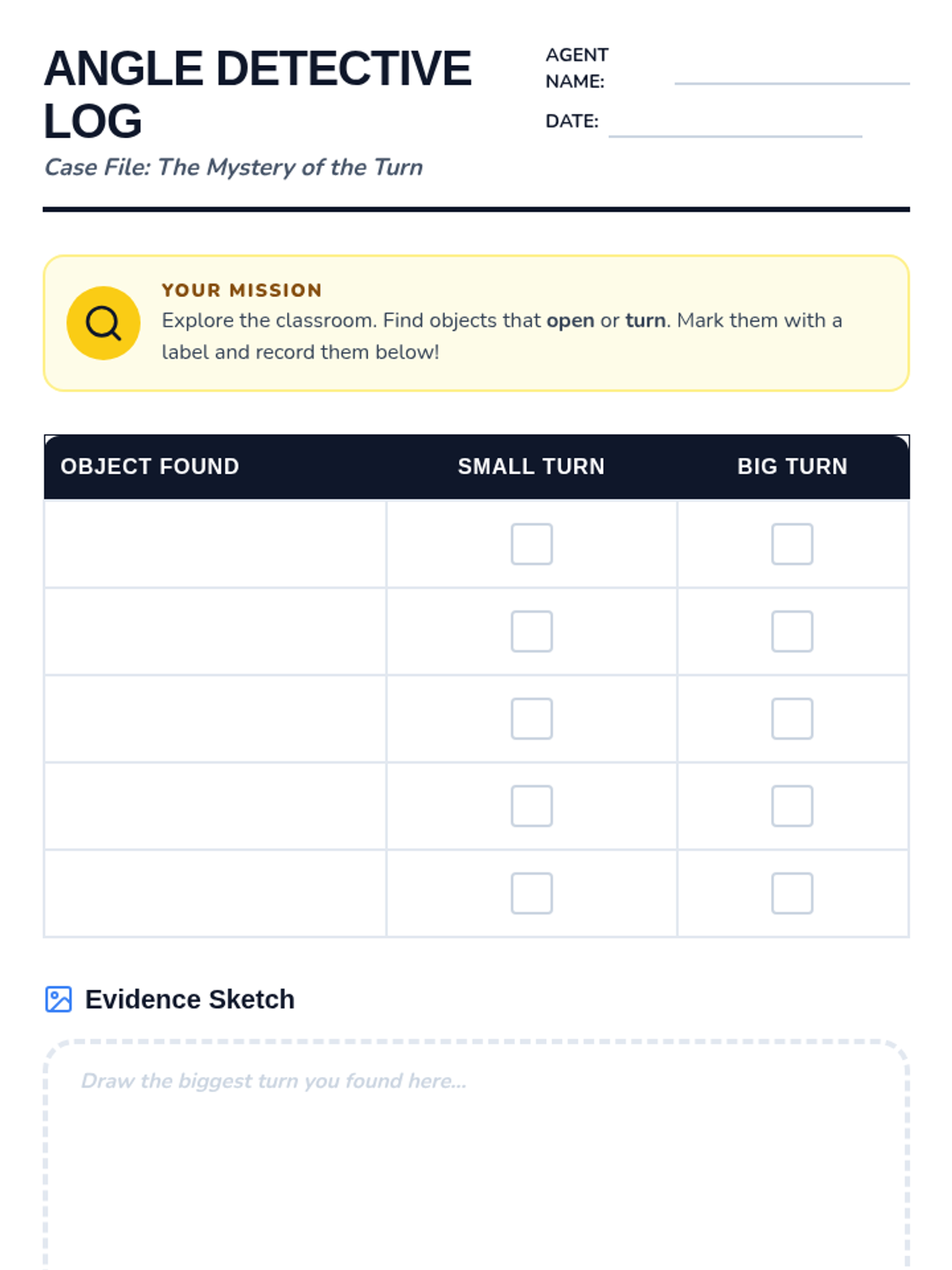
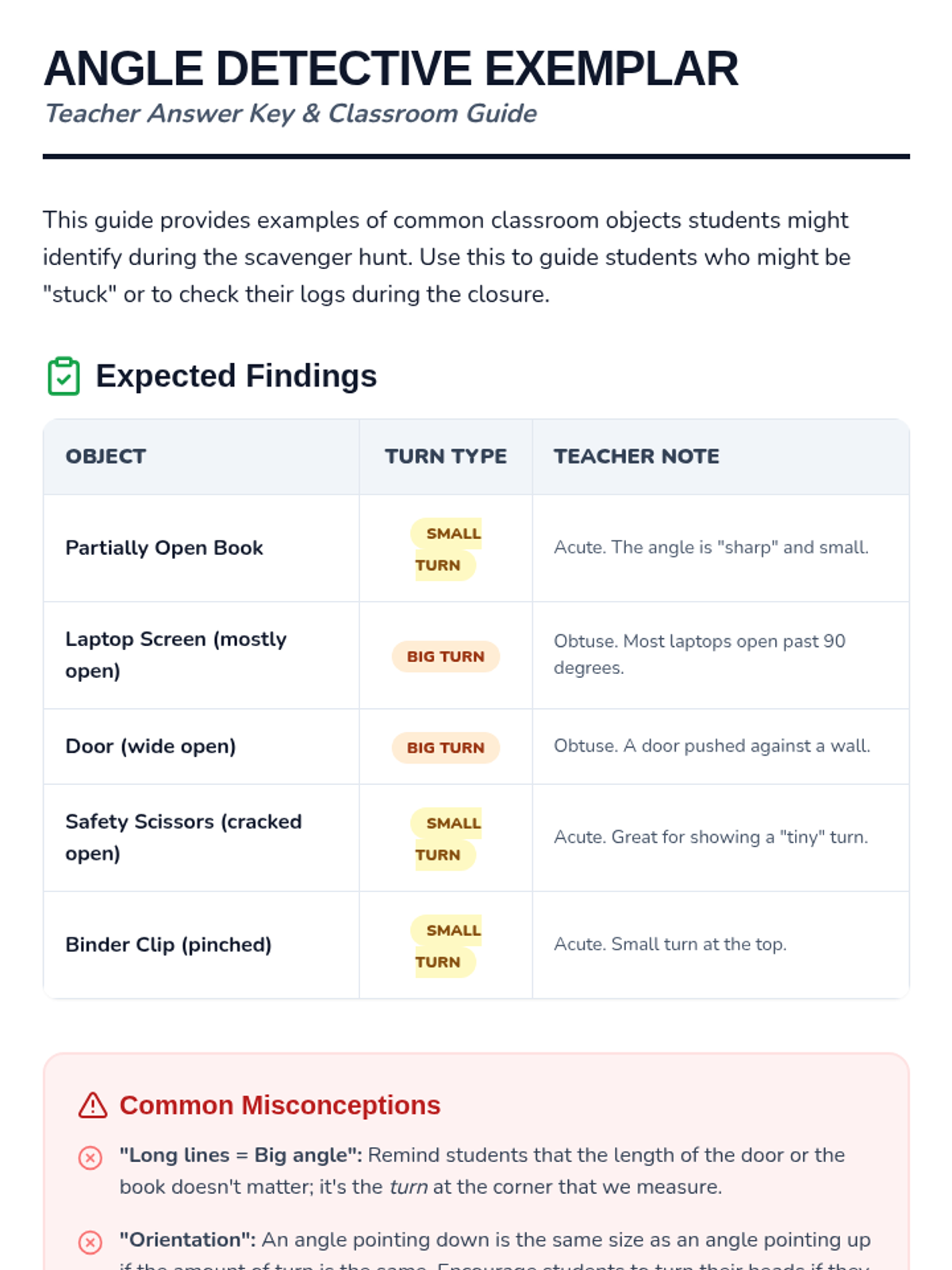
A beginner's introduction to geometry focusing on identifying angles as a measure of turn using real-world objects. Students explore the classroom to find 'turns' and 'corners', classifying them as small or large.
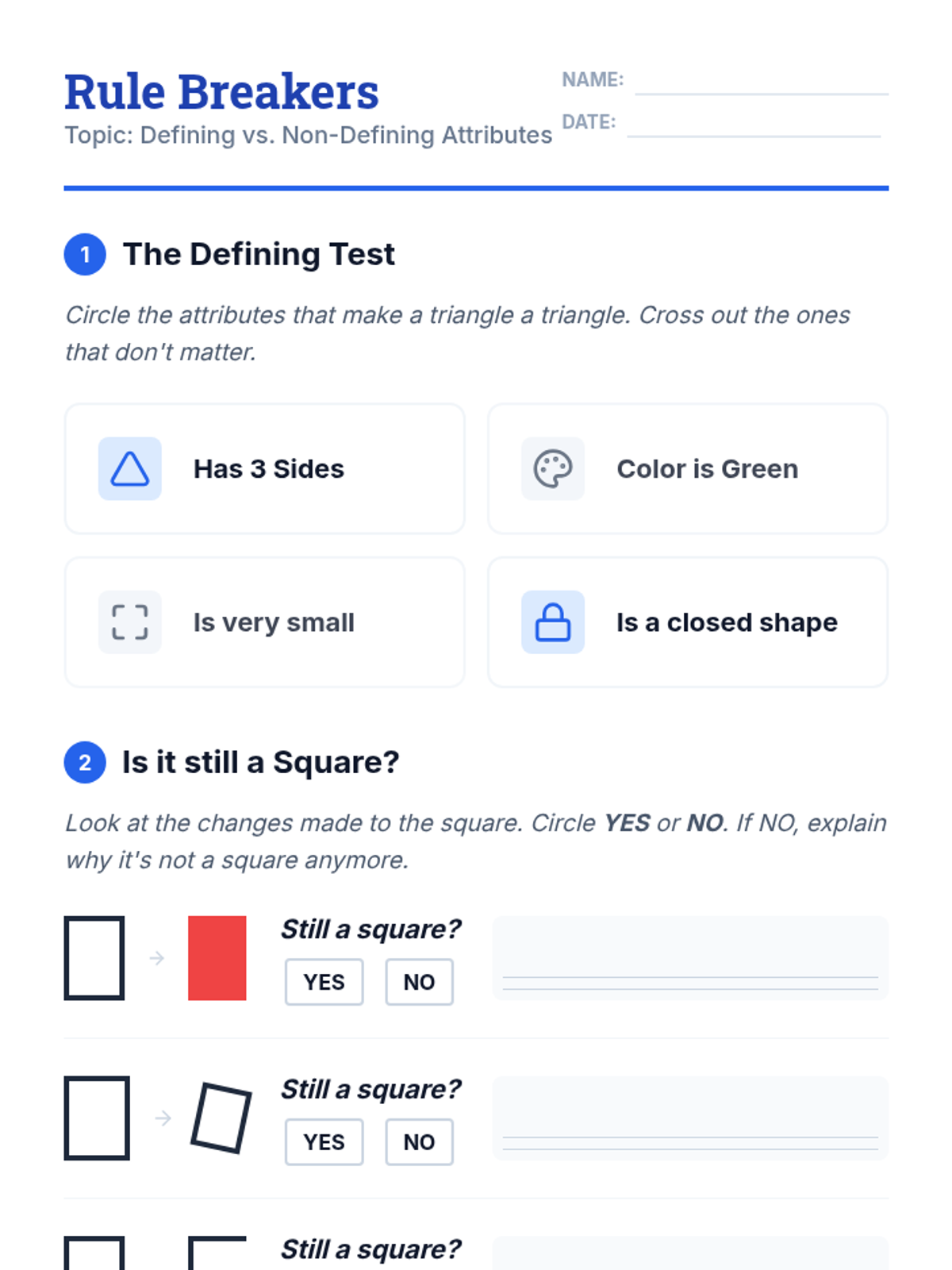
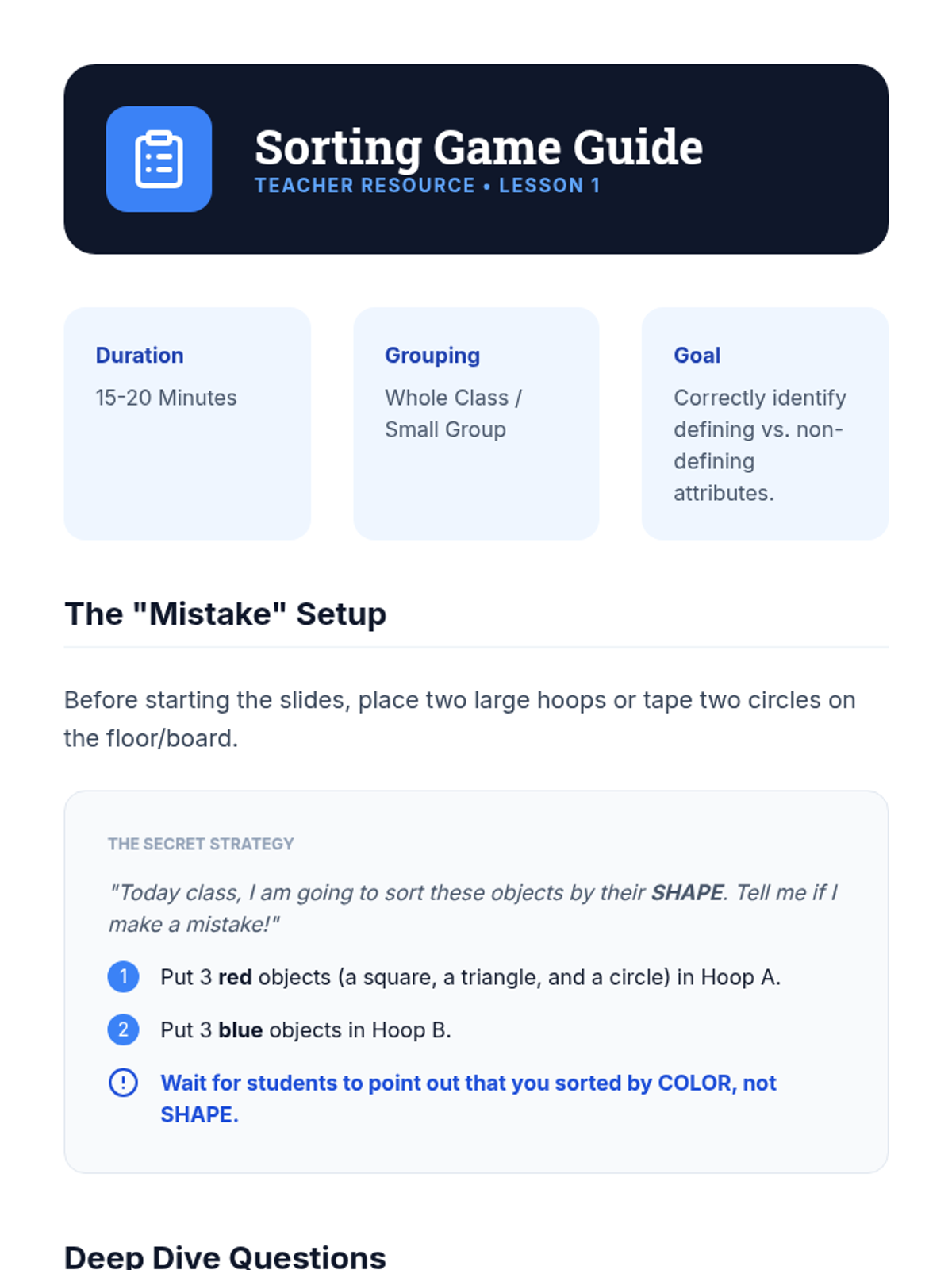
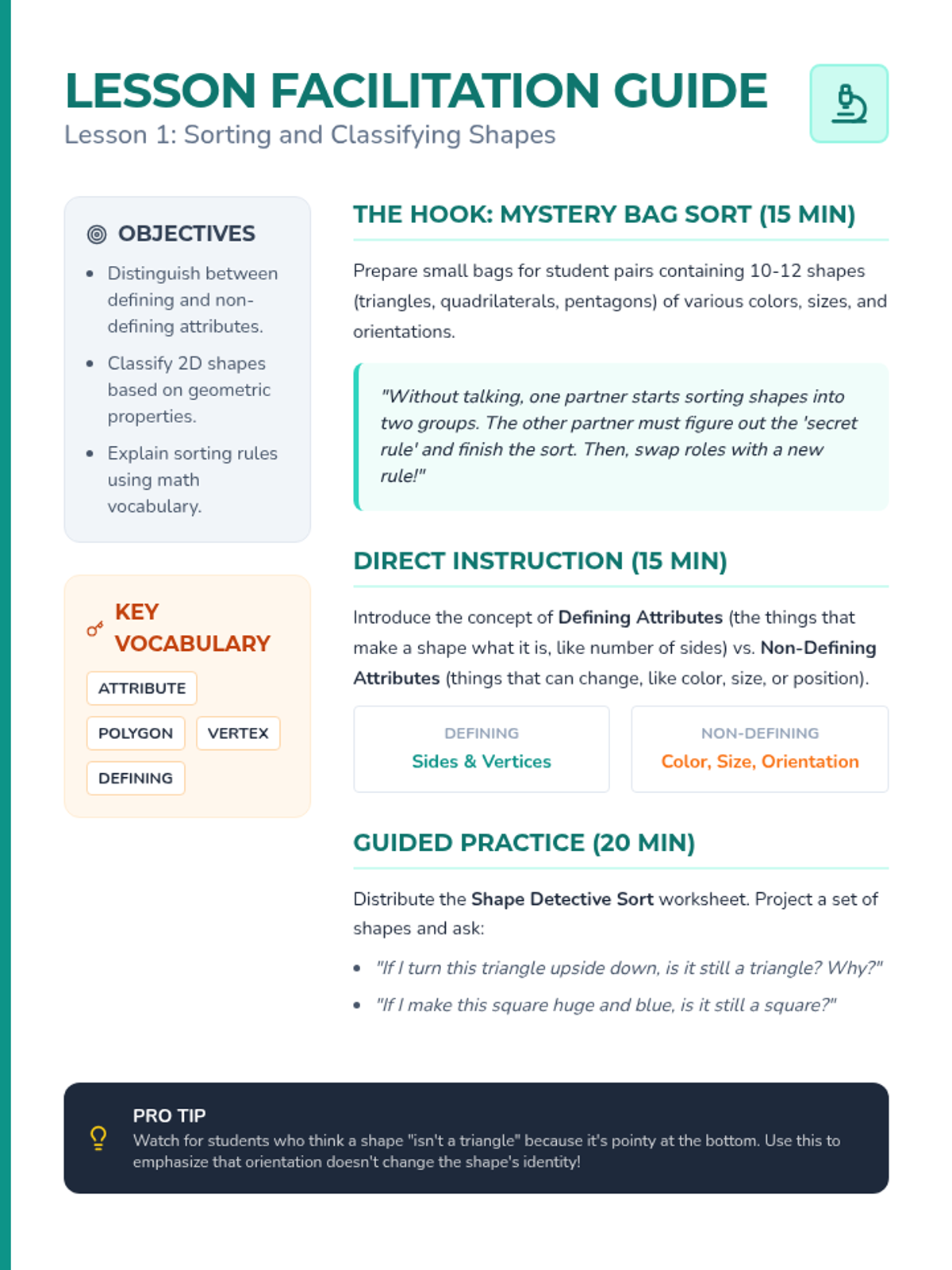
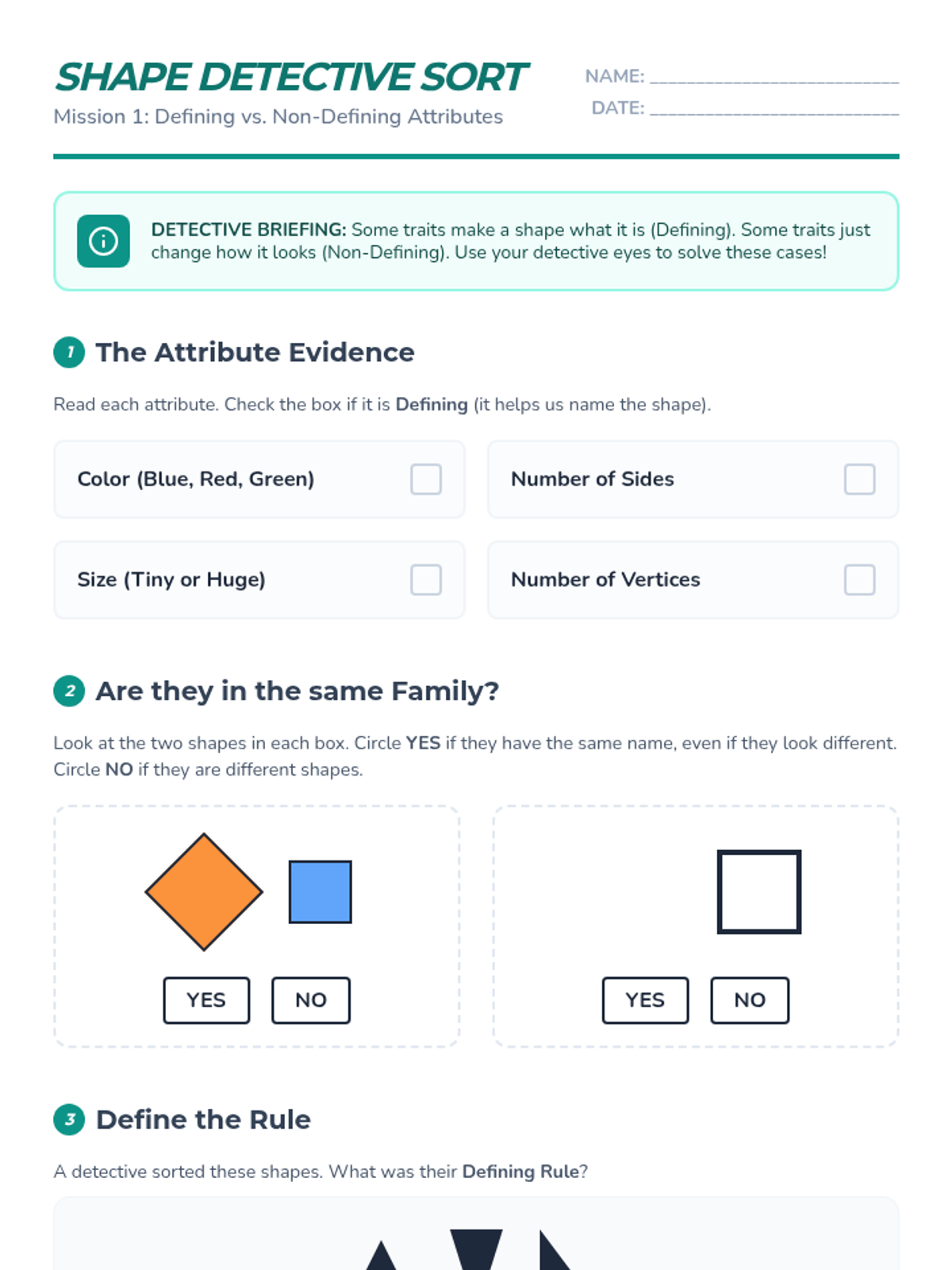
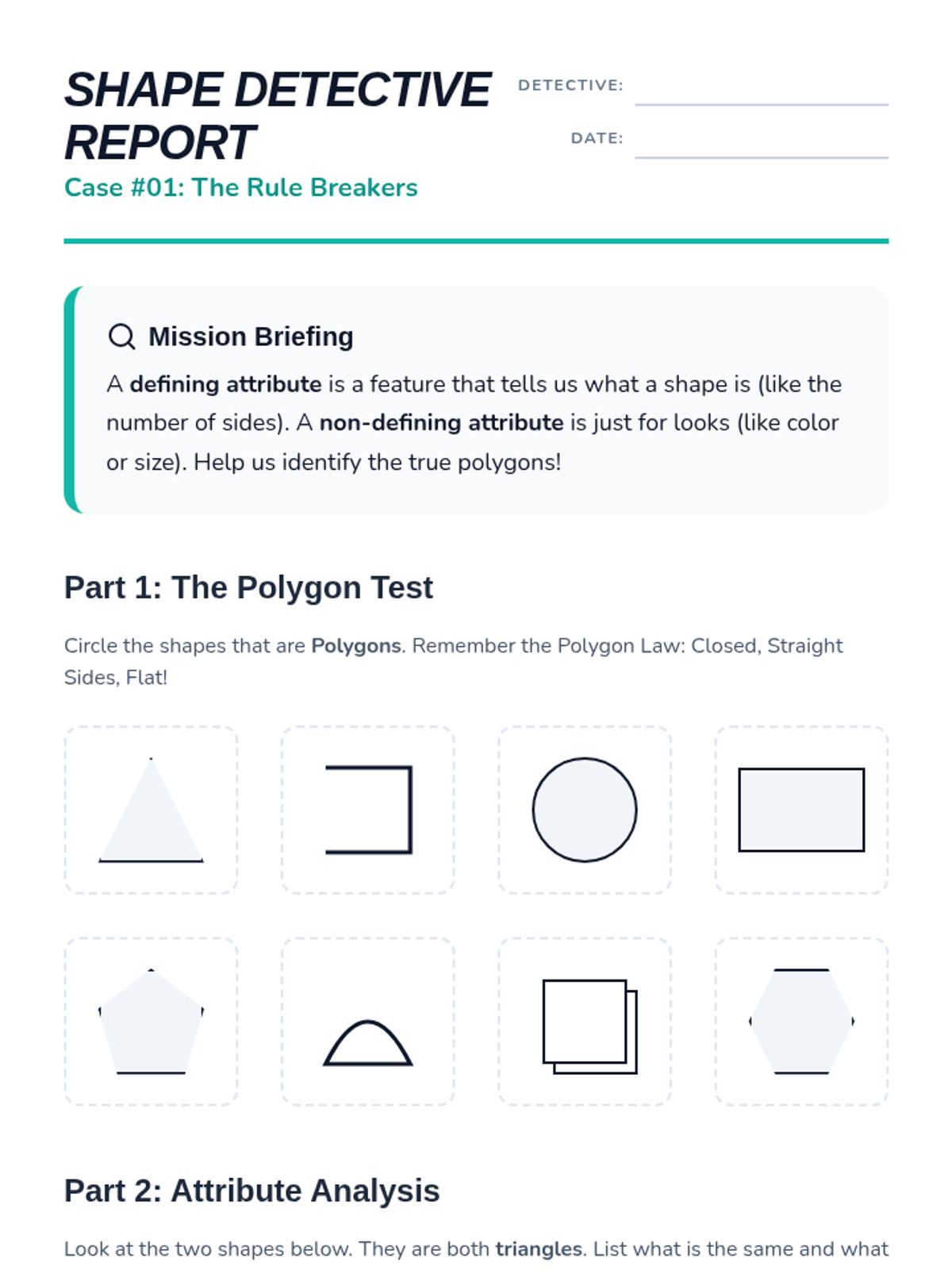
A game-based sequence for 2nd grade focusing on the logical categorization of geometric figures and the quadrilateral family. Students explore defining versus non-defining attributes through sorting games, riddles, and a culminating museum curation project.
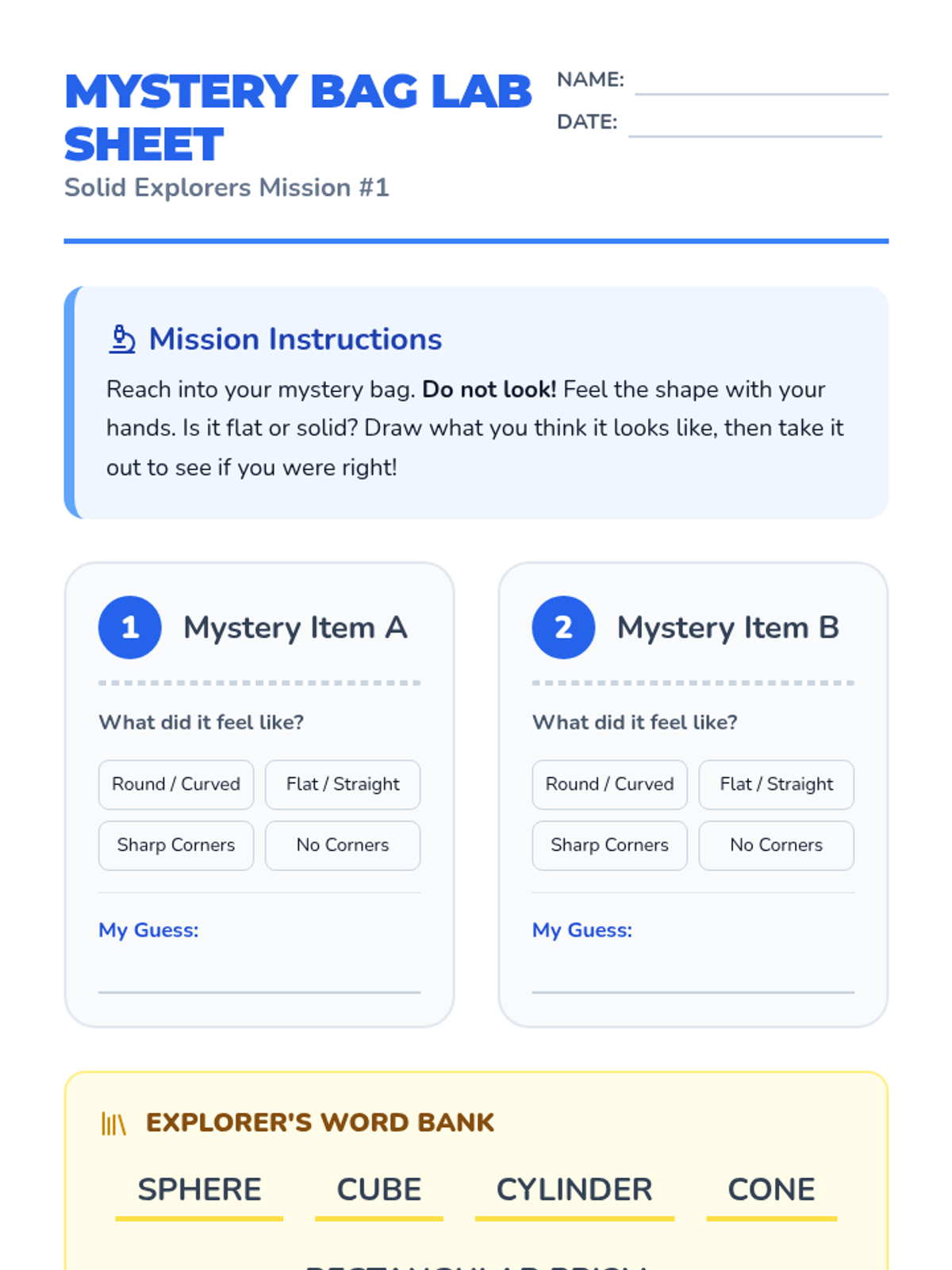
A 5-lesson inquiry-based sequence for 2nd grade focusing on the physical properties and geometric attributes of three-dimensional solids. Students explore how the form of a shape determines its movement and function in the real world through hands-on labs, building challenges, and scavenger hunts.
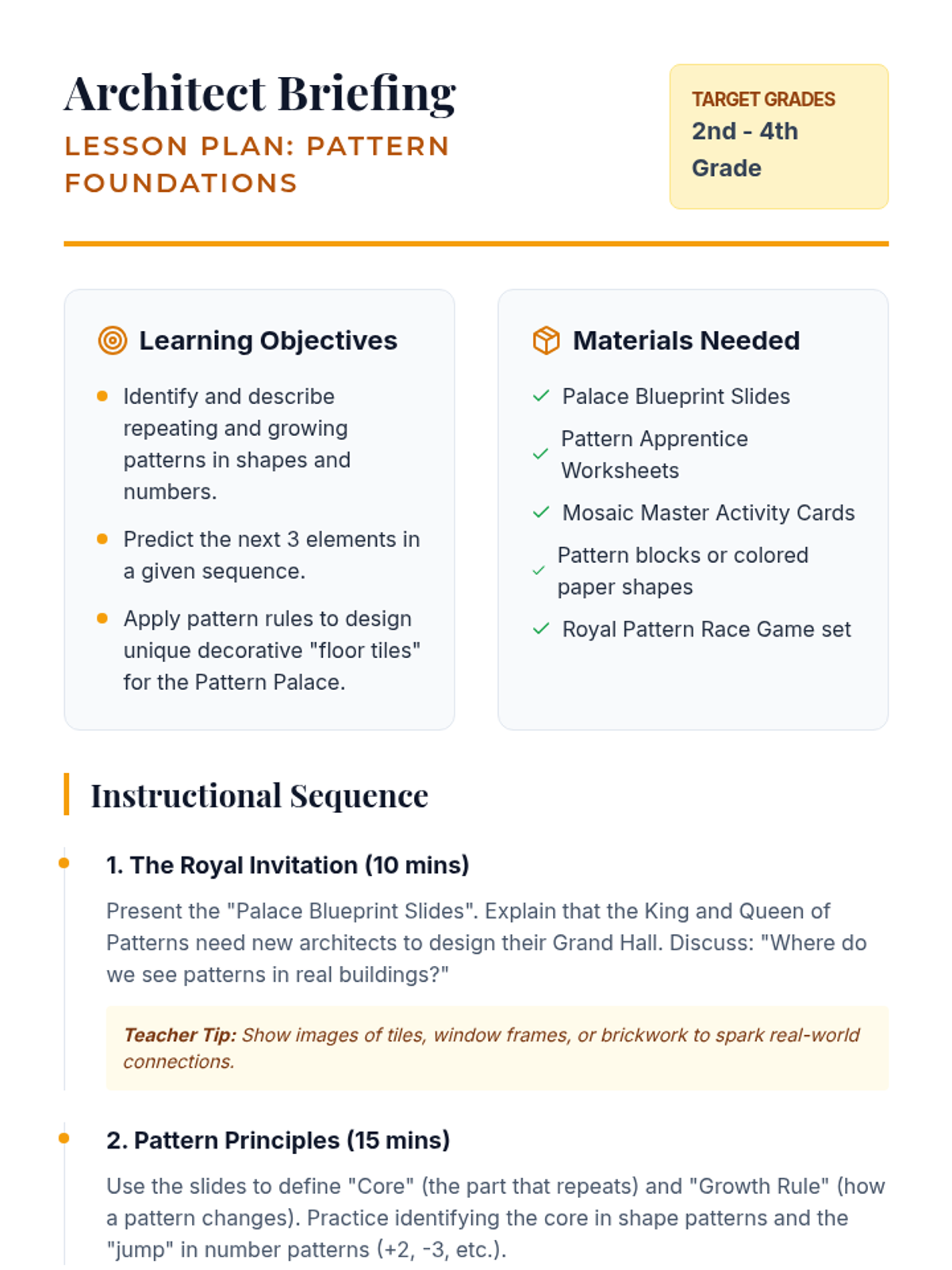
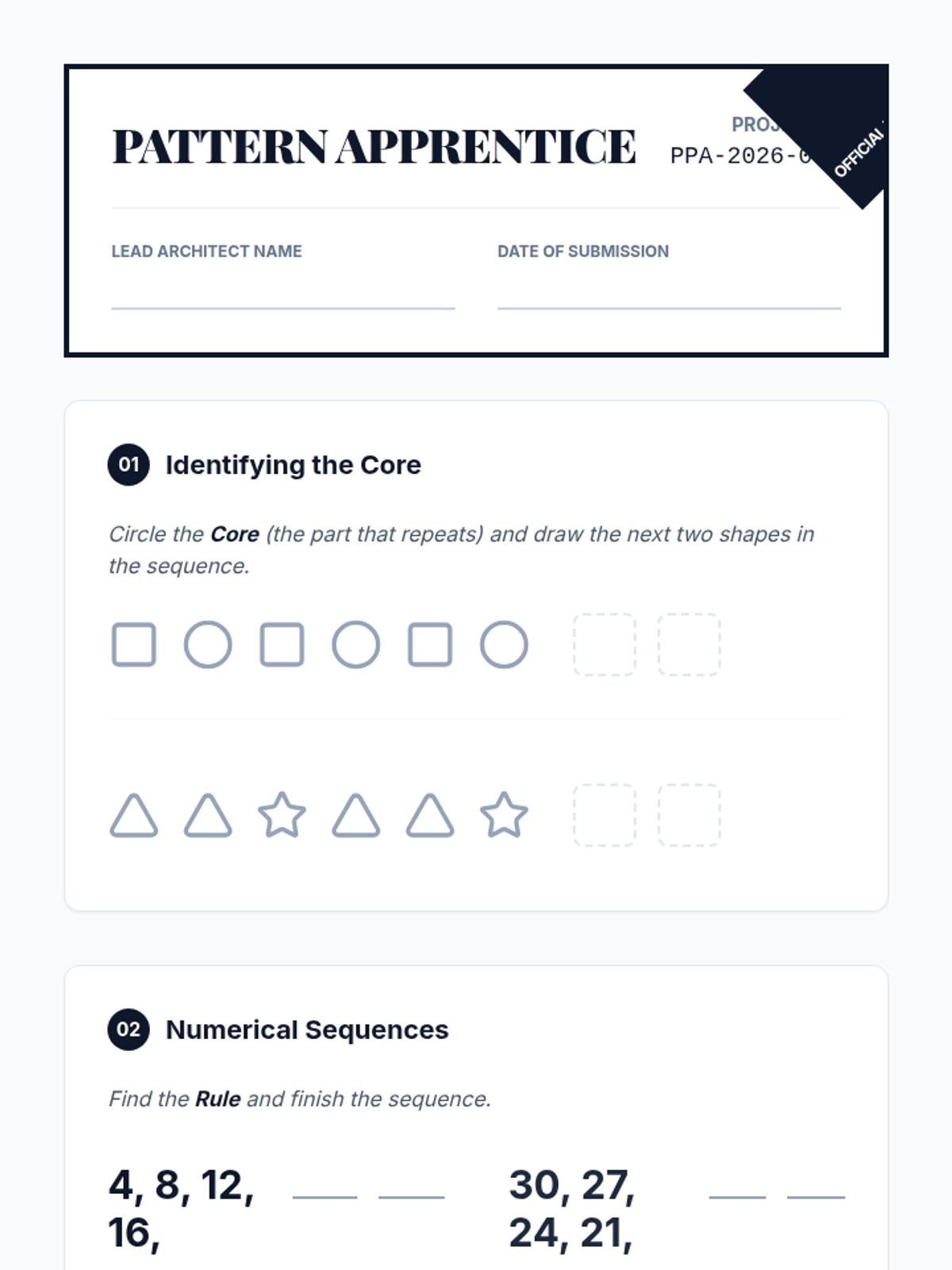
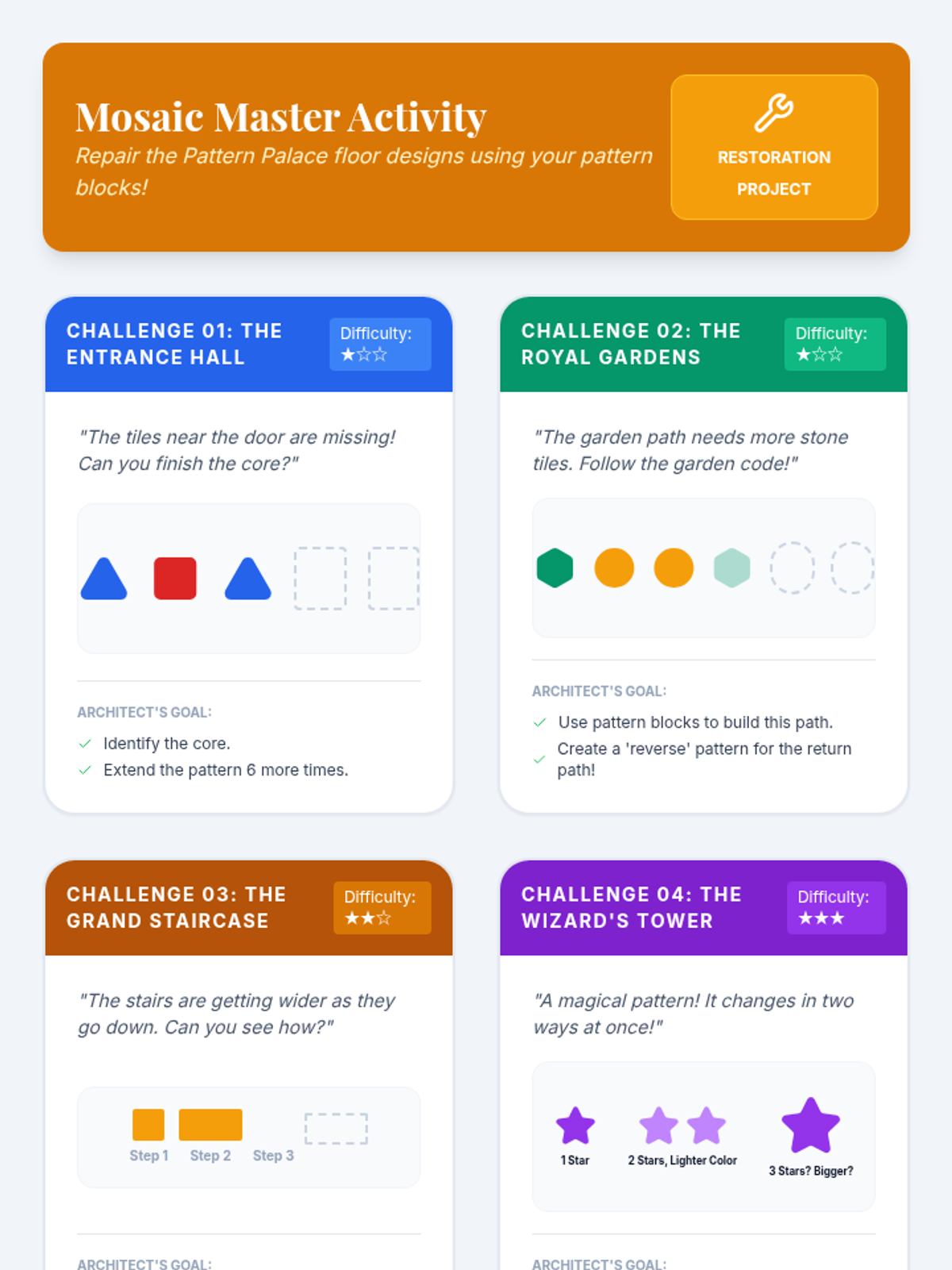
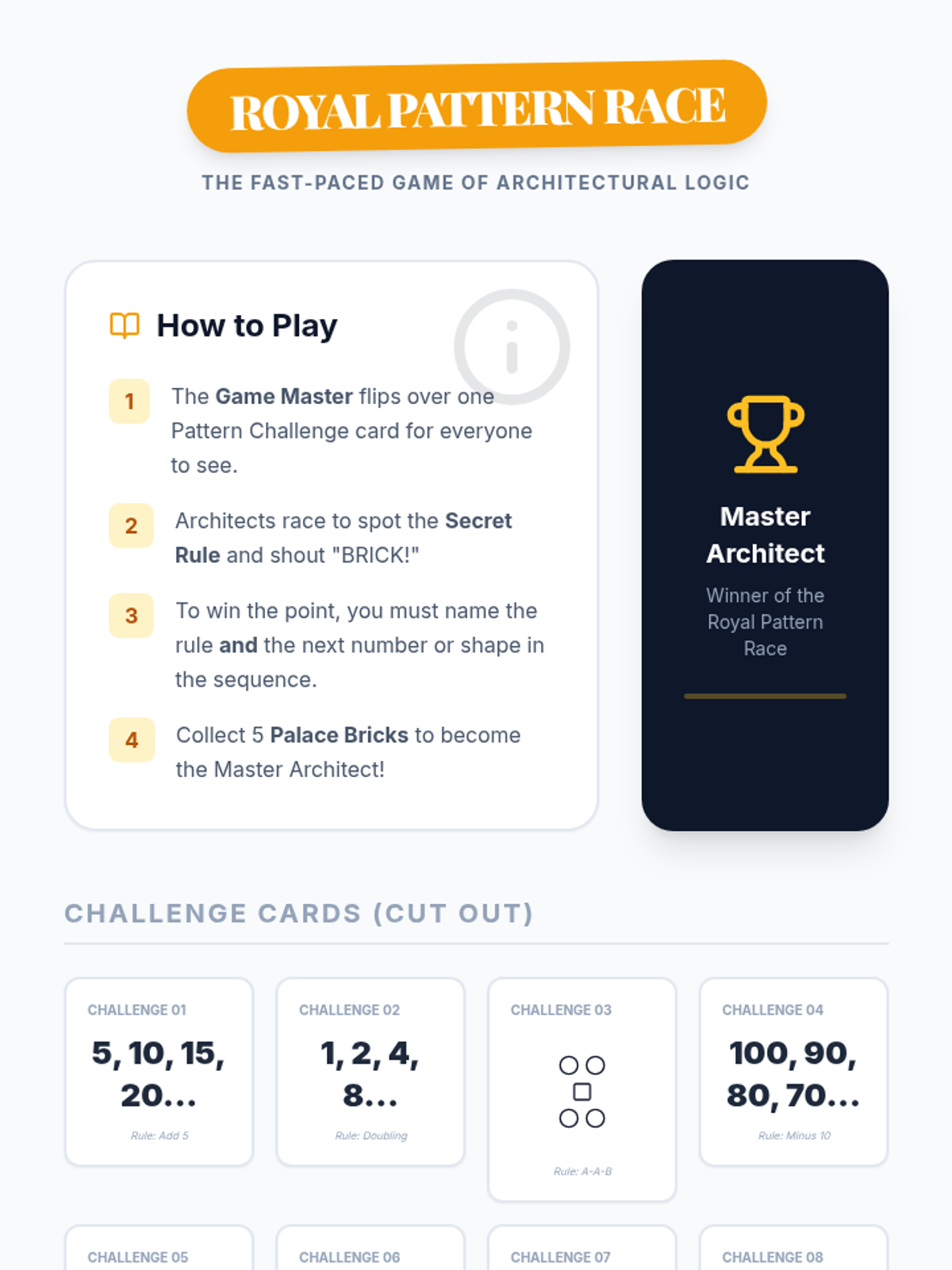
A comprehensive unit where students become architects in the 'Pattern Palace', learning to identify, extend, and create complex shape and number patterns. Students develop algebraic thinking through hands-on tiling activities, visual challenges, and numerical sequences.
A series of lessons focused on geometry and spatial reasoning, where students explore the properties of 2D shapes, symmetry, and patterns.
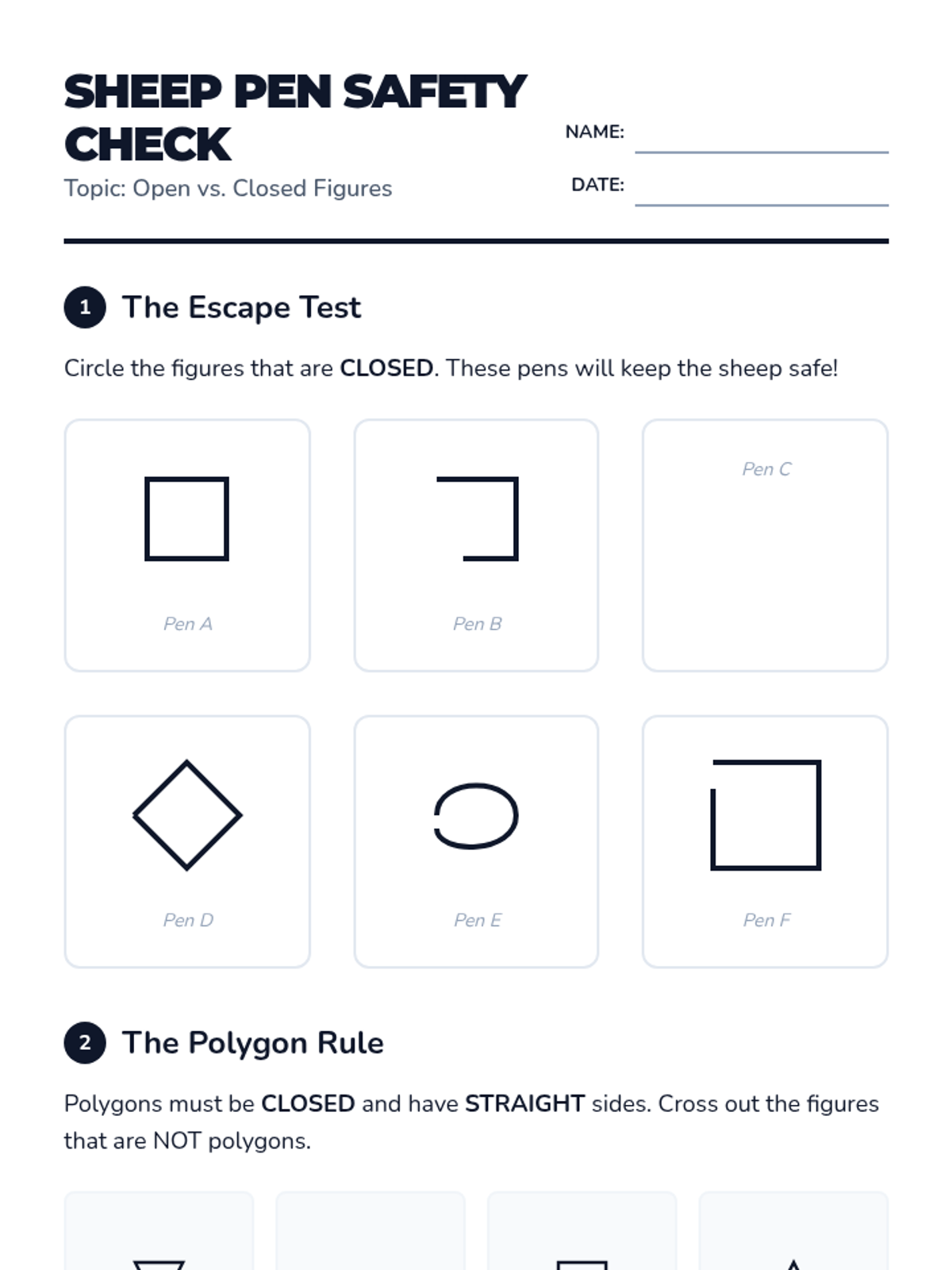
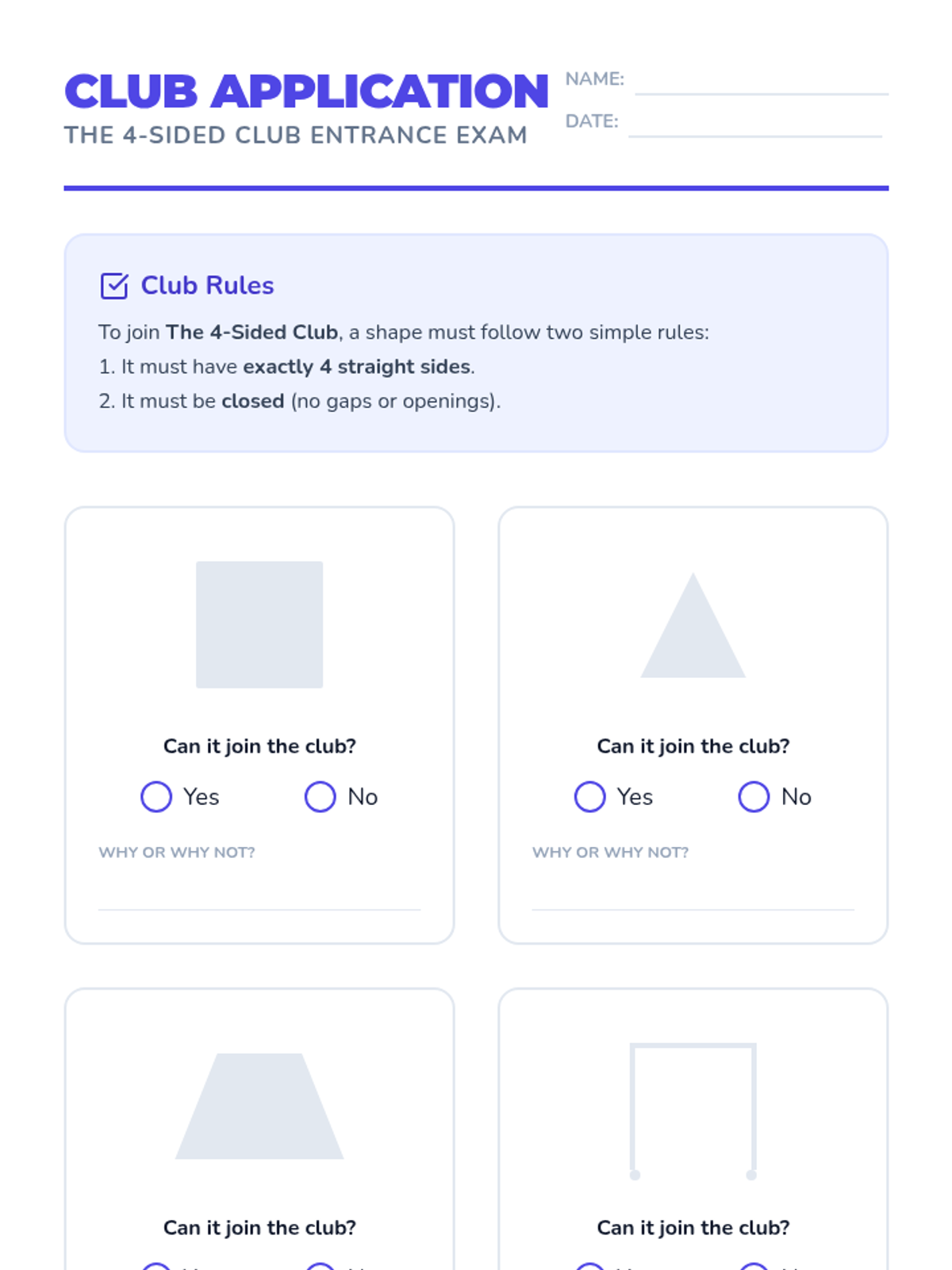
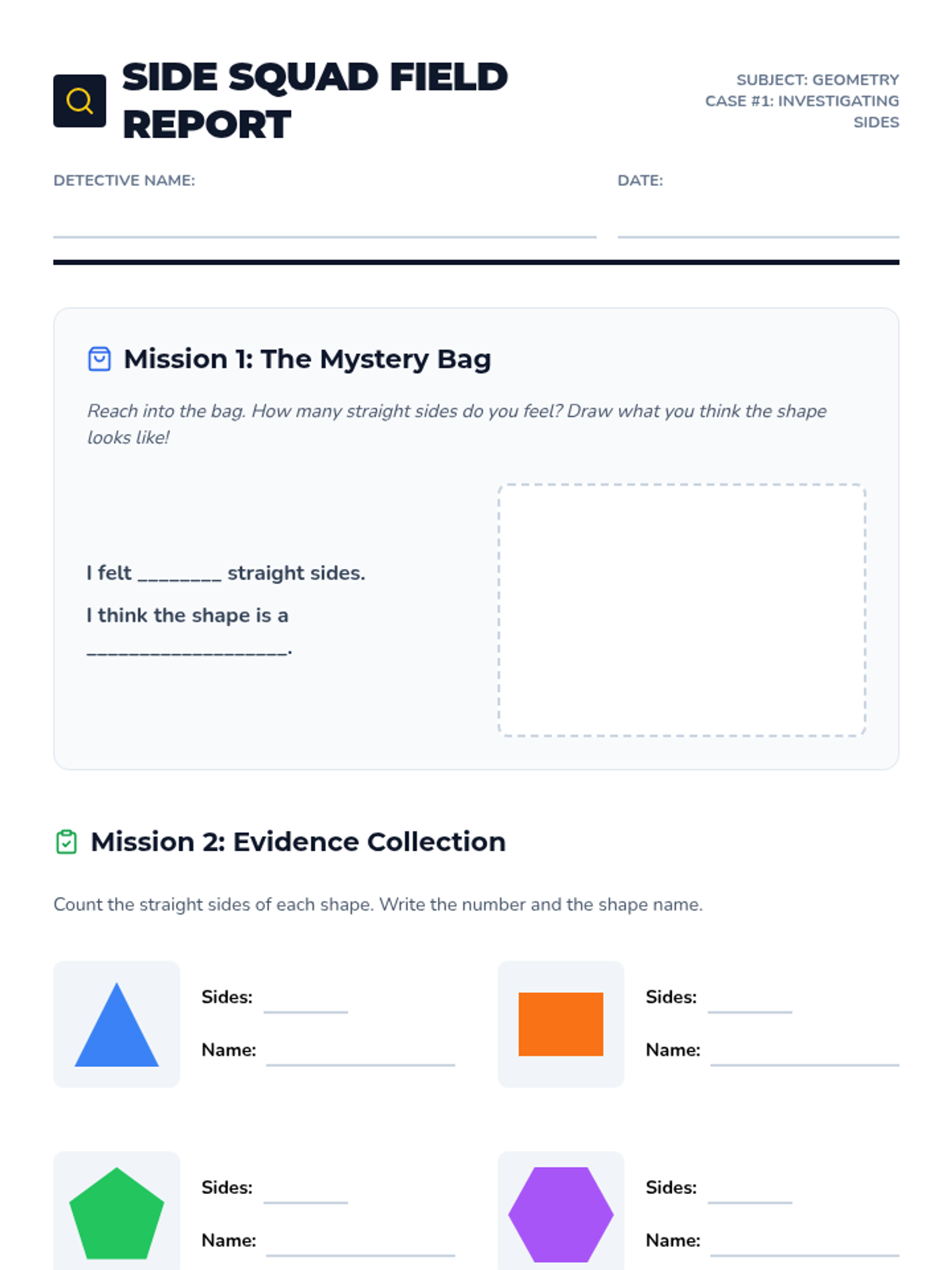
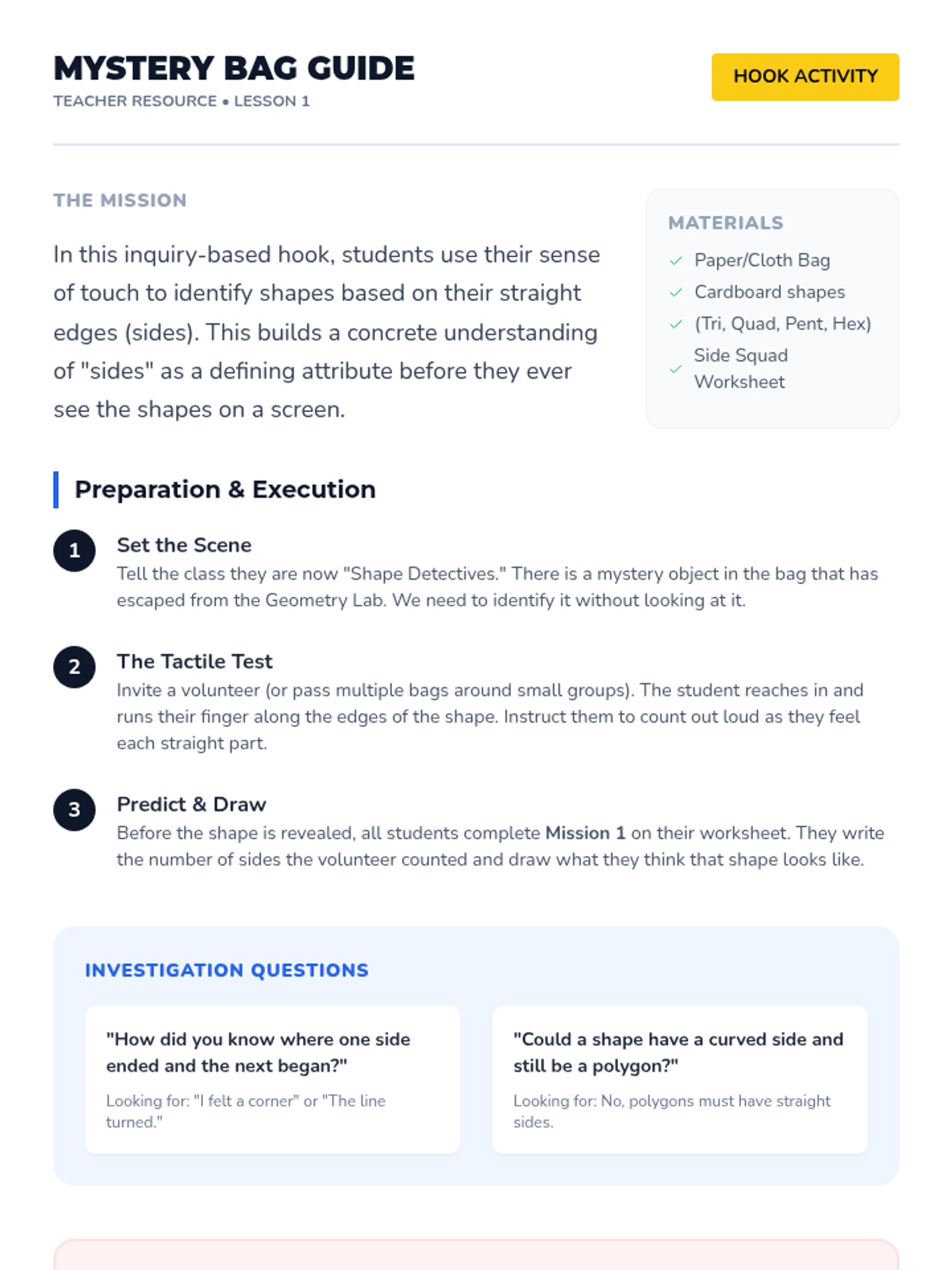
This sequence introduces 2nd-grade students to the fundamental properties of two-dimensional polygons, moving from identifying open/closed figures to classifying and drawing shapes based on their attributes. Students will learn to recognize triangles, quadrilaterals, pentagons, and hexagons by counting sides and vertices, regardless of size or orientation.
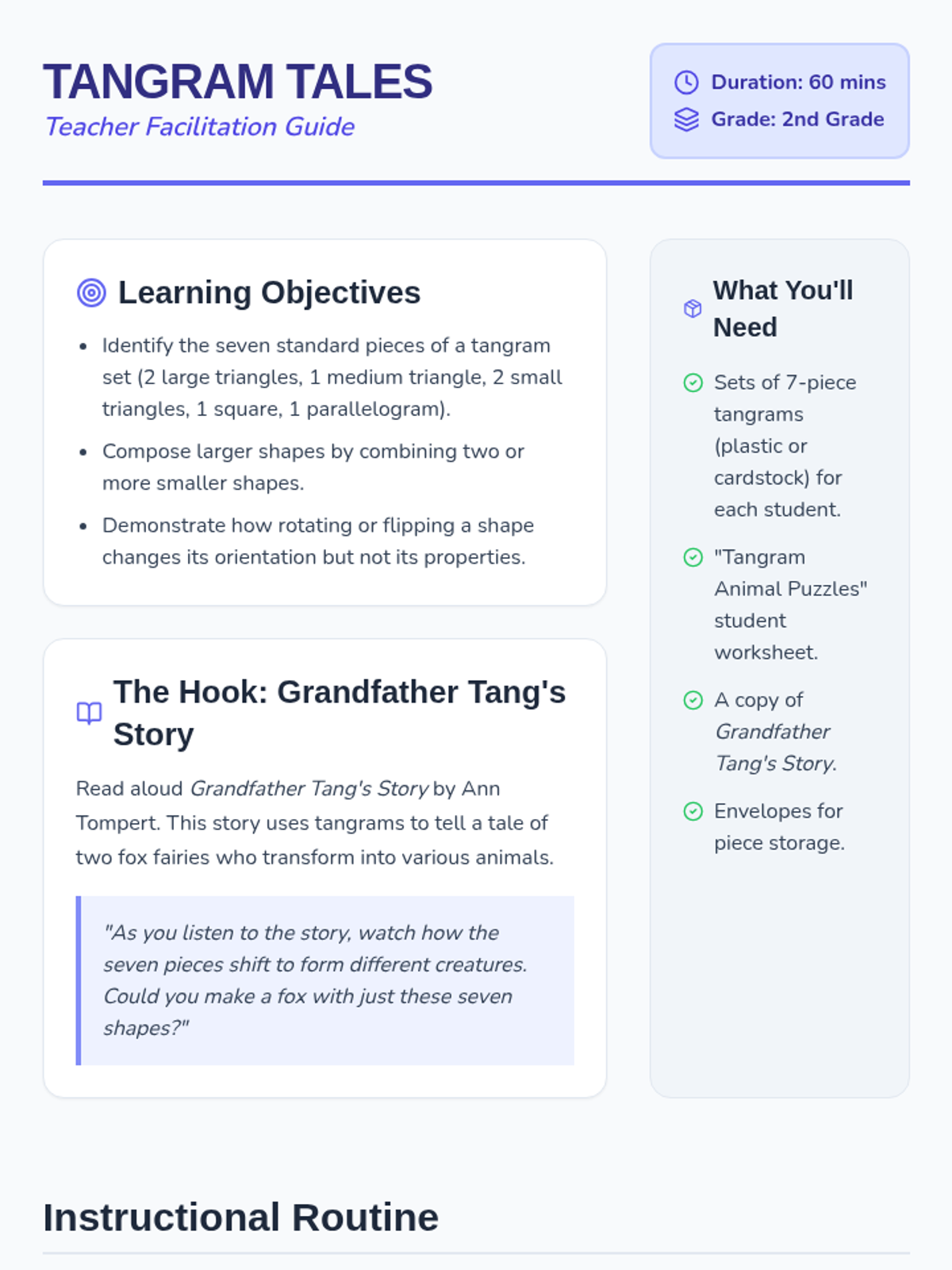
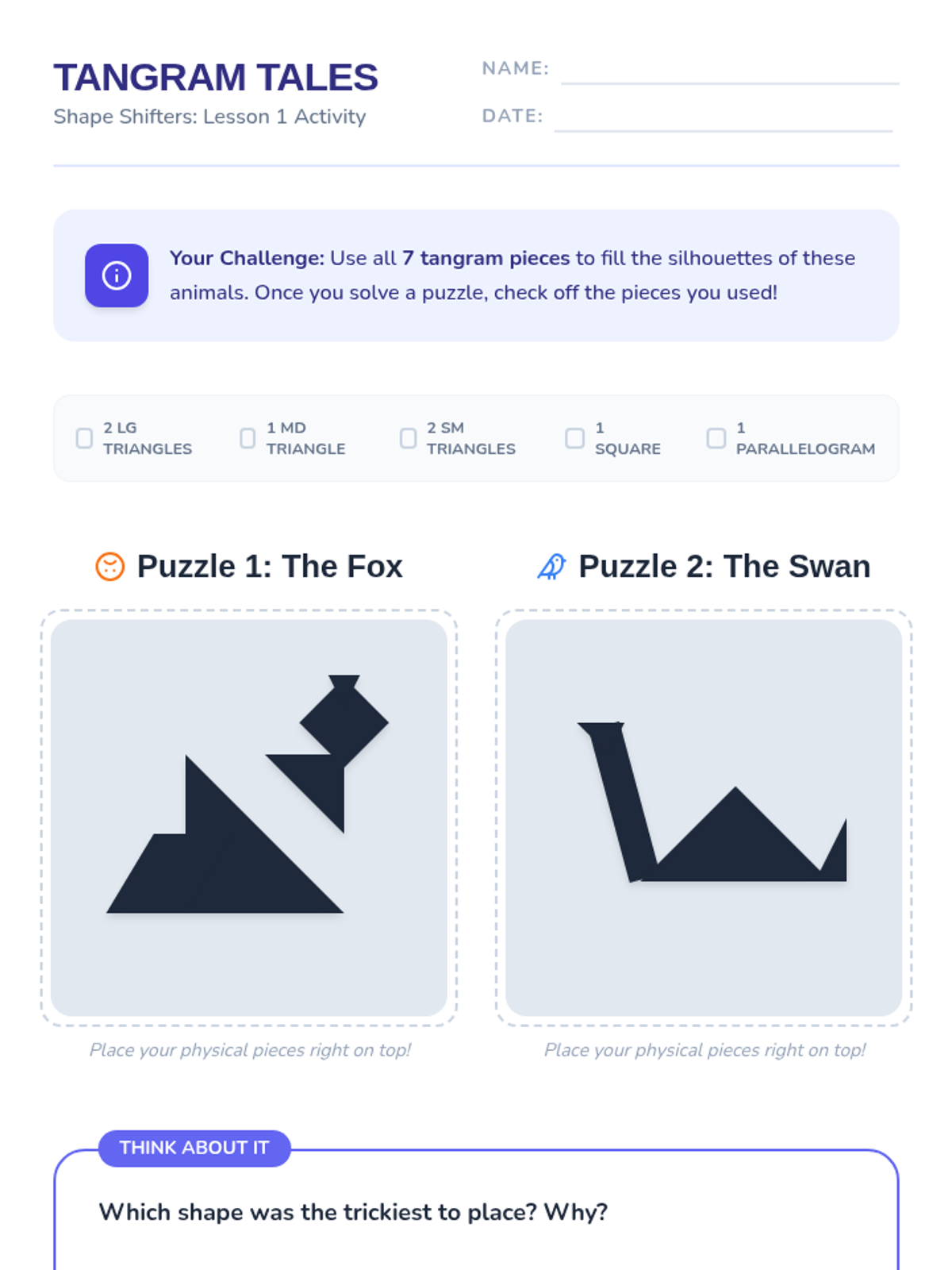
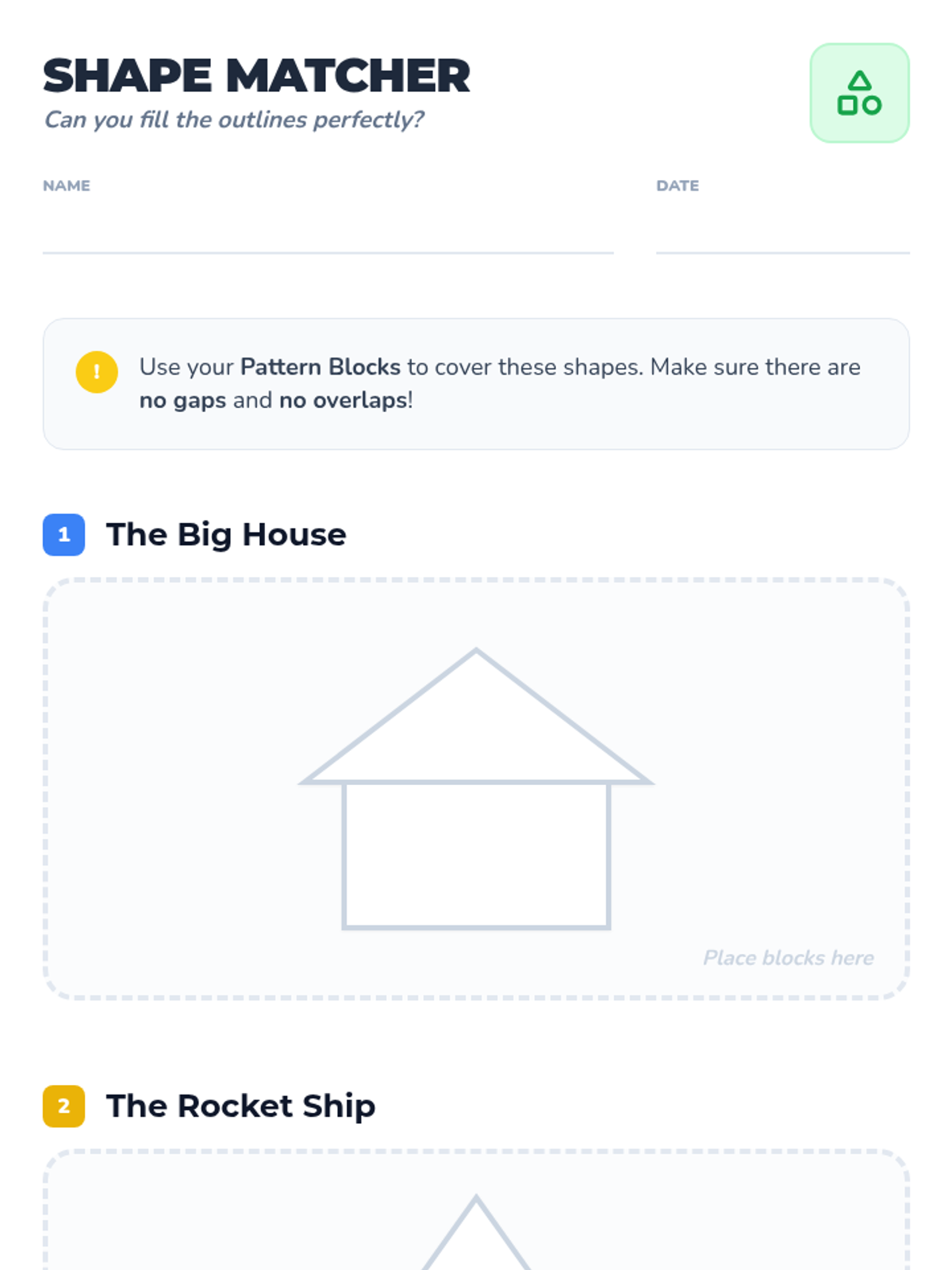
A 1st-grade geometry sequence exploring how shapes combine and break apart. Students use hands-on materials like tangrams, pattern blocks, and geoboards to develop spatial reasoning and understand the part-whole relationship in geometric figures.
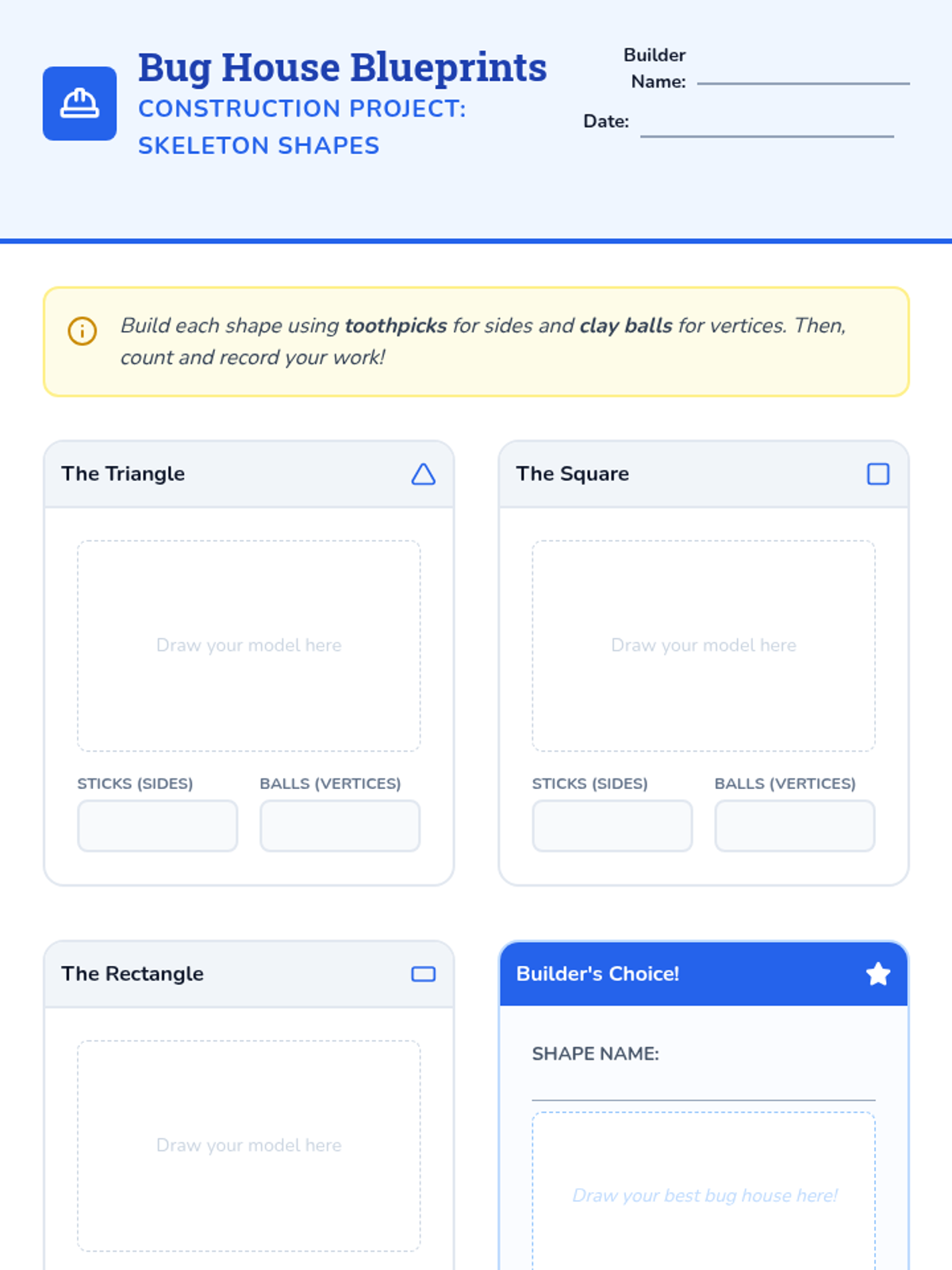
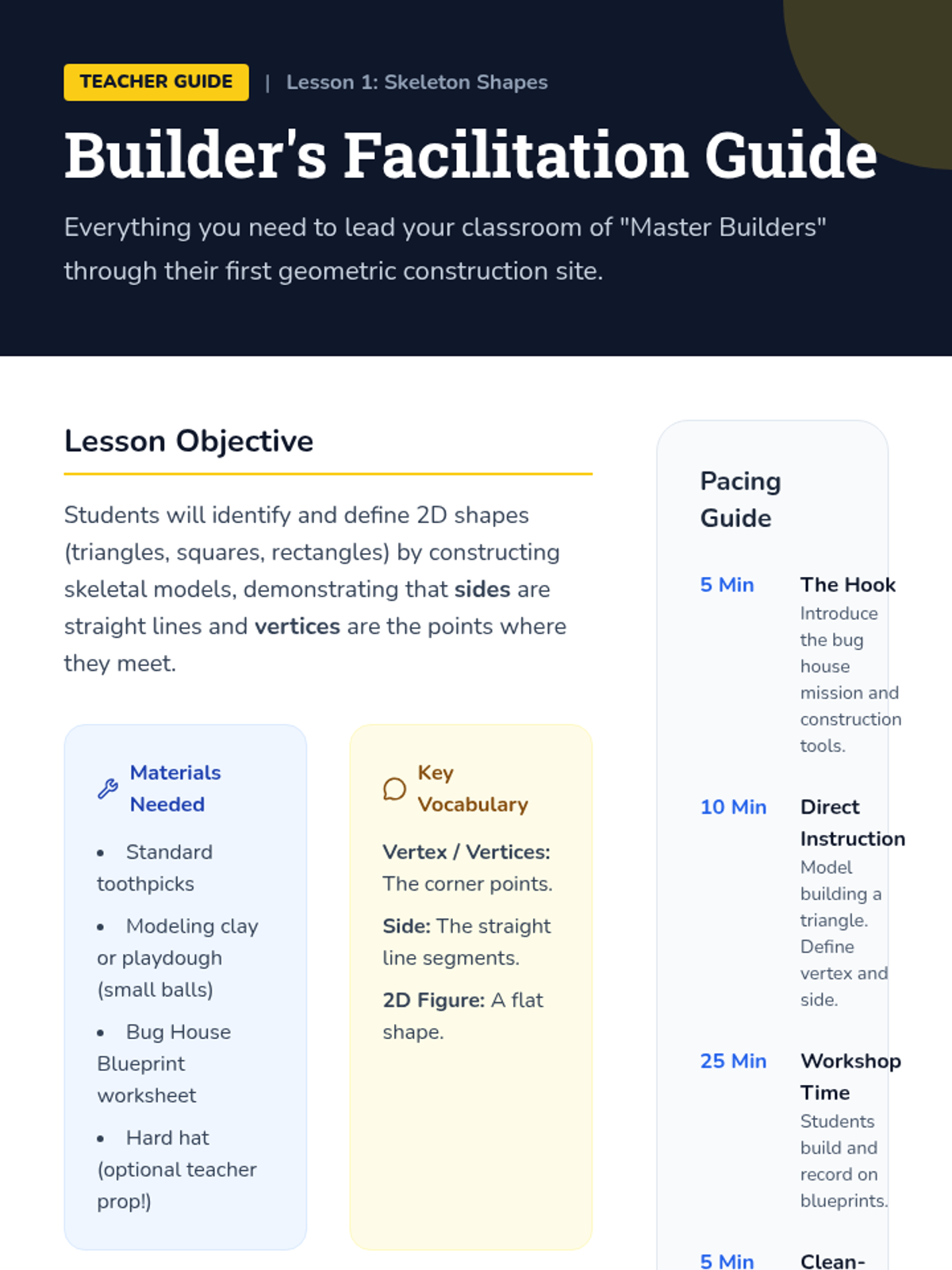
A project-based sequence focusing on the construction and composition of 2D shapes. Students move from building skeletal models to composing complex images using geometric components.
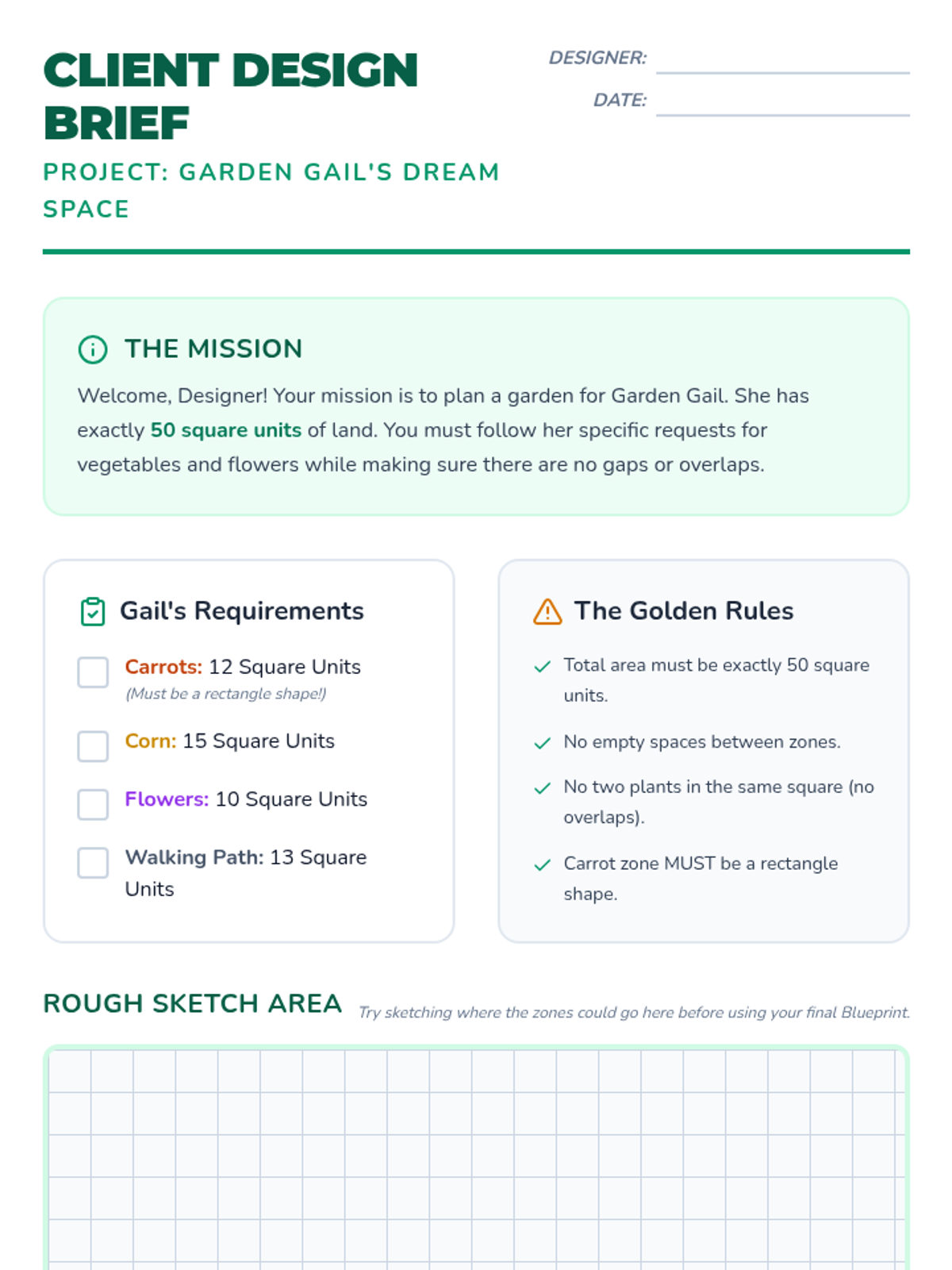
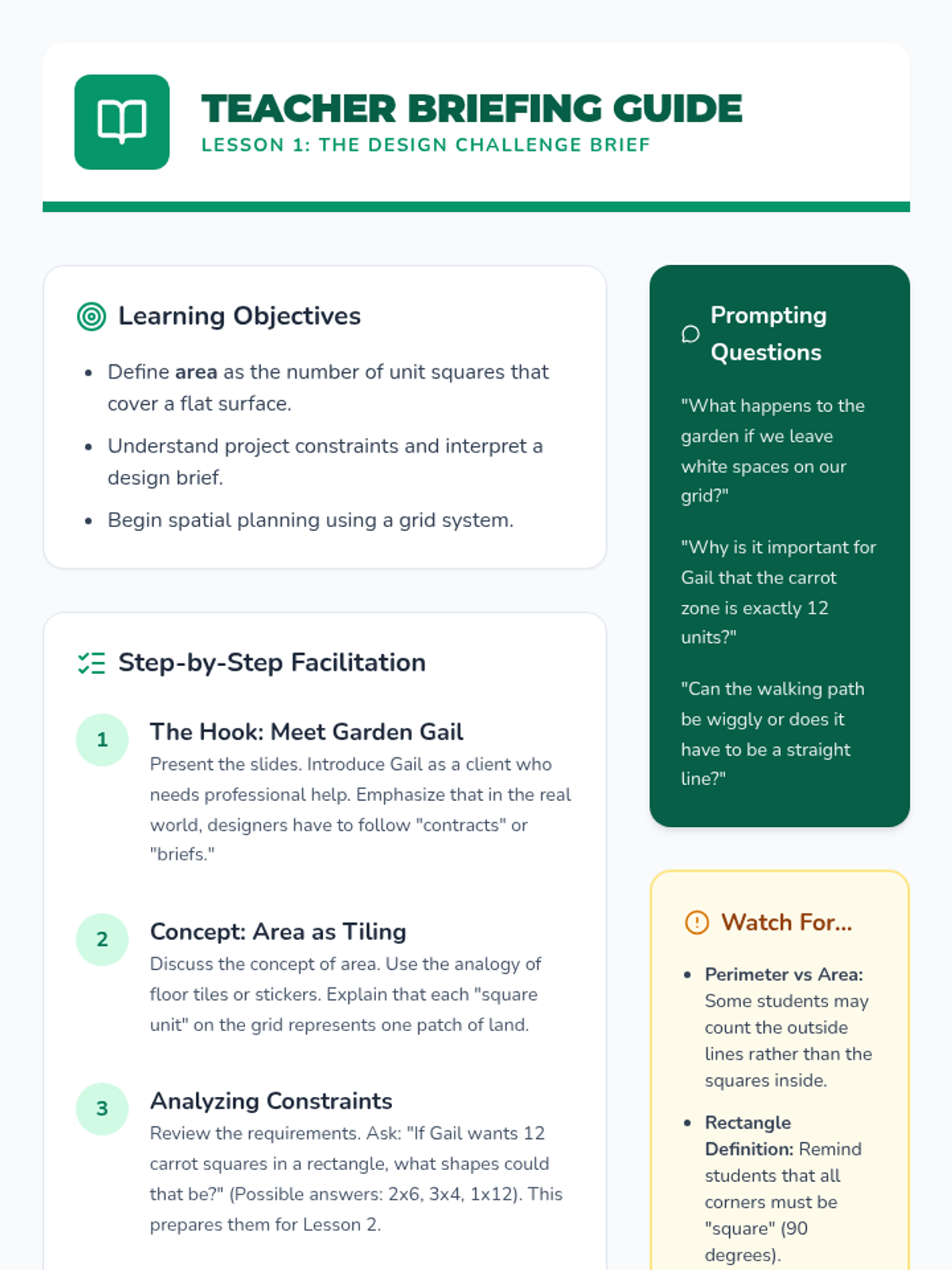
Students step into the shoes of garden designers to learn area. They use 1-inch grids to plan, calculate, and verify the layout of 'Dream Gardens', connecting the concept of square units to real-world spatial planning.
A comprehensive geometry sequence for 2nd grade where students move from identifying shapes to constructing complex figures based on specific attribute descriptions. The unit culminates in a 'Geometric City' design project.
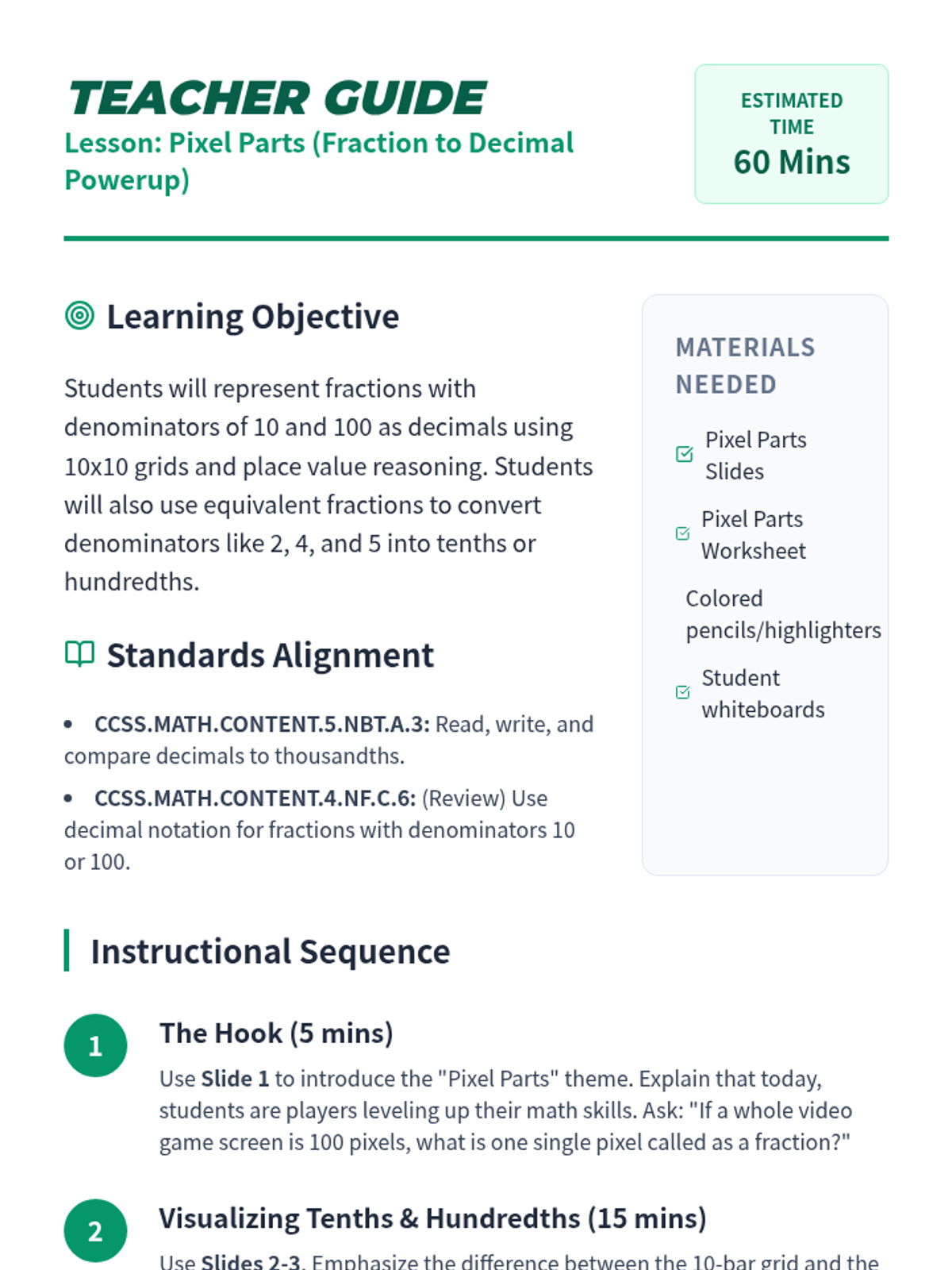
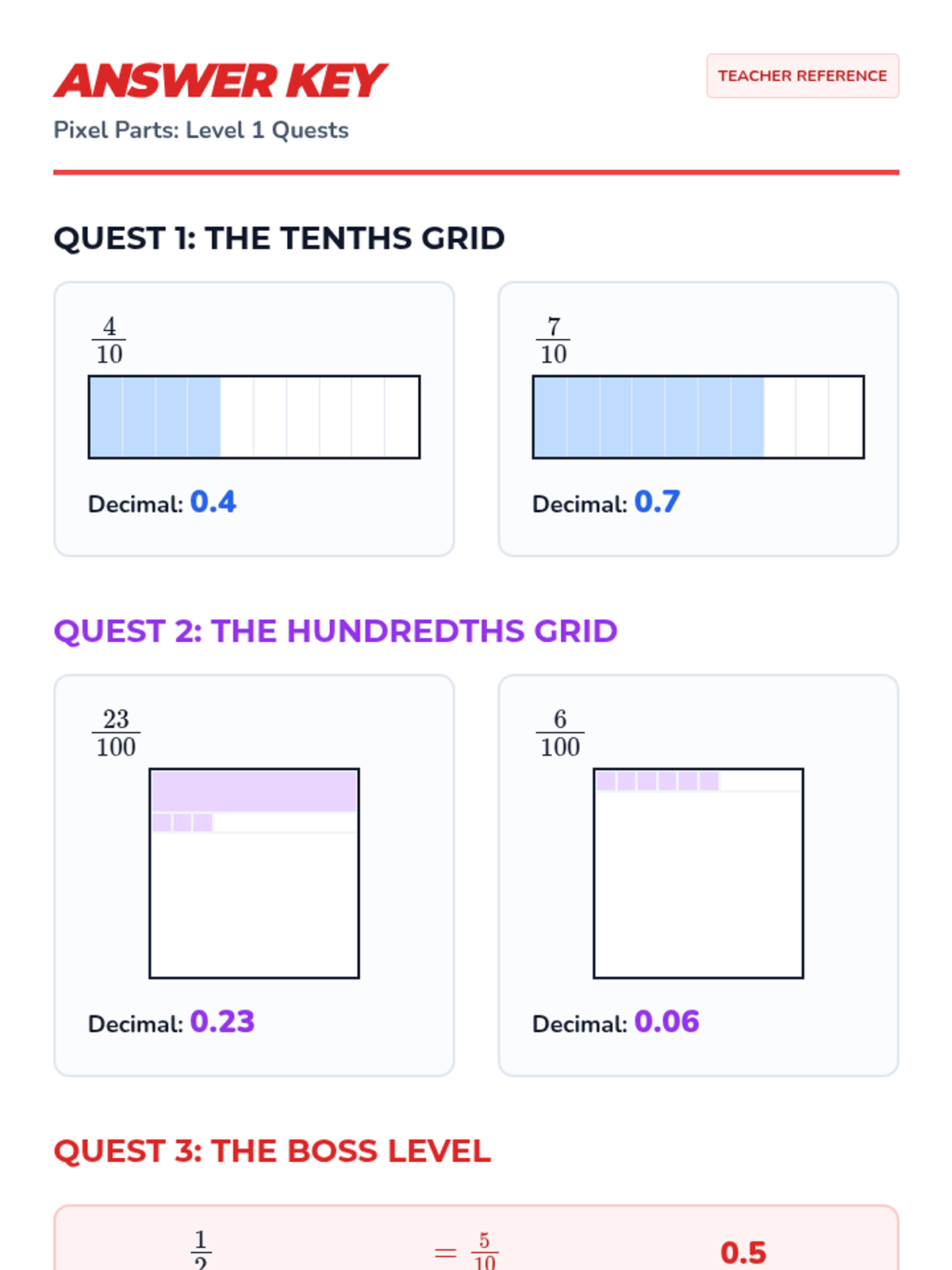
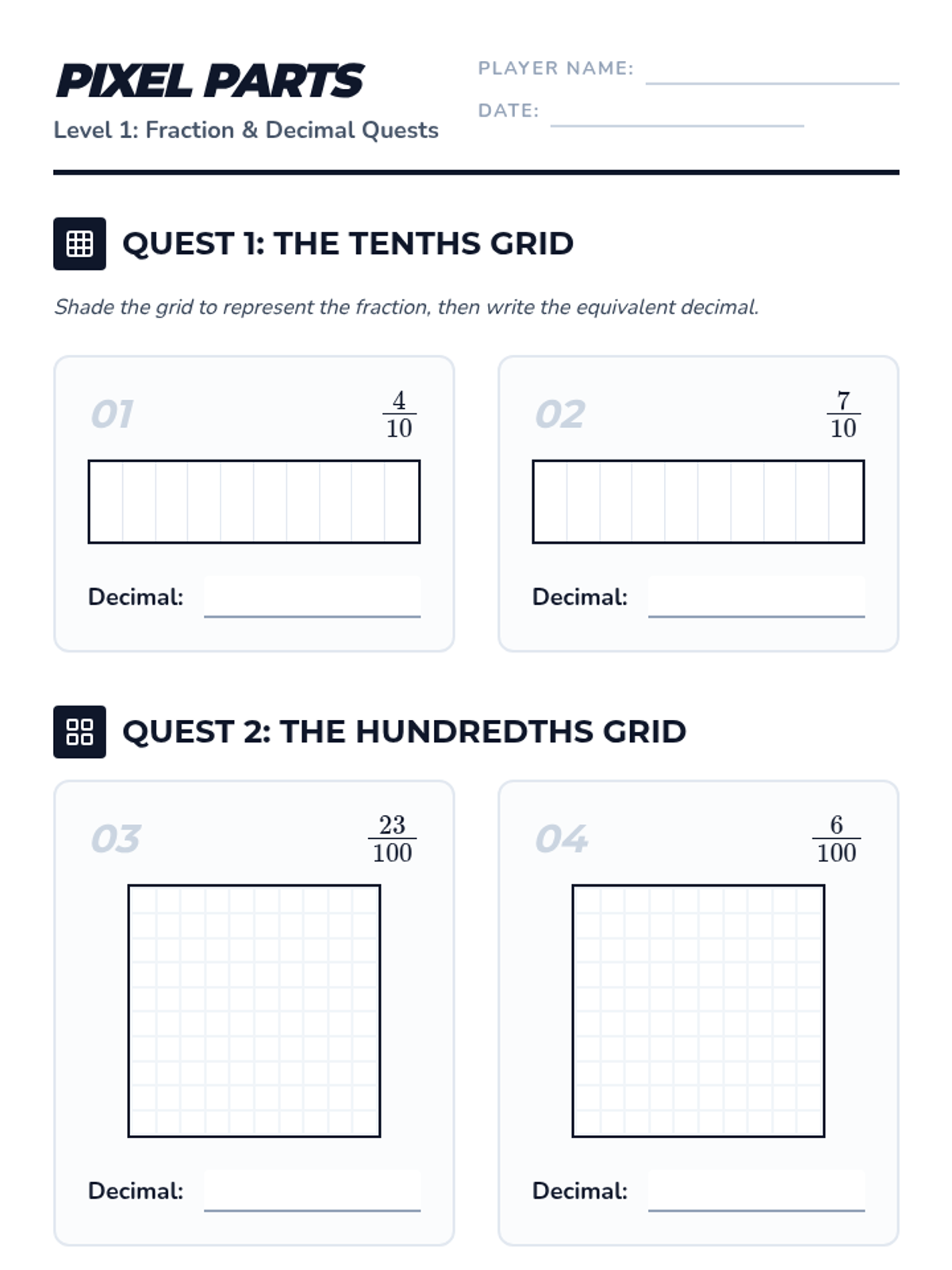
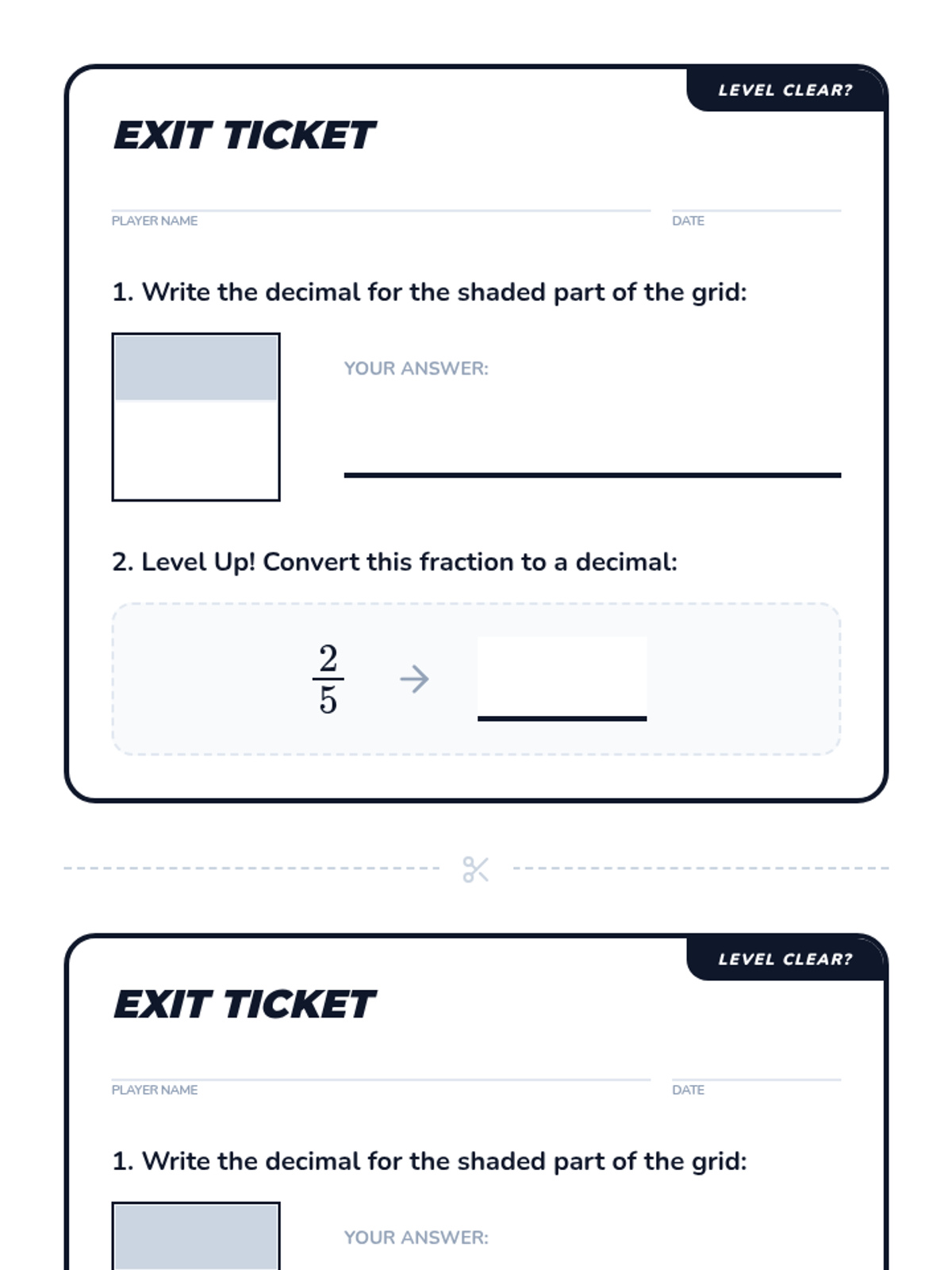
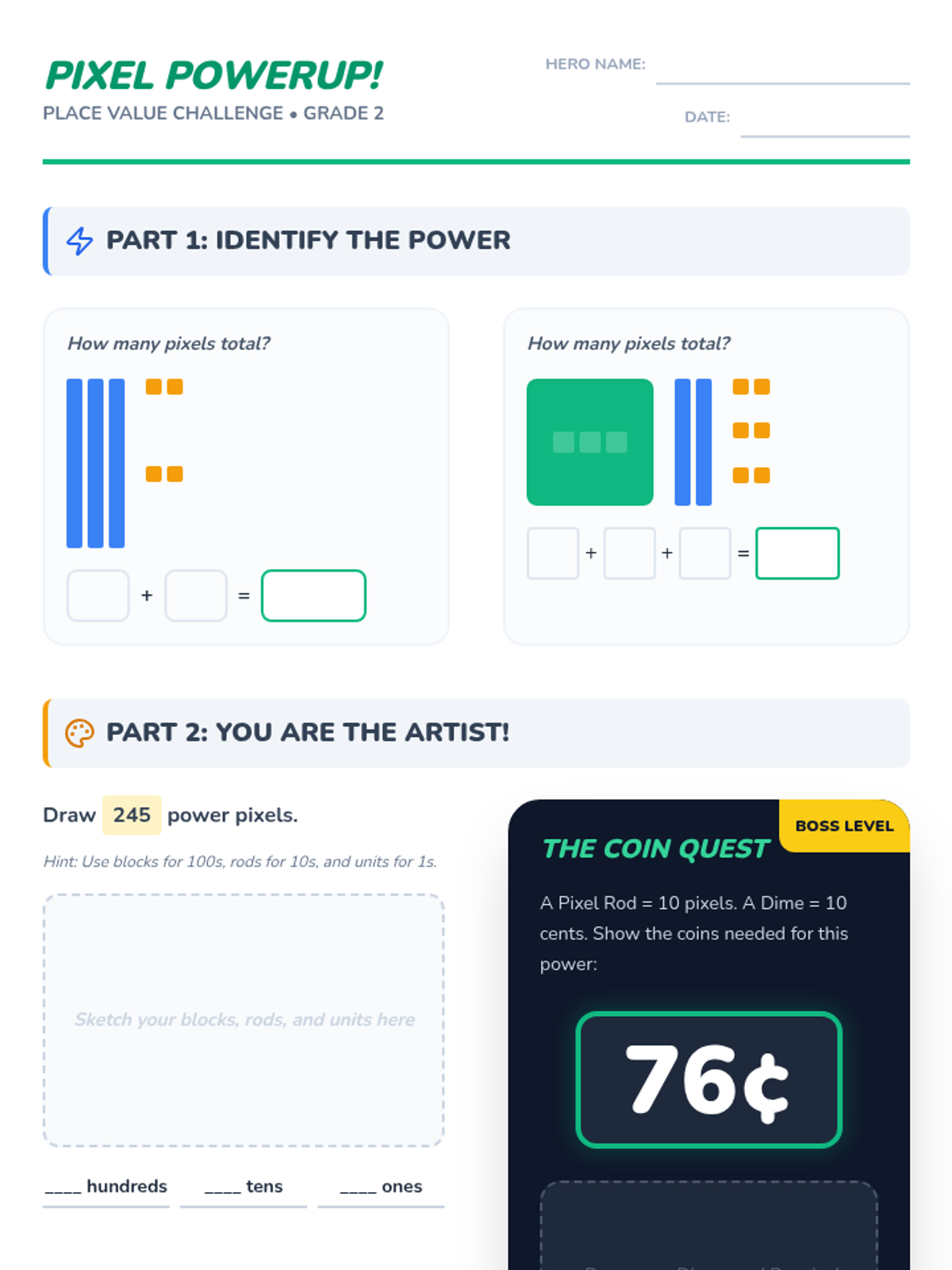
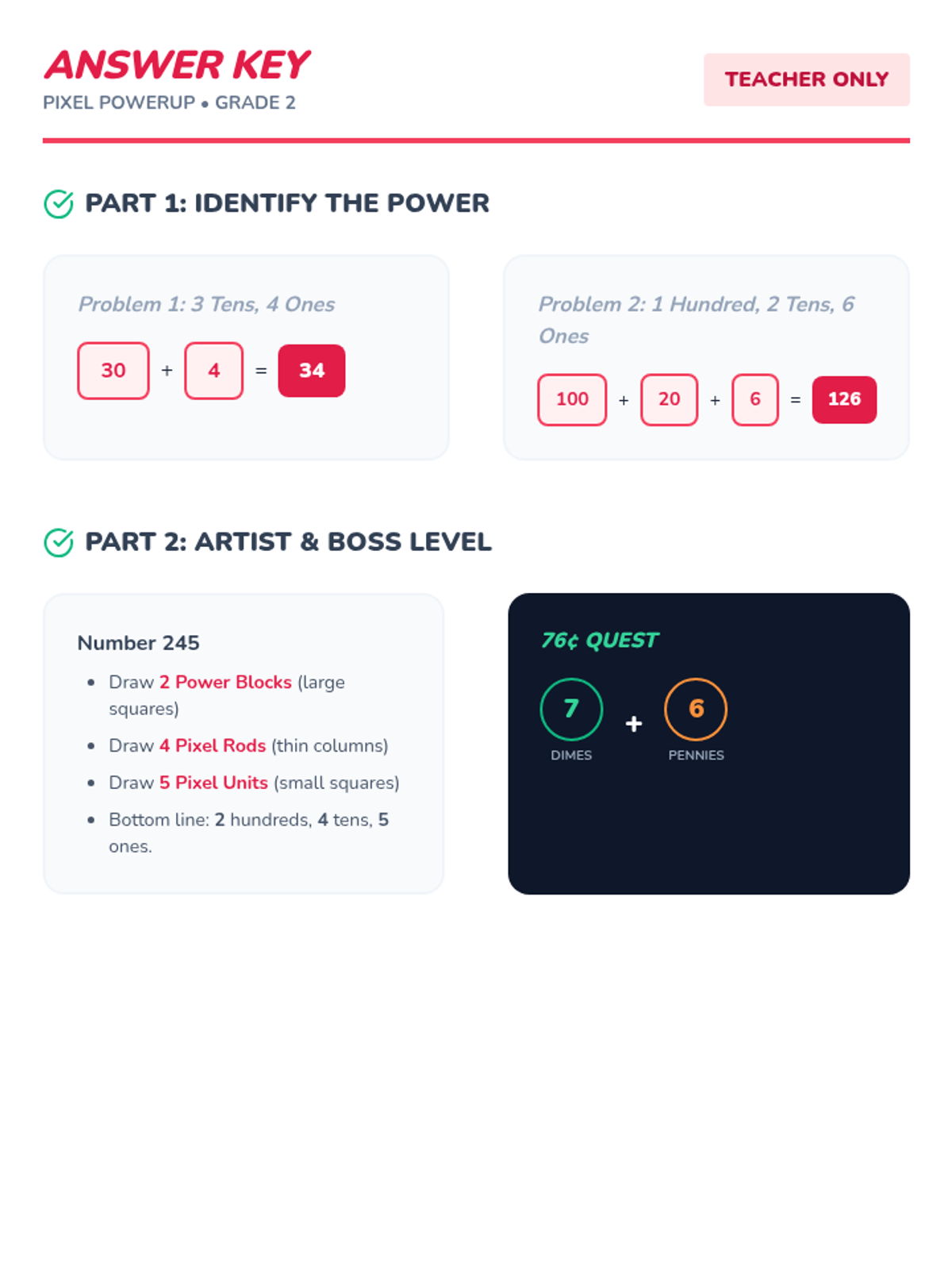
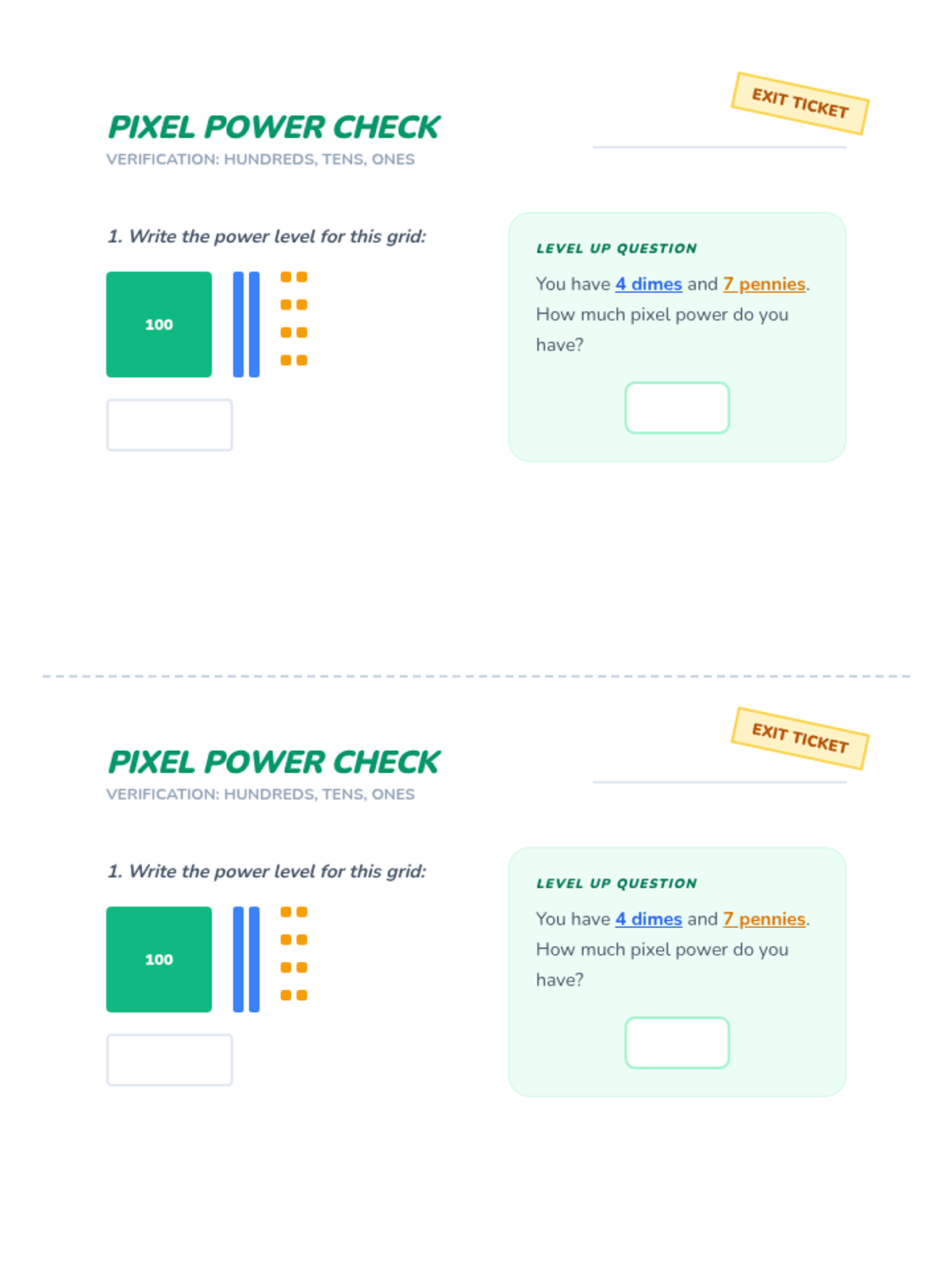
A series of lessons using a pixel-art theme to help 2nd grade students master place value (hundreds, tens, and ones) and foundational fractions using visual grids and money.
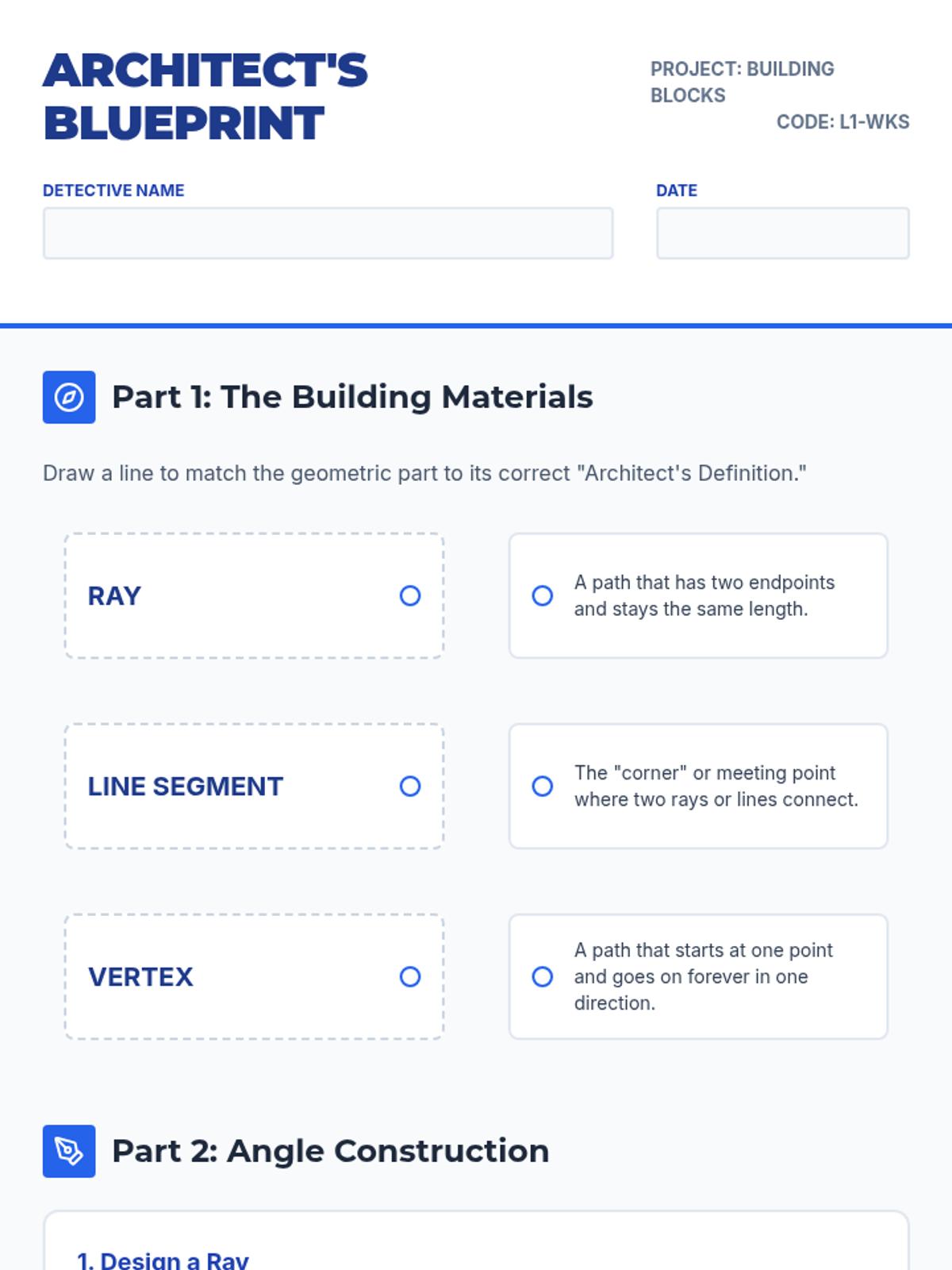
A hands-on geometry sequence where students explore the building blocks of angles, identify right angles in their environment, and classify angles as acute, obtuse, or straight through inquiry and shape analysis.
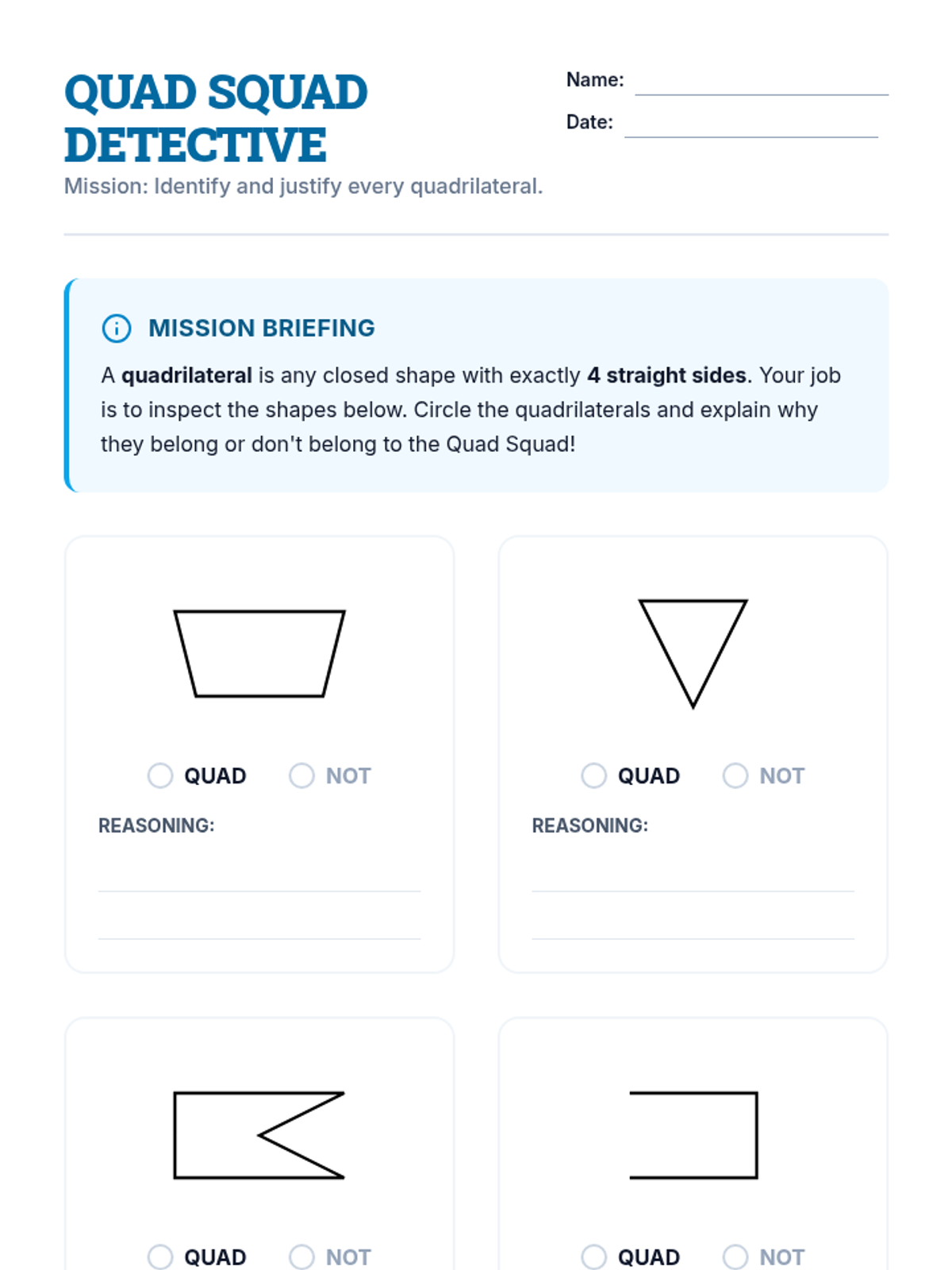
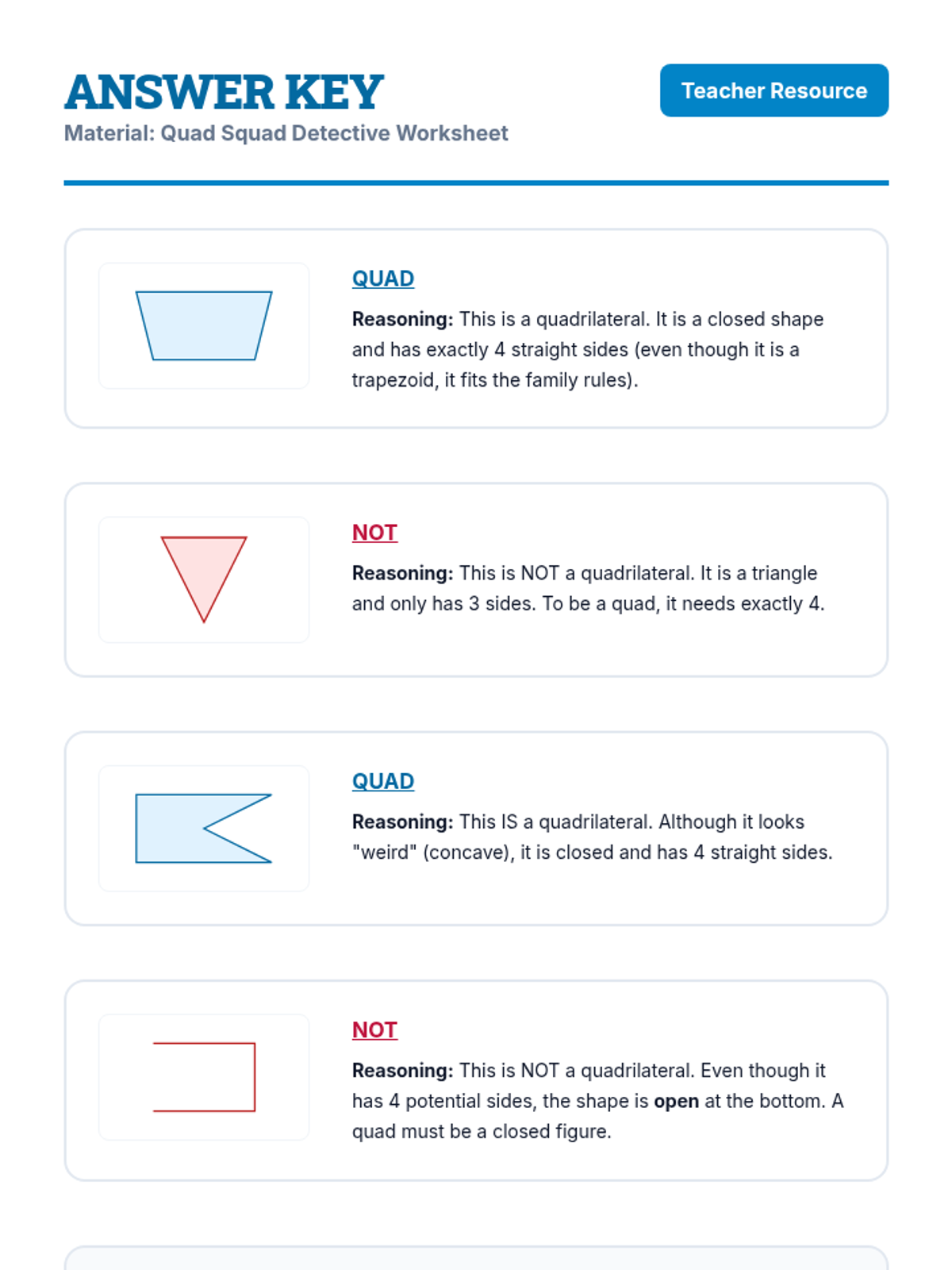
A 2nd-grade geometry unit focused on classifying quadrilaterals based on side lengths, square corners, and parallel lines, culminating in a 'Quadrilateral Field Guide'.
This mastery-based sequence focuses on precise mathematical communication and reasoning. Students engage in discussions and logic exercises to refine their definitions of shapes, moving beyond basic naming to attribute-based definitions and hierarchical relationships.
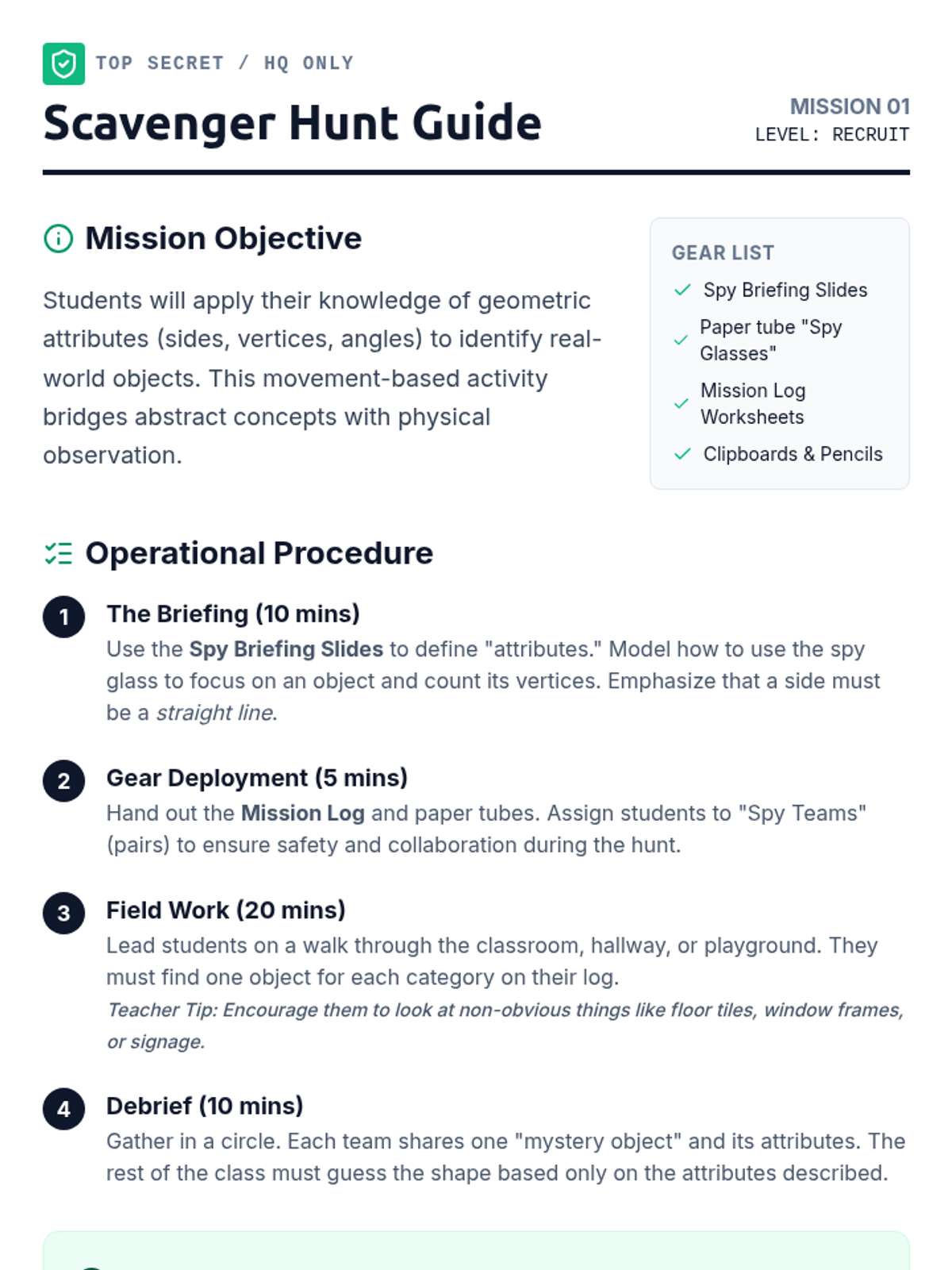
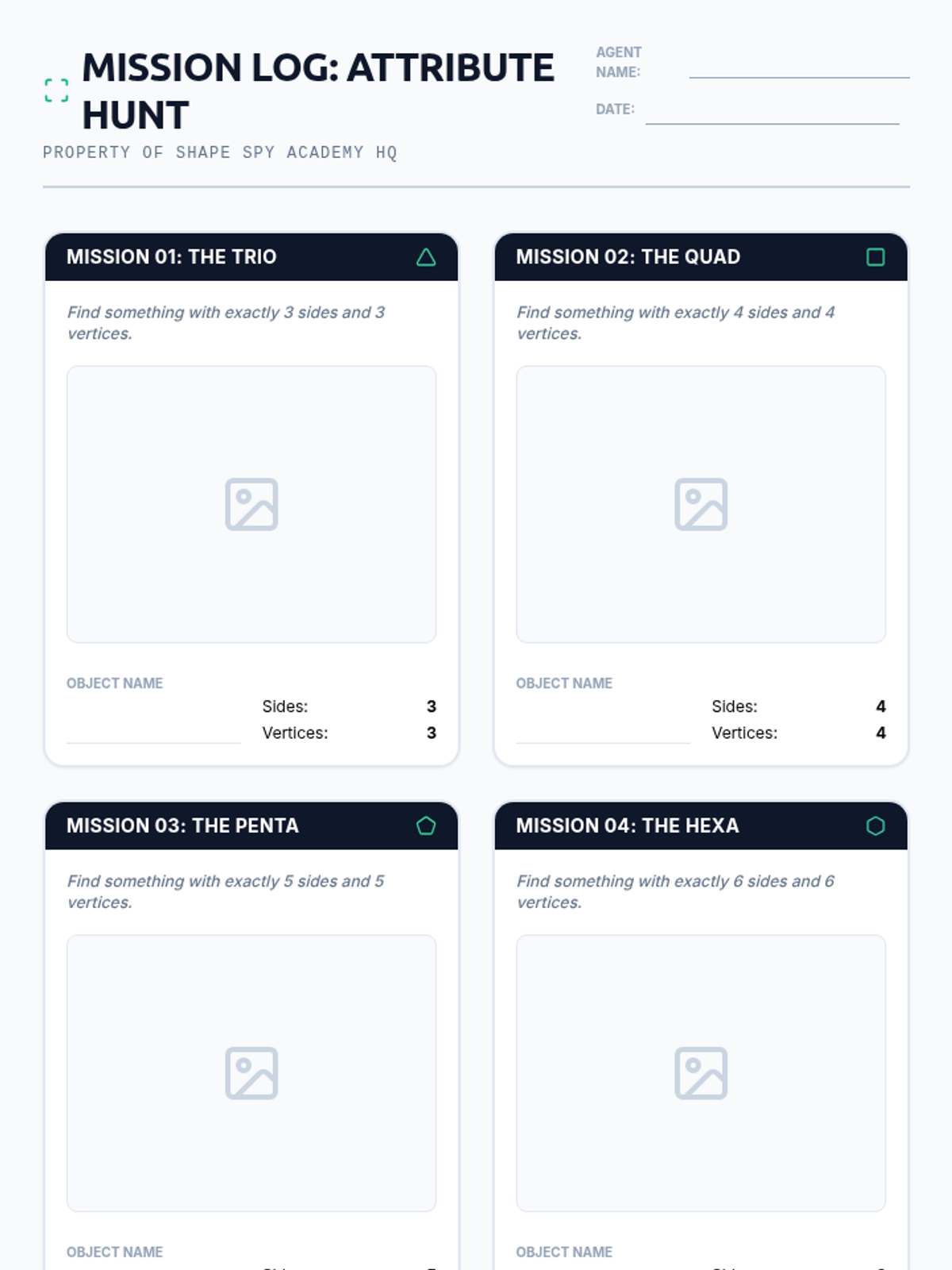
A game-based 2nd grade geometry unit where students become 'Shape Spies' to master attributes, classification, and logical deduction through interactive challenges.
This inquiry-based geometry unit for 2nd grade focuses on defining attributes of two-dimensional polygons. Students move from sorting shapes by observation to drawing them by specific geometric rules, ultimately creating a comprehensive field guide of polygons.
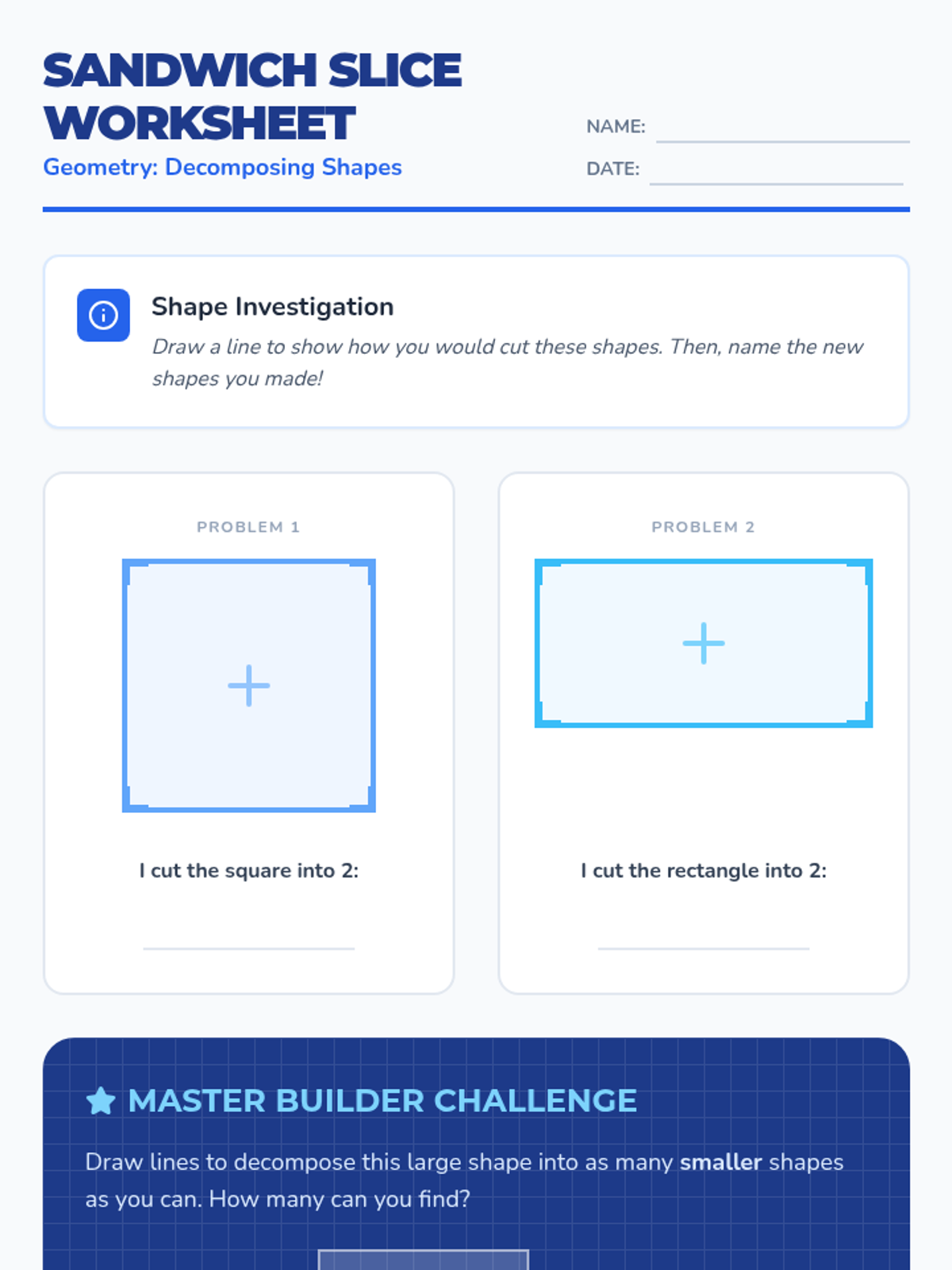
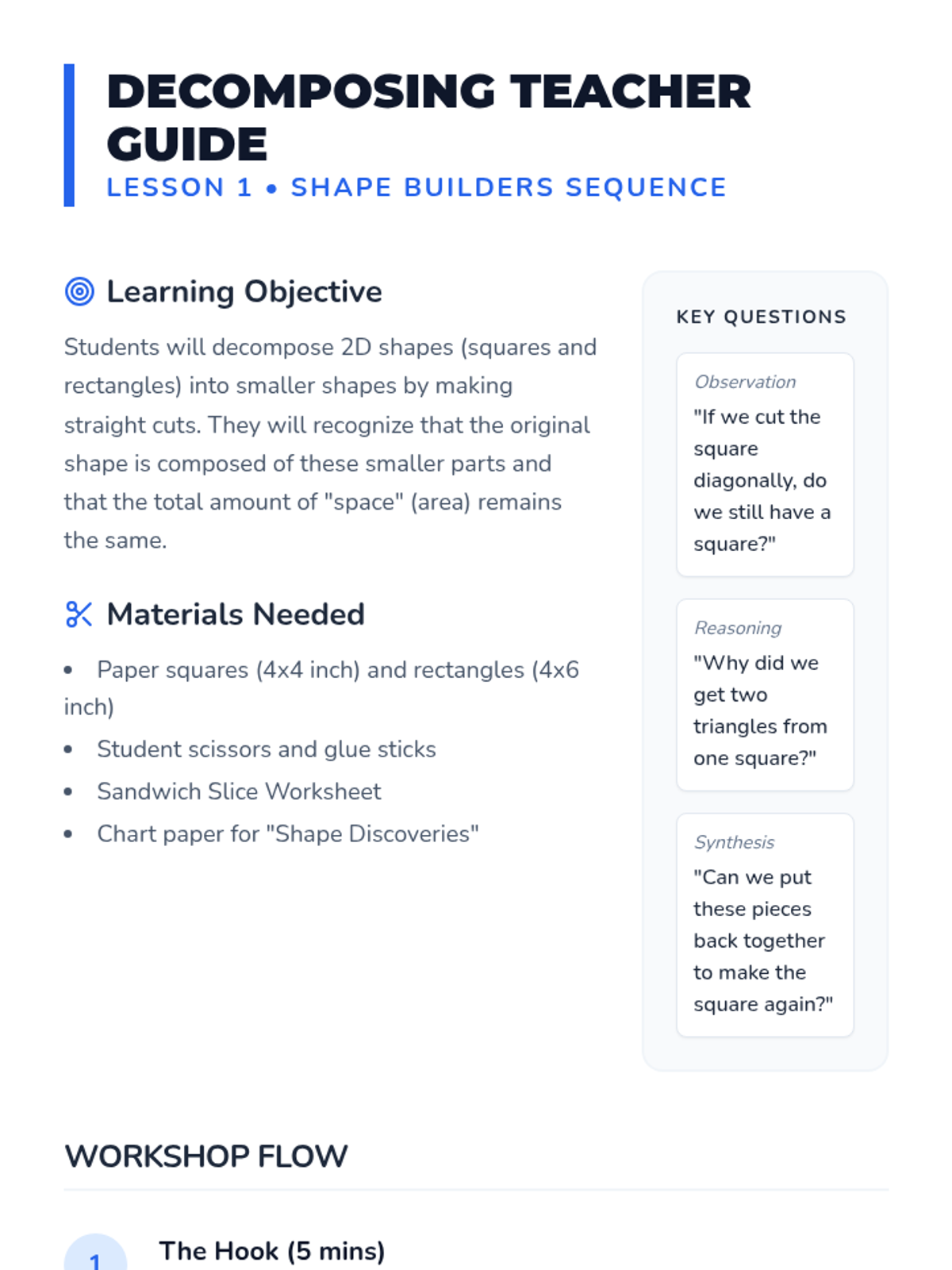
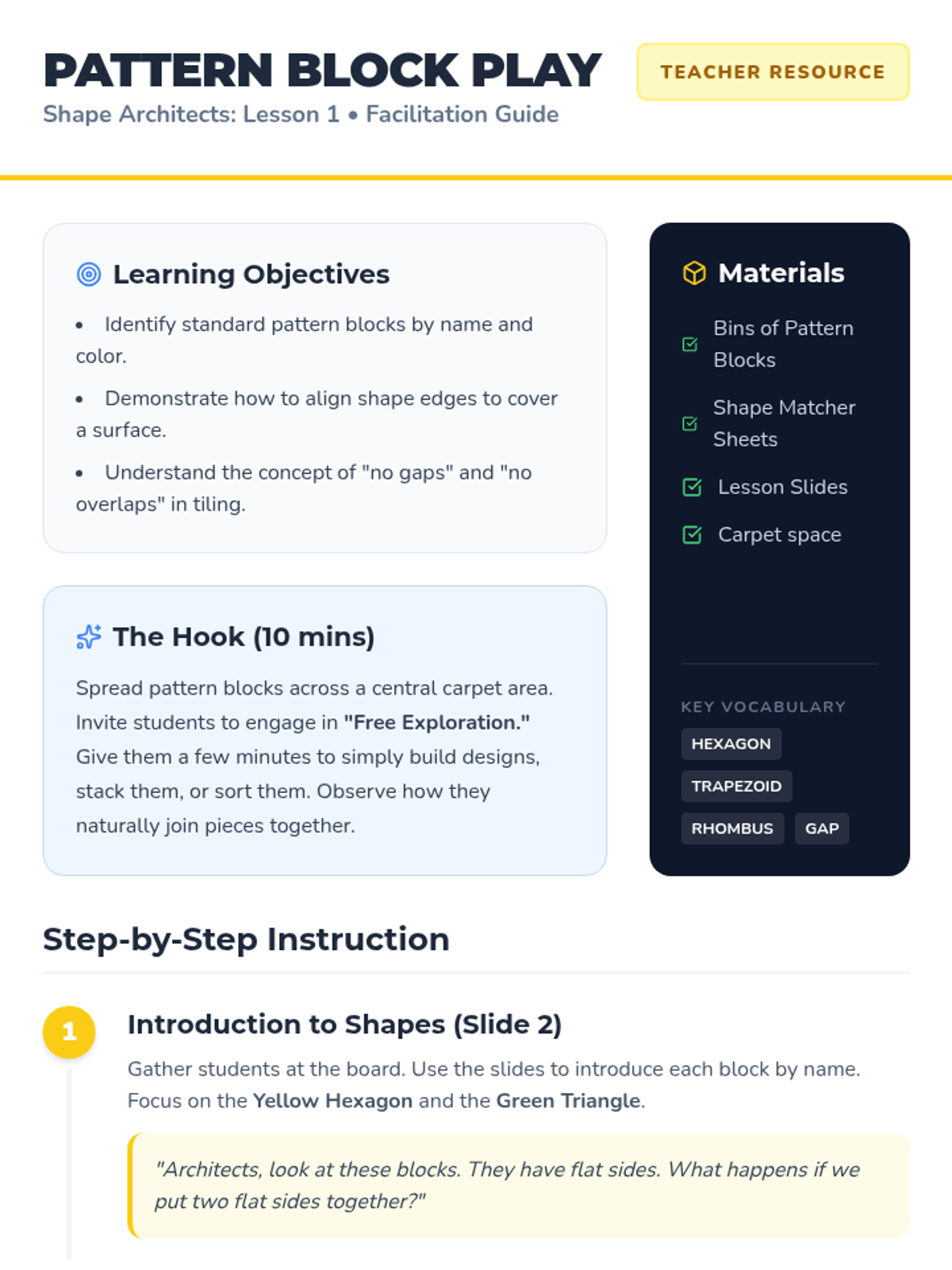
This sequence explores the spatial reasoning skills of composing and decomposing shapes. Students use tangrams, pattern blocks, and grid paper to visualize geometric relationships, partition regions into equal shares, and create complex patterns from simple polygons.
This sequence explores the classification of quadrilaterals for 2nd graders, moving from basic recognition to hierarchical understanding of attributes like right angles and equal side lengths. Students will learn to identify squares, rectangles, rhombuses, and trapezoids, ultimately understanding that shapes can belong to multiple categories.
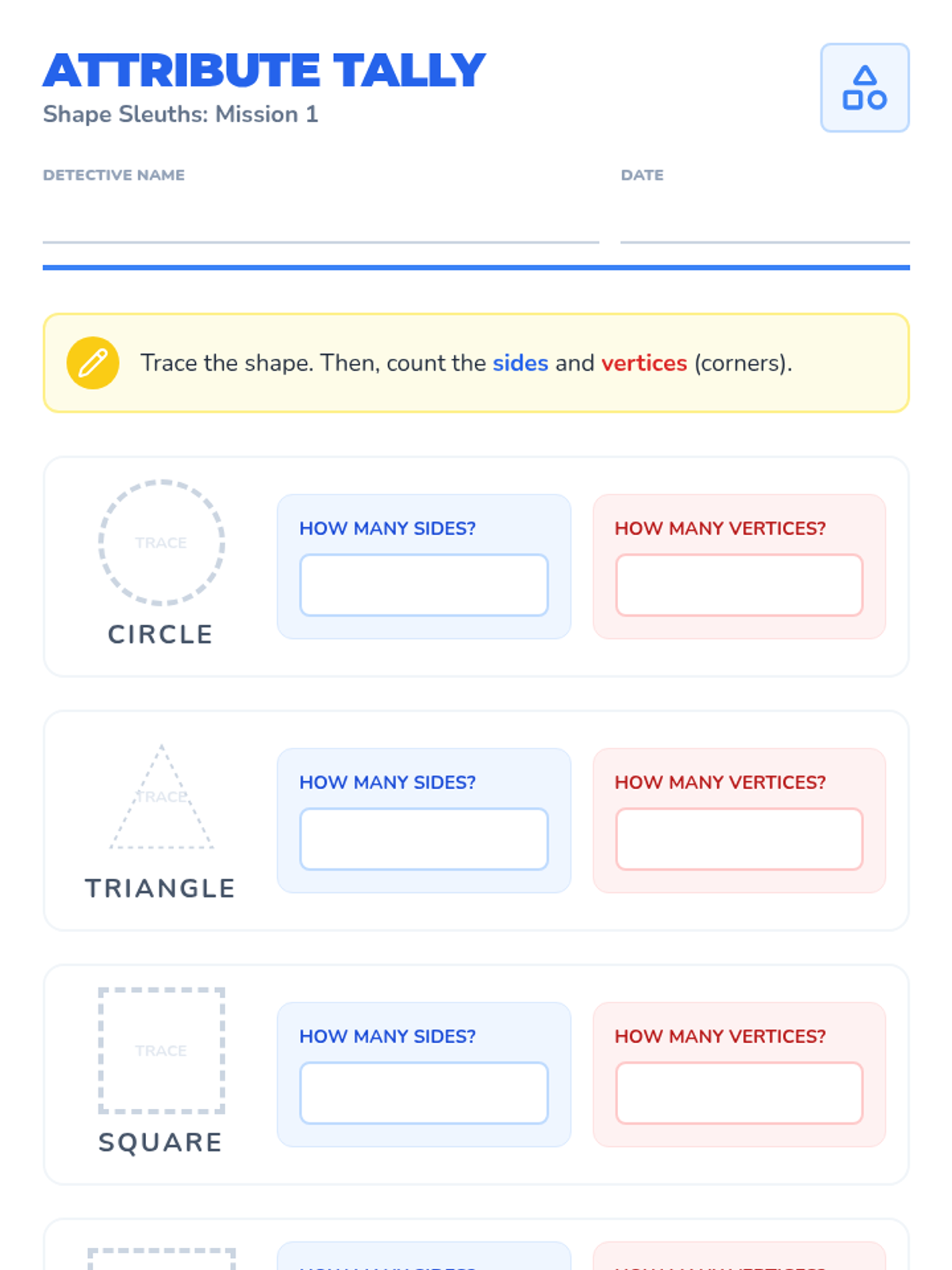
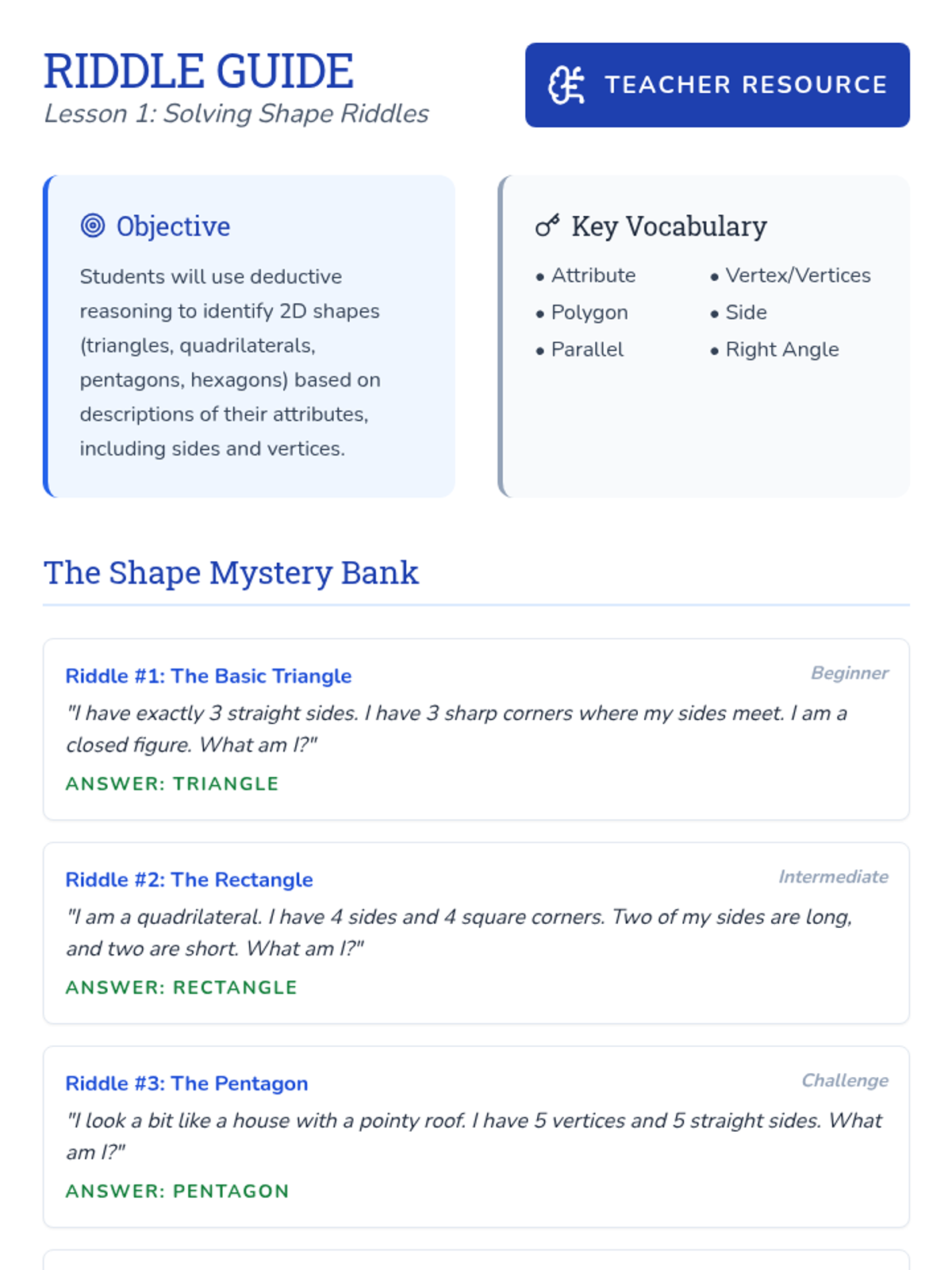
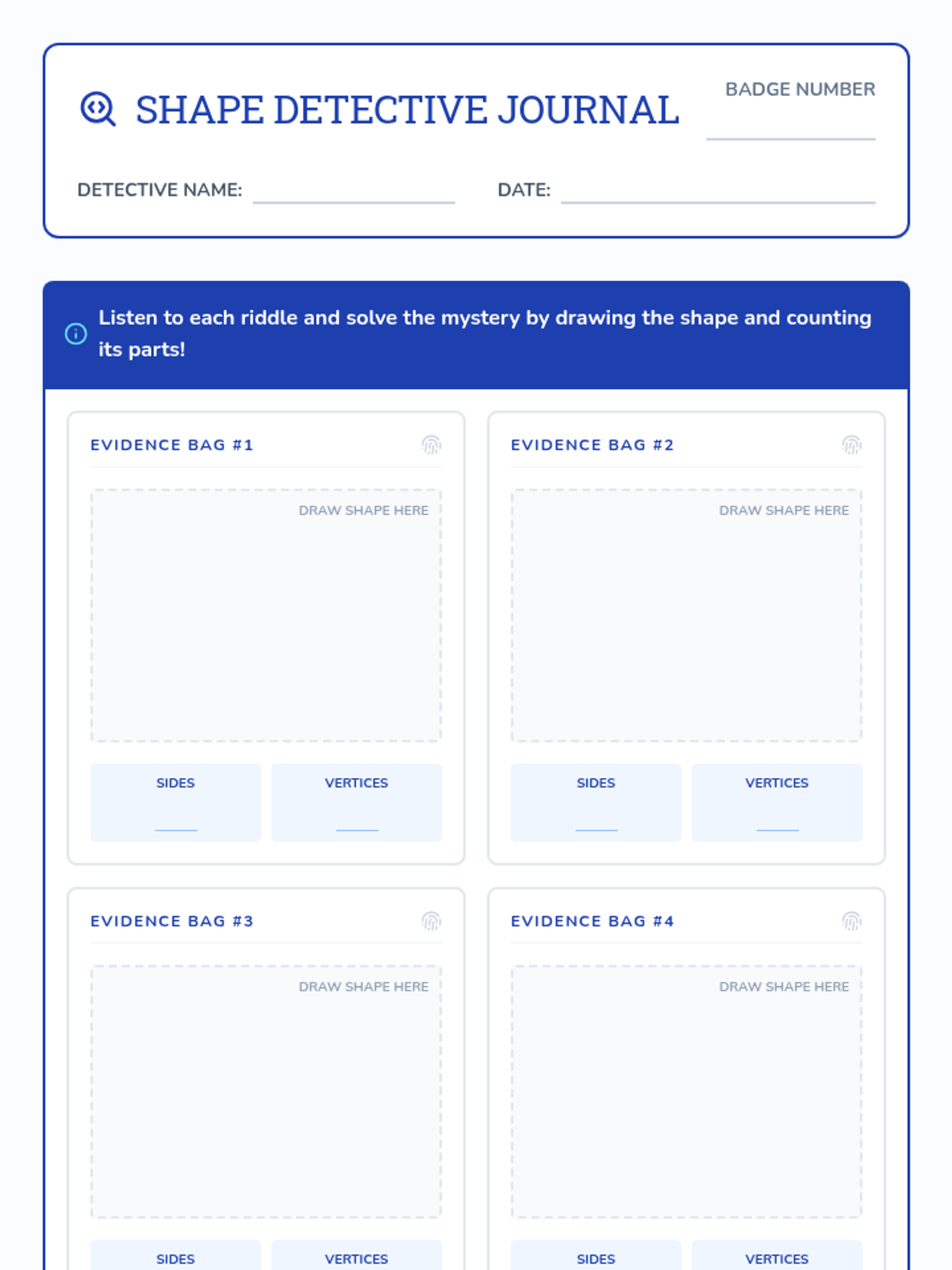
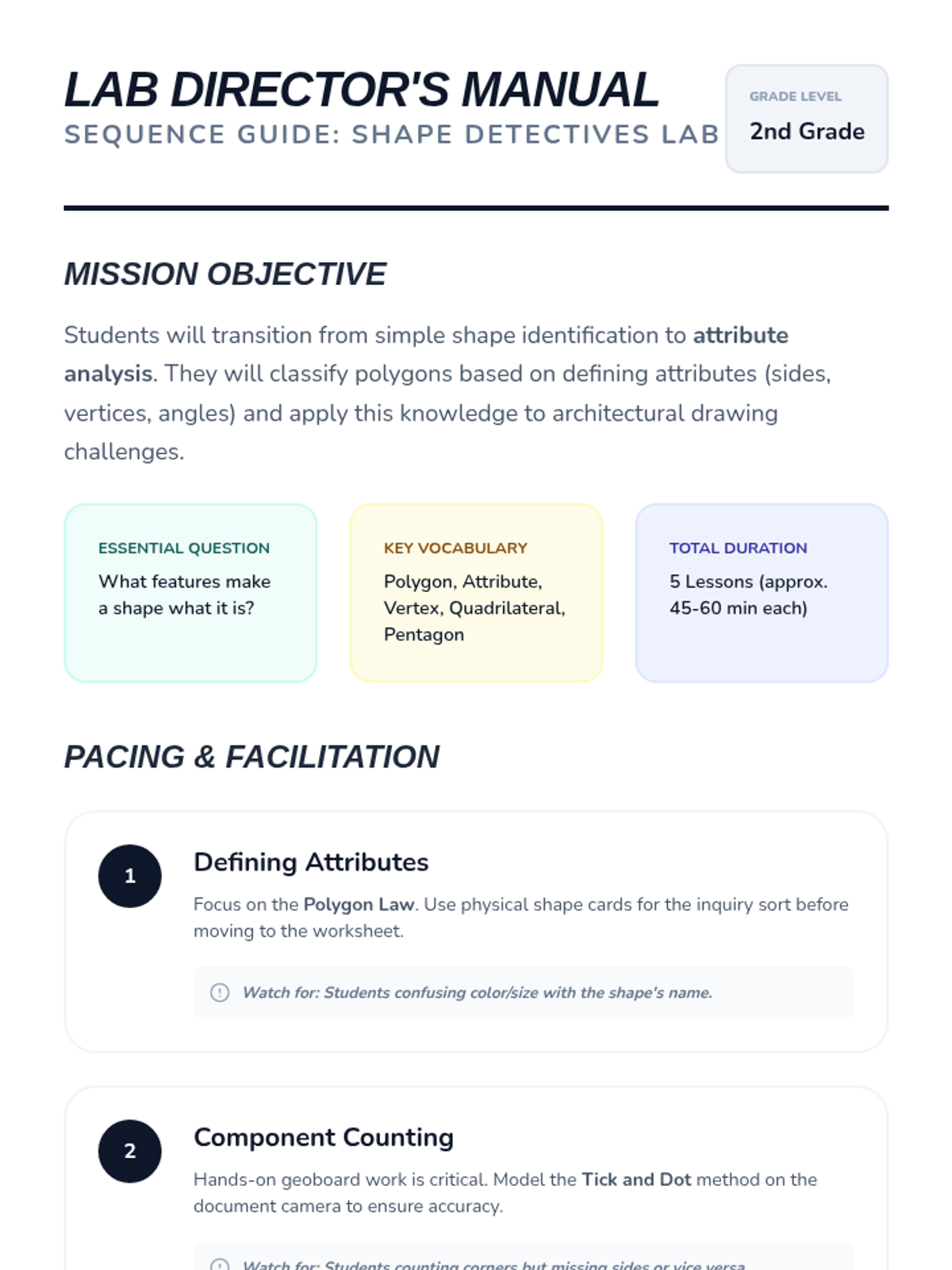
A comprehensive geometry sequence for 2nd grade focusing on the defining attributes of two-dimensional polygons, including sides, vertices, and classification of triangles, quadrilaterals, pentagons, and hexagons.
A comprehensive 2nd-grade geometry sequence focusing on the defining attributes of 2D shapes, including sides, vertices, and angles. Students move from simple identification to analyzing properties and drawing shapes based on specific constraints.
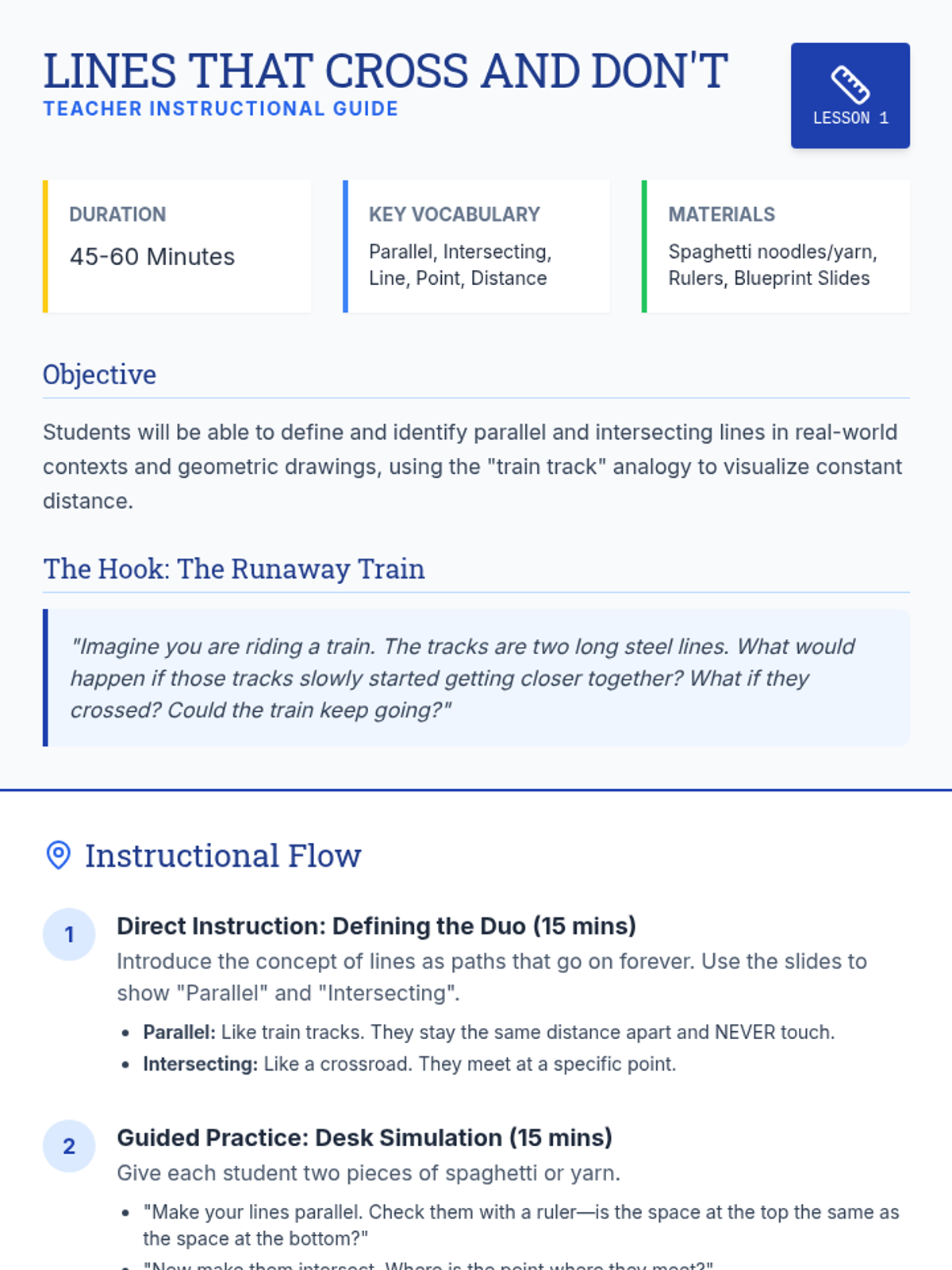
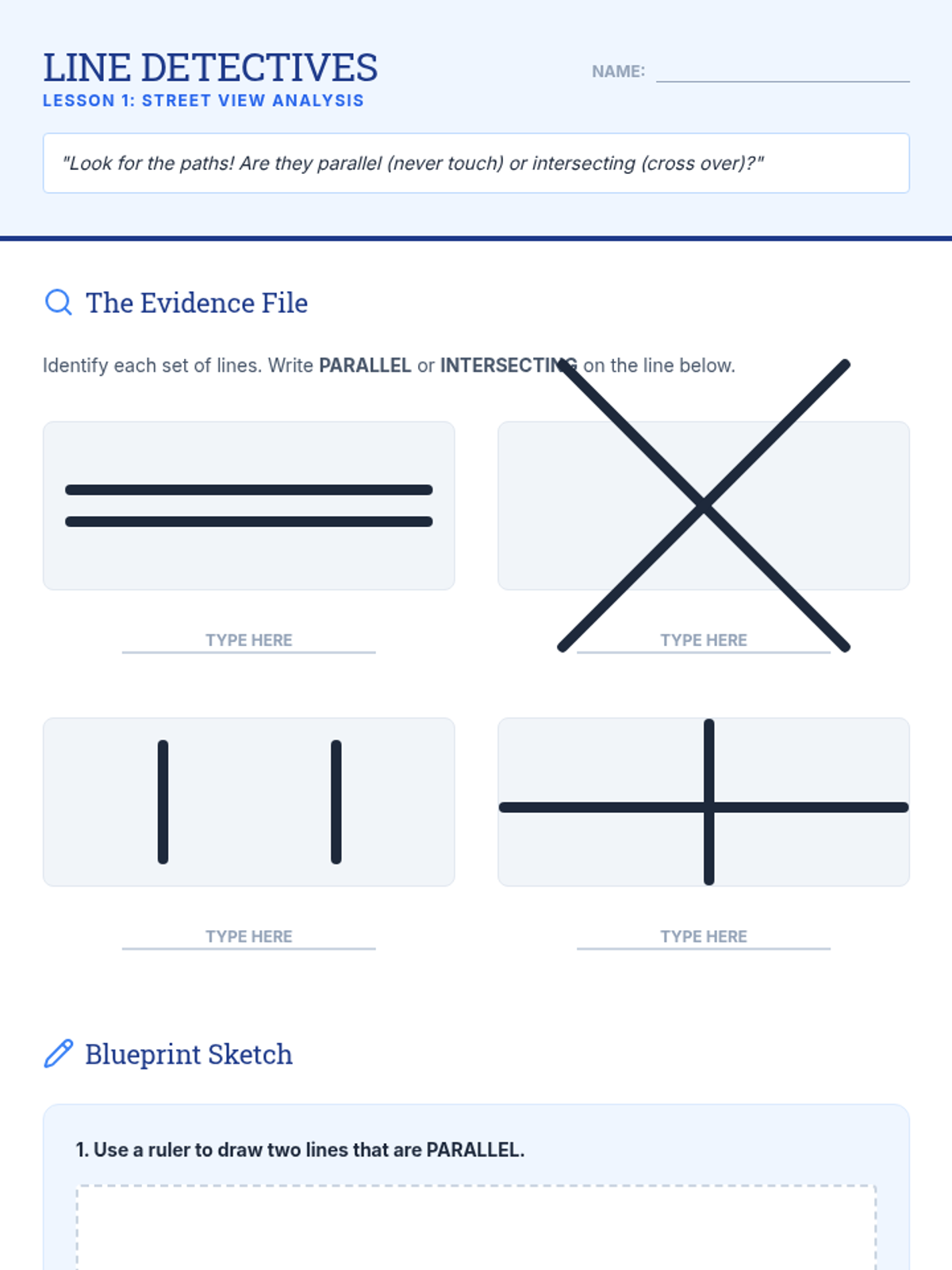
This sequence connects parallel and perpendicular lines to the properties of quadrilaterals through a 'City Map' theme, scaffolding vocabulary from basic line relationships to complex shape classification.
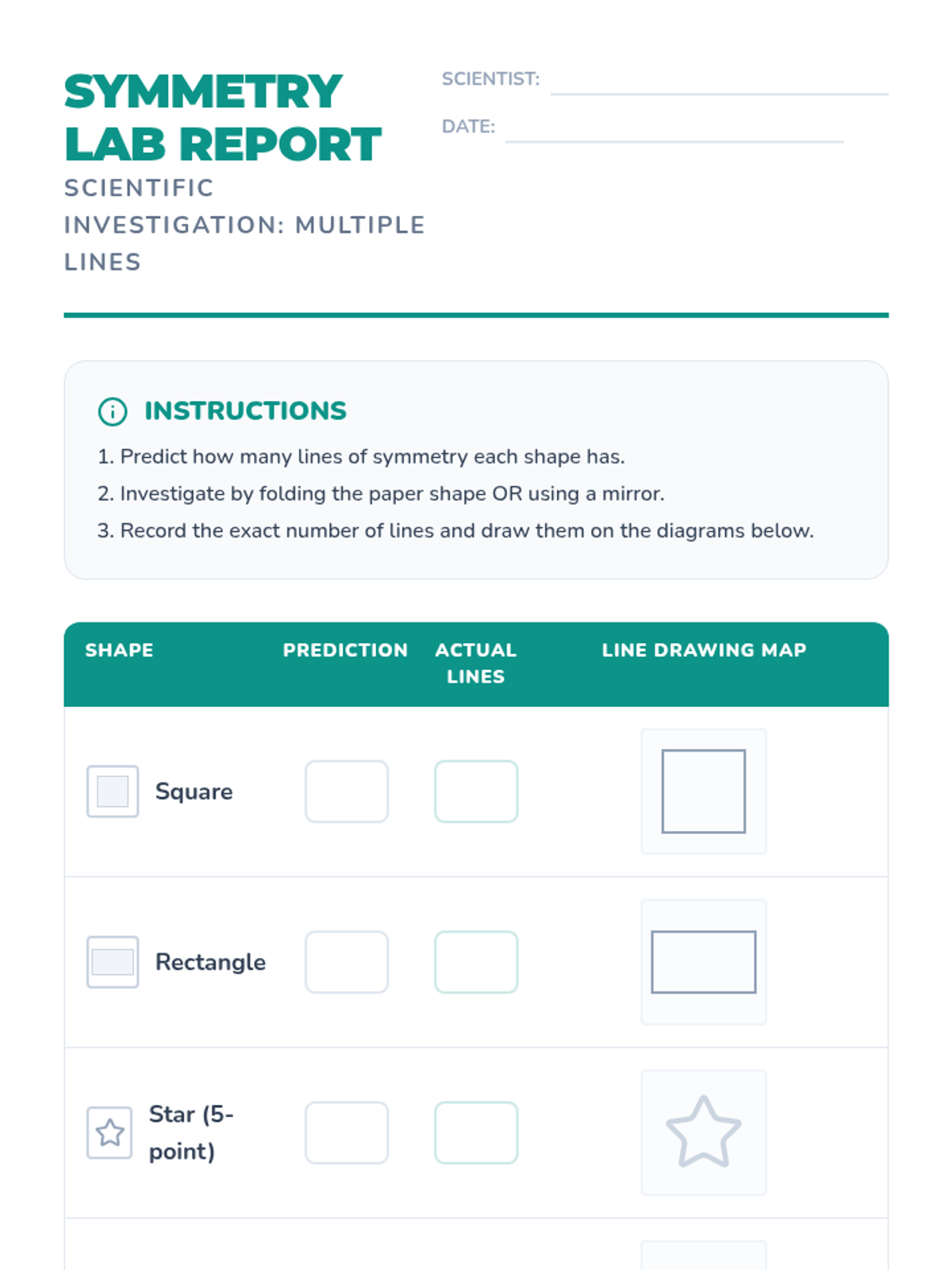
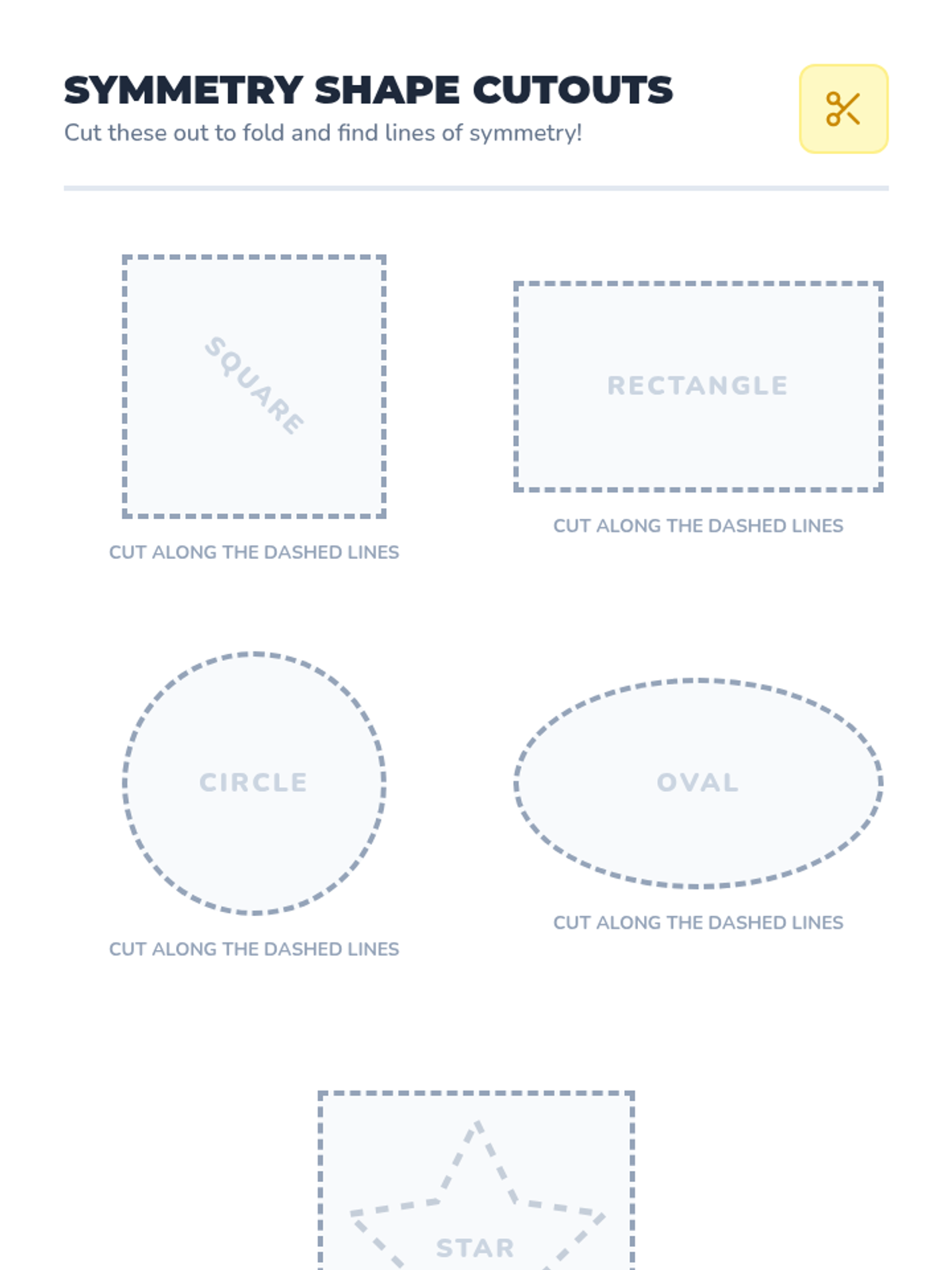
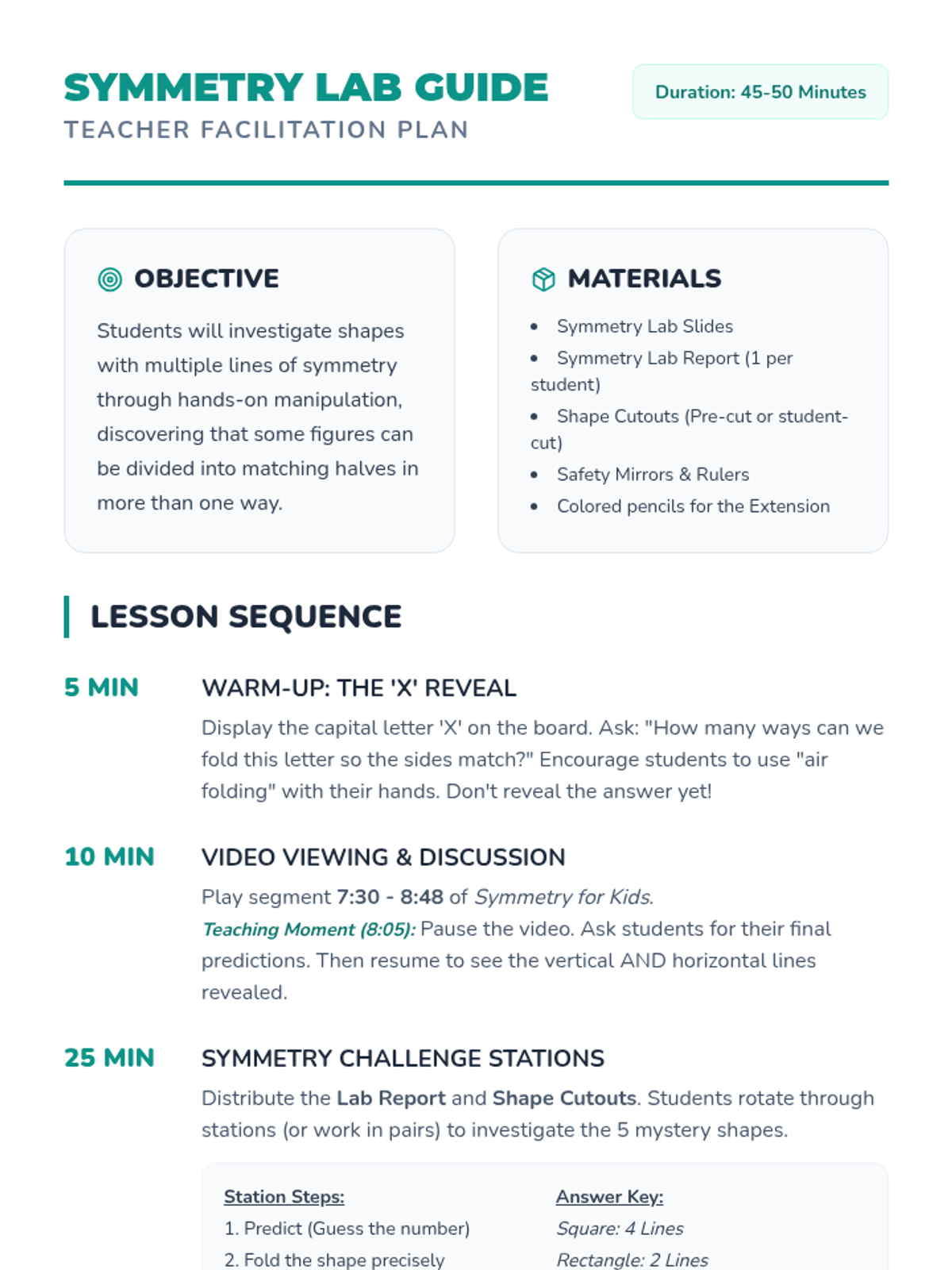
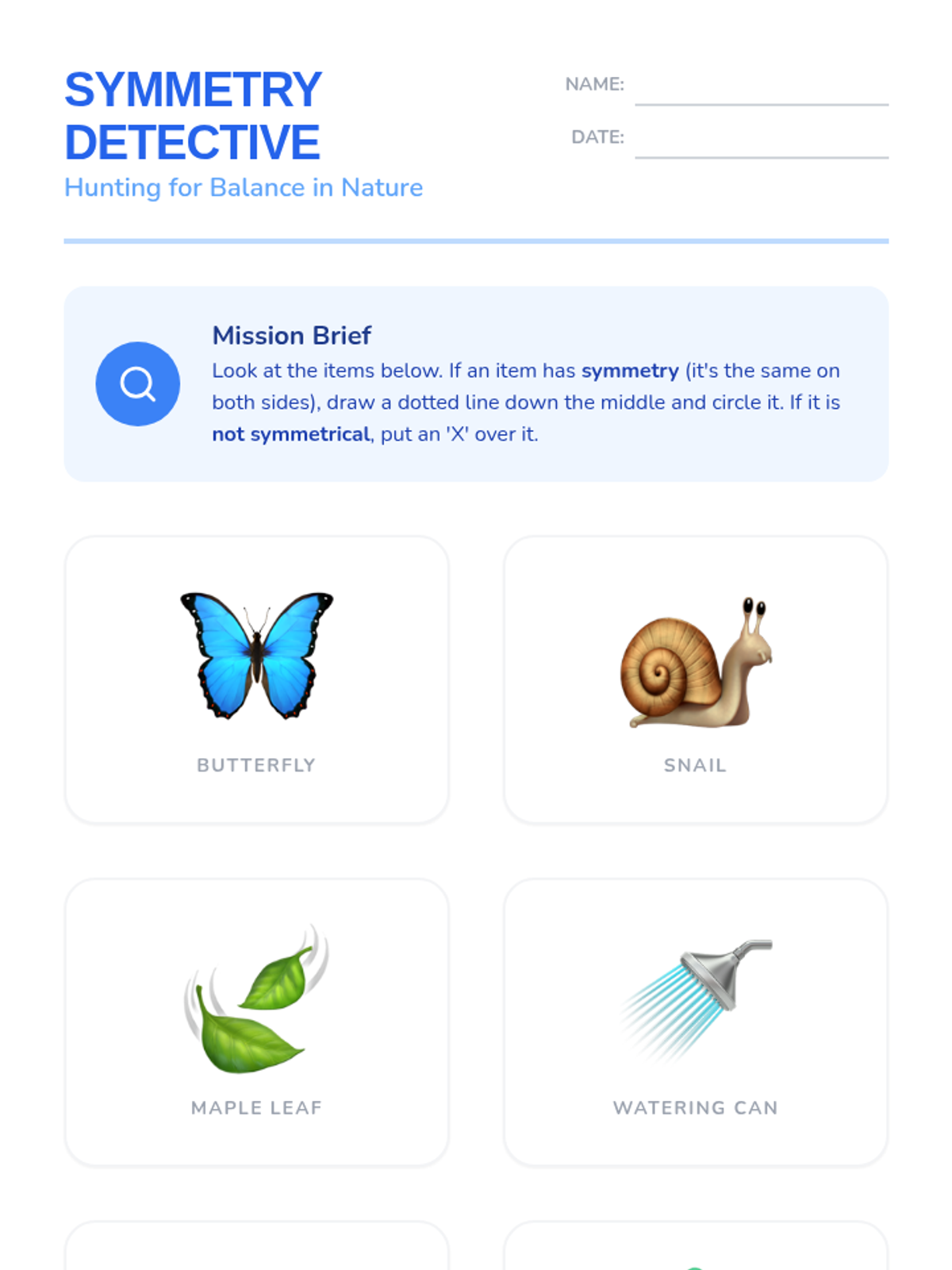
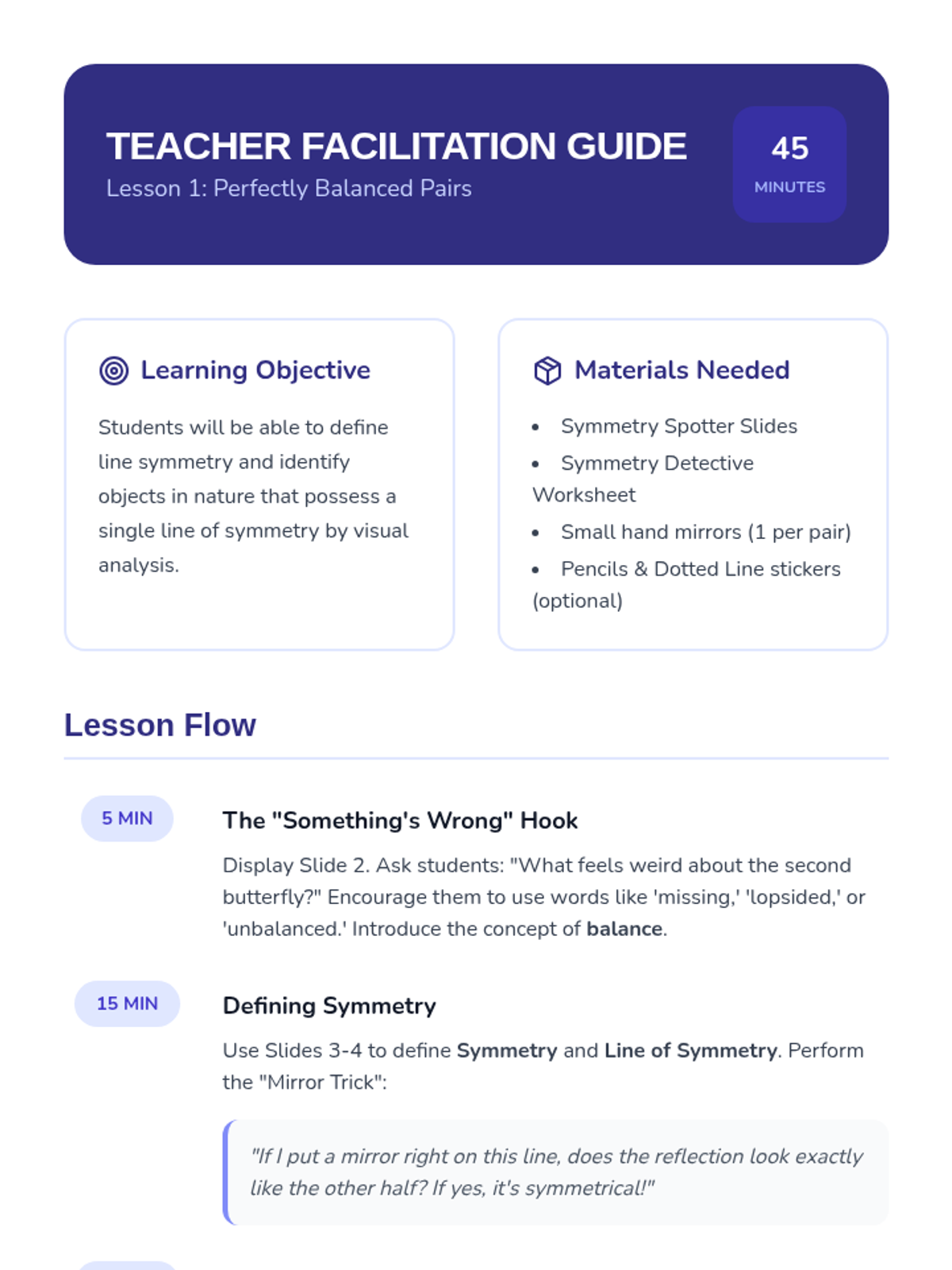
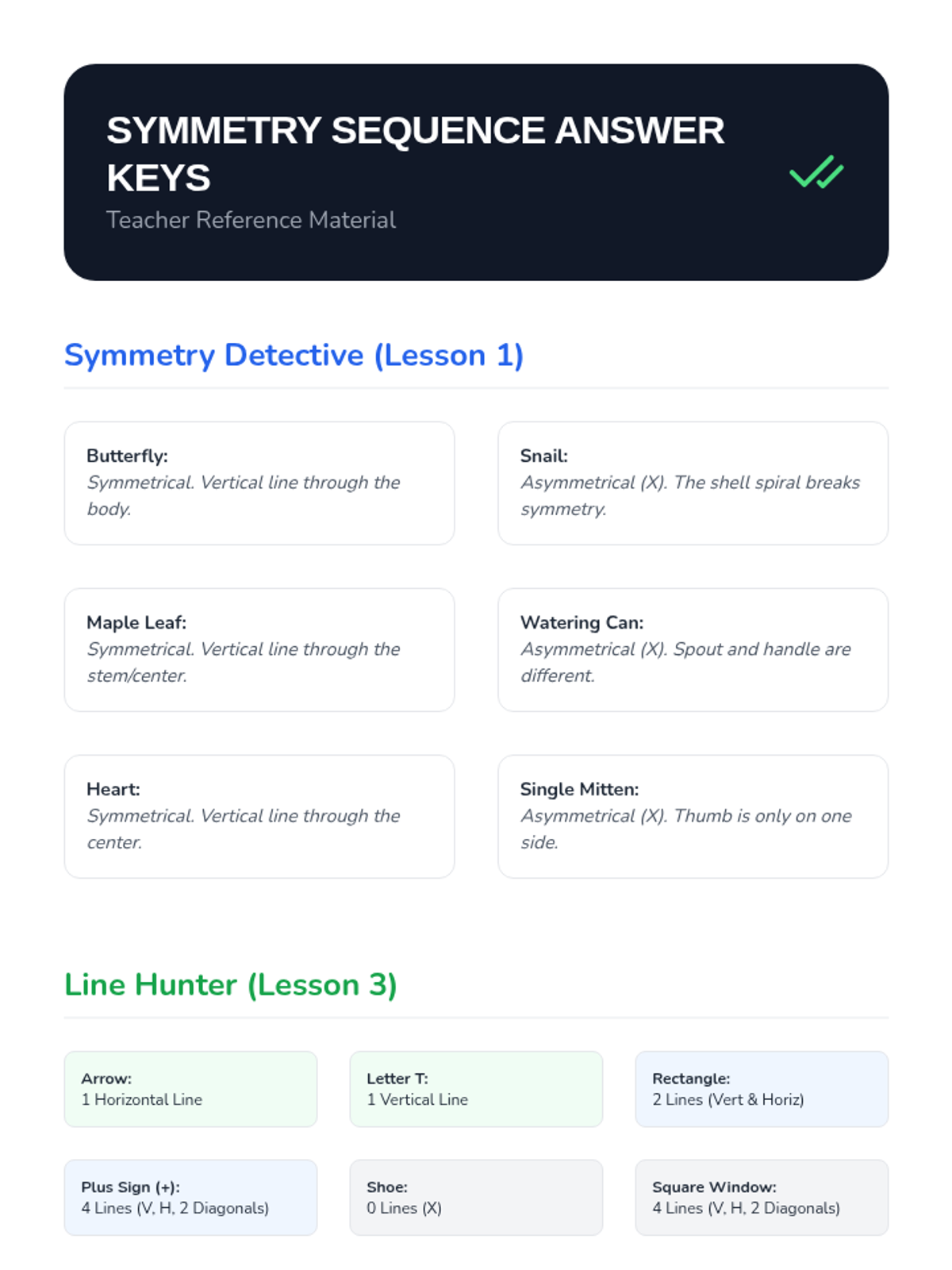
A 2nd-grade geometry sequence exploring line symmetry through real-world analysis, physical folding, drawing, and artistic creation. Students learn to identify and create mirror images, culminating in a paint-blot art project.
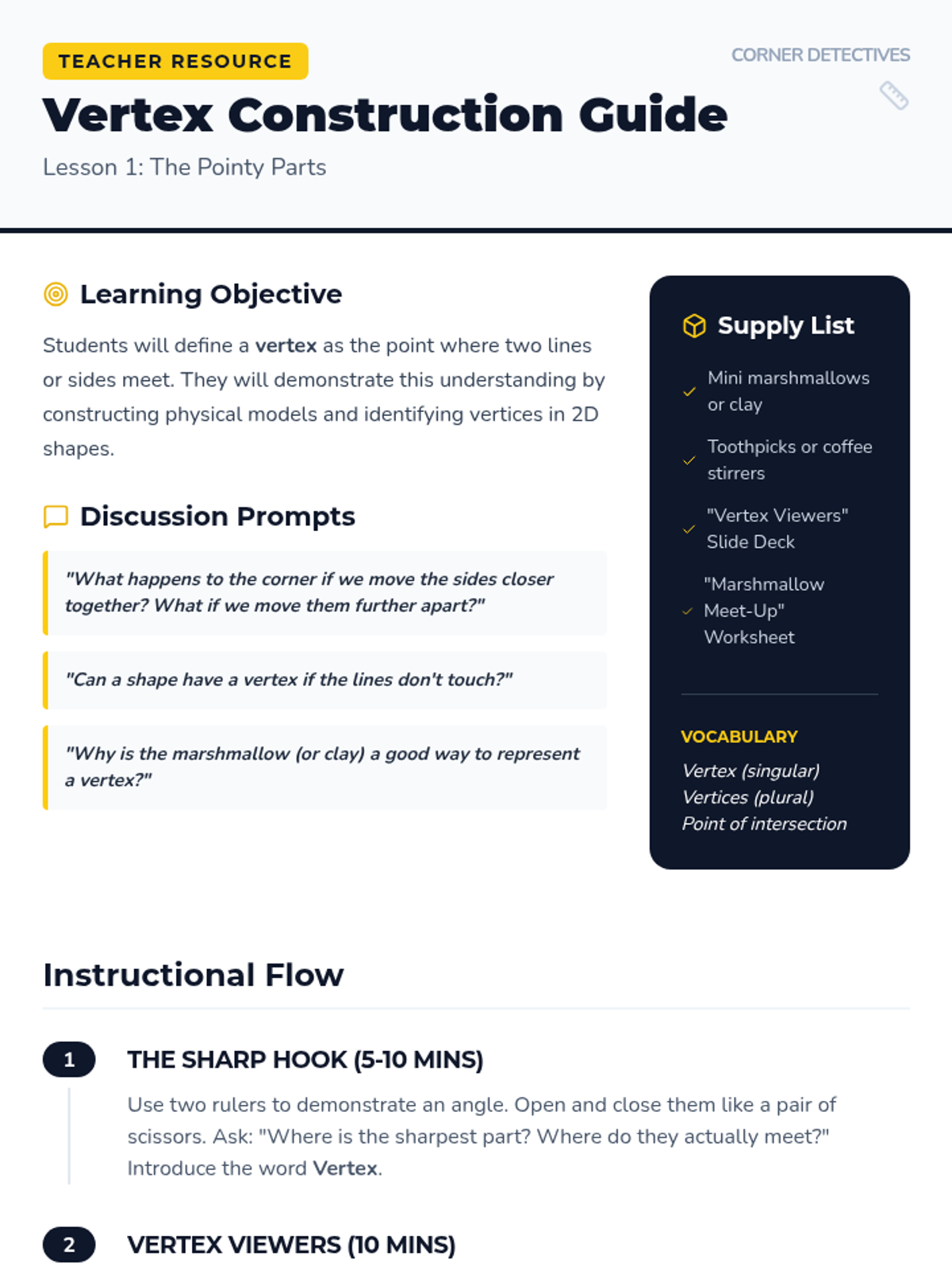
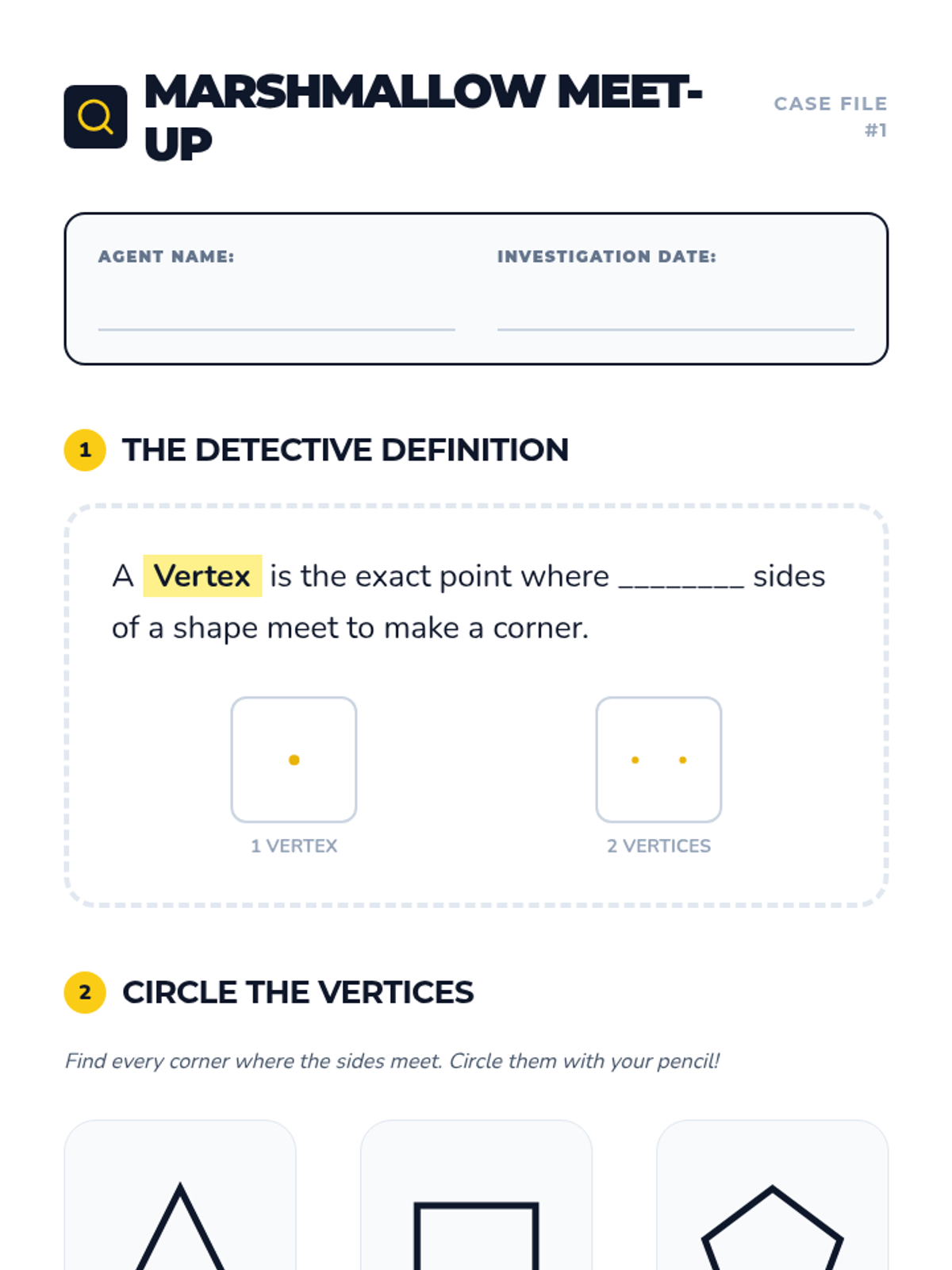
A 2nd Grade geometry sequence focusing on vertices and angles. Students learn to identify vertices, recognize square corners (right angles) using tools, compare angle sizes, and draw precise polygons with specific corner types.
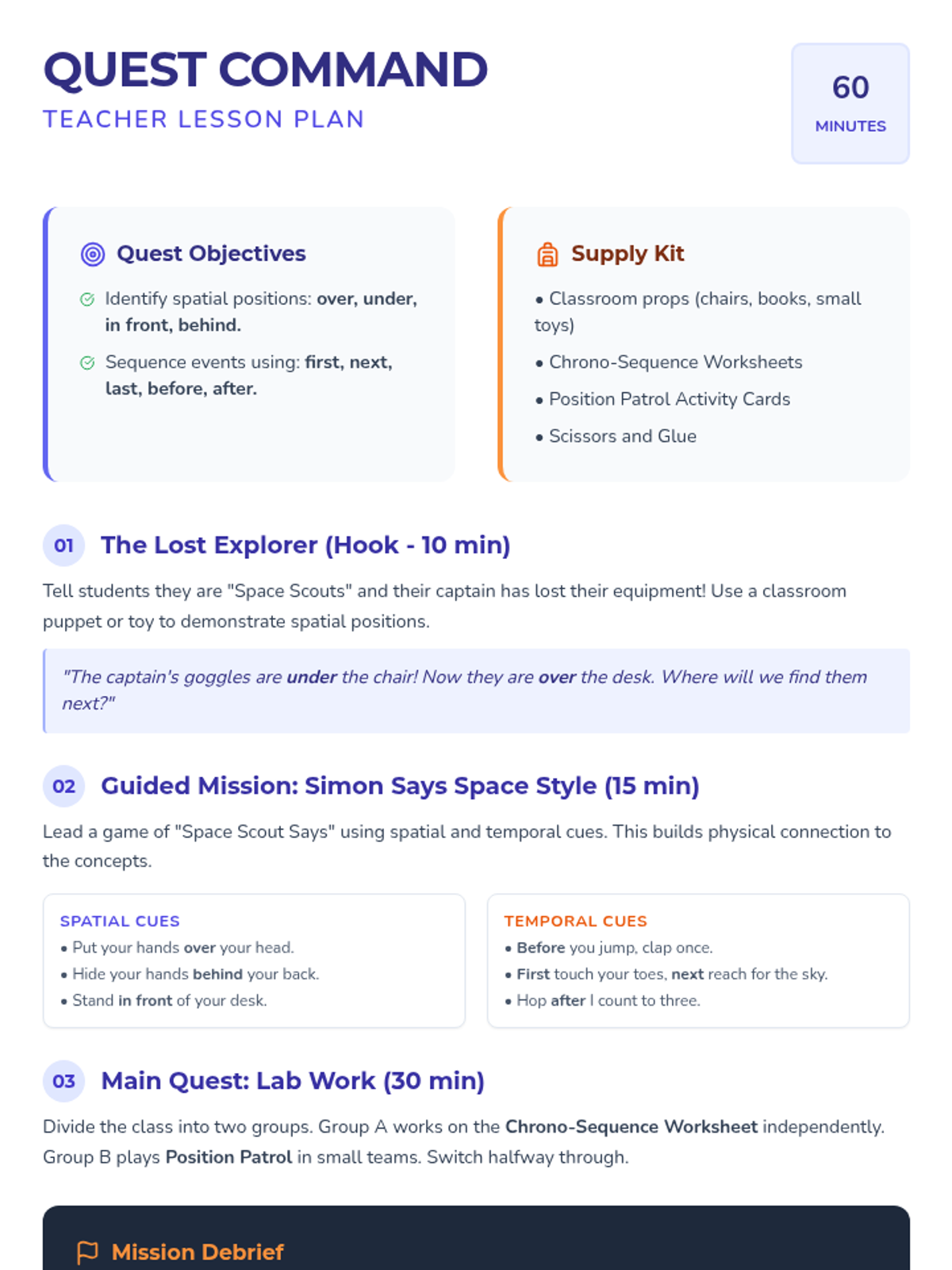
A series of activities for 2nd graders to master spatial relationships (over, under, in front, behind) and temporal sequencing (first, next, last, before, after). Students will use hands-on exploration and logical ordering to understand how things exist in space and time.
A 2nd-grade sequence exploring the relationship between geometry and arithmetic through area models. Students learn to tile rectangles, count units efficiently, partition shapes, and understand that different dimensions can yield the same area.
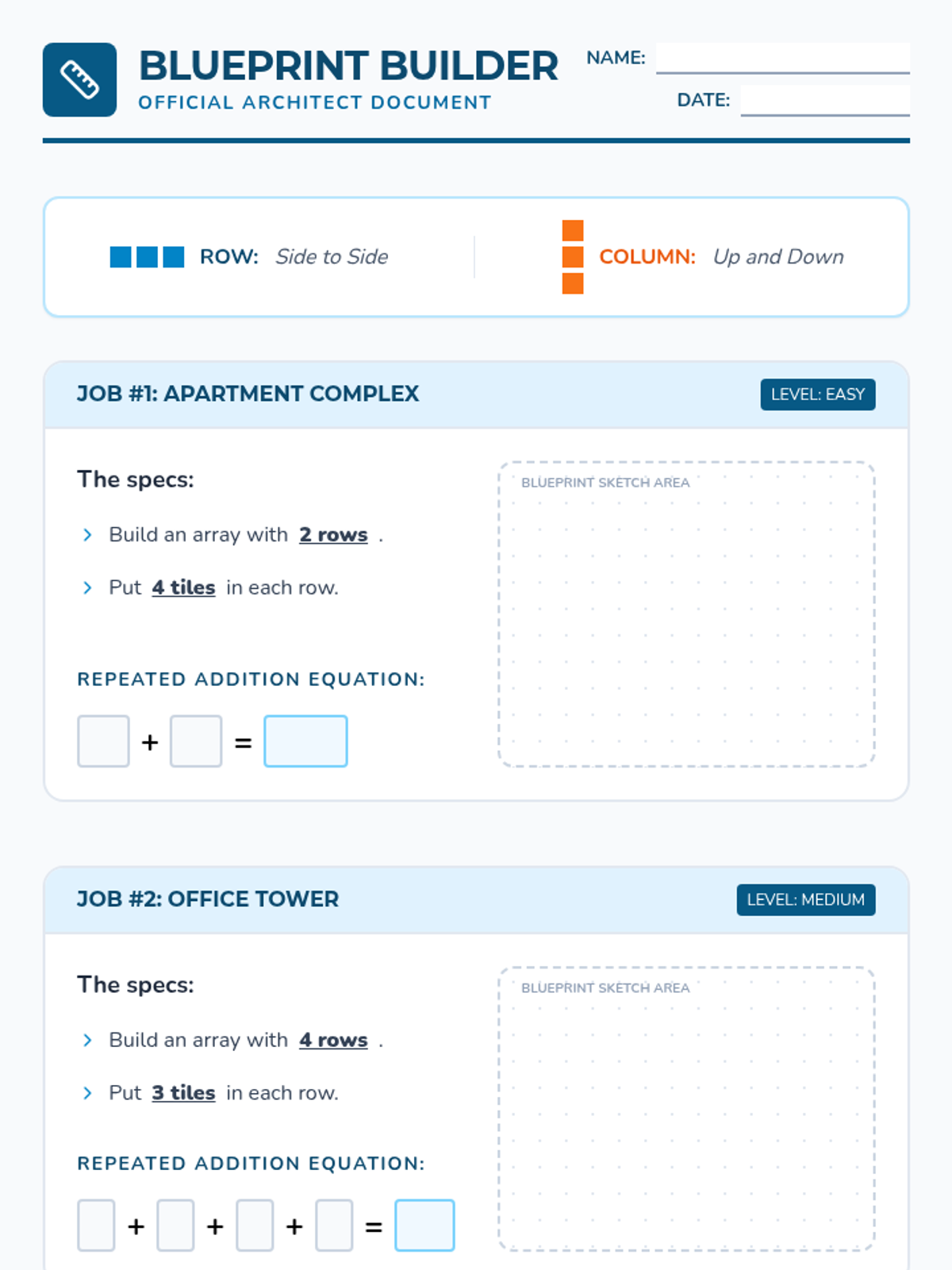
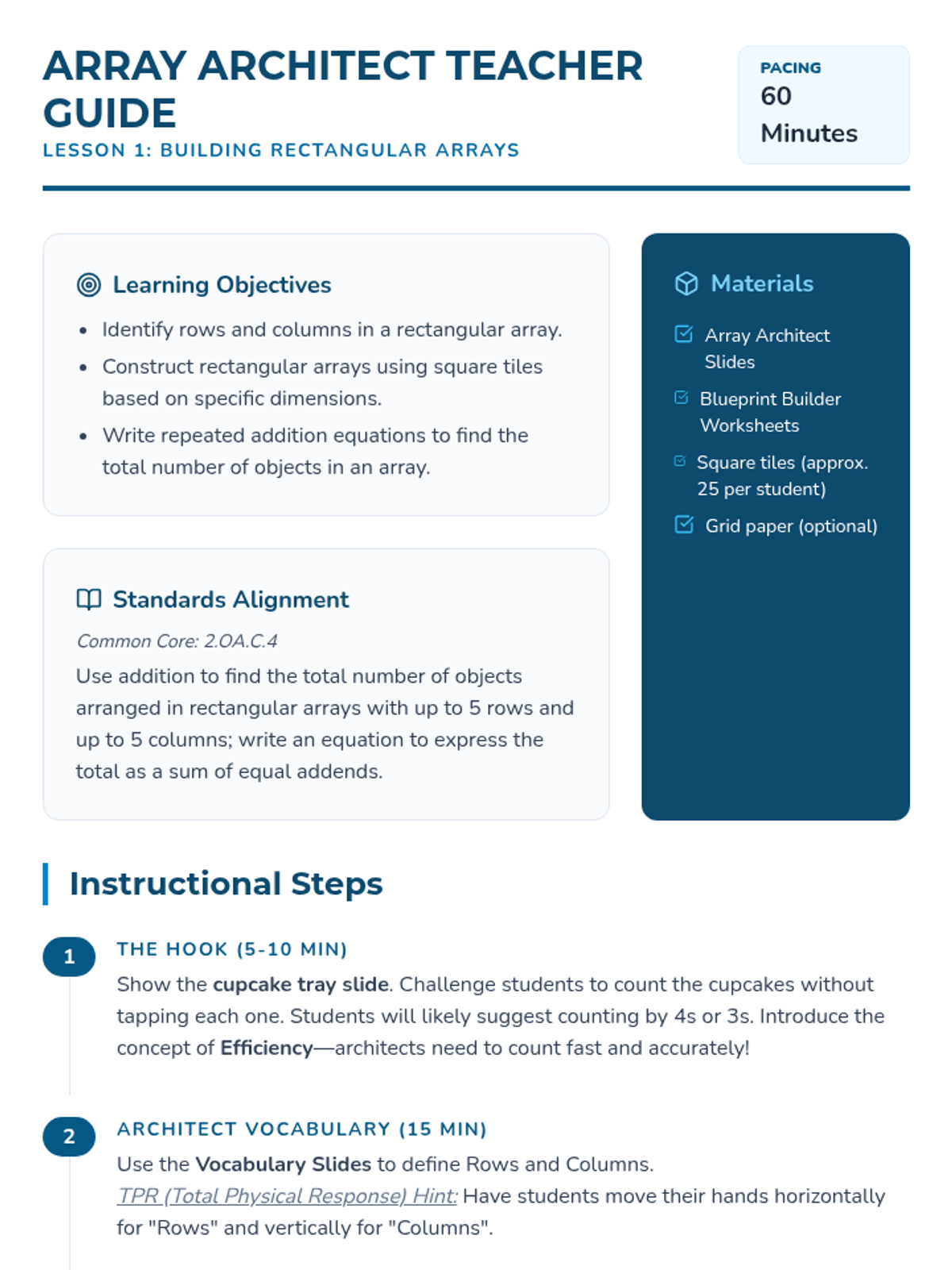
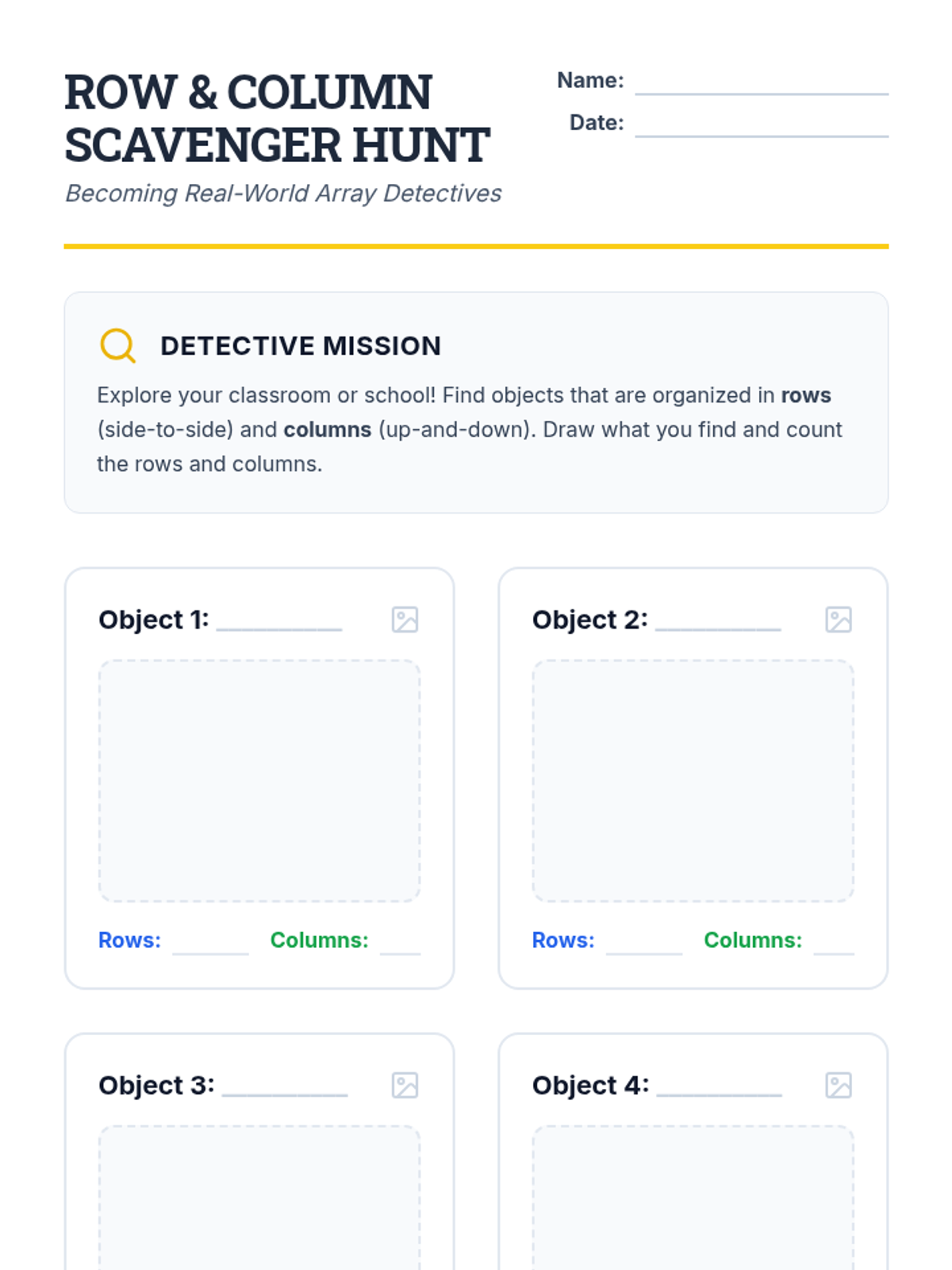
A 2nd-grade sequence exploring the properties of operations through rectangular arrays and repeated addition. Students transition from building basic arrays to understanding commutative and distributive concepts, culminating in an 'Array City' project.
Students explore spatial reasoning through composing and decomposing 2D shapes using pattern blocks, tangrams, and paper cutting. They progress from simple puzzle filling to designing a geometric city, developing cognitive flexibility and geometric intuition.
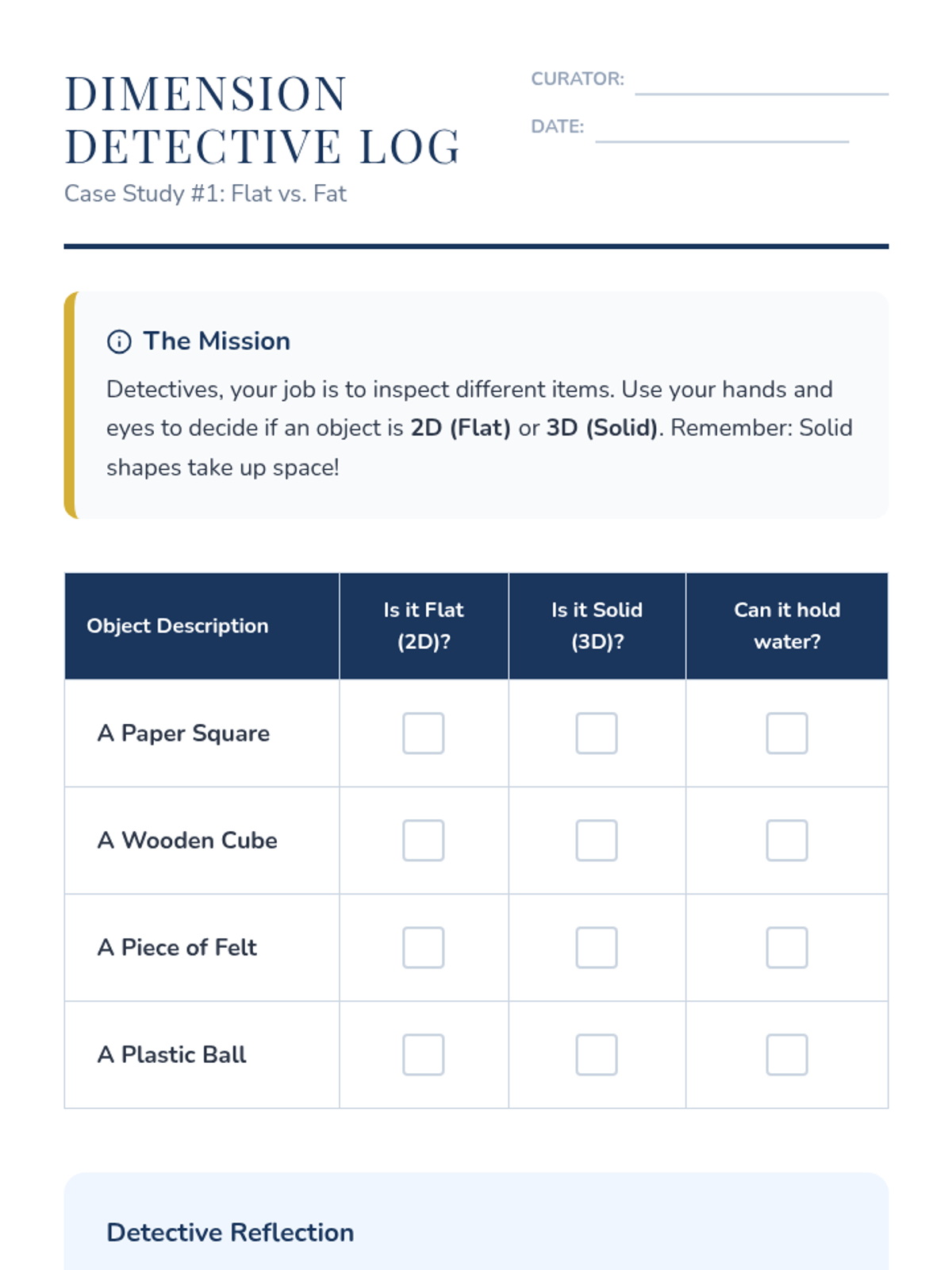
A 2nd-grade geometry unit where students act as museum curators to explore the properties, behaviors, and real-world applications of 3D solids. Students progress from distinguishing 2D from 3D to analyzing complex attributes and curating their own 'Geometry Museum'.
A 2nd grade math sequence focused on modeling multiplication through arrays and area models, transitioning from physical manipulatives to partitioning rectangles and project-based application.
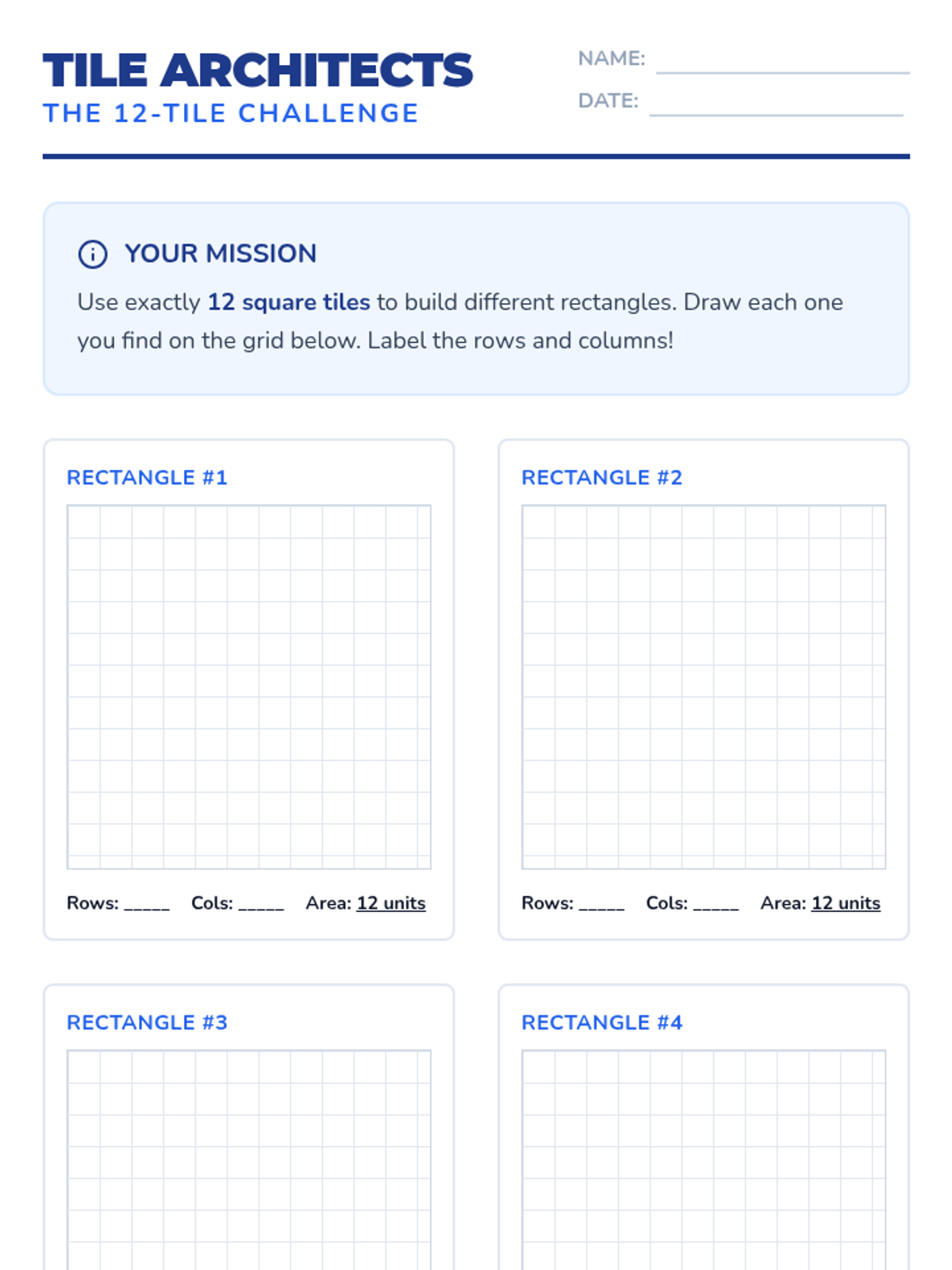
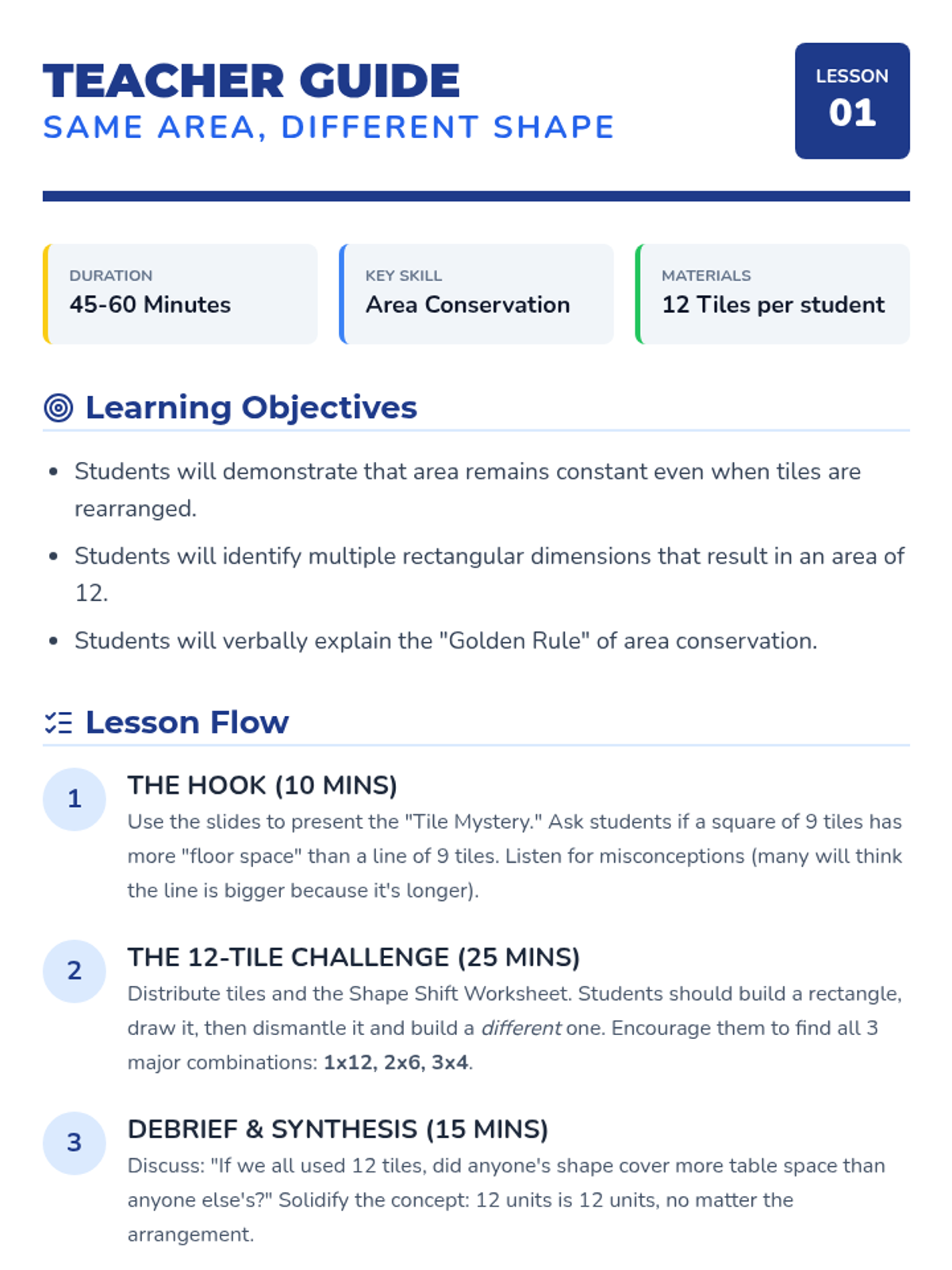
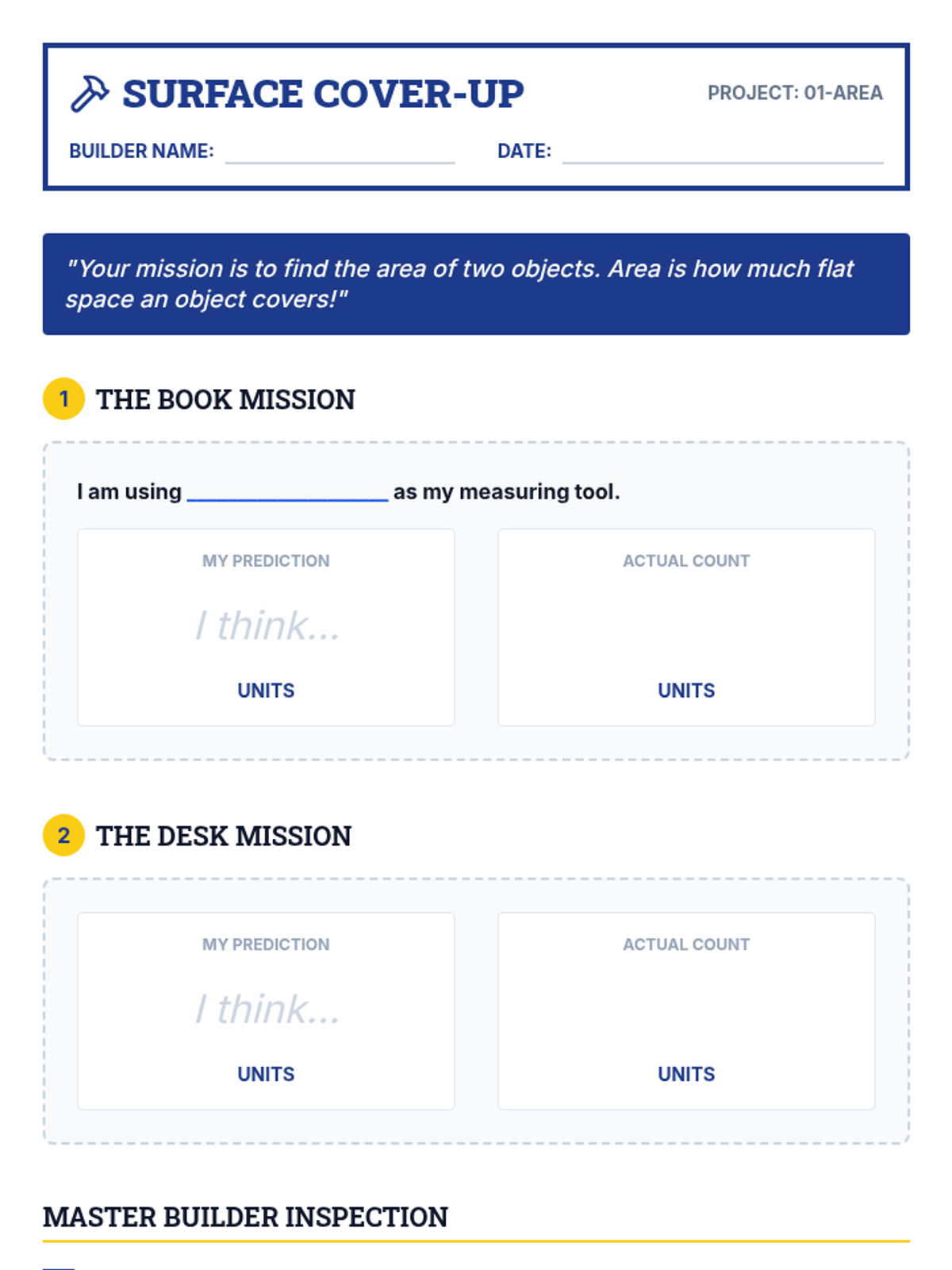
This 2nd Grade sequence explores the concepts of area conservation and spatial reasoning. Students learn that shapes with different dimensions can have the same area, practice estimating and verifying area with tiles, and compare the surface area of various objects using direct and standardized measurement.
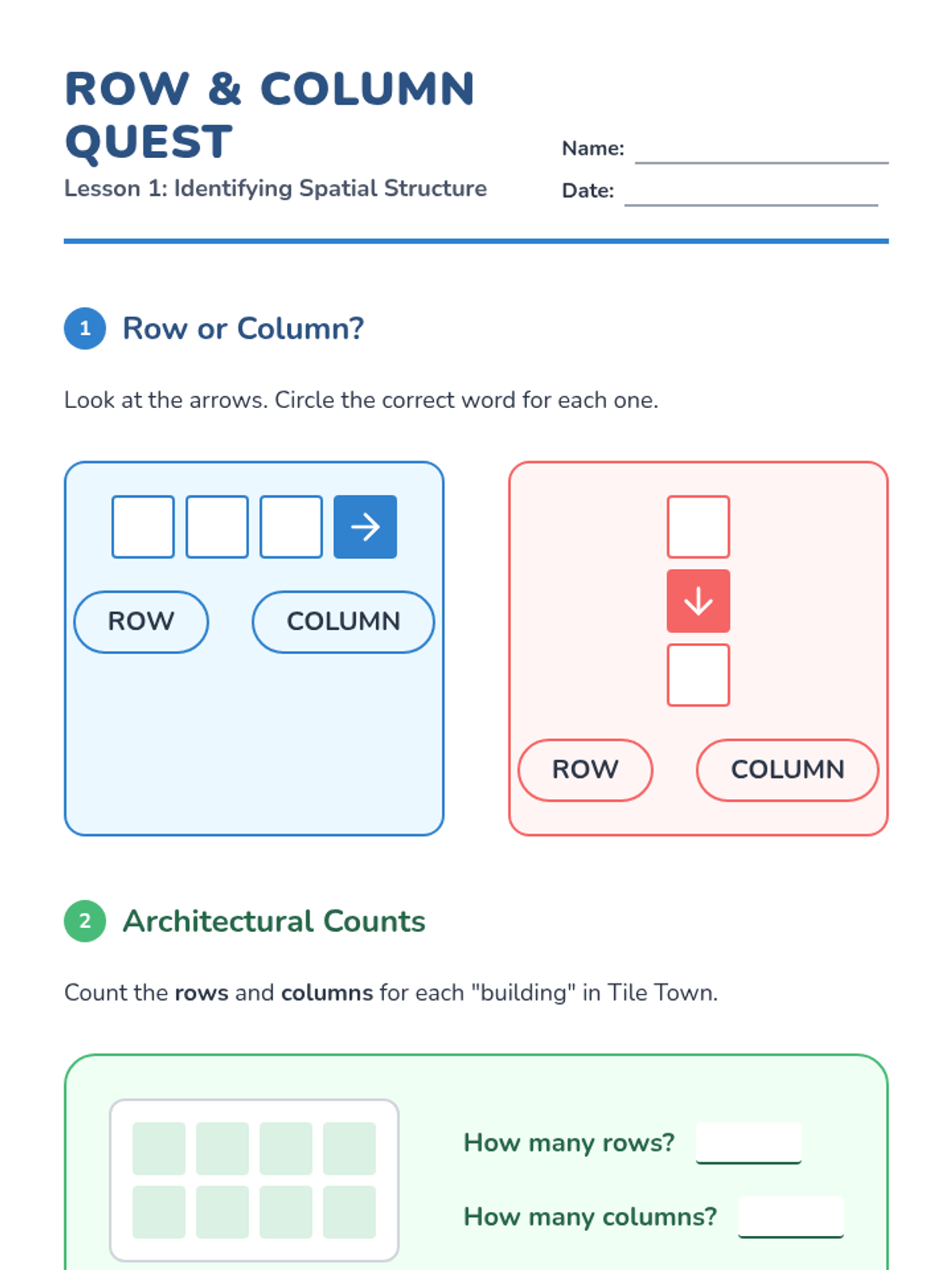
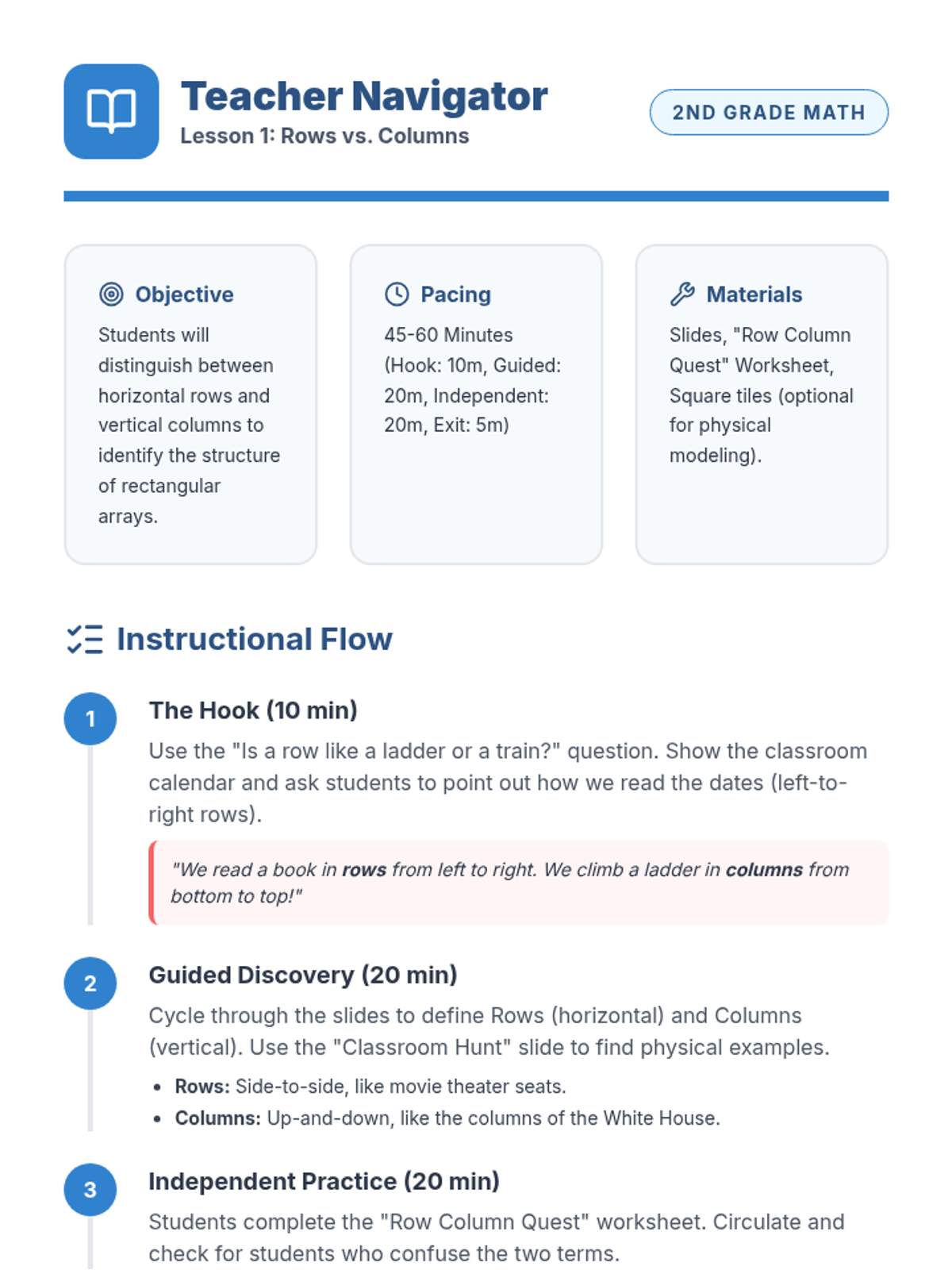
A 2nd-grade sequence focusing on partitioning rectangles into rows and columns of same-size squares to understand area through repeated addition and spatial organization.
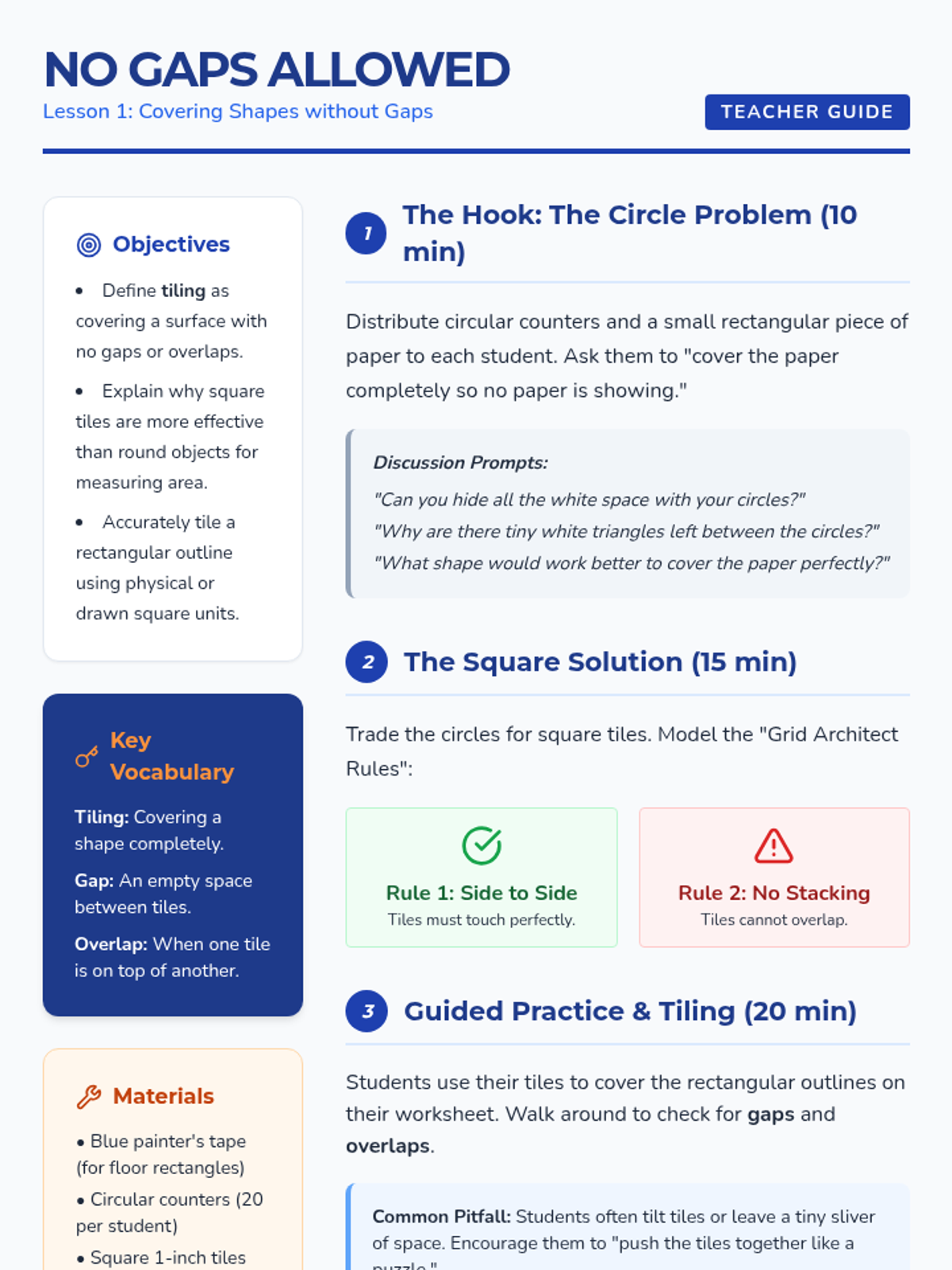
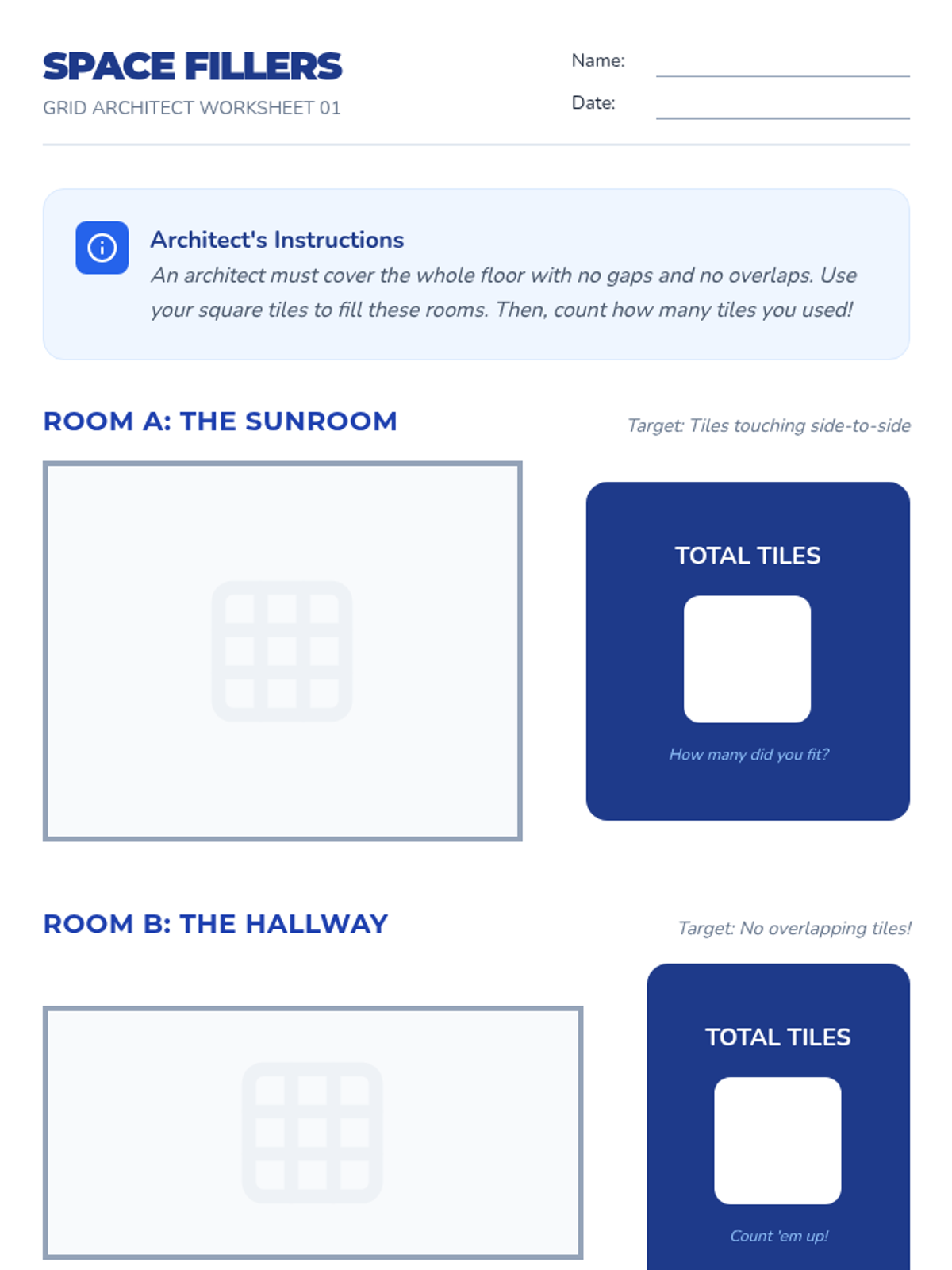
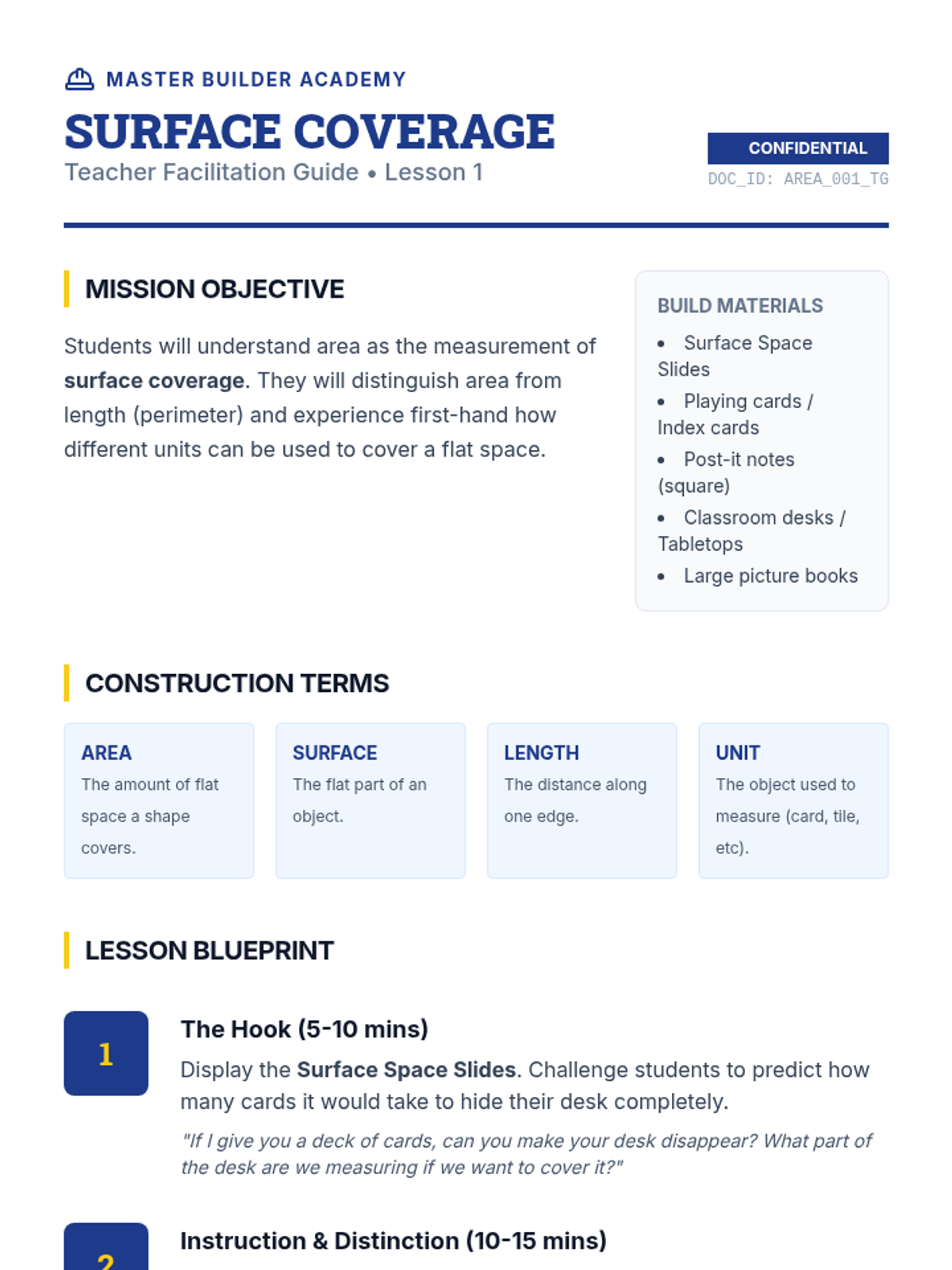
This 2nd Grade sequence introduces the concept of area as surface coverage. Students progress from using non-standard units to standard square tiles, discovering the essential rules of tiling (no gaps, no overlaps) and transitioning from concrete manipulation to pictorial grid representations.
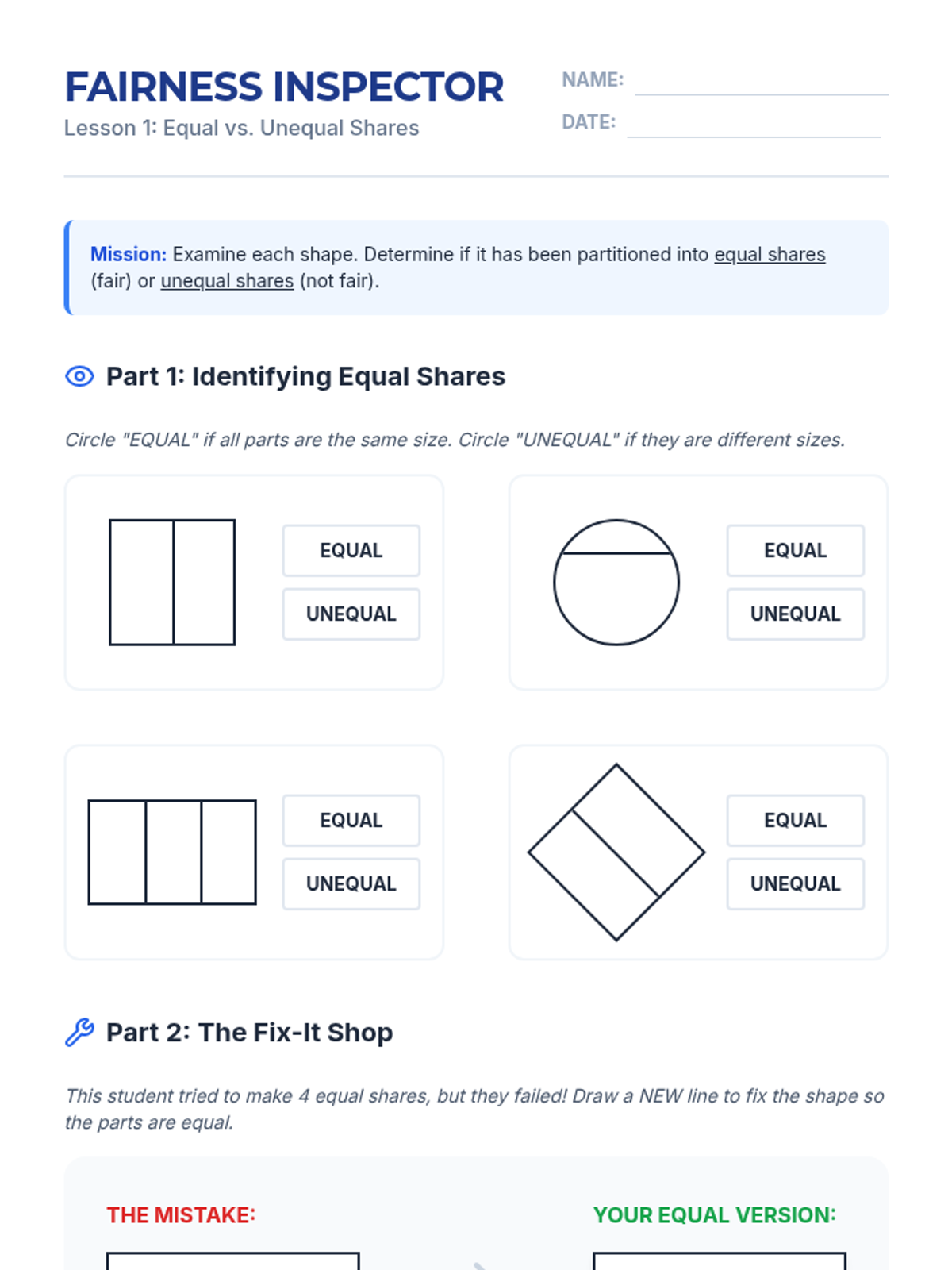
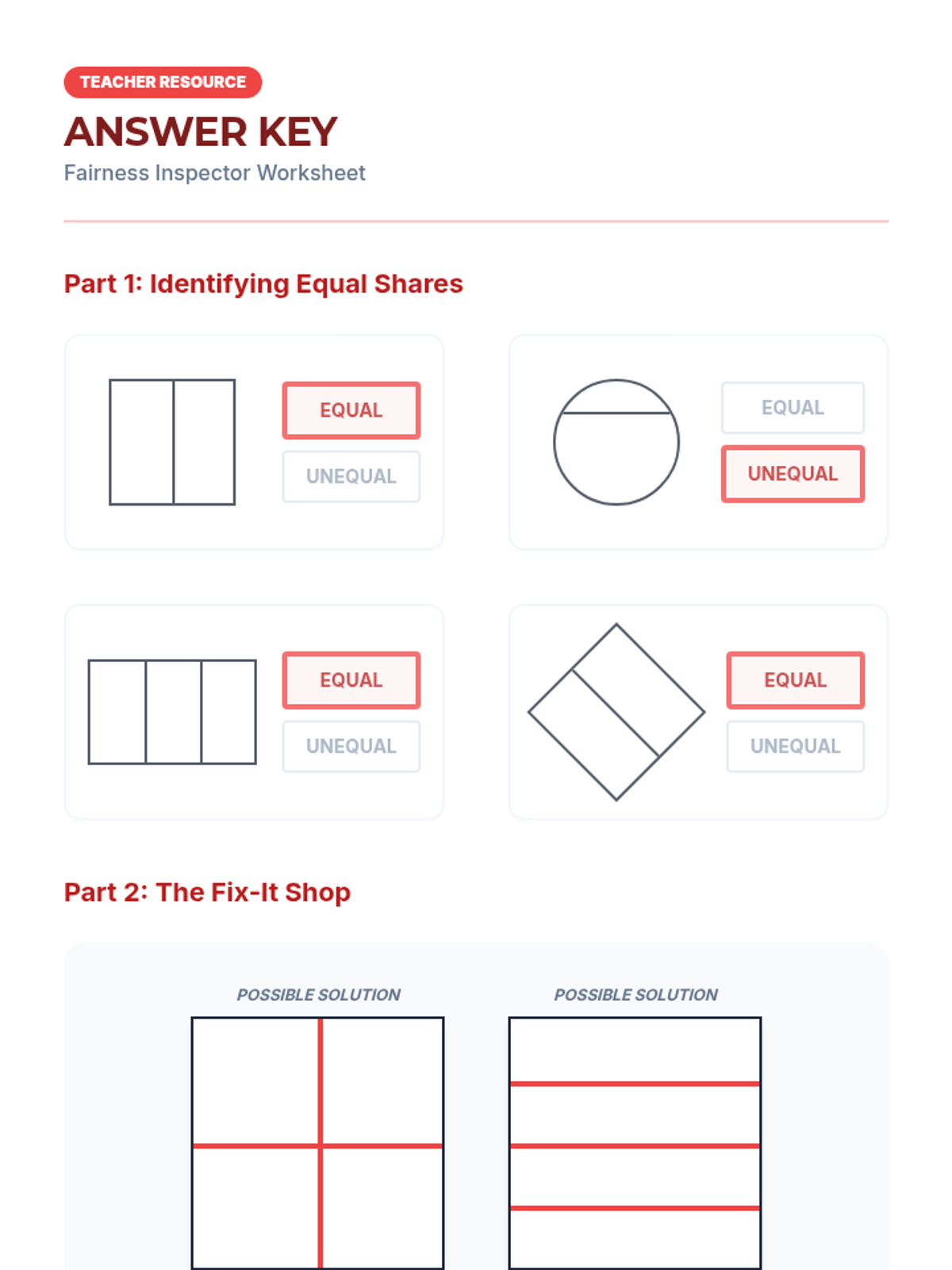
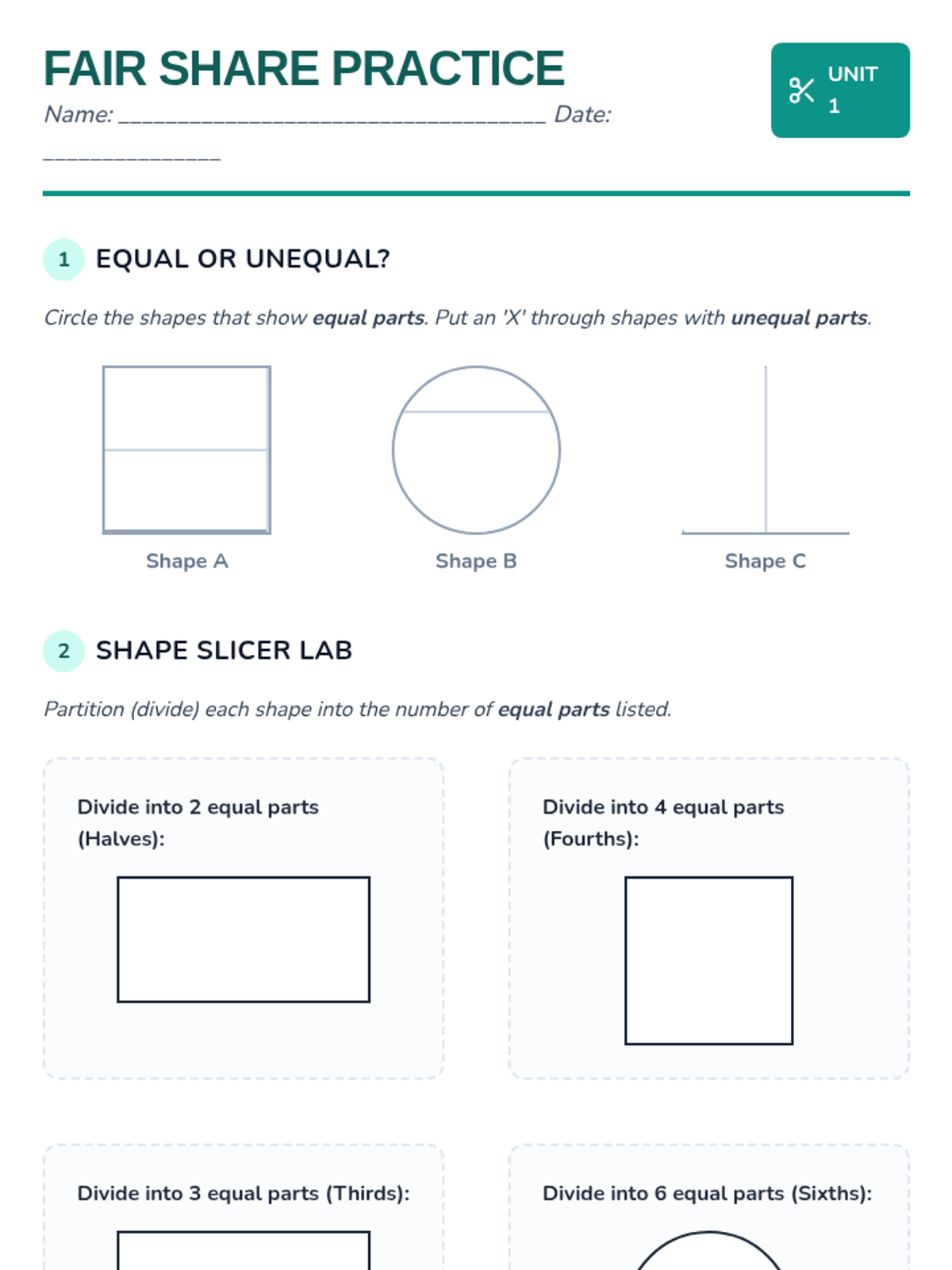
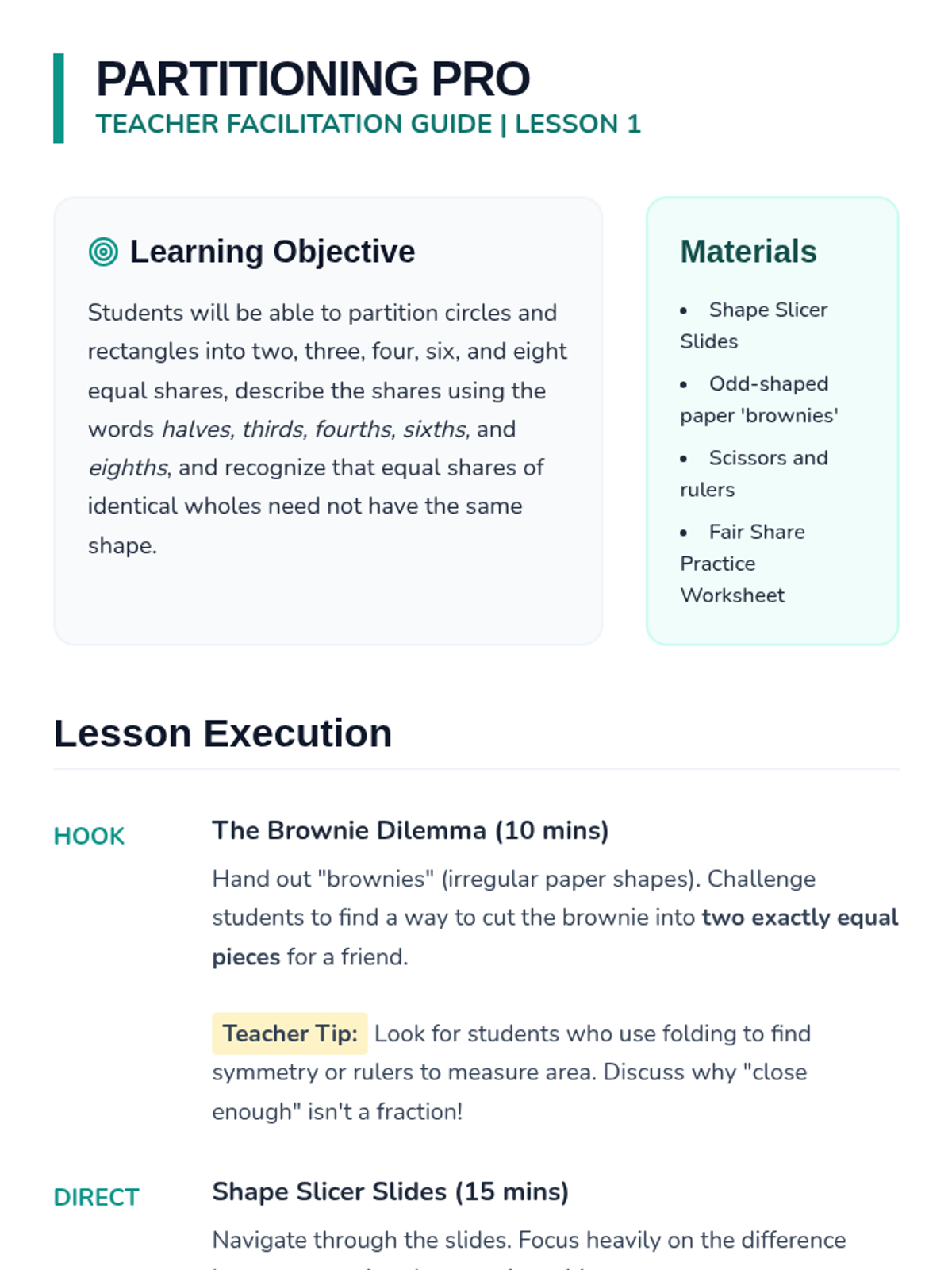
This sequence connects geometry to fractions by teaching students to partition shapes into parts with equal areas. Students move from intuitive sharing to precise geometric partitioning, learning that equal shares of identical wholes need not have the same shape.
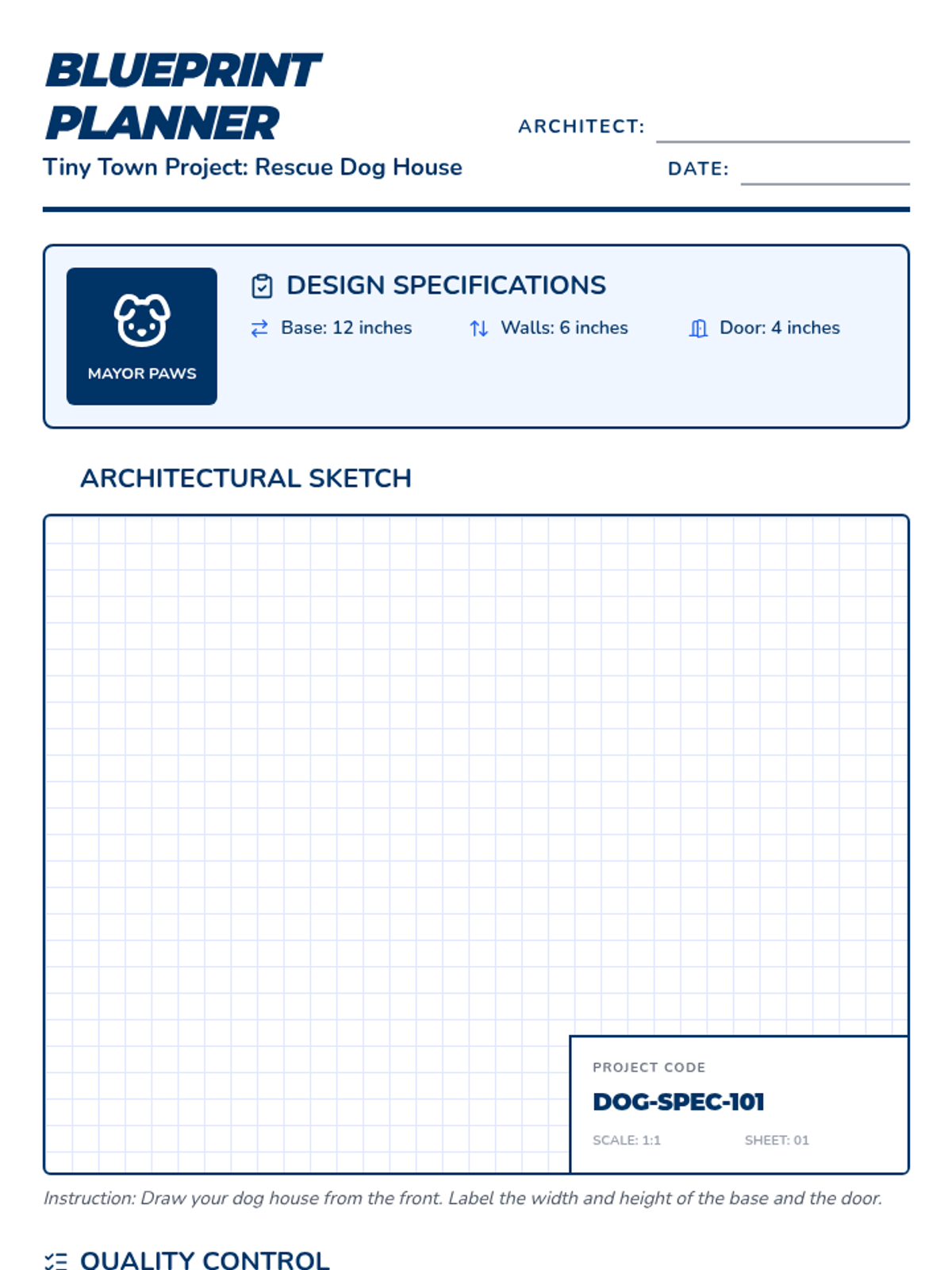
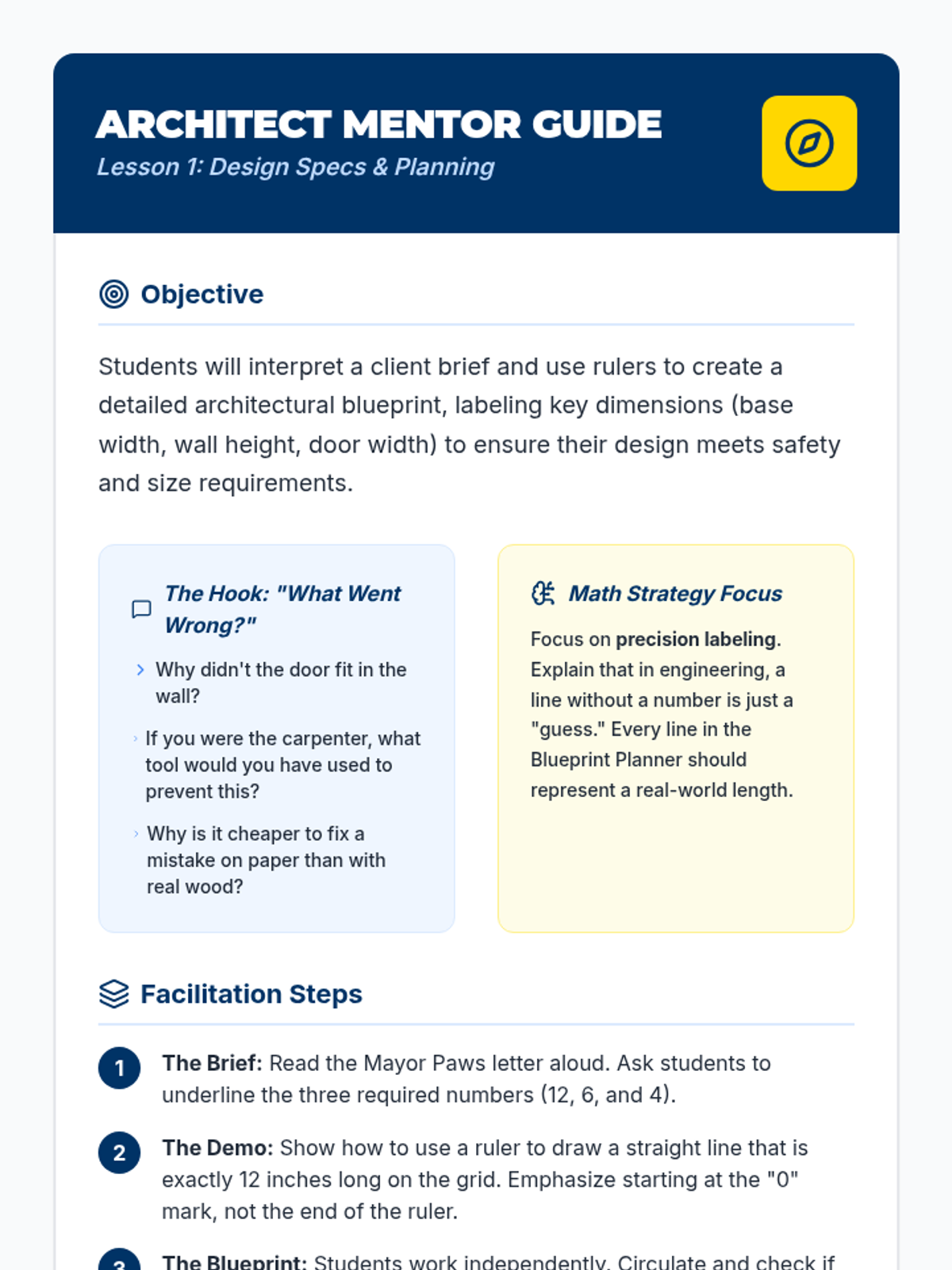
A project-based unit where 2nd-grade students act as architects and engineers to design and build 'Tiny Town' structures. Students learn to measure accurately, calculate perimeter, and verify dimensions against design plans.
This sequence establishes a foundational understanding of fractions as equal parts of a whole area or region. Students progress from partitioning shapes to naming unit fractions, building non-unit fractions, and applying their knowledge to real-world contexts.
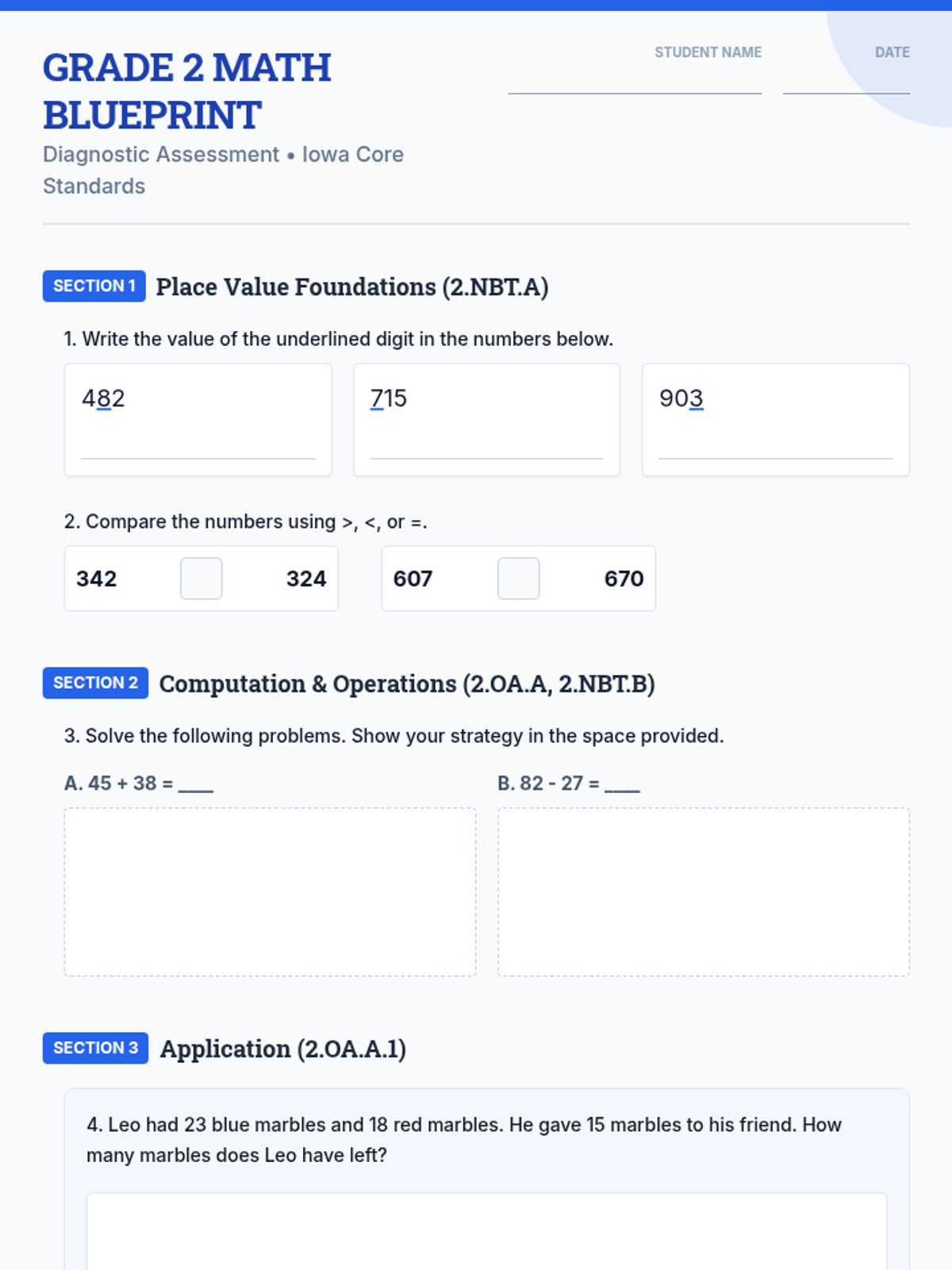
A comprehensive diagnostic suite for grades 2-5 designed to identify specific skill gaps in foundational math domains aligned to the Iowa Core standards. This series helps educators pinpoint exactly where students have discrepancies in place value, arithmetic, and early rational numbers.