An exploration of the verbal and non-verbal signals used to manage turn-taking, interruptions, and overlapping speech in dynamic conversations.

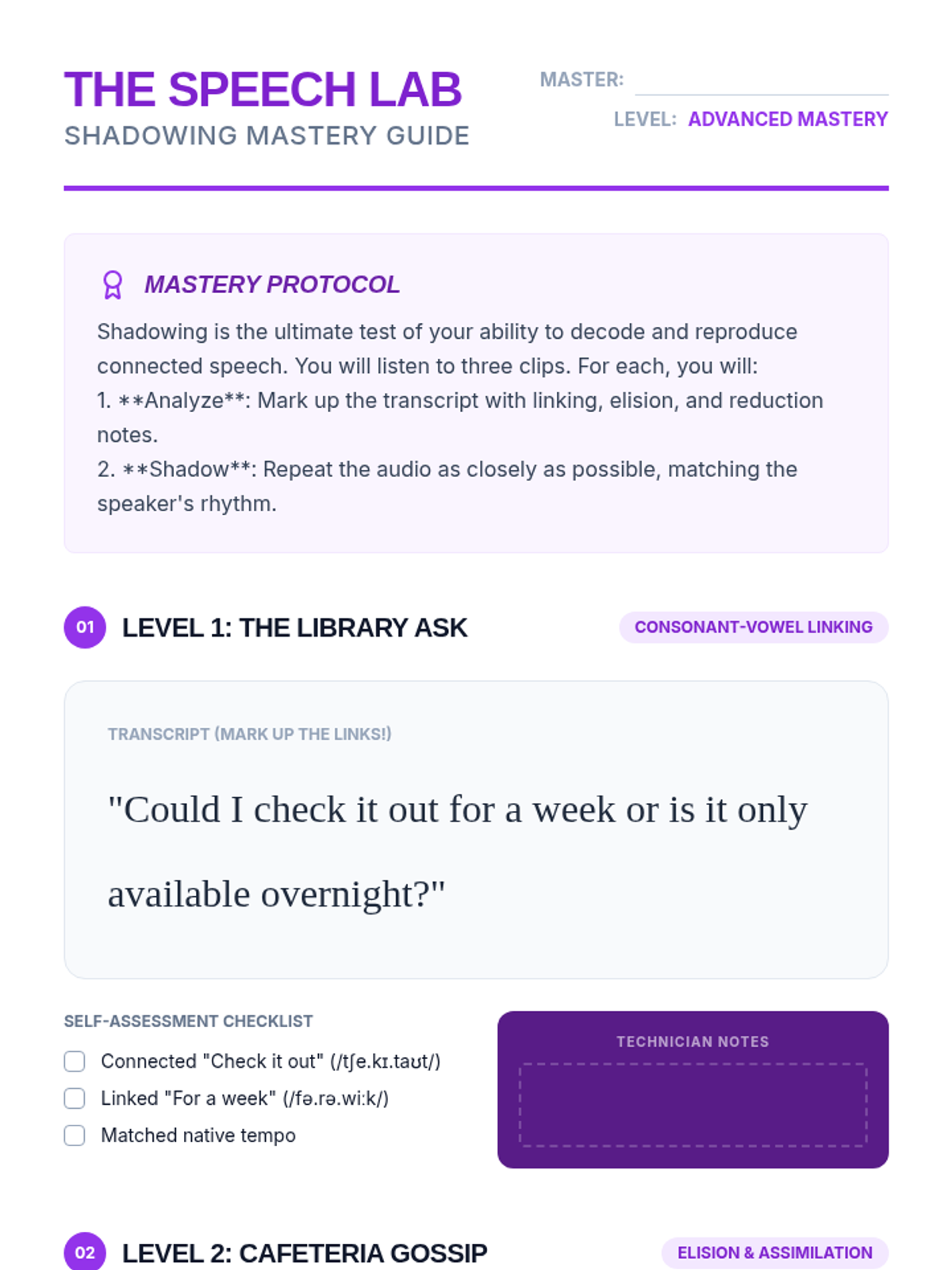
Students engage in a 'shadowing' technique, repeating audio immediately after hearing it to internalize the rhythm and flow of connected speech. This active processing reinforces their ability to predict and process sound streams.
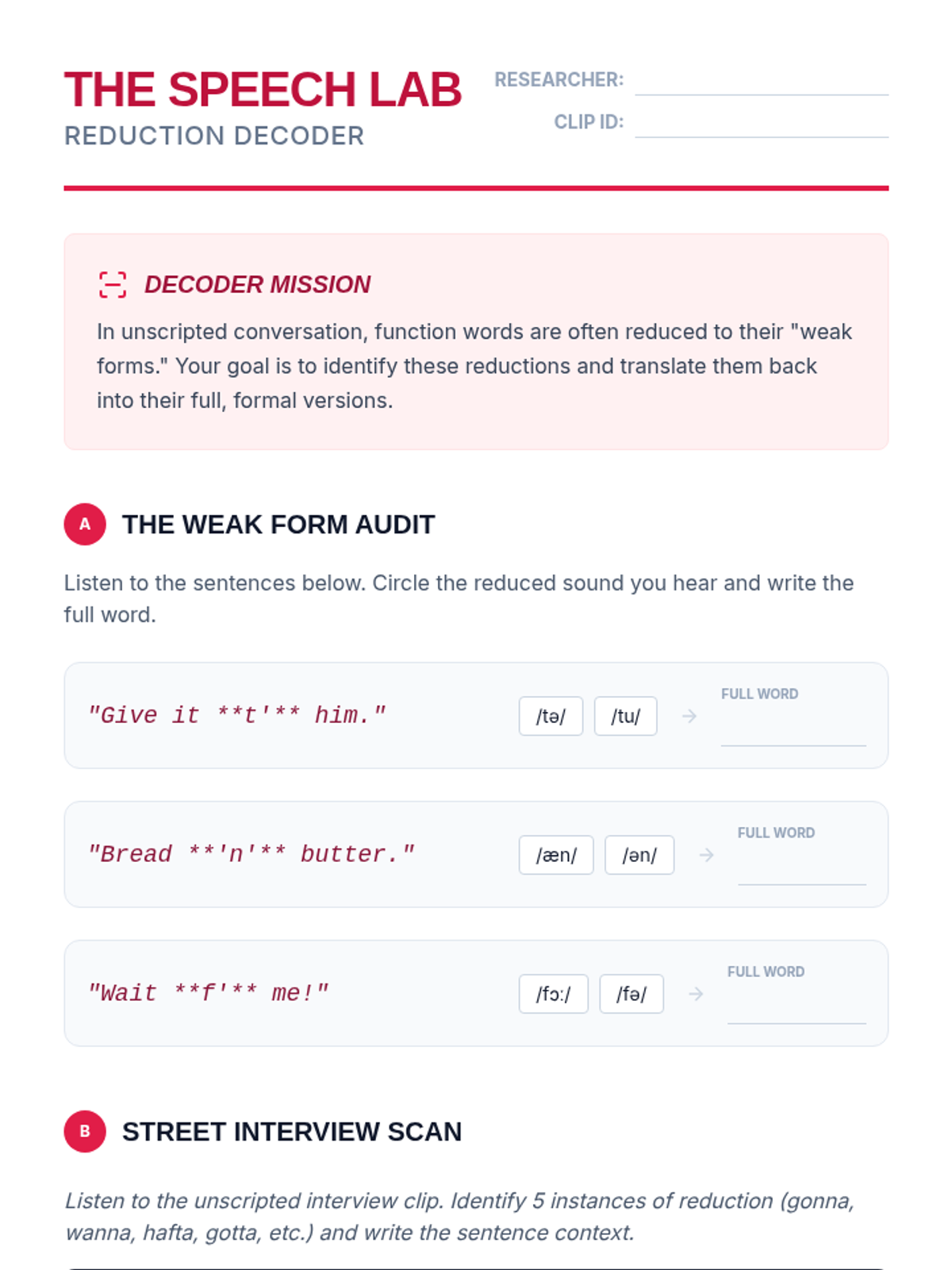
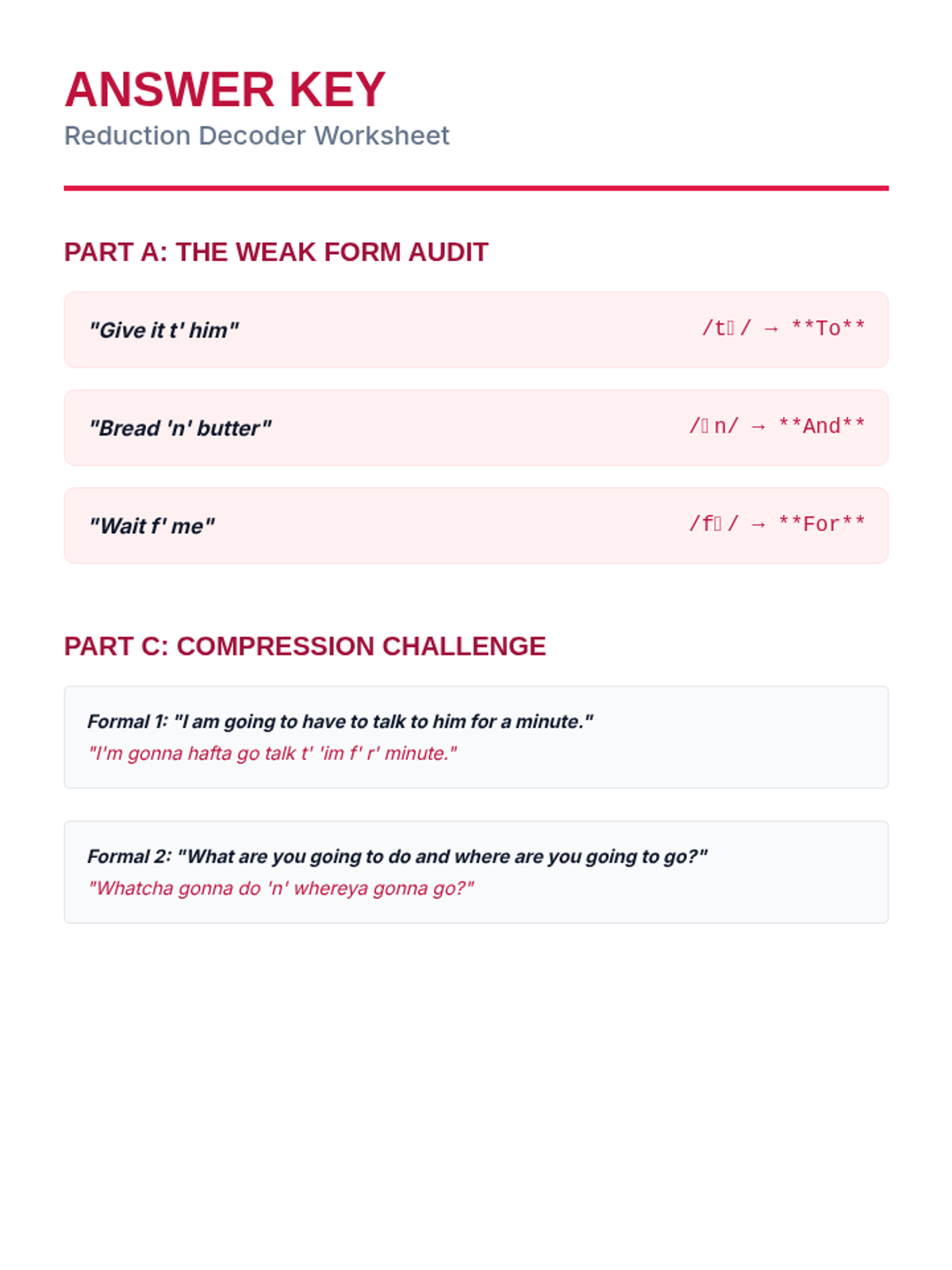
Focusing on function words, this lesson tackles common reductions like 'gonna,' 'wanna,' and weak forms of auxiliary verbs. Students analyze unscripted interviews to catch these reductions in context.
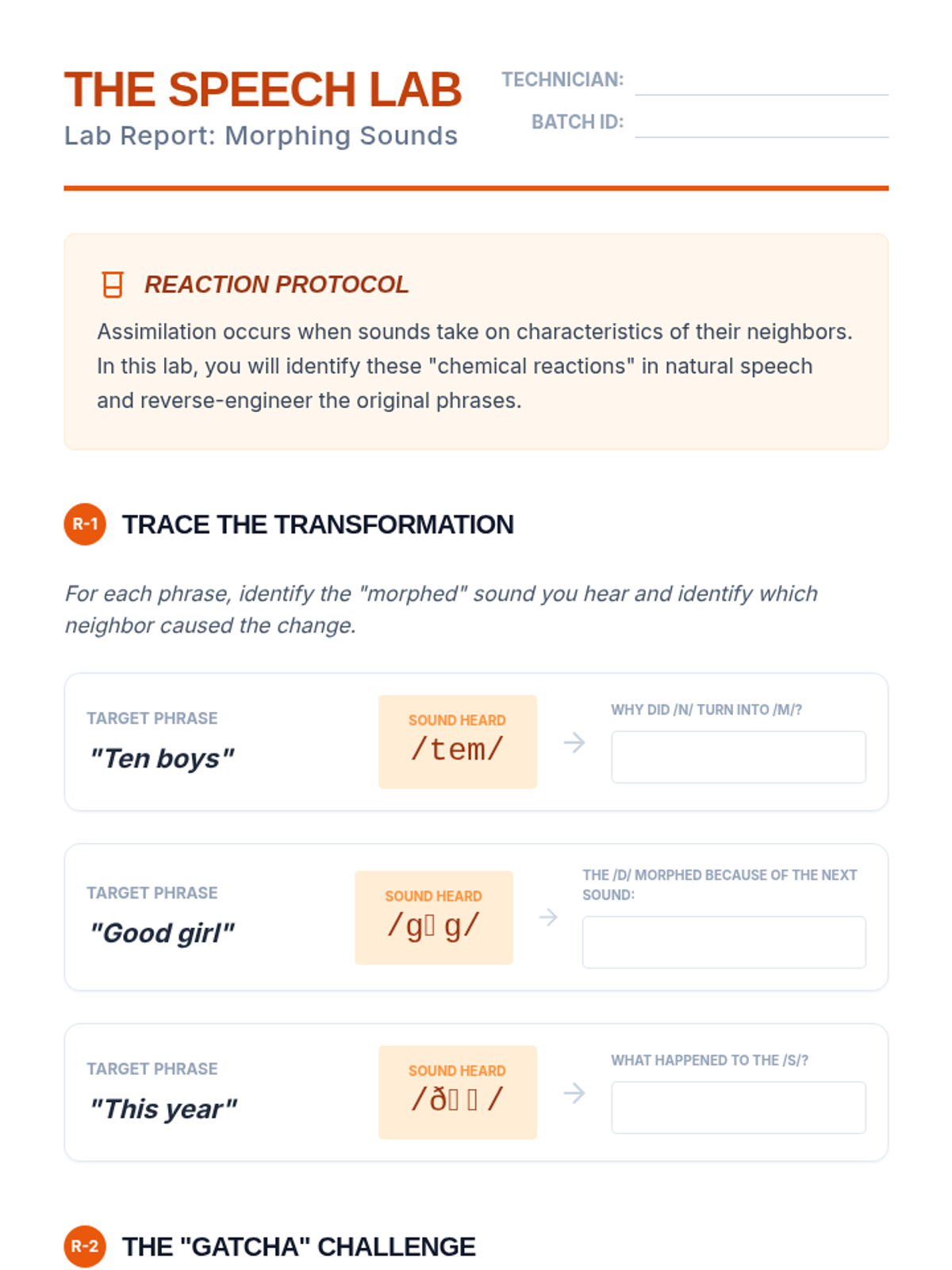
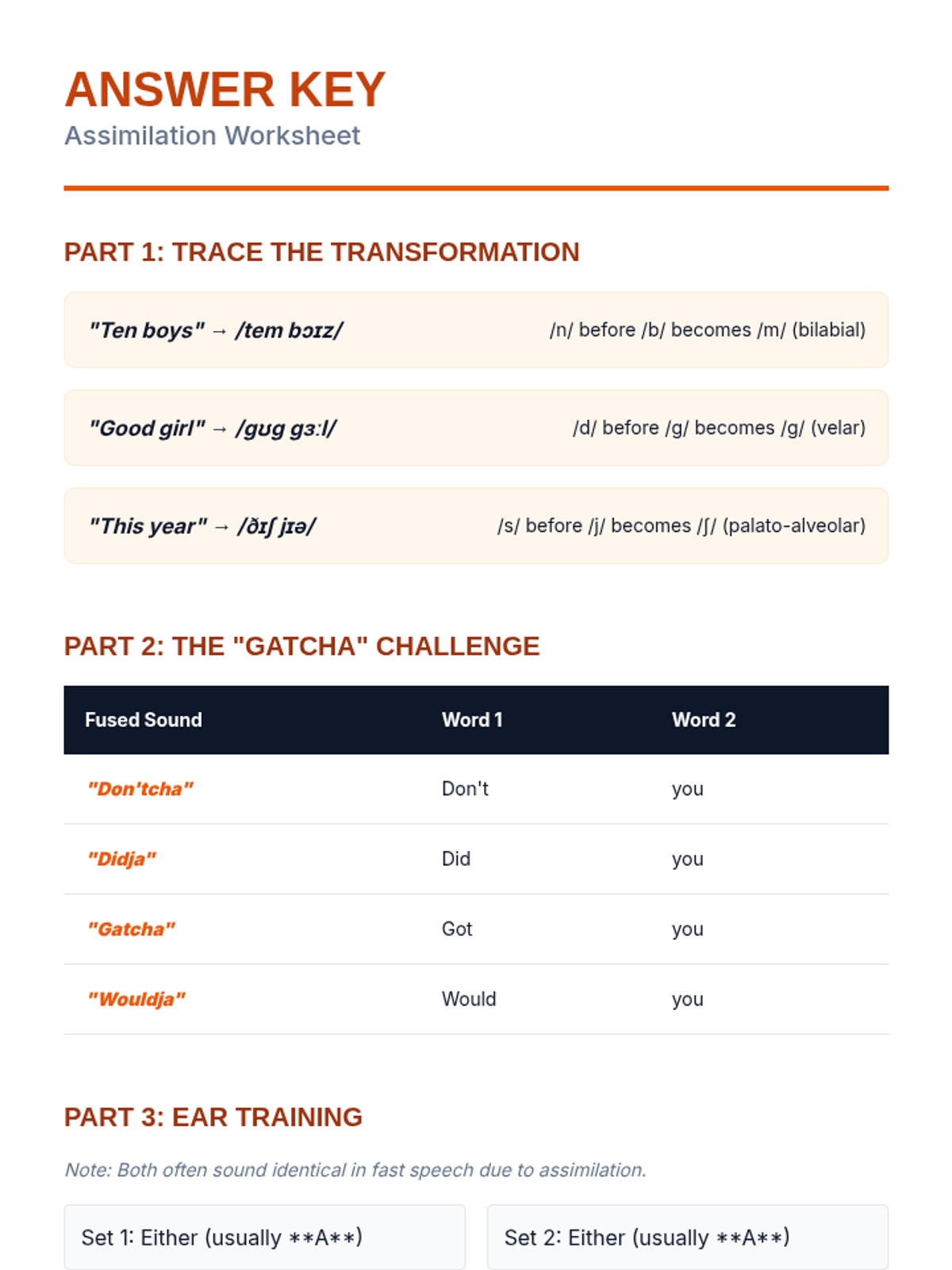
Students learn how sounds influence their neighbors (e.g., 'hand bag' becoming 'hambag'). The lesson uses minimal pair discrimination and dictation exercises to train ears to recognize words despite phonological changes.
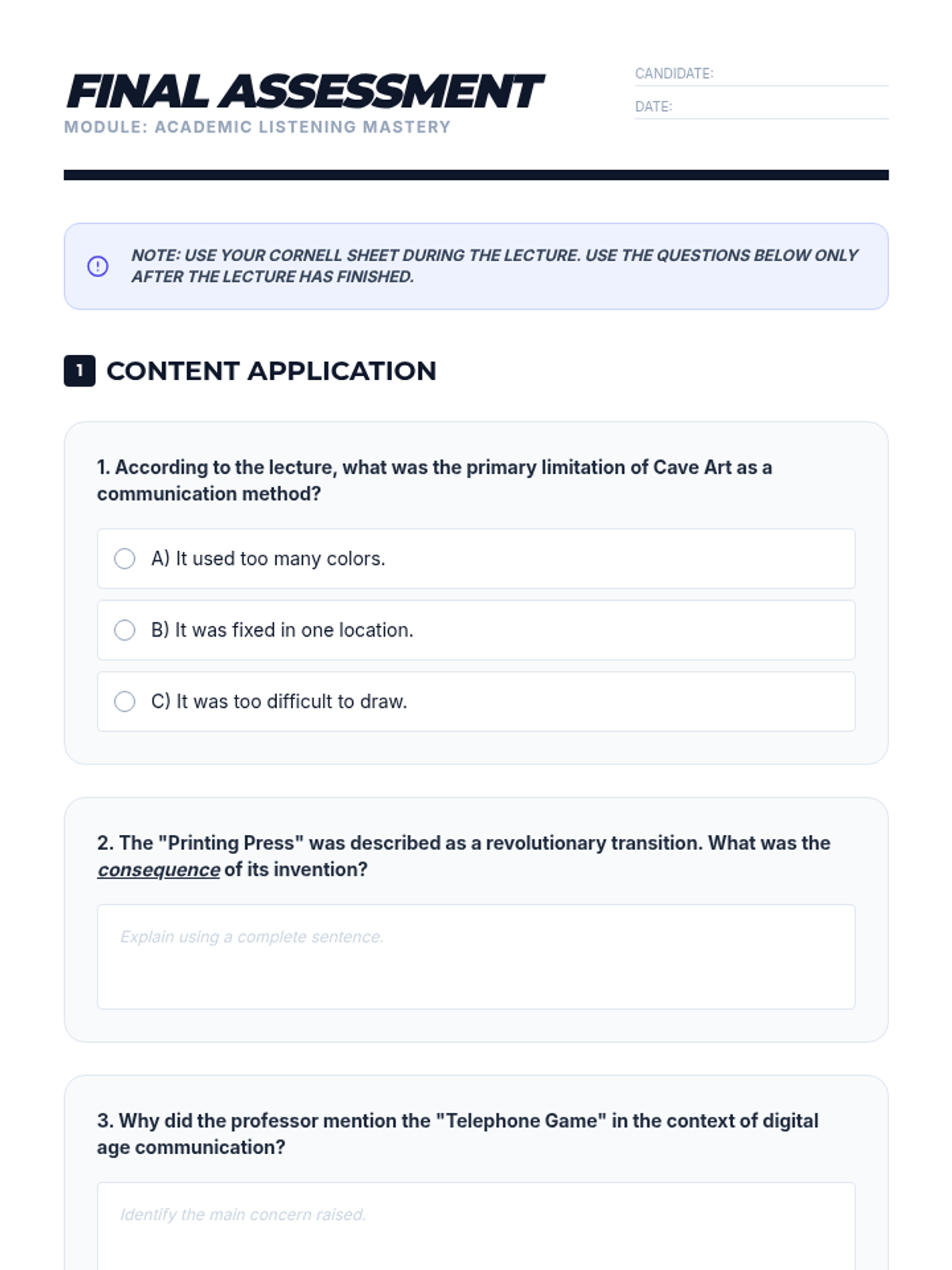
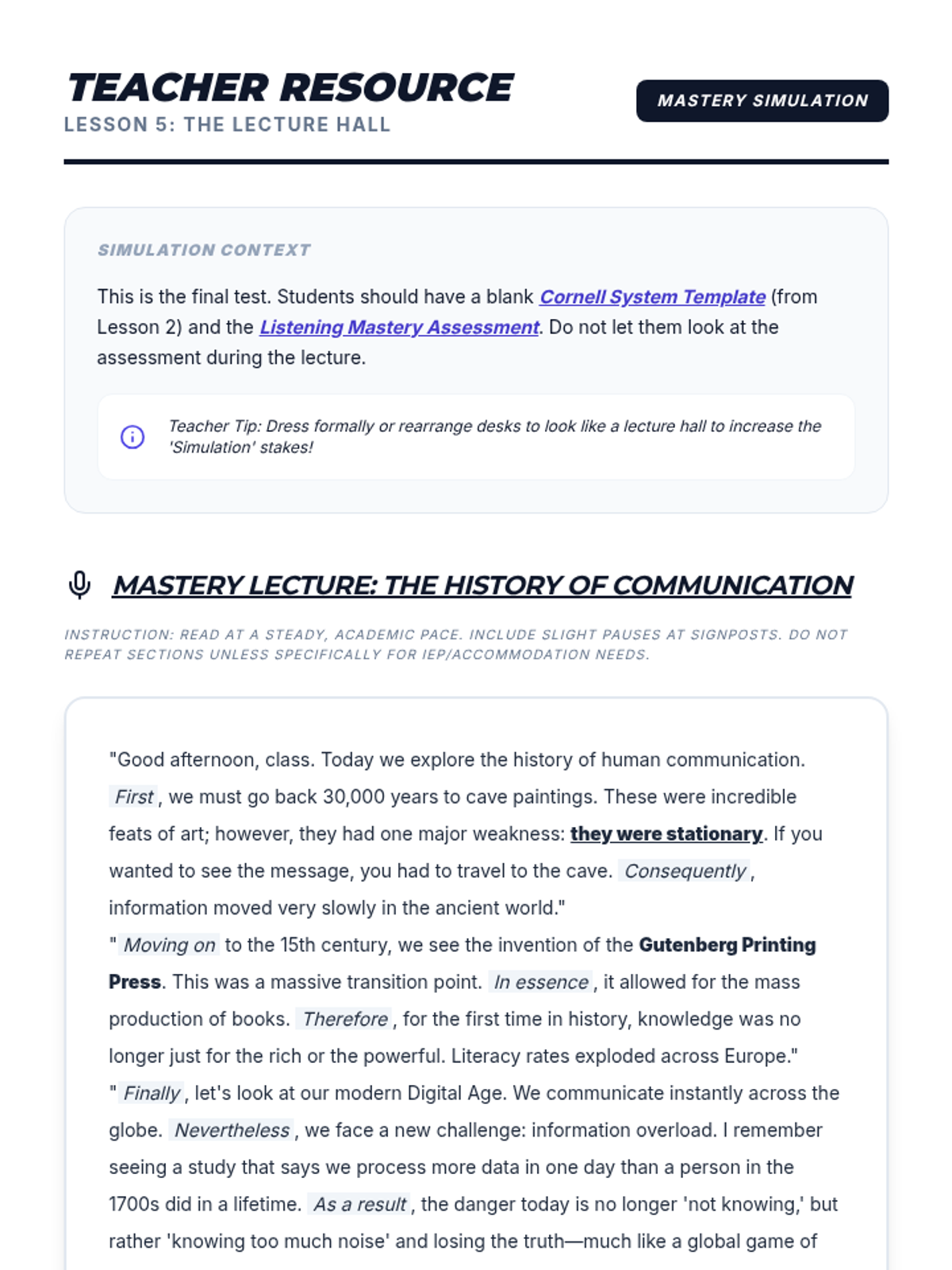
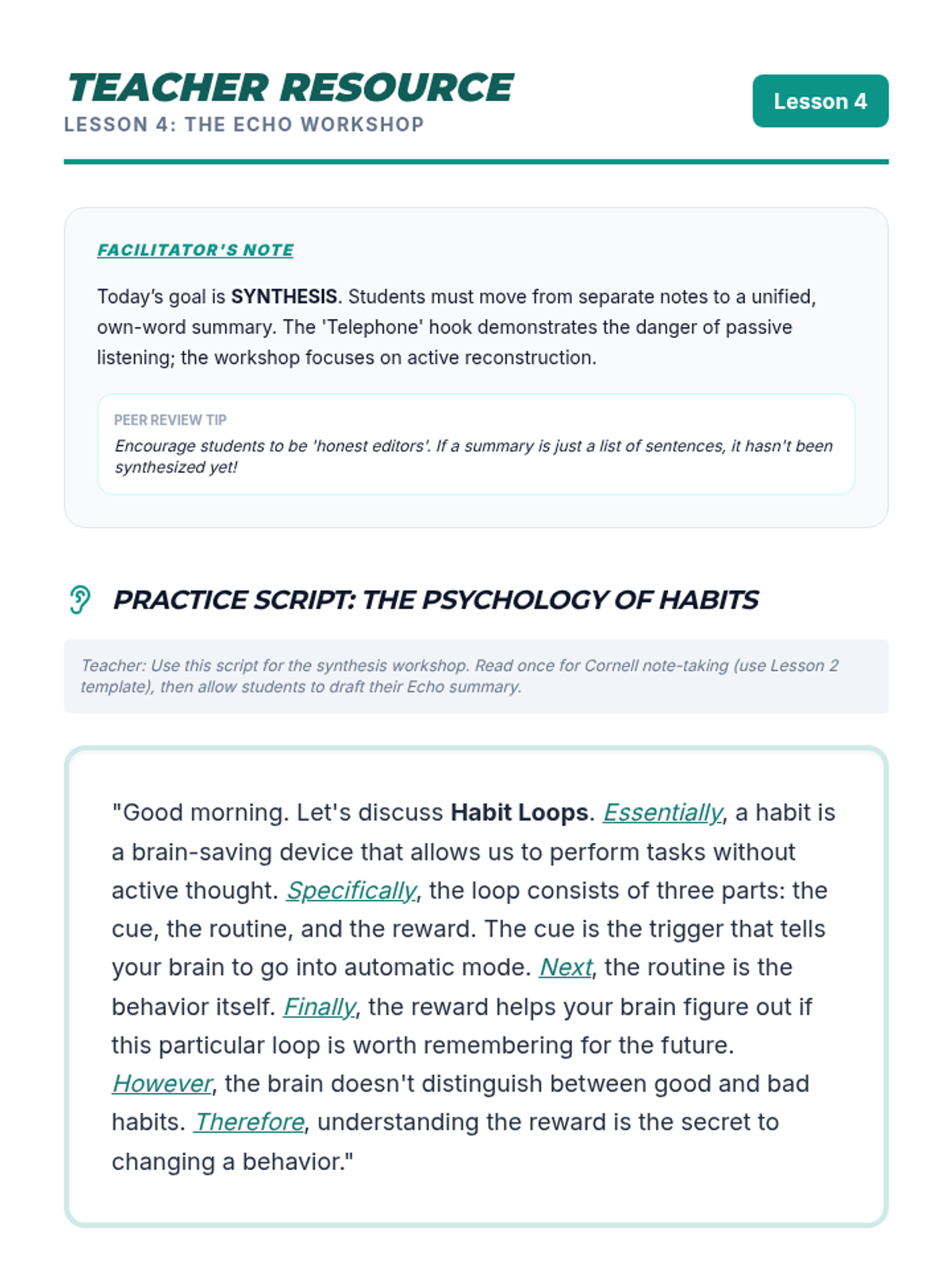
Students participate in a university-style mini-lecture simulation. They apply all learned strategies—signpost identification, Cornell note-taking, and synthesis—to capture information and complete a formal assessment.
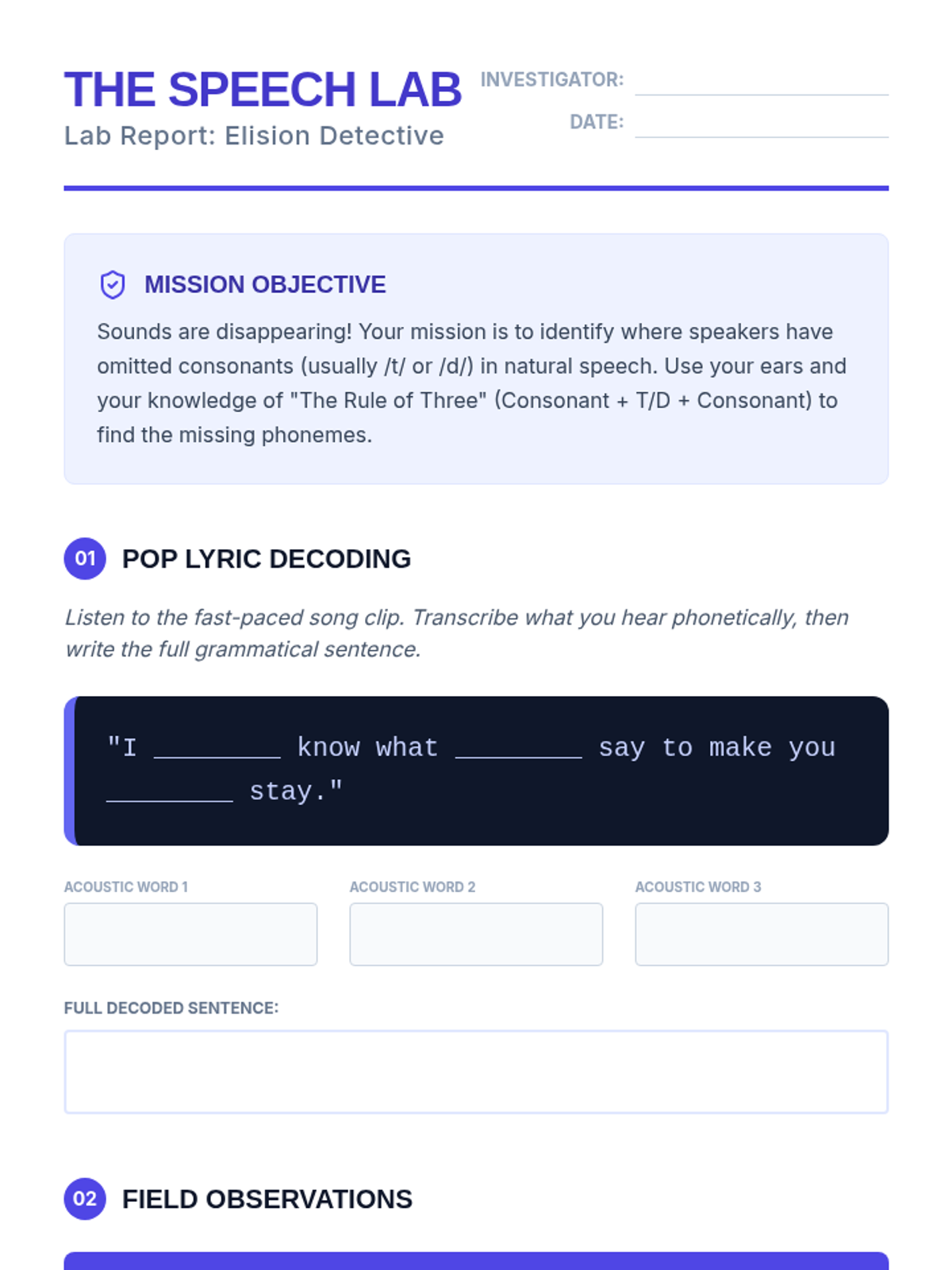
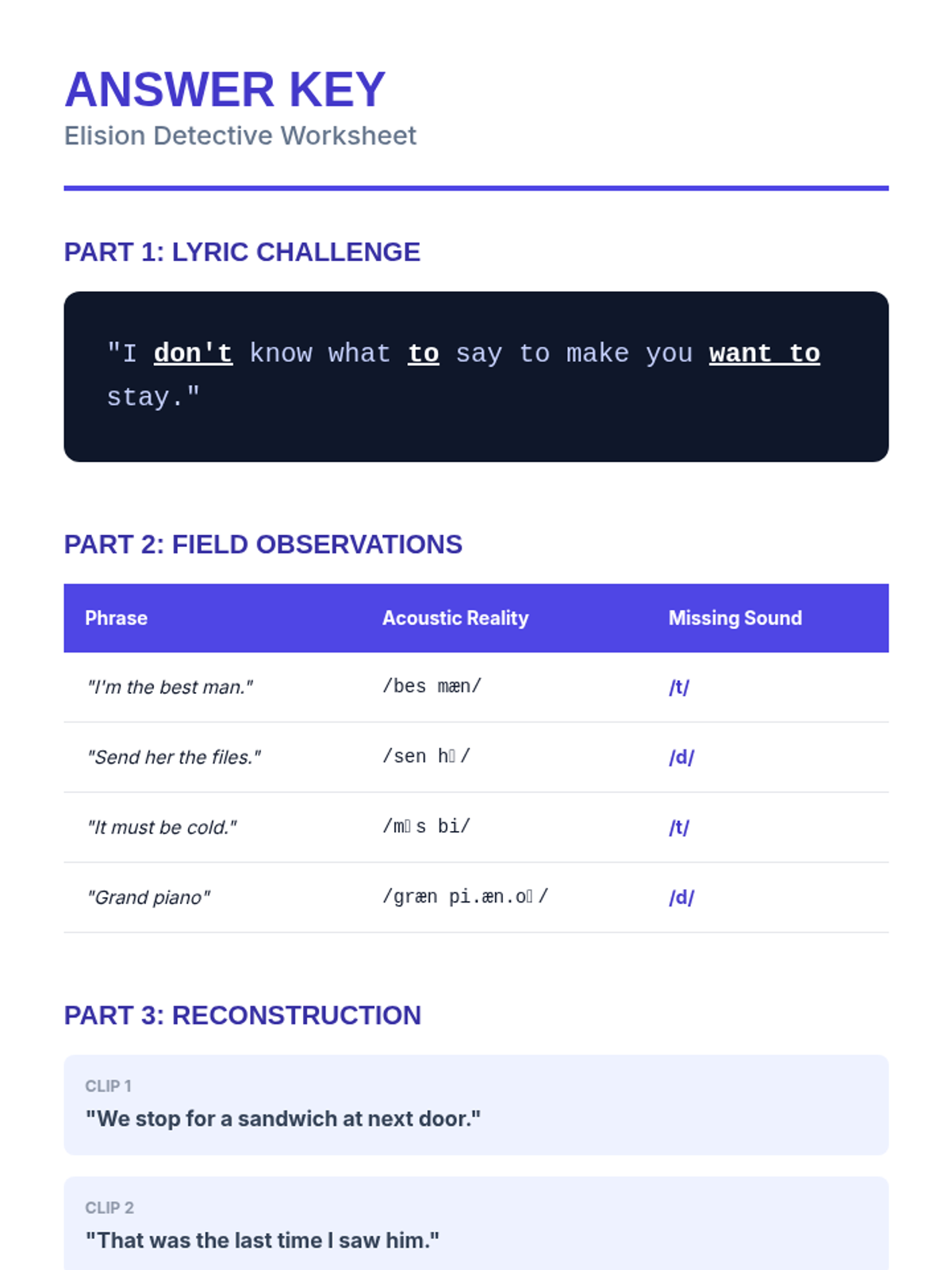
This lesson covers the phenomenon of elision, where sounds (particularly /t/ and /d/) disappear in rapid speech. Students practice listening to high-speed dialogues to identify words that have been 'swallowed' by the speaker.
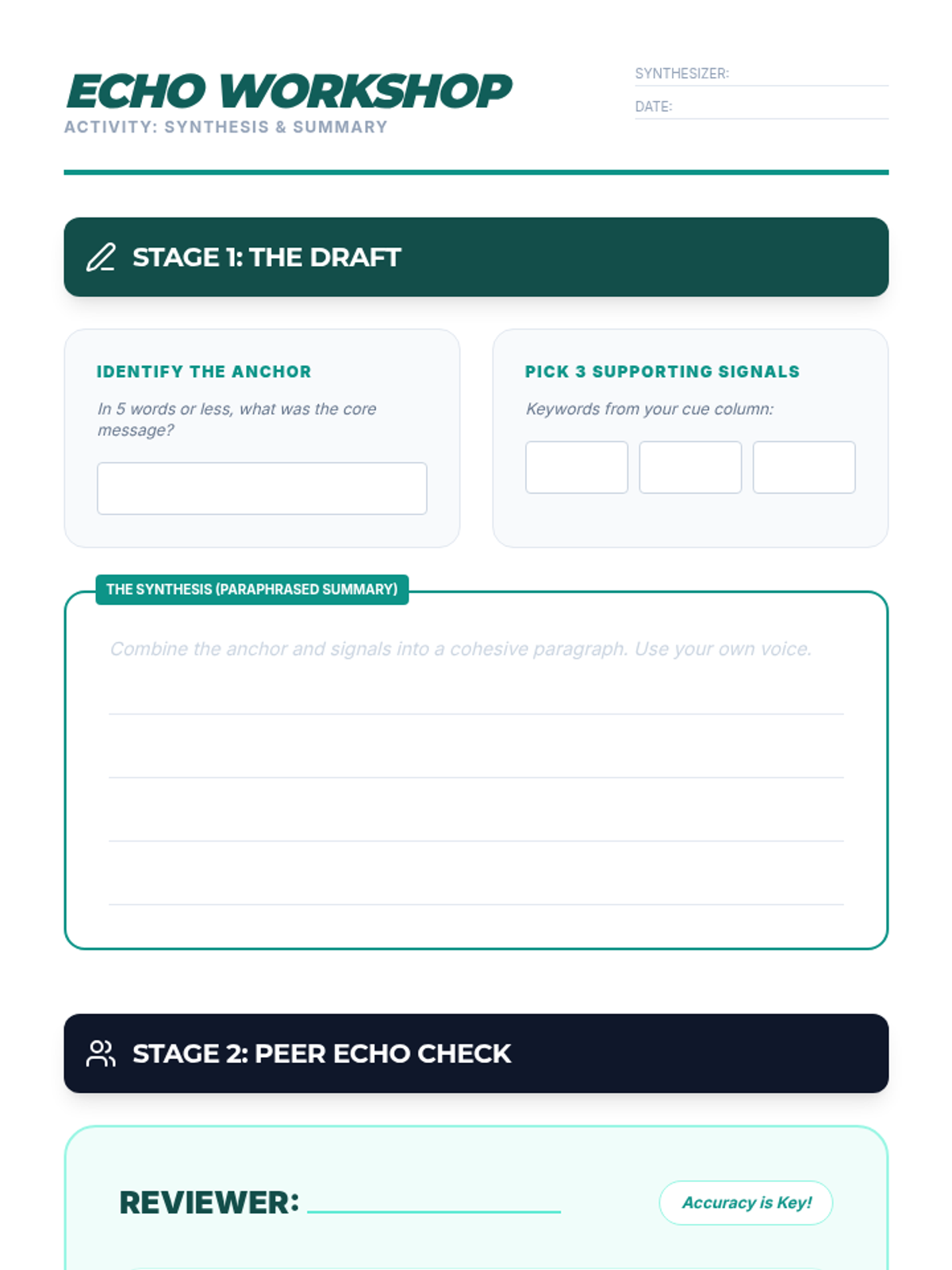
Learners practice reconstructing audio messages in their own words, focusing on paraphrasing rather than direct quotation. Peer evaluation ensures accuracy and comprehension through a synthesis-based workshop.
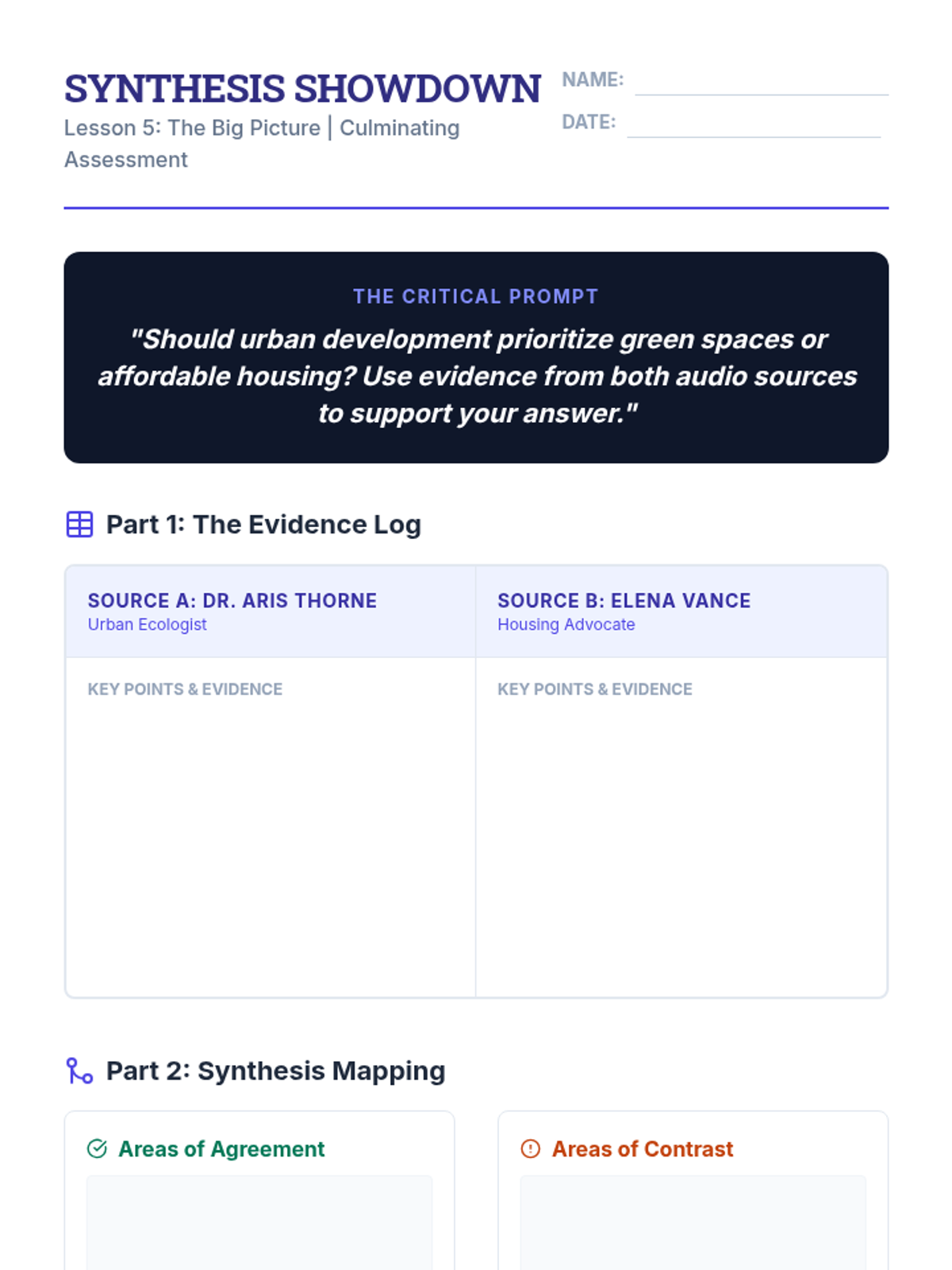
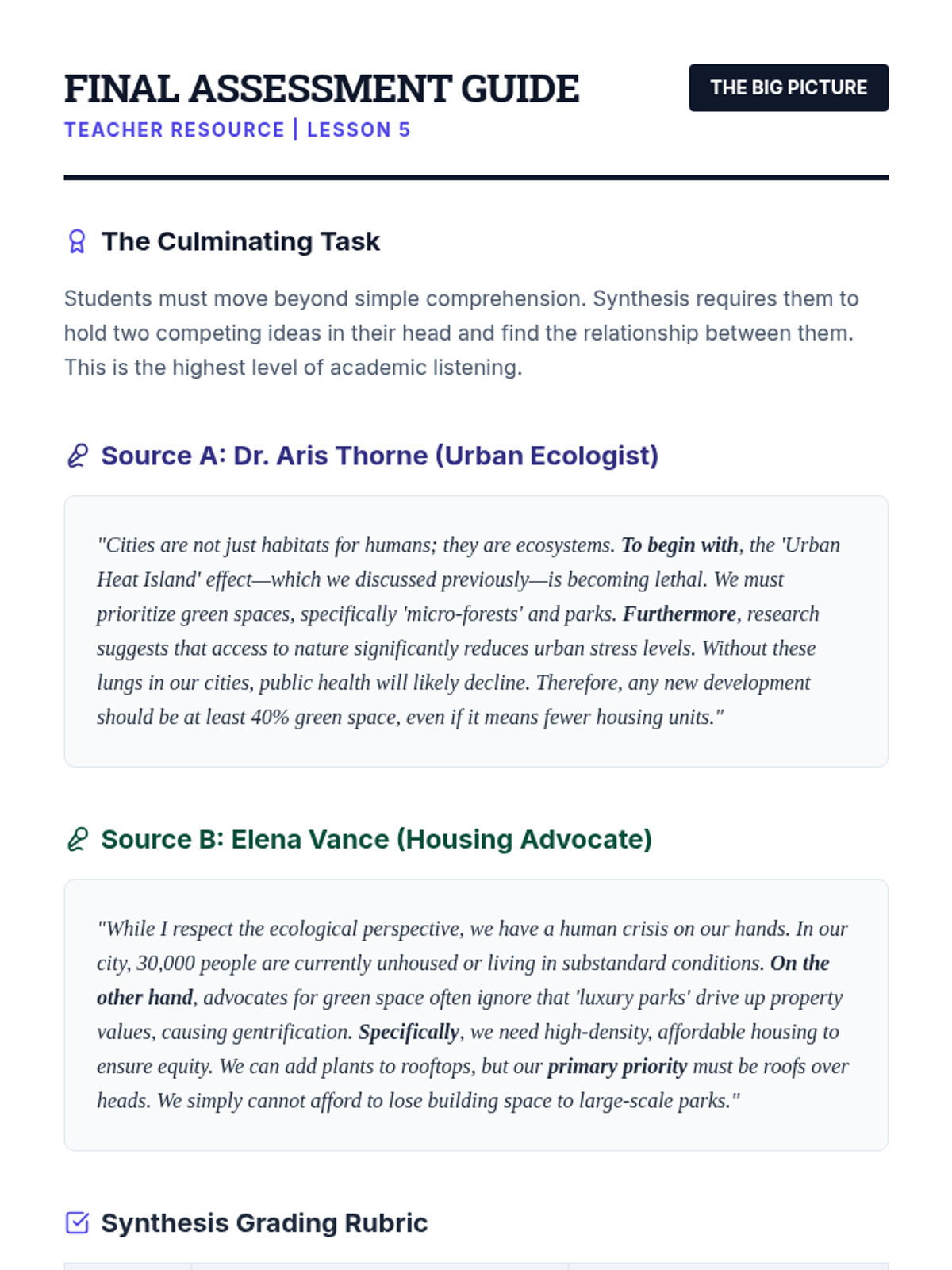
In this culminating lesson, students listen to two contrasting viewpoints on a single global issue. They must synthesize the information to answer a prompt, citing specific details from both audio sources to support their conclusion.
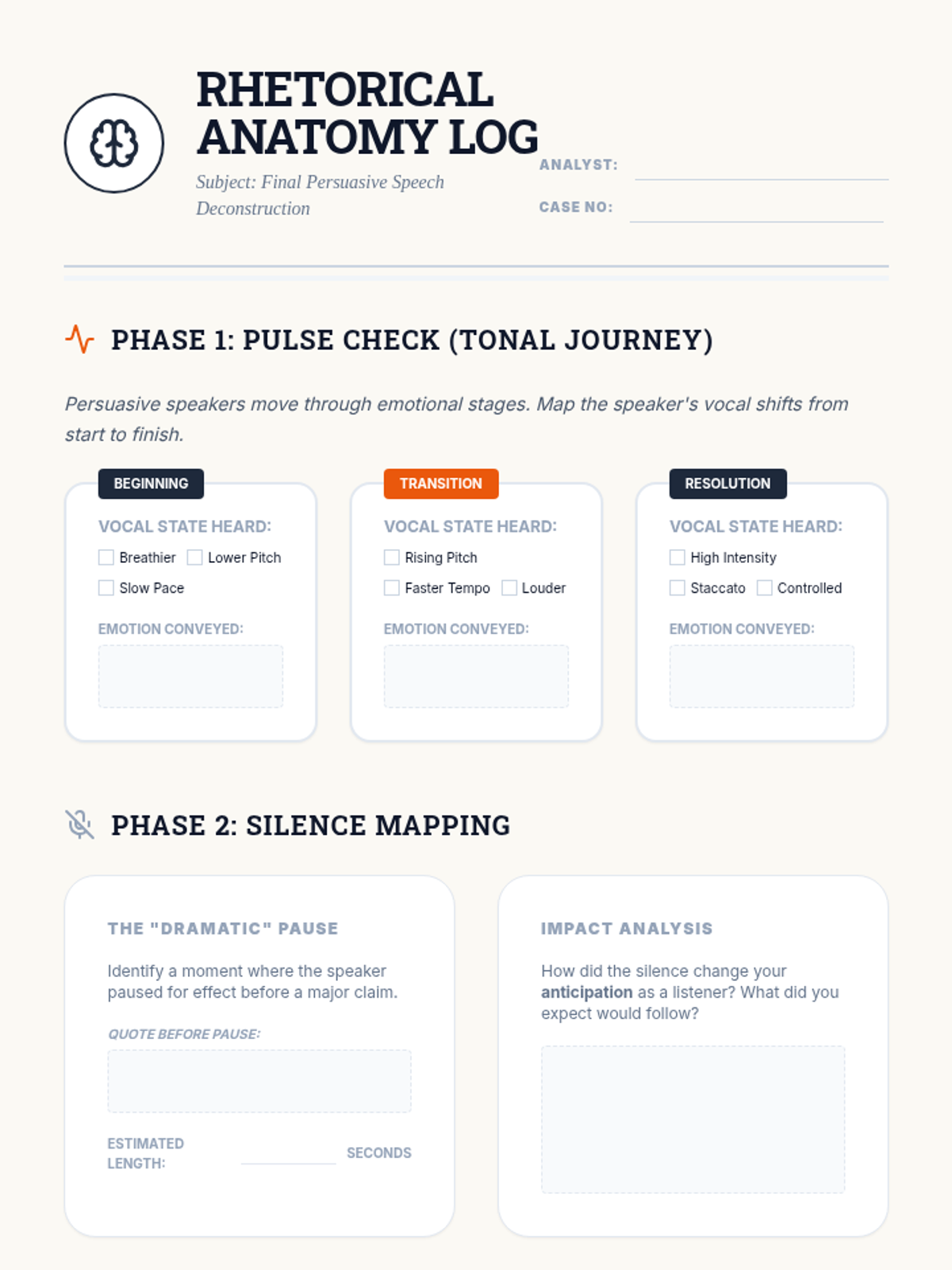
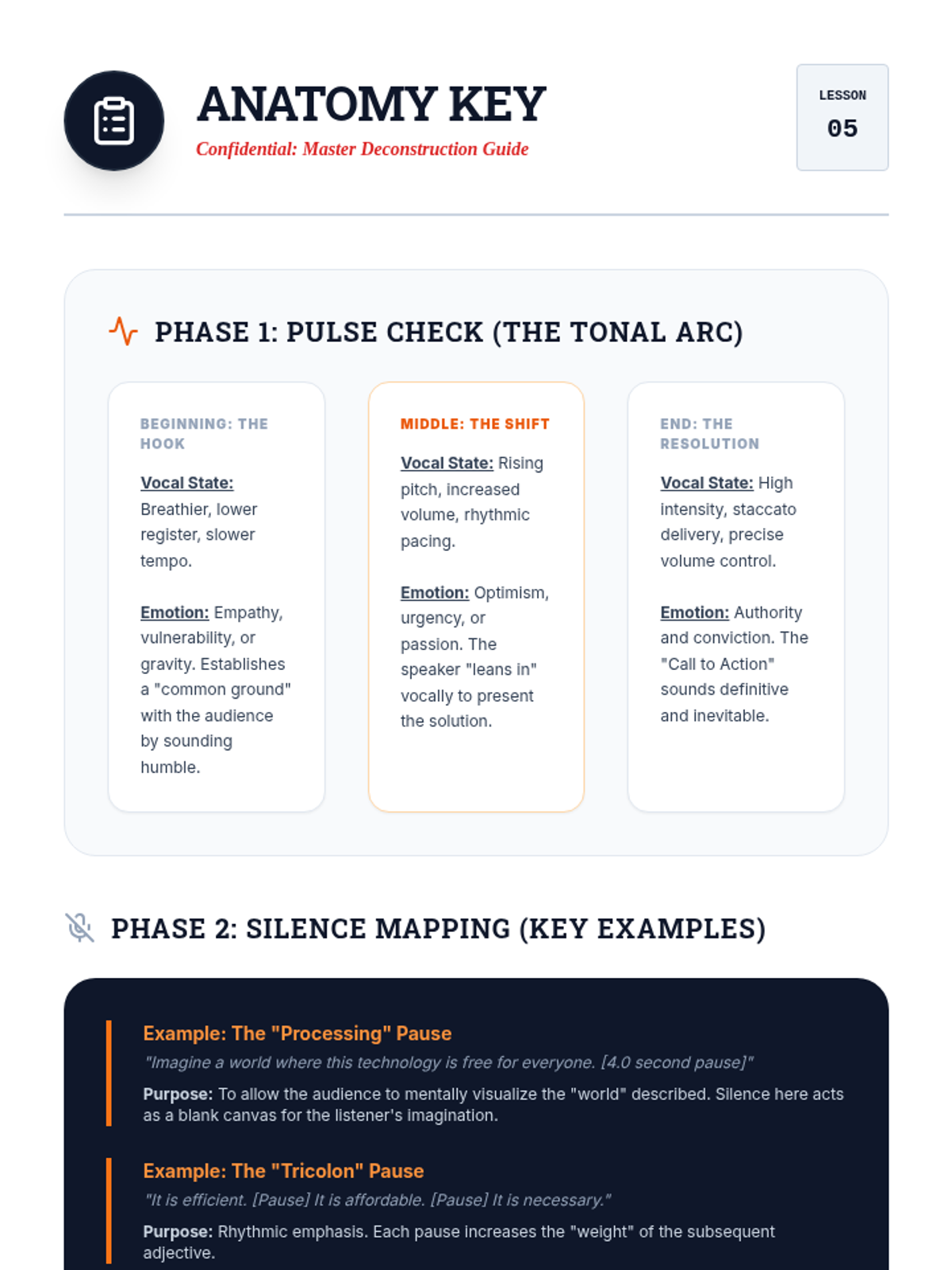
Deconstructs persuasive speech to identify rhetorical strategies, tonal journeys, and the use of strategic pauses for emotional impact.
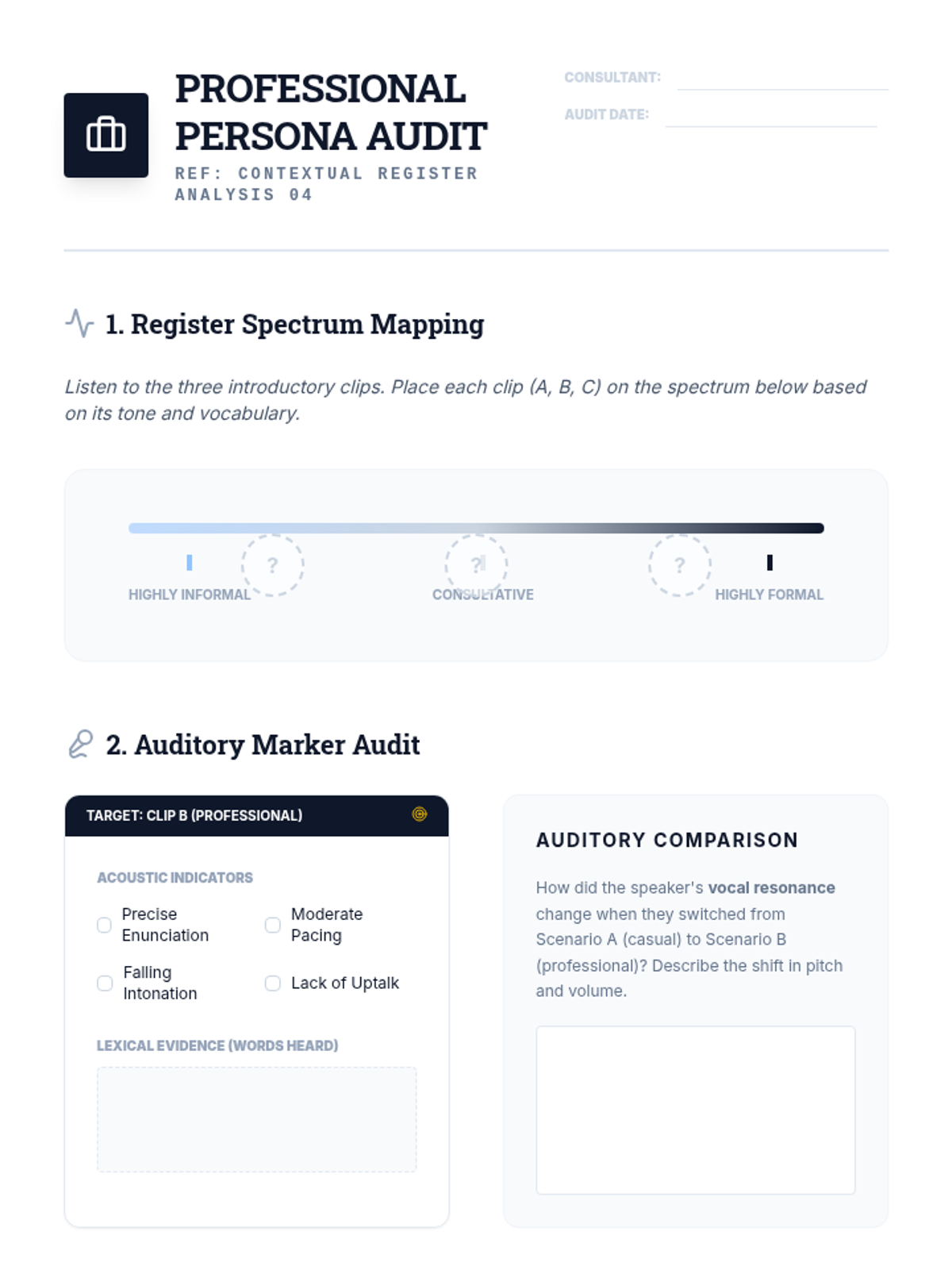
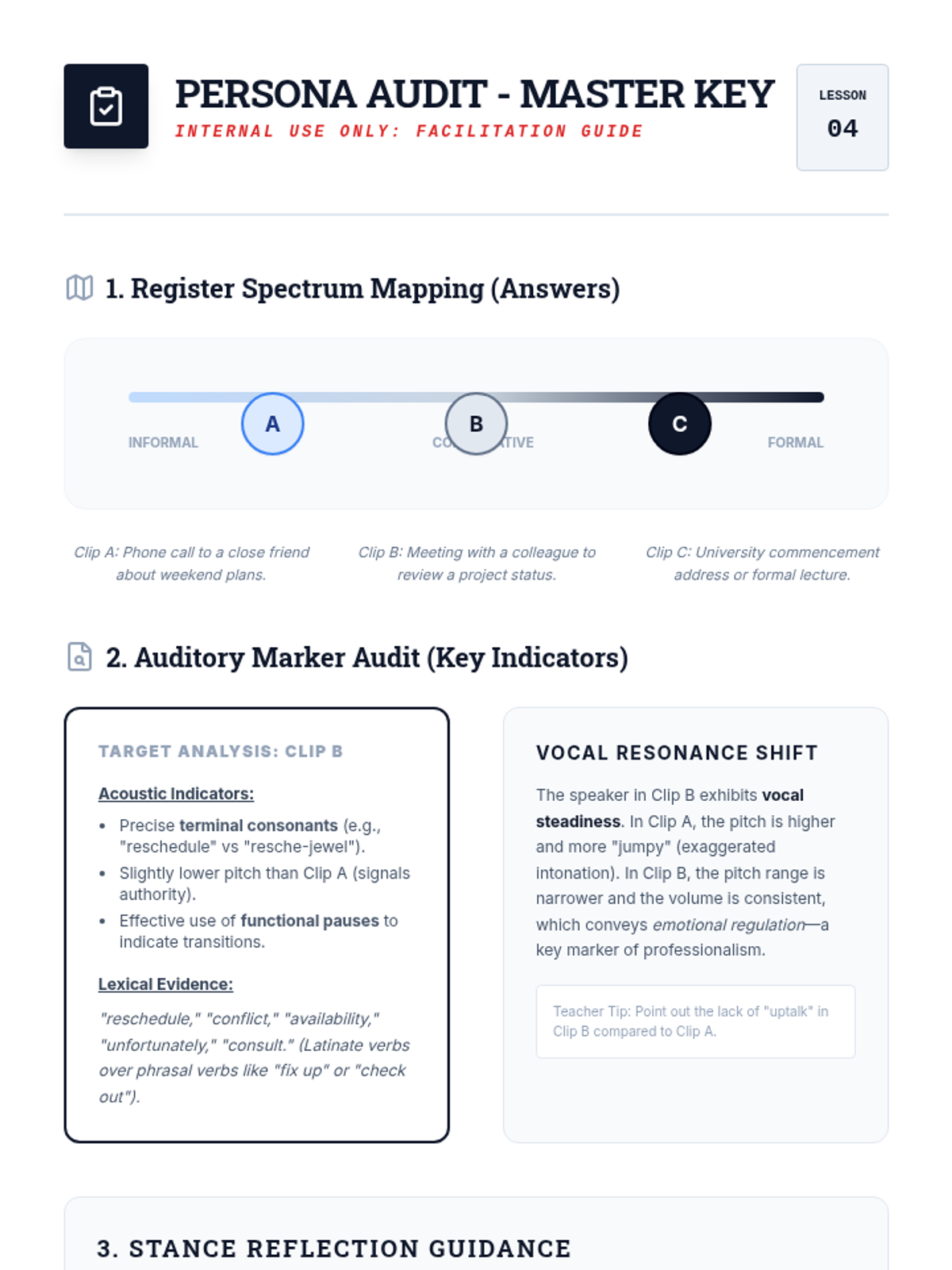
Examines how speakers adjust their register and tone based on audience and context, focusing on professional vs. informal markers.
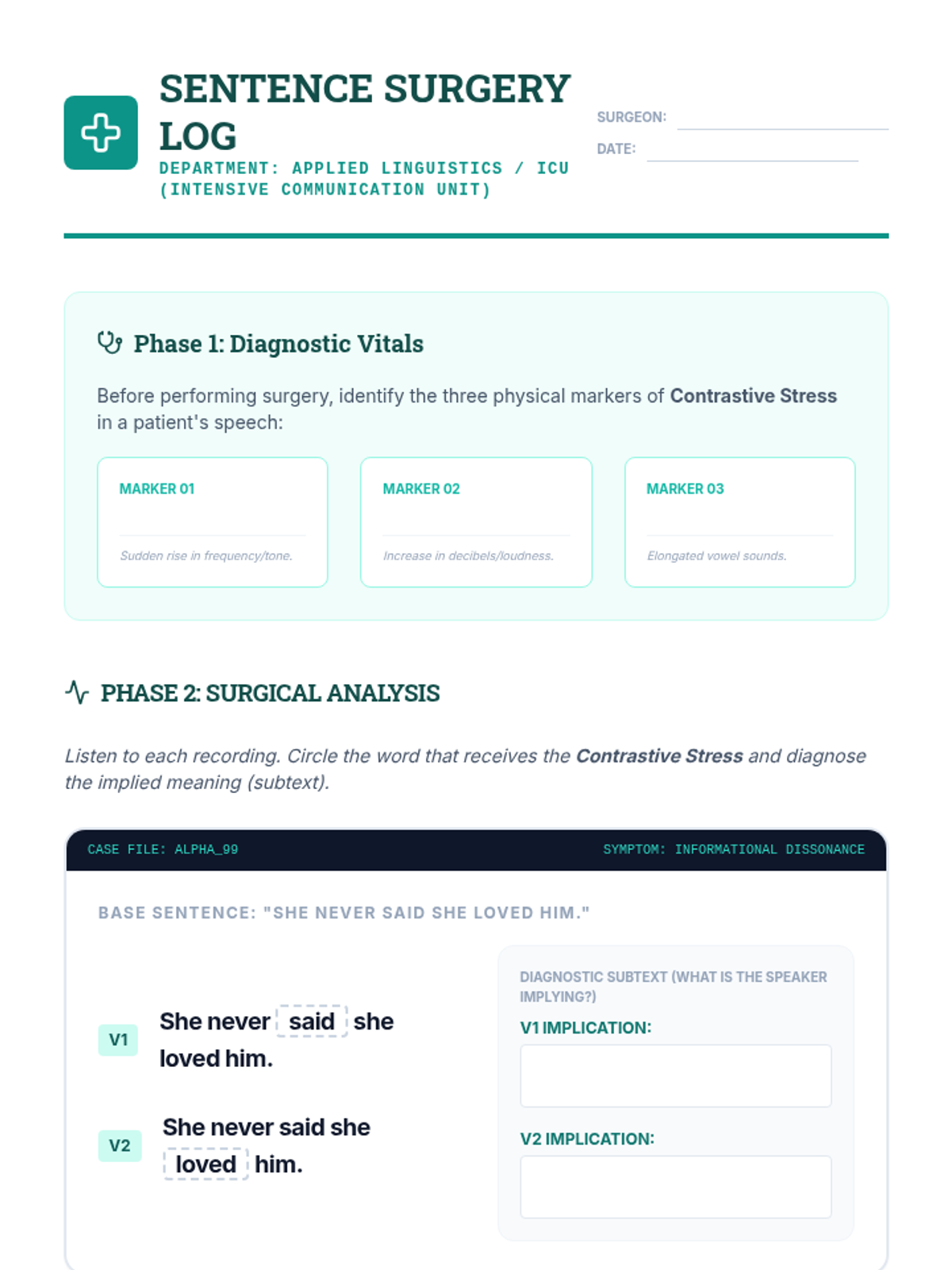
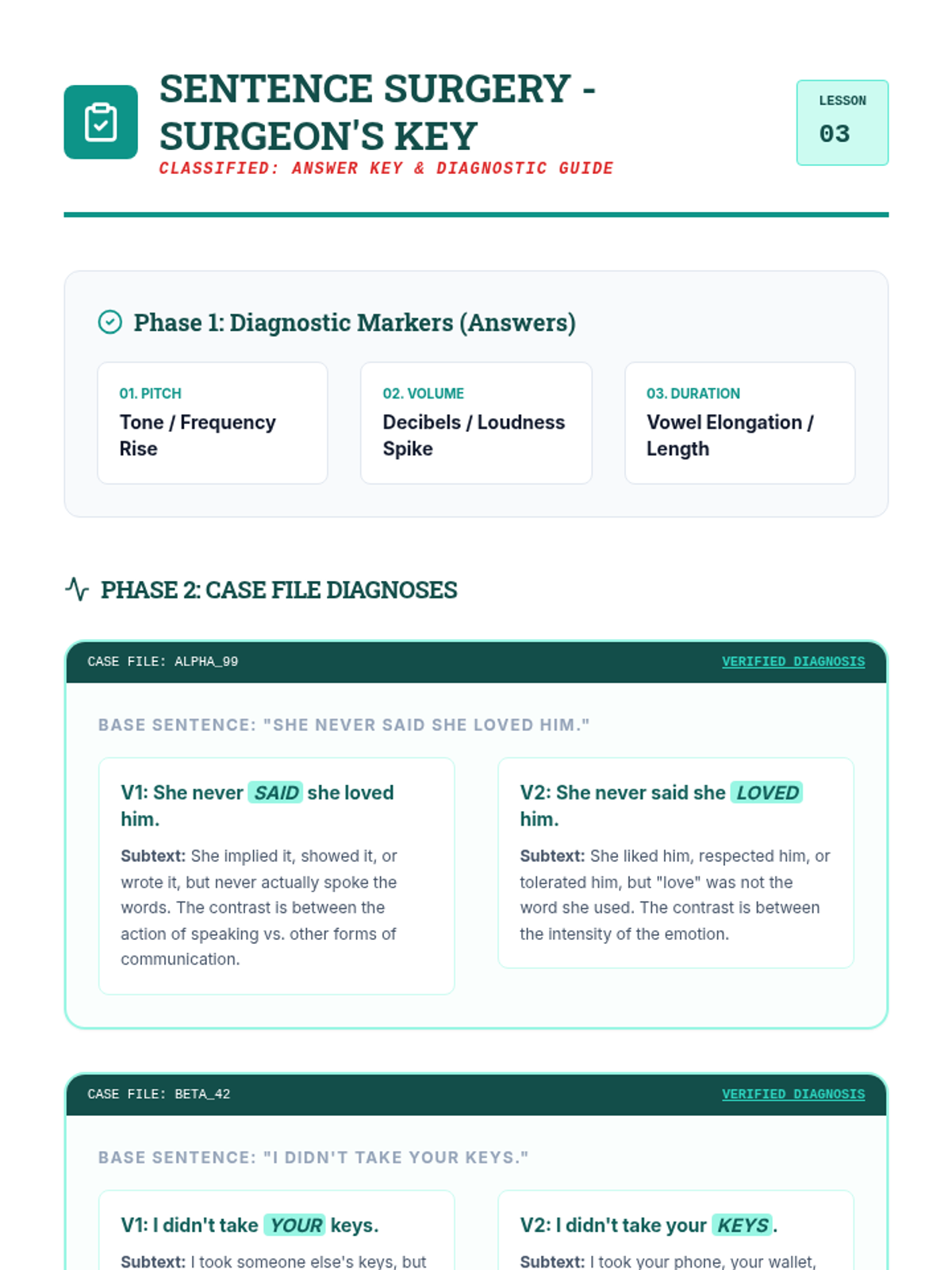
Explores how shifting stress within a single sentence radically alters its implied meaning and subtext.
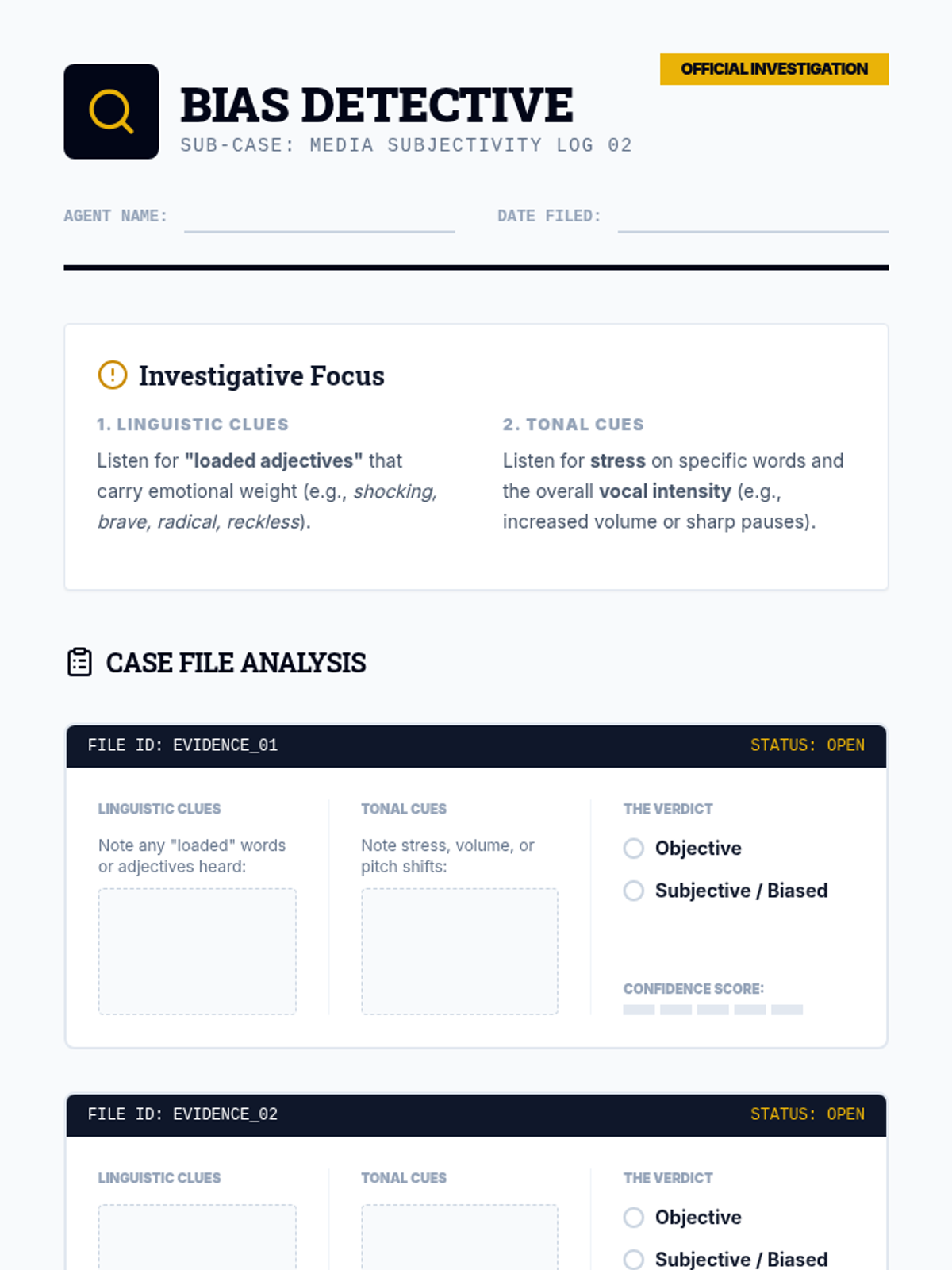
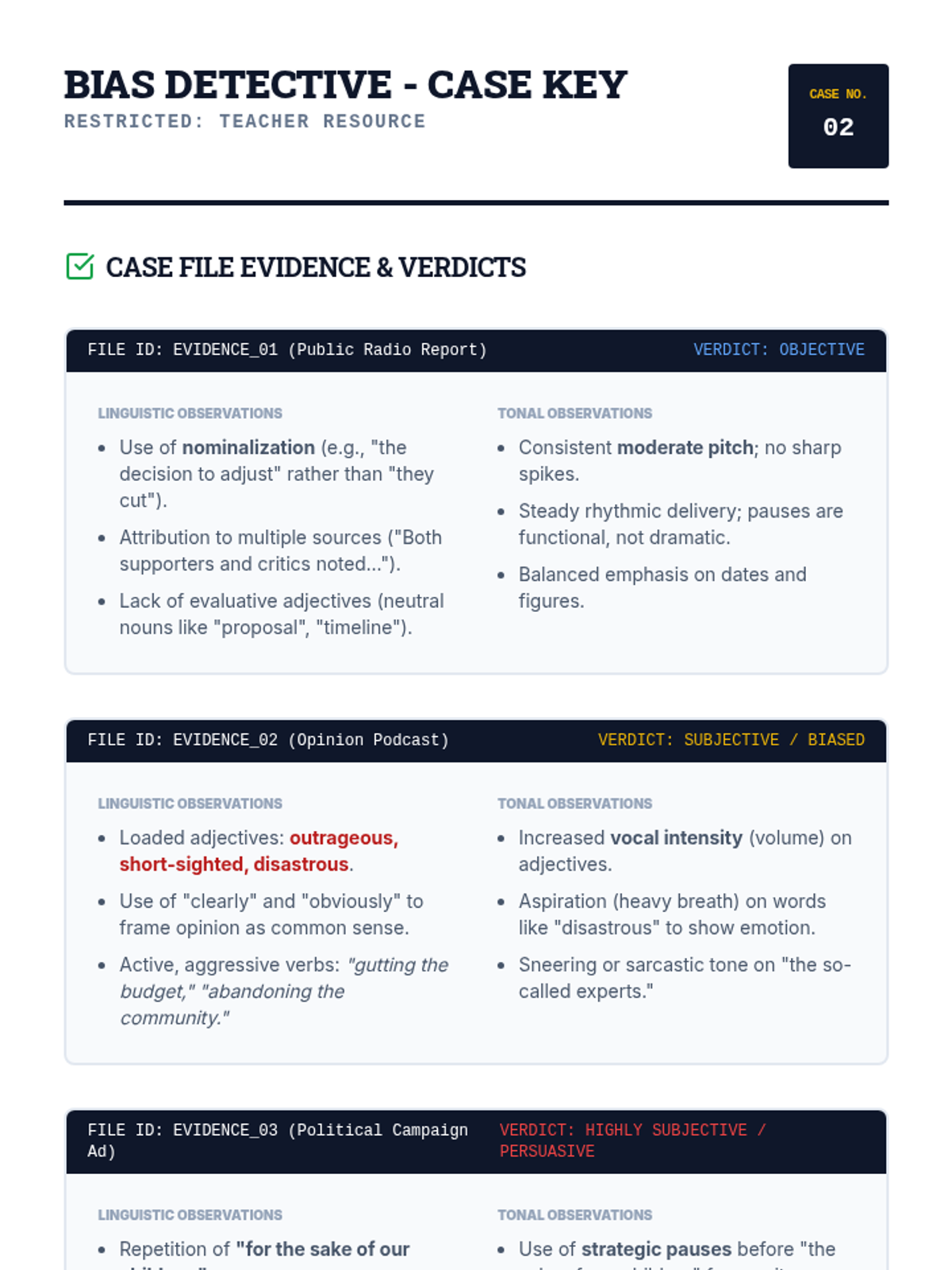
Focuses on identifying bias and subjectivity in media and speeches by analyzing word choice, emotional tone, and selective emphasis.
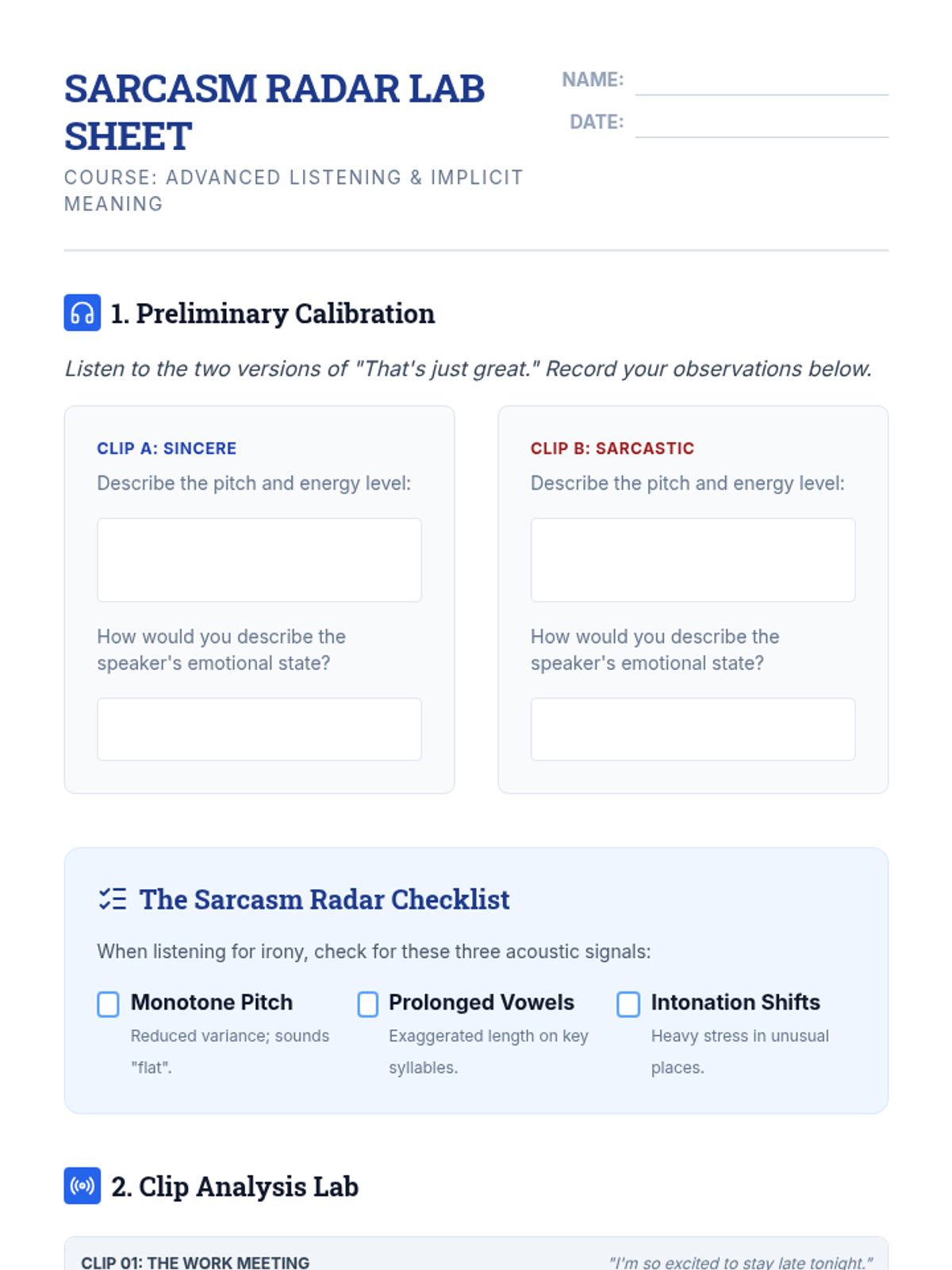
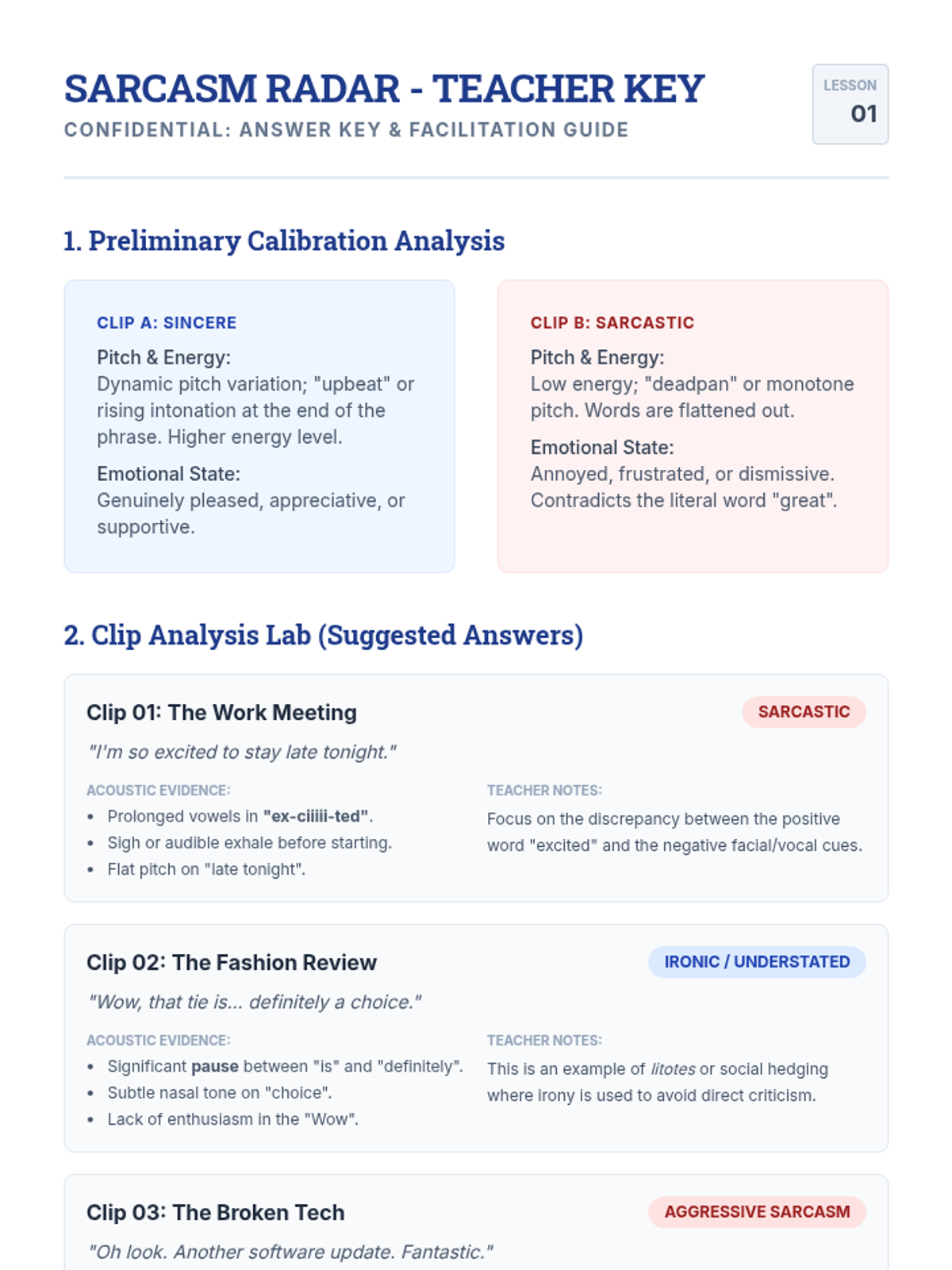
Students analyze the acoustic cues of irony and sarcasm—such as pitch, length, and intonation—to distinguish between literal and intended meaning in spoken English.
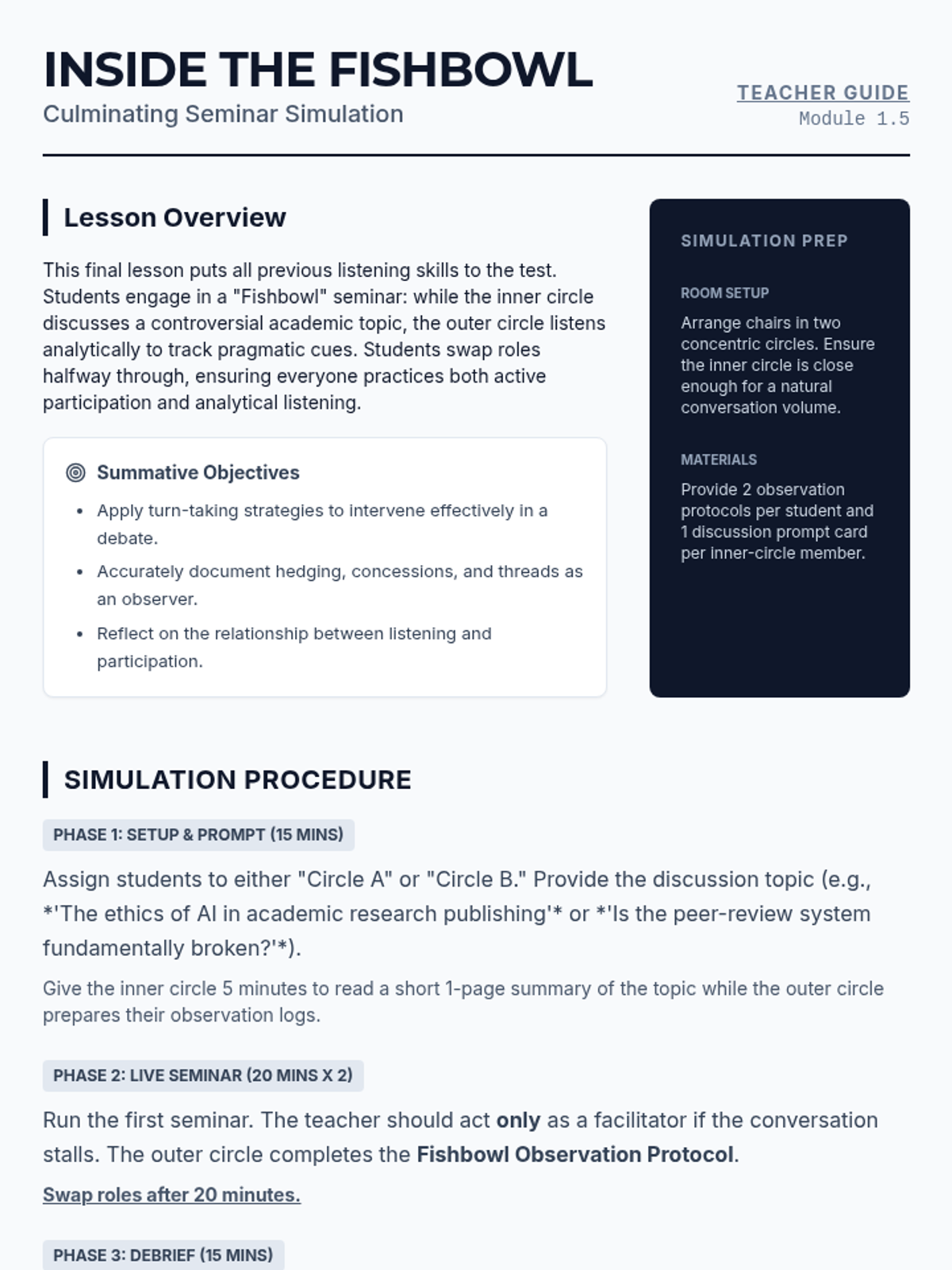
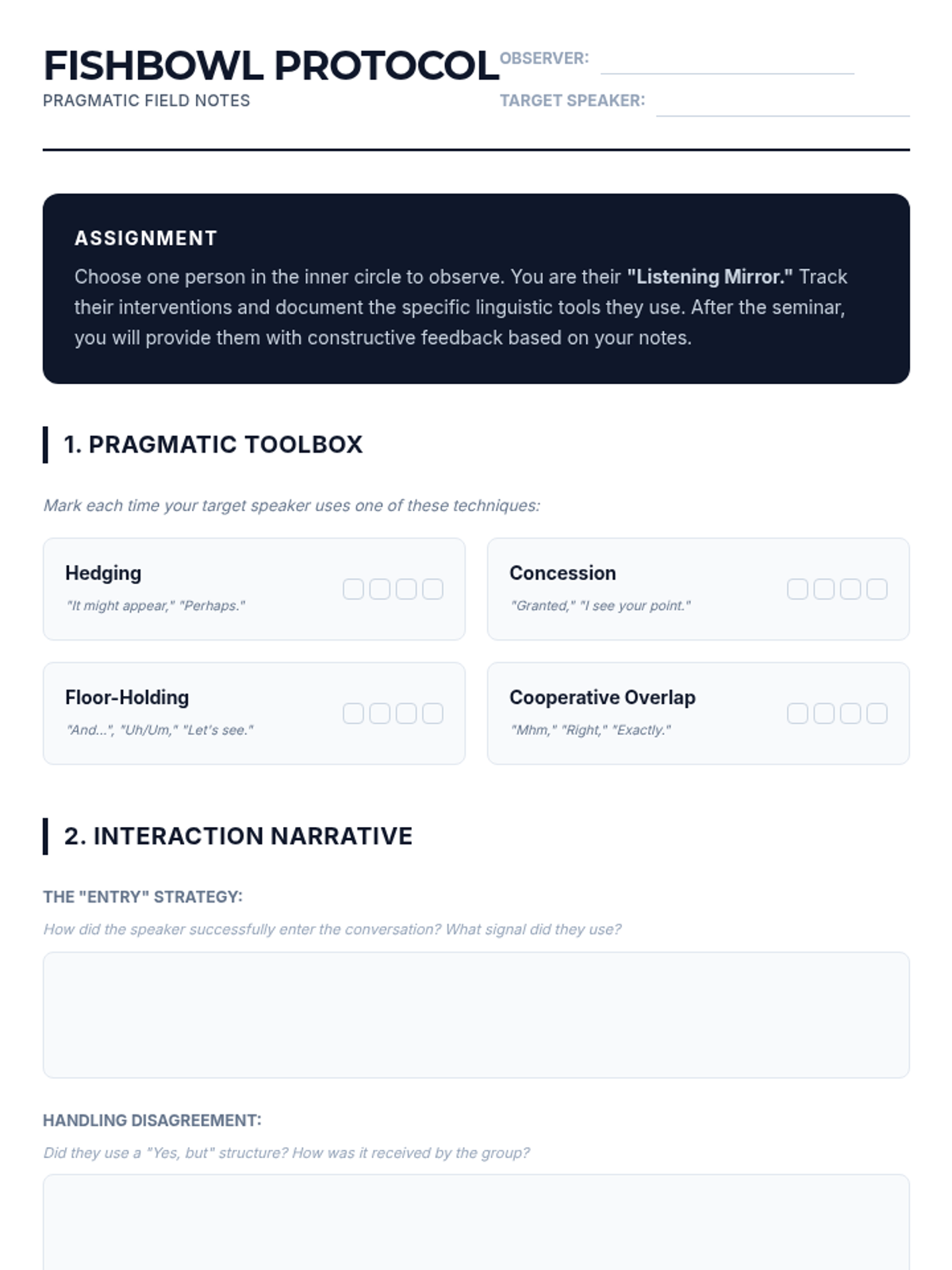
A culminating simulation where students alternate between active participation and observational analysis using the fishbowl method. Focuses on applying all previously learned listening skills.