A hands-on engineering lesson where students design and test sleep masks to solve the problem of sleeping during the long daylight hours of the summer solstice.
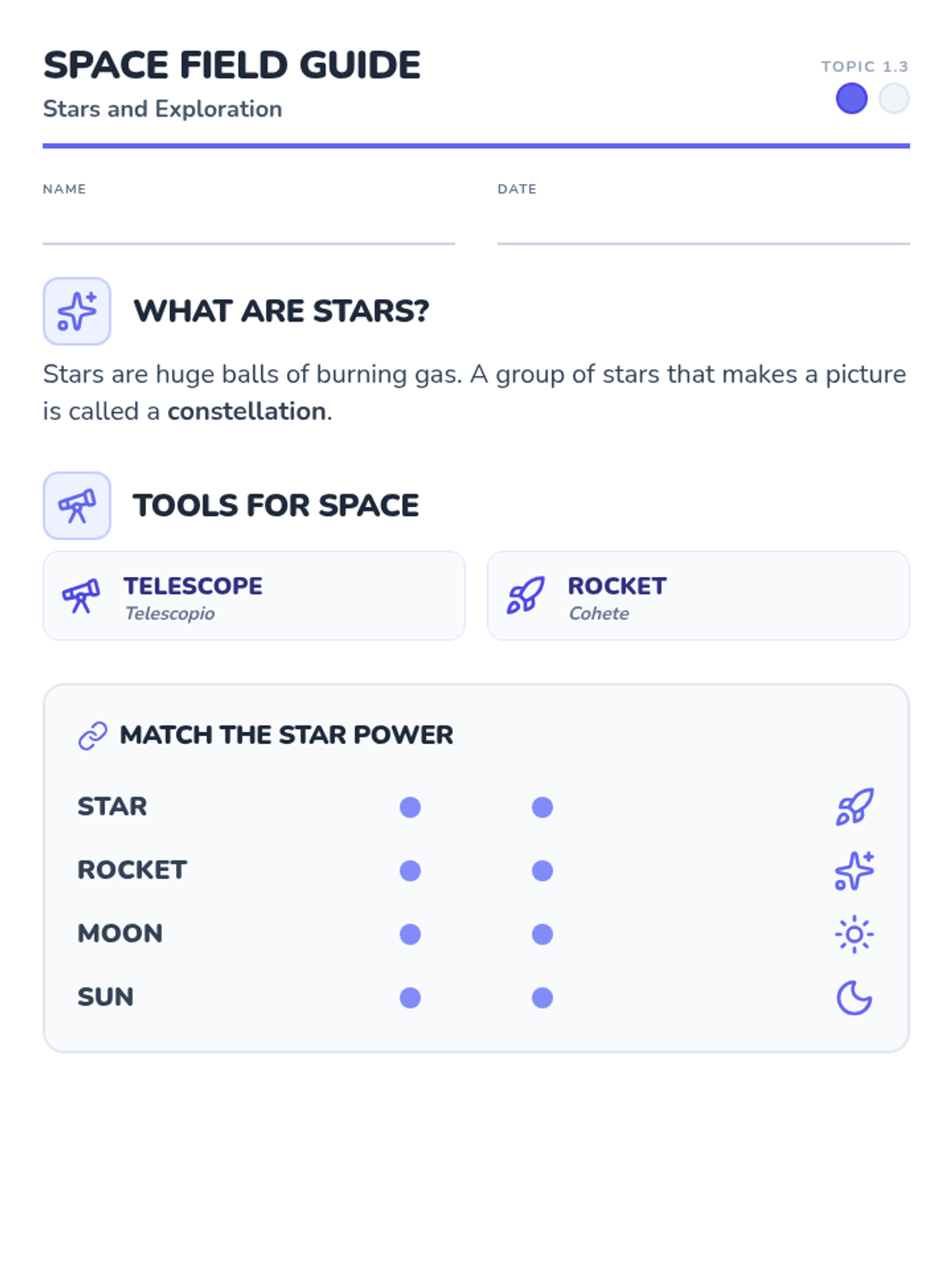
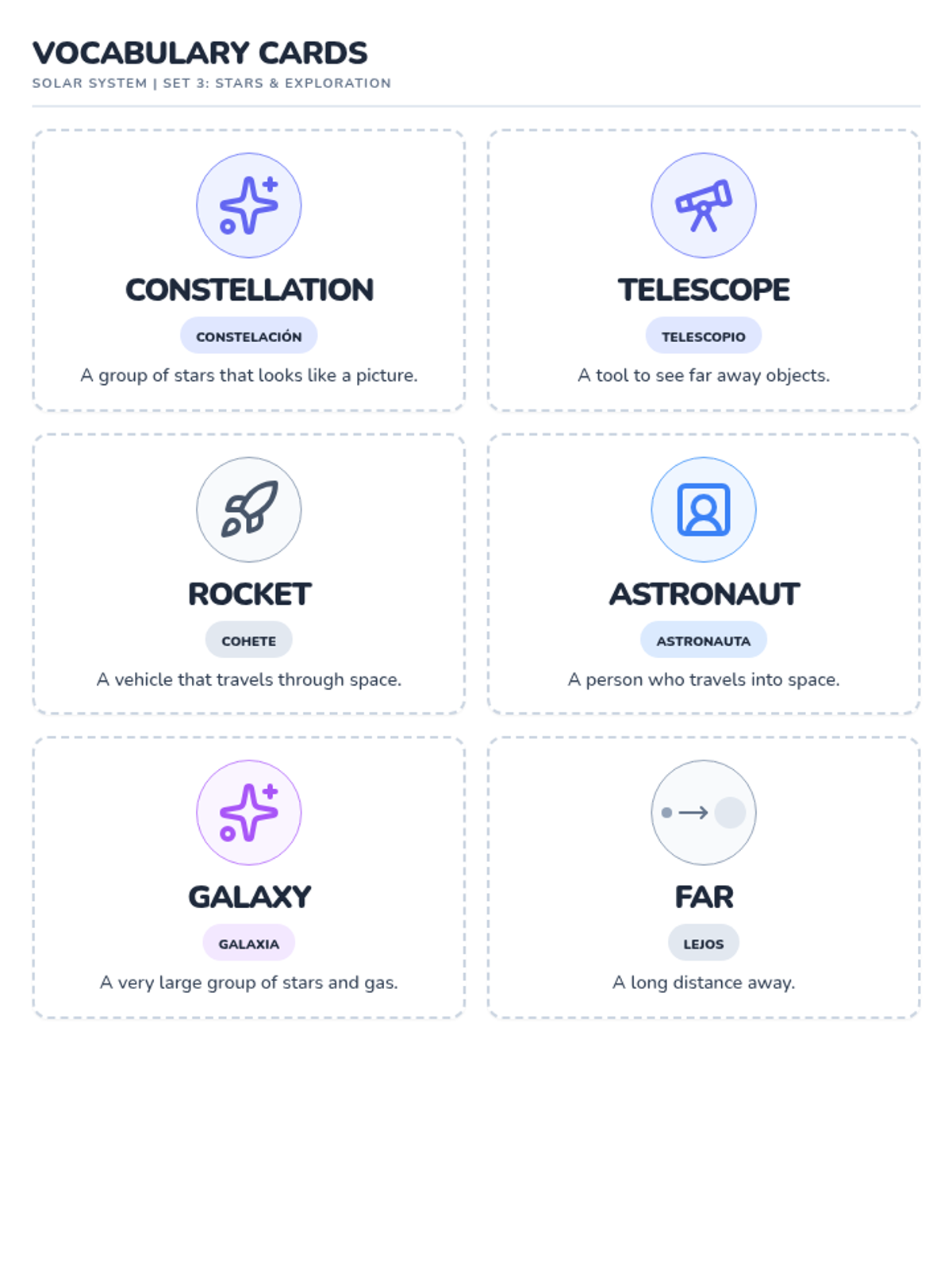
An exploration of stars, constellations, and the technology humans use to study deep space.
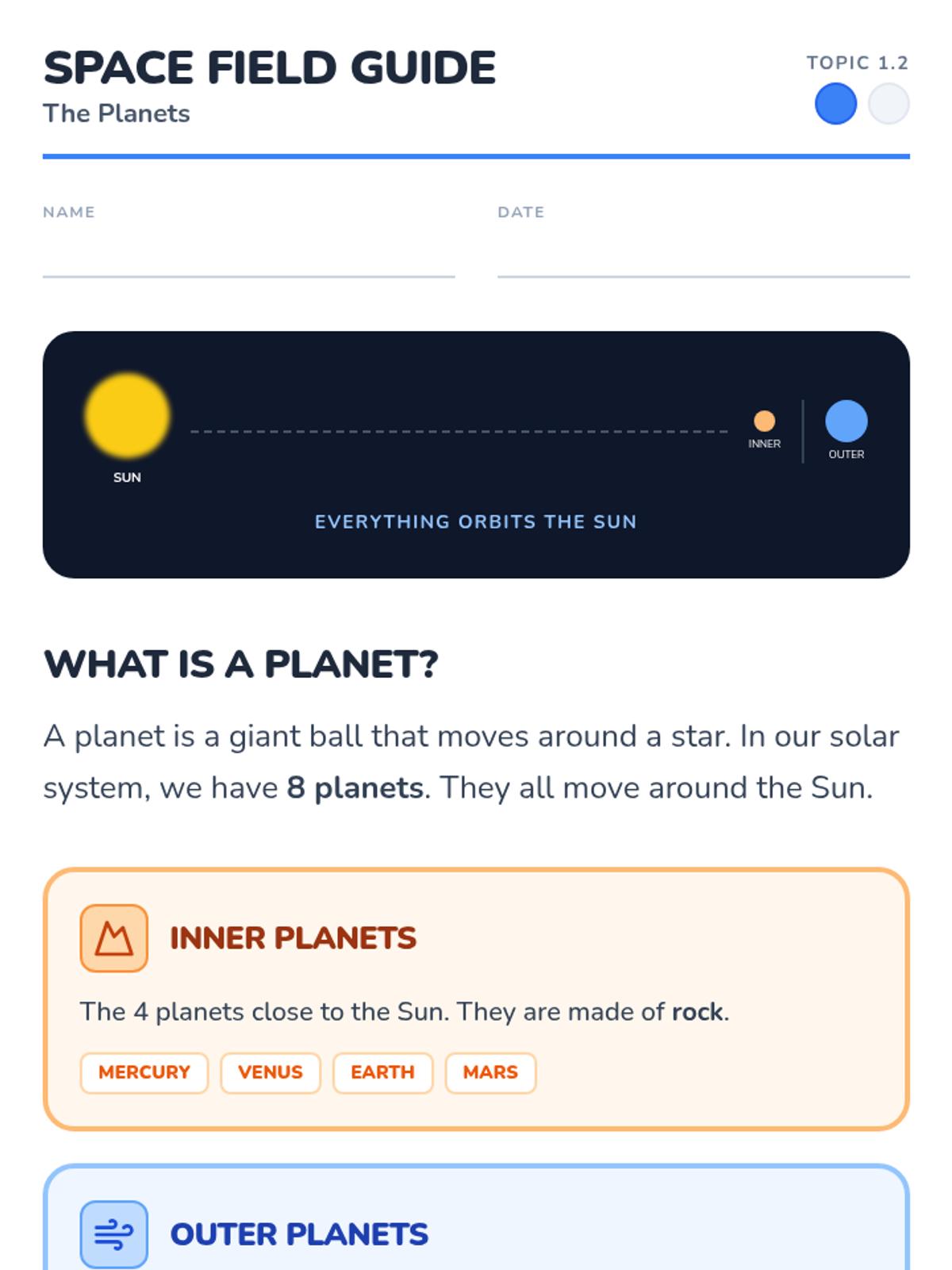
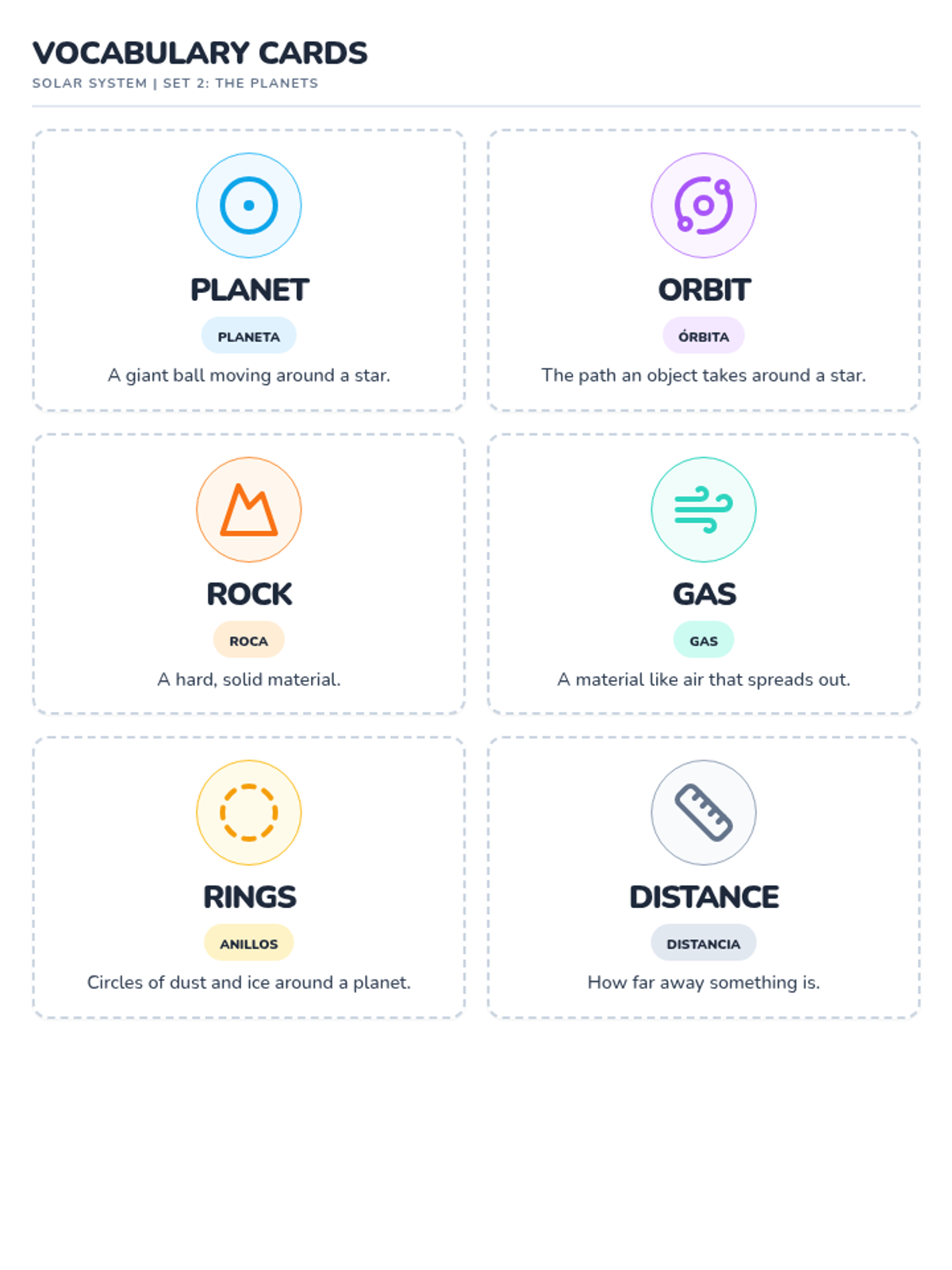
A simplified tour of the eight planets in our solar system, categorized into rocky inner planets and gas giant outer planets.
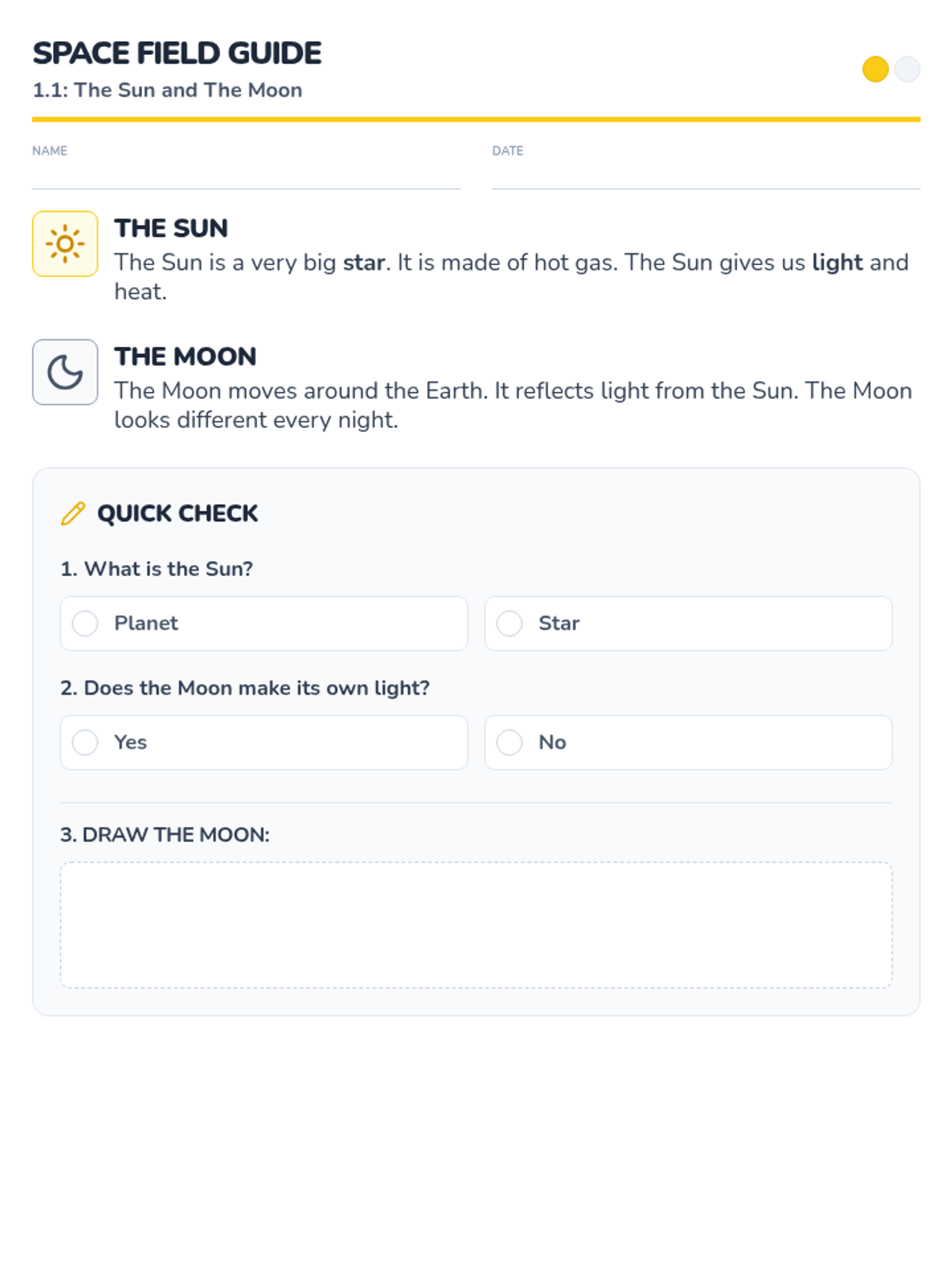
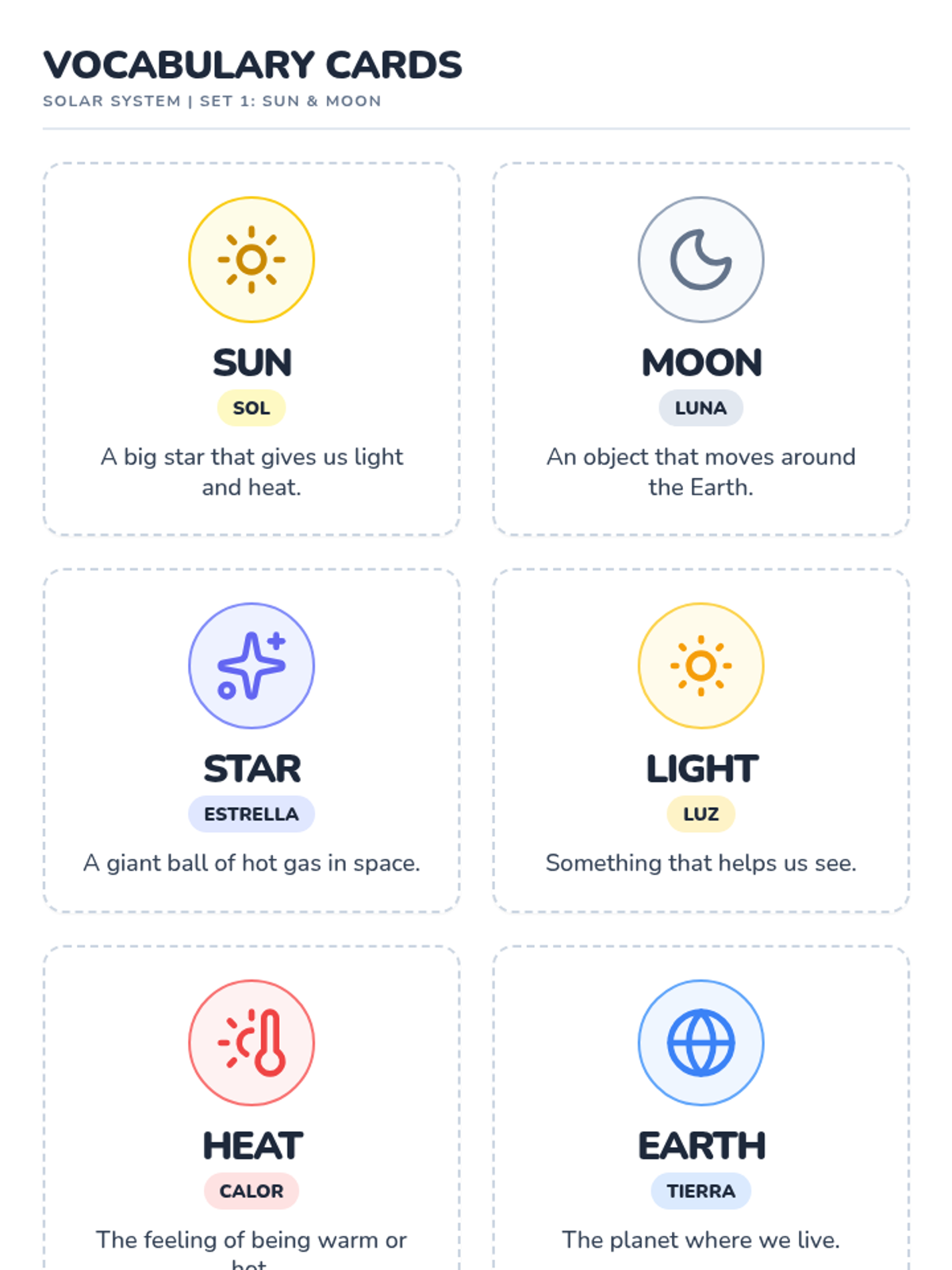
An introduction to our nearest neighbors in space: the Sun and the Moon, focusing on their basic characteristics and roles.
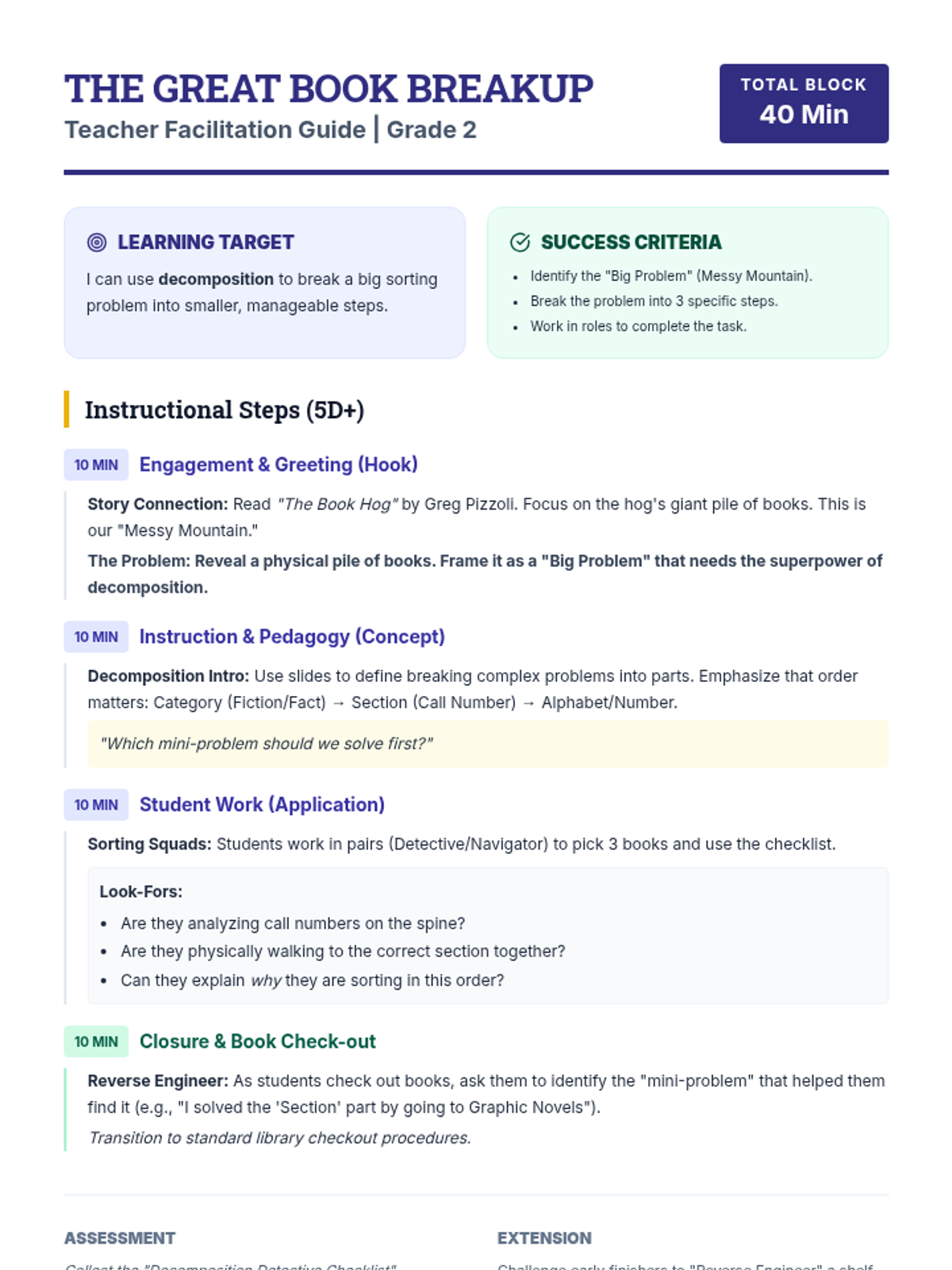
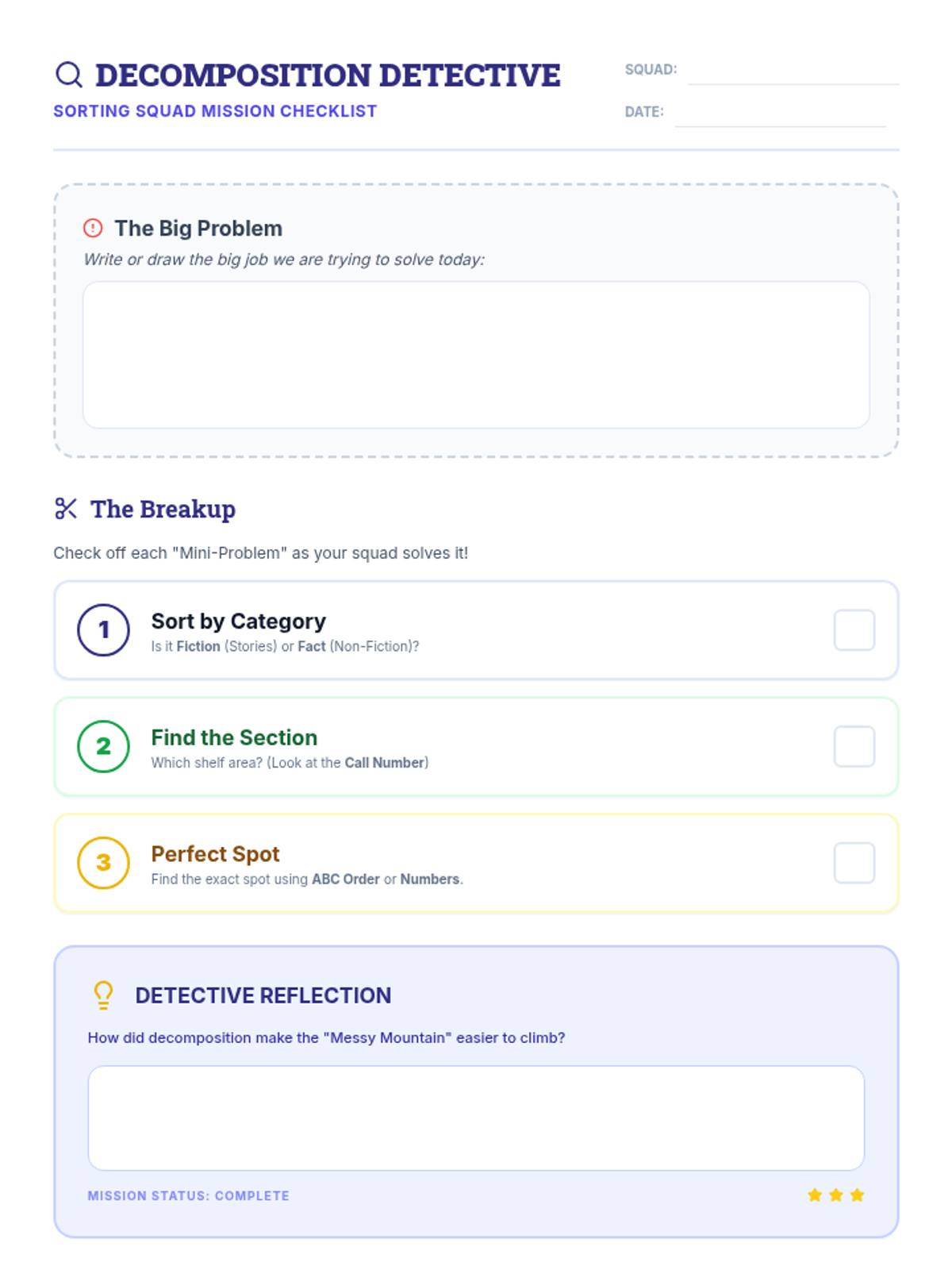
In this lesson, students are introduced to the concept of decomposition by tackling a 'Messy Mountain' of unsorted books. They work in collaborative 'Sorting Squads' to break the big problem into smaller tasks: categorizing, shelf-finding, and alphabetizing.
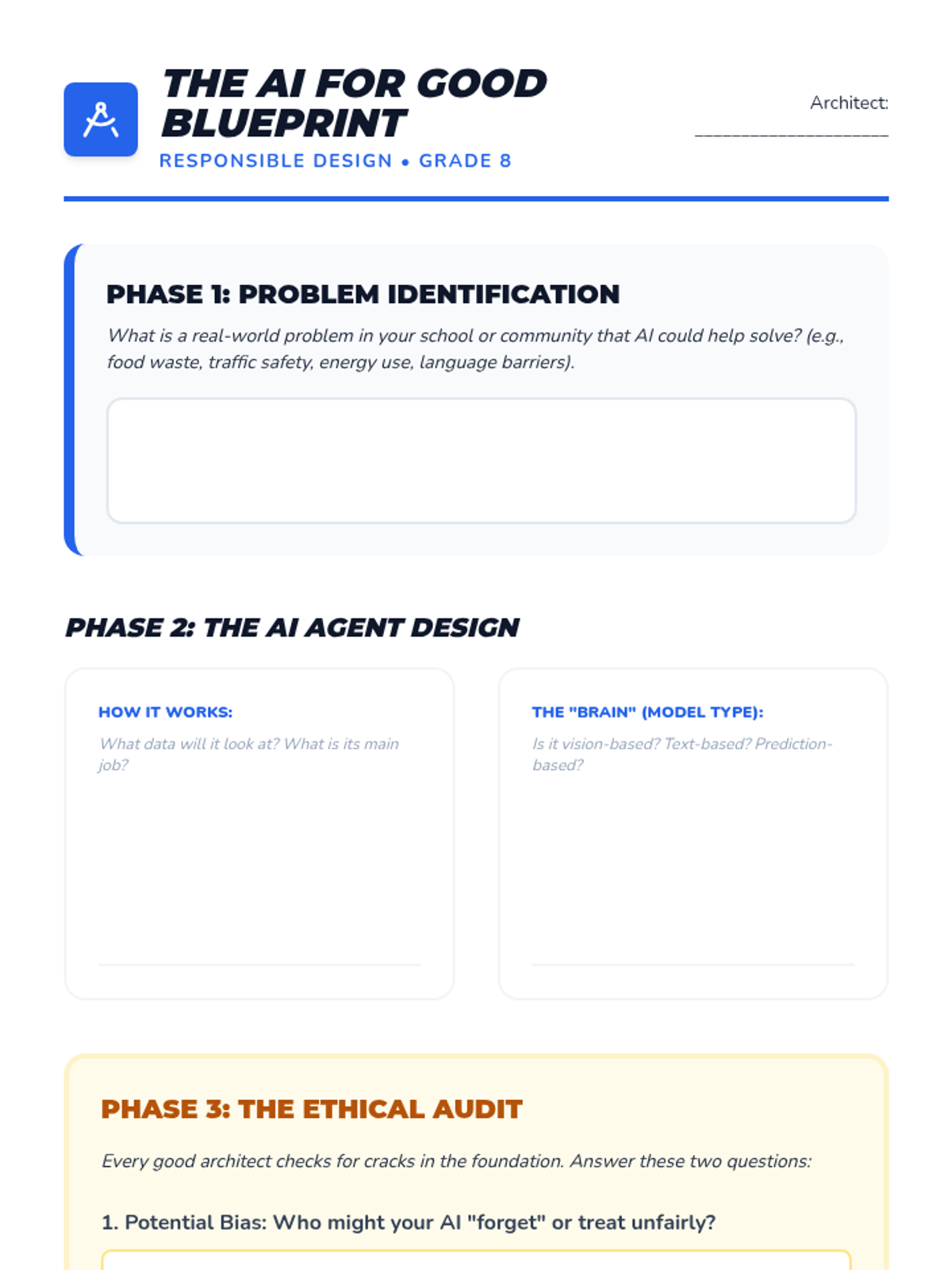
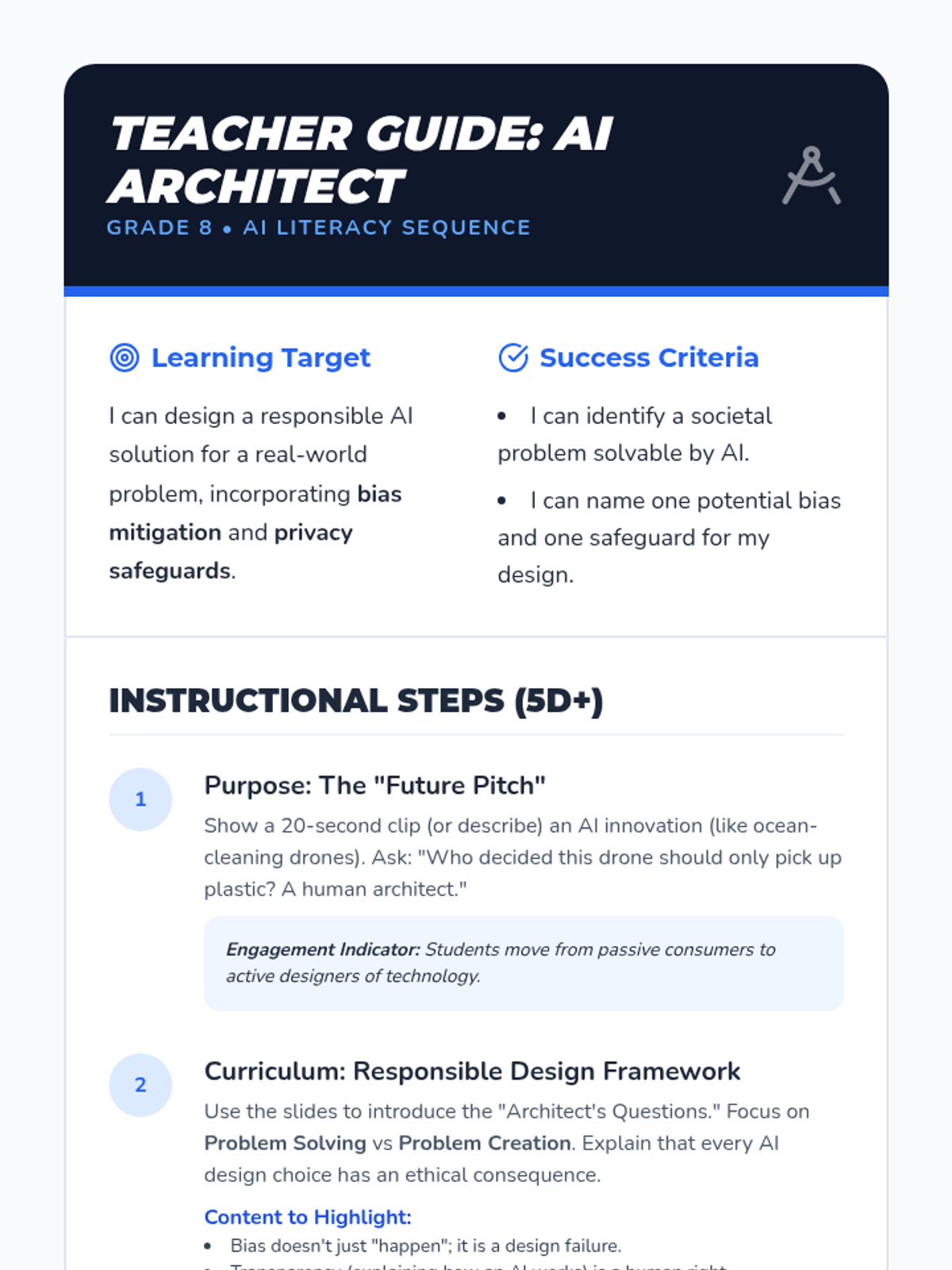
Students culminate their AI literacy journey by designing an AI solution for a real-world problem. They focus on responsible design, identifying potential biases, and ensuring societal benefit.
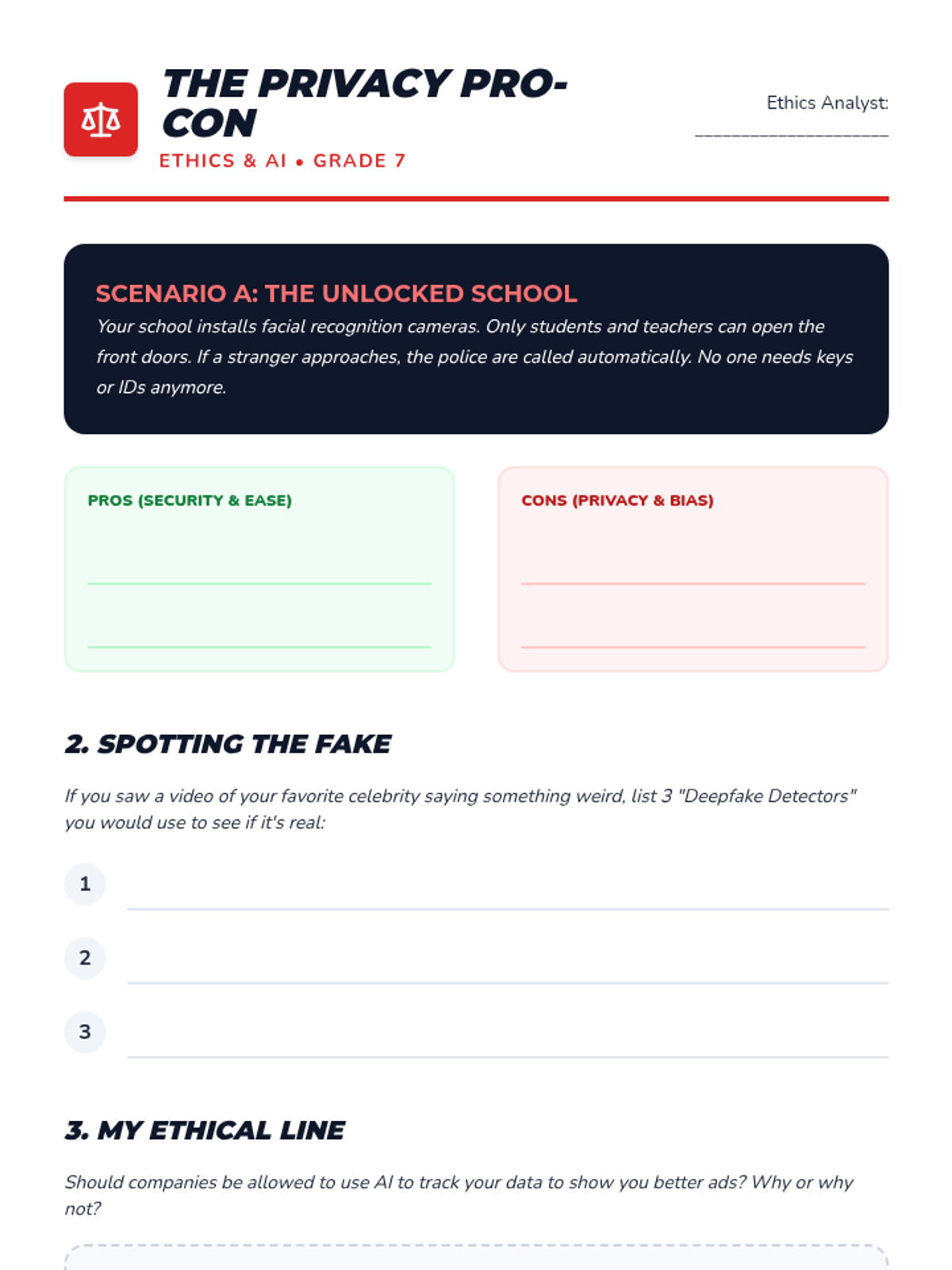
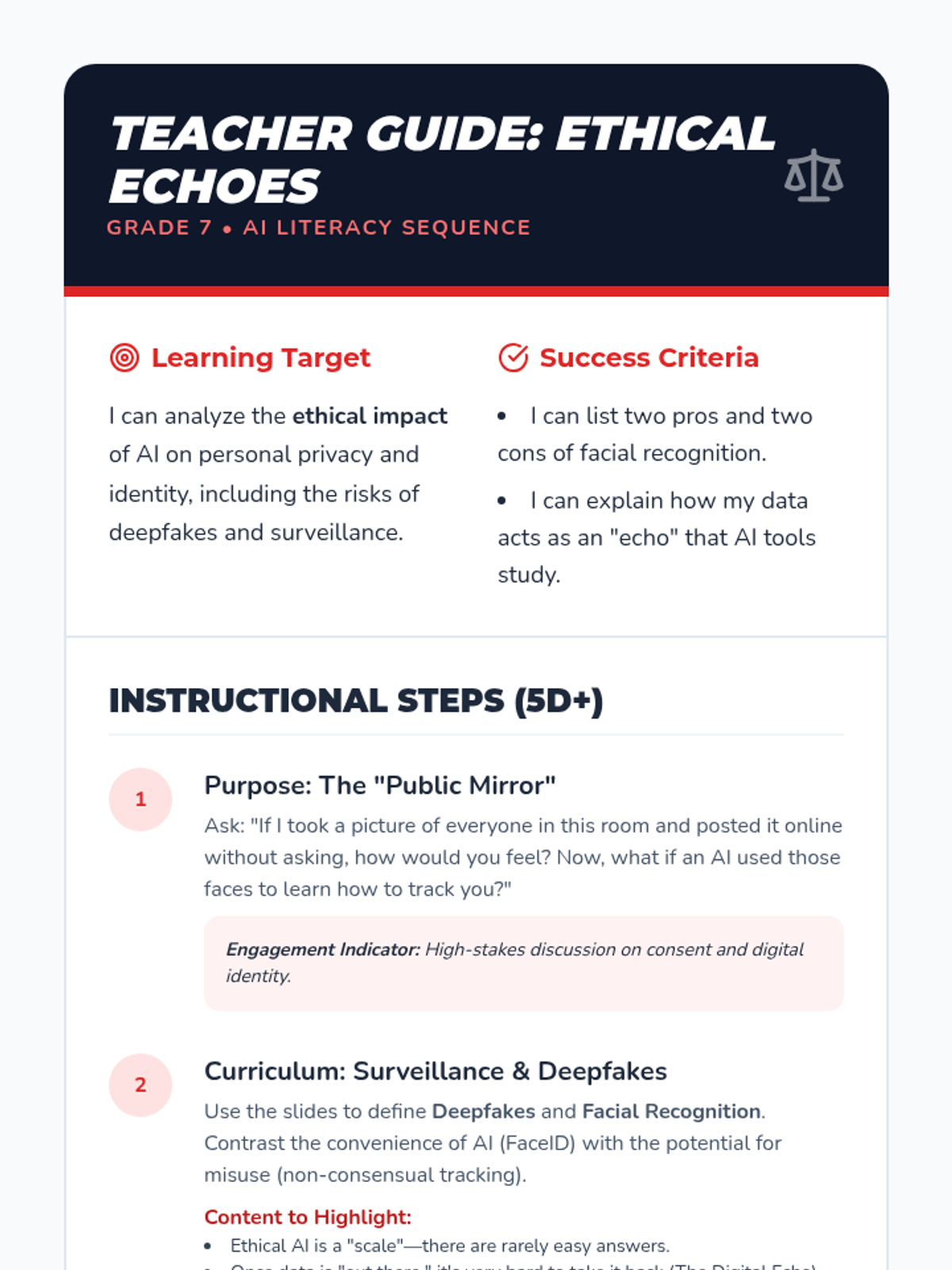
Students analyze the ethical implications of AI on privacy and identity. They explore deepfakes, facial recognition, and the balance between security and personal freedom.
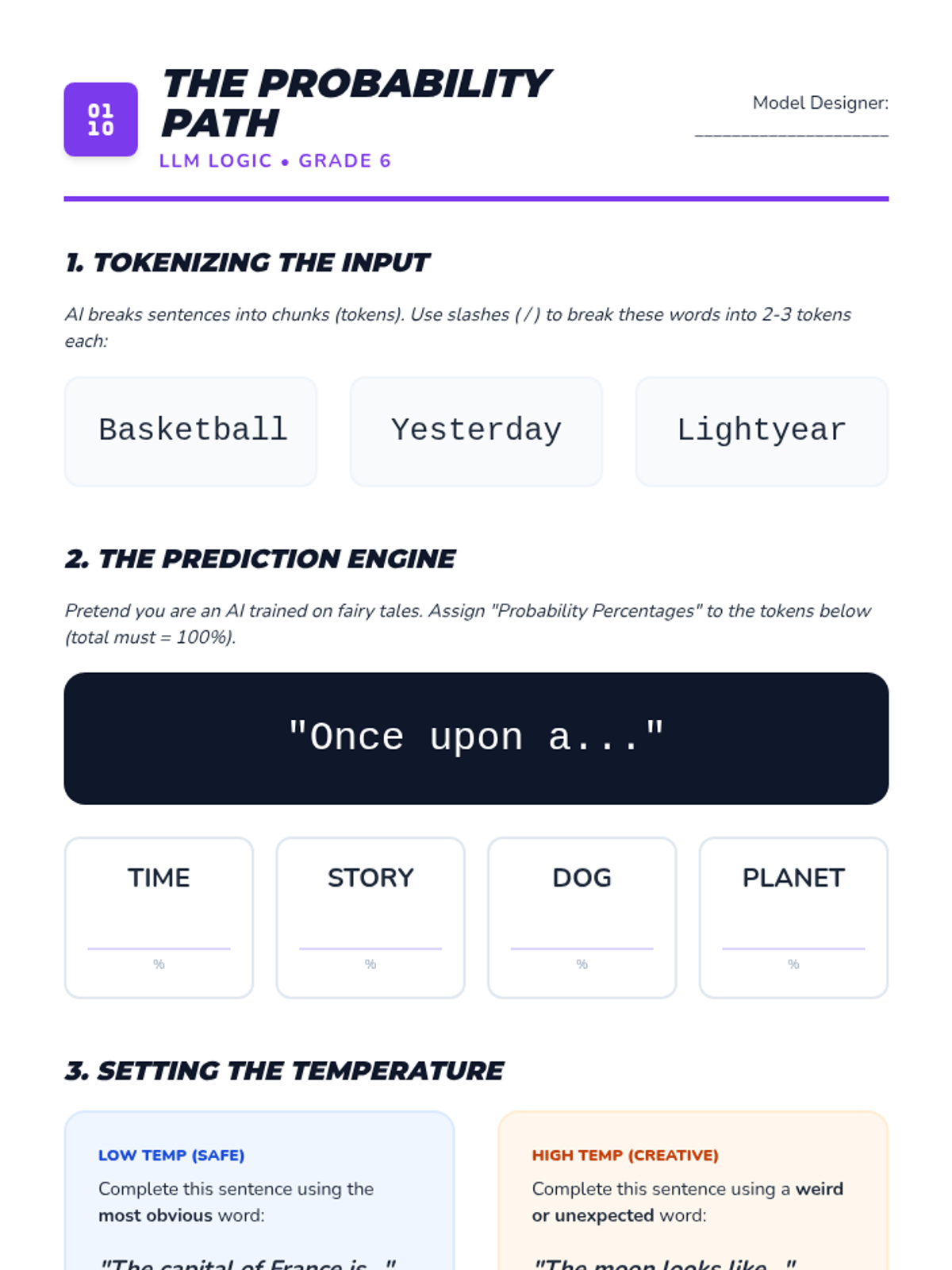
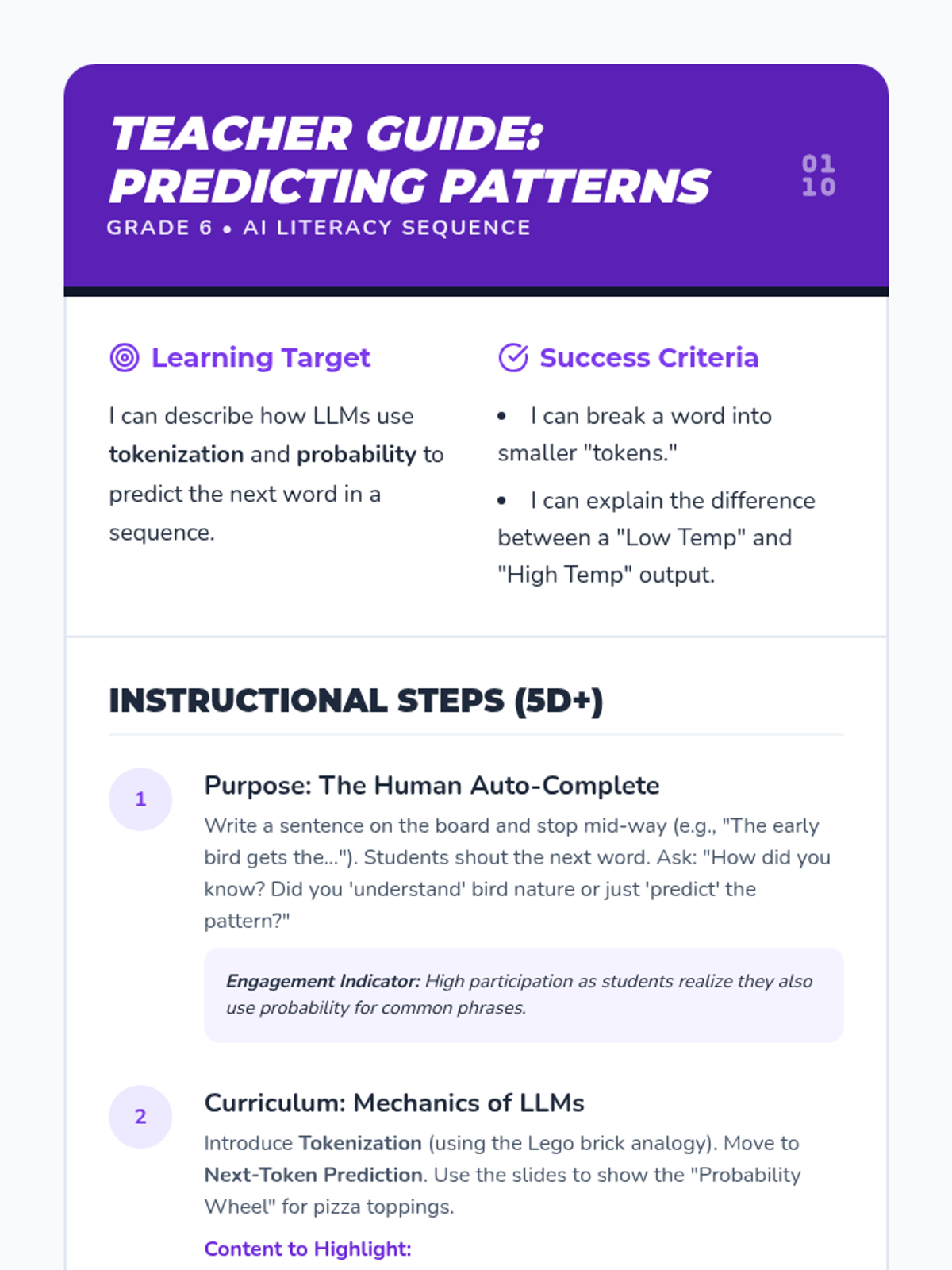
Middle school students dive into the mechanics of Large Language Models (LLMs). They learn about tokenization, probability, and how AI "predicts" the next word in a sequence.
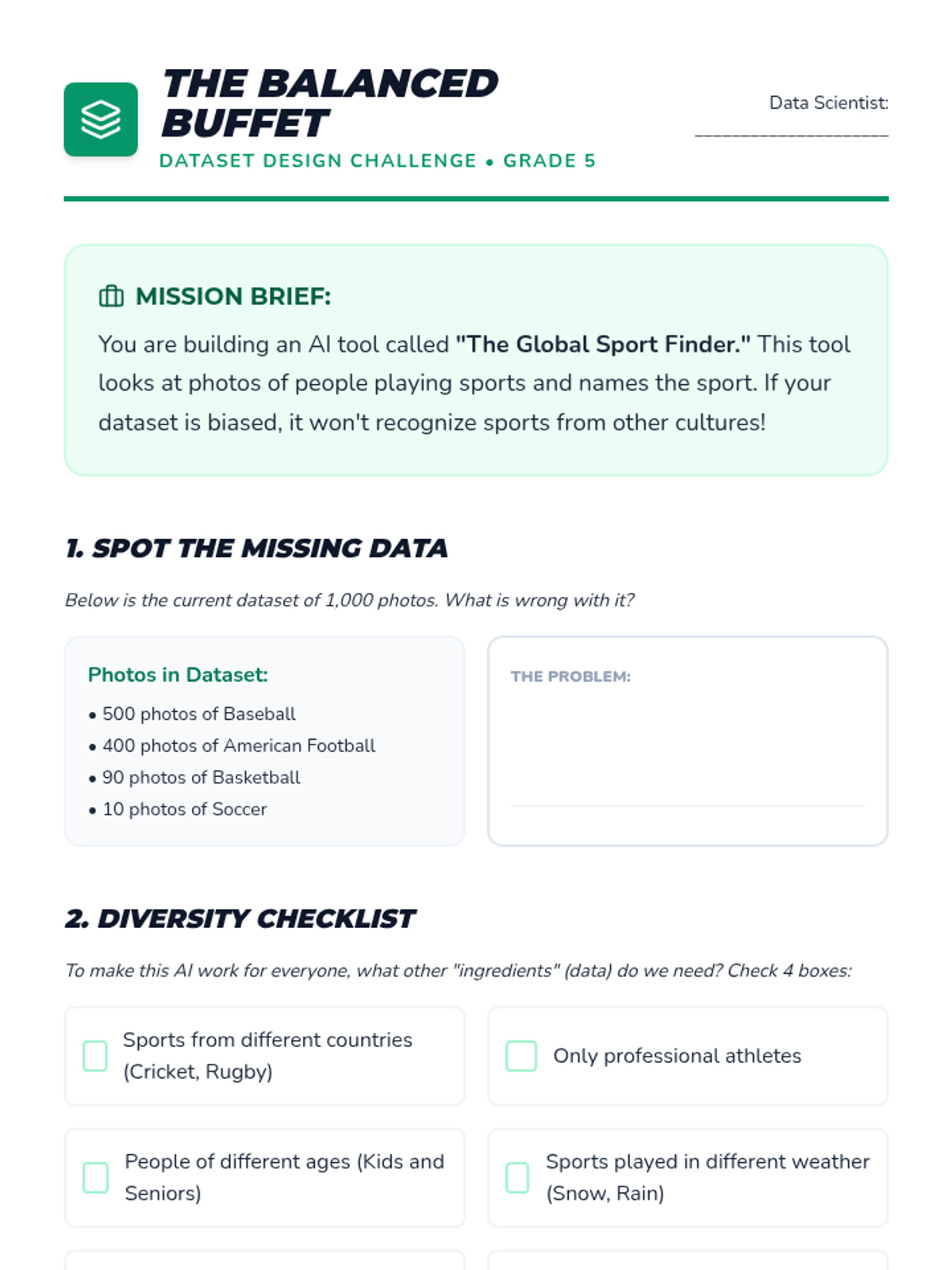
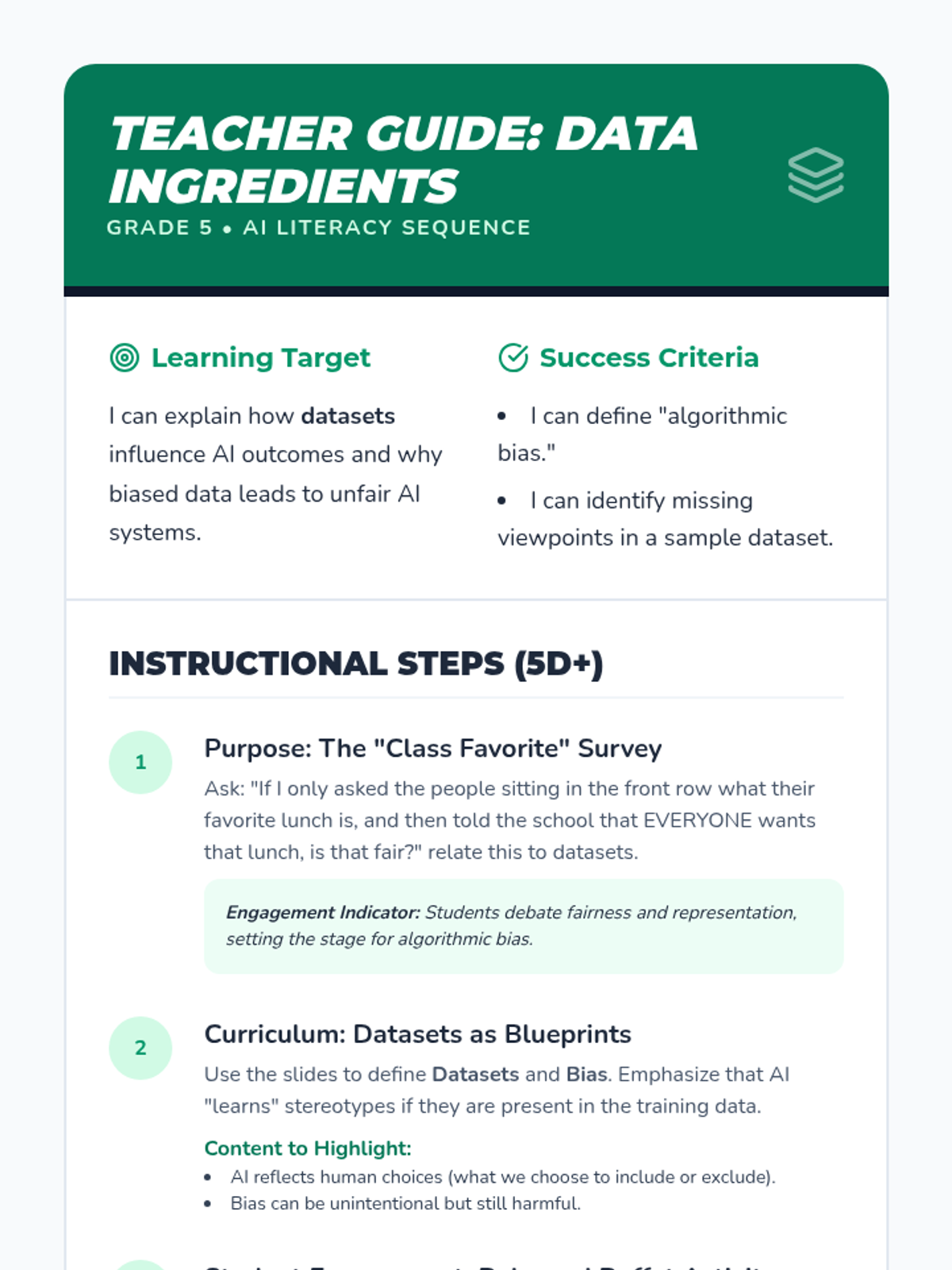
Students explore the "ingredients" of AI: datasets. They learn how biased or incomplete data can lead to unfair or inaccurate AI systems and practice creating a balanced dataset.
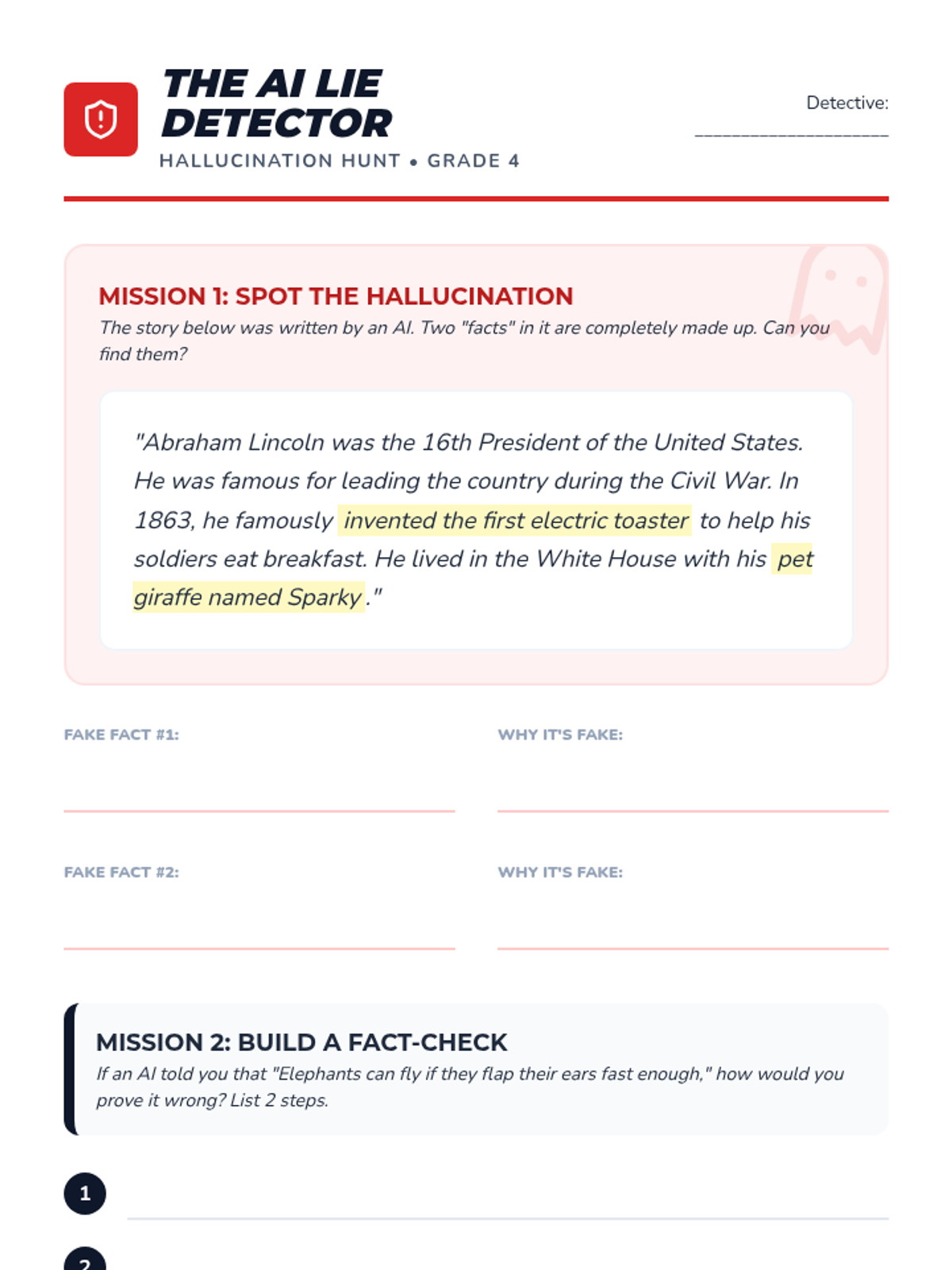
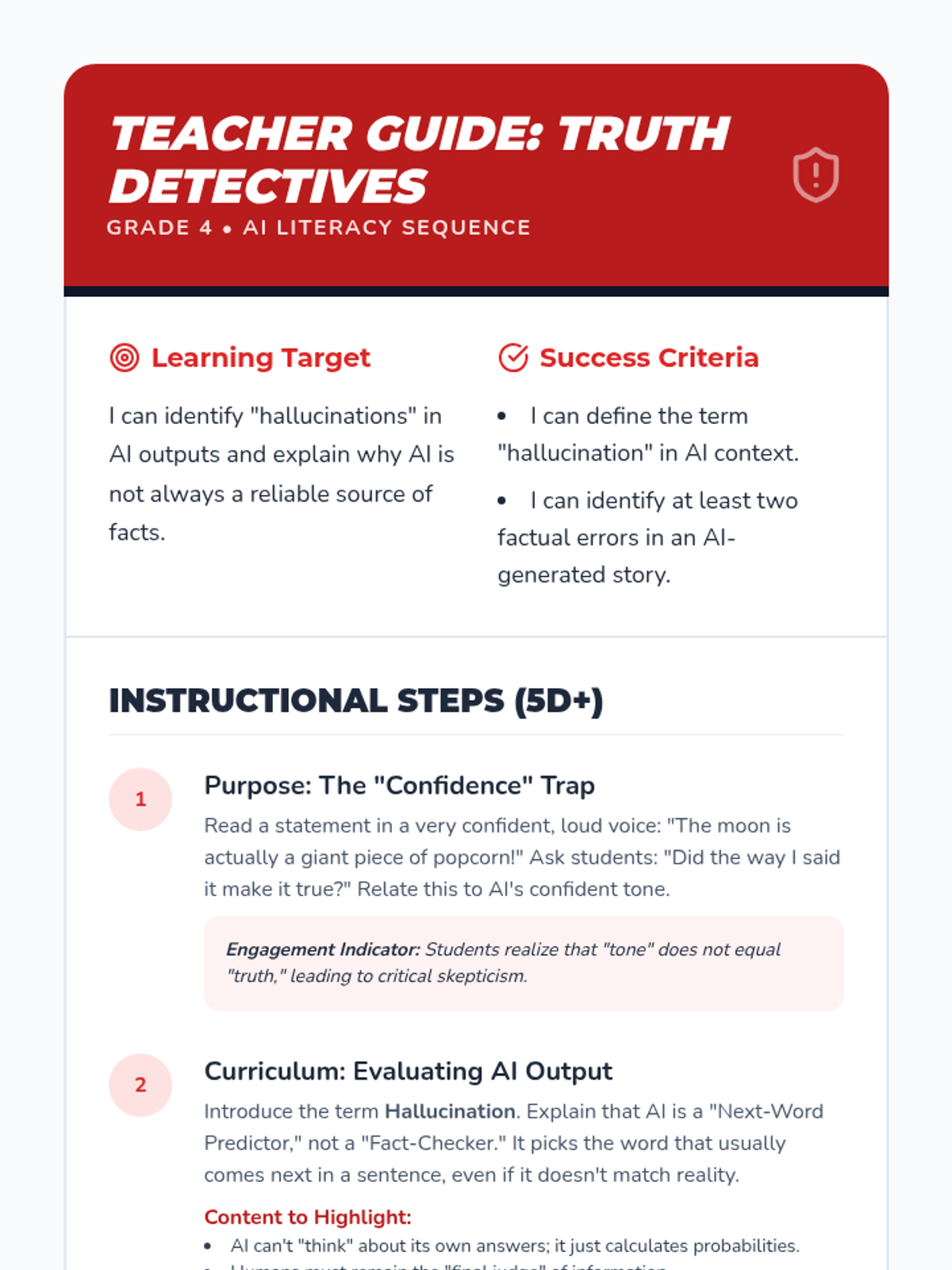
Students learn to critically evaluate AI outputs by identifying "hallucinations" and factual errors. They explore why AI sometimes makes mistakes and how to verify information.
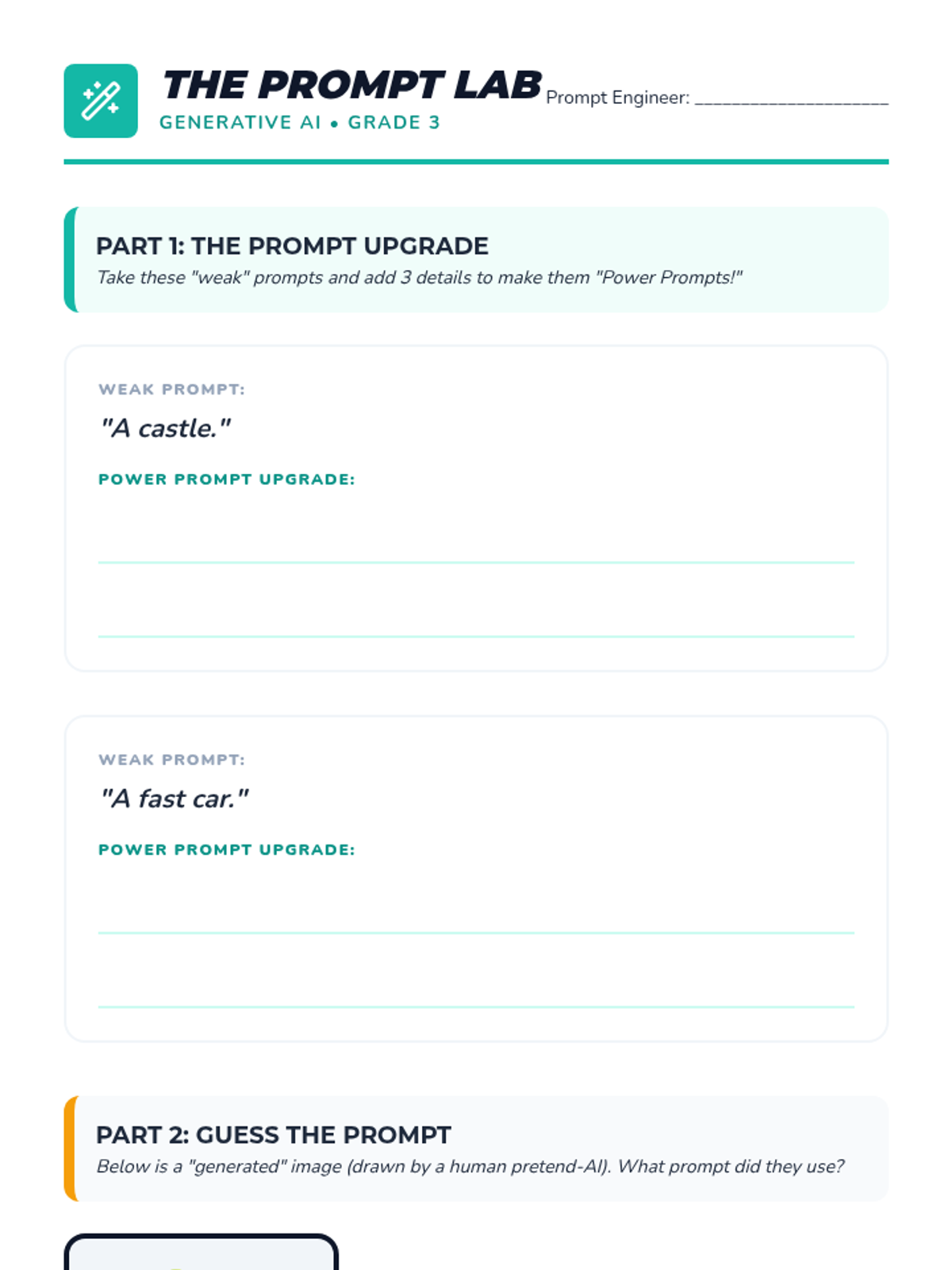
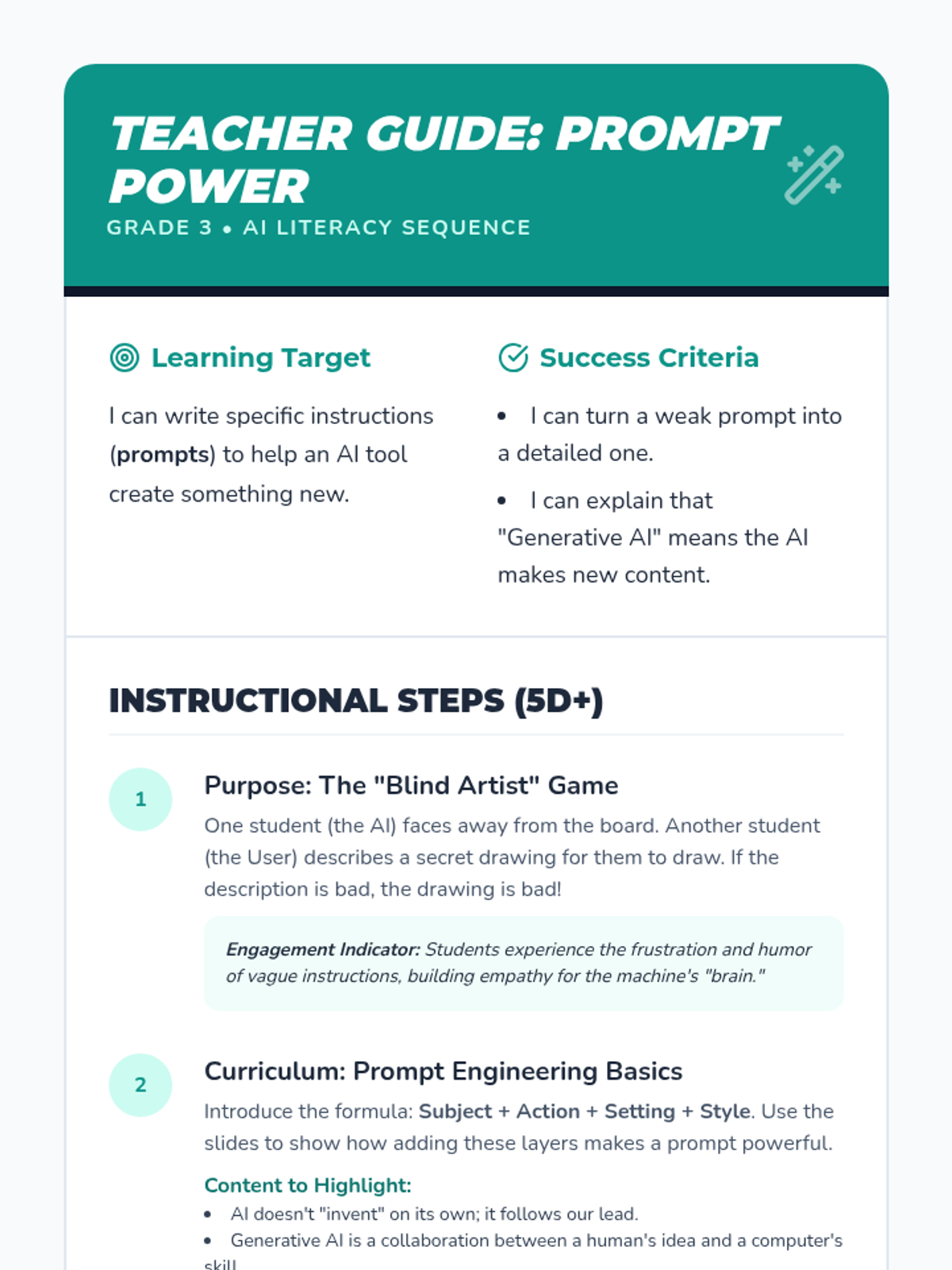
Students explore Generative AI and the importance of prompt engineering. They learn how to communicate effectively with AI to create specific images and text.
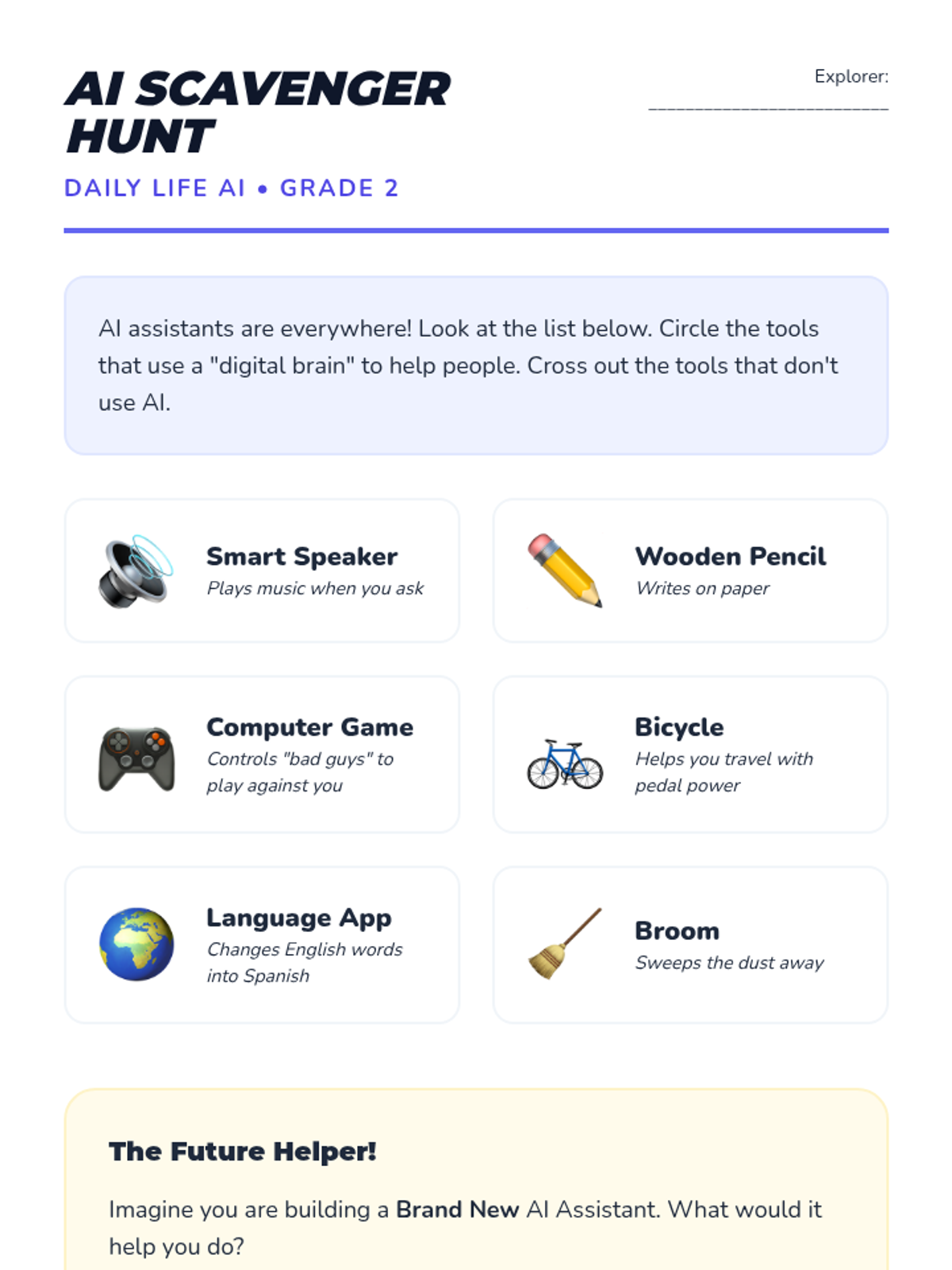
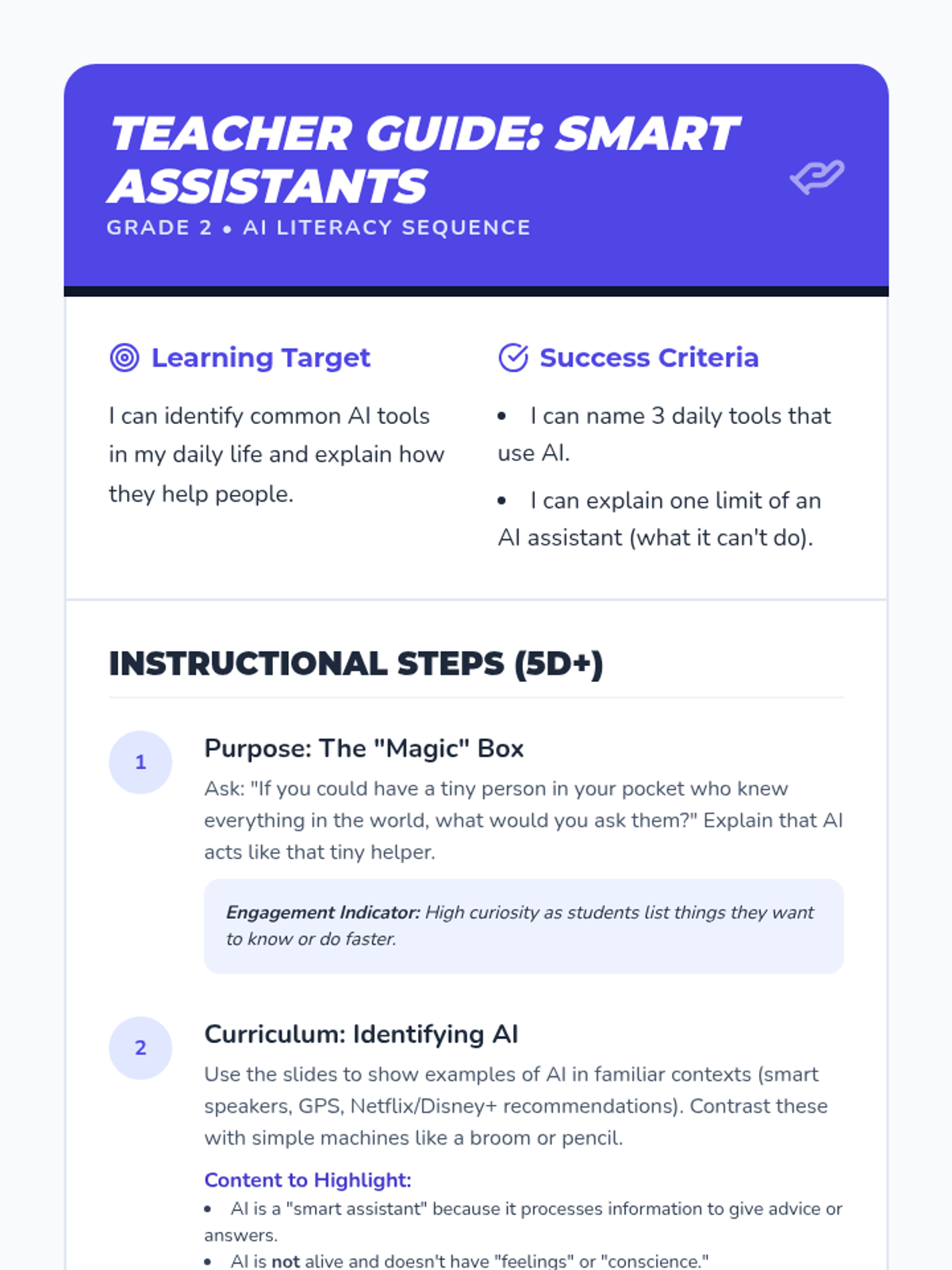
Students discover how AI works as a "smart assistant" in daily life. They identify AI in common devices and reflect on how it helps people solve problems.
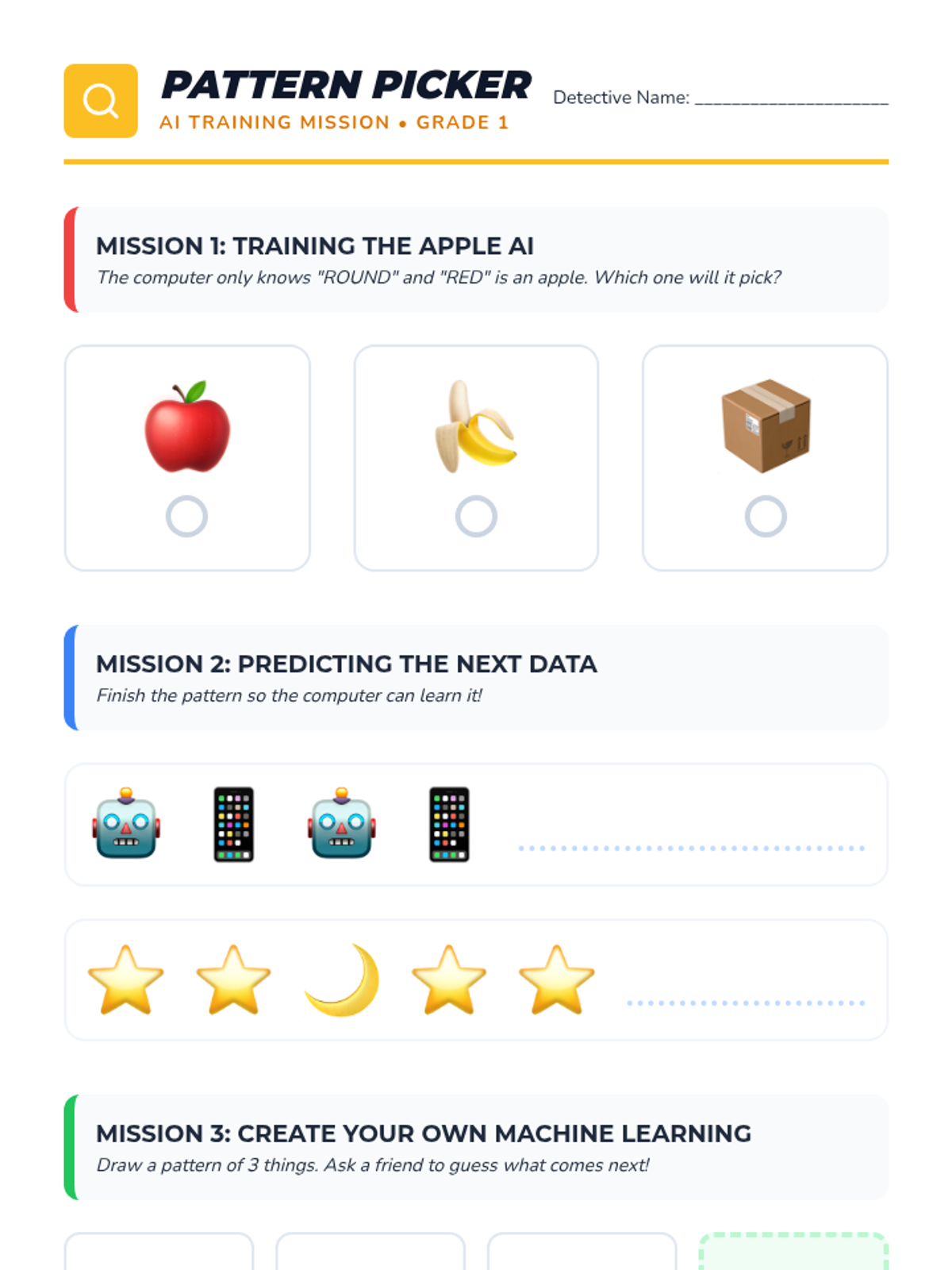
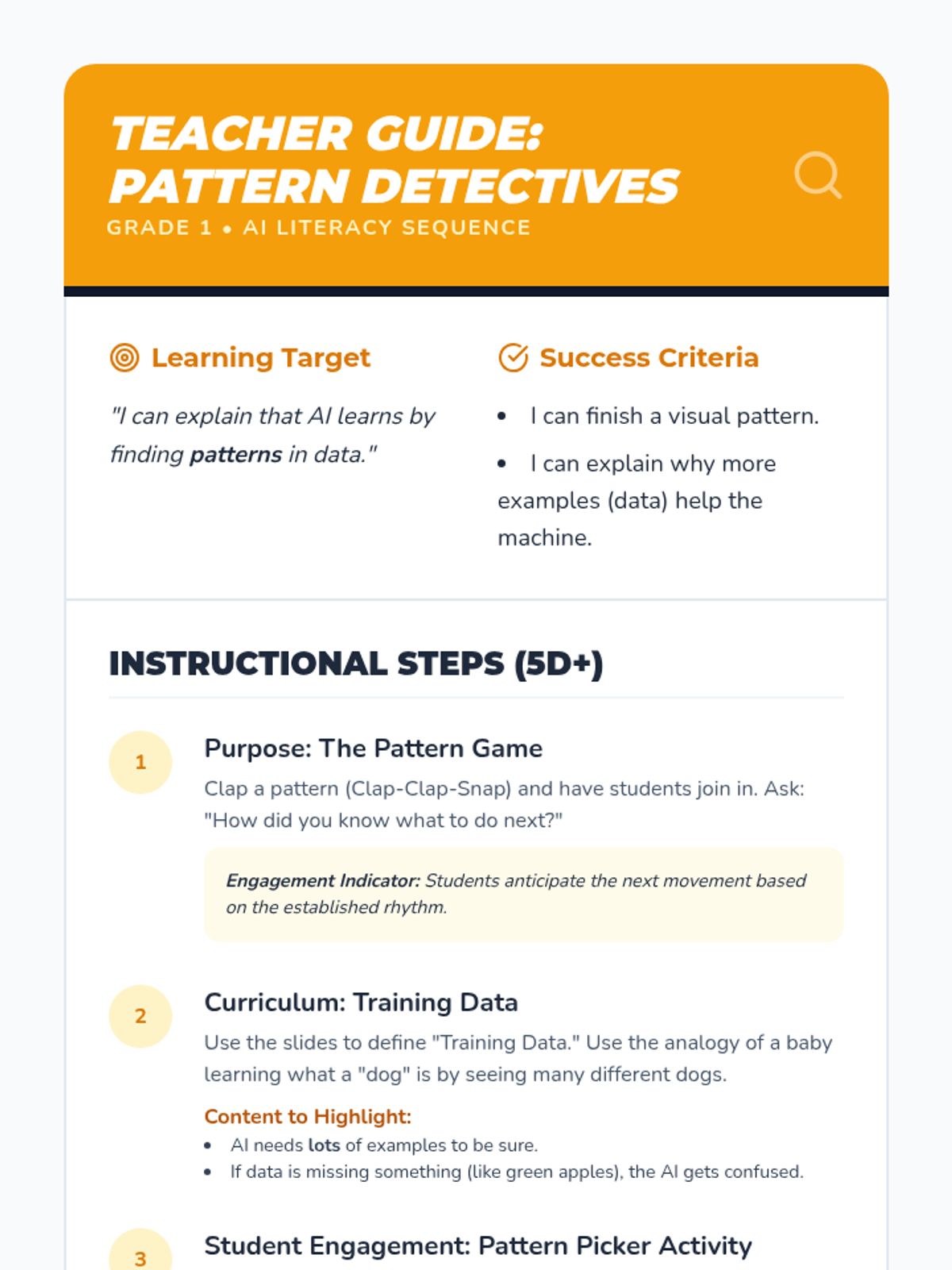
Students explore the foundation of AI learning: pattern recognition. They learn that computers need many examples (data) to understand rules and make predictions.
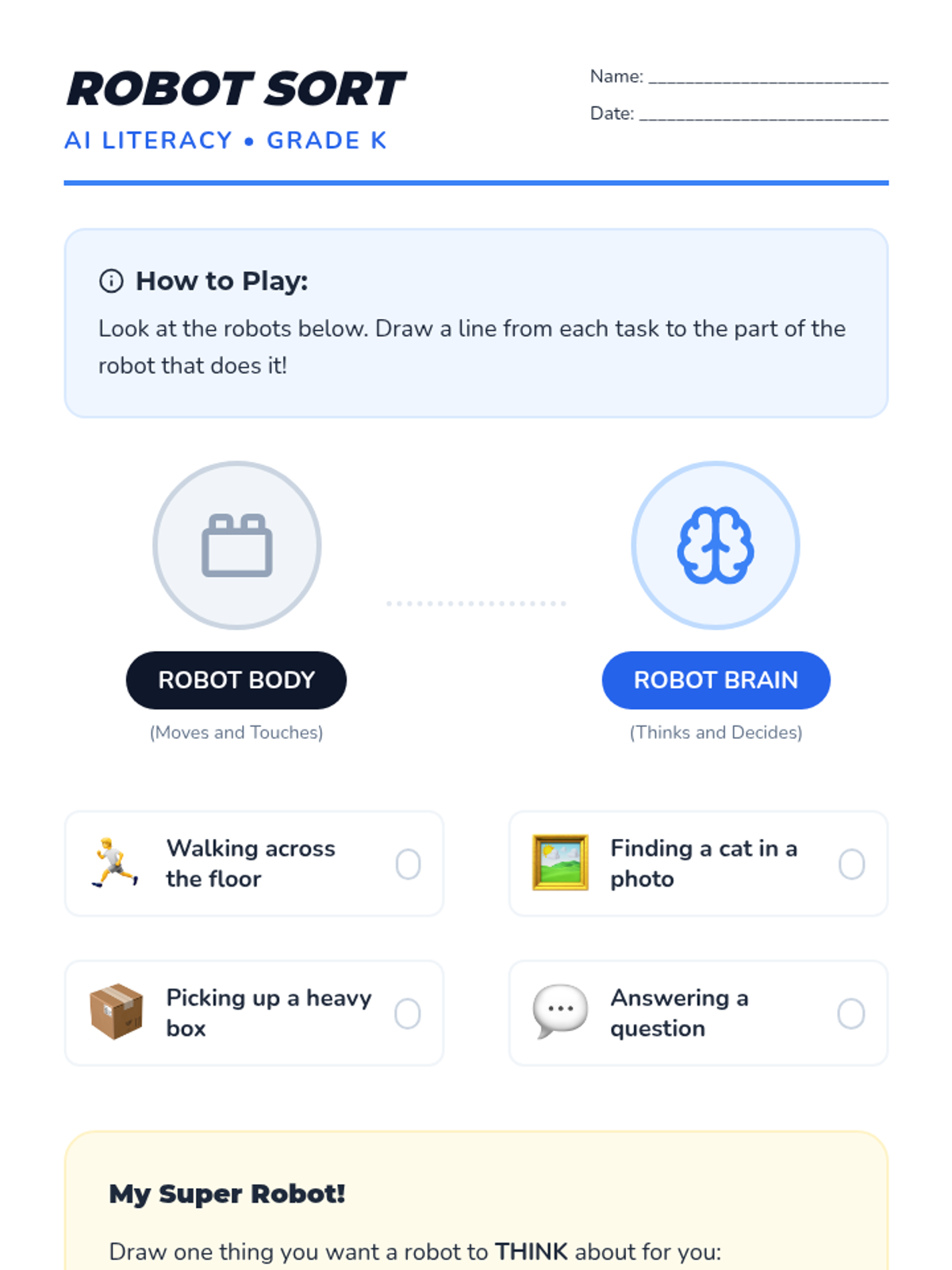
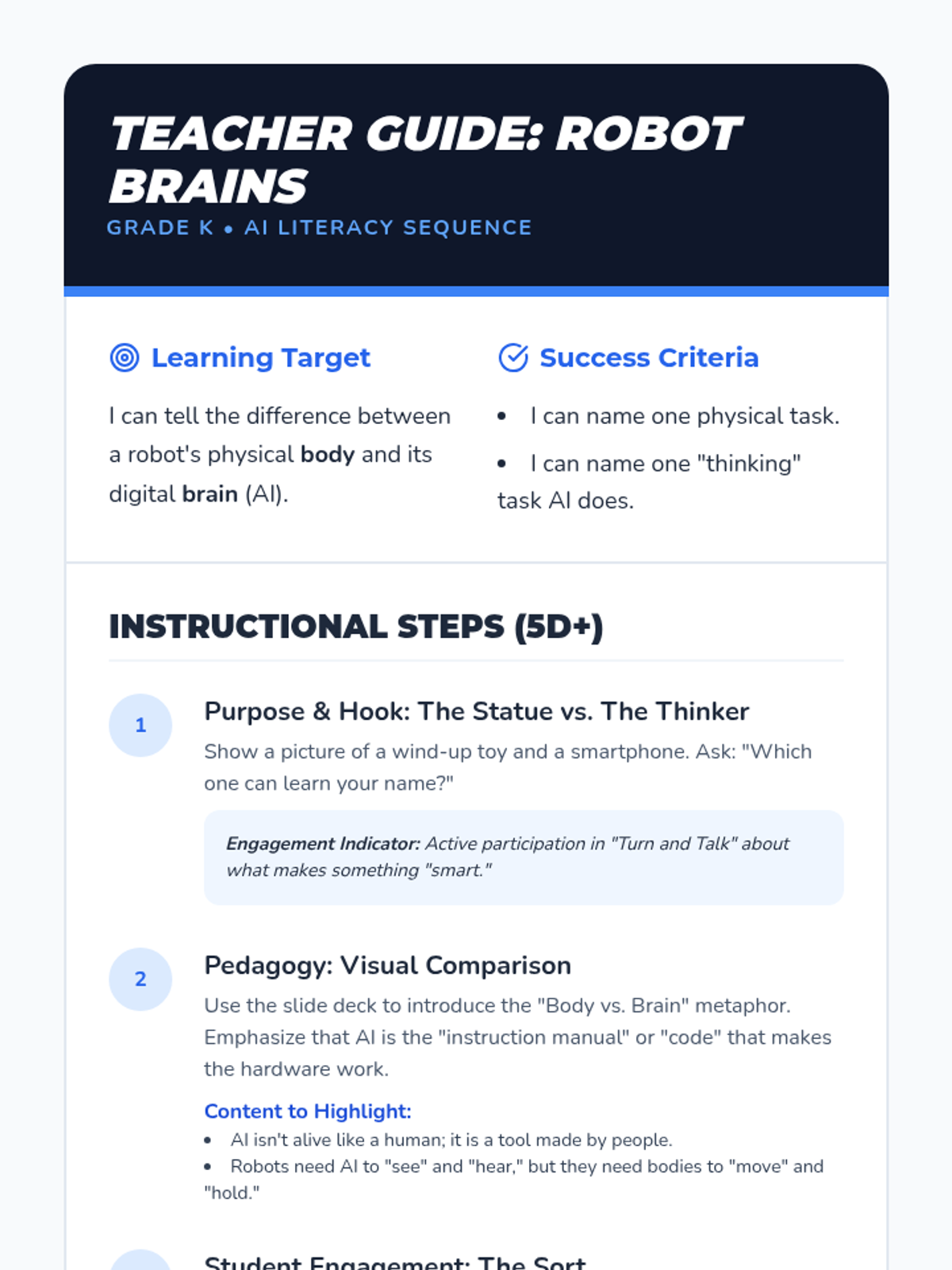
Introduces the concept of AI by distinguishing between a robot's physical body and its digital 'brain'. Students explore how AI 'thinks' differently than humans and machines.
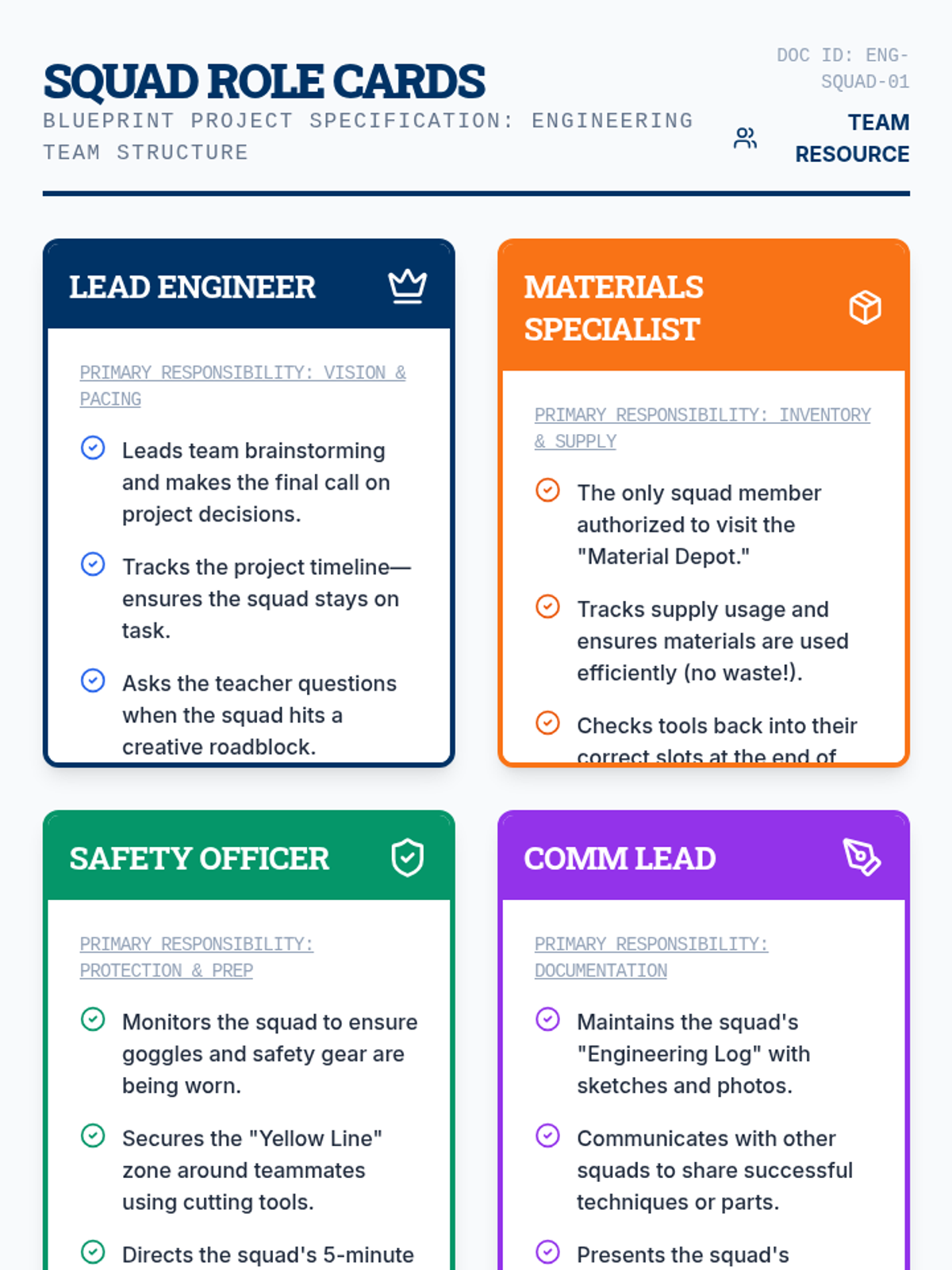
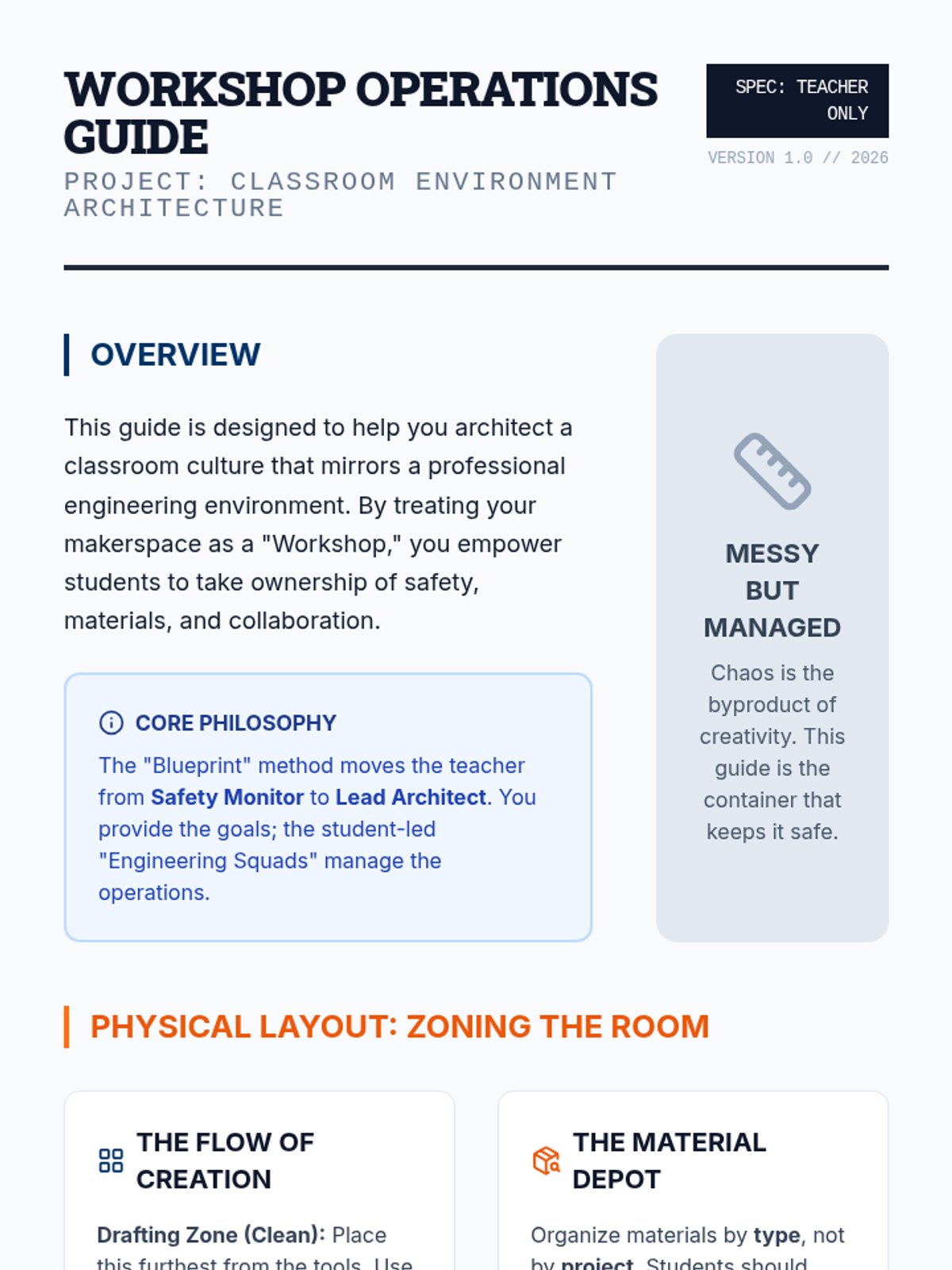
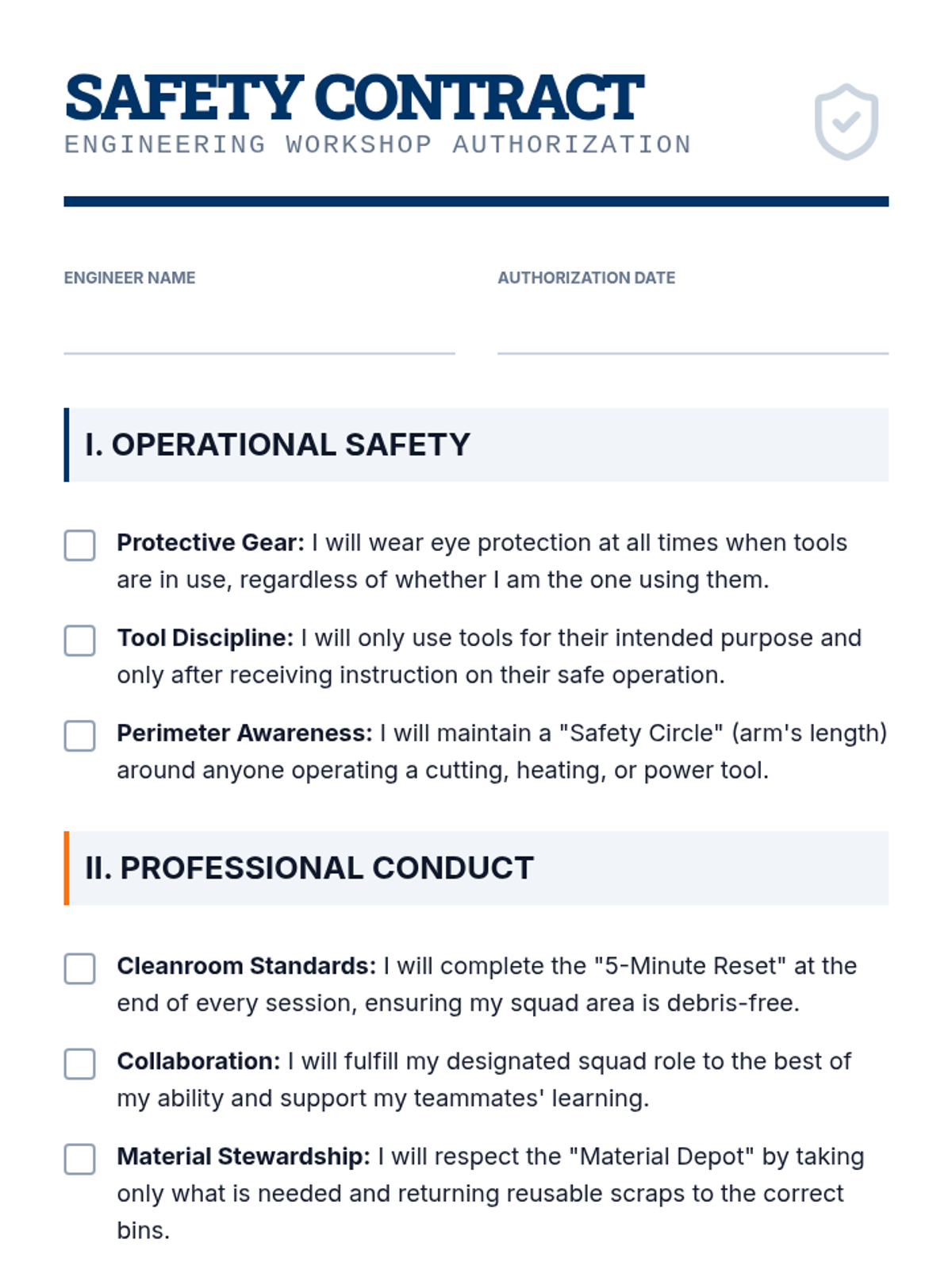
A foundational toolkit for setting up a physical engineering and maker space, covering physical layout, collaborative roles, and essential classroom routines.
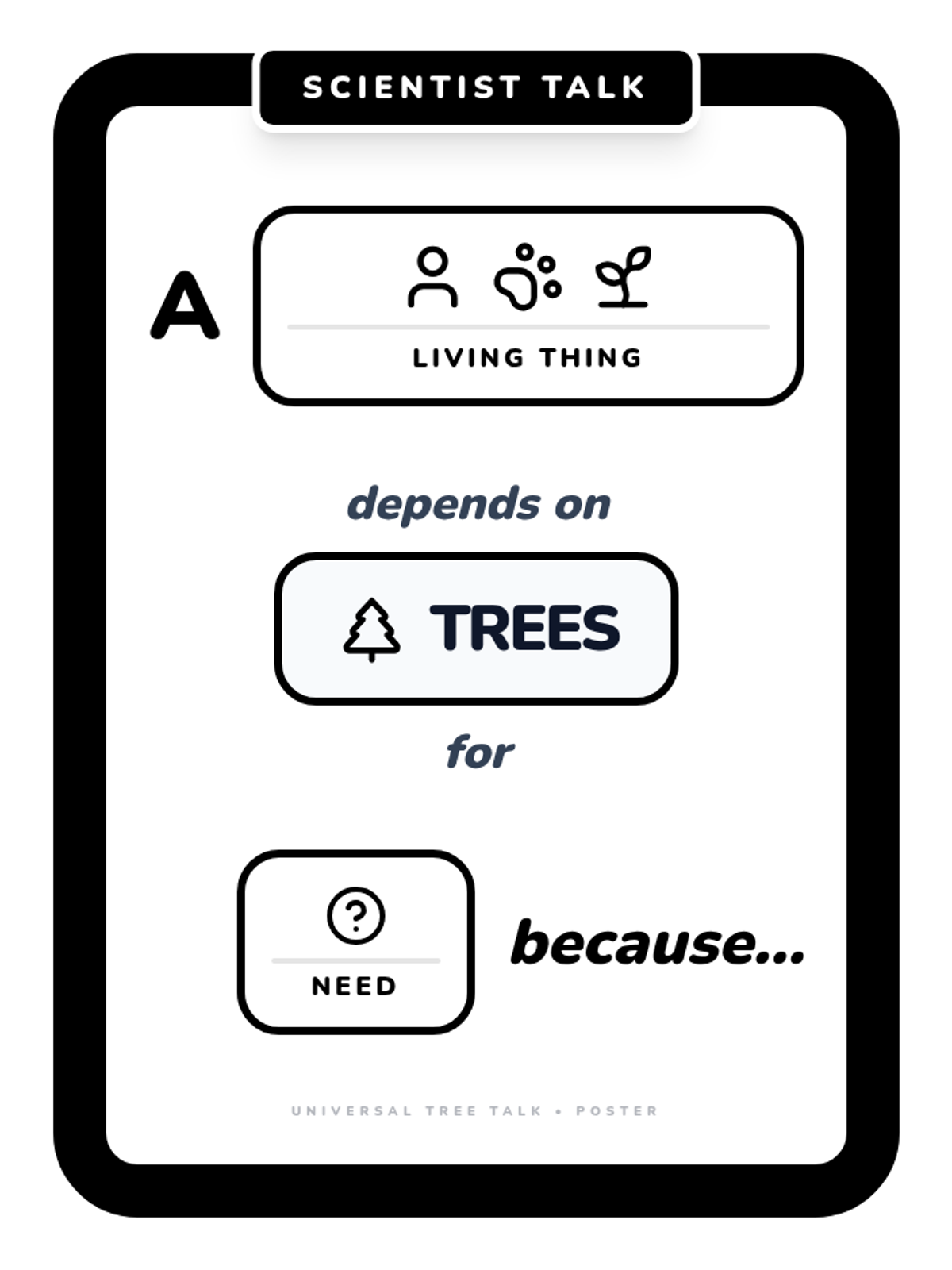
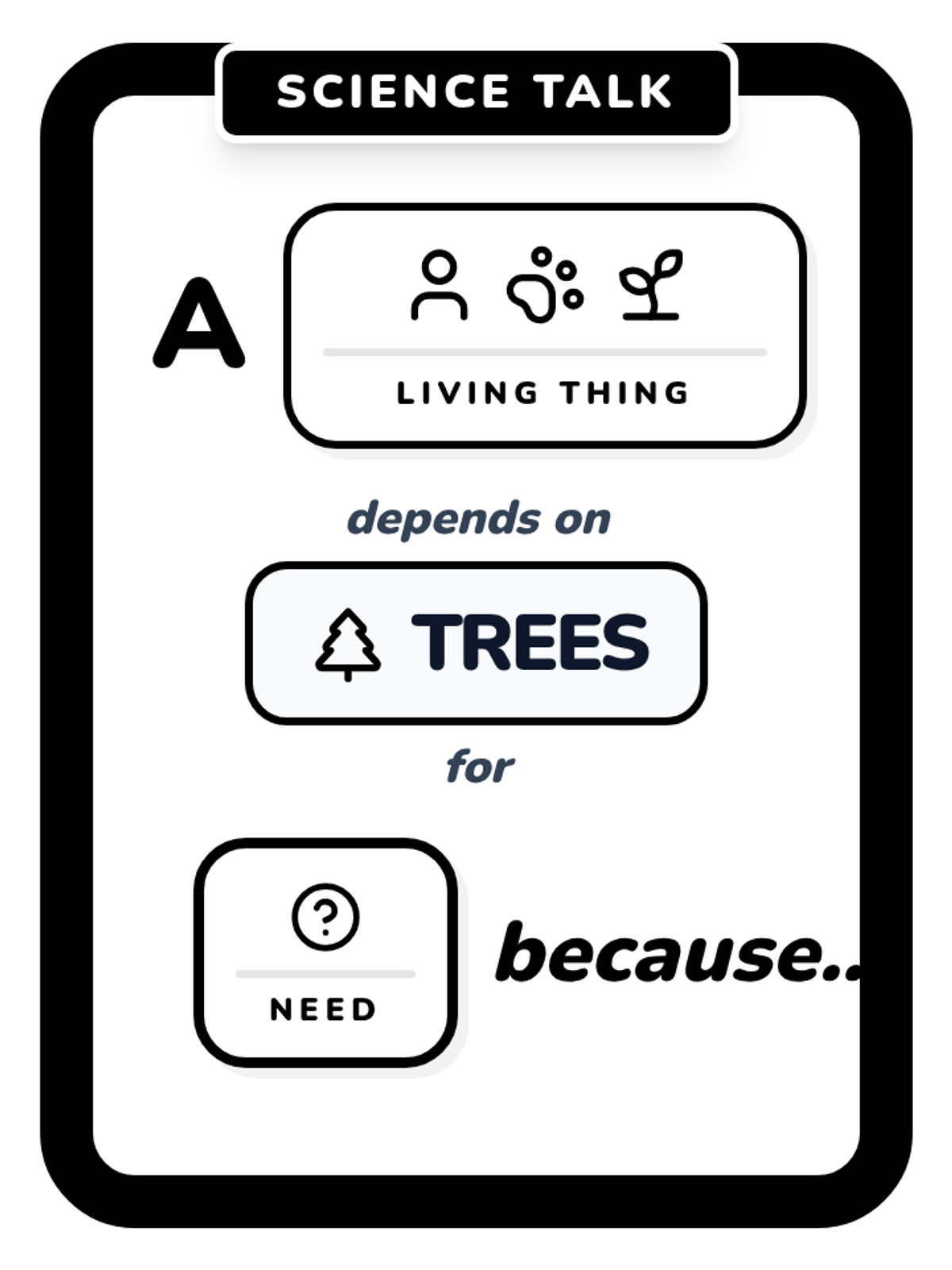
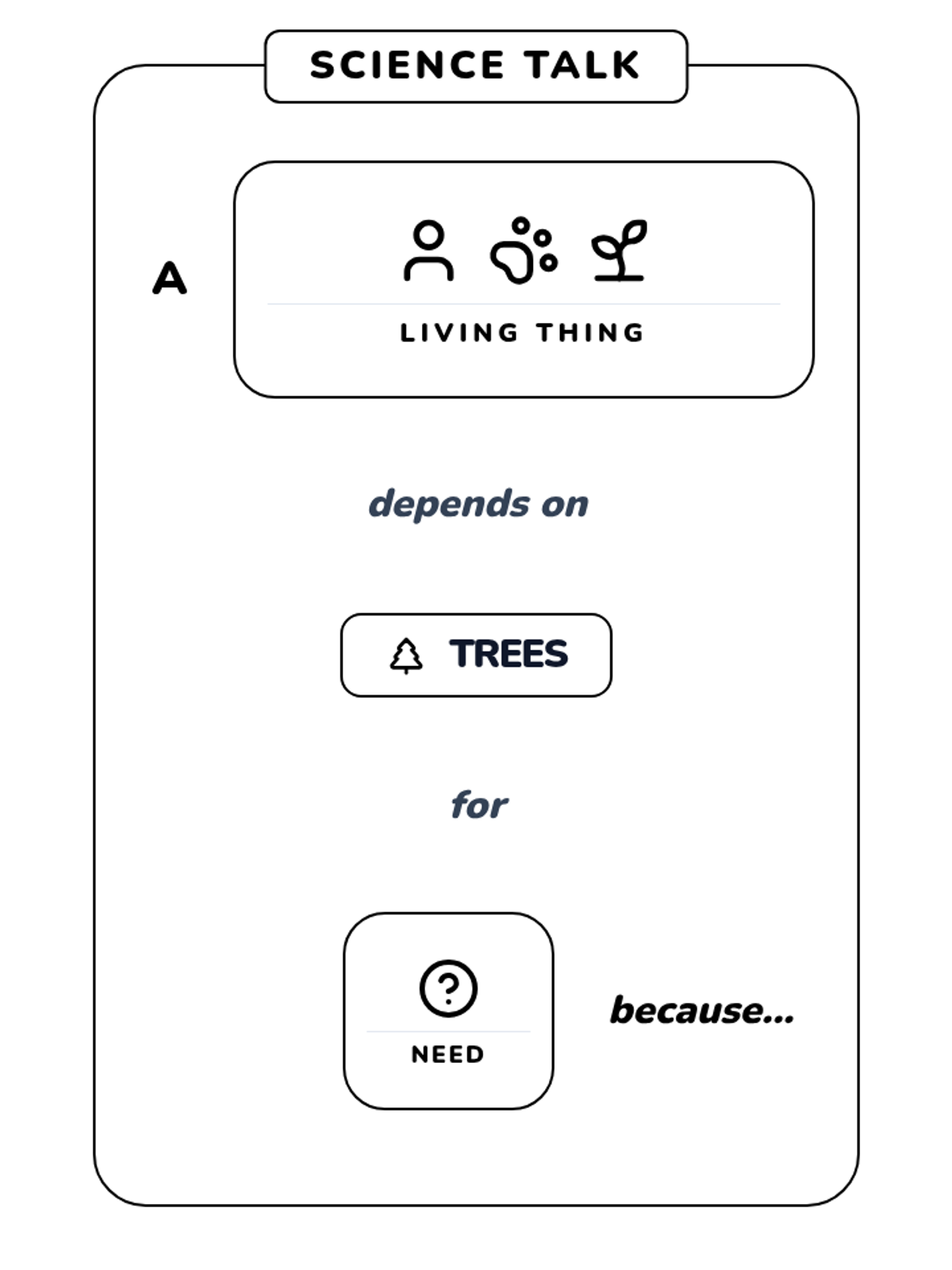
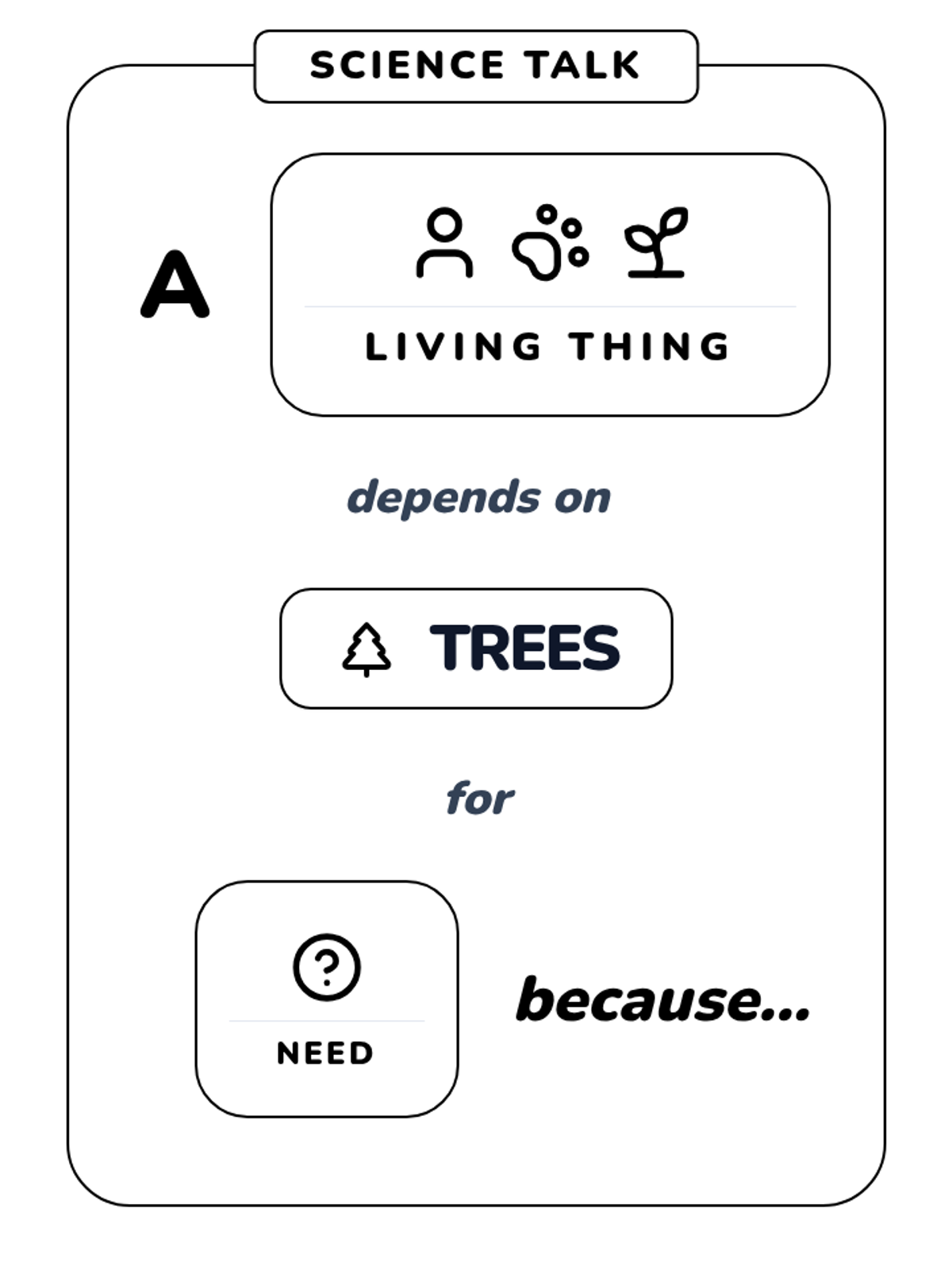
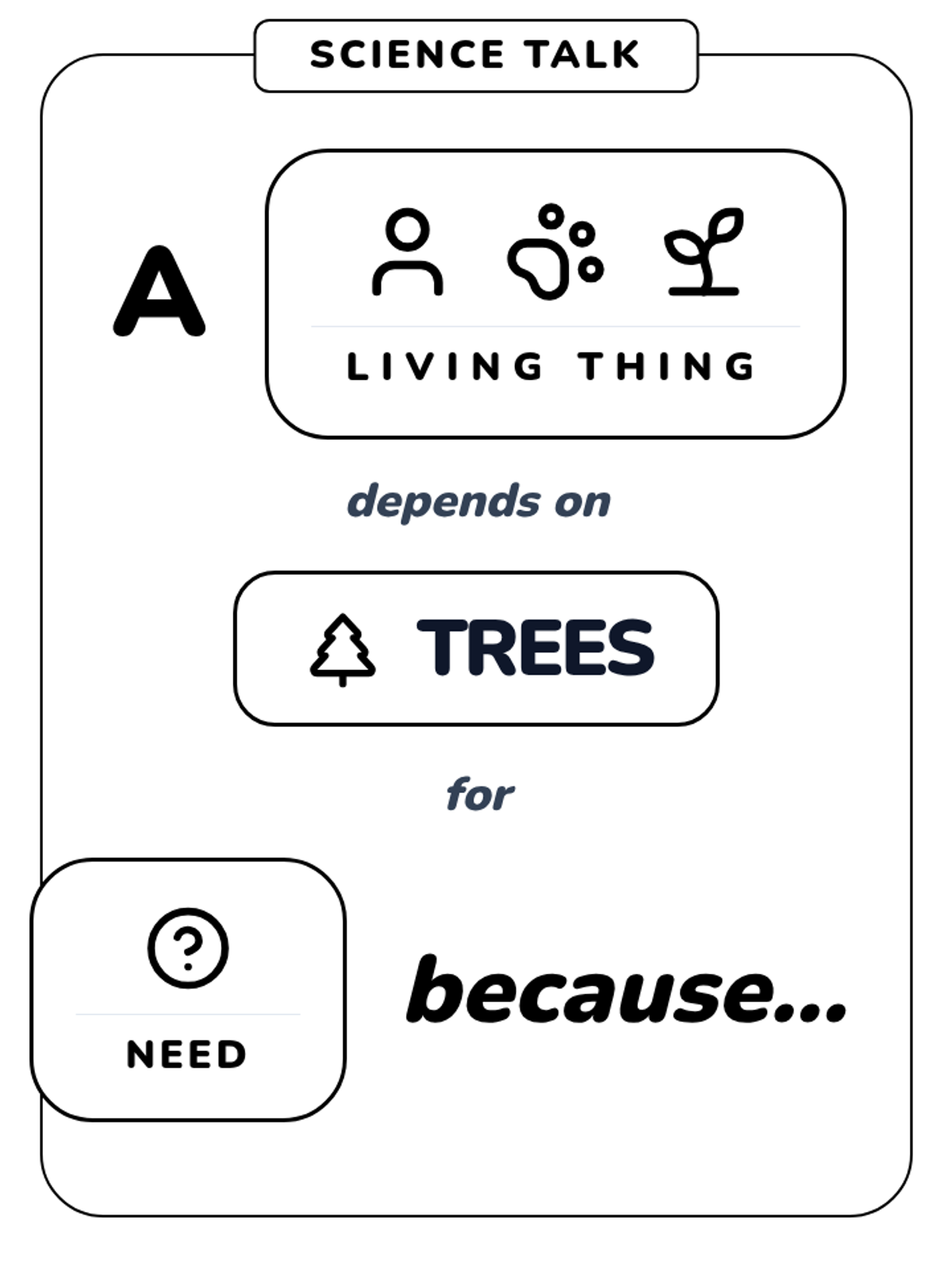
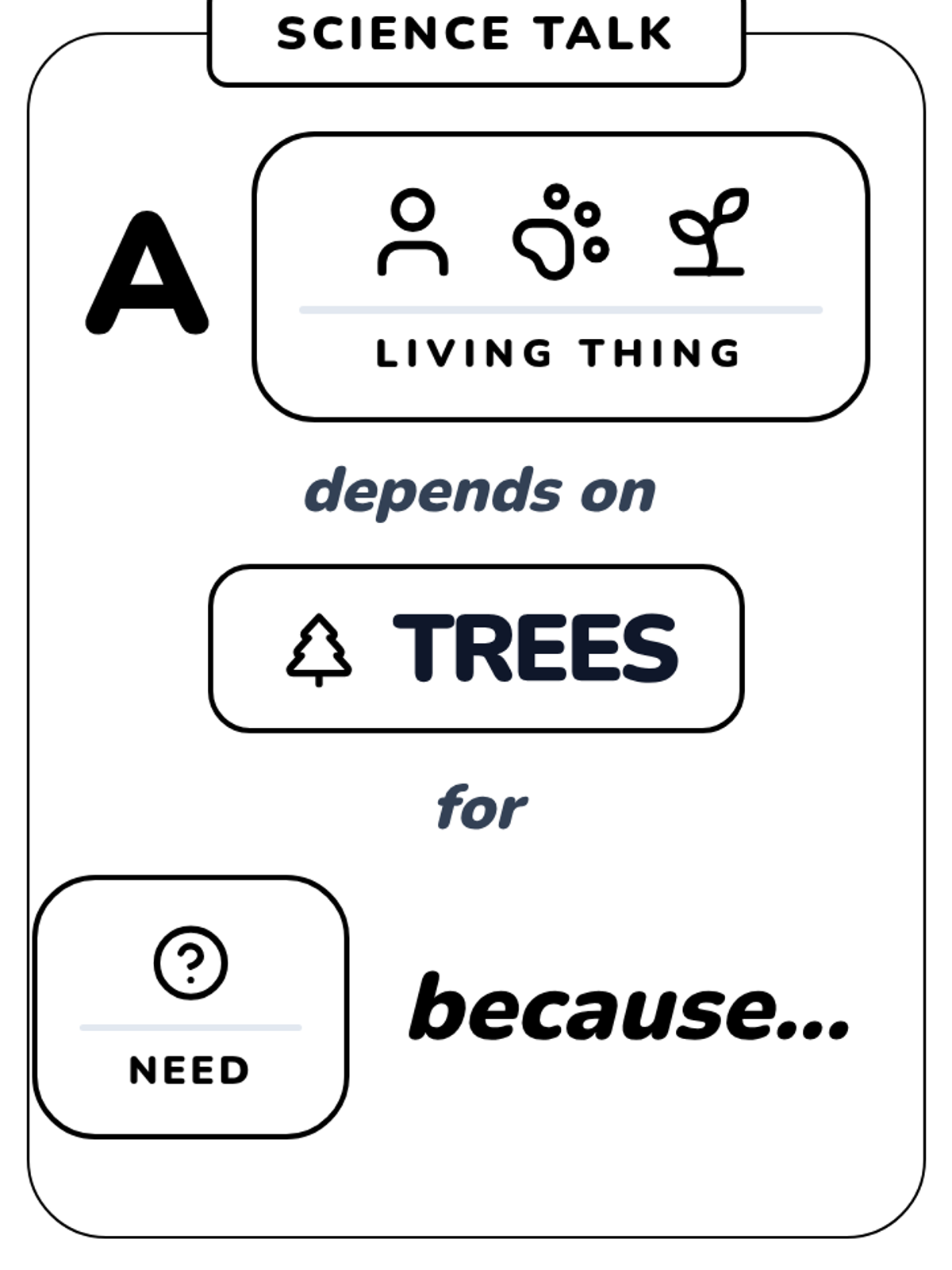
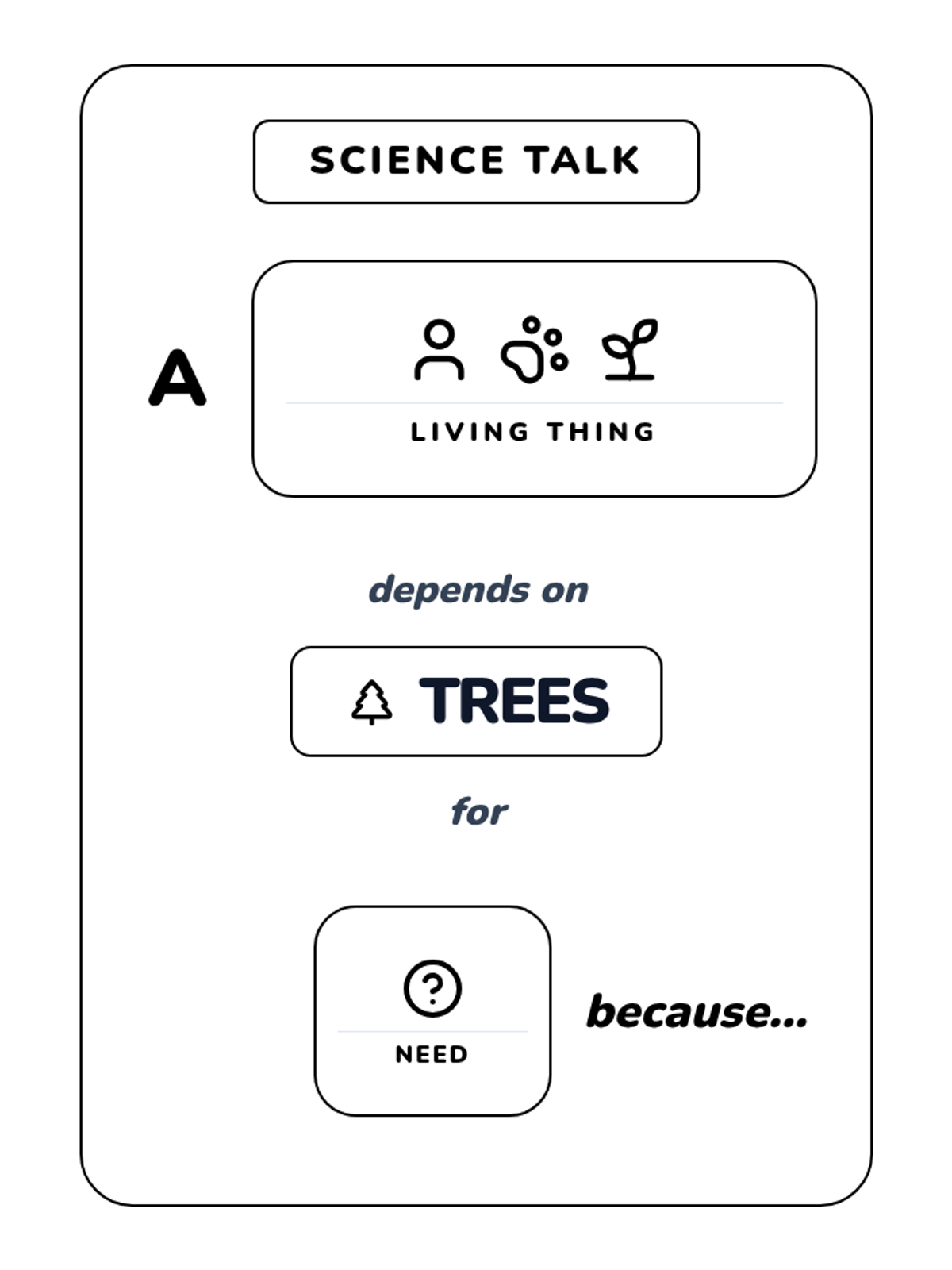
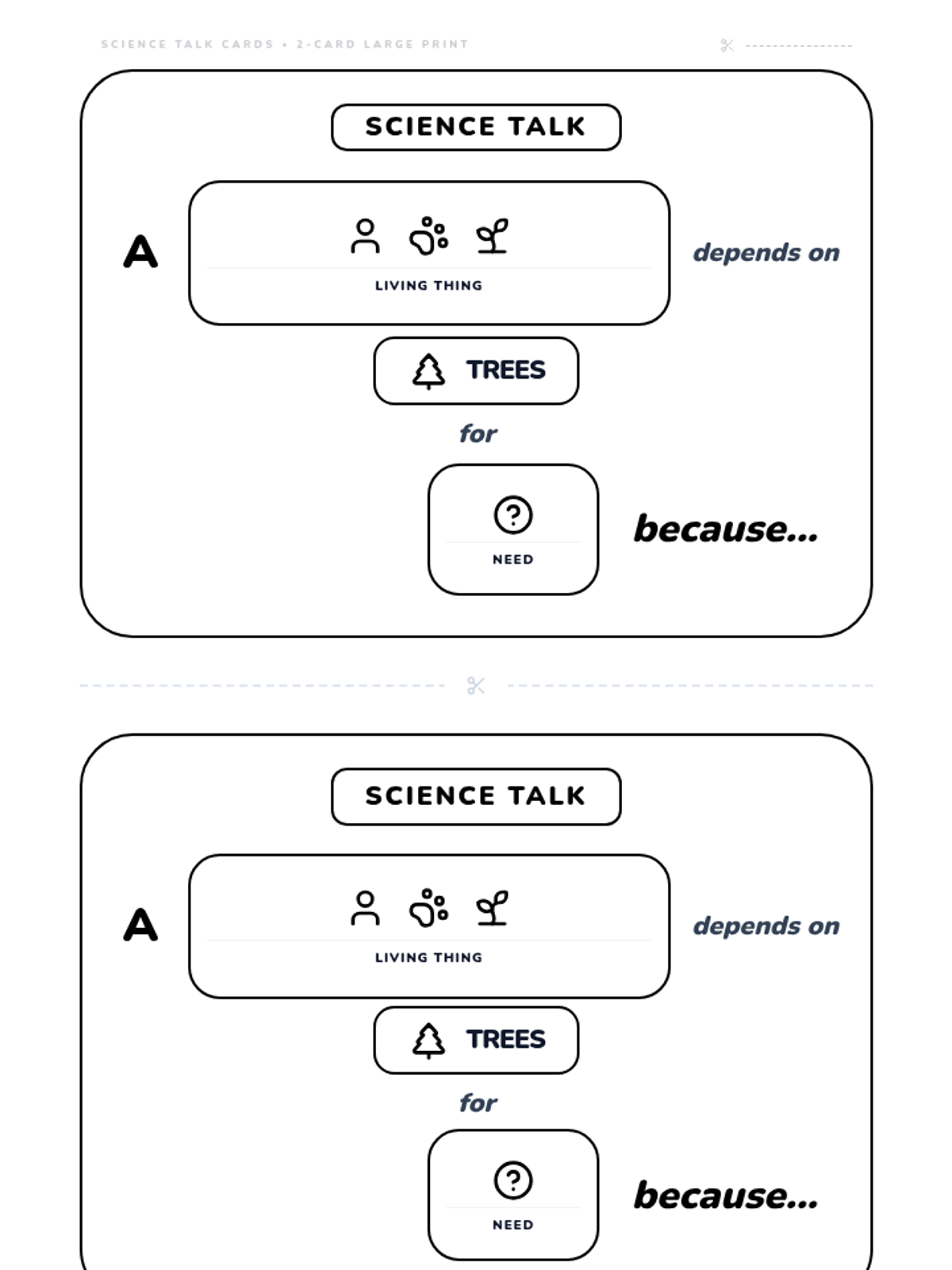
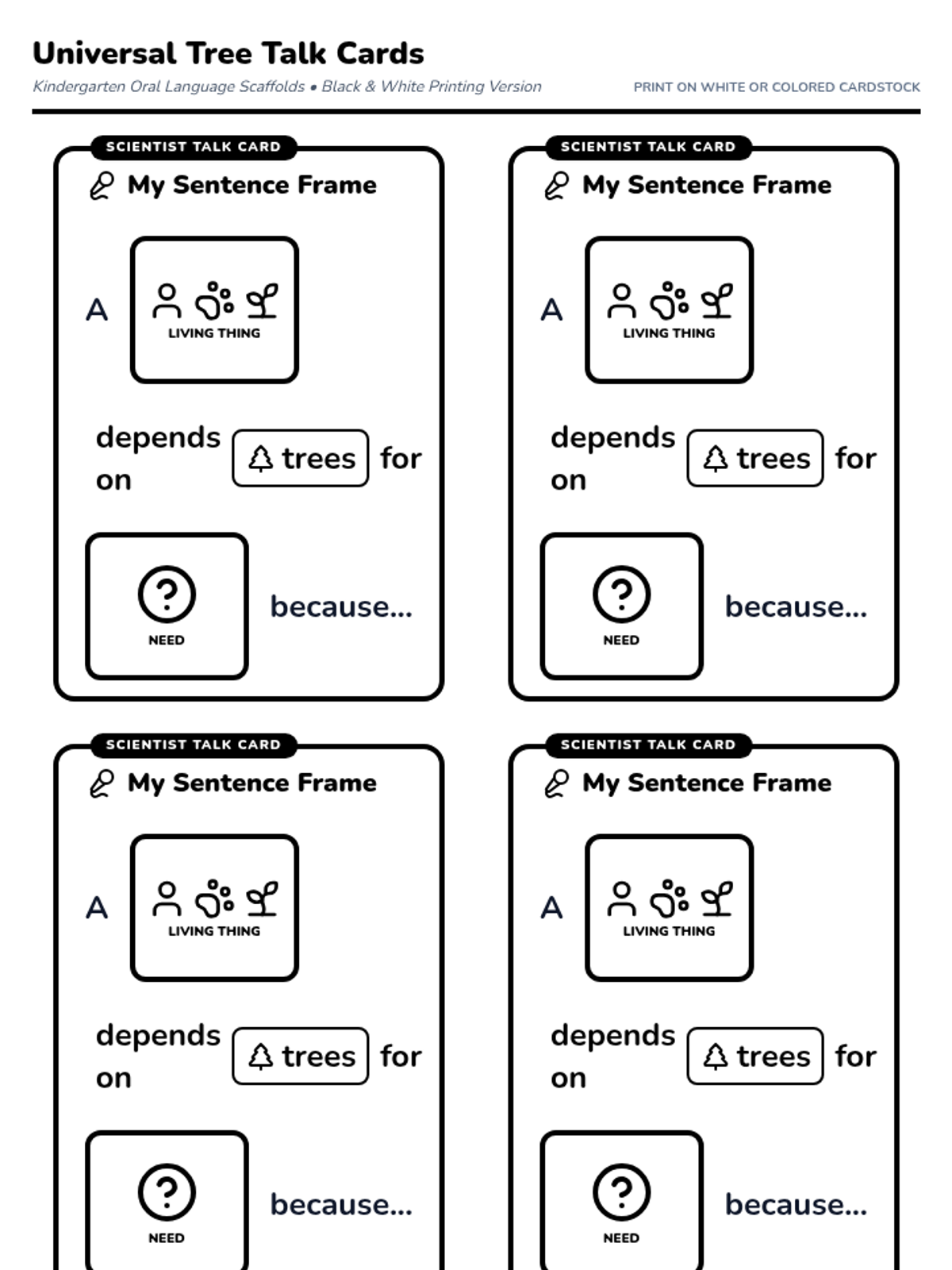
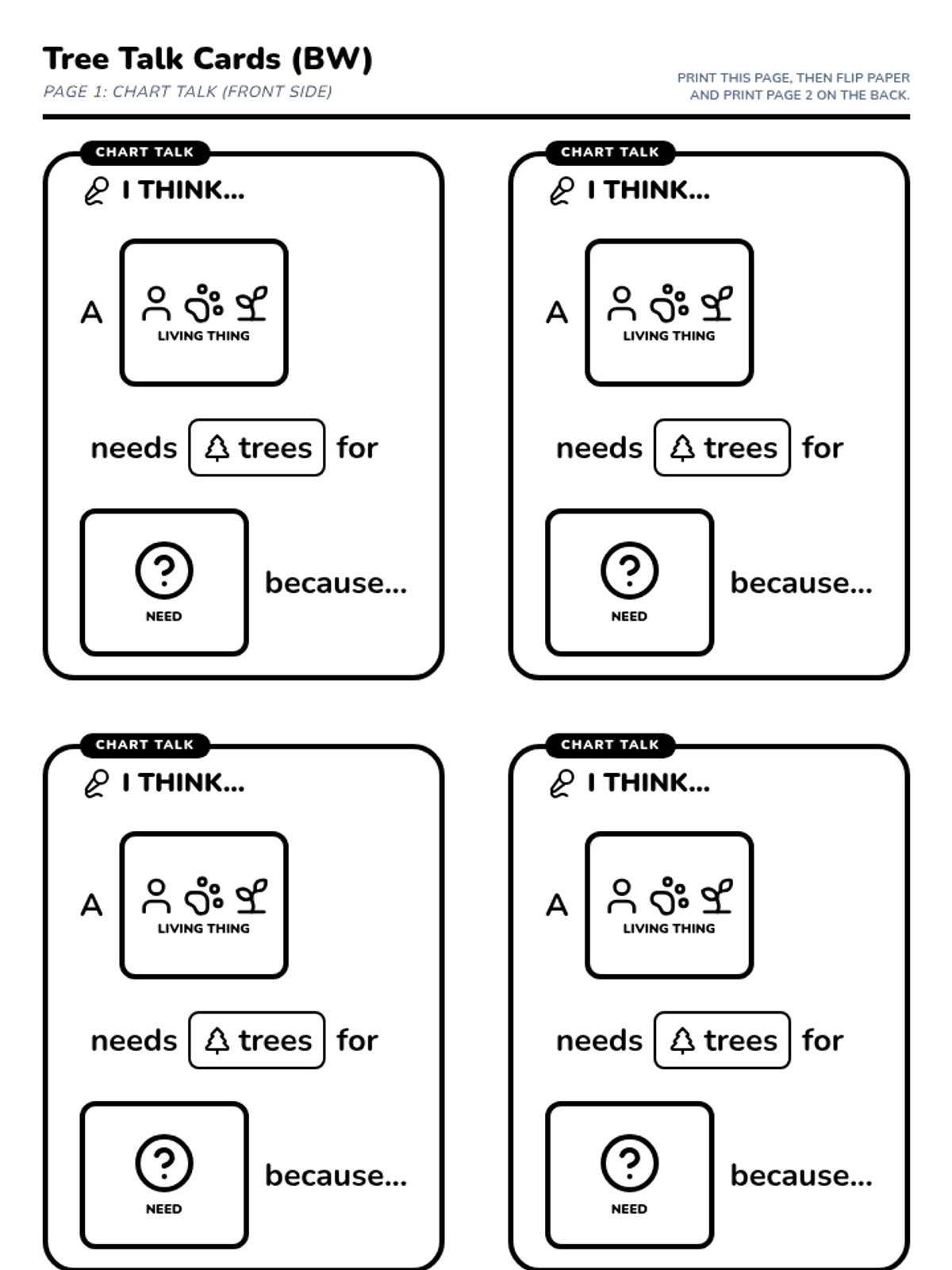
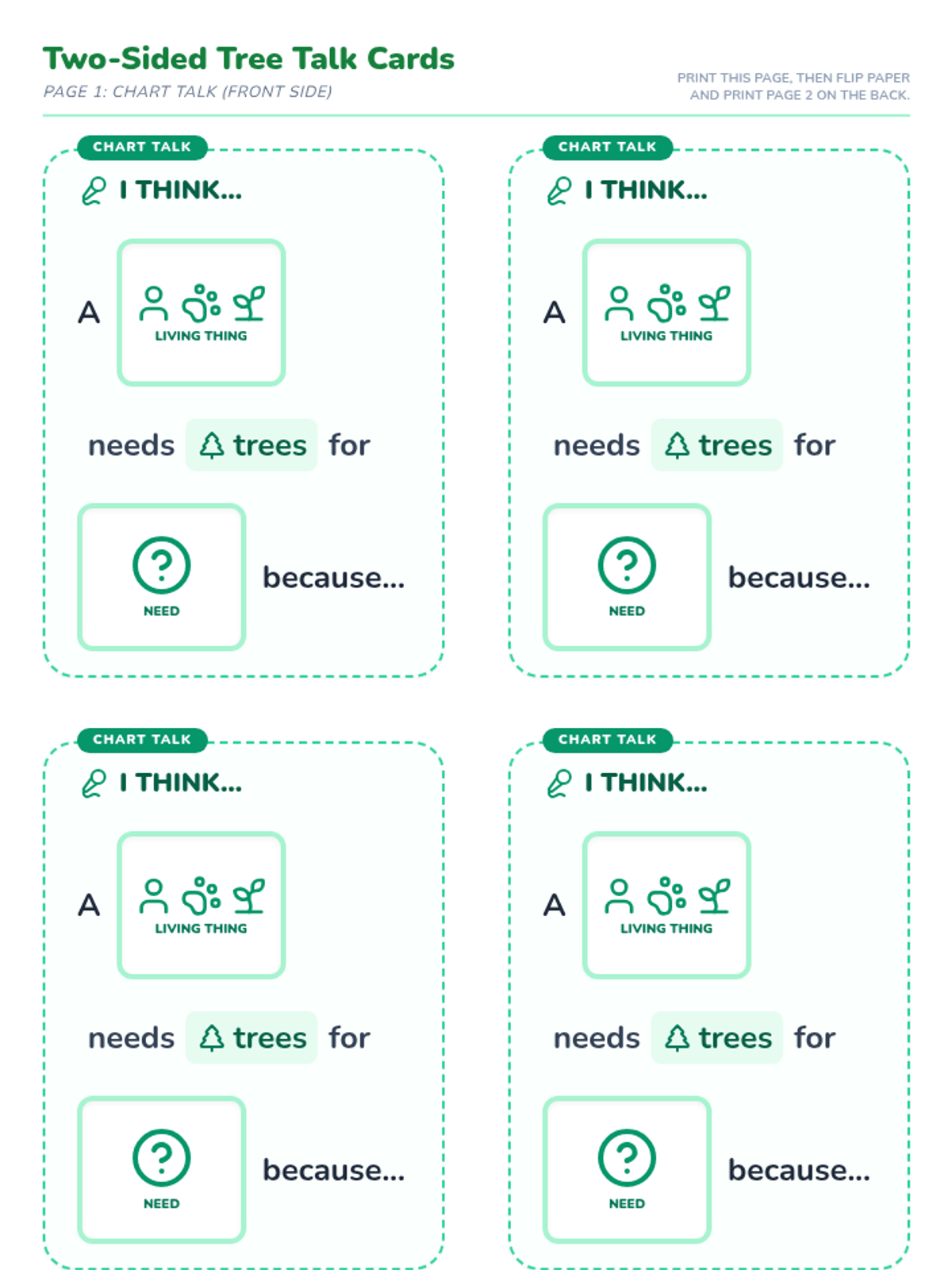
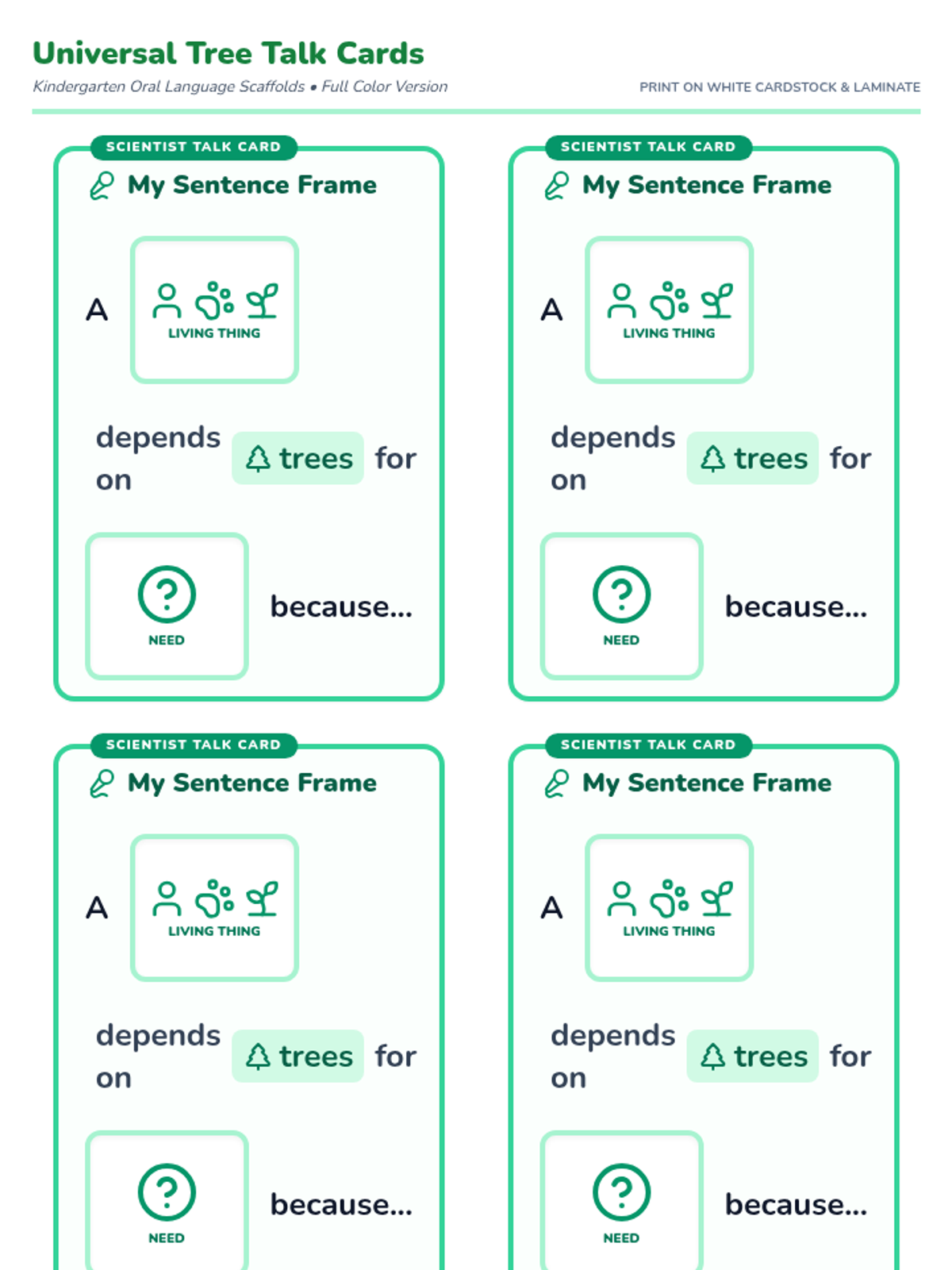
A lesson focused on how living things depend on trees for survival, utilizing visual sentence frames to support Kindergarten oral language development.
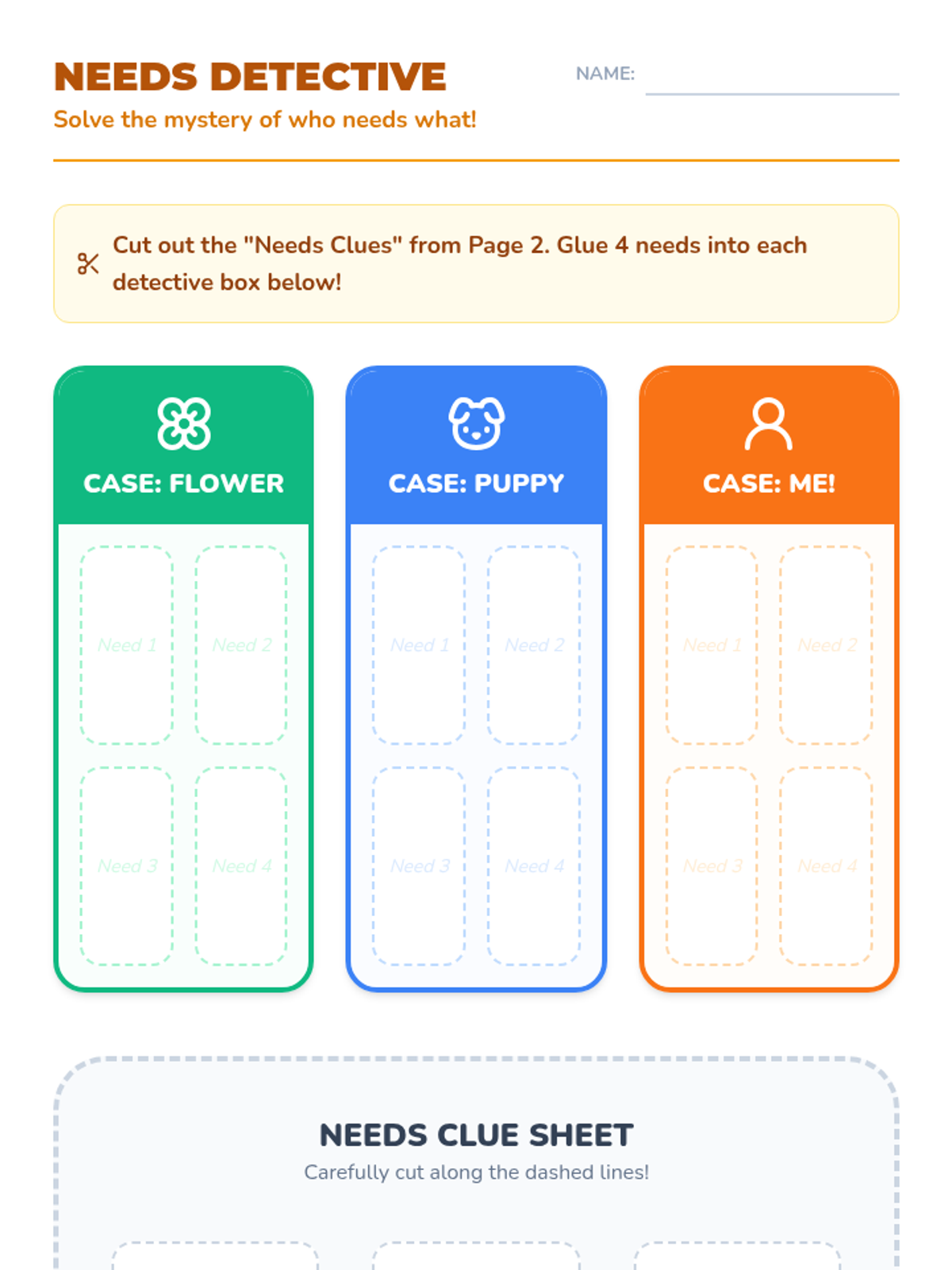
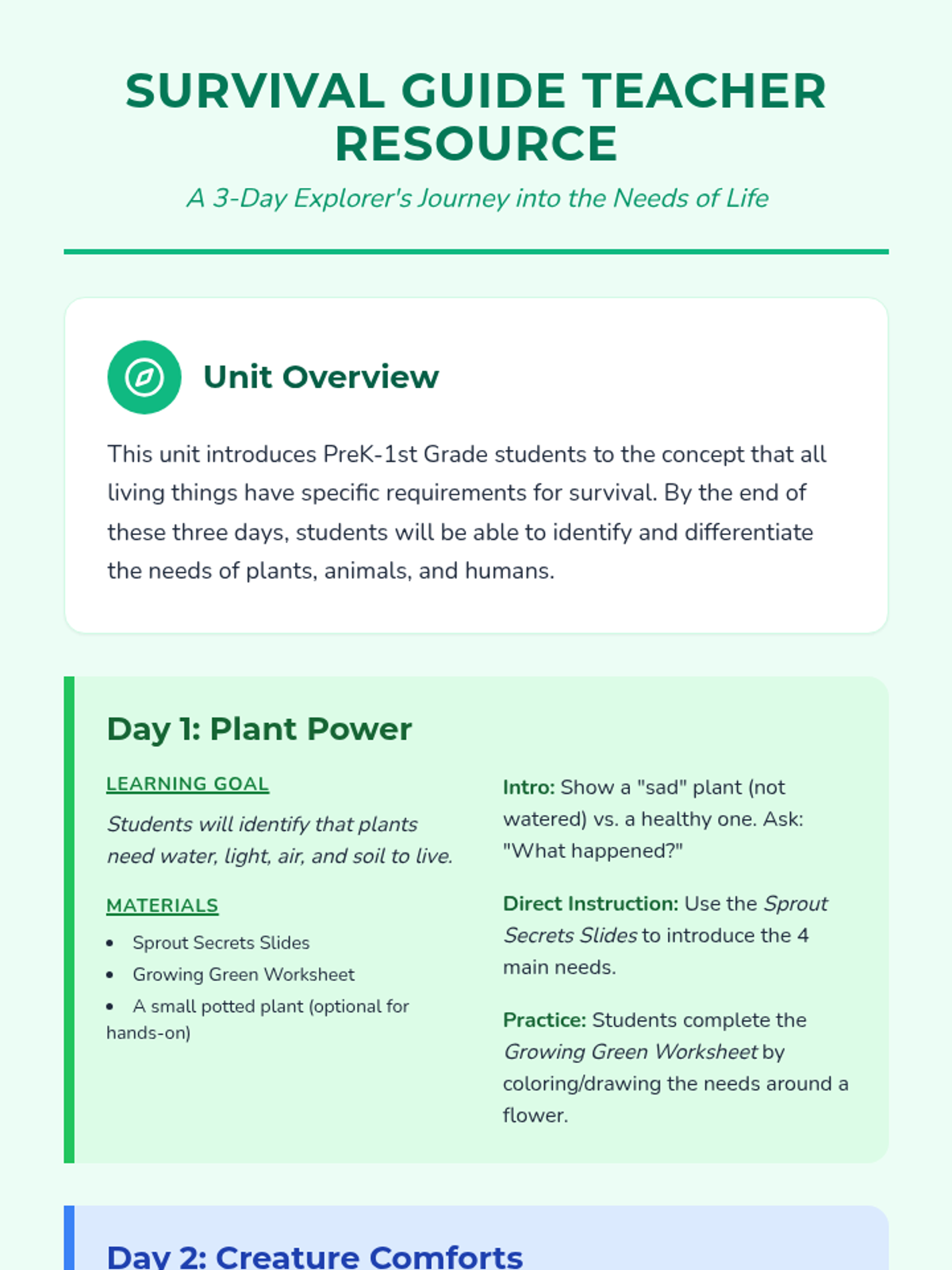
A synthesis lesson where students compare and sort the needs of all living things to identify patterns.
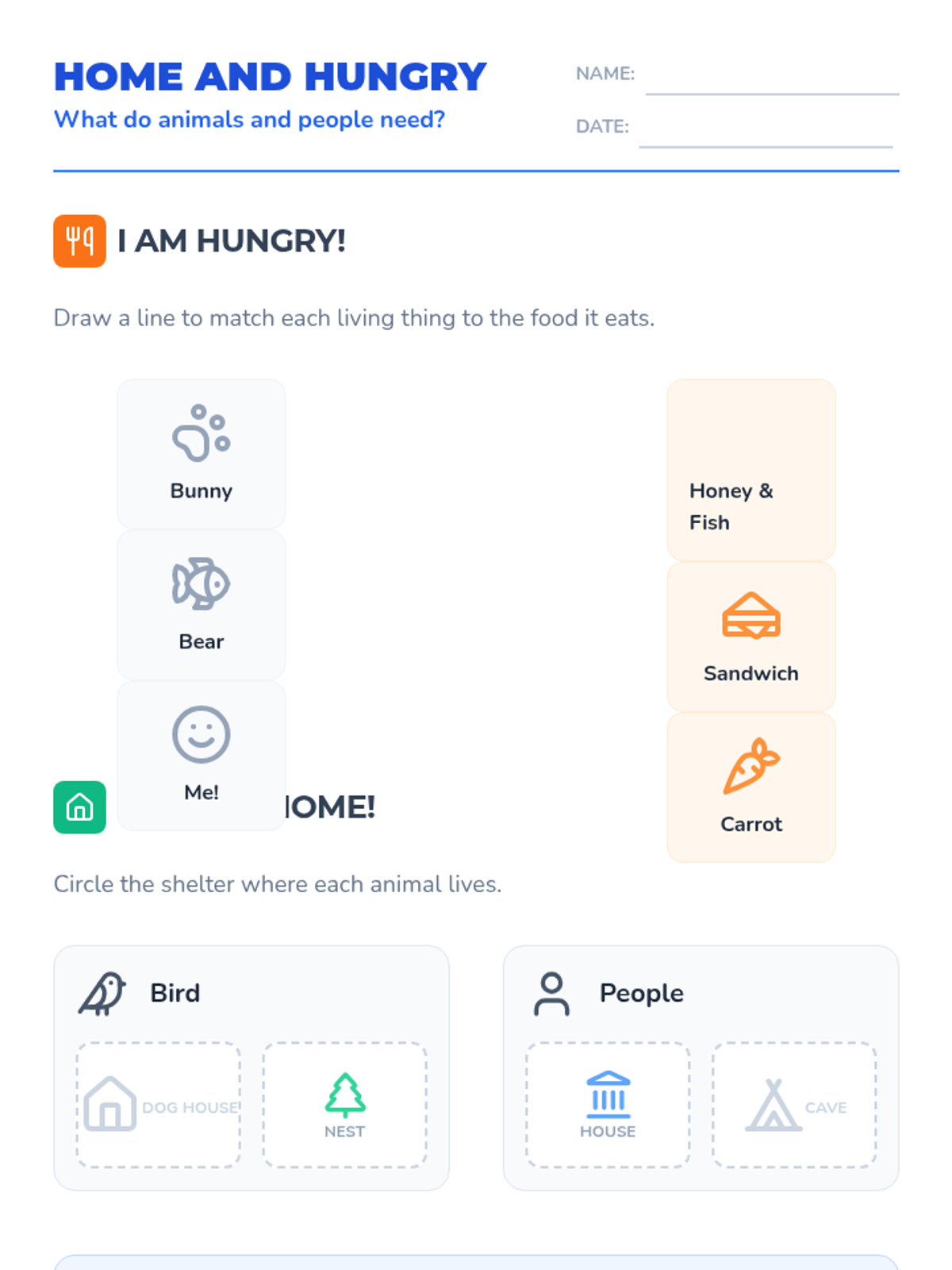
Explores the survival requirements of animals and humans, highlighting food, water, air, and shelter.
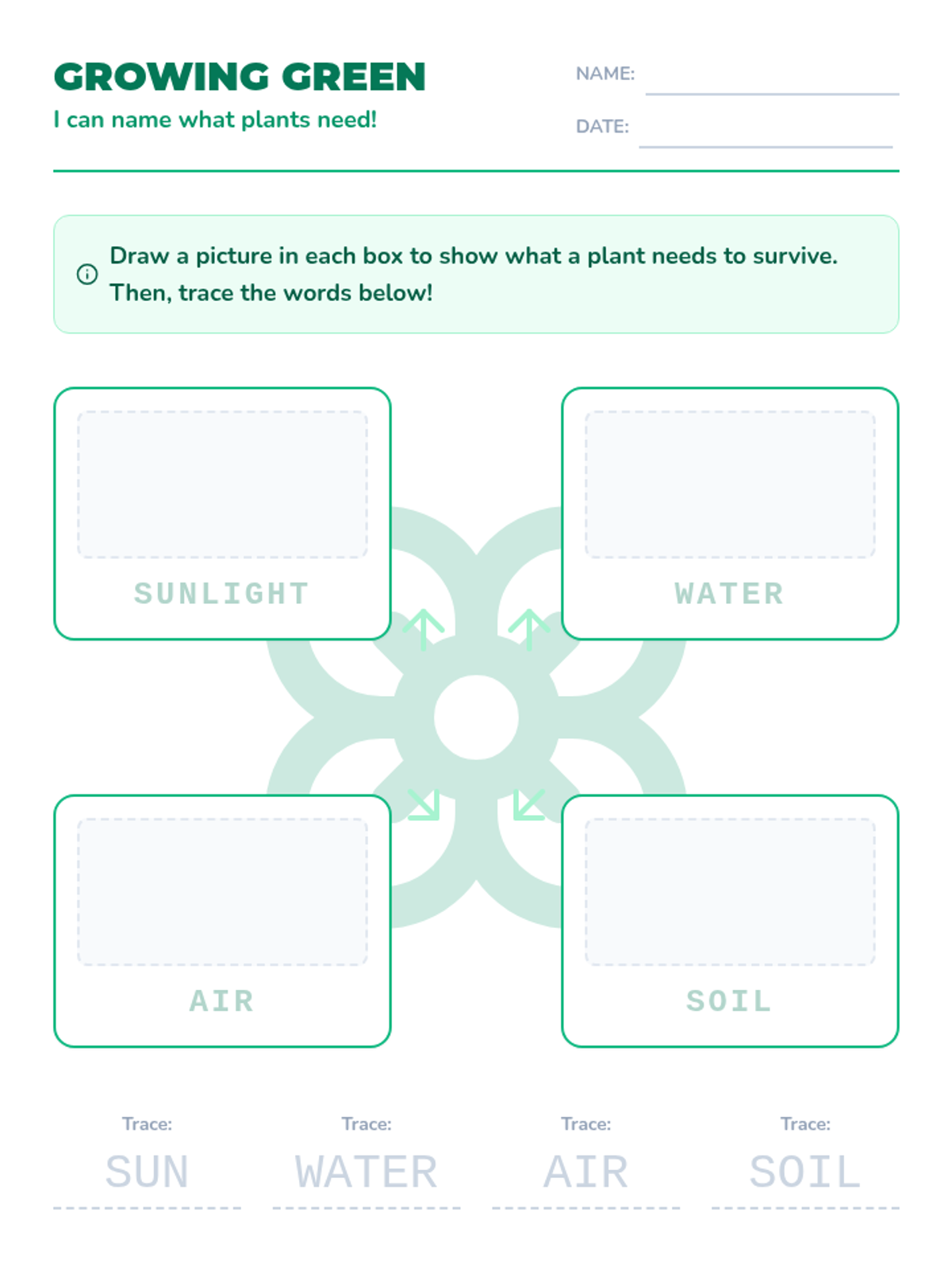
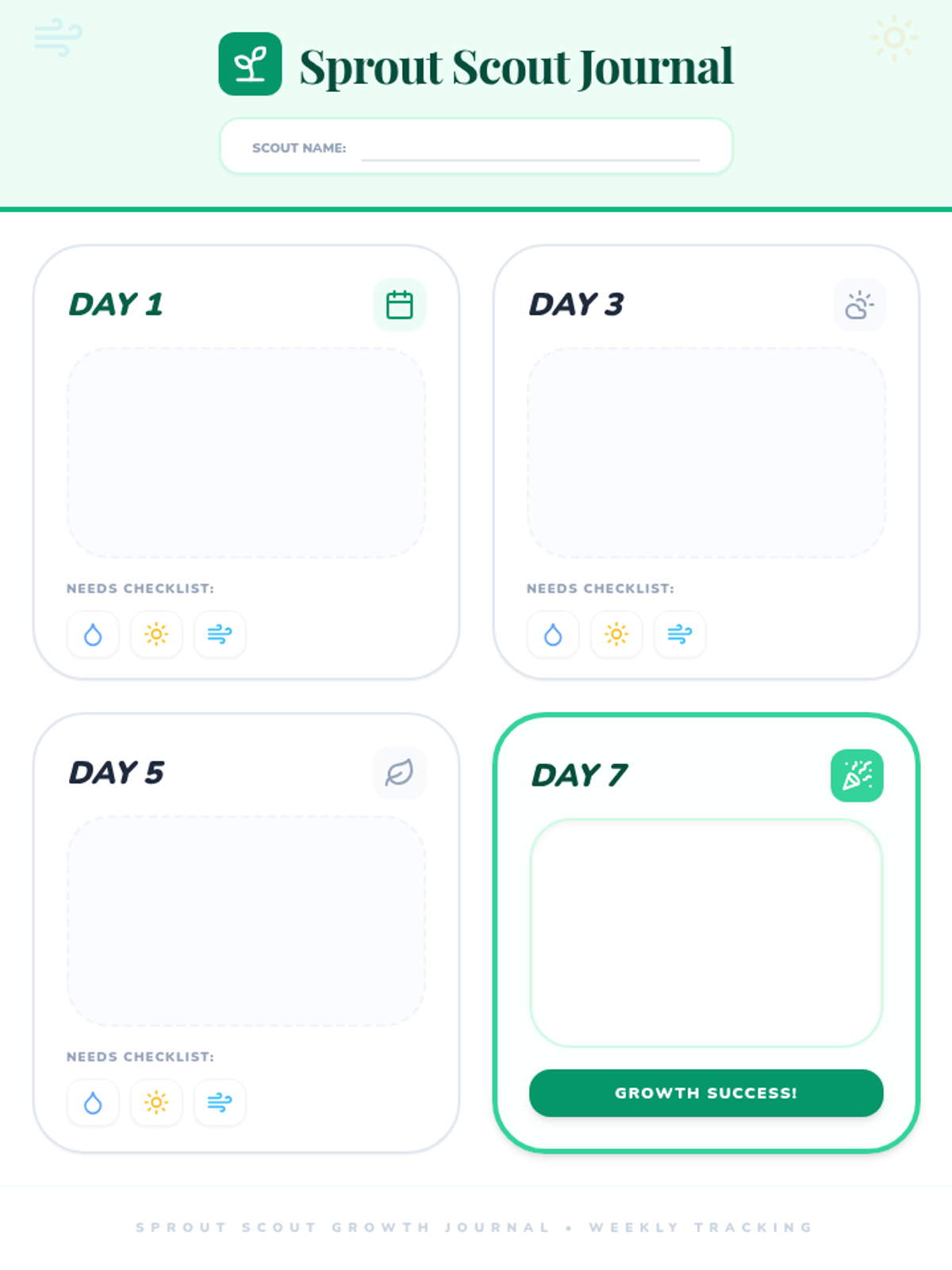
Focuses on what plants need to grow and thrive, including sunlight, water, air, and soil.
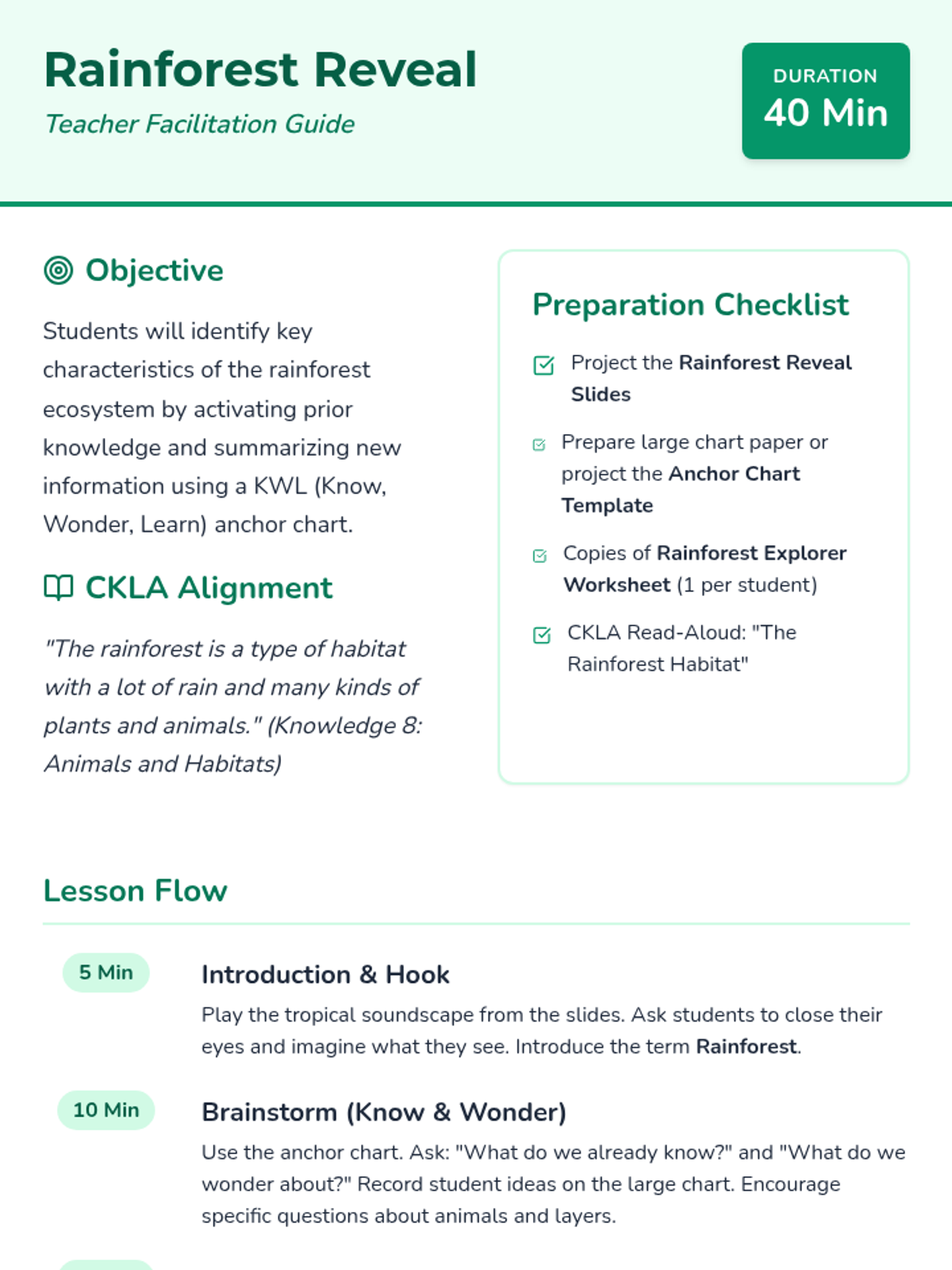
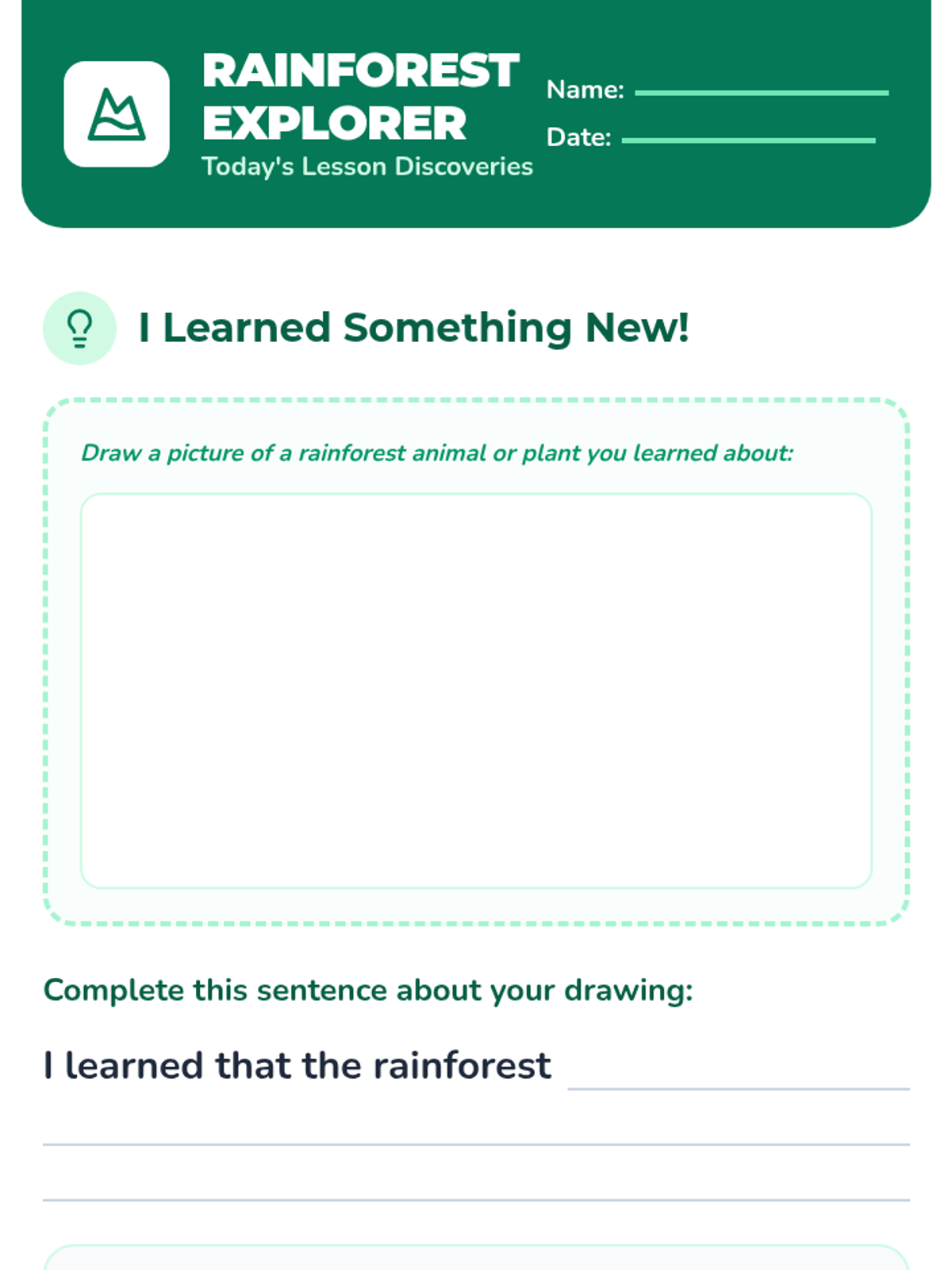
A 40-minute introductory lesson on the rainforest ecosystem for 1st grade, featuring a read-aloud and a collaborative KWL anchor chart activity. Students will explore what they know, what they wonder, and what they learned about this diverse habitat.
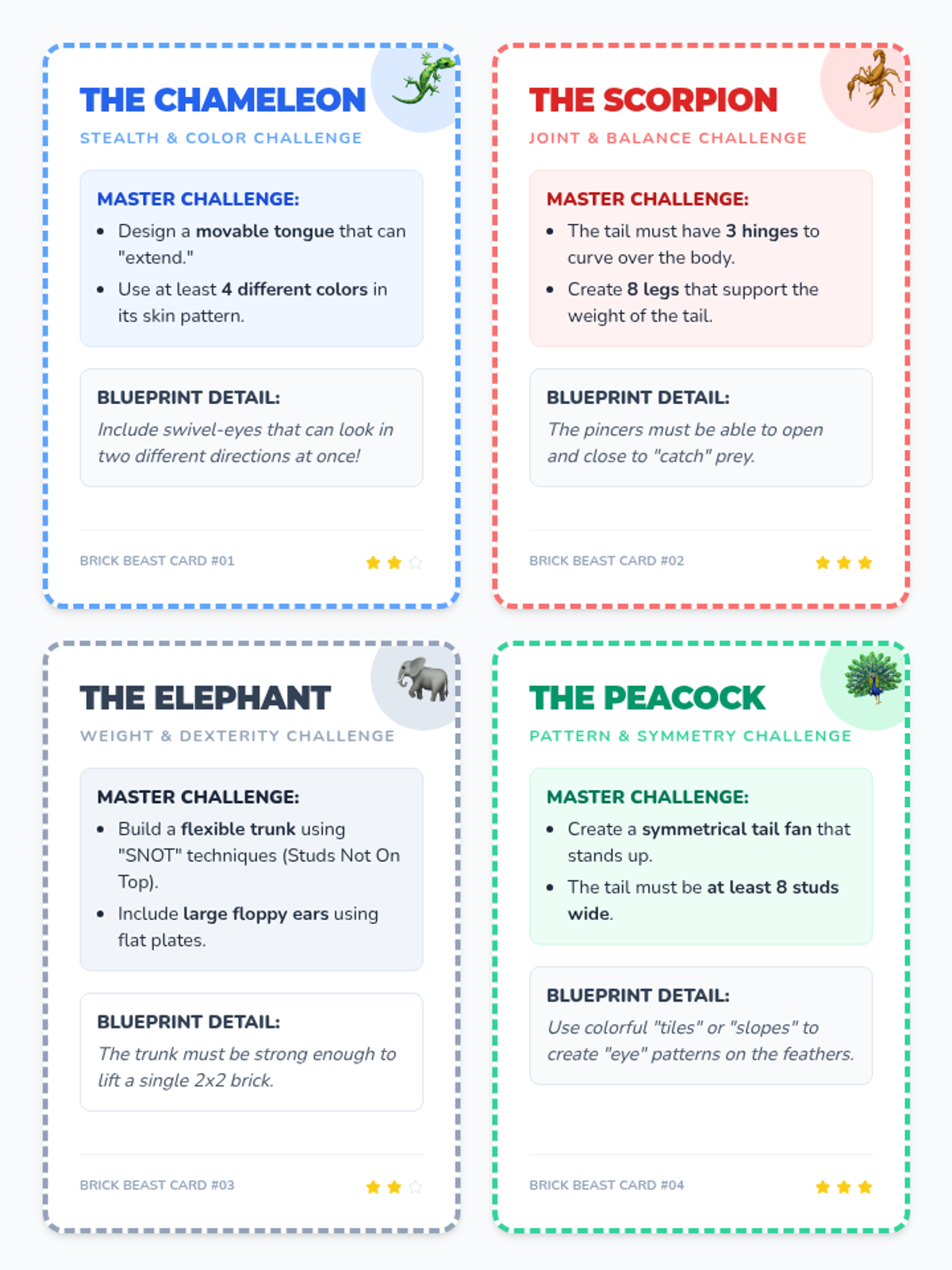
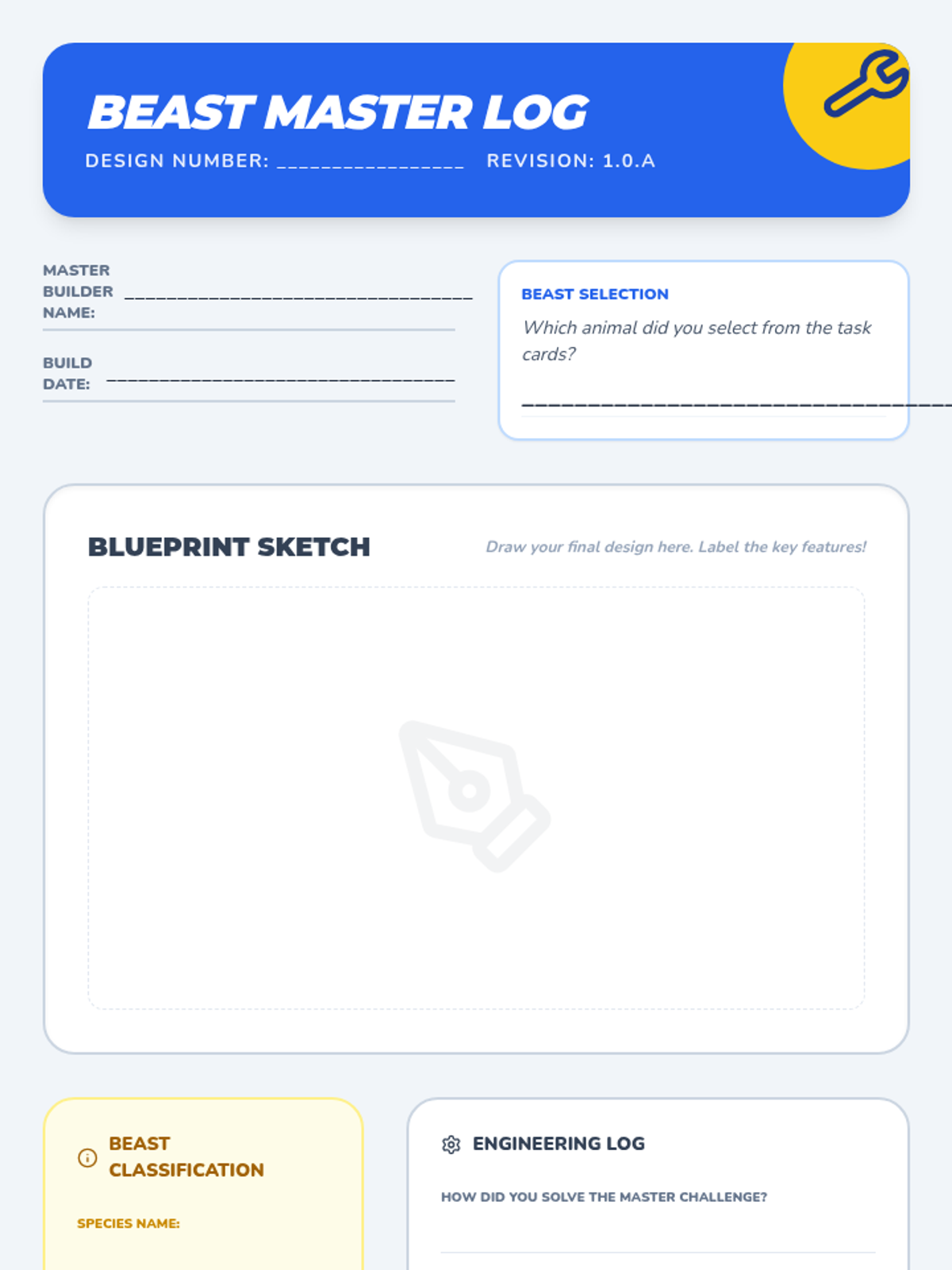
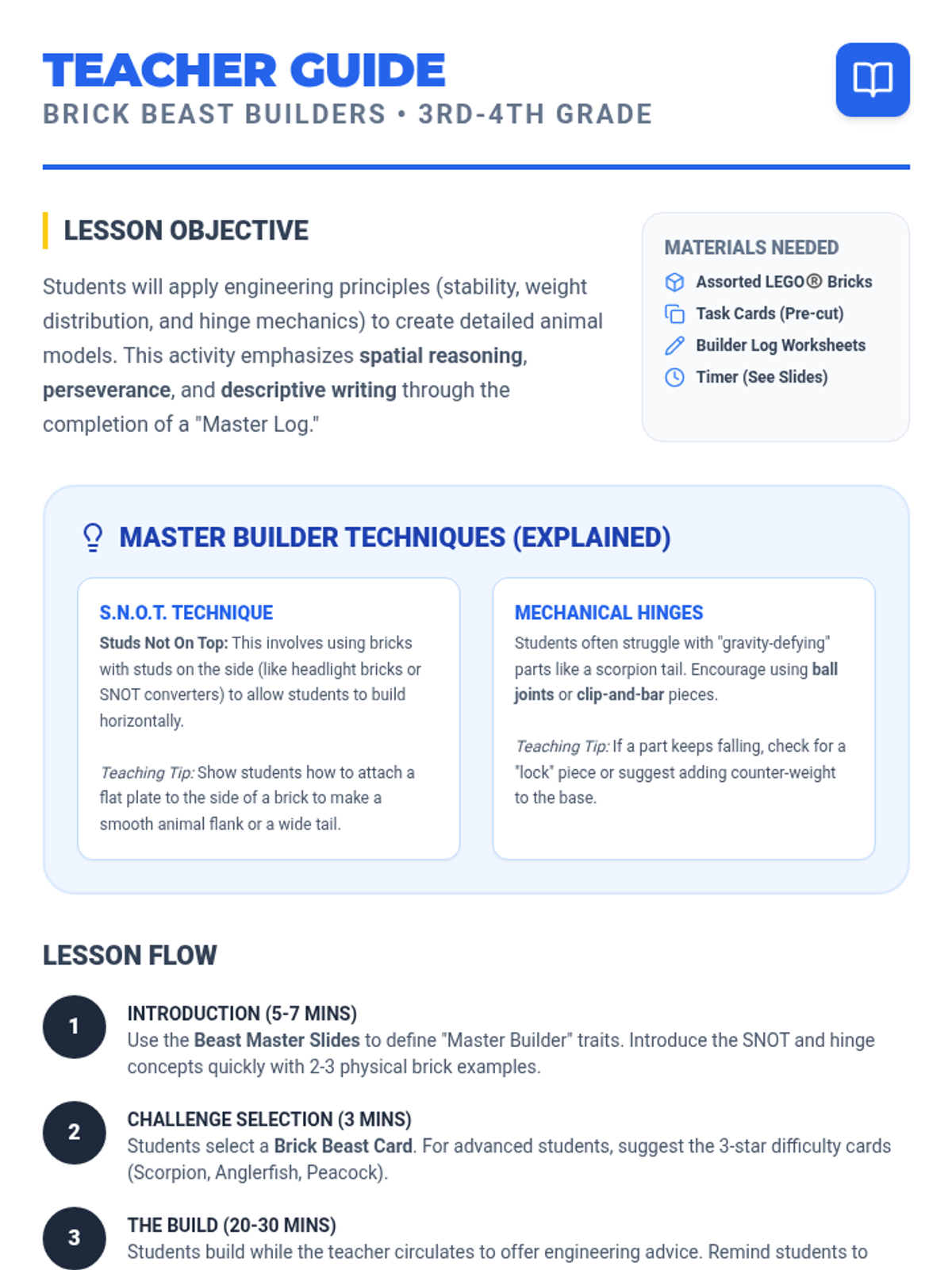
A creative engineering lesson where students use LEGO bricks to design and build detailed animal models based on specific prompt constraints. Focuses on spatial reasoning, creative problem-solving, and descriptive writing.
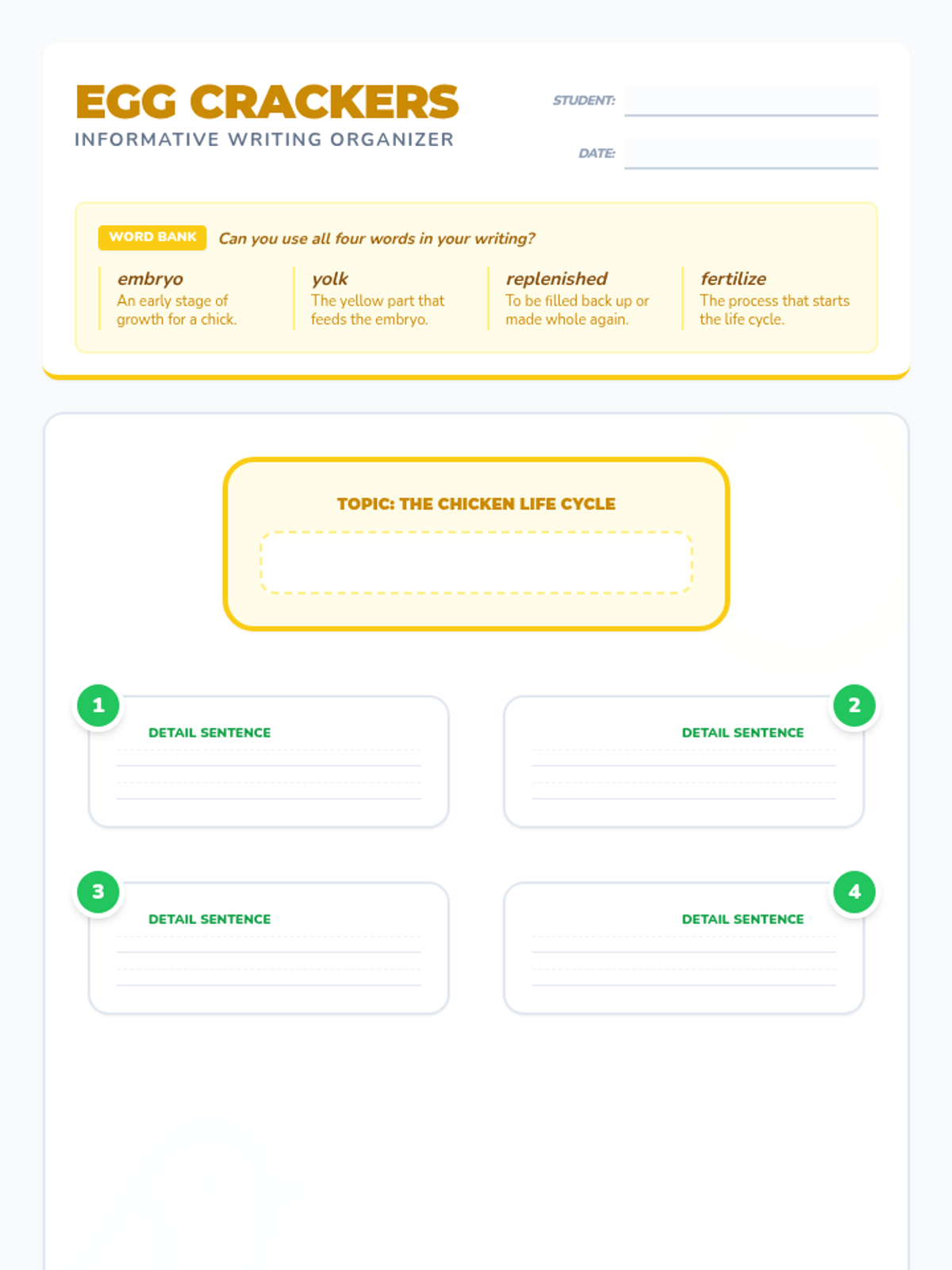
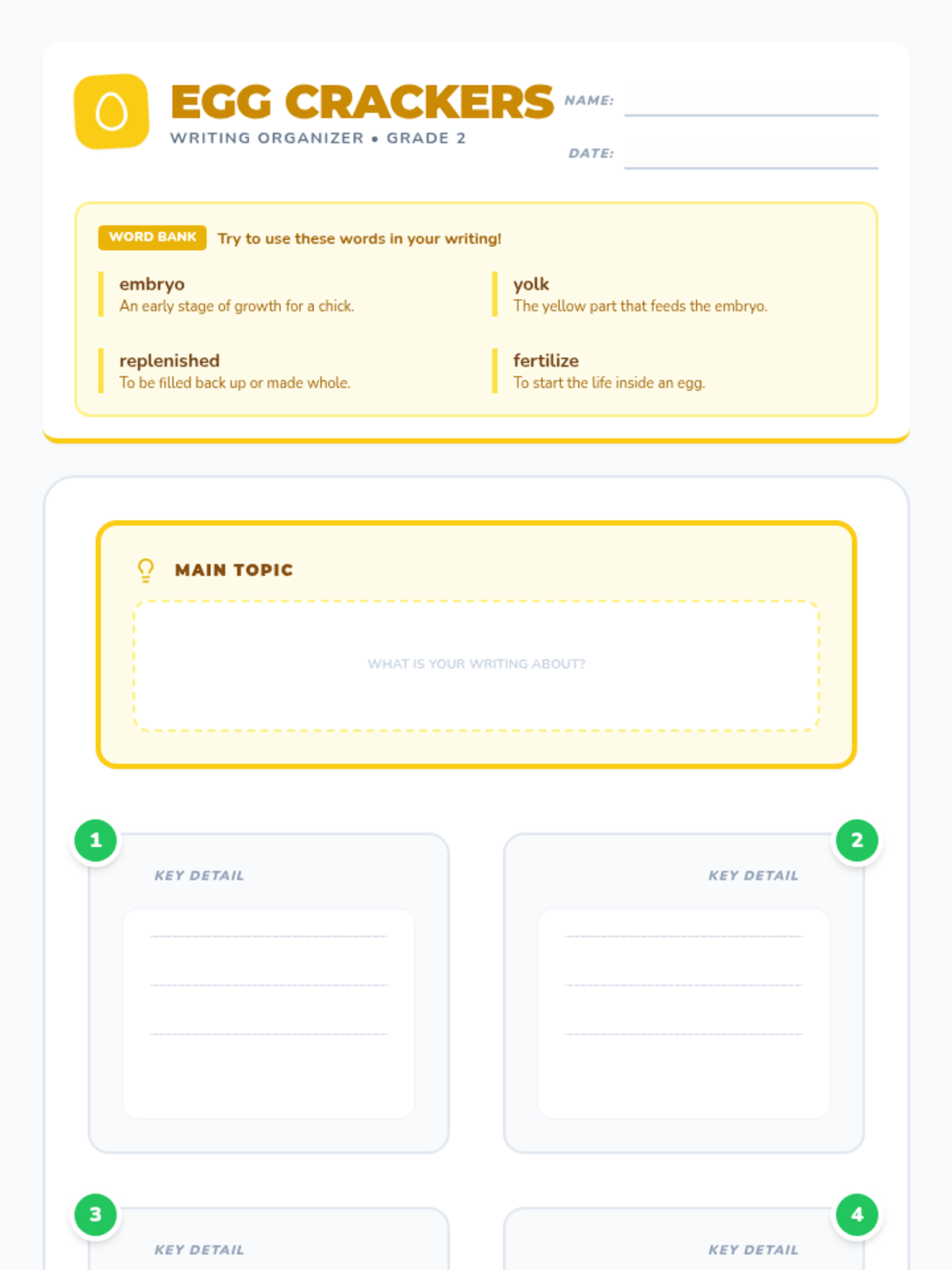
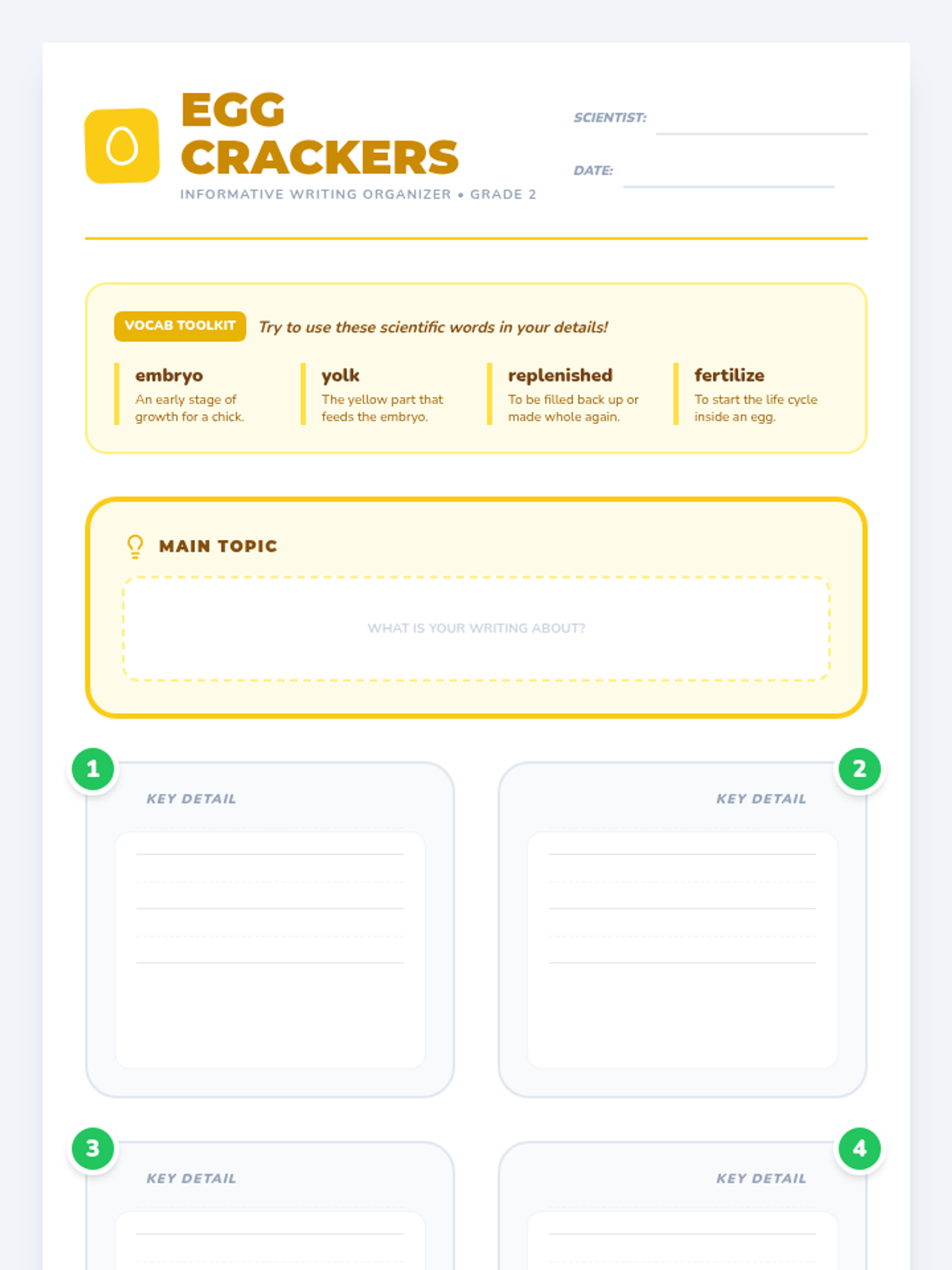
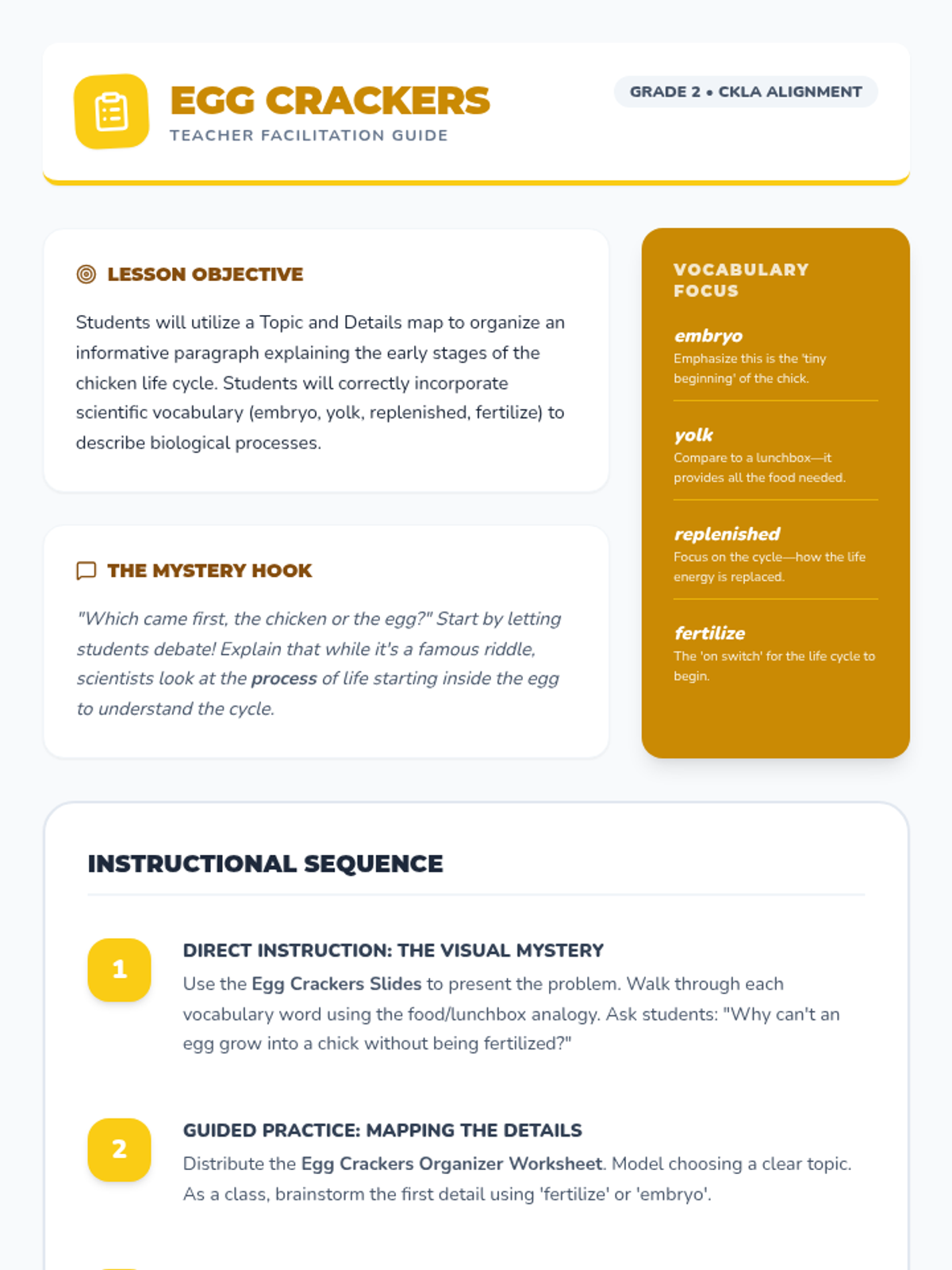
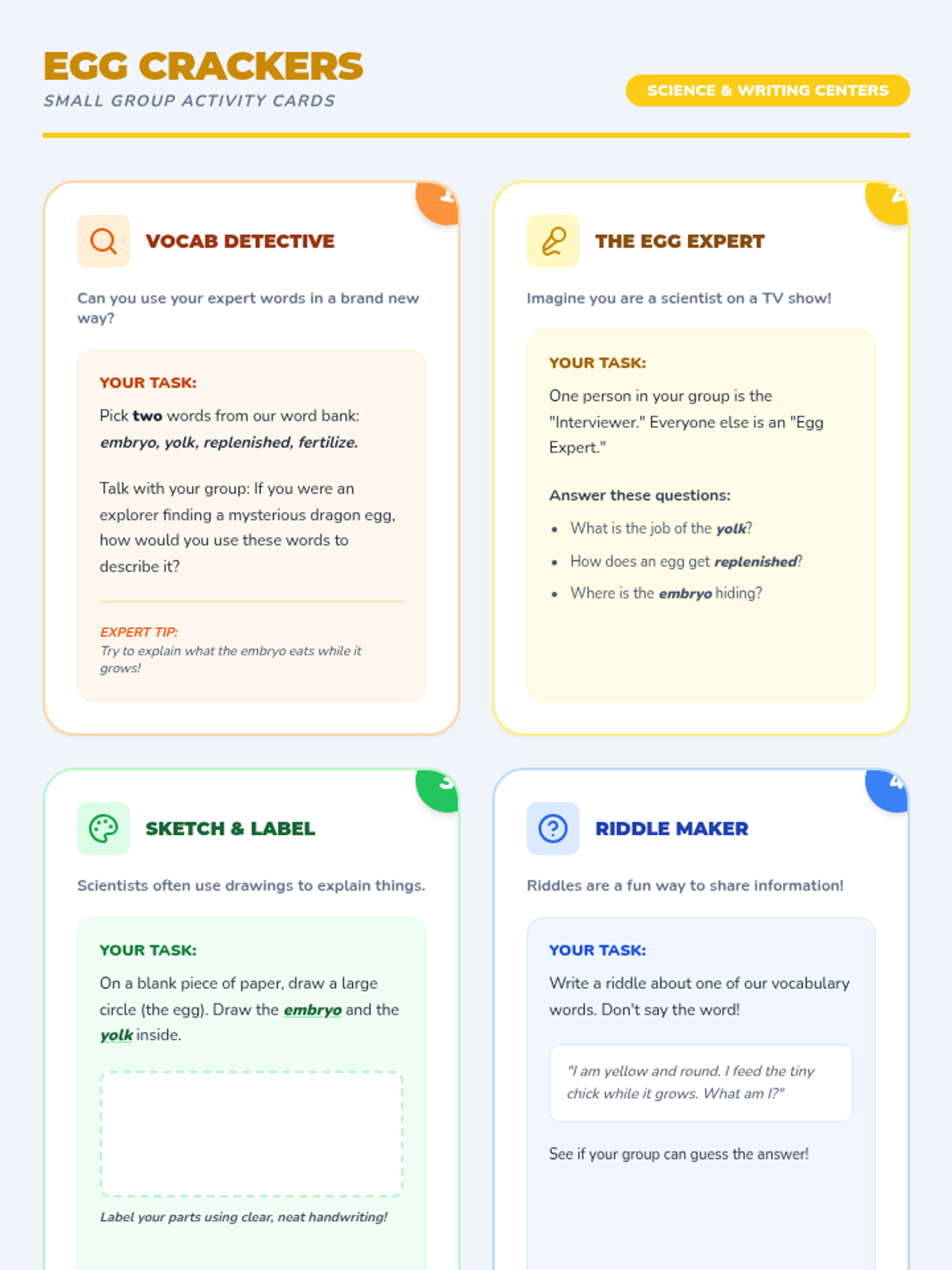
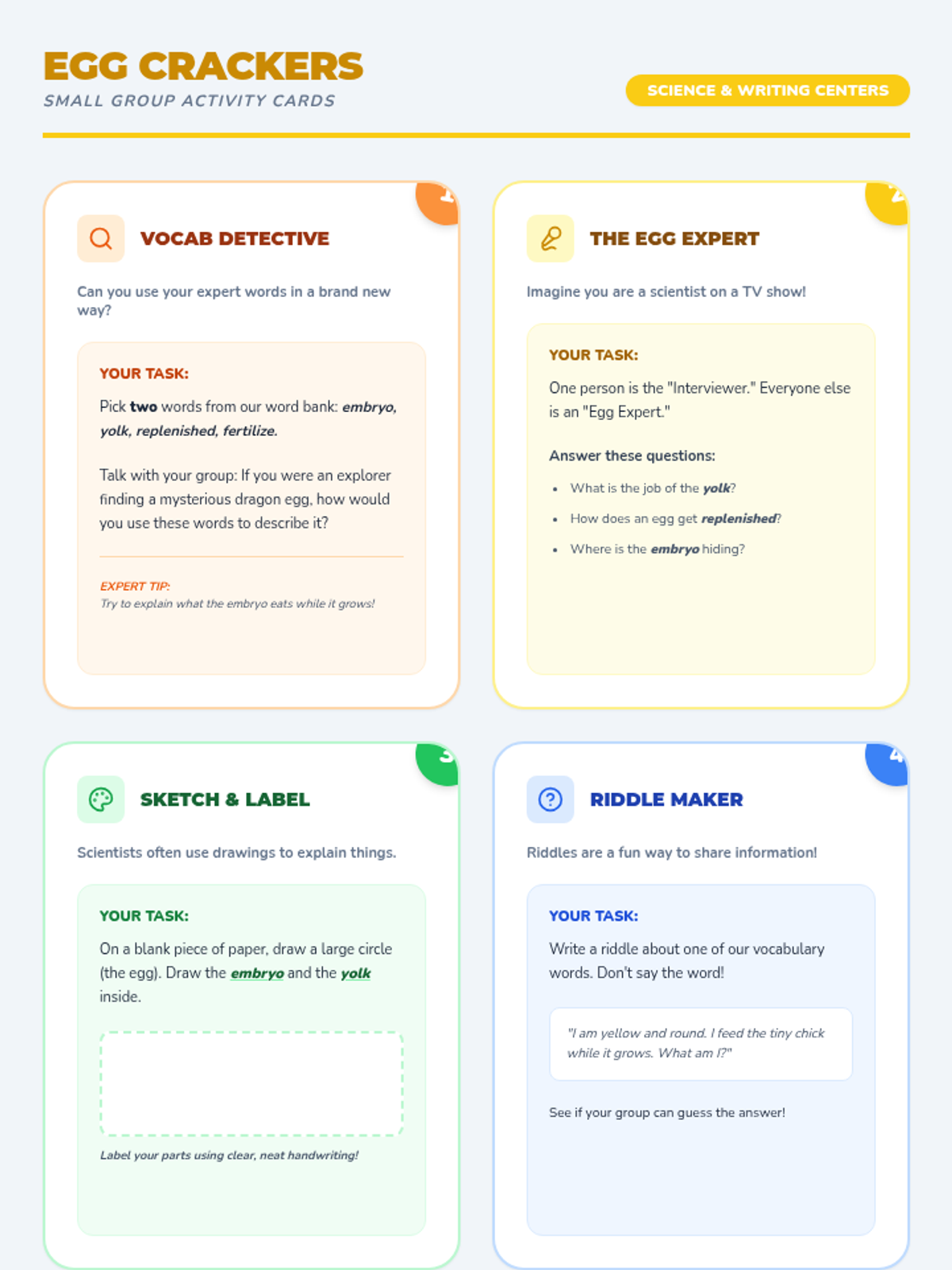
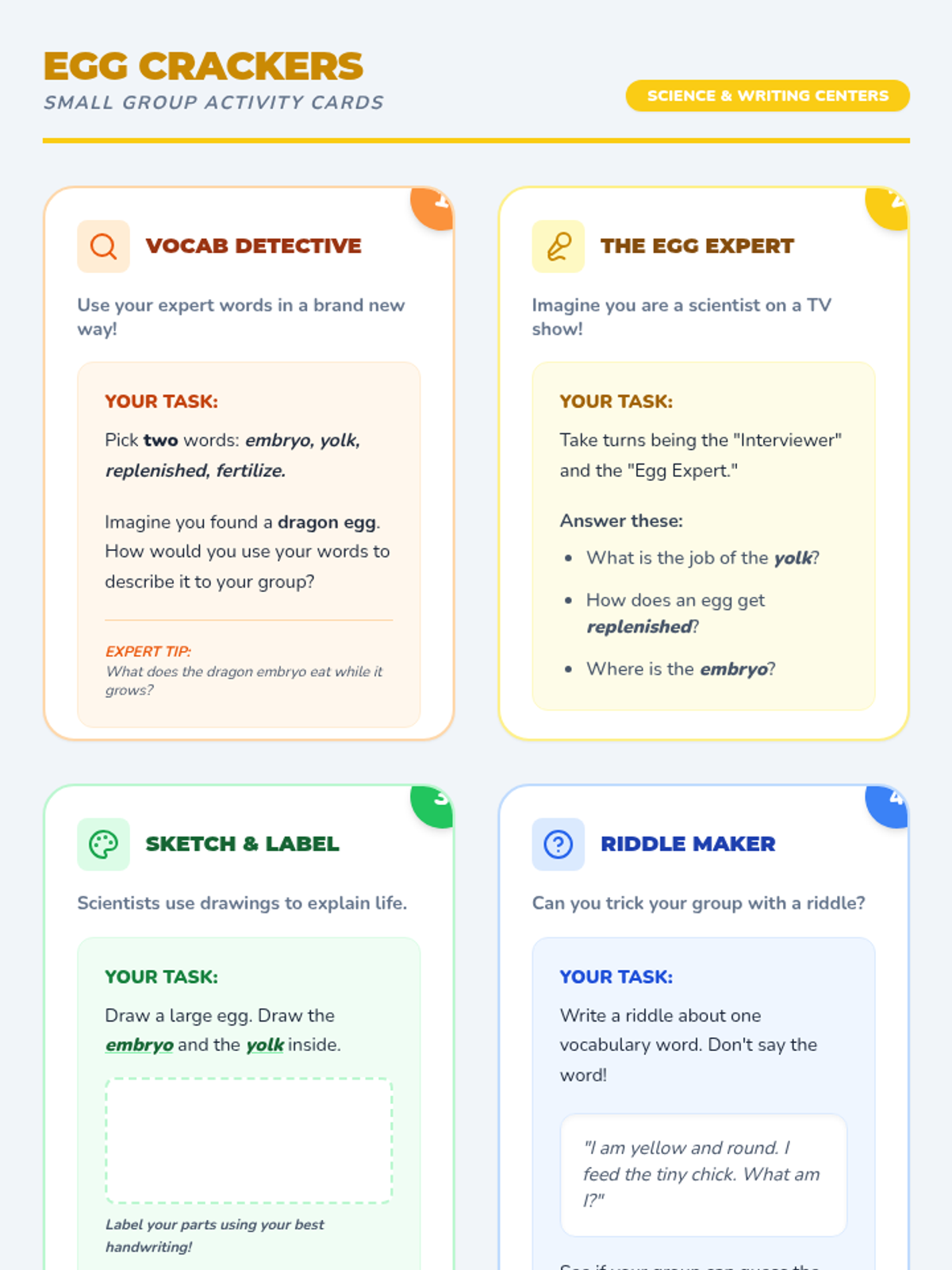
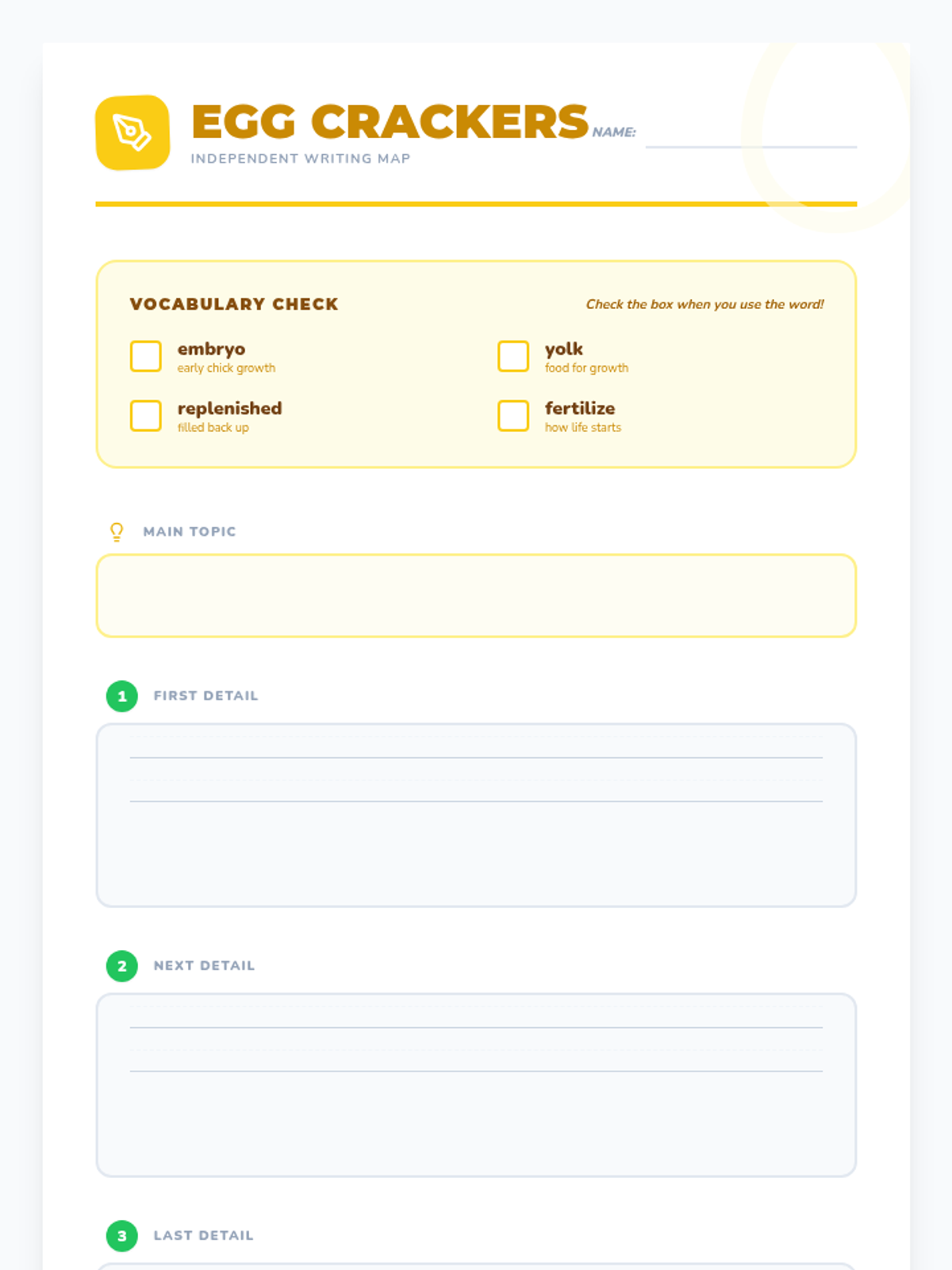
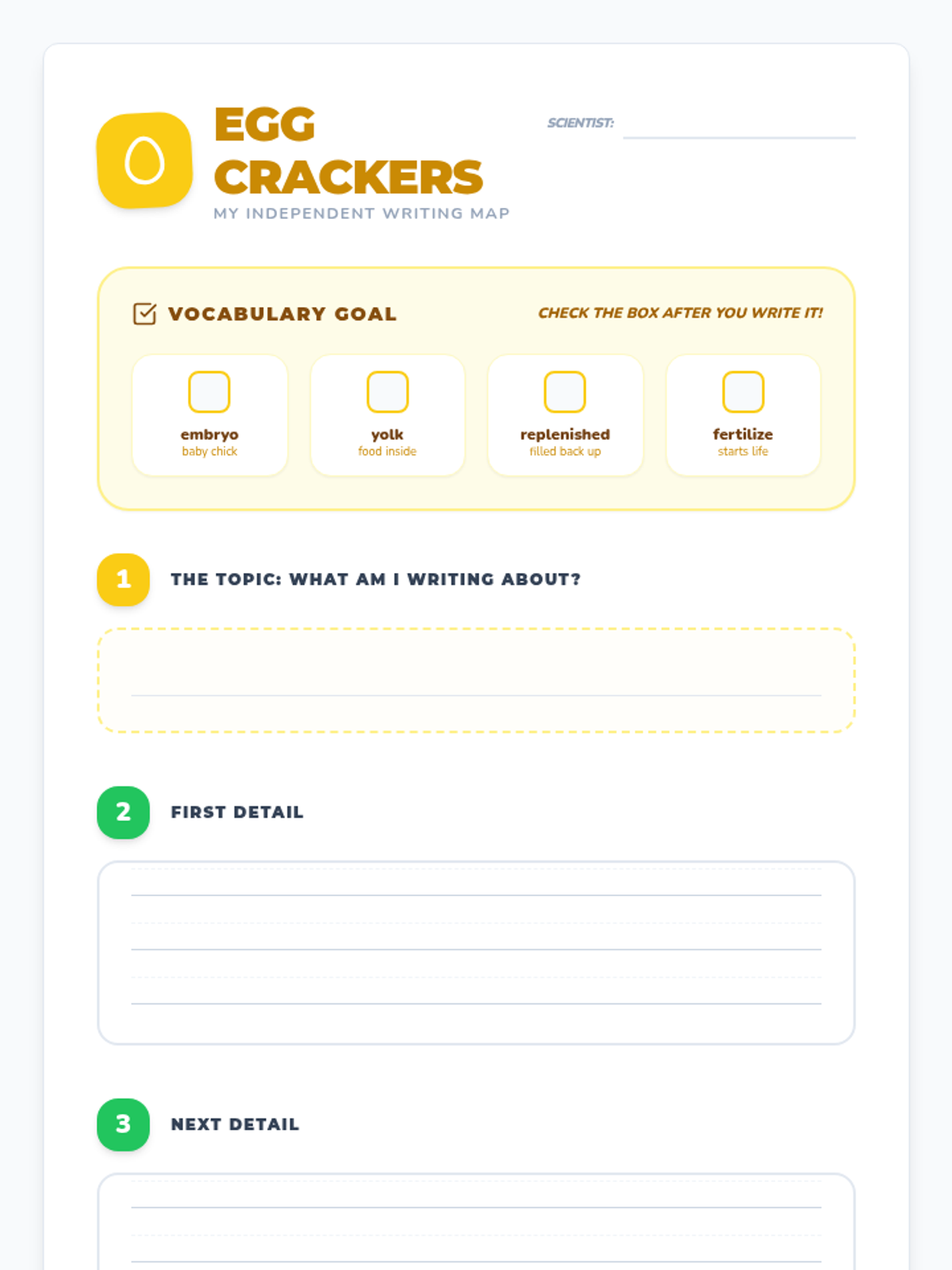
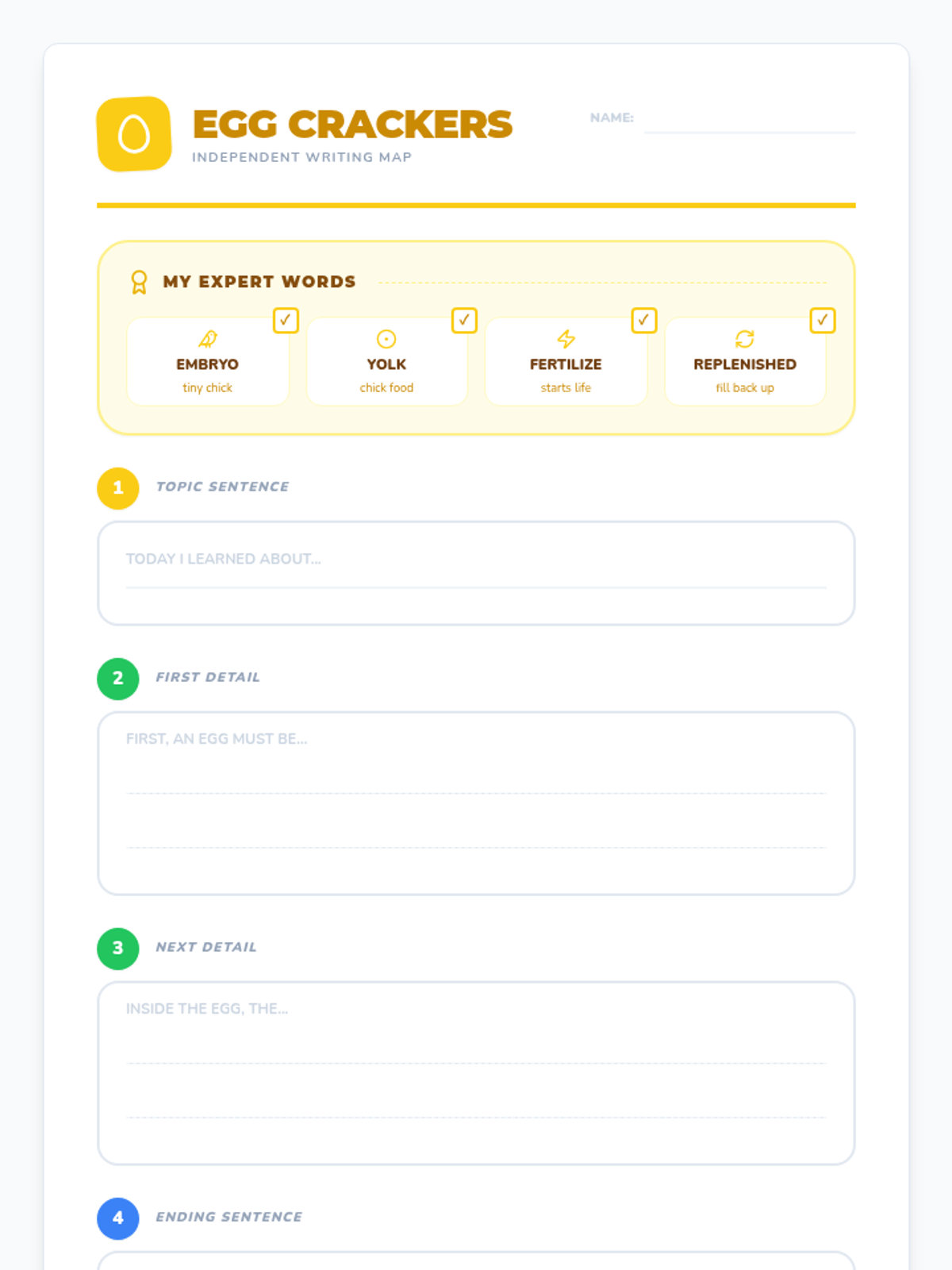
In this lesson, students explore the life cycle of a chicken and the mystery of the chicken or the egg. They use a topic and details map to organize their informative writing while mastering key vocabulary like embryo, yolk, and fertilize.
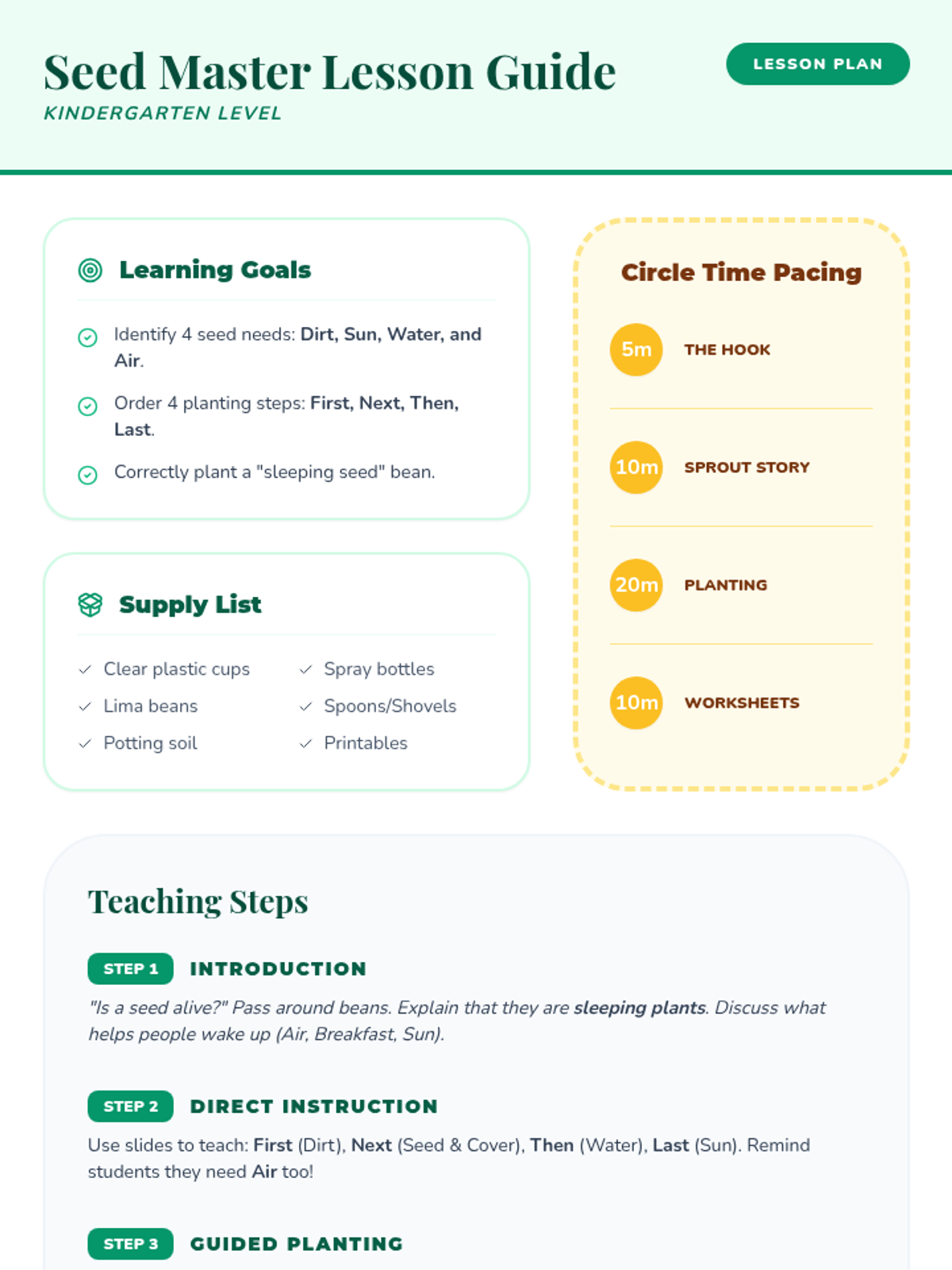
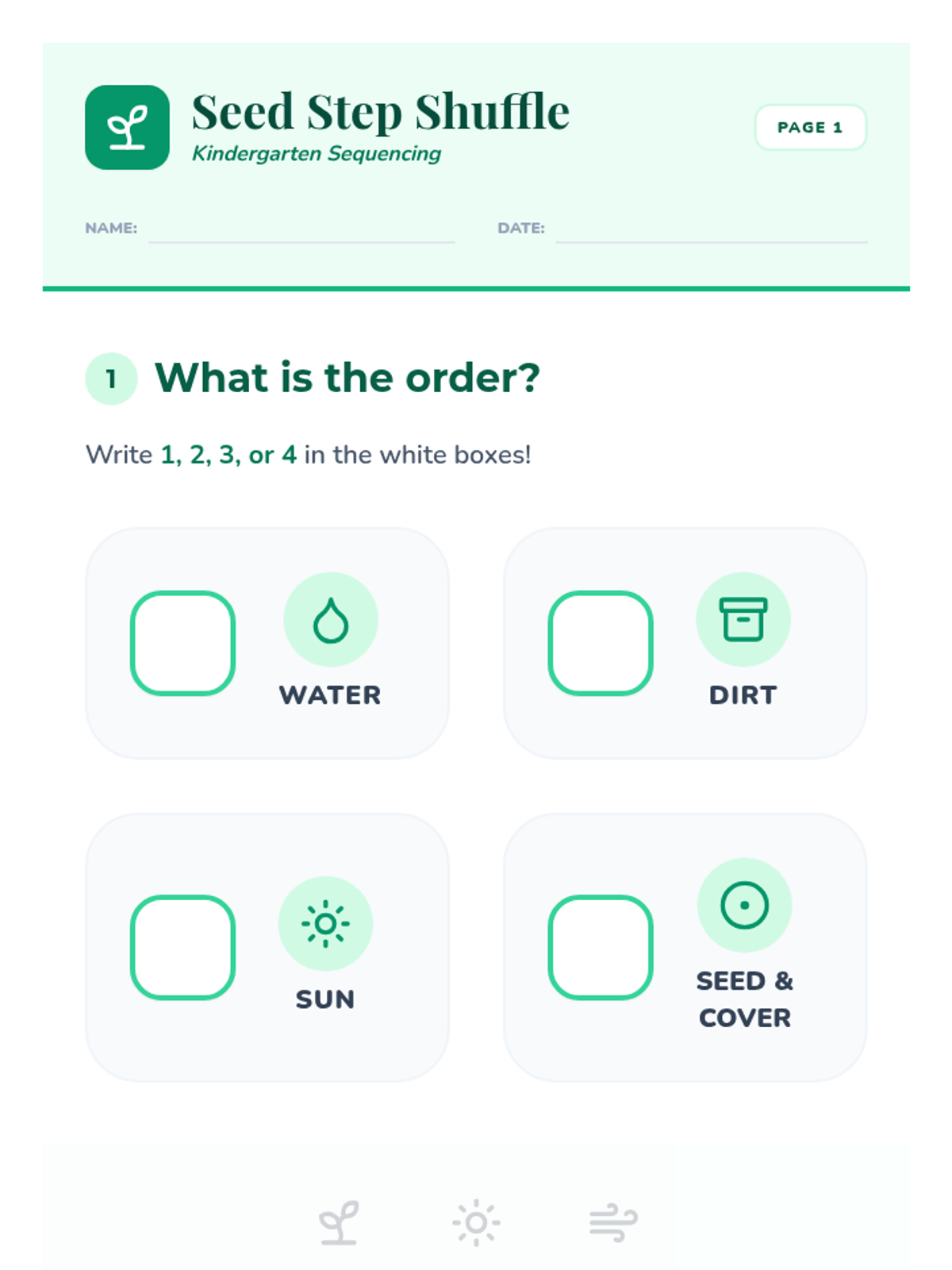
A comprehensive lesson on the biological process and procedural steps of planting seeds, specifically designed to help students master sequencing and chronological ordering.
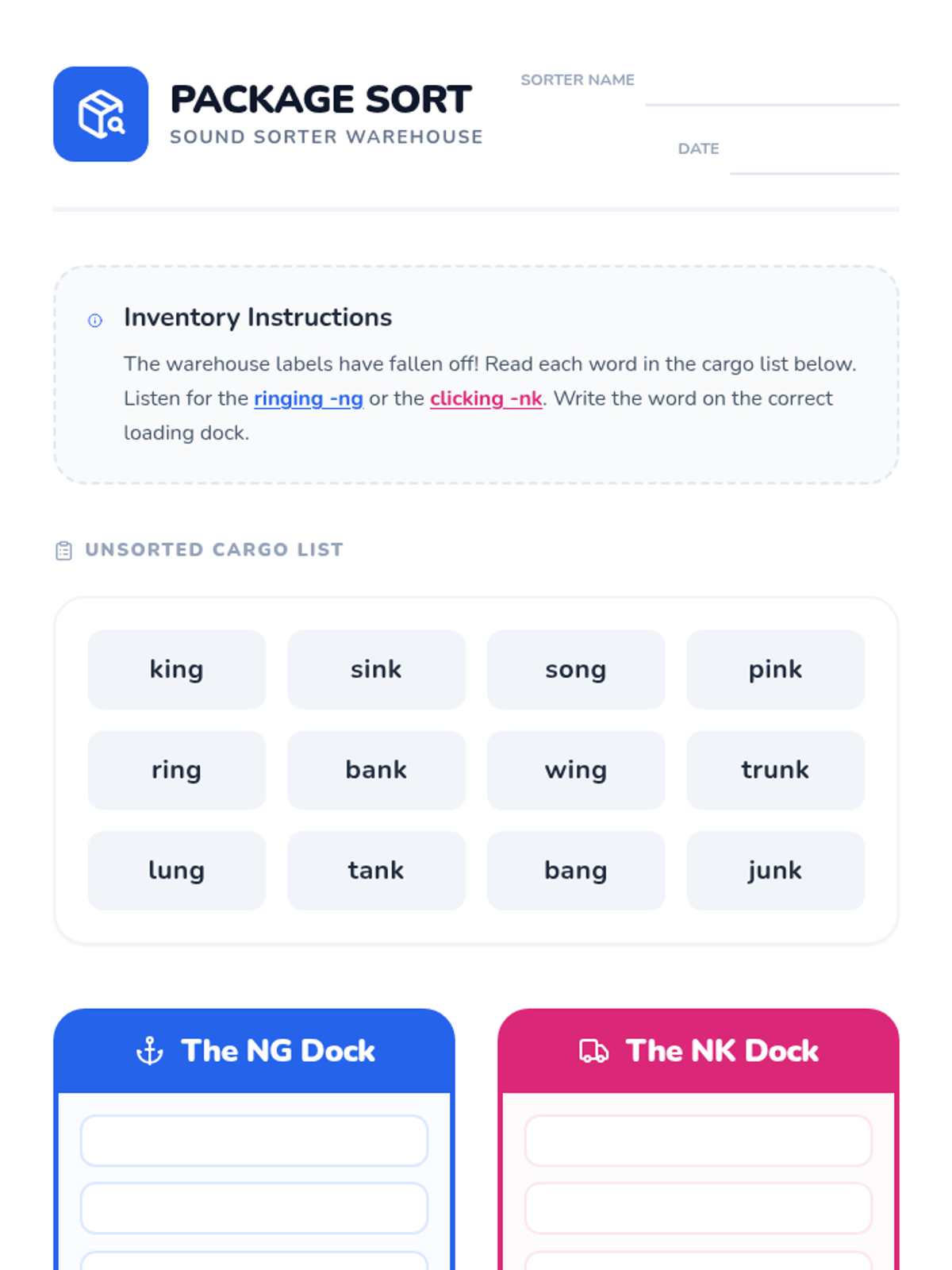
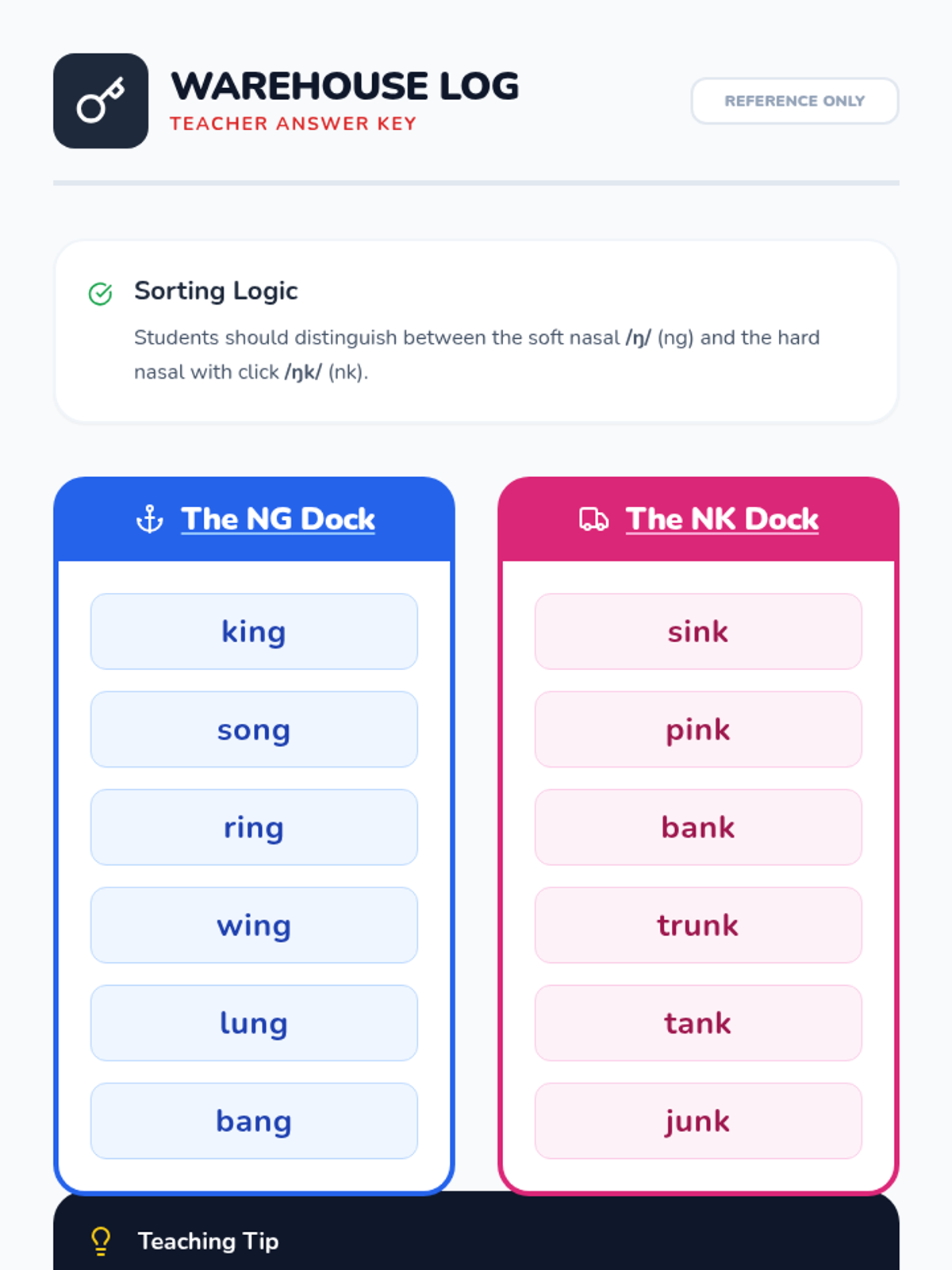
A phonics lesson focused on distinguishing between the nasal endings 'ng' and 'nk' through interactive sorting and visual aids. Students learn to hear the subtle 'k' click in 'nk' versus the continuous nasal 'ng'.
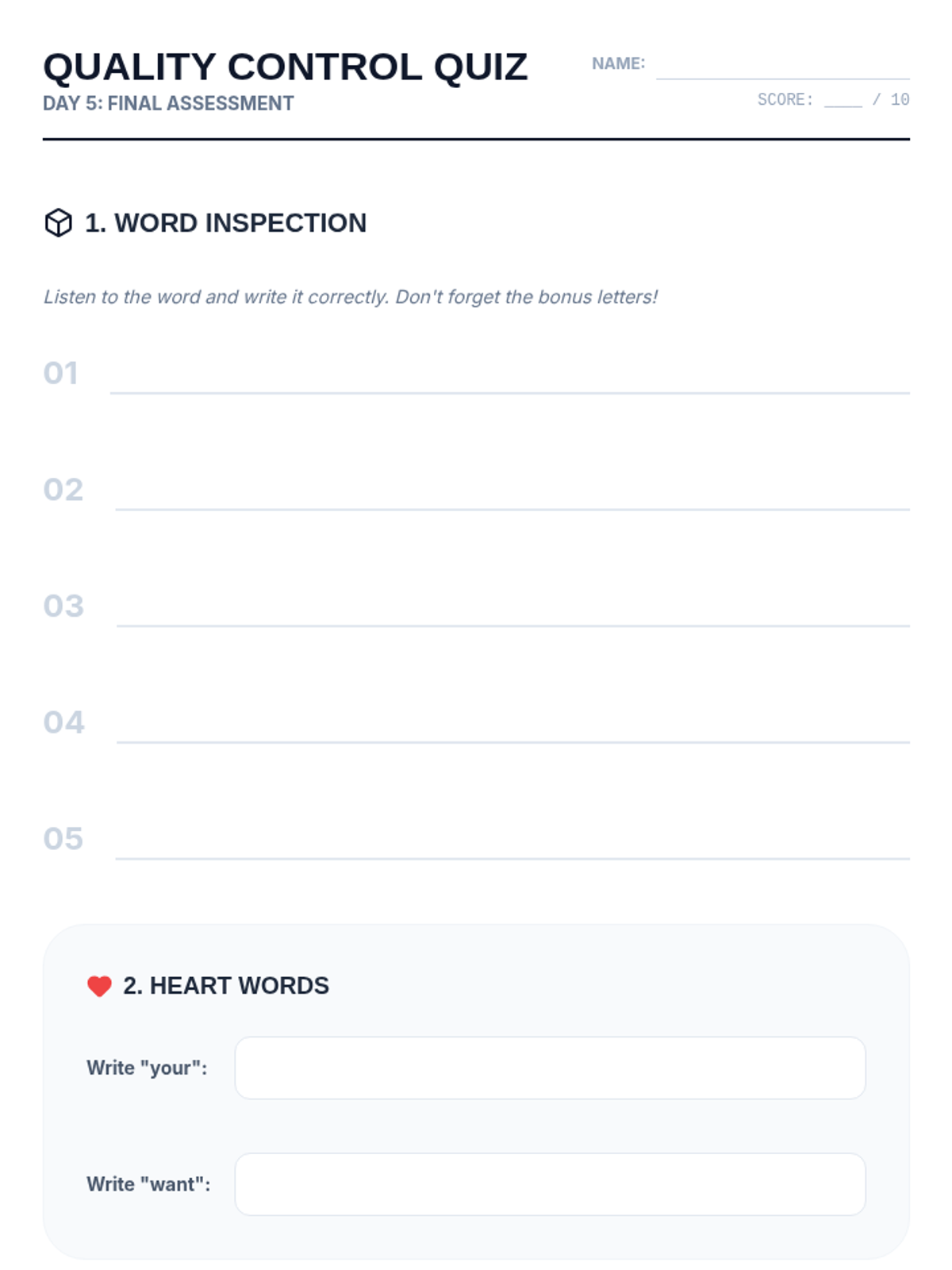
Final assessment of the Floss rule and heart words. Includes dictation and a creative word family exercise.
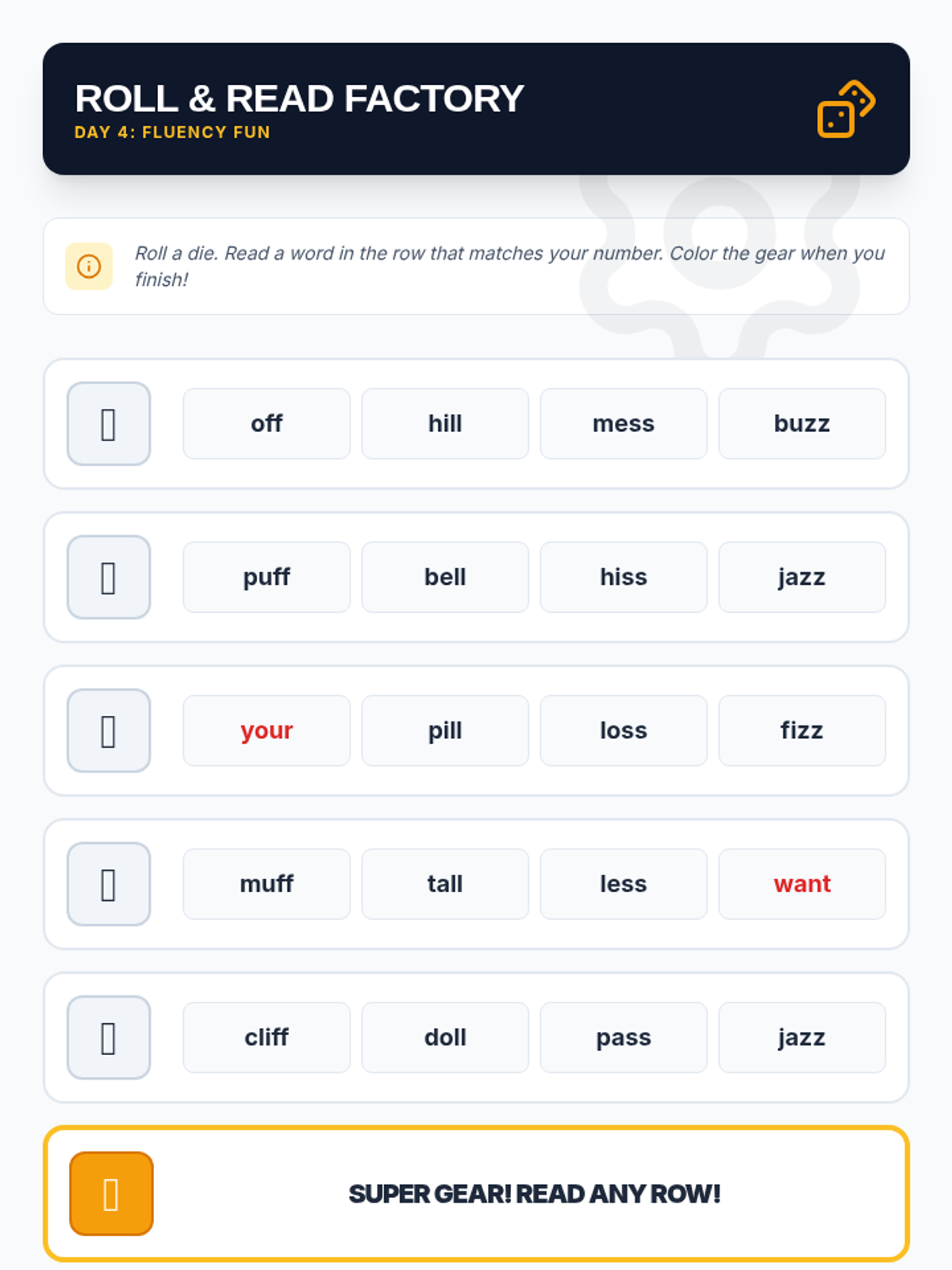
Fluency building and phonics games. Students practice rapid reading of bonus letter words and construct sentences.
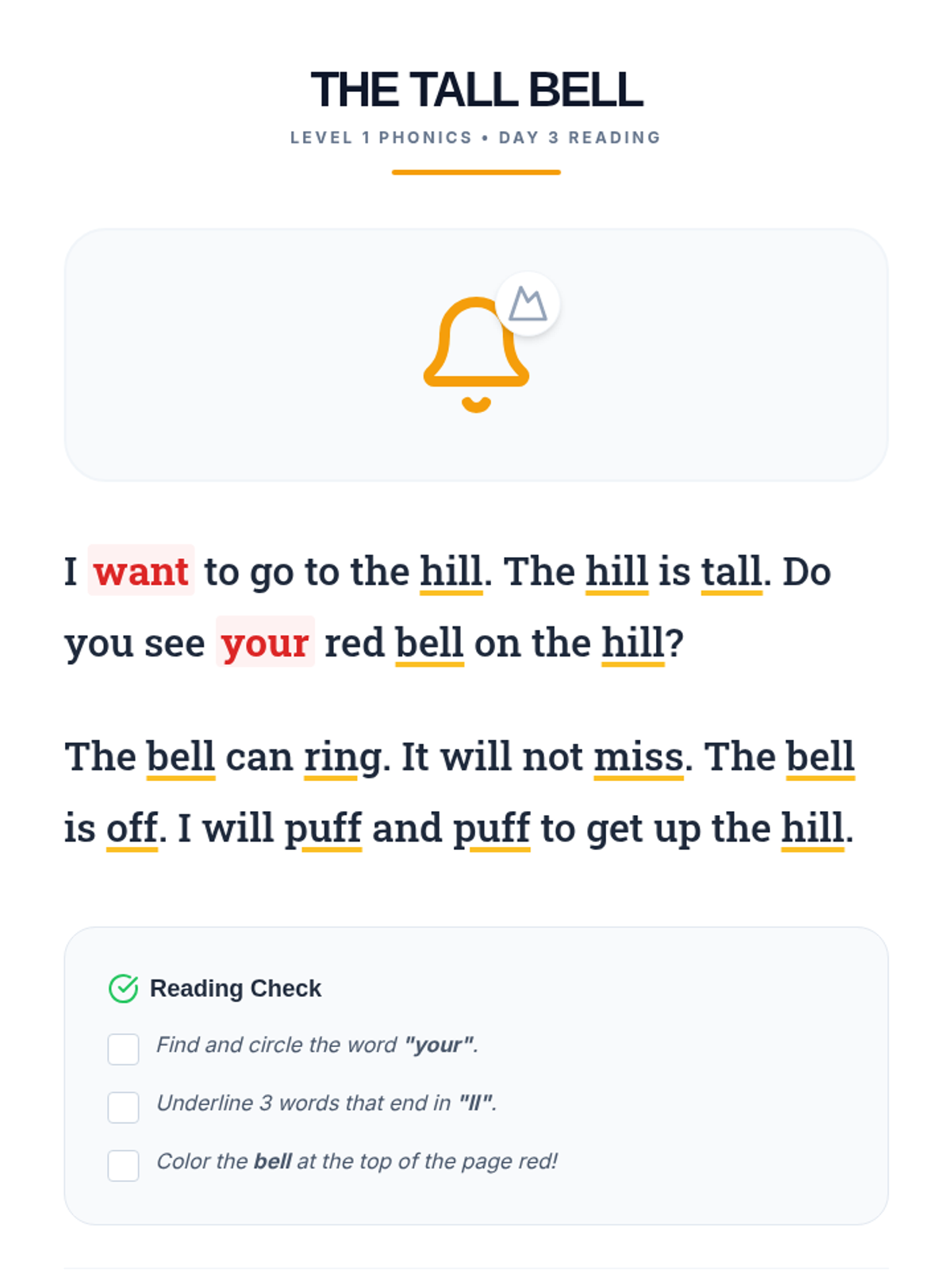
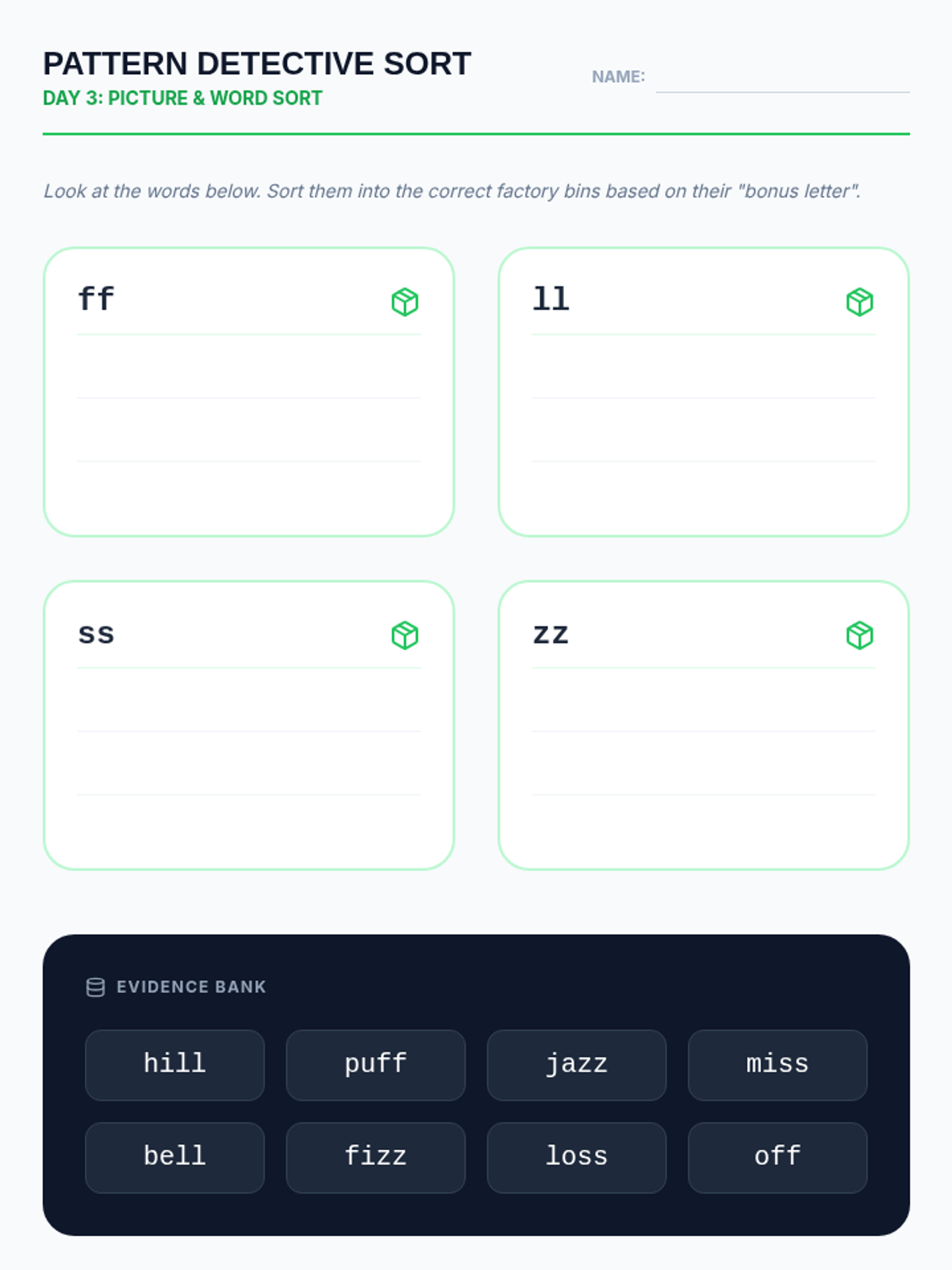
Application through word sorting and decodable reading. Students identify word families and read words in context.