A 60-minute introductory lesson focusing on the order of the planets and their basic characteristics through reading and interactive matching.
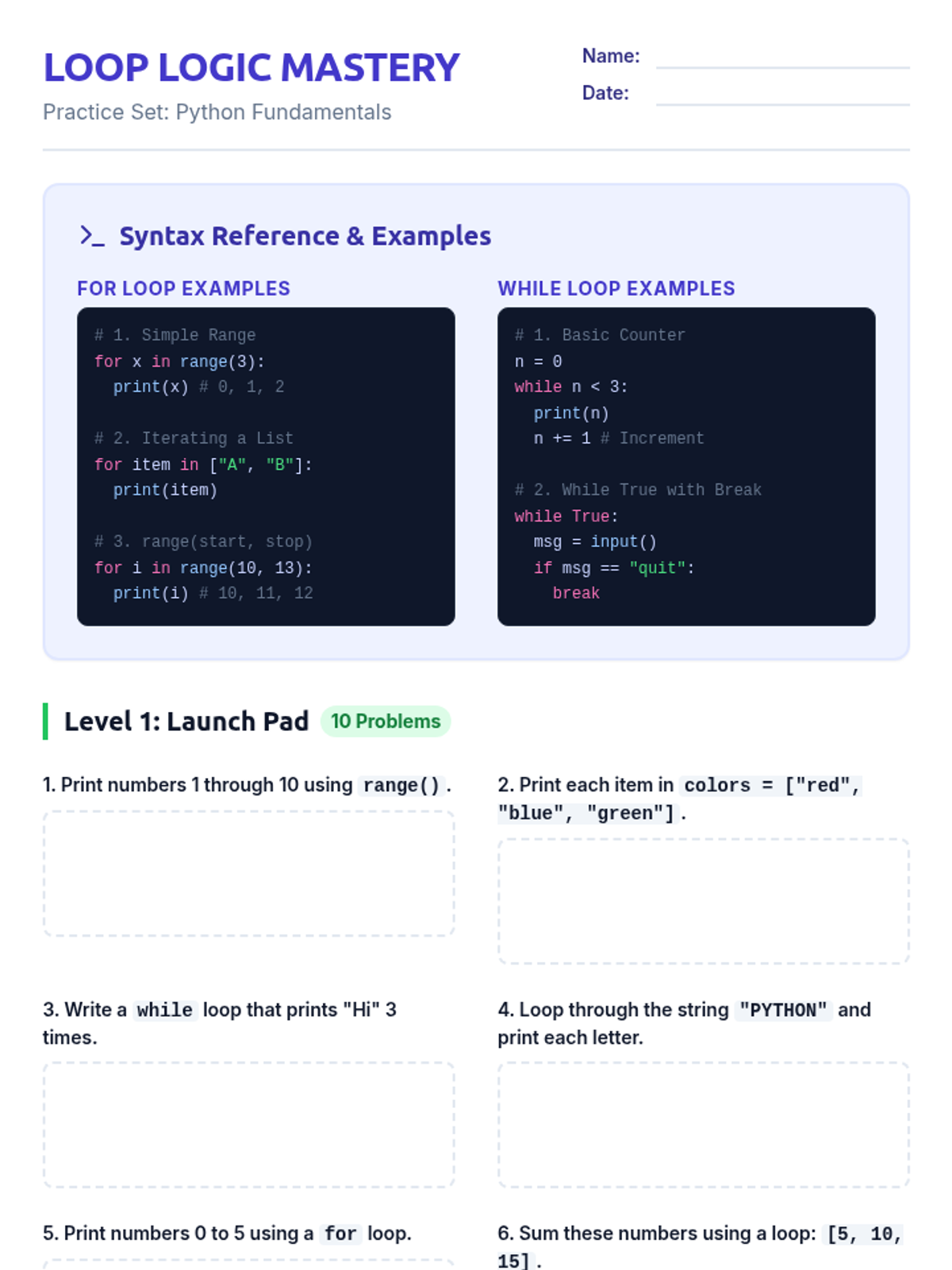
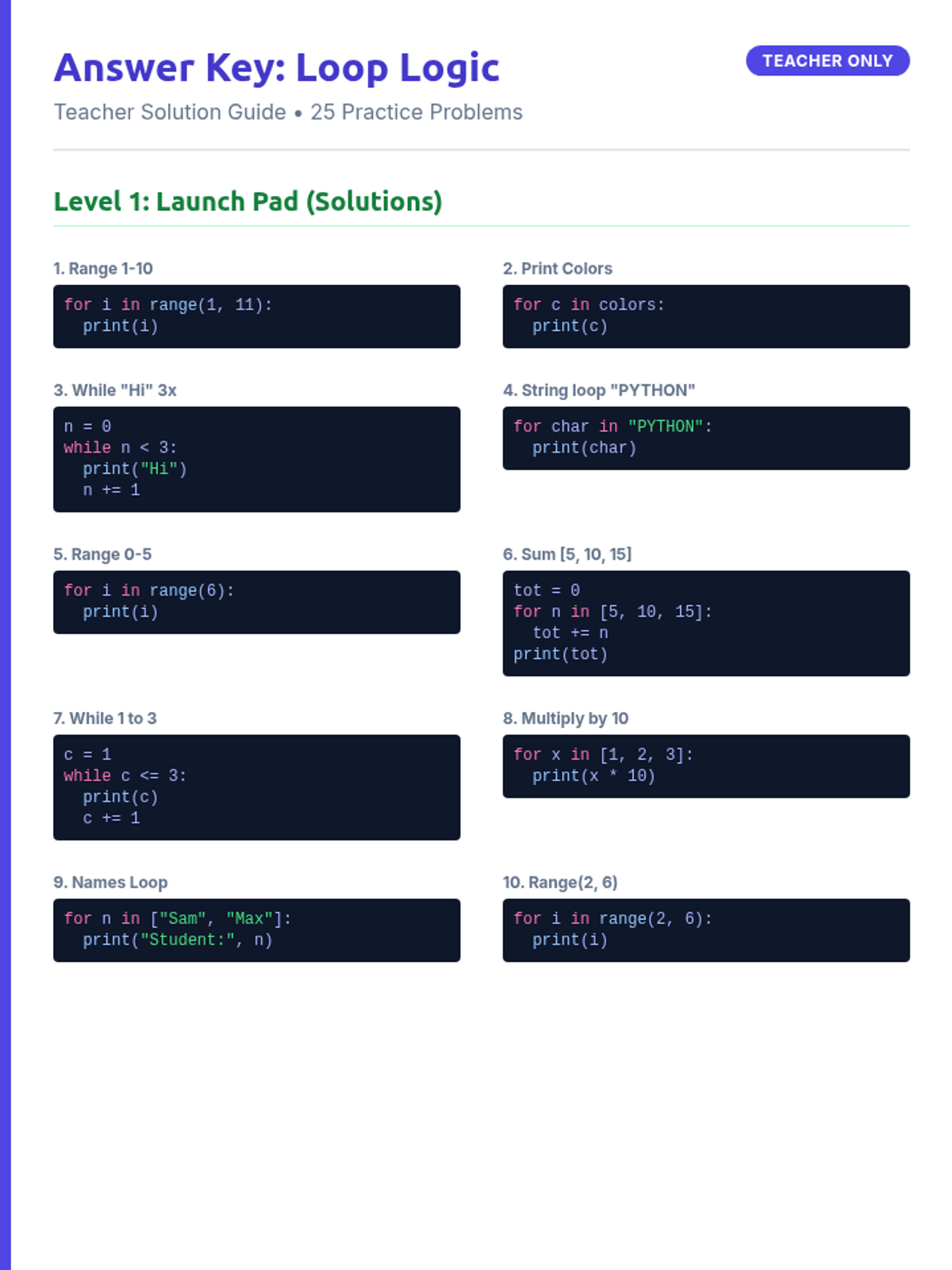
A comprehensive practice set and reference guide for Python for and while loops, designed to prepare students for their upcoming test. Includes introductory, moderate, and challenging problems with a mix of debugging and code creation.
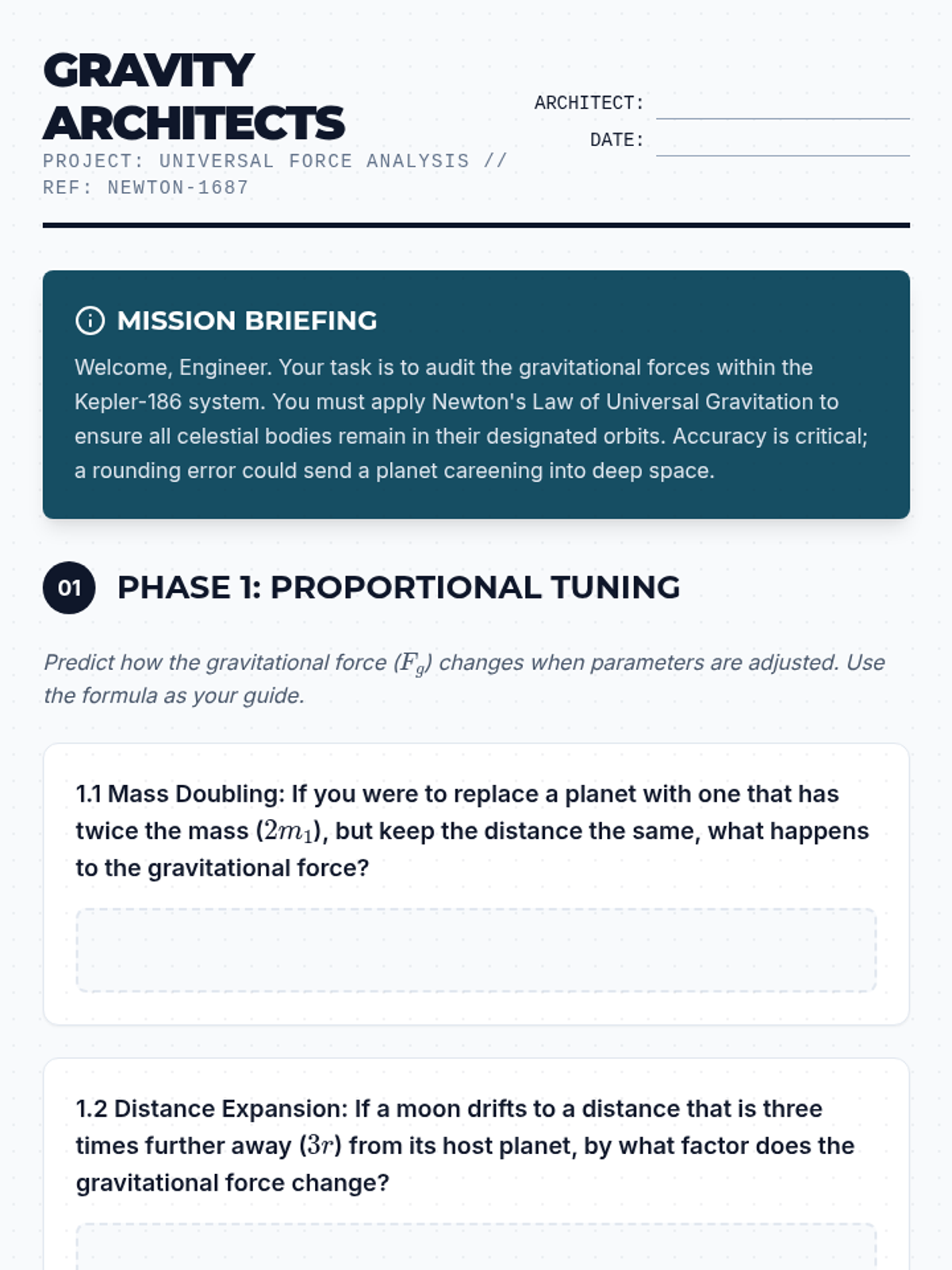
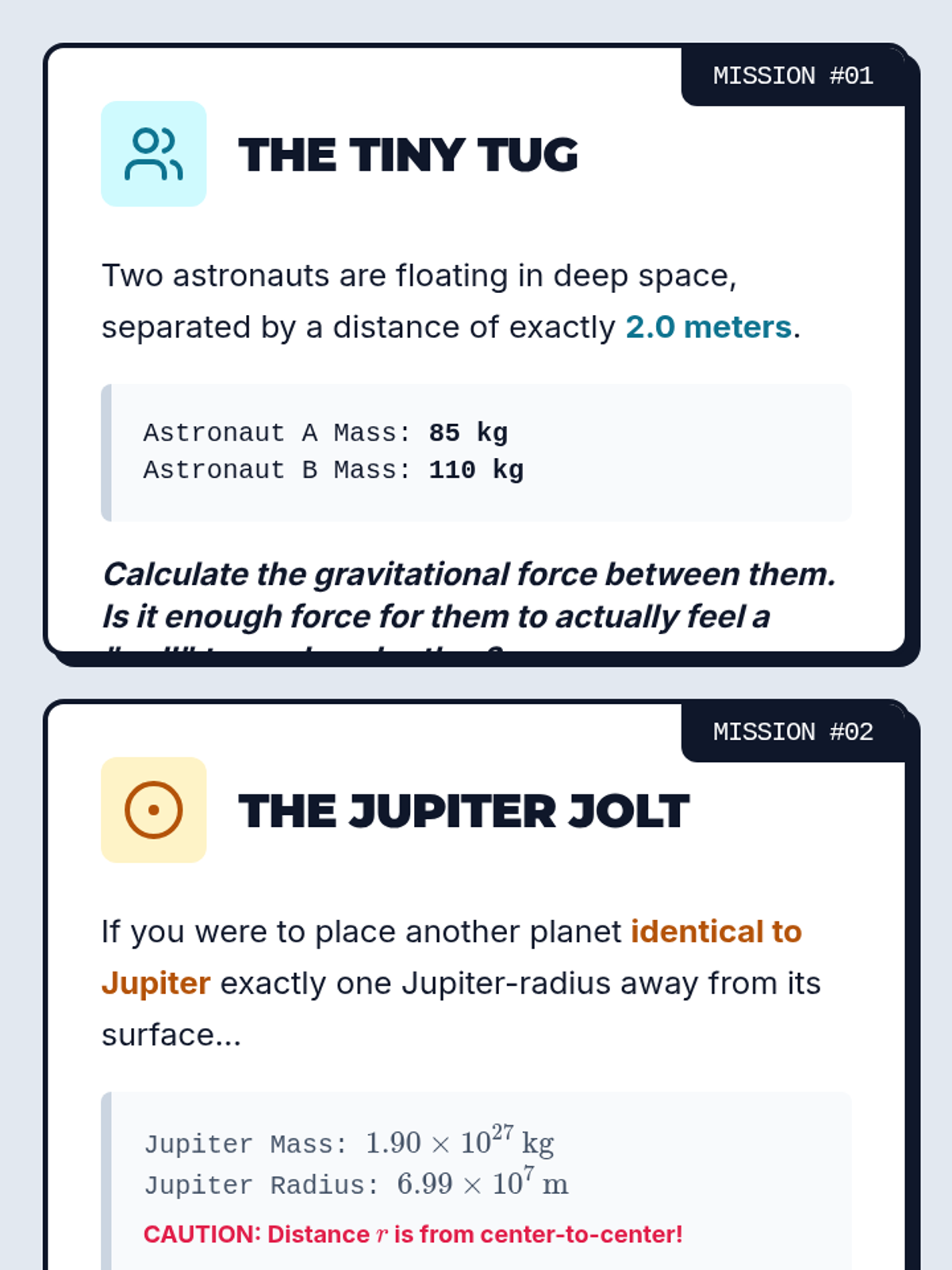
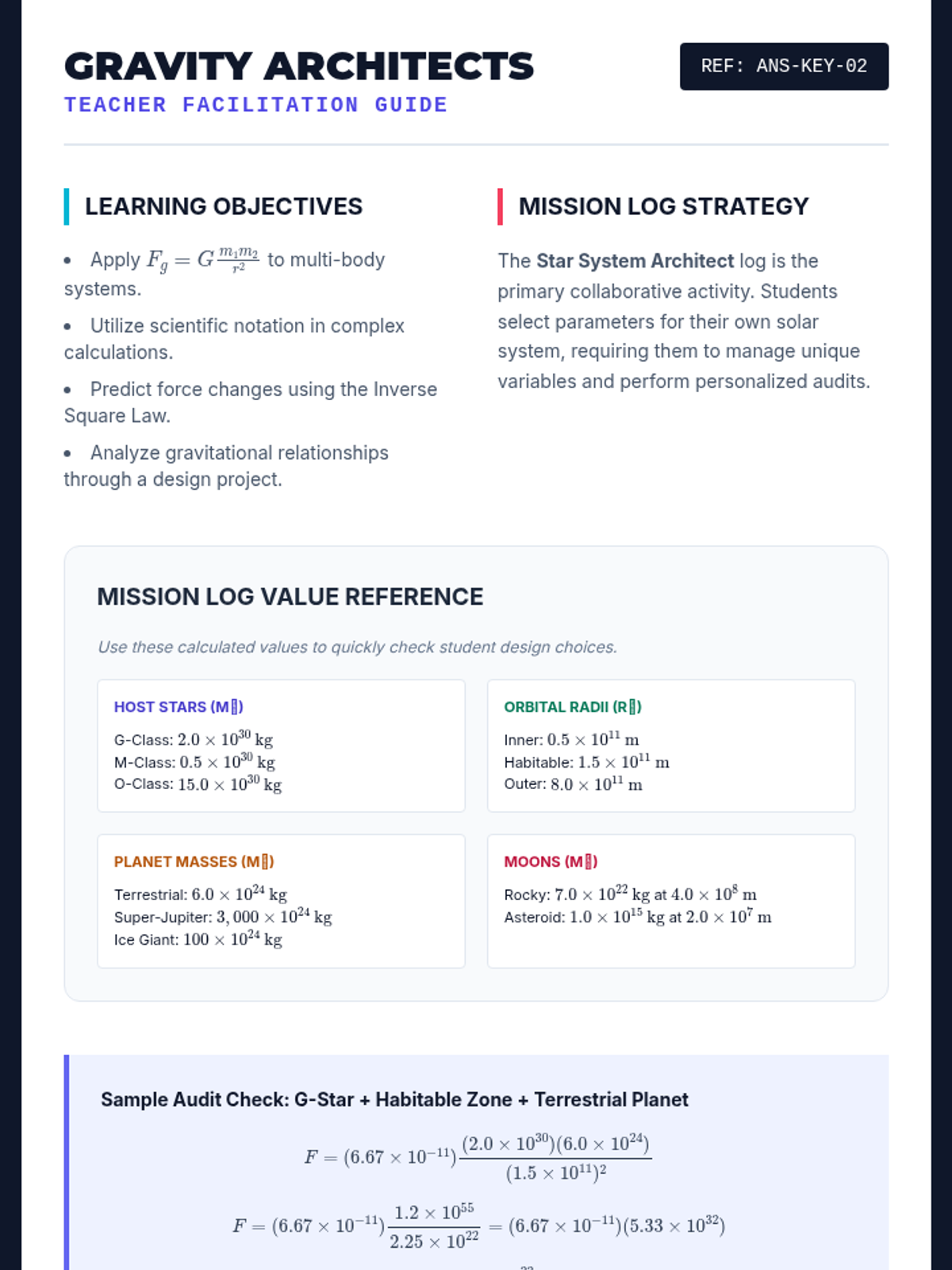
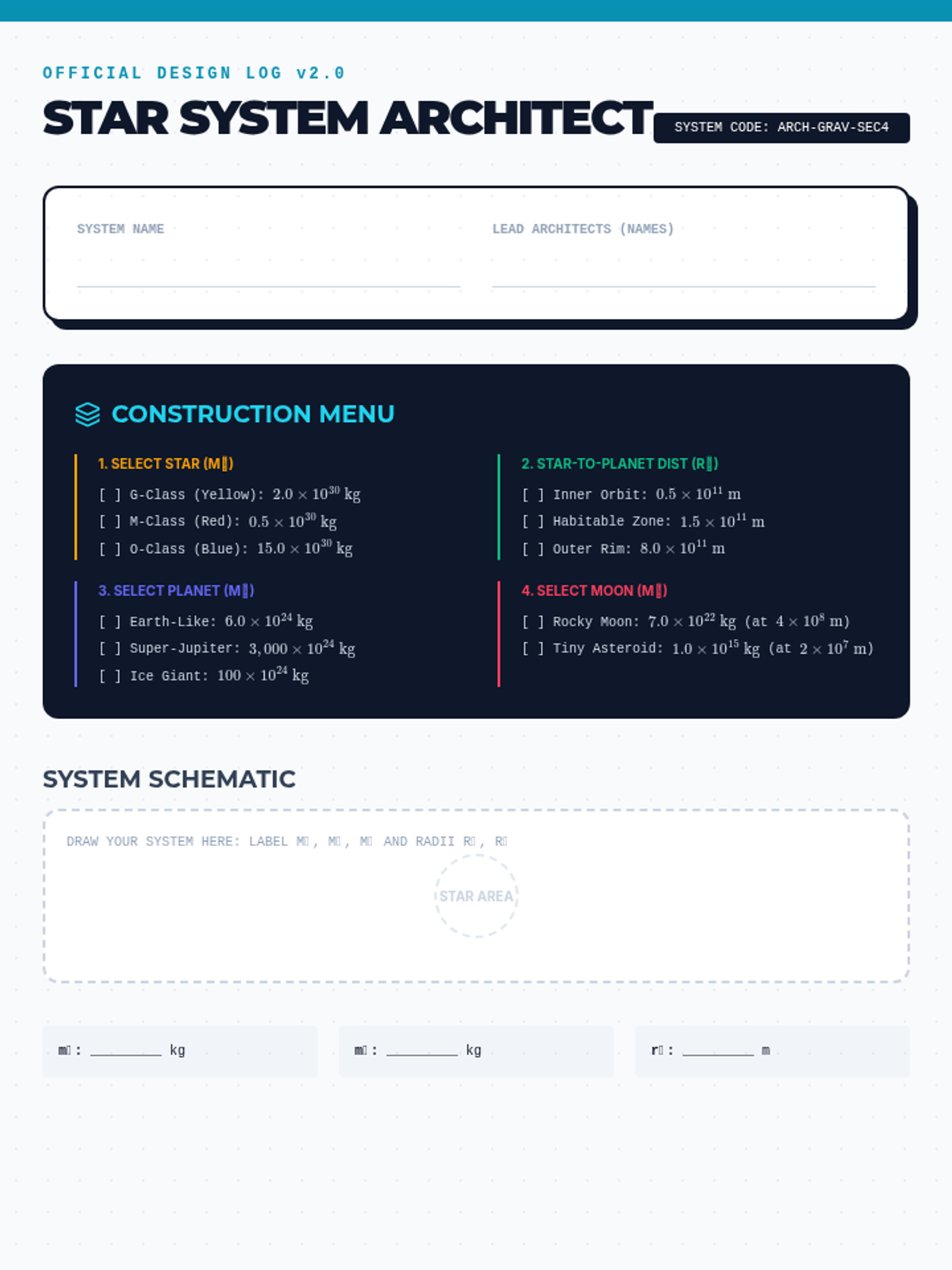
Students step into the role of cosmic engineers to master Newton's Law of Universal Gravitation. They will explore the inverse square law, perform complex calculations using scientific notation, and compare gravitational forces across the solar system.
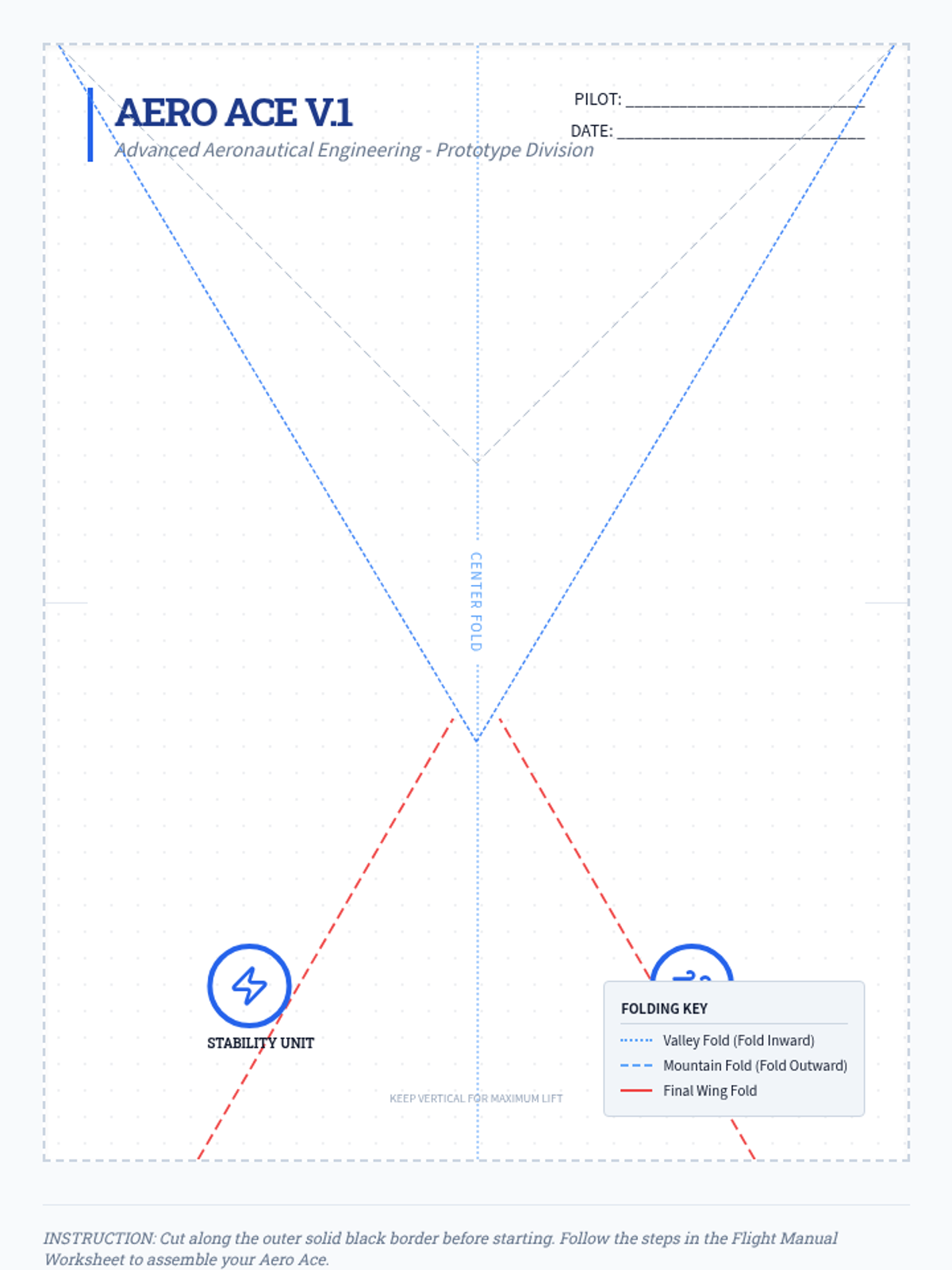
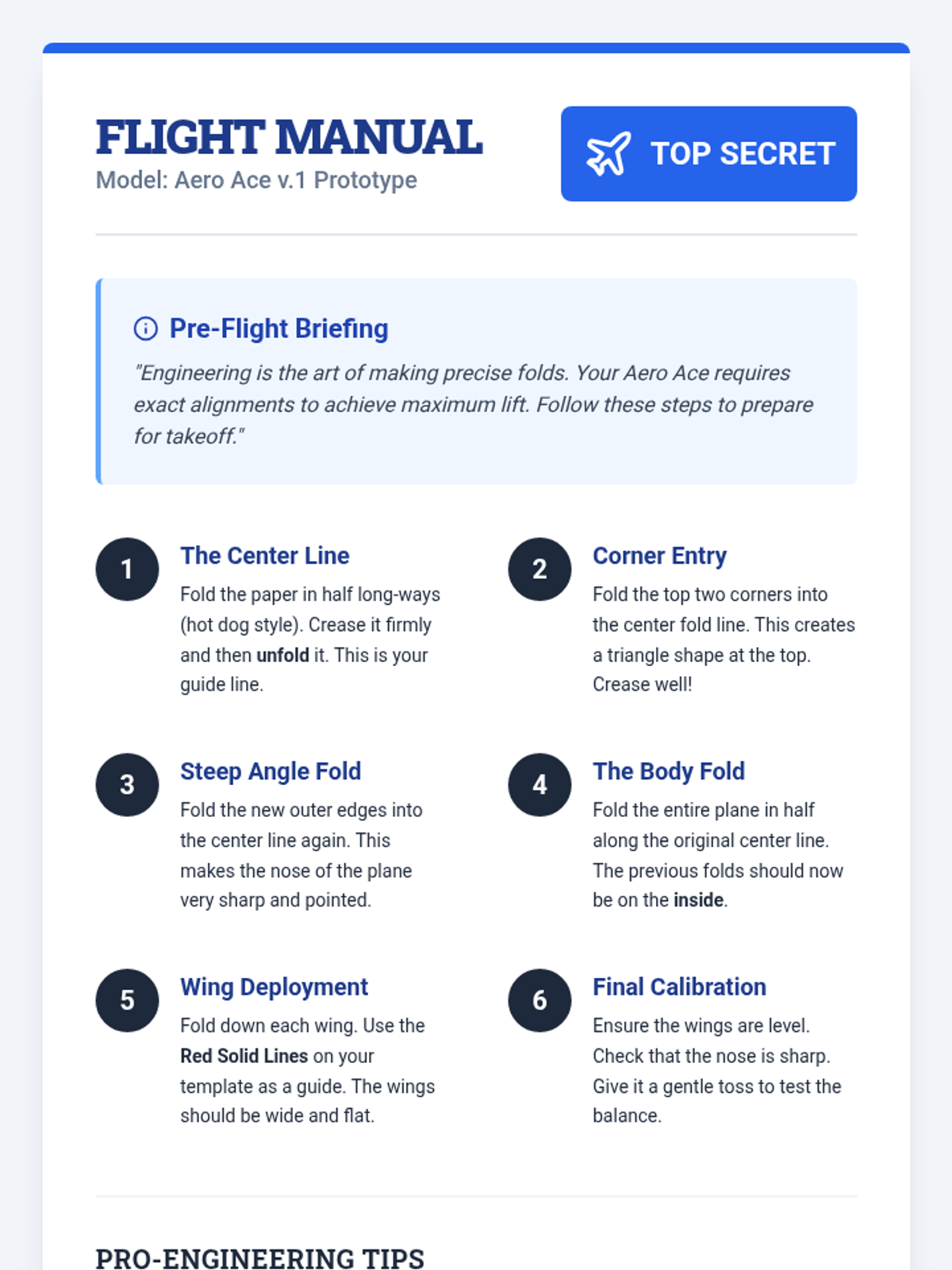
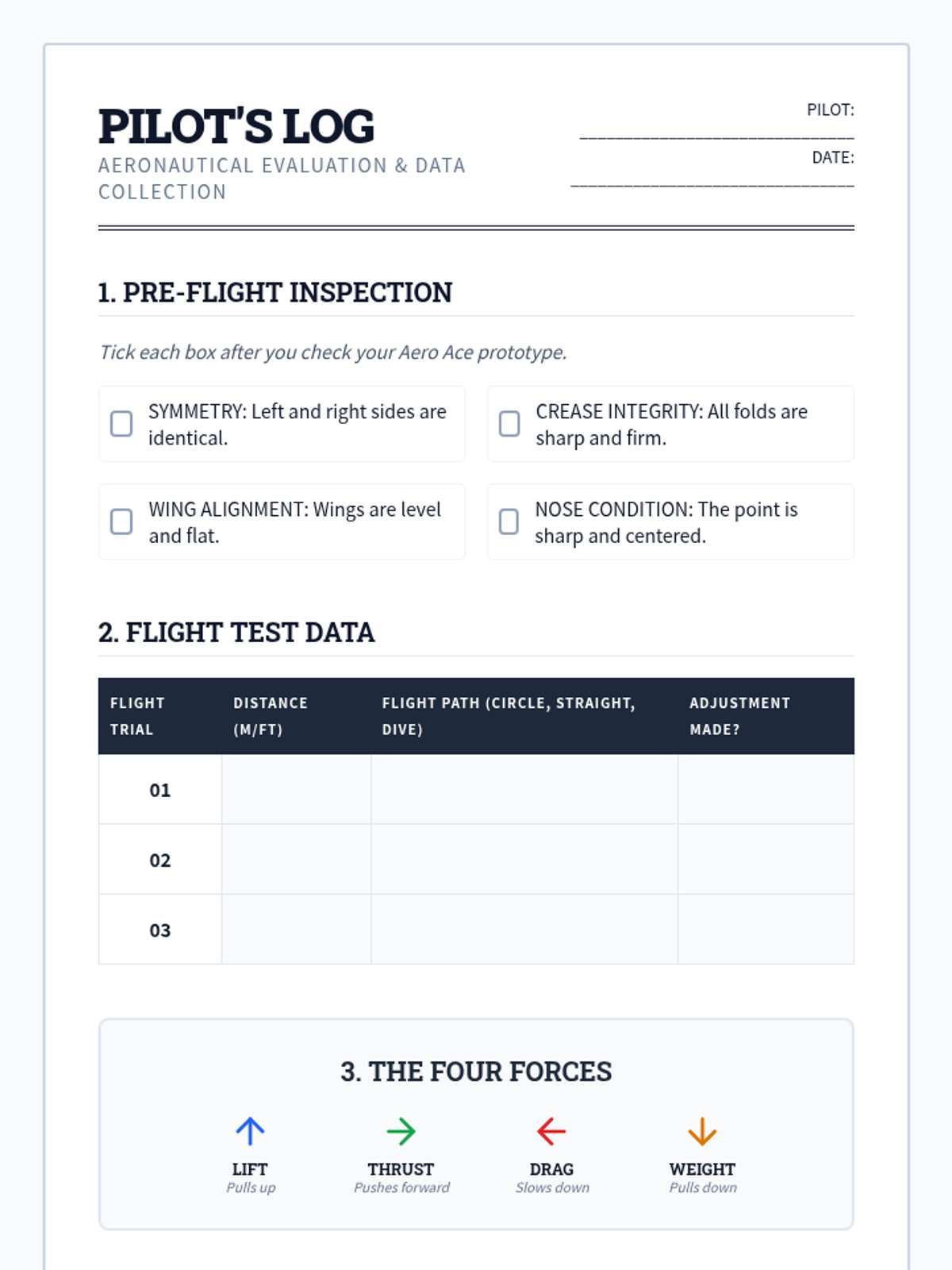
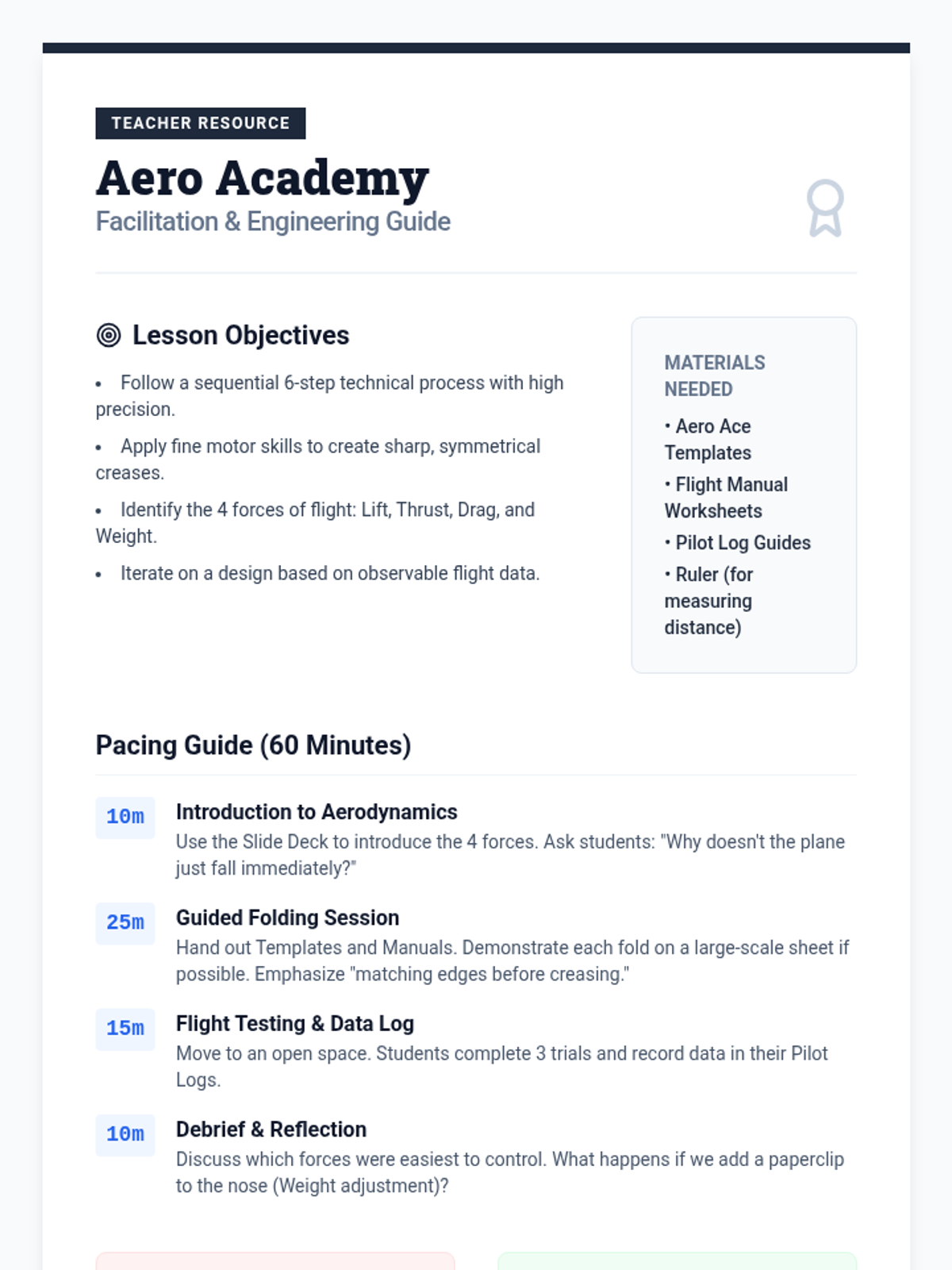
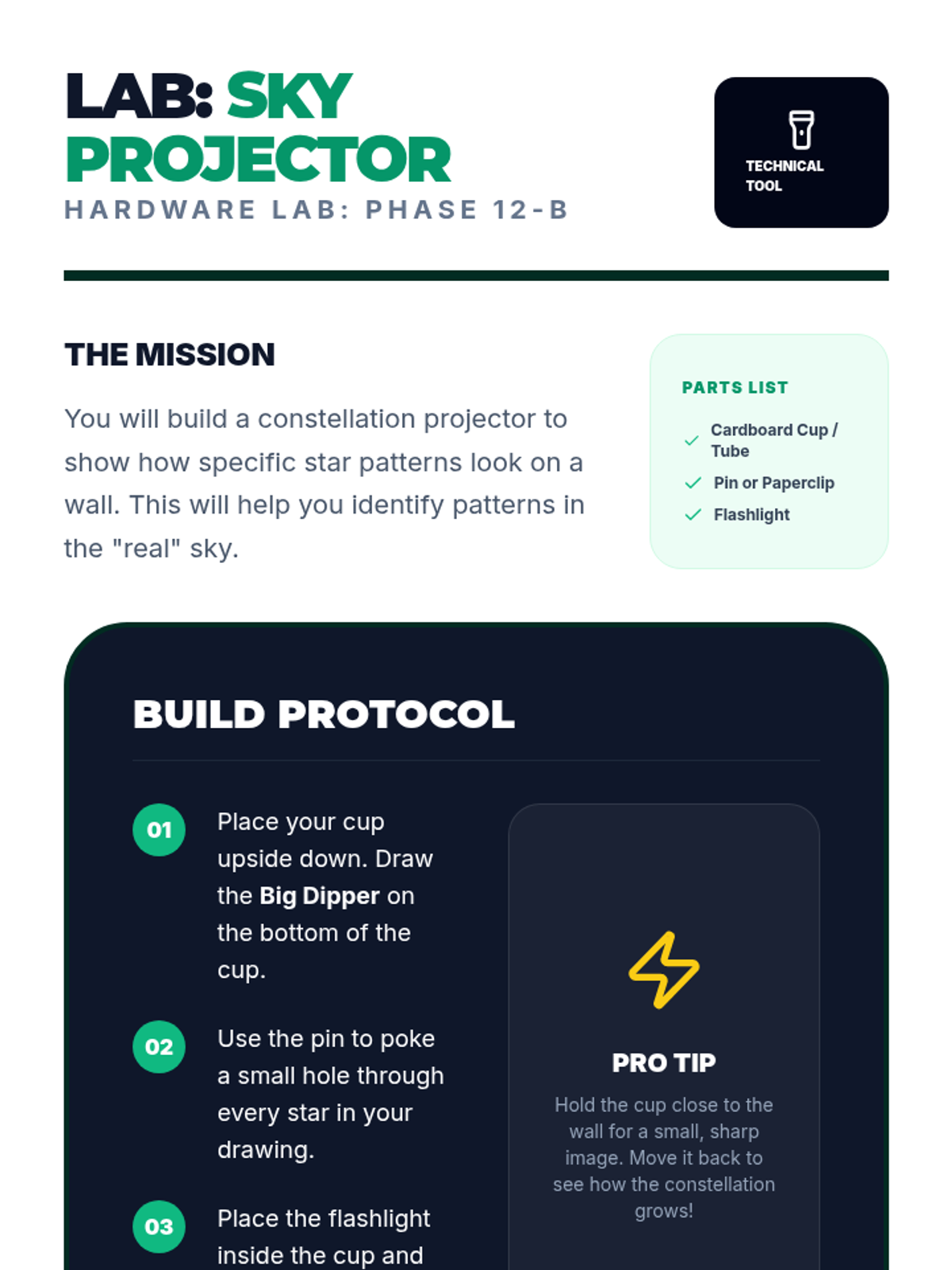
A hands-on engineering lesson where students follow precise directions to fold a high-performance paper airplane while learning the four forces of flight.
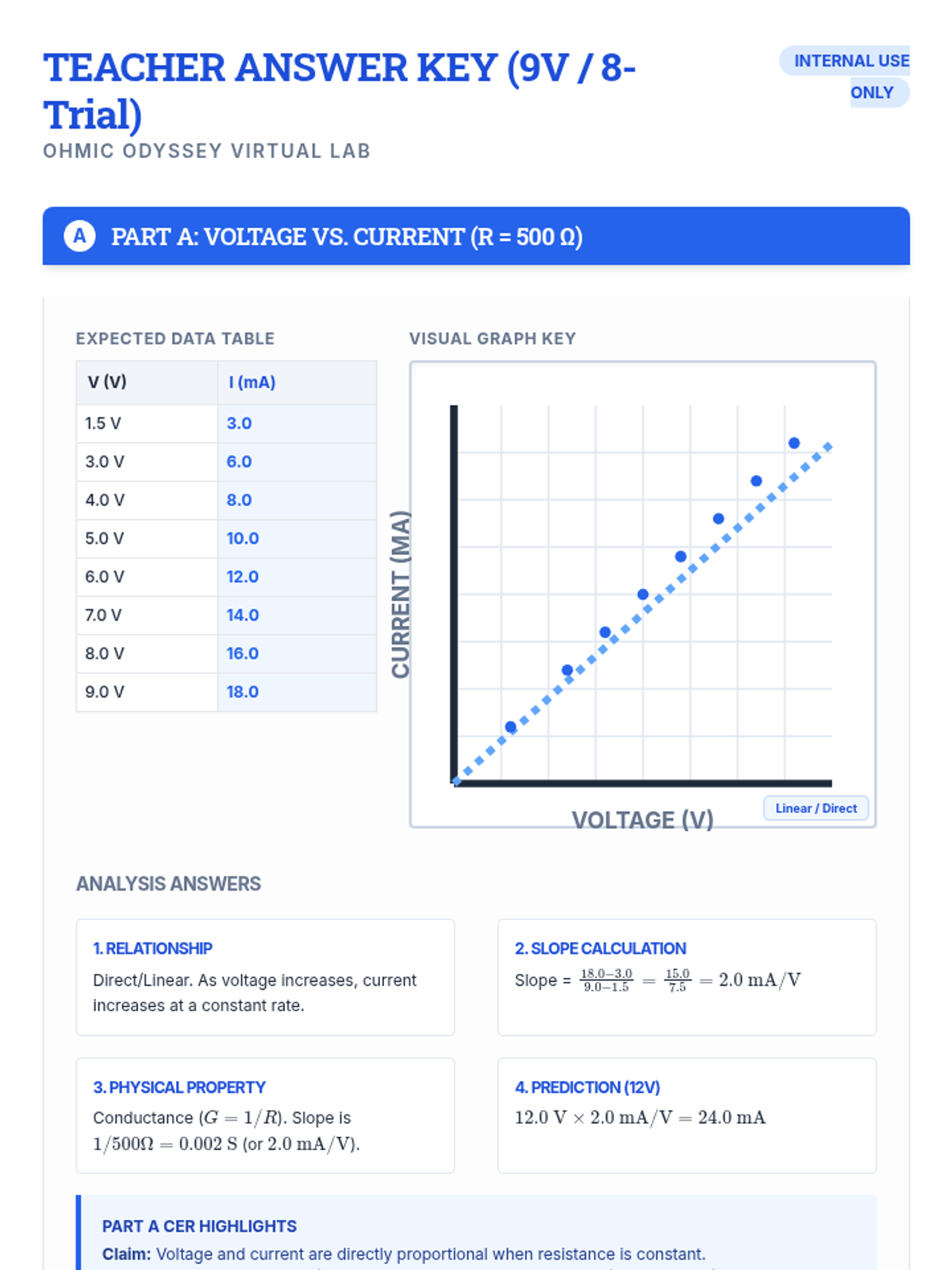
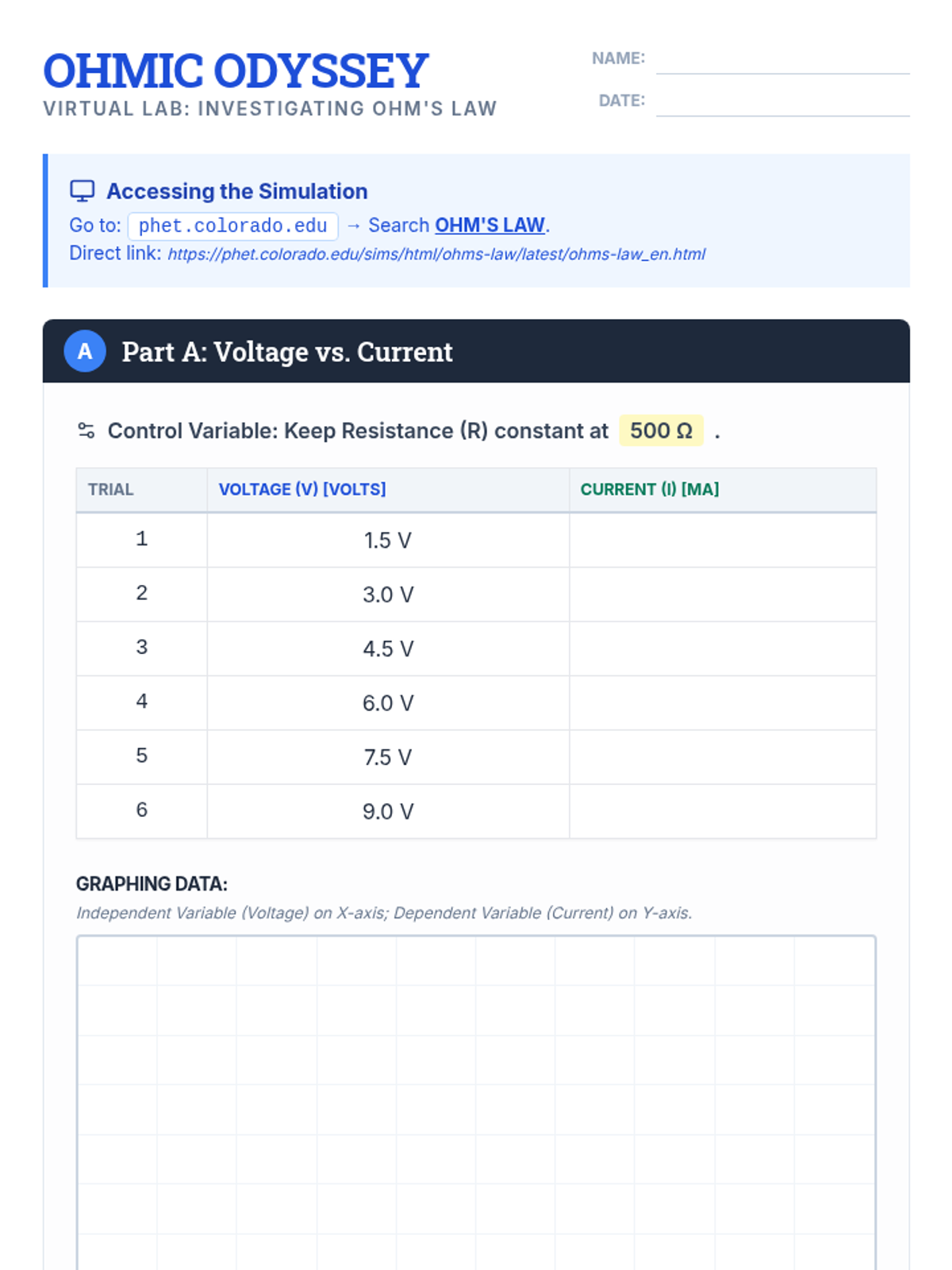
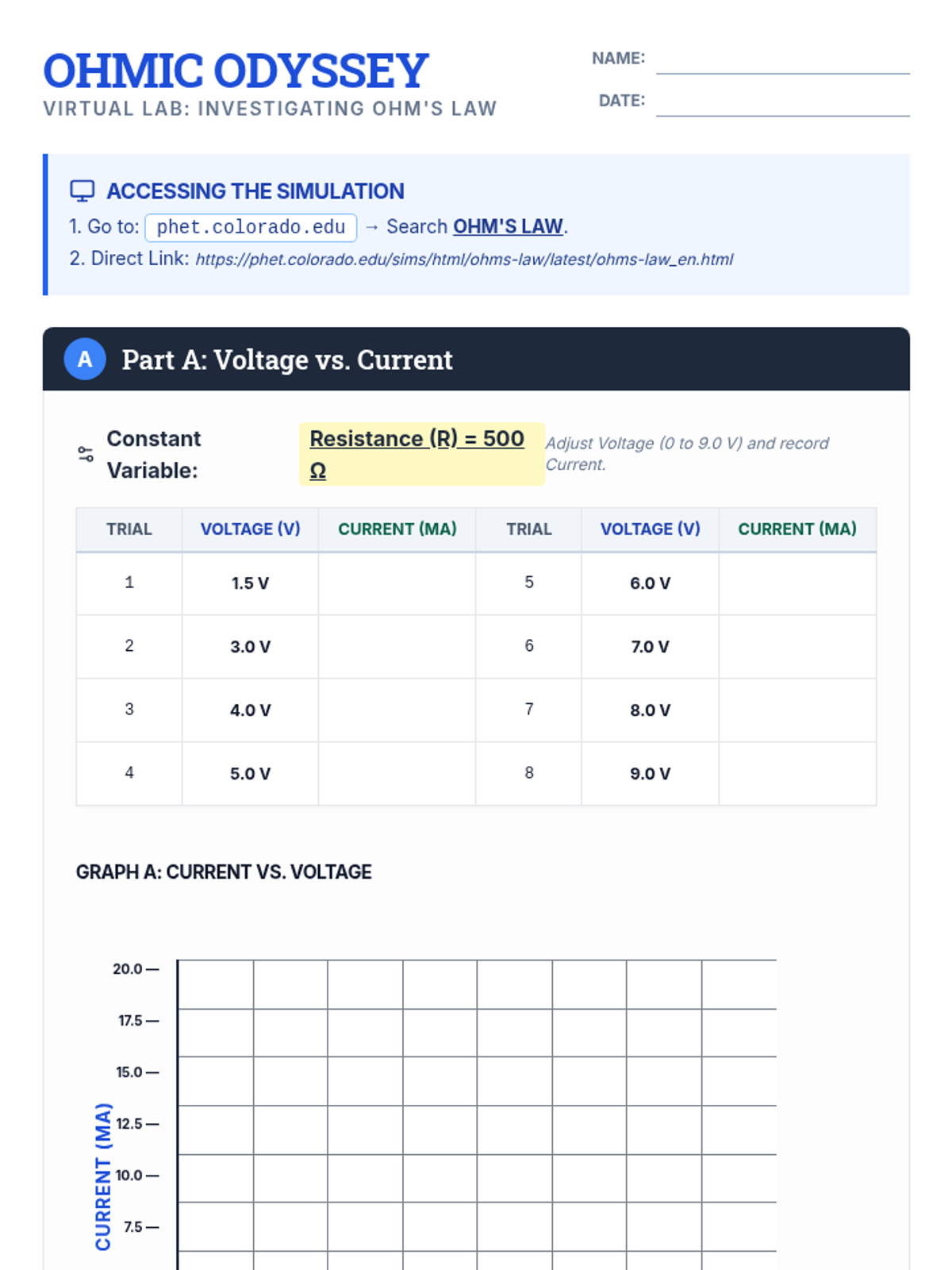
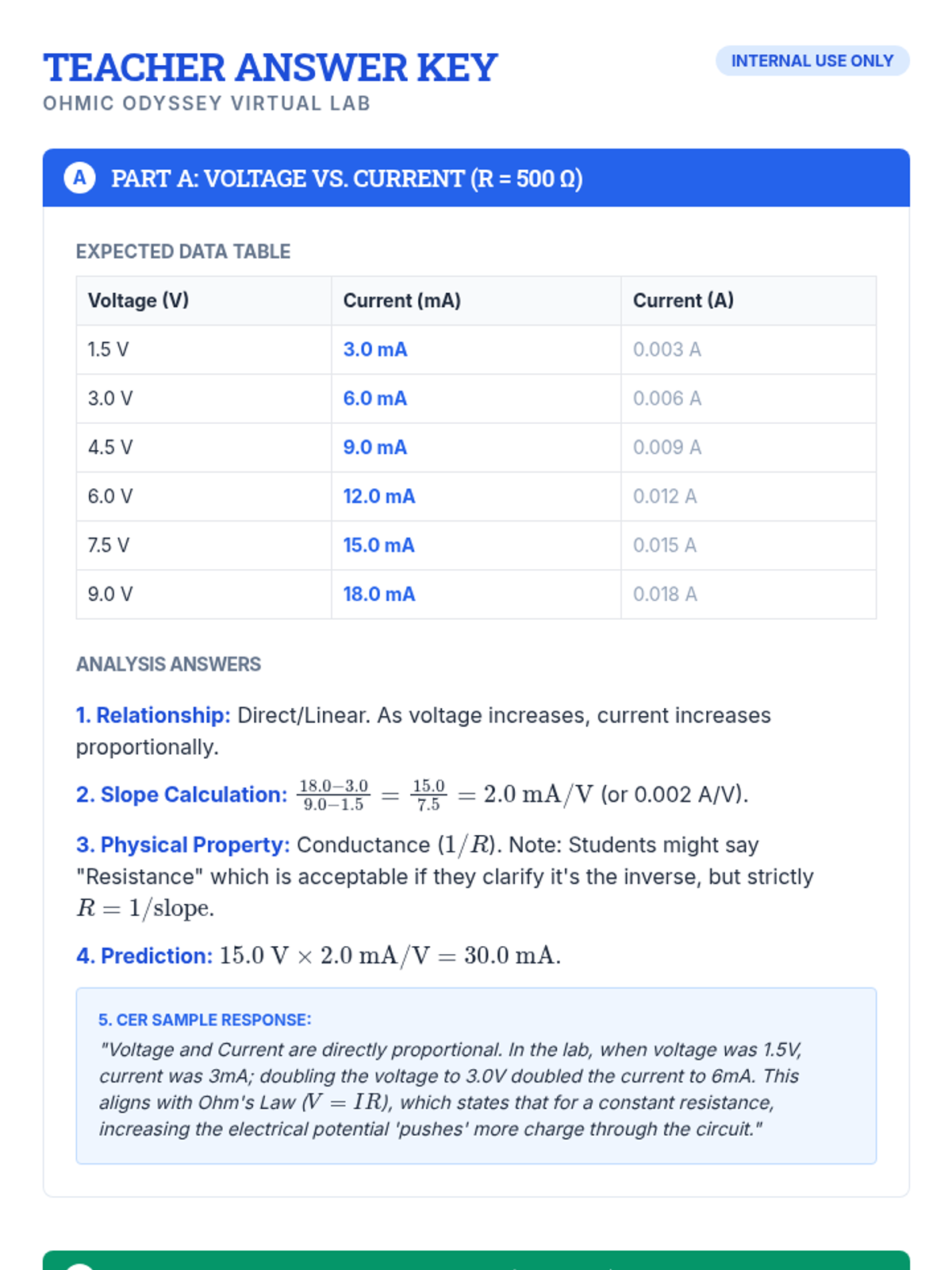
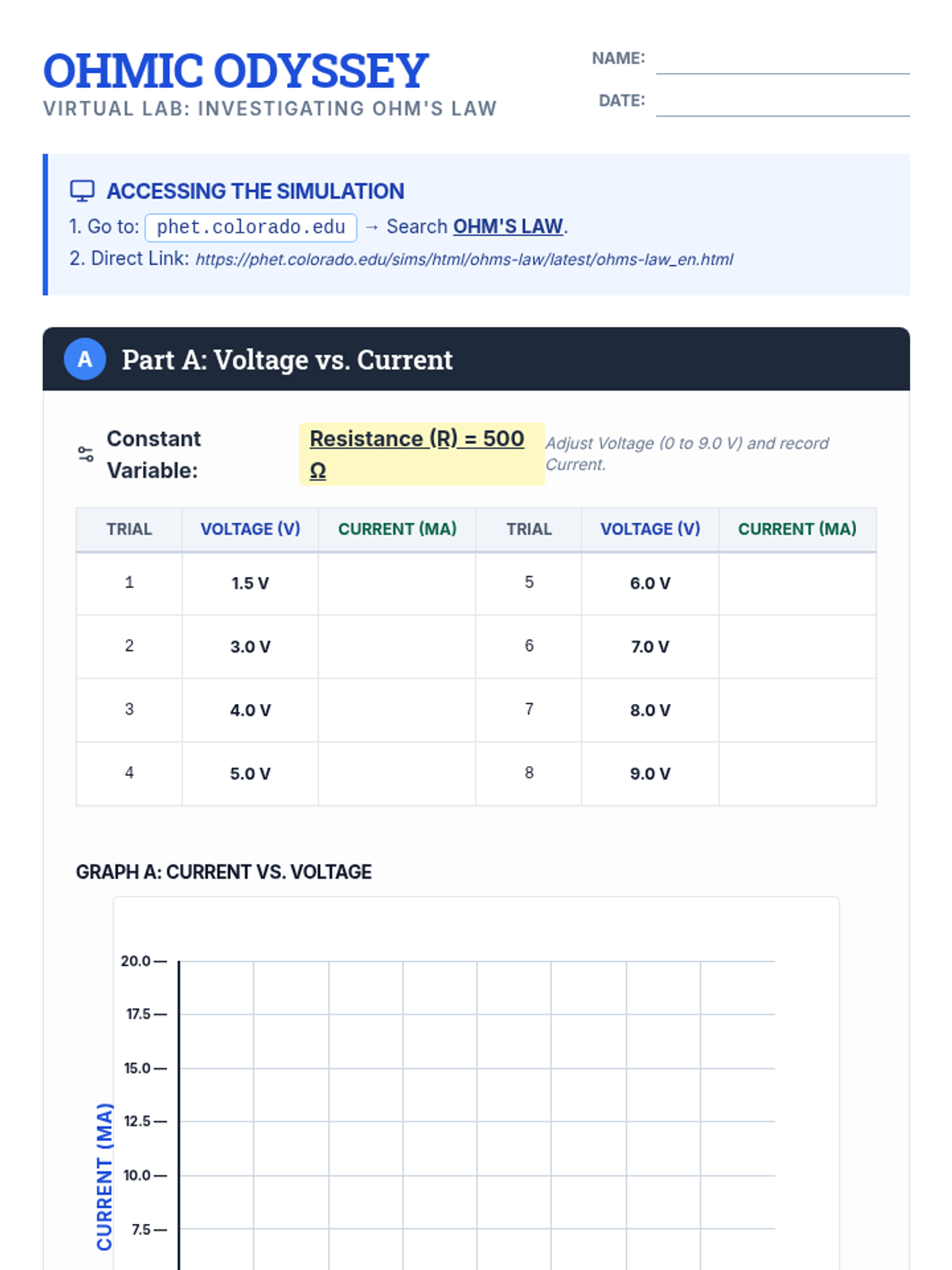
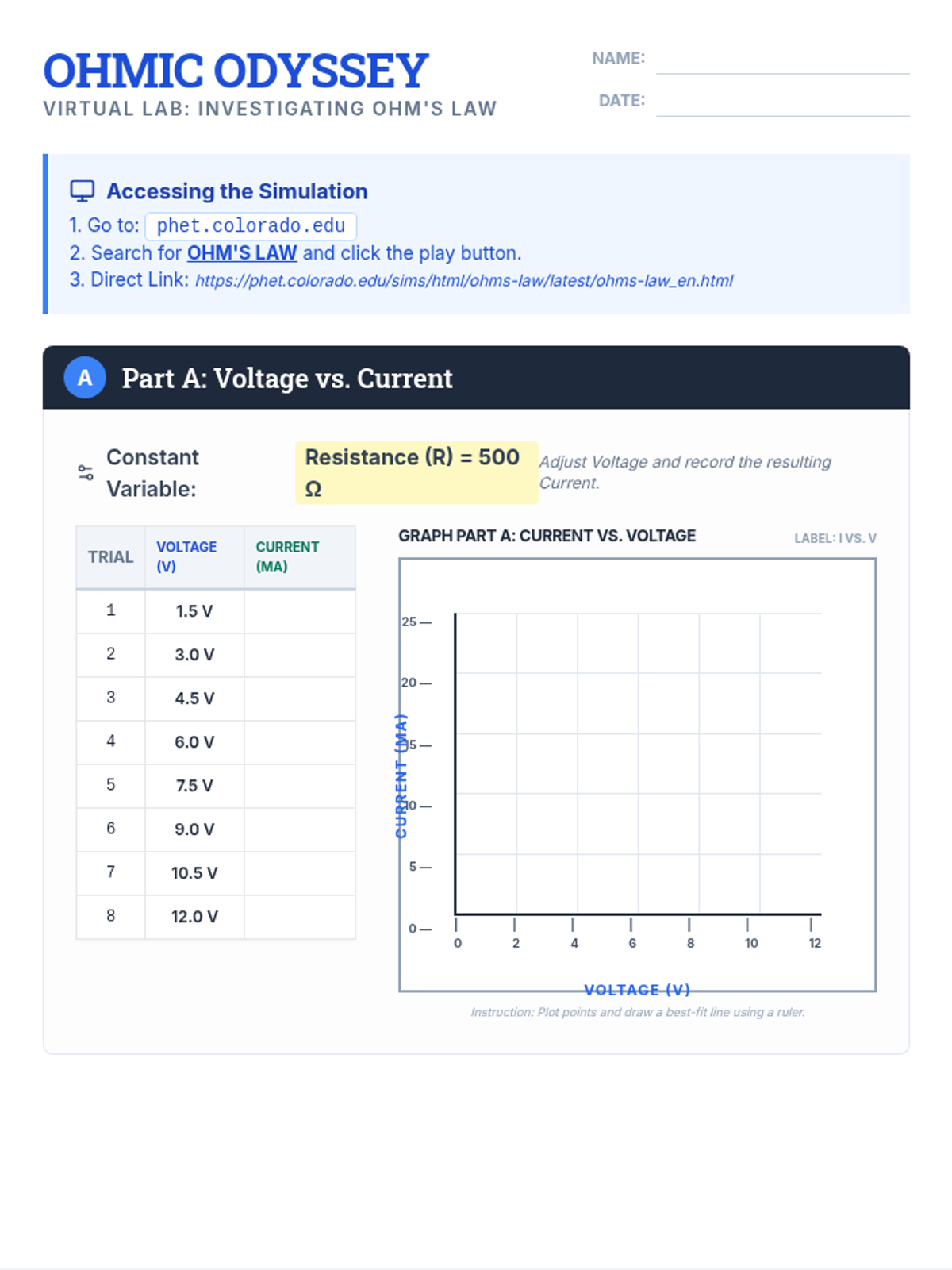
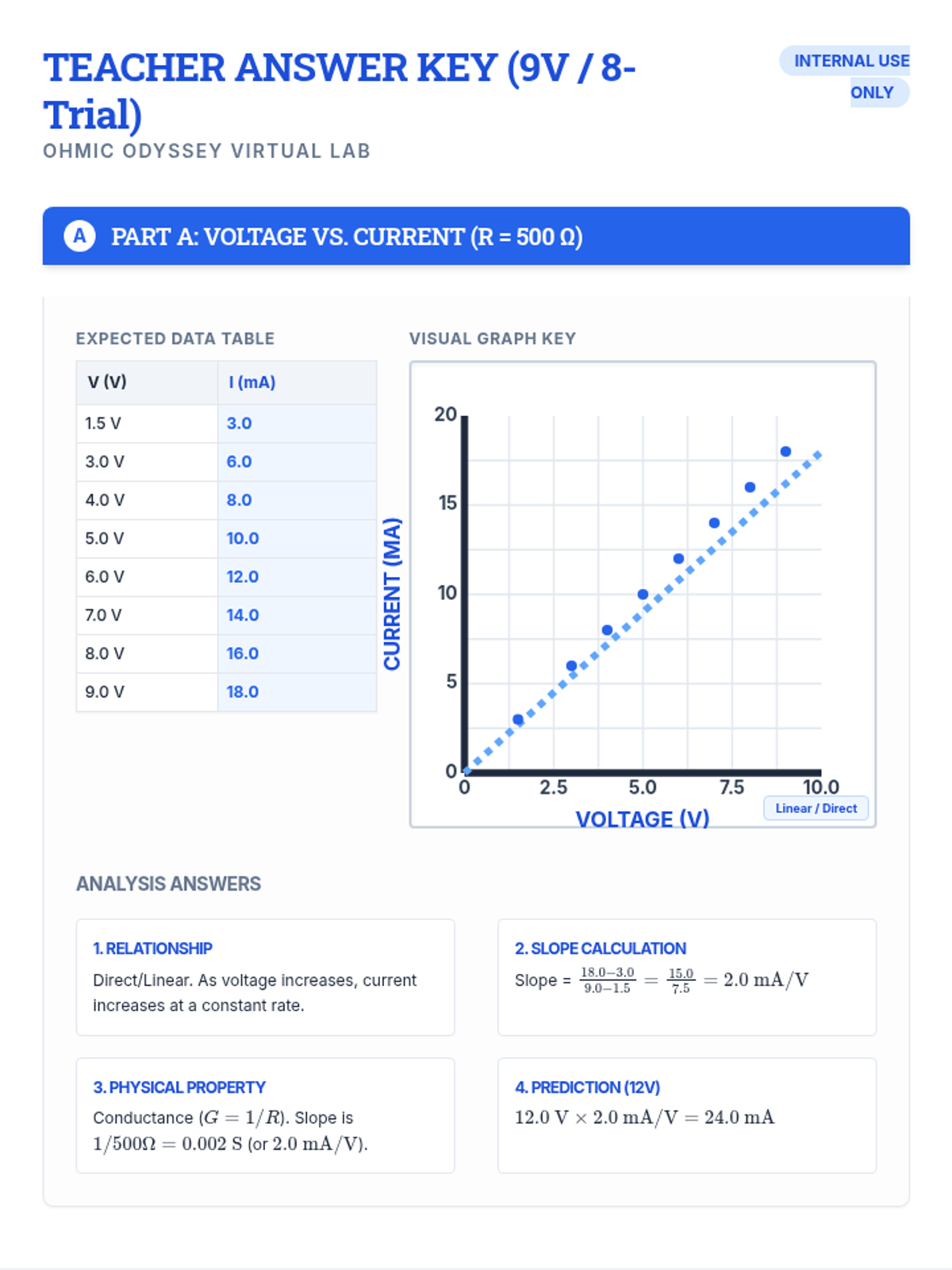
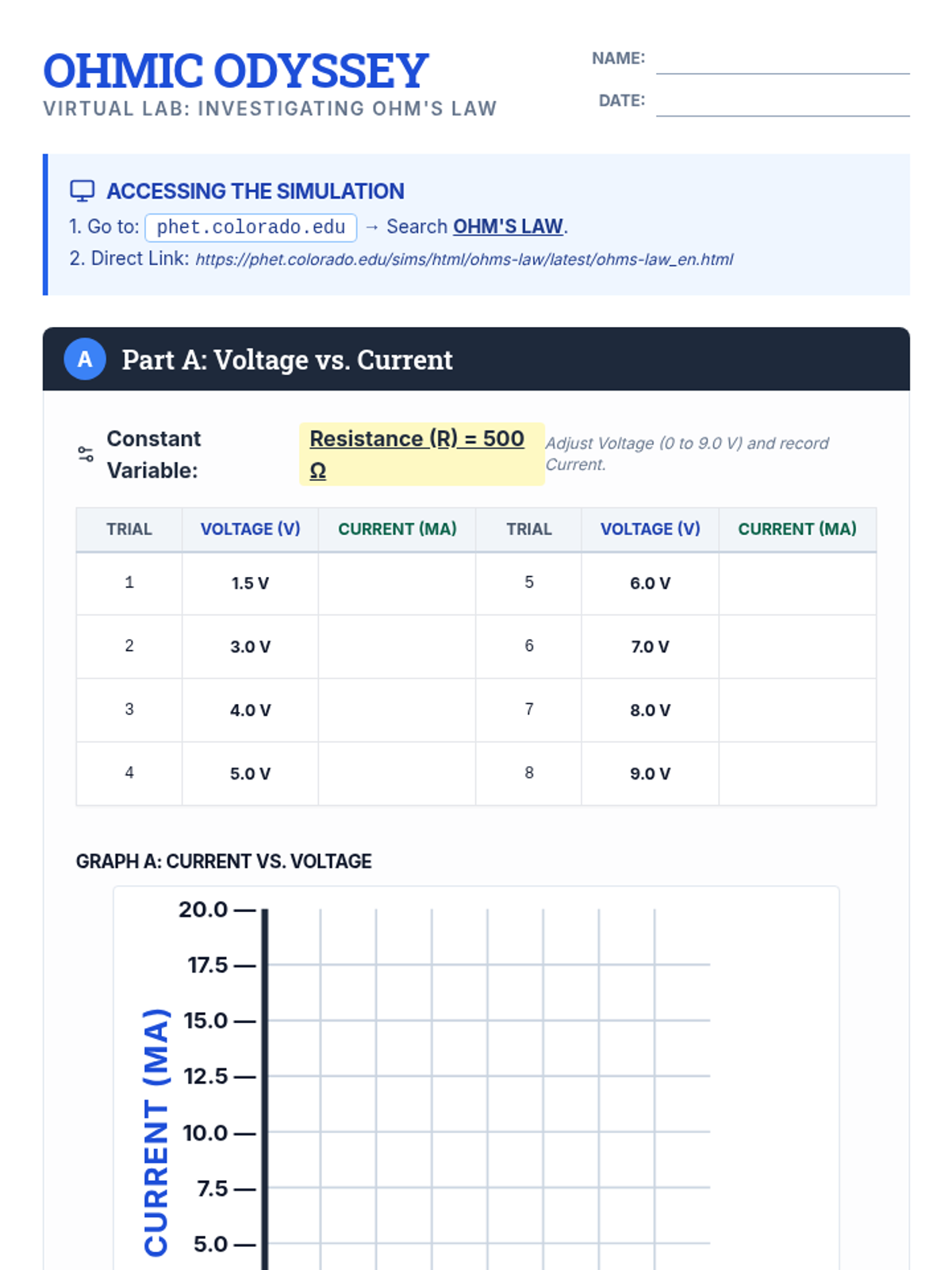
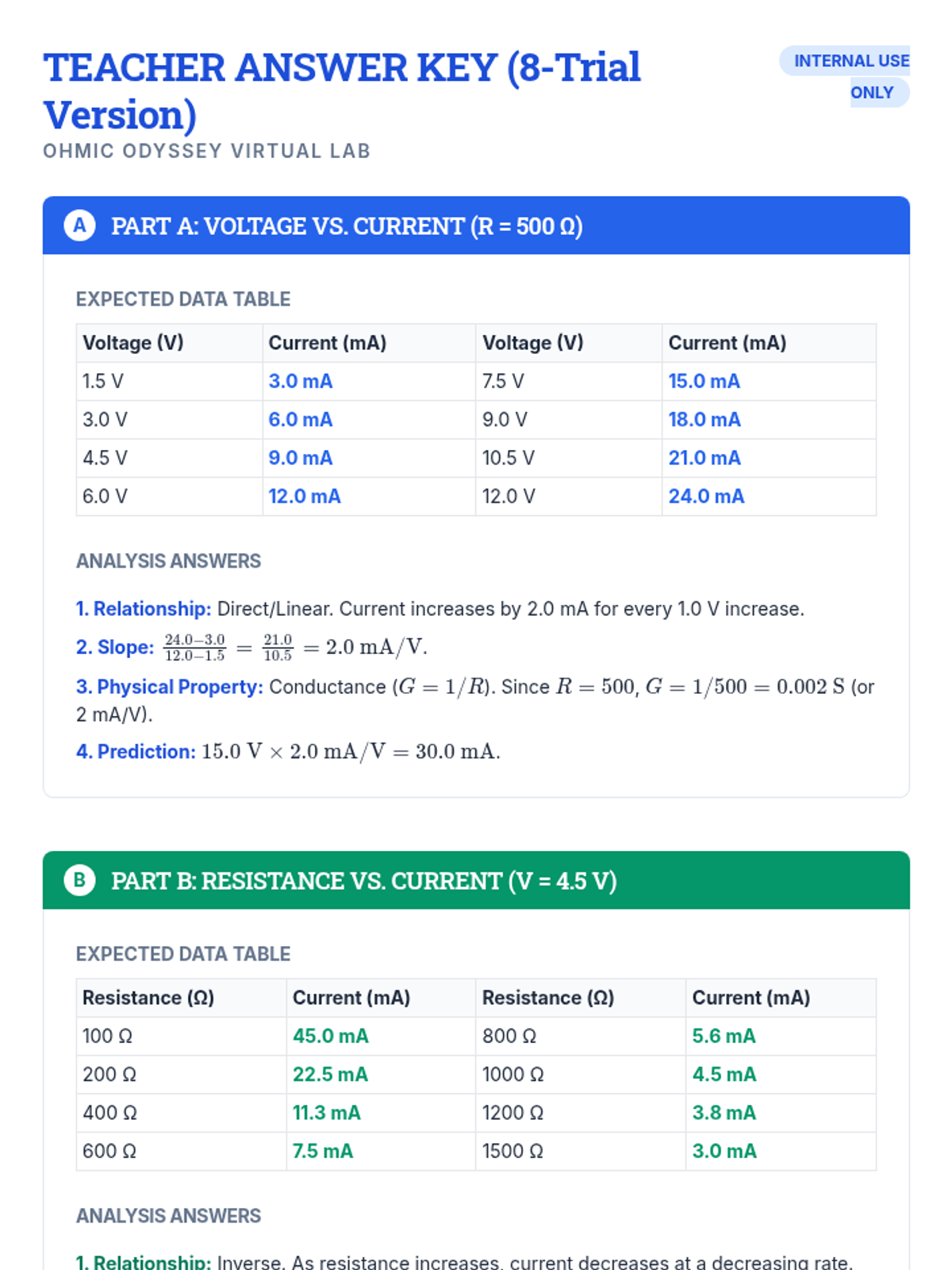
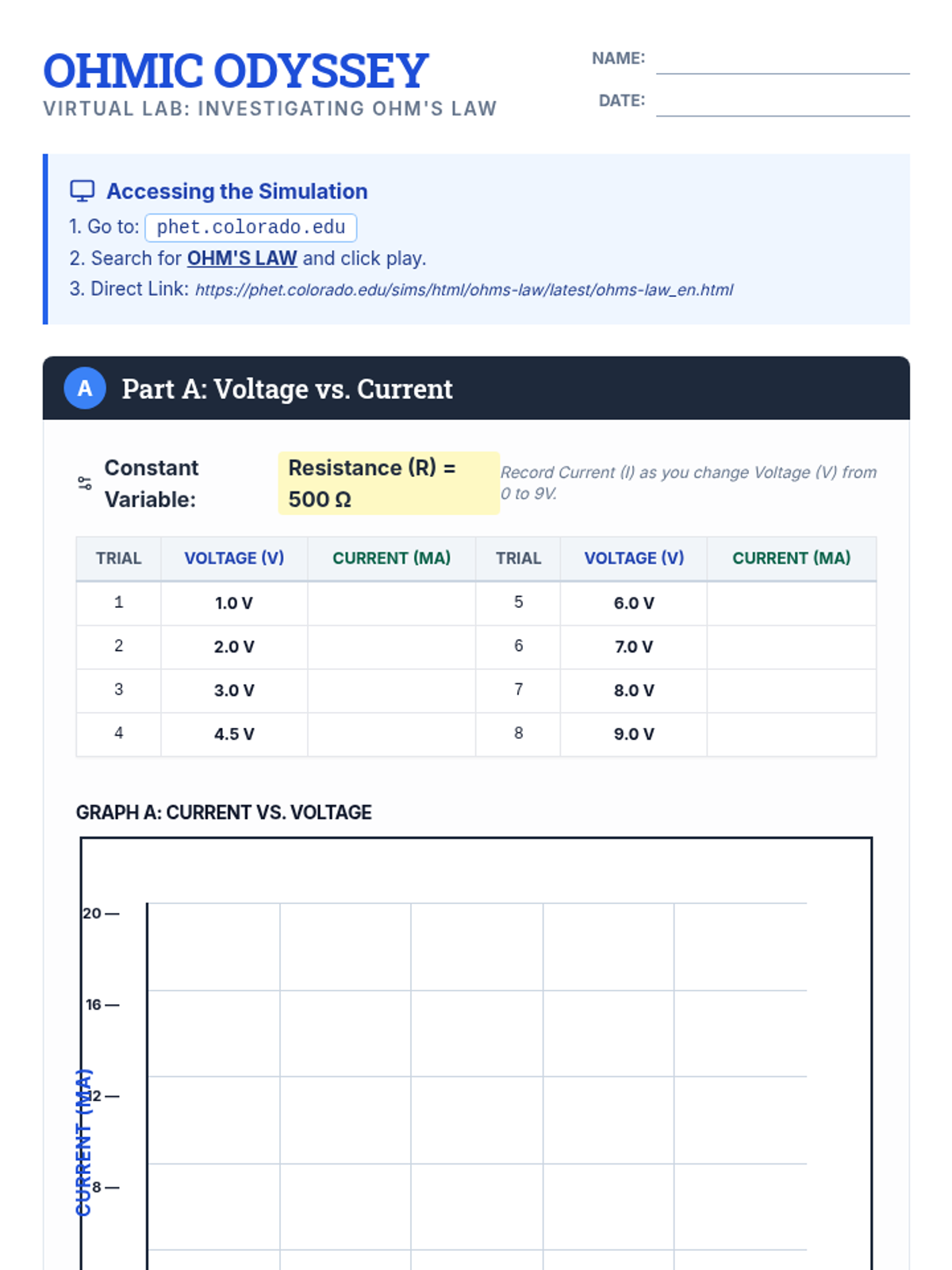
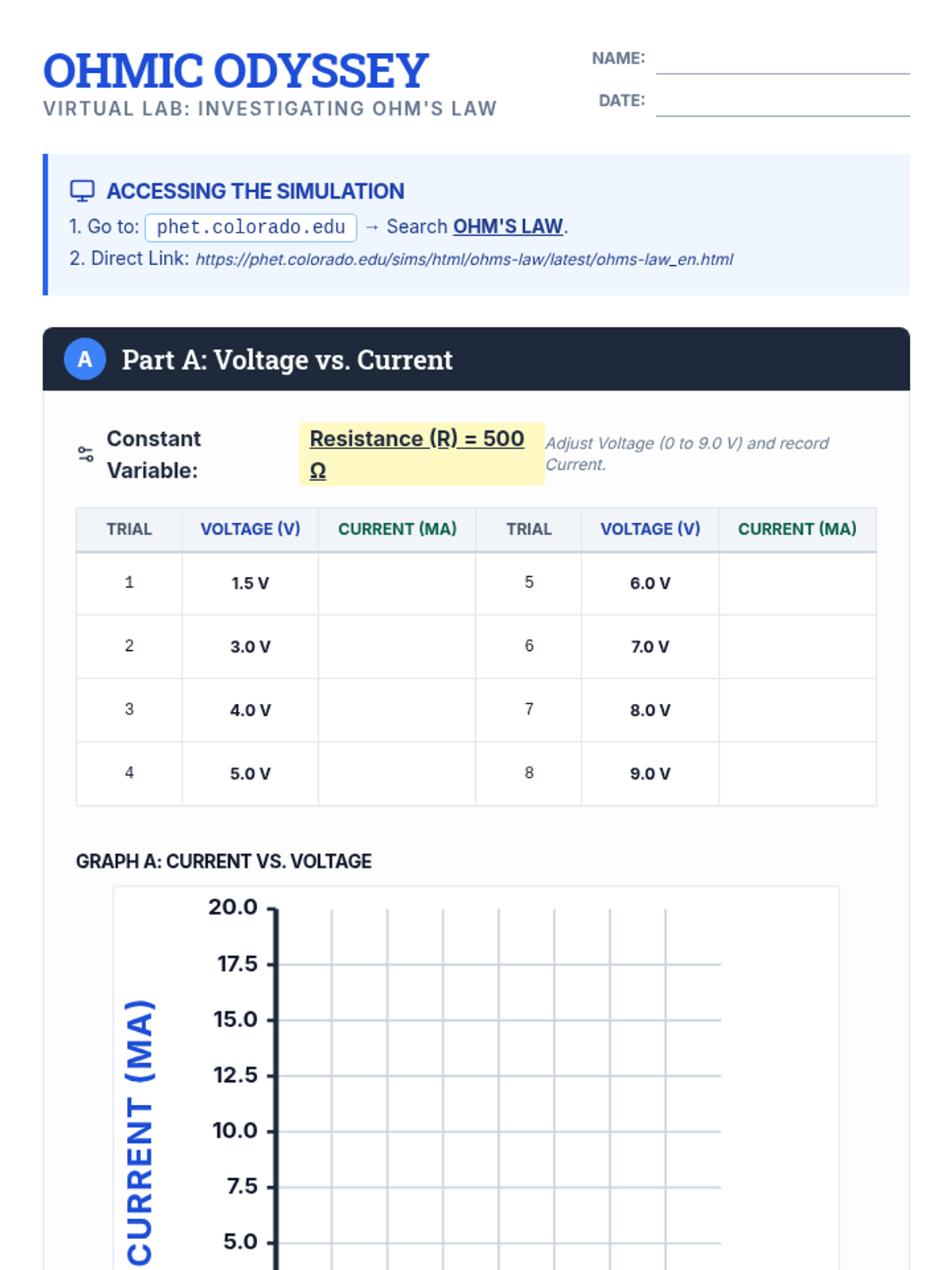
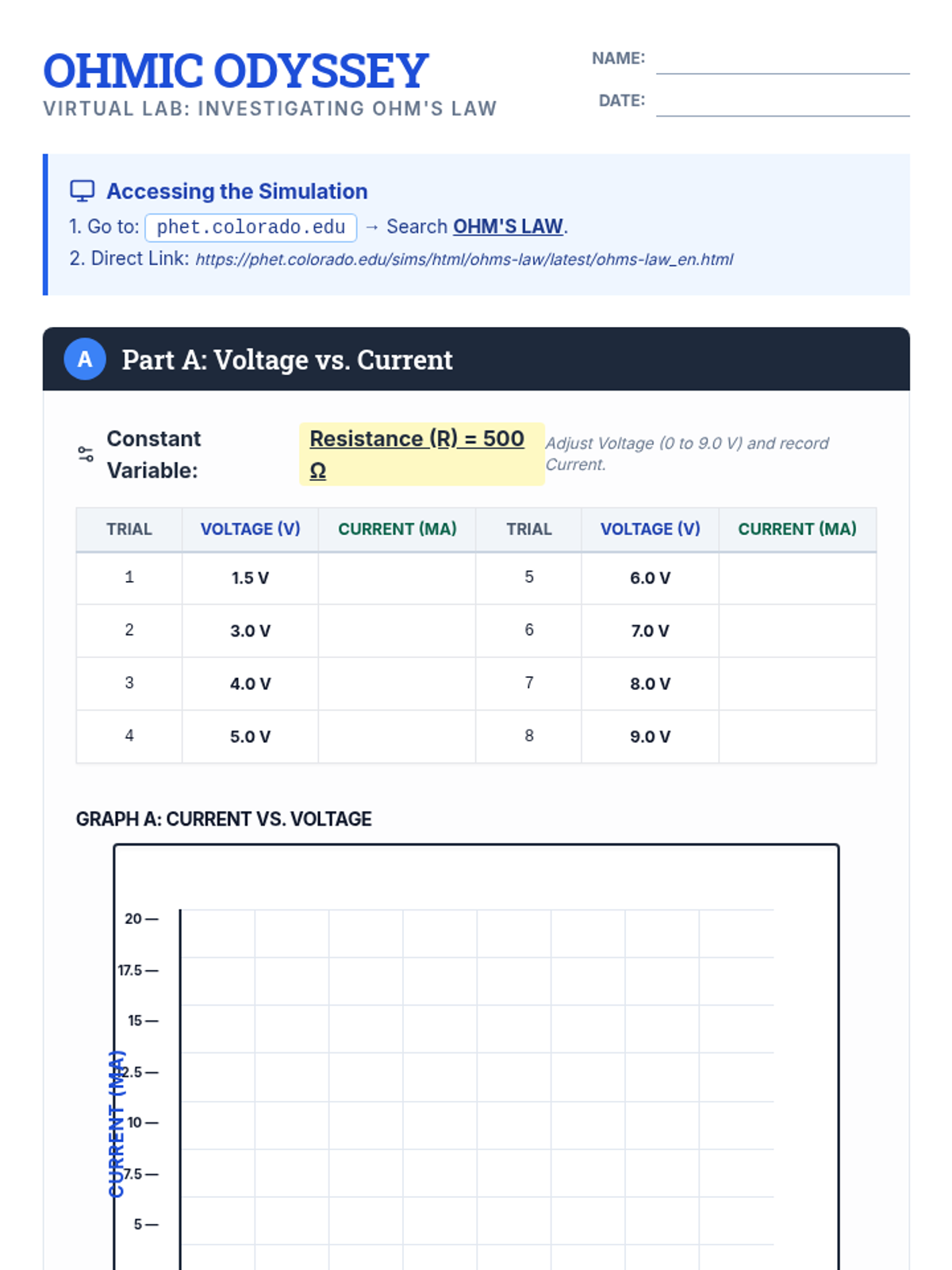
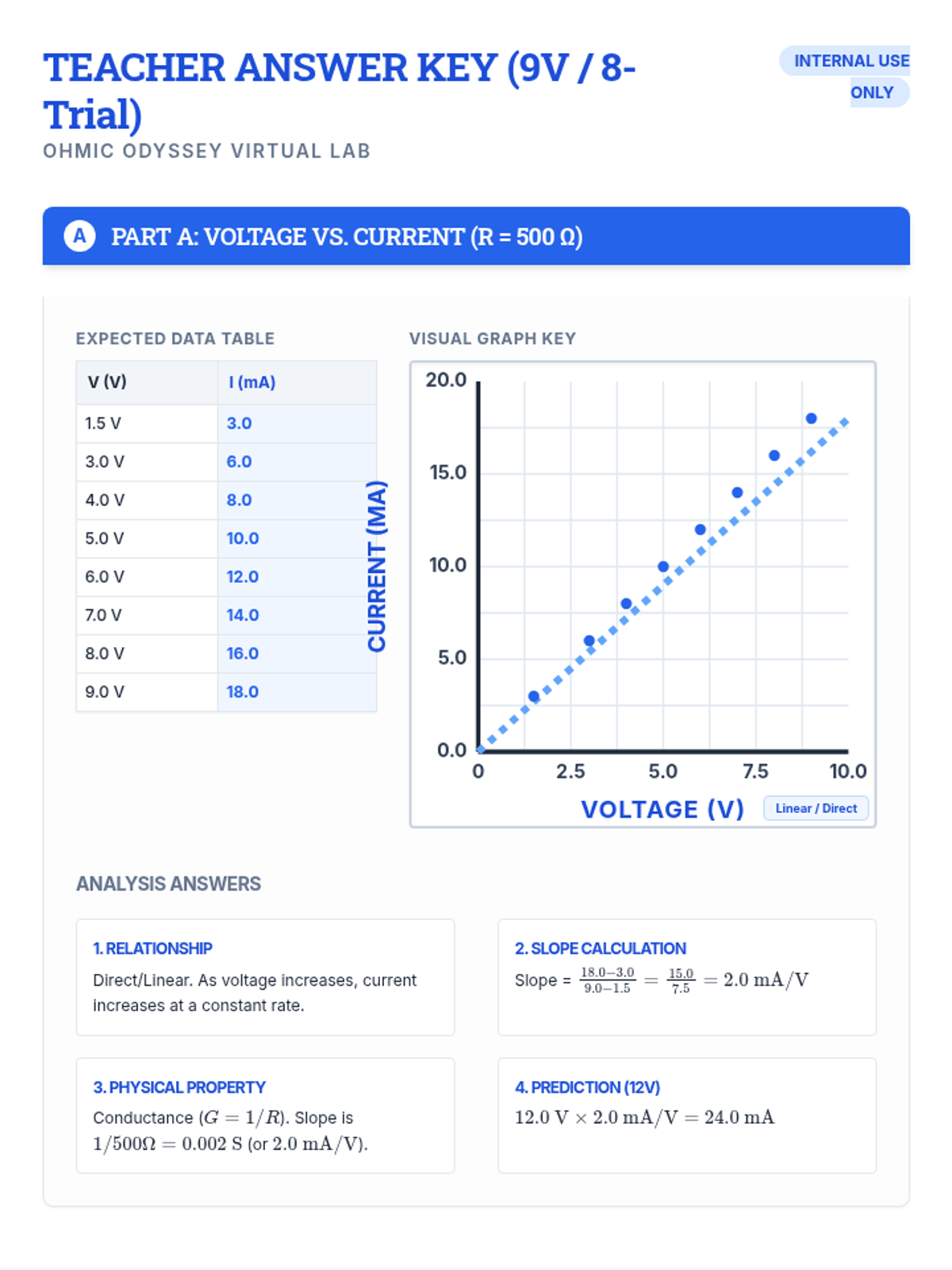
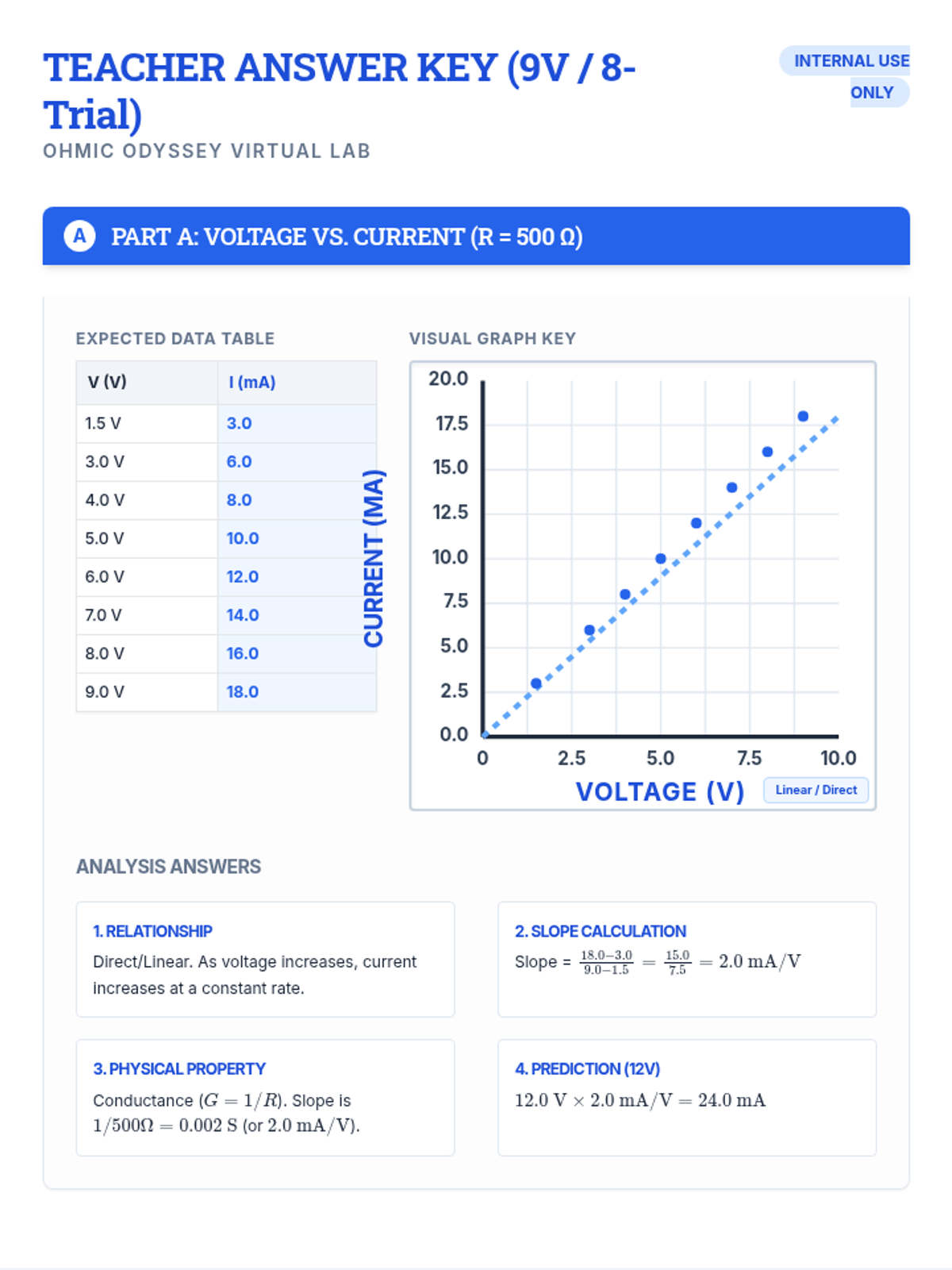
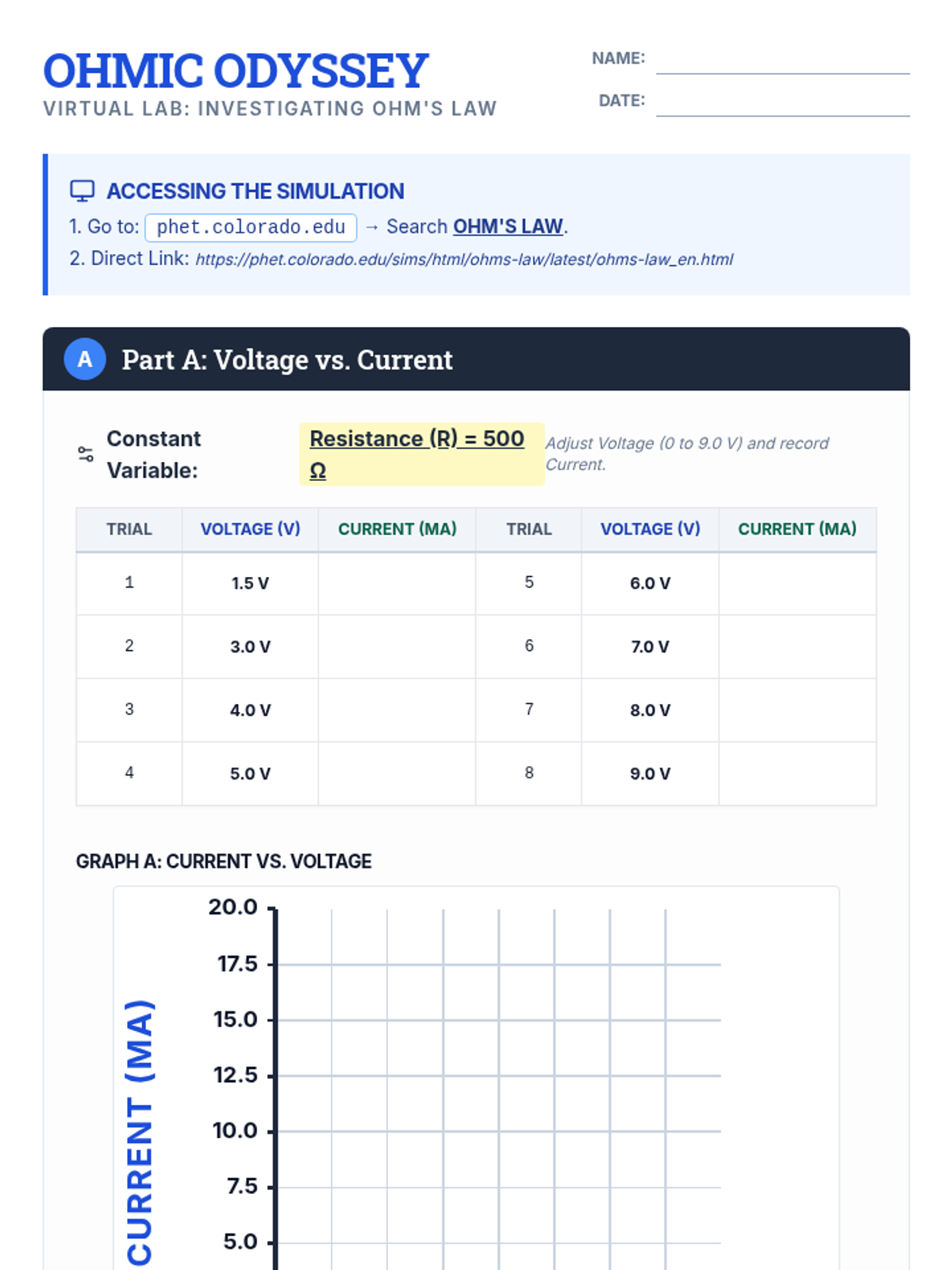
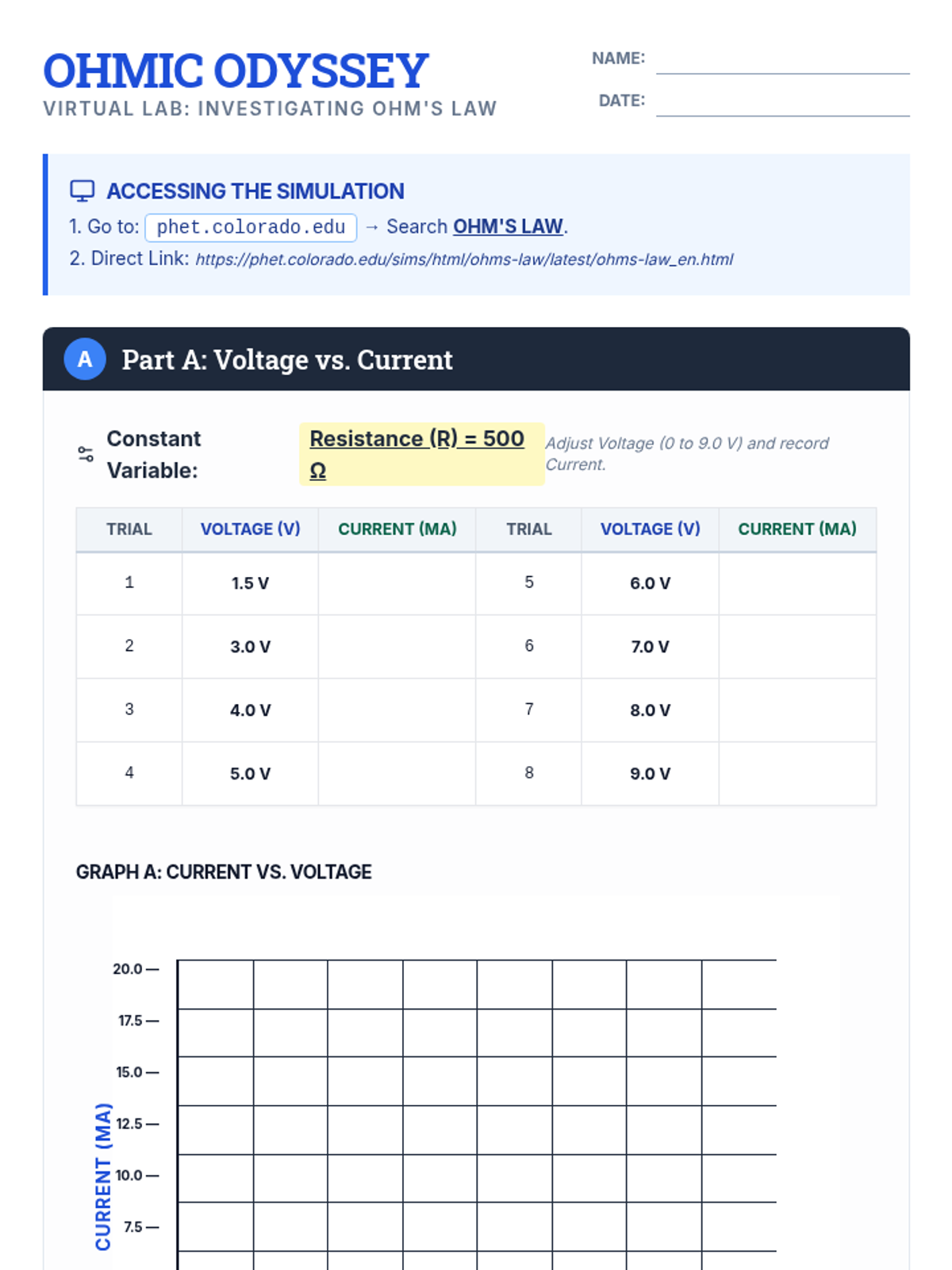
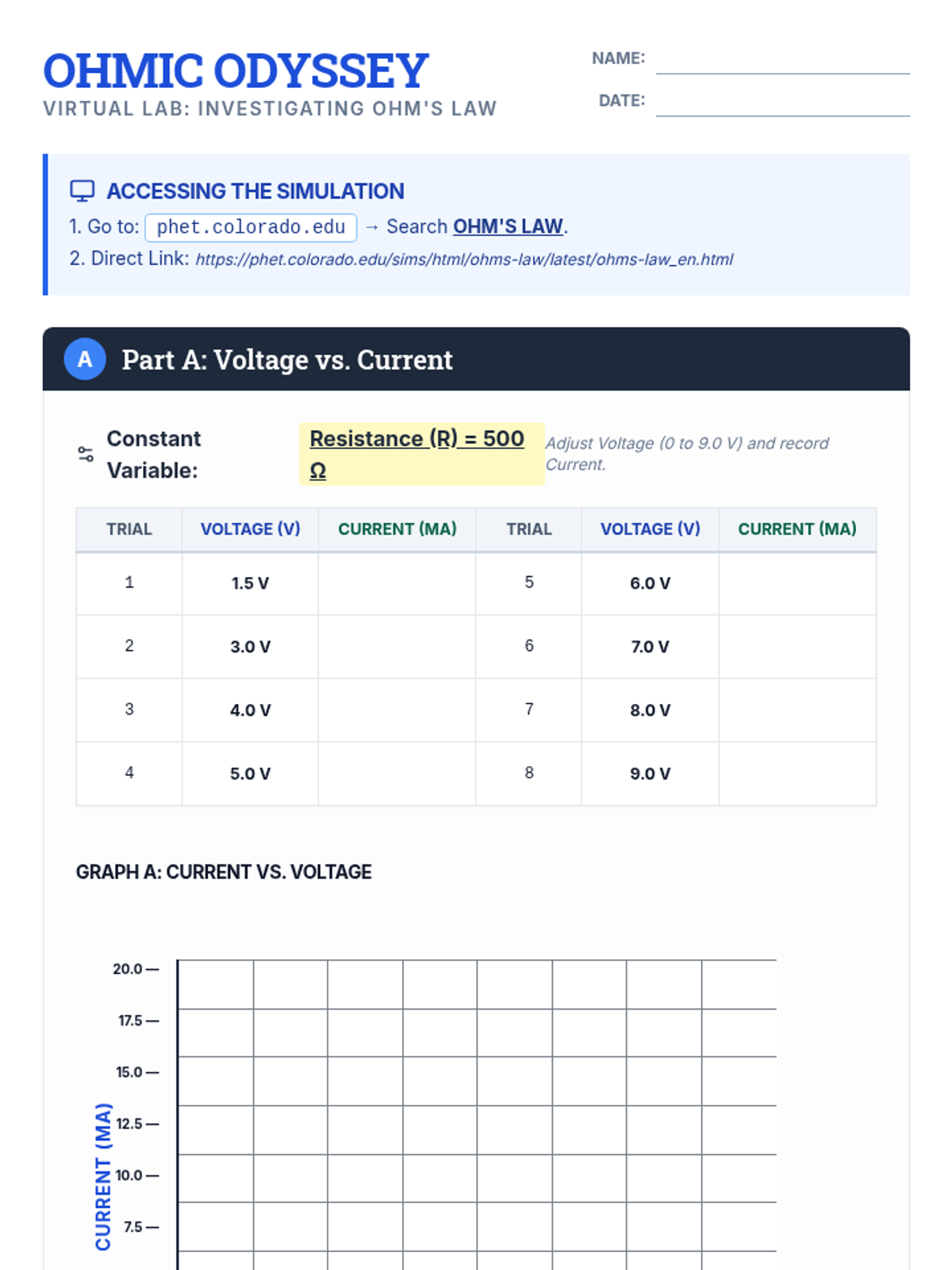
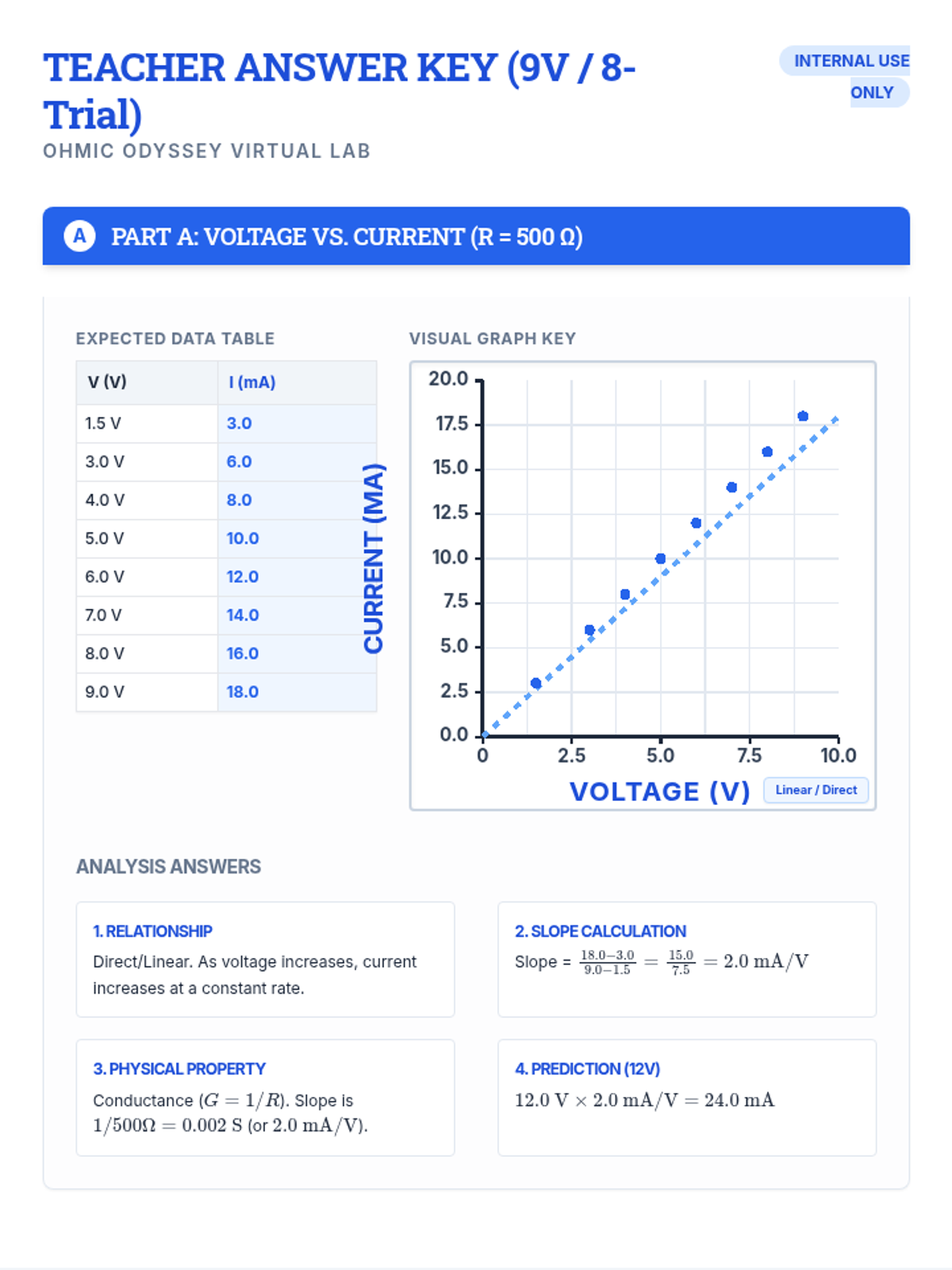
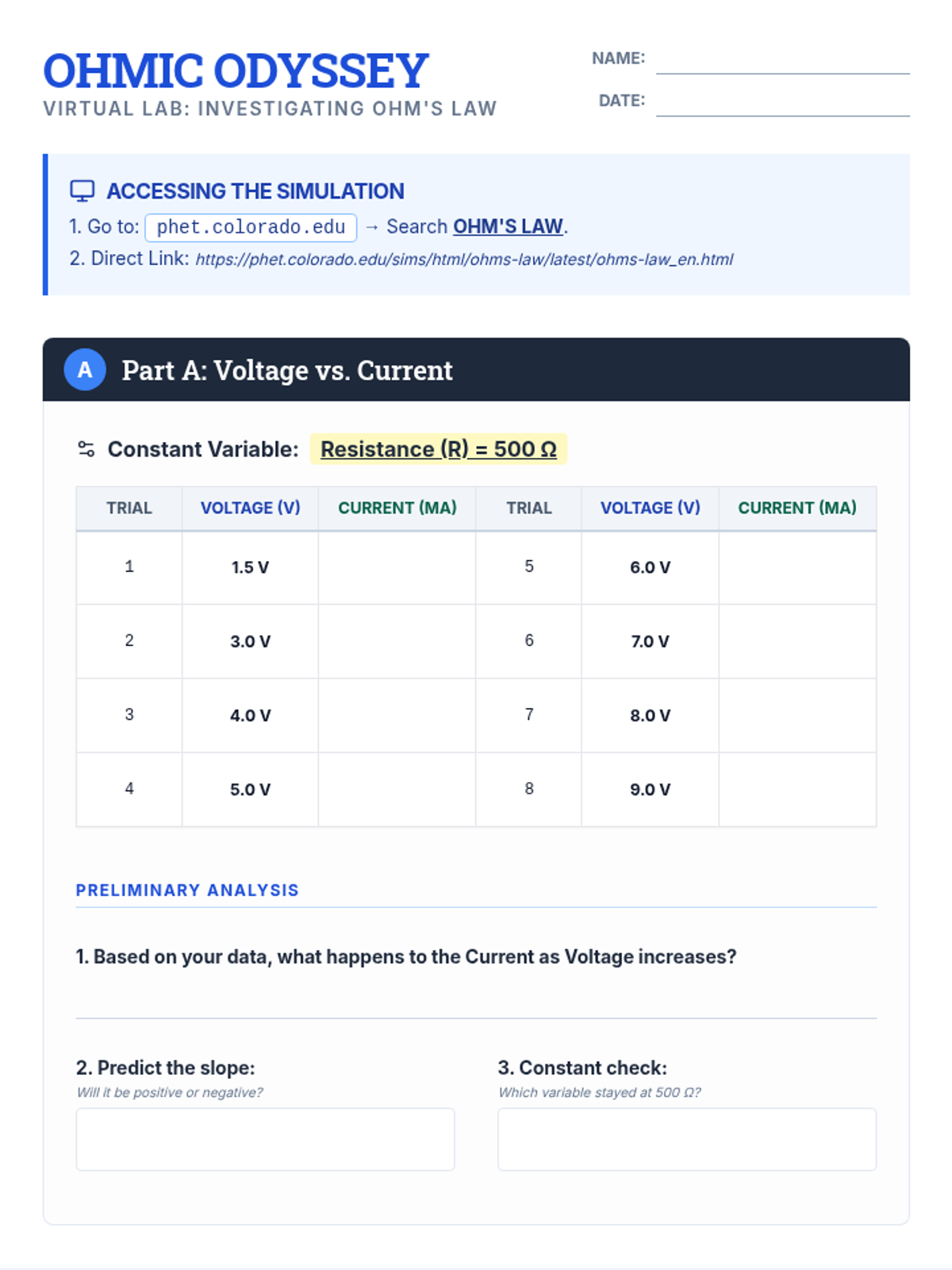
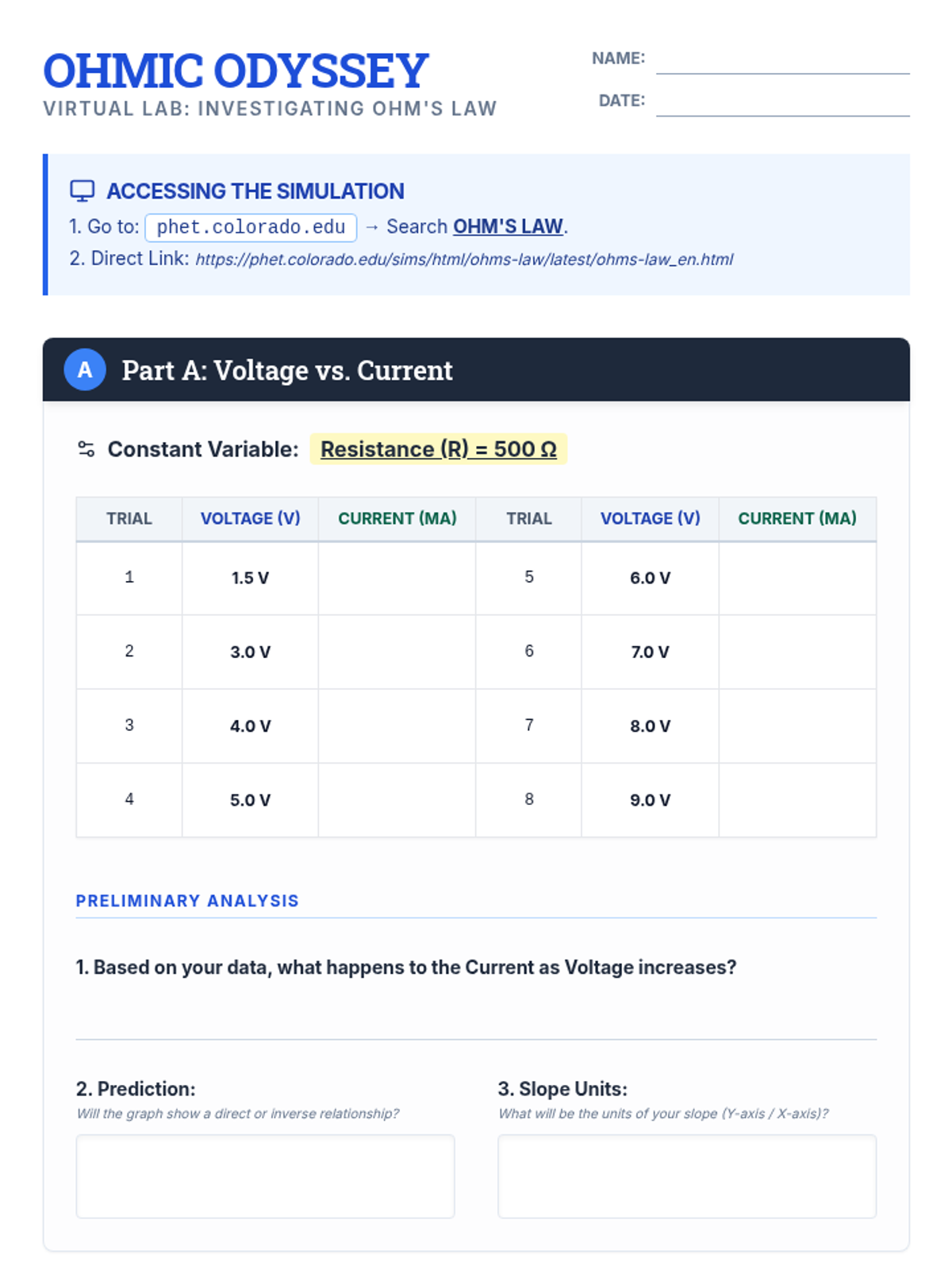
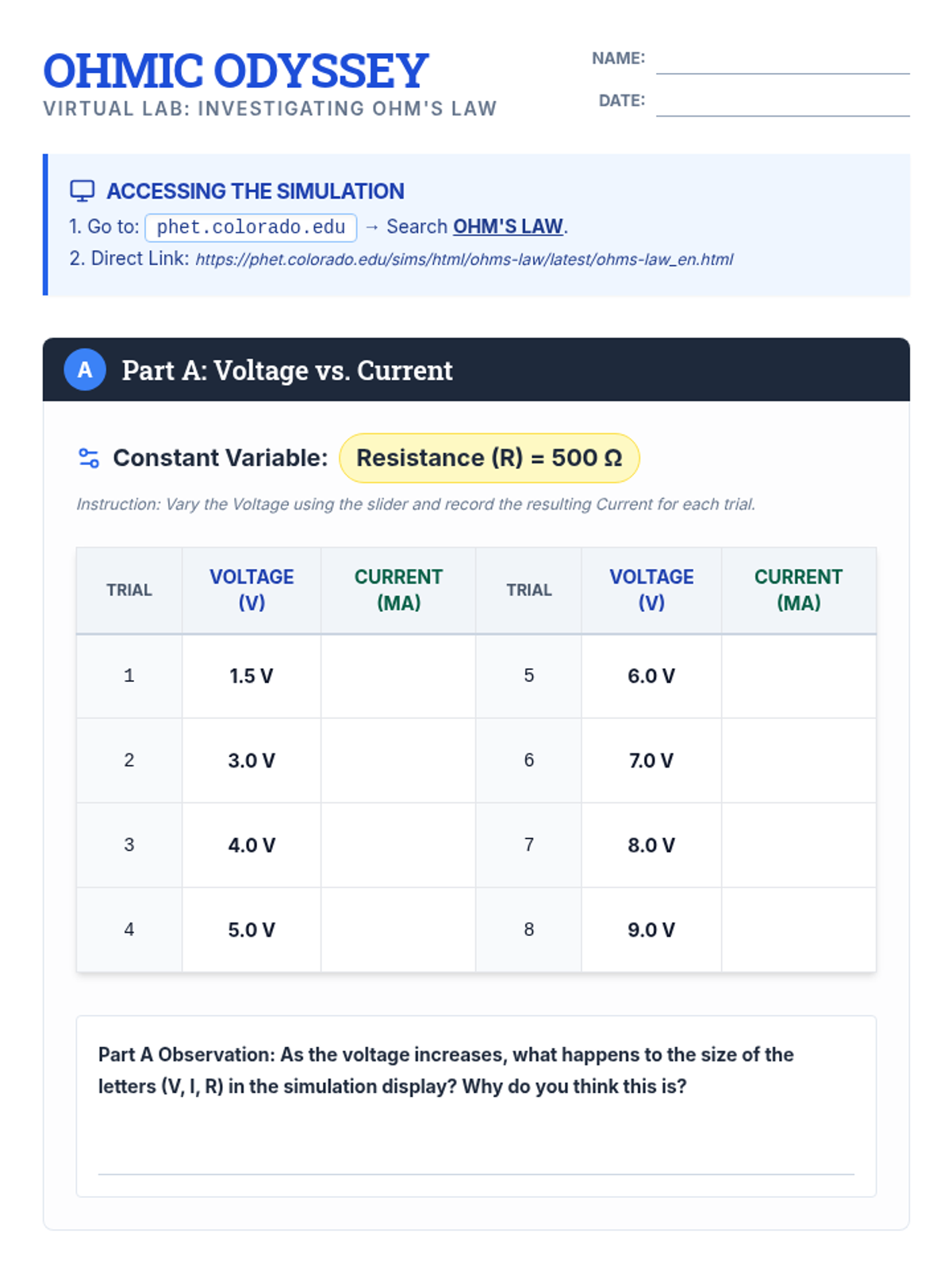
A hands-on virtual lab using the PhET Ohm's Law simulation to investigate the relationships between voltage, current, and resistance. Students collect data, graph results, and use CER to explain their findings.
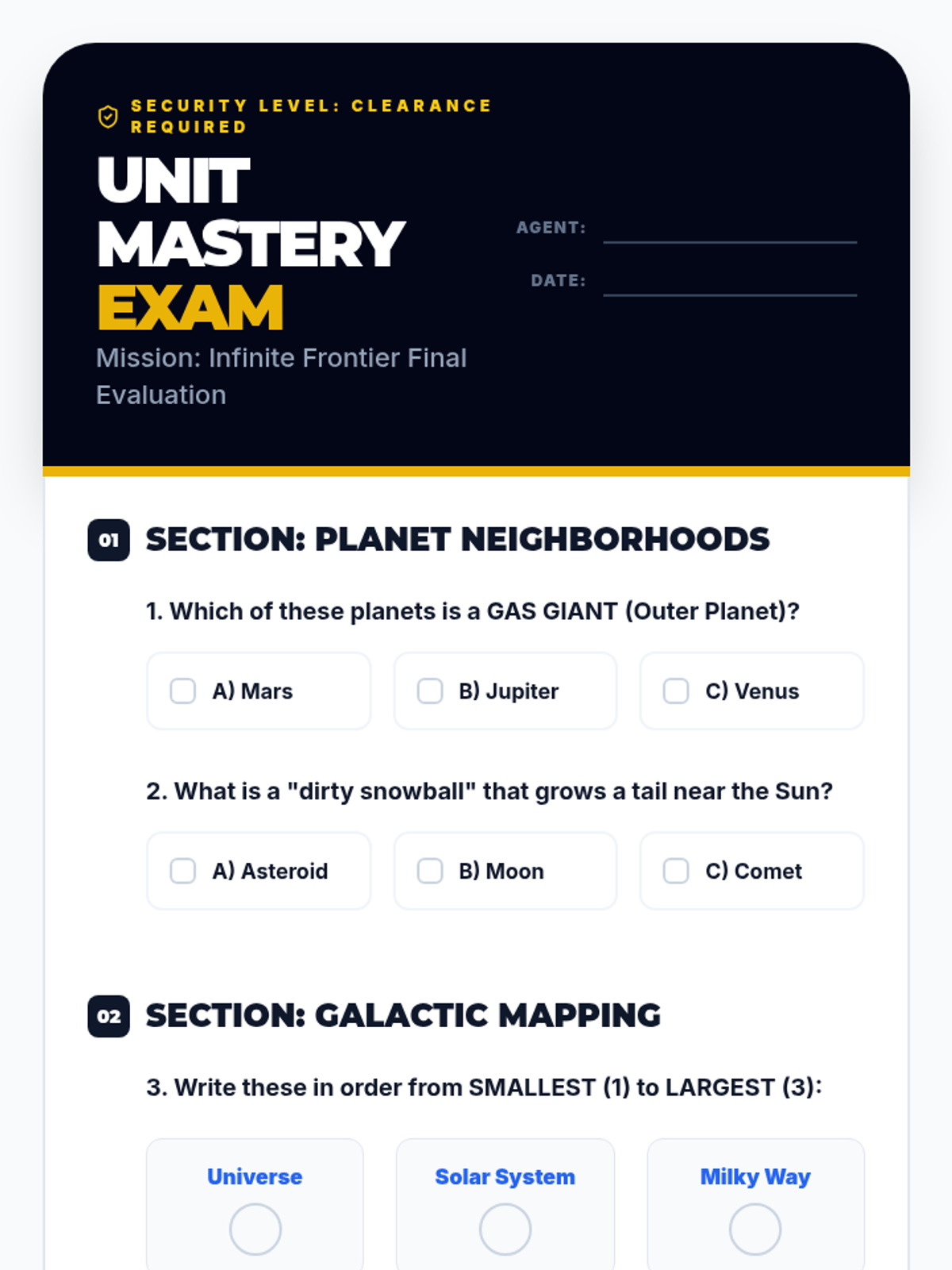
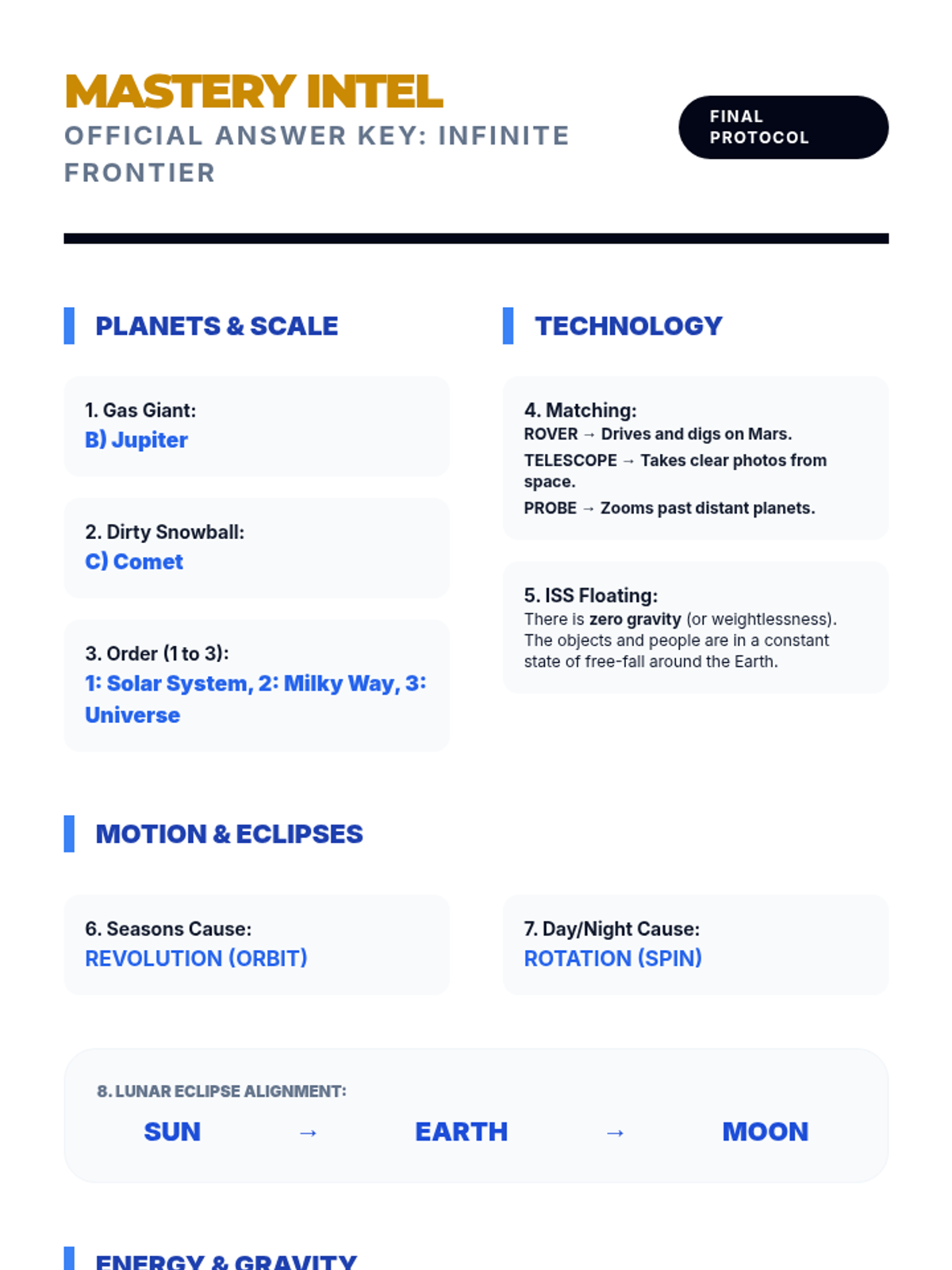
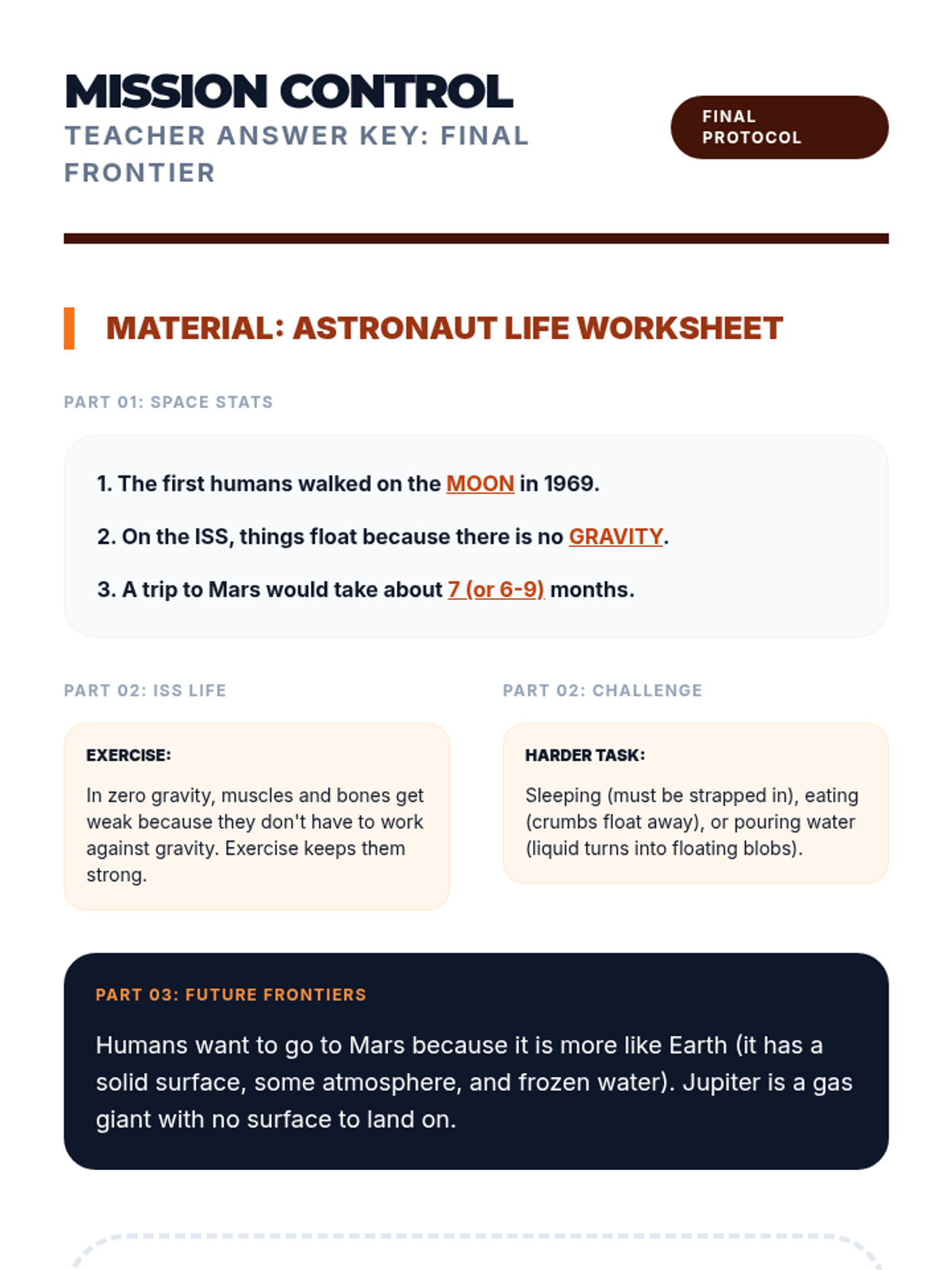
A comprehensive end-of-unit assessment and review lesson for the Infinite Frontier sequence. Includes a multi-topic test and a unit glossary.
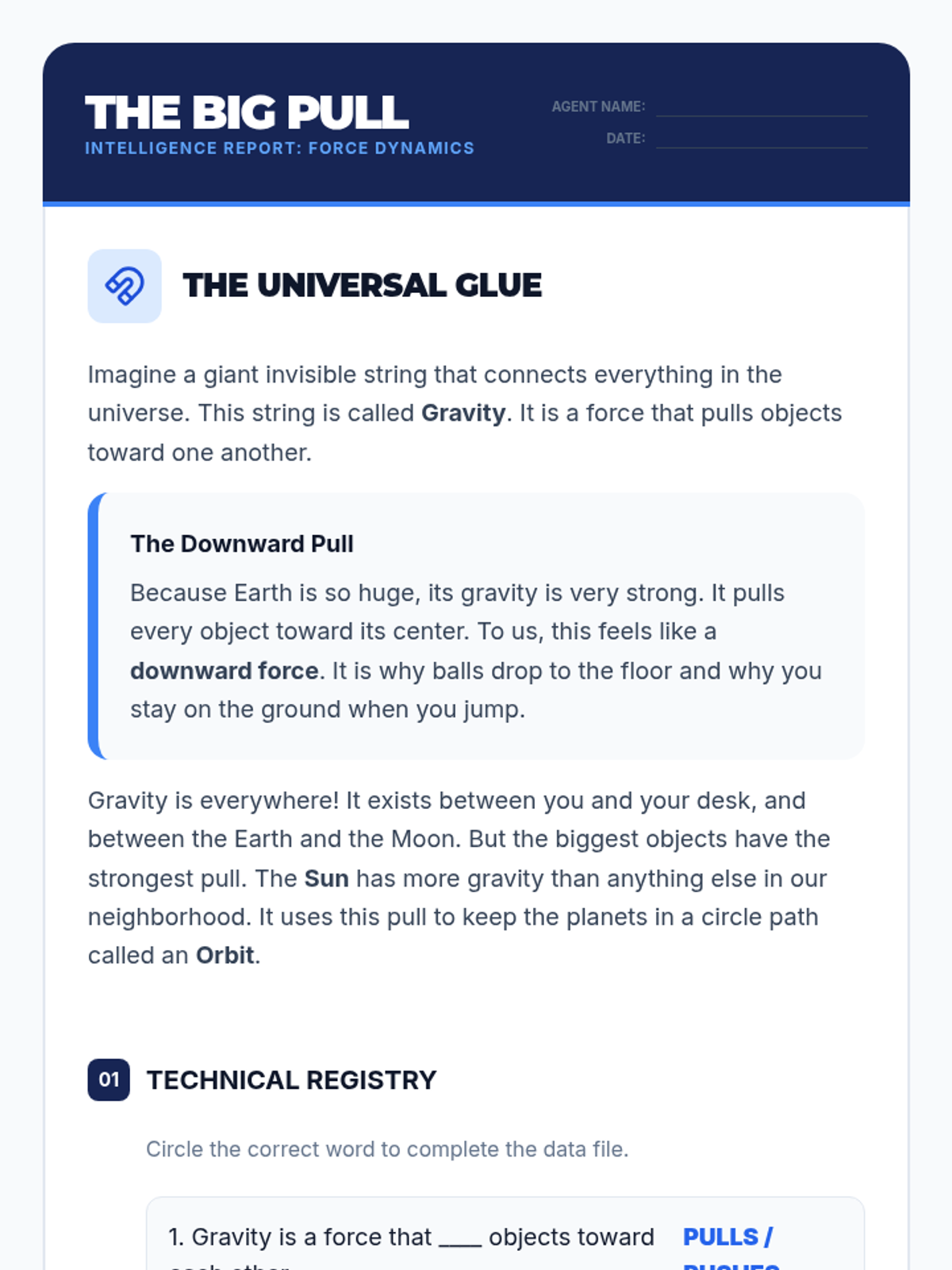
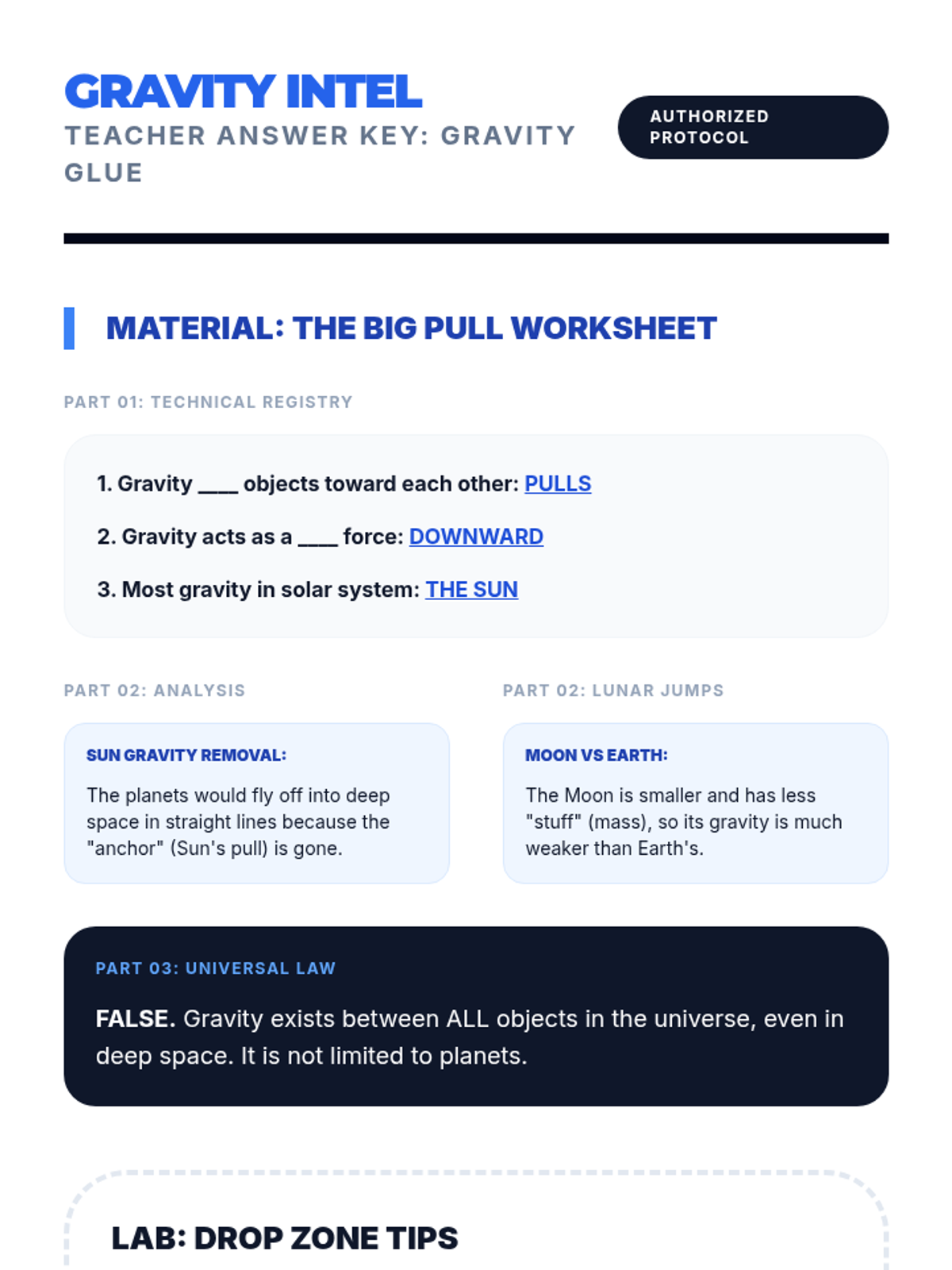
A lesson on the fundamental force of gravity, explaining its role as a downward force on Earth and the invisible "glue" that keeps the planets in orbit around the Sun.
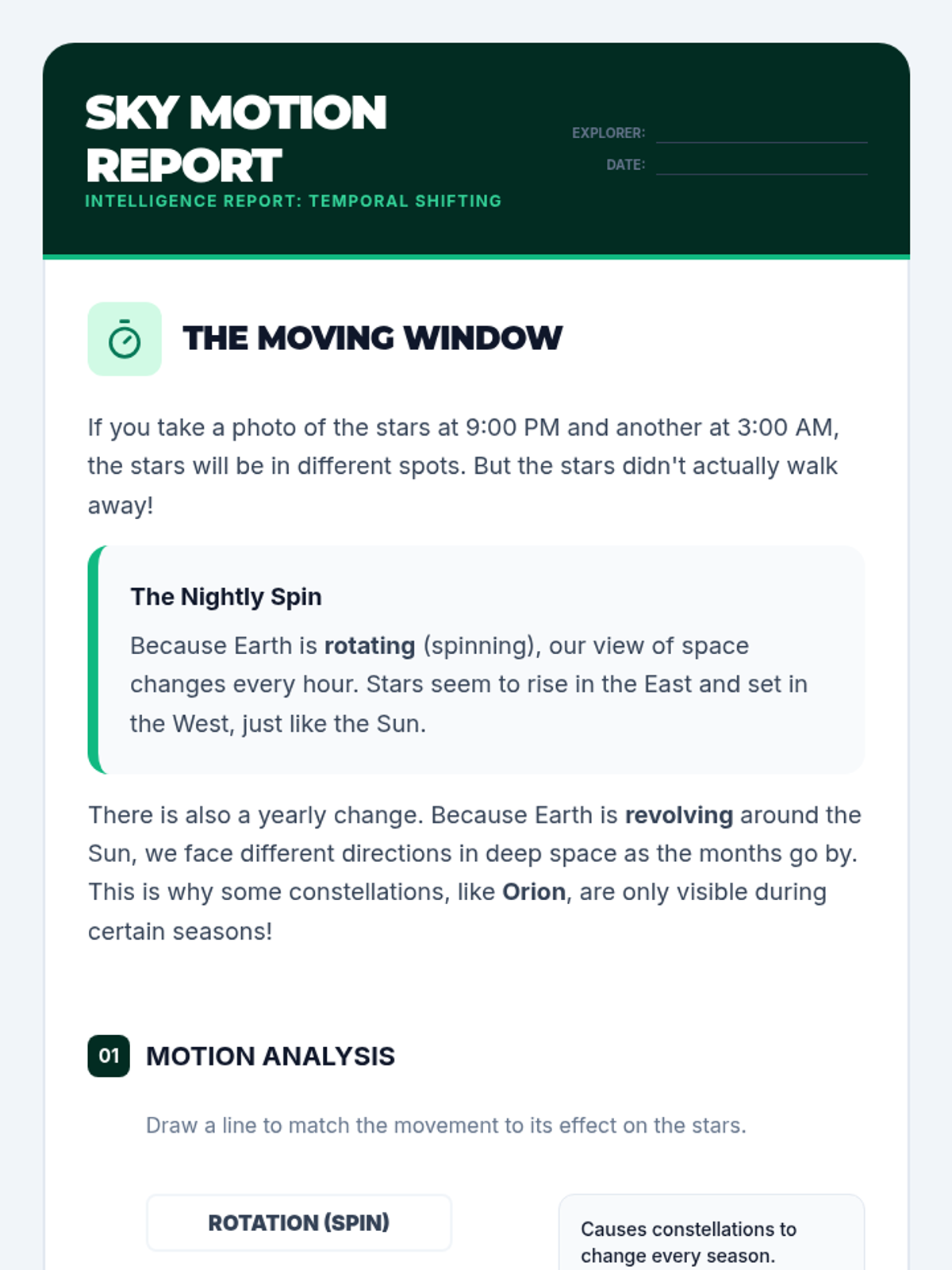
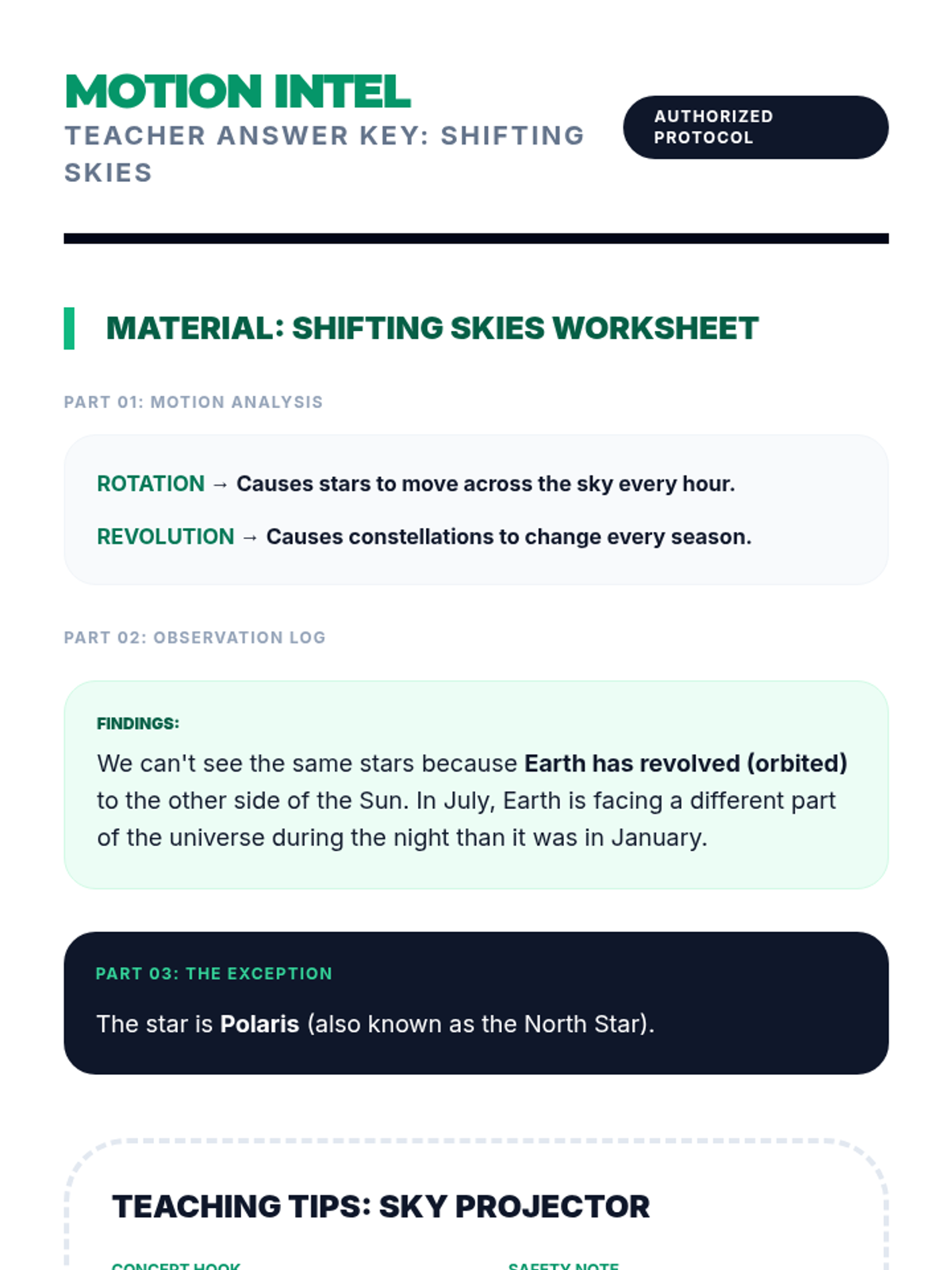
A lesson exploring why the night sky appears to change throughout the night and across different seasons due to Earth's rotation and revolution.
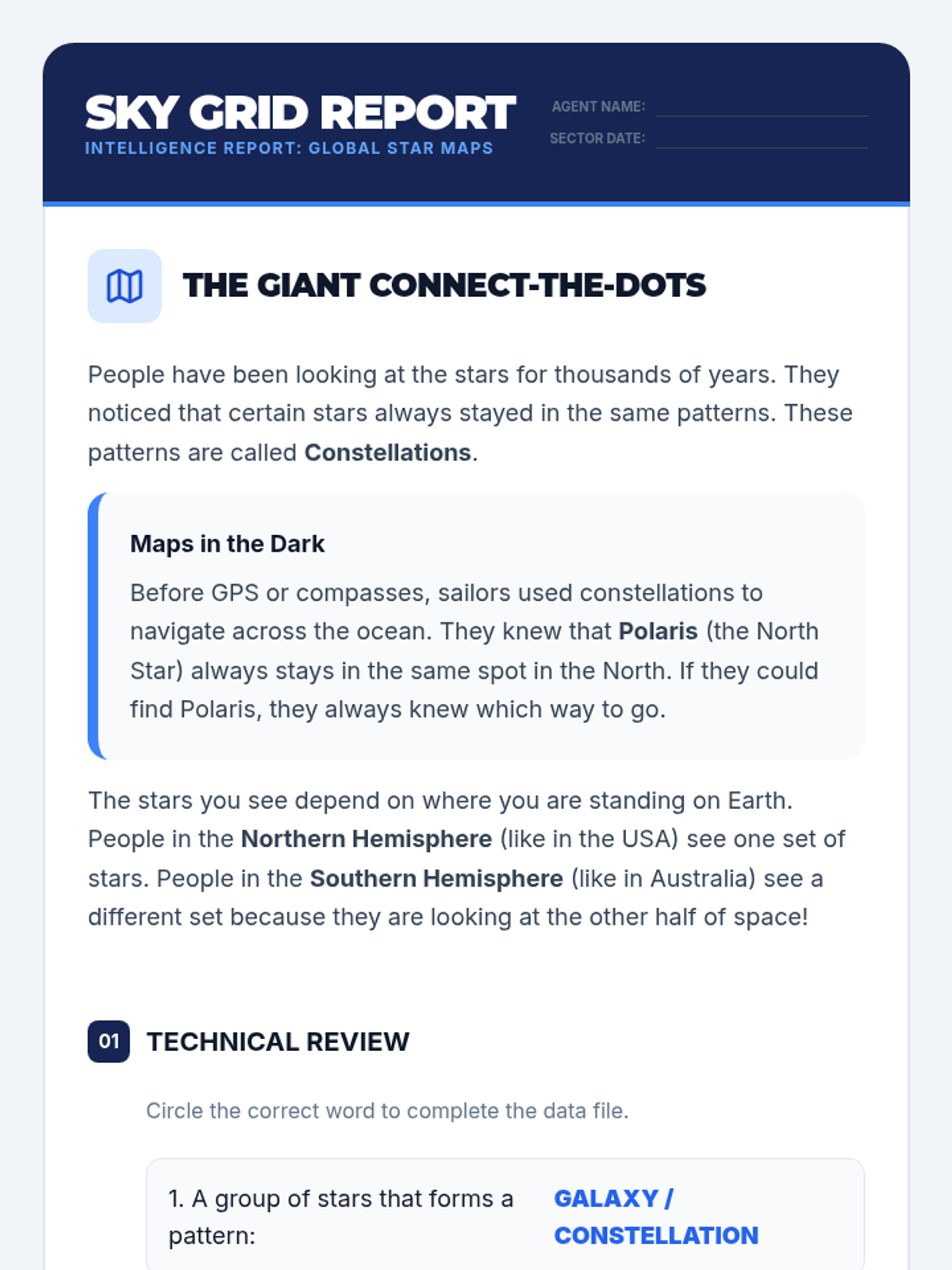
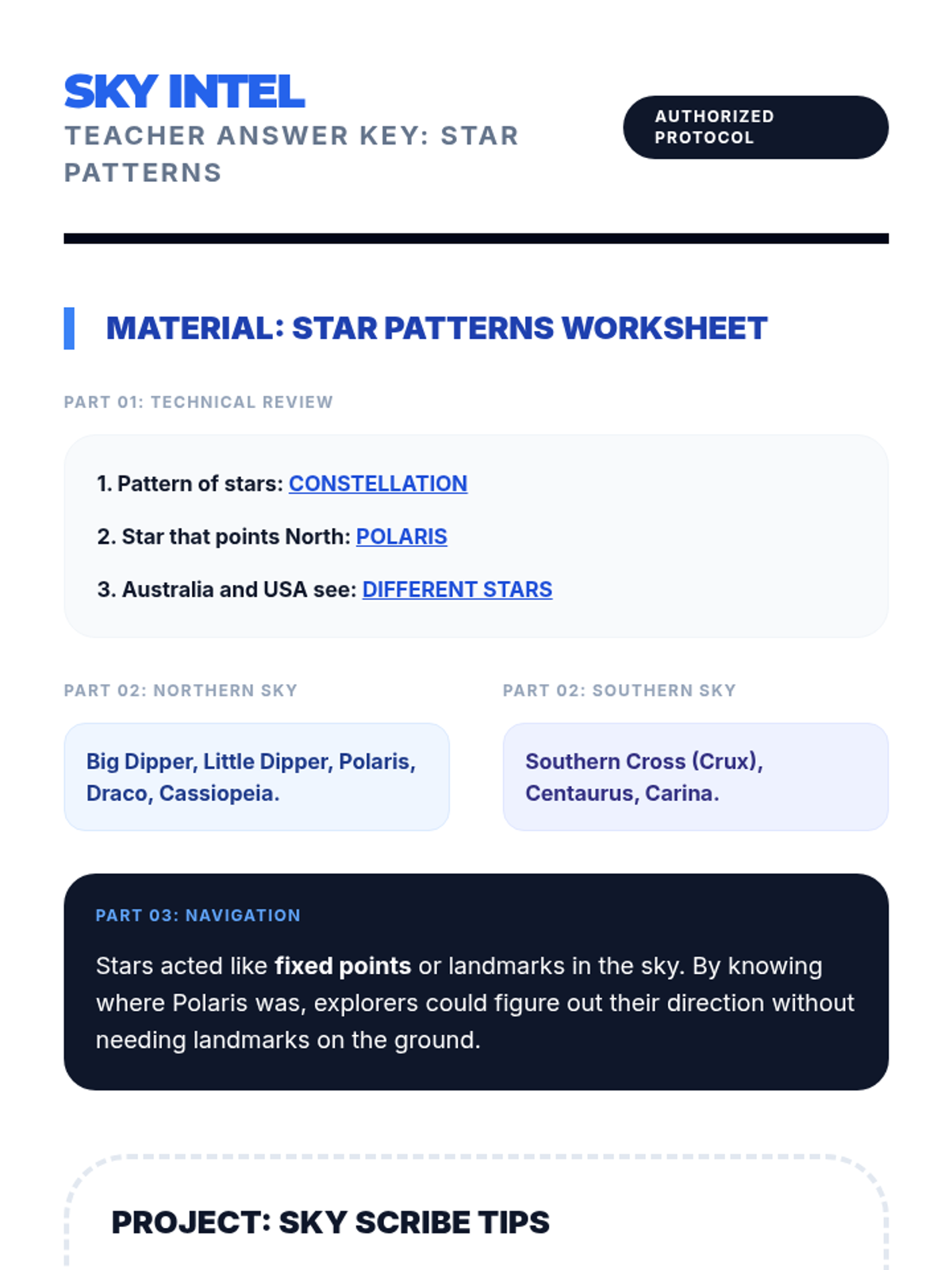
A lesson on constellations, explaining how stars form patterns used for navigation and how the view of the sky changes between the Northern and Southern Hemispheres.
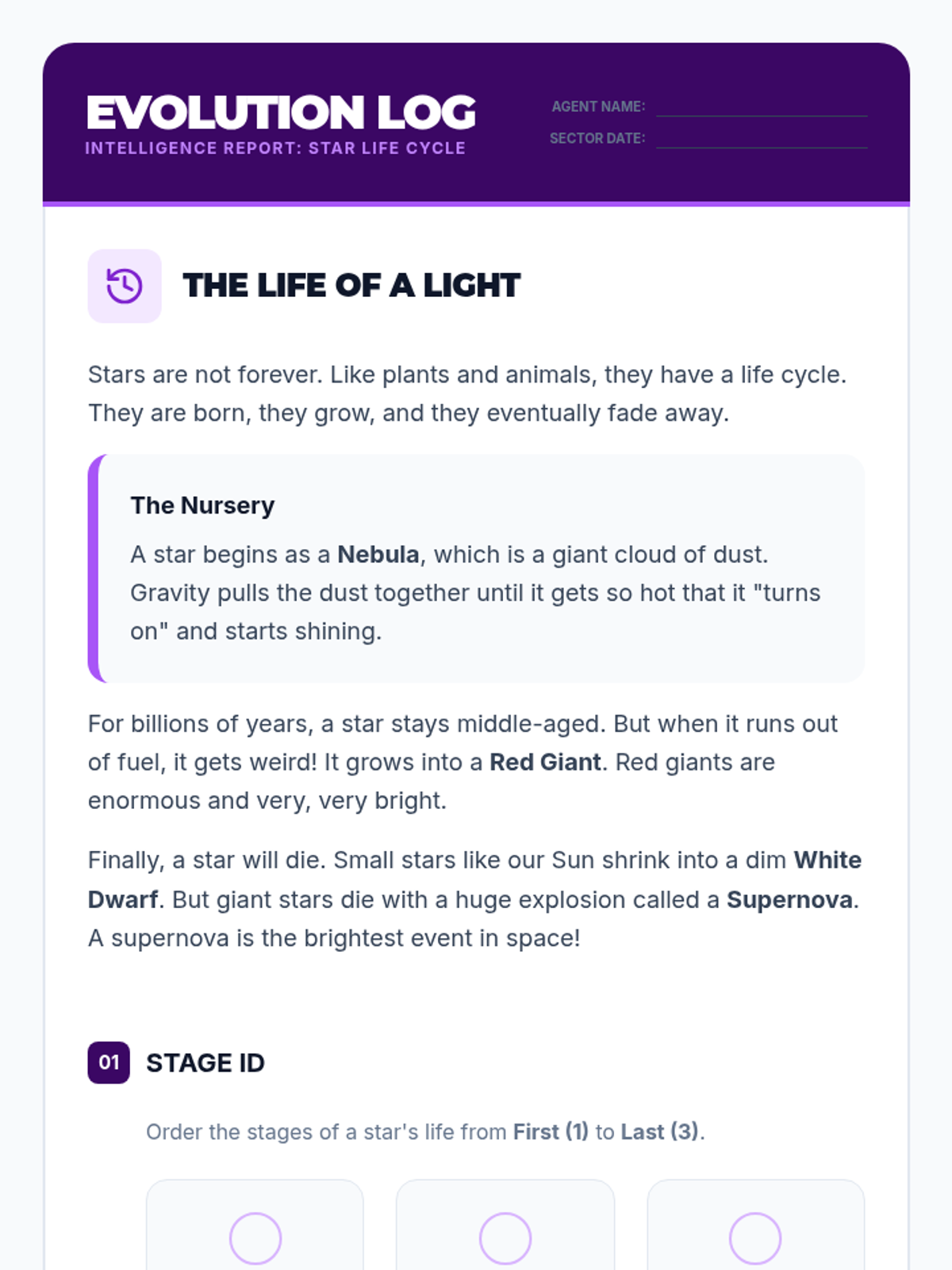
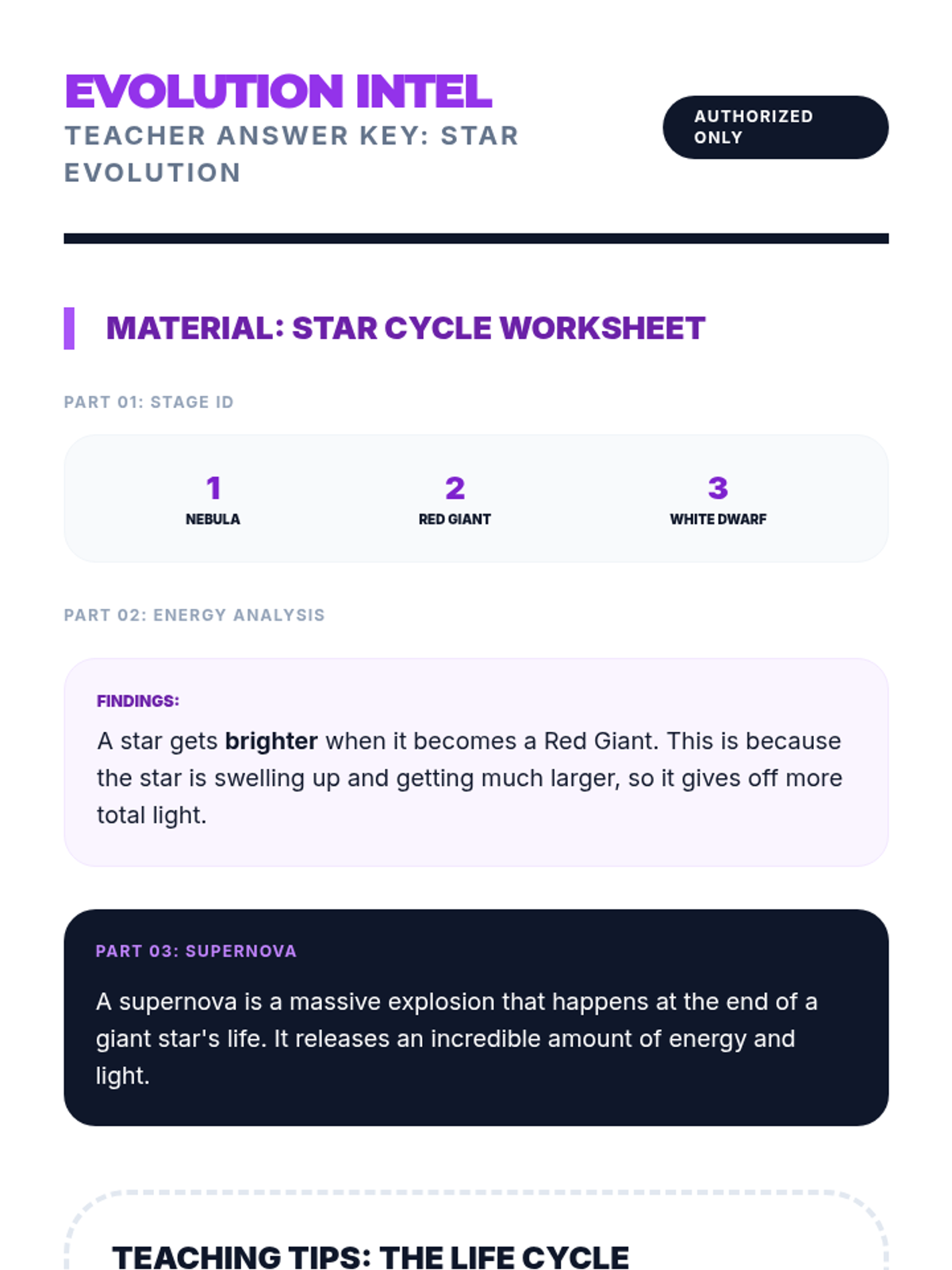
A lesson on the life cycle of stars, exploring how they are born in nebulae, grow, and eventually change brightness as they age or die.
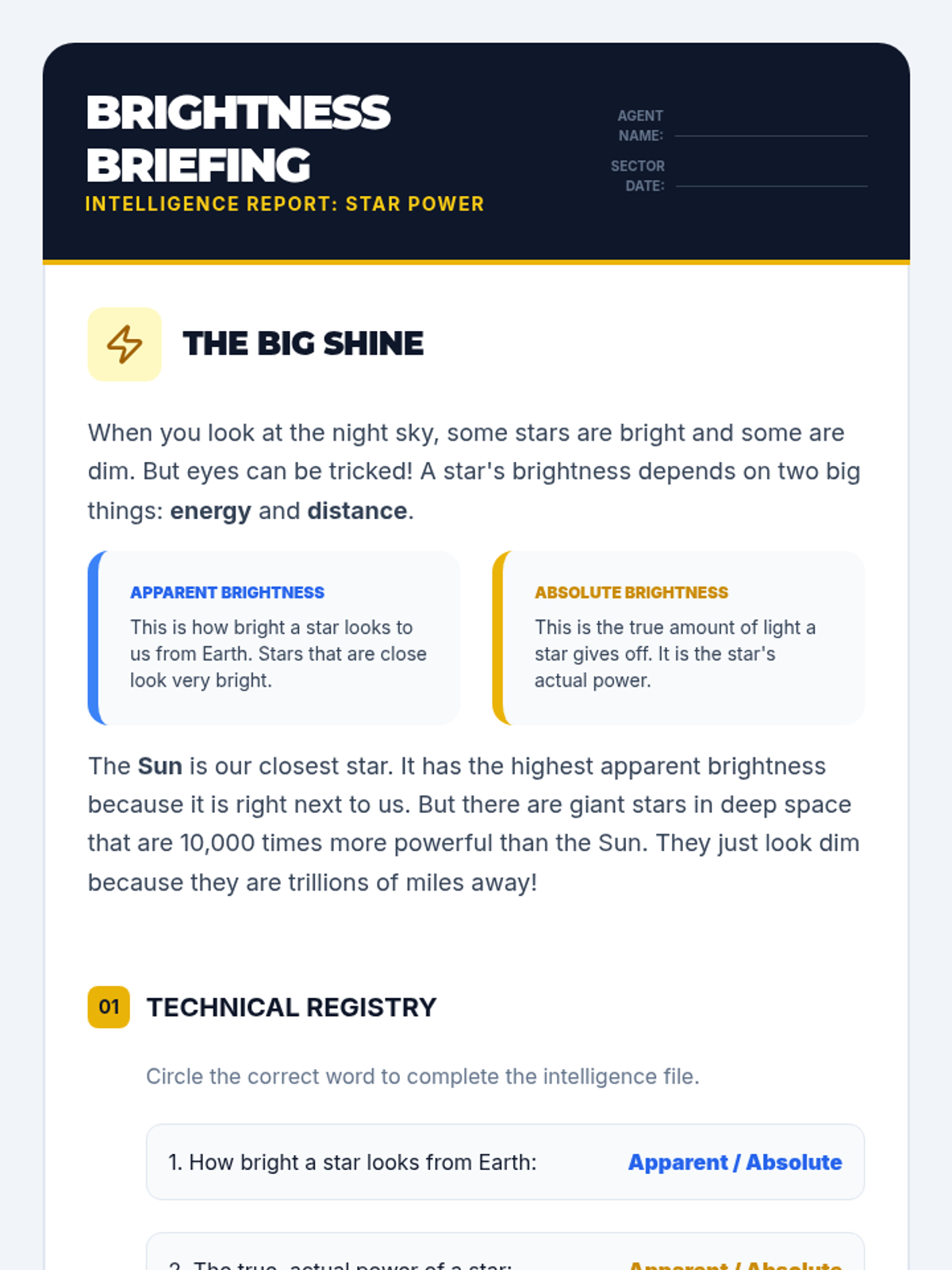
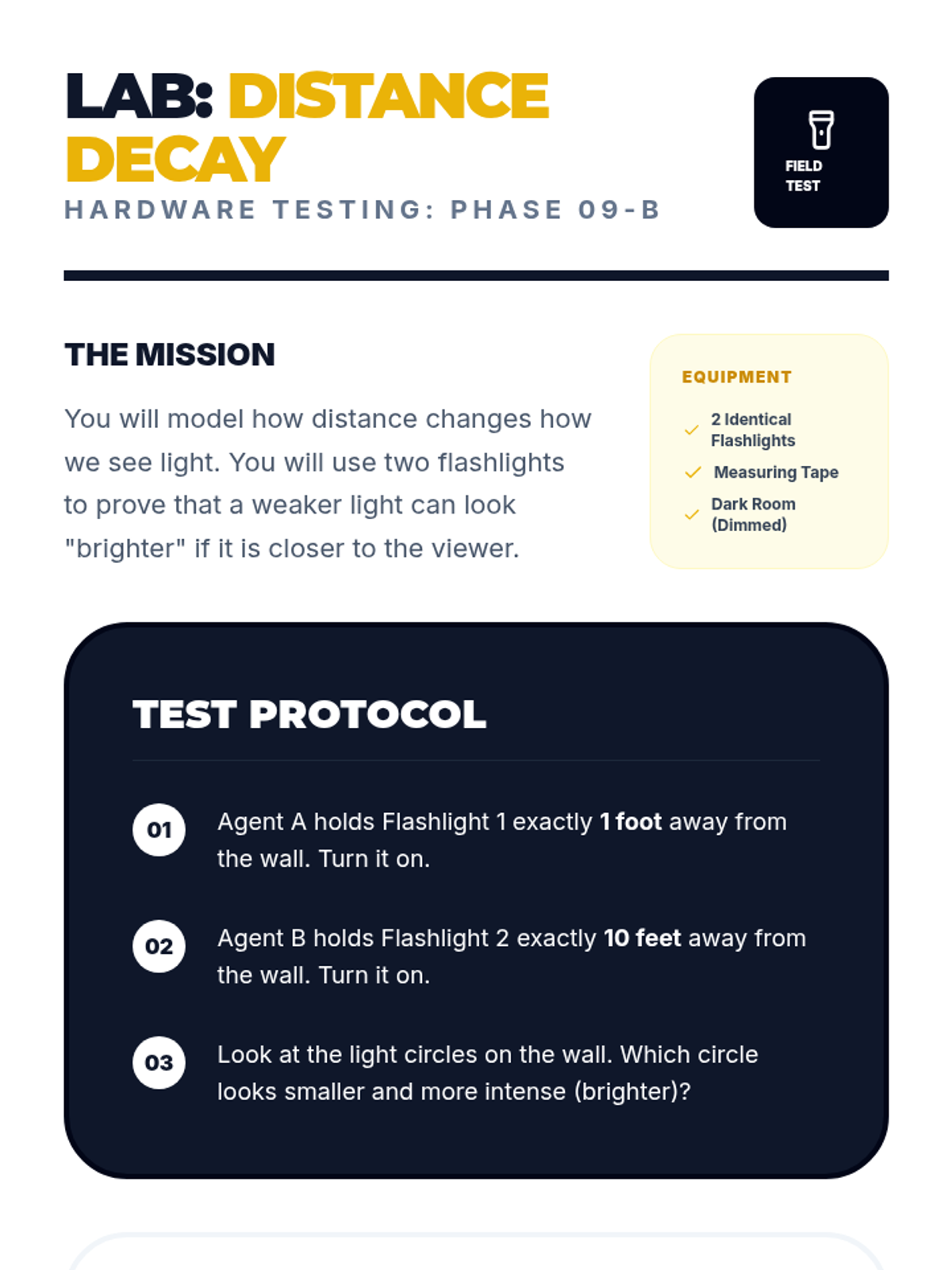
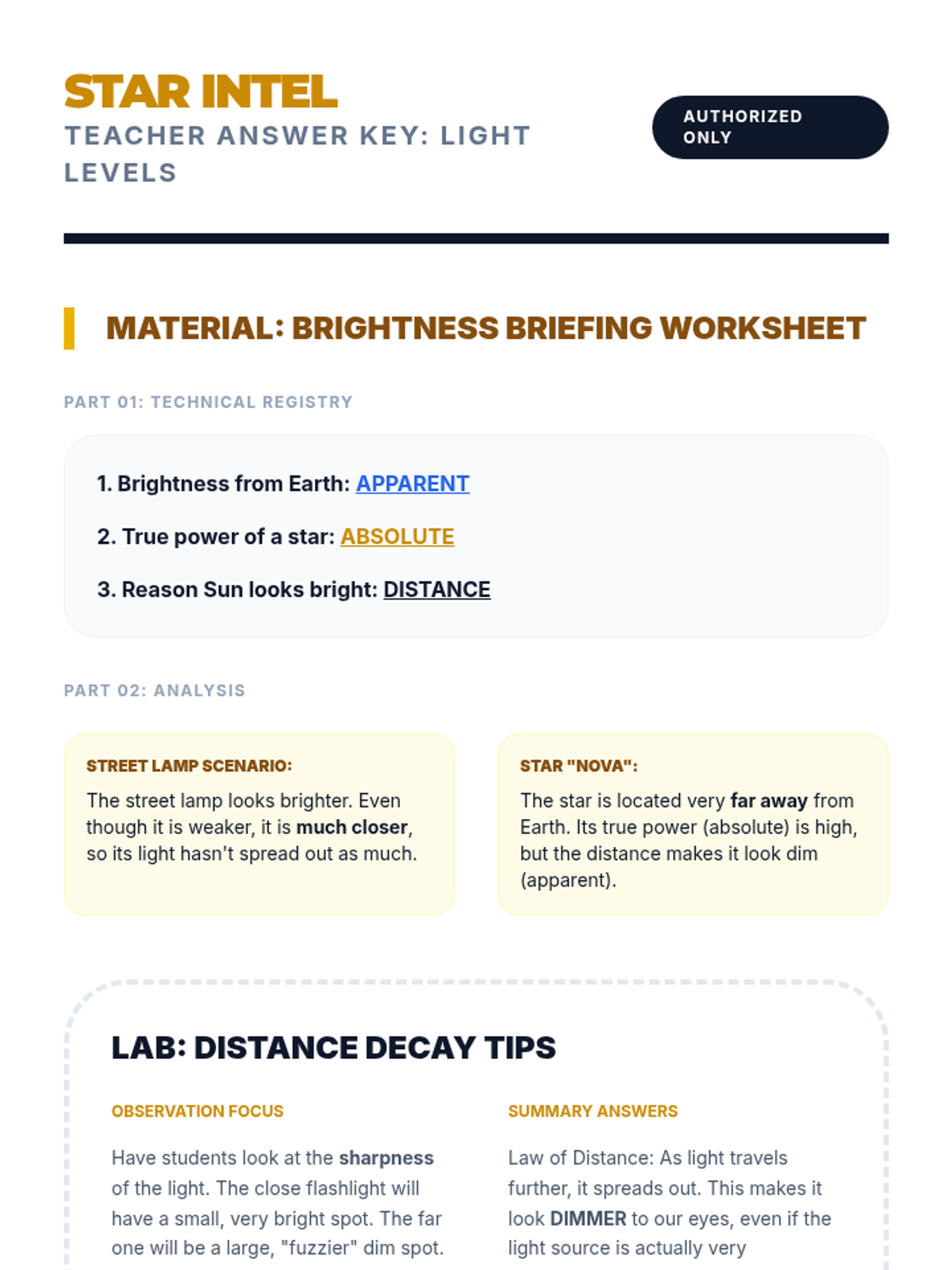
A lesson exploring why some stars look brighter than others, focusing on the difference between apparent and absolute brightness and the role of distance.
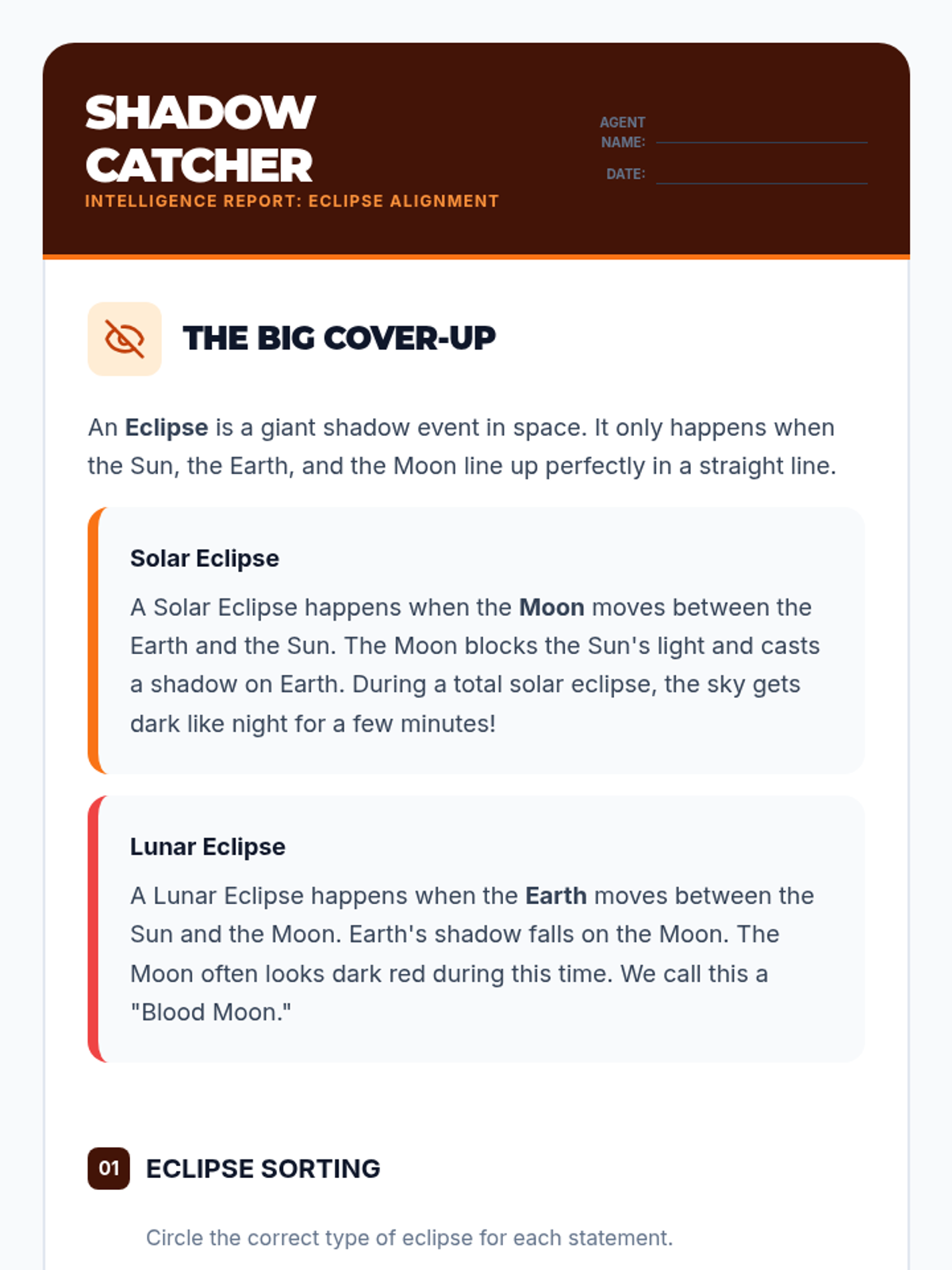
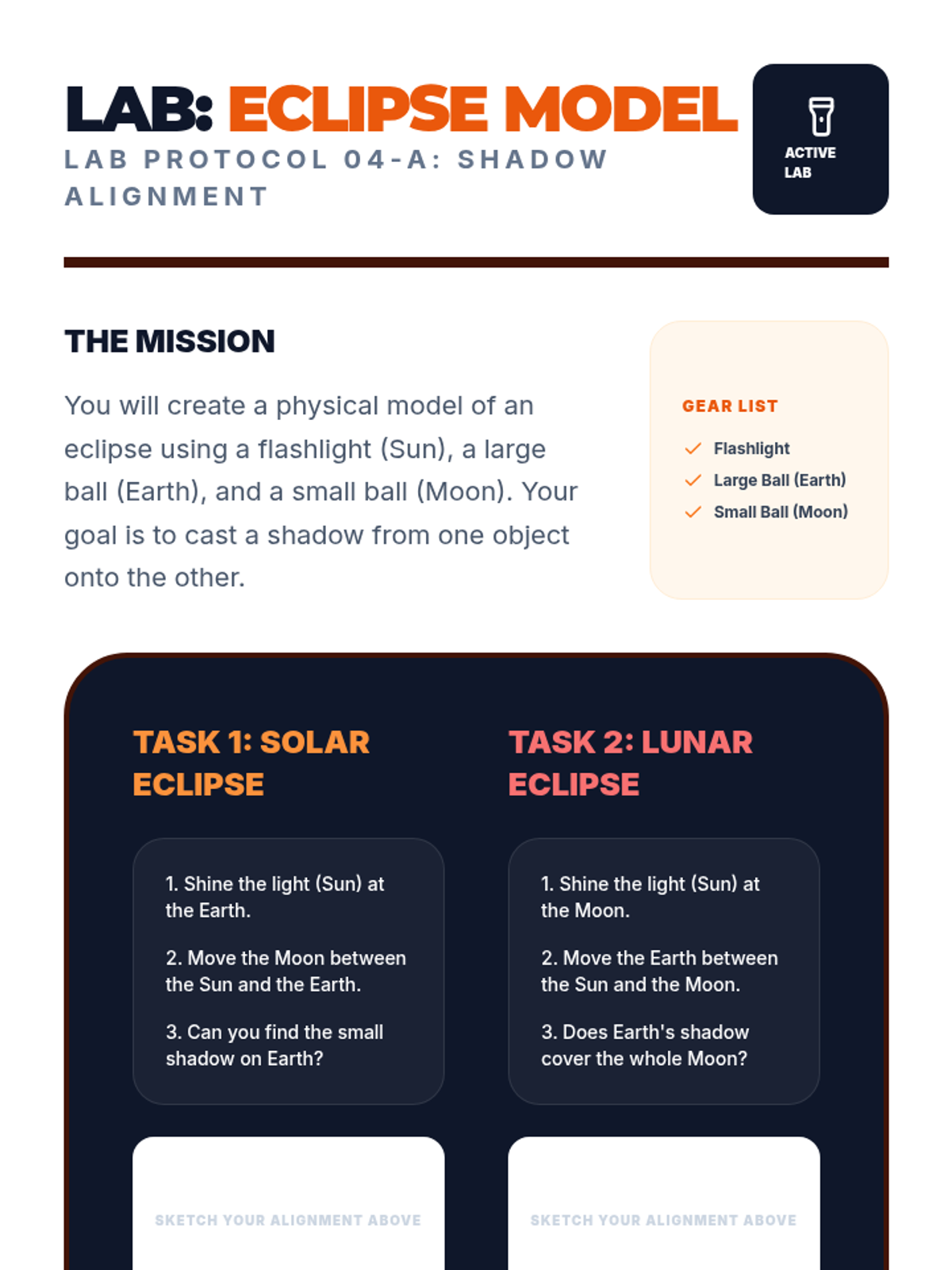
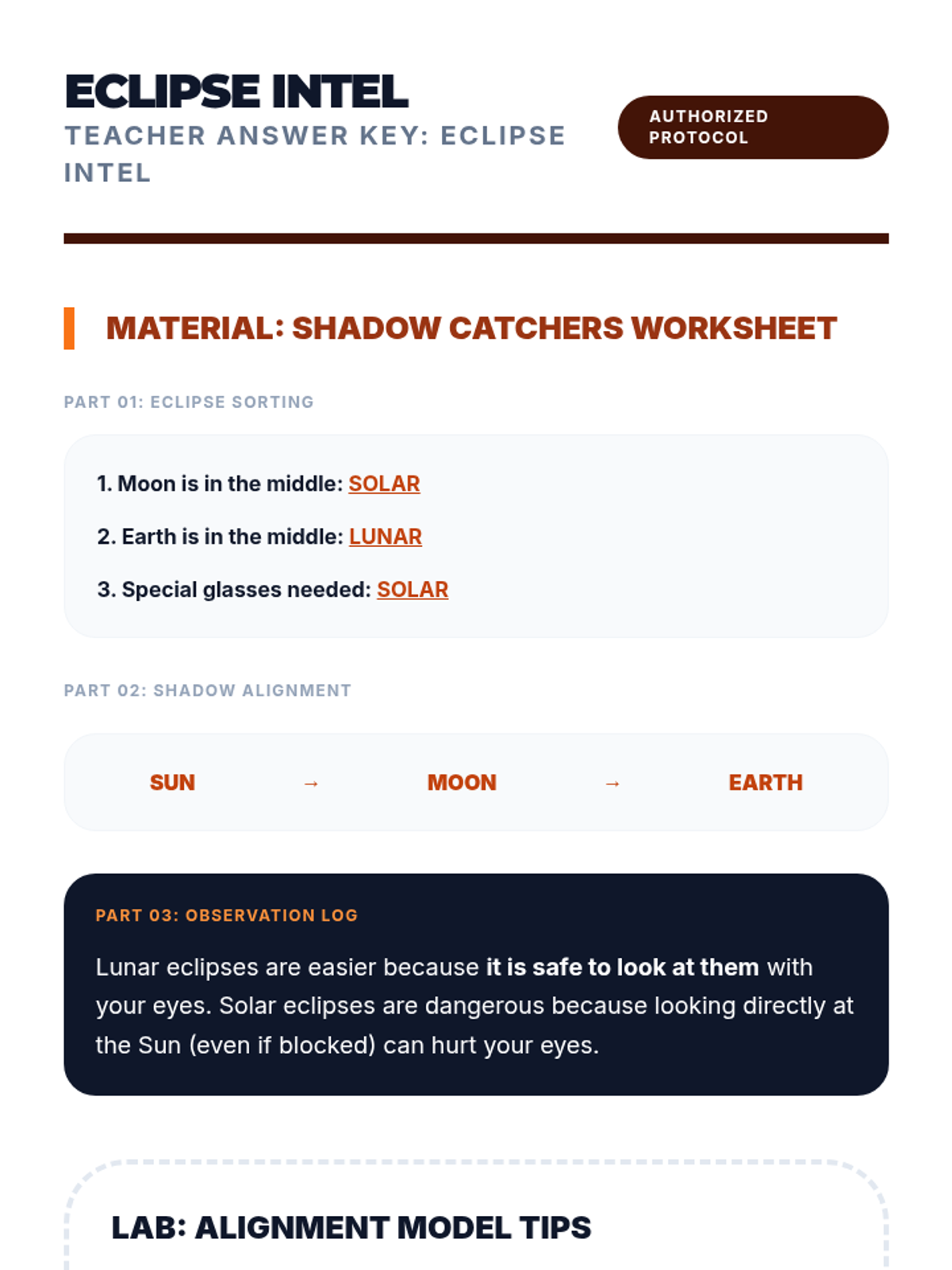
A lesson on solar and lunar eclipses, exploring how the alignment of the Sun, Earth, and Moon creates dramatic shadows in space.
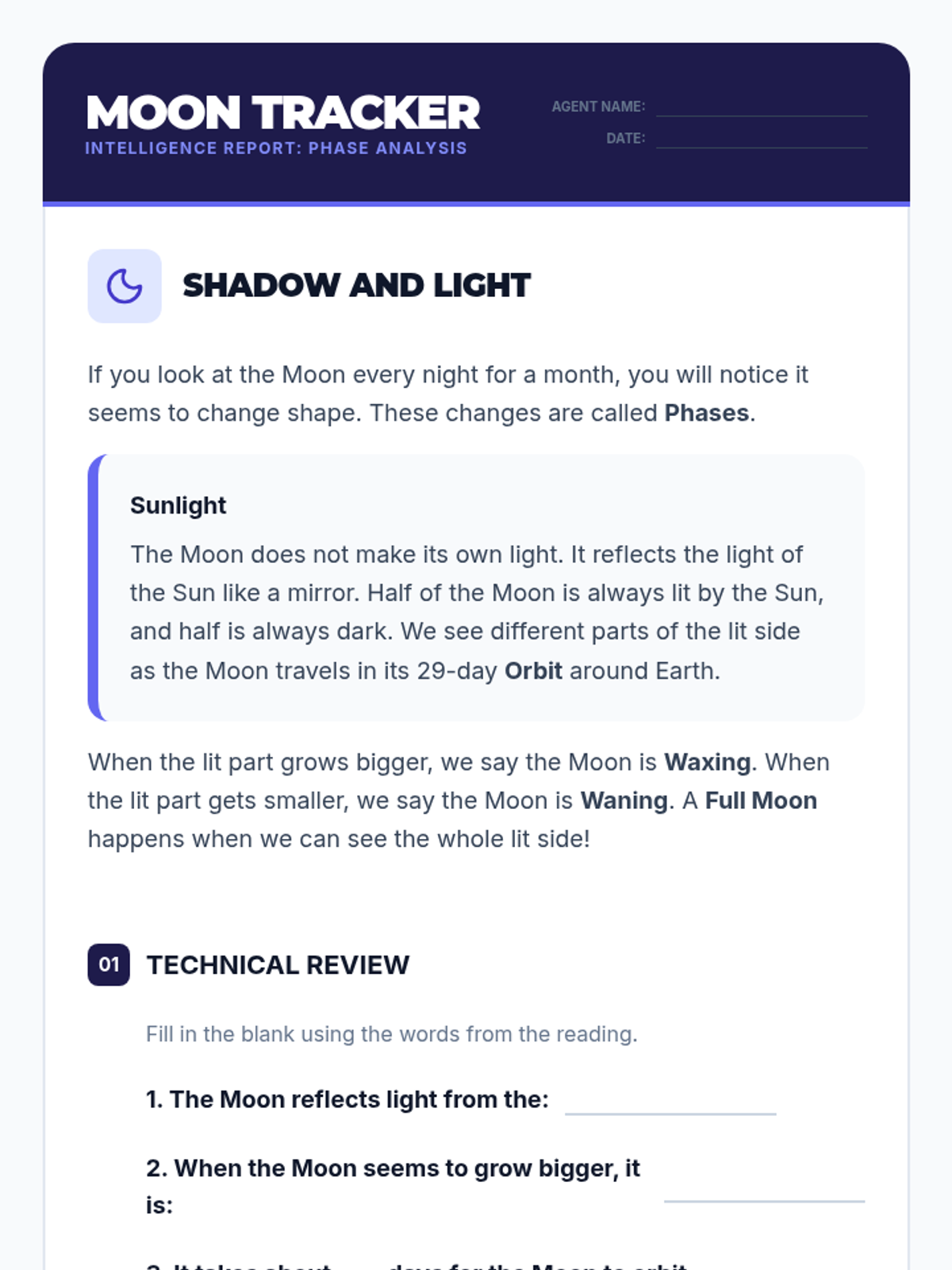
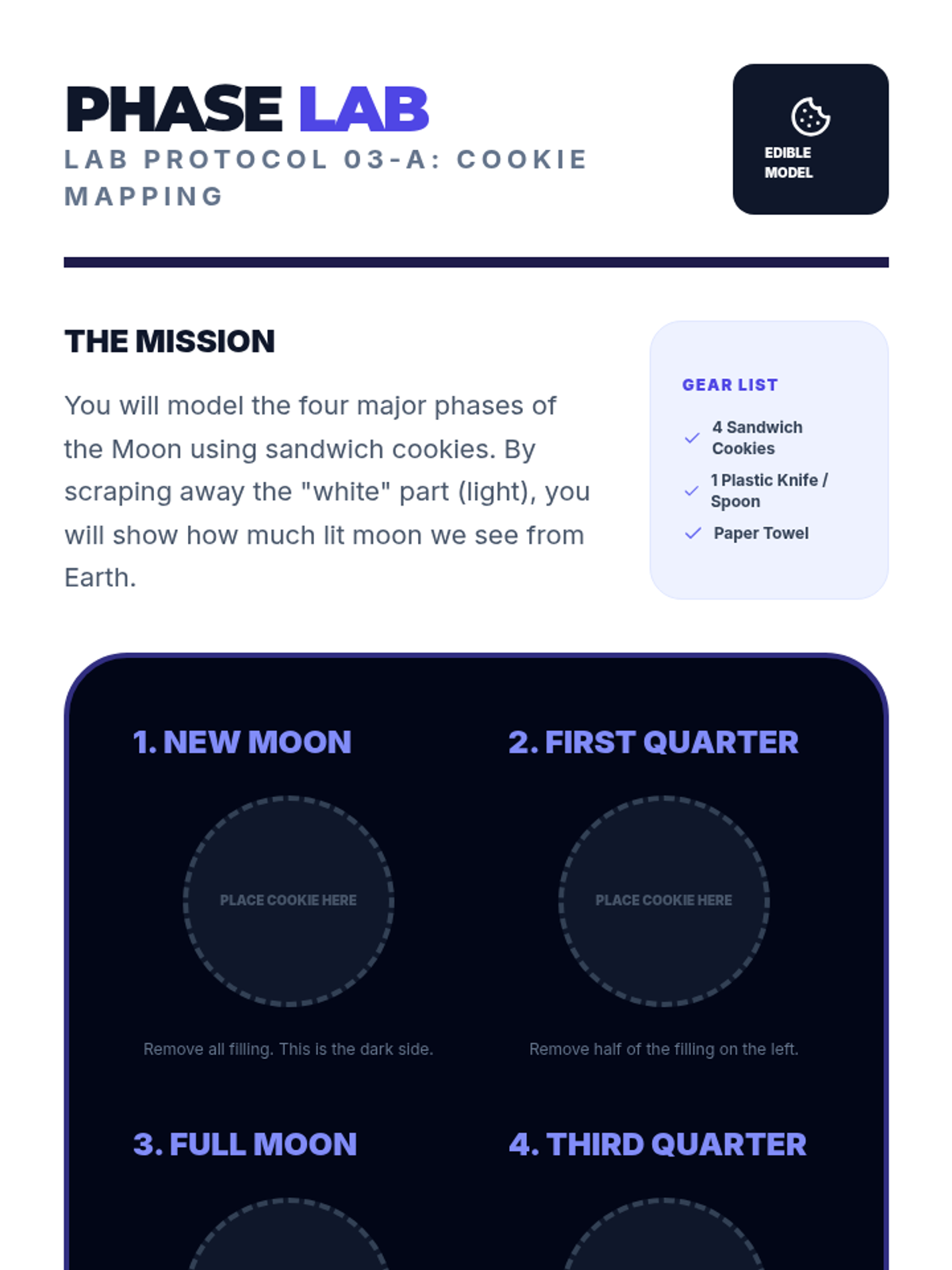
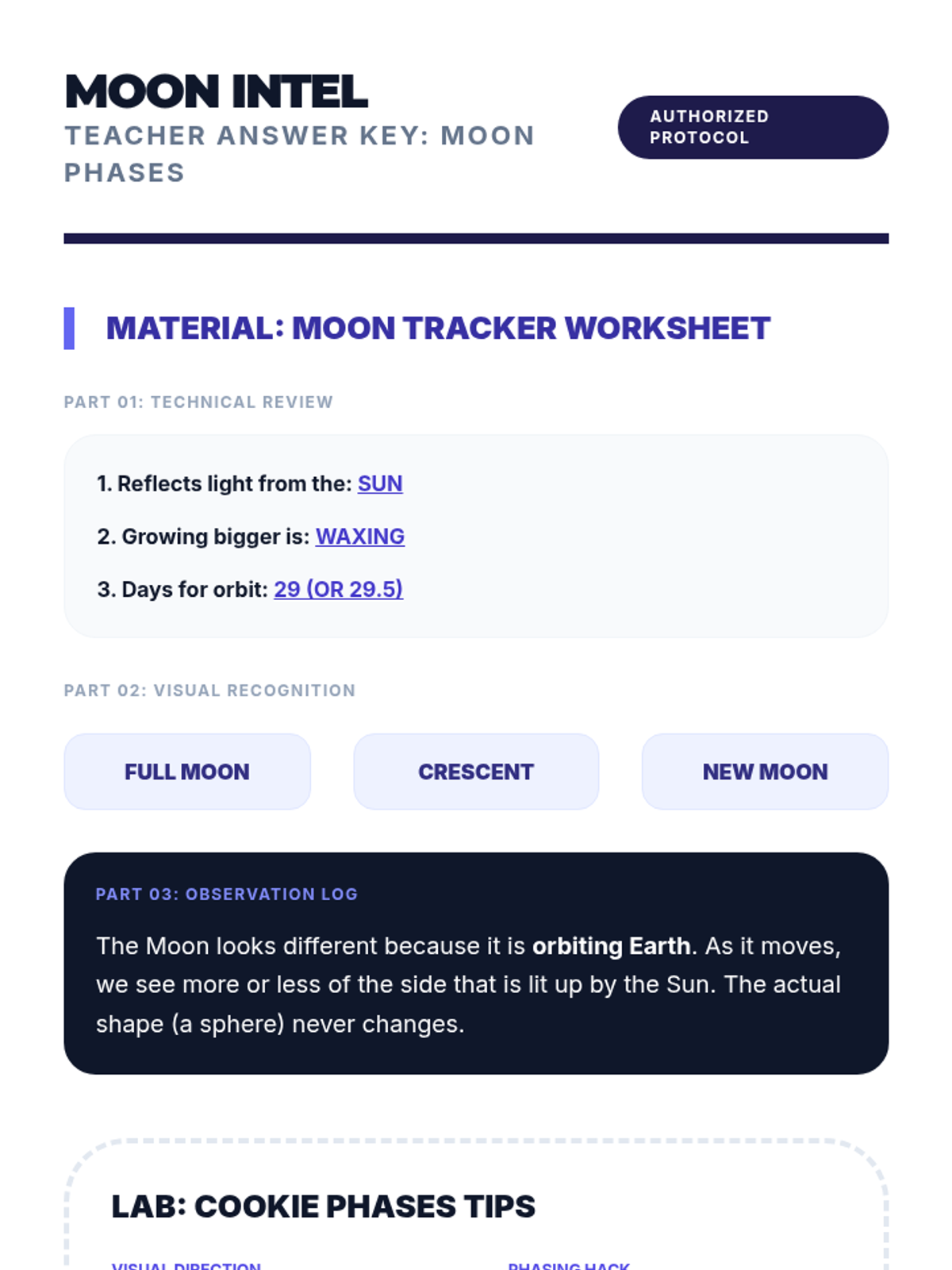
A lesson exploring the eight phases of the Moon, why the Moon seems to change shape, and the 29.5-day lunar cycle.
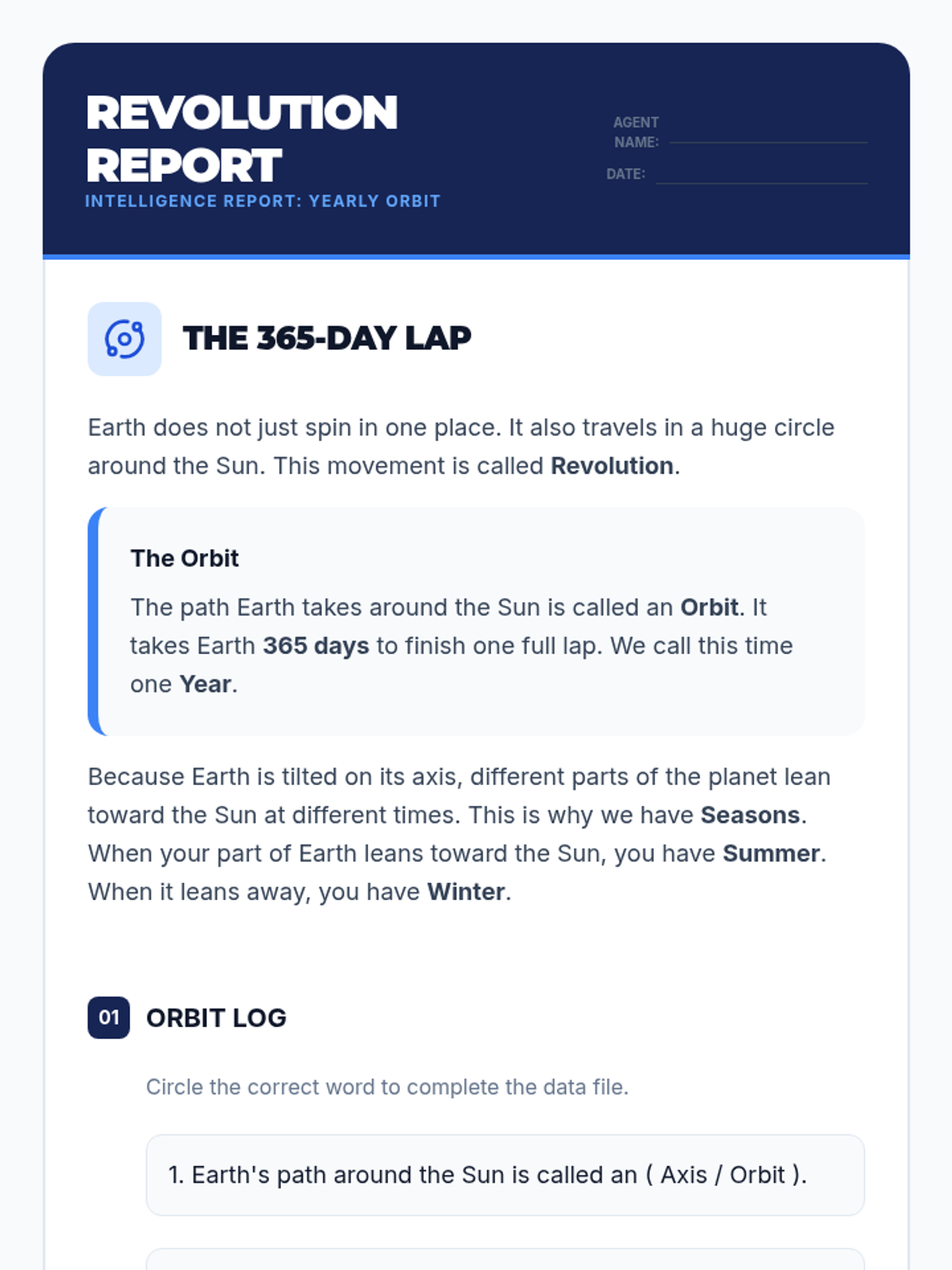
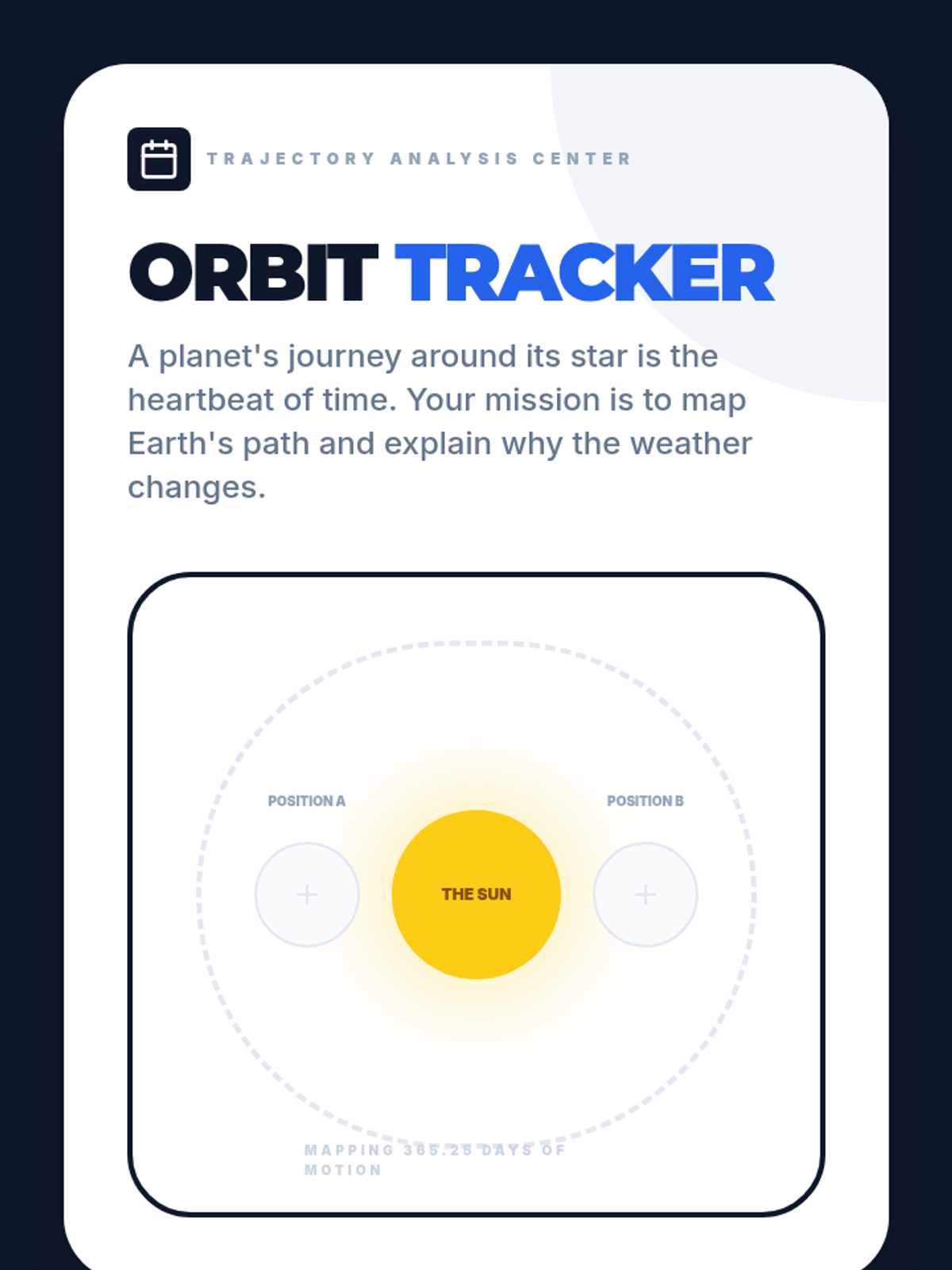
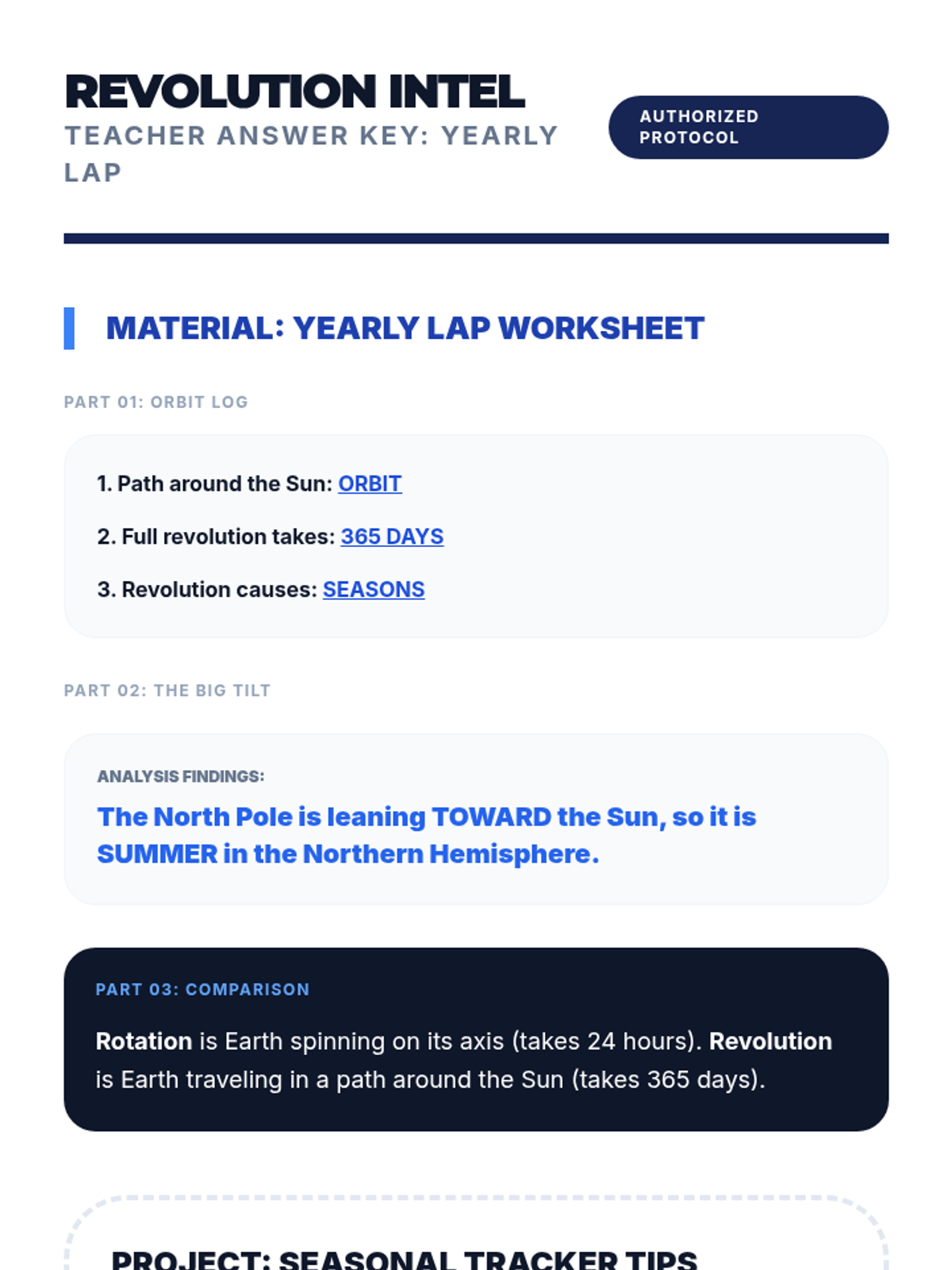
A lesson on Earth's revolution, exploring the path Earth takes around the sun and how its tilted axis leads to the change of seasons.
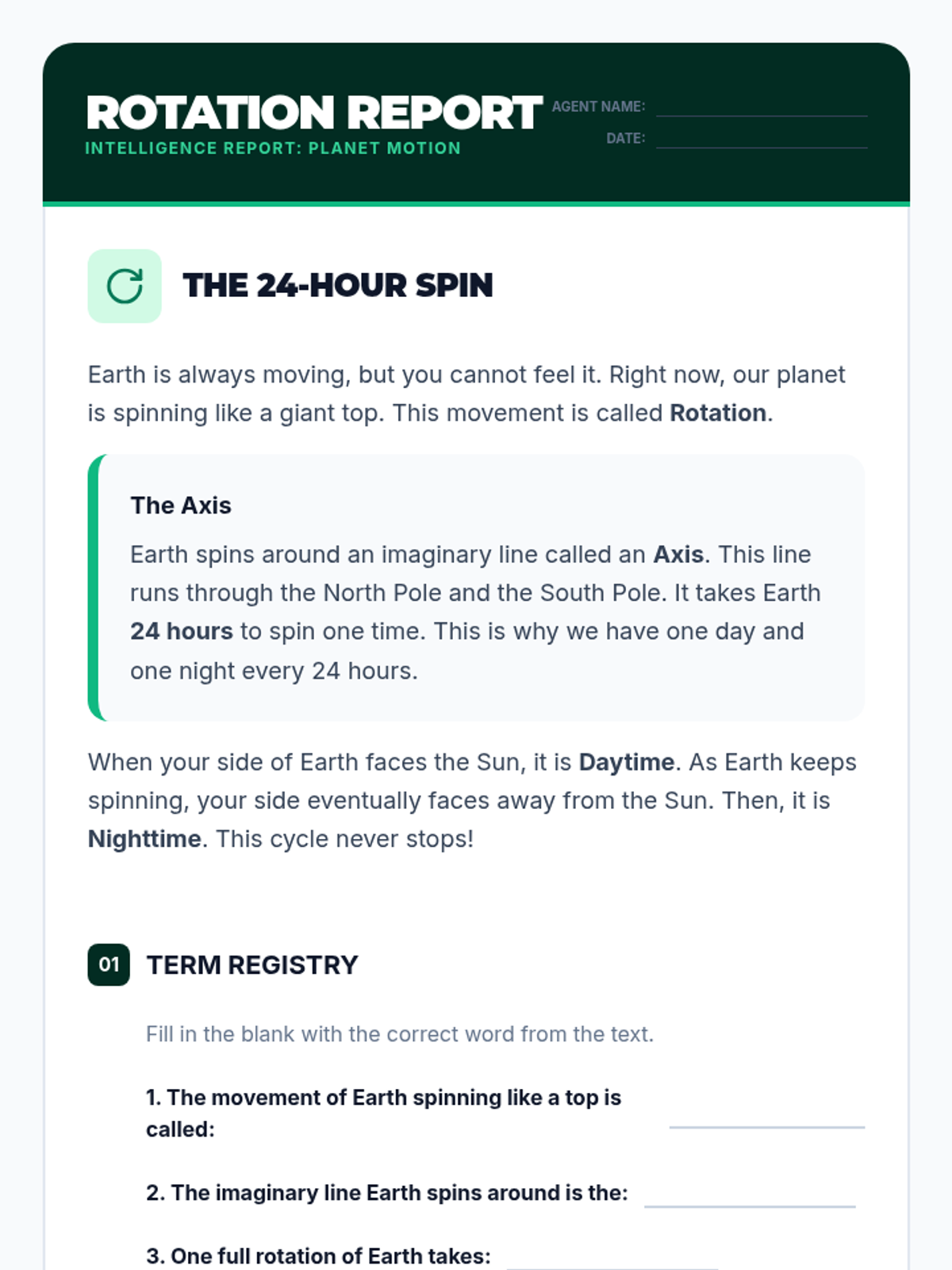
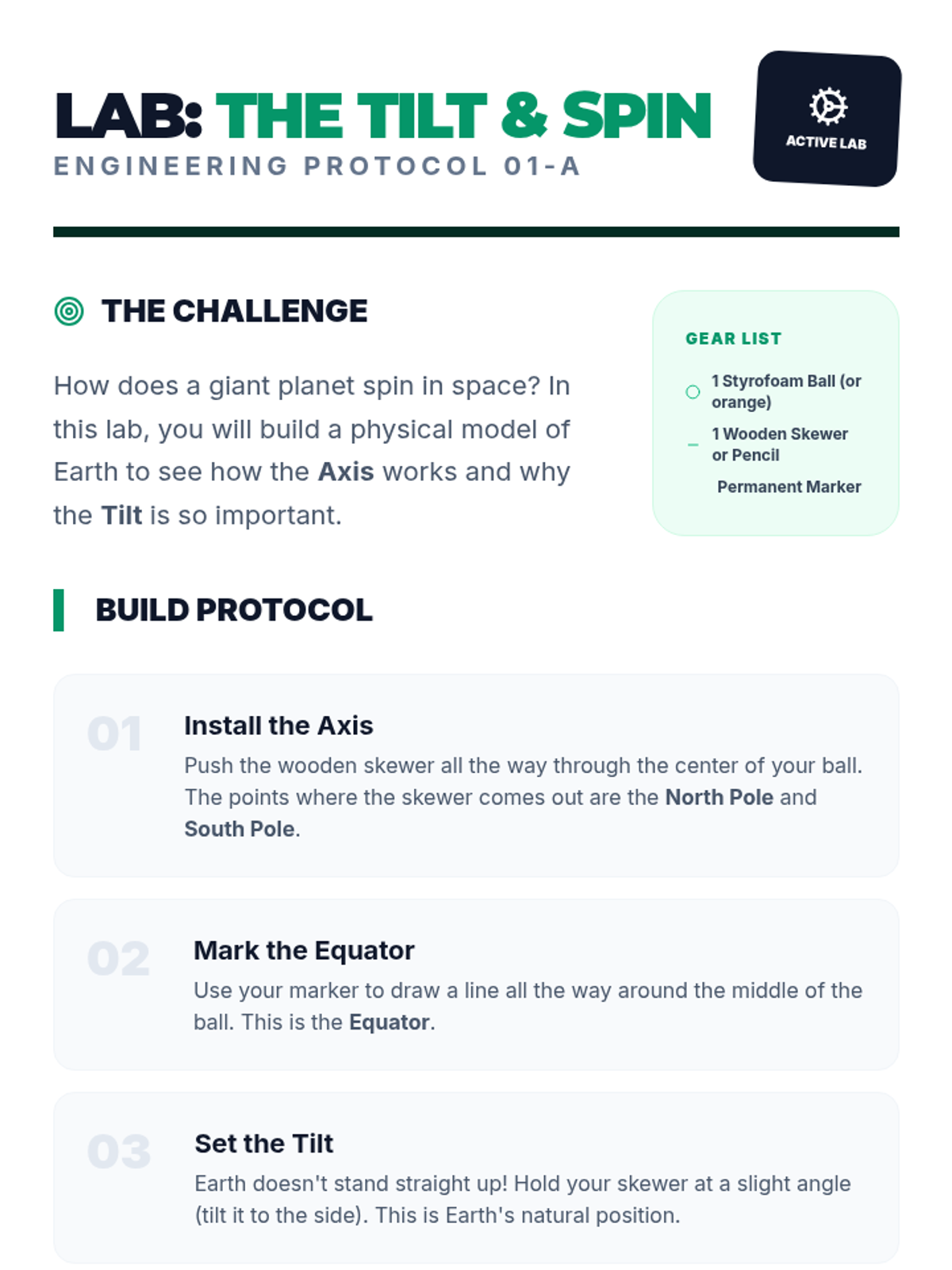
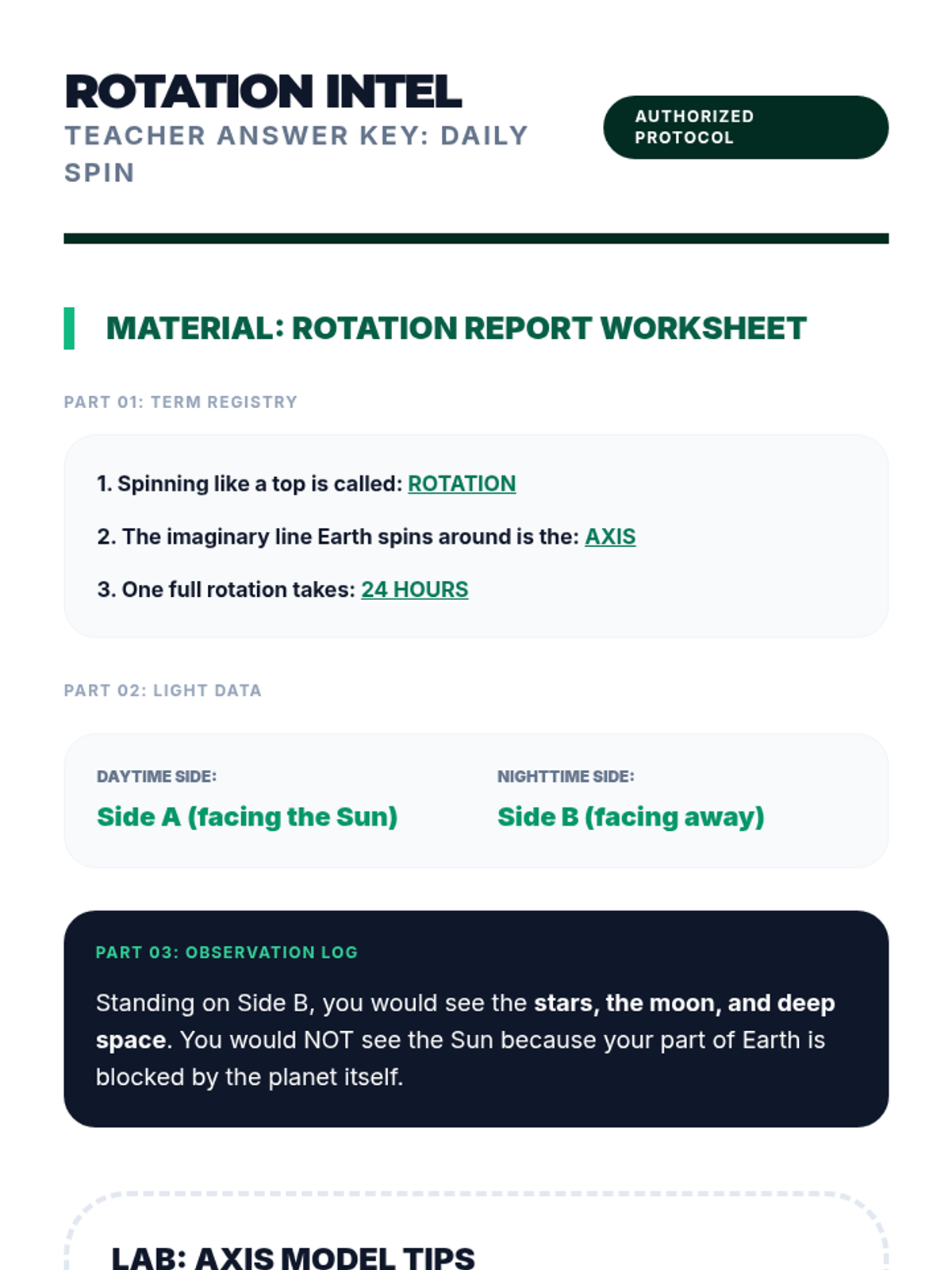
A lesson on Earth's rotation, focusing on the concept of an axis and how spinning creates the cycle of day and night.
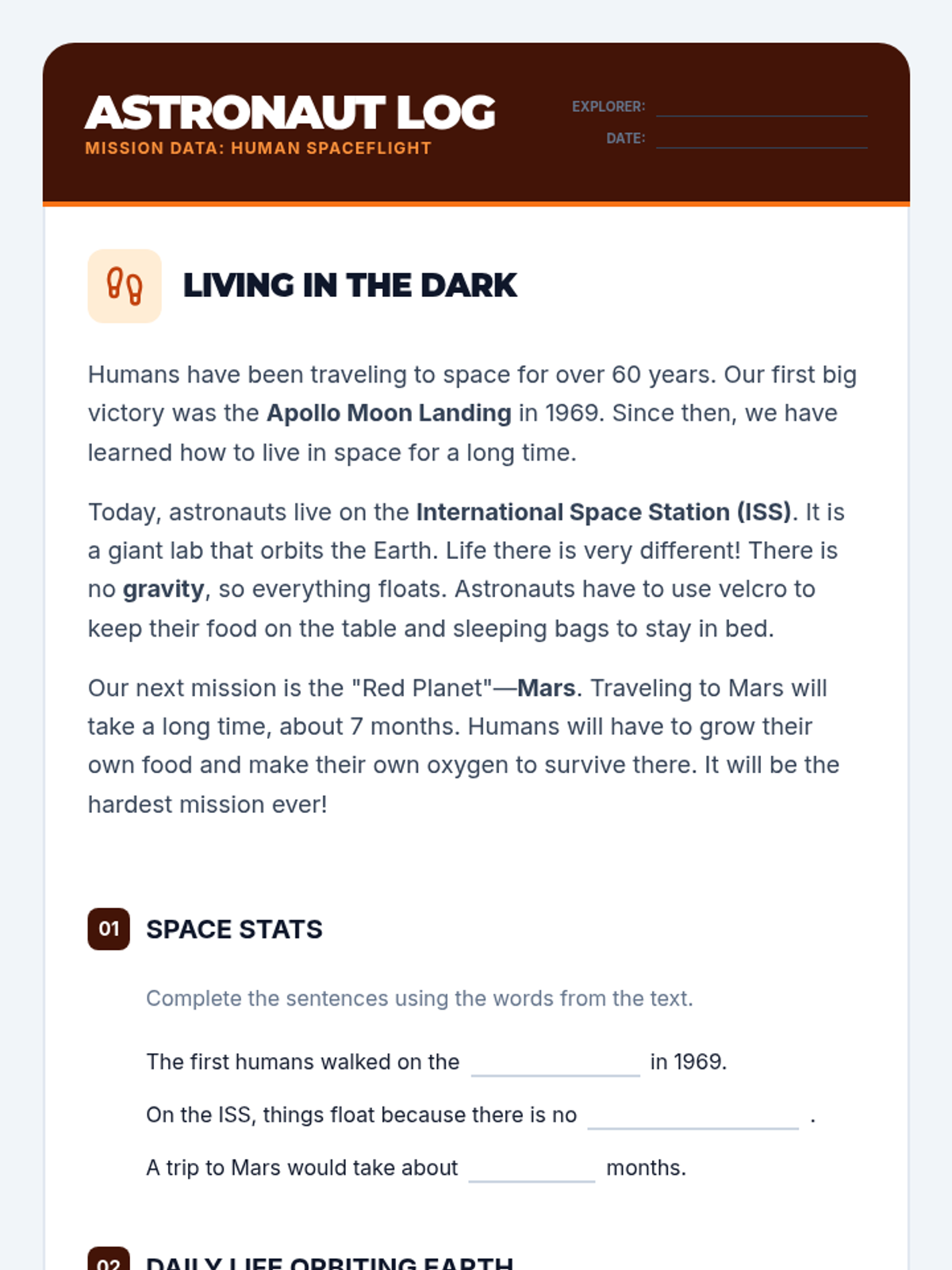
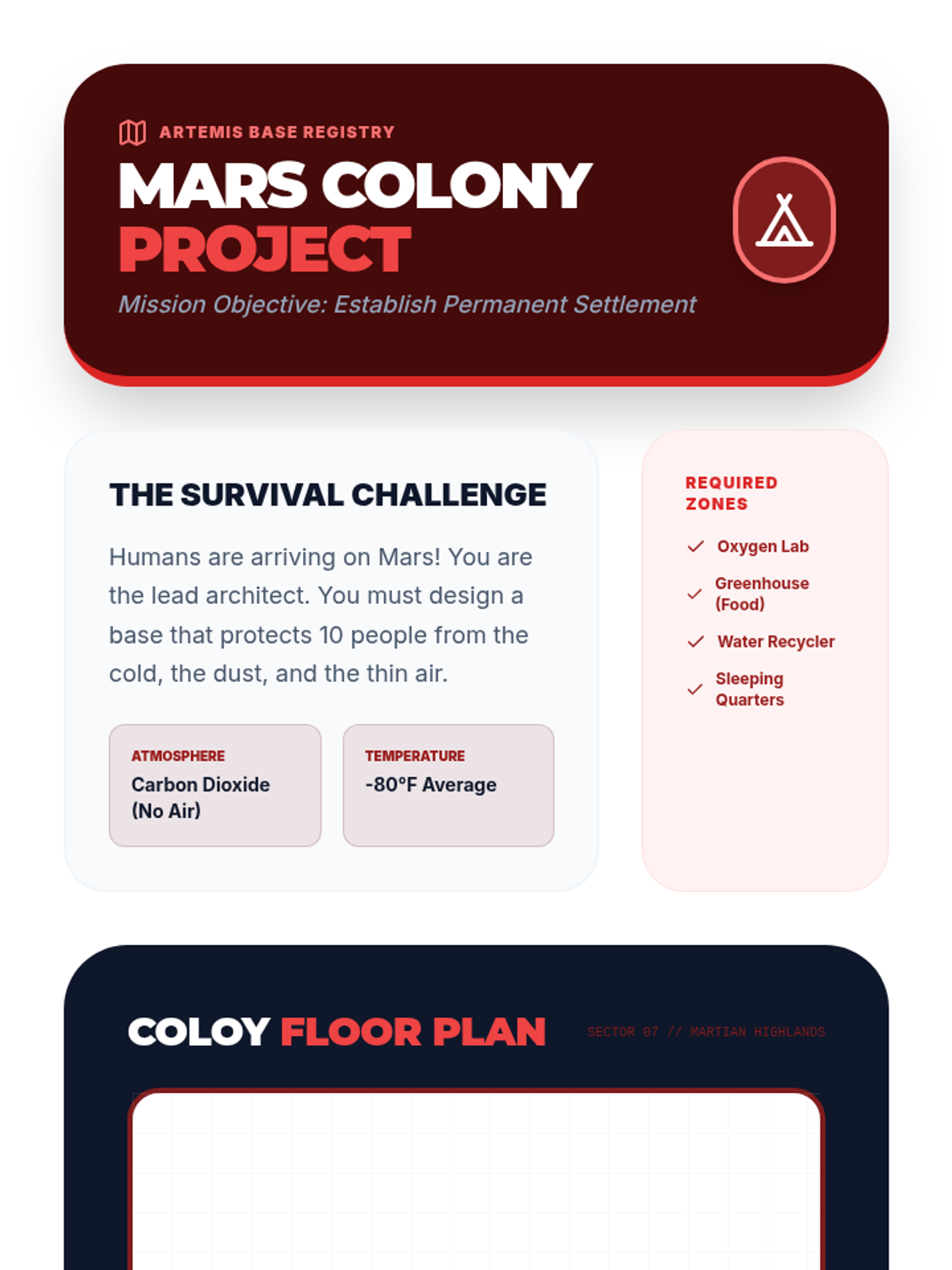
A lesson exploring the history and future of human space exploration. From the Apollo moon landings to living on the International Space Station and planning the first human missions to Mars.
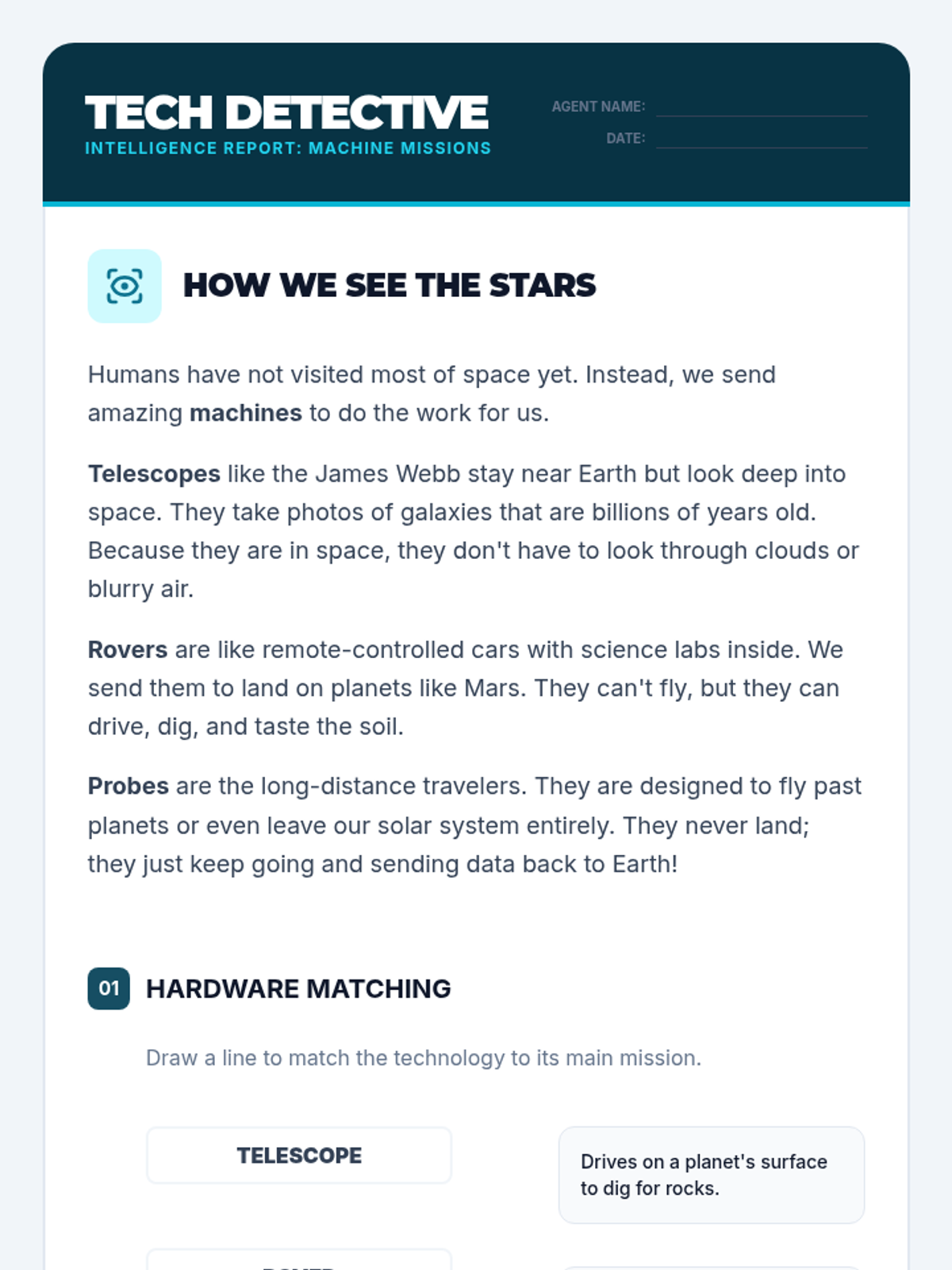
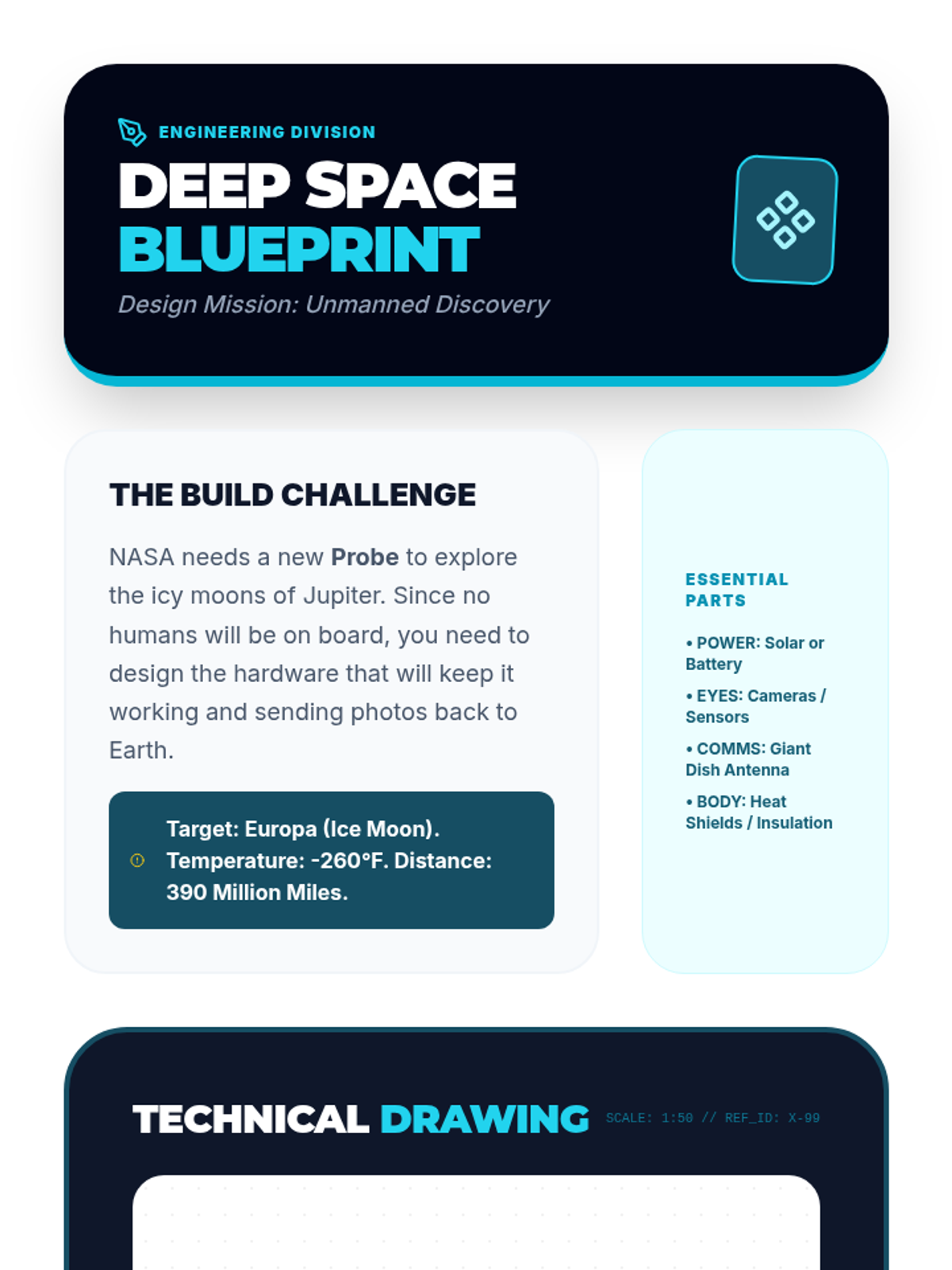
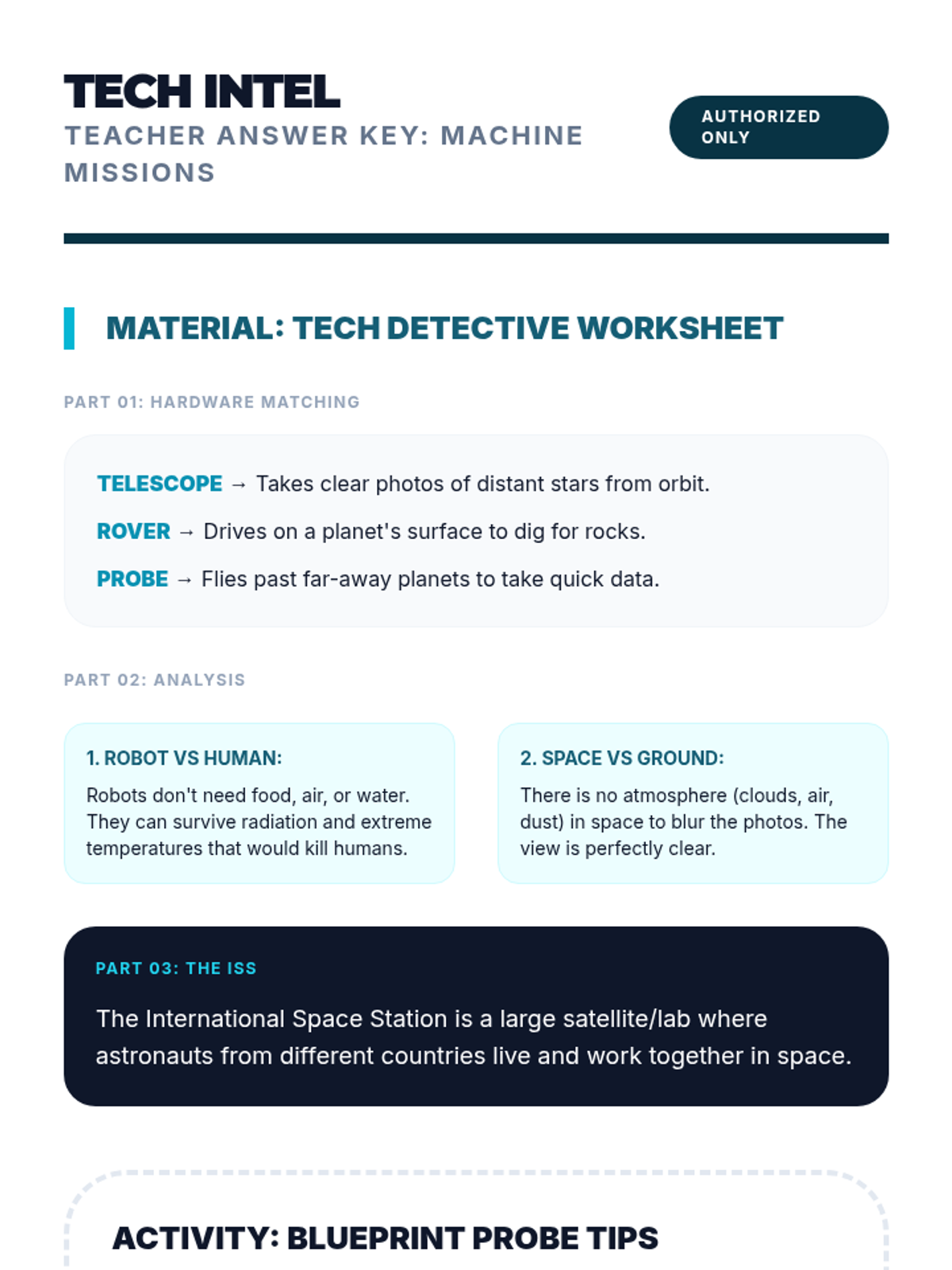
A lesson exploring how we use technology like rovers, probes, satellites, and telescopes to study space. Highlights famous missions like Mars Rovers and the James Webb Space Telescope.
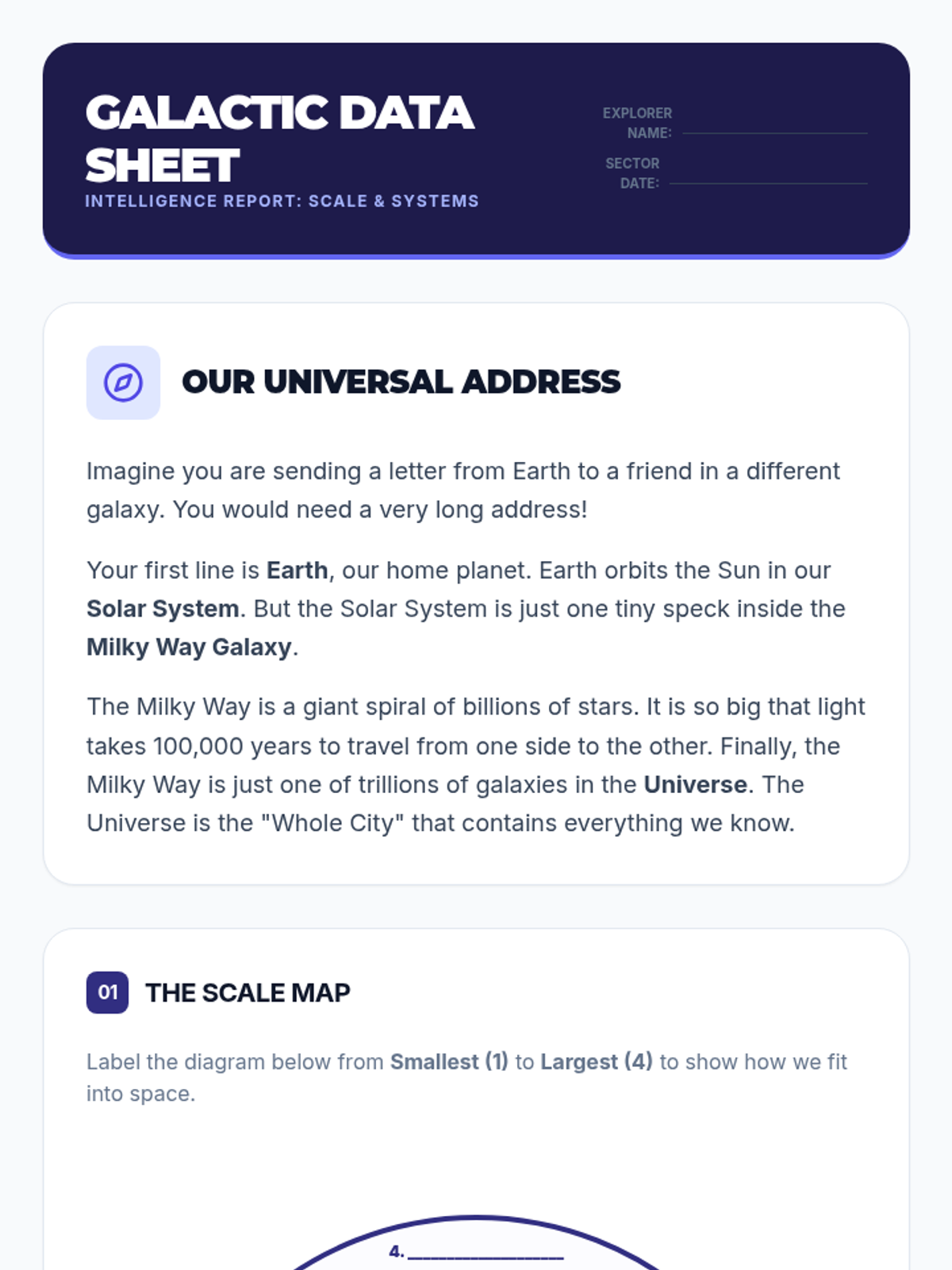
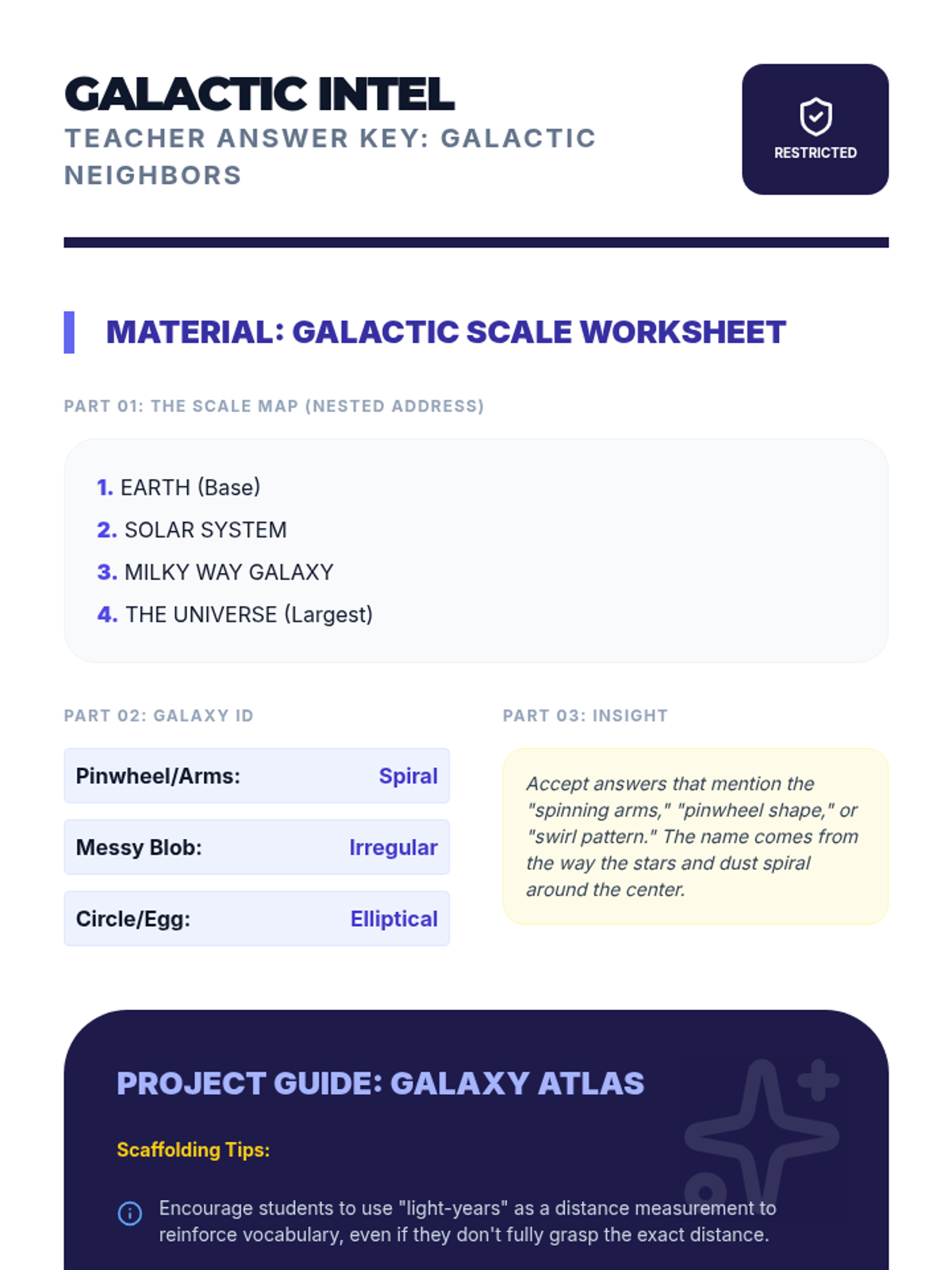
A lesson exploring the hierarchy of space, from our solar system to the Milky Way galaxy and the vast universe beyond. Focuses on relative scale and the concept of galaxies.
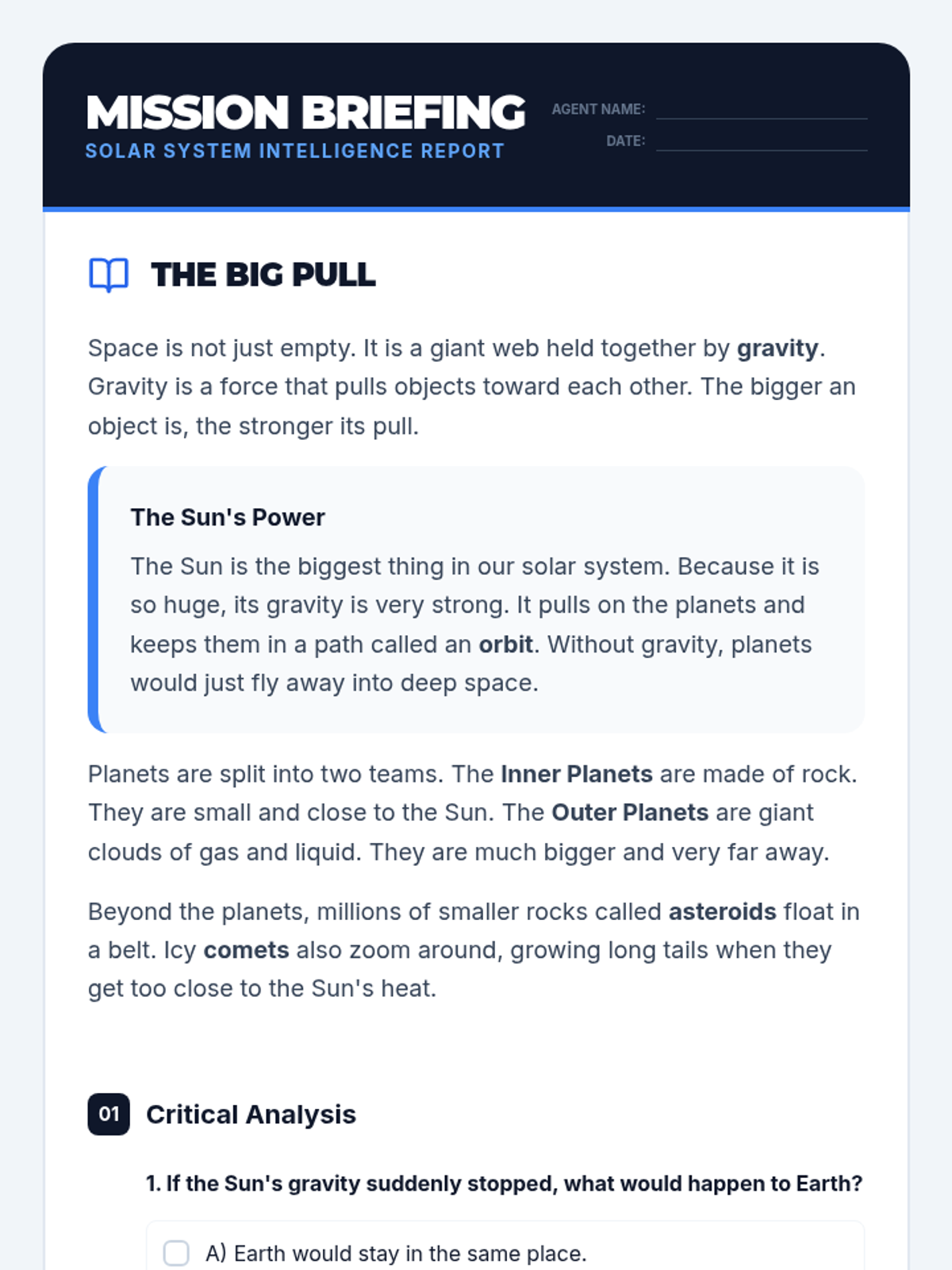
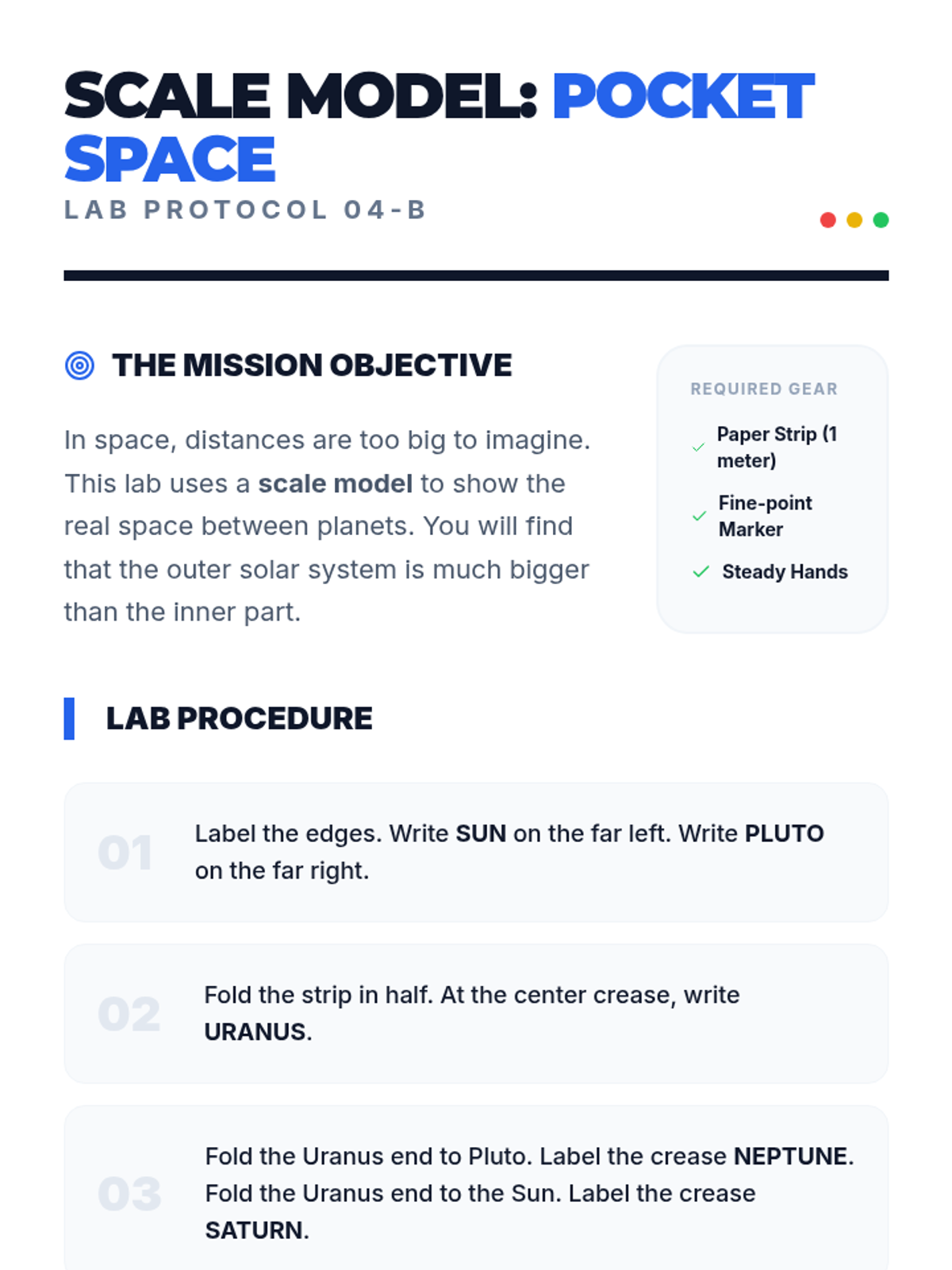
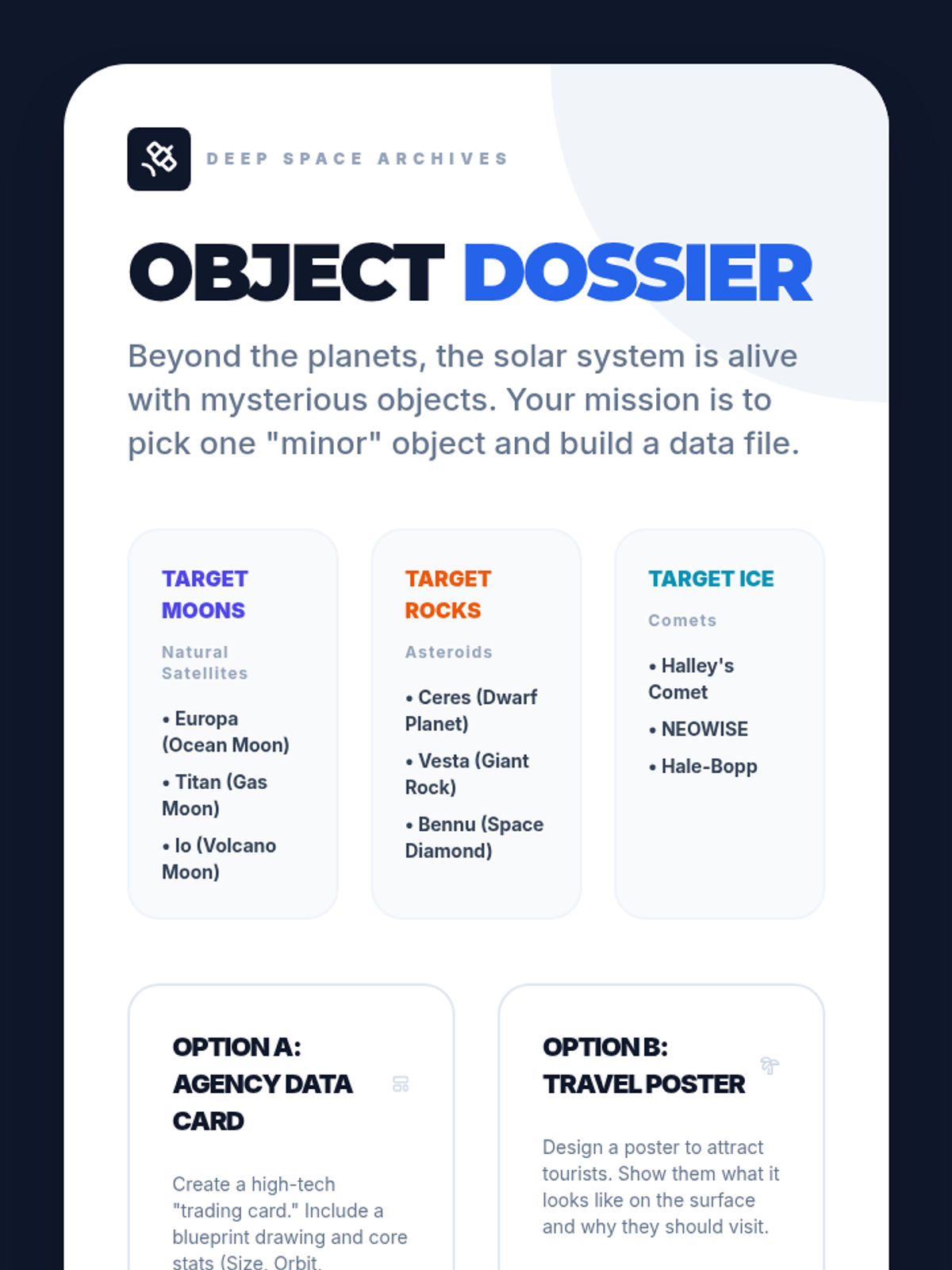
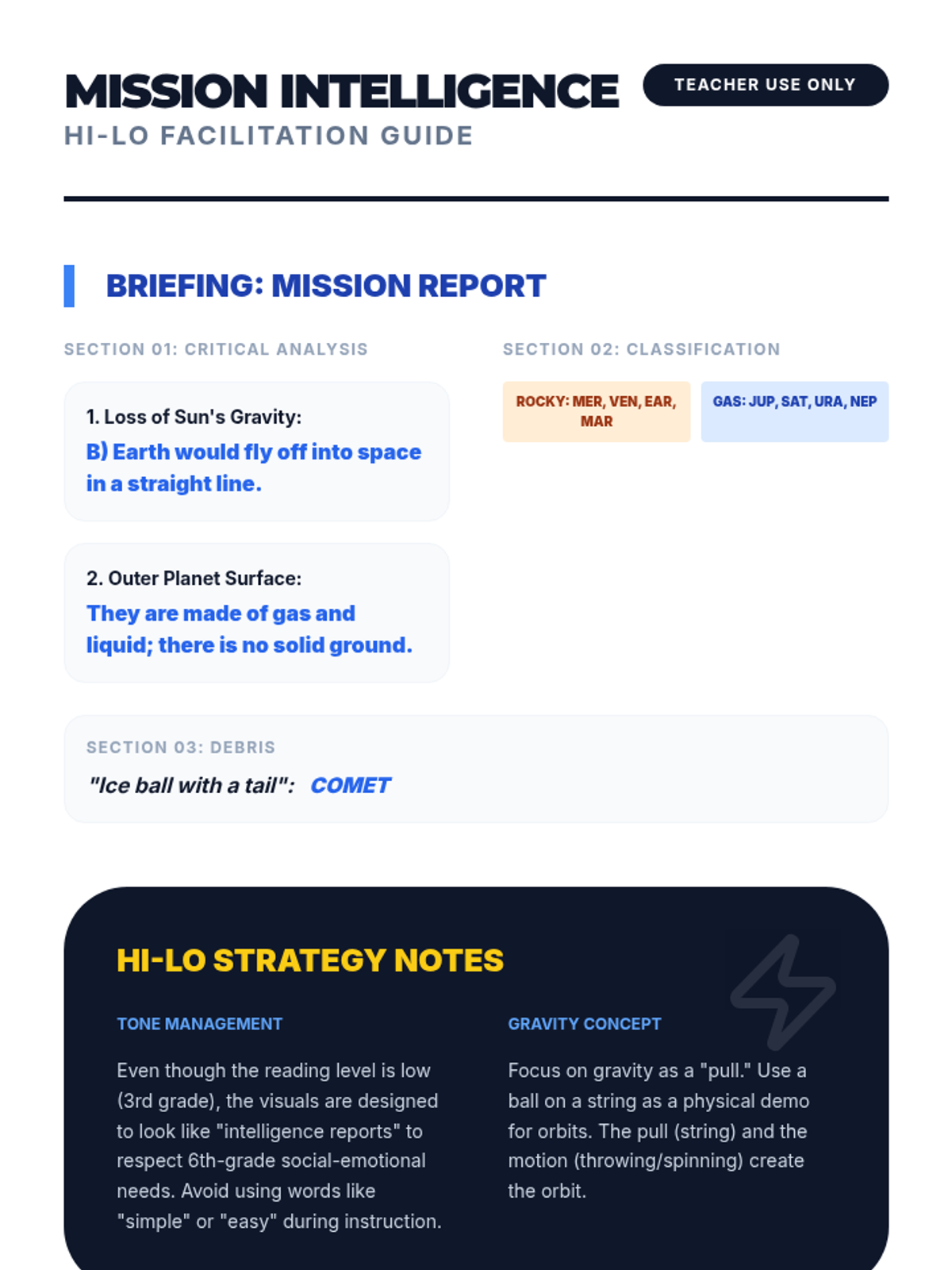
A "Hi-Lo" lesson on the solar system for 6th graders reading at a 3rd-grade level. It explores planetary characteristics, the role of gravity, and scale through accessible text and high-interest visuals.
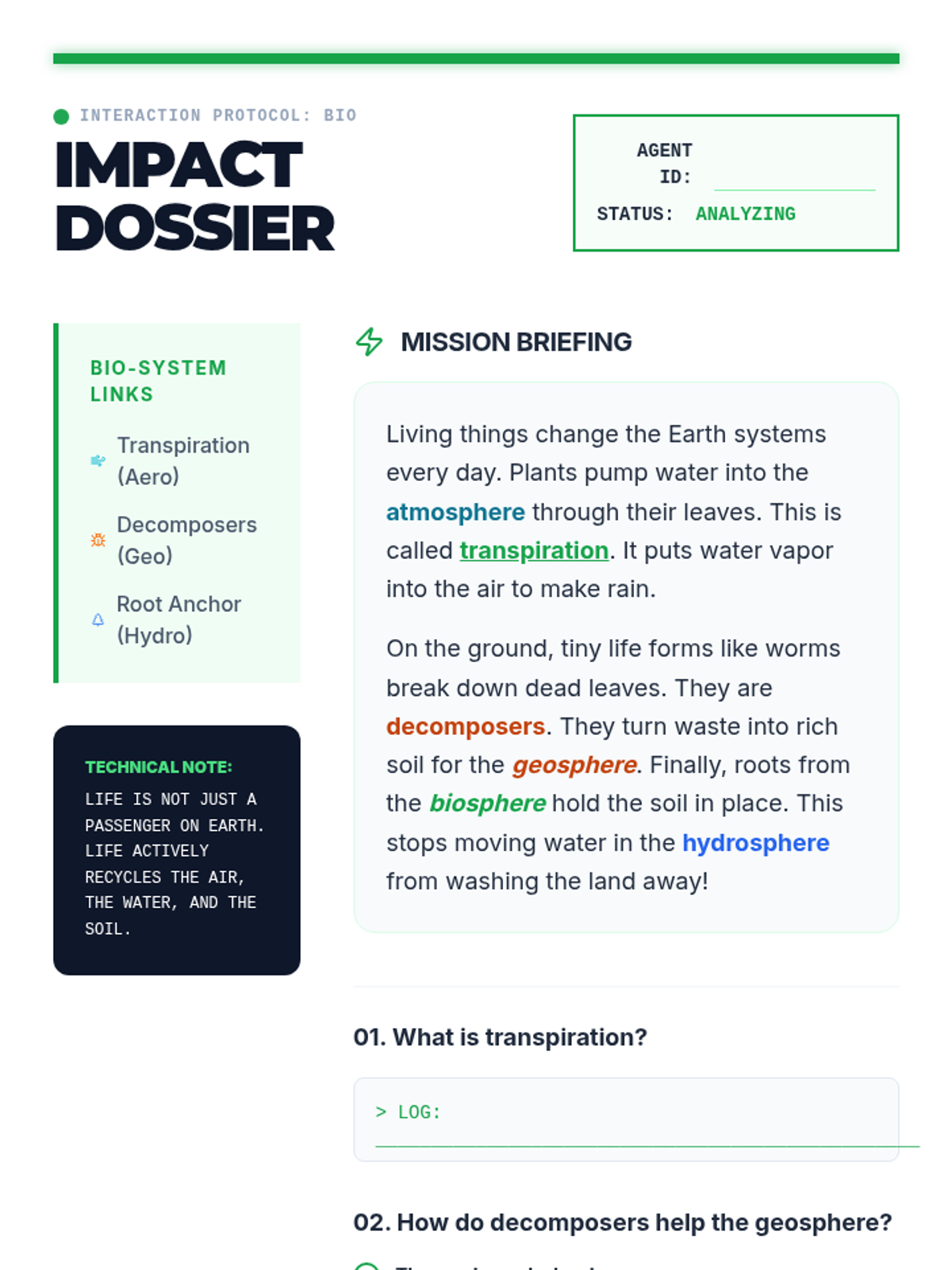
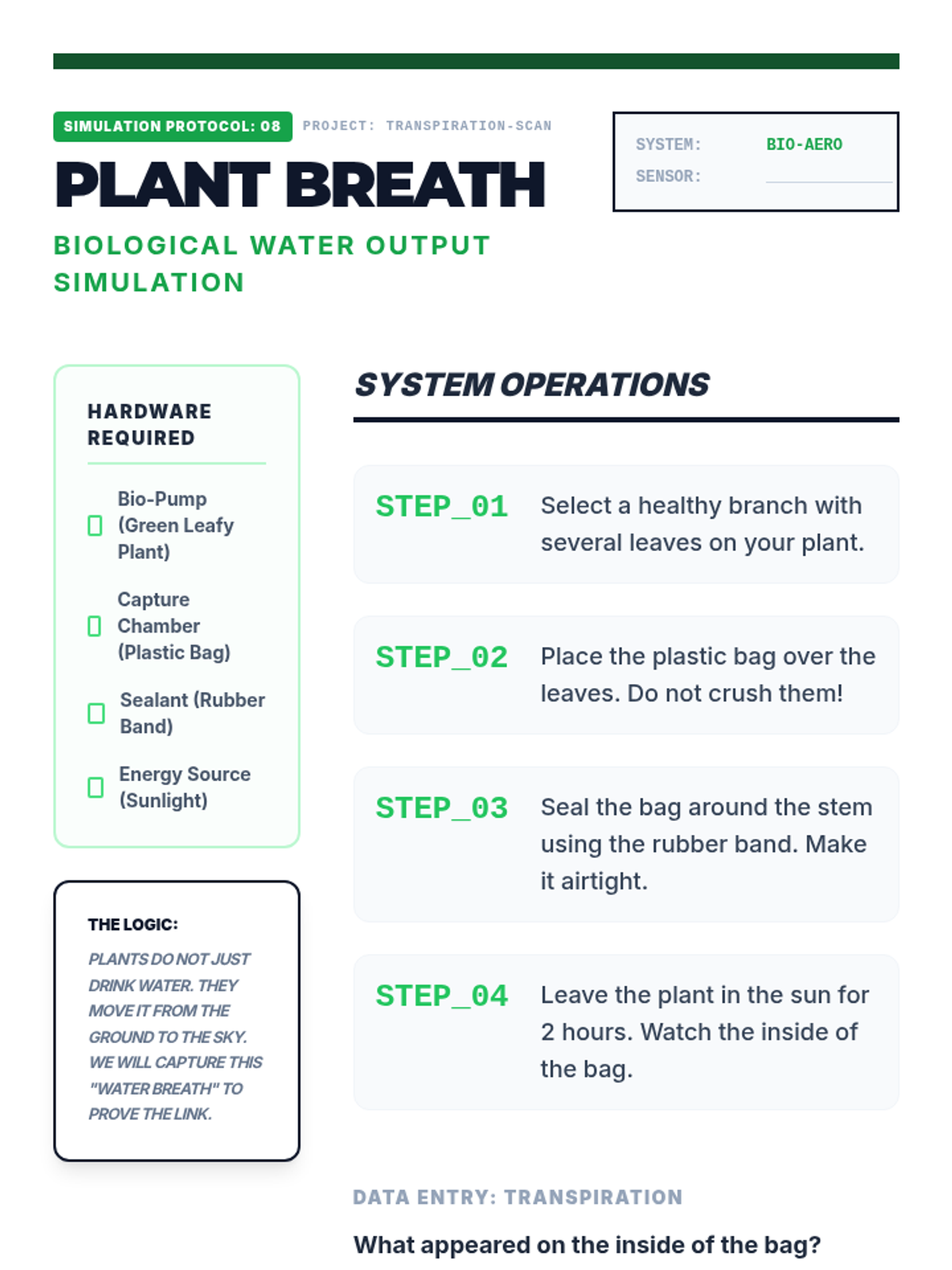
Students analyze how living things change their environment through processes like transpiration and decomposition.