A comparative look at mealtime traditions and etiquette in Spain and Latin America, including the timing of meals and the concept of 'siesta'.
A foundational lesson for Level 1 English Learners to practice constructing simple Subject-Verb and Subject-Verb-Adjective sentences using visual scaffolds and word banks.
A lesson focused on the cultural tradition of sending Valentine's Day cards, designed for ESL students to practice functional reading and writing skills.
A fun, movement-based lesson for early elementary ESL students to learn directional opposites (Up/Down, High/Low) using playground equipment and a catchy song. Students will engage in pronunciation practice, video analysis, and a partner dictation activity using character cut-outs.
Students explore the difference between animal imitation and human language through the case study of Alex the Parrot and a communicative roleplay activity.
A foundational ESL lesson focused on numbers 1-10, connecting spoken words, written forms, and quantities through music, video, and movement. Students engage in choral counting, video-based handwriting practice, and a classroom-wide labeling activity.
A beginner ESL lesson focused on identifying and using prepositions of place (on, under, below, in front of, behind, above) through a fun bedroom investigation theme.
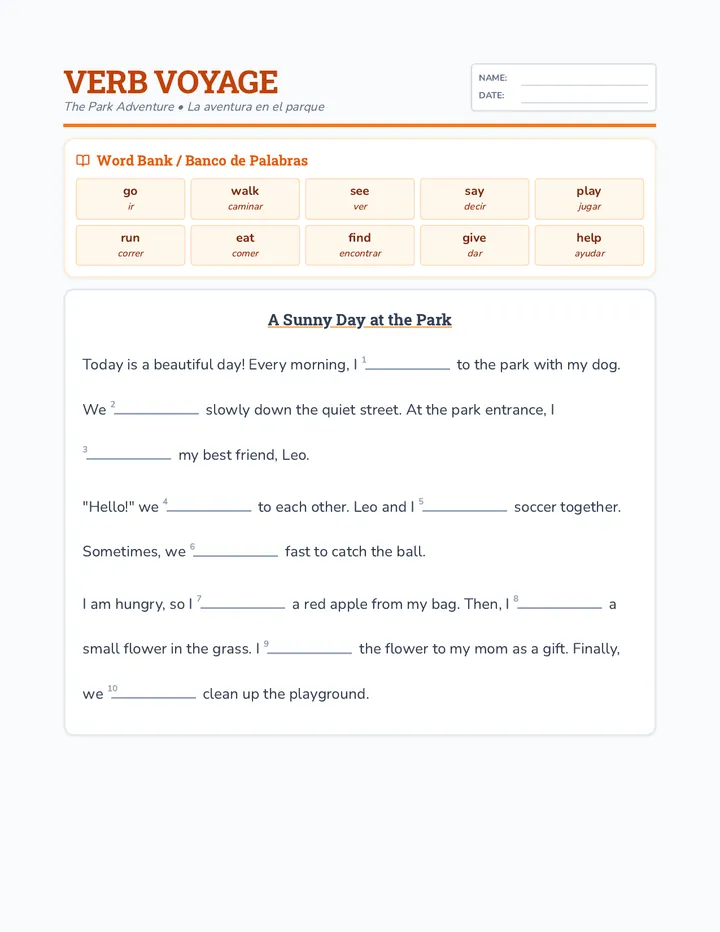
A foundational grammar lesson for ESL/ELL students focusing on the four most common irregular verbs (be, have, do, say) and their past tense forms through video analysis and scaffolded storytelling.
A lesson for English Language Learners to identify and practice common American idioms using visual aids and video-based instruction. Students will explore literal vs. figurative meanings and practice using idioms in spoken sentences.
A dynamic lesson for ESL/ELL students to master subject and object pronouns through physical movement and visual examples from Khan Academy. Students practice the 'switcheroo' by tossing a ball and transforming sentences in real-time.
A beginner ESL lesson focused on prepositions of movement through song, character interaction, and physical role play. Students will learn to describe direction using words like into, out of, through, around, toward, past, up, and down.
A beginner-friendly ESL lesson focusing on the simplicity of modal verbs, emphasizing that they never change form (no conjugation). Students explore 'can' and 'will' through a collaborative 'Superpower Circle' activity and reflective writing.
A phonics-focused ESL lesson for 2nd-5th graders practicing the /t/ ending sound in past tense verbs using a Khan Academy video and interactive clapping games.
An introductory lesson using a visual 'tale of two elephants' to distinguish between specific (the) and general (a/an) nouns.
This lesson focuses on vowel shifts in irregular past tense verbs, specifically the 'say' to 'said' and 'flee' to 'fled' transitions, helping Elementary ESL students master tricky pronunciations through visual aids, sorting, and partner practice.
A detective-themed phonics lesson for 2nd grade students to distinguish the /kw/ sound (represented by the digraph 'qu') from the /k/ sound. Includes a visual presentation with a Scratch Garden video, a word-sorting evidence activity, and a quick auditory exit ticket.
A comprehensive lesson for Beginner/Intermediate ELLs focusing on the Simple Aspect (Past and Future). Students will explore the timeline of language through visual aids, a Khan Academy video, and interactive "Will Wall" activities.
Students synthesize their learning through a visual project and gallery walk, reflecting on how traditions bring people together.
Students synthesize their learning to create an illustrated cookbook page featuring a specific ingredient or dish and its cultural significance.
An introduction to the music and dance of Spanish festivals, focusing on Flamenco and Salsa rhythms.
Students learn about the nine-night celebration of Las Posadas and the tradition of lighting candles in winter processions.
Students explore the joyful purpose of Día de los Muertos, focusing on ofrendas and key symbols used to honor ancestors.
An exploration of tropical fruits and vegetables from Spanish-speaking regions, focusing on how they grow and their nutritional value.
Students investigate the history and cultural significance of the piñata, learning about traditional shapes and meanings before designing their own.
Students trace the transformation of cacao from a tropical bean to chocolate, comparing ancient Aztec drinking chocolate with modern sweets.
Students explore the history of corn (maíz) in Mexico and Central America and learn how it is transformed from a crop into staple foods like tortillas.
A synthesis project where students conduct a class wellness survey, collect data, and report findings using third-person conjugations.
Expanding vocabulary with antonyms and intensifiers (muy, un poco). Students analyze character emotions in stories and media.
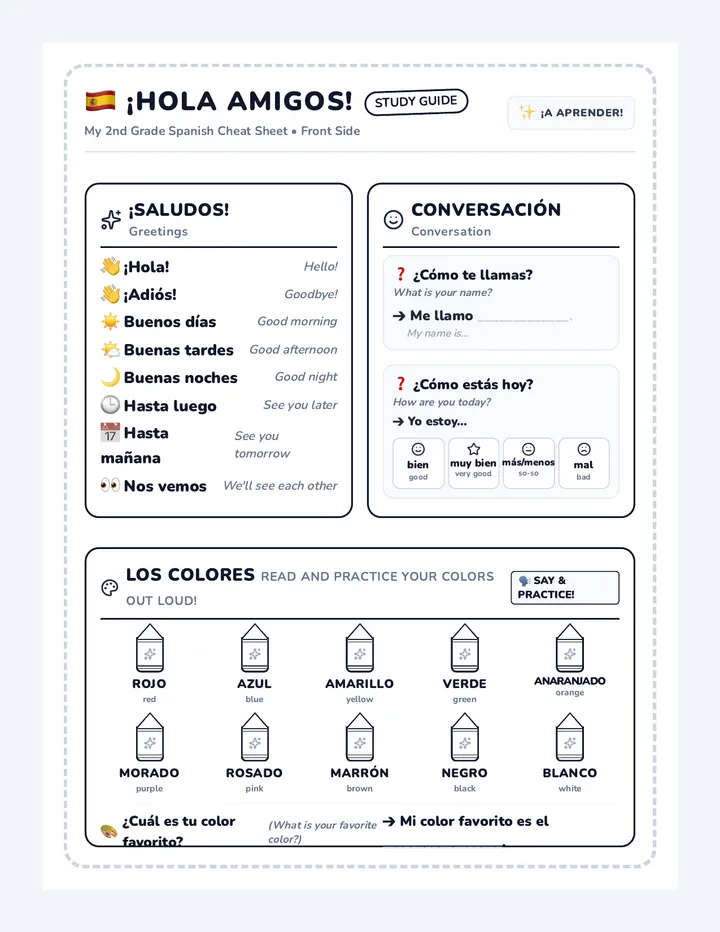
Moving beyond basic greetings to deep follow-up questions and empathetic responses. Students practice active listening in a 'Speed Chat' format.